BY MULTIPLY MEDIA GROUP

Reflects MMG’s belief that growth should create value beyond performance alone. It expresses MMG’s responsibility to the people, communities, industries, and environments connected to the business. It defines how success is measured, not only by scale, but by lasting value delivered through responsible leadership, trusted partnerships, and sustainable practices.
By prioritising people, advancing environmental responsibility, and shaping a more ethical and sustainable media ecosystem, MMG ensures impact is meaningful and enduring.
Defines how MMG strengthens the intelligence layer of modern Out‑of‑Home media. By combining data, technology, artificial intelligence, automation, and programmatic capability, MMG makes premium OOH media smarter and more effective.
It reflects a strategic use of intelligence, where insight is applied to enhance planning, deepen market understanding, and improve value for partners and advertisers.
Captures MMG’s approach to disciplined growth, expanding market presence, strengthening capabilities, and developing new media verticals while reinforcing its premium position across markets.
It reflects progress guided by long‑term vision, where expansion is deliberate and capability‑led, allowing MMG to evolve without compromising the standards, quality, or strategic focus that define the organisation.
MARKET LEADERSHIP TO INTERNATIONAL SCALE: HOW 2POINTZERO IS BUILDING THE NEXT GROWTH PLATFORM IN MEDIA
JAWAD HASSAN, HEAD OF MEDIA AND COMMUNICATIONS VERTICAL, 2POINTZERO
EDITOR’S

IN DUBAI MAJID AL MADANI, ADVERTISEMENT SECTION MANAGER, CITY BEAUTIFICATION AND PUBLIC PROJECTS DEPARTMENT, DUBAI MUNICIPALITY
WOO
A
REDEFINING GROWTH: FROM SCALE TO RESPONSIBILITY
JULIANA RIBEIRO, GROUP MARKETING DIRECTOR, AND SAM HARTLEY, GROUP PEOPLE & CULTURE DIRECTOR, MULTIPLY
INDUSTRY FORUM
WHAT ROLE WILL OOH PLAY AS THE MEDIA WORLD MOVES FURTHER TOWARD AI-LED DECISION-MAKING?
THE IMPACT OF AI IN DOOH AND PDOOH
BRIAN BUCKLEY, ACCOUNT DIRECTOR, EMEA, BROADSIGN
DESIRABLE BY TOMORROW: RETHINKING OOH THROUGH DESIGN, CONTEXT AND DEMAND
JACK FLEMING, HEAD OF SALES, BACKLITE UK

SAUDI ARABIA: THE KINGDOM’S GROWTH VALIDATED
ALI CHAB, GROUP BUSINESS DEVELOPMENT DIRECTOR, MULTIPLY MEDIA GROUP
AN INTERVIEW WITH DENNIS MICHAEL CHIEF BUSINESS DEVELOPMENT OFFICER, CENOMI CENTERS
FROM RAPID GROWTH TO MARKET STRUCTURE: THE NEXT CHAPTER FOR OUT-OF-HOME IN THE GCC
DAVID HAWKINS, MANAGING DIRECTOR, MENA, BILLUPS
AN INTERVIEW WITH BAYAN DODIN HEAD OF MARKETING AND SALES CRM, ABU DHABI MOTORS BMW GROUP
THE NEXT PHASE OF UK OOH: PARTNERSHIPS, SPECIALISATION AND SMARTER GROWTH
DAVID PETERS, HEAD OF AGENCIES AND SPECIALISTS, BACKLITE UK
THE IMPORTANCE OF LOCALISATION IN OUT-OF-HOME FOR GLOBAL BRANDS
NATHALY KHOURY, PUBLIC RELATIONS AND MEDIA MANAGER, BVLGARI
THE VALUE OF PRESENCE: WHY OUT-OF-HOME IS A MUST FOR PREMIUM REAL ESTATE BRANDS
ALI KOUATLY,
AN INTERVIEW WITH ZIAD CHALHOUB CHIEF INVESTMENT OFFICER, MEDIABRANDS
FROM INFRASTRUCTURE TO INTELLIGENCE: PUTTING AI AT THE CORE OF OOH
ARIO CECCHETTINI, SENIOR AI ENGINEER, MULTIPLY MEDIA GROUP
AN INTERVIEW WITH FRANCK VIDAL COMMERCIAL DIRECTOR, APAC, CONNECTED RETAIL
THE ROLE OF PDOOH, DATA, AND INFRASTRUCTURE IN ENABLING SCALE
ASHIN JOHN, DIGITAL OPERATIONS DIRECTOR, AND BASSEL KOTAISH, GROUP OPERATIONS DIRECTOR, MULTIPLY MEDIA GROUP
WHEN OOH MEDIA BECOMES A STATUS SYMBOL
AHMED NOURELDIN, HEAD OF SALES, BACKLITE MEDIA
RETAIL MEDIA & DOOH GETTING CLOSER TO THE POINT OF TRANSACTIONS
CHRIS HUMPHREY, EMILY LATHAM, NADINE HUMPHREY, AND SUE HUNT, HELLO HUMPHREY
AN INTERVIEW WITH ADHAM GAWISH HEAD OF COMMUNITY & MEDIA, ORA DEVELOPERS UAE
CURATING THE LUXURY MEDIA PLAN STEPHANIE MEDLEGE, BUSINESS UNIT DIRECTOR, PHD
ABU DHABI: THE POWER OF THE UAE CAPITAL MANEL KHALFAOUI, HEAD OF SALES,
As the Group has evolved, our ambition has never been simply to assemble assets under one umbrella. It has been to build a scalable investment platform defined by disciplined oversight, strong portfolio design, and the ability to create value systematically over time.
That philosophy is especially visible in media and communications. Today, MMG stands as a powerhouse in the UAE’s Out-of-Home (OOH) sector, with a market-leading position built on scale, asset quality, execution strength, and an increasingly data-led approach to growth. But leadership at home is only one part of the story. Equally important is our ability to take that strength and translate it into a broader, more ambitious international growth journey.
This is where the 2PointZero model becomes distinctive. We are not building media assets in isolation. We are building an ecosystem in which strong businesses, strategic capital, operational discipline, and intelligent deployment of technology work together to create compounded advantage. In that sense, media is not just a vertical within the portfolio. It is one of the clearest expressions of how 2PointZero builds, scales, and elevates category leaders.
Our leadership in the UAE OOH market reflects years of focused execution and a deep understanding of how premium media infrastructure, client trust, and commercial agility come together to create enduring market positions. At the same time, our expansion into the UK marks an important next chapter. It signals that our ambitions are not solely regional. We are building for relevance and scale in international markets, with the confidence to grow where we see the right strategic fit, the right operating model, and the right long-term opportunity.
What underpins this journey is a clear belief that modern growth must be both disciplined and intelligent. Scale on its own is not enough. It must be matched by design, supported by careful portfolio construction, effective business integration, and a constant focus on where future value will come from. That is why 2PointZero’s evolution is not simply about expansion. It is about building a platform capable of repeatedly creating stronger businesses over time.

AI is becoming an increasingly important part of that equation — not as a standalone narrative or a trend to be followed, but as a practical enabler of sharper decisions, stronger insights, and faster execution. Across media and communications, AI opens up new possibilities in audience intelligence, content optimisation, operational efficiency, pricing, and real-time responsiveness. Used effectively, it strengthens our ability to make better decisions at speed and unlock greater value from the scale we have built.
For MMG, this is fully aligned with our direction of travel. Our role is not only to lead in one market, but also to help redefine what media businesses of the future should look like: more intelligent, more integrated, more accountable to outcomes, and more capable of translating reach into real influence. The combination of market leadership, international expansion, and AI-enabled capability gives us a strong foundation from which to do exactly that.
The story of 2PointZero is therefore not just one of growth. It is one of intentional growth. It is about building platforms, not collections; category champions, not isolated assets; and future-ready businesses capable of competing confidently at both regional and international levels.
That is the opportunity ahead of us: to continue strengthening our leadership in the UAE, expand our presence in global markets, and build a media and communications platform defined not only by scale, but also by vision, adaptability, and longterm value creation.
BY JAWAD HASSAN
HEAD OF MEDIA AND COMMUNICATIONS
VERTICAL

This is a very big moment for SpotLite - for the first time ever, it sits within Multiply Media Group (MMG), and that says a lot about what we’ve built. Tremendous scale, incredible momentum, and very clear direction. As MMG expands across markets, this publication grows with us, becoming a powerful voice on what’s shaping Out-of-Home (OOH) globally.

Now, OOH is changing. For years, the industry focused on building scale more assets, more visibility, more presence. And we did that. The foundation is solid. But now, it’s about value. It’s about quality, accountability, and smart, deliberate growth. That’s where the winners are going to be.
And that’s exactly how we built MMG. Over the past year, we’ve made strong, decisive moves. We launched MMG at the World Out of Home Congress in Mexico a big moment. Then the acquisition of London Lites, to establish BackLite UK each step was very intentional. Expanding, yes, but also bringing clarity, alignment, and real strength to the portfolio.
Today, MMG has more than 3,000 advertising assets globally and in the UAE we’re leading with over 55 percent market share, more than 85 percent in Abu Dhabi. That’s not by accident. That’s focus. That’s discipline. That’s long term thinking done right.
Across the industry, expectations are going way up. People want premium environments, stronger performance, better measurement no more guesswork. This edition of SpotLite captures that shift perfectly. We’re moving from visibility to real impact, from scattered growth to powerful, integrated platforms. And we’re bringing in design, environment, AI, data all the things that matter now.
You see this momentum everywhere. Fast moving markets, strong investment, and serious demand for high quality OOH. Our focus is simple: build premium platforms, invest in the right environments, and grow in a way that’s ambitious but also sustainable.
The opportunity ahead is massive. But it’s going to belong to those who combine scale with clarity, ambition with execution. That’s where value is created. And that’s exactly where we are.
BY JAMES BICKNELL
GROUP CHIEF EXECUTIVE OFFICER

M ORE IMPACT.
M ORE INNOVATION.
G REATER MOMENTUM.
The rules of media have shifted. Visibility alone isn’t enough anymore - advertisers want to know who was reached, how they moved, and what actually changed as a result. That pressure is raising the bar for Out-of-Home (OOH), driving a real demand for smarter data, better attribution, and planning that can hold its own against any channel in the mix.

At Multiply Media Group, the next chapter of OOH belongs to those who act on intelligence, not assumption. That means grounding decisions in real-world audience understanding, harnessing AI to move faster and more precisely, and treating accountability as a discipline, not a deliverable.
This edition of SpotLite explores what that looks like in practice - how data, creativity, and technology are converging to make OOH not just more measurable, but more meaningful.

BY HENRIETTA SHAKESPEARE CHIEF OF STAFF


Creating meaningful value for people, partners, and the OOH industry.
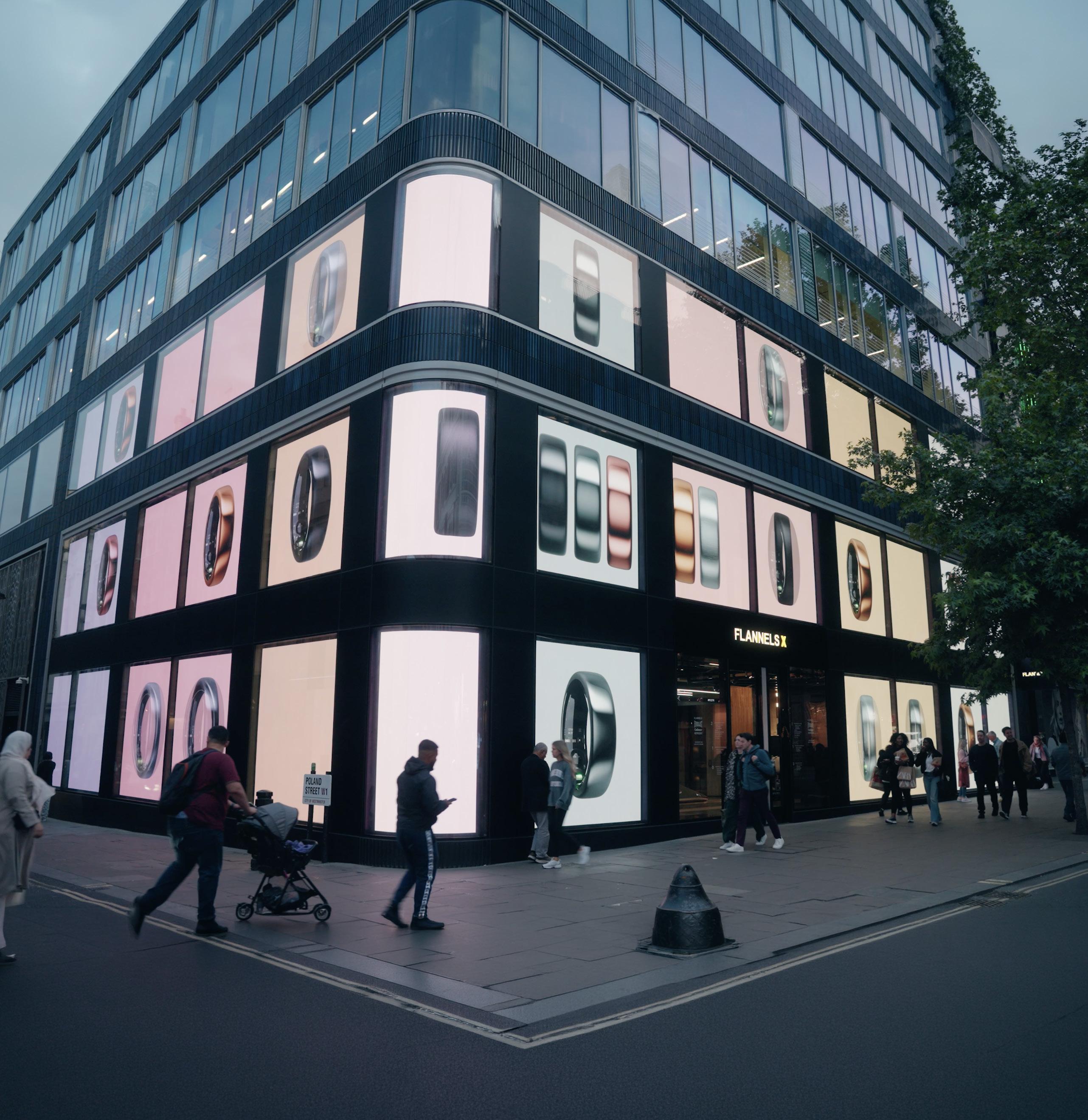
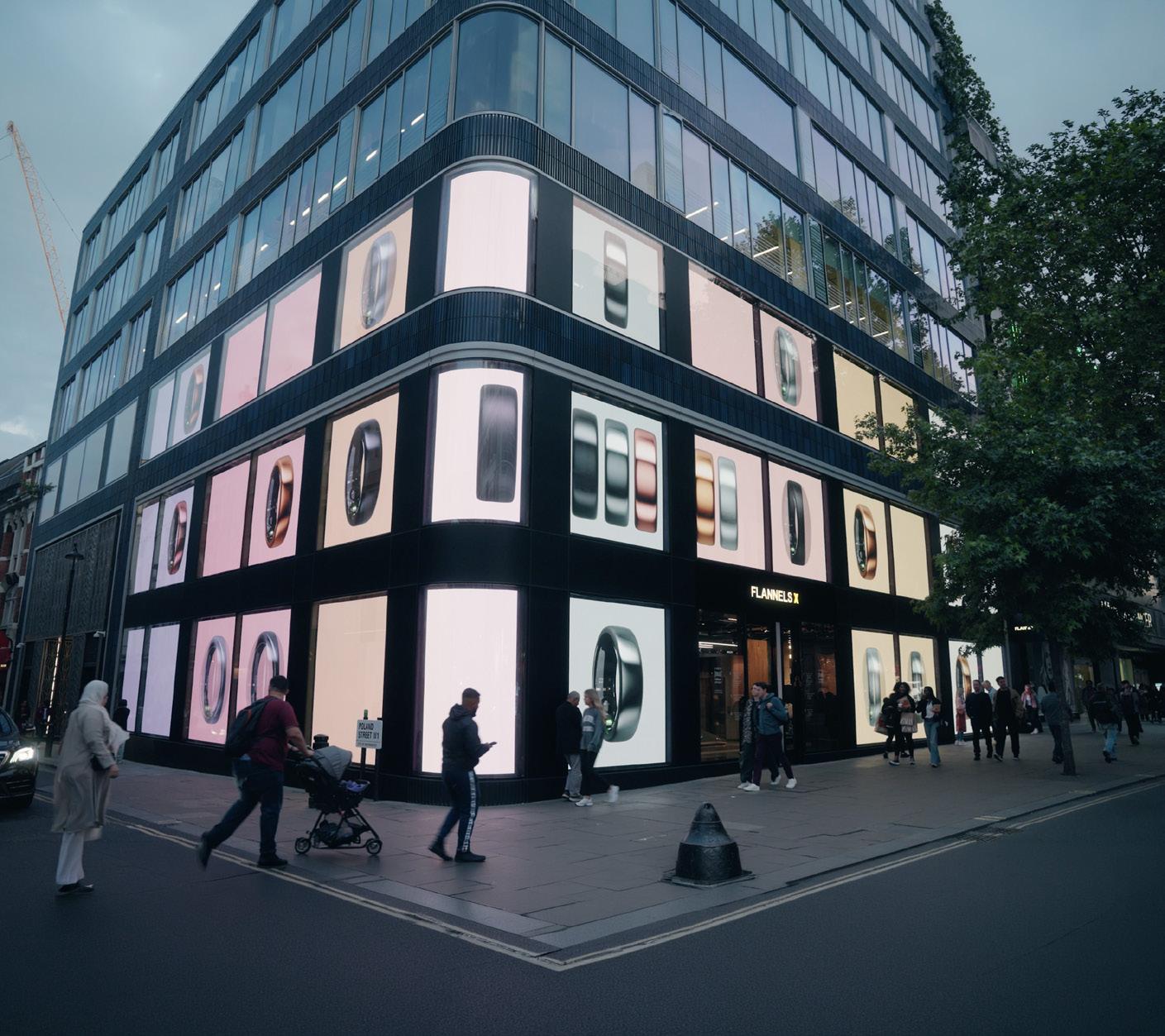
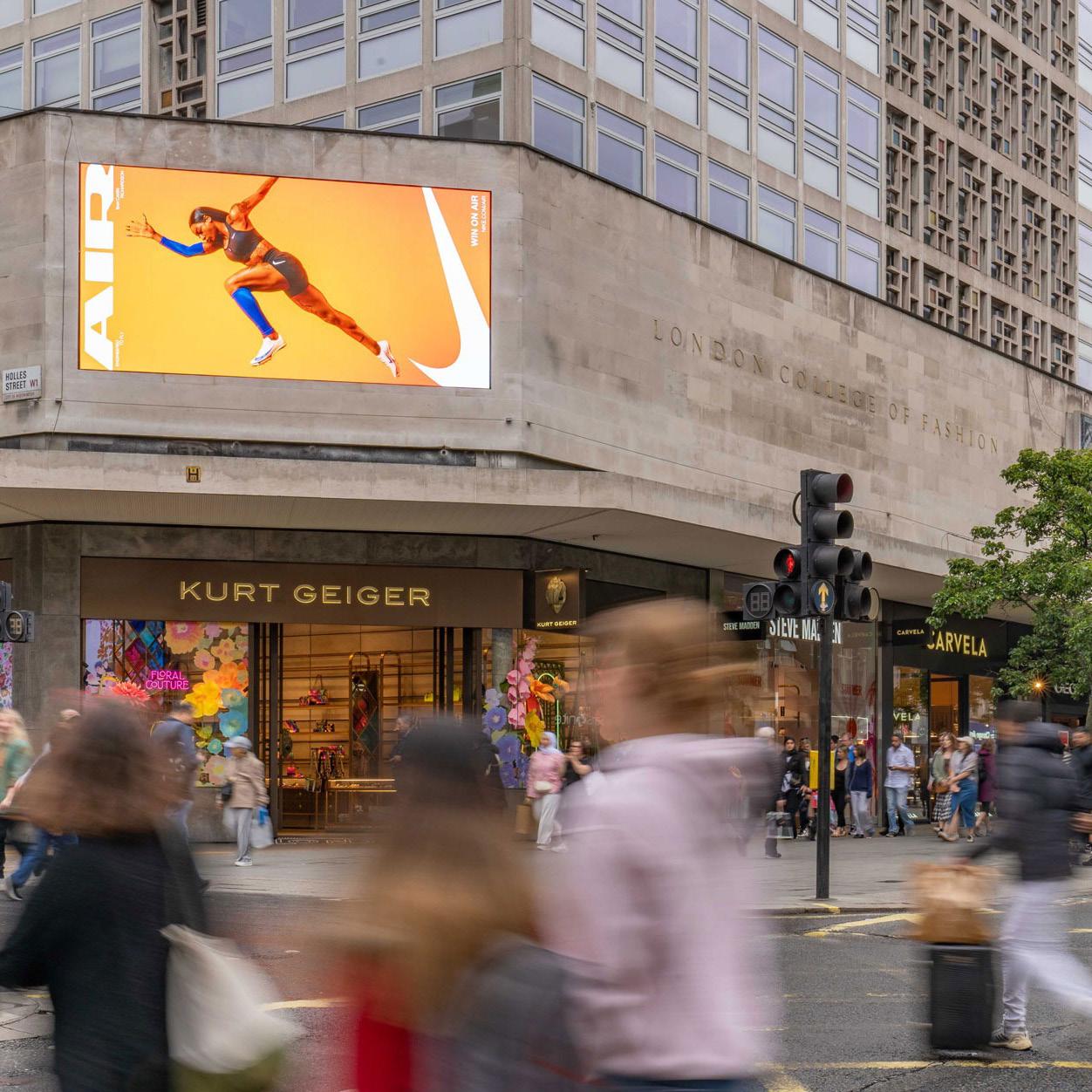
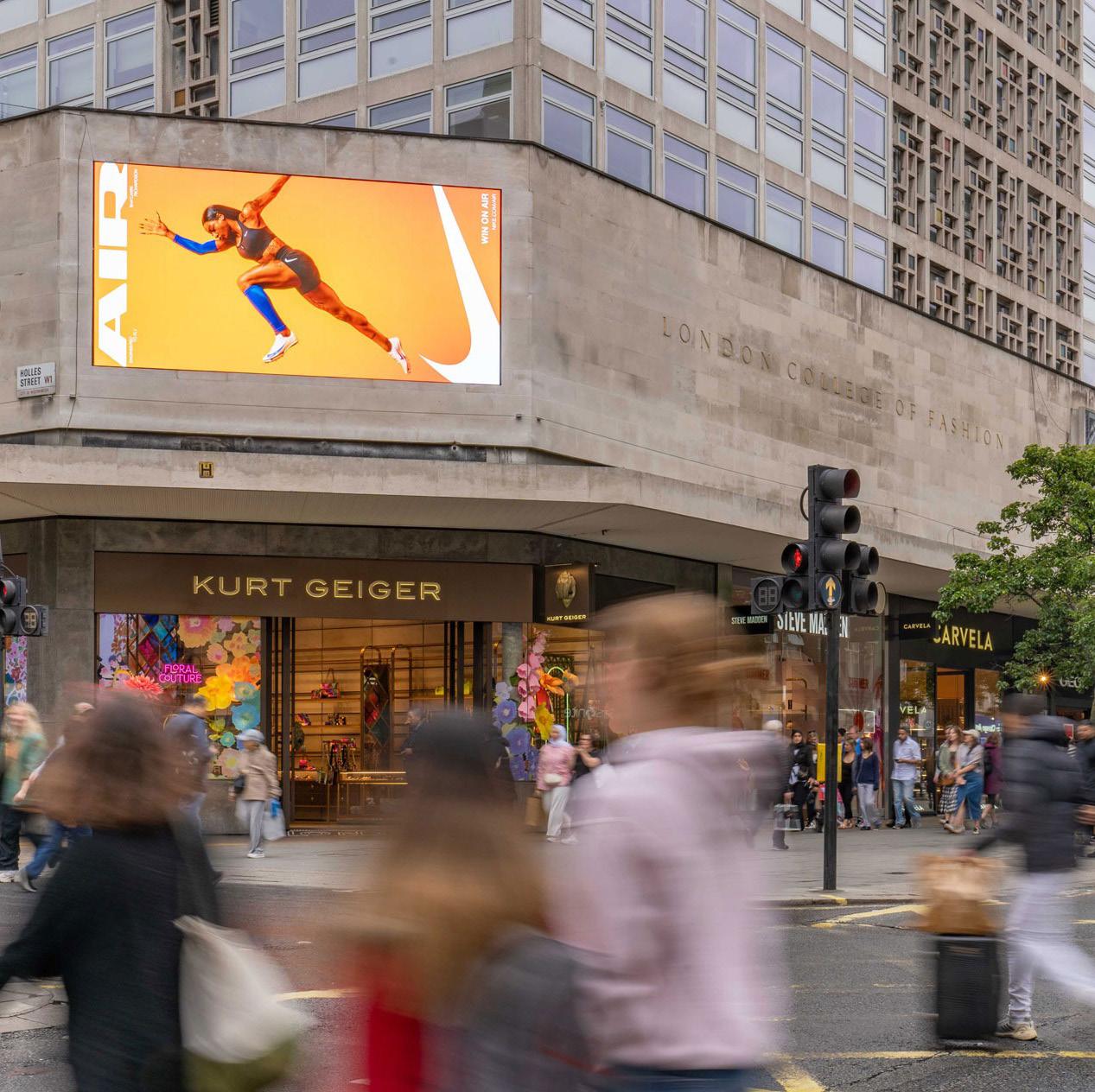
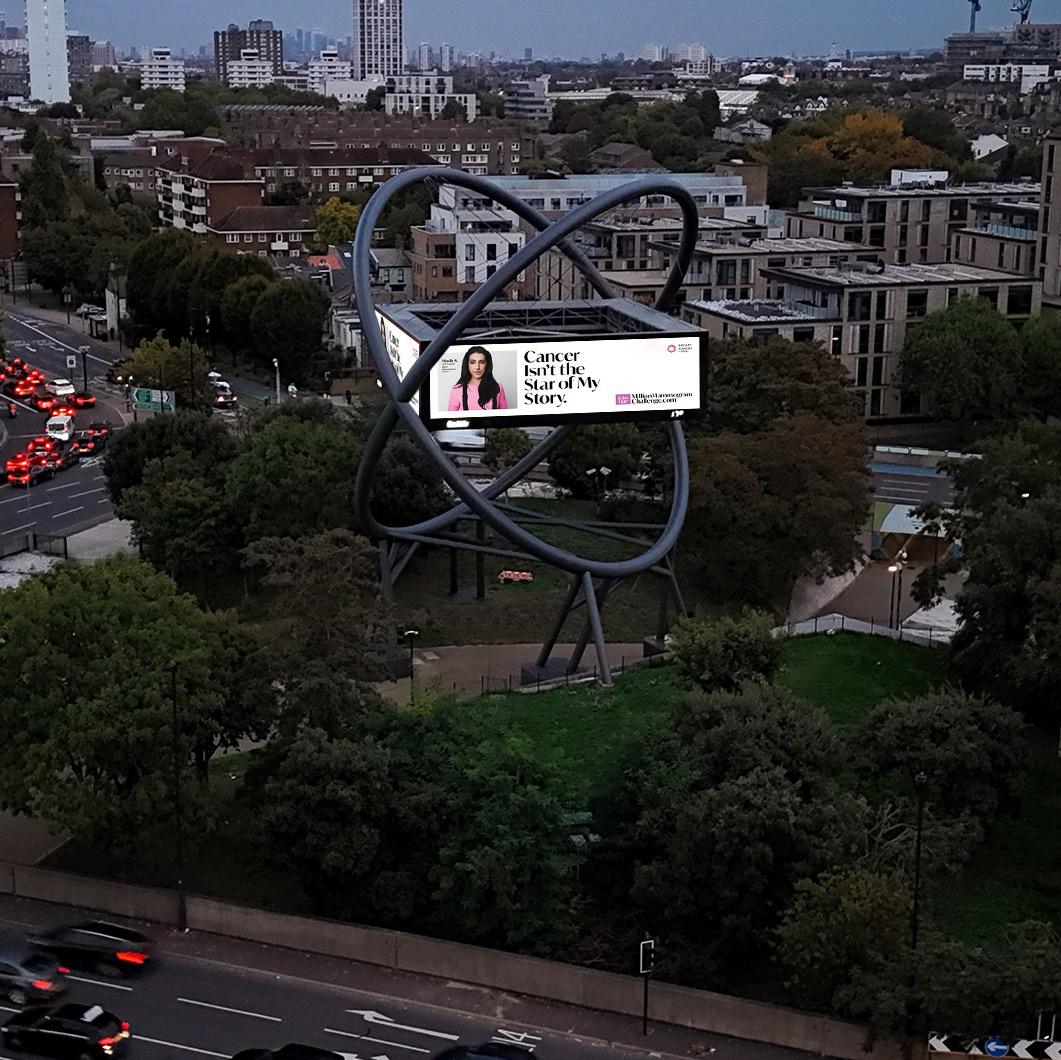
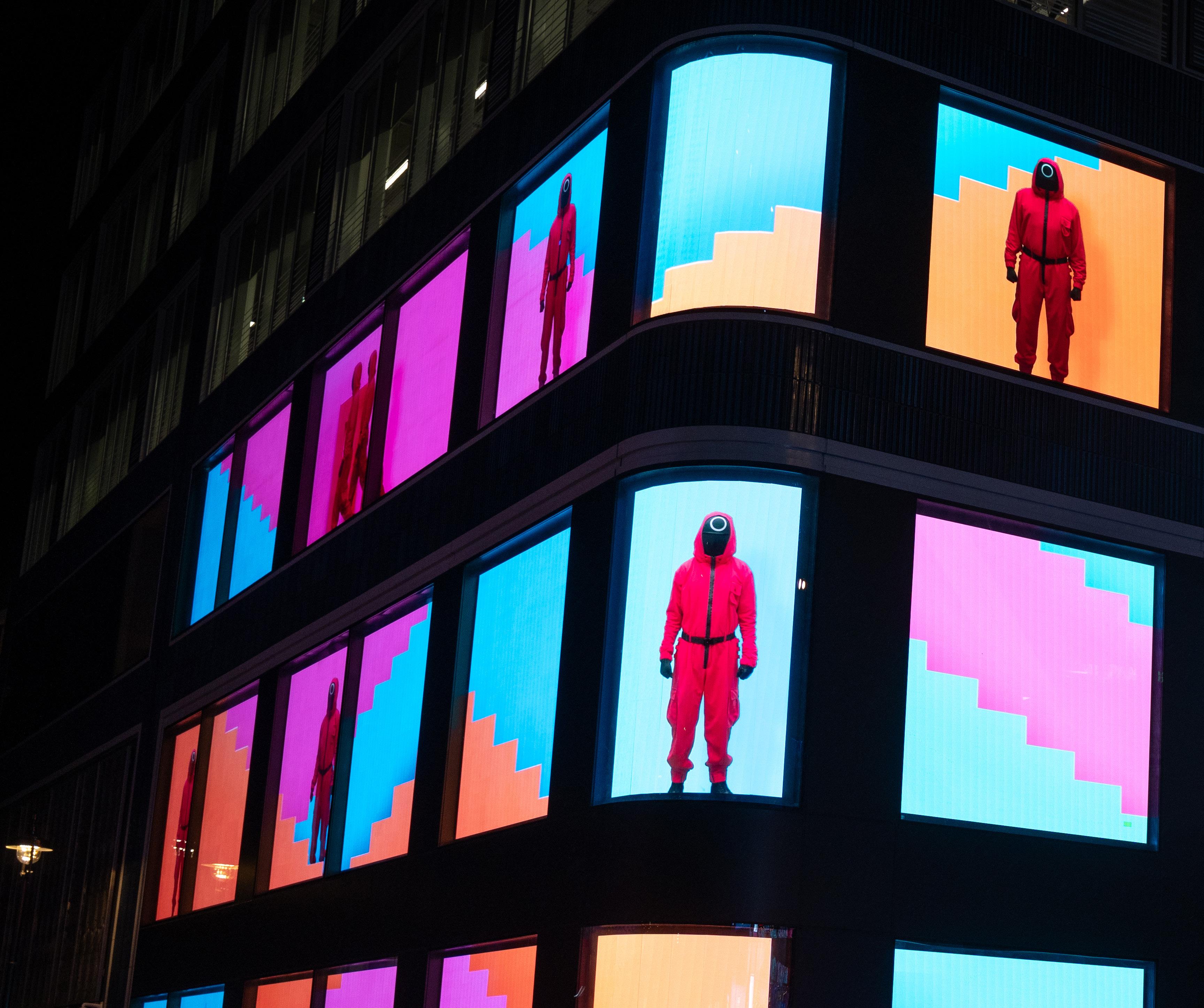
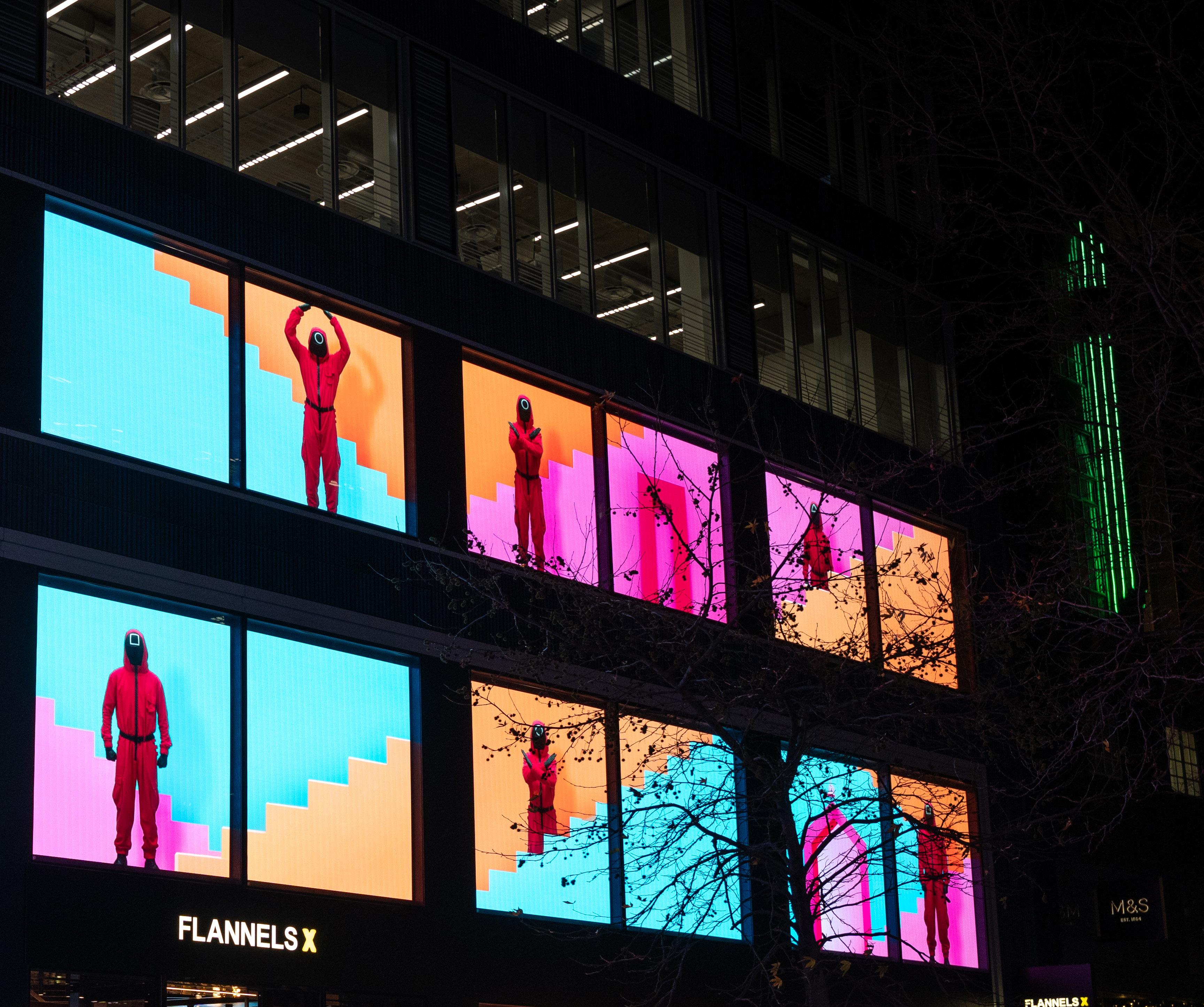
Blending seamlessly into the rhythm of Oxford Street , Oura’s campaign transformed The Cube @ Flannels through a clean and design-led digital display. Wrapped across the building’s architectural LED canvas, the campaign delivered strong visual integration and standout influence within one of London’s most active retail and cultural destinations.

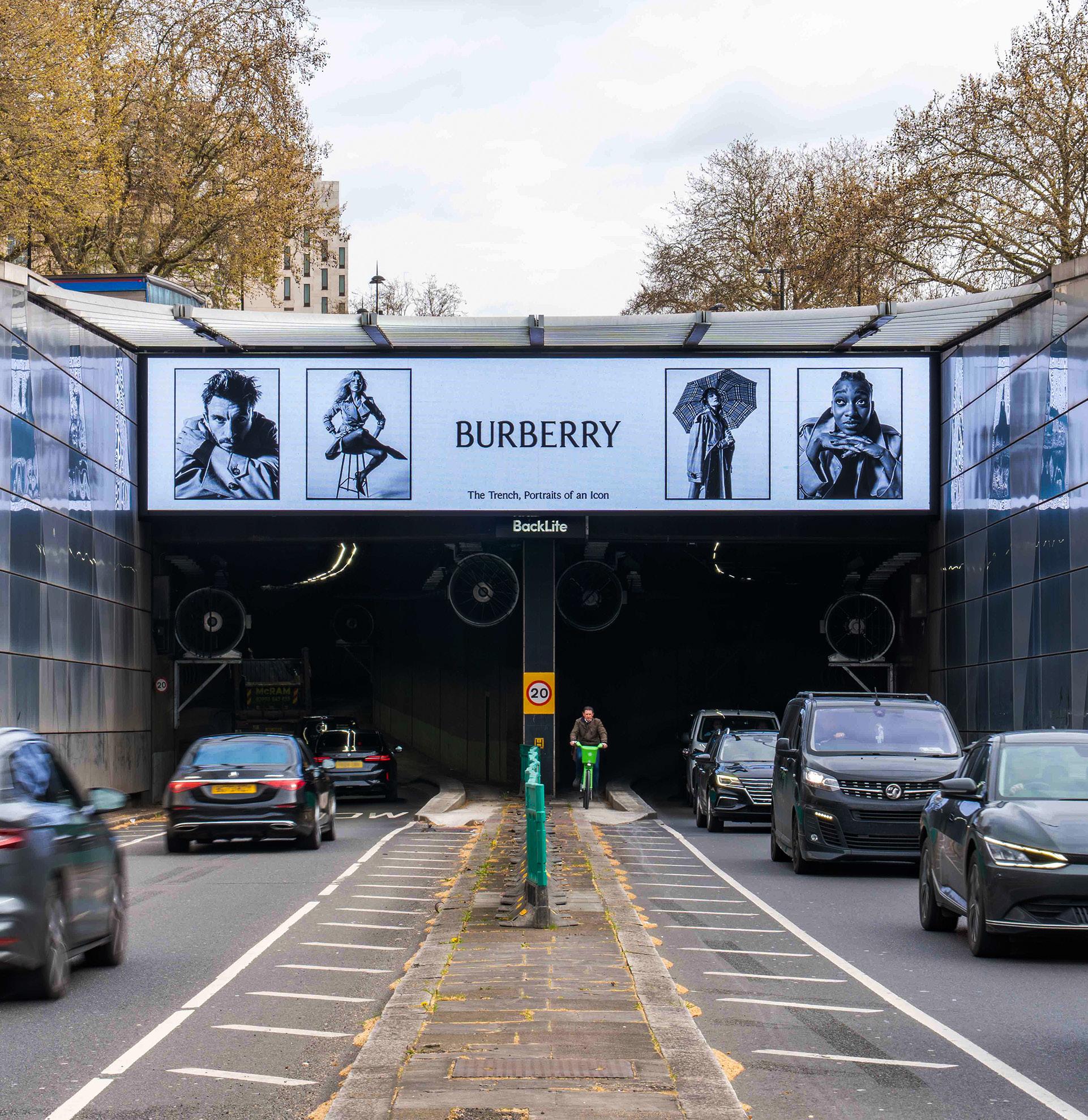
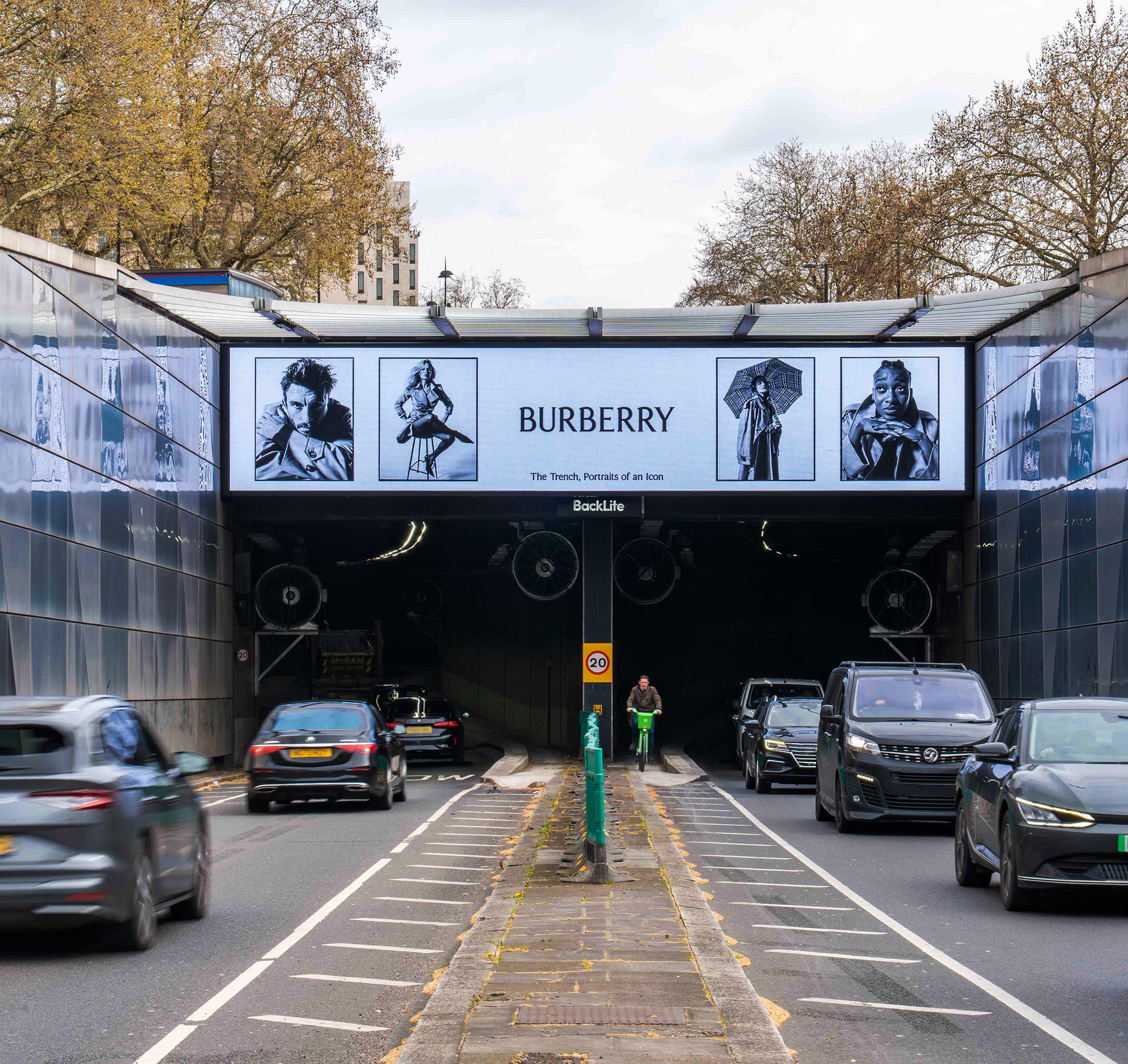
Burberry brought refined visual storytelling to The Knightsbridge through a campaign that combined contrast and urban expression. Positioned within one of London’s most prestigious retail corridors, the execution connected with premium audiences through continuous awareness across a landmark city environment.

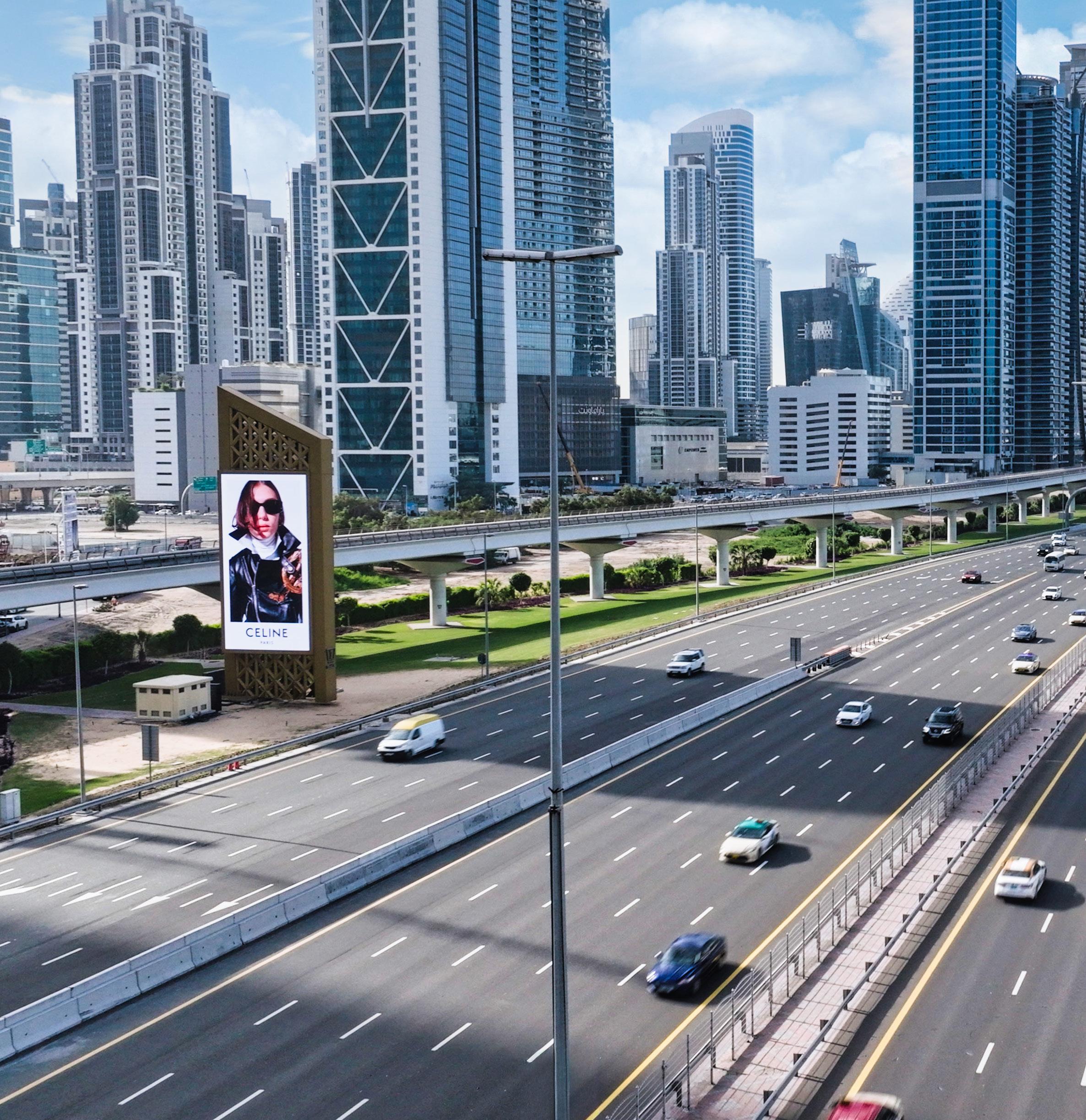
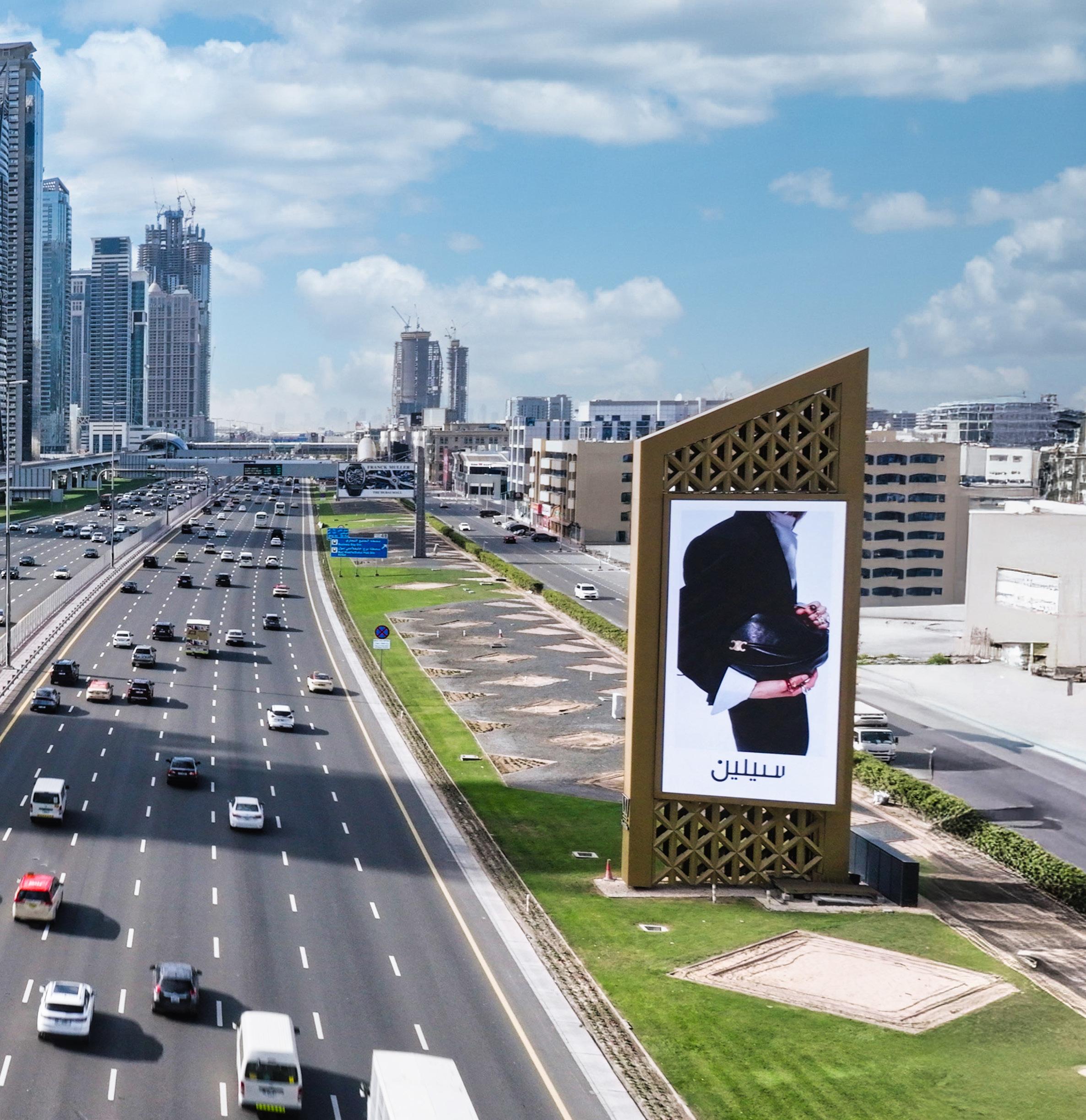
Celine made a refined statement across The Gateway , bringing understated luxury to Sheikh Zayed Road in Dubai . The campaign reflected the brand’s distinctive visual identity through simplicity and expression.
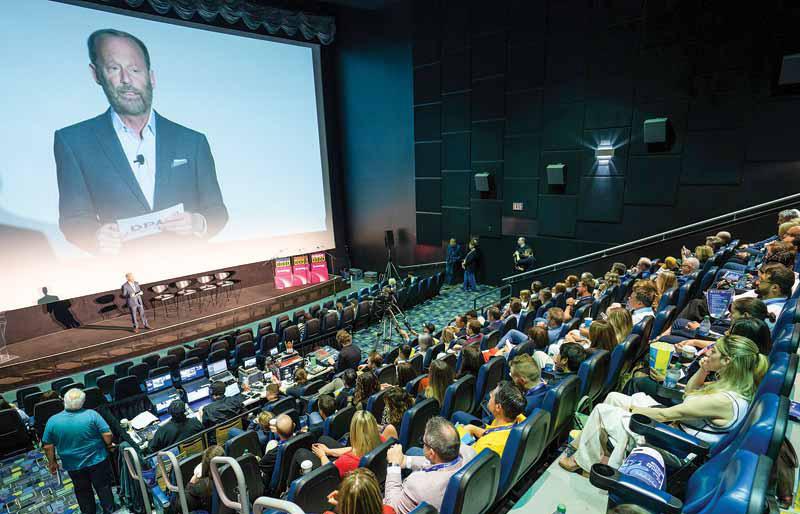
CEO & PRESIDENT AT DPAA GLOBAL
I may be biased, but I believe DOOH has consistently demonstrated an extraordinary ability not only to drive innovation, but also to adapt to and even benefit from technological disruption.
When consumers began skipping television commercials and viewing shifted toward streaming, marketers quickly realized something important: you cannot skip the advertising messages consumers encounter in the physical world. DOOH became increasingly valuable because it reaches audiences in moments where attention and context matter deeply. Today, as ad-supported streaming continues to grow and consumer journeys become more fragmented, DOOH is once again proving uniquely effective as both a brand-building and performance-driving medium.
What makes DOOH particularly powerful is its ability to influence consumers throughout the entire path to purchase, whether that’s in a 2026 FIFA World Cup host city, near a retail environment, within transit ecosystems, around entertainment venues, or in proximity to major industry events and conferences.
DOOH exists at the intersection of physical presence, cultural relevance, and technological sophistication, and that combination is increasingly valuable in today’s media landscape.

strengths and one of the reasons its future is so extraordinarily bright.



apart from every other media channel - it is woven into the fabric between everything else. That is true across the full spectrum of
campaign for a heritage fashion house does not exist in isolation - it exists in dialogue with the space around it. Which means that space has to be worthy
together. Location is the foundation - irreplaceable, high-traffic, in the right standard of the brands it hosts, the display technology has to be flawless. And perhaps most importantly, there has to be a degree of scarcity. Luxury does not thrive in ubiquity.
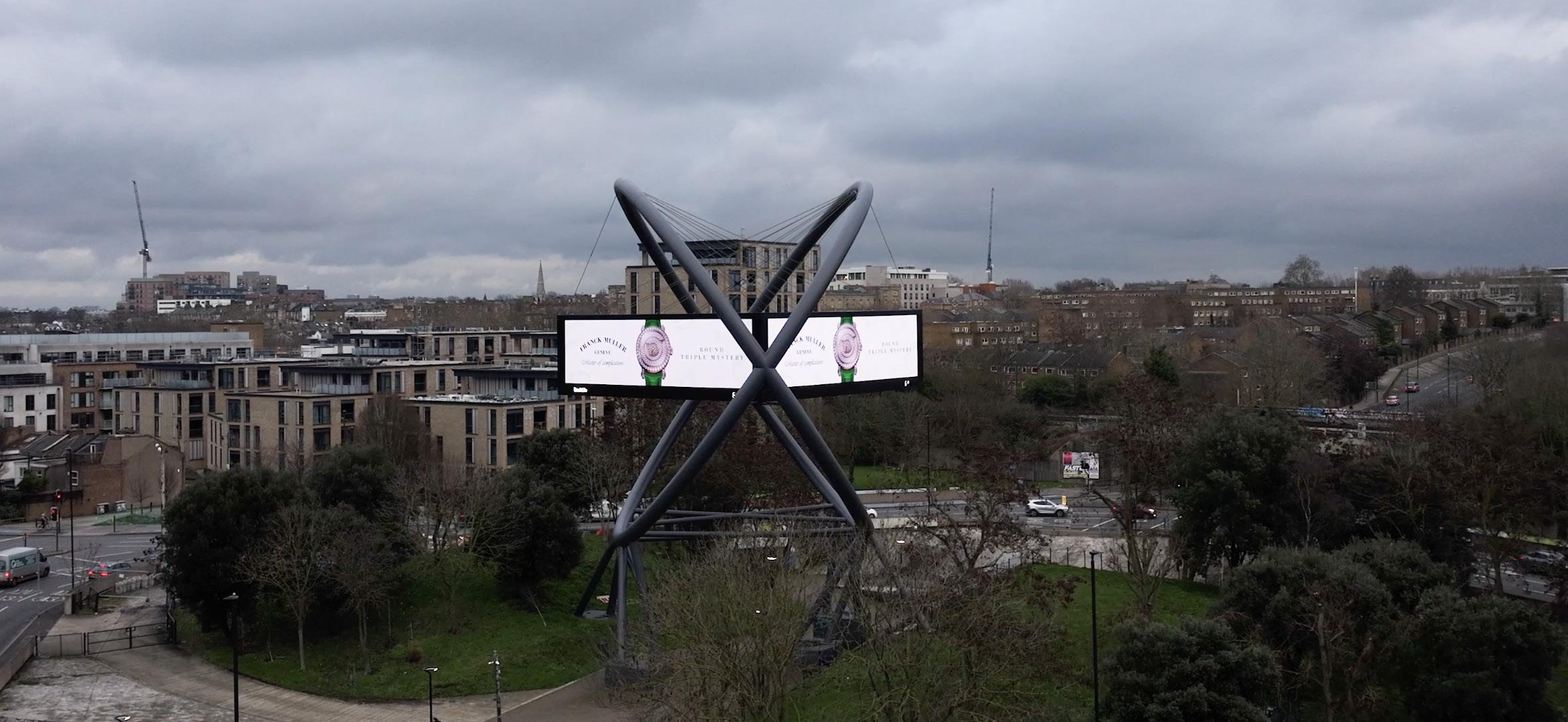
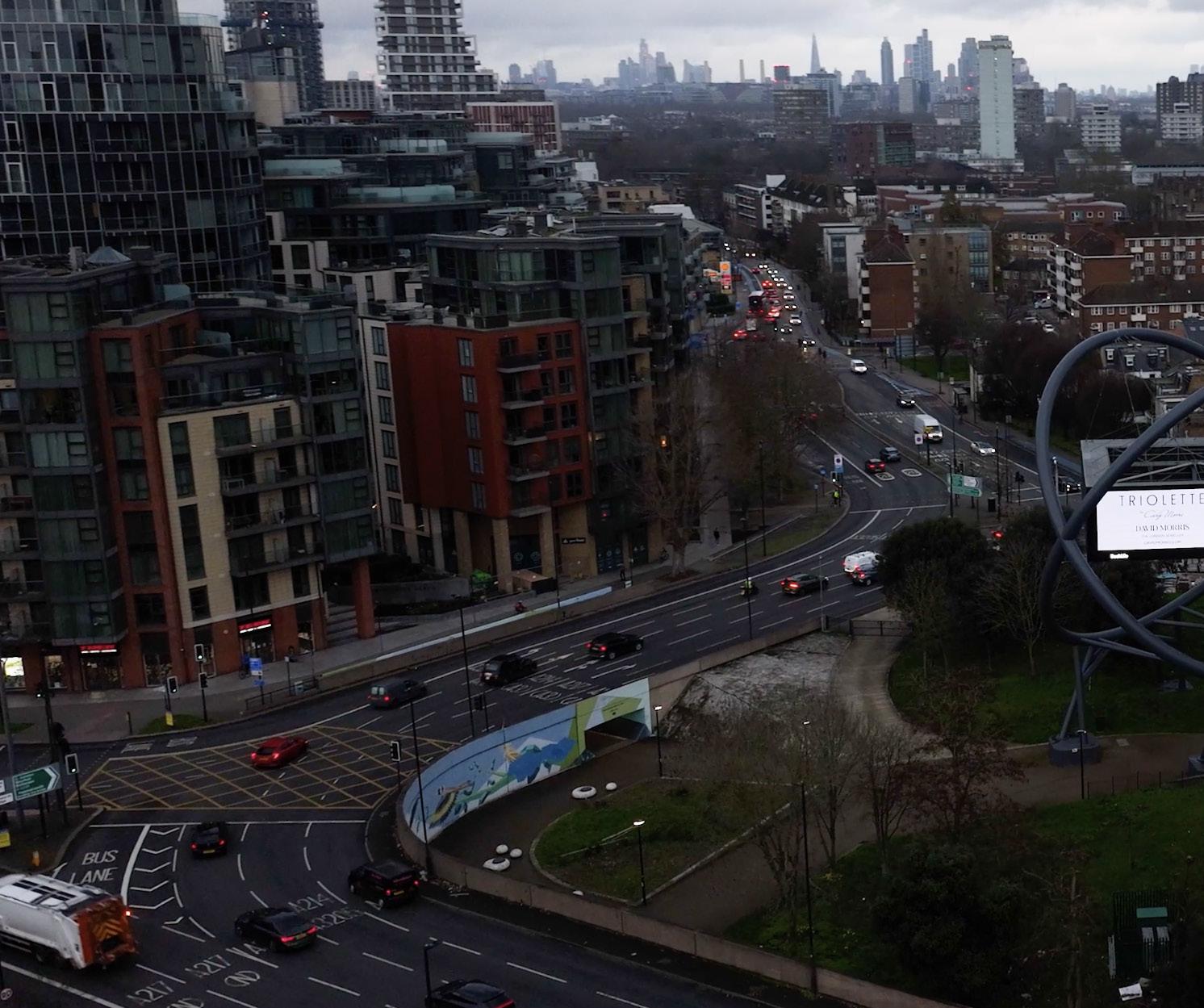
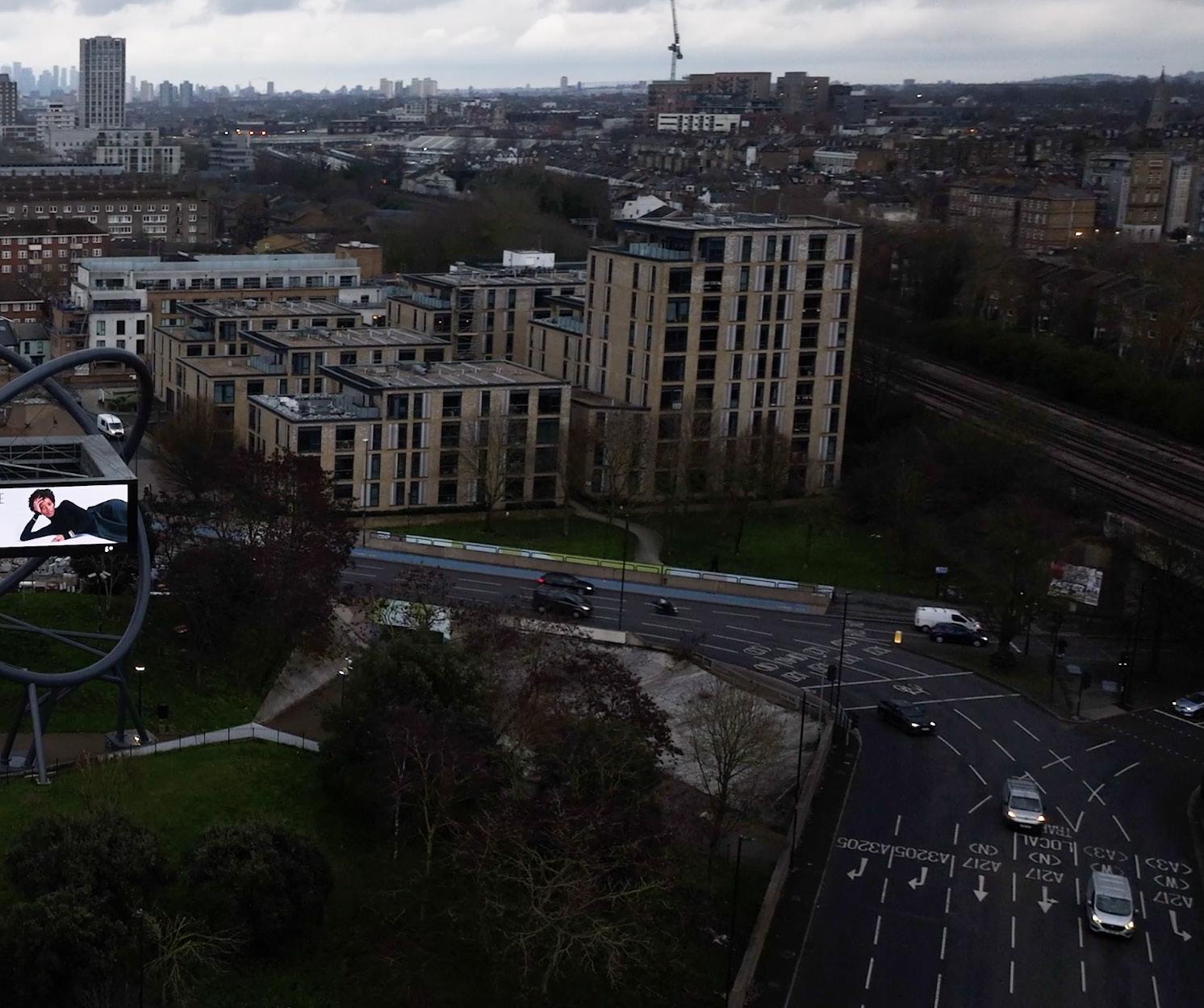
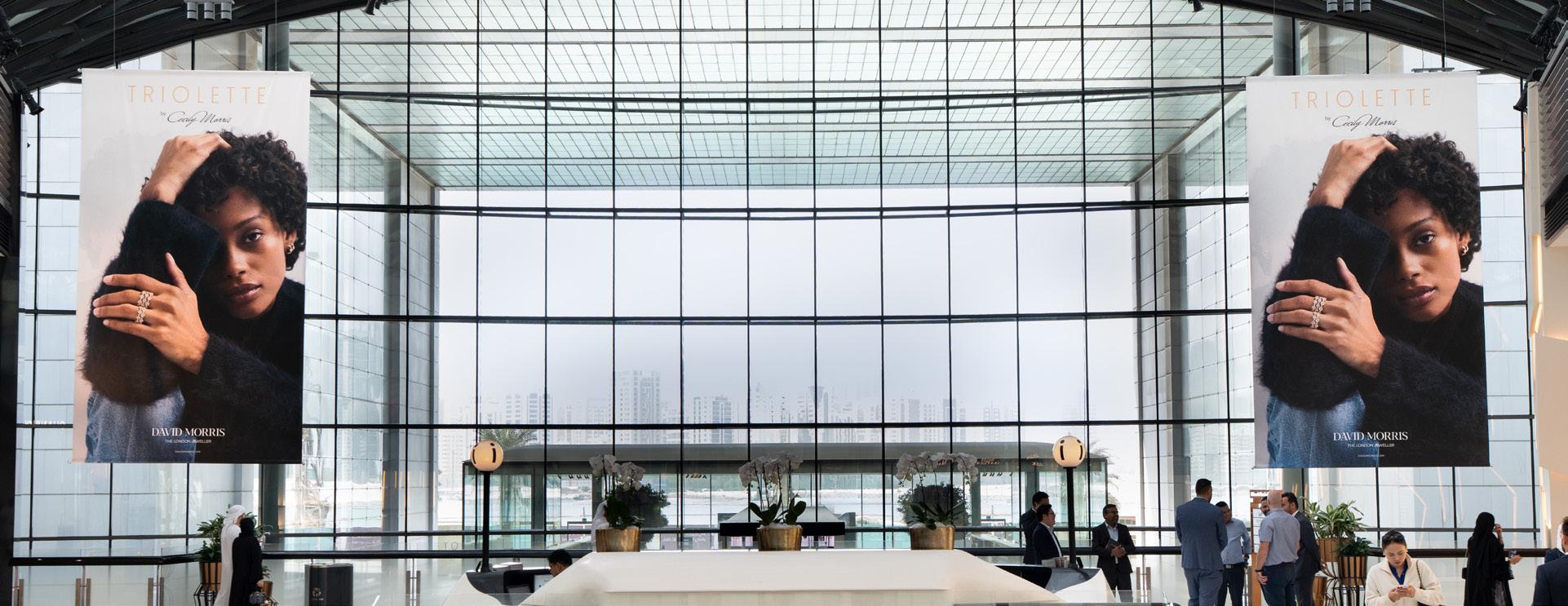
This is the thinking behind our partnership with BackLite UK, and the ongoing refurbishment programme we are carrying out across some of London’s most prestigious OOH locations. At the Wandsworth Roundabouton a major arterial route through an affluent pocket of South-West London - we have transformed a site that was always strong on location into one that is now uncompromising on every other dimension too. Franck Muller, David Morris, and Tissot are among the brands that have followed. At The Knightsbridge, our flagship installation in the Piccadilly Underpass alongside Hyde Park Corner, the result is the same: a site that sits at the heart of one of the world’s great luxury retail corridors, now upgraded to match that address. Burberry was among the first to recognise it.
The commercial case for this level of investment has never been clearer. New econometrics data from Independent Marketing Sciences, drawn from over 270 campaigns across 24 advertising channels over the last decade, shows that OOH delivers an average ROI of 12.8x for luxury brands - meaning every pound spent generates £12.80 in revenue, against a cross-channel average of just 4.7x. Luxury advertisers are already responding: spend on OOH nearly doubled between 2019 and 2023.
This is not a market trend we are reacting to. It is one we are helping to shape. When the infrastructure is right - when every element of a site, from its location to its structure to its technology, is built to the highest standard –luxury advertisers take notice.
We will be carrying out a number of further high-end refurbishments across our portfolio in partnership with BackLite UK - and beyond that, we have some extraordinary, architecturally ambitious super-premium sites in the pipeline, unlike anything currently on the market. Watch this space.
BY DAMIAN COX


CHIEF EXECUTIVE OFFICER AT ROUTE

How is improved measurement helping advertisers better understand and demonstrate the impact of OOH campaigns?
Improved measurement is helping advertisers move beyond ‘just’ planning campaigns to give a clearer understanding of OOH effectiveness as well. Route’s granular audience data can be surfaced in ways that support Marketing Mix Modelling (MMM) and other attribution models. This enables advertisers to connect OOH exposure with business outcomes such as store visits, online activity and sales uplift. This greater level of accountability means brands can plan with more confidence, optimise investment more effectively and demonstrate the role OOH plays within their wider omnichannel campaigns.
Have there been any recent innovations or developments at Route that you feel are particularly meaningful for the industry?
Route is currently developing a new methodology that will strengthen accountability across the medium and support more advanced planning capabilities. Ahead of this, we’re progressing a project to better enable campaign-level reporting by integrating Outsmart’s Playout data with Route’s audience measurement. This will deliver more robust campaign reporting, improved accountability and make the data far more accessible for modelling and analytics teams to integrate into their workflows. The project will enter user testing over the summer, with a launch planned for later in 2026.


How are changing audience behaviours - such as shifts in mobility and digital consumptioninfluencing how OOH is measured and planned?
Changing audience behaviour is reshaping how OOH is planned and measured. As digital consumption grows, advertisers increasingly expect the same levels of accountability, attribution and responsiveness from OOH as they do from other media channels. This is driving greater use of behavioural and location data across the industry, with more onus on granularity and time sensitivity in the measurement. It means that we need ingest more data sources into our models than ever in order to meet this demand and this is a trend that is likely to continue.
What do you see as the biggest opportunity for OOH to build greater momentum in the UK over the next 1-3 years?
The biggest opportunity for OOH over the next few years is its continued evolution into a more intelligent, accountable and connected medium. As programmatic DOOH continues to advance, advertisers will gain greater control over how campaigns are planned, optimised and adapted in real time. At the same time, stronger measurement and attribution will make OOH’s influence clearer across the full marketing funnel, from brand building to action. Together, this will drive greater confidence, unlock increased investment and firmly position OOH as a core part of modern omnichannel strategies.
Finally, what would your key message be to advertisers and agencies looking to maximise the impact of OOH today?
To maximise the impact of OOH today, advertisers and agencies should be bold, creative and brave. OOH works best when brands fully embrace the space and the context thinking carefully about the people, place and time for each campaign. Make the most of the medium’s scale, creativity and flexibility, and don’t be afraid of frequency; marketers tire of ads long before audiences do. Just as importantly, adopt a test-and-learn mindset: optimise campaigns on the fly, experiment with dynamic creative and use incrementality and attribution testing to better understand and improve performance over time.
The second shift is audience behaviour. People are spending more time in shared, premium environments, transport hubs, entertainment districts, lifestyle destinations, where the expectation is for experiences, not just messages. High-quality DOOH in these spaces is no longer just a media placement; it becomes part of the visual and cultural fabric of the city, which brands increasingly want to associate with.

How do digitisation, measurability, and data change the investment case?
Digitisation has taken OOH from “fixed and inflexible” to “dynamic and responsive.” Campaigns can now change creative by time of day, weather, or audience profile, and can be bought programmatically with a level of control that mirrors other digital channels. That alone radically improves how OOH fits into modern media planning and optimisation.
Data and measurement have also moved on. By combining DOOH with mobility, location, and behavioural data, we can give advertisers a much clearer picture of who they reach, how often, and what happens next. We are seeing more work that links OOH exposure to footfall, app engagement, and brand-lift studies, which shifts the conversation from “great visibility” to “proven incremental impact” in language CMOs and CFOs recognise.
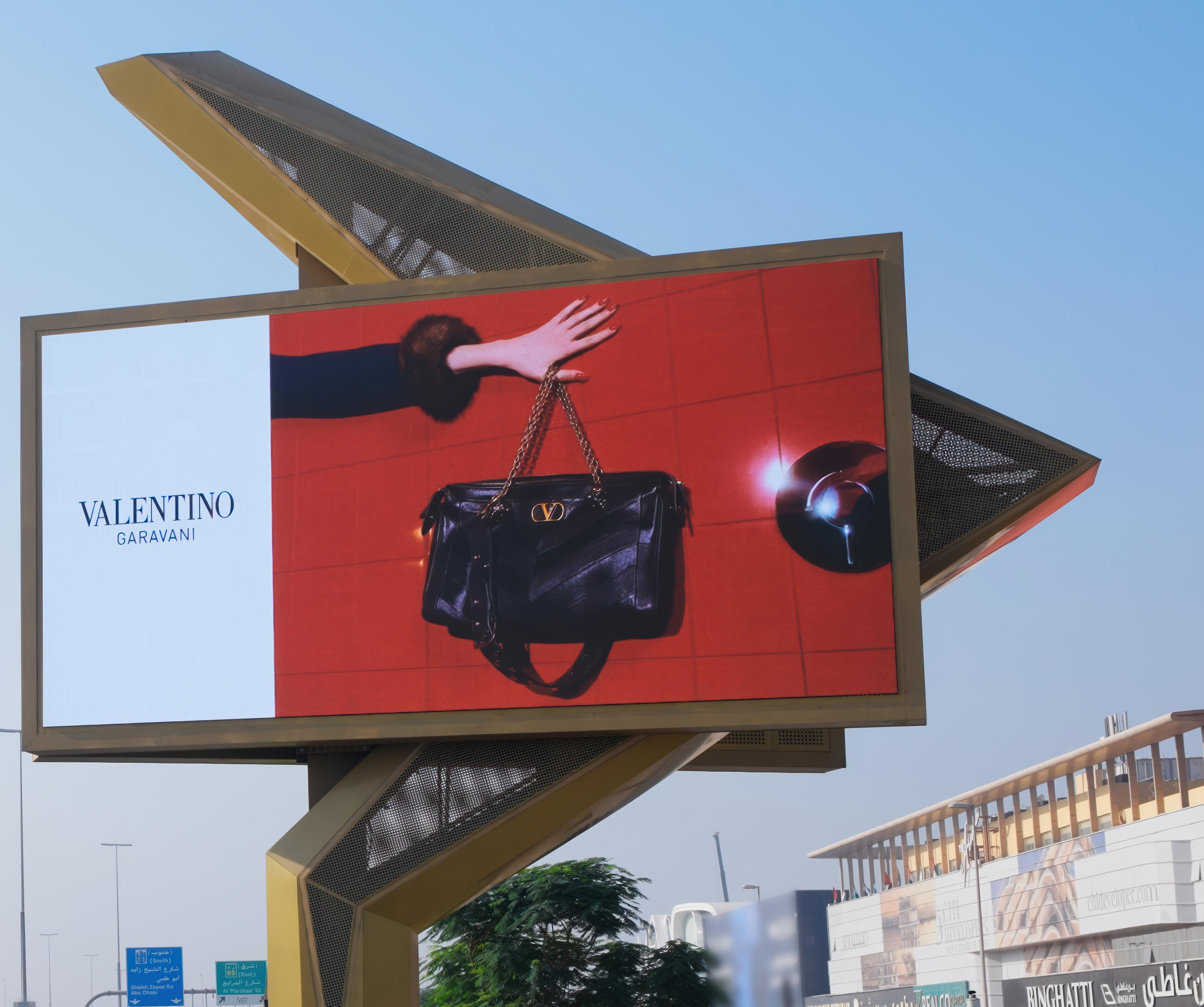
not just adding more screens; they are designing cohesive, high networks into the architecture of new districts, airports, and road systems. Couple that with a young, connected population and ambitious city agendas, and you have an environment where OOH can be both commercially powerful and culturally influential. Looking ahead, I see OOH becoming one of the defining media platforms for how brands live in the physical world over the next decade.



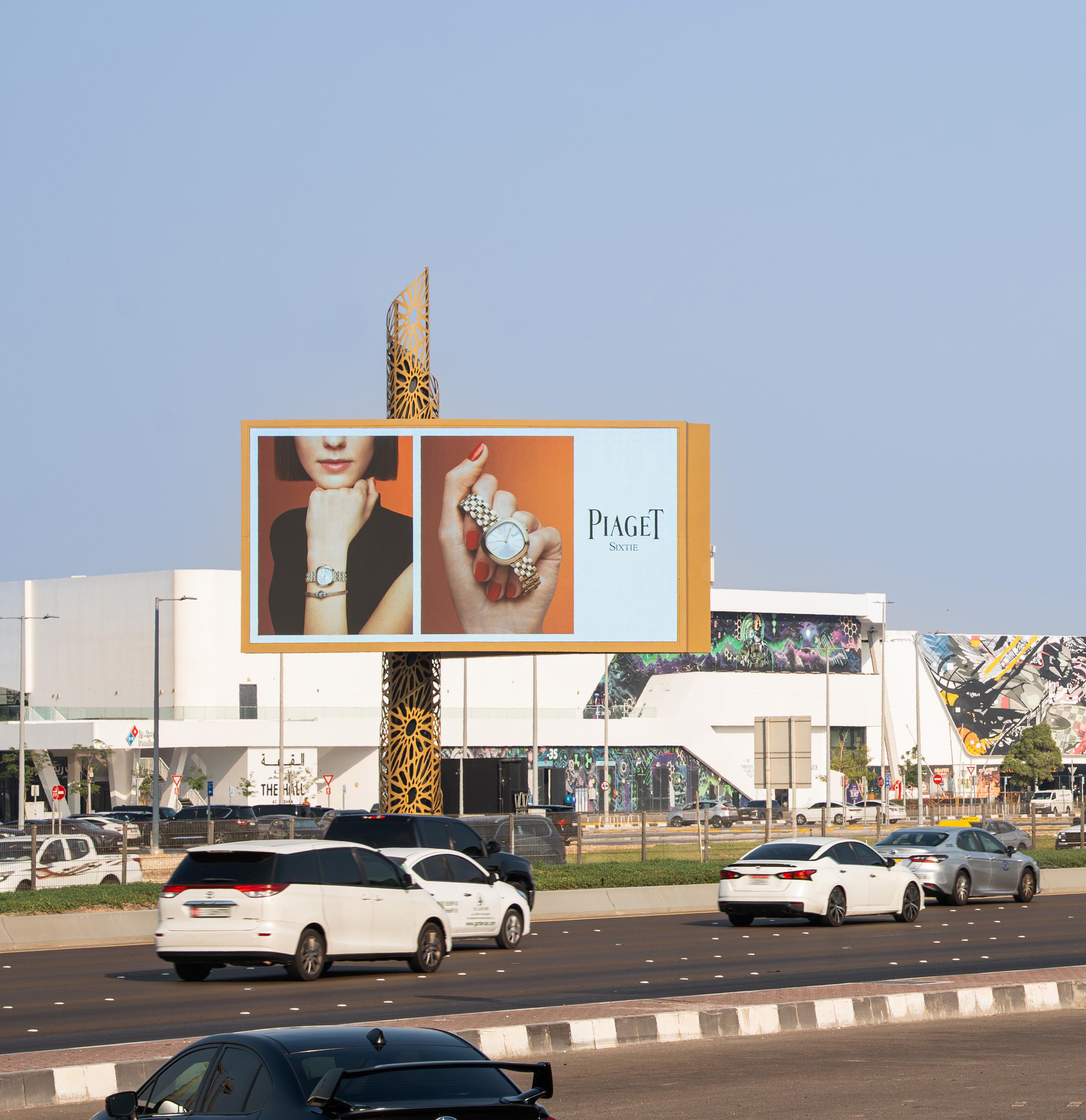
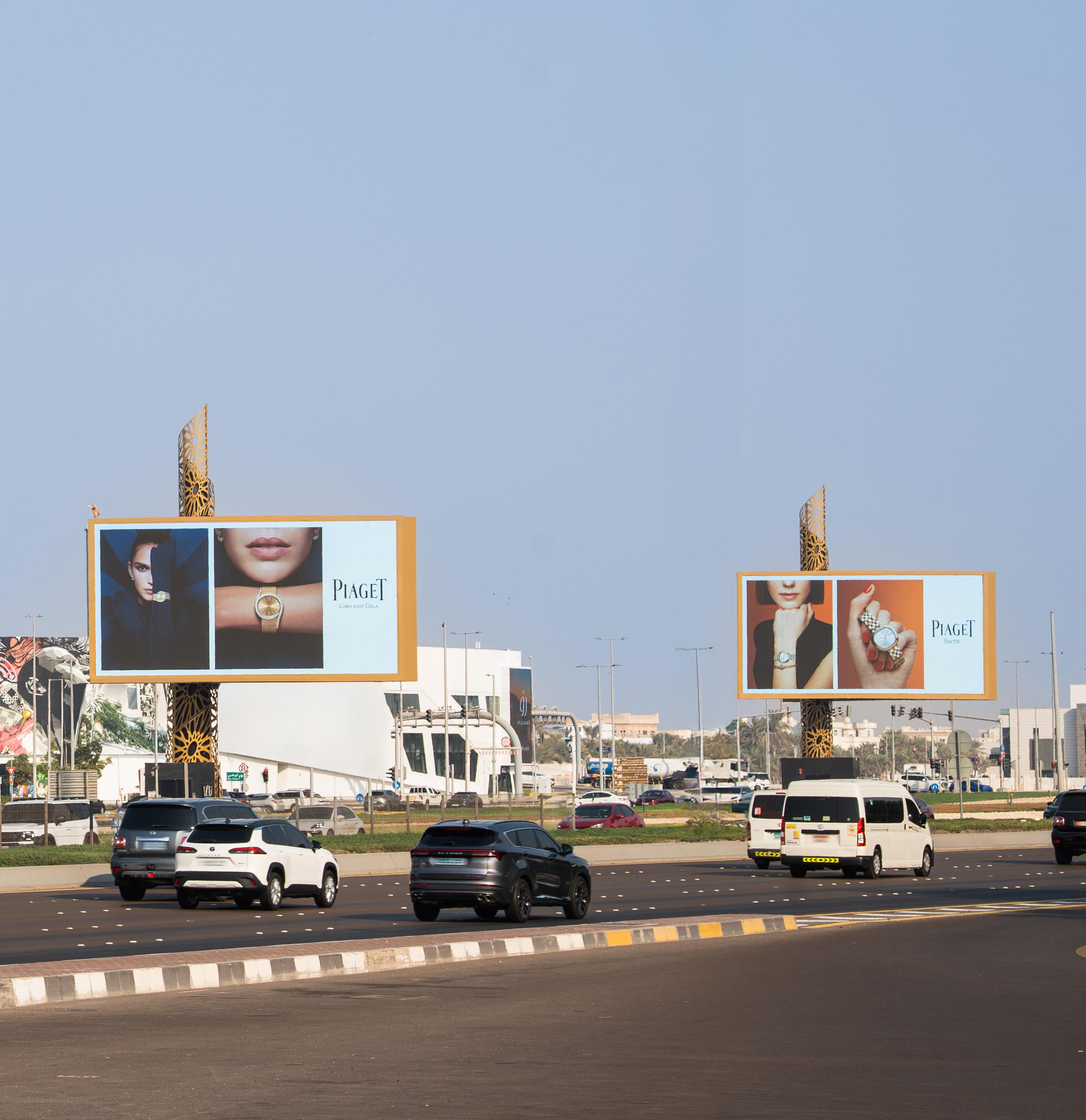
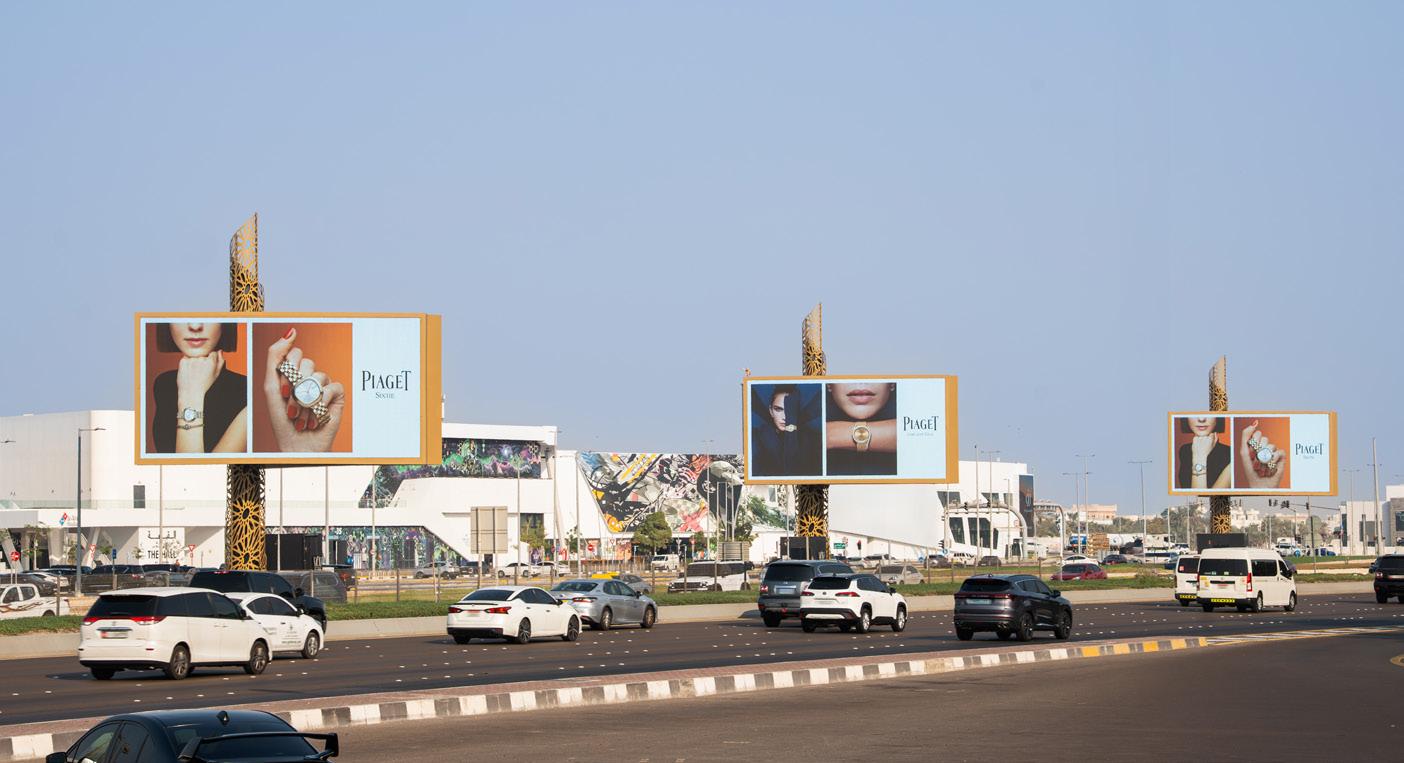
Piaget extended its refined visual identity across The Triple Crown Abu Dhabi through a campaign shaped by elegance, repetition, and architectural scale. Positioned within one of the capital’s most prominent roadside corridors, the execution combined luxury craftsmanship with continuous city movement, creating a seamless brand statement across the urban landscape.
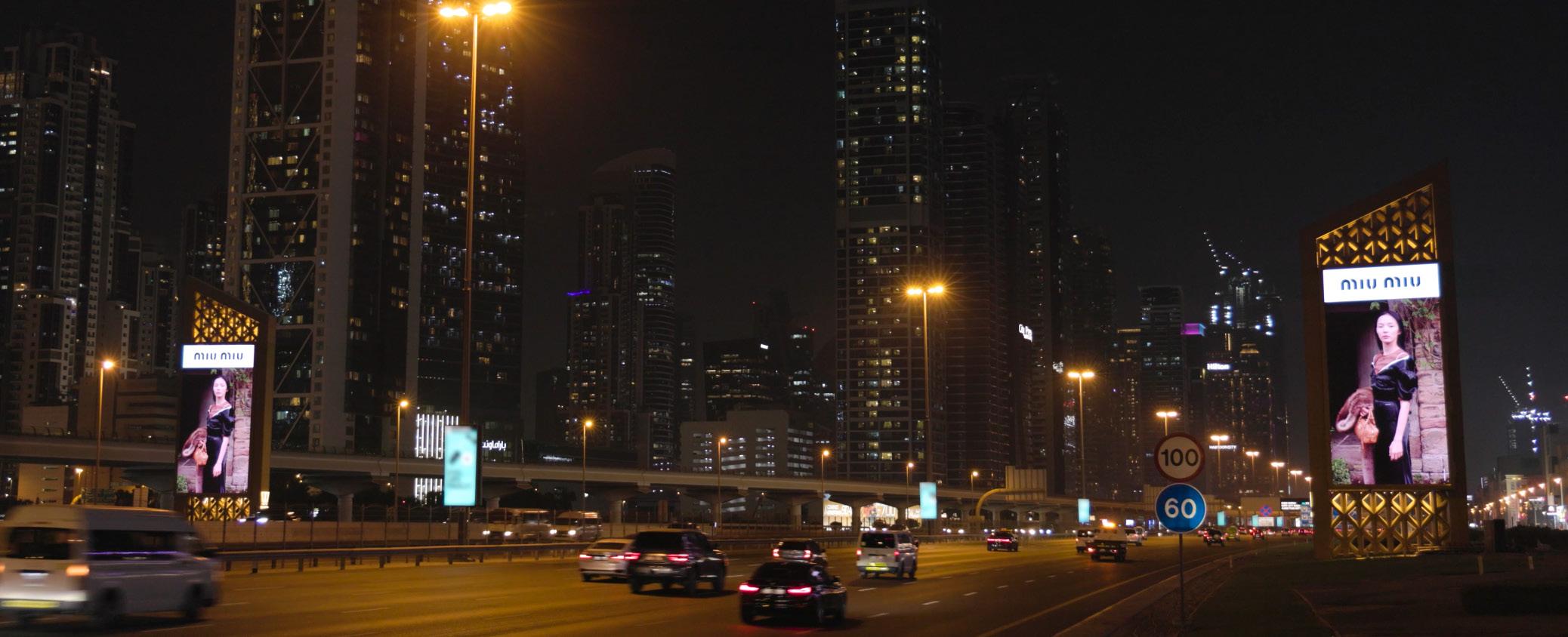
Regulatory clarity is part of what makes Dubai attractive to investment in its OOH sector.
Global brands, media owners and investors need to understand what is permitted, how approvals work, and what standards will apply before they commit to major campaigns or infrastructure. The updated framework gives the sector that certainty.

market down. It is to help it grow in the right way.
Out-of-Home advertising has always been visible. The next phase is about making sure it is also intelligent, responsible and worthy of the city around it.

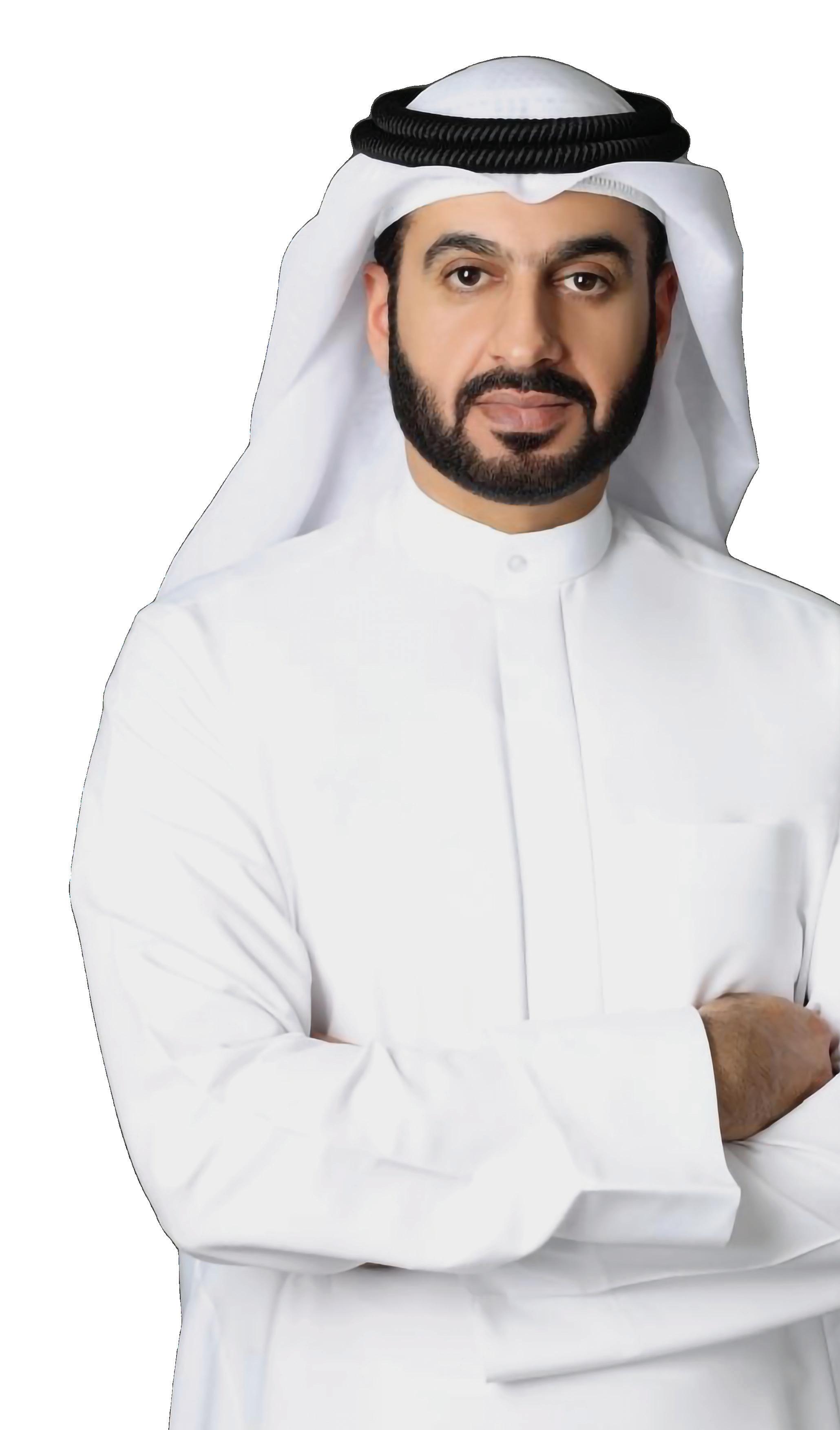
BY MAJID AL MADANI
ADVERTISEMENT
SECTION MANAGER, CITY
AND PUBLIC PROJECTS
BEAUTIFICATION
DEPARTMENT
precision, because agile, intelligently timed activity creates far greater legitimacy than blanket saturation ever could.
While digital advertising is often experienced alone and quickly forgotten, OOH is inherently communal. It exists in the shared spaces where people live, work, commute and connect. A screen in a shopping mall, a landmark format in a financial district, or an experiential moment in a landmark location that people photograph and share - these are moments that live beyond impressions.
OOH creates shared experience, not passive consumption. People see it together, talk about it, capture it, and increasingly amplify it organically. In this way, the channel sits at the intersection

In a digital first world, physical presence has become a differentiator. For global premium brands, high impact OOH is more than a media choice – it’s a strategic advantage. Showing up in the real world, in the right places, with relevance and intent, delivers brand value that digital alone simply cannot.
BY DANIELLE AUSTIN MANAGING DIRECTOR


and performance management, but there also need to be capable local hands that understand vendors, regulations, and the realities of each market. Getting that balance right is what makes scale possible without losing agility.
Technology has a critical role to play in that process. Today, operational scale requires more than coordination, it requires visibility. A centralised tech stack makes it possible to track inventory performance, monitor maintenance requirements, and make faster decisions across regions. It creates the foundation for a more disciplined, data-led operating model. Over time, that model should move from reacting to issues to predicting and preventing them before they affect campaign delivery.

Ultimately, the scale in OOH is not simply about being bigger. It is about being better at operating across complexity. The businesses that will lead the next phase of growth are the ones that can build systems strong enough to support expansion, disciplined enough to protect quality, and flexible enough to respond to the realities of different markets. That is what turns growth into a platform rather than just a footprint.
BY ELIE HAJJAR CHIEF OPERATING OFFICER



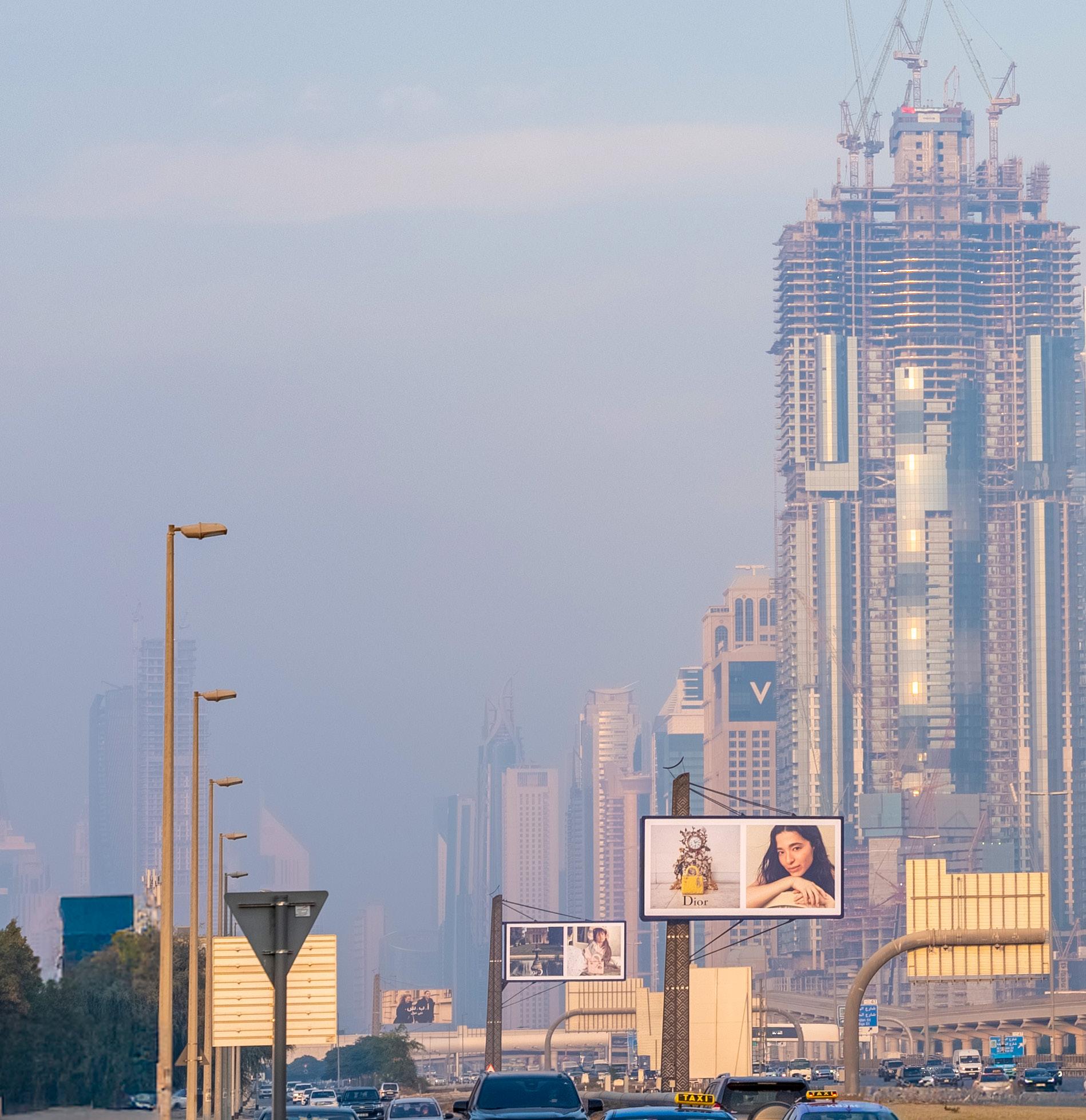
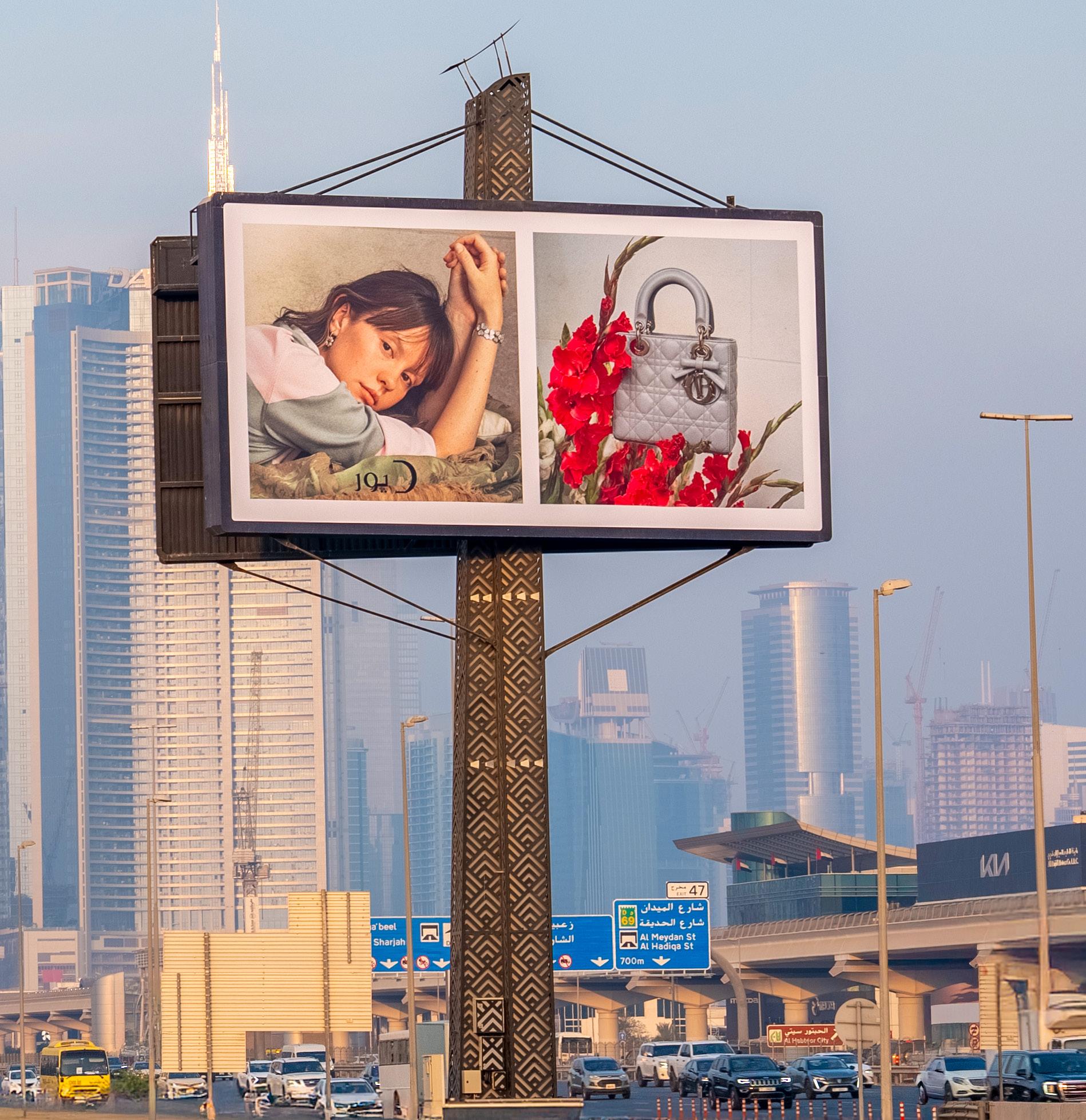
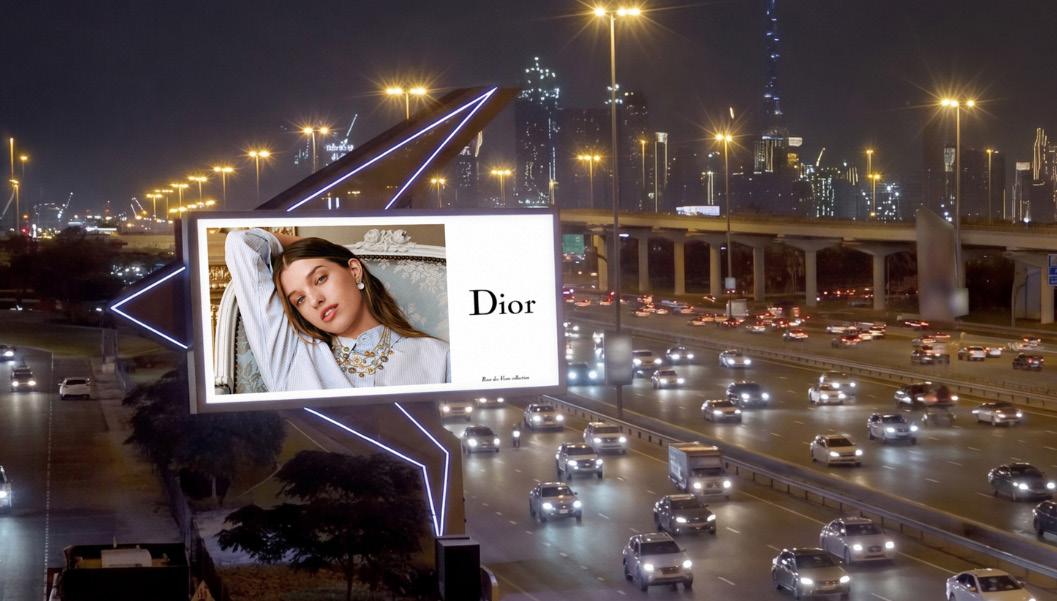
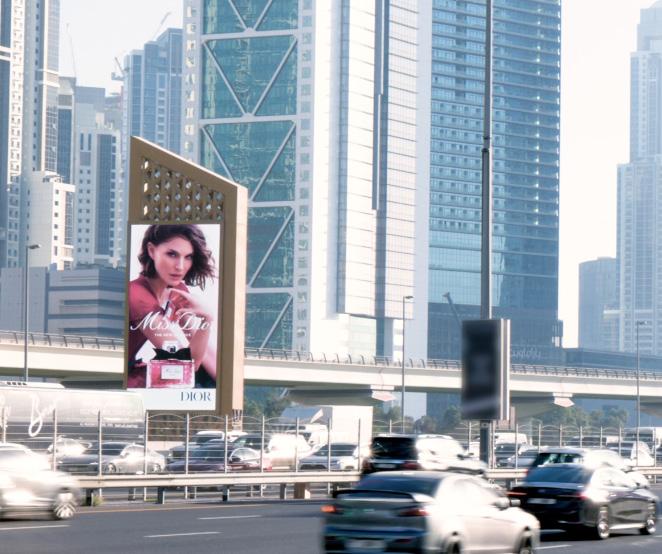
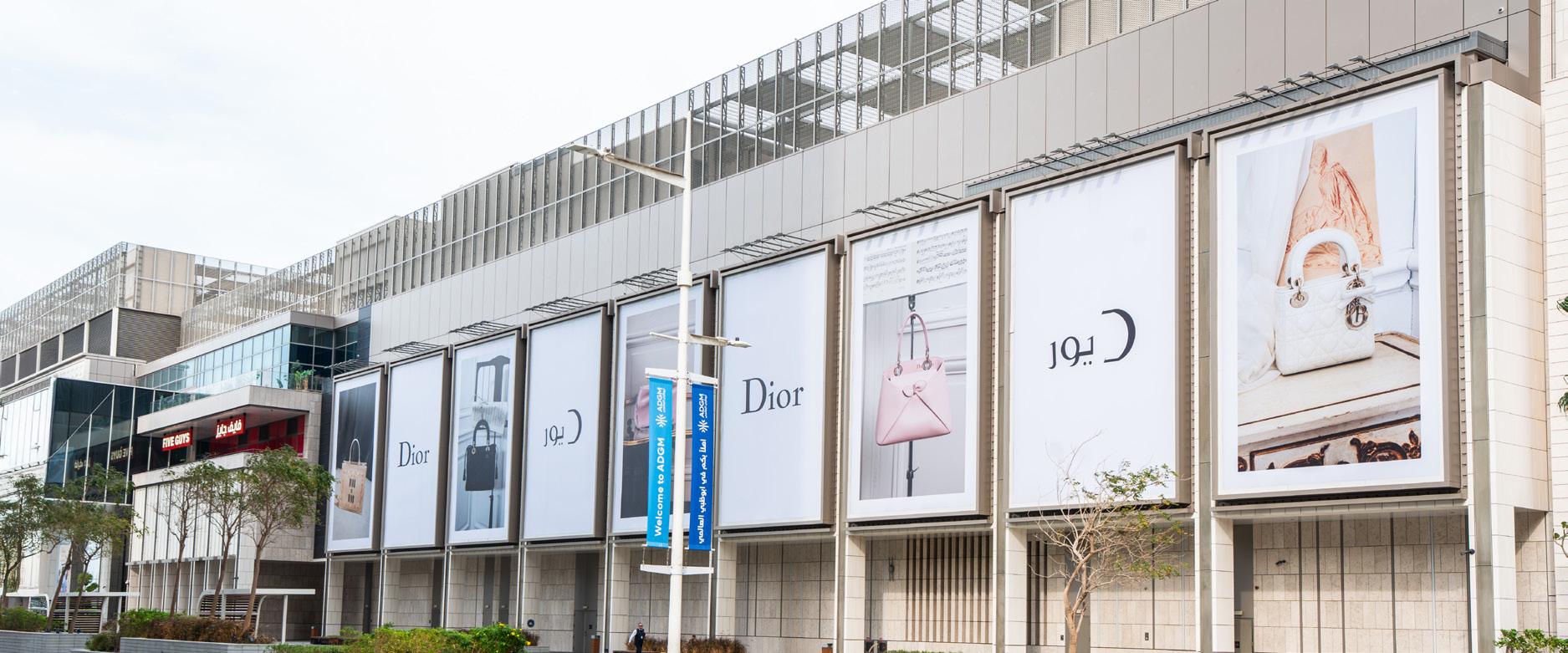
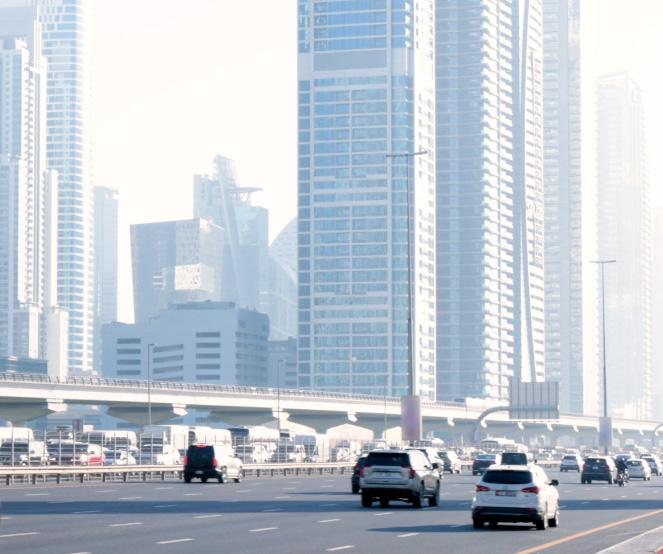
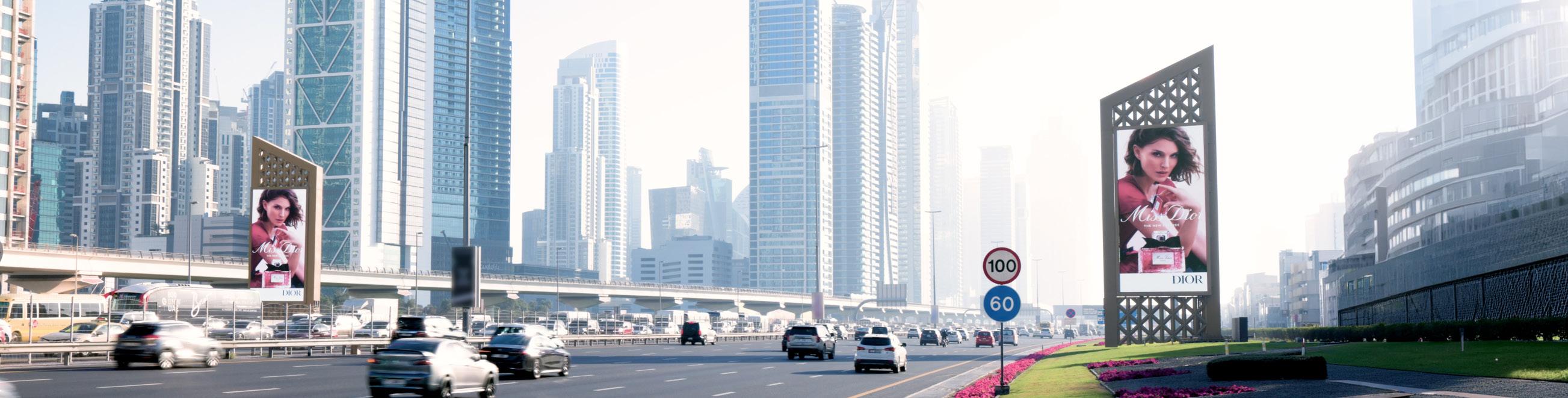
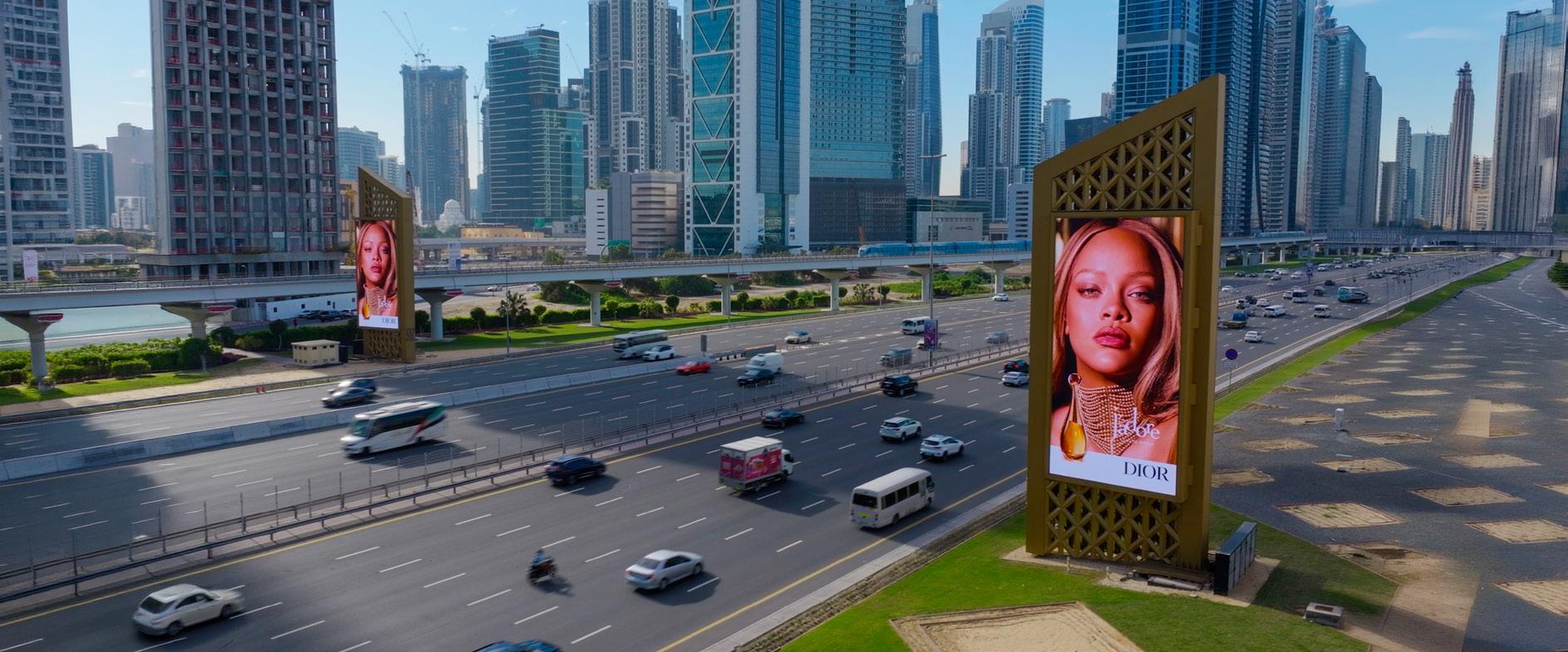
Dior appeared across the T 3 corridor through a refined outdoor execution that combined elegance, scale, and strong visual continuity. Positioned against Dubai’s evolving skyline, the campaign delivered a seamless luxury presence through high-impact creative displayed across multiple landmark structures.




DEAKIN BELL
CHIEF EXECUTIVE OFFICER
“Out-of-Home has always been at its best when brands connect the message to the moment. The strongest OOH campaigns don’t just deliver reach - they become part of culture, conversation, and the consumer journey itself. Brands have more OOH inventory to choose from (both static & digital), smarter audience data and faster speed to market than ever before. Success now comes down to how messaging is tailored to audiences as they move about their daily lives. Meaningful impact comes from context. Right place. Right audience. Right moment. OOH’s strength is cultural credibility, providing a trusted canvas for brands to engage audiences in the physical world in an authentic, unforgettable way.”
JEFF RUSHTON PRESIDENT & CHIEF EXECUTIVE OFFICER
“Out-of-Home advertising creates the greatest brand impact when it is executed with consistency, scale, and purpose. Brands win when they dominate key corridors with repeated, high-quality OOH creative that reinforces who they are and what they stand for over time. Just as important is where that message livespremium locations curated by operators elevate both visibility and brand perception. When superior creative is paired with outstanding sites and dependable, high-quality static & digital displays that perform year after year, advertisers don’t just generate impressions - they build trust, equity, and long-term brand value in the real world.”



ROB ATKINSON
CHIEF EXECUTIVE OFFICER BOARD ADVISOR
“OOH advertising creates real impact when it stops being a message and starts being part of the environment. Context is everything. The right location, in the right moment, with the right message - together they create relevance that generic media simply can’t match. Reflecting community amplifies this further. Referencing a local event or cultural moment signals that a brand sees its audience, and not just as a demographic. And when physical presence connects to digital action - through QR codes, AR triggers or immersive installations - a single placement works exponentially harder, extending reach far beyond its footprint.”
LAURA SCHOLES
UK DEVELOPMENT DIRECTOR
“Brands create meaningful impact through OOH advertising when authentic storytelling, contextual placement, and emotional engagement come together seamlessly. Unique spaces, shaped by their location, influence, and role within the community, give brands the opportunity to craft campaigns that feel relevant, memorable, and genuinely connected to their audience. When these three elements align, OOH becomes more than just “another poster” competing for attention. It transforms into an experience that enhances people’s everyday environments, sparks real emotional connection, and builds lasting authenticity and affinity for the brand.”

sustainable competitive advantage we have is our “who.” For our
Career Progression into Leadership: Supporting women as they step into senior roles
recognising that many of the most influential networks are built informally and can be difficult to access without intentional intervention.
Practical Development: Equipping women with the tools, confidence, and executive presence required to lead effectively in complex and fast-moving environments.
Long-term Career Planning: Helping participants define clear, actionable pathways for growth, ensuring that ambition is matched with strategy and sustained momentum.
The flagship of our initiative is the structured Women in WOO Mentorship Program. This initiative is not just about advice; it is about providing high-potential women with direct access to senior leaders who have successfully navigated the complexities of the industry.
The program focuses on the critical nuances of leadership: navigating transitions, building confidence, and expanding professional networks. Crucially, we believe that diversity is a shared responsibility. That is why our mentor lineup includes both female and male senior leaders, reflecting a united commitment across the industry to cultivate top talent.
The momentum behind this has been extraordinary since it was first announced at the WOO Annual Congress in Mexico City in June 2025. Following this launch, we detailed the Mentorship Program at the APAC regional Congress in Seoul in November 2025, with our first cohort officially beginning their six-month journey in February 2026.
Following the launch of the mentorship program, the next key step will be to establish a global community through structured regional initiatives.
As a founding Advisory Board member, I am impressed by the power of this collective. We are not just building a network; we are building the future leadership of Out-ofHome. By empowering women to lead, we ensure that our industry accesses the best talent pool and remains a place of innovation, resonance, and lasting impact.
BY LAETITIA LIM
CEO OF QUIVIDI & FOUNDING ADVISORY BOARD MEMBER, WOMEN IN WOO


“Omnichannel” is everywhere in our industry vocabulary, but it is not always helpful in how it is used. At its best, it is not a channel
customer as the constant and the channels as variables that flex
shared view, campaigns can adjust while they are live, not just once they are over. Effects start to compound instead of just adding up. You also see more clearly which elements are genuinely moving outcomes and which are just present on the plan because they always have been. That

offers scale, public visibility, and a level of trust that many digital environments still struggle to match. Increasingly, it also offers signals. With Digital OOH, screens can respond to time, place,
where other channels should lean in. When OOH is planned alongside mobile, social, search, and retail media rather than separately, patterns emerge: where exposed audiences are more likely to search, click, visit, or buy. The opportunity is to use those patterns on purpose, instead of just noticing them afterwards.
There is real progress. More brands are building around first-party data and working towards a single view of the customer. DOOH is increasingly plugged into those data strategies, not parked to one side. Programmatic and dynamic creative are becoming standard, which makes it easier to adjust campaigns in-flight instead of fixing everything months in advance.
Where things still slow down is inside organisations. Planning, buying, and measurement often remain organised by channel, with separate teams, dashboards, and KPIs. In that setup, OOH tends to sit with brand or outdoor specialists, while performance lives elsewhere. Omnichannel appears in decks, but day-to-day decisions still default to silos. Attribution models can make this worse when they only reward the last click or last impression and treat everything else as background.
The more joined-up approaches have three things in common: a shared audience view across channels, shared commercial objectives, and success metrics that reflect both short-term actions and longer-term shifts in behaviour. Once those are in place, OOH naturally takes its place in the system because its contribution becomes easier to see and to optimise against, rather than debated in the abstract.
In our own work at MMG, the clearest step-change comes when DOOH is tied directly to meaningful signals. That might mean activating screens around specific points of interest,
aligning messaging with live promotions or product availability, and then retargeting exposed audiences in mobile or online channels while the campaign is still active. The aim is to shorten the distance between exposure and action and make that loop visible in the data.
When that loop is designed deliberately, the internal conversation about OOH shifts. It stops being described only as “the awareness layer” and starts being discussed in the same performance language as other channels: which combinations of locations, messages, and follow-up touchpoints actually move the metrics that matter, from store visits to app usage to sales. The medium keeps its strength as a public, high-impact presence, but gains a clearer, more accountable role in how results are delivered.
Looking ahead, several themes are likely to define the next phase. First, planning and optimisation will become more fluid. DOOH will be bought, adjusted, and evaluated through the same decision frameworks as other digital channels, rather than as a parallel track. Second, AI will take on more of the continuous optimisation work, spotting patterns, reallocating spend, testing creative variations, and reacting to real-time signals, so teams can spend more time on strategy and less on manual adjustments.
Third, measurement will continue to move towards real outcomes. Reach, frequency, and delivery will still matter, but they will sit alongside metrics such as incremental footfall, sales impact, and lifetime value. OOH will increasingly be assessed on its contribution to those outcomes, not only on impressions. Finally, the old distinction between “brand channels” and “performance channels” will matter less than whether each piece helps the overall system do its job: hold attention in an overloaded environment and turn that attention into something tangible for the business.
If there is a single shift that will separate leaders from the rest, it is this: treating omnichannel not as a buzzword, but as an organising principle. In that context, OOH is moving from the edge of the plan to the centre of the system. The organisations that adapt fastest will be the ones that stop asking “who owns this channel?” and start asking “how do all of these pieces work together for the same audience, at the same time?”. That is where the next wave of growth and accountability for the medium is likely to come from.
BY HENRIETTA SHAKESPEARE CHIEF OF STAFF


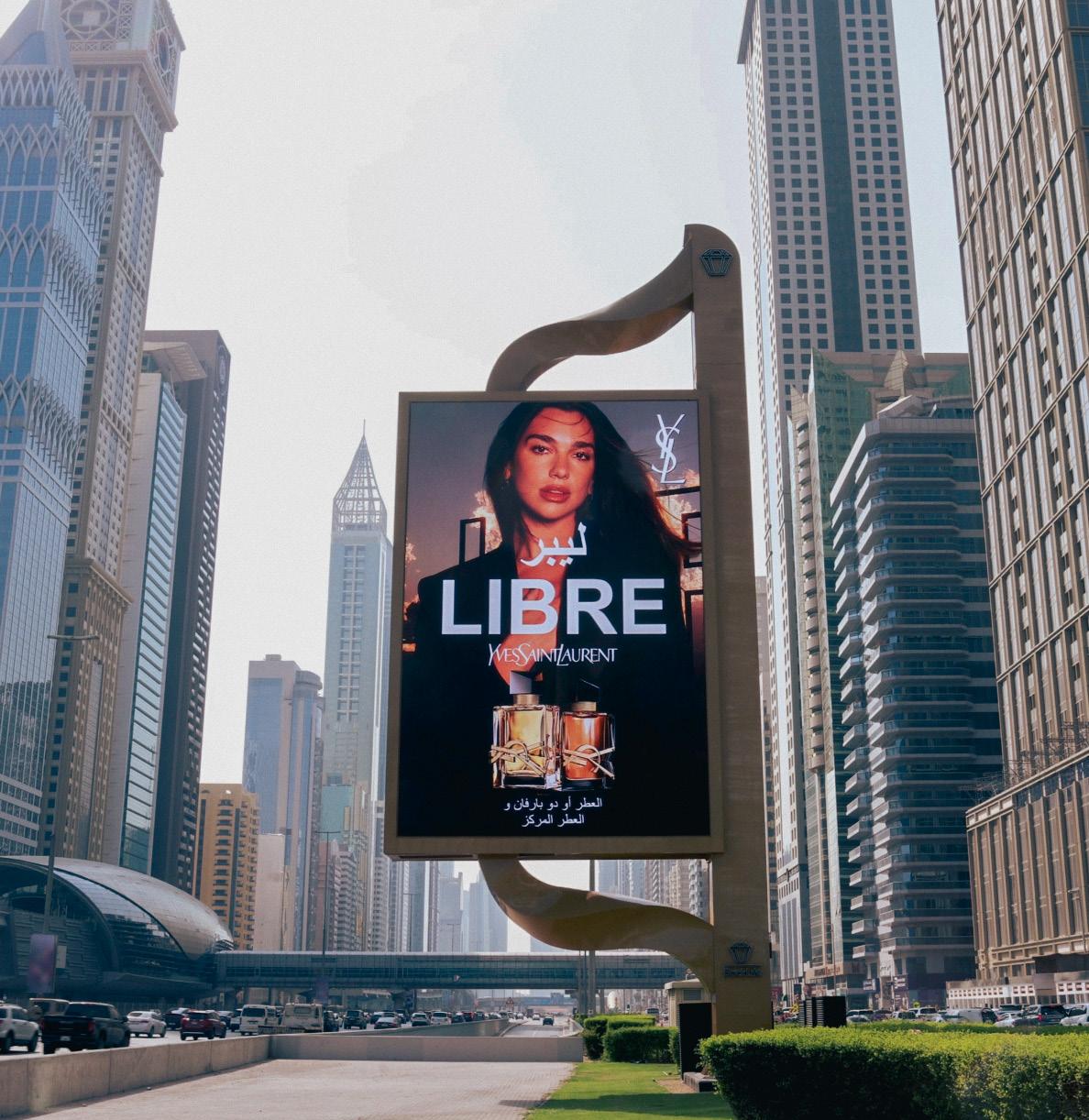
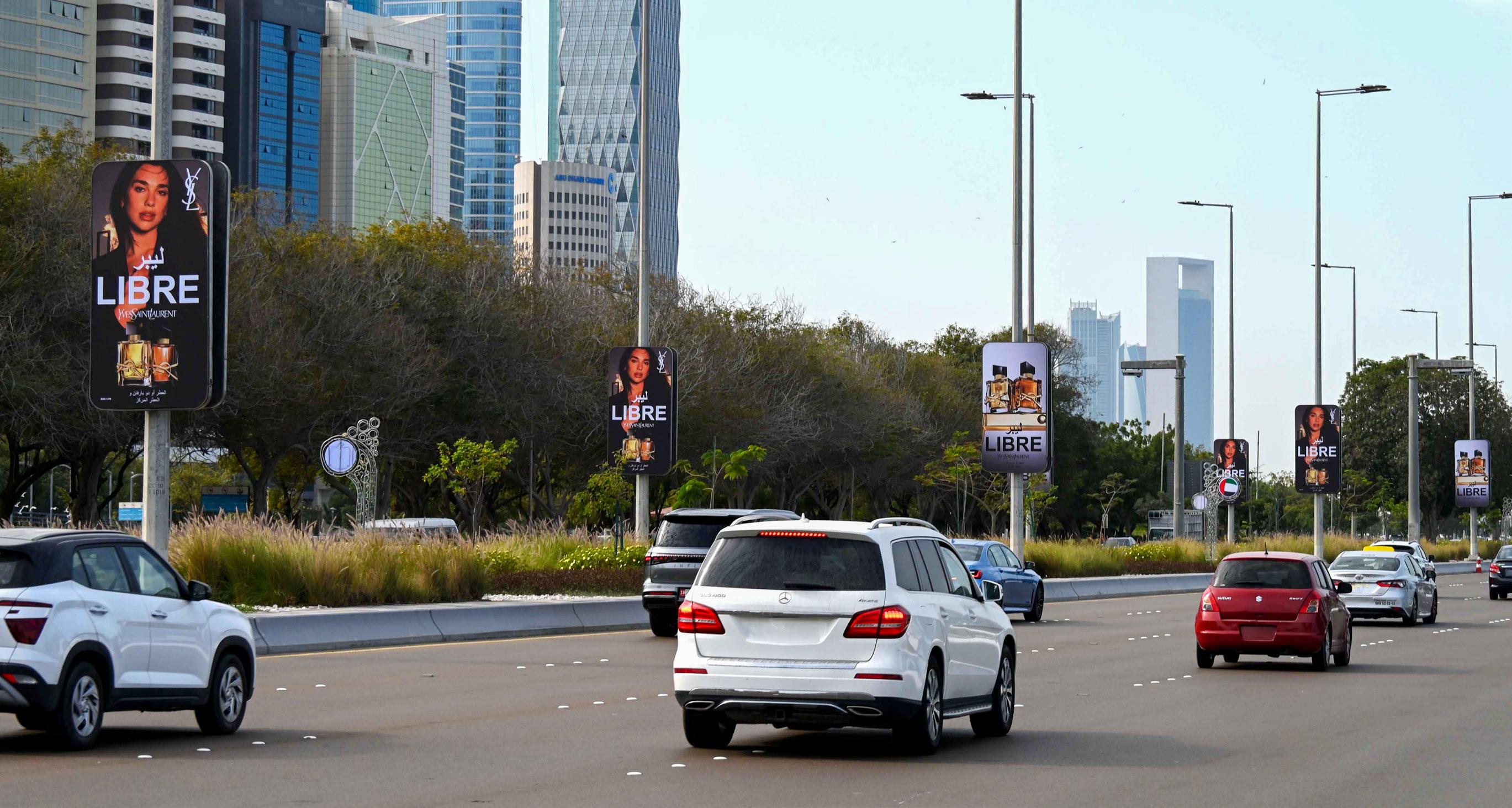
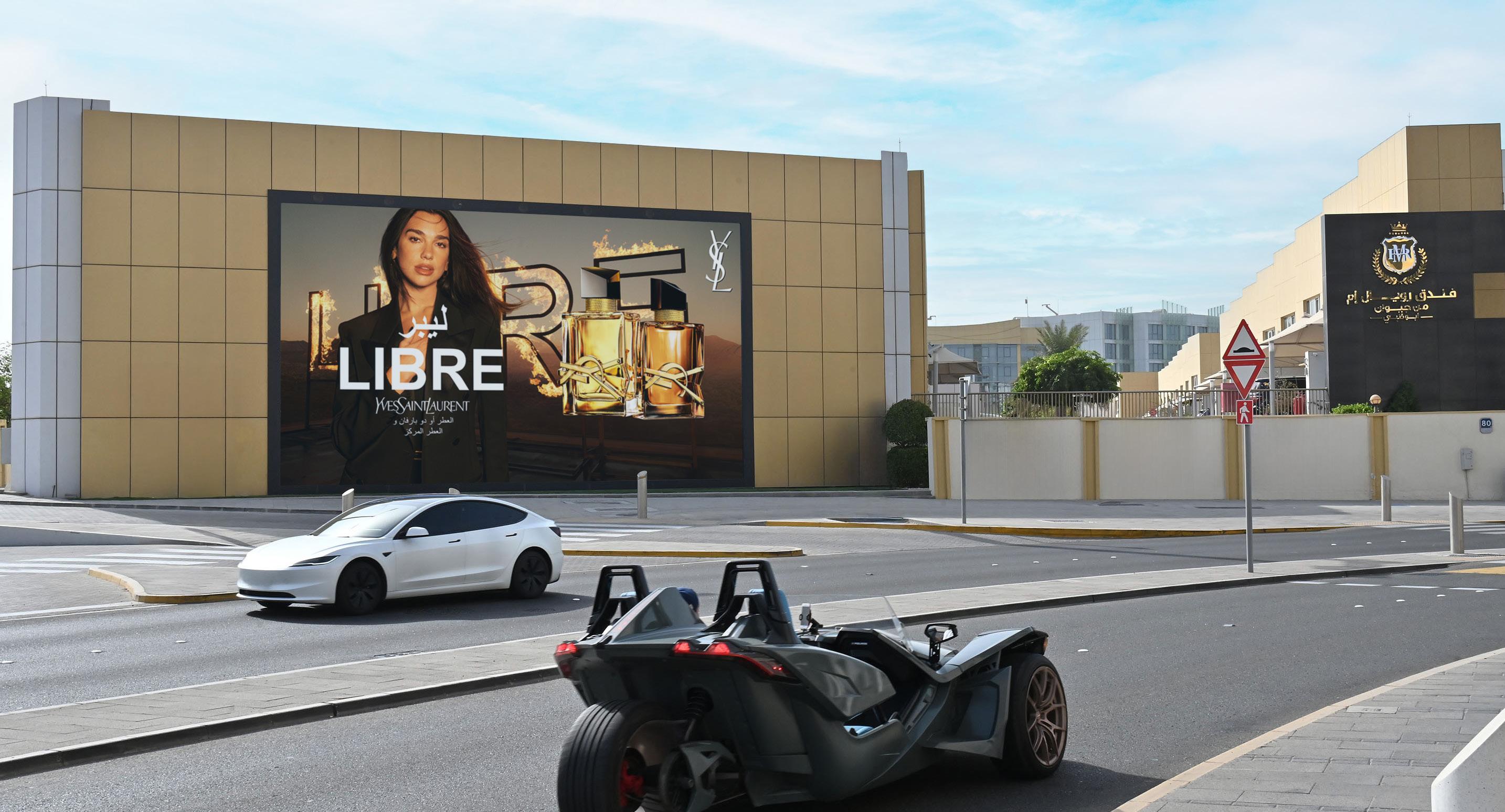
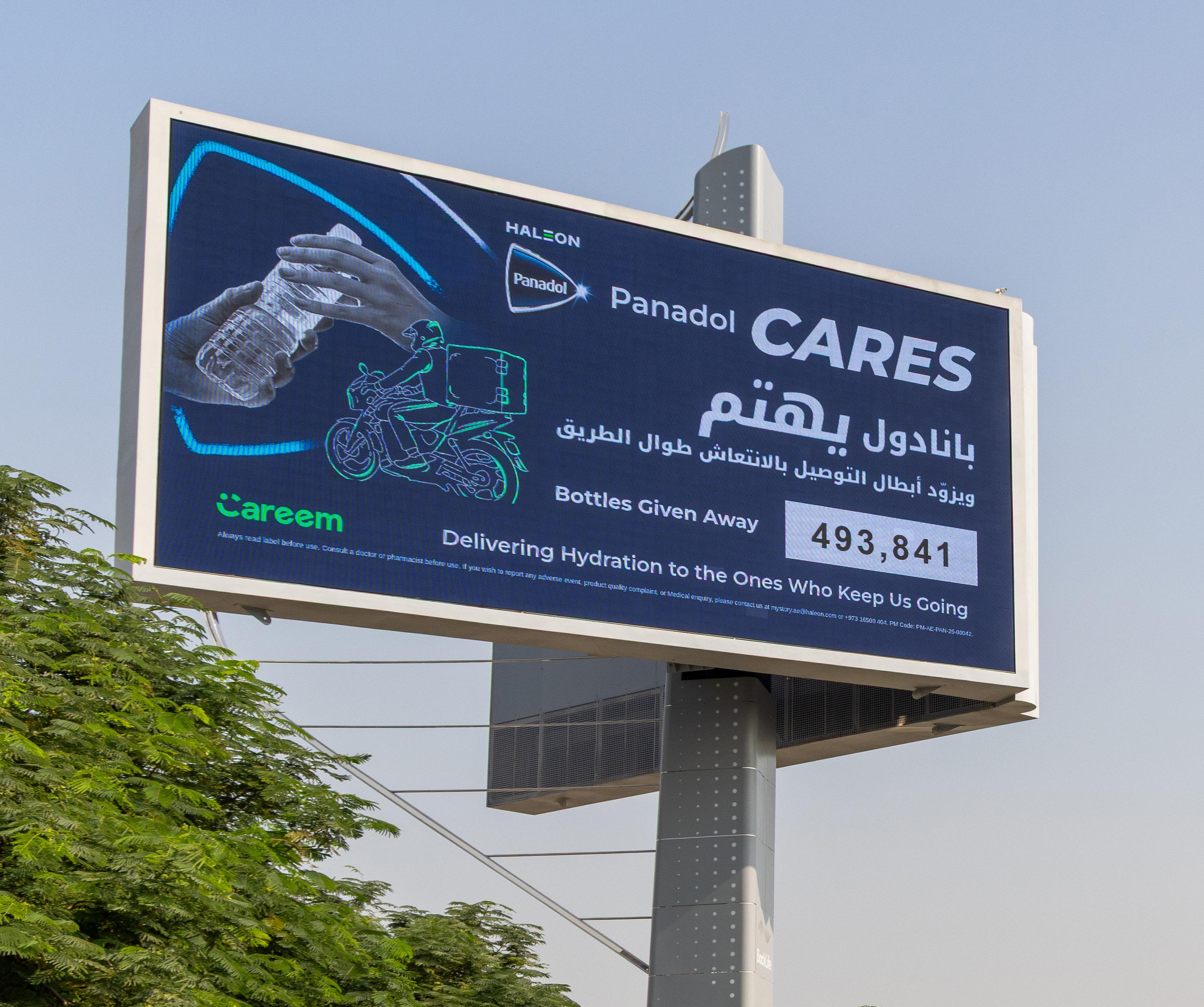
Spanning multiple premium locations across Dubai and Abu Dhabi , the YSL Libre campaign created a unified brand statement across both BackLite Media and Viola Media networks. Delivered through a mix of landmark platforms and highvisibility placements, the rollout created a cohesive visual narrative across the UAE through scale, continuity, and recognisable creative.
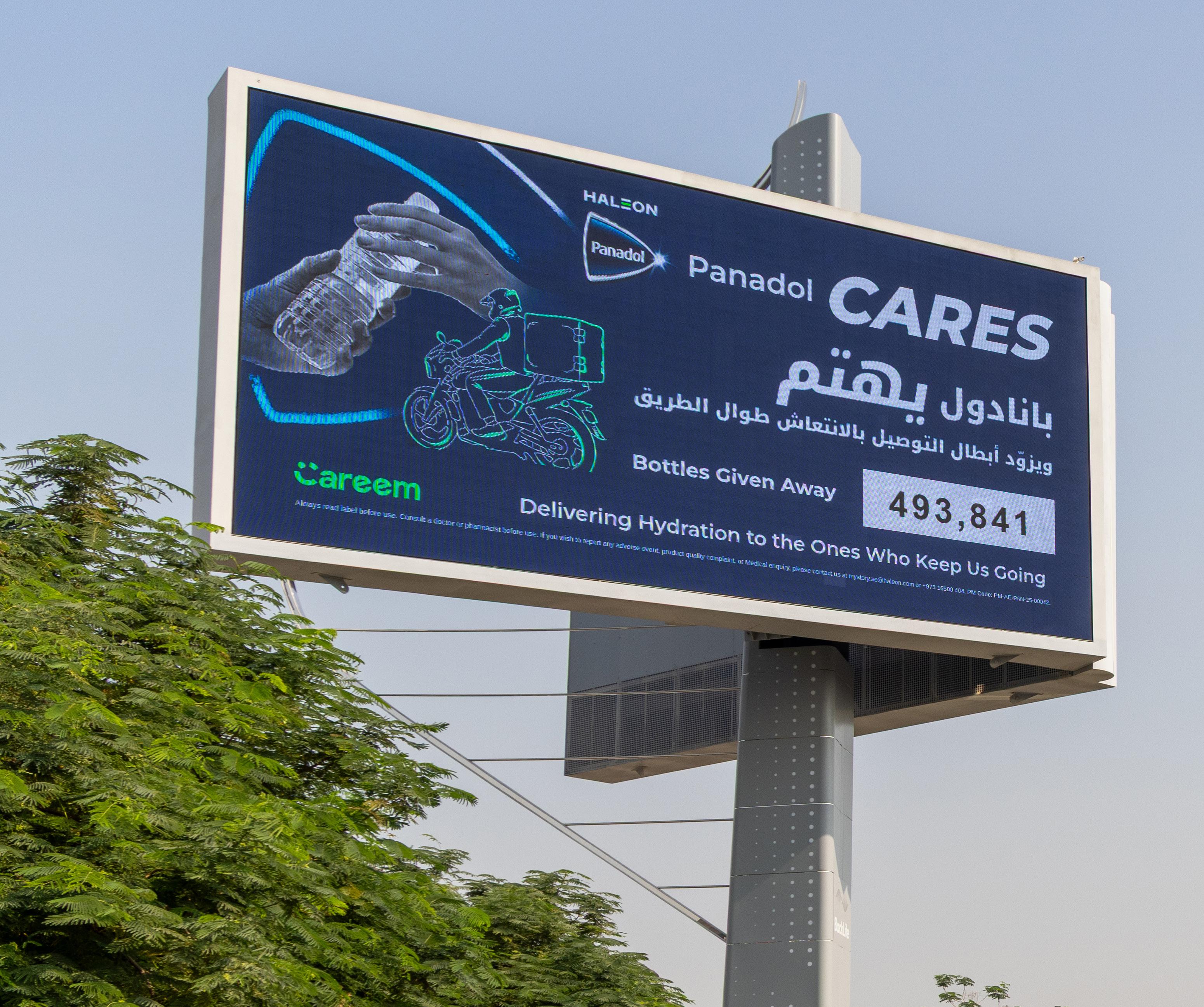
The campaign needed two things to function. The DOOH screen carrying the ticker, and the live data feed driving the count. The screen made the count public. The live data feed made the count real. The creative idea sat between them.
The campaign was built on Dynamic Creative Optimisation (DCO) through The Neuron’s programmatic platform. One dynamic creative was developed and connected directly to a live data feed provided by the client. The bottle count was then updated automatically across multiple screen formats in real time.
Traditionally, this kind of campaign would require daily creative updates, manual uploads, and repeated approvals. With DCO, the work ran through a one-time setup, ensuring accuracy and operational efficiency for the duration of the activity. Across formats, the same live count was visible without separate creative variants. The data drove the message; the screen sized it.
The placements ran through DOOH networks in Dubai. In a high-traffic environment, the simplicity of the ticker, paired with continuous updates, was what gave the campaign its readability and credibility.
The execution treats DOOH as a live, responsive medium. The screen does not announce the initiative. It expresses it, in real time, at the scale at which it is happening. A single evolving metric carries the entire creative. Clarity, memorability, and impact come from the simplicity of the execution.
500,000 1,241,930
Bottles distributed to delivery drivers
Impressions
A direct line between action and communication. What is on screen is what is happening on the ground, at the same moment. By translating physical action into live data, Relief for the Relentless shows how DOOH can capture and communicate real-world impact. When the DOOH screen reflects what is happening in real time, the channel earns its place at the centre of the brief.


Growth is often measured in terms of scale, how fast a business expands, how far it reaches, and how much it delivers. What is less often questioned is how that growth is built, and what it leaves behind as

growth across the organisation. Built around three pillars, People-First, Sustainability, and Responsible
Responsible growth begins with people. It cannot be built without a workforce that is not only
Within the organisation, this takes shape through investment in learning, leadership development, wellbeing, and innovation, ensuring teams are equipped with the skills and mindset required for a fast-evolving industry.
Growth also requires a more conscious relationship with the environments and communities in which a business operates. In this context, sustainability is not a separate agenda, but a lens for
It influences how resources are managed, how partnerships are formed, and how projects are delivered across markets. This is particularly relevant in a medium that operates within physical environments at scale, where long-term thinking around infrastructure, materials, and placement becomes increasingly important. As the industry grows, the question is no longer just how to do so efficiently, but how to do so more deliberately, balancing commercial progress with a more considered approach to long-term environmental and social impact.
The third pillar reflects a fundamental principle: growth without trust is fragile. As organisations scale, governance, accountability, and transparency become increasingly important. Without them, growth may accelerate, but it does not sustain. Embedding these principles into operations, partnerships, and decisionmaking ensures that the business can grow with clarity, consistency, and integrity, even as complexity increases.
What makes this moment significant is that it builds on foundations already in motion. Across MMG, initiatives linked to people, sustainability, and community impact are already taking shape. The opportunity now is to connect these efforts within a more coherent structure, one that allows growth to move beyond isolated actions and become part of a consistent operating model. In practice, this often requires making more deliberate trade-offs, prioritising long-term value over short-term gain.
For MMG, More impact represents a commitment to embedding responsibility into the way our business operates and grows. It is not a layer added to the organisation, but a framework that helps shape it. That is what moves impact from the margins into the mainstream and what will ultimately define the quality of growth for the industry as a whole.
BY SAM HARTLEY
GROUP PEOPLE & CULTURE DIRECTOR



Applying intelligence, data, and AI to make premium OOH media smarter and more effective.

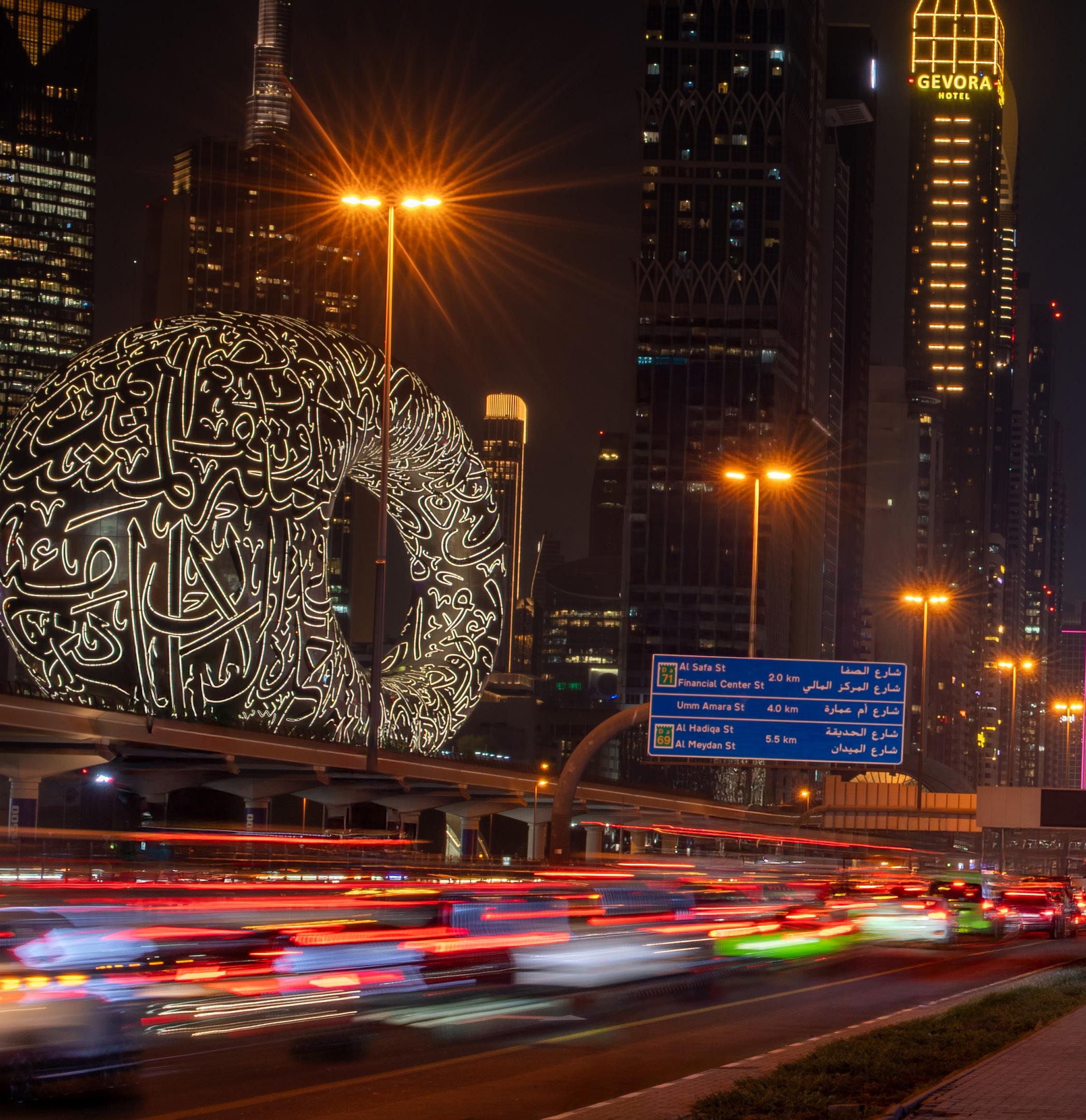
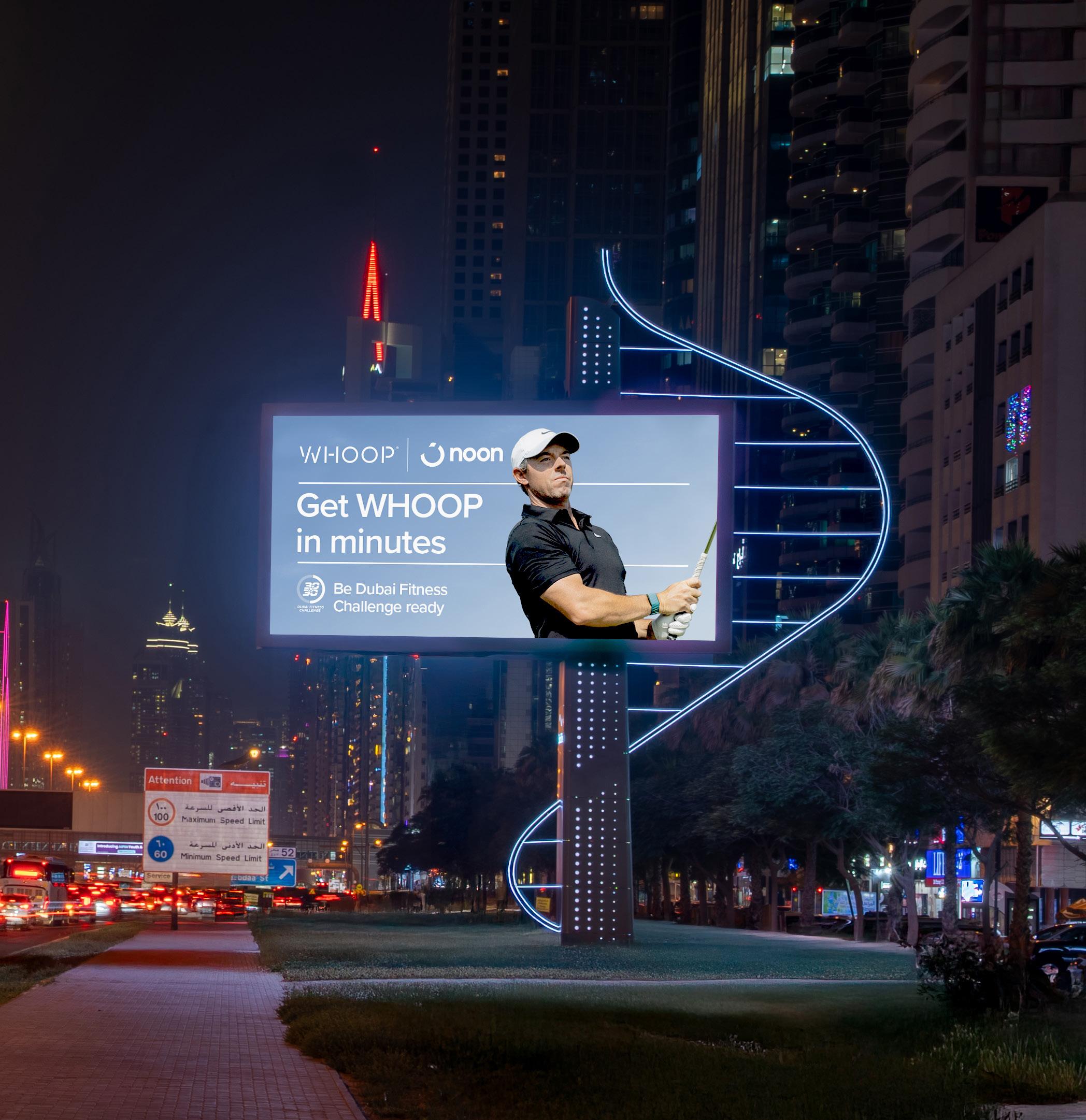
Set against the movement of Sheikh Zayed Road , the WHOOP campaign delivered a strong digital presence across The Helix Network . Framed by one of Dubai’s most recognised city landmarks, the concept connected fitness and technology through a modern display shaped by continuous movement and urban rhythm.
creative against synthetic AI audiences, optimising everything from copy to imagery against expected results. Anything below a 7/10 is recursively optimised.
The planners used their in-house model, trained on a mix of previous briefs (client, audience and objectives), previous media plans, success reports, as well as industry mobility reports, audience data, location and media owner specs, to give a bespoke foundational plan to update with new campaign-specific requirements. In reality, they probably used Google NotebookLM for the data, and a Google Gem to do the reasoning and generate the results, but it got the job done. Adding the plan to a shared directory triggered a Zapier cloud

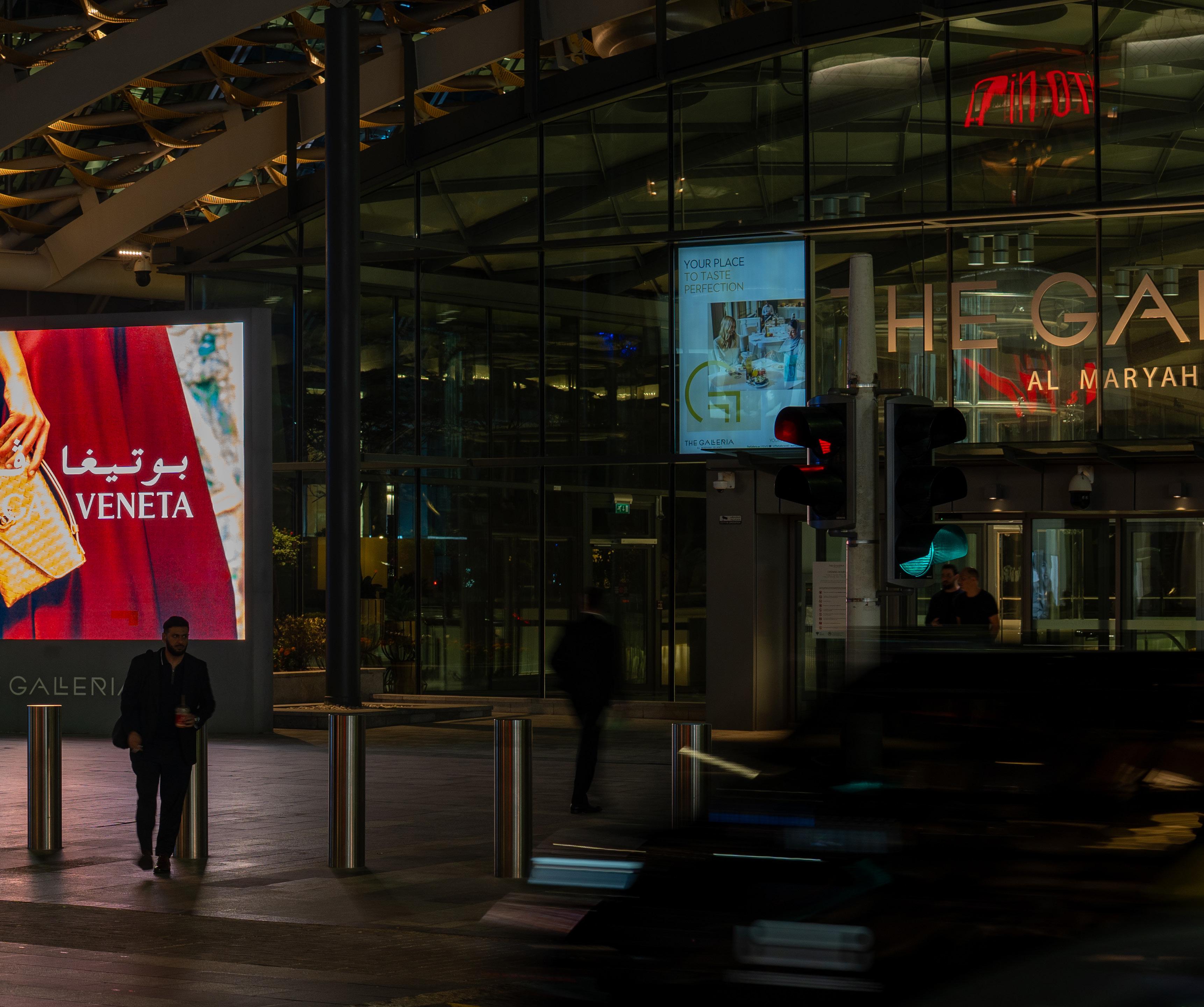
It’s about being educated, asking the right questions and taking advantage of real, tangible tools. If you’re not actively exploring what AI has to offer, you’re missing out.
BY DINO BURBIDGE
INNOVATION CONSULTANT AND FOUNDER

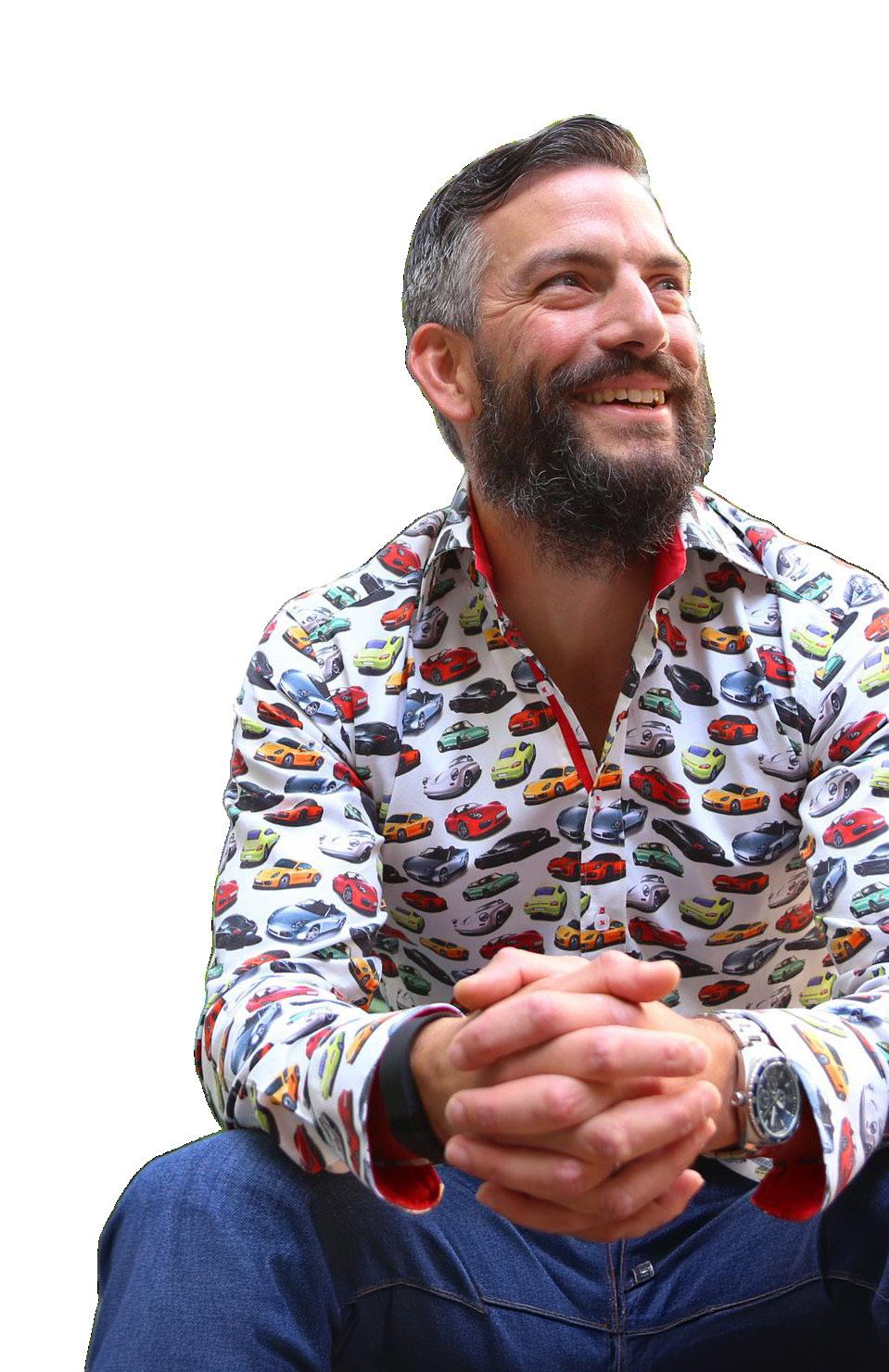

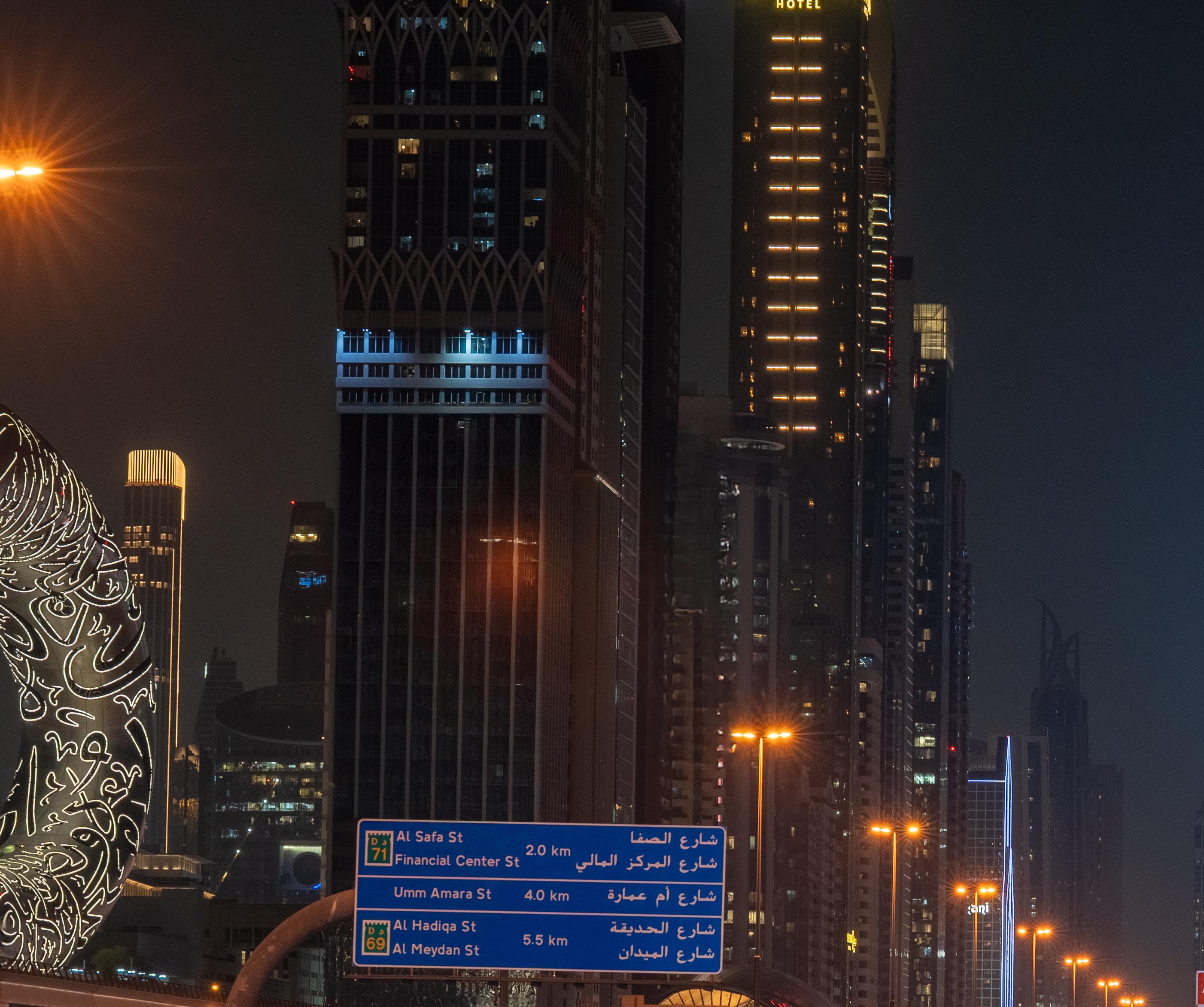

Smart cities, with their sensors and dashboards, are the latest instrumentation of something cities have always asked of the people who live and work in them. Street smarts is the eternal skill. Getting around town, seeing around corners, getting ahead.
The regional buyer was the epitome of street smart in OOH. They knew which billboard would be obscured by cherry blossom in May, which early digital screens needed to be seen on a site tour, which 6-sheet caught morning sun and which one sat in shadow by four. None of this intelligence lived in a neural network. It existed in the trained eyes and minds of people who knew their patch changed from place to place and season to season.
This isn’t a sentimental trip down memory lane. It’s how the OOH sector has always defined value. Like a London cabbie’s Knowledge, learning the roads is only the starting point. The regional buyer knew which site would deliver what it claimed: where the audience would actually see the ad, and where the advertiser wanted to be seen. Site and structure equal stature.
OOH’s knowledge has since been industrialised. Routes, impacts, reach curves. The craft didn’t disappear, but with all the information and intelligence at our fingertips, have we forgotten how to get from A to B? Sometimes we confuse the satnav for the territory. It’s time again to read the road.
Modern OOH planning isn’t about finding the right frame at the right time and place. It’s about understanding where an audience appears, how they show up, and how a brand needs to behave to earn attention in a moment’s glance.
Publicis ConnectedID tells us who they are and where. Social and spatial-behavioural data like Pulsar tells us how they live and how they move. Transaction data tells us who buys what, where. Lumen and System1 tell us what they pay attention to, and how they feel when they do. None of this replaces ground truth or foundational judgement. It instruments them, at a scale beyond where any one pair of eyes can travel. But only for practitioners with the knowledge to read what the sensors are saying.
The job hasn’t shifted from being seen to being felt. Being seen is still the precondition, the first imperative. But visibility alone has never done the work. Different impressions leave different impressions. Different impacts have different consequences. Some formats offer more opportunity to be seen than others. Some carry signalling weight. Some amplify the exposures that follow them. Some shape how a brand is implicitly perceived before a consumer has consciously registered where it was seen.
This is why OOH’s measurement story matters more now than ever. The industry has built the only joint industry currency adjusted for viewability, with over 30 years of research into whether an ad was actually in a position to be seen. Impression-based digital models still don’t do this. In a market where attention is sold by the kilo, that distinction is a structural advantage, and one that other data sets can now augment and enhance.
Some impressions carry more weight than others, and the reason is older than advertising. In 1973, the economist Michael Spence showed that a costly, hard-to-fake action can communicate something an audience couldn’t otherwise verify. The action is credible because it would be irrational to fake. Spence was writing about job markets and education, but the logic applies wherever a buyer can’t directly inspect quality: warranties, dividends, peacock tails, Savile Row.
Premium DOOH inventory sits squarely inside this logic. A landmark digital site is reassuringly expensive, fixed in physical space, publicly visible, and impossible to fake at scale. A brand
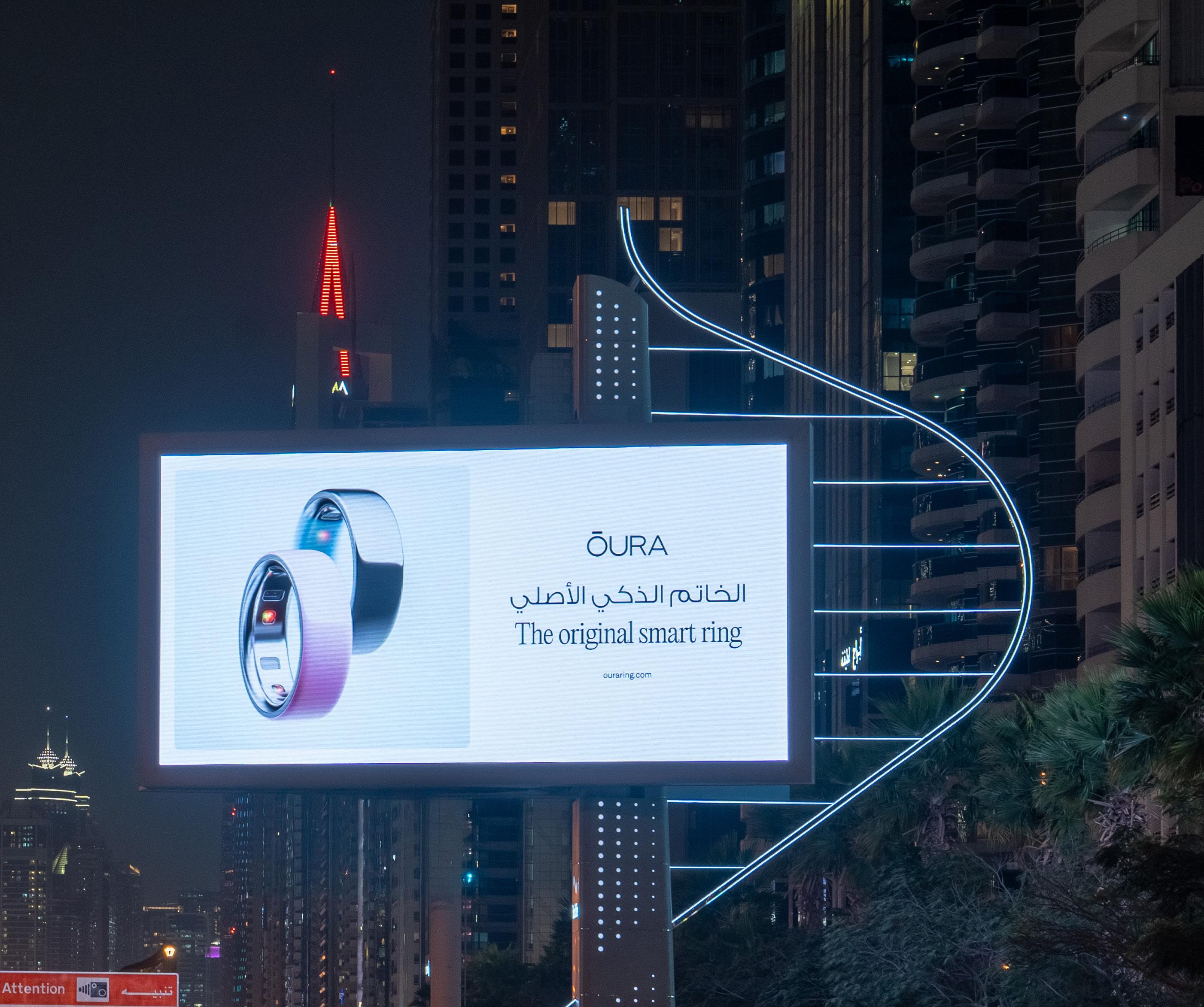

that appears on it is making a costly, hard-to-reverse, public commitment. The opposite of disposability. Feed media, by design, cannot do this. The social stream is placeless.
But the signal isn’t just financial. Cultural capital and consensus capital work together, and they arrive in sequence. The artists move in first. The studios and taste-makers follow. The property investment follows the studios. Civic infrastructure follows the property. The DOOH landmark follows the infrastructure. Each tier is reading the tier ahead and committing capital on that read. By the time the screen is built, several earlier readers have already been right.
The BackLite UK portfolio grew along that chain. Shoreditch, Hackney, Peckham and Brixton are rich in cultural capital in the way that Kensington, Knightsbridge and Chelsea are rich in financial. A brand that appears on either kind of screen is buying its way into good company, borrowing the fact that someone in the queue had read the place correctly. Not “I have arrived.” Something quieter. IYKYK.
The attention economy is a useful diagnosis but a poor strategy. Treating attention as a commodity to be harvested commoditises the relationship with the audience. And the audience can tell. The more durable frame, borrowed from Pine and Gilmore, is the experience economy: the same coffee bean is a commodity in a sack, a good on a shelf, a service in a café, and an experience in the place you return to. Media spend follows the same ladder. Impressions are the commodity. Attention is the good. Memory and emotional resonance, the things that drive connection and custom, are the experience. The brands that get the most from OOH treat the medium as the experience tier, not the impression tier. From entertainment to FMCG to tech, the best understand this viscerally.
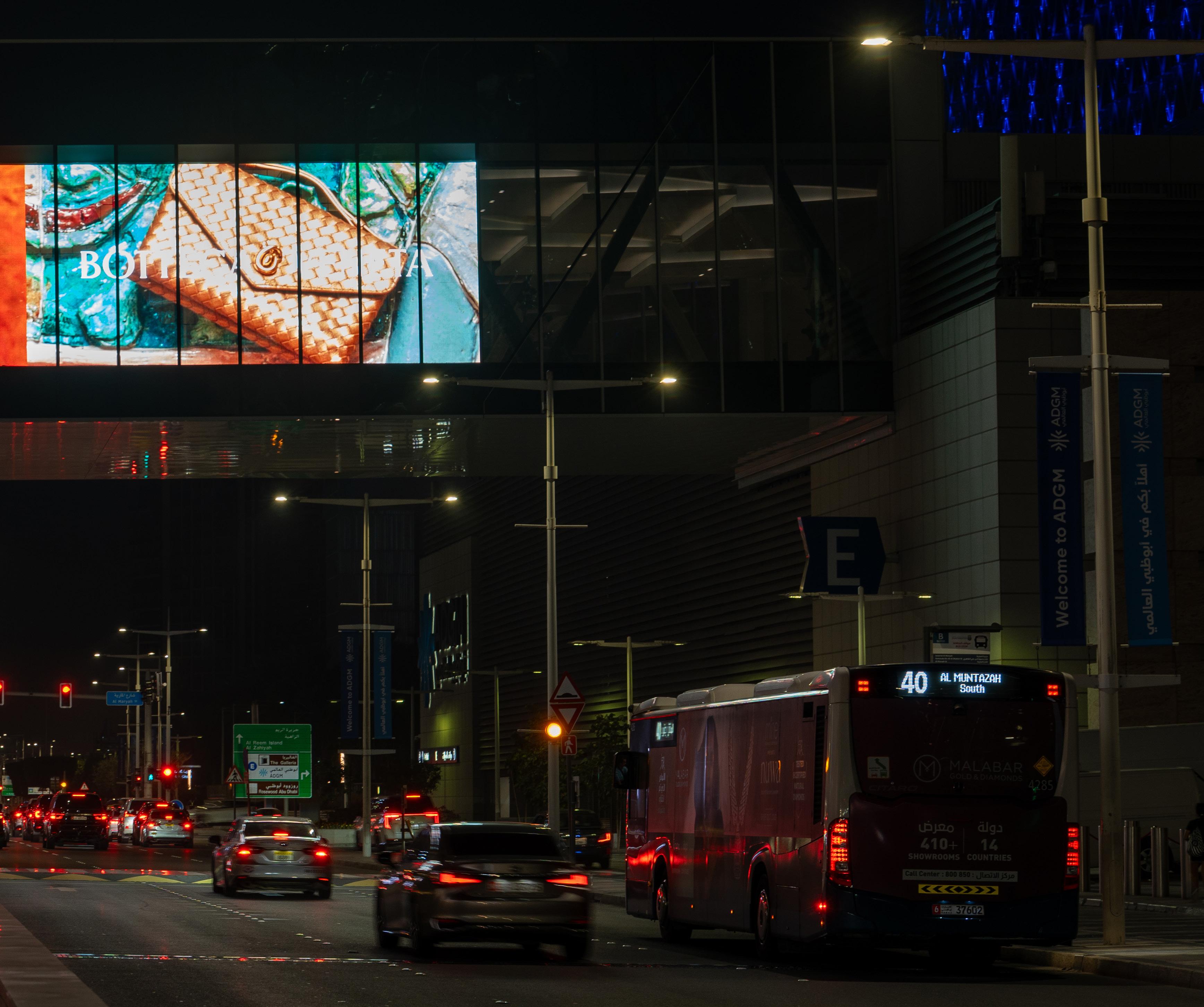
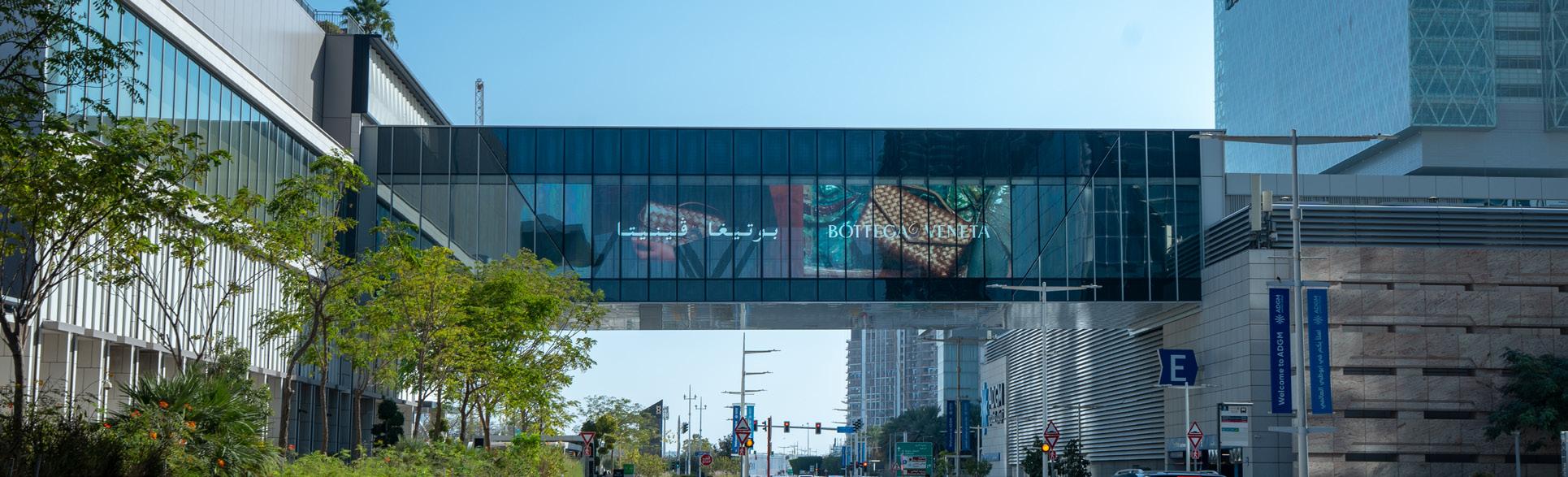
BackLite Media’s recent study with Publicis Media Luxe and Nielsen on The Dubai Gateway pointed at this directly. When premium placement met the right environment, the impact moved beyond reach into recall, brand lift, and intent to act. The variable wasn’t the audience size. It was the alignment between the asset, the context, and the creative. That’s not a billboard doing its job. That’s an environment doing the brand’s job.
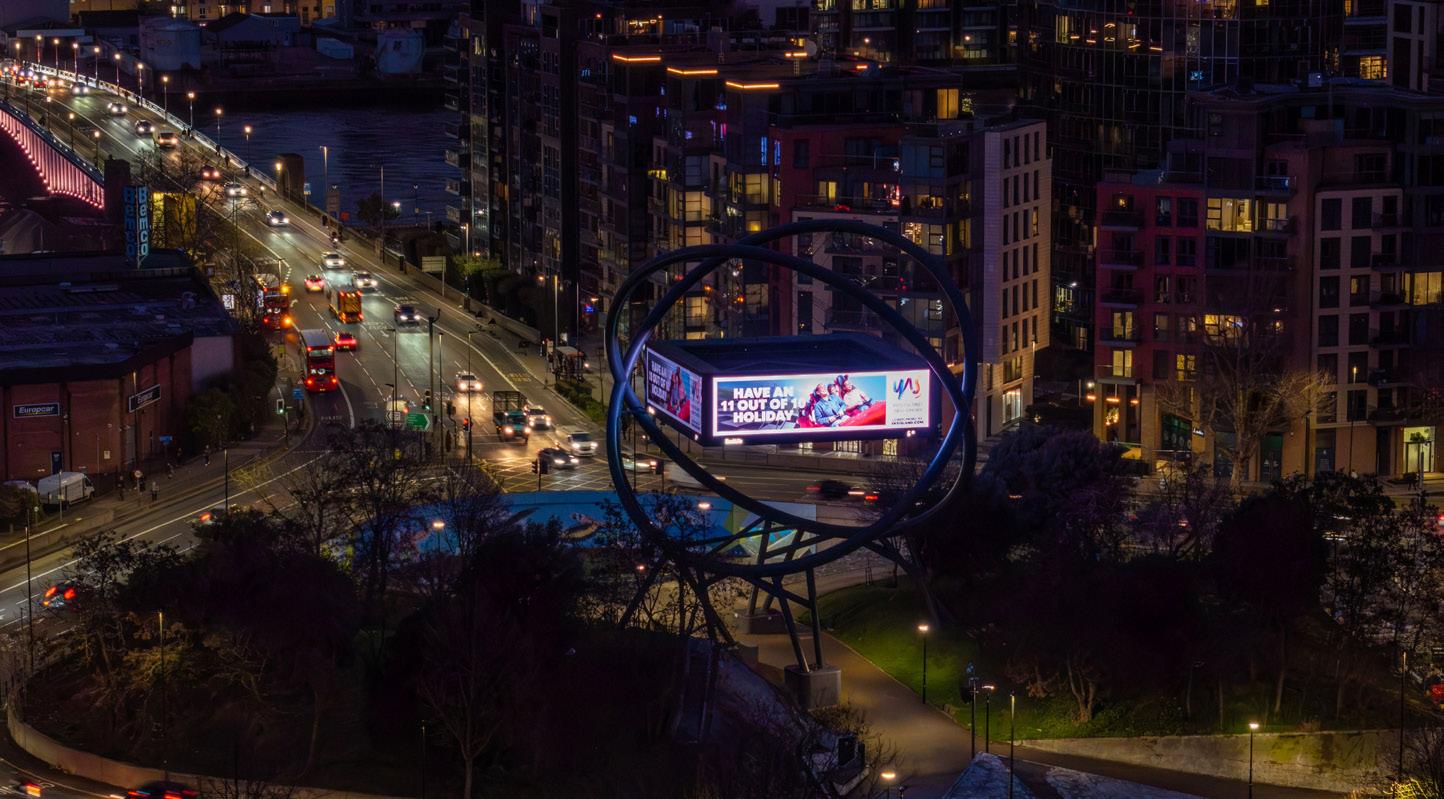
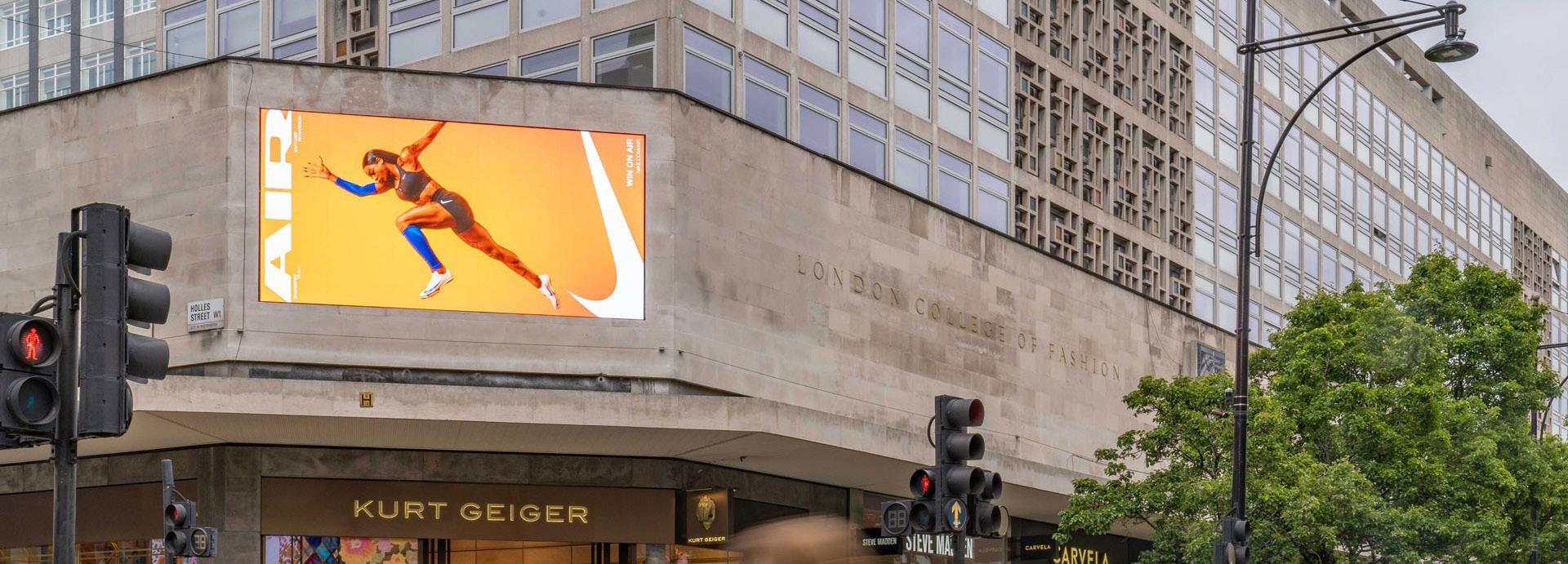
The same logic applies in London. The Cube @ Flannels on Oxford Street isn’t a screen, it’s an architectural moment in a retail corridor, and it should be planned as one. A bridge banner on the A12 is a different kind of intelligence: scale, repetition, mood at the beginning or end of a commute. Treating these as interchangeable inventory misses what spatial intelligence is for.
Spatial intelligence isn’t the replacement for street smarts. It’s street smarts at network scale. The data is denser, the signal is finer, but the discipline is the one a buyer practised in 1995 standing in front of a poster site at 8.15 on a Tuesday morning: what will this feel like, here, to the person walking past?
The answer, when it lands, is the experience. Everything else is just placement.
BY CURTIS WEIR GROUP DIRECTOR, OOH


LVMH BUSINESS LEAD AT PUBLICIS MEDIA LUXE
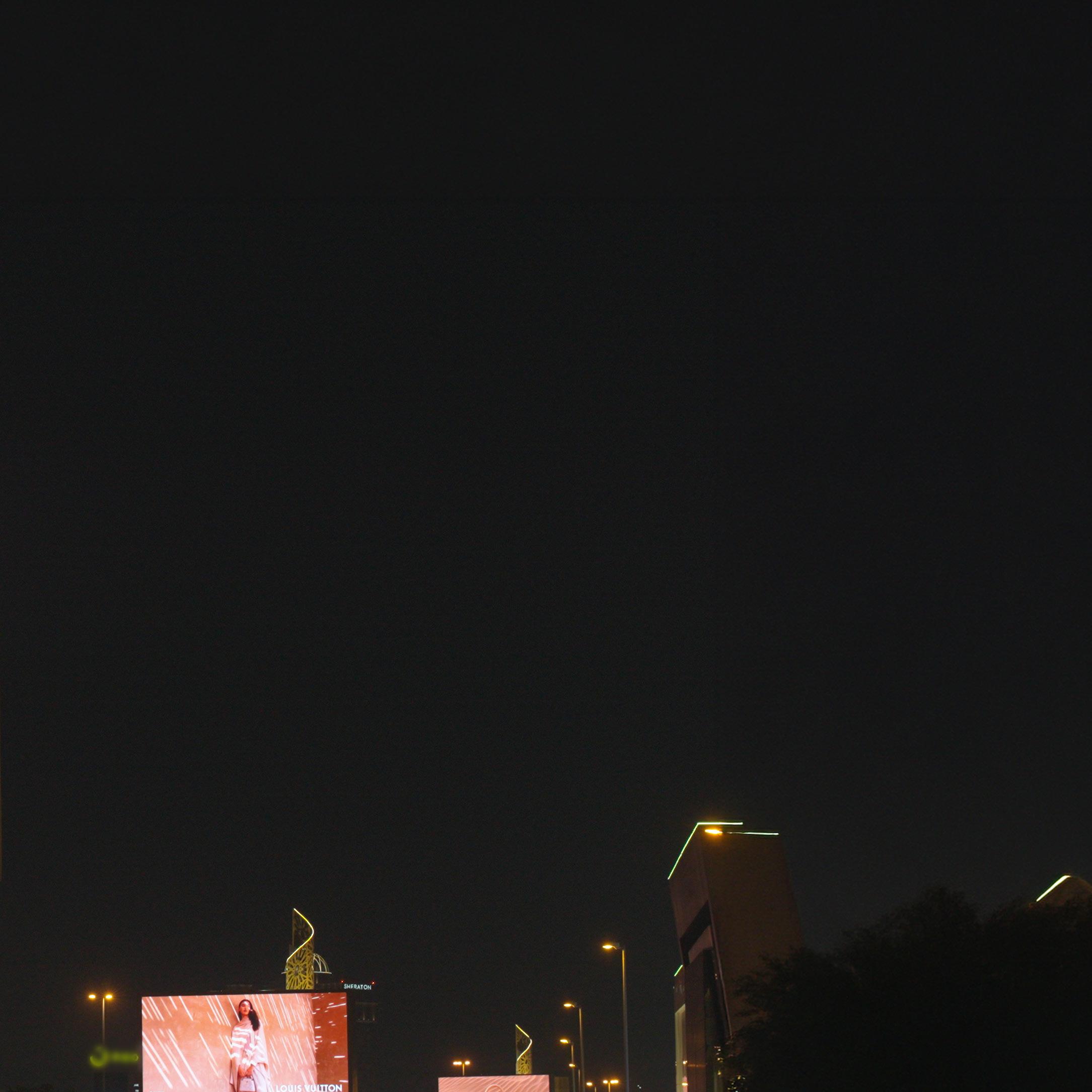
OOH is moving from a channel of amplification to a pillar of brand legitimacy. For luxury, it plays a unique role. It anchors the brand in the real world.
In a digital-first ecosystem, where everything is fast and fleeting, OOH brings permanence, credibility, and presence. When a luxury brand dominates key city landmarks, it signals leadership and cultural relevance, not just visibility.
In the UAE specifically, OOH has become one of the most powerful channels to drive both awareness and perception among high-value audiences. We are seeing a shift from scale to impact, where fewer, high-impact placements shape the narrative, and the rest of the ecosystem amplifies it. OOH is no longer supporting the strategy; it is increasingly setting the tone for it.


When evaluating premium media for luxury brands, what does success look like beyond reach, particularly in terms of brand perception, attention, and long-term equity?
Success in luxury is never just about how many people you reach, it’s about how you are perceived by the right people.
We look at quality of attention, contextual alignment, and the ability to create memorability. Does the placement create a moment? Does it stop you? Does it feel inherently part of the brand’s universe? These are the real indicators of effectiveness.
A study conducted in Q4 2025 at Publicis Media Luxe in the UAE reinforces this. A single premium OOH placement delivered up to 21 points uplift in desirability among high-net-worth audiences, across both English and Arabic segments. More importantly, repeated exposure compounded the effect, driving over 15 points incremental gain in positive intent, while significantly reducing negative perception, particularly among Arabic audiences.
This reinforces a key truth for luxury: success lies in sustained, high-quality exposure. Premium media builds equity over time, shaping perception, reinforcing aspiration, and ultimately driving longterm brand value far beyond immediate reach.
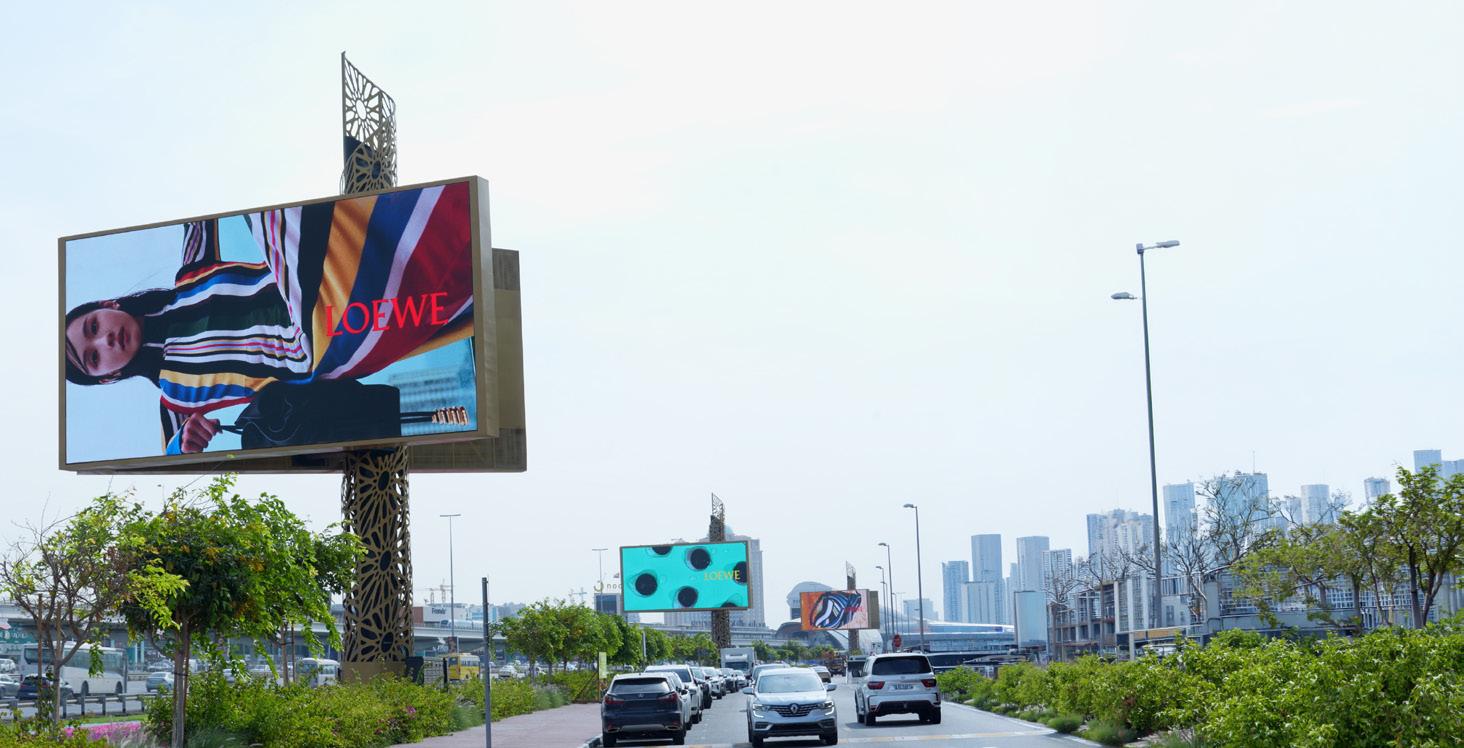



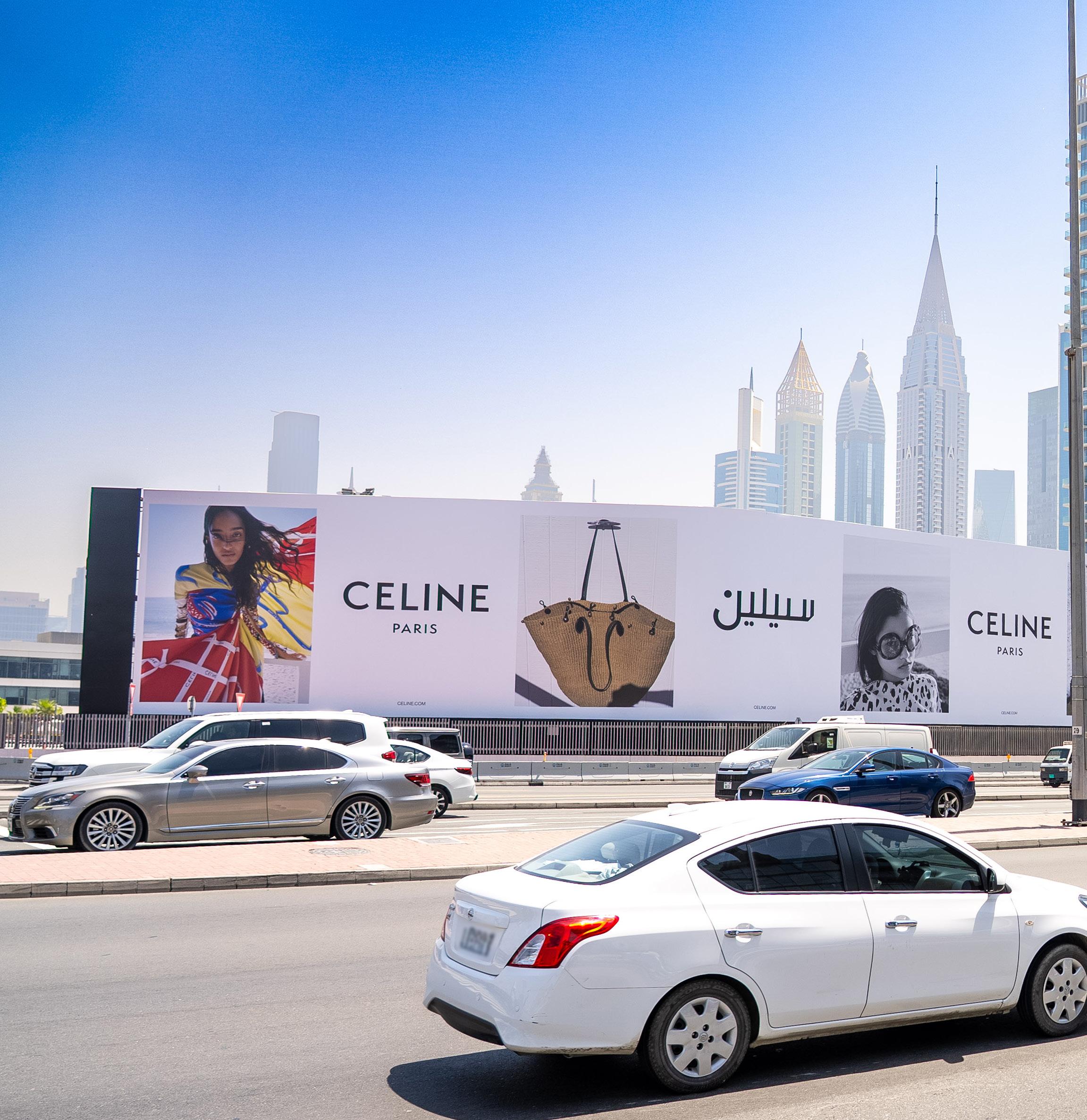
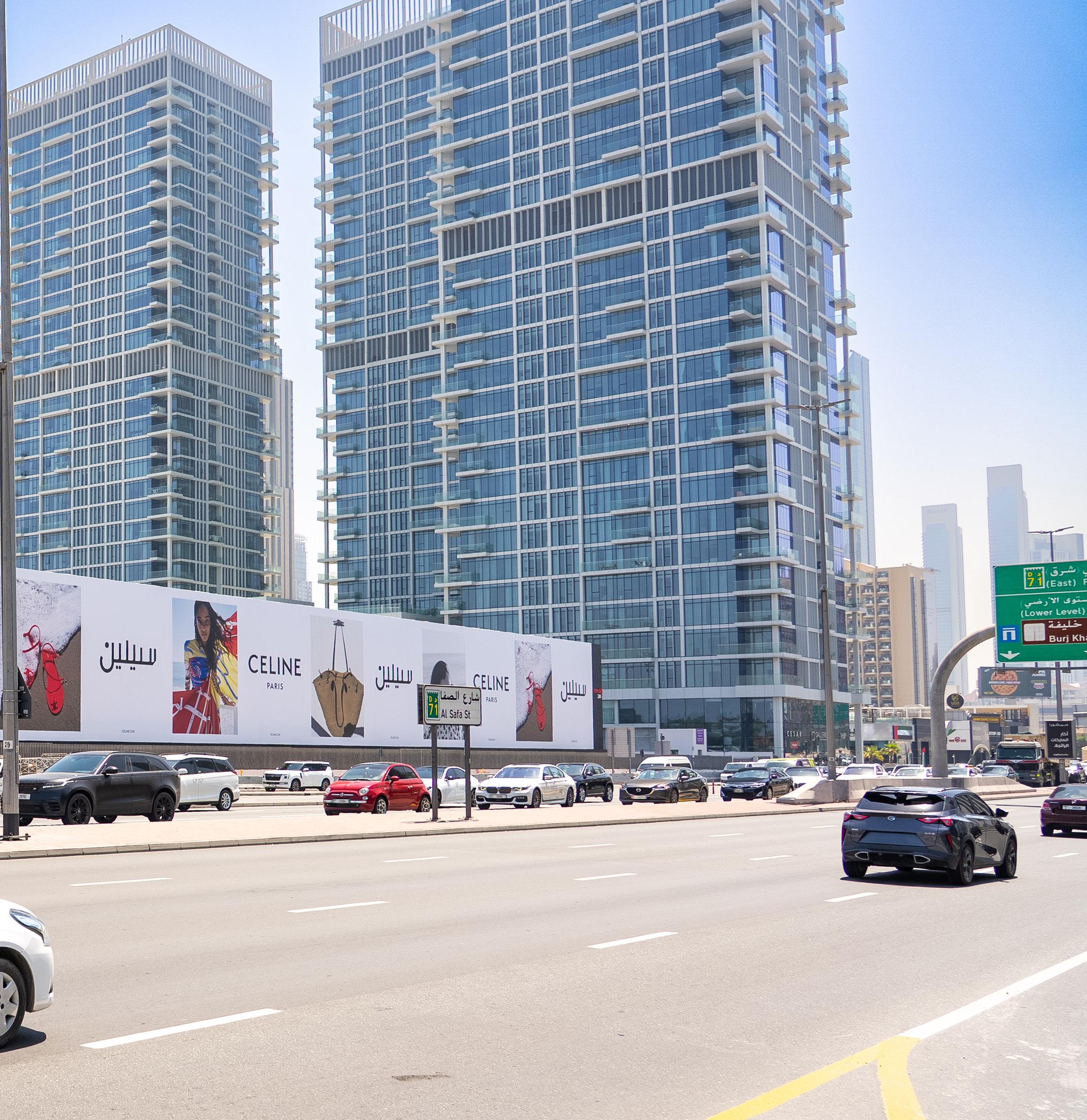
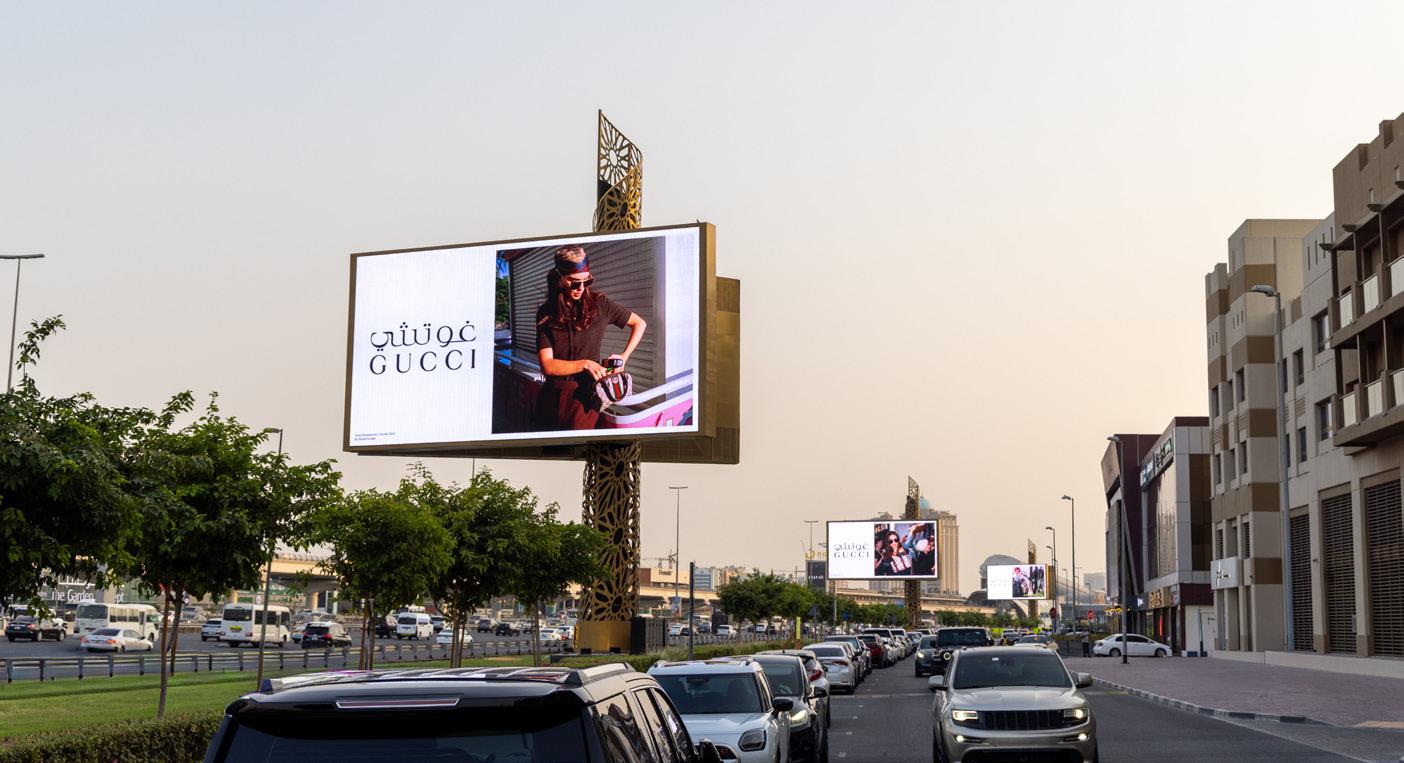
Celine transformed City Walk 1 Hoarding through a refined large-scale display that combined luxury fashion with strong roadside prominence. Positioned opposite City Walk near Coca-Cola Arena along Al Safa Street, the campaign connected with continuous city movement through clean visual storytelling and expansive brand exposure.
also viewed as contextually aligned with affluent audiences and effective in reinforcing strong brand positioning. The research recorded measurable shifts across favourability, recommendation, and purchase intent following exposure, supporting the role of premium Out-of-Home in shaping both perception and consumer action.
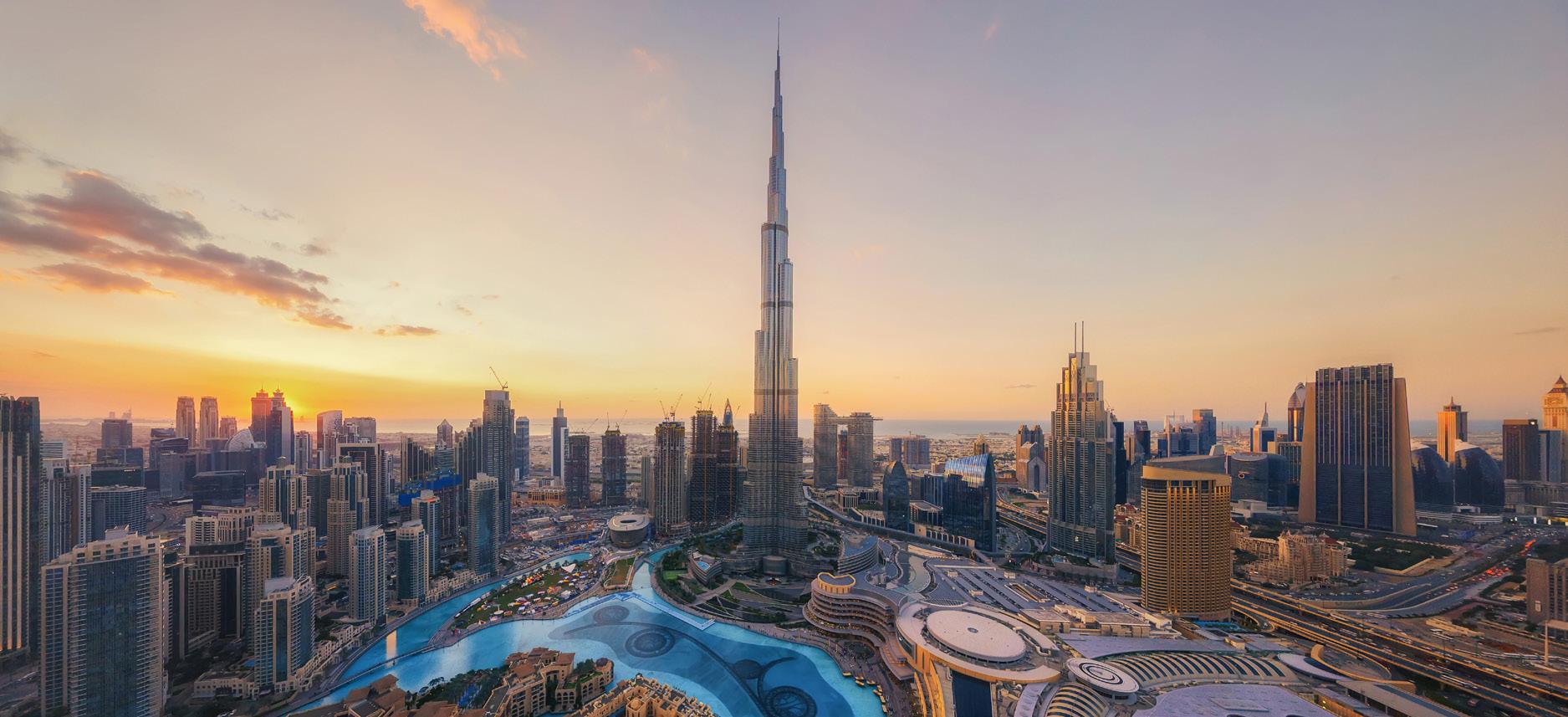
95% of respondents expressed intent to act following exposure to the Out-of-Home campaign.
80% campaign recall was recorded among Sheikh Zayed Road commuters.
68% uplift in purchase intent post exposure.
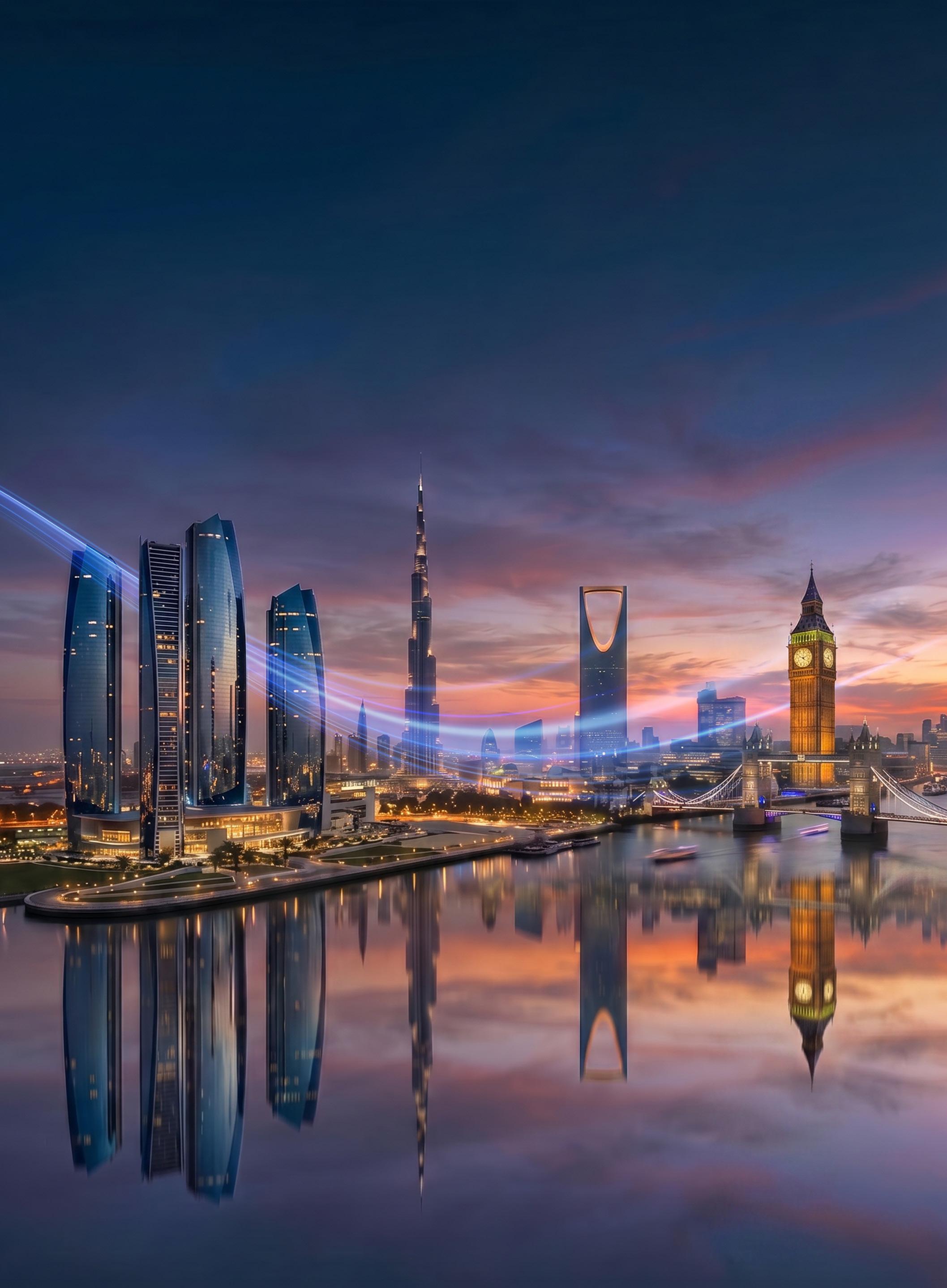
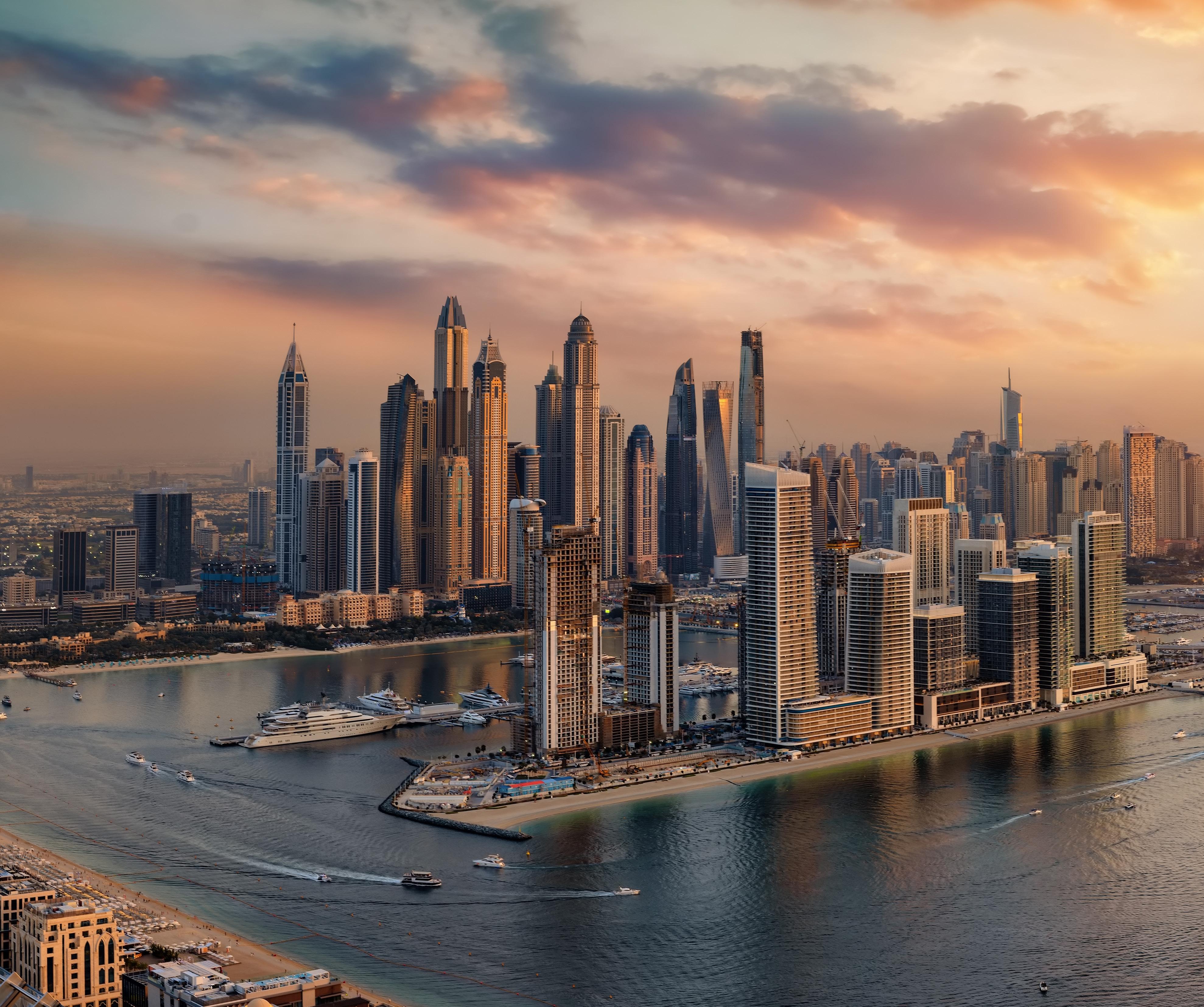
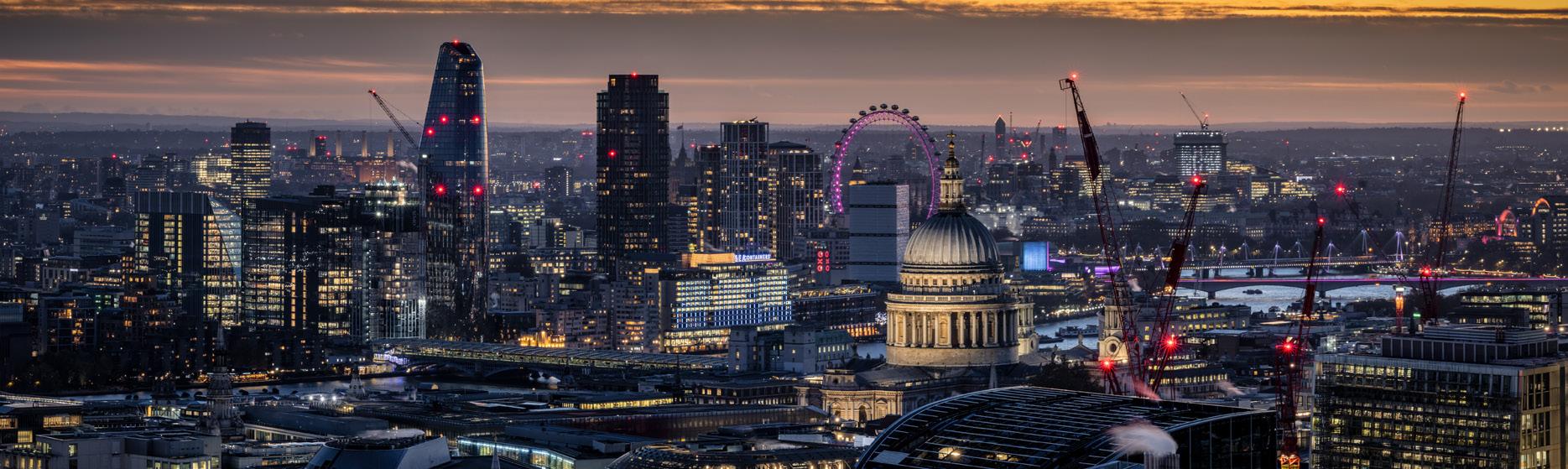
London and Dubai stand among the most compelling premium OOH markets in the world, and increasingly, they are forming a connected corridor of influence. Each offers access to powerful audiences and strong cultural visibility, while providing environments where brands can show up with both authority and intent. While they are very different markets, that contrast is precisely what makes them strategically complementary.
London remains one of the most established OOH markets globally. Its scale, density, and long-standing role in international media planning make it central to major global briefs. Beyond that, London functions as a decision-making capital, where finance, culture, and influence intersect. For brands, presence here is about credibility within one of the world’s most competitive environments.
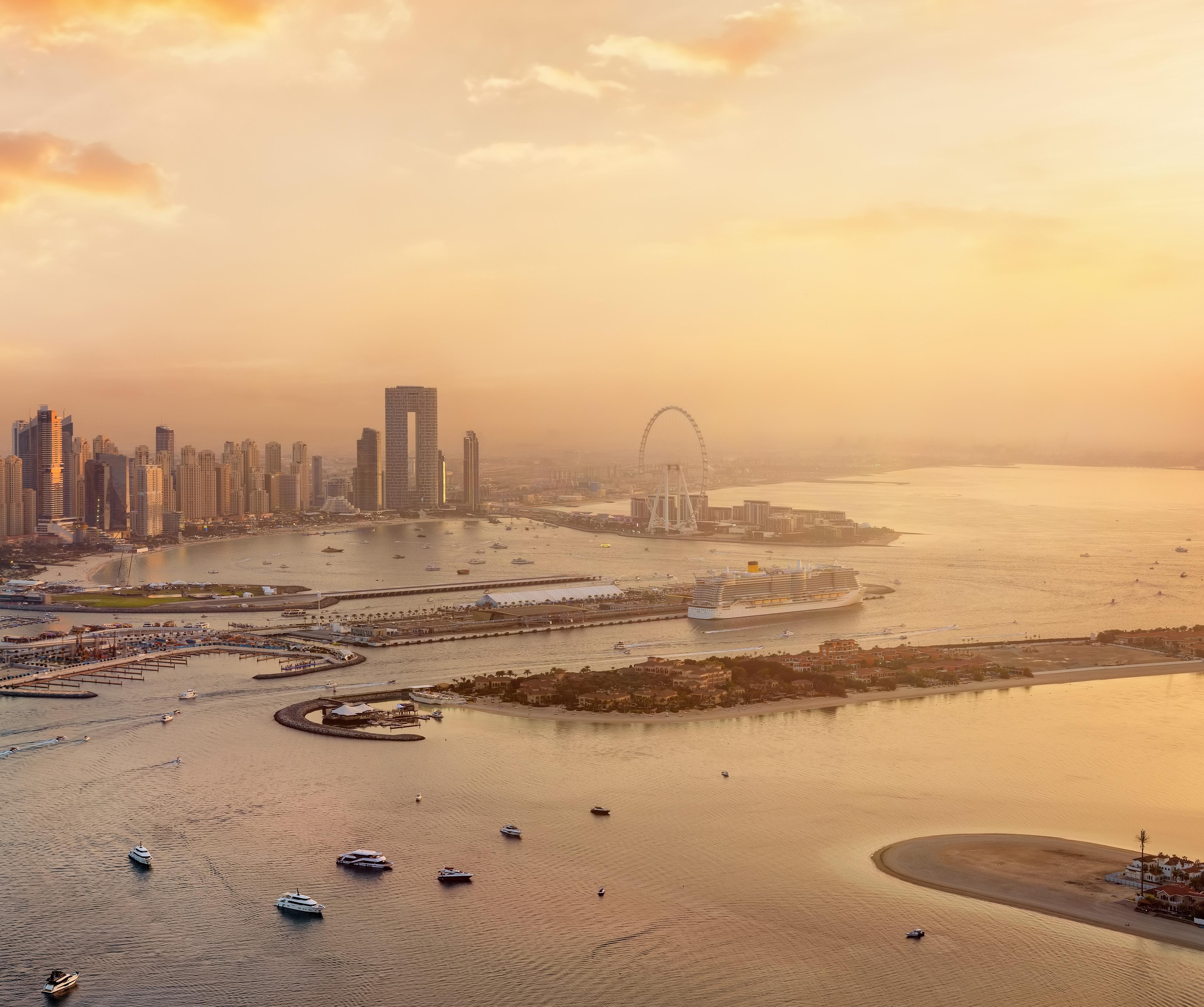
Dubai, by contrast, has emerged as one of the most dynamic premium OOH markets in recent years. Its growth has been rapid, but also intentional, shaped by investment, infrastructure, and a clear ambition to position itself as a global stage for brands. The city’s OOH landscape is bold and highly visible, designed to capture attention at scale while reflecting a broader identity that is ambitious, internationally connected, and forward-looking.
London brings legacy, scale, and institutional significance. Dubai brings momentum, visibility, and premium growth. Considered together, they reflect how international OOH is evolving beyond individual markets. Increasingly, the value lies in how key cities connect, creating a more coherent and strategic presence across regions that shape global perception.
There is also a clear economic logic behind this connection. The UK and the UAE are highly complementary and globally connected markets. The UK acts as a gateway to Europe, underpinned by strengths in finance, legal services, and the creative
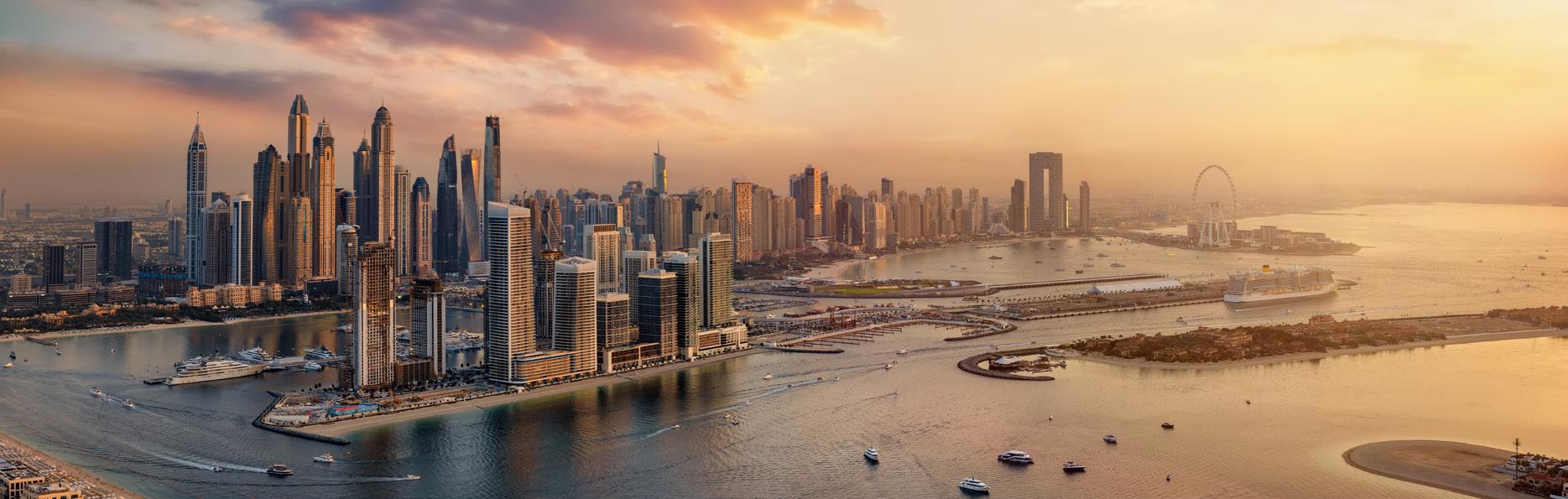
industries, while the UAE connects the Middle East, Africa, and Asia through infrastructure, investment, and international business flow. Together, they form a strong East–West dynamic driven by business travel, tourism, and cross-border decision-making.
This matters for media because OOH is most effective when it reflects the movement of people, capital, and attention across markets that shape how brands are perceived. London and Dubai both attract international decision-makers, affluent travellers, and globally mobile audiences. As a result, they offer more than reach, they provide premium environments where brands can reinforce stature in a way that is both visible and contextually relevant.
This kind of connected market thinking is becoming increasingly important for brands and agencies looking to operate internationally with greater clarity. For MMG, it reflects a broader approach to growth, building a more unified ecosystem that allows clients to navigate key markets in a more strategic and consistent way. London and Dubai are a clear example of how established credibility and emerging momentum can be brought together to create a stronger overall proposition.
What is becoming clear is that the future of international OOH will not be defined by presence in individual cities alone, but by how effectively those cities are connected. The opportunity is not simply to be visible in major markets, but to understand how the right combinations of place, audience, and context can work together to shape a more coherent global brand narrative.
BY SAL DAOUD HEAD OF INTERNATIONAL SALES

Digital OOH now accounts for 46% of global OOH revenue. That is not simply a share story, digital is the primary engine driving total OOH revenue upward, attracting budgets from new categories and driving value to our existing advertisers. The question for our industry is no longer whether OOH can compete with digital media for accountability. It can. The question is whether we move fast enough to prove it.
Static OOH retains its value to advertisers with 24/7 exposure and brand positioning against broad demographics. Where digital OOH has shown its increasing value to advertisers and yield to OOH publishers is its flexibility by impression, targeted by time of day and location context – delivered, and verified, in near real time. That shift in the unit of trade is what makes Digital OOH structurally more attractive to advertisers and brings new verticals to our industry, underpinning new routes to market through programmatic trading, and through guaranteed automated trading, where the same rails carry pre-agreed terms and audience commitments.
Both routes deliver the same thing: the ability to align an OOH investment precisely with an audience strategy and a broader media mix. For media owners, inventory that can be transacted with audience precision commands a premium. The industry is only beginning to capture that premium, and the capture rate will increase as measurement matures.
Strip away the technology and the value of any advertising medium rests on three questions: where did the ad play, who saw it, and what was the effect on those who saw it. These are not new questions. What is new is our ability to answer them with the rigour advertisers require.
Where is now straightforward. Digital screens are geo-located and time-stamped, with proofof-play logs confirming delivery. This is table stakes.
Who saw it is harder and more commercially important. It requires audience measurement, estimating, at any given moment, how many people of what profile are in proximity to a given face. For planning, that means models that allow buyers to select locations and dayparts with confidence. For post-campaign measurement, it means delivery data that confirms what was seen against what was booked.
What effect the ad had, is where the evidence base is now strengthening rapidly. A study published in May 2026 by the OAAA, conducted with Kochava across hundreds of campaigns and seven verticals, found OOH delivered a median performance lift of 20 per cent for in-person outcomes and 14 per cent for digital outcomes - roughly twice the lift recorded for both CTV and broadcast television. OOH was found to precede search activity in 96 per cent of cases and social engagement in 94 per cent. Last-touch attribution has been systematically crediting downstream channels for demand that OOH generated. That misattribution is increasingly difficult to sustain as OOH measurement improves.
The World Out of Home Organization is publishing its WOO Global Guidelines for OOH Audience Measurement 2.0 at the Global Congress in London. The first edition, published in 2022, brought together eleven national measurement bodies. This edition encompasses 22, from five continents -markets that have built systems from the ground up, markets that have fundamentally rebuilt what was there, and some of the most technically advanced measurement environments in the world.
What has changed technically in four years is striking. The Impression Multiplier, once a theoretical concept, is now a live commercial instrument with standardised protocols agreed between measurement bodies, media owners, and programmatic platforms. In several markets, continuously collected passive mobility data is now the primary measurement input, tracking hundreds of millions of devices daily. These are not approximations of traditional measurement; they are a different kind of measurement.
My own reflection, having worked across many of these markets, is that the single most important thing any OOH measurement project can do - whatever its methodology or budget - is design for transparency from the first day. The markets that have grown fastest and commanded the highest advertiser confidence are, without exception, those open to scrutiny.
The London Congress matters beyond the publication of the measurement guidelines. It is a moment for the industry to demonstrate that OOH is serious about the standards of transparency and rigour that the next decade of trading will require. Alongside the accumulating evidence from studies across the world, the industry is assembling, for the first time, a genuinely compelling case for OOH as a performance medium - not merely a reach medium.
BY GIDEON ADEY
CEO AT GUROOH MEASUREMENT CONSULTANT AT WORLD OUT OF HOME ORGANIZATION



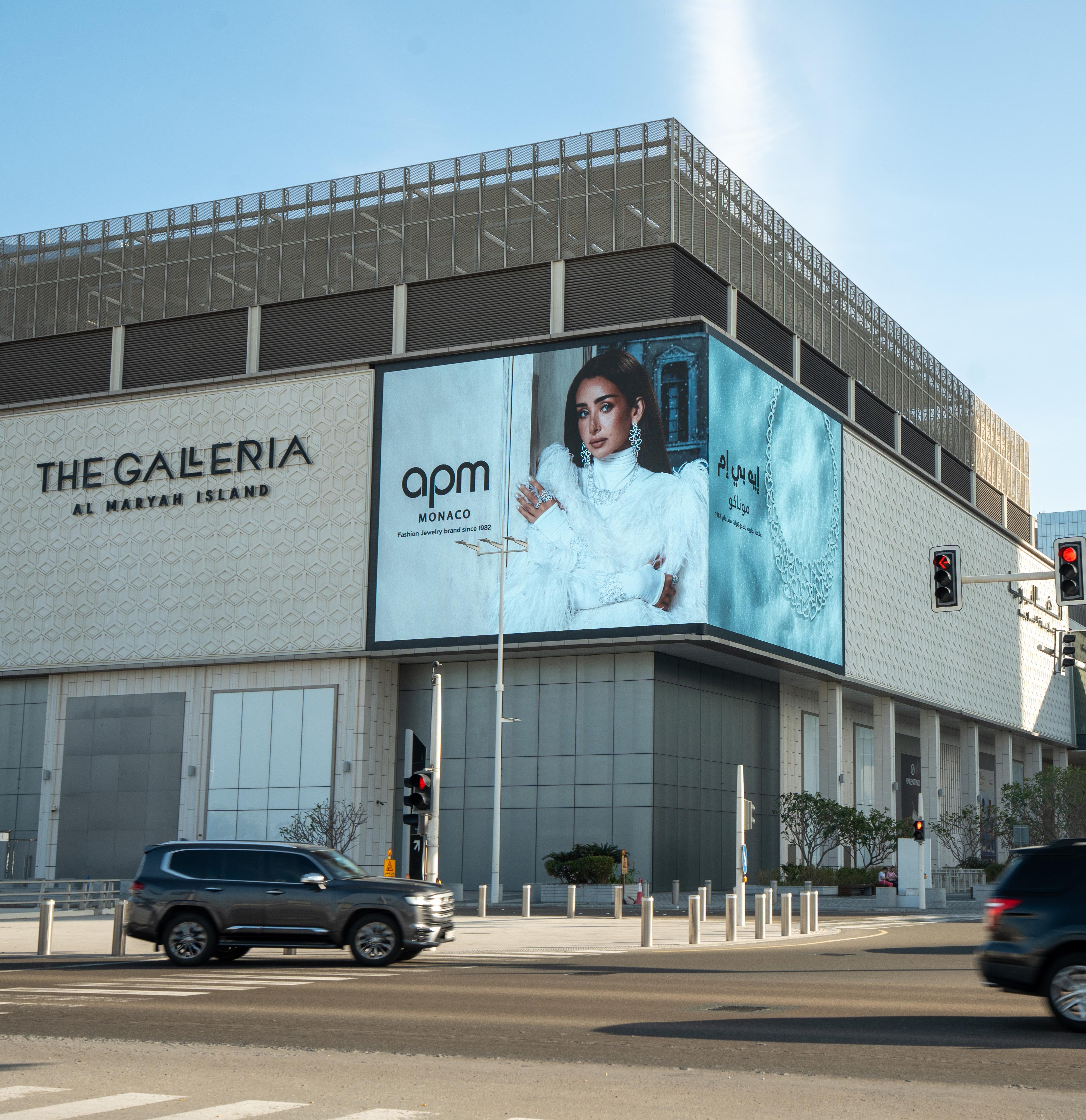
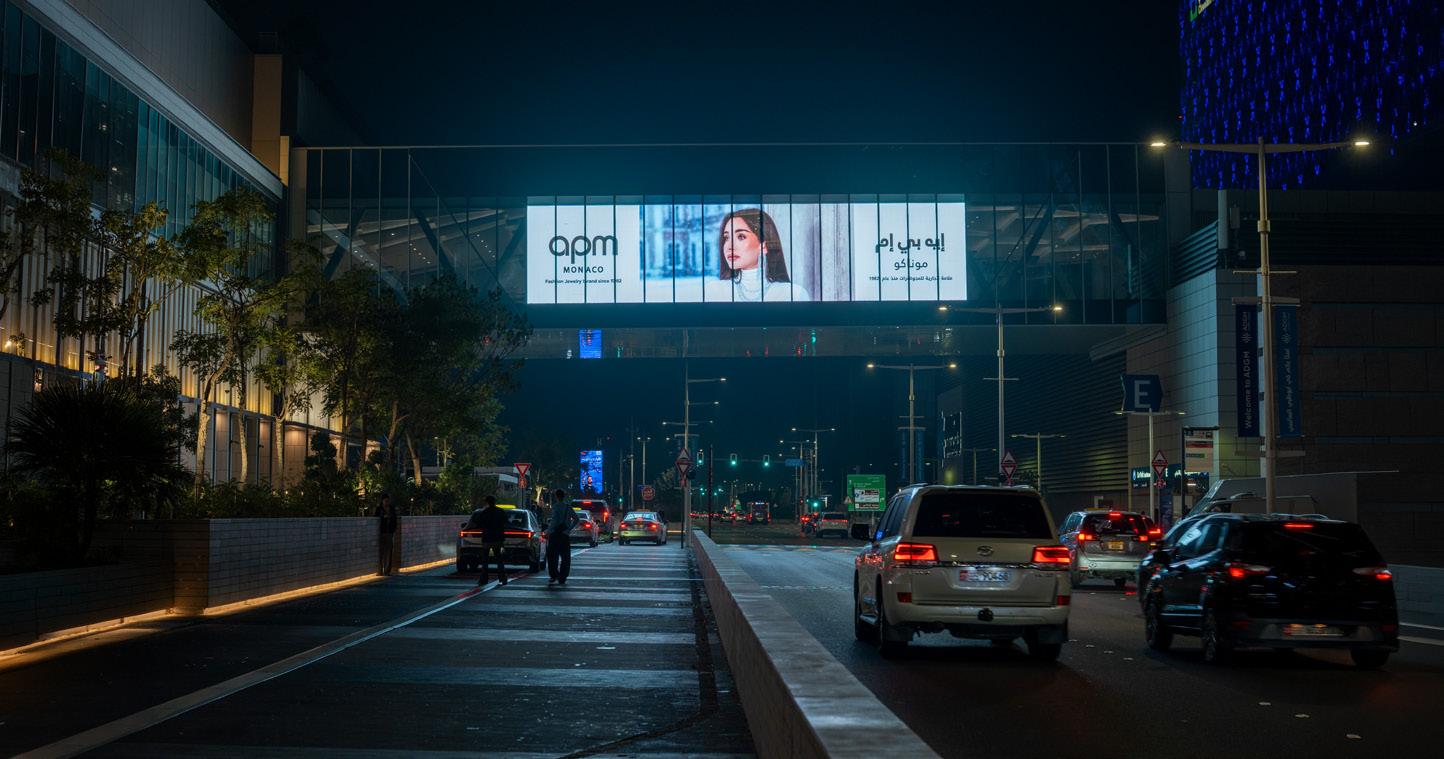
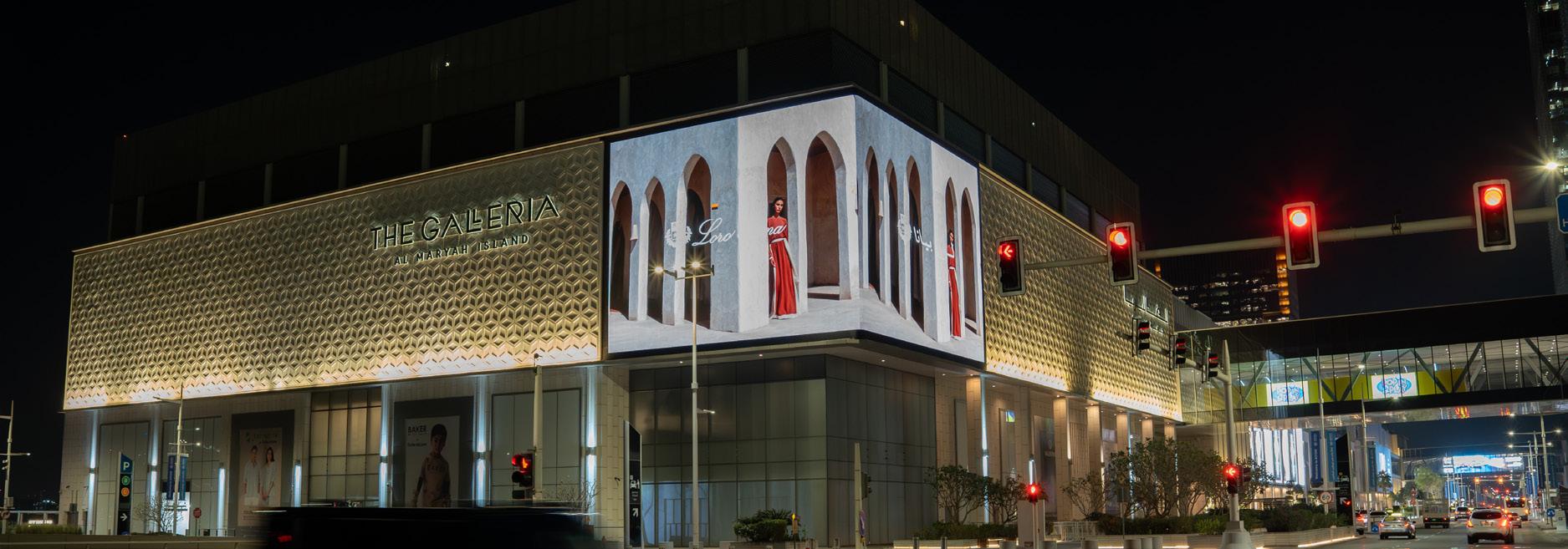
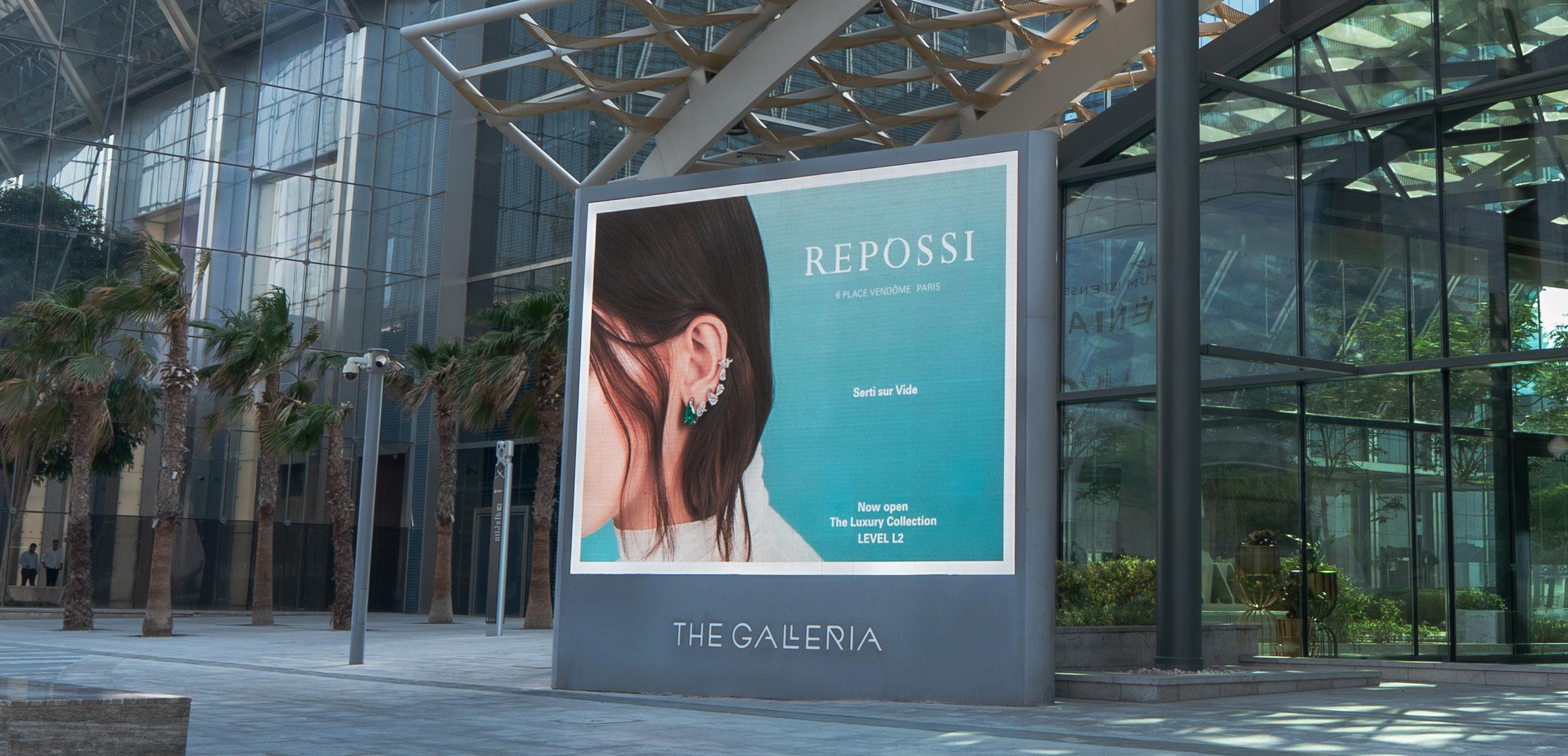
APM Monaco appeared across The Galleria Al Maryah Island through a refined outdoor execution that combined visibility with understated elegance. Positioned within one of Abu Dhabi’s most premium retail destinations, the campaign connected with audiences through continuous movement, strong illumination, and a seamless brand presence within the city environment.

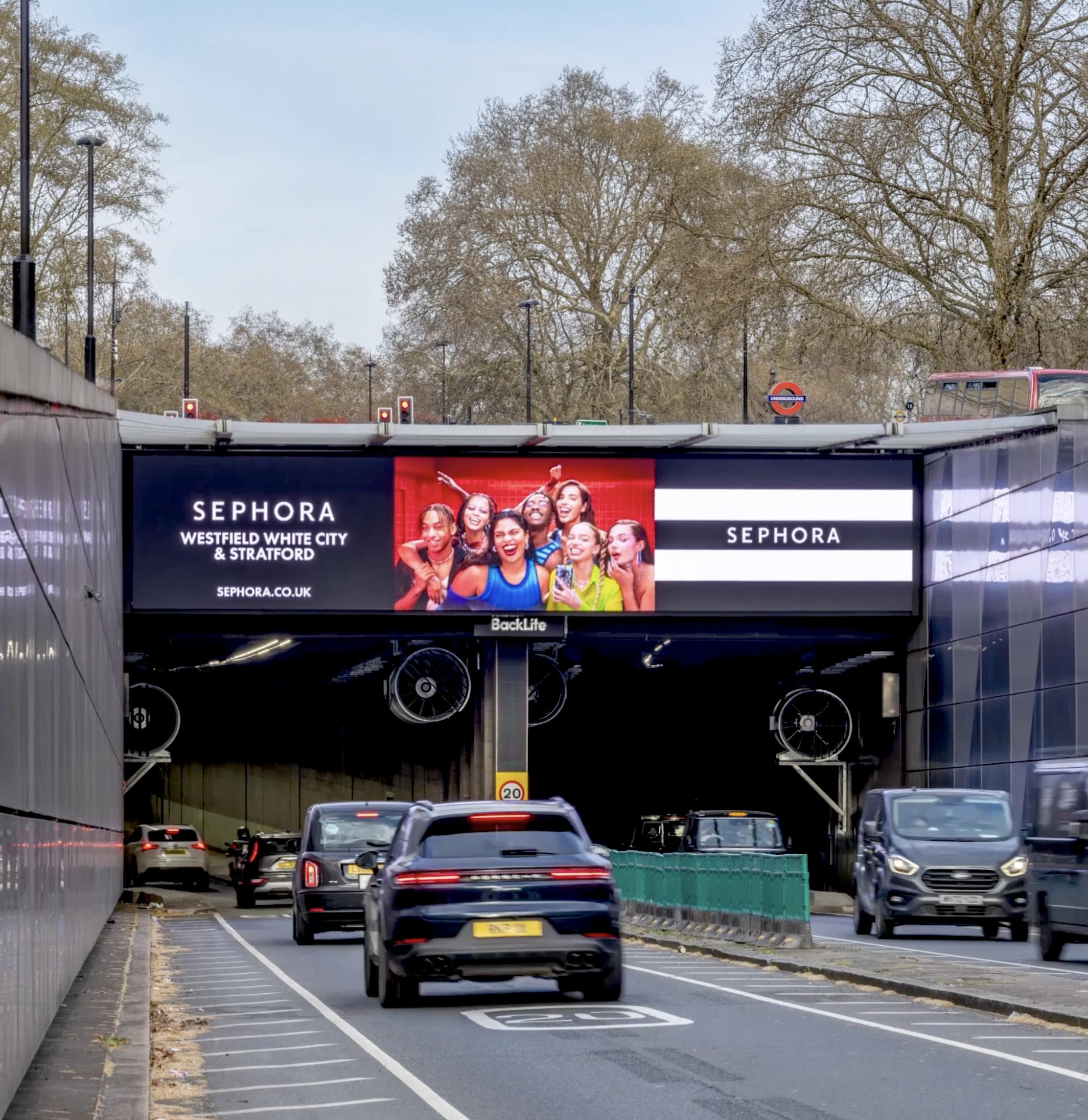
At the centre of one of London’s busiest luxury corridors, Sephora transformed The Knightsbridge with a vibrant digital takeover designed to stand out within the pace of the city. Framed by constant movement and surrounding retail destinations, the creative introduced a bold and recognisable visual statement into the urban landscape.

CHIEF EXECUTIVE OFFICER
“This is a major opportunity for brands, buyers, and media owners. OOH is uniquely positioned in the real world through the precise longitude and latitude of our screens. AI can combine and analyze audience data, points of interest, demographics, pricing, and other datasets to enable faster and smarter decisions. Our industry must continue generating relevant data and let AI transform it into actionable insights that create more value for OOH campaigns - both during planning and in post-campaign analysis.”
DARREN JACOBS
EMEA SALES DIRECTOR
“As AI reshapes how media is planned, bought and optimised, OOH is arguably one of the most AI-compatible channels out there. Real-time data, dynamic creative triggers, audience movement patterns... OOH feeds directly into the logic that AI-led systems thrive on. But beyond the programmatic opportunity, OOH offers something no algorithm can replicate, physical presence in the real world. While all digital environments grow noisier with an ever-growing amount of choice and trust becomes harder to earn, the streets don’t lie. AI will make OOH smarter, more targeted and more measurable, and in doing so, it will prove just how powerful this medium has always been.”

What role will OOH play as the media world moves further toward AI-led decision-making?

“I think AI-led media planning is going to push OOH well beyond static advertising. We’re moving into a space where screens can become far more dynamic and responsive based on things like context, audience behaviour and real-time engagement. I think we’ll start to see the rise of what we call Adaptive Ad Creative (AAC), where content evolves in real time to deliver experiences that feel more relevant, more interactive and ultimately more effective.”
ADAM BUTTERWORTH PARTNER
“As media moves toward AI-led decision-making, OOH has an opportunity to become more valuable, not less. AI should help planners look beyond individual impressions and better understand real-world journeys, environments and experiences. That matters because OOH rarely works as a single isolated exposure. It influences people through place, movement, context, repetition and memory. The opportunity is to bring those physical-world signals into the planning and ROI mix, while preserving what makes OOH distinctive. Done well, AI can make OOH more measurable, more strategic and more visible within the total customer journey.”

Broadsign sits across a genuinely broad slice of the global DOOH ecosystem publishers, platforms, and programmatic pipes so we get a pretty honest view of where AI is actually moving the needle.
The two areas where we see real, consistent value today are yield optimization and operational reliability. On yield, AI-driven forecasting is helping media owners move past static rate cards toward models that factor in demand patterns and day-part dynamics in a way that just wasn’t possible manually. On operations, AI is doing some of its most useful work quietly in the background, monitoring screen health, flagging scheduling issues, and verifying proof of play. It’s less exciting to talk about, but the compounding effect over time is significant. Publishers who have got this right are spending far less time firefighting and more time focused on growth.
What separates genuine AI integration from a “surface layer” is whether the AI is connected to a decision or just a report. Surface-layer AI is just a dashboard you look at; best-practice integration is a tool you use to take action.
We see the most success when AI is used for Prescriptive Analytics and Simulation. This means the system doesn’t just show you that revenue is down; it identifies the specific risk, like a fill rate drop in a specific market and provides an immediate recommendation to fix it, such as adjusting a programmatic floor price. Even better is the “What-If” simulation. Best-practice platforms allow publishers to simulate different channel allocations (Direct vs. Programmatic) and see the projected revenue impact in real-time. When AI helps you visualize the outcome of a decision before you make it, it becomes an essential part of the workflow.
If there’s one thing we’d say to any publisher thinking seriously about AI, it’s this: don’t rush the foundation. AI applied on top of fragmented, inconsistent data doesn’t give you better outcomes, it gives you the same mistakes, faster and at a greater scale.
The publishers who are genuinely AI-ready are those who have done the hard work of standardizing their taxonomy and ensuring their CMS and SSP are perfectly synced. We need to be honest about this variance; layering AI on top of shaky data isn’t going to accelerate the journey; it’s going to create new problems. Get your “data house” in order first, standardize your impression methodology and clean up your inventory records and then let the AI drive the growth.
There is a fair amount of “AI-washing” happening right now, and the industry needs to be direct about where the promise and reality are misaligned.
• The Hyper-Personalization Gap: The biggest gap is the push for “one-to-one” AI messaging. While this is often promised, the reality of OOH is its inherent
strength as a one-to-many medium. AI is far better used for driving contextual relevance (weather, traffic, mood) than trying to chase individual identities, which often hit privacy or technical roadblocks.
• Generative Creative Overkill: There is an oversell on Gen-AI creative. While it’s great for versioning, using it without human-in-the-loop guardrails can lead to “AI Slop”, content that doesn’t fit the premium, high-impact nature of DOOH. We need to ensure AI supports the medium’s premium status rather than diluting it.
In the next 12 to 18 months, I expect AI to take us toward the “Total Yield” era. We are moving past the siloed management of static and digital inventory; AI will act as the bridge, allowing publishers to unify audience data across all assets to provide a “Total Network” view that hasn’t been possible manually.
We also expect to see the rise of Generative Business Intelligence. Instead of digging through complex reports to understand performance, publishers will be able to use natural language to ask their platforms, “Why is my Dubai fill rate lower than historical averages?” or “How can I adjust my allocation to stay on target?”. The future isn’t about AI replacing the human element of OOH; it’s about AI removing the friction from data management so we can focus on having more impactful and meaningful conversations with agencies and media buyers.
BY BRIAN BUCKLEY
ACCOUNT DIRECTOR, EMEA

the platform feels integrated rather than imposed.
From there, design becomes critical. The structure, scale and format of a screen all contribute to how it is perceived. A well-designed site elevates the creative it carries. It gives brands the confidence to invest, it builds trust.
Data and insight then quantify that thinking further. Understanding movement, behaviour and audience patterns allows for more precise placement and smarter planning. It ensures that each site is not only highimpact, but also aligned with how consumers interact with the city.
Then the final layer is creativity, this is where everything comes to life. The most successful campaigns are those that respond to the environment they sit within, using scale and context to their advantage. When the foundation is built, the creative does not need to compete for attention. It elevates it.
What we are seeing as a result is a shift in demand. Brands are no longer simply buying space, they are buying engagement. They want to be part

for channel, but creating something that people recognise, feel and value elevates the market.
That is what “Desirable by Tomorrow” represents. Not just a direction for our network, but a shift in how Out-of-Home is built and experienced in the UK. strong partnerships and a clear approach to growth, will be best placed to lead it.
BY JACK FLEMING HEAD OF SALES



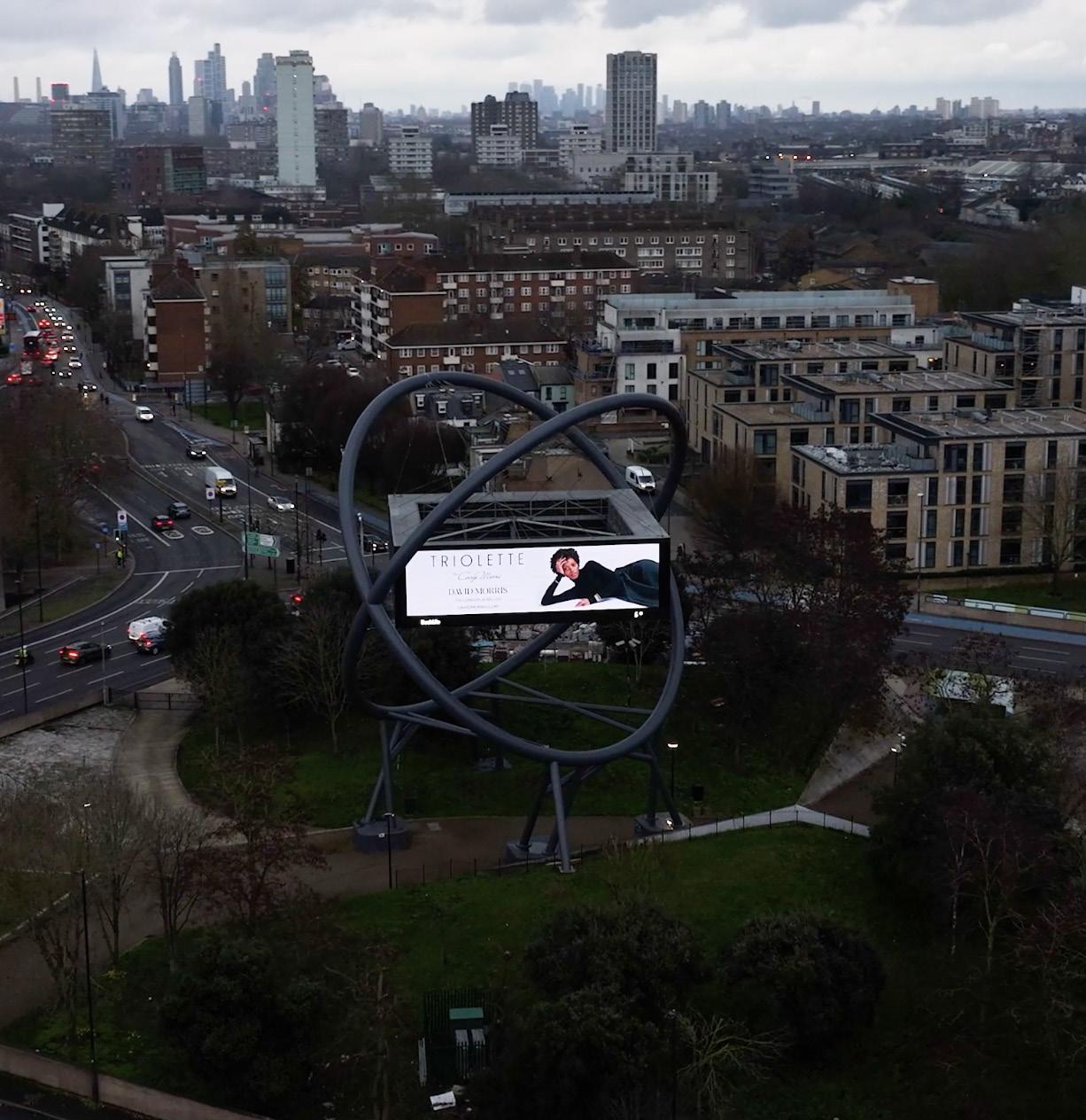
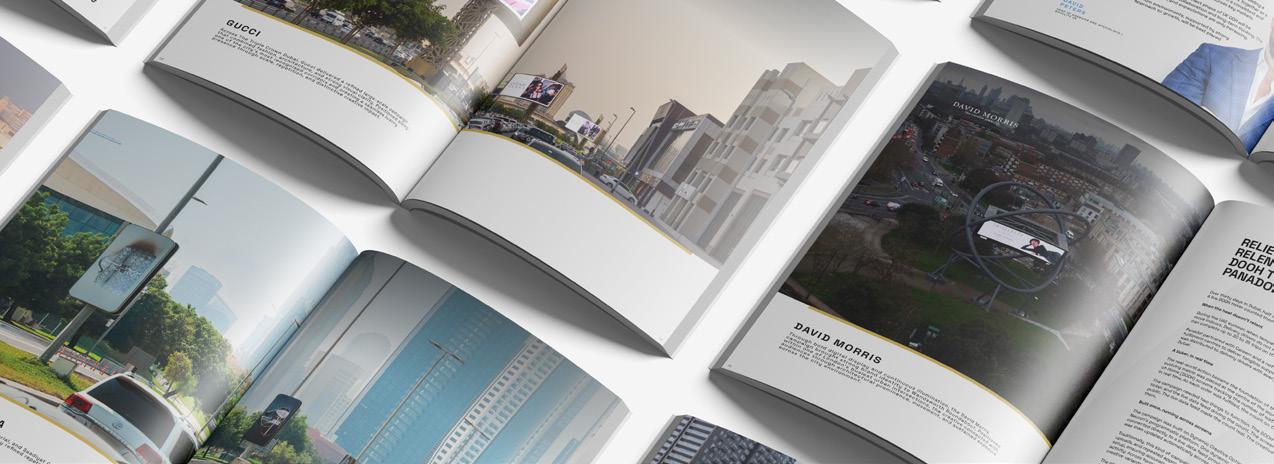
Through bold digital display and continuous illumination, the David Morris campaign brought strong brand identity to Wandsworth Roundabout . Positioned within one of London’s busiest urban intersections, the creative connected with audiences through architectural prominence, movement, and sustained exposure across the city environment.

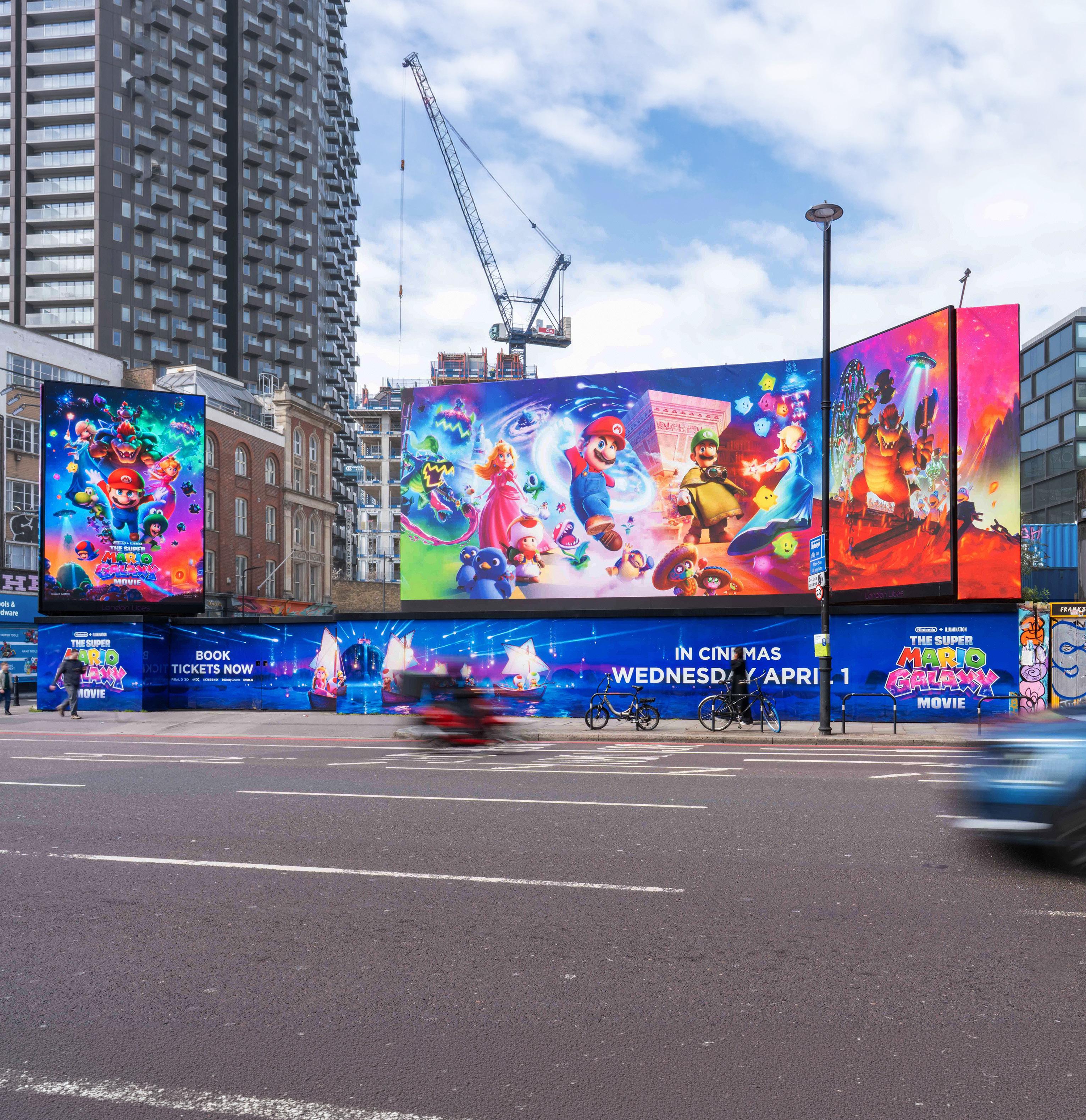
Bringing vibrant colour and immersive storytelling into the heart of East London , The Super Mario Galaxy Movie campaign transformed The Shoreditch Stack through a large-scale creative takeover. Designed to complement the atmosphere of the surrounding environment, the placement combined striking visuals with strong street-level presence across one of the city’s most recognisable digital landmarks.

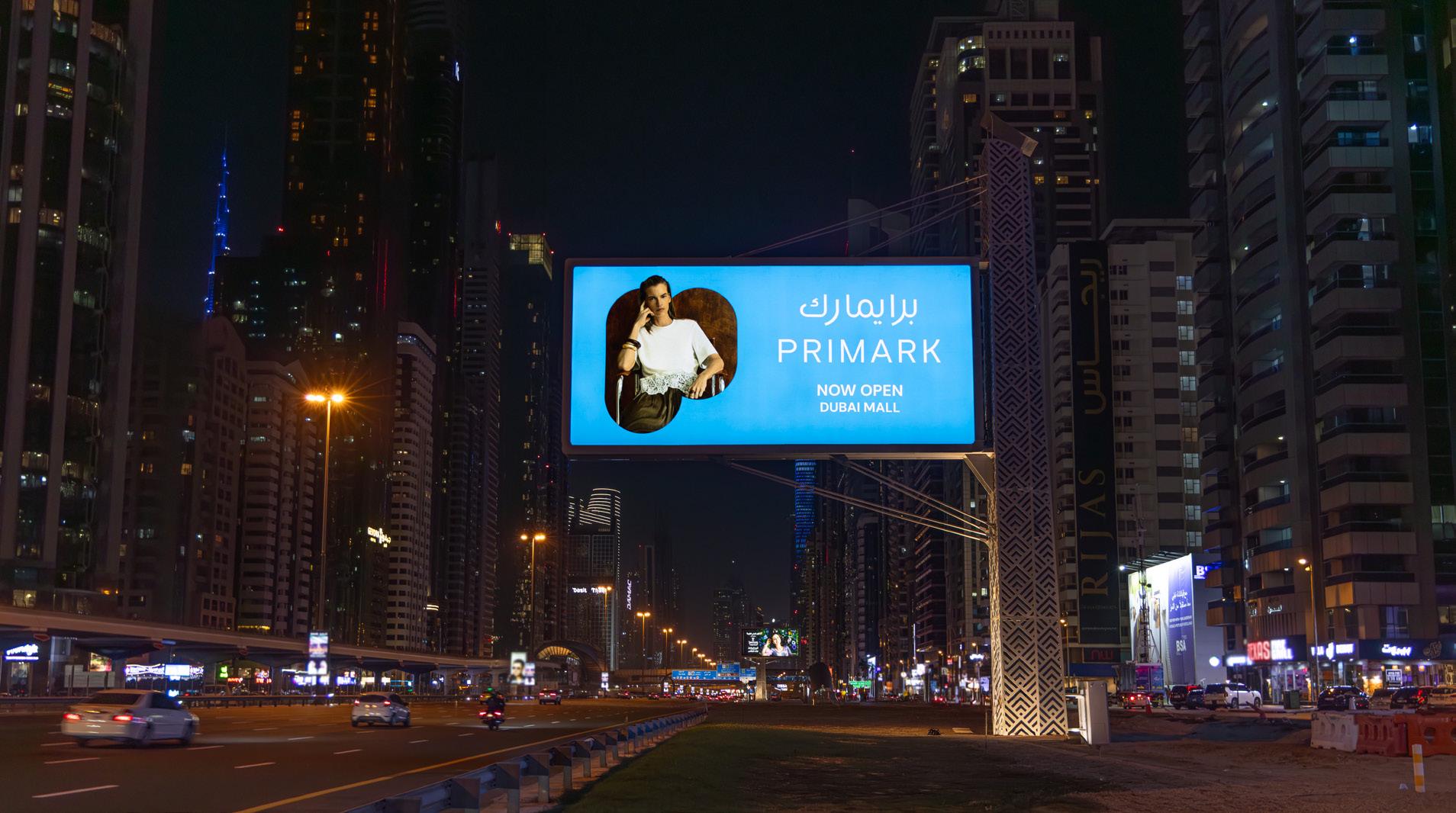
Where is the market moving in the next 12 to 18 months, and what should advertisers and media owners be preparing for?
The next 12 to 18 months will be defined by two pressures coming together. The first is the pressure on every channel to prove its value through measurement. The second is the pressure on the buying side to operate at the speed and accuracy that AI and programmatic now make possible. For advertisers, that means investment decisions will continue to move toward channels and partners that can deliver both reach and accountability. For media owners, including OOH, their work is to invest in measurement, location design and data infrastructure. The conversation has become datadriven from end to end. Five years ago, an investment decision was negotiated on rate and scale. Today, it is negotiated on rate, scale, audience accuracy, location design, attribution, and what the media partner can show in measurable terms. At MCN, our role is to make sure every media investment we recommend can be backed by data. The market has caught up to the buyer’s demand for accountability, and the partners that have invested in measurement, data, and transparency are the ones our clients are reaching for.
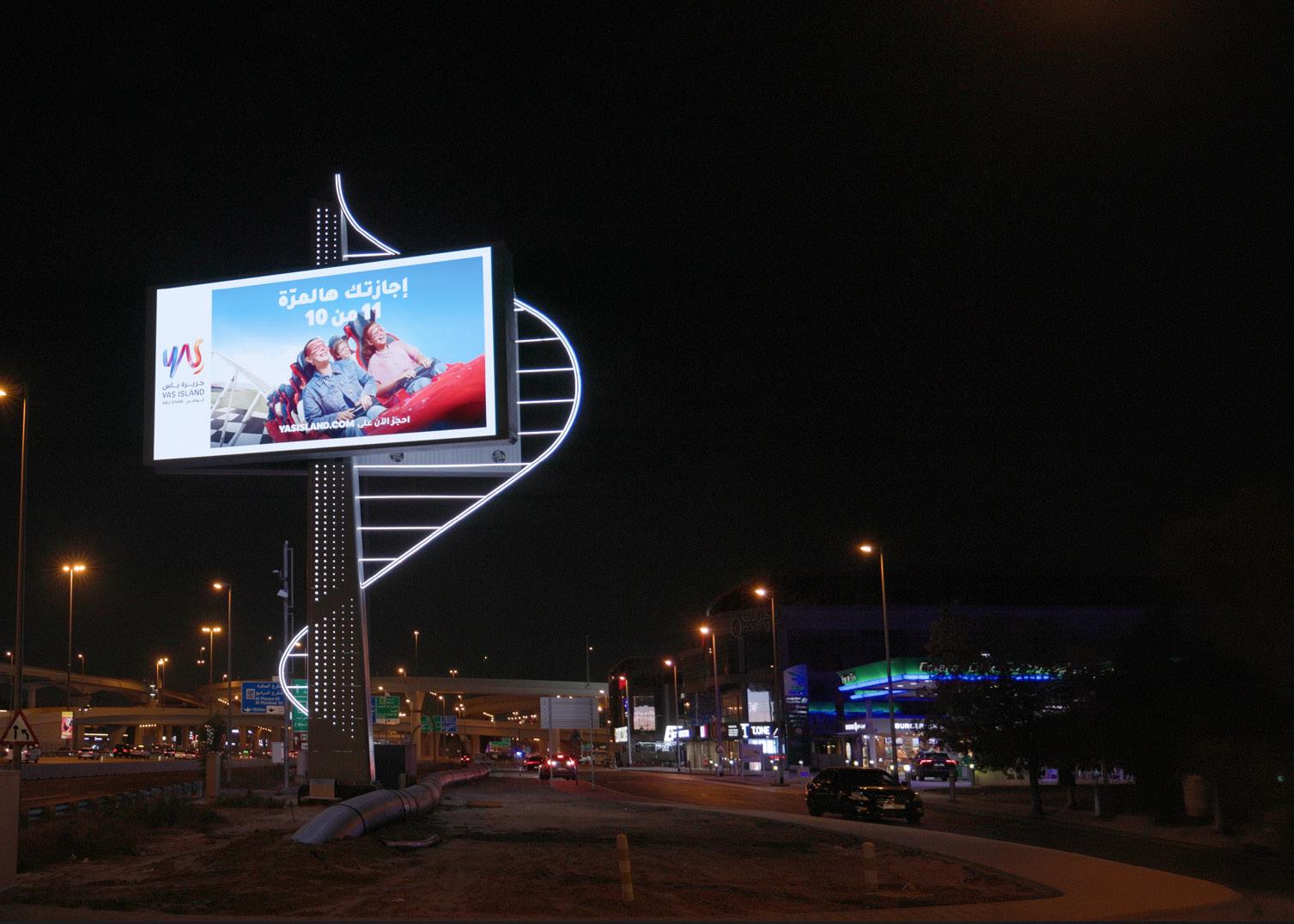




OOH has always been defined by its physical presence. What is changing now is how that presence is managed, and increasingly, how it is optimised, both in day-to-day operations and longerterm planning.
At MMG, this shift is being driven by a dedicated in-house AI and engineering function, focused on embedding intelligence into the centre of the business. Rather than treating AI as an add-on, MMG is building it into the infrastructure that connects assets, data, and decision-making.
At its core is MMG Nova, a centralised platform that brings together key functions into a single system. In practical terms, this means sales, operations, and finance work from the same view of inventory, campaign status, and billing, reducing the back-and-forth that typically happens over email and spreadsheets. Through Nova, these capabilities are designed to work together, creating a more coherent and scalable operating model for the Group.
• Automating routine workflows such as proof-of-play validation, weekly performance summaries, and site availability checks.
• Improving visibility across assets and performance, with dashboards showing screen status, campaign delivery, and open maintenance tickets in one place.
• Enabling faster, more informed decision-making by surfacing the right data to the right teams at the right time.
One of the most significant shifts AI enables is the move from reactive management to bettercoordinated, data-informed optimisation over time. Instead of waiting for problems to surface at the end of a campaign, issues can be understood more quickly and responded to using shared, up-to-date information across teams.
• Asset performance → bringing together asset status, service history, and campaign commitments in one place.
• Pricing and planning → enabling more dynamic and responsive models, for example recommending rate adjustments by daypart or season based on historic demand and performance, while staying within commercial guidelines .
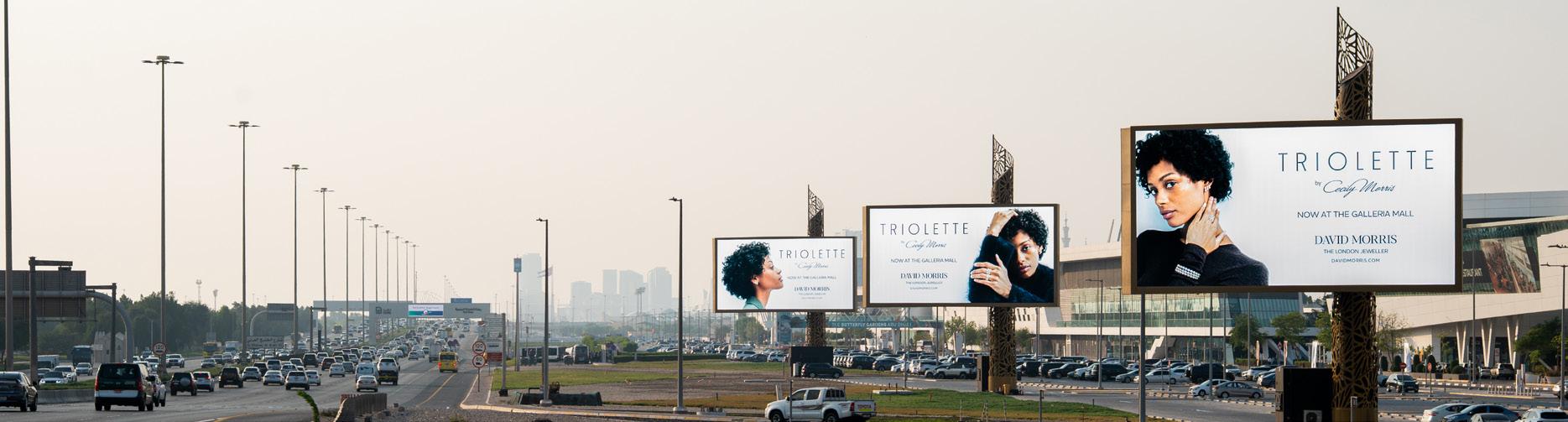

• Location strategy → identifying high-potential sites based on data, combining audience, context, and performance insight to inform both new deployments and optimisation of existing networks.
This changes how value is created. Instead of responding to performance, Nova can guide decisions in advance, improving reliability, efficiency, and commercial outcomes across the network in a measured, incremental way.
As digital infrastructure expands, intelligence is no longer limited to internal systems. The same data that supports planning and reporting can be used to improve how the physical network is run dayto-day, primarily by giving teams a more consistent, shared view of sites, schedules, and tasks.
• Real-time visibility on network status.
• Data collection to inform audience and location insights.
• Faster operational response across networks.
Efficiency is often the starting point for AI adoption, but it is not the end goal. Time saved on manual tasks only creates lasting value if the underlying systems are robust and can be relied upon in everyday use.
The pace of change in AI technology requires organisations to build systems that can evolve continuously. This means focusing not only on performance, but on resilience, the ability to adapt, scale, and improve over time; standardising processes, documenting models and workflows, and ensuring there are clear fallbacks when automation is unavailable.
Alongside this, trust becomes critical. As AI becomes more embedded in decision-making, governance, security, and reliability must be treated as core components. Systems must not only be capable, but dependable at scale.
As AI becomes more deeply embedded, OOH is evolving into a more connected and intelligent operating model. The focus is shifting from individual tools to an integrated environment that supports the full lifecycle of a campaign and the network behind it.
This does not replace the fundamental strengths of the medium, scale, visibility, and real-world presence, but it changes how those strengths are managed, optimised, and extended. The opportunity is not simply to adopt AI, but to embed it into the way OOH operates at every level, from asset management and scheduling to campaign delivery and reporting.
BY ARIO CECCHETTINI
SENIOR AI ENGINEER

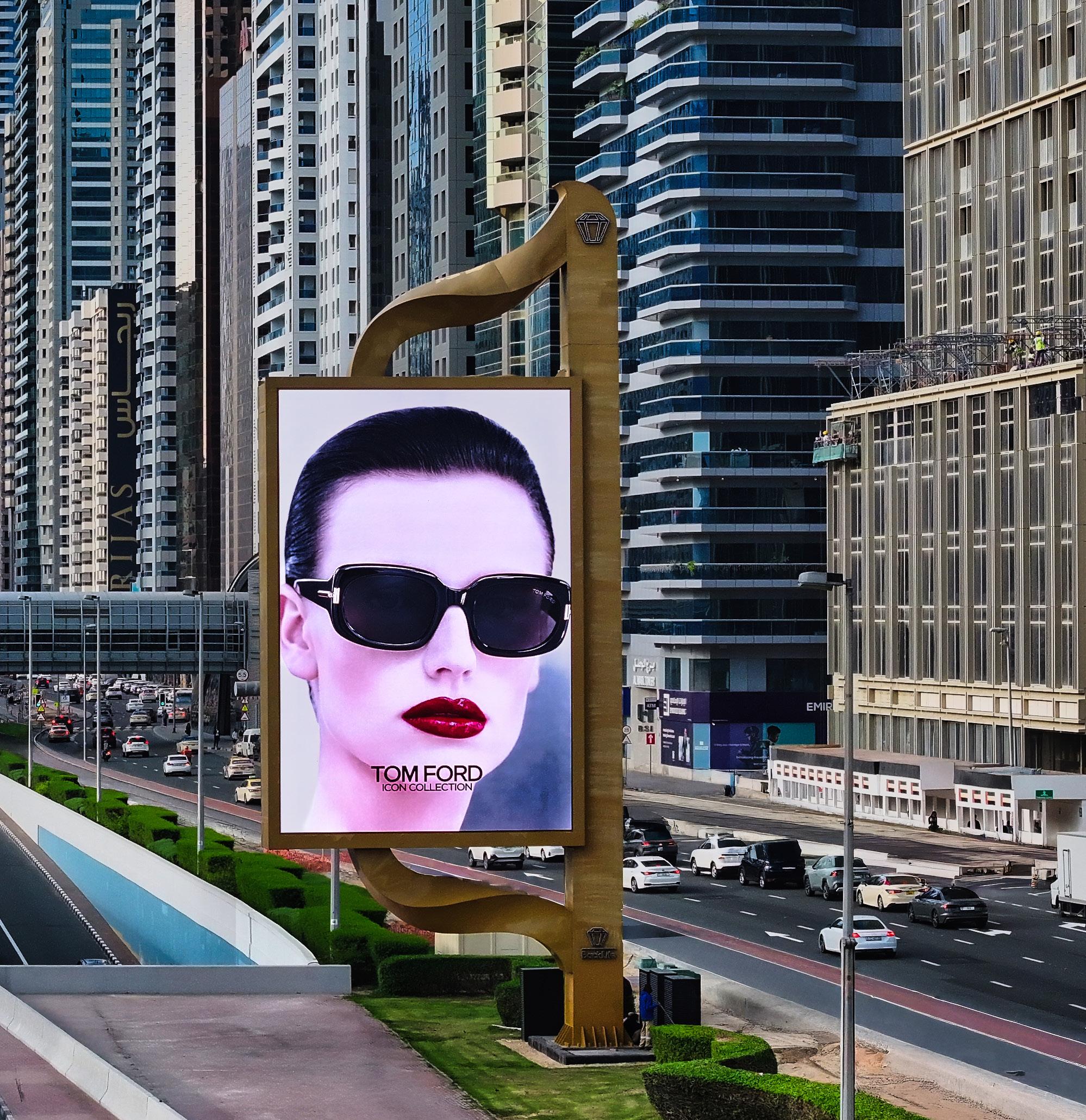
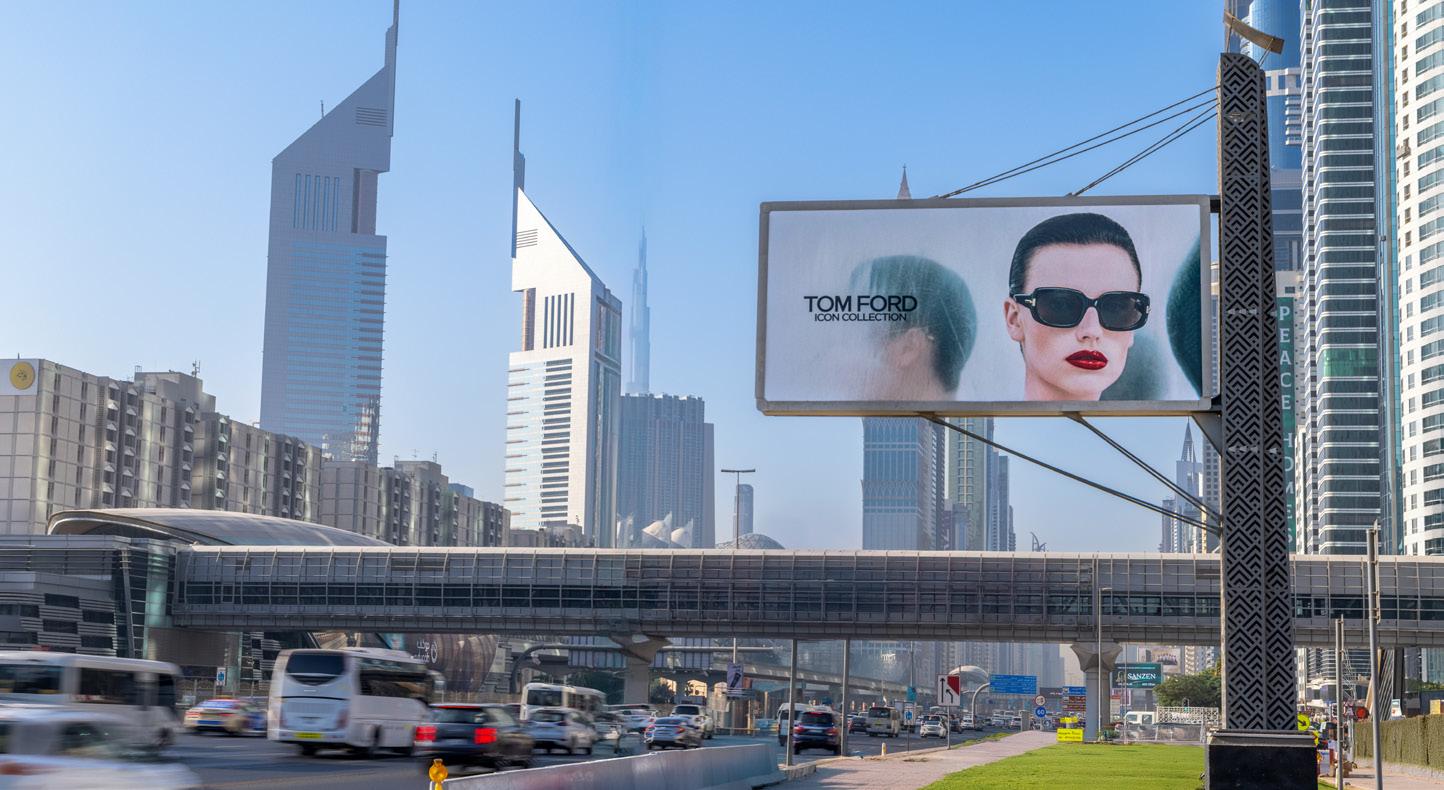
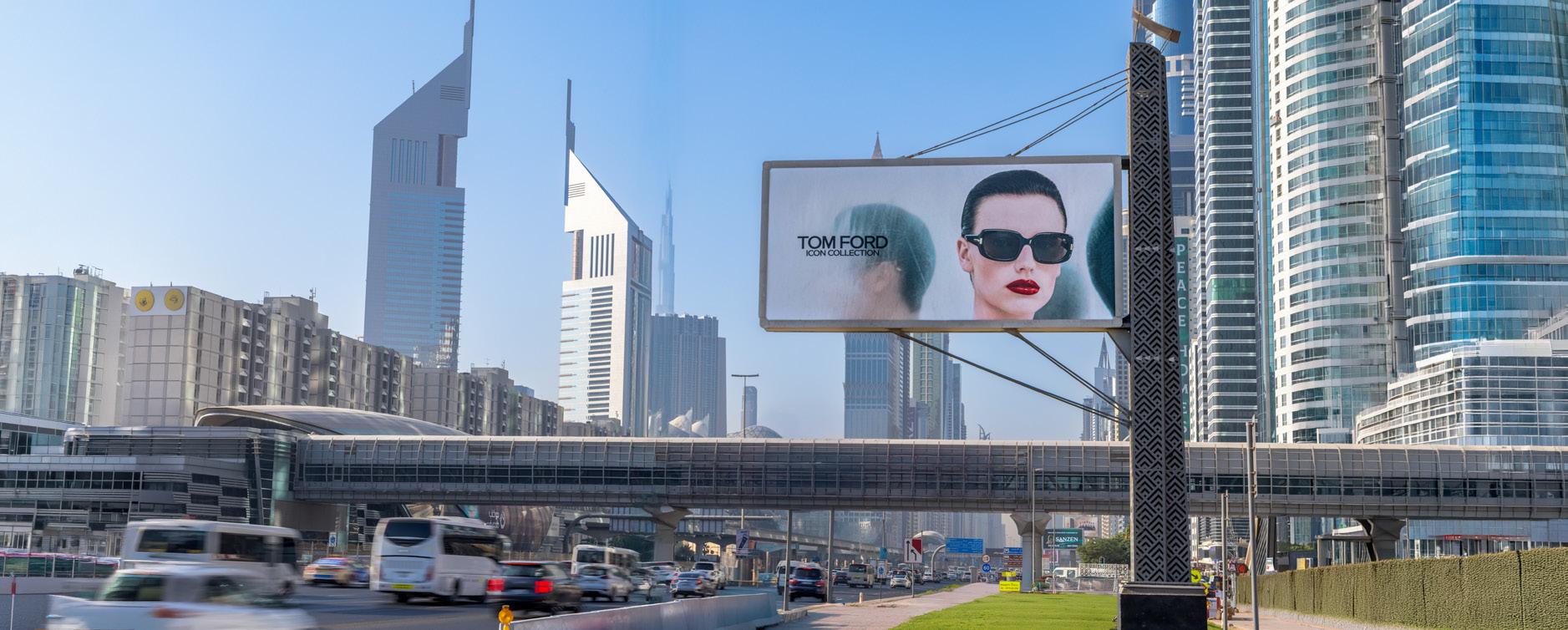
The Dubai Jawhara became a refined focal point for Tom Ford along Sheikh Zayed Road , introducing a campaign defined by sharp visual contrast and contemporary sophistication. Integrated into one of Dubai’s busiest metropolitan stretches, the display commanded attention through clean creative, architectural scale, and uninterrupted city exposure.
COMMERCIAL DIRECTOR, APAC AT CONNECTED RETAIL
usually a strong signal that a channel is no longer experimental.
There is no single answer to that. I remember this coming up at the WOO APAC Forum 2023, where everyone agreed that each market evolves at its own pace.
It depends on how digitised the supply is, how fragmented the market is, how advanced programmatic already is, and how agencies are structured locally. In APAC, growth remains very strong, often above 50 percent year-on-year. ANZ drives most of the volume, while Southeast Asia acts as a growth engine, close to 70 percent year-on-year, with some markets still doubling.
In large countries like Indonesia or the Philippines, the focus is on efficient reach at scale, often concentrated in Tier 1 and Tier 2 cities. In more mature markets like Singapore or Australia, the conversation shifts toward precision, data, and integration into broader strategies.
If I simplify it, some markets are buying reach, some are buying precision, and the most advanced ones are starting to combine both.


How do you see the broader programmatic landscape evolving?
We are clearly seeing the lines blur across the ecosystem.
SSPs are moving closer to demand, DSPs are moving closer to supply, and platforms are evolving to capture more value. At the same time, parts of the programmatic market, particularly display, are facing pressure.
At the same time, there is a growing focus on curation and more controlled buying paths, giving both buyers and sellers greater visibility and control.
What is interesting is that programmatic DOOH sits slightly outside of that pressure. It remains in a strong growth phase, with new inventory, increasing demand, and sustained interest from technology platforms and investors. Recent industry moves, such as acquisitions (Hivestack, Vistar Media, QMS…) and consolidation across the space, reinforce that confidence.
That is why more platforms are expanding into DOOH and strengthening their capabilities in this area.
will define the winners in the next three to five years?
First, clarity on what the channel is meant to do. It is not a lastclick channel. It is an influence and acceleration channel.
Second, the ability to activate data properly. Access to data is becoming less of a differentiator. Execution is where the real value sits.
Third, integration. The winners will be the ones who connect DOOH seamlessly with other channels rather than treating it in isolation. Social is a good example here: although it hits a plateau in many regions, it is not going anywhere, especially with Commerce.
Looking slightly further ahead, we are starting to see more automation and early forms of agentic AI-driven workflows. These agentic capabilities will help accelerate decisionmaking and campaign activation. The open question is how far this goes, whether it simply enhances programmatic, or gradually brings publishers and brands closer again at the centre of the ecosystem.
The players who can combine all that with strong fundamentals in media and operations will be in a strong position.




about scale has been about the buying side: how to plan it, target
is that programmatic is an audience system, running on OOH inventory. Data identifies delivers reach against those profiles. The inventory is the route. The audience is the insights, ad spend optimisation, and measurement. Content optimisation, drawing on

If programmatic is an audience system, the infrastructure must be designed to carry it. That changes the brief on the inventory side in
First, individual sites must function as part of a network. The Helix, MMG’s network of four digital screens designed and operated as a single cohesive system, is one example of how this is being built. A campaign runs across it as one piece of work, and the standard of execution holds from one site to the next.
Second, sites must respond to context. Time of day, traffic patterns, and how people move through a space are now operating inputs, not background conditions. Screens are
Third, the operating model behind the inventory must be centralised and built on real-time data. Performance is visible, issues are anticipated before they surface, and the network runs the specification. The discipline that programmatic exposes is operational.
Behind all three sits an editorial principle on the inventory side. The work is in site choice, not site count. Programmatic activity does not benefit from inventory that has been added without curation. It depends on OOH networks chosen to fit with audience, landscape, and brand context.
When the audience system and the infrastructure are designed for each other, neither has to compensate for the other. Dynamic content needs both: screens designed to respond to their environment, and the programmatic side capable of buying that responsiveness as reach. Operational data keeping OOH running, and commercial data identifying the audience, sit on the same decision surface.
For the industry, that means physical footprint expansion and audience-system consolidation are two parts of one strategy, not two unrelated workstreams. Each enables the other.
OOH is not only advertising space. It is part of the infrastructure of the city, and part of the audience system that connects brands to people across markets. Networks built to deliver on both are the version of OOH that scales. The buying side is largely there. The building side is the work in front of the industry.

BY BASSEL KOTAISH

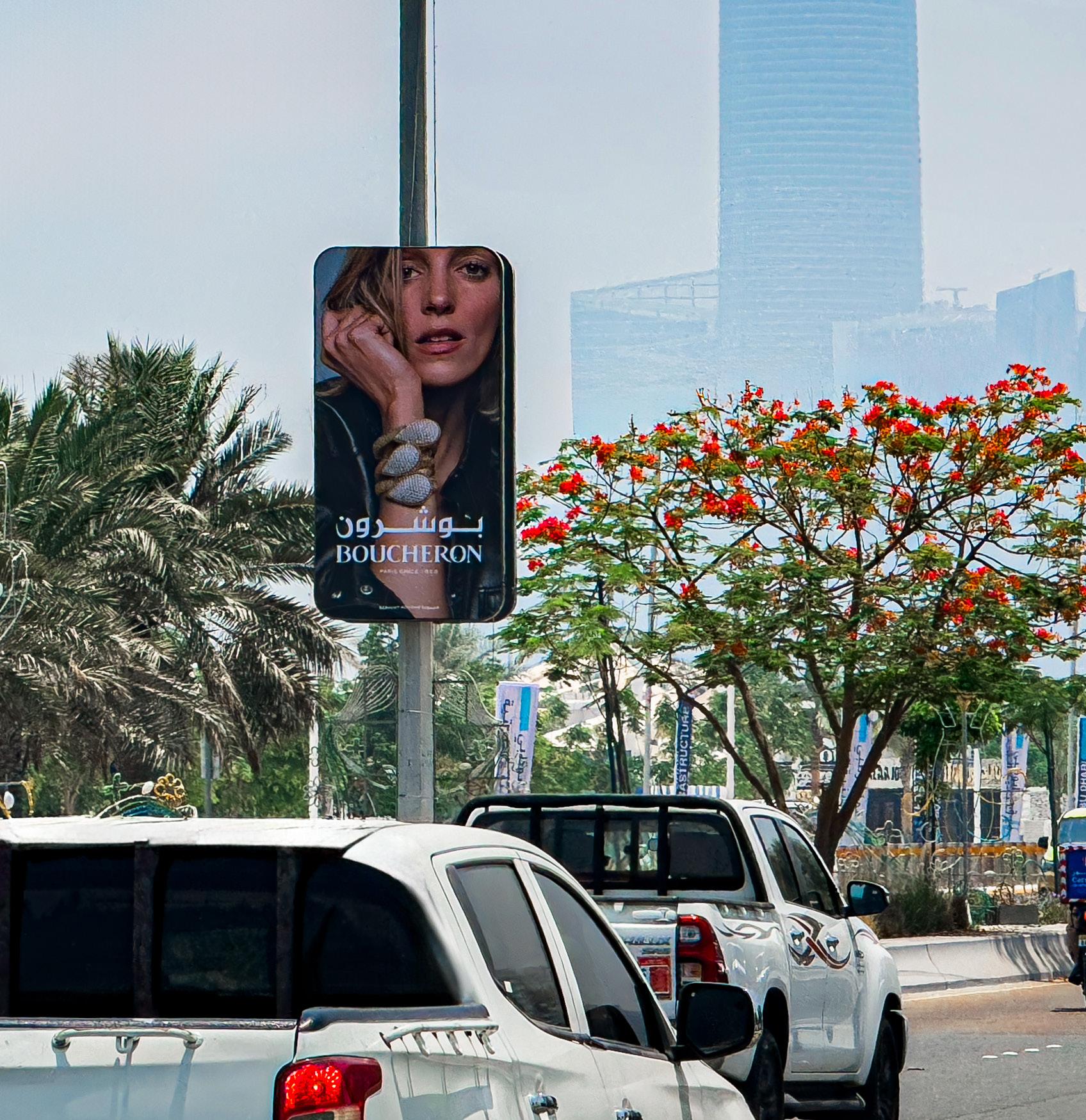
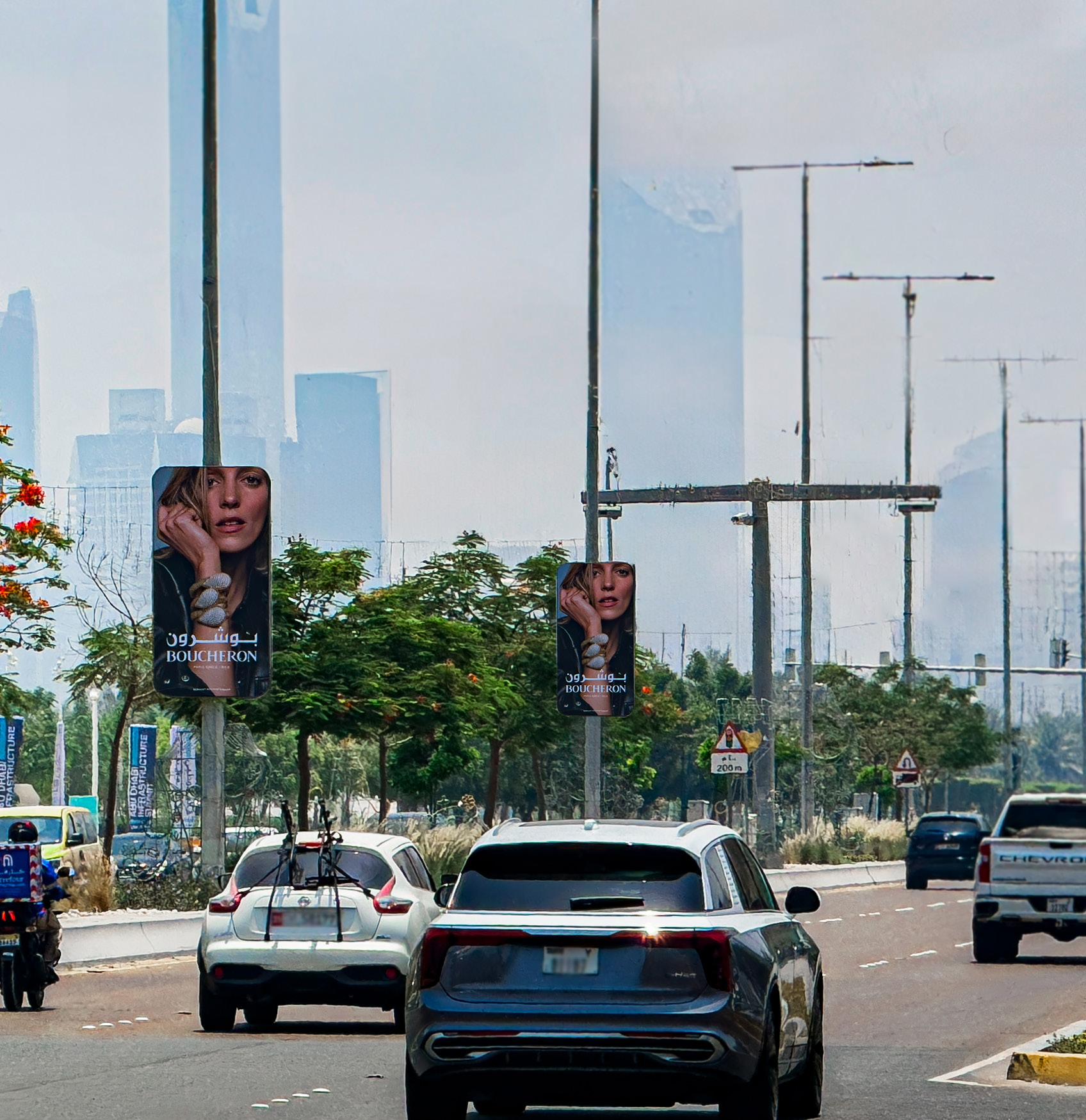
Boucheron established a refined presence across the Nation Towers Circuit with a campaign shaped by elegance, continuity, and repeated visibility. Positioned within one of Abu Dhabi’s premium waterfront environments, the execution connected with audiences through sustained exposure along a key urban route.
Driving disciplined growth that translates ambition into sustained market leadership.

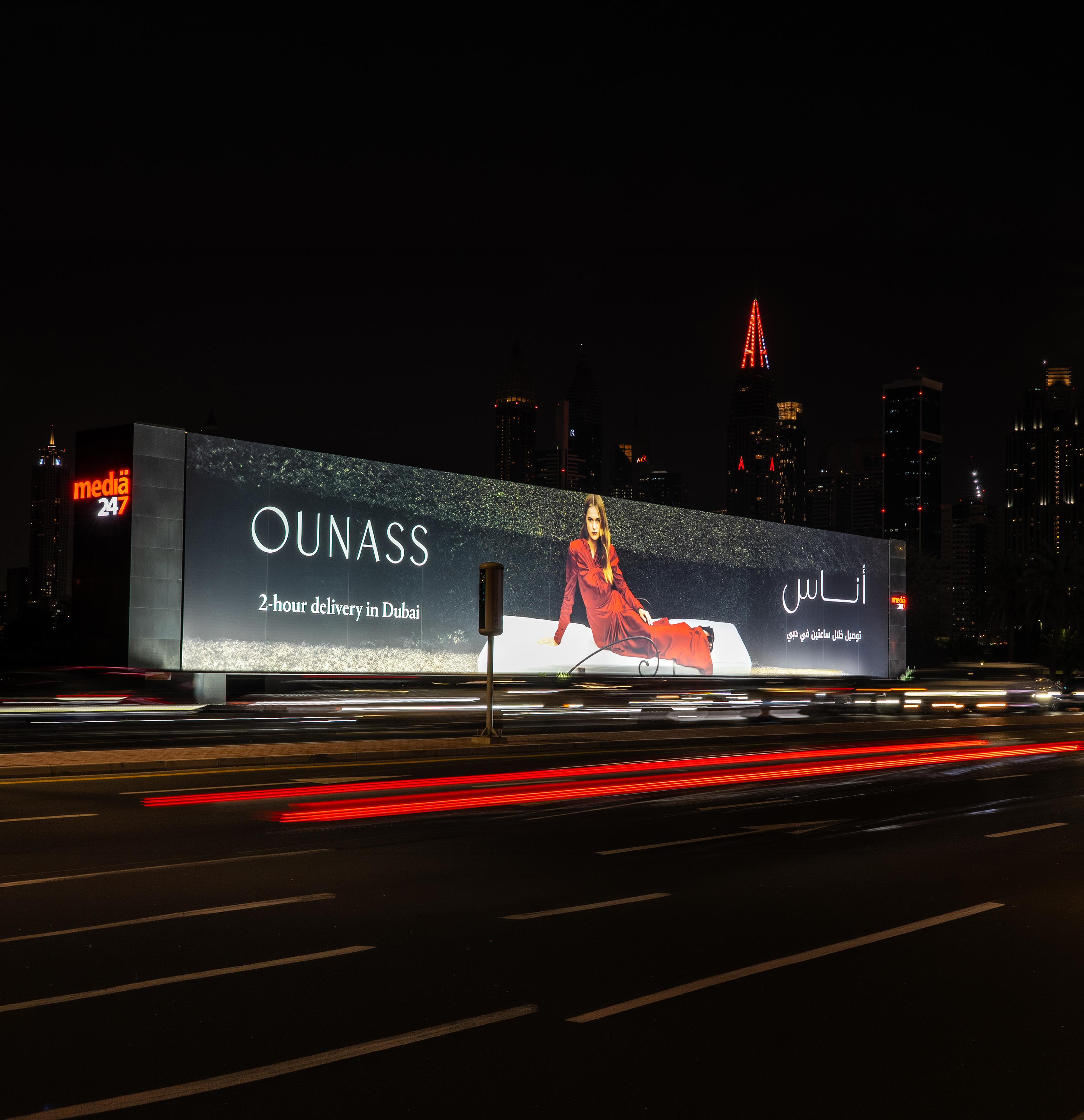
Ounass secured a commanding large-format presence at City Walk 2 Hoarding through a campaign defined by elegance, contrast, and strong visual impact. Positioned opposite City Walk along Al Safa Street, the execution connected with continuous urban movement through high-visibility creative set against one of Dubai’s most active lifestyle destinations.

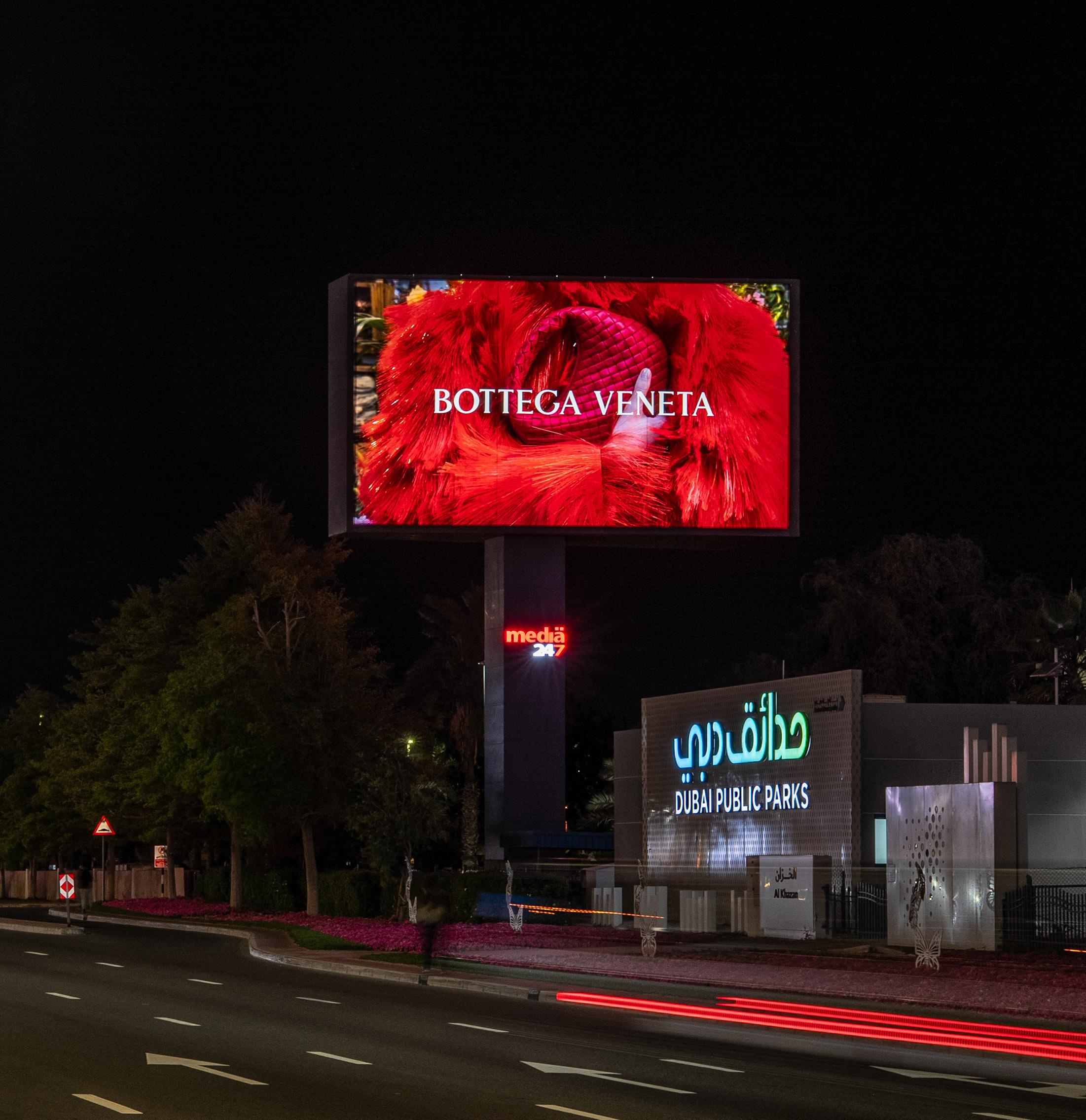
City Walk 1 Unipole became the setting for a striking Bottega Veneta display that combined rich colour, texture, and strong visual impact. Positioned opposite City Walk near Coca-Cola Arena along Al Safa Street, the campaign introduced a distinctive luxury statement into one of Dubai’s busiest lifestyle and entertainment districts.
Saudi Arabia has entered a defining chapter in its growth story, one where the narrative has shifted decisively from promise to proof. Long positioned as a market of future potential, the Kingdom is now delivering that vision at scale. Vision 2030 is no longer an ambition on paper; it is taking shape through the accelerated rollout of infrastructure, the rise of world-class destinations, and the emergence of a confident, experience-led consumer economy. Taken together, these signals are unmistakable. Saudi Arabia is no longer a market to watch, it is a market to invest in.
What sets Saudi Arabia apart today is the alignment of its growth drivers, all accelerating in parallel. Capital investment, global brand expansion, and consumer demand are moving in sync, creating a rare window of rapid, large-scale development. Retail, in particular, is undergoing a fundamental shift, evolving beyond transactional formats into destinations centred on lifestyle, experience, and extended dwell time. This transformation is elevating both the quality of audiences and the depth of engagement. For Out-of-Home (OOH), this shift is critical: value is no longer defined by reach alone, but by context.
At the same time, Saudi Arabia is firmly establishing itself as a core luxury market. Global brands are entering with flagship intent, prioritising environments that reflect their positioning and enable meaningful consumer interaction. This momentum is further amplified by a robust events calendar such as Expo 2030, FIFA 2034, the Formula 1 Grand Prix in Jeddah, and an expanding portfolio of cultural and entertainment platforms, all driving sustained audience flows at scale. In this environment, OOH is no longer static; it operates with the rhythm and immediacy of a live medium.
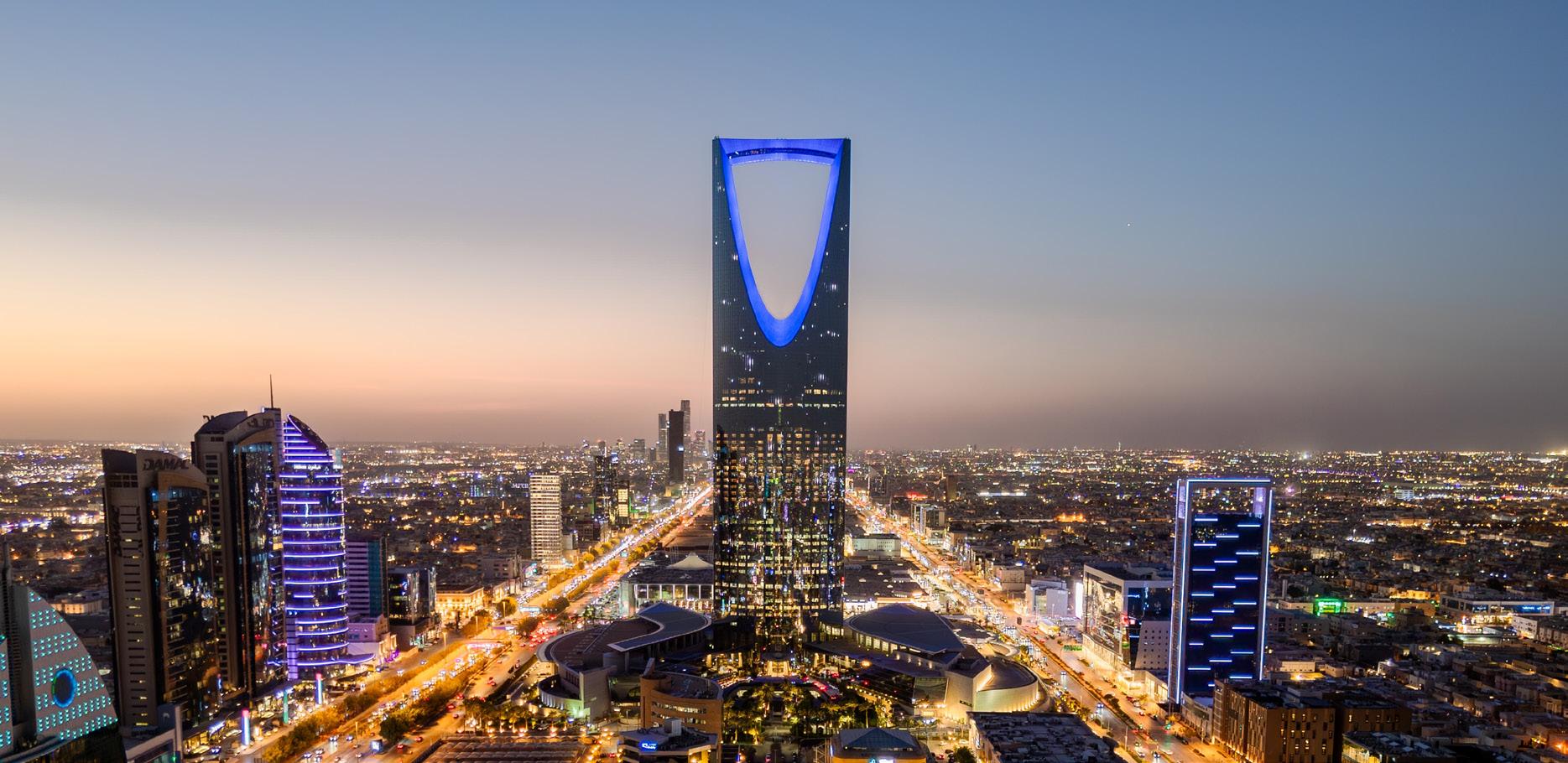
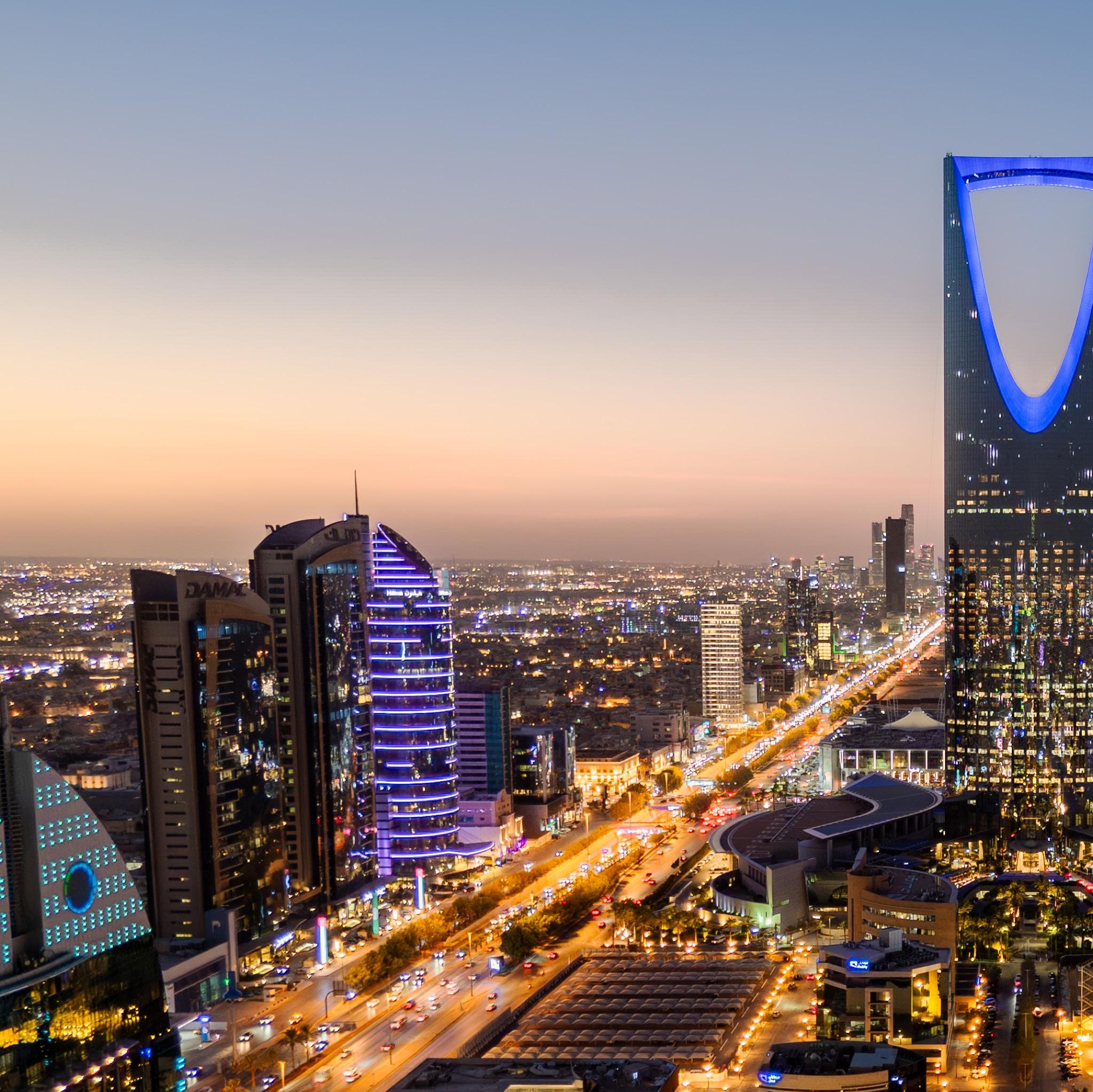

AN INTERVIEW WITH
MICHAEL CHIEF BUSINESS DEVELOPMENT OFFICER AT CENOMI CENTERS
Mall environments and Out-of- Home (OOH) operators now work closer than ever. What makes for a strong partnership today, and what does it deliver for brands?
Strong partnerships between mall operators and OOH media partners are now defined by strategic alignment, shared audience insights and a focus on measurable commercial outcomes. Increasingly, collaboration is driven by the integration of first-party data, enabling more effective audience targeting, campaign planning and performance measurement.
For mall operators, the ideal OOH partner is one that understands the wider ecosystem of the shopping center and can help deliver meaningful value for brands and customers, as well as the physical mall itself. When this alignment exists, it creates more immersive, experience-led opportunities for advertisers while simultaneously strengthening long-term brand partnerships and return on investment.


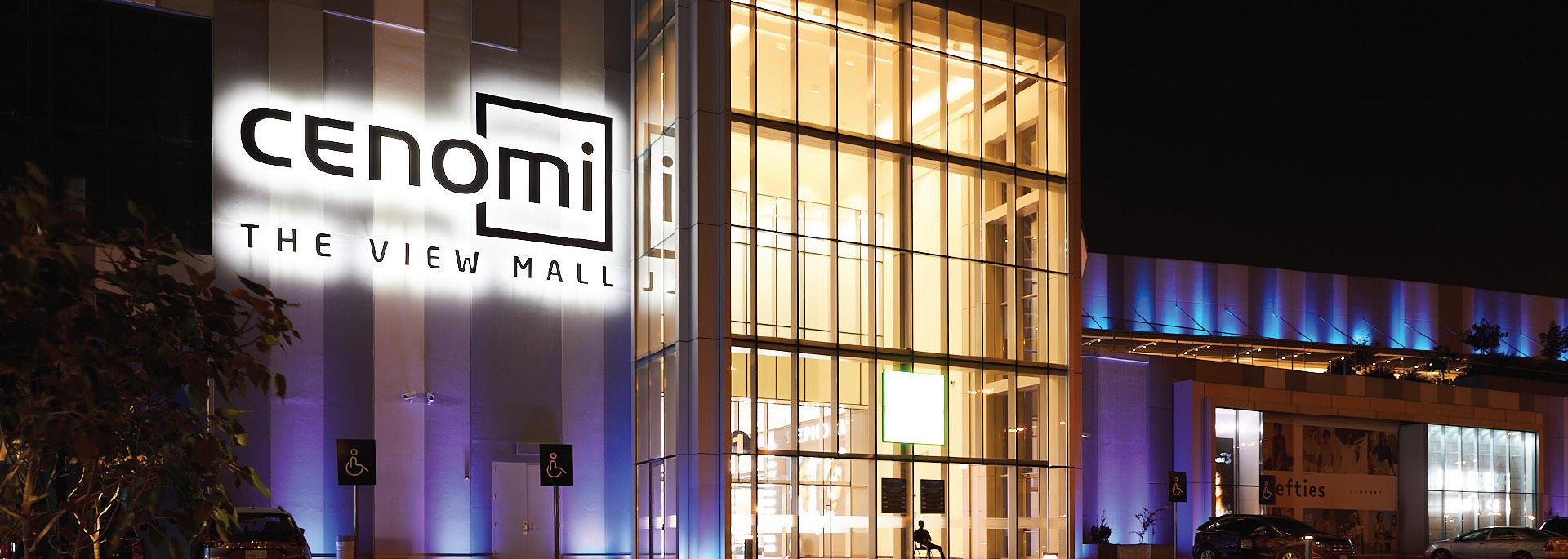
Saudi Arabia’s retail and entertainment landscape is changing fast under Vision 2030. What is distinctive about how the market is approaching the mall-as-a-media-ecosystem question, and where is the next phase heading?
Saudi Arabia is approaching this evolution in a distinctive way, driven by combined elements of Vision 2030, rapid digital adoption throughout the Kingdom and growing demand for immersive, world-class experiences.
As a result of retail destinations transforming into multifunctional spaces where media, entertainment, culture and commerce come together, brands are now using these environments to create iconic, shareable moments that foster genuine emotional connection.
With upcoming developments such as Westfield Jeddah and Westfield Riyadh integrating top tier digital infrastructure with multifaceted media capabilities, the next phase of growth is moving towards fully integrated experience platforms which support live storytelling, social amplification and brand engagement.
The Out-of-Home landscape in the GCC has long been defined by period of dynamic expansion, it’s clear the industry is poised for its next evolution: a transition to a more cohesive, structured and efficiency, clarity, and effectiveness in campaign planning and execution. It means moving away strategies that seamlessly fit into complex multi-channel campaigns, ultimately saving valuable
deliver measurable results. When inventory data, audience insights and performance metrics are consistently defined and shared across the market, agencies can provide more robust and data-
diversified investments will increasingly prioritise quality and impactful engagement over sheer volume. This signifies a greater focus on premium, well-maintained assets in high-value locations
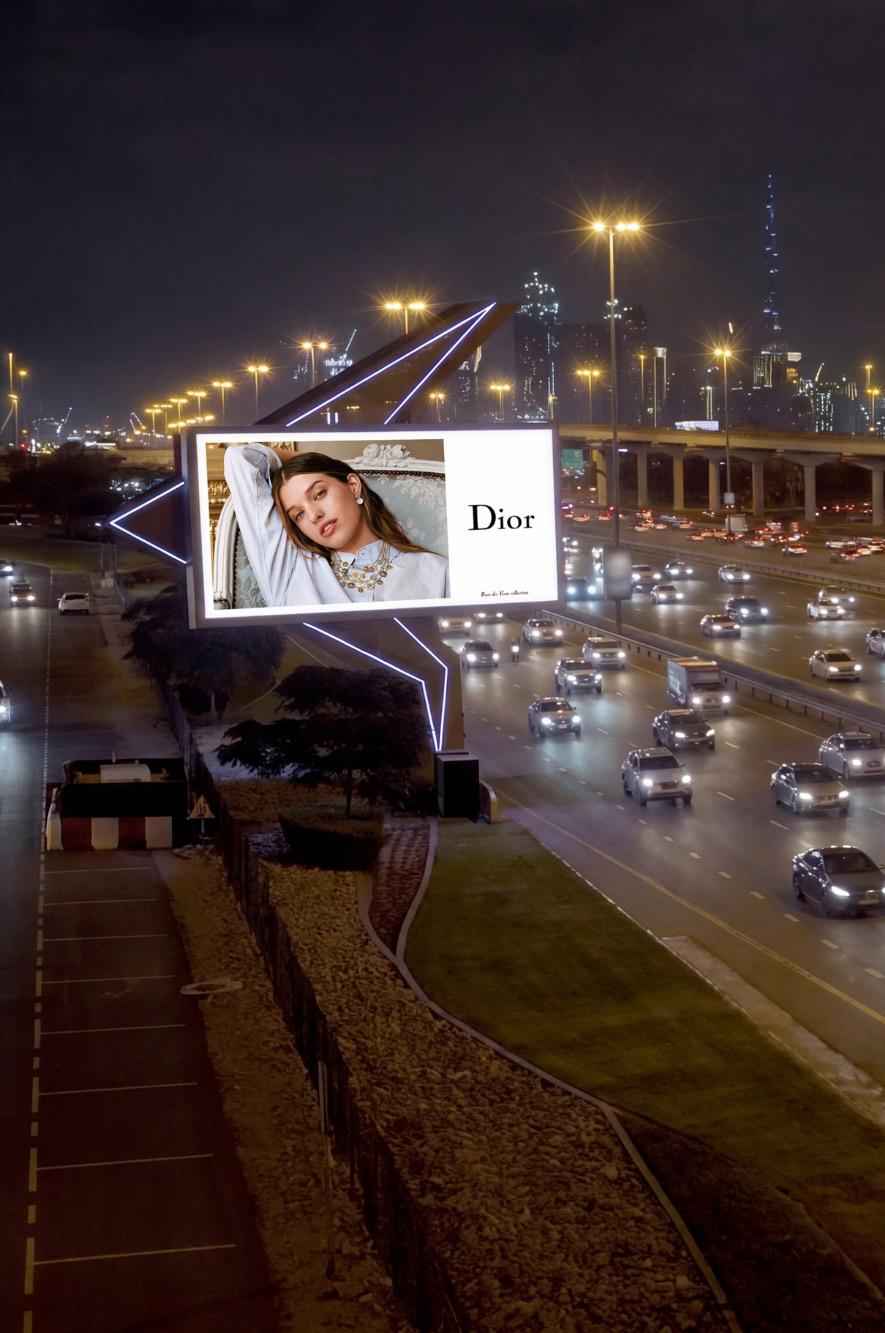
Data, measurement and programmatic capabilities are pivotal in shaping a more mature and efficient OOH ecosystem. The establishment of unified data standards and robust third-party measurement systems will provide the essential transparency that advertisers demand, allowing them to understand true reach, frequency and audience demographics across various OOH networks. This shift from estimated impressions to verified audience exposure is crucial for OOH in the GCC to compete effectively on a global scale and with other digitally-enabled media channels.
Programmatic OOH can serve as an operational backbone for this new efficiency, automating the planning, buying and content delivery process based on real-time data inputs such as audience movement, weather conditions, and local events. It operates as not a replacement to a traditional route to market but a dynamic capability that will enable highly targeted campaigns and reduce waste whilst making OOH inventory accessible to a wider range of advertisers who seek agility and precision over top of the funnel branding. The combined integration of these elements elevates OOH, enabling it to track consumer purchase path at all levels of the marketing funnel from awareness to targeted consideration and conversion, a truly intelligent advertising platform.
Success for OOH players in the GCC’s next phase will be determined by their commitment to fostering genuine collaboration and embracing technological integration. Those who champion an open-minded approach to data sharing, work together to establish industry-wide measurement standards and invest in interoperable technology will emerge as market leaders. Success will depend on moving beyond proprietary operations and actively contributing to a unified, transparent market structure that benefits all participants – media owners, advertisers and agencies alike.
Ultimately, market leadership will be less about owning the most inventory and more about providing the most intelligent, measurable and integrated solutions. This entails offering diversified portfolios that cater to various client needs, from premium brand-building screens to performance-driven programmatic campaigns. The OOH players who prioritise agility, innovation and a collaborative spirit will be best positioned to attract sustained investment and secure a dominant, sustainable future in the evolving GCC landscape.
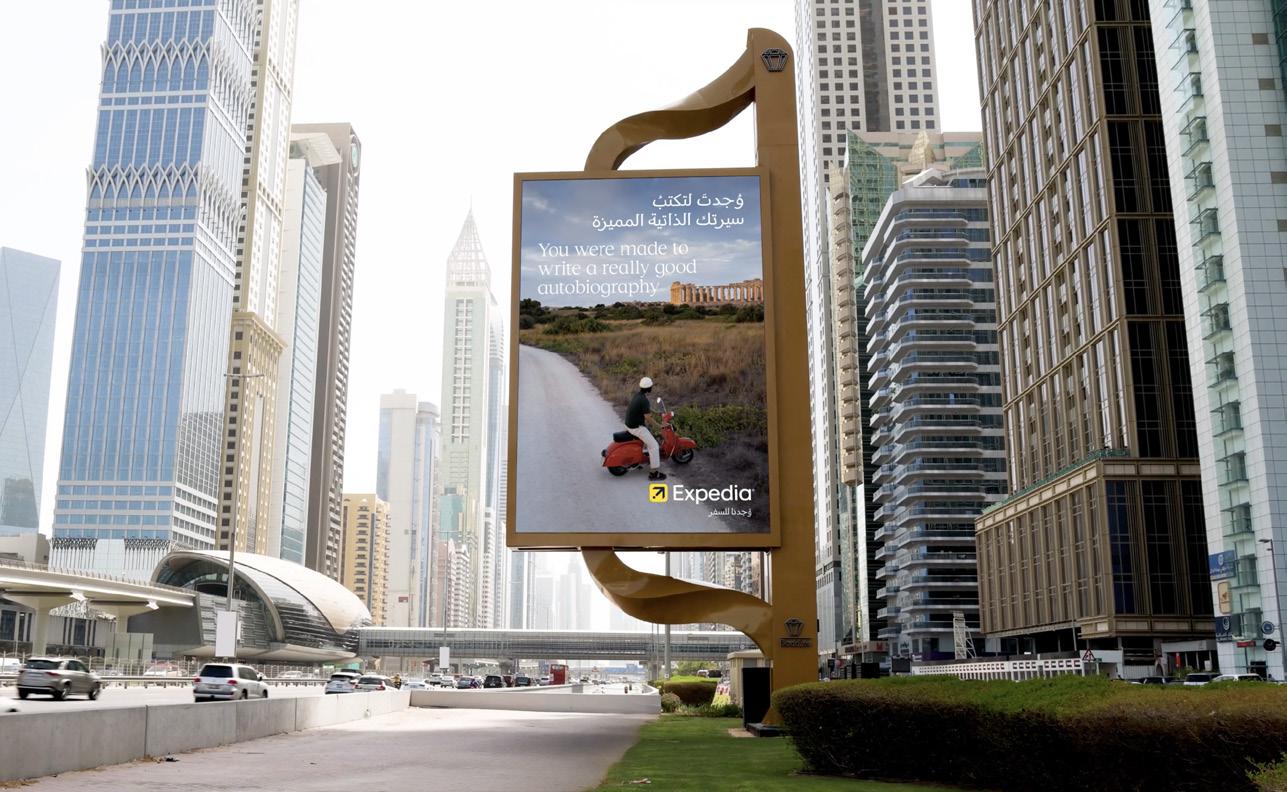
BY DAVID HAWKINS
MANAGING DIRECTOR MENA
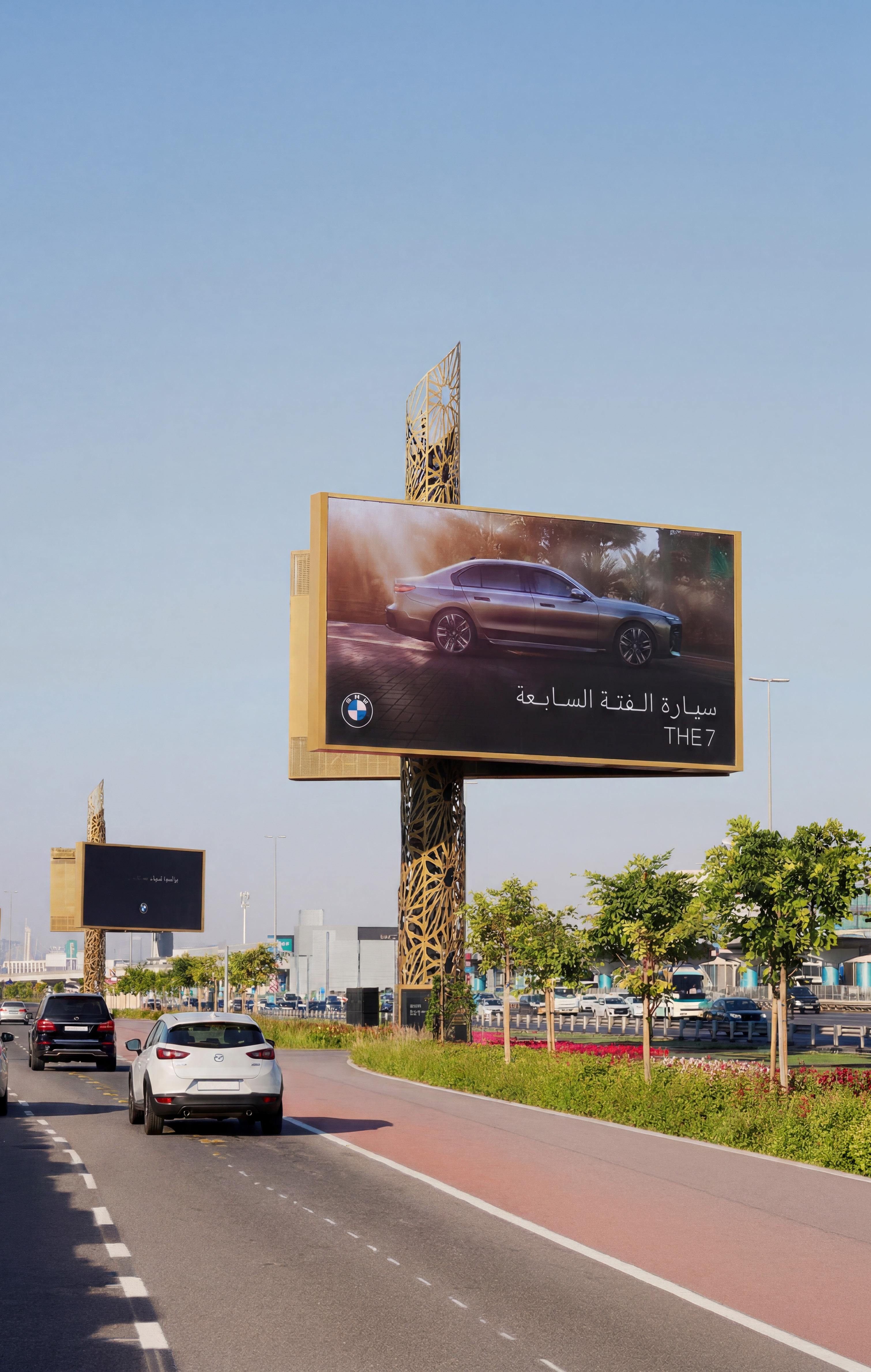

HEAD OF MARKETING AND SALES CRM AT ABU DHABI MOTORS BMW GROUP

Where is the activation format heading as part of the OOH and Digital Out-of-Home (DOOH) mix, and what should premium brands be investing in?
The role of promo stands is evolving rapidly. Today, they are no longer standalones but are part of a connected ecosystem that bridges physical and digital experiences.
We’re seeing a clear shift toward more immersive and datadriven engagements. For premium brands, this means investing in technologies that enhance the customer journey, whether through interactive displays, digital integrations, or seamless ways to capture and continue the conversation beyond the physical space.
That said, technology should always serve the experience, not define it. The real value lies in creating authentic, human-centered interactions that reflect the brand’s identity. The future is about combining the impact of physical presence with the intelligence of digital; creating experiences that are not only memorable, but also measurable and meaningful.
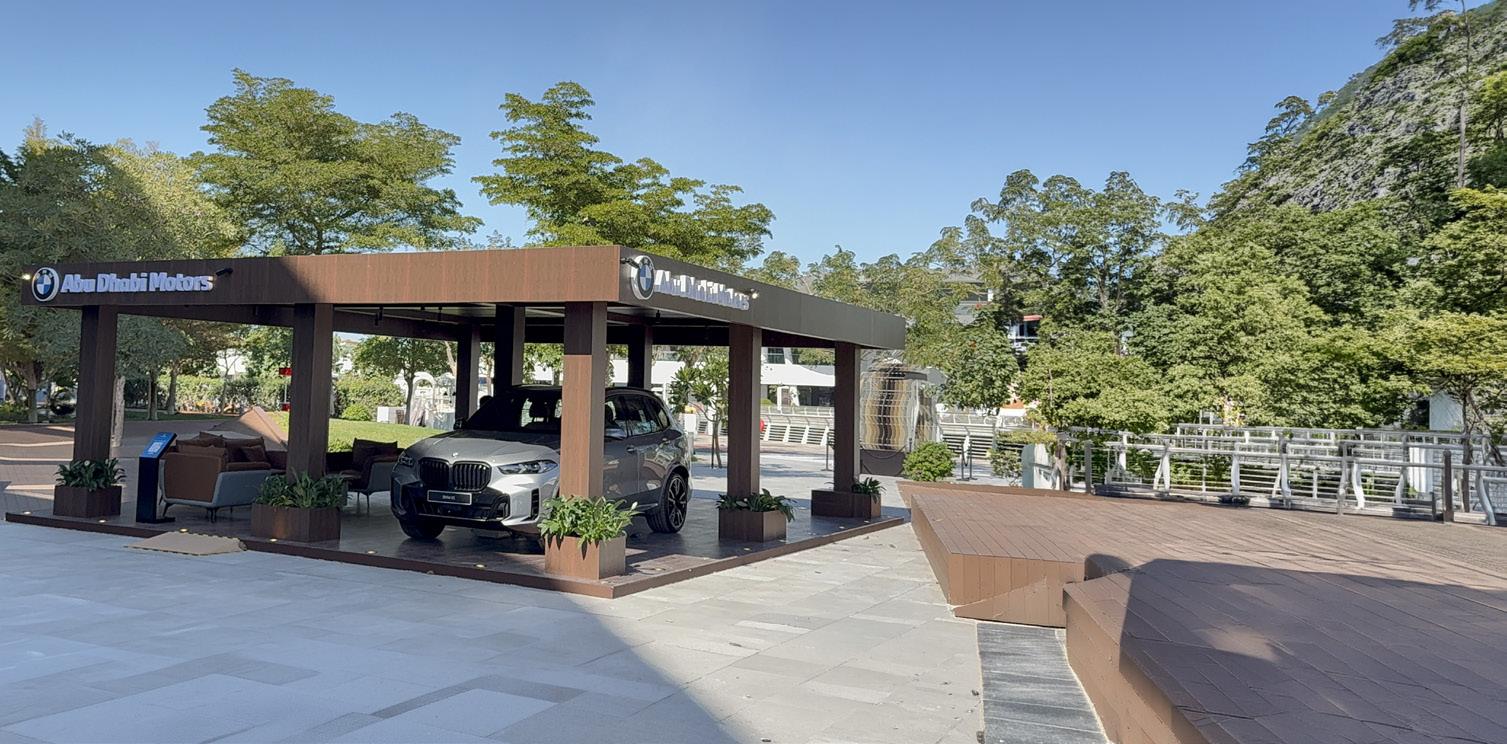


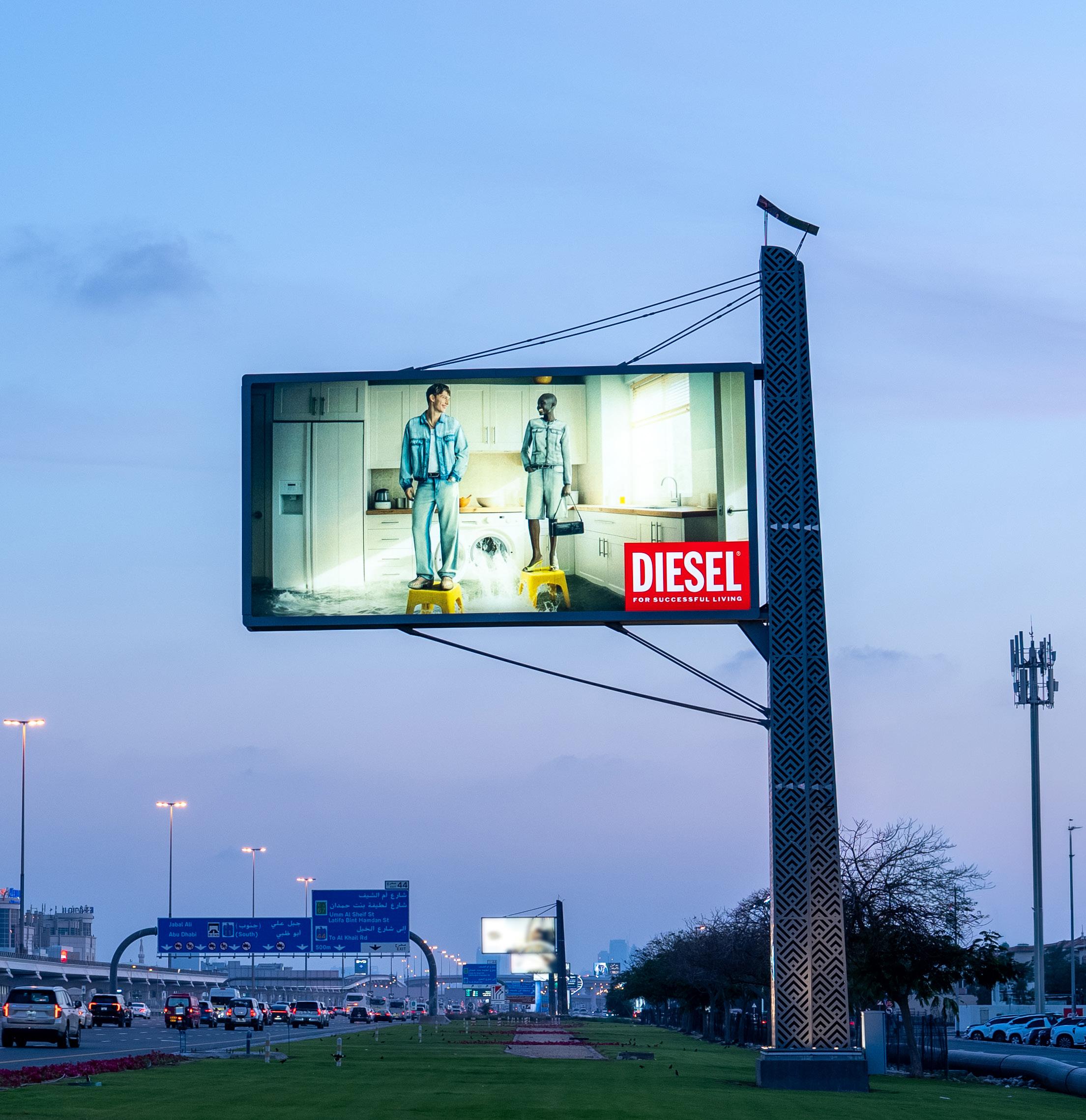
Positioned within one of Dubai’s most recognised corridors, Diesel delivered a bold visual campaign capturing attention through strong imagery and a distinctive brand identity.

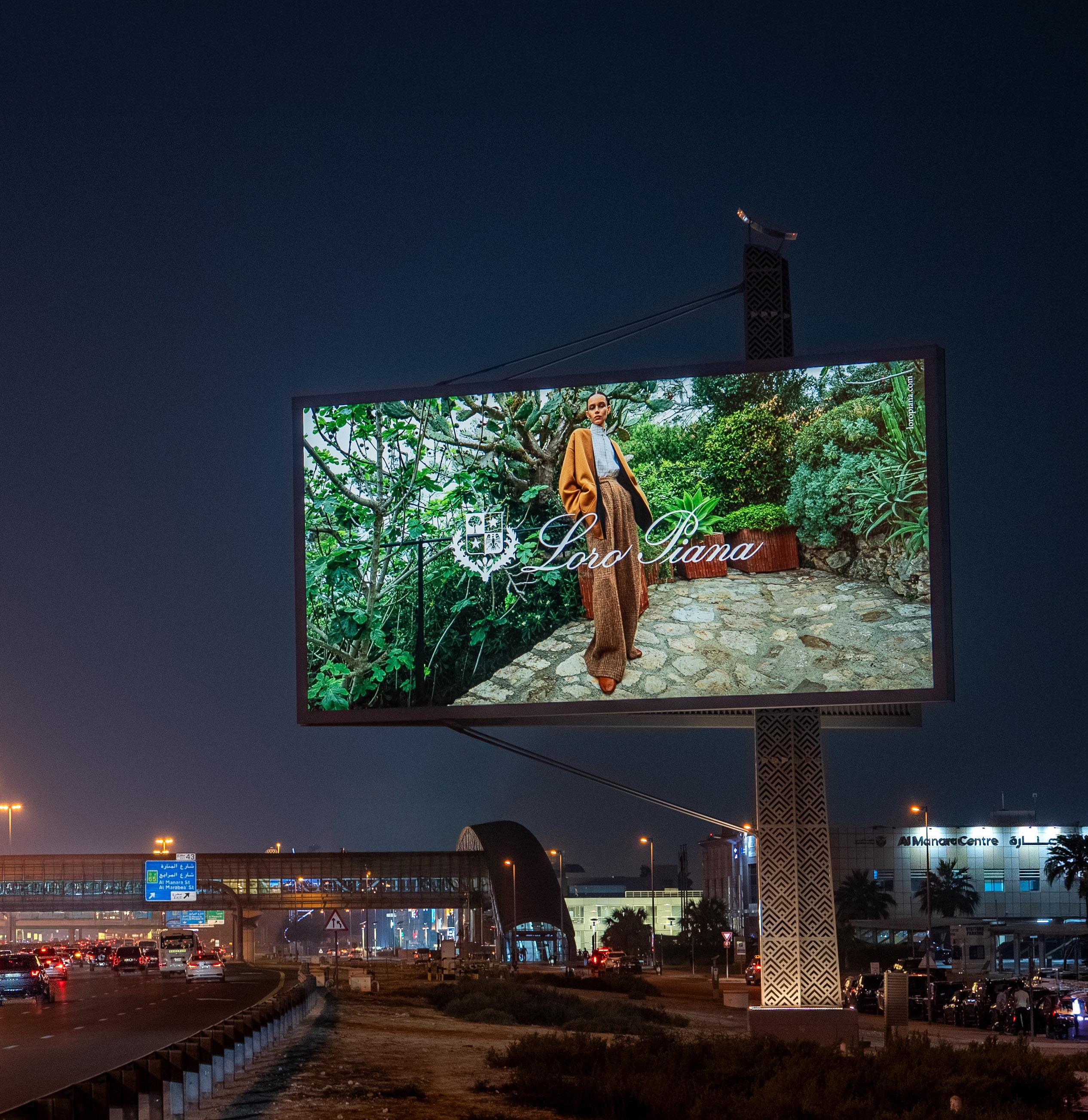
Set against the pace of Sheikh Zayed Road , Loro Piana introduced a refined visual statement through rich imagery and effortless sophistication. Framed by one of Dubai’s busiest commuter routes, the display brought a sense of timeless luxury into the city landscape through clean composition and distinctive brand expression.
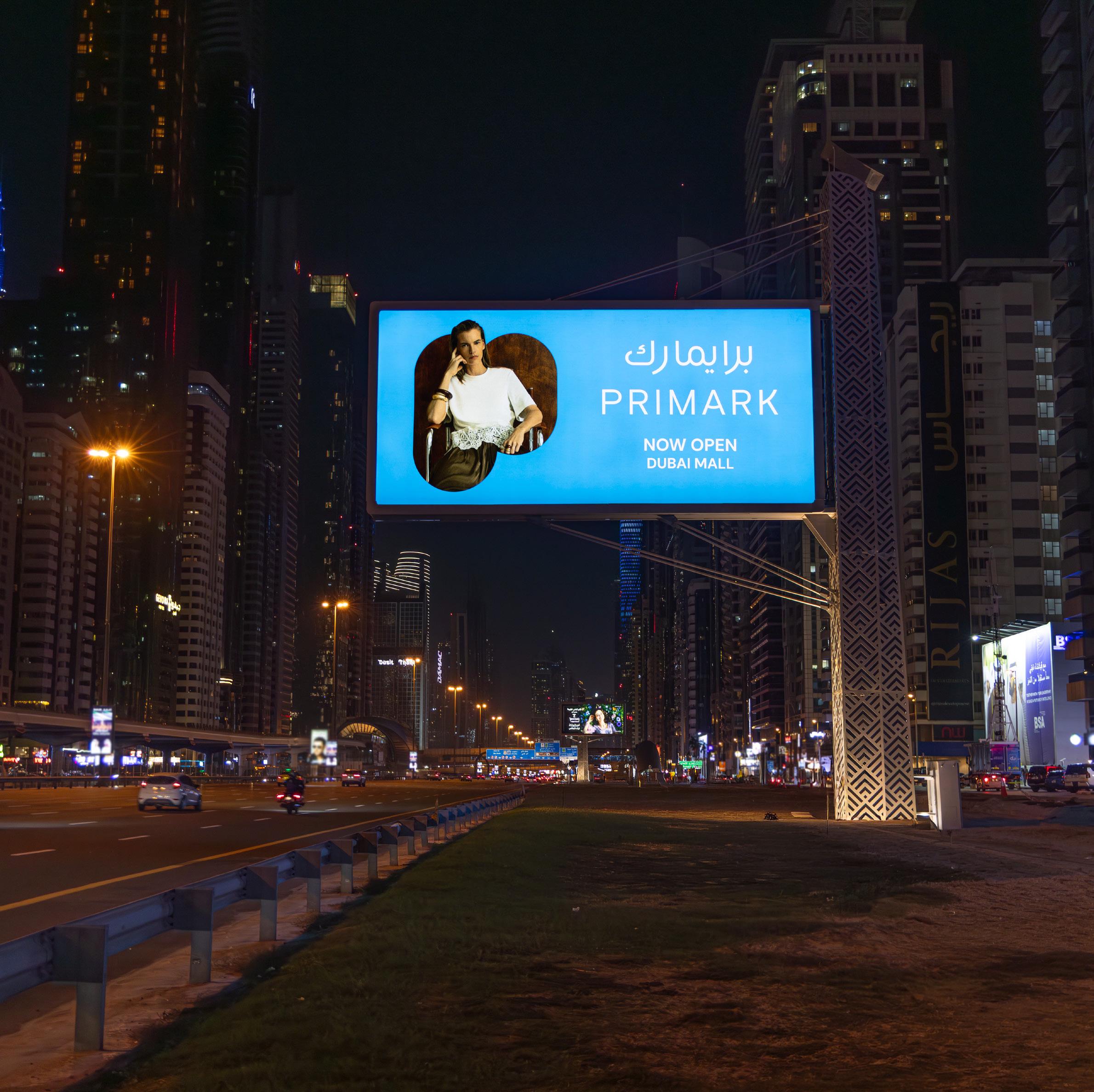
clients with a more considered and consistent offering. The aim is to simplify planning and deliver clarity across campaigns, while maintaining the quality
Partnerships play a key role in this. Working closely with infrastructure partners such as Wildstone allows us to develop and refine sites with a shared focus on quality, longevity and performance. This approach ensures that each location is not only commercially strong, but also built to meet the expectations of premium advertisers from the outset.
At the same time, there is increasing demand for consistency across markets. While the UK remains the immediate focus, brands are planning with a
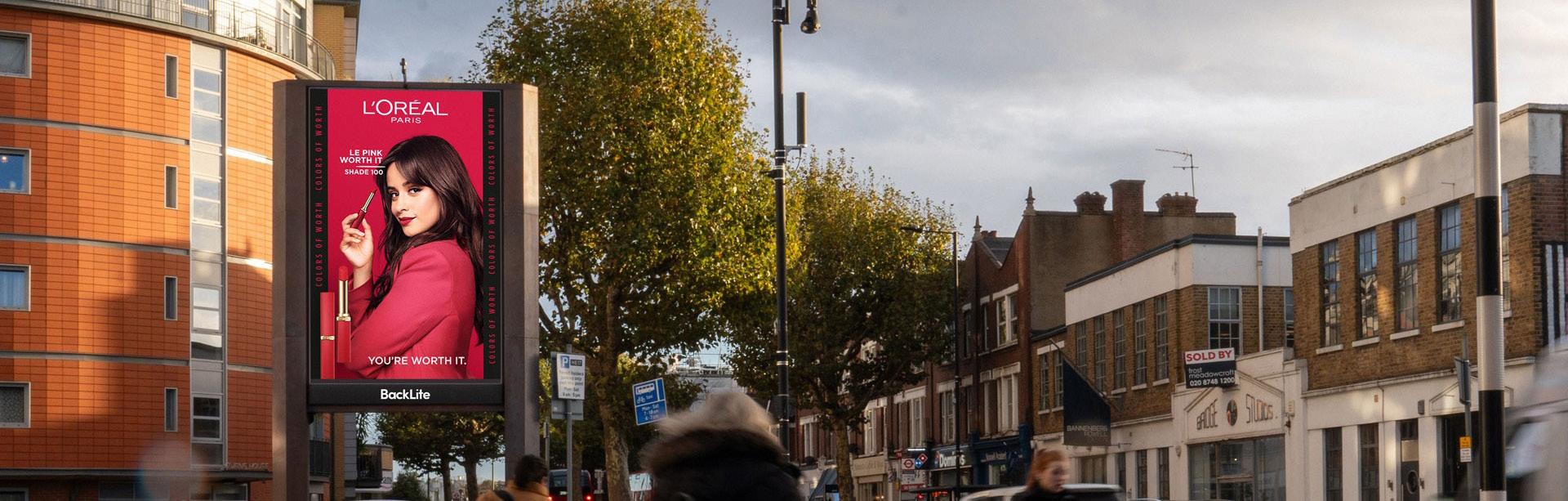
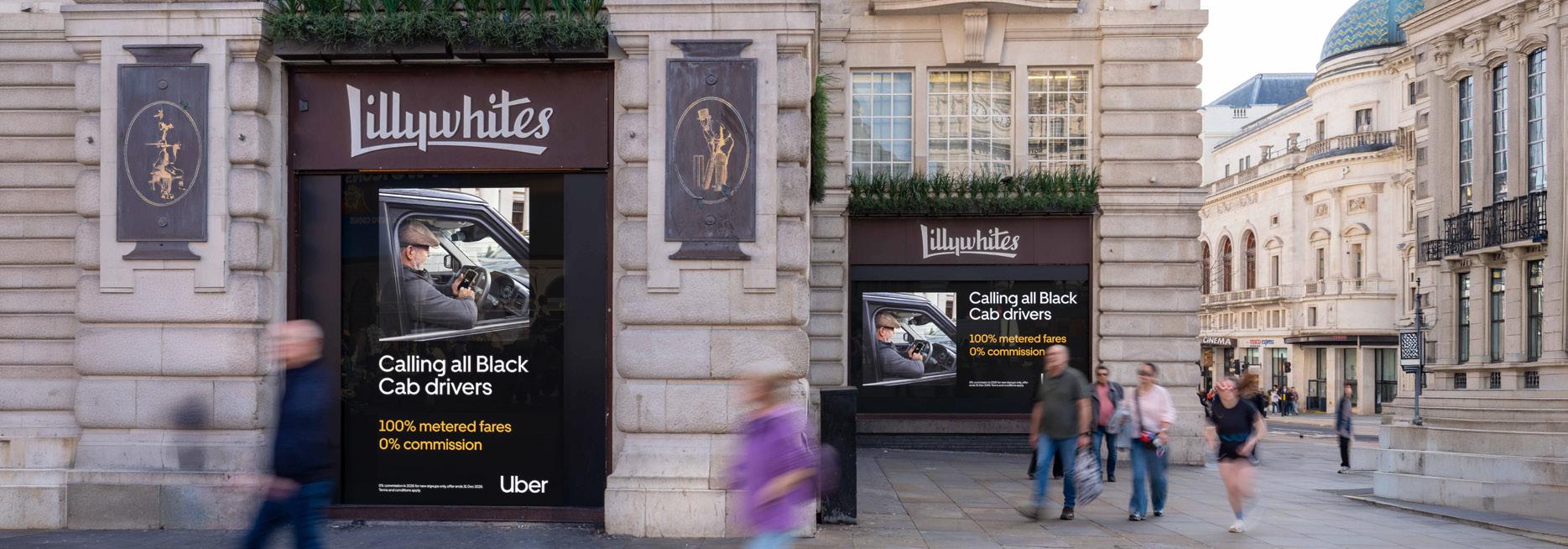
broader, international lens and expect the same standard of product and service wherever they activate. This is where a more connected approach becomes important. The ability to offer aligned, high-quality environments across cities globally helps remove complexity and creates a more seamless experience for agencies, specialists and clients.
For BackLite UK, growth is not about adding volume. It is about building a curated portfolio of premium, high-impact locations that work together as a network. Each site plays a role within that, contributing to a consistent and considered presence across London and, over time, across key markets.
Looking ahead, the opportunity is clear. The next phase of UK OOH will be shaped by those who focus on quality, collaboration and long-term thinking. The market is becoming more deliberate, and expectations are only increasing.
Those who can deliver premium environments, supported by strong partnerships and a clear approach to growth, will be best placed to lead it.
BY DAVID PETERS HEAD OF AGENCIES AND SPECIALISTS

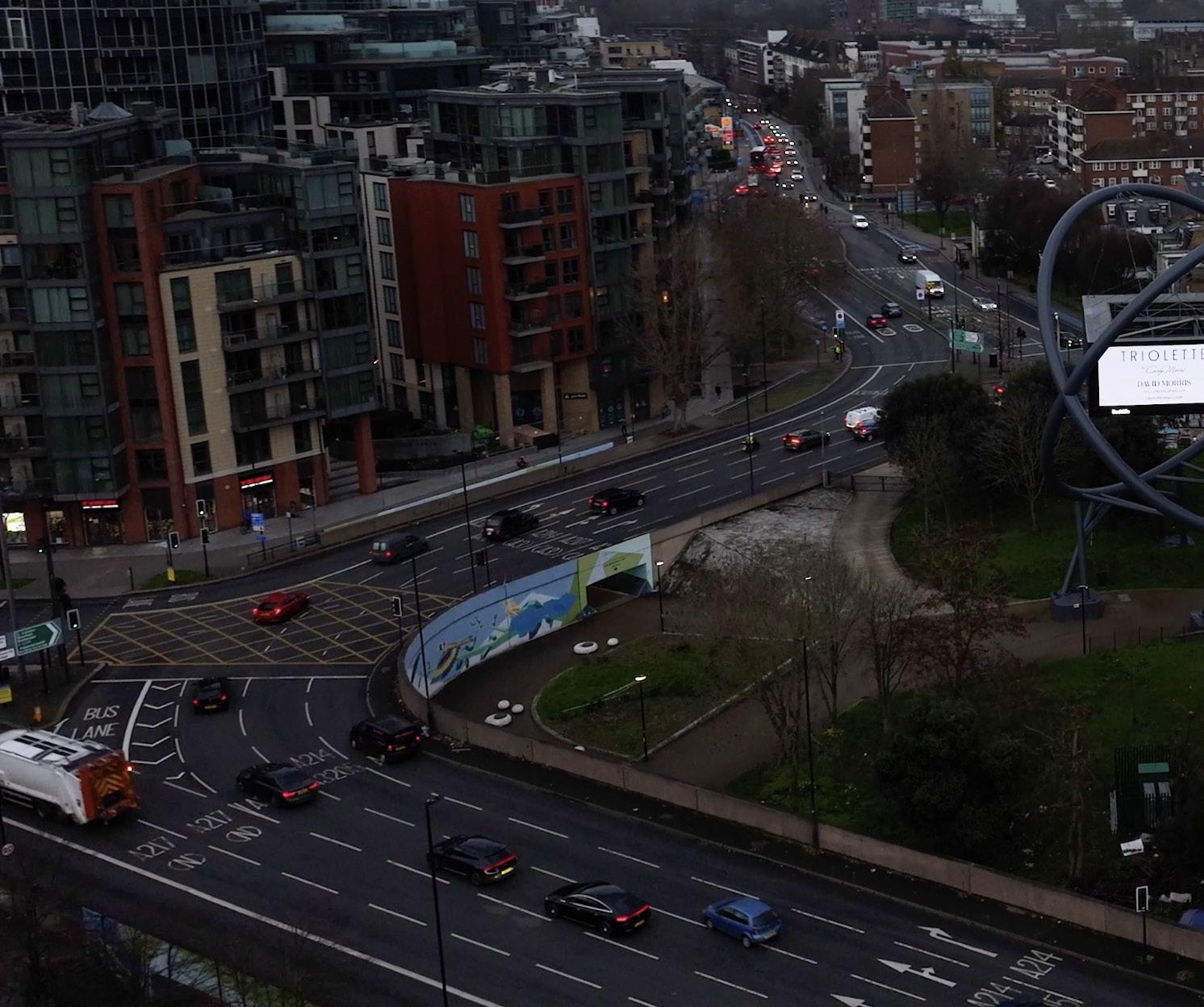
has to match the quality of the surroundings. The frequency has to be measured. Visible enough to register, restrained enough to preserve the brand’s confidence.
A defining example of localisation in our work is the annual Ramadan campaign. Each year, Bvlgari commissions artists from across the Gulf to interpret the Holy Month through their own creative lens. The campaign carries that artistry across the city’s premium
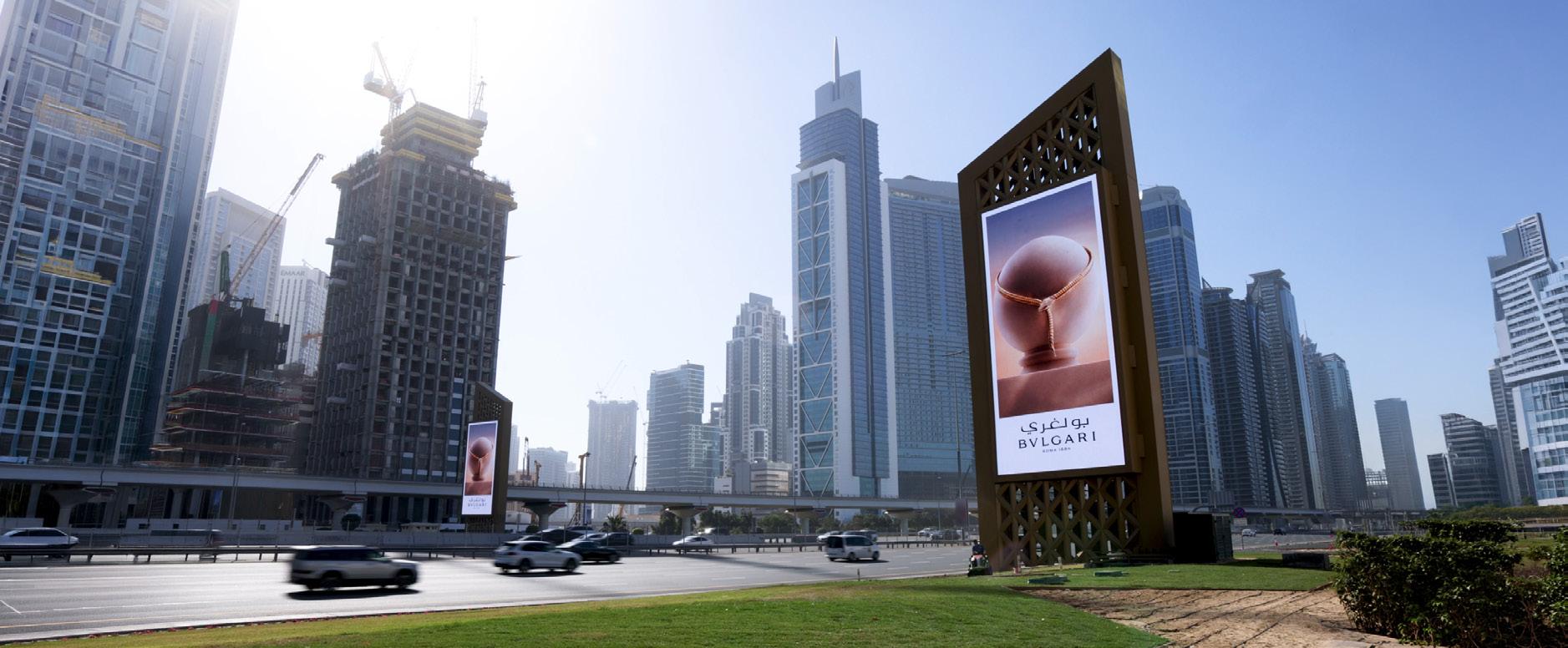

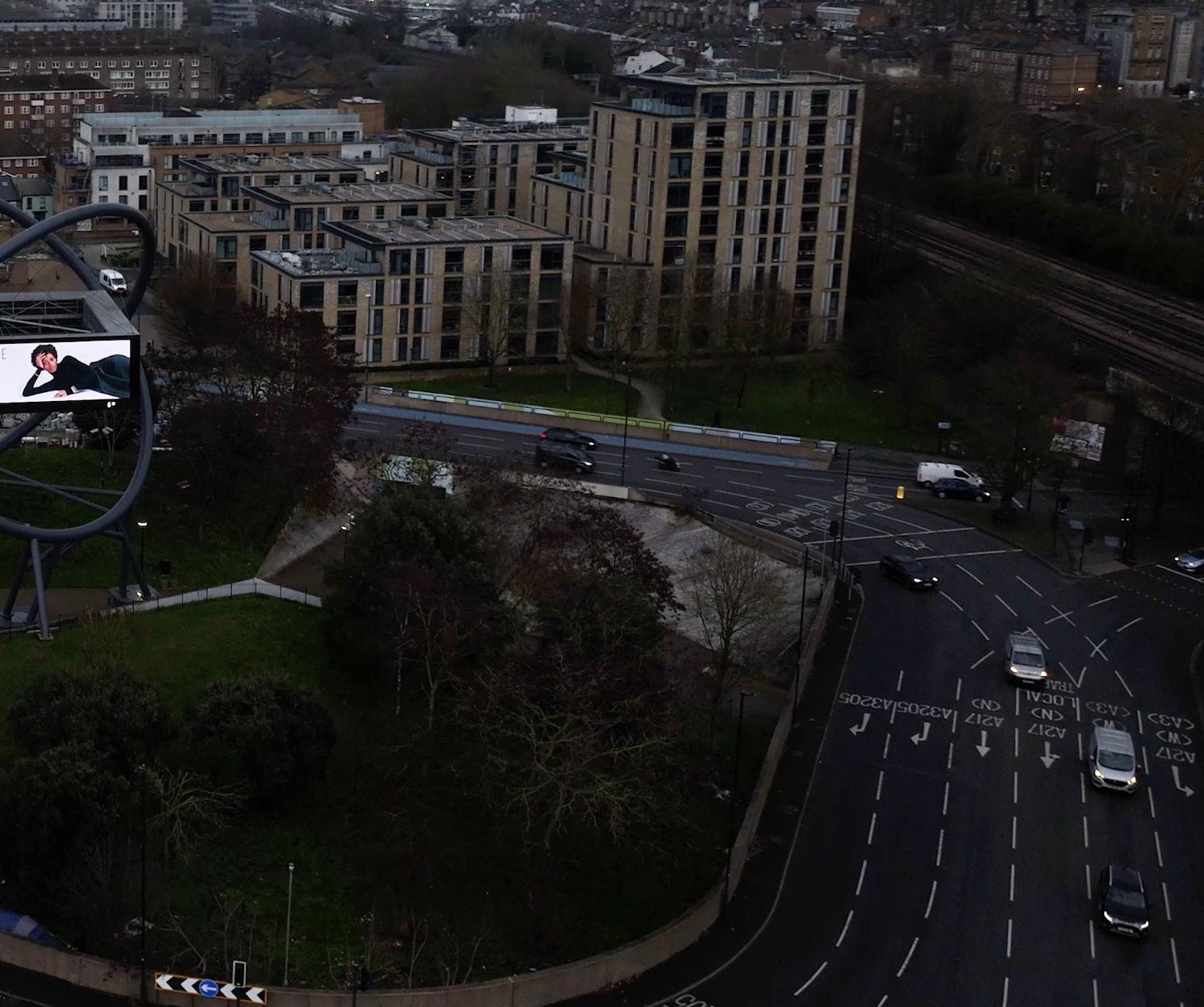
earning that understanding, season after season, campaign after campaign, in conversation with the culture it lives in.

BY NATHALY KHOURY

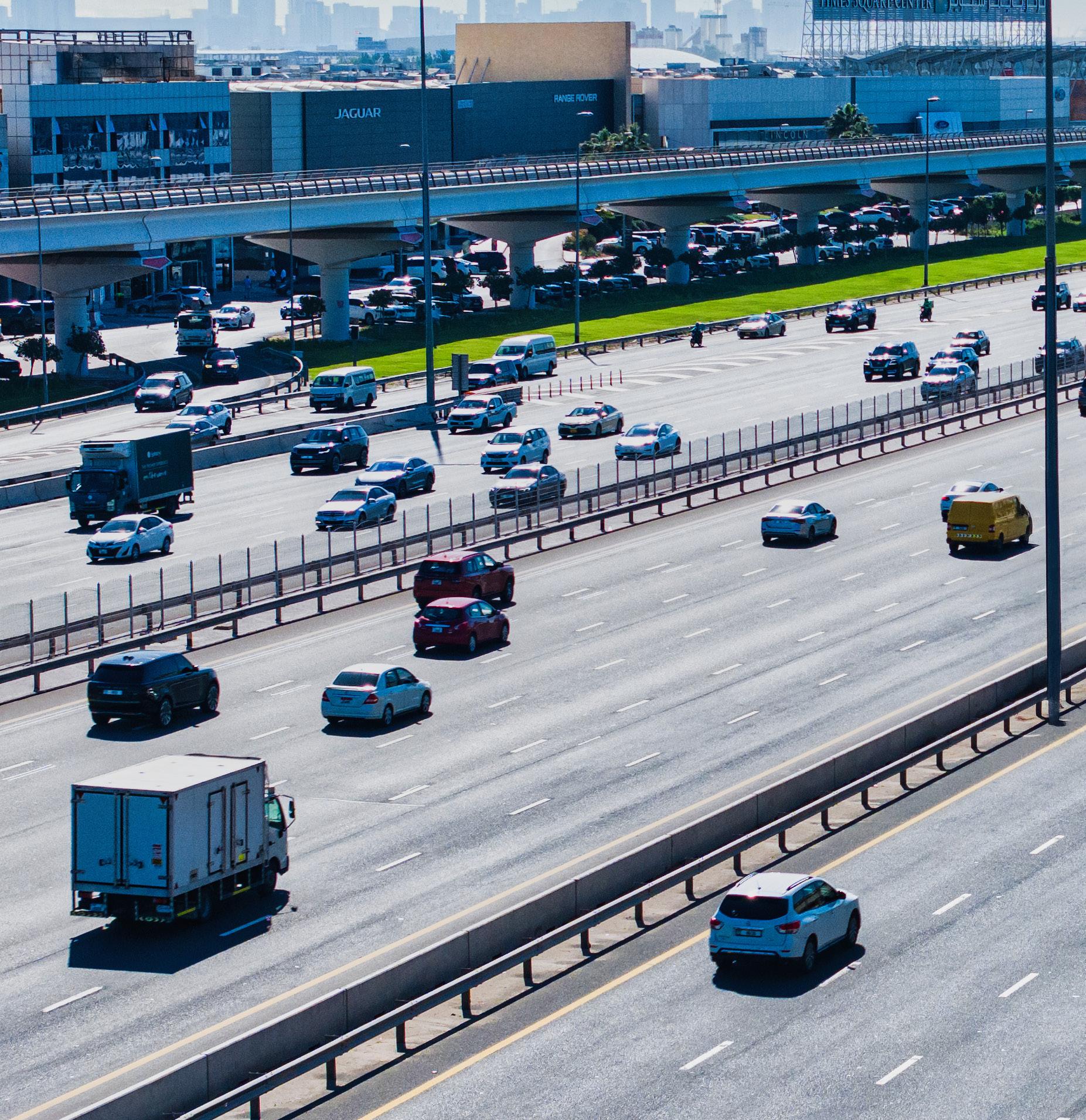
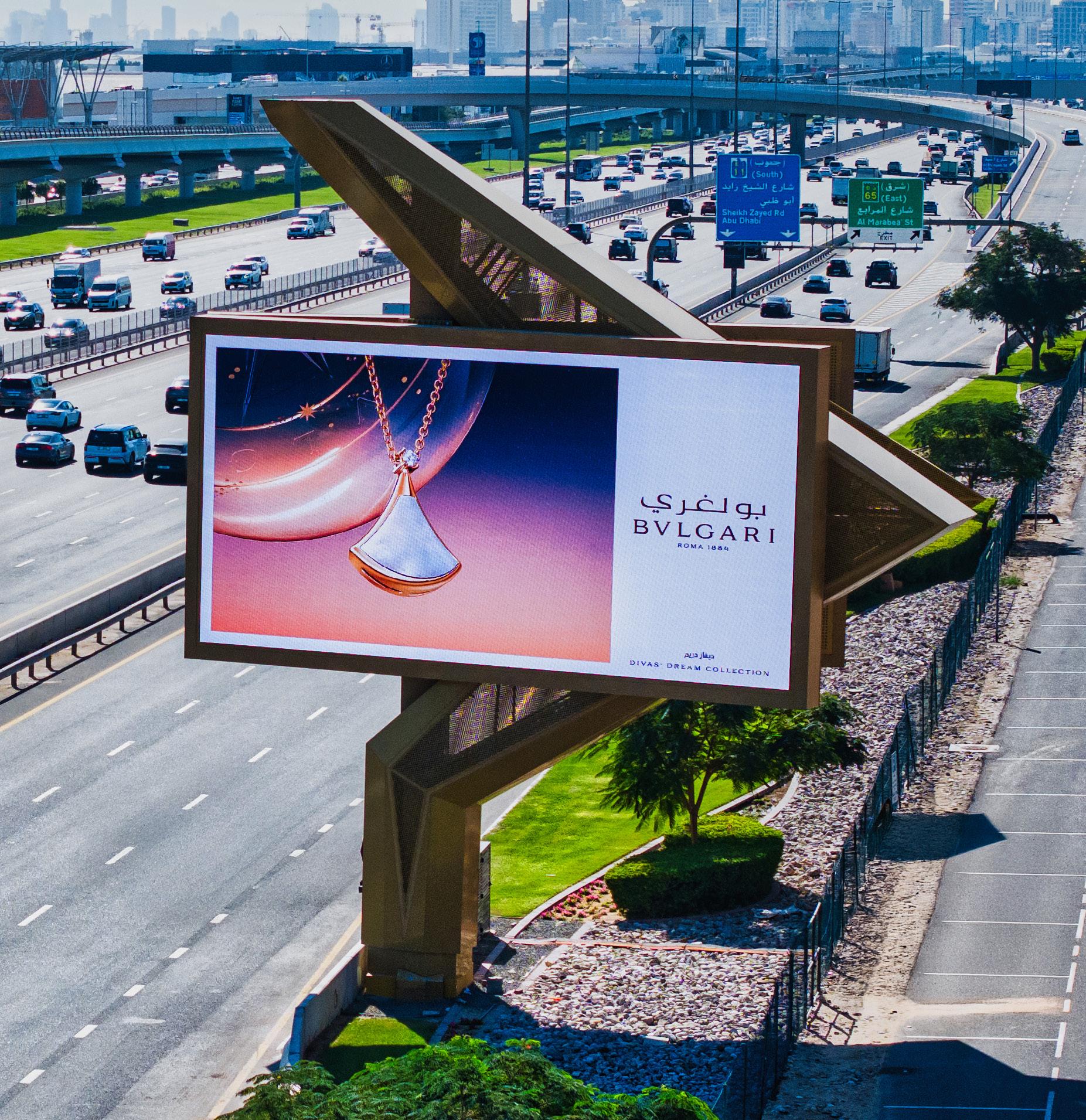
Bvlgari appeared across The Oryx through a campaign defined by elegance, precision, and architectural prominence. Positioned along Sheikh Zayed Road , the creative paired refined jewellery imagery with the sculptural form of one of Dubai’s most distinctive digital landmarks, delivering a luxury statement shaped by scale, craftsmanship, and continuous city movement.
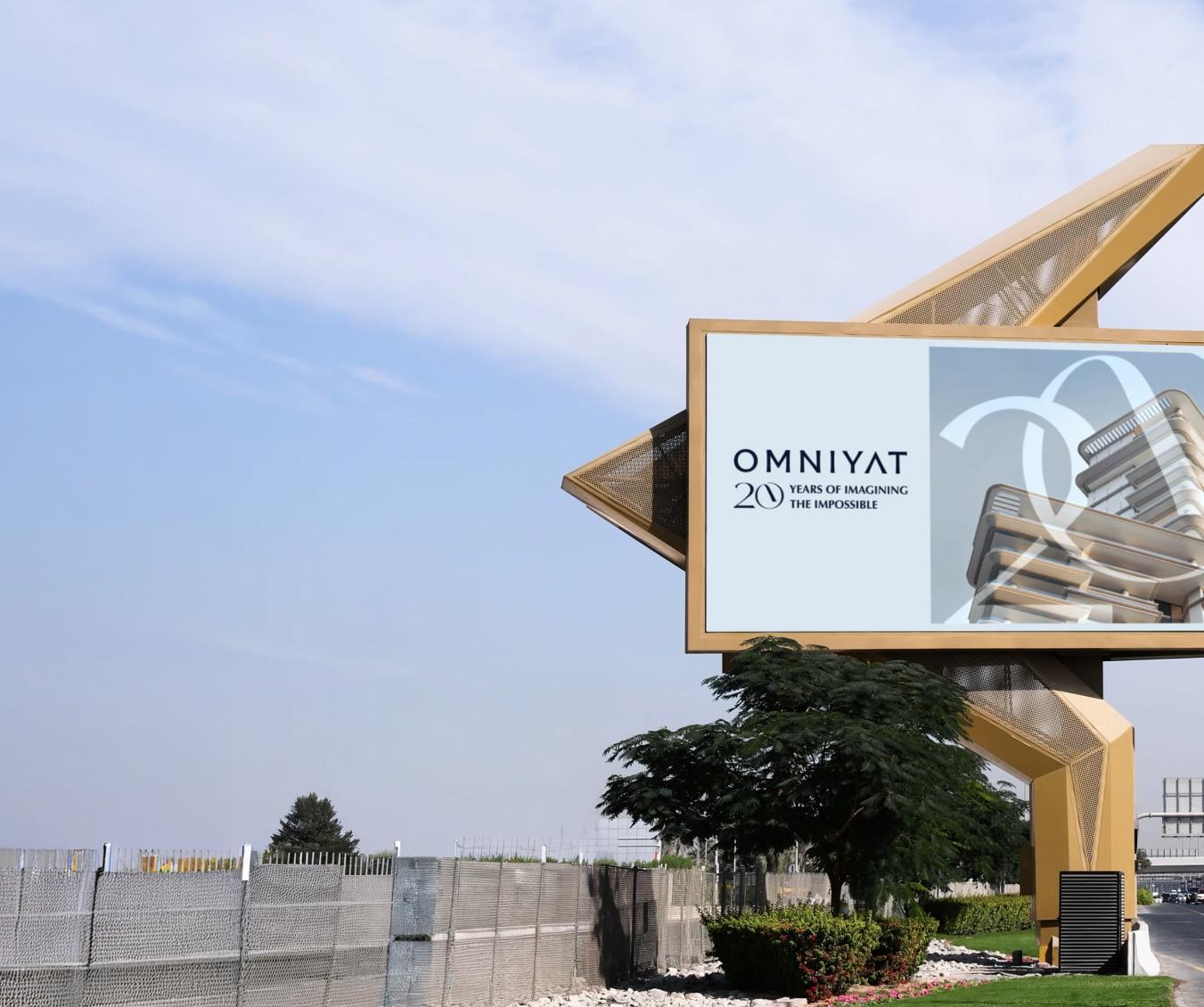
Presence is not awareness alone. It is the confidence of a brand maintaining visibility before its audience every day, and in a category where buyers evaluate the developer as carefully as the asset, that confidence carries.
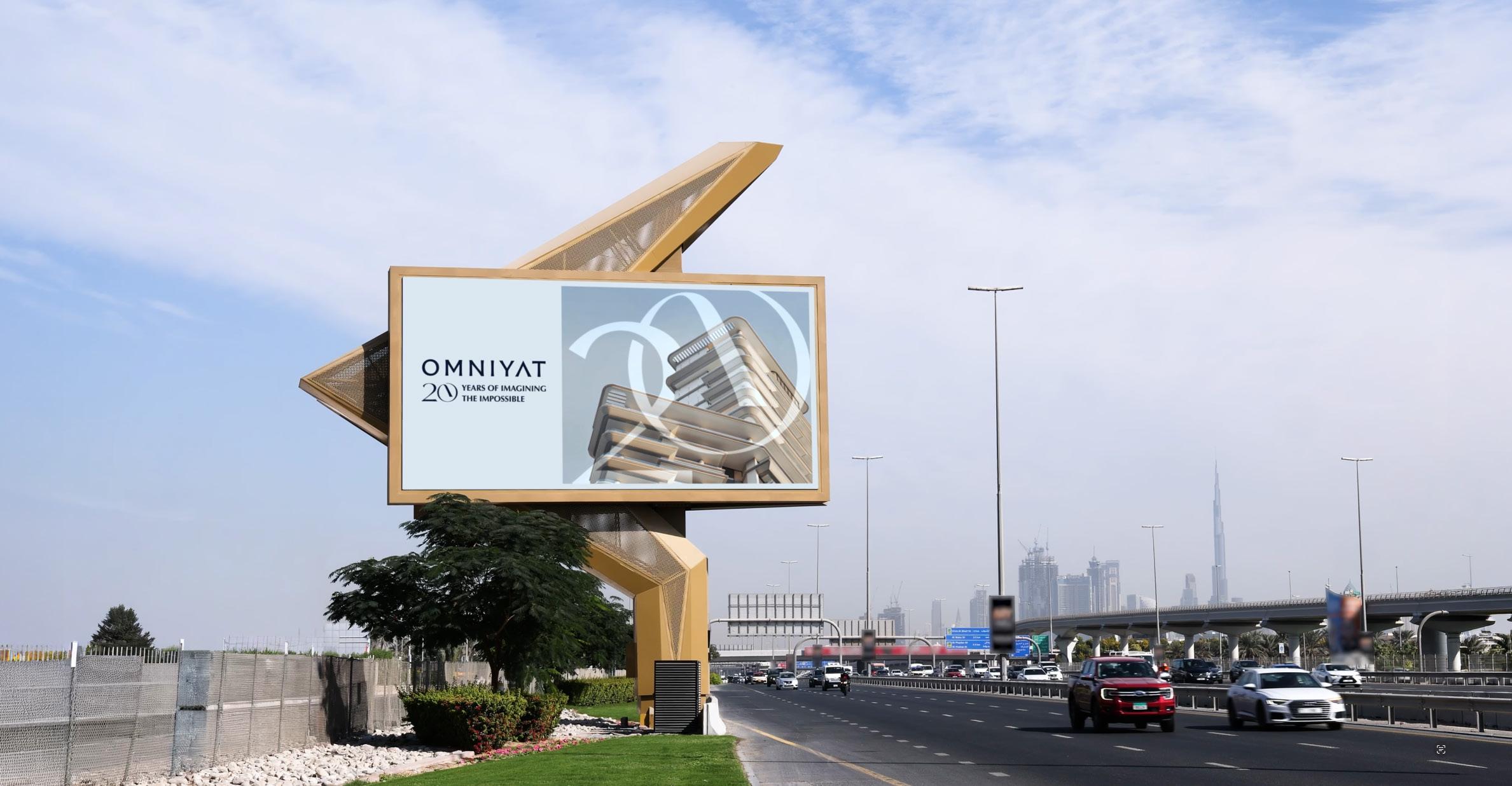
as a mid-market apartment campaign, and clients are requesting that this distinction is drawn in the media plan rather than only in the creative.
Digital Out-of-Home (DOOH) will accelerate the shift. The format gives campaigns the flexibility to adjust by location, daypart, and launch moment. Real estate clients can plan against a sales window rather than only a brand window, and the plan can respond to live activity in close to real time.
BY ALI KOUATLY


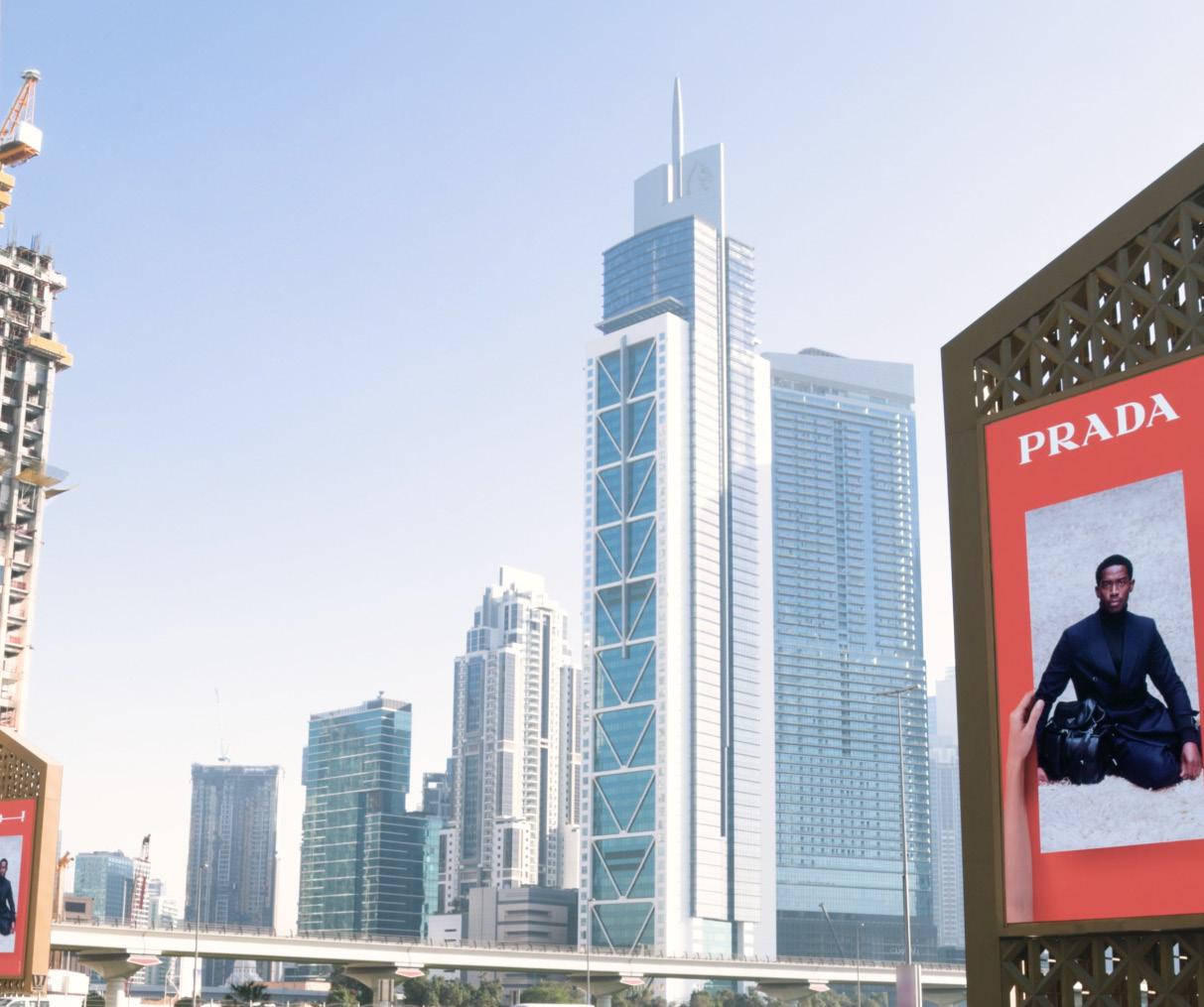
Clients who understand this treat premium OOH as a perception medium, not only a reach medium. They recognise that repeated presence in the right environments helps shape affluent audiences’ expectations of where they encounter premium brands. That anticipation is powerful. Audiences “meet” luxury brands in the right context.
The same shift can be measured. BackLite Media recently commissioned a study with Nielsen and Publicis Media Luxe on the impact of premium OOH placement on
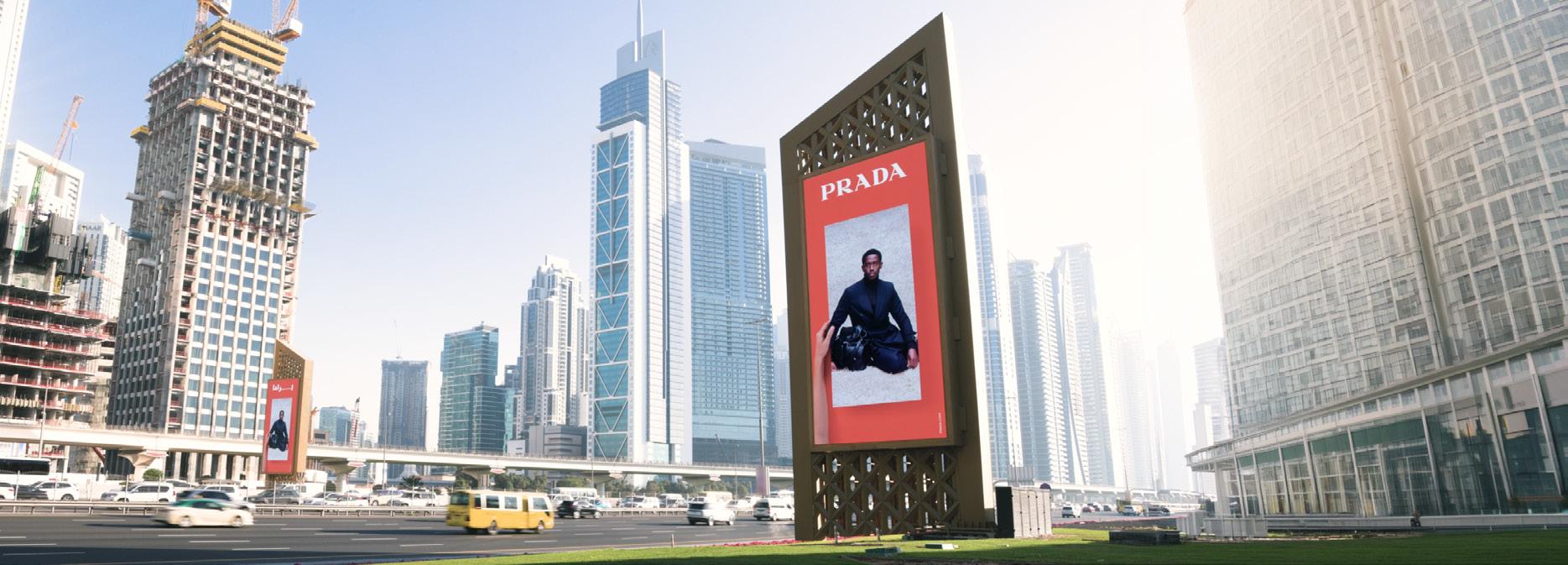
entrants, that pattern offers credibility through proximity to brands that have already arrived.
In a world of infinite digital impressions, scarcity has become a luxury. The right placement is a marker of brand status.
BY AHMED NOURELDIN
HEAD OF SALES

stream. Retail environments deliver something increasingly difficult to
Programmatic trading is accelerating this momentum. Advertisers can around lunchtime within proximity of supermarkets. These capabilities
layer - the ability to influence and measure action closer to purchase.
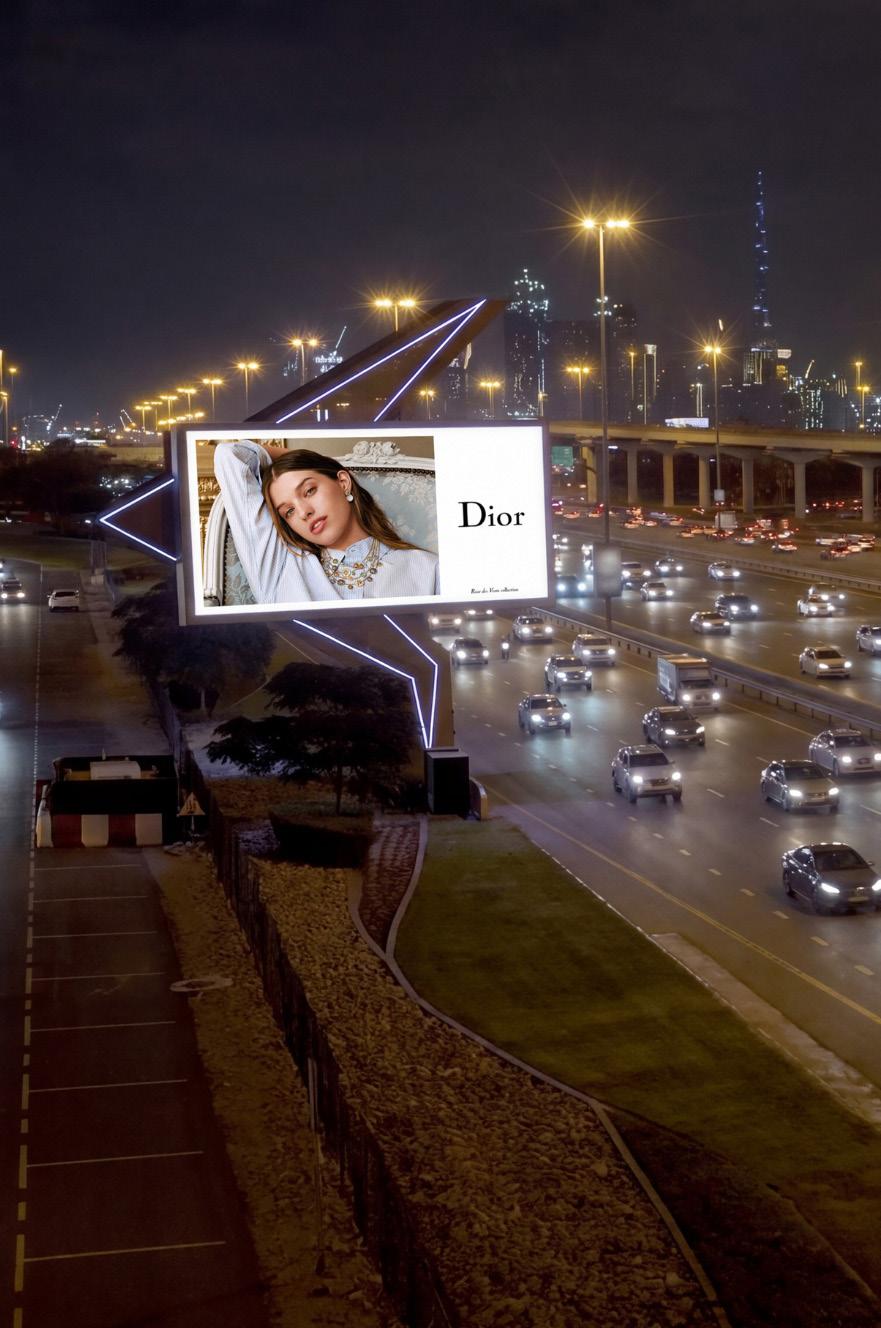
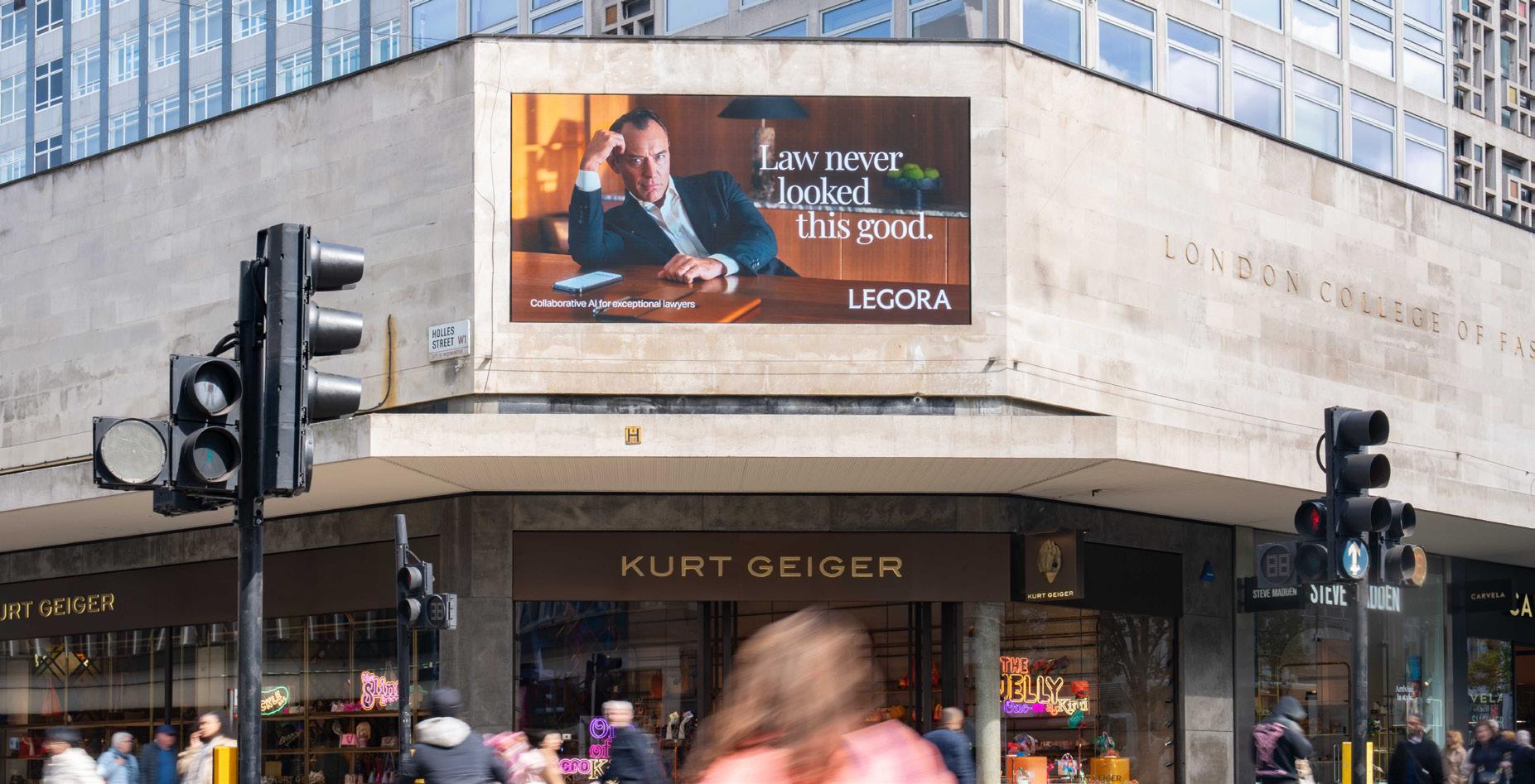
For media owners, the opportunity extends beyond monetisation alone. Retail media partnerships can deepen relationships with brands, unlock richer first-party data collaborations and create more flexible commercial models. As retail environments become smarter and more connected, the distinction between digital advertising, commerce and physical media will continue to blur.
And for OOH providers willing to embrace retail media strategies, that creates one of the sector’s most significant growth opportunities in years.
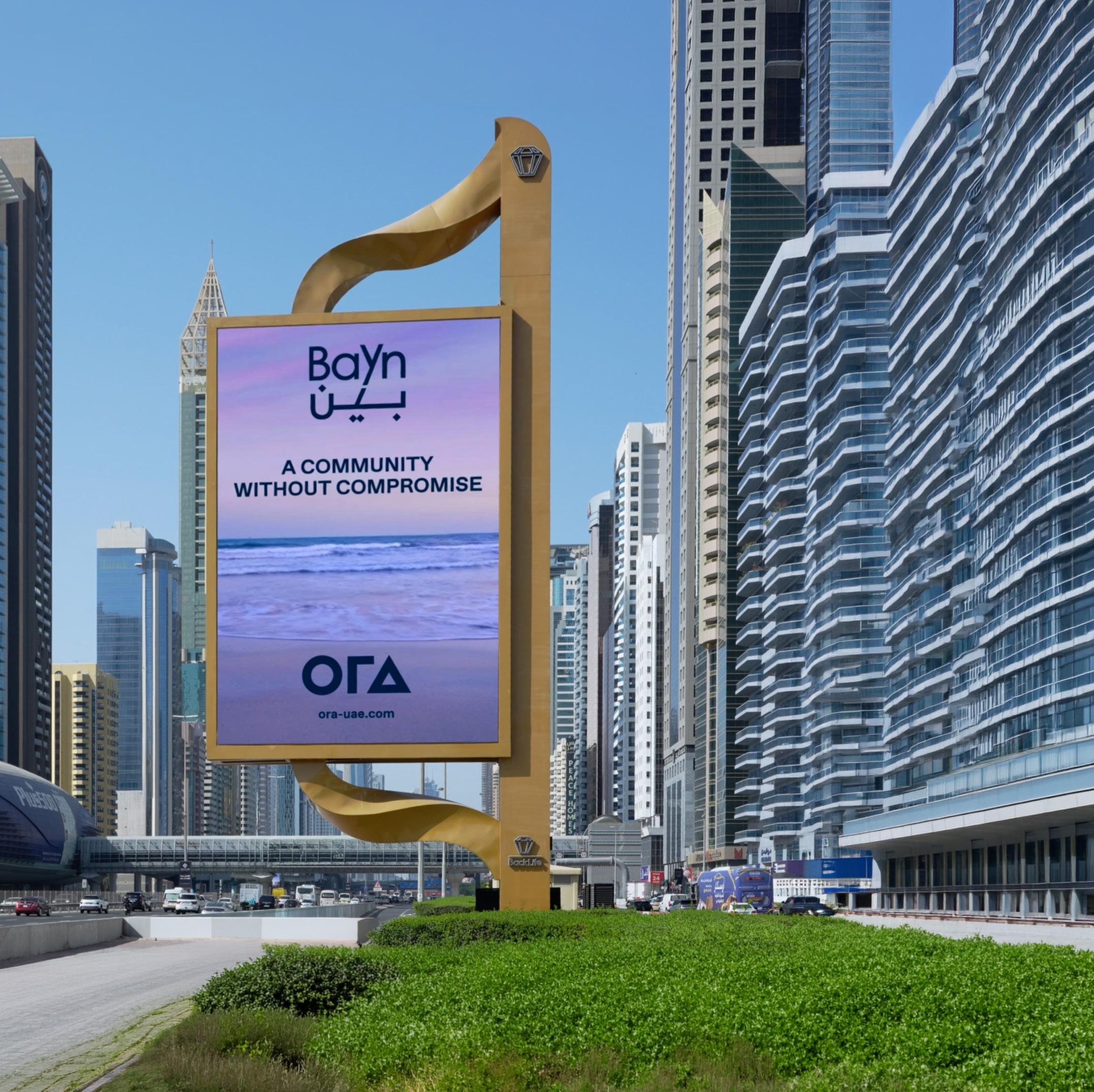
In luxury, the strongest creative is often the most restrained. It does not need to say everything at once; it needs to create enough clarity, confidence and desire for the audience to want to know more. For BAYN by ORA, for example, that means expressing not only beauty, but balance. The audience should understand very quickly the kind of life the destination makes possible.
What makes it work is when the creative translates the strategy behind the development into a clear public signal. If the project is about accessibility, walkability, emotional connection and integrated living, communication should carry that same sense of ease and coherence.
Luxury developments are bought as much on aspiration as on specification. How does OOH carry that aspiration?
OOH carries that by making a place feel culturally present before it is physically experienced. In luxury real estate, aspiration is built over time through repeated visibility in the environments where the audience lives and moves. That is what allows a project to enter the public imagination not simply as inventory, but as a destination with meaning.

For ORA, that matters because we think in terms of places, communities and lifestyles rather than isolated properties. The aspiration is not only about ownership; it is about belonging to a considered way of life. For a destination like BAYN by ORA, this means relaying the idea of a coastal community that feels connected, balanced and complete.

A luxury property development’s OOH presence often spans years, from pre-launch through completion. How does the OOH conversation evolve through that journey?
For a luxury real estate development, OOH should evolve in the same way the project evolves. It is not a single campaign, but a long-form conversation. In the early stage, the role of OOH is to establish tone, identity and anticipation. At launch and during sales, communication becomes more explicit about the proposition, the location, the masterplan logic and the distinct quality of the community.
As the project matures, the conversation should shift again. The task is no longer only to describe a future promise, but to reinforce a lived reality. The work should start reflecting proof of life: the atmosphere, the community and the experience the place has begun to deliver.
Credibility in this category is built through consistency. The more coherent the OOH journey is from pre-launch to completion, the more the audience understands that the development is not just being advertised but carefully built as a destination with a long-term identity.
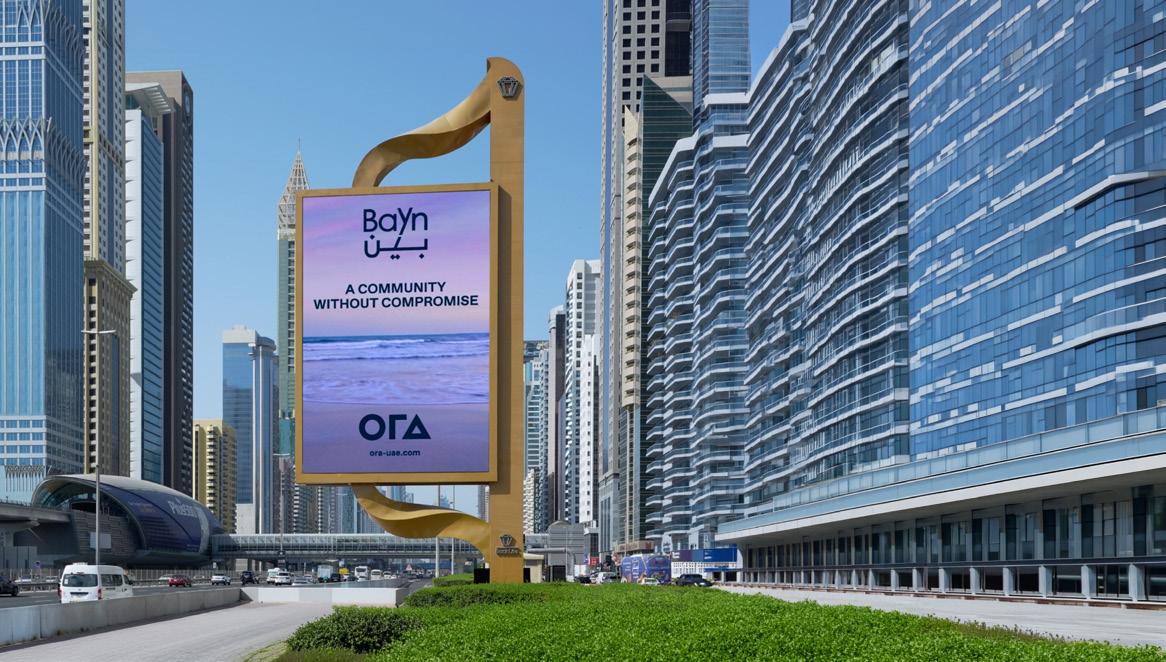
consumers remember those environments long after a campaign ends.
At PHD MENA, we are seeing growing demand from brands across sectors including luxury, tourism, retail and automotive that want media strategies built around audience behaviour rather than legacy planning models. Clients
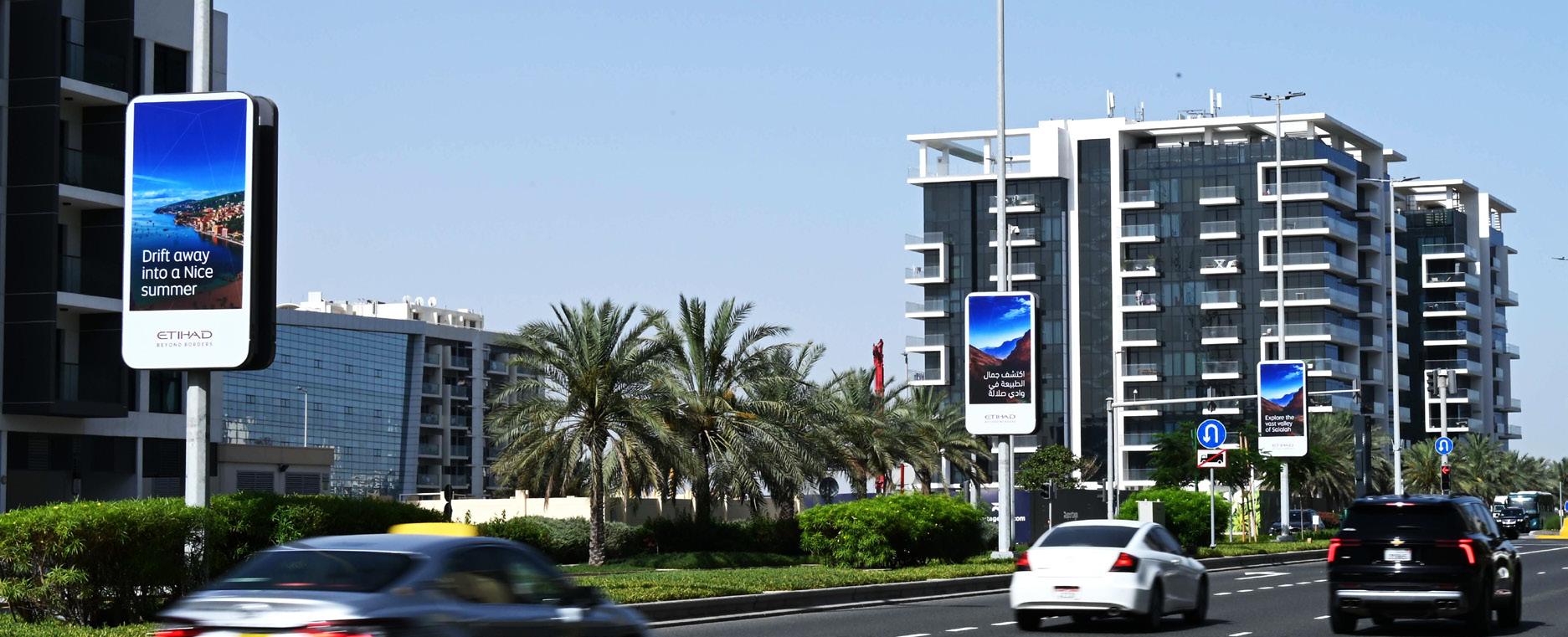

and ambition has created a market moving at an extraordinary speed.
The opportunity now is not simply building bigger OOH networks. It is creating media experiences that move with the rhythm of modern cities and reflect the pace of change shaping the region.
BY STEPHANIE MEDLEGE
BUSINESS UNIT DIRECTOR



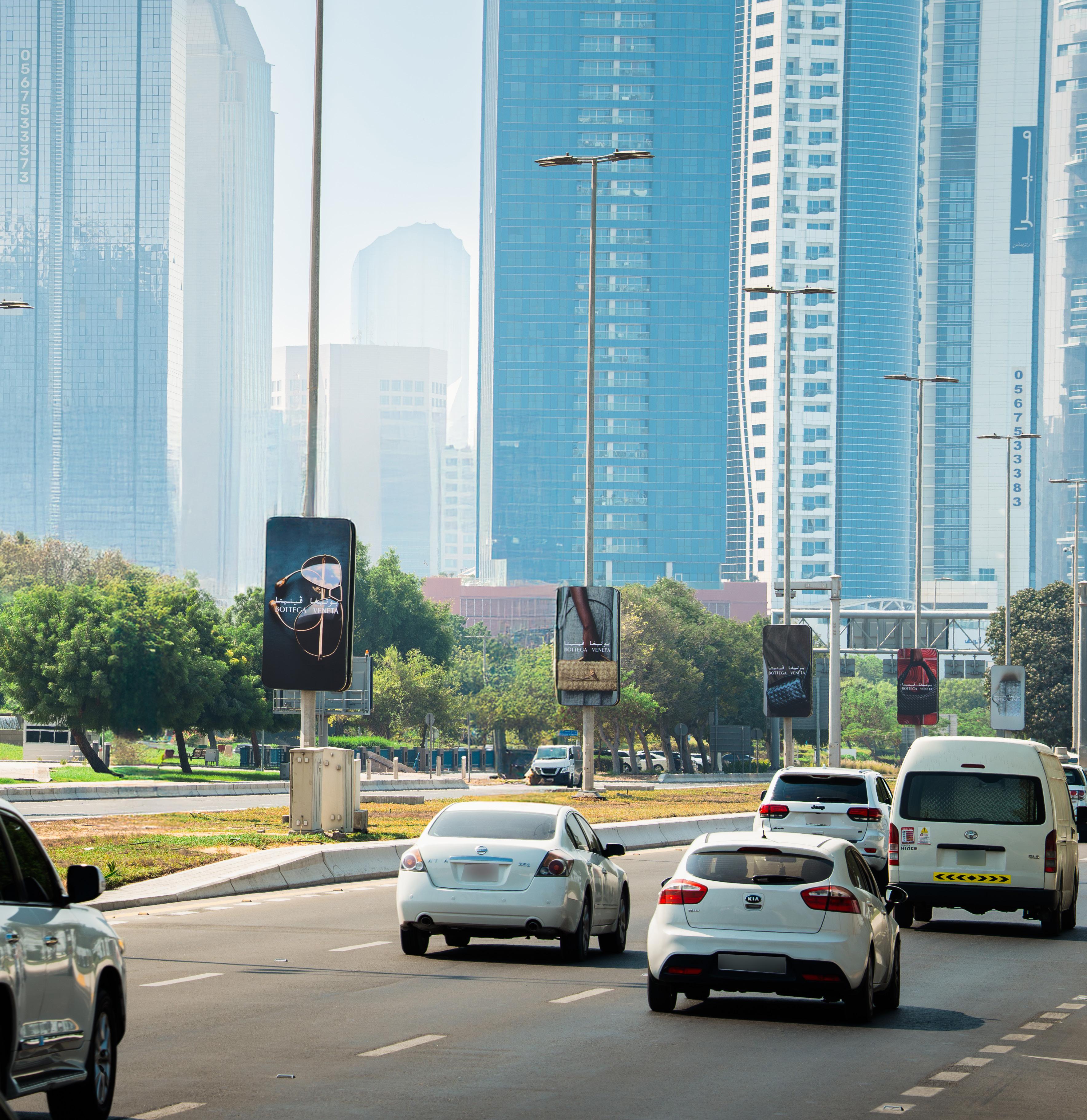
Across the ADNOC HQ , Founders Memorial , and Saadiyat Corridor Circuits , Bottega Veneta delivered a campaign defined by refined repetition. Moving through some of Abu Dhabi’s most prominent city routes, the rollout connected with audiences through sustained exposure within a contemporary urban setting.

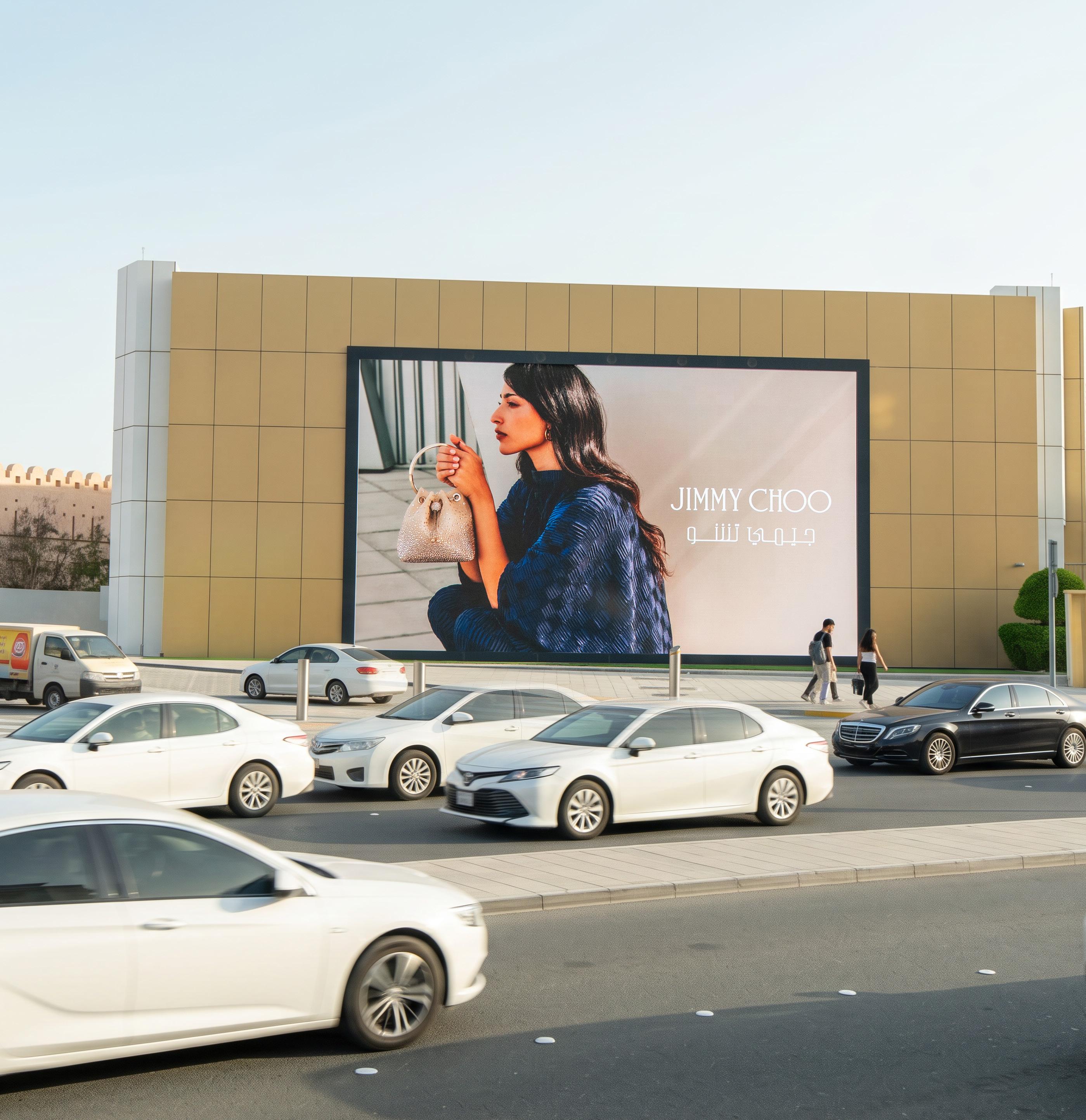
Across the Marina Mall , Nation Towers , and Marina Wall Al Bateen locations, Jimmy Choo delivered a campaign defined by elegance, large-scale creative, and strong visual continuity. Set within Abu Dhabi’s premium waterfront and lifestyle districts, the campaign maintained a refined brand expression through sustained exposure across some of the capital’s most affluent urban routes.
Scale in Abu Dhabi is about the quality and consistency of reach. As the largest Emirate in the UAE, Abu Dhabi offers access to a premium target audience, from affluent local communities and government stakeholders to professionals, families, and international visitors. This is reflected in the city’s continued growth, with a 42% year-on-year increase in operational entities within Abu Dhabi Global Market (ADGM) in Q1 2025,
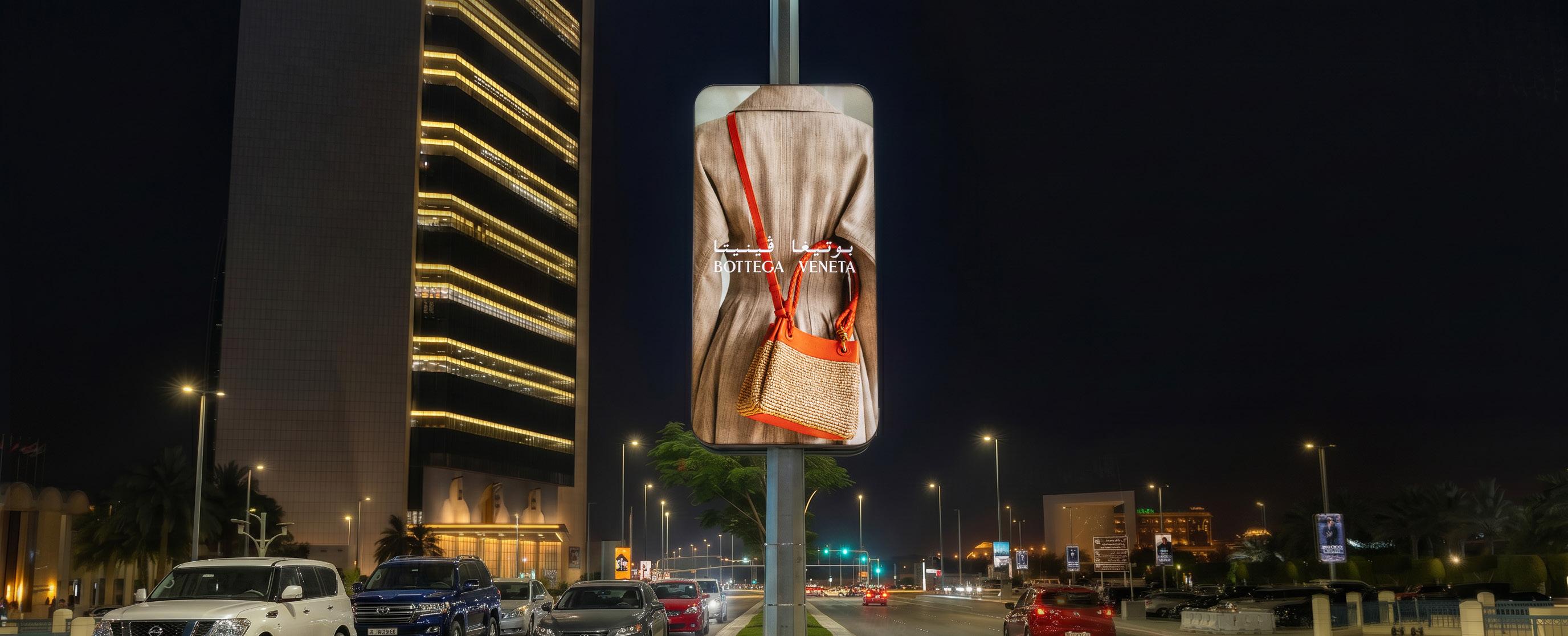
is higher and expectations are more defined.
Success in Abu Dhabi comes from being deliberate. Brands that understand where to show up, how to show up, and how consistently they need to be present are best positioned to succeed. The market rewards those who build sustained visibility within the right framework. When approached strategically, visibility does more than create awareness. It builds recognition, reinforces credibility, and delivers lasting impact.
BY MANEL KHALFAOUI HEAD OF SALES


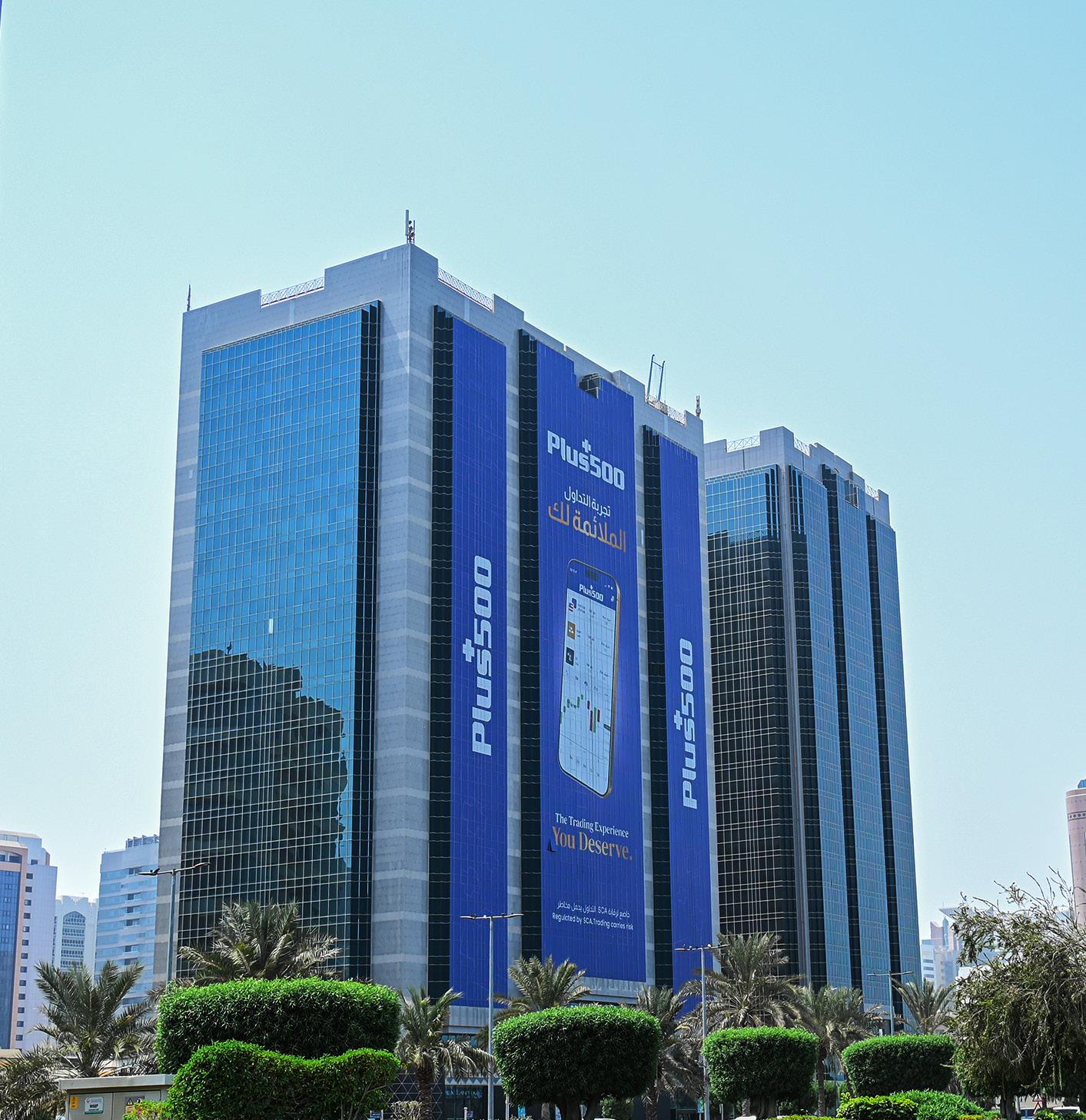
Designed for large-scale visibility, the Plus 500 campaign transformed Al Sawari Tower into a commanding platform along Abu Dhabi’s Corniche . Rising across one of the capital’s most active lifestyle and commercial corridors, the showcase delivered bold brand exposure through scale and uninterrupted city-wide prominence.

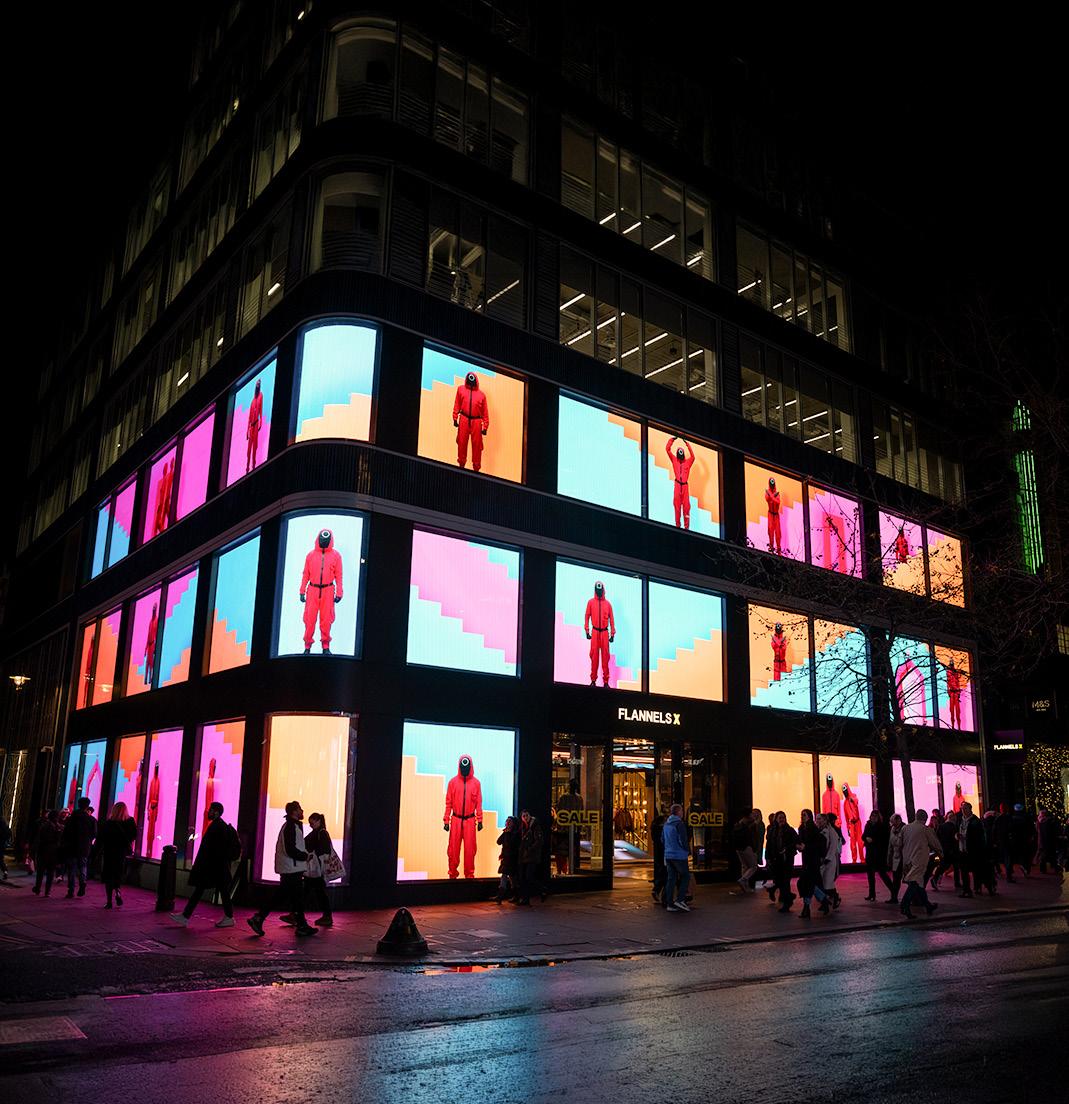
Netflix transformed The Cube @ Flannels through a vibrant large-scale takeover that brought immersive storytelling into the heart of Oxford Street . Wrapped across the building’s multi-screen digital façade, the campaign combined colour and architectural integration to create a standout visual moment within one of London’s busiest retail and cultural destinations.
commercial impact.
What makes OOH particularly powerful for luxury is its ability to create scale without sacrificing exclusivity and status. In a category where perception matters as much as product, the environment in which a brand appears becomes part of the storytelling itself. The right placement can communicate prestige, relevance, and intent before a single message is even consumed.
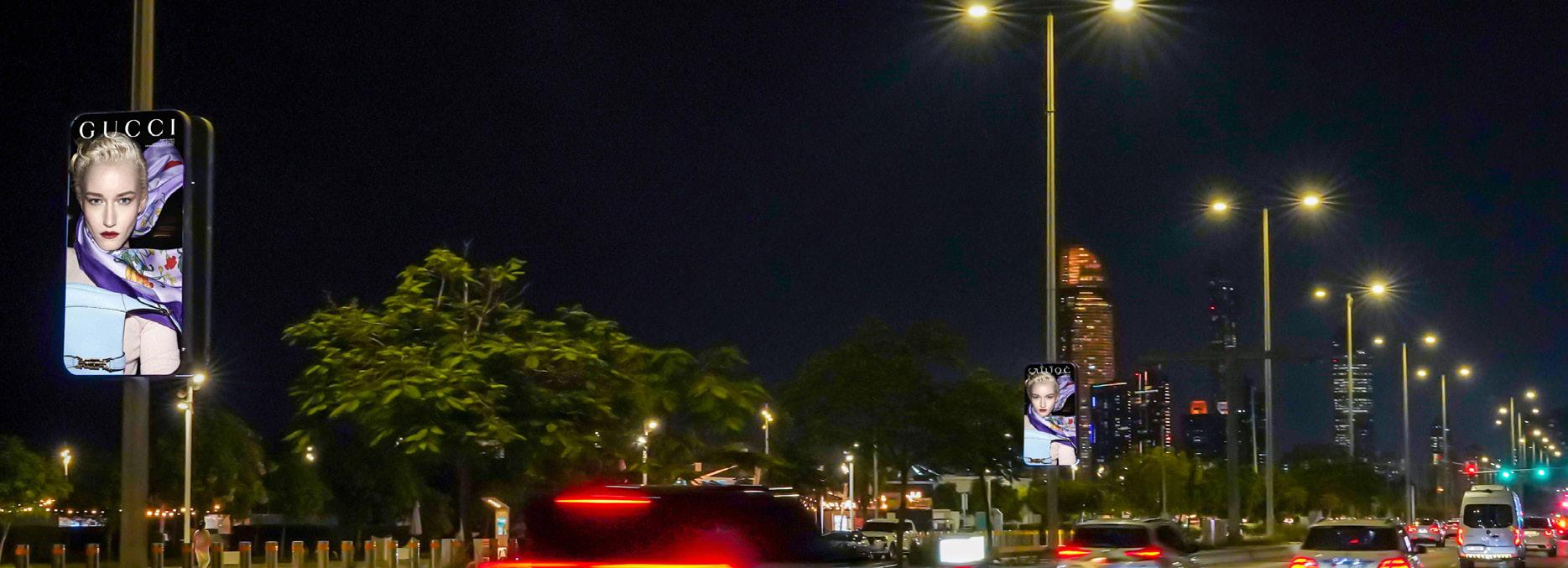
channels capable of delivering both aspiration and action simultaneously. But the definition of success is changing. Presence alone is no longer enough. The future belongs to OOH that performs intelligently while preserving the emotional power and exclusivity that luxury demands.
BY RAHAF SALAMA
ASSOCIATE MEDIA DIRECTOR




CHIEF EXECUTIVE OFFICER
“It’s all about the ‘Measurement Advantage’ - with both predictive and measured audiences, advertisers can model and plan with expected audiences, trade against them with confidence, and then verify delivery against the same measurement structure post-campaign. This end-to-end capability is what allows OOH to compete in Marketing Mix Modelling on equal terms with search and social. The recent OAAA-Kochava study findings make clear that OOH generates demand that surfaces elsewhere - markets with robust, continuous measurement can quantify and claim that contribution. The opportunity is to ensure advertisers know it, and to use it to attract new investment into the medium.”

HEAD OF COMMERCIALISATION
“Advertising is experiencing an extraordinary period of dynamic evolution, expanding on multiple fronts rather than following a predictable, linear path. This remarkable diversification highlights the medium’s robust health and its ability to meet the ever-changing demands of today’s media market. Programmatic advancements are driving the sector forward, enabling advertisers to respond swiftly to targeted needs and shifting trends. Simultaneously, the deepening integration of OOH with social media is reshaping perceptions of value - extending the impact from traditional, physical audiences to vast virtual ones. As OOH increasingly serves as a catalyst for content creation in prime locations, its role as a bridge between the physical and digital worlds only grows more significant. This multifaceted development positions OOH as a vital, future-ready platform within the broader advertising ecosystem.”

Where will OOH be in 18 months, and what should we be paying attention to now?


“In 18 months, Out-of-Home won’t be just a channel you buy; it will be a global operating system for brands. We’re moving beyond buying inventory to orchestrating audiences in motion, where datadriven precision in planning, flawless execution in placement and performance led accountability are the new baseline for success.”
HUSSEIN KHADER FOUNDER
“Out-of-Home is entering its most transformative chapter yet. The channel is evolving beyond scale and visibility into one defined by accountability, automation, and intelligence. The biggest shift happening right now is the move from inventory-led buying to audience-led planning, where data, measurement, and programmatic execution become standard, not optional. What we should be paying attention to is how quickly the ecosystem is maturing: better interoperability, stronger data partnerships, and creative built for context and moment. Brands today don’t just want reach, they want relevance, adaptability, and measurable outcomes. The future of OOH will be shaped by how seamlessly media, data, creativity, and technology work together to deliver real-world impact in real time.”
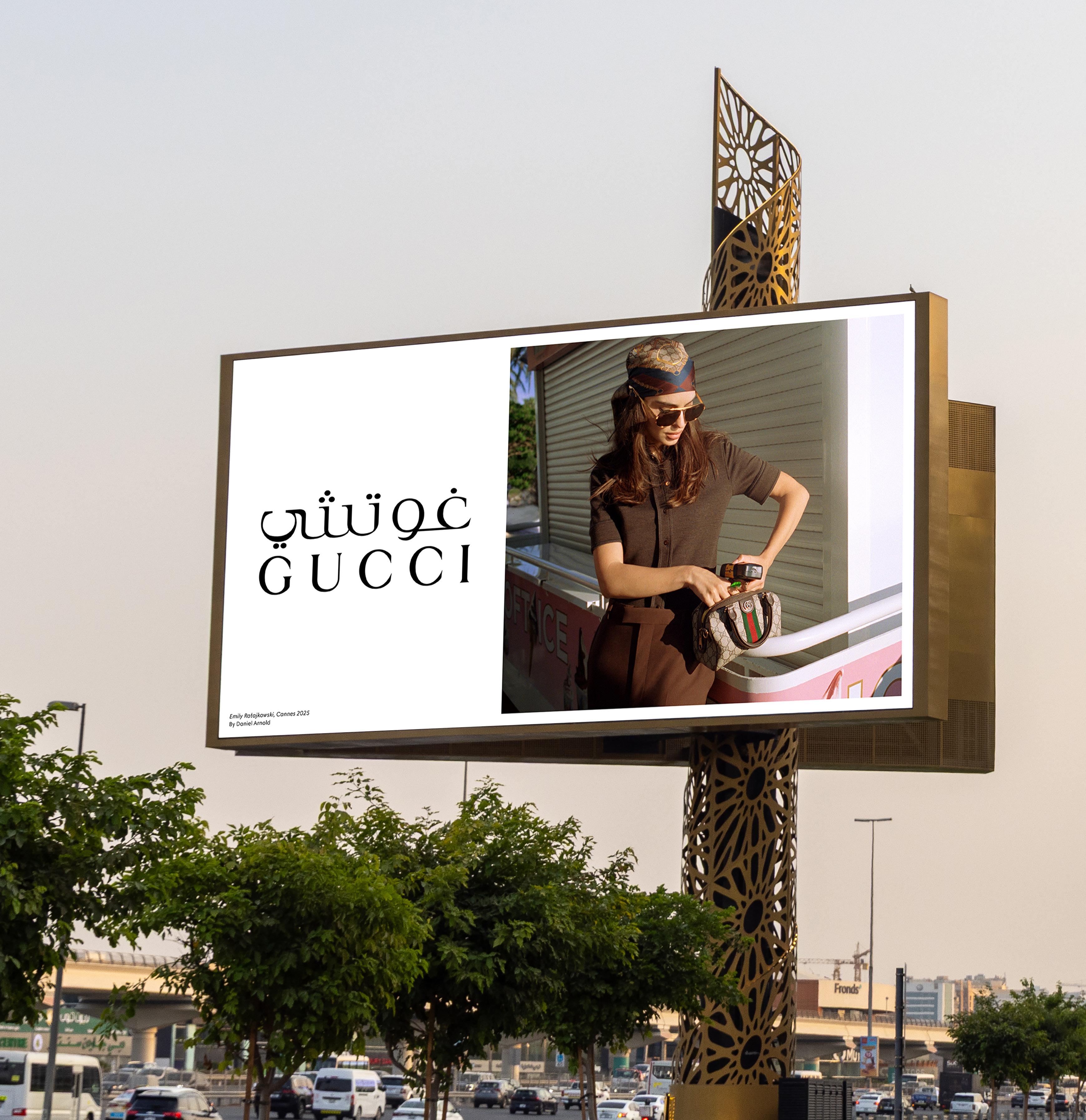
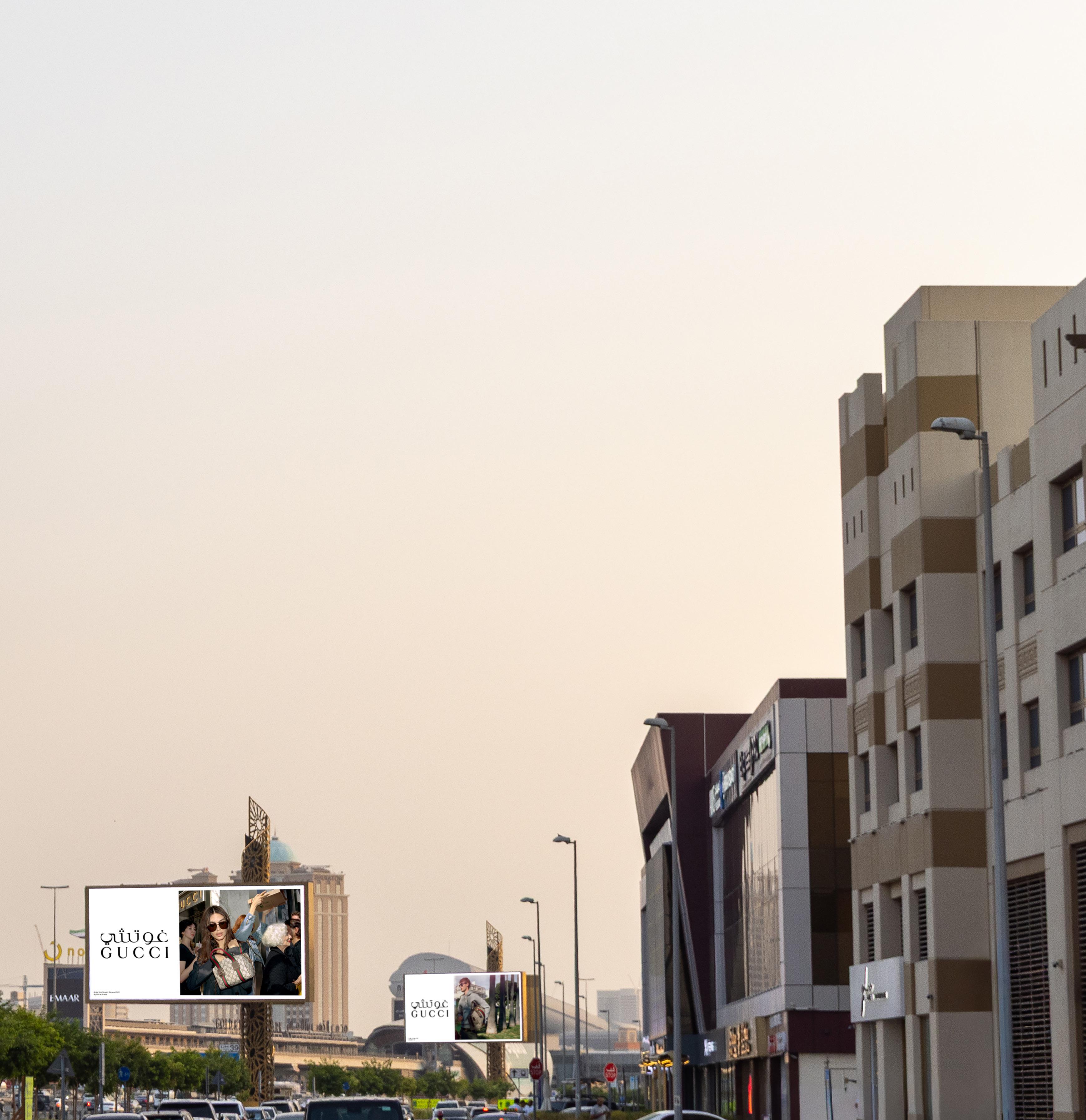
Across The Triple Crown Dubai , Gucci delivered a refined large-scale campaign that combined fashion, architecture, and strong visual clarity. Positioned along one of the city’s most recognised corridors and creating a seamless luxury presence through scale, repetition, and distinctive creative impact.
As we wrap up this edition, one thing is very clear: Out-of-Home is being redefined. It’s about the quality of environments, the consistency of execution, and delivering real, lasting impact. That’s what drives value today in a highly competitive, very connected media landscape.
The industry is entering a more structured, more accountable phase - and it’s about time. Markets are growing through real investment, better infrastructure, and a clear shift toward premium platforms. OOH has a strong role heresupporting brands, driving growth, and delivering long-term results.
Technology, data, and AI are no longer optional. They’re fully embedded and shaping decisions, improving how platforms are run, and making campaigns more effective, more measurable, and more powerful.
At MMG, we’ve built our platform with total clarity. We focus on quality; we invest with purpose and operate consistently across every market. That’s how we scale, and that’s how we deliver real value.
The next phase of Out-of-Home will belong to those who can executeconsistently, at a very high level, and at scale. That’s where the industry is going. And that’s exactly where we’re leading.


JAMES BICKNELL GROUP CHIEF EXECUTIVE OFFICER