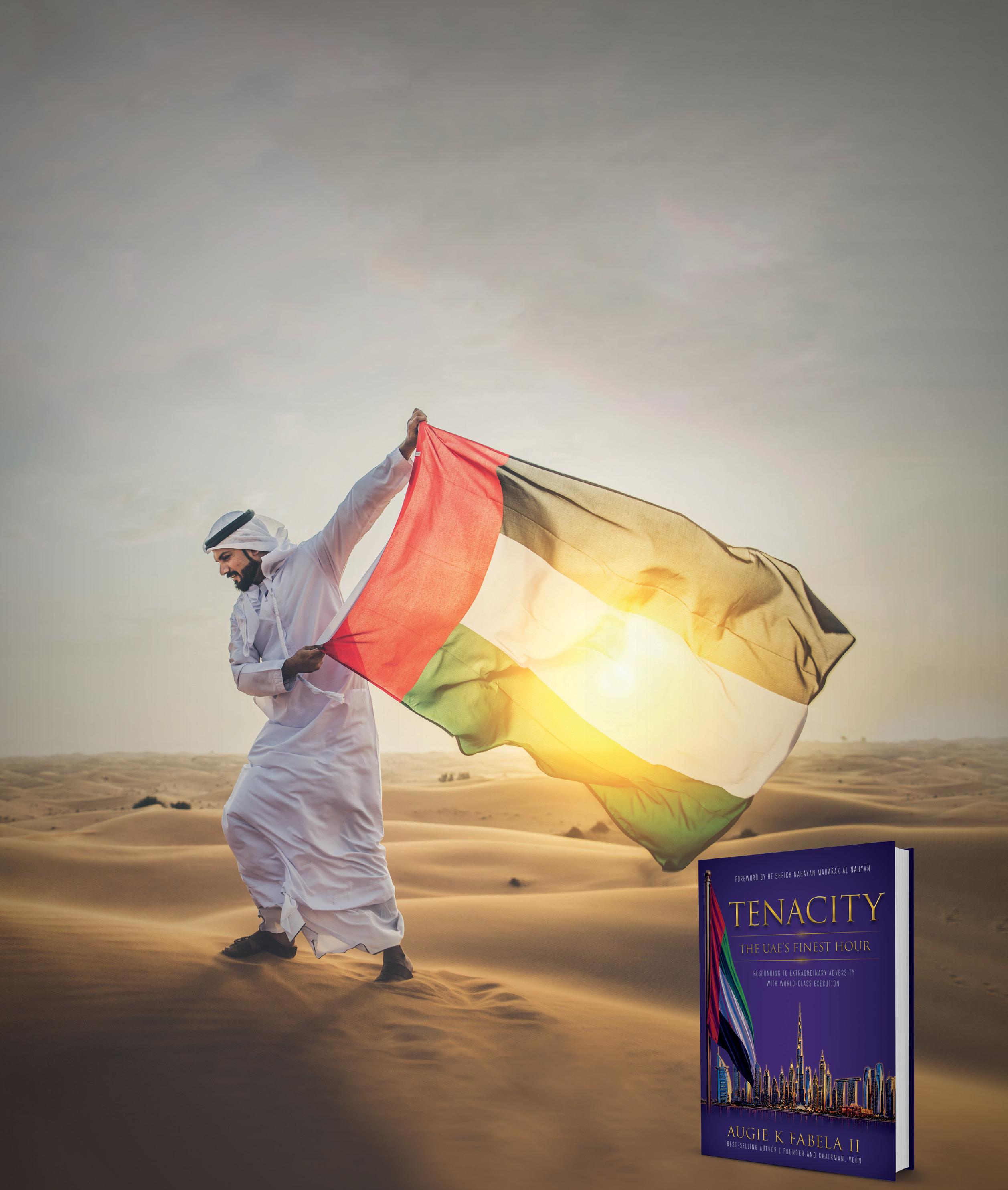
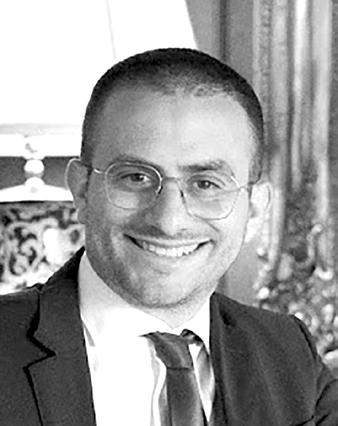
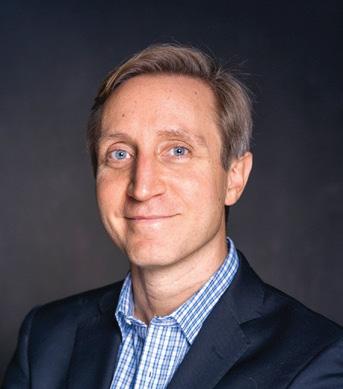
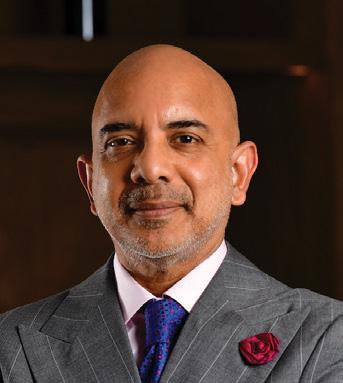
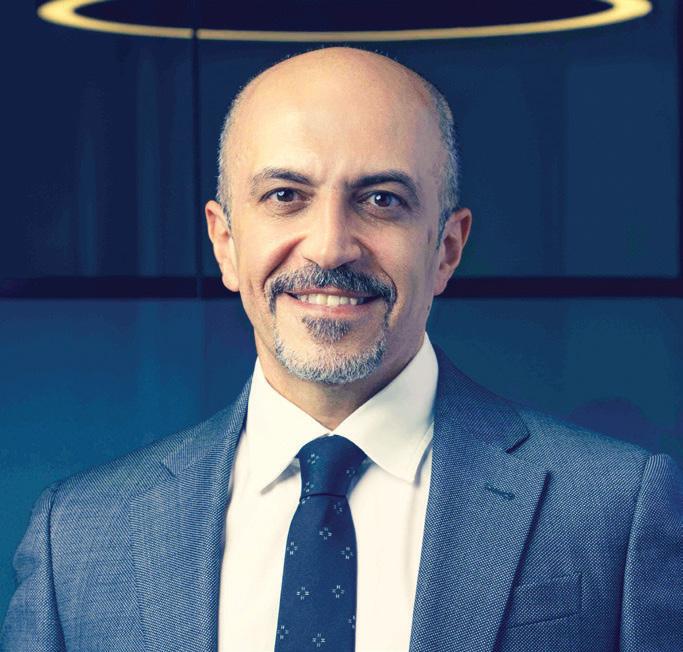
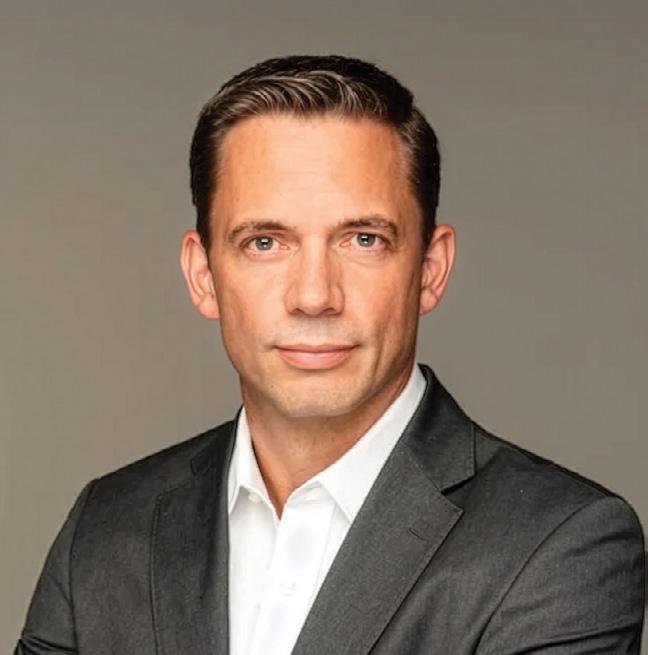
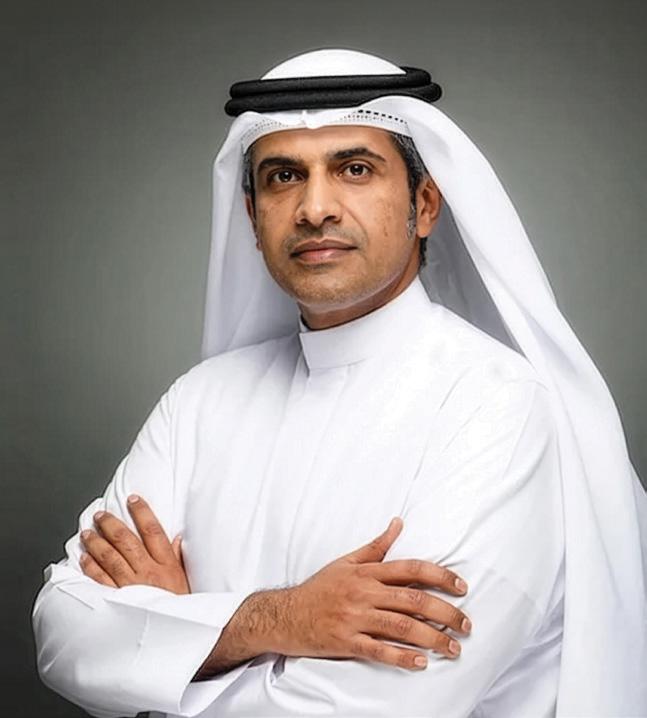
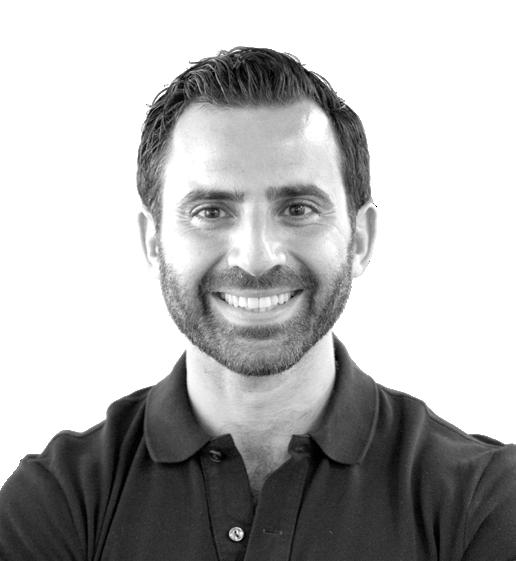
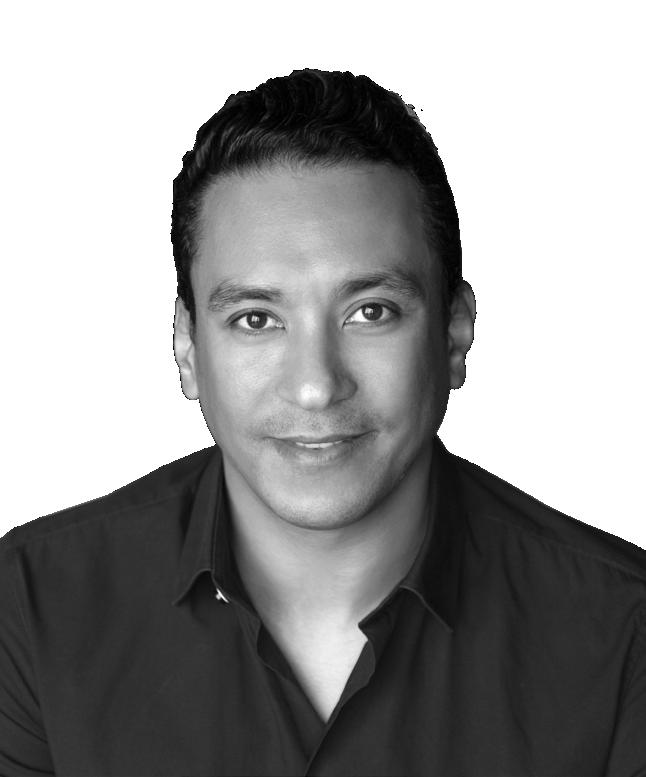
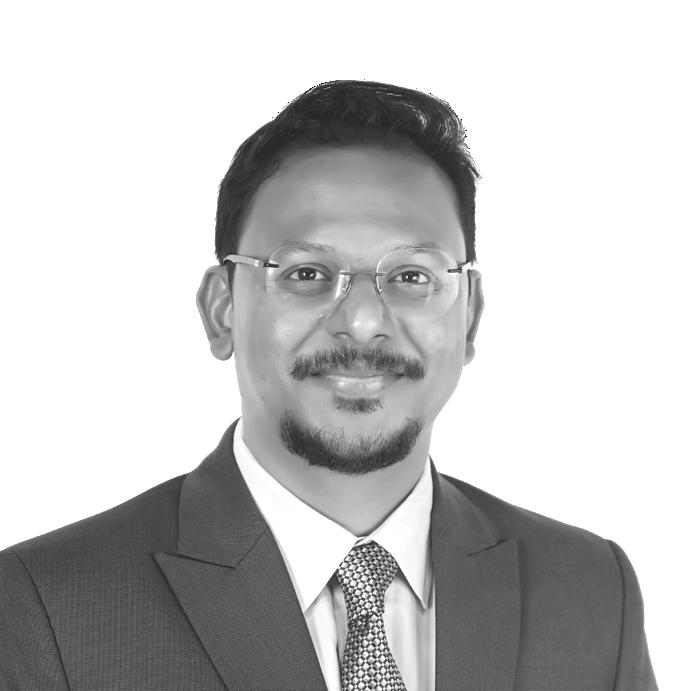
“Augie Fabela writes not as a distant commentator, but as a firsthand participant—one who chose to stay and stand in solidarity with the UAE. His unique perspective, as an eyewitness to a defining moment, captures our nation’s strength, vision, and tenacity.”
HIS EXCELLENCY SHEIKH NAHAYAN MABARAK AL NAHYAN
MINISTER
OF TOLERANCE AND COEXISTENCE, UNITED ARAB EMIRATES
CONTENTS / JUNE 2026
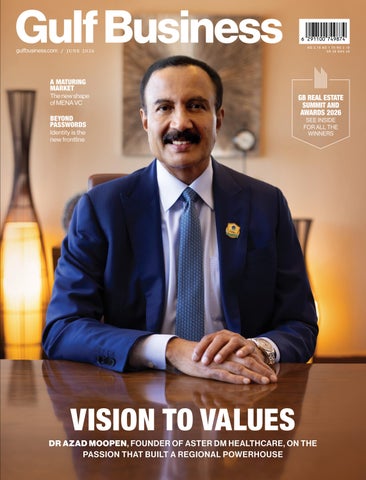
22 Passion and purpose
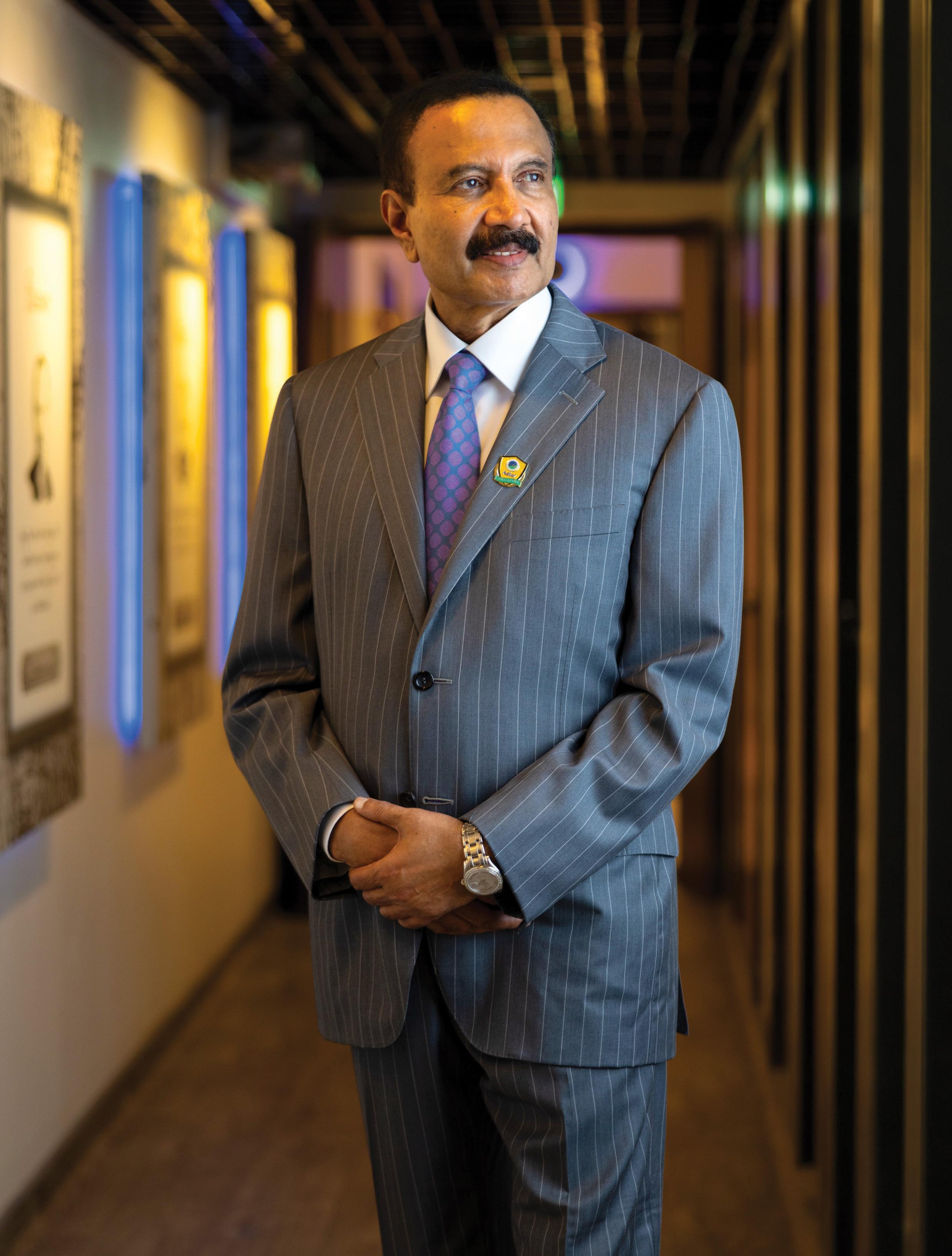
Dr Azad Moopen, founder chairman, Aster DM Healthcare, has spent nearly four decades proving that compassion and scale can coexist. He tells us about his journey.
13
The brief
An insight into the news and trends shaping the region with perceptive commentary and analysis
28 Gulf Business Real Estate Summit & Awards 2026
Gulf Business hosted its inaugural Real Estate Summit & Awards in May. Read about the highlights and industry leaders who walked away with accolades
Photo: John
Lifestyle
Shining bright: Why Astrea London's lab grown diamonds and designs are a hit p.52
An icon, electrified: The Mercedes G-Wagen is redefined for a new era p.54
Feel the Flaer: Sobha Furniture's Carlo Magistretti on the new launch and the company's focus p.56
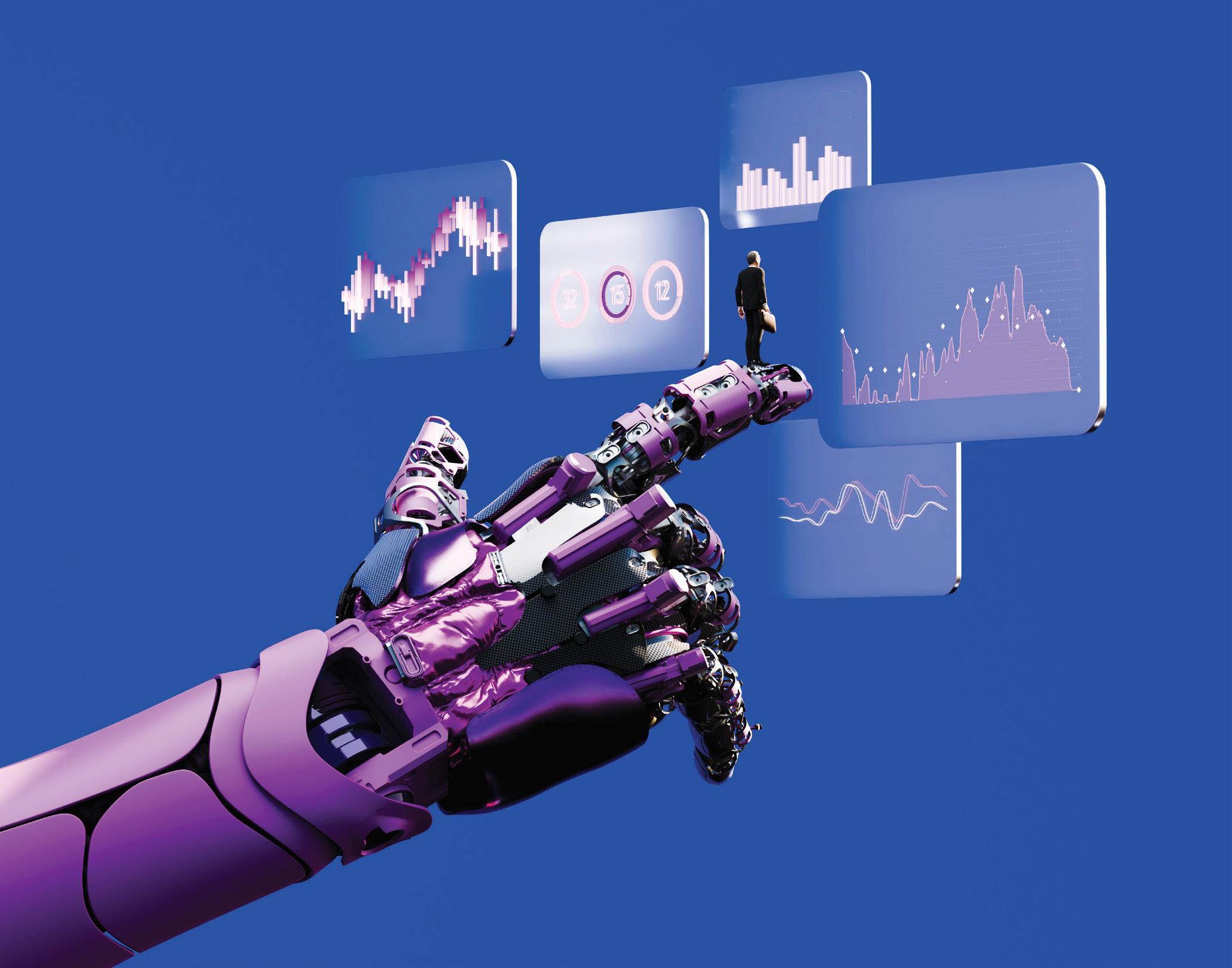
“AI is no longer a tool. It analyses, decides, executes, and improves in real time. It will become our executive partner to enhance services, accelerate decisions, and raise efficiency.”
Sheikh Mohammed bin Rashid Al Maktoum, Vice President and Prime Minister of the UAE and Ruler of Dubai
Editor-in-chief Obaid Humaid Al Tayer
Managing partner and group editor Ian Fairservice
Chief commercial officer Anthony Milne Anthony@motivate.ae
Group content director Thomas Woodgate Thomas.Woodgate@motivate.ae
Publishing director Manish Chopra Manish.Chopra@motivate.ae
Group editor Gareth van Zyl Gareth.Vanzyl@motivate.ae
FROM UAE LABOUR REFORMS TO SAUDI VISA SHIFTS, MAY BROUGHT BIG REGIONAL MOVES
THE GCC WITNESSED A WAVE OF REFORMS, INVESTMENTS AND DIPLOMATIC ACTIVITY IN MAY AS GOVERNMENTS PUSHED AHEAD WITH AMBITIOUS GROWTH AGENDAS. KEY DEVELOPMENTS RANGED FROM AVIATION AND LOGISTICS EXPANSION TO TOURISM, HOUSING AND LABOUR MARKET REFORMS ACROSS THE REGION
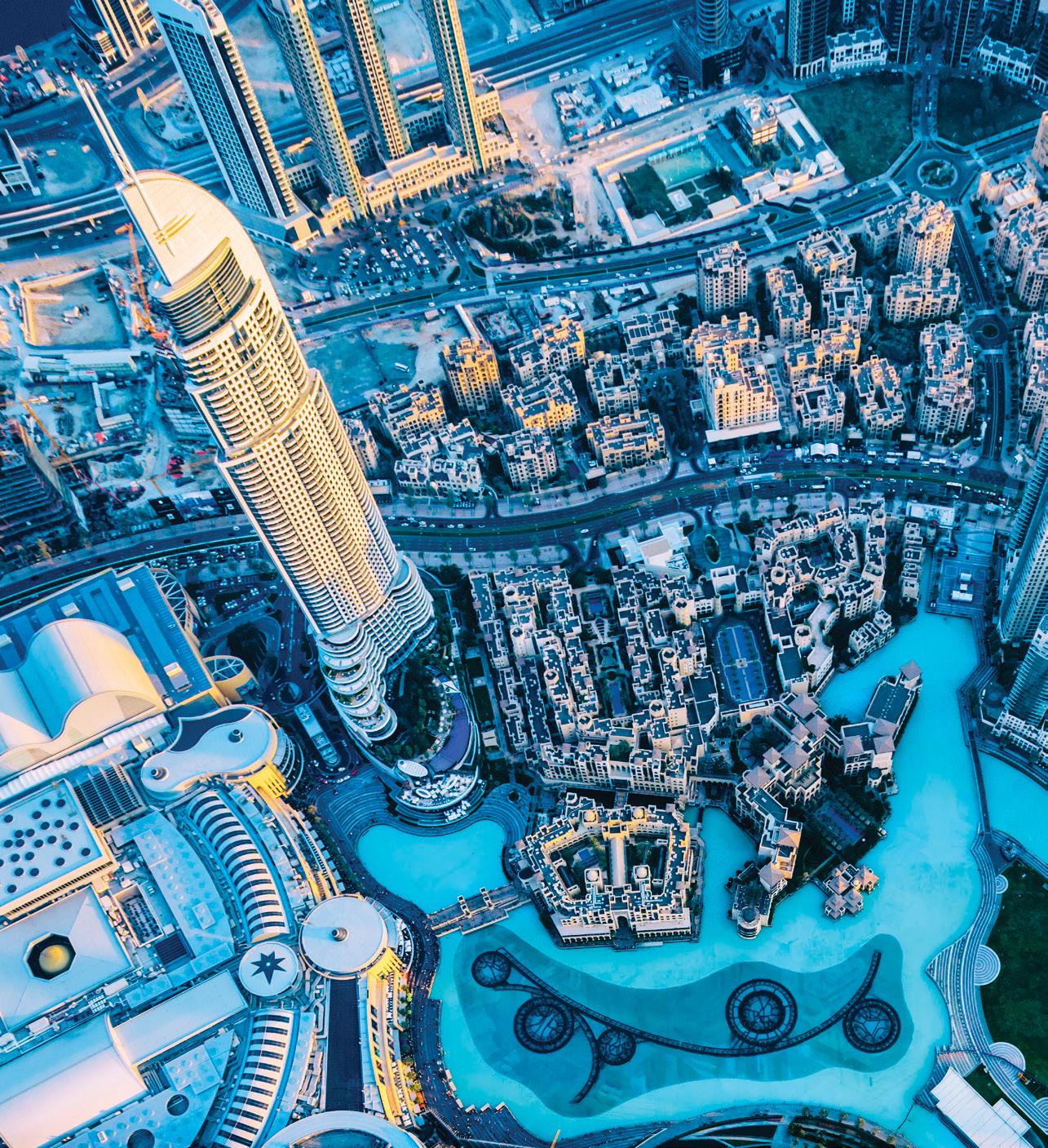
UAE ANNOUNCES SWEEPING REFORMS AND INFRASTRUCTURE PROJECTS
The UAE announced a series of major policy, infrastructure and economic developments throughout May, highlighting the country’s continued focus on labour reform, digital transformation and regional cooperation. In one of the month’s most significant announcements, the Ministry of Human Resources and Emiratisation (MOHRE) confirmed on May 18 that private sector companies will be required to pay employee salaries by the first day of every month beginning June 1, 2026. Officials said the move forms part of wider efforts to strengthen wage protection systems and improve labour compliance standards across the country. Industry observers noted that the policy is expected to improve transparency between employers and workers while reinforcing confidence in the UAE labour market. Meanwhile, Emirates officially broke ground on its
new $5.1bn engineering complex at Dubai South on May 18. The facility is expected to become the world’s most advanced maintenance, repair and overhaul (MRO) centre, further strengthening Dubai’s position as a leading global aviation hub. The project is being delivered by China Railway Construction Corporation, while Artelia has been appointed as project consultant. Analysts said the investment reflects Emirates’ longterm confidence in aviation growth and Dubai’s strategic infrastructure ambitions.
Dubai Customs also reported strong results from its “Green Corridor” initiative with Oman Customs, launched in March to facilitate uninterrupted trade flows between the two countries. Officials on May 17 said the initiative had enhanced supply chain resilience, business continuity and market stability while supporting food security efforts. The UAE also continued advancing its digital governance agenda this month. Etihad Credit Bureau introduced a new Tenant Screening solution allowing landlords to request the credit score of prospective tenants through secure approval using UAE PASS.
The service, initially previewed during GITEX 2025, officially launched through the Etihad Bureau mobile application in April 2026. Officials described the initiative as a milestone in the country’s wider zerobureaucracy and digital transformation strategy. Security developments also drew attention after the Ministry of Defence announced on May 17 that UAE air defence systems intercepted three UAVs approaching from the western border direction. Two UAVs were intercepted successfully, while a third struck an electrical generator outside the inner perimeter of the Barakah Nuclear Power Plant in Al Dhafra Region.
Diplomatic ties also featured prominently during the month as Indian Prime Minister Narendra Modi arrived in the UAE on May 15 for an official visit. UAE President Sheikh Mohamed bin Zayed Al Nahyan welcomed Modi during an official ceremony that included military honours and national anthem performances.
As Modi’s aircraft entered UAE airspace, it was escorted by military aircraft in a symbolic gesture reflecting the close ties between the two nations.
Compiled by Nida Sohail
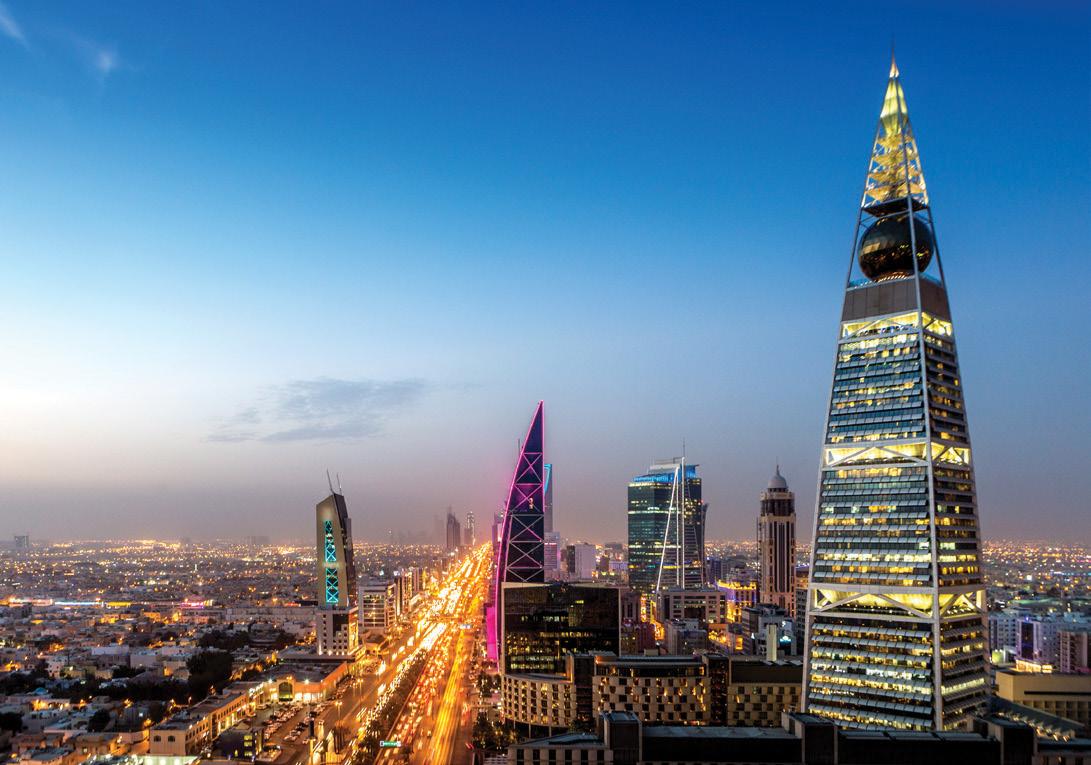
SAUDI ARABIA EXPANDS TOURISM AND GLOBAL PARTNERSHIPS
Saudi Arabia witnessed a busy month marked by tourism, diplomatic and economic developments. The Ministry of Hajj and Umrah announced on May 17 that the issuance of Umrah visas and the arrival of pilgrims for the new season will begin on May 31. According to the 1448 AH Umrah calendar, pilgrims will be able to enter Makkah and obtain permits through the Nusuk application from June 1.
The ministry said the updated calendar was designed to improve operational efficiency and streamline electronic services linked to visa issuance and pilgrim reception procedures.
Saudi Arabia also strengthened international ties through the signing of a memorandum of understanding with Spain establishing the Saudi-Spanish Strategic Partnership Council. During meetings held in Madrid on May 13, both countries signed an agreement granting mutual visa exemptions for holders of diplomatic, special and service passports.
In another development, Saudi Arabia and Russia officially implemented a mutual visa exemption agreement on May 11, allowing citizens from both countries to travel visa-free for short visits. Officials said the agreement reflects efforts to strengthen tourism and cultural cooperation.
Economic indicators, however, presented mixed signals. Saudi Arabia’s Industrial Production Index declined by 14.1 per cent year-on-year in March 2026, according to the General Authority for Statistics, driven largely by reduced activity in mining, quarrying and manufacturing sectors.
Despite the slowdown, the Kingdom secured a major global ranking in digital infrastructure. According to Bloomberg , Saudi Arabia ranked second globally after the US among the world’s most attractive markets for data centres, highlighting growing investor confidence in the country’s AI and cloud-computing ecosystem.
SAUDI ARABIA
GCC UPDATE
OMAN, KUWAIT AND BAHRAIN ADVANCE ECONOMIC AND LABOUR INITIATIVES
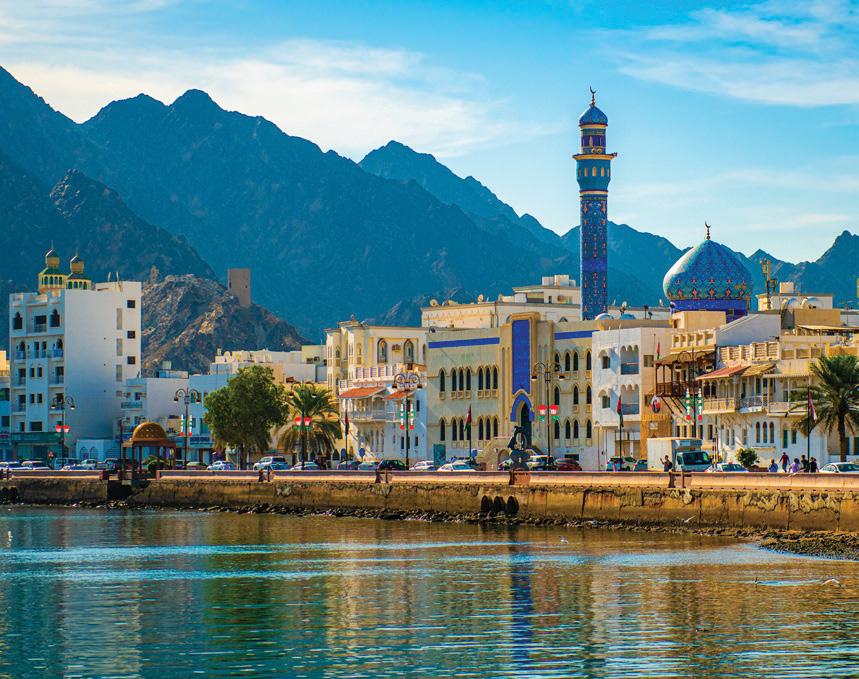
Oman advanced several major economic initiatives during May, particularly in industrial investment and regional cooperation.
On May 10, the Public Authority for Special Economic Zones and Free Zones (OPAZ) signed an investment usufruct agreement with Korean electric vehicle technology company EL B&T to establish an electric vehicle and battery cell production project at the Special Economic Zone at Duqm. The project carries an estimated investment value of RO96.2 million, equivalent to approximately $250m, and is expected to support Oman’s long-term industrial diversification strategy.
Regional economic cooperation was also reinforced during meetings between UAE Minister of Economy and Tourism Abdulla bin Touq Al Marri and OPAZ chairman Qais bin Mohammed Al Yousef on May 6.
Meanwhile, Kuwait introduced new measures aimed at improving labour administration and public health systems. On May 17, the Public Authority for Manpower launched a digital service enabling partners to independently renew work permits through the “Ashal Services” portal, reducing administrative procedures and improving efficiency. The same day, Kuwait’s Health Ministry introduced updated regulations under the “Wafid” programme, requiring comprehensive medical check-ups for expatriates planning to work or reside within GCC countries. In Bahrain, housing and labour policies dominated headlines. . Bahrain’s Ministry of Labour also reaffirmed mandatory nationalisation policies across all sectors, warning that companies failing to meet Bahraini employment quotas would face additional fees on foreign work permits.
UAE EYES FRESH CEPA DEALS AS INDIA TRADE TARGET CLIMBS TO $200BN
By Gareth van Zyl
The UAE is preparing to expand its comprehensive economic partnership agreement (CEPA) programme further in the coming months, according to Dr Thani bin Ahmed Al Zeyoudi, UAE Minister of State for Foreign Trade. Speaking to Gulf Business on the sidelines of a UAE India Business Council – UAE Chapter gathering in Dubai on May 18, Al Zeyoudi said the UAE has now concluded 37 agreements globally, with 17 already in force.
The comments came as the UAE and India continue to deepen economic ties under the CEPA framework, with both nations targeting $200bn in bilateral trade by 2030.
“The bilateral relationship between the UAE and India is growing,” Al Zeyoudi said. “At the beginning of the year, the leaders decided to go to $200bn by 2030. So it is now the responsibility of everyone, including the government and private sector, to work toward that KPI.”
Al Zeyoudi also highlighted growing opportunities for collaboration between the UAE and India across Africa, as both countries expand trade links internationally.
“I think we do believe that there are other potential collaborations between both nations and working in Africa with the growth that we’re having in Africa and with the massive trade deals that we and even India are having with the rest of the world,” he said.
The event in Dubai brought together senior ministers, diplomats and business leaders under the theme “Strength in Resilience”.
OMAN • KUWAIT • BAHRAIN
PublisHer, Motivate Media Group
launch
UAE media internship programme for women
GRADUATES OF THE PROGRAMME WILL RECEIVE A JOINT CERTIFICATE FROM PUBLISHER AND MOTIVATE MEDIA GROUP AND BECOME PART OF THE PUBLISHER ALUMNAE NETWORK
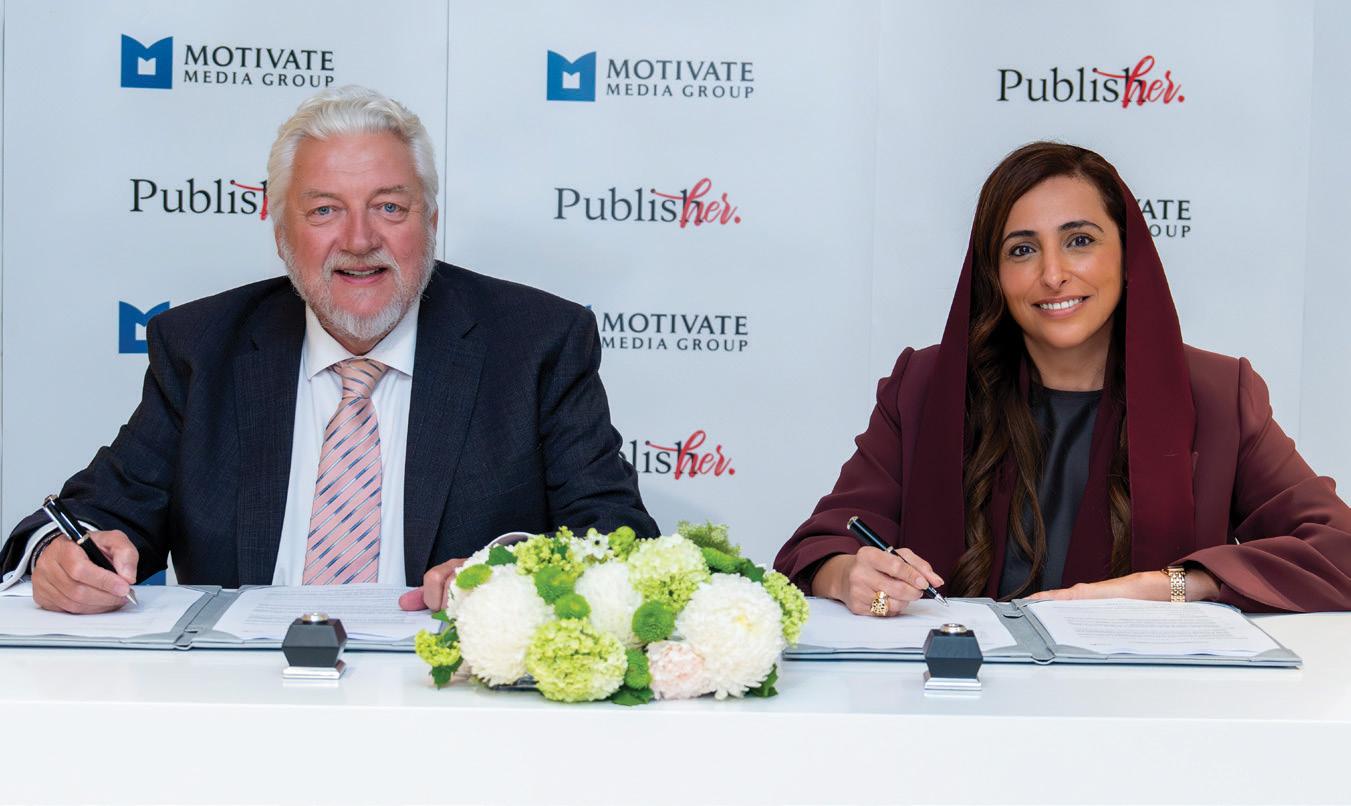
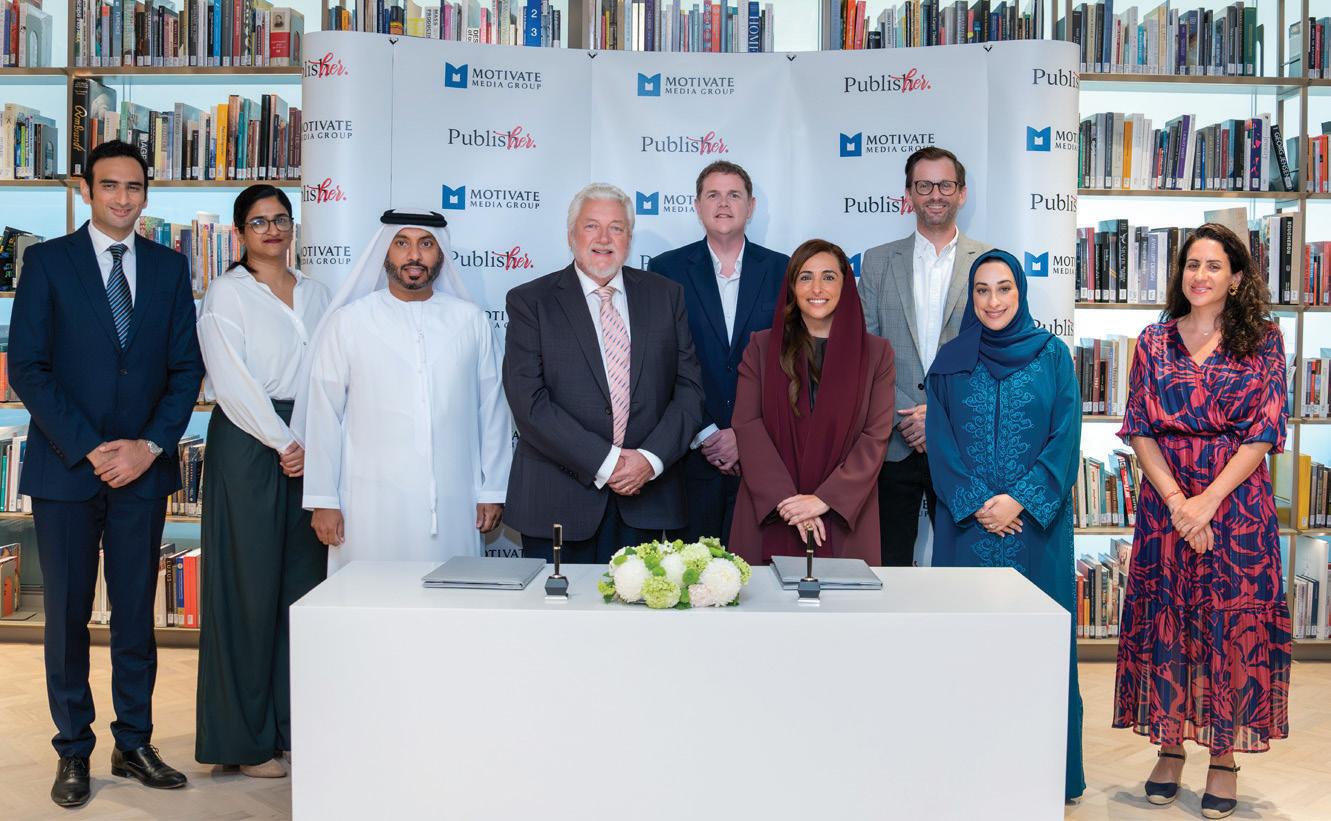
PublisHer and Motivate Media Group have partnered to launch PublisHer Pathways, a four-week immersive internship programme aimed at bridging the gap between academic preparation and the realities of working inside a media company.
The agreement was signed at the House of Wisdom in Sharjah by HH Sheikha Boudor Al Qasimi, founder of PublisHer, and Ian Fairservice, managing partner and group editor-in-chief of Motivate Media Group.
The initiative will run as a one-year programme comprising up to two cycles annually at Motivate Media Group’s Dubai offices, with each intake accommodating five women residents in the UAE.
Designed to provide hands-on industry exposure, the programme will place participants within Motivate’s day-to-day operations through structured rotations, live projects, mentorship and direct interaction with senior leadership teams.
The programme will immerse participants across four operational areas:
• Editorial and Content Development
• Marketing, Public Relations (PR) and Audience Engagement
• Advertising, Sales and Revenue Models
• Product, Digital Platforms and Business Strategy
Participants will also attend masterclasses with senior industry leaders, visit printing press facilities, receive one-on-one mentorship from Motivate employees, and collaborate on a capstone project to be presented to company leadership.
Graduates of the programme will receive a joint certificate from PublisHer and Motivate Media Group and become
part of the PublisHer Alumnae Network. HH Sheikha Boudor Al Qasimi said: “PublisHer Pathways is a direct response to something we hear consistently from women across the industry – that the transition from education into professional publishing is harder than it should be and that access to real experience, inside real organisations, remains sporadic and uneven. I’m grateful to Ian and the whole Motivate team for having confidence in our mission and becoming the first to say yes.”
Fairservice added: “At Motivate, we believe the best way to understand publishing is to be part of it and to see how editorial, commercial and digital teams work together in real time. PublisHer Pathways gives participants that exposure, and in doing so, helps strengthen the next generation of talent coming into the industry.”
Applications for the programme are now open through PublisHer website and will close on June 30, 2026. Shortlisted applicants will be notified on July 15, 2026, with the first cohort scheduled to begin on August 3, 2026.
The programme is open to women in the UAE at an early or mid-career stage with backgrounds or strong interest in publishing, media, literature or the creative arts.
According to the organisations, the inaugural cohort will operate as a pilot, with longer-term plans to expand the model through PublisHer’s wider network of publishing partners across different regions.
Ian Fairservice, managing partner and group editor-in-chief of Motivate Media Group, with HH Sheikha Boudor Al Qasimi, the founder of PublisHer
EDITOR’S CHOICE:
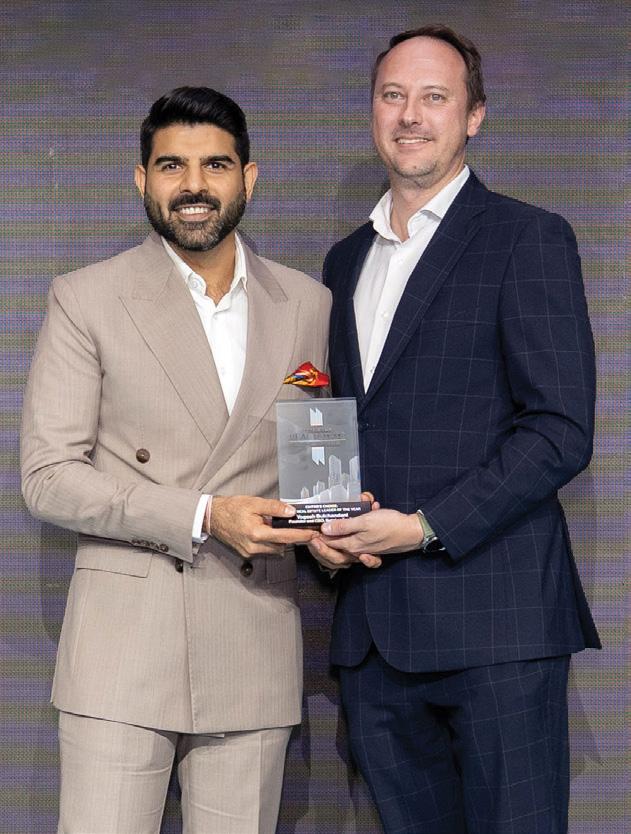
YOUNG REAL ESTATE LEADER OF THE YEAR
Yogesh Bulchandani, Founder and CEO, Sunrise Capital
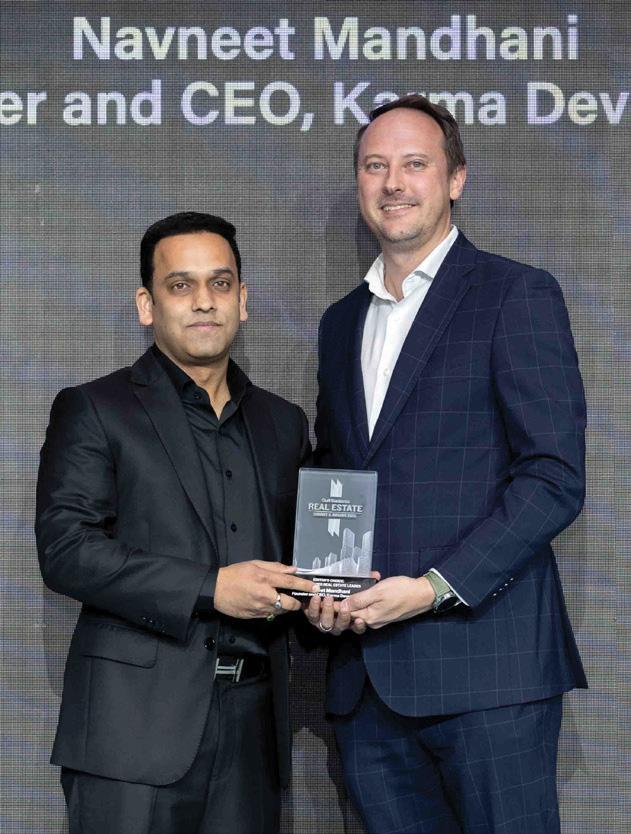
EDITOR’S CHOICE: CROSS-BORDER
REAL ESTATE LEADER OF THE YEAR
Navneet Mandhani, Founder and CEO, Karma Developers
REAL ESTATE CEO OF THE YEAR
Ali Mohammed Al Kuwari, CEO, Msheireb Properties
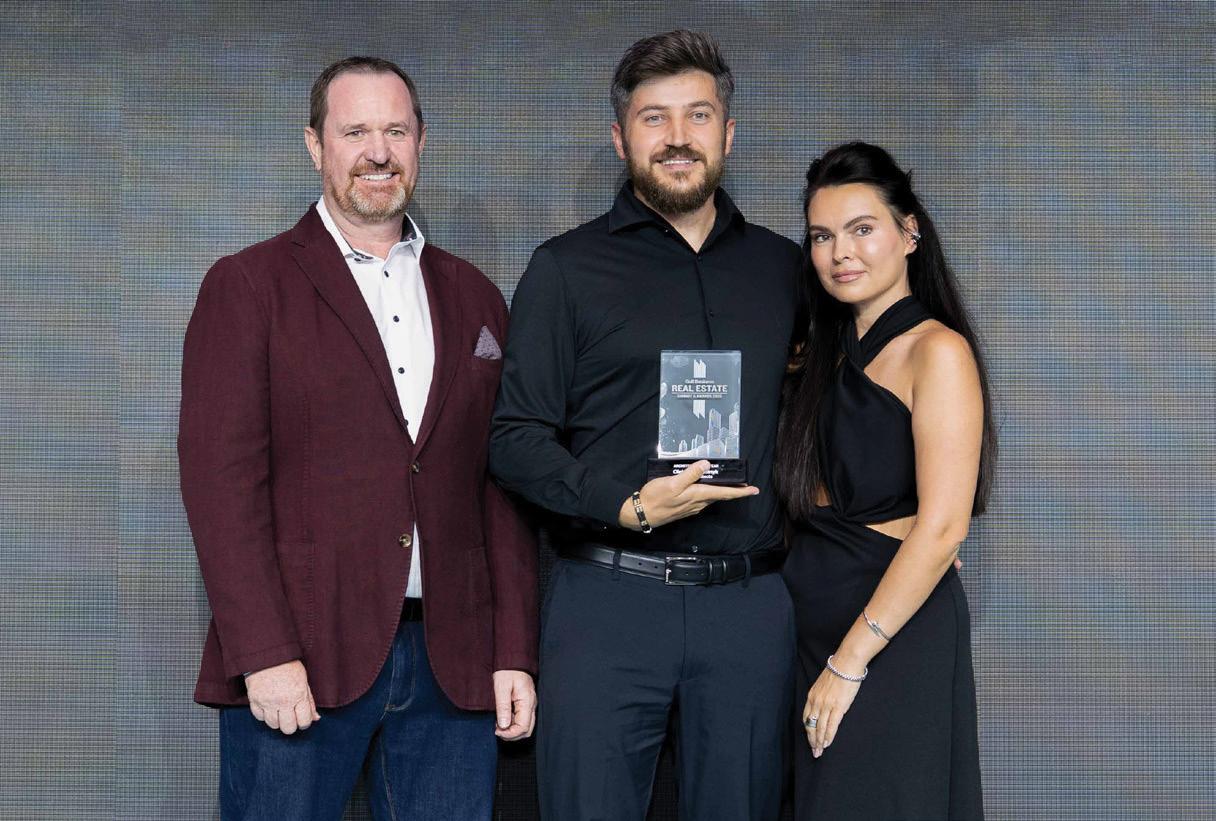
ARCHITECT OF THE YEAR
Oleksandr Melnyk, NKEY Architects
EDITOR’S CHOICE:
EXCELLENCE IN COMMERCIAL DEVELOPMENT
AUM Development
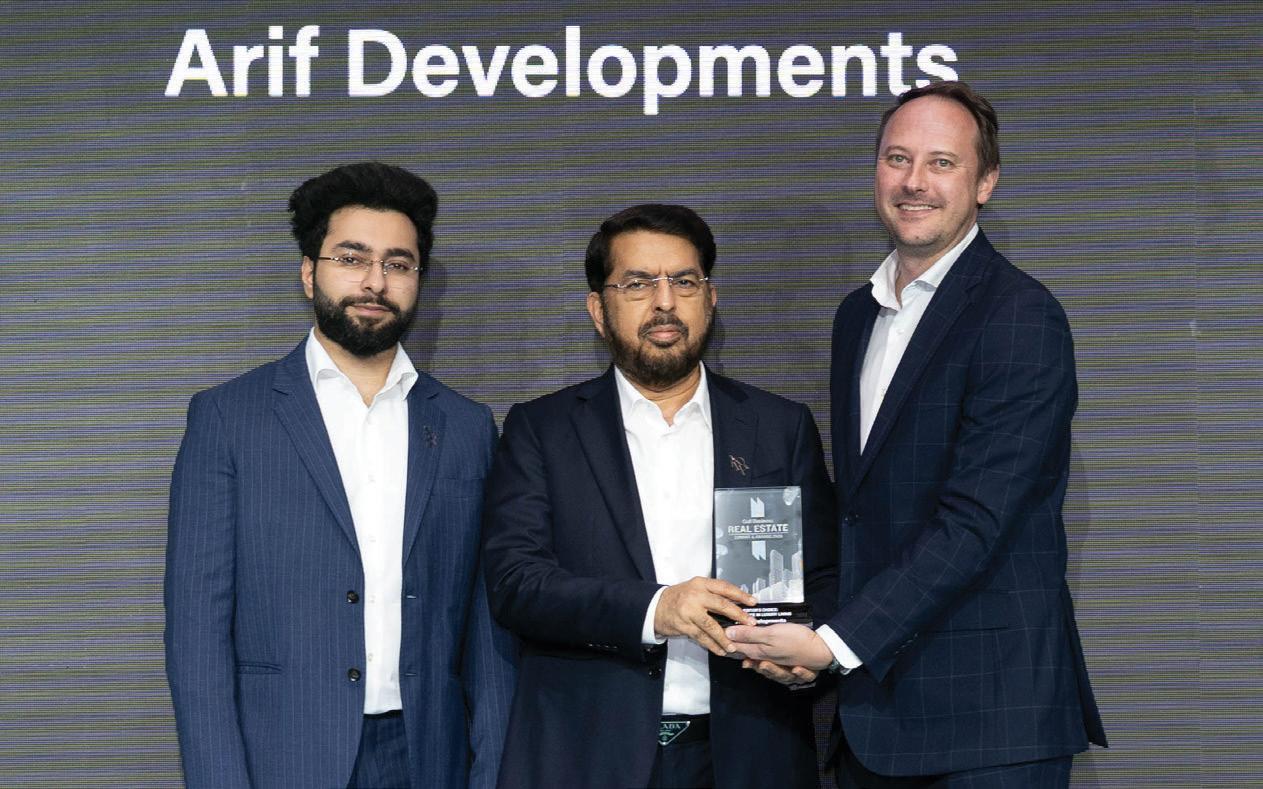
EDITOR’S CHOICE: EXCELLENCE IN LUXURY LIVING
Arif Developments
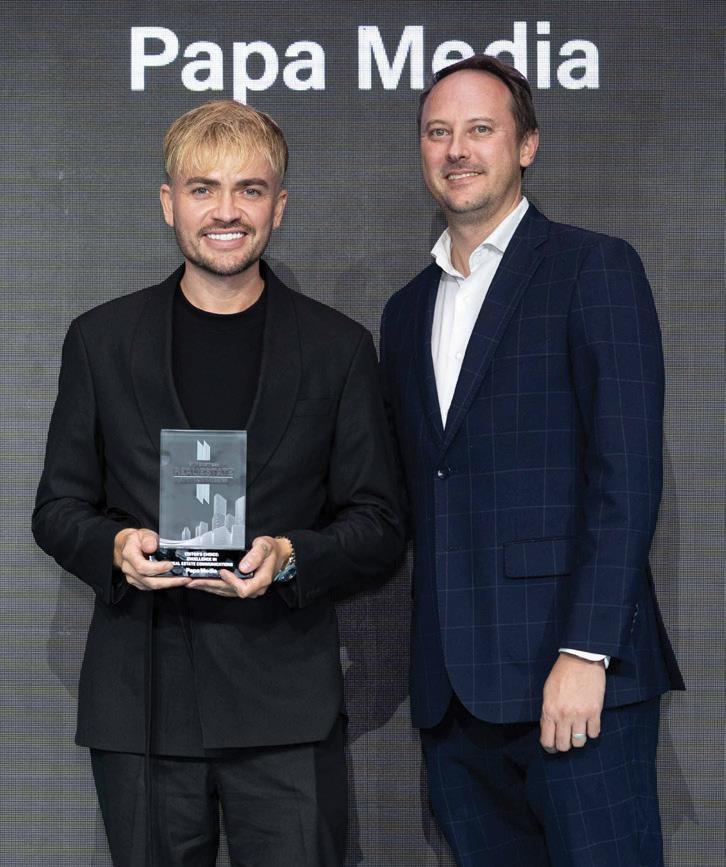
EDITOR’S CHOICE: EXCELLENCE IN REAL ESTATE COMMUNICATIONS
Papa Media
EDITOR’S CHOICE: EXCELLENCE IN REAL ESTATE BUSINESS CONSULTANCY
Sherpa Communications
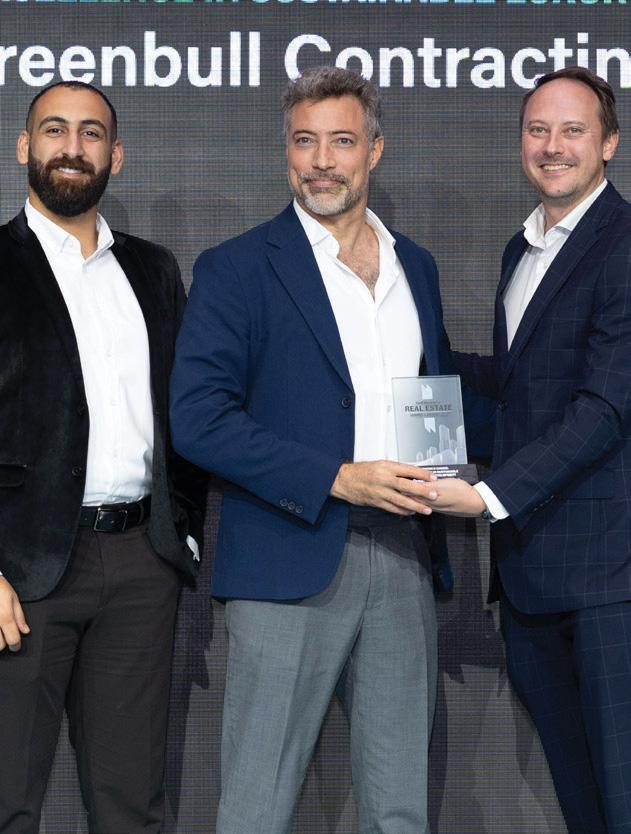
EDITOR’S CHOICE: EXCELLENCE IN SUSTAINABLE LUXURY REDEVELOPMENT
Greenbull Contracting
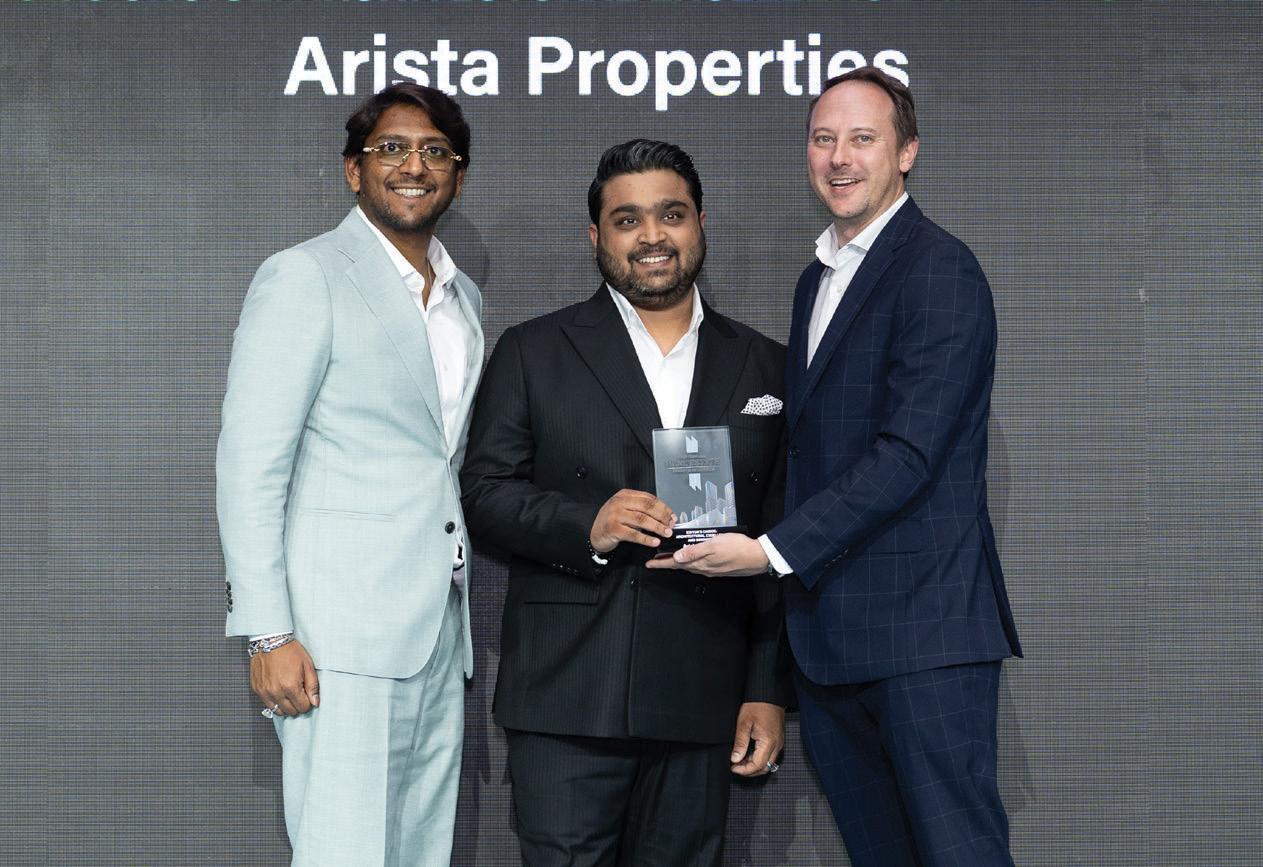
EDITOR’S CHOICE: ARCHITECTURAL EXCELLENCE AND INNOVATION Arista Properties
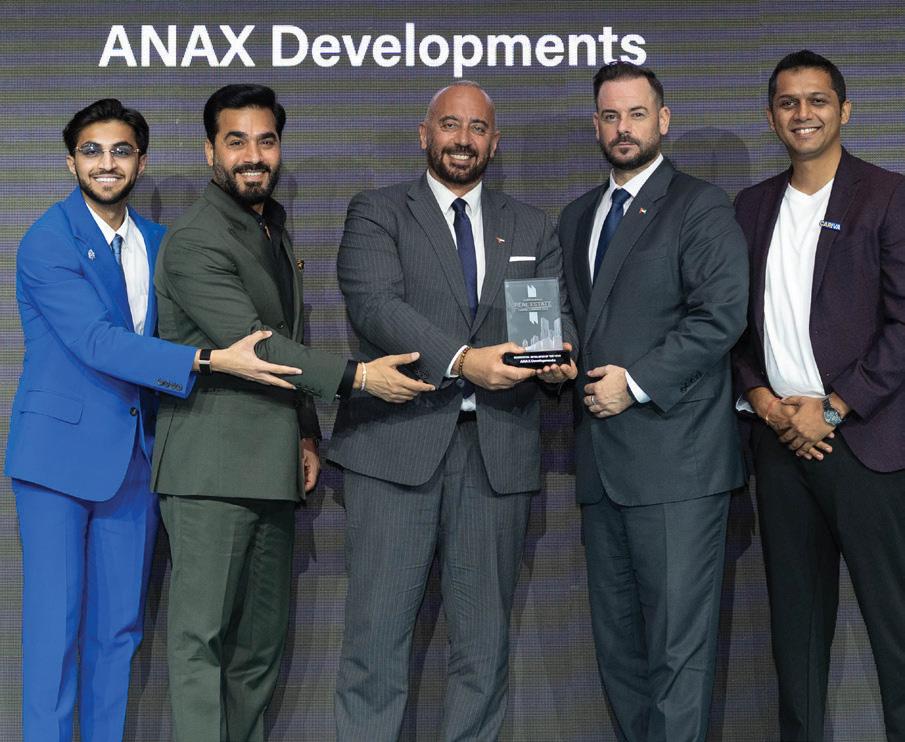
RESIDENTIAL DEVELOPER OF THE YEAR ANAX Developments
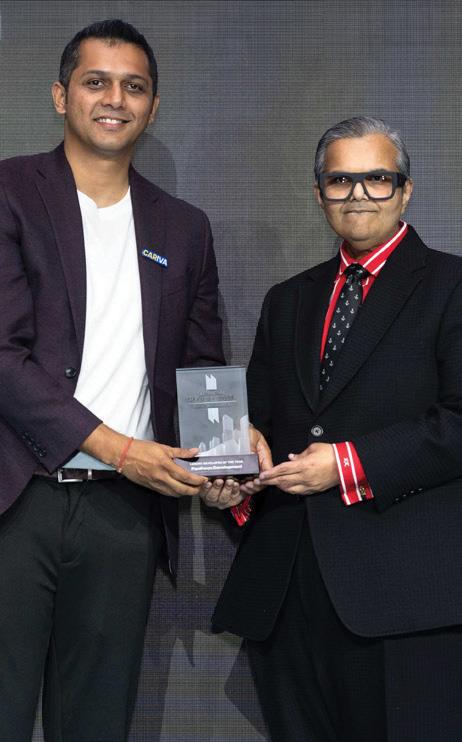
LUXURY DEVELOPER OF THE YEAR
Pantheon Development
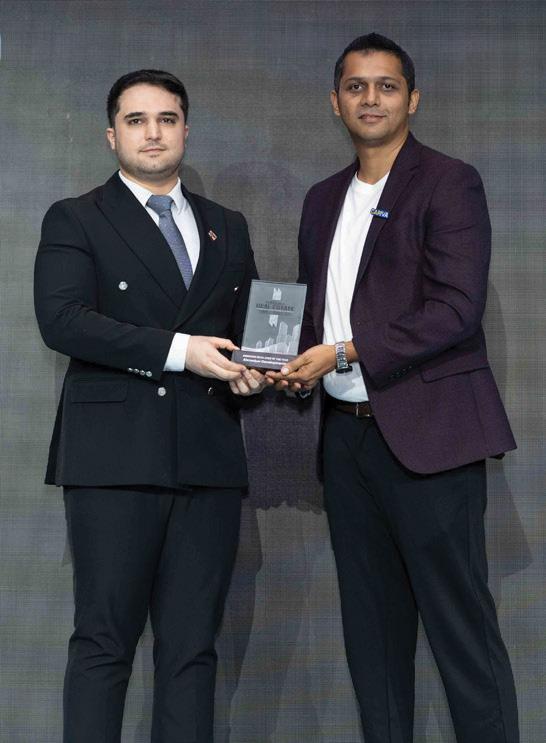
EMERGING DEVELOPER OF THE YEAR Ahmadyar Developments
INTERNATIONAL REAL ESTATE COMPANY OF THE YEAR
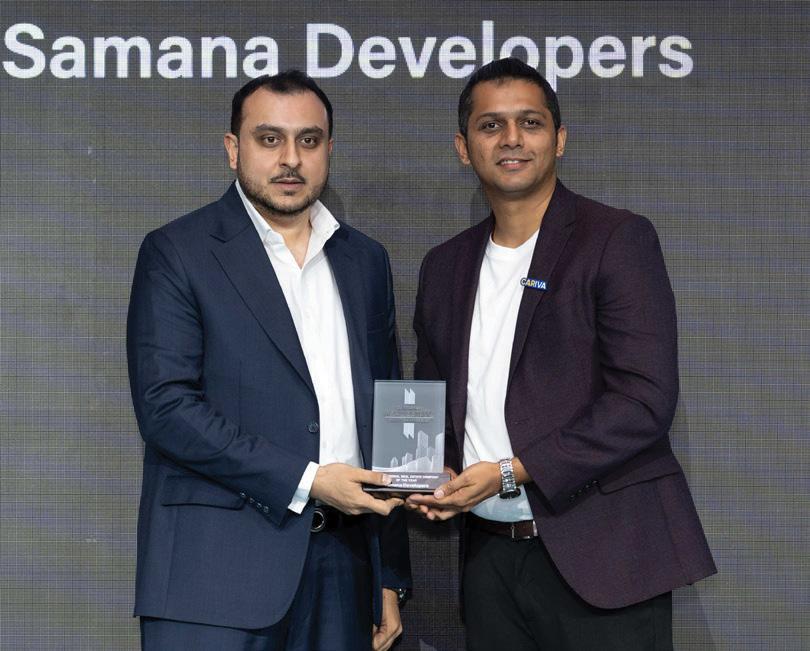
Samana Developers
LEADER AWARDS
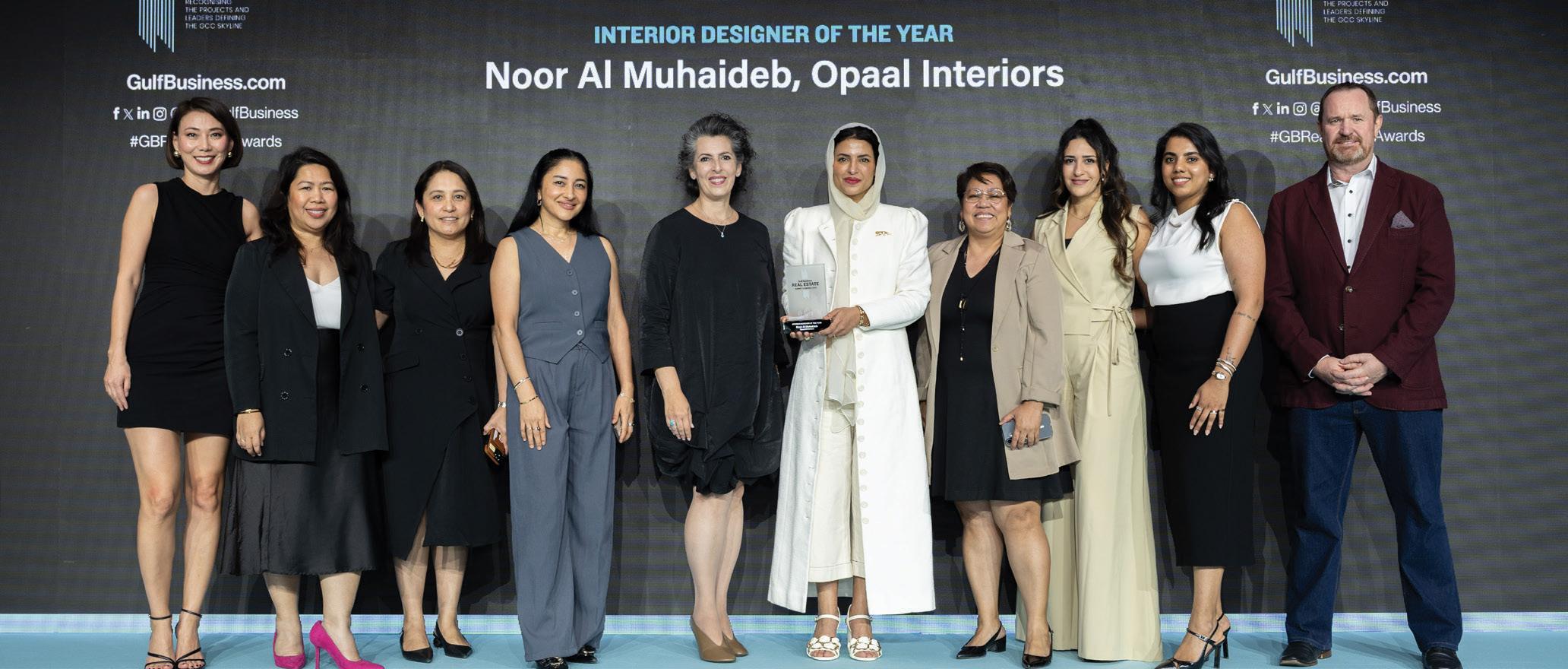
INTERIOR DESIGNER OF THE YEAR
Noor Al Muhaideb, Opaal Interiors
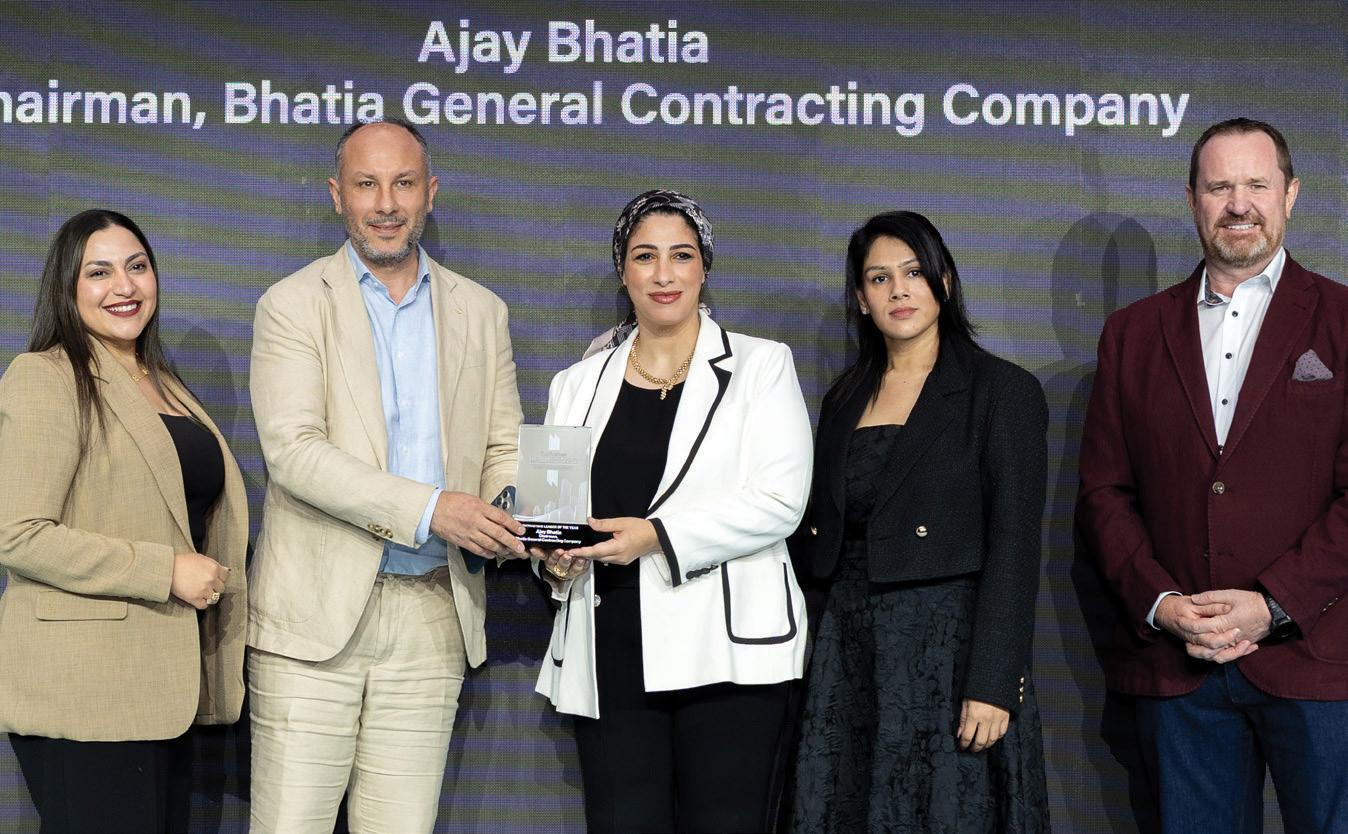
CONTRACTING LEADER OF THE YEAR
Ajay Bhatia, Chairman, Bhatia General Contracting Company
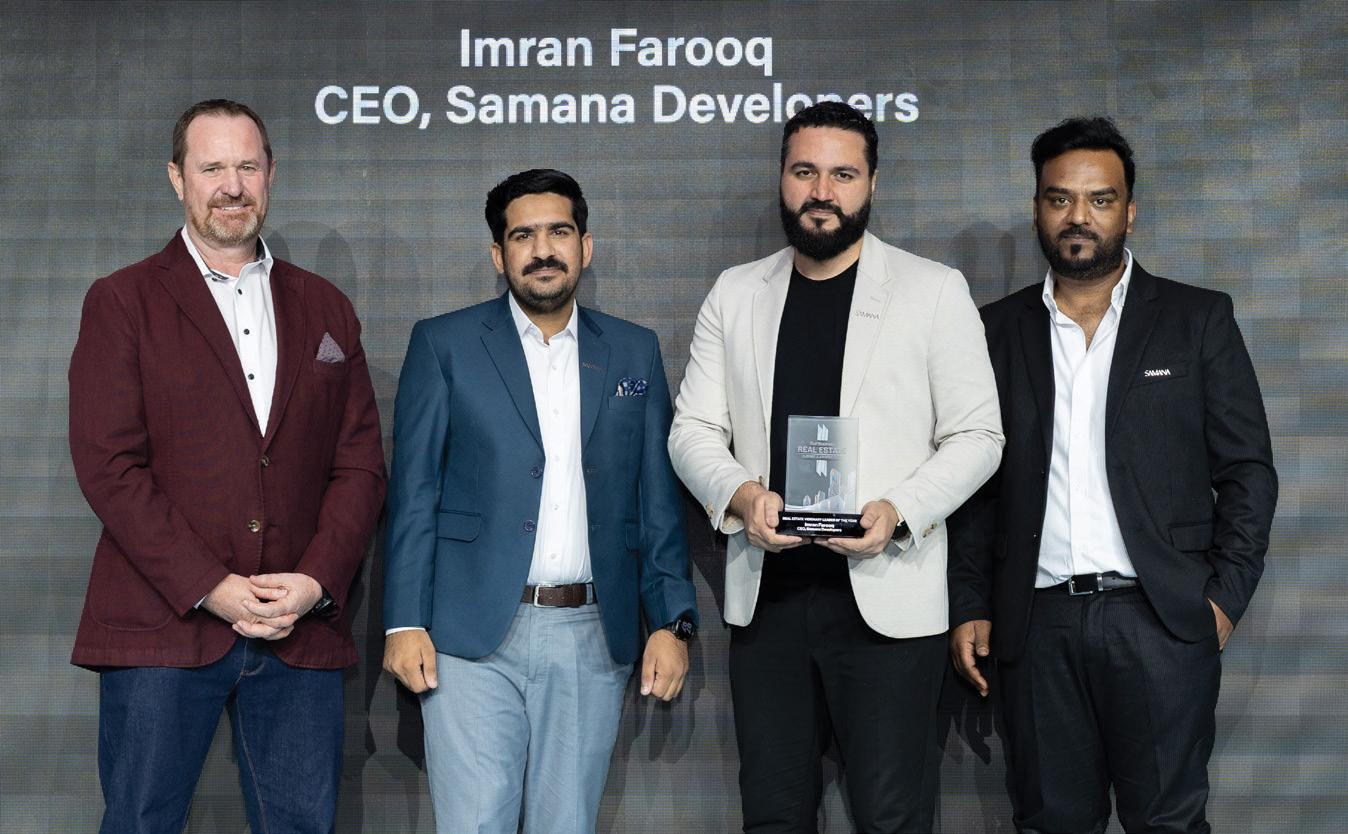
REAL ESTATE VISIONARY LEADER OF THE YEAR
Imran Farooq, CEO, Samana Developers
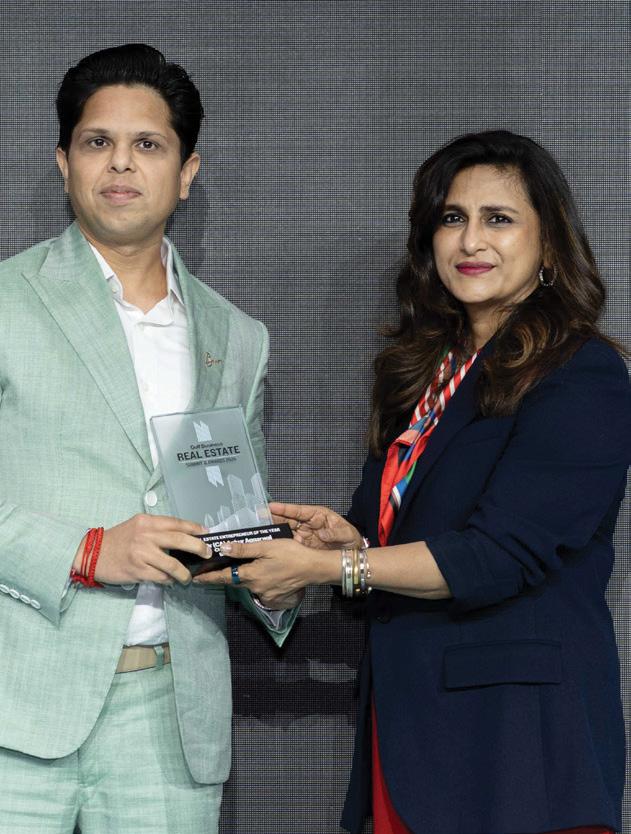
REAL ESTATE ENTREPRENEUR OF THE YEAR
Dr (CA) Ankur Aggarwal, Chairman and Founder, BNW Developments
COMPANY & PROJECT AWARDS
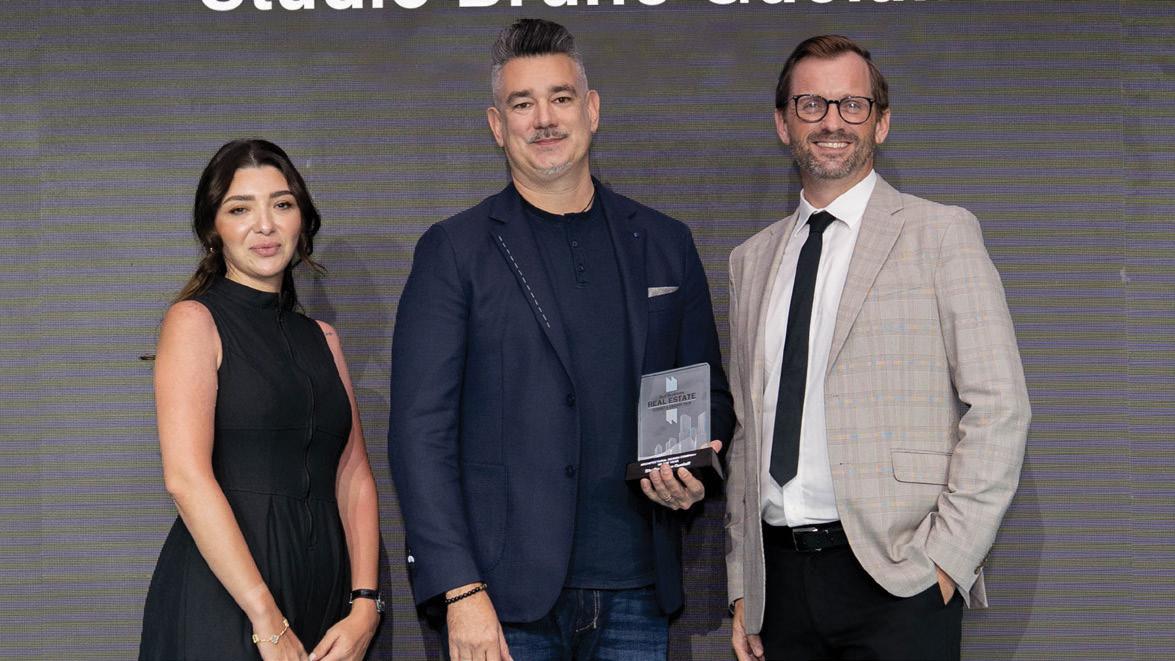
ARCHITECTURAL DESIGN COMPANY OF THE YEAR
Studio Bruno Guela
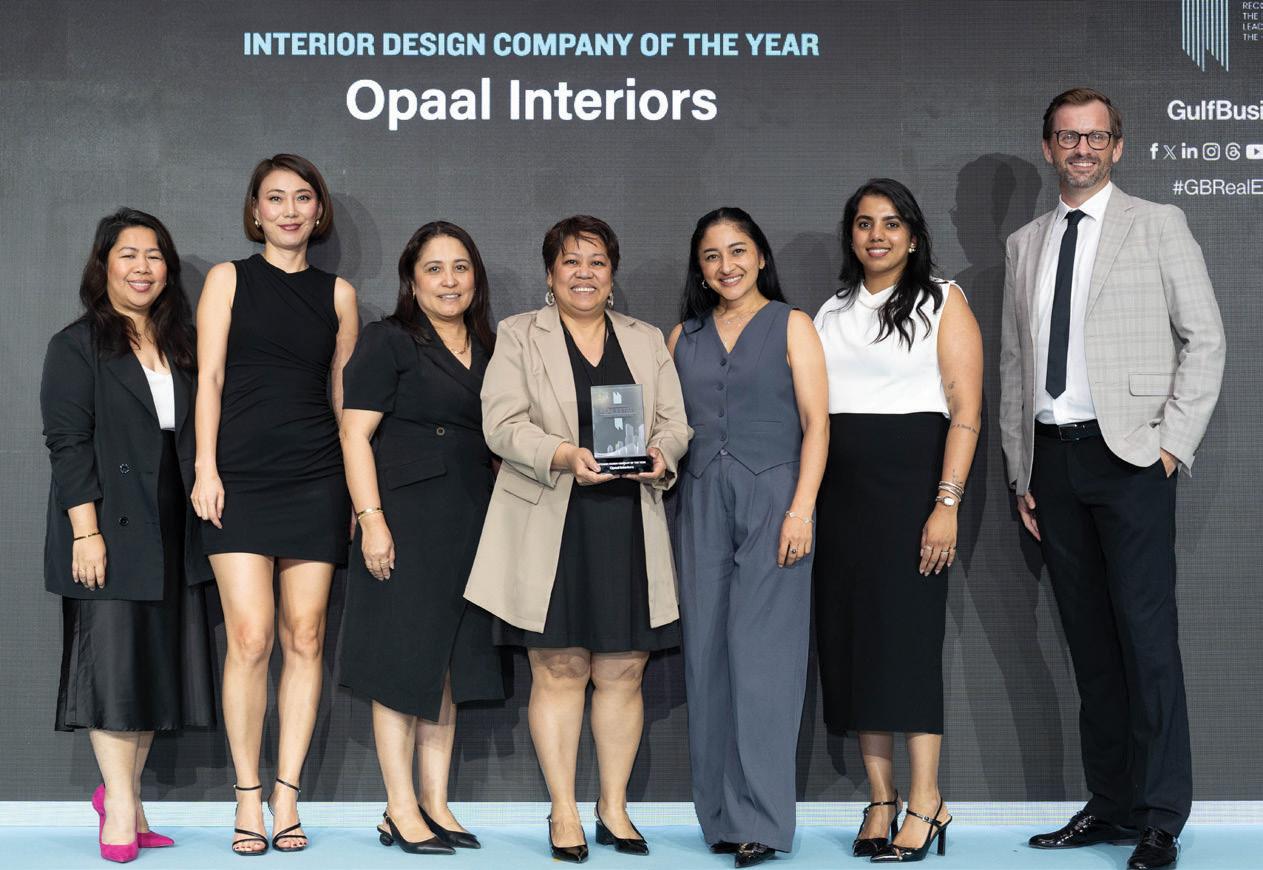
INTERIOR DESIGN COMPANY OF THE YEAR Opaal Interiors
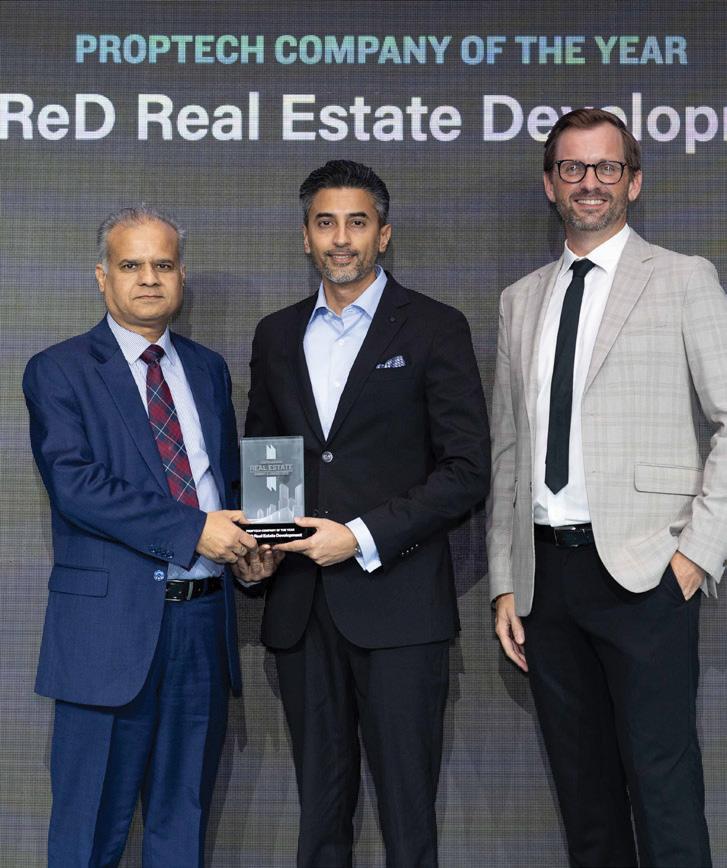
PROPTECH COMPANY OF THE YEAR
ICTReD Real Estate Development
BRANDED PROJECT OF THE YEAR
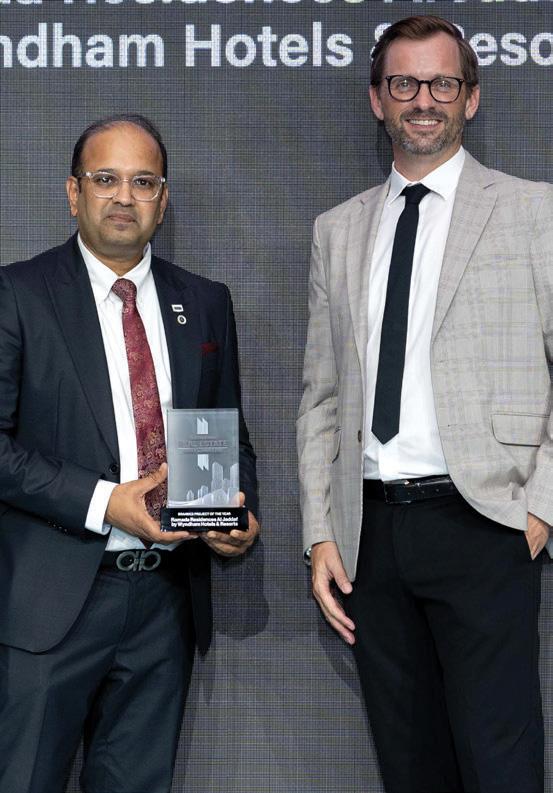
Ramada Residences Al Jaddaf by Wyndham Hotels & Resorts
PROJECT OF THE YEAR
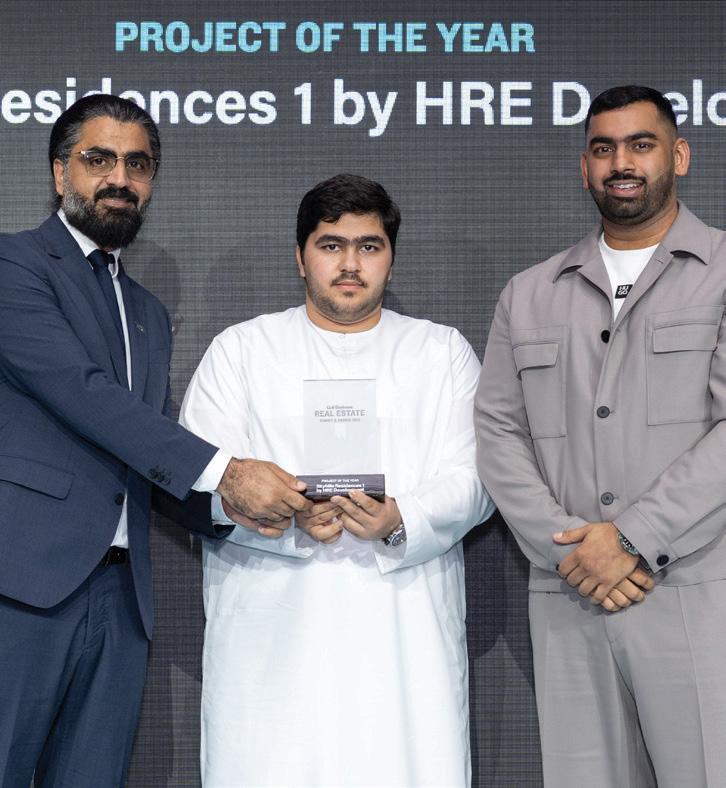
Skyhills Residences 1 by HRE Development
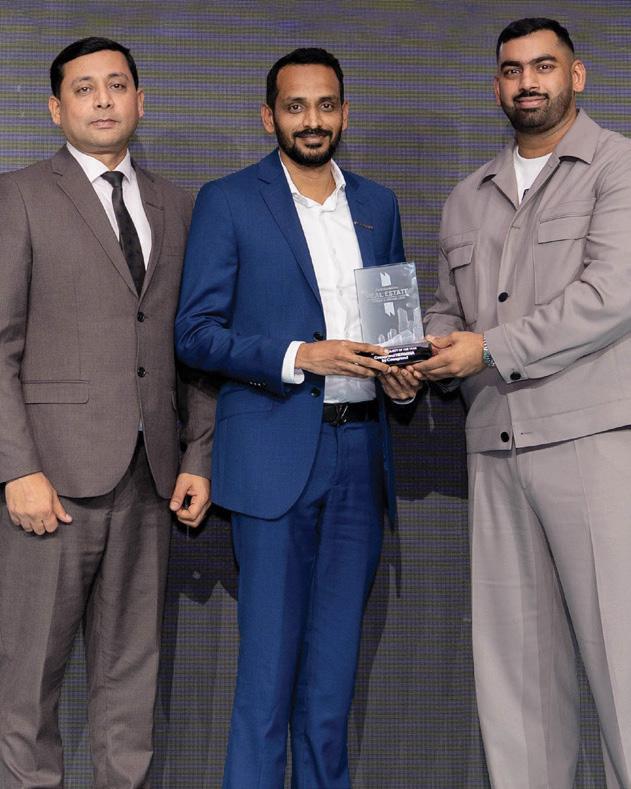
OFF-PLAN PROJECT OF THE YEAR
Casagrand HERMINA by Casagrand
ICONIC BUILDING OF THE YEAR
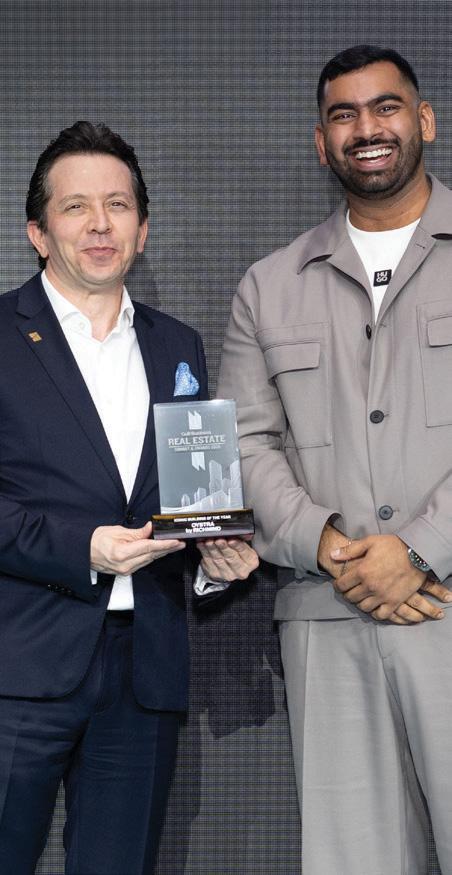
OYSTRA by RICHMIND
REAL ESTATE AGENCY OF THE YEAR
Driven Properties
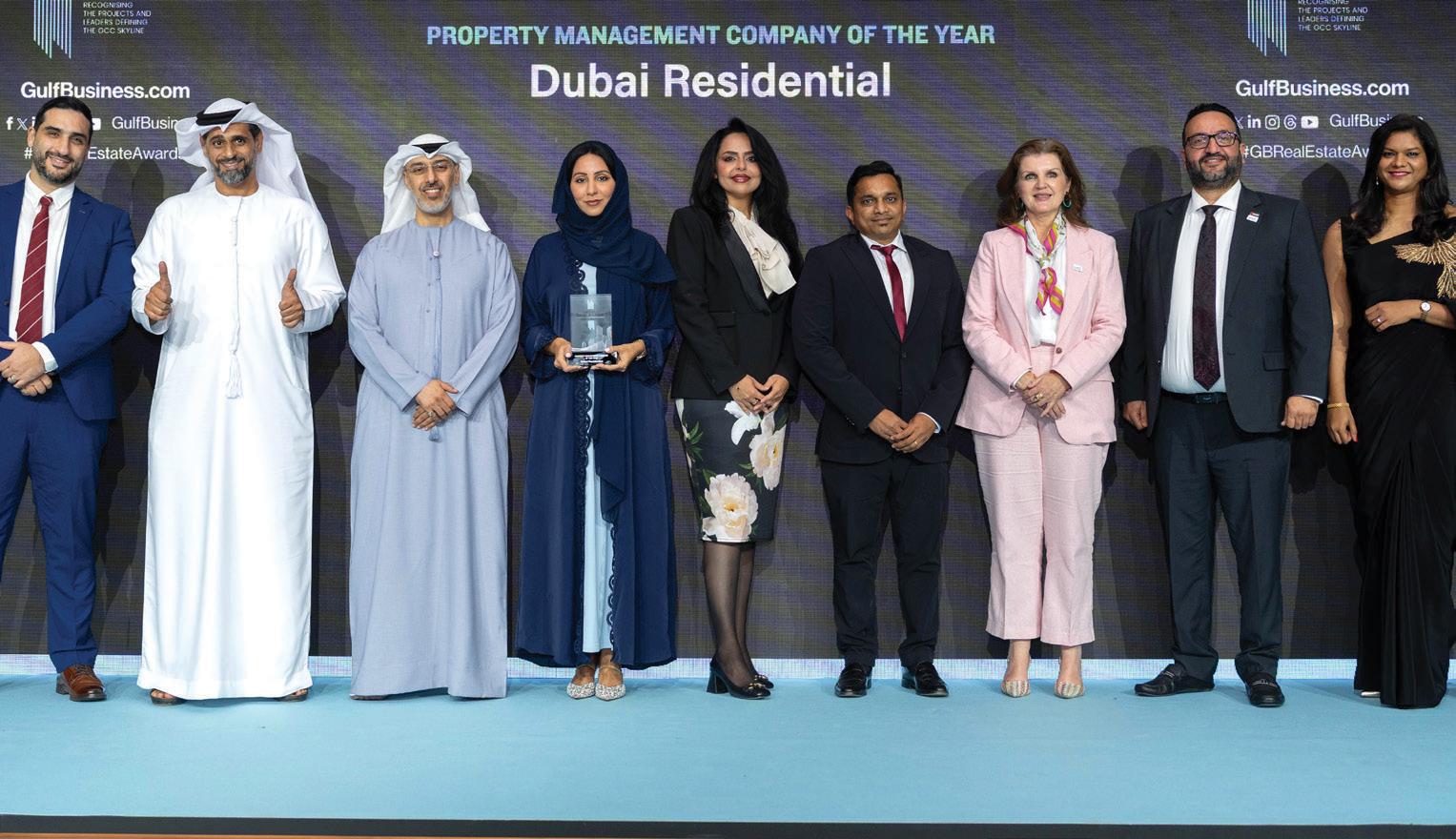
PROPERTY MANAGEMENT COMPANY OF THE YEAR
Dubai Residential
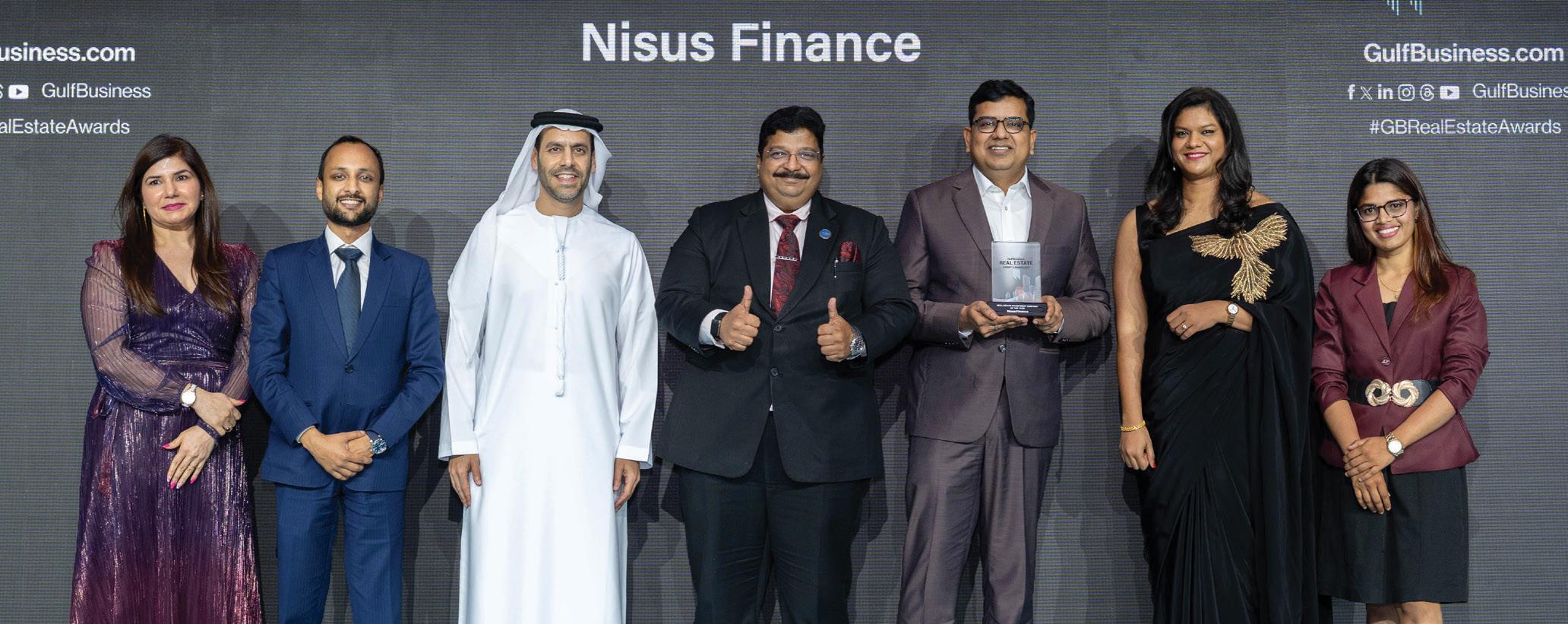
REAL ESTATE INVESTMENT COMPANY OF THE YEAR
Nisus Finance
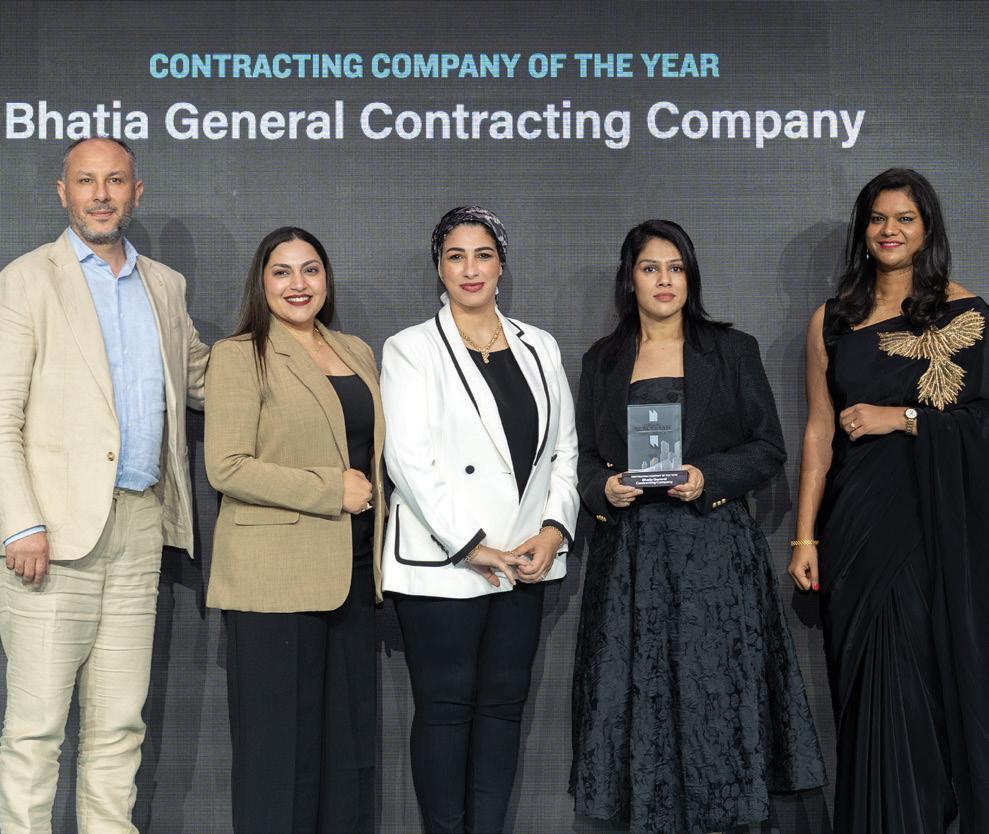
CONTRACTING COMPANY OF THE YEAR
Bhatia General Contracting Company
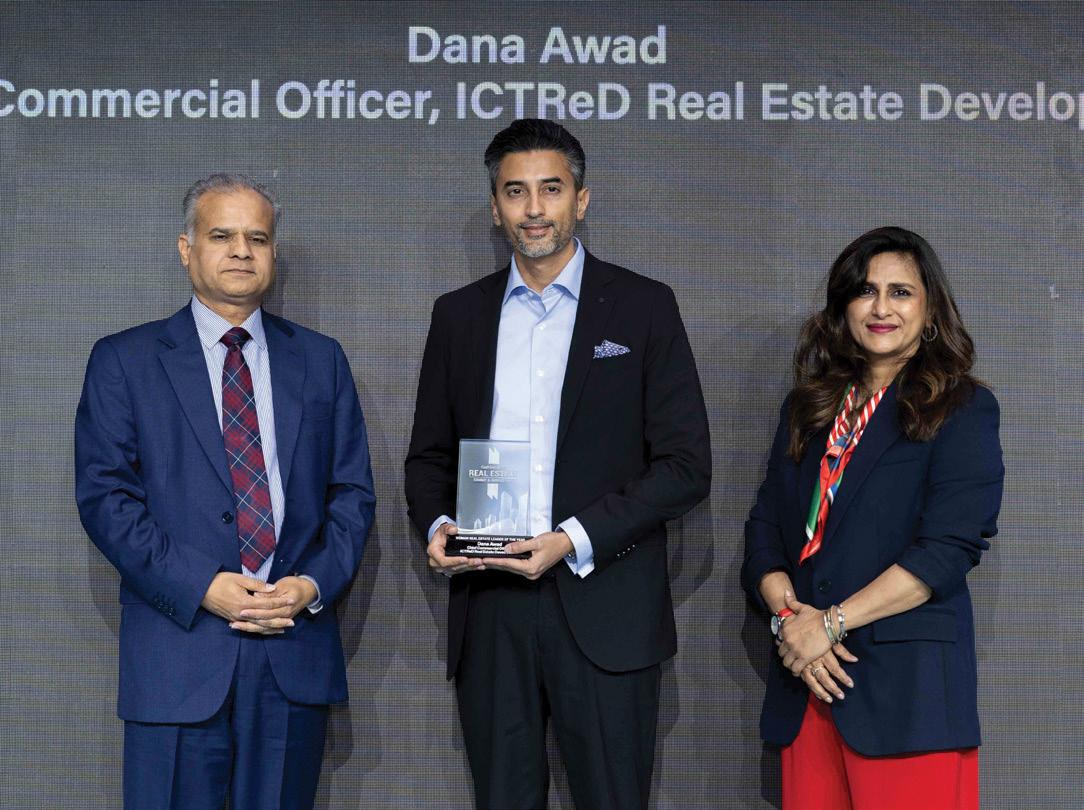
WOMAN REAL ESTATE LEADER OF THE YEAR
Dana Awad, Chief Commercial O icer, ICTReD Real Estate Development
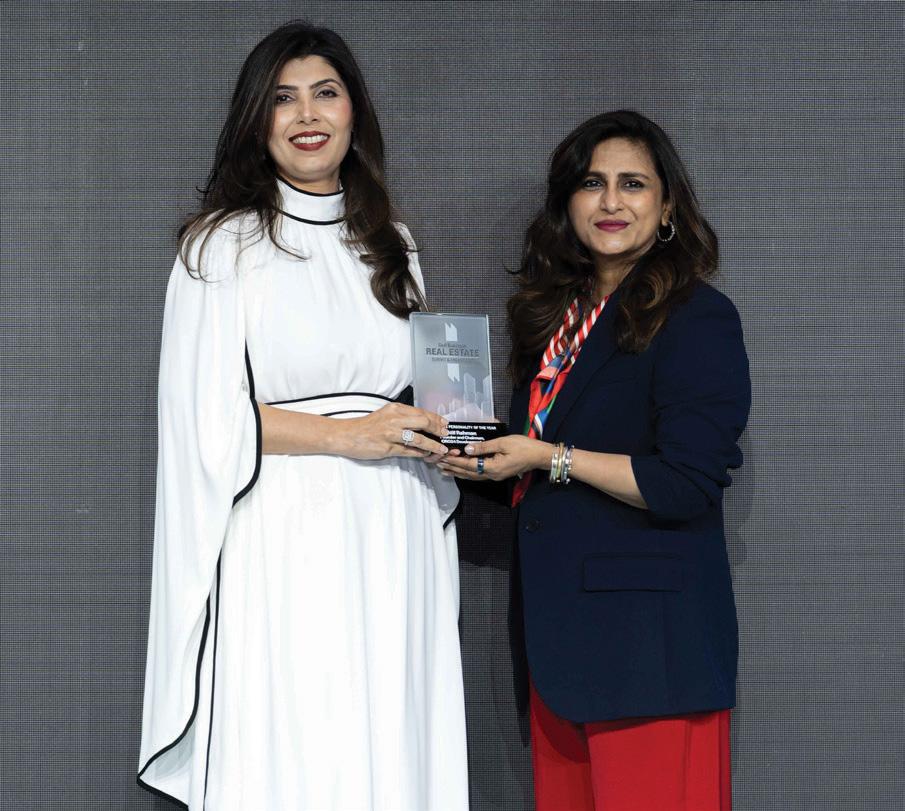
REAL ESTATE PERSONALITY OF THE YEAR
Atif Rahman, Founder and Chairman, ORO24 Developments
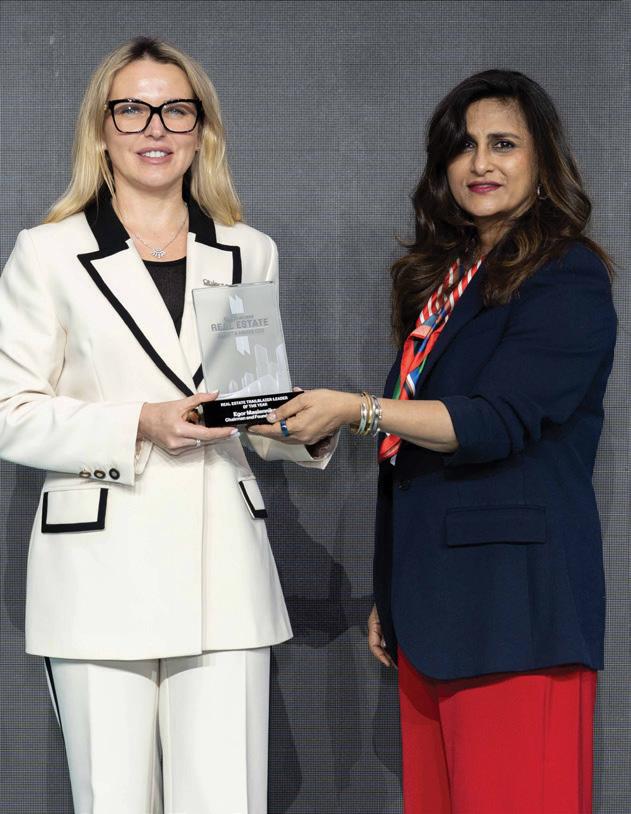
REAL ESTATE TRAILBLAZER LEADER OF THE YEAR
Egor Maslennikov, Chairman and Founder, Object 1
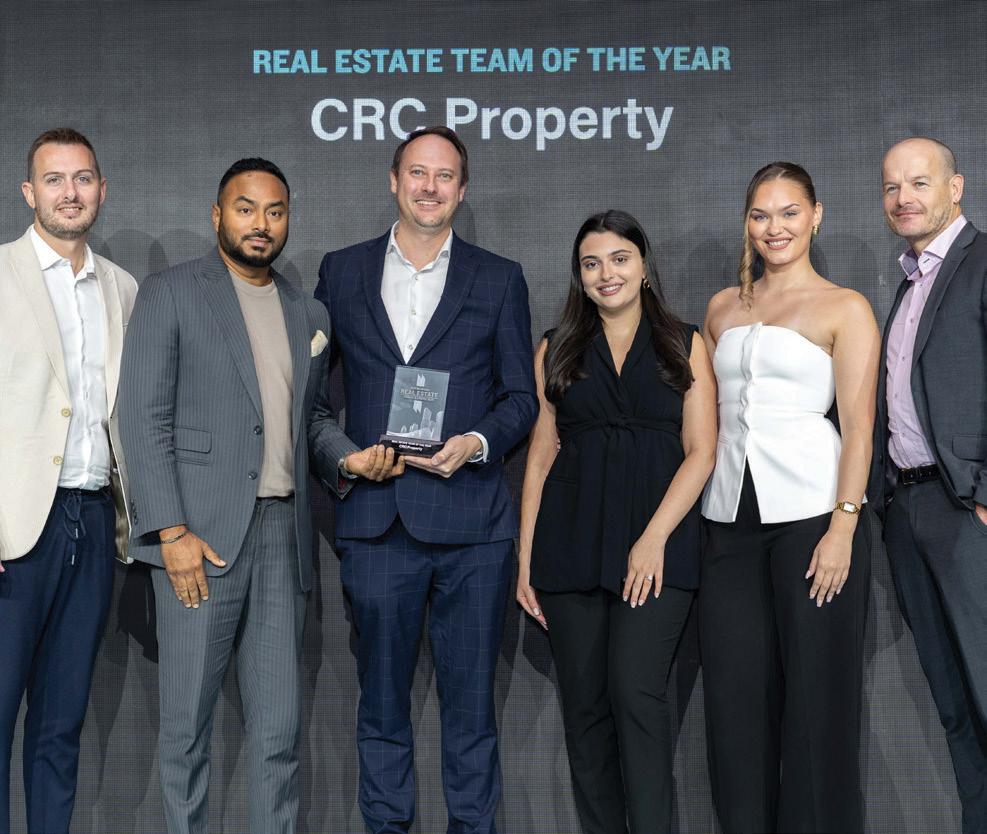
REAL ESTATE TEAM OF THE YEAR
CRC Property
SMART AND SUSTAINABLE DEVELOPER OF THE YEAR
Msheireb Properties
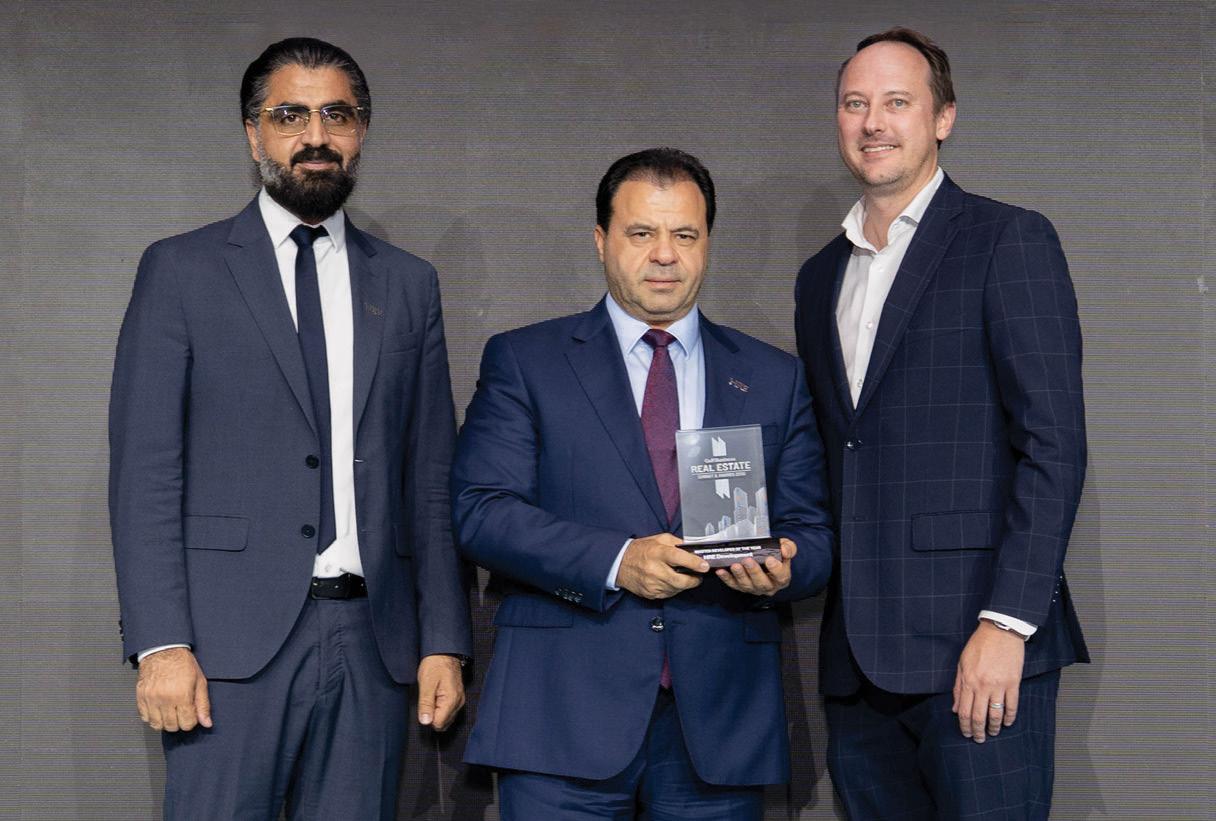
MASTER DEVELOPER OF THE YEAR HRE Development
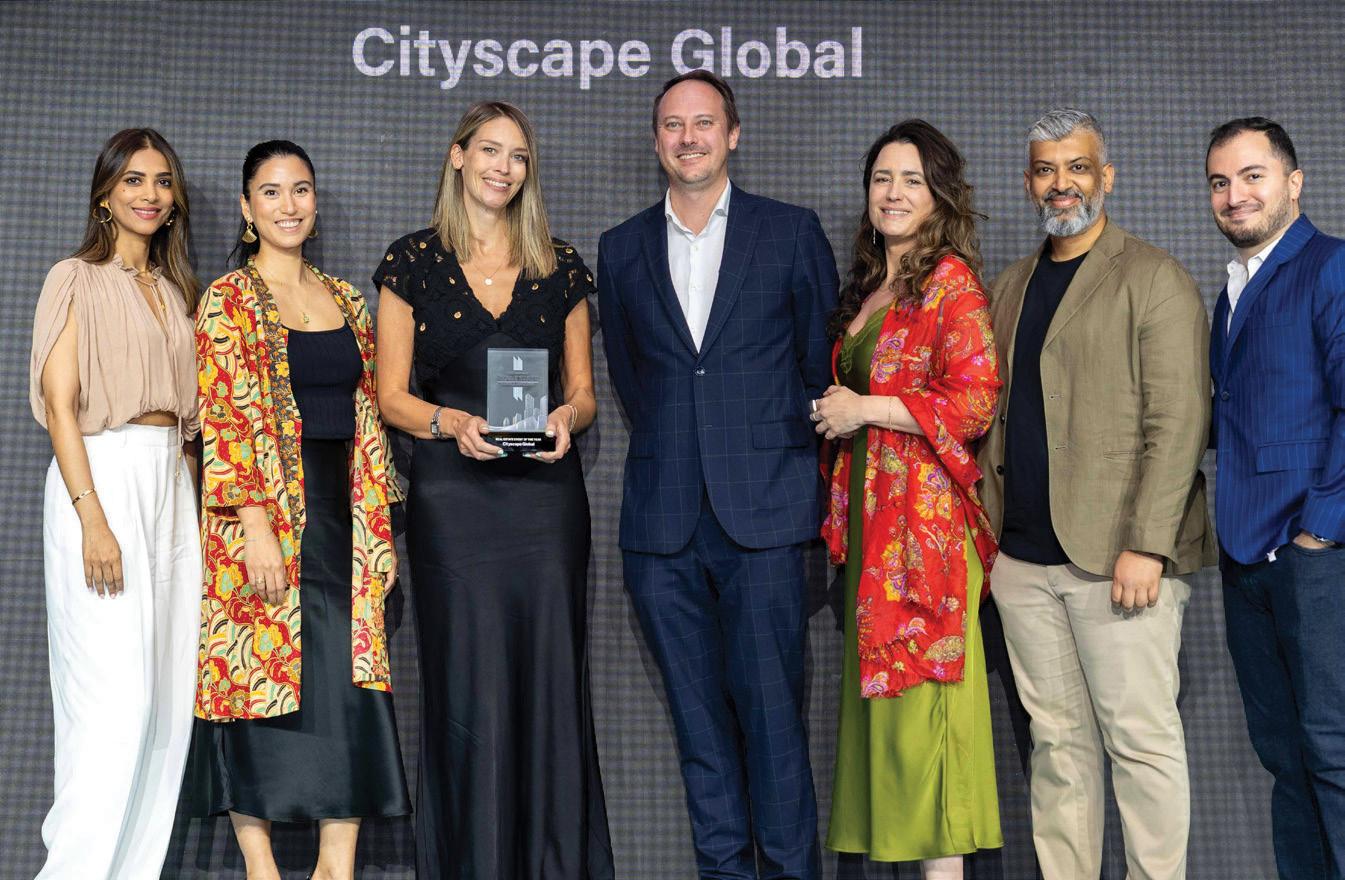
REAL ESTATE EVENT OF THE YEAR
Cityscape Global
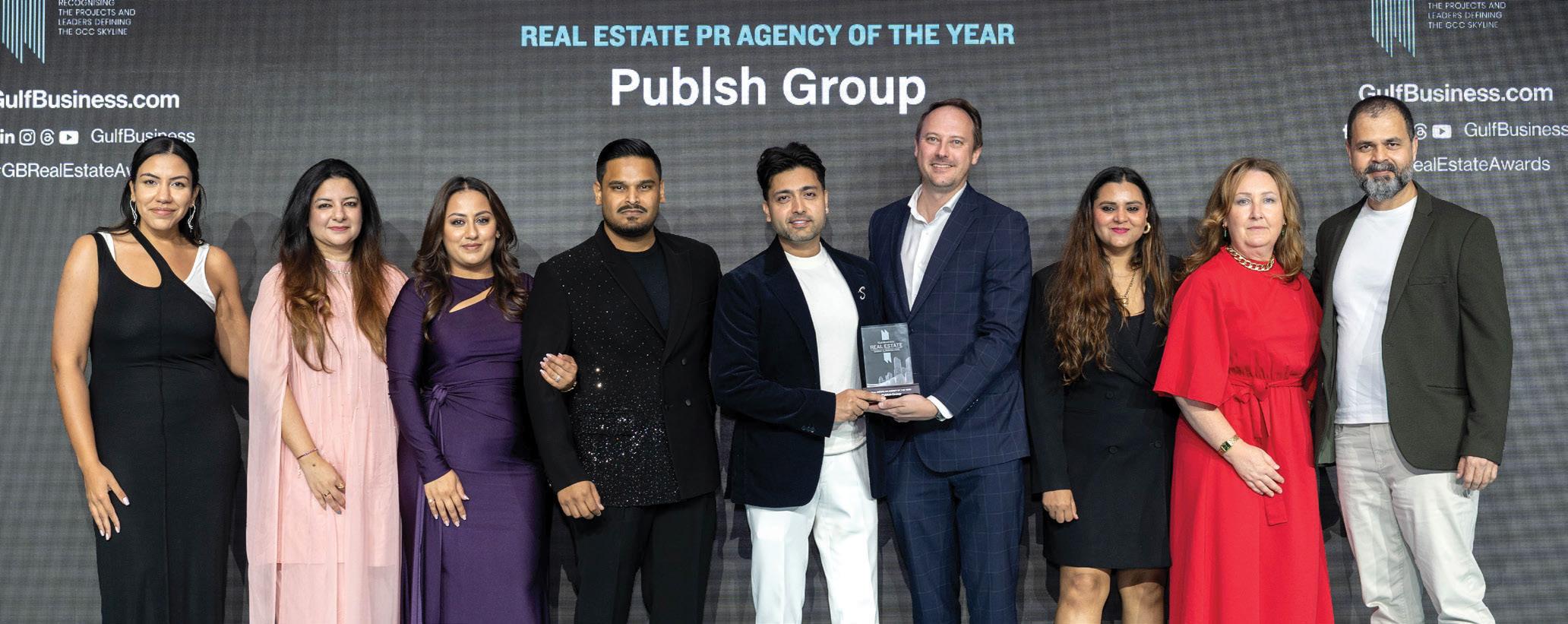
REAL ESTATE PR AGENCY OF THE YEAR
Publsh Group
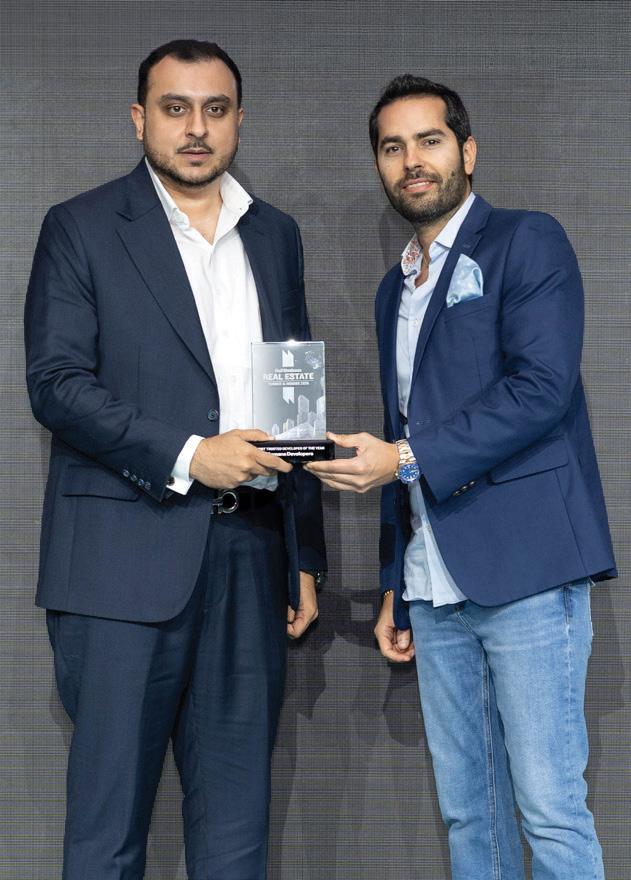
MOST TRUSTED DEVELOPER OF THE YEAR
Samana Developers
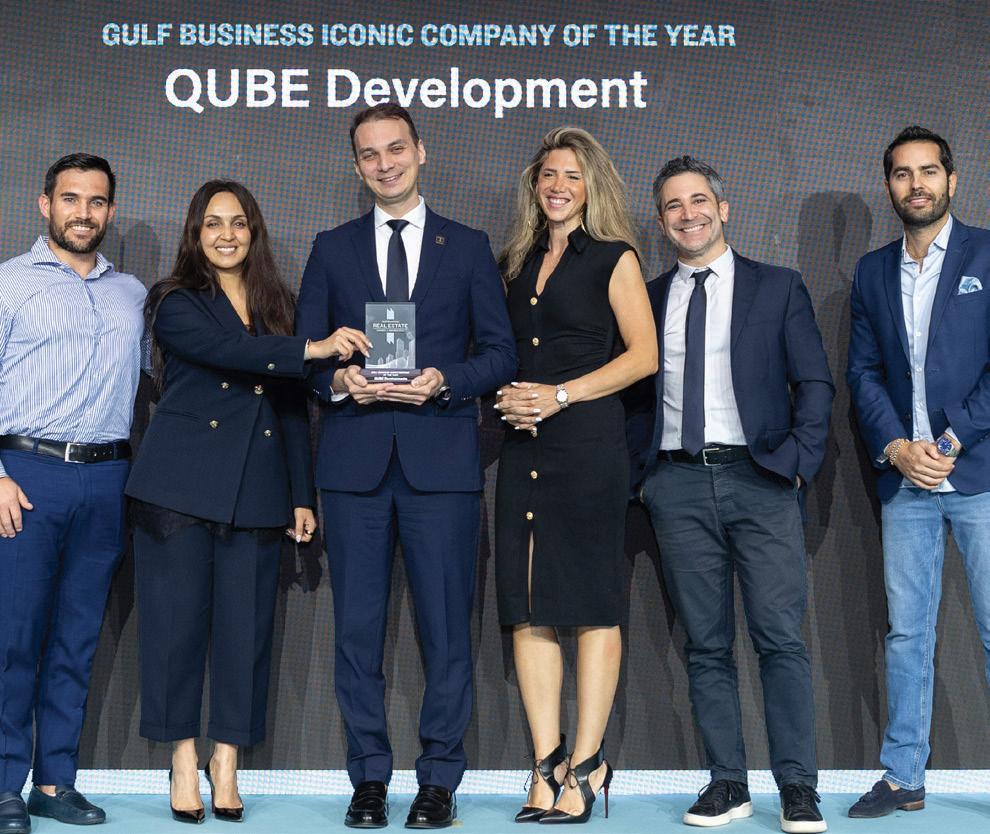
GULF BUSINESS ICONIC COMPANY OF THE YEAR
QUBE Development
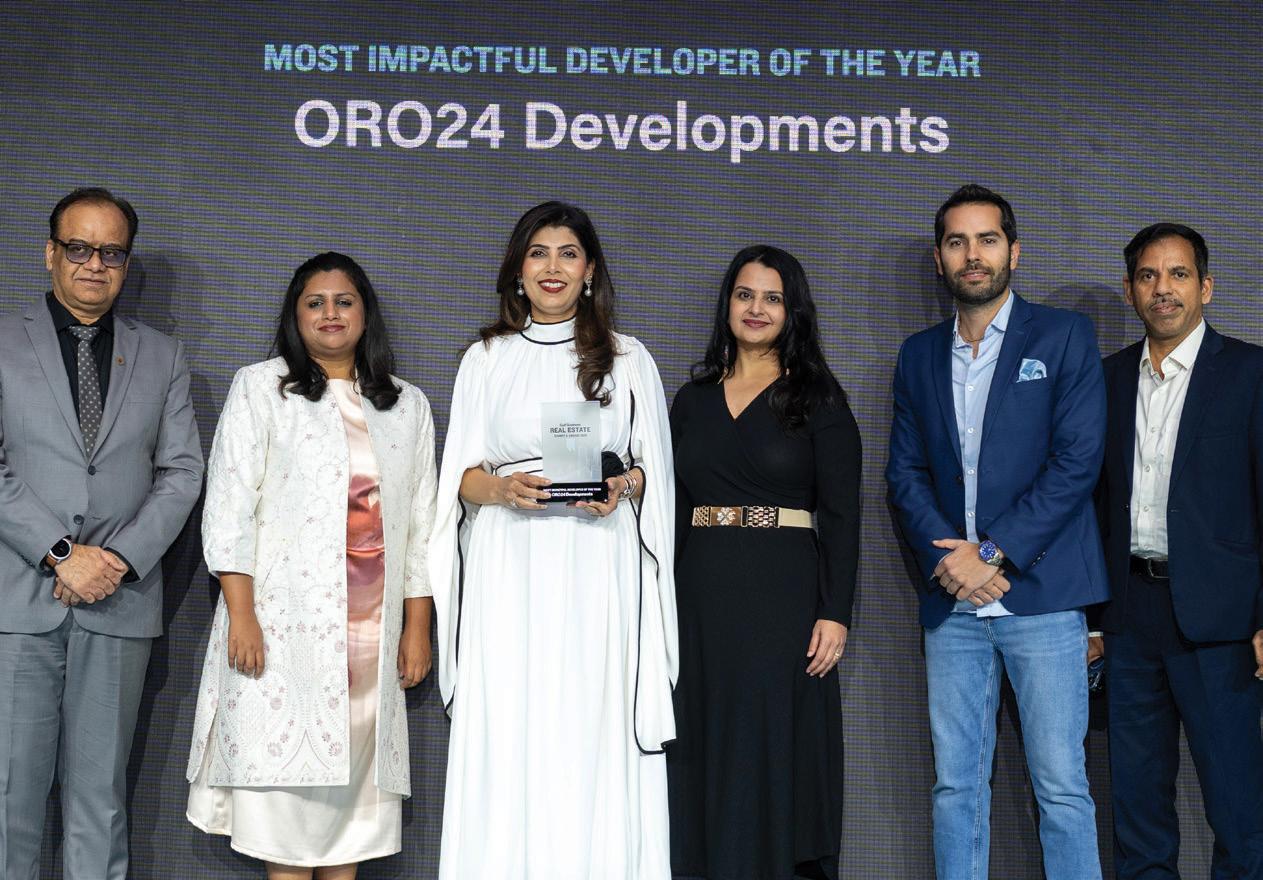
MOST IMPACTFUL DEVELOPER OF THE YEAR ORO24 Developments
Arabian Sparta: The coming GCC defence industry boom
The Gulf’s air defences have done more than hold the line — they have shattered old assumptions about the region’s military readiness
Western analysts have spent a year debating whether the Gulf states could survive real military pressure.
Some think tanks, academics and thinkers were polite but sceptical. The posited assumptions included a perception of wealthy states, capable of procuring sophisticated hardware but not of fielding it under fire, underwritten by oil and gas revenues as well as American guarantees, rather than self-sustaining models and strategic planning.
With the start and now potential end of Operation Epic Fury, that thesis has been proven unfounded in full and the implications for what is taking place across the Gulf are immense and reassuring.
WHAT THE NUMBERS SHOW
The air defence numbers tell the story plainly and dispel all myths. The UAE alone has engaged over 2,000 projectiles, recording interception rates above 90 per cent for ballistic threats while keeping its airports, financial institutions, and government functioning throughout.
Saudi Arabia, drawing on years of live operational experience against Houthi strikes before this conflict began, maintained comparable rates across a defensive architecture that includes one of the world’s largest Patriot-based air-defence architectures, outside the US. Kuwait, Qatar, and Bahrain all intercepted sustained salvos, showing that this has been a
Gulf-wide defensive effort, not something borne by the UAE and Saudi Arabia alone. The GCC’s sustained air defence capabilities seem to be on par with far more battle-tested nations such as Israel or Ukraine.
Defence procurement cycles do not move on the strength of exhibition halls or interoperability briefings. They move when buyers watch systems perform under live fire and stop having to imagine whether they work. The Gulf’s defence is a massive endorsement of systems that will further proliferate globally. Furthermore, urgency produces both innovation and development.
MANUFACTURING CAPABILITIES
We will likely see a GCC transform into not just a far greater defence purchaser but a bastion of domestically produced defence systems. Much of that infrastructure is already in place.
The GCC entered this conflict better prepared to capitalise on that shift than most outside observers appreciated. The UAE’s EDGE Group reported revenue of approximately $4.9bn in 2024, expanded its product portfolio from 30 items in 2019 to 201 by last year, and carried an order backlog of $12.8bn before a single missile was fired in March.
A defence cooperation framework signed with South Korea’s procurement agency in late February was valued at roughly $35bn.
At UMEX in Abu Dhabi in January, EDGE unveiled the VORTEX-E autonomous kinetic counter-drone interceptor, a system with reported speeds of up to 350 km/h. Weeks later, that kind of capability stopped being a product demonstration and became an operational requirement across every GCC air defence cell.
Saudi Arabia’s trajectory is equally consequential. Through SAMI, the kingdom has driven domestic defence content from 4 per cent in 2018 to 25 per cent by end of 2024, with a stated target of 50 per cent by 2030 under Vision 2030. At the World Defense Show in Riyadh in February, which closed $8.8bn in contracts across 1,486 exhibitors from 89 countries just 16 days before the conflict began, SAMI inaugurated an 82,000 square metre land industrial complex capable of producing 1,500 military vehicles annually and launched autonomous systems and land
THROUGH SAMI, THE KINGDOM HAS DRIVEN DOMESTIC DEFENCE CONTENT FROM 4 PER CENT IN 2018 TO 25 PER CENT BY END OF 2024
Eitan Charnoff is founder and CEO of Potomac Strategy, a GCC-based public affairs and geopolitical consultancy and an expert on drone and missile response and rescue operations
vehicle subsidiaries. That show will look different when the next edition convenes. So will every defence conference on the GCC calendar. The precedents for what follow are instructive.
Israel’s defence exports reached a record $14.7bn in 2024, with air defence systems making up nearly half the total, a direct consequence of decades of operational validation that transformed their platforms into products that buyers no longer needed to take on faith.
Combat credibility shrinks timelines and opens export markets that peacetime marketing cannot reach. The Gulf is now entering that phase, and across all six GCC members rather than in any single state.
There is a deeper dimension to this that the procurement figures alone do not capture. The region’s governments did not merely hold together under pressure. They governed with calm and confidence. Emergency arms packages totaling $23bn were fast-tracked from Washington within weeks of hostilities beginning, reflecting not charity but confidence in partners who had demonstrated the institutional capacity to absorb and deploy advanced systems at scale. The old characterisation of Gulf security, specifically that of so-called wealthy buyers of imported protection, dependent on foreign guarantees, functional only in benign conditions, has been overtaken by events and a demonstration of Gulfwide competent leadership and long-term planning. The coming defence industrial boom across the GCC will be driven by something harder to manufacture than procurement budgets: the lived experience of being targeted and holding the line.
That kind of validation is the compound return on decades of investment in both hardware and institutional depth. The GCC will thrive through this conflict and perhaps be a more attract hub than ever and could expect a global defence boom that draws even more capital, customers, and expats to one of the best protected economic hubs on earth.
COMBAT CREDIBILITY SHRINKS TIMELINES AND OPENS EXPORT MARKETS THAT PEACETIME MARKETING CANNOT REACH. THE GULF IS NOW ENTERING THAT PHASE, AND ACROSS ALL SIX GCC MEMBERS RATHER THAN IN ANY SINGLE STATE.
Transaction banking: Powering the future of global commerce
As businesses demand faster, smarter, and more connected financial ecosystems, transaction banking is emerging as the strategic backbone enabling global trade, liquidity, and growth
Transaction banking is often viewed as a functional layer of banking, invisibly supporting the day-to-day movement of money from a background position. In reality, it is the powerful engine driving global commerce, underpinning the systems that allow businesses to operate, scale, and connect across markets. When these systems function efficiently, trade accelerates and capital flows freely. When they do not, friction builds quickly, hampering supply chains and constraining growth. What was once considered simply operational has now become a strategic lever of business performance, and banks must ensure their transaction banking functions are more than fit for purpose.
FORCES RESHAPING THE LANDSCAPE
From facilitating payments and managing liquidity
to enabling trade and safeguarding financial flows, transaction banking forms the vital infrastructure that keeps global commerce in motion. And as economies become increasingly interconnected, these capabilities must extend across borders. Businesses today rely on the ability to move capital seamlessly and immediately, across jurisdictions, while managing multi-currency exposures and maintaining visibility over their financial positions in real time.
Several structural shifts are driving this transformation and evolution. The rise of instant, always-on economies is setting new expectations around speed and transparency. Businesses and consumers alike now expect transactions to be processed instantly, with full visibility at every stage. At the same time, supply chains are becoming more complex and geographically dispersed, increasing the need for sophisticated cross-border solutions that can handle risk and scale without sacrificing efficiency.
Customer experience is also becoming a critical differentiator, with rising expectations for frictionless, digitally enabled journeys across the entire lifecycle. Clients now expect banks not just to keep pace, but to set the benchmark for innovation, simplicity, speed, and transparency. Simultaneously, the growing influence of fintech innovators and embedded finance models is reshaping the competitive environment,
pushing traditional institutions to accelerate innovation. In this new paradigm, transaction data is no longer useful just for record-keeping; it has become a strategic asset, offering valuable insights that extend far beyond operational use.
These shifts are not incidental; they signal a fundamental transformation in how transaction banking is delivered, experienced, and valued.
THE SCALE AND SIGNIFICANCE
The scale of the transaction banking sector underscores its strategic importance in the financial landscape. According to McKinsey it represents an $1.3tn in annual revenues globally, accounting for almost half of wholesale banking income. More importantly, it is one of the most resilient segments within the financial system. Its value lies not only in revenue generation, but in its ability to support core business functions, and its non-negotiable, essential role.
Transaction banking is also one of the largest areas of strategic investment for banks, sitting at the intersection of payments, liquidity, trade, and data. It is increasingly becoming a platform for nextgeneration, cutting-edge innovation, from digital assets and tokenised payments to stablecoins and programmable money.
As these technologies evolve, transaction banking is becoming the primary channel through which banks experiment, scale, and deliver new capabilities to clients.
At a practical level, transaction banking enables organisations to manage liquidity with precision, optimise working capital, and maintain operational continuity. It allows companies to mobilise cash efficiently, reducing idle balances and improving financial flexibility. It also supports essential processes such as payments, collections, and crossborder settlements, while helping businesses navigate foreign exchange exposures, counterparty risks, and regulatory requirements across multiple markets.
SEVERAL STRUCTURAL SHIFTS
AROUND SPEED AND TRANSPARENCY.
Vivek Batra is global head of Transaction Banking at Mashreq
THE SCALE OF THE TRANSACTION BANKING SECTOR UNDERSCORES ITS STRATEGIC IMPORTANCE IN THE FINANCIAL LANDSCAPE. ACCORDING TO MCKINSEY IT REPRESENTS AN $1.3TN IN ANNUAL REVENUES GLOBALLY, ACCOUNTING FOR ALMOST HALF OF WHOLESALE BANKING INCOME.
TRANSACTION BANKING IS CRUCIAL TODAY
The strategic value of transaction banking today lies in how its capabilities are delivered and integrated. It is increasingly embedded within corporate ecosystems, evolving from a standalone service into a deeply integrated capability. Seamless connectivity through advanced platforms and APIs is making financial services more immediate, intuitive, and aligned with core business operations. At the same time, advances in analytics and artificial intelligence are reshaping the role transaction banking plays. Beyond being used solely for reporting, data is being leveraged to generate proactive, forward-looking insights, helping businesses anticipate liquidity needs, identify inefficiencies, and make more informed decisions. This shift is turning transaction banking into a more proactive, intelligence-driven function. As commerce becomes more digital and interconnected, reliability and security are taking on even greater importance. The ability to ensure continuity, protect sensitive data, and maintain trust across complex networks is critical. Transaction banking sits at the centre of this responsibility, providing the stability that modern commerce depends on.
LOOKING AHEAD
The evolution underway is clear. Transaction banking is no longer a background function; it is rapidly becoming a central component of how modern businesses operate, compete, grow, and create value. Indeed, customers are increasingly looking to banks to lead the way in relevant tech and innovation. As the global economy grows increasingly digital, interconnected, and complex, its importance will only continue to expand, solidifying its position as a defining force shaping the future of commerce, and we must respect this importance – and customer expectation – in our strategies and operations.
Agentic commerce and accountability
AI can shop for you, but who takes responsibility when things go wrong? We find out
The conversation around agentic commerce often focuses on whether consumers will trust AI to act on their behalf.
That question matters. But for the industry, the more important issue is how confidence is established in practice. The most concrete way to do that is through accountability.
The real test is whether commerce remains accountable as AI moves from assisting decisions to executing them, from discovery to purchase. Consumer trust will be essential to adoption. But
earning that trust will depend on whether the systems behind agentic commerce can remain transparent, controllable, and accountable.
FROM RECOMMENDATION TO DELEGATION: WHY AI COMMERCE RAISES THE STAKES
We are shifting from search and human-led discovery to agent-driven checkout and delegated purchasing. Search became recommendation. Recommendation became prediction. Now, prediction is becoming delegation. Consumers are beginning to ask AI not
just to compare options, but to act on their behalf. Once that happens, the stakes change. The question is no longer whether the experience feels smart, but whether users have clear control, transparency, and a way to fix things if something goes wrong.
Users will need clear control over when an agent assists and when it is authorised to act. Asking an AI tool to surface travel options is not the same as authorising it to book a flight within defined parameters. That authority should be specific, limited, revocable, and easy to review.
As agents become more capable, liability becomes the key question. If an agent makes the wrong choice, exceeds its authority, or triggers a disputed transaction, who is responsible? This concern is already visible. Forrester’s March 2025 Consumer Pulse Survey found that only 24 per cent of online adults in the US trust AI agents to make routine purchases on their behalf, underlining how central accountability will be to adoption.
The answer is unlikely to require an entirely new rulebook. In many cases, the underlying character of payments does not change because AI is involved. Responsibility will still rest where something goes wrong, whether with the user, the merchant, or the payment provider. The immediate task is to ensure existing privacy, security, and consumer protection frameworks clearly apply, while industry develops practical standards for how these systems work in practice.
TRUST, LIABILITY AND MERCHANT FAIRNESS IN THE AGE OF AGENTIC PAYMENTS
There is also a broader market dynamic. If conversational interfaces become a new front door to commerce, trust will depend on preserving merchant visibility and fair access for smaller businesses. How merchants are surfaced in these environments will shape competition as much as user experience. That matters because smaller businesses are already moving in this direction. PayPal-backed research from June 2025 shows that 76 per cent of small businesses in the US are already using or exploring AI tools, while 61 per cent support expanded practical training to help small firms integrate AI tools into their business.
This is particularly relevant in the Middle East and Africa, where cross-border demand, diverse payment preferences, and mobile-first behaviour define the market. In these environments, interoperability is not optional. It is foundational.
The direction is already clear. AI-driven commerce is accelerating existing pressures around interoperability, identity, control and customer experience. Research from International Data
Bassit Abbas is head of Government Relations (Middle East, Africa and Central Asia) at PayPal
FORRESTER’S MARCH 2025
CONSUMER PULSE SURVEY FOUND THAT ONLY 24 PER CENT OF ONLINE ADULTS IN THE US TRUST AI AGENTS TO MAKE ROUTINE PURCHASES ON THEIR BEHALF, UNDERLINING HOW CENTRAL ACCOUNTABILITY WILL BE TO ADOPTION.
Corporation shows that 57 per cent of enterprises globally plan to invest in advanced analytics to better understand customers and increase conversion, while 31 per cent identify digital wallets as the trend most likely to shape customer engagement and online payments.
As these systems become more capable, the challenge shifts. It is no longer just about what AI can do, but how those actions are governed in practice. As agents take on more responsibility, the systems behind them will need to hold under real-world conditions, especially when decisions lead to errors, disputes or unintended outcomes.
The next chapter of commerce will not be defined by the most advanced AI agent. It will be defined by those who set the clearest rules for permission, ensure continuity across the transaction journey, and build systems users and policymakers can depend on when something goes wrong.
That is where accountability moves from principle to practice. And ultimately, that is what will determine who earns trust at scale.
76 PER CENT OF SMALL BUSINESSES IN THE US ARE ALREADY USING OR EXPLORING AI TOOLS
While command-and-control leadership can deliver short-term decisiveness, humility is increasingly proving to be the more sustainable driver of trust, innovation and resilience
Multiple styles of leadership have developed over time, ranging from the autocratic to servant leadership, each with its own distinct patterns of behaviour for directing, motivating and managing teams. While recent years have seen a significant shift from the traditional command-and-control approach to a more human-centred, collaborative approach, the debate over which style of leadership is best remains as relevant as ever.
Some view top-down leadership as outdated and counterproductive, with dominant leaders tending to focus on control and end goals at the expense of their people. The result: employees who feel less purposeful, motivated and energised. Others feel that the current uncertainty in which organisations are operating requires leaders who are authoritative, decisive, and action oriented. But which approach works best? In this article, I explore the nuances, advantages, and pitfalls of humble and dominant leadership, offering actionable insights for business leaders in the Middle East and beyond.
Humility or dominance? Why modern leaders need both
THE CASE FOR HUMBLE LEADERSHIP
There is a myth that humility equates to weakness or indecision, but history has given us plenty of examples of leaders who have flourished while being humble. Mahatma Gandhi, Nelson Mandela and Microsoft’s Satya Nadella each enjoyed remarkable success while listening to and prioritising their people, focusing on collective success and giving credit to others.
Indeed, my research has shown that humble leaders are uniquely positioned to unlock the potential of their teams and drive organisational performance. They do this by empowering others, admitting their own limitations and focusing on purpose.
Humble leaders actively seek input from their teams, making people feel valued and heard. Adopting a mindset as a servant leader – a mindset whereby leaders view their key role as serving employees and providing tangible, emotional support to them as they learn, explore and grow – fosters a culture of psychological safety where employees are more likely to speak up, share ideas, and challenge the status quo.
Rather than projecting infallibility, humble leaders are comfortable acknowledging what they don’t know. After all, in a fast-changing world, the leader can’t know everything. This transparency not only builds trust but also encourages collective problemsolving and continuous learning.
Humble leaders consistently connect daily work to a broader sense of purpose, inspiring employees
Dan Cable is professor of Organisational Behaviour at London Business School. He is the author of several books, including Exceptional, Alive at Work: The Neuroscience of Helping Your People Love What They Do, and Change to Strange
to find meaning in their roles. By helping people feel purposeful, motivated and energised, they allow employees to bring their best selves to work.
THE DOMINANT LEADERSHIP STYLE
On the other end of the spectrum, dominant leaders are characterised by assertiveness and a commandand-control approach. This style has traditionally been associated with strong, decisive leadership, qualities often prized in crisis or high-stakes environments when decisiveness can inspire confidence and provide a sense of direction.
Research by my London Business School colleague Niro Sivanathan has shown, however, that the dominant style can come with significant downsides. Dominant leaders tend to suppress dissent, discourage open dialogue, and stifle creativity. Employees who feel intimidated may be reluctant to challenge the leader’s decisions, leading to groupthink and missed opportunities.
Equally, while dominance can yield quick wins, especially in environments that value hierarchy, it often undermines trust and engagement over time. Consequently, organisations led by dominant figures may struggle to retain top talent and adapt to change.
My own research has shown that humble leadership has a significant role to play in times of crisis, challenging the notion that it is ineffective during upheaval. It can be particularly effective at enhancing employee adjustment and reducing turnover after disruptive shock events like the Covid-19 pandemic. This is because humble leaders are more likely to listen to employee concerns and are more willing to co-create solutions rather than imposing top-down changes. Importantly, after a period of uncertainty, humble leaders can re-establish trust by being transparent about challenges and honest about what the future holds.
HUMBLE VERSUS DOMINANT: WHICH STYLE WINS?
The dichotomy between humble and dominant leadership has real-world implications for organisational culture, performance, and resilience.
ADAPTABILITY
Humble leaders excel in environments that require adaptability and innovation. By encouraging input and learning from mistakes, they create the conditions for continuous improvement. Dominant leaders may struggle to foster the flexibility needed for long-term success.
EMPLOYEE ENGAGEMENT
My research findings suggest that humble leaders
drive higher levels of engagement, satisfaction, and retention. Employees who feel heard and valued are more likely to invest discretionary effort and remain loyal to the organisation. In contrast, dominant leadership can breed disengagement and turnover.
ORGANISATIONAL REPUTATION
In an era where transparency and social responsibility are paramount, humble leaders are better positioned to build trust with stakeholders, from employees to investors to the wider community.
A BALANCED APPROACH FOR THE MODERN LEADER
The choice between humble and dominant leadership is not binary. The most effective leaders are those who can flex their style to suit the context –demonstrating humility to empower their teams but also stepping up with decisiveness when the situation demands. My top tips are:
CULTIVATE SELF-AWARENESS
The first step is to understand your default style and its impact on others. Solicit honest feedback and be willing to listen and adapt.
BLEND STRENGTH WITH HUMILITY
The best leaders are those who combine the confidence to lead with the humility to listen, learn, and grow.
MODEL THE CULTURE YOU WANT
Ultimately, leadership style shapes organisational culture. By modelling humility, leaders can foster a culture of trust, innovation, and shared purpose –key ingredients for sustainable success. Humility is not about downplaying authority, but about using it to elevate others, charting a course that balances strength with empathy, authority with openness, and ambition with purpose. The future belongs to leaders who can harness the power of humility without sacrificing decisiveness.
HUMBLE LEADERS ACTIVELY SEEK INPUT FROM THEIR TEAMS, MAKING PEOPLE FEEL VALUED AND HEARD.
ADOPTING A MINDSET AS A SERVANT LEADER
BUILDING AN ENDURING LEGACY
FROM A TWO-ROOM CLINIC IN DUBAI TO LEADING A REGIONAL HEALTHCARE EMPIRE, DR AZAD MOOPEN , FOUNDER CHAIRMAN, ASTER DM HEALTHCARE, HAS SPENT NEARLY FOUR DECADES PROVING THAT COMPASSION AND SCALE CAN COEXIST
WORDS NEESHA SALIAN PHOTOGRAPHS JOHN MELENCION
“H
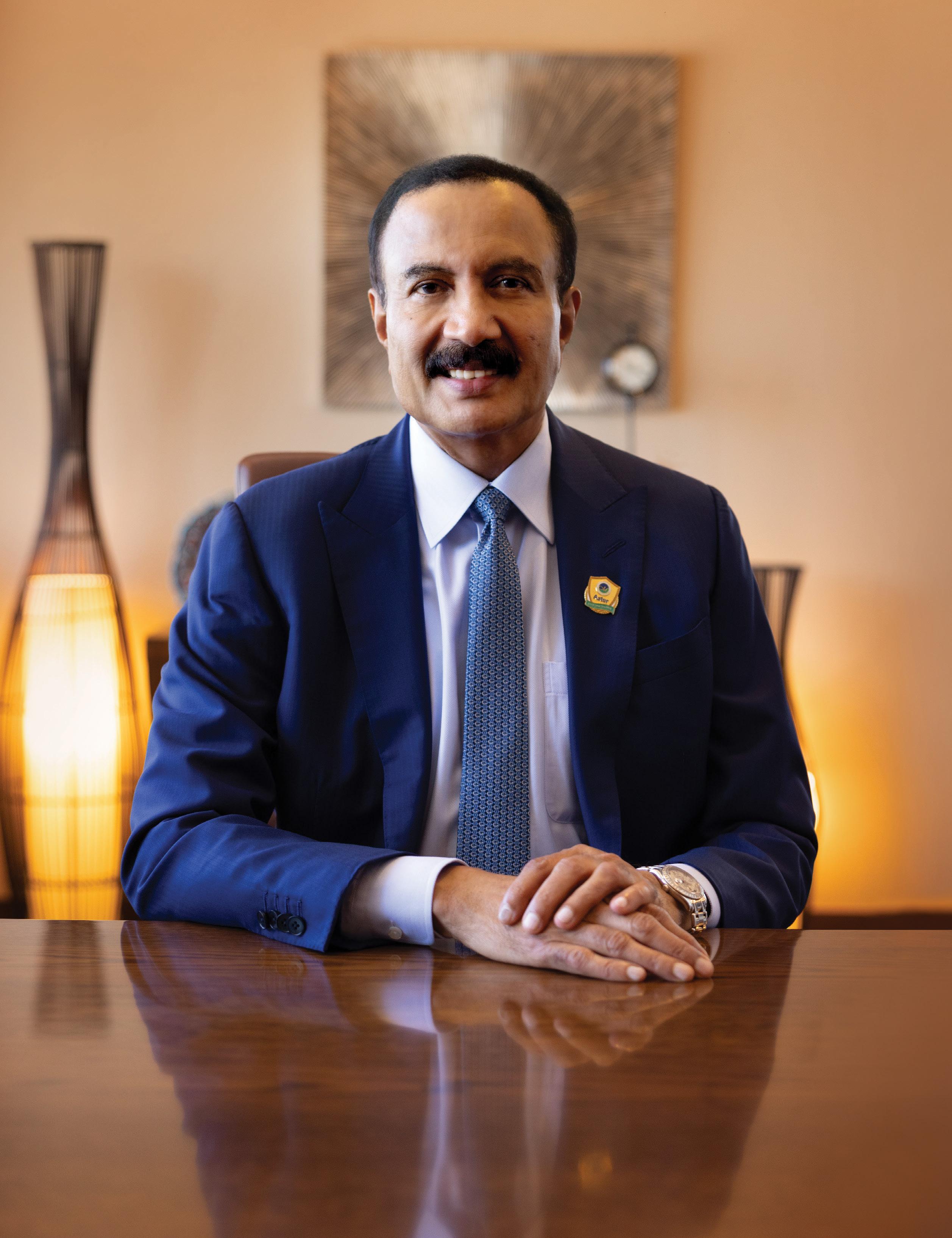
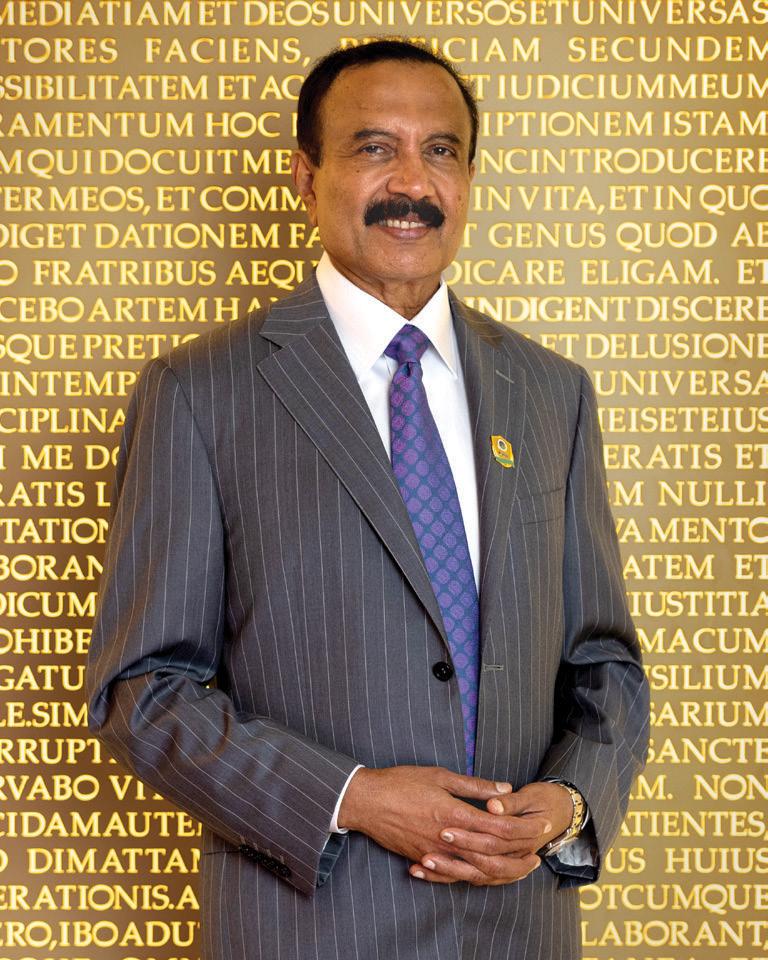
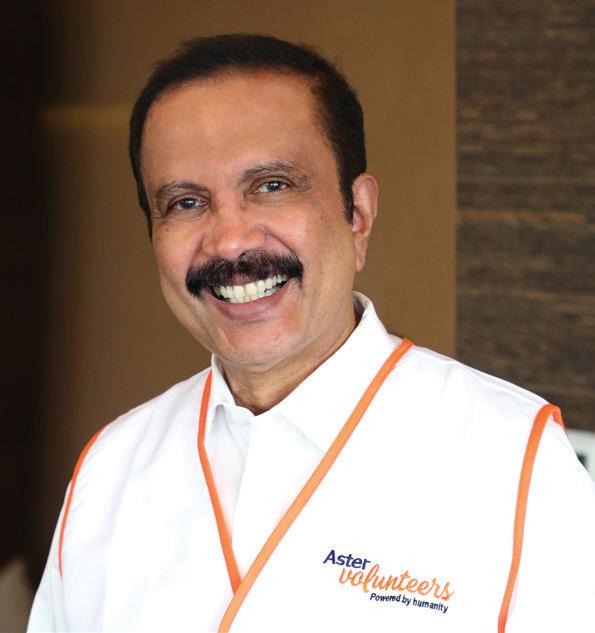
ealthcare should preserve dignity, irrespective of financial background.” Dr Azad Moopen says it quietly, almost matterof-factly, as though it is an obvious truth rather than the organising principle behind one of the largest integrated healthcare networks in the Gulf and India. At 73, the founder of Aster DM Healthcare carries little of the theatre often associated with empire builders. His office in Dubai’s Business Bay reflects that restraint. There is a framed Hippocratic Oath near the entrance. The company’s six values, compassion, respect, unity, excellence, integrity and passion, feature prominently nearby. The interiors are warm rather than aggressively corporate.
He speaks softly, answers directly, and rarely embellishes his own story. Which is perhaps why the scale of what he has built can feel slightly understated.
Today, Aster operates in seven countries, employing over 38,000 people, including more than 5,600 doctors and 10,000 nurses. It serves roughly 20 million patients annually.
BEGINNINGS IN BUR DUBAI
Dr Moopen came to the Emirates on a philanthropic errand, to raise funds for his village in Kerala, in Southern India. He was teaching at Calicut Medical College, a gold-medallist MBBS graduate with postgraduate specialisations in general medicine and tuberculosis and chest diseases. He intended to return to India within months. A friend in Ajman offered him a position at a clinic. Dr Moopen had obtained his licence and was preparing to start. Then, on the eve of joining, something unexpected happened. “He told me very firmly: ‘Ajman is
a small place for a postgraduate doctor like you. Why don’t you try Dubai?’” A sentence that shifted the trajectory of his life — and, with it, of regional healthcare. “Sometimes God shows you the way through other people,” he says. “Maybe that was one such moment.”
In December 1987, Dr Moopen leased a two-room apartment in Bur Dubai and opened the Al Rafa Polyclinic. He was the only doctor on the premises. He worked from 8am until midnight, and within a few years was seeing close to a hundred patients a day, most of them blue-collar workers from Port Rashid, men far from home, many unfamiliar with the language and unable to navigate the queues of government hospitals.
“What I had in my pocket was not much money,” he says now. “No business background, no major contacts, no big plans. But I had confidence in my profession, willingness to work hard, and a belief that healthcare should be accessible to everybody.”
Everything that follows in this story flows from that last sentence.
HOW A CLINIC BECAME AN ECOSYSTEM
The Al Rafa Polyclinic grew, then outgrew its apartment. Dr Moopen moved into larger premises and hired additional doctors. Patients were collecting prescriptions and walking elsewhere to buy medicines. The decision was straightforward.
“So we thought, why not start a pharmacy also?” he says, with the matter-of-factness of a man who has answered this question many times. “Slowly the ecosystem started building like that.” That ecosystem, today, is one of the largest integrated healthcare networks in the Gulf. In the GCC region alone, Aster operates 15 hospitals, 126 clinics and 338 pharmacies across the UAE, Saudi Arabia, Qatar, Oman, Bahrain and Jordan. Aster GCC and Aster India
together run 1,000 facilities. A defining chapter came with the Malabar Institute of Medical Sciences in Calicut, the hospital Dr Moopen helped build in Kerala, where patients had previously travelled hundreds of kilometres for advanced treatment. He gathered a group of doctors, professionals and businessmen, pooled funds, and took the lead. “Initially, we were not thinking mainly about profit,” he says. “We were thinking about how to create a hospital which could provide comprehensive care locally.”
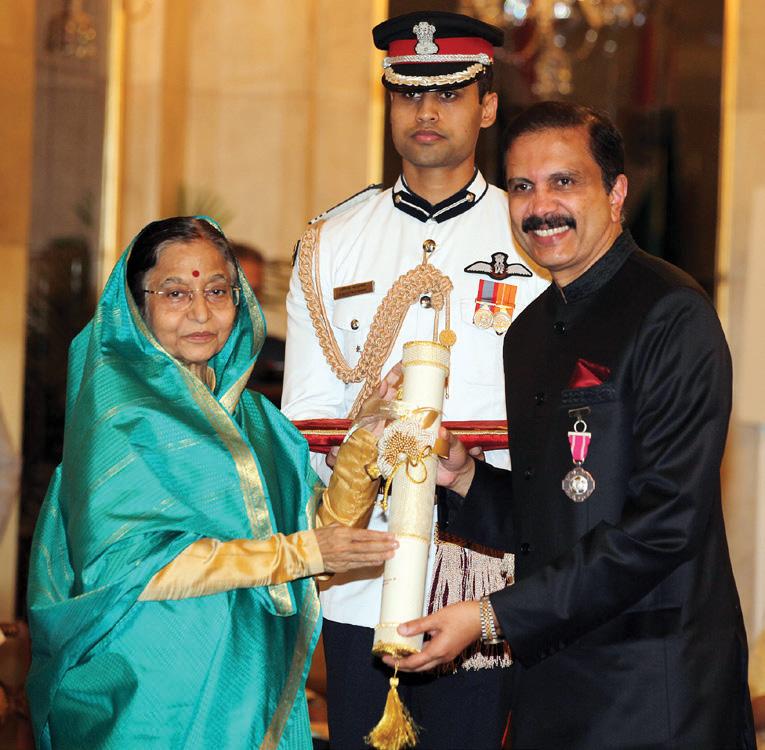
Sitting across a meeting table in Business Bay, the sentence reads less like marketing than memory. That commitment to service has been recognised by both Indian and Gulf governments. In 2011, the government of India conferred upon him the Padma Shri, India’s fourth-highest civilian award, for his contributions to healthcare and social responsibility. He was also named among the most powerful Indian leaders in the Arab World by media publications, a recognition that spans both his origins and his adopted region.
THREE BRANDS, ONE PROMISE
As the UAE grew and diversified, so did the composition of Aster’s patient base. Some wanted premium, hotel-grade healthcare; some, affordable quality; and some, clinics close to where they lived. Out of that organic demand, three Aster sub-brands evolved: Medcare for high-income patients, Aster for middleincome families, and Access for industrial and lower-income communities. “It was not that on day one we had planned three brands,” Dr Moopen says. “They evolved gradually.”
“Healthcare should not be one-size-fits-all. Different people have different needs, but everybody deserves dignity and quality treatment,” he says. The promise underneath all three brands is the same, painted on hospital walls from Mankhool to Muscat: “We’ll Treat You Well”.
He is asked about a patient who has stayed with him, the kind of story that explains, better than any annual report, why those words matter. His voice softens. “In the early days, many patients delayed treatment because they did not have the money. I remember one patient who came with a serious condition but was hesitant because of financial difficulties. We treated him,
THE BEGINNING
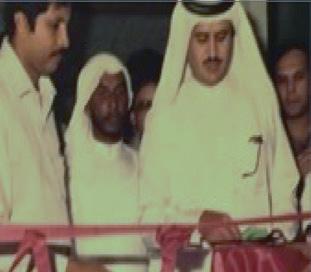
Inauguration of Al Rafa Polyclinic in Dubai — a singledoctor clinic. The first step in what would become a multi-country healthcare network.
2007
The Medcare era begins Launch of Medcare Hospital, Dubai — Aster’s premium hospital brand enters the market.
supported him with medicines, and he recovered. Years later, he came back, not as a patient, but simply to say thank you.” He pauses. “Moments like that stay with you. Healthcare is not only about treating diseases. It is about giving people confidence, dignity, and hope.”
Dr Moopen’s hospitals appear regularly in Newsweek’s World’s Best Hospitals rankings, a marker of clinical excellence in a region that has long struggled to balance growth with quality.
THE SERVICE BENEATH THE BUSINESS
If there is one principle that runs through Dr Moopen’s career, it is that healthcare is a service first and a business second. He has dedicated 20 per cent of his personal wealth to philanthropy, an unusually large commitment, and one he discusses with the same plainness he applies to everything else. In 2017, on the organisation’s 30th anniversary, Aster launched its global CSR arm, Aster Volunteers. The remit was simple: connect people who want to help with people who need help.
Over the past decade, the initiative has touched more than eight million lives, supported by more than 100,000 registered volunteers. It has delivered more than 3.2 million treatments through mobile medical services, conducted 71,050 free surgeries and investigations, and run disaster aid programmes across Somalia, Yemen, Jordan, Bangladesh and India. During the Covid-19 pandemic, Aster Volunteers became a frontline response mechanism. With healthcare systems everywhere under pressure, the volunteer network helped distribute essentials, provide medical support, and maintain continuity of care when commercial channels could not. This was not opportunism; it was the CSR model functioning as designed, proof that his philosophy of profit-as-by-product
2008
Expansion into Oman Entry into Oman with Aster Al Raffah Hospital in Muscat.
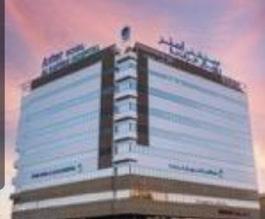
2014 Aster Hospital, Mankhool Launch of Aster Hospital in Mankhool, Dubai.
2015
Two new markets in one year Entry into the Saudi Arabia with Aster Sanad Hospital, and into Bahrain with the first Aster Clinic.
2016
Specialised care for women and children
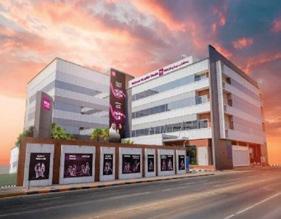
Launch of Medcare Women & Children Hospital, Dubai.
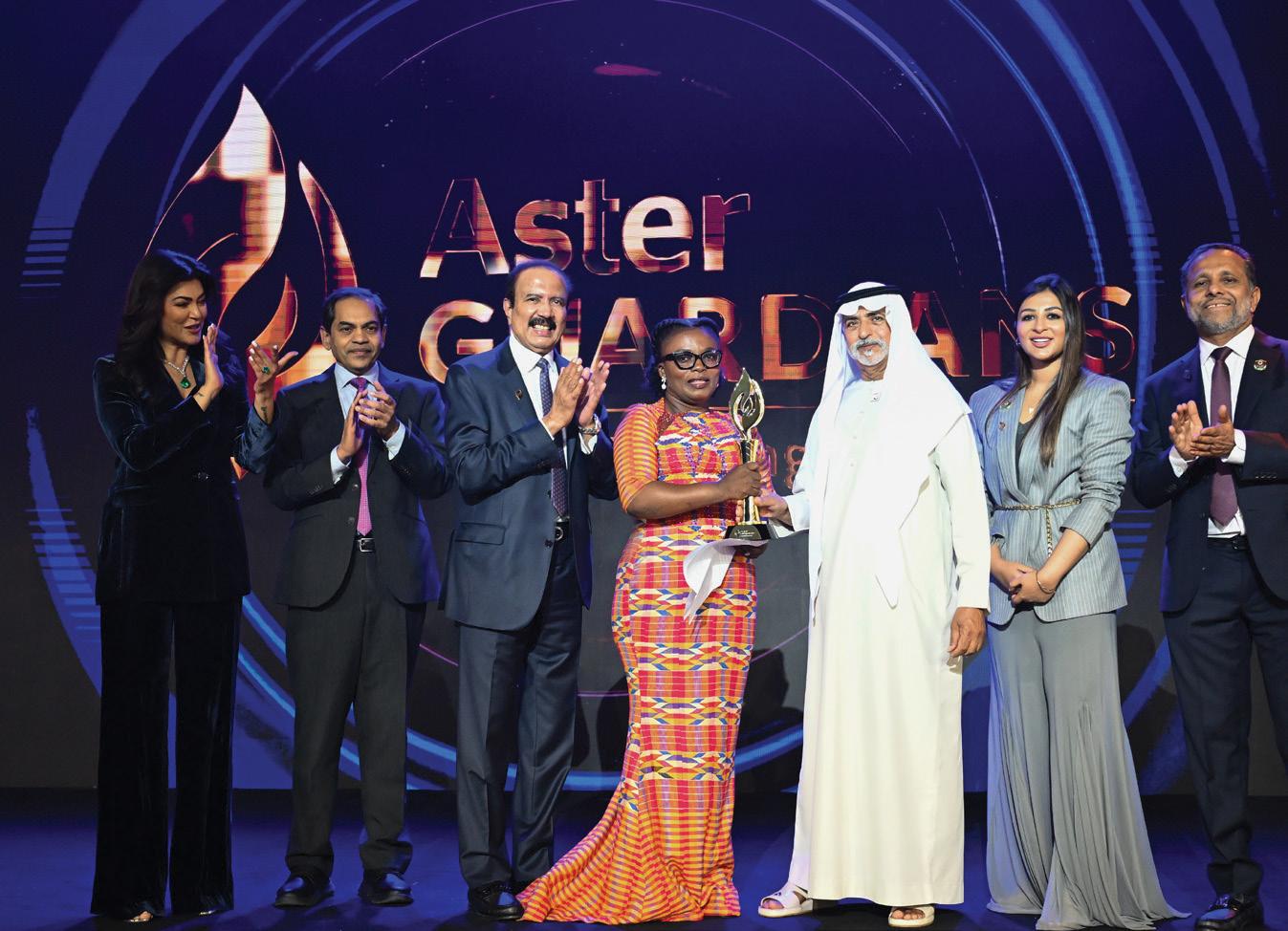
Sheikh Nahyan bin Mubarak Al Nahyan, UAE Minister of Tolerance and Coexistence (third from right) presents the Aster Guardian Award for 2025 to nurse Naomi Oyoe Ohene Oti from Ghana (in the centre) . Dr Moopen is seen here with Alisha Moopen, MD and GCEO, Aster DM Healthcare (second from right); TJ Wilson, ED and group head of Governance & Corporate Affairs, Aster DM Healthcare (extreme
had institutional mechanisms to execute in crisis. “From the beginning, I have always believed that profit should be a by-product, not the primary purpose of healthcare,” Dr Moopen says. “Healthcare organisations have a responsibility towards society. Where business stops, efforts like Aster Volunteers take over.” Another key initiative close to Dr Moopen’s heart is the Aster Guardians Global Nursing Award. The accolade celebrates nurses worldwide for their vital role in healthcare, which he views as the backbone of the system. Now in its fifth edition, it recognises excellence in patient care, innovation, research, and community health, while giving global visibility to the profession. The award has grown into one of the world’s largest nursing platforms, attracting more than 134,000 registrations from 214 countries and economies in its latest edition.
BETWEEN THREE FORCES
Healthcare, he says, sits at the intersection of three things that do not naturally agree: government policy, clinical excellence, and commercial viability. The job is to hold all three steady at once.“Government policies are important, they regulate, they improve access. Clinical excellence is essential, because outcomes are everything. And commercial sustainability is necessary, because an institution that cannot survive cannot serve.” The
2017
Reaching Qatar and Sharjah Launch of Aster Hospital in Doha, Qatar and Medcare Hospital in Sharjah.
2018 Strengthening the UAE network Launch of Aster Qusais Hospital, Dubai.
2022 A royal addition in Muscat Launch of Aster Royal Al Raffah Hospital in Muscat, Oman.
dynamic he has watched shift most over four decades is the rise of insurance. In 1987, patients paid directly from their pockets in cash. Today, in most markets Aster operates in, providers contract with payers and work inside negotiated pricing structures. “Earlier when we started, there was no insurance. Patients paid directly from their pocket,” he reflects. “Today insurance has expanded healthcare access significantly, which is a very positive development. At the same time, insurance has also changed the dynamics of healthcare delivery because providers are now dependent on payer systems and pricing structures.”
THE NEXT CHAPTERS
The Aster of 2026 does not look like the Aster of 1987, or even the Aster of 2018, when the company made a strategic decision that surprised many in the region. In 2018, Aster became the only healthcare provider from the Middle East to list on India’s stock exchange, signalling ambitions far beyond the Gulf. At the time, the move was met with scepticism. Over subsequent years, Aster grew in strength across South India, emerging as a leading regional healthcare provider.
Last year, the company undertook a significant restructuring. In 2024-25, it demerged into two separately listed entities: the GCC business, now backed by a Fajr Capital-led consortium and led by his daughter Alisha Moopen as MD and group CEO, and the India business, now in the middle of a transformative merger. The combined Indian platform, a merger with Blackstone-backed Quality Care India, will operate 39 hospitals with over 10,625 beds across nine states and 28 cities, positioning Aster among the top three healthcare providers in India. The combined entity will employ more than 36,000 healthcare professionals and clinicians. The
TIMELINE
2023
Aster Pharmacies enter Saudi Arabia Launch of Aster Pharmacies in Saudi, a foundation for the planned 180-store rollout.
2024
Tertiary care flagship Launch of Medcare Royal Specialty Hospital in Dubai — a 335,000 sq ft, 126-bed tertiary care hospital with 30 specialities.
2025
The network grows again Launch of second Medcare Hospital Sharjah, the latest addition to a network that spans 6 countries.
right) ; actress Sushmita Sen (extreme left); and Sunjay Sudhir, former Ambassador of India to the UAE (second from left)
merger is expected to complete in the first half of 2026. “India is very important for us not only as a market, but also as a source of medical talent, innovation, and tertiary care expertise,” Dr Moopen says. “We have always seen the need for quality healthcare to meet the needs of a population of 1.47 billion. While government efforts have been incredible, there are significant gaps which we can help address.”
FOCUS ON SAUDI ARABIA
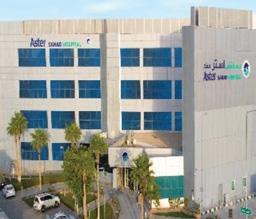
In the GCC, the next push is deeper penetration of Saudi Arabia, a market that taught him as much about adaptation as about scale. In line with its long-term commitment to Saudi Arabia, Aster DM Healthcare is also advancing its expansion through Aster Sanad Hospital, further strengthening its integrated care footprint in the kingdom and supporting the delivery of comprehensive healthcare services in line with national priorities.
“Saudi Arabia is a large market with huge potential,” he says, “but every country has its own regulations, systems, and cultural expectations. You have to understand the local requirements and adapt accordingly.” The pharmacy arm followed, in partnership with Al Hokair Holding Group.
The latest addition is the myAster app, which launched in Saudi Arabia with Arabic voice-enabled support developed with Google Cloud. Each move signals the same lesson: success requires regulatory patience, local partnership, and respect for cultural healthcare preferences. Aster DM Healthcare has also strengthened its commitment to Saudi Arabia through a planned investment of $250m (approximately SAR1bn) over the next two–three years. This strategic investment is aimed at expanding its integrated healthcare footprint in alignment with Saudi Vision 2030. The expansion includes establishing new hospitals, clinics, pharmacies, and digital health platforms across the kingdom. Key targets include scaling the Aster Pharmacy network to around 180 stores, increasing hospital bed capacity to approximately 1,000 beds through five new hospitals in major cities, and launching more than 30 medical centres nationwide.
DIGITAL PUSH
Across the GCC, myAster has become one of the region’s leading health and wellness platforms. The app has crossed 2.8 million downloads, impacted more than five million lives, and completed over 50,000 video consultations. Patients can connect to a general physician in as little as 10 to 15 minutes. The platform now includes Thrive by myAster, an initiative focused on preventive healthcare, helping people identify health risks early and maintain wellness. This represents a strategic pivot, from treating a disease to preventing it before symptoms emerge. For a founder trained in classical medicine, this shift required rethinking healthcare’s
mission. “As a doctor, I always believed healthcare was mainly physical and face-to-face,” he says. “Technology taught us that continuity of care can still happen effectively through digital platforms if designed properly.” The scale of his commitment to modernisation is evident in his investment plans for the UAE. Over the next phase, Aster will invest close to Dhs1bn into new hospitals, expansion of existing facilities, and advanced specialties: oncology, transplant programmes, robotic rehabilitation, and minimally invasive surgery.
THOSE WHO BUILT IT WITH HIM
Ask him about his philosophy of talent and he answers in a single sentence. “Institutions are built
LEADERSHIP LESSONS FROM DR
AZAD MOOPEN
THE PRINCIPLES THAT HAVE SHAPED FOUR DECADES OF BUILDING ASTER IN HIS OWN WORDS
01. Stay humble, no matter how large the institution becomes.
02. Be resilient. Challenges are part of the work.
03. Lead with purpose, not position.
04. Profit is a by-product. Service comes first.
05. Institutions are built by people, not by infrastructure.
06. Leadership, in the end, is about trust, not control.
ACHIEVEMENTS
2010 ‘Pravasi Bharatiya Samman’ conferred by the government of India
2011 ‘Padma Shri’ — the fourth-highest civilian award by the government of India, for contributions recognised across countries 2019 Awarded Fellowship of the Royal College of Physicians (FRCP), UK
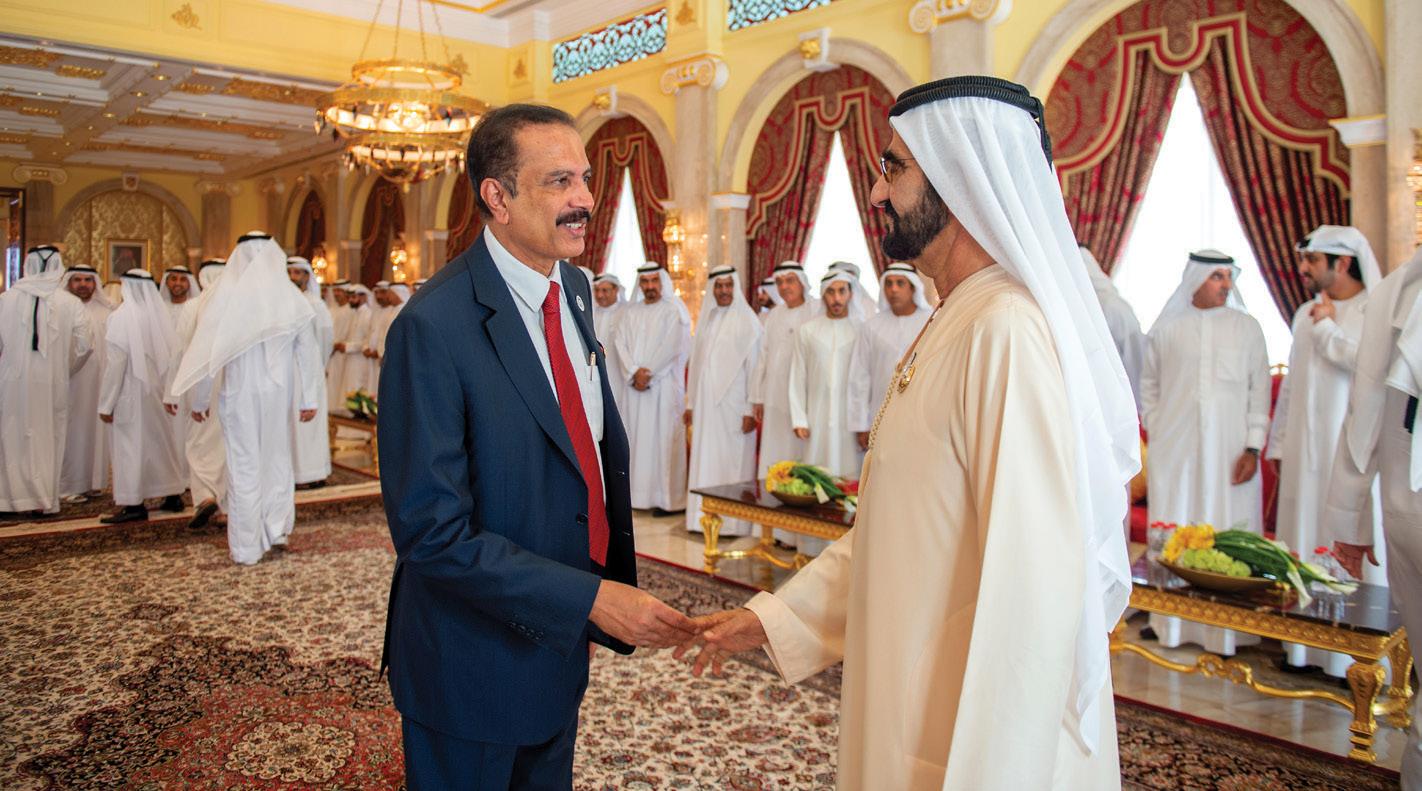
Sheikh Mohammed bin Rashid Al Maktoum, Vice President and Prime Minister of the UAE and Ruler of Dubai, with Dr Moopen
ASTER GUARDIANS GLOBAL NURSING AWARD
The Aster Guardians Global Nursing Award is a global initiative founded by Dr Azad Moopen to recognise and celebrate the contribution of nurses around the world. He has often described it as a reflection of his deep gratitude to the nursing profession, which he believes is the backbone of healthcare systems and deserves global recognition for its care, commitment, and impact.
Now in its fifth edition, the award highlights nurses who are making a real difference in patient care, healthcare innovation, research, and community health. It was created to give global visibility to the nursing profession and honour those who are transforming healthcare through their work.
Since its inception, the award has received entries from nurses across more than 200 countries, growing into one of the world’s
largest platforms for nursing recognition. The previous edition saw more than 100,000 applications from 199 countries, and this year has seen a further rise to over 134,000 registrations from 214 countries and economies, reflecting growing global participation.
From all entries, a panel of experts selects the top 10 finalists based on their impact and contribution to healthcare. The winner receives $250,000 prize, while all finalists gain global recognition for their work.
The winner of the fifth edition will be announced at a gala event in India in July.
The initiative reflects a simple idea: to honour nurses who are transforming healthcare every day and to inspire the next generation to join and strengthen the profession.
by people, not infrastructure.” In the early years, everybody worked beyond their formal role. Doctors helped at reception when reception was overwhelmed. Pharmacists sat with patients. Administrators ran errands. “Many of them did not work with us only for a salary,” he says. “They felt they were part of building something meaningful.”
Today, the group employs 18,308 in the GCC alone — and its workplaces have been certified as ‘Great Place to Work’ across every market it operates in. Then comes the question that catches him into a softer answer. Who, he is asked, shaped Aster more than people might realise? “If I have to mention someone unexpected, I would say the patients themselves. Their trust, their feedback, their expectations, that is what continuously shaped how we have evolved.” Dr Moopen also credits partners such as IVFA and Olympus. “They believed in our vision and invested with us in the early years.”
THREE LESSONS
He has handed much of the day-to-day running of the company to a new generation. Alisha leads the GCC business, while the India team operates with similar independence under the guidance of Alisha and Varun Khanna, the group managing director at Quality Care India.
Asked what he finds himself returning to, in boardrooms, on ward rounds, in conversations at home, he answers in three words. “Humility. Resilience. Purpose.”
Humility, because no matter how large an organisation becomes, the day a leader stops being grounded is the day the institution begins to drift. Resilience, because difficulties never stop arriving; they only change shape. Purpose, because people
will do extraordinary things, far more than they themselves believed possible, when they feel connected to a mission that means something. And then, more quietly: “What I learned outside any classroom is that leadership is not about control. It is about trust.”
THE LEGACY QUESTION
Towards the end of the conversation, he is asked the question that is, in a sense, the only one that matters for a man of his age and position. What does he want Aster to have changed — not about itself, but about the way this region thinks about health, access and human dignity? He answers without hesitation, but also without grandiosity.
“I would like Aster to be remembered as an organisation that helped make quality healthcare accessible to all sections of society. If we have contributed even in a small way towards changing the idea that good healthcare is only for privileged people, then that” — he pauses — “would be enough.” It is a vision Alisha now carries forward as she steps into the work of shaping Aster’s next chapter, ensuring that the principle at the heart of her father’s life’s work continues to define the institution he built.
Finally, when asked what healthcare means to him personally, the answer, when it comes, sounds less like a sentence and more like a quiet summing-up of a life. It is not simply a profession, he says, or a business. It is a calling. “Every day in healthcare, you have the chance to touch somebody’s life meaningfully. Very few professions give you that privilege.” It is, in the end, the same sentence Dr Moopen opened with at the beginning of the conversation. Dignity, irrespective of financial background. He has said it for nearly four decades. He has built the proof of it: the hospitals, the clinics, the pharmacies, the digital platforms reaching across borders, the mobile medical vans in the remote corners of Africa and rural India, the volunteers, the children whose lives have been saved — one quiet decision at a time.
Former President of India Pratibha Patil presents the Padma Shri to Dr Azad Moopen
WINNERS REVEALED AT GULF BUSINESS REAL ESTATE SUMMIT & AWARDS 2026
THE EVENT MARKED A MAJOR MILESTONE FOR THE BRAND AS GULF BUSINESS CELEBRATES 30 YEARS OF CHRONICLING THE GULF’S ECONOMIC TRANSFORMATION
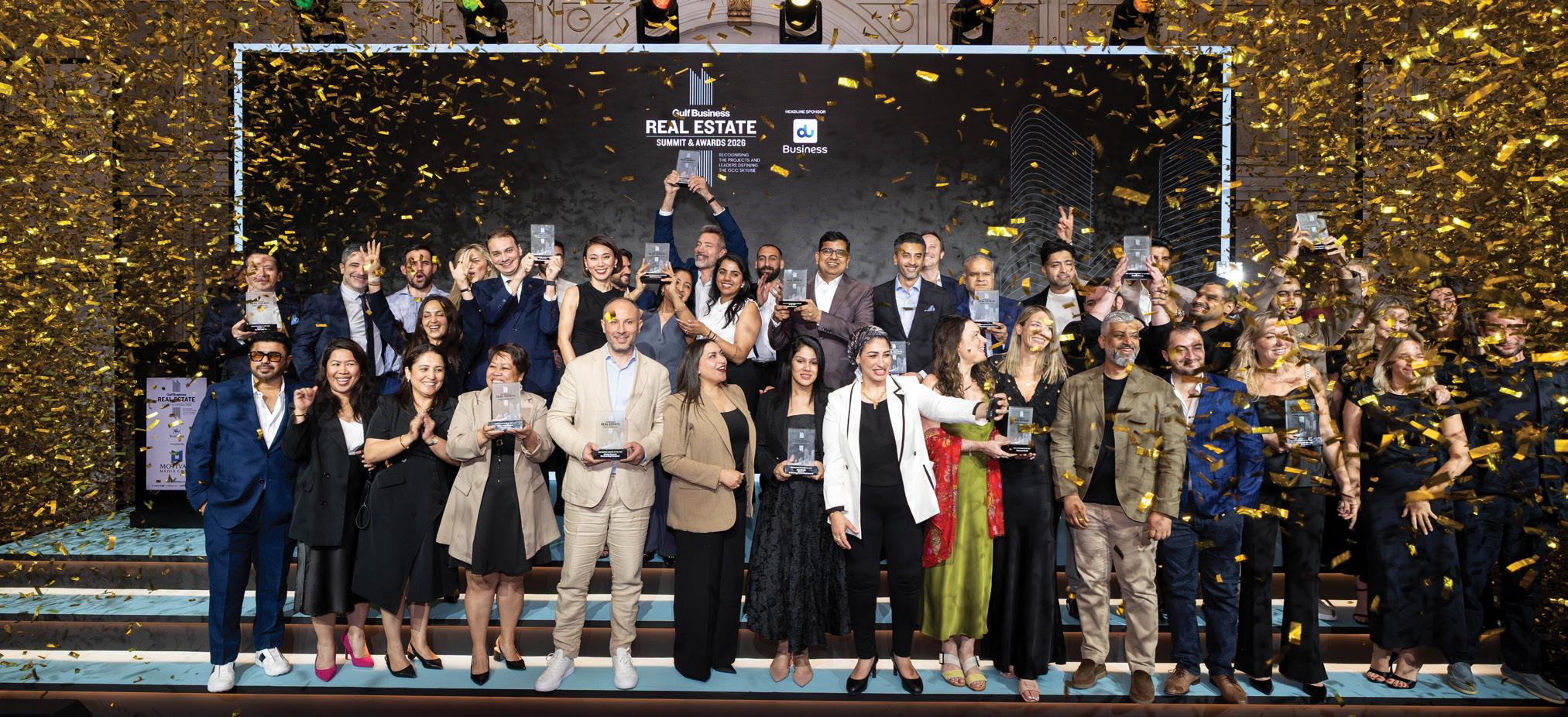
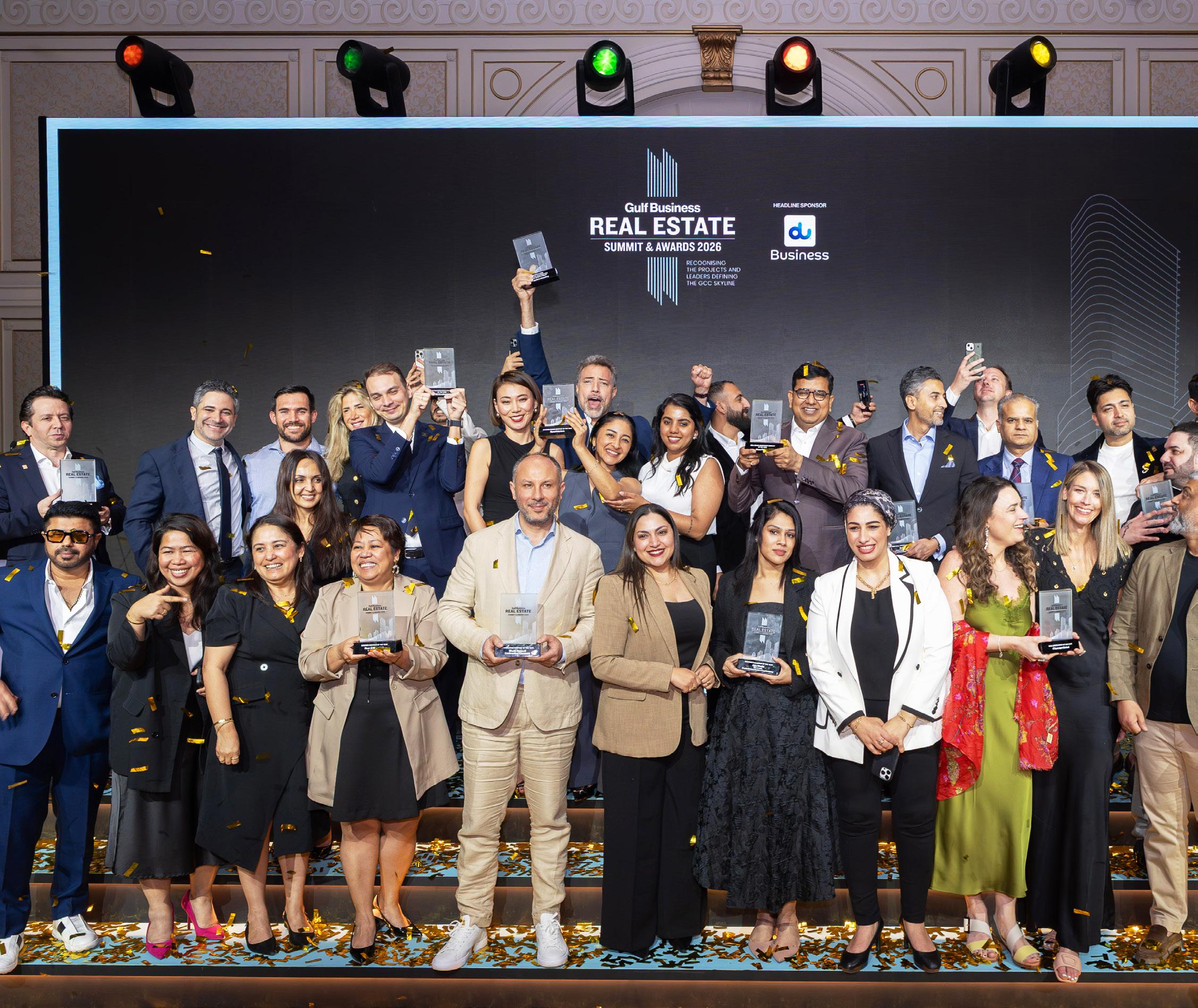
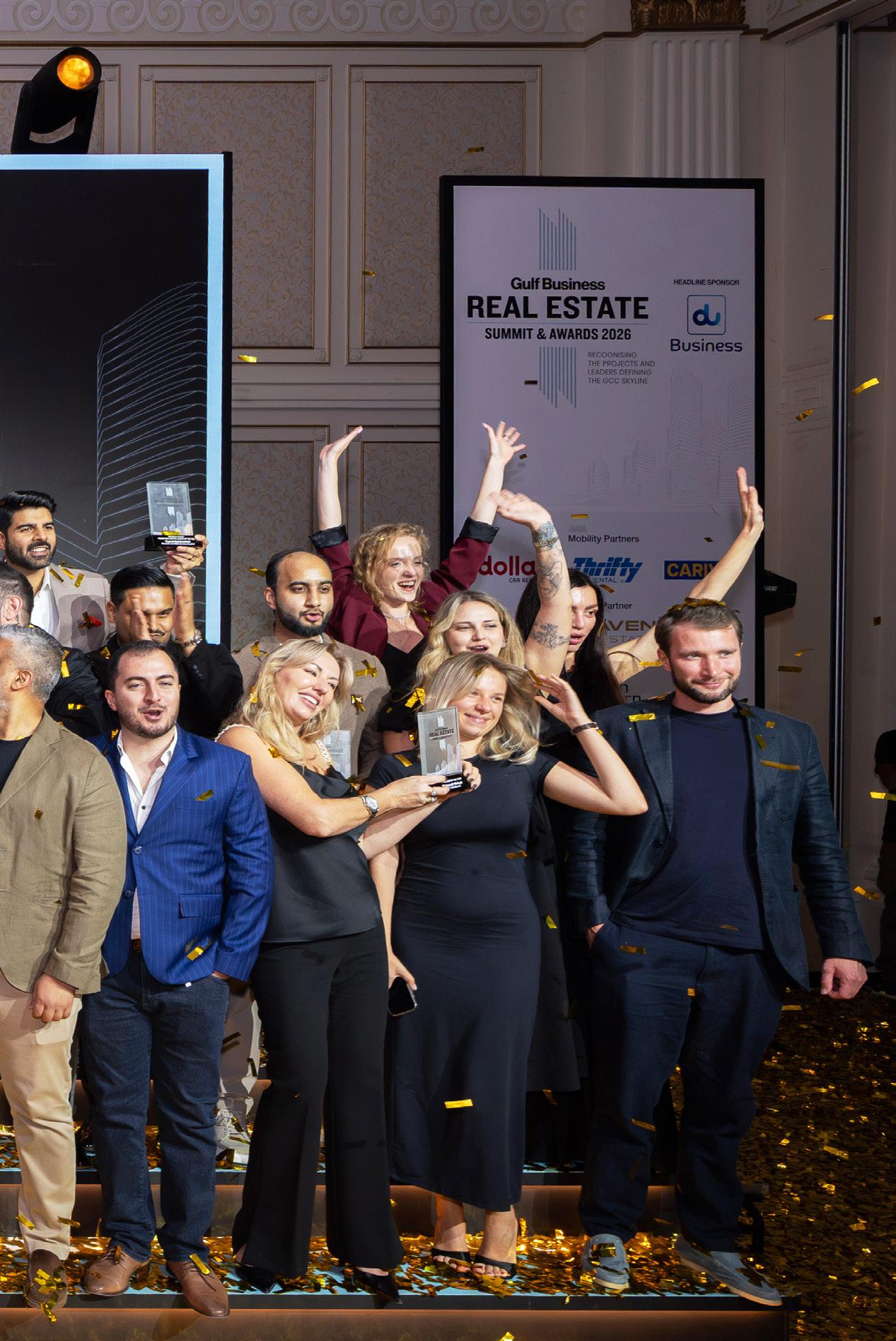
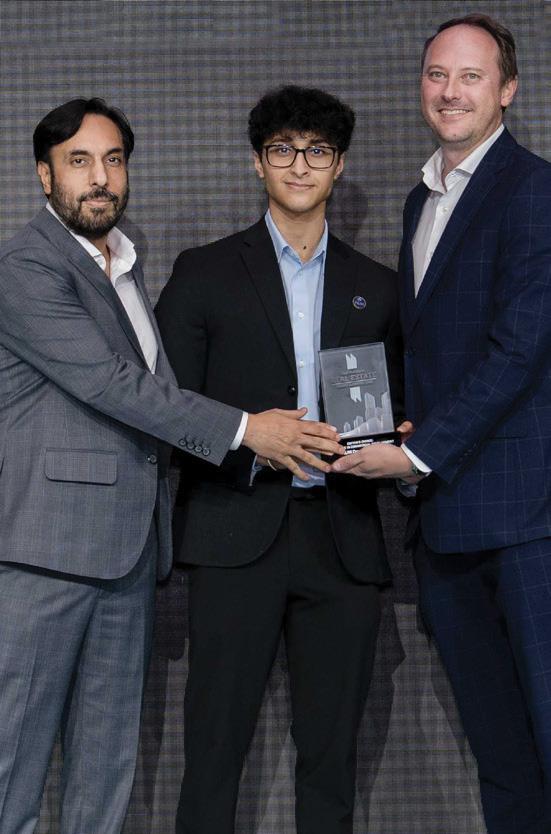
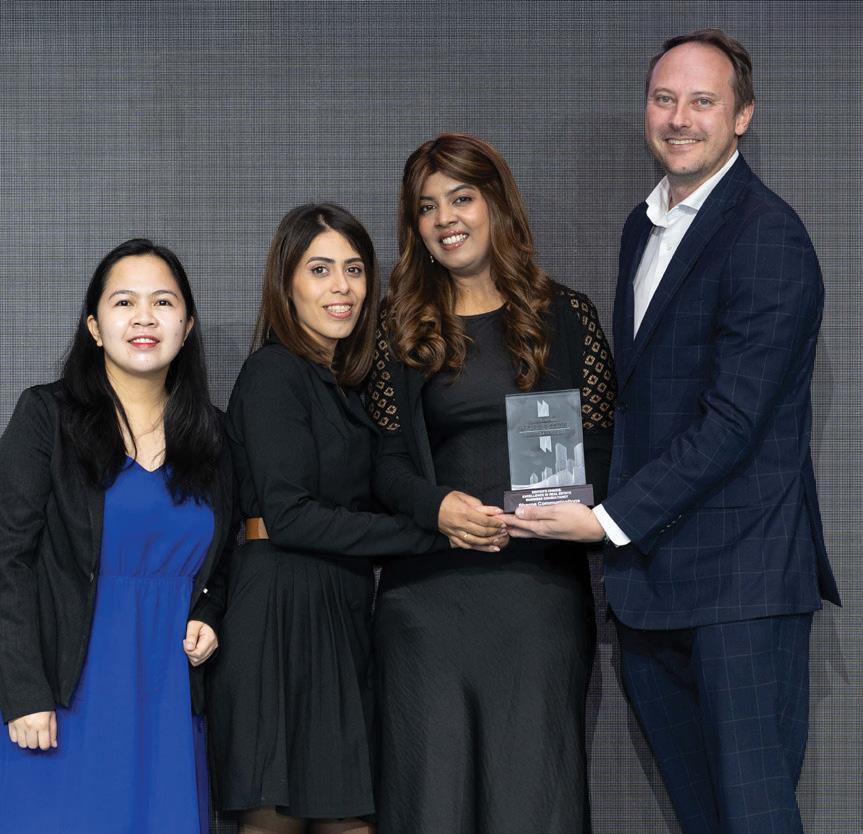
Gulf Business honoured the region’s leading developers, real estate firms, architects, proptech companies, and industry leaders at the inaugural Gulf Business Real Estate Summit & Awards 2026, held at the Palazzo Versace Dubai on May 15. The event marked a major milestone for the brand as Gulf Business celebrates 30 years of chronicling the Gulf’s economic transformation, while also launching a new flagship platform dedicated to one of the region’s most influential sectors. The platform combined a high-level summit with a dedicated awards programme aimed at recognising the companies and individuals shaping the future of real estate across the GCC.
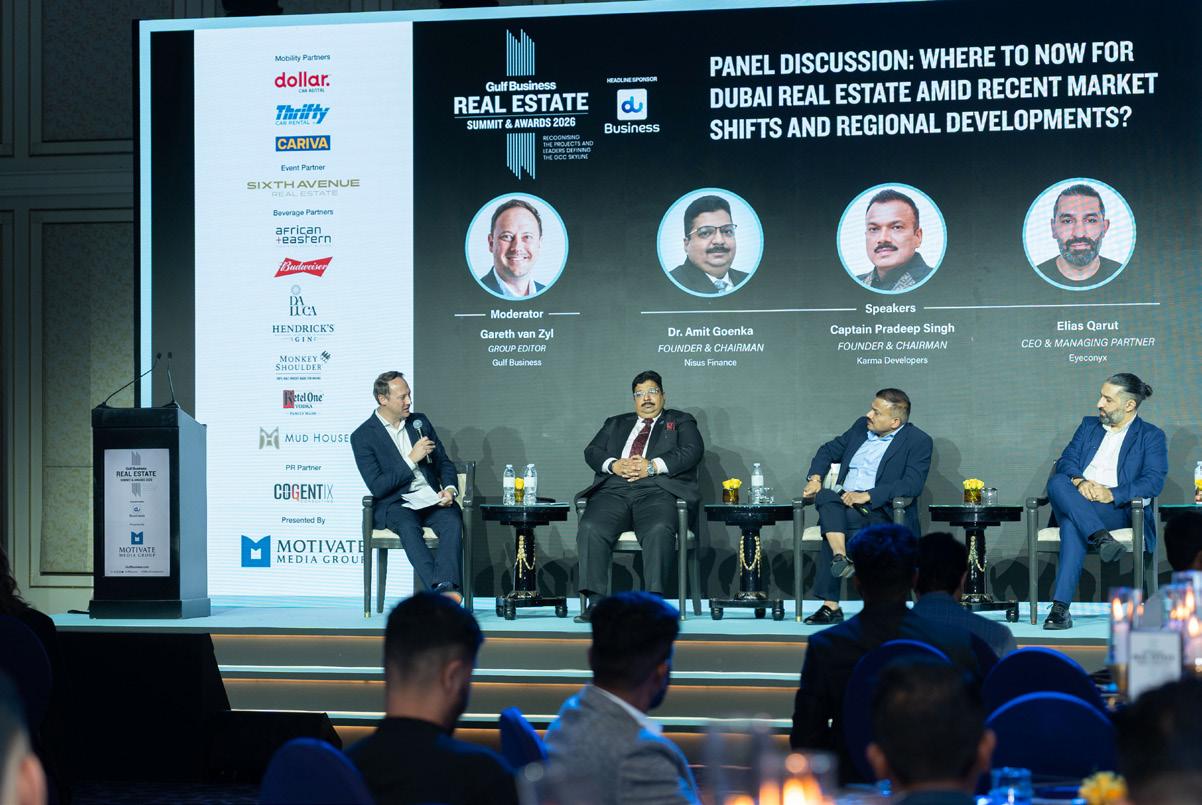
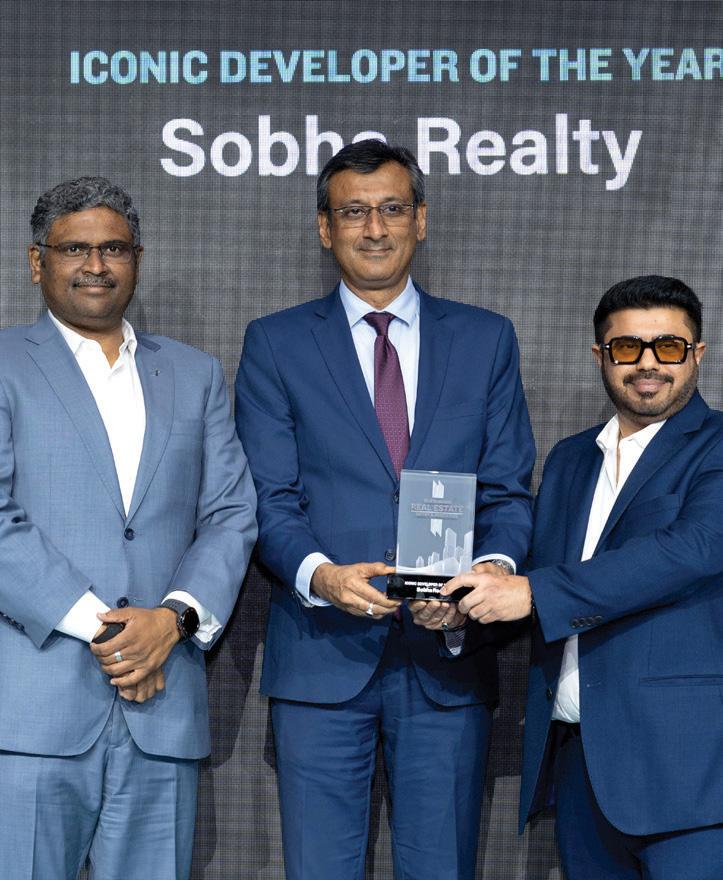
Bringing together senior developers, investors, policymakers, consultants, and real estate stakeholders from across the GCC, the summit also featured a panel discussion with Dr Amit Goenka of Nisus Finance, Captain Pradeep Singh of Karma Developers, and Elias Qarut of Eyeconyx, examining where Dubai’s property market is headed amid moderating growth, shifting buyer sentiment, and wider regional developments. Discussions throughout the evening focused on investment trends, regulatory evolution, sustainability, innovation, and the growing role of technology in shaping the built environment. The awards programme recognised excellence across the region’s rapidly evolving real estate ecosystem, spanning master developers, luxury and residential projects, contracting firms, property technology companies, design studios, and influential industry leaders. Among the major winners on the night were Msheireb Properties, which secured the award for Smart and Sustainable Developer of the Year, while Samana Developers picked up multiple honours, including International Real Estate Company of the Year and Most Trusted Developer of the Year. ORO24 Developments was recognised as Most Impactful Developer of the Year, while Sobha Realty won Iconic Developer of the Year. the Year. The awards also spotlighted leadership talent across the sector.
Across the following pages, you can catch all the highlights from the evening, including key moments from the summit discussions and exclusive event photography.
Panellists discuss market resilience, strong fundamentals, long-term demand and evolving investment opportunities at the event
COMPANY AWARDS
Residential Developer of the Year — ANAX Developments
Presented By
Master Developer of the Year — HRE Development
Luxury Developer of the Year — Pantheon Development
Emerging Developer of the Year — Ahmadyar Developments
Interior Design Company of the Year — Opaal Interiors
Branded Project of the Year — Ramada Residences Al Jaddaf by Wyndham Hotels & Resorts
Project of the Year — Skyhills Residences 1 by HRE Development
Proptech Company of the Year — ICTReD Real Estate Development
Off-plan Project of the Year — Casagrand HERMINA by Casagrand
Iconic Building of the Year — OYSTRA by RICHMIND Property Management Company of the Year — Dubai Residential
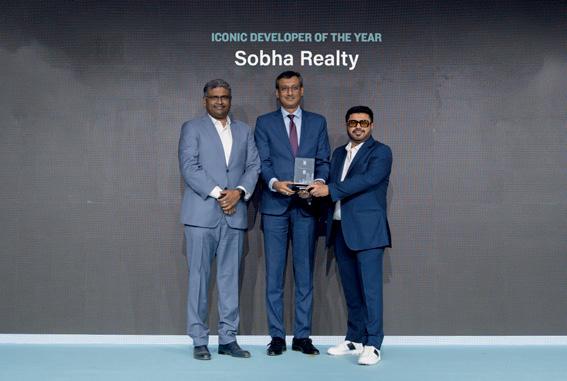
Iconic Developer of the Year — Sobha Realty
Real Estate Team of the Year — CRC Property
Contracting Company of the Year — Bhatia General Contracting Company
Real Estate Investment Company of the Year — Nisus Finance
Most Impactful Developer of the Year — ORO24 Developments
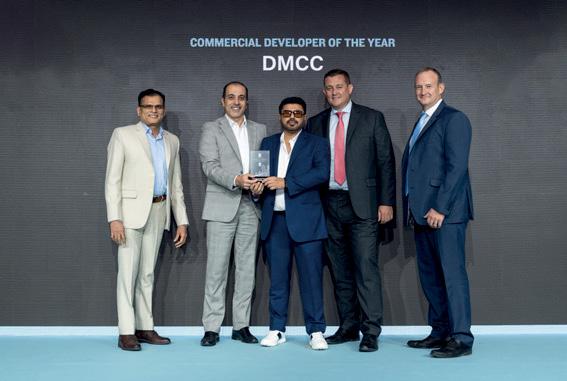
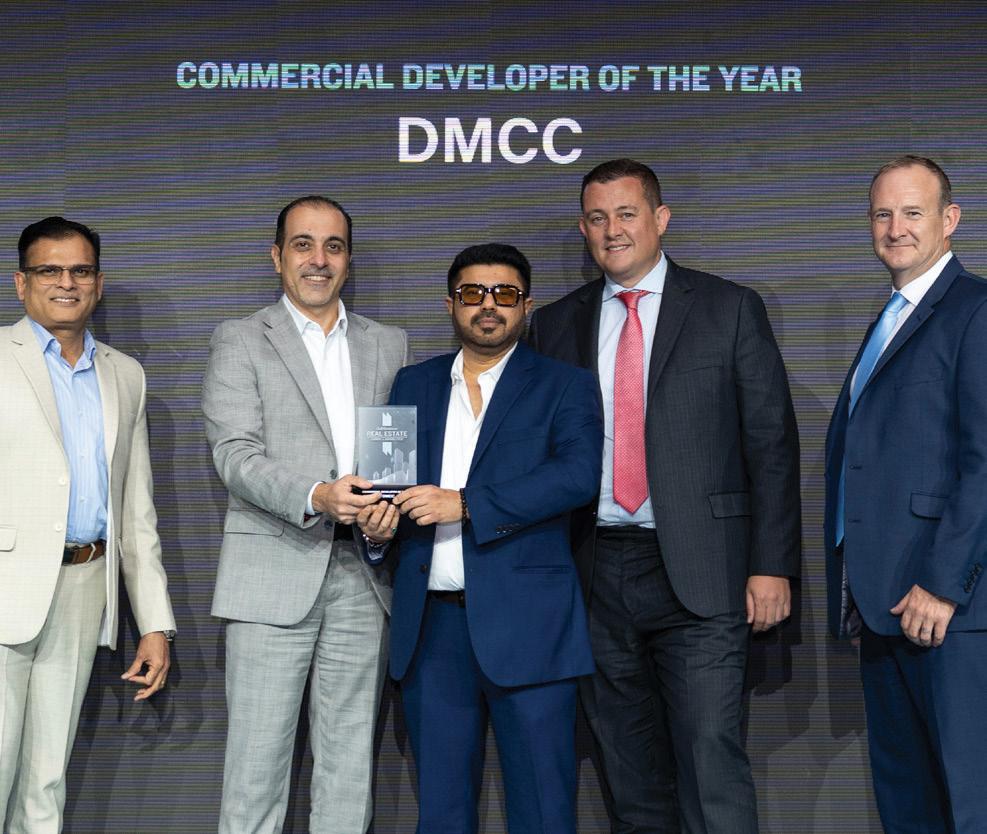
Commercial Developer of the Year — DMCC
Gulf Business Iconic Company of the Year — QUBE Development
Most Trusted Developer of the Year — Samana Developers
Real Estate Event of the Year — Cityscape Global
Real Estate PR Agency of the Year — Publsh Group
INDIVIDUAL AWARDS
Contracting Leader of the Year — Ajay Bhatia, chairman, Bhatia
Real Estate Entrepreneur of the Year — Dr (CA) Ankur Aggarwal, chairman and founder, BNW Developments
Architect of the Year — Oleksandr Melnyk, NKEY Architects
Interior Designer of the Year — Noor Al Muhaideb, Opaal Interiors
General Contracting Company
Woman Real Estate Leader of the Year — Dana Awad, chief commercial officer, ICTReD Real Estate Development
Real Estate Personality of the Year — Atif Rahman, founder and chairman, ORO24 Developments
Real Estate Trailblazer Leader of the Year — Egor Maslennikov, chairman and founder, Object 1
EDITOR’S CHOICE AWARDS
Real Estate Visionary Leader of the Year — Imran Farooq, CEO, Samana Developers
Excellence in Real Estate Communications — Papa Media
Cross Border Real Estate Leader — Navneet Mandhani, founder and CEO, Karma Developers
Excellence in Commercial Development — AUM Development
Architectural Excellence and Innovation — Arista Properties
Young Real Estate Leader of the Year — Yogesh Bulchandani, founder and CEO, Sunrise Capital
Excellence in Sustainable Luxury Redevelopment — Greenbull Contracting
Excellence in Real Estate Business Consultancy — Sherpa Communications
(Note: We haven’t placed a few images as the awards were accepted on behalf of people/ companies)
Real Estate Agency of the Year — Driven Properties
Smart and Sustainable Developer of the Year — Msheireb Properties
Real Estate CEO of the Year — Ali Mohammed Al Kuwari, CEO, Msheireb Properties
AT THE AWARDS...
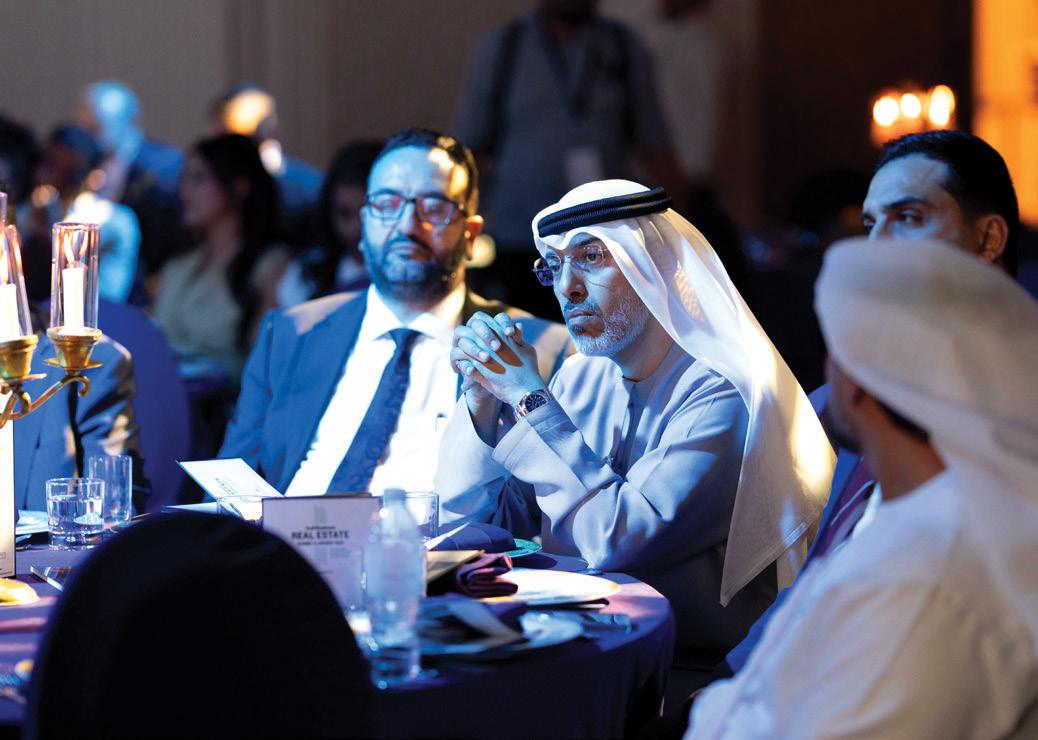
Attendees listening to the panel which preceded the awards
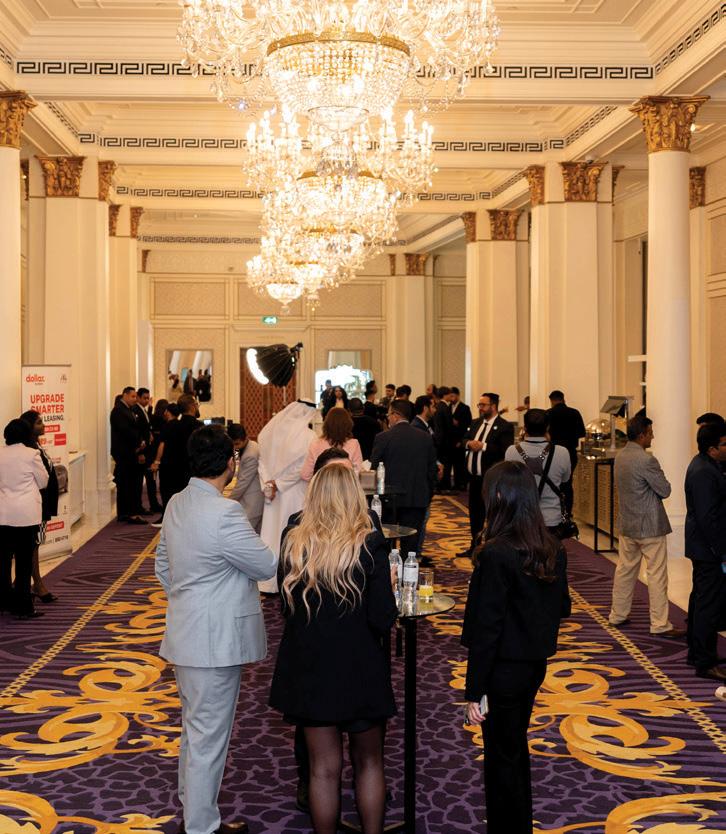
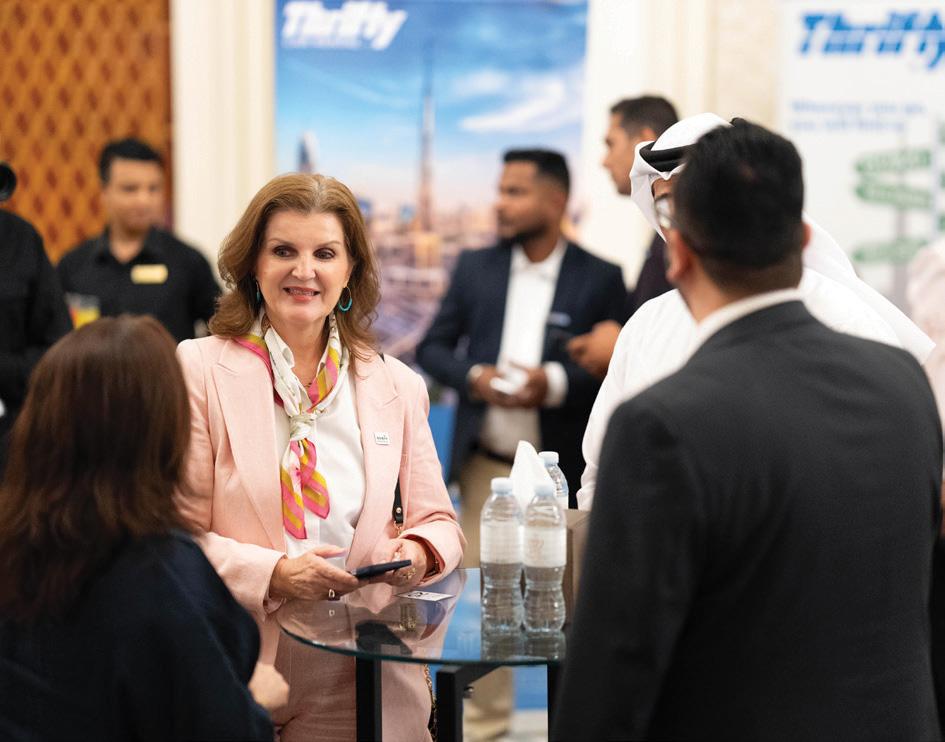
Guests arriving and checking in before the summit and awards
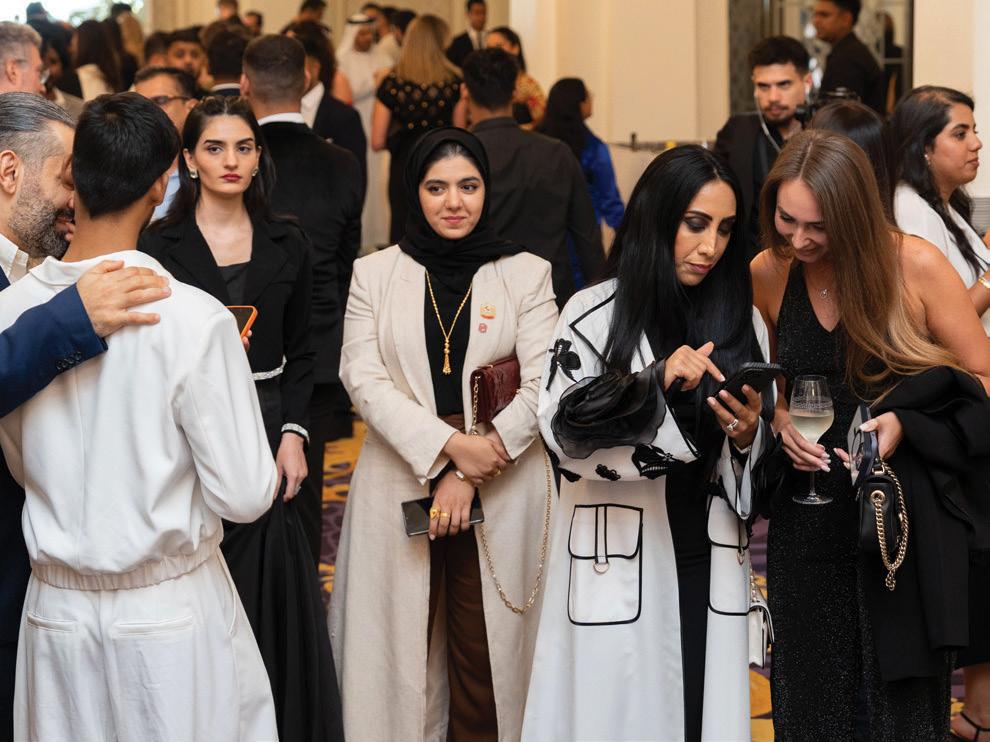
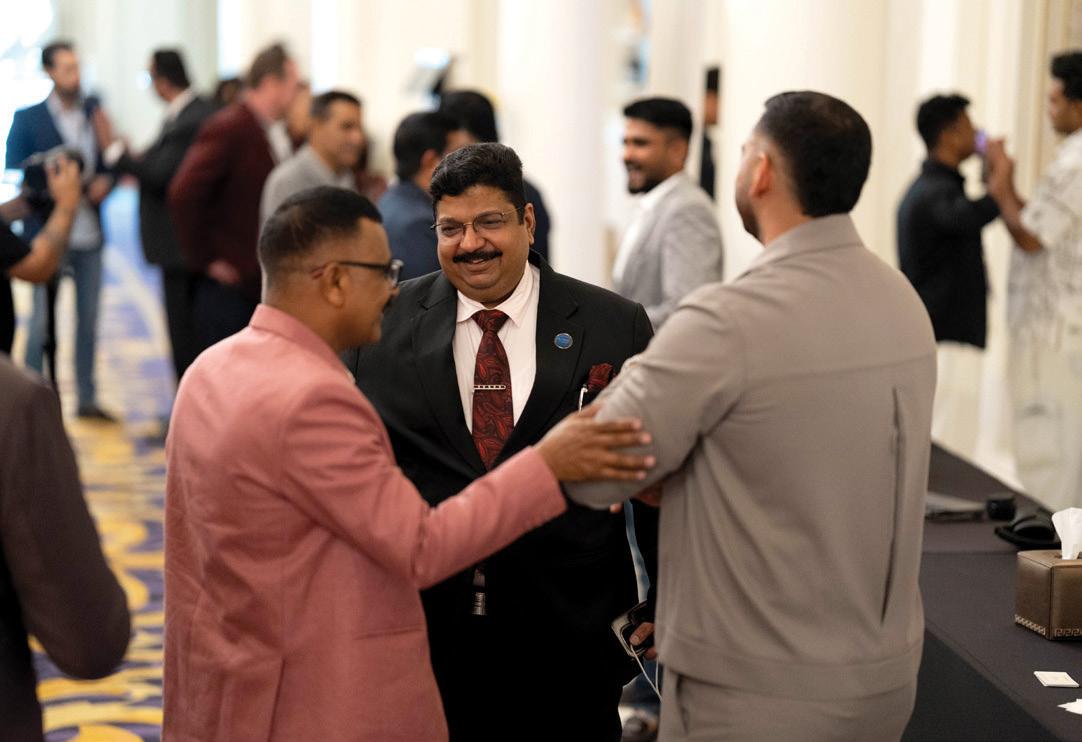
Guests networking before proceedings kicked off
Amit Goenka, chairman and MD of Nisus Finance (middle)
Dubai Residential team interacting with guests
All the award trophies on display at the venue
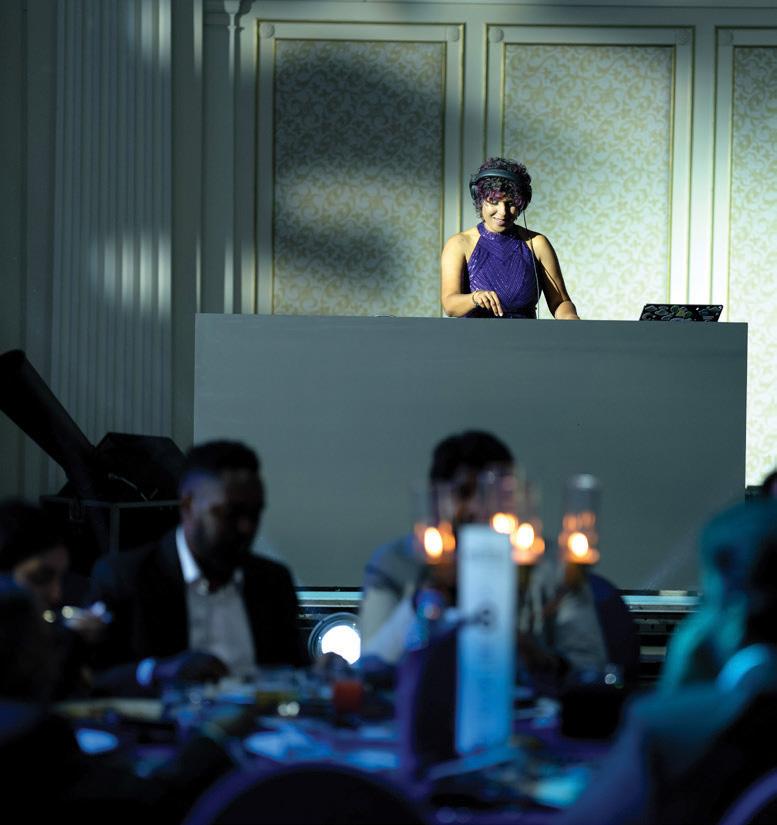
DJ Sara entertaining guests with music during the evening
INVEST IN MAURITIUS
Strategic Gateway to Africa and Beyond
Positioned at the crossroads of Africa, Asia and the Middle East, Mauritius continues to strengthen its appeal as a trusted international financial centre and gateway to high-growth markets. Combining political stability, strong institutions and a globally connected business environment, the island offers a compelling proposition for investors, corporates and globally mobile professionals. Alongside its economic strengths, Mauritius delivers an exceptional quality of life, with a safe, multicultural society, modern infrastructure and a highly skilled, bilingual workforce.
Beyond its lifestyle advantages, Mauritius stands out for its sophisticated financial ecosystem and investor-friendly framework. The country has built a strong reputation in sectors such as financial services, investment funds, fintech and cross-border structuring, supported by an extensive network of double taxation agreements and robust regulatory standards. As global capital increasingly targets emerging opportunities, Mauritius is positioning itself as a platform for sustainable finance, regional investment and international business expansion. Backed by forward-looking policies and a clear longterm vision, the country continues to attract investors seeking both growth and stability in an evolving global landscape.
Bilal Adam CEO of Stewards Investment Capital
Philip Tsalikis Founder and Director at TBI Mauritius
Brian Ah-Chuen Managing Director of ABC Banking
Rom Atapattu Founder and CEO of Patronus Group
Graeme Robertson Founder and Chairman of Intrasia Group
Poonum Thylam CEO of Blue Azurite
Dilshaad Bundhun Partner at Strategia Wealth
Christian Li Group CEO of CKLB
Michaël Ruel CEO of MJ Développement
Thierry Hebraud CEO of MCB
Nawaz Khan Chady Founder of Hyvec Group
Sanjiv Kailash Ramdanee CEO of Maradiva Villas Resort & Spa
Junaid Salehmohamed CEO of 2Futures
Ravin Dajee Managing Director of Absa Bank (Mauritius)
Features & Interviews
CONVERSATIONS
WITH BUSINESS LEADERS AND IN-DEPTH PERSPECTIVES SHAPING INDUSTRIES, MARKETS AND THE REGION’S ECONOMIC FUTURE
JUNE
A structural reset
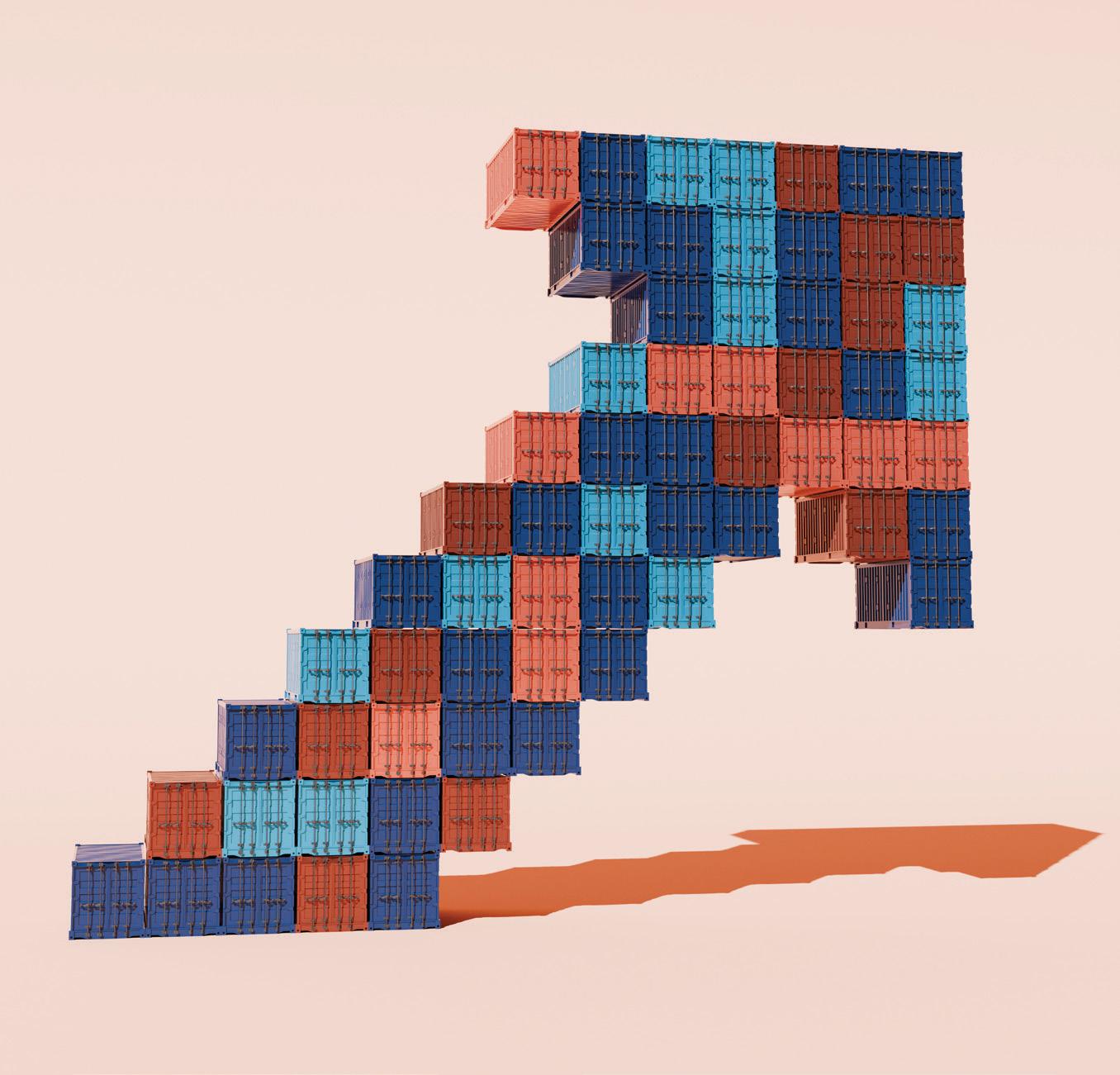
From chokepoints and rerouted cargo to rising geopolitical fragmentation, here’s why the global trade system is undergoing a transformation p.46
THE END OF THE PASSWORD? GCC
CYBERSECURITY LEADERS SOUND THE ALARM ON IDENTITY’S NEW FRONTLINE
FROM AI-GENERATED PHISHING TO RUNAWAY MACHINE IDENTITIES, SIX REGIONAL SECURITY EXPERTS SHARE WHY THE CREDENTIAL IS NOW THE SINGLE MOST EXPLOITED ATTACK SURFACE — AND WHAT ORGANISATIONS SHOULD DO ABOUT IT
Cybersecurity leaders in the GCC are shifting focus from passwords to broader identity security, citing credential theft as a primary attack vector, now a boardroom-level business risk. The password’s demise is imminent, with phishingresistant multi-factor authentication (MFA) and biometrics gaining traction. AI’s dual role necessitates adaptive identification, addressing the explosion of non-human identities and over-privileged access.
When World Password Day was first marked over a decade ago, the prescription was simple: longer passwords, more symbols, fewer birthdays. As the digital community observed the day earlier last month, that prescription has aged badly.
Across the GCC, cybersecurity leaders are arguing that the password itself is the problem — and that organisations still treating identity as a user-education issue are protecting the wrong perimeter entirely.
“Attackers are not breaking in anymore. They are logging in,” says Meriam ElOuazzani, vice president for the Middle East, Turkey and Africa at Censys . “Last year, 82 per cent of intrusions involved no malware at all. Credentials were the door, and the door was already unlocked.”
That reframing — from intrusion to authenticated access — sits at the heart of how identity security is being rebuilt across the region. The stakes have moved up the corporate ladder accordingly.
FROM IT CONCERN TO BOARDROOM PRIORITY
Across every spokesperson interviewed for this piece, the same theme recurs: identity is no longer an IT department issue. It is a business risk now tracked at board level. “Identity security is now a core business priority across the Middle East, particularly in sectors such as oil and gas, utilities, and manufacturing,” says Mike Hoffman, field CTO for oil and gas at Dragos. “Many cyberattacks begin with credential theft, phishing, or password reuse, often allowing attackers to move from IT into OT environments. Because cyber incidents can disrupt operations, impact safety, and cause financial loss, identity security is no longer just an IT issue — it is a business risk that requires executive attention.”
WORDS NEESHA SALIAN
Ezzeldin Hussein, regional senior director, solution engineering for META at SentinelOne, agrees the lens has changed. “Identity and password security have evolved to become a boardlevel business priority as identity is now the primary attack surface. With cloud adoption, remote work, and expanding digital services, a compromised credential can directly have an effect on revenue, processes, and reputation.” For Ranjith Kaippada, managing director at Cloud Box Technologies, the case is now about reputation as much as resilience. “Trust has taken a front seat. Even a single credential breach can damage years of reputation that a brand has built. In the UAE, most breaches originate from compromised credentials rather than sophisticated exploits.”
ElOuazzani identifies a structural mismatch behind the urgency. “Cloud acceleration has outpaced identity governance. Organisations expanded fast, often across multiple cloud environments, and the access controls did not keep pace. The exposure is real, and in many cases, it is already inside the environment.”
THE PASSWORDLESS PIVOT
If there is one consensus, it is that the password’s long tenure is finally drawing to a close. The successor technologies — phishing-resistant MFA, FIDO2, biometric passkeys — have matured, and adoption is accelerating.
“Every organisation has suffered from a password breach or phishing attack, and as emerging identity technologies like passkeys and FIDO2 phishing-resistant authentication are now more mature there is a growing movement toward modernisation,” says Chester Wisniewski, director and global field CISO at Sophos. “Traditional MFA methods like timebased codes were often resisted by business leaders as cumbersome, but biometric passkeys are simple to use and gaining momentum.”
His recommendation is the bluntest of the group. “Stop using passwords. They are simply secrets. We are bad at keeping secrets and we are even worse at storing them. Adopt passwordless authentication for both convenience and security, and someday World Password Day can be a thing of the past.” Jay Reddy, head of growth at
ManageEngine, argues that even MFA — once considered the gold standard — is no longer a blanket answer. “MFA is no longer a blanket solution if it can be phished or bypassed. Replacing passwords and vulnerable factors like SMS or email OTPs with phishingresistant methods such as FIDO2* and passkeys is becoming critical.”
Hussein points to regional infrastructure already supporting the shift.
“Businesses are beginning to use identity-first security approaches, such as national digital identity frameworks like UAE PASS, robust verifying methods like FIDO2, and zero-trust principles.”
AI: WEAPON AND SHIELD
Underpinning the urgency is the rapid weaponisation of generative AI. Threat actors are using it to generate convincing phishing campaigns, deepfake personas, and automated credential theft at industrial scale.
“AI is making identity security more important than ever,” says Hoffman. “Threat actors are increasingly leveraging AI-generated personas, fake LinkedIn profiles, and sophisticated social engineering techniques to gain
Chester Wisniewski , director, global field CISO, Sophos
Mike Hoffman, SANS certified instructor Field CTO – Oil and Gas, Dragos, Inc
initial access into IT and OT environments. With the rise of generative AI, these tactics are becoming increasingly scalable and convincing.”
Hussein describes a dual-use dynamic. “AI will play two roles — defenders will use it to correlate endpoint, identity, and cloud signals in real time, while attackers will use it to automate phishing, deepfakes, and credential theft.”
Reddy adds the labour-market angle. “AI cuts both ways. It has made it easier for cybercrime to scale, while also increasing reliance on AI within security platforms to keep pace — especially with the documented cybersecurity skills shortage across the GCC.”
For Kaippada, the future lies in adaptive systems that mirror the sophistication of the attackers. “Adaptive identification, which uses behavioural biometrics and contextual cues to evaluate risk in real time, is the way of the future. AI-to-AI authentication — in which machines are used to check other machines — is one change that goes unnoticed.”
THE MACHINE IDENTITY EXPLOSION
Perhaps the most under-discussed shift is the explosion of non-human identities. Every API key, service account, automated workflow, and now AI agent represents a credential — and most organisations have no idea how many are active in their environments.
“Service accounts and application automation have created a proliferation of API keys, often with over-privileged access to company data,” Wisniewski warns. “Modern attackers are targeting these non-human identities and causing
WHEN IDENTITIES ARE SPREAD ACROSS SILOS, POLICY ENFORCEMENT BECOMES INCONSISTENT BY DEFAULT. A SINGLE, AUTHORITATIVE VIEW OF IDENTITY ENABLES RISKBASED ACCESS DECISIONS — WHERE ACCESS IS GRANTED BASED ON CONTEXT, BEHAVIOUR, AND REAL-TIME RISK RATHER THAN STATIC ROLES.”
massive data breaches. This problem is only likely to get worse with the rapid adoption of agentic AI.”
ElOuazzani sees the same blind spot in client environments. “Most security leaders I speak with cannot tell me how many autonomous agents are active in their environment, let alone what data those agents are touching. That is not a tool problem. That is a structural one.”
Reddy frames it as a question of scale. “As automation scales, agentic AI will increasingly execute tasks independently, expanding the identity surface beyond what traditional governance models were designed to handle.”
HOW TO PROTECT YOURSELF
The advice across the group converges on a handful of practical actions.
For Hoffman, it begins with how credentials are constructed in the first place. “Organisations should replace complex passwords with long, memorable passphrases combined with multi-factor authentication. Passphrases are easier for users to remember and harder for attackers to crack.”
passwords. And every year, credentials remain one of the most reliable entry points for attackers. Audit what your organisation’s external infrastructure exposes right now, today, before you send a single internal memo.” For Reddy, the priority is unifying fragmented identity stacks. “When identities are spread across silos, policy enforcement becomes inconsistent by default. A single, authoritative view of identity enables risk-based access decisions — where access is granted based on context, behaviour, and real-time risk rather than static roles.”
And for Kaippada, the answer is structural. “Stop treating passwords as a primary defence and start treating them as a liability. It is not about stronger passwords — it is about reducing dependence on them altogether to significantly shrink your organisation‘s total attack surface.”
Wisniewski offers the most aspirational close — a future in which the annual ritual itself is obsolete. “Someday World Password Day can be a thing of the past.” That day is not here yet. But across the GCC, the cybersecurity industry is working — visibly, urgently — to bring it closer.
* FIDO2 is an open standard for passwordless and phishing-resistant authentication developed by the FIDO Alliance together with the World Wide Web Consortium.
AI WILL PLAY TWO ROLES — DEFENDERS WILL USE IT TO CORRELATE ENDPOINT, IDENTITY, AND CLOUD SIGNALS IN REAL TIME, WHILE ATTACKERS WILL USE IT TO AUTOMATE PHISHING, DEEPFAKES, AND CREDENTIAL THEFT.”
For Hussein, it begins with a mindset shift. “Assume that passwords alone are already compromised and act accordingly. Companies should give importance to phishing-resistant verification, use least privilege access, and adopt continuous identity monitoring.”
For ElOuazzani, awareness campaigns are not the answer. “Stop treating this like a user education problem. Every World Password Day, organisations push awareness campaigns, circulate tip sheets, remind employees to use strong
AS AUTOMATION SCALES, AGENTIC AI WILL INCREASINGLY EXECUTE TASKS INDEPENDENTLY, EXPANDING THE IDENTITY SURFACE BEYOND WHAT TRADITIONAL GOVERNANCE MODELS WERE DESIGNED TO HANDLE.”
structuring?
Is liquidity the missing link in modern wealth
Karen Howard Carre, senior vice president for wealth structuring at Habib Bank AG Zurich, explores why liquidity is becoming one of the most critical — and often overlooked — elements of modern wealth structuring
As global family wealth becomes increasingly concentrated in illiquid assets, traditional estate planning structures may no longer be enough on their own.
Trusts, foundations and corporate vehicles remain important tools for preserving and transferring wealth across generations. But one challenge is becoming harder to ignore: the lack of liquidity when it is needed most.
Many family estates today are tied up in operating businesses, property portfolios and long-term investments. While these assets may hold substantial value, converting them into cash quickly can be difficult without compromising that value.
At the same time, the financial obligations triggered by succession are immediate. These can include debt settlement, tax liabilities, equalisation among beneficiaries and ongoing family financial needs.
The result is a structural mismatch: assets take time to realise, while obligations demand immediate liquidity.
Why liquidity is becoming more important
Traditionally, wealth planning has focused heavily on governance, tax efficiency and
preservation strategies. Yet one key question is often overlooked — will the structure function effectively during a real-life transition?
Increasingly, insurance is emerging as part of the answer.
Too often, insurance is viewed as a secondary product, introduced late in the planning process and assessed largely on cost. In reality, it can serve as financial infrastructure within a sophisticated wealth plan.
Insurance provides three critical advantages: immediate liquidity, certainty of outcome regardless of market conditions, and flexibility in how proceeds are deployed.
When integrated properly, it can transform estate planning from a theoretical framework into a strategy
capable of functioning under pressure. Access to liquidity fundamentally changes the options available to families during succession. Families with liquidity can retain strategic assets, manage orderly ownership transfers and preserve longterm investment strategies.
Without liquidity, families are often forced into reactive decisions, including distressed asset sales that may undermine value, family harmony and long-term legacy objectives.
A shift towards adaptive planning
This becomes particularly important for family businesses. The death or incapacity of a founder can place immediate strain on both the business and the wider family. Financial obligations may arise precisely when the business itself cannot easily generate or release capital.
Liquidity creates stability during this transition, allowing succession plans to be implemented without compromising the long-term viability of the enterprise.
The evolution of global wealth is also driving a shift away from static estate plans towards more adaptive, multi-generational strategies. Increasingly, families are exploring structures designed to function across multiple succession events rather than a single transfer of wealth.
Despite its growing importance, insurance remains underutilised in many sophisticated wealth structures. The barrier is rarely technical. More often, discussions around mortality are delayed or avoided entirely.
Many family estates today are tied up in operating businesses, property portfolios and long-term investments.”
Yet the reality is clear. A structurally sound estate plan is not enough on its own. The true test of any wealth structure is whether it functions effectively during periods of uncertainty, time pressure and transition.
Achieving that requires more than legal precision. It requires liquidity.
Karen Howard Carre
Islamic finance growth attracts global institutional capital
The growth in Sharia-compliant investments is driving a shift toward a more resilient and transparent global financial ecosystem
Islamic finance has historically been characterised as a localised, regional subset of the global economy.
However, recent data suggest a different trajectory.
Moving through a period of growth, the industry surpassed $5tn in total global assets in 2024. Driven by an estimated 14.5 per cent compound annual growth rate, total assets are now projected to reach $7.25tn by 2030.
This anticipated expansion represents a systemic shift that global investors are starting to factor into their long-term strategies.
DEMOGRAPHICS AND EXPANSION OF SHARIA- WEALTH
At the core of this evolution is a rapidly growing, increasingly affluent global demographic. As the middle class expands across emerging markets, there’s a surging grassroots demand for
financial systems that strictly align with Sharia principles, which are centered around themes like equity, fairness and transparency, risk-sharing and ownership/materiality.
Islamic finance requires the elimination of excessive uncertainty (Gharar), the avoidance of speculation (Maisir) and the strict avoidance of interest (Riba). This preference is evident in the growing popularity of structures like Sukuk (Shariacompliant financial certificates often referred to as “Islamic bonds”), where instead of traditional debt, funding is directed into the creation of physical infrastructure, renewable energy projects and industrial manufacturing.
These investments result in the acquisition of capital assets that provide measurable utility to the real economy, effectively transforming the traditional debtor-creditor relationship into a partnership-based model.
The macroeconomic impact of a shift like this lies in the potential development of a massive, aggregated pool of Shariacompliant capital.
This capital would likely start to flow upward into wealth management, institutional investing and sovereign wealth funds, providing the baseline liquidity that drives the industry’s broader need for institutional-grade financial architecture.
INFRASTRUCTURE EXPANSION MEETS FISCAL DISCIPLINE
State-level initiatives have also historically provided Sharia-compliant, macroeconomic support through plans like Saudi Arabia’s Vision 2030, which aims to diversify the country’s economy away from oil among other objectives. However, as we move through 2026, many regional powerhouses are entering a more disciplined phase of capital deployment.
With government debt in key Gulf markets forecast to rise to fund these initiatives – Saudi Arabia’s debt alone is projected to approach 40 per cent of GDP next year – sovereign wealth funds are
Building on the industry’s $5tn asset base, global Sukuk issuance reached $264.8bn in 2025, up from $234.9bn the previous year.”
transitioning from an era of expansion to one of strict fiscal oversight and streamlined priorities. For large regional corporations executing multi-billion-dollar financing facilities under these new constraints, securing predictable financing is critical. Cost certainty has become a mandatory tool for accurate cash-flow forecasting and strict alignment with tighter budgets.
INCREASING ACCESS FOR GLOBAL INVESTORS
Historically, a structural friction existed between Islamic finance markets and Western institutional capital. While international investors recognised the diversification benefits of Islamic instruments like Sukuk, the underlying pricing structures often did not easily translate to conventional risk models.
However, recent data suggests this friction is diminishing. Building on the industry’s $5tn asset base, global Sukuk issuance reached $264.8bn in 2025, up from $234.9bn the previous year.
More significantly, foreign currencydenominated issuances have now exceeded the $100bn mark, nearly doubling their 2021 volume. This growth indicates that non-Islamic international investors are actively buying in, seeking secondary market liquidity and driving down the cost of capital for issuers.
THE GREEN SUKUK CATALYST
Further accelerating this global adoption is the natural alignment between Islamic finance principles and the mandates of Environmental, Social, and Governance (ESG) investing. Ethical, Sharia-compliant investments are a natural fit for global ESG portfolios, and the market is responding. Total sustainable Sukuk issuance reached $21.5bn in 2025 – a 38 per cent increase from 2024.
By positioning these green instruments alongside globally understood ESG criteria, issuers are able to capture both the traditional Islamic finance buyer and the Western institutional ESG portfolio manager simultaneously.
THE MATURATION OF MARKET MECHANICS
To support this influx of foreign and
sustainable capital, the demand for sophisticated, transparent and robust financial benchmarks has never been higher. This is where forward-looking benchmarks, such as CME Term SOFR, serve as the link between Islamic finance and global capital.
By establishing a known profit rate at the beginning of a corporate or institutional contract – derived from deep, observable transaction data from the underlying futures market – these benchmarks provide the up-front cost certainty required for Sharia-compliant structures, while offering a risk profile that Western institutions already understand and can hedge.
To further facilitate integration into global portfolios, these methodologies operate under strict governance.
Administered by the CME Benchmark Administration (CBA) and supervised by the United Kingdom Financial Conduct Authority, the processes operate in full compliance with IOSCO Principles for Financial Benchmarks.
Recognised by standards bodies like the International Islamic Financial Market (IIFM) and the Accounting and Auditing Organization for Islamic Financial Institutions (AAOIFI), this provides Islamic institutions with the confidence that their profit rates are calculated using an objective, auditable methodology.
WHAT TO WATCH NEXT
Over the next 12 to 18 months, as sovereign wealth funds and corporate borrowers operate under renewed fiscal discipline, a significant expansion in the global reach of cross-border Sukuk issuances could be ahead.
With unified data architectures now allowing global banks to align their conventional and Islamic treasury desks using a single benchmark, the historical barrier to entry for non-Islamic institutional investors has effectively been removed.
TO LEARN MORE, VISIT cmegroup.com/opportunity
CME Group futures are not suitable for all investors and involve the risk of loss.
Eric Leininger, ED – Financial Research and Product Development, CME Group
LOGISTICS AND TRADE
PwC’s Dominik Baumeister on the GCC’s next trade chapter
PWC MIDDLE EAST’S SENIOR PARTNER TELLS US WHY CURRENT TRADE DISRUPTIONS ARE STRUCTURAL, NOT TEMPORARY, AND HOW THE UAE AND THE WIDER REGION CAN COME OUT STRONGER
BY NEESHA SALIAN
The shocks reshaping global trade in 2026 are not a passing turbulence to ride out. According to PwC Middle East’s latest analysis, they mark a structural shift in how goods, energy and capital move across the world — one that is gradually redrawing the competitive map the GCC has spent decades building. Dominik Baumeister, senior partner and global transport and logistics lead at PwC Middle East, speaks to Gulf Business about what governments and businesses need to do to navigate a more fragmented, more contested trade system.
Your latest analysis suggests current trade disruptions are structural rather than temporary. What has fundamentally changed in global trade flows?
Our analysis highlights that the risk of structural changes has increased. The challenge that the incumbent model faces is that the longer the crisis persists, the more shippers and logistics companies will look for alternatives, and those alternatives might at some point get locked in more permanently, eroding the competitive advantage that the Middle East has established over the past
few decades. This effect will obviously not be black and white and largely depend on the commodity or freight shipped. In oil and gas, the current impact on many countries around the world is severe, and governments may be forced to enter entirely new trade deals to ensure economic prosperity. We are also starting to see an increase of debate around alternative energy sources. In containers, this is a different situation; while cost clearly have risen for the global movement of containerised goods, the impact is less dramatic, and the impact is more around less optimal operational efficiency considerations rather than entirely new alternatives. As it takes time — decades — to establish a well-functioning transshipment and re-export hub like Jebel Ali, it is unlikely that for example Dubai’s relevance will erode quickly. The UAE is also not staying still and actively working on increasing resilience. However, the risk of structural changes clearly remains.
With key chokepoints like the Strait of Hormuz under pressure, how exposed are global energy and supply chains today?
As we can see across the world right now, the exposure is very high in particular for energy, simply because so much of it moves through a single choke point. Any disruption here is felt quickly, and in fact less in the Middle East, than globally. So yes, the world has clearly underestimated this risk. Oil markets have some room to adjust, and some limited alternative routes exist. Containers can be redirected, even if it adds time and cost. However, gas is far less flexible. LNG depends on fixed infrastructure and specific routes, so alternatives are limited in the short term. That’s where the real pressure builds.
PwC research highlights significant congestion across the GCC, with containers stranded and rerouted. How is this reshaping the role of regional hubs like the UAE in global trade?
The UAE’s advantage increasingly depends not just on location, but on integrated
THE
GCC COUNTRIES ARE NOT STANDING STILL. FOR EXAMPLE, THE UAE AND SAUDI ARABIA ARE BUILDING AN INTEGRATED SEA-LAND CORRIDOR LINKING KHORFAKKAN COMMERCIAL TERMINAL, SAJAA DRY PORT AND DAMMAM TO KEEP CARGO MOVING WHILE BYPASSING THE STRAIT.”
multimodal networks, corridor-based connectivity and digital trade systems, its role is expanding from moving cargo efficiently in normal conditions to keeping trade flowing under stress by linking ports, airports, inland corridors and digital systems into one coordinated platform. This matters because the crisis has made trade flows more “contestable”: cargo has been redirected, alternative routes have been tested as a result, regional hubs like the UAE are becoming not just gateways, but strategic nodes in a more fragmented global trade system, with competitiveness increasingly defined by reliability, connectivity and cross-border coordination.
The GCC countries are not standing still. For example, the UAE and Saudi Arabia are building an integrated sea-land corridor linking Khorfakkan Commercial Terminal, Sajaa Dry Port and Dammam to keep cargo moving while bypassing the strait. That directly supports the point that the UAE’s role is expanding from a traditional transshipment hub into a resilienceoriented trade orchestrator built around inland logistics, multimodal connectivity and operational continuity under stress.
The GCC and Saudi Arabia rail networks will also add further flexibility, and the various ports that are not in the Persian gulf, such as Jeddah, Oxagon or Salala, are gaining relevance. So, if the GCC countries collaborate, they have a lot of opportunity to come out of this crisis ever stronger.
Air cargo capacity has taken a hit. How do these constraints across sea and air freight compound the disruption?
The simultaneous disruption across both maritime and air freight represents a significant escalation in supply chain complexity. Normally, if one is disrupted, you can, at least to a degree, lean on the other. That flexibility has been further limited today. The compounding effect comes from
three structural dynamics. First, the loss of fallback options. When ocean freight becomes unreliable, the inability to pivot to air removes the primary pressure valve for time-sensitive goods. This forces companies into suboptimal choices: accepting delays, paying extreme premiums, or redesigning supply chains on the fly. Second, inventory strategies are undermined. Over the past decade, many industries have optimised toward leaner inventories, supported by reliable logistics and the availability of expedited shipping when needed. Dualmode disruption exposes the fragility of this model. Safety stock assumptions become invalid when both replenishment speed and predictability deteriorate simultaneously. Third, network effects amplify delays. Congestion, whether at ports or airports, is not linear. As capacity tightens, queues build, handling times increase, and knock-on effects cascade across networks.
How are firms rethinking sourcing, inventory, and logistics networks?
Leading companies that rely on global logistics networks consider optionality, buffers, visibility and control. They build structural optionality: Supply chains with ready-to-activate alternatives
— multi-sourcing across regions, prearranged routes, and modal flexibility. Options must be executable within days, not theoretical.
They use inventory as a targeted buffer: Reintroduce inventory selectively: protect critical items, position stock closer to demand, and use semi-finished goods to absorb disruption where it matters most.
They enable real-time decisions: Move beyond basic tracking to integrated, forward-looking visibility with a control tower that can act quickly. Speed of decision-making is a key advantage in disruption.
They secure capacity: Shift from transactional buying to strategic access — diversified providers, long-term partnerships, and reserved capacity on critical lanes ensure availability under stress.
They prepare playbooks: Regularly simulate disruptions and define clear response plans. Alignment across teams enables fast, coordinated action when scenarios materialise.
Theyrebalancecostandresilience: Accept targeted cost and complexity increases as a strategic investment. A risk-adjusted approach protects continuity and drives outperformance in volatile conditions.
How should governments in the GCC respond to these shifts?
The response should be a shift from isolated infrastructure development to fully integrated trade systems. While continued investment in ports, airports, and logistics assets remains essential, the priority is increasingly on interoperability across modes, borders, and stakeholders.
Trade policy also plays a critical role. The evolution towards “smart trade diplomacy” as described in our recent report reflects the need to align trade agreements, infrastructure, and digital systems into cohesive trade corridors that support both efficiency and resilience.
At a broader level, economic diversification will be central. Strengthening valueadded logistics, industrial capacity, and regional supply chains will reduce reliance on transit trade alone and enhance the region’s competitiveness in a more fragmented global system.
Go to www.gulfbusiness.com to read the full interview.
Dominik Baumeister
Agthia’s Salmeen Alameri on Q1 2026, food security and what comes next
THE ABU DHABI-LISTED GROUP’S Q1 NET PROFIT JUMPED 12.5 PER CENT TO DHS96.9M. AGTHIA’S MD AND CEO TELLS US HOW DIVERSIFICATION, DIGITAL AND DISCIPLINED EXECUTION DID THE WORK
BY NEESHA SALIAN
Agthia’s Q1 2026 saw net profit rise 12.5 per cent to Dhs96.9m amid challenging conditions. Revenue increased 3.3 per cent, driven by water, food, and agri-business sectors. E-commerce grew significantly, highlighting the company’s digital shift. Agthia prioritises food security in the UAE and aims to strengthen regional capabilities and drive efficiency for future growth. Net profit at the Abu Dhabi-listed food and beverage group rose 12.5 per cent year-onyear to Dhs96.9m, revenue climbed 3.3 per cent to Dhs1.3bn, and EBITDA expanded 4.1 per cent to Dhs193.3m — all delivered against a regional backdrop of shipping disruption, route volatility and rising input costs that has tested operators across the
Gulf. Beneath the headline figures, the story is one of portfolio breadth doing its job. The water and food division delivered 14.6 per cent revenue growth, agri-business expanded 13 per cent, and Abu Auf’s 27.3 per cent topline jump within the snacking segment pointed to a turnaround taking shape. Here, Salmeen Alameri, managing director and CEO of Agthia, shares about what drove the quarter, how the group is managing through a more complex operating environment, and where he sees the strongest opportunities for the rest of the year.
How does Agthia view its role in supporting food security in the UAE, particularly through
its scale, supply chain capabilities, and participation in food security-related programmes?
Agthia is a diversified group operating across four core business units: agri-business, water and food, protein and frozen, and snacking. Each of these categories plays an important role in the broader food security ecosystem, from hydration and flour to animal feed, protein, dates, everyday food products and consumer staples.
For local champions like Agthia, the role is not only commercial. It is structural. Our responsibility is to build resilience in a way that is also economically sustainable. We do this by scaling local production capacity in essential categories, localising processing and storage where possible, and maintaining the operational readiness required to respond during periods of disruption. More than half of our business is in the UAE, where we hold leading positions in key essential categories, including the country’s number one brands in water, flour and animal feed. Across the group, we operate 20 manufacturing facilities and employ over 12,000 people across the region, giving us the scale, infrastructure and operational depth to support reliable supply.
Agthia delivered a strong Q1 2026 performance. What were the primary drivers behind this, and how do you view the quality of these earnings? Our results this quarter were shaped by strong execution in core segments, continued progress across transformation projects, and the group’s ability to respond quickly to a more complex operating environment. Group net revenue rose 3.3 per cent year-on-year to Dhs1.3bn, EBITDA grew 4.1 per cent to Dhs193.3m, while net profit increased 12.5 per cent to Dhs96.9m — supported by disciplined execution, stronger margin delivery, and improving operating performance across key businesses. Water and food remained a key growth engine, delivering 14.6 per cent revenue growth, supported by strong momentum in UAE water. Protein and
WATER AND FOOD REMAINED A KEY GROWTH ENGINE, DELIVERING 14.6 PER CENT REVENUE GROWTH, SUPPORTED BY STRONG MOMENTUM IN UAE WATER. PROTEIN AND FROZEN
GREW 4.1 PER CENT, DRIVEN BY THE MARKET LEADERSHIP OF NABIL IN JORDAN AND ATYAB IN EGYPT.”
frozen grew 4.1 per cent, driven by the market leadership of Nabil in Jordan and Atyab in Egypt. Agri-business delivered 13 per cent revenue growth, reinforcing its strategic role within Agthia’s diversified portfolio. In snacking, the portfolio reset continues to progress, with Abu Auf delivering 27.3 per cent topline growth and Al Foah demonstrating profitability recovery, reflecting the impact of focused actions to strengthen the category’s performance. Our digital momentum also strengthened, with our e-commerce hub growing 22.5 per cent and now representing 7.2 per cent of group underlying sales, reflecting our ability to reach consumers through faster, more convenient digital routes to market.
Agthia’s performance reflects the strength of the group’s fundamentals, the relevance of its role in supporting the broader food security ecosystem, and the focus with which it continues to execute against its strategic priorities — creating a more resilient and profitable earnings profile.
Water and food remained a key growth driver in Q1. What factors supported the performance of this segment?
Water and food remained a key engine of growth in Q1, delivering 14.6 per cent revenue growth, supported by the continued strength of Agthia’s core brands, disciplined commercial execution, and sustained demand across essential categories. The performance was led by Al Ain Water, the UAE’s number one water brand, alongside continued momentum in our broader food portfolio, including everyday staples that remain closely linked to household consumption, hospitality, and food security.
The segment also benefited from Agthia’s ability to combine strong legacy brands with innovation and channel expansion.
The launch of Al Ain Alkaline Water and the expansion of our frozen range strengthened our market footprint and responded to evolving consumer preferences. Overall, the segment’s performance reflects the strength of our category leadership, our operational scale, and our ability to keep innovating while continuing to serve essential consumer needs across the UAE and the wider region.
How did Agthia maintain operational continuity during the quarter, particularly in a more complex operating environment?
Agthia is built on a foundation of resilience, with the safety of our people and the stability of our operations remaining our first priorities. In response to the current situation, we are managing the impact through a well-prepared supply chain, supported by strategic reserves of key raw materials within geographies or operation bases. These buffers allow us to maintain production continuity and reduce the risk of disruption, even amid some disruptions in shipping routes and regional logistics.
At the same time, our diversified manufacturing footprint across the UAE, Saudi Arabia, Egypt, Kuwait and Jordan enables us to serve key markets more locally and reduce dependency on cross-border movement during periods of volatility. We are also able to adjust production levels where needed to manage inventory efficiently. Supported by a strong financial position, healthy liquidity, and a clear longterm strategy, we remain confident in our ability to navigate cost pressures while continuing to deliver against our ambitions and our commitment to the region.
What role does Agthia’s diversified portfolio play in strengthening the group’s resilience and growth?
With leading brands across water and food, protein and frozen, snacking and agribusiness, the group is not dependent on a single category, market, or consumption cycle. This allows us to balance performance across the business, manage shifts in demand more effectively, and continue serving consumers and customers even during periods of market volatility or supply chain pressure. This diversification also supports long-term growth by giving
Agthia multiple platforms to scale. Our portfolio includes everyday essentials, high-growth consumer categories, regional power brands, and businesses directly linked to food security and national supply. Together, they create a stronger, more agile operating model.
What are Agthia’s key priorities for the remainder of 2026?
Our priority is focused execution across the key platforms that will support Agthia’s next phase of growth, including strengthening our regional manufacturing and distribution capabilities, and driving greater efficiency across our operating model. At the same time, we are advancing our digital transformation and shared-services roadmap to improve agility, visibility and speed across the group, from supply chain and procurement to commercial planning and customer engagement.
We also see strong growth opportunities through our innovation pipeline, particularly in products that respond to evolving consumer preferences around health, convenience, hydration, functional benefits and snacking. Our focus is to build on the strength of our leading brands while introducing relevant new propositions across our core categories. While we are not providing formal guidance given current market variables, we remain confident in the fundamentals of the business.
Agthia has a diversified portfolio and strong regional platforms — our priority is to keep executing with discipline, resilience and a long-term view to create sustainable value for all stakeholders.
Salmeen Alameri
Lifestyle
A flaer for luxury
Designed in Milan and manufactured in the UAE, Sobha Furniture’s Flaer is making waves p.56
PARMIGIANI FLEURIER’S NEW TONDA
PF CHRONOGRAPH IN ROSE GOLD
New from Parmigiani Fleurier, the timepiece comes in 18-carat rose gold with a Mineral Blue Grain d’Orge guilloché dial and a clean, date-free design. It is powered by the COSC-certified PF070 highfrequency movement and set in a refined 40mm case with a knurled bezel.
BREITLING CHRONOMAT 2026
The new Chronomat refines Breitling’s iconic 1980s sports watch rather than reinventing it. Originally built for Italy’s Frecce Tricolori aerobatic team, it became a cultural staple across fashion and pop culture in the 1990s. The latest update focuses on a fully integrated case and bracelet, slimmer chronographs, improved ergonomics, and modernised movements, while retaining signature rider tabs and the Rouleaux bracelet. It stays true to its “go anywhere, do anything” identity with sharper execution and modern precision.
Where brilliance finds a conscience: The story of Astrea London
THE BRAND IS RESHAPING THE LANGUAGE OF LUXURY, BLENDING LAB-GROWN PRECISION, CONSCIOUS DESIGN, AND MODERN STORYTELLING TO REDEFINE WHAT IT MEANS FOR A DIAMOND TO TRULY SHINE
BY NIDA SOHAIL
Diamonds have always carried stories. They rest quietly in velvet boxes until the moment they are called into life, a daughter’s first pair of earrings, a graduation bracelet, the sparkle of an engagement ring, or the quiet confidence of a woman buying something for herself. They are not just stones; they are milestones made visible, markers of memory shaped into brilliance. But in a world increasingly defined by conscious choices, a new question is reshaping that tradition: what if beauty did not have to cost the earth?
This is where Astrea London steps in, not simply as a jewellery house, but as a redefinition of what luxury can mean. Founded in 2023 by entrepreneur Nathalie Morrison, and shaped creatively by Sarah Jessica Parker as global creative director, the brand is not just participating in the diamond industry. It is attempting to transform it.
WHERE SCIENCE MEETS CRAFTSMANSHIP
Astrea London exists at the intersection of craftsmanship and science. The brand curates lab-grown diamonds selected from
the highest tier of global quality, with exceptional standards of colour and clarity. Yet it goes beyond traditional measures, incorporating advanced evaluations such as light performance and precision symmetry, ensuring that each stone achieves not just beauty, but exceptional brilliance. Every diamond is hand-selected by experts, blending scientific precision with artistic vision. The result is jewellery that does more than sparkle, it performs. And yet, for all its technical mastery, Astrea’s philosophy remains deeply human. Luxury, in this context, is not about excess. It is about intention.
At its core, Astrea London is not just selling diamonds. It is selling a shift in perspective. What does luxury mean in a world where responsibility matters? What does beauty mean when transparency is expected?
NATHALIE MORRISON’S VISION
Behind this vision is Nathalie Morrison, whose journey reflects reinvention at every stage. Raised in Saint-Tropez and educated at Cambridge, she built a successful career in finance, creating and selling wealth management firms. By most measures, she had already succeeded. But success alone was not enough. Her shift toward philanthropy, particularly through her work supporting education for underprivileged children in Africa, changed her perspective. Witnessing inequality firsthand, alongside growing awareness of environmental harm linked to traditional mining, led her toward a new direction. Lab-grown diamonds, for Morrison, were not a trend, they were a responsibility.
These diamonds are chemically identical to mined ones, offering the same physical and visual properties without the environmental impact of extraction. For modern consumers, this distinction is increasingly important. Purchasing decisions are no
longer purely aesthetic; they are ethical and emotional as well.
CONSCIOUS LUXURY FOR A NEW GENERATION
Astrea London responds by removing compromise entirely. Its concept of “conscious luxury” combines design, sustainability, and precision engineering. The aim is simple yet ambitious: to create the finest diamonds in the world without the environmental cost historically associated with them.
Sarah Jessica Parker brings a distinct creative voice to this vision. As global creative director, her role extends beyond influence into authorship. Drawing on decades in fashion and storytelling, she shapes collections that feel personal and expressive rather than purely decorative.
Her upcoming signature line reflects this philosophy, with designs intended to represent identity and emotion. Jewellery becomes something lived in, not simply
worn. Under her direction, Astrea expands beyond product into cultural expression, positioning itself within a broader conversation about modern luxury.
THE RISE OF MEN IN DIAMONDS
One of the most unexpected developments in Astrea’s evolution has been the rise of men in diamonds. Traditionally associated with women, diamond jewellery is increasingly being embraced by men as a form of self-expression. A conversation with rugby player Maro Itoje inspired a new collection of black diamond bracelets, designed to challenge conventional norms.
The response was immediate. A limited launch in Dubai sold out within a single day, signalling a clear shift in consumer behaviour. Men are exploring jewellery beyond watches, embracing pieces that reflect individuality and style. For Astrea, this marks not just a new product line, but a broader cultural change.
WHY DUBAI MATTERS
Dubai and the wider UAE play a significant role in this story. The region represents a unique blend of innovation, ambition, and luxury, making it a natural home for a brand built on forward-thinking ideas. The openness to lab-grown diamonds reflects a willingness to evolve tradition while preserving its value.
For Astrea London, the UAE is more than a market, it is a mindset. It is a place where sustainability, technology, and luxury can coexist, and where new definitions of value are actively embraced.
A FUTURE WITHOUT COMPROMISE
At its core, Astrea London is not just selling diamonds. It is selling a shift in perspective. What does luxury mean in a world where responsibility matters? What does beauty mean when transparency is expected?
Rather than forcing a choice between tradition and innovation, Astrea proposes a third path, one where brilliance is created responsibly and meaning is embedded in both process and product.
Diamonds have always symbolised permanence. Astrea London simply asks a modern question: what if permanence could also be responsible?
In that question lies its answer, a new kind of brilliance, designed not just to shine, but to endure.
THE MERCEDES-BENZ G580 WITH EQ TECHNOLOGY: AN ICON, ELECTRIFIED
MERCEDES SWAPPED THE G-WAGEN’S V8 FOR FOUR ELECTRIC MOTORS. AFTER TIME BEHIND THE WHEEL, THE VERDICT IS CLEAR — THE LEGEND ISN’T LOST. IT IS REWRITTEN
BY SHIVAUM PUNJABI
Whether you have been in the UAE for a long or short time, you have likely encountered this situation. While waiting at a traffic light, you hear a deep mechanical rumble. If you are new to the region, you look around. If you have been here long enough, you already know what it is: the iconic sound of a twin-turbo V8 hidden beneath an even more iconic body. The Mercedes-AMG G-Wagen.
The G-Wagen, in its various versions and trims, is woven into the fabric of life in the UAE. It is as recognisable as the country
itself, and the region has had a significant influence on its evolution.
But this article is not about the past. It is about the future. Mercedes is evolving the G-Class, and the most radical step yet is the G580 with EQ Technology — an all-electric version of the icon. The instinct is to dismiss it. I wanted to dismiss it. Instead, I gave it a fair shot and took it into the desert.
THE LOOKS OF IT
At first glance, you would struggle to tell this apart from a regular G-Class — and that is exactly the point. The upright stance
remains. The flat body panels are still there. The exposed hinges, chunky indicators, spare wheel housing and military-inspired proportions continue untouched. Mercedes understood that the G-Class silhouette is sacred territory.
There are subtle aerodynamic tweaks if you look closely. The grille is smoother and closed off, the wheel designs are more efficiency-focused, and certain trim elements have been softened to improve airflow. The drag coefficient drops to 0.44, low for something this boxy. But crucially, it still looks intimidating. It still
has road presence few SUVs can replicate. Strangely, the silent drivetrain amplifies the visual drama. The G580 no longer announces itself with noise. It glides by with a calm confidence that, somehow, feels even more powerful.
It is still unmistakably a G-Wagen. Just one that has entered the future.
ALL ABOUT PERFORMANCE
This is where things become surreal.
The G580 uses four individual electric motors, one for each wheel, producing a combined 579 horsepower and a staggering 1,164 Nm of torque. Those numbers alone are absurd, but what truly changes the experience is how the power is delivered. Instantly.
The moment you touch the accelerator, this near-three-tonne brick launches itself forward with an aggression that genuinely catches you off guard. The 0-100 km/h
sprint happens in around 4.7 seconds, which feels ridiculous for something that still looks like it could climb a mountain or escort a military convoy.
The real magic, though, lies off-road.
Because each wheel can be controlled individually, the G580 introduces capabilities no traditional G-Class could ever achieve. The G-Turn function, which allows the car to rotate almost on the spot-on loose surfaces, feels borderline theatrical. Torque vectoring and precise wheel control make technical off-roading feel almost effortless.
What is impressive is that Mercedes resisted the temptation to turn this into a soft EV crossover. The ladder-frame chassis remains. The low-range off-road capability remains. The locking differential philosophy remains, albeit recreated digitally through the electric motors. It still feels engineered, not merely designed.
THE INSIDE STORY
Step inside, and it becomes immediately clear that the G580 is trying to balance heritage with modern luxury. The cabin retains that commanding, upright seating
position G-Class owners love. You still sit high above traffic with a near-vertical windscreen in front of you, giving the car a unique sense of occasion every time you drive it.
But it feels significantly more refined now. The dual 12.3-inch screens, ambient lighting, Burmester 3D surround sound system and high-end materials remind you that this is still a flagship Mercedes product. The MBUX infotainment system still takes a moment to get used to, but with any modern vehicle, the infotainment and connected technology are now the nervous system.
Perhaps the biggest surprise is the quietness. Without the V8 soundtrack, you notice details you never paid attention to before. The solidity of the doors. The quality of the leather. The way the cabin isolates you from the outside world. It feels less like an aggressive SUV and more like a luxury vault on wheels.
Thankfully, Mercedes has kept enough character intact. The iconic grab handle remains. The exposed passenger-side dashboard design stays. It still feels like a G-Class, not a generic EV interior.
THE VERDICT
The Mercedes-Benz G580 with EQ Technology had one job: do not destroy the identity of the G-Wagen.
Remarkably, it succeeds.
This is not simply an electric SUV wearing a famous badge. It still feels engineered with the same stubborn personality that made the G-Class iconic in the first place. It remains excessive, unapologetic and slightly irrational. Now, it is also technologically fascinating.
Purists can still buy the ICE versions if they really want them. But the shocking reality is this: the electric drivetrain may actually suit the G-Class better than expected. The instant torque enhances its character, the silence adds a new layer of sophistication, and the off-road technology pushes capability into entirely new territory.
The G580 does not replace the legend. It evolves it. The G580 with EQ Technology starts at around Dhs826,000 in the UAE, with typically optioned configurations climbing closer to Dhs950,000 through Gargash. For a vehicle that rewrites the rulebook on what a G-Wagen can be, it is a price tag the loyalists will likely judge to be worth every dirham.
FEEL THE FLAER
AT MILAN DESIGN WEEK 2026, SOBHA FURNITURE UNVEILED FLAER — A PREMIUM FURNITURE BRAND BORN OF EUROPEAN DESIGN SENSIBILITY AND UAE MANUFACTURING MUSCLE. HERE, CHIEF STRATEGIC ADVISOR CARLO MAGISTRETTI TELLS US ABOUT THE NEW LAUNCH, THE COMPANY›S FOCUS AND RAISING THE BAR OF THE INDUSTRY
BY NEESHA SALIAN
There is a particular kind of audacity required to launch a furniture brand in Milan. The city is, after all, the centre of modern design. Its showrooms have intimidated generations of upstarts and hopefuls. Its annual Design Week, staged this April across the Brera district, courtyards, palazzos and the wider Salone del Mobile machinery, is the industry’s most unforgiving runway. Show up underprepared and the verdict is swift.
And yet, on a quiet street in the Brera Design District at Via Fatebenefratelli 5, an old apartment with original ceilings, doors and floors became the stage for an unlikely debut. The rooms shimmered between centuries: classical European interiors on one side, vast LED screens projecting environments generated by artificial intelligence on the other. Threaded between the two, a handful of carefully chosen objects. The brand was Flaer, and it had come from Dubai.
Flaer is the new premium furniture label from Sobha Furniture, the furniture manufacturing arm of the Sobha Group, the UAE real estate powerhouse known for the painstaking finish of its towers and villas. The brand’s launch was deliberately understated, only three pieces were shown, a teaser rather than a full collection, but the ambition behind it was anything but unmistakable. “We decided to go to Milan Design Week to present ourselves as a brand purely made in the UAE,” says
Carlo Magistretti, chief strategic advisor, Sobha Furniture. “The combination of the European legacy, and specifically the experience of the Italian companies in the design industry, with the great potential of the situation we are living in the UAE, this is the combination that has shaped my journey here from the beginning.”
A GARAGE, A MOCK-UP KITCHEN, AND A BRIEF
Magistretti, an Italian who spent years inside some of his country’s leading furniture houses, joined Sobha in 2015 on a single, exacting brief from the group’s founder. “PNC Menon told me very clearly: Carlo, I want to build something in the UAE that creates a new standard, that raises the bar of the industry and sets a new reference,” he recalls. “It was a very challenging project. That is the only reason I took it.”
His first move was modest in scale and large in symbolism. He installed a mockup kitchen in the garage of a Sobha villa — a single working prototype to show the founder what could be done. From that one kitchen has grown a manufacturing operation now spanning three sites: the first, a ‘flexible manufacturing facility’ in the Kezad area near Abu Dhabi port, a second ‘bespoke manufacturing facility’ in Techno Park beside Jebel Ali, and a third, due online within months, full scope advanced manufacturing facility in Dubai Industrial City. The pattern is deliberate. “We selected our
production facilities to sit close to the logistics hubs,” Magistretti says. “Abu Dhabi port, Dubai port and the new airport.”
The operating philosophy is what the business calls backward integration, keeping every link of the chain in-house, from raw materials to the screw in the hinge. “You cannot control what you cannot make,” Magistretti says, in a line that has the weight of a mantra. “Quality is not a matter of control. It is a matter of making it the right way.”
LOOK FORWARD, NOT BACKWARD
Furniture is a famously crowded category. “Nobody outside is waiting for another furniture brand,” Magistretti tells his own colleagues. So why enter? Because, he argues, the established
“PNC Menon told me very clearly: Carlo, I want to build something in the UAE that creates a new standard, that raises the bar of the industry and sets a new reference.”
players, even the legendary Italian houses, are organised around their successes. “They look backward, because that is what worked. We are a startup. We have to look forward.”
It is a distinction he illustrates with an anecdote drawn from another part of his life: he is also a lecturer at one of Italy’s most prestigious design universities - Politecnico di Milano. To inspire his students up, he poses a thought experiment. “If you ask your grandfather to design the equivalent of the modern car, most probably he will draw you a horse. Your father will draw a car. You — you will imagine an electric vehicle, or a service to move from one place to another without owning anything at all.” Yet ask three generations to design a chair, he says, and you get three chairs. “That means there is room in this market for meaningful innovation. Not just a new shape but a new mindset.”
The model in his head is, perhaps inevitably, Apple. “Sony invented the Walkman. Bang & Olufsen made beautiful sound. Then a software company turned up and destroyed the industry, not because of one product, the iPod, but because of an ecosystem: iTunes, the App Store. They were total outsiders, and they disrupted everything.” Flaer’s ambition, on his telling, is similar in shape if not in scale. Not to add another sofa to the world, but to offer “living solutions” — an ecosystem in the home where you can simply enjoy living.
Carlo Magistretti
WHY NOW, OF ALL TIMES
It is fair to ask why a young brand would choose a moment of geopolitical turbulence to make its global entrance. The regional crisis disrupted Flaer’s own preparations, fabric and leather expected from Europe were delayed, finished pieces meant to travel to Italy were grounded. The team responded by reframing the entire event. The product reveal would wait. The brand reveal would not.
“This is part of the company attitude,” Magistretti says. “We think like a startup: agile, dynamic. In a rough ocean, ships suffer because they follow the wave. Surfers enjoy it. It is a different attitude. We learned in the 2016–17 recession, we learned during Covid, that in tough times you sharpen your vision, you improve your processes, you get ready for the rebound. We launched Flaer now because we want to be ready earlier than everyone else when that rebound comes.”
A GLOBAL BRIEF, FROM A GLOBAL CITY
Dubai, Magistretti believes, is a uniquely well-positioned vantage point from which to design for the world. “In a small scale, we have the world here,” he says. “We design with people from every nationality. The Italian houses design from their own experience, they look back at what succeeded for them. We have to look forward and catch the needs of customers that are still unexpressed.”
The thinking mirrors the wider Sobha Group, which has expanded its real estate footprint into the US and Australia, and which Magistretti credits with teaching him to think on a larger map. “PNC Menon
“We design with people from every nationality. The Italian houses design from their own experience — they look back at what succeeded for them. We have to look forward and catch the needs of customers that are still unexpressed.”
items as an excuse, to figure out the intent. It was a pure brand launch.”
Inside the apartment, the team created what he describes as an immersive environment. From Vision to Identity, the installation centred on the theme ‘Digital Belvederes’ where dreamlike artificial landscapes overlapped with the apartment’s actual views. The original architecture, the ceilings, the doors, the floors, were retained, recalling a European luxury of another age, overlaid with floor-to-ceiling LED walls projecting environments generated by artificial intelligence. The three Flaer pieces sat between the two worlds, equally at home in both. “We wanted to say: imagine this product in a classical environment and imagine it in the future. It is both.”
The line wrapping the experience, and now the brand itself, is Feel the Flaer. It is, as positioning goes, an unusual one: less about objects, more about a sensation. That is the point.
THE NEXT CHAPTER, IN DUBAI
If Milan was the introduction, Dubai will be the reveal. The full Flaer collection, designed over a year by a four-people design studio that of Sobha Furniture has established in Milan, will make its public debut at Dubai Design Week, focused on living and dining environments. “Come and feel the Flaer,” Magistretti says, by way of invitation.
always told me: think bigger. Don’t think only about your small situation.” The advantage of manufacturing inside a connected logistics hub, he argues, is speed. “In the UAE today, you can buy very cheap furniture that has to already be in stock, or very costly European pieces that take weeks or months to arrive. Our production facility is interconnected with the whole world. We can send what we make, faster than the others.” North Africa, Middle East, the UK, Europe, the US and Australia in particular, he sees as a region of huge potential.
INSIDE THE ROOM
The Milan event itself was conceived not as a product reveal but as an exercise in mood. “We did not present the product,” Magistretti is keen to clarify. “We showed three
Asked, finally, what gets him out of bed every day, he pauses, then names something specific. His colleagues, particularly the young ones. “They are open-minded. They don’t have the pre-conceptions an expert usually has. At Sobha Furniture, if a young person raises their hand with a proposal, we don’t say ‘no, we already tried that, we already know.’ That, for me, is the beauty of this place. That is what changes my day, every day.”
In a Milanese apartment in April, a few thousand kilometres from a factory in Kezad, that philosophy went public. The full picture will follow. Whether Flaer ultimately disrupts the way Apple disrupted music, or simply earns a quiet, respected place in a crowded category, will be decided over years, not weeks. But the boldness of the gesture, a UAE-manufactured premium brand, designed in Milan, choosing the heart of Italian design week for its global debut, is itself a kind of statement.
The surfer, after all, has already chosen the wave.
The SME Story
A DEDICATED HUB FOR THE REGIONAL STARTUP AND SME ECOSYSTEM
JUNE
26
“Building a globally competitive platform from the region, in a market that incumbents underestimated, is something we are incredibly proud of.”
Kamal
Reggad, co-founder and CEO, RemotePass
Funding held steady at $799m, but a sharp collapse in deal activity and falling international participation point to a market under strain beneath the surface stability p.60
MENA VC MATURES INTO ITS NEXT CHAPTER
BIGGER CHEQUES, SHARPER FOCUS, AND A RECORD SHARE OF MID-SIZED
DEALS.
MAGNITT’S PHILIP BAHOSHY ON WHY Q1’S NUMBERS SIGNAL A MORE DISCIPLINED, AND MORE DURABLE, REGIONAL ECOSYSTEM
On the surface, MENA’s firstquarter (Q1) venture numbers look almost reassuring. Funding came in at $799m, broadly flat year-on-year and up 31 per cent on the previous quarter. But beneath the headline lies a sharper story: deal activity has collapsed to a five-year low of 115 transactions, down 41 per cent year-on-year, with international investor participation falling off a cliff. The data, drawn from MAGNiTT’s Q1 2026 State ofVentureCapitalinMENA report, captures a market caught between two phases — one in which deals initiated before regional tensions escalated were still closing, and another in which the full weight of geopolitical disruption has yet to register. The real impact, according to MAGNiTT,
is likely to surface in Q3 and Q4 2026. The UAE took the lead, capturing 53 per cent of funding; Saudi Arabia retained its lead on deal volume. MAGNiTT founder Philip Bahoshy speaks to GulfBusiness about what the data really reveals.
Q1 funding stayed flat at $799m, but deal count fell 41 per cent to a five-year low. How should investors and founders read that divergence, and which of the tw o is the more honest signal of ecosystem health? This divergence indicates that capital became increasingly concentrated in fewer, larger transactions. Coming from a record 2025, and bearing in mind that this is a single quarter of data encompassing Ramadan and Eid — usually slower periods
for the region — the quarter reflects a broader pattern where late-stage and MEGA transactions supported aggregate funding levels while middle-stage and broader market activity weakened. Funding totals can be disproportionately influenced by a limited number of large rounds, whereas deal count provides a measure of ecosystem breadth. At this stage, deal count is the more reflective indicator of ecosystem activity. The decline in transactions suggests a more selective investment environment.
Your report states that the real geopolitical impact will hit in Q3-Q4 2026. How deep do you expect the trough to be, and what’s the earliest indicator you’ll watch in Q2?
With the conflict entering its second month, the trajectory is increasingly aligned with the prolonged-conflict scenario we covered in our MAGNiTT Scenario Analysis Report. Under that scenario, funding and deal activity will likely slow down, and recovery will potentially be pushed into 2027. The key Q2 indicator to watch is international investor participation, particularly in Series A and B+ rounds. If cross-border activity remains subdued, it would signal a deeper, more sustained slowdown in capital formation.
International investors’ share of capital dropped from 41 per cent to 26 per cent, with unique participants down 50 per cent year-on-year. Temporary riskoff, or a structural reassessment of MENA? It remains too early to characterise the decline as structural, but the trend requires close monitoring. International investors’ share of deployed capital declined from 41 per cent to 26 per cent, while the number of unique international investors fell 50 per cent year-on-year, from 111 to 55. A single quarter is still too short a period to build conclusions on. Historical precedent suggests that international participation can recover following periods of macro dislocation. During the 2023 global tightening cycle, international investors’ share of capital deployed in MENA fell from 45 per cent in 2022 to 24 per cent in 2023, before rebounding to 44 per cent in 2024 and continuing to increase in 2025.
Series A deals fell from 11 to six, and Series B+ from sixvto just two — even as pre-seed
WORDS NEESHA SALIAN
and seed funding rose 85 per cent in dollar terms. Is MENA facing a Series A crunch, and what does that mean for well-funded seed companies needing to raise over the next 12-18 months?
This points to relatively slower activity at Series A compared to the 2025 highs. Earlystage capital is still flowing, but progression seems to be tightening, with fewer companies moving from Seed to Series A and beyond. For well-funded seed startups, this means longer runways, stronger revenue traction, and clearer expansion strategies will be essential.
Over the next 12-18 months, the key question is whether these companies can bridge that gap — or whether the growthstage bottleneck continues to widen.
Saudi Arabia’s funding fell 62 per cent yearon-year, ceding the top spot to the UAE. One-quarter anomaly, or is the UAE structurally pulling ahead again?
At this stage, the divergence appears more reflective of quarter-specific funding mix dynamics than a definitive structural shift in regional leadership.
The UAE’s $419m quarter was heavily supported by Property Finder’s $170m MEGA round, while Saudi Arabia’s 62 per cent year-on-year funding decline was largely influenced by the absence of MEGA rounds and weaker Series B activity relative to Q1 2025. Excluding MEGA rounds, UAE funding declined 14 per cent year-on-year while Saudi Arabia declined 40 per cent, reflecting softer growth-stage activity across both markets.
The UAE continues to attract a larger share of international capital, while Saudi Arabia remained the region’s largest market by transaction count, recording 47 deals during the quarter.
Gaming jumped 633 per cent in deal count, largely thanks to Merak Capital’s Exel accelerator. Genuine sector emergence, or one programme inflating the numbers?
The increase in gaming deal activity was heavily influenced by Merak Capital’s Exel accelerator, which deployed across 17 startups during the quarter.
At the same time, the data does indicate that Saudi Arabia’s Vision 2030 gaming strategy is beginning to translate into measurable early-stage capital formation.
The more important indicator going forward will be whether acceleratorbacked companies are able to attract follow-on capital beyond initial Seedstage deployment. The sector’s long-term trajectory will depend less on accelerator activity itself and more on the market’s ability to produce scalable companies capable of progressing into Series A and later-stage financing rounds.
M&A volume fell 61 per cent to just nine transactions, and median time to exit hit a five-year high of seven years. What does the exit environment realistically look like for MENA founders over the next two years — and is the IPO window even part of the conversation?
The exit environment remains active, however M&A transactions declined 61 per cent year-on-year to nine exits, while median time to exit increased to seven years — the highest level recorded over the past five years.
A positive signal is that international acquirers still accounted for 44 per cent of buyers, suggesting that cross-border strategic
interest in MENA assets remains present despite broader geopolitical uncertainty. Over the next two years, strategic M&A is likely to remain the dominant liquidity pathway for founders, particularly through regional consolidators, corporates, and selective international buyers.
IPO activity currently remains secondary to M&A as the more realistic exit route under current market conditions.
The $5m-$20m bracket hit a record 26 per cent of deals, while the under-$1m segment shrank. Is MENA venture quietly becoming a barbell, larger cheques for a few, a hollowed-out early funnel, and what are the long-term consequences?
In Q1 2026, the $5m-$20m funding bracket reached a record 26 per cent share of total deals, while the under-$1m segment declined to its lowest share in five years.
Seed-stage check sizes also increased materially, with 41 per cent of seed deals falling within the $5m-$20m range, compared to a prior five-year peak of 12 per cent. Importantly, this is not unique to MENA and reflects a broader global trend toward venture capital concentration and selectivity.
Over time, this dynamic could support stronger individual company formation while reducing ecosystem breadth. Fewer smaller cheques entering the market may narrow the early-stage funnel, while larger Seed rounds raise the performance threshold required for follow-on financing.
What’s the outlook for Q2 and Q3?
“SEED-STAGE CHECK SIZES ALSO INCREASED MATERIALLY, WITH 41 PER CENT OF SEED DEALS FALLING WITHIN THE $5M-$20M RANGE, COMPARED TO A PRIOR FIVE-YEAR PEAK OF 12 PER CENT.”
Q2 and Q3 will likely provide the clearest indication of whether current weakness remains cyclical or becomes more prolonged. Q1 still reflected transactions initiated Before geopolitical conditions materially altered investor behaviour.
Under the current prolonged-conflict scenario, pressure is expected to emerge first through lower international investor participation, weaker Series A and Series B+ activity, and slower new-deal formation, rather than immediately through headline funding totals.
Q3 is likely to provide a clearer read on market direction as the lagged effects from March and April disruption begin appearing more fully in announced funding activity.
Philip Bahoshy
RemotePass CEO Kamal Reggad on building a global payroll platform from the UAE
Fresh off a $17.4m Series B raise, RemotePass CEO and co-founder Kamal Reggad explains why the future of work is converging around payroll, fintech and AI — and why the GCC is emerging as a launchpad for global technology companies.
BY GARETH VAN ZYL
When Kamal Reggad launched RemotePass in the UAE, the world of work was changing rapidly. Companies were embracing remote and distributed teams, but the infrastructure needed to legally hire, pay and support workers across borders remained fragmented. Founded in Dubai in 2021, RemotePass has grown into a global employment and payroll platform supporting workers across more than 150 countries.
Following a $17.4m Series B funding round led by EBRD Venture Capital, the company is now accelerating international
expansion while doubling down on AI and fintech capabilities. In conversation with Gulf Business, Reggad discusses why the UAE was the ideal place to build the company, how fintech is reshaping workforce management, and why AI is becoming central to global employment.
For those unfamiliar with RemotePass, can you explain what the company does and the problem you originally set out to solve?
RemotePass is a global employment platform. We help companies hire, pay and
manage workers in more than 180 countries without the need to establish legal entities in each market. We combine employer-of-record services, contractor management and a fintech layer for cross-border payments and worker financial products.
The problem we set out to solve in 2021 was simple. The world had already decided talent could be anywhere, but the infrastructure to legally hire and reliably pay people globally didn’t really exist outside some Western markets. We wanted to build that infrastructure from the UAE.
Kamal Reggad, CEO and co-founder, RemotePass
Why did you believe the GCC was the right place to build this type of company from?
We built the company from the UAE from day one, and honestly, we wouldn’t build it anywhere else.
Dubai gives you access to the Middle East, Africa, Asia and Europe within the same working day. The talent flows we wanted to enable naturally route through this region.
What’s interesting is that we actually started the business in 2019 as SafarPass, focused on business travel. COVID forced us to pivot because the world stopped moving, but work didn’t. That’s how RemotePass was born.
You’ve now raised $17.4m in Series B funding at a time when venture capital markets remain cautious globally. How significant is this raise?
The round is significant on multiple levels.
For RemotePass, it’s acceleration capital. We reached profitability in early 2025, so we’re raising because we want to, not because we have to.
For the broader regional ecosystem, having EBRD Venture Capital lead the round is also an important signal. They back companies they believe can become
category leaders in emerging markets.
I think this also shows that companies with strong fundamentals and healthy unit economics can still raise capital successfully.
Where specifically will the funding go?
We’re investing across three major areas.
The first is fintech. Payroll is really just the front door. Behind that sits cross-border payments, multi-currency accounts, worker financial products and broader financial services for distributed teams.
The second is international expansion. We already serve clients across Saudi Arabia, the UAE, Singapore, Australia, the US and Europe, but we’re doubling down on Europe and MENA because those are currently our fastest-growing markets.
The third is AI. We’re building what we describe as an AI-native company. That means rebuilding operations, compliance and customer experience around AI agents that make both our teams and our customers more productive.
How important is AI specifically to RemotePass?
It’s extremely important.
We operate across more than 150 countries, so the amount of operational
knowledge we need to manage internally is enormous. AI is helping automate a lot of the repetitive and manual work that traditionally slows businesses down.
Our team members effectively become operators of these AI agents, which allows them to move faster and deliver a better customer experience.
AI is no longer optional for businesses operating at global scale. It becomes a core operational layer.
One of the more interesting aspects of RemotePass is the convergence between HR infrastructure and fintech. Why do you think those worlds are merging?
For most of the last decade, HR platforms and financial services existed separately.
You had an HR system that knew who worked for you, a payroll provider handling salaries, banks holding the money and separate expense tools tracking spending.
Distributed work changed that model completely.
The moment your workforce spans multiple countries and currencies, payroll, payments, compliance, expenses and worker benefits all become interconnected.
The companies that will win in this category are the ones treating payroll, payments and workforce management as one integrated ecosystem. That’s what we’re building.
“REMOTEPASS IS A GLOBAL EMPLOYMENT PLATFORM. WE HELP COMPANIES HIRE, PAY AND MANAGE WORKERS IN MORE THAN 180 COUNTRIES WITHOUT THE NEED TO ESTABLISH LEGAL ENTITIES IN EACH MARKET.”
The UAE continues attracting startups and investors despite periods of regional tension. How resilient is the region’s technology ecosystem?
The UAE has been remarkable through periods like this.
Business continued. Offices stayed open. People kept working. We’re still seeing international companies move ahead with expansion plans into the region.
What’s also telling is that we closed this funding round during a period of regional tension, and at no point did investors slow down or show hesitation because of what was happening.
That tells you a lot about how international capital currently views the UAE and the wider region.
Built in the UAE, wired for the world
Two homegrown founders explain why the UAE has become the launchpad for category-defining technology businesses
BY NEESHA SALIAN
Tell us about Supy and its model . Supy is the operating system for multilocation restaurant groups. We give operators complete visibility into their back of house, what they’re spending, what they’re wasting, and where their margins are going, with AI built into the core from day one. Most restaurant groups running 10-50 locations are still managing purchasing and inventory on spreadsheets, ERP systems, or systems built 15 years ago, and the margin pressure that creates is real and massive. Supy fixes that.
We connect your purchases, kitchen, sales, recipes, wastage, stock, and all your data into one intelligent layer that doesn’t just show you what happened but tells you what to do about it. We’re live across
42 countries with strong footholds in the Middle East, the UK, and Asia Pacific, and the product travels because the problem is universal.Margin pressure and supply chain complexity don’t care what city you’re in.
Supy is a UAE-born business that has expanded regionally, but also internationally in the UK, Australia and Hong Kong. What was the secret to successfully exporting the platform? And how do the markets differ? The secret starts with where we were born. Dubai is not a typical SaaS market. When we launched, we were not competing with other inventory platforms or back of house tools. We were competing with Oracle, NetSuite, Microsoft Dynamics. Full ERPs.
Dani El Zein, co-founder and CEO, Supy
That forced us to build something far more modular and configurable than we ever would have if we had started in London or New York. We had to match the flexibility of an enterprise system while staying laser focused on restaurants.
That decision, made out of pure necessity in our earliest days, turned out to be our biggest international advantage. When we expanded into the UK, Australia, and Hong Kong, every market had different workflows, different supplier dynamics, different operational structures, and Supy could bend to fit all of them.
Beyond that, every market tests you differently. The UK is our most competitive arena, operators are sophisticated, they know the category, they have seen the alternatives, and they will stress test every corner of your product before they sign. Australia is about ROI clarity; minimum
wage pressure is real, and operators need to know the system pays for itself fast. Hong Kong is everything at once, fast moving, high density, globally minded operators who want enterprise capability at startup speed. You just have to commit, hire people already embedded in each market, and back them properly.
You mentioned that “back of house” operations – in the kitchen –are key to improving restaurant groups’ performance. Why is that?
Because the back of house is where the money is actually made or lost. Everyone obsesses over the front of house, the experience, the service, the ambiance. But your profitability is determined by what happens behind the kitchen door. Food cost is typically 20-35 per cent of revenue, and most operators are managing it blind. They do not know their actual food cost in real time, they do not know if their recipes are being followed, they do not know which locations are over ordering. They find out at the end of the month when the numbers come in and by then the money is already gone. Supy brings that visibility into the present. Recipe costs down to the ingredient level, actual versus theoretical consumption, trends across locations so you can act before a problem becomes a pattern. Front of house drives revenue. Back of house determines whether any of that revenue actually becomes profit.
What are Supy’s competitive differentiators?
A few things separate us, and they compound on each other. First is depth. Supy is not a lightweight inventory tool. It is a system built to handle the complexity of serious multi-location operations, the kind of configurability and workflow depth that you would historically only get from an ERP.
Second is integrations. We connect with the widest range of POS systems, accounting platforms, and supplier networks in the market, which means Supy sits at the center of your entire operation rather than being another siloed tool. The third is our technology
infrastructure. We built on a world class tech stack from day one, which means the platform is fast, reliable, and scales cleanly whether you are running five locations or 500. The fourth is AI, and I do not mean AI as a feature we bolted on. The intelligence layer is core to how Supy works, it is what turns your operational data into decisions rather than just reports. And finally, support. This is one we hear constantly from customers who have come from other platforms. When something happens, a real person who understands your operation picks up. At the scale our customers operate, downtime or confusion is not a minor inconvenience, it is a business problem, and we treat it that way.
You have clients such as Corrigan Collection and Sketch in the UK for example. Who else do you work with, and how have you persuaded such strong brands to work with you?
Our client base spans some of the most respected operators in the world. In the Middle East, groups like Rikas Hospitality (part of Ennismore), which is behind Gigi Beach Club, Mimi Kakushi, and Maison Revka. There’s also Addmind Hospitality, Nammos, Ce La Vi, The Address Coffee, and Home Bakery. In Australia, we work with brands like Zeus Street Greek and Mulberry Group, serious multi location operators who represent exactly the kind of growth focused restaurant business Supy is built for.
In Asia Pacific more broadly, groups like Dough Bros operating across Hong Kong, China, and Thailand. In the UK, alongside Corrigan Collection and Sketch, we are growing quickly with operators like Poke Shack, You Me Sushi, and Burger and Sauce.
As for how we earn them, there is no
shortcut. Hospitality is a word of mouth industry. You deliver for one operator, they tell another. When we entered the UK, strong partners like Lightspeed and Williams Stanley & Co helped open doors. But operators of that calibre sign because they have done their due diligence, and they believe the product will deliver.
The only thing that really matters is making sure it does.
What does 2026 hold for Supy? What new innovations do you have planned? We’ve launched AI Sales Forecasting and our Command Centre, which brings all of our AI capabilities together in one place, real time anomaly detection, predictive ordering, and the beginnings of agentic AI that does not just flag problems but acts on them.
Alongside that we are launching our co-pilot, an AI layer that sits across your entire operation and starts making decisions on your behalf, adjusting orders, flagging variances, closing the loop without someone having to initiate it.
We are also expanding into new product verticals, production planning is a big one, giving operators the ability to plan and manage what gets produced in their kitchens based on forecasted demand rather than guesswork.
On the market side we are doubling down in the UK, Australia, and Southeast Asia where we are seeing the strongest traction, and we are entering Europe with Germany being our first move. We will also enter the US before end of year.
The bigger picture is that back of house generates the richest operational data in the entire restaurant industry and it has been sitting there largely untapped. This is the year we unlock it.
“WE WERE COMPETING WITH ORACLE, NETSUITE, MICROSOFT DYNAMICS. FULL ERPS. THAT FORCED US TO BUILD SOMETHING FAR MORE MODULAR AND CONFIGURABLE THAN WE EVER WOULD HAVE IF WE HAD STARTED IN LONDON OR NEW YORK.”
What inspired you to start this business?
I have spent over a decade working across advanced space systems, including propulsion for lunar missions, satellite integration, and deep-tech product development. Over the years, I worked on technically ambitious space programmes and high-value international contracts and saw firsthand both the brilliance of the engineering and the challenges of the industry. Missions often took too long, cost too much, and depended heavily on foreign supply chains and closed technologies. I moved to the UAE because I believed in its vision to build sovereign, futurefacing capabilities in strategic sectors like space. That combination of professional frustration and regional opportunity led me to found Third Body Dynamics to build modular, AI-powered satellite systems and Earth-intelligence solutions that are faster, more affordable, and designed around sovereign capability.
Tell us about your business model.
Third Body Dynamics operates at the intersection of satellite hardware, onboard intelligence and Earth-observation applications. Our business model combines the development of modular satellite platforms with AI-enabled analytics that turn space-based data into decision-ready insights for governments and industry. We are building systems that can support use cases across climate resilience, defence, environmental monitoring, energy, infrastructure, and smart cities. What makes us unique is our modular architecture and mission design philosophy. Instead of long, bespoke development cycles, we focus on flexible, scalable systems that can be adapted more quickly to customer needs. We are also deeply focused on sovereign capability, which is increasingly important in strategic sectors. We don’t just sell space technology but help build faster, more accessible, and more locally relevant space infrastructure.
Tell us about the tech stack behind your product.
Our core innovation lies in combining
Alnawaz A , founder, Third
Body Dynamics
modular satellite architecture with AI-native mission capability. On the hardware side, we are building adaptable satellite systems that reduce redesign time and allow faster integration across missions. On the software side, we are developing onboard and groundbased intelligence layers that support data processing, mission autonomy, and application-specific analytics. This matters because the market increasingly needs not just satellites, but actionable intelligence delivered faster and more efficiently. By integrating autonomy into the system from the start, we can reduce operational complexity and improve responsiveness for end users. That differentiates us from traditional aerospace models that are often slower and more rigid. Our approach is
“WE SEE STRONG DEMAND EMERGING AT THE INTERSECTION OF SOVEREIGN SPACE CAPABILITY, EARTH OBSERVATION, AND DECISION
CRITICAL SECTORS.”
built around speed, flexibility, and cost optimisation, while still supporting the performance standards required for serious government and industrial use cases.
Tell us about your growth plans.
Our focus is on product development, strategic partnerships, and customer validation within the UAE and wider region. We see strong demand emerging at the intersection of sovereign space capability, Earth observation, and decision intelligence for critical sectors. In terms of growth, we are building the company in a way that allows us to serve both domestic and international markets over time, particularly where there is a need for faster and more affordable access to spaceenabled insights. We are also continuing conversations across the ecosystem with potential partners, customers, and investors who align with our long-term vision. At this stage, we are focused on disciplined scaling and building the right technical and commercial foundations. Any funding milestones will be shared at the appropriate time, but our direction is firmly toward becoming a globally relevant space-tech company built from the UAE.
What are some breakthroughs that have shaped your journey so far?
A key milestone has been turning a deep technical vision into a company that is gaining traction within the UAE’s innovation ecosystem.
Recognition through platforms such as Future 100 has helped validate the strategic relevance of what we are building, while support from accelerators such as the EGA Ramp-Up and MBRIF has played an important role in strengthening our business model, market positioning, and growth strategy. Another important breakthrough has been evolving from a pure space systems concept into a broader platform that connects modular satellite capability with practical applications in climate, infrastructure, energy, and resilience. That shift has helped us position Third Body Dynamics not just as a spacetech company, but as a builder of sovereign, AI-enabled decision infrastructure.