FROM DUBAI
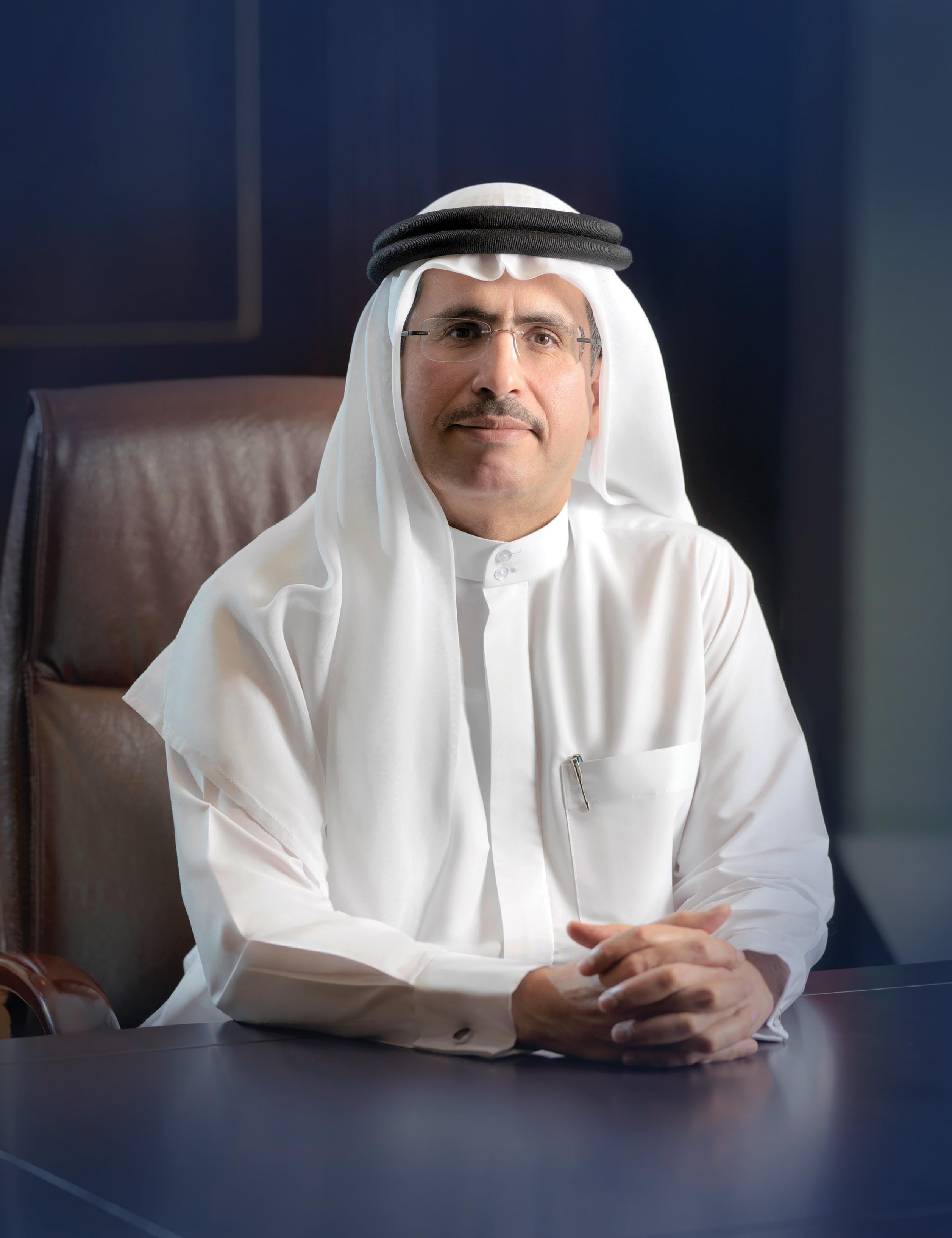
DEWA, LED BY SAEED MOHAMMED AL TAYER, IS EXPANDING




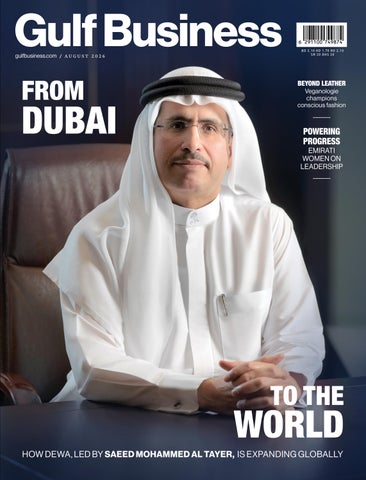
DEWA, LED BY SAEED MOHAMMED AL TAYER, IS EXPANDING
/ AUGUST 2026
An insight into the news and trends shaping the region with perceptive commentary and analysis

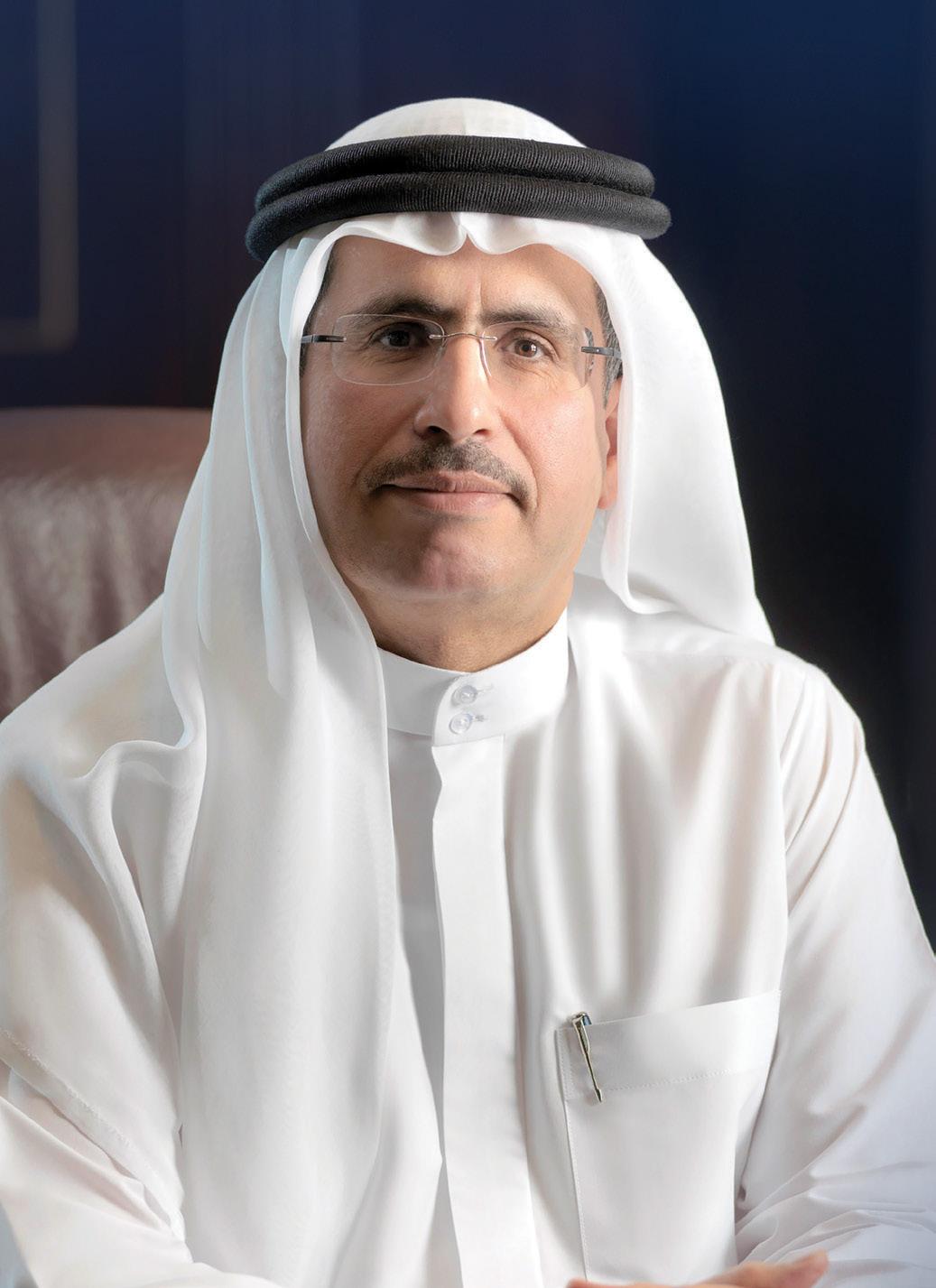
After three decades of building one of the world’s most efficient utilities under the direction of the UAE's leadership, H.E. Saeed Mohammed Al Tayer is taking the Dubai Electricity and Water Authority model beyond Dubai
BlackRock’s latest GCC retirement report explores the UAE's opportunity to strengthen retirement savings
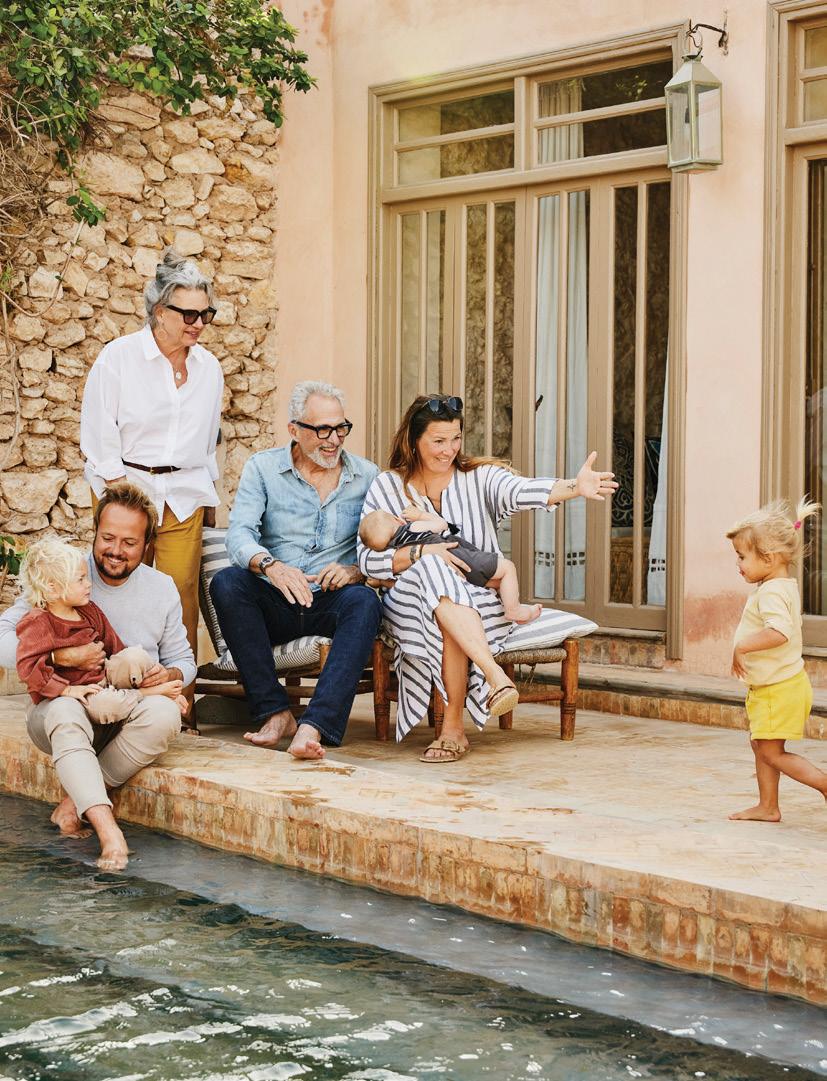
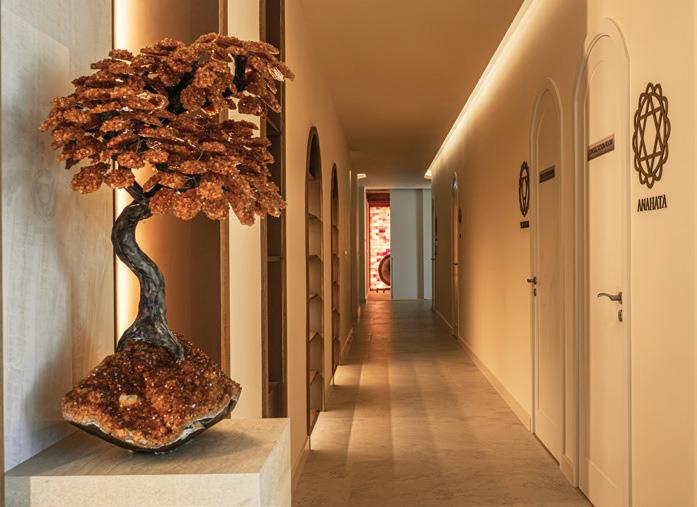
A world of wellness: How Sohum is redefining luxury healing in Dubai p.54

Smart and sleek: The future is folding, glowing and getting smarter: five gadgets to own p.58
“As we continue our transformation into the world's first AI-Native financial centre, DIFC remains focused on creating the environment where capital, technology and talent converge to shape the future of finance.”
Arif Amiri, CEO of Dubai International Financial Centre (DIFC) Authority

Editor-in-chief Obaid Humaid Al Tayer
Managing partner and group editor Ian Fairservice
Chief commercial officer Anthony Milne Anthony@motivate.ae
Group content director Thomas Woodgate Thomas.Woodgate@motivate.ae
Publishing director Manish Chopra Manish.Chopra@motivate.ae
Group editor Gareth van Zyl Gareth.Vanzyl@motivate.ae
Editor Neesha Salian Neesha.Salian@motivate.ae
Deputy editor Rajiv Pillai Rajiv.Pillai@motivate.ae
Reporter Nida Sohail Nida.Sohail@motivate.ae
Senior art director Freddie N Colinares Freddie@motivate.ae
Insights on how the region’s dynamic SME ecosystem is evolving
General manager – production S Sunil Kumar
Production manager Binu Purandaran
Assistant production manager Venita Pinto
Digital sales director Mario Saaiby Mario.Saaiby@motivate.ae
Sales manager Hitesh Kumar Hitesh.Kumar@motivate.ae
HEAD OFFICE: Media One Tower, Dubai Media City, PO Box 2331, Dubai, UAE, Tel: +971 4 427 3000, Fax: +971 4 428 2260, motivate@motivate.ae DUBAI MEDIA CITY: SD 2-94, 2nd Floor, Building 2, Dubai, UAE, Tel: +971 4 390 3550, Fax: +971 4 390 4845 ABU DHABI: PO Box 43072, UAE, Tel: +971 2 657 3490, Fax: +971 2 677 0124, motivate-adh@motivate.ae SAUDI ARABIA: Regus Offices No. 455 - 456, 4th Floor, Hamad Tower, King Fahad Road, Al Olaya, Riyadh, KSA, Tel: +966 11 834 3595 / +966 11 834 3596, motivate@motivate.ae LONDON: Acre House, 11/15 William Road, London NW1 3ER, UK, motivateuk@motivate.ae
/




A month of billion-dollar moves, technology-driven transformation and strategic reforms highlighted the GCC’s evolving economic story, even as rising US-Iran tensions tested regional stability and energy security
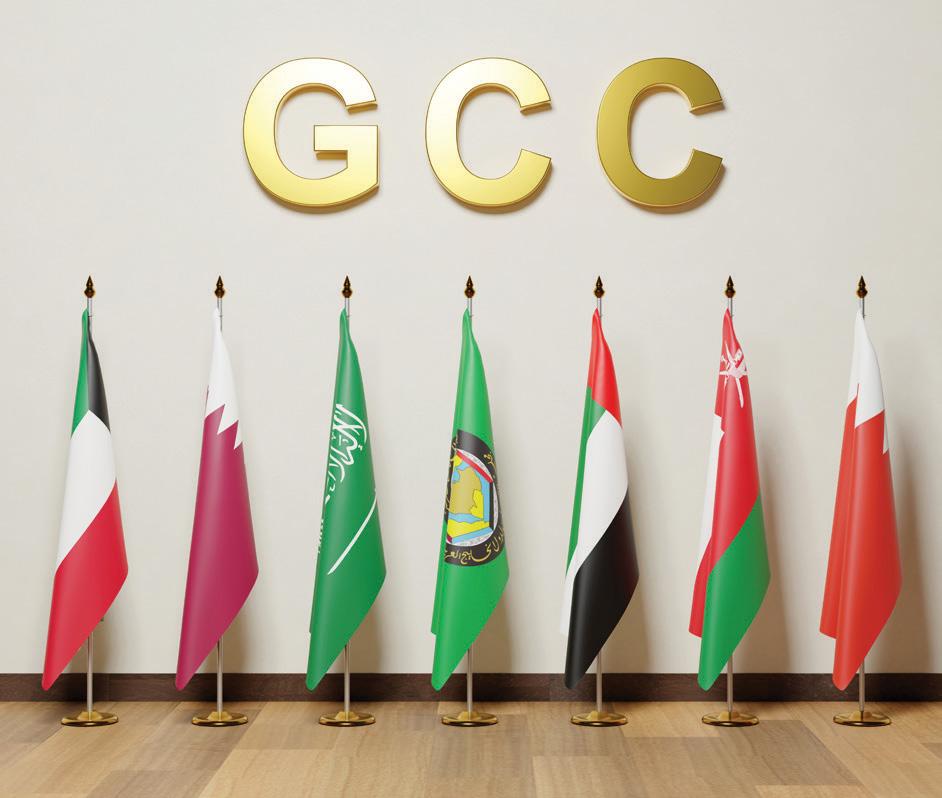
The GCC region recorded a month of major economic milestones in July, with governments across the Gulf advancing trade expansion, digital transformation, investment reforms and infrastructure development while navigating rising geopolitical pressures.
From the UAE’s record non-oil trade performance and Saudi Arabia’s growing foreign investment appeal to Qatar’s fintech expansion, Bahrain’s digital public services and Oman’s sustainability achievements, GCC economies continued to strengthen their position as globally competitive markets.
However, the month was also marked by rising tensions surrounding the US-Iran crisis, creating uncertainty around regional security, energy markets and shipping routes.
The UAE emerged as one of July’s strongest economic performers.
On July 8, Dubai announced that its GDP reached Dhs232bn in the first quarter of 2026, growing 2.4 per cent yearon-year, supported by strong performance across trade, tourism, logistics and private sector activity.
On July 14, Emirates announced the completion of its 100th aircraft refurbishment under its $5bn retrofit programme, marking one of the largest airline upgrade projects globally. The initiative has upgraded 47 Airbus A380s and 53 Boeing 777s, strengthening Dubai’s aviation competitiveness.
The UAE’s digital transformation drive also gained international recognition. On July 20, the World Economic Forum highlighted UAE PASS as a global model for responsible govtech implementation, recognising its role in creating unified digital infrastructure and improving government service delivery. Trade remained the biggest economic highlight. On July 19, Sheikh Mohammed bin Rashid Al Maktoum, Vice President and Prime Minister of the UAE and Ruler of Dubai, announced that UAE non-oil foreign trade reached Dhs1.937tn in the first half of 2026, growing 13.1 per cent annually. “Our non-oil foreign trade
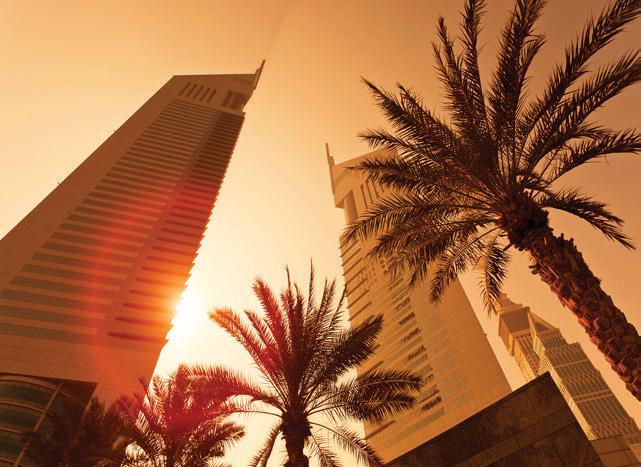
has approached the Dhs2tn mark in just six months,” Sheikh Mohammed said, adding that national non-oil exports reached a record Dhs452.8bn. Dubai Customs also revealed that economic support measures provided Dhs79m in liquidity to businesses and supported Dhs33.9bn in trade flows between March and June 2026.
Compiled by Nida Sohail
Qatar continued strengthening its digital economy during July. On July 6, Hamad International Airport and Qatar Airways launched the “Fast Pass” biometric travel service, allowing passengers to use facial recognition technology across more than 700 airport touchpoints.
The country also expanded financial innovation on July 20, when Qatar Central Bank issued its first licence for an insurance policy price comparison platform. The move increased the number of fintech companies operating under QCB supervision to 16.
Qatar’s stock market also gained momentum on July 20, with the benchmark index rising 1.3 per cent to close at 10,083.79 points.
BAHRAIN • KUWAIT • OMAN
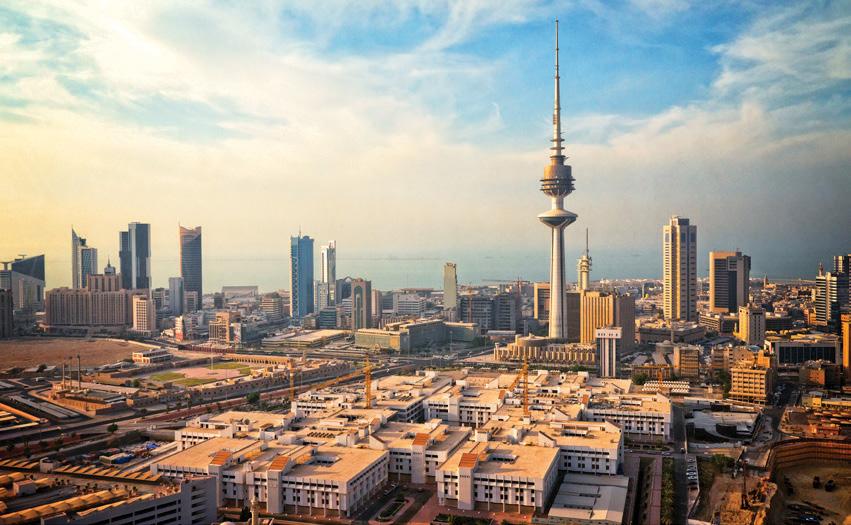
Bahrain focused on improving government efficiency, launching its first unified remote customer service centre for municipal services on July 20. The platform allows residents to complete requests, submit complaints and access support digitally.
Kuwait introduced new regulatory and consumerfocused measures. On July 14, Kuwait Airways announced digital payment partnerships allowing passengers to pay for tickets in four interest-free instalments.
On July 19, Kuwait published a new legal framework regulating houses of worship, requiring licences for construction and management. Oman continued its infrastructure and sustainability agenda. On July 11, the country announced healthcare investment opportunities worth OMR16m, while on July 19, it revealed that infrastructure projects in North Al Sharqiyah exceeded OMR105m.
Saudi Arabia continued its Vision 2030 transformation with major policy moves.
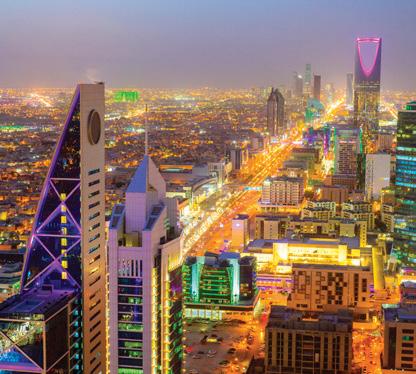
On July 7, the kingdom approved a unified national visa platform to centralise visa services. Three days later, Saudi Arabia launched its Visa Package initiative, allowing visitors from Jordan, Egypt, India, Bangladesh, Indonesia and Mexico to obtain tourist visas through combined travel bookings.
The kingdom strengthened its investment credentials on July 18, when UNCTAD ranked Saudi Arabia as the world’s 13thlargest FDI recipient in 2025. Net foreign investment inflows reached $32.6bn, rising nearly 53 per cent from the previous year. On July 20, Saudi Arabia introduced a multiple-entry Umrah visa valid for one year, supporting efforts to expand religious tourism under Vision 2030.
The escalating US-Iran conflict remained the biggest challenge facing the region during July. On July 15, Iran warned of possible disruption to regional energy exports amid rising tensions around the Strait of Hormuz. Military escalation intensified on July 17, with both sides targeting strategic infrastructure and concerns growing over shipping security in the Gulf and Red Sea.
On July 19, the UAE called for an immediate halt to the escalation, warning that continued conflict could deepen instability.
“The UAE expresses its deep concern over the developments that the region has witnessed,” the Ministry of Foreign Affairs said, urging maximum restraint.
On July 21, the US issued a global security advisory warning citizens of possible travel disruptions and airspace closures. By July 22, US Secretary of State Marco Rubio said Washington remained open to negotiations but claimed Tehran was not serious about talks. Despite geopolitical uncertainty, GCC economies demonstrated resilience throughout July, continuing their push toward diversification and technology adoption.
As global investment priorities shift from excess savings to fierce competition for capital, here’s how investors can navigate a new era shaped by geopolitics, AI, energy security and higher-forlonger interest rates
Crises rarely create new trends; instead, they accelerate existing ones. The ongoing conflict in the Middle East should be seen less as an isolated shock and more as a powerful catalyst for a global capital expenditure cycle that was already gaining momentum. The global economy is undergoing a tectonic shift as we move from a period of excess savings to a shortage of funding. Major global sectors including defence, energy security, artificial intelligence (AI), and supply chain resilience are now fiercely competing for capital. This intense competition is transforming the financial landscape, turning yesterday’s savings ‘glut’ into today’s savings ‘grab’. For investors, this shift requires a strategic repositioning to navigate a world where capital is no longer cheap and plentiful.
Remarkably, despite the lingering conflict and its disruption to the global energy trade, the direct economic damage has been limited. The response to geopolitical turmoil even before the latest eruption has been unsurprisingly proactive, with nations investing heavily in defence capabilities and restructuring supply chains to ensure resilience. The war in Iran was another boost in confidence that these strategies are warranted and combined with relentless investment in AI infrastructure, the capital expenditure spree is providing a significant boost to economic growth and supporting global demand. However, this investment-driven growth comes at a cost. It is competing for the global savings pool, which has for decades kept interest rates low. For the Middle East, this has a dual implication. While regional geopolitical tensions are a primary driver of this new reality, the reduction in the build-up of
currency reserves in countries with current account surpluses is a key factor draining the global savings pool. The result is a new normal where demand for capital remains high, keeping interest rates elevated for the foreseeable future. Investors must adapt to a world where ‘higher for longer’ is not just a policy choice but a fundamental feature of the decade.
For investors in the region, this new environment requires a nuanced approach across asset classes.
FIXED INCOME: With oil prices as the key driver for government bond yields, risks appear skewed tactically in favour of lower yields, supporting an overweight position in longer-duration bonds. UK gilts represent an often-overlooked opportunity. While riskier bond markets have shown resilience, with tight spreads reflecting little immediate downside, high-yield bonds are now mostly a carry asset. We believe a focus on quality is prudent and therefore prefer investment-grade corporate bonds. For those with an appetite for alternative income sources, emerging market hard-currency corporate debt remains a core holding, while local currency debt in emerging markets offers attractive value through higher real yields.
EQUITIES: In the United States, the momentum clearly lies with AI-related sectors that demonstrate strong and consistent earnings. As long as the exceptional conditions in global energy markets
WHILE RISING PRICES HAVE REVIVED TALK OF A COMMODITY ‘SUPER CYCLE’, WE SEE LITTLE EVIDENCE FOR IT. RECENT GAINS HAVE BEEN DRIVEN LARGELY BY GOLD, WITH THE CURRENT ENVIRONMENT MORE CLOSELY RESEMBLING A ‘SUPERSHOCK’ SHAPED BY GEOPOLITICS.

persist, a sustained outperformance from non-US equities is unlikely. However, this creates increasingly attractive entry points in Europe and Asia. We remain constructive on Asian equity markets, given their critical role in the global AI supply chain. Our preference is for North Asia—specifically Japan, South Korea, and China. In South Asia, Singapore and India stand out for compelling country-specific reasons, from favourable demographics to government-led revitalisation initiatives.
NEXT- GENERATION THEMES: Early fears of overinvestment in AI have largely faded. The reality is that demand for data centres continues to outstrip supply, and the monetisation of AI technologies is well underway. Hardware producers remain the primary beneficiaries, exhibiting strong pricing power and earnings that support their valuations. Simultaneously, the disruption in energy markets has brought clean energy sharply back into focus. Geopolitical imperatives, combined with improving fundamentals, add significant support to this theme, and we remain constructive on its longterm potential.
IN CURRENCY MARKETS, THE US DOLLAR HAS REBOUNDED ON GEOPOLITICAL TENSIONS AND SHIFTING INTEREST RATE EXPECTATIONS
COMMODITIES AND CURRENCIES: While rising prices have revived talk of a commodity ‘super cycle’, we see little evidence for it. Recent gains have been driven largely by gold, with the current environment more closely resembling a ‘super-shock’ shaped by geopolitics. Although gold’s initial response to the conflict raised doubts about its safe-haven status, fundamentals remain supportive. Renewed safehaven demand and continued purchasing by central banks underpin a constructive view. In currency markets, the US dollar has rebounded on geopolitical tensions and shifting interest rate expectations. While these factors may support it in the short term, longerterm structural pressures persist. In this new era of capital competition, investors must be selective and strategic. The transition from a savings glut to a savings grab is not a future prediction; it is our current reality. The easy gains of the cheap-money era are gone. To thrive in this new environment, investors must be proactive, focusing on shorter-term corporate credit, embracing real assets for inflationary protection, and maintaining a geographically diverse approach to equities. In a world competing for capital, strategic, active allocation is more critical than ever.

Here’s why investors need to shift from reacting to volatility to building resilient, goals-based portfolios
Steven Rees, head of Investments, MENAT, J.P. Morgan Private Bank
The first half of 2026 reminded investors of an old truth: markets rarely move in a straight line. A shifting macro backdrop, energy market swings, conflict, and a rapidly evolving AI narrative tested even disciplined portfolios. The S&P 500 fell roughly 10 per cent before recovering to new all-time highs. At the same time, a reawakening IPO pipeline has added to a cautious, but genuine, sense that confidence is returning.
The takeaway is not that uncertainty is new. It is that uncertainty is becoming more persistent. Volatility is starting to look less like a temporary storm and more like a recurring feature of the landscape. In that environment, the most important investment decision is not whether to be optimistic or cautious. It is whether you have a goals-based plan that can keep you moving forward when the headlines change.
MANY INVESTORS STILL ANCHOR ON AN IMPLICIT HOPE THAT INFLATION WILL FADE CLEANLY, INTEREST RATES WILL SETTLE, GEOPOLITICS WILL COOL, AND “NORMAL” MARKETS WILL RETURN. BUT TODAY’S SHOCKS REPEAT AND OVERLAP.
Because the real risk in volatile markets is not volatility itself. It is what volatility can trigger: unplanned decisions, mistimed exits, and “temporary” moves that become permanent detours from long-term objectives.
Many investors still anchor on an implicit hope that inflation will fade cleanly, interest rates will settle, geopolitics will cool, and “normal” markets will return. But today’s shocks repeat and overlap. Geopolitical tensions ripple into trade and industrial policy. Energy price moves feed inflation expectations. Supply chain disruptions resurface in new forms. And AI-driven investment cycles can reprice entire sectors quickly as capital spending, competition, and productivity expectations evolve.
This is not an argument for pessimism but it strengthens the case for preparation.
A goals-based plan forces the right starting point. Not “What will the market do next?” but “What am I trying to fund, and what is the timeline?” Retirement spending, education costs, a business transition, philanthropy, legacy planning. These goals have different horizons and different tolerance for drawdowns. When they are mapped clearly, you can build a portfolio with appropriate liquidity, risk budget, and a rebalancing discipline that does not depend on getting the next quarter right. In other words, goals turn investing from a guessing game into a governed process. Active portfolio management fits
naturally inside that process. It is not about reacting to every headline. It is about recognizing that the drivers of return and risk are shifting more often, and portfolios may need to adapt, deliberately, to stay aligned with the plan.
At midyear, three forces stand out as particularly durable: global fragmentation, persistent inflation, and the broadening buildout of artificial intelligence.
Global fragmentation has moved beyond geopolitics into capital flows, supply chains, and industrial priorities. Markets have been signaling this for some time. Defense stocks, natural resource equities, and gold have delivered outsized returns. Natural resource equities rallied more than 30 per cent over the past year, and gold has surged approximately 130 per cent over the last three years.
These are not just cyclical moves. They reflect a structural repricing around resilience, security, and scarcity. Sovereign spending priorities and a rethinking of economic self-sufficiency are reshaping which assets are considered strategic.
One useful frame is Global National Champions, companies controlling critical, difficult-to-replicate assets at the intersection of energy security and AI infrastructure. In a fragmented world, the owners of the physical backbone, including energy, security capabilities, and the infrastructure that powers modern computing, can be structurally advantaged.
But fragmentation is not something you buy once and forget. The opportunity set evolves as policy changes, as supply constraints shift, and as leadership rotates across regions and sectors. Active management matters because positioning and rebalancing can be the difference between chasing yesterday’s winners and building exposure to tomorrow’s bottlenecks. A goals-based plan provides the guardrails so those adjustments are additive, not impulsive.
NATURAL RESOURCE EQUITIES RALLIED MORE THAN 30 PER CENT OVER THE PAST YEAR, AND GOLD HAS SURGED APPROXIMATELY 130 PER CENT OVER THE LAST THREE YEARS.

Inflation rarely announces itself with a single dramatic moment. Its impact compounds quietly. US consumer prices have risen more than 25 per cent cumulatively since the start of the decade, while core fixed income has returned just 6 per cent over the same period. With recent energy shocks, the backdrop remains above the Federal Reserve’s target.
This is not a call to abandon the traditional 60/40 framework. It is a reminder that if inflation is persistent, investors may need a broader toolkit to protect purchasing power and keep goals achievable.
Real assets, commodity-linked equities, infrastructure, and select hedge fund strategies have historically delivered 8 to 12 per cent annualised returns across varying inflation regimes. Used thoughtfully, they can complement traditional allocations rather than replace them.
The point is not to “beat inflation” in any single year. The point is to avoid having inflation quietly reduce the probability of meeting long-term goals.
- AND A NEW KIND
AI has moved from narrative to capital expenditure
SHIFTING.
cycle, and the scale is striking. The five major hyperscalers increased their 2026 capex expectations by $130bn, with more than $650bn of cumulative spend expected through year-end.
As adoption broadens, the story is less about what AI might do and more about what is actively being built. The bottleneck is shi f ting. Capex is broadening beyond semiconductors into the enabling stack, and power is emerging as the binding constraint.
That moves the investment conversation from silicon to electricity, and sets up a multi-year cycle spanning generation, transmission, grid infrastructure, critical electrical equipment, and continued data center expansion.Accessing the full AI value chain may also require both public and private exposure.
Public markets can capture much of the infrastructure buildout. The application layer is still largely being built privately, with approximately 90 per cent of U.S. venture capital deal value in Q1 2026 going to AI. AI is not one trade, and in private markets especially, manager selection can determine whether investors capture durable opportunity or simply pay for excitement.
Active portfolio management is often misunderstood as constant trading. That is not the goal. The goal is to remain anchored to a long-term plan while adapting thoughtfully as conditions evolve: rebalancing when markets swing, upgrading diversification when correlations shift, and allocating toward areas where structural forces are creating durable value.
Volatility is no longer the exception. A goalsbased plan is how investors avoid turning that price into a penalty. It gives you clarity when markets are noisy and discipline when emotions run high. And in a world where shocks are recurring, that discipline may be the most valuable asset of all.








































The conversation around artificial intelligence (AI) has matured. For several years, much of the debate centred on the technology itself, what it could automate, how quickly it would evolve, and whether it would replace jobs. Those questions have not disappeared, but they are no longer the ones that matter most. The UAE has made artificial intelligence a national priority. The more important question for business leaders now is whether organisations, talent strategies and leadership models are evolving as quickly as the country’s investment and ambition.
At its core, AI presents a leadership challenge as much as a technology one.
While much of today’s AI conversation focuses on the sovereignty of technology and data, organisations must also think about the sovereignty of talent, how they develop, retain, and continuously strengthen the people who will work alongside AI. This requires rethinking how work is designed, how talent is developed, and how people are prepared for a future where human judgement and machine intelligence work side by side.
Unlike previous waves of automation, AI is beginning to influence decision making, knowledge work, customer engagement, and creativity itself.
According to the World Economic Forum’s Future of Jobs Report 2025, 170 million jobs are expected to be created globally by 2030, while 92 million will be displaced, a net gain of 78 million roles. Organisations are already using AI to reduce routine administrative
WHILE MUCH OF TODAY’S AI
CONVERSATION FOCUSES ON THE SOVEREIGNTY OF TECHNOLOGY AND DATA, ORGANISATIONS MUST ALSO THINK ABOUT THE SOVEREIGNTY OF TALENT, HOW THEY DEVELOP, RETAIN, AND CONTINUOUSLY STRENGTHEN THE PEOPLE WHO WILL WORK ALONGSIDE AI.
work, allowing employees to spend more time solving complex problems, building relationships, and making better decisions. The challenge for leaders is not introducing AI into the workplace, but helping people see where their own value grows because of it. That requires open conversations, thoughtful development, and a culture where learning keeps pace with change.
Perhaps nowhere is this transformation more visible than at the beginning of the career journey. Traditional organisational hierarchies have long relied on entry-level positions to introduce graduates to the workplace through routine tasks before progressing to greater responsibility. AI is beginning to compress many of those traditional entry points.
Consider a new customer experience analyst joining an organisation today. A few years ago, their first weeks might have been spent manually reviewing customer interactions, categorising recurring issues, and preparing basic reports. AI can now complete much of that work in minutes, allowing the graduate to spend more time interpreting patterns, discussing recommendations with colleagues, and learning how experienced managers make decisions. The technical task becomes shorter, while the learning opportunity becomes richer.
AI is reshaping graduate recruitment by reducing some of the repetitive work that traditionally formed the foundation of junior roles. In the UAE, this comes at a pivotal moment as Emiratisation initiatives and programmes such as NAFIS are bringing more national graduates into privatesector careers, even as AI reshapes many of the routine entry-level roles that traditionally formed the foundation of those jobs. This creates an opportunity and responsibility for employers and
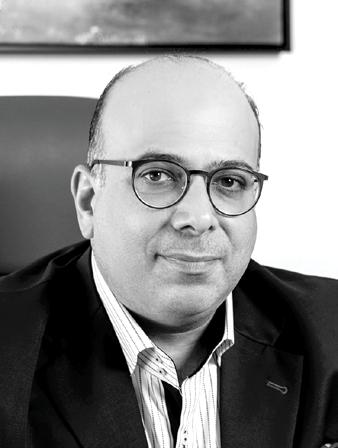
Mounir Hijazi is CEO, Gulf Region at TP
universities to rethink how graduates are prepared, onboarded, mentored, and accelerated, rather than expecting tomorrow’s workforce to follow yesterday’s career ladder. This places Gen Z at the centre of one of the most significant workforce transitions in decades. They are among the groups most exposed to changing job structures, yet they are also well equipped to navigate them. Having grown up alongside digital technology, many already use AI in their daily work and increasingly view AI capability as an essential career skill. By 2030, Gen Z is expected to account for around 30 per cent of the global workforce, making their development central to every organisation’s future competitiveness.
The organisations that stand out over the coming decade will be those that help people continuously acquire new skills throughout their careers. The World Economic Forum estimates that around 39 per cent of core job skills will change by 2030. Reskilling can no longer be treated as an occasional training exercise. It needs to become part of everyday working life.
The UAE already has many of the conditions needed to lead the next era of human-centred AI, ambitious national policy, sustained investment and a young workforce. The future of work will undoubtedly look different from the one we know today. Roles will change, organisational structures will continue to evolve, and the skills that define successful careers will keep shifting. Yet the organisations that thrive will be those that recognise AI is only one part of the equation. Their lasting advantage will come from preparing people to work confidently alongside it, to question it, and to use it with sound judgement. The organisations that redesign how they develop people today will not simply adapt to AI, they will help define the global model for human-centred AI adoption.

The Gulf’s next competitive advantage will not be the scale of its ambitions, but its ability to deliver complex infrastructure projects with discipline, integration and long-term value
The Middle East is entering a pivotal phase in its development journey. Over the past decade, governments across the region have set bold national visions and invested unprecedented capital to accelerate economic diversification. That ambition has transformed the region into one of the world’s most active construction and infrastructure markets. The real test of the next decade will be our collective ability to deliver consistently, at scale, and with the discipline required to turn ambition into lasting economic value. Delivery capability is fast becoming the defining driver of economic performance in the Gulf. The true differentiator now is not vision but the ability to translate that vision into measurable outcomes that enhance competitiveness, strengthen investor confidence and create long term value. This new reality demands a change in how projects are executed
with greater integration, stronger accountability, and disciplined performance across the entire lifecycle. Building this capability is the critical leadership priority for the decade ahead.
As this momentum builds, the scale and complexity of the region’s built environment has increased dramatically. Pipelines are expanding, delivery models are advancing, and expectations around sustainability, resilience and asset performance continue to rise. Success is now measured by tangible results and the contribution that assets make to both wider economic and social systems. Infrastructure investment remains at the center of the region’s transformation. Across the GCC, contract awards reached about $264bn in 2024, underscoring the scale of economic ambition. Development is increasingly shaped by integrated systems that connect housing, mobility, utilities, logistics, and social infrastructure. Coordinating these at scale requires stronger governance, clearer accountability, and more advanced integration to ensure that assets deliver their full economic and social value. Saudi Arabia’s giga programmes embody this shift in full. Since the launch of the National Transformation Program, the kingdom has announced a real estate and infrastructure pipeline valued at roughly $1.3tn, with almost 196
billion dollars in contracts awarded in 2025. These initiatives have moved into detailed sequencing and delivery planning, where integration sets the pace and continuity of progress. Complexity rises sharply at this stage, and early decisions determine outcomes for many years to come.
Meanwhile, the UAE presents a complementary model of diversified growth. Construction output reached $107bn in 2024 and is projected to rise toward 2030, reflecting sustained national confidence and long-term planning. Investment is expanding into healthcare, education, data centers and social infrastructure that strengthen talent development, technology adoption and overall competitiveness. This range of development reinforces the UAE’s position as a hub for innovation and economic resilience. In parallel, funding models are becoming more sophisticated. Public private partnerships are expanding into new sectors, supported by clearer legislation and more consistent procurement frameworks. Modern PPP structures place greater emphasis on lifecycle performance, service quality and transparent and balanced risk allocation, all aimed at strengthening delivery discipline and ensuring long term value.
Clean energy and hydrogen programs reinforce the region’s long-term intent. Large scale renewable and hydrogen initiatives in Saudi Arabia and Oman position the region to play a major role in future low carbon energy markets. These investments signal a deliberate long-term shift in how the region approaches energy security and economic resilience.
Connectivity further strengthens this trajectory. Gulf rail programmes and cross-border links point to a more integrated regional economy with wider opportunities for labour, goods and investment. These networks unlock productivity gains that single city projects cannot deliver alone and broaden the region’s economic reach. Across our major programmes, one lesson consistently stands out. Projects that sustain momentum treat integration as a core delivery function. A significant share of risk often sits between packages, and success depends on how effectively interfaces, sequencing, and governance are coordinated across the wider ecosystem. When integration teams are engaged and empowered early, they reduce rework, compress timelines, and enable digital systems to operate at scale. On the ground, complexity often emerges in moments that seem small yet carry major consequences. A delayed approval on a utility corridor can ripple across multiple workfronts. A sequencing decision in a design office can influence construction months later. These realities underline why mature and responsive delivery systems, supported by timely and informed decisions, are essential to maintaining momentum
ACROSS THE GCC, CONTRACT AWARDS REACHED ABOUT $264BN IN 2024, UNDERSCORING THE SCALE OF ECONOMIC AMBITION
Campbell Gray is CEO at AtkinsRéalis Middle East
POSITION THE REGION TO PLAY A MAJOR ROLE IN FUTURE LOW CARBON
and controlling risk. As the region moves forward, workforce transformation will be one of the defining priorities of the next decade. Demand for digital and AI-enabled capabilities is rising across engineering, design, construction management and operations. Large programmes require talent that bring together deep technical expertise with data literacy, system awareness, and strong analytical ability. Building this workforce is essential to sustaining delivery capacity at scale. Digital adoption and AI will play a central role in meeting this demand. AI enabled design workflows, automated quality checks, digital twins, predictive analytics and real time progress tracking are reshaping program governance. These technologies enhance human expertise and strengthen decision making across complex delivery environments. Against this backdrop, governments can accelerate progress by focusing on three priorities: expanding skills pipelines, accelerating digital and AI adoption and embedding lifecycle performance into procurement and asset management practice. These actions will strengthen long-term value for national economies.
Sustainability has become integral to project delivery. Decarbonisation targets shape now briefs, procurement, and regulation across the region. In the UAE, the shift toward near-zero-emissions buildings is increasing focus on retrofits, energy performance and embodied carbon as central elements of development. In Saudi Arabia, updated codes provide clearer and more practical routes to compliance. Sustainability is now embedded in daily decision making. The Gulf has the scale, the vision and the momentum to set a new global standard for major programme delivery. If capability, talent and technology continue to advance at the current pace, the region will stand as a global reference point for how complex economies grow with discipline and ambition.
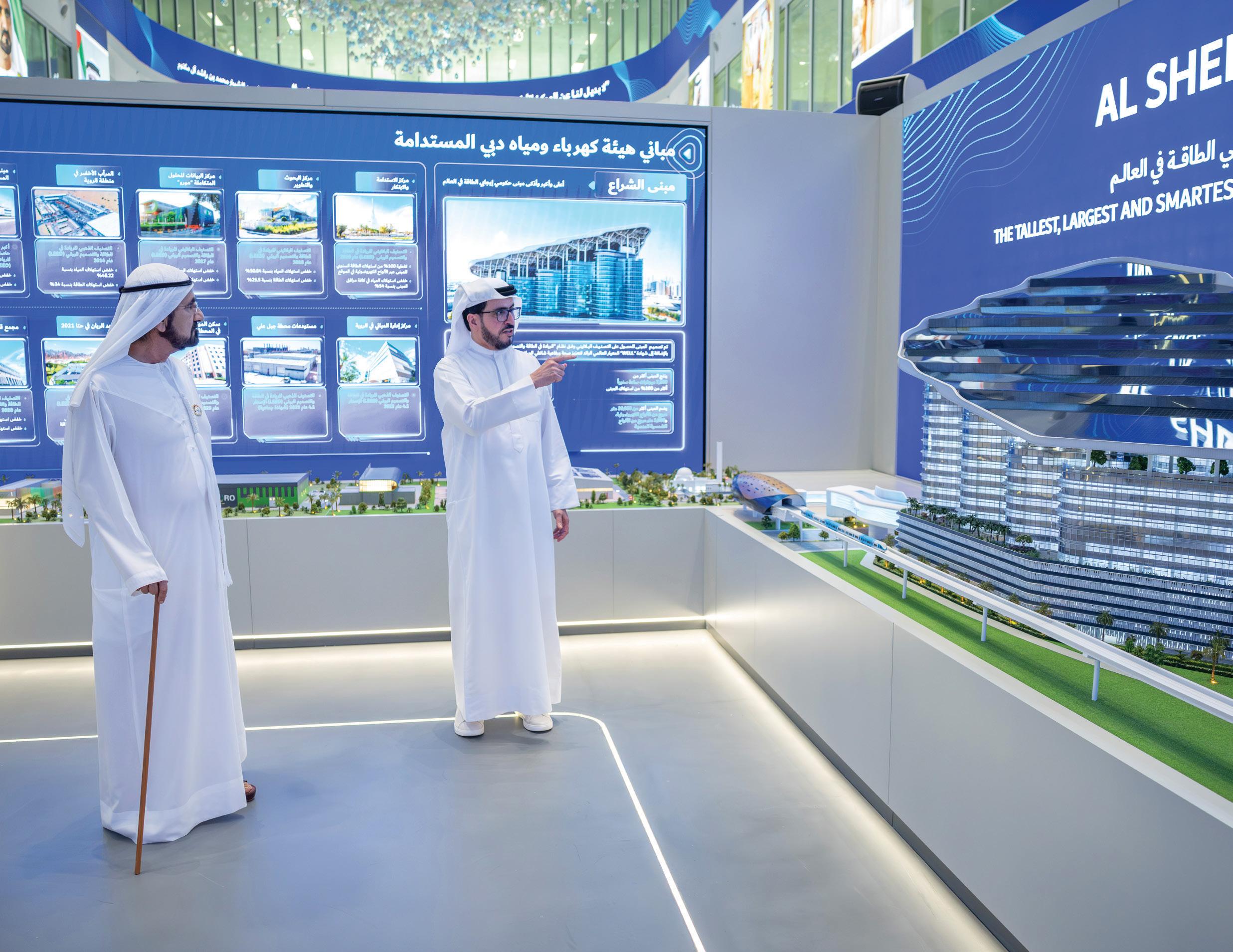
AFTER THREE DECADES OF BUILDING ONE OF THE WORLD’S MOST EFFICIENT UTILITIES UNDER THE GUIDANCE AND DIRECTIVES OF THE UAE’S WISE LEADERSHIP, H.E. SAEED MOHAMMED AL TAYER IS TAKING THE DUBAI ELECTRICITY AND WATER AUTHORITY MODEL TO THE WORLD. WITH RECORD RESULTS, CLEAN-ENERGY LEADERSHIP AND A NEW INTERNATIONAL ARM, THE NEXT CHALLENGE IS GLOBAL SCALE
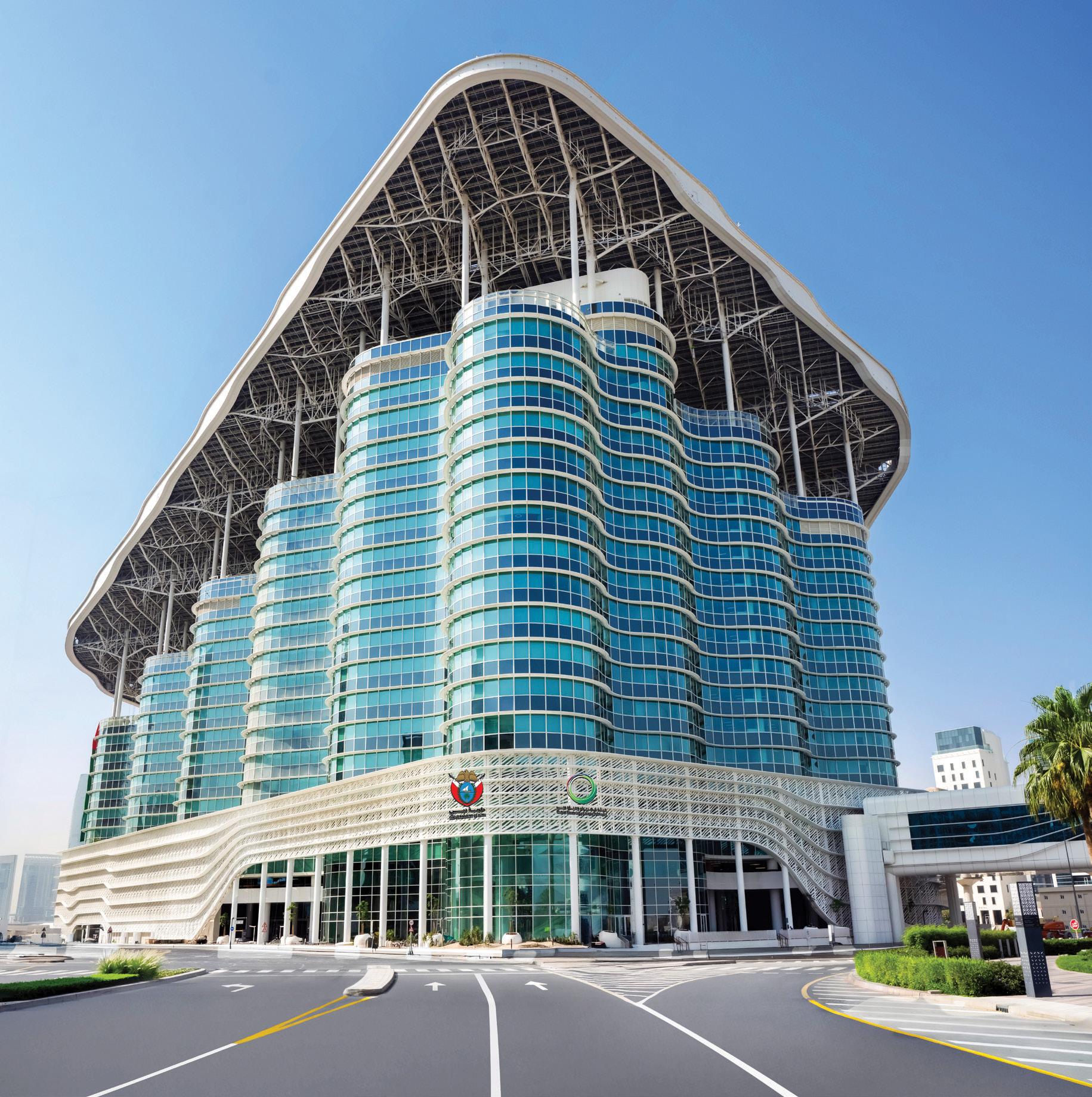
On May 15, H.H Sheikh Mohammed bin Rashid Al Maktoum, Vice-President and Prime Minister of the UAE and Ruler of Dubai, inaugurated the world’s tallest, largest and smartest net-positive government building. Shaped like a sail in Al Jaddaf district, Al Shera’a, the Arabic word for sail, rises 19 storeys above Dubai Creek and, over the course of a year, will generate more clean energy than it consumes. It is the new headquarters of Dubai Electricity and Water Authority (DEWA), designed as a physical statement of the emirate’s approach to infrastructure: ambitious, technology-led and measured by outcomes. H.H Sheikh Mohammed bin Rashid Al Maktoum was received by H.E Saeed Mohammed Al Tayer, MD and CEO of DEWA, who briefed His Highness on the advanced cognitive system that distinguishes the building and makes it the smartest government building in the world. The system relies on internet of things technologies, big data analytics and artificial intelligence (AI). Al Shera’a is equipped with an integrated cognitive system connecting all operational systems and supported by more than 110,000 smart sensors that monitor environmental and operational data in real time, over 1,500 wireless access points and more than 3,200 network devices to achieve perfect synchronisation. These generate more than 1.9 million automated control commands daily, enhancing operational integration and improving performance efficiency.
“Every achievement should be viewed as a launchpad for new phases of excellence and innovation,” H.H Sheikh Mohammed bin Rashid Al Maktoum said at the opening, reinforcing that principle. Al Tayer has spent three decades treating it exactly that way.
Al Tayer has led DEWA since its establishment in 1992. In that time, a utility has been transformed into one of the world’s most closely benchmarked energy and water providers, ranking first globally across 13 key performance indicators and two regional benchmarks covering generation, transmission, distribution and customer service. His remit extends well beyond the utility itself. He sits on the Dubai Executive Council, the Dubai Supreme Fiscal Committee and the Dubai Council. Al Tayer is also vice chairman of the Dubai Supreme Council of Energy and chairs or holds leadership positions across several of Dubai’s major industrial and infrastructure companies, including ENOC, Dragon Oil, Emirates Global Aluminium and EMPOWER.
In 2025, that career drew an unusual salute. Al Tayer became the first civilian recipient of the Life of Leadership Excellence Award from Britain’s Royal Military Academy Sandhurst, an institution more accustomed to recognising military leadership.
The recognition reflected a philosophy that has defined his tenure: execution as strategy. Q1 2026 continued that momentum, delivering DEWA’s highest-ever first-quarter revenue, operating profit, EBITDA and profit after tax. Revenue reached $1.76bn, while operating profit increased 53.6 per cent and profit after tax rose 89.9 per cent year on year. Cumulative investment in Dubai’s energy and water infrastructure has now exceeded $74bn, while customer accounts have increased to about 1.35 million. What separates DEWA from many state utilities is that it does not behave like one. It reports with the discipline of a listed multinational — it has been listed on the Dubai Financial Market since April 2022. In 2025, it delivered the type of financial performance expected from a global
infrastructure company: record revenue, record profit and continued investment capacity. DEWA reported record full-year results, with revenue reaching $8.94bn, EBITDA at $4.72bn and profit a f ter tax at $2.47bn. Its performance was supported by record operational demand, with annual electricity generation reaching 62.21 TWh, including 10.10 TWh of clean power generation. Peak power demand reached 11.39 GW, while total desalinated water produced stood at 161.5 billion imperial gallons. DEWA’s installed power capacity reached around 18 GW, while its installed desalination capacity climbed to 555 million imperial gallons per day, reflecting continued investment in Dubai’s expanding infrastructure needs. Al Tayer’s description of what those numbers provide is “strategic freedom”: the ability to continue investing at scale while maintaining financial strength. Profit, in that view, is not the objective. It is the mechanism that enables long-term investment while also supporting returns to shareholders through dividends. This approach has shaped everything from renewable energy expansion to digital transformation and now the authority’s most ambitious step yet: taking the DEWA model beyond Dubai.
If the balance sheet is the proof, solar is the conviction DEWA backed long before the economics were obvious. The Mohammed bin Rashid Al Maktoum Solar Park, the largest single-site solar park in the world and holder of multiple Guinness World Records, began as a long-term commitment to a technology whose commercial case was still developing. DEWA structured the project through the independent power producer (IPP) model, attracting international developers and investors while helping establish some of the lowest solar tariffs globally. DEWA has increased the Mohammed bin Rashid Al Maktoum Solar Park’s planned capacity for 2030 to 8,060 megawatts, well above the original target of 5,000 MW. This raises Dubai’s expected clean energy contribution to
36 per cent, up from the initial goal of 25 per cent, while increasing annual carbon emissions reductions to more than 8.5 million tonnes, surpassing the original target of 6.5 million tonnes and reinforcing the emirate’s commitment to achieve net zero by 2050.
In 2025, DEWA completed 1,000 MW of the solar park’s 1,800 MW sixth phase and achieved further global milestones, including the world’s tallest concentrated solar power tower at 263 metres and the largest thermal energy storage capacity of its kind, capable of storing 5,907 MWh. “We moved early into solar energy. Now we are taking this model globally,” Al Tayer has said. That approach has defined DEWA’s wider sustainability strategy: invest early, build scale and create systems that can be replicated. Alongside solar, DEWA is expanding other cleanenergy technologies. The Hatta Pumped-storage Hydroelectric Power Plant, the first of its kind in the GCC, will provide 250
MW of generation capacity and 1,500 MWh of energy storage. In water, the authority is shifting towards more efficient reverse-osmosis desalination technologies, reducing reliance on traditional thermal processes. By 2030, DEWA is planning to have 100 per cent desalinated water using waste heat and clean energy.
Behind these headline projects sits an operating record that has become one of DEWA’s strongest differentiators. Under H.H Sheikh Mohammed’s Dubai-It initiative, built around the principle that ambition must
translate into measurable execution, DEWA has continued to set global benchmarks for operational performance, efficiency and service excellence. The numbers explain why. Customer minutes lost, a core measure of electricity reliability, has fallen to 0.82 minutes per customer annually, equivalent to just 49 seconds, the world’s lowest. Electricity network losses stand at 2 per cent, compared with significantly higher levels in many developed markets, and it’s also the world’s lowest, while waternetwork losses have fallen to 4.4 per cent, among the world’s lowest. Dubai’s electricity system reliability exceeds 99.99 per cent. Increasingly, those gains are being driven by digital systems and artificial intelligence.
DEWA’s Automatic Smart Grid Restoration System can identify faults, isolate affected sections and restore electricity supply automatically. Its intelligent gas turbine controller at the Jebel Ali Power Station operates autonomously, while Rammas, DEWA’s AI-powered virtual employee, has handled more than 13 million customer queries since its launch in 2017.
The authority is backing this digital transformation through its Dhs7bn Smart Grid Strategy, which runs until 2035 and includes 19 enablers designed to improve efficiency, reduce losses and support renewable energy integration.
For Al Tayer, technology is not simply about automation. It is about creating a utility capable of anticipating demand, improving reliability and operating at greater scale.
Growth at DEWA has not only been about building more infrastructure. It has also been about controlling more of the ecosystem around it. The authority has expanded its ownership position in strategic assets, including raising its stake in Emirates
Al Shera’a, DEWA’s new headquarters in Al Jaddaf, represents the authority’s approach to infrastructure: combining sustainability, technology and operational efficiency. The 19-storey building is designed to generate more clean energy than it consumes over the course of a year, making it the world’s tallest, largest and smartest net-positive government building.
KEY FEATURES INCLUDE:
More than 110,000 smart sensors monitoring building performance.
Around 1.9 million automated commands processed daily. Approximately 100 building systems managed through a single artificial intelligence application.
5 megawatts of on-site solar generation through rooftop panels and building-integrated photovoltaic systems. Designed to achieve LEED Platinum and WELL Gold standards.
Direct connection to Al Jaddaf Metro through a dedicated pedestrian bridge.
WE MOVED EARLY INTO SOLAR ENERGY. NOW WE ARE TAKING THIS MODEL GLOBALLY.”
Central Cooling Systems Corporation (EMPOWER), the world’s largest district cooling provider by connected capacity, from 56 per cent to 80 per cent in a transaction valued at $1.41bn.
The move reflects a broader strategy: secure control of assets that are central to Dubai’s future energy and sustainability needs. Today, DEWA oversees a portfolio of more than 10 successful operating companies and occupies multiple roles across the infrastructure value chain: planner, developer, financier, offtaker and shareholder. That integrated model is now the foundation for its international ambitions.
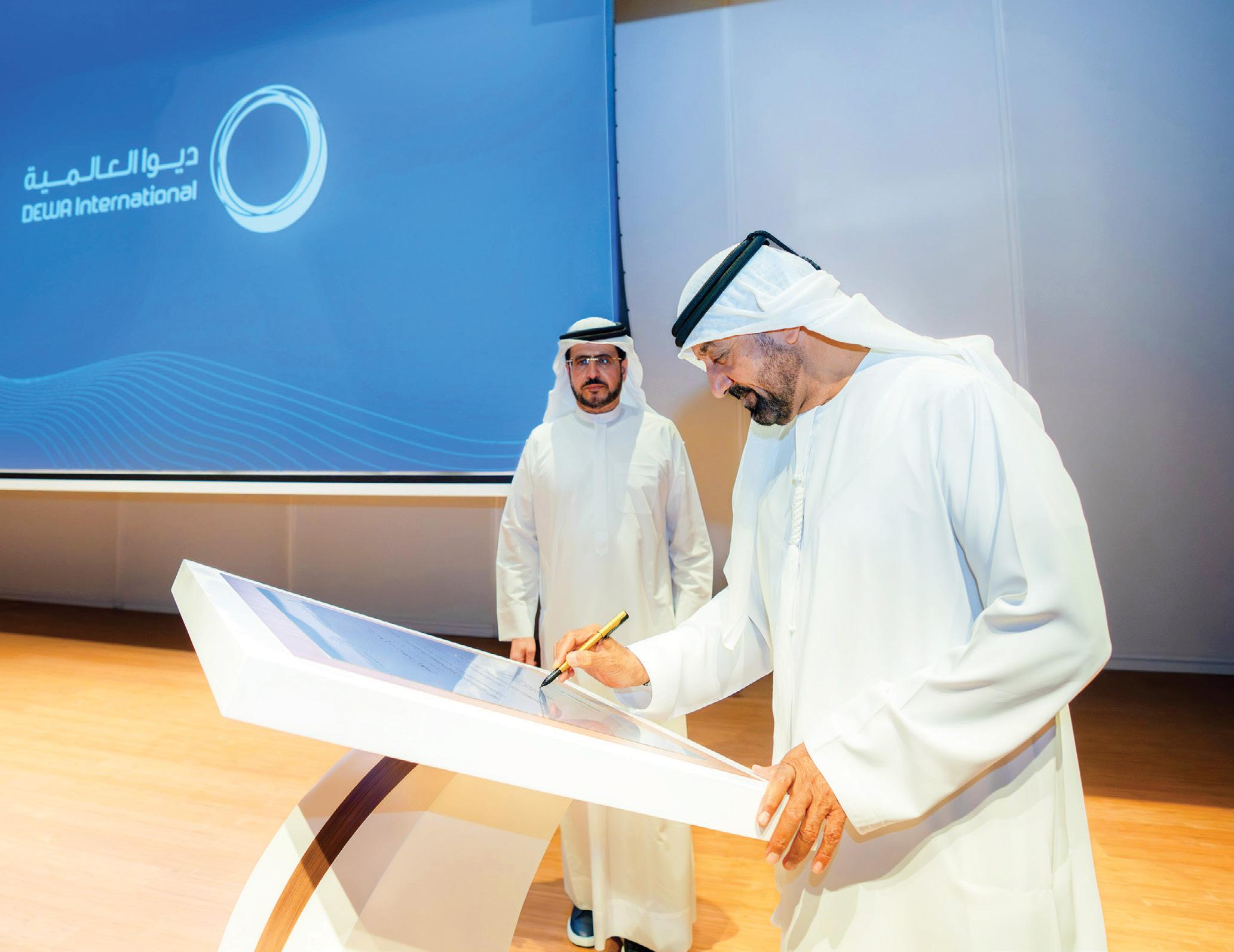
The next chapter began in June, when H.H Sheikh Ahmed bin Saeed Al Maktoum, Chairman of the Dubai Supreme Council of Energy, launched DEWA International, a wholly owned independent subsidiary created to develop conventional and clean energy and water projects globally.
The move marks a significant shift in DEWA’s role. After spending more than three decades building Dubai’s infrastructure ecosystem, the authority is now positioning itself as a developer and partner beyond the emirate. For Al Tayer, the expansion is not about exporting individual projects. It is about exporting the systems, experience and operating model behind them.
“International expansion is not merely an ambition; it is a strategic imperative that strengthens DEWA across every dimension,” Al Tayer said. The approach will be measured and phased, beginning with markets where Dubai’s relationships, experience and geographic position provide a natural advantage before expanding further.
H.H Sheikh Ahmed bin Saeed Al Maktoum, Chairman of the Dubai Supreme Council of Energy, launching DEWA International with H.E Saeed Mohammed Al Tayer in attendance
The proposition is built around capabilities developed in Dubai: project structuring, governance, risk allocation, digital transformation, operations and maintenance, and the ability to attract global investment through bankable infrastructure models.
A key part of that experience comes from DEWA’s independent water and power producer model, which has helped the authority attract international developers and investors while delivering competitive tariffs. “We are exporting not only projects, but our full set of learnings and capabilities,” Al Tayer said.
The company will focus on co-development and co-investment opportunities with governments, developers and financial institutions, bringing together Dubai’s infrastructure expertise with international partnerships.
“The company is set up. The work has already started,” Al Tayer said, pointing to the development of project pipelines and partnerships that will shape DEWA International’s future. For a utility that spent three decades proving its model at home, the next challenge is whether that model can work elsewhere.
The creation of DEWA International represents more than an expansion strategy. It is a test of whether an operating model developed for one of the world’s fastest-growing cities can be adapted across different markets.
DEWA’s argument is that its advantage does not come from owning infrastructure alone. It comes from the system built around it: long-term planning, financial discipline, technology
LAUNCHED IN JULY, DUBAI - IT, H.H SHEIKH MOHAMMED BIN RASHID AL MAKTOUM’S INITIATIVE FOR INSTITUTIONAL EXCELLENCE, IS BUILT AROUND A SIMPLE PRINCIPLE: PERFORMANCE IS MEASURED THROUGH EXECUTION. DEWA’S RESULTS INCLUDE:
0.82 customer minutes lost annually, the lowest globally.
2 per cent electricity transmission and distribution losses and 4.4 per cent waternetwork losses.
More than 99.99 per cent reliability and availability of Dubai’s power system.
More than 13 million customer interactions handled by Rammas since 2017.
Dhs7bn Smart Grid Strategy extending to 2035.
Clean energy accounting for 21.5 per cent of Dubai’s energy mix today, with a target of 36 per cent by 2030 and net zero by 2050.
WE ARE EXPORTING NOT ONLY PROJECTS, BUT OUR FULL SET OF LEARNINGS AND CAPABILITIES.”
adoption and the ability to bring together governments, investors and private-sector partners.
Through its independent power producer and independent water producer models, DEWA has developed experience in structuring large-scale infrastructure projects that attract international capital while maintaining competitive costs.
The authority’s role has evolved from being solely a utility provider into a broader infrastructure platform, combining planning, development, financing, procurement, operations and investment. That combination is what DEWA International intends to take abroad.
The subsidiary will focus on opportunities across electricity generation, renewable energy, water production and related infrastructure, working alongside governments, developers and investors. Al Tayer has stressed that international growth will be disciplined rather than driven by expansion for its own sake.
The strategy is to enter markets where DEWA’s experience, relationships and capabilities can create value, then build partnerships that allow projects to scale sustainably. The broader ambition reflects a changing global infrastructure landscape. Countries are looking for solutions that address rising electricity demand, water security, decarbonisation and the need for resilient urban systems.
Dubai’s experience o ff ers a case study: a city that has expanded rapidly while maintaining high reliability, attracting investment and increasing the role of clean energy. Whether that model can travel will depend on how effectively it adapts to different regulatory environments, markets and infrastructure needs.
But DEWA believes the foundations are already proven. Success will ultimately depend not only on exporting technical expertise, but on adapting the DEWA model to meet the unique demands of markets around the world.
It is easy to view DEWA’s recent milestones separately: record financial results, renewable energy expansion, a landmark
BY THE NUMBERS: 2025 RECORD FULL -YEAR PERFORMANCE
$4.72bn
$ 8.94bn Revenue +6.0% YoY
ADDITIONAL MILESTONES
62.21 TWh peak annual generation, including 10.10 TWh of clean energy 11.39 GW peak demand
161.5 billion gallons of desalinated water produced
About 1.35 million customer accounts
headquarters and the launch of an international subsidiary. Al Tayer sees them as part of a single strategy.
The utility has spent more than three decades building operational strength, financial resilience and technological capability. Those foundations now underpin its next phase: moving from being a benchmark utility to becoming a global infrastructure partner. Along the way, DEWA has continued to focus on less visible measures of institutional strength.
It became the first organisation globally to receive Investors in People Platinum accreditation, reflecting its approach to workforce development and organisational culture. It has also achieved high scores through Dubai Government’s realtime happiness measurement system, reflecting its focus on customer experience.
The challenge ahead is different from the one DEWA faced when it began. Building power plants, desalination facilities and networks requires engineering expertise. Exporting an operating philosophy requires something harder: adapting culture, governance and decision-making processes across different markets.
That is the test facing DEWA International.
The opportunity, however, is clear. As countries seek reliable, sustainable and investable infrastructure solutions, DEWA believes the experience built in Dubai can offer a blueprint.
As Al Tayer said, DEWA International “is the next chapter in this journey”.
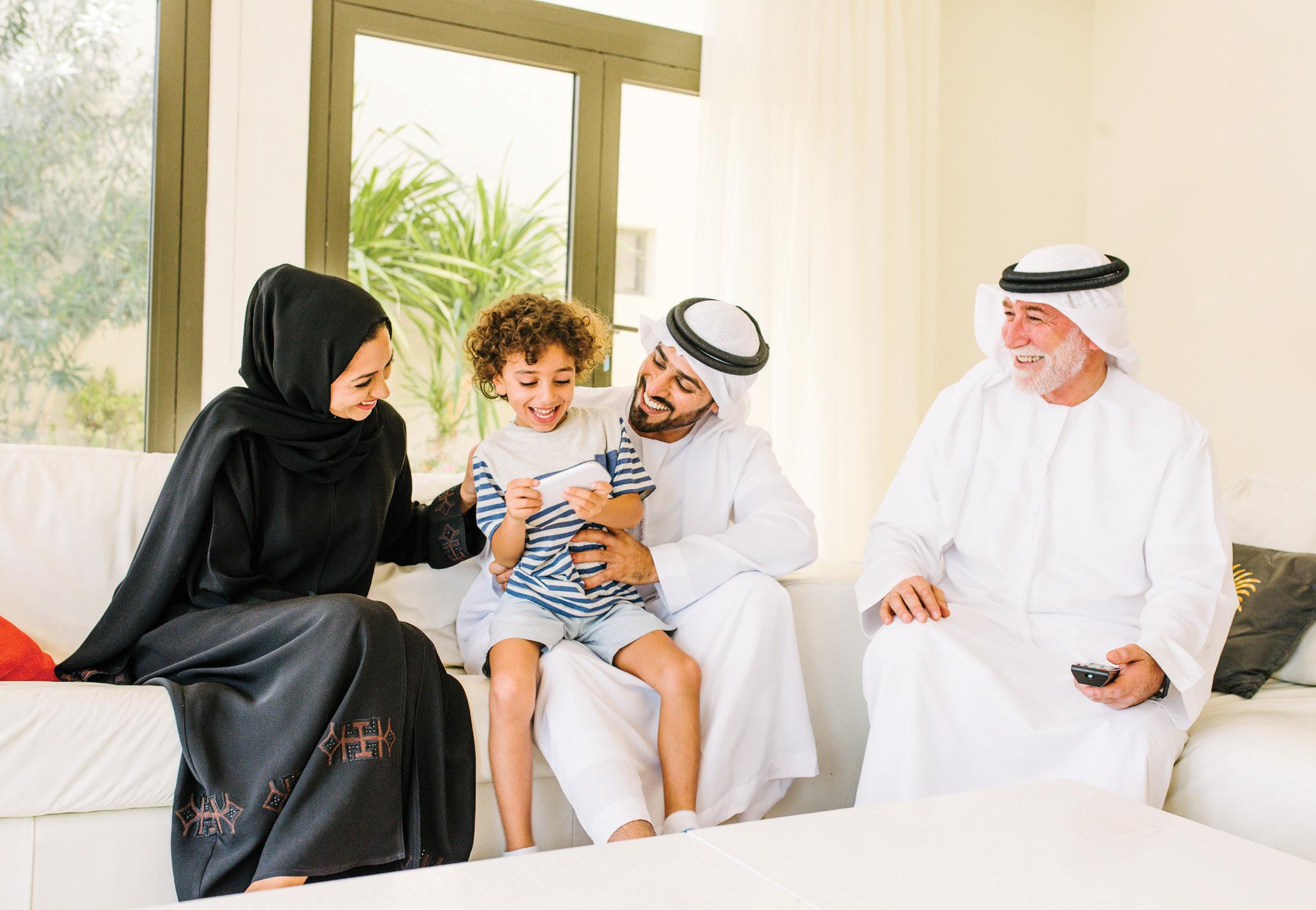
BLACKROCK’S LATEST GCC RETIREMENT STUDY HIGHLIGHTS A DEFINING CHALLENGE FOR THE UAE: TURNING A WILLINGNESS TO SAVE INTO SUSTAINABLE WEALTH CREATION
WORDS NEESHA SALIAN
The UAE’s workforce is saving. It is not, however, always saving strategically. A new BlackRock study released in June this year examining retirement readiness across the GCC reveals a region at a turning point: individuals are motivated to prepare for retirement, but the systems needed to convert that intent into sustainable outcomes remain fragmented. While the research covers both Saudi Arabia and the UAE, the UAE’s diverse workforce structure makes its retirement challenge particularly relevant. Strengthening retirement systems could not only improve individual financial security but also mobilise domestic capital, support capital market development and contribute to long-term economic diversification.
The challenge is clear. Seventy-eight per cent of UAE workers feel positive about their current financial wellbeing. Yet 59 per cent say they are unable to plan for the future because of financial worries, while 58 per cent fear they may outlive their savings.
The divide between nationals and expatriates is also significant. Eighty-nine per cent of UAE nationals feel financially positive compared with 76 per cent of expatriates. However, when it comes to retirement preparedness, the gap widens.
Sixty-seven per cent of nationals feel prepared for retirement, reflecting the role of public pension systems in providing a stable foundation. Among expatriates, preparedness falls to 46 per cent. Only 50 per cent of expatriates feel on track for a reasonable retirement outcome compared with 69 per cent of nationals. The difference highlights the complexity of retirement planning in a workforce where many expatriates manage savings across multiple jurisdictions and rely more heavily on employer-based arrangements and personal investments. Lamiaa Chaabi, solutions chief investment officer, BlackRock Middle East, said the
issue is not whether people will retire, but whether they have access to the right structures to prepare.
“Half of our assets under management are in retirement solutions. Beyond that, we’re not just investment managing. We’re working with a lot of these actors to help people retire with dignity. We’re all going to age; we’re all going to retire.”
The research suggests the challenge is not a lack of willingness but a lack of effective frameworks. Seventy-five per cent of workers say they have started preparing for retirement, yet only 24 per cent are contributing to a pension or long-term savings plan. Fifty-seven per cent regularly save or invest, with cash (49 per cent), gold (40 per cent) and property (18 per cent) among the most common choices.
While these assets offer familiarity and flexibility, they are not necessarily structured to provide sustainable income streams over decades of retirement.
The knowledge gap remains significant. Only 13 per cent of expatriates and 21 per cent of nationals feel confident understanding retirement options. Thirty-six per cent do not know where to access reliable advice, 32 per cent do not know how much they should save, 26 per cent are unclear about available options and 22 per cent find information confusing. At the same time, demand for better solutions is clear. Ninetytwo per cent say they would save more if given better incentives, while 77 per cent believe limited savings options are a barrier. Kashif Riaz, head of Middle East Financial Advisory, BlackRock, said improving financial literacy is central to changing behaviour. “People see markets moving up and down and interpret that as risk, but they often don’t account for
inflation silently eroding cash savings over time. That creates a false sense of safety in holding cash. Better financial literacy changes that behaviour.” The consequence is that individuals can make fundamentally different retirement choices despite having similar incomes. Someone who keeps all savings in cash, invests through diversified portfolios or takes concentrated positions in volatile assets may arrive at retirement with very different outcomes.
The BlackRock executives said longterm retirement investing requires discipline, diversification and an understanding of how different asset classes contribute to a broader portfolio.
The expatriate structure of the GCC is central to understanding why retirement systems are becoming increasingly important. Historically, many expatriates saved and invested in their home countries, maintaining financial lives spread across multiple jurisdictions. That pattern is changing as more people establish longer-term roots in the region,
building wealth through local property ownership, investments and financial services. At the same time, national populations remain relatively young today but will age over time. These demographic shifts, combined with a more settled expatriate population, are increasing the need for retirement solutions that reflect how people live and work in the UAE.
For expatriates, retirement planning is o f ten complicated by multiple currencies, jurisdictions and residency considerations. “The demand for retirement solutions has gotten much broader as expatriates make this their home for the long term,” BlackRock executives said. “Rather than doing their banking, investing, and primary real estate investing in their home countries with the intent to return, that’s all happening here.”
The shift is creating demand for greater involvement from financial institutions, employers and policymakers. Historically, workplace savings plans were largely offered by the largest employers and multinational companies. However, demand for structured solutions is expanding.
The evolution of end-of-service benefit structures has also created a foundation for change, allowing employers to opt into funded and invested pools rather than traditional unfunded maturity programmes. BlackRock expects this trend to accelerate as employers increasingly view retirement benefits as part of their broader employee offering.
The retirement challenge also represents an economic opportunity.
Half of workers expect to rely primarily on personal savings and investments during retirement, while only 6 per cent expect employer-sponsored workplace schemes. A further 33 per cent expect to rely on end-of-service benefits.
This fragmented approach means a significant pool of potential capital remains outside structured, long-term investment channels.
The research found that 56 per cent of respondents plan to increase their retirement savings, creating an opportunity to channel more capital into
productive investments. Strengthening retirement systems could mobilise domestic savings into long-term investment pools, support deeper and more liquid capital markets, and allow residents’ wealth to grow alongside the UAE economy. Riaz said expanding access to professionally managed workplace savings schemes could deliver benefits beyond individual retirement outcomes.
“By expanding access to funded, professionally managed workplace savings schemes, the UAE can not only strengthen financial outcomes for individuals, but also mobilise significant pools of domestic capital. That capital can play an important role in supporting deeper capital markets, economic diversification, and long-term growth, allowing people’s savings to grow alongside the economy they are helping to build.”
Generational differences in retirement planning are emerging, although the survey did not identify major variations between age groups.
The BlackRock executives said younger workers appear more engaged with markets and more willing to consider retirement savings earlier than previous generations. However, the strongest predictor of retirement confidence was not age, but behaviour.
Those who supplement state pensions and mandatory benefits with additional savings feel more prepared than those relying only on baseline provisions.
The challenge is therefore converting awareness into sustained action. Younger investors also face the challenge of
understanding the role of different assets within a long-term portfolio. Interest in new asset classes is increasing, but BlackRock executives said retirement planning requires a balanced approach that considers diversification, risk management and long-term objectives. A professionally managed investment strategy can help individuals avoid relying too heavily on individual assets or short-term market trends.
Financial literacy remains central to this process. Women also face specific challenges in retirement planning, with career breaks linked to childcare or caregiving responsibilities potentially affecting long-term savings. Starting early can help create resilience by allowing investments to continue growing through different life stages. For Chaabi, financial education is also closely linked to empowerment.
“When I tell women about how much returns we can make in the markets, it piques their interest. It gives them autonomy, it gives them independence. That narrative and messaging needs to be worked upon.”
The UAE has an opportunity to develop retirement solutions without facing the immediate demographic pressures experienced by many ageing economies.
Rather than replicating international models, the BlackRock executives said the priority should be understanding local needs and adapting global lessons to the UAE’s workforce structure.
The central principle is designing systems around individuals.
“You really want to design for the individual and think about who they are,” said Muirinn O’Neill, director, Government Affairs & Public Policy, BlackRock. “Having the opportunity here that you’re not under necessarily tons and tons of demographic pressure, you can actually think about who the savers are, what are their needs, what are their levels of financial literacy, what are their income levels, and build a system that works for them.”
Flexibility was highlighted as another important factor.
Retirement systems that lock away savings for decades may struggle to gain
BlackRock’s Muirinn O’Neill and Lamiaa Chaabi share key retirement advice
START EARLY AND SAVE WHAT YOU CAN.
When you are young, money often feels limited and there are competing priorities. But even small amounts set aside early can have a significant impact over time. When invested, those contributions continue working through life changes such as career breaks or having children.
DO NOT OVERCOMPLICATE INVESTING.
Many people, particularly women, feel they need to understand everything about markets or have large sums of money before they begin. That is not the case. Starting with small amounts helps build confidence and creates a saving habit. The priority is participation, not perfection.
DO NOT WAIT FOR THE PERFECT MOMENT.
Even if someone starts later, consistent saving can still build meaningful financial resilience. Life is rarely financially perfect, but understanding income, essential expenses and long-term goals can help people make more intentional decisions about saving.
participation, particularly in a region where workers have different financial priorities, from buying property to supporting families.
Singapore’s multi-layered approach, which combines retirement savings with access for other major life needs, offers one example of how flexibility can be built into long-term savings systems.
Other international models demonstrate different approaches, including allowing limited access to retirement savings during emergencies or using pension assets to support major financial commitments such as home ownership.
The broader lesson, the BlackRock executives said, is that retirement systems work best when they reflect people’s wider financial realities.
Another emerging theme is encouraging people to save earlier in life. Early participation allows individuals to benefit from long-term compounding and reduces the pressure to build significant savings later. O’Neill said the UAE has an opportunity to examine global approaches and determine which elements are suitable for the local environment.
“You do have an opportunity to think creatively about how you can think about where these resources go and perhaps earlier in life might make sense.”
A key difference shaping retirement design in the GCC is the absence of income tax. In many developed markets, tax incentives encourage participation in retirement systems. Contributions may receive tax advantages, investment growth may be sheltered, and withdrawals may be taxed. The UAE operates differently because income is already tax-free.
“Most of the time when you’re saving into a pension or into a retirement system globally, you are tax-advantaged within the wrapper. It’s tax-free,” BlackRock said. “Obviously, the difference here is it’s tax-free outside the wrapper, so you don’t have that same benefit.”
As a result, retirement solutions in the UAE may require different incentives, including employer contributions, government support, accessibility and flexibility. Ireland provides one example. Its auto-enrolment model does not rely primarily on tax incentives because many participants have limited tax exposure. Instead, it uses employer contributions
and government support to encourage participation. The lesson for the UAE is that retirement frameworks must reflect local economic conditions rather than simply replicate systems built for different markets.
Demand for structured retirement solutions is already evident. Ninetythree per cent of UAE nationals find defined-contribution workplace savings schemes appealing, alongside 91 per cent of expatriates.
Ninety per cent of UAE nationals would participate in such schemes if available, compared with 86 per cent of expatriates.
The gap between demand and availability highlights an opportunity to expand workplace retirement solutions.
Reform is already underway through initiatives such as the DIFC Employee Workplace Savings scheme, which introduced funded, defined-contribution structures with investment choice, transparency and portability. The next phase will require coordination between policymakers, employers and financial institutions. BlackRock executives also highlighted the importance of behavioural “nudges”, small design choices that encourage better saving decisions without removing individual choice.
Flexibility will remain central. The most effective systems are likely to combine long-term retirement savings with controlled access for important financial needs, reflecting the realities of how people manage money throughout their lives.
WHEN I TELL WOMEN ABOUT HOW MUCH RETURNS WE CAN MAKE IN THE MARKETS, IT PIQUES THEIR INTEREST. IT GIVES THEM AUTONOMY, IT GIVES THEM INDEPENDENCE. THAT NARRATIVE AND MESSAGING NEEDS
The word “retirement” itself may not always resonate with younger workers or expatriates in the region.
Many people are focused on broader financial goals, including buying property, supporting families, building wealth and maintaining flexibility.
The BlackRock executives said retirement should be viewed as one part of a broader financial journey rather than a single event at the end of a working life.
The objective is not simply preparing for a distant milestone, but helping individuals build financial resilience throughout different stages of life.
As Chaabi noted, the challenge extends beyond creating investment products. It requires building trust, participation and understanding so people can make informed decisions about their financial futures.
The research points to a clear opportunity: workers are willing to save, confidence in institutions remains high and demand for structured solutions exists.
Turning that opportunity into reality will require action across three groups. For policymakers, the priority is creating frameworks that encourage employer participation, expand funded retirement models and improve financial literacy. For employers, retirement benefits are becoming increasingly important in attracting and retaining talent, particularly as workers place greater value on longterm financial security.
For financial institutions, the challenge is ensuring growing retirement savings are directed towards diversified, professionally managed investment solutions rather than remaining concentrated in cash, gold and property. The UAE’s retirement conversation is evolving. Workers are prepared to engage, the economic opportunity is clear and the foundations for reform are beginning to develop. The next phase will determine whether the country can build a retirement framework that supports both individual financial security and long-term economic growth.
TO MARK EMIRATI WOMEN’S DAY THIS MONTH, LEADERS ACROSS THE UAE SHARE THEIR ADVICE FOR THE NEXT GENERATION
CURATED BY NEESHA SALIAN
This year, Emirati Women’s Day introduces a month-long national initiative from August 28 to September 28 under the theme “We Emerge Stronger and Better”, recognising women’s leadership, achievements, and impactful contributions to the UAE’s continued growth and development.


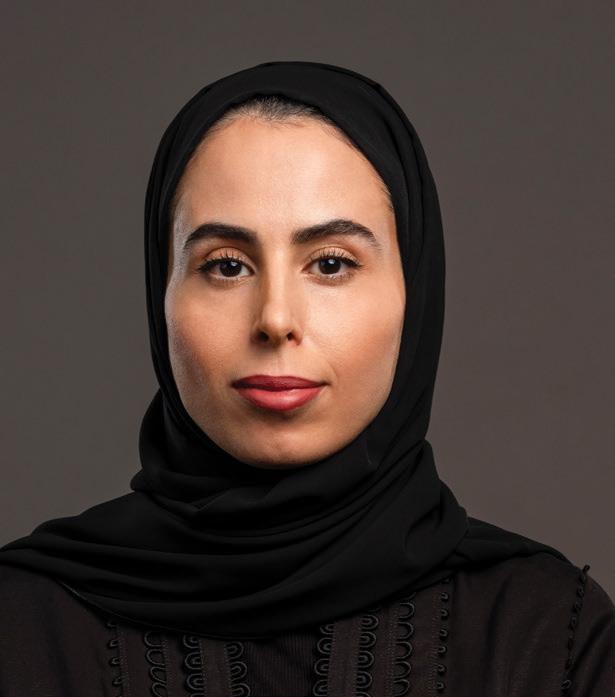
Observing the UAE today, we see a nation built on the pillars of vision, determination, ambition and resilience. This inspiring reality did not happen by chance; it was shaped by the dedication, intellect, strength of will and heart of Emirati women. Going forward, it is their unique perspective
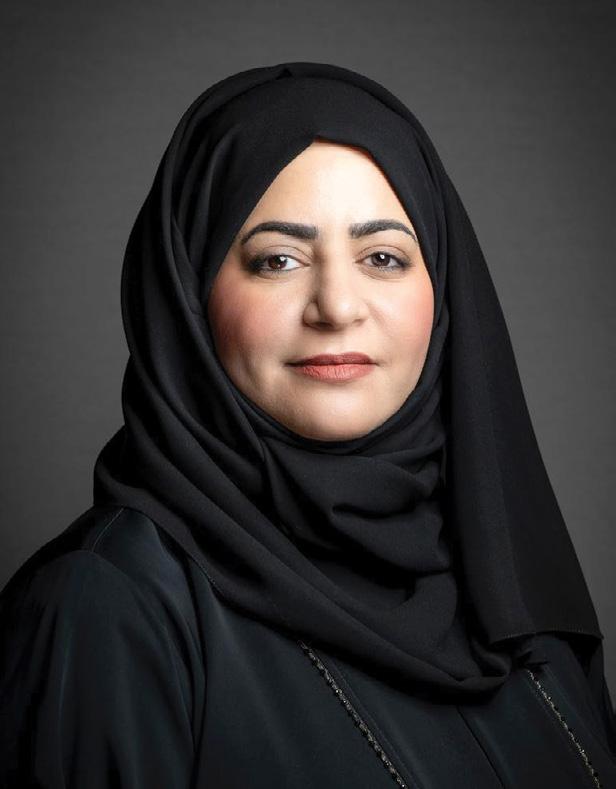
As the UAE celebrates Emirati Women’s Day, I am reminded of how fortunate we are to live in a nation that consistently creates opportunities for women to thrive. Guided by a vision that has invested in people, opened doors and championed inclusion across every sector, the UAE has
and leadership that will guide us toward a sustainable future, where progress and care go hand in hand.
On Emirati Women’s Day, we take a moment to celebrate the women who are making history and breaking barriers every day. Whether in finance, science, technology, sustainability, or business, women are strengthening their presence, and their dedication keeps moving our nation forward.
We see this every day at DIFC, where Emirati women are shaping the future of finance. They bring empathy, sharp vision, and exceptional talent to our community. As they continue to break new ground across the financial sector, their leadership will play an essential role in shaping both DIFC’s future and the continued success of the UAE.
enabled generations of Emirati women to contribute with purpose and play an integral role in our country’s success and always “to emerge stronger and better”, in line with this year’s theme.
For me, this day is also a reminder of the responsibility that comes with those opportunities. Looking back on my own career over the past two and a half decades, some of the defining moments have come when seeing talented Emiratis discover confidence, embrace new challenges and grow into leaders themselves. Those experiences have shaped my purpose and reinforced my belief that leadership is ultimately about creating the conditions for others to succeed.
My message to the next generation of Emirati women is to embrace every opportunity to learn and grow. Stay curious and true to your values and remember that resilience is built through every experience.
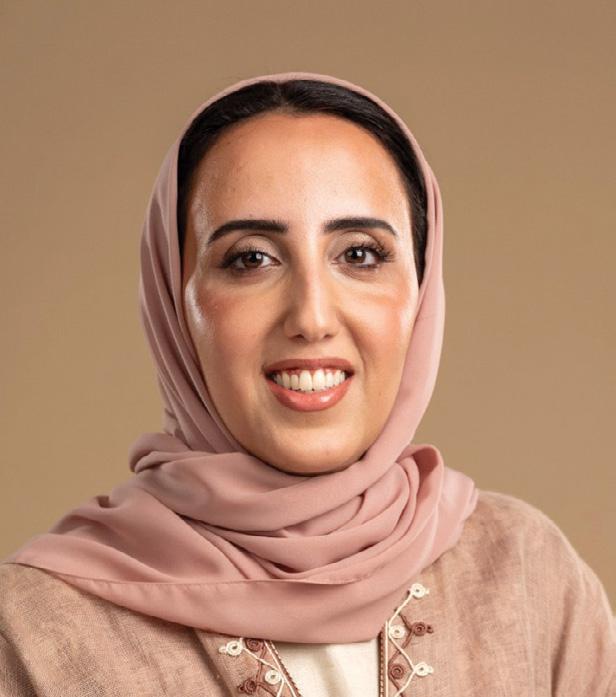
One of the most rewarding parts of my role is seeing how the right connection at the right time can completely change a startup’s journey. Every startup is solving a different challenge, and every partner has different priorities. My role is to listen, understand where those needs align and help bring the right people together. Sometimes that leads to an investment or a commercial partnership, and sometimes it opens the door to opportunities that weren’t visible before. Being part of that journey and supporting founders as they navigate challenges is what makes my work so meaningful.
As an Emirati woman, I am incredibly proud to be part of an environment that empowers women to lead and make a meaningful impact. My advice to younger Emirati women is to believe in yourself, stay curious and never be afraid to ask questions or put yourself forward. Some of the most meaningful opportunities begin with a simple conversation and the confidence to take the first step. Your perspective matters, so trust it, keep learning and don’t be afraid to put yourself forward. You never know where that first step might lead.
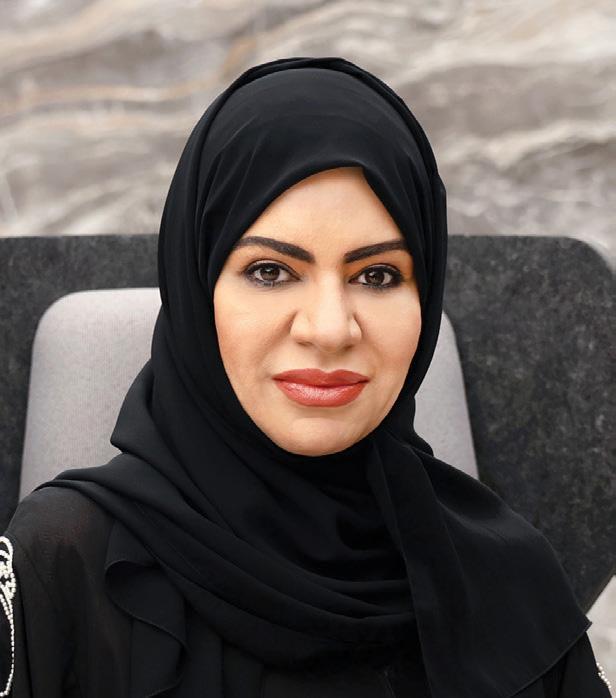
Emirati Women’s Day is a reminder that the UAE’s progress has always been shaped by people who think beyond themselves and beyond the present. My advice to the next generation, especially young Emirati women, is to approach sustainability as part of everyday decision-making. It means asking whether our choices create lasting value, whether our work strengthens our communities, and whether we are prepared for the needs of a changing economy. Ambition is important, but so are curiosity, adaptability and ownership. Seek experiences that challenge you, keep building your capabilities, and do not measure progress only by titles.
This is the belief reflected in Wa’ed, AWR Group’s national talent development platform, which creates structured pathways for Emirati talent to gain exposure, strengthen capability and grow into roles where they can make a sustained contribution.
For mentors and leaders, our responsibility goes beyond solely offering advice. We must recognise potential, open doors and create environments where young people are tested, trusted and heard. Effective mentorship combines guidance with opportunity, while also listening to the fresh perspectives the next generation brings.
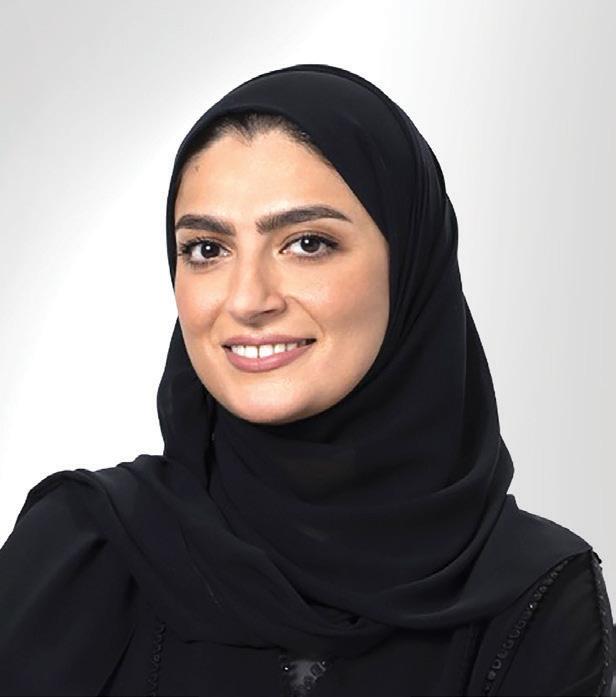
My advice to young Emirati women is simple: do not wait until you feel completely ready before stepping forward. Confidence is rarely something we begin with; it is built through experience, by taking on challenges, asking questions, learning from setbacks and recognising the value of our own perspective. The UAE has created extraordinary opportunities for
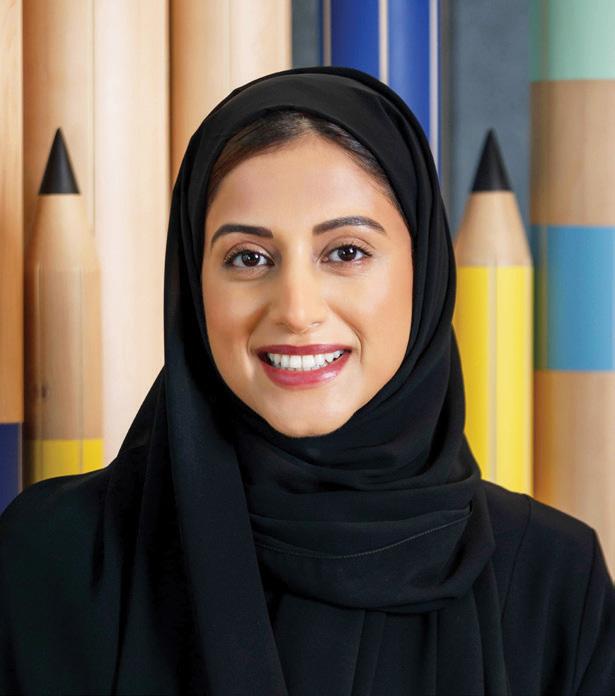
Being an Emirati woman is not only about being a mother, daughter, sister, or caregiver deeply rooted in our culture and identity; it is also about leadership — in the workplace and the wider community. As an aunt to many children, I’ve seen first-hand how encouraging curiosity and challenging
women to contribute across technology, infrastructure, science, business and many other fields shaping our future. Make the most of those opportunities by remaining curious and continuously developing your skills. Your presence matters, and so does the contribution you make once you are there.
I would also encourage young women to build strong networks and seek mentors who will challenge, support and advocate for them. As you progress, create opportunities for others, share what you have learned and help make the path more visible for the women who follow. Emirati women have already demonstrated that ambition, empathy and resilience are powerful leadership qualities. Step forward with confidence, use your voice and never underestimate your ability to shape meaningful change.
young minds shapes confidence, resilience, and future ambition. These values stay with us into adulthood. As we mark Emirati Women’s Day, we must recognise that women’s empowerment, family wellbeing, and national progress are closely connected. Real support is reflected in everyday moments: a working mother attending her child’s school event without fearing for her career, or returning from maternity leave with the flexibility, confidence, and encouragement to continue progressing.
I encourage organisations to reflect on how they enable every woman to thrive at home, at work, and in the community. When women are supported to balance ambition and caregiving, families grow stronger, children thrive, and the nation moves forward.
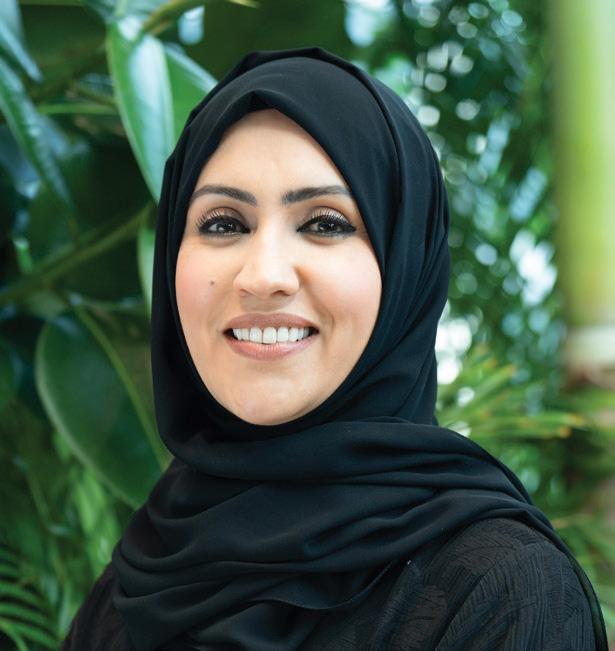
On fostering a culture of sustainability: Over the years, whether it was a peer-topeer conversation or a full-fledged transformation, what I know for sure is that nothing meaningful happens singlehandedly. When thinking about your career, building a sustainable future starts with self-awareness and ends with value and impact delivered to those
CHIEF DIGITAL ADVISOR FOR MENAT, AMAZON WEB SERVICES (AWS)
around you. This is your flywheel. Keep it oiled throughout your life. Know your principles and values. Technologies evolve exponentially. What separates winners is how fast people adapt and leverage these tools to optimise their business processes. Speed matters. Self-awareness matters. Knowing your business matters. My advice for the next generation draws from exceptional mentors who invested time in helping me build my own thinking and perception. Creating environments where people feel safe experimenting matters, but what matters more is giving mentees the channel to share their self-reflection and their truths without judgement. As a mentee and as a mentor, I know that self-development is never complete. It’s a lifelong journey. Model that journey openly. Yet, be that person in their corner who champions their growth.
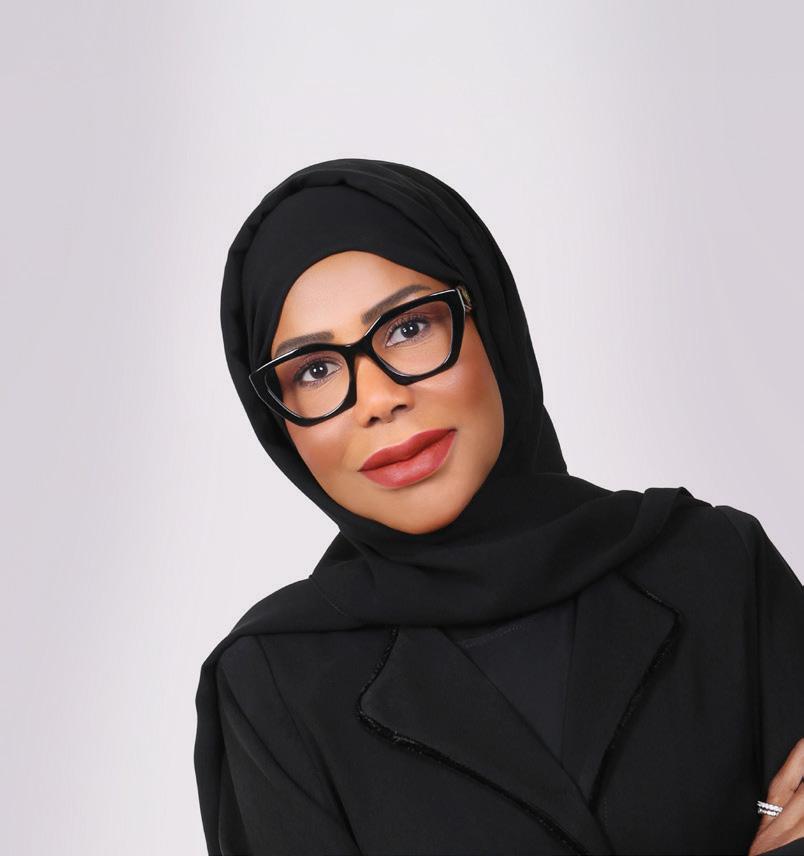
Wleading transformation is that the future is never secured by technology alone. It is secured by people who understand the weight of their decisions and are prepared to take responsibility for what those decisions create. My advice to the next generation is not simply to learn more, but to learn
how to think. Question what is accepted. Understand the problem before pursuing the solution. Do not confuse speed with progress or visibility with impact. The most meaningful innovation is often the work that quietly improves a life, strengthens an institution, or creates an opportunity that did not exist before.
Mentorship carries the same responsibility. A mentor should not create dependence or followers. A mentor should build confidence, sharpen judgment, open doors, and then have the courage to allow others to lead. The true measure of mentorship is not how closely someone follows your path, but how boldly they are able to create their own.
The UAE has taught us that ambition and responsibility are not competing values. They are strongest when they advance together.
Emirati Women’s Day is an opportunity to celebrate the ambition, resilience and achievements of women who continue to shape the UAE’s progress. As an Emirati woman working at the heart of the nation’s sovereign AI journey, I feel that pride deeply. Not long ago, technology was seen as a field where women watched on the sidelines. Today, we are writing the code, shaping strategy, and leading the teams building the infrastructure of tomorrow. We have challenged expectations, broken barriers and created new possibilities for the generations that will follow.
Across Core42 and the wider technology ecosystem, I see Emirati women leading in engineering, AI infrastructure, and digital transformation, turning national ambition into everyday reality. Their perspectives, ideas and leadership are strengthening the sector and proving that innovation thrives when diverse voices are represented. This year’s theme, ‘Together, We Rise Stronger and Better’, captures exactly where we stand. The future belongs to a generation of Emirati women who will not simply ask for a seat at the table but design the table itself. That is the history we are creating, together.
LEAD RESEARCHER, RENEWABLE AND SUSTAINABLE ENERGY RESEARCH CENTER (RSERC) – WATER TECHNOLOGIES, TECHNOLOGY INNOVATION INSTITUTE (TII)
Emirati Women’s Day is a reminder of how far the UAE has come in creating opportunities for women to contribute across every sector, including emerging fields that can reshape the future, such as artificial intelligence.
I feel fortunate to contribute to this vision through my role at MBZUAI, where much of my work focuses on
You are strong. You are capable. You are the daughter of a nation that believes in you and has given you every opportunity to dream, lead, and succeed.
Never underestimate your voice, your potential, or the positive impact you can make.
Stay true to your values, believe in yourself, embrace every opportunity to learn and grow, and remember that every step you take today helps shape a brighter future for the generations of Emirati women who will follow.
ASSISTANT VICE PRESIDENT FOR NATIONAL ENGAGEMENT AND OUTREACH, MOHAMED BIN ZAYED UNIVERSITY OF ARTIFICIAL INTELLIGENCE (MBZUAI)
connecting community. Whether it’s supporting initiatives that develop Emirati researchers, engaging young people or bringing together academia, government and industry, I have seen first-hand how collaboration creates opportunities.
My advice to young Emirati women is to stay curious and embrace opportunities that challenge you. AI is no longer confined to the technology sector; it’s transforming healthcare, education, culture and every part of our economy.
While technical skills are important, don’t underestimate communication, collaboration and empathy; these qualities will only grow more important as AI becomes part of every profession.
This is an exciting time for Emirati women to shape the future, not just to participate in it, but to lead it.
CHIEF EXECUTIVE OFFICER, UAE, MIDDLE EAST AND PAKISTAN, STANDARD CHARTERED
The opportunities available to Emirati women today are greater than ever before. The UAE has made the advancement of women and the development of national talent a strategic priority, creating an environment where women can build successful careers, lead organisations and contribute to the country’s continued progress. My advice to the next generation is simple: make the most of those opportunities by never stopping your own development. Leadership is shaped long before you hold a leadership title. It begins with the values that guide your decisions, the people who influence your character and the experiences that challenge you to grow. One of the most valuable lessons I have learnt is that professional growth comes from three things: responsibility, feedback and exposure. Seek opportunities to take ownership, because real responsibility develops decision-making and resilience in ways advice alone cannot. Welcome honest feedback, even when it is challenging, as this is the key to accelerating learning and growth. Equally important is exposure to different perspectives, experienced leaders and new experiences, all of which broaden your thinking and prepare you for greater responsibility. Above all, remember that confidence comes from preparation rather than certainty.
TALENT
On Emirati Women’s Day, at Masdar City, where Emiratis make up over half our workforce, I see representation turn into real leadership every day, through the people we invest in. My own path was shaped by watching a generation of Emirati women lead with confidence and authenticity, and by their commitment to bringing others up with them. That’s what pulled me toward talent development and
Emiratisation in the first place, and it’s still what makes the work worthwhile: seeing someone else move forward and knowing I played some small part in it. My advice to the next generation is the same thing those leaders showed me. Stay curious, earn your credibility through the work itself, and lead as yourself rather than trying to fit a mould. Success isn’t just what you achieve, it’s who you bring with you.
Working at VentureOne has shown me that the most exciting opportunities often begin with a willingness to step into the unknown. My advice to young Emirati women is not to shrink yourself to fit into spaces you were born to influence. Never underestimate the value of your perspective, stay curious, build real knowledge, speak with confidence, and take on new challenges. Some of the greatest growth comes from embracing opportunities that push you beyond your comfort zone and
BUSINESS DEVELOPMENT MANAGER, VENTUREONE MANAGING DIRECTOR AND GROUP CEO, ASTER
staying completely committed once you do. Seek out mentors who encourage you to think bigger. Don’t be afraid to ask the difficult questions. Stay true to your values, take ownership of your path, and remember to support other women as you grow. As Emirati women, we have a unique opportunity to contribute to the UAE’s innovation-driven future. Every step you take is not only shaping your own career but also helping build the next chapter of our nation’s success.
Emirati Women’s Day is an opportunity to celebrate the remarkable progress women have made in shaping the UAE’s future. It is a story of vision translated into action — where investment in education, opportunity, and leadership pathways has enabled women to contribute meaningfully across sectors. Emirati women represent a strong talent pipeline, with increasing representation across government, science, business, and healthcare. As organisations navigate a future defined by innovation and transformation, ensuring
that women’s talent translates into leadership and boardroom representation is essential. Diverse leadership is not only about inclusion; it strengthens decisionmaking, resilience, and long-term growth. In healthcare, this is particularly significant. Women are at the forefront of patient care, clinical excellence, and innovation, and their perspectives are vital in shaping the future of healthcare delivery. The next chapter must focus on mentorship, sponsorship, and creating pathways for women to progress into leadership roles.
VISIONARY
LEADER | INNOVATOR
| CHAMPION OF PREVENTIVE AND COMMUNITY CARE
A FORWARD-LOOKING LEADER DRIVING INNOVATION, TRANSFORMATION, AND EXCELLENCE ACROSS THE UAE’S HEALTHCARE LANDSCAPE
As global healthcare shifts from reactive treatment to preventive care and proactive wellness, Dr Khadija Al Marashda stands at the forefront of this transformation in the UAE. An Emirati woman, consultant physician and accomplished executive, Dr Al Marashda leads SEHA CLINICS Abu Dhabi’s trusted healthcare provider and a key subsidiary of Pure Health, making accessible multispecialty care as the strategic foundation of a sustainable, future-ready healthcare system. Through strategic foresight, innovation, talent empowerment, and unwavering focus on patient impact, she shapes a modern paradigm of sustainable healthcare solutions that balances multispecialty expertise and technology with deep human connection.
Her leadership is defined by a clear commitment to advancing sustainable, value-based healthcare systems that align with national priorities while addressing the evolving needs of patients and communities.
Under Dr Al Marashda’s strategic direction, SEHA CLINICS operates an expansive network of over 37 healthcare centres, 19 visa screening facilities, and more than 200 school health clinics across Abu Dhabi, Al Ain, and Al Dhafra, managing over four million patient visits annually.
By championing integrated networks focused on preventive care, chronic disease management, and seamless digital care pathways, she directly aligns SEHA CLINICS with Abu Dhabi’s ambitious vision for a proactive, communitycentered health ecosystem.
As a passionate advocate for innovation and digital transformation, a key component of Dr Al Marashda’s forward-looking approach is the strategic integration of advanced health technologies. From deploying AI-assisted diagnostic solutions in radiology to pioneering early-detection tools for diabetic retinopathy, glaucoma, and macular degeneration, she actively integrates next-generation tools to sharpen clinical decision-making.
LEADERSHIP IS ABOUT CREATING LASTING IMPACT. IT’S ABOUT BUILDING SYSTEMS THAT EMPOWER PEOPLE TO LIVE HEALTHIER LIVES TODAY WHILE LAYING THE FOUNDATION FOR FUTURE GENERATIONS.”
Crucially, Dr Al Marashda maintains that innovation must augment never replace —the essential human connection at the heart of patient care. Her forward-thinking strategy also ensures equitable access across all communities, leveraging mobile healthcare units and expanding services into underserved regions so that high-quality care reaches every individual.
As a prominent Emirati woman leading large-scale transformation within strategic national industries, Dr Al Marashda embodies the UAE’s commitment to fostering top-tier national talent. Beyond technology and operations, she prioritises human capital, fostering a culture rooted in collaboration, continuous learning, and accountability. By investing in workforce development as passionately as infrastructure, Dr Al Marashda continues to model what modern, visionary healthcare leadership looks like: driving institutional excellence today while safeguarding the health and well-being of the UAE for generations to come.

BY NEESHA SALIAN
The UAE’s push towards a cashless economy is reshaping how businesses accept payments, access financing and understand their customers. As initiatives such as the Dubai Cashless Strategy accelerate adoption, the conversation among merchants is shifting from whether to go digital to how to extract genuine value from every transaction.
Few are better placed to read that shift than NEOPAY, the Mashreq-founded payments company that sits across the value chain, from POS terminals and e-commerce to fraud management and embedded finance. Gulf Business speaks to Vibhor Mundhada, CEO of NEOPAY, about why merchants want fewer, smarter tools rather than more of THE CEO OF NEOPAY SHARES WHY THE NEXT PHASE OF THE UAE’S DIGITAL PAYMENTS STORY WILL BE DEFINED NOT BY TRANSACTION VOLUMES, BUT BY TURNING TRANSACTION DATA INTO INTELLIGENCE, WORKING CAPITAL AND GROWTH FOR THE SMES
them; how AI and agentic systems are transforming everything from onboarding to fraud detection, including a multi-agent security architecture that has cut manual analysis by up to 80 per cent; and why the next phase of the UAE’s digital payments story will be defined not by transaction volumes, but by turning transaction data into intelligence, working capital and growth for the SMEs at the heart of the nation’s diversification agenda.
The UAE is accelerating its transition towards a cashless economy through initiatives such as the Dubai Cashless Strategy. From a merchant perspective, what are the biggest opportunities and challenges
THE GLOBAL PAYMENTS INDUSTRY IS ALREADY MOVING TOWARD AGENTIC AI, WHERE SYSTEMS DO NOT JUST RESPOND TO QUERIES BUT PROACTIVELY SURFACE INSIGHTS, FLAG ANOMALIES, AND MAKE RECOMMENDATIONS WITHOUT WAITING TO BE ASKED.”
that businesses, particularly SMEs, face as digital payments become the dominant form of commerce?
The Dubai Cashless Strategy is not just a policy ambition; it is a commercial reality that merchants are navigating right now.
For SMEs, the opportunity is significant. Digital payments mean faster settlement, broader customer reach, and access to financial products that were previously out of reach. But the challenge is equally real. Most small businesses today are still managing fragmented systems, reconciling transactions across multiple platforms, and making decisions with incomplete information. That is where the friction lives. What merchants are asking for is not more payment tools. They want fewer, smarter ones. Faster collections, clearer visibility into their transactions, and infrastructure that actually helps them compete and grow.
The real opportunity in the UAE’s cashless transition is not simply replacing cash. It is turning every transaction into useful intelligence for the merchant. That is the vision we’re driving at NEOPAY.
Artificial intelligence is becoming increasingly embedded in financial services. How is NEOPAY using AI and agentic AI to help merchants better understand customer behaviour, improve operational efficiency, and make more informed business decisions?
AI in payments has moved well past automation. The more interesting question now is how it changes the relationship between a merchant and their own business data.
We are embedding AI across the entire merchant journey. On the onboarding side, AI-assisted OCR and automated KYB
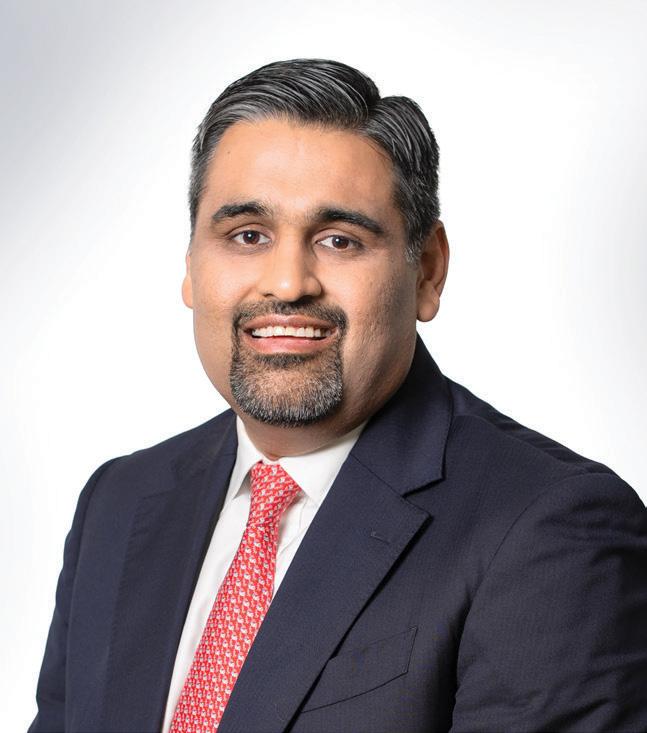
checks reduce manual data entry, accelerate verification, and significantly shorten time-to-activation. That matters because every day a merchant spends navigating paperwork is a day they are not transacting. Once live, our conversational merchant portal allows businesses to interact with their own data through natural language rather than manually pulling reports. A merchant can ask which payment channels are growing fastest or how weekend sales compare to weekdays, and get a structured, accurate answer in seconds.
But the more consequential shift is what comes next. The global payments industry is already moving toward agentic AI, where systems do not just respond to queries but proactively surface insights, flag anomalies, and make recommendations without waiting to be asked. Visa and Mastercard both launched dedicated agentic commerce frameworks in 2025 and 2026 precisely because the industry recognises that the next frontier is not faster payments; it is smarter ones.
Our ambition is to bring that capability to merchants at every scale. The safeguards matter too. AI adoption in financial services has to sit within secure, compliant environments with human oversight. Automation should build trust, not introduce new points of failure.
With geopolitical uncertainty and increasingly sophisticated fraud threats, payment security has become a major concern for businesses. How are technologies such as AI helping payment providers strengthen fraud detection, reduce chargebacks, and maintain trust in digital transactions?
Trust is the foundation of every digital payment. And as transaction volumes grow and fraud becomes more sophisticated, AI is no longer optional infrastructure. It is the operating layer that keeps that trust intact.
We have built a multi-agent AI architecture inside our security operations. Rather than relying on a single system to flag threats, a network of specialised AI agents works across the full security lifecycle, from threat triage and false positive reduction to investigation, response orchestration, and continuous optimisation.
The results are measurable: up to 70-80 per cent reduction in manual security analysis, investigations completed in seconds rather than minutes, and hundreds of analyst hours saved every month. Our security teams now spend less time gathering information and more time on higher-value work like threat hunting and risk reduction.
Security cannot come at the expense of speed. Merchants today accept payments across terminals, e-commerce, mobile wallets, QR codes, and payment links. That breadth creates more data points and more complexity. AI is what makes it possible to monitor all of it consistently, in real time, without adding friction for the genuine customer. The strongest payment ecosystems protect merchants and customers while keeping the experience seamless. As the UAE’s digital economy grows, security is not just a compliance requirement. It is a competitive differentiator. Merchants choose platforms they trust. Our job is to make sure that trust is earned and maintained at every transaction.
NEOPAY sits across the payments value chain, from POS and e-commerce to fraud management and embedded finance. How are merchant expectations evolving, and what services beyond payment acceptance are becoming critical for businesses looking to scale?
Merchant expectations have shi f ted significantly. Businesses today expect an integrated solution that handles the full operational picture, not a collection of tools from separate providers.
Payment acceptance remains the foundation, but what merchants are asking for beyond that has grown considerably. Faster onboarding, real-time reporting, flexible settlement, fraud protection, and insights that help them understand their own business are now givens. The merchants who are scaling are the ones who have found solutions that work for them, not platforms they have to work around.
We are building a connected merchant ecosystem that spans in-store, e-commerce, payment links, alternate payment methods, QR payments and BNPL. Partnerships around solutions like Aani and international payment acceptance like Alipay+, WeChat Pay, NPCI-UPI, PayPal and more expand merchant choice and reach. But the more meaningful evolution is in the value-added layer.
Merchants increasingly want analytics that surface actionable patterns, not just transaction records. And increasingly, they need access to embedded financing, working capital and growth tools connected directly to their transaction activity, available at the moment they need it rather than through a separate, lengthy application process. That is where embedded lending becomes a genuine differentiator, not a feature but a fundamental part of how a merchant scales.
The merchants who will grow fastest in this market are the ones with the clearest view of their business and the right financial tools available at the right moment.
What do transaction trends tell you about the pace of digital payment adoption in the UAE, and are there any emerging sectors or merchant segments that are growing faster than expected?
Through our work supporting the Dubai Cashless Strategy, we see digital payment adoption accelerating across the UAE in real time. The shift is not just in volume. It is in behaviour. Consumers now expect seamless payment experiences whether they are buying in-store, online, or through a mobile device, and businesses that cannot meet that expectation are losing ground to those that can.
The growth is not concentrated in one sector. Retail, hospitality, services, and digitally enabled businesses are all moving in the same direction, with digital payments and real-time settlement becoming priorities rather than nice-to-haves.
What the data tells us is that the next phase of growth will not be driven simply by higher volumes. It will come from helping merchants use their transaction data intelligently, to understand their customers better, spot opportunities earlier, and make decisions with more confidence. Adoption is no longer the challenge. Depth of use is.
The UAE has positioned SME growth as a key pillar of economic diversification. Given your work, what are the biggest barriers SMEs still face in accessing digital payment infrastructure, financing and growth opportunities, and how can the industry help address them?
SMEs are the backbone of this economy and a central pillar of the We the UAE 2031 vision. But many still face obstacles that have less to do with ambition and more to do with access. The most persistent barrier is fragmentation. Getting set up, accepting payments across multiple channels, applying for financing, and making sense of business performance still requires dealing with multiple institutions and repeating the
PAYMENT ACCEPTANCE REMAINS THE FOUNDATION, BUT WHAT MERCHANTS ARE ASKING FOR BEYOND THAT HAS GROWN CONSIDERABLY. FASTER ONBOARDING, REAL-TIME REPORTING, FLEXIBLE SETTLEMENT, FRAUD PROTECTION, AND INSIGHTS THAT HELP THEM UNDERSTAND THEIR OWN BUSINESS ARE NOW GIVENS.”
same process multiple times. For a small business owner, that is time and energy they do not have.
Access to financing is a related challenge. Traditional credit assessments are built around historic financial statements, which puts newer or smaller businesses at a disadvantage regardless of how well they are actually trading. The data to make a better lending decision exists; it lives in their transaction activity, but the infrastructure to use it has not always been in place.
We are working to change that on both fronts. The first is our SME in a box proposition, a single solution that takes a business from inventory management through to a complete digital payments setup, removing the operational complexity that slows small businesses down from day one. The second is AI-powered embedded lending, where transaction data flowing through our platform connects SMEs directly to the right lending partners, enabling faster, smarter credit decisions based on actual business performance rather than paperwork.
The broader industry has a role to play too. Greater collaboration between payment providers, fintechs, regulators, and ecosystem partners is what turns good infrastructure into genuine opportunity for the businesses that need it most.

BY NEESHA SALIAN
Dubai’s ascent as a global financial centre reached new heights in 2025. The Dubai International Financial Centre welcomed 182 new regulated entities, pushing the total past 1,000 for the first time, while the city broke into the top ten of the Global Financial Centres Index, rising to seventh. Behind this momentum sits the Dubai Financial Services Authority, the independent regulator of financial services conducted in and from the DIFC, whose remit now includes a formal mandate to support the sector’s growth alongside its core duties of market integrity, consumer protection and financial crime prevention.
In this interview, Mark Steward, who joined the DFSA last year as chief executive, reflects on a landmark year: record banking assets of $251bn, DIFC’s emergence as a top-five global hedge fund hub, $30.6bn in new debt listings, and the regulatory philosophy underpinning it all. From new crypto token rules to early intervention on AI oversight gaps, he makes the case that Dubai’s rise rests not on light-touch regulation, but on clear, consistently applied rules shaped by a regulator that knows its market, and intends to keep it that way as Dubai targets a place among the world’s top four financial centres by 2033.
You joined DFSA last year, at a moment of strong momentum for DIFC. What struck you most when you arrived?
What struck me immediately was the force of the DFSA‘s unique circumstances: overseeing the world’s fastest growing international financial centre, with a deep commitment to innovation and expertise, underpinned by high, international regulatory standards. The velocity of DIFC’s growth is extraordinary. In 2025, DIFC welcomed 182 new regulated entities, taking the total past 1,000 for the first time, a 16 per cent increase in a single year and the third consecutive year of double digit growth. DIFC is now home to the vast majority of the world’s global systemically important banks, alongside an extensive network of asset managers, insurers and professional firms.
In March, Dubai entered the global top ten of the Global Financial Centres Index for the first time, rising from eleventh to seventh. What is persuading international firms to come here, and to stay?
People often ask me that question. Dubai‘s position at the centre of the world’s day, connecting the trading hours of Asia, Europe and the Americas, is a genuine part of the answer. But the more durable reason is a regulator that understands, and actively engages with, the markets it oversees, that is proportionate and risk-based, and that is built to help highquality firms grow. It is worth noting that the same index identified Dubai as the centre most poised for significant growth over the next two to three years.
How does the DFSA’s work fit into Dubai’s wider ambitions under the D33 agenda and the DIFC 2030 strategy?
Our work is guided by the Dubai Economic Agenda, D33, and the DIFC 2030 strategy, which aim to make Dubai one of the world’s top four financial centres by 2033. That ambition calls for better regulation, not lighter regulation. In my
ON AI, OUR ANNUAL SURVEY FOUND THAT AI USE AMONG DIFC FIRMS ROSE TO 52 PER CENT IN A YEAR, WITH GENERATIVE AI USE UP 166 PER CENT, YET ONE IN FIVE FIRMS USING AI IN CRITICAL FUNCTIONS LACKED PROPER OVERSIGHT OF IT.”
experience, good regulation depends as much on knowing our firms well, and understanding how they are growing, as it does on setting high standards.
The 2025 numbers show growth across the board. Can you take us through the performance of DIFC’s four focus sectors?
DIFC’s strength is its breadth: highquality growth across all four focus areas, banking, wealth and asset management, capital markets, and insurance. In banking, the combined assets of DIFC banks reached $251bn, up 19 per cent in a single year and 195 percent over the decade. The centre now hosts 27 of the 29 globally systemically important banks and the five leading Chinese banks, reflecting Dubai’s growing role connecting East and West. In wealth and asset management, assets under advisory reached $220bn and the number of firms grew by 22 per cent.
DIFC is now also a top-five global hub for hedge funds with two of the world’s largest operating from the Centre. Activity deepened as well as widened: trading in DIFC’s over-the-counter market grew strongly through the year, reaching $13tn in the final quarter of 2025, most of it in derivatives. Capital markets attracted $30.6bn in new debt listings, up 21 percent year on year, reinforcing DIFC’s position as a leading venue for sukuk and sustainable finance. And in insurance, gross written premiums hit record highs while the number of insurance-related entities grew by 15 per cent.
Rapid growth can bring rising risk. How confident are you in the quality of this expansion?
That is exactly the right question, because growth alone is not hard to attract. Growth without rising bad debts or thinning capital is harder, and a better sign that it will last. This growth came with discipline: the non-performing loan ratio in banking fell to a record low of 1.76 percent, and capital and liquidity buffers stayed well above what we require.
In October last years, the DFSA was given a secondary objective to support the growth of the financial services sector. Does that change how you regulate?
It formalised an approach we have long taken, that regulation is a catalyst for sustainable, high-quality growth, not a constraint. The objective is explicitly secondary and cannot override our primary duties to maintain market confidence, protect consumers and prevent financial crime. However, it lets us weigh the impact of our decisions on market development and competitiveness, while keeping our regulation risk-based and proportionate. In practice, that means giving firms greater regulatory certainty, reducing friction, and engaging more closely with the firms we supervise. In 2025, we created a dedicated market engagement function, ran a supervisory outreach for more than 500 market participants, and launched DFSA Connect, a platform that made authorisation more streamlined and efficient.
How do you balance that closeness to the market with keeping standards high? Our proximity to the markets we serve is precisely how we keep standards high. Over the year we carried out 79 risk assessments of authorised firms, published eight thematic reviews covering areas such as whistleblowing, fund management self-custody and high-growth firms, and shared 94 reports of suspicious trading with regulators in other jurisdictions. We can give firms room to grow because we understand how they operate and can act early when there are challenges.
Technology is moving quickly, from crypto to AI. How is the DFSA keeping pace? The rapid development of technology is a
sharp test of regulation, and throughout 2025 we continued to refresh our regulatory approach with proportionate reforms across our regimes. Our updated crypto token rules, effective in January, are one example, where we shi f ted suitability assessments to firms within a framework we set and supervise.
On AI, our annual survey found that AI use among DIFC firms rose to 52 percent in a year, with generative AI use up 166 percent, yet one in five firms using AI in critical functions lacked proper oversight of it. A regulator should catch that kind of gap early. We did, and published our findings on cyber and AI as a systemic risk. It is with this same logic that DIFC’s Zabeel District will house the world’s first purpose-built AI campus within a financial centre. Firms will keep innovating at that pace only if the rules are strong enough to manage the risks and clear enough to build on.
What role do you see the DFSA playing in DIFC’s next phase of growth?
This is the role we intend to keep playing: a global super-connector, providing the regulatory rails and best practices that let capital, ideas and talent move freely while protecting the system they rely on. International firms choose DIFC, and stay, not because the rules are light, but because they are clear, consistently applied, and shaped by a regulator that engages with the market and helps good firms grow. That is what builds a financial centre that will continue to grow and sustain.















Pics: Supplied

Angana Maheshwari has created a luxury label from discarded materials, proving that what gets thrown away can still make a statement p.48

MERCEDES - BENZ R 230 SL TURNS 25
Mercedes-Benz celebrates 25 years of the R 230 SL, a model that brought the iconic roadster into the new millennium with its innovative vario-roof, refined performance and advanced safety technology. Spanning luxury touring and high-performance AMG variants, the SL R 230 has evolved into a sought-after modern classic with enduring appeal.
PARMIGIANI FLEURIER’S PLATINUM TRIBUTE
Parmigiani Fleurier marks 30 years of independent watchmaking with the TONDA PF Platinum Trilogy, featuring three world-first complications in 950 platinum: the GMT Rattrapante, Minute Rattrapante and Chronographe Mystérieux. Limited to 30 pieces each, the collection reflects the Maison’s philosophy of refined complexity, where mechanical innovation meets purity of design.

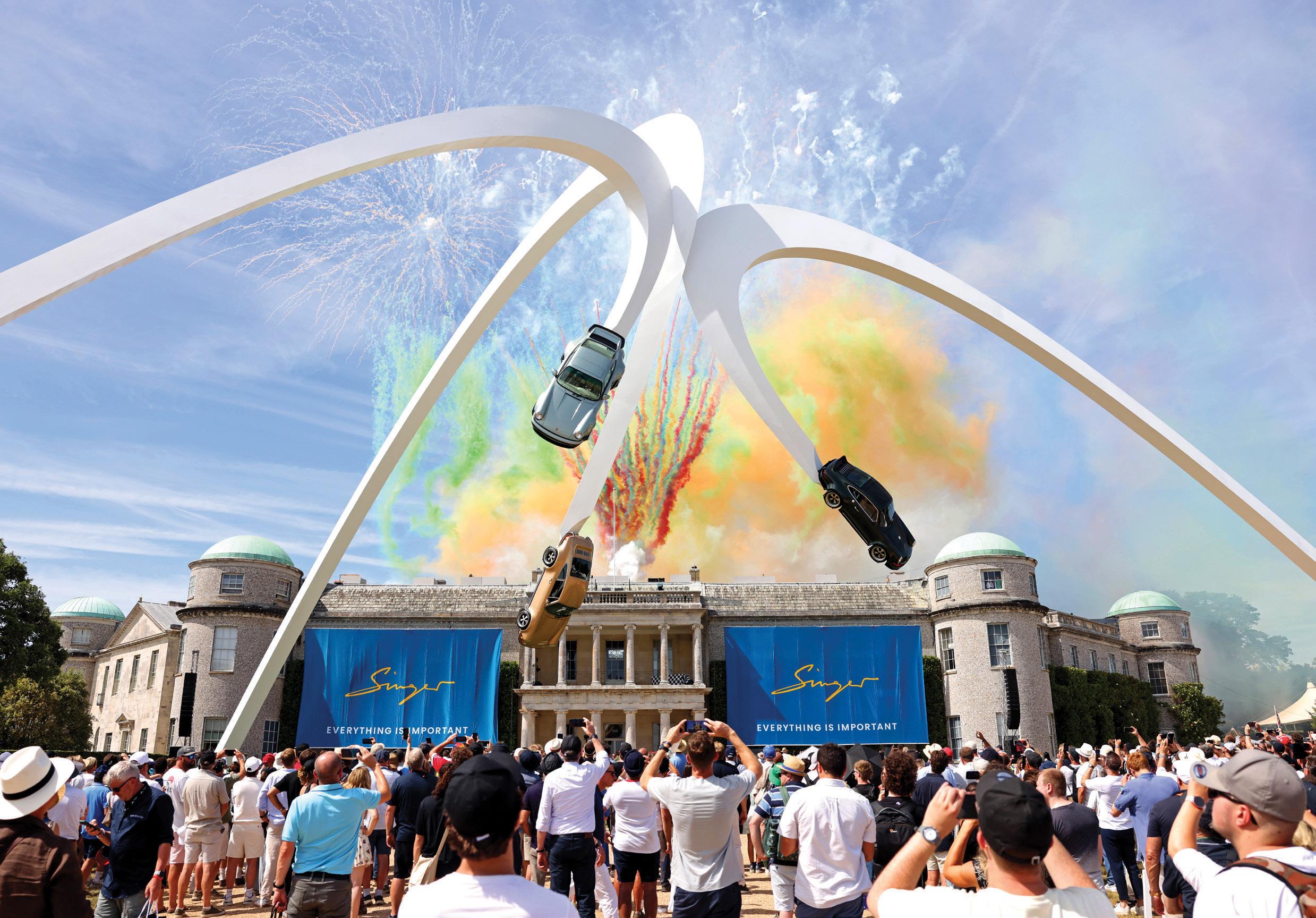
THIS YEAR’S GOODWOOD FESTIVAL OF SPEED WAS MORE THAN A CELEBRATION OF HORSEPOWER. FROM LEGENDARY RACING MACHINES AND MODERN HYPERCARS TO A RARE RUN UP THE ICONIC HILLCLIMB IN AN ASTON MARTIN VALKYRIE, IT OFFERED A GLIMPSE INTO THE PAST, PRESENT AND FUTURE OF MOTORING
BY SHIVAUM PUNJABI
There are automotive events, motorsport gatherings and then there is the Goodwood Festival of Speed. Held every summer on the grounds of Goodwood House in West Sussex, England, the Festival of Speed, widely known as Goodwood FOS, is one of the rare occasions where almost every chapter of automotive history comes together in one place.
Historic Formula One cars share the same space as modern hypercars. Legendary racing machines sit alongside cutting-edge electric vehicles. Rally cars, motorcycles, manufacturers, collectors,
drivers and thousands of enthusiasts gather on the estate for a celebration of speed, engineering and automotive culture. It is less a traditional motor show and more a living museum, where the machines are not simply displayed but brought back to life. At the centre of the event is the iconic Goodwood Hillclimb. The course itself is only around 1.87 kilometres long, but it has become one of the most recognisable stretches of road in the motoring world. Cars from different eras take on the same narrow route, sweeping past the famous flint wall, through the estate grounds and towards the finish line.
Watching the hillclimb from the sidelines is impressive. Experiencing it from behind the wheel, or in the passenger seat of an extraordinary machine, is something completely different.
My personal highlight of the Festival of Speed was experiencing the Goodwood Hillclimb in the Aston Martin Valkyrie. The Valkyrie is one of the most ambitious road cars ever created. Developed through a collaboration between Aston Martin and Formula One technology expertise, it
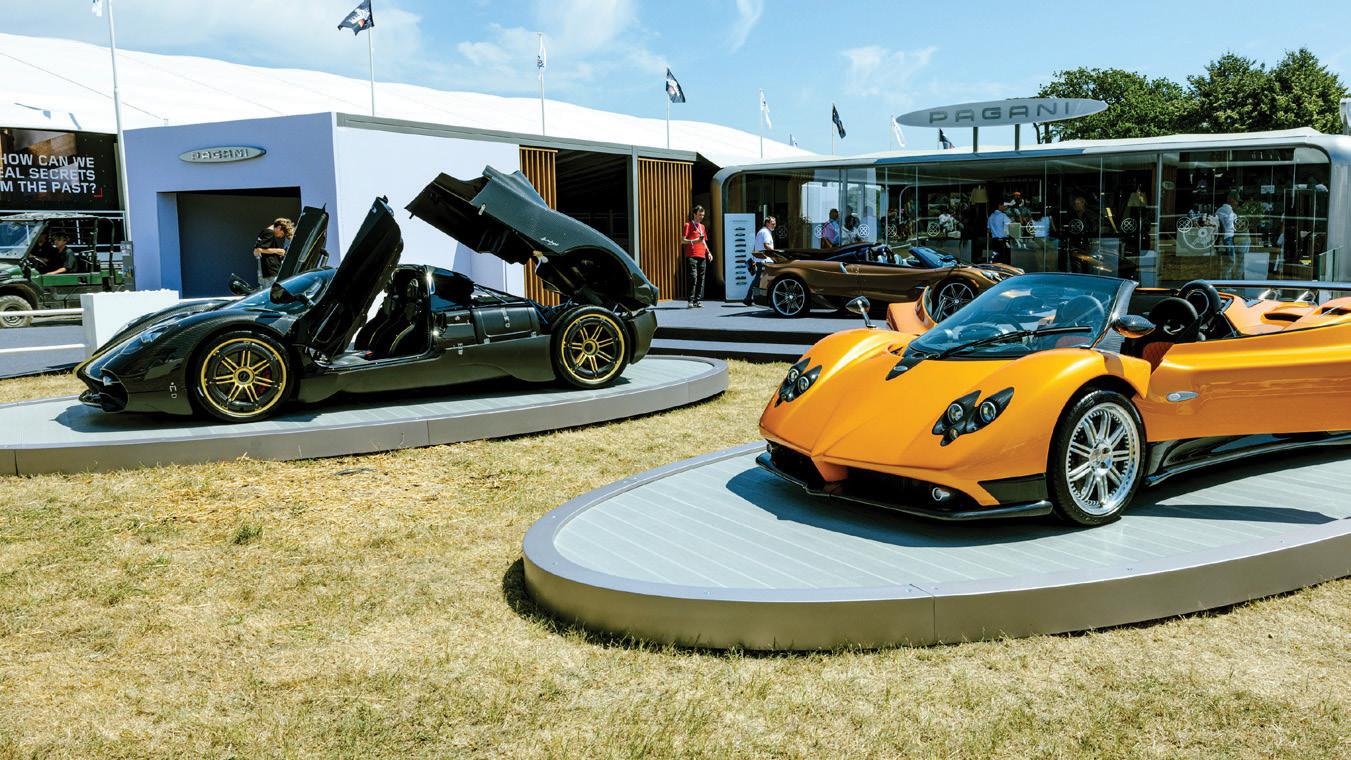

represents the closest connection between a modern road car and a racing machine.
Its naturally aspirated 6.5-litre V12 engine, extreme aerodynamics and lightweight construction create an experience that feels closer to a prototype racer than a conventional hypercar. Seeing the Valkyrie standing still is already an impressive experience. Sitting inside it and feeling it move is something entirely different.
From the cockpit, the Goodwood Hillclimb feels narrower and faster than it appears from behind the barriers. The low driving position places you close to the ground, while the sound of the V12 dominates the experience. The acceleration is immediate, the engine note builds rapidly, and every sensation feels amplified.
The surroundings become a blur. The crowds, trees, hay bales and Goodwood House pass by in moments, but the details remain vivid. The vibration through the car, the intensity of the engine and the atmosphere surrounding the hill create an experience that feels both mechanical and emotional. For those few moments, you are not simply watching the Festival of Speed.
You are part of it.
While performance is at the heart of Goodwood, the event’s appeal goes far beyond horsepower and lap times.
The Festival of Speed celebrates every aspect of automotive culture. A visitor can move from viewing priceless historic racing cars to exploring the latest electric vehicles, meeting racing legends, watching rally cars attack the forest stage or seeing machines normally hidden away in private collections and museums.
One of the standout visual experiences this year was Singer’s sculpture. Singer Vehicle Design has built a reputation for reimagining Porsche 911 models with an obsessive focus on craftsmanship, design and detail. The large-scale installation captured that philosophy perfectly, transforming automotive design into a piece of art. It was not simply a display of cars. It was a reminder that automobiles
can represent creativity, engineering and emotion as much as transportation.
What makes the Festival of Speed unique is its atmosphere. Despite the rarity of the cars and the presence of some of the biggest names in motorsport, the event remains remarkably accessible. Fans of all ages gather together, united by a shared appreciation for engineering, competition and the stories behind the machines.
Goodwood creates a rare connection between past, present and future.
A historic Formula One car can run up the hill moments before a modern hypercar. An iconic rally machine can follow a futuristic electric prototype. Different generations of automotive technology exist side by side, showing how the industry has evolved while maintaining its passion for performance.
That sense of continuity is what makes the Festival of Speed special. It is not only about celebrating what cars can do, but also why they matter to people. My experience at Goodwood was memorable for many reasons, but travelling up the hill in the Aston Martin Valkyrie transformed it into something unforgettable. The Festival of Speed is not simply an event you attend. It is an experience you hear, feel and remember.
For anyone who considers themselves a motoring enthusiast, it is a journey worth making at least once.

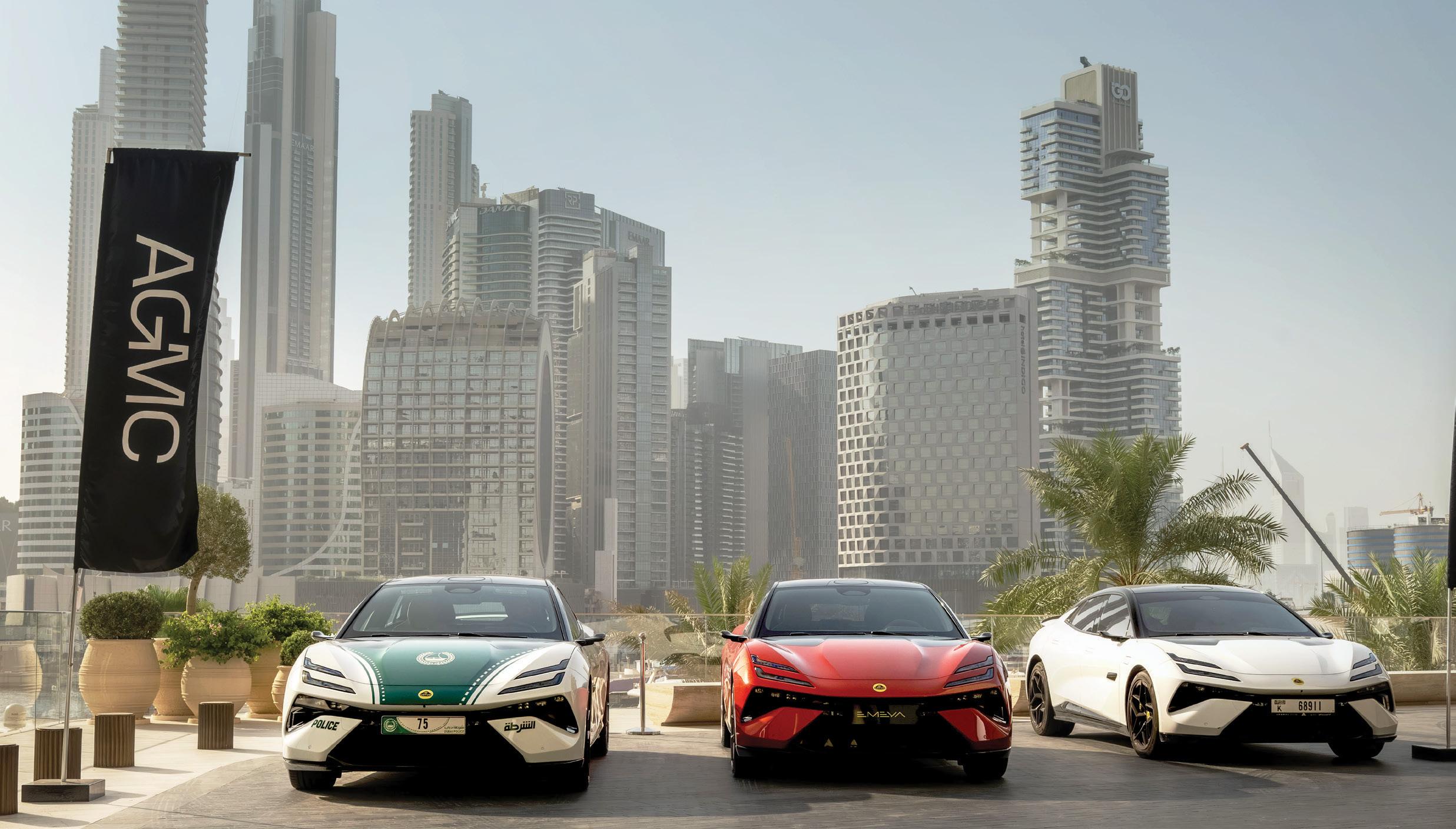
DR ANDREAS SCHAAF, GROUP DIRECTOR OF AGMC, SAYS LOTUS’ TRANSITION INTO ELECTRIC MOBILITY IS EXPANDING THE BRAND’S CAPABILITIES WHILE PRESERVING ITS FOCUS ON PERFORMANCE, PRECISION AND THE DRIVING EXPERIENCE
BY NEESHA SALIAN
Lotus has spent decades building its identity around lightweight engineering, performance and driver engagement. As the brand enters a new era of electrified mobility with models such as the Emeya and Eletre, AGMC believes those principles remain at the centre of its evolution.
“At its heart, Lotus has always been about creating cars that are exciting to drive,” says Dr Andreas Schaaf, group director of AGMC. “That focus on performance and precision remains just as important today as it was when the brand was first founded.”
What has changed is the technology supporting that experience. According to Schaaf, electrification is allowing Lotus to combine advanced engineering and intelligent technology with the performance characteristics customers associate with the marque. “Models like the Emeya and Eletre show that electrification doesn’t take away from the Lotus experience,” he says. “The advanced engineering and intelligent
technology work together to deliver the excitement and confidence people expect from a Lotus.”
For Schaaf, the definition of Lotus DNA today is about evolution while remaining connected to the brand’s foundations. “It is about constantly pushing boundaries while staying true to what has always made the brand special,” he says. “It is a combination of innovation, outstanding engineering focus and a focus on the driving experience.”
The decision by AGMC to represent Lotus in the UAE comes as the premium automotive market continues to evolve, with customers increasingly looking for vehicles that combine performance, technology and everyday usability.
Schaaf says the UAE stands out because of the expectations of its automotive customers. “The UAE is one of the most dynamic automotive markets in the world,” he says. “Customers here are incredibly knowledgeable, they are early adopters of new technology, and they have a genuine
Dr Andreas Schaaf
appreciation for premium brands with a strong heritage.” The market also plays a wider regional role, he says, serving as a hub that influences automotive trends across the Middle East.
“We see the UAE as much more than a single market,” Schaaf says. “It serves as a regional hub and plays an important role in shaping automotive trends across the Middle East.” AGMC’s experience in the premium automotive sector was a key factor in establishing the partnership. Schaaf says Lotus recognised AGMC’s understanding of luxury customers and its ability to deliver the level of service expected in the market.
“AGMC has built an outstanding reputation for representing premium automotive brands and delivering exceptional customer experiences,” he
says. “They understand the expectations of luxury customers in this market and share our long-term vision for the brand.”
The UAE presents specific requirements for luxury vehicles. Customers expect vehicles that can deliver performance while also supporting everyday driving, whether navigating city roads or travelling between emirates. Schaaf says these factors influence what customers look for when choosing vehicles. “They want a vehicle that performs well, but it also has to be practical enough for everyday life,” he says. “Whether they’re driving across the city or travelling between emirates, they expect comfort and reliability to come as standard.”
Range, convenience, performance and technology are increasingly important considerations, particularly as customers transition towards electrified vehicles.
“Customers want the confidence to take longer journeys without compromising on performance or the overall driving experience,” Schaaf says.
The Lotus Emeya and Eletre have been developed with those expectations in mind, combining electric powertrains with the brand’s focus on driving dynamics.
“They combine the performance and driver-focused character Lotus is known for with the comfort and intelligent technology that today’s customers expect,” he says.
For AGMC, bringing Lotus to the UAE is about offering customers access to a brand with a distinctive identity.
“Customers today are looking for more than just a great car,” Schaaf says. “They want a brand they can connect with and an ownership experience they can trust.”
He describes Lotus as a brand that combines heritage with a new approach to luxury performance.
“Lotus offers something genuinely different,” he says. “It combines a rich British heritage with world-class engineering and a fresh approach to luxury performance.”
For UAE customers, this means access to a brand that combines performance capability with a premium ownership experience supported by AGMC’s retail and aftersales network. “For our customers here in the UAE, that means access to a brand
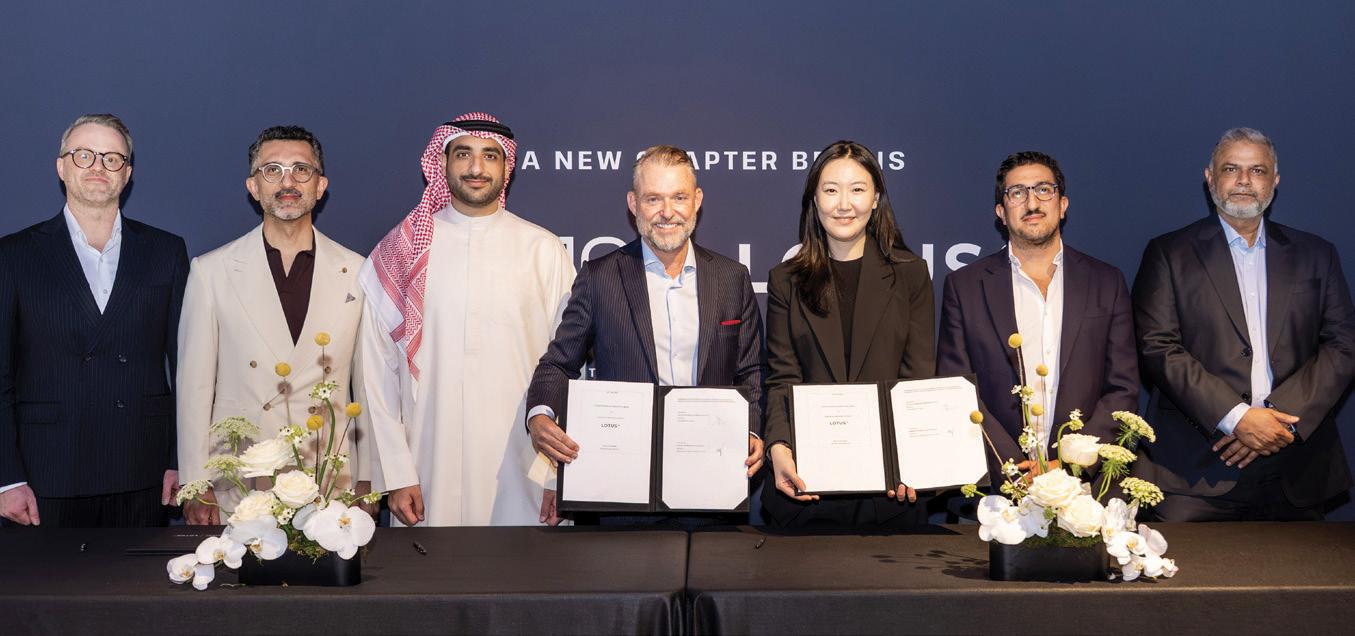
with a distinctive identity, exceptional performance and a premium ownership experience delivered through AGMC’s established retail and aftersales network,” Schaaf says.
The evolution of Lotus extends beyond electrified powertrains. Schaaf says innovation also includes how customers interact with the brand throughout ownership.
“The latest models bring together advanced electric powertrains, intelligent driver technologies and seamless digital connectivity,” he says. “And they deliver the performance and driver engagement that Lotus is known for.”
However, the ownership experience is equally important.
“Innovation also goes beyond the vehicle itself,” Schaaf says. “We’re creating an ownership experience that reflects the expectations of today’s luxury customer, from personalised service and expert aftersales support to a modern retail environment that puts the customer at the centre of everything we do.”
As the luxury automotive sector continues to change, AGMC sees an opportunity to develop Lotus in the UAE through a longterm approach focused on customers, technology and brand growth.
“The luxury performance vehicle market continues to evolve,” Schaaf says. “At AGMC, we’re committed to growing the Lotus brand in a sustainable way, investing in customer relationships and creating lasting value for everyone involved.”
Looking ahead, customers in the UAE can expect Lotus to continue expanding its technology portfolio while maintaining its core identity. The brand’s upcoming superhybrid technology will further develop its approach, combining electrification with the performance characteristics that have defined Lotus for generations.
Founded in 1952 by engineer Colin Chapman in the UK, Lotus has built its reputation around lightweight design, innovation and a focus on driving dynamics. The company’s philosophy of “simplify, then add lightness” became central to its approach, influencing generations of sports cars and motorsport engineering.
Lotus gained global recognition through both road cars and Formula One success, winning seven Formula One Constructors’ Championships between 1963 and 1978 and developing technologies that shaped modern racing.
Among its most iconic models is the Lotus Elise, launched in 1996, which became known for its lightweight construction and direct driving experience. Other landmark vehicles include the Lotus Esprit, introduced in 1976 and later made famous through its appearance in the James Bond film The Spy Who Loved M e, and the Lotus Evora, which combined everyday usability with sports-car performance.
Today, Lotus is entering a new phase with electrified models including the Eletre SUV and Emeya grand tourer, expanding the brand’s performance philosophy into new vehicle segments while retaining its focus on engineering and driver engagement.
“Customers in the UAE can expect to see Lotus continue to evolve, with exciting new products and technologies that build on the brand’s heritage while embracing the future of luxury performance mobility,” Schaaf says.


APPLE PEEL, BAMBOO AND TEA WASTE, MADE INTO LUXURY BAGS AND SOLD IN DIFC, DUBAI. VEGANOLOGIE’S ANGANA MAHESHWARI WOULD RATHER YOU PICKED ONE UP THAN TOOK HER WORD FOR IT
BY NEESHA SALIAN
Somewhere on Sheikh Zayed Road, at more than 100km/h, a laptop flew off the bonnet of a moving car. What matters is not the accident but the specifics: the said device was inside a Veganologie laptop bag, and it emerged completely unscathed.
Angana Maheshwari offers this as her brand’s most memorable real-life stress test. Nobody scheduled it. But for a company that makes luxury bags out of fruit waste, an unsolicited demonstration of toughness is worth rather more than a brochure. Veganologie has spent much of its journey challenging assumptions about what sustainable materials can achieve.
The company began, as good ones often do, with something missing: a bag that was
well-designed, genuinely durable, made from sustainable alternative materials and backed by a brand with real integrity. “Not greenwashing, not clever marketing — actual accountability,” Maheshwari says. No such object existed in the UAE, or anywhere across the GCC.
Then came the pandemic, and with it the rarest commodity of all: time to think. “Veganologie was born from a search that kept coming up empty,” she says. The frustration quietly turned into something more useful. “If the product didn’t exist, perhaps I was meant to build it.”
Dubai, she concedes, was improbable: sustainable fashion was not yet a mainstream conversation in the region. It was also, she argues, perfect. “This is a city that doesn’t just tolerate ambitious ideas, it calls for them,” she says, pointing
to an accelerating national sustainability agenda and a consumer base that is globally informed and increasingly value-driven. Improbable and perfect are not, in this city, mutually exclusive.
The flagship sits in Gate Avenue, DIFC, surrounded by the established names of global luxury. This was not an accident of leasing. “Conscious fashion has earned its seat at the table,” says Maheshwari. Sustainable brands were long expected to occupy a quieter, niche space, set apart from the real thing. “That separation always felt false to us.” To argue that responsible design and genuine luxury are one proposition, a brand has to stand in the same room as the houses that defined the second.
The clientele reflects the address: welltravelled, design-literate, unwilling to separate aesthetics from values. But it is the other visitors that Maheshwari seems to relish. “We also love the sceptics,” she says. Her argument for dealing with the unconvinced is refreshingly free of lecture: “The most powerful thing we can do with a sceptic is simply put the product in their hands.” No amount of storytelling or certification does what that single moment does. Someone who has spent a lifetime equating quality with animal leather feels the weight of it, the suppleness, the precision of the stitching — and leaves having bought what they describe as the most beautiful bag they have owned. The company has never asked anyone to choose responsible over beautiful; the point is that the choice is a false one.
Veganologie is quad-certified, and Maheshwari is blunt about why the paperwork matters. “Greenwashing has become one of the most corrosive forces
Global Recycled Standard
PETA-Approved
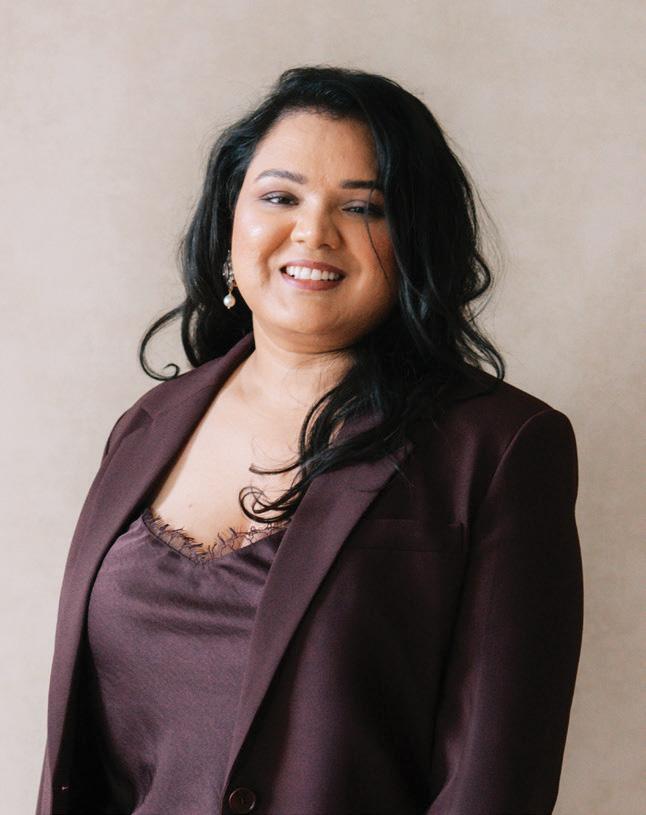

in fashion,” she says — brands borrowing the language, making sweeping statements without a single third-party verification, eroding trust for everyone, including those doing the work properly. Certifications, in
her phrase, are the difference between a claim and a commitment. Earning them took rigorous documentation, supply-chain auditing and operational transparency at each stage. “There were no shortcuts and that was entirely the point,” she says. “If we were building a brand on the promise of integrity, that promise had to be verifiable by someone other than us.”
The brand’s latest collection, Watan Wild, began with a question: how do you make people care about something they have never had the chance to fall in love with? The UAE’s Hawksbill turtles, Arabian leopards, falcons and oryx are quietly disappearing from landscapes that defined the region long before its skylines did. For most residents they exist only in the abstract. So they were made into bag charms, which is either
Traces and verifies recycled materials throughout the supply chain.
Confirms no animal products have been used anywhere in production.
USDA Certified Biobased Validates that materials genuinely derive from renewable natural sources.
Recycled Claim Standard Secures the integrity of recycled content from source to finished product.
whimsical or shrewd, and probably both. Each has a name and a job. “Because the things we use every day become the things we care about,” says Maheshwari. “And the things we care about, we protect.” A portion of every sale goes towards protecting these species’ biospheres through conservation partnerships, a distinction she is careful to draw. “Awareness without action is just aesthetics.” The same instinct governs the environmental promises. “Impact only means something if you can measure it,” says Maheshwari, “and measurement only means something if it’s honest and reliable.” As the company scales, the pledges are meant to scale with it, through verified partners running independently audited programmes. The ambition is stated plainly: every purchase leaves the world in a measurably better state than it found it.
Leading fashion publications noticed the brand early, which tends not to happen to labels without decades of brand equity behind them. Maheshwari puts it down to a story that was genuinely her own, rooted in a real personal need. She is measured about the rest. “There have been rooms where credibility had to be earned before it was assumed,” she says, “and moments where the sheer novelty of what we were building worked against us before it worked for us.”

“Because the things we use every day become the things we care about,”
The aesthetic is designed in the UAE and, Maheshwari insists, inseparable from it: the architecture, the landscapes, the light. But the deeper source is nature itself, used as a design language rather than a decorative a f terthought. The Maze crossbody’s sculptural leaf detail, the monstera motif, the organic silhouettes are not, she says, trends the brand adopted. They follow from a position held since day one: that the planet is the most sophisticated designer there is, and the job is to honour it.
Next come new materials, new markets and new categories beyond bags — a sentence eVery growing label says, and few survive. Veganologie’s odds rest on the same thing that saved a laptop on Sheikh Zayed Road: the object holding up when nobody is watching. As for what carrying one should signal, Maheshwari’s answer is
Five charms, five jobs
BILL — A Hawksbill turtle Carries your keys.
LEO — An rabian leopard Organises your cables.
MR SAKR — An Arabian falcon Opens into a pouch.
MRS SAKR — An Arabian falcon Opens into a mirror.
MAHA — An Arabian oryx Opens into a mirror.
What the bags are actually made of
APPLE LEATHER
Developed in Italy from the cores and peels left over by the juicing industry. Supple and durable; rivals traditional leather in look and feel.
BAMBOO FIBRE
Naturally antimicrobial, incredibly strong, and drawn from one of the fastest-growing plants on earth.
WASTEA
Made from the byproduct of tea production. Another industry’s waste, repurposed.
Every material is rigorously tested before it reaches a collection. EcoRatings certifications put the science in measurable terms: choosing alternative leather over animal leather for a single bag saves 83 per cent of CO2 emissions. “That is not a marketing claim,” says Angana Maheshwari. “This is a verified, audited number.”
not about the apples. It says, she hopes, that the owner doesn’t believe in compromise — that the things they carry reflect the values they carry inside them.

A portion of every sale supports conservation partnerships protecting the species’ biospheres. Separately, every 10 bags sold triggers a direct, documented action, planting a mangrove tree or contributing to waste reduction. Mangroves absorb carbon at rates far exceeding tropical forests.
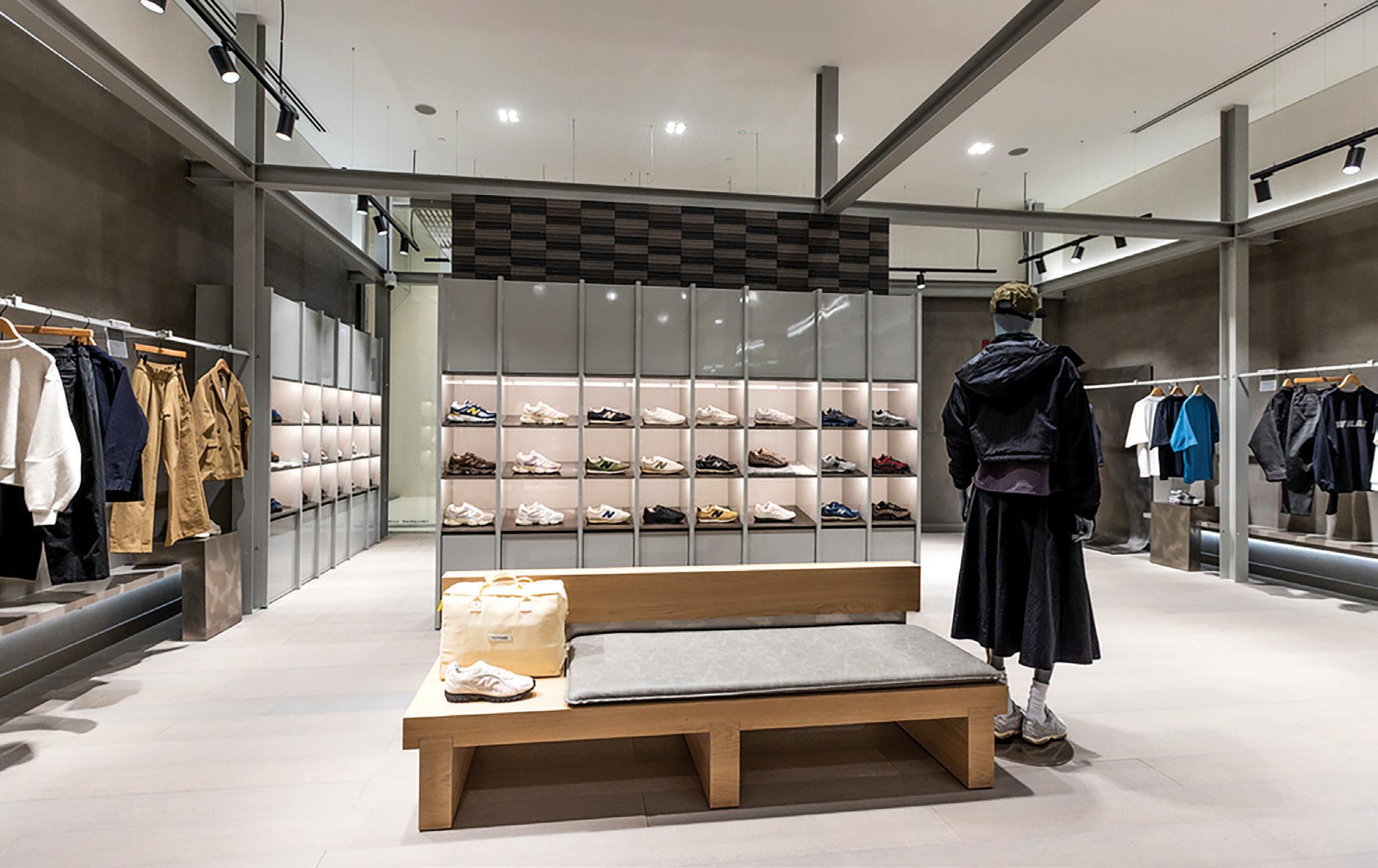
STUART HENWOOD, SENIOR DIRECTOR FOR NEW BALANCE MEAI, EXPLAINS WHY QATAR WAS THE RIGHT MARKET FOR THE CONCEPT’S REGIONAL DEBUT
Premium sportswear is no longer just about performance, it’s about positioning. As design-led athletic brands increasingly converge with luxury retail, global players are becoming far more selective about where and how they invest. The Middle East has emerged as a key testing ground for the world’s most elevated retail concepts, with Qatar standing out for its retail maturity, design sensibility, and long-term growth potential. Against this backdrop, New Balance chose Doha as the entry point for its Grey store, the brand’s most premium global retail format, marking its Middle East debut earlier this year. Stuart Henwood, senior director for New Balance Middle East, Africa and India, explains why Qatar was the right market, what the Grey concept signals for the region, and how premium sportswear is reshaping global retail strategy.
Why has Qatar emerged as a priority market for premium global brands?
On one hand, there has been a sustained investment in both infrastructure and in the wellbeing of residents and, at the same time, investment in placing Qatar as an international tourism hub, with more than five million visitors in 2025. From the new airport to the World Cup and the opening of Education City with its five universities, there are a lot of examples of key initiatives driving Qatar forward.
Separately, you also have a very sophisticated and engaged consumer base that is increasingly looking for craftsmanship and quality. Qataris are extremely well versed in luxury brands and trends and looking for authenticity and premium items. This also reflects in the growth of its mall network and positioning. For instance,
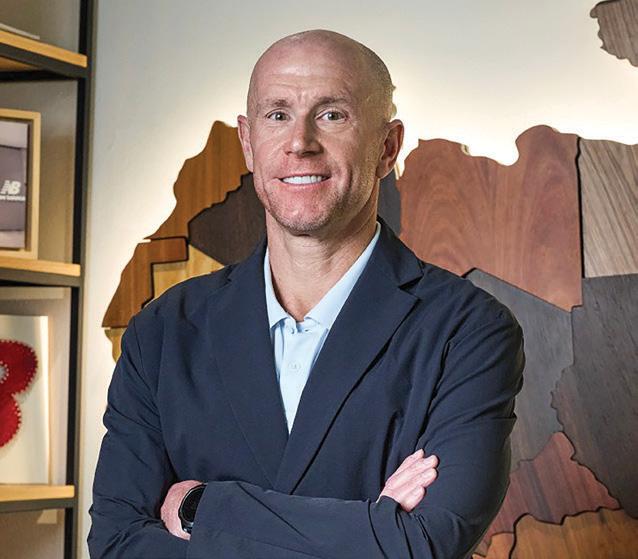
Place Vendôme, its latest luxury focused mall, has seen a 64 per cent year-on-year increase in visitors since 2024, reaching around 16.5 million visitors annually. That really highlights the scale of demand we are seeing for premium, experience-led retail environments in Qatar.
All of the above has allowed Qatar to position itself as the “place to be”, becoming one of the region’s most exciting premium retail markets.
What does the country’s retail evolution signal about consumer maturity in the region?
The evolution of Qatar’s retail landscape
points to how much consumer expectations across the Middle East have shifted. In the past, travelling was the only way to get access to some of the international brands or highly sought-out luxury items. However, those brands and items are now available locally, with brands providing the same luxury experience that before was only available in their London, Paris or New York stores. Therefore, today’s customer expects to find what they are looking for locally. Being very design conscious and fashion driven, they are aware of the trends and always looking for new collection launches.
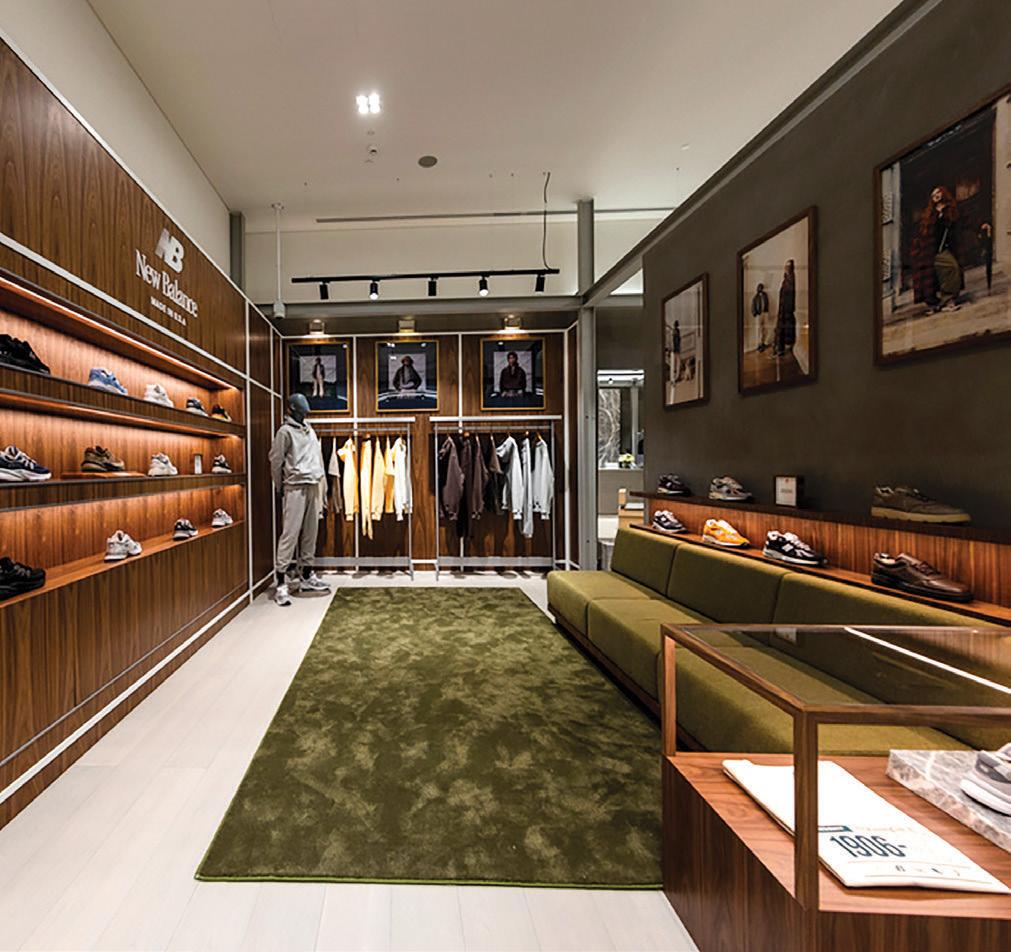
And it is not just in Qatar. The region has become a key contributor to global luxury growth, with Gulf luxury sales continuing to outperform several other markets and still growing by around 4 to 6 per cent in 2025, even against a softer global backdrop.
For New Balance, the opening of our most elevated retail experience, the Grey store in Place Vendôme, is a direct response to those changes. We have designed it as a highly curated environment built for customers who value timeless design and exceptional quality.
The store exclusively carries our most premium footwear and apparel capsules, including our Made in USA and Made in UK ranges, which represent the highest level of craftsmanship and attention to detail across our products.
Through the Grey store, we bring together heritage driven collections with progressive expressions from Tokyo Design Studio and Shanghai Design Studio, alongside other limited-edition collaborations with luxury powerhouses such as Loro Piana, Miu Miu, and more, that are available exclusively at this location within the region. What has been really encouraging is how strongly this concept has resonated. It shows the region is ready for retail experiences that prioritise craftsmanship over volume.
How is luxury-led sportswear reshaping global retail strategies?
We have witnessed the trend in the past couple of years, with running shoes starting to show up on the runways for the first time ever and we are now seeing also more
independent brands (some of them even started by running clubs) showing up and claiming that space.
On another hand, consumers have also become more product tech savvy, expecting technical excellence alongside refined aesthetics. Having a good-looking product is no longer enough, technology, materials and durability matter, and performance is a key driver too.
Why did New Balance choose to introduce its most elevated retail concept here first?
Choosing Qatar to introduce the region’s first-ever Grey store was a deliberate decision grounded in market confidence and our continuous investment in Qatar. The premium concept is designed as the ultimate home for our most exclusive products, and it requires an audience that appreciates elevation, detail and craftsmanship. The retail fundamentals are also very strong. Qatar’s luxury retail sector is forecast to grow at roughly 15 per cent annually, which gives us real confidence that there is sustained appetite for premium product and curated retail experiences.
For us, it was also about being at the right mall: Place Vendôme is a truly unique and premium retail destination, so it felt like the right place and the right time to introduce our most elevated retail concept, and meet the consumer demand in a meaningful way.
Also, Qatar is not “just another market” for us. We have been continuing investing in Qatar for the past years and will continue to do so. We are proud sponsors of the
Doha Marathon by Ooredoo, the biggest road race in Qatar and supporters of Al Sadd Football Club, the #1 club in the league. We believe in building connections and community along the way and that is what these collaborations represent to us, showing up authentically within the community and truly presenting ourselves as the brand at the intersection of sports and culture.
What does this move indicate for future investment across the Middle East sportswear and retail sector?
The store’s opening reflects a broader shift we are seeing across the region towards quality-led expansion. Growth is no longer just about how many stores you open. It is about creating differentiated concepts that genuinely add value to the consumer experience.
In markets like Qatar, the fundamentals are also very strong. Overall, Qatar retail spend is set to grow at around 2.2 per cent year on year through to 2028, supported by population growth and consistent strong consumer spending. That creates a very stable environment for long-term premium retail investment. For New Balance, this also connects to our mantra of “control your destiny” - we continue to expand our regional footprint and are continuously focusing on ensuring we are where our customers are. We have opened three stores in Qatar in 2025 and are already locked in our next location, which we will announce shortly. We have also recently expanded our New Balance Running Club locations and sessions, reaching an even wider community of runners and aspiring runners. This shows how we are continuously adapting and innovating in response to changing market demands and consumer preferences, investing for the long term.
And our growth across the region continues too, with more than 90 stores already opened across MEAI.
Looking ahead, I think investment across the sector, from New Balance and other global brands will continue to focus on premium positioning and much deeper consumer engagement, rather than pure scale.
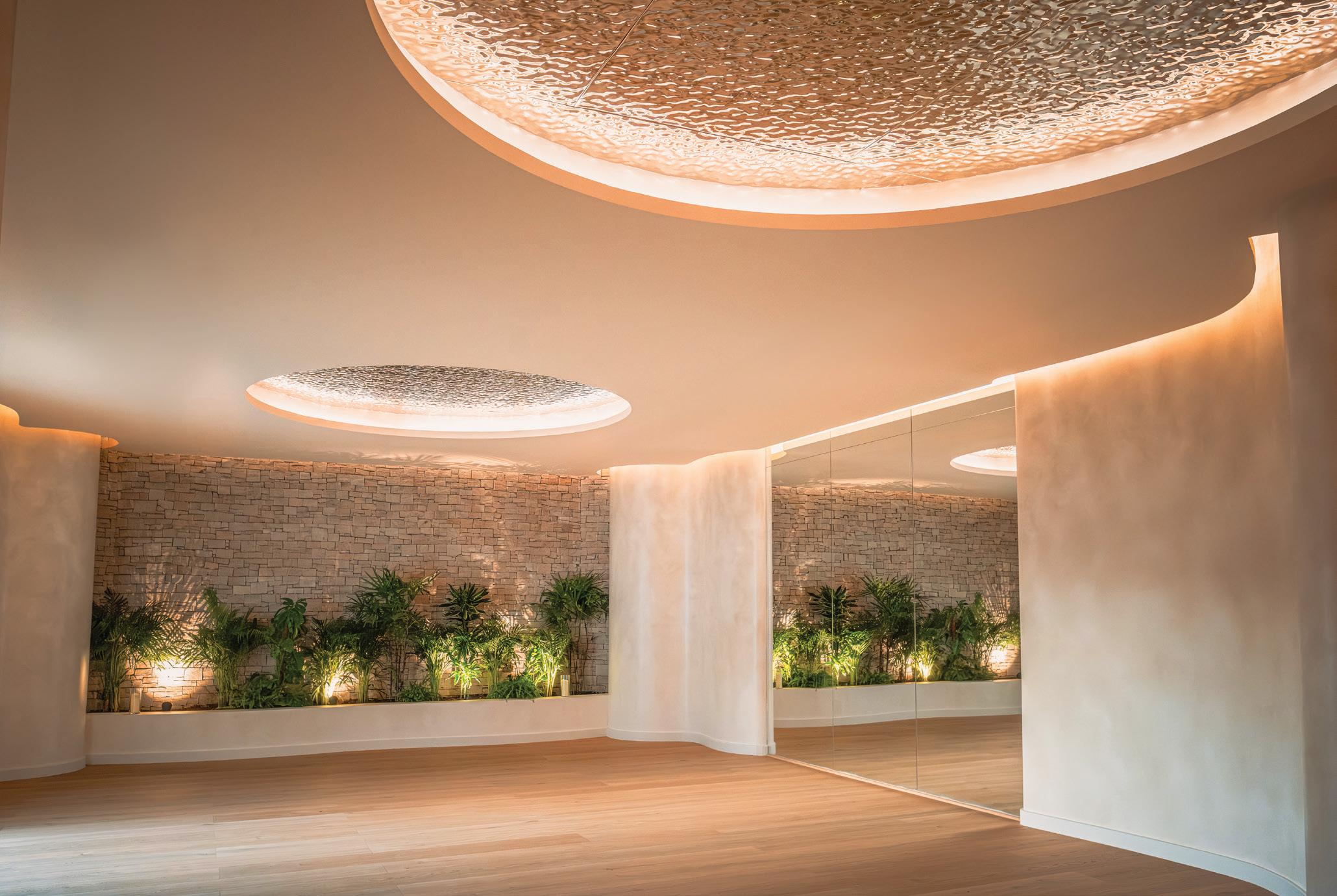
BEHIND AN UNASSUMING AL QUOZ FAÇADE, SOHUM WELLNESS SANCTUARY BLENDS ANCIENT AYURVEDIC PRACTICE WITH MODERN WELLNESS FOR A CITY INCREASINGLY FIXED ON LONGEVITY AND INNER WELLBEING
BY NEESHA SALIAN
The turn off Sheikh Zayed Road gives little away. Al Quoz runs on concrete and commerce, marblecutting yards, auto-repair garages, car showrooms and furniture warehouses, alongside the galleries and studios reshaping it. Not an address one associates with 5,000-year-old healing rituals, which is precisely why Tanya Mansotra chose it, opening Sohum Wellness Sanctuary behind an unremarkable façade in late 2024.
“Al Quoz was deliberate,” she says. “It’s the geographical sweet spot of Dubai, central and accessible whether you’re coming from Jumeirah, Al Wasl, the Marina or Downtown.” Wellness, she argues, shouldn’t be quarantined: “You can achieve absolute isolation just minutes from your home. It shouldn’t be a bubble you have to escape to.”
Does the feeling survive the concept? It does, from the door. Outside, Al Quoz runs
on diesel, dust and glare; inside, within a few steps, the temperature drops and the street falls away. The light shifts to low, warm pools against sand-coloured walls; wood underfoot, rattan to one side, the smell of fragrant oil. A therapist takes your name without ceremony; the consultation comes first, less a script than a reading. A corridor leads to a treatment room given over to a single element, plain and unshowy. What follows is a planted courtyard, herbal tea that arrives unasked and, beyond a door, steam, sauna and a cold plunge. From here, the urban and industrail landscape outside seems to disappear entirely.
Sohum takes its name from the Sanskrit mantra “So-Hum”, “I am that”, and Mansotra is literal about it. The philosophy is subtractive: less about becoming, more
about ceasing to perform. “We don’t view guests as projects that need fixing,” she says; the space is designed so it is “safe to simply exist in your most authentic state.” Drawn from Ayurveda, the assumption is that a person arrives already whole; treatments are reminders, not interventions.
A certified yoga instructor, Reiki master and sound healer, Mansotra traces the fascination to childhood; her discipline was set earlier, as a national-level shooter. “I grew up observing how modern medicine often treats symptoms rather than the root cause,” she says.
Dubai imports ambition but produces a quieter aftermath: people who reach the top of every ladder and find the view thin. Longevity clinics extend the life; they do little for that emptiness. Sohum is aimed at that anticlimax, the successful and the becalmed.
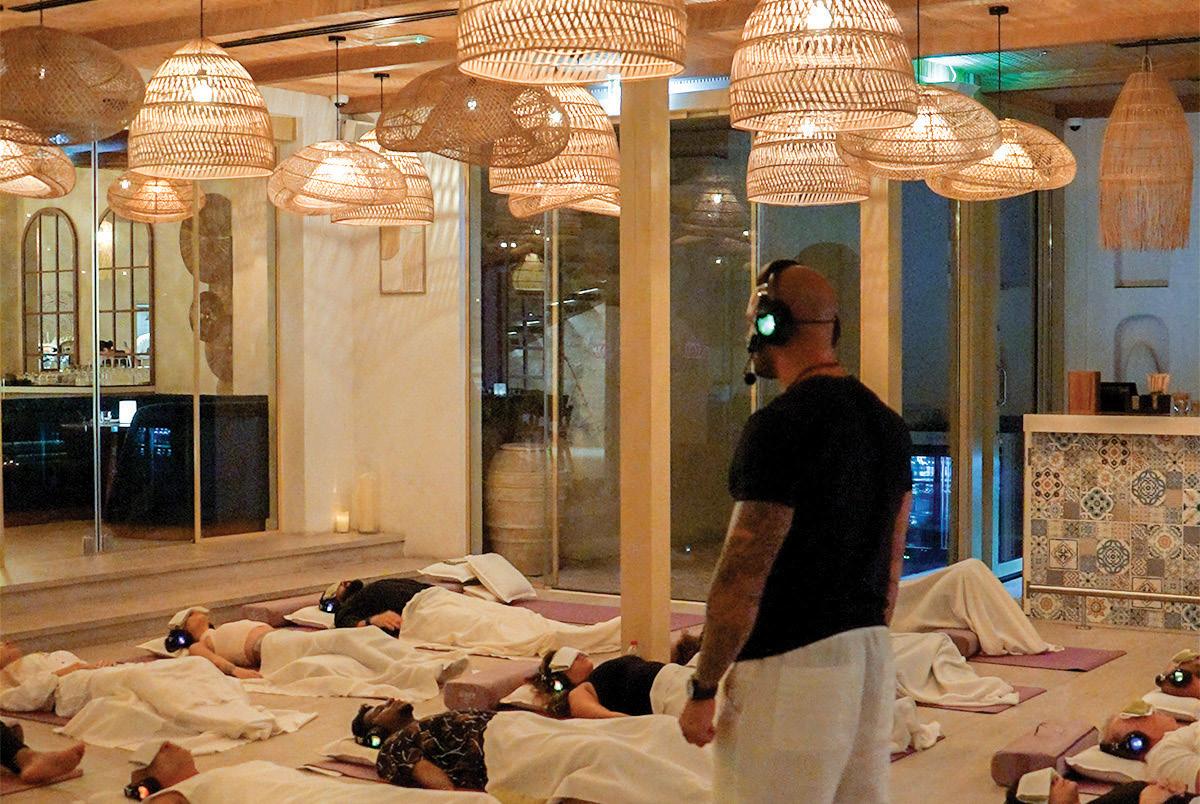
Mansotra resists the word “spa.” Under one roof sit Ayurvedic therapies, a wet area of steam, sauna and cold plunge, yoga studios, sound healing, breathwork, full-moon ceremonies and a plant-based café, closer, she says half-jokingly, to “a holistic hospital”. Newcomers don’t choose from a menu; a soft diagnostic reads their state and assembles a prescription. Each kind of depletion has its own door, movement, breathwork, sound baths, and the kirtan nights whose real medicine is company. The architecture is coherent, the building itself the connective
tissue. The clinical heart is Ayurveda, Panchakarma, Abhyanga, Shirodhara, and her line on authenticity is firm. “We don’t create watered-down versions,” she says. “We honour the traditional protocols, use meticulously sourced, fragrant organic oils and work with practitioners who understand the lineage.” What is modernised is the delivery, not the science. Her metaphor is domestic, “grandmother’s kitchen”, the rituals kept portable, from tongue scraping to mindful eating. Food is a pillar, not an add-on. Sohum Café runs on a root-tostem, zero-waste approach, its menu built to


sustain rather than undo a treatment. Plantbased for over seven years herself, Mansotra ties the ethos not to corporate metrics but to ahimsa, non-harm: “When you respect the earth, the earth respects your body.”
Her commercial reading is sharp. Dubai has mastered clinical longevity and hotel-resort pampering, but both come with a hotel attached. Sohum’s distinction, she says, is structural: a standalone luxury venue holding its own dedicated spa licence, sparing guests the old pilgrimage to Kerala for serious Panchakarma. “You no longer have to board a flight to heal.” Named Best Luxury Ayurvedic Wellness Spa in Dubai by the Luxury Lifestyle Awards in its first year, it raises an obvious tension: is “luxury wellness” a contradiction? Her answer is neat. “True luxury isn’t about excess,” she says. “It’s about access to silence, to space, to time.” On trend-chasing, crystals one season, cold plunges the next, she is unambiguous: the field is racing two ways, forward into clinical longevity tech or back to the roots, and Sohum chooses the roots, trusting that ancient practice treats the cause, not the symptom. What she hopes a guest carries out is less a good massage than a sense of return: “anchored, clear, aligned.” A larger Sohum Wellness Sanctuary & Longevity Resort is planned, but the metric she cares about is smaller. “The peace you feel inside,” she says, “isn’t dependent on our walls.”
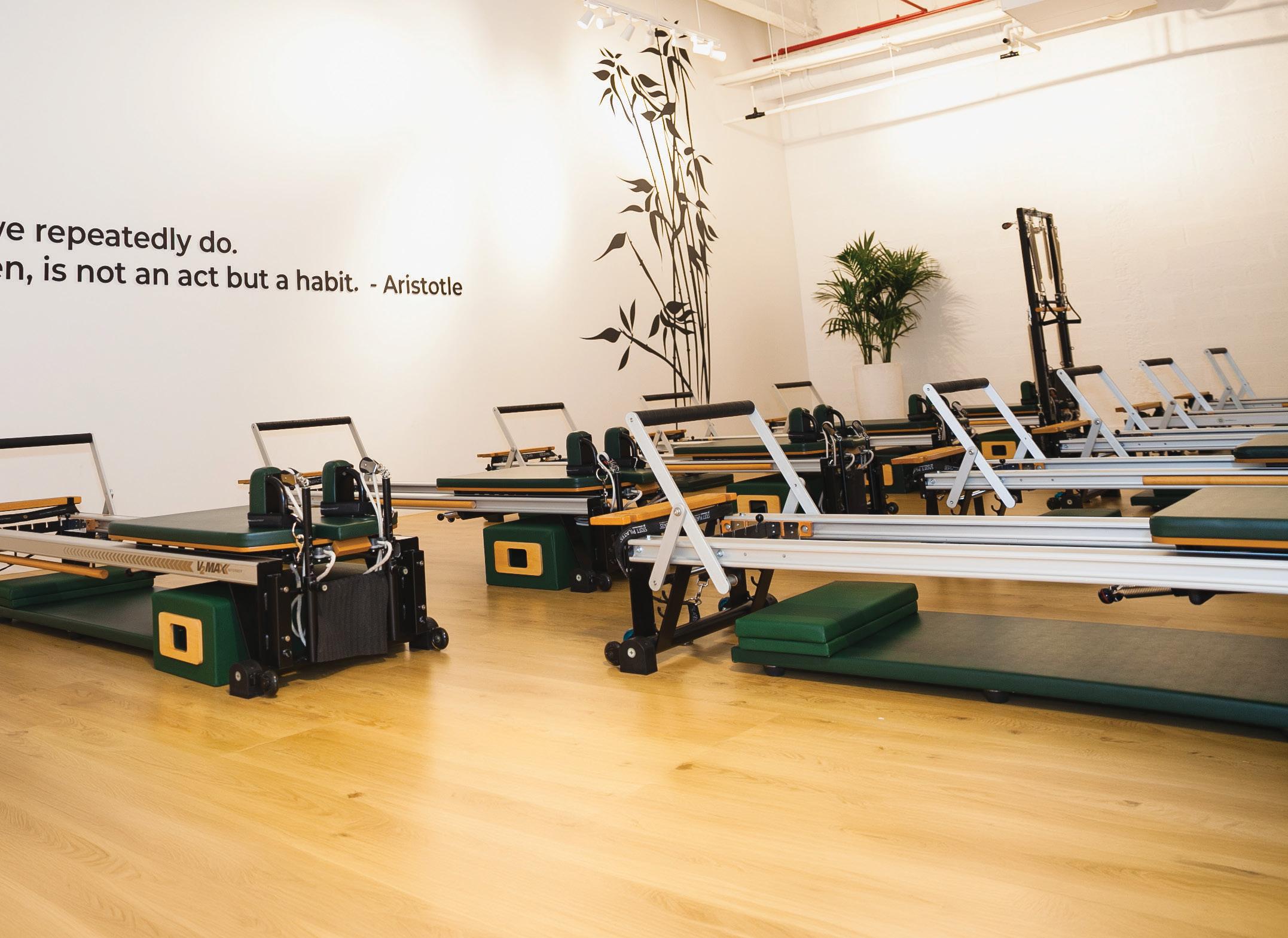
FOUNDER REZA ALAVI SAYS REAL PILATES WAS BUILT ON A SIMPLE PROMISE: DO PILATES PROPERLY, AND LET EVERYTHING ELSE FOLLOW
BY NEESHA SALIAN
The name was a verdict before it was a brand. In the late 2000s, Reza Alavi was a Pilates client rather than a studio founder — a good career in the automotive industry and a frustration he couldn’t shake. He had found the practice; he couldn’t find it done properly. One Dubai studio was cramped and dated. Another was, in his words, “ beautiful, but had no content, no substance.”
“To me, as a client, I reached a conclusion,” he says. “Yeah, this is Pilates. But it’s not ‘real’ Pilates.” So he resigned, spent 11 months planning, and in December 2009
— into the teeth of a financial crisis — opened Real Pilates in Jumeirah 1. He built what he had wanted as a client: the best equipment, a globally recognised methodology, instruction that could stand up anywhere. Then he did something less fashionable. He set the prices and largely left them. In 17 years, they have risen only a handful of times, each increase between three and five per cent. “My goal was not to reach the VIPs or the big prominent families,” he says. “It’s just the real community of Dubai.”
Growth outran the plan: JLT opened after two years instead of four, and a third studio in
Meydan became the brand’s first franchise, owned by a client. Abu Dhabi, Riyadh and Jeddah are in discussion. So, less rationally, is Paris, where he grew up. “My hope is that I will have one in Paris.” Behind the studios sits a business most clients never see: a licensed STOTT PILATES academy, one among the largest in the world and the region’s only licensed training centre. It has trained more than 7,500 instructors, meaning a great many teachers at rival studios learned their craft here. Plenty still come back to train. “You see them in our classes. It’s a pretty nice community.”
Nothing about the business has changed more than the composition of a class. Pilates was close to unknown in Dubai when Alavi opened, and where it was known, it was assumed to be for women — stretching, softness, something adjacent to yoga. “Someone who really knows Pilates knows it’s good for everyone, from young to old, women and men,” he says. Persuading everyone else has been the work of 17 years, done relentlessly and without ever giving up. On the prejudice itself he is undiplomatic: “It’s just a lack of awareness. It’s ignorance.”
The first men through the door came with problems to solve: the golfer chasing a better swing, the endurance riders who couldn’t stay on a horse for hours without a core. The shift began when women started becoming the biggest advocates, persuading husbands, brothers, partners and colleagues to embrace the practice. The change gathered momentum around 2015
and accelerated after Covid, helped by highprofile athletes, including footballers, who began openly promoting it. “When you see someone like Cristiano Ronaldo start doing it, the person who yesterday thought, ‘Oh, this is only for girls,’ suddenly thinks, ‘Oh my God, maybe there’s something to this’,” he says. But the reliable conversion tool, Alavi adds, was the class itself. “Whenever we got a man to come, he would leave baffled, because he couldn’t do a third of what the women in the same class were doing.” The deep stabilising muscles weren’t there. “You start seeing parts of their body physically tremble. It’s kind of embarrassing when you think you’re strong and you’ve got really big biceps.” They rarely came back sceptical. The group that fascinates him now isn’t athletes but executives. “You can look around a table of 15 and immediately you know who has a terrible posture. And then who seems fit. Who holds himself with a certain — I almost want to say majesty.” Confidence, he argues, isn’t an internal state. “It’s on your face, it’s in your body. Your demeanour changes when you walk.” And it lasts: “You can’t jet ski forever. You can’t do CrossFit forever. But Pilates is something you can continue well into your later years,” he says.
He has been offered every machine, every trend, every adjacent revenue line — and turned them all down. The French have a word he likes: puriste. “I’d like to do one thing, but be the Michelangelo of that. As I dilute my attention, I’m bound to achieve less excellence in every single one.” Then, flatly: “I don’t want to be the supermarket of fitness.” The same instinct governs the
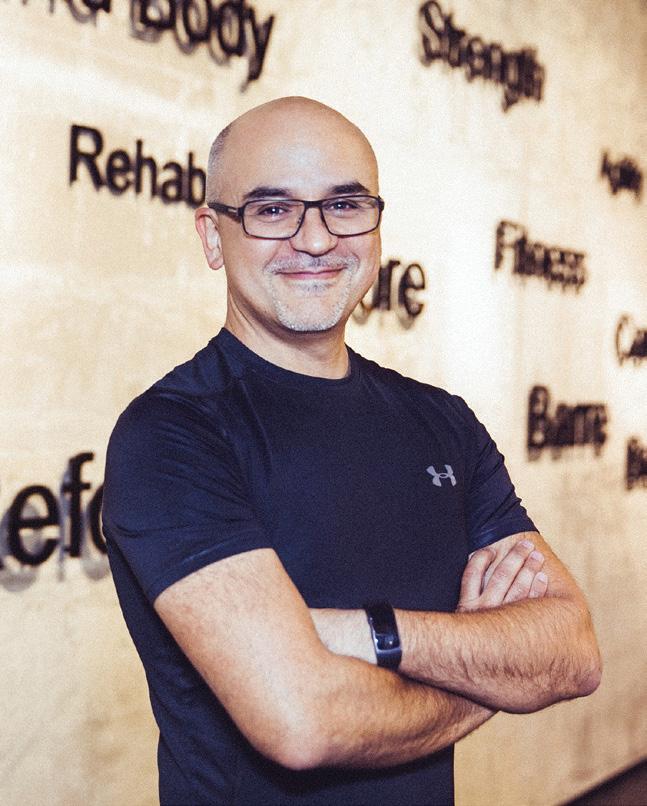
P&L, which he refuses to manage directly. No sales targets, none of the revenue-persquare-foot maths the big-box gyms live by. “Let’s do what we do perfectly, and the result will follow. The P&L is a byproduct of the customer care.”
The morning of this interview, Alavi was responding to a complaint from one of his longest-standing clients. She joined Real Pilates 16 years ago, when the first studio had barely begun, and has since moved through different chapters of her life, from being single to becoming married with two children, while completing around 1,400 classes. The issue was a small one at reception, but Alavi saw something bigger in her decision to raise it: loyalty. He describes reading her messages with something close to gratitude. “How eager and thirsty I was to fix it. Not for money, not for packages.” Then the line that explains the whole enterprise: “My biggest blessing after my wife and my children are my clients and my team. These people are not part of my life. They are my life.”
The company’s stated vision is enriching people’s lives, the kind of sentence that appears on a thousand About pages and means nothing. Alavi audits it. At the end of the day, he opens the app and looks not at sales, but at attendance. “These people, they’re sleeping better right now in their beds because of what we collectively did for them.” Seventeen years later, the word “Real” has become less a description of the method than a measure of the promise Alavi set out to keep: do one thing, do it properly, and earn the trust of the people who walk through the door.
BY NEESHA SALIAN
If there was ever a foldable designed to replace your laptop, this is it. Samsung’s Galaxy Z Fold8 Ultra pushes the foldable experience further, pairing an expansive 8-inch AMOLED main display with a slimmer, lighter design that makes it easier to carry every day. The redesigned Armor FlexHinge and reinforced titanium layers beneath the display improve durability, while the wider cover display makes everyday tasks feel more natural. Powered by Qualcomm’s Snapdragon 8 Elite Gen 5 for Galaxy, the Fold8 Ultra is built for serious multitasking, with AI features designed to help users summarise, create and work more efficiently. Add a 200MP camera system, 5,000mAh battery and up to 1TB of storage, and Samsung has created one of its most capable foldables yet. It remains a premium purchase, but for professionals and creators, it is closer than ever to a pocket-sized workstation.
The Galaxy Z Fold8 Ultra also transforms mobile entertainment with its expansive 4:3 main display,


designed for immersive video streaming, gaming and digital reading. Powered by the Snapdragon 8 Elite Gen 5 for Galaxy processor, it delivers smooth performance for demanding content, while up to 1TB of storage and up to 27 hours of video playback make it built for long viewing sessions on the move.
Price: Dhs7,999 onwards
Sony is not trying to reinvent its flagship headphones, it is celebrating them. 1000X THE COLLEXION marks a decade of the 1000X series, bringing a limited-edition collector-focused design to Sony’s headphone family. The technology remains familiar: Sony’s legendary 1000X series noise cancellation, high-quality sound and comfortable over-ear design that has made the range a favourite among frequent travellers and music enthusiasts. The difference is in the details, with a more premium aesthetic inspired by craftsmanship, curated materials and a collector-focused finish. The headphones combine premium metal accents and
refined faux leather with Sony’s latest audio technologies. The HD noise cancelling processor QN3 advances noise cancellation and sound processing, while the integrated processor V3 supports features including 360 Upmix and DSEE Ultimate. A bespoke driver, co-created with renowned mastering engineers, delivers balanced lows, natural vocals and clear highs, while 360 Upmix expands music, cinema and gaming content into a more immersive sound experience.
For anyone who spends hours commuting, travelling or simply looking to escape the noise around them, these remain one of the most advanced ways to create a personal sound space.
Price: Dhs2,400

TNote: Prices may vary by store, colour option, promotional offers, and availability. Always check with authorised retailers for the most up-to-date pricing.
he Oura Ring 5 proves that the smartest wearable does not always need a screen. Designed to look more like jewellery than technology, the latest generation is slimmer and lighter while packing more advanced health tracking into its titanium frame.
The ring monitors sleep, recovery, heart rate, blood oxygen levels, stress and a wide range of wellness metrics (50+), turning everyday habits into actionable insights through Oura’s app. Unlike a smartwatch that constantly demands attention, the Ring 5 works quietly in the background, collecting data without adding another distraction to your day. With improved sensor accuracy, a more comfortable design and up to nine days of battery life, it makes a strong case for anyone who wants health tracking without wearing a device on their wrist. It is discreet, stylish and increasingly becoming a wearable of choice for people who want smarter health insights with less screen time.
Price: Dhs1,599-1,999 (excludes subscription fee)
Huawei’s MatePad Air is designed for those who want the portability of a tablet without giving up laptop-style productivity.
Measuring just 5.3mm thin, it combines a lightweight design with PC-level performance and a suite of AI-powered tools through WPS AI. The built-in AI assistant can generate topics, create outlines, refine writing and help draft documents, making it a useful companion for professionals, students and creators.
The tablet’s ultra-clear OLED PaperMatte display delivers sharp visuals and a paper-like viewing experience, making it suited for writing, editing and creative tasks. With its focus on AI-assisted workflows and a slim form factor, the MatePad Air positions itself as a practical alternative for users who want productivity on the move without carrying a traditional laptop.
Price: Dhs1,599-1,999


Beauty tech is getting a serious upgrade, and Shark Beauty’s latest CryoGlow edition proves skincare gadgets can be both functional and stylish. The award-winning LED skincare device is now available in a new Blue Frost colourway, combining clinically tested light therapy with Shark’s signature InstaChill under-eye cooling technology.
The mask uses red, blue and deep infrared LED technology to support different skincare goals, while the adjustable cooling feature helps refresh the under-eye area. Designed with clinically tested LED light therapy and Shark’s InstaChill technology, it brings a spa-inspired treatment into a home routine without requiring a trip to a clinic.
Available exclusively through Ounass and Shark’s official website, the Blue Frost edition is designed for consumers who see wellness and grooming as part of their lifestyle.
Price: Dhs1,499

















































































BY ANISHA SAGAR
FOR SMES, LONG-TERM SUCCESS DEPENDS NOT JUST ON FUNDING OR FAVOURABLE POLICIES, BUT ON THE STRENGTH OF THE ECOSYSTEM THAT SURROUNDS THE BUSINESS

As every SME owner knows, the hard part isn’t getting the business open – it’s keeping it growing. A sound business model, steady customers and access to financing get you through the first few years. But many experienced business owners will tell you that even a solid foundation is just part of the story. The defining factor for sustainable growth is the strength of the surrounding ecosystem. An ecosystem, in this case, is the sum of everything a small business owner can draw on beyond their own resources. This includes investors who understand the sector, suppliers and partners who can move quickly, talent that’s already trained for the industry, mentors who’ve made the same mistakes before, and regulators who make it easy rather than exhausting to operate.
The simple truth is that businesses can’t succeed in today’s highly connected world unless they take the time to build networks of complementary partners rather than trying to do everything in-house. The same logic applies, possibly even more so, to business owners starting
from scratch. An SME with no ecosystem is doing everything the hard way. This need has only grown more urgent over time. A decade ago, a determined owner could get quite far on personal networks and a willingness to cold-call. Markets were smaller, competition was thinner, and the gap between a well-connected business and an isolated one was survivable. That gap has widened. Capital is more selective, customers have more choice, and the businesses that scale fastest tend to be the ones that found leverage somewhere other than their own hustle. For SMEs weighing where and how to build, that leverage is exactly what a strong ecosystem is meant to provide.
Historically, the Gulf’s low taxes, swift licensing, and full foreign ownership have been the primary attractions for start-ups. These features remain crucial, but they are no longer distinct advantages because they have become standard across the
region. What truly distinguishes a market now is the strength and maturity of its underlying ecosystem. This shows up in the data. The Global Entrepreneurship Monitor placed three GCC countries, including the UAE, in the top ten globally on its National Entrepreneurship Context Index, largely because of the density of support available to small-business founders, including incubators, mentorship networks, early-stage funding, and co-working infrastructure that didn’t exist at scale a decade ago. That ranking isn’t really about any single incentive. It reflects a broader shift in how Gulf economies think about entrepreneurship, not as a side effect of a strong economy, but as one of the engines driving it.
The World Bank’s most recent Gulf Economic Update supports this from a macro perspective. It points to accelerating diversification across the GCC, with growth increasingly coming from non-oil sectors, and flags strengthening innovation ecosystems and SME support as priorities for keeping that momentum going. Academic research on Gulf diversification has long argued that economies built around a single resource need to deliberately construct the institutions, skills and private-sector density that oil revenue never required. In other words, build an ecosystem where market forces alone wouldn’t have created one on their own timeline. Entrepreneurship, in that framing, isn’t just good for small businesses. It’s part of a national strategy.
Research on scaling SMEs across MENA identifies a persistent gap between businesses that manage to launch and the smaller number that go on to scale, what researchers sometimes call the “missing middle”. Ultimately, the factors that matter for a growing business fall into four areas: fundamentals such as finance and skills; “propellers” such as mentorship and R&D support; demand creation; and
the broader readiness of the country’s institutions and infrastructure. It’s natural for startups to focus on getting the business up and running with a solid business plan, financing and legislative boxes ticked. But what happens in year two or three, when a business needs its first serious round of funding, or access to a regional distributor, or a hire with very specific technical experience, depends on whether that ecosystem has matured enough to provide it. It’s not usually a lack of capability that holds a business back at this stage, but a lack of scale. Larger contracts, whether from government procurement or big corporates, tend to require a range of services delivered together, and no single SME can usually offer everything. Partnering with complementary businesses, rather than trying to grow every capability in-house, is often what makes those bigger opportunities reachable in the first place.
An SME can tick every box on the launch checklist and still stall out later if the ecosystem around them doesn’t support the next stage of growth.
Unlike a handful of high-growth startups, SMEs are the backbone of the UAE’s privatesector economy, accounting for more than 94 per cent of all companies in the country, and government targets aim to lift their share of non-oil GDP from roughly half to 60 per cent in the years ahead.
When an SME stalls during its transition from a small venture to a larger enterprise, the loss extends far beyond a single business failing to scale. It means a significant portion of the private-sector jobs and nonoil growth the nation relies on will simply not materialise.
That is a big part of why governments and free zones are now deliberately building ecosystems, rather than leaving SME growth to chance.
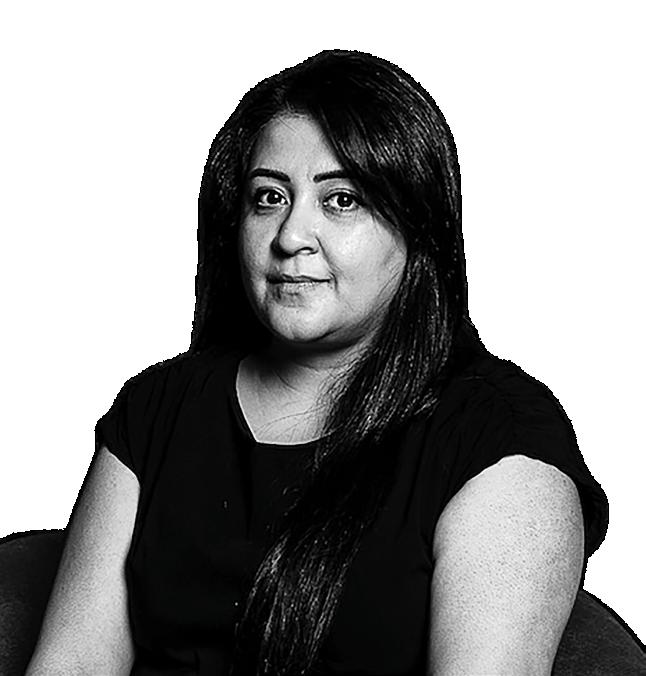
This is where the region’s free zones come into their own. What used to be, in essence, a gathering of licensing and office-space providers has increasingly become something closer to curated communities, grouping similar businesses together, running investor introductions and industry events, and building the kind of informal networks that once existed only in more established startup hubs.
Recent coverage of the UAE’s free zone sector shows that many have moved well past their original role as setup destinations to become what’s now described as genuine ecosystems, offering digital-first services and a level of connectivity that didn’t exist in earlier iterations of the model. For an SME, this is a situation worth leveraging. A free zone that actively builds connections between its members is offering something a generic office park never could. It’s
“RECENT COVERAGE OF THE UAE’S FREE ZONE SECTOR SHOWS THAT MANY HAVE MOVED WELL PAST THEIR ORIGINAL ROLE AS SETUP DESTINATIONS TO BECOME WHAT’S NOW DESCRIBED AS GENUINE ECOSYSTEMS.”
a meaningful shift in how these zones think about their own value proposition. Competing purely on price and speed has a natural ceiling, because those things are relatively easy for a competitor to match. Competing on the strength and relevance of the community an SME joins is much harder to replicate, and it’s a better longterm bet for the zone and the businesses it encompasses. A cluster of complementary companies, sitting near each other and occasionally doing business with each other, tends to create value that none of them could generate alone. That same clustering effect has long been observed in more mature innovation hubs, and it’s now something the region is deliberately trying to engineer rather than waiting for it to happen organically.
Whether an SME is setting up for the first time or weighing a move to a different free zone or jurisdiction, tax treatment and licensing speed are still worth comparing, but they should no longer be the deciding factor. Business owners need to consider density and connection: Who else operates here, and do they overlap with my industry? Is there a route to capital, whether that’s proving a new concept or funding the next stage of growth? Can I get in front of the right mentors and partners without having to build that network from scratch?
As with all evolving business environments, there is still much to do, but what’s already clear is that a diverse and supportive ecosystem has shifted from a nice-to-have into something closer to a survival requirement. Increasingly, competitive advantage isn’t only about what an SME can do on its own – it’s about the strength and relevance of the network it has built around itself.
In a region that’s actively investing in diversification, innovation infrastructure, and entrepreneurial density, the SME owners who benefit most will be those who choose their environment as deliberately as they choose their business model.
A solid foundation is still important. But, increasingly, so is the company it keeps.












NEW: Best Gaming & Esports Agency
NEW: Best Influencer Marketing Agency
NEW: Best Sports Marketing Agency
Best Creative Agency








Best Events, Experiential and Engagement Agency


Best Digital Agency


NEW: Best Agency Producer
NEW: Best Media Planning Leader
NEW: Independent Agency Head of the Year

Best Account Person
Best Arabic Copywriter







Best Creative Leader
Best CSR Initiative
Best New Business Development Leader
Best Strategic Planning Leader Best Place to Work in 2026

Best Talent Management Individual

NEW: Best Independent Digital Agency



NEW: Best Agency – UAE: Independents
NEW: Best Agency – UAE: Holding Company / Networks




Best Independent Creative Agency


Best Production House
Best Social Media Agency
Best Startup / New Agency

Holding Company of the Year Best Integrated Marketing Agency Best Media Agency Best Performance Marketing Agency Best PR / Communications Agency








Best Corporate Communications & Marketing Team
Head of Agency with streams for Creative, Digital, PR, Media & Integrated Marketing Network Head of the Year
Outstanding Woman In Advertising or Media

Best Independent Media Agency RETURNING FOR 2026: Independent Agency of the Year





NEW: Best Agency – Saudi Arabia: Independents
NEW: Best Agency – Saudi Arabia: Holding Companies / Networks









NEW: Best Agency – Wider Middle East (Qatar, Oman, Bahrain, Kuwait, Jordan, Lebanon and Iraq)




Best Agency – Egypt






BY NEESHA SALIAN

As the UAE sharpens its focus on SMEs, backed by a recent Dhs1bn support package, Khalifa Bin Braik, CEO of Majid Al Futtaim Asset Management, is looking to close one of the sector’s biggest gaps: access. Through Ma’an, Majid Al Futtaim is opening its retail and entertainment ecosystem to homegrown businesses, offering them a fast-track into high-footfall destinations and established consumer channels. The response has been immediate, with around 7,800 registrations already received for
the initiative. In this interview with Gulf Business, Bin Braik explains how Ma’an fits into the UAE’s broader SME push, why malls are being repositioned as platforms for entrepreneurs.
Ma’an launches at a time when the UAE is expanding national support for SMEs, including the recent Dhs1bn package. How does this initiative fit into that wider ecosystem, and what specific gaps is it designed to address for homegrown businesses? Ma’an is closely aligned with the direction
set by the UAE leadership, particularly the recently announced Dhs1bn economic support package, which reinforces that small to medium-sized enterprises (SMEs) are a national priority.
What Ma’an does is translate that ambition into a practical opportunity. While policy frameworks and financial incentives are critical, one of the biggest barriers SMEs face is access to high-footfall locations, established consumer audiences, and credible platforms that can accelerate their growth. Through Ma’an, we are addressing this directly by opening Majid Al Futtaim’s full ecosystem to homegrown businesses. From Mall of the Emirates and THAT Concept Store to VOX Cinemas and Carrefour, our destinations collectively attract millions of customers each year. This gives SMEs the ability to showcase, test, and scale their brands in environments that would otherwise take years to access independently.
Ultimately, Ma’an complements the broader ecosystem by turning opportunity into tangible action.
Shopping malls have evolved far beyond traditional retail spaces. From your position overseeing Majid Al Futtaim Asset Management, how will Ma’an reshape the role of malls as platforms for entrepreneurship and communitydriven business growth?
Shopping malls have always been more than transactional places; they are community hubs at their core. With Ma’an, we are taking that step further by positioning our destinations as platforms for entrepreneurship. Rather than being spaces exclusively for established brands, our malls become launchpads for emerging businesses. What sets this apart is the scale
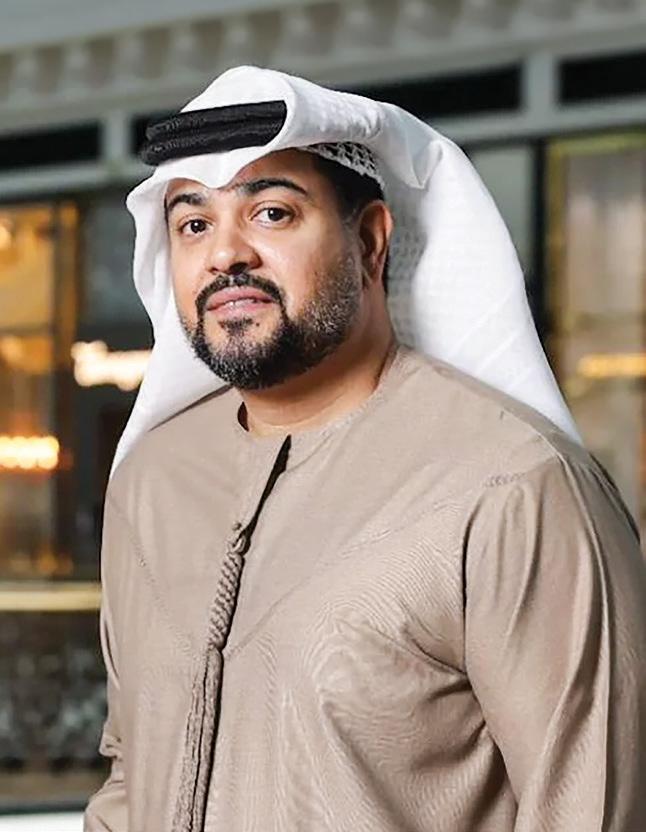
and integration of our ecosystem. We are not simply offering retail space; we are connecting SMEs to a full commercial infrastructure spanning retail, entertainment, loyalty, and media. This fundamentally shifts the dynamic, enabling smaller businesses to move faster, reach wider audiences, and build meaningful brand presence within a trusted environment.
What does working with Dubai Economy and Tourism enable in terms of scale, access or impact that would not have been possible alone
The partnership with Dubai Economy and Tourism and Dubai SME is fundamental to the success of Ma’an.
Majid Al Futtaim and DET share a longstanding relationship built on a common commitment to Dubai’s economic growth and the strength of its business community. DET and Dubai SME bring the policy framework and deep connections to the entrepreneurial ecosystem, something we cannot replicate independently.
In parallel, we bring a powerful consumer infrastructure across retail, entertainment, dining, loyalty programmes and digital platforms. It is the combination of these capabilities that creates real scale and impact. Neither could achieve this alone. More broadly, Ma’an reflects the UAE’s model of close public-private collaboration to drive economic growth.
THE PARTNERSHIP WITH DUBAI ECONOMY AND TOURISM AND DUBAI SME IS FUNDAMENTAL TO THE SUCCESS OF MA’AN. MAJID AL FUTTAIM AND DET SHARE A LONGSTANDING RELATIONSHIP BUILT ON A COMMON COMMITMENT TO DUBAI’S ECONOMIC GROWTH AND THE STRENGTH OF ITS BUSINESS COMMUNITY.”
Given the current regional geopolitical pressures, how are you seeing consumer behaviour and retailer sentiment shift across Majid Al Futtaim malls, and what does this mean for SMEs entering the market?
In periods of uncertainty, consumers tend to become more intentional in their spending, with a stronger focus on value, trust, and relevance.
At the same time, we are seeing a growing preference for supporting homegrown and locally rooted brands, a reflection of stronger community alignment and shared progress. From a retail perspective, there is an increased focus on optimising cost structures and strengthening demand visibility. This is where platforms like Ma’an play an important role.
By providing access to high-footfall destinations and integrated marketing channels, we help reduce uncertainty and create a more stable environment for SMEs to operate and grow.
SMEs tend to feel the pinch first during uncertain periods. What practical support, whether operational, financial or footfall-related, will Ma’an provide to help small businesses stay resilient?
The support we provide through Ma’an is both operational and commercial.
On the operational side, we are lowering barriers to entry by giving SMEs access to premium retail environments across our ecosystem, from pop-up spaces at Mall of the Emirates to product placements within THAT Concept Store, VOX Cinemas and Carrefour. On the commercial side, we amplify visibility through our marketing and communications platforms, including
the SHARE loyalty programme, social channels, digital screens, media and influencer partnerships. This combination is critical. Building this level of visibility independently can take years, but Ma’an significantly accelerates that journey, enabling businesses to go from awareness to recognition and loyalty in a much shorter timeframe. Ultimately, the goal is to enable growth while strengthening resilience.
What do you see as the biggest opportunities for SME-led growth in the UAE’s retail landscape, and how will the insights gained from Ma’an shape your long-term strategy for mall development and tenant mix?
Across the UAE, a new generation of founders is building brands that are not only locally relevant but have the potential to scale regionally and globally.
We see strong opportunities in categories where authenticity and experience are key, particularly across lifestyle, food, fashion, and emerging retail concepts.
Ma’an provides us with direct insight into how these businesses perform within our ecosystem, helping us better understand evolving customer preferences and demand patterns.
These learnings will play an important role in shaping our future tenant mix and how we continue to evolve our destinations. More broadly, this ensures our malls remain dynamic, relevant, and reflective of the communities they serve, with SMEs playing an increasingly important role.
For now, our focus is on successfully launching Ma’an in the UAE and supporting the first cohort of businesses as they grow within our ecosystem.
Rechitta, co-founded by 19-year-old Atiksh Mittal, is an AI-native platform designed to streamline real estate communication using verified developer data
Tell us about yourself.
I’m the co-founder of Rechitta. I started building technology at a young age and have always been fascinated by how intelligent systems can solve real-world problems. Rather than following a traditional path and continuing to university, I chose to focus on building Rechitta. Today, my role is centred on shaping Rechitta’s product vision and ensuring our AI delivers practical value by making real estate communication faster, more accurate, and more intuitive.
What inspired you to start Rechitta along with your partner at this young age?
The inspiration came from a simple observation. Despite Dubai being one of the world’s most advanced real estate markets, communication remained highly fragmented. Buyers, brokers, and developers were often working with different information depending on who they spoke to. That inconsistency created delays, confusion, and missed opportunities.
We saw an opportunity to build a trusted communication layer powered by verified developer data, ensuring everyone operates from the same source of truth in real time. Rechitta was created to bring greater transparency, consistency, and speed to real estate communication, helping developers and brokers respond to global market demand up to 10x more effectively.
What is the technology used to power this platform?
Rechitta is an AI-native platform built
Atiksh Mittal, co-founder, Rechitta
specifically for real estate. It combines verified developer data, proprietary communication infrastructure, multilingual AI capabilities, and a model-agnostic architecture that allows us to continuously leverage the latest advances in AI.
What makes it different is that it works directly with first-party developer data and understands real estate-specific workflows, from inventory and payment plans to broker interactions and buyer behaviour. This enables highly accurate, contextual responses while significantly
BY NEESHA SALIAN
“THINK OF RECHITTA LESS AS A CHATBOT AND MORE AS AN INTELLIGENT COMMUNICATION
INFRASTRUCTURE
DESIGNED SPECIFICALLY FOR REAL ESTATE.”
reducing the inconsistencies o f ten associated with AI systems.
How is this not another chatbot?
A chatbot answers questions. Rechitta understands how real estate actually works.
Rechitta is a domain-specific intelligence platform built around developer inventory, payment plans, project timelines, broker workflows, buyer behaviour, and realtime market demand. Every interaction contributes to a structured intelligence layer that helps developers, brokers, and buyers make faster, more informed decisions.
Think of Rechitta less as a chatbot and more as an intelligent communication infrastructure designed specifically for real estate.
What is your revenue model and how do you plan to scale this?
Our revenue model is subscription-based, with pricing designed around the scale and value delivered to developers and broker networks. The platform helps users reduce communication inefficiencies, improve information accuracy, and engage with demand at a much larger scale.
Our scaling strategy is straightforward: establish Rechitta as the trusted communication layer within Dubai’s real estate ecosystem, deepen integrations across developers and brokers, and then expand into other regional and international property markets facing similar communication challenges.
What’s next after this?
Our immediate focus is adoption across Dubai’s real estate ecosystem. Over the next year, we aim to become the default communication layer connecting developers, brokers, and buyers through verified real-time information.
Longer term, our vision extends beyond Dubai. We believe every major property market faces similar challenges around fragmented communication and inconsistent information. Our goal is to build Rechitta into the AI infrastructure layer that powers how global real estate markets communicate, understand demand, and transact.