







Play. Stay. Experience More.
Book an 18-hole round for ₤1,999 and unlock a complimentary staycation.
7 Courses • 10+ Hotels
One night stay for up to two adults and two children with breakfast included.
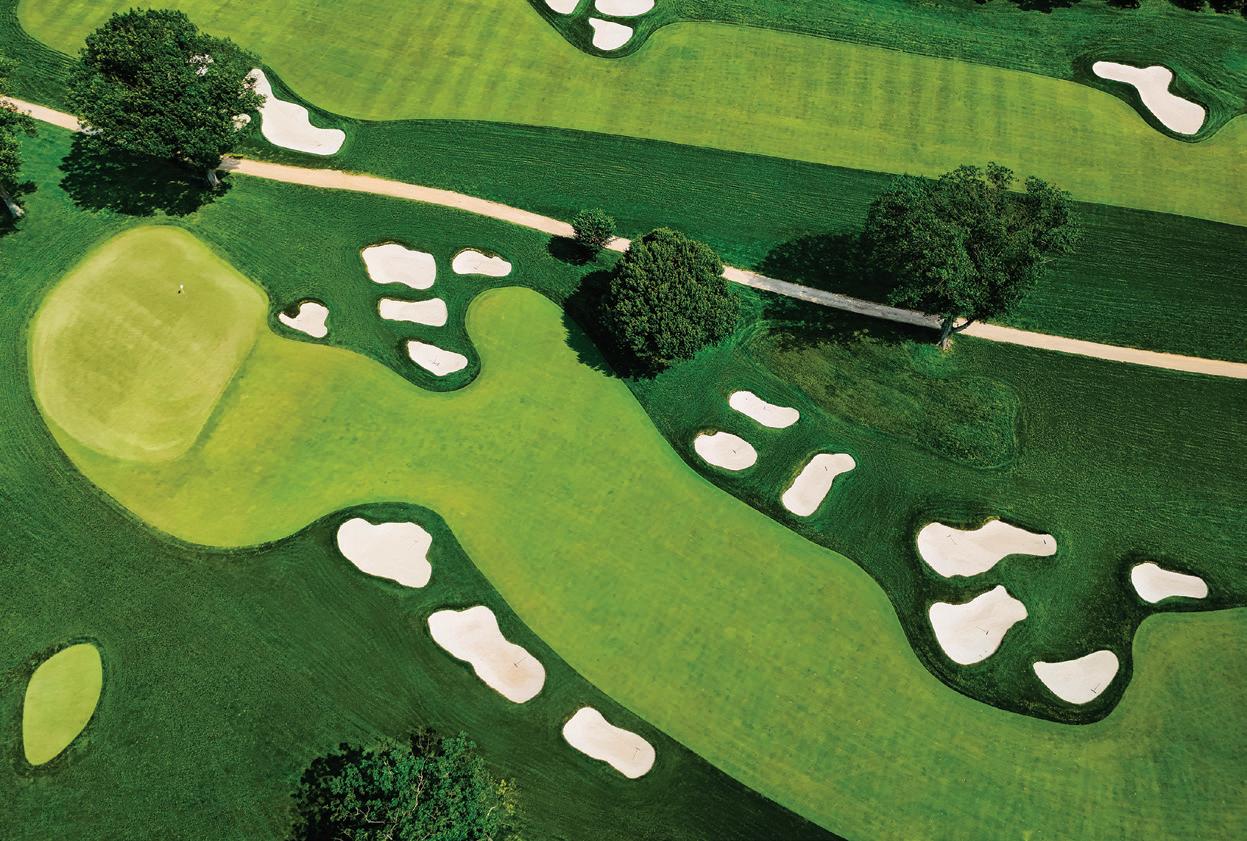
Hanse and Wagner’s restored Aronimink will test players at the PGA. Page 40
4 Heart Of The Game
Robert MacIntyre headlines a month of innovation. BY HARRY GRIMSHAW
starter
6 Elevating Golf In Azerbaijan
Dreamland Golf Club delivers a world-class golfing experience.
8 Journeys
Neal Shipley lost weight but not his sense of humor.
WITH KEELY LEVINS
10 The Undercover Pro
How PGA Tour players feel about Brooks coming back.
WITH JOEL BEALL
12 The New Boss
The messy truths Brian Rolapp will learn about pro golf. BY JERRY TARDE
16 Man On Top YouTube star Chaz Bowker’s unlikely path from chef to one of the best adaptive golfers. BY ALEX MYERS
66 The Toughest First Holes Ease into the round? Not at these courses BY DREW POWELL
48 Discover Dubai’s Billionaire Backyard
Tom Fazio’s desert masterpiece meets Dubai’s most private community. BY HARRY GRIMSHAW
54 Game Of Stones
Bob MacIntyre on moving back to Scotland, Ryder Cup brotherhood, shinty and how to meet the moment. BY JOEL BEALL
62 Slope, Lie, And Play How Rory Flanagan and PLATFORM Golf are changing indoor golf in the Middle East.
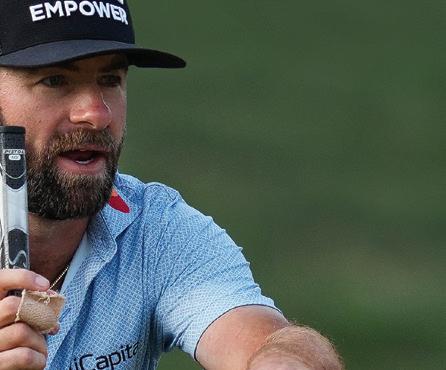
18 Cam Young’s Putting Philosophy (revised) BY CAM YOUNG
20 Take It Over the Trees
Hit your irons higher than ever. BY MICHAEL KOLAR
22 Protect Your Knees
Here’s the catch: To keep them healthy, focus on other joints BY RON KASPRISKE
Hot List Part 4
25 Mallet Putters
34 Blade Putters
36 Wedges BY MIKE STACHURA
40 Restored Reverie Hanse and Wagner’s work at Aronimink goes on display for the 2026 PGA Championship. BY DEREK DUNCAN
46 Why So Many New Courses Look The Same BY DEREK DUNCAN
the gulf club
64 Club News
A gallery of just a handful of the local tournament winners in the amateur circuit within the region of the Middle East. MAY 2026
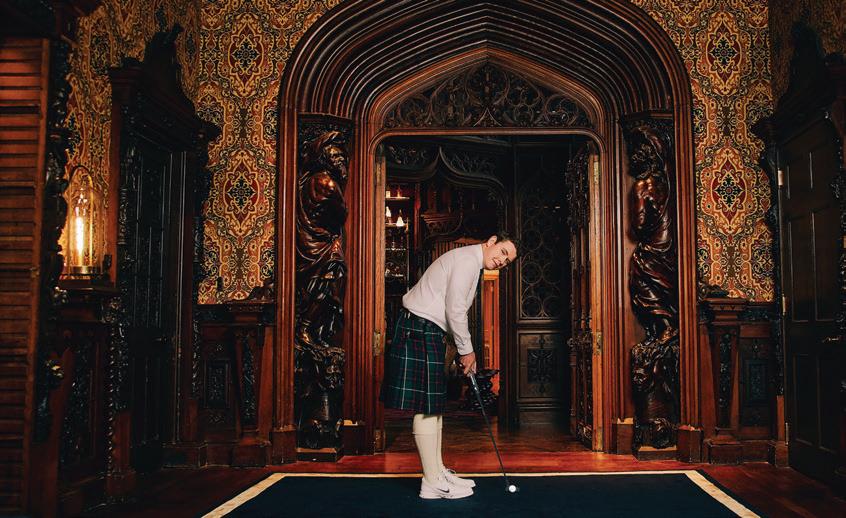
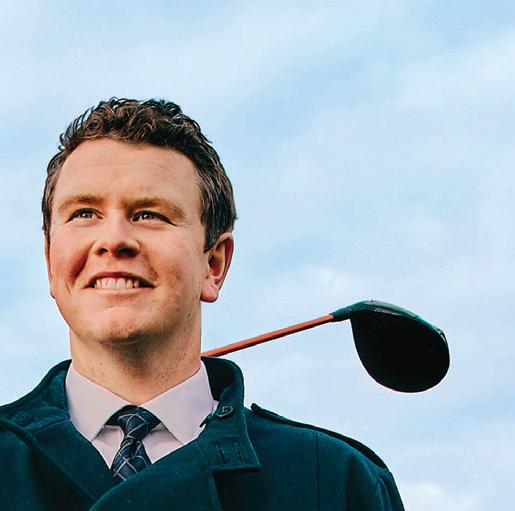
Robert MacIntyre headlines a month of insight, innovation and world-class golf across the region and beyond.
BY HARRY GRIMSHAW
MAY BRINGS another packed issue, and we’re proud to lead with our cover star, Robert MacIntyre. In a candid and wide-ranging conversation, the Scot reflects on his return home, the bonds forged through the Ryder Cup and the mindset required to deliver on the biggest stages.
Across this month’s issue, that same blend of global perspective and regional insight continues. We begin by shining a light on new frontiers, as Dreamland Golf Club in Baku, Azerbaijan, sets a benchmark for world-class golf experiences. While closer to home, Dubai once again takes centre stage with a look inside one of its most exclusive golfing enclaves, where design and luxury meet in spectacular fashion at Discovery Dunes.
The voices section this month is as compelling as ever. Neal Shipley reflects on his transformative personal journey, while the ever-present debate around Brooks Koepka and his place in the professional game offers a candid look inside the minds of PGA Tour players. Elsewhere, Jerry Tarde examines the challenges facing Brian Rolapp as he steps into one of the most scrutinised roles in sport, and Alex Myers tells the remarkable story of Chaz Bowker, whose unconventional path into adaptive golf is as inspiring as it is unique.
Innovation is also a key theme this month, with Rory Flanagan and PLATFORM Golf
leading the charge in reshaping the indoor game across the Middle East.
As always, instruction remains at the heart of what we do. From Cam Young’s updated putting philosophy to Michael Kolar’s guidance on launching your irons higher, alongside expert advice on protecting your body for the long term, there is something here to help every golfer improve.
Our Hot List coverage rolls on with a deep dive look at the latest putters and wedges making waves, while our travel section explores both the restoration of iconic venues and the future of course design. And, of course, we continue to celebrate the local game through The Gulf Club, highlighting standout performances from across the amateur circuit here in the Middle East.
From everyone at Golf Digest Middle East, we hope you enjoy the issue!



harry.grimshaw@motivate.ae @harrygrimshaw / @golfdigestme
editor-in-chief Obaid Humaid Al Tayer
managing partner & group editor
Ian Fairservice
chief commercial officer
Anthony Milne
group content director
Thomas Woodgate
editor Harry Grimshaw
art director Clarkwin N. Cruz
editorial assistant Londresa Flores
sales manager Abdel Djeebet
general manager - production
S. Sunil Kumar
production manager Binu Purandaran
assistant production manager
Venita Pinto
THE GOLF DIGEST PUBLICATIONS
editor-in-chief Jerry Tarde
senior director, business development & partnerships
Greg Chatzinoff
international editor Ju Kuang Tan
GOLF DIGEST USA
editor-in-chief Jerry Tarde
general manager Chris Reynolds
editorial director Max Adler
executive editor Peter Morrice
managing editors Stephen Hennessey, Ryan Herrington, Jonathan Wall
chief designer David Schlow
playing editors Collin Morikawa, Jordan Spieth
head office
Media One Tower, PO Box 2331, Dubai, UAE Tel: +971 4 427 3000; Fax: +971 4 428 2266
dubai media city
SD 2-94, 2nd Floor, Building 2, Dubai, UAE
Tel: +971 4 390 3550; Fax +971 4 390 4845
Email: motivate@motivate.ae
abu dhabi
14th Floor, Office 1406, Makeen Tower, 9th Street, Al Zahiyah, PO Box 43072, Abu Dhabi, UAE Tel: +971 2 677 2005; Fax: +971 2 657 3401
Email: motivate-adh@motivate.ae
saudi arabia
Regus Offices No. 455 - 456, 4th Floor, Hamad Tower, King Fahad Road, Al Olaya, Riyadh, KSA
Tel: +966 11 834 3595 / +966 11 834 3596
Email: motivate@motivate.ae
london
Motivate Publishing Ltd, Acre House, 11/15 William Road, London, NW1 3ER, UK
Email: motivateuk@motivate.ae





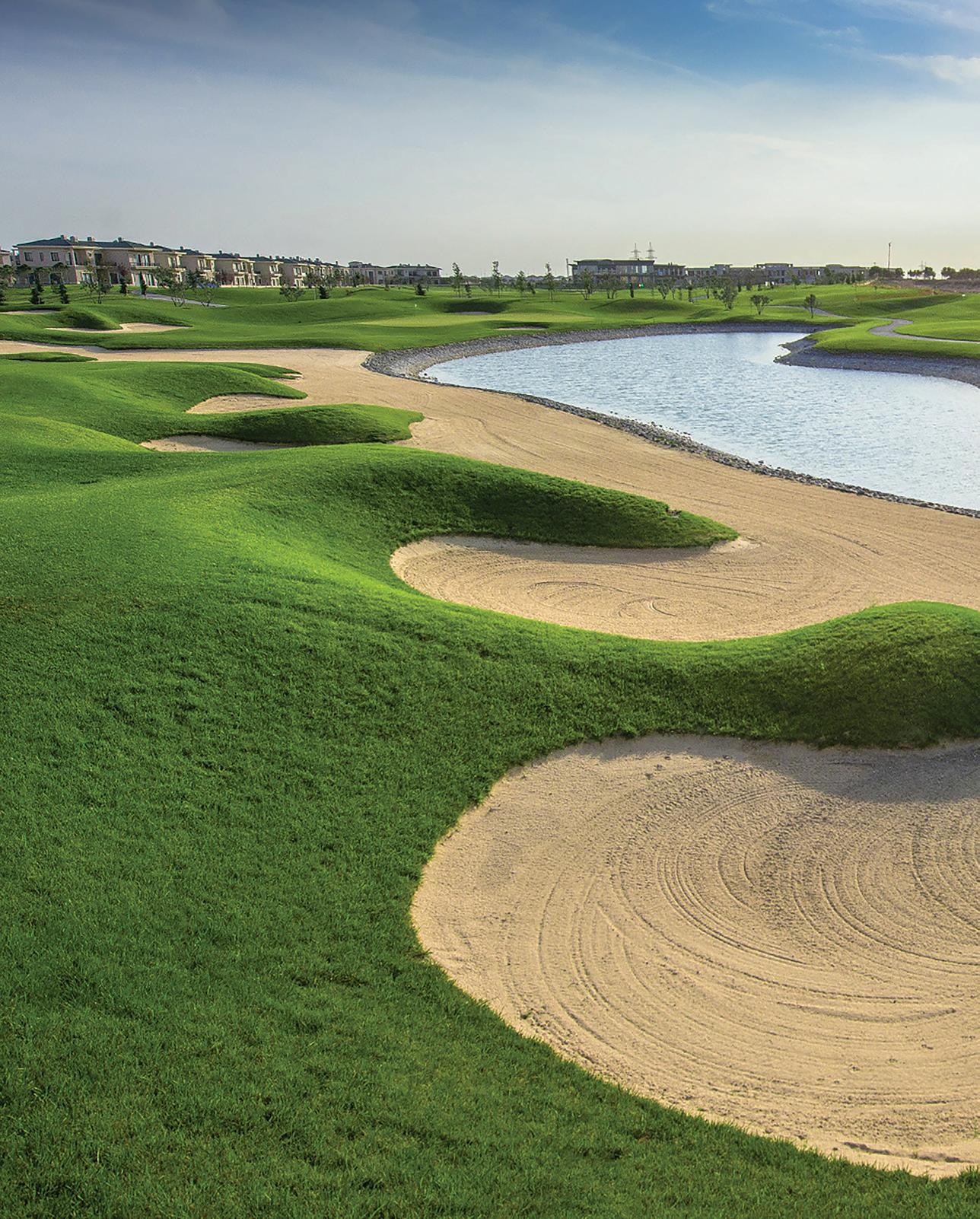

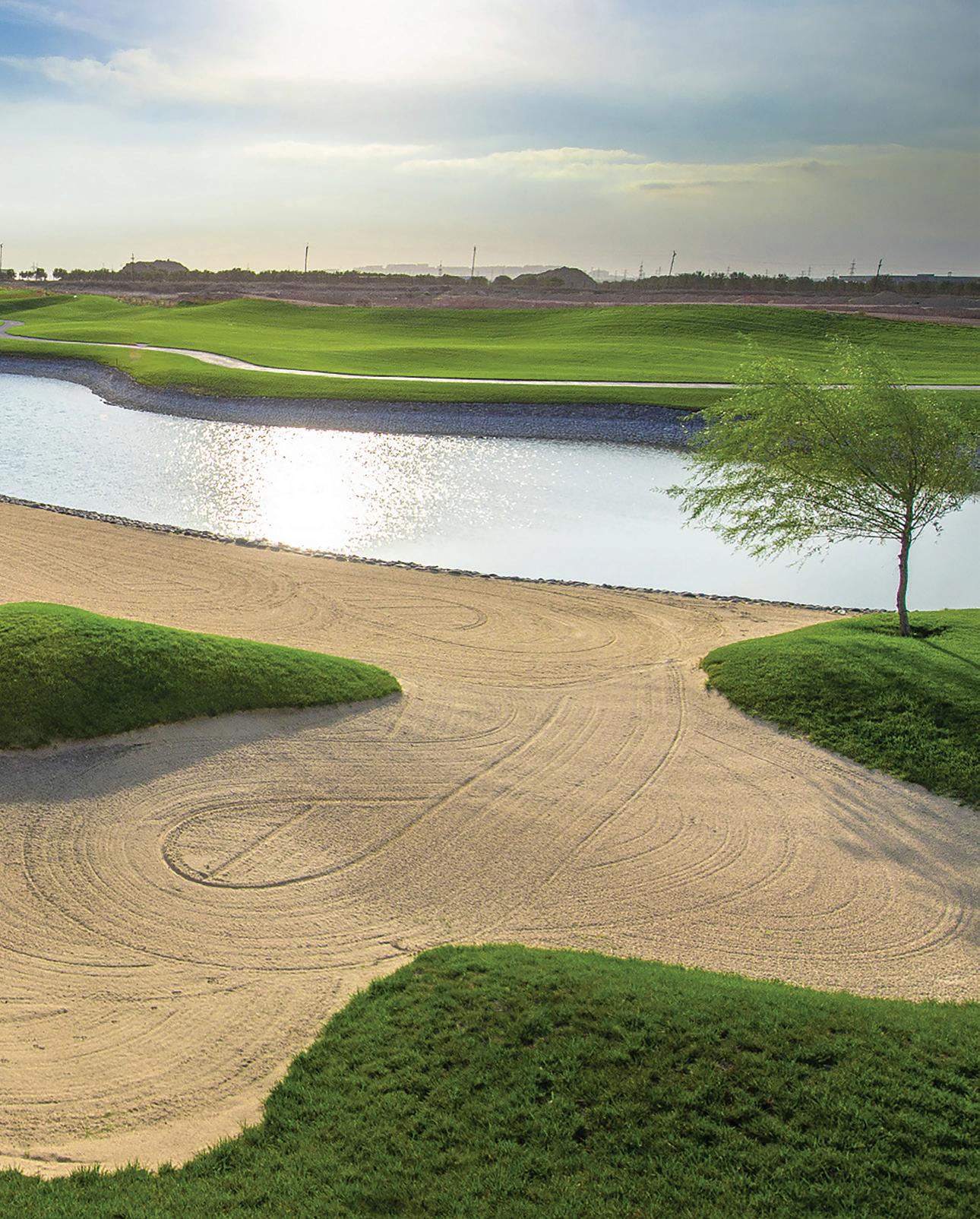
Dreamland Golf Club delivers a world-class golfing experience
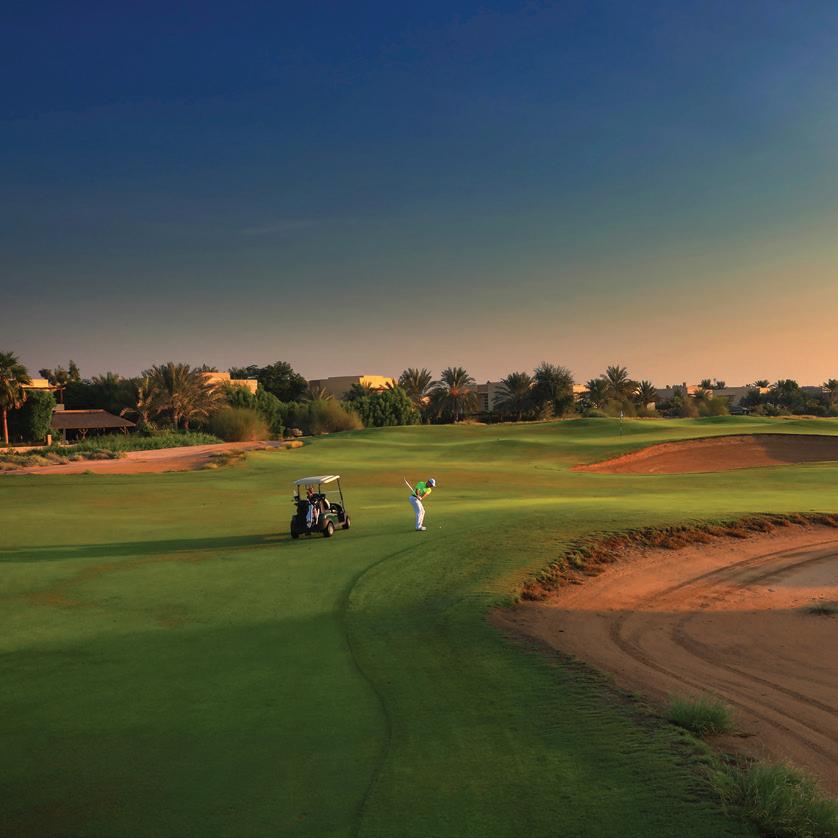
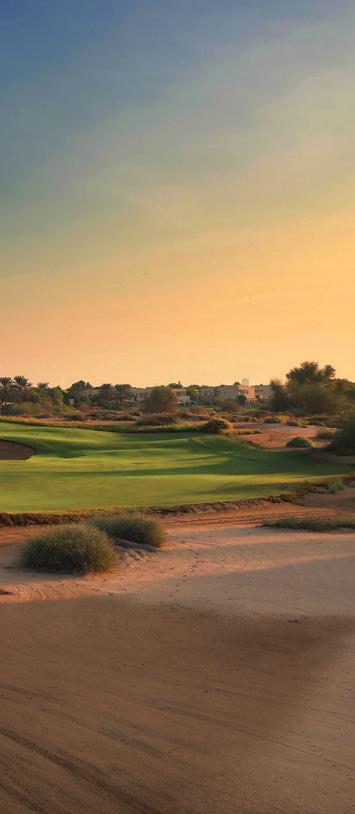
DREAMLAND GOLF CLUB in Baku is an award-winning championship course offering a challenging yet enjoyable experience for golfers of all skill levels.
Designed by Dye Course Design, it combines strategic architecture with a Mediterranean feel in the Caucasus landscape. Water features across several holes add to the test, while an outstanding golf academy supports player development.
Officially rated by the European Golf Association, the club enables competitive handicap play, with management by IMG ensuring consistently high standards.





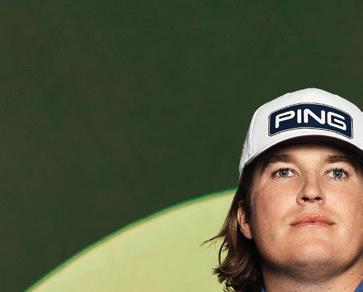
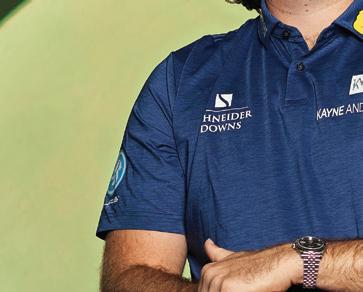








MY SENIOR YEAR OF HIGH SCHOOL I was honoured to be voted ‘Best Dad Bod’ in the yearbook. Humour was, and still is, a requirement in my friendships. I studied pretty hard and took a lot of AP classes but never took myself too seriously. The backup plan was always a job in finance in New York if golf didn’t work out—I love math—but I’m so glad to be where I am now, competing against the best in the world every week.
According to my parents, the first time I touched a golf club was the day Vijay Singh won the PGA Championship at Whistling Straits in 2004. My parents didn’t play, but my dad had an old set lying around. I was 3 ½. The story goes that I knocked the bag over, dragged out the 9-iron that was bigger than me and tried to swing it in the backyard.
●
●
●
PGA TOUR
AGE: 25
LIVES: PITTSBURGH
At first, I played the public courses outside of Pittsburgh. When my dad realised I needed real instruction and a consistent place to play, in middle school we joined St. Clair Country Club. It had a nine-hole course juniors could play unrestricted. My buddies and I would go 27 or 36 every day in the summer, making wagers and stopping at the pool bar for burgers and milkshakes. Tabs often went on the losers’ family accounts. Both of my parents are in finance and worked a lot, so I spent way more time at the club than they did. Of my group of friends, five of us went on to play college golf.
● ●
●
At James Madison University , I managed my time well to have a balanced experience. I would really bear down and grind on my schoolwork late into the night to get ahead, focus on golf at tournaments, then have fun socially when we got back to campus.
Thanks to my AP credits and some summer classes, I graduated in three years. When I went to Ohio State for my master’s in data analytics, I still had eligibility, so I played golf there, too.
●
From my love of math, I’m locked into the data of golf. There are lots of shots to be picked up by just outthinking people. On tour, making good decisions over the course of a year can turn into hundreds of thousands of dollars. If you look at the data, there are actually plenty of times where shortsiding yourself is the best play, like if the miss provides a flat lie. I assess each scenario knowing the better shot might be an unlikely one.
● ● ●
I finished my graduate degree in 2023 and had an unbelievable summer. I qualified for the U.S. Amateur at Cherry Hills, entered match play in the middle of the pack, then made it to the finals. A friend from home told his dad that he had to go watch me. His dad has done very well for himself and generously flew a big group out. So, I’m on the second hole of the final match when 12 of my friends show up. I don’t think I could have played much better in the final—Nick Dunlap beat me. We still had a proper celebration, though. The guys had brought a local Pittsburgh drink we’re all very fond of.
●
At the 2024 Masters, I was the only am to make the cut. Played with Tiger. On Sunday, I’m in Butler Cabin with Chairman Ridley, Scottie Scheffler, Jon Rahm and Jim Nantz. I was so out of place. I wanted to get out of there as fast as I could without making any mistakes. I kept looking at the teleprompter to make sure I didn’t speak too soon. Later, I’m in the car and my brother erupts with laughter. He says, “You can’t see this; it’s so bad.” I grab his phone to find out my side-eyeing has become a meme. I felt like a dumbass, but it was funny. It was a surreal week. Capping it off by going viral only felt appropriate.
●
After finishing as the low am in the U.S. Open a few months later, I received several PGA Tour sponsor’s invites, played five weeks in a row and made four cuts. In 2025, I won two tournaments on the Korn Ferry Tour and locked up my PGA Tour card for 2026.
● ● ●
I’m working with a nutritionist. We started simple. I took pictures of what I ate, and we’d review, making changes like eating less toast and more fruit for breakfast. Easy enough. Then I did some bloodwork to find out if I had any food sensitivities. Next thing I know, I’m gluten-free and dairy-free. I went along with it and tried a cheat meal a few weeks in. I felt so horrible, it made me want to never stray again. That gut I had at the Masters in 2024 is gone. I’ve been in the gym more, too. It’s a different lifestyle, and it feels great.
● ● ●
This year, I’m focused on fun, keeping it light and being myself. If I do that, I know a lot of good golf will follow.
A multiple-time PGA Tour-winner takes the long view in forgiving this LIV defector
I’m fine with Brooks koepka returning to the PGA Tour. Some pros would go further; they’re downright happy about it. Their reaction has little to do with Brooks as a person. His presence here means his
absence there, which raises the value of our tour and brings us closer to what most of us want: this golf schism, this separate-worlds nightmare, to end. Along with Dustin Johnson, Brooks was among the few defectors who
remained in relatively good graces with us. Sure, he’s a jock, but much of that bravado exists just for the cameras, maybe even just for himself. He treats people with respect, which is really all you can ask from a colleague. Even his feud with
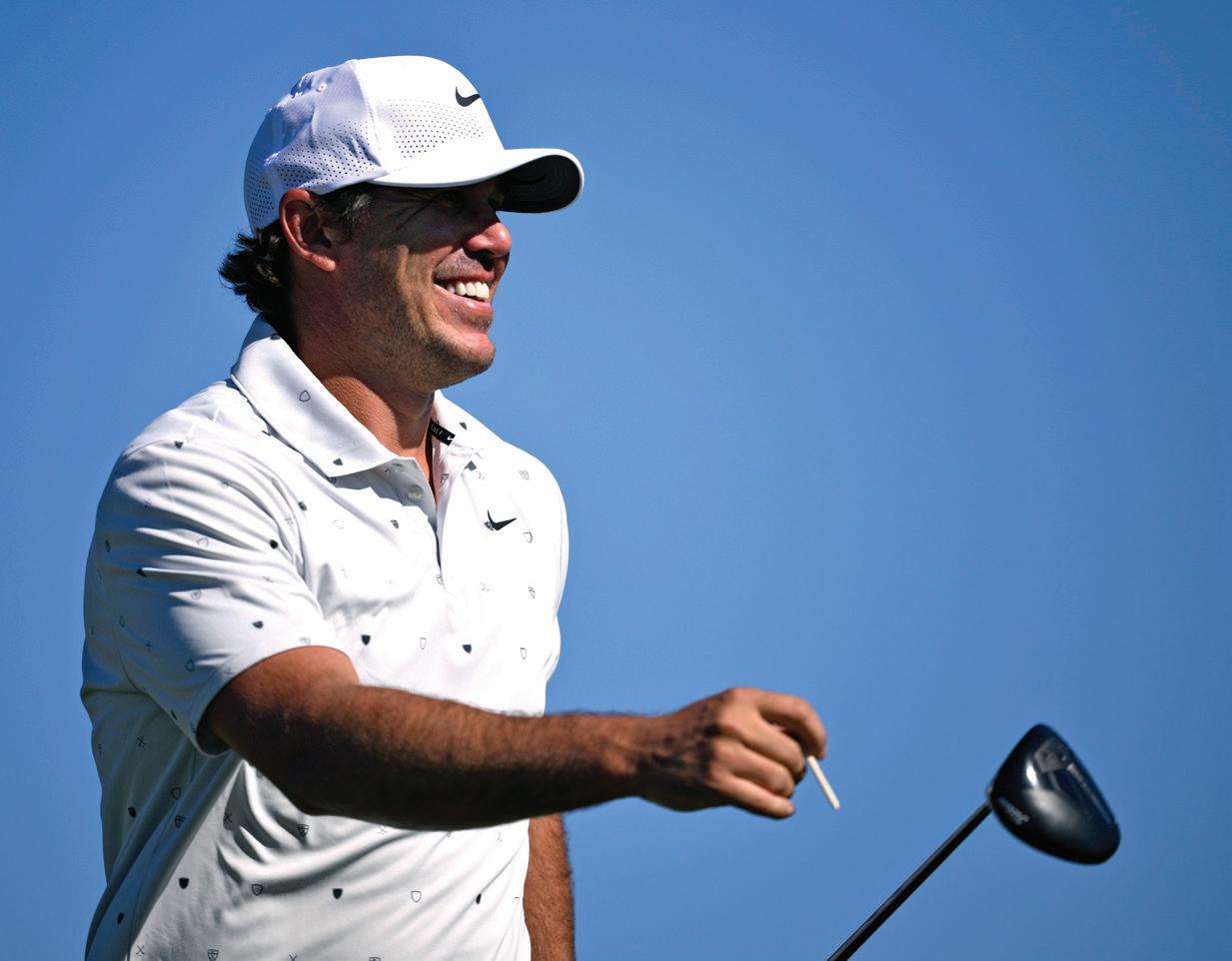
Other than majors Koepka was absent from PGA Tour events for nearly four years.
Bryson DeChambeau, which took some unfortunate turns, never seemed particularly malicious on Brooks’ end. During its peak, I witnessed a tour official ask Brooks about his intentions with the rivalry. Brooks’ simple response said it all. “Come on, you know I’m not going to club a baby seal.”
When Brooks left for LIV Golf, he never badmouthed the PGA Tour. He didn’t sue us or insult our intelligence by claiming he wanted to “grow the game.” He thought his career as a competitor was finished, his body too broken to continue, and made a business decision. I didn’t agree with it. His departure made our tour demonstrably worse but he at least handled it in a palatable way.
If anything, he’s arguably been our tour’s biggest weapon against LIV Golf. Obviously, that’s what his return now signals about LIV’s overall state and lack of competitive credibility—that he’s willing to forfeit tens of millions rather than stay there. But the biggest blow he delivered came at the 2023 Masters, when he admitted his decision might have been different had he known he’d regain his health. How do you sell LIV Golf when one of your best players is publicly expressing that?!
There have been grumbles, of course, that Brooks can return without suspension. Wyndham Clark said, “If you would have told me that I could have gone for a year-and-a-half, made a boatload of money and then be able to come back, play on the tour, I think almost everyone would have done that.” Clark occupies a different position than most because he’s won a major, but his sentiment gets echoed through the locker room by players who haven’t. They don’t realise how much the major-championship component matters. Win one and you’re treated differently. Just ask Tyrrell Hatton and Joaquin Niemann, who’ve been LIV Golf’s best week-to-week players but remain stuck there. Second, the premise itself is flawed: Not everyone had the chance to go to LIV.
One thing that really grates me is this notion that “You would have taken the money, too.” It was never some free-for-all. Early on when LIV Golf was recruiting, months before Phil Mickelson’s comments nearly torpedoed the entire operation, I told my agent I wasn’t interested. I’d done my research, talked to my hometown chaplain and concluded it wasn’t the right thing to do. I nearly drove myself crazy worrying about where money would come from, whether it was dirty, what else it funded. I didn’t want to become a direct employee of things that contradict what I believe is right. I credit my wife for helping me get there. My wife had asked, “How would you explain this to your mom, to our kids?” The fact that I’d need to justify it at all revealed my answer. So I told my agent, “Don’t even tell me the number.”
Brooks’ penalty. We’ve been told Brooks is surrendering upward of $90 million by coming back. Some of that is real cash with known values for FedEx Cup bonuses and charity donations, but a lot of it is theoretical in player equity. Sorry to roll my eyes, but remember the nine figures he already pocketed for playing three years at LIV? That $90 million number is an insult to our intelligence.
“We became too much like the NBA, where the trade-rumour and player-movement economy generates more oxygen than the games themselves. ”
As it all dragged on, I lost count of how many people wanted to know what LIV offered me. Finally, I asked my agent. He didn’t mince words.
“They never made you an offer.”
Now, I’m a multiple-time tour winner. I thought that meant something, given LIV Golf was signing some guys who could barely hold down a card. The fact is, beyond the top 30 in the World Ranking and some internationals, most LIV Golf signings were orchestrated by player-management agencies. Look closely and you’ll find much of their non-marquee talent comes from the same few agencies. The next time you hear a rank-and-file player complain like Wyndham Clark, bet that golfer probably never had an offer.
Another thing that I do find annoying is the inflated “money lost” aspect of
However, I give Brian Rolapp [PGA Tour CEO] credit here. If reunification ever materialises, the biggest challenge will be managing how LIV guys return. Many won’t have status, so how do you bring them back without inherently punishing those who stayed loyal? We don’t really need anyone from LIV Golf except for a handful of players. Rolapp’s advantage is that he’s new and can remake things as he sees fit. If this were Jay Monahan’s call, Brooks would still be in limbo. Need a sponsor to re-up for five years? Jay’s your guy. That’s not a knock. That was mostly the job when he inherited it, to appease everyone. But that’s also why he reacted to everything during the LIV Golf uprising rather than acting. Rolapp wanted Brooks, so he got Brooks.
Professional golfers are often called selfish. Frankly, I think we’re a lot like anyone else in that we view larger issues through the lens of how they affect us personally. In some ways, LIV Golf’s arrival has benefited us, forcing the tour to add money to our pockets. But I’m a golfer first, and I see how damaging the past five years has been for our sport.
This is supposed to be a gentleman’s game, and the golf wars brought out our worst impulses—the greed, the selfinterest, the reduction of everything to dollar signs. With LIV Golf drama always in the news, we became too much like the NBA, where the trade-rumour and player-movement economy generates more oxygen than the games themselves. It’s all a compelling form of entertainment, sure, but when it eclipses the actual competition, it’s detrimental to the long-term health of what you’re building.
That’s why I’m OK with Brooks, and potentially other LIV guys, coming back. It’s not the end of LIV Golf, but it’s progress.
—WITH JOEL BEALL
BY JERRY TARDE
that Rory McIlroy made on the last hole at the Genesis Invitational this year sums up the state of professional golf. In a playful exchange with reporters, Rory was asked if he knew how much it was worth, lifting him from a tie for third to a tie for second. He said, “Probably earned me another 400 or 500 grand, so it’s fine.” It actually meant another $600,000. To quote the old tour pro Chip Beck, “Some people have to work all year to make that kind of money.”
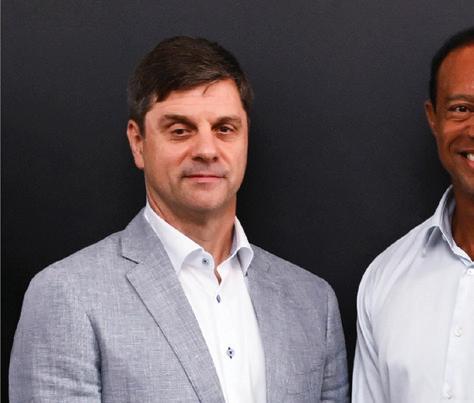
Pro golf has some problems, but money isn’t one of them. The man in charge is the PGA Tour’s new CEO Brian Rolapp, who I witnessed speak to intimate groups at length four times and sat next to at dinner once in the span of a winter month. His message was consistent and strong, and I’m rooting for him, but I wish he played golf.
My first impression was that he should dress better, Armani-up a little bit, although I think he likes playing









the role of the scrappy Everyman who will outwork you to the end zone. That was his reputation at the NFL, where he was known for his intelligence, strategic vision and relentless pursuit of ever higher media rights fees (topping $10 billion annually). He is analytical, patient and unemotional at the negotiating table, better at Q&As than prepared remarks—as opposed to Commissioner Jay Monahan, who always looked like he was wearing the wrong-size sport coat and sitting in an exceptionally uncomfortable chair. Jay is well liked up and down the org chart and across the aisle, but I have the sense that he never enjoyed his job. In truth, it had become a miserable assignment dealing with Greg Norman and LIV and defecting players, not to mention the Patrick Cantlays left behind. The months since Rolapp has become the boss show Jay to be, as one TV executive put it, an extremely effective consigliere. He’s slid to the side and graciously allowed Rolapp to assume Tour leadership, all while relishing the



role of second banana so much that some wonder if he ever really wanted the top job. While a gargantuan parachute awaits his retirement, Jay might stick around a little longer than people think.
I always believed that his predecessor Tim Finchem’s superpower was his thick skin. He played the long game. Bad news and grudges would be forgotten in 48 hours, so it was all about the business. There’s no question he got lucky when, two years into his commissionership, that kid in the Nike commercial came along and said, “Hello, world: I’ve heard I’m not ready for you. Are you ready for me?”
Tiger has been the front man for Rolapp’s reshaping of professional golf. His latest legal troubles jeopardise his position as vice chairman of PGA Tour Enterprises and chairman of the Future Competition Committee, but Woods has been effective at tilting the power













• O icial EGF Handicap (GHIN), recognised worldwide
• Discounted green fees at all UAE golf clubs
• Play in events/competitions and receive awards
• Third party and property damage golfer’s insurance
base toward playerdirectors on the Tour Policy Board, pushing purses, limited fields and equity participation for the stars, pacing the schedule to avoid player fatigue and discouraging further defections.
Rolapp has been smart in speaking about the direction he wants to take the Tour rather than specific outcomes because, as one former tour official told me, “The more he talks to people, the more he realises just how restricted his next steps are.” That’s the messy nature of golf with its checks and balances shared by all the organisations that run the majors. That’s why he’s now pointing to 2028 for changes in the schedule. His big concept is creating scarcity by reducing the number of tournaments to about 21-26 (from 45), having full fields of 120-ish players with a Friday cut, opening the tour after the Super Bowl on the West Coast so that it finishes in prime time on the East Coast, playing in big markets (hasn’t anybody told him pro golf goes to die in metropolitan New York?) and building to a more impactful playoff season.
A reduction in the number of tournaments will risk abandoning middle-size markets that have been loyal to the tour for decades. The Tour’s new mantra is “The best players compete against each other more often,” but that takes away a lot of hours from network TV coverage. I remember Woody Allen once saying it’s the ordinary movies that keep theaters open between the big hits. We need week-to-week tournaments to keep pro golf going between the majors. An underlying challenge will be how Korn Ferry and other young players can fight their way up the ladder. Tour partners I talk to—both media and tournament sponsors—are all skeptical that he can pull it off. The real test will be when the NFL renegotiates its TV and streaming contracts (it was Rolapp himself who gave them the early opt-out flexibility), and whatever’s left will be the scraps that all other sports will duke it out over.
In every appearance Rolapp makes, even in his prepared remarks, he neglects to mention the two C’s that have

been the foundation of pro golf since the First World War—that is, community and charity. Oh, yeah, he says when asked, “No one should expect us to take a backward step in charitable causes.” But his heart is not in it when he says that, and it’s clearly not a priority in the new for-profit venture of the private-equity invested PGA Tour. Thousands of volunteers show up for their communities and charities, and it’s the protective cover for America’s CEOs and publicly traded corporations to support a minor sport like golf. Sponsoring tournaments has always been justified not by how many watch but by who plays. Unlike the NFL, pro golf isn’t audience driven; it’s B-toB marketing. Pro golf does more than sell balls and shoes. It achieves business objectives through brand exposure, client engagement and measurable return on investment. The Tour’s first commissioner Deane Beman understood this better than anyone. He invented golf’s non-profit status—“501(c) (6)” was his middle name—and coined the slogan, “Charity is the leading money-winner on tour.” (Beman’s end was hastened when he tried to usurp the USGA’s rules-making authority over square grooves, so it’s another word of caution for the CEO who gets too involved in the ball rollback controversy.)
The other thing Rolapp needs to worry about is the DP World Tour. It comes at a great cost to continue to subsidise, but the risk in walking away is that LIV will swoop in—just as it might do in those U.S. middle markets he departs. I played in a pro-am recently with a top young player who told me
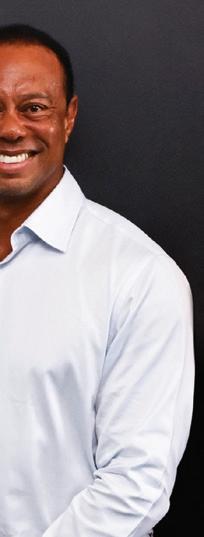
Rolapp’s lack of golf knowledge is an advantage because the tour has traditionally been too beholden to golf’s old power structure, meaning the majors and the governing bodies. When Rolapp came in and cleared out the grey golf heads, replacing them with non-golf-types, the players cheered. Ignorance gives you freedom, but it’s risk in disguise.
The Tour seems to offer a lot of mutually exclusive alternatives. The players like being independent contractors, but they want guaranteed income. The Tour needs to coddle its stars past their sell-by date but still offer a runway for up-andcoming young players. The pros claim a world tour, but they don’t want the hassle of traveling overseas.
The U.S. tour thinks its needs all the top players competing against each other every week for validation, but international tournaments need only five or six top players to satisfy sponsors and fans. This is why LIV is a roaring success in Australia but fails in America. Rolapp is looking at the postseason— October through January—as a time for global golf. He’ll require all Beman’s marketing muscle, Finchem’s thick skin and Monahan’s good counsel to make that field goal.
There’s no doubt Rolapp will bring new ideas and more money to the pro game, but he needs to keep in mind the words of the late USGA iconoclast Frank Hannigan, who once told me, “If you don’t have at least three conflicts of interest, you’re not in the golf business.” It’s the messiness of golf that holds the game together. You just need to be a golfer to understand that.


















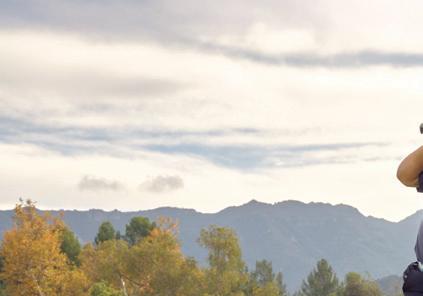
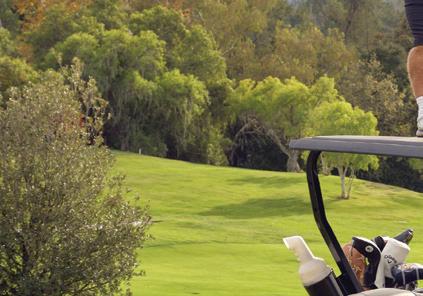
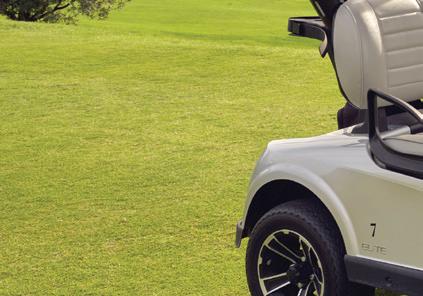
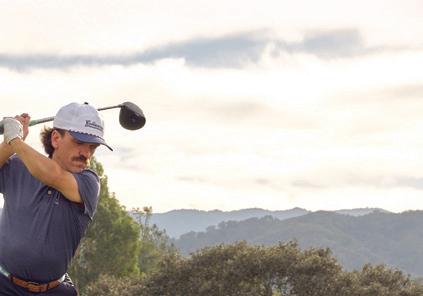
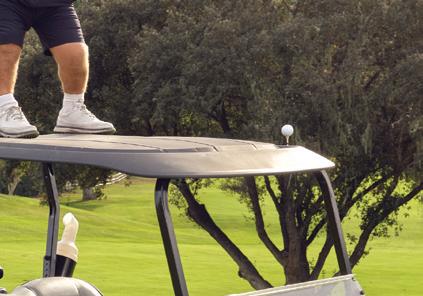
YouTube star Chaz Bowker’s unlikely path from chef to one of the best adaptive golfers
BY ALEX MYERS
A FAMILIAR SCENE usually plays out when Albert “Chaz” Bowker steps to the first tee. Those paired with the man who only stands a few inches taller than a standard-length driver assume he’s in the wrong place—until they see him swing his own club.
“When I go to the same tee boxes as them, they look at me like, ‘What is this guy doing?’ ” the 4-foot-4 Bowker says. “I let them hit, and I go, ‘Alright, I’ll probably be past your ball or next to it. Watch this.’ I just hit it, and they look at me like a madman. I’ll go, ‘Yep, sorry. It’s gonna be a long day for you.’ They’re just rattled completely.”

That scene of surprise is happening less often these days for the YouTube golf star—especially after the inaugural Internet Invitational. The event put on by Barstool and Bob Does Sports aired in November and featured 48 of the biggest names in the space teeing it up at Big Cedar Lodge. The field’s shortest player stole the show. Chaz was eliminated in the team competition before the $1-million final, but his impressive two-day performance included a clinic in driving accuracy that would have made Calvin Peete proud, as well as a pair of clutch $12,000 putts.
“The reactions have been awesome,” says Bowker, who has been getting rec-
ognised more in airports when he travels. “A lot of people are reaching out saying how much they love my swing, and the support is unreal. Knowing all my hard work over the past years through struggles really pays off, and it makes me happy.”
Bowker, 28, says he was 7 when he realised his size was going to keep him from excelling at other sports like football and basketball. He pivoted to golf thanks to his dad, an old set of his grandpa’s clubs and . . . a hacksaw. “I told my dad, ‘Let’s cut these down and put new grips on.’ We did that and there was just a spark,” Bowker says. “I fell in love with the game.”
KNIVES OUT Bowker traded the kitchen for the course for fear that a hand injury would ruin his golf game.
Bowker wound up making the varsity golf team at Santa Ynez High School in California as a freshman and playing for four years. After graduating, he took a break from the game to go to culinary school in Italy. He describes the experience as “The time of my life,” and upon returning to the Santa Barbara area, he put his cooking skills—and Italian cuisine and culture certification—to use by working as a chef at S.Y. Kitchen for seven years.
Unfortunately, Bowker’s father, Peter, passed away during this time in 2020, but that also inspired Chaz to get back into golf. “He always said, ‘This is your sport, bud. Stick with it,’ ” Bowker says of his father. “The spark came back and said, ‘Chaz, go play golf. That’s your happy place.’ ”
The man who can cook a mean salmon puttanesca began serving up golf content on the side, but he didn’t attract much attention until a meeting with trick-shot artist Joshua Kelley in the fall of 2024. Many content collaborations followed, including one where Chaz, playing on stilts so that he can be at the same height as Kelley, who at 6-foot-4 stands a full two feet taller, makes a long putt from off the green.
Bowker eventually started his own YouTube channel in June 2025—the description reads “I’m 4 ’4” and like to hit it far”—and he already has more than 22,000 subscribers with only three solo videos at the time of writing. The most popular is a nine-hole match against Los Angeles Lakers star Austin Reaves in which Chaz beats the scratch player to win Lakers tickets. Chaz collected on the bet and was a few rows from the court for the Lakers season opener in October.
Bowker is now competing in more official events as well, including playing in the first four U.S. Adaptive Opens. So far, his best finish in that championship was T-14 in 2024, when he also tied for second in the short-stature category. Ranked No. 1 in the U.S. in that category, Bowker’s goal is to beat World No. 1 Brendan Lawlor from Ireland.
“There’s a rivalry there, but we’re good
mates and stuff,” says Bowker, who also shot even par over two days at the inaugural Southern California Golf Association (SCGA) Adaptive Championship in May 2025. “The European side of disabled golf right now is a little bit bigger than the U.S., but the U.S. is definitely stepping up ever since the USGA got on board and other groups . . . are putting on events,” Bowker says. “Once those events get out, there’s going to be a lot more Europeans coming out, so we’ll have a showdown.”
Chaz’s appearance—alongside onearmed golfer Andrew Austen—in the Internet Invitational also brought attention to the adaptive golf community. “It feels absolutely amazing because we’re spreading awareness,” says Bowker, who currently has a 2.0 Handicap Index, but plays to as low as a plus-2 from the adaptive tournament tees.
His grandpa’s cut-down clubs in the past, Bowker signed an equipment deal with Callaway last April that has helped him get more tournament ready and average more than 240 yards off the tee. He’s also left the cooking career in the past. “I’m putting down these knives because if I cut off my fingers, I’m not gonna play golf,” Bowker smiles. “There might be another adaptive impairment, the short-stature hand impairment.”
Bowker constantly grinds on his golf game while working in outside service at Alisal Guest Ranch & Resort in Solvang, California, but he hopes to eventually make YouTube Golf his full-time gig.
“There’s two different types of Chazzy,” Bowker says, “Chazzy Tournament and Chazzy YouTube. When I film YouTube, I’m more fired up and ready to talk to people and have a good time, but when I go to play my tournaments, I’m fully locked in. [My] eyes are just looking forward, blocking everybody out. Let’s go hit fairways and let’s go make putts.”
The Internet Invitational was a perfect mix of the two as Bowker showed his serious golf chops while also playing to the camera. The results don’t lie as his Instagram following has more than doubled to 150,000 since the event aired. “It’s crazy,” Bowker says. “I’m loving the ride.”
As evidenced by Bowker’s evergrowing fanbase, they’re loving it too.


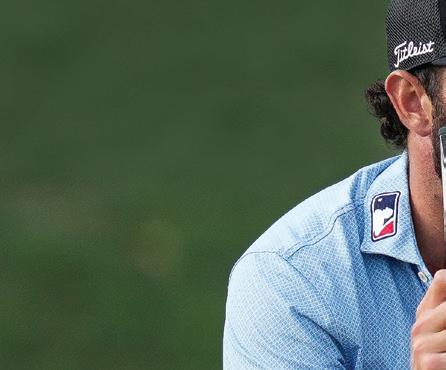



EDITED BY RON KASPRISKE


“Some of it is becoming more accepting of what happens; realising that putting can be stupid. You can hit the best putt, you know, twice in a row, and one of them misses left and one of them misses right. And it’s not because you hit a bad putt or you read it wrong; it just didn’t go in.”
— CAM YOUNG (COURTESY OF “THE SMYLIE SHOW”). YOUNG WAS 59 OF 59 FROM THREE TO SEVEN FEET IN PUTTING EN ROUTE TO WINNING THE PLAYERS CHAMPIONSHIP IN MARCH.


Hit your irons higher than ever BY
MICHAEL KOLAR
OBSTACLES ON A GOLF COURSE are no fun. They force you to create a shot you might not normally hit. Maybe you have to keep one under a branch or curve a ball around a tree trunk. Then there are times when your best option (or perhaps only option) is to hit a highflying iron that soars over the top of something. It’s a valuable shot to learn, and I’ll show you how to execute it with some simple steps here.



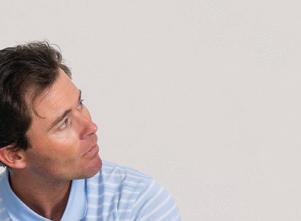
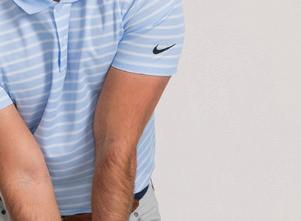
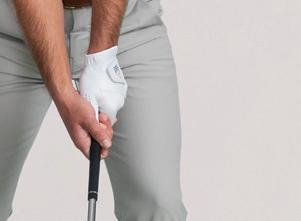
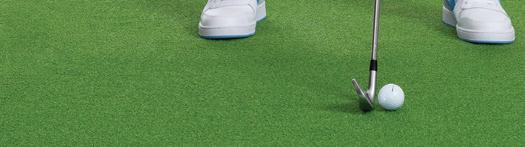
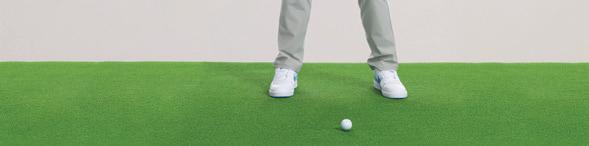
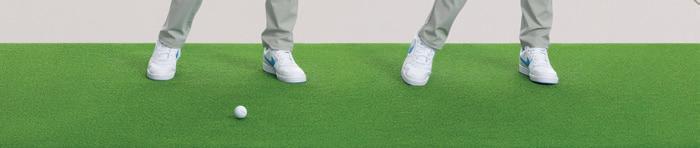
STEP ONE: VISUALISE THE FLIGHT
• Play the ball slightly forward of centre in your stance.
• Settle your weight 50-50 between your feet.
• Visualise a “window” you want the ball to fly through (right).
• Keep your lead shoulder high.

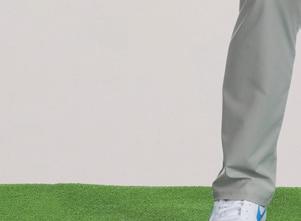


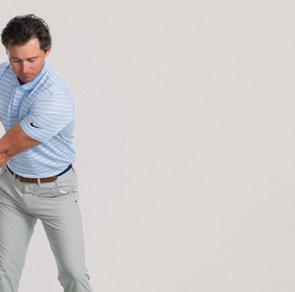
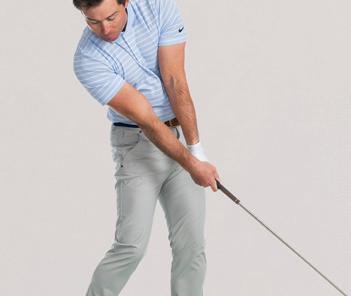
STEP TWO: SWING BACK WIDE
• Make a lower and wider takeaway than normal.
• Feel your arms stretching as you turn your body back (left).
• Keep your weight fairly centred.



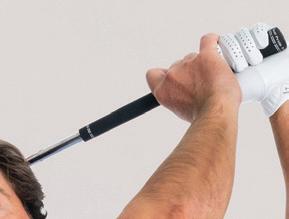
• Let your weight shift fully to your front foot.
• Keep swinging until the club is wrapped around your body.
• Finish tall with your chest up (right).







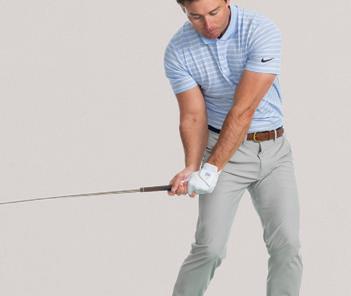
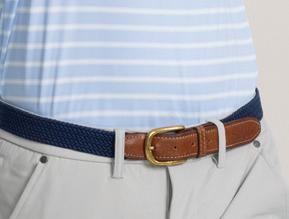
• Don’t swing down steeply into the ball.
• Feel as if you’re sweeping the ball off the ground.
• Keep the clubhead low after impact (left).
• Stay in your address posture into the follow-through.




Here’s the catch: To keep them healthy, focus on other joints
BY RON KASPRISKE

A WIDELY HELD BELIEF in fitness, popularised by Gray Cook and Mike Boyle, is that the body has a series of joints that alternate in roles. If joints that are supposed to have good mobility—such as the ankles or hips—are too limited, then the body recruits a stable joint with less range of motion—such as the knees—to help perform the movement. When stable joints are pushed to their mobility limits, that’s when pain and injuries occur.
Taking this into consideration, if you want to protect your knees while

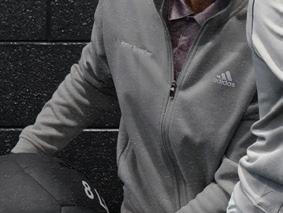
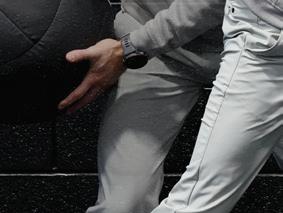
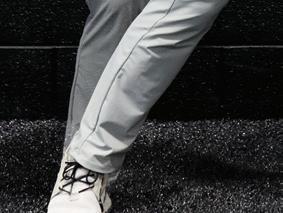
you play golf, doing full-body exercises where the joints have to work in harmony is a smart way to train, says Ryon Bosscher, a Golf Digest Certified Fitness Trainer.
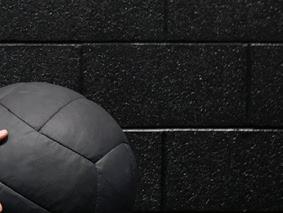
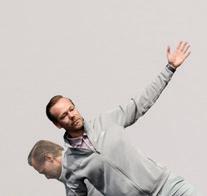
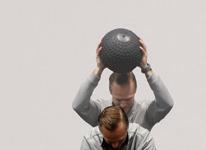
TOSS IT!
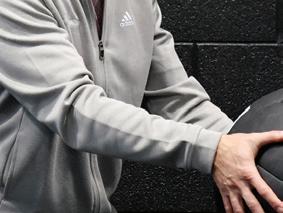
Med-ball throws are great for golfers.
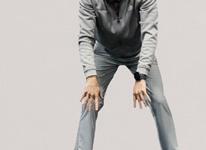
Here are his recommendations for performance-boosting exercises that keep the knees healthy while utilising all three planes of motion in the golf swing: side to side, up and down and rotational. Depending on your swing characteristics, exercises in one plane might give your more benefit than the others.

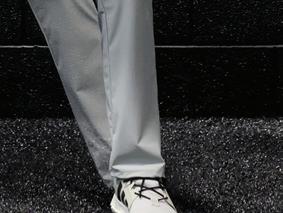


Controlling side-toside movement is key to maintaining balance, generating power and staying stable throughout the golf swing.
A. Lateral lunges: Strengthen the muscles around the knee/hip and improve side-to-side stability, helping golfers control knee alignment during swings and reduce
Rotational training builds power through the hips and core, taking pressure off the knees and preventing harmful twisting.
A. Hip airplanes: As the name describes, this is a hip-dominant movement. It’s a very good exercise targeting both hip mobility and stability, which is necessary to offload excessive stress to the knees. You can do it against a wall to prevent
Ground-reaction vertical force creates an upward energy that transfers through the legs, hips and into the club. When vertical force is used efficiently, it reduces the need to overrely on twisting or lateral movements, which can strain the knee joint.
A. Ball slams (ground): An exercise very similar to a squat, but it adds a
injury risk. They also mimic the weight shift in a golf swing, enhancing performance and joint protection.
B. Medicine-ball tosses (wall): There is some rotary movement, but this lateral exercise is great at training the weight shift from the trail leg to the lead leg. This helps build explosive strength (through the hips) and protects the knees from unwanted torque or collapse in the swing.
excessive hip shifting. You can also make it easier by performing this kneeling on one knee.
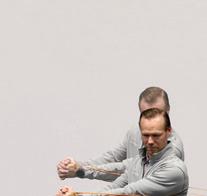
B. Banded chops: The resistance of the band through this movement requires great core and hip activation to remain stable. Get creative with it: Use resistance to mimic the backswing or the downswing. You can do this standing or kneeling and can have the band attached at various heights (high-tolow, low-to-high, etc.).
slam or med-ball throw into the ground for greater core activation. Start at an appropriate height and throw hard into the ground.
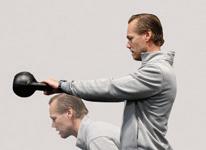
B. Kettlebell swings: This is a simple hip-hinge move while maintaining an erect spine. The hips are the primary driver here, and the kettlebell is along for the ride. Drive your hips backward first, as the torso drops. Then stand tall as the hips thrust forward.














• No club in your bag strikes a more complex balance between science and art, reason and emotion, than the putter. It is charged with the simplest of tasks, yet the slightest error in aim or speed means you get to do it all over again. Putters today offer more personalised solutions in shape, size, weight, even biomechanics. Blade putters, known for their simple, elegant designs, still have a loyal following, but mallet putters have taken the lead, thanks to improved looks and superior performance. Here are the best current entries in both styles, starting with mallets. HOT LIST 2026 GOLF DIGEST P.25

RRP 2,595
• The designs in this line use multiple materials and sole cavities to create a zero-torque e ect, keeping the shaft in line with the head’s centre of gravity to reduce the need for hand action to square the putterface.
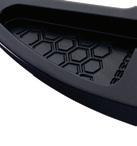
• A grooved milling pattern on the face displaces more than half of the steel from the surface, creating a responsive feel.
• Over-length versions feature a 17-inch counterbalanced grip.
• Top 5 in Sound/ Feel, low- and high-handicaps
• Models: 3
Lengths: 33-40 inches
• These milled stainlesssteel models retain a classic look while delivering a performance upgrade through variabledepth face milling that improves distance consistency on mis-hits.
PERFORMANCE
COMMENT SUMMARY
Hot List panelists observed a smaller mallet with bladelike feel and tech, exceptional alignment, tight dispersion and crisp feedback on misses.
Demo this club and get a custom fit at eGolf







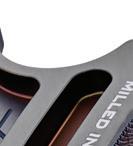
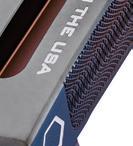
• The deep-fly milling pattern varies depth and spacing across nine zones from heel to toe, regulating energy transfer so that toe and heel strikes rebound more uniformly.
• Heads are milled from tour-preferred 303 stainless steel.
• Top 5 in Look, middleand high-handicaps
• Models: 3 Lengths: 33-38 inches
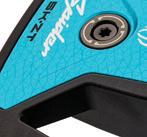
COMMENT SUMMARY
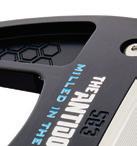
Hot List panelists observed a compact head with a striking blue/oil-can finish, an aggressive milled face that grabs the ball for a true roll, excellent alignment and distance control.
Demo this club and get a custom fit at eGolf Megastore











RRP 2,995
• Built on the forgiving platform of the original Directed Force putters, this gently downsied version maintains the zero-torque weighting that keeps the putter square to its lie angle throughout the stroke.
• An array of sole weights line up the putter’s centre of gravity to its lie angle.
• The milled aluminum body now uses a stainless-steel face insert for improved sound and roll velocity.
• Top 5 in Performance, low- and middle-handicaps
• Models: 1 Lengths: 32-38 inches
RRP 2,895
• This traditional-shape putter marks the first heel-shafted mallet in the L.A.B. Golf lineup. However, it maintains the weighting that lines up the head’s centre of gravity with the shaft angle’s axis for a smoother, more repeatable stroke.
COMMENT SUMMARY
Hot List testers noted center-shafted stability, easy alignment, a soft yet responsive insert, tight dispersion and excellent short and mid-range roll.
Demo this club and get a custom fit at eGolf Megastore

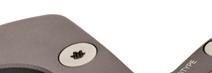














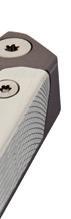

• The key to maintaining the putter’s zerotorque weighting is a lightweight hosel that changes in length as the lie angle and shaft length change. This allows the shaft axis to still point toward the head’s center of gravity.
• Models: 1 Lengths: 33-35 inches
COMMENT SUMMARY
Hot List testers noted milled-insert feel; a clean, squat head; remarkably consistent end-overend roll; tight dispersion; builtin forward press and zero-torque stability.
Demo this club and get a custom fit at eGolf Megastore


















Ai-Dual RRP 2,095
• These familiar Odyssey shapes have a new face insert designed to combine the sound and feel of the legendary White Hot urethane insert with improved initial velocity and roll.
• The new insert uses two layers of urethane—firmer underneath, softer on top—and grooves angled at 19 degrees to create a quicker endover-end roll.
• The bottom layer uses an amorphous thickness pattern, backed by more than 15,000 AI iterations, to improve consistency.
• Models: 6. Lengths: 3335, 38 inches
PERFORMANCE
COMMENT SUMMARY
Hot List panelists saw a stable head; clever half-ball and three-line alignment; a soft, grooved insert for instant roll and accurate short and lag performance.
Demo this club and get a custom fit at eGolf Megastore
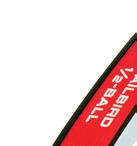
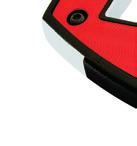
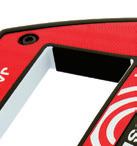
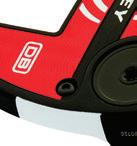


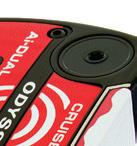
2,095
• Redesigned internal weighting paired with a new sole cavity and plate and an angled shaft align the centre of gravity with the shaft so that the face remains square.
• A forward-press grip (2 degrees) with a reverse taper limits excessive hand action.
• A new insert uses two layers of urethane in an AI-developed thickness pattern to boost consistency and groove performance for a truer roll.
• Top 5 in Performance, middle- and high-handicaps
• Models: 2 Lengths: 33-35 inches



PERFORMANCE
COMMENT SUMMARY Hot List testers noted powerful alignment, a forward-press grip and centre-shaft stability that produced exceptional lag putting and immediate roll with minimal dispersion.
Demo this club and get a custom fit at eGolf Megastore
















• The front of this putter, including the shaft connection, contains 141 grams of dense tungsten to push 80 percent of the putter’s total weight up front.
• The forward centre of gravity yields a more neutral address view with minimal shaft lean.
• A two-layer insert (firmer urethane underneath, softer on top) features an AI-generated variablethickness pattern and grooves angled at 19 degrees for quicker forward roll.
• Top 5 in Performance, middle-handicaps
• Models: 4. Lengths: 3335, 38 inches
PERFORMANCE
COMMENT SUMMARY Hot List panelists observed a pillowysoft, responsive insert; exceptional alignment aids; a heavy, well-balanced head; superb distance control and tight dispersion.
Demo this club and get a custom fit at eGolf Megastore



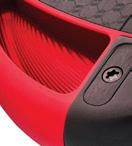


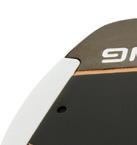
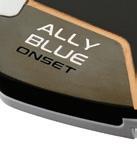
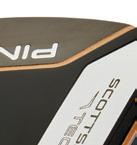
• These onset mallets match up the shaft and the centre of gravity for a smoother stroke. They also steady the mind with calming alignment features.
• The Ally Blue and Ketsch models feature shafts set back from the face—just in front of the centre of gravity— which encourages pulling instead of pushing the putter through the hitting area for a consistent stroke.
• The Pebax insert mixes a soft feel with e cient energy transfer.
• Top 5 in Sound/Feel, middle-handicaps
• Models: 3 Lengths: 35, 38 inches
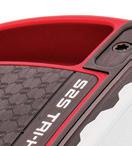



PERFORMANCE
COMMENT SUMMARY Hot List testers noted the supersoft, whisper-quiet insert; a starkwhite head with bold, black alignment aids; compact-mallet stability and a true roll from mid-range and closer.
Demo this club and get a custom fit at eGolf Megastore



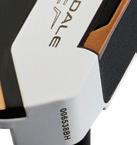



RRP 1,675
• In this design, extreme heel and toe weighting maximises forgiveness, plus two neck styles and di erent centres of gravity accommodate multiple stroke types.
• Saved weight from the body’s thin-wall casting is moved to the perimeter for stability.
• A thermoplastic rubber behind the face controls vibration for a cleaner sound.
• The face insert features grooves that angle downward to improve initial launch and roll.
• Top 5 in Performance, low-, middle- and high-handicaps
• Models: 5. Lengths: 3335, 38 inches
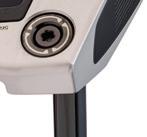
RRP 2,395
• A zero-torque take on the popular Spider, this putter features massive forward weighting to align the shaft with the putterhead’s centre of gravity to reduce how much the hands manipulate the face during the stroke.
PERFORMANCE
COMMENT SUMMARY
Hot List testers noted instant endover-end roll, superb distance control, exceptional stability, a soft and quiet feel at impact and strong alignment aids.
Demo this club and get a custom fit at eGolf Megastore

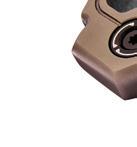

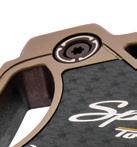
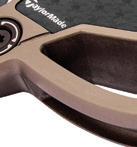

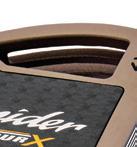
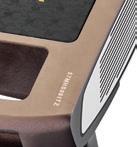



• The front of the putter is mainly heavy, dense steel, and the back is lightweight aluminum. Heavy toe and heel weights in the sole push weight forward and to the perimeter for extra stability.
• Top 5 in Performance, middle- and high-handicaps
• Models: 2. Lengths: 3336, 38 inches

COMMENT SUMMARY
Hot List testers noted a soft face with crisp energy transfer, exceptional roll, zero-torque stability and center-shaft alignment; excellent on distance and lag performance.

Demo this club and get a custom fit at eGolf Megastore




RRP 2,650
• Multiple styles mix high stability and astute alignment with precision milling of steel and aluminum.
• The chain-link facemilling pattern uses a soft carbon steel treated with a chemical process to protect the steel, enhance hardness and preserve feel.
• The milling pattern extends across the face for consistent roll.
• New centre-shafted, onset and low-torque models include the 5 OC and 11R OC.
• Top 5 in Performance, low- and high-handicaps
• Models: 10. Lengths: 33-35, 38 inches
PERFORMANCE
COMMENT SUMMARY
Hot List panelists saw a lively, soft but solid milled face with a honeycomb insert that produced true roll, excellent alignment, balanced weighting and reliable distance.
Demo this club and get a custom fit at eGolf














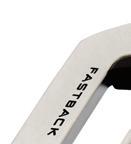
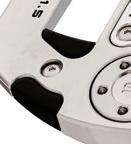
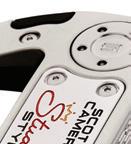
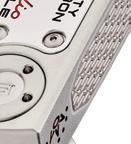
• The Fastback midmallet will appeal to players transitioning from blades to mallets.
• A carbon-steel insert is fused to the milled stainless-steel body with an aerospace-level vibration-damping adhesive for a responsive feel.
• The insert’s chainlink milling pattern yields a softer feel and consistent speed.
• The Fastback OC is an onset, centre-shafted, low-torque version of the original.
• Top 5 in Performance, low- and high-handicaps
• Models: 4. Lengths: 3335, 38 inches

COMMENT SUMMARY
Hot List testers noted a balanced, classic mallet blending blade looks with modern alignment, plus a soft yet crisp feel, pure end-over-end roll and distance control.
Demo this club and get a custom fit at eGolf Megastore









RRP 3,395
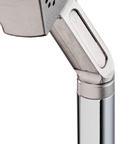
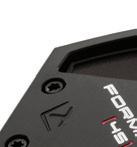
• The three models in this series aim to fit three kinds of centre-shafted strokes: Formula [90] is a standard zerotorque putter with the weighting balanced and the shaft matching the centre of gravity; Formula [CS] o ers a shaft position close to the front of the putter and a face-balanced orientation; Formula [45] sits halfway between the other two.
• The top and face are milled from 304 stainless steel, and the sole is milled from lighter 6061 aluminum.
• Models: 3 Lengths: 33-38 inches
COMMENT SUMMARY
Hot List testers noted compact, elegant mallets with superb balance, precise threeline alignment and a lively face producing consistent rollout and offcenter forgiveness.
Demo this club and get a custom fit at eGolf Megastore






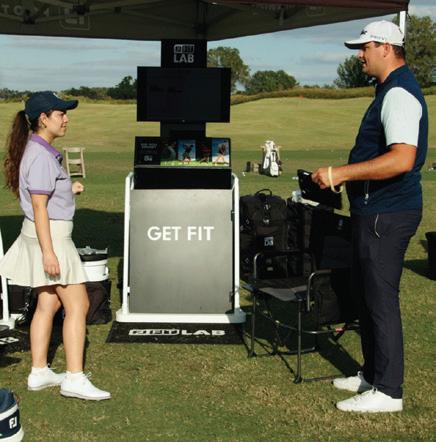
With the right clubs in hand, it might be time to look to your feet
Golf shoes are like the parents of a wild teenager: They don’t get any respect. Just like a 14-year-old thinks their parents are more hindrance than help, many golfers don’t think their golf shoes are a vital piece of equipment. It is an ill-conceived notion.
The lack of understanding extends to the professional ranks, too. Adam Schenk used to wear extra socks on one foot to achieve a proper fit, and Justin Thomas once told FootJoy, “I never even thought shoes could perform differently.” When you consider we take some 10,000 steps walking a course, there’s no disputing that a properly fit pair of shoes will improve athletic performance.
Enter FootJoy’s Fit Lab. Utilising more than a dozen cameras, the lab’s fitting device produces a 3D map that measures the length, width and, perhaps most importantly, volume of each foot. At this year’s Hot List Summit, our testers went through the whole process, gaining an education in footwear as equipment. What they learned is that their ability to use the ground to enhance energy transfer is critical to playing better golf. Not only can Fit Lab quickly and accurately get players in the right fit, it can help match a shoe’s performance characteristics to each golfer’s unique swing needs.
If you think about shoe-fitting as seriously as you would customizing a new driver or set of irons, you’ll be 1 up standing on the first tee. —E.
MICHAEL JOHNSON














RRP 2,595
• The classic Bettinardi milled shapes with their smooth lines are still here, but now the faces have a new milling pattern that changes density across nine zones from heel to toe for consistency.
• The series includes a classic heel-toeweighted cavity blade with softer lines, a deeper blade with slightly crisper angles and a wider-flanged model that caters to a straighter stroke.
• Top 5 in Performance, low- and middle-handicaps
• Models: 3 Lengths: 33-42 inches
• A new face insert in these putters has the feel of the famed White Hot insert with better initial velocity and roll.
• The insert uses two layers of urethane—a firmer layer underneath, softer layer on top— with deeper grooves angled at 19 degrees to create a quicker roll.
PERFORMANCE
COMMENT SUMMARY Hot List panelists observed extremely soft, beautifully finished blades with superb accuracy, tight dispersion from distance and true-feeling impact.
Demo this club and get a custom fit at eGolf Megastore




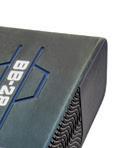


• Odyssey used AI to process 15,000 iterations to help develop the insert’s amorphous-thickness pattern, designed to improve energy transfer at impact.
• Top 5 in Performance, high-handicaps
• Models: 3 Lengths: 33-35 inches
COMMENT SUMMARY Hot List testers noted the halfball alignment was brilliant; the insert produced a soft, muted impact; compact blade delivered stable, mallet-like forgiveness.






Demo this club and get a custom fit at eGolf Megastore










RRP 2,425
• These milled putters are takes on historic Ping models, including the iconic Anser.
• Shallow face milling creates a more responsive impact.
• The precision milling process takes four hours per club, and the heads are made from 303 stainless steel.
• The plumber’s-neck Anser and wide-sole Anser 4D favor arcing strokes; the doublebend shaft on the Kushin works best for straighter strokes.
• Top 5 in Performance, low- and high-handicaps
• Models: 3 Lengths: 34, 35 inches
PERFORMANCE
COMMENT SUMMARY Hot List testers noted a thin, classic blade with a soft-milled face, surprising forgiveness, stable balance, tight dispersion and exceptional short-putt feel.
RRP 2,795
• These familiar head and hosel styles receive a bold upgrade in the form of a soft carbonsteel face insert.
• An aerospace-level vibration-damping adhesive joins the insert to the milled stainless-steel body.
• The face insert features a chain-linkstyle milling pattern developed with tourplayer input to produce a softer feel and consistent speed.
• New addition: the “jet neck” Santa Fe.
• Top 5 in Performance, low-, middle- and high-handicaps
• Models: 9
Lengths: 33-35 inches
PERFORMANCE
/ SOUND / FEEL
COMMENT SUMMARY Hot List testers observed the satin finish and intricate milling for a soft but crisp feel at impact, plus a bigblade, pseudo-mallet design with superb alignment features.

Demo this club and get a custom fit at eGolf Megastore




Demo this club and get a custom fit at eGolf Megastore




























• Wedges might be the clubs you think about the least, replaced only when the grooves are long past their prime. We get it. The sheer number of loft, bounce and grind combinations can be mind-numbing. But giving wedges short shrift is a big mistake. You reach for one almost every time you miss a green, and chances are you use wedges far more often than that supersonic driver you’re eyeing. What follows here are 14 options that can turn you into a short-game wizard in no time—the kind who can blast bunker shots over lips that look like vertical walls.
HOT LIST 2026 GOLF DIGEST P.36
• This two-piece design features a pocket low in the clubhead that concentrates mass higher in the head, raising the centre of gravity for a penetrating flight and more control of trajectory.
• A new 17-degree groove angle creates tighter pitch spacing to promote more groove-edge contact. This feature produces consistent spin across a variety of lies.
• Top 5 in Performance, low-, middle- and high-handicaps
• 22 options (48-60 degrees), 5 sole grinds, 2 finishes
• Cleveland used a proprietary steel alloy that features a tighter grain structure for a softer feel.
• In its raw state, the alloy has the benefit of not rusting over time as other steel alloys tend to do, preserving the look and performance of the grooves.
COMMENT SUMMARY
Hot List testers noted automatic high-spinning shots; superb greenside spin and versatility; excellent sand performance; highly workable, responsive feel.
Demo this club and get a custom fit at eGolf Megastore
















• The ZipCore material in the hosel saves weight, some of which is moved lower and toward the toe, where golfers tend to hit.
• Top 5 in Performance from Sand, lowhandicaps
• 20 options (46-64 degrees), 4 sole grinds, 3 finishes
COMMENT SUMMARY
Hot List testers noted exceptional spin and greenside control, effortless sand performance, smooth turf interaction, versatility on both full swings and short shots.
Demo this club and get a custom fit at eGolf Megastore















• The 46- to 52-degree wedges maximise groove volume for better control on full shots. The 54- to 62-degree options feature tightly-spaced grooves to engage more edges.
• A face blast delivers extra backspin.
• The lower-lofted wedges have a straighter leading edge and a centre of gravity more in line with the centre of the face to make the transition from irons seamless.
• Top 5 in Performance, low-handicaps
• 25 options (46-62 degrees), 6 sole grinds, 1 finish
• TaylorMade’s latest wedge o ering is fully forged, a first for the Milled Grind line.
• This model is the first in the line to use sawmilled grooves, created using a new machining process that tightens tolerances and allows engineers to push groove geometry.
COMMENT SUMMARY
Hot List testers noted plug-andplay consistency, exceptional bunker glide, spinny greenside control, full-swing pop and workability.
Demo this club and get a custom fit at eGolf

















• The face features a tread design between the grooves to channel away moisture like all-weather tires. This produces more spin from damp conditions.
• Top 5 in Performance, high-handicaps
• 23 options (46-60 degrees), 6 sole grinds, 2 finishes
COMMENT SUMMARY
Hot List panelists observed a milled face and compact head that deliver soft, confident feel; superb greenside and bunker control; consistent high launch and fullswing carry.
this club and get a custom fit at eGolf















RRP 1,095
• The new Spin Milled grooves feature 5 percent more volume than the SM10 to channel away debris and create more spin.
• A face texture provides increased friction, delivering reliable spin on greenside shots.
• A heat treatment is applied to increase the durability of the groove edges to prolong stopping power.
• The centre of gravity is identical across all grinds at each loft.
• Top 5 in Performance, low-, middle- and high-handicaps
• 27 options (44-60 degrees), 6 sole grinds, 4 finishes
COMMENT SUMMARY
Hot List testers noted incredible bunker stopping power, butterysoft feel, superb turf interaction, consistent spin and launch, versatility for all shots.
Demo this club and get a custom fit at eGolf Megastore
















For consistency and accuracy, it’s not only the clubs that matter
For many years, players at the Hot List Summit tested equipment using a variety of golf balls. All were multilayer, urethane-cover, tour-caliber models. Recently, we went to a single ball to enhance the consistency of our testing process. That said, there’s a reason ball manufacturers offer multiple models at the high end of their lines: Ball-fitting matters.
So we took things to the next level this time by having each of our 32 player-testers go through Titleist’s ballfitting process to identify a ball that matches their swing and short-game characteristics. The goal was to eliminate as many variables as possible during testing.
Each player was informed of the right ball for them— Pro V1 or Pro V1x—and they exclusively hit that ball during testing, as each hitting station was fully stocked with both models. The final breakdown was 14 players using Pro V1 and 18 using Pro V1x, underscoring the importance of the undertaking and ball-fitting in general.
Titleist provided a total of 500 dozen golf balls, but that’s not enough to get us through a testing day when our players collectively hit thousands of shots. So we had dedicated assistants collecting, washing and replenishing the supply on a regular basis throughout each session. In fact, two of our helpers had the sole job of sorting Pro V1 from Pro V1x models.
As our methodology continues to evolve, we think this upgrade is an important step in delivering to you the most accurate equipment reviews. —E. MICHAEL JOHNSON
EDITED BY STEPHEN HENNESSEY
Hanse and Wagner’s work at Aronimink goes on display for the 2026 PGA Championship. BY
DEREK DUNCAN
DONALD ROSS DESIGNED CLOSE TO 400 golf courses, but he only said this about one of them: “I intended to make this course my masterpiece, but not until today, did I realise I built better than I knew.”
He came to this epiphany in 1948 when he visited Aronimink Golf Club in the west Philadelphia suburbs,
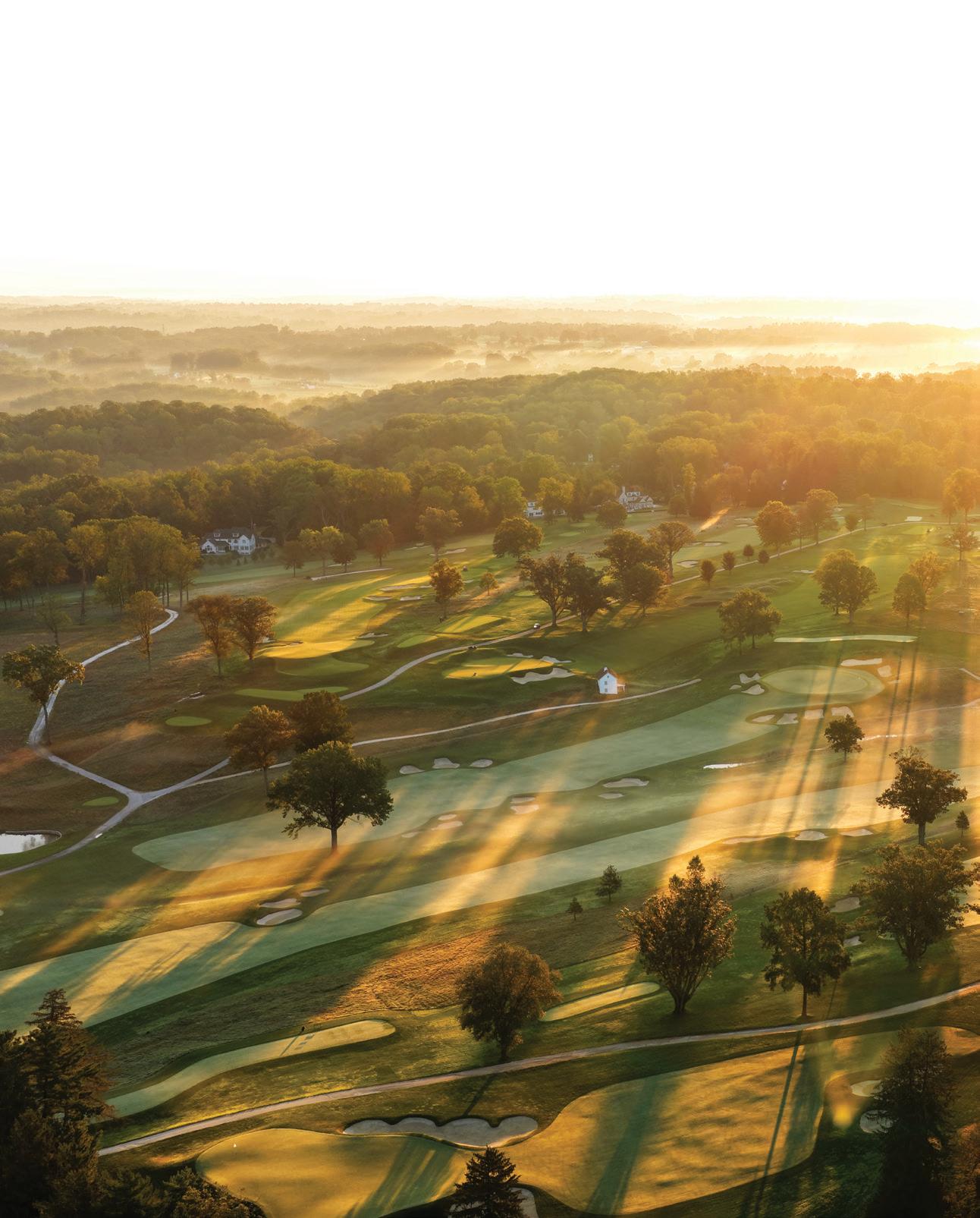
a course he’d completed 20 years earlier. Architects often exaggerate the merits of their creations, but his assessment of Aronimink seems genuine considering the time he’d had to reflect on the property’s character, the elaborate bunkering and intricate green shapes. The club isn’t sure if he’d been back to see the course since construction, so the impression was evidently powerful.
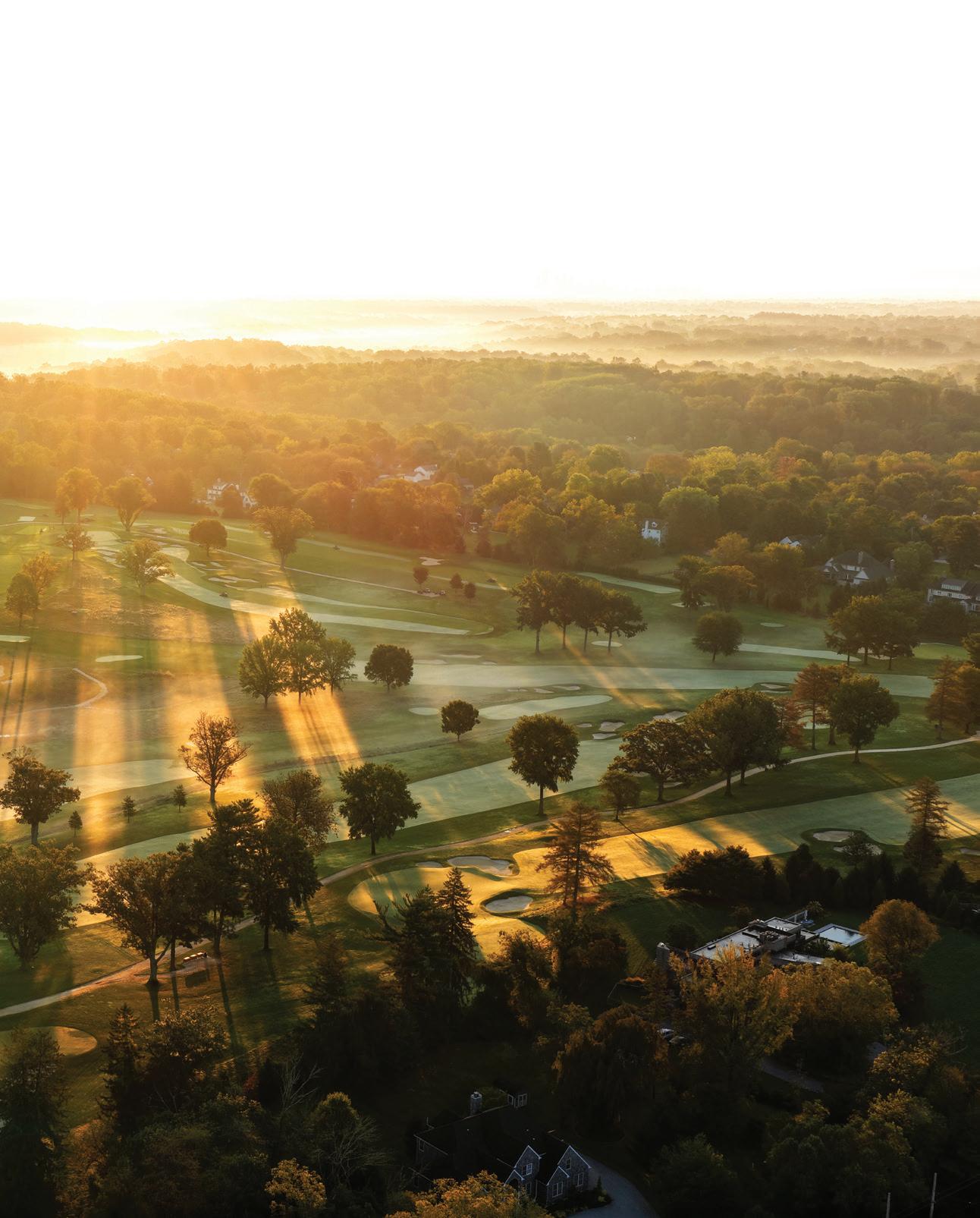
The club moved to several locations before it found its permanent home in Newtown Square in 1926 on a rugged piece of former farmland that gave Ross room to build one of his most serious designs, measuring 6,619 yards, among his longest to that point. The muscular holes charge across depressions, bank off slopes and ride over upland plateaus. Nests of bunkers ensnare drives at every turn, and the canted greens are full of wonderful little shoulders and slopes that slide balls around the perimeter edges.
Like most courses of its vintage, heavy-handed tree planting resulted in fairways and greens that were shadowed in woods. More than 20 years of
The pedestal par-3 fifth hole surrounded in sand is a Donald Ross specialty, seen at clubs like Seminole and Oakland Hills.
careful tree removal, however, have allowed the architectural details to shine, and a 2017 remodel by Gil Hanse and Jim Wagner further returned the course to its opening-day foundation. Today, at par 70 and over 7,300 yards, it joins Merion and Oakmont in Pennsylvania’s storied triumvirate of championship layouts, hosting the 1977 U.S. Amateur, a women’s and senior PGA Championship, and the 1962 and 2026 PGA Championships.
Donald Ross suggested that beginning holes should give the golfer a chance to warm up, to get the “swing of his stroke” under control. The drive at the par-4 first appears to fit the prescription with an ample, upward-rising fairway that catches but also deadens drives. The script flips on the approach that is steeply uphill to a semi-blind green with deep bunkers left and right. The putting surface is the only one at Aronimink with defined upper and lower tiers, a formulation Ross used more liberally elsewhere, adding to the challenge of getting the ball on the correct level. Far from a gentle handshake.
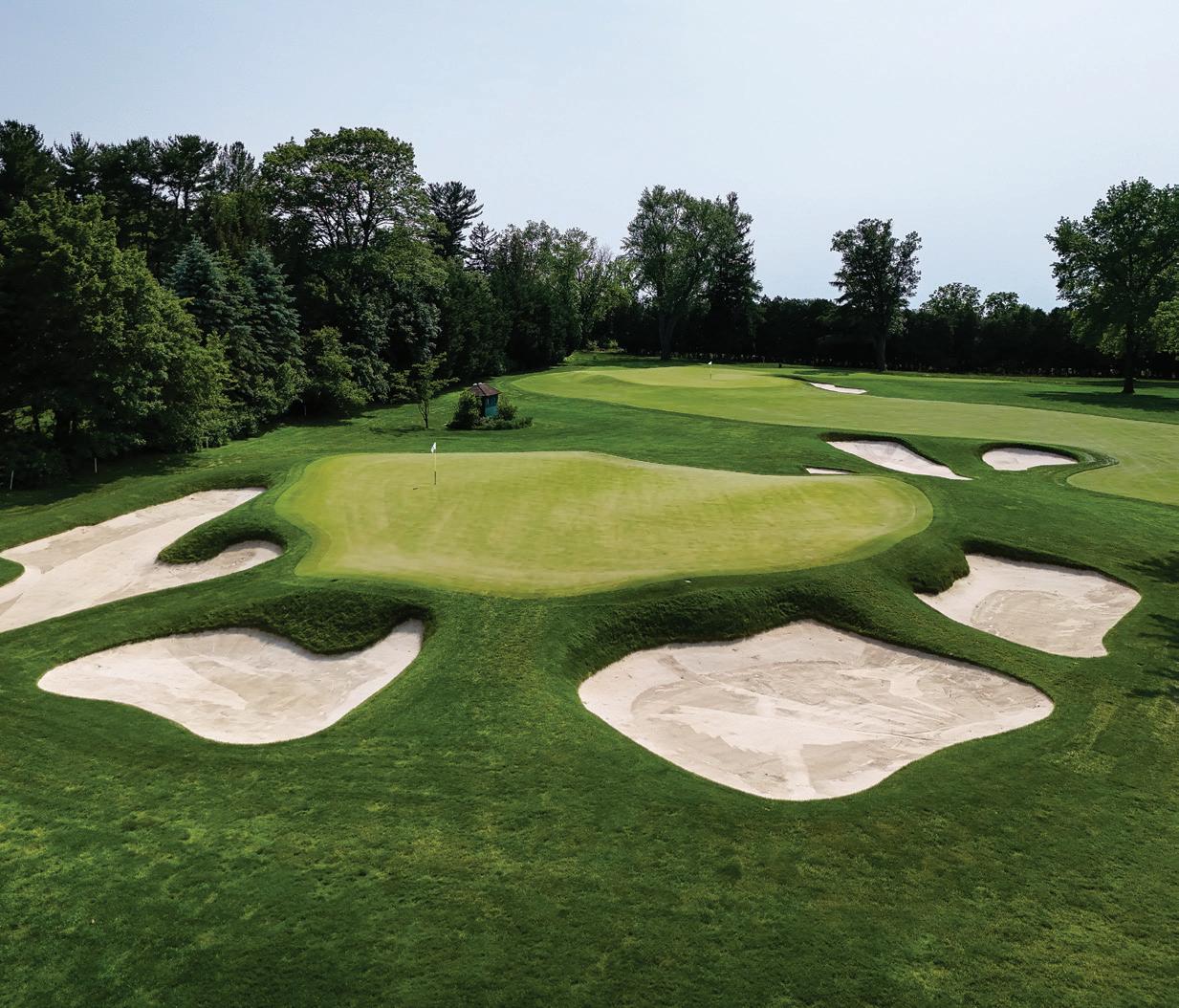
HOLE 5
PAR 3, 171 YARDS
The short, island-like par 3 surrounded in bunkers was a Ross specialty that he used at Seminole, Oak Hill, Oakland Hills, Scioto and dozens of other clubs. Aronimink’s fifth is one of his more attractive versions, playing slightly downhill to an ample, tabletop green with wavy contours around the back edge. Though it can stretch to over 170 yards, Hanse thinks it’s most intriguing when played extremely forward—so it’s just a touch-shot for good players, especially coupled with a hole location in the front bowl that can yield birdies in bunches and even an ace or two.
TILT-A-WHIRL
The seventh hole’s tilted fairway is the most challenging to hit.
During the original construction of Aronimink, the large, singular bunkers that Ross
illustrated on his blueprints were broken into smaller clusters, multiplying their number by a factor of three and giving the course a busy, shotgun-type look uncommon for Ross. It’s uncertain if Ross or his lead associate J.B. McGovern, who lived in Philadelphia and was there for the duration of the project, made the decision to alter the plans. What Ross drew is not what was built, even though his comments about Aronimink suggest he approved the changes. Renovations in future decades by other architects gradually reduced the number of bunkers, either removing them or recombining the clusters into whole shapes. During their 2017 remodel, Hanse, Wagner and the club chose to recreate the as-built course based on late 1920s aerial photography. This meant adding over 100 bunkers across the property and reestablishing the course’s unique appearance.
HOLE 7
PAR 4, 419 YARDS
Ross used bunkers rather than doglegs at Aronimink to create movement, and the seventh is the last hole that truly bends. It’s also the most difficult fairway to hit. It’s a blind tee shot over directional bunkers that needs to be shaped into the reverse camber fairway with a landing area that slopes away from the line of play. Drives that miss on the inside line get snared in a field of shaggy moguls, and those straying too far left kick down into the low
Small clusters of bunkers were brought back from the original design, with over 100 added in total.
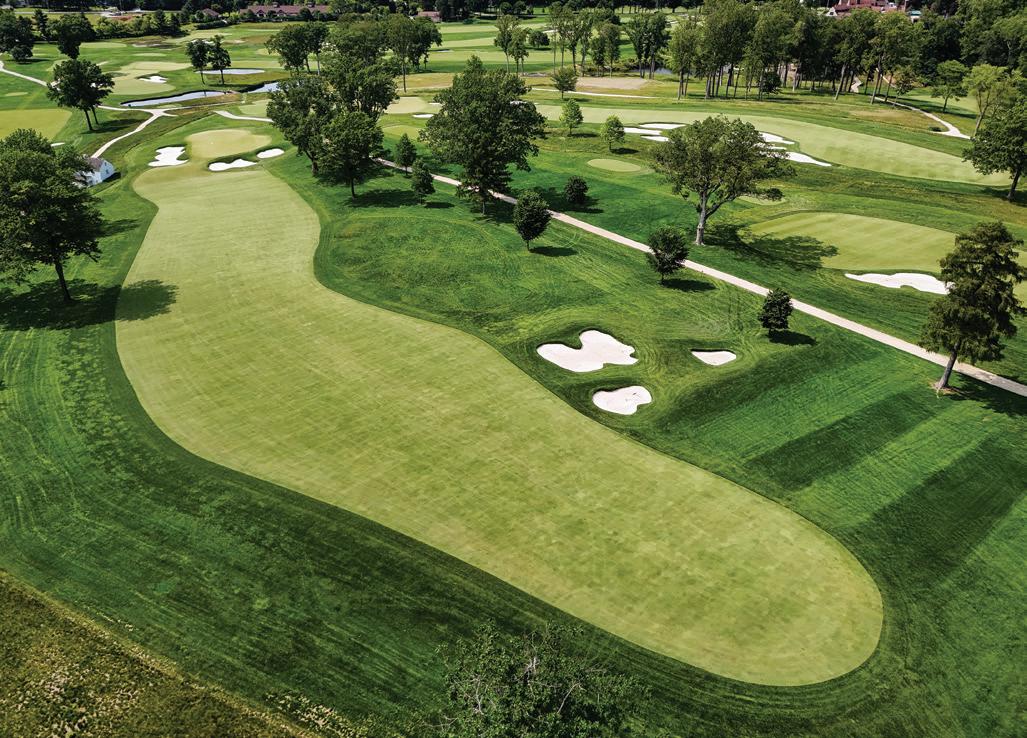



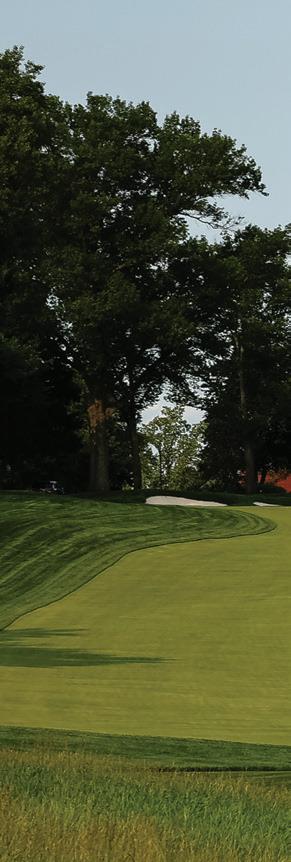
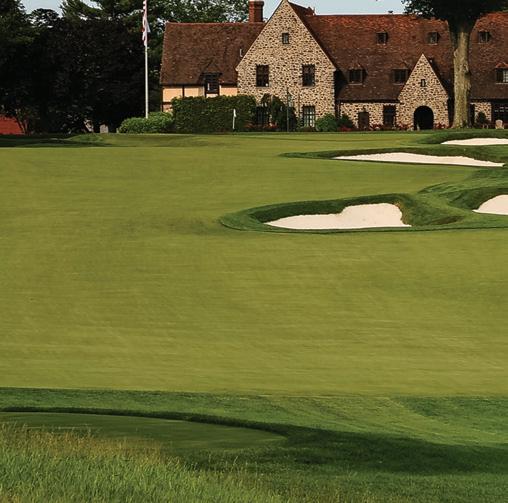
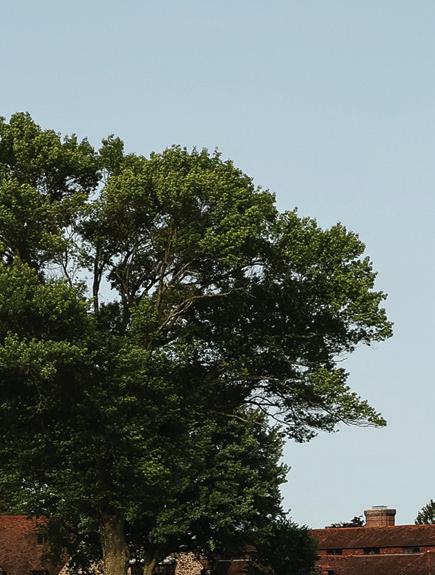
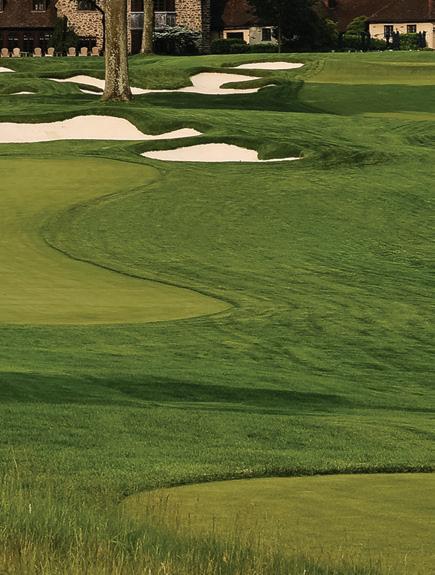
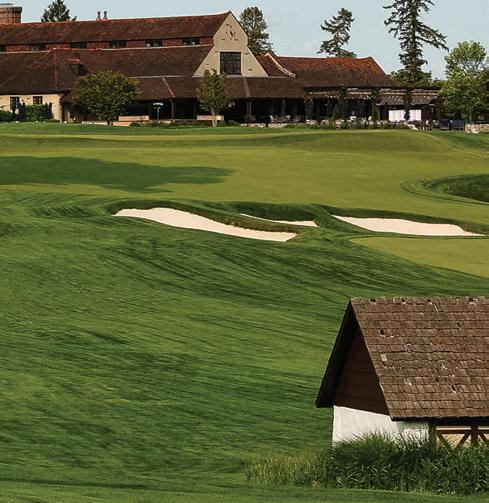
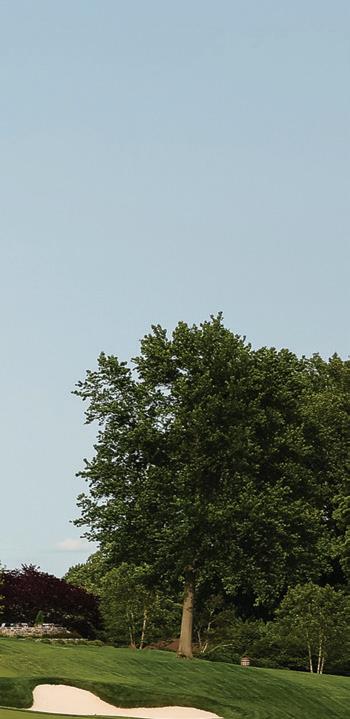
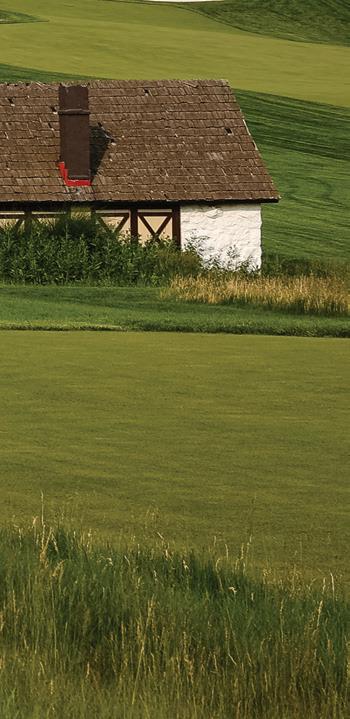

The club moved to several locations before finding its permanent home in Newtown Square, Pennsylvania, in 1926.
rough. Even perfect drives leave a spicy wedge up to a green that looks like it’s about to slip off the side of the hill that it sits on.
PAR 4, 425 YARDS
The most intensively bunkered hole at Aronimink is the par-4 11th. Twenty of them garnish the path, bracketing the fairway and circling the green. But more threatening than sand to a bad score, or a bad loss of the hole, is the green, the most severely sloped on a course full of severely sloped greens. The putting surface is so pitched toward the front that it can be a challenge to find usable hole locations, and leaving approaches above the flag on the right side of the green will almost certainly lead to three-putts, if not worse.
PAR 4, 490 YARDS
The newly extended 18th hole marches back toward the clubhouse ridge.
It’s not easy finding extra yardage at older, landlocked courses, but in 2025 a new tee location was added on 18 on the opposite side of a maintenance road that brings the length of this par 4 to 490 yards. The nearly 30 extra yards makes a difficult finishing hole a bruising one, putting it in the same weight class as the more famous closers at Merion and Oakmont. Second shots are struck uphill toward a mostly obscured green, and it’s another wild one with a strange array of brows and pockets that make long putting a treacherous and inevitable endeavor.
BY DEREK DUNCAN
for golf course design and development, the past 15 years have been better than good. It’s not unreasonable to suggest the quality of new courses being built is as high as it has been since the 1920s. In fact, 25 courses that opened since 2010 now reside among the top 200 on our America’s 100 and Second 100 Greatest rankings—a remarkable number (one-eighth) considering how few were constructed during that time.
The quality can largely be attributed to better land. Developers and architects understand their chances for critical and popular success increase in proportion to how naturally suited their properties are to golf, regardless of location. This generally means sandy soils, prompting a “sand rush” that has taken development to all corners of the country—to dunes along oceans, prairies of the Plains and Midwest, off-the-beaten-path locations in the South.
These wild, windy sites have produced some instant classics, but they’ve also fostered a kind of sameness in their designs. Most follow a pattern of enormously wide fairways that rumble into contorted greens surrounded by short grass. The bunkers tend to have chewed, knobby edges to suggest the look of natural erosion and collapse, and the scenery is framed by backdrops of native grasses with veins of exposed sand. This instinct to make golf holes indistinguishable from nature, using primary techniques of blending and mimicry, has become the dominant fashion in architecture, applied across a variety of landscapes, sandy or not. The residual effect is that new courses often look like variations of each other rather than unique entities.
Fashionable trends can be tricky. If they weren’t compelling, they wouldn’t catch on. However, fashion often comes

at the expense of style, and contemporary golf architecture, by and large, has gone lacking in style.
Fashion, by definition, is popular, repeatable and consumable. Whether in the form of a bomber jacket, synthesiser pop or period-piece streaming television, it’s a formula designed to hit the sweet spot of where the market is moving. In golf, architects and developers know that wide-open spaces and the appearance of rugged naturalism sell.
Style, by contrast, is individual, idiosyncratic and risky. It takes inspiration and transforms it into something original: reference without replication. Golf’s best design stylists—Pete Dye, Mike Strantz, Jim Engh, Alister MacKenzie and William Langford—synthesised diverse inspirations (British links, art, technology, even each other) into architectural expressions that were distinct and unmistakably their own. The sources were traceable, but their command and ownership of the material set them apart stylistically.
To some degree, contemporary architects fortunate enough to work in sublime sandy environments are con-
strained by those advantages—who, in their right mind, would attempt to dig lakes, construct artificial mounds or impose an invasive design perspective? Their job is, and should be, to honour the integrity of the land by coaxing out its assets. Yet from a purely creative perspective, there can also be advantages to working on blanker canvases of swamps, deserts and cornfields.
It’s hard to be too critical of an era that has produced so many beautiful and beloved courses. Architects will counter that their new designs are not the same—that there are meaningful differences from course to course. But those differences have been in degree, not category. The reverence paid to making every hole appear naturally conceived has left room for fresh points of view. Designers of the 1910s and ’20s pushed against established modes to create the courses we now widely revere, and Pete Dye similarly reacted against the status quo 50 years later. Perhaps it’s time for architects and developers to do the same. They might consider whether golf architecture could use a little more style—and a little less fashion.
Tom Fazio’s desert masterpiece meets Dubai’s most private community
by Harry Grimshaw
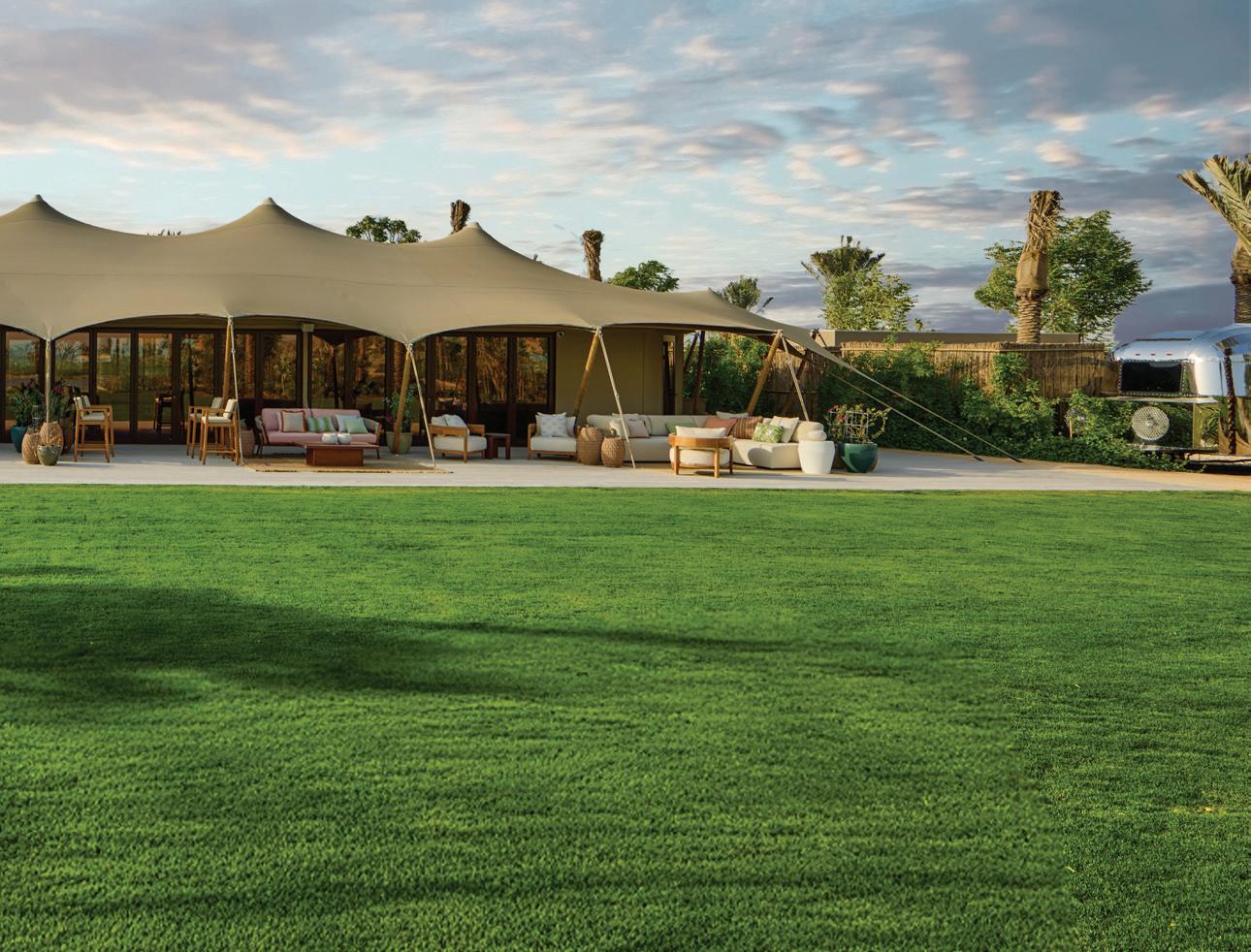
dubai has long made its mark as a global golf destination. Championship courses in top condition, designed by the greats like Peter Harradine and Karl Litten, offer both visitors and residents world-class golf without the barriers of exclusivity. Tee times are available, play is accessible, and the city’s openness has been a key factor in its appeal for many.
Discovery Dunes takes a different approach. Located in Dubai South, it is the city’s first fully private, residential golf community, developed by Discovery Land Company. Access is tied to homeownership, and membership is by invitation only. Unlike Dubai’s other high-end clubs—Emirates Golf Club, Dubai Creek, Trump International—there are no tee sheets and no public visitors. Golf here is for the mega-rich. During a recent visit, Golf Digest Middle East experienced firsthand how different that approach feels for the “normal” punter.
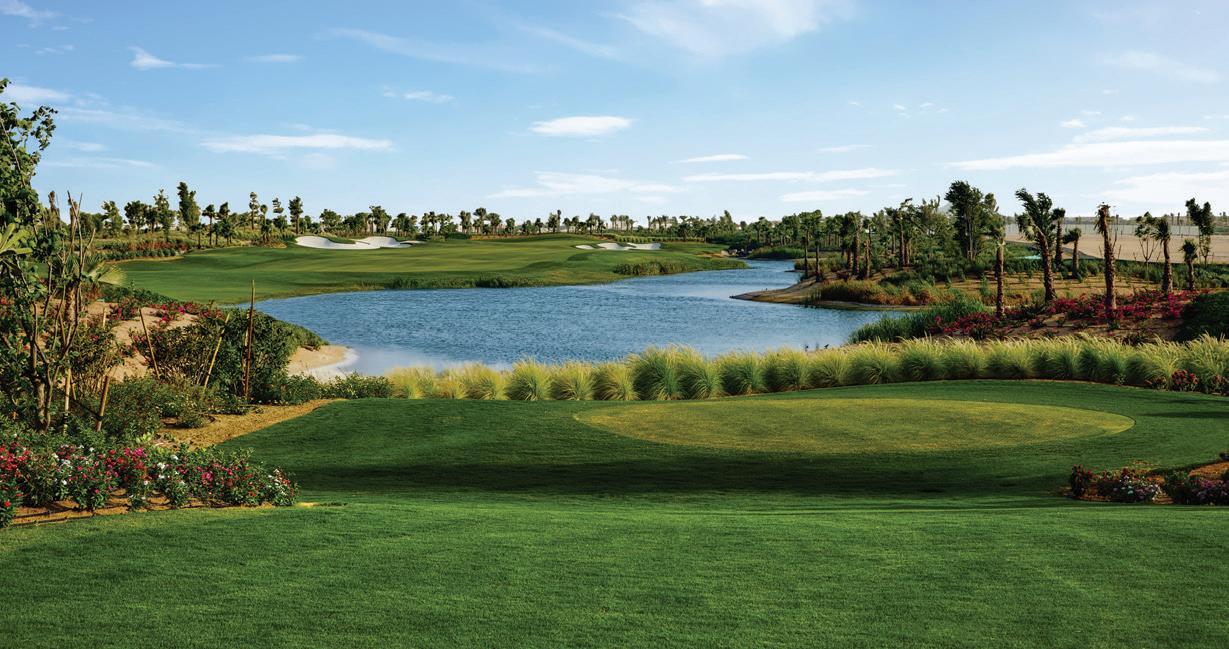
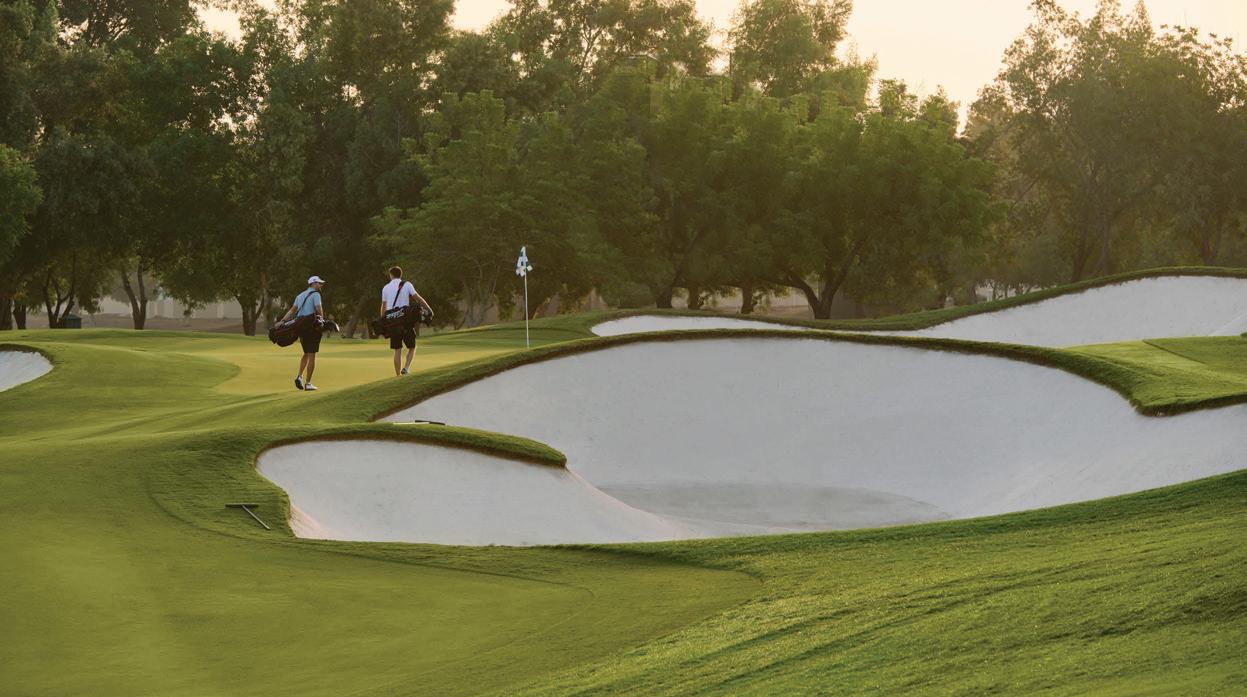
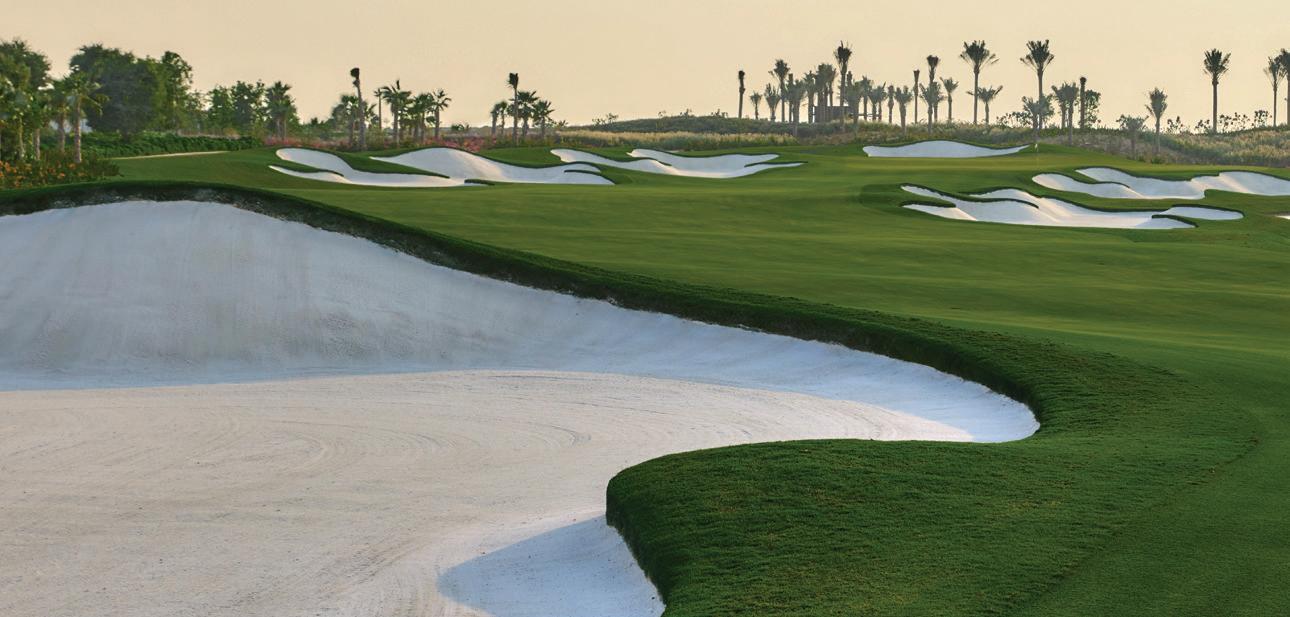
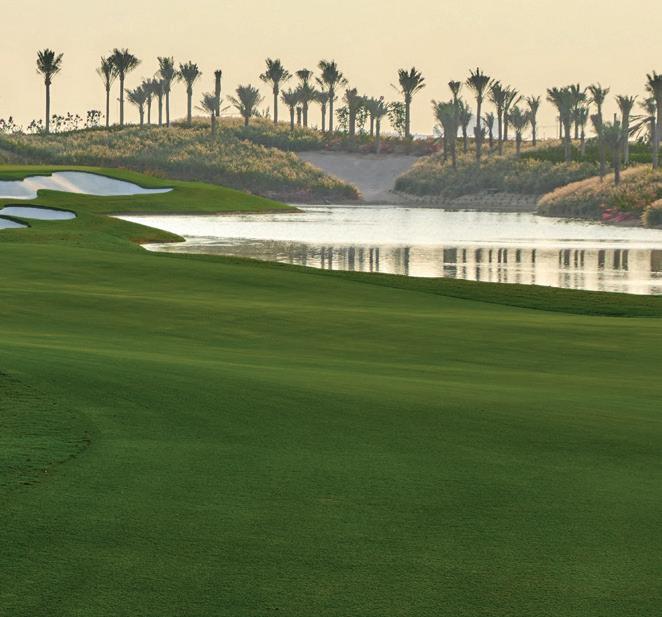
At the heart of the development is an 18-hole championship course designed by American Tom Fazio. Built on a flat desert site, the course has been sculpted into rolling dunes, wide fairways, and bold bunkering. Stretching to nearly 8,000 yards from the tips, it challenges skilled players while still remaining playable for most through multiple tee options. The layout rewards strategic shot-making rather than repetition. Elevation changes, undulations, and the
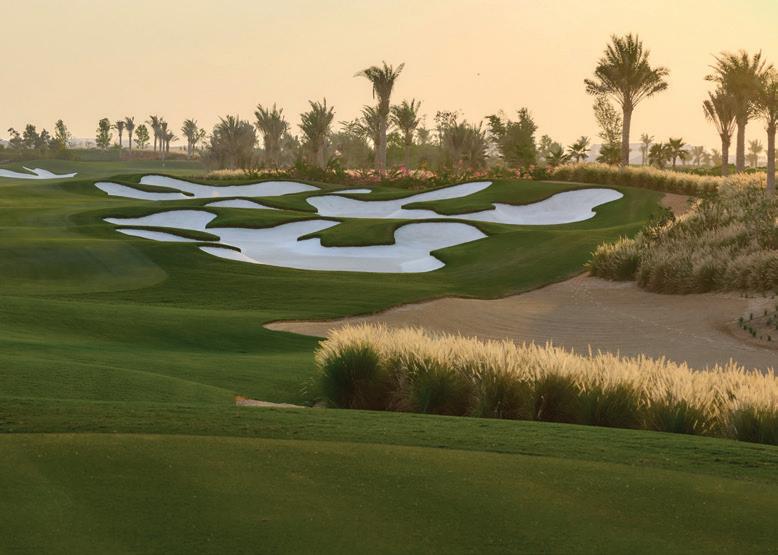
Gulf winds create a dynamic environment, while each hole offers a distinctive challenge.
Conditions are, quite simply, outstanding. Greens run true and fast, fairways are immaculate, and the crushed marble bunkers add both visual contrast and a distinctive playing texture. It is a shot-maker’s course in the truest sense, where variety is constant and no two holes feel alike.
Fazio’s design is a departure from
typical desert layouts. The closing stretch, in particular, stands out: a dogleg par 4, a risk-and-reward par 3, and a par 5 that offers scoring opportunities while penalising errors. The layout requires thoughtful play, using every club and adapting to the terrain and wind, making the course as strategic as it is scenic.
The absence of tee times allows members to play on their own schedule. Experienced golfers can avoid the
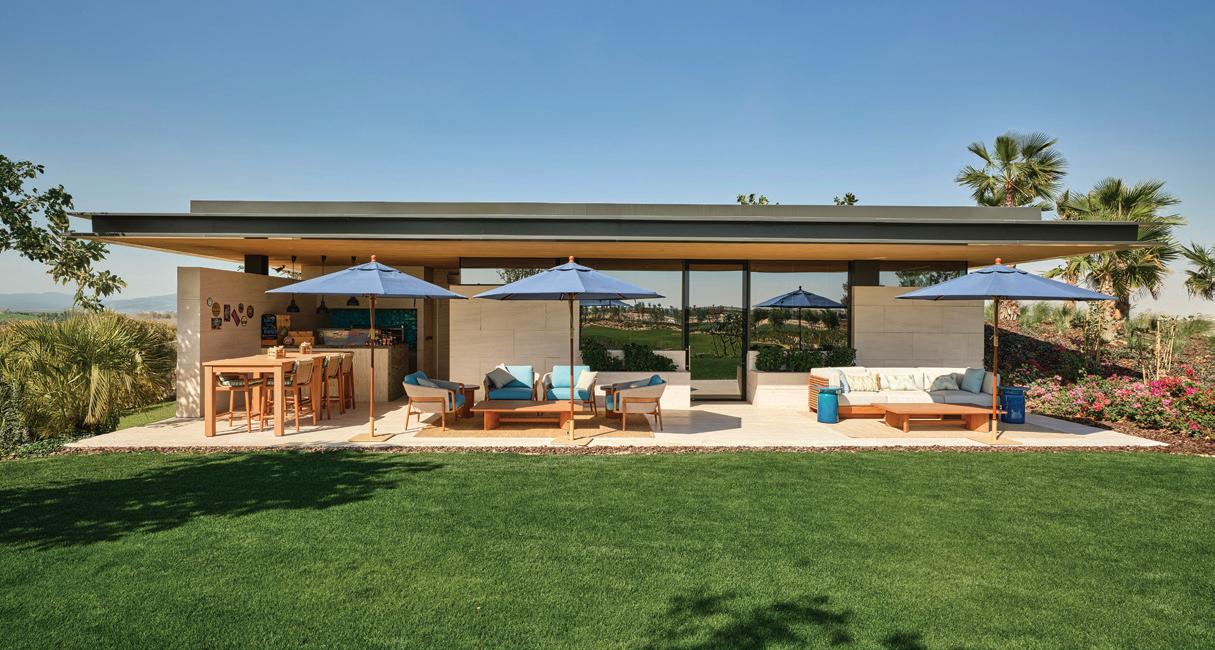
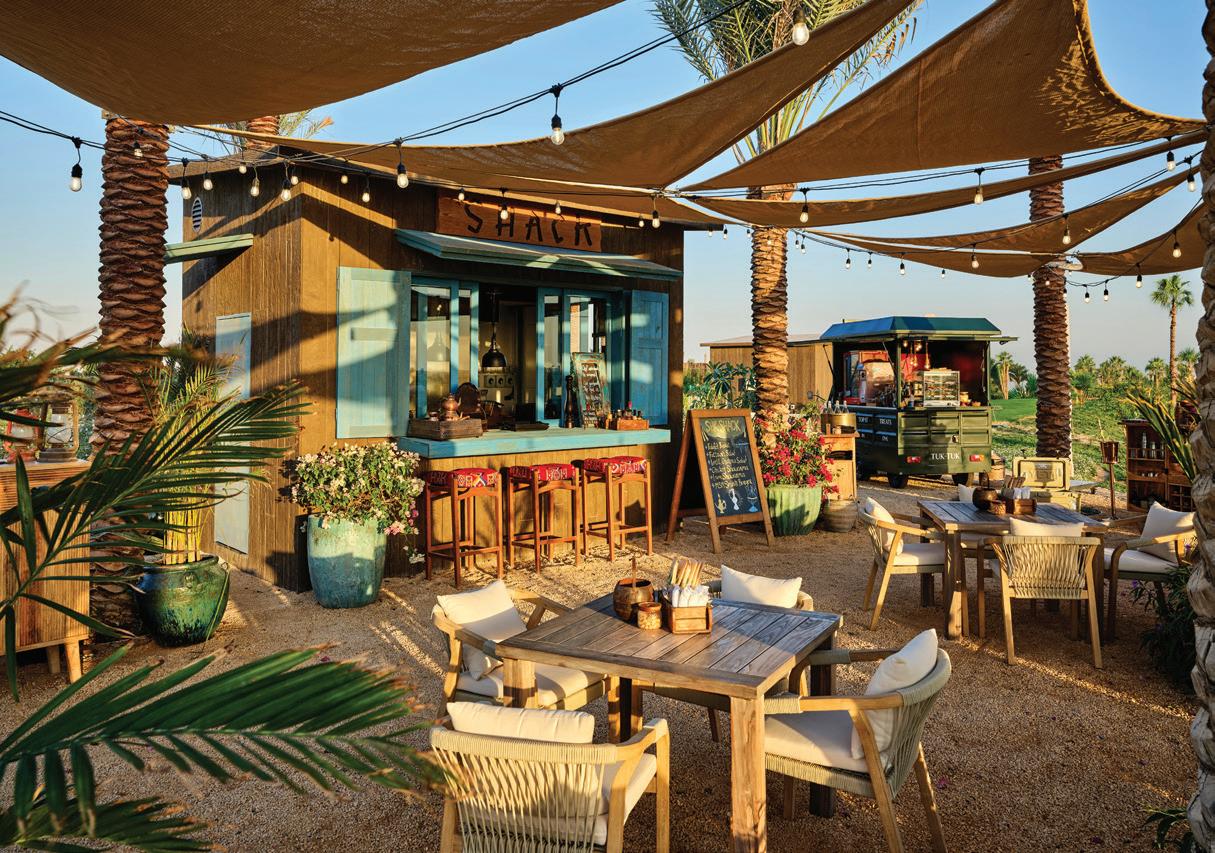
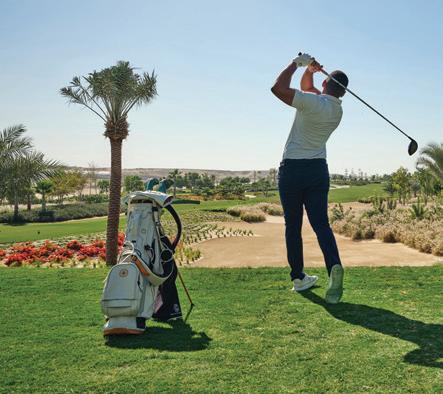
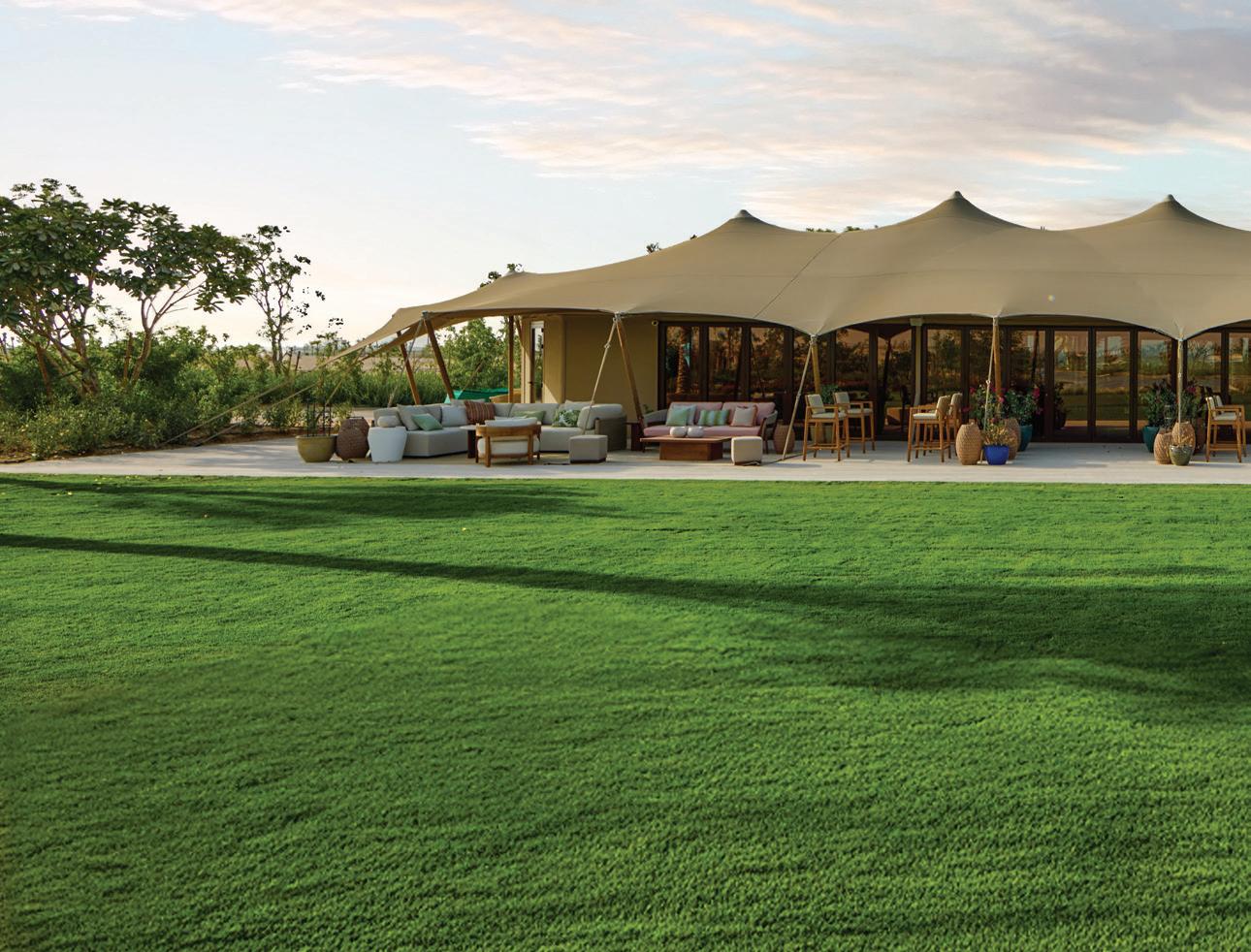
pressure and formality of traditional clubs, and newcomers can enjoy the game without worrying about rules or attire. Comfort stations across the course provide coffee, breakfast, or mid-round refreshments, serving as informal gathering points rather than mandatory stops. Food, drinks, and small details are handled seamlessly— no wallet required…
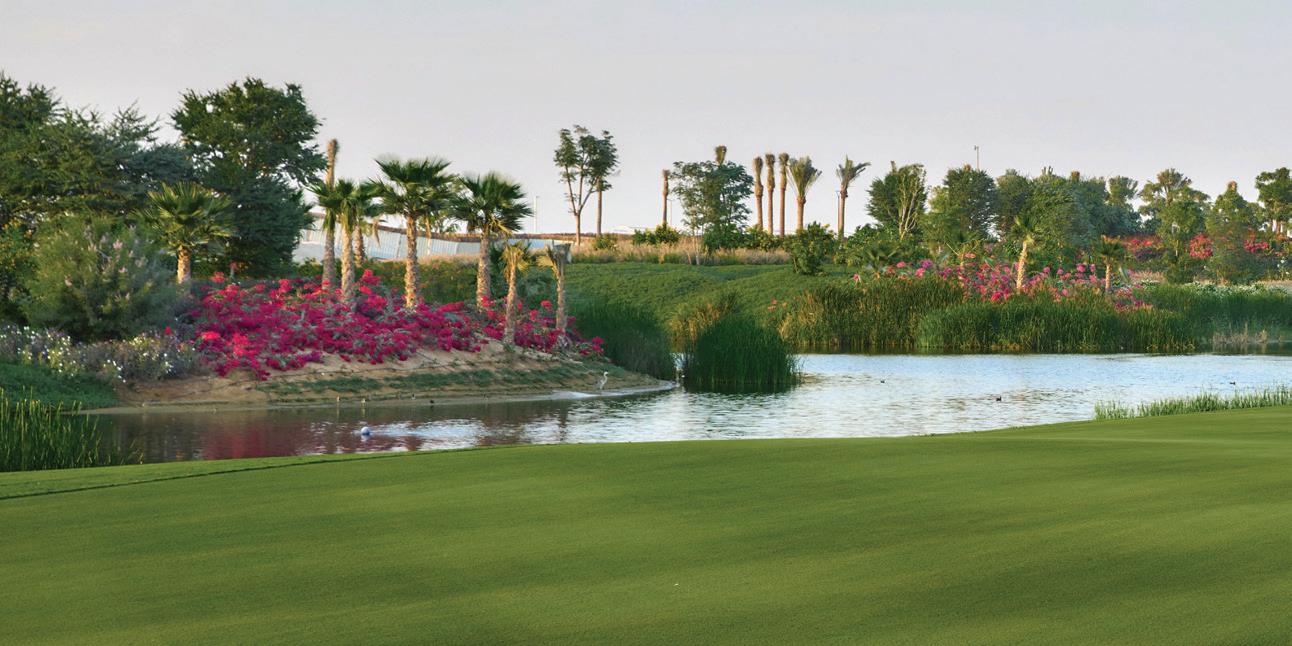
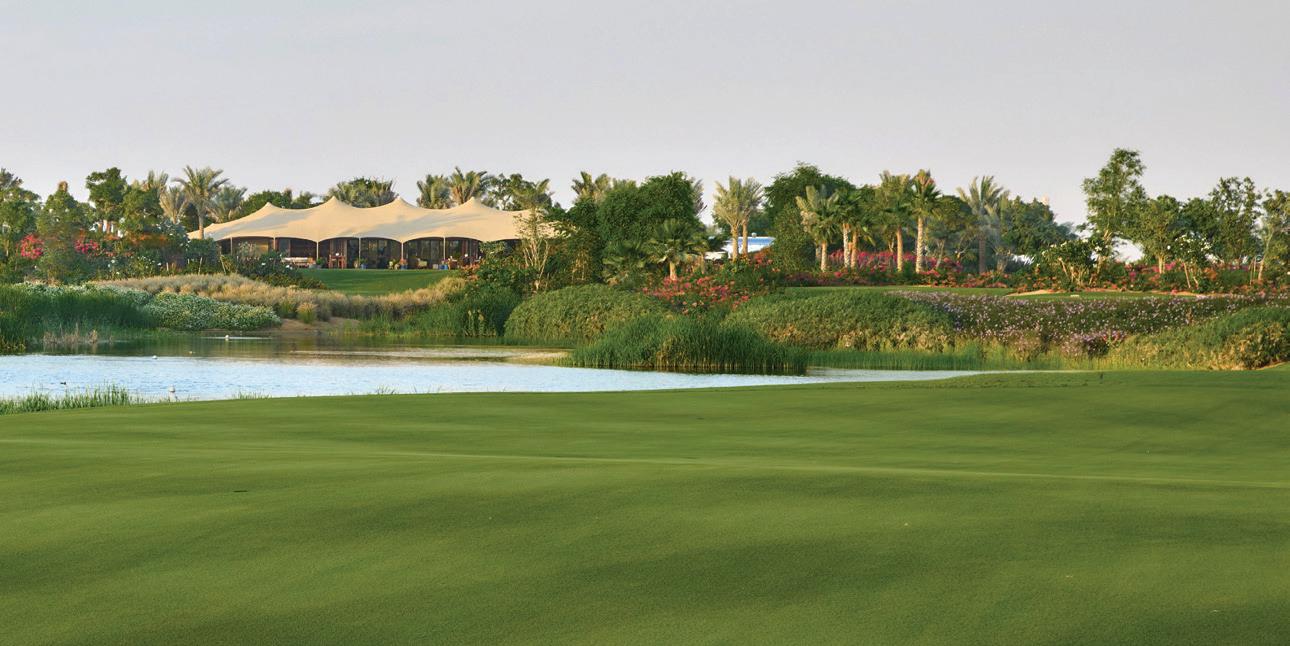
Beyond golf, the layout offers a collection of amenities. The Lake House on the 11th hole serves as a central hub with a restaurant, waterside spaces, and areas to relax after a round in the Dubai heat. A typical day might start with a few holes, continue with breakfast or outdoor activities, and end with the on-site physio for post-round re -
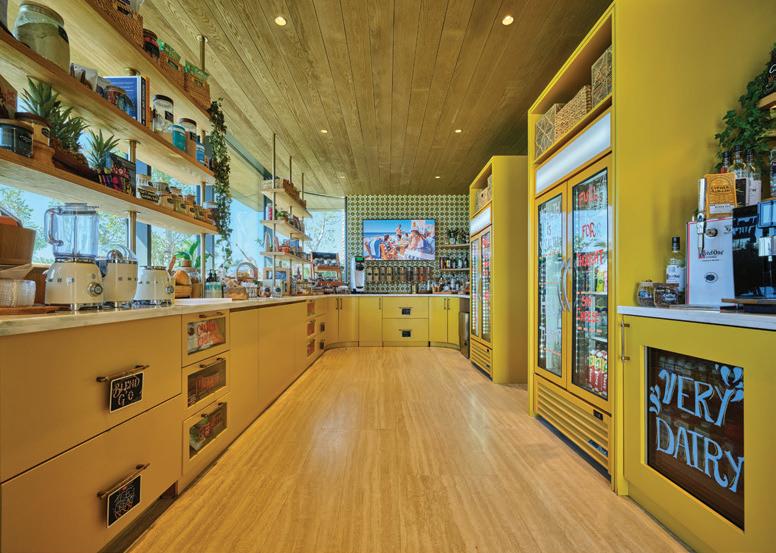
covery, followed by a casual evening get-together with the rich and famous.
Right, what’s the price… The membership at Discovery Dunes is limited to prevent overcrowding, and it ties into the homeownership aspect. You have to own a property to be a member. Entry begins at around US $7.5 million for a plot of land, along with a hefty membership fee. Any takers?
Dubai’s golf sector continues to grow, with over a dozen world-class courses
and tourism projected to reach US$1.3 billion by 2030. Discovery Dunes occupies a unique position within that landscape. It is not intended for payand-play daily rounds or casual visitors, no matter how much money you are willing to pay. Instead, it targets a niche, ultra-exclusive, wealthy market.
In a city built on access, Discovery Dunes quietly closes the doors on that, creating an ultra-private world. Just get your cheque book out!
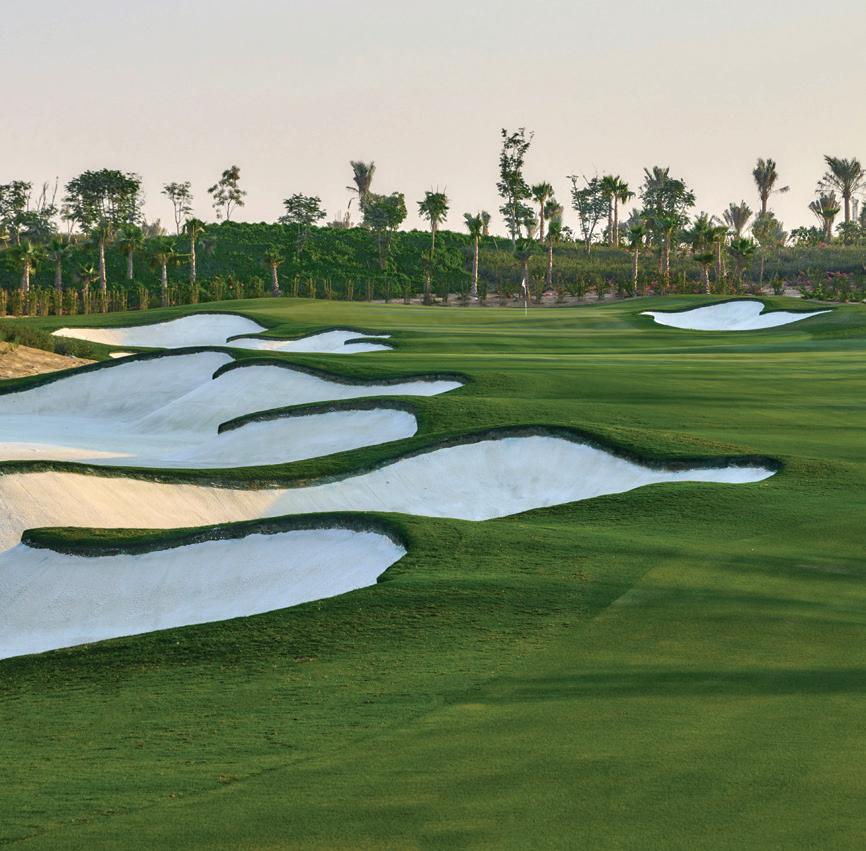
The 16th is a challenging dogleg par 4 with fairway bunkers that demand precision. Hitting the fairway is the priority. A right-toleft shot shape allows players to use the downslope for extra roll, setting up a comfortable mid-iron approach into the green. The green is elevated with large bunkers front right and a sloped back stop. The smart play is to hit long and let the undulations guide the ball toward the centre of the green, giving a straightforward twoputt and a solid par.
On 17 and 18, keeping the ball in play is essential to creating scoring opportunities for par or better. The bunkers, while beautiful, can be very punishing if the ball lands in them, so using slopes and undulations to steer the ball toward safer areas is wise. For those creative enough, there’s a real chance to score well on these finishing holes.
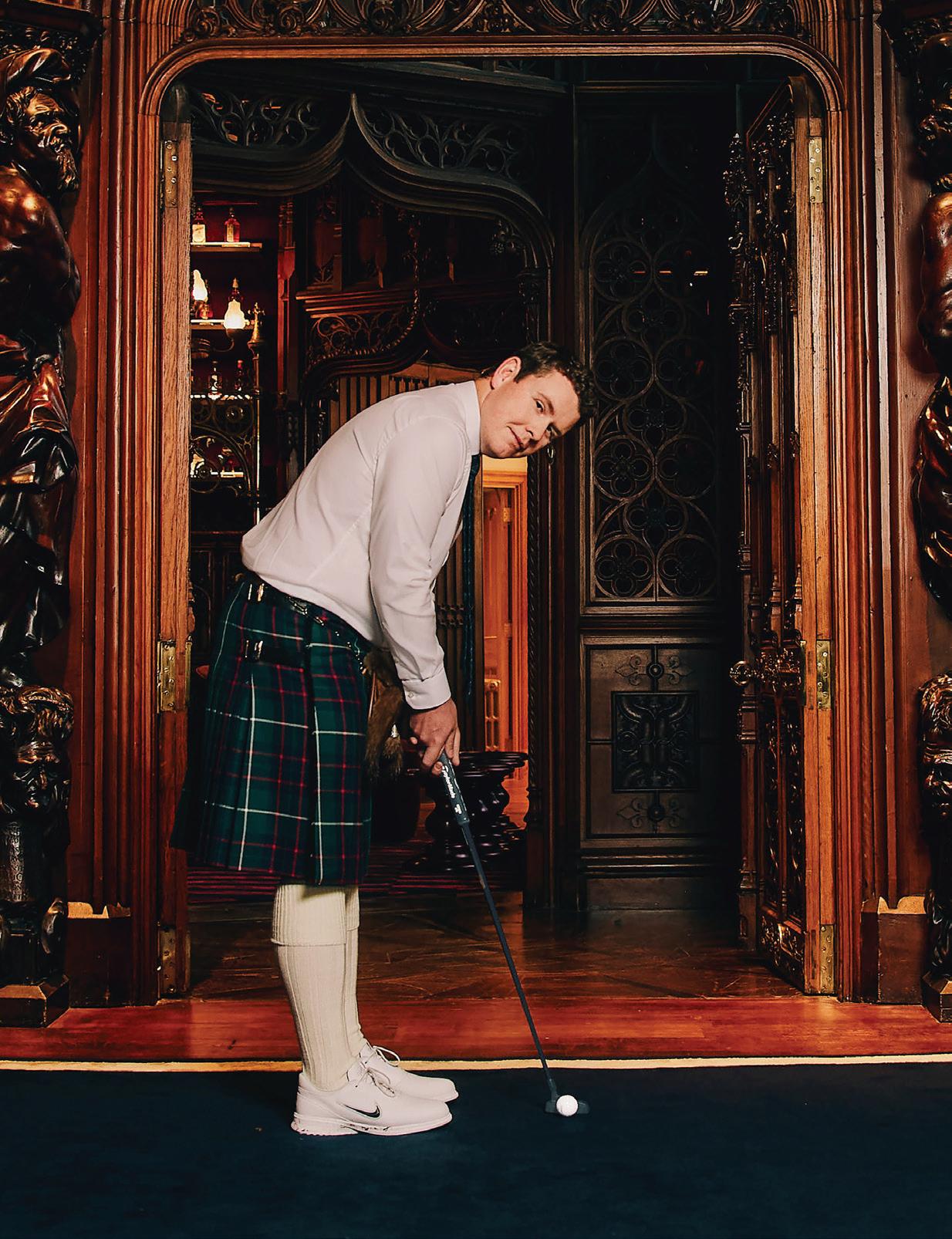
ON MOVING BACK TO SCOTLAND, RYDER CUP BROTHERHOOD, SHINTY AND HOW TO MEET THE MOMENT
BOB MACINTYRE IS NOT THE PRODUCT OF AN ACADEMY, a swing coach’s masterwork or a carefully constructed brand. He is from Oban, Scotland, population 8,000, where the Atlantic comes in hard off the Firth of Lorn and the golf course plays to a par of 62. He learned to compete not on pristine fairways but in shinty—the ancient contact sport played with a stick and without apology—and in that education he found something that has proven durable against the best golfers on earth: the absolute refusal to be beaten by the moment.
His growing résumé reflects it. He has cracked the world top 10, won on the PGA Tour, won his national open, won two Ryder Cups—the second on American soil, in an atmosphere that tested every member of the European team. The only box left unchecked is a major and after the 2025 U.S. Open at Oakmont, where he sank a putt on the last hole thinking he might’ve won, that goal feels less like an ambition and more like an appointment.
In the height of professional golf’s civil war, MacIntyre declined LIV money, left Florida, and returned to the West Highlands—to his parents, to his sisters and nieces, to a girlfriend—because home, however much it cost him, was the only thing that made sense. He keeps a small circle, earns trust slowly and has never once pretended the country club world is his natural habitat. As pro golf is still sorting out what it wants to be, MacIntyre has navigated by a single fixed point: the dream he had as a boy, and whether the next decision takes him closer to it or further away.
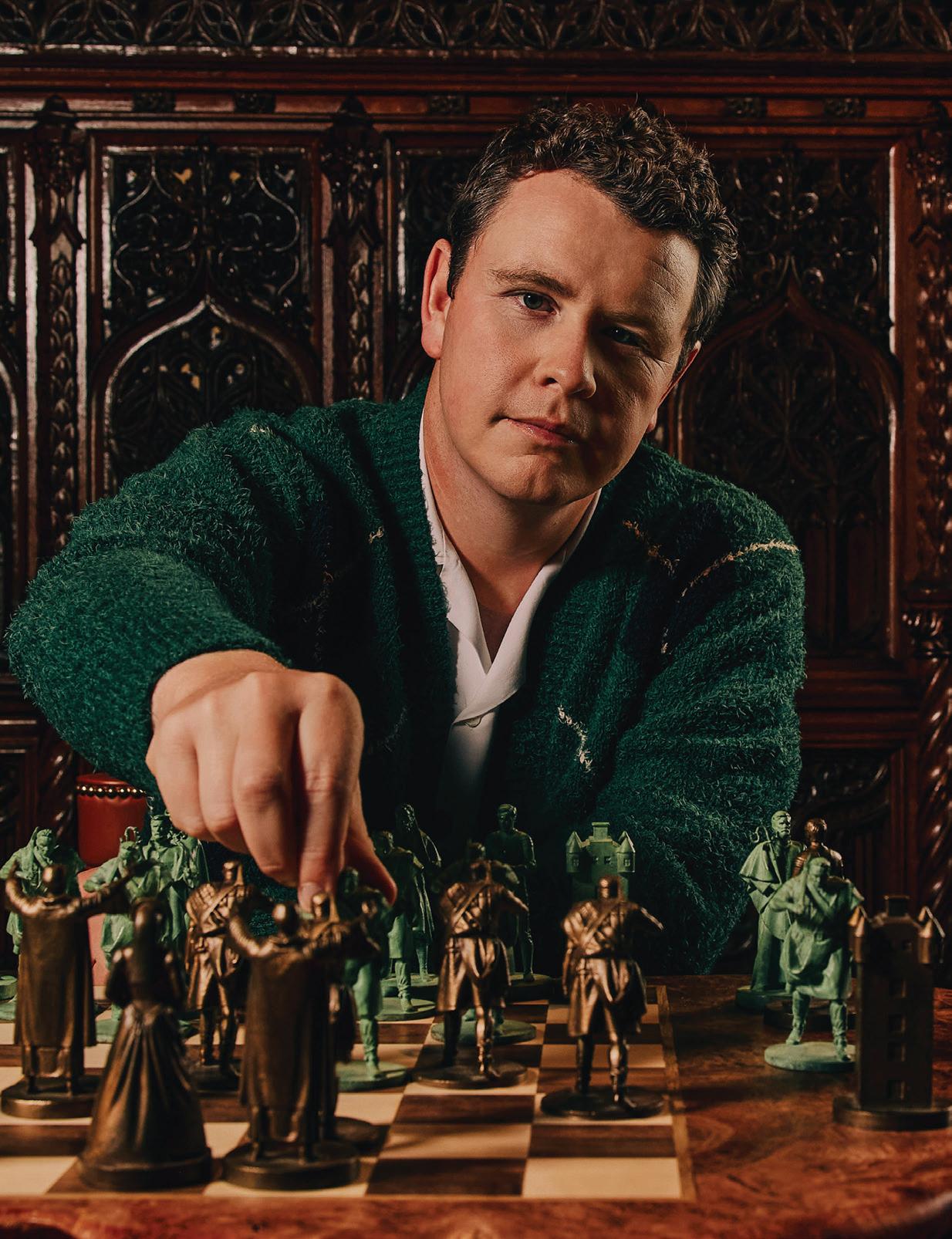
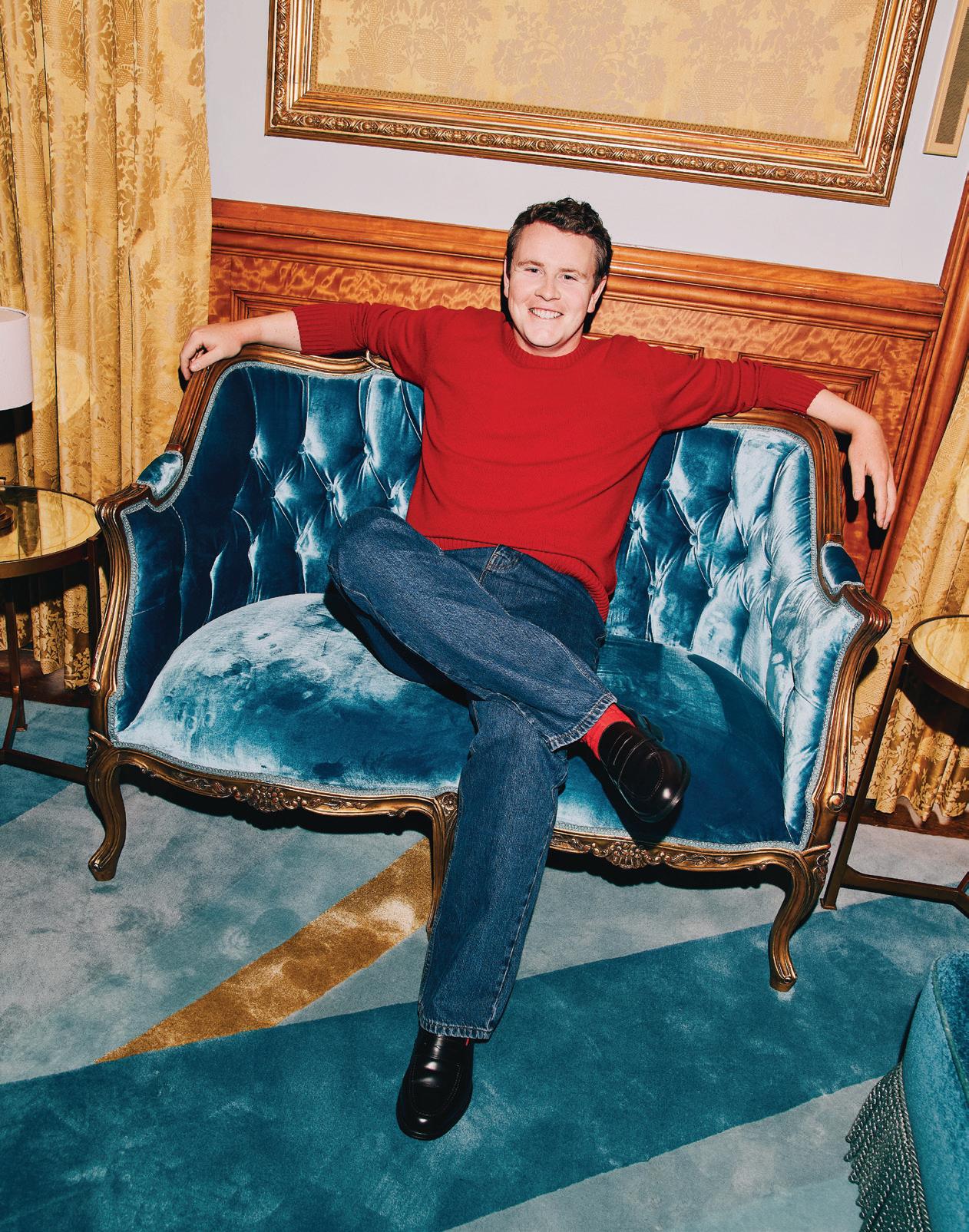
We met at Taymouth Castle, baronial stone and ancient timber rising from the mist of Perthshire, about as far from a par-62 municipal links as Scotland allows. What follows is a conversation about pressure and identity, about isolation and belonging, about the game’s politics and its deeper pleasures. About what it actually costs to rise, and what a pro golfer decides, at every turn, to pay for.
GOLF DIGEST: Your peers, almost unanimously, say you perform your best when it matters most. Where does that come from?
MACINTYRE: To be honest, I’ve never seen myself that way. I’ve always just done what I do. So far, the pressure has come when things are going right for me. The most nerves I’ve ever had was at Oakmont those last three holes, when I said to my caddie, Mike [Burrow] on 16, “Mate, I can hardly feel my hands.” Then I proceeded to play three of the best holes I possibly could. There’s so many things that go through my head—I sing songs. I’ll tell myself, You’ve hit millions of golf shots in your life, it’s just another golf shot. At the end of the day, you just have to go hit it.
●
How did those last three holes at Oakmont compare to your first tee shot at Rome in 2023?
Massively different. Rome was more a realisation of a dream, making a Ryder Cup team. I knew everything about that opening tee shot. Winning a golf tournament is a different pressure. Had it been a putt to win the Ryder Cup, that might have felt like those last three holes at Oakmont.
● ● ●
Do you think your game is built for majors more than regular tour events? I can do both, but yes, my game is more suited to the dogfight. I like tournaments like Bay Hill or the Players, where you have to hit the fairway, then hit the green, and pars aren’t bad scores. At some courses, make a run of four pars and you’re sinking down the leaderboard. When you shoot level par and you’re jumping up 25, 30 places, that’s when I enjoy it most.
● ● ●
The mythology around you, this kid from a short course in Oban, how much does that origin story still inform who you are?
People are going to like you or dislike you, no matter who you are. The reason I left
‘MY GAME IS MORE SUITED TO THE DOGFIGHT . . . . WHEN YOU SHOOT LEVEL PAR AND YOU’RE JUMPING UP 25, 30 PLACES, THAT’S WHEN I ENJOY IT MOST.’
‘MY DAD WAS A TALENTED ATHLETE—GREAT GOLFER, GOOD FOOTBALLER—BUT HE NEVER HAD THE FINANCIAL BACKING TO CHASE A DREAM.’
the U.S. is because I realised everything I care about, everyone I love, is home in Scotland. There might come a time when I need to move back over, if it became easier on family logistics, and I’d suck it up and learn to deal with it. But right now, I don’t need to. My sister has three little ones, my mum and dad are in Oban, my girlfriend is working for the National Health Service in Glasgow. When I was in the States, the time difference made it hard. When I’m home in Scotland, I hardly play golf. I’ll do the odd thing in the simulator, putt indoors. For me, I’ve realised the mental side of the game is far more important than the physical. My swing technique doesn’t really change— I’ve got my basics. What does change is my mental attitude. When I’m in a good headspace at home, seeing friends and family, everything’s fine and there are no worries when I get to the golf course. I can perform.
●
●
●
Then why do you think so many tour pros find Florida to be the perfect environment for their profession?
Yeah, from a practice standpoint, it’s hard to beat the facilities and weather. But that doesn’t factor in what happens away from golf. Florida was too lonely, too businesslike for me. Practice, golf, practice, eat, sleep. There needs to be a work-life balance. It’s really the same issue when we’re on the road, too, in America. There’s not as much chatting, socialising. When I play in Europe or Asia there’s this idea that we’re all in this together, experiencing new cultures together. This job is too hard to focus on all the time. I love what I do, but if I can’t do it with friends and family to come along for the ride, you question what it’s all for. Florida might be better for my game, but Scotland is better for my life, and I think that mind-set will help me have a better and more fulfilling career.
●
●
●
What does a day off look like for you?
Up around 8, 8:30, cup of coffee to start. After that it varies. If my nieces are off school
or it’s the weekend, I spend a lot of time with them. It all revolves around family and friends. If I’m at home and I’m not with Shannon, I’m with my mum and dad or one of my sisters with the little ones. I’ve gotten to a point where I don’t really do things to please people outside that small circle.
● ● ●
What has shinty given you that golf hasn’t?
I don’t know if it teaches me something different so much as it’s made me the golfer I am. There’s a lot of aggression in the way I play and in my reactions to shots. Shinty has maybe helped me with discipline, with acceptance and with shaping the ball. You’ve got one stick—different lofts through different positions—and you might be hitting a pass 10 yards or trying to launch one 50 yards, so you’re constantly manipulating. But more than the technical stuff, I think it’s the team mentality and the never-give-up spirit. If you go one down, you’ve got to get it back. You’re always chasing, always trying your best. You never stop playing.
● ● ●
What’s the worst injury you’ve ever had in a game?
A broken toe. My Uncle Gordon lost his eye. I’ve always worn a helmet with metal guards and a glove on my right hand. I try to limit the risk. You can still get injured, I know that, but I do everything I can to prevent it. It’s something that’s been passed down through the generations of my family—and I just love it.
● ● ●
Do the boys give you preferential treatment now?
Potentially a little at training but that happens in any contact sport. Where people aren’t going full in the tackle. In games, there’s none of that. The thing is, if you go in 50 percent on a tackle, that’s when you get hurt. You’re better going in full tilt. If two players are both going 100 percent, there’s less chance of injury because they’re in close with less room for the stick to make contact. Within the team, the biggest thing is that you’ve got each others’ backs. I feel that in my golf team, too, with coaches, trainers, everyone. You look after each other and you don’t expose each other at the wrong times.
● ● ●
That communal spirit must still seem like quite a contrast with professional golf, which can be isolating. Life on the road can be hard. It’s something I’ve had to learn. I remember in 2021 during COVID—we went to America for about 12 weeks. I played all my events, came back to Europe, and I was just having room service every night. I started struggling mentally. I didn’t enjoy it anymore, didn’t know if I wanted to keep doing it.
● ● ●
Nobody prepares you for the hours between rounds, do they?
Should be the easy part, yeah? People think touring is glamorous—you’re traveling the world, seeing everything, but a lot of times it’s house, airport, golf course, back to the house. The biggest thing I’ve learned is, be comfortable where you’re staying, eat where you want to eat, enjoy yourself, and have the right people around you. For me, that’s my agent, my coach, my family and friends, all of whom were with me well before I was famous.
● ● ●
What’s something about professional golf that would genuinely surprise most fans?
Probably the amount of attention that falls on certain people. I look at some of the biggest players in the world and think—I’d take the golf career, absolutely, but I wouldn’t swap any of their lives for mine. Go out for dinner and they get mobbed, photos constantly, videos. That’s not comfortable for me. I’m a quiet person who likes to go about my business.
Not even to the pub?
I won’t go to pubs anymore. I was never a big drinker. Only every now and then I’d go with mates for a few beers. I won’t entertain it now and yet part of me thinks, Why not just go? But I feel so uncomfortable. You say the wrong thing, someone catches it on camera, and you think you’re speaking to a friend and you’ve just gone viral.
●
You’re the most visible Scottish golfer in the world now. What type of responsibility comes with that?
It’s less responsibility and more wanting to show people that it doesn’t matter where you’re from. I was lucky I had parents who worked incredibly hard. My mum had three jobs, my dad had two for a long time, including as the greenskeeper at my club. It’s how I was able to play the game. My family sacrificed a lot. My dad was a talented athlete —great golfer, good footballer— but he never had the financial backing to chase a dream. The biggest thing he wanted was to give his children better than what he had. That’s what my parents did for me, and I was just lucky for that.
●
This is the birthplace of golf. Why aren’t there more Scots in the world’s top 150?
There’s so much that goes into it. The Scottish guys on tour now are all very different—different coaches, different backgrounds, different parts of the country. In the past there were brilliant amateurs coming through but it was mostly a one-size-fits-all approach. That didn’t work. When I turned pro, my management company struck a deal with Scottish Golf and Scottish Hydro so that for the first two years on the Challenge Tour (HotelPlanner Tour), the finances were covered. I played a full season without worrying about money. I still see it happening now—talented young guys turning pro or about to turn pro, going down paths where they’re just being told yes, yes, yes, instead of hearing hard truths. The most important thing is building a small, tight team of people who care about what you want to achieve and aren’t scared to be honest. I once asked Mike what he wanted to achieve in caddieing. He said, “I want to caddie for a Ryder Cup win and a major.” I just said, “So do I.” Alignment is everything. A lot of people in golf are in it for the money, and if you throw enough at the wall, something sticks. I’ve only got one career and I want to give it everything I can. I’d love to sit down with young Scottish guys coming through and try to guide them.
● ● ●
There’s the belief that part of Team Europe’s success in the Ryder Cup is the camaraderie in the locker room. How real is that brotherhood beyond the biennial event?
Week to week on tour, you’re not that close. But you’re close enough that guys will go to dinner together when they’re travelling alone. This year Shane Lowry didn’t have his family with him and I didn’t have my team, so we rented a house at Memphis during the FedEx. Europeans will do that with anyone in the group. I feel like Americans have more defined cliques. When I go into the players’ lounge and there are no Europeans, I’ll sit on
my own because I’m not as comfortable. If a European is there, it doesn’t matter who it is, Rory, anyone, I’ll go and sit with him. It’s a different culture, and I think that cultural difference is what makes our team gel.
●
●
●
How did you manage to play the way you did at the Ryder Cup at Bethpage with all that was going on outside the ropes?
The golf the European team played on Friday and Saturday and the putts we holed were outrageous. That Saturday afternoon walking up 18, there was hardly an American fan in sight. We’d been told we couldn’t win, and then it felt like a home event. The only thing I wished for—me and the whole team—was that someone had come out at some point on Sunday and said, enough. Let’s respect the game and respect the players. I’ve never seen so many players in the European team turn around and swear back at the crowd. Shane and Tyrrell [Hatton] and me are probably the kings of shouting and swearing on the golf course, but it’s at ourselves, not at anybody. I never realised there were only 37 European golfers who had won a Ryder Cup away from home before that. Now there are 47. I get goosebumps thinking about what we managed to achieve over there.
●
● ●
Did that week change how you see Rory?
On Saturday on the sixth hole, Rory and Shane’s group stopped and didn’t hit a shot for about 10 minutes. I was in the team room doing some physio and I said, “We need to go out there.” I rounded up about 10 of us—players, caddies, staff, so that Rory and Shane weren’t just seeing hostile fans everywhere they looked. Honestly, it was Erica who amazed me most. She was sitting in the back of that buggy like an absolute trooper, not flinching. If she reacted, Rory would have reacted—and if the two of them reacted, the crowd would have won. She was unbelievable.
● ● ●
‘THERE ARE GUYS ON THE PGA TOUR I DON’T PARTICULARLY LIKE, EITHER. I’M NOT ON ANY BOARDS; I’M NOT GETTING INVOLVED. I’M JUST GOING TO GET THE BALL IN THE HOLE IN AS FEW SHOTS AS I CAN EVERY WEEK AND GO BACK TO SCOTLAND.’
How has rising during the LIV split, one of the most chaotic periods in the sport’s history, shaped you?
I voiced my opinion early on, that the money was obscene. How much does a human need? But the more I’ve sat back and thought, I understand why certain guys went. Some timed it beautifully. Some guys I still think made crazy decisions. To each his own.
● ● ●
Why didn’t you jump?
Didn’t want to compromise my dream. My dream was to play Ryder Cups. I’ve done that. I’ve only got one dream left, and that’s winning a major. Once I do that, I could happily walk away the next day. The money we’re playing for on the PGA Tour is still extraordinary. I still have a great relationship with the DP World Tour. Tyrrell is someone I could call right now and ask anything. At the end of the day, the good people are still good people whether they went to LIV or stayed. There are guys on the PGA Tour I don’t particularly like, either. I’m not on any boards; I’m not getting involved. I’m just going to get the ball in the hole in as few shots as I can every week and go back to Scotland.
●
Golf has more country club DNA in America. You grew up in a very different golf world than the one you’re competing in now. Do you ever still feel like an outsider?
I still feel it sometimes in certain places, like I’m walking on eggshells. The country club atmosphere isn’t comfortable for me. As long as you’re not wearing football tops and causing havoc, I think you should be able to do roughly what you want within the etiquette of the game. I really mean it when I say being an ambassador for Discovery Land Company is a good fit. Their properties are some of the most opulent and luxurious in the world, like this castle, but you can pitch up in gym shorts to the bar if you want. I played golf with the founder, Mike Meldman, at The American Express Pro-Am a few years ago and we hit it off. The atmosphere he promotes appeals to me.
●
As your profile grows, how do you protect what matters to you?
Again, the relationships with the sponsors I have are honest—it’s not just black and white on paper. If I’m home for a week, I’m probably not doing a sponsor appearance, and they’re not going to ask me unless it was planned well in advance. Elijah Craig [bourbon brand] has been brilliant. I’ve genuinely enjoyed learning about the family history and the story of the distillery burning down. When their people came up to Oban and my mum made them rolls it didn’t feel like an obligation, it just felt like a good day. For media, I don’t do too much. I’ll do things with people who actually go to events, travel and follow the sport properly. If someone pops up out of nowhere wanting your time, there needs to be investment on their end. And the social media stuff I manage myself. I just have a laugh with it. ●
‘FLORIDA MIGHT BE BETTER FOR MY GAME, BUT SCOTLAND IS BETTER FOR MY LIFE, AND I THINK THAT MINDSET WILL HELP ME HAVE A BETTER AND MORE FULFILLING CAREER.’
What have the successes of the past few years taught you about yourself?
I still don’t know how good I can get. What Scottie is doing right now is outrageous. How good is that guy? We can all shoot eight, nine under on our day. But the consistency, the work ethic, the structure of what he and Ted have built—that’s a different level. I’ve learned so much from watching the best, but not in the sense of copying what they do. Whenever I’m on the range with someone better than me, I ask myself, Why are they better? What are they doing? The last two years have accelerated that because I’ve been playing against the best in the world every single week.
● ● ●
Circling back to Oakmont and that viral clip of you clapping for J.J. Spaun as he makes the 65-footer to beat you. What was going through your mind?
When I finished, I felt I’d done everything I could. My thinking was, if you shoot level par for four days, you win this golf tournament, hands down. We were lucky there was no wind and it was wet—if that place had stayed firm with a bit of breeze, 10 over par was going to win. Standing over that two and a half, three-foot putt on 18, in my head was I think this is to win the U.S. Open. Then I just waited to see what unfolded. J.J. was having a nightmare of a day until the rain. There were so many water balls—the place was flooded. When I was in the middle of the fairway on 18 I couldn’t get a ruling, so I just hit the 7-iron. I thought I’d chunked it 30 yards but watched it fly to the middle of the green. When Viktor hit his approach just outside J.J.’s, I knew J.J. would get a read and use it to help—and he did. He holes it. If I’d hit my target, I still wouldn’t have won. If I’ve made a mess of things, I go crazy. You might see me on TV shouting, screaming, smashing my bag—that’s because I’m annoyed at myself, not at anyone else. But when someone outperforms you, you take your hat off and say well done. I’ll also say, there’s a recipe to winning majors and I feel like I’ve started to work it out. You don’t have to be brilliant from the start. You hang around, stay in it with five holes to go—and then it’s anyone’s because the pressure just builds. You need a bit of luck, too. I’m confident I’ve got the game. I want to go out and win one, but if the door opens, I’ll be happy to walk through it.
● ● ●
Thirty years from now, what do you want people to say about you?
That he won a major. If I’ve won one major, won the Scottish Open, won two Ryder Cups—from a golf standpoint, that’s a career you’d look back on and say he was a great golfer. But more than that, I’d hope people say he was a good person. He was passionate on the course but away from it he was decent. He gave back to the people who helped him and to the community he came from. Selfishly though, I don’t really worry about what other people think. I just want a happy life, a healthy family and to have achieved my dreams.
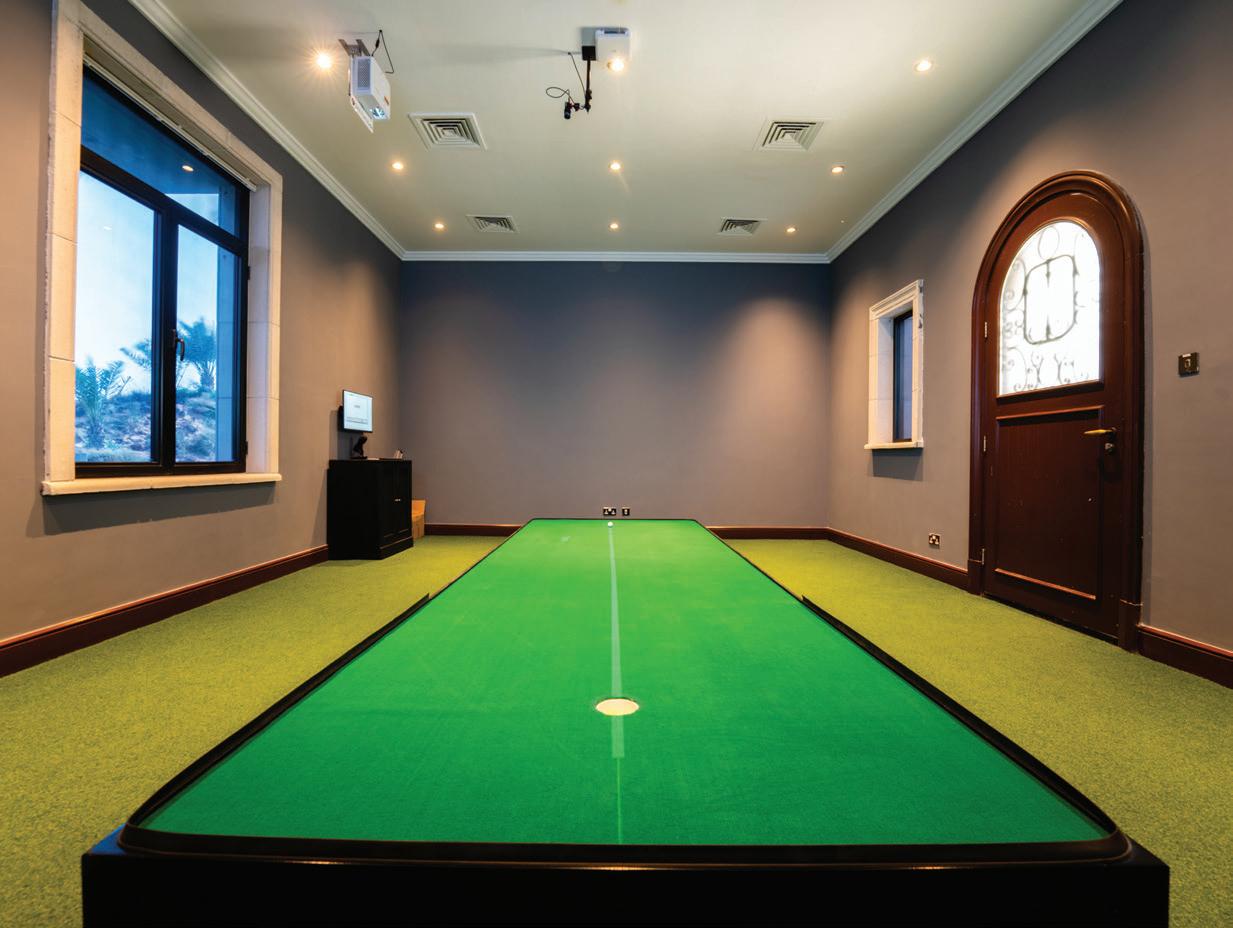
How Rory Flanagan and
Golf are changing indoor golf in the Middle
Rory Flanagan built his golf career around players, but these days his focus is on how the game is played off the course.
Before co-founding PLATFORM Golf, Irishman Flanagan carved his career as an agent, working his way up at Hambric Sports and alongside some of the biggest names in the game. Brooks Koepka during his early years in Europe, Tommy Fleetwood, Adrian Meronk and others. It gave the Dublin man a clear view of how players actually improve and, just as importantly, where the gaps were. But PLATFORM Golf grew out of one of those gaps.
“I always say it was the three Ps,” Flanagan explained. “People, product and practice. The product was the thing that really stood out to me early on.”
That product has changed quite a bit since those early days. What started as a putting-focused concept has turned
into a full indoor system built around one idea: making simulator golf feel more like real golf.
Through its patented platform and software, PLATFORM Golf introduces slope into the equation. Uneven lies for
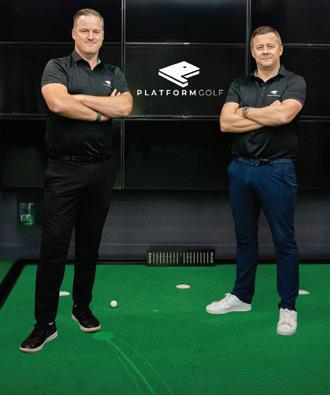
full swings, breaking putts you can actually feel under your feet. It sounds simple, but it addresses something that has always been slightly off with indoor golf.
“Indoors, everything is flat,” Flanagan says. “But if you think about it, 96 percent of shots on a golf course aren’t. That’s the piece we’ve focused on.”
That thinking is a big part of why PLATFORM has partnered with Trackman. The integration brings together two sides of the same equation. Trackman handles ball data and simulation at the highest level. PLATFORM adds the physical environment around it.
It’s a combination that’s starting to show up in more places, including here in the Middle East.
Yas Links Abu Dhabi is the first venue in the region to install PLATFORM units, adding three systems into its academy. For a course that already has a strong reputation for coaching, it’s a meaningful upgrade rather than a gimmick.
The appeal is pretty straightforward. Players can work on shots from uneven lies and putt on a surface that actually moves, which is something traditional simulators haven’t been able to offer. It also fits the way golf is used in the region.
Indoor golf isn’t just a winter alternative in the Middle East. During the summer heat, it becomes essential. Coaching, practice, corporate events, even casual play all shift indoors for a few months of the year. That creates a different kind of demand compared to Europe or the US. Flanagan sees that as a natural fit.
“All the data shows indoor golf is growing much faster than traditional golf,” he says. “It’s more accessible, it’s easier to engage with, and in places like the Middle East, there’s a real need for it.”
That accessibility piece comes up a lot in how PLATFORM Golf is positioned. Golf in the region still carries a premium feel, and while that’s part of its appeal, it can also be a barrier.
The company has tried to address that in practical ways. Lowering the height of the platform to make it easier to install in different spaces. Bringing down the cost compared to other systems. Offering different versions depending on what a facility or developer actually needs. That last part is starting to matter more.
Across Dubai and Abu Dhabi, new developments are being built around lifestyle. Gyms, wellness spaces, shared facilities. Golf simulators are starting to sit in that mix, whether in residential buildings or private villa communities. Flanagan says those conversations are already happening.
“We’re part of that discussion now,” he says. “When developers are decid-
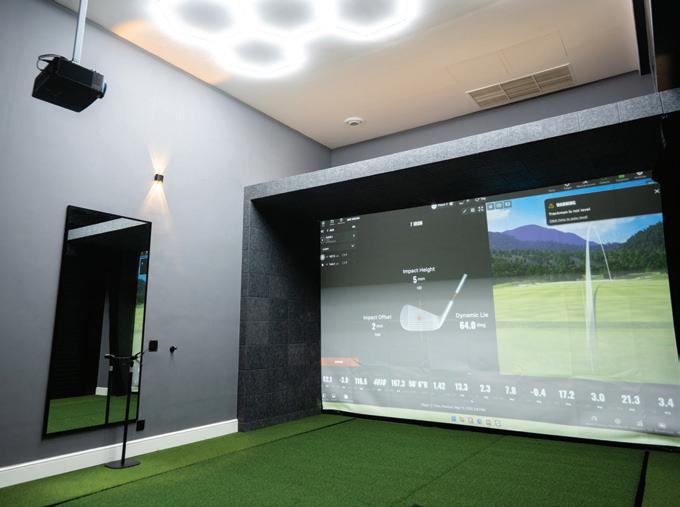
“All the data shows indoor golf is growing much faster than traditional golf”
ing what goes into a space, golf is becoming one of the options. It’s about differentiation.”
It’s not just about serious golfers either. A lot of indoor venues in the region are built around social use, where the golf is only part of the experience. Food, drinks, groups that might not have played before.
If someone who doesn’t play golf steps into a simulator, it can be a bit of a strange experience. Flat lies, perfect conditions, not much connection to what the game really feels like. Adding slope and movement makes it more intuitive, even if the player doesn’t realise why.
At the other end of the spectrum, it
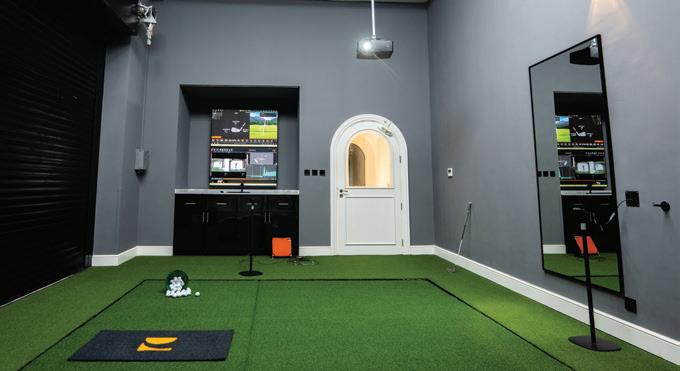
gives better players something closer to proper practice. Golf is opening up, but it still needs to keep its core.
“You’ve got all these new people coming into the game, which is great,” he says. “But you still need to give them a pathway to improve, and that’s where this kind of technology comes in.”
There’s also a coaching angle to it.
PLATFORM has started building out what it calls its Academy, a digital layer that connects coaches and players through the system. With names like Claude Harmon III involved, and with Harmon based in Dubai, there’s a clear link back into the Middle East.
The idea is that a coach doesn’t need to be in the same place as the player anymore. As long as both are using the same setup, the session can still be relevant.
It’s a different model, but one that fits where the game is heading, especially in regions that are investing heavily in golf infrastructure.
For now, though, the focus is still on getting the product into the right places. Yas Links is one of them. There will be more.
PLATFORM Golf is not trying to replace traditional golf. The aim is to make everything around it better, especially when being on the course isn’t always an option. In the Middle East, that’s not a small detail.
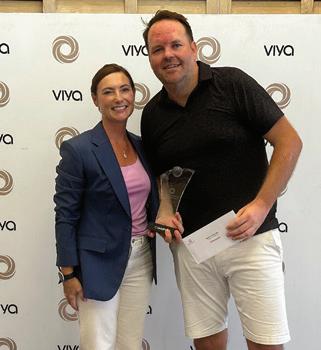

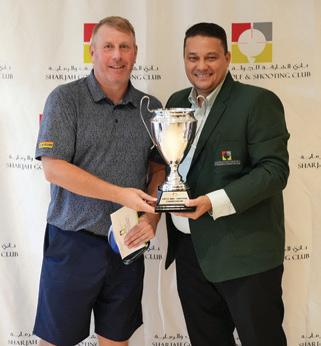
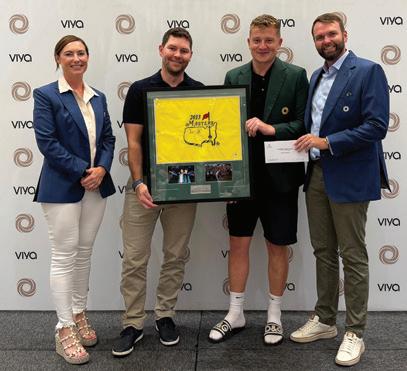
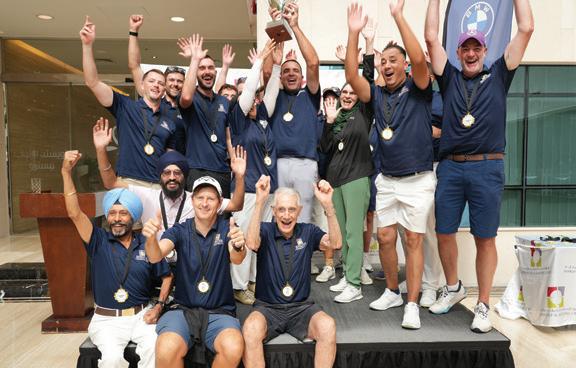
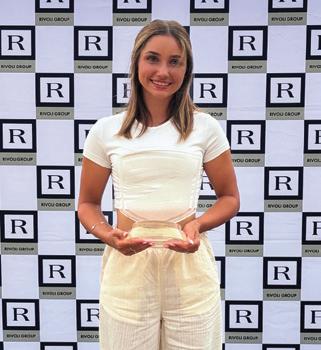
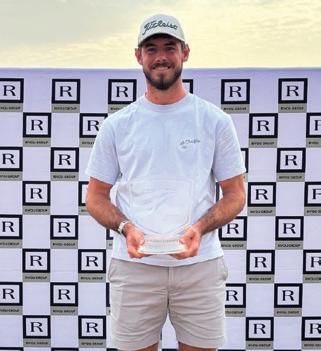




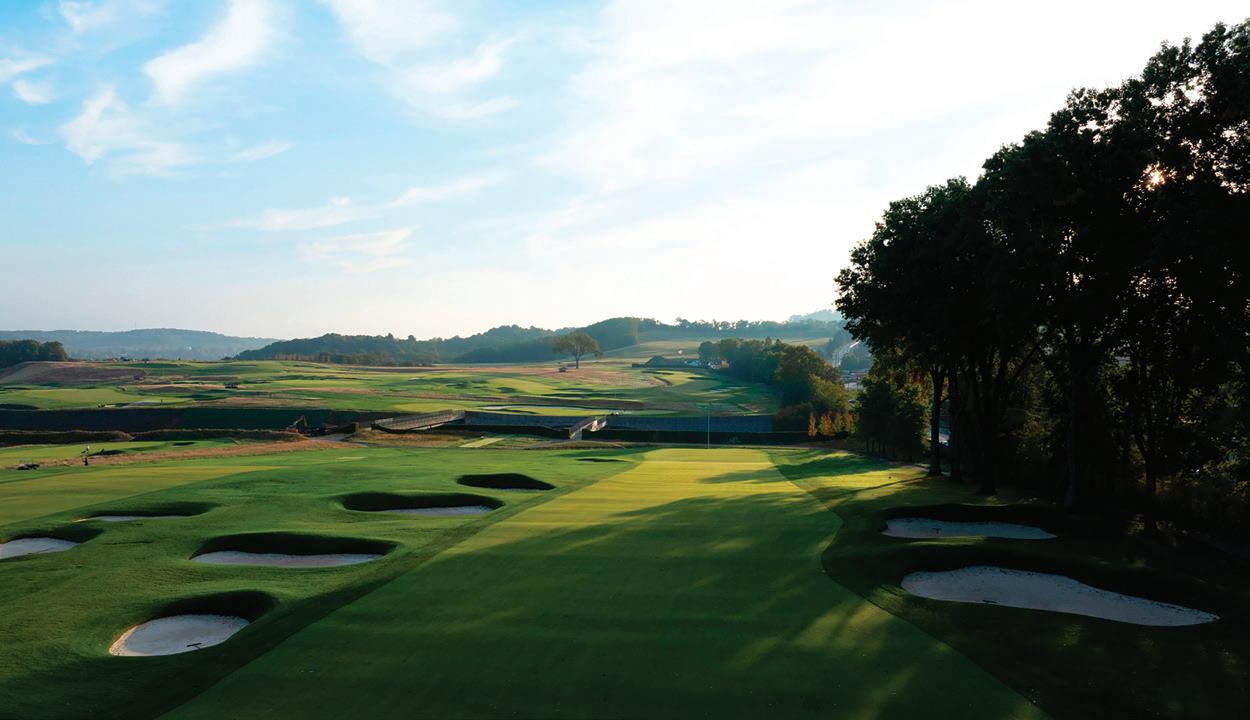
Ease into the round? Not at these courses BY
DREW POWELL
many golf course architects offer a gentle handshake to start a round. Donald Ross opens with a more confrontational greeting at this month’s PGA Championship at Aronimink G.C., where players must avoid the OB tight on the left. Our course-ranking panelists narrowly leave Aronimink off this list of courses that welcome you with a slap.
1. Oakmont (Pennsylvania) C.C.
This 490-yard par-4 (above) plays as one of the toughest holes during U.S. Opens. Miss the narrow fairway left in a cavernous bunker and you’re pitching out. Even the world’s best are often forced to land their approaches short of the frontto-back sloped green to stop the ball.
2. Augusta (Georgia) National G.C. TV struggles to show the beefy carry required to crest the hill, but length isn’t the main challenge. The tricky bend to the right, the deep fairway bunker and a dramatic green all make Tea Olive one of the toughest holes at the Masters.
3. Winged Foot G.C. (West) Mamaroneck, New York
On this opening par 4, if you find the sliver of fairway that bends left, knock it on the green in two and maybe you can escape with bogey. Maybe.
4. Royal Lytham & St. Annes England
Lytham, which last hosted The Open in 2012, demands a precise mid-iron on the par-3 first. Trees next to the tee box hide the prevailing wind, and pot bunkers punish left, right and short misses.
5. The Olympic Club (Lake) San Francisco
A par 5 for members, the 520-yarder becomes a mammoth par 4 during championships. Before you step into the approach, take in the views of the Golden Gate Bridge.
6. Oak Tree National Edmond, Oklahoma.
Thread your tee shot through the narrow corridor and you’re left with a lengthy
approach to an elevated green guarded in front by a lake.
7. Royal Portrush G.C. (Dunluce) Northern Ireland
Take away the OB stakes just steps off each side of the fairway and this midlength par 4 is a benign opener. But those white soldiers are there, as Rory McIlroy (remember 2019?) can attest.
8. Oakland Hills C.C. (South) Bloomfield Hills, Michigan.
Gil Hanse’s restoration increased the size of the fairways and greens, but don’t be fooled, The Monster lives. Navigate the pinching bunkers and wavy putting surface at this long par 4 and you’ll appreciate Donald Ross’ genius.
9. Chicago G.C. Wheaton, Illinois.
This straightaway par 4 doesn’t intimidate with OB or water but still demands two pure strikes to avoid the gnarly rough and cross bunkers.
10. Machrihanish (Scotland) G.C.
Hitting over the ocean to a fairway set diagonally and guarded by pot bunkers, this links on Scotland’s west coast opens with equal touches of beauty and difficulty.