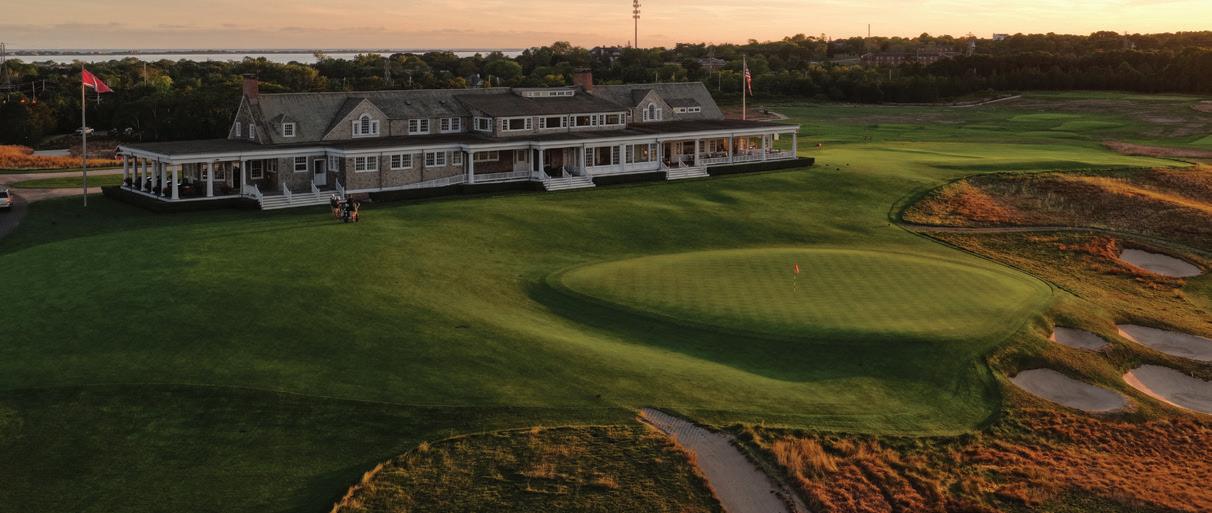
One of the founding fathers of American golf. Page 32
4 Practice Like A Pro Winning lessons, relatable misses, and range habits.
BY HARRY GRIMSHAW
the
starter
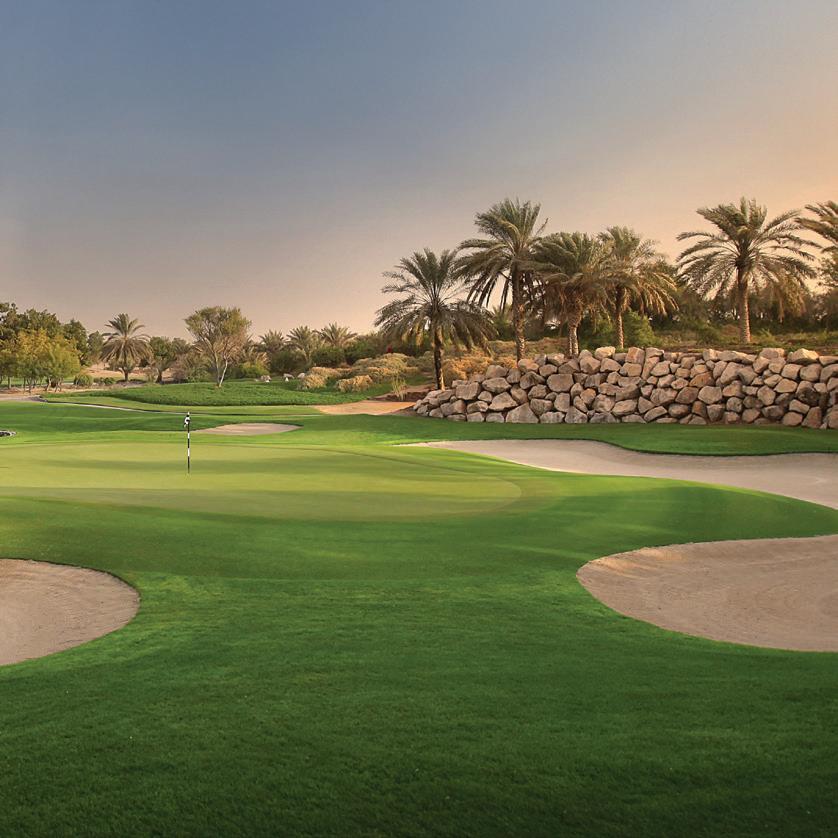
6 Links by the Gulf
Greg Norman’s Al Mouj Golf offers championship play along Muscat’s stunning coastline.
voices
8 Journeys
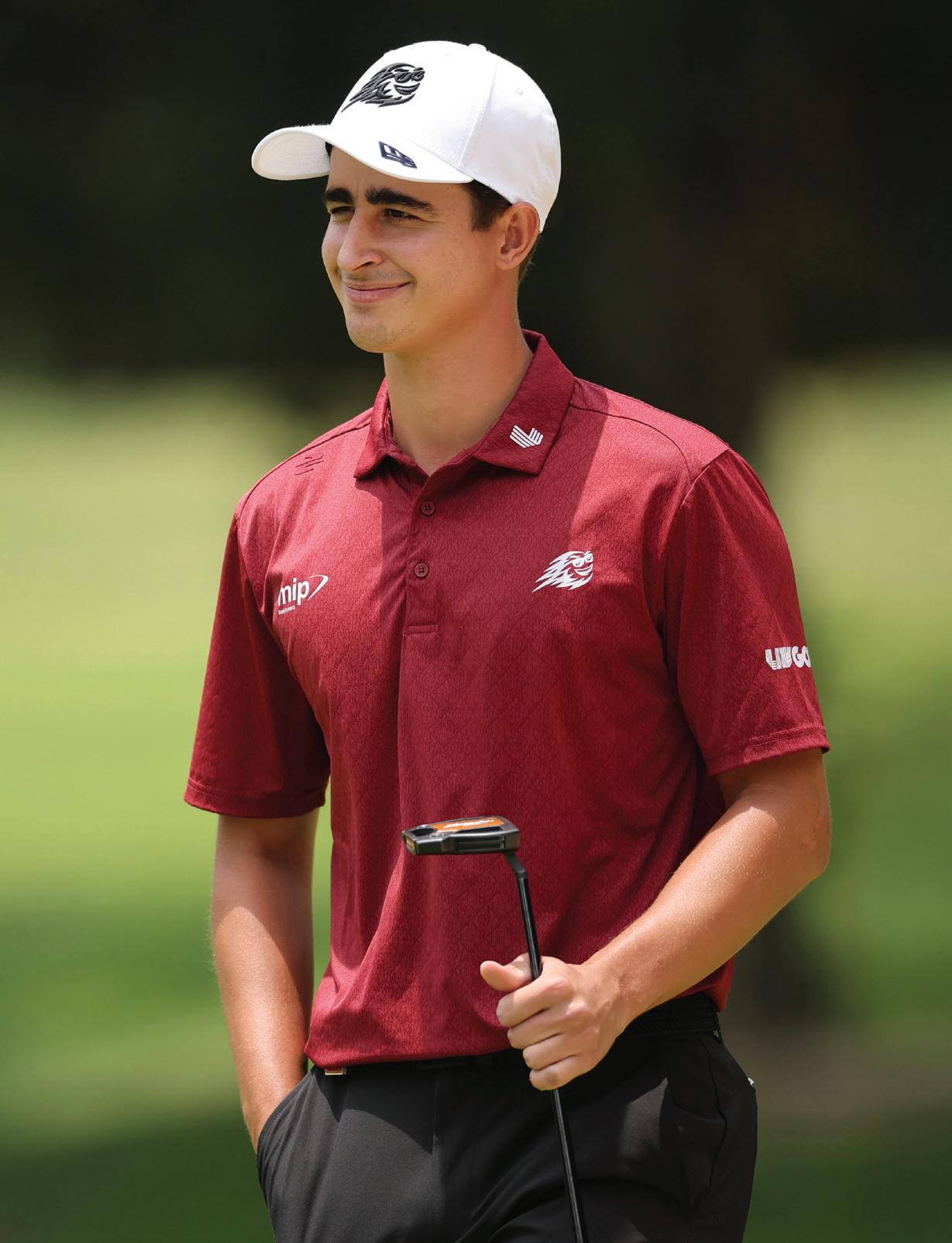
Joining LIV Golf in 2025 was a big decision.
WITH HARRY GRIMSHAW
10 The Undercover Pro
Staying out of the PGA Tour gossip machine.
WITH JOEL BEALL
12 Paying Dues
What does it take for a golf artist to make a living?
BY PAUL SULLIVAN
features
42 Golf During A Conflict
How the Middle East golf scene is adapting and thriving despite the hurdles.
BY HARRY GRIMSHAW
44 Behind The Tour
Modern professional golf looks very different from the game it was 20 years ago.
BY HARRY GRIMSHAW
48 Put My Game To Work for You
This tour winner is chasing a lot of the same swing fixes you are. Here’s exactly what he’s working on.
BY CHRIS GOTTERUP
56 Welcome Aboard the Most Exclusive Trip in Golf
Bringing your clubs on a private jet around the world goes like this.
BY MAX ADLER
how to play
16 Up and In
How J.J. Spaun won last years U.S. Open with this certain chipping technique.
BY JOSH GREGORY
18 Fairway Splitter
Aaron Rai doesn’t overthink his swing, and the results speak for themselves.
BY LUKE KERR-DINEEN
20 Phil’s Flop
A look back at Mickelson’s first time explaining his signature shot.
BY RON KASPRISKE
what to play
Hot List Part 5
24 Golf Balls
We assembled our intrepid group of Hot List playertesters to identify the best golf balls of 2026
where to play
32 Peconic Punishment
A closer look at the evolution of Shinnecock Hills’ iconic design ahead of the 2026 U.S. Open.
BY DEREK DUNCAN
40 Blank Canvas
How public courses can be more like private clubs.
BY DEREK DUNCAN
41 Next Wave
Here’s what this up-andcoming architect learned from working at Bandon Dunes.
WITH DEREK DUNCAN
the gulf club
66 Club News
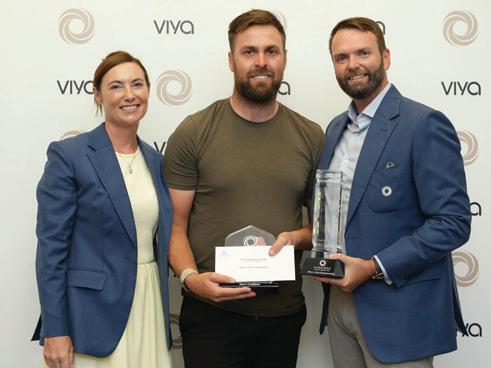
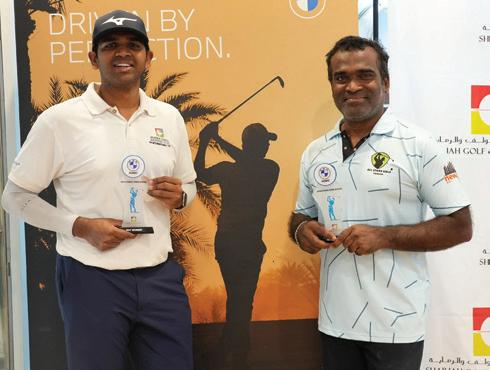
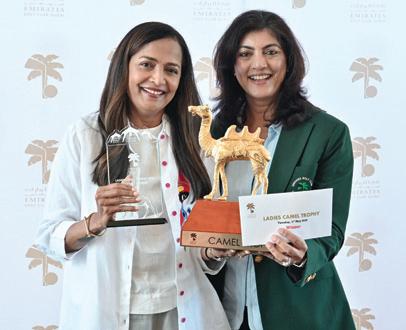
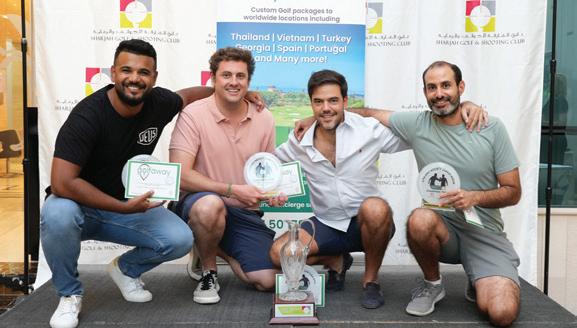
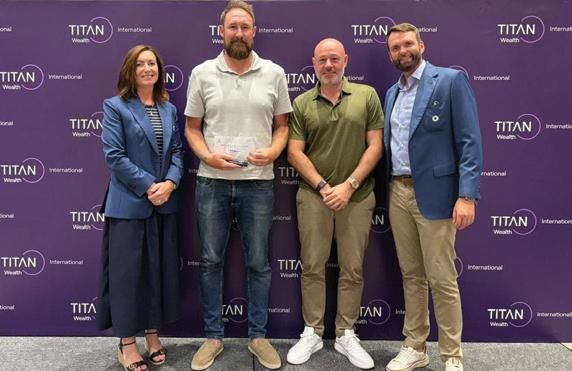
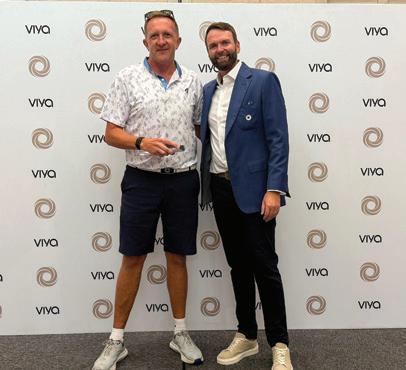
A gallery of a handful of the tournament winners in the Middle East region. See if your trophy shot made the shortlist!
Where the game is going
A fresh look.
BY HARRY GRIMSHAW
THIS MONTH’S ISSUE of Golf
Digest Middle East brings together a mix of modern tour insight, regional perspective and the kind of practical instruction every golfer can take straight to the course.
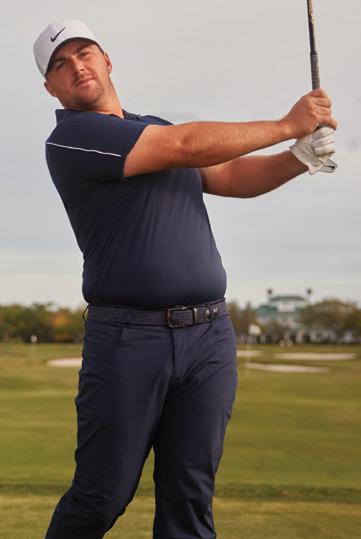
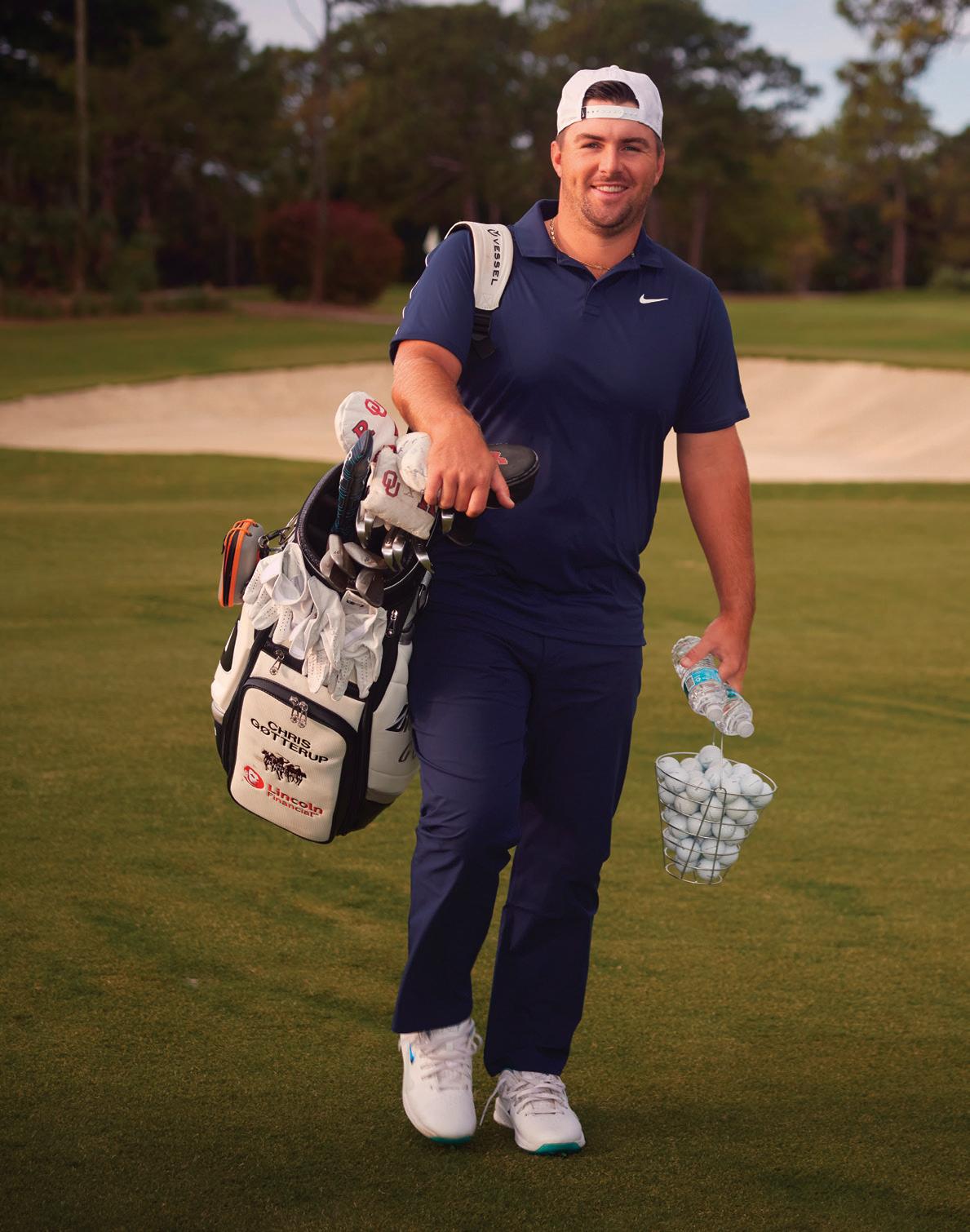
Leading the way is our cover star, Chris Gotterup, whose refreshingly honest approach to practice and performance makes him one of the most relatable players in the professional game today. Gotterup opens up about the swing thoughts, misses and range habits he is working through, proving that even global winners chase many of the same fixes as the rest of us mere mortals!
Elsewhere, we continue to explore the changing landscape of professional golf. We examine the decision-making process behind Luis Masaveau’s journey to LIV Golf, while The Undercover Pro takes a candid look at life away from the PGA Tour gossip cycle. We also sit down with those working behind the scenes of the modern game, from the realities of making a living as a golf artist to the evolution of tour life itself in Behind The Tour, where we examine how dramatically the professional circuit has changed over the last two decades, through the lense of the European Tour Performance Institute.
Closer to home, we focus on the resilience and continued growth of golf across the region. Our feature on golf during a conflict explores how the Middle East golf scene continues to adapt and thrive despite ongoing challenges, while our travel section takes us from the stunning coastline of Al Mouj Golf to the timeless challenge of Shinnecock Hills Golf Club ahead of the 2026 U.S. Open.
Instruction, as always, remains central to what we do. From J.J. Spaun’s winning short-game technique to Aaron Rai’s simple but effective approach off the tee, alongside a look back at Phil Mickelson’s iconic flop shot explanation, there is plenty here to help
sharpen every aspect of your game.
Our Hot List coverage continues this month with a deep dive into the best golf balls of 2026 and, of course, we continue celebrating the local game through The Gulf Club, highlighting standout tournament performances from across the Middle East region.
From everyone at Golf Digest Middle East, we hope you enjoy the issue!
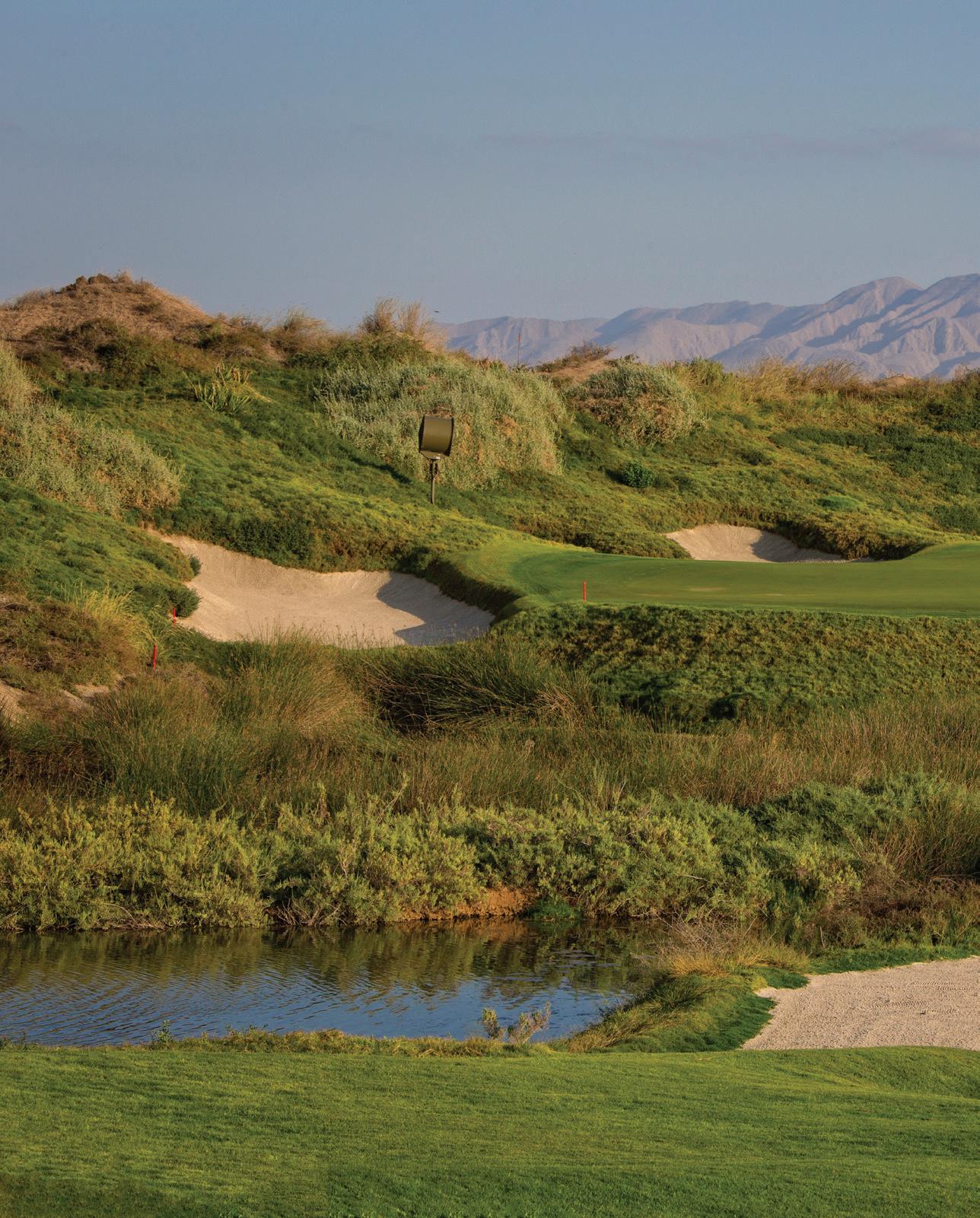
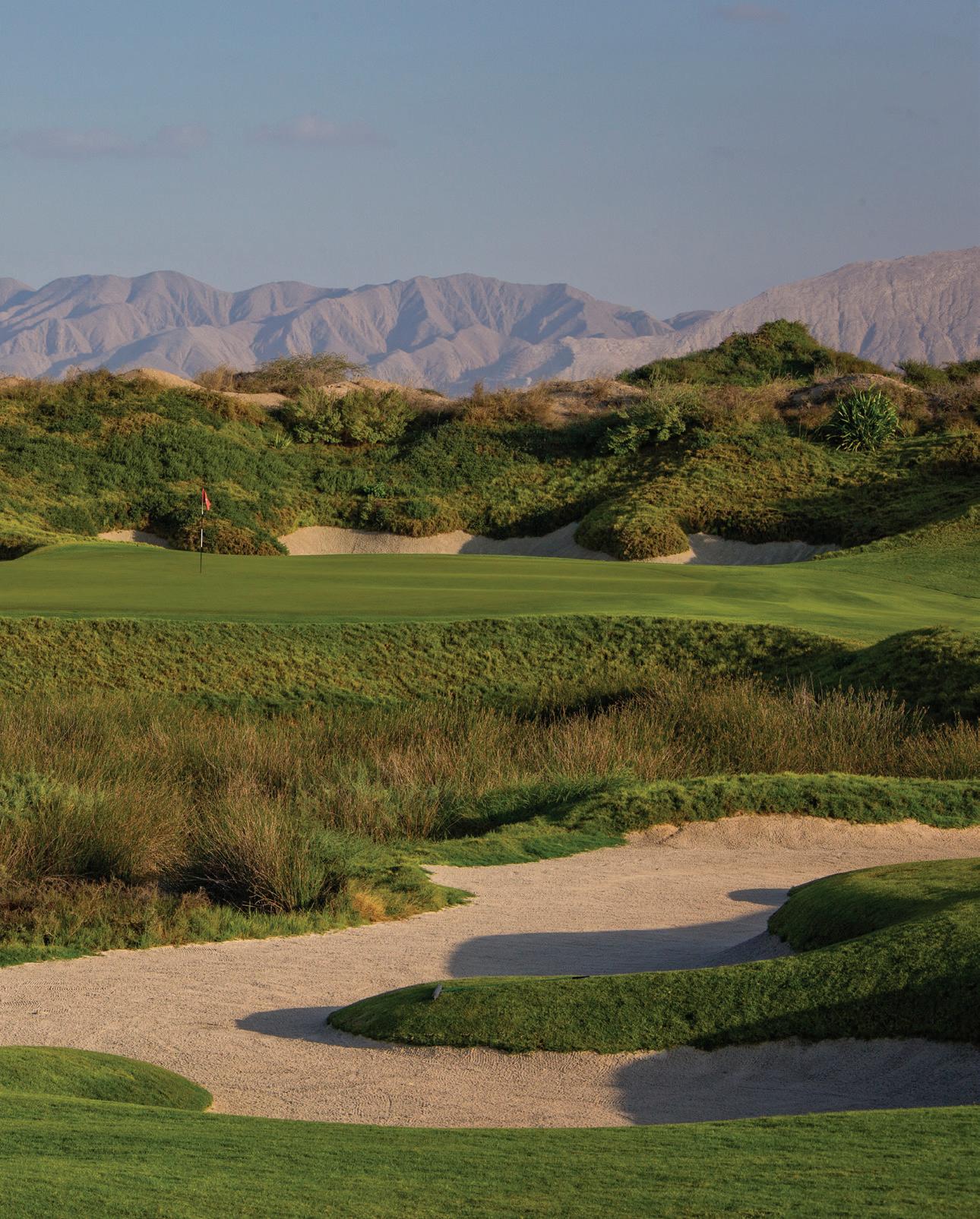
Greg Norman’s Al Mouj Golf offers championship play along Muscat’s stunning coastline
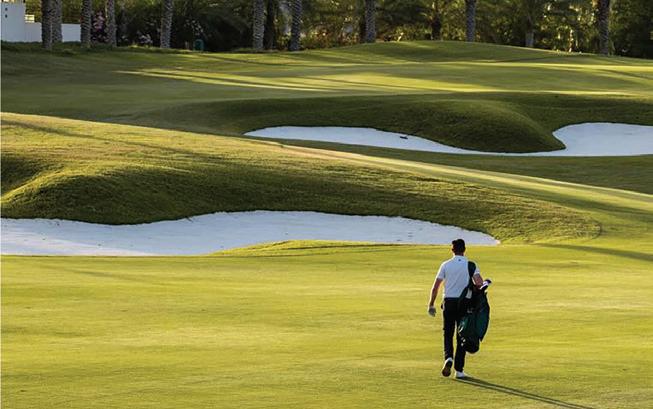
SET ALONG THE STUNNING coastline of Muscat, Al Mouj Golf offers one of the most scenic and unique golfing experiences in the Middle East.
Designed by former World Number One golfer Greg Norman, this award-winning, 18-hole championship links course stretches along two kilometres of pristine Gulf of Oman shoreline, combining natural beauty with a challenging yet enjoyable layout for players of all levels.
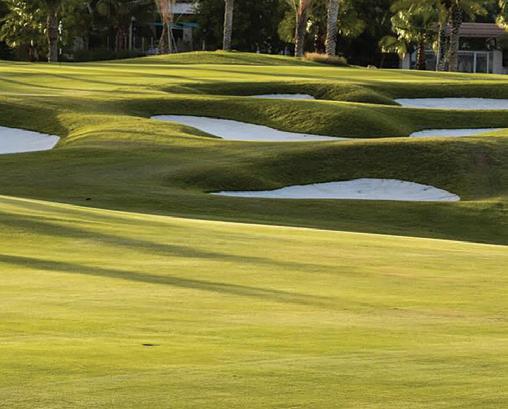
Known for its immaculate conditioning and dramatic sea views, the course blends traditional links-style play with modern design, featuring rolling fairways, strategic bunkering, and coastal winds that add an exciting dimension to every round.
Al Mouj Golf has also hosted prestigious international events, on the DP World Tour and Asian Tour, further cementing its position on the global golfing stage.
Luis Masaveu: ‘I want to build a game that lasts for many years’
WITH HARRY GRIMSHAW
I●
●
●
started playing golf in Madrid because my dad loved the game. He bought me a set of plastic clubs when I was three years old, and he always says I loved it straight away. I used to spend hours in the back garden just hitting balls back and forth.
I’ve always been very competitive and loved all sports, but golf was the one that stayed with me. I have an older sister and a younger brother who both played when we were younger, but they never fell in love with it the way I did.
●
●
●
Around the age of 11 or 12, I also started playing football because it’s such a huge sport in Spain and all my friends played at school. But by the time I was 13 or 14, my dad told me it was becoming too difficult to balance golf tournaments and football matches at the same time, so I decided to focus fully on golf.
●
● ●
Growing up, I watched Sergio García all the time. He once played a pro-am at my home club in Madrid and signed the first golf ball I ever got from a professional golfer. I was also a huge fan of Jon Rahm and watched him closely after he turned professional.
Obviously, Seve Ballesteros and José María Olazábal are legends in Spain too, but I never had the chance to watch them play live.
● ● ●
The best moment of my amateur career was playing in The Open Championship 2024 and making the cut. Getting through qualifying was already an amazing feeling, but being there with my dad made it even more special because it felt like a dream we’d both had since I was a child.
Another huge moment came when I reached the semi-finals of the U.S. Amateur Championship 2024. That week gave me a lot of confidence be-
cause it was one of the first times I really believed I could achieve something special in the game.
● ● ●
Winning the Portuguese International Amateur Championship 2024 was another major highlight. Overall, 2024 was a massive year for me. I finished second at the Spanish International Amateur Championship 2024, qualified for The Open, played in the U.S. Amateur and then competed in the Spanish Open. Even in events where I didn’t feel I played my best golf, I still managed to compete well, which gave me confidence that my level was improving.
●
Playing on LIV Golf in 2025 was a big decision, but I felt it was the right one for my development. It gave me the chance to compete alongside players who have achieved so much in the game. When you’re younger, those players almost seem superhuman because you only see them performing at their very best. Being around them every week has taught me a huge amount.
●
Joining Fireballs GC full-time has also been a great experience. This season has been a bit of a rollercoaster because my team and I decided to focus on long-term improvement. We’ve been making changes to my swing and practice routines to help me become more consistent and build a more stable game for the future.
At times, that’s meant struggling a little more with results, but it has
also been a valuable learning experience. The level on LIV is incredibly high, and if you don’t play well, you can quickly find yourself near the bottom of the leaderboard. In many ways, though, that pushes you to work harder, improve faster and learn more about your game.
● ● ●
Turning professional also made me realise how much stronger the competition is. As an amateur, there are always great players around you, but as a professional you’re competing against the best players from every generation. You have to improve in every area — mentally, technically and physically — and that’s something I really enjoy about professional golf.
● ● ●
One of my goals this year was to win my first professional event, but over time my mindset has changed slightly. I’ve realised it’s more important to focus on building a game and mentality that can last for many years because, ultimately, I want to compete for major championships.
● ● ●
My coaches are helping me focus more on the process rather than results. The aim is to approach every round the same way, no matter where I’m playing or what the score is. The objective is always to shoot the lowest score possible.
● ● ●
As a kid, I always dreamed of playing on the DP World Tour, so earning a place there has become one of my biggest goals. With only six events on the HotelPlanner Tour, it’s going to be very difficult, and I’ll need to play extremely well if I want to finish inside the top 15 on the Road to Mallorca and secure my DP World Tour card.
LUIS MASAVEU
LIV GOLF
AGE: 23
TURNED PROFESSIONAL: 2024
NATIONALITY: SPANISH
Staying Out of the PGA Tour Gossip Machine
Our instructors, not wives, tend to be the loose talkers
A COUPLE OF WINTERS AGO, I was in Hawaii watching a bowl game with a group of players and their wives: Good time, relaxed crowd, everyone having fun. At one point I got up to use the restroom, caught my foot on a stool and stumbled. Didn’t fall, just one of those ungraceful half-trips that happen when you’re navigating a crowded room. Someone cracked, “Cut
him off.” Everyone laughed. I laughed. I hadn’t had a drink since college.
Over the next two weeks, I received texts from multiple people asking if I was OK. A caddie I barely knew told a mutual friend I’d been “a mess” in Hawaii. A coach apparently had a detailed account of the evening that featured me slurring words. Another version had me being asked to leave. The whole thing was a
game of telephone that grew with each call. That’s professional golf for you.
Other pro sports have a clubhouse code of what happens in the circle stays in the circle. It’s a culture enforced by proximity and shared purpose. You’re teammates. You eat together, win and lose together; you need each other.
Golf has none of that architecture. We’re individual contractors. There are
150 of us at any given event, and the week has enormous amounts of dead time: practice rounds, rain delays, waiting to tee off. There’s no locker-room energy keeping things contained. You’re bored, you’re a little anxious, and someone’s telling you something interesting about someone else. The conditions are almost designed for gossip to thrive.
Conventional wisdom is that wives and significant others are the primary engines. I understand the logic—all these spouses with time on their hands, sharing travel and dinners—but it’s wrong. In my experience, most wives and girlfriends are largely indifferent to what’s happening around them. They care about their husbands, their families, their own lives. The idea of them sitting
around dissecting some other player’s swing coach drama or hotel room situation—not likely. Most are just trying to get through another week in another city in another rental car with child seat adaptors and Bluetooth settings in different places.
The real culprits are the instructors. Think about the position they occupy. They travel between players. They spend hours one-on-one with guys who are under stress, frustrated and talking freely because they’re paying for the conversation and, therefore, feel entitled to vent. Some coaches can be trusted to hold things in confidence, but too many speak out of school, often for attention. If you’re the guy who always seems to know things, people want to talk to you. Gossip is social currency that some coaches spend carefully. Others spend it like they’re on a hot streak.
of a problem there than in Scottsdale or Vegas? Somehow, everyone in Jup knows everyone’s business faster than seems physically possible. A guy on tour told me a story last year about how he went out on a date—dinner first, then a bar afterward—and by the time he walked into the bar, he had three text messages asking who his new lady was. He hadn’t recognised a single person at dinner.
Most gossip is harmless. It’s someone’s funny story about a playing partner making a faux pas in front of a sponsor—think wrong name, wrong product, wrong moment. Or stuff from a guy’s home club. Also football talk, specifically who has suite hookups and can get tickets to the good games. Occasionally it edges into someone’s personal life, but honestly, most guys out here are very respectful. There’s an unspoken floor. It’s usually the same gentle roasting you’d do among your own friends—the kind where if the subject heard it, he’d roll his eyes and laugh, too.
‘The veterans gossip more . . . The last thing a 23-year-old who just got his card is thinking about is what’s going on in someone else’s life.’
Caddies and media can be gossipy, too, but not as bad as us players. Here’s something I didn’t expect coming out on tour—the veterans gossip more than the young guys. Not in a mean way, but more like how your dad’s friends talk at a backyard cookout. These older guys are mostly just trying to connect with players 10 and 15 years younger. They’re comfortable in their own skin, they’ve seen everything, and they genuinely enjoy shooting the breeze. The younger guys, when they come out, are almost always inward facing. They’re grinding, they’re nervous, they’re trying to figure out where they belong. The last thing a 23-year-old who just got his card is thinking about is what’s going on with someone else’s life. Give him five years and a few million and watch how that changes. Also, nowhere is gossip worse than in Jupiter, Fla. Why should it be more
That said, it does go wrong. Not long ago, a former Ryder Cup player hit a rough patch on the course. From what I heard—through his ex-caddie, which tells you something about the routing— part of what derailed him was an embellished story about his tipping. It cut him deep and threw him off for a good month. I know how that sounds. How can a grown man, a pro athlete, be rattled by a little story about a cheap tip? But I’ll push back. You’ve been hurt by gossip in your own life, too, something small that landed wrong and didn’t reflect who you actually are. It’s not always easy to keep the personal and professional separate, and out here, where so much of the job is mental, the wrong story at the wrong time can do damage.
My Hawaii story eventually died, but it took longer than it should have. I don’t lose sleep over it, but I think about it more than I’d like to admit, like when I’m in a room with a bunch of players and someone says something that lands a little sideways. You watch the face of the person it’s said to. You can almost see the calculation happening. They’re thinking, Do I store this or let it go?
On our tour the answer more often than not is to store it, just in case.
—WITH JOEL BEAL
What Does It Take for a Golf Artist To Make a Living?
BY PAUL SULLIVAN
In 1982, I n the PGA t our event that was the precursor to the AT&T Pebble Beach ProAm, Jerry Pate made a hole-in-one on the iconic 16th hole at Cypress Point Club, which requires a shot that carries 230 yards over the Pacific Ocean. Next to him on the tee were fellow pros Tom Watson, Raymond Floyd and Tom Kite along with some stout amateur partners, including former President Gerald Ford and Clint Eastwood. The moment was immortalised by LeRoy Neiman, one of the most popular sports artists of the 1970s and 1980s. He painted the shot in his colorful style, with a focus on the ball flying over the intimidating expanse of sea to green.
Just one problem: Neiman painted the ball white. Pate later told him he hit an orange ball, so Neiman changed it.
Critics.
The painting hangs on the wall in the Cypress locker room with the original orange ball in a glass box next to it. A copy of that painting—one of 350 serigraphs—will run you about $17,000 today.
Being a golf artist is different today. The most successful have shown a willingness to adapt how and what they paint. They gladly work with club committees on commissions that might be driven more by clubhouse space than artistic inspiration. Also, having some showmanship around their process doesn’t hurt either. If they can ascend to the inner circle of golf, the work and prime invites flow.
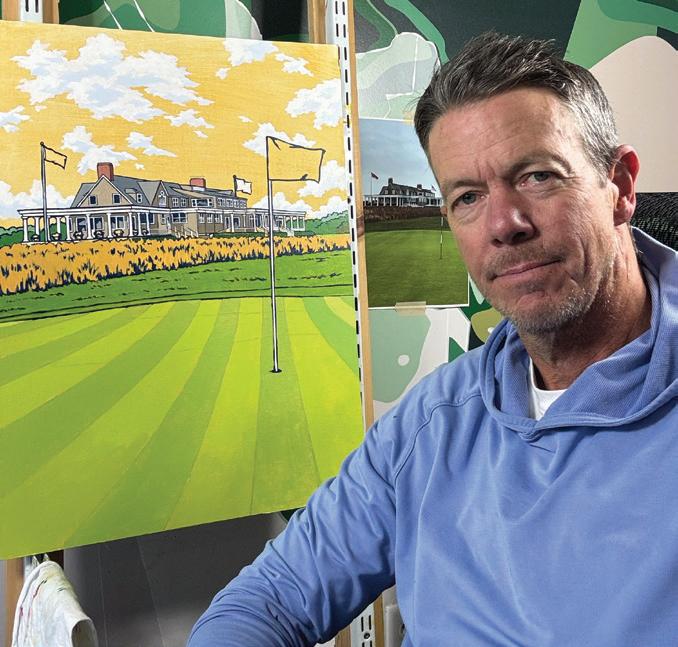
Lee Wybranski, a 10-handicap who has been making art since he was a kid, is arguably the most popular golf painter today, but his life isn’t all painting en plein air while wellstruck 5-irons whiz past. His output is varied.
Wybranski designed the official championship poster for this year’s U.S. Open at Shinnecock, as he has done for every U.S. Open since Torrey Pines in 2008. Back then, the USGA selected a new artist for each championship, but that year Wybranski’s poster sold double what any other U.S. Open poster had. Thus began a collaboration approaching two decades.
He also designs the official posters for the other three majors, the Ryder Cup, the Curtis and Walker Cups, and other marquee events for male and female golfers. These are first-tier commissions with the posters as the volume game. Priced at $30 each, Wybranski earns more when people buy direct from his website, less when he must
split the price with the host body. But at Shinnecock, he could sell 10,000 posters that week.
He holds on to the original and offers to sell it to either the host club or the champion, typically for around $25,000. Torrey bought that first one. Justin Rose, Jordan Spieth and Rory McIlroy are some of the major champs who own originals.
Logo design and redesign is another lucrative outlet. Clubs typically pay $5,000 to $35,000. Clubs pay more for a complete makeover of their logo and course identity while the lower prices would just be for cleaning up the design a touch, as Wybranski did for Merion.
Often clubs want to memorialise their course routings in a piece that will
U.S. OPEN PREP
Painter Lee Wybranski with his unfinished canvas of Shinnecock Hills.
• O icial EGF Handicap (GHIN), recognised worldwide
• Discounted green fees at all UAE golf clubs
• Play in events/competitions and receive awards
• Third party and property damage golfer’s insurance
ABU DHABI GOLF CLUB (NATIONAL COURSE) – ABU DHABI, UAE
hang prominently in the clubhouse.
Those commissions run upward of $45,000, with additional prints costing clubs $250.
PERFORMANCE
ARTIST
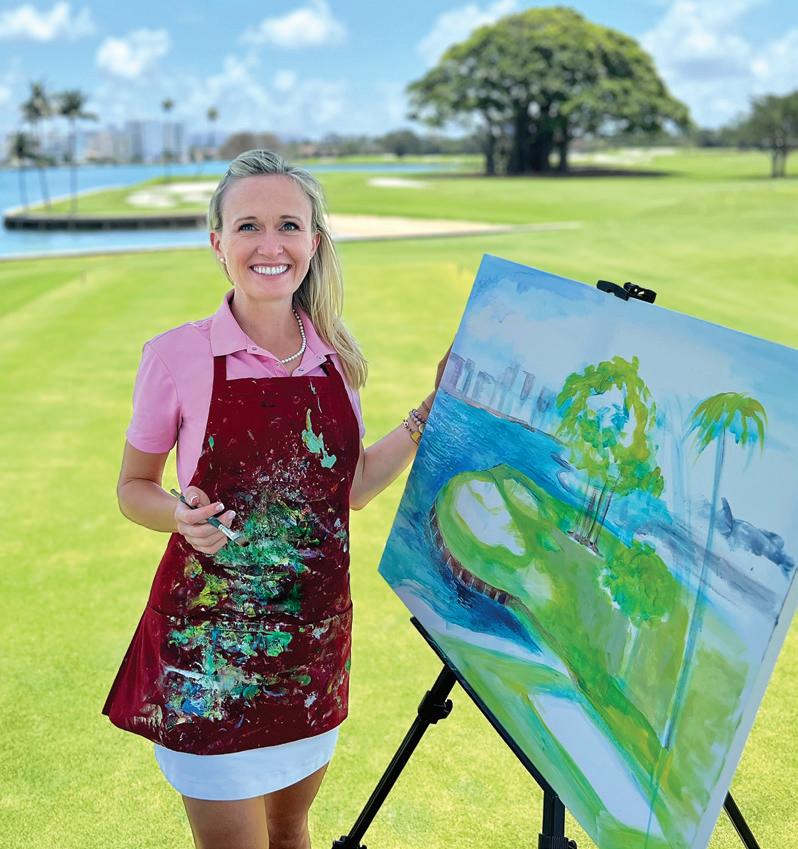
Cassy Tully paints golf landscapes on grounds before live audiences.
Wybranksi began his art career doing pen-and-ink drawings of mansions on Philadelphia’s Main Line before getting the idea to paint golf clubhouses—where he could sell prints to many more members than a single homeowner. His earliest was of Winged Foot’s clubhouse in 1995. Then someone pointed out that golf was played in colour. That changed his approach. He taught himself how to use watercolours, and he went on to paint most of the holes at Caves Valley as tee gifts for the annual member-guest.
“I didn’t feel like I was making a real living until the U.S. Open at Torrey Pines,” he says. “Today we’re booked out for a year. Being the U.S. Open artist really gave me status, and it took off with that collectability.”
Golf art, like the game in general, is finding engagement through different means, and some artists work to meet that desire. Joe Woldt, a physical therapist, golfer and self-trained artist, has a burgeoning business drawing golf holes on the covers of scorecards. It started on a trip with three friends to Sand Valley, where afterward he gave each a card with a distinctive course image from their trip.
“I tagged Sand Valley and posted them on Instagram,” he says. “My phone blew up.”
Woldt’s scorecard art sells for between $300 and $700, but he’s not quite ready to quit his day job.
Dave Baysden moonlighted for years as a golf artist while working at an engineering firm in Charlotte, N.C. Attention to his work was growing when COVID hit. With uncertainty at work, he volunteered to be laid off and went full time into golf art. He was friendly with Zac Blair, the PGA Tour golfer and founder of The Tree Farm. That connection opened his eyes to the world of golfers willing to pay for art that commemorates their trips.
Today, Baysden has a range of
offerings. He’s created digital golf art that sells for $12. He’s made watercolour paintings that sell for up to $2,500 and which Seamus Golf has put on headcovers and B. Draddy will put on clothes. Baysden also drew cartoons for a book that the Arnold Palmer Invitational gave to children.
There is also a performative aspect to being a painter that can create opportunities. Wybranski was part of a Peter Millar ad where he painted outside. Woldt was invited to Erin Hills to paint No. 9 on video. Cassy Tully, who got her start at Whistling Straits, has made painting before a crowd part of her regular offering to fundraising clients. “My live paintings on course paired
with a live auction have become very popular,” she says. Tully has partnered with PGA of America’s Reach Foundation after two recent championships to raise $70,000 for charity. She gets only a small portion, but that recognition helps her sell originals for $2,500 to $50,000 in her shop at Pinehurst.
Of course, some golf painters make much more. Graeme Baxter, once the official artist of the Open Championship, has sold oil paintings for half a million dollars. He’s squarely in the fine-art realm. He said he does not do posters or logos.
For Wybranski, posters are a democratizing force for collectors. “They’re priced so anyone can have one.”
Photograph by Yousef Al Harmoodi
Clock
Galbraith
Rivoli DIFC Mall, Dubai
Rivoli Marina Mall, Abu Dhabi
Painting by Faisal Abdul Qader
By Author Name
Up and In
“With J.J.’s chipping out of that U.S. Open rough, we worked on shallowing his angle of attack. Everyone thinks you have to be steep into the ball, but that often produces poor contact. The ball rockets off the face or goes nowhere. Instead, I had him move the ball up in his stance, put a little more weight on his back foot, and release the club through impact, so it feels like it’s working up. On the first hole of the tournament, he missed the green right in the rough on an upslope. Instead of swinging down on the ball, he swung along the slope—and chipped it in.”
EDITED BY RON KASPRISKE
—INSTRUCTOR JOSH GREGORY, WHO BEGAN WORKING WITH 2025 U.S. OPEN CHAMPION J.J. SPAUN (LEFT) ON HIS SHORT GAME THAT VERY SAME WEEK.
Fairway Splitter
Aaron Rai doesn’t overthink his swing, and the results speak for themselves
BY LUKE KERR-DINEEN
NO GOLFER ON THE PGA Tour hit more fairways in 2024 and 2025 than Aaron Rai: 1,597 out of 2,192—a whopping 73 percent. What’s his advice for better accuracy off the tee? To find balance—not literally, though that’s important, too—rather, balance in approach to the golf swing.
“I try to manage the amount that I look at my swing. It’s important to have an idea of where it’s at, but it’s very easy to overanalyse and look at all the little things,” says Rai, 31, of England,
winner of the 2026 PGA Championship and seven other international events.
“Even if you fix it on one day, the body might feel different on the next. I also try not to look at other people’s swings too often or too many videos online of different instructors and coaches. You have to find your key components.”
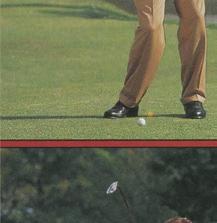
For Rai, balance starts at setup. He plays the ball a little farther back than most pros, which creates a little more spin for control and encourages more body rotation. When the ball is too far
up in his stance, his body stops turning and his hands start flipping. It’s among a few ways one of golf’s straightest drivers can get wayward.
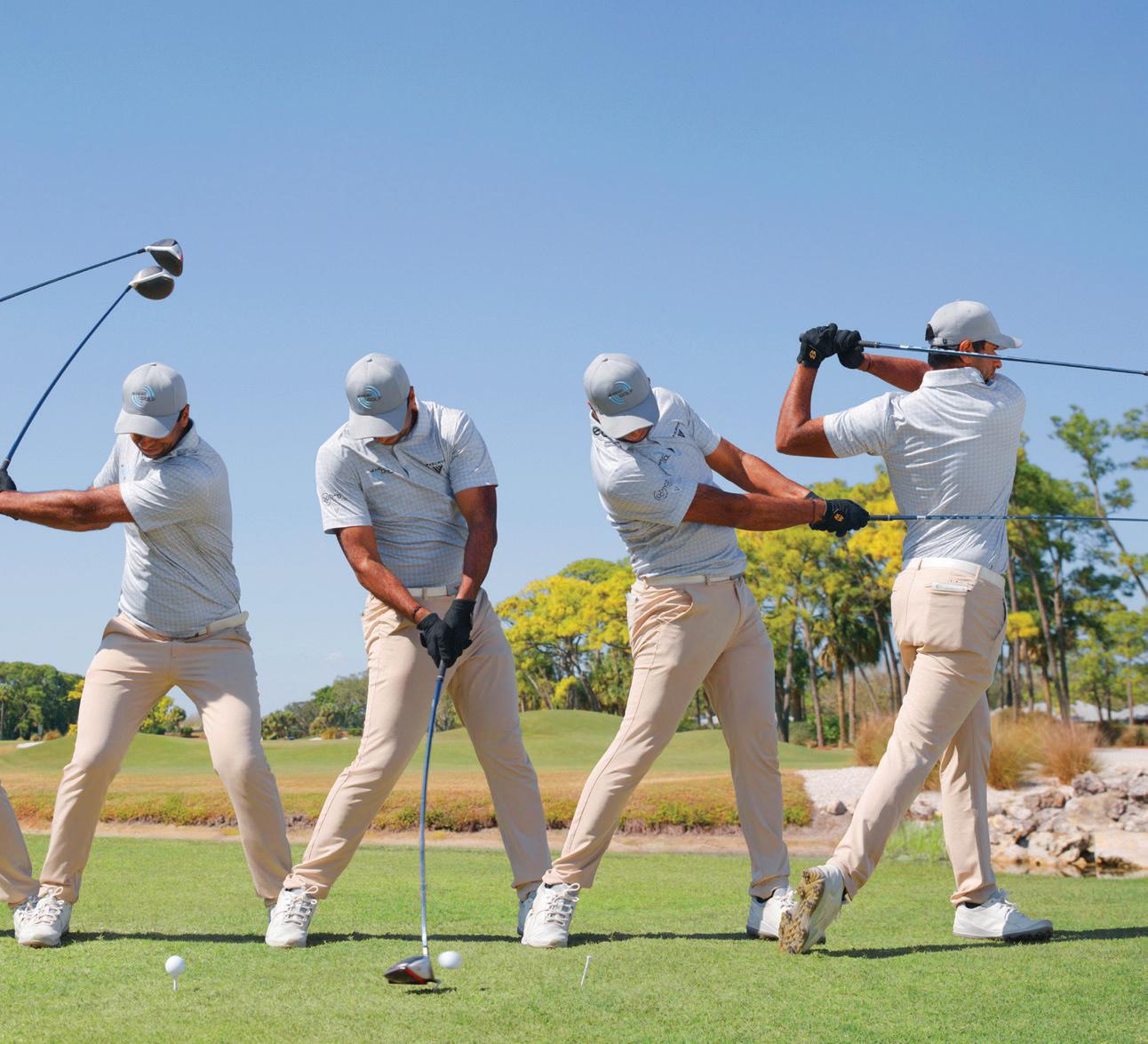
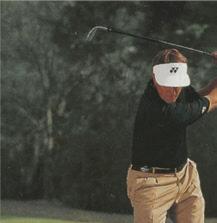
As he starts his swing, Rai says he wants his lower and upper body, along with the clubhead, turning back together. If he does it right, the clubface tracks back slightly outside his hands and a bit shut.
“I like seeing the face a little [shut] in the takeaway,” Rai says. “If everything starts back in one piece, it’s promot-
HAND WARMERS
Rai wears two gloves, a childhood habit from chilly golf days in England.
ing my body to work harder to rotate—a good thing.”
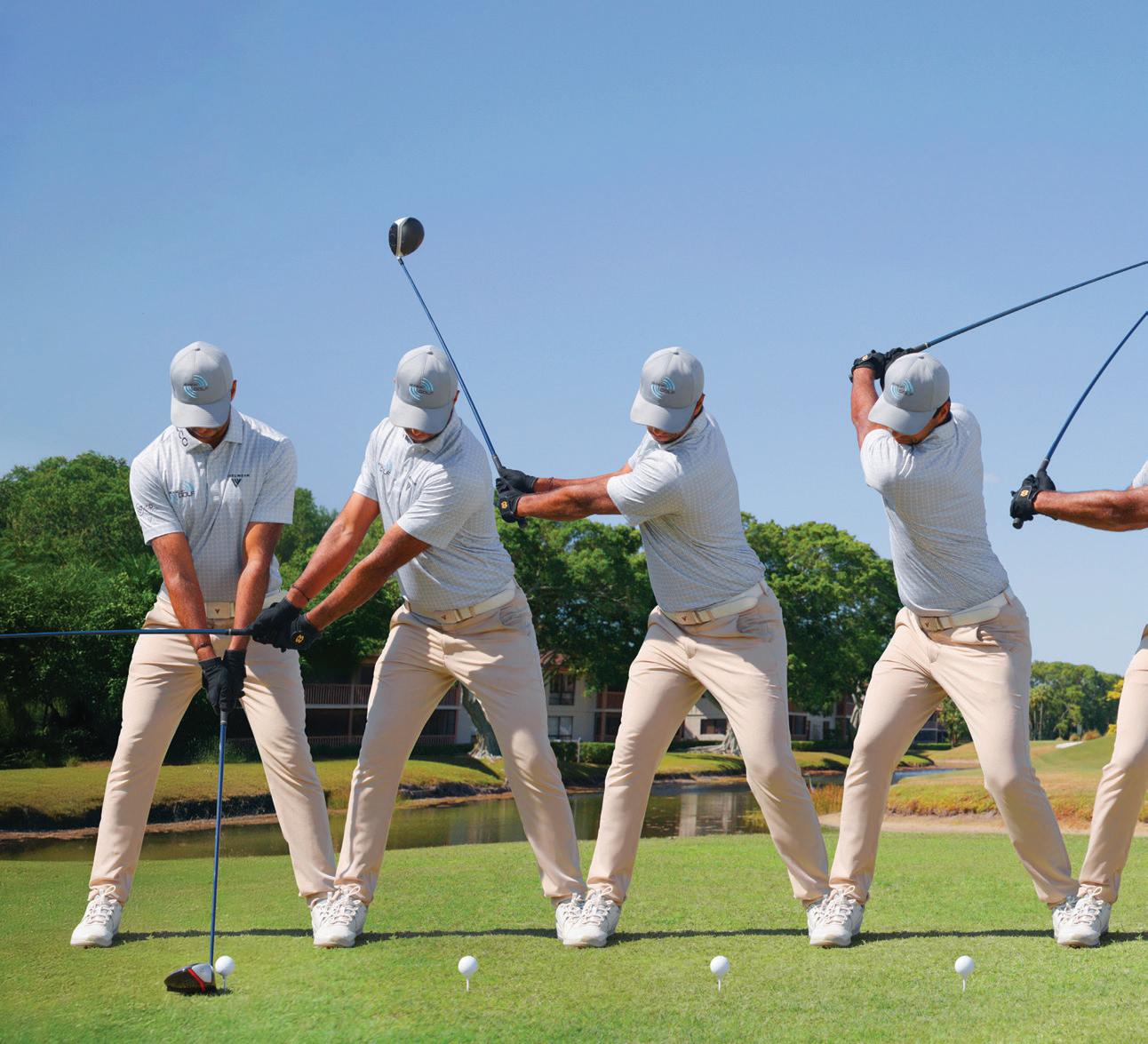
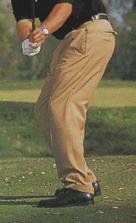
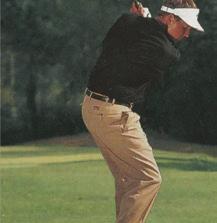
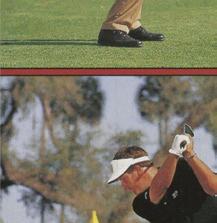
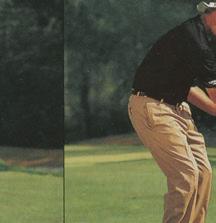
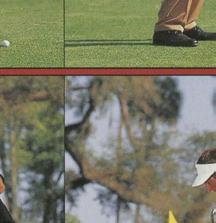
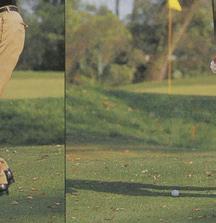
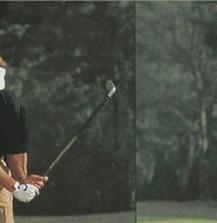
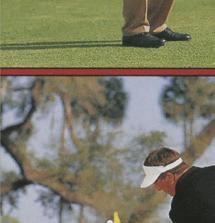
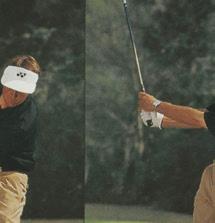
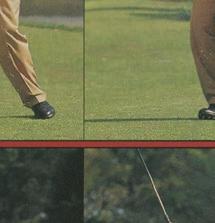
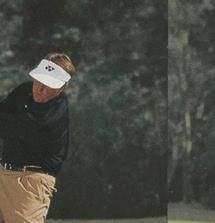
As he swings to the top, two words come to mind for Rai: solid and stable He wants solidity in his right leg, making sure it remains slightly bent to prevent his hips from sliding (above, fourth frame). And he wants stability in his head movement. He’s fine with it moving a little behind
the ball on the backswing but less so with irons.
When his hips slide and his head moves, it creates the need for compensations, Rai says. When he’s solid and stable, he says he can turn aggressively though impact and into the follow-through.
“My hips start coming backward a bit,” he says. “The ball’s already gone at that point, so I’m not sure it matters, but it’s something that’s been in my swing for a long time.”
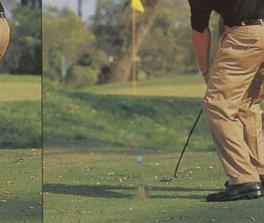
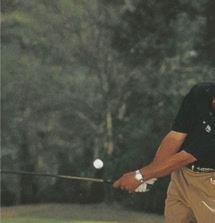
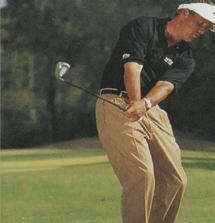
Phil’s Flop
A look back at Mickelson’s fi rst time explaining his signature shot BY
RON KASPRISKE
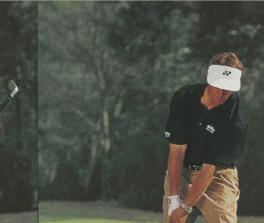
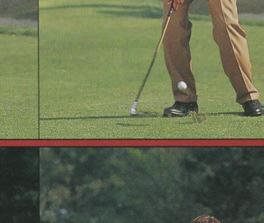
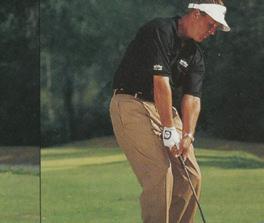
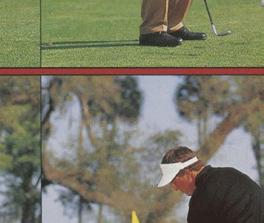
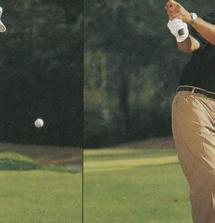
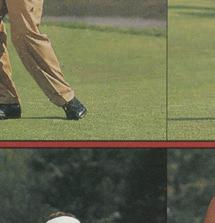
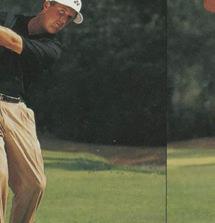
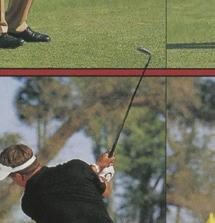
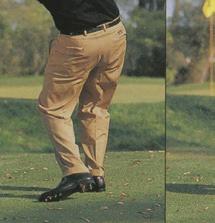
F O R MORE THAN TWO decades, beginning in 1992, Phil Mickelson was a Playing Editor for Golf Digest and shared detailed accounts of how he hit every shot in golf. That said, there’s one that stands out more than any other, even to this day— his infamous flop shot.
Back in the September 1999 issue,
we captured his signature shot with a high-speed camera and then got Phil to explain how to execute it. Here are the images and his take from 27 years ago:
“You might have the impression that the flop is a high-risk shot. In fact, it can be more forgiving than many conventional shots, provided you follow three simple rules:
1) Select the right type of sand wedge. “You need a great deal of loft to produce height on the shot. You want that 60-degree to have bounce nearer the rear of head. That way, the club will slide through the turf rather than bounce off it, while preventing the leading edge from digging.”
2) Assess your lie carefully. “If your
lie is fluffy, you’ll need a more level, shallow angle of approach through impact. If you’re playing off a hardpan lie, you’ll need a bit more of a descending blow—though not steep by any means.”
3) Don’t force the issue. “Position the ball off the heel of your lead foot. Align your feet and shoulders open, but aim the clubface at the target. Make
a full backswing. On the downswing, don’t hurry to swing the clubhead into the ball. Let gravity do the work. You want soft momentum. Finally, you want to strike the ground an inch or so behind the ball. It will explode off a cushion of grass and turf. You rely on the trajectory of the ball, not backspin, to stop it quickly on the green.”
Hot List 2026: Golf Balls
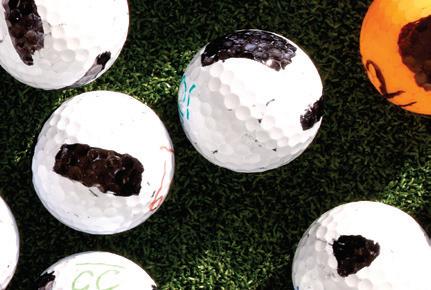
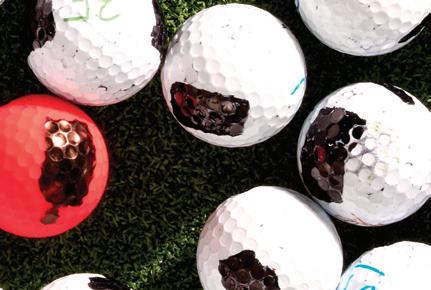
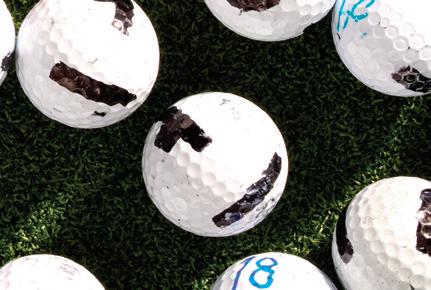
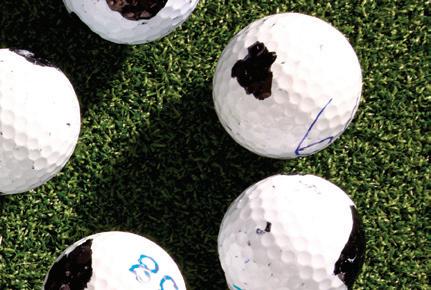
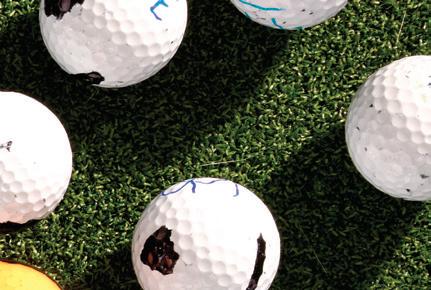
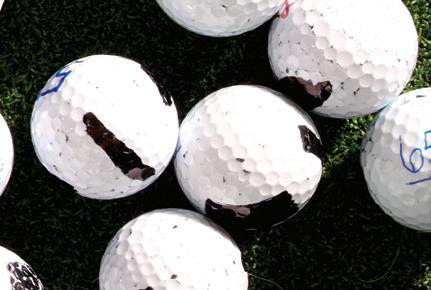
We assembled our intrepid group of player-testers to evaluate the current crop of golf balls with all distinguishing marks blacked out. After hundreds of impartial tests off the tee, from the fairway and around the green, here are the 43 models that made the cut.
EDITED BY PETER MORRICE
IF THERE IS A MORE INSCRUTABLE CATEGORY IN GOLF equipment than golf balls, we haven’t found it. As much as you might think all balls are the same, experts in the field know better. Chris Marchini, director of golf performance and innovation at Dick’s Sporting Goods and Golf Galaxy, wants golfers to start asking themselves more questions. He estimates that more than 60 percent of the time a ball fitting ends with players choosing a different ball than they came in using—and not just good players, either. “Average golfers miss a lot of greens,” he says, “so wouldn’t it make the most sense to have a ball that you could manage in those shortshot situations instead of just hoping? Because hope is not a strategy, especially the closer you get to the hole.”
The golf ball is vital, as Marchini says, because “it’s a complementary piece to the other 14 tools in your bag.”
We asked our player-testers to think about that full-bag experience during Hot List ball testing, conducted again at the Marriott Grande Vista resort in Orlando. We make it
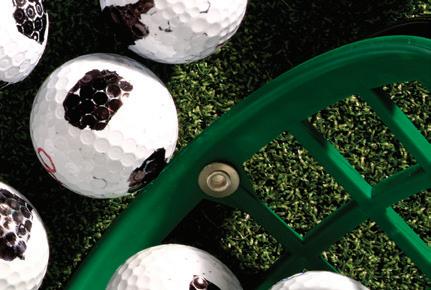
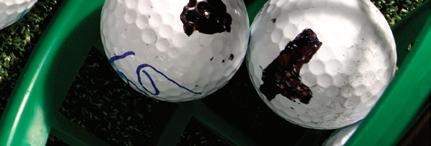
challenging because we take brand out of the equation. We make their evaluations as unbiased as possible by blacking out all distinguishing marks and logos on every ball. We considered 74 balls in this year’s testing before reaching our list of 43 Gold and Silver medal winners.
We divide golf balls into those with urethane covers and those with non-urethane covers. We believe that urethanecover balls provide the broadest range of full-bag playability, from long-distance, low-spin tee shots to crisply checking chips. That’s the reason the only balls that earned Gold on this year’s Hot List have urethane covers.
As you rethink your golf ball (a proper fitting is a good start, supplemented by your own on-course testing), realise that the right ball for you offers the fewest compromises through the bag. In the end, the object here isn’t necessarily to change your mind; it’s to make you more confident in your choice. That’s what the Hot List has always been about
—MIKE STACHURA & E. MICHAEL JOHNSON
Tour B RX
IS IT FOR YOU?
• Targets players with swing speeds under 105 miles per hour mainly seeking more distance.
• The full lineup uses a new mantle additive for increased ball speed.
Tour B RXS
IS IT FOR YOU?
• Designed for players with swing speeds under 105 miles per hour who prioritise more spin.
• Lower-compression core creates a softer feel for average players.
Tour B X
IS IT FOR YOU?
• Its higher compression (vs. RX model) targets higher-speed players who emphasise ball speed.
• Urethane cover additive tailored to fast swingers for more short-shot grab.
Tour B XS
IS IT FOR YOU?
• High compression best suited for higher-speed players wanting more spin.
• Denser mantle layer pushes mass away from the centre for tighter dispersion on full shots.
Chrome Soft
IS IT FOR YOU?
• O ers average golfers high launch and reduced spin on full swings.
• The softest model in the Chrome lineup with a sti er, spin-reducing mantle that adds rebound.
Chrome Tour
IS IT FOR YOU?
• Its full service includes optimal low spin, high speed o the tee thanks to a new sti er mantle.
• The dimple pattern’s seamless joint area boosts consistency.
Chrome Tour
IS IT FOR YOU?
• For players looking for the lowest long-game spin and a firm feel with a distance-first approach.
• Four-piece design’s two mantle layers optimise speed, control spin.
Chrome Tour X
IS IT FOR YOU?
• This Callaway tour sta favourite raises speed and calms spin on driver through 6-iron.
• A mantle that is 16 percent sti er keys new distance and shot-making.
Tour
IS IT FOR YOU?
• Appeals to better players looking for feel and distance equally.
• High-flex, firmer mantle for speed with low spin.
• Mid-compression core for a softer feel.
Tour S
IS IT FOR YOU?
• Its low compression works best for moderatespeed players looking for higher launch, less spin.
• A proprietary process marks center of gravity for precise roll on putts.
Tour X
IS IT FOR YOU?
• Higher compression (vs. Tour model) means more potential ball speed for above-average speeds.
• Four-piece construction uses two mantle layers to reduce spin.
Tour X LS
IS IT FOR YOU?
• A smaller, lowercompression core o ers more speed than the X for high-speed players.
• Less spin compared to the X produces more downrange rollout.
PERFORMANCE
Z-Star
IS IT FOR YOU?
• The line’s softest feel and most greenside spin.
• New extra-thin urethane cover and coating boost spin on short shots.
• Flatter trajectory than the XV and Diamond models.
Z-Star
IS IT FOR YOU?
• Firmer compression (than Z-Star) o ers a bit more driver spin and maximum iron and wedge spin for better workability.
• Its higher compression targets faster swingers looking for the lowest driver spin and emphasis on distance.
• Upgraded cover coating creates more grab.
IS IT FOR YOU?
• Best for golfers looking for o -the-tee resilience, mid-spin and consistency but highly favoring greenside spin.
• Microcoating on cover for better flight control.
WILSON N/A
Sta Model IS
• Targets skilled players looking for higher launch and lower spin on tee shots and more spin into and around the greens.
• A soft overall feel.
Sta Model X
IS
• Designed for better golfers who place a premium on distance and a firmer feel with high short-game spin.
• Softer than 2024 version, quieter, less driver spin.
1,356
TITLEIST RRP 385
TP5X
IS IT FOR YOU?
Pro V1
IS IT FOR YOU?
Pro V1x
—Pro V1x
IS IT FOR YOU?
IS IT FOR YOU?
• This distance-forward option o ers the lowestspinning, fastest core.
• New materials in the mantles on this five-layer design increase speed in the longer clubs.
• The most balanced mix of o -the-tee speed, aroundthe-green spin and soft feel in the Pro V1 lineup.
• A higher-gradient core sti ness adds speed while reducing long-game spin.
• A full-service, highperformance option (speed and low spin o the tee, high short-game spin) for players who like a firmer feel and higher flight and spin than Pro V1.
• Updated for 2026, this is the firmest-feeling, lowest-spinning Pro V1.
• Expect it to launch high like Pro V1x but with notably lower spin on full-swing shots.
MIZUNO N/A
Mizuno Pro S
IS IT FOR YOU?
• This softer model targets players who want to focus on feel and finesse around the greens with low spin on full swings.
• More distance through a reduced cover thickness.
Mizuno Pro X
IS IT FOR YOU?
• The higher spinning and faster of the two models, its higher-compression core yields a firmer feel but still softer than before.
• Ideal for players who prefer a high trajectory.
SD-02
IS IT FOR YOU?
• This updated model once again commits to maintaining trajectory in windy conditions.
• A flatter flight also works for players struggling with too high a trajectory.
PERFORMANCE ★★★★
Q-Star Tour
IS IT FOR YOU?
• The softest in the Srixon urethane lineup, this model creates better feel for average swing speeds.
• Special cover coating digs deeper into wedge grooves for more spin.
FINE LINES
Alignment features on golf balls used to be nothing more than a handdrawn line with a Sharpie. Now they’ve become a much considered design element.
Titleist’s AIM concept is a 105-degree single line on its premium product with more exotic alignment features on its Tour Soft, TruFeel and Velocity balls. Callaway was early to the game with its Triple Track system (followed by Triple Track 360 where the lines go all the way around the ball).
TaylorMade’s Stripe system also uses a 360-degree band. No Sharpie required.
VICE N/A
Pro
IS IT FOR
• Softer compression than Pro Plus for more distance potential and lower spin at medium swing speeds.
• Thin, cast urethane cover adds short-shot spin.
TAYLORMADE RRP 250
PERFORMANCE ★★★★
Tour Response
IS IT FOR YOU?
• TaylorMade’s lowestcompression urethane ball yields low spin for a straighter, longer flight for average golfers.
• Upgrades include a softer urethane cover for better greenside control.
PERFORMANCE ★★★★ ½ INNOVATION
Exotics
IS IT FOR YOU?
• This model’s 318-dimple pattern and larger, resilient core were designed for stable flight in windy conditions.
• Soft mantle layer boosts potential ball speed.
WILSON N/A
PERFORMANCE
Pro Air
IS IT FOR YOU?
Pro Plus
IS IT FOR YOU?
Triad
IS IT FOR YOU?
• Softest compression in the Vice urethane lineup targets players with moderate swing speed looking for more distance.
• Expect a soft feel and higher launch on all shots.
• This highest-compression Vice urethane ball is best for fast swingers focused on ball speed and control on wedge shots.
• Outer mantle’s elasticity makes for a softer feel.
• Core, mantle layer and cover are similar densities to provide consistency on both drives and approach shots.
• Low compression for more forgiveness.
PERFORMANCE
e6 Soft
IS IT FOR YOU?
• Core is softer in the centre and firmer on the outside for more speed.
• Larger core size gives slower swingers a boost.
• The seamless Surlyn cover promotes durability.
BRIDGESTONE RRP 220
PERFORMANCE
e12 Straight
IS IT FOR YOU?
• Reduces spin through a low-compression core.
• The dimples have a raised area in the centre, resulting in more contact with the clubface for faster ball speeds.
CALLAWAY RRP 250 CALLAWAY RRP 160
PERFORMANCE
ERC Soft
IS IT FOR YOU?
• A firmer mantle layer and softer core and cover were formulated for more distance, better feel.
• The polymer cover and mantle combination increases greenside spin.
IS IT FOR YOU?
• Callaway’s non-urethane cover construction creates low compression for a pillowy feel.
• The lower compression helps reduce excessive spin on longer clubs.
Softfl
IS IT FOR YOU?
• Low compression provides a cushiony feel while reducing sidespin for added accuracy.
• Upgraded aerodynamics yield a more stable flight.
Soft Feel
IS IT FOR YOU?
• The soft cover delivers a pleasing feel on shortgame shots.
• Core is resilient, snapping back quickly after impact for more distance.
SpeedSoft
IS IT FOR YOU?
• A sub-50 compression makes this TaylorMade’s softest ball ever.
• The extra-large core produces ball speeds typically associated with firmer cores.
Tour Soft
Velocity
Duo Soft
IS IT FOR YOU?
• A slightly smaller core and elastomer cover work together to reduce spin and maximise yardage in the long game.
• Low compression promotes a soft feel.
IS IT FOR YOU?
• A faster cover and softer core combine to reduce spin, delivering longgame distance.
• Firm ionomer cover further lowers spin while adding ball speed.
IS IT FOR YOU?
• A slightly smaller core to accommodate the superlow, sub-40 compression.
• Designed for low spin with the driver to minimise the severity of hooks and slices.
Peconic Punishment
A closer look at the evolution of Shinnecock Hills’ iconic design ahead of the 2026 U.S. Open.
BY DEREK DUNCAN
EDITED BY STEPHEN HENNESSEY
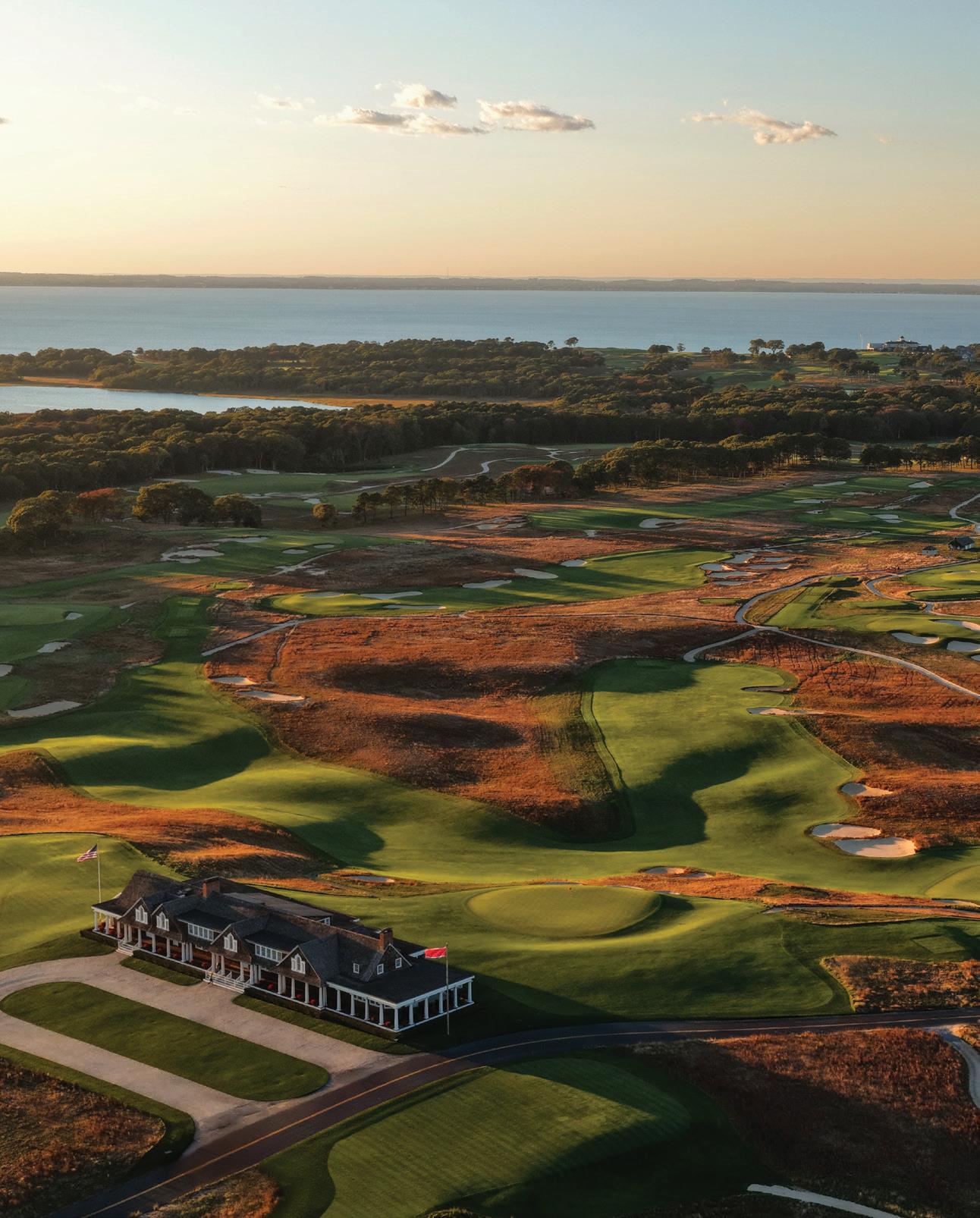
SHINNECOCK HILLS GOLF
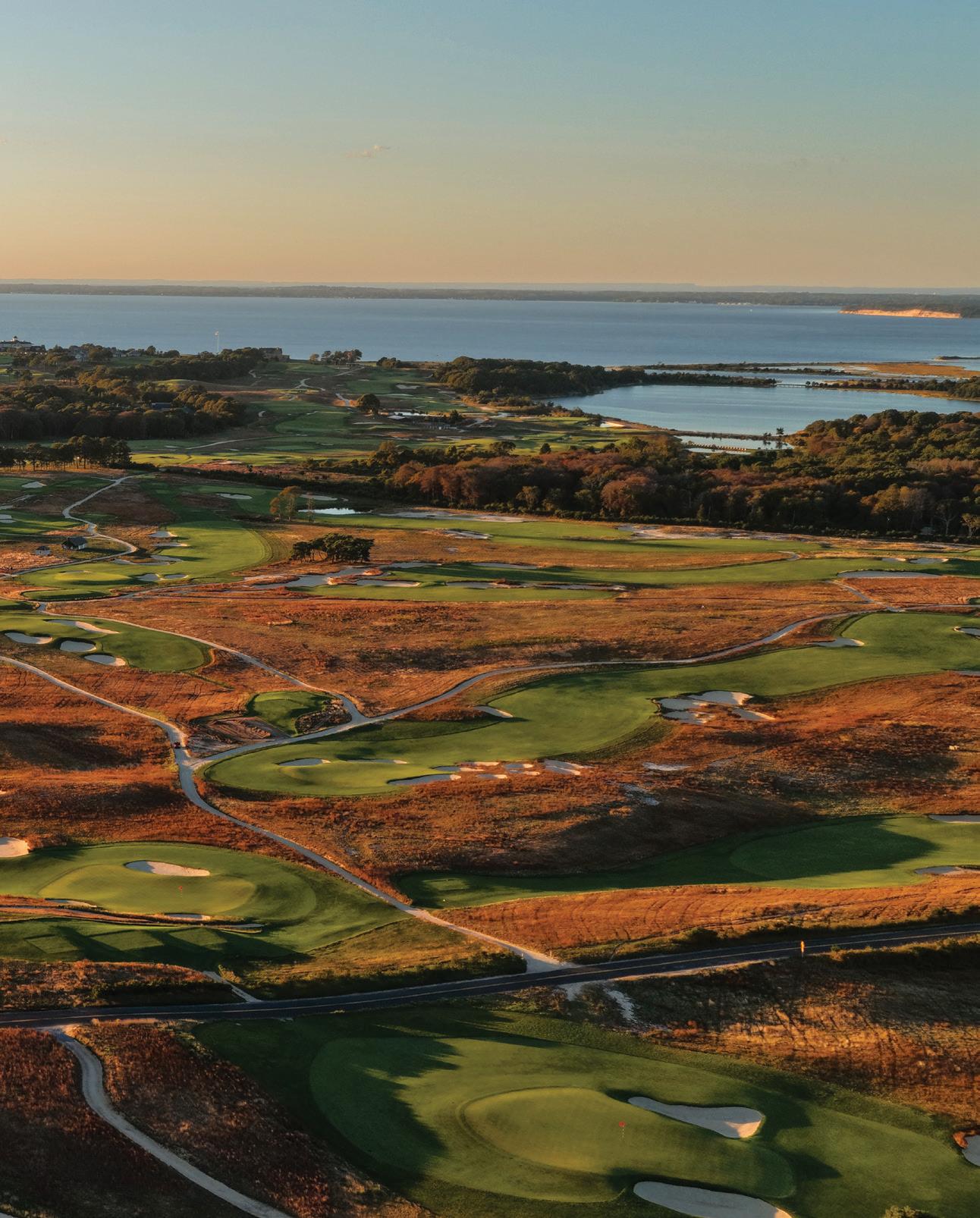
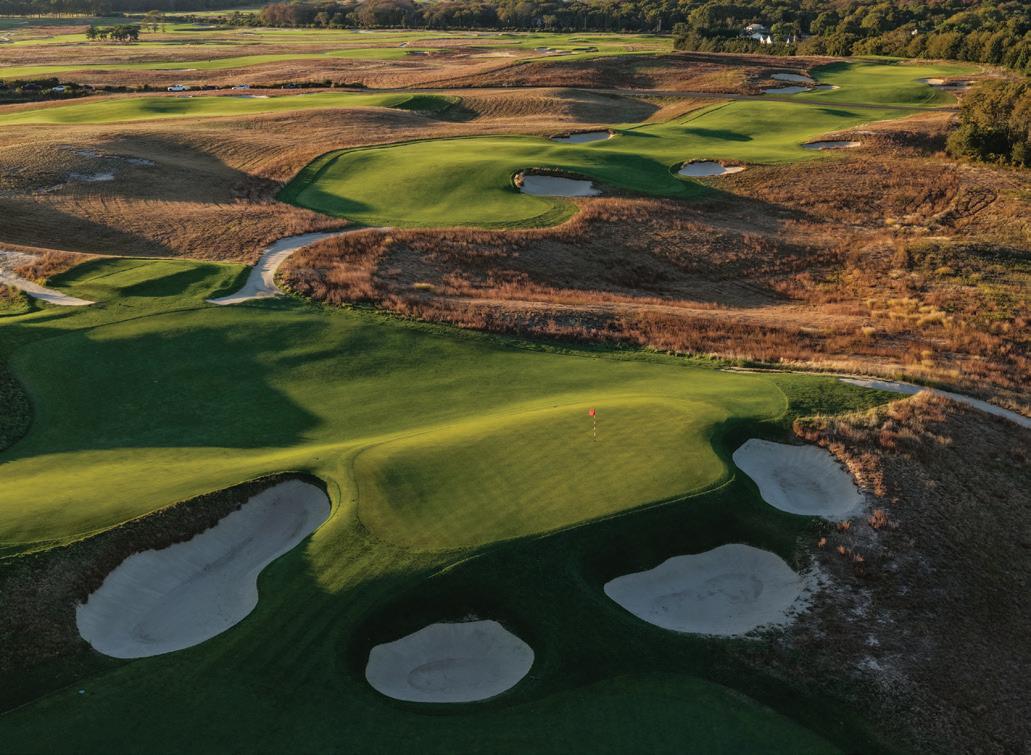
Club is one of the founding fathers of American golf. The members were the first in the U.S. to incorporate their club, and they began playing their Southhampton site in 1891 on two nine-hole courses, one designated for men and the other built specifically for female players. As one of the five charter members of the United States Golf Association, Shinnecock hosted both the U.S. Amateur and the U.S. Open in 1896, just the second year each event was played.
The golf course morphed and migrated around the property in the early years, expanding first to 12 holes, then 18, and later into a completely different 18 that overlapped sections of the ladies course. The layout we know
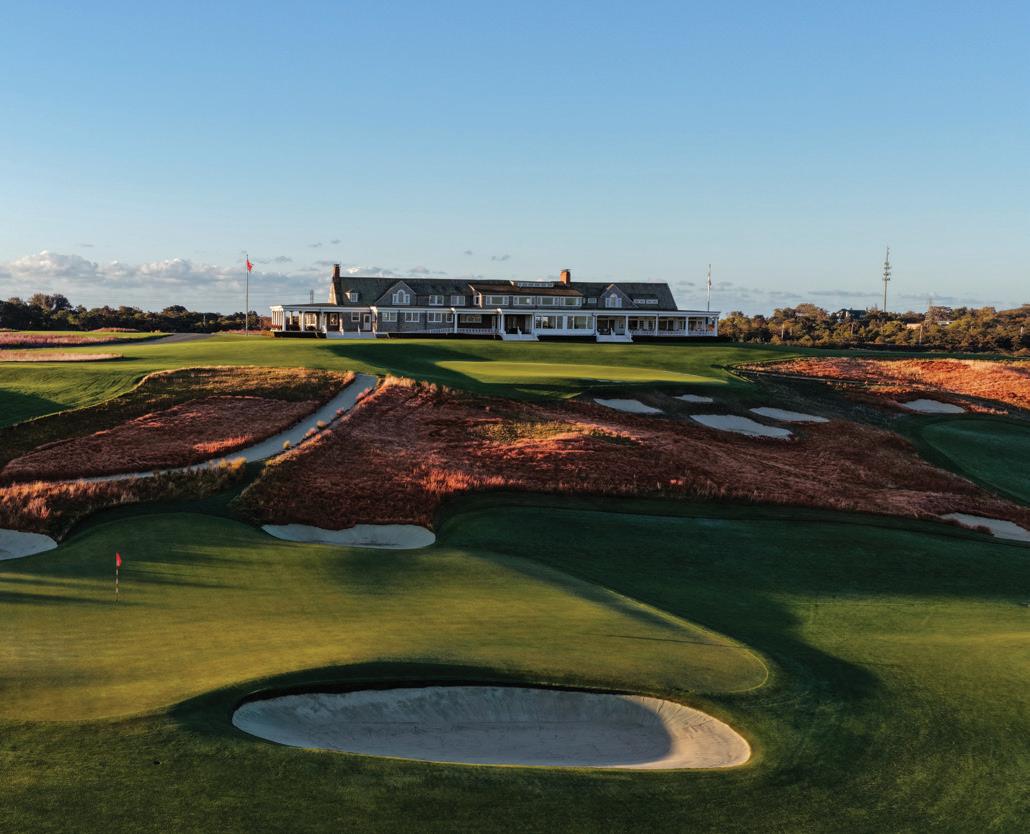
today, a fixture inside the top five on our ranking of America’s 100 Greatest Courses, wasn’t finalised until 1931 under the direction of architect William Flynn. Flynn’s course sprawls across 200 acres beneath the gaze of the iconic Stanford White-designed clubhouse, looping through a tumbling, links-like section of fescue and sage before heading into a steeper, more exciting set of dunes on the second nine.
AERIAL ATTACK
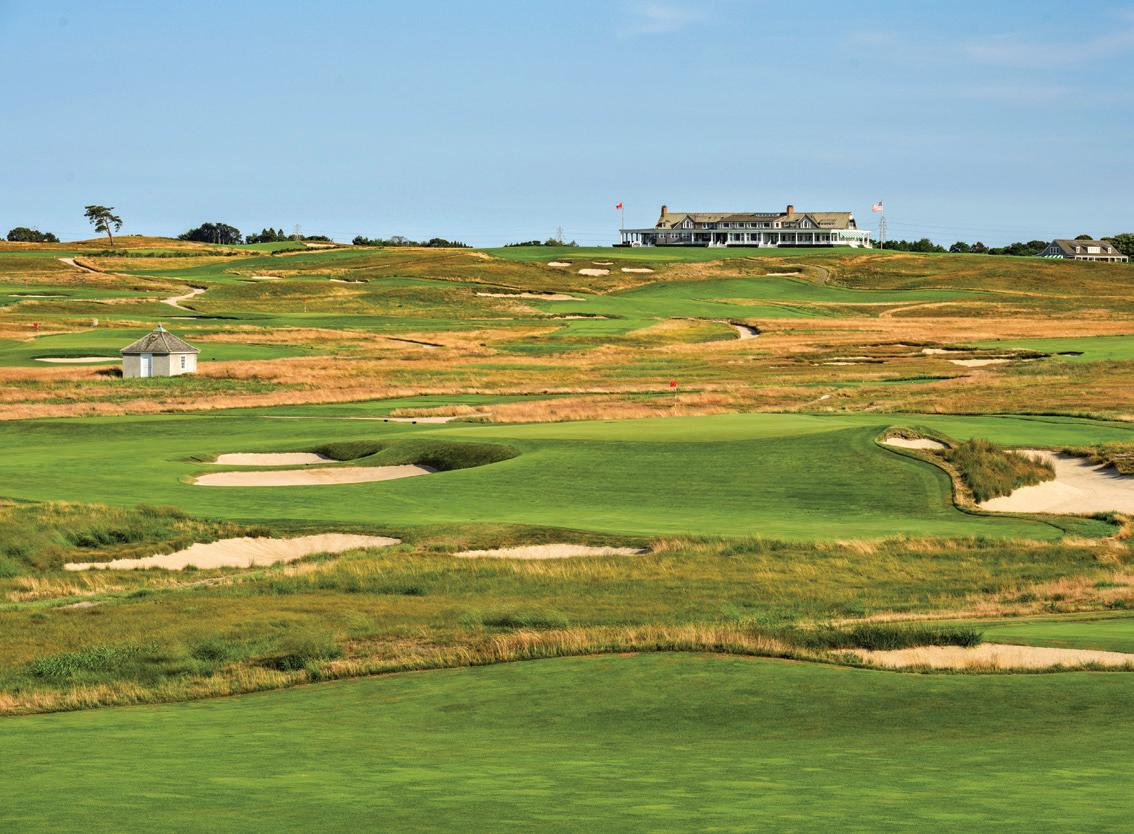
The famous Redan seventh at Shinnecock is a rare version where you must fly it to the green.
Though ample fairways provide room to maneuver, the best approach angles are reserved for players who can drive the ball long enough to reach the rare level sections of grass. Gusting
winds off Peconic Bay and the nearby Atlantic Ocean hit players differently as the holes change direction, and scores are ultimately sorted at the crowned, sloping greens that can cruelly deflect weak and imprecise shots. It often feels like the closer you get to the hole at Shinnecock Hills, the harder the golf becomes. Getting the ball into the bottom of the cup is as challenging as it is at any course in the country.
The first iterations of golf laid out at Shinnecock Hills in the 1890s—by Scottish professionals Willie Davis (1891) and Willie Dunn (1893 and 1895)— played primarily on the south side of the clubhouse and crossed back and forth over the Long Island Railroad. In 1916 the club hired C.B. Macdonald, who was also a Shinnecock member,
HOLE
and his associate Seth Raynor to modernise the design and move holes off the tracks. Macdonald and Raynor remodelled parts of the old Dunn routing and then added a series of holes that extended north toward the neighbouring National Golf Links of America, installing their favourite concepts like the Biarritz, Eden, Cape and Long. But when the state of New York announced in 1927 its intention to run the new Sunrise Highway through a section of the course, the club began purchasing land to the north and west for a new layout. The club’s architect, Flynn, kept the location of several Macdonald-Raynor holes but expanded the majority of the new design into this more topographically rich terrain.
HOLE 7
PAR 3, 185 YARDS
The par-3 seventh was originally Macdonald and Raynor’s Redan hole. Flynn altered the bunkering but kept the angled, altar-like, front-to-back tilted green. Unlike the original Redan at North Berwick in Scotland or Macdonald’s version next door at National, tee shots can’t easily be chased on and need to be flown all the way to the front edge of the putting surface. The combination of wind, extreme green slope and the fatal bunker short right makes No. 7 the most challenging version of the Redan to play. The 3.65 scoring average during the final round of the 2004 U.S. Open confirms it.
HOLE 9
PAR 4, 481 YARDS
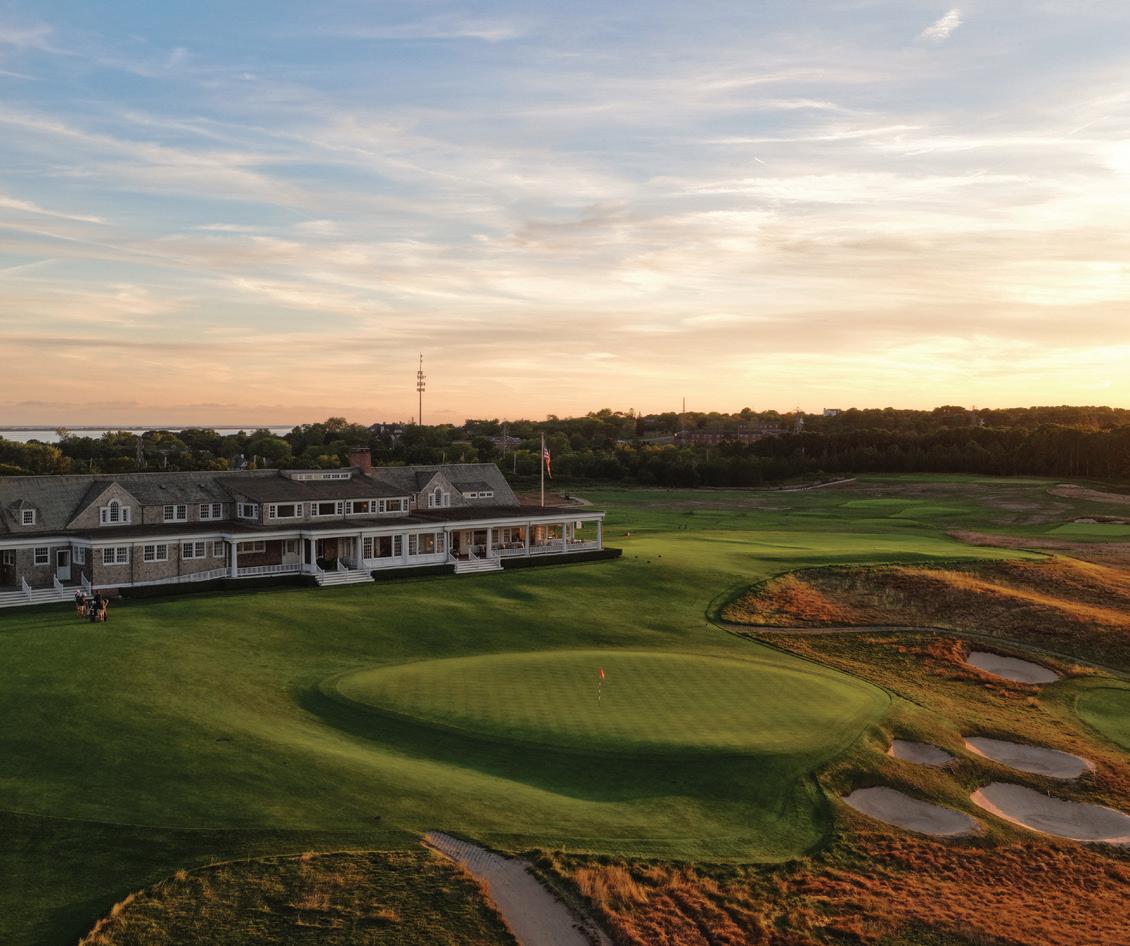
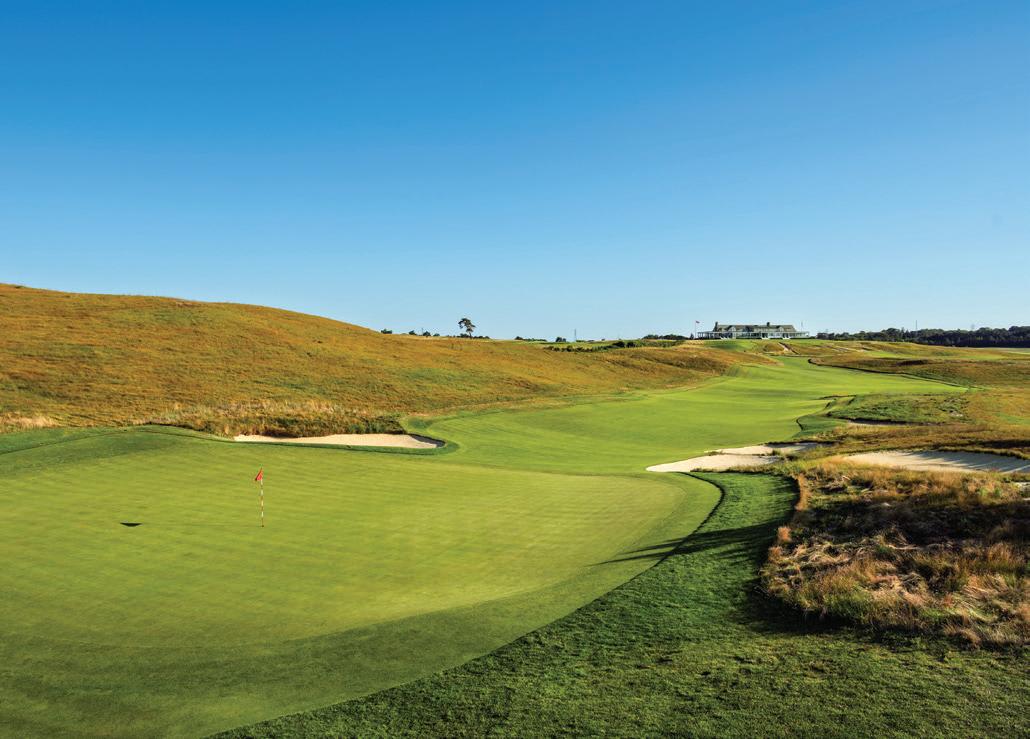
Another Macdonald hole that Flynn worked into his design is the mighty ninth, a par 4 that has few peers in terms of difficulty and uniqueness. The blind fairway is a scroll of glacial waves with a modestly level section on the left reachable only by the longest hitters. Most drives settle into uneven lies, leaving long, blind, curving approach shots to a wickedly tilted green sitting just steps from the clubhouse veranda and some 25 feet above a bank of fescue and bunkers. Coming up short is a common, costly occurrence, but being above the hole is almost as hazardous.
HOLE 9
HOLE 14
HOLE 11
HOLE 11
PAR 3, 155 YARDS
Lee Trevino once described the par-3 11th as “the shortest par 5 in golf.” In windy conditions, 5 is not a deal-breaker. The tee shot is 40 feet uphill to a skyline green banked over three deep bunkers, and a shaved embankment behind it leaves impossibly delicate chips and pitches back up to the tabletop putting surface. In the final round of the 2018 Open, Brooks Koepka was in the rough nearly 30 yards behind the green and looked to be dead. He pitched up and over into a front bunker, splashed out and then sank a 13-footer to preserve his lead. Under the circumstances it’s one of the great bogeys in U.S. Open history.
HOLE 14
PAR
4, 520
YARDS
The 14th is the longest par 4 on the course, and it’s a beauty that plays downhill into a valley between high and low dune ridges. Flynn was known for walking properties repeatedly while routing courses, and he would have quickly identified this area’s valley and saddled green site as features that would comprise one of the most natural golf holes he’d ever build. The fairway was once lined with scrub pines before Shinnecock removed nearly all the property’s trees in the early 2000s, and the green is the rare one where flared wings corral rather than reject balls, helpful when bouncing in long approach shots.
HOLE 18
PAR 4, 490
YARDS
The par-4 18th patrols the ground alongside the ninth hole like a twin serpent, slithering beneath it over a series of blind ridges. The drive must challenge a bunker carved into a shoulder on the left or risk shooting off a big fairway contour into the rough on the low side. Though the green is located away from the clubhouse near the foot of the ninth, it’s situated perfectly, hooked into a bowled pocket with a menacing back-to-front slope. Corey Pavin made the hole look easy with his 229-yard 4-wood that he hit to five feet to clinch the 1995 Open, but it’s really a monstrous finishing hole.
HOLE 18
CLEAR VISION
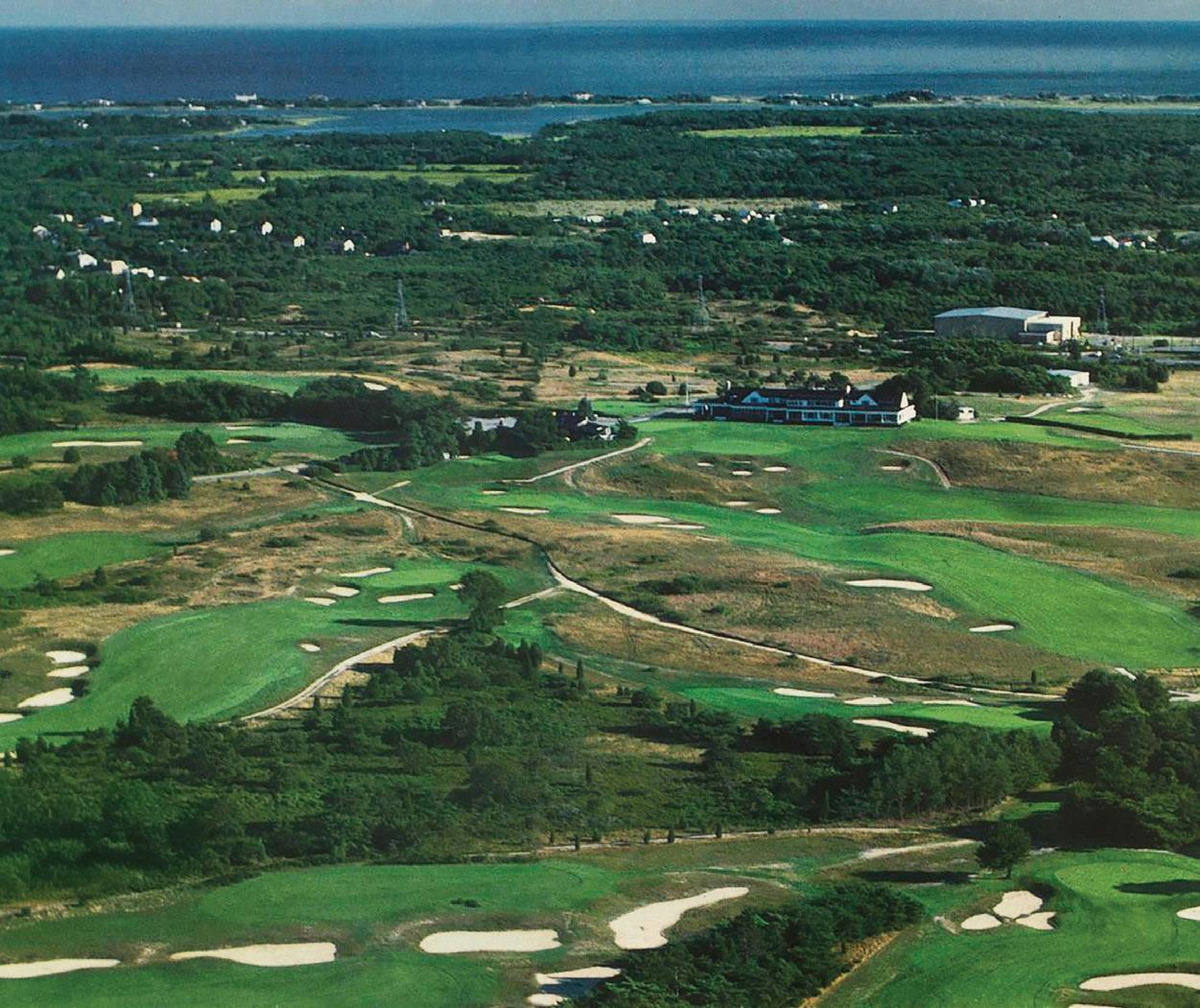
Oakmont Country Club has become the poster course for tree removal. Less discussed is the equally comprehensive deforestation of Shinnecock Hills. As seen in the above photo from the June 1986 issue of Golf Digest when the U.S. Open returned to the Southampton site for the first time since 1896, large sections were covered in pine and other varietals. Since 2000, the club has cleared these groves, and only a few individual stands remain. Like at Oakmont, the result is a much more vivid sense of Shinnecock’s significant ground contour, with the added benefit of allowing the winds to rush unfettered across the layout, adding to the shot demands and allowing the turf to play firm and fast.
EDITOR’S CHOICE:
YOUNG REAL ESTATE LEADER OF THE YEAR
Yogesh Bulchandani, Founder and CEO, Sunrise Capital
EDITOR’S CHOICE: CROSS-BORDER
REAL ESTATE LEADER OF THE YEAR
Navneet Mandhani, Founder and CEO, Karma Developers
REAL ESTATE CEO OF THE YEAR
Ali Mohammed Al Kuwari, CEO, Msheireb Properties
ARCHITECT OF THE YEAR
Oleksandr Melnyk, NKEY Architects
EDITOR’S CHOICE:
EXCELLENCE IN COMMERCIAL DEVELOPMENT
AUM Development
EDITOR’S CHOICE: EXCELLENCE IN LUXURY LIVING
Arif Developments
EDITOR’S CHOICE: EXCELLENCE IN REAL ESTATE COMMUNICATIONS
Papa Media
EDITOR’S CHOICE: EXCELLENCE IN REAL ESTATE BUSINESS CONSULTANCY
Sherpa Communications
EDITOR’S CHOICE: EXCELLENCE IN SUSTAINABLE LUXURY REDEVELOPMENT
Greenbull Contracting
EDITOR’S CHOICE: ARCHITECTURAL EXCELLENCE AND INNOVATION
Arista Properties
RESIDENTIAL DEVELOPER OF THE YEAR ANAX Developments
LUXURY DEVELOPER OF THE YEAR
Pantheon Development
EMERGING DEVELOPER OF THE YEAR
Ahmadyar Developments
INTERNATIONAL REAL ESTATE COMPANY OF THE YEAR
Samana Developers
LEADER AWARDS
INTERIOR DESIGNER OF THE YEAR
Noor Al Muhaideb, Opaal Interiors
CONTRACTING LEADER OF THE YEAR
Ajay Bhatia, Chairman, Bhatia General Contracting Company
REAL ESTATE VISIONARY LEADER OF THE YEAR
Imran Farooq, CEO, Samana Developers
REAL ESTATE ENTREPRENEUR OF THE YEAR
Dr (CA) Ankur Aggarwal, Chairman and Founder, BNW Developments
COMPANY & PROJECT AWARDS
ARCHITECTURAL DESIGN COMPANY OF THE YEAR
Studio Bruno Guela
INTERIOR DESIGN COMPANY OF THE YEAR Opaal Interiors
PROPTECH COMPANY OF THE YEAR
ICTReD Real Estate Development
BRANDED PROJECT OF THE YEAR
Ramada Residences Al Jaddaf by Wyndham Hotels & Resorts
PROJECT OF THE YEAR
Skyhills Residences 1 by HRE Development
OFF-PLAN PROJECT OF THE YEAR
Casagrand HERMINA by Casagrand
ICONIC BUILDING OF THE YEAR
OYSTRA by RICHMIND
REAL ESTATE AGENCY OF THE YEAR
Driven Properties
PROPERTY MANAGEMENT COMPANY OF THE YEAR
Dubai Residential
REAL ESTATE INVESTMENT COMPANY OF THE YEAR
Nisus Finance
CONTRACTING COMPANY OF THE YEAR
Bhatia General Contracting Company
WOMAN REAL ESTATE LEADER OF THE YEAR
Dana Awad, Chief Commercial O icer, ICTReD Real Estate Development
REAL ESTATE PERSONALITY OF THE YEAR
Atif Rahman, Founder and Chairman, ORO24 Developments
REAL ESTATE TRAILBLAZER LEADER OF THE YEAR
Egor Maslennikov, Chairman and Founder, Object 1
REAL ESTATE TEAM OF THE YEAR
CRC Property
SMART AND SUSTAINABLE DEVELOPER OF THE YEAR
Msheireb Properties
MASTER DEVELOPER OF THE YEAR
HRE Development
REAL ESTATE EVENT OF THE YEAR
Cityscape Global
REAL ESTATE PR AGENCY OF THE YEAR
Publsh Group
MOST TRUSTED DEVELOPER OF THE YEAR
Samana Developers
GULF BUSINESS ICONIC COMPANY OF THE YEAR
QUBE Development
MOST IMPACTFUL DEVELOPER OF THE YEAR ORO24 Developments
How Public Courses Can Be More Like Private Clubs
BY DEREK DUNCAN
THE JOB OF ARCHITECTURE
editor takes me to golf courses around the country, and I’ve become convinced the most fundamental difference between highend private and affordable public golf is not expensive clubhouses, service or amenities but turf conditions. Not deep green colour and lush grass but rather uniformly tight and dry playing surfaces that promote ideal club-ball-turf contact and greens that roll true regardless of speed. It’s a standard not usually possible at affordable public courses, but the good news is that advances in agronomy and science, coupled with certain design innovations, can help.
MORE
FAIRWAY, FEWER TREES
For the past 25 years, almost every high-end private club has improved agronomic conditions through tree clearing. This doesn’t mean total clearcutting the way Oakmont has, but the first and easiest step public courses can take toward better turf is to remove trees that block needed sunlight and sap water and nutrients. This has the benefit of allowing fairways and green surrounds to expand, meaning more playing space and therefore more strategic options, plus a greater dispersion of traffic that’s essential to reducing stress on the grass.
TURF 2.0
Course conditions are dependent on climate, grass and soil type, moisture, seasons and treatments—there’s no one-size prescription for great turf. But a version of firm-and-fast turf, found at Shinnecock Hills, Shoreacres and most other 100 Greatest Courses, is increasingly achievable for public courses as more durable turfs are developed.
“There’s so much time and effort being put into genetically engineering new varieties of grass,” says Bob Wolverton, director of agronomy at The Fall Line, Golf Digest’s winner for the Best New Private Course of 2025. “You can have a new strain out in five years where before you had to wait 20.” New strains bred for tighter turf or heat and drought tolerance will help public courses approximate the dry, tight playing surfaces that define the best private clubs.
FEWER BUNKERS CAN HELP
Rain washouts, soil contamination, weeds and labour-intensive edging make bunkers the most expensive line item on construction and superintendent budgets. Future public designs might experiment with more maintainable berms, depressions, ditches, native plants and undulating ground contour to provide alternative strategic defense and recoveries. An intriguing model is Sheep Ranch at Bandon Dunes, where Bill Coore and Ben Crenshaw carved out bunker cavities planted with fescues. Lies in these types of hazards are random yet more playable than sand, a boon for pace of play, and the saved costs can be reallocated into improving turf in other areas.
A.I. (ARTIFICIAL INSTALLATIONS)
Tees on public courses are often more dirt than grass. Installing synthetic turf tees would permanently remediate this. Connor Daugherty, an associate for Jackson Kahn Design who recently oversaw construction of an all-synthetic-turf 19-hole par-3 course called Shortland in Portland, Ore., sees the benefit of converting tee boxes: “Turf tees are a viable long-term solution. The maintenance is significantly less than grass tees, the ball-striking playability is great, and if nobody is taking divots, your footprint doesn’t have to be as big.”
WALK IT OFF
There’s no getting around that motorised golf carts do damage to turf, wearing out grass at choke points and necessitating the installation and upkeep of intrusive cart paths. The lightest footprint is that of a walker, and it’s no coincidence that clubs with the most ideal playing surfaces, from Pine Valley and Augusta National to Bandon and Sand Valley, also have strong if not exclusive walking cultures. Public courses that promote walking, including the renting of push carts, have the best chance of simulating those conditions.
NEXT WAVE
Q&A: Dave Zinkand
‘I spent almost two full years of my life working at Bandon’
Age: 50
Zinkand Golf Design: Founded 2006
Base: Charlotte
Golf Digest is talking to the next generation of architects, whose names might be new to you—but are popping up more and more with great projects. This interview has been edited for concision. The full Q&A is available on the “Feed the Ball” podcast with architecture editor Derek Duncan.
What shaping or design work are you best known for at this point?
first on Bandon Trails, where I ran the project and did as much shaping as time would allow. Then I was able to go back and build the 13 short holes at Bandon Preserve. It was amazing to work on essentially 27 acres of sand spilling down toward the ocean in those steeper dunes. One of Mike Keiser’s friends came out early in the project.
SAND SHAPES
Dave Zinkand on site at Coore and Crenshaw’s Chechessee Creek Club.
He expected it to look like a regular pitchand-putt, but he said, “Holy s---, this is real golf.” I’ve also been involved with a major restoration of Old Elm Club in Chicago, a kind of hybrid design between (H.S.) Colt and Donald Ross, as well as remodelling Desert Forest Golf Club in Carefree, Ariz., the first true desert course in the U.S. when it opened in 1962.
What projects are you working on now that have you excited?
We’re wrapping up a project this spring at Big Foot Country Club in Wisconsin right off Lake Geneva. It’s a beautiful old Tom Bendelow course on very cool land with lots of variety, and we rerouted three holes at the highest part of the property to take advantage of the visuals and strategic interest. It’s not a restoration. Most of my work focuses on transformative jobs and making big moves. The term I use is “usher forward.” At a place like Big Foot, that might be preserving the historic architectural character but then taking bigger liberties like flipping holes to better maximise their potential.
What’s a course that makes your heart sing?
Rye, on the south coast of England, is an amazing use of those big dunes and the way the holes play alongside and over them.
What’s the one thing that’s indispensable while working?
Time. Time to contemplate. The ability to sleep on something and ruminate. It’s really easy to fall in love with your own ideas, but you need time to take a step back and ask, “What am I not seeing here yet?”
GLORIOUS GIG
Zinkand helped build Bandon Preserve, one of golf’s best par-3 courses.
Certainly the work I did for Bill Coore and Ben Crenshaw, especially at Bandon Dunes. I spent almost two full years of my life working there,
What’s the most overused element in golf design?
I think you have to be really careful with how you use water. I believe it was Bobby Jones who said you can recover from hitting into a bunker but hitting in the water is like a plane crash—there’s no coming back.
Beyond R ilience Resilience
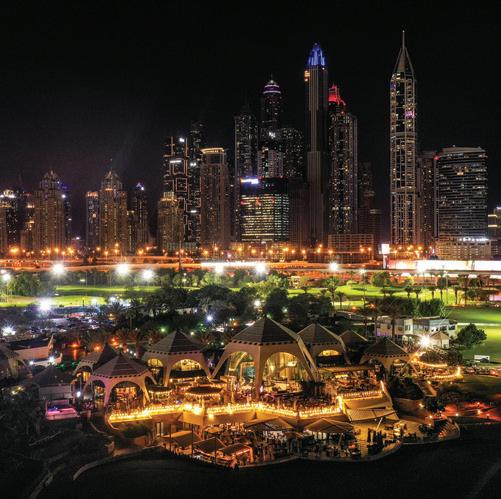
HOW MIDDLE EAST GOLF IS BUILDING FOR THE FUTURE
For over 30 years, golf in the Middle East has been defined by luxury tourism, iconic tournaments, and world-class facilities.
But with the recent regional instability, inbound tourism has undoubtedly been affected, with golf operators across the Gulf experiencing a slowdown in international travel.
Yet rather than stalling momentum, many clubs have used the period to strengthen their local communities and diversify the golfing experience.
Golf Digest Middle East spoke to three leading figures within the regional golf industry to explore how the game has responded to recent challenges — and why many believe the Middle East is entering its most important growth period yet.
“At first, we saw next to zero international guests coming to play during March and April, when we would normally expect overseas rounds to be through the roof,” says Kieren Pratt, Director of Operations at the Emirates Golf Federation.
“What we noticed though was a shift toward more community-based events,” he explains. “There was a greater emphasis on inviting local residents and UAE nationals into the clubs, which created a very welcoming environment.”
‘Members really valued the fact that clubs remained operational and continued providing a feeling of belonging during uncertain times’
That shift extended beyond just the desert fairways. Food and beverage outlets became increasingly important social spaces, helping clubs maintain strong engagement despite reduced tourism.
DJ Flanders, Executive Vice President of Operations for Troon International, believes the resilience of the resident market surprised many outside the region, looking in.
“There is no question the regional situation impacted inbound tourism and international golf travel,” says Flanders. “What has been really encouraging is how resilient the local golf market has remained, especially in the UAE.”
According to Flanders, golf clubs across the region have evolved into broader lifestyle destinations.
“Golf clubs today are doing a lot more than simply selling tee times,” he says. “They’ve become lifestyle and community hubs where dining, entertainment, family events, wellness, and social activities all play a much bigger role.”
That transformation has become increasingly visible across the UAE’s leading golf destinations. Chris May, CEO of Dubai Golf, says clubs that invested heavily in membership experience before the recent challenges were better positioned to navigate the downturn in overseas visitors.
“We saw a significant number of overseas golf rounds cancelled initially,” says May. “But the additional tee-time availability became very popular with members during some of the peak golfing months.”
May says clubs across the UAE experienced a renewed sense of camaraderie during the period.
“I’ve seen a great level of community feel in all our clubs,” he says. “Members really valued the fact that clubs remained operational and continued providing a feeling of belonging during uncertain times.”
That sense of belonging is shaping a new era of Middle East golf. Pratt even points to the rapid growth of women’s and junior golf as one of the region’s biggest positives.
“There has been a big focus on community, particularly around women’s and junior development, and creating opportunities to bring new golfers into the game,” he says.
Flanders agrees, noting that golf in the Gulf is no longer viewed solely through the lens of tourism.
“Years ago, golf here was viewed much more through major events and tourism,” he says. “Today there is a much stronger local market made up of resident golfers, families, juniors, women’s golf, and year-round participation.”
“We’ve seen significant growth in the number of UAE nationals and women taking up golf,” says May. “Facilities such as Topgolf and indoor golf venues are helping grow participation and introducing more people to the game.”
Dubai’s Topgolf venue has become one of the busiest in the world, with Topgolf Yas Island Abu Dhabi scheduled to open later this year. The wider GCC region is also entering a new expansion phase. Long recognised as a leading host of professional tournaments, especially across the DP World Tour, the Middle East is now seeing increased investment in golf infrastructure beyond the UAE.
“Outside of America, the UAE and the GCC host one of the highest numbers of professional tournaments in the world,” says Pratt. “The trend already emerging is one of expansion.”
Countries including Saudi Arabia, Oman, Qatar, and Bahrain are continuing to invest in new facilities, helping position the Gulf as a multi-destination golf market.
“The facilities performing best are the ones creating reasons for people to visit regularly, not just for golf,” says Flanders. “People are looking for flexibility, social connection, good dining, entertainment, and experiences they can enjoy with family and friends.”
Technology is also becoming increasingly important in driving engagement.
May highlights the success of Dubai Golf’s VIYA platform, which now connects tens of thousands of users across golf, hospitality, wellness, and leisure experiences. “The growing importance of tech in golf is significant,” says May. “We now have 25,000 active golf users on the platform in the UAE.”
Meanwhile, Pratt points to the continued growth of amateur and professional events as evidence of the region’s confidence. The Emirates Golf Federation is preparing to host the third edition of the UAE Cup in Al Ain this December after attracting players from 38 countries last year.
“We believe this will be the best edition yet,” says Pratt. “I look forward to it becoming an event that is firmly on the world stage.”
The modern tour pro isn’t just a golfer – they’re a full-time athlete. We go behind the ropes with European Tour Performance Institute’s Theraphy Lead and Strength and Conditioning Lead to find out what it takes to survive a season
Interview by
Harry Grimshaw
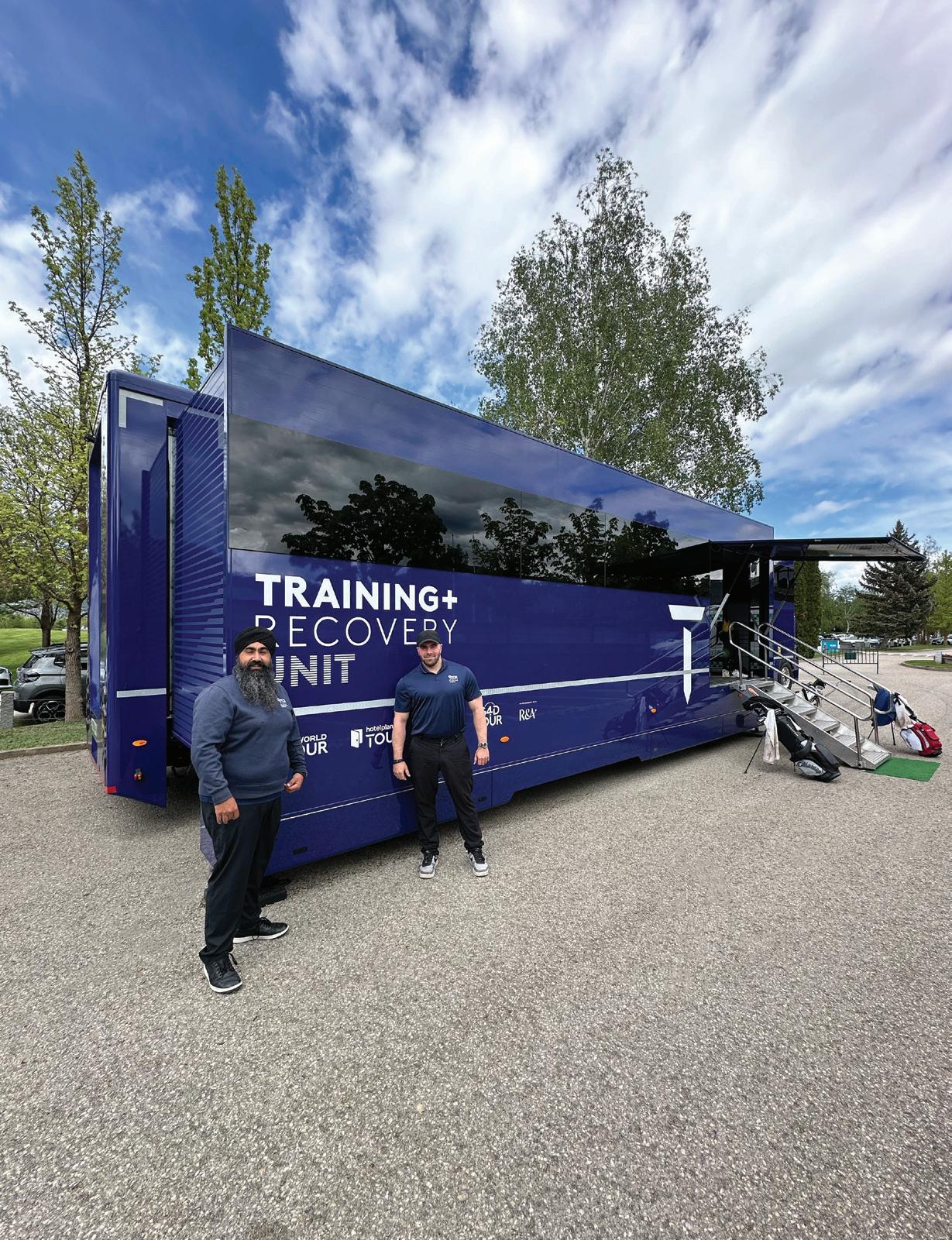
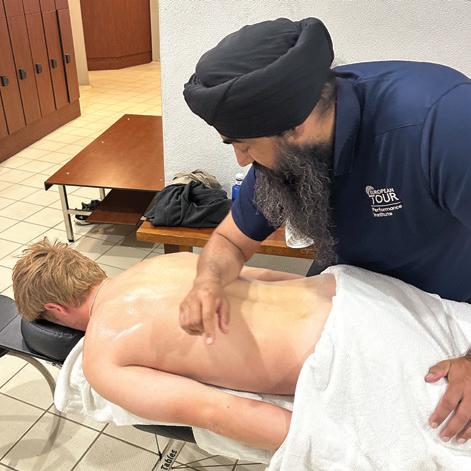
m odern professional golf looks very different from the game it was 20 years ago. Today’s players travel constantly, train like elite athletes and rely heavily on support teams to stay healthy and competitive throughout a relentless season. At the heart of that support system on the HotelPlanner Tour are Therapy Lead Poora Singh and Strength and Conditioning Lead William Wayland. Between them, they help players manage everything from recovery and rehabilitation to training, sleep and workload management — all while navigating the unique pressures of life on tour.
●
What does a typical tournament week look like for you both?
Poora Singh: During a typical week on the DP World Tour and HotelPlanner Tour, we’ll usually arrive on the Monday and recce the venue. We’ll find out where the treatment unit is, where access to emergency services is, where the gym and recovery areas are and all those kinds of things. Then we’ll start on Tuesday morning. On the HotelPlanner Tour, players book 30-minute treatment sessions through our booking system, and we’ll usually work from around 10am until 6pm.
Once the tournament starts, the days become much longer. Wednesday is a pro-am day, so we’ll start at 7am and work through until 6pm. That then continues through Thursday, Friday and Saturday, with Sunday usually finishing around lunchtime. On average, we’ll each see around 18 players a day, so it can be very intense.
On the DP World Tour, there are more physios and no booking system because there are usually three physios on at all times. The working day runs from an hour and a half before the first tee time until an hour and a half after the final group comes in. At events like The Open, where tee times can start at 6am, you’re arriving at 4am or 4:30am. The hours are demanding, but that comes with the territory.
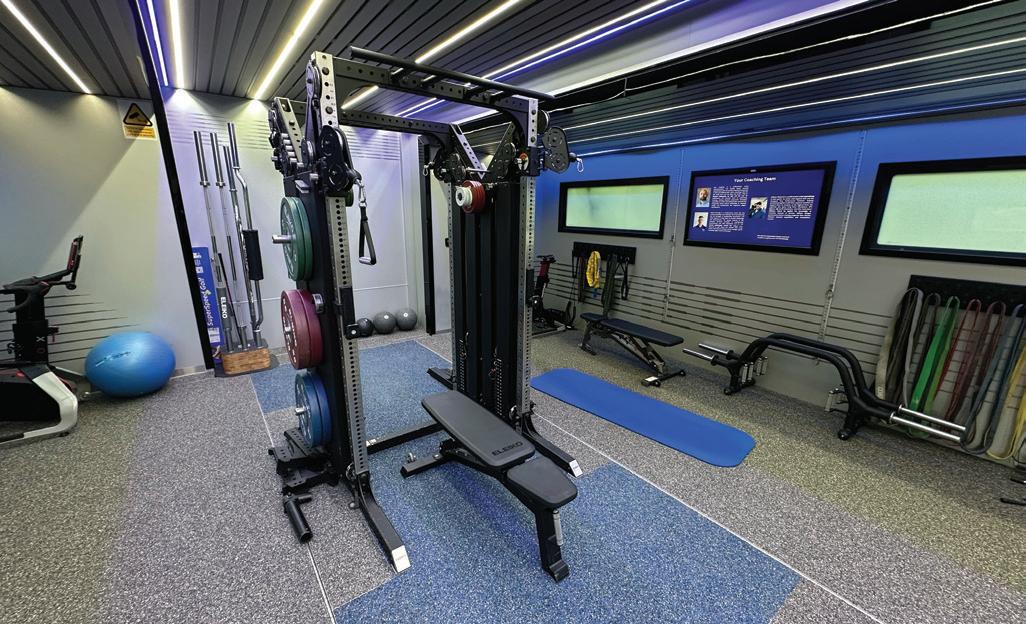
William Wayland: I generally arrive on the Monday as well and assess what facilities we have available. Sometimes we’ll have a gym truck on site, but that’s not always the case on the HotelPlanner Tour, so we often have to find local gyms or training facilities nearby and organise access for players during the week.
Typically, I’m there from early Tuesday morning until around 6pm, then the same again on Wednesday.
Most of the work is one-to-one coaching with players. That can include physical testing, training sessions, programming adjustments or rehab support where players have been referred over by the physios.
There are also players who work with us regularly throughout the season, while others might only come in occasionally for assessments or specific help.
●
How physically demanding is modern professional golf compared to what people might expect?
WW: The sport has become increasingly physically demanding and you can see that in the players themselves. They’re taller, heavier, more muscular, more explosive and generally much stronger than golfers were 20 years ago. That tells you something fundamental has changed in the nature of the game.
In the past, there wasn’t a huge physical gap between golfers and athletes in other sports. Now, the physicality of elite golfers has changed dramatically, particularly over the last two decades, and that’s reflected in the style of golf they play.
●
What are the most common injuries or issues you deal with?
PS: If we’re talking purely about areas of the body, lower back issues are the most common, followed closely by hips, necks, shoulders, wrists and knees.
A lot of what we see are fatigue-based injuries. Players might have been on the road for six or seven weeks straight, not recovering properly, not sleeping well enough or not maintaining good nutrition and training habits.
You have to remember they could be hitting 200 to 300 balls a day, then playing tournament rounds, finishing late in the evening, trying to recover and eat properly, then waking up at 5am for another early tee time. It’s incredibly demanding physically. If those recovery habits aren’t in place, eventually the body struggles to keep up.
Then there are also the more unpredictable injuries. A player can hit a hidden root or a heavy divot and hurt their wrist, elbow or shoulder. We’ve had players tear calf muscles or Achilles tendons after slipping on hills. But generally, I’d say the biggest risk comes from repetition and volume rather than the sport itself.
Is the growing emphasis on speed in golf contributing to those injuries?
PS: Absolutely. Everybody wants to hit the ball further now, but to create speed you also need the ability to control and decelerate that speed safely. That only comes from proper conditioning, training and understanding how the body works.
WW: To tolerate those forces, you need a certain level of physical robustness. If players don’t have that — or if they’re constantly chasing more speed — eventually tissue tolerance breaks down somewhere and that’s usually when injuries happen.
● ●
●
So a large part of your work is injury prevention rather than simply treatment?
PS: Definitely. A huge part of what we do is education. We try to teach players good habits and help them understand that while manual therapy and treatment have their place, you can’t beat good athletic habits, sensible training and proper nutrition.
Those things are what keep players healthy and available to compete week after week.
● ● ●
What recovery methods are players relying on most during tournaments?
WW: The biggest thing for us is what we call performance lifestyle planning. At the top of that is sleep. Everything is downstream from sleep. If players aren’t sleeping properly, injury risk goes up, illness risk goes up, fatigue increases and performance suffers. We spend a lot of time talking about sleep hygiene — keeping rooms cool and dark, avoiding screens and stimulants before bed and creating a proper environment for recovery.
Nutrition is another huge factor. One thing we often see during the season is players unintentionally losing weight because they underestimate how many calories they’re burning. If they lose muscle mass and strength across the season, injury risk increases and performance can drop.
Then there’s training itself. We want players following well-rounded strength and conditioning programmes that support what they’re trying to achieve physically.
One thing we always say is to avoid making dramatic changes during the season. Introducing too much novelty mid-season can create problems.
‘It’s about creating an environment where players feel safe and supported.’
There’s also the mental side of tour life. It can be lonely and mentally draining, so having strong relationships with friends, coaches and family is incredibly important. Finally, we encourage players to monitor how much golf they’re actually playing. Golfers often manage their own workloads and sometimes they’re not very good at recognising when they’re doing too much.
●
Poora, you’ve been around the game for nearly two decades. How have you seen golfers change during that time?
PS: Massively. When I first came into golf, player support was incredibly basic. You’d have a treatment table in the locker room and maybe a few resistance bands.
I came from a high-performance athletics background where sports science and conditioning were already standard, so when I joined golf I was shocked by how little of that existed. A lot of it was cultural. Golf had this oldschool mentality where people believed weights would make golfers slower and that players only needed to practise golf itself.
Over time, through the work of the European Tour Performance Institute and the support systems on the HotelPlanner Tour and DP World Tour, we’ve helped
re-educate players and coaches about the athletic side of performance.
Now, players understand that if they want to compete consistently across six or seven events in a row, they need to treat themselves like elite athletes. I’m genuinely very proud of how far things have come.
● ● ●
What separates the players who stay healthy all year from those who struggle physically?
PS: The players who stay healthy are usually the ones with the best habits and routines. Some younger players still come from environments where they’ve been told to just play golf and everything else will take care of itself. But once they experience life on tour, they realise very quickly that isn’t enough.
The standard on the HotelPlanner Tour and DP World Tour is incredibly high. If you can win on the HotelPlanner Tour, you’re good enough to compete at the very highest level. The players who succeed long-term are the ones who look at what elite players are doing and adopt those same professional habits around training, nutrition and recovery.
●
●
●
You also seem to create a relaxed and supportive environment for players. How important is that?
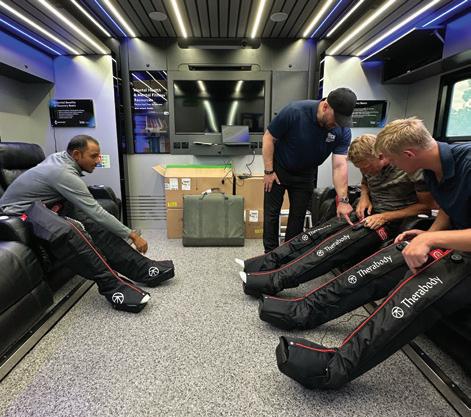
PS: It’s a very conscious part of what we do because tour life can be lonely. We want players to feel comfortable coming into our space, whether that’s for treatment, recovery or simply to switch off mentally for a while. Sometimes a player just wants to sit in recovery boots, listen to music and relax. Sometimes they need somewhere quiet to sleep for an hour. It’s about creating an environment where players feel safe and supported.
WW: It becomes a kind of third space for players. They spend all day around competitors, either on the course or in the clubhouse, so having somewhere they can properly relax and let their guard down makes a huge difference.
Some players don’t even come in to train — they just want to sit down and talk. That in itself can be really valuable during a long season.
●
Is it difficult stopping players from overtraining?
WW: It depends on the individual because golfers tend to be very process-driven people. A lot of them want to optimise everything — sleep, diet, routines, recovery — and because golf is such a technical and psychological sport, players can become very analytical about performance. We encourage them to take a balanced, holistic approach rather than becoming obsessed with any one method. But generally, if players overdo anything, it’s usually golf itself.
One of the biggest injury mechanisms in golf is simply too much golf. We rarely see injuries caused by sensible strength and conditioning work. It’s usually the repetitive volume of golf practice and competition that creates problems.
●
How important is it for the two of you to work closely together?
WW: We work as part of a multi-disciplinary team, so we’re constantly referring players between each other. A player might come to Poora with an issue and then be referred to me because there are underlying strength or movement deficiencies that need addressing.
Likewise, if I feel something is more medical or rehabfocused and outside my expertise, I’ll refer the player back to Poora. It’s a very collaborative relationship.
PS: The medical team is involved as well. If we feel a player needs scans or medical assessment, we’ll bring the doctor in and make decisions together. The players are always looked after collectively.
WW: It also helps that me and Poora genuinely like each other. That makes the whole environment work better because there’s trust within the team.
PS: I trust Will completely and I know the players are in world-class hands with him.
That’s a huge part of building a successful multidisciplinary team — making sure everyone is highly skilled, experienced and working together towards the same goal.
PUT MY GAME TO WORK FOR YOU
WHEN I HEAD TO THE RANGE, I BET I’M CHASING A LOT OF THE SAME STUFF YOU ARE. LET’S SEE WHERE WE MATCH UP
by CHRIS GOTTERUP
PHOTOGRAPHS BY JESSE
RIESER
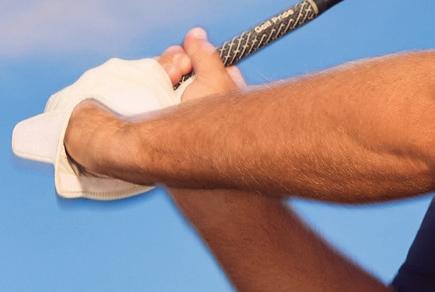
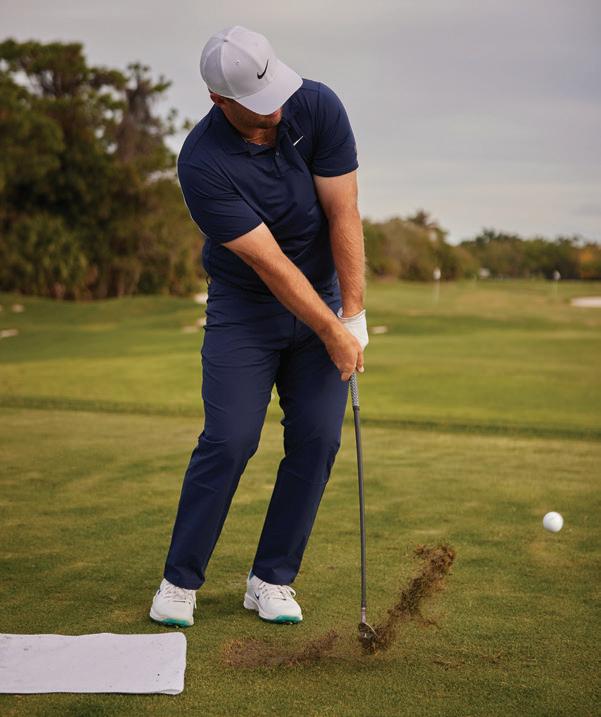
i’m at a cool time in my life. I’m 26, got on tour four years ago and have been able to grab a few wins. Everybody says there’s pressure when you’re not winning and a different kind of pressure when you are, but I don’t get too stressed. I can’t grind all the time. That’s not me. I’m probably a lot like you. When I go to practice, I’m finding a drive-thru on the way to get a giant iced coffee. I don’t like to tie my shoes—my swing coach, Jason Birnbaum, gets on me for that—or fix the flap on my glove. I’m most comfortable hat backward, shirt untucked, talking college sports. Having fun helps me recharge for the days when I have to be sharp.
Even more, you and I probably have some of the same swing issues. I like to go at it fast, and my miss is to the right, although we never say “slice” on tour. My grip feels weird some days, and I have to keep an eye on ball position. I need to get better with my wedges. If any of this sounds familiar, let me show you what I’m working on. WITH PETER MORRICE
POWER FADES WITHOUT THE SLICE RISK
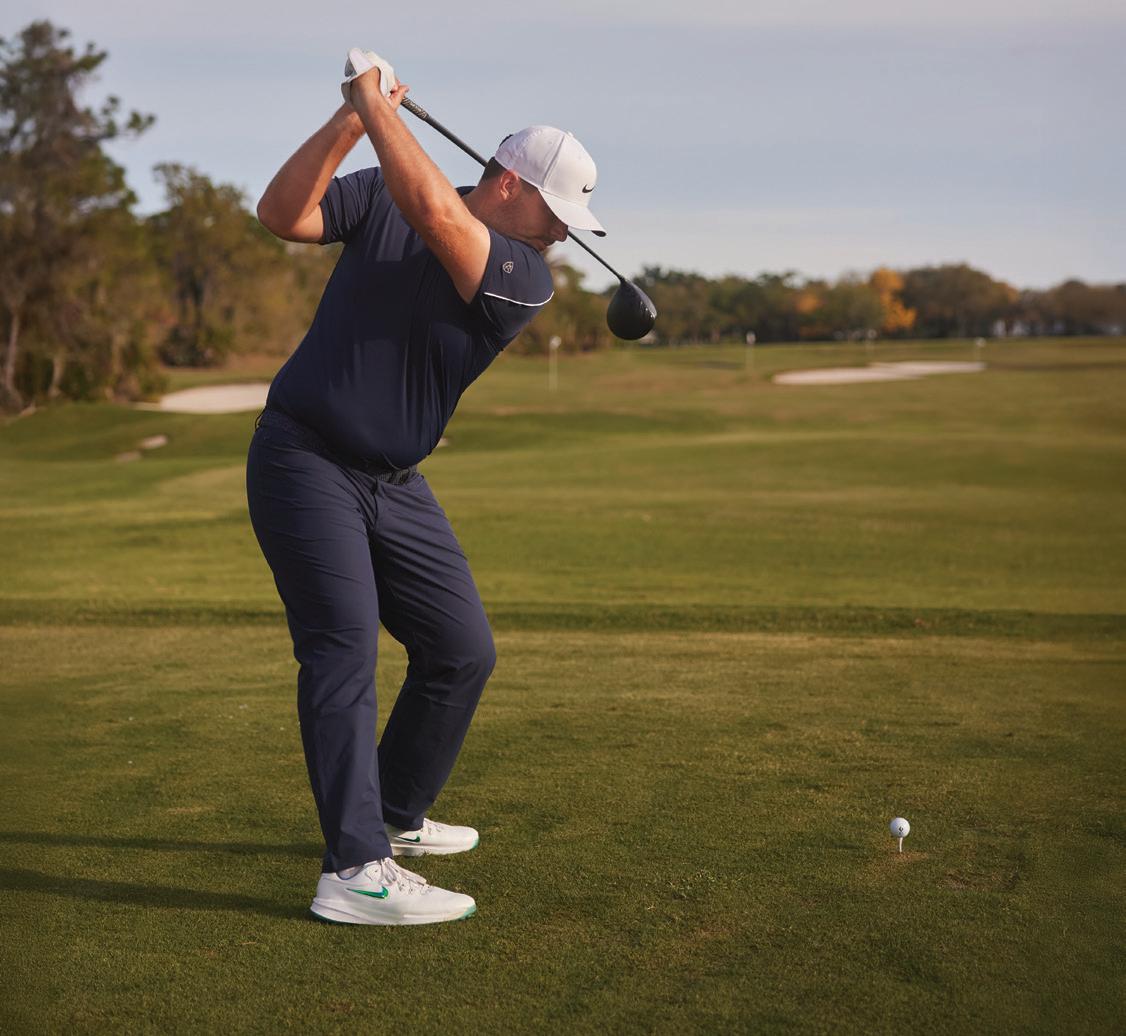
My natural ball flight is left to right. If I’m on the last tee with a chance to win, I’m aiming that thing left and ripping a fade. I never want to lose that shot, but I do have to make sure I don’t overdo my fade positions. Two keys are my shoulder alignment (not getting too open) and the shape of my backswing (not too upright).
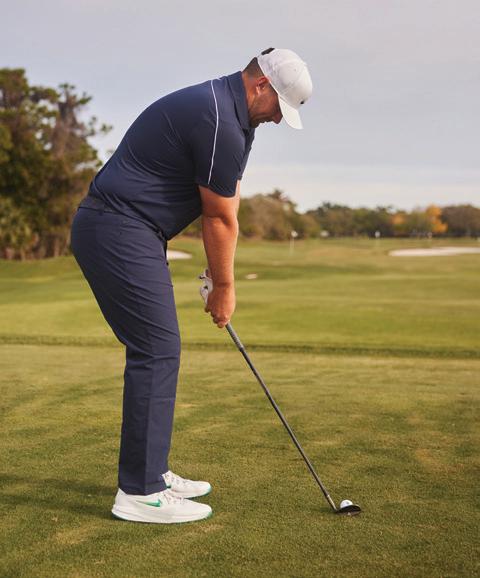
Shoulder alignment is the easy one. I have a pretty weak right-hand grip, meaning my hand is more on top than turned to the right. But if it gets too weak, it shifts my shoulders more open. That’s something Jason and I always check, along with ball position. If the ball creeps too far forward, that also can crank my shoulders way open.
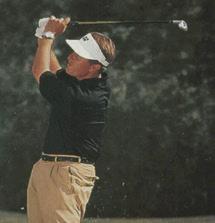
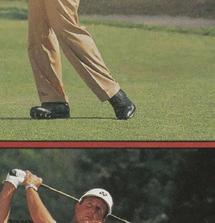
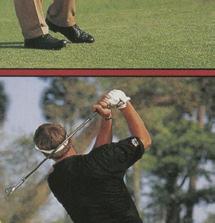
The second part—my backswing shape—I’m really keying on. I want to swing my left arm deeper, or flatter, to the top (left). When I’m cutting the driver too much, my left arm moves out and away from my body on the takeaway, which makes my swing steeper. I want to feel the top part of my arm staying against my chest as I go back. Straightening my right leg on the backswing helps because it allows more hip turn and makes the backswing more rotational, less up and down.
UNLOCK A BIGGER TURN
Another way I’m working on my backswing is a trigger that kick-starts my move off the ball. Like Jack Nicklaus’ famous head swivel to the right, I turn and shift my head a few inches away from the target as I start back (right). This gets my weight moving to my right side and encourages more body turn to the top. The more I can turn, the better my chances of making a flatter arm swing and not that steep, lifting action that could turn my fade into a flare way right.
DRILL: STAY CONNECTED
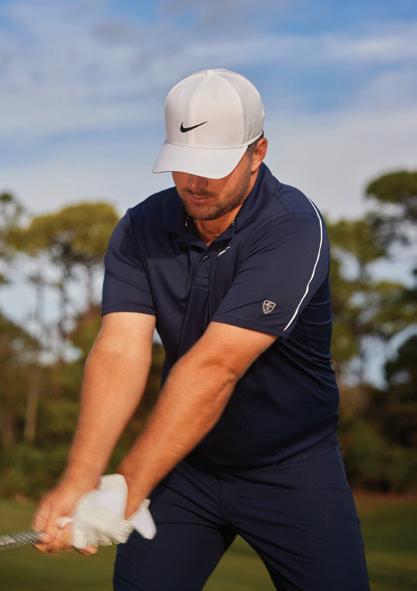
Jason came up with this practice drill, and I love the feeling it creates. We cut a stretchy exercise cord and tied it into a loop that fits tight around my upper body. I stretch it against the outside of my left arm and wrap it around my ribs on the right. The cord holds my left arm across my chest (left), which is the feeling I want in my normal swing. I even hit balls like this. It’s awesome. I use this drill nearly every time I practice.
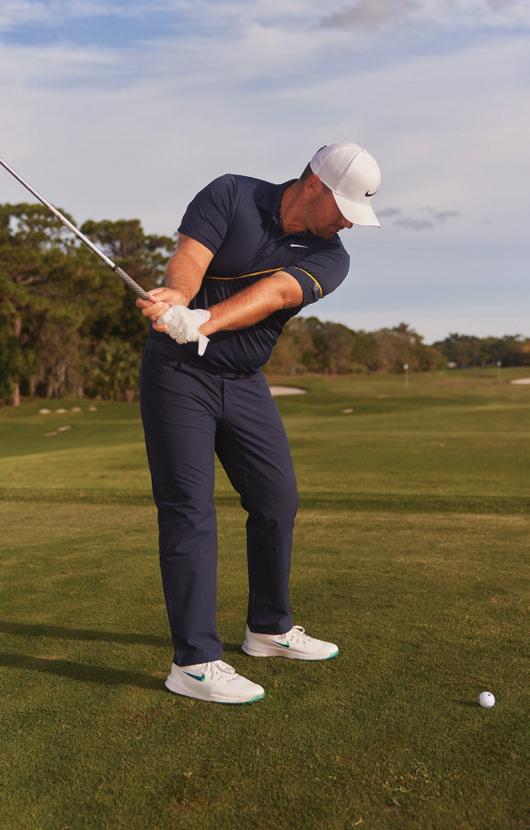
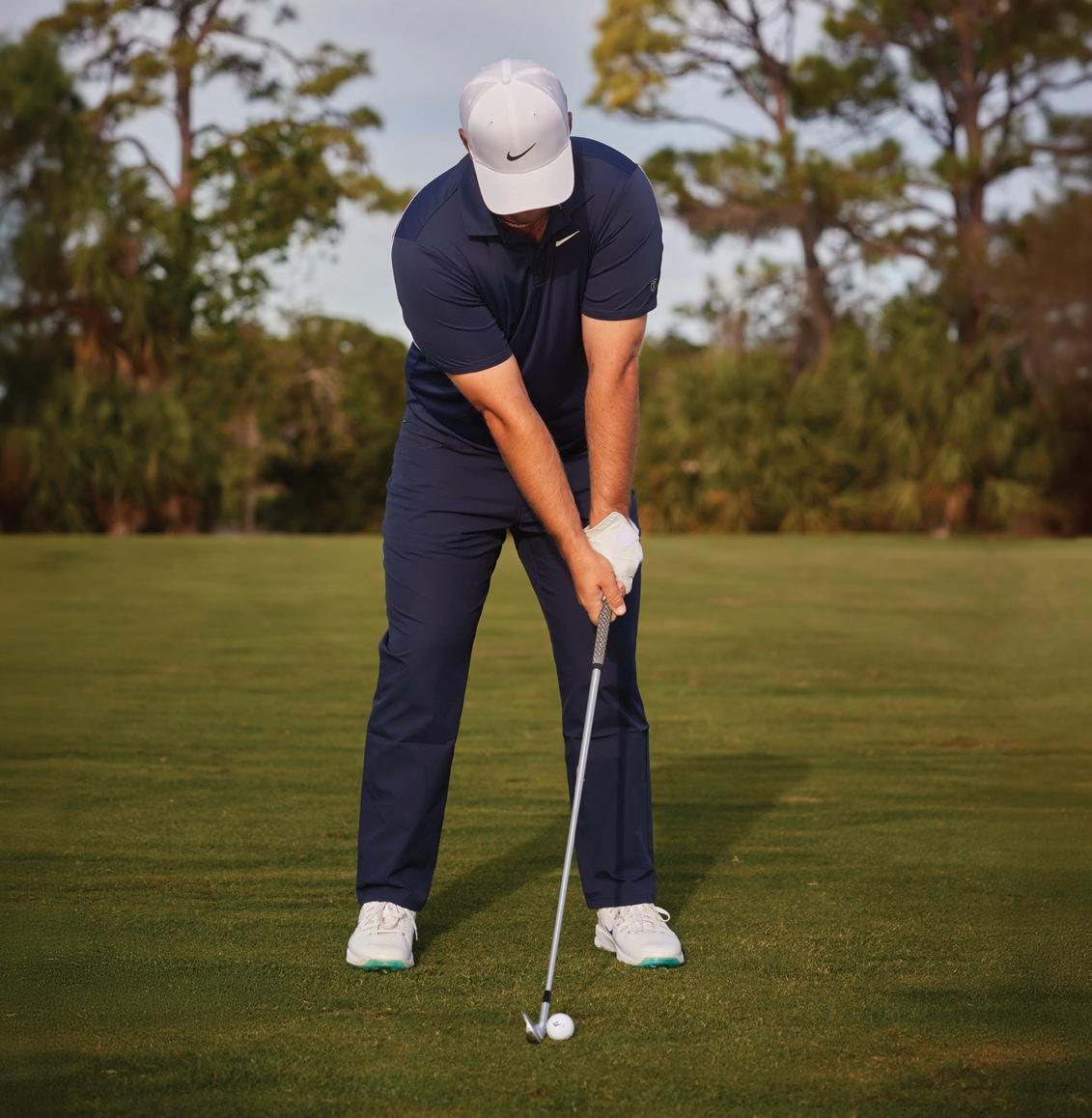
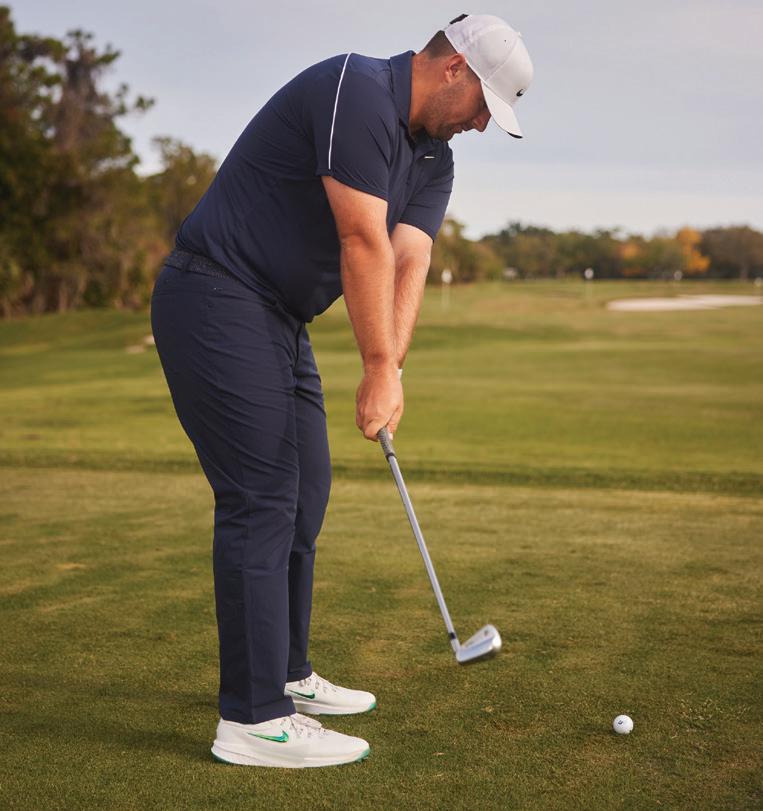
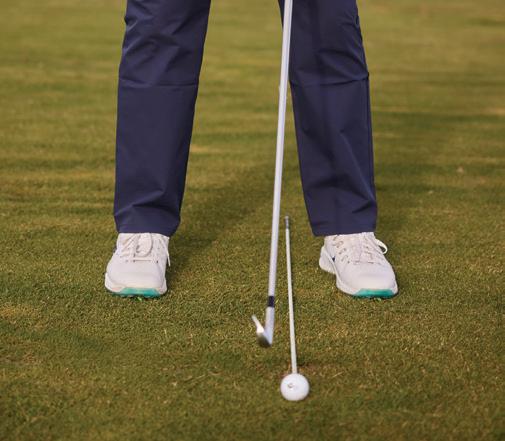
// STARTING WITH MY HANDS AHEAD PRE-SETS WHERE I WANT TO BE AT IMPACT TO SMASH AN IRON SHOT. //
LOW BULLETS BEAT WEAK FLOATERS
I know what you’re thinking: How am I going to hold the green with low bullets? I’ll tell you. The issue I see with most golfers—and it gets me sometimes, too—is wiping the club across the ball with an out-to-in swing that kills power and sends shots to the right. If you make solid contact, you’ll get more distance, of course, but you’ll also have plenty of trajectory to stick it on the greens.
To hit my irons flush, I work on a few things. First is ball position. I play the ball just forward of centre for middle irons, a touch up for long irons and middle to back for short irons. Because I’m naturally a little steep, it’s critical that I catch the ball first, then the turf. If I get it at all heavy, it’s going nowhere. I also push my hands ahead of the clubhead at address (above), which reduces the out-to-in path.
If the clubhead passes your hands before impact, you’re wiping across the ball—that’s the hated high-right miss. Starting with my hands ahead pre-sets where I want to be at impact to smash an iron shot. My last key is “covering” the ball as I swing down. I feel like the clubface is trapping the ball against the ground and my chest is on top of it at impact. Sound like a low punch shot? Great. Those always feel pure.
DON’T FORGET THE FACE
Most of us get the clubface too open on the backswing, then don’t close it enough by impact, so contact is weak. I set up a better strike by keeping the face more closed right from the start. I like to see the face still “looking” at the ball a few feet into the swing (right). The feel for me is that my right wrist stays more on top as I start back. A stronger face position helps me avoid leaving the club open at impact, so I can shred my iron shots. I remember years ago shooting 62 at one of my favourite childhood courses—Hollywood Golf Club in New Jersey— thinking toe down to start back. I’ve used that thought ever since.
DRILL: MASTER BALL POSITION
You’ve seen this drill with the alignment stick a million times but for good reason— ball position is huge. It’s the first thing any tour player will check when his or her iron shots are a little off. Like I said, I want the ball just ahead of centre in my stance for a middle iron. I’ve got a 6-iron here (left), so
I set the stick between my feet and perpendicular to my target line. My ball position tends to drift too far back, and then I have a tough time controlling direction. My fade doesn’t start enough to the left, and a draw will hang to the right. You gotta nail your ball position, and this is the easiest way to check it.
// WITH WEDGES, I CUT OFF THE FINISH, LIKE A TOMMY FLEETWOOD SWING. A LOW FINISH MEANS A LOW FLIGHT. //
80-PERCENTERS THAT STICK INSTEAD OF FULL THROTTLE
When I get to the wedges, I shake things up. I try to draw them because my normal cut move puts so much spin on the ball and it flies too high. Plus, they sometimes spin back off the green. Trust me, a lower shot that hops once and grabs—that’s better to control distance.
The draw comes mostly from ball position. I play it way back, almost to my right foot, which leans the shaft toward the target for a low-shot setup. The ball being back also helps me start it to the right with a better chance that the face is slightly closed. Those are all draw positions.
The other thing I do is cut off the finish, like a Tommy Fleetwood swing. My hands finish low (left), and the club stays more in front of me than wrapping around my body. A low finish means a low flight. Plus, I swing about 80 percent, which helps keep the flight down.
I also try to feel a more rounded swing, with my left arm across my chest going back, just like I said with the driver. The driver cuts, and the wedges draw—the difference is mainly ball position. When I want to groove that rounded shape, I’ll hit a bunch of wedges. It trains the move I want with every club.
SQUARE
THE
SHOULDERS
With the ball back for wedges, my shoulders square up to the target line, even close a touch.
That’s good for draws, and Jason and I check it a lot because my standard setup is open. A great way to test shoulder alignment is to video your setup from behind, looking down the target line. If you see a sliver of your left arm (above), your shoulders are square to closed. Or you can take your setup, hold the shaft across your shoulders and compare it to your target line. If the shaft matches your line, you’re square.
DRILL: MISS THE TOWEL
Two things matter most to me on wedge shots—flying the ball the right distance and knowing how much it’s going to spin when it lands. Both require precise contact. That’s why I practice with this towel drill. I place a golf towel a couple inches behind the ball, then set the ball very carefully in my stance—just inside my right foot. I hit shots missing the towel and striking the ball the same every time (left). Consistent contact is a must for dropping your wedges in tight.
WELCOME ABOARD THE MOST
EXCLUSIVE TRIP IN GOLF
BRINGING YOUR CLUBS ON A PRIVATE JET AROUND THE WORLD GOES LIKE THIS
BY MAX ADLER
PASSENGERS AT THEIR LOWEST GO VIRAL when they get air rage. I’ve only ever experienced ground rage, a milder cousin. Whenever a flight delay is announced, hot spasms shoot from the pit of my stomach to my suddenly grinding teeth as my neck tenses, the anxious energy disbursing in two terminals of sweat above my ears. Doesn’t even need to be my flight. A pushback of just 20 unexplained minutes is enough to stoke oh-so-many bad memories, all formed in a life of perhaps no worse than average luck getting periodically trapped inside the house of cards that is our commercial air system.
I was recently having an attack—a $5 orange from Hudson News combined with headlines about air traffic controllers striking against the U.S. government shutdown gave the spasm an acidic, fruitforward note in my esophagus—during an attempt to leave my home regional airport in 2025. Staring at the familiar dingy blue carpet and overflowing trash of good old gate B6, I concentrated on taking deep breaths and letting go of my fresh and irrational hatred toward just about everything. If my person and golf clubs could survive the gauntlet of three connections to Sydney, an astonishing reward awaited that would surely correct my generosity of spirit.
Kalos Golf, a travel company based in Chapel Hill, N.C., had invited me to join a tour called “Golf Around the World.” Aboard a chartered Airbus A321, which normally has a capacity of 220 passengers but this one had been refitted with 52 full laydown seats, our group would travel to play golf twice in Australia, Singapore, Thailand, the United Arab Emirates, and three times in Spain, in that order, as we worked our way back to the U.S. following the convenient clip of time zones and the turning of the Earth.
“Always travel east to west, and always eat yoghurt first thing at breakfast,” says Jim Lamont, the trim, affable 9-handicap with a military background who founded Kalos Golf in 1997. Whenever Lamont is early for a commercial flight in an empty airport, he’ll walk the wrong direction on moving walkways for exercise. He’s forever grateful to the ghosts of British imperialists, despite their wicked ways, for
SINGAPORE
SYDNEY
PHUKET
DUBAI
MÁLAGA
MIAMI
dotting the globe with golf courses and churches, thus laying the foundation for the business he and his wife, Karen, have grown to 26 employees plus contractors. “You’ll be eating so many new and different foods, and yoghurt coats the stomach.”
Another useful quote, attributable to the legendary journalist Tina Brown, about the new seduction of flying private is, “You realise there is no one you wouldn’t kill, betray or sleep with to ensure a lifetime of luxe relief from the armpit of mass transit.”
Beyond the sumptuousness of our non-public vessel and great golf, across 18 days there would also be tours of opera houses and museums, wine tastings, cooking and dance classes, cruises by yacht and helicopter, small gifts and nothing but five-star hotels and meals. Joining our crew of porters and organisers would be a doctor to provide medical treatments as needed and a university professor to provide social history lectures as wanted.
Though the price tags are eye-watering, curated group travel by jet is a category that has thrived postpandemic. The Four Seasons charters planes for multi-destination trips where customers stay in its hotels and partake in edifying excursions, though no golf. Of the 26 trips Kalos Golf operated last year, only two were exclusively by private jet; the rest
utilised boats, trains, vans, commercial air, maybe a chartered flight for certain legs here and there. Itineraries and prices vary accordingly, and as with any market there are competitors. Perry Golf, as one example, organises tours that tend to be more golfintensive for smaller groups. Much of the legwork is in establishing relationships with foreign private courses. Customers book these trips 15-18 months in advance, and tour operators can predict demand like clockwork against the stock market.
“Not that our clients are that meaningfully affected by the ebbs and flows of the market, but booking trips like ours is a matter of psychology and confidence,” says Casey Oliver, chief of marketing for Kalos Golf, which served 1,500 unique customers last year, all from the U.S. The “non-media rate” price for Golf Around the World was $156,000 per person. Before you rip your magazine in half or hurl your electronic reading device against the wall in a fit of jealous rage directed at me or a universe that allows such wealth disparity, know that I, your humble writer, go forth only to bear witness.
How does such a trip look and feel? Who goes? What would it be like to watch the cost of a secondtier college education get spent in less than three weeks? Luckily, the flight delay that began my journey proved negligible. After a disgusting sandwich in Philly and a brisk jog through LAX, I was safely aboard a big commercial bird and just 15 miserable hours over the Pacific from answers.
CONCRETE AND JUNGLE (above) Zipping through a Singapore food market aboard a Vespa sidecar. (left) Thick Thai vegetation places a premium on hitting fairways.
The open-air welcome dinner at the Park Hyatt hotel overlooking Sydney Harbour revealed, predictably, a room of mostly retired white couples, although there were two younger female golf buddies from a club in St. Louis and one patriarch oilman from Calgary who’d brought not only his wife but also their two daughters and their husbands. He’d surprised them all on a tearful Christmas morning. “You can’t take it with you, so why not enjoy it with the people you love while you still can,” he said to our table. It would be a few days later, at the Singapore Marina Bay Sands casino, that three of us helped this gent out of an elevator after at least that many martinis on the 57th-floor rooftop bar. The total lack of judgement from his children, rather respect, for their elder sowing his oats so far from home and hearth, was touching.
“We had some friends die, so we figured let’s do this while we can walk,” said a woman from Atlanta, which was most shocking coming from her, as she and her husband were country club tennis fit.
From the cigar-chomping Texan who’d just sold his electric-parts company emanated no such morbidity. He seemed to be dedicating the rest of his days to speaking only in jokes, and at several of the golf courses we visited inquired about the course record as if on my behalf. “I couldn’t even spell A.I. back in 2019, but, man, those data centers sure need a lot of transistors!” This was Tex and his wife’s second Kalos Golf trip, and they were booked for six more. It was the exploration of world cultures long coming to her; he’d already visited both Singapore
and Dubai multiple times on single-night business trips to see manufacturers. “Those people just love to meet in person!” He could laugh about it now.
If half the crowd were repeat customers excited to kick off another decadent journey of the very best life has to offer, in the comparative dining quietude of the other half lurked the question, Will this really be worth it? During dessert, the wry announcement from expedition leader Jill Peacock that THC/CBD products could not be brought on “the jet” fetched some titters. I liked Jill. Highly organised yet laid back, she had travelled the world as a penniless backpacker until she aged out of the hostel scene. Ironically, this hardscrabble sense for navigating less-beaten paths now informed how she arranged travel for one-percenters. Once everybody started mingling on the golf course, she assured me, strong bonds among the group would form.
Besides golf, the other commonality was these were people who’d made their money. The Chicago lawyer who started his own accounting firm while putting himself through night school and building a real estate empire asked a version of the same
BOATS, CARTS AND CAMELS
(clockwise from above)
Approaching a Thai fishing village built entirely on stilts for lunch. A camel ride through a Bedouin camp in Dubai. Travel bags in sharp order at Valderrama. Cocktail cruising in Sydney Harbour.
rhetorical question aloud almost daily: “What am I going to do, leave even more money to my kids?” He’d grown up without a father.
One vicarious trope of “Succession,” the TV show about a media mogul’s ethically challenged offspring and feuding corporate hangers-on, is a fleet of black Mercedes vans always appearing on cue to ensure the smoothest of transitions. Well, take it from me, it takes only a few days to get benumbed. Always expect a cold face towelette, never board a van that’s more than half full, and know that the attendant (there to offer local colour, bottled water and act as intermediary with the driver) will politely stay quiet upon request. “Do you want peaceful or high energy?” is how you might hear their service described when English is a second or fifth language. Never tip because everything has already been taken care of. If you venture outside the hotel for dinner, yet another guide will wait in the shadows with the sole duty of paying the check.
A word about hotel check-ins: No need. Part of the deal with paying this kind of money is that you never wait for anything, ever. After being served your greeting mocktail at the reception lobby, sim-
THE DINNER CONVERSATIONS RARELY COME AROUND TO PUTTING.
ply follow your personal concierge who has the key to your room. You will always find a gift on your pillow, robe and slippers, a top-shelf espresso machine and a basket of local fruits with a silverware setting. Your luggage will be brought up shortly, and your golf clubs are in transit to whichever course you’re playing tomorrow.
If it’s the Australian Club, know that gentlemen aren’t to wear socks that reveal the ankles. After a nice, dry Riesling and luncheon, you’ll find your clubs on a cart by the range. One of the promises on these trips is that you never lift your golf bag. Some members with trundlers (Aussie for “pushcart”) might shoot you sideways looks, but a good thing to be in life is un-embarrassable. Lest you ever need a reminder, glance down at your tour-issued nametag. So what if we’re all riding at a walking course? Kalos Golf has found its American clientele mostly prefers to ride and at certain courses in Italy will even truck in carts in advance.
My golf buddies couldn’t believe I was flying all the way to Australia and not going to Melbourne, home of the famous sand-belt courses. Kalos offers itineraries that include Melbourne, but it’s important to understand golf is not the sole driver on these trips geared toward couples. When half-days or offdays are spent on history tours or classes, the dinner conversations rarely come around to putting. As a golf sicko who has only ever crammed in as many rounds as possible while travelling, I must admit, dialing it back is a good way to go. For instance, the last place I would ever visit on a golf trip is a zoo, which I associate with suicidal animals, melted ice cream and tantrums. But after a VIP tour of Taronga Zoo with “special koala access” in the company of my new high-net-worth pals, any tee shot I sailed thereafter into the uniquely evolved flora and fauna of the island-continent felt enriched. As the zookeeper remarked about koala claws and wallaby kicks, “People go on about our snakes and lizards, but it’s our furry friends you need to worry about.”
PART OF THE DEAL WITH PAYING THIS KIND OF MONEY IS YOU NEVER WAIT FOR ANYTHING, EVER.
New South Wales Golf Club, No. 23 in the Golf Digest World’s 100 Greatest, is no small consolation for not playing No. 5 Royal Melbourne West. Situated with three other courses on Little Bay Peninsula, the lot was once nearly combined and developed into the antipodal answer to Pebble Beach Resort in the 1980s. But private NSW, true to its logo of a cypress tree bent sideways from wind, held fast against going corporate. We happened to catch it on a calm day, but thanks to my conversation the day prior with David Keeling (distinguished professor of cultural geography emeritus, Western Kentucky University), I could gaze into the Pacific and consider Captain Perouse, the French explorer whose ships went down without a trace in a cyclone in 1788. Had Perouse made it home, it’s possible the French would’ve claimed Little Bay and beyond, initiating unknowable wrinkles in centuries of geopolitics, and, oh, what very different fare we’d later be enjoying in the clubhouse for our second lunch.
No one can buy a game, and after golf our cohort generally looked just as sun-whipped and hangdog as the low-net strivers at any muny. To wash away the double bogeys, we celebrated our last evening in Australia aboard a yacht cruise with cocktails and canapes. Dinner was in a private hall at the Sydney Opera House, a single long table set as if for visiting political dignitaries, under the serenade of a quintet of classical musicians. I lost count of how many waiters, bartenders, guides, drivers, captains, first mates and dock workers assisted in the flow of the evening, but our group of about three dozen cut through the crowded harbour with tactical precision. Humiliating as it can feel to be conveyed through cities by guides like a child, the benefit to doing it in style is that all the other would-be tourist hunters of a city leave you well alone.
The wink-wink tail number of our jet was G-AXTW. Leased from Titan Airways by Kalos Golf’s parent travel company, TCS, the idea is to keep it in near continuous use all year to get to profit, especially after the refurbishment of the interior. When
it comes to chairs, Italian leather meets air-grade specifications ain’t cheap. Yet at every destination, our plane sat unused at the airport for three or four days while the pilots, crew and chef hung out and collected their wages. The conveniences of a dedicated aircraft range from small (passengers can leave items onboard rather than perpetually pack up) to large (in the event of the unforeseen, like dangerous political unrest, a group can just get up and go). According to TCS chief operating officer Matt Hill, a tall 8-handicap from London with terrific width at the top of his backswing, the company always books, as a precaution, alternate destination hotels for tours that visit the Middle East. Pretty quickly, one sees how business practices that erode the bottom line support a greater philosophy of flexibility when serving the very wealthy. Wherever you go, there is always much more staff, space and food than necessary. If you reserve a tour to drive dune buggies but decide at the last second to bag it in favour of hanging by the hotel pool, you’re never met with even a hint of an eyeroll. As Lamont says, “I’m not a nickel and dime guy. You’ll never catch us serving prosecco instead of champagne.”
As sharp a pencil you might endeavor to keep against the luxuries delivered (18 times $2,000ish-
WATER WORLDS (counterclockwise from top left)
A giant wooden orangutan greets visitors on Siloso Beach in Sentosa. Couples golf at New South Wales. Paddling into cavernous rock formations in Phang Nga Bay.
per-night hotel rooms, 11 times unaccompanied green fees, Michelin-star meals at nearly every seating, roughly a dozen private ground transfers at each destination, caddie fees, booze, activities, guides, however you amortise 35 hours of transcontinental private jetting when plain domestic goes for about $8,000 per hour), time is the hardest to value. At Phuket International customs, picture a line of a thousand travellers coiled upon itself like a cobra. Now picture smiling attendants in suits holding Kalos Golf placards directing you to a different line that isn’t really a line at all but rather an empty lobby staffed by officials more concerned about offering tea or chocolate than checking your passport. Just keep walking and don’t make eye contact with the poor bastards to your left.
Another van, another face towelette. This is when Lamont says, “There’s only two things you need to think about on our trips: red or white with dinner, and who do I want to play golf with tomorrow?”
I was chawing with the retired physician from Kansas City on our way to an elephant sanctuary outside Phuket (to which TCS makes a handsome annual donation) when our van halted on a cobblestone urban street. Flash-flooding had made the road impassable, so we took a detour through an alleyway so narrow that the massage workers on cigarette break had to stand up. Arm draped over his wife’s shoulder, the physician looked out the window and smiled. “So many of these places would’ve been too intimidating to arrange travel to on our own, but I haven’t been nervous or stressed once.”
Like good golfers, good travellers are flexible when things go wrong. While the broader challenge of Golf Around the World could be described as shepherding a horde of affluent senior citizens with the highest expectations to five destinations with rugged time-zone changes and heading off any possible reason for complaint before it happens (one seasoned Kalos staffer used to manage Taylor Swift’s tour operations, and it shows) the most successful travellers on this voyage were those who embraced its vagaries.
Like, say, caddie services in foreign countries.
Thailand’s Red Mountain Golf Club carves through the thick forests of a former tin mine and dialogue from the uniformed female caddies consists of two words: “Jungle” and “Maybe!” Blue Canyon Country Club, also a former tin mine as well as site of a Tiger Woods victory, staffed two female caddies per golfer, one to drive the cart and another to hold an umbrella against the sun as you walk to your ball.
“It was so weird. I’m like, why the heck am I riding around in this cart with this person I can’t talk to while my wife is ahead in another cart?” complained one of our party. The Texan called it the best caddie experience of his career.
At dinner that evening at the Rosewood—a spread of tom yum soup, crab, shrimp and curries served at literally the same outdoor location where the dinner scenes of the third season of “The White
Lotus” were filmed—Professor Keeling mentioned how the geisha tradition, decorative and largely non-sexual, had passed down through centuries to arrive in present-day forms in golf and business. In the latter, a usual and concluding duty of young, attractive women is to put drunken businessmen safely into taxis home at the end of a big night.
My caddie at Sentosa Golf Club in Singapore, Abu, and I got along so well that he stayed with me for both rounds. The resort has hosted PGA and LPGA Tour events and straddles an amusement park in a way that reminds of Disney World. Abu had been caddieing for 50 years and drank his coffee through a straw from a plastic sandwich bag he tied to our golf cart. When Abu explained why this pouch method was superior to a cup in the great humidity, I couldn’t follow. To read putts, Abu, cigarette forever pursed between his lips, would squint into the sun and then slowly swoop his hand in a gesture of curvature. We got into a nice rhythm where he would mark my ball with his coin, which I would then remark with my coin to align the sidestamp, chase him a few steps to return his coin, then settle back over my putt. Abu and I talked at length about his father’s experiences in the British militia until I realised he was saying “Malaysia.”
As much as you might love to hear your gentle narrator go shot by shot, let’s just say golf in Dubai is a lot like flat desert golf anywhere, and the most popular wildlife is the crane—a construction crane. Giant steel arms dominate the skyline, busily erecting a sprawling city of mostly vacant high-rises for a future that hasn’t arrived. On an eight-lane highway, one afternoon we passed a bus crammed with immigrant labourers in dusty blue uniforms sleeping against each other. The political leanings of our group were made crystal clear by those who bought logo shirts at the Trump International Dubai pro shop versus those who elected to tour the old town instead. The Persian Gulf is called The Arabian Gulf, depending on who you ask, and I went swimming in it. The beach club at the Four Seasons Jumeirah is achingly beautiful but for the bulldozers pushing sand to build another artificial beach and hotel directly in front of it.
DIALOGUE
FROM THE UNIFORMED FEMALE CADDIES CONSISTED OF TWO WORDS:
“JUNGLE” AND “MAYBE!”
Every society is shaped by a different set of challenges initially posed by its land, which ultimately determines how people, goods and ideas move across it over time—to paraphrase Professor Keeling. Before our final round at Valderrama, Keeling noted we were now at the cradle of civilisation. The 1997 Ryder Cup host site is less than 20 miles from the Rock of Gibraltar and the north coast of Africa, where the colder Atlantic plunges underneath the saltier, warmer Mediterranean. For ancient Greek and Phoenician sailors, this was the end of the world. To this day, it’s a critical chokepoint of global shipping that the British won’t let the Spanish have back.
Keeling calls cruise lecturing “a pretty good retirement gig” and is accustomed to being the most sought dining companion on trips. Over a lovely paella and tempranillo, I admitted to him, bashfully, that I had chosen to play Finca Cortesin over visiting the Pablo Picasso museum. Keeling kindly reassured a desire to play the great courses of the world didn’t make one a Philistine. However, in the end it was Dr. Ryan Zahalka who became the hero of the trip. Zahalka, just 32, has ministered a diverse array of medical field support in his career, such as Space X astronauts and marathon runners in Antarctica, but this was his first golf mission. The good doctor came up big at La Reserva Club Sotogrande.
A self-made man from Washington (“I didn’t know what a stock was when I started in the mail-
THE GOOD LIFE (counterclockwise from top left) Gold trays lined with banana leaf make a classic Thai sharing platter. Ample legroom inside the jet. Cheerful caddies at Red Mountain G.C. Rooftop swimming at Marina Bay Sands Casino.
room at Goldman Sachs”) was having trouble breathing after our round. The hospital in Malaga was understaffed, and if not for Zahalka’s insistent but respectful intervention, it’s almost certain the popped lung wouldn’t have been correctly diagnosed. The man and his wife had to stay extra days for the pressure in his lung to stabilise, so they didn’t join the final leg home, but he was alive and cheerful at the last breakfast.
Over the Atlantic, an hour shy of Miami and completing our circumnavigation of the Earth, the captain came out to lead a champagne toast with the crew. I can’t remember exactly what was said, but the words were well-chosen and prompted folks to get out of their seats and stroll the aisle wishing farewells. Many promises were made to stay in touch.
“Next time, we’re bringing our kids,” said the financial advisor from Long Island to a couple who pledged to do the same.
Was it worth it?
Eighteen days of travel above my station revealed the final math as obvious—if you’re concerned at all about cost, this trip is not for you.
What has stayed with me was an observation from Jill Peacock. She had said it only to me on the yacht back in Sydney Harbour, when the sunset was kissing all our faces, and no one was concerned about what came next.
“In this life you want to travel either very high or very low,” said Jill. “It’s the middle that’s no good.”
Tom Stephenson Club Championship Jumeirah Golf Estates, UAE
Avani Shah Ladies Camel Trophy Emirates Golf Club, UAE
Matt Rice
Jumeirah Golf Estates Pro Am by Titan Wealth International Jumeirah Golf Estates, UAE
Sai Pagadala & Eyyani Sarath BMW Open Social Sharjah Golf and Shooting Club, UAE
The Grassholes Golf Society League Sharjah Golf and Shooting Club, UAE
Stuart Murray Monthly Medalford Jumeirah Golf Estates, UAE
UNDER UNPRECEDENTED ATTACKS, THE UAE STOOD READY. THIS IS THE STORY OF THE FIRST 31 DAYS
“Augie Fabela writes not as a distant commentator, but as a firsthand participant—one who chose to stay and stand in solidarity with the UAE. His unique perspective, as an eyewitness to a defining moment, captures our nation’s strength, vision, and tenacity.”
HIS EXCELLENCY SHEIKH NAHAYAN MABARAK AL NAHYAN
MINISTER
OF TOLERANCE AND COEXISTENCE, UNITED ARAB EMIRATES