12 WINNING THE FIFA WORLD CUP BEYOND THE BROADCAST
Snap Inc’s Antoine Challita explains why brands need to show up in real-time fan conversations to stay relevant, especially during the upcoming FIFA World Cup.
Motivate Media Group
Head Office: 34th Floor, Media One Tower, Dubai Media City, Dubai, UAE. Tel: +971 4 427 3000, Fax: +971 4 428 2266. Email: motivate@motivate.ae Dubai Media City: SD 2-94, 2nd Floor, Building 2, Dubai, UAE. Tel: +971 4 390 3550, Fax: +971 4 390 4845 Abu Dhabi: Motivate Advertising, Marketing & Publishing, PO Box 43072, Abu Dhabi, UAE. Tel: +971 2 677 2005, Fax: +97126573401, Email: motivate-adh@motivate.ae Saudi Arabia: Regus Offices No. 455 - 456, 4th Floor, Hamad Tower, King Fahad Road, Al Olaya, Riyadh, KSA. Tel: +966 11 834 3595 / +966 11 834 3596. Email: motivate@motivate.ae
London: Motivate Publishing Ltd, Acre House, 11/15 William Road, London NW1 3ER. Email: motivateuk@motivate.ae www.motivatemedia.com
EDITORIAL: Motivate Media Group Editor-in-Chief Obaid Humaid Al Tayer | Managing Partner and Group Editor Ian Fairservice Group Content Director Thomas Woodgate | Campaign Middle East Editor Anup Oommen | Senior Reporter Ishwari Khatu Reporter Shantelle Nagarajan | Junior Reporter Hiba Faisal
DESIGN: Senior Designer Thokchom Remy
ADVERTISING ENQUIRIES: Chief Commercial Officer Anthony Milne | Publishing Director Nadeem Quraishi (nadeem@motivate.ae) | Sales Manager Tarun Gangwani (tarun.gangwani@motivate.ae) | Senior Sales Executive Saif Hemdan (saifeldin.hemdan@motivate.ae)
PRODUCTION: General Manager S. Sunil Kumar | Production Manager Binu Purandaran | Assistant Production Manager Venita Pinto
HAYMARKET MEDIA GROUP: Chairman Kevin Costello | Managing Director Jane Macken
those of Haymarket Magazines Limited or those of its contributors.
Luxury marketing in the Middle East has no more room for translated tales that have travelled in. This is no longer a market for loud launches or polished and performative campaigns. The diverse consumers in this region would rather not tolerate adapted localisation or cultural appropriation as a seasonal marketing tactic. Curated calendars and costly content creators don’t make the cut anymore.
Brands that are winning in the regional luxury marketing landscape are those listening harder and leaning into cultural intelligence. They are designing for the region and from the region. They are delivering exclusive experiences and seamless services – proactively and consistently at every offline and online touchpoint – without beating the drum about the complexity that this requires.
Several leaders contributing to this annual luxury issue describe how the narrative has changed: the region is neither a late stop on a global journey, nor does it represent one homogenous audience with similar appetites. Each city in the region proudly owns its social temperature. Each buyer is discerning and can spot a borrowed gesture on a billboard from a mile away. The messages from marketers to the luxury landscape are blunt: Stop treating regional nuance as an accessory. Culture is not a garnish placed on a global plate; it is the recipe. Heritage is not enough to land a brand; the experience also needs to match or outperform the brand promise.
Luxury brands must spark aspiration, desire, a sense of mystery and a feeling that the consumer is cared for without even having to ask for it. The most important moves are often the silent, invisible ones – such as remembering service history, offering product recommendations, preparing appointments proactively, seamless after-sales support, and private and personalised invitations based on individual preferences and purchase history. The brands doing it right are those that can remove friction and make each consumer feel like the most loved child in the family, without making them feel tracked, monitored, influenced or unsafe.
In this magazine, marketers share a message for brands: memory is harder to buy than exposure. For agencies, the gauntlet has been thrown: stop dressing the same idea in richer fabrics and calling it premium. Distinction requires clients willing to hold the line on brand codes while partners challenge soft consensus. Good work is not decoration; it is discipline under pressure.
This edition is not as much a celebration of luxury marketing as it is a mirror held up to it. The Middle East has the ambition, audiences, capital and cultural confidence to shape what comes next. But brands that want to shape the future of luxury marketing will need to serve better, speak with purpose and choose sense over spectacle.
PublisHer and Motivate Media Group create Pathways internship programme
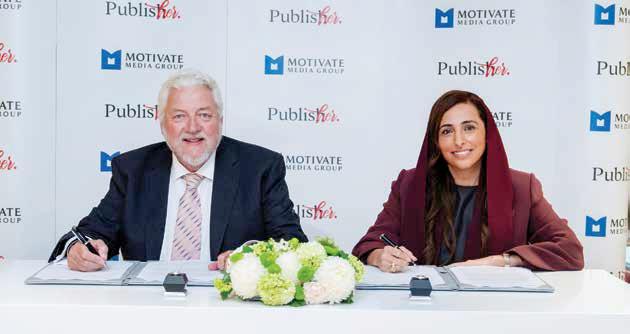
PublisHer and Motivate Media Group have formed a partnership to establish PublisHer Pathways, a four-week immersive internship programme to address the gap between academic preparation and the realities of working inside a media company.
The agreement, signed by HH Sheikha Bodour Al Qasimi, Founder of PublisHer, and Ian Fairservice, Managing Partner
AGMC reveals new brand identity
UAE automotive retailer AGMC has unveiled its new brand identity to mark its 50th anniversary.
The new brand identity was revealed together with a new operating model.
This was part of the brand’s efforts to reposition itself from a traditional automotive retail business into a broader mobilityfocused master brand.
The transformation aims to bring AGMC’s automotive partnerships and owned mobility services under one unified identity, which are centred around its new brand platform: ‘Always Moving’.
The move marks a strategic shift for AGMC beyond the point-of-sale automotive experience into what it describes as a connected mobility ecosystem.
AGMC’s new brand is live across digital, retail, service and aftersales touchpoints, including the launch of the new agmc.com website.
and Group Editor-in-Chief of Motivate Media Group, at the House of Wisdom in Sharjah, will deliver a one-year programme, comprising up to two cycles per year at Motivate’s Dubai offices, for five women residents in the UAE per cycle.
PublisHer Pathways aims to tackle the issue of bridging from the academic world to the professional by placing each cohort inside Motivate’s
operations for a month of structured rotations, hands-on projects and direct access to senior leadership.
HH Sheikha Bodour Al Qasimi said, “PublisHer Pathways is a direct response to something we hear consistently from women across the industry – that the transition from education into professional publishing is harder than it should be and that access to real experience,
inside real organisations, remains sporadic and uneven.”
Fairservice added: “At Motivate, we believe the best way to understand publishing is to be part of it and to see how editorial, commercial and digital teams work together in real time.
PublisHer Pathways gives participants that exposure and, in doing so, helps strengthen the next generation of talent coming into the industry.”
Each four-week cycle immerses the interns in the operations of four departments:
Editorial and content development;
Marketing, PR and audience engagement;
Advertising, sales and revenue models;
Product, digital platforms and business strategy.
The programme also includes a masterclass with a senior industry leader, a guided visit to the printing press, individual mentorship from a Motivate team member, and a capstone project developed collaboratively by the interns and presented to Motivate leadership.
Graduates will receive a joint certificate from PublisHer and Motivate Media Group and will be welcomed into the PublisHer Alumnae Network.
HH Sheikha Bodour Al Qasimi, Founder of PublisHer, and Ian Fairservice, Managing Partner and Group Editor-in-Chief of Motivate Media Group.
Hills doubles down on OOH with AED1bn infrastructure investment
Hills Advertising has revealed that it is investing AED1bn (approximately $272m) towards the expansion and digisation of its out-of-home (OOH) network in Dubai. The development is a part of Dubai’s broader OOH landscape, which is managed by Mada Media, which oversees the organisation and development of the sector.
The invested amount will go towards the conversion and development of Hills’ OOH
properties and infrastructure across key corridors in the city.
The AED1bn OOH investment programme will primarily see the improvement of Hills’ bridge banner network, which spans 94 locations across key roadways, including Sheikh Zayed Road, Sheikh Mohammed bin Zayed Road and Al Khail Road.
As part of the rollout, 20 of these bridge assets will be converted into digital out-of-home (DOOH)
platforms over the coming phase, in addition to the existing two digital bridges already in operation.
The digitisation programme is being delivered in collaboration with Daktronics, which will support the rollout of digital display systems across selected bridge locations. The investment builds on more than two decades of Hills’ presence in Dubai’s outdoor advertising market, where the company has developed a large-format network.
Ruder Finn group launches RF Thunder in MENA
The Ruder Finn group has launched RF Thunder, an insights-driven communications consultancy, in the MENA region.
The launch marks a strategic expansion to support the region’s rapidly scaling small- and mediumsized enterprises (SMEs), fastevolving economic landscape, challenger brands, and high-growth businesses. Bianca Riley has been appointed General Manager to lead the new agency arm.
The launch comes as the region undergoes a structural shift in how businesses are built, positioned and scaled, demanding greater agility. SMEs are at the center of this transformation, driven by national diversification strategies, proinnovation policies, and a business environment that rewards speed, adaptability and resilience by design. RF Thunder has been established to meet these evolving needs. The agency’s flexible project-first model aims to provide clients with access to senior strategic thinking, integrated communications, and data-driven execution without the limitations of traditional long-term structures. The agency offers a fully integrated suite of services including strategic storytelling, creative production, digital marketing, brand experience and insight intelligence.
Morocco’s leading laundry brand, part of the Mutandis Group, released a five-episode unscripted social experiment to celebrate its 20th anniversary. The brand landed on the Moroccan Arabic word ‘l3chra’, which has no direct translation in English or French, but embodies the deep, unspoken bond between people built on trust and loyalty accumulated over time. Ordinary Moroccans were stopped in the street and asked an ‘on the spot’ question that would test their loyalty to their dear ones. Those who passed the test won prizes to share with their dearest friend or relation. The campaign witnessed 125.2 million cumulative views across the five episodes, of which 27 million were entirely organic.
Agency Brainbow Agency, Casablanca
Ahead of the January kick-off of the AFC Asian Cup Saudi Arabia 2027 competition, this campaign introduces the tournament’s official slogan. The slogan was designed to be recognised, repeated and emotionally connect across different cultures, languages and audiences throughout Asia. The campaign was created with the intention of building emotional familiarity with the phrase through moments of connection between fans, players and communities. The film draws heavily on the energy and emotion of football fandom, featuring packed stadiums, waving flags, roaring crowds and more. The spot rolled out on digital and social platforms in Arabic and English.
Agency Purple Brain
AFC ASIAN CUP SAUDI ARABIA 2027 AHLAN ASIA
Use the QR code to view this work on Campaign
MENA campaigns shine bright at glittering 67th
Clio Awards in New York, claiming 22 awards in total
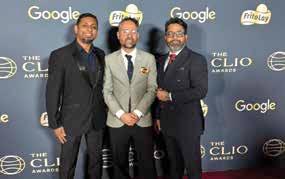
The Clio Awards, a premier international awards programme for the creative business, has revealed the winners of its most prestigious awards at a live ceremony hosted by actor, writer and producer Keegan-Michael Key.
Agencies from the Middle East and North Africa (MENA) region claimed 22 awards, including one Gold Clio, five Silver Clios, and 16 Bronze Clios.
Talking about the vibe on the awards night, and sharing a message to the Middle East region in an exclusive conversation with Campaign Middle
East on the red carpet at the Cipriani on 25 Broadway in New York, Nicole Purcell, CEO, Clio Awards, said, “The vibe is fun and there’s a lot of excitement with the industry gathering and being together. We have a great list of winners.”
Purcell added, “More than 72 per cent of the winners are international winners. We are excited about bringing our jury room to the Middle East next year, and we’d love to see the Middle East growing at the Clio Awards show.”
Bringing home wins, Saatchi & Saatchi UAE was the only agency from the MENA region that
Almarai launched a campaign on Fortnite to connect with younger generations and the rapidly growing gaming community in Saudi Arabia. The immersive branded experience allows audiences to engage with the brand in a more authentic and entertaining manner. The rollout included digital and gaming-first channels, livestreams, social content and in-game ecosystems in collaboration with Webedia Arabia. The influencer livestream activations featuring Fortnite creators, allowing audiences to discover and engage with the experience organically through gaming content. The campaign was primarily focused on Saudi Arabia, with additional organic reach and audience spillover across GCC markets.
won a Gold Clio from the MENA region for its Ruby Blooms campaign for Nana, brought to life in partnership with Prodigious MEA, Mockup10 and Niveo.
The team also picked up two Bronze Clios for its Let It Fly campaign for Saudia Airlines.
In terms of the total number of trophies by agencies, IMPACT BBDO has the highest haul of Clio Awards, with a total of five wins (one Silver Clio and four Bronze Clios).
Memac Ogilvy UAE claimed four total wins at the Clio Awards ceremony – all Bronze Clios Al-Futtaim Honda winning two and Alsulaiman IKEA winning two as well.
VML Riyadh (two Silver Clios and one Bronze Clio) and LEO UAE (one Silver Clio and two Bronze Clios) each claimed three total wins at the Clio Awards.
VML Riyadh won its Silver Clio for the Seat With a View campaign for Flynas.
LEO UAE won its three awards, including one Silver and two Bronze Clios, for The Great Indian Dunk campaign for NBA.
As such, The Great Indian Dunk is mostawarded campaign from the Middle East region at the Clio Awards 2026.
Publicis Middle East was awarded two Bronze Clios, including one for There We Are for Home Centre and another Bronze Clio for the Rescue Squad campaign for Jeep.
TBWA\RAAD and TBWA\Nissan United received a Silver Clio for their work on the Mechanic’s Perfect Pitch campaign for Arabian Automobiles – Nissan.
Finally, Mullenlowe MENA, an MCN company, part of Omnicom, won a Bronze Clio for Don’t Look Down for FIXBY.
This series of campaigns, linked to the unforeseen geopolitical situation that the country and the region witnessed, shows the bank’s solidarity with the nation and its leaders, highlighting how it stood tall with UAE and its people. At a time when many brands chose silence, DIB took the lead and intentionally rolled out its series of campaigns. The campaigns were rolled out on out-of-home bridge banners; LED televisions across all 54 of its branches in the UAE; ATM banners; digital banners across owned online and mobile channels; and carefully curated WhatsApp and email marketing messages to its customers in the UAE.
Agency Webedia Arabia
ALMARAI ALMARAI FRONTLINERS
DIB PROUD OF UAE
Cannes, culture, care and credibility
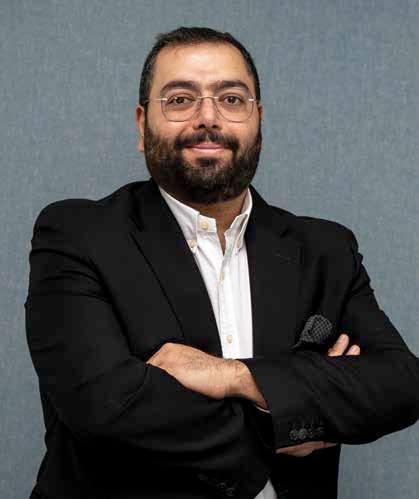
HuManagement’s Sarah Mouaness shares why luxury talent partnerships must move beyond visibility and follower counts towards authentic alignment, cultural relevance, emotional connection and long-term brand value.
The world of luxury has become increasingly progressive as fast-evolving culture and trends continue to dictate consumer preferences. To navigate these dynamic shifts, Sarah Mouaness, Celebrity Manager at HuManagement offers Campaign Middle East an expert take on how luxury brands can make the most of talent partnerships through authenticity and visibility that lives across red carpets and social feeds.
What specifically needs to change from the traditional model of celebrity and influencer partnerships?
After eight years in the industry, from starting in influencer management to handling and representing some of the biggest celebrities in the region, I’ve seen how much the industry has changed. Luxury today is no longer about visibility alone or sponsored posts. Audiences are looking for authenticity, emotional connection, and partnerships that feel genuine. The most impactful collaborations happen when the talent truly aligns with a brand’s world, values, and story. At HuManagement, we work around a key notion which is how this business is about being human first, and I believe that’s exactly what luxury partnerships need today.
Luxury depends on exclusivity and long-term brand equity, while influencer culture often rewards speed, visibility and volume. How do you balance those opposing dynamics?
That balance is one of the most delicate aspects of luxury talent management today. Digital culture constantly pushes for visibility, while luxury still relies on exclusivity and careful positioning. Sometimes, a single meaningful appearance or a curated experience creates more impact than months of constant online exposure. Over the years, I’ve learned that maintaining desirability is just as important as staying culturally relevant. Achieving that balance requires instinct, patience, and a deep understanding of both the talent and the brand’s identity.
What separates a strategic, brand building talent partnership from a transactional celebrity placement?
The audience can immediately feel the difference today. Transactional collaborations may generate temporary
attention, but strategic partnerships create long-term cultural association and real brand value. The strongest luxury partnerships are the ones that feel natural and authentic rather than overly commercial. Throughout my career, I’ve seen that success is never about forcing visibility, but about creating the right alignment between the talent and the brand, find the voice and niche that connects both. Relationships and trust are what truly build long term value in this industry, and I believe that has become more relevant today than ever before.
How are luxury brands evolving in the way they select, brief, manage and measure talent?
A luxury partnership today goes far beyond follower count. Brands are becoming far more focused on talent credibility, storytelling, audience trust and cultural relevance. In short, they are looking for an organic narrative fit, one that creates genuine emotional resonance. At the same time, I still believe many brands rely too heavily on numbers and analytics, while luxury is often built through perception, aspiration and long-term association rather than immediate metrics. I’ve seen how important regional understanding and relationships are, especially in the Middle East, where reputation and positioning carry significant weight.
Looking at Cannes Film Festival 2026, what does effective on ground celebrity and influencer management involve?
Cannes is much more than a red-carpet event. It has become one of the world’s most important platforms for luxury, fashion, entertainment and relationship building. Effective on-ground management involves everything happening behind the scenes: Scheduling, fittings, transportation, hospitality, media coordination, partnerships and positioning talents within the right spaces throughout the festival. After years of managing both influencers and celebrities, I can share that the true value of Cannes and similar festivals goes far beyond visibility. We brought together one of the region’s strongest celebrity lineups, generating significant regional buzz. But the real objective was never just the photos, it was about positioning our talents within the global luxury conversation and building meaningful, long-term relationships.
Deema Al Asadi
Bader Kabbani
Nour Ghandour
Azza Slimene
Sarah Mouaness
INDUSTRY FORUM:
Is regional marketing and advertising more brand-led than campaign-led?
Khaled Akbik General Manager, Chain Reaction
NO
The industry is currently trapped in a ‘performance loop,’ prioritising short-term campaign economics over long-term brand equity. While ‘revenue pulses’ satisfy impatient investor expectations, they offer diminishing returns. By neglecting brandbuilding and innovation, companies drive up their future cost per actions (CPAs); they are essentially paying a tax for lack of brand awareness. True growth lies in the 60/40 balance: using brand-building to influence the 95 per cent of out-of-market buyers so that short-term activations actually convert at lower costs. Short-termism might buy sales today, but it’s a high-interest loan against the brand’s future loyalty.
Irem Narmanli Senior Marketing Director, Middle East Region,
The Coca-Cola Company YES At Coke, our regional marketing is unapologetically led by the brand. We build enduring cultural platforms rather than isolated and temporary campaigns. Think of permanent brand assets like Coke Studio or our historic FIFA partnerships. With our powerhouse frontline team including human insights, creatives, media, and experiences, our goal in the Middle East is to take a globally coherent brand and make it deeply, locally relevant. Campaigns are simply the rhythmic pulses that activate our core brand purpose. Whether activating a local music season or a major football tournament, campaigns come and go, but the master brand remains our permanent North Star.
Philip Dodwell Director – Integrated Planning, Magna Global MENA
NO
Despite brand-led ambitions, regional marketing remains predominantly campaign-led, and that’s a problem. Seasonal hooks and tactical moments tempt marketers as convenient shortcuts to relevance, but that relevance is borrowed, not owned. Over-reliance on it leaves brands drowning in a sea of sameness. When campaign calendars take precedence over a consistent brand narrative, the trade-off is long-term equity for temporary noise. True effectiveness requires more than a series of disconnected moments, even when they perform well individually. Marketers are comfortable analysing past campaign performance, but must foreground whether those campaigns cohesively built the foundations for the future performance of the brand.
Firas Kais Alzubaidi Executive Director of Strategic Development, ICON MarCom Group
NO
The region is becoming more brand-conscious, but let’s not confuse activity with maturity. Much of the market is still campaign-governed, planned around launches, seasons, offers, content calendars, and performance dashboards. Brand, in many rooms, is still treated as a logo guideline with better lighting or a section in a dead pitch presentation. A truly brand-led business uses positioning, customer insight, distinctive assets, and behavioural consistency to govern every market expression. The mature players are moving there, especially when leadership sees brand as commercial infrastructure, not marketing decoration; but the wider market still rewards noise faster than equity. That is my two cents on the region’s next maturity gap.
Hiba Momani Managing Director, Hills Advertising
NO
The region has largely been campaign led, driven by short-term cycles and tactical planning. What’s starting to shift is not just how campaigns are executed, but how platforms themselves are being built. In OOH, we’re seeing a move from isolated placements toward more structured networks that operate at scale. When that happens, the role of brand changes. It becomes less about a single campaign moment, and more about how presence is built over time – through consistency, repetition, and coverage. So, while the market may still behave in a campaign-led way, the foundations are increasingly being built for brand.
Rami Hawa Business Director, HuManagement
NO
A few years ago, the answer might have been different. But today, our region is definitely more campaign-led. Think of brand-led ideas that truly stuck with people: L’Oréal’s 'Because you’re worth it', McDonald’s 'I’m lovin’ it', or Coca-Cola’s 'Taste the Feeling'. These were not just campaigns; they became part of culture and built long-term emotional connections. Today, many brands focus on emotional moments built around seasonal bursts: Ramadan, Mother’s Day, Christmas, New Year and Eid. These involve tight timelines, seasonal campaigns, quick launches and going live before competitors do. The intention exists, but without a consistent brand platform, impact can become short-lived. That said, the region is slowly moving back to brand-led thinking.
YES
Regional marketing is brand led. Businesses across the Middle East understand the value of building strong brand perception, rather than relying solely on large campaign moments. Long-term brand building drives trust, familiarity, and relevance, particularly in markets like ours where relationships and reputation carry significant weight. While campaigns remain important, they are most effective when viewed as part of a broader brand strategy, reinforcing identity, values, and cultural relevance rather than acting as standalone moments. The brands that succeed in the region are those that stay culturally connected, visible, and consistently engaged with audiences throughout the year.
Yvie
Balbuena Group Account Director, TBWA\RAAD
YES
The UAE is transitioning from 'transactional noise' to 'institutional legacy'. Historically, the market favoured tactical, high-decibel campaigns measured in 30-day cycles. Today, the rise of 'national champions' has shifted the focus toward brand-led strategies. In this region, a brand is a social contract; legacy-building entities must prioritise trust and vision over short-term bursts. We are witnessing the death of the disposable campaign. As architects of national identity, sophisticated marketers now adopt a brand-first hybrid model. Without this foundational north star, tactical efforts become white noise. In 2026, building an emotional moat is the only path to true relevance.
Nihar Anand Head of Marketing Communications – RAM, Dodge and FIAT, Stellantis Middle East
Sophia Boudjemaa
Managing Director, MENA, The Romans
NO
The strongest signal that we are in a campaign-led market is that marketing budgets are still heavily in favour of traditional advertising. But things are shifting. Brands are recognising that shiny billboards on Sheikh Zayed Road or television commercials (TVCs) that aren’t remembered beyond the Cannes jury, on their own, aren’t the answer to successful brand-building. To be truly brand-led and create long-term trust and loyalty, brands need to prioritise earnedfirst thinking. To participate in culture and show up in the places and conversations where the people buying their products are. There’s still more to do on that front.
Mahmoud Dogheim General Manager, Kairo
MAYBE
It depends on the client’s objectives and the nature of the brand. We’re lucky that most of our work is with brands that share our belief that strong storytelling is what truly separates brands from one another. People remember and connect with brands that tell inspiring stories, and Ramadan is still the Super Bowl of the season when it comes to brand communication. It's also no because, due to tighter budgets, many brands are moving toward a more campaign-led approach, especially with AI tools making content production faster and easier. Quick campaigns can work, but strong storytelling is what builds lasting brands.
Sary Richat
Regional Strategy Director MENA, Mindshare, a WPP Media Brand
NO
It's predominantly campaign led. High digital adoption and immediate ROI demands prioritise short-term conversions via seasonal pushes, product launches, and lower-funnel tactics. This neglects the crucial primin-stage brand building, which cultivates the biases, influencing 84 per cent of purchases.
While global brands lead more in brand campaigns, local and regional brands struggle to invest in brand, despite supporting studies that correlate brand investment with long-term growth and improved resilience. This strategic change is something we have been implementing with our clients, ensuring there’s enough brand investment to drive their business objectives and long-term growth.
Piyush Talreja Account Manager, ComCo Middle East and Africa
NO
Regional marketing is still largely campaign-led because consumer decisions today are far more instant and reactive. People respond quickly to trends, collaborations, limited drops, seasonal moments and culturally relevant conversations happening in real time. Whether it’s a summer special, collaboration or social-first activation, campaigns are driving attention, conversation and purchase behaviour more than ever.
The current market situation has made this even clearer. Brands are under constant pressure to stay visible, adaptive and culturally present, making both short-term and long-term campaigns essential. Strong branding builds recognition over time, but it is campaigns that keep brands culturally alive, constantly remembered and impossible to ignore.
Anam Amin Head of Marketing, TXT Media
MAYBE
It’s a mix. I think today brand and campaign are becoming harder to separate. In this region, visibility creates credibility very quickly. Being present in the right conversations, partnerships, cultural moments and platforms can directly influence business outcomes, not just perception. At the same time, the market has become far more performance-driven because digital maturity, e-commerce, and platform accountability have accelerated rapidly. So marketers here are balancing two things simultaneously: long-term brand equity and short-term commercial results. The brands doing well today are usually the ones managing to build both at the same time.
Evolving luxury: where creation meets connection
connection
When a fashion house and its agency share the same belief, that luxury is felt before it is seen, the work that follows is less like a campaign and more like a conversation. That is the foundation of the partnership between SAIID KOBEISY and Fusion5, and it shapes how we both think about where luxury is heading.
Luxury has never been about volume. It has always been about depth; the weight of a fabric, the precision of a gesture, the feeling a woman carries when she leaves a fitting that something has shifted. “Luxury begins where emotion meets creation,” as Kobeisy says, and from the agency’s side, we would add, “and it ends the moment a brand stops protecting that feeling”.
Over 25 years, the SAIID KOBEISY, house has built a universe that moves across couture, ready-to-wear and bridal - not as separate categories, but as one continuous emotional journey. Craftsmanship here is not nostalgia; it is resistance. In an era of acceleration and replication, couture demands time, discipline and creative integrity. The partnership with Fusion5 was partly established to carry that universe into a noisier, faster world without diluting what makes it singular. That tension between scale and intimacy is the defining challenge of luxury marketing today. The audience is no longer one, but many. Established connoisseurs who have lived with a maison for decades now share the same digital space as younger, aspirational buyers discovering it for the first time. Both matter. Both require care. And the mistake many brands make is flattening that difference in pursuit of reach.
Effective marketing must hold both audiences with equal precision, honouring legacy without alienating a generation that defines luxury through values as much as aesthetics:
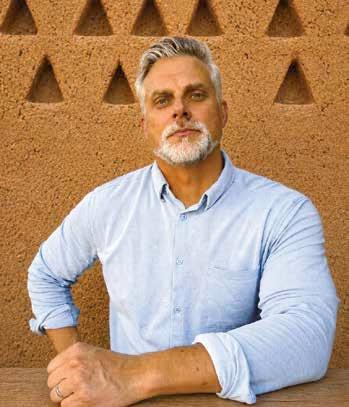
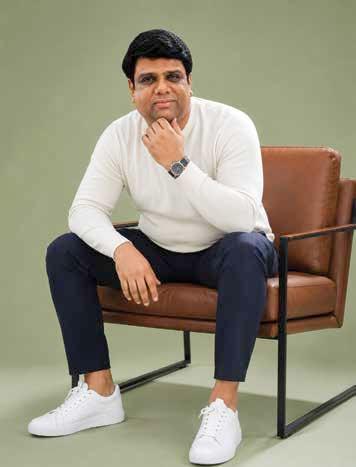
Fashion house founder Saiid Kobeisy and Fusion5’s Ghida Ismail outline why emotional connection, discretion and craftsmanship remain central to luxury marketing today.
provenance, ethical sourcing, transparency, and emotional truth. For SAIID KOBEISY, this plays out in the intimacy of showrooms in Beirut, Paris, Dubai and the Kingdom of Saudi Arabia, spaces where every interaction is intentional, every relationship deeply tailored, while Fusion5 ensures it plays out in how we build campaigns that feel continuous across editorial, social, and experiential touchpoints, never fragmenting the brand voice.
Technology has a role to play, but only in service of connection. AI-driven personalisation, virtual showrooms and immersive activations earn their place when they deepen the client journey, not when they perform it. We observe innovation carefully and adopt it selectively. The tools change; the standard does not.
What guides every decision (creative or strategic) is discretion. The strongest luxury brands today say less and mean more, letting silence and signature do the work that volume once did. Exclusivity should never feel distant. It
should feel personal. That is not just a design philosophy for SAIID KOBEISY and Fusion5; it is the brief we hold ourselves to on every piece of work we do together.
The future of luxury belongs to those who can hold a steady narrative while continuously reinterpreting how it lands. Heritage is the foundation. Relevance is the practice. And emotion, whether you are the designer shaping the garment or the strategist shaping the story around it, remains the only measure that truly counts.
By Saiid Kobeisy, Founder and Creative Director, SAIID KOBEISY fashion house, and Ghida Ismail, Business Director, Fusion5
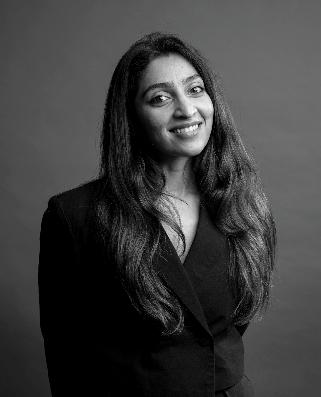
Ghida Ismail
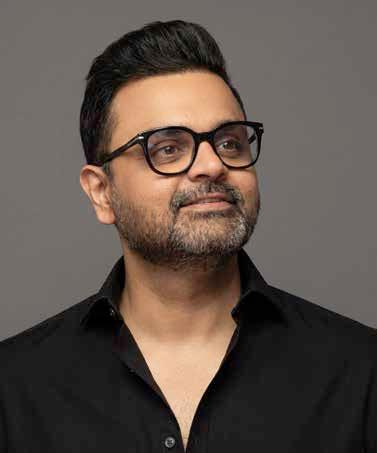
Saiid Kobeisy
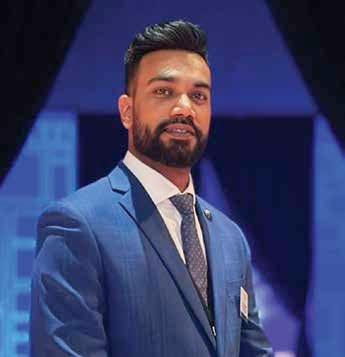
How brands can win the FIFA World Cup beyond the broadcast
Snap Inc’s Antoine Challita explains why brands need to show up in real-time fan conversations to stay relevant, given that the World Cup is now defined by ‘moments’ in chats, on cameras and between friends.
In less than two months, the first 48-team FIFA World Cup kicks off across the US, Canada and Mexico.
For broadcasters, it will be the largest tournament ever staged.
For brands, it will be something else: the most fragmented one. Because the match is no longer where the audience lives. The experience now unfolds around it: in the group chat, the reaction lens, the half-time creator post, the order placed before extra time..
That changes what a World Cup brief should ask for.
Friendship groups have become the unofficial pundits of the game, shaping opinions and decisions as the match unfolds. In MENA, where Morocco’s run to the Qatar semifinal pulled record audiences into shared viewing, this behaviour runs deeper than almost anywhere else. The smartphone is no longer a second screen, it is the room where the match is argued, celebrated and remembered.
Our own data from Qatar 2022 made the shift visible.
“The match is no longer where the audience lives. The experience now unfolds around it: in the group chat, the reaction lens, the half-time creator post, the order placed before extra times.”
interpret it, adding humour, context and perspective that resonates with their audiences. On platforms where creators feel like part of the group chat rather than broadcasters, that translates into stronger trust.
Across MENA, daily shares on Snapchat ran at 2.9 times higher than normal levels, impressions rose 21 per cent, and keyword engagement on match days doubled. The pattern wasn’t a viewership spike, it was continuous interaction, peaking and resetting with every goal.
And these interactions happen within close, trusted circles. Two thirds of Snapchatters say they bond with friends and family through sport, and 57 per cent actively use the platform during live games.
This is where the brand opportunity actually sits. Decisions get made inside the conversation, not after it, what to order, where to watch, which side to back. The strategies that work in this environment are built around participation, not interruption.
That shift is already delivering results. During the FIFA Club World Cup, Riyadh Bank ran an augmented reality (AR)-led campaign on Snapchat in Saudi Arabia, pairing lens formats with performance placements to meet fans in the moment rather than around it.
The campaign delivered 85 per cent lower cost per lead, 58 per cent lower cost per click, and a 5.4 times higher increase in website visits, evidence that participation when built into the format moves the commercial numbers too.
At the same time, creators are playing an increasingly important role in shaping how fans experience the tournament. They don’t just cover the moment – they
The camera matters too. AR has become a key tool for self-expression during major sporting events, allowing fans to react, celebrate and share instantly. During Qatar 2022, AR lenses across the region clocked over 124 million seconds of playtime across the region and shares increased by more than 150 per cent during peak moments.
The impact extends beyond engagement. Campaigns using AR formats drove 2.6 times higher ad awareness and up to 36 times higher action intent than those without, turning reaction into participation in a single tap.
And it converts. Purchase activity across MENA rose 21 per cent during Qatar 2022, with sharper spikes in the host market itself and meaningful return on ad spend (ROAS) gains for advertisers running through the tournament.
The implication for brands is clear, the World Cup no longer lives in one place, and neither does the audience.
The World Cup isn’t defined by what happens on the pitch anymore. It’s defined by what happens in the chat, in the camera, in the moments between friends.
The brands that win it in 2026 won’t just be seen. They will be in the conversation.
By Antoine Challita, UAE Country Head, Snap Inc
World Cup 2026
The 2022 World Cup made history as the most-viewed sporting event ever, engaging over 5 billion fans globally1 This year, the momentum accelerates with a first-of-its-kind tournament co-hosted by three nations, featuring more teams, cities, and 7 participating countries from the Middle-East North-African region.
As the World Cup unites nations, Snapchat unites the fans, offering a digital home for real-time celebration. For brands, this is the ultimate stage to drive record-breaking recall and intent, capitalizing on the high emotion of the world’s biggest sporting phenomenon.
SNAPCHAT IS WHERE WORLD CUP FANS COME TO CONNECT WITH ONE ANOTHER2
91%
of Snapchatters are interested in the World Cup
of Daily Snapchat Users engage with their friends & family around the World Cup 73%
of Snapchatters look at creators who post/review sports content on Snapchat 94%
THESE FANS SHARE WORLD CUP EXPERIENCES IN THE MOST AUTHENTIC WAY…
Of content-sharing through Snapchat makes the experience around the event/competition more fun
Like being able to connect over sports on Snapchat
Use features on Snapchat to help them connect with other fans and feel part of the World Cup
Say that Snapchat makes the whole sport experience
…AND WHERE EVERY BRAND GETS TO SCORE THE ULTIMATE GOAL 75%
of Snapchat WC fans are more likely to learn & research about a brand they see on Snapchat when they engage with major sports events
of Snapchatters are more likely to consider and purchase brands that are supporting the World Cup 77%
…WITH THE PURPOSE OF PLANNING, CELEBRATING, AND RECONNECTING
,
Top actions on Snapchat among World Cup Fans2:
Interact with family & friends
Share Snaps
Use AR Lenses/Filters on Snapchat
Support favorite team/country through Bitmoji merchandise
Use the Snap Map to connect/ locate friends and other fans
YOUR PLAYS FOR THE 2026 TOURNAMENT: Fuel fan-driven moments across every match, team and tab on Snapchat
Sponsored Snaps
Join the conversation during key game moments by delivering messages directly in the Chat tab and leveraging creators to bring your WC story to life.
Promoted Places
Be a part of the Snap Map experience and connect with Snapchatters on our platform and in real life, highlighting your brand’s locations on the Map with a promoted pin.
AR Lenses & Filters
Place fans center-action with immersive AR, turning viewers into participants to drive organic reach and keep your brand buzzing from kickoff to whistle.
Takeovers
Lock in takeover placements on key strategic dates to be the first brand that Snapchatters see when they open the app around the World Cup season.
Reminder Ads
Reminder Ads
Deploy Reminder Ads to stay in the game and ensure your brand remains top of mind, ensuring your spot at the heart of the world’s biggest celebration.
Creators
Partner with trusted creators to showcase match-day must-haves, host tournament Q&As, and amplify the AR fun to reach your goal.
The performance versus brand debate is often viewed as a budgeting question – 60:40 or 70:30? We assume that if we could agree on the ideal media investment split between brand and performance for our business, the problem would be solved.
Having worked in the Middle East region for almost two decades, especially in categories where trust is fundamental, I’ve come to see it differently. This isn’t about split ratios; it’s about designing a system in which performance marketing and brand awareness work together towards sustainable growth. This requires leaders to remain aware of other factors such as the diversity of products and target audiences.
Performance marketing plays a vital role in today’s environment. The UAE market moves quickly. Audiences are diverse and highly informed. Competition is intense. Consumers expect brands to connect with them in ways that are fast, relevant and contextual.
This is where performance marketing comes into play. It is an essential capability that improves discoverability and helps capture demand efficiently. It allows marketers to learn rapidly, test and optimise continuously, and automate actions that convert intent into sign-ups.
WHAT HAPPENS WHEN PERFORMANCE BECOMES THE SOLE ENGINE OF GROWTH?
The choice to rely solely on performance marketing usually happens when capturing demand is mistaken for creating it. Over time, performance activity can become increasingly focused on the same audiences, the same messages and the same optimisation levers. While this can deliver short-term efficiency, it can also lead to rising costs, creative fatigue and incremental – rather than sustainable – growth.
Brand awareness is often treated as a soft or secondary metric. In practice, it is a meaningful driver. Strong, positive brand awareness builds familiarity, credibility and confidence, which reduce friction at the moment of choice. In competitive markets such as the UAE, where customers have multiple highquality options, trust influences conversion behaviour.
The ‘messy middle’ further complicates the supposedly-linear marketing funnel – from awareness to conversion. Brand awareness can no longer be seen as a top of-the-funnel layer that sits above performance activity. The relationship is more integrated. When brands are clear, consistent and recognisable, performance marketing becomes more efficient. Messages then require less explanation, offers require less urgency, and conversion journeys feel more natural.
Brand awareness should help increase the effectiveness of performance, not compete with it. Instead of seeing performance and brand as competing forces, a more practical viewpoint would
be to explore the untapped benefits of the way they complement each other.
way they complement each other.
BRAND AWARENESS: BUILDING
FAMILIARITY THAT FOSTERS TRUST FOR LONG-TERM BRAND IMPACT
Building trust takes time. Marketers should use brand awareness to humanise the way products speak to customers. They should also experiment with content formats, duration, storytelling style and customisation to ensure messages are relevant to the UAE’s highly diverse population
Relevant measures would include the wider measurement lens, such as brand health, consideration, retention, and audience growth over time.
PERFORMANCE MARKETING: DISCOVERABILITY THAT FAST-TRACKS CONVERSION
This is the hard-working, day-to-day engine that includes creative testing, onboarding journey optimisation, audience learning and real-time channel improvements. Speed matters. Performance marketing answers immediate questions about what is working now and where value can be unlocked quickly. When these two forces work in harmony, the conversation changes. Brand activity is no longer judged solely through short-term conversion metrics. Performance activity is no longer evaluated only on immediate efficiency. Marketing success is viewed through both immediate outcomes and longer term contribution.
personalisation at scale. Strong brands create clearer, more trusted signals through recognition and consistency, which AI-driven systems then amplify.
FINDING THE RIGHT BALANCE IN PRACTICE
It’s not about equal investment or rigid formulas; it’s about clarity of role and mutual reinforcement.
Brand awareness should make performance more effective: when brand awareness is strong, performance messaging can focus on relevance rather than reassurance.
High reach activity builds familiarity, allowing always on performance channels to convert intent more efficiently.
Performance should sharpen brand understanding: performance data provides valuable insight into customer language, motivations and barriers. When used thoughtfully, these signals can inform broader storytelling, product positioning and communication clarity. Customer experience connects the two: if brand messaging promises ease and confidence but the experience feels complex, then performance impact is diluted. Conversely, overly aggressive performance messaging may convert in the short term but needs to be accompanied by brand messaging that signals longer-term trust.
To deliver sustainable growth, we need to recognise that while performance marketing delivers answers, sustained brand awareness builds trust over time. Both are necessary and perform better together.
Artificial intelligence (AI) has significantly enhanced the capabilities of performance marketing by accelerating optimisation and enabling
In a world optimised for immediacy, enduring growth belongs to brands that balance what converts now with what people will continue to choose over time.
By Asih Wulansari, Vice President, Marketing Strategy, Mashreq
PERFORMANCE VERSUS BRAND: FINDING THE RIGHT BALANCE
Mashreq’s Asih Wulansari says that while performance marketing delivers answers, sustained brand awareness builds trust over time – and both are necessary.
BRAND FOCUS
IS TRAFFIC THE PROBLEM?
Equiti’s Chantelle Johnson explains
why marketers need to begin considering things that were never previously part of their key performance indicators (KPIs).
It is 11pm. A user is in prime purchasing mode, staring at a loading page. They wait. One second. Two. Exit. They try again. This time, they reach the payment screen, but something feels off. It doesn’t look like the website they’ve been on. Not completely wrong, just different enough to make them stop and think.
And thinking is the last thing you want your customer doing at 11pm. They run through every worst-case scenario. Better judgement kicks in. It is easier to leave than regret it later. Exit. Mental note made. Brand filed under never again.
The next day, the numbers are reviewed. The verdict is delivered without much deliberation: ‘traffic quality’. Case closed. Back to the desk. Donut.
If this were a crime scene, we’d mark this up to lazy detectives – not wrong because they investigated and found nothing wrong, but because they never considered any other suspects.
Too many marketers hand traffic over at the top of the funnel and call it done. To be fair to the traffic – it had to survive the algorithm, the auction, the creative fatigue, the iOS update, the platform’s new bidding strategy and three attribution model changes just to get to your front door.
But we drove them there. What happened after that is someone else’s problem. Except the return on investment (ROI) still is a marketing key performance indicator (KPI).
That means getting comfortable being uncomfortable because the suspects in this case do not all speak marketing – and marketing does not always speak their language.
The suspects are:
decision that led them to your website.
• Web application firewall (WAF) and bot management: Two systems. One job between them. Blocks the bots, blocks the attacks, blocks the person in Riyadh who just wanted to check out – wrong IP, wrong browser behaviour, wrong place and wrong time.
• Rate limiting and firewall rules: Built by someone who had a very bad day and took it out on your conversion rate. VPN user? Gone. Older phone? Gone. Clicked twice by mistake? Suspicious. Legitimate customer? Also gone.
• Email validation: Flagged. Verification never sends. Customer never arrives.
• One-time password (OTP) and telecoms delivery: Had one job. The code arrives four minutes late. The session died three minutes ago. Your customer has already decided this is not worth it. The carrier has already moved on.
• Biometric and liveness detection: Blink. Turn left. Hold still. Try again. Try again in better lighting. Try again on a different device. Some customers make it through. The ones who don’t are not in any report you will ever read.
• Issuer declines: The bank said no. It didn’t say why. Your customer assumes it was you. It wasn’t. Nobody in the room knows what actually happened, and nobody is going to find out. Geographic payment service provider (PSP) coverage: Seamless in Dubai. Complicated in Riyadh. Broken in Egypt. This region is not one market. The payment stack that ignores that will keep proving it, quietly, every single day.
• Content delivery network (CDN) latency: Says nothing. Does nothing. Just makes your customer wait long enough to question every
• User experience (UX) and form validation: Asks for things without explaining why. Rejects inputs without saying what is wrong. On mobile, the submit button lives behind the keyboard.
Risk scoring and fraud rules: Running in the background. Confident in their decisions. Wrong often enough to cost you real money.
• Right-to-left (RTL) rendering and localisation: The English-language build works. The Arabic build mostly works. In a market
where Arabic is not a courtesy option, but the primary language of your customer, mostly is a commercial decision you may be making without realising it.
• Session management and authentication flow: Times out. Loses progress. Sends the confirmation to spam. Asks people to start again. Most won’t. That is not a user behaviour problem.
So, with so many suspects and ROI holding you to account, how much of your budget has already been handed to a broken funnel and called a bad month? Every suspect costs you real money – all day, every day. And most of them will not show up in any neat dashboard you currently look at.
The marketers who win in these markets are not always the most creative or the best funded. They are the ones obsessed with following the bread crumbs: past the traffic, past the hand off, past the department boundary and past the point where it starts to get technically uncomfortable.
Marketers need to consider things that were never their KPIs and make them theirs. Because if you already own the ROI, it will not be rescued by a better-negotiated media deal.
Build a deeper understanding of the suspects. Become the lead detective. Break the silos. Find out what the payment acceptance rate was last Tuesday in KSA. Find out which telecoms carrier is dropping your OTPs. Do not launch until the Arabic build works properly. Get obsessed with the parts of the journey you were never asked to own. In a market this competitive, where every click costs more and product differentiation is harder than ever, the extra revenue is not hiding in your media plan. It could be sitting in a broken OTP, a payment screen that looks wrong at 11pm and a detective who went back to their desk too soon. The funnel doesn’t end at the click; neither should your curiosity.
By Chantelle Johnson, Group Chief Marketing Officer, Equiti
customer wait long enough to question every
The Arabic build mostly works. In a market
EARN YOUR PLACE BEYOND BORROWED BELONGING
Marketers and agency leaders tell Campaign Middle East that luxury marketing in the Middle East no longer has room for translated tales, vain visibility or loud launches. Instead, it requires care that outlives campaigns by serving customers exclusively, meaningfully and consistently.
By Anup Oommen
For several years, luxury brands have viewed the Middle East as a high-margin, standardised sales market. Ideas were developed from global insights rather than regional ones. Campaigns were launched elsewhere and then travelled in. People in the region were expected to receive and react to a translated version of someone else’s aspiration. That old model now feels like a borrowed suit – crafted with expensive fibres, but not quite a custom-fit for the person wearing it.
The simple truth is: success in luxury marketing can no longer be imported or appropriated. Customers in the region have become highly informed, discerning and far more critical in their choices of luxury brands and products. Beyond global trends, status, prestige and reputation, factors such as cultural identity, emotional authenticity, brand character, and positive offline and online experiences have begun to shape purchase intent across all luxury sectors.
As a result, the definition of luxury is expanding beyond a demonstration of opulence to encompass exceptional craftsmanship, exclusivity and scarcity, heritage and personalisation, specialised services and seamless experiences, pricing power and long-term value, as well as the knowledge and timing to mark memorable milestones.
Campaign Middle East speaks to marketers and agency leaders – all of whom agree that the Middle East can no longer be treated as a late-stage execution market. They explain that Saudi Arabia, the UAE and the wider Middle East and North Africa (MENA) region are not borrowing luxury but are shaping how luxury is understood, signalled and experienced.
This shift brings both opportunity and discomfort. It requires brands to become more accountable and less performative. It requires agencies to move beyond production muscle and bring sharper thinking to the table. Luxury can no longer rely on expensive noise; it has to earn attention, deepen trust and deliver meaningfully at every touchpoint.
Contributing to this conversation are:
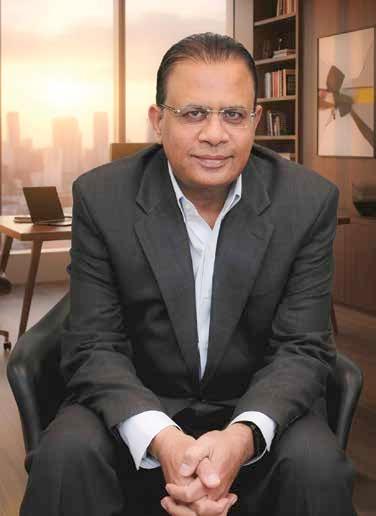
Gaurav Midha, Head of Marketing and Omnichannel, Damas, Ahmed El-Gamal, Executive Director at a luxury hospitality brand, Alix Petit, CEO, The Refreshment Club, Raksha Khimji, Managing Director, Team Red Dot, Rana Zeidan, Regional Business Director – MENA, Wavemaker, a WPP Media Brand, Claire Peach, Media Director, iProspect MENA, Manal Naboulsi, Business Lead, Spark Foundry, Wesam Ayyash, Client Managing Director, EssenceMediacom, and Rusty Beukes, Creative Director, HAVAS Red Middle East
NO LONGER A TRANSLATED LUXURY STORY
The region now demands original thinking, not imported work with a regional finish. This is not about abandoning global brand identity; it is about finding where that identity meets local meaning with elegance, relevance and discipline.
“The Middle East is no longer a market you adapt for; it’s one you design for,” says Gaurav Midha, Head of Marketing and Omnichannel, Damas. “We firmly believe that regional authenticity isn’t a compromise of global brand codes; it’s an elevation of them. Luxury here is deeply rooted in heritage and in life’s most meaningful moments. The brands winning today are those building regional narratives with genuine cultural intelligence, not those simply translating campaigns.”
Manal Naboulsi, Business Lead, Spark Foundry, adds, “True localisation is not about translating campaigns; it’s about building relevance into the experience itself – whether that’s across retail, clienteling, partnerships and platform strategy or across environments such as premium out-of-home (OOH), connected TV and TikTok. The brands winning here are those designing from the market up, while protecting their global codes with discipline.”
However, according to Claire Peach, Media Director, iProspect MENA, designing for the Middle East market requires far more than minor campaign adjustments.
Peach says, “Markets such as Saudi Arabia and the UAE have evolved into highly influential luxury economies with distinct cultural nuances, consumer behaviours and expectations of brand experience. True market-specific luxury marketing means building strategies from within the region’s cultural context while protecting the integrity of the global brand.”
DON’T PAINT MENA WITH A BROAD BRUSH
Marketers also remind the industry to resist the lazy habit of treating the MENA region as home
to a homogenous audience. The UAE and Saudi Arabia may sit close together on the map, but their luxury cultures are not all adorned in similar hues.
“For too long, the Middle East has been treated as a distribution market with a local costume: brands localising the surface without ever interrogating how status works here,” says Ahmed El-Gamal, Executive Director at a luxury hospitality brand. “The UAE may read luxury through a cosmopolitan lens, while Saudi may find luxury and national identity being discovered
Alix Petit, CEO, The Refreshment Club, also warns that the biggest error luxury marketers can make is to flatten the region into a single persona.
“Dubai, Abu Dhabi, Riyadh, Jeddah and Doha do not have the same rhythm, the same codes, the same social dynamics or the same relationship to public display,” Petit says. “A strong luxury brand should not become more local by becoming less itself. Instead, it should become more relevant by understanding the local emotional architecture.”
The best examples, leaders suggest, are those that do not paste on cultural signals but understand the social codes behind them.
SO, WHAT WORKS?
The good news is that the core codes of luxury – heritage, craftsmanship and exclusivity – resonate beautifully. What doesn’t work is the assumption that the same story told in Paris will land the same way in Riyadh.
“The Middle East has not just outgrown the adaptation model, it is abandoning the model,” says Wesam Ayyash, Client Managing Director, EssenceMediacom. “Consumers in Saudi Arabia and the UAE are no longer waiting for global luxury brands to acknowledge them; they are setting the terms of engagement: a young Saudi woman who discovers a Cartier piece through a creator she trusts or an Emirati who expects a brand experience that reflects his world rather than a translated version of someone else’s. This represents something that the old adaptation playbook simply wasn’t built for. The brands getting this right are the ones that have stopped treating cultural intelligence as a production line item and started treating it as a strategic one.”
In the MENA region, privacy, invitation, hospitality and storytelling are not decorative themes; they are part of how luxury is experienced. A brand that understands these distinctions can fuse the logic of global quality and scarcity with the
Ahmed El-Gamal
Alix Petit
Rana Zeidan
emotions hidden within status and exclusive experiences.
Raksha Khimji, Managing Director, Team Red Dot, points to Dior as a brand that has understood the region’s desire for discretion and delight.
“The Dior D’Or – the Gold Capsule –campaigns have been specifically timed around cultural moments such as Ramadan and Eid, when the brand releases highly exclusive, gold-themed luxury clothing, shoes and handbag capsules in the Middle East,” Khimji says. “Some of its marketing efforts in recent years include highly curated, invitation-only majlis style pop-ups in major Middle East hubs where it relies on closed community engagement – such as secret messaging groups and the DIOR AE platform – to offer bespoke experiences to top-tier clients. They understand the nuance of privacy and exclusivity in this region.”
Rana Zeidan, Regional Business Director – MENA, Wavemaker, a WPP Media Brand, reinforces this point, noting how the luxury sector is increasingly building brands around moments that carry genuine weight in specific markets.
“In Saudi Arabia, luxury is becoming more culturally rooted, especially around moments such as Ramadan, Founding Day and National Day, with a stronger emphasis on local creators and community relevance,” Zeidan says. “In the UAE, luxury remains more globally connected and lifestyle-driven, where audiences expect innovation, exclusivity and elevated experiences.”
Here lies the creative challenge: not to over-explain the region back to itself. Luxury consumers in the MENA region do not need another campaign leaning into familiar postcard imagery. They need brands to understand the layers beneath public taste: family, gifting, status, national pride, privacy, global fluency and the desire to be recognised without being exposed.
Calling for luxury marketers to view each community in the MENA region as a source market rather than a satellite market, Rusty Beukes, Creative Director, HAVAS Red Middle East, says, “The brands that stand out in the region aren’t adapting to it; they’re building from it. The real complexity, especially in the UAE, is that you’re not speaking to one culture but to dozens, with nationals as the gravitational centre. There’s a new generation of spenders who have developed genuine taste literacy and can immediately tell when a brand is talking at them rather than to them.”
Clearly, Beukes is right. Big luxury brands are now beginning to build from the region. Bottega’s Square originated in Dubai before going global. The Prada Mode Abu Dhabi event built its cultural programme around Arab women and the traditional, handwoven Al-Sadu craft. Dior redesigned its entire Saudi exhibition around AlUla rather than importing ideas from its haute couture ateliers at Avenue Montaigne in Paris.
WHY RELEVANCE AND REVENUE NEED THE SAME ARCHITECTURE
Leaders point to another gap that must be bridged within the luxury marketing landscape: the separation of cultural work from commercial work.
Both relevance and revenue must fuel the same journey. A luxury brand must be seen in culture. It must be desired from a distance. It must be experienced with depth. It must be remembered with care and create aspiration while being commercially viable at niche price points.
El-Gamal explains that such aspiration is not achieved through access, but built on foundations of restraint.
“Desirability is not built through exposure; it is built through distance. Aspiration is the mechanism that makes that distance feel like it can be closed,” he says. “The moment a luxury brand anchors its cultural presence around its most accessible audience, it does not democratise aspiration, it extinguishes it.”
He adds, “You cannot aspire to something already within reach. The iconic hotel property that hosts a young creative dinner series understands this
instinctively; it generates visibility while remaining aspirationally out of reach. This simultaneously seeds desirability within an emerging community and cultivates the next generation of guests – who will spend years working toward the moment they can finally afford to be there.”
Petit believes the job is to build a system in which distinct audiences experience different degrees of closeness to the brand.
“Marketers need to stop separating brand and business as if they are two different conversations,” Petit says. “Cultural relevance should create aspiration. Aspiration should create desire. Desire should eventually create business contribution, even if not always immediately. The role of strategy is to connect these layers instead of treating them as isolated campaigns.”
Petit claims that the future belongs to brands capable of building what she calls “a layered communication system”.
She explains it as: “One narrative with multiple levels of intimacy: public culture for visibility, private experiences for value, customer relationship management (CRM) for continuity, retail for conversion, and content for emotional depth. That is how you build a future audience without abandoning the current one.”
THE GEN Z DEBATE: VISIBILITY OR VALUE? LOUDNESS OR LOYALTY?
Seems like no one can discuss the future without bringing up what matters to younger generations. Leaders agree that luxury marketing cannot afford to dismiss Gen Z audiences because they are shaping culture, language, formats and the future of aspiration.
Yet, the people creating some of the most engaging conversations are not always the
“There’s a new generation of spenders who have developed genuine taste literacy and can immediately tell when a brand is talking at them rather than to them,” says Beukes.
Manal Naboulsi
people offering the most commercial value – today. But, then again, luxury was never built for today alone.
“Gen Z is one of the fastest-growing audiences and by 2030 will represent 60 per cent of the global workforce, but they are not driving the lion’s share of luxury spend today,” El-Gamal says. “The industry has been seduced by a visibility trap that social and digital algorithms actively reward, especially thanks to all the self-made influencers. However, visibility does not drive value; in fact, sometimes it destroys it entirely as it becomes too mass and accessible.”
Bottega Veneta under Daniel Lee is the cleanest proof point, leaders say. The brand went almost entirely dark on Instagram at its peak and re-emerged with dramatically elevated desirability. This is because consumers felt they discovered a luxury brand rather than being targeted by one.
Explaining the beauty of restraint, El-Gamal adds, “Absence is not a void; it is a signal. Desire, not unlike attraction, is built through deliberate restraint rather than constant availability. Think of it like dating or playing hard-to-get.”
Petit adds that luxury marketing has, at times, become too enamoured with what looks exciting on a PowerPoint presentation. She agrees that while visibility matters, the luxury sector has sometimes confused visibility with value.
“The mistake is when brands over-invest in what is visible because it is easier to present internally.”
“A campaign with creators may look exciting in a report, but if it does not build desirability, client relationships, store traffic, conversion, retention or brand equity, then it is not really doing the job. Gen Z matters, of course, because they shape culture, language, digital behaviour and future aspiration. Ignoring them would be a mistake. But building an entire luxury strategy around visibility, creators and youth culture can become very superficial if it is disconnected from actual business contribution, loyalty and long-term client value,” Petit says.
Here are the facts as the leaders see them: In the Middle East, value often sits in quieter places, including among established family offices, high-net-worth
(HNW) women, entrepreneurs, collectors, private clients, brides, loyal repeat customers and affluent gift purchasers. These audiences may not generate daily social chatter, but they can shape revenue, reputation and intergenerational loyalty.
Naboulsi is direct about this imbalance: “Many have over-indexed on Gen Z, creators and visibility. At times, it’s come at the expense of real value. In the Middle East, the core of luxury growth is still driven by ultra-high-net-worth (UHNW) clients, particularly in high-ticket categories. These are consumers with deep brand relationships and long-term loyalty, not just transactional intent. Gen Z matters, but more as future equity than immediate revenue. The risk today is confusing noise with growth. Visibility alone doesn’t build value.”
Ayyash adds, “The focus on Gen Z and creator culture has produced some genuinely exciting work, but it has also created a risky blind spot. One where we confuse visibility with value and reach with revenue. The reality on the ground in the Middle East is more nuanced. The consumers driving the greatest spend and the deepest brand loyalty today are not necessarily the ones generating the most content or appearing in the most campaign briefs. They are the established UHNW individuals, the multigenerational family decisionmakers, and the quietly affluent 35-50-year-old demographic who have been loyal to certain maisons for decades, and whose relationship with luxury is rooted in meaning.”
However, leaders also point to a segment among Gen Z consumers who are affluent and independent – often successful entrepreneurs and investors. They are not only buying into trends, but also into identity, access and belonging. They are culturally aware, globally connected and extremely demanding. They do not subscribe to luxury brands only to look cool or feel validated; they want brands that describe them. Yet, to resonate with this audience, luxury brands must adapt to new models of communication.
“Luxury strategies are becoming more experiential, culturally relevant, and creator-led to reach the Gen Z audience, but the reality is that much of the spending power and long-term brand value still sits with millennials and older affluent consumers. What Gen Z really changed is not necessarily who buys
luxury the most, but what luxury needs to represent,” says Zeidan.
She adds, “For the Gen Z audience, luxury is not about ownership alone, but more about identity, personalisation, cultural relevance and emotional connection. They are more intentional in their purchases and more open to supporting local brands. They expect brands to feel meaningful rather than just aspirational.”
Leaders also point to Gen Z as a sub-section of the luxury audience that needs to be understood differently – as more cautious current customers and potentially loyal future customers. Brands must build familiarity and desire with them now, while continuing to serve the clients who are already sustaining the business.
Beukes says, “Building future desirability and protecting present value are not competing priorities. Treating them as one strategy is the only way they become one.”
Petit adds, “The challenge for luxury brands is to stop treating audiences as either ‘future’ or ‘current’. The real opportunity is to build ecosystems where different levels of value coexist: the high-spending client, the loyal client, the culturally influential client, the emerging young client, the private client and the aspirational audience that isn’t part of the clientele yet. The mistake is when brands over-invest in what is visible because it is easier to measure and easier to present internally.”
THE ROLE OF AI IN LUXURY
While leaders agree that luxury marketing cannot be reduced to polished perfection or an emotionless optimised machine, they broadly welcome technology that removes inconvenience, improves memory and helps brands serve clients with more grace.
This is why the conversation around artificial intelligence (AI) in luxury marketing is often framed as a race towards sharper targeting, better customer service and measurable journeys.
“AI will fundamentally elevate luxury ecosystems, particularly across CRM, predictive intelligence and clienteling,” Peach says. “We are entering a phase where brands can anticipate needs, personalise experiences at scale and create far more seamless consumer journeys.”
Midha agrees: “AI is a powerful enabler in the world of luxury, whether it is for personalisation, anticipating client needs or seamless service.”
Leaders agree that a luxury client should never have to provide or repeat information that the brand should already know.
The parts that should become more personalised with AI are the invisible parts of the experience such as service history, clienteling, product recommendations, appointment preparation, after-sales, private
Gaurav Midha
Claire Peach
deliberate inefficiency, through scarcity, discretion and the sense that the brand is not entirely knowable. UHNW clients want a person who can empathise, not a chatbot with good typography. When everything is automated, nothing feels luxurious anymore. At this rate, personalised pigeon mail might genuinely become the next luxury differentiator.”
invitations, individual preferences, purchase history, delivery expectations, cultural moments and relationship continuity.
Petit says, “AI and CRM can become incredibly powerful because they can remove friction and make the client feel understood without making them feel tracked.”
However, these leaders also warn against an over-rotation towards efficiencies or optimisation just because the latest tools and technologies offer the option to do so.
Midha says, “Luxury must never be fully optimised. The warmth of human gestures, the unhurried consultation, the piece that feels discovered rather than algorithmically served – these define exclusivity and the bespoke experience. We should use data to serve our clients better, never to replace the intuition of our people. Discretion is a luxury. The moment a brand feels too calculated, the mystique disappears. Some things must remain beautifully, worthily human.”
Peach adds, “Luxury loses its value the moment it becomes overly efficient, overly visible or overly accessible. Not every interaction should be optimised for conversion. Some aspects of luxury must remain intentionally elusive, emotional and human. The role of technology should be to quietly enhance intimacy and service in the background, not replace the craftsmanship, discretion and emotional intuition that defines true luxury.”
The incorrect use of AI also raises another set of concerns. Leaders discuss the danger of using AI to flatten desire within a sales funnel. When a client feels followed rather than understood, the mood changes. Luxury should feel remembered, not monitored.
Petit says, “The line is crossed when personalisation becomes too obvious, too predictive, too aggressive or too transactional. Luxury should not feel like performance marketing with better packaging. The moment a client feels chased, segmented or mechanically retargeted, the magic disappears. There are parts of luxury that must remain deliberately less optimised: scarcity, surprise, human intuition, discretion, invitation, access and the emotional distance that allows desire to exist.”
Agreeing with this notion, El-Gamal adds, “The desire loop – the thing that makes someone want the object before they can articulate why – is built through
BACK TO THE BASICS BEFORE ACCELERATING WITH AI
Petit brings the conversation about AI back to the fundamentals, stating that advanced technologies only work when marketers have completed their strategic homework.
According to her, luxury marketers are still making a very basic mistake: failing to understand the difference between a simple campaign goal and a long-term strategy.
She explains, “Brands often confuse an objective, a campaign idea or a commercial ambition with a real strategic framework. Saying things such as ‘we want to recruit a younger audience’, ‘we want to increase desirability’, or ‘we want to own a cultural moment’ is not a strategy; it is a goal. A strategy is the architecture that explains how we are going to get there, what we stand for, what tension we are answering, what role we want to play in culture, what message we are building consistently and how each touchpoint contributes to that direction.”
Petit adds, “Sure, AI can do extraordinary things once that foundation exists. It can help brands understand clients better, personalise journeys, optimise media, improve CRM, accelerate content production and make the invisible layer of the experience much more precise. But without a strong concept, a clear strategic framework and disruptive ideas, optimisation becomes meaningless. You simply become more efficient at saying something weak.”
OPERATIONAL GRACE: THE NEXT LUXURY BATTLEGROUND
Luxury has always been good at theatre: the beautiful film, the spectacular store, the candlelit dinner and the perfectly staged launch.
“Without
But a client’s core memory of a luxury brand is not only formed at the centre of a grand moment; it is also formed when a website fails, a booking journey feels cold, a sales associate forgets a preference or after-sales service turns a precious purchase into a logistical nightmare.
“HNW clients feel friction more acutely because their expectations are shaped by the very best the world offers,” Midha says. “A beautiful campaign is visible; a flawless after-sales journey is invisible –until it isn’t.”
El-Gamal believes the gap persists because the teams responsible for brand promise and customer delivery often operate too far apart.
“The storytelling function and the delivery infrastructure sit under entirely different leadership, with entirely different mandates, and rarely speak to each other with any real strategic alignment,” he says. “The promise being made in every campaign is quietly being broken in every interaction that follows.”
In the MENA region, where service expectations are particularly high, these breaks in the journey are not small operational issues. They are make-orbreak brand moments. Clients do not distinguish between a maison’s poetic campaign and its slow follow-up. To them, it is one experience.
Petit puts it plainly: “Luxury brands have historically invested much more in the visible layer of the brand than in the invisible infrastructure behind it. In luxury, friction is not a technical issue; it is a brand issue.”
She adds, “A brand story is not only what you say in a campaign; it is what the client experiences when they try to book an appointment, when they receive a delivery, when they ask for an alteration, when they are invited to a private event, when they are remembered by a sales associate, when they need after-sales support and when they move between online and offline. Luxury brands often speak about experience, but experience is not only an exceptionally curated moment; it is also the consistency of the entire journey.”
According to Khimji, luxury brands that win in the near future will be those that are able to deliver a seamless service consistently while hiding the complexity that it requires.
She says, “UHNW consumers consider time one of their most luxurious assets. Brands that will win are those that operate digital, retail, hospitality, concierge and after-sales functions as one seamless ecosystem. Brands that will win are those that understand why client preferences should travel globally across touchpoints – physical and digital. Luxury leadership will belong to brands capable of making that complexity invisible.”
This is where better systems become part of desirability.
Not systems that make the brand feel mechanical, but systems that allow the human experience to feel effortless. The best technology in luxury may be the kind the client barely notices.
Raksha Khimji
a strong concept, a clear strategic framework and disruptive ideas, optimisation becomes meaningless,” says Petit.
Midha says, “The next chapter of luxury growth will not be written in campaigns, but in the quiet excellence of how a brand is genuinely and memorably remembered due to the ease and convenience of every customer interaction.”
THE HARD TRUTH: LUXURY BRANDS MUST EARN THEIR PLACE
Before the discussion concludes, luxury marketers share parting messages: being present is no longer enough; luxury brands must demonstrate conviction – and do so consistently across all touchpoints.
Midha explains that in a market saturated with luxury signals, the brands that will lead the next decade are those that will cultivate the discipline to say less, stand for something specific and invest in relationships rather than reach.
He says, “Middle East consumers are sophisticated, discerning and increasingly loyal to brands that respect their intelligence and cater to their evolving tastes. Premium brand building here demands cultural conviction, not just cultural reference. Show up with meaning, not just media weight.”
El-Gamal is equally direct in his final salvo, saying: “Earn your place!”
He adds, “Presence alone is not strategy. The Middle East is not a market you show up to; it is a market you have to show you
deserve. The brands that will win the next decade here are the ones that treat the Middle East as a place where brand strategy is written rather than simply executed. That will require senior brand leadership with real authority, genuine market intelligence that goes beyond surface localisation and agencies briefed to think rather than just produce content.”
Agency leaders also chime in with similar sentiments, calling for luxury marketing to move beyond performative localisation during global product launches, Ramadan, Eid, National Day events or Women’s Day celebrations. They call for maturity that separates aspiration from attention, emotional relevance from exciting regalia, brand equity from brilliant execution, being exclusive from being everywhere, and necessary customer service from noisy campaigns. Getting this right will be the difference between luxury brands that dominate a trend and luxury brands that stand the test of time.
Naboulsi says, “The hard truth is that brand equity is being diluted in the pursuit of visibility. Too many brands are reacting, jumping on trends, platforms and formats
“The region is too important to be treated as a distribution territory with a luxury media plan attached to it.”
without a clear role in their overall strategy. In a market such as the Middle East, where luxury is highly visible and competitive, being present matters. But how you show up matters more. One placement or one burst of exposure is not enough. Equally, being everywhere doesn’t build impact. The opportunity is in intentional presence: showing up consistently among competitors, but with clear differentiation. Luxury is not built on short-term spikes; it’s built on sustained desirability.”
Peach adds, “The industry must stop confusing attention with influence. Luxury in the Middle East has become one of the most culturally dynamic and commercially powerful markets globally, yet many brands still prioritise visibility over depth. Viral moments, celebrity partnerships and social reach can create noise, but they do not necessarily build long-term equity with high-value audiences. The next era of luxury growth in this region will belong to brands that invest in cultural understanding, elevated service ecosystems and enduring emotional relevance.”
Beukes says, “The region doesn’t need more luxury noise; it needs more conviction. For too long, the industry has mistaken activity for cultural impact. This has resulted in more launches, more dinners and more content. All these moments are engineered for visibility, yet visibility is no longer enough. The region has matured, and consumers here are highly culturally aware. Visibility was always a means; too many brands made it the end. Now more than ever, distinction matters. Spectacle alone no longer creates desirability. The next phase of luxury will be owned by
brands willing to build from the region, not just sell here.”
Leaders also call for luxury brands to step into the realm of premium brand building, which calls for campaigns and communications to be hyperlocal and targeted to people of all nationalities who reside in the Middle East.
Khimji asks, “Have you seen a significant Diwali pop-up by a French or Italian fashion house in malls such as Dubai Mall or Mall of the Emirates in the recent past? Yet, how much of their client database comprises of UHNW individuals of Indian origin, often second- or third-generation families residing in the UAE? Surely, they deserve more than just a nod by luxury brands catering to them with a handful of ‘Diwali’ edition pieces in-store?”
She adds, “The luxury brands that win in the MENA region over the next decade will be those that stop treating localisation as a seasonal marketing tactic during Eid and Ramadan and start treating it as a long-term cultural intelligence strategy. Because in a market where wealth is profoundly international, luxury can no longer afford to speak to ‘the Middle East consumer’ as though the entire audience can be understood within a single persona.”
Petit adds to this argument, calling for sharper thinking, deeper cultural intelligence, better systems, and more courageous brand building and taste. She says, “The region is too important to be treated as a distribution territory with a luxury media plan attached to it. It is a strategic market with its own cultural gravity, its own contradictions, its own levels of sophistication and its own ability to shape the future of luxury globally. For brands, this means moving beyond seasonal activation and into long-term relevance. For agencies, it means doing more than producing content or adapting global assets.”
The Middle East is neither a secondary market nor a sequel to the global saga. It is charting the course for the future of luxury marketing. Brands that enter or launch in the region with a translated tale, a seasonal sales push or an appropriated cultural cue will fail to survive this journey into the future.
From this moment onwards, premium brand building will belong to brands that understand the difference between being seen and being chosen. Luxury brands will no longer win with loud launches, busy calendars or the longest list of influencers and content creators. They will win through meaningful and unseen gestures, deeper customer memory and better service systems.
Because, after all, luxury does not lie in the sparkle of an object. It is birthed in silent attraction, unspoken aspiration, incomprehensible mystery, careful craftsmanship, desire from scarcity, emotions evoked by experiencing exclusivity, and the feeling that a brand understands and shows up – seamlessly and consistently – without announcing that it has.
Wesam Ayyash
Rusty Beukes
There was a time, not very long ago, when a luxury brand could simply say “Since 1850” and expect the room to fall respectfully silent for a moment. Heritage carried authority. The older the maison, the more instinctively credible it appeared. And somewhere along the way, luxury brands became deeply accustomed to the idea that history alone was enough to command aspiration.
That equation has changed rather dramatically, especially in the Middle East. Across the GCC today, particularly in markets such as the UAE and Saudi Arabia, a significant percentage of luxury buyers are aged 40 and younger, globally exposed, digitally over-informed and, in many cases, the first generation in their family to buy luxury at this scale.
This means they are not entering stores with inherited emotional loyalty toward a European house simply because their parents or grandparents did. In many cases, their parents were busy building businesses rather than collecting monogrammed leather goods.
So this customer walks in differently. They walk in with context, comparisons, opinions, screenshots, Reddit threads, Instagram tabs and the quiet confidence of someone who knows there are six competing brands located within walking distance anyway.
This is precisely why the region has become one of the most fascinating luxury markets in the world – because consumers here are not rejecting heritage; they are interrogating it. Those are two very different things.
For this generation of buyers, heritage is no longer an automatic shortcut to credibility. It is a claim that must survive questioning. They still admire craftsmanship, lineage and storytelling – perhaps even more than previous generations did – but only when the brand can demonstrate why that history remains relevant in the present tense, not just beautifully framed in the past.
And, honestly, I am not entirely sure the luxury industry has fully absorbed this shift yet. We still see campaigns built around founders who passed away a century ago, boutiques designed almost like museums of self-importance and storytelling that assumes the customer should already feel privileged merely for entering the room.
Somewhere along the way, parts of luxury marketing started speaking more to the brand’s own nostalgia than to the customer’s modern reality.
Then we wonder why a young Saudi entrepreneur, an Emirati business
HERITAGE IS NOT INHERITANCE
Tanishq International’s Aditya Kejriwal raises a question that luxury must answer in the Middle East.
“Stop relying on the name above the door and pay closer attention to what happens when the door opens.”
owner or a successful South Asian professional who built wealth in Dubai politely admires the craftsmanship, nods appreciatively, and proceeds to buy something else.
The uncomfortable truth is that heritage is not inheritance. A brand cannot continue withdrawing credibility from a story written 120 years ago without constantly earning relevance in the present. Every generation of consumers, particularly in this region, has to be won over almost from scratch. And once you begin operating with that
understanding, the role of marketing starts changing quite dramatically. You stop assuming the customer should already know your story and start asking whether your story actually means anything in their life today. You stop relying on the name above the door and pay closer attention to what happens when the door opens: the experience; the service; the cultural intelligence; the emotional sharpness of the staff; the transparency; and the feeling that the brand understands not just wealth, but the psychology of people who
worked hard to create it. At Titan Company’s Tanishq, we have learned this lesson repeatedly across international markets.
We are a brand with deep Indian roots operating in one of the most multicultural regions in the world, where the customer walking into a store could be Arab, Indian, Filipino, European, African or someone who culturally identifies with all of them, depending on the day and the playlist in the car.
And jewellery itself carries very different meanings across these communities. For some, it is an adornment. For others, investment. For some, identity. For others, memory, security, celebration or status. Occasionally, all at once, which is also why jewellery marketing sometimes feels less like retail strategy and more like decoding human anthropology under very expensive lighting.
Our heritage matters enormously to us, but we learnt early that heritage alone does not automatically translate into trust. Every interaction has to earn credibility independently. Every campaign has to feel culturally aware rather than culturally exported. Consumers in this region can detect the difference with remarkable speed. What this market has taught many of us is fairly simple: luxury consumers here are asking more difficult questions than brands are often prepared for. They want transparency that survives scrutiny, relevance that extends beyond symbolic Ramadan campaigns, and a brand experience that acknowledges something fundamental – which is that both their wealth and their attention were hard-earned.
The brands that will define luxury in the Middle East over the next decade will not necessarily be those with the longest histories. They will be the ones capable of making that history feel contemporary, emotionally intelligent and regionally relevant without sacrificing authenticity.
The future of luxury is not only being written in Paris, Milan or New York anymore, but also is being shaped by consumers in Dubai, Riyadh, Abu Dhabi, Doha and Jeddah who possess both the means to buy anything and the discernment to question everything.
And perhaps that is exactly what luxury needed: a customer intelligent enough to stop being impressed merely because a brand says it deserves to be.
By Aditya Kejriwal, Head of Marketing, Tanishq International
The Middle East has been recognised as one of the world’s most important markets for luxury and high-performance automobiles. Cities such as Dubai and Abu Dhabi have become globally associated with automotive excellence, and attracting collectors, enthusiasts and entrepreneurs from around the world.
Yet, today, the region’s relationship with luxury super cars goes beyond status or wealth. In a luxury landscape increasingly driven by fast-moving trends and constant reinvention, consumers in the GCC region are placing greater value on something far more enduring: heritage, emotional identity and connection.
This shift presents one of the biggest challenges facing the luxury automotive industry today. As technology evolves rapidly and consumer expectations continue to change, iconic performance brands must find ways to innovate without losing the essence and core identity that made them aspirational in the first place.
In the world of super cars, lasting value comes from a clear identity, strong design and the ability to create emotion, while ensuring that a vehicle remains desirable even after trends have moved on. It’s about an unforgettable consumercentric experience.
The modern luxury super car consumer in the GCC region reflects this balance between change and stability with a new generation of buyers. They are younger, globally connected and highly informed, yet increasingly selective in what they define as true luxury. Many are entrepreneurs, next-generation family business leaders or individuals who have achieved success early in life. For them, a super sports car is a symbol of achievement – an extension of who they are, not simply a purchase driven by trends.
In a world where almost everything is shaped by immediacy, luxury today is often influenced by what is new, visible or culturally dominant in the
moment. However, in the highperformance cars segment, true desirability is not built on trends. The value comes from consistency, design and emotional character that remain recognisable regardless of time. It is precisely here that the challenge of staying timeless becomes most visible and most demanding for the industry.
For iconic Italian luxury super sports car brands, the difficulty lies in evolving without losing identity. These cars are built on a clear philosophy where design carries emotion and performance creates feeling. Each sound and every bit of acceleration is intended to create an emotional response that must remain the same even if technology evolves and expectations change.
This is where heritage becomes essential – not as a reference to the past, but as a clear link between generations of drivers. Heritage allows brands to preserve emotional DNA while allowing innovation to move forward with purpose. The strongest performance brands are those that improve identity rather than reinventing it completely.
At the same time, the industry is undergoing one of its most significant transformations. Electric power, hybrid systems and advanced digital technologies are reshaping the meaning of performance itself. These developments are necessary and irreversible, yet they also place greater responsibility on manufacturers to protect what cannot be engineered alone: emotion. Because while technology defines capability, emotion defines desire.
In this context, the Middle East continues to play a defining role. Consumers in the GCC are highly informed, design-aware and deeply engaged with performance brands. This has caused luxury brands to place equal importance on engineering excellence and emotional authenticity. As a result, the region has become a natural reference point for how luxury performance evolves under modern expectations.
“Consumers in the GCC region are placing greater value on something far more enduring: heritage, emotional identity and connection.”
In the end, the measure of a true super sports car lies in its ability to remain meaningful long after trends have moved on. Markets will continue to evolve, technologies will advance and definitions of performance will shift. Yet, the emotional core of these vehicles remains the constant that determines their value.
Timelessness comes from clarity of identity, discipline in design and the ability to preserve a recognisable character across generations. In the Middle East, where automotive culture is deeply embedded in both lifestyle and aspiration, this idea carries weight. A luxury sports car is not viewed as a passing expression of taste but as part of a longer narrative that reflects ambition, achievement and personal legacy.
By Martino Pico i, General Manager, Lamborghini Abu Dhabi & Dubai
EMOTIONAL PERFORMANCE
IN THE NEW AGE OF LUXURY
Lamborghini’s Martino Picotti explains how timelessness is derived from clarity of identity, discipline in design and the ability to emotionally resonate while preserving a recognisable character across generations.
PREMIUMISATION 2.0: CREATING VALUE IN A POLARISING GCC BEAUTY MARKET
Unilever’s Manan Gupta on how beauty brands can create value when consumers are trading up – and trading down.
The beauty market across the GCC continues to expand, fuelled by rising disposable incomes and a growing focus on beauty and wellness. But beneath this growth lies a powerful shift in consumer behaviour: a widening divide in how people choose to spend on beauty. Today’s beauty market is increasingly polarising. On the one hand, consumers are trading up to products that deliver visible and credible results, while on the other, they are trading down to trusted essentials that feel reliable and offer good value. What is inevitably shrinking is the middle –products that sit at a higher price point without offering consumers clear value in terms of benefit, meaning or proof. This shift transcends economic pressure and reflects a deeper evolution in how consumers define value today. Value is no longer driven by aspiration alone; it is shaped by efficacy, ingredient credibility, simplicity and wellbeing. And that means premiumisation itself must evolve.
From premiumisation 1.0 to premiumisation 2.0
Historically, premiumisation in beauty has been linked to elevated packaging, sensorial superiority, luxury cues and premium pricing. While these still matter, they are no longer sufficient to drive true premiumisation.
Premiumisation 2.0 is not about looking more expensive; it is about being demonstrably better. Premium must be earned through science-backed efficacy, credible ingredient stories, disciplined pricing strategy and storytelling that proves and educates without exaggeration. How and where value is communicated also matters. Presence across channels where trust is built – such as social commerce and pharmacies – and delivery through digital-first consumer journeys is increasingly critical. While this change is a global phenomenon, nowhere is it more pronounced than in the GCC. Today’s beauty consumers are highly informed, digitally fluent and culturally attuned to both global trends and local relevance.
Beauty and wellbeing: no longer separate conversations
At Unilever, we recognised early that beauty and wellbeing are no longer separate pursuits. Consumers no longer see looking good and feeling good as independent goals. They are seeking solutions that support physical appearance, mental wellbeing and long-term health – together. And yet, the industry has been slow to respond.
Nearly nine in 10 people believe that the beauty industry still prioritises appearance at all costs, often pressurising them to look good, rather than empowering them to feel well.
This gap between what consumers want and what the industry delivers is exactly where premiumisation 2.0 becomes relevant.
We have responded by transforming the way we organise and innovate – bringing beauty and wellbeing together within one integrated agenda. It is a strategic shift grounded in science, designed to build desire, credibility and relevance. We are advancing new thinking through market-leading research that harnesses this convergence, translating it into products that deliver beauty outcomes with wellbeing benefits built in, not bolted on.
Five long-term beauty and wellbeing trends driving demand
This evolution is playing out through five long-term trends that are reshaping where consumers are willing to trade up – and why.
1. Longevity and health span: from anti-ageing to age-smart living: Consumers are moving away from short-term anti-ageing fixes towards an age-smart approach. The shift is from correction to
prevention, prioritising long-term skin, body and mind function, with daily routines framed as investments in future wellbeing rather than quick fixes to simply look younger.
2. Rise of the ‘skintellectual’ consumer: Today’s consumer is ingredient literate and results driven. They question hype, demanding proof through science-backed efficacy. Clinically supported actives, transparent claims and fewer but smarter products that work consistently over time have become the standard by which premium value is judged.
3. Inside-out beauty and functional nutrition: The convergence of beauty and wellbeing is accelerating through inside-out solutions. Consumers expect skincare, nutrition, sleep and stress management to work together. Functional foods and supplements delivered through accessible formats such as drinks and powders are becoming part of the beauty ecosystem.
4. Emotional wellbeing and stress regulation: Wellbeing is no longer just physical. Stress and anxiety are shaping beauty choices. Consumers want products that calm the nervous system, not just the skin, through neuro-cosmetic benefits and sensory rituals.
5. Personalised, tech-enabled and adaptive care: The times for a one-size-fits-all solution is over. Consumers want personalisation through diagnostics, AI and routines that adapt to life stages, climate, stress levels and skin condition. The future lies in smart systems, not isolated products. Across all five trends, the direction is clear: consumers are upgrading from ‘looking good now’ to ‘functioning better for longer’.
Earning
a premium
status in a polarised market
To earn a premium in a polarised market, brands must do three things exceptionally well. First, they must be credible: desire must be grounded in science, clarity and proof. Second, they must be accessible, with a clear price-benefit ladder that allows consumers to enter, trade up and stay within a brand ecosystem. Third, they must be culturally fluent, using storytelling and trusted voices that resonate in the GCC. When brands combine science-backed authority, disciplined pricing and pack architecture, and sensorial storytelling rooted in real human needs, premiumisation becomes more powerful than a pricing strategy. It becomes a growth engine. Premiumisation 2.0 is no longer about charging more. It is about meaning more. And in a market where consumers are trading up or down, and demanding more from both, it is the only sustainable path forward.
By Manan Gupta, GM Beauty and Wellbeing, Unilever – GCC, Turkey, Pakistan and Bangladesh
THE LUXURY OF SILENCE
Cadillac Middle East’s Akshaya Singh Sikand explains why some marketing teams need to do less.
There was a time when luxury in the Middle East was measured by decibels, size and scale. Bigger malls. Bigger launches. Bigger logos. Bigger media spends. For years, the regional playbook was simple: visibility was value.
But as we navigate 2026, that equation is beginning to break down. Between geopolitical headwinds and a more discerning, digitally-fatigued consumer, visibility for its own sake is becoming a liability.
Today, the most urgent challenge facing luxury brands in the Middle East is oversaturation. The region does not have a demand problem; it has an attention dilution problem. And the answer, counter-intuitive as it may seem, is to do less.
Walk into any of the major retail hubs today and you’ll observe a paradox of plenty. The same guest lists circulate from one ‘exclusive’ launch dinner to the next. The same influencers move from activation to activation. Square
footage continues to expand while attention fragments further.
Consumers in the UAE, Saudi Arabia and Qatar are among the most digitally connected in the world. They aren’t just buying products; they are curators of their own identities.
They’ve seen the 15-second augmented reality (AR) filters, the influencer unboxings and the skyscraper-sized billboards. They are beginning to crave the one thing that is increasingly hard to find in our region: omission.
We are seeing a profound move toward quiet luxury. What affluent consumers increasingly crave is not stimulation, but discernment.
In 2026, consumers of luxury want curation, not spectacle. I’m not advocating laziness, but rather selective excellence.
Let’s move away from weekly hype events in favour of fewer, more intimate experiences and culturally-rooted storytelling.
Let’s elevate quality over quantity in digital. Instead of chasing every algorithm trend, brands should focus on intentional engagement: smaller digital communities, thoughtful clienteling and content that feels considered rather than endlessly optimised for reach.
“In a market saturated with access, restraint may become the ultimate marker of status.”
In retail, rather than simply adding square footage, let’s aim to create sanctuaries, spaces where the absence of clutter is the ultimate luxury.
Doing less is hard because, fundamentally, marketing teams are often terrified of silence. There is a deep-rooted fear that if we aren’t shouting, we’re being forgotten.
But in an oversaturated market, constant visibility is no longer the same as desirability.
Doing less requires more courage. It requires saying ‘no’ to the third mall opening of the year and ‘yes’ to a five-year craftsmanship initiative. It requires trusting that the Middle Eastern consumer – the younger, globally fluent and increasingly difficult to impress customer – will find the whisper more alluring than the scream.
Beyond the commercial logic, there is a professional imperative here. We need to do more work that we are actually proud of. By narrowing our focus, we allow ourselves to be craftspeople again, prioritising the tact and depth that define true luxury.
If I could give one piece of advice to luxury marketers in the region right now, it would be to edit. Edit your collections, edit your calendar and edit your message.
The Middle East has already proven it can build the biggest and the best. Now, we must prove we can be the most intentional. In a market saturated with access, restraint may become the ultimate marker of status.
By Akshaya Singh Sikand, Head of Marketing, Cadillac Middle East
For years, the Middle East was viewed as the growth engine for the luxury marketing landscape. It was a region where global brands could expand quickly, invest in high-visibility retail spaces and rely on aspiration-driven marketing to build demand. That model made sense at the time.
But the market has evolved quickly, and consumer behaviour has changed even faster.
Today, the region is far more mature, sophisticated and influential than it is often given credit for. Consumers across the Middle East and North Africa (MENA) region are well travelled, digitally connected and deeply engaged with global fashion, beauty, hospitality and lifestyle trends.
They have access to the same brands, launches and cultural moments as consumers in Paris, London or New York – often in real time. Many also shop internationally, while travelling or
MENA LUXURY CONSUMERS HAVE CHANGED, BUT HAS LUXURY MARKETING KEPT UP?
PHD MENA’s Stephanie Medlege says that while the Middle East has become one of the luxury industry’s most influential markets, many brands are still relying on outdated marketing models.
through global e-commerce platforms, which means brands are no longer competing in a regional bubble.
And yet, marketing strategies have not always moved at the same pace.
Luxury communications in the region still prioritises visibility over relevance. Bigger retail footprints, broad awareness campaigns and polished storytelling still have a role to play, but they are no longer enough on their own.
Consumers are asking for something more thoughtful and, in many cases, more personal.
That shift is particularly visible in retail. For years, mega-malls were central to luxury growth in the region, and they remain commercially important. But consumers no longer need to visit a store simply to buy a product. They can do that online from almost anywhere in the world.
Physical spaces need to give people a reason to show up. That does not always mean bigger activations or louder events. In many cases, smaller and more carefully considered experiences are proving more effective. Private previews, cultural partnerships, intimate events and services tailored to local lifestyles often create far more value than large-scale retail theatre.
We are also seeing health and wellbeing become a bigger part of modern luxury, moving beyond
traditional spa offerings into spaces centred on longevity and intentional living. The biggest opportunity for brands lies in creating something original for this market, rather than replicating concepts that have already worked elsewhere.
We are already seeing this mindset work particularly well across hospitality and aviation. Etihad Airways and luxury hospitality brands across the region have set incredibly high standards for personalisation and service. Luxury retail brands are increasingly being measured against those experiences.
Discovery has also changed dramatically. Luxury brands were once able to carefully control how consumers discovered them through campaigns, editorial placements and traditional media channels. That journey now looks very different.
Consumers are discovering brands through creators, private communities, niche platforms and, increasingly, through AI-powered recommendations that shape what they see before a brand has a chance to speak for itself.
According to McKinsey & Company, more than 70 per cent of consumers expect personalised interactions. Many luxury brands have access to rich customer data, but few are fully using it to create more relevant experiences. That is where luxury marketing needs to become more practical. It is something we are seeing more often at PHD MENA as brands look for smarter ways to balance heritage with more personalised and culturally relevant engagement.
Client relationship-building should not begin when someone walks into a store. It should start much earlier. If a customer regularly engages with travel, wellness, fashion or art experiences, brands should be thinking about how that informs invitations, partnerships, content and service models that capture demand and deliver business results. Personalisation should feel thoughtful and discreet, not transactional.
Another shift many brands are underestimating is the rise of regional competitors. Across the MENA region, homegrown luxury brands are building real momentum because they understand cultural nuance instinctively. They know how to create products and experiences that feel rooted in the region while still appealing to global audiences.
That does not threaten global luxury brands, but it does raise expectations. Consumers now expect brands to understand local culture in a far more meaningful way. Surface-level localisation is becoming easier to spot and easier to ignore.
The biggest opportunity for luxury brands in the Middle East is not simply to sell more products, but to use this market as a testing ground for what modern luxury looks like next. That means rethinking the role of retail, using data more intelligently and building cultural relevance in a way that feels authentic to the region.
Luxury has always been defined by heritage and craftsmanship, and that remains important. What is changing is how those qualities are brought to life. In the Middle East, consumers are asking brands to be more present, more intuitive and far more culturally aware. Brands also need to recognise the new communities forming across art, wellness, design and hospitality as global audiences increasingly converge in the region.
The brands that respond well will not dilute what makes them iconic. They will make their heritage feel more relevant to how modern luxury is experienced today.
By Stephanie Medlege, Business Director, PHD MENA
There is a film that was released last year that deserves more strategic attention than it received. Shot at the Sporting Club in Beirut, a raw, sea-facing institution that has anchored Lebanese summers for generations, it features two men playing backgammon in Gucci. No set dressing. No aspirational gloss. At one point, the script acknowledges, with complete composure, that Lebanese people will take out a loan to buy expensive things they cannot afford. Directed by Jad Rahmé and released in partnership between Gucci and Dazed MENA, it is a luxury house doing something most houses still cannot bring themselves to do: sitting down inside a culture rather than standing above it. And it raises a question every luxury chief marketing officer (CMO) should sit with: what does it take to earn that kind of trust?
That film is not a creative anomaly. It is one of the clearest demonstrations of cultural power, and it points to three structural shifts redrawing the rules of luxury marketing in 2026.
The collapse of vertical authority
For most of the twentieth century luxury sold distance. Celebrity placement moved inventory because consumers aspired to inhabit a world they could not access.
The gap between consumer and product was the product. That logic has broken down. Kantar data shows that more than four in five brands have no strong emotional connection with consumers. A brand that speaks from above is no longer aspirational. It is simply unheard.
This is not the death of aspiration. Consumers still aspire, particularly in luxury. But the direction has shifted. Where it once moved vertically toward figures that felt socially distant. Now it moves horizontally toward identities, communities, and lifestyles that feel emotionally attainable. The Gucci x Dazed MENA film works because it understood this. It did not attempt to elevate Beirut. It paid attention to it.
From aspiration to identification
Coach spent several years demonstrating what happens when a luxury brand loses its cultural footing. By 2015 it had drifted into discount territory, leaving behind every customer who had given the brand meaning. The recovery from 2021 was not built on a rebrand. It was built on re-entry. Coach Play turned physical retail from a transaction into a destination. The coffee shop. The personalisation. The charm additions. Influencer relationships built around relatable creative personalities rather than borrowed celebrity distance. Coach did not reclaim relevance by shouting. It rebuilt trust by showing up inside the communities it wanted to belong to.
This is what cultural power looks like in practice: the discipline of identifying where a brand has cultural permission to operate, and building presence from within rather than projecting from outside. Sixty percent of consumers trust influencer recommendations more than brand messaging. The question is always whether the alignment is real or merely paid. Buying a celebrity is a transaction. Buying into a community is a commitment. The first requires spend. The second requires contribution. Most brands know how to do the former. Very few have the patience to do the latter.
The dissolution of luxury as destination
The third shift is the most commercially consequential and least discussed. Luxury is no longer a category consumers travel toward. It is dissolving into the fabric of lives already being lived. Six Senses is the clearest illustration. It does not sell resort stays. It sells a philosophy of longevity and reconnection, embedded into sleep programming, nutrition, biohacking and wellness retreats. Every experience is designed around an identity
“Too many brands mistake visibility for belonging. One can be bought. The other has to be earned.”
the guest has already committed to: someone who treats their body and mind as a long-term investment. The brand does not ask its guests to aspire toward luxury. It wraps around them and elevates from within. Eighty-one percent of luxury consumers prioritise quality, experience and meaningful brand connection over product alone. And yet 60 per cent of luxury collaborations fail to drive long-term brand value. The gap is where cultural power lives: identifying not just where an audience is, but what they are building their identity around, and whether a brand has earned the right to be part of it.
The brands gaining real cultural ground are not broadcasting at communities. They are being admitted into them.
In Beirut, Gucci sat down, ordered coffee and played backgammon. It did not look away from the economic reality outside the Sporting Club. It honoured it. That is not a production decision. That is a strategic one. Too many brands mistake visibility for belonging. One can be bought. The other has to be earned. And in 2026, consumers know exactly which is which.
By Lana Bdeir, Chief Growth Officer, M+C Saatchi Middle East
PERMISSION TO ENTER
M&C Saatchi’s Lana Bdeir explores what it now takes for luxury brands to earn cultural trust and belonging.
THE WEEKEND MINDSET: EXPLORING THE STORIES BEHIND THE HEADLINES
Bloomberg Media’s Amit Nayak explores why luxury audiences are increasingly seeking depth, context and more intentional media experiences.
Luxury has always been defined by rarity - of craft, of access, of experience. Today, however, one of the rarest commodities is time. In an always-on world, the ability to pause and engage more deeply is increasingly valuable. This shift underpins Bloomberg Weekend, our global editorial proposition designed for a more thoughtful moment in our audience’s lives.
Weekends offer a different mindset. Audiences are no longer scanning headlines between meetings; they are leaning in. They want to understand not just what happened, but why it matters - how the week’s developments in business, markets and geopolitics influence the way they travel, what they invest in, what they wear, and how they spend their time.
Bloomberg Weekend is built for this deeper engagement. It expands our core strengths of authority, credibility and global perspective into longerform storytelling that connects business to culture. From the macro forces shaping energy, finance and international relations, to the personal stories of Olympians, cultural figures and industry leaders, it reflects the interconnected nature of modern life.
For luxury audiences in particular, this intersection is critical. The purchase of a watch, a car, or a travel experience is no longer just transactional, it is informed by a
wider understanding of provenance, sustainability, global economics and shifting cultural values. Our weekend coverage speaks directly to this audience: globally minded, intellectually curious, and increasingly discerning about both consumption and meaning.
We are already seeing strong audience growth for Bloomberg Weekend Audiences are choosing to spend more time with in-depth features, documentaries, interviews and curated video experiences that reward attention rather than compete for it. It’s about stepping back from the pace of the week and going deeper into the storiesunderstanding what they really mean, not just for markets and investment, but culturally and personally too.
Programming such as The Mishal Husain Show exemplifies this approach. Through thoughtful, long-form conversations with influential figures across politics, business and culture, it offers nuance and perspective. Alongside this, the launch of Bloomberg’s new Video Hub represents a significant step in
making our premium video content more discoverable and accessible. It brings together our global portfolio, from market analysis and documentaries to lifestyle and cultural programming. It’s a seamless experience that allows users to explore content based on their interests and time.
For brands, particularly in the luxury space, this environment presents a powerful opportunity. Weekend engagement is inherently more intentional. It is where audiences are receptive to storytelling that mirrors their own values of craftsmanship, authenticity, innovation and purpose. It is also where context matters most: where a brand’s role in a wider economic, cultural or technological narrative can be meaningfully expressed.
At Bloomberg Media, we see this as a natural extension of our mission. We do not separate business from the rest of life – because our audiences do not. The decisions made in boardrooms ripple into travel patterns, retail landscapes, energy consumption and cultural trends.
Bloomberg Weekend is where those connections are explored in full.
“Decisions made in boardrooms ripple into travel patterns, retail landscapes and cultural trends.”
As the definition of luxury continues to evolve, so too must the environments in which brands engage their audiences. Depth over distraction. Context over noise. Time well spent over time merely filled.
In that sense, the weekend is not just a moment and increasingly, a luxury in its own right.
By Amit Nayak, Managing Director, Middle East and Africa, Bloomberg Media
WHY LUXURY BRANDS CAN NO LONGER AFFORD TO BUY SPACE WITHOUT BUYING CONTEXT
Publsh’s Sagar Chotrani examines how audience quality, dwell time and environment have become the defining currencies of luxury outdoor advertising.
There is an insightful Arabic proverb: “Choose your neighbour before your house.”
The idea is simple but profound – the environment you inhabit, the people who surround you, the places you choose to be seen – none of these are incidental, they’re formative. Understand where your home sits and who it stands beside before you commit. The house itself is secondary; context is everything.
It’s a principle the luxury advertising industry is beginning to internalise, and nowhere is that shift more visible than in the out-of-home (OOH) space.
The conversations we have with brand directors and marketing leads today sound nothing like they did a few years ago. Back then, the pitch was straightforward – location, impressions, dimensions, rate card. Today, it starts somewhere else entirely. It starts with the audience.
Dubai is a city of extraordinary demographic complexity – high-networth individuals, ultra-high-net-worth residents, a globally mobile affluent professional class. This population is constantly in motion, but their movement is patterned and purposeful. They frequent specific districts, specific venues, specific experiences. They are not everywhere, they are somewhere –and knowing where that somewhere is has become the defining skill in media planning.
This is precisely why luxury brands have become so much more discerning about where their OOH appears. A billboard with a million impressions is worth considerably less to a Maison or a prestige automotive marque than a placement seen by ten thousand people actively living the lifestyle that brand represents. Audience relevance has moved from a nice-to-have to an absolute prerequisite. Both placements deliver impressions; only one delivers the right ones.
And the numbers prove it. A study conducted in collaboration with Nielsen and Publicis Media Luxe measured the emotional impact and brand lift of a luxury jewellery campaign on a premium digital landmark on Sheikh Zayed Road. The findings: 80 per cent campaign recall within seven days of exposure and a 68 per cent uplift in purchase intent among those exposed. Premium placement, in the right environment, produces measurable behavioural change.
If audience quality is the first pillar of effective luxury OOH, dwell time is the second – and arguably the most underappreciated factor in media planning. Luxury advertising isn’t a quick-convert proposition; it’s about sustained impression, emotional resonance and the slow building of desire. A consumer glancing at a billboard from a moving vehicle for 1.5 seconds is a fundamentally different opportunity from one who inhabits a space for several minutes. The latter is where luxury brands are investing – and increasingly, they know it. Locations where affluent consumers choose to
spend extended leisure time offer something a roadside format simply cannot: repeated, unhurried exposure. When someone is dining at a beachfront restaurant or sharing a long lunch overlooking the sea, their guard is down, their receptivity is high and the brand associations formed in that moment run deep. That’s not a media impression, that’s a memory.
Which brings us to the third factor: look and feel. For a luxury brand, the environment in which it appears is inseparable from the perception it creates – and that includes the physical quality of the medium itself. The Nielsen
“Find the right audience; then assure time, attention and a place where the brand belongs.”
and Publicis Media Luxe research reinforced this pointedly: qualitative respondents associated premium digital structures in uncluttered, design-led environments with authority and trust.
A luxury brand on a sun-bleached billboard or a borderless screen bolted to a wall doesn’t just underperform; it actively works against the brand. Luxury consumers are acutely attuned to quality, and they feel the dissonance instantly. The frame matters as much as the painting. Elegant proportions, considered placement, premium finishes – these aren’t nice extras. For a luxury advertiser, they are the baseline.
J1 Beach in La Mer understands this instinctively. As Dubai’s urban riviera – home to chic licensed beachfront restaurants and exclusive beach clubs, accessible by valet and dedicated jetty, drawing an international crowd in search of a sophisticated coastal experience – it sits at exactly the intersection of audience, dwell time and environment that luxury brands are seeking.
The spirit of the Riviera that J1 embodies isn’t incidental to its advertising value; it is the advertising value. A brand present here doesn’t merely borrow the space, it borrows the equity.
So yes, the brief for luxury OOH in Dubai has dramatically changed. It’s no longer “find us a prominent surface”; it’s “find us the right audience, give us their time and attention, and place us somewhere our brand genuinely belongs.”
By Sagar Chotrani, Co-Founder and CEO, Publsh
TRUST IS THE NEW
DESTINATION
Merkle’s Mythreyi Chari outlines why transparency, empathy and human-centred experiences are becoming the new markers of luxury travel in the Middle East.
The Chinese concept of weiji suggests that danger and opportunity often arrive together. Rarely announced, rarely convenient, yet often transformative. That tension now defines the Middle East’s luxury travel and hospitality sector.
For years, the region positioned itself as one of the world’s most ambitious luxury tourism destinations, built on scale, experience and confidence. By the end of 2025, international arrivals across the Middle East had grown 39 per cent above pre-pandemic levels, making it the fastest tourism recovery globally. Dubai International processed 95.2 million passengers, while Hamad International surpassed 54 million. The region was not simply recovering; it was setting new global benchmarks for premium travel and hospitality.
Then, on 28 February 2026, the system was tested. What followed exposed how deeply interconnected the regional travel ecosystem had become and how quickly certainty could disappear. Within 48 hours, more than 5,000 flights were cancelled across the region. Major hubs including Dubai, Doha and Abu Dhabi experienced severe operational congestion, while airline capacity fell sharply below pre-conflict levels. Airspace rerouting extended journey times, weakened service consistency and created ripple effects across the broader hospitality economy.
Hotels that had been operating near peak occupancy suddenly faced dramatic declines. Dubai occupancy rates dropped to nearly 22 per cent by mid-March, forcing staffing reductions and scaled-back guest experiences across food and beverage, wellness and leisure services.
But operational disruption was only part of the story.
The real pressure emerged within customer experience systems that had been designed for optimisation, not instability. Booking platforms became overwhelmed as cancellations overtook new demand. Loyalty systems struggled to process real-time policy changes at scale. Search behaviour shifted globally toward uncertainty, with queries increasingly centred around safety and travel reliability. Automated support channels failed under volume pressure, forcing rapid escalation to human intervention.
At the centre of all of this was a deeper shift in customer expectation.
Travel is no longer judged solely by convenience or efficiency. It is increasingly judged by confidence. Customers today are navigating a world shaped by unpredictability, whether geopolitical, economic or operational. In that environment, trust becomes the experience itself.
This is redefining the role of customer experience across tourism, hospitality and luxury travel. Silence now feels like avoidance. Delayed communication feels like concealment. Generic
messaging feels emotionally disconnected from the reality customers are experiencing.
The brands performing strongest during periods of uncertainty are not necessarily the fastest or the most technologically advanced. They are the ones creating emotional reassurance. In many cases, travellers are more willing to tolerate delay than ambiguity. A slower but transparent experience now carries greater value than an efficient but uncertain one.
This is particularly important in the Middle East, where hospitality has always carried strong cultural meaning. The region’s travel economy was built not only on infrastructure, but on trust, generosity and service. Technology can support those principles, but it cannot replace them.
And yet, many organisations are currently widening what can only be described as a trust gap. Across industries, businesses are accelerating automation while customers continue signalling a strong preference for human reassurance during emotionally sensitive decisions. Around 65 per cent of consumers still prefer human interaction when navigating uncertainty, disruption or high-value purchases. Yet many digital ecosystems remain designed primarily around cost efficiency rather than emotional intelligence.
This tension is becoming increasingly visible across luxury travel as well. High-net-worth travellers still expect seamless digital convenience, but they also expect intuition, empathy and personalised human support when circumstances shift unexpectedly. Luxury, after all, has never been purely transactional. It has always been emotional.
The same behavioural shifts are appearing across the broader GCC economy. Consumer demand has remained resilient, but purchasing behaviour has decisively migrated online. In the UAE, search demand for trusted hypermarket platforms increased significantly as consumers prioritised reliability and fulfilment confidence. In Saudi Arabia, online shopping adoption accelerated rapidly under uncertain conditions.
Interestingly, luxury demand itself rebounded relatively quickly, particularly within durable categories perceived as long-term value assets.
“Luxury has never been purely transactional. It has always been emotional.”
Meanwhile, discretionary sectors such as beauty experienced temporary pauses rather than demand erosion, reinforcing the idea that strong brand equity still matters deeply, even during periods of hesitation.
The disruption has accelerated a deeper shift already underway across luxury travel and hospitality: customer experience is increasingly being defined by reassurance, transparency and emotional confidence as much as efficiency or convenience.
The industry’s mindset is shifting away from asking, “How do we optimise the journey?” to a far more important question: “How do we make customers feel confident enough to continue the journey at all?”
That distinction changes everything.
Communication is no longer a differentiator; it is an expectation. Flexibility is replacing rigid policy-led experiences. Loyalty is evolving beyond points and rewards into something far more behavioural, defined by empathy, responsiveness and reduced customer effort during moments of stress. Human support is regaining importance not as a fallback mechanism, but as a trust anchor.
In many ways, the crisis has accelerated the evolution of customer experience across the region by several years. The organisations that will emerge strongest are not necessarily those with the most advanced systems, but those capable of combining intelligent technology with emotional clarity and humancentred design.
For luxury travel brands across the Middle East, the real differentiator will be the ability to create confidence during moments of uncertainty through transparency, responsiveness and humancentred experiences.
In today’s luxury travel landscape, trust is becoming the foundation of long-term brand value.
By Mythreyi Chari, MENA Head of Solutions, Merkle
ICONS OF THE MOON Brand: BVLGARI Agency: ASTUDIO
With Icons of the Moon, BVLGARI approached Ramadan through cinematic restraint rather than spectacle. Built around moonlit visuals, slow pacing and reflective storytelling, the campaign positioned luxury as an emotional and sensory experience. Instead of relying on overt festive symbolism, the work leaned into atmosphere and intimacy, creating a campaign that felt meditative and visually poetic.
Brand:
Launched at J1 Beach in Dubai, the campaign for Solaya by Meraas blurred the line between luxury property marketing and lifestyle storytelling. Rather than centring architecture alone, the work focused on exclusivity, coastal escapism and elevated living. The installations turned J1 Beach into a living showcase for creativity, design and innovation, giving brands a powerful canvas to engage one of Dubai’s most affluent audiences.
LUXURY WORK
Campaign Middle East highlights luxury campaigns that tapped into cinematic storytelling, cultural nuance, AI-generated visuals and celebrity influence.
EXPRESS YOUR MANY SIDES
Brand: Coach
Coach spotlighted Middle Eastern creatives and personalities in Express Your Many Sides, a campaign centred on individuality and self-expression. Through movement, styling and personality-led storytelling, the work explored luxury through authenticity and relatability, reflecting how younger audiences increasingly connect with brands that feel culturally and emotionally aware.
‘MAISON HATTAN UNVEILS A NEW CHAPTER’
Brand: Hattan Perfumes Agency: Svyazi
To mark its UAE launch, Hattan Perfumes rolled out an AI-generated Instagram video campaign with surreal visuals and sensory storytelling. Rather than using AI as novelty, the campaign integrated the technology into the brand’s aesthetic language, creating fluid, dreamlike transitions that mirrored the qualities often associated with fragrance advertising.
SOLAYA BY MERAAS
SOLAYA, a private collection by Meraas Agency: Publsh Group
OUTDOOR ARTWORK CAMPAIGN
Brand: Louvre Abu Dhabi
Agency: Publicis Middle East
Louvre Abu Dhabi transformed its artworks into large-scale outdoor interventions through a citywide out-of-home campaign designed to drive museum footfall. By allowing the artworks themselves to occupy public spaces, the campaign created intrigue and visibility beyond traditional museum advertising, reportedly contributing to a 37.5 per cent increase in visitors.
THE JACQUEMUS DUST BAG
Creatives: Joseph Hanna, Sylvester Rahmé, Arif Dayekh and Jessie Abdo
A minimalist film created independently by Lebanese creatives organically gained traction online before catching the attention of Jacquemus itself. Created with a lean and focused production setup, the visual piece stood out for its raw atmosphere, understated styling and emotionally led storytelling. Rather than functioning like a conventional luxury campaign, the film demonstrated how culturally resonant creative work can travel organically.
IMTIAZ, A JOURNEY TO PERFECTION
Brand: Imtiaz Developments
Featuring Hrithik Roshan and Khabib Nurmagomedov, the campaign from Imtiaz Developments framed luxury living through ambition, discipline and status. Rather than focusing purely on property visuals, the campaign used celebrity storytelling to connect luxury real estate with aspiration, achievement and larger-than-life personas.
LAUNCH OF DIFC ZABEEL DISTRICT
Brand: DIFC Zabeel District
Agency: BUREAU BÉATRICE
To mark the official unveiling of DIFC’s Zabeel District masterplan, attended by His Highness Sheikh Mohammed bin Rashid Al Maktoum, Vice President, and Prime Minister of UAE & Ruler of Dubai, along with senior Dubai Government officials, BUREAU BÉATRICE created and delivered a customised 500 square metres immersive environment within just one month. This activation combined architecture, lighting, and curated content to showcase the district’s vision clearly and engagingly, turning the 2040 masterplan into a real experience for attendees. The installation highlighted how thoughtful design and execution can help communicate large-scale developments, strengthening DIFC’s reputation as a forward-thinking, experience-driven destination.
OUT WITH THE LOGO, IN WITH THE PERSONALITY
Marketers and agency leaders explain why luxury brands must move beyond logos and legacy to build personality through culture, consistency and emotional relevance.
By Hiba Faisal
Dr Manfred Bräunl
Yashaswini Chhaparwal
Nicola Lavelle
Luxury has always carried a certain theatre. The lighting, the silence, the materials, the service and the story all work together to tell people that they have entered a world with its own rules. For decades, a logo, a founder’s name or a familiar design code could do much of the heavy lifting. Today, that shorthand still matters, but it no longer does the whole job.
The question now is whether personality has become part of the commercial engine of luxury. Not personality as a clever caption, a campaign mood or a seasonal tone, but personality as the way a brand behaves, reacts, serves and shows up across culture. In a market where consumers are better informed, more vocal and less easily impressed, a luxury brand cannot simply look elevated. It must feel distinct.
This does not mean luxury should become casual, over-familiar or desperate to please. The strongest brands are not becoming less disciplined; they are becoming more legible. They know what they believe, how they should sound, where they should flex and where they must hold their line. In that sense, personality is not decoration. It is becoming operating logic.
PERSONALITY BEGINS BEFORE THE CAMPAIGN
Industry leaders contributing to this conversation agree that a brand’s character cannot be invented at the last mile. It must come from what the company believes, what it makes and what customers experience. If those parts do not match, the audience notices.
Yashaswini Chhaparwal, Creative Strategy Lead, Sweetwater MEA, says, “Luxury doesn’t just compete on aspiration any more. It competes on emotional relevance. For me, brand personality starts from values, product truth, and a genuine point of view, not performance. Heritage can strengthen that, but heritage alone is no longer enough.”
Nicola Lavelle, Director of Digital Marketing, Communications and E-Commerce MEISA, GUERLAIN, takes a similar view.
She says, “In today’s context, I believe brand personality originates from a brand’s core beliefs, the founder’s vision, the purpose behind the company, and the values it genuinely stands for. To me, a brand personality is not something created purely through marketing; it reflects what the brand truly believes in and how those beliefs are translated into the product, the messaging, and ultimately the feeling it leaves with consumers.”
That distinction is important. A luxury brand can borrow a cultural mood, but it cannot borrow a soul. A brand with depth tends to have a clear point of view before the media plan arrives.
For Porsche, the link between origin story and product expression remains central.
Manfred Bräunl, CEO and Managing Director, Porsche Middle East and Africa, says, “For Porsche, brand personality originates from both, heritage and product. Heritage is what defines our principles and the product is what proves them.”
He adds, “As a company, our purpose has been super clear right from our very first car, when in 1948 our founder Ferry Porsche said, ‘I
“Luxury today is no longer the distant brand observing culture from above. It’s one that is participating in it.”
could not find the sports car of my dreams, so I decided to build it myself.’ Having such a clear mission means it is relatively simple for everyone in our company to understand and appreciate our company values, our priorities – and this is true of our external communications as well.”
The point is not that old brands always have the advantage. Newer luxury brands can also build emotional weight if their values are sharp and consistently expressed. The weakness begins when a brand performs relevance without having anything precise to say.
Chhaparwal says, “We’re entering an era when new luxury brands may not have decades of history but can still build strong emotional connection through clarity of values and worldview. Touchpoints simply make those values visible. The issue starts when brands mistake trend participation for personality. Audiences today can instantly sense the gap between strategic humanisation and genuine character, and that’s when luxury starts feeling manufactured instead of meaningful.”
Lavelle also cautions that customers experience brands through many small encounters, not only through large public statements.
She says, “Consumers experience a brand through interactions, not just through campaigns or statements. A brand can communicate certain values, but if the product, customer experience, or messaging does not align with those values, people notice the disconnect immediately. When heritage, product truth, and touchpoint expression fall out of alignment, the brand begins to feel inauthentic, and trust can quickly erode.”
CONSISTENCY DOES NOT MEAN COPY AND PASTE
One of the more mature challenges for luxury marketers is knowing how to remain recognisable without becoming stiff. The brand cannot behave in the same way across every setting, because audiences do not arrive with the same expectations everywhere. Yet, if it changes too much, it risks becoming shapeless.
Chhaparwal says, “The biggest mistake brands make today is confusing consistency with sameness. Being true to yourself doesn’t mean behaving identically everywhere. A person in a boardroom, at the gym, and at dinner with friends is still the same person, just
expressed differently depending on the context. Brands should work the same way.”
She adds, “LinkedIn, Instagram, TikTok, retail, and culture all demand different behaviours, rhythms, and tones. The consistency should come from values, not rigid execution. Luxury today is no longer the distant brand observing culture from above. It’s one participating in it, sometimes imperfectly, unexpectedly and with enough cultural fluency to evolve without losing its identity.”
For regional and global teams, this is where discipline becomes practical. A brand may carry one central belief, but that belief needs different clothing depending on the channel, city, community or customer moment. The test is whether the audience still knows who is speaking.
Bräunl says, “I think the messages and storytelling remain true to our brand’s personality, heritage, values, etc. But the execution must always be tailored to the audience, and therefore channel. So even within a single campaign, your messages are consistent, but the execution is always adjusted.”
Through initiatives such as House of Porsche, the brand extends its identity beyond its product into cultural and experiential territory – to fashion, sport and community programming. This execution is not a departure from heritage; it is an expression of it; and is a prime example of how a brand does not dilute its personality but, instead, finds a way to translate it meaningfully for each touchpoint.
Another example is Marc Jacobs’ The Scene Bag global campaign, which follows an episodic storytelling format. In this campaign, personality is no longer expressed in moments but is embedded within culture and audiences.
Bräunl adds, “So what we say and what we stand for is consistent, even for us in a regional office where we work with so many different cultures and languages across Middle East, Levant, Africa and India.”
Lavelle sees the same challenge through platform behaviour. What works in one digital environment can feel completely wrong in another. Luxury brands therefore need range, not contradiction.
“To me, it is about maintaining a common thread while tailoring the expression of the brand in the most relevant and impactful way,” she says. “Every platform has a different consumer mindset, behaviour, and expectation. For example, expressing a brand personality on TikTok is completely different from how you would communicate on LinkedIn.”
She adds, “TikTok audiences often respond to authenticity, humour, fast-paced storytelling, and culturally relevant content, whereas LinkedIn requires a more professional, thoughtful, and insight-driven approach.”
This is where many brands stumble. They either protect codes so tightly that the work feels distant, or they chase platform habits so hard that the brand loses its centre. The better route is to adapt the surface while protecting the spine.
Lavelle says, “I think successful brands understand how to adapt their communication style without diluting what
makes them distinctive. They remain mindful of the viewer demographic on each platform and shape their messaging accordingly, so it resonates clearly with that specific audience.”
She adds, “However, even though the execution changes, the underlying identity of the brand still feels recognisable and consistent across every touchpoint. For me, the key is balance. A brand should evolve its language, visuals, and storytelling to meet people where they are, while remaining rooted in the same values and personality traits that define it.”
AI: WIDEN THE CANVAS, BUT DON’T REPLACE INTENT OR INSPIRATION
The arrival of artificial intelligence (AI) adds another layer to this discussion. The technology can help luxury brands create richer experiences, understand customers better and experiment faster. But it also brings the risk of making brands sound and look smoother than they feel.
Chhaparwal says, “AI can massively expand imagination, world-building, personalisation at scale, and creative experimentation. Brands that ignore it will inevitably fall behind. But brands that adopt it carelessly risk looking even worse.”
She adds, “The tension is that luxury has historically relied on feeling crafted, slow, effortful, and intentional, while AI naturally signals speed, shortcuts, and instant generation. The danger is when everything starts feeling strategically manufactured or aesthetically identical.”
That tension is not a rejection of technology. It is a reminder that luxury needs texture. If everything becomes perfectly produced, instantly generated and endlessly optimised, the brand can begin to feel hollow.
Lavelle says, “AI is a powerful tool for enhancing luxury storytelling when it is used to deepen personalisation and customer experience. Luxury has always been about emotion, aspiration, craftsmanship, and creating a sense of connection, and I think AI can support this by helping brands create more elevated digital experiences and curated recommendations, or by allowing brands to better understand their audiences and anticipate their needs.”
She adds, “Used correctly, AI can strengthen the relationship between the brand and the consumer by making experiences feel more relevant.”
Leaders share the view that technology should support the brand’s character, not author it from scratch. A system may help with scale, but it cannot substitute for conviction.
Bräunl says, “AI is a very powerful tool. It will increase the accessibility to content creation. But it does not replace decades of heritage, and it will not provide you a company purpose or brand personality. People need to both build that, and live that every day.”
He adds, “If everyone can create great content very easily, authentic and compelling storytelling is what will set brands and campaigns apart.”
For Chhaparwal, the future lies in using AI without stripping the work of human intent. “For me, the future isn’t about rejecting AI, but using it without losing texture, imperfection, emotional depth, and human perspective. AI should enhance storytelling, not erase the feeling that a real human intention exists behind the brand.”
Lavelle also warns that over-reliance can flatten what makes luxury desirable. “Luxury consumers equally value craftsmanship, human touch, heritage, and originality. If brands rely too heavily on AI-generated communication or visuals without maintaining a clear creative and emotional point of view, the brand can begin to feel impersonal and mass-produced rather than distinctive and aspirational.”
THE REAL MEASURE OF EFFECTIVENESS TAKES TIME
If personality matters commercially, the next question is how to measure it. The leaders are clear that short-term digital signals tell only part of the story. A burst of attention may show that people noticed the brand, but it does not prove that they believe in it.
“Does the brand consistently create intrigue, conversation and cultural relevance?”
Chhaparwal says, “Visibility doesn’t automatically equal meaning. Reach doesn’t equal relevance. And engagement doesn’t equal cultural impact.”
She adds, “A lot of luxury today risks becoming optimised for performative metrics: aesthetic coffee and flower shop pop-ups, oversized PR boxes, influencer visibility, or ‘Instagrammable’ moments designed to please the masses quickly. But real brand personality is reflected in something deeper: how consistently the brand’s worldview shows up across retail, service, product design, client interactions, and even internal culture.”
For luxury, the stronger indicators often take longer to appear. They sit in repeat visits, client loyalty, referrals, advocacy, community strength and the quality of the conversation around the brand. These are less theatrical than a spike in engagement, but they are more revealing.
Lavelle says, “For me, one of the strongest indicators is community and loyalty. Are consumers engaging with the brand because they genuinely align with its values and identity, or simply because of momentary hype? The most successful luxury brands create a sense of belonging and aspiration that extends far beyond a transaction.”
She adds, “Their audiences feel emotionally invested in the brand and want to be part of its world.”
Bräunl agrees that single-point measurement is not enough. “In luxury, the honest measures are slower ones. Client retention, repeat ownership, how customers move through the product lineup over years, the quality of the conversation at retail, and how the brand holds its value.”
He adds, “We measure all levels of the sales funnel in detail. Brand measurement and surveys also help if you repeat them year after year and can identify trends. One single metric is unlikely to tell us much on its own.”
The point is not to dismiss performance data. It is to place it in context. Luxury brands need to know whether personality is creating preference, habit and belief, not just temporary reaction.
Lavelle says, “I also think curiosity is an important measure. Does the brand consistently create intrigue, conversation and cultural relevance? Are people drawn in not only by the product itself, but by the feeling, story and experience surrounding it?”
She adds, “Luxury consumers are looking for emotional value as much as physical value, so understanding what attracts them and what keeps them returning is essential. Ask yourself: are consumers advocating for the brand organically, and are they engaging consistently across retail experiences, digital touchpoints and product launches?”
For Porsche, the proof is visible in the relationship between the owner, the product and the wider community. “What tells us more is whether owners stay with Porsche, whether new clients arrive through existing ones, and whether the product itself continues to carry the brand without needing marketing to explain it. That is the real test,” says Bräunl. He adds, “We always say that it is not what you buy, it is what you buy into. If you buy a Porsche, you become part of a community. And we are very aware of the fact that our brand doesn’t really have customers – our owners are our ambassadors, and we also have fans.”
FROM DISPLAY TO BELONGING
The conversation around personality is not about making luxury chattier. It is about making it more coherent. A brand’s character should be felt in the product, the store, the service, the platform behaviour, the community and the way employees carry the story.
Chhaparwal says, “Luxury should shape culture, not chase approval from it. The strongest luxury brands become alternatively influential, pushing narratives forward first while audiences gradually catch up over time.” That is a useful warning. If personality becomes only a response to what audiences already like, luxury loses its authority. The best brands do not simply mirror culture; they add something to it.
The conclusion, then, is simple: Heritage still matters, but it must be made active. Product truth still matters, but it must be translated into experience. Technology will matter more, but it must remain in service of human intention.
Metrics will matter, but the most important ones may take years to mature. In the next phase of luxury marketing, personality will not replace the brand codes. It will reveal whether the brand has anything real beneath the logo.
UNDER UNPRECEDENTED ATTACKS, THE UAE STOOD READY. THIS IS THE STORY OF THE FIRST 31 DAYS
“Augie Fabela writes not as a distant commentator, but as a firsthand participant—one who chose to stay and stand in solidarity with the UAE. His unique perspective, as an eyewitness to a defining moment, captures our nation’s strength, vision, and tenacity.”
HIS EXCELLENCY SHEIKH NAHAYAN MABARAK AL NAHYAN
MINISTER
OF TOLERANCE AND COEXISTENCE, UNITED ARAB EMIRATES
THE EXPERIENCE GAP
As brands invest further in seamless journeys, optimisation, AI and automation, industry leaders share with Campaign Middle East why delivering genuinely human customer experiences remains far more difficult in practice.
By Ishwari Khatu
As brands invest further in seamless journeys, artificial intelligence (AI)powered personalisation and omnichannel engagement, consumer experience (CX) has become both more important and more difficult to execute consistently. The fragmentation of the media and advertising landscape means brands now interact with consumers across more platforms than ever before, leading to the creation of several new brand touchpoints across both digital and physical spaces. At the same time, the integration of AI and automation have led to an influx of data that is collected from consumer interactions. While this creates opportunities for deeper engagement with consumers, it is a double-edged sword.
Despite growing investment, CX can still suffer from data not translating into decisions and designs that consumers actually interact with, creating a gap and disconnect between what the brand believes it delivers and what consumers actually encounter. A recent global State of CX report by Medallia highlights this divide, finding that while 66 per cent of CX practitioners believe that experiences are improving, only 17 per cent of consumers agree.
To understand how this gap is created and what needs to change to close it, Campaign Middle East reached out to industry experts to share their perspective: June Yek, Senior CX Manager, Cheil Middle East, Kushal Desai, Co-Founder and Managing Director, Publsh Media Group, and Nadim Mohanna, Head of Marketing, Communications for European Brands, Stellantis Middle East.
EVERYONE KNOWS WHAT GOOD CX LOOKS LIKE
The industry is no stranger to what good CX looks like. Previously, good customer experience was limited to convenience alone. With the growth and maturation of the market and consumers becoming more sensitive and educated, the focus has now grown to encompass consistency, personalisation and emotional relevance.
Cheil Middle East’s Yek shares that what makes a memorable CX today is something that is “seamless, personalised and consistent across every touchpoint –whether digital, physical or humaninteraction.”
From a brand perspective, Stellantis Middle East’s Mohanna agrees with the sentiment, noting that it “requires a smooth, frictionless process at every touchpoint”. Publsh’s Desai says that “a memorable customer experience is all about transparent and seamless storytelling”.
Owing to rising consumer expectations, the quality of experience with the brand while interacting with it plays a big role when it comes to brand choice. The report mentions that 58 per cent of consumers chose a company in their most recent interaction because it provided a better experience than its competitors.
This comparison of experience is not limited to like-versus like.
“Customers no longer compare brands only within the same industry,” says Yek. “Instead, they compare every experience against the best experience they’ve had anywhere.”
The change in consumer expectations has also led to a change in how brands should measure customer experience. They’ve moved from purely transactional key performance indicators (KPIs) to emotional indicators.
“Customers today not only value personalisation and transparency but also seamlessness and speed,” says Mohanna. “In the automotive industry, we can measure customer satisfaction through customers’ experiences with call centres, aftersales and our service team. Each of these interactions plays a major role in building long-term customer loyalty, as people often value convenience and consistency as much as they value the product itself.”
While brands commonly measure CX through net promoter score (NPS), consumer satisfaction score (CSAT), and consumer effort score (CES), those metrics alone are not enough, according to Yek. “Organisations should also monitor emotional indicators such as trust, confidence, happiness index and overall customer sentiment to understand whether they are truly building long-term relationships.”
Desai further echoes this sentiment, with a stronger focus on trust and impact.
“When it comes to measuring success, we always look past basic surveys. It’s really about looking at the bigger picture: are customers getting value from the services? At the end of the day, it comes down to measuring the trust we’ve built and the lasting impact of the stories we tell,” he says.
SO WHY DOES IT STILL FAIL?
While the industry mostly agrees on what strong CX should look like, the execution of it still remains a complicated challenge.
One of the biggest gaps in CX execution, according to Yek, is the failure to act. She notes that brands often collect feedback and data through surveys but fail to actually do something with it, creating a gap between insight and action.
This leads to the creation of the inside-out design, where brands then build experiences based on internal priorities or assumptions rather than actual consumer needs. “Speed and efficiency are not wrong goals,” says Yek. “But they become problems when they replace empathy.”
The disconnect becomes more visible when customers move between channels. “CX often falls short when it comes to the transition between digital and physical touchpoints,” says Mohanna. “Communication can become fragmented across different channels. A brand may well achieve a smooth, convenience process for customers, but one of the biggest challenges is maintaining consistency across the entire journey.”
A major part of the broken handoffs between platforms is caused by operational silos, explains Yek, adding, “A great digital experience falls apart the moment a customer calls because teams don’t talk to each other.” Greater numbers of teams amplify the separation further and create fragmented outcomes.
Desai says, “CX most often falls short when there is a disconnect between the promises made during the pitch and the day-to-day execution. When PR, media and marketing teams operate in silos, the client receives a fragmented, inconsistent brand narrative.”
Mohanna notes that this is a greater challenge for dealer networks where CX can vary significantly across different teams in various locations.
CX failures also stem from wider organisational and internal issues. According to the marketers, CX can begin to fail internally before the consumer even encounters the brand. One of their main concerns is rooted in brands’ pursuit of metrics in place of fixing problems.
“Teams celebrate a good NPS score while the underlying issue stays unresolved,” says Yek, who calls for metrics to be actioned and not just reported.
She also calls for more structured processes to turn insight into action, clearer ownership to close feedback loops and a company culture that is genuinely committed to the principle that happy employees create happy customers.
While Yek wants clearer operational structures, Desai believes that organisations also need the flexibility to adapt quickly when circumstances shift.
“You must always leave room for change,” he says. “Teams can design elaborate, well-planned campaigns, but shifting news cycles and media changes require instant redirection. When strict processes prevent quick adaptation, the friction can damage the client experience and break trust.”
THE AUTOMATION DILEMMA
Brands continue to invest in AI and automation for efficiency purposes within the sector. However, this has given rise to another area of conflict, one created between operational speed and emotional connection.
Marketers share that while automation is an integral part of the process to create value, it is not the cause of the tension itself. The problem lies with the manner in which automation is used within the process. Technology works best when it is used to remove friction and eliminate
menial repetitive tasks in the background, allowing teams to focus more on consumer interactions and tasks where human judgement is irreplaceable.
“Media monitoring and monthly reports can be easily automated to eliminate bottlenecks and be more efficient. However, things like the interpretation of that data, crisis management, media relations and customer experience remain strictly human,” says Desai. “Our focus has always been on automating the straightforward tasks so our teams can focus on delivering a meaningful experience.”
Mohanna reiterates that the main purpose of the technology is to simplify the customer journey, not replace the human element entirely.
“The right balance comes from using available data and digital tools to empower teams on the frontline and help them deliver more relevant, responsive and personalised customer interactions,” he says. “Technology can help remove any friction from the process and enhance its speed, allowing teams to focus on customer interaction and creating stronger, more personalised relationships.”
Understanding where automation adds value and where human interaction matters most is the key to balancing technology and human input, according to Yek. Achieving this begins with drafting a clear framework that defines where automation adds value and where human judgment is irreplaceable.
She says, “Automation should handle volume and repetition; people should handle complexity, ambiguity, and emotion. When those roles get reversed, the experience breaks. Then measure what actually matters.
Yek adds, “Not every metric is worth tracking, only the ones that drive the outcome you are after. Pair that with strong internal alignment so that efficiency targets do not quietly override experience quality. Speed and empathy are not opposites, but without intentional structure, speed usually wins by default.”
She also warns of the detrimental effect that overinvesting in technology while underinvesting in people can have on CX, saying, “AI and automation matter, but if the employee experience is broken, the customer experience follows.”
WHAT NEEDS TO CHANGE?
While 80 per cent of CX experts report positive outcomes from the use of AI, only 7 per cent of consumers are willing to forgive its mistakes, calling for more human to human connection within the realms of CX. For brands, this means the next step of building customer experience may depend less on investment into technology and more on moving towards rebuilding emotional connections with consumers. In order to achieve this, marketers call for a change in the way CX is measured. They call for a move away from transactional KPIs to focus more on long-term values such as engagement and loyalty and understanding relationships.
“The industry should shift its focus from transactional metrics to transformational impact. This means moving away from rewarding teams solely on output volume and instead incentivising qualitative engagement and brand loyalty,” says Desai.
On the brand side, Mohanna says, “Brands need to move beyond measuring only transactional KPIs and focus more on long-term customer loyalty and emotional engagement. Genuine relationships between a brand and its customers rely on understanding customer needs and delivering experiences that feel both personal and reliable.”
Brands also need to shift from measuring activity to measuring relationships by answering the right questions.
“Are customers more loyal, more trusting, more likely to advocate?” asks Yek. “That requires leadership commitment and cross-functional accountability, not just a CX team working in isolation. Culture has to support it, or strategy will not deliver it.”
The next key change that marketers call for is to stop treating CX as a separate department and align teams better.
“A stronger alignment between the communications and customer-facing teams is needed to deliver a consistent and customer-centric approach. This shift towards valuing relationship-building, in turn, will help enhance customer experience and foster customer loyalty,” says Mohanna.
Desai adds, “Across the industry, brands must view CX as what it is: not a separate department, but a foundation driving every communication strategy and piece of content.”
Finally, the biggest requirement for brands to build better connections is through more investment in face-to-face and experiential engagement.
“Digital is efficient, but it is thin on connection,” Yek says, “The brands building real loyalty are the ones that still show up in person - through events, community-building, and direct human moments. That layer is what turns a well-designed experience into an actual relationship.”
Kushal Desai
Nadim Mohanna
THE CX PARADOX
RAPP MENA’s Curtis Schmidt shares why MENA’s greatest opportunity requires getting back to basics.
We’re currently living through one of the most profound periods in marketing history. AI and data are rewriting the rules of the traditional ‘marketing funnel’ and discoverability. Consumers expect brands to know them and understand the information they seek before they’ve even clicked ‘buy’. And here in MENA, we’re not just keeping pace with global digital transformation trends; we often find ourselves leapfrogging them. Yet, in boardrooms across the region, I’m hearing and have witnessed the same bottleneck: “We know what needs to happen. We just can’t seem to make it happen.”
THE
CONSUMER HAS LEFT THE BUILDING
Let’s be honest about what’s changed. The consumer journey we spent decades mapping has now flipped and collapsed. People research on TikTok, buy on Instagram, and trust creators they’ve never met more than brands they’ve known for years. People no longer search for what they like; large language models (LLMs) now drive consumers straight to the source of what they want, from Amazon’s Rufus to AI shopping experiences on Alibaba and Shopify. Generative search now means your brand might not even appear in someone’s decision-making process. Meanwhile, advanced personalisation has gone from impressive to mandatory. The brand is the experience now, and the marketing and sales funnel is found within it. There’s nowhere to hide behind a glossy campaign if your checkout process is clunky, your customer service feels robotic, and recommended purchases feel disconnected. I now spend significantly more on Amazon and talabat than any traditional brick-and-mortar store.
MENA’S UNIQUE PRESSURE COOKER
“THE CONSUMER JOURNEY WE SPENT DECADES MAPPING HAS NOW FLIPPED AND COLLAPSED.”
What makes our region uniquely challenging is the sheer velocity of transformation and leapfrogging. We’re not gradually evolving; we’re executing giga-projects whilst simultaneously digitising entire national economies. The world’s biggest technology players are all here, competing for the same massive briefs, the same talent, the same attention, with unprecedented expectations.
ORGANISATIONS ARE READY FOR CX TRANSFORMATION, BUT THE PLUMBING’S MESSY
So why do so many brilliant CX initiatives stumble at the pilot stage – at investment validation for further metered funding, that incremental investment approach based on concrete outcomes?
After working with dozens of brands and institutions, navigating the MENA landscape for close to a decade, I consistently see a repeating pattern.
Internal teams are stretched thin, often lacking the specific skills these new mega projects demand. Data very often sits in silos – marketing doesn’t talk to commerce, commerce doesn’t talk to services, services doesn’t talk to guest relations. Everyone’s using different platforms, different metrics ladder to different outcomes, different definitions of CX success whilst solving the same universal and interconnected opportunity: delivering great customer experiences.
The quantifiable ROI question seems to haunt many in the game. How do you prove value when capital expenditure (CAPEX) and operational expenditure (OPEX) internal allocation isn’t rightsized to complement each other? What happens when technical KPIs and commercial KPIs don’t speak the same language? It turns into a game of ticking your departmental box, not connecting the CX dots.
THE AI-NATIVE QUESTION MARK
There’s also this growing conversation about becoming ‘AI-native organisations’ – and honestly,
I’m not sure anyone truly knows what that means yet. We’re all incrementally moving in that direction of human and machine, having AI at the heart and centre of the organisation’s operating model and workflows, stress-testing automation, dynamic journeys, and decision gates at a speed no human can comprehend. Exploring what it means to have machines make creative decisions or take strategic calls is still in its infancy. But if everybody has access to this booming technology, what will your competitive advantage be in delivering memorable experiences that are culturally relevant and in the moment?
THE HUMAN SOLUTION TO A TECHNOLOGY PROBLEM
Here’s what keeps me optimistic: despite all the AI, automation and algorithmic magic, the real differentiator heading into 2027 isn’t technology. It’s people who define the real friction and opportunities in experience design and the resulting loyalty.
The brands winning at CX aren’t necessarily the ones with the biggest budgets or the fanciest tech stack. They’re the ones who’ve worked out how to combine great creative minds with great data minds – and given them permission to collaborate, not compete, with the use of AI. They’re creating single-minded ‘moments of truth’ that feel empathetically personal, not creepily intrusive –people need to feel understood, not watched. Brands should understand that lifecycle management isn’t about triggering the right email at the right time; it’s about making someone feel genuinely understood throughout their entire relationship with your brand.
MOVING FORWARD
If I could give one piece of advice to fellow leaders navigating this complexity, it’s this: start with end-to-end CX alignment before innovation. Get your internal stakeholders speaking the same language across people, processes and platforms.
Break down those silos and friction points in the customer journey, then focus on the magical ‘new’ moments that drive value creation for the customer and you.
The technology will continue accelerating. Consumer expectations will keep rising. But if you can create clarity internally while delivering intuitive, empathetic experiences externally, you’ll have something far more valuable than any AI tool: genuine customer loyalty, or repeated moments of usefulness.
By Curtis Schmidt, CEO, RAPP MENA
Walk into any supermarket on a Friday afternoon and you can tell, within a minute, whether the brand is being delivered by the people inside it. The stocked aisles, the staff posture, the till queues, the way a shopper is greeted at fresh produce. None of it is marketing in the textbook sense. All of it is the brand. It explains why the question I am most often asked carries a flawed assumption: how does a business build a customer experience worth having whilst delivering the numbers a board expects this quarter? The orthodoxy treats those as two problems, budgeted and sequenced apart. It is the most expensive habit our industry has yet to break. For too long, customer experience has been written up as a slow, compounding brand asset, and growth as the urgent commercial conversation. One sits with marketing, the other with commercial. In most organisations they meet once a quarter and argue about spend. The customer does not experience any of that. She experiences a single relationship with our brand, and either it earns her the next visit or it does not. At Union Coop, we have made data the operating language of customer experience. What to range, where to invest, when to intervene. Every call is taken against evidence.
The first challenge is that most of us have been answering the wrong question about what customers want. When we asked our shoppers directly, the answer was less obvious than the industry tells itself. Two-thirds told us ‘great value’ meant quality that matches the price paid, not the lowest price on the shelf. More than half wanted to feel they were getting more than just low prices. Affordability mattered. So did reliability of stock, fair pricing on premium products, and a loyalty programme that rewarded them rather than enrolled them. Value, it turns out, is a portfolio. The retailers who win this region will be those who stop treating
“FOR TOO LONG, CX HAS BEEN WRITTEN UP AS A SLOW, COMPOUNDING BRAND ASSET.”
it as a single number. That insight led us to a harder choice. Rather than chase the next campaign, we made ‘Great Value, Every Day’ our North Star and translated that promise into four operating pillars. We value ‘better’, because good enough is not the standard for quality or execution. We value ‘loyalty’, because relationships matter more than transactions, and trust is earned by showing up. We value ‘time’, because for the modern shopper it is the scarcest currency. We value ‘choice’, because more options mean less compromise. None of these is a slogan. Each is a discipline, and a discipline is only as good as the person delivering it: the colleague on the shop floor, the picker in the fulfilment centre, the team leader reading the dashboard at seven in the morning. Customer experience and employee experience must share the same DNA, or neither is real.
The second challenge is structural. Most marketing teams are organised in a way that forces a choice between acquisition, retention and monetisation. Acquisition teams chase a cost-per-customer that ignores what happens after week six. Retention teams optimise journeys for people who were never the right customers to begin with. Monetisation lives on a commercial spreadsheet. Customer experience is filed as a separate pillar
with its own net promoter score (NPS) report. We have tried to collapse that. Our loyalty app programme, Tamayaz, was designed to serve all three at once, and paid back within six months. We added one hundred and eighty-six thousand new customers this year, contributing AED142m in revenue, whilst bringing churn down and lifting basket value. One asset, three returns, because we stopped designing for one at a time.
CUSTOMER EXPERIENCE IS A COMMERCIAL DISCIPLINE. TREAT IT LIKE ONE.
Union Coop’s Sanjay Patney outlines the three challenges retailers must overcome to turn customer experience into a true driver of commercial growth.
The third challenge is our relationship with failure. Experimentation sits at the heart of any real growth exercise, yet most teams treat it as evidence of poor planning. The pace at which a business is willing to fail intelligently is the single best predictor of how quickly it will grow. We moved monthly acquisition from seven and a half thousand customers to fifteen thousand not by finding a clever idea, but by building a cycle that lets us be wrong quickly and correct.
A brief word on artificial intelligence (AI). The temptation is to chase the generative and the photogenic. The quieter returns sit in the less glamorous work: a churn-propensity model that flags a high-value shopper before she drifts; a next-best-offer engine that stops us sending a family-of-six promotion to a single professional. AI is not a separate revolution. It lets a retailer of our scale listen the way a neighbourhood shopkeeper once did.
It is high time we stopped treating customer experience as a brand exercise and started treating it as a commercial discipline, owned in equal measure by those who design it and those who deliver it. Those who do will earn the next visit. That is the only metric that matters.
By Sanjay Patney, Chief Growth and Marketing Officer, Union Coop
Customer experience today sits somewhere between relevance, connection, community, visibility and memory.
From a customer’s perspective, people are constantly asking themselves: What’s new here? What makes this memorable? Do I feel part of something bigger? Would this experience stay with me beyond the moment itself?
From a brand’s perspective, the challenge is completely different. How do you stay culturally relevant while trends, technology, audience behaviour, and attention spans keep shifting so quickly? How do you evolve without losing the reason audiences connected with you in the first place?
I think one of the biggest things that changed customer experience is exposure.
Audiences today are exposed to an endless amount of visuals, campaigns, trends and stimulation every single day. Naturally, expectations keep increasing too. Social media accelerated that dramatically, but it also changed the way people experience brands altogether.
Experiences are no longer only physical. People now experience them through two layers simultaneously, physically and digitally. Guests are subconsciously evaluating moments through the lens of: “Would I share this?” while experiencing them in real time.
And honestly, I do not think that is necessarily a bad thing.
Sharing has always existed in different forms. Social media simply amplified it. It gave brands the ability to reach people faster, build communities faster and create visibility at a scale we probably could not have imagined years ago.
But at the same time, it also changed attention spans, audience expectations, and the pressure around staying constantly visible.
And I think that is where many brands slowly start missing the mark.
Somewhere between the original brief and the final execution, the audience gets forgotten. Experiences that were initially meant to connect with people slowly become presentations for internal stakeholders,
“SOMEWHERE BETWEEN THE ORIGINAL BRIEF AND FINAL EXECUTION, THE AUDIENCE GETS FORGOTTEN.”
leadership teams, or performance metrics. The focus shifts toward impressing the room instead of understanding the audience the brand was originally built for.
Brands should stop asking only: “Would people post this?”and start asking: “Would people actually remember this?”
Because visually impressive experiences can create momentary impact, but memorable experiences usually come from surprise, relevance, participation, or simply making people feel involved in something meaningful.
The brands people genuinely connect with are usually the ones that never lose sight of who they are creating for. They evolve with culture without completely abandoning the identity and values people connected with in the first place.
Trends move quickly. Community lasts longer. One of the most valuable things a
brand can build today is loyalty. And loyalty usually comes from consistency, trust, and creating experiences people actually want to return to, not just being marketed to constantly.
I also think audience fatigue is something the industry is not talking about enough. People are overstimulated right now, especially digitally. Brands are under pressure to constantly stay visible, constantly evolve, constantly post, and constantly capture attention. But after a certain point, repetition starts creating numbness instead of excitement.
As a millennial, I experienced brands and culture at a time before this level of digital overload existed. When you saw something back then, you absorbed it differently. Experiences felt rarer, so you held onto the visuals, anticipation, and feeling of it much more deeply.
Today, content moves so fast that things risk becoming forgettable unless there is something meaningful behind them. That does not mean technology is the problem. Right now, technology, especially AI, is helping push customer experience forward in incredible ways. It is helping creatives bring ideas to life faster, making experiences more immersive, personalised, and accessible than ever before.
The danger is not technology itself. The danger is becoming disconnected while chasing constant visibility.
Honestly, I do not fully know where customer experience is heading next, and I think that is the interesting part. Maybe that unpredictability is what makes this moment creatively exciting too. We are watching audience behaviour, attention spans, creativity, and human interaction evolve in real time.
But I think the brands people remember will still be the ones that gave audiences something worth sharing in the first place, not just online, but beyond the screen too.
By Goumi K., Creative Director, Enigma
IF SOCIAL MEDIA DIDN’T
Enigma’s Goumi K. outlines how rising audience expectations, digital overstimulation, and the pressure to remain constantly visible are reshaping customer experience.
THE CREATOR ECONOMY LEVEL-UP
Marketing
leaders and content creators tell Campaign Middle East how brand-creator partnerships can deliver stronger returns without sacrificing reputation, credibility or creative integrity.
By Shantelle Nagarajan
Creator marketing in the Middle East is entering a more demanding phase. The conversation is no longer only about reach, visibility or the number of followers a creator can bring to a campaign.
Senior marketers, agency leaders and creators are now asking sharper questions such as: Which creator partnerships genuinely shift consumer behaviour? How should creator contribution be measured? How can brands protect their reputation without coercing creators into boxes that mute their voices?
The creator economy has matured quickly, but the working model behind many brand-creator partnerships has not always kept pace. Too many collaborations are still built around short-term execution, late-stage briefing, over-controlled messaging and reporting systems that reward scale over substance.
Leaders tell Campaign Middle East that the next phase of creator marketing needs stronger partner selection, clearer briefs, earlier collaboration, better measurement and a more serious understanding of how trust in creators and their communities translate into business value.
FROM TRANSACTIONS TO TRANSPARENCY AND TRUST
The first issue is how partnerships are set up. When creators are treated as execution channels rather than strategic collaborators,
both sides lose. Brands get weaker content and creators risk damaging the trust they have built with their audiences.
Dima Mousseli, a content creator, says: “Personally, I’ve gone through experiences where I lost trust in certain brands after working with them, and I think this happens because many partnerships are approached in a transactional rather than strategic way.
“Trust is not built instantly in any partnership. It develops over time, but the initial decision to collaborate should already be based on strong indicators: the creators’ values, audiences, credibility, past work, personality and whether they genuinely align with the brand’s identity and objectives.”
Content creator Hadeel Marei adds that both sides are to blame. Marketers worry about staying true to brand and ensuring return on investment, while creators worry about being reduced to a tool with little room for their tone of voice.
“The trust gap between brands and creators is very real and it runs both ways,” Marei says. “Marketers worry about brand safety and return on investment (ROI), while creators fear being reduced to a logo placement with no authentic voice. The gap widens when brands treat creators as media channels rather than partners.”
For marketers, this puts greater pressure on the selection process. The right creator is not always the one with the largest audience, but the one whose community, tone and behaviour fit the brand’s purpose.
Murat Gebeceli, Marketing Director, Sony Middle East and Africa, says, “From our experience, the most effective collaborations are those built on shared values, audience relevance and long-term alignment. The gap is bridged by working with creators and communities that genuinely connect with the brand and its wider purpose rather than only focusing on visibility.”
Building on this discussion, Luanne D’Souza, Influencer Relations Director, Current Global MENAT, says many collaborations fail because they are designed for quick exposure rather than sustained influence.
Her point is that credibility cannot be manufactured through a one-off campaign or post; it is built through consistent interaction between brands, creators and their communities.
“I think it comes down to how a lot of collaborations are still structured,” D’Souza says. “Most of them are built around one-off campaigns but real influence is built over time, not in a single post. The focus is usually on instant metrics and creative control, instead of credibility and community trust that is built over time –something many of today’s leading creators have mastered.”
CONTROL VERSUS CREATIVE FREEDOM
Once the right partner has been chosen, the next challenge is the balance between control and creative freedom. Contributors agree that brands need clear boundaries, but warn that excessive control can make creator content feel forced.
Senior brand marketing leader Aishwarya Nambiar says brands need to involve creators earlier and help them understand business goals, brand limits and nonnegotiables before content is developed.
“There is a trust gap as brands seek control over the narrative, while creators prioritise authenticity,” Nambiar says. “Overly scripted content often leads to inauthentic storytelling, reducing trust on both sides. Bridging this gap requires a fundamental shift in mindset. Brands need to build a core group of creators who act as ambassadors or long-term partners.”
For Nambiar, brand safety and creative freedom do not need to be treated as opposing forces. The answer lies in being clear about where control is necessary, then resisting the urge to dictate every detail.
She adds, “Brands must clearly define guardrails – values, tone, cultural sensitivities, and other non-negotiables while resisting the urge to over-direct execution.”
Marei makes the same point from the
Shor
Dima Mousseli
Murat Gebeceli
creator’s vantage point. If a brand scripts every line, the work risks losing the very quality audiences respond to.
“The most effective partnerships I’ve seen set clear guardrails around what the brand stands for, then step back and let the creator do what they do best,” she says. “Audiences can detect inauthenticity instantly. Nothing damages a brand’s reputation faster than content that feels forced or performative.”
THE CASE FOR A BETTER BRIEF
The practical solution is not a vague brief, but a better one. Brands need to be precise about priorities, sensitivities and expected outcomes, while still allowing creators to shape the delivery.
Gebeceli says, “Balancing brand safety with creative freedom starts with a strong brief, one that clearly defines brand priorities, key messages and expected outcomes while still giving creators the space to tell stories authentically.”
D’Souza adds that risk should be managed through preparation, not creative restriction. In culturally varied markets, where language and community context matter, creators often understand audience nuance better than the brand team.
“It all comes down to trust and clarity upfront,” she says. “Brand safety shouldn’t come from controlling the creative process; it should come from good vetting, clear and structured briefs, alignment on values and goals, and having proper escalation guidance if something does go off track. Creators know their audience best so if you take away their creative freedom, you’re basically removing the personality and uniqueness that makes their content work.”
From any audience perspective, Mousseli adds that consumers can quickly identify when a post does not match a creator’s usual tone. That disconnect affects both engagement and credibility.
“Today’s audiences are extremely smart,” she says. “They can immediately tell when content feels forced, overly scripted or disconnected from a creator’s natural voice. The moment authenticity is lost, engagement, credibility, and impact are also lost.”
RETHINKING PERFORMANCE
Measurement remains one of the biggest pressure points. The industry has often relied on follower counts, views and final-click reporting because they are easy to present.
Leaders argue that these numbers do not fully capture what creators contribute across the consumer journey.
Nambiar says, “Engagement should never have been secondary to followers and it certainly shouldn’t be now. Higher engagement and audience trust are far more meaningful indicators of influence than just scale. Reach and impressions fail to capture the full-funnel impact that creators drive, particularly in driving consideration and conversions.”
She adds that creators need to be better integrated into performance frameworks through trackable links, promo codes and clearer attribution. The aim, she says, should be to move from paying for visibility to rewarding impact.
D’Souza says this has become more urgent as social content and commerce move closer together in the region. A large following may still have value, but only if the audience is relevant and active.
“A million followers can look great in a deck,” she says, “but what really matters is whether that audience is relevant, whether they engage, and whether the content drives behaviour beyond just likes. Does it generate interest, clicks, saves and conversations?”
On the other hand, creators also call for a fairer approach to attribution. A post may introduce a product, create interest and stay in someone’s mind, even if the eventual purchase is credited to another channel.
Mousseli says: “Brands also need to move beyond outdated attribution models like last-touch attribution (LTA). Consumer behaviour today is far more complex than a single click or final action.”
Marei adds, “A creator with deeply engaged followers in a community will consistently outperform a mega influencer whose audience is passive. Last-touch attribution erases the role creators play in building awareness, consideration and trust long before a purchase happens. We need multi-touch models that reflect the actual consumer journey,” she adds.
For marketers, this requires stronger reporting systems and a wider view of influence.
At Sony, Gebeceli says the brand looks beyond scale to engagement quality, regional relevance, content credibility and community interaction.
He adds that stronger attribution tools are becoming more important in understanding
where traffic, engagement and leads are coming from.
LEVELLING UP THE CREATOR ECONOMY MODEL
The consensus arising from brandcreator conversation is that marketing models must move away from isolated posts and towards more structured partnerships.
For agencies and brands, the challenge is to stop treating creators as the final step in a campaign. Bringing them in after the idea has already been decided limits their ability to contribute.
Marei says: “The solution is earlier collaboration, bringing creators into the campaign ideation phase rather than handing them a finalised brief. When creators have ownership over the narrative, they protect the brand naturally, because their credibility is on the line too.”
Creator marketing is most effective when creators are viewed as people rather than as commodities expected to drive conversions.
Mousseli says, “Influencers are not just marketing tools – they are people. Strong partnerships are built like real relationships, and time is one of the biggest factors in determining success. Long-term partnerships create stronger credibility, deeper audience trust, and ultimately much better ROI and purchasing impact.”
The creator economy does not need another vanity metric, another overcurated brief or another campaign that treats creators like a tap to be turned on and off. It needs to grow up.
Brands can no longer hire creators as human billboards and then wonder why the work feels hollow. If creators are the bridge to communities, then brands must stop laying down toll booths at every step of the journey.
The next level of creator marketing will belong to brands that have the discipline to choose better, brief better, measure better and trust better. Reach may fill the room, but relevance holds the conversation. A creator’s real value does not lie in the size of his or her audience, but in the permission earned to be heard by it. Brands that understand this will build influence that compounds over time; those that do not will keep buying noise and calling it impact.
Luanne D’Souza
Hadeel Marei
Aishwarya Nambiar
UGC IS NOT A TACTIC. IT’S THE ENGINE POWERING MODERN PAID MEDIA
Vamp’s Karl Mapstone explores how creator-led content has grown from a supporting tactic into the creative engine driving modern paid media performance.
There’s a conversation happening in every marketing team right now. Cost per thousand impressions (CPMs) are rising. And yet performance is flatlining, or worse, declining. The instinct is to pour more budget into distribution. But the problem isn’t reach. It’s creative. Having spent over a decade working with the world’s leading brands on creator marketing, what we’re seeing today represents a genuine inflection point. The brands winning on paid social aren’t the ones with the biggest budgets. They’re the ones that have figured out how to produce better, fresher creative consistently and at scale.
THE CREATIVE LIFESPAN PROBLEM NOBODY IS TALKING ABOUT
Ad performance on social typically begins to decline after just seven to 10 days. Not because audiences are saturated or the targeting is wrong. Because the creative has exhausted its lifespan. This is a structural problem, and most brands are dramatically underprepared for it. At Vamp, our data shows that for every $10,000 in paid media spend, brands need three to five fresh creative variations just to maintain performance efficiency. Scale that to $1M in annual media spend, and you’re potentially looking at up to 500 assets required annually to prevent fatigue and sustain return. That’s not a content calendar. That’s a content machine.
Traditional production models, whether internal teams, creative agencies, or standard influencer campaigns, were never designed for this reality. They’re optimised for craft and storytelling, not velocity and volume. The result is a widening gap between what brands need creatively and what they’re actually able to produce. More spend does not close that gap. Fresh, relevant creative does.
WHY CREATOR-LED CONTENT
CHANGES
THE EQUATION
Research shows creator-led content outperforms brand-led advertising by as much as two times on virtually every meaningful metric. The reason isn’t simply aesthetics. It’s trust, authenticity, and cultural fluency. Creators speak the language of the platforms they’re native to. They understand what stops a scroll, what earns a comment, and what gets
“CREATIVE IS NO LONGER A SUPPORTING INPUT TO MEDIA STRATEGY; IT IS THE PRIMARY LEVER FOR PERFORMANCE.”
shared. Brand-produced content, however well made, rarely replicates that instinctively. This is particularly relevant across the Middle East, where platform behaviour, language, humour, and cultural nuance can vary significantly market to market. Brands running paid social campaigns across MENA are increasingly finding that locally relevant creator content consistently outperforms globally adapted assets, particularly in markets like Saudi Arabia where audiences expect content to
feel native to their environment and social feeds. Our global clients such as Marks & Spencer have increasingly shifted towards regionally produced creator content across the Middle East, recognising that locally relevant creative often delivers stronger engagement and paid media performance than centrally produced assets adapted from global headquarters.
With 95 per cent of social views now driven by algorithms, the bar for content to earn attention has never been higher. Algorithms reward relevance and engagement signals. Creator-led content, built to feel native to a feed rather than broadcast into it, is structurally better suited to that environment. The result is lower cost per result, higher completion rates, and content that continues to perform long after a traditional ad would have fatigued.
VOLUME AND VARIATION ARE NOW COMPETITIVE ADVANTAGES
The shift in how we think about user-generated content (UGC) isn’t just about content quality. It’s about content infrastructure. For too long, UGC has been treated as a supplementary tactic, a costeffective way to fill gaps in a content plan. That framing dramatically undersells what it can do.
When approached strategically, creator-led production becomes the engine that powers ongoing paid performance. It enables brands to react to cultural moments and platform trends in real time, maintain creative freshness across always-on campaigns, and build a continuous pipeline of assets for paid, owned, and organic channels simultaneously.
The brands seeing the strongest paid social results aren’t running one-off creator activations. They’re building structured, repeatable content systems, briefing curated creators against clear performance objectives, maintaining a rolling refresh cadence, and treating creative variation as a core part of their media strategy rather than an afterthought.
THE INFRASTRUCTURE GAP
The challenge for most brands isn’t awareness of the problem; it’s having the infrastructure to solve it. Self-managed influencer campaigns, while valuable, are difficult to scale efficiently. Across our client base, self-managed campaigns overservice by up to 47 per cent, meaning the operational burden of managing creators without the right systems in place erodes the very efficiency gains that made the approach appealing in the first place.
What brands need is a creator system built for production at scale: curated talent pools ready to activate quickly, streamlined briefing and approval processes, and content designed from the outset to perform, not just to exist.
THE CREATIVE IMPERATIVE
The paid media landscape has fundamentally changed. Creative is no longer a supporting input to media strategy; it is the primary lever for performance. As media costs rise and audience attention becomes increasingly contested, the brands that win will be those that treat content production with the same rigour, investment, and strategic intent they apply to their media buying.
When done right, UGC is the most scalable, performance-proven creative infrastructure available to marketers today. The question is no longer whether to invest in creator-led content. It’s whether you have the system in place to do it at the speed and volume the algorithm demands.
By Karl Mapstone, Head of Middle East and Co-Founder, Vamp
WHY PERSONALITY CONVERTS MORE THAN FOLLOWER-COUNT
Reach MENA’s Carine Stouhi shares why brands should pay attention to the ‘all-natural’ creator who balances high-production and authenticity.
For a long time, the creator industry has been judged by numbers. Followers. Views. Reach. Impressions. Engagement rates. And yes, numbers matter. They help brands understand visibility, performance and scale. But numbers alone do not explain influence.
They do not tell you why people listen to one creator and ignore another, or why one recommendation feels real while another feels like an ad people want to skip.
The real power of a creator is not just the size of their audience. It is the relationship they have built with that audience.
That relationship is what makes people stop scrolling. It is what makes a story feel like advice from someone they know. It is what turns a product mention into a recommendation.
Without that relationship, a creator is producing content. With it, they are building trust.
Today, almost everyone can be a creator. Anyone can film, post, trend, entertain and build some kind of audience. That has opened the door to talent, but it has also created a clear divide.
On one side, you have the fully commercial creator. This is someone polished, professional and good at performing for the camera. In many ways, they are actors on social media. Their content is well produced, their delivery is strong and they know how to sell a message.
On the other side, you have the all-natural creator. This is the creator whose audience feels extremely close to them. Their content may not always look perfect, but their followers feel like they are part of their daily life. There is a virtual relationship there. People know their habits, opinions, family dynamics, humour and real reactions. When they speak, it feels less like a performance and more like a conversation.
Guess who often converts more.
In many cases, it is the creator with the stronger relationship, not necessarily the stronger production. Because people do not only buy what they see. They buy what they believe.
The most powerful creator is the one who can hold both worlds together. I have seen this type of creator up close. They can deliver commercially when needed, but they never lose the natural connection with their audience. They understand the brief, but they do not sound like the brief. They know how to perform, but they still feel real. They can drive high engagement and strong conversion at the same time because their audience is both entertained and convinced.
That balance is rare. And when it exists, it is extremely valuable. This is where many brands still get it wrong.
Too often, creator selection starts and ends with follower count. A big audience looks attractive on paper, but size does not always mean influence. A smaller creator with a more connected community can sometimes create a stronger impact than someone with millions of followers and a passive audience. When a creator recommends something, the audience is not just asking: ‘Do I like this
product?’ They are also asking: ‘Do I believe this person?’, ‘Does this feel like them?’ and ‘Would they actually use this?’
If the answer is yes, the campaign has a chance to work. If the answer is no, the audience may still see it, but the trust is weakened.
Authenticity does not mean creators should never work with brands. Creators are building careers, businesses and platforms. Brand partnerships are part of that. But authenticity means there needs to be a clear connection between who the creator is, how they speak to their audience and the brands they choose to work with.
Every brand deal is not just a commercial decision. It is a trust decision. Saying yes to everything may bring short-term income, but over time, it can damage the thing that made people follow.
Brands have a responsibility too. If you choose a creator because of their voice, style and connection with people, then give them room to use that voice. Over-controlling the message often kills the reason you hired the creator.
A good brief gives direction. A bad brief removes personality.
For brands, the question needs to change. Instead of only asking: ‘How many people can this creator reach?’, we should also ask: ‘How much trust does this creator have?’ and ‘Does our brand deserve to be part of that trust?’
Because in the end, influence is not about being seen by everyone. It is about being trusted by the people who matter.
By Carine Stouhi, Head of Talents at Reach MENA
The creator post goes live. The numbers are fine. The brand is present, the caption cleared legal and the deliverables are done. Yet, it doesn’t quite feel right. Not bad enough to flag, but not good enough to stick either. It’s just seen, then forgotten.
Most people working in this industry recognise that feeling, though not so many discuss why it happens.
The creator economy has become more professional. Contracts are clearer, measurement is more rigorous, briefs are more structured. That progress is real. But something has been happening alongside it: the systems built to manage creator work more efficiently are sometimes removing the things that made it believable in the first place.
Creators became influential because audiences chose them. Not because an algorithm showed them once, but because someone decided over time that this person was worth following. That connection was closer than anything traditional media usually achieves. And it’s that closeness – not the actual content – that brands were tapping into.
The risk is when brands start treating creators like media placements, while still hoping for the benefits of a relationship built on trust. A brief that dictates sentence structure. An approval chain that removes every edge of personality. A creator being asked to “sound natural” when the whole process has made that impossible. The ad campaign launches, meets its targets, and yet doesn’t move the needle.
People do notice. Not always in a way they can put into words, or a report would show. But when social media is so interwoven with daily life, audiences become very good at noticing when something is being pushed on them. The difference between a creator talking to you and a creator performing isn’t as hidden as brands think.
The industry has spent years building process maturity, and that matters. Better contracts, clearer reporting and stronger measurement have made the space more professional.
But process is not the same as trust. A better approval system does not make a creator more believable. A stronger report does not make an audience more receptive. The next phase will depend less on whether creator marketing can be managed, and more on whether it can be judged well.
That shift starts with a more honest question: are we buying deliverables, or are we buying judgement?
Creators who understand this are starting to act differently. Many are now running actual businesses, with staff, longer-term plans, and a better understanding of which partnerships will protect their reputation, and which will slowly undermine it. What’s becoming obvious isn’t just how good they are at business. It’s their judgement. A creator operating at any serious level is navigating several things at once. They are a person, carrying the same weight their audience carries – particularly
THE CREATOR ECONOMY IS MATURING
when public mood shifts quickly or when commercial content feels out of place. They also have work already in motion: campaigns agreed, timelines set, fees depending on delivery. Whether they like it or not, their audience is watching how they deal with what’s going on in the world, as well as the post that eventually appears.
Those realities do not resolve neatly. And the industry still has almost no infrastructure for helping creators navigate them honestly – beyond templated “pause posting” guidance or brand-safe platitudes.
What more thoughtful creators tend to do in these cases isn’t dramatic. Some will pause sponsored content if it would feel wrong to post. Others redirect attention toward smaller brands, homegrown businesses, or conversations within their communities that need a platform. Some will say nothing when they have nothing to genuinely add. This isn’t usually a big statement. It’s a more accurate assessment of the moment.
Silence lands somewhere. People don’t follow creators only for the polished moments. They follow the everyday ones too. So when the mood shifts, they notice what changes, what continues, what’s been toned down, and what suddenly feels out of place.
The brands whose relationships with creators survive difficult times aren’t necessarily the ones with the most detailed protocols. They already had enough trust in the partnership to know the right call without needing a policy to make it.
A paid partnership doesn’t automatically destroy trust. A fragile relationship does.
So if the creator economy is maturing, the next step is simple - but not easy. Brands need to move from “creator as channel” to “creator as partner.” That requires letting go of some control. It requires fewer forced scripts and fewer approval layers that sand off the human. It requires building agreements that protect the creator’s voice, and planning that respects timing, context, and audience mood.
And it requires a new way of judging success. Not just views and clicks per thousand impressions (CPMs), but whether the content felt considered. Whether it sounded like the creator, not the brand. Whether it built trust rather than spending it. An ad campaign can be approved, measured, and delivered, and still not be believed. You can’t close that gap with better reporting. It closes through better relationships and more honest partnerships.
The creator economy is growing up. Audiences are growing up with it. They’re quicker to sense when something is considered versus convenient - and less willing to engage with content that underestimates them.
That should sharpen the industry. Influence isn’t losing its power. It is becoming harder to fake.
By Rami Gholmieh, Head of Influencer, MCN
How many of us have sat in a room debating whether to activate a creator in Saudi or go with a regional mega-influencer? I have. And somewhere between the media plan and the influencer brief, something quietly goes wrong. We call it a creator strategy, but strip it back, and what most brands are doing is buying a media placement that happens to have a human face.
The creator delivers the content. The brand wonders why it didn’t feel authentic. The cycle repeats. This isn’t just inefficient; it’s a fundamental misunderstanding of what creators actually are. They are not distributors of content; they are conduits of culture. Their audience trusts them to represent a specific niche, a point of view, a slice of life - be it Saudi gaming culture, Egyptian street-style comedy, or the expat experience in Dubai. When a brand simply treats them as a billboard, it breaks that trust. And in MENA, where audience trust is paramount, the damage is immediate.
WHY CULTURE HAS TO COME BEFORE CONTENT
I’m not writing this as someone who has cracked the code. I’ve made the same mistakes. But 16 years across MENA gives you something more useful than certainty: pattern recognition. The pattern I see is that brands that win with creators aren’t just buying reach; they are earning cultural relevance.
Here’s why that matters: Culture builds trust, not just awareness: Anyone can buy impressions. But trust? That’s earned when a brand demonstrates it understands and respects the audience’s world. Content rooted in genuine cultural understanding feels like a contribution, not an interruption.
Culture is a competitive moat: Your competitor can copy your product and outbid you on media. But they cannot easily replicate a genuine connection to a community that you have built over time. That is your strategic advantage.
Culture drives resonance: Content that is culturally tone-deaf is ignored at best and offensive at worst. Content that taps into a real cultural truth, whether that is a shared joke, a common struggle, a collective aspiration, is what gets shared, saved, and remembered. It creates brand equity that outlasts any single campaign.
“IF YOUR FRAMEWORK ONLY CAPTURES IMPRESSIONS AND REACH, YOU’RE MEASURING THE BILLBOARD, NOT THE RELATIONSHIP.”
THE MODEL IS BROKEN
The problem starts with the brief. Most are written by brand teams who already know what they want to say. The creator is just the delivery mechanism. We hand a script to someone whose entire career is built on their audience trusting they speak for themselves.
MENA audiences have a sharp instinct for this. They don’t need a disclosure tag to know when a brand is speaking through their favourite creator; they can feel it.
MENA is not one market. We all say it, but then proceed with a single briefing document for multiple countries. Ramadan in Saudi carries a different emotional weight than in
THE CREATOR ECONOMY’S REAL ROI
WPP Media MENA’s Minaam Khatri shares his take on why culture has to come before content, and what that actually means in the region.
the UAE. A creator who owns the football community in Cairo will land differently in Amman.
The brands I’ve watched build genuine equity brought creators into the room before the idea was finished – not to present to them, but to build with them. That shift, from briefing to co-creating, changes everything.
SO WHAT SHOULD BRANDS ACTUALLY DO DIFFERENTLY?
The theory is clear. Here are four tangible actions to put a culture-first creator strategy into practice:
1. Build a cultural council, not a campaign roster. Stop treating creators as campaign-based hires. Instead, identify three to five creators who truly represent your target culture. Retain them with an annual contract, not for content creation, but for strategic counsel. Bring them into quarterly planning meetings. Pay them to tell you what not to do. Use them as an upstream, always-on source of cultural intelligence before you even start writing a brief.
2. Measure for trust, not just eyeballs. If your framework only captures impressions and reach, you’re measuring the billboard, not the relationship. Evolve your key performance indicators (KPIs). Start tracking metrics like comment quality (are people discussing the topic?), save rates (is the content useful?), and audience sentiment analysis. Invest in brand lift studies that ask whether the partnership made the brand feel more ‘trustworthy’ or ‘culturally relevant’.
3. Write collaboration briefs, not scripts. If you’ve written a full script, you don’t need a creator; you need an actor. Create a new kind of brief. This ‘collaboration brief’ should outline the brand’s commercial problem, the target audience, and the cultural tension you want to explore. But the ‘big idea’ and ‘key message’ sections should be left intentionally blank, to be filled in with the creator. Yes, it means loosening control, but the alternative is content that technically exists and functionally does nothing.
4. Power your AI with real intelligence. AI amplifies what you put into it. Shallow cultural understanding fed into an agentic system just achieves being tone-deaf at scale. Garbage in equals garbage out. But when the deep cultural intelligence you’ve gathered from your creators and council feeds a system that can read context and respond, something shifts. The brand stops feeling like an advertiser and starts feeling like it belongs. This is how you use AI to scale intimacy, not broadcast messages. The creator economy isn’t slowing down. But the advantage is no longer about if you work with creators. To win, brands need to fundamentally change how they work with them. The brands that are truly winning in MENA have figured this out. They earned their place in the culture. They didn’t just rent it for a campaign.
By Minaam Khatri, Head of Strategy, WPP Media MENA
longer a future conversation for
the creative industry. It has already arrived in the brief, the
mood board, the first draft of copy, the storyboard, the deck, and, quite often, in the client’s first question: “Can we do this faster?”
In Saudi Arabia, this conversation feels more urgent. The Kingdom has announced 2026 as the Year of Artificial Intelligence. For those of us working in branding, marketing and creative production, this signals that AI is moving from experimentation into everyday practice, influencing how teams work, how stories are produced and how audiences experience content.
The Kingdom is moving at a pace that demands speed, scale and imagination. Creative teams are expected to move faster than before, but still deliver work that feels thoughtful, culturally relevant and emotionally strong.
That is where AI becomes both powerful and demanding. Powerful because it can remove friction. Demanding because it forces us to protect the difference between faster output and better creative thinking.
By Waqas Mohammed Amin, Director of Creative Services
AI IS A TOOL, NOT THE CREATIVE DIRECTOR
always their emotional weight. That is where the creative leader must step in.
THE RISK OF CREATIVE LAZINESS
One of the biggest risks of AI is not replacement. It is laziness: generate more, think less, produce faster and question less. But great creative work has never been only about volume.
It is about clarity, restraint and knowing what deserves attention. AI can make average work look polished, which means creative leaders must look beyond the surface.
THE SAUDI CREATIVE OPPORTUNITY
SAUDI FOCUS
Creative leadership in the age of AI
Creative Services Director
Waqas Amin explains that while AI can speed up ideation, production and content scaling, the most important parts of creativity must remain rooted in human judgement, taste, cultural understanding, ethics and empathy.
AI is not the enemy of creativity. Used properly, it can be a powerful partner. Today, creative teams are using tools such as ChatGPT, Midjourney, Adobe Firefly, Runway, Luma, Gemini, HeyGen and Figma AI to explore ideas, generate visuals, test copy, create mood boards, animate concepts and speed up repetitive tasks.
AI can help a team move from a blank page to a first direction faster. It can summarise research, generate references, create content variations, help with localisation and support previsualisation before production begins.
But the mistake is when we confuse output with thinking. A beautiful AI-generated image is not a strategy. A fast headline is not always a good headline. A full deck created in minutes does not mean the idea is strong. AI can create options, but it cannot always create meaning.
WHAT SHOULD STAY HUMAN?
The most important parts of creative leadership still need people. Judgement should stay human. Taste should stay human. Cultural understanding should stay human. Ethics should stay human. The final story should stay human. This matters deeply in Saudi Arabia because creativity here is not only about aesthetics. It is deeply connected to identity, heritage, ambition, hospitality and youth culture. A campaign cannot simply look modern; it must feel right. AI may understand prompts, but it does not truly understand pride. It may understand language, but not always tone. It may recognise symbols, but not
Saudi Arabia has a real opportunity to shape how AI is used in the creative industry not as a shortcut, but as an accelerator. With the rise of initiatives such as HUMAIN, and the growing interest in Arabic-first technology, the Kingdom is not just adopting global tools; it is building its own AI conversation. For creatives, this matters. We need tools that understand Arabic nuance, local context and regional storytelling. More importantly, we need leaders who know how to guide these tools with intelligence, sensitivity and responsibility.
The future is not about asking, “Which AI tool should we use?” The better question is, “What role should AI play in the creative process?”
HUMAN-LED, AI-SUPPORTED
The strongest model is simple: humanled, AI-supported. Let AI support research, drafts, visual exploration, content scaling and workflow efficiency. But keep humans responsible for the brief, the idea, the cultural reading, the emotional tone, the ethical decision and the final sign-off.
A strategist can use AI but must still own the strategy. A designer can use AI but must still own the craft. A writer can use AI but must still own the voice. A creative director can use AI but must still own the judgement.
AI does not carry accountability. People do.
THE HUMAN SIDE OF CREATIVE LEADERSHIP
In the age of AI, creative leadership becomes more important, not less. The next generation of creative leaders will need to understand tools, workflows and governance. But they will also need taste, intuition, courage and cultural intelligence.
Machines can generate abundance, but only people can protect relevance. The organisations that win in the region will not be only the ones using AI the most; they will be the ones using it with the most judgement.
Sure, let AI make our work faster, but let people make the work matter.
SAUDI FOCUS
Give Saudis meaningful live experiences
Khyal
Events’ Fawziah Alalami
explains why people won’t remember how big an event was, but will remember whether it was worth their time.
For a country of more than 30 million people, Saudi Arabia has lacked a live events industry for far too long. If we wanted to attend a concert, an exhibition or a conference a few decades ago, we would hop on a plane. Today, the reality is different. From music to sports, culture to entertainment, we have built an industry that is producing a wide variety of events.
And yet, I feel there’s something missing. I’ve spent the last few years working on events across the country – for companies, government entities, multi-city programmes and, more recently, building something from the ground up with TCG Con Arabia.
The best events have their own special sauce: a story or experience that hooks the audience and keeps them coming back for more. This matters more than ever, especially given how fast the industry has grown and how many events are now on the calendar.
The reality for many visitors is this: when they walk into an event, everything looks good on the surface. The stage is set up. The screens are massive. The schedule is packed. The sponsors are present. But, when they walk through the event, something feels flat.
Visitors come in, look around, take a walk and capture photographs of the event for social media. Once that’s done, the question is: “What’s next?”
‘‘While the fancy screens, the branding and the music make for a spectacle, what visitors really want is an experience that reflects their passions.”
That question should not exist in a well-designed event, which built around its audience, their expectations and their interests. The issue is that most events are built like projects. We tend to secure a venue, bring in production, lock sponsors, finalise logistics and then, somewhere near the end, the experience is bolted on.
But experiential marketing doesn’t work like that. It’s not a layer; it’s the foundation. Every event needs to be built around the visitors and what they want to see. This doesn’t just include the event itself, but the run-up and what happens after the doors have closed.
An example of this in action was TCG Con Arabia, which we organised in February 2026. TCG Con Arabia was the largest gathering of trading card collectors and enthusiasts in Saudi Arabia, bringing together collectors, traders, players and creators under one roof.
We had to ask ourselves what visitors would want to see, what they would want to do and why they would want to spend time at the event. In effect, we had to study our audience and put ourselves in their place. We quickly realised that people don’t care about how much effort goes into building something; they care about what they can do with it.
While the fancy screens, the branding and the music make for a spectacle, what visitors really want is an experience that reflects their passions. That’s where a lot of event organisers fall short.
The same can be said of other stakeholders, as well. Take sponsors, for example: they are one of the biggest missed opportunities. Most of them show up, put up their logo and perhaps a booth – and that’s it. But a sponsor shouldn’t just exist in the space; it should add to the experience. Globally, brands are expected to entertain, engage and even compete for attention within the event itself. Here, they’re often just present.
Another issue is flow: events can have a great set-up, but if people don’t know where to go next, the entire experience breaks down. And once that happens, it’s very hard to recover. People disengage quickly and leave.
I’ve seen this even in well-funded, wellproduced events. Everything looks impressive, but there’s no journey or build-up to the next experience. There’s no reason for anyone to stay for more than an hour. And then they move on to the next event and repeat the same cycle.
Saudi Arabia has everything it needs to lead globally in this space. The ambition is present, the budgets exist and the audience is more than ready. There is a pent-up hunger for live experiences in the Kingdom unlike anywhere else.
The local event industry needs to shift how it thinks, and it need to measure success differently. It needs to move from, ‘did we execute well?’ to ‘did people enjoy this?’
At the end of the day, people won’t remember how big an event was, but they will remember whether it was worth their time. If the answer is positive, we will see them again. If it’s negative, well, we can guess what will, or won’t, happen.
By Fawziah Alalami, Managing Creative Partner, Khyal Events and Khyal Studio
EDITOR’S CHOICE:
YOUNG REAL ESTATE LEADER OF THE YEAR
Yogesh Bulchandani, Founder and CEO, Sunrise Capital
EDITOR’S CHOICE: CROSS-BORDER
REAL ESTATE LEADER OF THE YEAR
Navneet Mandhani, Founder and CEO, Karma Developers
REAL ESTATE CEO OF THE YEAR
Ali Mohammed Al Kuwari, CEO, Msheireb Properties
ARCHITECT OF THE YEAR
Oleksandr Melnyk, NKEY Architects
EDITOR’S CHOICE:
EXCELLENCE IN COMMERCIAL DEVELOPMENT
AUM Development
EDITOR’S CHOICE: EXCELLENCE IN LUXURY LIVING
Arif Developments
EDITOR’S CHOICE: EXCELLENCE IN REAL ESTATE COMMUNICATIONS
Papa Media
EDITOR’S CHOICE: EXCELLENCE IN REAL ESTATE BUSINESS CONSULTANCY
Sherpa Communications
EDITOR’S CHOICE: EXCELLENCE IN SUSTAINABLE LUXURY REDEVELOPMENT Greenbull Contracting
EDITOR’S CHOICE: ARCHITECTURAL EXCELLENCE AND INNOVATION
Arista Properties
RESIDENTIAL DEVELOPER OF THE YEAR ANAX Developments
LUXURY DEVELOPER OF THE YEAR Pantheon Development
EMERGING DEVELOPER OF THE YEAR Ahmadyar Developments
INTERNATIONAL REAL ESTATE COMPANY OF THE YEAR
Samana Developers
INTERIOR DESIGNER OF THE YEAR
Noor Al Muhaideb, Opaal Interiors
CONTRACTING LEADER OF THE YEAR
Ajay Bhatia, Chairman, Bhatia General Contracting Company
REAL ESTATE VISIONARY LEADER OF THE YEAR
Imran Farooq, CEO, Samana Developers
REAL ESTATE ENTREPRENEUR OF THE YEAR
Dr (CA) Ankur Aggarwal, Chairman and Founder, BNW Developments
ARCHITECTURAL DESIGN COMPANY OF THE YEAR
Studio Bruno Guela
INTERIOR DESIGN COMPANY OF THE YEAR Opaal Interiors
PROPTECH COMPANY OF THE YEAR
ICTReD Real Estate Development
BRANDED PROJECT OF THE YEAR
Ramada Residences Al Jaddaf by Wyndham Hotels & Resorts
PROJECT OF THE YEAR
Skyhills Residences 1 by HRE Development
OFF-PLAN PROJECT OF THE YEAR
Casagrand HERMINA by Casagrand
ICONIC BUILDING OF THE YEAR
OYSTRA by RICHMIND
REAL ESTATE AGENCY OF THE YEAR
Driven Properties
PROPERTY MANAGEMENT COMPANY OF THE YEAR
Dubai Residential
REAL ESTATE INVESTMENT COMPANY OF THE YEAR
Nisus Finance
CONTRACTING COMPANY OF THE YEAR
Bhatia General Contracting Company
WOMAN REAL ESTATE LEADER OF THE YEAR
Dana Awad, Chief Commercial O icer, ICTReD Real Estate Development
REAL ESTATE PERSONALITY OF THE YEAR
Atif Rahman, Founder and Chairman, ORO24 Developments
REAL ESTATE TRAILBLAZER LEADER OF THE YEAR
Egor Maslennikov, Chairman and Founder, Object 1
REAL ESTATE TEAM OF THE YEAR
CRC Property
SMART AND SUSTAINABLE DEVELOPER OF THE YEAR
Msheireb Properties
MASTER DEVELOPER OF THE YEAR HRE Development
REAL ESTATE EVENT OF THE YEAR Cityscape Global
REAL ESTATE PR AGENCY OF THE YEAR Publsh Group
MOST TRUSTED DEVELOPER OF THE YEAR Samana Developers
GULF BUSINESS ICONIC COMPANY OF THE YEAR QUBE Development
MOST IMPACTFUL DEVELOPER OF THE YEAR ORO24 Developments
TV & VIDEO GUIDE 2026
Al Arabiya News Channel
Founded: 2003
Parent company: Al Arabiya Network
Head office: Riyadh
Based in: Riyadh
Language: Arabic
Genre: Politics, business, sports, current affairs and lifestyle shows
Reach: Worldwide
Availability: Arabsat, Nilesat, OSN, MBC Shahid, Etisalat, Du, GOBX, JAWWY
Flagship programmes: Tafa3olcom, Fil Marma, Future of Energy and Closing bell, Mahal Niqash, Political Memory
Media rep: MBC Media Solutions
Address: Riyadh, Dubai and Egypt
hello@mms.net
mms.net
In an age where information is being delivered at an ever-increasing pace and where the need to form an opinion is becoming more challenging; Al Arabiya Network remains the Arab world’s leading source of news. With round-the-clock core news bulletins complemented by a dynamic mix of the latest business, sports current affairs and lifestyle shows. Al Arabiya network is where globally minded viewers tune in for the latest from within and beyond their national borders.
Ary Digital
Founded: 2000
Parent company: ARY
Based in: Pakistan
Head office: Karachi
Language: Urdu, Hindi
Genre: Entertainment dramas, sitcoms, talk shows, web series and culture.
Reach: MENA, UK and USA, Pakistan
Availability: Eutelsat+21
Media rep: IAS Media; sajeev@iasmedia.com
Al Hadath News Channel
Founded: 2012
Parent company: Al Arabiya Network
Head office: Riyadh
Based in: Riyadh
Language: Arabic
Genre: Politics and breaking news
Reach: Worldwide
Availability: Arabsat, Nilesat, OSN, MBC Shahid, Etisalat, Du, GOBX
Flagship programmes: 19 GMT bulletin, Studio Al Hadath and Al Akhbar Al Layla
Media rep: MBC Media Solutions
Address: Riyadh, Dubai and Egypt
hello@mms.net mms.net
Al Hadath is a free-to-air news and current affairs satellite channel, which operates as an extension of the long-standing Al Arabiya news channel. From an editorial perspective, Al Hadath focuses on extensive live coverage of events as they happen from across the Arab world and beyond.
ARY News
Founded: 2000
Parent company: ARY Group
Based in: Pakistan
Head office: Karachi, Pakistan
Language: Urdu and English
Genre: Breaking news, politics, current affairs, business and economics, sports, regional and world news, lifestyle and entertainment, digital content
Reach: Pakistan and Middle East
Media rep: IAS Media; sajeev@iasmedia.com
ASIANET MIDDLE EAST
Genre: Malayalam general entertainment channel featuring series, movies, reality shows and content created locally in the GCC
MENA office: JioStar, Dubai Media City, Dubai Language: Malayalam salesme@jiostar.com jiostar.com
ASIANET MOVIES
Genre: Malayalam movie channel featuring the biggest blockbusters and stars
MENA Office: JioStar, Dubai Media City, Dubai Language: Malayalam salesme@jiostar.com jiostar.com
ASIANET PLUS
Genre: Malayalam general entertainment channel featuring series, movies and content created locally in the GCC
MENA Office: JioStar, Dubai Media City, Dubai Language:Malayalam salesme@jiostar.com jiostar.com
CNN
Parent company: Warner Bros. Discovery
Headquartered: Atlanta, USA
Founded: 1980
Language: English
Viewership: CNN International, the most widely distributed news channel reaches over 320 million households and hotel rooms worldwide, alongside aeroplanes and cruise ships.
Demographics: CNN attracts high numbers of influential and business audiences globally.
Flagship programmes: Newsroom, Connect the World with the Becky Anderson, Quest Means Business, Amanpour, Marketplace Middle East, Isa Soares Tonight.
Media rep: Media International Services (MIS Gulf – Marwan Kai, CEO); +971 4 321 2003
CNN Worldwide is the most honored brand in cable news. CNN’s portfolio of news and information services is available in seven different languages across all major TV, digital and mobile platforms. CNN International is the number one international TV news channel, distributed in over 200 countries and territories and reaching more than 320 million households and hotel rooms worldwide, alongside aeroplanes and cruise ships. CNN Digital is the #1 online news destination, with more unique visitors than any other news source. CNN is uniquely positioned to tell stories for, about and from the Middle East from our bureau throughout the region including Abu Dhabi, home to a major global broadcast hub and Connect The World with Becky Anderson. On digital, CNN Arabic has been based in UAE for 25 years and is undergoing substantial audience growth across the region and beyond.
COLORS RISHTEY ASIA
Genre: Variety entertainment shows and movies
MENA Office: JioStar, Dubai Media City, Dubai Language: Hindi salesme@jiostar.com jiostar.com
COLORS TV
Genre: Hindi general entertainment channel featuring series, movies, reality shows and content created locally in the GCC
MENA Office: JioStar, Dubai Media City, Dubai
Language: Hindi (Subtitled in English) salesme@jiostar.com jiostar.com
COLORS CINEPLEX
Genre: Bollywood movie channel featuring the best of Hindi movies
MENA Office: JioStar, Dubai Media City, Dubai
Language: Hindi salesme@jiostar.com jiostar.com
Dubai One TV
Founded: 2004
Parent company: Dubai Media Incorporated
Based in: UAE
Head office: Dubai
Language: English
Genre: Entertainment, movies, international drama series, talk shows, comedy programs, and UAE news.
Reach: GCC
Availability: Eutelsat, Badr
Media rep: Amiral Farid, Director – Sales House; Amiral.Farid@dmi.ae +971502725103
dubaione.ae/content/dubaione/en-ae/home.html
Dubai Plus
Founded: 2026
Parent company: Dubai Media Incorporated
Based in: Dubai
Head office: Dubai
Language: Arabic and English
Genre: Dubai Plus offers original productions, exclusive series, live sports streaming, and a wide library of drama and comedy content for family entertainment.
Reach: International
Media rep: Amiral Farid, Director – Sales House; Amiral.Farid@dmi.ae +971502725103
dubaione.ae/content/dubaione/en-ae/home.html
ET Now
Parent company: The Times Group
Based in: India
Language: English
Genre: Business and financial news
Reach: India + International (diaspora markets including UK, US and Western Europe)
Media rep: The Vantage info@thevantage.com
In an era defined by digital acceleration and the rapid growth of social media, television continues to hold its position as the anchor of high-impact media. While the media landscape has become increasingly fragmented, television (TV) remains unmatched in its ability to deliver scale, credibility and emotional connection. It provides a level of reach and brand-building power that is difficult to replicate through other channels alone, making it a critical component of any diversified communication strategy.
TV’s strength begins with its ability to deliver mass reach quickly and consistently. Across Saudi Arabia, MBC Group achieves up to 67 per cent monthly reach, while also extending its footprint across the GCC. This reach is not only broad but immediate. A single episode of a major program can connect with more than 1.8 million viewers, demonstrating the speed at which TV can scale campaigns and deliver impact at the top of the funnel.
Beyond scale, television offers something increasingly rare in today’s media environment: sustained attention. Viewers in Saudi Arabia dedicate around 20 per cent of their daily waking time to watching TV, highlighting the medium’s deep integration into everyday life. More importantly, engagement is continuous and uninterrupted. Millions of viewers remain tuned in for up to three consecutive hours during prime time, reflecting a level of immersion that few other platforms can achieve. This immersive environment translates directly into advertising effectiveness, with TV delivering 65 per cent active ad attention across the MBC network.
When compared to other media channels, the difference becomes even more pronounced. Television generates significantly higher attention levels than both global TV benchmarks and digital platforms. It delivers 1.8 times higher attention than global TV averages, four times more than scrollable social in the MENA region and five times more than global social benchmarks. In a world dominated by skipping and scrolling, television provides a focused and uncluttered environment where advertising can truly resonate.
Importantly, TV’s relevance extends across generations. Younger audiences, often assumed to be exclusively digital, are highly engaged with television content. Among the 18 to 34 age group, ad attention reaches 70 per cent, making it the highest among all segments.
At the same time, this audience pays significantly less attention to advertising on social platforms, reinforcing TV’s role as a more effective medium for capturing meaningful engagement even among digital natives.
The impact of television is not limited to awareness. It plays a measurable role in driving business outcomes across the entire funnel. Data from more than 30 brand lift studies across MBC channels shows that TV consistently outperforms global benchmarks. Ad recall reaches 43
“TELEVISION
GENERATES HIGHER ATTENTION LEVELS THAN BOTH GLOBAL TV BENCHMARKS AND DIGITAL PLATFORMS.”
per cent compared to 33 per cent globally, while attribution and interest rates show significant uplifts, alongside strong improvements in brand imagery and consideration. These results demonstrate that television is not only building brands but also driving tangible consumer action.
Efficiency is another key advantage that is often overlooked. Despite perceptions of high cost, TV delivers highly competitive pricing at scale. When combined with its superior attention and proven brand outcomes, television offers one of the strongest cost-to-impact ratios in the media mix.
At the same time, TV no longer operates in isolation. In today’s converged media ecosystem, it acts as a powerful catalyst for other channels. Television drives search behaviour, amplifies social conversations, and extends the life of campaigns far beyond their initial broadcast. High-impact TV moments often evolve into viral content, sparking engagement across platforms and reinforcing brand presence throughout the consumer journey.
Perhaps most uniquely, television creates shared cultural experiences. It brings audiences together around major events, shows, and moments that become part of public conversation.
For brands, participating in these moments builds a form of social proof that goes beyond personalised digital advertising. It creates relevance at a collective level, embedding brands within culture rather than simply placing them within feeds.
The findings from our extensive measurement framework, developed by the MMS Data Team, reinforce a clear conclusion. Through a combination of attention studies, brand lift analyses, and cross-market benchmarks, the team has demonstrated the true value of television.
TV has evolved from being a standalone reach channel into a central force within a connected media strategy. It is a driver of attention in an increasingly distracted world, a multiplier of cross-channel performance, and a proven engine for both brand equity and conversion.
As the media landscape continues to evolve, the role of TV is transforming. For brands seeking to build trust, achieve scale, and drive measurable results, television remains not only relevant but essential.
By Ronald Sawaya, Client Growth Director, MBC Media Solutions (MMS)
THE POWER OF TV IN BUILDING BRANDS AND DRIVING RESULTS
MBC Media Solutions’ Ronald Sawaya unpacks the data behind television’s enduring effectiveness across attention, recall, consideration and crossplatform amplification.
Dubai Sports TV
Founded: 1998
Parent company: Dubai Media Incorporated
Based in: UAE
Head office: Dubai
Language: Arabic
Genre: Dubai Sports offers local, regional, and international sports coverage, including live events, sports programs, and major tournaments
Reach: International
Availability: Eutelsat, Badr
Media rep: Amiral Farid, Director – Sales House; Amiral.Farid@dmi.ae +971502725103 dubaisports.ae/content/dubaisports/home.html
Dubai Racing TV
Founded: 2008
Parent company: Dubai Media Incorporated
Based in: Dubai
Head office: Dubai
Language: Arabic
Genre: Dubai Racing specialises in horse racing, camel racing, and falconry coverage, alongside international horse racing events and championships.
Reach: International
Availability: Eutelsat, Badr
Media rep: Amiral Farid, Director – Sales House; Amiral.Farid@dmi.ae +971502725103
Media rep: Choueiri Group LBCIMediaRelations@LBCGROUP.TV
MBC ACTION
Parent Company: MBC GROUP
Head office: Riyadh
Founded: 2007
Based in: Riyadh
Language: English (with Arabic subtitles) and Arabic
Genre: Western entertainment, Arabic reality shows and sports shows.
Reach: MENA
Availability: Arabsat, Nilesat, OSN, Etisalat, Du, GOBX, MBC Shahid Flagship programmes: Action Ma3 Waleed, WWE, Japanese Anime, Hollywood action movies.
Media rep: MBC Media Solutions
Address: Riyadh, Dubai and Egypt hello@mms.net mms.net
Catering to the lifestyle of young Arab viewers who are passionate about all things extreme sports, motoring, and other adrenaline-fuelled content, MBC ACTION showcases the latest in high-octane international programmes, sports segments, car shows and action-packed movies. The channel was launched in 2007. In 2019, MBC GROUP won the exclusive rights to broadcast the FIA Formula One World Championship until the year 2023. It marked the return of the world’s biggest motorsport event to a free-to-air network in the MENA region, following years of being available on subscription-only networks.
MBC BOLLYWOOD
Parent Company: MBC GROUP
Head office: Riyadh
Founded: 2013
Based in: Riyadh
Language: Arabic dubbed; Hindi (Arabic Subtitles)
Genre: Bollywood
Availability: Arabsat, Nilesat, beIN, Etisalat, Du, MBC Shahid, OSN, GOBX Flagship programmes: Monday Star of the Month Theme Night, Tuesday Premiere Movie Night, Arabic dubbed Indian drama series.
Media rep: MBC Media Solutions
Address: Riyadh, Dubai and Egypt hello@mms.net mms.net
MBC BOLLYWOOD brings a fresh and culturally relevant approach to Bollywood entertainment, combining the latest Bollywood film releases with daily drama series and premium celebrity magazine shows from the Indian subcontinent. Launched in 2013, MBC BOLLYWOOD caters to viewers in the MENA region by dubbing or subtitling all content into Arabic.
MBC DRAMA
Parent Company: MBC GROUP
Head office: Riyadh
Founded: 2010
Based in: Riyadh
Language: Arabic
Genre: Arabic series
Reach: MENA
Availability: Arabsat, Nilesat, OSN, MBC Shahid, Etisalat, Du, GOBX
Media rep: MBC Media Solutions
Address: Riyadh, Dubai and Egypt hello@mms.net mms.net
Arriving in 2010 to coincide with the 20th anniversary of MBC GROUP, MBC DRAMA is the tenth channel in the Group’s ever-expanding portfolio. Offering round-theclock Arabic drama series, the leading family entertainment channel broadcasts a distinct selection of top-rated Egyptian and Syrian series, amongst others. A family entertainment channel dedicated to Arabic drama series 24/7. Offering round-theclock Arabic drama series, the leading family entertainment channel broadcasts a distinct selection of top-rated Egyptian and Syrian series, amongst others.
MBC IRAQ
Parent Company: MBC GROUP
Head office: Iraq
Founded: 2019
Based in: Iraq
Language: Arabic
Genre: General entertainment
Reach: MENA
Availability: Arabsat, Nilesat, OSN, MBC Shahid, Etisalat, Du, GOBX
Address: Riyadh, Dubai and Egypt hello@mms.net mms.net
Once again redefining television entertainment, MBC IRAQ provides premium content tailored to the entire Iraqi family, featuring both local and regional productions. Launched in 2019, MBC IRAQ rose to the top of the country’s TV rankings within a year, establishing itself as Iraq’s leading satellite TV channel. Debut programmes on launch included “Koma D”, “Sahraya”, “Al-Nahr Al-Thalath”, and “AlLaylah Wayah Da’adoush”..
MBC MASR
Founded: 2012
Parent company: MBC GROUP
Head office: EGYPT
Based in: Egypt
Language: Arabic
Genre: General entertainment
Reach: MENA
Availability: Arabsat, Nilesat, OSN, MBC Shahid
Flagship programmes: Al Hekaya – Yahdoth Fi Masr – Masrah Masr
Media rep: MBC Media Solutions
Address: 7 Gizert Al Arab st. Mohandessin, Giza. Governorate, Egypt hello-egypt@mms.net mms.net
+20221254800
Catering to Egyptian viewers, MBC MASR focuses on providing refined entertainment that includes leading and popular talk shows, drama series, series, Egyptian films, and documentaries. Debuting in 2012, MBC MASR understands the diverse concerns and tastes of its audience and carefully selects content that resonates with their preferences.
MBC MAX
Parent Company: MBC GROUP
Head office: Riyadh
Founded: 2008
Based in: Riyadh
Language: English (Arabic Subtitled)
Genre: Western movies
Reach: MENA
Availability: Arabsat, Nilesat, OSN, Etisalat, Du, GOBX
Media rep: MBC Media Solutions
Address: Riyadh, Dubai and Egypt hello@mms.net mms.net
As MBC GROUP’s second dedicated movie channel, MBC MAX was introduced in 2008 to deliver a remarkable 24-hour movie channel that caters to a variety of audiences, offering an alternative movie viewing option for viewers.
MBC1
Founded: 1991
Parent company: MBC GROUP
Head office: Riyadh
Based in: Riyadh
Language: Arabic
Genre: General family entertainment
Reach: MENA
Availability: Arabsat, Nilesat, OSN, MBC Shahid, Etisalat, Du, GOBX
Flagship programmes: “Kalam Nawaem”, “Nadeena”, “Arab Idol”, “The Voice Arabia”, “Arabs Got Talent”, and “Top Chef Middle East”
Media rep: MBC Media Solutions
Address: Riyadh, Dubai and Egypt
hello@mms.net mms.net
Since its launch in 1991 as the world’s first independent Pan Arab channel, MBC1 has been at the forefront of delivering fresh and contemporary entertainment programming to Arab audiences worldwide. As the pioneering free-to-air satellite TV channel, MBC1 swiftly gained trust and respect, becoming the go-to resource for viewers. Today, MBC1 continues to hold the top spot for family entertainment in the region, offering a diverse range of compelling content, such as talk shows, reality TV competitions, and drama series. In recent times, MBC1 has made significant further investments in Turkish adaptations, showcasing popular shows like “Ummi”, “Al Marsa”, “Aser” and “Salma”.
MBC2
Parent Company: MBC GROUP
Head office: Riyadh
Founded: 2003
Based in: Riyadh
Language: English (Arabic subtitled)
Genre: Western movies
Reach: MENA
Availability: Arabsat, Nilesat, OSN, Etisalat, Du, GOBX
Media rep: MBC Media Solutions
Address: Riyadh, Dubai and Egypt
hello@mms.net mms.net
Launched in 2003, MBC2 is a premier destination for fans of Hollywood movies. With an extensive collection of blockbuster hits, timeless classics, and thrilling new releases, MBC2 offers a delightful cinematic experience for fans of everything from action-packed adventures to gripping suspense, and award- winning dramas to heart-warming romcoms. MBC2 is also the home of “Scoop with Raya”, with renowned host Raya Abi Rachid regularly taking viewers on a captivating journey into the world of Hollywood and the Arab cinema scene. “Scoop with Raya” keeps viewers connected to the latest buzz and excitement of the silver screen, covering everything from glamorous red-carpet events and movie premieres to prestigious awards shows and film festivals, including Cannes, the Red Sea Film Festival, the Academy Awards, the Emmys, and the Joy Awards.
&
adtech@markappmedia.site www.markappmedia.site
Why context Is the new currency of programmatic advertising
For more than a decade, digital advertising has been built around the promise of identity. The industry invested heavily in the idea that the more precisely a user could be recognised, tracked, segmented, and retargeted, the more efficient media investment would become. That foundation is now being re-evaluated. Privacy regulation, browser restrictions, mobile signal loss, platform fragmentation, and changing consumer expectations are forcing advertisers to reconsider how relevance is created and how performance is measured. As someone working closely with brands, agencies, publishers, developers, and OTT providers across multiple markets, I see this shift becoming increasingly practical, not theoretical. Precision still matters, but the mechanisms used to achieve it need to become more resilient, more transparent, and less dependent on fragile identifiers. As a result, the market is moving toward a more durable form of intelligence: the ability to understand content, environment, quality, and intent without over-relying on personal tracking. In this shift, context is becoming one of the most important foundations for privacy-first advertising.
The strategic value of c ontextual Intelligence
Modern contextual infrastructure can evaluate content taxonomy, language, genre, app category, device type, screen environment, geography, daypart, engagement probability, brand suitability, and inventory quality. When these signals are processed intelligently, they give buyers a clearer view of where attention is likely to be more relevant, more valuable, and more defensible.
This matters because advertisers are not simply buying impressions. They are investing in moments of attention shaped by the environment in which the message appears.
The hidden cost of low-context media
As budgets move across Connected TV, Mobile Apps, and Web, advertisers are confronting a more complex reality: not every impression carries the same strategic or financial value, even when it appears efficient on the surface. Low-context media can create hidden waste across the campaign lifecycle. It may increase exposure without improving relevance. It may deliver reach while weakening brand suitability. It may reduce CPMs while increasing the cost of meaningful outcomes. In CTV and app environments, where technical architecture and supply paths can be harder to interpret, the risk is even greater.
This is why contextual intelligence is becoming central to media governance. It gives advertisers a more explainable framework for decision-making at a time when identity-based systems are becoming harder to sustain.
The strongest contextual systems, instead of focusing only on the individual, they evaluate the media environment itself: the content being consumed, the device being used, the format, the quality of the placement, the likelihood of engagement, and the suitability of the moment. This allows advertisers to make more intelligent decisions without exposing raw personal data or relying on third-party cookies as the primary source of value. In the Middle East, growth has accelerated in digital media, connected TV, mobile app usage, retail media, and AI-enabled buying, and the advertisers are demanding stronger transparency, better measurement discipline, and greater confidence that their investments are being deployed in safe, high-quality environments. From my perspective, this is one of the most important conversations in the region’s advertising market today. Growth is not the challenge; disciplined growth is. The opportunity is to build programmatic infrastructure that can support scale without compromising trust, quality, or accountability. For technology partners, this creates a clear responsibility. The market does not need more isolated platforms, disconnected dashboards, or another layer of complexity between buyers and supply.
It needs infrastructure that can make programmatic investment more explainable, more efficient, and more accountable across every environment where audiences spend time. This is what we focus on at MarkApp. Rather than approaching contextual advertising as a standalone targeting feature, we see it as part of a broader operating system for modern programmatic media. Our infrastructure connects contextual intelligence, crossdevice activation, and unified reporting across web, mobile apps, and connected TV, helping advertisers and supply partners move with greater confidence in a more privacy-conscious market.
At the supply level, Pantheon, MarkApp’s proprietar y contextual SSP, is designed to enrich and optimis e bid requests before auction execution. It helps cla ssify media environments using contextual, environmental, quality, and performance signals, su pporting privacy-first activation across CTV, mobil e app and web inventory.
On the demand side, Harion DSP enables agencies and brands to activate cross-device campaigns
across premium environments with buying models aligned to awareness, ROAS, CPA, lead generation, and custom performance objectives.
MarkDash completes the ecosystem by bringing reporting, delivery, optimisation, billing, and operational visibility into one intelligence layer. In a market where fragmented data can slow decision-making, unified control is a performance requirement. Together, Pantheon, Harion, and MarkDash reflect MarkApp’s infrastructure-led approach to programmatic advertising: stronger signal quality before the auction, smarter activation across devices, and clearer accountability after delivery.
By Sotiris Oikonomou, Managing Director, Markapp
MBC3
Parent Company: MBC GROUP
Head office: Riyadh
Founded: 2004
Based in: Riyadh
Language: Arabic and English
Genre: Kids edutainment
Reach: MENA, USA and Europe
Availability: Arabsat, Nilesat, OSN, MBC Shahid, Etisalat, Du, GOBX
Flagship programmes: A mix of the biggest kid’s blockbuster titles.
Media rep: MBC Media Solutions
Address: Riyadh, Dubai and Egypt hello@mms.net mms.net
MBC3 is the leading kids’ edutainment channel in Middle East and North Africa (MENA) region.
MBC4
Parent Company: MBC GROUP
Head office: Riyadh
Founded: 2005
Based in: Riyadh
Language: Arabic, English (Arabic subtitled)
Genre: General entertainment with a focus on women
Reach: MENA
Availability: Arabsat, Nilesat, OSN, MBC Shahid, Etisalat, Du, GOBX
Flagship programmes: Turkish series
Media rep: MBC Media Solutions
Address: Riyadh, Dubai and Egypt hello@mms.net mms.net
Exclusively tailored for young contemporary Arab women, MBC4 broadcasts a variety of Turkish, Korean, Spanish, and Arabic-language dramas. Launched in 2005, MBC4 also broadcasts compelling adaptations of international series, featuring some of the Arab world’s biggest stars.
MN+ HD
Parent company: The Times Group
Based in: India
Language: English
Genre: Hollywood movies (Premium)
Reach: India + International (diaspora markets including UK, US and Western Europe)
Media rep: The Vantage info@thevantage.com
MNX
Parent company: The Times Group
Based in: India
Language: English
Genre: Hollywood movies (youth)
Reach: India + International (diaspora markets including UK, US and Western Europe)
Media rep: The Vantage info@thevantage.com
Movies Now
Parent company: The Times Group
Based in: India
Language: English
Genre: Hollywood movies
Reach: India + International (diaspora markets including UK, US and Western Europe)
Media rep: The Vantage info@thevantage.com
MTV INDIA INTERNATIONAL
Genre: Music, Reality shows and youth culture programming
MENA office: JioStar, Dubai Media City, Dubai
Language: Hindi and English salesme@jiostar.com jiostar.com
NDTV
Founded: 1984
Parent company: ADANI Group
Based in: India
Head office: New Delhi
Language: Hindi and English
Genre: News and poitics, business and finance, global news, entertainment, lifestyle, regional news
Reach: US, UK, Middle East, Europe, Africa, Asia
Availability: Eutelsat 36C
Media rep: IAS MEDIA FZ LLC; sajeev@iasmedia.com
NEWS 18
Genre: Indian English-language news television channel
MENA office: JioStar, Dubai Media City, Dubai
Language: English salesme@jiostar.com jiostar.com
Noor Dubai TV
Founded: 2008
Parent company: Dubai Media Incorporated
Based in: Dubai
Head office: Dubai
Language: Arabic
Genre: Noor Dubai TV offers social, educational, health, economic and sports programming with a moderate Islamic perspective.
Reach: GCC
Media rep: Amiral Farid, Director – Sales House; Amiral.Farid@dmi.ae +971502725103
noordubai.com/content/noordubai/ar-ae/home.html
When war broke out on 28 February, my phone came alive with messages and notifications about the geopolitical conflict. Much of it was speculative and muddled as we tried to make sense of events unfolding. Instinctively, I sought out information to inform immediate decision-making, and to share anything useful with friends and family across the region.
In moments such as these –particularly in an era when misinformation and artificial intelligence (AI)-generated deepfakes can spread quickly – we place the utmost value on trusted information, whether it comes through official government channels or reporting from credible, well-placed journalists. On the former, I have nothing but praise for the UAE government, which has been proactive in sharing information and has struck a delicate balance in their policies and decisionmaking between protecting citizens without causing panic or disrupting daily life unduly.
With regards to the media, the recent conflict is just the latest example of the value to society of credible and wellresourced news operations. Having worked closely with CNN for decades now, I know the dedication and talent of its journalists as they seek out and deliver the facts. It remains the first news organisation I turn to. And I’m not alone; a recent survey by research company Differentology found that 82 per cent of respondents from the Middle East consider CNN the leading authority for US and international news, with 85 per cent saying that they value CNN’s real-time updates to help them stay informed as events unfold.
That was certainly the case in the days after war broke out, as CNN deployed some of its finest journalists across the region – Fred Pleitgen in Iran; Becky Anderson and Eleni Giokos in Abu Dhabi; Bijan Hosseini in Doha; Paula Hancocks, Caroline Faraj and her CNN Arabic team in Dubai; Clarissa Ward in Erbil; Nic Robertson in Riyadh; Matthew Chance in Beirut; and Erin Burnett, Jeremy Diamond, Oren Liebermann and Nick Paton Walsh in Tel Aviv.
The on-the-ground reporting and analysis from these journalists, their teams and colleagues around the world was important for global audiences and essential for those of us in the region seeking real-time information that we could trust when rumours and conjecture spread like wildfire on social media.
GOING BEYOND THE NEWS
Understandably, when we entered this news cycle, the media channels were dominated by the conflict and its far-reaching impact across geopolitics, business, energy, travel and other areas. However, even during these heightened times, as the days and weeks passed, audiences can only take so much breaking news before they become numb or fatigued.
To this end, news organisations
BREAKING NEWS
gradually reintroduced some features and lifestyle programming.
Whilst the conflict and its effects remain a dominant story, people still want to understand what else is happening in the world.
And I commend a company such as CNN which still went on to launch a landmark series, K-Everything, the first CNN Originals series tailor-made for international audiences, hosted and executive produced by Daniel Dae Kim. This exploration of the global rise of Korean culture played out wonderfully across TV, digital and social platforms – it was informative, interesting and a welcome relief from the heavy news agenda.
News audiences are broad-minded and have very wide definitions of what they consider news and information, which gives organisations such as CNN licence to produce and distribute content such as K-Everything.
MORE THAN A TV EXPERIENCE
When CNN was launched by one of the greatest media pioneers, Ted Turner, who sadly passed away recently, it was the very opposite of the traditional lean-back television experience of the time. By changing the news media landscape with the advent of 24/7 TV news, he brought a level of urgency and immediacy never seen before.
That spirit endures as consumers seek out news and information in video, text and audio formats via a plethora of platforms. The innovation that saw Ted Turner launch CNN lives on today as its current Chairman and CEO Sir Mark Thompson undertakes a wide-ranging transformation programme.
It has been exciting and intriguing for me, having worked in the media industry and specifically with CNN for so long, to see these changes come into effect.
This includes the US launch of CNN’s streaming service and all-access subscription, the expansion of its presence in free ad-supported streaming TV, including here in the region with increased availability coming soon, the extra focus on the growth of CNN Arabic and the launch of a standalone events franchise Global Perspectives, due to come to the region for the first time this year.
All these developments, and the commitment to transformation, show an industry embracing a modern reality and anticipating the next wave of audience demands. And of course, in the age of AI, much of the product development and the commercial solutions are being powered by advanced technology and machine learning.
This expanding and sophisticated product suite is broadening the CNN
AND BEYOND
MIS Gulf’s Marwan Kai discusses what makes news essential and shares why trusted news endures.
ecosystem far beyond linear TV, so that audiences have an increasing number of touchpoints to engage with CNN content, formats and products.
In turn, this multi-platform transformation is providing commercial partners with more ways to connect with CNN audiences in new environments and with increased data and insight. While we can and should all rightly appreciate the incredible and essential reporting that we come to expect during breaking news events, let’s also remember that news is about much more than the moments when we need it most – such as during conflicts.
News is about life, about progress and about enrichment. And it comes in many shapes and sizes – from the TV in your home to the phone in your pocket to the headphones in your ears. And never have I been more grateful for its presence.
By Marwan Kai, Chief Executive Officer, MIS Gulf
Romedy Now
Parent company: The Times Group
Based in: India
Language: English
Genre: Hollywood movies (romance and comedy)
Reach: India + International (diaspora markets including UK, US and Western Europe)
Media rep: The Vantage info@thevantage.com
Sama Dubai TV
Founded: 2005
Parent company: Dubai Media Incorporated
Based in: UAE
Head office: Dubai
Language: Arabic
Genre: Cultural, social, drama, and family entertainment content, with a focus on Emirati heritage and national events
Reach: GCC
Availability: Eutelsat, Badr
Media rep: Amiral Farid, Director – Sales House; Amiral.Farid@dmi.ae +971502725103
samadubai.ae/content/samadubai/ar-ae/home.html
Sony Entertainment Television
Founded: 1995
Parent company: Sony Pictures Network
Based in: India
Head office: India Mumabi
Language: Hindi
Genre: Drama, reality shows, movies and local shows
Reach: Across the globe
Availability: Intelsat 20 (68.5°E)
Media rep: IAS Media Fz LLC - sajeev@iasmedia.com
Sony Max
Founded: 1999
Parent company: Sony Pictures Network India
Based in: India
Head office: India
Language: Hindi
Genre: Blockbuster movies from Indian cinema
Reach: India and Middle East
Availability: Etisalat, DU, Ooredoo
Media rep: IAS Media; sajeev@iasmedia.com
Sky News Arabia
Parent company: IMI
Based in: UAE
Head office: Yas Island - Abu Dhabi - UAE
Language: Arabic
Genre: News
Reach: GCC / International
Media rep: Hamad.Malik@eng-futuremedia.com
Sony Sab
Founded: 1999
Parent company: Sony Pictures Network
Based in: India
Head office: India
Language: Hindi
Genre: Family oriented comedy shows
Reach: India and Middle East
Availability: Etisalat, DU, Ooredoo
Media rep: IAS Media; sajeev@iasmedia.com
Star Action
Founded: 2024
Parent company: Disney Middle East
Based in: UAE
Head office: Abu Dhabi
Language: English with Arabic subtitles
Genre: Action movies, thrillers, superhero films, Hollywood blockbusters
Reach: MENA Region
Availability: Etisalat, BeIN, Ooredoo, My HD, DU, STC, OSN, Mobily
Media rep: IAS Media; sajeev@iasmedia.com
STAR BHARAT ME
Genre: Hindi general entertainment channel featuring series and movies
MENA office: JioStar, Dubai Media City, Dubai
Language: Hindi salesme@jiostar.com jiostar.com
STAR GOLD INTERNATIONAL HD
Genre: Bollywood movie channel featuring the best of Hindi movies
MENA office: JioStar, Dubai Media City, Dubai
Language: Hindi (Subtitled in English) salesme@jiostar.com jiostar.com
THE AUDIENCE DID NOT FRAGMENT; THE JOURNEY DID
Zee’s Tanvi Aggarwal examines how the rise of non-linear viewing habits is reshaping content strategy, platform roles and the way marketers measure attention and impact.
For years, the media conversation has been framed as a choice: television (TV) or over the top (OTT), linear or digital, reach or relevance. It sounds structured, but it oversimplifies a shift that is far more fundamental.
The audience did not disappear. It simply stopped moving in a straight line.
People still watch stories. What has changed is how they discover them, how they consume them, and how they return to them. A show may begin on television, continue on OTT, resurface through social media, and be rediscovered later on YouTube or connected TV. This is not fragmentation in the traditional sense. It is a layered, non-linear journey.
The industry, however, still operates in silos, planning, measuring and optimising platforms separately, while audiences experience them simultaneously.
And for anyone working across content and marketing, that changes the job completely.
The old model assumed content was created first and marketed later. That separation no longer holds. Today, content has to be designed with movement in mind. How will it be discovered? What part of it will travel? How will it evolve beyond the launch moment? And how will it sustain relevance once initial reach declines?
This is where marketing stops being a support function and becomes part of the content itself.
At the same time, a platform is no longer just a distribution channel. It reflects a behaviour.
Linear TV still delivers scale and shared viewing. OTT captures intent and depth. Social platforms drive discovery. YouTube serves search led consumption. Connected TV restores the living room experience with added flexibility. Each platform plays a distinct role but within the same journey.
Treating them as competitors misses the point. They are not competing for the same attention. They are shaping different moments across the same audience experience.
This is particularly true in MENA, where viewing habits are shaped by culture, language, family dynamics and live event viewing. Ramadan reinforces the strength of collective viewing, while digital platforms continue to redefine how younger audiences discover and engage with content. The result is not substitution, but coexistence.
The real challenge, then, is not choosing one screen over another. It is designing for all of them without losing identity.
That requires a shift not only in distribution, but in measurement. The industry still optimises for platform specific metrics ratings, views, completion rates, each capturing only a fragment of the same journey. What is missing is a unified view of how attention builds over time. Which moment triggered discovery? Which
platform sustained interest? Which interaction led to sharing or action?
Without that continuity, we are not measuring impact. We are measuring isolated outcomes.
This is where the idea of sequencing becomes critical. Not every platform is meant to do the same job, yet most strategies still treat them that way. Discovery, consideration and recall are happening across different environments, often in a specific order. When that sequence is ignored, the journey breaks. A strong television moment without digital reinforcement fades quickly. A social spike without depth does not convert into lasting memory. The opportunity is not in maximising each platform independently, but in designing how they work together over time. Attention is no longer captured in one moment. It is built across many.
Creative strategy must evolve alongside this shift. A single master asset is no longer sufficient. Content needs to be modular by design and built to adapt across formats, durations and contexts while retaining a consistent core idea. A television spot, a social cut, a creator integration and a long-form video should not feel like disconnected executions. They should function as coordinated expressions of the same narrative, each serving a specific role.
This also requires a structural shift within organisations. Teams divided by platform TV, digital, social often operate with different objectives, timelines and success metrics. What looks like audience fragmentation externally is often organisational fragmentation internally. Integration, therefore, is not just a media challenge. It is an operating model challenge.
Because ultimately, success is no longer defined by how content launches, but by how it lives.
The most valuable content today is not the one that peaks early, but the one that sustains relevance, resurfacing, evolving and re-entering the conversation across platforms. That is what builds memory. That is what drives return.
In a market where visibility is increasingly easy to buy, attention is increasingly easy to lose.
Relevance is the real differentiator.
The audience did not leave. It became more selective, more fluid and more in control.
The more important question is no longer where the audience is. It is whether brands, broadcasters and platforms are structured to remain relevant when the audience chooses to engage.
Because in today’s media ecosystem, success is not defined by where content appears first, but by how meaningfully it continues to travel.
By Tanvi Aggarwal, Associate Director, Content and Marketing, Zee Entertainment Middle East
Star Movies
Founded: 1994
Parent company: Disney Middle East
Based in: UAE
Head office: UAE
Language: English with Arabic Subtitle
Genre: Hollywood movies
Reach: Middle East
Availability: Etisalat, Ooredoo, BeIN, My HD, DU, STC, OSN, Mobily
Media rep: IAS Media; sajeev@iasmedia.com
Star World
Founded: 1991
Parent company: Disney Middle East
Based in: UAE
Head office: Dubai, UAE
Language: English with Arabic subtitle
Genre: Hollywood TV shows, drama, comedy, reality, talk shows
Reach: Middle East
Availability: Etisalat, BeIN, Ooredoo, My HD, DU, STC, OSN, Mobily
Media rep: IAS Media; sajeev@iasmedia.com
TF1 with TMC, TFX, TF1 Série and Movies, LCI, NOVO19, T18, and thematics channels USHUAÏA, HISTOIRE and TV BREIZH
Founded: 1975
Parent company: TF1 GROUP
Based in: France
Head office: Paris, France
Language: French
Genre: 24/7 news, magazine, entertainments, series, movies, sport and lifestyle
Reach: France, Belgium, Switzerland, Luxemburg.
Availability: DTT, DSL and all cables and satellites available in these countries.
Media rep: The Vantage info@thevantage.com
Times Nav Bharat
Parent company: The Times Group
Based in: India
Language: Hindi
Genre: 24/7 news
Reach: India + International (diaspora markets including UK, US and Western Europe)
Media rep: The Vantage info@thevantage.com
STAR PLUS ME
Genre: Hindi General Entertainment channel featuring series, movies, reality shows and content created locally in the GCC
MENA office: JioStar, Dubai Media City, Dubai
Language: Hindi (Subtitled in English) salesme@jiostar.com jiostar.com
Times Now
Parent company: The Times Group
Based in: India
Language: English
Genre: 24/7 news
Reach: India + International (diaspora markets including UK, US and Western Europe)
Media rep: The Vantage info@thevantage.com
Times Now World
Parent company: The Times Group
Based in: India
Language: English
Genre: 24/7 International news
Reach: India + international (diaspora markets including UK, US and Western Europe)
Media rep: The Vantage info@thevantage.com
VIJAY TV INTERNATIONAL
Genre: Tamil General Entertainment channel featuring series, movies and reality shows
MENA office: JioStar, Dubai Media City, Dubai
Language: Tamil (Subtitled in English) salesme@jiostar.com jiostar.com
Zee Aflam
Founded: 2008
Parent company: Zee Entertainment Middle East
Based in: United Arab Emirates
Head office: Dubai, UAE
Language: Arabic
Genre: Exclusive Bollywood movie premieres and Turkish movie premieres all dubbed and subtitled in Arabic, as well as some of the best and exclusive awards shows and TV programs including Zee Cine Awards, Zee Connect Bil Arabi
Reach: Middle East and North African countries including Saudi Arabia, UAE, Egypt and Morocco.
Availability: Eutelsat, TV by e&, du TV, Ooredoo TV, STC, Mobily TV, Jawwy TV, ZEE5 and more. Available on Fast: Samsung TV Plus, Starz ON, TCL TV
Media rep: Medhat Houalla medhat.h@zee.com
Every year, someone declares linear television dead. The obituary turns out to be premature. Yes, viewing habits are shifting. Sure, streaming subscriptions in MENA are surging. But the data, when read carefully, tells a more nuanced story – one with profound implications for how GCC media planners should be structuring their video strategies in 2026. The question is no longer whether linear television (TV) is declining. It is. The question worth asking is: declining relative to what, and for which audiences? The answers should fundamentally reshape how brands think about the screen in the corner of every living room across the region.
Context matters enormously in the GCC. The region’s media consumption profile is distinct from the Western markets where most of these studies originate. High smartphone penetration, a young and digitally fluent population, and the dominance of South Asian and Arab diaspora audiences – communities for whom linear television carries deep cultural and linguistic resonance – all create a different baseline.
sport generates on linear simply cannot be recreated by a streaming replay the following morning.
THE OTT OPPORTUNITY IS REAL – AND IT IS ALREADY HERE
Critically for media planners, most of the linear channels that GCC audiences love are now also available on connected TV (CTV). Sony Entertainment Television – one of the most-watched South Asian channels in the region – is available to StarzPlay subscribers. This is not an either/or universe. The same content, the same audience, and increasingly, the same inventory can be accessed across both a satellite dish and a smart TV connected to the internet. The channel has not moved. The screen has.
BUILDING THE INTEGRATED APPROACH: ONE AUDIENCE, THREE TOUCHPOINTS
An integrated video strategy in the GCC context should be built on three principles. First, use linear for reach and brand salience. Nothing in the media mix delivers simultaneous, at-scale reach as efficiently as a well-placed spot on a top-rated South
Asian or Arab channel during primetime or a live cricket match. This is the top of the funnel. Second, use OTT for precision and frequency. Platforms such as Shahid and StarzPlay offer audience targeting, viewability guarantees and performance measurement that linear cannot match. A brand can reinforce its linear message with a targeted pre-roll for the same demographic at a fraction of the clicks per thousand impressions (CPM). Third, use CTV to close the loop. With 81 per cent of viewers now streaming directly on smart TVs, connected television is the convergence point – the same big screen experience as linear, with the addressability of digital. Interactive formats available on CTV now enable brands to move audiences from awareness to action without leaving the living room.
WHAT THIS MEANS FOR GCC MEDIA PLANS
The GCC advertising market is navigating a period of genuine complexity. Economic headwinds have tightened budgets. The temptation, when budgets compress, is to cut the oldest line item first – and linear television has been on the chopping block in every agency conversation for three years. That
THE SCREEN YOU CANNOT SWITCH OFF
Linear TV’s viewership is declining – but writing it out of the media plan is the wrong prescription, writes IAS Media’s Prasad Amin.
THE AUDIENCE SEGMENTS THAT LINEAR STILL OWNS
The demographic data is instructive. Adults aged 65 and older spend 75 per cent of their TV viewing time on linear broadcasts, and those between 50 and 64 spend 63 per cent of their screen time on traditional TV. Among the GCC’s South Asian communities – the single largest expatriate group in the UAE – linear television channels in Hindi, Urdu and regional Indian languages carry audiences that over-the-top (OTT) platforms have yet to meaningfully replicate at scale. These are not fringe audiences. They are the core purchasing demographic for fast-moving consumer goods (FMCG), telecoms, banking, real estate and automotive brands operating in the Gulf. Live sport reinforces this point sharply. Research consistently shows that nearly 90 per cent of sports viewing still happens on traditional or multichannel video programming distributors (MVPDs) globally, even as linear viewing overall declines. In the GCC, cricket and international football carry audiences whose engagement during a live match is categorically different from on-demand consumption.
The concentration of attention, the liveness, and the social co-viewing that live
“LINEAR TV HAS BEEN ON THE CHOPPING BLOCK IN EVERY CONVERSATION. THAT IS A MISTAKE.”
would be a mistake. Linear television’s value in the GCC is not just about the audiences it reaches today. It is about the trust infrastructure it carries. A brand that appears on prime-time Sony, Star, or MBC carries an implicit endorsement from a medium that the audience has grown up trusting. That credibility does not transfer automatically to a banner ad or a programmatic pre-roll. The integrated planner’s job in 2026 is not to choose between the old screen and the new one. It is to understand that they are the same screen – and to plan accordingly. The Video Guide you hold is built on precisely this premise. The channels listed here are not relics; they are the foundation of a converged video ecosystem that spans satellite, streaming and smart TV – and for brands that plan across all three, the opportunity has never been greater.
Availability: TV (Satelite + Cable) + Digital Streaming (Web and Mobile)
Media rep: IAS Media; sajeev@iasmedia.com
Zee Alwan
Founded: 2012
Parent company: Zee Entertainment Middle East
Based in: United Arab Emirates
Head office: Dubai, UAE
Language: Arabic
Genre: Arabic drama series and non-fiction TV Programs, best and like Sadma, Al Nasseb and Turkish drama series dubbed in Arabic like Fatat Al Nafithah, Al Fakh and Arabic drama like Khateaa Akhera and Athena.
Reach: Middle East and North African countries including Saudi Arabia, UAE, Egypt and Morocco.
Availability: Eutelsat, TV by e&, du TV, Ooredoo TV STC, Mobily TV, Jawwy TV, ZEE5 and more. Available on Fast: Samsung TV Plus, Starz ON, TCL TV
Media rep: Medhat Houalla medhat.h@zee.com
Zee TV
Founded: 1995
Parent company: Zee Entertainment Middle East
Based in: UAE (parent company in India)
Head office: Zee Entertainment Enterprise Ltd
Language: Hindi and English
Genre: Reality shows: Sa Re Ga Ma Pa; Drama shows: Tumm Se Tumm Tak, Saru, Jagadhatri, Lakshmi Niwas, Jaane Anjaane Hum Mile; Lifestyle: Zee Connect; Awards: Zee Rishtey Awards
Reach: Middle East
Availability: e&, Starzplay, du TV, Ooredoo TV, ZEE5. Media rep: Medhat Houalla medhat.h@zee.com
Zoom
Parent company: The Times Group
Based in: India
Language: Hindi/English Genre: Bollywood and Entertainment
Reach: India + International (diaspora markets including UK, US and Western Europe)
Media rep: The Vantage info@thevantage.com
STREAMING
Al Ain News
Parent company: IMI
Website: https://al-ain.com/
Availability: GCC - International Media rep: Hamad.Malik@eng-futuremedia.com
CNN Business Arabic
Parent company: IMI
Website: https://cnnbusinessarabic.com/
Availability: GCC - International Media rep: Hamad.Malik@eng-futuremedia.com
Comcast
Website: https://comcastadvertising.com/
Genre: Premium TV shows, movies, series, news, sports, and music content across leading streaming platforms. Comcast Advertising is an end-to-end CTV ecosystem enabling brands to activate premium video campaigns globally through a single access point.
Reach: Global reach
Availability: Activated programmatically across 70%+ of premium streaming platforms globally, including Sky, TF1+, Samsung TV Plus, Pluto TV, Tubi, Rakuten TV, Peacock, and 50+ others. Compatible with Display and Video 360, The Trade Desk, Amazon, and Adobe.
Media rep: The Vantage; info@thevantage.com
Cricbuzz
Founded: 2004
Parent company: Times Internet
Head office: Bangalore, India Website: www.cricbuzz.com
Genre: LIVE cricket scores, commentary, news, match previews and reviews, editorial, videos, stats
Availability: Digital (website, mobile app, YouTube) Media rep: IAS Media; akil@iasmedia.com
LBCI
Founded: 1998
Parent company: Pierre ElDaher
Head office: Lebanon
Website: https://www.lbcgroup.tv/
Genre: Special content for the platform in addition to LBCI Tv channel programmes and series
Reach: Worldwide
Availability: Mobile app
Media rep: Sarkis Semaan; sarkis_semaan@lbcgroup.tv
Genre: MBC Shahid offers a diverse library of premium Arabic content, original series, films, exclusive premiers, of different genres including drama, comedy, thriller, action, anime, sports, kids edutainment and more. It also offers more than 54 live channels of which more than 31 are FAST channels.
Availability: It is available on Web, Mobile, IOS, Android, Smart TVs, Apple TV, PlayStation and many other digital platforms and STBs.
Reach: Worldwide.
Service description: Video on Demand Viewer demographics. All Arab Families
Most popular shows: Trad, Mawdou3 3a2eli S3, Ibn Al Nadi, Karate, Al Dariya, Halat Nadra, Al Mohamiya\
Media rep: MBC Media Solutions
Address: Riyadh, Dubai and Egypt mms.net
Hello@mms.net
MBC Shahid is the first and leading AVOD and SVOD streaming platform in the Arab world by MBC GROUP, offering premium content to Arab families, including binge worthy exclusive MBC Shahid Originals; MBC Shahid Premieres; Arabic movies fresh off the box-office; live TV channels in true HD quality; as well as international offerings, sports, kids offering, and more than 30 FAST channels.
OSN+
Founded: 2022
Parent company: Anghami Inc.
Head office: Dubai Media City - UAE
Website: osnplus.com
Genre: OSN+ offers a premium mix of global and regional entertainment, including Hollywood films and series, Arabic content, and Turkish titles
Reach: Middle East and North Africa (MENA) region
Availability: Mobile and tablet apps (iOS and Android), on web browsers, and through connected TV platforms
Media rep: Melissa Moodley melissa.moodley@anghami.com
TF1+
Parent company: TF1 Group Head office: Paris, France
Website: https://www.tf1.fr/
Genre: Entertainments, drama, reality, live news, sports, Hollywood films –all thematics
Reach: France, Belgium, Switzerland, Luxemburg and 22 countries of the African continent
Availability: iOS, Android, Apple TV, Amazon Fire TV, Samsung/LG/Sony smart TVs, Chromecast, Website
Media rep: The Vantage info@thevantage.com
The National
Parent company: IMI
Website: https://www.thenationalnews.com/uae/
Availability: GCC - International Hamad.Malik@eng-futuremedia.com
Times Play
Parent company: The Times Group
Website: https://www.timesplay.com/
Genre: Live TV across all 11 Times Network channels, including India›s largest English and Hindi business and financial news channels (ET Now, ET Now Swadesh), breaking news (Times Now, Times Now World, Times Nav Bharat), Hollywood movies (Movies Now, MN+, MNX, Romedy Now), and Bollywood entertainment (Zoom). Plus VOD movies, web series, originals, and documentaries.
Reach: India + International (diaspora markets including UK, US and Western Europe)
Availability: Android, iOS, Smart TV, Amazon Fire TV Stick, Website Media rep: The Vantage info@thevantage.com
Willow by Cricbuzz
Founded: 2024
Parent company: Times Internet
Head office: California Website: www.willow.tv
Genre: Live cricket streaming (hd): major tournaments and leagues, international matches, indian cricket. Video content and on-demand: replays and highlights, analysis and commentary, original programming, alternative coverage. Interactive and digital features: interactive scorecards, live match stats, match alerts. Other content: news and editorial, “buzz” section
Availability: Mobile app, streaming platforms (YouTube TV, Fubo, Sling, TrillerTV), and on cable providers (DISH, Fios, Spectrum) Media rep: IAS Media; akil@iasmedia.com
ZEE5
Founded: 2018
Parent company: Zee Entertainment Enterprise Ltd
Head office: Mumbai - India
Website: www.zee5.com
Genre: Blockbuster movies; digital originals, on-demand content in languages including Hindi, Malayalam, Tamil, Bengali, Telugu, Kannada, Marathi, Oriya, Bhojpuri, Gujarati, Punjabi, including six international languages Arabic, English, Malay, Thai, Bahasa and Urdu
Reach: 190+ countries
Availability: Apps, Apple TV, website, Playstation store Media rep: Medhat Houalla; medhat.h@zee.com
THIS MONTH ON PLATFORMS
Campaign Middle East rounds up the latest updates on social media, and content and streaming platforms. Here are the key highlights:
GOOGLE:
Google has announced Personal Intelligence from Gemini.
Personal Intelligence securely connects information from apps such as Gmail and Google Photos to make Gemini uniquely helpful. Users can control exactly which apps to link, and each one supercharges the experience.
META:
Meta has announced new measures to be er support teens and parents around AI experiences across its platforms.
The updates include new supervision features that allow parents to view the topics their teens have discussed with Meta AI, expert-developed conversation starters to encourage open discussions about AI, and the launch of an AI Wellbeing Expert Council to help guide safer AI experiences for teens. Meta also reiterated its ongoing work on parental alerts for certain sensitive AI-related conversations.
LINKEDIN:
LinkedIn’s latest updates introduce new safeguards designed to improve application quality and strengthen trust across the platform. As job applications become faster and more accessible online, creating a safer and more thoughtful experience for both job seekers and recruiters is increasingly important.
The new Easy Apply feature encourage members to take a more considered approach to applications by introducing daily and timed application caps. The update is designed to reduce spam and bot-driven mass applications, helping recruiters connect with more relevant and genuine candidates while encouraging job seekers to focus on roles that align with their skills and experience.
LinkedIn has also introduced new safety guidance for members using the ‘Open to Work’ banner. The prompts provide practical tips to help job seekers stay safe while engaging with opportunities and recruiters on the platform.
SNAPCHAT:
Snap has launched Promoted Places, a new platform update that brings sponsored locations directly to the Snapchat Map, enabling brands to drive measurable in-store visits at scale.
Through Promoted Places, retailers, shops and quick-service restaurants can feature their physical locations as sponsored pins with enhanced visibility, including optional custom 3D animations.
Advertisers receive core performance metrics, including Promoted Place Impressions, Place Opens, and aggregated Promoted Place Actions, providing clear visibility into engagement and intent.
The new Place Partnerships model further expands access, enabling brands without retail footprints to collaborate with partners that operate 200+ locations.
SPOTIFY:
Spotify recently introduced artist verification, designed to help listeners be er understand and trust the artists they’re discovering on the platform. The new ‘Verified by Spotify’ badge will appear on artist profiles and in search, signalling that an artist has been reviewed and meets Spotify’s criteria for authenticity and trust. This builds on a broader push for transparency, alongside features like SongDNA, expanded credits and ‘About the Song’.
Artists who receive this badge have consistent listener engagement over time, are in good standing with Spotify’s platform policies, and show clear signals of a real, identifiable presence both on and off the platform. The process also includes human review to ensure artists are operating in good faith.
By Nadim Ghrayeb, Chief Executive Officer, LEO Gulf
PROVOCATIONS
WHY DO WE STILL END ADS WITH PACKSHOTS?
LEO Gulf’s Nadim Ghrayeb writes about an enduring convention that may no longer be serving its purpose.
“For agencies that aspire to build distinctive brands, the packshot is not a minor compromise; it is where creative ambition begins to recede.”
Whenever an advertisement ends with a luminous packshot, I find myself returning to the same question: why does this convention still persist? In a marketplace where consumers can discover, compare and purchase products within seconds, the final product reveal often feels less like a strategic necessity and more like an inherited ritual. For an industry that constantly speaks about innovation, our continued reliance on one of advertising’s oldest habits is difficult to ignore.
However, the more important question is not why clients continue to request packshots, but why agencies continue to accommodate them with so little resistance. If our role is to build modern brands, then part of that responsibility is to challenge conventions that no longer contribute meaningful value.
WHY IT ONCE MADE SENSE
To be fair, the packshot once served a legitimate purpose. In the pre-digital era, advertisements had to communicate more in less time.
Consumers needed to know what the product looked like, which brand stood behind it and what to look for on a shop shelf.
The packshot offered a concise final moment of recognition and clarity at a time when media channels were limited and the path to purchase was far less immediate. In that context, its role was entirely justified.
WHY IT MAKES LESS SENSE TODAY
Today, brands operate within an always-on ecosystem in which product information, reviews, pricing and purchase options are available instantly.
Social platforms, retail media, influencer content and shoppable formats already perform much of the work that packshots were originally designed to do.
Consumers do not need a static product image to understand what comes next; they need a compelling reason to care, engage or buy.
WHY DOES THE CONVENTION ENDURE?
Part of the answer to that question is habit. For many marketers, the packshot still
represents clarity, reassurance and a tidy conclusion.
Yet, agencies are not merely passive participants in this pattern; too often, creative work is built around the packshot from the outset because it is easier to approve, easier to defend and easier to move forward.
That may make the process smoother, but it rarely makes the work stronger.
THE CREATIVE COST
The real cost is to the creative work. Just when an advertisement should culminate with emotional force, surprise or momentum, it often concludes with a static product shot presented as resolution.
The effect diminishes the strength of the storytelling and reduces the final moment to a functional label rather than a memorable impression.
For agencies that aspire to build distinctive brands, the packshot is not a minor compromise; it is where creative ambition begins to recede.
WHAT SHOULD REPLACE IT
A world with fewer packshots does not require a diminished role for the product. It requires ideas in which the product is integrated more intelligently through shoppable experiences, dynamic formats, clearer calls to action and endings that invite interaction rather than simply display packaging.
The opportunity is not to reduce branding, but to make branding work harder and feel more aligned with how people actually discover and purchase products today.
TIME TO RECONSIDER THE DEFAULT
The packshot had its moment, and it served the industry well, but its continued dominance says less about the needs of modern advertising than about the difficulty of abandoning familiar conventions.
If we genuinely believe in better storytelling, more effective digital experiences and stronger brand-building, then we should be willing to challenge the habits that no longer advance the work.
Some traditions deserve respect; not all of them deserve the final frame.
Dubai Police, RTA ...“A highly relatable human truth ...” (LS)
Yas Island “Positioning itself as the practical answer to a problem ...” (NS)
Big4Travel ... “Could have leaned a bit harder on the ‘escapism’ ...” (LS)
PepsiCo ... “A masterclass in how global brands accidentally sterilise the thing they are trying to celebrate ... ” (NS)
Private View
LARA SOUS Marketing &PR Lead – RØDE
YAS ISLAND (1):
This campaign had serious paid media support behind it because I was personally targeted with this ad several times, which meant that the distribution frequency was working. In a world filled with increasingly polished, AIgenerated content, it was strangely fresh to embrace the playfulness and chaotic moments from the ad as they felt very real and quite funny. I think there was room to make the storytelling even richer by imagining two families in different parts of the world. This would reinforce Yas Island as a destination for all the staycation and overseas holiday fun. In general, the ad presents a strong, playful creative complemented by a rich paid media campaign.
BIG4TRAVEL (2):
The insight from this campaign was very intriguing because it actually highlights that not everyone wants the intensity, the crowds, and the chaos associated with mega sporting events. I feel like the delivery didn’t quite bring this idea to life. One angle I always look for in campaigns is the human angle so the voice over felt relatively flat and missed delivering on such a strong insight. In my opinion, the campaign could have leaned a bit harder on the ‘escapism’ and the sensory storytelling. The execution lacked emotional depth and sensory storytelling.
DUBAI POLICE X RTA (3):
This campaign presented a very strong insight because it tapped into something very culturally universal: there’s no one more likely to call out bad habits than a parent … or worse, a spouse. The behaviours and actions adopted behind the steering wheel when rushed or stressed are behaviours a lot of people can relate to. One angle I thought could’ve been more polished is the storytelling – to try and make it as memorable as possible so more people can relate to it. We could have seen three different couples (one in each frame). Overall, it was a strong campaign with a strong behavioural insight and a highly relatable human truth.
NAJIB SABBAGH
CEO, SSUP World
YAS ISLAND (1):
The most interesting thing about this campaign is what is missing from it. No celebrity ambassador, no influencer convoy, no aspirational sunset couple. Just a real family, a real mess, and a destination positioning itself as the practical answer to a problem every UAE parent has lived. That is harder to brief and harder to defend in a boardroom than a celebrity spot, and Yas Island deserves credit for backing the harder choice.
BIG4TRAVEL (2):
Nearly half the world is not interested in football. Big4Travel built an entire campaign around that single number. That is the lesson worth taking away from this private view. The best work this month came from a Bangkok travel agency willing to read a room nobody else was looking at. Horizon FCB Dubai turned a contrarian insight into a working mechanic.
DUBAI POLICE X RTA (3):
This is what good government work looks like, and most government work in our region still does not look like this. No fear, no blood, no lecture. Just a mother’s voice and a knowing smile. The craft is calm, the casting is right, the Arabic-first decision is brave. RTA should protect this one. Build a platform around Khaseibah, not a campaign.
PEPSICO (4):
The campaign is a masterclass in how global brands accidentally sterilise the thing they are trying to celebrate. Give me one real fan in Cairo refusing to wash his jersey or an uncle in Riyadh who has not spoken to his cousin since the last Hilal-Nassr derby. The brand that wins the next World Cup will be the one brave enough to look like the game actually looks at 2 am in a living room when your team has just lost on penalties.
SEAGULLS MEDIA’S BEATFM (5):
Beautifully crafted. The pharma packaging code is sharp, the typography is disciplined, the print frames are scrollstoppers. But pharma-as-design-language has been one of the most over-used borrowed equities in advertising over the last five years, from skincare to snack brands to mental health apps. The idea deserves a visual world that is not already familiar. The strategy is right. The execution is one creative leap short.
Yas Island
Title: The Answer is Yas Agency: Momentum Dubai, Weber Shandwick MENAT, Initiative MENA Production: Deja Vu
Big4Travel
Title: There Is A Way Out Agencies: Horizon FCB Dubai
Dubai Police, RTA
Title: Drive Like Your Mother’s Watching Agency: Saatchi & Saatchi MEA Production house: Prodigious Middle East, Optix Middle East Media: Starcom
PepsiCo
Title: Pepsi Football Nation Agency: BigTime Creative Shop Director: Ernest Desumbila Production house: Sauvage.tv
Seagulls Media’s BeatFM
Title: Side Effects Agency: AdPro& Group
‘skip’ button won The
“If they can’t skip, they’ll sign up.”
That was the rationale behind brands paying premium CPMs to make viewers watch their ads. Now the data is here.
And it turns out that ‘forced viewership’ wasn’t any good at forcing conversions, just annoyance.
The big picture Brands doing it right Bottom line
30
Myth #1
"People don’t like ads so they’ll always skip."
Fact #1
57% of consumers globally are receptive to ads. It’s bad ads people don’t like.
of view time or active engagement is charged, so brands pay for qualified impressions.
Myth #2
"Skippable ads are a waste of impressions."
Fact #2
35% of campaigns with skippable ads had higher purchase intent.
higher consideration from viewers who choose to sit through a skippable ad. 45%
Non-skippable Ads
Myth #3
"Non-skippable ads drive better ROI."
Fact #3
30% higher CPMs for non-skippable ads than skippable ads.
40%
more views at a lower CPM for skippable ads versus traditional in-stream ads.
Skippable Ads
Conversions
- Multi-week skippable digital ad campaign across YouTube and socials.
- 15.4 billion impressions before the Super Bowl ad, with skippable formats being a key part of the multi-channel campaign.
- Searches for ‘CeraVe owner’ spiked 1,350% the day after launch; ad awareness rose from 16.1% to 24.7%.
The skip button is not the enemy. If anything, it's the most honest critic you’ve ever had. Brands that fear it haven't earned the watch. Work with it, and stop paying for attention that was never relevant.
- Ran a four-hour skippable ad designed to offer viewers the choice to watch.
- Achieved a 7.6% lift in Ariya awareness and a 1,083% surge in searches for the Nissan Ariya.
- Average watch time of 15 minutes across all devices, 19 minutes on Connected TV.
Appointments
Global fintech firm and multi-asset financial broker in the UAE Equiti Group has appointed AL LOTTER as its Head of Creative. Lotter brings more than 20 years of creative leadership to the role, with experience across Tunisia, Qatar, Bahrain, Jordan and the UAE. As the Head of Creative at Equiti Group, his mandate is to prioritise human intuition over corporate polish. Prior to joining Equiti Group, Lotter was the Chief Creative Officer at Hello Bobby in Dubai, working closely with notable clients in the region, including COP28, Mubadala, Dubai Municipality and more.
BNW Developments has appointed SWAPNIL LAL as Chief Marketing Officer, a move that signals the next phase of the company’s brand evolution. In his role as CMO, Lal is tasked with accelerating market penetration across key international investor channels and spearheading a digital transformation that matches BNW’s on-ground momentum.
Mada Media, the company responsible for organising, developing and managing the out-of-home advertising sector in Dubai, has appointed ADITI KHARE as Chief Marketing Associate. With more than 12 years of global marketing experience, Khare brings a strong track record
of building high-impact brand campaigns and driving brand growth across markets including the UAE, China, the UK and India. She has previously held key roles at leading organisations such as TikTok, Weber Shandwick, Alibaba Group, Danube Group, Blinkit, and India Today.
EWEN STURGEON has been appointed as the EMEA Chief Executive of WPP Creative. The appointment moves Sturgeon’s role as EMEA Chief Executive of VML to a new group role where he will represent all the WPP Creative agencies across EMEA, which include VML, Ogilvy, Burson, AKQA, Landor and Design Bridge & Partners. Sturgeon reports to Jon Cook, Global Chief Executive of WPP Creative and VML.
Publicis Media
Middle East has promoted AMINE ABOU AJRAM to a newly created senior leadership role, Chief Client Officer. As part of the responsibilities of the new role, Ajram will aim to focus on strengthening client partnerships across the Groupe’s connected media ecosystem.
Ajram steps into the role with more than 20 years of experience, having built his career over the years at Publicis Groupe. Prior to the promotion, he held the position of Business Lead at Spark Foundry before moving to Digitas, where he held the position of Head of Media for more than two years.
Publicis Media has also appointed MAYA BOU AJRAM as Chief Strategy Officer. In this role, Ajram has been tasked to define and drive the
media strategy agenda across all Publicis Media brands and markets in the region, bringing cohesive end-to-end strategic solutions to clients across the board. Ajram brings 20 years of experience across media and brand strategy to the role.
Media World Group has appointed CHARBEL EL ASMAR as its new Group Chief Executive Officer, following his tenure as Group Chief Revenue Officer. The internal promotion reflects the Group’s confidence in El Asmar’s leadership and the impact he has already delivered in driving commercial performance, strengthening agency relationships, and bringing greater structure and discipline to the business. The move comes as Media World Group plans to position itself towards a more performance-led phase.
Creative agency
Sunny Side Up has appointed RITA CHAMMAS as General Manager. The appointment is a strategic move as the agency looks to accelerate growth across Lebanon, Saudi Arabia and the UAE. In her new role, Chammas will focus on strengthening operations, supporting regional expansion, and fostering a culture designed to attract and retain top creative talent. Chammas brings more than 20 years of regional experience.
The Spin
1. This billboard on Dubai roads appears to have given Arabic punctuation the Englishlanguage treatment. Unfortunately, grammar does not always believe in cultural exchange. Proofreading, unfortunately, seems to have been lost in translation. Period.
2. Whoever purchases this cooker may be in for a big surprise and in the need of considerably more
kitchen space. According to the dimensions listed in the ad, the appliance appears to occupy roughly the same footprint as a small bedroom. The Spin can only hope it makes it safely through the door.
3. In an ironic twist, this tech giant’s AI-powered workforce guide may inadvertently reassure nervous employees concerned about automation everywhere.
The ‘Human Ressource Guide’ still appears to require a degree of human involvement.
4. This insurance ad appears to offer an unusually wide range of services, including some very undesirable ones. One imagines a few carefully placed additional words might have helped clarify the intended offering.
5. This grocery listing appears unable to settle on a coherent menu direction. The image suggests an sweet ending in the form of a cake, while the accompanying description makes a passionate case for salads. The Spin assumes this is what fusion cuisine now looks like and it’s safe to say this is one dish we’d be sitting out.
6. AI may well be transforming education, although this textbook appears to have left rather more evidence of the process behind than intended. We don’t know about database management, but the data managed on this page has definitely gone wrong.
7. This child safety campaign appears to have adopted a somewhat experimental approach to supervision. While the parent remains comfortably behind the gate, the toddler has been left to negotiate matters independently with the cat.
8. This advertisement appears to have lost a letter along the way. Readers are instead encouraged to ‘ook now’, which admittedly does have a certain urgency to it.
NEW: Best Gaming & Esports Agency
NEW: Best Influencer Marketing Agency
NEW: Best Sports Marketing Agency
Best Creative Agency
Best Digital Agency
NEW: Best Agency Producer
NEW: Best Media Planning Leader
NEW: Independent Agency Head of the Year
Best Account Person
Best Arabic Copywriter
NEW: Best Independent Digital Agency
Best Independent Creative Agency
AGENCY CATEGORIES
Best Events, Experiential and Engagement Agency
Holding Company of the Year
Best Integrated Marketing Agency
Best Media Agency
PEOPLE & TEAMS
Best Performance Marketing Agency
Best PR / Communications Agency
Best Production House
Best Social Media Agency
Best Startup / New Agency
Best Creative Leader Best CSR Initiative Best New Business Development Leader
Best Strategic Planning Leader Best Place to Work in 2026
Best Talent Management Individual
Best Corporate Communications & Marketing Team
Head of Agency with streams for Creative, Digital, PR, Media & Integrated Marketing Network Head of the Year
Outstanding Woman In Advertising or Media
Best Independent Media Agency RETURNING FOR 2026: Independent Agency of the Year
INDEPENDENT AGENCY CATEGORIES GEOGRAPHIC
NEW: Best Agency – UAE: Independents
NEW: Best Agency – UAE: Holding Company / Networks
NEW: Best Agency – Saudi Arabia: Independents
NEW: Best Agency – Saudi Arabia: Holding Companies / Networks