06 Hot Ticket: Saudia and adidas reimagine the modern travel uniform
08 Regional News: The latest airline, hotel, and travel news
10 Global News: An update on international travel
12 Sustainable Traveller: The greener side of tourism and hospitality
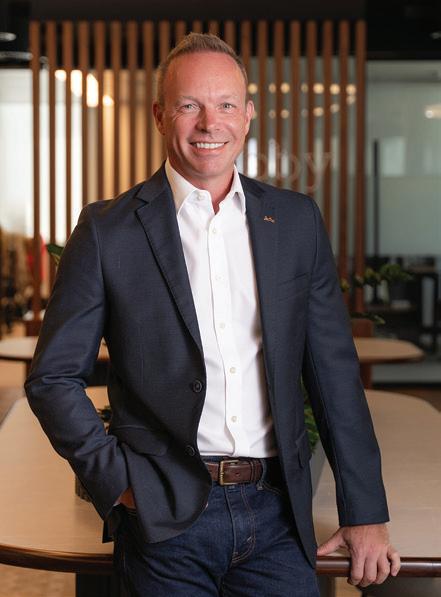
15 Sébastien Bazin, CEO of Accor, speaks on leadership, loyalty, and the potential of the future
18 Op-Ed: What to tip when travelling – and how to not overpay
20 Op-Ed: Why community-led concepts are among Dubai’s strongest 21 Op-Ed: Leadership is reflected through people, not just growth
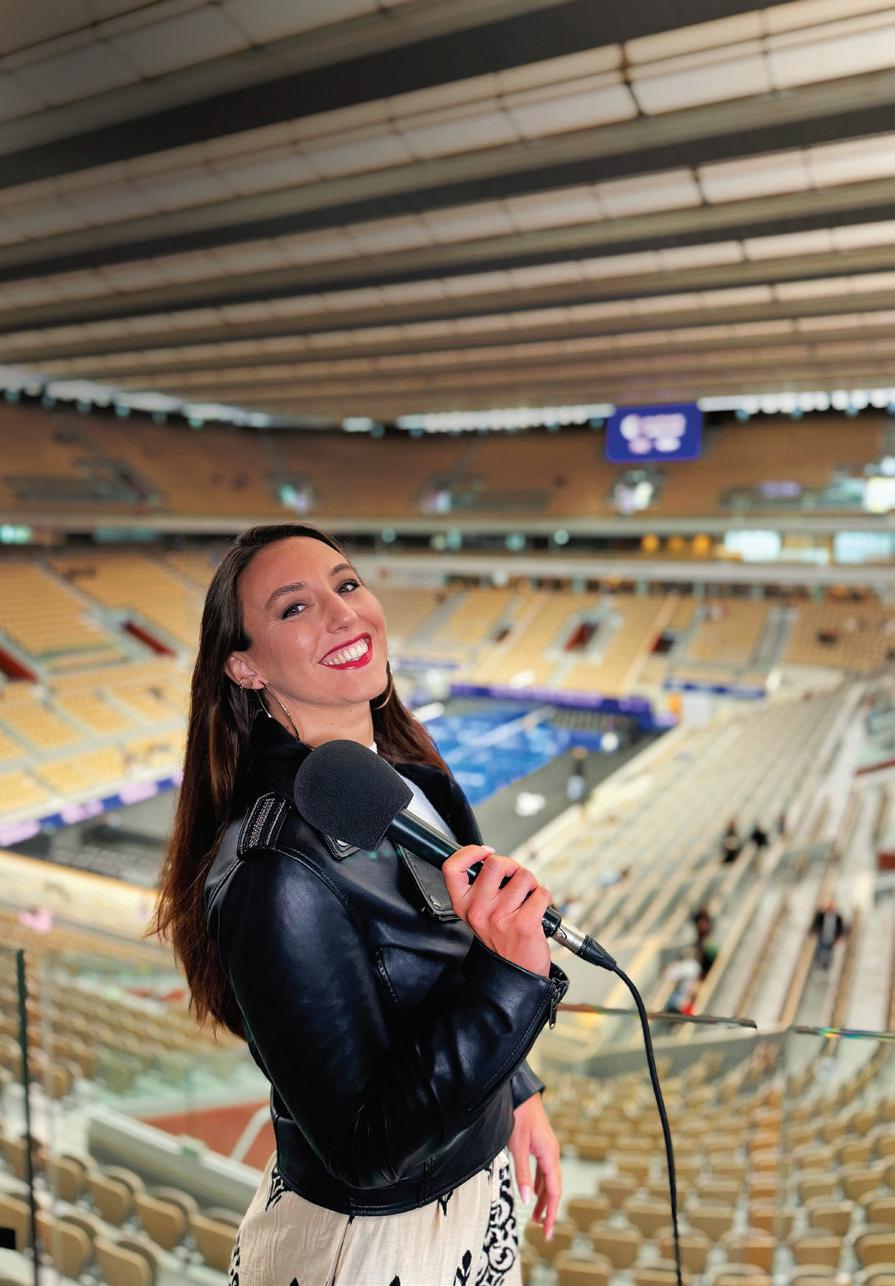
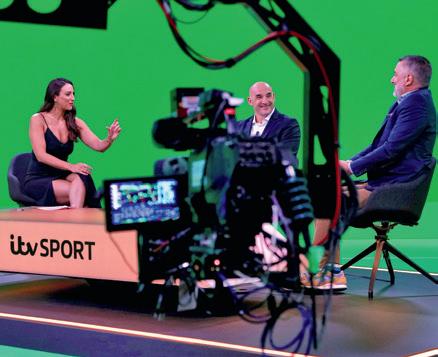
22 Frequent flyer with Semra Hunter, sports presenter
24 Elevator Pitch with Shaileen Jiwa, general manager of Queen Elizabeth 2 Hotel, Dubai
25 Extra Day in Milan 27 Soothe yourself with the wellness-oriented side of travel and tourism
28 Splash out on luxury experiences and products 30 Our pick of cultural events around the world and inflight entertainment 31 Smart traveller: Working from hotels
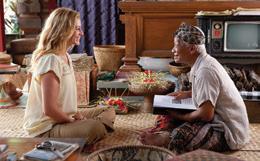
screen gems 2026’s most star-worthy itineraries for set-jetting
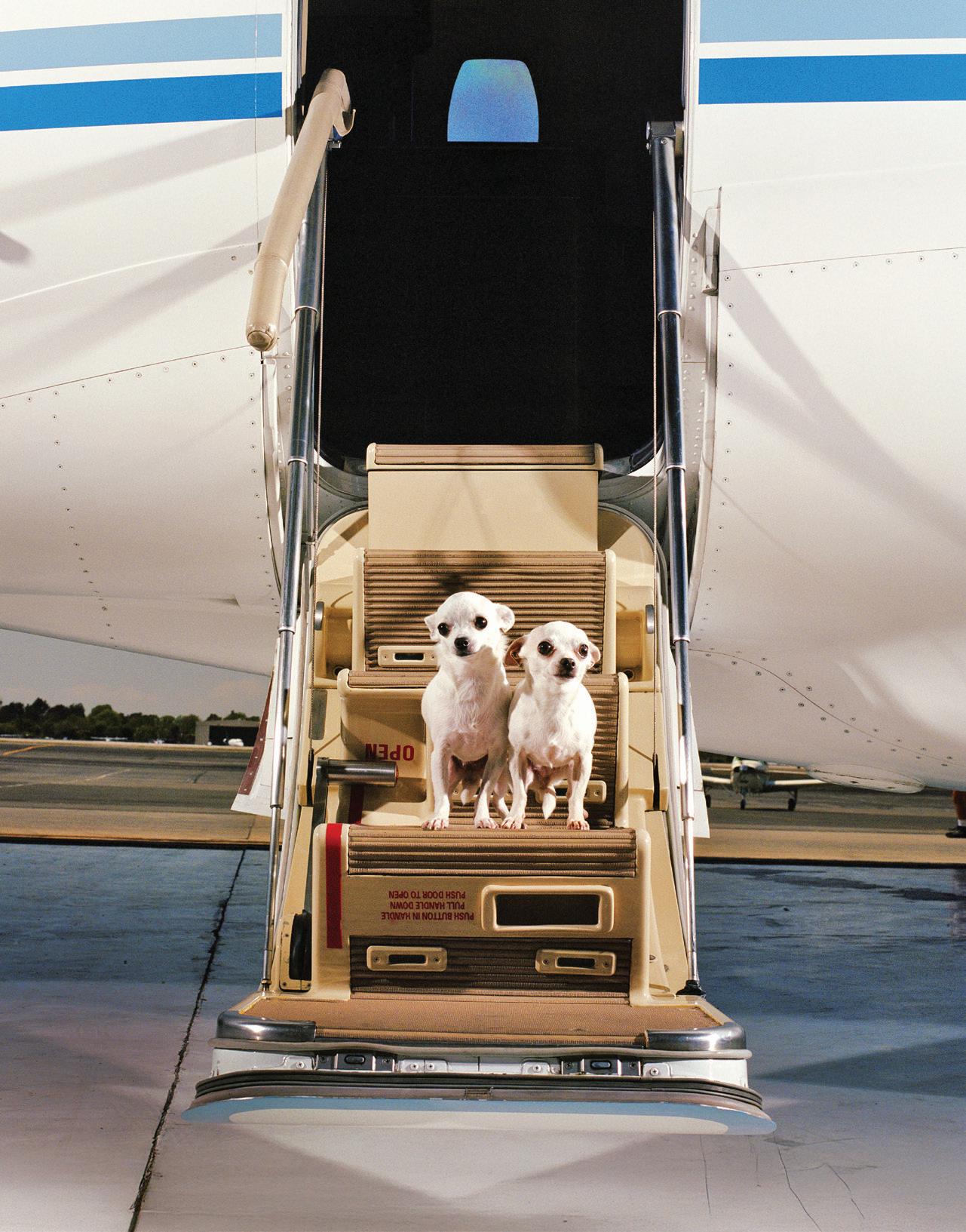
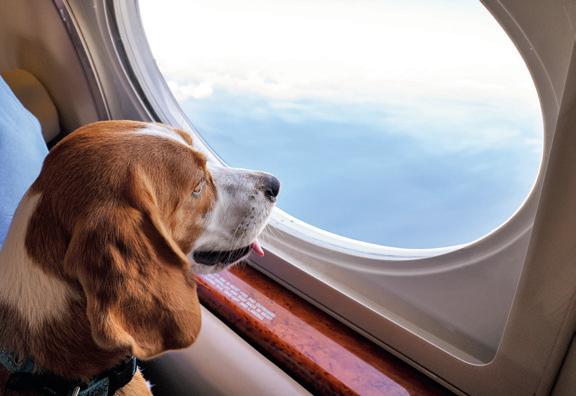
pets Dream of flying with your beloved pet? Here’s the 411
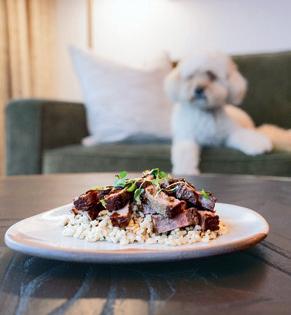
is big business - and hotels want in on the action
Tired of roaming charges? Here’s how eSIMS work Accessing affordable data abroad, explained
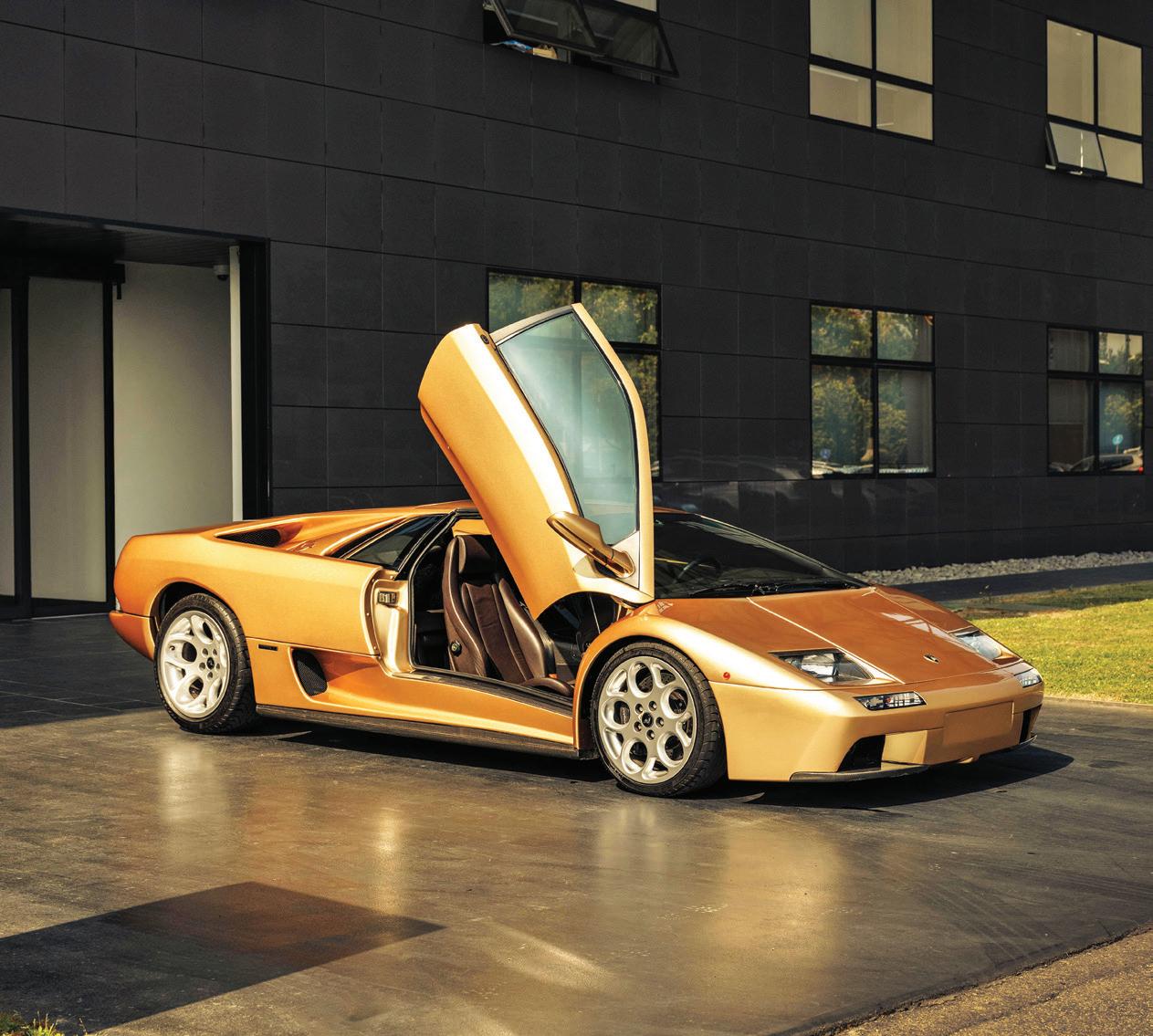
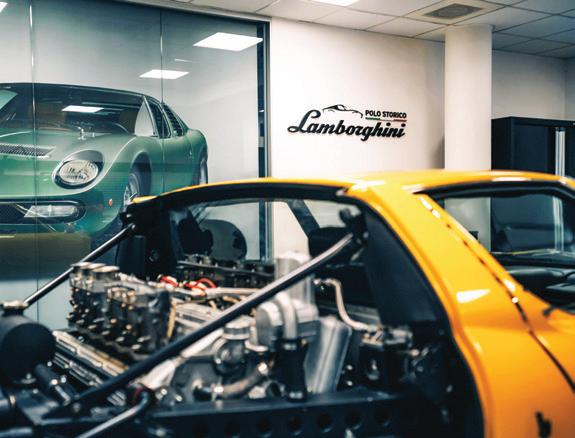
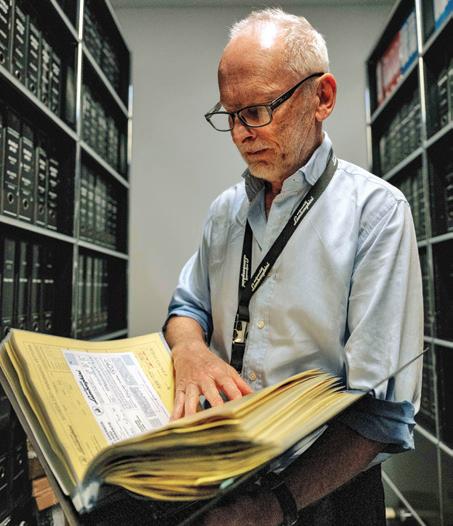
Auto exotica Inside an Italian research lab that certifies classic Lamborghinis
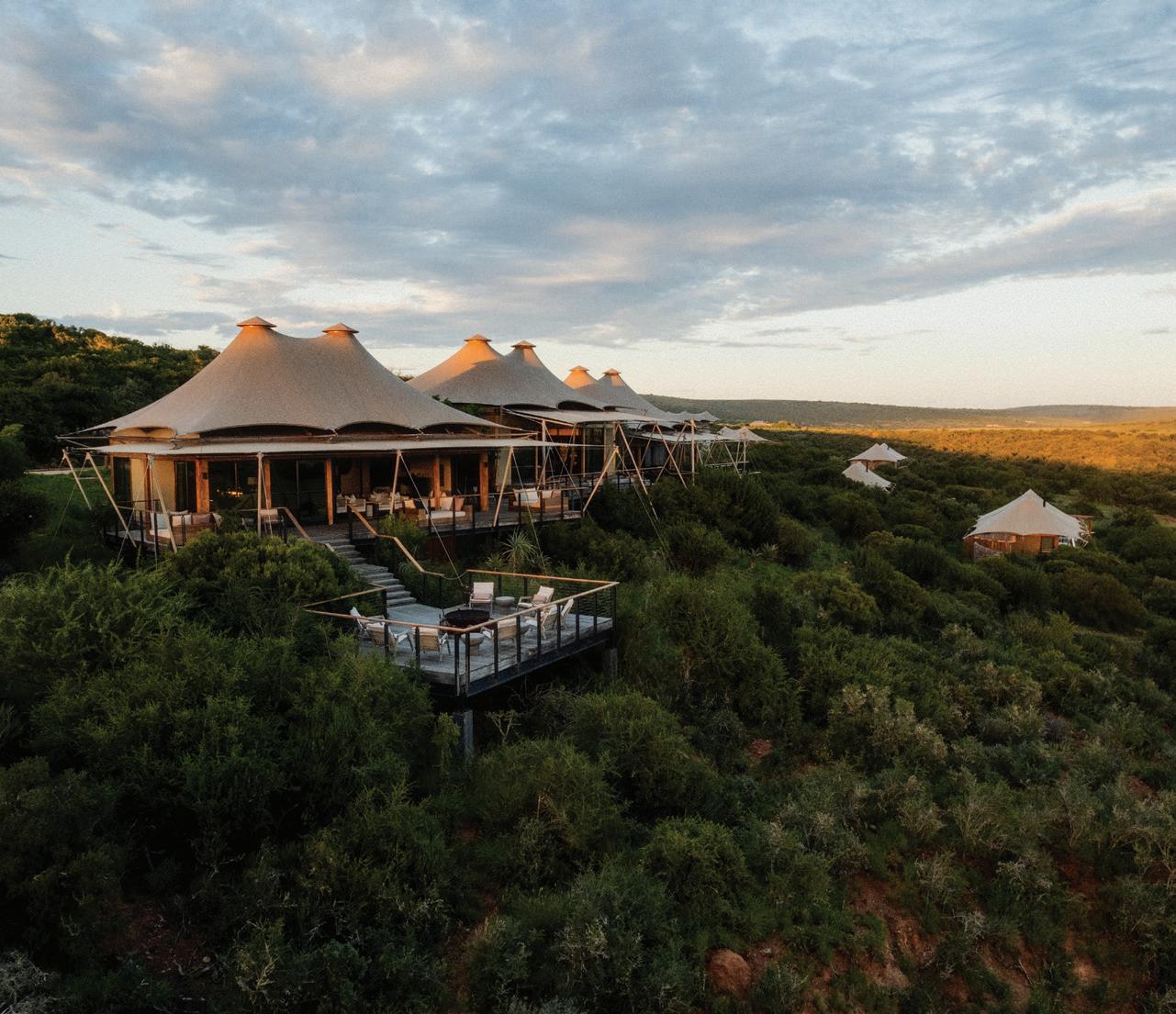
A top retreat in the South African Eastern Cape joins the Rare Finds collection
Editor’s Letter
EVERY ONCE IN A WHILE, a moment occurs that makes you realise the “future” isn’t a far off-concept – it’s something we’ve already begun living in. I, for one, felt this last month, when my news feeds were dominated by headlines excitedly detailing the launch of commercially-available driverless taxis in Dubai – a milestone that feels like a sci-fi film coming to life.
In recent years, the GCC has become a sort of global living lab for future-forward developments that could make jaws drop. While Abu Dhabi pioneered the region’s first autonomous public trials with TXAI (not a typo!) in 2021, and Saudi Arabia has been testing everything from driverless shuttles to air taxis, the recent commercial launch of Dubai’s autonomous taxis by the emirate’s Roads and Transport Authority (RTA) marks a turning point for the region. Why? Because this says, loud and clear, that we are no longer just testing the future; we’re integrating it into our daily commutes.
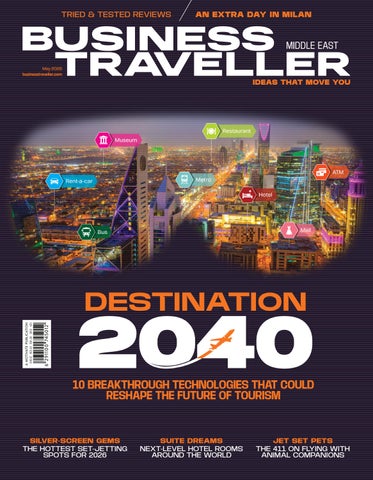
This month, we dive deep into the evolution of transport and travel in our cover story (p.32). During last year’s inaugural TOURISE summit in Riyadh, we sat down with renowned futurist Chris Sanderson to explore the innovations that will redefine how we move across the globe. While some predictions – supersonic travel and personal carbon allowances, for instance – may seem harder to fathom than others, like AI travel assistance or using your face as a passport, we were fascinated to learn how many of these shifts are rooted in social anthropology. Like the experts behind this research, I personally agree that technology is at its best when it becomes invisible enough to serve human values rather than replacing them.
After all, when you look at the shifts in what the majority of us are seeking when we travel, the thread that connects them all is the human element. When innovation is used to help us stay more connected with our loved ones (p.58), gain new benefits in wellness (p.56), or improve our work-life balance (p.31), it shines – and serves as a reminder that the core of hospitality is rooted in the sensory and the sincere.
The modern world moves so fast that at times, the pace of progress can feel a little scary. Yet, if you think about it, we’re lucky to be living at a time where things once thought of as magic are actually possible. Life in a place this innovative can often feel like we’re living in a movie - and as with any good story, the plot unfolds best when the protagonist isn’t a passive observer of change, but an active participant in their own hero’s journey. These stories are defined by the courage one shows in stepping into the unknown, and we choose to believe in a narrative where the glass is half full.
Enjoy the issue!
WORK FROM HOTEL Working remotely but need a change of scenery? Try this! P31
Yi-Hwa B. Hanna Editor
TOP PICKS
SCREEN GEMS
Want to travel to the worlds of your fave films? You can – sort of! P36
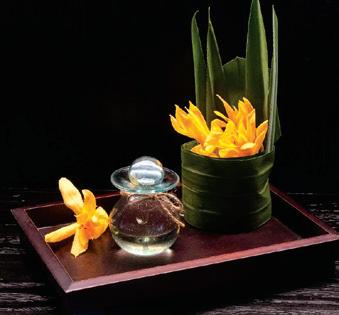
Learn how hotels are harnessing the power of native blooms. P56
MOTIVATE MEDIA GROUP
EDITOR-IN-CHIEF OBAID HUMAID AL TAYER
MANAGING PARTNER AND GROUP EDITOR IAN FAIRSERVICE
CHIEF COMMERCIAL OFFICER ANTHONY MILNE
GROUP CONTENT DIRECTOR THOMAS WOODGATE
EDITOR YI-HWA B. HANNA
ART DIRECTOR CLARKWIN N. CRUZ
EDITORIAL CO-ORDINATOR LONDRESA FLORES
CONTRIBUTORS
HANNAH BRANDLER, TAMSIN COCKS, NIVEA SERRAO, VASILII KACHALOVSKII, MELINDA SHECKELLS, MICHAEL MÖSER, NICK GOODYER, STEPHANIE VERMILLION, JAMES MARCH, DAVID PHELAN, JEREMY TAYLOR, JUMIRA HANCOCK
GENERAL MANAGER – PRODUCTION S SUNIL KUMAR
PRODUCTION MANAGER BINU PURANDARAN
ASSISTANT PRODUCTION MANAGER VENITA PINTO
GROUP SALES MANAGER CHAITALI KHIMJI SENIOR PARTNERSHIPS MANAGER MURALI NARAYANAN
HEAD OFFICE: MEDIA ONE TOWER, DUBAI MEDIA CITY, PO BOX 2331, DUBAI, UAE; TEL: +971 4 427 3000; FAX: +971 4 428 2266; E-MAIL: BTME@MOTIVATE.AE
BUSINESS TRAVELLER MEDIA LTD. INK, BLACKBURN HOUSE, BLACKBURN ROAD, LONDON, NW6 1RZ
SILVER
FLOWER POWER
REGIONAL NEWS
New hotels, flight routes, and more
GLOBAL NEWS
Happenings from around the world
SUSTAINABILITY
The greener side of tourism & hospitality
Made to Fly
WORDS YI-HWA HANNA
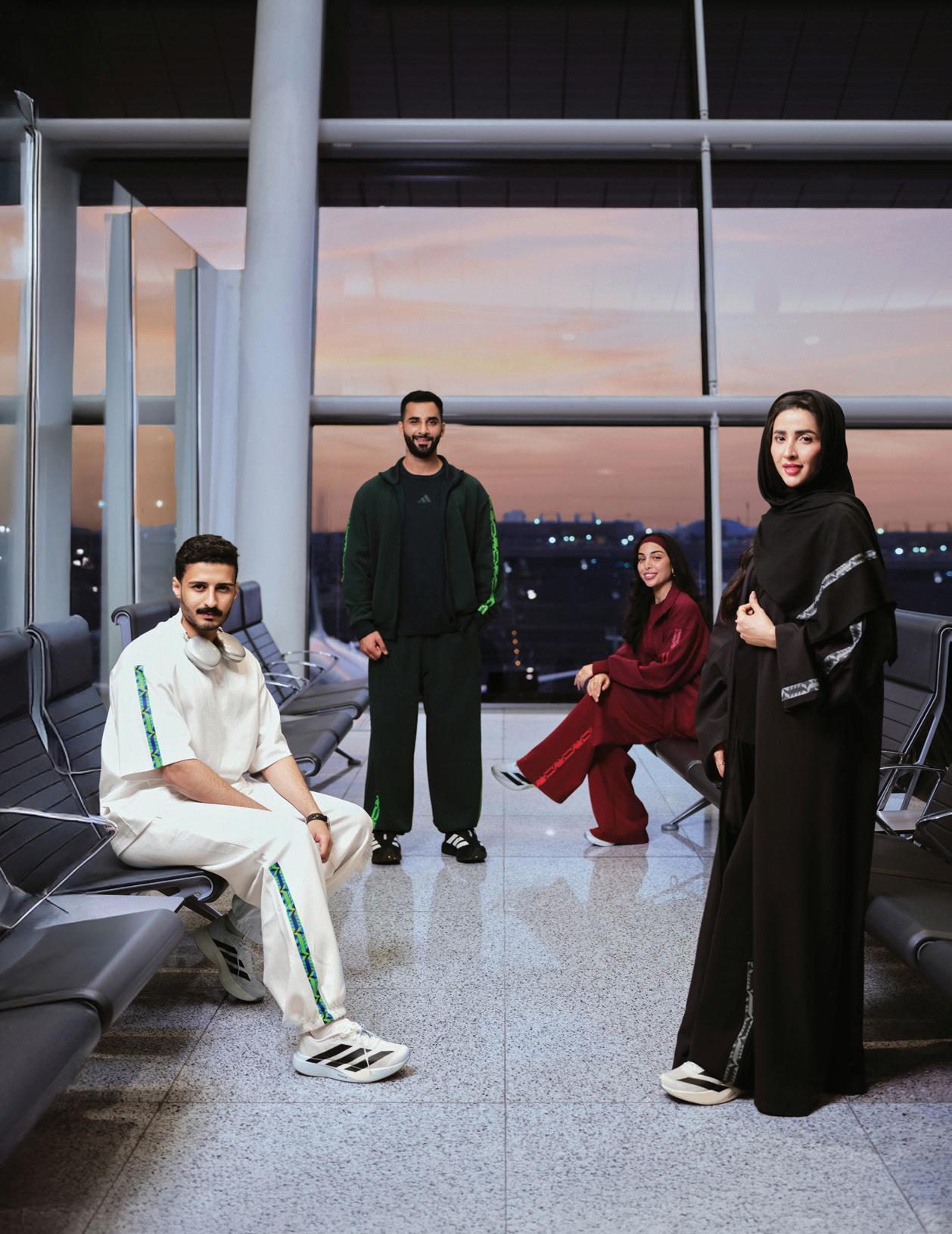
Saudia and adidas reimagine the modern travel uniform through a first-of-its-kind collaboration
BRIDGING THE GAP between sportswear and aviation, this limited collection – which launched on 20 April in select adidas stores across Saudi Arabia, the UAE, Egypt, and Morocco, as well as online – built upon adidas’ SOFT LUX line. The “Made to Fly” travel pack includes a classic tracksuit resdesigned as a modern travel essential that incorporates aviationinspired details and Saudi design cues, as a joint effort with the Saudi national carrier. The airline rebranded in 2023, and this partnership signals its intent to expand its presence into the realms of culture and lifestyle.
HOT TICKET
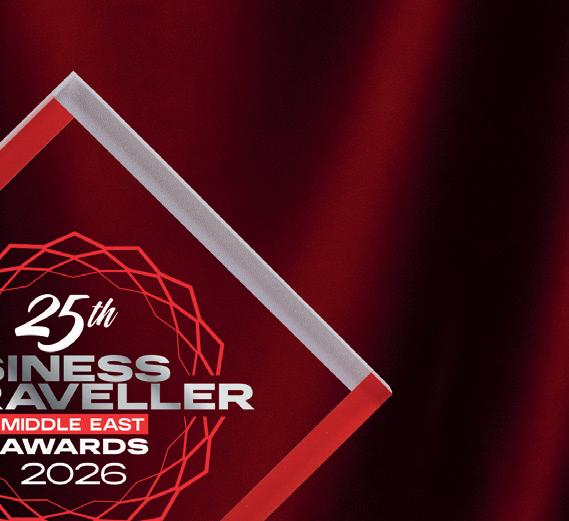
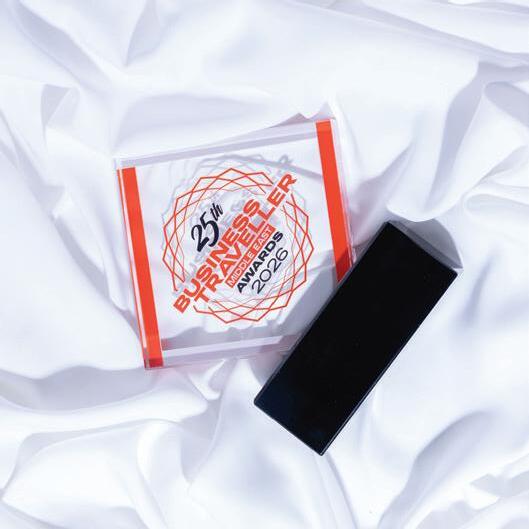
East Awards 2026 is live! Celebrating a silver jubilee, this year’s awards re ect thousands of reader votes across 37 categories. The nalists represent the industry’s benchmark for excellence among airlines, airports, and hotels. Winners will be revealed on 18 June, at a gala ceremony at InterContinental Dubai Festival City among the region’s most in uential leaders, to honour the future of travel.
AI: Your New Travel Agent
CAPTION HEAD
Caption mo molectem nimus ab iur aut re expel
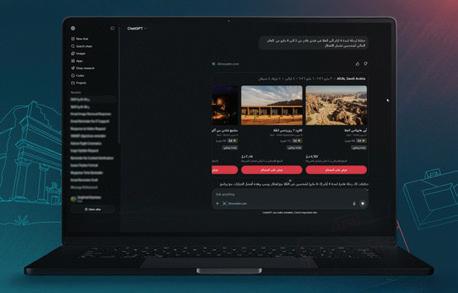
TRAVEL PLANNING in the region is experiencing a shift from manual searches to AI-driven dialogue, with the launch of dedicated ChatGPT integrations last month by major travel companies such as Skyscanner and
Skyscanner’s new ChatGPT-integrated app for the Middle East allows regional users to source real-time flight data and visual options directly within the ChatGPT store. By mimicking human conversation, it aims to help travellers compare prices and adjust dates through simple prompts, leveraging a database that serves 160 million monthly users.
Meanwhile, Almosafer has become the first Saudi Arabian travel company to integrate its services with the platform. Supporting both Arabic and English, the app allows users to navigate over 1.5 million hotels and build complex,
multi-city itineraries. Both prioritise “answerled experiences,” moving away from traditional menu navigation to provide personalised recommendations based on specific landmarks or family needs.
Scan this QR Code to see the shortlist!
W
Hotels Opens in Riyadh’s KAFD District
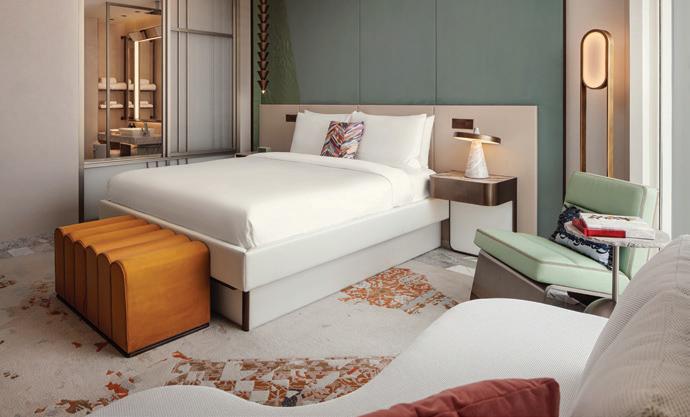
THE DEBUT OF W Riyadh – KAFD marks W Hotels’ official entry into the Saudi Arabian market. Located in the thriving King Abdullah Financial District, the 210room property merges business utility with the brand’s signature lifestyle programming. Designed by LW Design, the interiors reflect local heritage through desert-inspired stone and
marble alongside traditional Al Sadu weaving patterns. One standout feature is a six-metre tapestry by Saudi artist Abdulnasser Gharem in the lobby. The hotel also has 17 suites and a 390 sqm W Penthouse with a private gym. Dining options include Sira (Latin American), Beni (artisanal coffee), and the Mediterranean-inspired WET Deck. Sahari, an outdoor
performance lounge, is set to open later this year. Facilities also include 15 meeting rooms, a ballroom, AWAY Spa, and a FIT studio. Helen Leighton, VP of Luxury Brands EMEA, noted that the opening reinforces W’s commitment to redefining luxury in the Middle East. The property aims to be an urban escape for Riyadh’s professional and social set.
Abu Dhabi Airport: No Pass Needed
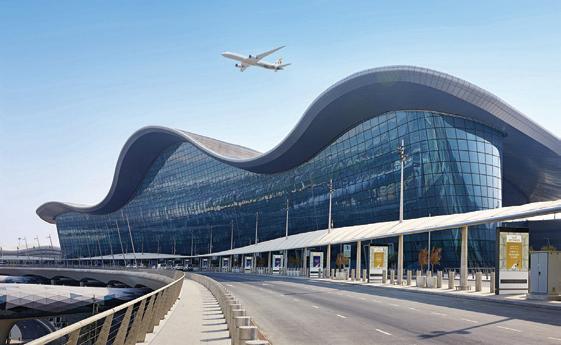
UAE RESIDENTS AND NATIONALS
can now enter landside and airside facilities at Zayed International without a boarding pass, through a recently-launched “Visitor’s Airport Pass” that allows visitors to experience the airport’s architecture, retail shops, and dining options without actually flying out. The new programme was launched as an eight-week trial period to begin with. To gain entry, visitors must pre-register for a specific time slot to receive
Blacklane Bridges Borders
PREMIUM transport
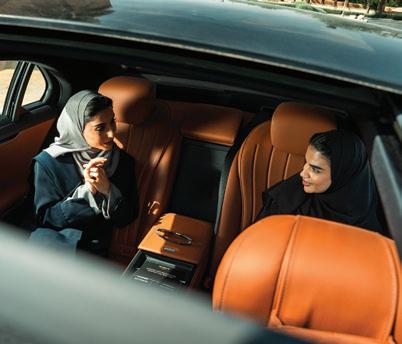
expert Blacklane is has launched crossborder chauffeur services connecting the UAE, Saudi Arabia, and Oman by road. The new routes respond to a surge in demand for international road travel, offering direct connectivity between Muscat and the UAE via the Hatta border.
The newly-expanded service now links Riyadh with Dubai and Abu Dhabi through the Al Batha crossing. This recent expansion follows the news that Uber has reached an
a digital QR code for entry and exit control points. While most leisure outlets are accessible, tipple and smoke products purchases remain restricted to passengers. Security protocols are strictly enforced: personal laptops and tablets are prohibited, and minors must be accompanied by an adult. With a minimum spend of AED 200, visitors get free parking for up to four hours. Physical access passes must be returned upon departure, at designated drop-off areas.
agreement to acquire Blacklane. The deal, expected to close by late 2026 pending regulatory approval, aims to bolster
Uber’s premium “Elite” segment by integrating Blacklane’s luxury hospitality expertise.
Since entering Saudi Arabia in 2025, Blacklane has solidified its regional footprint, providing a seamless, continuous ground travel experience for executive travellers navigating the Gulf’s major hubs.
ROUTE ROUND-UP
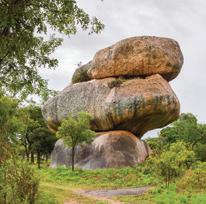
ETIHAD AIRWAYS is set to launch six new routes to Africa from November 2026 through March 2027. The rollout begins with four weekly flights to Asmara (Eritrea) on 7 November. In March 2027, the carrier adds four weekly flights to Accra (Ghana) and three to Kinshasa (DR Congo). A daily service to Lagos (Nigeria) starts 18 March, followed by a threeweekly linked service to Harare (Zimbabwe) and Lubumbashi (DR Congo) on 24 March.
AIR ASTANA has launched a direct service between Almaty and Shanghai, marking the carrier’s sixth destination in China. The new route operates three times per week, bringing the total to 32 weekly services across six Chinese cities, including Beijing, Guangzhou, Sanya, Urumqi, and Yining. The expansion follows a 96% year-onyear rise in passengers between Kazakhstan and China, supported by visa-free travel, and growing business and leisure demands.
X-1 JETS has integrated a Special Missions allocation into its JetCard programmes, allowing cardholders to use hours for emergency evacuations, medical extractions, and critical cargo transport.Designed for geopolitical instability, the operator-agnostic service sources global fleets when commercial travel is unavailable. The programme offers seamless, non-expiring coverage across Europe, the Middle East, and North America.
ETIHAD AIRWAYS is also significantly increasing its mainland China operations, expanding from one gateway to six. Starting in late 2026, the carrier will add 28 weekly flights, bringing its total to 35. The rollout begins on 1 October 2026 with daily flights to Shanghai Pudong. In March 2027, it will add daily flights to Guangzhou, five weekly services to both Hangzhou and Shenzhen, and four weekly flights to Chengdu. All routes will be operated by Boeing 787-9 Dreamliners.
GET THE SCOOP
The latest updates in the travel industry from across the world
1 Korean Air majorly overhauls flagship lounge at ICN (Above) The South Korean flag carrier has finalised a 42-month project at Incheon’s Terminal 2. The total lounge area has now grown to 12,270 sqm, doubling its seating capacity to 1,566 across seven specialised spaces. The 921 sqm First Class Lounge now features 11 private suites and Christofle cutlery, and offers guests premium beverages such as Krug bubbles. Meanwhile, the Prestige Class West Lounge has now become the airport’s largest single facility at 2,615 sqm, where it offers a Tech Zone and seasonally-changed buffets. To manage peak-hour crowds, a new mobile reservation tool allows passengers to book access in advance via the airline’s app.
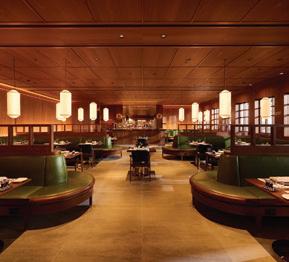
2 Plaza Premium opens new lounges at Dallas Fort Worth (Right) The Hong Kong-based group has launched two distinct facilities in the airport’s Terminal D to address growing demand at one of the world’s busiest aviation hubs, which now handles nearly 86 million passengers annually. This expansion introduces the first Plaza Premium First lounge in the US, alongside an enhanced Plaza Premium Lounge. Plaza Premium First boasts a personalised experience with a dedicated lounge ambassador, integrated shower facilities, leather furnishings, and seated dining with table-side service, offering local Texan flavours. Complemented by integrated shower facilities and leather furnishings. Access starts at US$115 for a two-hour stay. The adjacent Plaza Premium Lounge features a rotating buffet, a fullservice bar, and collaborations with local Dallas bakeries and craft breweries, plus works by local artists. Entry begins at US$70 for two hours. Both facilities operate daily from 7am to 11pm, providing high-speed WiFi and charging stations.
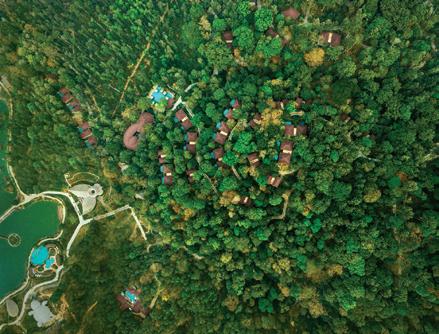
3 The Leela acquires luxury resort in Coorg, Karnataka (Below) Celebrating its 40th anniversary this year, The Leela – one of India’s most beloved luxury brands – has now expanded into the Western Ghats with The Leela Coorg Forest Sanctuary. The 76-acre estate near Madikeri consists of 71 villas, with plans to add 19 more keys in its first phase. This IGBC Platinum-certified property features a seven-acre lake, a private helipad, and a 27,000 sq ft wellness centre that’s centered around Ayurvedic traditions and modern recovery science. Four dining venues will offer regional plantation-to-cup coffee experiences. This acquisition grows The Leela’s portfolio to 15 hotels, with nine more in the pipeline.
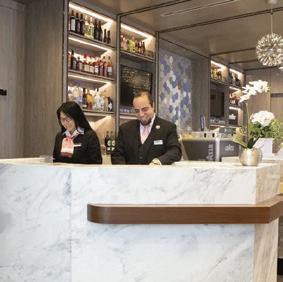
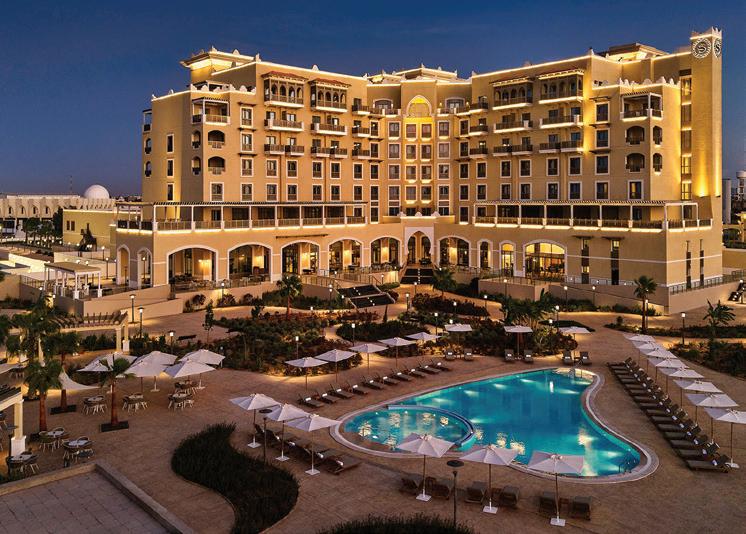
4 Sheraton Nouakchott marks Marriott’s Mauritanian debut (Right) Located in the coastal capital where the Sahara meets the Atlantic, this new 200-room property serves as a central hub for business and leisure. Its design draws heavily from regional heritage, with architectural nods to the Richat Structure and the stone masonry of Tichitt. Inside, guest rooms feature traditional patterns alongside the brand’s signature Sleep Experience, while the Sheraton Club provides a dedicated space for Elite members. Dining options includes Feast (international and local cuisine) and Bene (Italian), plus a lobby bar and poolside service. Amenities include an outdoor pool, a spa with a hammam, and a fitness centre with dedicated floors for men and women. The hotel also has 2,600 sqm of event space, a Grand Ballroom, and a signature community table that serves as a co-working space.
5 Cathay debuts revamped flagship lounge at HKG (Above) The Wing First Class lounge reopened to the public on 22 April, after a year-long renovation. Designed by Studioilse, the 1,675 sqm space now provides 20% more seating, totalling 237 seats, without expanding its footprint. Dining options have been expanded to include a casual atrium bistro, a grab-and-go pantry, and a formal dining room offering a full menu with partnerships including Mott 32. A significant addition is The Retreat, which offers free foot and neck massages, alongside 12 upgraded shower suites. Access is reserved for Cathay Diamond members and First Class passengers, with oneworld Emerald members currently directed to The Pier First. The Business Class section downstairs will now close for its own refurbishment until 2027.
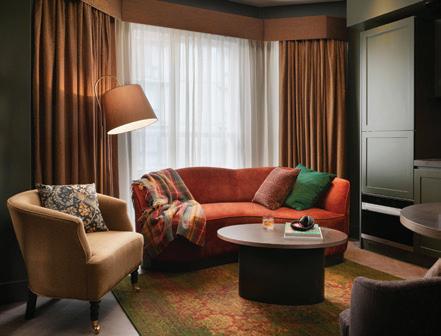
6 London’s The Other House introduces “Club Combos” (Below) Unlike a typical hotel, The Other House South Kensington was designed as a sort of Resident’s Club that equally welcomes short- and long-term stays, offering a flexible alternative to traditional hotels by blending apartment functionality with private club services. It’s now giving larger groups the chance to book “Club Combos” – self-contained group residences made up of up to five of their interconnecting Club Flats (each with fully-equipped kitchens and separate living areas), each accessed through one master front door. Residents receive complimentary access to private spaces, including a members’ club and well-being space.
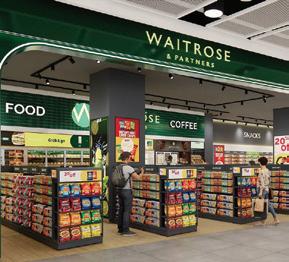
7 Waitrose opens its first airport retail outlet at Heathrow
(Above) The supermarket brand is expanding into airport retail through a partnership with Lagardère Travel Retail. Starting this month, the brand’s products are available within Relay stores at London Heathrow Terminal 2 – the first time they will be present in a global aviation hub. The outlet is located airside on the upper level, operating daily from 5am to 10pm. By the end of 2026, Waitrose inventory is set to become available in four locations across the terminal. Passengers seeking these products can expect a selection of sandwiches from the “No. 1” range, alongside sushi, salads, and fresh snack pots. For early morning departures, the shelves will be stocked with pastries, granola, and smoothies. The supermarket’s standard meal deal offers will also remain valid at these locations.
A sense of place
As Six Senses prepares to debut a biophilic sanctuary in Dubai this year, its Oman property is still proving that luxury and legacy can coexist
ENOWNED for its origins in wellness, the Thailandfounded Six Senses brand is scheduled to make its highly anticipated entry into the UAE market during the third quarter of 2026.
RSix Senses will debut an allinclusive resort on Dubai’s Palm Jumeirah, featuring a boutique collection of 61 suites. Designed with an emphasis on biophilic architecture, it will incorporate natural textures and materials throughout its structure.
The resort’s grounds will feature landscaped gardens with rolling mini-hills, and courtyards filled with palms, all leading toward a private beachfront. Ensuring versatile accessibility alongside a sense of privacy, guests will be able to arrive at the hotel via land or sea, or by air at the dedicated helipad.
Its on-site facilities are designed to cater to a range of travellers, with key features including a library, multiple swimming pools, and gaming rooms. For younger guests,
it will offer a programme of curated activities. The culinary offering will reflect the brand’s dedication to sustainability as its restaurants and bars commit to prioritising seasonal produce and ingredients sourced from local suppliers.
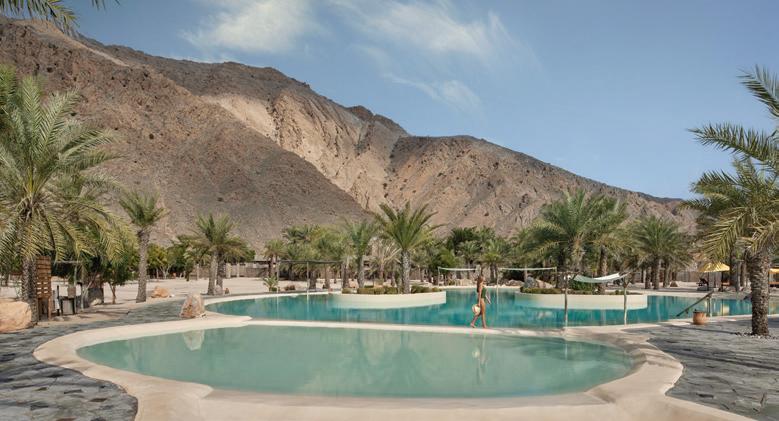
Mirroring the philosophy of its popular sister property, Six Senses Zighy Bay in Oman, the new Palm Jumeirah hotel will place environmental stewardship at its centre.
Infrastructure will include waste reduction systems, and like its other properties, an Earth Lab will be established on-site, offering hands-on workshops on eco-friendly living.
Wellness remains a primary pillar for the brand, and the Dubai resort will house a 5,500 sqm social and well-being club alongside a Six Senses Spa. This space will include a biohacking lounge, a longevity centre, and dedicated studios for meditation and yoga.
Bay, which recently reported significant sustainability achievements for 2025. The Omani resort successfully diverted 14 tonnes of food waste to its compost system and avoided the use of more than 250,000 plastic bottles through its dedicated water filtration plant. Meanwhile, the introduction of compostable coffee systems in all 84 villas has eliminated aluminium waste.
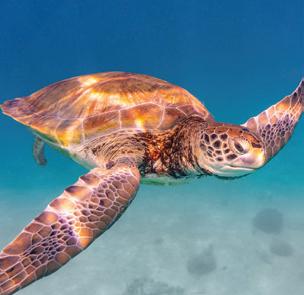
The resort’s Dibba Farm produced over 3,700 kg of organic produce and 1,708 litres of goat milk last year, supporting its farm-to-table dining model. Its marine conservation efforts also saw 363 endangered Green Turtles recorded in partnership with the Olive Ridley Project, alongside active coral restoration within the bay.
This focus on regenerative tourism has already been wellestablished at Six Senses Zighy
Community engagement remains a priority, with the resort’s sustainability fund generating over US$6,000 for women in Dibba and providing US$93,000 to families in need. Its educational outreach reached over 1,200 students through the Mobile Earth Lab initiative.
As the brand expands into the UAE, its established practices in Oman provide a blueprint for its commitment to operating in harmony with local ecosystems.
DID YOU KNOW?
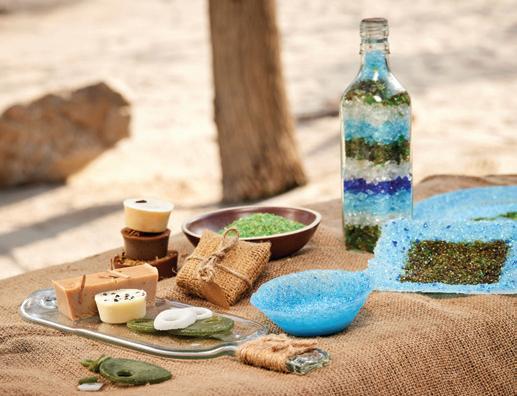
Every Six Senses property has an Earth Lab, with hands-on eco-friendly activites such as making beeswax wraps and zero-waste candles. Depending on the hotel, guests also have the chance to replant coral, watch turtles hatch, and more.
A star breaks ground
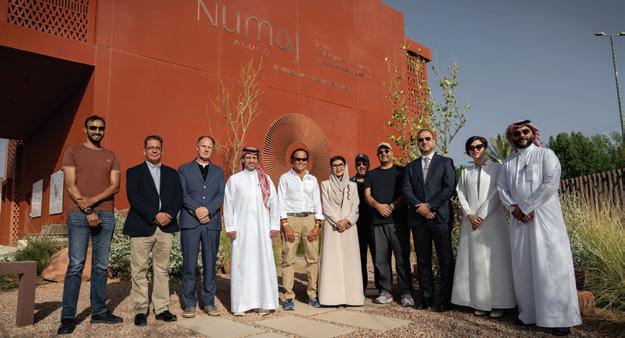
Construction has begin on AlUla’s NUMAJ, an Autograph Collection hotel set to open in 2027
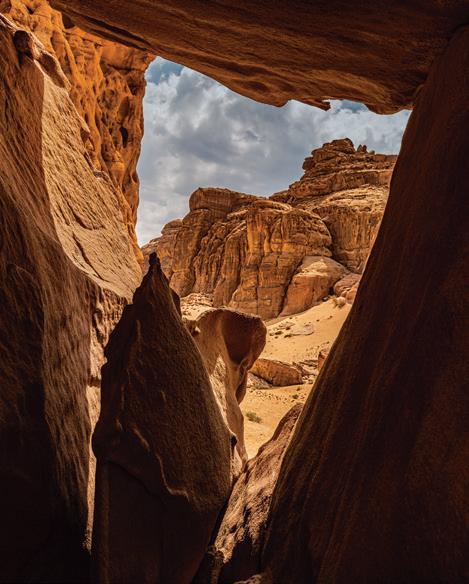
ALULA Development Company (UDC) has officially broken ground on the upcoming NUMAJ, Autograph Collection resort. Currently set to open in 2027, the 250-key property is being developed in collaboration with the Royal Commission for AlUla and will be operated by Marriott International. Designed by GioForma – the architects behind the iconic multi-purpose event space Maraya – the hotel draws inspiration from AlUla’s heritage and the star system Nu
Global status
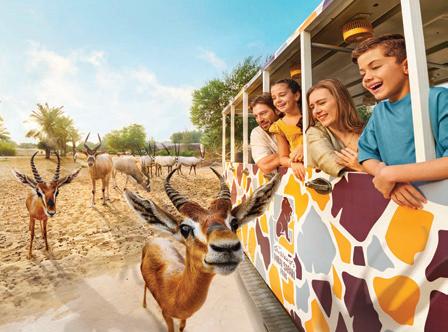
DUBAI SAFARI PARK has joined the World Association of Zoos and Aquariums, after securing institutional membership in March. This follows its existing affiliation with the European Association of Zoos and Aquaria (EAZA). Park Director Muna Alhajeri noted that this reinforces the site’s commitment to following international welfare standards while contributing to the protection of biodiversity.
Ursae Majoris, which once guided ancient travellers. Sustainability is the project’s central pillar, with the development targeting LEED Gold certification. The resort will incorporate locally-sourced materials and greywater reuse systems for irrigation, while the design includes UV-resistant glazing and water-efficient landscaping to reduce resource consumption. All lighting will be energy-conscious and strictly aligned with AlUla’s Dark Sky policy to protect the unique celestial environment.
DID YOU KNOW?
Dubai Safari Park is home to more than 3,000 animals from over 300 species. Its newly-established membership in the World Association of Zoos and Aquariums (WAZA) provides access to global conservation funding and research platforms, supporting Dubai’s goal of being a leader in green tourism.
The new, improved park life
DUBAI MUNICIPALITY
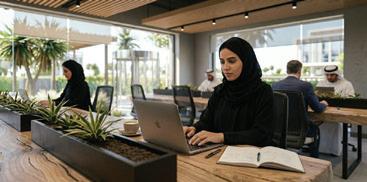
is introducing a new “Work from Park” initiative being rolled out from this month. The new programme aims to transform the emirate’s public parks into integrated urban spaces that support professional productivity alongside their ability to serve residents’ and visitors’ leisure needs. By creating flexible work environments within nature, the goal is to
position public parks as multi-functional assets that cater to modern remote working patterns.
The first flagship destination is May Al Barsha Pond Park, which will now feature sustainable, modular workspaces built to have minimal environmental impact, with a design that blends seamlessly into the park’s natural landscape. More locations are expected to follow throughout the year. The operational management of these spaces will be handled by Letswork LLC.
SQ KM, THE ALULA REGION IS LARGER THAN THE COUNTRY OF BELGIUM 22k
first
Sea of change Nature
LAST MONTH, reports emerged detailing how the ruler of Sharjah, HH Sheikh Dr Sultan bin Muhammad Al Qasimi, has rejected a series of commercial proposals to construct a hotel on Kalba Beach, citing a responsibility to protect vital wildlife habitats. The decision ensures the preservation of a critical nesting ground for the endangered hawksbill turtle and the breeding site of the Arabian-collared kingfisher. The Ruler emphasised that environmental integrity
takes precedence over financial investment.
The 5,000 sqm Khor Kalba Conservation Reserve is already home to the UAE’s oldest mangrove forest. His Highness also recently intervened to assist a local boat operator whose project was halted due to safety risks to turtles. He pledged to provide specialised propellerfree “jet” boats to help ensure that tourism efforts can continue without disturbing the area’s treasured and delicate natural ecosystems.
C Resorts has bolstered its eco-credentials as C Rodrigues Mourouk earns its first Green Globe certification, while C Mauritius is recertified
HE LIFESTYLE hospitality sector in the Indian Ocean has reached an impressive environmental benchmark as C Resorts earned a dual achievement in the region.
TC Rodrigues Mourouk (pictured above) on Mauritius’s Rodrigues Island has now secured its first Green Globe Certification, while its sister property, the all-inclusive C Mauritius Palmar, has successfully completed its Green Globe recertification process. This double milestone serves as a formal validation of the brand’s long-term operational strategy, which seeks to balance social energy with environmental responsibility.
Green Globe certification remains one of the most stringent and respected sustainability frameworks in the global tourism industry. To earn the seal, businesses must undergo rigorous independent audits that scrutinise performance across four key pillars: environmental management, social responsibility, cultural
preservation, and sustainable operations. For C Resorts, the process involved a deep dive into energy efficiency, water conservation, waste management protocols, and the ethics of their local sourcing and community engagement efforts.
The Green Globe certification of C Rodrigues Mourouk is particularly significant, given the destination’s unique geographical context. Rodrigues is an island where the ecological balance is famously delicate, and the arrival of third-party sustainability standards marks a pivotal step in ensuring that tourism acts as a support system for the island’s development rather than a drain on its resources.
Olivier de Guardia, Cluster General Manager of C Resorts in Mauritius, noted that these achievements are a reflection of their daily operational habits rather than a one-off effort. “We are extremely proud to see C Rodrigues reach this milestone and to confirm the continued commitment of C Mauritius through its recertification. Sustainability is a journey that requires consistency, dedication, and genuine engagement from
our teams. These recognitions demonstrate the tangible actions implemented daily across our hotels,” he said.
One of the standout initiatives at the Rodrigues property is the Bluer Ocean Project. Led by skipper and divemaster Jérôme Branellec, this coral restoration programme focuses on the active regeneration of lagoon ecosystems. The team installs dedicated coral structures designed to stimulate reef growth and invite marine biodiversity back to the area. Originally launched during the 2020 pandemic, the project has already seen the development of new coral colonies. C Rodrigues supports this work through the sponsorship of these structures and provides guests with the opportunity to contribute via voluntary donations to the preservation of the local lagoon.
For the brand, which operates under the Constance Hospitality umbrella, these certifications are intended to show that a “lifestyle” hotel – one focused on social energy and authenticity – can still operate as a regenerative force. De Guardia added: “Our destinations are at the heart of what we offer. Protecting them is not an option; it is a responsibility. These certifications encourage us to go further and continue innovating in the way we operate and engage with our environments and communities.”
Expert opinions on the future of travel
THE BIG INTERVIEW
SÉBASTIEN BAZIN
‘Accor has always been 20 years late to the party –but, finally, we’re ahead of the game’
Hannah Brandler sits down with Accor’s CEO to hear about his 13 years of leadership, the power of loyalty schemes, and India’s promising potential
You’ve been at the helm of Accor for over a decade. What shifts have you seen in the hospitality industry over that time?
The first is choice. Accor has gone from 11 to 48 brands in my time. We have listened to the market and offered more brand diversity. We’ve also entered territories where our competitors haven’t gone yet. The second is the rising popularity of non-branded hotels. Twenty years ago, the majority of demand was channelled through branded hotels – non-branded hotels were virtually unknown on any distribution channel. Changing lifestyle priorities
is also prominent. Accor has always been 20 years late to the party – we’ve been late on distribution, loyalty, so many things. But finally in this niche – lifestyle – we’re ahead of the game. We’re in the premier league now.
Which of Accor’s brands are most popular with business travellers?
Before Covid, Accor’s customers were 60% business, 40% leisure. Today it’s exactly the opposite. Business travel is back but has slowed down for large groups – 1,000-people seminars are less frequent. Interestingly, no hotels with
BIOGRAPHY
Sébastien Bazin was appointed chairman and CEO of Accor in 2013, having joined the group’s Board of Directors in 2005. Prior to Accor, he headed up the European branch of private real estate investment firm Colony Capital, where he led acquisitions in the sector including Fairmont and Raffles. He is also a board member of GE Aerospace and The Riyadh School of Tourism and Hospitality.
Insight
Continued from overleaf
more than 600 rooms have been built in America in the past two years. We see a lot of small groups now. The Novotel, Mercure, Mövenpick, Swissôtel, and Pullman brands are perfectly fitted for bleisure.
When you travel for business, what do you look for in a hotel stay?
It needs to be buzzing. It’s difficult to travel on business – you don’t want to end up in an empty place. You want to see people at the bar, at breakfast. It’s much more important than a spa.
Ennismore has managed to do this with 25hours, Mama Shelter, and Hoxton –they’re full of people during the day, and 80% are locals. The recipe for success is that mix between local and business travellers. On top of this, you want cleanliness and water pressure. Eighty per cent of business travellers are going to order four things: pasta, pizza, burger, and Caesar salad. Do those super well and you’re home free.
Tell us about Accor’s growth in the ultraluxury segment.
Ultra-wealthy individuals (above US$2 billion) have enormous appetite to live, to enjoy and share with their families. But there’s a lack of product.
The ultra-rich Americans do the same thing every year – it’s a ritual. They land privately at Nice Airport, spend two days at Hotel du Cap-Eden-Roc, Cap D’Antibes, two days at Hôtel de Paris Monte-Carlo, two days in St Tropez, and two days in Capri. They pack, they unpack, they drive, unpack, pack, drive. Why do we push customers to go to the product they like? Can we inverse it and bring the product to them? I told the
‘Eighty per cent of business travellers are going to order four things: pasta, pizza, burger, and Caesar salad. Do those super well and you’re home free’
THIS PAGE: Accor partners with IndiGo, launches ultraluxury yacht and refines room service basics
RIGHT: 25hours Hotel
Indre By, Copenhagen
board: I’m going to create the best hotel ever built outside of Nice Airport – the Orient Express Corinthian yacht. Travellers will have the best suite; the boat will dock in Monaco, St Tropez and Capri; and guests can invite friends onboard for a black tie dinner. It’s the same ritual, except you’re eliminating the constraint.
For the yacht, we’re probably going to have a ‘club’ model, so you’re not on the boat by accident. It’s the team’s job to curate and select who’s going to be onboard. Can we do it? I have no idea. Should we do it? Yes. People don’t mix well unless they relate to another guest. How do the crypto guys cope with the Vanderbilt family of New York? We’ll learn by walking, but it will be interesting.
What markets are you looking to expand to next?
There are three places where we have 70% of network expansion: Middle East, India, and Southeast Asia. The biggest opportunity by far is India, but this is also where you have the biggest complexity. I’m a big fan, and I go every five weeks. India will be a smashing success.
We’ve announced a joint venture with low-cost carrier IndiGo, which has the largest purchase order from Airbus with over 500 new planes. It will be the largest airline in the industry. The collaboration between IndiGo’s BluChip Rewards and ALL Accor Live Limitless loyalty programmes will enable members to earn and redeem points across flights, stays, and experiences. Additionally, India will have approximately 240 airports by 2030. These are perfect for Novotel and Mercure properties.
How is Accor meeting the needs of Gen Z and Gen A guests?
This is the toughest question for me. The average age of Accor customers is around 48 years old. I’m not sure Accor is there yet with the 18-30 category – do we address them properly? Do they know us?
Ennismore [whose brands include 25hours, The Hoxton, Mondrian, and Mama Shelter among others] permits Accor to exist in the minds of those new generations. The average guest age for these brands is 32, but younger (around 26) for those working in its public spaces.
At The Hoxton in London, we accept students working in the public spaces free of charge. The only thing we ask is that they leave the space from noon to 2pm, so those spaces can be used for lunch by paying customers. It’s an unwritten rule that works very well.
Are you looking to grow ALL (Accor Live Limitless)’ loyalty partnerships?
We have to be extremely open-minded when it comes to loyalty partnerships. The value of a partnership is the frequency of usage – if you can use it on a daily or weekly basis then you win.
You can’t be too picky on the partners – make sure you have common values, and they have a quality, affordable product – but the name of the game is the frequency of usage.
People have the wrong perception that loyalty members aren’t the ones
CHANGE OF FAITH
WHAT IS DIS-LOYALTY?
Ennismore’s playful take on a loyalty scheme rewards members who discover its new hotels and restaurants instead of returning to the same tried and tested venue. Described as a “travel and food membership that beats boring”, members access greater discounts when visiting new venues across Ennismore’s portfolio.
WHICH BRANDS DOES IT INCLUDE?
Ennismore has more than 120 hotels and 200 restaurants and bars across its 11 brands – including The Hoxton, 25hours Hotels, Mama Shelter, Mondrian, and SLS.
HOW DO YOU JOIN?
Dis-loyalty is a paid membership model, costing AED 60 per month. All memberships are for 12 months.
WHAT ARE THE PERKS?
50% OFF hotels in the first three months of opening.
20% OFF every first-time stay and 10% OFF return stays.
10% OFF F&B at any of the brand’s restaurants, bars and coffee shops.
A FREE barista-made drink every day of the year.
Weekly limited-time OFFERS, experiences and collaborations (known as “Drops”).
you want for ultra-luxury properties. This is rubbish. The ultra rich get the loyalty system – they might not use it themselves, they may give it to employees or family members. But there’s pricing and value across all segments for Accor Live Limitless.
We have 120 million loyalty members, and 13 million new members every year – that was 7 million four years ago. Loyalty is one of the biggest drivers for us in terms of direct bookings. It’s a fabulous success.
Is Ennismore’s Dis-loyalty scheme successful ?
It was a slow start, because it’s the reverse of a loyalty programme. Everyone at Accor said: kill it. I didn’t want to because it’s fun. The two work together – you can have double points with Dis-loyalty and ALL – it’s a break-even operation. I like the gimmick of it, and it’s fresh.
How do you keep a healthy work-life balance as a CEO? I travel 250 days a year and spend probably 100 nights on an aeroplane. I exercise every day for 45 minutes wherever I am, and I never close the curtains. I want to see when it’s dark. You also need to be draconian on your discipline. But I enjoy it – it’s fun!
WHAT TO TIP WHEN TRAVELLING – AND HOW TO NOT OVERPAY
Tipping has become a global guessing game – polite in Paris, offensive in Tokyo, obligatory in the US. As digital prompts push percentages ever higher, seasoned travellers need clarity, judgement, and occasionally a firm thumb on the ‘custom’ button
IONCE WATCHED a well-heeled American couple in Kyoto chase a waiter down the street, pressing yen into his hands as though they were rescuing him from insolvency. The waiter bowed repeatedly and refused. The couple insisted. It ended in polite confusion. That scene has stayed with me for years. Tipping, so instinctive at home, can become social quicksand abroad. Leave too little, and you appear stingy. Leave too much, and you appear ignorant – or worse, patronising. Leave anything at all in the wrong country, and you may cause genuine offence.
This year, as travellers pack their passports, Google searches for “how much to tip + travel” have surged 121%, according to research cited by Prestige Villas Spain.
The anxiety is real, and so is the fatigue. The question is no longer simply what to tip, but when – and whether the system itself is fraying.
Let us begin with a hard truth: tipping is not generosity. It is policy, culture, wage structure, history, and occasionally manipulation – served on a small black payment screen that swivels toward you with theatrical innocence.
Europe: A Civilisation That Pays Its Staff
In Paris, I once left a few extra euros on the saucer after a long lunch. The waiter nodded, pocketed the coins discreetly, and moved on. No bowing. No chasing. No guilt. Across much of Europe, staff are paid a living wage. Tips are a courtesy, not a lifeline.
In the United Kingdom, Ireland, and Germany, leaving something for good service is customary. In France, Italy, Spain, and Scandinavia, it is lighter. Look for “service compris” in France
or “coperto” in Italy. The latter is a cover charge for bread and the tablecloth, not a reward for your server’s charm.
If service is not included, a 10% tip in a restaurant is entirely sufficient. In cafés, leave the change. In taxis, round up or add 5-10%. Anything more begins to look like a performance.
Europe understands something Americans often forget: hospitality is a profession, not a side hustle subsidised by the customer’s mood.
North America: Where the Math Never Ends
Now we arrive at the motherland of tipping – the US – where the system runs on gratuities and indignation in equal measure.
US federal law still permits a base wage as low as US$2.13 per hour for
LOST IN TRANSLATION
Tipping culture can change from country to country
tipped workers. The rest is expected to materialise from diners. That fact explains why 18–20% remains standard in full-service restaurants. Toast reports that full-service restaurant tips averaged 19.4% in early 2025, dipping slightly to 19.1% in the second quarter. Square shows overall food and beverage tips falling to 14.9%. The public is tiring.
And here is the question no one seems eager to ask: why should a bartender who pours a single US$80 glass of Cristal bubbles receive the same percentage tip as the bartender who spends 20 minutes shaking, straining, and flaming 10 labourintensive cocktails for a similar final bill? The arithmetic may be identical. The effort is not.
Tipping by percentage assumes price equals labour. It does not.
‘Higher preset defaults increase tip amounts while damaging customer satisfaction’
Digital payment systems have amplified the absurdity. Preset prompts of 20%, 25%, even 30% appear before you have had a moment to consider the service rendered. A 2021 Marketing Science Institute study found that higher preset defaults increase tip amounts while damaging customer satisfaction. In other words, customers pay more and leave annoyed.
I have seen tablets offering 30, 35, and even 40% before revealing the small word “custom.” One establishment required patrons to manually enter “0.00” to decline. That is not hospitality. That is design psychology applied to guilt.
Bankrate’s 2025 survey found 63% of Americans hold at least one negative view of tipping. Popmenu reports 77% say the culture has become excessive. Pew found 72% believe tipping is expected in more places than five years ago.
The traveller must develop judgement. For table service in the US, tip 20% for competent service. Tip more for exceptional care. Leave US$1-2 per drink
at a bar – adjusting for effort when warranted. Housekeeping deserves US$2-5 per night, placed clearly with a note. A concierge who secures a fully booked table at 9pm merits real appreciation. But a self-serve counter that hands you a bottle of water and swivels a screen? Select “custom.” Enter what reflects the transaction. A percentage suggested by a machine is not a moral commandment.
Canada follows similar norms, though slightly gentler – 15-20% in restaurants, 5-10% in bars. The pressure is softer. The calculation remains.
Latin America: Nuance Required
In Brazil’s major cities, tour guides often depend significantly on tips. In many Spanish-speaking countries, a “cubierto” appears on the bill, covering the table service, but it may not go directly to the waiter.
However, if you see the word “servicio,” it typically indicates a tip that is shared equally among all staff members. If you were impressed by the service, consider adding an additional 5–10% in cash as a tip.
Elsewhere, rounding up is common. In smaller towns, excessive tipping can distort local expectations. Travellers who fling money about rarely appear generous. They appear uninformed.
Asia: The Discipline of Restraint
In Japan, China, and South Korea, tipping is not customary and may be refused. Service is embedded in professional pride. To insist upon tipping can feel like questioning that pride.
In Vietnam, Thailand, Indonesia, and India – particularly in tourist areas –5-10% may be appreciated if service is not included. Discretion matters. If unsure, ask quietly.
Africa and the Middle East: Context Is King
In South Africa, 10-15% in restaurants is generally expected. In Kenya and Tunisia, modest tips are welcomed. In Egypt and Morocco, small tips are common but not compulsory. Safari guides and drivers often depend heavily on gratuities.
Across much of the Middle East, 10% is typical if no service charge appears. Daily tips for housekeepers and porters are appreciated. Excess is unnecessary.
‘A percentage suggested by a machine is not an ethical obligation’
TECH
STRESS
Preset prompts from digital payment systems have further complicated tipping culture
The Politics of the Gratuity – An American Debate
All of this brings us squarely back to the US. In 2025, under the Trump administration, Congress passed the “No Tax on Tips” provision as part of the One Big Beautiful Bill Act. Effective for tax years 2025 through 2028, eligible workers in tip-dependent occupations can deduct up to US$25,000 in qualified tips from federal taxable income.
The policy applies only within the US and affects federal income tax; payroll taxes and state taxes still apply.
Supporters argue the measure allows workers to keep more of what they earn. Critics counter that it leaves the subminimum wage intact and fails to address the structural reliance on gratuities. Both observations are fair.
The law may ease tax burdens for some workers. It does not resolve the central tension: customers remain
responsible for calculating a substantial portion of service workers’ income at the end of every meal.
How Not to Get Ripped Off When Tipping While Travelling
• Read the bill carefully. Service charges, automatic gratuities, and cover fees appear frequently. Do not double-tip.
• Carry small cash. It ensures the money reaches the intended person.
• Resist inflated digital presets. A percentage suggested by a machine is not an ethical obligation.
• Observe locals. They are your best etiquette guide.
• Tipping, at its best, rewards competence and care. At its worst, it becomes a silent negotiation conducted through a glowing screen.
• The seasoned traveller knows when to reward – and when to refuse.
WHY COMMUNITY-LED CONCEPTS ARE AMONG DUBAI’S STRONGEST
In a shifting market, intentional spending favours the familiar – and during challenging times, the appeal of local roots and consistent value can strengthen business resilience
IN UNCERTAIN times, the way people engage with hospitality changes quickly, and often subtly at first.
In Dubai over the past couple of months, that shift has become more visible. Footfall hasn’t disappeared, but it has become less predictable. Weekdays feel quieter, weekends more selective, and overall, customers are more intentional with when and where they choose to go out.
It’s not just a drop in traffic, it’s a change in behaviour. People are going out less frequently, planning more, and spending with greater consideration. In such an environment, not all concepts are affected equally.
Community-led concepts, in particular, tend to hold their ground. The reason is simple: they’re built on familiarity and trust. In stronger markets, that connection is an added advantage. In uncertain moments, it becomes the deciding factor.
In practice, this shows up in very real ways. Customers are less likely to experiment with new places and more likely to return to restaurants they already know. The margin for disappointment feels smaller, so reliability becomes more valuable than novelty. That shift changes how operators need to think.
Rather than chasing traffic, the focus becomes retention. It’s about giving customers a reason to come back, even if it may be less frequently, and making sure that when they do, the experience feels consistent and worth it.
This is where community-led concepts have a structural advantage. They are not relying purely on trend-driven demand, but on relationships built over time. That creates a level of resilience that is difficult to replicate quickly.
At the same time, resilience doesn’t mean staying static.
Operators are adapting, but in more measured ways. Instead of aggressive discounting, which can dilute a brand, many are focusing on value in a more
LEFT
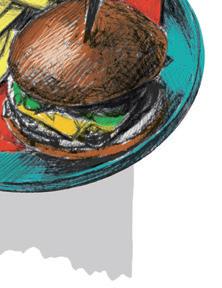
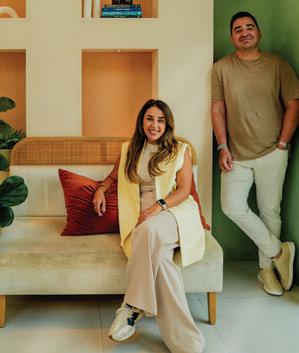
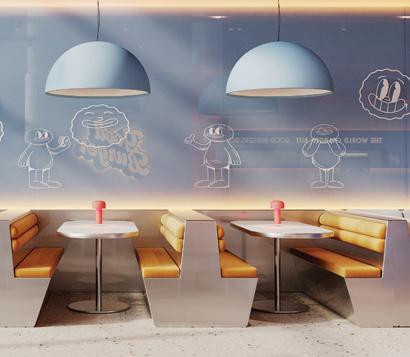
Luma and Haider Al Assam, the duo behind Good Burger and Maiz Tacos - two homegrown concepts with loyal followings built through a strong sense of community
BOTTOM
The new Good Burger restaurant in Damac Hills, Dubai
‘The margin for disappointment feels smaller, so reliability becomes more valuable than novelty’
considered sense. That might mean introducing accessible entry points, refining menus, or adjusting portions and pricing structures to better match current spending habits.
Behind the scenes, the shifts that take place are just as important. Supply chains are being stress-tested, with more operators securing backup suppliers and building flexibility into their sourcing. Cost structures are being reviewed more closely, and teams are being managed with a greater emphasis on efficiency and retention.In a tighter market, operational discipline becomes as critical as creativity.
At the same time, opening or sustaining a restaurant in this environment requires a different mindset. Many of the concepts launching now were planned well before the current climate, which means operators are moving forward while recalibrating expectations. The focus is no longer just on opening successfully, but on opening responsibly, with a clear understanding of demand, cost control, and adaptability from day one. Dubai, however, remains a uniquely resilient market.
It is one that is fast-moving and highly competitive, but it also has a strong culture of supporting wellexecuted, homegrown concepts. There is a balance between openness to new ideas and loyalty to places that feel consistent and genuine.
That balance is what allows community-led concepts to continue performing, even when overall sentiment softens. Ultimately, this period is reinforcing a simple idea: strong fundamentals matter.
Understanding your customer, maintaining consistency, and building genuine connections are not just differentiators – they are what sustain a concept when conditions become more challenging. And in a market like Dubai, those are the businesses that will continue to hold their place.
LEADERSHIP IS SHOWN THROUGH PEOPLE, NOT JUST GROWTH
More than just metrics, true leadership is the art of supporting people through the ups and downs
LEADERSHIP is often measured by visible outcomes, growth, performance, expansion, and results. But in reality, leadership reveals itself most clearly in the more difficult moments, when markets are uncertain, teams are under pressure, and people are looking for direction, reassurance, and stability.
In hospitality, this matters deeply because we are, at our core, a people business. Guests may remember the hotel, the destination, or the experience, but what stays with them most is how they felt, and that always comes back to the people delivering that experience. For me, that is why leadership can never be only about growth. It has to be about people, how you support them, how you develop them, and how you create an environment where they can continue to perform and grow, even in challenging times.
I do not believe leadership during difficult periods is about having all the answers. It is about being present, being honest, and being steady. Teams do not expect perfection, but they do expect clarity and authenticity. When uncertainty rises, leaders set the tone. If you communicate openly, stay calm, and show consistency in how decisions are made, people feel it. That in itself helps build trust and maintain morale.
‘Leadership reveals itself most clearly in more difficult moments’
There is often a perception that leaders must choose between protecting morale and making the hard decisions needed to keep a business strong. I do not see it that way. I think people can handle difficult realities if they feel respected, informed, and included in the journey. Keeping morale high is not about pretending things are easier than they are. It is about making sure people feel valued and supported while navigating those realities together.
Supporting teams also means recognising that people process pressure differently. Some need time, some need reassurance, and some need a clear sense of direction to stay focused. Good leadership is often about finding that balance, giving
Under its peoplefirst leadership, Radisson Group has earned a reputation as an awardwinning leader in employee happiness. Cordon has fostered a culture where talent thrives, demonstrated by Radisson’s consistent recognition and status as a top global employer with a commitment to keeping hospitality work human-first.
people space when they need it, while also helping them keep moving forward with confidence and purpose.
Talent is another area where leadership becomes very real.
Investing in the right people is one of the most important responsibilities any leader has. And spotting talent is not only about technical ability or experience. It is often about attitude, curiosity, resilience, and how someone shows up for others. In my experience, some of the strongest people are not always the most obvious at first. They are the ones who stay committed, take ownership, and keep raising standards around them.
But bringing in strong talent is only one part of it. The bigger responsibility is creating the right conditions for that talent to grow. People want opportunity, but they also want trust. They want to feel seen. They want to know that someone believes in their potential. That is what development should really be about.
The same is true of loyalty. Loyalty is not built through titles or promises. It is built through consistency, fairness, and the sense that leaders are there for their teams not only when business is thriving, but also when things are more difficult. People remember how they were treated in those moments.
Culture, in the end, is what brings all of this together. It is not something written on a wall. It is created every day through behaviour, tone, decisions, and the standards that leaders choose to reinforce. In hospitality, culture is visible in every guest interaction. It shapes energy, service, teamwork, and trust.
Growth will always matter in business. But people are what make growth sustainable. Great leadership is not only about building stronger businesses. It is about building stronger teams, because that is what lasts.
Insight
How did you get into sports journalism?
My dad was really into sports. When I was three, he took me down to the football pitch and it was love at first sight. My dream was to become a professional football player, but that didn’t pan out. I studied international relations at the University of California, Berkeley, but realised I hated politics. Then my mum said: ‘You love sport, you love travel – why don’t you become a sports broadcast journalist?’ It was a light bulb moment.
You’ve had an amazing career so far, presenting for the likes of La Liga and ITV. What’s the secret to your success?
Part of it was luck. Part of it was ambition, desire and hard work. Women’s football in the States has always been leading on the global stage. Because I’m American but speak Spanish, I was able to create a niche for myself in the Spanish football space. People accepted that I could play football, understand the game and talk about it. Spanish women are not always treated the same way.
Is sports journalism still a maledominated industry?
Not as much as before, but it depends on the country. The UK is leading the way in making room – not just for women, but people of different backgrounds and ethnicities – giving them the opportunity to run the show and be part of the conversation. Spain, on the other hand, has a long way to go. Women tend to be recognised as ‘niña florera’, or ‘flower girls’ – someone who’s beautiful, but not necessarily a trained journalist. It’s been a hard shift because there’s still a lot of misogyny in Spanish society – I’m sure you saw the Jenni Hermoso and Luis Rubiales case, when the Spanish Football Federation president kissed her on the World Cup stage. There has been change, but it’s slower. Everybody needs to be represented. Everyone needs to see that there is someone they can emulate and follow.
What’s a sporting moment you’ll never forget?
The recent Africa Cup of Nations final was quite shocking. Thirty seconds
Q A & GOALGETTER
Semra Hunter discusses her globetrotting sports presenting career, before this year’s World Cup kicks off
before the final whistle, Morocco (the host nation) got awarded a penalty. But right before that, Senegal had a goal disallowed. The Senegal team was so enraged that the coach told them to walk off the pitch. Everybody was stunned – the referee didn’t know what to do. Eventually the team returned and Morocco got to take their penalty. Brahim Diaz steps up to take it, makes the worst penalty of all time – straight to the goalkeeper. They go to extra time. Then it goes to penalties – and Senegal win. It was one of the craziest things I’ve ever witnessed. Drama at its finest.
What has been a career highlight?
Covering the 2022 World Cup in Qatar. I had an incredible line-up of panellists. Every day I thought: “Am I really sitting next to this person right now?” I worked with Wayne Rooney, Luis Figo, Robert Pires – megastars in world football. And Sol Campbell was with me for the whole month. There were only two of us presenting all 64 matches, so it was intense, but there’s nothing better than a World Cup.
How important is the World Cup?
A World Cup is about bringing everyone together. Qatar was a perfect example of that. There were a lot of concerns relating to human rights and work policies, but in terms of fan experience specifically, it unified people in a way we’ve never seen before. The fact that the World Cup was in one city – not spread out across a country – meant that it was the centre of Planet Earth for four weeks. You had Argentinians mingling with Saudi Arabians, Colombians
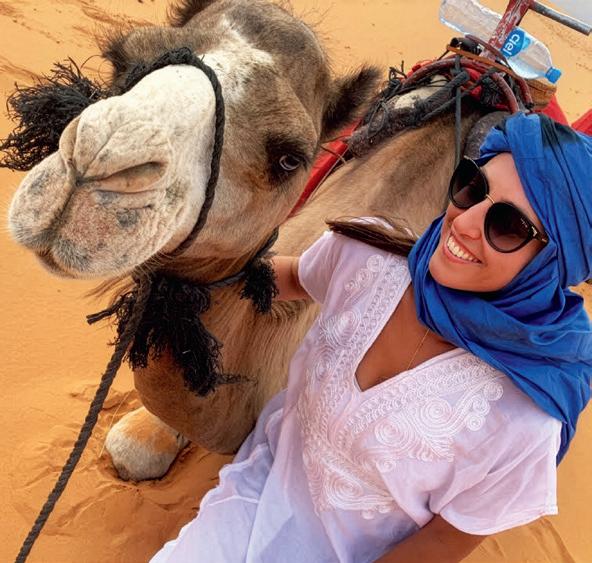
OPPOSITE PAGE: Semra presenting for Red Bull TV LEFT: Experiencing Morocco like a local BELOW: Hosting discussions for ITV
‘A World Cup is about bringing everyone together. Qatar was a perfect example of that’
and Spaniards, and everybody was getting along so well. There was so much harmony – people learning about each other’s cultures, ways of life, and breaking down so many of those invented barriers that come, I think, from politics.
What are some of the best places you’ve visited with your job?
Albania surprised me the most. I was there for the European qualifiers for the 2016 Euros. It had never been on my radar and it turned out to be an absolute gem. The nature is jaw-droppingly gorgeous. I loved Cambodia, too – everyone alive today was affected by the Khmer Rouge, but they were some of the happiest people I’ve ever met. It taught me a lot about life.
You’ve launched your own luxury travel boutique, Saharai, in Morocco. How did that come about?
The universe placed a wonderful man in my life. He was my tour guide on a holiday in Morocco – and we’ve been inseparable ever since. It’s complicated for him to get a visa to Europe, so I came to Morocco –and I absolutely love exploring the country. People started asking for
suggestions and suddenly, I was planning itineraries. We decided to combine forces – I can bring my Western perspective and experience from travelling the world, he can bring local knowledge, authenticity and connections. You can literally drop us in a village in the Atlas Mountains and somebody will know him.
What does Saharai offer?
Morocco has some of the most incredible hotels in the world – La Mamounia, Royal Mansour, Amanjena, Oberoi, Selman – amazing levels of opulence. But it’s also the luxury of being able to experience Morocco in an unhurried, unrushed way. If people come for a quick weekend trip, you’ve missed the whole point of Morocco. The point is to slow down and connect with people through their rituals, like having tea. I want people to experience it the way I have – curated and personalised.
Where’s next on your bucket list?
Sri Lanka – I hear the most amazing things about it – and Mongolia.
What’s your best travel tip?
Stay hydrated. Drink water with electrolytes or lemon.
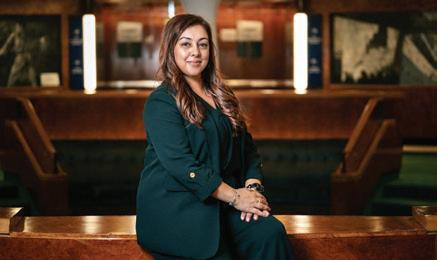
The Elevator Pitch
Business Traveller Middle East gives Shaileen Jiwa, general manager of Queen Elizabeth 2 Hotel, Dubai, five minutes to pitch her property to prospective guests
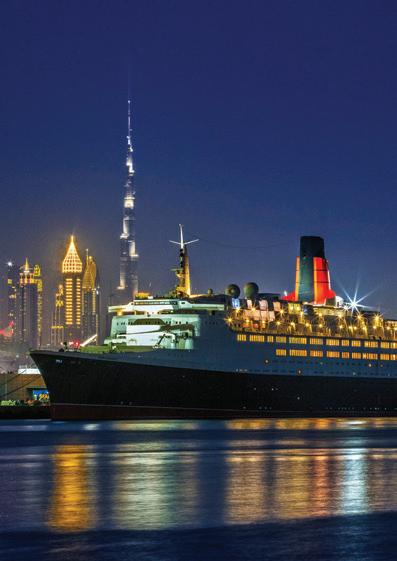
HISTORIC CHARM and timeless legacy come alive at the Queen Elizabeth 2 Hotel, Dubai’s only floating hotel.
More than a place to stay, the QE2 is a destination steeped in history – a living monument to the golden age of travel, where glamour, adventure, and maritime excellence once defined journeys across the sea.
Launched in 1967, the QE2 was designed to be the ultimate form of transatlantic travel, carrying royalty, celebrities, world leaders, and travellers across the Atlantic in style. From her maiden journey in 1969 to her last journey in 2008, the QE2 was an icon that made history.
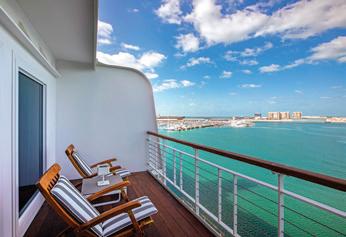
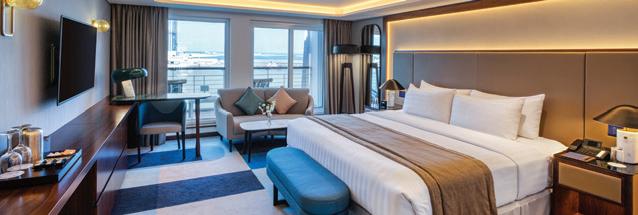
First reimagined as a hotel in 2018, the over 1,000 passenger cabins were conceptualised into 447 rooms and suites fitting current hospitality standards. The rooms and suites offer views of either the Dubai skyline or the Arabian Gulf. Attracting both QE2 enthusiasts and curious travellers, the ship offers a stay unlike any other in Dubai. Each corridor tells a story, and every space invites guests to step into a world where history and hospitality meet. On board, guests are encouraged to explore the ship’s rich past through immersive heritage experiences and guided tours that bring her legendary voyages to life, offering glimpses into what it was like to travel during the golden era of ocean liners.
‘The QE2 is a destination steeped in history – a living monument to the golden age of travel’
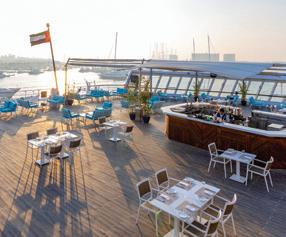
Beyond her storied legacy, the QE2 is also a vibrant lifestyle destination, offering an impressive range of facilities and experiences. With seven dining concepts to explore, guests can savour everything from refined afternoon teas to casual gatherings, each enhanced by the ship’s distinctive atmosphere. (Ed’s note: In 2022, Accor took over management of the QE2, with further enhancements to its dining and retail offerings.) Wellness and relaxation await at the on-board spa, while additional amenities include a theatre, hair salon, swimming pool, and gym, ensuring every guest experience is both memorable and complete.
Permanently docked at Port Rashid, the QE2 continues to capture the hearts of many. Celebrated throughout British history as an emblem of elegance and endurance, she also holds a special place in popular culture, charming new generations through appearances in films such as The Parent Trap. Whether remembered as a majestic ocean liner of the past or discovered as Dubai’s most unique hospitality landmark today, the QE2 remains timeless. In a city known for its modern wonders, the Queen Elizabeth 2 stands apart – a rare and romantic reminder that true luxury is not only about what is new, but about what is legendary. Here, guests do not simply check in. They step aboard history, becoming part of a story that continues to sail forward.
EXTRA DAY
Milan
WORDS VASILII KACHALOVSKII
A city of style, substance, and constant motion
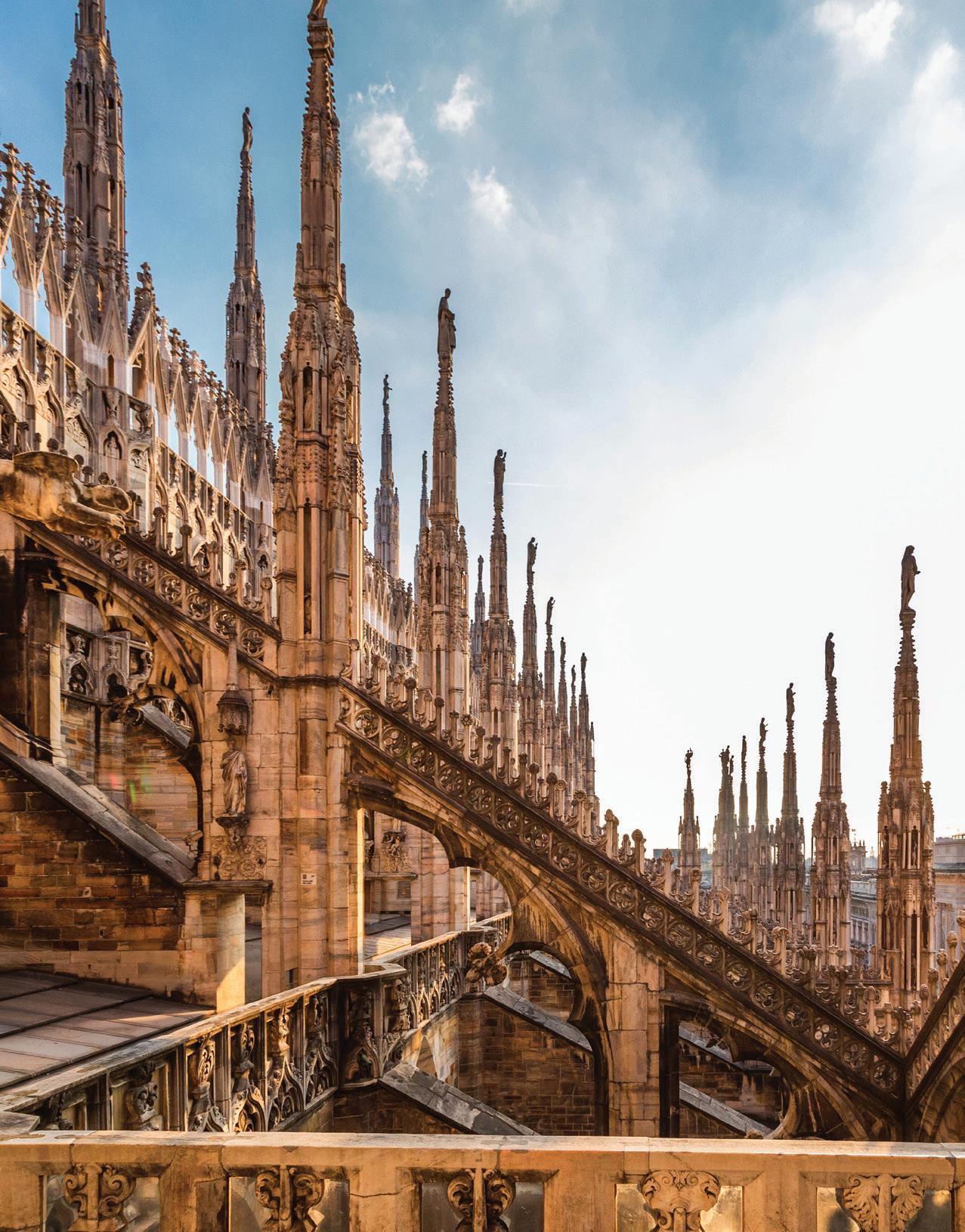
MILAN RARELY REVEALS itself all at once. Italy’s financial capital and global centre for fashion and design moves at a different rhythm than the country’s historic cities.
Beyond its reputation for luxury lies a dynamic urban landscape filled with museums, contemporary architecture, and a thriving culinary scene, making it an ideal destination for travellers with limited time but wide-ranging curiosity.
MORNING
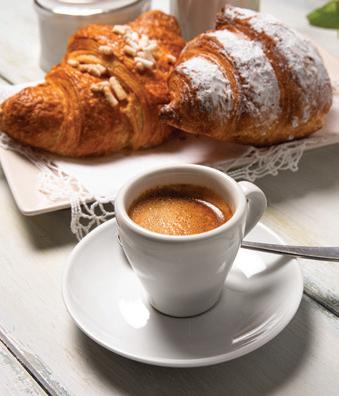
Breakfast in Milan leans toward simplicity – a strong espresso paired with a pastry at the bar. But for those craving something more substantial, Sant Ambroeus offers a refined alternative. Located just steps from the Duomo, the restaurant is beloved by both locals and visitors and is known to attract the occasional celebrity. Order the Omelette della Casa, simple and perfectly executed – exactly what you want to start the day.
From here, begin exploring the city by heading toward the Navigli district, easily reached by tram or metro. Along the way, make a brief stop at the Basilica di Sant’Ambrogio, one of Milan’s oldest (and underrated) churches. Its quiet courtyard offers a welcome pause from the city’s pace.
Continue onward to Navigli, where Milan’s atmosphere softens along its network of canals: once a working system partially designed by Leonardo da Vinci, the waterways now
form one of the city’s most relaxed neighbourhoods.
Stroll along the canals, browse small boutiques and showrooms or settle into a cafe terrace for another coffee or drink. With a bit of luck, the weather will cooperate, though even a light drizzle will add its own charm to the scene.
AFTERNOON
From Navigli, head back toward the city centre and make your way to the
‘Its network of canals was once a system partially designed by Leonardo da Vinci’
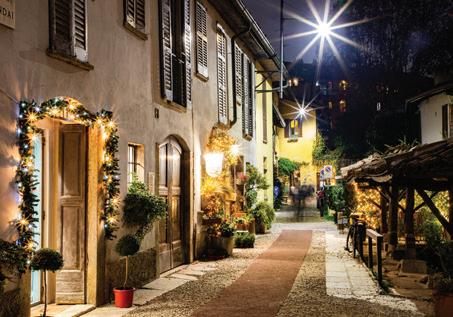
ABOVE FROM LEFT Colazione Italiana; Milan Canal
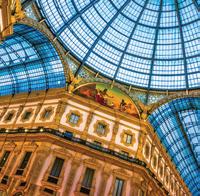
BELOW Galleria Vittorio Emanuele II
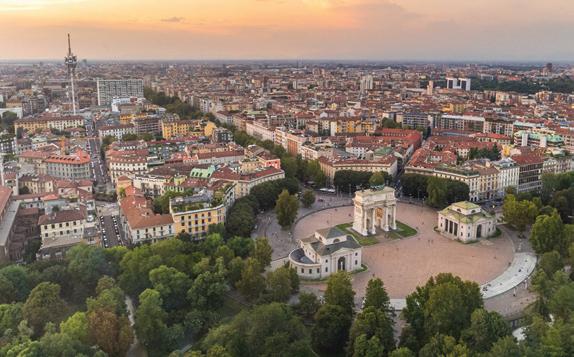
BOTTOM View from the Torre Branca, Branca Tower, of the Arco della Pace, Parco Sempione, Milan, Lombardy
Italy’s leading museum dedicated to design and architecture. Alongside its permanent collection, the institution hosts a rotating programme of exhibitions that reflect the country’s influence on global design. The museum also has a restaurant overlooking Parco Sempione, making it an ideal stop for lunch.
Afterwards, take a short walk into Brera, one of Milan’s posh neighbourhoods. Its narrow streets are lined with boutiques and restaurants. If you skipped lunch at the Triennale, Brera offers lots of options, and one simple rule often applies: choose the place where you see lots of locals.
From there, continue to the Pinacoteca di Brera, widely considered Milan’s most important art museum. Its collection spans centuries of Italian painting, offering an overview of the country’s artistic heritage and making it a cultural highlight for the afternoon.
EVENING
For dinner, head to La Gioia, a refined yet welcoming restaurant where the focus is on classic Italian comfort. Order any of the pastas or risottos – each done exactly
as it should be – and finish the meal, of course, with tiramisu.
Just a short walk away, Veramente offers another excellent option. The menu blends creativity with familiar flavours, and the restaurant’s house-made gelato provides the perfect finale. Even those who don’t usually go for ice cream may find themselves surprised. Milan is also a city that thrives on events: from Fashion Week and Salone del Mobile to a packed calendar of exhibitions, performances and sporting events, there is almost always something happening. It’s worth checking what’s on during your visit if you’re looking to add another experience to the evening.
For those seeking something truly special, keep an eye on the Serie A football league schedule. If AC Milan or Inter are playing at San Siro, securing a ticket is well worth the effort. Even visitors who are not devoted football fans often find the atmosphere unforgettable – watching a match in one of Europe’s most legendary stadiums is an experience you won’t easily forget.
Emirates,
Triennale Milano,
flydubai; Etihad Airways; and Air Arabia typically operate regular flights to Milan from Dubai, Abu Dhabi, and Sharjah.
Time for a boost of wellness
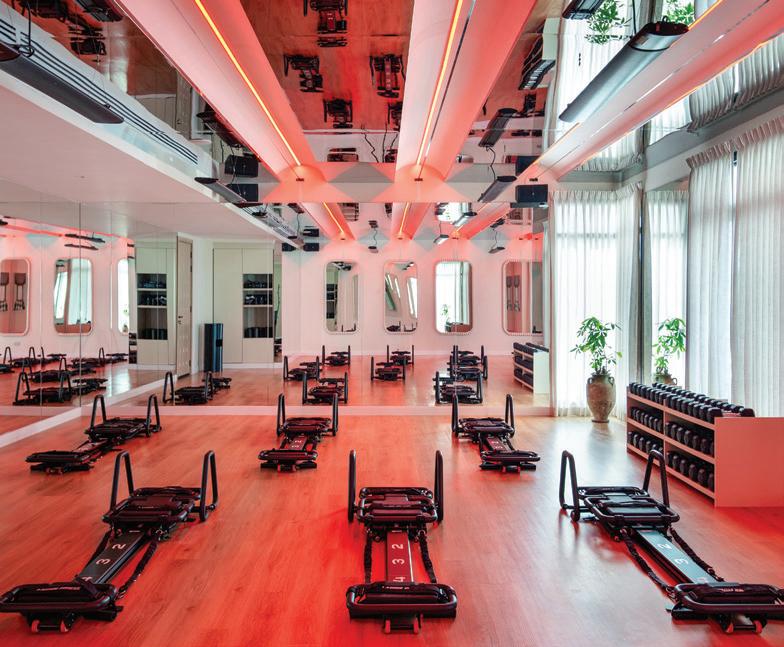
Al Safa has welcomed a new private villa sanctuary designed as a “third space”, blending Pilates, Lagree, and recovery for a mindful community reset
DUBAI SEEMS to have had no shortage of boutique fitness and wellness studios in recent years, but now, well-being enthuisasts are in for a treat with the opening of Villa BOOST, a new boutique-style destination founded by entrepreneur and wellness advocate Rania Zorkot. Zorkot’s former business ventures include FORM, a studio located in Abidjan in West Africa’s Côte d’Ivoire, where the studio had been one of the first to bring Reformer Pilates to the area. Villa BOOST is not Zorkot’s first venture in the UAE.
This latest addition to the GCC’s stylish wellness scene is designed as a “third space” – an informal, accessible place that
fosters community, connection, and relaxation through a sense of familiarity and growing social ties and belonging. Set within a private villa to provide a more personal, home-like alternative to traditional studios, the goal is for it to become a place where people won’t just come to a class, but where they’ll also visit to recover, connect with others, or just hang out during the day
The facility offers a variety of movement options including Reformer Pilates, Lagree-inspired Megaformer and Microformer sessions, and infrared heated workouts. For recovery, it offers a range of science-informed options from red light therapy, assisted stretching, and Brazilian lymphatic massage, which is supported through a partnership with Lymph & Flow.
Villa BOOST’s lifestyle
experience is rounded out by an on-site dining venue called TEASE – a wellness-driven café offering functional smoothies and nutrient-rich drinks designed to support energy, recovery, and overall health –alongside The Sweatshop, a curated retail concept that will showcase an ongoing, handpicked selection of international and emerging activewear and athleisure brands.
For its launch on 26 April, Villa BOOST maintained its sociallyled mindset by offering 50 complimentary sessions and goodie bags to the community, while also appointing influencer Christelle Fourzali as their brand ambassador, for which she will be helping to shape the brand’s cultural presence.
Villa Boost is located at City Walk Building 17. boostdxb.com
Rest and reset
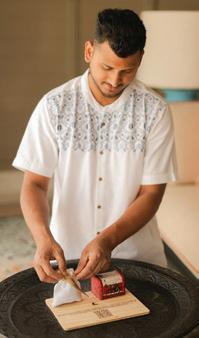
A NEW MULTI-SENSORY sleep experience has been launched at the InterContinental Maldives Maamunagau Resort, promising guests a nightly ritual that promises to restore them by the time they wake. Through the new Sleep Well Turndown Program, the 81-villa resort – which is located in the Raa Atoll near a UNESCO Biosphere Reserve – has replaced traditional turndown service with a curated experience involving taste, scent, sound, and touch. Each night, upon returning to their villa, guests are greeted with a rotating schedule of nutrient-rich, relaxation-supporting treats like chocolate cherry pudding or walnut granola. This is surrounded by a calming atmosphere enhanced through the use of ambient lighting, in-house potpourri, and a dedicated sleep music channel. A signature lavender sleep mist is also provided for linens, with the recipe shared so guests can recreate the ritual at home.
NOBU BY THE BEACH at Atlantis The Royal has launched a new weekday lunch deal called “The Nobu Lunch Edit” that’s available every Monday to Friday from 12pm to 5pm. For AED 175 per person, guests opting for this deal can relax into the poolside setting and escape the noise of the city with a curated set menu that starts with
edamame and a choice of two starters, such as seabass ceviche or spicy tuna crispy rice. Mains include highlights like the Wagyu beef slider and chefselected sushi, while desserts like the mango passion fruit ice cream bar offer a refreshing finish. It’s a sophisticated yet laid-back midday retreat for casual business catch-ups and leisure alike.
From London with love
THE GALLERIA on Abu Dhabi’s Al Maryah Island has just welcomed one of the most polished exports of London’s dining scene. Isabel Mayfair has now officially opened in the UAE capital, trading its iconic Albemarle Street roots for a sophisticated new home in the GCC. The vibe centers around a blend of Mediterranean-inspired, ingredient-led plates and a lush, refined brand of hospitality that made the original a London staple. Chef Vincent Visinet leads the kitchen, balancing reimagined classics from the UK flagship with new dishes tailored for the local palate. Designed as day-to-latenight, it’s equally a bright lunch spot and a moody, late-night social hub. It also has a year-long calendar of cultural collaborations and events in the works.
DELICIOUS DEALS
New life comes to a classic in old Dubai
RADISSON BLU HOTEL
DUBAI DEIRA CREEK is shaking up its weekend routine with two fresh concepts that trade standard buffet vibes for a spicy new personality. Fridays are now set alight with “Enter the Dragon” at Minato, a high-energy supper club that feels more like a Tokyo night out than a hotel dinner. Between the live DJ sets and the clatter of the teppanyaki grill, you’re treated to a parade of Asian heavy hitters: salmon croquettes with ginger glaze, fresh dim sum, and sushi prepared right in front of you. It’s an atmospheric
reset for anyone looking to kick off the weekend with a bit of edge.
When Saturday rolls around, the tempo shifts toward a much softer, botanical rhythm at Boulvar’s “Greenhouse Social”. This new offering moves beyond the typical family brunch by transforming the venue into a lush, garden-inspired sanctuary designed to help guests slow down and savour the moment. While adults catch up over live cooking stations or head to Marbles for a post-meal drink, the kids are kept busy in a supervised activity zone with creative workshops.
Access all areas
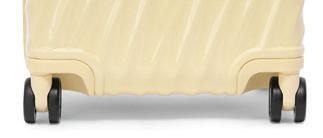
TUMI’s recent collection for its 19 Degree line adds a new front-access lid for effortless travel
THE NEW MEDITERRANEAN
ESCAPE collection reimagines TUMI’s iconic 19 Degree suitcase through a lens of coastal ease and functional evolution. The standout feature is the fresh Front Access model, which replaces the classic clamshell opening with a clever front-lid zip. It’s a massive win for anyone trying to reach their gear in a tight hotel room or a busy lounge. By accessing the main compartment from the front, packing becomes much more manageable even in cramped quarters. The aesthetic maintains its sculptural lines and lightweight durability, with this season’s colour palette is inspired by the Mediterranean coast, featuring sunwashed tones like thyme green, pink clay, and washed yellow. For a bit of shimmer, the expandable sizes come in iridescent lilac grey and light blue. From AED 2,800.
A star goes into orbit
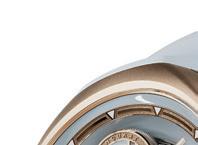
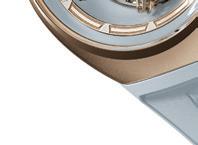
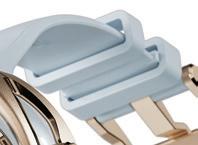
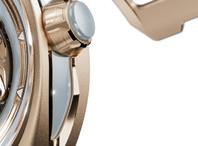
Swiss watchmaker Vanguart has unveiled two new colours for its Orb, in Blue and Pink Ceramic. The Blue Ceramic Rose Gold Orb, is a 25-piece limited edition treasure that merges high-tech materials with traditional luxury. The 41mm case features 18-carat rose gold components paired with custom-formulated blue ceramic anks in uid, scratch-resistant curves. At its centre is an openworked ying tourbillon movement, hand- nished in Grade 5 titanium. A signature feature is the orbital winding mass, set with a diamond, which can toggle between manual and automatic modes via the crown. This ergonomic timepiece includes a colour-matched blue rubber strap and a quick-release system for easy personalisation. CHF 200,000; vanguart.com
LOL: Last One LaughingUK
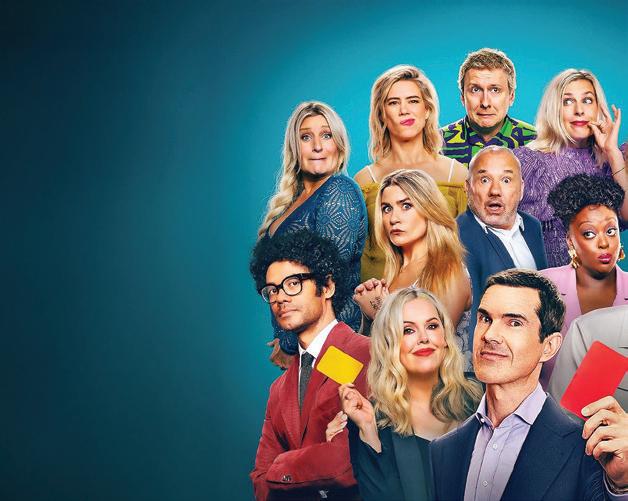
Season 2 returns with another round of high-wire, straight-faced shenanigans as some of the UK’s most beloved comedians agree to be locked in a room as they attempt to make each other laugh, while not cracking so much as a smile themselves. The challenges are sharper, the improvisation wilder, and the laughs genuinely harder to suppress, making it an even more chaotic, competitive, and joyfully ridiculous test of comic endurance. The stellar line-up includes David Mitchell, Bob Mortimer, Romesh Ranganathan, Diane Morgan, and more, alongside host Jimmy Carr.
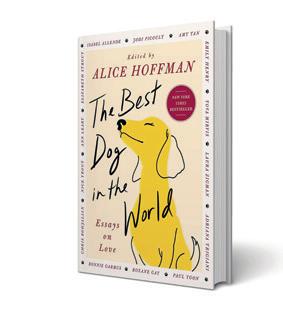
TheBestDogintheWorld:EssaysonLove
by Alice Hoffman
FEW RELATIONSHIPS have inspired more odes than the sacred bond with our canine companions.
Edited by acclaimed author Alice Hoffman (Practical Magic), this essay collection is equal parts heartwarming and heart-wrenching, bringing together 14 celebrated writers — including Isabel
Allende, Emily Henry, Amy Tan, and Bonnie Garmus — to extol the virtues, and sometimes vices, of a particularly beloved dog in their life. Each piece is an exquisite crafted meditation on love in its many forms, as it spotlights what makes each pooch so beloved.
AED 167; amazon.ae
The Moth Podcast
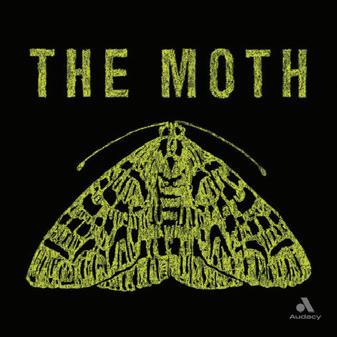
BASED ON the popular live storytelling shows held around New York City, The Moth features a range of people from all walks of life sharing true, personal stories without scripts. The result is a mix of humour, heartbreak, and introspection that feels both spontaneous and universal. It’s intimate, authentic, and endlessly compelling — a reminder that everyone has a story worth telling. Available on Spotify.
CULTURAL CALENDAR
OUR PICK OF EVENTS TAKING PLACE AROUND THE WORLD
Cheung Chau Bun Festival, Cheung Chau Island , Hong Kong 12 April to 25 May
The entire island transforms into a stage of tradition and spectacle featuring towers of buns, papier-mâché figures, lion dances, and folklore rooted in ancient spirits. Officially listed as Intangible Cultural Heritage, the celebration culminates in the thrilling Bun Scrambling Competition, where climbers race up towering structures in a spectacle that captivates locals and visitors alike.
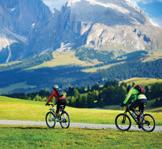
Giro d’Italia, Italy 8-31 May
One of the global cycling industry and community’s most prestigious races, this one takes riders across Italy’s dramatic landscapes, from the rolling countryside to punishing mountain climbs. Known for its passionate crowds and tactical racing, the three-week event combines elite athleticism with scenic beauty, making it a compelling spectacle for both sports fans and other types of travellers passing through the area.
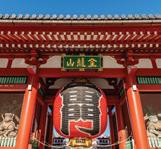
Sanja Matsuri 15-17 May
Held at Asakusa’s historic Senso-ji Shrine in one of the oldest parts of Tokyo, Sanja Matsuri is one of the iconic city’s most vibrant traditional festivals. Over a three day period, throughout this unique festival, portable shrines are carried through the streets alongside music, dancing, and lively crowds. Rooted in centuries-old customs, it’s an energetic celebration of community, heritage, and the enduring spirit of old Tokyo.
SMART TRAVELLER
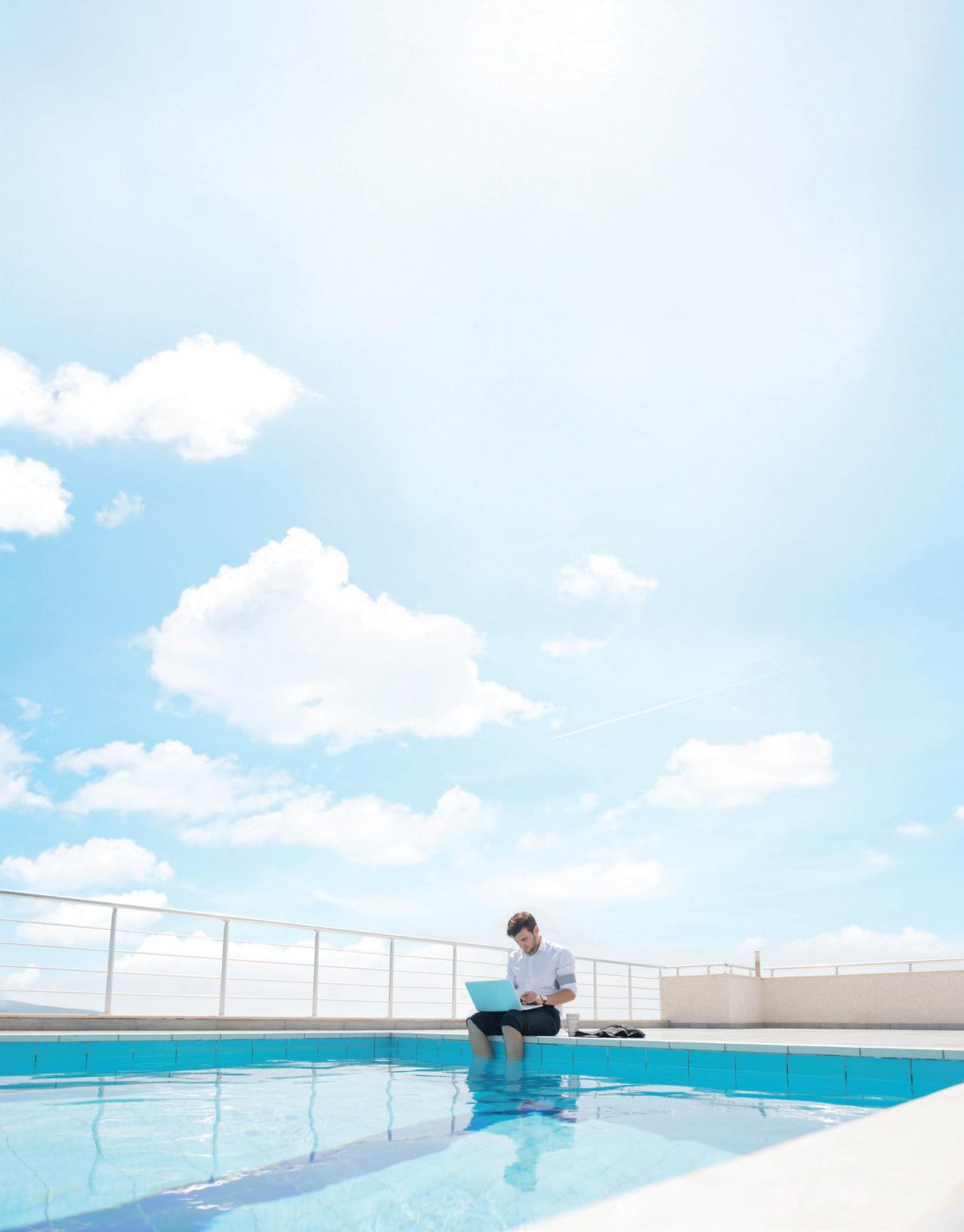
Working from home
Wish you could trade your home office for a hotel? From beach clubs to desert retreats, check out these UAE properties’ “workcation” deals for remote workers and digital nomads
REMOTE WORK is getting a major upgrade: a growing number of hotels across the UAE are now catering to digital nomads and freelancers with packages offering work setups with serious work-life balance perks. Here are some fantastic picks.
1
MÖVENPICK RESORT AL MARJAN ISLAND
This beachfront hotel in Ras Al Khaimah has introduced the “Boons Work Club”, a dedicated co-working initiative at its Boons Brasserie and Bar. A basic day pass (AED 50) provides workspace and gym access, a premium day pass (AED 150) also includes dining credit and a 30-minute spa treatment, and weekly passes (AED 225) offer five days of dedicated workspace, with a semi-private option for groups of three to four from AED850, including lunch and meeting room access. Instagram: @movenpickalmarjan
2
QASR AL SARAB DESERT RESORT
This luxurious retreat by Anantara in The Empty Quarter is surrounded by rolling dunes so cinematic they’ve even been the set to many major global films – and its Desert Workcation Retreat, available until 30 September, offers in-room or in-villa work set-ups with uninterrupted high-speed WiFi, free printing services and as much coffee as you please, plus remote learning support and engaging activities for those visiting with kids.
Priced at 30% off regular rates on rooms and 40% off on villas, it also comes with free breakfast, a 20% discount on dining and spa treatments, 24-hour check in and out, plus free use of leisure facilities. anantara.com
3
LEVA HOTEL DUBAI
Located in the heart of Dubai’s Mazaya Centre, this hotel permits remote workers, freelancers, and digital nomads to work from their on-site eatery, Sven’s Baker’s Kitchen, for free. If you do decide to grab a bite throughout the day, you’ll get a 20% discount on food and drinks. stayleva.com
4
ZABEEL HOUSE THE GREENS
In the mornings, Social Company – a sprawling ground floor restaurant – serves breakfast for overnight guests, but from 6:30am-11:30pm daily, it’s also open to day visitors seeking to get work done in a relaxed yet buzzy, pet-friendly setting. On Monday to Friday, it offers a three-course business lunch for AED 85, plus happy hours from 4-8pm. Instagram @socialcompanydxb
5
DUBAI DEIRA AND DUBAI GOLD DISTRICT HOTEL CLUSTER
A portfolio of properties including Novotel Dubai Gold District, Mercure Dubai Deira, Mercure Dubai Gold District, ibis Styles Dubai Deira, ibis Styles Dubai Gold District, and Aparthotel Adagio Dubai Deira, now offer a “Work from Hotel” staycation. The deal includes access to shared workspaces and
meeting room environments, free coffee and tea, and preferential rates.
6
HATTA RESORTS
If you long for the mountain life with craggy peaks in sight, a new weekday workcation package from Hatta Resorts may be just what the doctor ordered. The package is available at a handful of their glamping retreats (which includes Damani Lodges, domes, and vintage campers with views of the Hajar Mountains), from Sunday to Thursday until 15 May. The deal includes 30-40% off stays (depending on how many days you stay), and breakfast. visithatta.com
7
TRYP BY WYNDHAM DUBAI
NEST, a tech-savvy co-working space on the the first floor of this hotel in Dubai’s Barsha Heights, offers a wide range of memberships, from an AED 99 day pass to varying monthly rates. Members’ perks include dining discounts, plus access to the pool and gym. Instagram: @nestdubai
8
MARRIOTT RESORT PALM JUMEIRAH
This hotel’s Lobby Lounge now offers co-working passes, including an entry-level Focus Pass (AED99) with business centre services and free-flowing drinks, and a Dine & Deliver Pass (AED 199) with an additional business lunch at Cucina and gym, pool, and beach access. For AED 599, the Executive Escape includes a family beach day pass. Instagram: @marriottresortpalmjumeirah
THE FUTURIST’S FORECAST
WORDS
YI-HWA
HANNA
From AI Assistants to Supersonic Jets: 10 TECHNOLOGIES THAT COULD REDEFINE TRAVEL BY 2040
In the world of trend forecasting, few names carry as much weight as Chris Sanderson, the Co-founder and Chief Creative Officer of The Future Laboratory. Sanderson – whose career has spanned roles as a communications leader for iconic fashion and technology brands, a university lecturer, and a journalist – is an expert on consumer behaviour. He has spent the last quarter-century helping global brands navigate the “maelstrom of the information communication technology revolution.” Based in London but operating with a global lens, his agency is renowned for its ability to use a blend of journalistic intuition and expert analysis to map where humankind and the world are headed next. We sat down with Sanderson at the TOURISE Summit in
ABOVE Technology isn’t just about new high-tech machines or gadgets; it revolves around tools and systems that change how humans move, live, and interact
Riyadh last winter to discuss the intersection of innovation and human behaviour. We explored how these forces fit into his talk at the event, on the future technologies that could reshape tourism – innovations that could drive change across infrastructure, workforce, mobility, and visitor engagement.
For Sanderson, the future isn’t a far-off mystery; it’s already here. “The future has already happened, it just isn’t very welldistributed,” he noted, paraphrasing author William Gibson. This quote serves as a cornerstone for his team’s methodology. “There are small pockets of the future all around the world, where we see communities of people, or cohorts, or demographics, just doing this differently and who are ahead of the curve. In that sense, you just need to know where to go and look to find the future, because it has already happened,” he explained.
The Science of Newness
The concept of being “ahead of the curve” isn’t just a marketing buzzword; it’s rooted in social anthropology.
Sanderson described how researchers studied agricultural communities in America’s wheat belt when they were introduced to new machinery or seed types, as an example of innovation that may not necessarily look like what we associate with technology today.
“By dropping in that bit of newness into that culture, they could look at the ripples on the pond and go, ‘So who’s going to be risk-friendly to this innovation as it diffuses? Who’s going to wait to see how everyone else behaves before they jump; before they make the decision to commit?’ The science behind that has shown that pretty much all communities behave in
the same way – [and] the majority of people who are riskfriendly continues to be in the minority.”
Sanderson pointed out that while thoughts of the future often turn toward high-tech machines, technology changes more than our gadgets; it changes the very fabric of how we move across the globe. One of the most significant recent shifts has been the total inversion of how we balance work and travel.
While many are familiar with the term “bleisure” – a portmanteau of “business” and “leisure” – it turns out the term itself is a Future Laboratory original, coined in 2009.
“We actually created the word ‘bleisure’ at The Future Laboratory. We are the certified, registered of creators of that term. We were the first to use it,” Chris explained. Post-COVID, the concept has flipped. Previously, it centered around a professional tacking a holiday onto a business trip. Now, it is often a leisure trip where the professional “clocks on” remotely.
“Suddenly [someone’s] world perspective and life changes because he’s going home for [the holidays] for leisure, and now he can stay there and do business. It’s completely flipped.”
Sanderson is adamant that technology is not just what changes our gadgets – it’s something that changes the fabric of how we move across the globe. Pointing to the clothing often depicted in science fiction films – which tend to portray our future wear as sleek and minimalistic – Sanderson explained that the idea behind it is to communicate the importance of convenience and frictionless. This is something that parallels our desires for the applications of technology in travel, he said, adding that in order to progress, we must also not let our fear of the future hold us back from evolving. Without the courage to surpass our innate fear of change, he says, we would never have had farmed foods, or beaten disease: “All of that is technology and innovation, and it’s funny because nowadays, when people think of flying taxis or space exploration, they [tend to be afraid of it].” And at a time when the average person still equates artificial intelligence with large language models, Sanderson is adamant that much of the potential of these future technologies depends on how we build it.
From Intuition to Innovation
In the world of travel and tourism, one of the key messages we took home from the TOURISE summit was the fact that future-thinking cities such as Dubai and Riyadh aren’t just building new infrastructure with either their tourists, or their residents, in mind – they’re developing systems and cities that can serve both at the same time, rather than leaving them more siloed. Technology is an essential part of building the infrastructure behind this more fluid existence.
Future tech often centres on convenience and the frictionless
10 BREAKTHROUGH TECHNOLOGIES
During his session at TOURISE, Sanderson unveiled 10 breakthrough technologies that are predicted to redefine global tourism by 2040.
2031: Autonomous AI Travel Assistants
The industry is moving beyond basic chatbots toward systems that could alleviate “the cognitive overwhelm of infinite choices”, help travellers plan, book, and optimise entire trips in real time, and create hyper-personalised experiences based on user preferences and “biometric mood indicators,” with AI acting as a “trusted, deeply knowledgeable guide.” In hospitality, this could enable the guest experience to begin long before the physical arrival.
2032: The Face as a Passport (Biometric Travel)
Facial recognition and biometric verification could make physical IDs obsolete, enabling seamless, document-free movement through airports, hotels, and borders – “reducing friction and anxiety, returning travel to a more spontaneous and effortless experience,” as Sanderson put it.
2033: Financial Sovereignty via Cryptocurrency
The rise of blockchain and digital currencies could cater to the “cloud citizen traveller.” This technology could enable borderless payments and decentralised loyalty programmes, offering travellers “personal financial sovereignty, freeing travellers from currency exchange issues and bank approvals, and removing invisible financial borders.”
2034: Real-time Language Translation
Language barriers, one of the oldest obstacles in tourism, could effectively vanish through the advent of tech such as AR glasses and smart earpieces. Beyond convenience, it could help us “foster deeper understanding, cultural appreciation, and authentic human connection, translating entire worlds.”
2035: Personal Carbon Allowances
In a world increasingly shaped by climate accountability, digital passports could soon track individual carbon budgets. This could place a physical and moral limit on air travel, making every journey
“special and sacred.” Sanderson warned that if this were to occur, destinations “will need to earn their carbon cost by offering genuinely meaningful and valuable experiences that justify the environmental investment.”
2036: Layered Realities (VR and AR Tourism)
Photorealistic virtual and augmented reality could blur the lines between the digital and physical. These immersive tools could democratise access for those unable to travel physically, while acting as a high-fidelity “try-before-you-buy” preview that inspires real-world bookings.
2037: Digital Twin Destinations
Cities will increasingly develop “digital twins” – virtual replicas that allow travellers to explore a destination remotely. For tourism boards, these twins are essential management tools, allowing them to simulate and “manage crowd flows and protect quality of life” for local residents.
2038: Electric Passenger UAVs (Unmanned Aerial Vehicles)
Electric UAVs (commonly known as drones), could transform shorthaul transport, enable aerial sightseeing, and providing access to previously remote locations, “redefining the possibilities of human exploration.”
2039: The Return of Supersonic Travel
Supersonic jets could make any point on the planet reachable within three to four hours, reshaping luxury and business travel, “making international weekend breaks achievable, and regular cross-continental family visits possible.”
2040: The Sustainable Aviation Breakthrough
Hydrogen-powered and electric aircraft could replace kerosene-fuelled planes. Sanderson believes this will “resolve tourism’s greatest moral tension,” finally “eliminating the need to choose between exploring the world and protecting it.”
It’s an attitude reflecting the way Sanderson himself works. As an ex-journalist, one of his key skills was to be able to intuit why an audience may be interested in something. Combined with his time in fashion – an industry that “by its very nature was redesigning itself every six months” – Sanderson noticed that the industries existing to support these sectors were lacking.
“You had these trend forecasting businesses who would deliver these amazing presentations full of beautiful pictures – not many words, certainly not many statistics – and they would stand up in front of a group of people and make pronouncements, like a seer.” But while many of these predictions attributed to creative intuition were successful, this approach didn’t always reliably match the numbers.
“It’s the eternal question that sits at the heart of most business decisions – which is, at what point do I stop looking over my shoulder to make my decisions, and when do I actually project myself forward to imagine what my customer’s going to want in six months’ time, six years’ time, or 10, 15, 20 years’ time?” Sanderson looked to translate what he learned in fashion across lifestyle industries by “brailling culture” – a term coined by American futurist Faith Popcorn that centres around using one’s senses and sensorial engagement to understand what people want before they know they want it.
Sanderson takes that vision and makes it real by following up his sense check and intuition with observation and interrogation. As a business, The Future Laboratory doesn’t
ABOVE Reality is pretty spectactular, but could augmented reality enhance it?
conduct focus groups. “I’m not really interested in asking consumers – because they don’t know yet. They haven’t seen it yet. But I’ll ask experts.” Sanderson and his teams have now written a report on almost every topic that you can put after the phrase “The future of” – “because I don’t have to be an expert in that field. My job is to find the expert, to find the analyst, to find the writer who’s got the interest in getting under the skin of that area of industry or interest or lifestyle business,” he explained. One of his latest is a comprehensive whitepaper detailing the technological shifts expected to redefine global tourism, created as a collaborative effort between TOURISE, The Future Laboratory, and Together Group, and released at the TOURISE Summit in November 2025. The report, titled New Codes of Luxury: Elevating the Hospitality Guest Experience with AI, examines how AI will redefine service, personalisation, and the meaning of luxury for a new generation of global travellers.
The Human Element
Despite the high-tech horizon he foresees, Sanderson’s philosophy remains grounded in the human experience. He quotes German philosopher Martin Heidegger: “‘We only begin to understand technology when we cease to notice it.’
“We are still in the maelstrom of the information communication technology revolution. It is spinning all around us, and most of us are obsessing about the technology because we don’t understand it,” Sanderson observed. He believes true innovation occurs when technology builds better relationships. As such, for Sanderson, the future of tourism in the Middle East – and the world – will be defined by how technology serves human values. “Knowledge is not bites of data. Knowledge... is exactly the same as eating. It’s a process that your body goes through... and the simple act of receiving data does not mean that you know anything.”
As we look toward 2040, the goal is to use these 10 technologies to return a sense of magic and new possibilities to travellers across the globe. As Sanderson concluded, “It’s all about the glass being half full, not half empty.”
Once a curious niche, set-jetting is no longer a passing trend. This increasingly popular reason to travel is here to stay –and with many of this year’s hotly-anticipated lms and series highlighting spectacular destinations, we’ve rounded up some of the best for you to explore in your next star-worthy itinerary
WORDS
YI-HWA HANNA
he term “set-jetting” may seem like a modern buzzword born of the TikTok era, but the impulse to visit the locations where some of our favourite stories were made is much older than many of us think. For decades, travellers have ocked to places beloved lms were made – from the rolling hills of New Zealand as featured in The Lord of the Rings, or Algeria’s Hotel Sidi Driss, which was used as the Lars Homestead on Tatooine for the rst lm in George Lucas’s Star Wars franchise. Open since 1968, the hotel has been a staple for lm buffs since A New Hope put it on the map in 1977.
Lately, however, what was once a niche hobby appears to be maturing into a cornerstone of the global tourism industry. This shift was, in many ways, supercharged by the pandemic, when during lockdowns, binge-watching became a primary window to the world – and in doing so, forging deep emotional connections with many of these on-screen settings. As travel restrictions lifted, that digital wanderlust inspired physical itineraries, and today, according to data from Expedia, 81% of Gen Z and Millennial tourists plan vacations based on screen mediawhether they’re trying to recreate the sun-drenched luxury of The White Lotus, or the culture of their go-to K-Drama.
Now a multibillion-dollar industry, set-jetting is projected to be worth $US8 billion. Popular media can drive a 30% to 60% boost in tourism for lming locations. – and the region is increasingly positioning itself at the heart of this movement. Saudi Arabia is transforming its ancient landscapes into world-class production hubs. With the opening of assets such as Film AlUla Studios, the kingdom is ensuring that cinema can become a sustainable economic driver. Similarly, Qatar’s Doha Film Institute (DFI) supported 49 projects in 2026, including 15 by Qatarbased lmmakers, through its Qumra talent incubator.
Speaking to Business Traveller Middle East at TOURISE last year, lmmaker Diego Buñuel noted that the industry is witnessing a cinematic renaissance. “The screen is the new brochure,” he explained; “people no longer want to just see a place; they want to feel the emotion they felt while watching the story unfold there.” Given the evidence, we agree: these gems are ready for a close-up.
Abu Dhabi’s Liwa Desert provided the landscapes used to depict the planet Arrakis
Avengers: Doomsday BAHRAIN
SCENES FOR this highly anticipated film (due to be released on 18 December) from the Marvel universe were shot in Bahrain’s desert, while the cast was reportedly hosted at the Address Beach Resort Bahrain. In late May 2025, local media and fans reported that members of the cast, which includes Anthony Mackie, Letitia Wright, Simu Liu, and Danny Ramirez, were seen dining at Sumosan, a Japanese restaurant located within the hotel. Other key filming locations included England’s Pinewood Studios.
Mandalorian and Grogu
DEATH VALLEY NATIONAL PARK, USA
SCHEDULED to release on 22 May, this next film in the Star Wars universe was shot entirely in California. While much of it was filmed in LA County’s Manhattan Beach Studios – particularly for its virtual environments, which used the “StageCraft” LED Wall – some scenes from the Mandalorian series have used Death Valley National Park, which was also a backdrop in Star Wars’ original trilogy, for Episode IV - A New Hope and Episode VI - Return of the Jedi.
Dune: Part Three ABU DHABI, UAE
BOTH OF the first two in Denis Villeneuve’s trilogy of films on author Frank Herbert’s famous Dune series were filmed in Abu Dhabi’s Liwa Desert, which provided the expansive golden landscapes used to depict the planet Arrakis. The third and final film in the series is scheduled for release on 18 December this year. Like the first two movies, its filming was once again supported by the Abu Dhabi Film Commission’s rebate programme, which provides a 35%++ cash rebate on qualified production expenditures for films, TV, and media.
The Bear CHICAGO, USA
THIS SHOW has left global audiences hungry for more of its signature intense and authentic portrayal of high-pressure kitchen culture –supported by exceptional acting and heartfelt character studies – and its fifth and final season is expected to release in June this year. While the titular character’s restaurant is fictional, the show has helped put Mr. Beef – the iconic Italian beef stand said to be a real-life inspiration for show creator Christpher Storer – and Chicago’s real food scene on the map.
People We Meet On Vacation COSTA BRAVA, CATALONIA, SPAIN
A ROMANTIC comedy based on the novel by Emily Henry and adapted for screen by director Brett Haley and screenwriters Yulin Kuang, Amos Vernon, and Nunzio Randazzo, this film released on Netflix on 9 January 2026. The story features numerous locations as the protagonists travel the world, from Barcelona, Boston, and New York to Tuscany, Canada, and New Orleans. Many of these were used as its real-life filming locations, including Spain’s Catalan region.
Harry Potter (TV Series) ENGLAND
GREAT BRITAIN has been home to so many epic films that its tourism board even ran a campaign centered around it in 2025. “Starring GREAT Britain” created a short film by filmmaker Tom Hooper (The King’s Speech; Les Misérables), to highlight iconic TV and film moments shot across the country. The upcoming Harry Potter HBO series – premiering 25 December – will no doubt join such a list in the future. It’s been shot everywhere from film studios to London’s Borough High Street, Devon, Cornwall, and Yorkshire, with key spots including Cadgwith Cove, Kynance Cove, and the Carnglaze Caverns, now joining loved spots from the films, and the real-life places that inspired its creator: like Exeter Cathedral, which is often cited as inspiration for Hogwarts’ Great Hall.
Project Hail Mary ENGLAND
RELEASED ON 19 March, this film based on Andy Weir’s beloved book of the same name takes audiences to space (through physical sets at Surrey’s Shepperton Studios), but it also features some key locations on Earth, too. Some scenes were shot at the South Parade Pier in Portsmouth, Hampshire; in Hertfordshire; and at Dorset’s Durdle Door. The University of Cambridge’s Mullard Radio Astronomy Observatory was used for some scenes for a realistic scientific environment.
The White Lotus FRENCH RIVIERA
THIS SEMINAL SHOW’S first season took audiences to Hawaii, its second to Italy, and its third to Thailand –then inspired so many global travellers to visit the real-life hotels it was shot at that it earned its own phenomenon called “The White Lotus effect”. Season four is set to take place in the South of France – at the Château de la Messardière in Saint-Tropez to be specific – and while an official release date is yet to be announced, filming should wrap by October, for a release sometime in 2027.
Moana / Jumanji HAWAII
SERVING THE family film audience with a bit of razzledazzle this summer, the live-action reimagining of Disney’s Moana is set to be released on 10 July, before the year wraps up with a new film in the Jumanji film series as a sequel to 2019’s Jumanji: The Next Level drops on 25 December. The animated musical adventure of Moana was inspired by Polynesian mythology from Samoa, Tahiti, and Hawaii. While the film begins on the fictional island of Motunui, the live-action film was primarily filmed on the island of O’ahu, Hawaii, with Pokai Bay in Waianae transformed into Motunui. The new Jumanji film was also shot on O’ahu, with key locations including Kualoa Ranch , Waimea Falls, at He’eia Kea Jungle and Ho’omaluhia Botanical Garden.
STARRING Jaafar Jackson – the nephew of legendary pop star Michael Jackson, who is playing his famous uncle in this biopic of his life – Michael released on 24 April. Unsurprisingly, many scenes were shot at the late singer’s Neverland ranch in Los Olivos, California, while many others were shot at Sony Pictures Studios in Culver City. Parts were also shot at the iconic Biltmore Hotel in downtown Los Angeles. This historic property was first opened in 1923, and celebrated its 100th anniversary in 2023.
WHILE THE FIRST The Devil Wears Prada film famously took audiences to New York City and Paris, its second instalment – which was released at the end of last month, roughly 20 years later – includes scenes filmed in Italy, in fashion capital Milan as well as Villa del Balbianello in Lake Como. The latter, known for its stunning and grand gardens, was also a filming location for Star Wars: Episode II - Attack of the Clones and the James Bond film Casino Royale Its extensive New York filming locations include Brooklyn’s Long Island Bar.
Michael BILTMORE HOTEL
The Devil Wears Prada 2 LAKE COMO
The
hotel is full of hidden clues for a riddle to be solved on each floor
Young Sherlock LONDON
OPENING ON 4 March to rave reviews, Young Sherlock –
Guy Ritchie’s latest take on the famous British detective – focuses on the sleuth’s early years, when the 19-year-old Sherlock Holmes (played by Hero Fiennes Tiffin) first meets James Moriarty (played by Dónal Finn). The Amazon Original did so well it was renewed for a second season a month later, and you can follow Sherlock’s footsteps by visiting key locations including Broad Street, Queen Square, and Underfall Yard in Bristol; Oxford University; Llandaff Cathedral, Merthyr Mawr, and Monmouth in Wales; and historic sites in Seville, Spain, which doubled for Constantinople. For a bit of extra fun, why not check yourself into the Holmes Hotel London? Part of the Radisson Hotel Group, it’s down the road from the Sherlock Holmes Museum, and the hotel is full of hidden clues for a riddle to be solved on each floor.
The Odyssey GREECE
AS EXPECTED, Christopher Nolan’s latest epic (due out on 17 July) was shot in Greece, including the Peloponnese and Ionian Islands. Countries with dramatic landscapes and villages that could double for ancient cities were also used, including Iceland, Scotland, and Morocco. In the latter, Troy was depicted through Ait Ben Haddou, a location used for many other notable screen gems such as Game of Thrones, Gladiator, Lawrence of Arabia, and The Mummy.
Spider-Man SCOTLAND
FRIENDLY neighbourhood
Spider-Man Peter Parker’s adventures are famously linked to Queens in New York City. Spider-Man: Brand New Day however – which releases on 31 July – was primarily shot in Glasgow, Scotland, which was cleverly transformed into New York City for the production. The team even had NYC’s iconic yellow taxis flown in for it. Key spots included Bothwell Street, St Vincent Street, Waterloo Street, Merchant City, George Square, Oak Street, and Trongate.
Apex NSW, AUSTRALIA
THIS RAW, ACTION-PACKED survival thriller film released as a Netflix exclusive on 24 April, and follows a woman on a solo adventure that unintentionally winds up getting pulled into a twisted, high-stakes game in the Australian wilderness. Most of the movie was filmed in New South Wales, Australia, with most of the production taking place in Sydney’s Blue Mountains and Western Sydney. Other key locations included The Needles (Woronora River) and Ginniderra Falls, Wallaroo.
THIS DARK COMEDY survival horror-thriller film by Sam Raimi (who also directed the 2002-2007 Spider-Man trilogy) follows a CEO and disgruntled executive that wind up stranded on a remote island after a plane crash incident. The film, which released on 30 January this year, is set on a mysterious and unnamed island in Asia, but in reality, it was primarily shot in Thailand, where the production team allegedly rented a coconut farm. Shots of the Phang Nga area were also reportedly used.
Wuthering Heights YORKSHIRE, ENGLAND
WHETHER YOU loved or hated Emerald Fennell’s 2026 cinematic take on author Emily Brontë world-famous 1847 novel, there’s no denying that the scenery in this film was gorgeous. Much of that can be attributed to the setting, with the isolated, bleak Yorkshire Moors of Northern England being an essential ingredient for the story’s Gothic atmosphere and the characters’ turbulent emotional lives. Make your own way to this setting by visiting the Yorkshire Dales National Park.
The distinct rock formations of this park helped form the fictional setting
Masters of the Universe
VASQUEZ ROCKS NATURAL AREA PARK
ON 5 JUNE this year, fans of the legendary comic character He-Man are in for a treat through a live-action film. This origin story follows the journey of a man from Earth as he realises of his true heritage as the prince of an alien race, who later adopts the alter-ego He-Man. While much of the film was shot in England, as well as Iceland and Italy’s Dolomites, the distinct rock formations of this park helped form the fictional setting of Eternia, Prince Adam’s home planet.
FROM PAGE TO SCREEN
Sunrise on the Reaping SPAIN
ON 18 MARCH 2025, fans of the dystopian Hunger Games series were treated with a new book by author Suzanne Collins, taking place 24 years before Katniss Everdeen’s time in the arena. On 20 November this year, a film version of the book will be released, chronicling former winner Haymitch Abernathy’s time in the 50th Games. While no sane person would want to enter the arena for real, the fictional one was shot in Asturias, Spain’s Somiedo Natural Park, as well as in Germany.
adaptations are hot property in the film world at the moment. Here are three great non-fiction tomes that were turned into movies
LION (2016)
Travel memoirs take readers on a journey across countries, as well as of the author’s life – and they’re great fodder for films that inspire similar journeys of wanderlust, discovery, and growth. This film is based on Sarroo Brierley’s A Long Way Home, detailing his search for his birthplace in India via Google Earth.
EAT, PRAY, LOVE (2010)
Elizabeth Gilbert’s journey of self-discovery took her to Italy, India, and Bali – and four years after her book came out in 2006, a film adaptation was made starring Julia Roberts and Javier Bardem. It kicked off a major trend for solo trips for self-exploration and selfreflection to these countries, especially Bali.
INTO THE WILD (2007)
This travel memoir written by Jon Krakauer isn’t about his own life – it tells the real-life story of Christopher McCandless, a young man who abandons his privileged life by giving up his possessions and donating his savings to charity, to live in the Alaskan wilderness. This film, starring Emile Hirsch, tells his story.
Book
JETPETSSET
Plenty of people bring a plusone on a business trip – why shouldn’t they have four legs?
WORDS TAMSIN COCKS AND YI-HWA HANNA
The travel industry has become pet-friendlyincreasingly – except when it’s time to board a plane.
When you consider the surge in post-pandemic pet ownership (up by 30% in the UAE), alongside trends such as flexible working and digital nomadism, it seems inevitable that demand for travelling with animal companions is on the rise.
Bloomberg predicts the global pet industry will hit US$500 billion by 2030, while “the pawprint economy” has been identified as a key travel trend for 2026 in a report by Amadeus and Globetrender.
Hotels have already adapted – every man and his dog can now check into big city hotels, while pet-friendly co-working spaces are booming. But flights remain a frustrating sticking point for many.
Pet-positive hotels
Many hotels have rolled out the red carpet for our four-legged friends. Expect dog bathrobes at The Plaza New York; Ayurveda pet spa sessions at Capella Singapore; and a Bone Appétit menu at Virgin Hotels London Shoreditch. Premier Inn has launched dog-friendly floors in the UAE, with staff trained by the UAE‘s largest pet store, The Petshop. AKA Hotels even launched the Canine Club last summer to integrate pets into its loyalty scheme.
Being pet positive isn’t just a nice-to-have for accommodation providers, it’s an important strategy to capture a lucrative market of doting pet parents. While there are restrictions on size and type of pet (no emotional support peacocks, please), these days it’s not unusual to find on-site amenities ranging from water bowls to welcome treats, while concierges offer recommendations of local groomers and pet-sitting services. It’s not just leisure tourists, either. Serviced apartment provider STAY Camden in London reported a 91% surge in long-stay business guests checking in with pets between 2021 to 2024. Sam Ghosh, VP of Operations at STAY, said: “We’re seeing a redefinition of what business travel looks like. For many younger professionals, pets are family, and being able to bring them is no longer a luxury but a baseline expectation. Accommodation providers must adapt fast, not just to allow pets, but to genuinely welcome them.”
Bring your dog to work day Pet-friendly coworking spaces have also popped up in cities around the world – whether you’re hot-desking in Lisbon or on a Teams call in Tallinn, chances are you’ll be able to bring your CFO (Chief Furry Officer).
In Dubai, pooch-friendly Park Inn by Radisson Dubai Motor City greets pets with a tailored welcome amenity, while their humans are also supplied with a guide to pet-friendly spaces
AVOBE K9 Jets Dubai
BOTTOM The Bone Appétit menu at Virgin Hotels London Shoreditch
across the city. It has also partnered with The K9 Kitchen to offer a special in-room dining menu for pets. Cassette restaurant in The Courtyard in Dubai‘s Al Quoz is a pet-positive co-working space: last month, this dog-friendly spot announced that the local community is welcome to use the space for work or meetings throughout the day without any obligation to order food or beverages, with complimentary WiFi and house water to boot.
If you’re looking for a pet-friendly co-working space in Dubai, Doggy Be Collective in Umm Suqeim, Nest at TRYP by Wyndham, and You and Co in Dubai Production City should have you covered. In the UAE capial, The Space Abu Dhabi allows some small dogs, while WeWork x Hub71 permits pets in some areas, though verification is advised before each visit.
Paw-senger rights
Some parts of the world make air travel easier than others. Domestic US travellers and continental Europeans may be used to seeing fluffy friends in the cabin – Delta, United, American Airlines, KLM, Air France, and Lufthansa all allow small cats and dogs in the cabin on certain routes. Tortoises are even allowed onboard Vueling, and Alaska Airlines recently reversed their decision to ban bunnies. Emirates Sky Cargo recently introduced a dedicated team in its Emirates Pets service to manage pet transportation bookings originating from the UAE.
But UK passengers are more likely to spot a unicorn prancing down the aisle. Stringent government regulations mean all pets must be placed in the hold – never an owner’s first choice. BA has partnered with PetAir, founded in 2014 by veterinarians, who aim to put pet owners more at ease with a door-to-door service, comfortable temperature-controlled hold cabins, vet and nutritionist support, and all the pesky paperwork handled. Packages range from £2,600 to £8,000, depending on pet size and destination.
Outbound travellers from the UK can’t even escape via train: pets are not allowed on the Eurostar to and from London (though they are welcome onboard some of Eurostar’s other European services). If you’re planning to drive, you can go via e-Shuttle – but beware of regulations.
Such regulations put a spanner in the works that many of us would like to see fixed. In a global Opodo opinion survey, 64% of travellers supported pets being allowed in the main passenger cabin. Europeans were the most enthusiastic respondents – with 78% of Portuguese people being pro pups
(and 68% of Londoners). Only 22% of respondents did not think pets should be on planes – citing concerns such as noise and smell, allergens and safety concerns. And if hotels can see the growing business case, then perhaps airlines will start to recognise the commercial advantages too.
Travel like a VIP (Very Important Pet)
Where commercial aviation has faltered, pet-focused charter airlines have stepped in to offer dream solutions – if you’re willing to splash the cash. K9 Jets launched its rst private jet services for pets and their owners in March 2023, and now operates routes to locations including Los Angeles, London, Toronto, Frankfurt, and even Melbourne, with one-way rates starting from US$7,925. Similarly, Bark Air rst took off in May 2024, operating routes from New York to LA and London Biggin Hill, with canine bubbly, in ight squirrel videos, and at-seat belly rubs. They have since expanded to Paris, Lisbon, Madrid,
‘Bark Air offers canine bubbly, in
ight squirrel videos, and belly rubs’
RIGHT
Seattle and San Francisco – and launched a concierge service to help craft pet-friendly itineraries on the ground. Packages are priced from US$6,000 to $8,000 per ticket (which includes one human and one dog).
Note, some breeds will always run into more trouble: snubnosed breeds (such as pugs, English bulldog, Pekingese) are often not accepted due to breathing dif culties.
Animal admin
Whichever method of travel you attempt, international borders require documentation, just like human travel. Animals usually need to be microchipped, vaccinated and have the correct papers – such as a pet passport or veterinary health certi cate. To make matters more complicated, the rules vary by destination. Some countries, including Finland, Norway, Malta, and Ireland, require an additional tapeworm treatment before arrival, so make sure to check individual regulations ahead of travelling. Those entering the EU from the UK need an animal health certi cate completed by a vet for every visit, which can cost up to £250 a pop – and is only valid for 10 days. Certain tests, such as a rabies titre test (RNATT), are mandatory in numerous countries, with the number of days of validity varying.
And don’t forget, carry cases are typically required for pet movement on public transport, and should be well-ventilated, with room for the animal to move around comfortably, and leak-proof in case of accidents.
While casual travel with our canine counterparts might not yet be feasible for the masses – the public appetite is there. Perhaps it’s only a matter of time before we can book animal companion tickets on our redemption booking.
A raft of new AI tech can alleviate some of the concerns for pet travel
PET FEEDER
Petkit offers a range of tech, from selfcleaning litter boxes to smart water fountains. The new Yumshare Daily Feast reports on abnormal eating habits, handles leftovers automatically and selfsterilises with UV light.
SMART COLLARS
Monitor your pet’s biometrics while they’re onboard with AI collars. Fi reports on health metrics and behaviours such as barking, while the new Shazam Band claims to facilitate conversation between a pet and its owner.
KEEP WATCH
Install a smart camera in your pet’s case so you can stay (remotely) by their side for the whole journey. The Furbo Dog Camera has a 1080 pixel night-vision camera so you’ll be able to check in – whatever the time zone.
HELPFUL PET TRAVEL TECH
The Pet and Paw-rent Spa at Capella Singapore
The Plaza New York
Working on the road takes on new meaning when that setting is a penthouse suite. These luxury accommodations aren’t just hotel rooms - they are power bases for high-flying executives to seal the deal and recharge in style. Here we round up some of the best
FAIRMONT SAN FRANCISCO PENTHOUSE SUITE
MANY FAMOUS NAMES have stayed in the 557 sqm Fairmont San Francisco Penthouse Suite, from Elton John to King Charles. The hotel opened in 1907, and the penthouse was designed in the 1920s by American archaeologist and art historian Arthur Upham Pope. While the space maintains most of its original charm, it has been extensively modernised by Champalimaud Design. Spanning the entire eighth floor, the suite includes three bedrooms, four bathrooms, a living room with a fireplace and grand piano, formal dining room, kitchen, two-storey library featuring a celestial map rendered in gold leaf against a sapphire sky, a striking mosaic-tiled billiards room, and an outdoor terrace overlooking Nob Hill. History-making meetings have been conducted in this suite. If the dining room was good enough for US President Harry Truman and other world leaders to draft the charter that created the United Nations in 1945, then it’s good enough for your next all-hands Zoom.
MELINDA SHECKELLS
EXCEPTIONAL DETAILS
n A secret door leading to the hotel’s roof is hidden behind one of the shelves in the two-storey circular library.
n Your wish is their command – the butlers are known to work magic, and suite guests also have a personal trainer on call.
n Cable-car lines meet at the Fairmont, making it convenient for guests to reach downtown, the Financial District and Fisherman’s Wharf.
n The hotel’s Tonga Room & Hurricane Bar features a lagoon, tropical rainstorm and floating band.
HOTEL ADLON
KEMPINSKI BERLIN
IMPERIAL SUITE
IN THE HEART of Berlin, opposite the Brandenburg Gate and just a few steps away from the government district, lies the legendary five-star luxury hotel Adlon Kempinski Berlin, built in 1907. A total of 385 elegant rooms and suites, two top-class restaurants (including the Michelin-starred Lorenz Adlon Esszimmer), and a spacious spa area fulfil the wishes of even the most discerning guests. The famous grand hotel has the largest variety of suites in Germany, and the Imperial Suite in particular lives up to its name. It has already hosted numerous royals, film stars, high-ranking politicians, and music icons. The largest of the 78 suites, measuring nearly 223 sqm, can be extended by two additional suites, an extra room, and a specially furnished lounge for drivers or bodyguards, creating a separate security wing. State visitors and prominent guests who might travel with a large entourage and private staff can thus stay undisturbed in an area totalling 418 sqm. Two private elevators lead directly from the underground car park to the suite, too. The Imperial Suite offers luxury across five rooms, with the living room also serving as a private conference room.
MICHAEL MÖSER
EXCEPTIONAL DETAILS
n The interiors may seem a little old-fashioned at first glance, but appearances can be deceiving. From fine furniture and fabrics to natural woods, custommade porcelain and magnificent bathrooms with black granite, light marble and exquisite cherry wood panelling, the design blends classical style with refined elegance.
n This is “Germany’s most secure hotel suite,” according to the standards of the Federal Criminal Police Office (BKA) and State Criminal Police Office (LKA).
THE MARK PENTHOUSE, NEW YORK CITY
IF YOU’RE DRAWN to the charming streets of the Upper East Side, the Mark Penthouse at The Mark is probably already on your radar. The palatial accommodation, priced at US$100,000 per night, is lauded as the most expensive penthouse suite in North America – and the most opulent in New York City. At 929 sqm, it spans two storeys on the 16th and 17th floors (including a 232 sqm roof-deck overlooking Central Park). With five bedrooms, six bathrooms, two powder rooms and two wet bars, there’s considerable space to accommodate guests comfortably, along with a conservatory, library lounge, 24-seat dining room and rooftop terrace. The centrepiece is the living room with 26ft ceilings and a grand piano. Every touch is white glove thanks to the fabled butler service, which operates from the fullsize kitchen. Designer Jacques Grange collaborated with Parisian antiquaire Pierre Passebon to commission objets d’art, furniture and lighting fixtures from artists such as Ron Arad, whose experimental furniture designs have been exhibited at the Metropolitan Museum of Art, and fashion icon Karl Lagerfeld. M.S.
EXCEPTIONAL DETAILS
n The Penthouse will soon add a private gym and spa room to the mix. A new cold plunge is already on the terrace.
n Order roundthe-clock room service, get a John Lobb shoeshine, and cruise the harbour on The Mark’s sailboat.
n The suite offers free access to the Metropolitan Museum of Art and the newly reopened Frick Collection.
n Enjoy a chicken and beef “haute dog”, served with a kimchi relish, created by chef Jean-Georges Vongerichten.
CLARIDGE’S THE PENTHOUSE, LONDON
LONDON IS NO stranger to palatial presidential suites, but the rooftop gem at Claridge’s might just be the pinnacle of luxury. The expansive glasswrapped 1,100 sqm suite offers panoramic views over London’s skyline. Exquisitely designed by Rémi Tessier, The Penthouse at Claridge’s offers four double rooms, each with oversized emperor beds, and stunning creative design that encompasses rare materials from Lebanese cedar to green onyx fireplaces. Arguably, what really sets this penthouse pad apart is the private garden, complete with a serene water feature designed by Andrew Ewing and a 29ft heated swimming pool. Here, you’ll also find a state-of-the-art gym pavilion, with a complimentary personal training session for 60 minutes each day. Naturally, the suite comes with full butler service, private transfers to any London airport, and access to the full array of luxury hotel amenities one would expect. TAMSIN COCKS
‘The stunning creative design encompasses rare materials from Lebanese cedar to green onyx’
EXCEPTIONAL DETAILS
n The custommade sofa in the living area can rotate to follow the sun from dawn to dusk.
n A Steinway grand piano resides in an outdoor pavilion, ready to elevate any cocktail reception or soirée you may be hosting.
n Enjoy a welcome bottle of chilled Billecart-Salmon Nicolas François 2012 Champagne upon arrival.
n Take home monogrammed Claridge’s bathrobes, embroidered with your initials to recreate the luxury experience.
ROSEWOOD HONG KONG HARBOUR HOUSE
KOWLOON WAS ONCE jokingly referred to as “the Dark Side”, but much has changed over the last few years, with a slew of architectural wonders now gracing the waterfront of Tsim Sha Tsui, complete with a bar, restaurant and hotel scene that easily rivals that of glitzy Hong Kong Island. One of those hotels is the 65-storey Rosewood Hong Kong, which opened in 2019 and towers over the busy waters of Victoria Harbour.
The five-bedroom Harbour House suite, 57 floors up and spanning more than 290 sqm, is the hotel’s premier accommodation and includes its own lap pool, gym, landscaped gardens and jaw-dropping views of the skyline of Hong Kong Island – surely one of the most spectacular vistas in the world, particularly at night. Thoughtful touches of luxury are evident at all turns, including Loro Piana fabric wall linings and a dedicated bar, private kitchen and butler service. An office area rounds out the facilities for those in town on business.
NICK GOODYER
EXCEPTIONAL DETAILS
n The Rosewood Hong Kong is renowned for its art collection, which includes works by the likes of sculptors Lynn Chadwick and Wang Keping.
n This is the first urban Rosewood hotel to offer its signature Asaya holistic wellness programme.
n The suite provides access to the 40th-floor Manor Club Lounge, which offers a games room and pool table.
‘The room has jawdropping views of the skyline’
PULITZER AMSTERDAM BOOK
COLLECTOR’S SUITE
THERE’S NO BETTER gateway to the Dutch capital than the five-star Pulitzer Amsterdam, set across 25 canal houses built in the 17th and 18th centuries. Inside, creative director Jacu Strauss has masterfully blended historic architecture with playful, contemporary design. This colourful style is brought to life in the highly sought-after Collector’s Suites – five residential-style apartments replete with eclectic furnishings and private canal-side entrances. None is more fitting for an intellectual than the Book Collector’s Suite, a 65 sqm accommodation boasting its very own library stacked high with fashion hardbacks, travel tomes, and Pulitzer Prize-winning titles – paying homage to the hotel’s founder, Peter Pulitzer. Dive into a book (or five) from the comfort of the cosy sitting room, beat writer’s block with picturesque views of the Keizersgracht canal, or step through an archway built of books to dream up billion-dollar ideas in the bedroom. Further literary luxuries include an old-school typewriter and hardwood desk, while the marble-clad bathroom with a lavish tub and DS & Durga toiletries provides blissful comfort.
HANNAH BRANDLER
EXCEPTIONAL DETAILS
n Check out the other themed suites – from an art collector’s paradise to a treasure trove of antiques.
n Guests are equipped with a Pulitzer-branded umbrella and tote bag – come rain or shine in the Dutch city.
n The hotel is located within Amsterdam’s canal ring – a UNESCO World Heritage Site.
MANDARIN ORIENTAL BOSTON ROYAL SUITE
n To ensure a stress-free arrival, sign up for the Pulitzer Chauffeur service.
EXCEPTIONAL DETAILS
n The suite features a soundproofed media room with a workspace.
AS ITS NAME suggests, the Royal Suite at the Mandarin Oriental Boston is fit for a king or queen – and their court. Located five miles from Boston Logan International Airport, the hotel is situated in a prime location in the Back Bay, overlooking Boylston Street, with direct access to convention centres. Guests of this suite, decorated by Champalimaud Design, will also enjoy floor-to-ceiling views of the area. Designed to resemble a private residence fusing classic New England charm with East Asian elegance, the 234 sqm suite is located on the eighth floor – a nod to the Chinese symbol for good fortune. Within the open-floor plan, you’ll find everything needed for a mobile boardroom, including an eight-seat dining table and fully equipped en suite kitchenette that serves double duty for working lunches and closed-door dinners. (Ramsay’s Kitchen by Gordon Ramsay provides 24-hour in-room dining.) And because all work and no play isn’t good for anybody, the Royal Suite offers a fully stocked bar cabinet topped with a vintage map of Boston, adding a conversation starter to the suite’s foyer. Another great feature is a living-room TV concealed behind an original Jeff Peters painting, which slides sideways at the touch of a button. M. S.
n An expansive walk-in closet is home to multiple racks and drawers, a banquette, and vanity.
n When work winds down, The Spa at Mandarin Oriental offers a customised wellness retreat programme, available for one, three or five days. Expect holistic treatments, private movement classes, wellnessfocused meals and individual coaching.
RAFFLES ROYAL SUITE, RAFFLES THE PALM DUBAI
IF YOU’VE EVER wished to feel like you’re holding a meeting in the Palace of Versailles, this luxurious hotel in the middle of a desert country has you covered. Described as a “palace within a palace”, this opulent, oneof-a-kind setting is undeniably regal. The threebedroom 8072 sq ft suite sleeps eight guests across two king-sized beds and one twin bed, and it’s pool side. There’s also a terrace with a spa bath, if you really want to sink into a good soak, with views of The Palm, the gardens, and the Dubai skyline all viewable from the suite. Guests staying here gain access to the Raffles Club Lounge, the Raffles Butler Service, and a series of complimentary e-magazines. There’s a living area with a desk that’ll make you feel like a king or queen, a lush pillow-selection, walkin shower and bathtub, and 24-hour in-room dining with a stacked minibar. YI-HWA HANNA
EXCEPTIONAL DETAILS
n The luxurious, royalty-worthy furniture was handcrafted by Italian furniture experts Francesco Molon, utilising materials like solid wood with real silver and gold leaf.
n The interactive digital system boasts highquality audio and high-def LED TVs with full satelling channels, for modern benefits amidst old-world glamour.
n Some of the rooms have been specially adapted to accommodate guests with disabilities and people of special determination.
‘The furniture was handcrafted by Francesco Molon, using solid wood with real silver and gold leaf ’
EXCEPTIONAL DETAILS
THE ROYAL SUITE AT THE RITZCARLTON, RIYADH
THE DEFINITIVE expression of palatial grandeur in Saudi Arabia’s capital, this hotel was originally envisioned as a royal guest palace. It sits on 52 acres of meticulously landscaped grounds, and its 49 Royal Suites are built to host the world’s most distinguished heads of state and dignitaries. Spanning a vast 425 sqm, each one is a masterclass in neoclassical opulence, featuring arched doorways, marble hallways, and intricate hand-made gypsum carvings. The interiors feature jewel-toned colour schemes – in Amethyst, Amber, Royal Blue, or Emerald – complemented by rich silk tapestries and Swarovski crystal chandeliers. Designed to support the needs of both highlevel diplomacy and absolute comfort, this suite includes a separate office for business affairs and a majestic dining room capable of seating up to 14 guests for private banquets. Every detail reflects a “more is more” vibe, from the sprawling bathrooms clad in Brazilian and Italian marble to the signature 24hour butler service. Staying here provides a sense of seclusion that’s so regal it could feel less like you’re a hotel and more like you’re in a private residence within a sovereign estate.
Y.H.
EXCEPTIONAL DETAILS
n The suite features a hightech in-room business centre with a dedicated workstation for secure communications.
n A fullyequipped private kitchen and pantry allow for discreet, bespoke catering by the hotel’s master chefs.
n Guests receive exclusive access to a six-lane private bowling alley that serves gourmet zeroproof mocktails.
n The master bedroom has a specialised “pillow menu” and ultrapremium linens for a customised sleep experience.
n The master bathroom has a massive walk-in shower and a bathtub carved from a single piece of marble.
n A dedicated kitchen and pantry allow for private chefs to prepare bespoke five-star meals within the suite.
n The suite includes a fully equipped private gym, to help guests maintain fitness routines in total seclusion.
n Guests bypass the main lobby with a private ground-level entrance, for maximum security and privacy.
THE ABU DHABI SUITE –THE ST. REGIS ABU DHABI
ARGUABLY one of the most unique hotel suites across the globe, this pad represents the pinnacle of urban luxury, perched 200m above the Arabian Gulf. The world’s highest suspended suite, bridging the two Nation Towers and offering an unparalleled 360-degree panorama of the city’s skyline and the turquoise waters below, it’s an architectural marvel. Spanning an expansive 1,120 sqm, the two-story residence is accessed via a private elevator, ensuring total discretion for its high-profile guests. The interior design blends contemporary sophistication with traditional Arabian influences, featuring hand-tufted carpets, velvet upholstery, and 24-karat gold leaf accents. It has three bedrooms, each with a king bed, a grand living room, dining area and separate dining room (where you’ll feel like you’re floating above the clouds), and three bathrooms, plus an intimate library, plus a desk with a view. It also has a private cinema, and a dedicated spa with a sauna. The sky-high opulence is underscored by the signature St. Regis butler service and a level of privacy that remains largely unmatched. Y.H.
Sport is big business – and hotel groups want a piece of the action
MATCH DAY MIGRATION
WORDS JAMES MARCH
B-HI-SHEK, Ab-hi-shek!”
“AThe thunderous chant rings around Mumbai’s Wankhede Stadium as Abhishek Sharma approaches the crease for the first time.
As the International Cricket Council’s (ICC) number one-ranked men’s Twenty20 International batter in 2025, it’s little surprise that the 25,000 Indian fans here are at fever pitch for their opening T20 World Cup game against the US. The Americans are cricketing minnows and should be easy pickings for Sharma.
Yet seconds later, India’s brightest hope slaps a wayward shot off his back foot to a man on the boundary and the life is sucked out of the stadium. Caught out for a golden duck. The raucous din turns to a confused low hum as Sharma trudges off the field. The atmosphere is suddenly funereal, but it’s also a privilege to witness such a shocking moment surrounded by cricket’s loudest and most passionate fanbase.
I’m here to experience Marriott Bonvoy’s new partnership with the ICC, with the hotel group now the official accommodation partner through to 2029. The experience demonstrates why sports tourism is such a growing force in the world of travel – it’s currently worth over £500 billion, and accounts for 10% of the tourism industry, according to UN Tourism.
“The big bet is on India,” says Andrew Watson, CCO, EMEA at Marriott International. “Its importance is ever-growing, and we’re seeing that travel from India into Europe and
‘The raucous din turns to a low hum as Sharma trudges off the eld’
the Middle East has grown exponentially every year. Our sponsorship strategy is to connect with the passions that people travel for – and in India, cricket was a no-brainer for us.”
There’s more to the partnership than simply match tickets and a lavish hotel for the night (in this case, the St Regis Mumbai). My hospitality package includes padded seats with fine views from the Sharad Pawar Stand, an open bar and a generous buffet of fiery chaat, dense mutton rogan josh, and sundry other Indian delights.
FROM TOP Mumbai’s Wankhede Stadium; posing with the trophy
I’m at England vs Nepal the following day, and before the game I’m taken pitch-side for a ‘Beyond the Boundary’ experience – an exclusive activity that Marriott members can bid for with their points. I have my photo taken with the World Cup trophy, watch the players warming up a few feet away, and have a pitch-side view for the national anthems.
Meanwhile, Marriott’s logo flickers regularly on the digital advertising boards surrounding the pitch. With a potential TV audience of a billion people, it’s easy to understand why the hotel giant chose a World Cup in India to kick off its years-long partnership.
MUMBAI’S ENORMOUS APPETITE for cricket is just one slice of the global sports tourism pie. Football is an even bigger driver, with events like the UEFA Champions League turning cities into shortterm tourism hubs. For smaller destinations like Kansas City, the upcoming 2026 FIFA World Cup will be a once-in-a-lifetime publicity opportunity.
Marriott isn’t the only hotel group to jump on the
Manchester City FC on the this the official
bandwagon. The Ascott Limited recently launched Asia’s first-ever Chelsea Football Club-themed hotel suites in Jakarta, while the Radisson Hotel Group joined forces with Manchester City FC on the upcoming Radisson Blu Medlock Hotel on the club’s Etihad campus. Meanwhile, Hilton is the official hotel
partner of the England national football teams and Hilton Honors members can turn qualifying stays into match tickets at Wembley (like the coveted FA Cup final). The brand also has 36 partnerships across everything from the NFL to golf – this year it’s the official partner of the DP World Tour.
With its global calendar, Formula 1 lends itself particularly well to travel – attracting highspending tourists and hospitality partners.
“F1 is a big one,” agrees Marriott’s Clayman. “There are 24 races in 21 countries, and that tells the global travel story on its own. We’re proud to be a longstanding partner with the Mercedes-AMG Petronas team.” Loyalty members
can redeem points for unique F1 experiences through Marriott Bonvoy Moments, such as behindthe-scenes access, VIP hospitality and trackrelated packages.
From exclusive meetand-greets to gold dust match tickets, hospitality groups have seized the opportunity to deliver what their sport-hungry guests really want, and everyone wins. Except, in this case, poor Abhishek.
BEYOND CRICKET
TODAY’S WELLNESS
SEEKERS don’t stop at smelling the roses. They drink tea made from the plant and swear by roseinfused water to improve skin tone and minimise sun damage – then head back to the garden to harvest more healing blossoms.
Around the world, guides are helping travellers reap the benefits of native blooms. I was lucky to learn all about this field during a “wildcrafting” class with a natural herbalist in Canada’s spruce-dotted Yukon territory.
For more than a decade, Jacqueline Clancy, a gardener and educator in Dawson City, has taught the art of wildcrafting to locals and travellers. The practice is part foraging, part healing. Wildcrafters collect plants to make tinctures and essential oils that offer multiple benefits, from minimising scarring to curbing headaches. During my visit, we made a salve from a common, yet underappreciated flower: the dandelion.
These yellow plants may be considered weeds in suburbia, but cultures around the world have long sought them for their vitamin-rich roots and petals. Dandelions can be cooked or consumed raw (within moderation). They can even be used in jam, vino, and tea. “Nature wants to feed and heal us,” Clancy told me as I crushed dried leaves for my dandelion salve, which also incorporated natural ingredients such as coconut oil, beeswax, and plantain leaf. The four-ingredient potion can heal burns, cuts, scrapes and chapped skin – it got me through a long, frigid winter of cracked cuticles and dry indoor heating.
One day of wildcrafting left me wondering what other powers my favourite flowers hold. A lot, it turns out. Take the showy hibiscus plant. Consuming the flower can help reduce blood pressure and cholesterol. Fragrant lavender is another natural healer. The scent alone can foster calm, improve sleep and ease anxiety. As an oil, lavender may also help reduce hair loss and treat
Chamomile
The flower, commonly known as a soothing tea, contains anxiety-reducing properties. It’s a homeopathic option for treating cold symptoms and insomnia.
FLOWER POWER
How resorts are harnessing the healing properties of
native blooms
WORDS STEPHANIE VERMILLION
acne. Roses, a late-spring staple, can aid upset stomachs, sore throats, and colds. Clancy says it’s critical to know which flower you’re harvesting. That’s why plantidentification 101 was the first part of my wildcrafting course. Flowers, even common species like the dandelion, can deceive you. “We all know what a dandelion is,” she said. “But I bet you didn’t know there’s a false one.” One way to be sure you’re using flowers
Champaka massage oil at The Apurva Kempinski, Bali, Indonesia
OTHER HEALING FLOWERS
Packed with antioxidants like lutein and zeaxanthin, it can reduce risks associated with chronic diseases. Its antibacterial properties can also help heal wounds.
safely? Turn to the experts. This is becoming easier thanks to resorts across the globe introducing myriad ways to use florals for well-being.
The Conrad Orlando’s spa treats guests with aromatic flower bathing, a ritual that blends Floridian blossoms with a fragrant bath, complete with a flower-infused sheet mask. The spa also features a massage with healing bodywork, aura cleansing, and a flower-essence acupressure treatment.
Blossom haven Hawaii is another great place – the state is home to an estimated 1,200 native flowering plants. Wellness destinations such as the Kilolani Spa at the Grand Wailea a Waldorf Astoria resort on the island of Maui, provide immersive plant treatments. In the property’s hydrotherapy garden, guests rejuvenate through hot-cold water sessions while finding peace and serenity in a colourful, bloom-abundant setting. The spa’s marine flower peptide facial takes therapy a step further, with potent botanical peptides and algae extracts that support collagen production and improve the appearance of fine lines.
It’s hard to top the bounty of buds and blossoms in Bali. The spa at The Apurva Kempinski, a five-star luxury resort in Nusa Dua, incorporates flowers throughout the wellness experience, with oils infused with native plants like the champaka flower, which has been used for centuries to enhance energy. The property’s flower bath ritual is also steeped in Javanese tradition. Its fresh aromas are designed to cleanse the soul, while the sea views refresh the mind.
And those who want to experiment with wildcrafting can either head up to Dawson City to join Clancy’s hands-on workshop, or head over to Alila Ventana Big Sur in Coastal California. The latter runs apothecary tours beneath the region’s dramatic redwoods. Experts help travellers forage native plants, then use their nutrientrich finds to create souvenirs such as salves and lotion bars so they can continue the healing back home.
Marigold
Pansy
More than just a popular choice to zhuzh up a culinary dish, the edible flower has myriad benefits. It’s found in skincare products like clay masks and creams.
ommunicating when overseas has changed radically over the past few years. When international roaming charges were prohibitive, services like the recently retired Skype provided much cheaper ways to call home.
Some mobile phone tariffs offer calls and data abroad for a reasonable fee, although in some countries, there are fewer deals for customers to use home data and calling allowance for free in other regions of the world. In other cases, international data roaming charges can be so expensive that you’ve spent AED250 catching up on emails before you get from the airport to your hotel.
One way to bypass extortionate fees is to buy a local SIM card, allowing you to access domestic call rates and data charges. The latest evolution of this is an eSIM (embedded SIM), an affordable and convenient way to stay in touch.
Instead of a physical card, eSIMs are essentially downloaded to your phone – allowing you to change providers remotely. That means there’s no need to find a store that will sell you a physical SIM card at your destination, and unlike a physical SIM, it can’t be lost or stolen.
You can even buy an eSIM before you travel, which means you can activate your eSIM on a stable internet connection and be ready to go as soon as you land.
One downside is that if your phone breaks, transferring an eSIM can be more complicated as it requires deactivation and then reactivation by the provider. Moving a physical SIM to a new device is still easier than activating your current eSIM – though things are getting smoother.
Most phones since 2018 are compatible and many smartphones, including all recent Apple, Samsung, and Google options, let you hold one or more eSIMs alongside a regular SIM. Indeed, every iPhone from the iPhone XS onwards can store up to eight eSIMs, with two SIMS (physical and electronic) active at a time. As the eSIM-only iPhone Air showed in 2025, manufacturers are fond of eSIMs – so those little rectangles of plastic and silicon may soon be gone for good.
TIRED OF ROAMING CHARGES? Here’s how eSIMS work
eSIMs offer access to affordable data abroad without having to change SIM cards
GLOBAL
AIRALO
Launched in 2019, Airalo provides country tariffs, regional plans and a global plan with access to 200 destinations. The Discover+ Global eSIM also provides an international number for calls and texts abroad, so you’re not reliant on calls and texts through data only. Installation is easy: open the app, pick a destination and package, then install the eSIM ready for activation. airalo.com
WORDS DAVID PHELAN
‘Moving a physical SIM to a new device is easier than activating your current eSIM – though things are getting smoother’
HOLAFLY
Holafly offers unlimited data plans, so it’s handy for sending large files, though prices are higher than tariffs with data limits. You can’t share the data between different devices, but you can use it to create a hotspot (eg tethering your laptop to your phone). Holafly’s service plans range from five to 90 days. Installation is slick using a QR code, and customer service is good. esim.holafly.com
NOMAD
Nomad is strong value, undercutting some rivals here, even with low data caps such as 1GB – which may be all you need. The app is especially userfriendly and easy to set up, activate, and track data usage. As with most eSIM providers, 5G is available in some (but not all) destinations. It has two global plans, but for fewer countries than Airalo – 112 and 82 respectively. nomadesim.com
SAILY
Since Saily comes from the company behind NordVPN, security is a key selling point – though eSIM is a generally secure technology. Saily promises security extras and virtual locations, with features to block malicious websites. The app is simple to navigate and an Ultra plan offers unlimited data and premium support. It also has business plans designed for teams of employees. saily.com
INSIDE AN ITALIAN RESEARCH LAB THAT CERTIFIES CLASSIC LAMBORGHINIS
AUTO EXOTICA
The scene is worthy of CSI, except this clean workshop is committed to the forensic investigation of classic cars. The Raging Bull’s in-house heritage division is based at the supercar manufacturer’s headquarters in Sant’Agata Bolognese, in Italy.
Lamborghini was born out of a spat between businessman Ferruccio Lamborghini and his illustrious neighbour, Enzo Ferrari. Today the team is showing me around the archive, a room normally closed to outsiders. An Aladdin’s cave of Lamborghini treasures, the carefully collated collection includes the first sketches of famous models, such as the iconic Miura and Countach, as well as production files and technical drawings.
Under the discerning eye of the Comitato dei Saggi, or expert committee, this is the first and most important port of call for every car brought to Sant’Agata for verification.
ABOVE
Lamborghini
Diablo
“The archive is the foundation of everything we do,” says Alessandro Farmeschi, former CEO of Lamborghini America.
“It guides us and reminds us of who we are. Every restoration begins here, with 30,000 documents that tell the story of every car we have built.”
That includes Donald Trump’s one-off Diablo VT Roadster, which he owned for four years and was one of only 132 made for the US market between 1997 and 1999. Then there’s the first Countach LP 500 prototype, restored in 2021 using original documents from these shelves, and a Miura P400 featured in the 1969 blockbuster The Italian Job, starring Michael Caine. That particular Miura was “destroyed” in the heist movie and then disappeared for 50 years. Chassis 3586 was rediscovered in 2019 and authenticated thanks to an in-depth analysis by Polo Storico experts.
A silver Countach I’m helping to examine in the Polo Storico workshop is rather easier to identify. The legendary supercar
WORDS JEREMY TAYLOR
belongs to Lamborghini and was the last Countach 25th Anniversario ever built, in 1990.
Posters of designer Marcello Gandini’s follow-up to the Miura adorned bedroom walls throughout the ’70s and ’80s. This particular car has been coveted by collectors for decades but remains a star attraction at the Lamborghini Museum in Sant’Agata.
Inside the deepest recesses of the final Countach I can see VIN (vehicle identification number), engine and paint numbers all matching original documentation. For such a famous car, this might sound like an undignified exploration.
However, for those looking to sell a classic Lamborghini, a Polo Storico investigation is a guarantee of authenticity that will only increase value.
Everything from the light-grey leather to the make of the radio is checked. Former Polo Storico employee Walter Rinaldi knows that the Countach’s chassis number would have been handstamped in 1990, so the digits may not align perfectly.
“There was one very strong man who wielded the hammer and embossing tool – sometimes it wasn’t always in a straight line!” Rinaldi started at the Sant’Agata factory on October 1, 1966, and only gave up his job in 2010. “I was more interested in motorbikes when I started, but the beauty of the brand got into my soul.”
Not every car passes muster. Some 20 vehicles have failed certification and require a “difficult conversation” with the
Huracán Sterrato
A low-slung supercar designed for off-road use, the 2023 Sterrato featured extra ground clearance and chunky tires. Just 1,499 were built, complete with roof rails and spotlights.
expectant owner. Farmeschi is often at the sharp end. “I need to tell them there is a problem.”
“Often, this is something very obvious,” he continues. “The Countach has an aspirated V12 engine but one example was fitted with a turbocharger! Of course, we could restore the car to the specification when it left the factory but that would not be practical. Naturally, we do not charge the customer if we cannot give them certification.”
Less obvious modifications require more sleuthing – often hours of painstaking work checking the original specification. “Engine numbers don’t always match with the original but that isn’t a failure. It was very common in the old days for a car to receive a new engine and, if documented, we can still proceed.”
The archive continues to grow, acquiring new information, recovering documents and working closely with former employees, technical specialists and private collectors.
Farmeschi adds: “Celebrating 10 years of Polo Storico, we reaffirm our commitment to Lamborghini’s legacy. This gives voice to the past, respects history and ensures every car continues to tell its own story. Preserving our heritage does not mean standing still – it means passing it on.”
FOUR LEGENDARY LAMBOS
Murcielago
In 2001, Lamborghini stabilised under Audi ownership, but that didn’t stop the Italians from building outrageous supercars.
The Murcielago revved to 8,000 rpm and was ferociously fast.
Diablo
Another V12-powered supercar, the 5.7-litre, rear-wheel-drive Diablo was a difficult car to master and the first Lamborghini to top 200 mph. Scissor doors added to the 1990s appeal.
400 GT
Beautifully styled, the 1966 400 GT was essentially an updated 350 GT – the first Lamborghini production car. Svelte lines make this the ultimate grand tourer for a classic Alpine adventure.
RIGHT
The author examining Lamborghini documents
BELOW
Polo Storico research lab
Abu Dhabi Bucket List
miss the evening light show that tells the story of the nation’s past, present, and future.
7
Experience the thrills of Yas Marina Circuit
As the host of the Formula 1 Etihad Airways Abu Dhabi Grand Prix, this circuit is legendary. When the pros aren’t racing, you can get behind the wheel yourself for a driving experience in a high-performance vehicle or join the weekly “TrainYAS” nights to cycle or run the track for free.
8
Relax at Saadiyat Beach
BU DHABI is a city of captivating contrasts, where skyscrapers and high-tech attractions sit comfortably alongside tranquil mangroves and ancient traditions. It’s a global cultural powerhouse and a premier destination for business and leisure alike. Here are 10 spectacular experiences for your next visit to the UAE’s capital city.
AFuturistic ambition comes together with soul-stirring heritage to create a sense of depth and discovery in the UAE’s capital
1 Marvel at the Sheikh Zayed Grand Mosque
An architectural masterpiece, this is one of the world’s largest mosques, with 82 domes, over 1,000 columns, and 24-carat gold-plated chandeliers. Don’t miss the intricate marble floral designs and the world’s largest hand-knotted carpet.
2 Explore the halls of Louvre Abu Dhabi
This museum is as much a feat of architecture as it is a home for art. Designed by Jean Nouvel, its iconic “Rain of Light” dome creates a stunning dappled effect. Inside, you’ll find a vast collection spanning human history, from ancient artifacts to contemporary masterpieces.
3 Kayak through the Eastern Mangroves
For a change of pace, swap the skyline
for the serenity of the Mangrove Marine National Park. Take a guided kayak tour and navigate the winding waterways, where you can spot flamingos, herons, and various marine life amidst the tranquil green setting.
4 Feel the speed at Ferrari World Abu Dhabi
Home to Formula Rossa, the world’s fastest rollercoaster, this Yas Island theme park is an adrenaline-lover’s dream. Beyond the high-speed thrills, you can explore the history of the Italian racing giant, try stateof-the-art simulators, and even walk on the iconic red roof for a unique view.
5 Step back in time at Qasr Al Hosn
The oldest standing structure in Abu Dhabi, Qasr Al Hosn is the symbolic birthplace of the city. Originally a coral and sea stone watchtower built in the 1700s, it has been meticulously restored. Today, it serves as a museum that narrates the story of Abu Dhabi’s transformation from a pearling village to a global metropolis.
6
Indulge in royal grandeur at Qasr Al Watan
Qasr Al Watan is a working Presidential palace that invites the public in to learn about Emirati governance and craftsmanship. The Great Hall, with its massive central dome and intricate mosaics, is a highlight. Don’t
Known for its white sand and turquoise waters, Saadiyat Beach is one of the most beautiful coastlines in the UAE. The area is a protected nesting site for Hawksbill turtles, and the beach clubs here offer a sophisticated place to unwind, with the occasional dolphin sighting. Nearby, Saadiyat Island’s Cultural District is also well worth a visit for its top artistic attractions.
9
Discover the desert at Qasr Al
Sarab
This resort in the Liwa Desert within the Empty Quarter (Rub’ al Khali) offers a quintessential Arabian experience. Even if you only visit for a day, the sight of the world’s tallest sand dunes is unforgettable – and activities like camel trekking, falconry displays, and dune bashing provide a ton of fun. Bonus: If you’re a film buff, this beautiful expanse was a filming location for multiple major films, including Denis Villeneuve’s Dune series, Star Wars: The Force Awakens Sonic the Hedgehog Mission: Impossible –Dead Reckoning Part One , The Kingdom and the Hindi film Bade Miyan Chote Miyan
10
Walk the Abu Dhabi Corniche
These eight kilometers of manicured waterfront, are the heart of the city’s social life. There are plenty of ways to get active here, with pedestrian and cycle paths, cafés, and children’s play areas to enjoy. It’s a fantastic spot for a sunset stroll or a bike ride, offering panoramic views of the Arabian Gulf and the impressive city skyline.
Louvre Abu Dhabi
Abu Dhabi Corniche
Qasr Al Sarab
HOTEL REVIEWS
The Red Sea EDITION
RESTAURANT REVIEWS
Mama Trattoria Dubai
Expert takes on this month’s essential places and products
HOTEL REVIEW
The Red Sea EDITION
One of the first openings on Saudi Arabia’s Shura Island, this resort serves up a truly cinematic, relaxing ecape
What’s it like?
As a longtime resident of Saudi Arabia, I’ve always found that the enduring magic of The Red Sea lies in the extraordinary quality of its light and turquoise waters. And the most indulgent way to experience it? A stay at one of the first resorts to open on Shura Island. This is where inhaling the luminous blue air and basking in the radiant sunshine add joy to everything you do, from sampling the food and drinks to spending a day at the beach. There’s nothing quite like arriving at The Red Sea EDITION in a sky-blue Lucid Air electric vehicle, The Red Sea’s transfer shuttle – a front-row seat for the drama of curved facades, low-rise pavilions and the resort slowly coming into view. A member of staff leads us into the elegant open-air lobby, where lush greenery softens the clean lines and earthy tones. Sunlight streams through the floor-to-ceiling glass, flooding the interiors with natural light, while a striking ceramic chandelier suspended midair like a fragment of stone adds warmth and quiet drama. It’s undeniably cinematic, but the best is yet to come after check-in. The rooms, pools and restaurants share the same reveal: a sweep of landscaped greenery and curved pavilions with custom rooftops, with views stretching towards the Red Sea or across the island’s verdant golf course. The overall feel is one of sophisticated coastal living, and the mood is relaxed but humming – lively, yet peaceful.
Rooms
GOOD -TOKNOW
Guests can book a round at Shura Links, Saudi Arabia’s first island golf course. The 18-hole championship layout spans Shura Island, offering stunning sea views at nearly every turn.
Facilities
With minimalism at the heart of the design, the resort’s 240 rooms, including 53 seafront and sea-view suites, are simplistic and easy on the eyes. Think natural elements, a light, sleek palette, and textures that elegantly echo the serene coral, sand, and shells of Shura Island. Our Bay Suite is expansive, bright and airy, with floor-to-ceiling windows framing the sea, a private outdoor pool, an incredibly comfortable bed, and a statement coral-stone bathroom featuring a rainfall shower and a standalone tub.
The resort is home to three main restaurants. Central draws inspiration from NYC’s Grand Central Station and serves as an all-day dining spot, equally suited to breakfast or dinner. The poolside Jiwa Terrace focuses on Indonesian flavours in a relaxed, breezy setting –perfect for a long, lazy bite between swims. Jiwa Beach Club, inspired by Bali’s beach culture, pairs seaside dining with live entertainment, serving smoky satays straight from the grill, spiced curries, and grilled seafood marinated in rich sauces. Elsewhere, the lobby features a retail boutique showcasing pieces from local brands, alongside a stunning spa and a well-equipped fitness centre. Activities at the resort range from paddleboarding and kayaking to padel matches.
VERDICT
Stylish without being flashy, The Red Sea EDITION feels like the kind of place you post about once… then slightly gatekeep. It’s contemporary cool, effortlessly chic, and understatedly calm, and it knows exactly what it’s doing.
BEST FOR
Romance-seekers and couples wanting a proper switch-off.
DON’T MISS
Sunset drinks and fire shows at Jiwa Beach Club… oh, and if you’re a spice lover, Chef de Cuisine Made Suriana’s sambal is dangerous in the best way –moreish and with a punch of heat, it’s fantastic on everything from noodles to grilled fish.
PRICE
Room rates for a weekday in May start at SAR2,800 per night for two, including breakfast.
CONTACT
Shura Island, Hanak, 48313 Saudi Arabia; +966 14 504 4455; editionhotels.com/red-sea/
RESTAURANT
Mama Trattoria Dubai
Home-style
Italian soul food meets the eclectic energy of Business Bay
What’s it like?
The Mama Shelter brand has long been defined by its refusal to play by the traditional rules of how luxury and hospitality are interpreted, and
its Dubai outpost is no exception. Located on the ground floor of the bold, maximalist interiors of the Mama Shelter Dubai hotel in Business Bay, Mama Trattoria serves as the property’s culinary heart – a welcoming space that prioritises comfort, an oversized personality, and authentic flavours over white-tablecloth
formality. Led by a team that champions “piatti di mamma” (mother’s dishes), the restaurant brings a slice of relaxed Italian life to the city’s concrete jungle while upholding the spirit of the brand’s playful reputation. Walking into Mama Trattoria is a bit like stepping into a vibrant, cluttered, and incredibly cool artist’s loft – one with an almost Alice in Wonderland-esque quality to it – that just happens to serve phenomenal food. Since it opened in early 2025, it has quickly become one of those rare neighbourhood gems that manages to be effortlessly chic without ever feeling cold. The open kitchen with a large pizza oven anchors the room, surrounding guests with the comforting hum of a warm, busy home.
Food and drink
The menu is a tribute to “piatti di mamma” (mother’s dishes) – simple,
soulful fare where the quality of ingredients, and the care with which they’re made, is the key. I’ve tried my fair share of dough in this city, but the pizza here is a revelation. The crust is charred to perfection, light and airy yet with enough structural integrity to hold its own, with toppings that dance with flavour. And on Mondays, Tuesdays, Wednesdays, and Thursdays, they come as a buy-one-get-one-free deal all day. The pastas are equally evocative; the sauces are rich and glossy, with just the right level of decadence. To finish, the Tiramisu is served with a generous, unpretentious hand –coffee-soaked, creamy, and deeply comforting.
Service
Much like the vibe of the hotel itself, the staff here are high-energy and authentically social, making you feel like part of the “Mama” family from the moment you arrive. This lends the place an approachable, community-focused feel, with a lived-in warmth — efficient enough for a quick lunch, but warm enough to make you want to linger over a second espresso. They’re also a supportive cheer squad if you’re catching up on some work as you eat.
VERDICT
A breath of fresh air for those tired of overly precious dining. Here, the quality of the pizza is taken very seriously, but everything else is refreshingly freespirited. It’s cool enough for a night out, and approachable enough for a quick midweek lunch.
HOURS
Open daily from 12pm until midnight.
CONTACT
Mama Shelter Dubai, Business Bay; +971 4 218 4444; mamashelter.com
DRESS CODE
Come as you are (as long as you’re respectful of others around you), Mama won’t judge you.
HOT TIPS
If you’re looking for a postdinner activity, when the weather permits, the hotel also hosts outdoor movie nights by its rooftop pool.
A New Rare Find
LAST MONTH, South Africa’s Shamwari Private Game Reserve joined the Rare Finds collection by Kerzner International. Owned by the Investment Corporation of Dubai, this 25,000-hectare sanctuary in the Eastern Cape is home to the “Big Five” animals (which includes the lion, leopard, rhinoceros, African elephant, and Cape buffalo) and over 5,000 other animals. The property features six luxury lodges, an Explorer Camp, and a dedicated private aviation service, Shamwari Air. Under Kerzner’s management, the reserve focuses on conservation through its Wildlife Rehabilitation Centre and Rhino Haven Project while offering immersive experiences like guided game drives and wellness treatments. Led by CEO Joe Cloete, the partnership aims to enhance the guest journey while preserving the site’s 34-year legacy of ecological restoration.
Upgrade your experience with Radisson Rewards
Member only rate
Save up to 15% more on booking directly from our website or app
Priority line
For a faster check-in and check-out in selected hotels
Discount on food & beverage
Up to 15% on food and beverages in our participating hotel restaurants