

Cupola
Spring 2026
Continuing Revelation in the Age of AI
HOW DOES A 242-YEAR-OLD INSTITUTION NAVIGATE THE MOST RAPID TECHNOLOGICAL SHIFT OF OUR TIME?
Moses Brown School
Let’s begin with some silence.
Moses Brown, a Friends School, exists to inspire the inner promise of each student and instill the utmost care for learning, people, and place.
Stability and Momentum
I still vividly remember teaching my children how to ride their bikes, an experience that offered an unexpected, practical lesson in physics. My firstborn was naturally cautious, and frankly, we as parents were too; she worked to master her balance perfectly before allowing herself to pedal fast. But her fear of speed worked against her—without forward motion, she routinely wobbled. My second child, however, was fearless. She pedaled furiously right out of the gate, and almost immediately, she was cruising down the sidewalk, perfectly upright.
It is a somewhat counterintuitive lesson—to achieve balance and stability, you first need momentum. Without forward motion, a bike is bound to topple over from the slightest disturbance. But once it is moving, that momentum becomes the very mechanism that keeps it steady and secure.
When planning this issue of the magazine, our conversations continually circled back to these two forces: Stability and Momentum. At first glance, they might seem like opposing concepts—one rooted in standing firm, the other in relentless forward motion. Yet, much like riding a bicycle, they are inextricably linked. This dynamic beautifully captures where our school stands today, thriving at the vibrant intersection of tradition and innovation.
In an era defined by rapid change and complex challenges, developmental psychologists remind us that the number one thing children need from the adults in their lives is a reliable, secure foundation. Our students find that bedrock stability in our Quaker philosophy. Our core values serve as an unwavering anchor in a turbulent world. At the very center of this foundation is our cherished motto: For the Honor of Truth. This is our steadfast tradition, the quiet and resolute ground upon which generations of our alumni have built meaningful lives.
Yet, our Quaker foundation also teaches us the concept of continuing revelation—the profound understanding that Truth is not a static artifact of the past, but something dynamic that we must actively seek, uncover, and apply to the present. This active, ongoing pursuit is where our momentum begins.
As researcher Jim Collins illustrates with his famous "Flywheel Effect," greatness and sustained momentum do not happen from a single, sweeping action. Rather, momentum is built through continuous, purposeful, and relentless pushes in a consistent direction. Our faculty, students, and alumni are pushing that flywheel every day through innovative thinking, bold academic exploration, and a willingness to adapt.
Through leading in schools, I have come to understand that tradition and innovation are not in conflict; they are in perfect partnership. Without the stability of our Quaker values, our momentum would be chaotic and directionless. Conversely, without the momentum of innovation and growth, our stability would eventually become stagnation. By continuing to move forward, we protect, sustain, and breathe life into our core identity.
In the pages that follow, you will read stories from our community that amplify this powerful synergy. You will see how an enduring commitment to the Honor of Truth provides the grounding necessary to take bold leaps forward.
We hope these stories inspire you, keep you connected to our shared roots, and invite you to join us as we continue to push the flywheel forward.
In friendship,






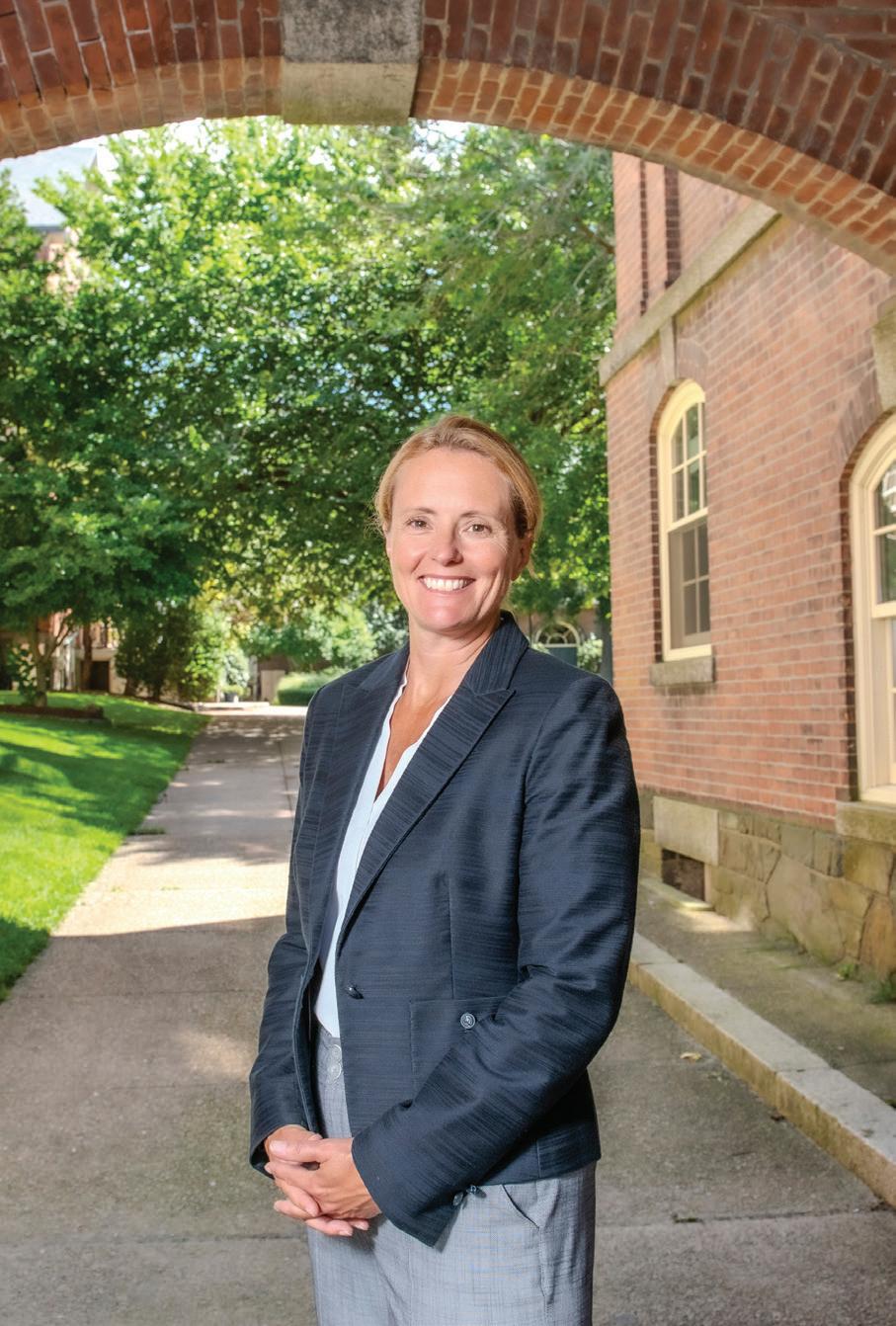
Katie Titus, Head of School
Cupola
THE MAGAZINE OF MOSES BROWN SCHOOL
Cupola is produced by the Advancement and Communications offices for alumni and friends of Moses Brown School. Your feedback is welcomed. If you want to opt-out of the print magazine and receive only the digital copy of the next magazine, please let us know by emailing alumni@mosesbrown.org.
Editor:
Frances Jackson P’26
Class Notes Editor:
Meghan Hansen P’28
Contributing Writers:
Meaghan Fernandes
Meghan Hansen P’28
Frances Jackson P’26
Karin Morse ’79
Ryan Vemmer
Designers:
Meaghan Fernandes
Tim Furman
Photography:
Peter Goldberg
Andrea Hansen
Meghan Hansen P’28
James Jones Studio
Maddie Van Reis
Ryan Vemmer
Printer:
Primary Graphics certified by the Forest Stewardship Council
Advancement Office:
Elizabeth Breidinger P’33
Meghan Hansen P’28
Karin Morse ’79


Hilina Ajakaiye P’27
Jeff Boudreau P’23 ’23 ’27
David Bourns (F)
Dan Cromie P’24 ’26 ’29
Zona Douthit (F)
Danielle Medina ’92 P’27 ’27
Keith Monchik ’90 P’24 ’27
William Monroe P’04 ’09 (F)
Pierre Morenon (F)
Elsie Morse (F)
Dave Murphy ’91 P’27 ’30, Assistant Clerk
Nenna Oronsaye P’25 ’30
Valerie Reishuk (F)
Amanda Riegel P’26 ’28
Jane Ritson-Parsons P’17 ’21, Clerk
Yvonne Rogers P’25
Bruce Shaw (F) P’99 ’02 ’06
Omar Siddiqi ’91 P'25 '27
Cedric Smith P’31 ’33
Laura Whiteley P’27
EX-OFFICIO
Katie Titus, Head of School
John Pariseault ’97 P’28 ’31, Clerk of the Moses Brown Alumni Association
Phillip Veatch (F), Clerk of the NEYM (F) = Friend
A Message from the Head of School
News from Hope & Lloyd
$5.1M Legacy Gift Establishes Largest Scholarship Endowment in Moses Brown History
New Merit Scholarship to Foster Next Generation of Quaker Leaders
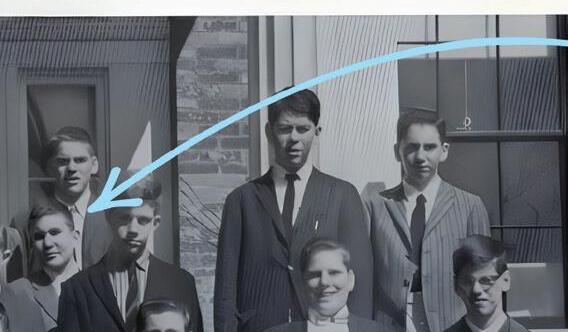
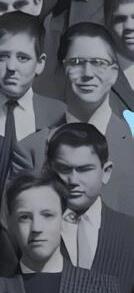
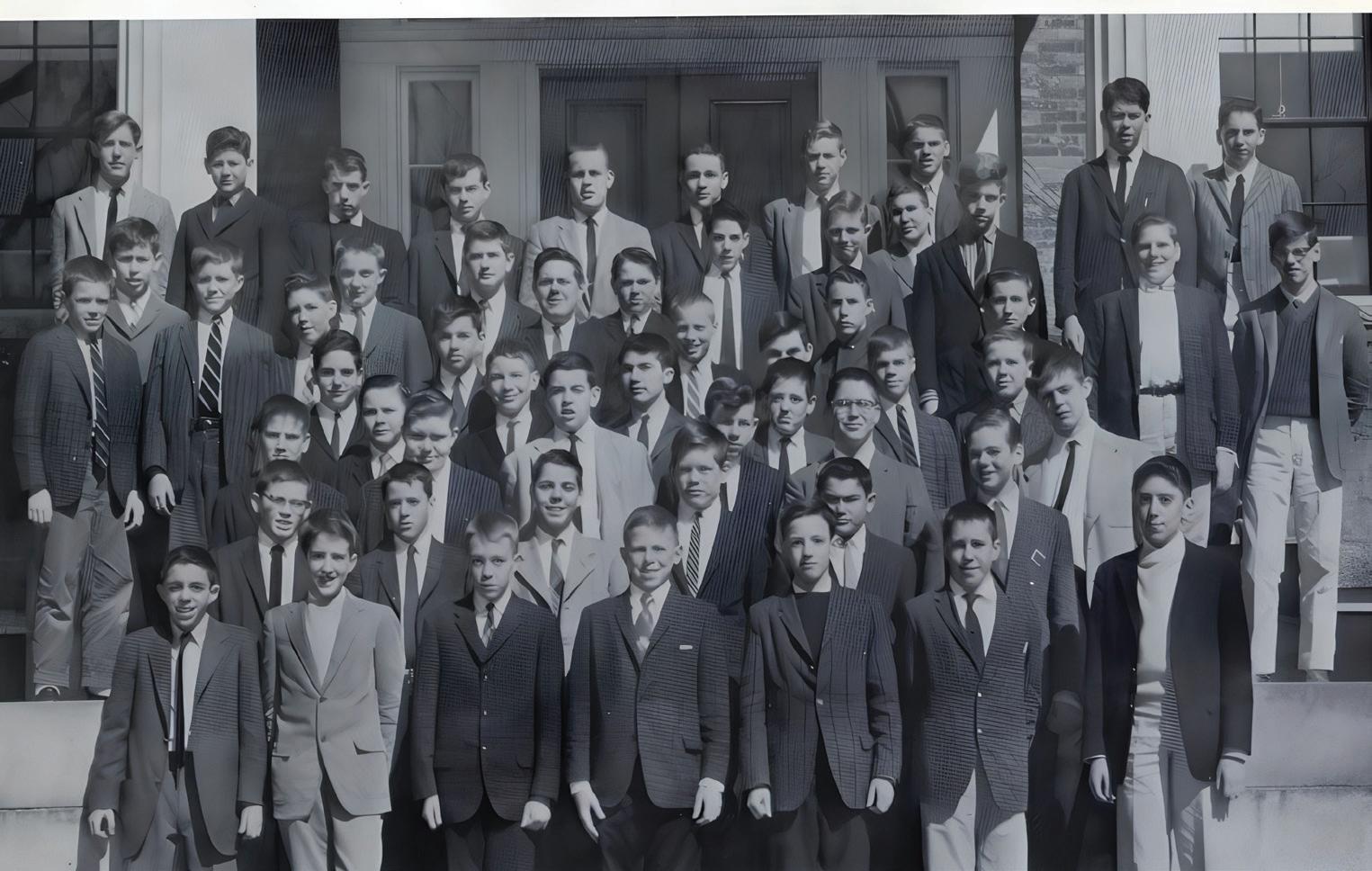
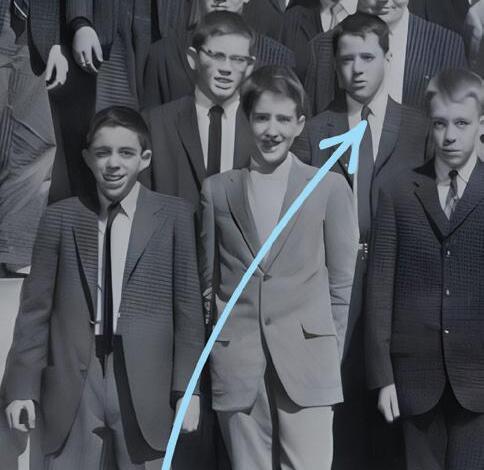
Moses Brown School has announced the largest scholarship endowment in its history, thanks to a $5.1 million commitment that will forever foster the next generation of Quaker leaders. This landmark gift establishes the Moses Brown Scholarship for Academic Excellence and Leadership — a $25,000 merit-based scholarship continuable each year for four years, to be awarded annually to two incoming 9th-grade students starting with the selection of our inaugural Moses Brown Scholars in the spring of 2026. Funded by a significant estate contribution from Doctor Steven Freedman, Class of 1965, and current gifts from Steven and his classmates Terry Mahoney and Richard Fain, the fund is designated to launch immediately and to support the scholarship program in perpetuity.
Class of 1965 in 8th Grade

This scholarship program is designed to align with Moses Brown’s new strategic vision, Light the Way, by attracting and supporting exceptional students whose academic excellence and leadership potential will further enhance the school community.
Steven and Terry, friends since they entered Moses Brown as kindergartners in 1952, share a deep appreciation for the school community that fueled their lifelong love of learning. While their donation carries a sense of nostalgia—the friends love to share memories about long study halls and beloved teachers—their focus is firmly on the future.
After spending months in conversation with Head of School Katie Titus and school leaders, learning the school’s modern-day approach and vision, Steven and









The students who are in school now are going through a tumultuous time, but they will have the opportunity to remake our world. I hope that in 25 years Moses Brown Scholars, imbued with Quaker ideals, will help shape the future of our cities, our country, and our planet.”
- Steven Freedman ’65
Terry Mahoney ’65
Richard Fain ’65
Terry were inspired to support the school’s evolution. The scholarship is intentionally focused on the higher purpose of finding a unique combination of academic excellence and leadership skills, ensuring merit is the determining factor in the selection process.
Each winter, the Upper School admission committee will identify the recipients whose intellectual curiosity will spark deep engagement with their peers through inquiry, reflection, and collaboration. Head of School Katie Titus noted that the school will seek in its Moses Brown Scholars a powerful fire of intellectual curiosity.
“The students that we see that really shine today are the kids who are passionate about something,” according to Katie. “They want to know that what they're learning has an impact – and not just for themselves, but for others.”
The kind of impact sought in Moses Brown Scholars is already exemplified by current students and recent graduates.
Take Liam C. ’26, for example, who, upon discovering that fishing invasive green crabs required around $250 for licenses, a fee that was prohibitive to many, successfully lobbied the Rhode Island state legislature to pass a bill reducing the license fee for green crab fishing.
There’s also Kate Foster ’25, a cum laude graduate who used her Class of 1948 independent research grant — a fund dedicated to student-led projects — to host 10 multi-state STEM programs focused on engaging young girls in public health, chemistry, biology, and engineering. And Vindhya D. ’26, the senior class co-President, used her For the Honor of Truth grant to create a documentary short film that examines the impact of religion on society in the modern world.
“The students who are in school now are going through a tumultuous time, but they will have the opportunity to remake our world,” says Steven. “I hope that in 25 years Moses Brown Scholars, imbued with Quaker ideals, will help shape the future of our cities, our country, and our planet.”
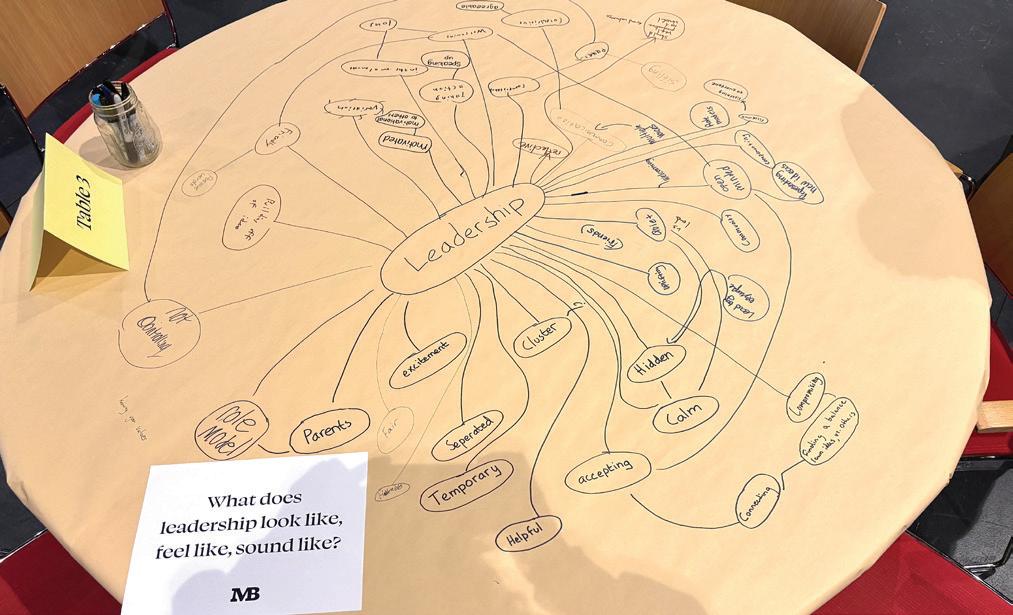
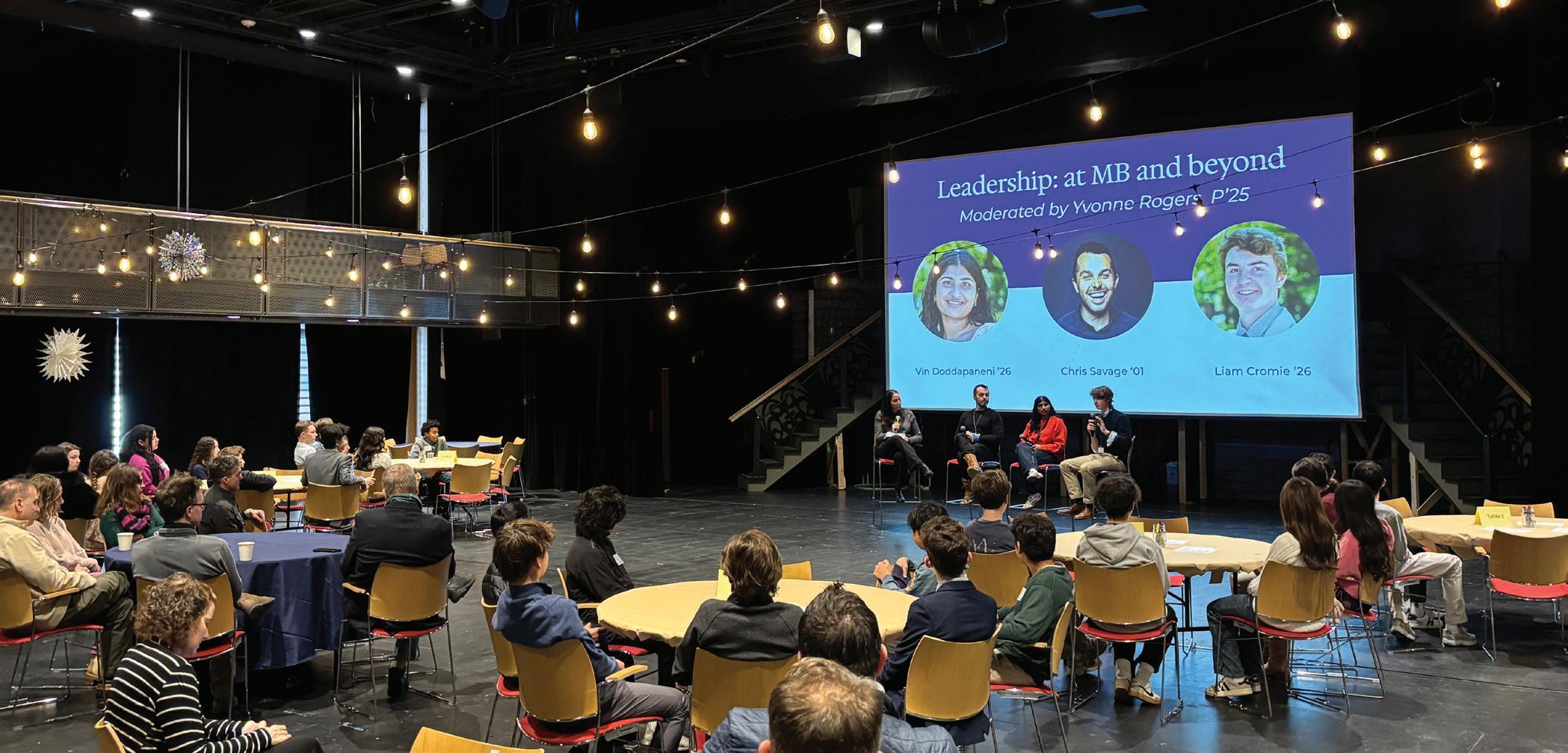
A DAY OF LEADERSHIP & INAUGURAL SCHOLARS
Applicants for the Moses Brown Scholarship for Academic Excellence and Leadership had a unique opportunity to gather for a day of connection at the Moses Brown Scholar Leadership Day held in February 2026. The event kicked off with a panel discussion moderated by Yvonne Rogers P ’25, MB Trustee and Assistant Dean of the Center for Co-op & Professional Advancement at Northeastern University. Panelists included Wistia Co-founder and CEO Chris Savage ’01, P ’34, ’36, and seniors Liam C. ’26 and Vin D. ’26, who shared their leadership journeys and how they lead with purpose.
Following the panel discussion, a group of MB seniors engaged scholarship applicants in table conversations utilizing the World Café™ method. The experience created a space for applicants to share their positive leadership attributes with MB facilitators and one another, responding to prompts such as “How would you as a leader best support the Moses Brown School mission?” and “Which of the SPICES best reflects your leadership?”
The first students to be named Moses Brown Scholars were notified when MB sent out its admission decisions for the 2026-27 academic year. In addition to the gift designed to support the two annual awards, an anonymous donor, inspired by the philanthropy of Dr. Steven Freedman, Class of 1965, provided an additional gift to fund a third scholar in the inaugural year.
“The hardest part of this process was not being able to give more awards,” said Head of School Katie Titus. “I was thoroughly impressed by the scholarship applicants and am excited that many of them matriculated alongside the three scholarship awardees.”
OUR STRATEGIC VISION FOR 2034








The Next Era of Academic Excellence
The world our current Nursery students will graduate into hasn't been built yet. The jobs they will hold, the technologies they will navigate, and the global challenges they will inherit are evolving at a breakneck pace. How, then, will Moses Brown prepare a child for their unwritten future?
Guided by the school’s Light the Way strategic vision, we are amplifying what we have always done best—cultivating a deliberate progression of skills that prepares students not just for their next test, but for the complexities of college, career, and life. By making this legacy of whole-child education more intentional than ever, we are explicitly mapping out not only the content students need to know, but the enduring competencies they
must master and attitudes they must hold to succeed.
At the 2026 Stewarding Our School gathering, Associate Head of School Debbie Phipps presented the work the school has done over the past year to refine our educational philosophy and practices. The result is a coordinated, curricular evolution that ladders up from division to division, including development of new skills- and attitudes-based rubrics.
“This skills-based curriculum changes the focus from teaching to learning,” says Debbie. “It moves the idea of assessment to providing evidence. Teachers will shift from being the judges of work to acting to empower and coach. And it moves students from hearing from teachers say ‘you should know’ to
showing their own evidence that ‘I can.’”
Debbie also shared the 2025 list of Top Workforce Skills from the World Economic Forum’s Future of Jobs report.
“If you look at these skills, they are very human skills, ones that move beyond what AI and automation can do, ones that demand human qualities. These are the ones that show up in our rubrics.”
In addition to emphasizing the cultivation of vital competencies, MB will continue to foster attitudes and habits of mind that have defined our school’s culture for generations.
“Attitudes are as important as competencies,” adds Debbie. “These attitudes and skills are ones that will endure in their usefulness even as the employment market changes and tasks are automated. And as a Quaker school, we center reflection, because reflection builds a habit of metacognitive development, and it deepens learning so that it is more longlasting.”
The new rubrics will be utilized across all grades. In the Lower School, the foundation is built on boundless curiosity and joyous exploration. The curriculum is designed to harness a young child's natural wonder, teaching them not just to find answers, but to ask better questions. Here, students develop the foundational attitudes of empathy and resilience, learning to view mistakes not as failures, but as necessary steps in the learning process.
As students transition into the Middle School, this foundation of curiosity evolves into more rigorous analytical thinking and community awareness. Young adolescents are naturally seeking their place in the world; the Middle School curriculum meets them there. Students learn to synthesize information from multiple sources, engage in respectful but challenging discourse, and begin to understand how their individual actions affect the broader community. The competencies developed here are deeply collaborative, teaching students how to work effectively in teams and solve problems creatively.
By the time students reach the Upper School, they are ready to step into a new level of autonomy. The competencies of curiosity and analytical thinking culminate in a drive for purpose. The Upper School curriculum challenges students to move from "inquiry to impact"—taking the foundational skills they have built over the years and applying them to real-world, complex issues. Through hands-on experiences, students are challenged to pursue meaningful questions and connect their intellectual journeys to the greater good.
By intentionally mapping these competencies from the earliest years here to the time they cross the stage at graduation, Moses Brown will continue to graduate students who are not only academically prepared but deeply grounded, agile, and ready to navigate whatever the future holds.






Scan the code to view the rubrics.



A Higher Standard
Upper School Launches Advanced Seminars
For decades, the pinnacle of high school academic achievement was often measured with a number two pencil, a ticking clock, and a fill-in-the-bubble standardized test in May. But complex, real-world problems, the kind Moses Brown graduates are educated to solve, are rarely standardized.
To foster the independent, purpose-driven thinkers cultivated throughout our curriculum, the Upper School began to evolve its academic environment where student learning could flourish without boundaries.
To that end, Moses Brown has made a bold, strategic shift: the 2025-2026 academic year was the final year the school offered traditional Advanced Placement (AP) courses. In their place, the Upper School is vastly expanding its portfolio of Advanced Seminars to propel learning forward.
While AP courses have long been viewed nationally as a standard metric for rigor, they are inherently formulaic. Their rigid structure leaves little room for the very competencies colleges and employers truly value: collaborative discovery, real-world application, and authentic inquiry.
Transitioning away from this test-driven model frees our expert faculty to design responsive, experiential courses. Instead
of rushing to cover a massive breadth of material, teachers and students will dive deeply into specialized topics. In an Advanced Seminar on the History of Disease, for example, students won't simply memorize dates of global outbreaks; they will analyze primary sources to understand the complex socioeconomic, political, and demographic impacts of global crises. In an applied Honors Calculus course, students will move beyond textbook equations to use real-world data modeling, studying local infrastructure flow or the disappearing Rhode Island coastline.
“We know students benefit from opportunities to explore and define who they are as learners and as people,” notes Head of Upper School Laura Twichell, “and to develop a sense of purpose that connects them to communities and causes beyond themselves.”
Advanced Seminars honor faculty expertise and align with the Friends Education model of deep, inquiry-based, experiential learning. Most importantly, it allows our oldest students to fully exercise the analytical thinking, resilience, and curiosity they have been developing since they first stepped onto campus, moving their learning from inquiry to true, personal impact.








A Steady Compass in a Shifting Landscape
With college application volumes breaking national records, Moses Brown's early counseling model, strategic academic shifts, and deep university relationships give our students a distinct advantage.
For alumni who submitted their college applications by hand or rolled them through a typewriter, the current realities of the college admissions process might seem entirely unrecognizable. Today’s high school students are facing a landscape that is vastly different than it was not only for past generations but also for those who graduated even a decade ago.
At the center of this shift is an unprecedented surge in application volume. In the mathematics of modern college admissions, the numbers can feel dizzying. Consider a highly selective university that has historically offered 800 seats in its freshman class. Fifteen years ago, that institution might have received 8,000 applications. Today, fueled by streamlined online portals and shifting testing requirements, that same institution is routinely fielding upwards of 20,000.
This high-stakes numbers game has transformed the national college application process into a anxiety-provoking, unpredictable environment for most families. Yet, amidst this uncertainty, Moses Brown students possess a profound advantage. By balancing bold academic innovation with a highly structured and supportive counseling model, MB empowers its students to navigate the modern admissions process with clarity, purpose, and confidence.
STANDING OUT IN A FLOODED FIELD
As highly selective colleges sift through massive applicant pools, standard metrics are no longer enough to differentiate a student. Admissions officers are desperately searching for authentic narratives and evidence of deep, self-directed inquiry.
Moses Brown’s curricular evolution and the Upper School's shift to Advanced Seminars alongside traditional signature experiences such as the junior year I-search and those through TRIPs provide a distinct edge. For example, when an admissions officer reads an essay written by an MB student who has spent time conducting meaningful research, that student’s application stands out.
“Our students can write more clearly about their "why" and what they value in a way that only direct experience can inform,” says Amy Cembor, Dean of College and Academic Counseling. “During a college interview, an MB student can have concrete stories to tell about what ignited their interest in a future course of study.”
They are no longer just a collection of grades, but a curious, agile thinker who has already demonstrated the ability to do college-level work.
A TIMELINE OF SUPPORT
To ensure students are ready to tell that compelling story, Moses Brown provides a profound sense of stability through a highly personalized counseling model. The office operates as a full-service team with four experienced counselors—giving MB the lowest counselor-to-student ratio in the region.
Crucially, this support provides an on ramp to the college process well ahead of the pressure of deadlines and decisions. The counseling timeline is intentionally designed to build confidence and self-knowledge. The process begins gently with educational workshops in the 9th grade.
“Early in their high school career, both students and parents are curious about what's to come,” says Amy. “Our goal with 9th grade student workshops and parent presentations is to demystify the process and help dispel misconceptions. Instead of starting the college search itself at that point, we encourage them to focus on discovering their interests and passions that will help them when they do begin the process.”
By introducing the process gradually, students learn to keep their options open and focus on their emerging interests. As they mature, so does the level of support. By the time students reach the 11th grade, this foundation shifts into dedicated, one-on-one counseling. Counselors work intimately with
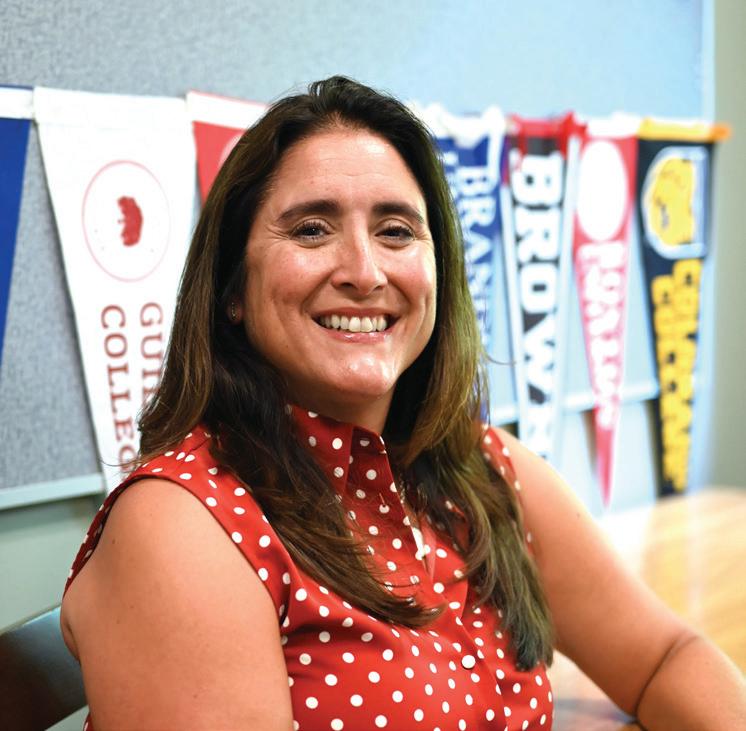
A Q&A with Amy Cembor Dean of College
and Academic Counseling
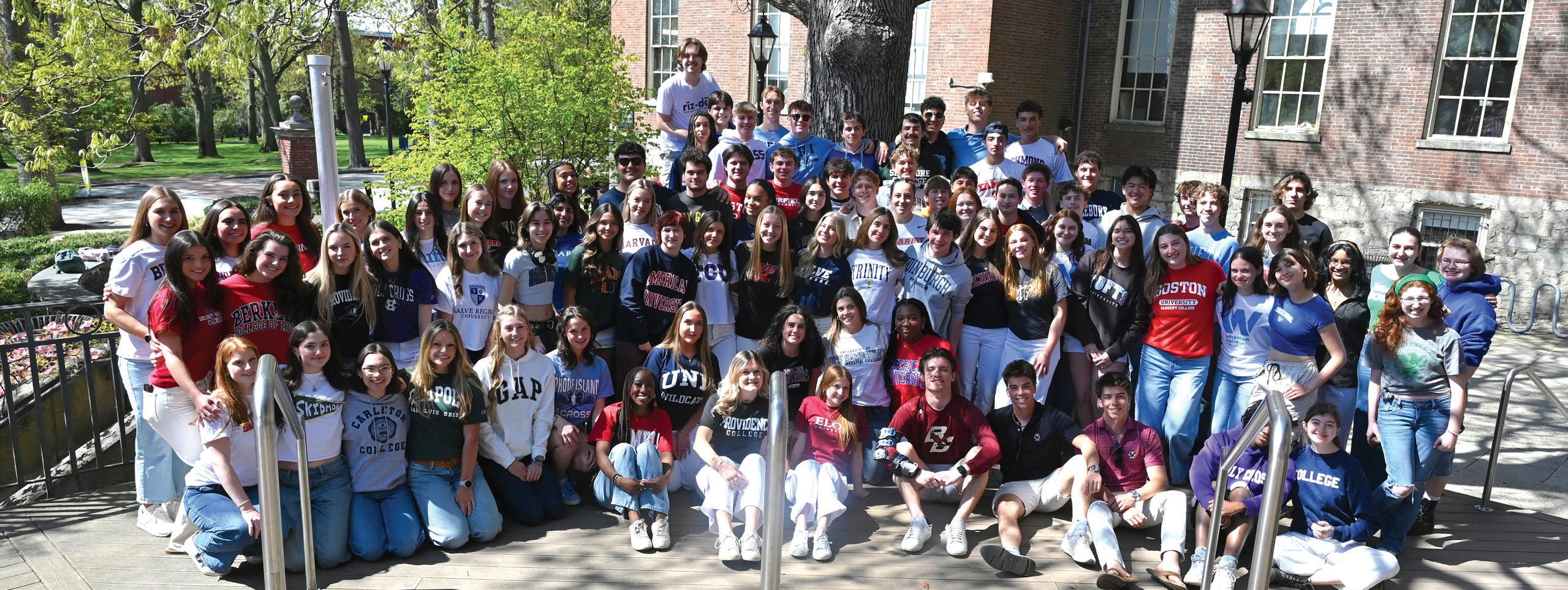
juniors to build balanced college lists, explicitly infusing the process with Quaker philosophy by asking students to reflect on what brings them peace and what values they want to carry into their futures.
ADVOCACY AND ACCESS
Moses Brown’s active relationship with higher education professionals provides the final, critical piece of the admissions equation: access. The counseling office doesn't just prepare students; they actively advocate for them.
This past year, the counseling office hosted approximately 125 college admission officers on our Providence campus. These visits represent institutions ranging from international
universities to large state schools and highly selective liberal arts colleges.
“The information exchange that occurs between our staff, students, and admission officers when they visit is invaluable to everyone,” notes Amy. “The students are able to engage with the people who most often are the ones reading their applications, leaving a lasting impression.”
In a landscape defined by ambiguity, Moses Brown offers clarity. Through a deliberately paced counseling timeline, access to university representatives, and an academic program designed for deep impact, our students are able to enter the admissions process grounded, prepared, and ready to share their distinct voices with the world.
Fulfilling an early horizon goal of Light the Way , we welcomed Amy Cembor as Moses Brown’s inaugural Dean of College and Academic Counseling in the 25-26 school year. We recently met up with Amy to get her insights about the college admissions process today.
Q: How has the college application process changed?
A: The volume of applications has increased tremendously. The Common Application has made it easier to apply. So many colleges and universities in the US are test optional now. More students are applying to more colleges. The average student is now applying to 10+ colleges. Students are applying to more colleges because the college's decisions are more unpredictable. A college may have 20,000 applications for a freshman class of 800 seats. Admission rates are going down, which requires students to make their applications look much different.
Q: What are colleges really looking for today to distinguish one student from another?
A: Colleges are looking beyond student transcripts, beyond A's and A+s, beyond test scores when submitted. They want to dig deeper to distinguish one student from another. They want to understand who each applicant is holistically, how they will fit into that college’s class and the community they are trying to build. We help students think about that as they’re preparing their essays and working on their application.
Q: There is so much pressure on what an admissions office wants to hear. How do you help students tune out that noise and find their own voice?
A: We help students think about what's important to them, about their own purpose, rather than wondering what an admission office wants to hear. We are in a really great position here at Moses Brown having faculty members who are able to work closely with students in unique and interesting ways. By drawing from unique experiences in our small classes, like personal research or field work, students can discover their passions and articulate clearly why they want to study a certain subject, which helps their application really stand out.
Q: Think back to your own college application essay—what did you write about? (And if you had to write one today, what would the topic be?)
A: Oh my! I haven’t thought about that in a long time! My college application essay, which I wrote on a typewriter, answered a prompt that asked me to write a letter to myself 10 years in the future, at my five-year college reunion. The Career Center at my alma mater actually mailed those letters back to us upon graduation. It was so interesting to see how much I changed in those four years and what I wanted for myself before college, versus after.
OUR
STRATEGIC VISION FOR 2034









Moses Brown Receives Prestigious E.E. Ford Leadership Grant
$250K Matching Grant Supports MB’s Vision for Educators
Moses Brown School is deeply honored to announce its selection as an April 2026 recipient of the prestigious Edward E. Ford Foundation Educational Leadership Grant. MB was awarded a $250,000 grant, which requires a 1:1 fundraising match from our community. This recognition places Moses Brown among a select group of independent schools recognized nationally for pursuing generative, transformational, and replicable ideas.
The E.E. Ford Foundation’s Educational Leadership Grants are awarded to schools proposing bold, new ideas that catalyze change and address broader challenges in independent education. Being selected for this highly competitive grant is a profound endorsement of Moses Brown’s vision and our dedication to teaching excellence.
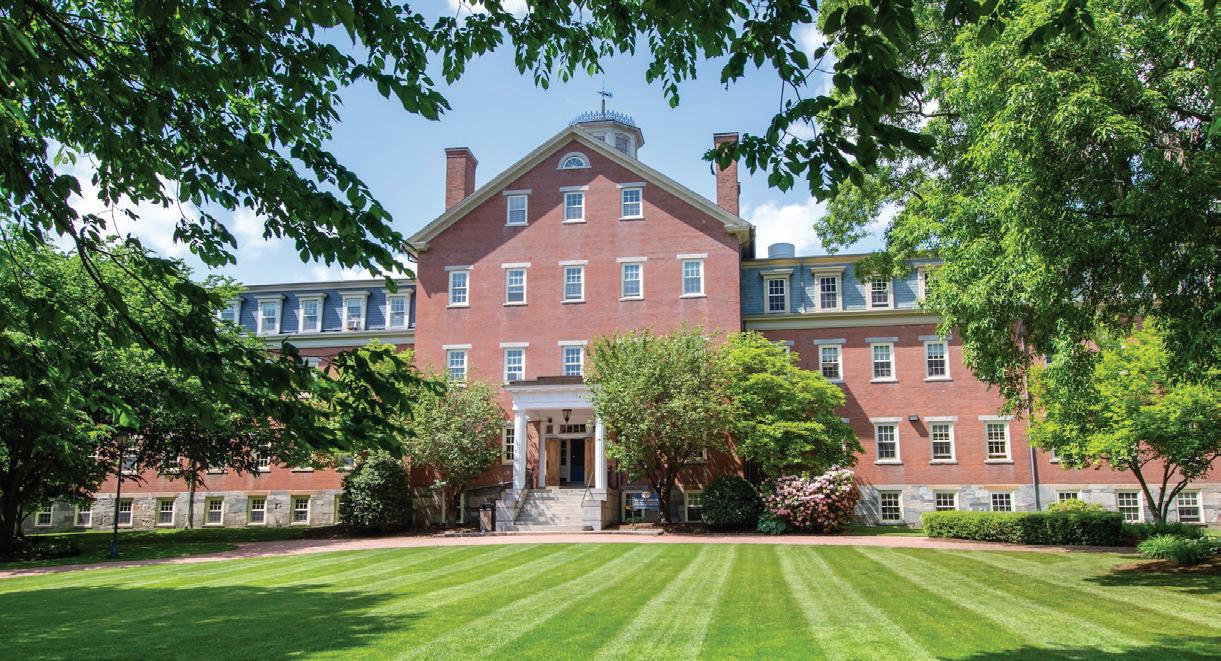
With this grant, Moses Brown will establish a teacher-leader program. Too often in independent schools, career advancement requires exceptional teachers to leave the classroom for administrative roles. Our new program changes that paradigm. It is designed
to provide our highly motivated and accomplished teachers with meaningful opportunities for increased challenge, leadership, and professional growth while remaining rooted in the classroom. This initiative directly addresses a well-documented national challenge: retaining highly effective, experienced classroom teachers.
"One of the most promising opportunities for independent schools is to pioneer models that reward the entire profession,” says John Gulla, Executive Director of The E.E. Ford Foundation. “Moses Brown's teacherleader program is a bold, replicable approach to retaining highly effective educators. The Foundation is pleased and proud to support this effort to invest in teaching excellence and strengthen the cohesive learning experience for students."
As a core component of our Light the Way 2034 strategic plan—specifically the Care for People pillar—this program invests directly in the educators who make Moses Brown extraordinary. Teacher-Leaders will serve within a structured cohort model, participating
Moses Brown's teacher-leader program is a bold, replicable approach to retaining highly effective educators. The Foundation is pleased and proud to support this effort to invest in teaching excellence and strengthen the cohesive learning experience for students."
- JOHN GULLA, EXECUTIVE DIRECTOR THE E.E. FORD FOUNDATION
in a monthly seminar and designing professional development initiatives for the broader faculty. Ultimately, this ensures our students continue to experience outstanding instruction and cohesive learning.
"When we launched our Light the Way vision, we made a distinct promise to elevate our Care for People. At Moses Brown, we know that the depth of the relationships between our students and our teachers is the very heartbeat of our school," says Head of School Katie Titus. "This grant allows us to boldly invest in our educators, giving our most experienced teachers the mentorship and leadership opportunities they crave, while ensuring they remain right where our students need them most—in the classroom.”
Empower Our Educators (Invest in Teaching Excellence)
To unlock the full $250,000 from the E.E. Ford Foundation, we must raise a 1:1 cash match from our community. We invite our alumni, families, and friends to be early leaders in supporting this pivotal Light the Way initiative. This is a unique and impactful opportunity to invest in the educators who inspire the inner promise of our students and ensure Moses Brown remains at the forefront of teaching excellence. For more information, email Elizabeth Breidinger, Director of Advancement at ebreidinger@mosesbrown.org.
Nurturing the Whole Child: Expanding Our Counseling Team
As we continue to bring our Light the Way strategic vision to life, Moses Brown remains steadfast in our commitment to caring for our people. Central to this pillar is our dedication to the comprehensive, holistic support of our students' physical and emotional health.
Recognizing the ever-growing importance of emotional and mental well-being for youth today, we have made a commitment to increase our dedicated counseling staff by adding a third counselor to our team.
This strategic expansion represents a significant increase in our overall investment in student well-being. By growing our mental health staff, we are better equipped to meet the multidimensional needs of our students. This allows us to deepen our support of the whole child and fulfill our ongoing commitment to providing a safe, nurturing environment for our entire community.
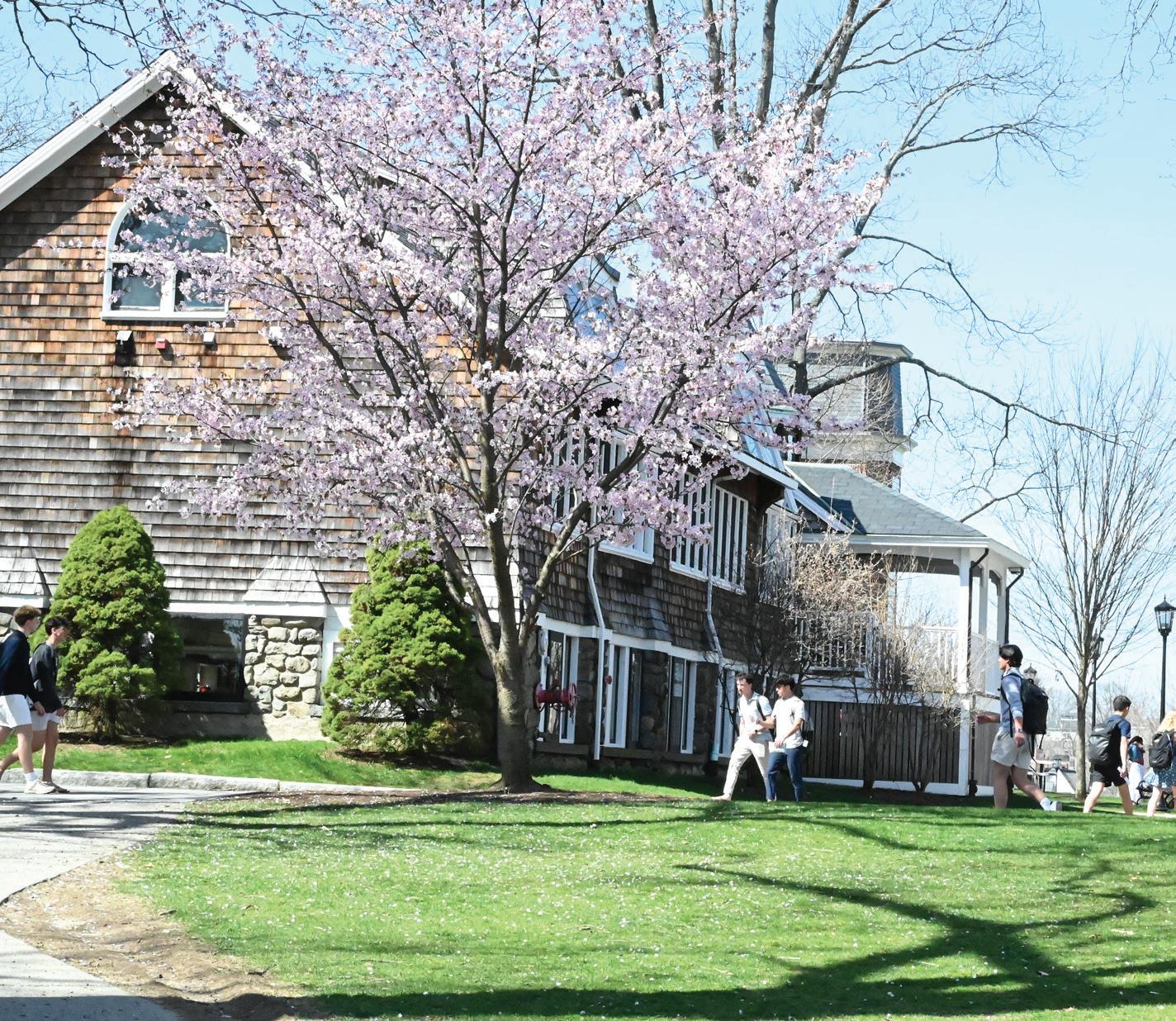


Katie Nelson Receives Inaugural Doc Odell Mid-Career Sabbatical
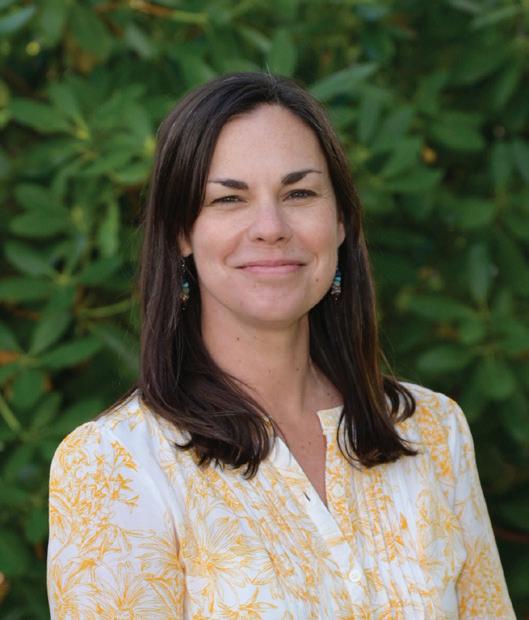
Great teachers have always been the heartbeat of Moses Brown. When we shared Moses Brown’s Light the Way strategic vision in the Winter 2025 issue of Cupola, we made a core promise under our Care for People priority: to invest deeply in the educators who shape our students' lives.
Establishing a new mid-career sabbatical was on our immediate horizon, and now we’re excited to see that goal come to life and announce that third-grade teacher Katie Nelson has been selected as the first-ever recipient of the Doc Odell Mid-Career Sabbatical.
Named in honor of the legendary MB educator, this sabbatical allows teachers to step away from their daily classroom work to pursue a project that reflects their passions and interests. The goal is two-fold: to provide

restorative, intellectual growth for the educator, and to bring fresh learning and innovation back to the broader Moses Brown community.
For her sabbatical, Katie will be focusing on a project that speaks directly to the heart of the Moses Brown experience: community engagement. She plans to research local partnerships and develop a school-wide resource hub designed to foster more cohesive, valuesdriven community engagement opportunities for students. Her work will help deepen MB’s approach to service learning, one that upholds mutual discovery, reflection, and relationship-building. By creating this resource hub, Katie’s purpose-driven efforts will help foster those same vital elements in our students, allowing them to learn and grow through meaningful connection with the broader civic community.
The Light the Way vision recognizes that to empower our students to lead, we must continually invest in the educators who guide them. Katie’s sabbatical project is a perfect reflection of that commitment. We look forward to the insights and innovations she will bring back to campus!






Inquiry in Action:
The Class of ’48 Awards
What happens when you give high schoolers the resources and trust to turn their independent vision into tangible community impact? The results speak for themselves. Through the ongoing support of the Class of 1948 Award for Independent Study and Inquiry, our students are stepping outside the traditional classroom to lead meaningful service projects. Here is a look at how four MB seniors turned their curiosity into action — from changing state environmental legislation to combating isolation among local veterans.
LEGISLATING COASTAL CONSERVATION
Liam C. ’26 addressed an environmental issue close to home in Point Judith, Rhode Island. Concerned about the invasive European green crab—which is destroying native eelgrass and impacting the aquaculture industry—Liam successfully introduced a bill to the Rhode Island General Assembly. The
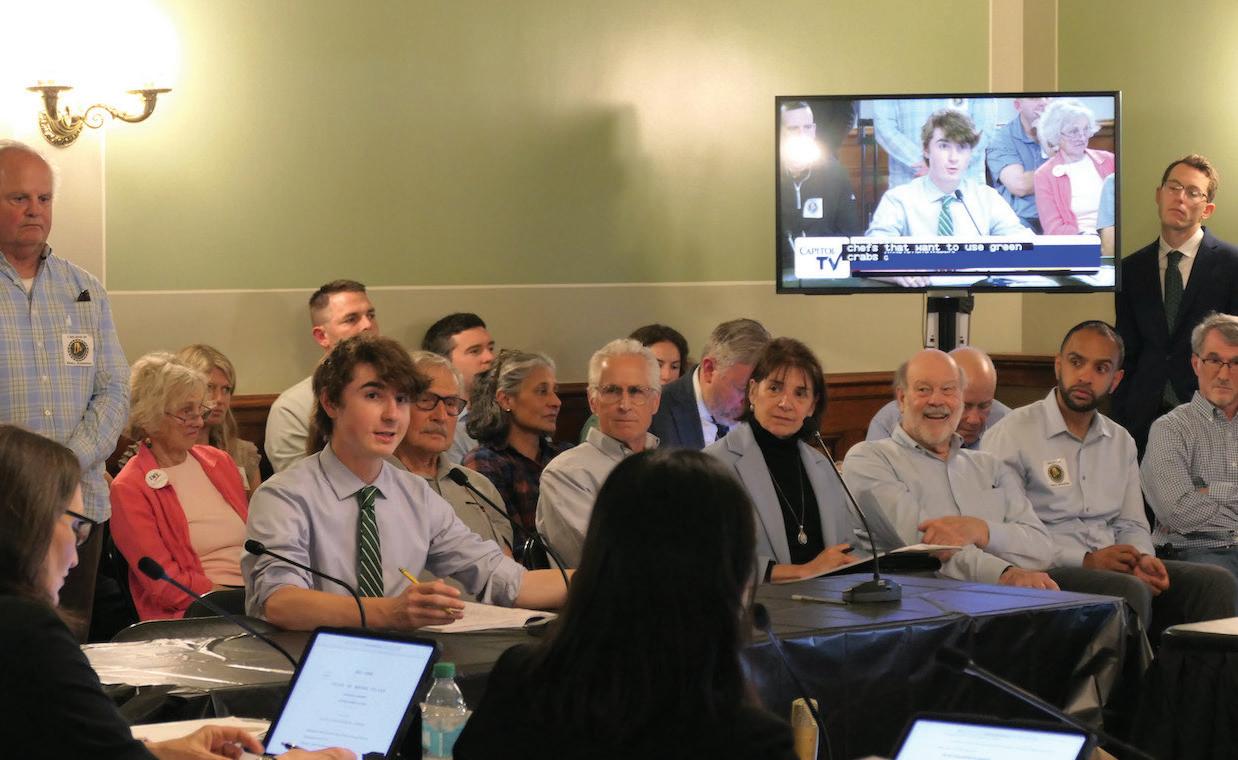
legislation, passed unanimously and signed by the Governor, will create a $10 low-cost commercial green crab fishing license, replacing the previous $150 license. Liam also partnered with the organization Eating with the Ecosystem to connect fishermen and local chefs—including those from Hangry Kitchen and The Shipwright’s Daughter—to utilize the crab as a sustainable seafood solution.
HONORING A LEGACY THROUGH ART
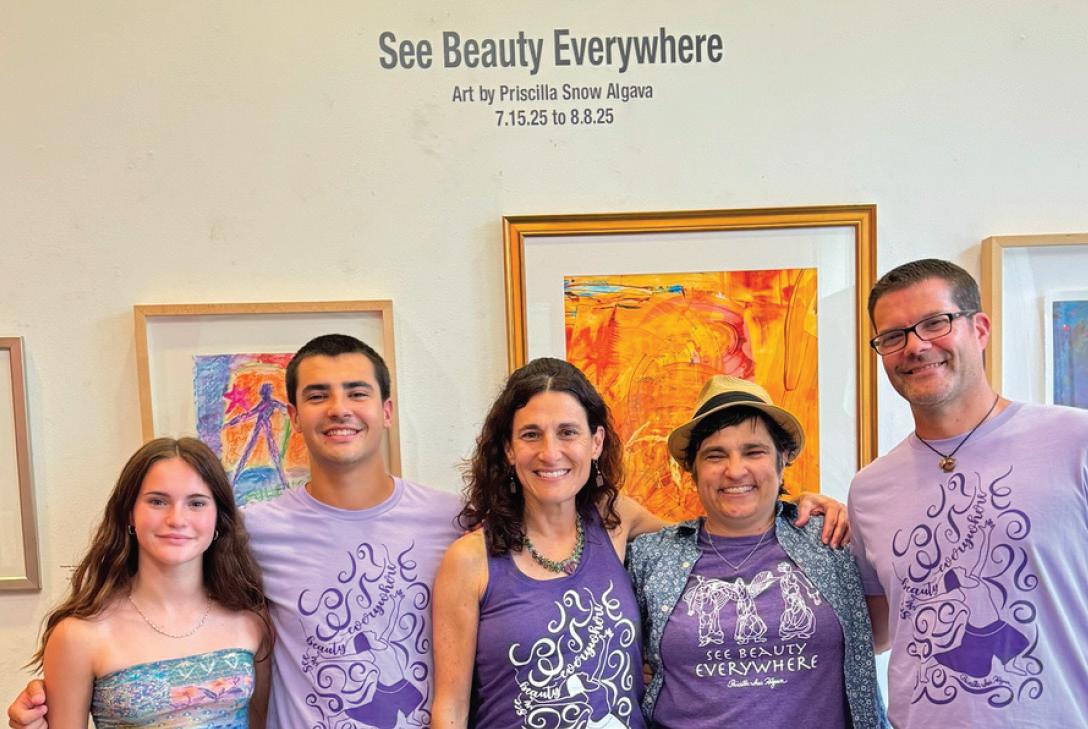
Drew A. ’27 honored his grandmother's legacy by organizing an art show to raise funds for a scholarship at the West Windsor Art Center in New Jersey. The event, held on what would have been her 85th birthday, spread her message of seeing "beauty everywhere," raising over $4,000 for art scholarships and selling over a third of her 60+ pieces of artwork. Drew highlighted the extensive collaboration and planning, emphasizing that big visions require perseverance and time.
COMBATING VETERAN ISOLATION
Janie P. ’27 focused on supporting veterans and their families in Rhode Island. She organized events designed to combat loneliness and isolation within the veteran community and compiled a comprehensive resource guide detailing beneficial veteran programs.
STRIKING A CHORD WITH REFUGEE YOUTH
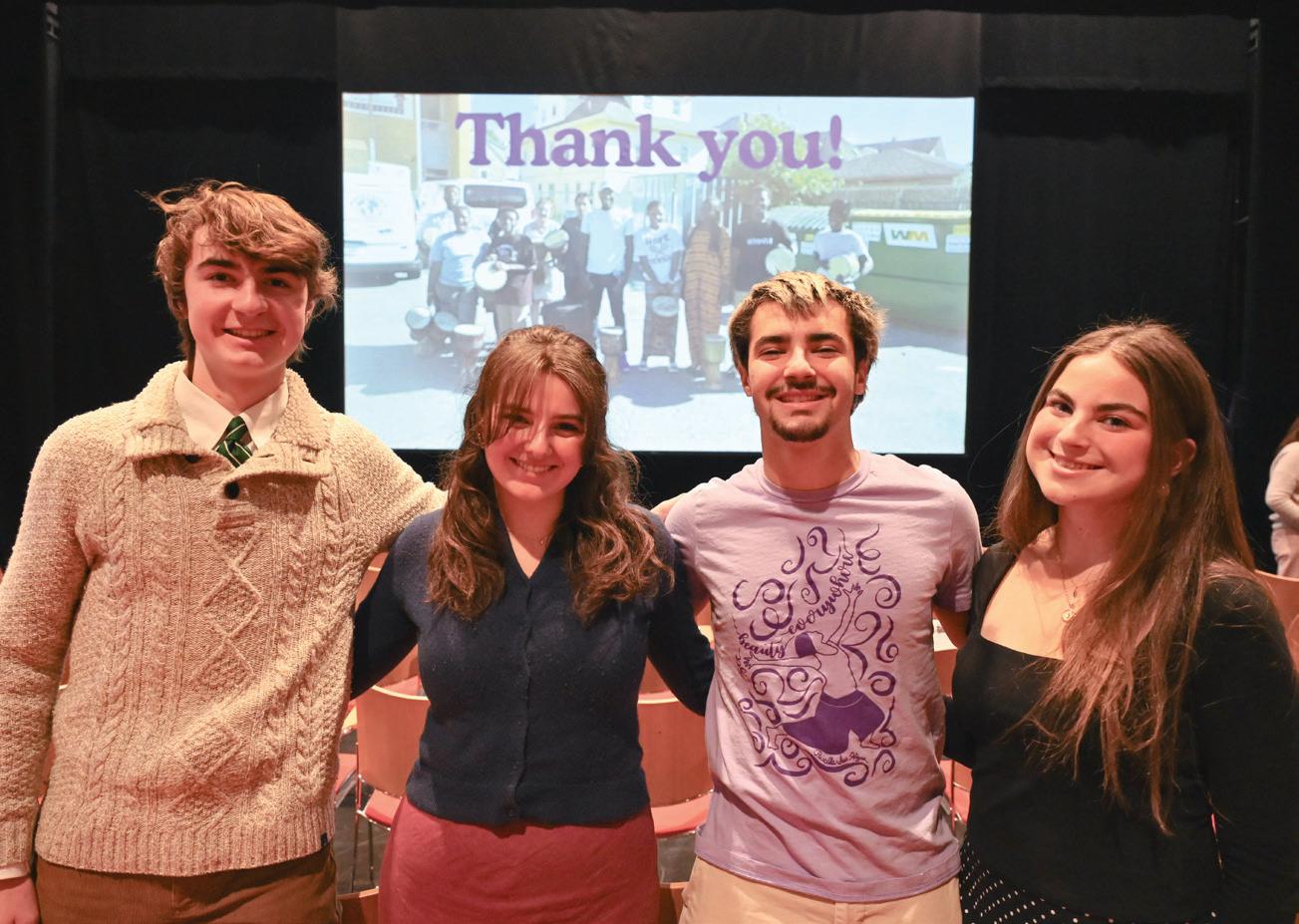
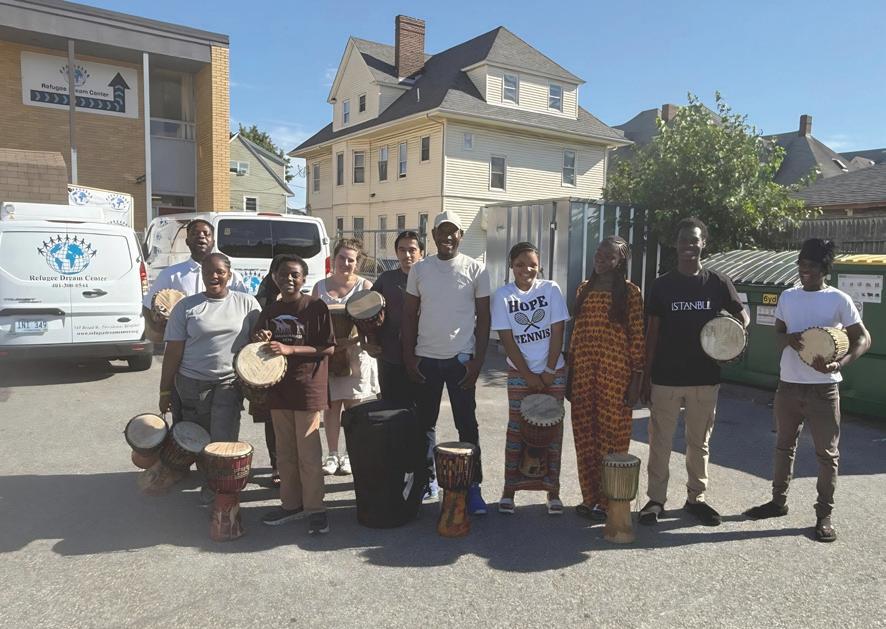
Sophie H. ’26 created a music program for the youth at the Refugee Dream Center. Her initiative involved running drum workshops, providing the center with instruments, and fostering a space where youth could learn about each other's diverse cultural backgrounds through music. While their projects varied widely, from the statehouse to the art gallery, the common thread was the grit required to turn an idea into reality. Whether it meant coldcalling legislators, securing venues,
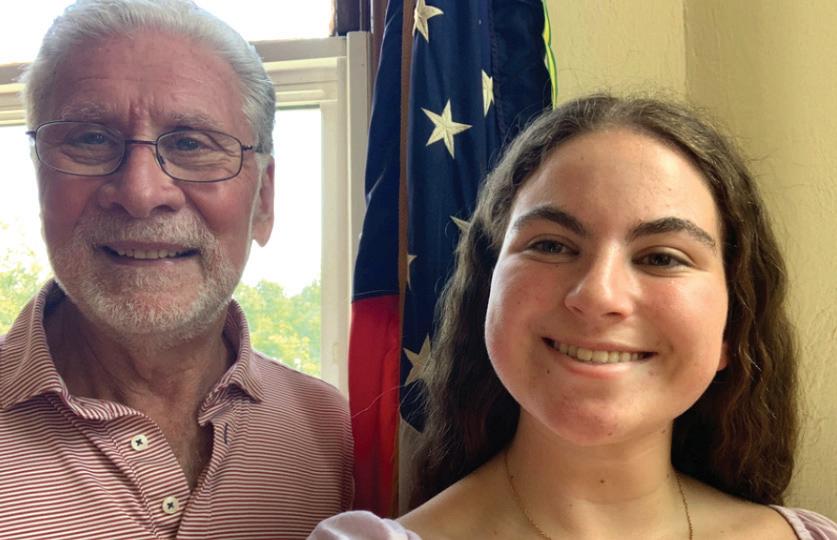
L to R: Liam C. ’26, Sophie H. ’26, Drew A. ’26, Janie P. ’26
clockwise) Liam C. ’26 testifies before the RI Senate Committee on Environment & Agriculture about Bill No. 938. Janie P. ’26 meets with veterans to learn about their needs and challenges. Sophie H. ’26 prepares for a drum workshop with the Refugee Dream Center. Drew A. ’27 honored his grandmother's legacy by organizing an art show to raise funds for a scholarship.
or organizing community logistics, Liam, Drew, Janie, and Sophie proved that independent inquiry is far more than an academic exercise. It’s an opportunity for immediate, community impact. The Class of 1948 planted a visionary seed years ago, and as these four students demonstrate, that investment continues to yield meaningful results.
About the Class of ’48 Awards
Established during the Class of 1948’s 50th reunion, the Award for Independent Study and Inquiry funds student-led initiatives that demonstrate creativity, individual passion, and a commitment to experiential learning.
Cross-Generational MB Talent Shines in New Audible Original Thrille r
We are excited to celebrate a cross-generational Moses Brown collaboration! The Hive, a high-stakes Audible Original thriller, was cowritten and directed by Kuba Soltysiak ’14, produced by Kelly Garner '93, and features the voice talent of senior Josselyn Wolf ’26. The story follows CIA cyber-ops officer Samantha Sloane, who stumbles into a dark mystery that leads her straight back into her own forgotten past. It’s a gripping tale of suspense that is already making waves on the charts! It stars Tony Hale (Veep ), Taylor Dearden (The Pitt), Samira Wiley (Orange Is The New Black), Brandon Routh (Superman Returns), and
Margo Martindale (Justified).
"I am honored to be part of this story in a production that encompasses three generations of Moses Brown alumni," said Josselyn. "This is a gripping audioseries, brilliantly written and produced, and I'm so excited for Moses Brown students, faculty, and staff of past, present, and future to hear it." Congratulations to Kuba, Kelly, and Josselyn on this incredible achievement. It’s inspiring to see our alumni and current students working together in the professional creative world.


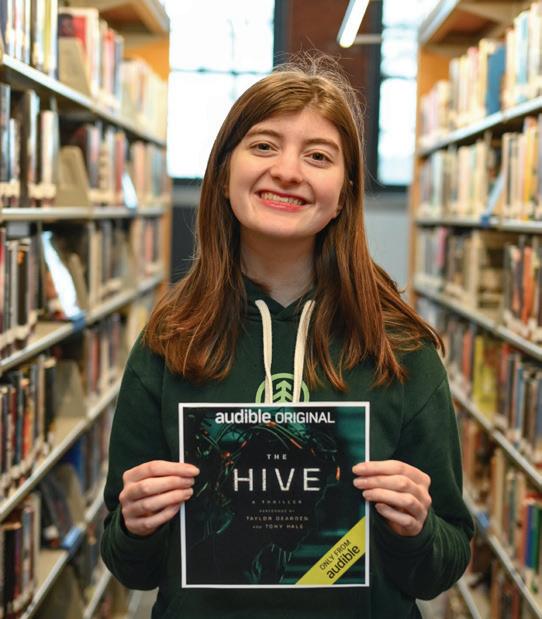

(Far left)
(Above
Josselyn Wolf ’26
Scan QR code to listen to The Hive on Audible!
Kuba Soltysiak ’14
Kelly Garner ’93
Inspiring Creat(iv)e Change
MB Hosts National Quaker Youth Leadership Conference
Moses Brown School became a hub for student leadership development in January, hosting the 2026 Quaker Youth Leadership Conference (QYLC). Moses Brown welcomed nearly 200 students and faculty from 22 different Quaker schools across the country for a transformative three days centered on the theme of "Creat(iv)e Change."
An annual event, QYLC aims to provide a space for students at Quaker schools to engage in discussions, workshops, and activities that promote leadership development, community building, and spiritual growth. The energy behind the 2026 gathering was driven by a dedicated team of MB student leaders, who curated an experience that challenged their peers to see Providence not just as a host city, but as a living classroom for community impact. A core tenet of the weekend was the idea that creativity is a vital tool for positive change.
At the opening assembly, MB student hosts welcomed
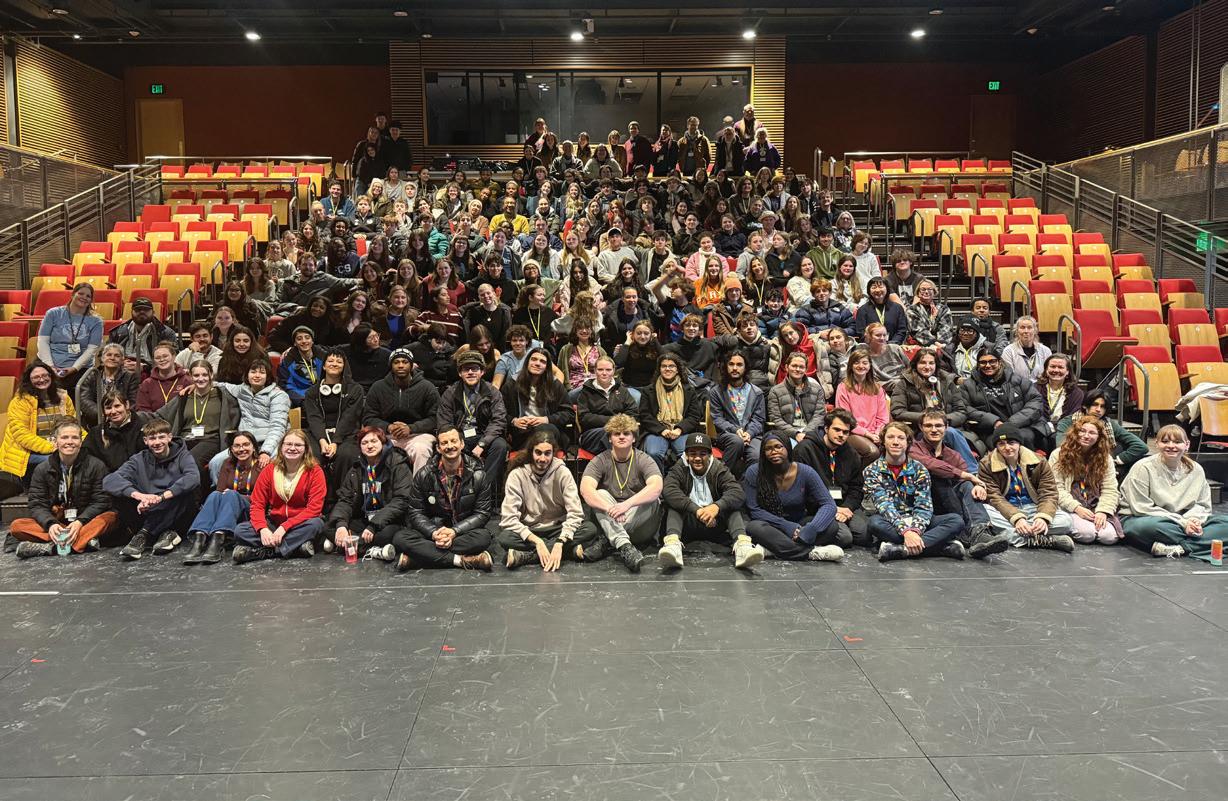

their peers and shared their thinking behind their choice of creative change as a theme remarking that “creative change is a reflection of the Quaker peace testimony. It's a way to fight injustice and work for change without violence. We love that the arts do a really cool thing: they let us step into other people's shoes and see from new perspectives… and they encourage collaboration instead of isolation.”
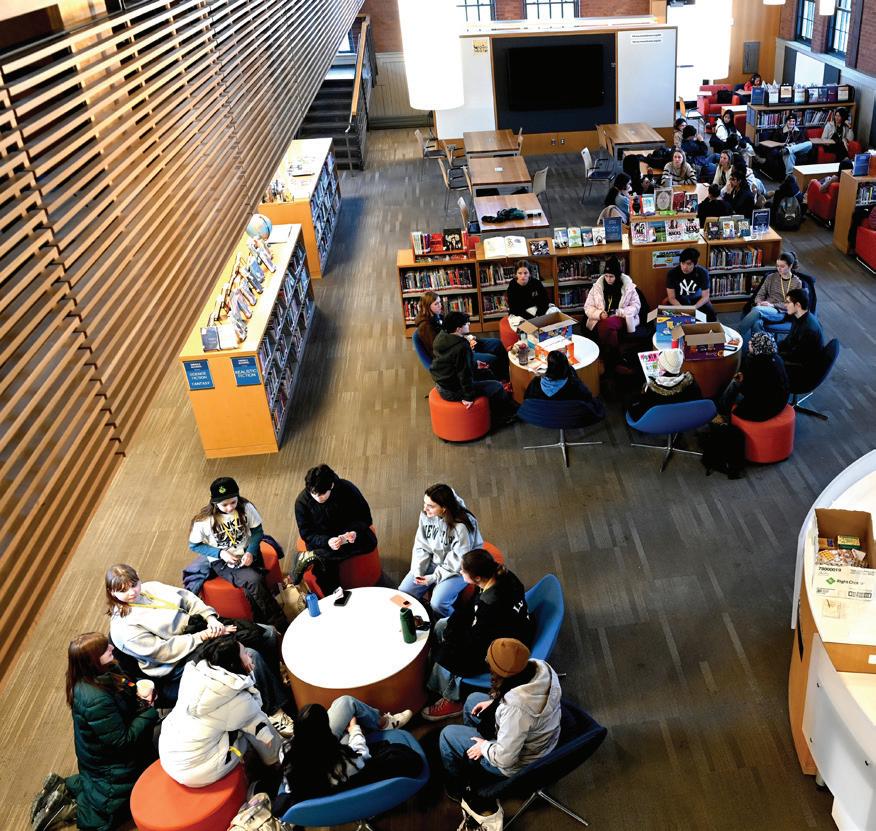
The 2026 cohort stepped off the MB campus to engage directly with the visionary artists, educators, and community leaders who define the region's cultural landscape. Students learned how art-making can connect to mental health at PeaceLove Studios, co-founded by artist Jeff Sparr ’81 in Pawtucket, and experienced collaborative painting at New Urban Arts, a community art workshop for teens. Others were granted a rare opportunity to visit the home studio of the global muralists behind Tape Art to learn about public art, or attended a workshop with collaborators at The Avenue Concept to explore the possibilities of murals and signmaking. At Community Music Works, participants saw firsthand how free K–12 music education can serve the broader community. In a workshop with ProvSlam contributor Naffisatou Koulibaly, students discovered the simplicity and power of blackout poetry, creating new messages out of pre-existing texts.
Leadership also requires understanding the past and the pressing needs of the present. Students delved into the history of offset printing in Black history with historian Marco McWilliams and made their own prints with master printmaker Jacques Bidon. Others explored affordable housing initiatives with One Neighborhood Builders, and paid a moving visit to The Ruth J. Simmons Center for the Study of Slavery and Justice (Simmons Center) at Brown University to view a new exhibit featuring the drawings of Israeli and Palestinian children.
While the city visits provided inspiration, the time spent on campus provided the grounding. The weekend was anchored by three moving Meetings for Worship, where students processed their experiences in the Quaker tradition. From MB Theatre teacher Steve Kidd’s powerful performance of Sigh/Omelas to workshops on the Theater of the Oppressed and improvisational theater with local troupe Improv Jones, the group learned how storytelling and empathy are essential tools for navigating difficult times.
Thanks to the tireless preparations by countless MB faculty and staff, the conference was a success, fueled by the amazing food from local favorites Pizza J and East Side Pockets. The 2026 QYLC left this nationwide network of students inspired by the "creative change" flourishing in Providence, and ready to bring that same energy back to their own school communities.
From MB to the World Stage: A Virtual Visit with Ambassador Christopher
Hill ’70
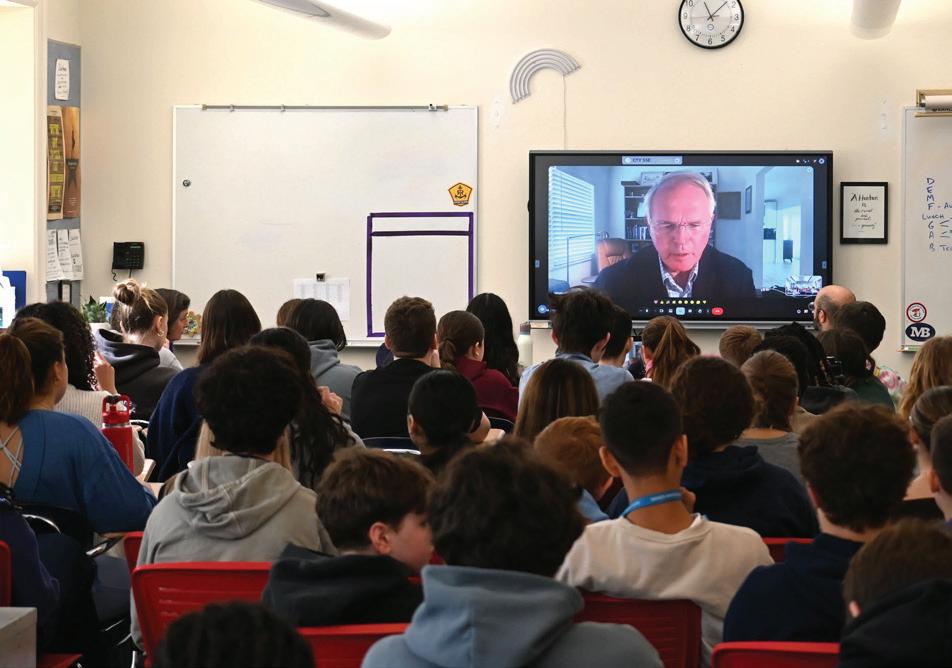
In February 2026, eighth-grade students went inside the room of global diplomacy during a virtual visit from alumnus Ambassador Christopher Hill ’70. A veteran career diplomat and former lead negotiator for the North Korean nuclear talks, Ambassador Hill shared how the foundations of his journey began right here at Moses Brown. He bridged the gap between classroom studies and current events, offering students his perspective of the complexities of the war in Ukraine and the high-stakes reality of international peace negotiations. It was an inspiring session that showed our students how an MB education can lead to a lifetime of meaningful impact on the world stage.
Middle Schoolers Connect with Alumni Leaders in Washington DC
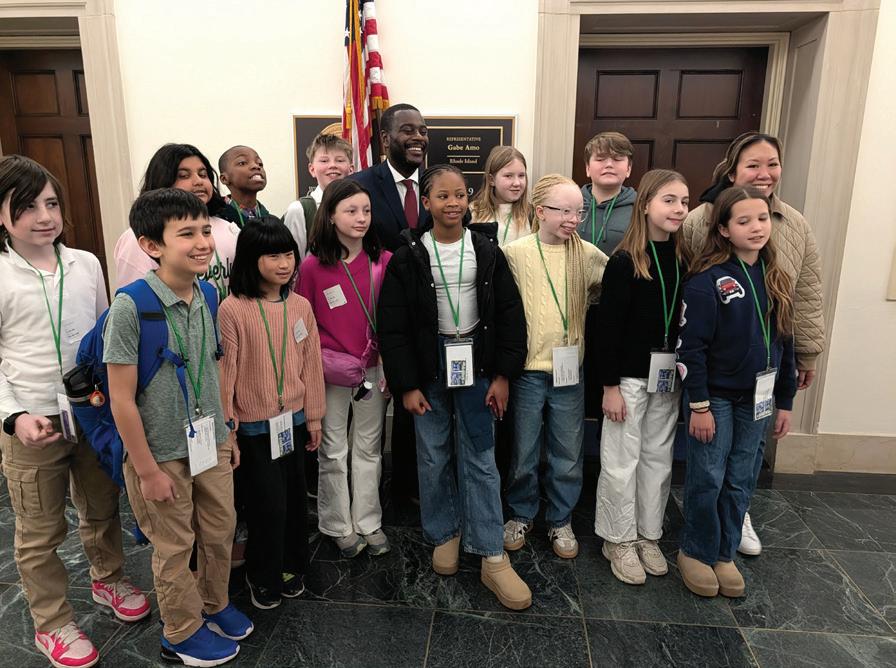
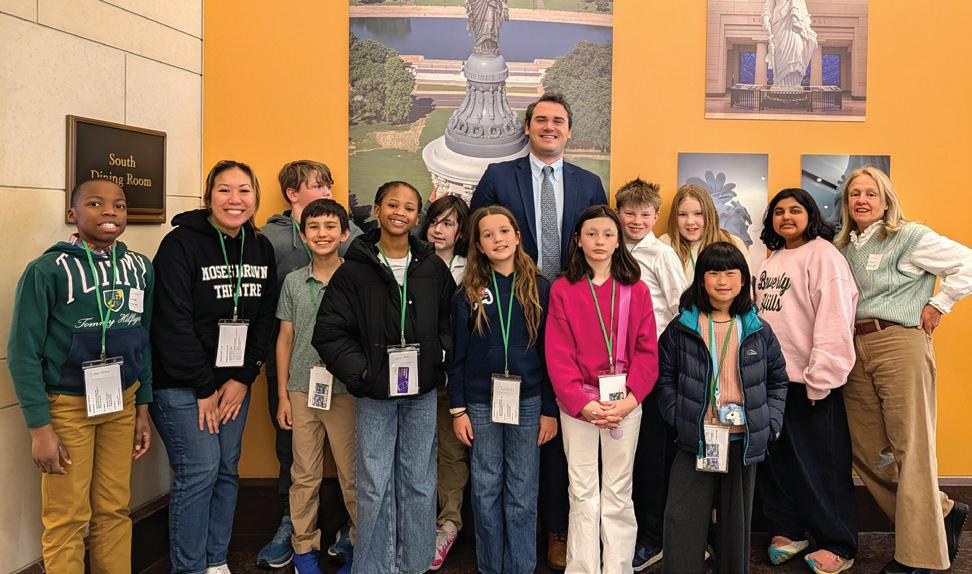
Over the spring break in March, a group of 13 students from the 5th and 6th grades traveled to Washington D.C. for MB TRIPs to explore the nation’s capital and bring their classroom learning to life! The group met with Congressman Gabe Amo ’05 and Press Secretary for Senator Whitehouse Steve DeLeo ’15 for a firsthand look at public service and the legislative process. Our students were impressive with insightful,
challenging questions, proving they are already prepared to make their mark on the world.
Rooted in Quaker values, students also visited Friends Place on Capitol Hill to practice engaging with differing opinions. The journey continued with immersive visits to The People’s House, the National Museum of African American History and Culture, and the National Museum of Air and Space.
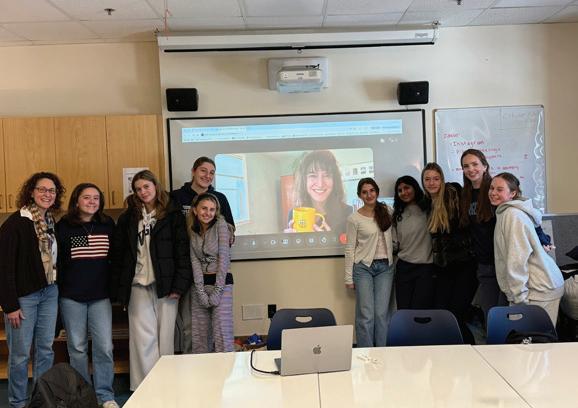
Zoe Bell ’05 Visits With MB’s Young Women’s Group
The Young Women’s Group invited Zoe Bell ’05 to their meeting to hear about her career and life journey. Zoe is the Executive Producer of Games at The New York Times. Thank you to Zoe for giving her time and being an inspiration to our MB students.
DESIGN WITH PURPOSE
HOW MOSES BROWN ARCHITECTURE STUDENTS ARE DRAFTING THE FUTURE
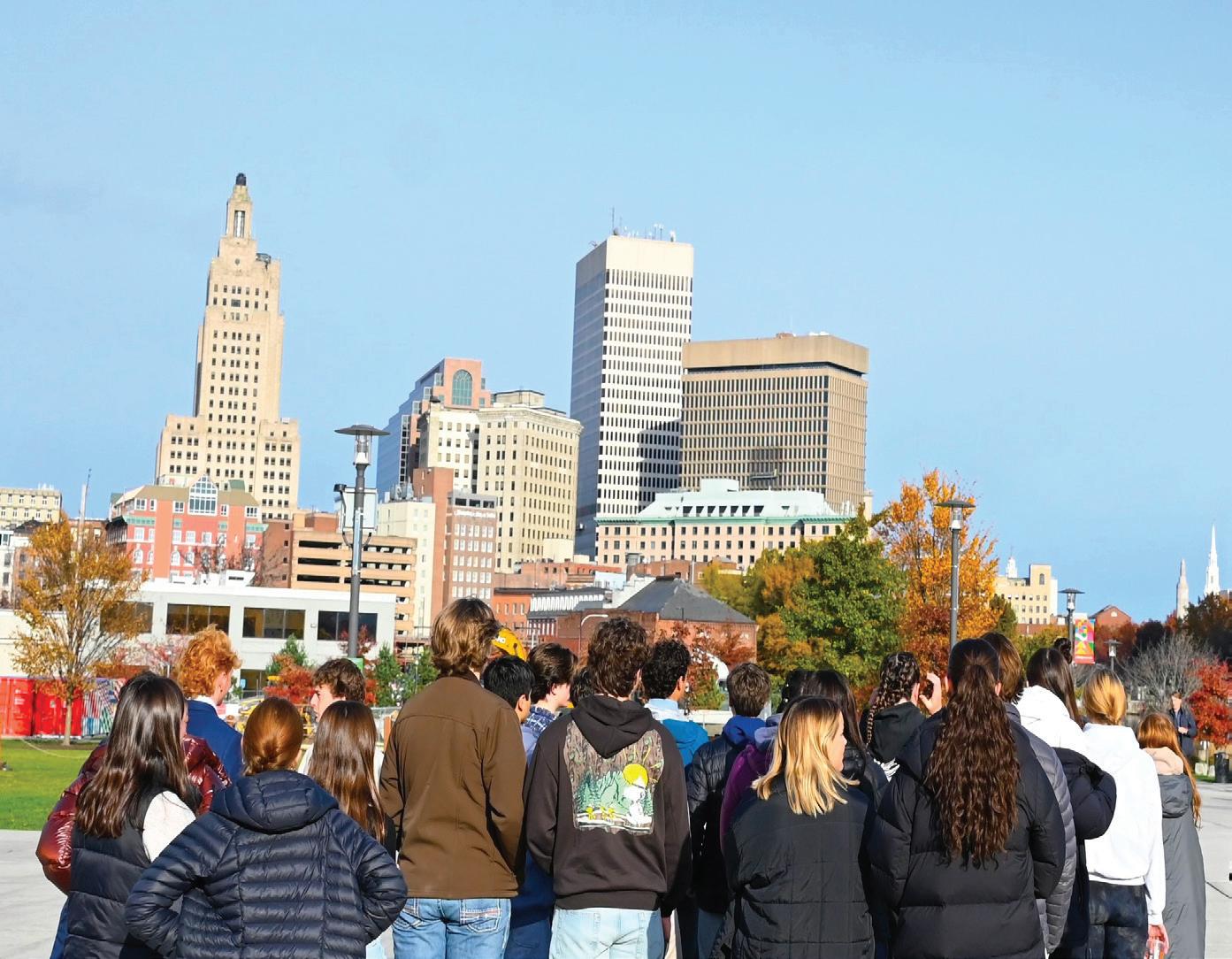
At Moses Brown, the classroom is often just a starting point for a much larger journey. A new Architecture elective pushed students to bridge the gap between abstract mathematics and the tangible world. Led by faculty member Nathaniel Shaw, the course was modeled after the high-pressure, high-reward environment of professional architecture schools. Forget standard assessments; these students spent their weeks in "desk critiques" and "pin-ups," presenting their evolving drafts to mentors and peers for rigorous feedback. The guiding principle was clear: Process over Product.
FROM SUSTAINABLE DREAMS TO REAL-WORLD REALITIES
Nathaniel had long thought about designing an architecture course that merged math and art. He’d worked previously with Tami Hughes, Associate Principal at DBVW Architects, and was inspired by her work with the ACE Mentor Program of RI, a program geared toward exposing high school students to the architecture, construction, and engineering fields. He designed the MB architecture curriculum around three major projects and launched the course with an ambitious challenge: designing a sustainable home.
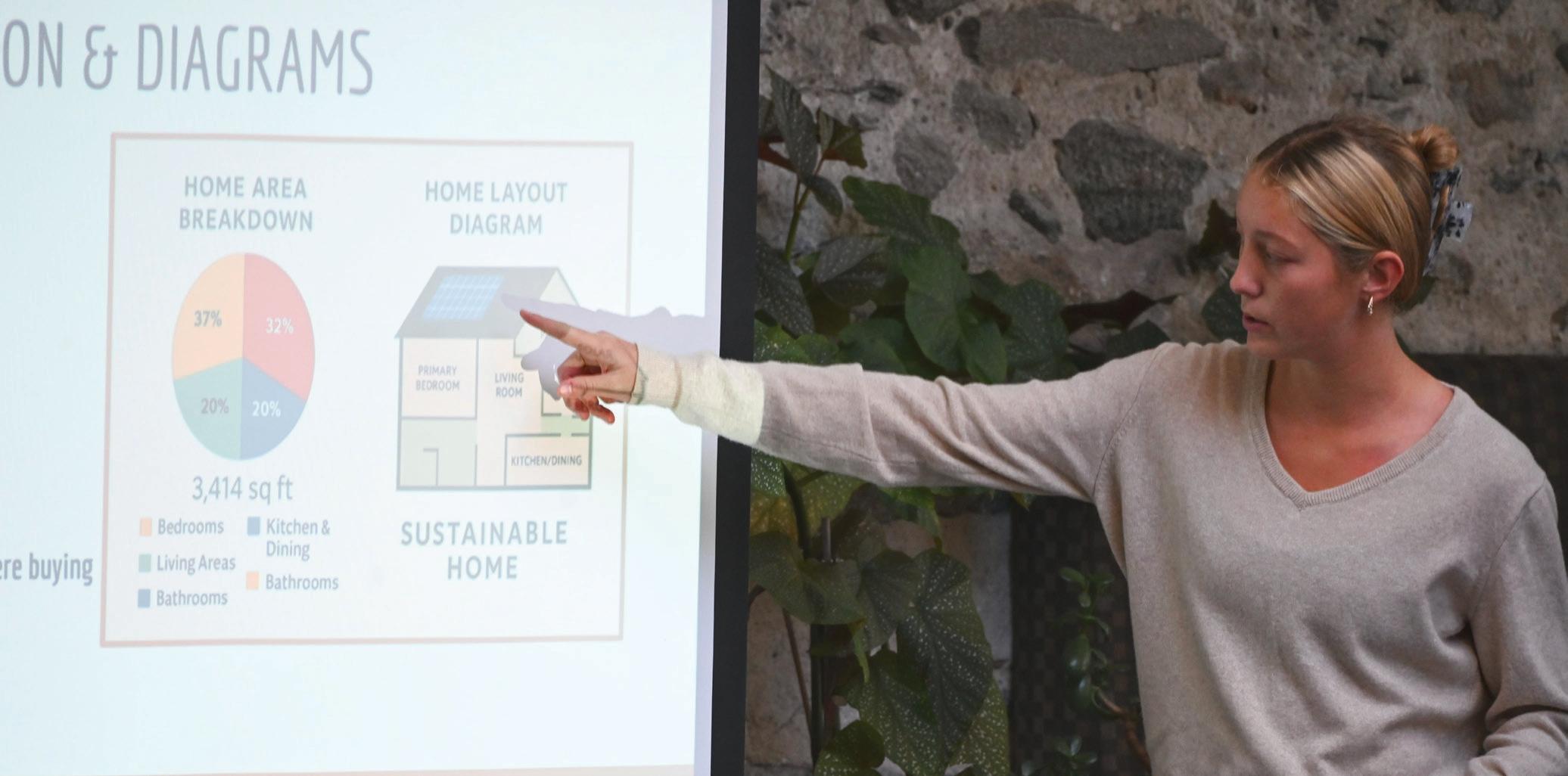
Working in groups, students dove deep into the science of building, debating the merits of slate vs. metal roofs and researching rust-resistant insulation



and advanced HVAC systems. The project also provided a vital reality check.
“People forget that sustainable also means tighter, smaller, less spacious buildings,” says Nathaniel. He noted that, “a lot of them built very large homes because they didn’t have an understanding of size,” adding that a keen sense of scale is often a challenge for novice architects. “When you’re designing a house that’s 25,000 square feet, that’s the same size as the Woodman Center, which seats 540 people!”
By grappling with these hurdles, students learned that true sustainability isn't just about solar panels— it’s about scale, budget, and efficiency. As they worked on their designs, students connected with local
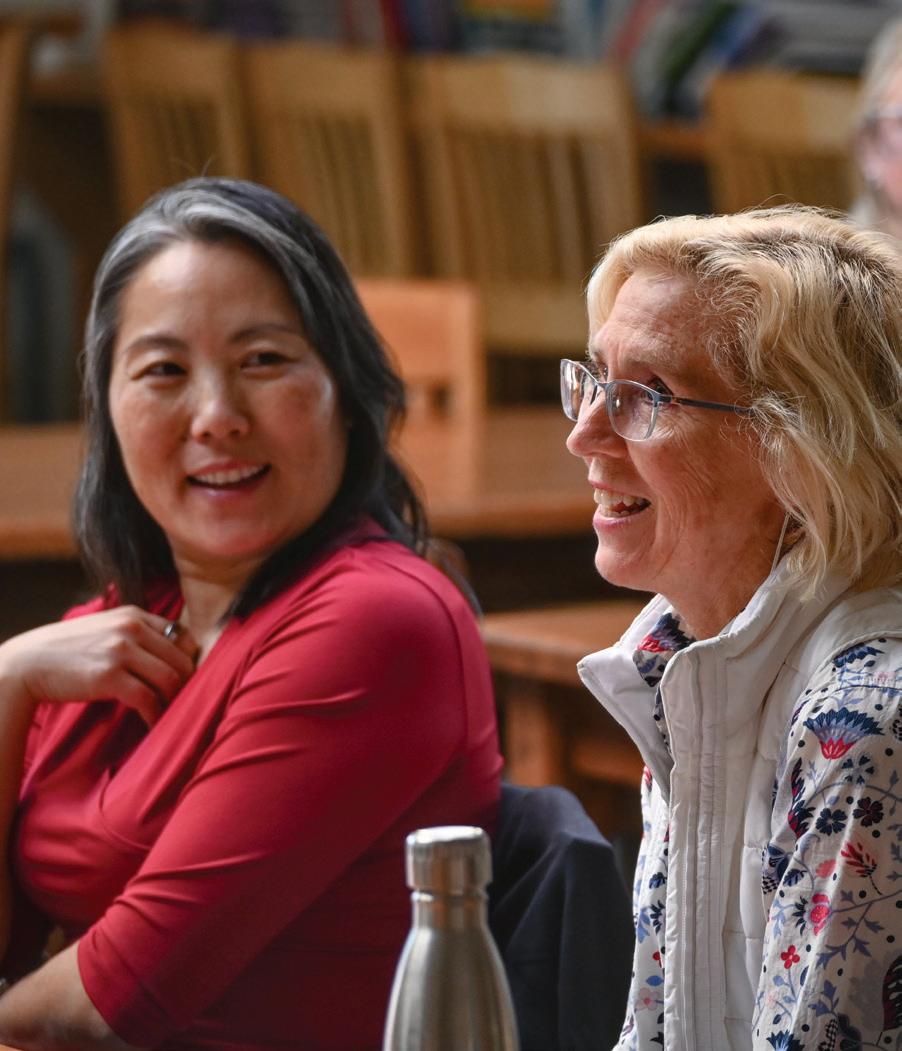
Architecture panelists Tami Hughes, Associate Principal at DBVW Architects and architect Katie Hutchinson engage in Q&A and provide guidance to students pitching sustainable home concepts.

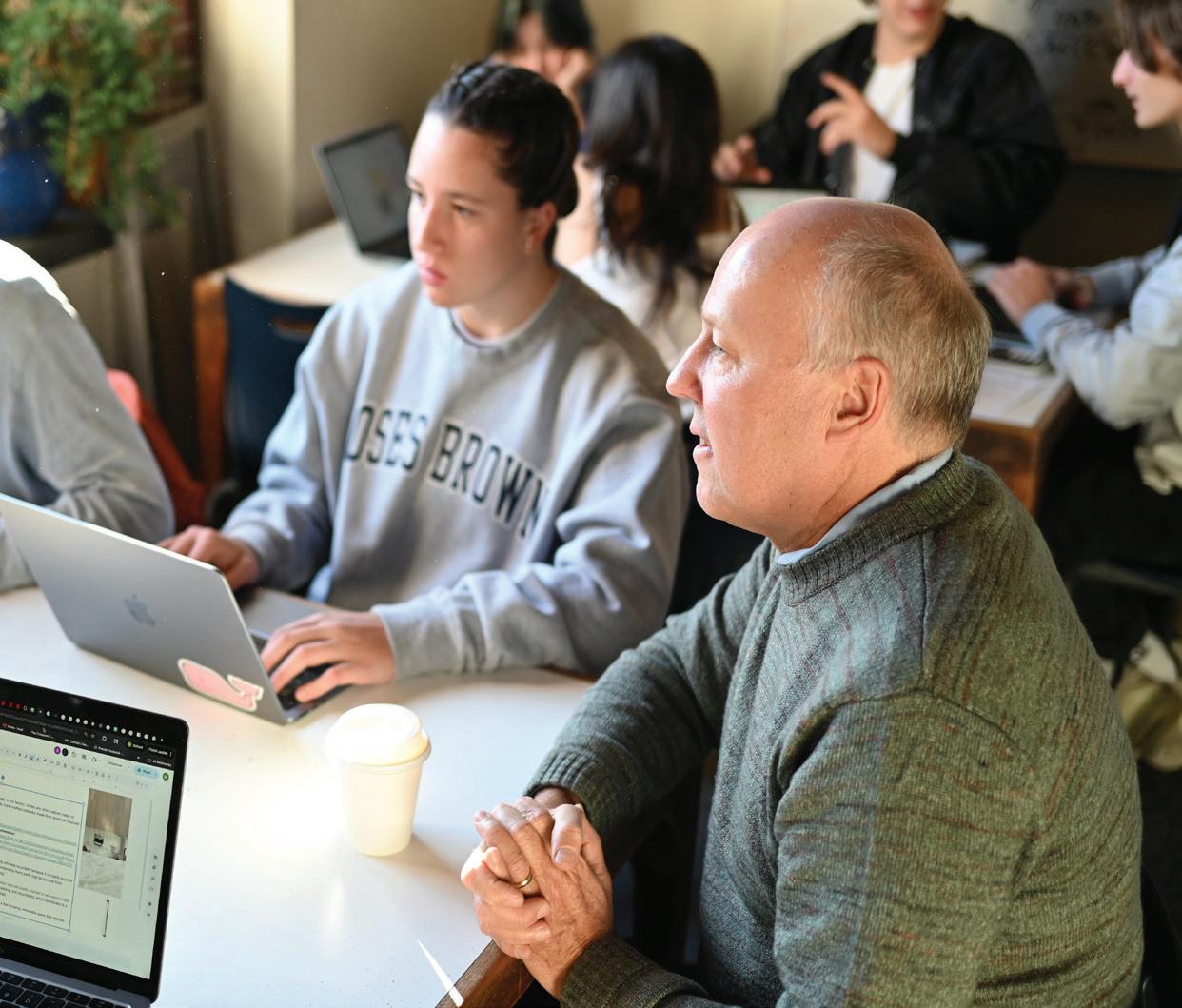
architects who generously gave their time during class periods for feedback. Visiting architects included MB parent Paul Attemann P’27, Principal & Director of Affordable Housing at Union, whose expertise in affordable housing design is especially sought after by clients and community members.
The project concluded with students presenting their sustainable home concept to the panel of architects, defending their work and engaging in Q&A with panelists that deepened their learning. This hands-on trial-and-error prepared them for their second and most significant task: a partnership with the Providence Housing Authority.
The Foundation Architecture Course Overview
The hands-on architecture course immerses students in the world of design, from foundational drafting principles to utilizing modern technology. Over a semester, students master techniques like sketching, modeling, computer-aided design (CAD), and 3D printing. Students taking the course in the 202627 school year will tackle real-world challenges by: designing a sustainable home (creating hand-drawn sketches and CAD blueprints for a single-family residence), addressing community needs (identifying a local project and developing architectural plans to meet those needs), and building for the future (collaborating with MB administration to reimagine Upper School spaces, culminating in a 3D printed and/or laser-cut model). Students will explore key concepts like sustainability, cost-efficiency, and the use of lines, patterns, and textures to create impactful designs. This course equips students with essential skills and knowledge for a future in architecture, while also bringing student awareness to the larger impacts architecture plays in their own community.
Spencer M. ’26, and Lauren B. ’26, receive feedback from Paul Attemann P’27, Principal & Director of Affordable Housing at Union.
Maddie P. ’26 presents her sustainable home concept to a panel of architects.
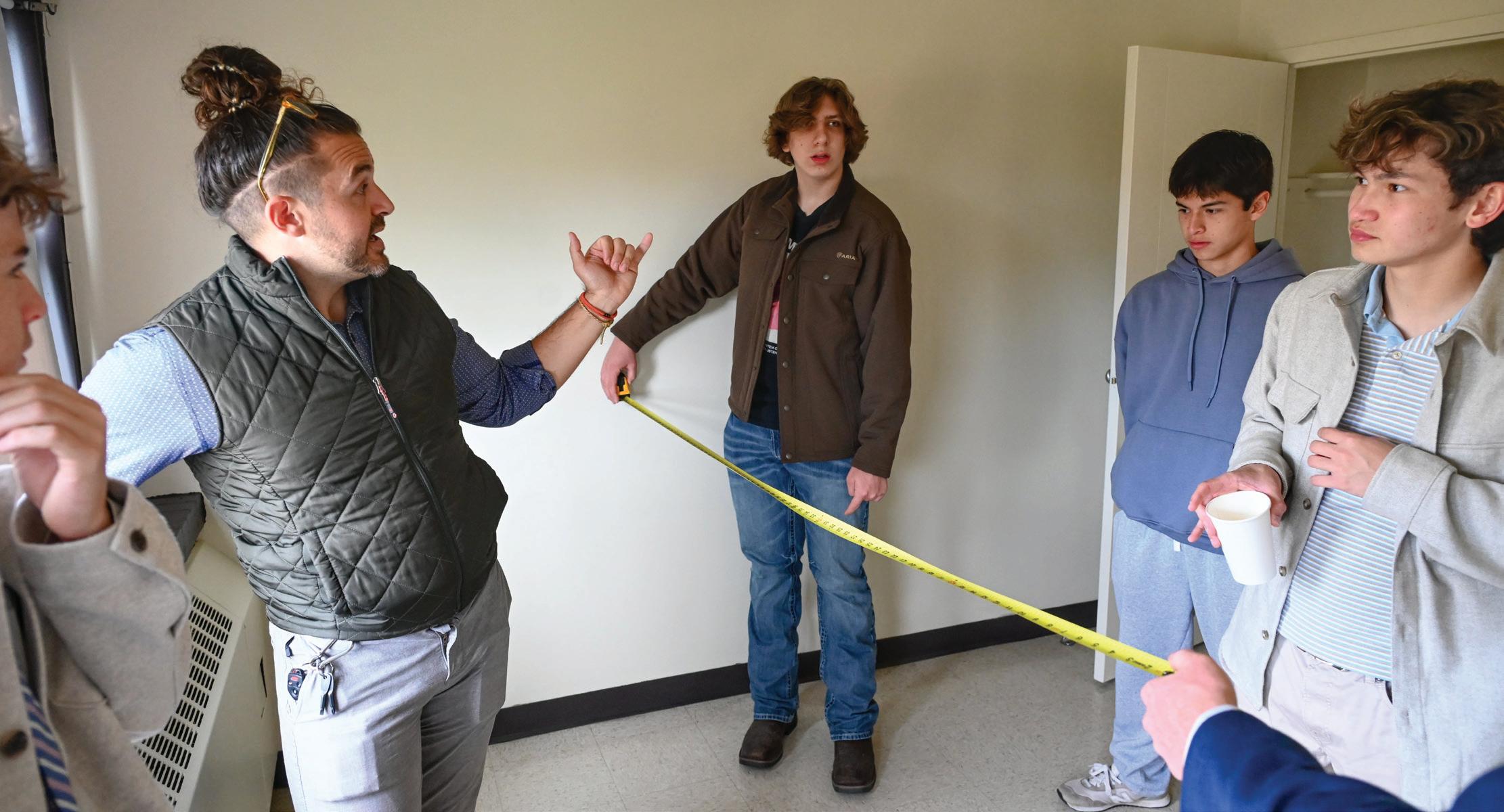

The experience was eyeopening for me. It was fascinating to create a space for someone and know it may be used in a real place."
- TANNER L. ’26
IMPACTING THE COMMUNITY: THE DEXTER MANOR PARTNERSHIP
To bring the lesson of architecture as service to life, the class partnered with the Providence Housing Authority to envision renovations to Dexter Manor, a low-income housing complex for the elderly.
“It was really important to me to get students off the Moses Brown campus and see some issues in the community,” says Nathaniel.
This wasn't a simulation; it was a community outreach initiative with real stakes. Students left the MB campus to interview residents and board members, discovering that good design is as much about listening as it is about drawing.
"One of the most rewarding things about the project was how the residents seemed super excited that high schoolers were coming in to show we care and try to help,” said senior Dario B. ’26. “It has given us an opportunity to not only learn something about architecture, but also to help the community around us and use what Moses Brown gives us to apply our learning for the greater good.”
“What I really valued from this project was to be able to think creatively and think in a unique and new way, using underdeveloped spaces that people overlook,” Senior Reese C. ’26 shared about the problem-solving component of the work, “while also being able to potentially improve people’s lives.”
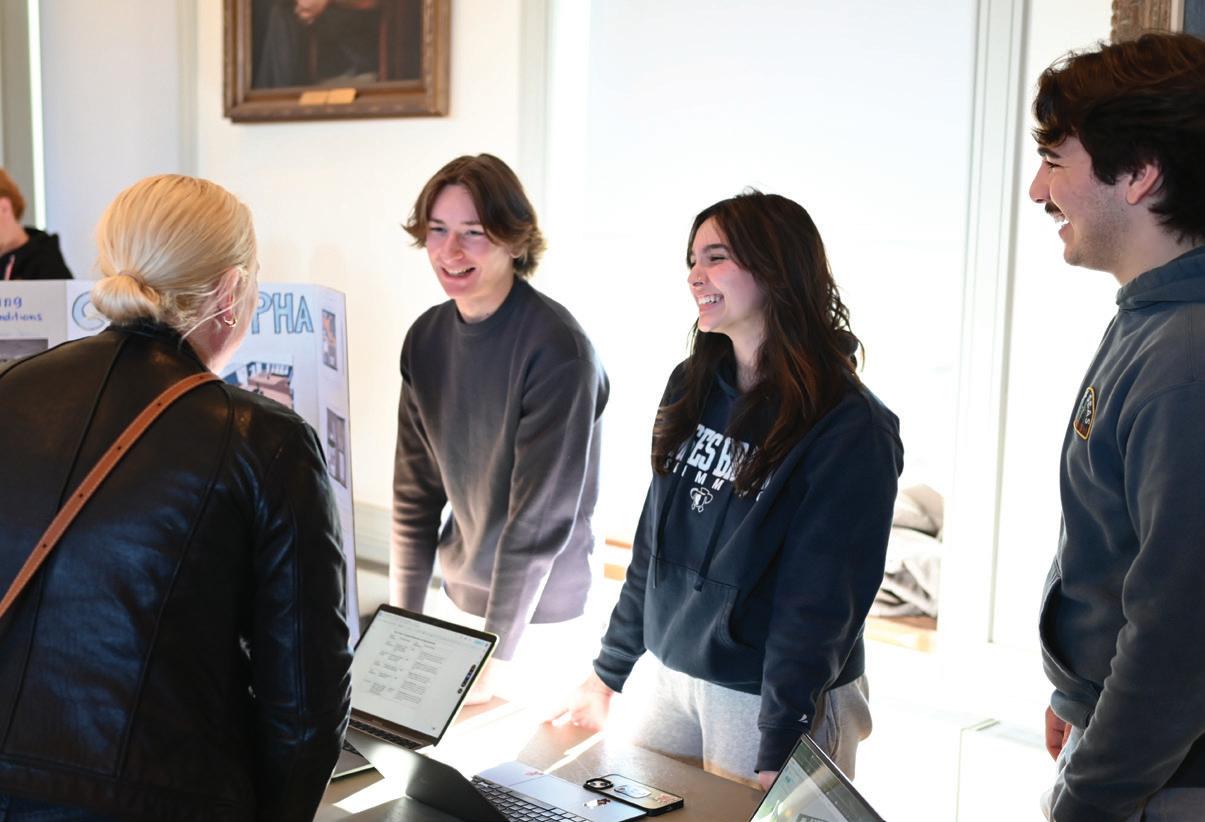
A culminating professional symposium in the Sinclair Room allowed students to exhibit their work with Providence Housing Authority administrators and residents along with MB parents, faculty, and staff. While showing their work, 3D models included, students answered
Nathaniel Shaw discussing design choices with Alex M. '26, Jorge M. '26, and Jack L. '26 at Dexter Manor.
Fin G. ’26, Jocelyn B. ’26, and Alex M. ’26 exhibit their work on the Dexter Manor project.
“
It has given us an opportunity to not only learn something about architecture, but also to help the community around us and use what Moses Brown gives us to apply our learning for the greater good.”
- DARIO B. ’26
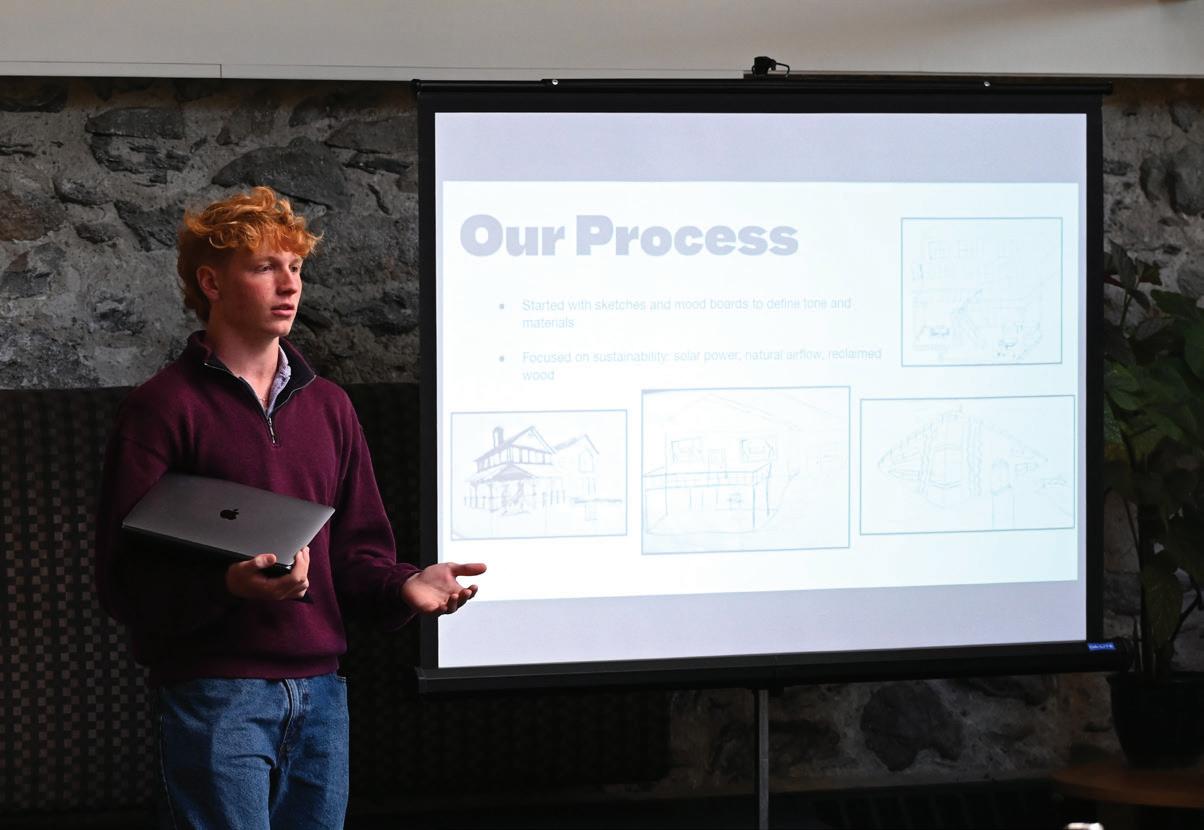
questions about their rationale, articulating the why behind their work.
"I added a lot of clothing space because residents felt they didn't have enough,” explained junior Cecilia S. ’27 about her closet design decisions for the studio apartments. She found the project particularly rewarding due to the potential for her ideas to influence the Providence Housing Authority’s future plans.
A PORTFOLIO OF POSSIBILITIES
The third major project in the course was an independent study where students had agency and choice to design a project of their own interest. Some redesigned their bedroom. Some worked on aspects of the MB campus that they wish were different. Some researched materials that could be used instead of standard materials used now and other ways to make more sustainable building choices.
The course concluded with a final portfolio review by Nathaniel appraising the students’ trajectory across the three projects. By the end of the semester, the students had moved beyond only technical growth; they had become intentional creators who understood the profound impact of every line they drew
“The experience was eye-opening for me,” said Tanner L. ’26. "It was fascinating to create a space for someone and know it may be used in a real place."
It was a lesson that is in essence the blueprint of the Moses Brown experience: taking what is learned in the classroom and applying it, quite literally, to the world outside. Through critiques, community interviews, and final defenses, these students moved far beyond the drafting table. They didn't just learn how to sketch a building; they learned how to architect a more thoughtful, equitable, and sustainable future for themselves and their neighbors.
Dario B. '26 describes his design process to a panel of architects.
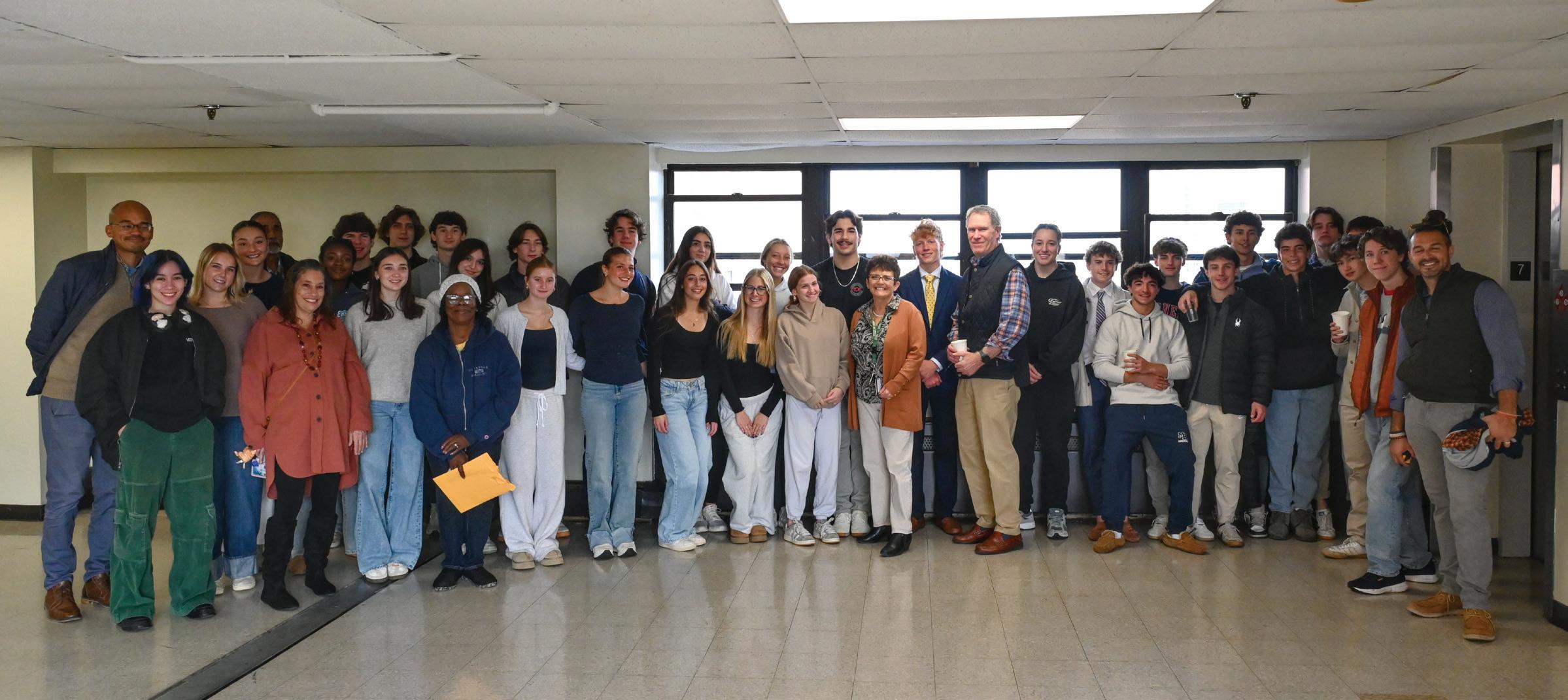
Moses Brown students in Nathaniel Shaw’s Architecture course collaborated with staff and residents of the Providence Housing Authority, envisioning renovations to its low-income housing complex for the elderly, Dexter Manor.




















































in Art MOTION
Student-designed and Alumni-built: Meet the Moses Brown X GILSON Collection
When high-performance engineering hits the mountain, it usually carries the stamp of industry veterans. But the latest collection from Gilson Snow — the MB Collection — is powered by a different kind of engine: the creativity of Moses Brown students. What began as a consulting challenge in the Economics of Social Innovation course has evolved into a professional partnership with Nick Gilson ’07, turning the classroom into a design studio and upper schoolers into professional artists with products on the global market.
Ski and Snowboard designers from left to right: Slopes of Simplicity Skis by Jasper Miller-Mattis ’25, Quaker Blu e by Aidan Spencer ’24, Undead Quake r by Seamus Hanlan. ’27, Evergreen by Nicolas DiRico. ’27, Veritas by Jack Lou ’26, Skyward by Addisyn Prescott ’24, Live Free or Loon by Nicholas d’Entremont ’25, Mountainscape by Marybeth Fitzsimmons ’20, and Outdoor State of Mind by Liam Cromie ’26.
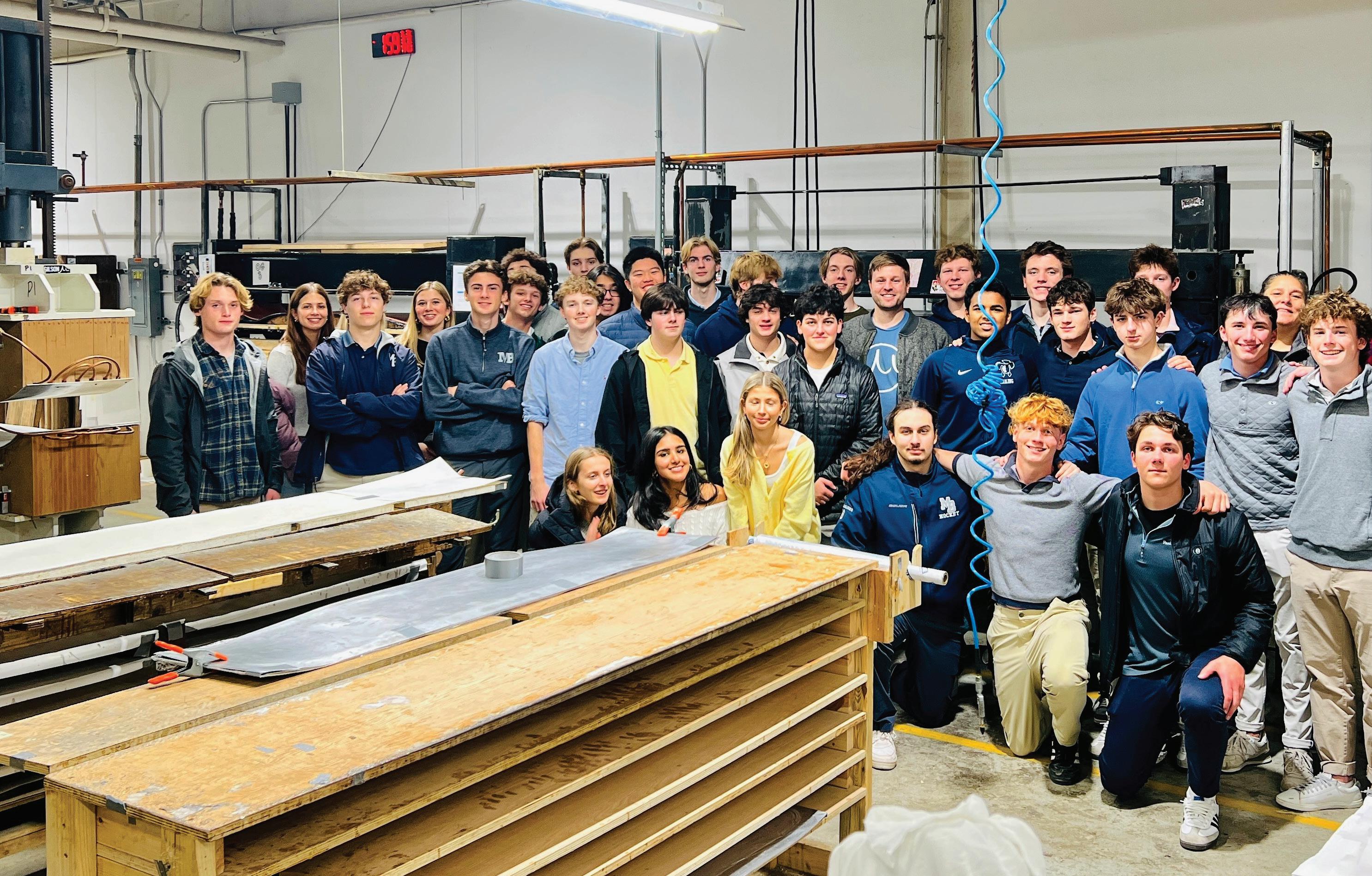
It isn't every day that a classroom project ends up on the slopes. In an elective course that bridges the gap between classroom and the professional world, students have transitioned from consultants to creators, designing a stunning line of snowboards and skis that honor the MB spirit while competing at the highest level of the industry.

solutions. These projects are designed to be mutually beneficial; students gain professional experience while companies receive fresh, demographic-specific insights.
The Economics of Social Innovation (ESI) course at Moses Brown School has redefined the classroom experience by transforming upper schoolers into professional consultants for real-world enterprises. Taught by Dr. Gara Field and Dan Ohl, this course focuses on the intersection of entrepreneurship and social responsibility, challenging students to prepare for the Social Innovation Challenge. This high-stakes, sharktank-esque presentation tasks students with solving authentic problems for socially-minded businesses looking for actionable

One of the most robust partnerships within this framework has been with Gilson Snow, a highperformance ski and snowboard manufacturer founded by MB alumnus Nick Gilson ’07. In a foundational challenge, students were asked to identify the next global partner for the company to appeal to the 18–25 age demographic. Working in teams, students conducted five weeks of research into the company’s mission and Gen-Z trends before proposing collaborations with major brands such as Barstool Sports, Marvel Comics, Ben & Jerry’s, Supreme and others. The pitches were so compelling that Nick entered discussions with one of the collaborators suggested by the class.
Nick would continue his work with the students, hosting various
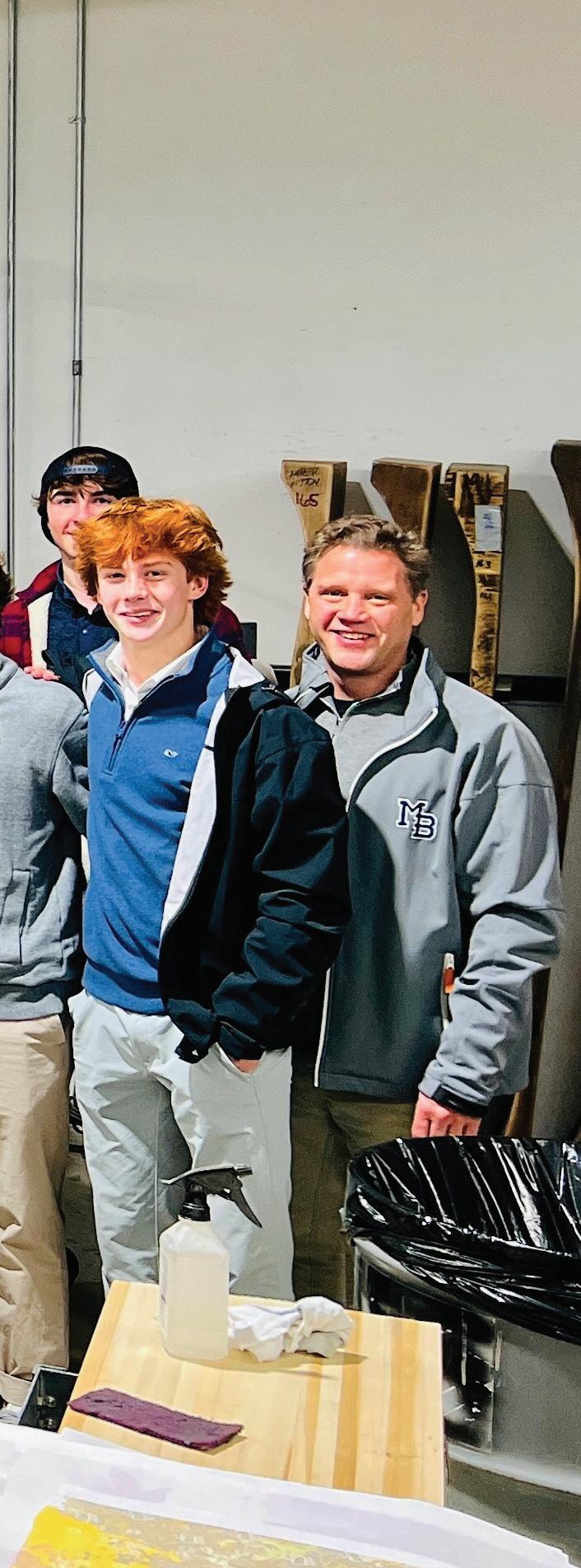
economics classes at the Gilson Snow headquarters in Selinsgrove, Pennsylvania. They went beyond a simple tour, getting hands-on in the manufacturing facility to help create the physical boards from the winning designs. For the students involved, the experience provided professional deliverables and hard deadlines that made the work feel like a true business venture.
The collaboration has since evolved from business consulting into the realm of physical product development. MB extended the Gilson Snow partnership to MB Immersion when senior Addisyn Prescott ’24 led a Snowboard Design immersive alongside Gara and Nick. During the three-day intensive learning period, students conceptualized their own snowboards, pushing themselves to look inward and create designs that represented their identities and passions. Nick was so impressed by designs that the idea for a special MB and Gilson collection emerged,


Scan to view the video announcement of Liam's board!






culminating in the official launch of the Moses Brown x GILSON Collection. Several designs in the collection originated in the spring of 2024 during MB Immersion, including those by Liam C. ’26, Jasper Miller-Mattis ’25, Nicholas d’Entremont ’25, and Addisyn Prescott ’24. While boards created by Marybeth Fitzsimmons ’20, Aidan Spencer ’24, Seamus H. ’27, Jack L. ’26, and Nicolas D. ’27 were part of the ESI social innovation challenges in 2025 and 2026.
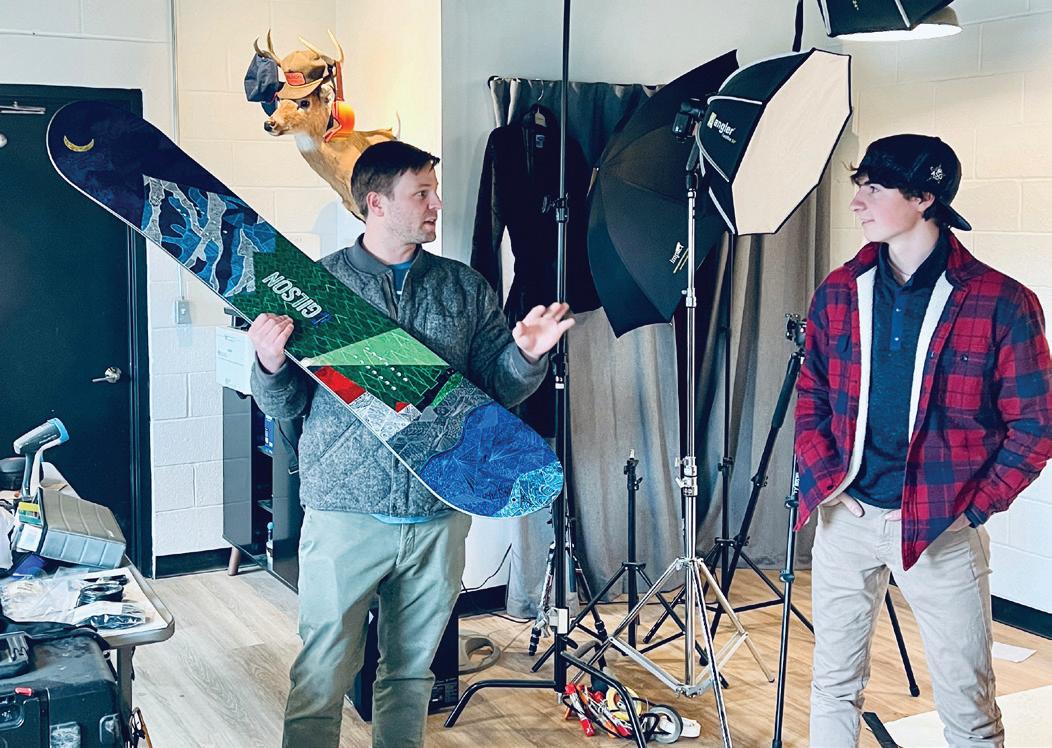
Senior Liam Cromie ’26, holds the distinction of being the youngest artist to ever have a design brought to market by Gilson Snow. His handdrawn concept, which began during his sophomore-year immersion, was one of the first boards developed at a factory visit with ESI class and was launched by Nick before the MB
Collection came to fruition. Another featured designer, alum Marybeth Fitzsimmons ’20, created a winning board that incorporates several "Easter eggs" specifically for the Moses Brown community to discover.
The collection showcases the artistic and entrepreneurial talents of current students and young alumni through a diverse range of products. The lineup includes the Mountainscape and Skyward all-mountain boards, the Slopes of Simplicity Skis, and the Undead Quaker, Quaker Blue , and Live Free or Loon. Rounding out the collection are the Evergreen and Veritas all-mountain snowboards. Each piece is designed to perform at the highest level on the mountain while carrying artwork that tells a much bigger story of the MB community.
Today, every purchase from the Moses Brown collection serves a dual purpose: a 10% royalty goes directly to the student or alumni artist, and a portion of the proceeds is donated to the Moses Brown Fund to support the school’s mission, faculty, and student scholarships.

Scan the code to view the collection!
Continuing Revelation in the Age of
HOW DOES A 242-YEAR-OLD INSTITUTION NAVIGATE THE MOST RAPID TECHNOLOGICAL SHIFT OF OUR TIME?
AI
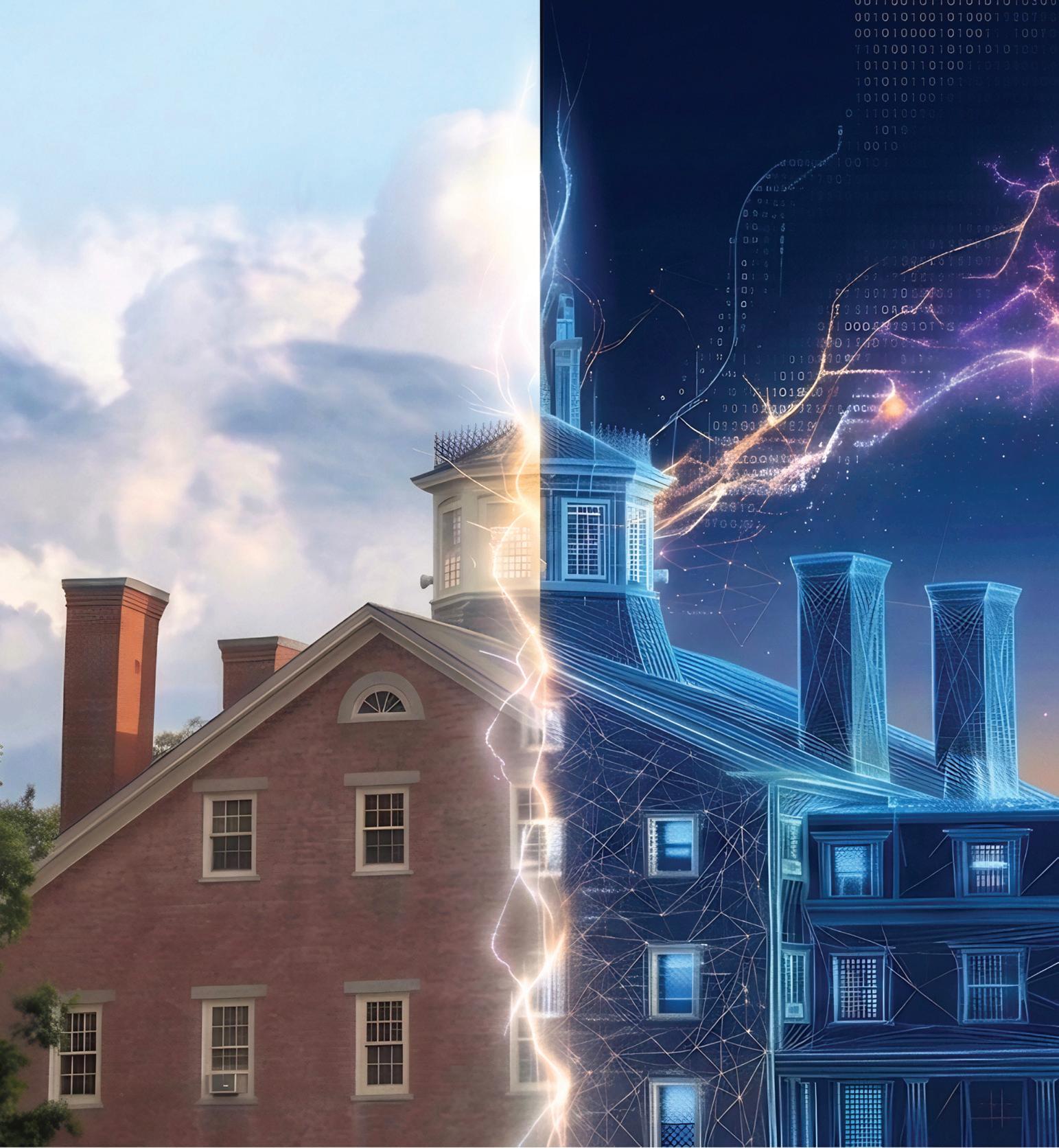
We do so with the very tools that have sustained us for centuries: careful discernment, a commitment to human connection, and a relentless pursuit of the Truth.
At Moses Brown, the rise of Artificial Intelligence holds the potential to serve not as a threat to our traditions, but as an invitation to deepen them. As we look toward our 250th anniversary, the concepts of Stability and Momentum are guiding our approach to this new frontier. Our Quaker values provide the unshakeable bedrock, ensuring that ethics, privacy, and authentic relationships remain at the center of the student experience. Simultaneously, our faculty and students are leaning into the momentum of innovation: building custom learning algorithms, facilitating national conferences, and synthesizing nine-year strategic visions.
Moses Brown is actively shaping the conversation around AI in N-12 education. From the Head of School’s office to the Lower School coding labs, our community is proving that tradition and innovation are perfect partners, working together to light the way forward.
Katie Titus Featured on the Independent School Moonshot Podcast
What happens when you combine the centuries-old Quaker practice of continuing revelation with the cutting-edge capabilities of Artificial Intelligence?
According to Head of School Katie Titus, you get a strategic vision that is both deeply authentic and radically forward-looking.
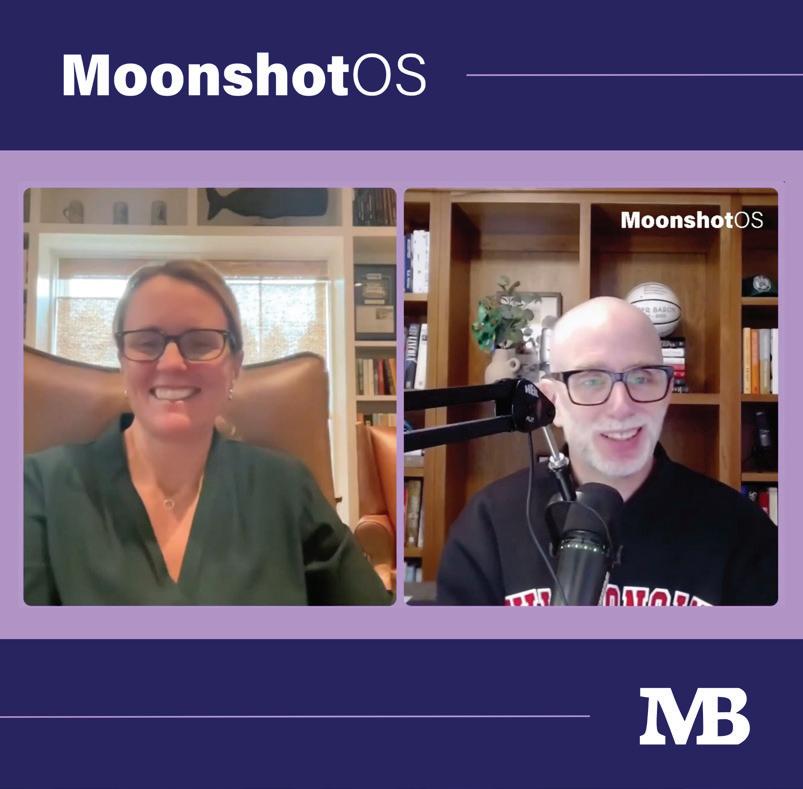
Katie was recently a featured guest on the Independent School Moonshot Podcast, where she shared her insights on navigating the complexities of modern independent school leadership. The conversation focused on Moses Brown’s upcoming 250th anniversary and the internal process the school used to chart its future.
REDEFINING LEADERSHIP IN THE AGE OF AI
At Moses Brown, we believe that the strongest path forward is one we chart together. As we looked toward our 250th anniversary, the question wasn’t just what our future should look like, but how we should decide it. In the interview, Katie positions the school’s recent strategic planning process as a case study in ethical innovation. Rather than outsourcing the school's vision to external consultants, Katie championed an internal approach that relied on community trust.
"We leaned into our Quaker values, elevating voice, trust, and shared ownership across the community," she explained.
What set this process apart was an innovative blend of human connection and artificial intelligence.
Crucially, Katie discussed how she guided the school to use AI as a tool for inclusion rather than efficiency alone. Rather than using AI to generate ideas or write the plan, the school utilized it to synthesize hundreds of narratives from students, faculty, and alumni. The leadership team was then able to identify patterns and honor individual voices without losing the human nuance—a strategy she describes as "accelerating insight."
A MODEL FOR STUDENT AGENCY
Beyond technology, Katie highlighted the pivotal role of student leadership. By training students to facilitate dialogue with adults, the process shifted the traditional power dynamic, ensuring our strategic planning wasn't just for students, but also by them.
The result was our nine-year vision, Light the Way, which honors Moses Brown’s history while aggressively pursuing future goals. By combining student-led facilitation with cutting-edge data synthesis, MB created a roadmap that is not only strategic but deeply authentic to our culture.
Photo above: Head of School Katie Titus (left) joined Peter Baron on the Independent School Moonshot Podcast to share a blueprint for modern educational leadership.
Scan the QR code to listen to the full podcast episode!

Meeting the Moment:
How the MB Community is Reckoning with Artificial Intelligence
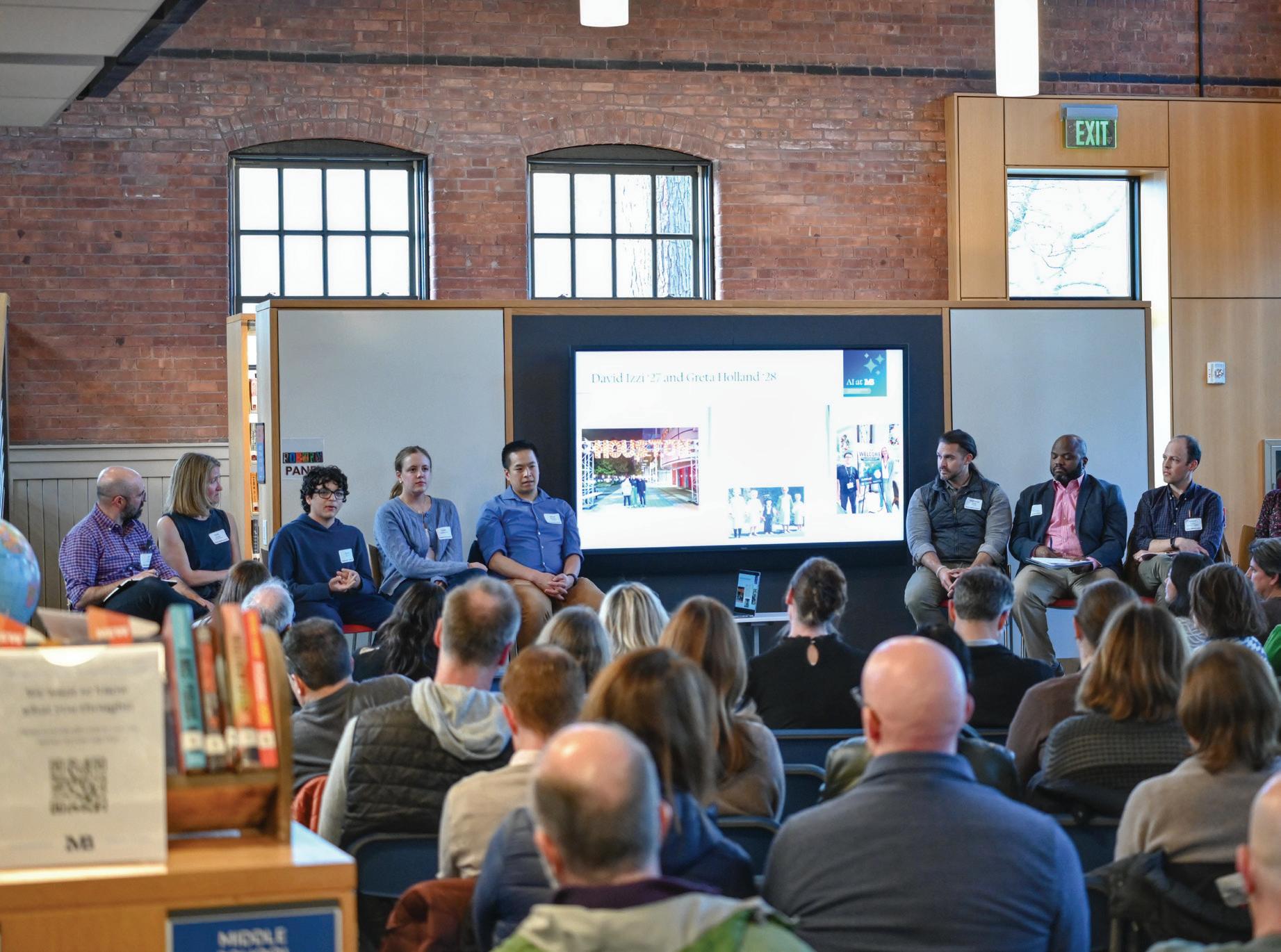
Today, our students are navigating a world that is changing faster than ever before, and Artificial Intelligence is reshaping the educational landscape. When a group of school leaders, faculty, and students took their seats as panelists on an April evening in Jones Library for discussion with parents about AI at MB, a clear narrative emerged: Moses Brown has not been passively waiting to see how AI will evolve the classroom experience. Instead, our community has been actively and thoughtfully shaping it.
Moderated by Middle School history teacher Jon Gold, the AI at MB panel provided deep insight into MB’s AI journey from Open AI’s public release of ChatGPT in November 2022, to AI’s use at MB today, to how students and graduates will be expected to be proficient in its use it in the future.
This candid presentation followed by open Q&A dialogue was emblematic of how our 242-year-old institution leans into its founding Quaker values to parse modern challenges and opportunities.
What began as an ad-hoc group of faculty gathering at Knead Donuts to talk about AI in the summer in 2023 soon turned into a schoolwide reckoning with technology that spans academic divisions and constituencies. Board-committee level discernment, employee professional development, and student and parent sessions have all fostered deep explorations of the ethics, creative potential, and role of AI in MB classrooms. As a
result, several in the Moses Brown community are now thought leaders in this space, sharing experiences on podcasts and not only attending but facilitating and presenting at national conferences and workshops.
“We’re having these conversations about AI but they become about pedagogy, about learning, about epistemology, about knowledge, about all the things teachers love to think about together,” said Jon, challenging the audience to think about the technological aspects of AI as just the tip of an iceberg. “There’s a lot underneath the surface that we’re thinking about, whether it’s assessment, metacognition, students skills, or academic integrity.”
A TOOL NOT A SHORTCUT
For many of today’s parents, one concern surrounding AI lands exactly there: on academic integrity, the temptation of shortcuts, and the potential for AI to diminish rather than enhance student learning.

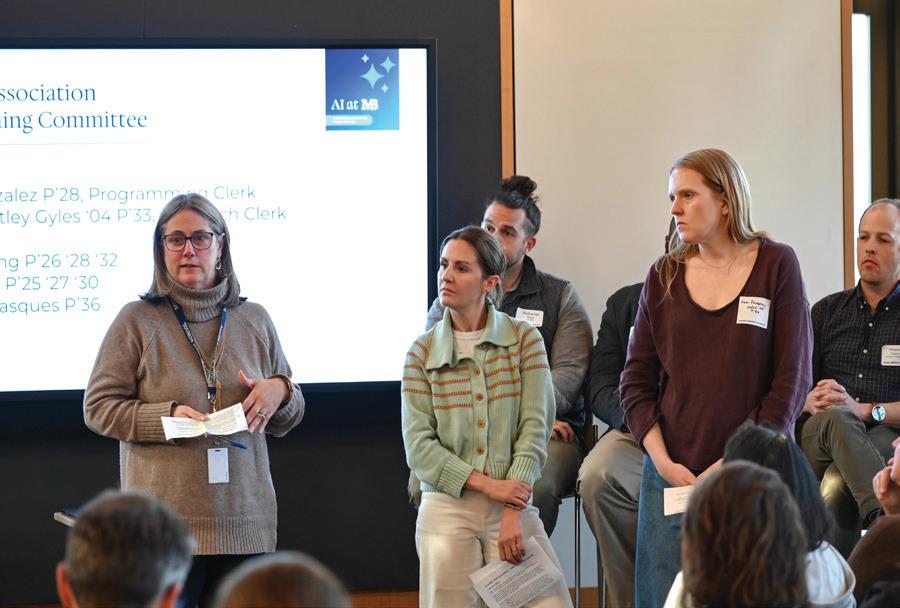
Upper School Dean of Students and English teacher Wilson Taylor addressed this head-on, noting he initially approached the technology as a skeptic. He acknowledges the fear of “a nightmare world” where AI can undermine the pillars of learning and growth, relationships and community, and integrity and authenticity. Yet he believes there is a world where conversations and commitments around AI can uphold these pillars, and that’s the place in which he believes Moses Brown is working.
“How are we upholding all of these things that are integral to who we are?” Wilson ponders. “We do so by having a lot of conversations with students in the classroom, outside of the classroom, keeping it as part of the discourse at school. The conversations are really thrilling, even as I have concerns about AI as a technology.”
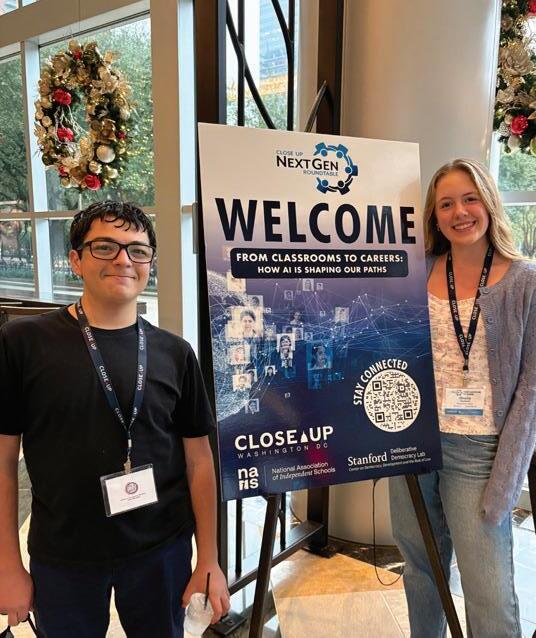
That sentiment isn't just held by adults in the MB community; it is deeply felt and lived by students. Upper school student panelist Greta H. ’28, had recently attended “From Classrooms to Careers: How AI is Shaping Our Paths,” a NextGen Roundtable national deliberation to help high school students critically examine AI in their lives.
[See story page 30.]
Echoing Wilson’s focus on authentic connection and the human element of learning, she noted that MB’s tradition of Harkness table discussions uniquely prepared her, and fellow panelist and roundtable participant David I. ’27, for this national dialogue. The ability to sit across from a peer, listen deeply, and debate complex issues is a distinctly human skill — one that AI cannot replicate.
“The conference was such an incredible way to learn other people’s perspectives,” said Greta. “We had discussions with other people in our same positions in high school. Maybe I have the same position as that person and maybe I don’t. Moses Brown prepared us so well to go into those discussions, especially with Harknesses.
“I went to the conference with a very closed-minded opinion of AI, and this conference very much opened my understanding. My main takeaway is that AI can be used in a way that doesn’t prevent you from learning but helps you grow, and you can use it as a tool to better understand things.”
Concurring with Greta on both points, David noted that “Jen McFadden [Director of Friends Education] really prepped me well. We had this deliberative training
in Quaker practice a few years ago, and I’m so fortunate that I had that experience here prior to going to the conference.
“I think it’s really easy to become extremely fearful of AI,” David continued, “and while those fears need to be upheld, you can also approach it from another angle, the angle of it can help you sometimes.
“The common consensus from the conference was that schools just can’t say no to AI, right? That isn’t going to work. Because kids are going to become evasive of that rule, and there is going to be more of a wish to use it if schools are automatically, no, no, no. And while schools can’t say yes, yes, yes, the answer is somewhere in between.
“I’m so fortunate to be at a school where the answer isn’t sharply no or sharply yes because a lot of other independent schools hadn’t really looked into AI as much as Moses Brown has. A lot of schools haven’t been having this conversation, and Moses Brown has. There is a path, somewhere in between, where you teach kids that AI can be an aid in helping you learn, but it also shouldn’t be your learning. Your learning is your learning, and AI can’t be a part of that.”
Above: The AI at MB event was co-hosted by the Parents' Association and Parent Diversity Committee.
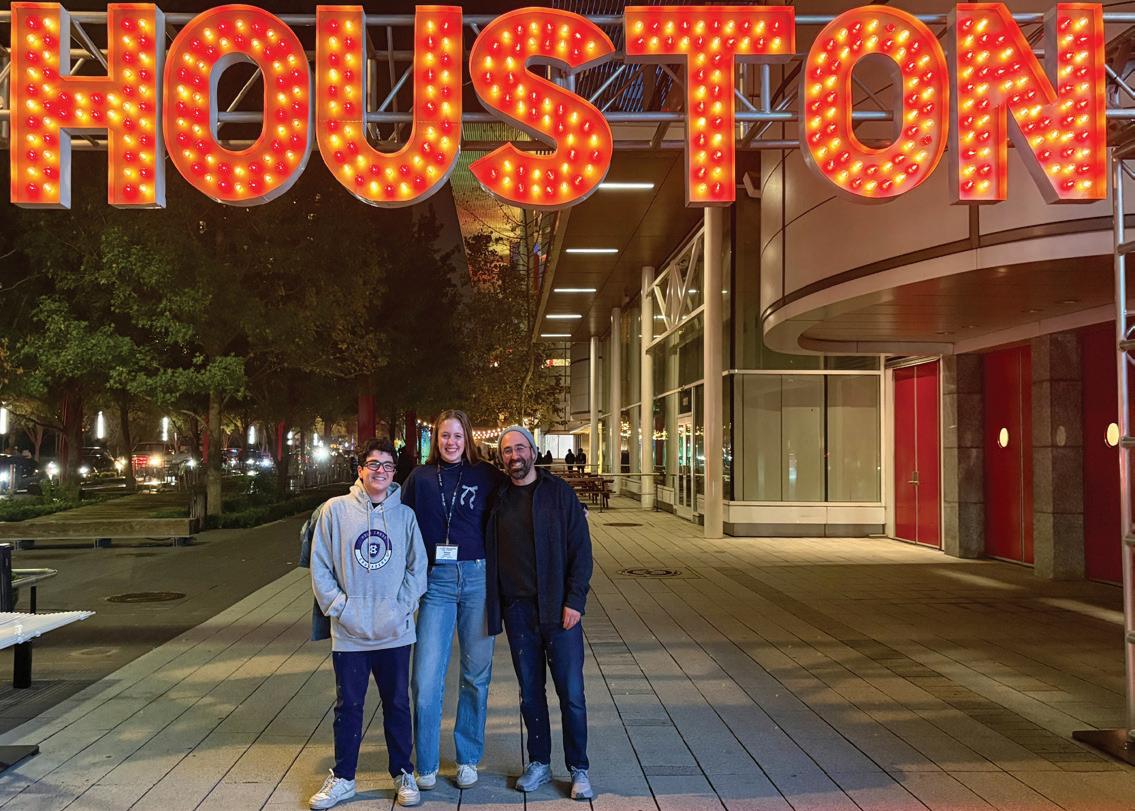
Right: David I. ’27 ,Greta H. ’28, and middle school history teacher Jon Gold visited Houston, TX, for concurrent conferences about AI.
PRESERVING THE FUNDAMENTALS
MB is committed to preserving authentic personal learning across all divisions. Head of Lower School O.J. Martí assured parents that while early coding and machine learning concepts are being introduced to MB’s youngest learners, the core mission remains unchanged.
“Nothing beats the human aspect of elementary education,” Martí stated warmly. “A robot is not going to be able to do that. We want kids to be critical thinkers, to think about a problem and solve it, and that’s the essence of what we do in Lower School. We nurture that whole child, intellectually, socially, emotionally, all grounded in the values of Friends education.”
The age of AI will not take away the core of educating curious, reflective learners and compassionate community members who value inquiry, voice, and responsibility in both their academic work and their relationships. This core remains a focus of all academic divisions, and partnership with parents is always critical.
BUILDING BESPOKE LEARNING EXPERIENCES
If human connection provides stability, technological innovation can provide momentum. In the classroom, faculty are already moving far beyond simple chatbots, using AI to engineer highly customized learning experiences.
Teacher Oliver Khamky shared examples of how he uses AI to build bespoke interactive activities with machine learning visualizations, economic simulations, and geometric challenges for students
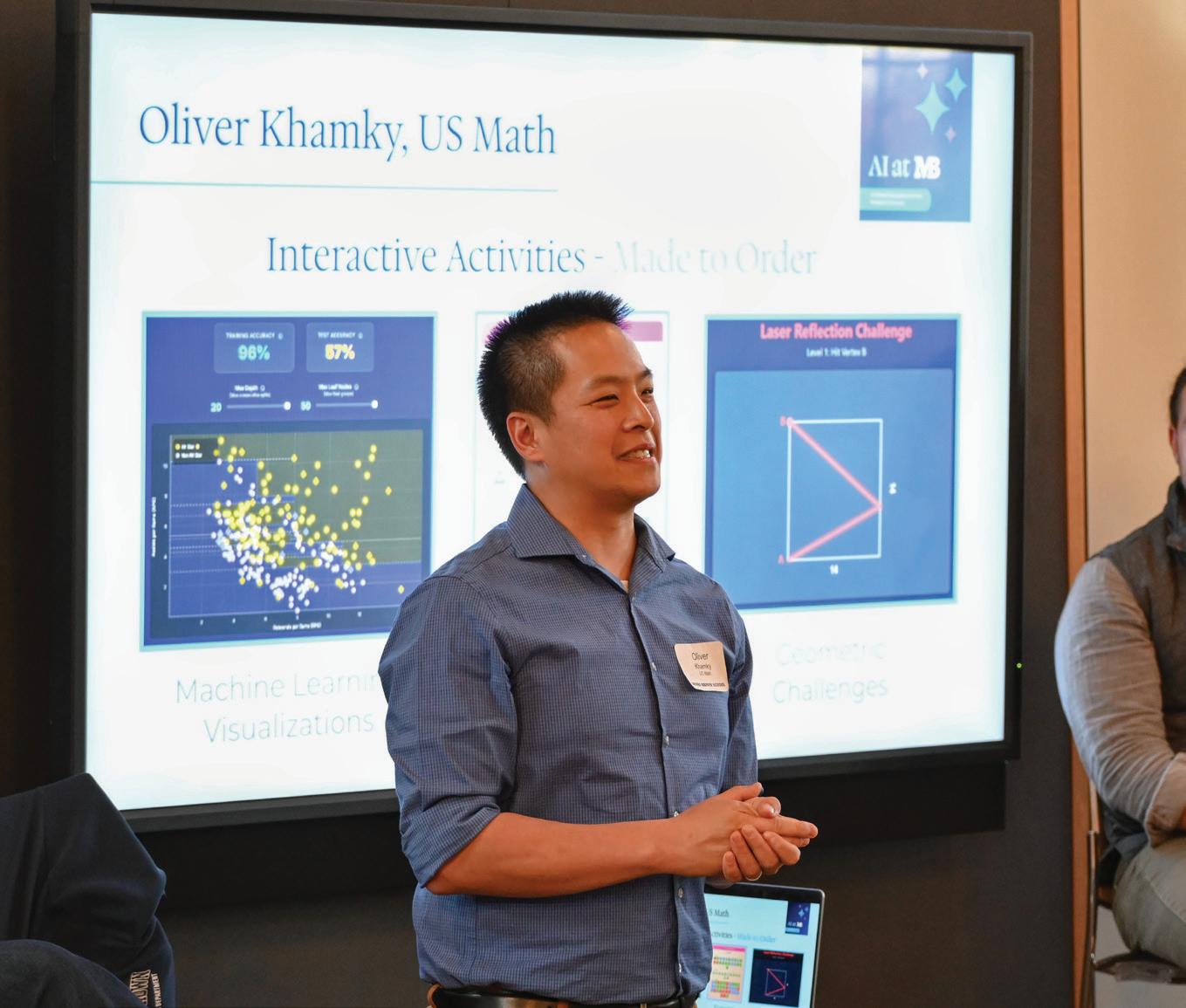
in his upper school math classes. He described how he could rapidly develop projects that previously would have taken weeks.
“To teach like this, I need an unending supply of activities for them to do,” remarked Oliver. “If I have an idea for something cool, I can make it happen. The part of AI that makes me excited is thinking about what AI makes possible that was not possible before."
Oliver believes that AI can help kids with vision and curiosity also think about and act on endless possibilities. “If they have an idea for something that helps people, that the world needs, now more than ever they can make that happen with the help of AI.”
Math Department colleague Nathaniel Shaw, describing himself as someone who doesn’t like to wait, jumped right in as an early adopter to try to leverage the power of AI. Now, he considers himself a superuser, using AI as a curriculum collaborator, a co-designer, a debate partner, and more.
“I don’t like a lot of the ambiguous language in rubrics, like ‘student did great work, student did good work.’ I don’t know what that means,” says Nathaniel, who
uses AI to help him develop highlysophisticated, project-specific rubrics for assessment. “I’ve been able to do things as a teacher that I never would have been able to do without the use of AI."
Those uses include fast-tracking the identification and engagement of community partners for projectbased learning in his classes, and data collection and analysis tasks “so we can spend more time on the actual meaning of the material.” The technology acts to enhance his already dynamic teaching practice. "The amount of information I can synthesize and use and then create curricula for my students, it’s been a superpower.”
Students are matching this momentum, recognizing AI as a collaborative partner rather than a replacement for their own intellect. Reflecting on her shifting perspective, Greta articulated a mature, nuanced approach to the technology.
“AI can be used in a way that doesn’t prevent you from learning but helps you grow, and you can use it as a tool to better understand things.”
Upper school math teacher Oliver Khamky
ETHICS, SAFETY, AND THE NATIONAL DIALOGUE
To responsibly harness these tools, Moses Brown has built a robust infrastructure of safety and ethical inquiry. Dawn Slack from the MB Technology Department offered parents a view of MB's approach, detailing how the school protects student data through closed-system AI models designed specifically to refuse harmful prompts.
“We’re a Google school, so our data exists in that ecosystem,” explained Dawn. “It is covered by an umbrella policy because we are an educational institution. They will not use our data in lots of ways that they would use a public account. Other models take the data and information and use it to retrain the models. Ours is a closed system where our data stays inside our ecosystem.” Dawn also provided reassurance that our system knows that our students are minor children under age 18 and treats them as such.
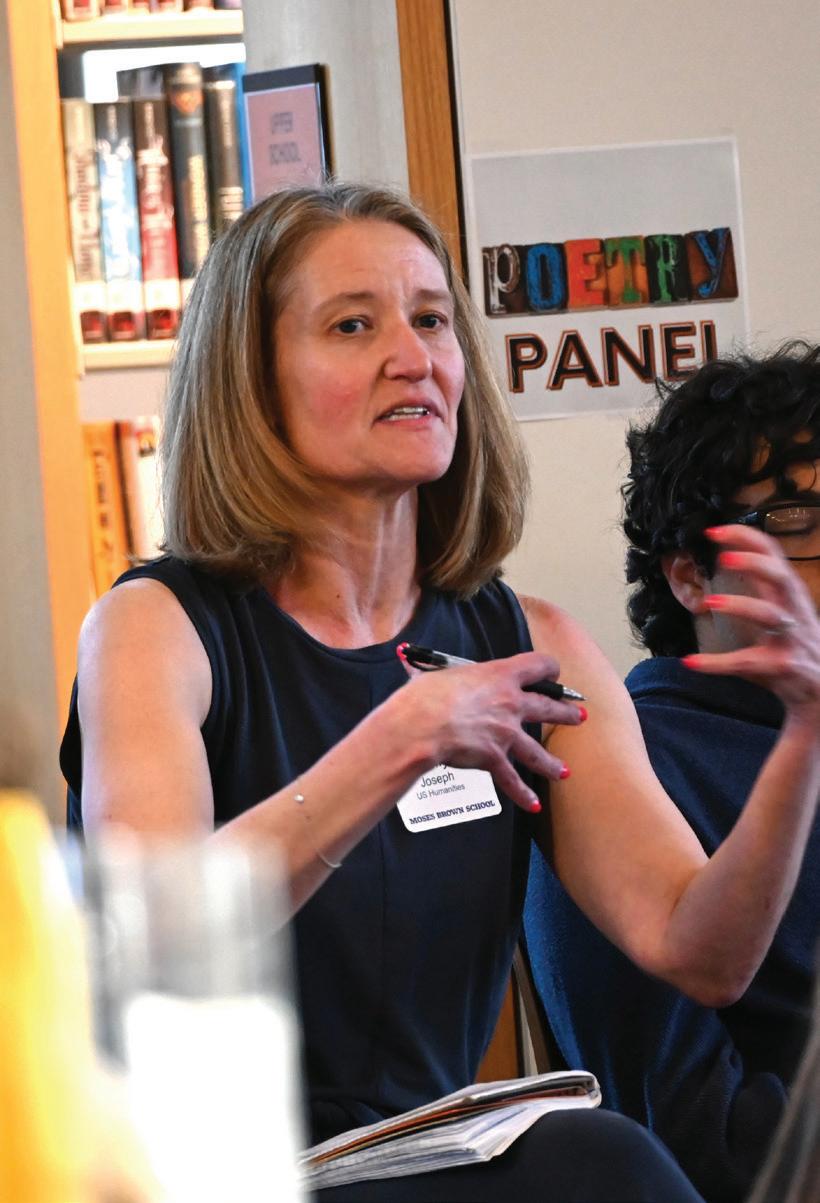
But safety at MB means more than just digital firewalls; it means equipping students with the critical thinking skills to evaluate the information they receive. Humanities teacher Kelly Joseph emphasized the urgency of bringing AI into her classroom discussions, examining everything from its algorithmic bias and geopolitical and environmental impacts to the ethical necessity of government regulation.
Some institutions have said, we’re not going to allow AI in any capacity. Some institutions have uncritically embraced AI and mandated its use in a lot of different ways. Some institutions have adopted a sort of benign neglect, where no one’s talking about this thing that everyone might be using and that can be really unhealthy. And none of these have ever been our approach at MB.”
- WILSON TAYLOR UPPER SCHOOL DEAN OF STUDENTS AND ENGLISH TEACHER
Kelly’s AI journey began soon after the release of ChatGPT, when she arranged a workshop, funded by a For the Honor of Truth grant, with Sarah Newman from Harvard’s metaLAB to learn more about the new technology.
“It was emergent at that time,” she recalls, “and we were wondering where it would go.”
From there she began reading a lot about AI, obsessively listening to podcasts, and exploring the societal implications and ethics of AI with her students.
“I am in constant conversation with kids in my class, and I think right now, regulation is where it’s at,” says Kelly. “They are about to embark on a regulation summit, where some are going to be representing the US government. Some are in the UN and some are tech CEOs. One group is acting as Dario Amodei, head of Anthropic, and one group will represent Sam Altman, CEO of Open AI, while others are the voice of the concerned public.”
Such macro-level debates help students become aware of national and global policy considerations while they also work to develop their own crucial habits of selfregulation, following clear guardrails and guidance provided by teachers about AI use in their classes.
And though Kelly retains a strong and healthy skepticism about AI, she admits that Oliver got her to try “vibe coding.” After watching The AI Doc: Or How I Became an Apocaloptimist, she encouraged everyone to see the documentary, which she watched four times over three weeks, including with her students.
“It’s a very powerful film, and it nicely balances the doomer scenario that we’re all in trouble…with the abundance narrative that everything is going to be great. The end of the documentary offers a hopeful path forward around the issues of regulation."
A CULTURE OF COLLABORATION AND DISCERNMENT
Kelly now connects with colleagues such as Oliver for class collaborations between his Foundations of AI class and her Media, Culture, and Politics class. And she co-leads a crossdivisional faculty AI committee with Jon that shares professional development resources and meets to discuss their differing views about and practices with AI.
“I’m so glad we’re having these conversations at Moses Brown, where we are guided by our mission and values and a culture of really careful faculty and student discernment,” said Wilson, “where we keep student experience and student voice at the center of our thinking.
“Some institutions have said, we’re not going to allow AI in any capacity. Some institutions have uncritically embraced AI and mandated its use in a lot of different ways. Some institutions have adopted a sort of benign neglect, where no one’s talking about this thing that everyone might be using and that can be really unhealthy. And none of these have ever been our approach at MB.”
As the evening in Jones Library drew to a close, the overarching takeaway was clear. Moses Brown is navigating the AI frontier with both eyes open, protecting the traditions of integrity and connection that define us, while boldly stepping into the momentum of tomorrow.
Upper school humanities teacher Kelly Joseph
Beyond the Algorithm MB Delegation Explores Ethical Leadership in the Age of AI at National Conference
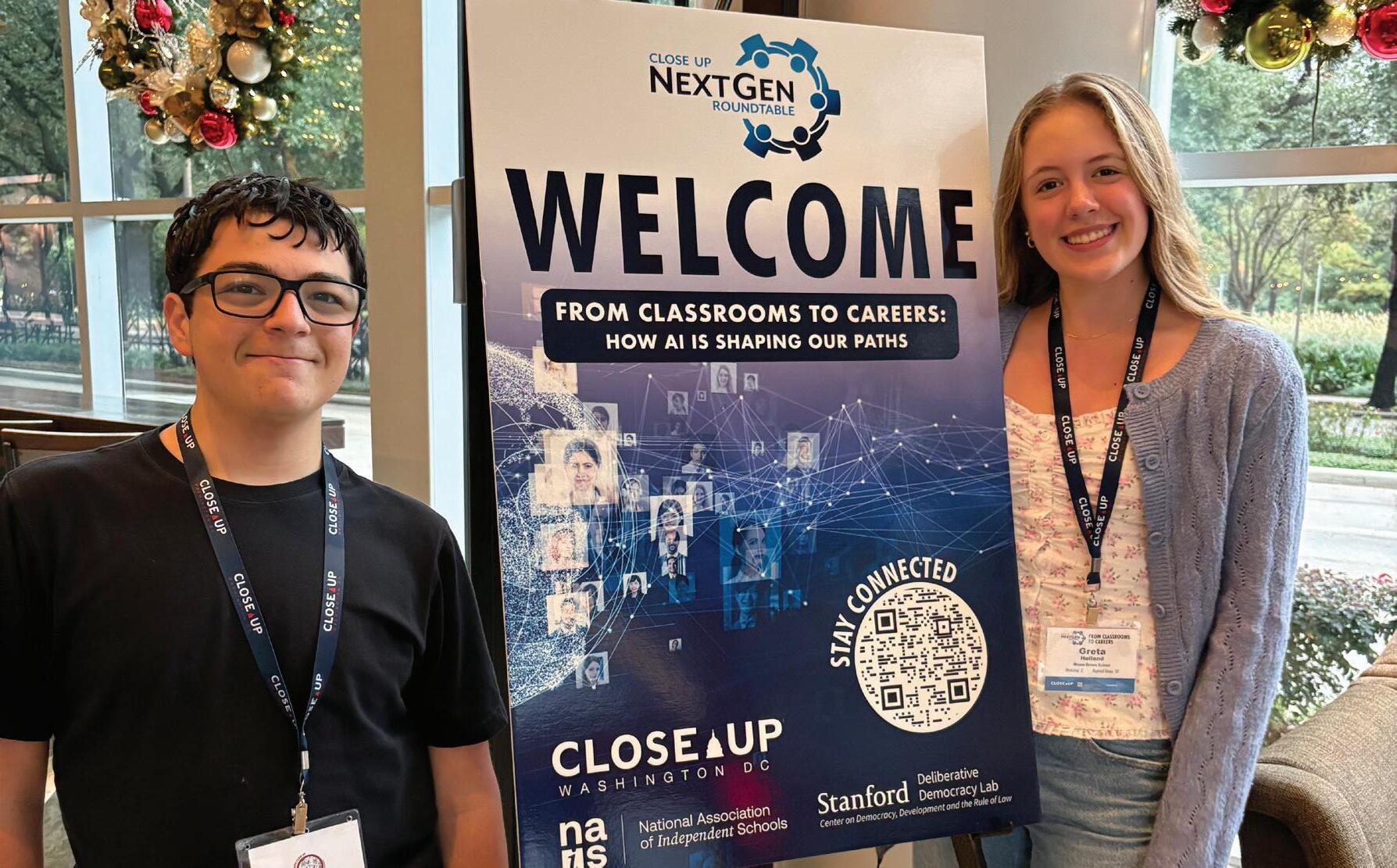
Three members of the Moses Brown community — History teacher Jon Gold, sophomore Greta H. ’28, and junior David I. ’27, recently traveled to Houston, Texas, to participate in concurrent national conferences focused on the future of Artificial Intelligence.
While Jon attended the National Association of Independent School (NAIS) Symposium on AI and the Future of Learning, Greta and David joined the Close Up NextGen Roundtable "From Classrooms to Careers: How AI is Shaping Our Paths,” a unique track designed to engage high school students in critical deliberations. Rather than simply learning how to use new tools, the group focused on a more profound question: how to lead ethically in a rapidly changing world.
TOOLS, NOT CRUTCHES
For the students, the experience underscored the need for personal responsibility. Greta returned with a renewed perspective on academic integrity, noting that the solution lies in self-education.
"I took away from this experience that in order to use AI in a healthy
and safe way, we must educate ourselves," Greta reflected. "I feel strongly that we all need to focus on how to use AI as a tool rather than a crutch to get out of challenging and complex work."
THE POWER OF MENTORSHIP
A major takeaway for both students was that AI should not replace human connection; instead, it should deepen the need for facultystudent collaboration. David noted that while AI is a permanent fixture, the community has the power to decide how to interact with it.
"I have come to the conclusion that we cannot try to change AI, but we can change how we respond to AI," David said. He emphasized that the path forward requires curriculum reform that prioritizes "increased time for the studentteacher relationship... and strong boundaries between right and wrong AI usage."
Greta echoed this desire for mentorship, hoping to spark conversations between students and faculty at MB to reach conclusions that "support our values as a Quaker School."
CONTEXT AND CULTURE
These student insights aligned closely with those Jon shared from the faculty symposium, focused on how AI is transforming the way independent schools teach, learn, and lead.
"It was a fascinating conference because there is a wide range of ways schools have responded to AI,” Jon said. "I came away more confident in MB’s thoughtful, collaborative approach grounded in our school values.”
He highlighted research from speakers Jenny Anderson and Rebecca Winthrop, which stressed the importance of understanding the "school culture and the larger zeitgeist" surrounding technology. "Their research on student modes of learning is fascinating and important for educators as we look to support our students in navigating the messy technological landscape.”
The experiences of Greta, David, and Jon affirm Moses Brown's commitment to engaging thoughtfully and proactively with the future of technology, ensuring our practices remain grounded in ethical inquiry and student well-being. By participating in these high-level discussions, they have brought back more than just technical knowledge and have returned with a shared roadmap for integrating innovation with integrity.
Shaping the Future of Friends Education
MB Leaders Help Peer Schools Navigate the AI Frontier
As independent schools across the country scramble to adapt to the rapid accessibility and evolution of generative AI, a pressing question has emerged within our specific network of peer institutions: How do we reconcile the algorithms of the future with the centuries-old values of Quaker education? Rather than waiting for the answer, Moses Brown is actively helping to write it.
Head of Lower School OJ Martí and Head of Upper School Laura Twichell traveled to Newtown, Pennsylvania, in April 2026 to serve as facilitators at the "AI Across Friends Schools Gathering" hosted by George School. Their presence at the front of the room underscored a point of immense pride for our community: Moses Brown is not just navigating the complexities of AI within our own campus; we are stepping up to provide thought leadership and guidance for Friends schools nationwide.
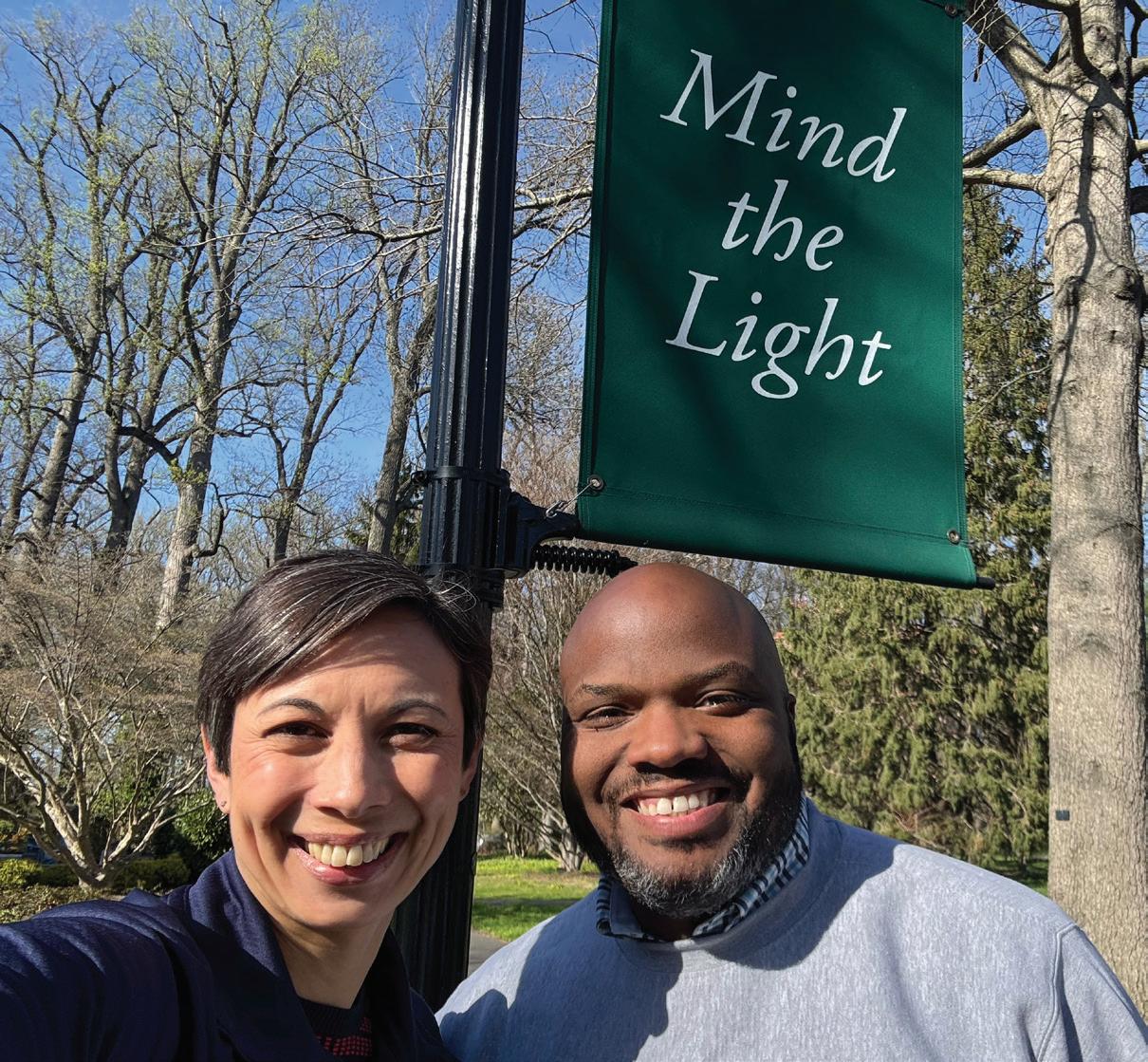
“The conference itself was affirming and thoughtprovoking,” shared Laura. She noted that while educators from various Friends schools arrived at entirely different stages of AI integration, they all brought a shared set of values, questions, and concerns to the table. By grounding the conversation in Quaker principles, MB’s leaders helped their peers find clarity amidst the technological noise.
The sessions co-led by OJ and Laura perfectly illustrated MB’s active, cross-divisional expertise on the subject. In a workshop titled "AI in Lower School: Quaker Practices as AI Literacy Foundations," OJ helped early childhood educators conceptualize what AI looks like for our youngest learners. He challenged participants to work collaboratively, designing ways to seamlessly integrate ethical considerations and social impacts into elementary classroom teaching long before students ever type their first prompt into a chatbot.
Meanwhile, Laura addressed the vital role of school leadership. Co-leading a session titled "Ethics and Implementation" for administrative peers, she facilitated a complex discussion anchored by a central query: How can administrators help colleagues discern a shared theory of practice for educating in the AI age? Her session provided a roadmap for leaders trying to unify faculty who possess vastly different degrees of tech-fluency, interest, and skepticism.
By sending our senior academic leaders to facilitate these critical national conversations, Moses Brown is demonstrating exactly what it means to push the flywheel forward. We are ensuring that as the landscape of education transforms, the foundational Quaker commitment to ethics, community, communal discernment, and the Honor of Truth remains firmly at the center—not just in Providence, but across the country.
Head of Upper School Laura Twichell (left) and Head of Lower School OJ Martí (right)
A Financial Snapshot
Moses Brown School's financial stability endures and grows.
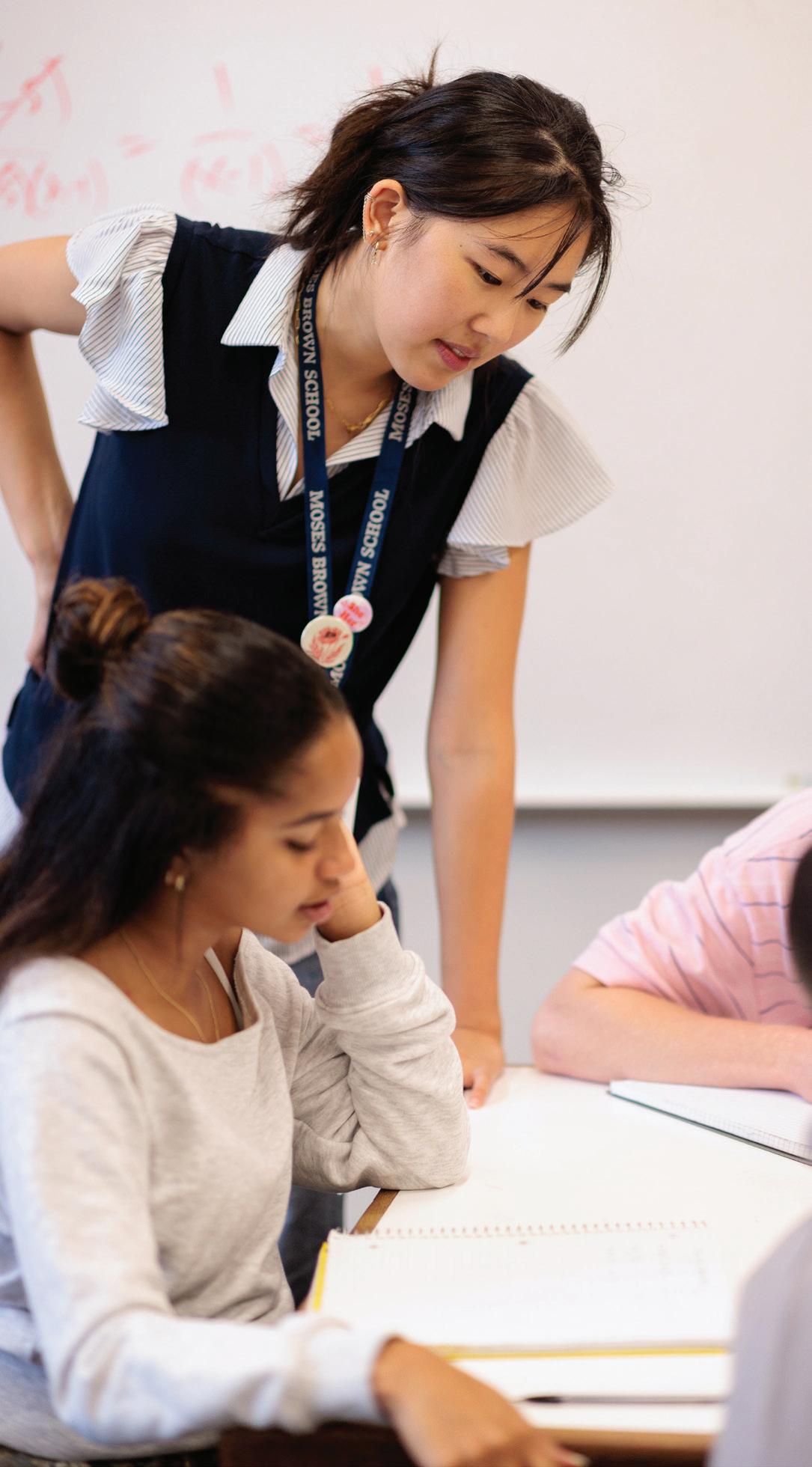
Optimizing Resources for Unparalleled Educational Excellence
Strategic financial stewardship at Moses Brown is the ongoing process of optimizing our resources to balance programmatic excellence, access, and long-term stability, ensuring every investment directly supports an unparalleled student experience. As we Light the Way toward our 2034 vision, our fiscal priority remains clear: ensuring the school's long-term financial stability and sustainability. We are proud to report that our current financial health is robust, characterized by positive budget results, a healthy balance sheet, and exceptionally strong endowment performance.
Our commitment to our community focuses on affordability and predictability.
We achieve this by:
• Investing in Excellence: Funding the best possible student experience.
• Driving Efficiency: Constantly seeking ways to reduce operational costs.
• Expanding Income: Growing non-tuition revenue sources to alleviate the pressure on tuition.
Continued Philanthropic Success
The Moses Brown Fund (MB’s annual fund) exceeded its $950,000 goal, and the school raised a total of $3.1M in support of all priorities.
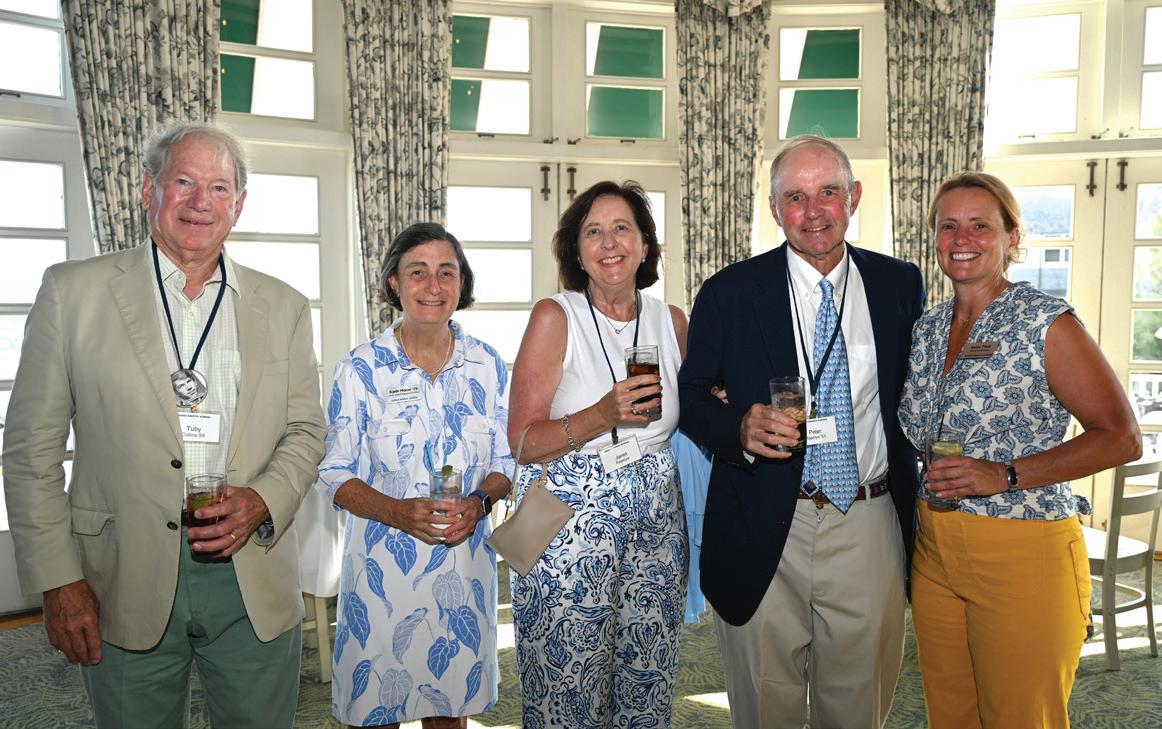
Operating Budget Overview
1,251
MB Community Donors
$3.1M Total Funds Raised $1,010,137 raised for the Moses Brown Fund
6.3%
Year-over-year increase in annual giving to the Moses Brown Fund
The school’s operating budget reflects our mission-aligned priorities, focusing heavily on the people who make a Moses Brown education possible.
Sources





Uses









L to R: Clarkson A. Collins IV ’68, Karin Morse ’79, Janet Rapelye, Peter Rapelye ’65, and Head of School Katie Titus.
Stewarding Our Endowment
The Moses Brown endowment has reached a milestone market value of $61.0 million as of June 30, 2025. This growth—from $26M in FY15 and $40.8M in FY20—is a testament to the prudent oversight of our Investment Committee and the generosity of our donors.
Endowment Market Value as of June 30, 2025
School Data Exchange (INDEX 2025) Annual Report, National PK-12
Governance & Oversight: Asset Allocation
The endowment is invested through the Moses Brown Foundation to generate asset growth and income for the sole benefit of the school's operations and capital needs. Investments are managed consistent with the school's Investment Policy Statement. The Investment Committee, a sub-committee of the Board of Trustees clerked by Laurens Goff ’90, meets quarterly with our consultants, Prime Buchholz, to review asset allocations and ensure the growing purchasing power of our funds.
Our endowment is distributed across a diverse range of asset classes to maintain a resilient portfolio, as shown here:














“Strategic financial stewardship is the process of optimizing our resources to balance programmatic excellence, access, and long-term stability, ensuring every investment directly supports an unparalleled student experience."
-
Dan Cromie, P ’24, ’26, ’29 Treasurer, Board of Trustees








The Impact of the Annual Draw
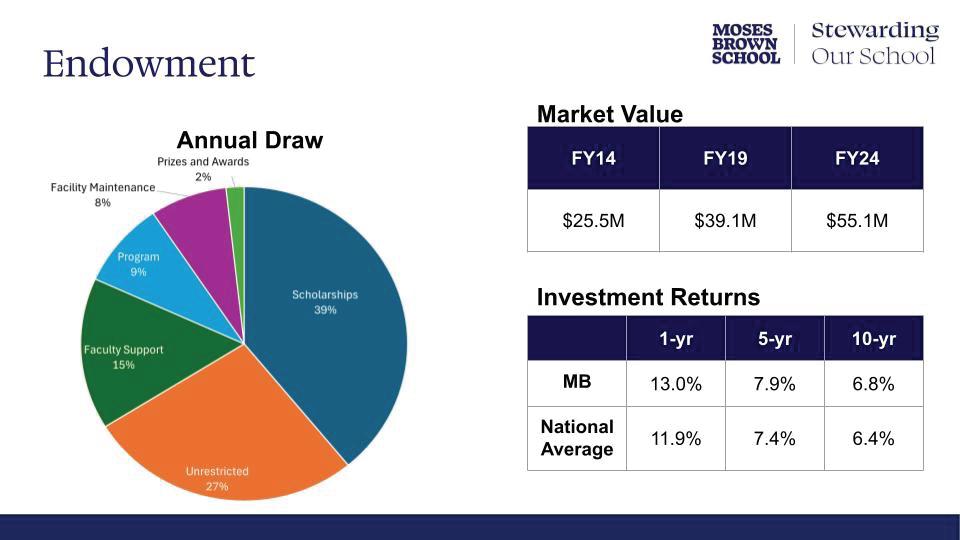
The endowment provides a dependable income stream vital for program continuity. The distributions from the annual draw are purposefully channeled into several distinct operational areas. A specific segment provides unrestricted funding, which grants institutional leadership the essential flexibility to direct resources to the highest and best purposes of the school in a given year. This agile capital helps the school remain innovative and proactive in a changing educational landscape.
The substantial majority of the funds drawn each year, including allocations designated for scholarships, faculty support, and specific departmental programs, are restricted in their use. These donor-imposed restrictions ensure perpetual resources are allocated to honoring the original vision, legacy, and specific designations established by our benefactors when they made their philanthropic investments. By meticulously directing these funds to their intended purposes, the endowment functions not as a single, flexible account, but as a robust collection of dedicated resources, each purposefully advancing a distinct aspect of our community.
Accomplished Alumni Honored by MBAA
Congratulations to our latest recipients of Moses Brown Alumni Association Awards!
FALL 2025
Erik Duhaime ’06
Outstanding Young Alum Award
Erik is Co-Founder and CEO of Centaur.ai, which supports the development of artificial intelligence by accurately annotating medical and scientific data at scale. The concept for Centaur was developed during Erik’s PhD research at the MIT Center for Collective Intelligence. Prior to founding Centaur, Erik earned his B.A. in Economics and Biology from Brown University, a M.Phil. in Human Evolution at Cambridge University, and a Ph.D. in Management from MIT


SPRING 2026
Andrew Haspel Silver ’01
The 25th Reunion Achievement Award
Andrew is a global operations executive who currently leads operations for DEPT, an independent creative and digital strategy agency, where he focuses on driving global expansion and strengthening U.S. operations. Andrew previously served as Global Head of Operations at Huge. Earlier in his career, Andrew was an Emmy Award winner for NBC Sports’ broadcast of the 2008 Beijing Games, and led digital initiatives for USA Swimming.
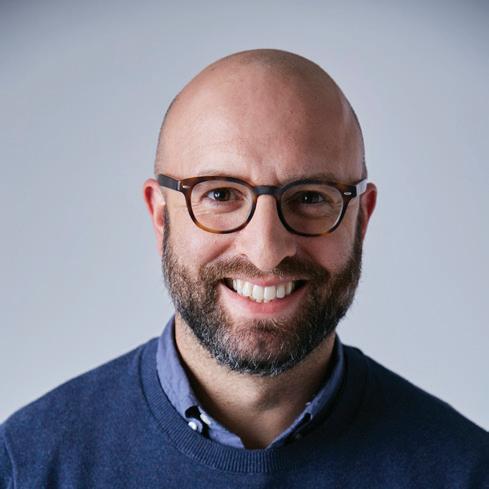
SPRING 2026
John T. Barrett Jr. ’63
Karin Morse ’79 Service to Alma Mater Award
As a three-term member of the Board of Trustees, Friend, reunion leader, and parent of an alumnus, John has demonstrated a strong commitment to Moses Brown and its Quaker values and has frequently gone above and beyond to fulfill the needs of the School. During his time on the Board, he made insightful contributions to the Buildings and Grounds, Budget and Finance, Investment Committee, and the Campaign Steering Committee. He remains actively engaged as a member of the Board’s Investment Committee and Reach, Reputation & Philanthropy Task Force.
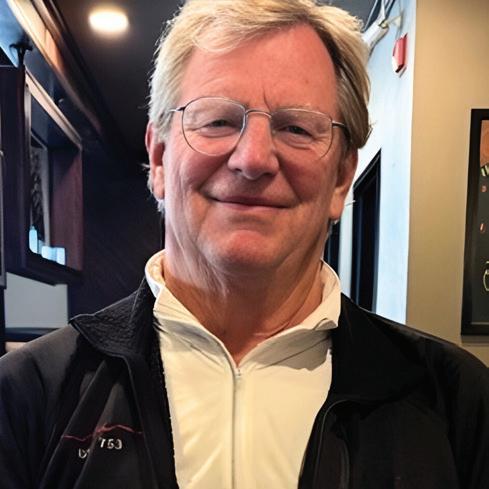
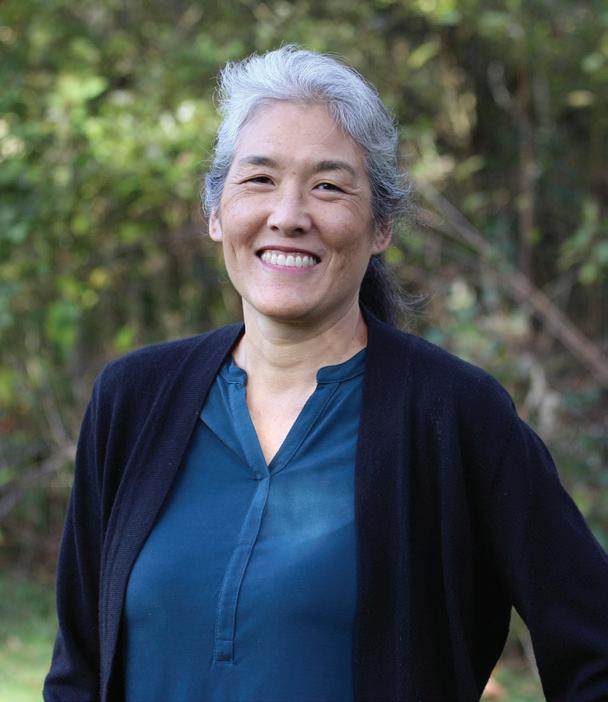
FALL 2026
Deborah Wang ’80
The Distinguished Alum Award
Deborah is an award-winning radio and television journalist with a career spanning nearly four decades. Currently a contributing editor at KUOW Public Radio in Seattle, she was previously National Public Radio’s Asia Correspondent. She has lived in Saudi Arabia to cover the Persian Gulf War and in Beijing and Hong Kong. Deborah established ABC News’ first bureau in Seattle, and for CNN International was the host of IN Close , an Emmy Award–winning program. Deborah was a recipient of the Rosalynn Carter Mental Health Journalism Fellowship the Alfred I. DuPont Silver Baton for team coverage of the Gulf War; the Overseas Press Club's Lowell Thomas Award and a Gracie Award from the Alliance for Women in Media Foundation (for reporting on adolescents and mental health.) Deborah earned her B.A. in history from Wesleyan University.
Healing and Innovation: A Conversation on Women’s Health
The Women of MB virtual speaker series kicked off on March 3, 2026 with two accomplished alumnae at the forefront of healthcare and entrepreneurship. The discussion highlighted how the "grit" and community spirit fostered at Moses Brown continue to drive meaningful change in the world. Dr. Meredith Wasserman ’08, a urologic surgeon and assistant professor at Brown University, and Kendra Forsythe Slafta ’05, co-founder and CEO of Zmanti, led a powerful and candid conversation.
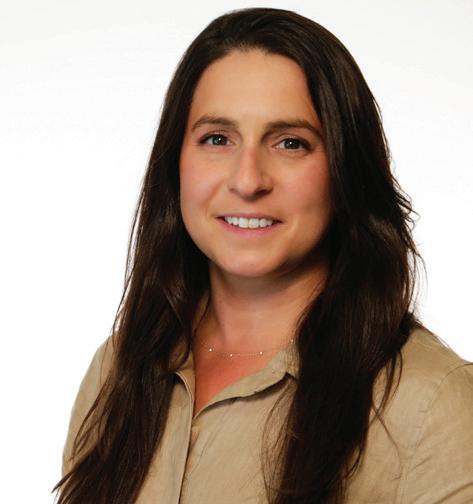
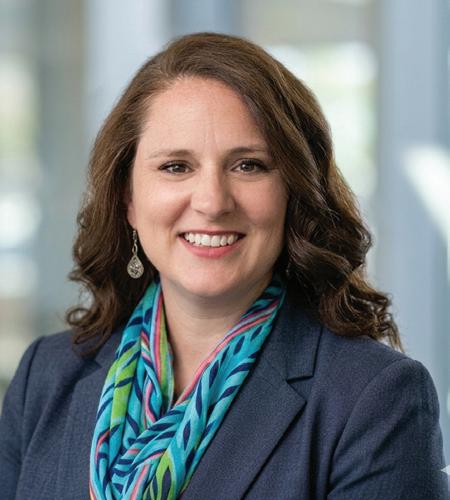
The Women of MB group is committed to supporting one another through professional connection, community building, and partnering with the school on strategic priorities, including the 50th anniversary of the return to coeducation.
The 50th anniversary of the return to coeducation at Moses Brown School celebrates the historic milestone when the school transitioned back to being a coeducational institution in 1976, as it had been at its original founding. The festivities will recognize the achievements of alumnae who helped shape the school's identity.
If you are interested in joining the planning efforts to celebrate the 50th Anniversary or to join the Women of MB group, please use the QR code to submit the interest form or contact Meghan L. Hansen at mhansen@mosesbrown.org

Dr. Meredith Wasserman ’08
Kendra Forsythe Slafta ’05
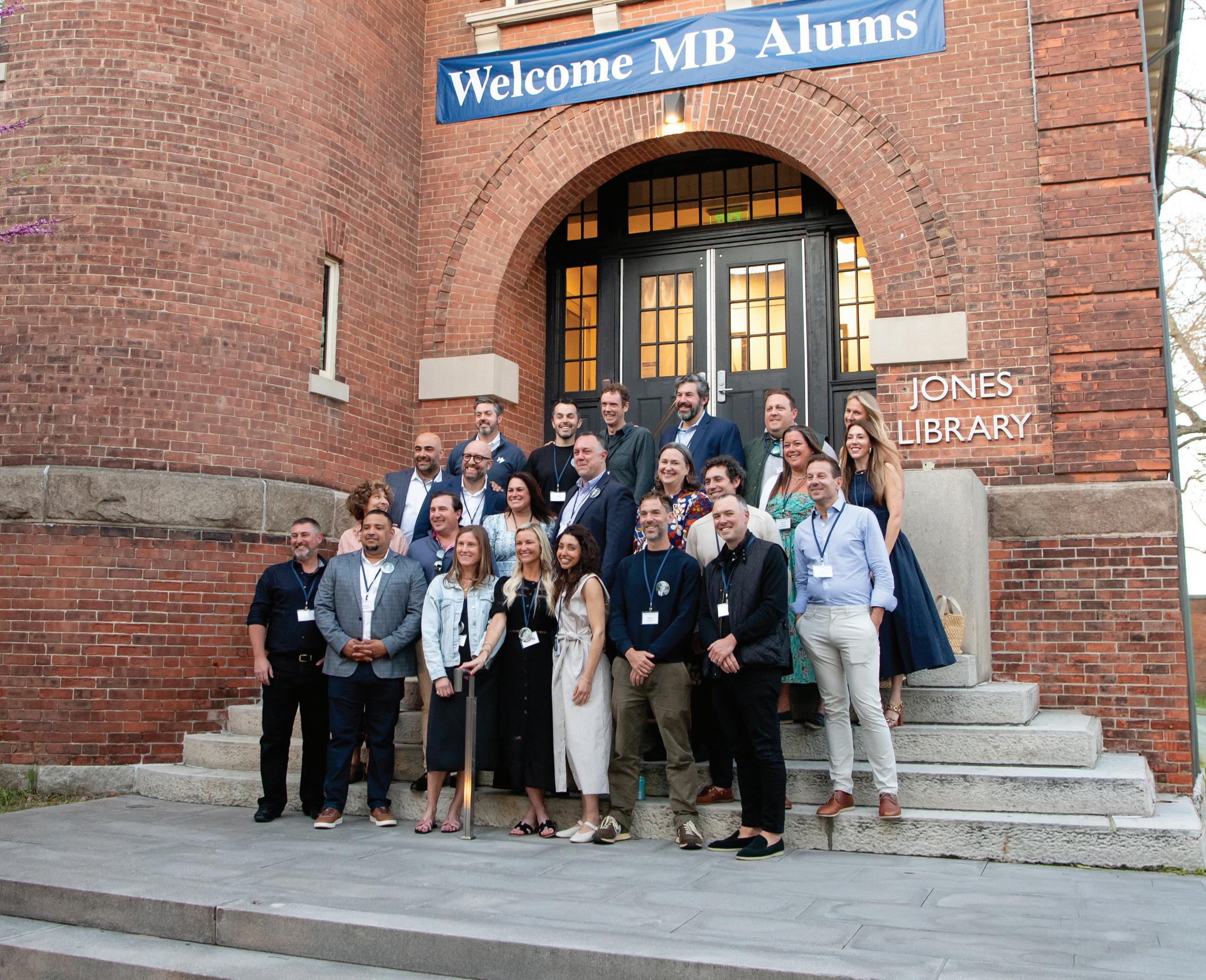
+ Reunion 2026 ALUMNI WEEKEND
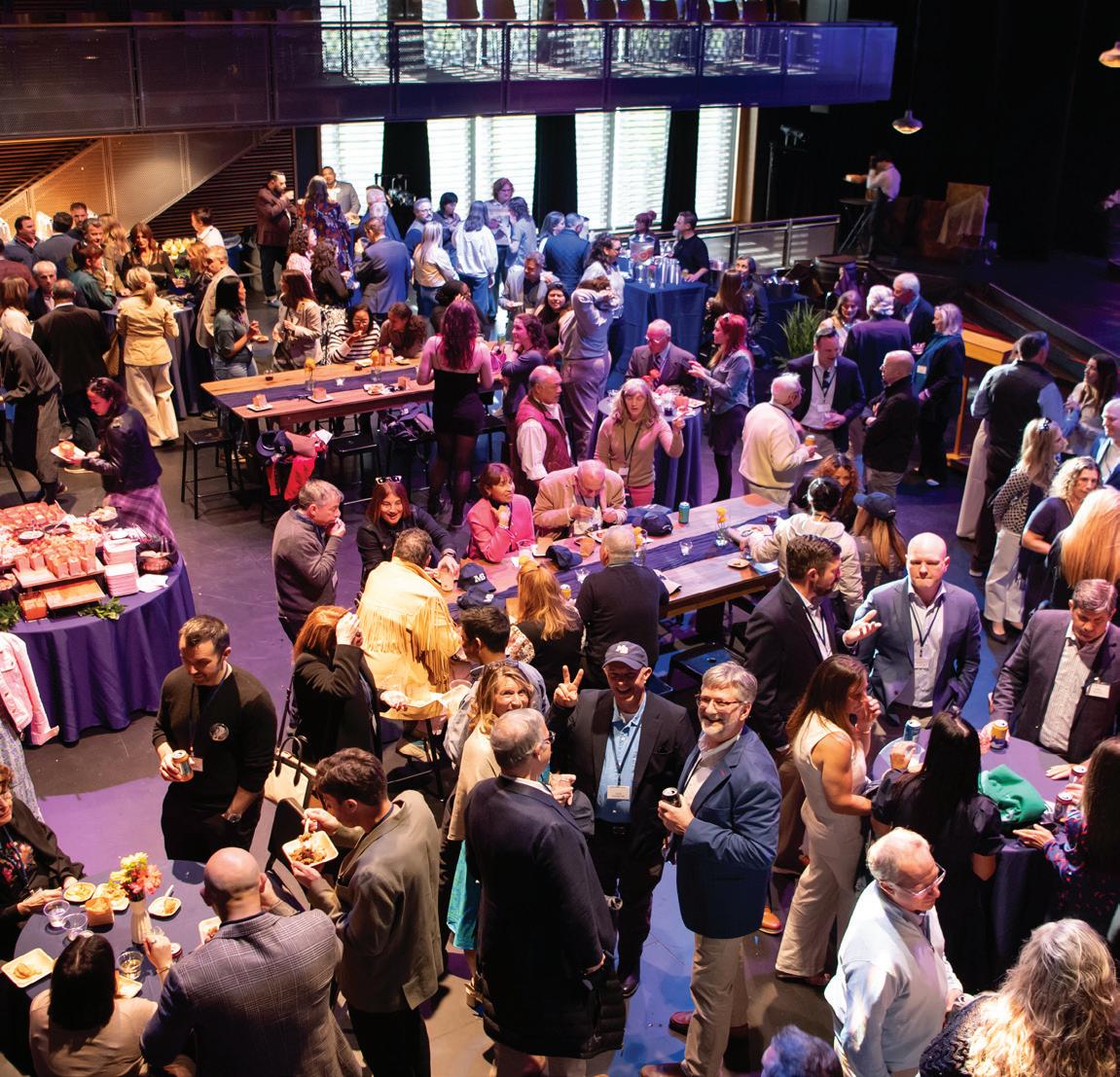
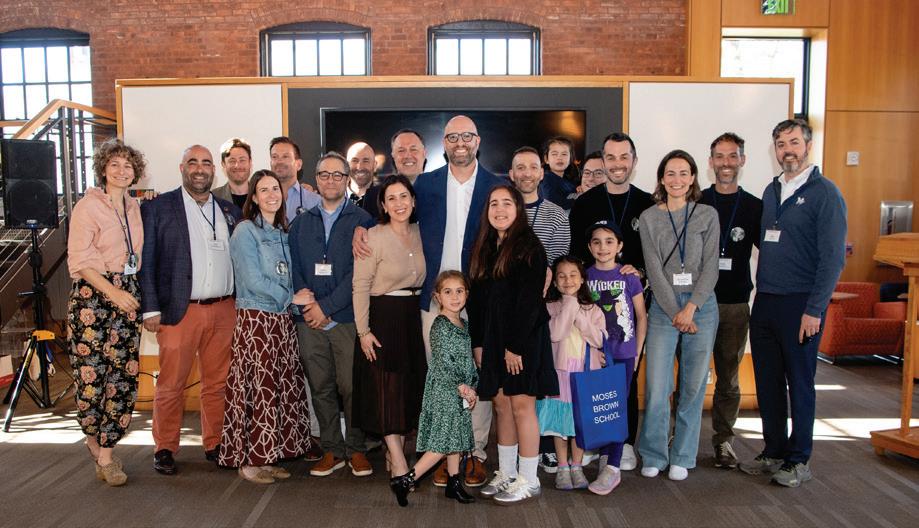
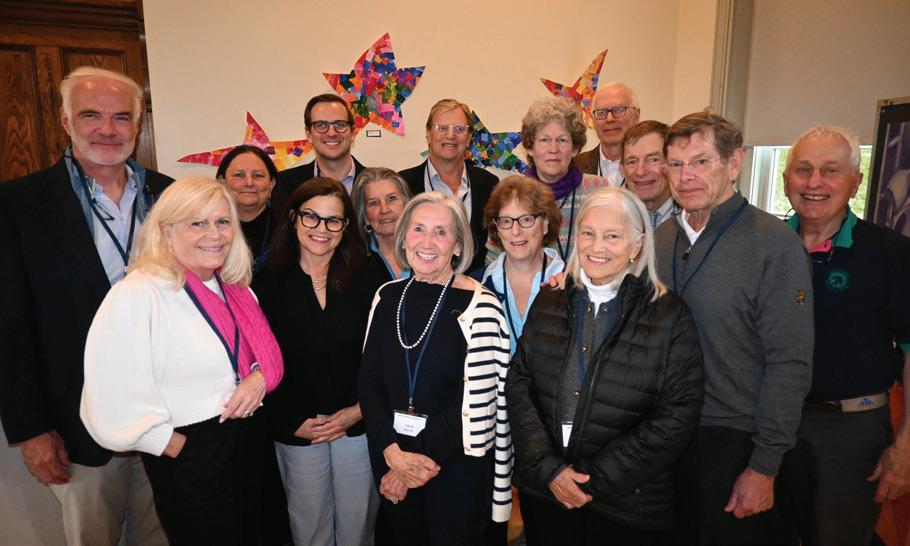
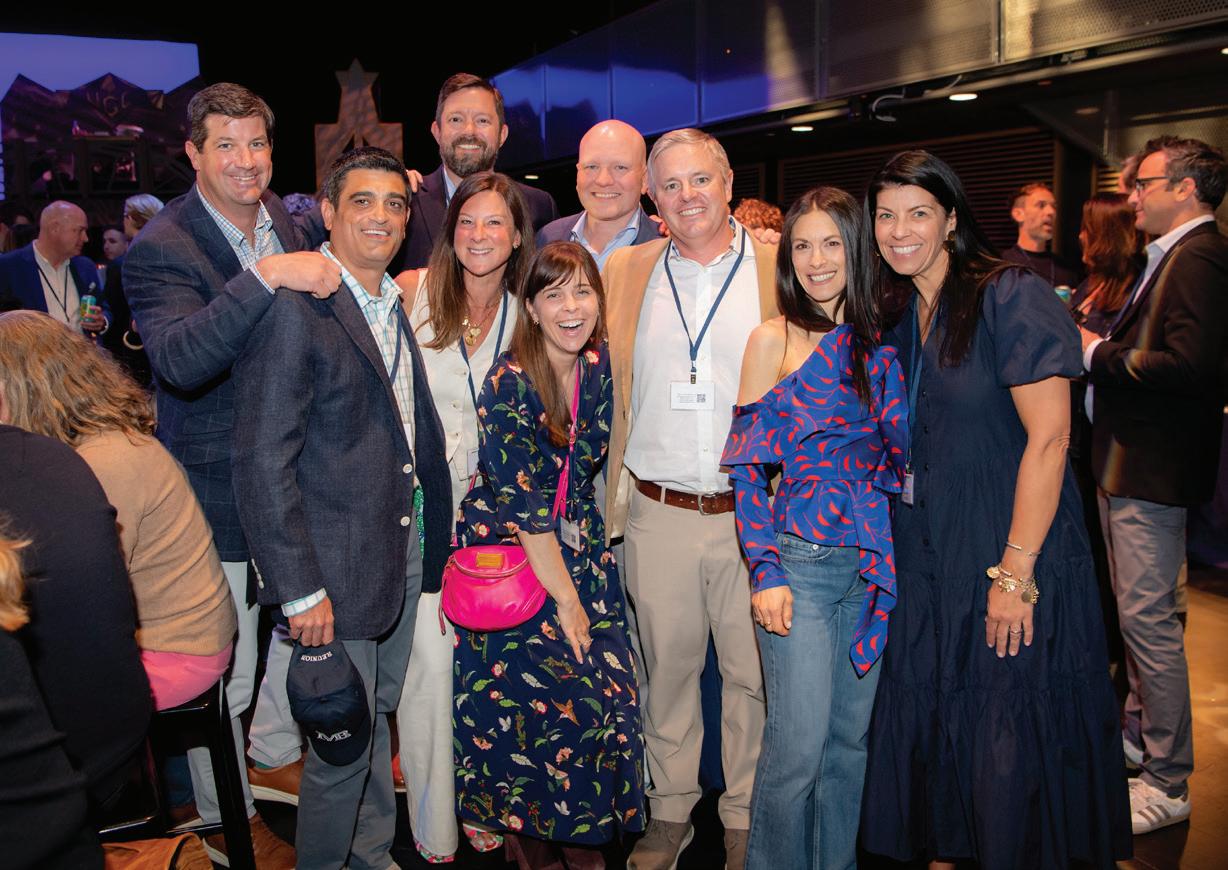
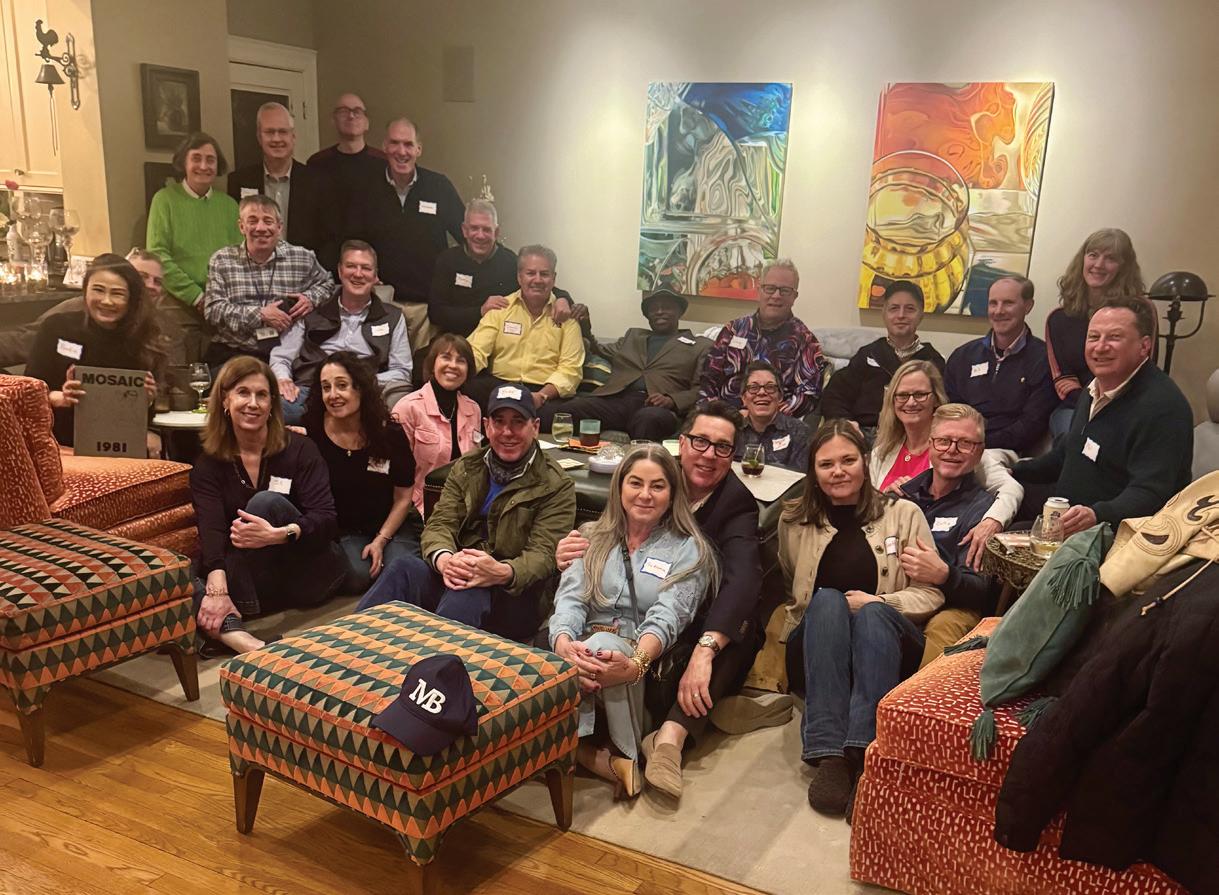
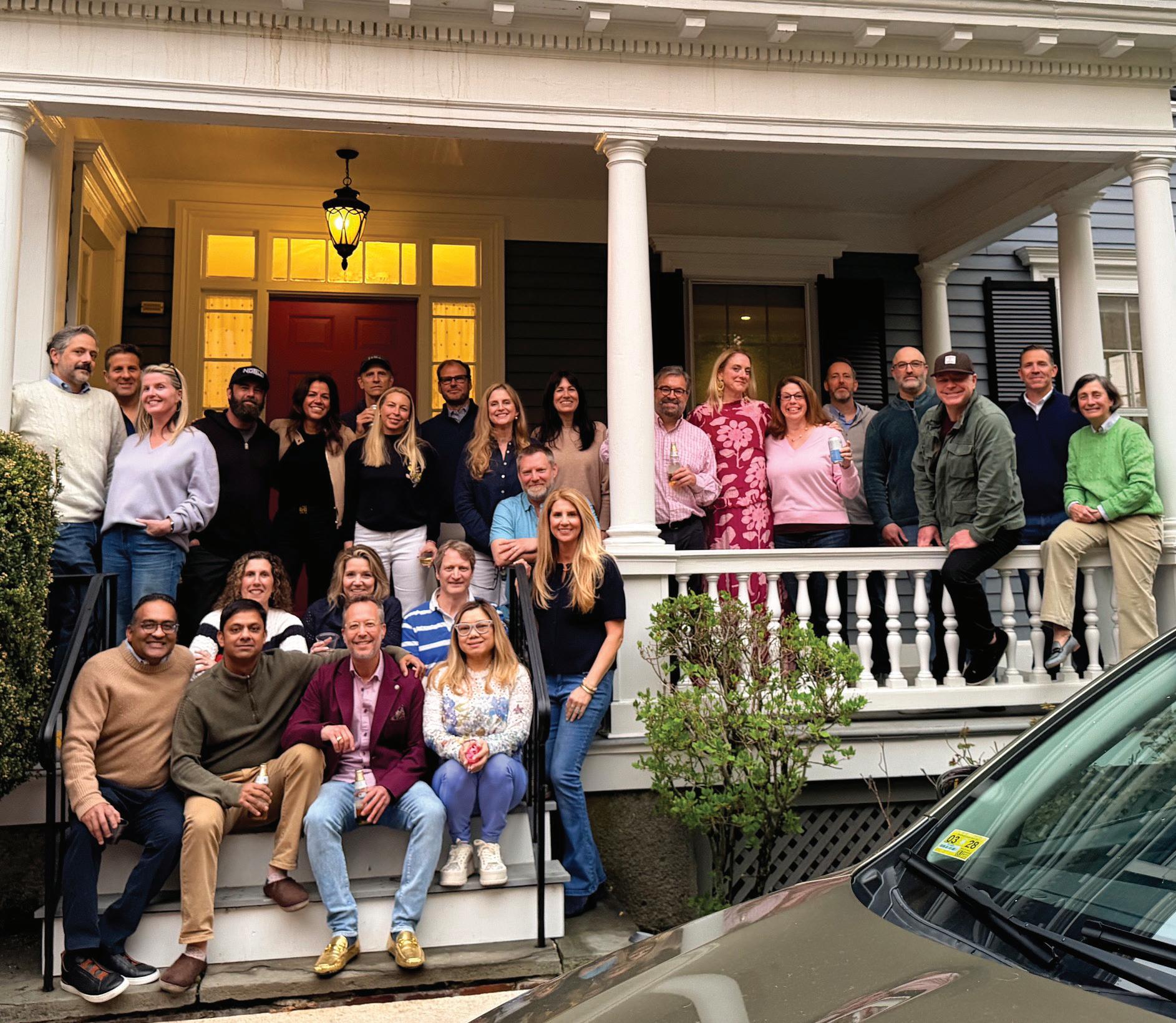
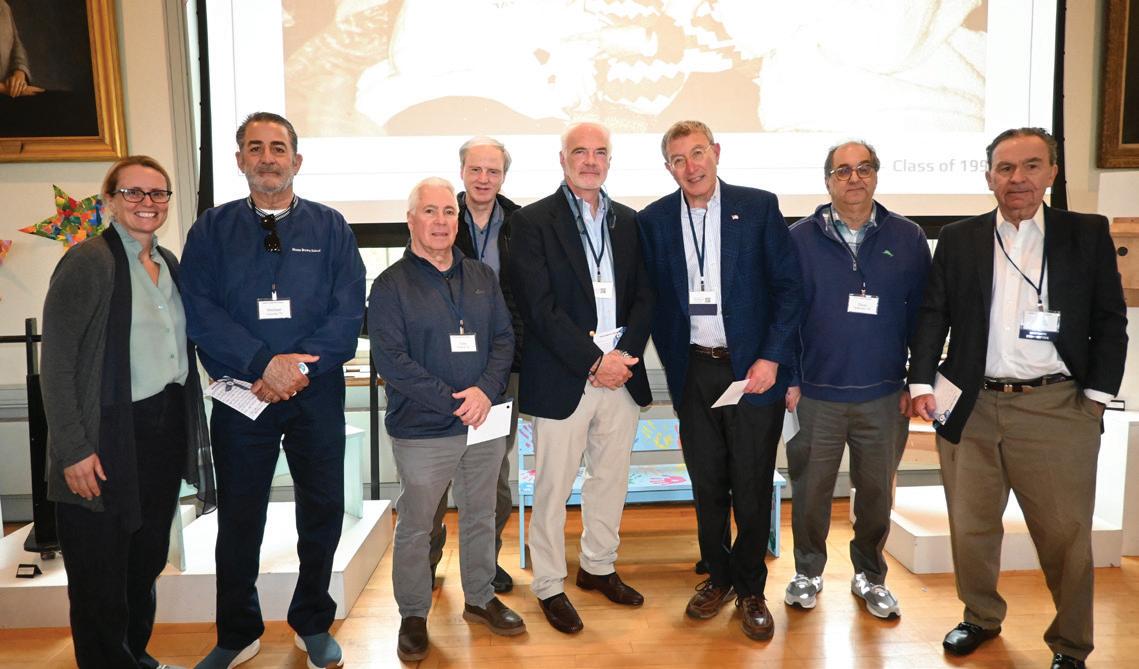
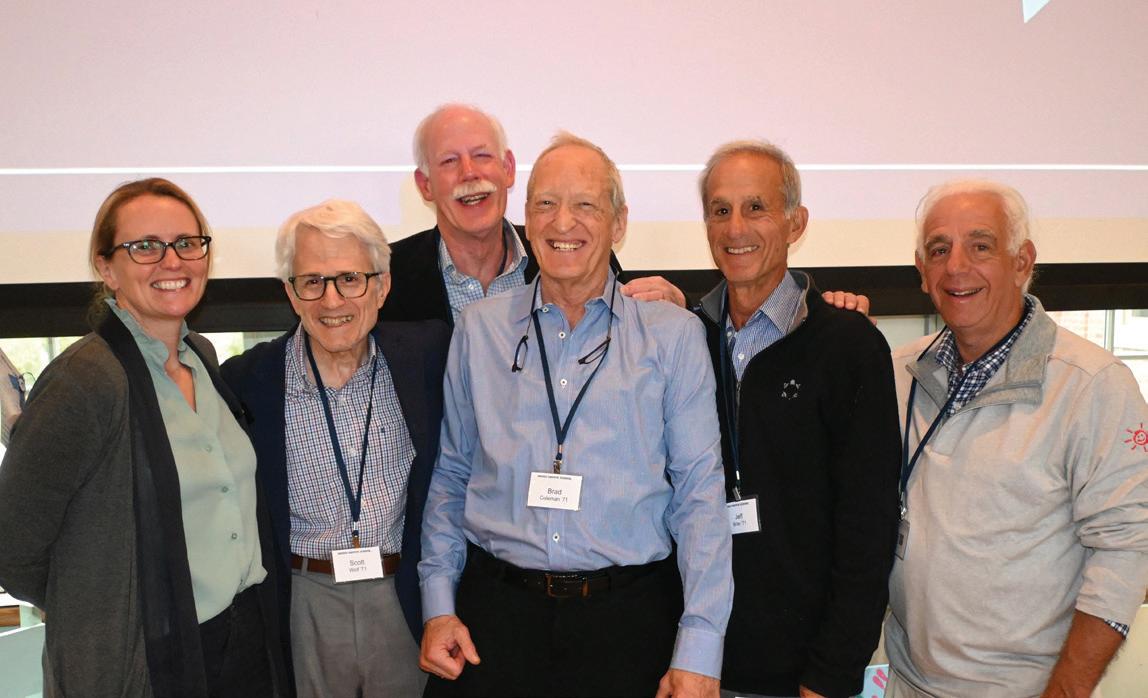
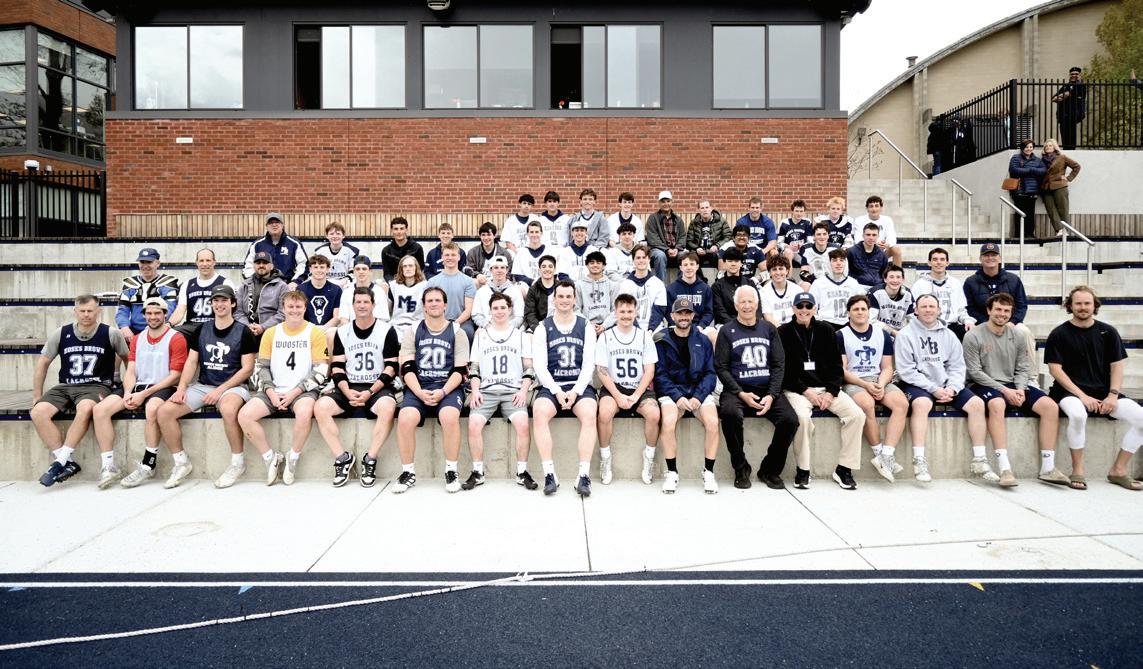
MAY 1 - 2, 2026
Thank you to those who could join us for Alumni Weekend + Reunion 2026! It was wonderful to see alumni back on campus to celebrate together. We hope the time reinforced the special community that is Moses Brown and the bonds among alumni, faculty, and staff that transcend time.
Scan to view the photo gallery!

Alumni Events
SEPTEMBER 29, 2025
MBAA Quaker Classic
Head of School Katie Titus joined alums and guests at the MBAA Quaker Classic at Kittansett Golf Club. The biennial golf tournament raises money for the Randall W. Bliss ’46 Alumni Scholarship Fund and alumni programming.
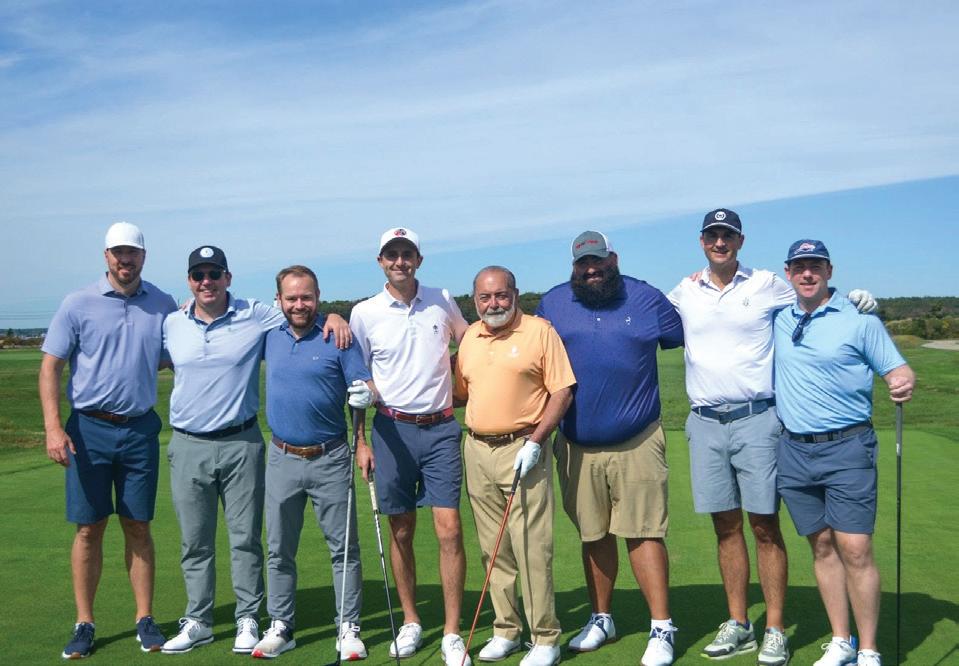
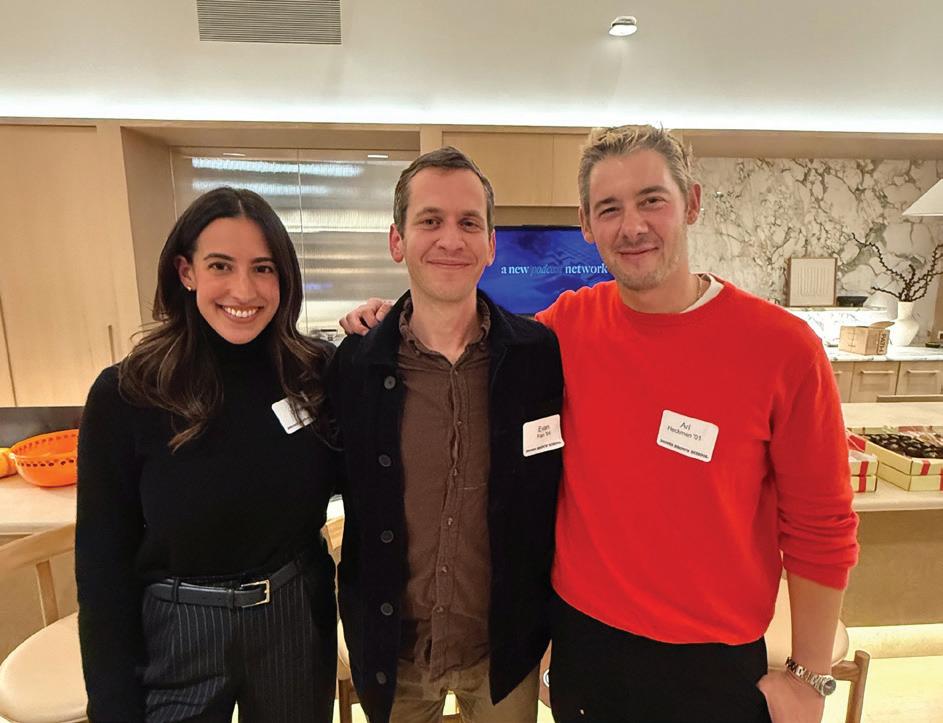
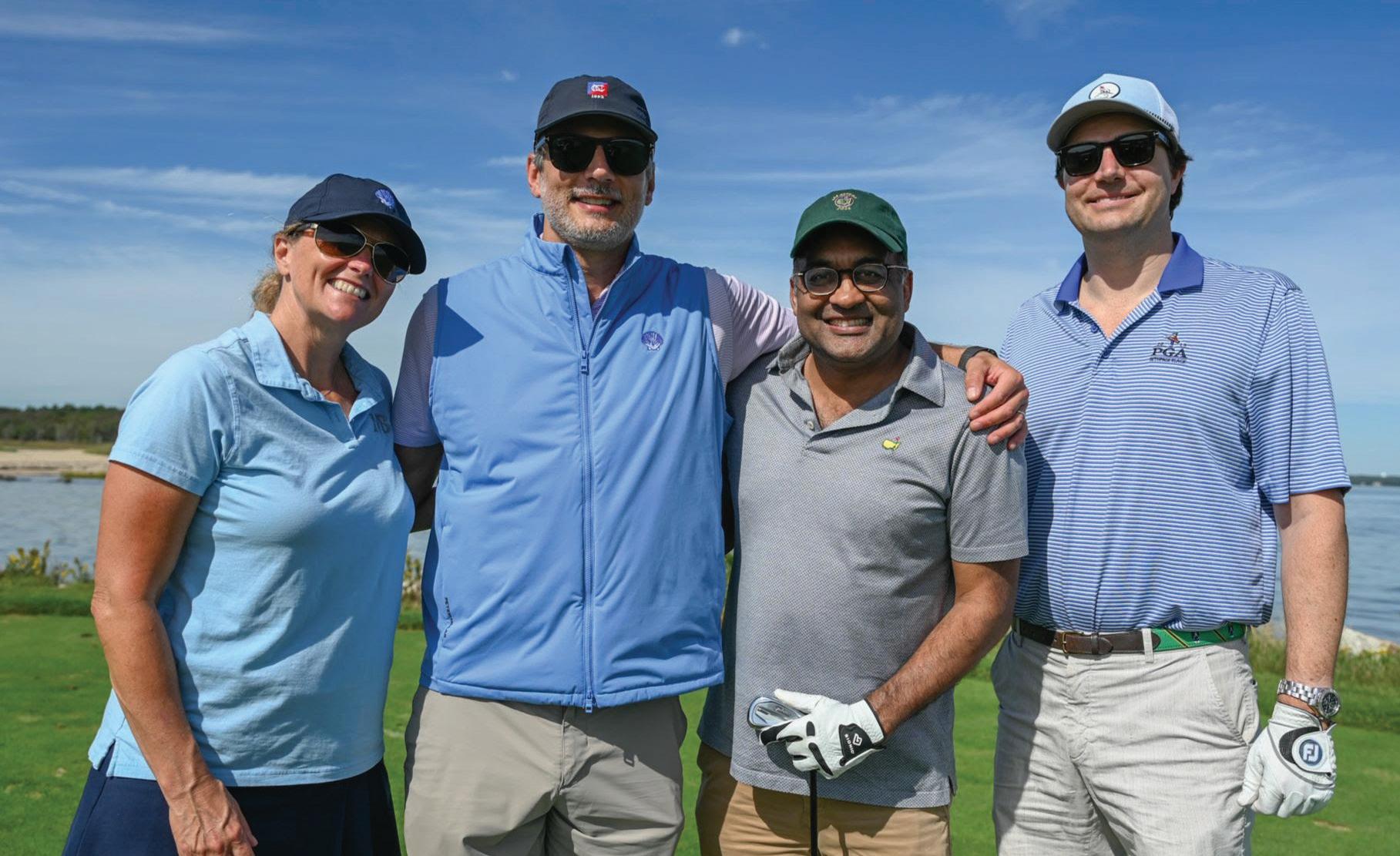

OCTOBER 29, 2025
MB Connects: New York Reception with Real Estate Chat
Alumni and friends gathered in New York City for a networking reception and panel featuring Jordan Crystal ’09, Licensed Real Estate Salesperson with Brown Harris Stevens; Evan Fain ’04, GM of New Ventures at Industrious; and Ari Heckman ’01, Co-Founder and Chief Executive Officer of Ash. Following the panel, a reception was held with Head of School Katie Titus in attendance.
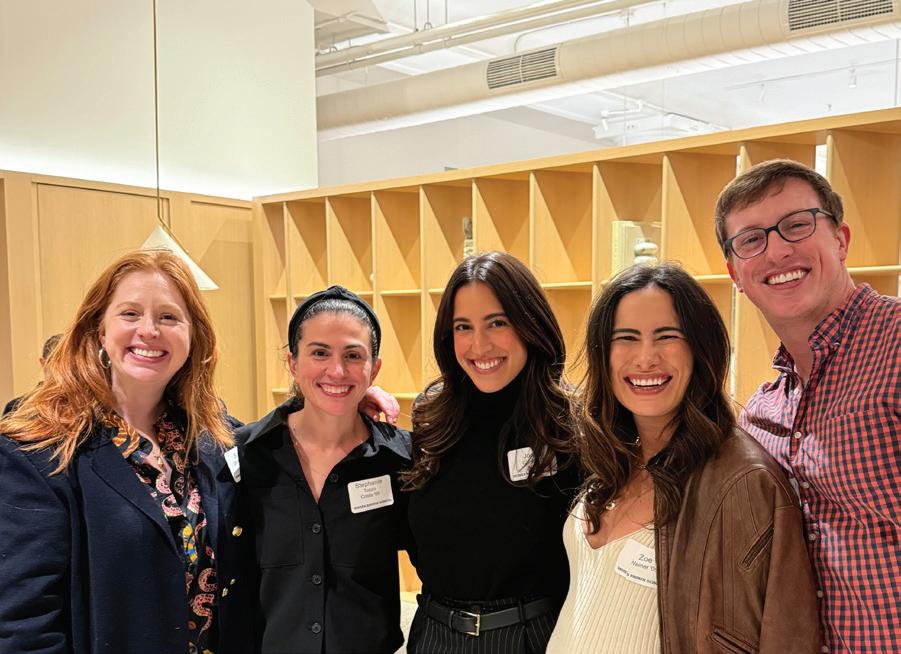
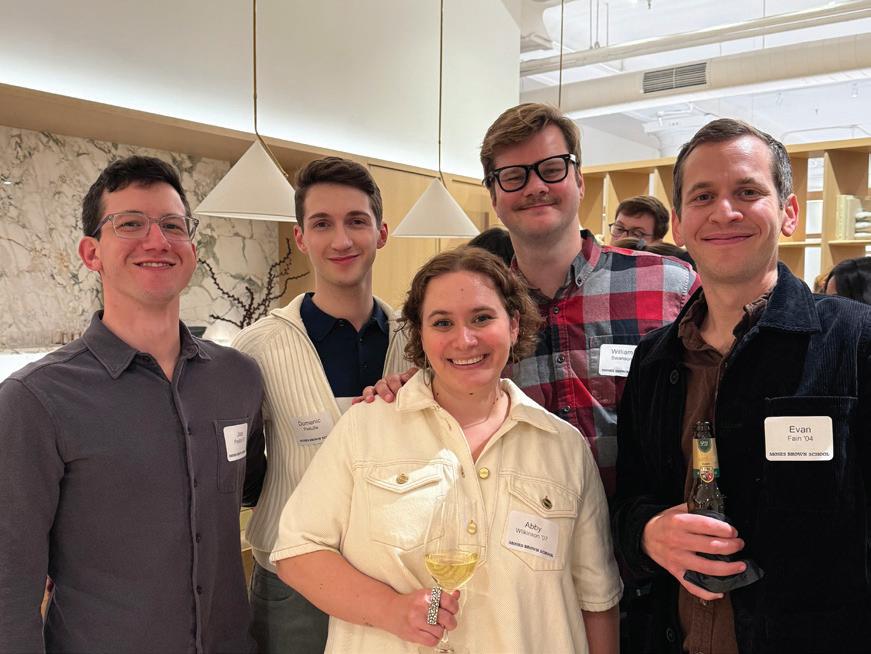
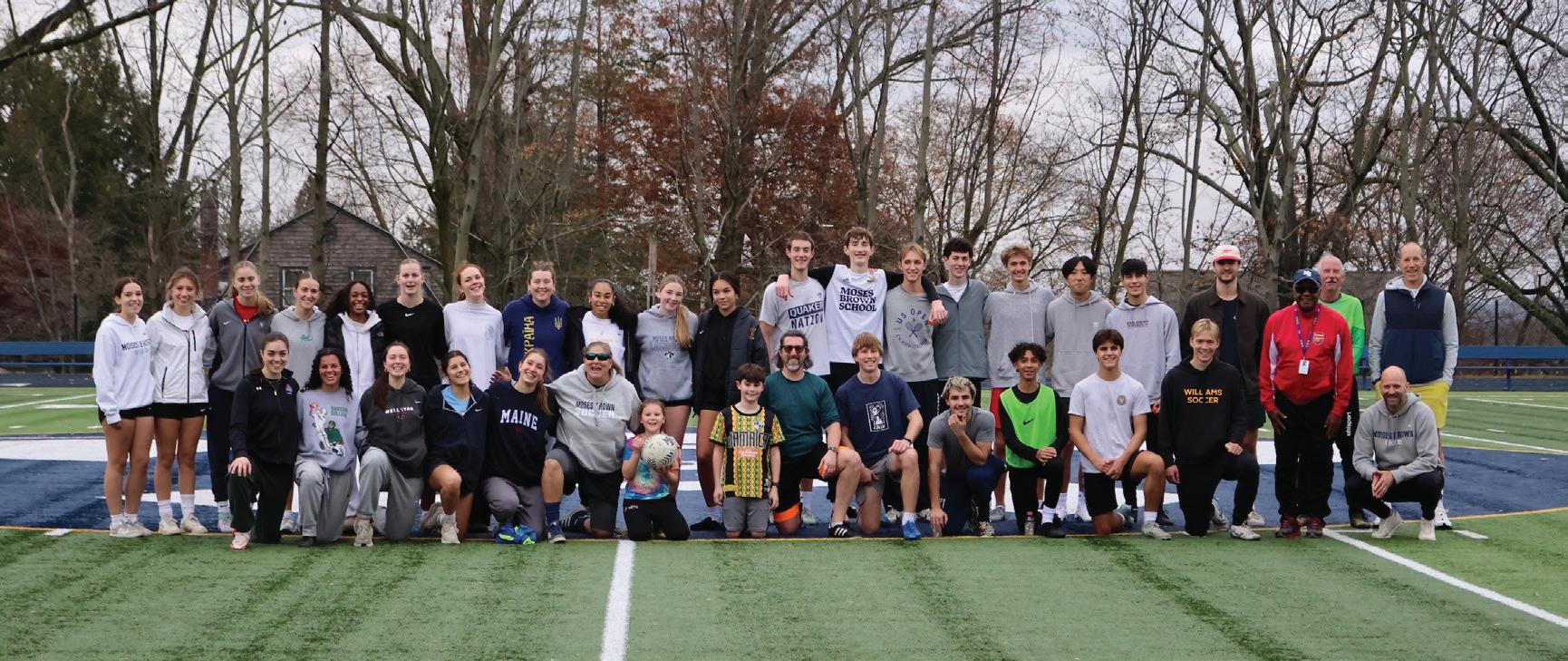
NOVEMBER 26, 2025
All-Alumni Soccer Game & Spree Bowl
Alumni, faculty, staff, students and families got together during the annual Alumni Soccer Game, as well as the Spree Bowl held in memory of Evan Spirito ’06, Zech Chafee ’07, Brandon Fowler ’07, Max Mann ’08 and John White ’06. It was great to see old and new friends together during Thanksgiving week. Thank you to the coaches for organizing the soccer game!
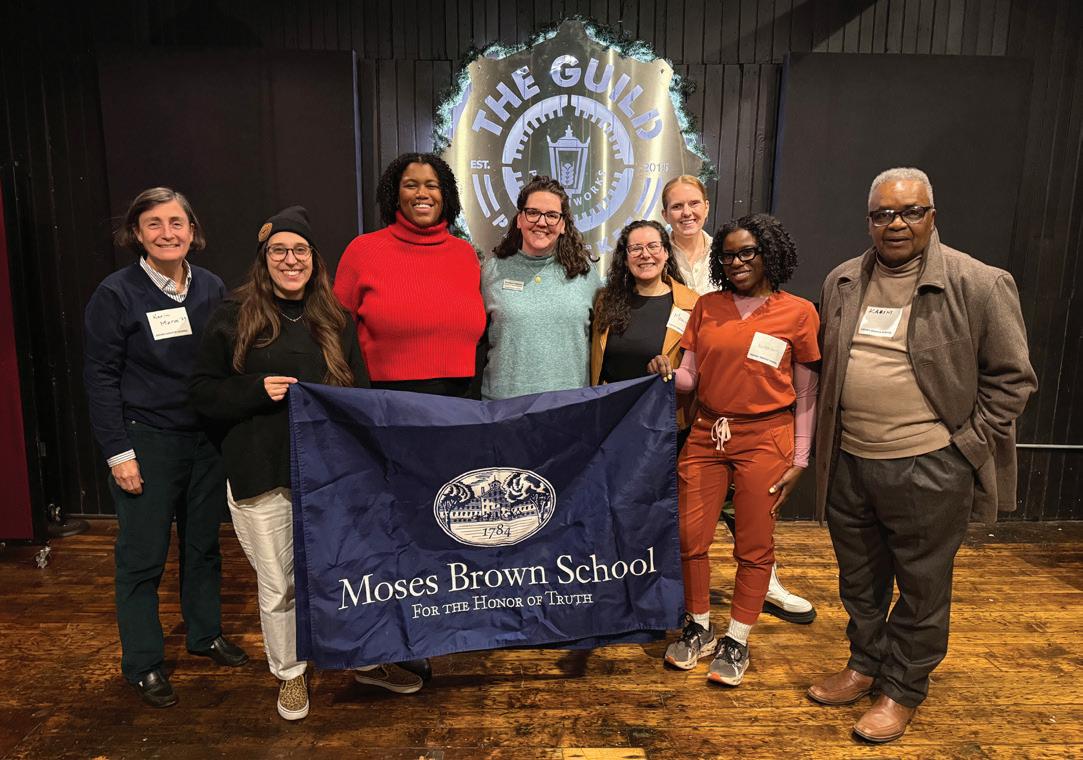
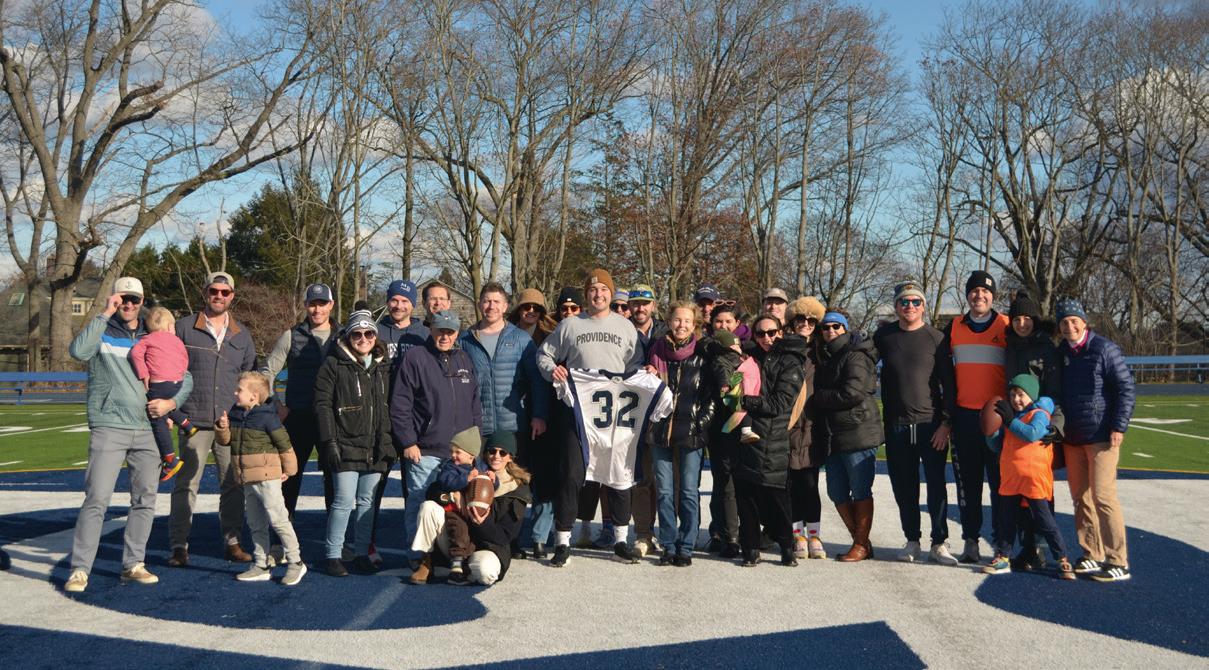
DECEMBER 9, 2025 CommUNITY Winter Gathering
Alums, faculty, and staff gathered at The Guild Pawtucket to share in community and catch up with friends. The CommUNITY alumni group works in partnership with the Bayard Rustin Center for Peace and Belonging. Special thanks to the group leaders Chloe Clasper-Torch ’09, Maija Hallsmith ’11 and Amanda Ramirez ’09.
DECEMBER 30, 2025
MBAA Alumni Hockey Game
The alumni game & reception took place in Brown University's Meehan Auditorium. The boys’ hockey game facing Roxbury Latin followed for the crowd. Thank you to the alums and friends for joining us!
Photo credit Emma Marion ’24.
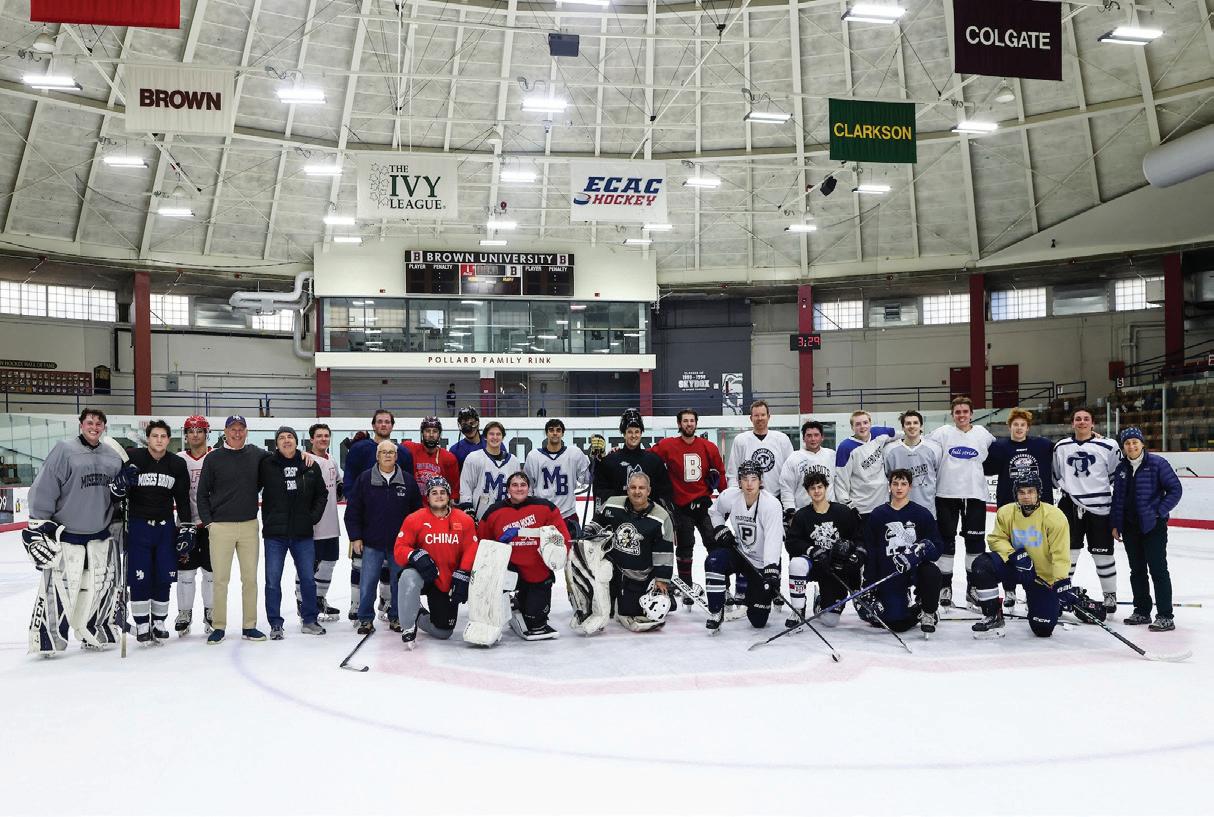
FEBRUARY 2026 Heads Together: Independent Education in a Changing World
Katie Titus joined alumni and friends of Providence’s top independent schools along with heads Sophie Glenn Lau (Lincoln) and Mark Anderson (Wheeler) in Florida. Thank you to our Vero Beach host, Wanda Lincoln, MB Spouse '51, and Delray Beach hosts Mari Bianco, Lincoln ’97, P'31 and Angelo Bianco MB ’86 P’27 '27.
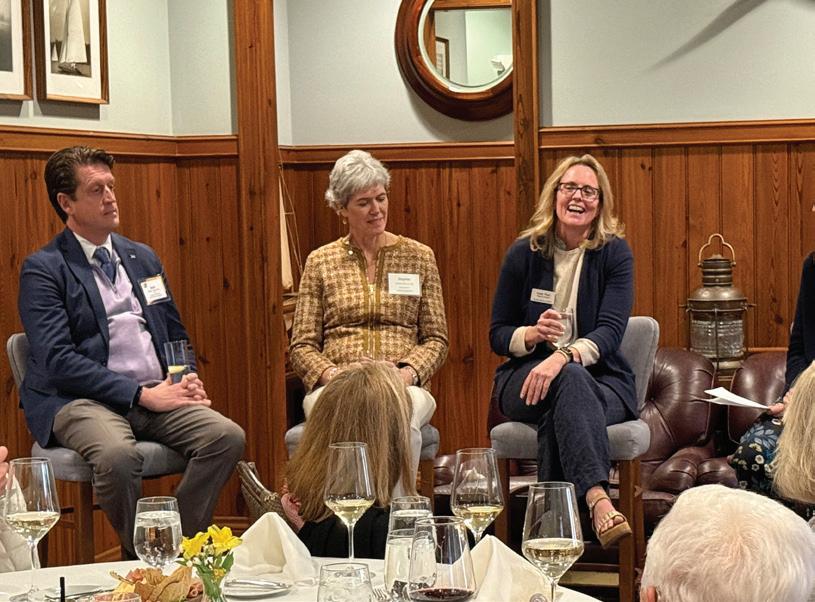
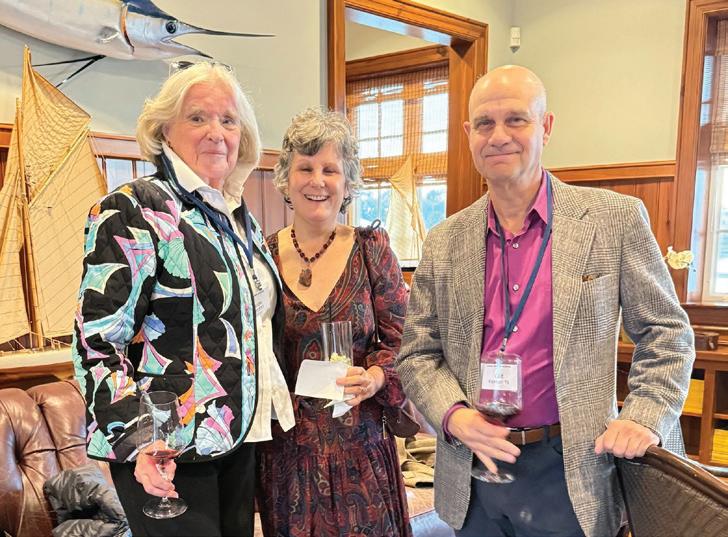
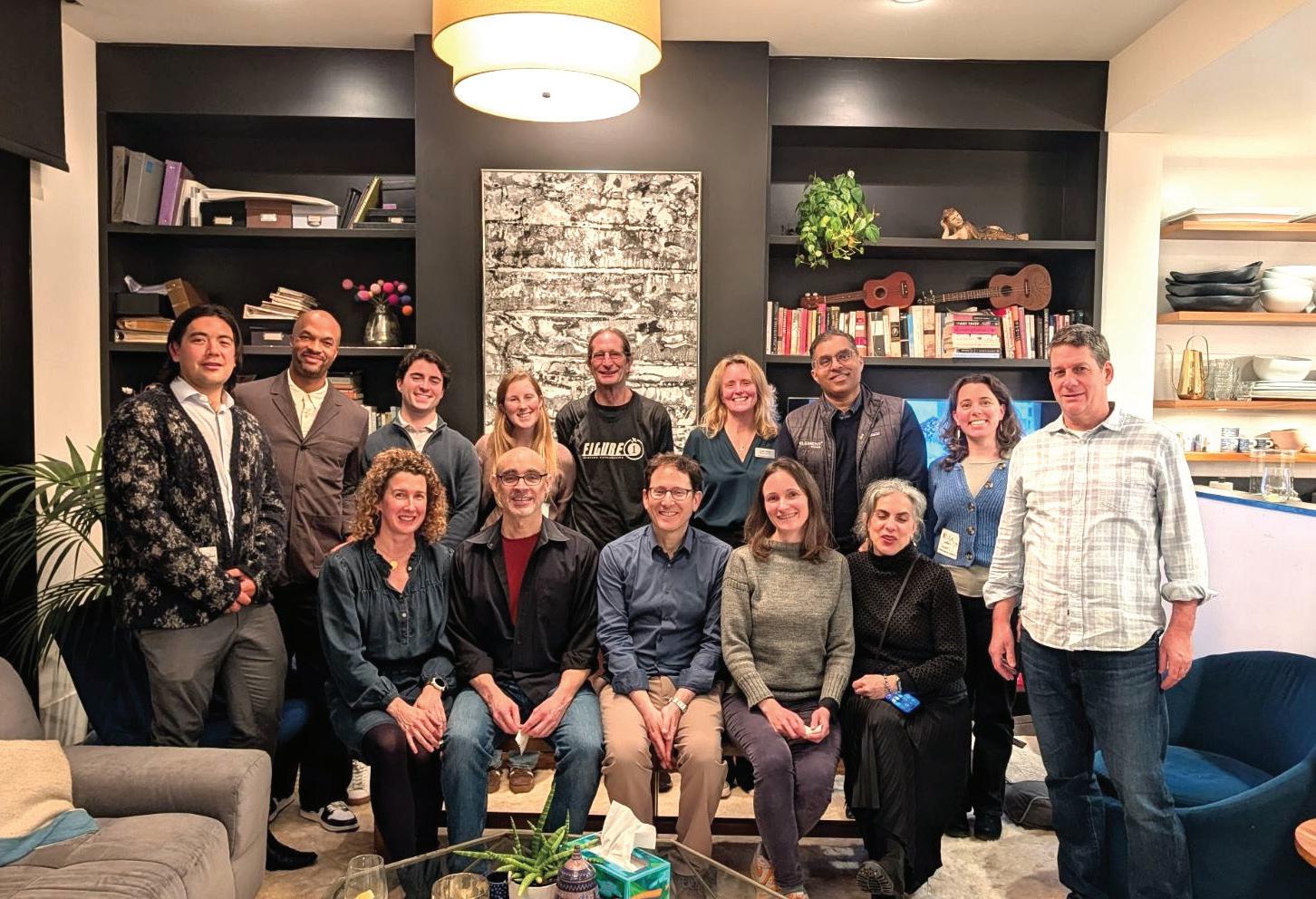
FEBRUARY 25, 2026
San Francisco, CA
FEBRUARY 26, 2026
Seattle, WA
Alumni & friends spent time with Katie Titus during a recent West Coast trip to learn more about the Strategic Vision for 2034: Light the Way. Thank you to our San Francisco host, Gary Orenstein ’86; and our Seattle hosts, Deborah Wang '80 and Heather Tow-Yick '94.
Photos: San Francisco (top), Seattle (bottom).
MARCH 3, 2026
MBAA Chicago Gathering
The MBAA National Committee hosted a casual Chicago social in Fulton Market for local MB alums and alums in town for business. Special thanks to hosts Ben Sack '13, Bob Samors ’77 and Maria Veale '15.
Upcoming Events
Save the Date for summer alumni events!
June 16, 2026 | 6:00 - 8:00 p.m.
Boston Alumni Reception
Cambridge Boat Club, Cambridge, MA
July 16, 2026 | 5:30 - 7:30 p.m.
Summer Celebration for the Moses Brown Community
Rhode Island Country Club, Barrington, RI
Join the Head of School and members of the Moses Brown community, including alumni and parents to celebrate the spirit of the MB community.
August 22, 2026 | 7:30 p.m. Game Start
MBAA Night at RIFC
Centreville Bank Stadium, Pawtucket, RI
Stay up to date on events and RSVP at mosesbrown.org/alumni/events
Thank you to the 2025-2026 Moses Brown Alumni Association Board
Joana Ruana Ames '10
Max Charness ’08
Clerk, Local
Alexander L. Egan '03
Jazmine Estrada '10
Katherine Gorgi '08
John R. P. Pariseault ’97
Clerk, MBAA
Adam Pennacchio ’01
Co-Clerk, Quaker Classic
Mia Rotondi Puddington ’09
Matthew Romano ’14
Assistant Clerk; MBAA
Assistant Clerk, Shared Interests
Miles C. Rutter ’04
Co-Clerk, Quaker Classic
Benjamin Sack ’13
Assistant Clerk, National
Bob Samors ’77
Clerk, National & MB Connects
Omar Siddiqi ’91
Clerk, Shared Interests
Glenn S. Sparr ’85
Evan Tong ’97
David Vanech ’98
Treasurer
Maria Veale ’15
Assistant Clerk, MB Connects
Michael P. Yules ’10
Phil Zexter ’81
Clerk, Hall of Fame
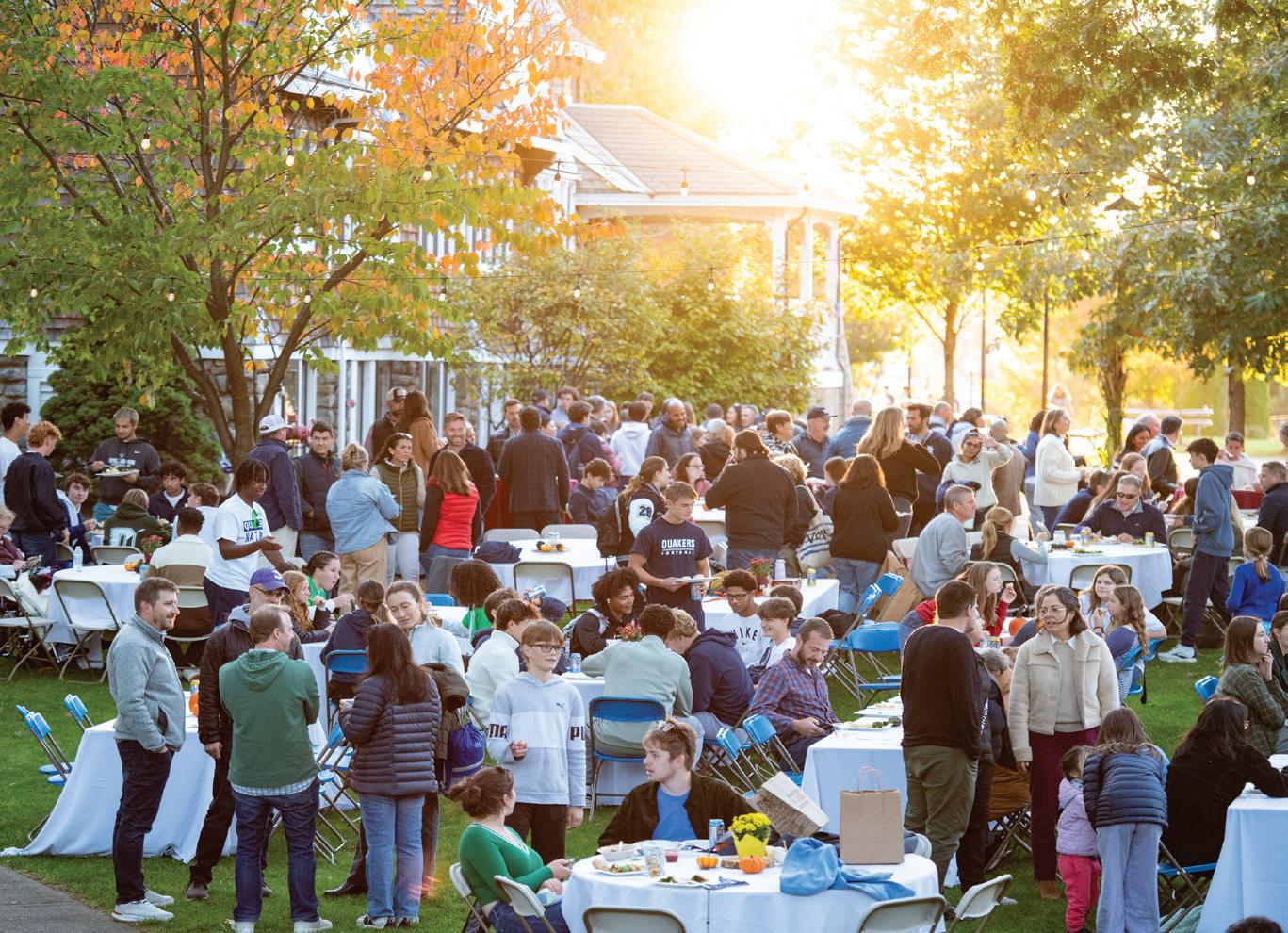
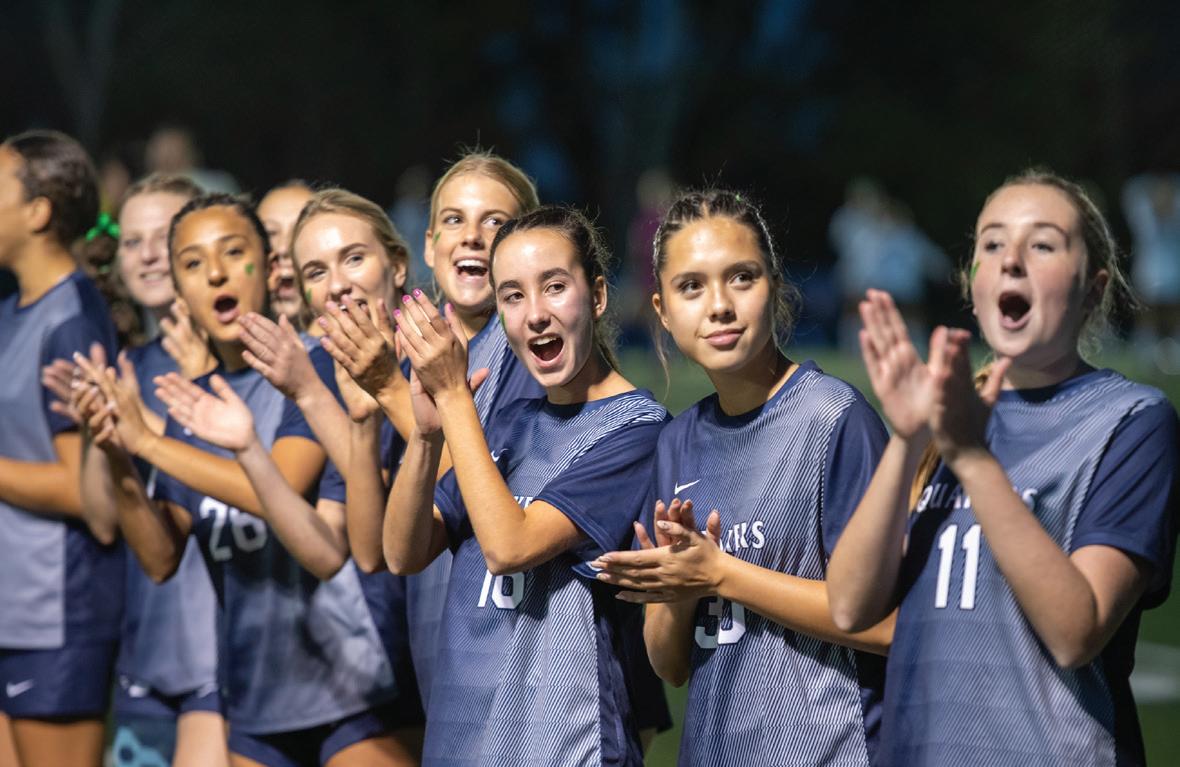
Class Notes
1950
L. Kinvin Wroth ’50 shared that while emptying the attic his good intentions were rewarded by discovering a battered carton labeled “Moses Brown 1950” with the baseball uniform pictured here.
1959
Larry Kilham ’59 wrote a short memoir about his father, Peter Kilham, for which he won a first prize in the Southwest Writers annual writing contest. The memoir is about how his father invented a famous bird feeder and his reflections on life, invention, and success. The whole story is told in Larry’s book, The Perfectionist: Peter Kilham & the Birds.
1964
Jon Chase ’64 published a collection of his Appalachian photos from 1979, updated with new photos from a return trip last year, featuring coal miners and local people living in the tri-state area of Kentucky, Virginia, and West Virginia known as Coal Country. In 2024, he met with a coal miner whom he had photographed 46 years ago. Jon was invited to spend time in the miner’s home for lunch and dinner with his wife and adult daughters. The miner, having long retired, is now a minister with his own church, which Jon attended while there. He also visited several of the small towns photographed on his first trip and photographed newly retired as well as current miners at one of the only deep mines still in operation. His book, Coal County: Appalachian Portraits, has extensive anecdotal and historical captions as well as over 40 photographs published with Blurb Photo Books.
Matt Runci ’64 shared that members of the Class of '64 gathered for a holiday luncheon at Maven's Delicatessen in Pawtucket in December of 2025.
1965
Richard Fain ’65 published Delivering the Wow: Culture as Catalyst for Lasting Success on October 21, 2025. The book has stories from Richard's 33 years at the helm of Royal Caribbean Group, including the remarkable culture established by remaining committed to mission alignment, intentionality towards accomplishing goals, and dedication to continuous improvement.
1973
Andrew Wilner ’73 is living happily in Memphis, Tenn., with his wife of 10 years and seven-year-old son. He was promoted to Professor of Neurology at the University of Tennessee Health Sciences Center in Memphis, and is the podcast host and producer of "The Art of Medicine with Dr. Andrew Wilner." You can view underwater videos on YouTube at "Underwater with Dr. Andrew Wilner."

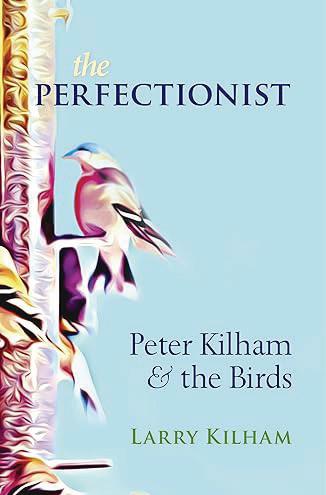
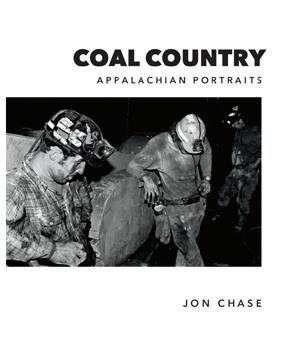
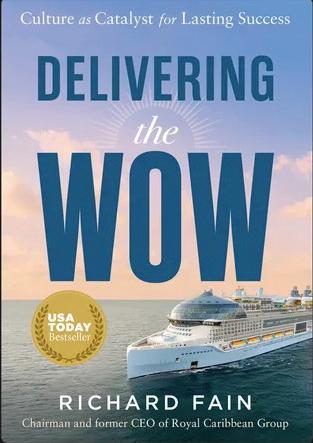
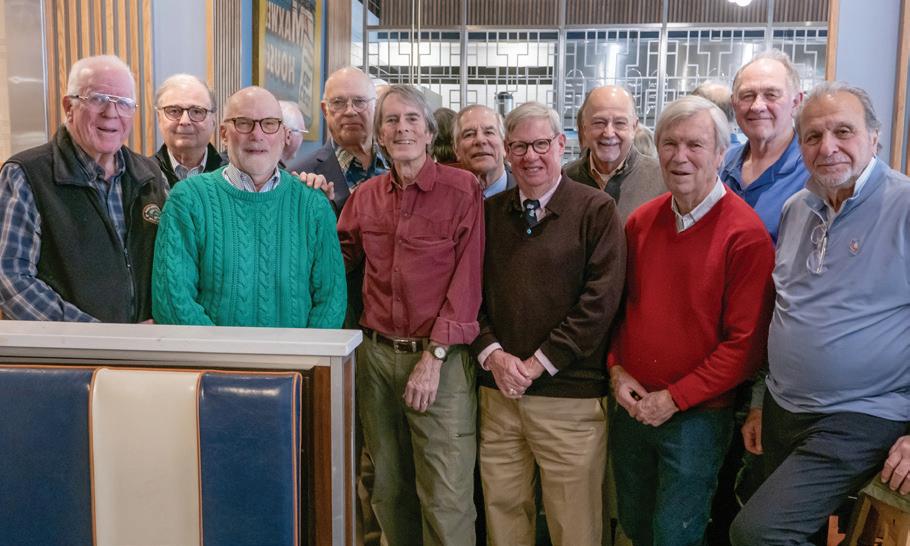

L. Kinvin Wroth ’50
Front row, (l to r), DeWolf Fulton, Peter Mann, Jon Chase, Ken Anderson, Steve Smith and Peter Garzone. Back row, (l to r), Matt Runci, Ted Livingston, Richard Licht, Bob DiLibero, and Frank Ward.
Andrew Wilner ’73
Larry Kilham ’59 Jon Chase ’64
Richard Fain ’65
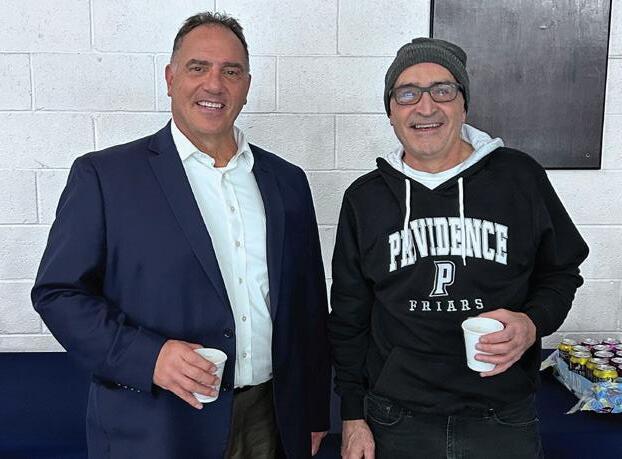
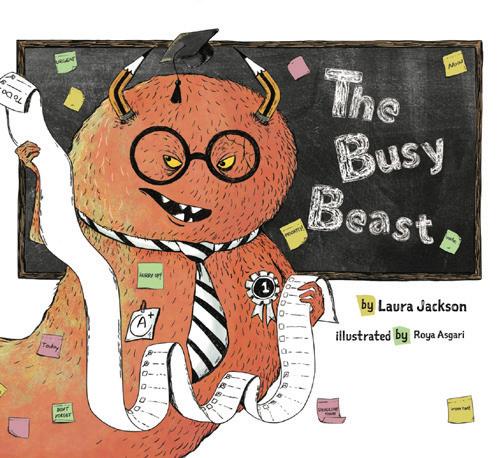
1978
Hardi Parker ’78 and wife Renée visited campus in March of 2026 to see the Schoolhouse and visit the old stomping grounds. Karin Morse ’79 led the tour and snapped this photo of the couple in the Cupola.
1980
Steve Peltier ’80 and Rick Missaghian ’80 attended the alumni hockey game at Meehan Auditorium in December, enjoying a chance to catch up with fellow alums and be back at the rink reminiscing about their MB hockey days.
1981
Melissa Maxwell ’81 directed Steel Magnolias at the Utah Shakespeare Festival. The show opened on June 28 and ran through October 4. Reviews exclaimed:
“Melissa Maxwell approaches Steel Magnolias confidently, letting the story breathe. She doesn’t exhaust the sentiment or lean too hard into the laughs……..there’s a natural rhythm to her direction. Maxwell knows when to pull back and when to lean in. The cast responds to that trust, thus providing a lived-in quality to their performances."
"Director Melissa Maxwell brings a quiet mastery to this production, guiding the ensemble with an eye toward intimacy rather than spectacle.
.
. . Maxwell has directed everything from new play premieres to reimagined classics across the country….her approach honors both the cultural legacy of Steel Magnolias and the real-life story that inspired it, offering audiences a version of the play that feels both familiar and newly urgent.”
1986
Andrew D’Uva ’86 is the founder and principal advisor for Providence Access Company. The company is a senior advisory practice supporting executives in the space and SATCOM sector on strategy, national security alignment, and regulatory governance (including SSA/ FOCI). Andrew presented at the United Nations Space Law & Policy Conference in Vienna, Austria. He was on the panel: Operationalising Space Sustainability: Legal and Regulatory Approaches Across the Lifecycle of Space Debris. Discussion focused on the implementation of the United Nations Committee on the United Nations Committee on the Peaceful Uses of Outer Space space debris mitigation guidelines and long-term sustainability guidelines into national legal and regulatory frameworks.
2001
Laura Kacewicz Jackson ’01 published a children's book called The Busy Beast. Laura shares: "The book is about overscheduling and the importance of free play in childhood. My hope is that it will give kids language for talking about being over-scheduled and provide families with the opportunity to talk about this issue and, possibly, to slow down a bit."
Beth Landis ’01 and Stephanie LaShoto-Westfield ’01 reunited at the Area 1 Handbell Musicians of America Festival/Conference in Worcester, Mass., to enjoy 2.5 days of handbell ringing and workshops. Beth and Stephanie rang together for many years at MB under the direction of Elaine Alexander. Stephanie has become an avid handbell musician, currently ringing and serving as the Executive Director of the Back Bay Ringers, a community ensemble in Boston, and is also a member of the Old South Ringers at the Old South Church in Boston. Stephanie and Beth had a blast reuniting with one another and with a musical instrument they both loved learning at MB!
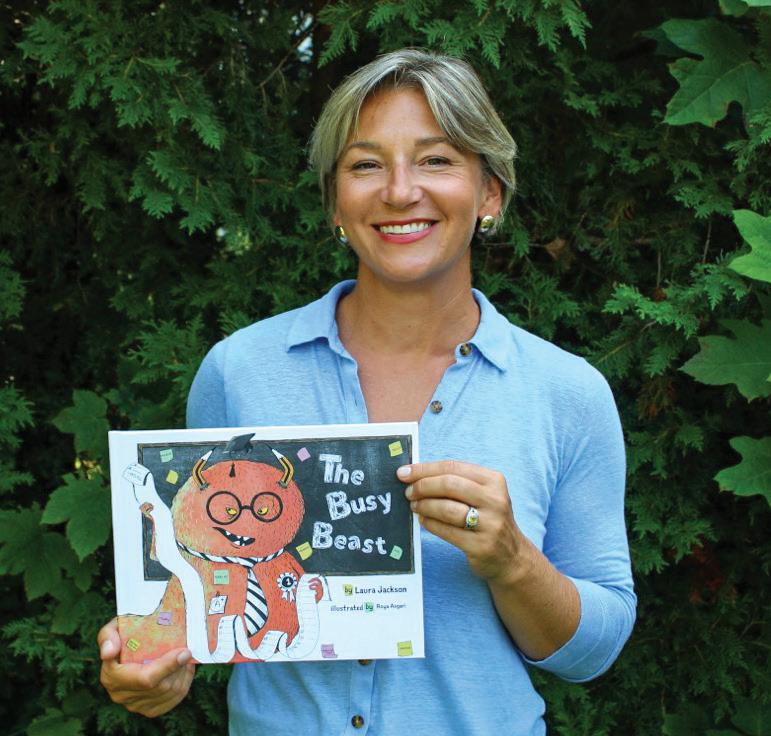
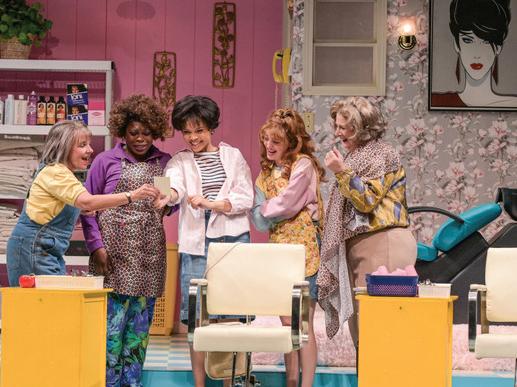
Steel Magnolias directed by Melissa Maxwell ’81
Beth Landis ’01 & Stephanie LaShoto-Westfield ’01
Hardi Parker ’78
Steve Peltier ’80 and Rick Missaghian ’80
Laura Kacewicz Jackson ’01



2003
Alex Egan ’03 completed The Great World Race, an event in which participants attempt to complete a marathon on each of the seven continents over a seven-day period in November of 2025.
2007
Abigail Alexander, MD, MPH ’07 is a board-certified forensic pathologist for the New Hampshire Department of Justice. She shares: "I’m very happy to be finally done with medical school and training!"
2008
Luiza Smith Burr ’08 welcomed a son, Isaac, in March of 2025, and he celebrated his first birthday this year.
2009
Kaia Simmons ’09 married Hunter Eggers in a ceremony on Cape Cod, Massachusetts. The couple lives in Westchester County, New York. (Photo bottom left)
2014
Marissa Bamonte ’14 shared that former Moses Brown Sailing Team teammates enjoyed reconnecting at the Young Members Soirée at the New York Yacht Club in Manhattan on February 7, 2026. (Photo bottom right)
2018
Collin McCormack ’18 is a freelance illustrator working on the Patriots' game day art. Instagram: @collinillustration.
Rowan Van Lare ’18 is Director of Scheduling for Congressman Seth Moulton (D-MA-06) and on Seth Moulton’s 2026 campaign for Senate. She is currently living in Washington, D.C.
2023
Sophie Schmults ’23 has been selected as a 2026 Truman Scholar. Sophie, currently a student at Northeastern University, is one of only 55 students nationwide to receive this premier award for college juniors. Sophie shared: "My passion for public service is deeply rooted in the Quaker values learned from MB, and I’m forever grateful to be a recipient of the Dwares Service award and plan to continue my commitment to service."
2024
Paige Durant ’24 was named a Dana Scholar in the Bates College Class of 2028! This honor is awarded to twenty first-year students nominated by members of faculty and staff in recognition of academic excellence, service to the college and community, and leadership potential.
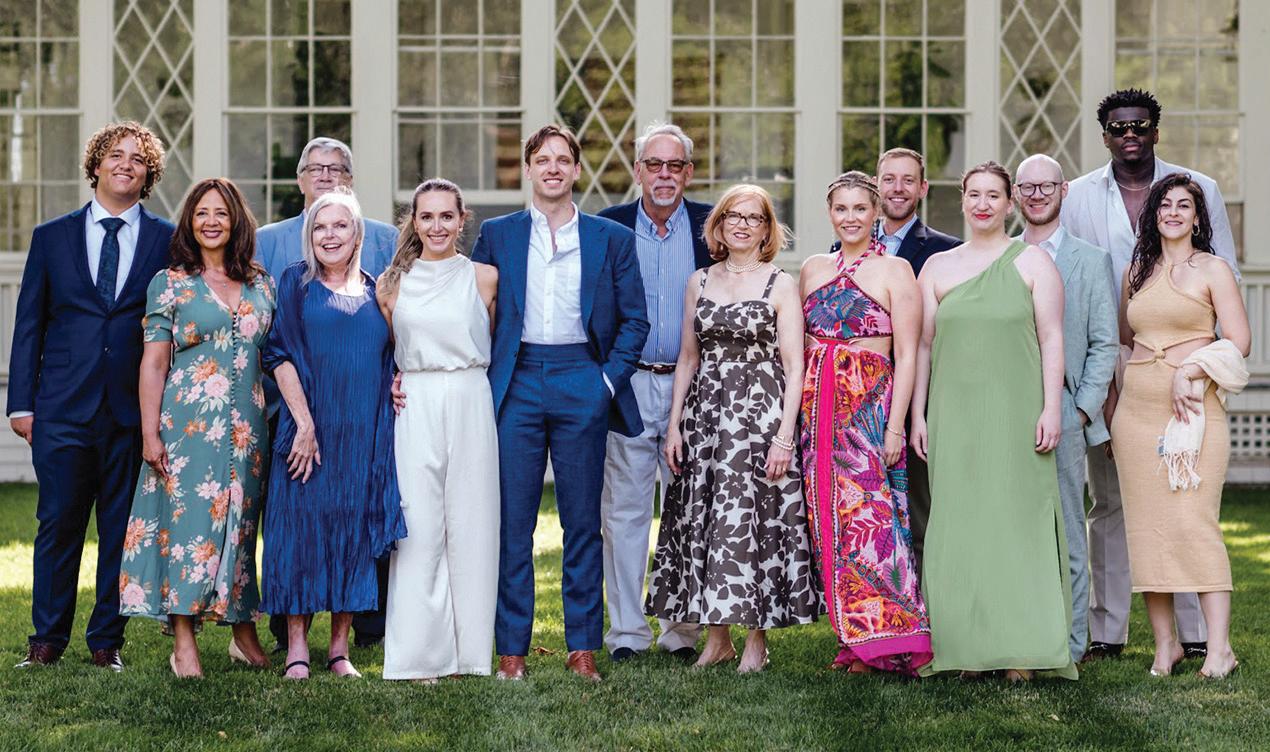
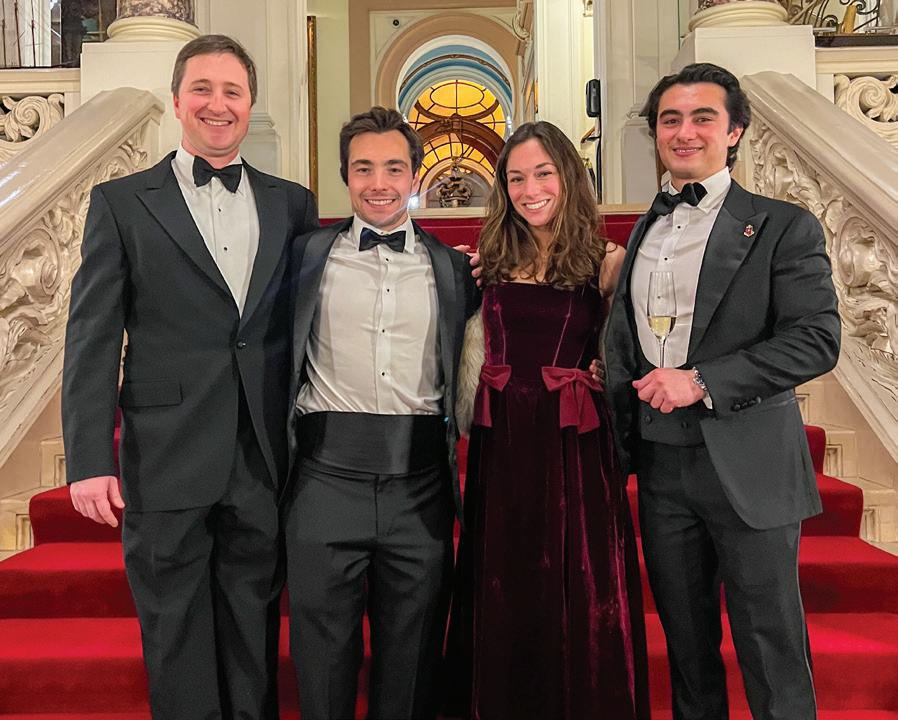
Alex Egan ’03 in yellow jersey The Great World Race
Pictured from left: Ian Maccini ’13, Tom Harden ’16, Marissa Bamonte '14, and Taylor Nainoa Nathanson ’14
Kaia Simmons ’09
Isaac, son of Luiza Smith Burr ’08
Centered in Simplicity
Gary Orenstein ’86 and Ching-Yee Hu
Give Through a Donor Advised Fund
For Gary and Ching-Yee, supporting Moses Brown is a thoughtful, steady expression of their values. Through their Donor-Advised Fund (DAF), they’ve chosen a simple, intentional way to give, one that allows them to support MB consistently and meaningfully over time. Their generosity ensures that the school’s mission remains strong and present in the lives of students year after year. By prioritizing sustained support, they model a way of giving that is both purposeful and deeply aligned with MB’s commitment to preparing each student for the future.
For those who have a Donor-Advised Fund, we invite you to consider recommending a gift to Moses Brown School as part of your philanthropic planning.
Your can support MB by providing immediate resources where they are most needed. You can also use your DAF to make recurring grants and align your charitable support with the values that matter most to you. The QR code will take you to a simple, easy-to-complete form. Scroll down and click on DAFpay to get started.

In Memoriam
We send our sympathies to the friends and families of the following MB community members, who passed away since our last issue.
Norman Baker ’56
Pedro De Oliveira ’97
Seth Gifford ’39
Charles Hamlin ’57
Nathanael Herreshoff ’49
Anthony Hindley ’55
Alfred Hurst ’46
Mark Jordan ’64
Frederick Lawrence ’56
Jack Nixon ’60
Ilrid Seed Richards ’90
Douglas Tingle ’76
Bradford Varr ’77
Ashbel T. Wall ’71
Faculty/Staff
Yolanda Wilcox Gonzalez
Elizabeth Ward
Trustees
Eric Widmer
Joseph Dowling, Jr.
Stay in Touch!
Send thoughts on this issue or suggestions for our next edition, including news, class notes, or photos to alumni@mosesbrown.org.
Follow MB online at mosesbrown.org and on social media: ALUMNI: /mosesbrownschool


@mosesbrownschool /school/moses-brown-school /mosesbrownalumni

@mosesbrownschool


@mosesbrownalumni /in/moses-brown-alumni
Let’s end with some silence.