ONCE-POPULAR TECH MAJORS LOSE LUSTER AS AUTOMATION THREATENS JOB PROSPECTS
By Shivali H. Patra MOSAIC JOURNALISM
As college application season approaches, some Bay Area students are weighing familiar questions: Which ma-
CAN YOU KEEP YOUR HERITAGE WITHOUT KNOWING YOUR FAMILY’S LANGUAGE?
By Claire Dong MOSAIC JOURNALISM
“Fake.” “No sabo kid.” “Banana.” “White-washed.”
In American culture, these labels mock people who speak English but struggle to speak their heritage language. For many Bay Area Gen Z students, growing up disconnected from a family language is a complicated question of identity.
Aveah Pok, 17, a second-generation senior at Aragon High School, grew up speaking English. Though half Cambodian, part Mexican and part Italian, Pok never learned Cambodian, Spanish, or Italian fluently as a child.
“I’ve definitely felt not good enough,” Pok said. She doubted she could claim to be Cambodian or Mexican, because she didn’t speak those languages well.
That sometimes affected how others viewed her identity.
“If I told someone I was meeting for the first time, ‘I’m half Asian and part Mexican,’ they would be like, ‘No, you’re not, you’re just white,’” Pok said. “It was hurtful … and I just felt like my culture was being diminished.”
See LANGUAGES, Page 10
jor should I choose? What career do I want? What colleges should I apply to?
But unlike previous generations, many students are asking an additional question: How will artificial intelligence
change the future of my work?
As artificial intelligence becomes increasingly integrated into classrooms and workplaces, students are beginning to factor the technology into decisions about college majors, career paths and future educational plans. While some are reconsidering fields they believe may be susceptible to
automation, others see AI as something that will reshape, rather than replace, their future professions.
For Sanyukta Ravishankar, a rising senior at Saratoga High School, AI was not initially a big factor when considering college majors. But she has watched it become increasingly present in conversations about college and careers.
“I was in a college counseling workshop last week, and we were literally talking about it,” she said. “One of the biggest things was like, ‘Oh, AI is going to take over like all the CS (computer science) jobs.’ ”
Sierra Ward, Saratoga High School’s college and career ad-
See AI CAREERS, Page 10
World Cup unites young fans
El Mercadito offers alternative for vendors
By Asher Rae Aguirre MOSAIC JOURNALISM
El Mercadito, a new weekly outdoor market near San Jose’s SAP Center, is attracting both visitors and vendors accustomed to selling their products at the venerable Berryessa Flea Market, whose future is uncertain.
Event organizer Kiara Kassandra has been working toward attracting the vendors. The Berryessa veterans “are so used to being there,” she said. But that habit may change.
The flea market has been operating for more than 60 years, but its future at the site is in question with the development of the Berryessa BART Urban Village Area Plan.
El Mercadito vendors selling on a recent Wednesday expressed optimism about the new market. “I love interacting with people,” said Krystal Rico, who runs a specialty lemonade business called The Squeeze Co. “I love getting their response to the drinks and just See MERCADITO, Page 6
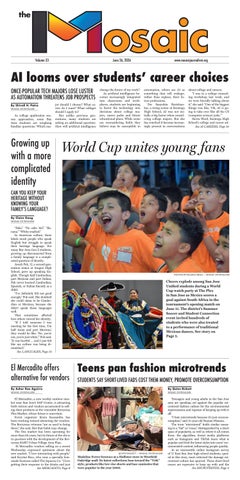
Cheers explode among San Jose Unified students during a World Cup watch party at The Plex in San Jose as Mexico scores a goal against South Africa in the tournament’s opening match on June 11. The district’s Summer Soccer and Student Connection event invited hundreds of students who were also treated to a performance of traditional Mexican dances. See story on Page 5.
By Quinn Rickett MOSAIC JOURNALISM
Teenagers and young adults in the San Jose area are speaking out against the popular microtrend fashion culture for the environmental repercussions and expense of keeping up with it all.
“I hate microtrends because it’s just overconsumption,” said 15-year-old Naman Dhanoa.
The term “microtrend” holds similar meaning to a “fad” or “craze,” distinguished by a short span of popularity, as well as where it all comes from: the algorithm. Social media platforms such as Instagram and TikTok learn what is popular and feed the latest styles into users’ recommended content, influencing people quickly.
In an unscientific online Instagram survey of 17 East San Jose high school students, quoted in this story, most criticized the damage microtrend culture has spurred. These short-lived crazes are expensive to keep up with and the
QUINN RICKETT — MOSAIC JOURNALISM
Madeline Ferrer browses at a Hollister store in Westfield Oakridge mall. Its latest collections lean toward the “Y2K” style, products like low-rise shorts and lace camisoles that were popular in the year 2000.
PHOTOS BY EKASHA SIKKA — MOSAIC JOURNALISM
Introducing
osaic 2026
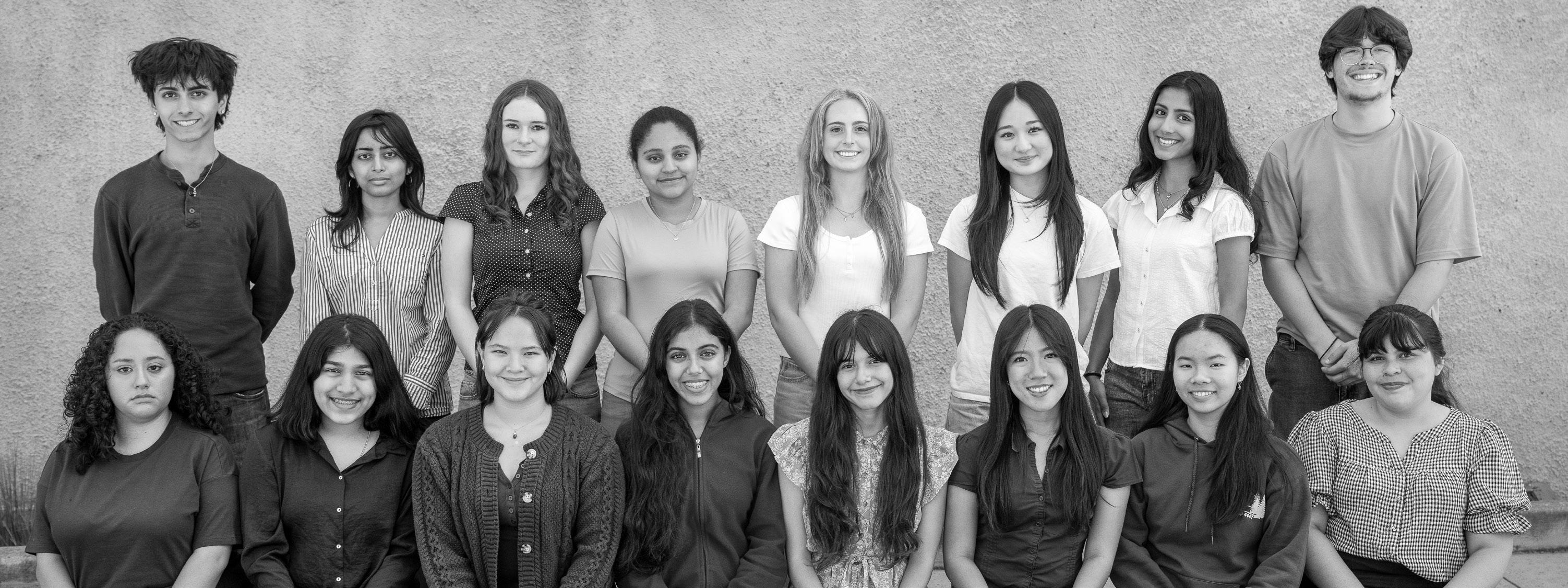
Meet the members of the Mosaic Journalism Summer Workshop. Since 1993, Mosaic’s volunteer professional instructors have taught high school and college students skills such as reporting, writing and photography for print and for multimedia platforms. The free, intensive two-week program takes place in the Spartan Daily newsroom at San Jose State University. Mosaic also runs school-year boot camps and internships.
FATIMA CORONA: Fatima Corona is a rising senior at San Jose High School. She hopes to attend college a car ride away from the Bay Area. She will pursue journalism, including opinion writing, as she majors in literature. Fatima enjoys classic rock music, listening to bands such as The Cure and The Velvet Underground from the 1960s. She recently started playing acoustic guitar. She loves poetry, especially the gothic works of Edgar Allan Poe. Fatima appreciates nature by going on long walks around her neighborhood and growing flowers and fruits in her garden.
ANYA JOSEPH: The 16-year-old has enjoyed writing since she was little and is now writing a book. A rising junior at Foothill High School in Pleasanton, she’s contributed to the school’s newspaper and magazine. Anya also likes to bike in her free time. One of her favorite songs is “You Are My Sunshine,” and her favorite band is The Strokes. She loves “Desperate Housewives” and the book “I’ll Give You The Sun.” Anya would like to live in New York City, and she wants to try skydiving. — Ashlin Sanchez
ASHER RAE AGUIRRE: Asher’s inspiration for journalism stems from their father’s experience at San Jose State University’s newspaper, the Spartan Daily. A rising senior at Santa Clara High School, Asher will be Focus editor of their school publication, The Roar. Asher is heavily involved in art and music, being a member of choir, a drummer for the marching band and a poet. They also enjoy drawing and spending time with their two cats and are a self-described enthusiast of Times New Roman typeface. In the future, Asher hopes to live in San Francisco and to pursue a career in screenwriting.
—
Sikka
Ekasha
ASHLIN SANCHEZ: Ashlin, who moved to California from Honduras at age 13, is a rising junior at San Jose High School, with hopes of attending San Jose State University. Though Mosaic is her first time working in journalism, she loves to write, taking inspiration from her favorite writer, Ariana Godoy. In her free time, you can find her babysitting, indulging in her favorite food from her home country, baleadas (a type of bean taco), or spending time with her Rottweiler, Karim, even though cats are her favorite animal. Next up on her bucket list are an extravagant trip to England and conquering her claustrophobia.
— Anya Joseph
HALEY LILLIBRIDGE: As Haley begins her sophomore year at De Anza College, she aspires to be a filmmaker. Haley pursues her dreams to do camera work for productions as a student and film major. Her interest in scriptwriting and camera work led her to Mosaic Journalism. She graduated in 2025 from Cupertino High School, where she was a cheerleader. She is taking asynchronous online classes at De Anza, with hopes to transfer to UC Santa Barbara. Haley finds online learning gives her flexibility for school, her work at Pizza My Heart, Mosaic and other hobbies, including baking.
J.R. MCMINN: J.R., a rising senior at Del Mar High School in San Jose, will be a co-editor-in-chief of the Del Mar Dispatch, where he served as managing editor and photography editor. He’s passionate about highlighting overlooked community voices and reported recently on a shooting at Westfield Valley Fair where several classmates were present. He hopes to write more in-depth profiles. J.R. hopes Mosaic will broaden his perspectives and help him connect with others. J.R. also plays hockey and is fascinated with severe weather. He wants to be a photojournalist, cover extreme storms and also pursue meteorological research and engineering.
— Shivali H. Patra
KAITAN PAWAR: One would assume that somebody who stutters would refrain from speaking in public. However, Kaitan Pawar manages to overcome his speech impediment when he anchors the weekly broadcast at Gunn High School in Palo Alto. Anchoring is speech therapy for the rising junior. Kaitan’s many extracurriculars include film club, varsity soccer and piano lessons. A Mosaic photographer, Kaitan hopes to attend college in New York City and aspires to become a business journalist.
—
CHLOE DAO: Born in Santa Clara, Chloe is a rising sophomore at Santa Clara High School. She will be campus editor at her school newspaper, The Roar, and has written articles about school life and policies. Her favorite subjects are English and journalism, and she enjoys reading romcoms including “Better Than the Movies” by Lynn Painter. Interested in business and marketing, Chloe is co-publicist for the Vietnamese Student Association at her school and participates in cultural fan dances on campus. A bright optimist to everyone around her, she loves listening to Sabrina Carpenter’s music and spending time with her younger sister.
— Eliana
Aguilar
CLAIRE DONG: Claire is a rising senior at Aragon High School in San Mateo. An avid athlete, she has played more than six sports in her life. One of her current favorites is dance. She did traditional Chinese dance for five years before transitioning to jazz. Claire is part of Scouting America in Foster City and goes camping and backpacking with her troop. At school her favorite subject is statistics, and she will be the sports editor of her school newspaper, The Aragon Outlook. When she’s not staying active or studying, she likes reading adventure and fantasy books and listening to music.
— Shivika Verma
EKASHA SIKKA: Ekasha joined her student newspaper, Mission San Jose High School’s Smoke Signal, in her sophomore year. As a rising senior, Ekasha is the publication’s incoming co-editor-in-chief. She joined Mosaic after her former editor-in-chief recommended the program. She wants to gain real-world journalism experience and new perspectives from instructors to bring into her new position. Ekasha is heavily involved on campus, participating in Model UN, as well as cross-country and track. She admires hard work and integrity, carrying the influence of her family members into her dream of pursuing a career in biology or journalism.
— Asher Rae Aguirre
ELIANA AGUILAR: Eliana, a rising senior at Valley Christian High School in San Jose, aspires to become a weather broadcaster after majoring in journalism and meteorology. She is drawn to literature and poetry and hopes to attend Northwestern University. She stays close to her culture by eating enchiladas and participating in Mexican cultural dances such as ballet folklórico. Although she likes horror films, she also enjoys mellow activities such as playing the drums, writing free verse poetry, and playing with her dogs Aria and Tilly.
—
KAYLA LEE: Kayla is a rising junior at Cupertino High School. At Cupertino, she plays on the tennis team and will be a Postscripts editor at the student publication, a position where she edits personal and narrative columns. Kayla hopes to major in business or prelaw and wants to study in New York to experience the culture. She enjoys traveling to different cities and trying new foods. Kayla enjoys watching sunsets, driving to the beach and going to concerts. She also likes taking photos and always has her camera with her.
QUINN RICKETT: Quinn is an editor for the Raider Review at Silver Creek High School in San Jose. A rising sophomore, she plans to continue writing for the school paper during her junior and senior year. Quinn also enjoys crafts such as knitting, painting and crocheting, along with playing on her school’s water polo team. After high school, she aims to continue her education at UC San Diego, as many of her family members have done. Quinn is a writer at heart and wants to pursue journalism or law in college.
—
SHIVALI H. PATRA: Shivali’s love of storytelling inspired her to launch her own website, Faces of Silicon Valley, which she created in seventh grade to interview people throughout the region about their experiences and perspectives. A rising sophomore at Saratoga High School, she was a member of her school’s yearbook staff and will join the newspaper staff next school year. She is interested in sharing people’s stories and plans to use journalism to highlight everyone’s unique experiences and perspectives. Shivali enjoys reading, listening to music and dreaming of visiting Paris.
— J.R. McMinn
SHIVIKA VERMA: Shivika is a rising senior and the opinions editor of the Irvington Voice at Irvington High School in Fremont. She has always loved creative writing and spends much of her free time writing stories inspired by the books she reads. The rest of her free time is spent diving down rabbit holes on sites like YouTube and Reddit, a hobby that came out of a curiosity about true crime. She discovered her career plans during one of these dives: neuroscience. Her dream is to attend New York University, studying to become either a surgeon or a researcher.
— Claire Dong
SIENNA FELICIANO: Born in San Jose, Sienna is a rising senior at Santa Teresa High School. She is an only child, and loves to do art, soccer and cross-country. She works as a lifeguard at Los Paseos pool in the summertime. A country music fan, Sienna enjoys concerts, having gone to Zach Bryan, Jason Aldean and Chris Stapleton shows. She got into journalism by watching “Gilmore Girls” because the main character wrote for the school newspaper. Sienna was inspired by the scenes of the newspaper staff and the idea of writing and publishing.
— Kaitan Pawar
KARL MONDON — MOSAIC JOURNALISM STAFF
Top row, from left: Kaitan Pawar, Shivika Verma, Haley Lillibridge, Ashlin Sanchez, Sienna Feliciano, Kayla Lee, Anya Joseph and J.R. McMinn. Bottom row, from left: Fatima Corona, Shivali H. Patra, Quinn Rickett, Ekasha Sikka, Eliana Aguilar, Chloe Dao, Claire Dong and Asher Rae Aguirre.
Chloe Dao
— Kayla Lee
— Quinn Rickett
Sienna Feliciano
— Fatima Corona
Haley Lillibridge
Taco Tuesday fundraiser brings in aid to farmworkers
ORGANIZER AIMS TO PROVIDE SUPPORT, RECOGNITION
By Ashlin Sanchez MOSAIC JOURNALISM
Music, food and local vendors brought energy to History Park on June 16 as members of the community gathered for the Farmworker Caravan Taco Tuesday.
While visitors enjoyed coffee, live music and sales of crafts such as handmade earrings and greeting cards, the event’s mission was to attract donations and supplies to support and recognize farmworker families.
One of Farmworker Caravan’s priorities is to improve coordination between service providers.
“What we’re trying to do right now is coordinate all these health and medical and wellness organizations,” Darlene Tenes, the event’s founder, said. “Some do mental health, some do medical health, some do only hearing or vision. Nobody has had a coordinated schedule. We want to bring all these organizations together so they can reach more people.”
Farmworkers are often called the backbone of the country’s food system, yet their stories frequently go unheard. Through the Farmworker Caravan, community members may support farmworker families and recognize the challenges they face.
Tenes, of San Jose, said the Farmworker Caravan’s event was focused on collecting donations for farmworker families such as bicycles, eyeglasses and toys.
Although Farmworker Caravan does not provide health services directly, it works closely with organizations that do. Among them are the Lions Club, Salud Para La Gente
and Catholic Charities. Representatives of the Lions Club attended the event to collect eyeglasses and share information about services available for farmworkers.
“They don’t have any opportunity to go to the eye doctor,” Tenes said. “There’s a lot of people that don’t have insurance, not just farmworkers. The farmworkers mostly do not have any insurance at all.”
To help address those needs, the Lions Club operates a mobile unit that provides vision, dental and hearing screenings, bringing services directly to communities that may have limited access to care.
Tenes said that farmworkers continue to face a wide range of difficulties, such as extremely low wages, the threat of deportation, housing instability and language barriers, since some of them speak indigenous languages and neither English nor Spanish as their primary language. She said these struggles become even more severe during times when food production slows,
making it harder for families to meet their basic needs.
Among the volunteers at the event was Julieta Tzul, 19, who was helping to sell items handmade by Tenes to raise funds for the farmworkers.
Besides earrings and custom greeting cards, Tzul also was selling hot chocolate made from a recipe created by Tenes. Tzul described the items as something people might buy themselves for a little self-love
or to give as gifts.
For Tzul, volunteering is more than just fundraising.
“It’s a very caring environment,” she said. “It’s definitely somewhere where you feel like you don’t need to impress anyone and everybody is equal.”
Next to Tzul was Maria Perez, 52, another volunteer at the event. Perez was displaying mercado bags, candles, tumblers and succulent gardens that were being gifted to
people who donated to sponsor one or more farmworkers.
“I usually do the tamales in the winter time,” she said, referring to another Farmworker Caravan fundraiser. “My mom does the cooking, so I volunteer,” she said.
For Perez, the most rewarding part of volunteering is seeing the impact it has.
“My favorite part is when you do stuff like that, it warms you,” she said. “It makes you happy, and you know that you’re helping make somebody smile. You can make a difference for somebody.”
Tenes also highlighted the importance of educating people about farmworkers and their life experiences.
“Everything that we eat has been touched by them,” she said. “There is not a single person who isn’t connected to agriculture.”
One of the moments that has stayed with Tenes throughout her years of advocacy involves conversations with farmworkers about sexual assault in the workplace. One agency that Farmworker Caravan partners with, Salud Para La Gente, which is based in Watsonville, provides health services for the survivors. Tenes said the agency connects farmworkers with services, which helps a broader community.
“We were doing it for the campesinos,” Tenes said, using the Spanish word for farmworkers. “But it is going to help more people too.”
The message Taco Tuesdays and its volunteers and supporters want to send to the farmworkers, she said, is simply: “We appreciate you.”
South San Jose church finds faith in helping farmworkers
By Eliana Aguilar MOSAIC JOURNALISM
What began as a Christmas gift distribution for farmworker children has now blossomed into an ongoing effort to better the lives of farmworkers by churches in San Jose.
Santa Teresa Catholic Church raised $14,000 at its second annual Farmworker Fundraiser Dinner on May 16, which was attended by 185 people at the church’s Avila Hall. Attendees heard stories from a farmworker and Ann Lopez, the founder and executive director of the Center for Farmworker Families in Watsonville.
Robyn Schlice, a member of the church’s farmworker ministry, said the funds will support school supply drives, a computer literacy program, rental assistance and monthly distributions of clothing, food and household items.
“I think it makes a big difference,” Schlice said. “And it
HALEY LILLIBRIDGE — MOSAIC JOURNALISM
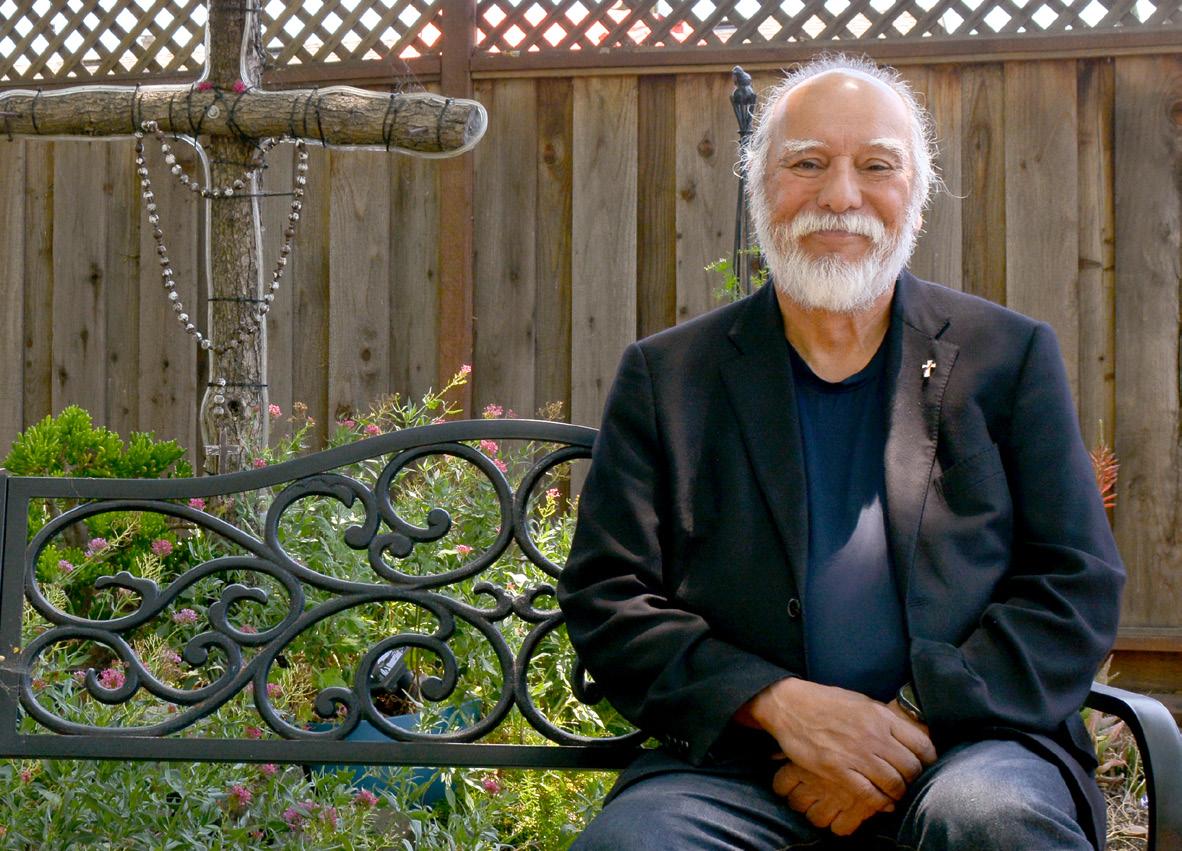
Deacon Steve Herrera of Santa Teresa Catholic Church says, “We should be respectful of people and their working conditions because without them, we don’t eat.” serves our goal to make sure that we’re educating other people about the plights and the challenges that the farmworkers have.”
While the ministry meets at Santa Teresa, Schlice said many parishes in San Jose also par-
ticipate, including Holy Family, Holy Spirit, St. Julie’s and Church of the Transfiguration.
Kristian Gadea, a rising senior at Bellarmine College Prep, designed the bright-colored flyer for the dinner and also volunteered at the event. He said
he was grateful for Schlice’s leadership and that the support from attendees at the dinner warmed his heart.
Gadea’s experiences have led him to start a club at Bellarmine called the Farmworkers Association.
“I think it was just to spread more awareness. At Bellarmine, it’s ‘be men and women for and with others,’ and I think that really goes with being in the farmworker ministry,” he said. “I also wanted to not just have the farmworker ministry be at Santa Teresa, but at a bigger school like Bellarmine.”
Gino Sartor, another member of the Santa Teresa farmworker ministry, attended a pesticide reality tour in Watsonville on April 18. Led by Adam Scow of the Campaign for Organic and Regenerative Agriculture, the tour educated participants on pesticide proximity and exposure, including highlighting pesticide monitors on school grounds.
MOSAIC 2026 PROFESSIONAL STAFF
“I really saw it with my own eyes and ears,” Sartor said. ”I just saw with my own observations how close these fields were to the schools, especially, and to homes.”
Sartor arranged a meeting with Assemblymember Gail Pellerin on June 5 to discuss and urge legislation regarding the conversion of pesticide fields into organic fields next to both homes and schools in Watsonville.
Santa Teresa Deacon Steve Herrera in his homilies often mentions farmworkers and the need to integrate the Catholic faith with assisting them.
“The people who picked the food on your table go through a lot of suffering and pain in order to make sure that you have enough food to eat.
“So, being aware of where our fruits and vegetables come from, we should be respectful of people and their working conditions because without them, we don’t eat,” Herrera said.
PHOTOS BY J.R. MCMINN — MOSAIC JOURNALISM
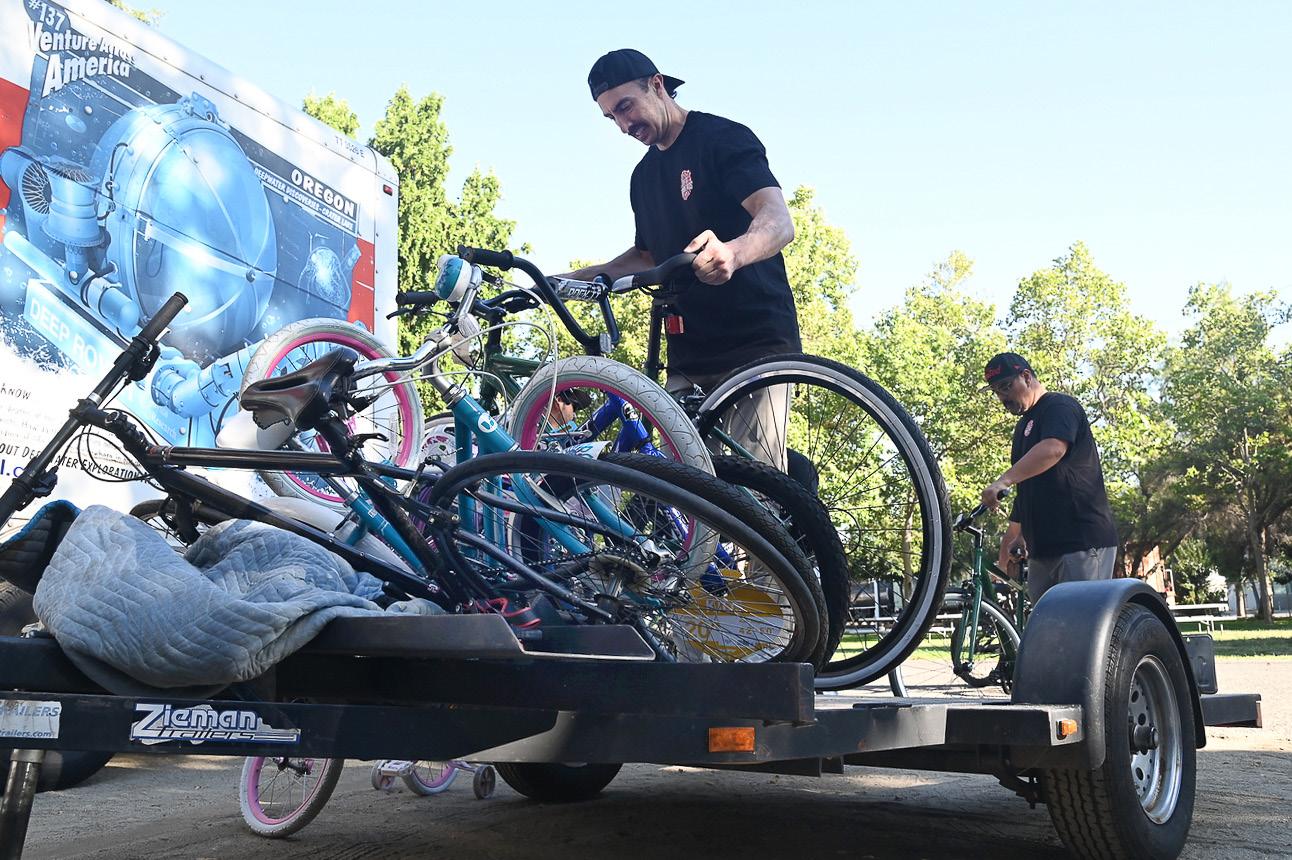
Michael Castañeda stacks bicycles donated by the San Jose Fire Department during a Taco Tuesday collection drive for farmworkers on June 16 at History Park in San Jose.
Donated eyeglasses fill a box during a Taco Tuesday collection drive for farmworkers at History Park in San Jose.
Darlene Tenes is organizer of Farmworker Caravan Taco Tuesday.
Connection, convenience on VTA rail
PARKING, COST CONCERNS SPUR WORLD CUP FANS TO TAKE TRAINS TO LEVI’S STADIUM FOR OPENER
By Ekasha Sikka MOSAIC JOURNALISM
For Hibah Ahmad, a visitor from St. Louis, Mo., taking the VTA light rail to the first World Cup game at Levi’s Stadium was the best way to avoid the stress and hassle of driving.
“We didn’t have to worry about parking. We didn’t have to worry about traffic. It just made more sense to take the light rail,” Ahmad said.
She was far from alone. The Valley Transportation Authority announced that it carried 37,642 passengers during the June 13 match between Qatar and Switzerland. The event surpassed transit ridership for Super Bowl LX, also hosted at Levi’s Stadium in February, by more than 6,000 passengers.
To accommodate the surge, nearly 90% of the agency’s light rail fleet was in operation for match day, with supplemental bus service, coordination with BART and Caltrain, and 100 transit ambassadors to assist with navigation.
For many fans, the decision to take public transit came down to avoiding the downsides of driving. With official FIFA parking at Levi’s Stadium ranging from $85 to $1,075, opting for public transit is a much more affordable option, at $2.50 for a one-way light-rail ride.
Many fans also felt that riding the light rail added to the World Cup experience itself.
Sacramento resident Dimisha Rodgers said the chaotic and celebratory atmosphere of the train allowed for friendship between fans, a compo-
MICROTRENDS
Continued from Page 1
clothes eventually end up in landfills.
“I don’t like microtrends,” said Grace Cruz, 15. “They can lead to bullying and promote overconsumption.”
Andrey Larin, 15, said microtrends “can help people find their identity but also promote the idea of buying and throwing away.”
Fashion trends used to last entire seasons or even years. Microtrends have reduced the fash-
ion cycles into months or even weeks. These trends seem to revolve around specific styles or “aesthetics,” like “coquette,” “pilates princess” and “tomato girl.”
These styles often have specific pieces that are considered to “make the outfit,” like bandanas, chunky bags and bucket hats.
Evania Tran, an incoming sophomore at Evergreen Valley High School, said she thinks microtrends spark competition between people trying to be unique and start new trends rapidly.
Anh Tran, 16, said microtrends are a “waste of money, yet
good for business.”
Paulina, 23, who was interviewed at Westfield Oakridge mall and like others interviewed did not give a last name, said she doesn’t follow microtrends.
“Every two years I feel like I want to get rid of or stop wearing certain things,” she said.
But there are devoted microtrend supporters.
“I think they’re super fun,” said Sasha, 23. “It’s super fun keeping up with them.”
Sasha said that in the past year he has bought 20 or more shirts, five to six pairs of pants
nent of game culture.
“You are all going to the same game or coming home from the same game and there is just kind of that instant connection on the train,” Rodgers said. “So then you feel a little bit more safe.”
For San Jose resident Eliza Nguyen, the train ride even served as entertainment for her young son.
“It’s crowded here, but it is fun, it’s exciting,” she said, adding that her son really likes the train. “So it was a bonus for us,” Nguyen said.
Still, the game-day transit experience was not without challenges. Despite the deployment of VTA transit
and three pairs of shoes. But he also said he usually wears older clothes from his wardrobe. Content creators such as @lottielashley and @heidiunhinged on Instagram promote awareness around fast fashion and overconsumption.
Others post videos like “What I Will Not be Buying in 2026” or “Fashion Trends I Will Not be Participating In.”
In a similar video from Instagram user @clairexplains, content creator Claire Beluga said, “we are being robbed.” She went on to say, “Price is going up;
ambassadors to assist riders, some fans were confused navigating between trains and buses and the adjusted lightrail routes.
Reshini Premaratne of San Jose found herself lost between differing transit instructions from Google Maps — which recommended Amtrak — and Caltrain employees. She finally settled on taking the light rail.
“When we got on and paid tickets, unfortunately, they were like, ‘This is actually very confusing,’ ” Premaranthe said. Additionally, some riders were concerned about the crowded atmosphere on the light-rail trains. Claudia Vaz, a San Jose resident, worried about her child’s experience on a chaotic train.
“If it gets too rowdy at the end of the game with a lot of people who had alcohol, then it would make it challenging with a little kid,” she said.
The VTA, however, considered the game-day transit operation ultimately successful.
“Thousands of fans chose transit to get to and from the match, and together with BART and Caltrain, we provided a seamless travel experience that kept people moving and got them home safely,” VTA General Manager and CEO Carolyn Gonot said in a statement.
The agency said it was able to clear light rail platforms at Levi’s Stadium within 90 minutes of the match’s conclusion, faster than the benchmark of two hours for major events.
“This was a tremendous success for VTA and our regional transit partners,” Gonot said.
quality going down,” which is a popular opinion among many. Those pushing back on microtrends urge their peers to think for themselves.
“Express yourself,” said Paulina, “Wear whatever you want and don’t care about what other people say. Wear whatever’s comfortable and matches your style.”
San Jose resident Jessica said, “Following trends is fine obviously, but more important is just looking at what you want to wear. Follow your own sense of style.”
PHOTOS BY J.R. MCMINN — MOSAIC JOURNALISM
World Cup fans crowd a VTA light-rail train headed to Levi’s Stadium in Santa Clara for the Switzerland-Qatar match on June 13.
World Cup fans aboard a VTA light-rail train pose for a selfie on the way to Levi’s Stadium for the Switzerland-Qatar match.
World Cup fans squeeze onto a VTA light-rail train for the trip to Levi’s Stadium in Santa Clara.
World Cup mania fills San Pedro Square
Soccer fans have filled up San Jose’s San Pedro Square to watch teams play in the FIFA World Cup. All 104 soccer matches will be shown on a 27-foot screen through the final on July 19. Watch parties kicked off June 11 with a match between Mexico and South Africa. Afterward, Mexico fans poured into the street and the parking lot to celebrate Mexico’s 2-0 win. Later, Morocco fans also celebrated their team’s first goal in the June 13 game against Brazil. Morocco and Brazil tied 1-1.
— Haley Lillibridge
LILLIBRIDGE — MOSAIC
As S.J. school closures loom, pupils meet new faces
By Shivali H. Patra MOSAIC JOURNALISM
As chants of “Mexico! Mexico!” rang through The Plex and students rushed between soccer stations, it was hard to tell who was having more fun: the children or the adults watching them.
A bevy of San Jose Unified students gathered on June 11 for the district’s Summer Soccer and Student Connection Event. Beyond the excitement was a larger goal: helping students build connections before some of their elementary schools merge next year.
Organized by the district and several afterschool programs, the event brought students together for soccer clinics, cultural performances and a viewing of the Mexico vs. South Africa FIFA World Cup match.
“It’s not only about the soc-
A San Jose Unified student cheers for Mexico at The Plex in San Jose.
cer game for us,” said Dámaris Cuffy, senior program analyst for San Jose Unified. “It’s also making sure that the students are connected in one way or
another.”
Cuffy said the district tried to create opportunities for students from different schools to interact, particularly because some children will be affected by upcoming school consolidations due to the closing of five elementary schools in the district. A district spokesperson said as many as 900 students attended the event.
“We also wanted to make a safe space for them to talk about if they have any fears, or are excited about anything regarding the schools that are merging,” she said.
Maria Cortes, program director for the YMCA, said organizers spent months discussing how to support students whose schools are closing. “There’s a lot of uncertainty for the students who are going to the new school,” Cortes said, so activities were designed to help stu-
dents meet future classmates.
She said the district has also organized pen-pal programs between merging schools so students can begin forming relationships before the school year starts.
Many of the soccer stations mixed students from different schools. Aileen Garcia of America SCORES, a soccer, poetry and service-learning organization, said participants were divided into teams that encouraged them to meet new people.
“We hope they made at least one more friend,” Garcia said.
Belle Manzo of the YMCA said that students gained a sense of community by participating in activities alongside hundreds of their peers.
“I got to learn a lot about teamwork and friendship through the workshops we did,” said Jose Espinza, a rising sixth-grader.
Keilani Pina, a rising fifth grader, said she was excited to watch Mexico play and was happy she got to “get closer to my friends and learn how to play soccer with them.”
For rising third-grader Alexa Benavides Solis, who attends Walter Bachrodt Elementary, the highlights included the cultural performances. “I really liked the Mexico dances, and I really want Mexico to win!” she said.
Students cheered through performances, sprinted across fields and eagerly anticipated the World Cup match. “The kids were happy, they were yelling freely; you could feel the energy,” Cuffy said. District Board President José Magaña echoed these sentiments. “One thing that I’ve seen nonstop is smiles,” he said. “I’ve heard laughter, not just in the kids, but also the adults.”
HALEY LILLIBRIDGE — MOSAIC JOURNALISM
HALEY
JOURNALISM
KAITAN PAWAR — MOSAIC JOURNALISM
EKASHA SIKKA — MOSAIC JOURNALISM
Morocco fans erupt during a World Cup watch party at San Jose’s San Pedro Square as their team scores the first goal in a match against powerhouse Brazil.
Above: Soccer fans perch in the parking garage at San Jose’s San Pedro Square during a watch party for the for the opening match of the 2026 World Cup between Mexico and South Africa on June 11.
Above left: Pedestrians walk past San Jose’s San Pedro Square.
Left: Fan Sylvia Aguilar poses with a replica FIFA World Cup trophy.
HAILEY LILLIBRIDGE — MOSAIC JOURNALISM
Building community
one Wednesday at a time
DOWNTOWN FARMERS MARKET IS ENJOYING ITS SECOND YEAR NEXT TO HAMMER THEATRE
Every Wednesday morning farmers set up booths at the Downtown San Jose Farmers Market to sell their fresh and locally grown produce as well as specialty items.
Some San Jose residents come to this market regularly, while others stumble upon the event as they walk around the city. It’s also a popular spot among San Jose State University students and nearby employees, since the school and office buildings are across from the Hammer Theatre plaza.
The market hosts a variety of vendors. Residents can buy strawberries, donut peaches, toffee, traditional conchas, soaps, a hot plate of Thai food, kettle corn, jewelry and half-pound cookies.
Lillibridge MOSAIC JOURNALISM
Christian Hutton, a fourth-year student at SJSU, attends the market when he can. Hutton said on a recent Wednesday in June the market is “better than going to a grocery store” due to the community and reasonable pricing.
MERCADITO
communicating with people.” Her business specializes in culturally influenced lemonades that include ingredients such as chamoy, mango, popping bobas and chamoy straws. Describing the most popular flavor, La Toxic, Rico said, “She’s a little sweet, a little spicy. You know, she’s really refreshing.”
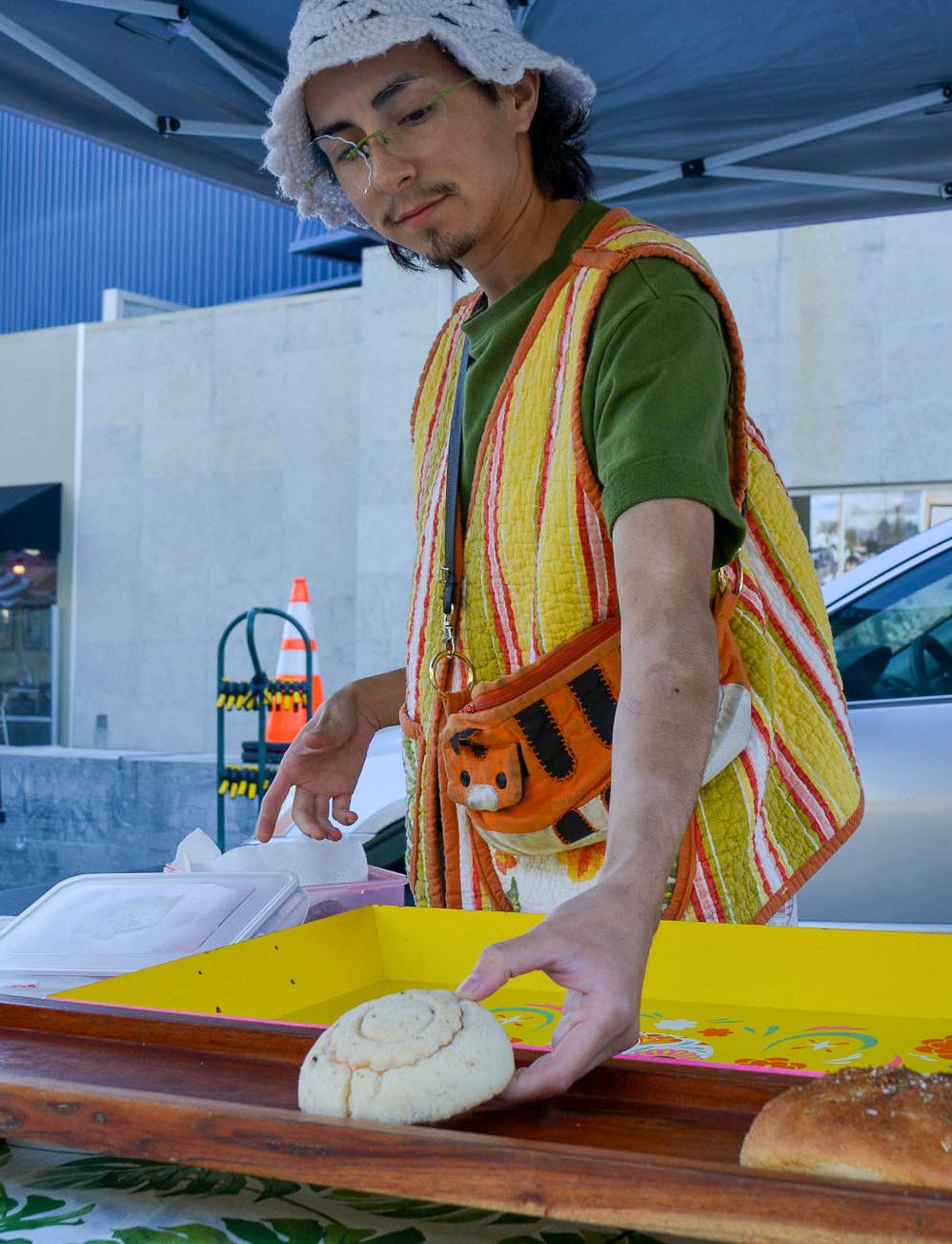
The Regional Farmers’ Market Association hosts the market to give small businesses a chance to sell to their community. Paolo Obillo, the association manager, makes sure prices are reasonable when recruiting sellers. Maria Lopez, of Lopez Family Farm, said they keep their products cheaper at this specific market to keep organic fruits available to students. Obillo also avoids competition between vendors by making sure each person selling has unique specialty products. For example, what sets the California Bakeshop aside from Baby Tiger Bakery is its savory baked goods such as empanadas and flat breads, while Baby Tiger Bakery is popular for their traditional Mexican conchas.
Despite the market reopening in Hammer Theatre plaza only in April last year, the weekly event has built a connection between vendors and the surrounding community. Many regulars describe the community as uplifting, friendly and vibrant.
Continued from Page 1 as well as noting the superior taco selection. One taco source was the food truck Con Sabor A Mexico. “It’s a little market and it’s just starting,” said truck owner
“It’s the mix of the cultures, you know, the vibe from like the people that come and support small businesses.”
Juan Carlos, owner of J&C Handcrafted Culture
Cayetano Araujo and daughter Wendy Diaz were selling goods from their Mexican snack business, Cayetano Botanas. Araujo began selling chamoy-coated gummies, pistachios, peanuts and various other snacks 32 years ago at the Berryessa Flea Market. The two said they enjoy the way El Mercadito brings the San Jose community together,
Daniel Ortega. “It’s growing every week. We’re trying to spread the word out. And it’s great for the community and for the vendors.”
Juan
Carlos, owner of J&C
Handcrafted Culture, sells hand-painted and sculpted Mexican pottery as well as exotic plants. Carlos expressed admiration for the variety of cultures present at El Mercadito.
“It’s the mix of the cultures, you know, the vibe from like the people that come and support small businesses,” Carlos said. Kassandra said visitors so far have agreed, enjoying the diversity and culture of El Mercadito at its location near downtown.
“They enjoy the different food we have, the baked goods, the trades, the plants,” she said. “And people just like to hang out … just chitchatting and just enjoying each other and music.”
The bonus, she added, is bringing the small business vendors together and educating them on the resources.
“It’s not just having a community here, but also if you’re a vendor, we encourage you to get your permits and everything. We will help you through it as well.”
Lily Guo hands out samples at the Leafory Tea stand at the Downtown Farmers Market on June 17. It was Leafory Tea’s first time at the market.
CLAIRE DONG — MOSAIC JOURNALISM Cayetano Araujo, owner of Cayetanos Botanas, displays his offerings at El Mercadito on June 17.
Photos and story by Haley
Left: Avery Carrillo, owner of Baby Tiger Bakery, sets up displays of traditional Mexican conchas on June 17. Right: Shoppers browse the Downtown Farmers Market on June 10, walking along the Paseo de San Antonio in San Jose. The market was closed for three years during the pandemic.
S.J. men strut in heels for cause
MORE THAN 450 PEOPLE COME TO SANTANA ROW TO RAISE AWARENESS ABOUT SEXUAL ASSAULT, DOMESTIC VIOLENCE
By Shivika Verma MOSAIC JOURNALISM
Sweltering 94 degree heat encased San Jose on June 11, but that didn’t stop dozens of middle-age and bearded men from confidently strutting around Santana Row in heels.
They were participating in the annual “Walk A Mile in Their Shoes” event, organized by the YWCA Golden Gate Silicon Valley. More than 450 people came to show support for survivors of sexual assault and domestic violence.
Men, and some women, wore bright colors and marched around Santana Row in high heels, carrying signs that ranged from “Abuse Has No Excuse” in bold, floral calligraphy to “I Stand With Survivors” in a child’s handwriting.
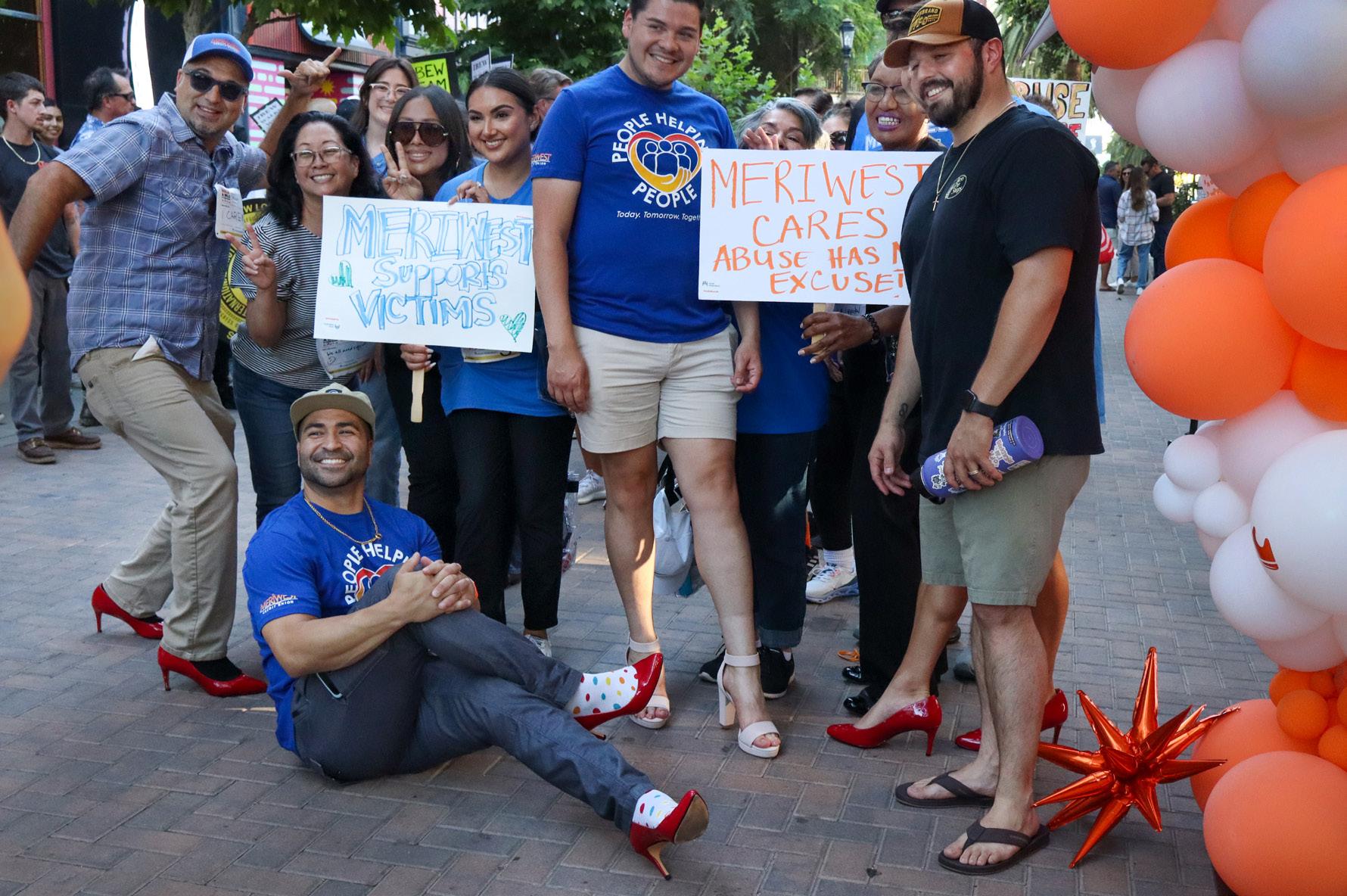
Members of many local organizations participated, including Omid Zahedian, who walked in red heels on behalf of San Jose-based Meriwest Credit Union.
“We are big about participating in our community,” Zahedian said. “If it means walking in high heels … that is something we’re going to do.”
For the last 20 years, the YWCA has hosted the walk at Santana Row. About 100 people fewer attended than last year, partly due to the warm weather and conflicting events like the FIFA World Cup, according to Trish Carter, director of communications for YWCA Golden Gate.
Most of the shoes worn were borrowed from the YWCA, including two-inch heels and classic redheeled boots, Carter said.
According to the Centers for Disease Control and Prevention, one in three women and one in eight men in the U.S. experience sexual assault. Meanwhile, one in 12 teenagers face teen dating violence.
NBC Bay Area’s Marcus Washington emceed the program before the walk started. Washington recognized various organizations turning out for the event and then led some group stretches.
“We have a lot of different local community businesses and organizations that come out and support and start teams. Often, they have survivors on their teams or in their families. It’s a great way for them to also have some healing and to provide some sup-
“We
are big about participating in our community. If it means walking in high heels … that is something we’re going to do.”
Omid Zahedian, who walked in red heels on behalf of San Jose-based Meriwest Credit Union
port,” said Adriana Caldera Boroffice, CEO of the YWCA Golden Gate Silicon Valley.
Teen and young adult volunteers handed out water bottles, staffed information booths and hyped up the crowd.
Krystal Andrade, an incoming freshman at UC Santa Cruz and a YWCA volunteer, distributed raffle tickets, and snacks and waited for the walk to finish.
Andrade said she felt inspired to join YWCA after observing classmates in “toxic” or “odd” high school relationships. Her older sister had also volunteered with YWCA and recommended the organization.
“I often noticed that everyone was in a relationship and everything seemed so weird and toxic, and nothing seemed right,” Andrade said. “I saw my sister start working with the YWCA, and I thought, what a perfect chance for me to learn more. I joined just to learn for myself, but then I realized that it’s something that I can teach to my friends and show people at my school too.”
Makers Market charms Santana Row visitors
By Fatima Corona MOSAIC JOURNALISM
Under the blazing sun on June 13, people strolled along Santana Row Makers Market to listen to music, shop and meet local craftsmakers. Vendors sold an assortment of handcrafted accessories, clothes, jewelry and wellness products.
The Makers Market Local Artist Street Fair takes place every second Saturday of the month at Santana Row. The event brings vendors from San Jose and nearby to display their work and sell to people passing by.
The Makers Market is an organization separate from Santana Row that manages the application and permits of local vendors. The organization sets up monthly markets in
San Jose, Lafayette, Napa and Mill Valley.
While standing under the shade waiting for clients, Shella May, owner of Hella Crystals, said she enjoys selling crystals and crystal jewelry to locals. May started making her products during the COVID shutdown, before deciding to launch it into a side business.
“I feel like, you know what? Let me start sharing them,” May said. “I started by giving them as gifts, and then, people asking for certain things, and I started selling them.”
The stand was filled with bowls of colorful crystals and handmade crystal bracelets. May works as a yoga instructor and often sees her students shopping at the fair.
“It’s a really great community,” she said.
FATIMA CORONA — MOSAIC JOURNALISM
Live music fills the air at the Santana Row Makers Market as a band plays in front of Zazil Cocina Mexicana restaurant in San Jose on June 13.
PHOTOS BY SHIVIKA VERMA — MOSAIC JOURNALISM
“Walk A Mile in Their Shoes” participants parade through Santana Row on June 11 to support survivors of sexual assault and domestic violence.
Employees from Meriwest Credit Union in San Jose pose in high heels on June 11 to raise awareness about sexual assault and domestic violence, at the YWCA Golden Gate Silicon Valley chapter’s “Walk A Mile in Their Shoes” fundraiser.
Inflation smacks local small businesses
OWNERS STRUGGLE TO MAKE A PROFIT WHILE TRYING TO COPE WITH RISING PRICES, SUPPLY SHORTAGES
By Chloe Dao MOSAIC JOURNALISM
Inflation is putting pressure on small businesses as owners face rising costs, supply shortages and difficult decisions on pricing.
For many small business owners, inflation has turned expenses into challenges. Rising costs for ingredients, packaging and supplies are forcing entrepreneurs to rethink pricing and operations while trying to keep customers.
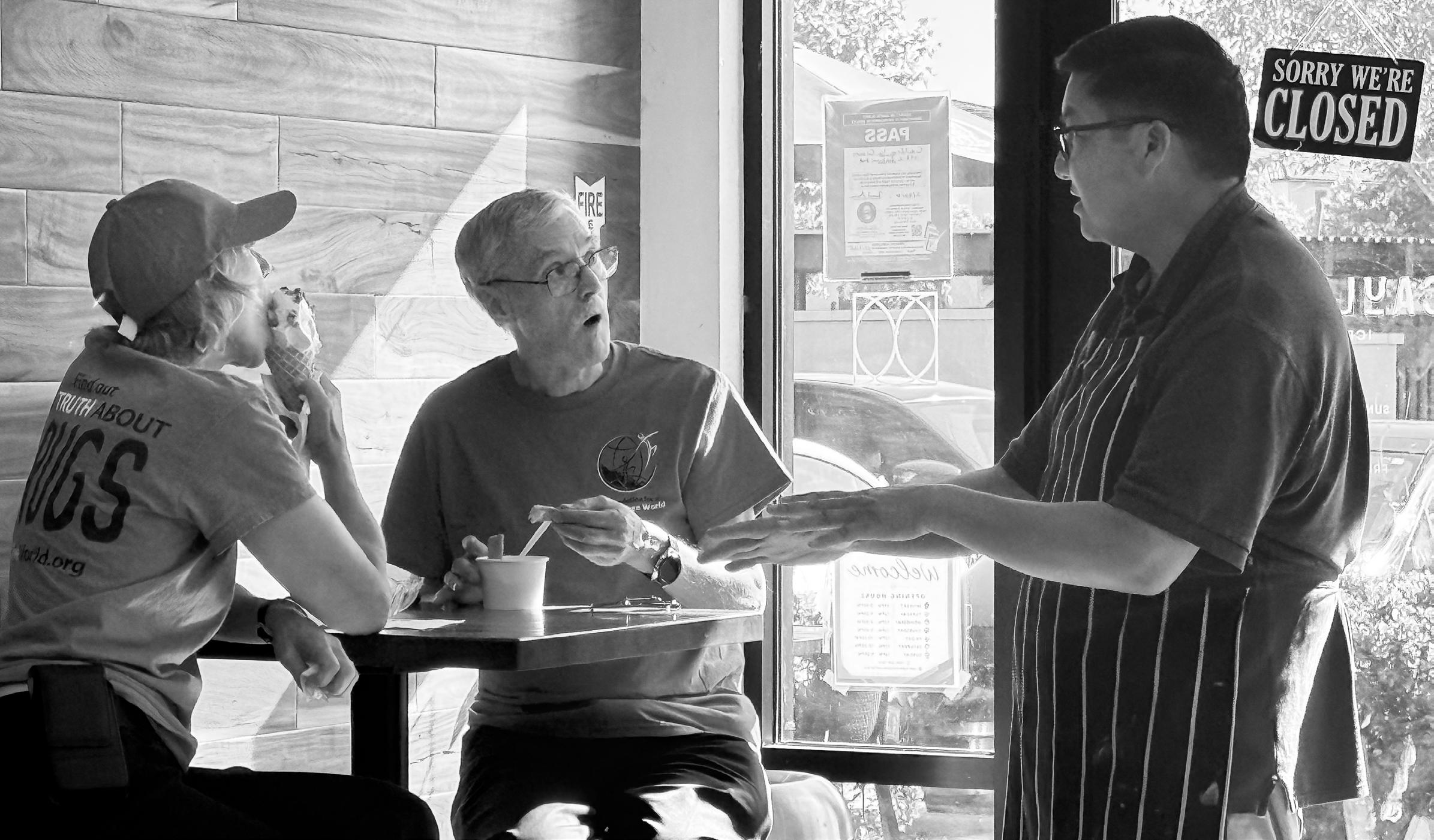
Mike Louie, chief financial officer for Cauldron Ice Cream on Brokaw Road in North San Jose, said inflation drives up the cost of his rent, utilities and supplies.
“It affects everything,” he said.
When he and his wife, Susan Louie, took over the store in 2019, a case of 210 eggs cost $60 to $65.
“Within three months, that skyrocketed to $125 a case,” Louie said. “It has come back down to roughly $90 a case.”
Four gallons of ice cream base cost around $37 when the shop first opened in 2018. By the time he took over a year later, the price was about $75. Louie said he was able to lower the cost to between $55 and $60 by measures such as changing the shipping company.
“I can’t absorb all the costs, but I can’t pass all of it on to customers,” Louie said. “There’s going to be a portion of my customer base that can’t pay the higher price.”
The shop’s signature nitrogen ice cream scoop now costs $9.25. Similar products previously sold for around $7 eight years ago.
Like many food industries, Cauldron Ice Cream faces the challenge of perishable ingredients. Products that are not sold within a few days must be thrown out, creating losses that Louie has to absorb. Louie said that of the six Cauldron franchise shops, his is the only one still open.
Similar obstacles have affected other local entrepreneurs.
Alaiyah Holland, 21, said she sometimes pulls strawberry items from her custom dessert business menu when the cost rises too much or the quality of the strawberries isn’t up to her standards.
Dippalicious, a custom dessert business that started up in May 2024, began as a hobby, then sprouted into a business catering to birthdays, anniversaries and events on San Jose State University’s campus. Customers are familiar with Holland’s regular chocolate dip, but with the rising prices, she has to switch brands to maintain financial stability. Other ingredients such as Rice Krispies, pretzel rods and
S.J. library’s local archive wins reprieve
By Anya Joseph MOSAIC JOURNALISM
The California Room, a historical resource at San Jose’s King Library, has earned a reprieve from threatened closure after pushback from supporters. The repository, tucked away in a quiet room on the fifth floor of the King library, serves as a home to the study of the history of the Santa Clara Valley. The records span decades of local and state history, from large city planning maps to thousands of regional texts. After 23 years in that location, the room was targeted for possible shutdown by the financially strapped city, until the San Jose City Council voted earlier this month to keep it going for at least one more year, although with cuts in staffing and hours.
The action came as a relief to Ben Leech, head of the San Jose Preservation Action Council. Leech cited the value of the room in city planning, with its decades of historic records that detail construction and are cru-
cial to San Jose development.
“This is raw material that feeds a huge spectrum of cultural output,” he said. For example, some urban construction and renovation projects require structural and zoning data that can be easily accessed at the California Room. “I think the California Room’s real strength was in being open and publicly accessible,” Leech said.
He said he tries in his role at the council to highlight the history of places that aren’t well known or are underappreciated. “Almost every issue that we’re working on, I will go to the California Room to learn more about it,” he said. “That’s the first place I will go to sort of uncover the history of the place that will hopefully lead to more public interest.”
Rory Fukuda, 68, a longtime San Jose resident, exhibited his intricate Japantown model for a month at the California Room. “You don’t really need it every day, but when you do, it’s there,” he said of the room.
“There aren’t many resources and centers where you can go,
decorating ingredients have all become more expensive over the past year.
“It’s really hard being a food business and dealing with inflation because I feel we get hit the hardest,” she said.
By establishing a loyal customer base, Holland said raising prices requires careful consideration. She wants to remain affordable while making sure the business is profitable.
Entrepreneur Safiya Jawad,
15, a rising sophomore at Santa Clara High School, experienced similar challenges with her custom press-on nail business, Nails by Safiya, that started in 2025.
Jawad originally underestimated how much packaging and shipping supplies would affect her expenses. Those materials have become some of the largest costs she faces.
“Packaging supplies increased the most. It’s difficult
and there aren’t many places online, either, where you could find that kind of information that they have.”
Students regularly utilize the California Room for its free digitization services, which to users can be a convenient resource compared to high-cost online alternatives. “I like their digital conversion station that they have, where they convert analog stuff to digital,” Fukuda said. “That’s something that most people only know how to pay for.”
While Fukuda is glad the room survived through the
compromise, he worries about the logistics of a new two-day schedule. “That’s not sustainable. That would definitely negatively impact how the archive works,” he said. “If you’re shortstaffed, the archives are not going to be maintained properly.”
The initial proposed cut would have reassigned all staff and closed public access to the room, saving the city around $400,000. However, after public outcry, the council unanimously voted on a last-minute compromise for the 2026-2027 budget year,. The compromise leaves the
for me to know my future or order volume, so I always order packaging supplies in smaller units,” Jawad said. “Buying smaller quantities definitely plays a role in inflation because the price keeps on rising.”
Jawad initially charged $15 to $20 for nail sets, but later increased prices to roughly $20 to $35.
The increase affected the flow of customers, so she introduced reward programs. Repeat customers can earn discounts and eventually receive free nail sets.
Jawad views inflation as an unexpected benefit. Rising costs taught her the importance of budgeting and carefully monitoring expenditures.
She now compares suppliers, tracks purchases, and organizes her business using spreadsheets, encouraging smarter financial decisions. Holland and Jawad believe flexibility is necessary during today’s economy. They encourage business owners to adjust prices and business practices when necessary.
“Don’t be afraid to pivot, especially when it comes to your pricing,” Holland said. “If you have a specific clientele that you’re looking for, those people will find you no matter what.”
room open to the public for two days a week and cuts the staffing to one full-time librarian and one part-time.
“Hopefully our budget will be better and we can continue to provide that as a core service,” said San Jose Councilman David Cohen during budget deliberations. “That room has been part of the library since it opened 25 years ago, and should continue to be so.”
Despite the cuts to staff and hours, Leech was relieved about what was saved. “What we felt was most important was maintaining the institutional knowledge of the 1.5 librarians that they will keep,” he said. “The positions are so intimately familiar with the collections that losing them, or having them reassigned, would have been really detrimental.”
Looking ahead to any cuts in the future, Leech found a “silver lining.”
“Decision-makers now realize that there is a vocal constituency that really does value it and is willing to speak up for it,” he said. “I hope that in the next year, more people will take it less for granted and use it. And that will further encourage the city to recognize that this is something that they shouldn’t think of as dispensable.”
ANYA JOSEPH — MOSAIC JOURNALISM
KAYLA LEE — MOSAIC JOURNALISM
CHLOE DAO — MOSAIC JOURNALISM
Leonardo Arcias, left, and Shawn Thomas use the California Room’s free digitization services on the fifth floor of San Jose’s King Library.
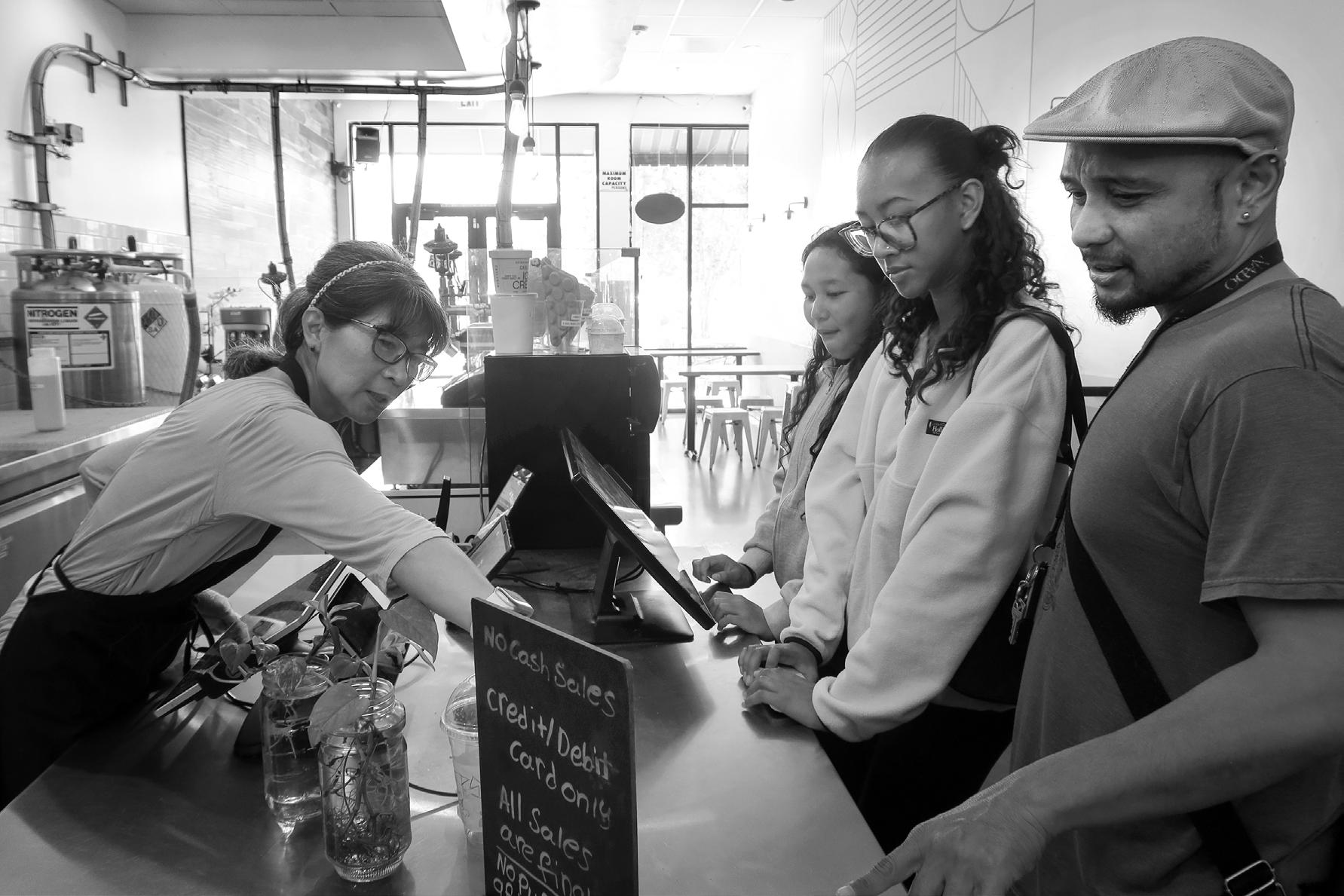
Customers order desserts from Susan Louie at Cauldron Ice Cream on June 17.
Mike Louie, chief financial officer of Cauldron Ice Cream, speaks with customers at his shop in San Jose.
Breaking up in Trump 2.0
POLITICAL POLARIZATION DRIVES TEENS APART
By Sienna Feliciano MOSAIC JOURNALISM
Starting off high school as an idyllic couple, Katherine Rice and her boyfriend were always together at Santa Teresa High School in San Jose. They walked around the sprawling campus holding hands and attended dances and other school events with each other. During football games, Rice would paint her boyfriend’s jersey number on her face. They were the picture-perfect couple.
And then immigration politics came into the picture. She belongs to a liberal Democrat family. His is conservative Republican.
On a warm and sunny day in January, dozens of students staged a walkout to protest the immigration crackdowns by the federal Immigration and Customs Enforcement agency in the Bay Area.
Not knowing his far-right views at the time, Rice invited her boyfriend, who requested anonymity for this report. His response shocked her.
“People need to let ICE do
their job and stop interfering,” he says he told her.
After she told her liberal friends about the situation, Rice was surprised by their even harsher reaction than hers.
“They went from thinking he was a good guy to, like, hating him,” she said.
Rice and her boyfriend soon found their political differences too deep to overcome. They broke up.
“I cannot be in a relationship with a Trump supporter,” she said.
According to the 2025 Harvard Youth Poll, “trust between young Americans, ages 18-29 is collapsing. A significant share do not assume good intentions from people who see the world differently.”
The report said 46% of Democrats and 54% of Republicans say they avoid political discussions out of concern for how people might respond. And 48% of Republicans and 30% of Democrats feel judged for their political views.
Teens are also feeling the effects of this political divide.
At St. Francis High School in
Mountain View, where liberal-leaning students outnumber conservatives, students who lean right said they often feel undermined by their peers.
Carlo Blank, 16, wore a MAGA hat along with three of his conservative friends at the Catholic school’s recent protest against ICE.
“People were staring at me and whispering about me,” Blank said. “They gave me looks of disapproval and said things to me like, ‘yeah, you’re stupid.’”
While the liberal students could freely share their beliefs, Blank felt shunned for
expressing his.
“The division in America has gotten out of hand,” he said. “I think most of the time now, if people have different political views, they won’t even consider being with each other.”
Grace Cummins, a 17-yearold at Santa Teresa, blamed social media for worsening the political divide among teens.
“The media also allows us to get more intense with our views and it gives people who feel powerless a way to feel like they’re doing something by posting their views.”
Jayson Chang, an Advanced Placement Human Geography teacher at Santa Teresa, noticed that many students’ beliefs are heavily influenced by the media they consume.
“I feel like, especially compared to when I first started teaching, social media has played a much, much larger role these days and people end up falling into echo chambers,” he said.
When handling political differences, Chang advises students to look at the bigger picture.
“Be open-minded, be patient and be empathetic.”
Despite e-bike risks, enforcement challenging
RIDERS STILL FIND WAYS TO BYPASS REGULATIONS
By J.R. McMinn MOSAIC JOURNALISM
As Santa Clara County officials increase efforts to address electric bicycle safety, some riders and trail users say authorities aren’t enforcing existing regulations. The concern comes as California and local agencies continue responding to the growing popularity of high-powered electric bikes and electric motorcycles, including models such as Sur-Rons and Talarias.
Under California law, e-bikes are limited by speed and motor power, while more powerful two-wheel vehicles may require registration and licensing and fall under other motorcycle regulations.
In May, the Santa Clara County Sheriff’s Office announced the return of its juvenile traffic diversion program, which allows eligible youth cited for bicycle and e-bike violations to attend a safety course instead of paying fines. The program comes amid rising concerns about injuries involving young riders.
A July 2024 study by researchers at UC San Francisco found that injuries related to electric bikes and scooters have risen sharply in the United States over the past decade. According to the study, e-bike injuries increased by nearly 3,000% from 2017 through 2022, while hospitalizations from e-bike crashes increased by more than 4,900%.
Researchers found that riders injured on e-bikes were more likely to suffer internal injuries and require hospitalization than riders injured on traditional bicycles. The study’s authors said the findings highlight the need for improved safety measures as electric bikes become more common.
Since 2022, 19 fatal bicycle crashes have occurred in San
ever faster, concern
“Our deputies don’t want to penalize kids, we want to keep them safe.”
Sgt. Alan Slaugh, who oversees the sheriff’s
Jose, three of which involved electric bicycles.
In September 2022, Ruben Razo Jr. was killed while riding an e-bike on Murphy Avenue after being rear-ended by a Lexus sedan, according to police.
In December 2025, a man riding an electric bicycle was fatally struck by a Lexus sedan at North First Street and East Brokaw Road.
In March 2026, 13-year-old Khang Bui died after losing control of a Magnum Cosmo e-bicycle while riding north on Remington Way with a passenger. Police said the bike
office traffic unit
skidded to the ground.
To prevent future fatalities, the sheriff’s office is prioritizing e-bike safety.
“Our deputies don’t want to penalize kids, we want to keep them safe,” Sgt. Alan Slaugh, who oversees the sheriff’s office traffic unit, said in a May news release. “This program allows us to hold young riders accountable while giving families the tools to prevent serious injuries.”
Despite those efforts and concerns about injuries and fatalities, some community members say they rarely see enforcement.
A 40-year-old Santa Clara resident who identified himself only as Tim rides his bike daily along the Los Gatos Creek Trail and said e-bikes have become a common sight.
“Every day, all the time,” Tim said about the e-bikes, noting that many who are operating dirt bike-style electric bikes appear to be teenagers riding in a way that concerns other trail users.
“My mom goes on these trails, she’s 67 years old,” Tim said. “There’s a lot of elderly people, and not a lot of people know how to have that courtesy out here.”
However, Tim said he has never personally seen a rider stopped by law enforcement on the trail.
Oscar Huerta, a 14-year-old incoming freshman at James Lick High School in San Jose, rides a Sur-Ron Light Bee X,
a high-performance electric dirt bike. He said his bike can reach speeds of about 60 mph and has been modified with aftermarket parts.
“Bigger batteries, brakes, tires, lights,” Huerta said. “Mostly stuff to make them faster.”
Huerta said he and many other riders are aware that regulations exist, but he agrees enforcement is uncommon as many of his friends have not been stopped.
“None of my boys were stopped,” he said.
Huerta said he was approached by security once while riding near the Santa Clara County Fairgrounds but was not cited.
Huerta does not believe new laws would discourage riders.
“Most kids I know are still gonna ride,” he said.
CLAIRE DONG — MOSAIC JOURNALISM
J.R. MCMINN — MOSAIC JOURNALISM
An e-bike cyclist cruises along the Los Gatos Creek Trail in Campbell on June 12. As the bikes become more popular, and
about their lack of regulation continues to grow.
Toxic race for college overwhelms teens
STUDENTS SACRIFICE MENTAL HEALTH
By Kayla Lee MOSAIC JOURNALISM
Sarah Kim’s experience at Cupertino High so far has been a go-go-go race for academic perfection. A rising junior, she knows it’s only going to get worse.
“It’s really easy to get caught up in academics and the pressure,” she said. “I guess I will try to focus on one thing at a time.”
At high-achieving schools like hers, the campus culture can turn into an echo chamber where Advanced Placement classes, standardized test scores and Ivy League aspirations dominate hallway conversation. Many students like Kim know the pressure is unhealthy but go along with it anyway.
Alexander Kendrick, a rising sophomore at Santa Clara High School, agrees.
He said many students measure success on where they are accepted to college.
“A lot of kids, they care about the name more than what they get from it,” he said.
Data that the AIM Ideas Lab collected in 2025 from
AI CAREERS
Continued from Page 1
viser, said AI has increasingly become part of conversations with students planning for college and careers.
“People are trying to figure out what job is going to be safe and what fields will even have jobs,” Ward said. She added that some students are beginning to question paths that were once considered stable, particularly in computer science.
“For the first time ever, some of my students are trying to ask me if they should bother taking computer science courses in general,” she said.
Other students have already adjusted their educational plans because of AI concerns. Nithya Grandhi, a rising junior at Lynbrook High School, originally planned to pursue computer science after discovering coding through robotics in ninth grade.
“Originally I was really into computer science when I started coding,” Grandhi said. “But so many entry-level positions in computer science are being taken over by AI.”
Rather than abandoning the field altogether, Grandhi shifted her focus toward mechanical and electrical engineering.
Not everyone studying computer science shares those concerns. Avinash Yajnik, a rising sophomore at UC Santa Cruz, who studied computer science his first year, remembers encountering ChatGPT while in high school.
While he acknowledges that AI may replace some entry-level programming work, he believes the field will adapt.
“As a programmer, you learn
LANGUAGES
Continued from Page 1
Growing up, Pok was called a “no sabo kid” because of her inability to understand Spanish. While the term “no sabo kid” — an ungrammatical slur — is generally aimed at children with Spanish-speaking ancestors, heritage language loss and confusion extends to many communities.
Some young people, however, do not see the need to learn the language of their parents.
Cedric Pinto, a second-generation, 21-year-old college student at UC Santa Cruz, grew up in a South Asian household in San Jose where English was the
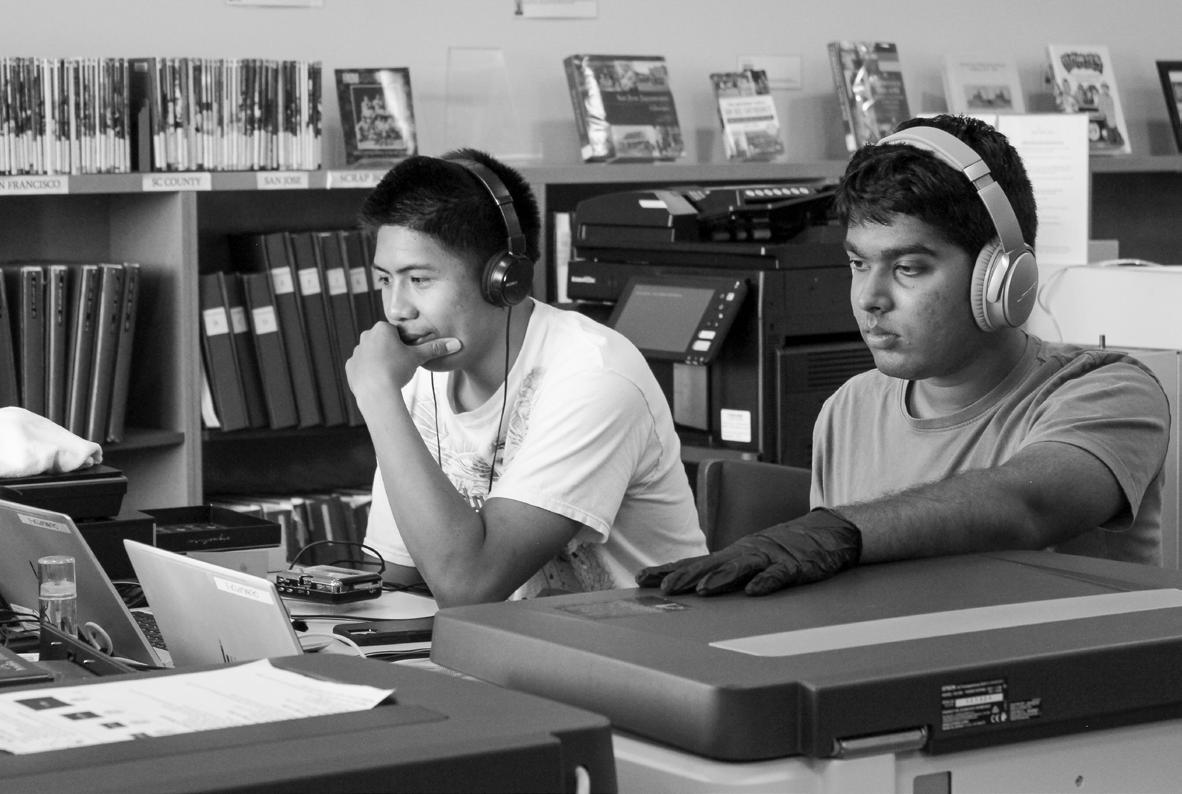
Atrisa Raghozar, incoming student at Scripps College in Southern California, studied and prepared for college applications at the Cupertino Library during her senior year of high school.
more than 270 students reveals that nearly 60% of students felt overwhelmed on a weekly, if not daily, basis. “The State of Youth Mental Health in the Bay Area” survey found a common pattern, where juniors and seniors in high school reported peak levels of stress, typically
caused by intense course work and college applications.
Recent Cupertino High graduate Atrisa Raghozar reflected on how this dynamic shaped her high school career.
“It’s really hard to not compare and think, ‘What if I could have done things differently?’ ”
she said. “It’s just something that’s always going to be embedded into my brain.”
Students are burning themselves out as they sacrifice their well-being for the sake of prestige. Students say the toxic culture of “academic validation” is leaving a lasting impact on
them, even after graduation. Kim tries to take a more positive mental approach.
“For me, I don’t really want to be caught up in a comparison trap,” she said. “My friends and I are all doing different things, and we all have different mentalities.”
When college decisions finally roll in, the culmination of years of pressure can lead to burnout, especially if things do not go according to plan. For Raghozar, the rejections and disappointments altered her mentality and motivation entirely.
“I couldn’t go outside for days. I skipped school for a few days,” she said. The ingrained culture of comparing college names makes it difficult to shake feelings of dissatisfaction.
Throughout her four years, Raghozar found herself caught in a cycle of pushing to stay on the academic curve built in her school. The pressure to excel has followed Raghozar beyond high school to her new playing grounds as an incoming freshman at Scripps College in Southern California, a prestigious school to be sure — but not on the radar at Cupertino High.
that the job market is affected by AI, but there is still a place for programmers,” he said.
Hailey Dao, a rising junior at Carlmont High School in Belmont, also has reconsidered a potential career path because of AI. Interested in medicine, she looked into radiology as a possible profession after a career project that was assigned during her freshman year.
only language spoken at home, despite his parents knowing their native language, Hindi.
“Our family just seemed to mold around the American lifestyle,” Pinto said. “It was a lot easier than having an Indian or South Asian lifestyle.”
For Pinto, living in the U.S. also had a big impact on his decision not to learn the language.
“There’s really no use for it here in America, since I’m not really going back to India or anywhere else,” Pinto said. “There’s really no point in me learning it.”
Because he can’t speak Hin-
di, Pinto said he feels little connection to his Indian culture.
A 2013 report from the Pew
But “radiology is less of an option now because AI can do the imaging on its own,” Dao said.
However, she believes human oversight will still remain essential.
“I do think you still need human oversight over the conclusions of AI, so there may still be a need for radiologist positions, just not as many,” she said.
Research Center found that English is becoming increasingly dominant among secondand third-generation immigrant families in the U.S.
Pew Research defines a first generation immigrant as any person who was born outside the country and permanently lives in the U.S. The center considers people second-generation if at least one of their parents is first-generation.
Pew found that among Hispanic Americans, 48% of first-generation immigrants reported speaking English well, compared with 93% in the second generation. A similar pattern is seen among Asian Americans, with English fluency at 78% in the first generation
However, some students have not viewed AI as a reason to entirely change their course.
At San Jose State University, rising junior Wamad Haroun, an aerospace engineering major, said AI has not altered his career goals.
“I feel like it’s hard for AI to work at that level,” Haroun said.
Ravishankar, the Saratoga High School senior, expects
and 92% in the second generation.
At the same time, Pew pointed out how fluency in the heritage language declines across generations. Spanish fluency was 92% in the first generation but 80% in the second.
Among Asian Americans, only 41% of the second generation reported speaking their ancestral language well.
For Gen Z, cultural identity is increasingly complex. Some students reclaim heritage languages later in life. Others grow more distant from their roots.
In Pok’s case, she chose to study Spanish in school.
“I was really confused and upset with myself for not learning Spanish when I was young-
the conversation to become even more complicated as AI is increasingly embedded in everyday life.
“I think the AI atmosphere is probably going to look a lot different in the next five years,” she said. “Right now, it’s a lot of chatbots and a lot of behindthe-scenes data processing at big companies. But five years from now, it might be in literally everything.”
er, even though it was really my fault,” Pok said. “But I decided in middle school, I’m just going to learn on my own through school, and I’ve continued that through high school.”
Despite that frustration, Pok said her relationship with language has shifted over time as she’s taken steps to reconnect with her heritage through school and self-study.
“We all learn about our cultures and our languages at different times in our lives,” Pok said. “It used to be the norm to grow up speaking the language and being already fluent, but that’s not the reality for everyone, especially for Gen Z, and I think people should be more accepting and tolerant.”
KAYLA LEE — MOSAIC JOURNALISM
SHIVALI H. PATRA — MOSAIC JOURNALISM
My room is
My mother calls it clutter. I call it a museum. To the untrained eye, my room may appear to contain an unusual array of objects. There are old notebooks stacked in corners, friendship bracelets sprawled across my bathroom counter, tickets hidden between book pages and enough random chargers to power a small city. Somewhere in the room, there’s a receipt from 2022 that I’m saving because I might need it.
This isn’t a mess, it’s curation. Hoarding, often unfairly criticized by minimalists and closet organizers everywhere, is the art of keeping things that are useful, meaningful or may be surprisingly important some day.
These objects have sentimental, practical or future value. Where critics see disgusting piles of stuff, hoarders see more.
A messy room is really a personal museum. Every exhibit has meaning. An old birthday card isn’t just folded paper but a snapshot of time. A friendship bracelet isn’t just string, and concert tickets, photographs, souvenirs and old notebooks each represent a memory that would otherwise fade.
Nobody technically needs a box filled with birthday cards from elementary school, yet we don’t throw them away either. Why? Because objects carry stories. Museums preserve artifacts for the
OPINION
not messy. You’re just uncultured.
By Shivali H. Patra MOSAIC JOURNALISM
same reason. If the Smithsonian can keep centuries-old teacups behind glass, I should be allowed to keep a collection of random trinkets.
What some people call clutter is actually a fully stocked creative workshop. Odd-shaped cardboard, ignored for months, suddenly becomes the most valuable object in the house six minutes before a history project is due.
Creative people understand this. It’s why artists collect materials, writers save ideas and inventors preserve prototypes. Leonardo da Vinci kept notebooks filled with sketches. I have 17 half-finished projects. We aren’t so different.
A seemingly useless object can become useful, meaningful or inspiring when the right moment arrives. The minimalist sees an empty box. The hoarder sees endless possibilities. And don’t forget that hoarders are the quiet heroes of society. Need a charger? A hoarder has at least two. Need tape? A hoarder has three rolls in different colors. If you need anything, ask a hoarder, who will disappear for 30 seconds and emerge victorious. Society loves to mock hoarders, but that criticism disappears quickly when someone suddenly needs an item that nobody else saved. During the worst of the COVID-19 pandemic, when peo-
ple rushed to stock up on necessities, such as toilet paper, hoarders already had extras while others searched empty store shelves.
Critics argue that hoarding makes spaces harder to navigate and turns homes into storage units or accidents waiting to happen. I counter that not every collection of seemingly random objects deserves to be labeled as junk. There’s a difference between living in chaos and keeping what matters.
So the next time someone tells me I should throw away my old notebooks, bracelets, tickets and my carefully curated rock collection, I will politely decline. Hoarding is an art.
Volunteering loses meaning with ‘hour-farming’
By Anya Joseph MOSAIC JOURNALISM
One warm afternoon when I was volunteering at my church’s annual Bible school and herding children to lunch, I heard a friend mutter a statement that has stuck with me.
“I’d rather kill myself than have to go to Kids Against Hunger this Saturday.”
He isn’t a bad person. He doesn’t hate helping others. But he was onto something. Somewhere along the line, community service has become a measurable metric with the sole purpose of being plastered onto a job or academic resume.
Schools and institutions set volunteer quotas to give students credit, but in doing so, they remove the intention behind the act. Motivation for a true impact disappears, and volunteering becomes an empty act to show the
world you’re worth hiring for this job or admitting to that college.
As institutions started to weigh community service as a display of character development, our generation has resorted to “hour-farming.” I’ve often heard my parents and peers list numbers of necessary volunteer hours, the supposed bare minimum to get into a competitive school. But not one acknowledged the intention that should go behind these hours. Students begin to overlook quality for quantity, searching out the highest yield for the lowest effort.
For instance, I used to volunteer at a library that offered me an hour per book review I wrote for them. I churned out quick 200-word book reviews, gaining masses of hours. But I gained absolutely nothing. In comparison, my church volunteering –
Bthough fewer hours – is fulfilling. Leading fundraisers and taking care of children during Bible school are all experiences I hold dear to my heart.
I fear my generation is losing the meaning of community service. Prestigious awards like the President’s Volunteer Service Award can become the bare minimum in certain competitive environments as community service opportunities become sitat-home endeavors.
The relationship between student and community has become extractive. You donate time, you rack up points.
You might ask, so what? Even if intentions are askew, such mass volunteering still gets necessary community work done. But that assumes the work is substantial.
Today, teens gravitate toward
easy opportunities often advertised by shallow, student-led nonprofits, like a digital magazine that offers an hour for every poem you submit. True community-beneficial work is overlooked in the face of the easier path.
We need to step away from selfish community service and learn to value the concept for what it is, rather than try to find loopholes. Go out there. Feed the homeless. Help out at that local church. Shelve books for the library.
But don’t sit at home, doing random tasks for empty nonprofits, believing in the ruse of fulfilling the necessary 200 volunteer hours to get into college. Do the community service so that you can further the goodness inside of you and improve your community.
One size fits small, but NOT all
randy Melville, a clothing store targeted to young women ages 15 to 25, wants us to believe “one size fits most.” While not the only store to do this, Brandy Melville emphasizes this more than other brands. The approach more often than not promotes unhealthy beauty standards and unrealistic expectations for teens.
I recently bought a shirt from Brandy Melville. I’m a
By Sienna Feliciano MOSAIC JOURNALISM
size small with an athletic body shape. The shirt hardly fit over my broad shoulders. When I finally squeezed it over my arms, I found that the entire front sagged down. I was flabbergasted by the fact that it was way too big for my chest but too small for my arms. Many teenage girls I’ve seen do not have extremely slim arms and large chests. Brandy Melville and other brands seem to be caught up in this generation’s
contradictory beauty standards for girls. You have to be curvy enough for the clothes to fit correctly, but not so curvy that the shirt doesn’t fit at all.
From what I see on the racks, Brandy Melville’s clothes aren’t designed for any body type other than petite smalls/extra smalls. Mid-size and non-petite small teens struggle to properly fit into Brandy Melville’s clothes.
You may be asking, “Girl, why can’t you just try on the clothes
before buying?” Well, Brandy Melville not only has no accurate sizing, they also do not have accessible changing rooms, making it almost impossible to find clothes that fully fit. In a generation that promotes body positivity, Brandy Melville flies under the radar with its eye-catching branding and misleading sizes. Brandy Melville should implement multiple sizes or versatile fabric that would fit anyone’s body shape.
SHIVALI H. PATRA — MOSAIC JOURNALISM
Twins talk about experiencing new life apart BEING
By Eliana Aguilar MOSAIC JOURNALISM
A TWIN MEANS FINDING WAYS TO FORGE YOUR OWN DISTINCTIVE IDENTITY
Whether it is growing up wearing matching outfits, sharing every birthday or being mistaken for each other, having a twin adds plenty of interest to life experiences, especially during high school.
Emma and Zoe Dominguez are identical twins starting their sophomore year at Archbishop Mitty High School in San Jose. Having previously attended a smaller middle school, a large private high school was a significant change for the two of them.
The twins did experience some mix-ups their freshman year from their classmates. “They’d be like, ‘Wait, I thought you changed outfits in the middle of the day,’ and I’m like, ‘No, that’s my twin sister,’ ” Emma said.
While birth rates have declined in recent years, the twin birth rate was 30.1 twins per 1,000 births in 2024 compared to 33.9 in 2014 according to the National Center for Health Statistics at the Centers for Disease Control. That translates to 110,000 twin births in 2024.
According to Psychology Today, the strong connection between twins is a result of a lifelong attachment, with deep nonverbal communication beginning before birth.
For Emma and Zoe, their freshman year served as an opportunity for them to establish distinct identities.
Zoe joined the jazz band at school while Emma pursued guitar lessons.
“I feel like even though we’re both different — like I’m jazz, she’s rock when it comes to playing – it’s still something we can communicate with because we both
are in music and doing something related to music,” Zoe said.
With their freshman year behind them, the twins are looking forward to the rest of their high school journey, both together and as their own individuals.
That journey came to an end for Lilli and Elise Beal, fraternal twin sisters who graduated from Santa Teresa High School in San Jose. After spending their entire lives in school together, college
Teens are taking to digital cameras
By Anya Joseph MOSAIC JOURNALISM
In a world full of constantly updated smartphone cameras and rapid-fire phone photography, some teenagers are taking a nostalgic detour to the digital camera.
“It allows for a more timeless piece of memory that you have in your collection,” said Isha Goel, 15, who loves taking her camera out with friends.
The Camera & Imaging Products Association, which tracks global camera shipments, has reported that the shipment of cameras with built-in lenses increased from 2024 to 2025 by almost 30%.
Some teens say they like the grainy, high-contrast pictures of a digital camera, as opposed to high-resolution smartphone photos. “More people prefer it because it seems more genuine,” said Goel, who attends Foothill High School in Pleasanton.
Joseph Manjaly, 14, owns three cameras that he regularly uses for events.
“Digicam pictures dom-
inate now because everyone’s used to seeing these high-quality images, but when people see digicam pictures, it just catches their attention, because it’s a different quality,” said Manjaly, who attends Mountain House High School, east of Livermore.
Some teens say they also prefer the point-and-shoot approach of the digicam, because it eliminates conflicting distractions and focuses on capturing the memory.
“There are other apps on the phone, and you get notifications that just distract you from the main event and you don’t pay attention,” Manjaly said. “But if you just brought a camera for the sole purpose of taking a picture, you’d actually only take photos and videos. You wouldn’t have any other distractions.”
Despite its perceived advantages, the digital camera can frustrate users, because they have to manually upload photos to another device to post or edit them.
“I don’t necessarily think people appreciate the delay.
will be an entirely different experience.
Lilli will attend UCLA, while Elise will remain in the Bay Area at UC Berkeley.
“It’s like an opportunity for us to make our own identity apart from one another, so I’m kind of excited for that. But it’s also gonna be interesting because I’ve never been that far from her, so I’m gonna miss her,” Lilli said.
The twins said they’ll miss the small, sentimental moments. Elise remembered
Lilli shade-matching her for concealer at Target, and Lilli said they are also built-in travel buddies at the airport when going on vacation.
“Lilli has done all of my makeup for pretty much every prom and homecoming for the past four years,” Elise said.
The twins have a strong bond, but the sisters expect this new experience will be a positive one.
“Lilli and I have always been together for everything,
so it will be nice to kind of have that individuality,” Elise said.
Lilli added that the opportunity will encourage them to branch out and make friends.
“It’s also kind of nice because Elise can do whatever she wants and no one’s gonna compare her to me or even know me.” Lilli said.
But the twins also reflected on their relationship, acknowledging that no matter how far apart they are, their bond will never falter.
People regularly put digicam-like filters on their photos. I think it’s more about the effect they bring,” said Milo Takemoto, a student photographer at Foothill High School in Pleasanton.
However, some teens say the wait makes the photos more valuable.
“It’s worth the wait because on a smartphone, you can just click the photo and get it immediately,” Goel said. “But on a digicam, you only see the
preview, so you get more excited for the photos.”
This pattern is evident not only in camera technology, but in the resurgence of record players and older fashion trends. Some teens now find themselves chasing a certain feeling of nostalgia for an era in which they never lived.
“Digicam photos feel nostalgic,” Takemoto said. “As teenagers, we constantly want to grow up, and I think reminiscing is a good way to bring
in a sense of maturity.”
The nostalgia of the digital camera is a key factor in the widespread attraction to the device.
“As 2010 and 2011 kids, we were raised with the uprising of technology,” said Goel, who is very familiar with smartphones, tablets and streaming services. “But with digicams, it’s a piece of technology that allows us to capture memories but doesn’t directly involve AI or phones or screens.”
KAITAN PAWAR — MOSAIC JOURNALISM
Though identical twins, Zoe and Emma Dominguez, 15, pursue music in different ways. Zoe participates in her high school’s jazz band while Emma takes guitar lessons.
CLAIRE DONG — MOSAIC JOURNALISM
Digital point-and-shoot cameras are enjoying a renaissance among those tired of using cell phones for taking photographs.