




Dave Bartley, BSc, PhD Moredun Research Institute
Rob Kelly, BVSc, PgCert, MSc, PhD, SFHEA, MRCVS Royal (Dick) School of Veterinary Studies, University of Edinburgh
Alasdair Nisbet, BSc, PhD Moredun Research Institute



Haemonchus contortus is a blood-feeding roundworm also known as the “barber’s pole worm” due to its red and white appearance
The presence of Haemonchus, and its status as a problem, is driven largely by the prevailing climatic conditions, especially temperature and rainfall
Haemonchus is becoming more common, even in northern regions, possibly due to climate change. Changing weather throughout the UK may be expected to be more favourable for Haemonchus development and survival on pasture
Clinical signs are anaemia, ill-thrift with no diarrhoea, and subcutaneous oedema (bottle jaw) and are usually seen in lambs during late summer but can occur in untreated adults which haven’t previously been infected, at any time of year
Sub-clinical infections can cause poor performance and economic losses
Faecal egg counts, differentiated faecal egg counts, clinical examinations, and postmortems, can help with positive diagnosis
All classes of broad-spectrum anthelmintic have registered activity against adult H. contortus. In addition, nitroxinil and closantel will kill H. contortus (but not other roundworms) and need to be used with caution (specific diagnosis strongly advised)
Haemonchus with resistance to anthelmintics is a major problem in the Southern Hemisphere but the situation is unknown in the UK




Roundworms are common in all grazing sheep flocks. Although adult sheep tend to be less susceptible to roundworms, infections in naïve lambs can be associated with production losses. Roundworms can negatively impact on the absorption of nutrients required for growth. The disease, often called parasitic gastroenteritis (PGE) can be associated with diarrhoea, but not always. A variety of factors will affect how disease presents in the sheep, including immune status of the host, overall infection rate and what roundworm types are involved. The predominance of one worm species over another can change the disease presentation. With an increasingly unpredictable climate the mix of worms in individuals and within groups or farms is ever changing. It is important to understand the general biology and risk factors for worm-related disease, but also, how species of worm that can contribute to specific disease presentations.
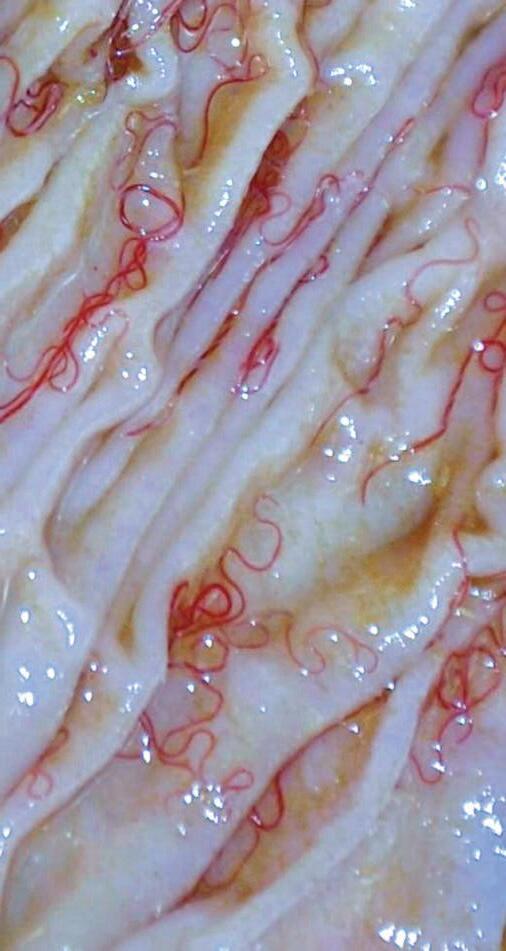
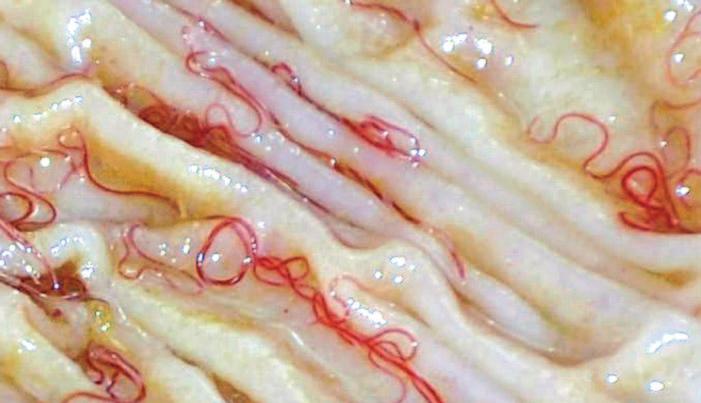
One of the mixture of roundworms found in the UK is Haemonchus contortus which is a blood-feeding stomach roundworm, also known as the barber’s pole worm. The name “barber pole worm” comes from its twisted red and white appearance that can be seen in the stomach of animals at postmortem (Figure 1).
Figure 1a:
Adult ‘Barber’s Pole’ worm, H. contortus on the abomasal surface of an infected lamb. The red colouration reflects their blood-feeding habit.
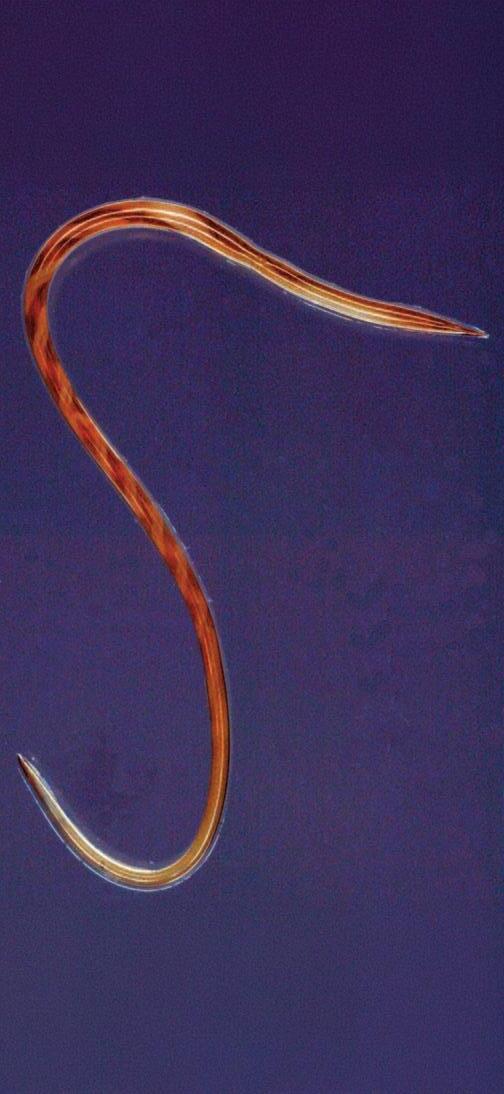
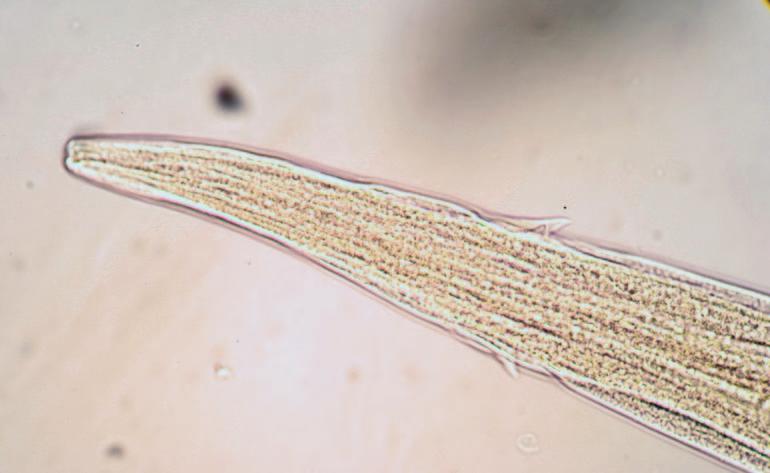
Figure 1b:
Head of adult Haemonchus worm. Cervical papillae that help the worms detecting environmental stimuli, particularly during feeding and movement.
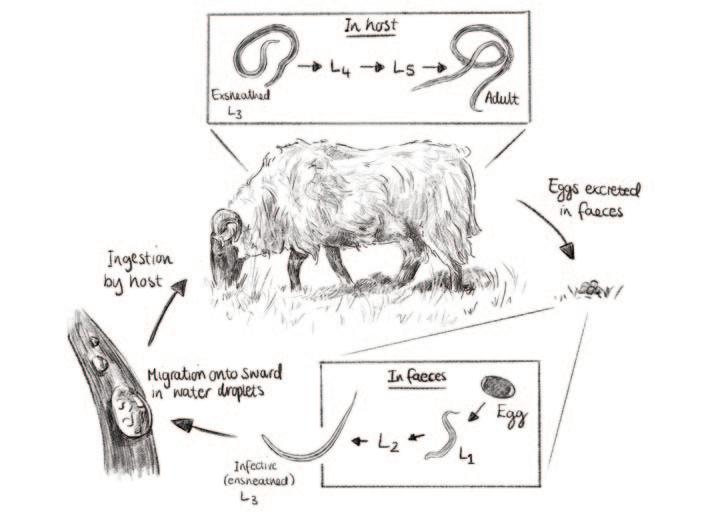
Haemonchus contortus is a roundworm and, like most others, has a traditional direct life cycle; it has both a free-living (pasture) and parasitic phase (Figure 2). Animals become infected by eating herbage contaminated with larvae. Development from ingested larvae to adult can occur within the host within 2-3 weeks. The females are prolific egg layers, producing ~7000 – 10,000 eggs per day and as a result female worms can highly contaminate pastures rapidly.
It is important to remember that H. contortus is one roundworm that contributes to the mixed bag of worms associated with PGE. But, where H. contortus predominates, it can result in a specific disease presentations termed “Haemonchosis,” this relates to the blood-feeding behaviour of the worm compared to other worms which are surface feeders. As with other roundworms it is found globally and affects the health, welfare, and productivity of sheep.
In the UK, roundworms impact on the health, welfare and productivity of sheep and cattle. The commonest are Teladorsagia (brown stomach worm), Nematodirus, Trichostrongylus and Haemonchus in sheep. All worm species cause damage to the tissues in which they live. In the case of the roundworms living in the stomach and small intestine, this can lead to reduction in the animals’ ability to digest and absorb foodstuffs.
By comparison, H. contortus is a blood-feeding parasite that attaches to the lining of the stomach (abomasum). An adult worm can ingest up to 0.05 ml of blood per day, put in another way, it requires less than 7000 adult worms to drink the equivalent of a standard can of fizzy drink of blood per day. This feeding behaviour leads to significant blood loss (anaemia), reduced protein levels, and overall poor health. Disease is usually seen in lambs during late summer but can occur in naïve untreated adults at any time of year.
As H. contortus feeds on blood this can cause severe production losses due to reduced growth rates, decreased milk yields, and increased mortality. In heavily infected flocks, it can lead to substantial economic burdens due to treatment costs, veterinary expenses, and sudden loss of livestock.
Historically Haemonchosis was only viewed as a serious problem for sheep producers in the Southern Hemisphere, and more of a sporadic problem in Northern Europe. Recent surveys in Northern Europe, including the UK, have shown H. contortus to be ubiquitous and responsible for a relatively small but increasing number of clinical Haemonchosis cases in sheep. A possible explanation for its increasing prevalence is changing climatic conditions, in particular warmer and wetter seasons, which are favourable for this roundworm to predominate:
• Haemonchus eggs develop at temperatures above 9°C.
• At 15°C, this decreases to about two weeks.
• In warmer temperatures (>15°C), this can decrease again to just a week.
• Therefore, in the UK egg development peaks between August to October, due to the increased temperatures. This also coincides with the peak in faecal egg counts (figure 3).
Figure 3:
Timing of detection of H. contortus as reported by veterinary centres (VIDA monthly reports 2013 –2023). Peaking in late summer/ early autumn but detected throughout the year.
Seasonality of H. contortus (2013-2023)
One of the main factors in an outbreak can be the condition of the animals during favourable weather conditions along with other risk factors, such as heavily contaminated pastures. Animals that are in poor condition are more susceptible to disease, especially those that have not had previous exposure or if the last outbreak was a while ago.
Other factors that are implicated in an outbreak include management factors such as pregnant/lambing or lactating ewes. When ewes are under stress then they are unable to maintain immunity due to the peri-parturient relaxation in immunity (PPRI). At this time (from 2-4 weeks prior to lambing until 6-8 weeks after) the egg output from infected ewes can be much higher than normal leading to increased pasture contamination. When this coincides with favourable weather conditions it can lead rapidly to an outbreak.
Cattle, other ruminants such as goats, deer and other grazing species can become infected with H. contortus. That said cattle generally become immune to infections, quicker than sheep or goats, with currently no concerns over bovine disease in the UK. There are increasing reports of camelids being susceptible to haemonchosis. Therefore, presence of these grazing species on farm may impact the transmission and likelihood of disease in sheep.
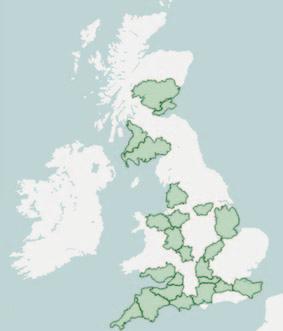
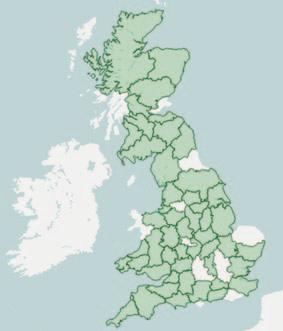
Figure 4: Regionality of Haemonchus diagnoses (in green) observed in 2012 compared to 2024, VIDA data.
How common is Haemonchus in the UK and why are we seeing a change?
Historically, H. contortus infections have generally been thought to be a clinical problem in sheep and goats in sub/tropical areas such as Eastern Australia, southern Africa and South America, and there was little concern in the Northern Hemisphere. Traditionally the cooler climates meant that only one annual cycle would occur in the Northern Hemisphere, and that the larvae ingested in late autumn would not develop to adults until the following year. This overwintering inside the host is one mechanism that the parasite uses to survive otherwise inclement Northern conditions. However, recent work has shown that Haemonchus is potentially developing the ability to survive on pastures in the UK as well as inside hosts. This over-wintering ability may lead to earlier infections being detected when climatic and managemental conditions are right.
At the moment, for most sheep farms H. contortus is part of the mixed-bag of roundworm infections. However, over the years surveys have shown that H. contortus is highly prevalent in the UK. Being found on around ~50% UK farms during a survey in 2008-2011, including 29% of samples from Scotland (Burgess et al., 2012). Recent findings observed H. contortus in around ~20% of faecal samples from marts. In must be noted that just because we can detect H. contortus on farms it doesn’t automatically mean that disease will occur in flocks.
As with some other parasitic diseases, reports of clinical haemonchosis have risen in the UK over the past 10 years (Figure 4). The most likely explanation for the increase in disease is that recent climatic changes have made it more favourable for the parasites to survive. Assessment of historical meteorological trends (1961 – 2004) have shown an increase in average air temperature and precipitation, a decrease in ground frost and an overall increase in growing days.
It is important to note that diarrhoea, a common symptom of disease associated with parasitic gastroenteritis involving mixed roundworm infections, is usually absent where H. contortus infections predominate.
Affected livestock may exhibit the following clinical signs:
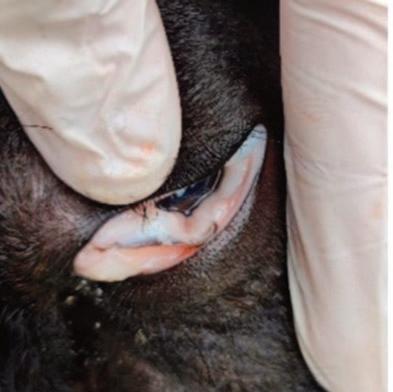
• Pale mucous membranes (gums and eyelids), indicating anaemia (Figure 5a)
• Bottle jaw (swelling under the jaw; Figure 5b)
• Lethargy and reduced grazing activity
• Weight loss and a generally poor body condition
• In advanced cases, animals may collapse or die suddenly.
Acute infections of H. contortus may occur where an animal ingests many infective larvae over a short period of time. In these circumstances animals are weak and may collapse when gathered and mucous membranes will appear pale. Animals may also suffer from rapid, shallow breathing (tachypnoea) and an increased heart rate. When sudden death occurs because of acute haemonchosis animals are usually still in good body condition.
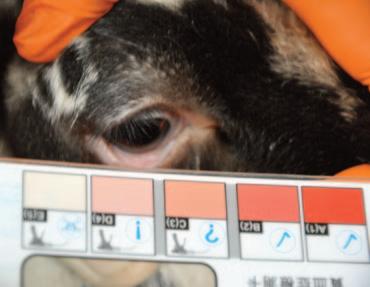
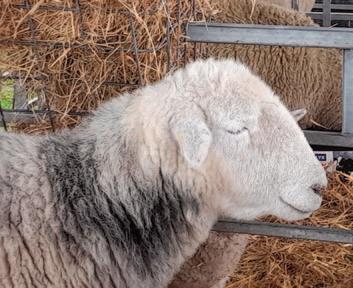
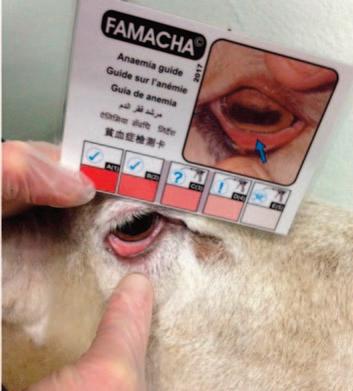
Figure 6a: The FAMACHA method works by checking the colour of the inside of the animal’s eyelid to indicate severity of anaemia (white-pale pink eyelids).
Figure 6b: Sheep with normal membrane colour for comparison (pink eyelids).
Haemonchosis is classically suspected in a flock when overt, potentially dramatic, clinical signs are seen. Haemonchosis can present in acute (e.g. anaemia or death) or chronic (e.g. weight loss) forms, with the spectrum of disease related to a variety of factors already mentioned such as level of exposure, subsequent burden, and development of immunity. Where H. contortus is significantly contributing to disease, it is important to note that clinical signs are not specific and that other differential diagnoses need to considered and ruled out. For example, acute or chronic infections can present like acute or chronic fasciolosis (liver fluke associated disease) or other causes of anaemia (e.g. acute bleeding or mineral imbalances). Furthermore, H. contortus may be part of the mix of roundworms causing PGE, where diarrhoea may be present along with anaemia.
Any clinical investigation should be undertaken with farmers and vets in partnership, firstly by understanding the history of livestock introductions, nutrition, grazing management and husbandry practices on farm. This is particularly important when investigating a first suspected outbreak on farm to understand where the infection may have come from, or to identify what drivers resulted in H. contortus predominating. The time of year and previous worming treatments will assist with ruling in, or out, other differential diagnoses (e.g. acute or chronic fasciolosis). Also, the proportion of the flock affected, such as specific age, management or cohort groups which will also help for ongoing control and preventative flock health planning. The approach is not dissimilar to investigating other parasite-associated diseases outbreaks or implementing flock health control measures. The following additional tools can be used to help understand the significance of H. contortus infections:
• Clinical Examination: Ill-thrift with pale mucous membranes and bottle jaw (similar to liver fluke infection, albeit usually in the spring-summer months) with an absence of diarrhoea can indicate haemonchosis (Figures 5a and b).
• FAMACHA Scoring: A practical on-farm tool that involves scoring the colour of the lower eyelid to assess anaemia (Figures 6a and b). Can used in clinical cases and to identify at-risk animals as part of targeted selective treatment programmes. It is worth bearing in mind this test only diagnoses anaemia and is not a definitive for haemonchosis, so should be interpreted in light of clinical history and other diagnostics.
• Post-mortem Examination: In cases of sudden death or euthanised cases, a PM can confirm the presence of large numbers of adult worms with the barberpole appearance in the stomach (abomasum; Figure 1a), this tool is especially useful in early suspected clinical outbreaks to confirm significance of infection.
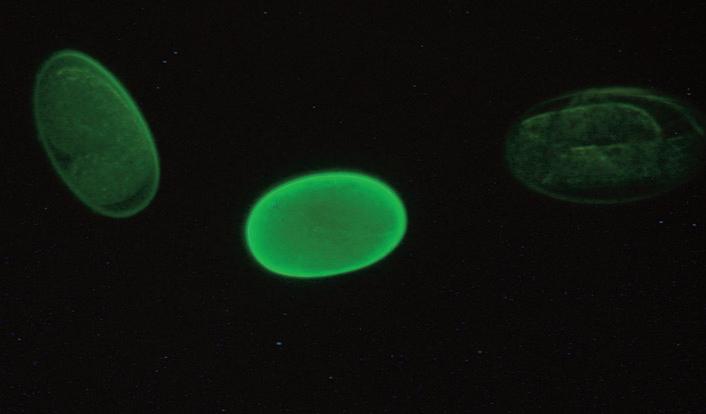
• FEC (Faecal Worm Egg Count) and differential egg staining: Laboratory testing of faecal samples to quantify worm egg levels provides an indication of the parasite burden in the flock, especially with FEC in the high 100s-1000s (due to how prolific egg shedding is compared to other roundworm species). However, the eggs of H. contortus are indistinguishable from other common parasitic roundworms using standard microscopy. So, while high faecal egg counts would be an indication of an issue, this method does not allow for accurate identification of the parasite.
It is possible to use specific staining of the eggs to allow identification and this is available through some diagnostic facilities as part of the faecal egg count service (Peanut Agglutinin (PNA) staining; Figure 7). FEC results are often given as a likely percentage of total H. contortus species eggs are present compared to other roundworms from the sample, to assist in interpretating significance of H. contortus to the disease presentation encountered.
As with all roundworms, the best strategy is to control the number of worms in both the animals and larvae on pasture. This involves a combination of management practices and targeted treatments that can be discussed and tailored for your farm with your vet or advisor. It is important to have a comprehensive parasite control program in place within your flock health plan. The plan will be specific to your farm as can be drawn up in collaboration with your vet and other animal health advisors. Your parasite control program should integrate diagnostics, pasture management and treatments and consider other intervention strategies that may be used to control other parasites in your different management groups. This is because interventions will often have an impact on multiple parasites and within the context of wider farm priorities. Further details can be found in two previous factsheets; Sustainable Roundworm Control in Sheep Volume 6, No. 12 and Sustainable Parasite Control: Test Don’t Guess Volume 7, No. 6.
When developing farm-specific health plans considering roundworm control there are additional tools and resources to consider integrating, where H. contortus is a major concern:
Cold weather, particularly frost or snow, significantly reduces H. contortus egg/larvae residing in pasture, which will help to prevent outbreaks. It is also important to move stock from heavily contaminated pastures to minimise transmission.
Provide adequate nutrition to help animals maintain good body condition and immunity. For example, regular body condition scoring, forage assessments and metabolic profiling of animals at key production points can inform decisions on flock nutrition at key production points.
Management of roundworms is usually through the therapeutic and/or prophylactic use of anthelmintics. At present there are five classes of anthelmintic registered for use in sheep. Broad-spectrum treatments are used for most roundworm species, however, in the case where H. contortus (and liver fluke) has been diagnosed as the main roundworm of concern narrow spectrum anthelmintics may be useful. Do not instantly reach for the narrow spectrum choices without ensuring they are the right product for the job.
Routinely conducting regular FEC tests and individual assessment of performance (e.g. weight gain or Body Condition Score) can inform targeted treatment decisions, FAMACHA scoring can identify at-risk animals and assess pasture contamination levels. Monitor anthelmintic efficacy by conducting post-treatment faecal worm egg count reduction tests (FECRT) can inform about efficacy and long-term sustainability of treatments.
This is a crucial tool for control the spread of ALL roundworms; but currently because there are farms without, or limited, anthelmintic resistance in their H. contortus population, this provides an opportunity to the stop it being brought on to your farm. The importance of not bringing in the roundworm with new or returning stock cannot be under stated. Drenching stock before they join the main flock and conducting a faecal egg count two weeks later to check if the treatment was effective, can help to minimise this; https://www.scops.org.uk/internal-parasites/ worms/testing-for-efficacy/
A commercially available vaccine which was developed at Moredun, is licensed for use in Australia and South Africa. In these regions where H. contortus is the predominant roundworm, control has conventionally been through the use of anthelmintic drugs. Widespread resistance to these in the H. contortus population results in their utility being limited. This vaccine is therefore being used successfully to help in the control of H. contortus in the countries where it is licenced.
In the UK it is being used by some practitioners under a special import certificate (SIC) via the Veterinary Medicine Directorate (VMD). This can only be done through veterinary prescription in the UK and there is only one single UK supplier. There are some key factors to consider when thinking about using this vaccine:
• To effectively use the vaccine, it needs to be integrated into a parasite control plan with an anthelmintic which is effective against H. contortus. The anthelmintic is used strategically to reduce worm burden and the vaccine is used to prevent worm numbers building up thereafter. For optimal performance, the vaccine also needs to be integrated into a programme involving pasture management, nutrition etc, it is not a silver bullet.
• It only protects against H. contortus, not other worms, so anthelmintics will still need to be given to control other roundworm species
• The vaccine is not a knockdown product, it controls disease by reducing worm egg counts and preventing build-up of infection
• Immunity is not “sterile” – some infection and egg shedding will still occur
• Under severe parasite challenge the vaccine may not be effective in some animals, especially lactating ewes
• Multiple administrations are needed every year: unvaccinated animals are primed after three doses which should be administered before the main risk period. Six-weekly vaccination boosts are required throughout the expected haemonchosis risk period.
How can I prevent anthelmintic resistance for all roundworms including H. contortus?
Unlike some other roundworm species, thankfully reports of anthelmintic resistant H. contortus are rare in the UK but the overall prevalence is unknown. We still need to be vigilant as cases of confirmed single- and multi-class resistance have been made in UK and total treatment failure has been observed.
Importantly in a UK context, we are assessing efficacy of treatment against a range of roundworm infections. Therefore, to slow the development of resistance in H. contortus, it is the same for all roundworms:
• Administer effectively – check drenching gun, weigh animals, dose correctly (good technique)
• Quarantine and treat all incoming sheep, including your own which are returning from grazing elsewhere
• Check that treatments have worked effectively – Faecal egg counts pre- and post-treatment are useful tools
• Try and not rely solely on anthelmintic to control roundworm infections –look at ways of reducing pasture contamination (see above)
Managing H. contortus requires an integrated approach that combines diagnostic tools, strategic treatments, and good pasture management. Early identification and intervention are critical to minimise the economic and welfare impacts of this parasite on your livestock. An awareness, by animal health professionals, of changes in animal disease dynamics and periodicity is essential to effectively respond to the threat of parasites in the future. The increasing prevalence of livestock helminth parasites is likely, at least in Europe, to lead to a greater requirement for anthelmintic treatment, which we know is not sustainable in the long-term. Collaboration between farmers, vets, animal health professionals and scientists are key to innovate to sustainably control all livestock parasites.
• Regarding vaccines, Barbervax is expensive to produce and to buy and is beyond the financial constraints of many producers in low to middle income countries. Scientists at the Moredun Research Institute and the Pirbright Institute in Surrey have been awarded a £1.7 million grant by the Bill and Melinda Gates Foundation to develop an improved vaccine against barber’s pole worm. The technology being used will allow the scientists to identify the properties of a known weak spot in the parasite’s gut against which they can use novel techniques to produce an affordable vaccine. The technology may have application to other roundworms of significance in the UK.
Through wider collaborations we also hope to answer other fundamental gaps in our knowledge about H. contortus to improve our approaches to control:
• Haemonchus contortus eggs are common in UK sheep faecal samples, but how common or viable the resultant larval stages are on pasture? Especially the over-wintering survival of eggs shed in the autumn. Ongoing field studies are attempting to address this knowledge gap.
• Is it likely to emerge as a more predominant endemic pathogen of livestock in the UK? We do not fully understand the relationship between H. contortus larval development rate and the onset of clinical disease, nor what thresholds may represent ‘tipping points’ for widespread outbreaks of haemonchosis.
• What is the current situation of anthelmintic resistance in Haemonchus in the UK?
• Will increased length of grazing season lead to increased reliance on chemoprophylaxis, which will inevitably increase the selection pressure for development of anthelmintic resistance and lead to further pasture contamination?
• What role do other co-grazed livestock and wildlife currently play in the dissemination of H. contortus and other parasites? Including how this will affect control practices.

Produced by The Moredun Foundation Pentlands Science Park, Bush Loan, Penicuik, EH26 0PZ, Scotland
Phone: +44 (0)131 445 5111
E-mail: info@moredun.org.uk Website: www.moredun.org.uk