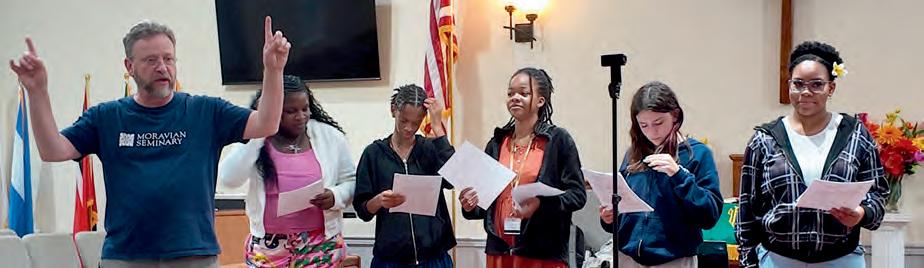
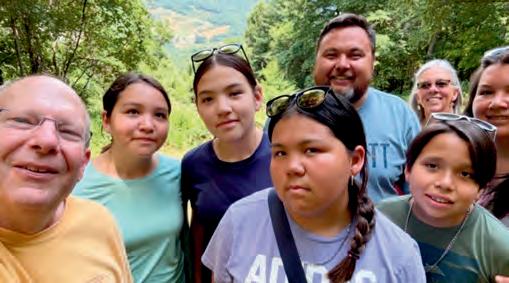
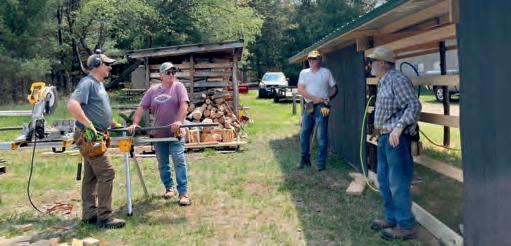
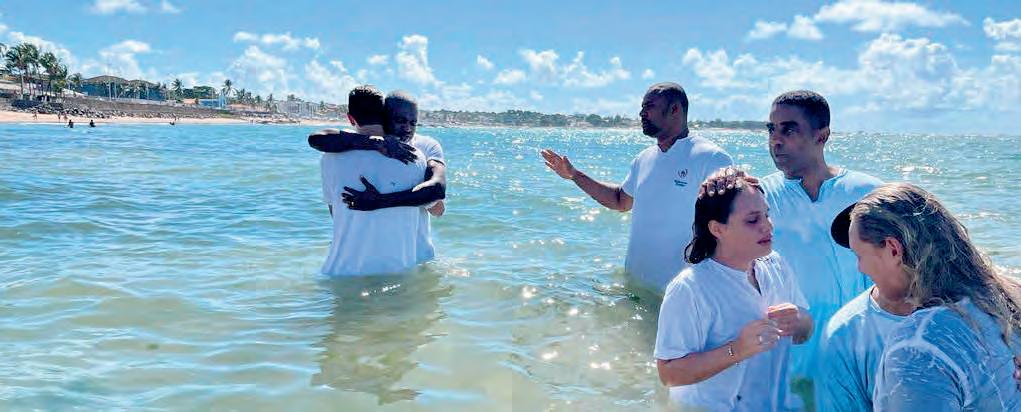
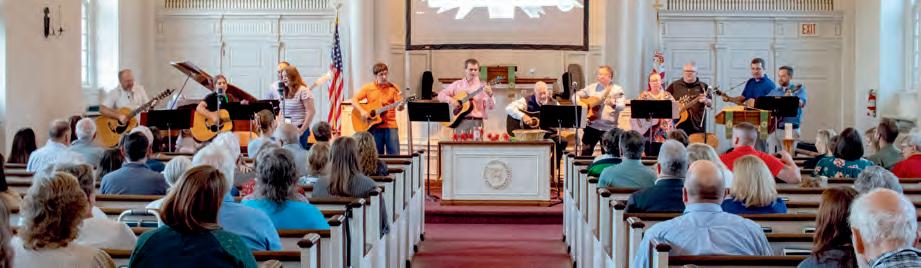
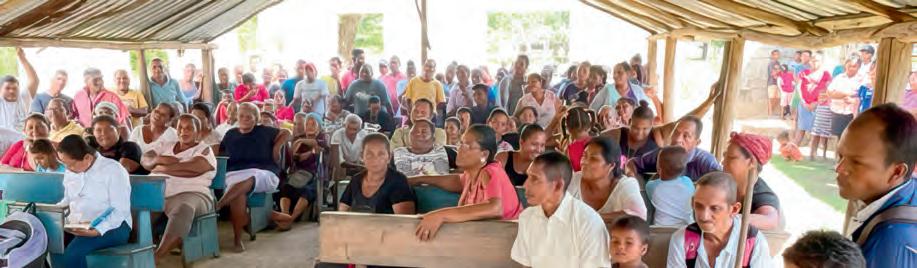
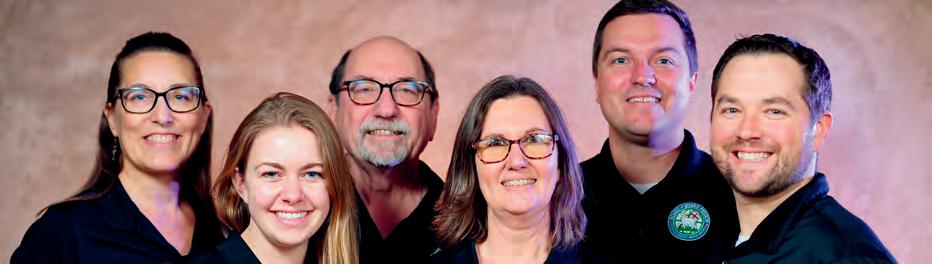
The Larger Life Foundation makes loans available to churches in the Northern Province for major capital projects like renovations and expansion. Since 1987, the Larger Life Foundation has provided more than $2 million in loans to assist Northern Province congregations.
Your gift to the Larger Life Foundation helps make these loans possible. Through your generosity, we can have far-reaching impact on the life of the Moravian Church.
To learn more about the Larger Life Foundation’s loan opportunities for congregations and ministries, visit www.largerlifefoundation.org
On
Our Lamb has conquered. Let us follow Him.
In essentials, unity; in nonessentials, liberty; in all things, love
God Creates. God Redeems. God Sustains.
We Respond in Faith, Love and Hope.
Visit our website at https://www.moravian.org. Letters to the editor, address corrections, and other correspondence may be e-mailed to the editorial staff at moravianmagazine@mcnp.org
Photo by Mike Riess
PONDERINGS
Synod season: an energizing time
Next month, I will be covering my 21st and 22nd Moravian synods, including eight provincial and 12 district synods. Each one represents an opportunity to see creativity, caring and collaboration at work among Moravians across the U.S. and Canada.
This year’s provincial synods will take place the first and last weeks of June (see our articles on the following pages for a preview). The beginning of June will find me at New Philadelphia Moravian Church in Winston-Salem, N.C. for the Southern Province event, while toward the end of the month, I will be in Minneapolis, Minn., for the Northern Province Synod.
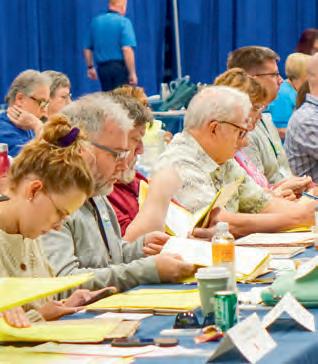
As our church is spread across a broad geographic area, these everyfour-year gatherings are an ideal time to catch up with pastors, lay leaders and ministry staff from both provinces. Synods offer a rare opportunity for learning firsthand about the work going on in our congregations and ministries, discussing issues and concerns, and sharing ideas for enhancing and expanding the work of the church.
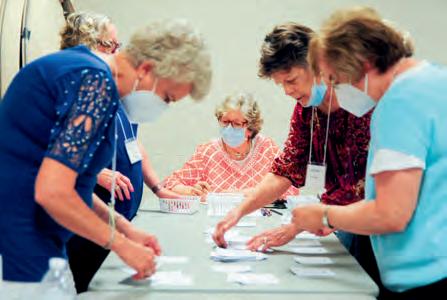
In our Moravian polity, synods are the highest legislative authority—that is, it is where the key decisions on church governance happen. Watching the process of resolutions and leadership elections unfold and then sharing those results is something I look forward to with every synod. While these sessions can be hard work with long days, I find them energizing times. I am encouraged when the collective wisdom of our church comes together to meet challenges and chart paths forward, and leave each gathering with a renewed sense of optimism and hope.
In our next issue of The Moravian, we will summarize the key events of each synod, share the results of leadership elections and highlight the major initiatives and decisions. I hope that after these important gatherings, you too, can see the faith, love and hope alive in our Moravian Church.
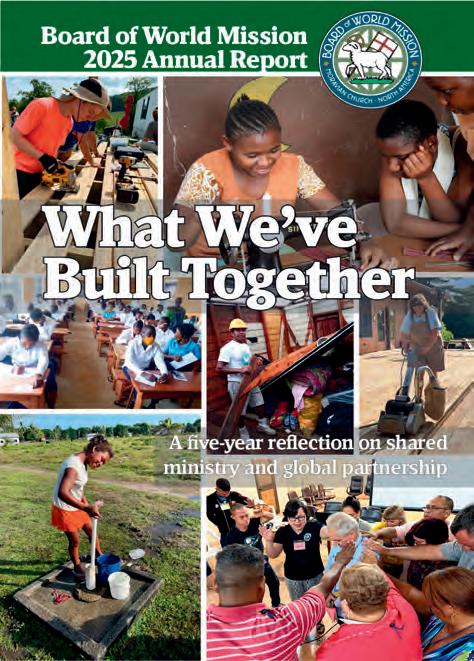
And in this issue—a yearly favorite of mine—we share the Board of World Mission Annual Report. Each year since 2014, we’ve included BWM’s summary of their work as part of the magazine. This year’s report, “What We’ve Built Together,” offers an in-depth review of the BWM’s work over the past half-decade. Reading through it, I think you’ll agree, our Moravian Church is having a significant impact around the globe.
As always, I welcome your thoughts, ideas and story suggestions for The Moravian Magazine. And I look forward to seeing many of you in Winston-Salem and Minneapolis! Peace,
(ISSN 1041-0961)
Issue 2 2026, Vol. 57, No. 2
Return Undeliverable Canadian Addresses to: OnTrac International, 41 Northern Stacks Drive, Suite 200 Fridley, MN 55421 email: file@ontrac.com
Official Journal, The Moravian Church in North America, Northern and Southern Provinces
Published by the Interprovincial Board of Communication, 1021 Center St., Bethlehem, PA 18018.
Subscription rates:
$15.00 per year, U.S.A. & Canada; $18.00 per year, all other countries.
Individual copies available for $3.00 each.
The Moravian is sent to the families of the Moravian Church as a privilege of membership. Non Profit postage paid at Bethlehem, PA. Circulation: 14,000
Continuing The North American Moravian, The Moravian and The Wachovia Moravian.
Amy Frantz Gross, chair. Dave Bennett, Christy Clore, Shana Angel, Peggy Carter, Austin Craver, Lynnette Delbridge, Bruce Nelson, Dominique Richards, John D. Rights
Design by Michael Riess, IBOC.
Address all correspondence regarding articles, subscriptions, or advertising to The Moravian, 1021 Center St., Bethlehem, PA 18018
Moravians prepare to chart the future at June Provincial synods
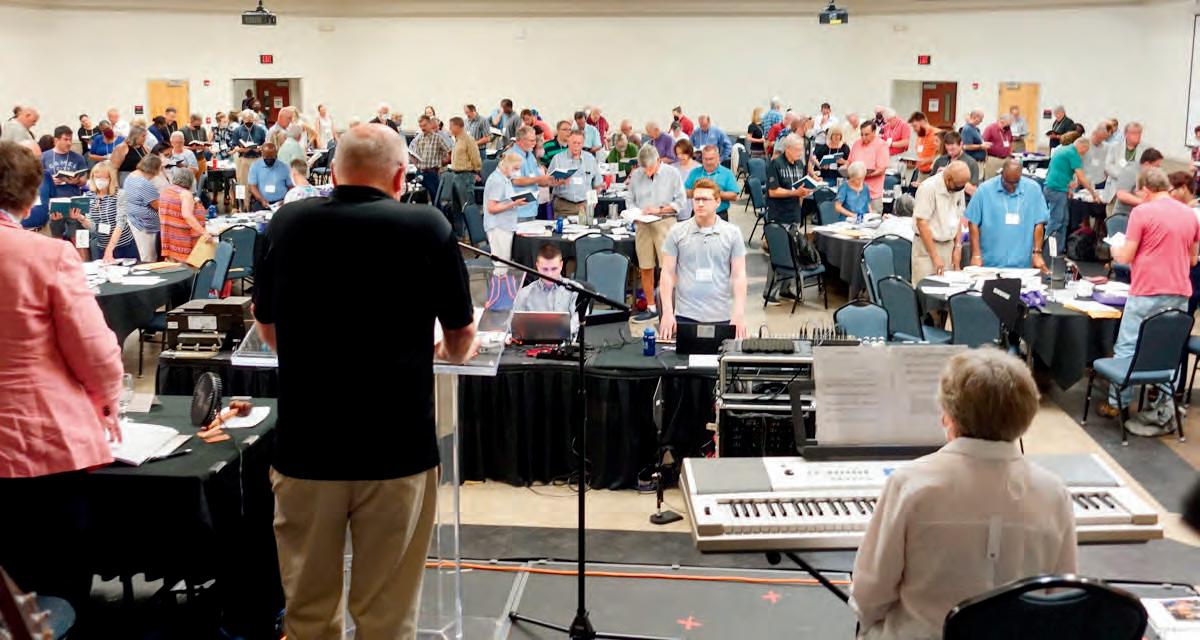
Every four years, Moravians from each North American Province gather to “do the business of the church”—to decide, legislate, make policy, discuss doctrine and chart the way forward for the next four years. Next month, hundreds of Moravian clergy and lay leaders will convene for the 2026 Synods of the Southern and Northern Provinces.
For 2026, the Southern Province Synod will be held June 3-6 at New Philadelphia Moravian Church in Winston-Salem, N.C., while the Northern Province Synod will be held June 24-27 at the Hilton MinneapolisSt. Paul Airport Hotel in Minneapolis, Minn. (see articles on the following pages for more specifics on each.)
In Moravian polity, synods represent the highest decision-making body of each province and have tremendous responsibility in the life of the Moravian Church. Synod delegates will help decide how each Prov-
ince continues their work while exploring ways to strengthen the church for the future.
Responsibilities of synod
During each provincial event, delegates elect provincial leadership for the coming four years, including the Provincial Elders’ Conference, members of provincial and interprovincial boards and agencies, and in some years, bishops of the Moravian Unity (at the 2018 Southern Province Synod, delegates elected two bishops: the Rt. Rev. Carol Foltz and Rt. Rev. Tom Shelton, while at the 2023 Northern Province Synod, delegates elected the Rt. Rev. Dr. Amy GohdesLuhman and the Rt. Rev. Michael Johnson). Synods also establish direction and priorities for provincial ministries and encourage activities on the congregational level. They help answer questions and set
(Continued on next page)
2026 Synods
(Continued from previous page)
guidelines on key topics and issues facing each province, while providing a platform for new ideas for strengthening the church and the faith of its members.
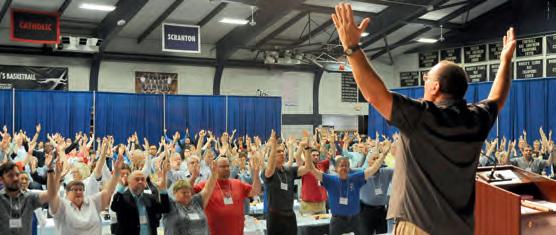
In addition to the legislative and decision-making duties of synod, these gatherings also provide a rare opportunity to bring together clergy and lay persons from all areas of each province, including its agencies and leadership, to talk about ministry together. Synod gathers the collective wisdom and experience of the entire province to work with each other and discern what God is calling us to do now. Each event also offers an opportunity for Moravians to worship and pray together, and to seek God’s guidance and direction for the church.
Who’s at synod?
While each province has a different calculation, every congregation sends one or more lay delegates to their respective synods. Pastors, bishops and provincial boards and agencies are represented, and in the past several synods, the leaders of interprovincial agencies like the Board of
World Mission, Moravian Music Foundation, Moravian Ministries Foundation and the Interprovincial Board of Communication were granted voting privileges at each synod. Non-voting, or advisory delegates, representing other agencies, ecumenical partners and emerging ministries may also attend.
A delegate is not a “representative” of his or her congregation; he or she is not someone instructed to vote a certain way by the congregation or leadership. Each Provincial Book of Order states that a delegate, “must not lose sight of the interests of the Province and of the Unity as a whole,” even as they consider the perspective of their home congregation. Delegates elected from congregations are sent with prayers and the guidance of the Spirit to use their gifts and maturity to engage in matters at Synod of their own conviction and to discern the direction God desires for the entire province.
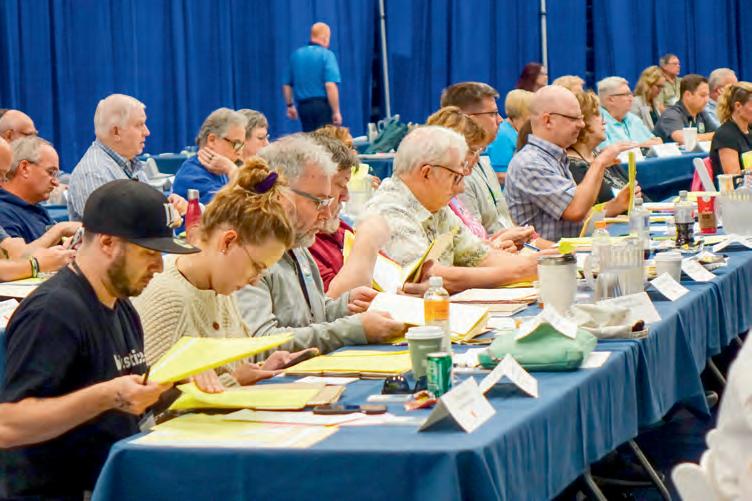
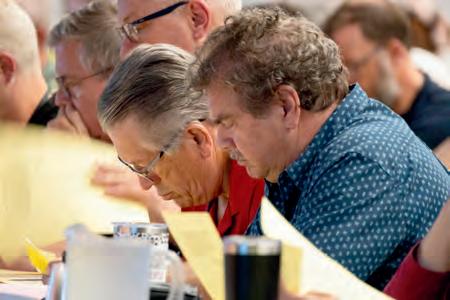
Each delegate to synod works in a topic-specific committee. Synod committees give in-depth consideration to areas of special concern to the larger church in a setting that allows for prayer and seeking God’s di-
rection and blessing in their area of focus on behalf of the larger Province.
Synod actions originate in a variety of ways. Sometimes a single individual who feels strongly about an issue prepares a proposal for synod consideration. Sometimes a congregational board or a district or provincial committee prepares a proposal or requests that synod acts. Sometimes a synod committee itself, after discussing issues that members place on its agenda, proposes action for synod to consider.
However a proposal originates, those vetted by a governance committee are referred to the appropriate committee for consideration. The committee discusses the proposal, edits it to its liking, and votes on whether to submit it to the whole Synod as a committee report. The report is debated, perhaps amended, and ultimately approved or disapproved by a vote of the Synod in a plenary session. If approved by the entire synod, it becomes a synod directive, to be carried out as the report itself says.
Given the short timetable for the Northern Synod (it’s just two days) much of the committee work for the Northern Province Synod is taking place in online preparatory meetings. Southern Province delegates are also doing pre-work, but much of the discussion and deliberation about proposals will take place at Synod.
Synod planning committees are hard at work putting the finishing touches on each synod. Each province has asked everyone to pray for those working to bring the synods to life, and for those who will make the important decisions for the coming four years. n
We will be covering both synods this year and will report on the elections, resolutions and events in Issue 3 of The Moravian.
MORAVIAN SYNODS
2026 Northern Province Synod: a new way of gathering
With the theme: “God’s Vision, Our Mission, Your Decision” the Northern Province Synod hopes to open all who are a part of it to explore how being in ministry together might be open to change. For 2026, the province will be introducing a number of significant changes to its provincial synod that point towards the future.
Moving to Minneapolis
In a break from tradition, this year’s Northern Province Synod will come to order in Minneapolis, Minnesota June 24-27. For the past several decades, the Northern Province synods have been held in one place: Bethlehem, Pennsylvania.
The synod will also be shorter than the traditional Northern Province event, taking place over only two days (Thursday, June 25 and Friday, June 26), with travel days on June 24 and 27, 2026.
This new format for a synod comes
in response to feedback received from previous synods and in anticipation of the possibility of a joint synod format between all three district synods and a special provincial synod in 2028.
The Northern Province Provincial Elders’ Conference (PEC), in consultation with the Canadian, Western and Eastern District Boards, presented the concept of a “Joint District and Provincial Synod” at the three district synods of 2024. This proposal would include a joint synod taking place very four years, beginning in 2028, with the location rotating between the territories of the three districts. Each joint synod would include both district and provincial synod activities.
o d’sVision • OurMissi o n Your Decision
Moravian Church in America
Northern Province Synod 2026
A proposal to establish this joint district and provincial synod is a key piece of legislation for the 2026 Synod; the concept requires synod approval to move forward. Holding the 2026 Northern Province Synod in Minneapolis is a way to explore, learn and
work out the logistics for how the new joint synod concept might be possible.
Meeting before synod
With the shortened time allotted for elections and consideration/approval of proposals, committees were formed prior to synod to work via Zoom to begin reviewing and preparing proposals to be ready at the start of synod. With the benefit of months of time, proposals can be worked out more fully and committees can explore and identify funding and other logistics issues early. Committees can also bring in resource people—the agencies and people who will be asked to carry out the work identified in resolutions—to help them shape proposals.
A new venue
Another significant change is the venue. It is a conference hotel, with plenary space and committee rooms close to each other all on one floor. Previous synods held at Moravian University had out-of-town delegates staying in dorm rooms with shared bathrooms; with this year’s event, guests will be staying in well-appointed hotel rooms. Across the road from the hotel is the Minnesota Valley National Wildlife Refuge, and one mile in the other direction is the Mall of America (with hotel shuttle available). If time allows, delegates can consider a walk or shopping excursion.
For this year’s synod, all the flights to Minneapolis are being coordinated through the Northern Province office for delegates to arrive the day before synod officially begins. There is a great chance you will have Moravians on your flight into
Minneapolis! While a complex project, this centralized booking will help make getting more then 200 people together easier. At the airport, there will be people greeting delegates at baggage claim and helping them find the 10-minute hotel shuttle ride. Regardless of travel by plane or vehicle, delegates will be greeted in the lobby of the hotel welcomed to the venue, and guided to their rooms to get settled in.
Synod traditions
While there are many changes to the 2026 Northern Province Synod, this year’s gathering will have much of what has been the significant parts of prior synods. There will be worship/devotions to help attendees stay spiritually-tuned. There will be plenary time with discussion and voting guided by parliamentary procedure. There will be meals together. In addition to meal times and breaks, a meeting place is reserved each evening for fellowship time to meet people, and get better connected. This will shape the bulk of the two official days of synod.
And when it’s over and people leave on Saturday, participants will have experienced something new to learn from, and which, hopefully, leads the province forward into ministry, seeking God’s vision to help Moravians in claiming their mission, giving people a decision about how to personally engage in the ministries of God’s church. n
The Rev. Kurt Liebenow, pastor at Watertown (Wis.) Moravian Church, leads the 2026 Northern Province Synod planning team.
The Southern Province is preparing for its Provincial Synod on June 3-6 at New Philadelphia Moravian Church in Winston-Salem. In the 2022-2026 intersynodal period, the province has focused on building trust through deepening relationships, inviting assessment and adapting processes for greater dialogue and collaboration.
These shifts in practice and focus have helped us learn about the areas of strength in leaders, in congregations and the province as a whole. It has also highlighted opportunities for growth and transformation.
As we prepare for synod, we are focusing on the theme text from Romans 12:2: “Do not be conformed to this age, but be transformed by the renewing of the mind, so that you may discern what is the will of God—what is good and acceptable and perfect.” The call to Christian disciples has always been an invitation to choose the way of Jesus as a new creation. Synod gatherings give us the chance to reflect on the lessons learned in the recent past, build on momentum, and attend to hopes that are blooming towards the future.
Provincial management
In the 2022-2026 period, the PEC formed the Commission on Congregational Development (CCD) and the Commission on Ministry (COM) with two staff positions and a broader leadership base. The integration of the commissions improved communication and the ability to respond and adapt more effectively to changing needs
and dynamics in our congregations. The provincial staff sought more feedback and assessment with congregations to understand where work is needed to improve effectiveness and make a positive impact. The drive to learn from PEC and provincial staff engagements began with a focus on building trust through the governance and leadership of the Province.
The Provincial Support Services Board managed the transition of the Provincial Financial Office following the retirement of Sister Robyn Glance. This transition provided an opportunity to review and renew several long-standing financial office processes, some of which proved more challenging than anticipated. Through this work, we have gained valuable insights and lessons that will continue to strengthen our financial operations. While the transition has included difficult moments, we remain confident that the steps being taken are moving the Province in a positive and necessary direction.
This work is ongoing, and we continue to seek resolution where needed. We look forward to discernment at synod, trusting that it will help guide our future progress, support continued development, and build on the work already underway.
Growing ministries
The Spirit of God has moved in many ways through the past four years by bringing growth and energy to the Southern Province. The Florida/Georgia district experi-
Romans 12:2 EverTransforming EverRenewing
enced tremendous growth through welcoming four new fellowships, a congregation, and working with other groups that are developing ministries. The new fellowships are John Hus Moravian, Port Arthur, Texas; Sarasota Fellowship, Sarasota, Fla; Jacksonville Fellowship, Jacksonville, Fla; and Savannah Fellowship, Wilmington Island, Ga. These new communities have engaged in retreats and conferences bringing their experiences and perspectives to the wider province and will continue contributing to God’s invitation to renewal and transformation. (For more, see our article on the Florida/Georgia District in Issue 1, 2026.)
oravianChurchin Am erica,SouthernProvin c e 2026 Synod
Interest and experimentation with shared ministry models in the province have helped create space for stability and growth. The province is learning from these leaders and new models of ministry like the Charlotte Moravian Collaborative Ministry, South Branch RCC, Hopewell Moravian and CCD for ideas that can impact other congregations in the province. There are other ideas emerging that may build on these lessons and experiments.
With the growth there has been committed action towards exploring and implementing faith formation practices that strengthen existing and new ministries alike. MCSP staff have engaged in surveys, listening groups and one on one interviews
to gain insight from congregational members and leaders about the opportunities for growth they feel called to pursue. Through congregational and board engagements as part of the quadrennial review and call process adaptations in the last four years, the PEC has learned a great deal about resourcing for ministry. The MCSP has sought to share resources, make network connections and encourage leaders to trust in God as they take faithful steps where they serve in ministry. This synod is a continuation of the process of discovery through discerning God’s will for the Southern Province in these next four years. The future promises to bring folks together to continue listening and growing together for the sake of the Good News of Jesus which we are called to share. As synod committees do their work and all the synod delegates focus on the movement of God in our gathering we look forward to direction and ideas that are brought forth to guide the work of the upcoming quadrennial period. n
This article was prepared in cooperation with Southern Province provincial leadership and staff.
MORAVIAN HISTORY
Northern Province Archives offers 250th “Faith and Revolution” series
As this year marks the 250th anniversary of the Declaration of Independence, the Moravian Archives Bethlehem (MAB) has started a series of monthly posts titled “Faith and Revolution” that will highlight materials in their collection that illuminate different aspects of the lives and activities of Moravians during this important period in history. Some aspects of this are already fairly well known, such as Bethlehem acting as a hospital during the Revolutionary War and the famed Marquis de Lafayette staying in the settlement for a time, but MAB hopes to also highlight some lesserknown aspects of the Moravians and their involvement in American independence.
MAB is the official repository for records of the Moravian Church in America, Northern Province. They collect and preserve materials of Moravians in North America and other regions, as well as ensuring their accessibility to the Church, researchers, and the public. They intend to draw on a number of the collections in their holdings for the “Faith and Revolution” series, such as Lititz Congregation, John Ettwein Papers and the Grider Collection.
The first of these posts, titled “Moravians, Pacifism, and Benjamin Franklin,” looked at an exchange of letters between the famous Colonial leader and Bishop Nathaniel Seidel in Bethlehem that shed light on the danger-
ous tension that the Moravian Church’s pacifism caused with their neighbors.
The second, titled “William Henry: Moravian Revolutionary,” used excerpts from the diary of Lititz Moravian Church to examine the career of William Henry, a Moravian who defied direction from church leadership to minimize involvement with the conflict and became a significant figure in the Continental forces.
Future posts will include a profile of a Moravian pastor who supported the British and his time in a besieged city as well as a 19th century scrapbook that sheds light on how Moravians reflected on the Revolutionary War. We hope that you will join us as we explore this tumultuous and fascinating period in the history of both the United States and the Moravian Church.
All “Faith and Revolution” posts can be found on the MAB website (moravianchurcharchives.org) under the “News” tab, or through their Facebook and Instagram pages each month. You can also sign up for their mailing list through their website and each post will be emailed to you.
The Moravian Archives Bethlehem is located at 41 West Locust Steet, Bethlehem, Pa., and can be contacted by phone at 610.866.3255, or email, info@moravianchurcharchives.org. n
What We’ve Built Together
A five-year reflection on shared ministry and global partnership
This progress...was woven from a shared commitment that crosses borders and generations...
Thomas Baucom, board chair
I am terrible at goodbyes. I stand in the driveway, waving long after the taillights have disappeared around the corner. I find one more thing to say, one more reason to linger a little longer. So you can imagine how I feel as I write this, my final reflection as chair of the Board of World Mission.
I joined the board twelve years ago. My kids were barely walking. They have grown up alongside this ministry, and so have I, shaped by the same hands, the same calling. I watched the BWM weather a global pandemic, respond to disasters, and emerge from the other side stronger than before.
These last few years tell a remarkable story about what happens when a community responds to a call and shows up together. When hurricanes tore through coastlines, when war came to Ukraine, when a congregation in Brazil sought
Thomas Baucom, Chair*
connection, the Moravian family answered. Blessings Flow brought clean water to thirsty villages. Debt Jubilee lifted burdens from weary shoulders. The Panama Conference opened doors no one had thought to knock on. We added staff, deepened global relationships, and found new ways to partner in mission.
This progress was not the result of one person or one plan. It was woven from a shared commitment that crosses borders and generations, quietly shaping both the work and the workers.
So here I am in the driveway, still waving. The light is fading on my time as chair, but not on the work itself. The team is strong, the partnerships are deep, and the roots go deeper than any of us can see. As you read on, I hope you will pause to marvel at what we have built together, and to feel the quiet pull of what is still being built through all of us. b
Board of World Mission • 2025 Board of Directors
Board Appointed, Southern Province
Joe Moore, Vice-Chair*
Southern Province
Jennifer Boles, Secretary*
Board Appointed, Southern Province
Dave Bennett*
PEC President, Northern Province
Neil Routh*
PEC President, Southern Province
Andrea Peart-DeFlaviis*
Eastern District, Northern Province
Chuck Bean
Board Appointed
Steven Brese
Canadian District, Northern Province
Cynthia Campbell
Southern Province Mission Society
Dion Christopher
Southern Province
Taylor Farrey
Western District, Northern Province
Alan Haisler
Unity of the Brethren
Sue Koenig
Eastern District, Northern Province
Lisa Pampe
Western District, Northern Province
Jeremy Francis
EWI Province, Advisory Member
Charmane Daley
Jamaica, Advisory Member
Rex Knowlton
Treasurer, Advisory Member
* Executive Committee member
For the purposes of this report, this list reflects the BWM Board of Directors as of December 31, 2025. We acknowledge with gratitude all individuals who served in board roles at any point during the year.
Every dollar given, every prayer offered, every mission team that showed up...that was you.
Justin Rabbach, executive director
Five years ago, the Board of World Mission found itself in a season no one could have predicted. A global pandemic pressed pause on travel, gatherings, and so much of what we assumed was essential to mission work. But it revealed something important: the relationships at the center of this ministry were stronger than any disruption.
In the years since, this organization has grown in ways that go beyond numbers on a page. We responded to crises—hurricane recovery, refugee resettlement, emergency food aid—while planting seeds for the future. We formalized partnership covenants, launched the Blessings Flow clean water initiative across La Moskitia, opened doors to new mission areas in Brazil, and walked alongside partners in Cuba, Nicaragua, Zambia, Tanzania, and beyond.
We also invested in our team. We added a Director of Communications
of this work and grow the support behind it, a Director of Mission Service to strengthen and expand volunteer opportunities, and a Director of Mission Engagement to create resources for use at the local and congregational level. Each role helps us identify and engage people in new ways—from summer interns to global coordinators to congregational mission teams —all in support of the work God is doing through the BWM.
None of this was built by the BWM alone. Every dollar given, every prayer offered, every mission team that showed up… that was you. This ministry exists because of a shared commitment to a Christ-centered call that stretches across borders and generations.
As we look ahead to a new strategic plan, deeper partnerships, and the next chapter of this story, we do so with gratitude for what we have built together, and with faith in what God is still building through us. b
Ahuas
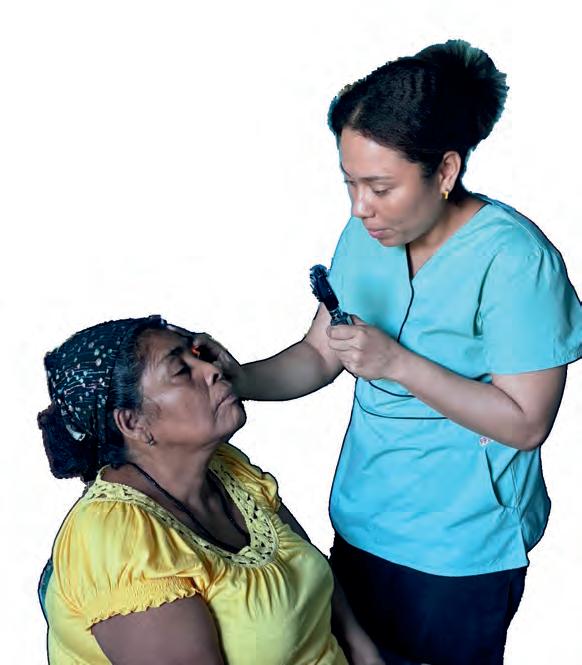
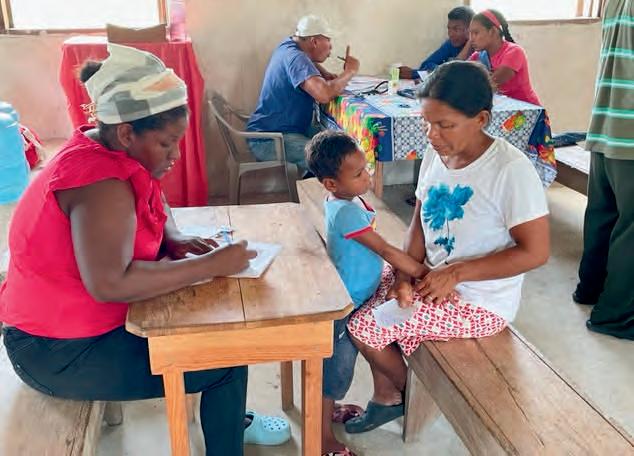
For more than 75 years, the Clinica Evangelica Morava in Ahuas, Honduras, has served as a lifeline for the people of La Moskitia, one of the most remote regions in Central America. The clinic’s work spans surgery, obstetrics, preventive health education, and community outreach, administered by local leaders and supported by Board of World Mission funding, volunteer medical teams, and partnerships like the CURLA nursing training program with the National University of Honduras.
Recent milestones include the installation of the clinic’s first digital
remote communities deserve access to quality care.
Over the past five years, two stories have come to define what sustained investment looks like in a place like this.
Dr. Dominga Henriquez
Born at the Moravian Clinic in Kaukira, Dominga grew up watching her community struggle with limited access to medical care. When her sister became critically ill in the village of Kruta, where the nearest health center was staffed only a few hours each day, Dominga decided she would become part of the solution. With scholarship support from the BWM, traveled to Bilwi, Nicaragua, to study medicine. After years of rigortraining, Dr. Dominga graduated returned to Ahuas as a general physician, coming home to serve the community that raised her.
Infant Feeding Program
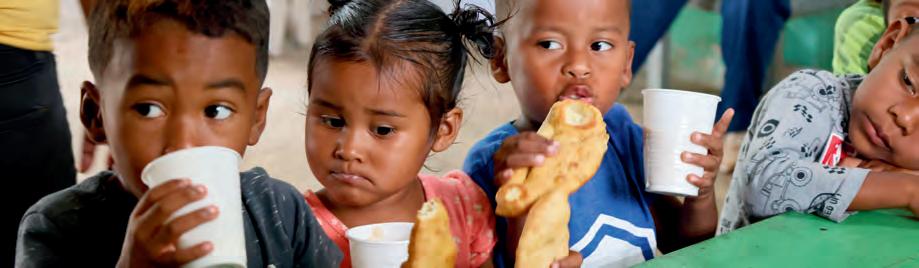
program was launched in 2016 when a mother from Krupunta could not provide enough breast milk for her newborn twins. It has since grown into a daily ministry serving approximately 127 children across three communities: Ahuas, Krupunta, and Barra Patuca. Local volunteers prepare and serve nutritious meals, children are weighed and monitored, and each gathering closes with devotional. It is simple but impactful, preventing malnutrition meal at a time. b
Blessings Flow
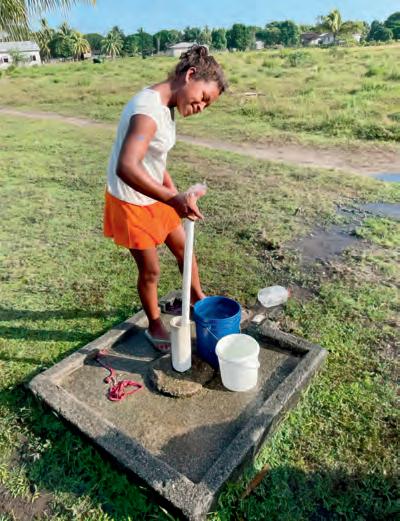
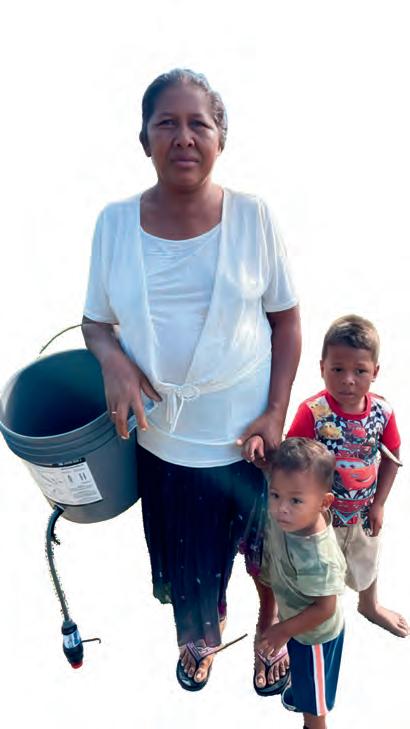
In La Moskitia, Honduras, access to safe drinking water has long been a daily challenge. Across this remote region that is home to more than 100,000 people, families often rely on rivers, lagoons, or shallow wells for water. These same sources are used for bathing and washing, leaving households vulnerable to waterborne illness — keeping children out of school, parents out of work, and communities locked in cycles of preventable sickness.
The Blessings Flow project began as a response to this reality. But over the past three years, it has grown into a model of partnership, a source of measurable health improvement, and a powerful witness to what we can build together when we work for the common good.
Rooted in Relationship
From the beginning, Blessings Flow has been grounded in collaboration. The Board of World Mission partnered with One ATTA Time and local Moravian leaders to bring sustainable water solutions to communities across La Moskitia.
The Moravian Church has served in La Moskitia for nearly a century, with institutions like the Ahuas Clinic providing trusted care and deep community connections. Blessings Flow builds on the existing history and relationships, enabling us to respond meaningfully in new ways.
At the heart
Yamnika Laya “Blessings Flow” a group of local leaders working even as they represent church bodies been divided ically for more 25 years. Their commitment work has not made the project possible but has also become a powerful testimony to reconciliation and unity in mission.
How Blessings Flow Works
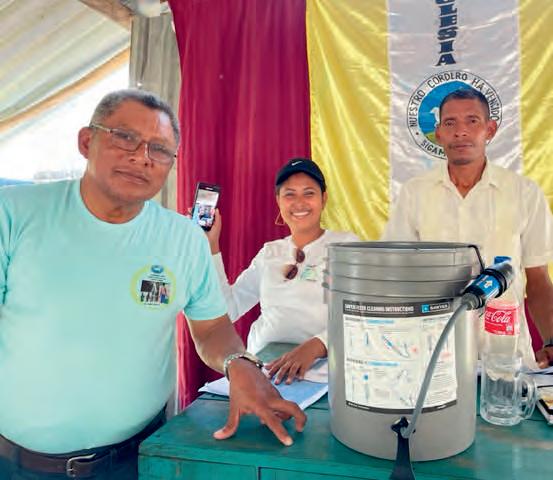
The Blessings Flow model is simple, relational, and intentional. Each participating community is visited three times:
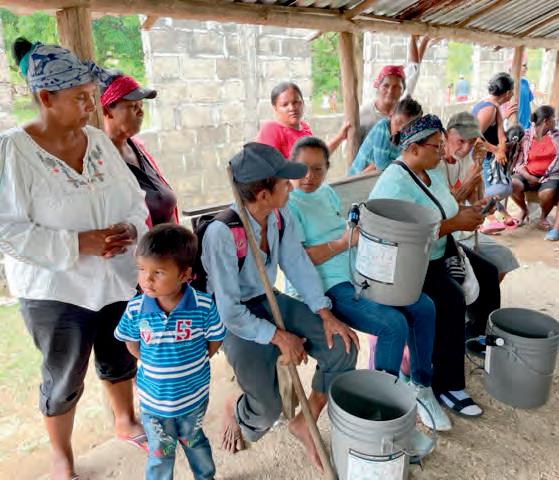
• Listening and Preparation: The first visit brings the community together to learn about the project and confirm community-wide and household-specific needs.
• Distribution and Care: During the second visit, teams distribute household water filters, (Continued on next page)
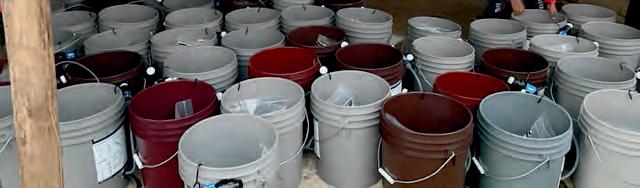
In the past two years, the Blessings Flow partnership distributed water filters to 2,384 households, reaching more than 12,000 people across La Moskitia.
Blessings Flow
(Continued from previous page)
provide hygiene training, and offer basic medical care.
Crucially, community members are active participants — assembling filters, organizing supplies, and ensuring every household is equipped.
• Follow-Up and Learning: A third visit allows the team to measure impact, answer questions, and reinforce proper use of the filters.
Each filter is designed to provide safe drinking water for more than ten years. But just as important as the technology is the process: the emphasis on training, participation, and follow-up ensures that the solution is not only delivered, but sustained.
Measurable Impacts
Between April 2023 and the end of 2025, the Blessings Flow partnership
distributed water filters to 2,384 households, reaching more than 12,000 people across La Moskitia.
The results are significant. In communities with reliable follow-up data, the share of households reporting instances of diarrhea in a twoweek period dropped by more than half — from 54.7% to 26.3%. Across all communities, this decline was accompanied by reductions in related symptoms, such as fever, respiratory illness, and stomach ailments. These statistics represent children able to attend school, adults able to work, and communities experiencing greater stability in daily life.
Just as importantly, 93% of households surveyed reported using their water filters regularly, indicating that the training, follow-up, and community-based approach are working together to create lasting change.
Challenges and Commitments
La Moskitia is one of the most remote areas in Central America.
More than 95,000 people in the region lack safe drinking water. A $100 gift provides a filter system and training that will provide 10+ years of access to clean drinking water.
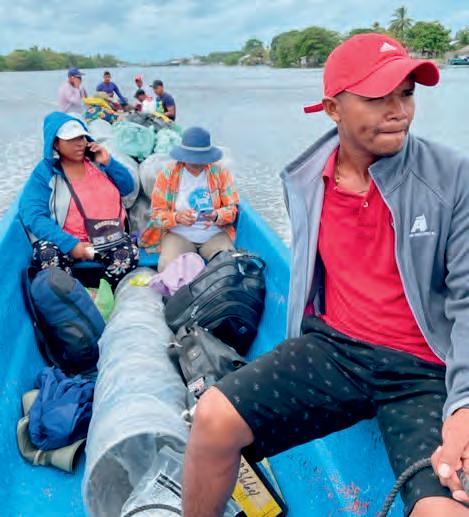
Many communities are accessible only by boat or small aircraft, and weather conditions can make travel unpredictable and costly. Compared with most other regions served by One ATTA Time, follow-up visits are more difficult, expansion is slower, and careful planning is critical to steward resources wisely. These realities make the work harder — and make our continued presence all the more important.
The need remains immense, with more than 95,000 people in the region still lacking access to safe drinking water. Hundreds of villages could benefit from the same simple, effective solutions already transforming lives in the communities served so far.
Blessings Overflow
The name “Blessings Flow” captures an essential aspect of this project. Clean water flows into homes, improving health and daily life. Knowledge flows through training
and shared learning. Partnership flows across organizations, cultures, and communities.
What began as a response to a critical need has become a living example of what mission can look like when it is rooted in relationship, guided by local leadership, and sustained over time. There is still much work to be done, but the impact of the past three years is clear: they have shown what’s possible. The next chapter is about reaching the communities still waiting.
Consider a gift to the BWM to support the purchase of additional water filter systems - $100 provides a filter system to a household and covers all training, follow-up visits, and medication if needed. This is a value for 10+ years of access to clean drinking water! b
Ukraine
When war broke out in Ukraine on February 24, 2022, Moravians in Europe responded quickly, mobilizing resources to bring relief to those affected by violence, displacement, and uncertainty. Through our Moravian Disaster Response (MDR) program and the generosity of North American Moravians, the Board of World Mission was able to offer immediate support, helping to welcome refugees fleeing their homes. What began as an urgent response to acute suffering has, over the past four years, grown into a longstanding relationship and sustained ministry.
Response Across Europe and North America
Soon after the invasion began, a mass exodus of families fled Ukraine in search of safety, often forced to leave fathers behind. Countries surrounding Ukraine, including Germany and the Czech Republic, were among the first to receive these refugees. Moravian congregations in these countries responded with remarkable generosity.
In Herrnhut, Germany — where the Moravian movement was itself born out of a community of refugees churches welcomed families and provided housing, food, clothing, and household supplies, as well as language classes, educational support, and spiritual nourishment. Particular attention was given not
only to physical needs but also to social and emotional well-being, creating opportunities for fellowship and relationship building.
A Moravian high school in Hejnice, Czech Republic, worked to increase its capacity in order to welcome Ukrainian students who had joined their community as refugees. In addition to creating dormitory space, the school added resources to support young people who, after fleeing their homes, were now adjusting to a new country, language, classmates, and culture.
A Moravian congregation in Nová Paka, Czech Republic, renovated an old hotel building to welcome a Ukrainian Christian school to their town. The story of what unfolded there would come to define this ministry.
As time went on, refugees also came to the United States. In one remarkable case, Friedberg Moravian Church in North Carolina sponsored a Ukrainian family from Nová Paka to resettle in the United States, with immigration paperwork completed in just three days.
This widespread response was made possible, in part, through an outpouring of generosity from Moravians across North America. Since early 2022, the Board of World Mission has raised almost $400,000 for this effort, enabling us to offer support in the immediacy of the
Members of the Moravian congregation in Nová Paka, Czech Republic, reached out directly to Ukrainian partners: “If you need to leave Ukraine, we want you to come here.”
invasion as well as a sustained response to changing needs.
Something Old and Something New in Nová Paka
One of the most meaningful connections in this work began through an existing relationship. As news of the invasion first spread, members of the Moravian congregation in Nová Paka, Czech Republic, reached out directly to Ukrainian partners they had come to know through a Christian school network. Their message was simple: “If you need to leave Ukraine, we want you to come here.” At the time, many families connected to this school had already fled Kyiv and were somewhere near the Polish border without a clear des-
tination. The invitation from Nová Paka provided a path forward and a community ready to receive them.
The small church quickly mobilized to prepare for their arrival. For several years, they had owned a large historic hotel in the center of town, much of it still unrenovated and unused. When the need for refugee housing arose, congregation members and neighbors worked together quickly to transform these spaces into livable apartments. Volunteers cleaned, repaired, painted, and furnished fifteen apartments, while the broader community contributed beds, desks, lamps, and other essentials. Support from
(Continued on next page)
Ukraine
(Continued from previous page)
the Board of World Mission funded building materials.
Through these efforts, about forty Ukrainian families found a home in Nová Paka. In addition to housing, the congregation created space for the school to continue meeting so that children could continue their education and families could begin rebuilding daily routines. What had once been an uncertain vision for a large, aging building became an example of how God prepares us, as one congregation member shared, “for such a time as this.”
Ongoing Partnership with Educators in Ukraine
Because of the connection with the congregation in Nová Paka, the Board of World Mission established a direct relationship with the school; this relationship has continued, even after the school returned to Ukraine. Today, BWM contributes $25,000 annually to support the salaries of four teachers as they continue their work at the school’s original campus in Kyiv. The school now serves 130 students from kindergarten through high school, and this year will celebrate a milestone: its first-ever high school graduating class.
The war continues to drastically impact the daily lives of individuals, families, and the school. Many
fathers, sons, and husbands are serving in the war — one teacher hasn’t heard from her husband in months. Energy blackouts are scheduled daily, and temperatures in the school building often drop to 50 degrees or lower. Air raids last up to four hours. Daily conditions are uncertain, and classes are regularly held in basement bomb shelters.
Despite these realities, the educators’ commitment has remained steady. They provide not only instruction, but also stability and care for their students, offering a sense of continuity in an environment marked by uncertainty. Their work reflects resilience shaped by faith, as well as a deep dedication to the well-being of the children and families they serve. Students have organized fundraisers for soldiers needing prosthetics and regularly prepare meals for troops — signs that this next generation is already giving back.
The connection between the congregation in Nová Paka, the school in Kyiv, and the Board of World Mission is a reminder that this ministry is not defined by a single moment of response, but by relationships built over time — and by the conviction that those relationships endure, even when the world’s attention moves on. b
Hurricanes in Jamaica–$85,385
Moravian Disaster Response Efforts
2020-2025
The Board of World Mission coordinates the North American Moravian response to disasters and crises. Over the 2020-2025 period, thanks to your generosity, this program has disbursed over $1.3 million to those in need around the world due to natural disasters, war, and injustice. Some of the most significant MDR efforts of this period are highlighted below.
In July 2024, Hurricane Beryl struck Jamaica as a category four hurricane, causing significant damage to Moravian congregations and the Moravian College. MDR funds supported emergency supplies and reconstruction. In late 2025, Hurricane Melissa brought extensive damage to homes and churches - as of this writing, donations are still coming in, and response efforts are being coordinated.
War in Ukraine–$388,899
Since the 2022 invasion of Ukraine, we have supported those impacted by funding housing for refugees, teachers’ salaries, and more. Read more about this effort in the previous article.
Storms and Flooding in Honduras and Nicaragua–$389,978
BWM has worked to meet the needs of Honduran and Nicaraguan Moravians who continue to lose housing and crops to increasingly frequent heavy rains, flooding, and drought - including Hurricanes Eta and Iota (2020) and Tropical Storm Sara (2024).
COVID-19 in North and Central America–$77,161
When the COVID pandemic created a global crisis, BWM supported over 60 North American congregations with grants for equipment and software to bring worship services online. In Central America, MDR funds provided medical and protective equipment, hygiene kits, and food to partners in Honduras, Cuba, and Perú.
11
Hurricane Helene in North Carolina–$53,763
When Hurricane Helene hit western North Carolina in 2024, our Moravian camp, Laurel Ridge, became a key partner for the surrounding community - distributing supplies and opening its doors to volunteers. MDR volunteers also rebuilt a home that sustained significant water damage and completed recovery projects on other homes and churches in the area.
Youth Ministry
The Board of World Mission has increased its involvement in youth ministry across the Northern and Southern Provinces and throughout the global Unity. From taking on a new role as hosts of Convo to expanding camper exchange opportunities and supporting our camping facilities through program leadership and service camps, the BWM remains committed to fostering young adult connection and leadership development.
Youth Convo 2025: Miami
The 23rd Convo took place from July 2–7, 2025, in Miami, Florida, under the theme “Mission In Action,” bringing together participants and staff from the Northern and Southern Provinces, as well as from the
cation, and expanded their understanding of the global church through worship, learning, and shared experiences. Time spent with local congregations, including New Hope and Prince of Peace Moravian Churches, grounded the gathering in lived faith and hospitality.
Community quickly formed— through worship, conversations, and experiences ranging from the Everglades to a Miami Marlins baseball game. Cultural exchange naturally unfolded through shared songs, prayers, and stories.
Above all, Convo 2025 fostered relationships that go beyond geography. Participants left with a broader vision of the church and their place within it. As the BWM reflects on hosting this first year, there is both deep gratitude and a clear call to keep creating spaces where young people can connect, lead, and grow in faith together.
Young Adult Convo 2027: British Province
The upcoming Convo will be tailored for young adult Moravians ages 18-25 from the Northern and Southern Provinces, focusing intentionally on a life stage where questions of identity, vocation, and leadership are especially important. We are excited to share that this Convo, scheduled for summer 2027, will take participants to the British Province of the Moravian Church. Young adults can expect to spend time in the cities of Lon-
The Board of World Mission remains committed to fostering young adult connection and leadership development.
don, England, and Belfast, Northern Ireland; visit significant Moravian sites like the Gracehill Moravian Settlement and Fetter Lane Moravian Church; explore the history and global story of the Church; and connect with fellow Moravians from various backgrounds. Exact dates will be announced in June, with registration opening on July 1, 2026. Participants will be accepted on a first-come, first-served basis.
Exchange Camping
Over the past five years, the Board of World Mission has supported nearly 70 exchange campers and leaders, offering young people opportunities to experience the global Moravian Unity firsthand. Through shared worship, cultural exchange, and travel, participants build friendships across borders, deepen their faith, and increase their confidence and curiosity. These experiences not only impact travelers but also enrich host camps and communities. By fostering lasting relationships and broadening perspectives, exchange camping continues to strengthen connections across our worldwide church for years to come.
Service Camps
The Board of World Mission continues to strengthen its commitment to youth and leadership development through partnerships with Moravian camps across the Northern and Southern Provinces. BWM staff
regularly attend camps, supporting young people in meaningful moments of faith and growth. From these relationships, opportunities for hands-on service have naturally emerged, leading to the creation of our annual BWM service camps.
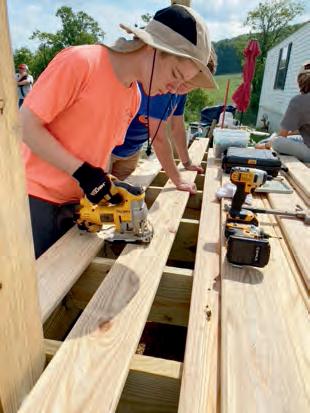
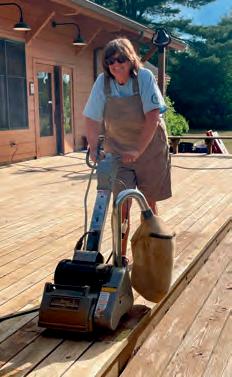
In collaboration with our camping facilities, service camp volunteers care for these spaces we cherish by cleaning gutters, chipping wood, painting barns, and more. This shared work not only reinforces the camps and sustains their ministry but also creates meaningful opportunities for service, teamwork, and stewardship. b
Brazil
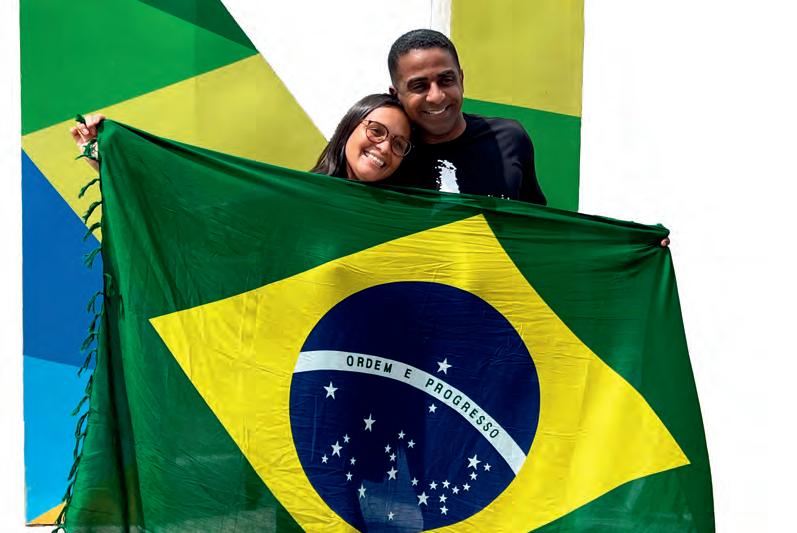
Brazil was little more than a small group of believers gathering in Salvador, Bahia (a city of about 2.5 million people on the Northeast coast) who were drawn to a tradition they had discovered through their own study and prayer. Today, the “Igreja Morava do Brasil” is a dynamic and rapidly growing expression of the Moravian Church.
From Study to Community
Rev. Mauricio’s journey toward the Moravian Church began with research and culminated in a conviction that the theology, liturgy, and mission-centered identity of the Unitas Fratrum aligned with what he and his commu-
Mission Outreach, the Rev. Angelica Regalado-Cieza, to see the Moravian Church in its North American context. Later that year, he and his wife, Jucineide, attended the “Conferencia de Recursos Moravos” (Moravian Resources Conference) in Panama—a gathering of leadership from across the Spanish-speaking Moravian world that offered deep immersion in Moravian history, polity, and theology in community. (Read more about the conference in the next article in this report.)
Then the visits began flowing in the other direction. In May 2023, BWM Executive Director Justin Rabbach and the Rev. Jørgen AdminisBWM’s first worshiping and MoraThe returned in May followed 2023 Synod in Town, South formally recognizing Brazil Prospective Area Unitas
For the BWM, this model is a compelling expression of Moravian theology that we are proud to support. Their approach to ministry speaks to our belief that every person has a role in God’s mission.
Fratrum. And in the spring of 2025, Mauricio attended a BWM Board of Directors meeting, giving board members a direct window into the global work supported by our organization.
Each conversation and visit offered a new opportunity to walk together, allowing the relationship to deepen before formalizing our partnership.
Building a Church That Serves
Back in Salvador, the growth has been steady and intentional. Mauricio now leads two congregations of approximately fifty members each. In April 2025, the primary congregation—known as Bui—moved from an office building to a street-level location so neighbors could more easily walk in and connect with the ministry. A second congregation in Lauro de Freitas, which had been a Baptist community in transition, formally became Moravian in July 2025. A new group is also forming in Rio de Janeiro under the leadership of Brother Davis Dias, who came to the Moravian tradition through his own independent study of church history.
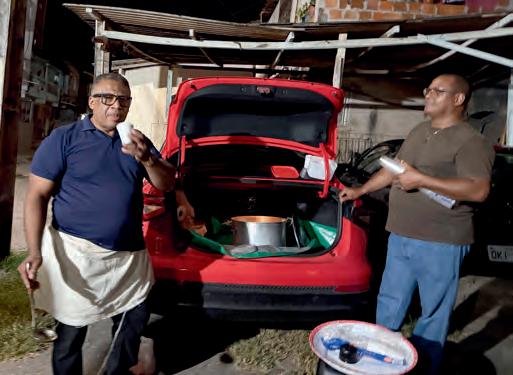
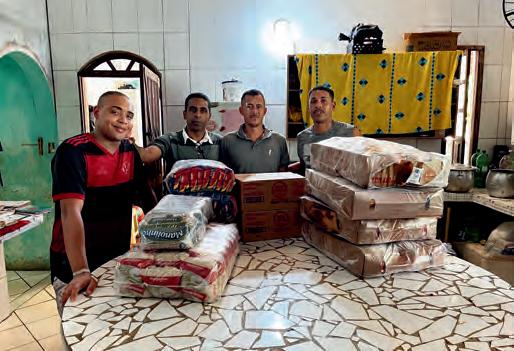
What stands out most is not the number of congregations but how they function. Mauricio has organized his members into mission groups, each responsible for identifying and leading a specific area of local ministry. Some groups coordi-
nate food distribution to people on the streets. Others support a drug recovery center currently serving twenty-one men. Still others serve alongside VIDA, a residential care community for children and adults with disabilities. Each of these
ministries is woven into the fabric of congregational life and spearheaded by the members themselves.
For the BWM, this model is a compelling expression of Moravian theology that we are proud to support. Their approach to ministry speaks to our belief that every person has a role in God’s mission.
A History Being Rediscovered
What makes this story even more extraordinary is that it is not completely new. In 1886, Pastor Wilhelm Gottfried Lange and 111 members of the Herrnhut brotherhood arrived (Continued on next page)
Brazil
(Continued from previous page)
in southern Brazil and founded the community of Bruderthal (the “Valley of the Brothers”) in what is now the municipality of Guaramirim, Santa Catarina. The community was Moravian under Lange’s leadership but became Lutheran after his departure in the 1890s, and the Moravian chapter faded from broader church memory.
In January 2026, as part of a visit to the Moravian congregations in Salvador and Rio, Rabbach and Bøytler also stopped in Santa Catarina, where they visited the historic church – still known locally as “Igreja dos Imigrantes” (Church of the Immigrants) – and examined the original registration book bearing Lange’s signatures. They learned how his autobiographical manu-
scripts had been buried in a metal box during World War II to protect them from a nationalist campaign targeting non-Portuguese materials, and were later recovered by his descendants.
This history is now the subject of active research, including work by BWM intern Maggie Stephens, who is currently building a digital archive and written history of the Moravian Church in Brazil.
A Model for How We Grow
In addition to being a valuable history in its own right, the story of the Moravian Church in Brazil offers a testimony about how the Moravian Church can grow in new areas. It begins with relationships – listening, visiting, and walking alongside leaders already doing the work. This shared learning can grow into a formal connection to the Unity and a partnership where the local church leads and the BWM supports.
With projections of up to eight congregations in the Salvador area by the end of 2026, and new groups forming in Rio de Janeiro and beyond, the “Igreja Morava do Brasil” is writing a new chapter in a story that began nearly 140 years ago. The roots run deeper than we realized, and new fruit is just beginning to emerge. b
Panama
What Began in Panama
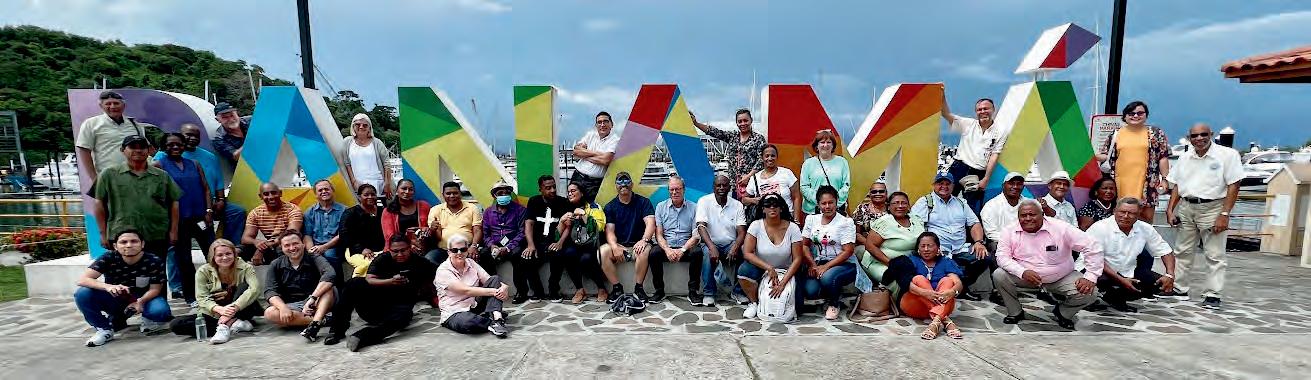
The Board of World Mission exists to build relationships. For most of its history, that has meant connecting North American Moravians with partners across the Worldwide Unity. In September 2022, BWM tried something new: gathering Spanish-speaking Moravian leaders from across Latin America to learn from one another.
The Gathering
Forty-five delegates and presenters from ten countries spent four days together at the Conferencia de Recursos Moravos in Panama City. Representatives came from Costa Rica, Cuba, Honduras, Nicaragua, and Peru, with guests from new areas of work in Brazil, Bolivia, and Panama. Participants studied Unity structure, synod planning, financial administration, and servant leadership. BWM distributed Spanish-language copies of the Church Order of the Unitas Fratrum and Our Moravian Treasures translated for the first many delegates, it was they had participated Unity-level gathering own language.
“All of us who were here are now interconnected,” said Bishop Armando Rusindo from Cuba. “And through all of our provinces and countries are intercon
nected and united in the work of the Moravian Church.”
The Fruit
Bishop Rusindo’s words proved prophetic. A weekly Zoom Bible study that once included only young adults from Costa Rica expanded across the region. A WhatsApp group with conference delegates still buzzes daily with joys, concerns, and opportunities from across the region. Conference presenters returned to Nicaragua, Honduras, Perú, Brazil, Bolivia, and Cuba to lead follow-up workshops in financial management and governance.
One conference participant, Br. Will Cuthbert, was later contracted by BWM to continue the interregional relationship-building that began in Panama, leading youth workshops from the Nicaraguan coast to the Peruvian Amazon and to the churches of Cuba.
What began as a four-day conference has become a living network —
Debt Jubilee
For
the Healing of the World
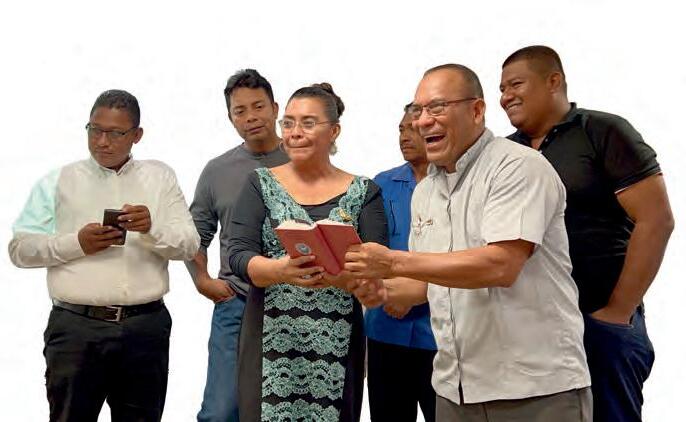
In 2022, Trinity Moravian Church in Winston-Salem, North Carolina, had an idea rooted in the ancient biblical concept of Jubilee: what if a congregation could buy medical debt for pennies on the dollar and simply forgive it? Through a partnership with RIP Medical Debt, Trinity raised roughly $15,000 and erased $3.3 million in medical debt for 3,355 families in their surrounding counties. They celebrated with a debt burning ceremony on Palm Sunday.
Raised funds erased nearly $11 million in medical debt for 13,441 people and cleared patient debt in Ahuas, Honduras.
The rest of the Moravian Church took notice. In the summer of 2023, four agencies joined forces to scale the effort denominationally: the Board of World Mission, the Moravian Ministries Foundation, the Interprovincial Board of Communication, and the Southern Province Commission on Congregational Development. Together, they launched the Debt Jubilee Project: For the Healing of the World. The response was remarkable.
A total of 284 donations from 71 congregations raised $102,424 — more than doubling the original $50,000 goal. Through RIP Medical Debt, the domestic portion of those funds erased nearly $11 million in medical debt for 13,441 people across 37 U.S. counties with a Moravian presence. The remaining $25,000 cleared patient debt at the Clinica Evangelica Morava in Ahuas, Honduras, where administrators prioritized patients with terminal illness, those living with HIV, individuals with disabilities, single mothers, and elderly patients — freeing the clinic to reinvest in medication, equipment, and future care.
In early 2024, BWM awarded Trinity Moravian a Herrnhut Congregational Affirmation in recognition of the example they set for the denomination. What began as one congregation’s faithfulness became a collective act of healing that reached from North Carolina to the remote banks of the Patuca River in Honduras. b
Building for the Future
The Until He Comes Fund
In 1745, a group of Moravians created a fund that today remains as the “Society for Promoting the Gospel”. The goal was to support Moravian mission work for generations to come. Nearly three centuries later, the income from those invested funds continues to support the work of the Board of World Mission each year.
Inspired by this effort, in 2025, the BWM launched a campaign to establish the “Until He Comes Fund” - a new $100,000 endowment to be invested and set aside to grow for 100 years. By 2126, it could grow to over $30 million (with an average return of just under 6%), providing a transformational resource for Moravian mission work a century from now.
The fund’s first contribution came from a bike ride fundraiser - an effort to show that the BWM is in it “For the Long Haul”. In September 2025, BWM riders joined the Door County
consin - fueled the night before by spaghetti and famous Door County cherry pie at the Sturgeon Bay congregation, snapping selfies at Ephraim Moravian Church along the route, and making a stop about halfway through the 100-mile ride at Sister Bay Moravian Church, where a group of riders cycled right through worship. The adventure raised over $15,000 toward the fund’s goal.
The BWM established the Until He Comes Fund — a new endowment to be invested to grow for 100 years.
Another bike ride fundraiser is taking place in September 2026, with the campaign concluding with the establishment of the fund at BWM’s fall board meeting. Contributions to help us meet (and possibly exceed!) our goal are welcome, and can be designated at Moravianmission.org/Give.
We’re in it for the long haul, until he comes! b
Congregational Resources
Starting at Home: Congregational Resources
The Board of World Mission continues to invest in resources that strengthen the life of our congregations—equipping churches for worship, teaching, and faithful engagement with the world. Two new resources now in development will help Moravians connect more deeply with our identity, theology, and mission calling. Both will be available beginning in summer 2026 at MoravianMission.org/Resources.
Core Values Worship Series
This 17-week worship series is a collaborative project of the BWM and Moravian partners across North America. Rooted in the four core values of the global Moravian Church—Christ-centered, relational, ecumenical, and missional—the series is designed to help congregations explore what it means to live as Moravians in today’s world.
Each week includes a full worship plan with sermon, children’s message, hymn suggestions, and liturgical resources. Whether a congregation seeks to deepen its understanding of Moravian identity or simply needs practical support for worship planning and preaching, this series offers a rich and accessible resource.
Everyone Wants A Better World Bible Curriculum
This adult Bible study invites congregations into a global conversation about caring for creation and nurturing right relationships from a Bible-based perspective.
Using the United Nations Sustainable Development Goals as a framework, the study explores each theme through scripture, Moravian theology, and the lived witness of mission.
Each session includes prayer, Bible study, and guided reflection on how faithful discipleship takes shape both locally and globally. A leader’s guide, along with companion worship resources and video segments, will support deeper engagement.
We hope that these resources will encourage congregations to see themselves as a people situated to do good locally and globally. The mission does not begin far away. It begins at home—in worship, in learning, and in the life we share in Christ. Together, we are engaged in building a better world. b
Serve. Pray. Give.
Serve.
The Board of World Mission is committed to equipping Moravians for faithful service in mission and ministry. Whether you feel called to participate in an international mission trip, lend a hand in a local service effort, or coordinate a fundraiser to support this work, we are here to help you take the next step. Our goal is to connect you with the tools, guidance, and opportunities needed to turn that calling into action.
To learn more about serving directly with a BWM project—locally or globally—contact the Director of Mission Service, the Rev. Dan Miller, at dan@moravianmission.org.
If you are interested in engaging missionally within your congregation—through a visit from BWM staff, access to ministry resources, or other forms of partnership—contact the Director of Mission Engagement, the Rt. Rev. Dr. Amy Gohdes-Luhman, at amy@moravianmission.org.
Pray.
We are deeply thankful for the many ways you already support this work through your time, energy, and financial gifts. We also invite you to uphold our ministries—and especially our global partners—in prayer, and to share their stories with others. As part of our covenant relationships, we observe designated
days of prayer for each partner, listed at MoravianMission.org/Pray. Joining together in prayer throughout the year strengthens these relationships and sustains our shared ministry.
Give.
Your generosity makes all of the work mentioned in this report possible. The Board of World Mission depends on committed supporters across North America to continue meaningful, life-changing ministry. Unrestricted gifts are especially helpful, as they allow us to respond quickly to emerging needs. Donations may also be directed to specific areas such as Mission Grants, the Ahuas Clinic, Blessings Flow, or Youth Ministry.
U.S. donors may send checks to: Board of World Mission 1021 Center Street Bethlehem, PA 18018 Gifts can also be made online at MoravianMission.org/Give.
Canadian donors may send checks to:
Moravian Church in Canada 51244 Range Rd. 220 Sherwood Park, AB T8E 1G8 Interac e-Transfers can be sent to treasurer@moravian.ca. Please include your name and address to receive a tax receipt. b
Financial Report
The Board of World Mission appreciates the strong support from the congregations and many others, which enables our ongoing mission work across the church. This year, we are reporting on the previous
2025 Support and Revenue
For the year ended December 31, 2025 (audited) Board of World Mission of the Moravian Church
2025 Expenditures
For the year ended December 31, 2025 Board of World Mission of the Moravian Church
year, 2025, as well as the five-year span from 2021 through 2025.
2025 Financial Information
The 2025 financial information illustrates contribution categories, showing where income comes from and how it is spent. We are pleased to report another solid financial year with a modest surplus to carry into our current fiscal year. Support from the Northern and Southern Provinces remains strong, as do the restricted and unrestricted gifts received and positive investment results in 2025. All of these help us enhance our collective mission efforts.
Our main expense is staffing, which includes four full-time employees, two part-time employees, along with numerous summer interns and a few missionaries working independently on a part-time basis. We highlight the direct program costs, support, and administration for presentation purposes. Most of the funds contributed directly support our programs.
Five-Year Review
Support was more than $8 million during the 2021-25 period, which is encouraging. These funds were provided by our constituent provinces and donors and were managed expertly by the Moravian Ministries Foundation. We are very proud that 84% of this support was directed straight to mission programs.
For additional information or a copy of the audited financial statements, please contact Sue Adams (sue@moravianmission.org) or Rex Knowlton (rex@moravianmission. org). Thank you for your support of this important outreach. Support was more than $8
In addition to the financial data shown on our income statement, we also have significant exchange account activity each year. These are funds donated to specific causes, collected, and then given directly to the relevant parties. Our most active exchange areas include Moravian Disaster Response and the Ahuas Clinic. Several other exchanges occur on our balance sheet each year as balances carry over from one year to the next and are not closed at the end of each fiscal year. Usually, we handle between $250k and $600k in exchange activity annually.
Expenses
The Board of World Mission offers several ways to stay connected and informed about our work. Visit our website at MoravianMission.org for the latest updates, and follow us on Facebook, Instagram, TikTok, and BlueSky.
If you would like to receive our quarterly newsletter or other regular
updates, please contact Sylvie Hauser at sylvie@moravianmission.org. You can also share your communication preferences by scanning the QR code at left.
Thank you for your continued interest in and support of the BWM!
Moravian Summer Camping 2026
Learn more about summer camping opportunities by visiting each camp’s websites.
W6016 Blackhawk Rd.• Wautoma, WI 54982 www.mt-morris.org
Chetek: July 19-25
Completed grades: 9th – age 21 • Cost: $350
Winmor: July 26-August 1
Completed grades: 6th – 8th • Cost: $350
Junior: August 2-6,
Completed grades: 2nd-5th • Cost: $250
Van Es Camp and Conference Centre 51244 Range Rd 220 Sherwood Park, AB T8E 1G8, Canada vanes.ca
Grades 1-6 Summer Camp: July 12-17
This camp is sold out
Grades 7-12 Summer Camp: July 19-24
Cost: see website for scale rates.
Middle States Youth Ministry Council Summer Camps (MSYMC)
Camp Tar Hollow: July 19-25
Tar Hollow State Park 16396 Tar Hollow Rd. Laurelville, OH 43135
https://msymc.weebly.com/tar-hollow.html
Completed grades: 7th through 21 years-old Cost: $150
Camp Illiana: July 27-31
723 E. 450 S. Washington, IN 47501
https://msymc.weebly.com/illiana.html
Completed grades: 2nd – 6th • Cost: $100
Camp Bethany: August 3-7
9738, 5774 Township Hwy 212 Lakeville, OH 44638
https://msymc.weebly.com/bethany.html
Completed grades: 2nd – 6th • Cost: $100
MORAVIANS IN MISSION
Little Church on the Lane honored with Herrnhut Congregational Affirmation
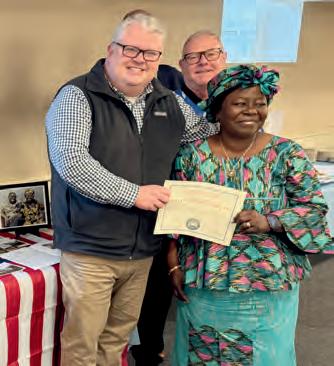
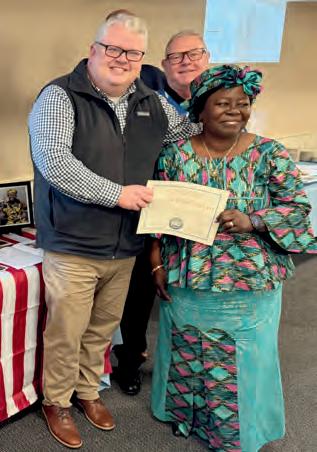
At a special worship service on Sunday, March 8, 2026, the Board of World Mission presented Little Church on the Lane in Charlotte, North Carolina, with a Herrnhut Congregational Affirmation.
In 2019, the Board of World Mission began recognizing congregations in North America that demonstrate exemplary mission and service, both locally and globally. This recognition was named the Herrnhut Congregational Affirmation for Dedicated Mission and Service, in honor of the early Moravian community whose faith, generosity and willingness to go where they were called sparked a global movement of mission. The Herrnhut Congregational Affirmation is given to a Moravian congregation that follows this example—giving of their time, talent and
treasure to be the light of Christ to others. We are thrilled to name Little Church on the Lane as this year’s recipient.
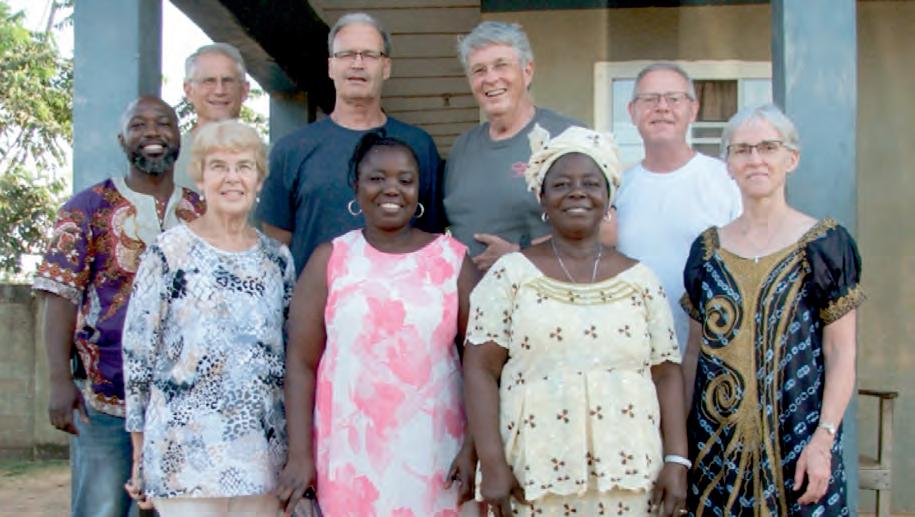
Here are just a few of the ways Little Church on the Lane is living into that call: This ministry began with a relationship. In the 1970s, Mohamed and Safiatu Braima, originally from Sierra Leone, were living in North Carolina and worshiping at Little Church on the Lane. The congregation was blessed to hear about their home country, and what began as listening with compassion grew into a shared calling. With the support of their church family, the Braimas’ calling took root in the town of Luawa Yiehun.
Over the years, the vision has continued to take shape in remarkable ways. A library, a church and a mission house were built.
At left: Rt. Rev. Amy Gohdes Luhman, BWM director of mission engagement, presents the Herrnhut Congregational Affirmation with Little Church pastor Rev. Rusty Rushing and member Kyle Markley. At right: BWM board chair Thomas Baucom with Safiatu Braima of Sierra Leone.
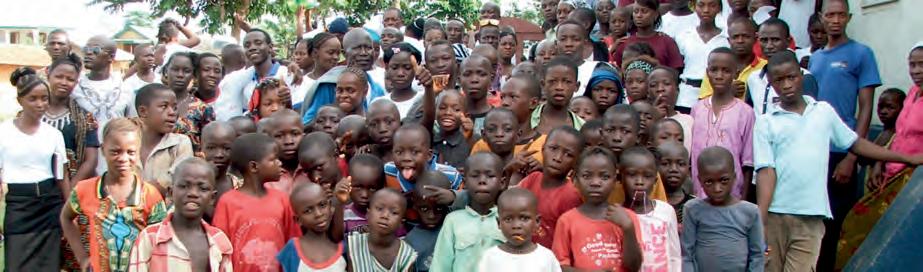
A secondary school now serves more than 800 students. Five congregations have been established, and spiritual formation and leadership development continue to grow within the community.
The work has not stopped there. A freshwater cistern provides safe drinking water for the entire village, a simple and powerful reminder of what it means to respond when there is need.
Even through seasons of hardship, this ministry has endured. Following the death of Rev. Mohamed Braima in 2018, Sister Safiatu continues in faithful service as a provincial acolyte, with the ongoing support of Little Church on the Lane.
This “little” church has made a profound and faith-filled impact on the lives of our siblings in Christ in Sierra Leone.
In the story of Jesus and the Samaritan
woman at the well in John 4 (the lectionary text for Sunday on which this award was presented), Jesus asks for a drink, and in that moment, a conversation begins that crosses boundaries and opens the door to new life. Like that moment at the well, this congregation has responded to both physical and spiritual thirst—offering living water, building relationships and inviting others to “come and see.”
With deep appreciation for their ministry and in gratitude for the many ways they continue to share Christ’s love across communities and cultures, the Board of World Mission is honored to present Little Church on the Lane with the Herrnhut Congregational Affirmation. n Sylvie Hauser is director of communications and development for the Board of World Mission.
Members of the Sierra Leone Mission committee during a visit to Sierra Leone include Koi Ibrahim, Rev. Steve Wilson, Pete Hiltz, Rt. Rev. Tom Shelton, Jeff Fulp, Donna Hurt, Nancy Momoh, Safiatu Braima, and Claire Wilson
MORAVIANS WRITINGS
Moravian reflections on Pentecost
Each week, Moravians across the U.S., Canada and the Caribbean share a common message through their Sunday bulletins. This month, we share insights on Pentecost, which this year falls on May 24. Thanks to writers past and present for their contributions to the Moravian bulletin series.
The Keynote of Pentecost
Author unknown • May 25, 1969
Most of us simply dismiss any conversation about Pentecost or the Holy Spirit. We are conscious that these experiences have something to do with the Christian faith, and we find evidences of them in the Bible. But somehow we feel uncomfortable discussing or involving ourselves in a subject seemingly so mysterious and confusing.
What we face today seems too remote from the realities set forth in the symbolic language of Scripture, which describes Pentecost as an event involving “the rush of a mighty wind” and “tongues as of fire” (Acts 2:2-3). This festival occasion was clearly an event of overwhelming emotion. It is equally clear that there was more than an outbreak of fervent feeling. There was a tremendous accession of power. The disciples could only attribute it to God. They saw in it a fulfillment of the earlier assurance: “You shall receive power when the Holy Spirit has come upon you.” (Acts 1:8)
The evidence for the new power that came at Pentecost is found in what followed. Pentecost energized them for Christian service in the world.
“Is Pentecost reproducible?”
When we come to Pentecost, we should ask ourselves this question: In a world in which it is possible for the Holy Spirit to
work such mighty acts, what is preventing it now? What is there in us that is blocking it?
The keynote of Pentecost is: There is a higher power than we ourselves can generate, which is always available to men and women prepared to receive it.
The revealing feature of Pentecost in 1969 will be not only where rebirth is taking place but where it is not taking place. To have an experience of the Spirit, an individual or a church must be really open to it. It is not likely to take place where Christian fellowship has been reduced to social niceness. Let us sense again what it means to be channels for the creative power of the Holy Spirit that produced also the world-wide Christian mission. >
Preparing for Another Pentecost Author unknown • June 6, 1976
Pentecost commemorates the descent of the Holy Spirit upon the Apostles, a moment in time which marks the beginning of the work of the church on earth. It would be unfortunate if this mystical moment were looking upon as a singular event in the history of Christianity. One has only to recall that visit from the Power on High to Count Zinzendorf and that youthful Moravian congregation on August 13, 1727.
In both experiences, there was a group of men and women who had been care-
fully prepared for the event. The Apostles had witnessed the resurrection of the living God. The Moravians had spent several months in prayer and preparation for the ultimate manifestation of the Holy Spirit. As with the Apostles, the Moravians began their work in the church with an extraordinary zeal and sense of direction.
Are we preparing for another Pentecostal experience now? Certainly, the times reveal that something must be done. And man cannot change things by himself. Witness the disillusionment, despair, partisanship, loss of confidence in government and leadership, the expectation of quick
answers which will save the world for material security, apathy—all these terms are commonplace.
But the true Christian knows that without daily renewal of individual faith, without group renewal in the work of the church, nothing is going to change by itself. We can prepare for another Pentecost which will illuminate God’s plan and give the right answers. How? By individual and group prayer…by rededicating ourselves to reading the Bible…by openly witnessing our commitment to Christ…by Christian (Continued on next page)
Pentecost
(Continued from previous page)
acts of love—these are the ways we have for creating the atmosphere in which the Holy Spirit can again descend upon us and lead us to a new life in Christ and his Church. >
The Gift of the Spirit
C. Scott Venable, associate pastor, Home Moravian Church, Winston-Salem, NC • May 31, 1998
The gift of the Holy Spirit, the promised Advocate, was received by those first believers on the day of Pentecost. The Holy Spirit was the source of transforming power leading to new creation and new community. How do we understand the Spirit of Pentecost? The following thoughts are offered in response to this question.
The Spirit of Pentecost is the Spirit of boldness. “Listen to us,” said Peter and the apostles. They were fearless. They stood up and spoke out, empowered by the Spirit. May we be bold in living and telling our faith story.
The Spirit of Pentecost is the Spirit of accountability. There was a great aware-
ness of the living God. The question the people asked, “What does this mean?” demanding a response from the Spirit-filled disciples. Their response was to witness to the Risen Lord as the Spirit directed them. We need the guidance of the Holy Spirit in our lives today.
The Spirit of Pentecost is the Spirit of community faithfulness. The disciples were faithful in preaching, teaching and equipping new believers in the formation of Christian community. The church, the body of Christ, needs this Spirit of community faithfulness in order to serve.
The Spirit of Pentecost is the Spirit of stewardship and sharing. When the people committed their lives to the Lord, they recognized God as creator and giver of all things. They no longer considered themselves owners, but stewards and sharers of God’s abundant gifts. We are called to be stewards of God’s gifts.
The Spirit of Pentecost is the Spirit of worship and fellowship. The first believers grew in their experiences of accepting, loving, forgiving, growing and empowering one another. May we experience true worship in true fellowship. >
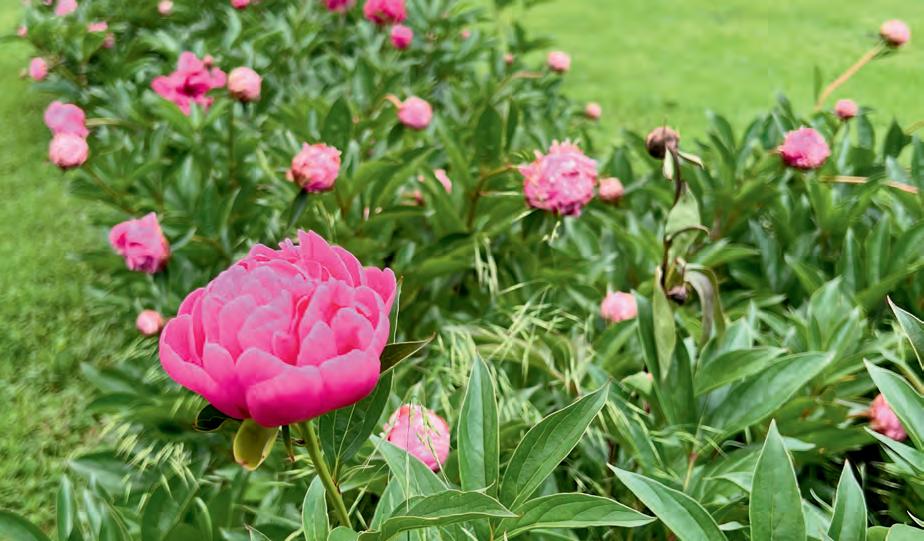
In German, peonies are known as Pfingstrose or “Pentecost Roses” Photo by Kathy Riess.
The Spirit of truth
James T. Hicks, Green Bay, Wis., president, Western District• May 27, 2012
Advocate, Counselor, Comforter, Helper, Friend, Paraclete: many “names” are ascribed to the Holy Spirit! Listen for the term used to describe the Holy Spirit as John’s Gospel is read. Be mindful that Jesus has begun to speak of his departure, unsettling words for his disciples. This Advocate from God will “testify” on Jesus’ behalf, work entrusted to us also: “You also are to testify . . .”
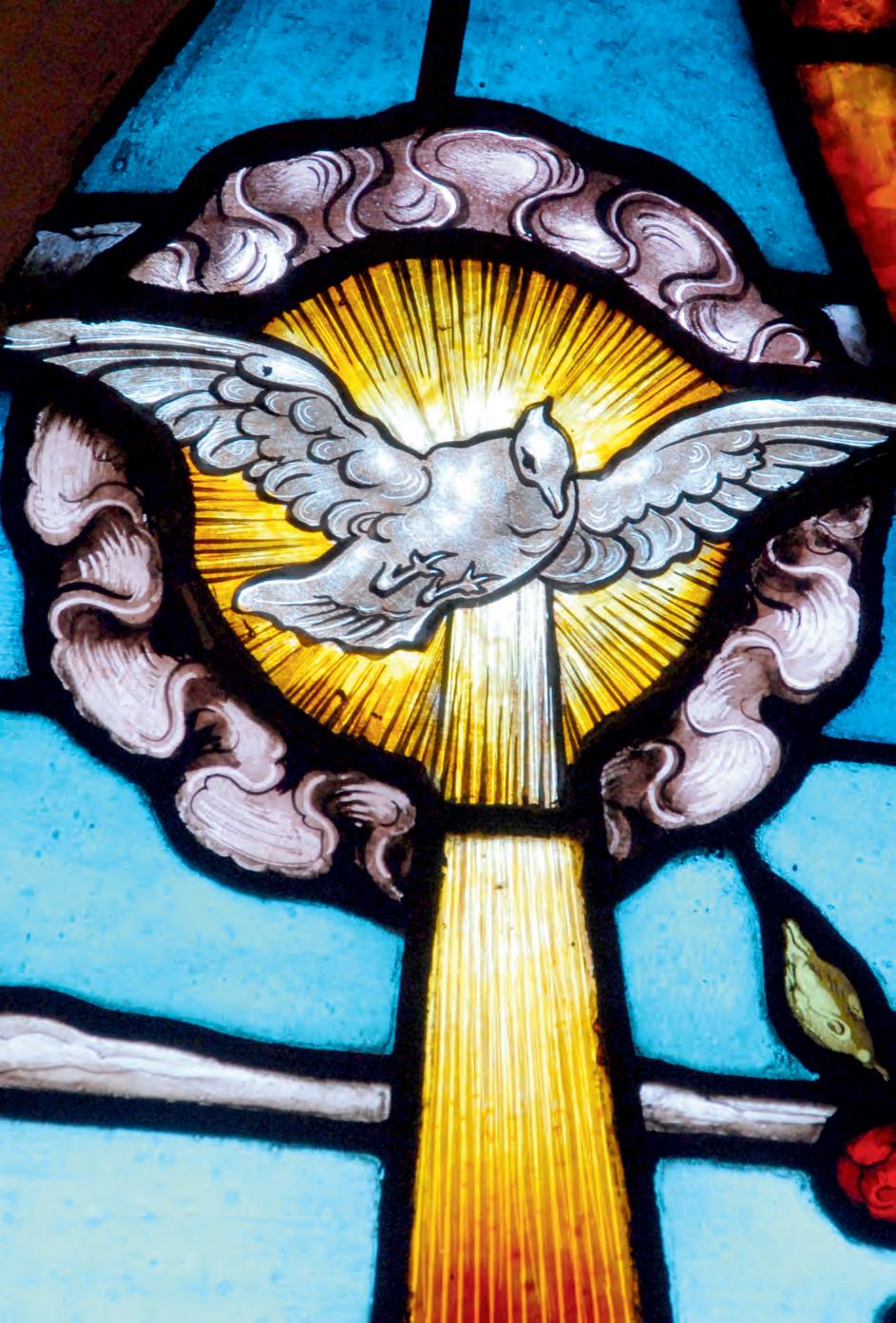
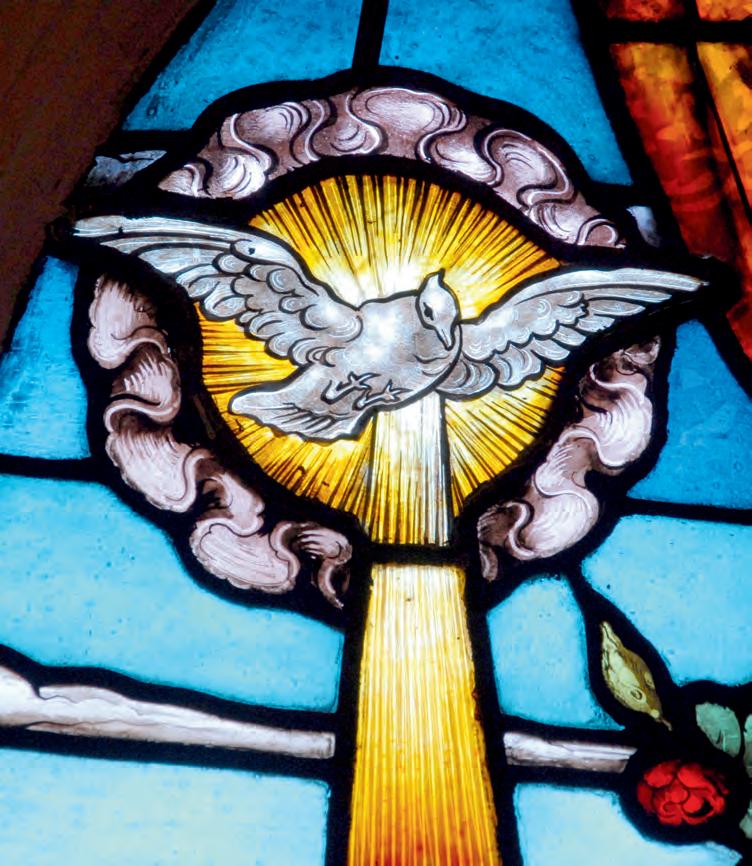
Notice where your attention moves in worship this morning. If you are unsettled, is it the movement of the Holy Spirit? If you are settled, perhaps you may heed the bulletin cover and watch for flames raining down from the dove, “The Spirit of truth will guide you into all the truth.” Settled or unsettled, I need to be guided. Do you?
Many claim truth today. The volume on truth has increased to a deafening level. Everything has become “essential.” In the rising volume, our capacity to recognize truth is diminished. The generosity of liberty, of nonessentials, is difficult to hear. More than ever, attention to the Advocate helps us acknowledge that it takes a lifetime to learn and speak truth.
In John’s Gospel, Jesus says the world’s notion of sin and righteousness and judgment is wrong. There is suffering at the hands of our wrong notions. The Advocate seeks to guide the church with flames of fire. May quiet words of truth warm our hearts, that our testimony would proclaim Jesus’ mercy, grace and love.
As a district president, I often visit with pastors and ask, “What’s going on when you’re thriving?” One pastor smiled as she said, “When I’m telling stories about Jesus!” How true! It was a joy to be in her presence. In that joy, we are being prepared to face that which unsettles and guides, the truth. >
Gift of challenge, gift of power
Willie Israel, pastor, Rolling Hills Moravian Church, Longwood, Florida • June 8, 2014
Often, loving parents will give their children gifts that will help them learn and grow: a two-wheeled bike, a chemistry set, a microscope, a guitar. When a child receives a gift like this, he or she is encouraged to learn new ways to use a growing mind and body. The child may approach this gift with either uncertainty or eagerness. It is always a challenge to face an unfamiliar experience.
Jesus gave his disciples a challenge when he breathed the Holy Spirit into their lives. Because the risen Jesus knew he would not be a physical presence with his disciples forever, he gave them a gift that would enable them to carry God’s presence to everyone they encountered. Jesus said, “As the Father has sent me, so I send you.”
It may have been frightening to Jesus’ disciples at first. Until Jesus, people recognized the Holy Spirit mostly through the actions of kings, priests and prophets. Often, God’s Spirit led these people to do or say things that made them unpopular— even put their lives at risk. Now, through the power of the Holy Spirit, the disciples would have the ability to continue Jesus’ work among God’s people.
With the gift of the Holy Spirit, we are faced with the same challenge. The Holy Spirit can lead us to live in a way that confronts the values of a secular world. When God’s Spirit lives in us, we are compelled to live as Jesus did. We can no longer claim the name of Christ, unless we are willing to follow in our Savior’s footsteps. But when we accept the challenge, we are blessed by the words of Jesus Christ, who tells us, as he told his disciples, “Peace be with you.” >
OFFICIAL PROVINCIAL ELDERS’ NEWS
NORTHERN PROVINCE
Clergy Update
Rev. Mandy Mastros has accepted the call to serve Lititz Moravian Church, Lititz, Pennsylvania as their three-quarter time co-pastor (with Rev. Sayward Lippincott) effective May 19, 2026. Sister Mandy has served as the full-time pastor of Lancaster Moravian Congregation of Lancaster, Pennsylvania since October of 2017. She will continue to serve as the pastor of Lancaster in a one-quarter time position. Rev. Mastros will be installed at Lititz on May 31, 2026. Sister Mandy was ordained a Deacon on October 22, 2017, and consecrated a Presbyter on June 6, 2021. Please hold Sister Mandy, Sister Lippincott, the Lancaster Moravian Church and the Lititz Moravian Congregation in your prayers as they transition into these new roles.
Sister Grace Adele Hochella has accepted the call to serve in specialized ministry at Morningstar Living, Nazareth, Pa., as their full-time chaplain, effective April 17, 2026. Prior to her call, Grace served as a licensed lay pastor from November 2025-April 2026 at Morningstar Living. Sister Grace received her MDiv. from Moravian Theological Seminary in 2022. She served as the resident chaplain at Penn State Hershey Medical Center after her graduation and as a chaplain at
Lehigh Valley Health Network. As a ministerial candidate of the Moravian Church Northern Province, Grace had served in supervised ministry at East Hills Moravian Church. Please hold Sister Grace and the Morningstar community in your prayers as Sister Grace transitions to this call of specialized ministry.
Ordination Announcement
The Rt. Reverend M. Blair Couch, Bishop of the Moravian Unity will ordain Grace Adele Hochella to service as a Deacon in the Moravian Church, Northern Province on Sunday, June 7, 2026, at 2:00 p.m. at Central Moravian Church, Bethlehem, Pa. The service will be livestreamed (and recorded) on Central Moravian Church’s YouTube channel.
SOUTHERN PROVINCE
Konnoak Hills Moravian Church
Brother Ethan Smith, an approved candidate for ordination, has accepted a call to become pastor of Konnoak Hills Moravian Church, Winston-Salem, NC.
A service of ordination was held on May 3, 2026 at King Moravian Church, King, NC at 3 p.m. with The Rt. Rev. Dr. Wayne Burkette officiating. Ethan began his service at Konnoak Hills Moravian Church on Sunday, May 10, 2026 with a service of installation. Please be in prayer for Ethan and his family and the Konnoak Hills congregation.
OBITUARIES
The Rev. Dean Jurgen
Pastor Dean Jurgen, age 72, of Lititz, peacefully passed on Friday March 27, 2026, in the loving care of Moravian Manor Communities and Masonic Village Hospice Care.
Born on October 17, 1953, to Robert and JoAnn Jurgen, Dean was raised, along with older brother, Douglas, in Bucks County where he attended Buckingham Friends School and Central Bucks East High School (1971). He was united in marriage to Elizabeth Ann Graybill, on October 16, 1976, at Lititz Moravian Church, Lititz, Pa.
After receiving his undergraduate degree in Religion and Psychology from Moravian College (1976) and a Master of Divinity from Moravian Theological Seminary (1981), Dean lovingly served for 40 years as a Moravian Church pastor. Prior to being ordained, he helped Big Oak Moravian Church (Yardley, Pa.) reverse its track to closure. Dean was ordained a Deacon on June 7, 1981. His first call to full-time pastoral service was to South Moravian Church (Dover, Ohio), where he also assisted Sharon Moravian Church (Tuscarawas, Ohio).
Starting in 1984, he served at Midway Manor Moravian Church (Allentown, Pa.). Dean was consecrated as a Presbyter on April 28, 1985. In 1990, he accepted a call to Covenant Moravian Church (York, Pa.), where he served at Camp Hope, volunteered as a night chaplain at York Hospital, and chaired the Pastoral Care
Committee of OPEN, an HIV and AIDS ministry.
Finally, from 2005–2021, Dean served at Lititz Moravian Church, where he was recognized with the John Hus Award (2017) from the Moravian Theological Seminary.
Dean is survived by his wife of over 49 years, Elizabeth Jurgen; his two daughters, Kirsten McClenahan and Elyse Jurgen; and their respective partners Brian McClenahan and Charlie Stephenson.
A Celebration of Life service was held on Saturday, April 25, at Lititz Moravian Church. In lieu of flowers, donations can be made to Jurgen Family Memorial Fund at Moravian University or to Moravian Manor Benevolent Care Fund.
Tamar Bent
Tamar Bent entered into the more immediate presence of her Savior on April 22, 2026, after several years of declining health. She was in the family’s home in Bluefields, Nicaragua, surrounded by her family as she transitioned to eternal life.
Sister Tamar was born on April 30, 1933, in Pearl Lagoon, Nicaragua to Otis and Monica Kain. She was married on March 3, 1957, to Steadman Augustus Bent, who would be ordained a Deacon of the Moravian Church in Nicaragua on December 9, 1962. Sister Tamar supported him throughout his ministries in Nicaragua and the United States. While (Continued on next page)
Tamar Bent
(Continued from previous page)
serving in the Eastern District, the Bents served at Faith Moravian (Washington, D.C.) and First Moravian (NYC) before returning home to Bluefields.
Reverend Bent and Sister Tamar had three children: Jeannette Elizabeth, Craig Anthony and Rhonda Marie. Sister Tamar was predeceased by her husband, the Rev. Steadman Bent on July 2, 2018. After her husband’s passing, Sister Tamar moved to Bethlehem to live with her daughter Rev. Rhonda Robinson and son-in-law Rev. Tracy Robinson as they pastored the Esperanza for Bethlehem Congregation.
Marie S. Morman
Marie Morman, 102, of Lititz, Pa., died peacefully on Saturday, March 7, 2026, at Moravian Manor Community, Lititz. She was born on December 7, 1923, to Oswill and Mary A. Loch Bittner. She was married in 1946 to the late Reverend John F. Morman.
Marie served as organist and/or choir director at each of John’s pastorates. In addition to serving at First Moravian Uhrichsville, Ohio, they served together at First Moravian Church in South Bethlehem, Pa.; John Heckewelder Memorial Church in Gnadenhutten, Ohio; Linden Hall School in Lititz, Pa.; Cana and Gracehill Moravian Churches, Antigua, West Indies; Trinity Moravian Church in Lanham, Maryland and Coopersburg Moravian Church in Pennsylvania.
Marie was predeceased by her husband Reverend John Morman who died on June 26, 2012. Marie is survived by her daughter, Ruth Ellen, wife of Michael Shelley of Lititz, grandchildren and great grandchildren.
Ad Policy for The Moravian — The Moravian accepts paid advertising that is consistent with the magazine’s objectives and editorial convictions as they are stated in the purpose and mission of the Interprovincial Board of Communication. Advertisements for activities, services and products of specific interest to members of the Moravian Church have priority. The Moravian does not accept purely editorial advertisements that advocate specific ideas or issues. Articles, columns and letters to the editor are the appropriate vehicles for the presentation of ideas and issues. The Interprovincial Board of Communication is responsible for the content and design of the magazine, including advertisements. Ad rates and specifications are available www.moravian.org
In lieu of flowers, contributions may be sent in Marie’s memory to: Lititz Moravian Music Program or Lititz Moravian Museum and Archives, 8 Church Square, Lititz, PA 17543 or to Moravian Music Foundation, 457 South Church Street, Winston-Salem, NC 27101.
A memorial service was held on Saturday, March 28, 2026, at Lititz Moravian Church, Lititz, Pa..
Summer Reading from the IBOC
The 2026 edition of The Moravian Daily Texts continues a nearly 300-year-long tradition of offering an inspirational connection to the Holy Scriptures every day.
Each entry in this beloved daily devotional includes “watchwords”—Old and New Testament verses to accompany readers throughout the day— combined with beautiful hymn texts and heartfelt prayers selected and written by Moravians across North America.
The Moravian Daily Texts 2026 hardcover, paperback, large print and journal editions, along with German, Spanish and French translations, are in-stock now. Order yours—or one for a friend or family member—at store.moravian.org or by calling 1.800.732.0591, ext. 703.
Enjoy titles from Moravian writers like Kerry Krauss, Judy Ganz and T.C. Moore! To learn more or to order visit store.moravian.org or call 1.800.732.0591 The world’s oldest daily devotional that’s new every morning! Select editions now 50% off! Order today!