MANU THE
SCRIPT
The Moravian University Literary Magazine
ABOUT US.
The Manuscript is Moravian’s student run, student produced literary magazine. This celebration of Moravian’s creativity is a long standing tradition and is a beloved part of our campus community. Accepting work from students of any major, our goal is to promote inclusivity, creativity and expression. We are proud of our student editors, designers, writers and artist and we are happy to share this year’s work with you
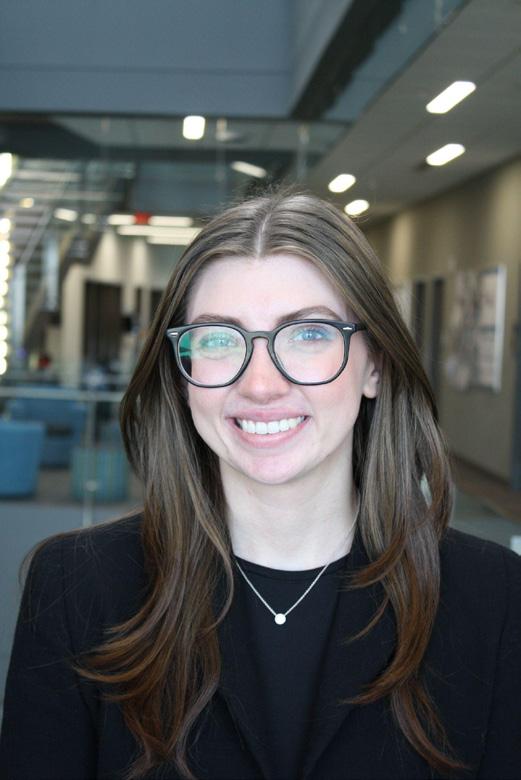
Elsasser - Vice President
Lola Offenback is a senior English writing arts major with a multimedia journalism minor. This is her second year as the President and Editor-in-Chief of The Manuscript. When she isn’t on campus, she is usually reading, working out, journaling, or playing with her cat, Boogie! She is thankful for everyone who has contributed to the publication this year and loved reading everyone’s submissions!
Serena Elsasser is a Fine Arts major and English minor at Moravian University She’s the winner of the inaugural Josephine Pompey Carr Prize for Poetry Writing and earned first place in the Writing at Moravian Poetry Prize She values the expression of words to channel emotion and truth through written storytelling When she’s not painting or writ ng, she’s likely curating creative p she’ll never take, because she s poor She
nd excited to share the new edition with the
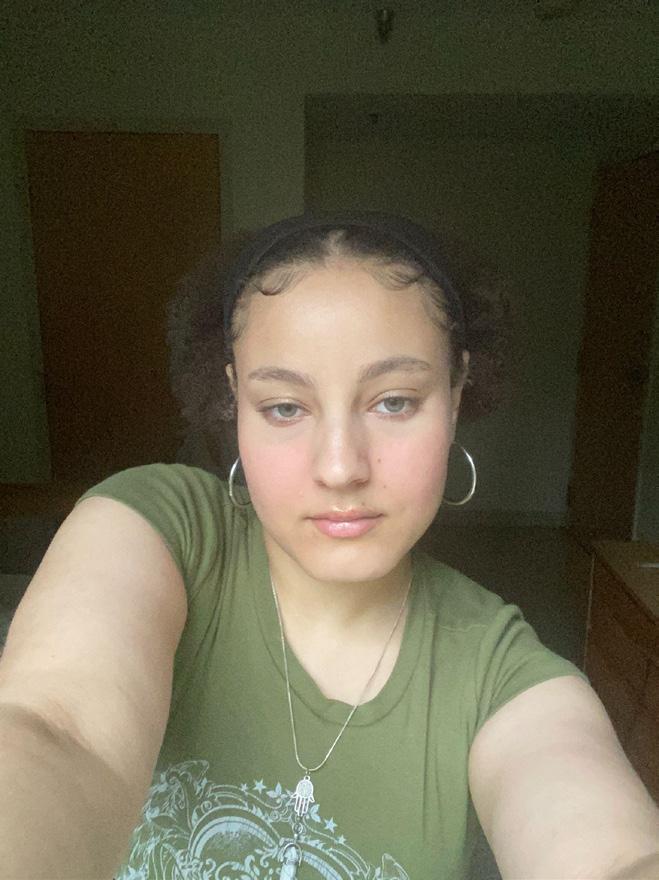
SERENA ELSASSER
Vice President
Serena Elsasser is a Fine Arts major and English minor at Moravian University. She’s the winner of the inaugural Josephine Pompey Carr Prize for Poetry Writing and earned first place in the Writing at Moravian Poetry Prize. She values the expression of words to channel emotion and truth through written storytelling. When she’s not painting or writing, she’s likely curating creative projects or daydreaming about a trip to the DR that she’ll never take, because she is poor. She is grateful and thankful to be a part of this project and excited to share the new edition with the Moravian community and beyond!
Serena
Fatimah Bouri is an English and History double major with a minor in Women's, Gender, and Sexuality Studies She is an assistant editor for the Comenian, vice president of the History Club and Anime Club, a writing fellow and consultant, a Humanities fellow, and secretary of The Manuscript. She is also a member of the ODK, PAT, Tri-Alpha, and Triota honor societies. In her spare time, she loves watching anime, making earrings, cooking, thrifting, and writing poetry. She is excited to share her poetry for this year's publication of The Manuscript!
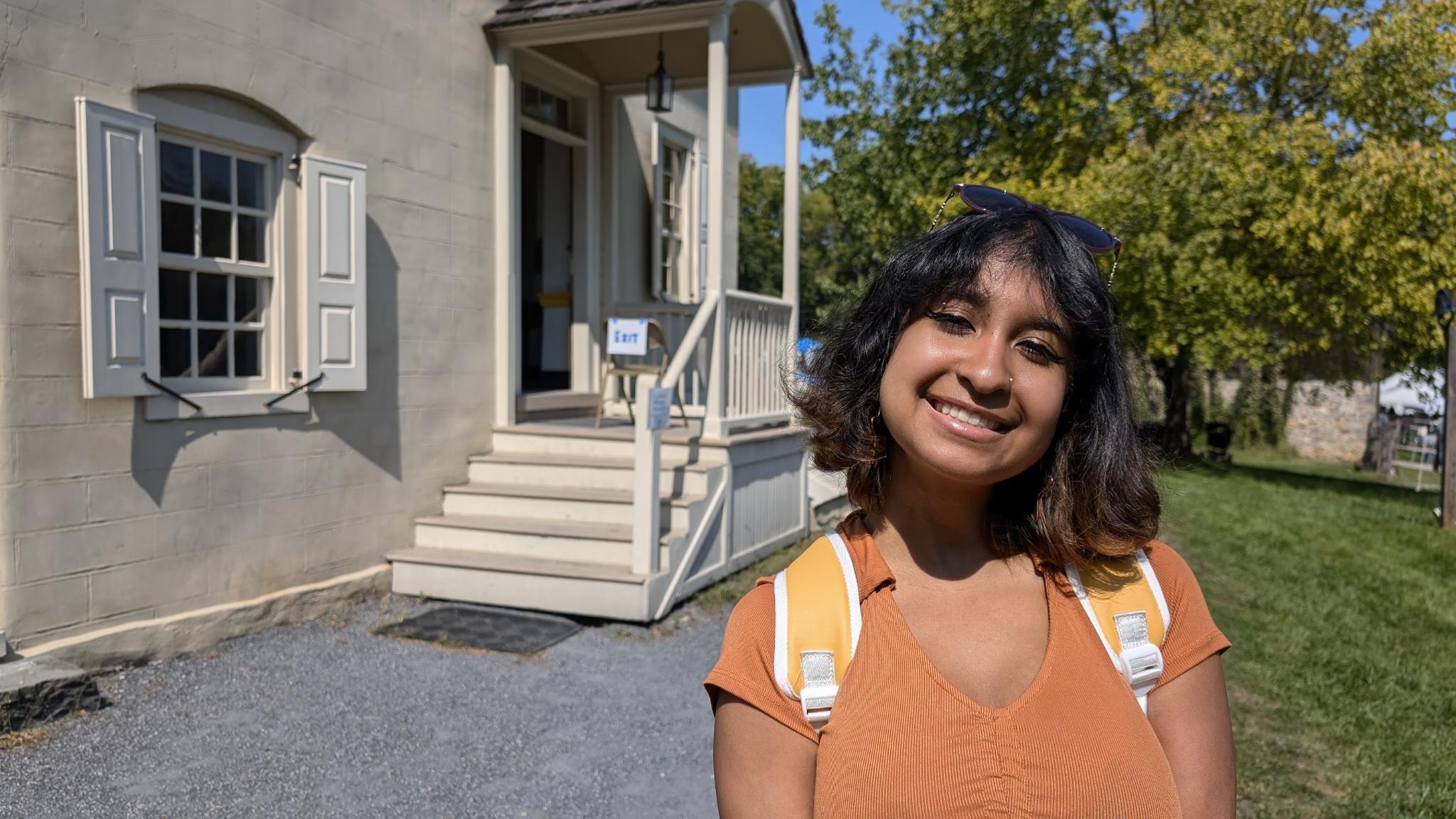
FATIMAH BOURI
Secretary
Fatimah Bouri is an English and History double major with a minor in Women's, Gender, and Sexuality Studies. She is an assistant editor for the Comenian, vice president of the History Club and Anime Club, a writing fellow and consultant, a Humanities fellow, and secretary of The Manuscript. She is also a member of the ODK, PAT, Tri-Alpha, and Triota honor societies. In her spare time, she loves watching anime, making earrings, cooking, thrifting, and writing poetry. She is excited to share her poetry for this year's publication of The Manuscript!
Catherine Forrester is an Early Chi dhood Spec al Education major w th a Soc ology minor She holds eadership roles as Secretary for several c ubs, inc ud ng the Zinzendorf L terary Society, Soc o ogy & Anthropology Club, and Manuscr pt, where she a so manages socia med a. Catherine is Treasurer for Future Advocates for Pub ic Educat on, H story Club, and French Club, and serves as Arts & Entertainment Editor for The Comenian A dedicated musician, she is L brarian for both the MU Wind Ensemble and March ng Band She is a so a member of the Kappa Delta P honor soc ety In her free t me, you can catch her read ng a good book
CATHERINE FORRESTER
Treasurer
Catherine Forrester is an Early Childhood Special Education major with a Sociology minor. She holds leadership roles as Secretary for several clubs, including the Zinzendorf Literary Society, Sociology & Anthropology Club, and Manuscript, where she also manages social media. Catherine is Treasurer for Future Advocates for Public Education, History Club, and French Club, and serves as Arts & Entertainment Editor for The Comenian. A dedicated musician, she is Librarian for both the MU Wind Ensemble and Marching Band. She is also a member of the Kappa Delta Pi honor society. In her free time, you can catch her reading a good book.
Catherine Forrester – Treasurer
THE CAFE
By Alex Ho
Bustling, busy, boisterous, and bold, the café hums with energy all around— steady and constant, inviting to all, offering home to those together and alone.
A mother calls the names of her customers, her voice echoing like when she calls her children in from play.
What is it that draws me toward the café— the noise, the hum, the endless motion? Perhaps its energy appeals to the quiet mind, urging the actor to rise and create.
The conversations flow like a kind of peace— mixed with judgment, laughter, and gossip— all blending into a gentle storm of life. And the artist feels at home when they create.
Don’t forget your tall black coffee.
THE UBER DRIVER
By Alex Ho
A conversation can go down many roads, so I choose the path of friendship and kindness. This man works, goes to school, yet knows injustice and struggle. He carries the weight of wanting a better life for his stepchildren. He drives.
When he hears the news of the innocent taken, he groans— mourns for those who don’t care for his interests.
Is this not a good man?
Seeking education, but given little opportunity, at least more equal than masked police who pull him over.
And as I sit behind him, listening, I hope he reaches his goals, as is only fair for reaching mine. He works. He drives. Despite it all. And one day, he’s pulled out of his Uber.
SILENT GUEST
By Brielle Black
In shadows deep, where doubts reside, The weight settles
A heavy cloak I wear
Unseen by most, Yet, it tethers me to the ground.
A fleeting thought— a whispered name, But never first…
I search for my place, but the map is blank.
Do I belong, or merely dream?
Faces blur in a sea of connections…
Laughter echoes, I am an outsider looking in, Longing for a sense of belonging That stays out of reach.
In crowded rooms, I stand alone.
A silent guest, a burden’s weight, The realization pings…
Questioning my worth, my purpose, my very existence in this vast, indifferent universe.
Do I belong?
GREENEST-BLUE
By Serena Elsasser
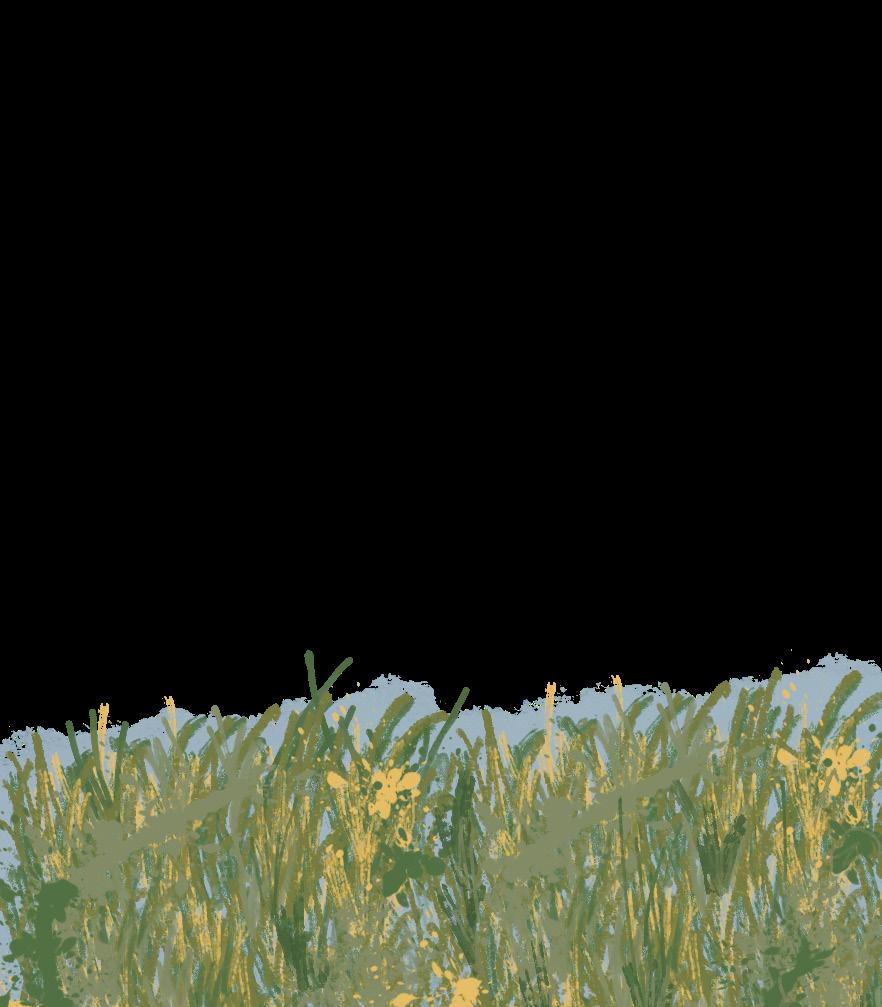
It’s always green.
Despite the pillowed six thick fog, Cracking winter blue, It’s still green.
Blanket made of rain
Dropped and draped
Over death-still trees— It’s always green.
The blue palm of a hand
Turned down.
Overpassing
The emerald green
Of life in the fields, Gardens, Forests.
The shadows grow; in greens.
Forget-me-nots
Under the bed of Ophelia
Peeled-petaled-sealed
Covered with a glass cap
Adorned in lace Grave of blue, It’s always green.
Everything is green.
I MISS JOHN KEATS
By Fatimah Bouri
In Rome, near the Spanish Steps, Keats died. In his poetry, he awakened the lushly sublime and the crevices of fear.
In his house by the Piazza exists a spring beyond death. In his poetry, a peony blooms, and each stanza is a stamen that entices.
John Keats: a name writ in water.
PART-TIME CYNIC
By Fatimah Bouri
Late into the tear-streaked night, I parked my car! Ran to the ledge! Screamed, “I deserve good things!”
Because my Mama wouldn't listen
Because my Baba doesn't call
Because my boyfriend slept in Because friend #1 called me a cynic Because friend #2 expected too much
I can't cradle concerns; they don't let me rest and gnaw on my nerves, still teething trust.
I cared, but when I didn't, I called Cynics Anonymous and asked them, “Could I care when my loved (and loathed) ones only wanted something from me?”
I can. When Mama calls, and Baba still doesn't, and my boyfriend rests, and my friends forget what they said, I reach them with the care that creeps past our years.
ABSENCE
By Julia Mazinas
(based on an event that happened in real life)
It’s the strangest feeling to not, Know where you are. The questions They are asking— Your mind draws a blank and, You cannot answer.
Even the easiest questions, Are too hard for you.
Every word they say, swirls— Full of color.
Too many questions. Too many colors.
I'm fine, right?
I was looking off into Space, Another dimension, Another universe, Another galaxy... Another world…
Nine years
The streak is gone 3 minutes questions
8 minutes
No more questions
The streak is gone.
THE CRUMBLING
By Kyra Finkle
The house went up while we began to fail. The foundation was poured when I was afraid of hurting you. The walls were being built when I saw the future: You would never be satisfied until everyone around you was miserable. I was expected to sit and comply.
The workers nailed in the siding on the day I drove past. Tears in my eyes for no important reason.
I was unhappy when they added the roof shingles.
The windows were put in when we drove past and talked about our class: Did the teacher like you?
Of course, she did, because how could someone not like you? I now know how.
The house was ready, and the family moving in when I broke the news to you in your car:
I can’t live like this; relationships aren’t supposed to drain you of everything you have.
The house was up, and we were in the past It still stands, tall and unmoving, never faltering, Unlike someone I used to know.
WEAVER
By Kyra Finkle
In the middle of the woods, long forgotten, is a humble wooden cabin.
If you enter the cabin, though most advise you not, there sits an old crone in her rocking chair.
She is in front of a fire, burning bright, teeming with life. Its heat felt, radiating through the whole house.
If you dare to look closer, in her lap, you will find her set of needles and a yarn ball intertwining to form a scarf.
At first glance, it’s a normal scarf. But the longer you look, the longer it seems. By the time it is unraveled, it could loop loop loop the whole cabin.
And if you’re lucky, which you are, she will stand up, blanket sliding off, to reveal her eight arms and eight eyes glimmering by firelight.
Suddenly, the once cozy cabin feels entirely too small as you try to make space between her and you. The weaver.
OUR LITTLE MAN
By Makenna Aylward
Tell me the story,
Of that child who Never spoke a word— But every soul, he knew. Tell me the times
When he walked by our home With tender eyes, How solely he’d roam
A tinkling voice:
Like a bell or a chime
Blown in the wind, You’d find, Him singing to the sky
The birds, the rabbits And his eyes often filled with tears He’d caress every flower, Love every beggar, As though he had lived for a thousand years.
WOE IS ME
By Mona Shokr
See me—
And be afeard.
I speak to thee
From within thyself, I am well-kept Beneath murky depths.
Yet thou seest my truth
Scrawled upon thy face, In bleary eyes ringed by black moons, The downward bend of thy mouth, And on the red rips— Which befoul lovely lips.
Gaze upon me
In the reflection
Of the venom in your cup, And in the pills that doth spill— Into your cupped hands
As you pray that I perish.
Hark! Do see me
And let dread fill.
For if I should fade, I shall return anew, As I have Since the beginning.
THE HORSE
By Mona Shokr
The raincoat masks my fear—
My unshakable doubt
Will never seem to stand still—
Upon the muddy grout—
Under the cover of the barn
Neighs the mighty beast
Who plummets through her door—
The savior of the northeast—
DESIGNED TO BREAK
By Quinn Patella
[I]
Make sure to clean the gutters
You make sure to wash out the sink
Your old ways won’t really cut it
You spilt your wine down the drain
Fall asleep when the sun's rising
Fall asleep while you’re awake
Could have sworn you heard Mother yelling
Could have sworn it was your name
Maybe you were for the culling
A prize for the shepherds to trade
Maybe nothing led to your breakage
You were just designed to break
Maybe one day
You will feel the warm light of morning
Maybe one day
You will kill yourself again
You could have sworn
You were haunted
You could have sworn
You lost yourself in it
In my youth
I held secrets
And I still do
[II]
And maybe that arrow in your back
Was there long before your shame
Maybe you’re the one who cast it?
Maybe you’re the root of your sins?
In the cold light of morning
In those hellfire winds
You could’ve sworn
Your art meant something
When did you fall out of love with it?
In the vignette of the sunshine
On the bustling major roads
You could’ve sworn
You were human
Not a tourist attraction
In my youth
I held secrets
And I still do
[III]
You amputated the infection
And cut off more than you’d admit
That familiar fleeting feeling,
It is a shame – you feel real shame
Every now and then, you feel it’s itching
And you let it phase back in
You wonder how the others see you
It is a shame – you feel real shame
You’re a pillar of salt on an icy lake
Then you jump before it cracks You crawl out of the snow and chuckle
Because you couldn’t even go through with that
You’ve grown accustomed to nostalgia To the time when things were worse Trying to scratch out that sensation Of numbness, you used to hold
In my youth I held secrets
And I still do [IV]
Maybe you withheld the secret
When you were a kid
Maybe all of your problems manifested From past-life sins
Maybe you romanticized All of those feelings
Maybe they had conjoined With the life you chose to live
Maybe you were for the culling
A secret for strangers to keep Maybe nothing led to your breakage You were just designed to break
NEWFOUND PURITY IN SILENCE
By Quinn Patella
Within the last dying breath of the dream— Our flesh, blends into one being, Within the innocence of our beating heart I am a child, swallowed by your arms, I am a child, cleansed of all filth.
Your smile— fades into my own, Our skin is ripped clean from our bones We live without genitalia: Without blood, tears, or semen… Mother Nature will reap her benefits.
Under the pale blue light of winter sun
You can hear a pen drop— I can feel warnings in veins
That I cannot and will not heed, In newfound absence of fear.
There’s no trumpets blaring There’s no choral swells
Just the rhythm of two hearts
Until all that’s left to hear; Is the sweltering sound of silence.
A MERE UPDATE
By Quinn Patella
Dear Suzanne,
A glimmer of starlight, Beams through my doors window
And I cannot help but notice, That it reminds me of you.
Halloween hasn’t been the same, Since you split the scene.
The children are decorating But it just reminds me, of you.
Johnny’s gone, and quit his job.
Said that serving wasn’t what it seemed.
Said that he’s been hung up on everything. And that reminds me, of you.
Annabeth broke last fall.
And none of us could muster up—
A single word of support.
The empty backseat of my car, Just reminds me, of you.
Have you gotten clean?
Have you found that city?
That one you’d always circle back to,
That one you’d always say—
Would make you get right.
Have the red dots
On your arm cleared up?
Have you found
Any ways to get right?
Soon, it will be December.
The caroling kids will come out, And that army of angels
Will send down blankets of snow.
The heater will gasp for air—
And, everyday, I will see my breath
The West Virginia sun serves nothing
Except that it reminds me, of you.
Come home soon,
Your dearest friend
A GREAT DIVIDE
SUB: AN ODE TO MY PAST
By Lola Offenback
i think about you all the time and how bad it was for you back then sick at night, panic in its wake
i hope you settle down, i hope you marry rich beach wedding, white silk flowing through a warm summer breeze
wrap-around porch wrapped around your waist, an arm a loving embrace
i hope you’re scared of all the ordinary shit no pending bills, no negative accounts no cold nights, you can pay for heat
don’t fear your soul, and what he might do with it forget the screams, the hand upon your wrist he’ll hold you close, press a kiss upon your lips
you inched yourself across the great divide a divide, that threatened to ruin your life a moment before the pain and then the spray of abandonment, you swore you wouldn’t be left this time
the brick flew, shattered all you knew you fell, across the state lines “you know i think about you all the time about your soul, and how I’ll take care of it”
–Inspired by Noah Kahan’s The Great Divide
PAPER STRAW
By Lola Offenback
love is the concept of center stage novels, television, music, my list could go on.
a paper straw erect, but forgotten slowly begins to sag under the weight
UNDER THE MAT
By Lola Offenback
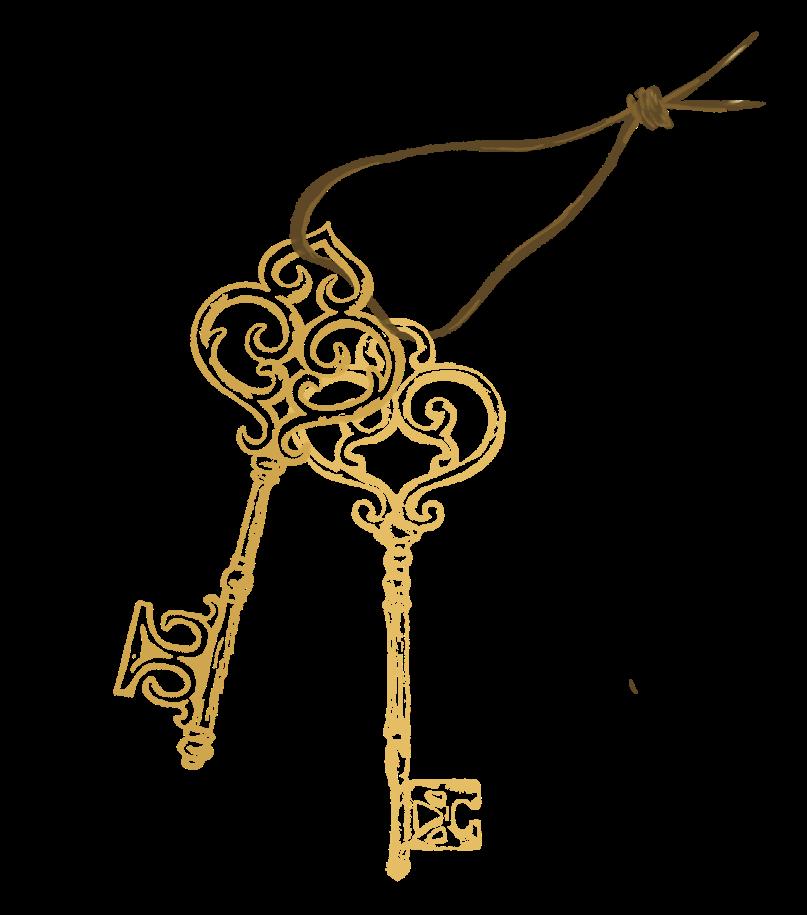
at the end of my suffering stood a door.
listen close: that which you call heartache i remember.
eyes, lies, til he started to hate me. the door. it was locked a key under the mat.
i have known for awhile but been too afraid to act.
then it was over, before it began a soul unable
to love, an ending abrupt. the keys sat mocking. what i took to be signs that our love was still alive
you who do not remember a love so young, pure i could tell you, i could speak again: grab the key under the mat the door off the hinges:
from the doorway i stood the crime, our love shadows of what do not remain.
–Inspired by under the mat by Sombr and The Wild Iris by Louise Glück
I MISS YOU, MY SWEET LITTLE AQUATIC ANIMAL
By Roselyn Bernhard
Oh, you cutie, you, basking in your water so blue. Not like your sisters and brothers, One color washes over the others.
Each aisle passed with nothing much to desire, But, in passing you, Mom said, “I need to buy her.”
If it weren’t for you in the pet store that day, I really don’t even know what to say.
You carried red speckles along your back, Each uniquely shaped, like the chips I snack. Your scales sparkled as they lay down your sides, Your beauty would radiate, especially in high tides.
You, I needed with my whole heart, I am so glad I saw you right from the start. But times have changed, you know, And life has lost its glimmer and glow.
However much life has shifted, I will never forget this present I was gifted. Watching you swim ‘round sand, rocks, and wood, Reduced my stress, like I never knew it could.
Low-maintenance, you were, But that was okay for sure. When times were tough, It was difficult to do stuff.
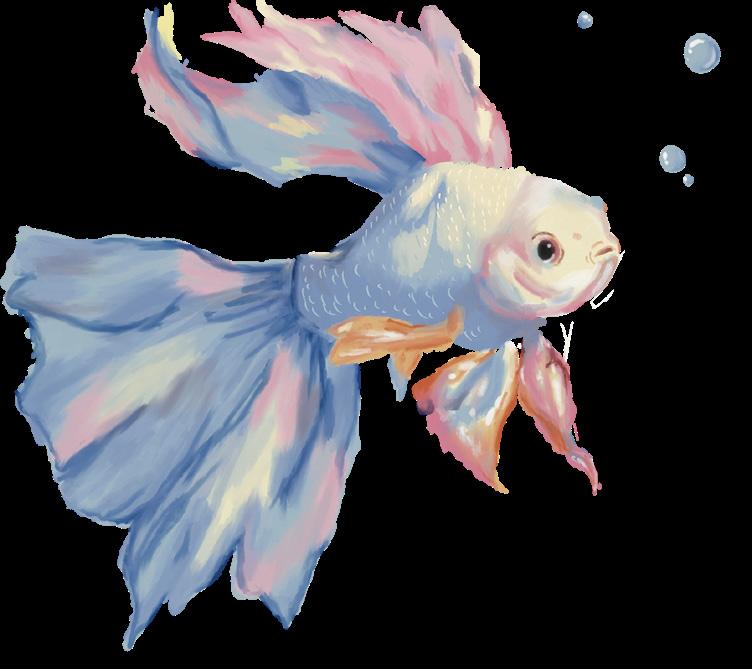
So, watching you, Was all I had energy to do. But I can’t quite do that anymore, For you have been taken ashore.
I tried picking myself out of bed, But only made it to the window of dread. Peering out from my room, All I saw was that filthy, wretched tomb.
As the wicked waves lashed the ocean floor, The thunder and lightning struck once more. Dark clouds overshadowed the glaring yellow light, Causing everything else to look gloomy, bizarre, and simply not right.
Now, you are where all the other sick creatures go, But there is something you still must know. If I had just a little more money, I would have taken more care of you, honey.
I miss you, my little sweet aquatic animal.
–Inspired by under the mat by Sombr and The Wild Iris by Louise Glück
LILY OF THE VALLEY
By Kyra Finkle
A harmonious, new blossom, petals soft like cashmere. Welcomed into the world with harsh storms.
The raindrops heavy, drooping, pulling down the petals, the weight was heavier than she had ever known.
The bud finds safety under a bigger, older flower. Their leaves shelter the delicate floret, providing a sense of guardedness.
The vines strangle the little flowerWrapping and warping, squeezing and smothering. You’re not just a flower, you’re a lily of the valley.
Pretty flowers, deceiving and pure, poison is seeping through your veinstainting the juvenile, darkening the light.
WEDNESDAY AFTERNOONS
By Laurie-Anna Bienaime
Wednesday afternoons I try to bury myself in sleep, A shallow grave made of pillows and blankets. The sun peers through the blinds, softly asking, “Can you even exist in this warmth?”
A shallow grave made of pillows and blankets, I am cold, so cold that I am winter.
“Can you even exist in this warmth?” The question asks where silence lingers.
I am cold, so cold that I am winter, A frost that lingers where summer once stood. The question asks where silence lingers, And I try to paint my nails yellow.
A frost that lingers where summer once stood, Then scarlet red, a cry for help disguised as polish. And I try to paint my nails yellow, But the colors do not stick; they peel away.
Then scarlet red, a cry for help disguised as polish, I stare at the ceiling, a wasteland of white. But the colors do not stick; they peel away, Leaving me bare beneath the light.
I stare at the ceiling, a wasteland of white, White, a lie pretending it has nothing to say. Leaving me bare beneath the light, I start to crave the color blue.
White, a lie pretending it has nothing to say, Blue like veins that run through my wrist. I start to crave the color blue, Blue like the ocean that drowns and cradles.
Blue like veins that run through my wrist, Blue like the sky too far to touch. Blue like the ocean that drowns and cradles, As the sun waits, patient and kind.
Blue like the sky too far to touch, Asking if I will ever come back to it. As the sun waits, patient and kind, I do not know, I am still gathering myself.
Asking if I will ever come back to it, Wednesday afternoons I try to bury myself in sleep. I do not know, I am still gathering myself, A shallow grave made of pillows and blankets.
VIOLENT, VIOLET EYES
By Makenna Aylward
Your violent, violet eyes
Can be so deceiving
When you see them softly lit In the essence of the evening How should I tell our guests That the violence in my tone Is born from violet eyes
None other than your own.
HONEY
By Mona Shokr
What would you like in your tea, Honey? Do you like the taste of bee honey?
I would give you whatever you’d like. Believe me; you’re sweeter than honey.
What would you do if I let you go? Would you even care so much, Honey?
I can hear the silence sound your name, As you drink from my pot of honey.
Yet you don’t know it is mine you drink— While another still calls you Honey.
THE HUMAN INCUBATOR
By Nicole Polanco
Adriana was, a women a nurse a mother a Person
Adriana was, gone, brain silent, no longer there and yet they kept her hooked to wires
She was a person She was not a vessel She was not an incubator She was Human
No color, No spark, No thoughts, No breath of her own!
Yet they kept her decomposing body lying on a bed, for a heart without a mind
She had a life, but in that moment, on her deathbed, what could be mistaken for spit was given more rights than a person with a past
She could not consent, her body was taken like public property, used like an incubator, then given an autopsy, when her body could not be preserved any longer, It was called a C-section
She was a person, not just a body Not a human incubator a Human
Even if not seen as such, just because she was a woman.
If they could do this, what else could they do to us?
THE GIRLS
By Nicole Polanco
TW: Mentions of self-harm
This is for the girls who learned pain easily, can be hidden in the shadows of long sleeves.
For the girls who Went quiet mid-conversations, Like the way they sliced into their skin searching for the pain we found comfort in
For the ones who just want to be loved, like a bee loves a flower, or like a Dominican loves mangu, as if devotion meant survival
For girls who were judged, were belittled, and were made to feel not enough
To you girls, I say Your silence is not weakness Your battle scars are not a shame Your weaknesses are your strengths You will survive You did survive. In a world where your own reflection wanted you dead.
WE ARE COOKED...
By Nicole Polanco
We live in a world— where blood paints the walls of the hall, and desks become shields when gunshots fall, mothers scream when they hear that call, They all cry while we all go on.
We live in a world— where children waste away in silence, their skin clinging to bone like glue on paper, lips cracked, throat too dry to cry, as fields lay destroyed under the dusty sky.
We live in a world— where speaking Spanish gets you icy stares, And being of color gets you taken without care, dreams deferred while families are torn, Heart shattered silently as they’re left to mourn.
We live in a world— where leaders tweet and promise for their own gain, while policies crumble and chaos spreads, mothers bury futures before they start, Grief carved deep into every heart.
THE NIGHT
By Hassaan Naveed
What do you know about those nights?
Of the incredible stillness
Neither cold nor warm
What do you know about the stars in sight?
Twinkling in place
Masked by storms
But can a night ever be still?
Or a star be in place?
What do you know about Orion’s might?
Arching his spear
Standing in form
Did Orion have a spear?
Or was it a bow he showcased?
What do you know about Sirius’s light?
A generous blue-white Light; only shone a short term
But isn’t Sirius the north star? His light’s a commonplace
But what do you know about feeling?
To live in the moment and love
But why should I think with my heart?
When I have my mind above
MAGAZINE DREAMS
By Hassaan Naveed
I’m an invisible man…simply because people refuse to see me.
-Killian Maddox, Magazine Dreams
Some say my eyes are blank Void of emotion
I don’t say much My words are well-chosen
They say I’m heartless That I don’t know love
But what love means to you Is what I’m devoid of
They say I should smile That I’ll be elated
Yet, I smile each day
And my heart feels deflated
They say love is a curse That those afflicted go insane
But I would take madness any day
Over being
Inane
THE CAGE
By Hassaan Naveed
I told myself never to reach for the sun
But a cage of denial is still a prison nonetheless
Break free, break free, or your work be undone
Though I must say this cage is much fun
But a cage of lies is still a prison, I confess
Yet, I told myself never to reach for the sun
Breaking free is daunting; what if they shun?
But a cage of fear is still a prison I express
Break free, break free, or your work be undone
What if I fail, where will I run?
But a cage of caution is still a prison you won’t egress
Yet, I told myself never to reach for the sun
Why the cage is cozy, and my sentence has only just begun
But a cage of comfort is still a prison you must acquiesce
Break free, break free, or your work be undone
Why this world is ruthless, dog-eat-dog, one over one
But a cage of cowardice is still a prison, not one with press
Yet, I told myself never to reach for the sun
Break free, break free, or your work be undone
FOR LIAM CONEJO RAMOS, 5
YEARS OLD
By Liz Kameen
(a child i wish i didn’t have to turn into a story told.)
dressed in plaid, a Spiderman backpack clad with a blue floppy ear bunny hat, that when you squeeze the tassels, the ears dance and move and distract.
any strong-willed warrior would cry in the face of masked agents six times his age approaching his family and claiming to save
to bring him to school, to hide under a facade. and i am disgraced to belong to a nation that bears the name of kidnapping children in the name of the state.
1,300 miles away and the government remains that this 5-year-old child is a predator, murderer, to be swayed away from our shining seas of golden wheat under the sky that we had already stolen in suede, and he is the fourth child to be taken on this cold winter day.
“illegal aliens” i will never believe when liam and his father, were granted asylum with leave. no safety or flight risk, never a bother but taken away under a lie on a school and work day taking citizens to the roadway, from the world they benefit each and every day.
i am ashamed to be an american in this world that we have made.
THIS LAND IS YOUR LAND
By Liz Kameen
Every day is dramatic.
ICU nurses are being shot in the streets, with cameras posed as weapons — and children being slid from sleek streets to detention centers in Tennessee miles away from their family, or where they “come from” to be.
alex pretti deserved more than a grave that bore his name.
As ice agents barrage the cities they claim to protect, under a tear gas mirage, the cities and citizens they wreck.
When protesting nurses are shot to the ground, a part of you wonders what this curse is that this government is not sound.
I pray for a day
When the world realizes that the federal array of locking “illegal” immigrants away is just a melody of fantasies of blaming someone else for the issues at bay.
when words don’t have their way, tear gas, guns, and bullets are the new form of silencing and suppressing the public today.
FOR THE ORGAN WHO IS SHELTERED AND PROTECTED BY MY RIBS
By Rebecca Ricci
Who is near the lungs
That keep me breathing
And who pumps blood every second
Keeping me alive with every beat
You never shatter
Beneath your pain
Or turn stone cold
With an ice that is far too sharp
To return to warmth
Instead you hold my heart
Even when it feels heavier than an anchor
You still pass out love
When you need your own
You continue to love
Like it's your last beat
And breath
Your strength is the fire
That burns out the coldness
That is bestowed upon you
Whose vibrant flame
Takes its pain and makes it into a piece of poetry
Whose struggles uses motivation to keep rising
Even from the ashes
Oh my dearest heart,
It is you who makes me who I am
It is you
Who is tied to me
Forever.
THE EMPTY GARDEN
By Rebecca Ricci
I have always been a giver
Even when it was not always in my best interest
And that’s why every year that I have grown
I have collected a new seed
To plant in someone else’s garden
I’ve gotten 20 seeds so far
But with them, I use it to watch someone else’s garden flourish
I have watched their flowers bloom bright, colorful, and vibrant
And when they were close to drying out
I’d water them
And continue to pour and pour from the watering can that my hands hold
But when my can started to crack
I’d slap a band-aid on it, hoping to continue to pour
And for every seed that was planted
And water poured
Or light given
My flowers withered
Hidden beneath the sun
Where more pieces of me grew dimmed
I’d be right at their side
Like a bell that one taps
“Need more water”
And before I know it, I am pouring from my can
Again
I’d keep watering my now dead flowers
That are far too wilted for repair
And hope that someone
Anyone
Would breathe life or a breath of fresh air into me
The same way I did them
But I quickly learned that you can’t be the giver
And hope to also be
The One That Is Given.
THE PEN THAT HOLDS ME
By Rebecca Ricci
If someone were to ask me what I look like
I would reply, “A brunette with hazel eyes.”
Because that is how everyone sees me
But I have never felt truly seen
Not by the sun that shines down on me each day
Or by the moon that glows my features
Or the mirror that makes me stare at my own reflection
Or even by the people around me
But there is one
Who saw right through me
Bled from me even
Opened me like I was up for display
I have never been more seen
Then through the pen
That my shaky hands hold
While they pour ink and pieces of myself out
Onto a blank sheet of paper
I write because it is a constant
In a life where nothing can ever be
Constant
A sudden breath of fresh air, when I have been holding it for too long
I write because if there is going to be sadness, anger, or even happiness
I should make it more purposeful
More put together
I write because if I am going to owe an explanation
Or a confession
I should make it pretty
But I am not defined by my brunette hair
Or hazel eyes
I am defined by the words on a paper
That make me
Me.
They’re scrambled
Chaotic
And even a little rough around the edges at times
But these silly little words
They’re me.
NOSTALGIA
By Samantha Yingling
Before the world felt sharp and wide, before we held so much inside, we ruled the blacktop without a care— mulch in the air and sun in our hair.
Recess meant splinters and wood-chip knees, the whistle blue distant in the windy breeze. Everything smelled like dirt and heat and the rubber burn of our running feet. Our wrists were stacked in neon bands, Silly Bandz traded from hand to hand— a dolphin for a crooked star, the rare ones were worth more by far.
We rounded up at the edge of night, neighborhood kids in the fading light. Playing cops and robbers across front lawns, barefoot and breathless till daylight was gone.
Holiday parties in classrooms were bright, paper snowflakes and sugar-high delight, plastic cups with punch too sweet, Frosting too thick on everything we’d eat.
Summers lasted a thousand years— Twelve-hour pool days, pruned fingertips and cheers, towels stiff with chlorine and sun, begging for “five more minutes” before we’re done.
We wore what we liked—no mirror debate, mismatched colors, and not caring what we ate. No fear of photos, no curated pose, just grass-stained jeans and popsicle clothes.
Bonfire crackling as long as embers burned, marshmallows on sticks melting while stomachs churned. Chasing fireflies in backyard delight, burgers on grills, and scratching mosquito bites.
And Christmas morning, we woke up before the sky, after waiting all night for Santa to stop by. When socks and sweaters went over our heads, we wanted toys from commercials instead.
Slowly, somehow, the world was shifted the weight of every day no longer lifted. Suddenly we cared about what others may say, and worried about how we looked every day.
Now sometimes when the windows are down, the smell of a bonfire drifts through the town, and an aching feeling tugs at my chest, a deep longing for the childhood we’ve left.
For when the world was small and bright, before every choice was deemed wrong or right, when scarped-up knees were the biggest pain, and a storm meant we went out to dance in the rain.
ODE TO MY CAT
By Samantha Yingling
Your white socks are so soft, yet they stomp across the floor. Pink pads making aware their every move. Thumping.
You follow me through every door I walk through. Voice loud, vocal cords screaming if ever left behind.
You bite my ankles and chase me through the house when I'm not listening to you to get your message across.
You yell and cry every morning and evening when the time comes around. I never work fast enough when your tummy grumbles.
“Annoying traits,” they’ll say when they hear about his screaming. His crying, his biting, and his thumping.
But they don’t know that every day, during all these moments, I smile. I pray they never go away. Because
When I shower at night, he sits right against the curtain, staring at the door. Waiting,
watching, to warn me of intruders. Protecting me from what I cannot see.
He thumps throughout the house. You can hear his every step, so I always know where he is. The step—thump—step makes me laugh and smile, even on the worst day.
That thump gives him up when I come through the door, after being gone all day. He runs to greet me and nuzzles my leg. I can tell he missed me while I was away.
At night, he climbs up into bed, and settles on my chest. Heart to heart and face to face, he purrs, content to rest.
It warms my heart that he chooses me each night to go to sleep. Of all the places, his bed, his box, his chair, he is happiest when he’s with me.
I love him more than life itself. I cherish him every day. Because all of his noise, his thumps and his bites, means he hasn’t gone away.
THE DAY
By Samantha Yingling
Waking up after sleeping in on a Saturday morning. Run downstairs to open the back door, I hear nails click-clack on the wood floors.
Shreds of bark lay scattered across the yellowing, dead grass where you tore up the stick we grabbed from the stream behind the house.
A deer runs through the trees so you hobble to the fence, barking to scare it off, treading back inside after it disappears from sight.
Pat down the fur on your back and kiss your head before scooping your breakfast into your bowl that you have never been territorial of.
Walk toward the bed in front of the couch that is indented to the shape of you. I find one of your nails on the floor and pick it up.
Breathe deeply in your sleep while we sit and watch television. Tired of being alone, you jump up to cuddle on the couch. I pet your head.
I go out for the day with friends, but you wait by the glass door to watch for my return. So excited when the car pulls up, and I step out.
Everything normal until it gets dark outside. Mom tells us, but I don’t cry. Snap on your leash and walk to the car. Fighting to hold tears.
Five-minute drive to the clinic, vet waiting for us to arrive. Walk to the back and lie with you on the floor before she injects the needle.
Hold your paw while we wait for the drugs to take effect. Your body goes limp and finally I let the tears fall.
I wish I had stayed home that day. Taken you to the river or tossed sticks outside. I would have cuddled all day if I’d known that would be The Day. You died.
LOVE AND WAR
By Johnathan Dowling
What could be fair in love or war?
The sidewalk by my building tore like heart flesh soft, an ugly break up on the carpet bombing floor.
What fairness, beauty, furls in wake of warring men who only know to fight, to fuck, to force, to make love one more land to subjugate
Twixt concrete cracks, through rupture flows A white, coquettish flower grows Fair leaves nursed by dawn's dewdrop glow Frail roots to hug the earth below
Like blacktop blossoms, love in war Bomb blasts that bloom like lily petals Our lit-fuse smile, that French dimple Conflicts spurned from something simple
How beautiful, that in our war We find what love is dying for.
03. ARTWORK
UNTITLED
Untitled By Ashlyn Albert
By Ashlyn Albert
UNTITLED
UNTITLED
Untitled
By Ashlyn Albert
By Ashlyn Albert
Untitled
By Ashlyn Albert
By Ashlyn Albert
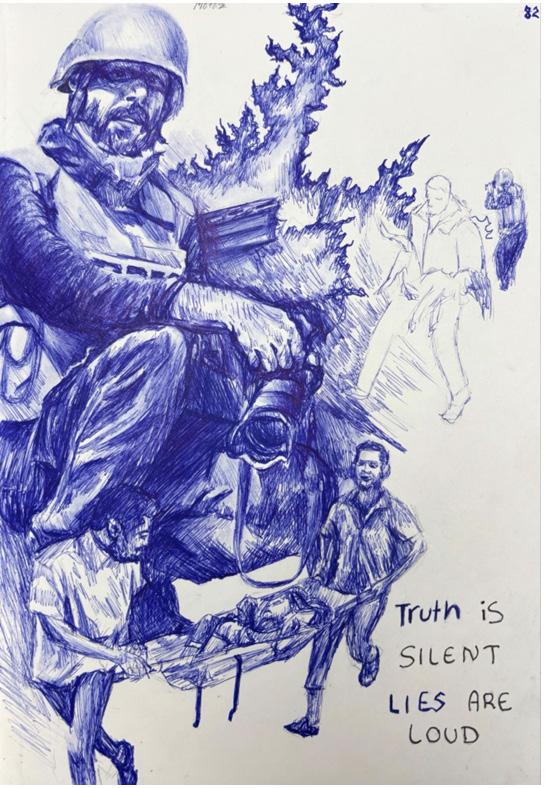
TRUTH AND LIES
Censorship in Current Events
By Alex Ho
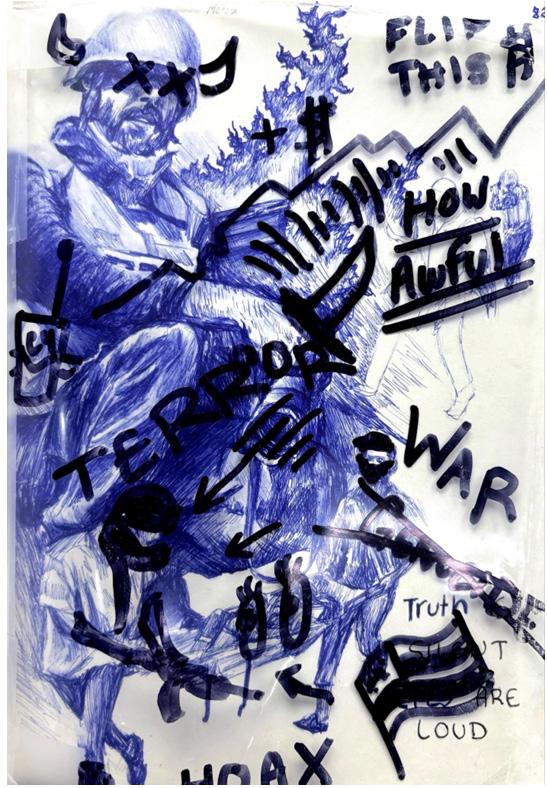
By Mal Ford
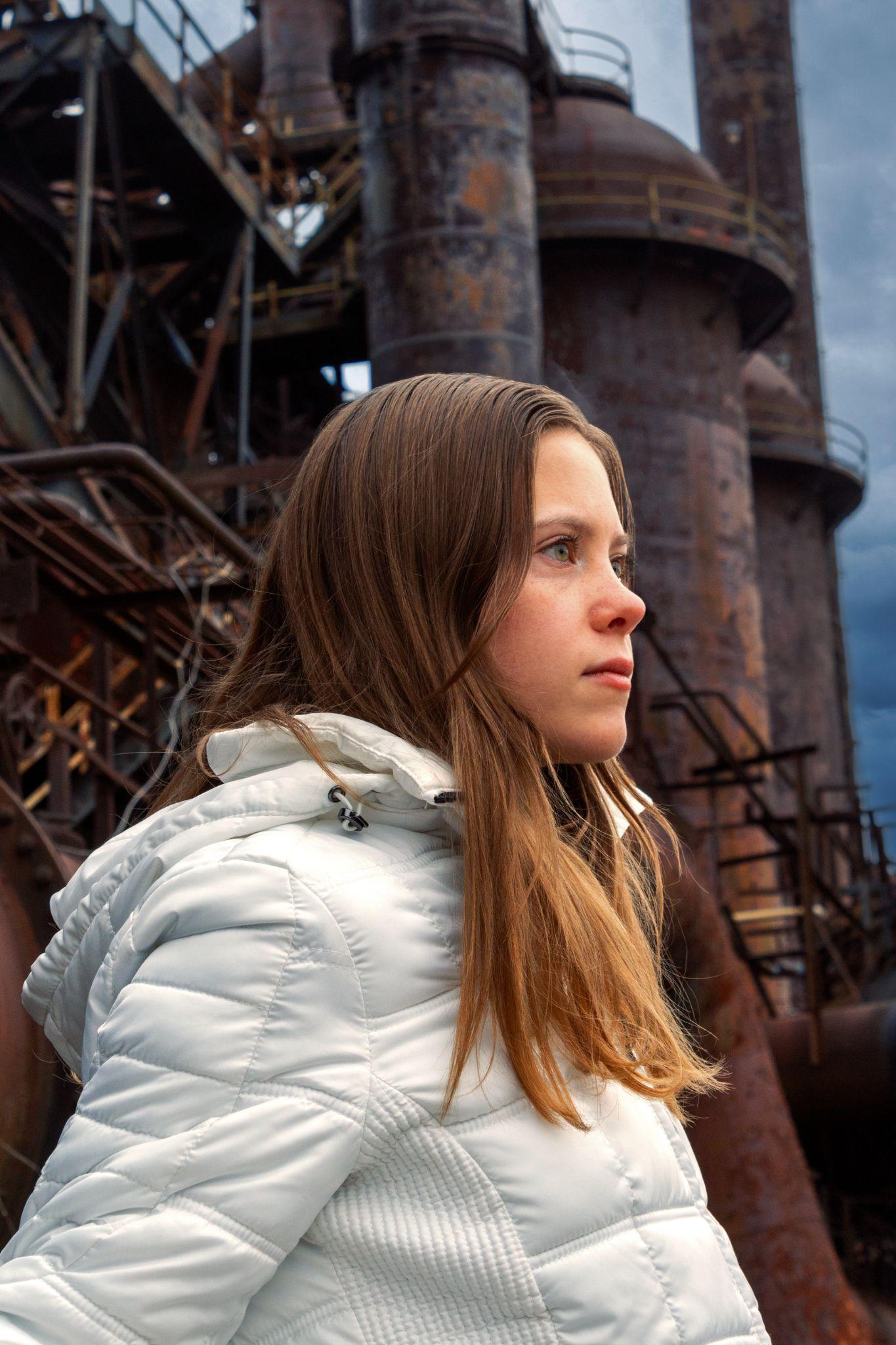
UNTITLED
By Mal Ford
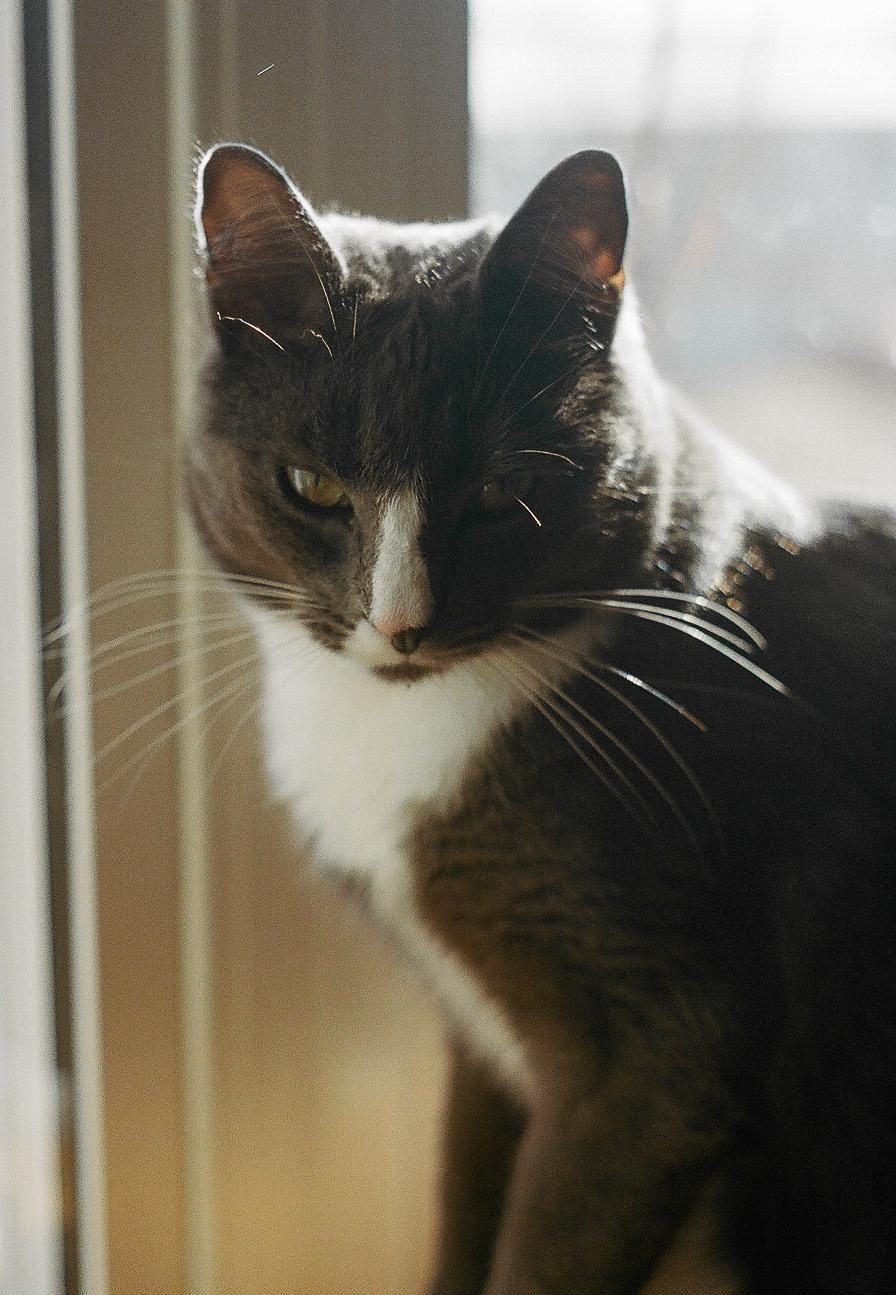
Untitled
Clem (Slatington, PA, Winter 2025)
Kodak Portra 400 35mm film, Pentax K1000 camera
By Owen Levan-Uhler
CLEM
Kodak Portra 400 35mm film, Pentax K1000 camera
By Owen Levan-Uhler
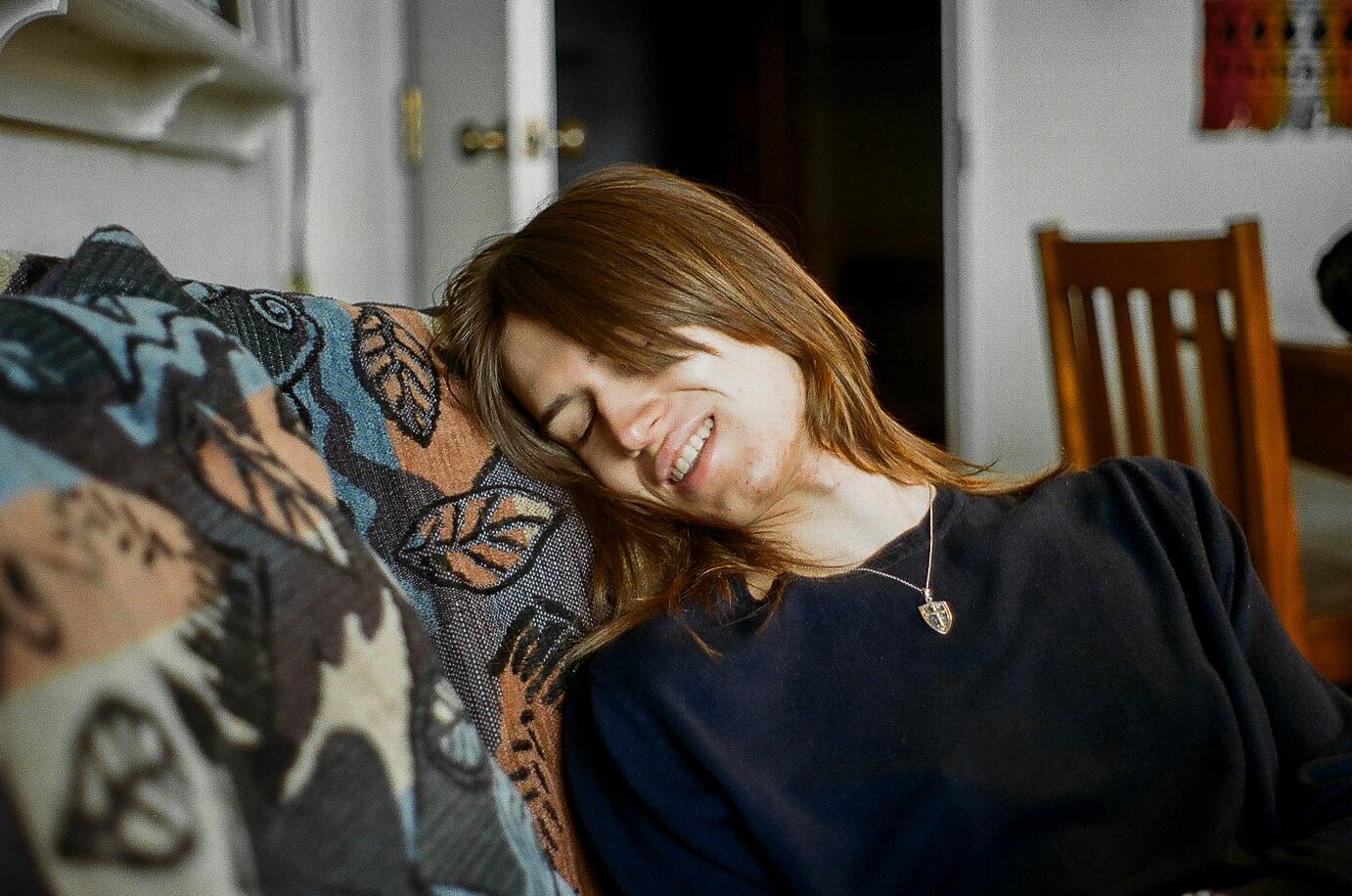
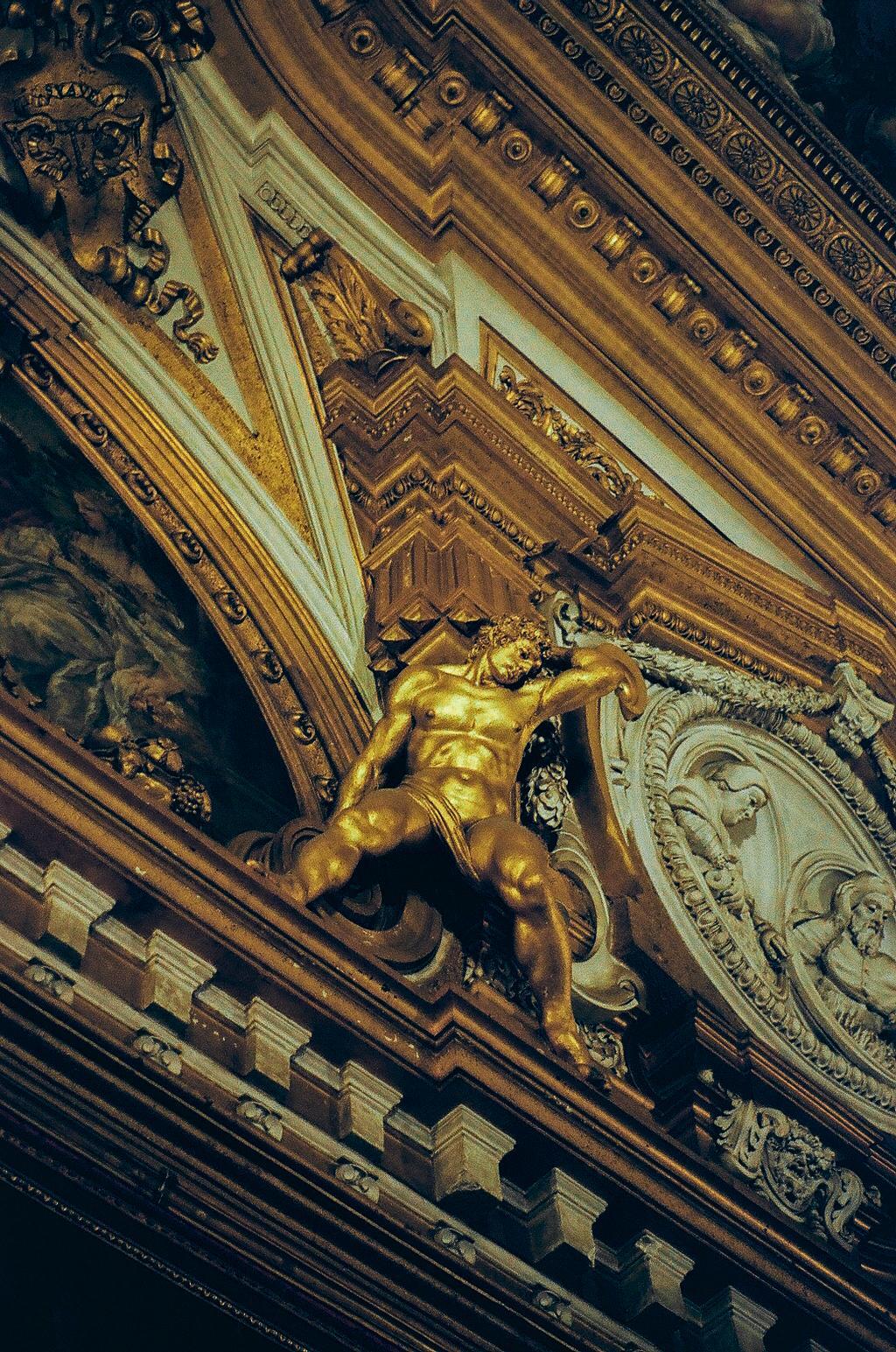
WEIGHT
Harman Phoenix 200 35mm film, Pentax K1000 By Owen Levan-Uhler
Joan (Bethlehem, PA, December 2024)
Kodak Portra 400 35mm film, Pentax K1000
By Owen Levan-Uhler
JOAN
Kodak Portra 400 35mm film, Pentax K1000
By Owen Levan-Uhler
Weight (Medici Villas, March 2025)
Harman Phoenix 200 35mm film, Pentax K1000
By Owen Levan-Uhler
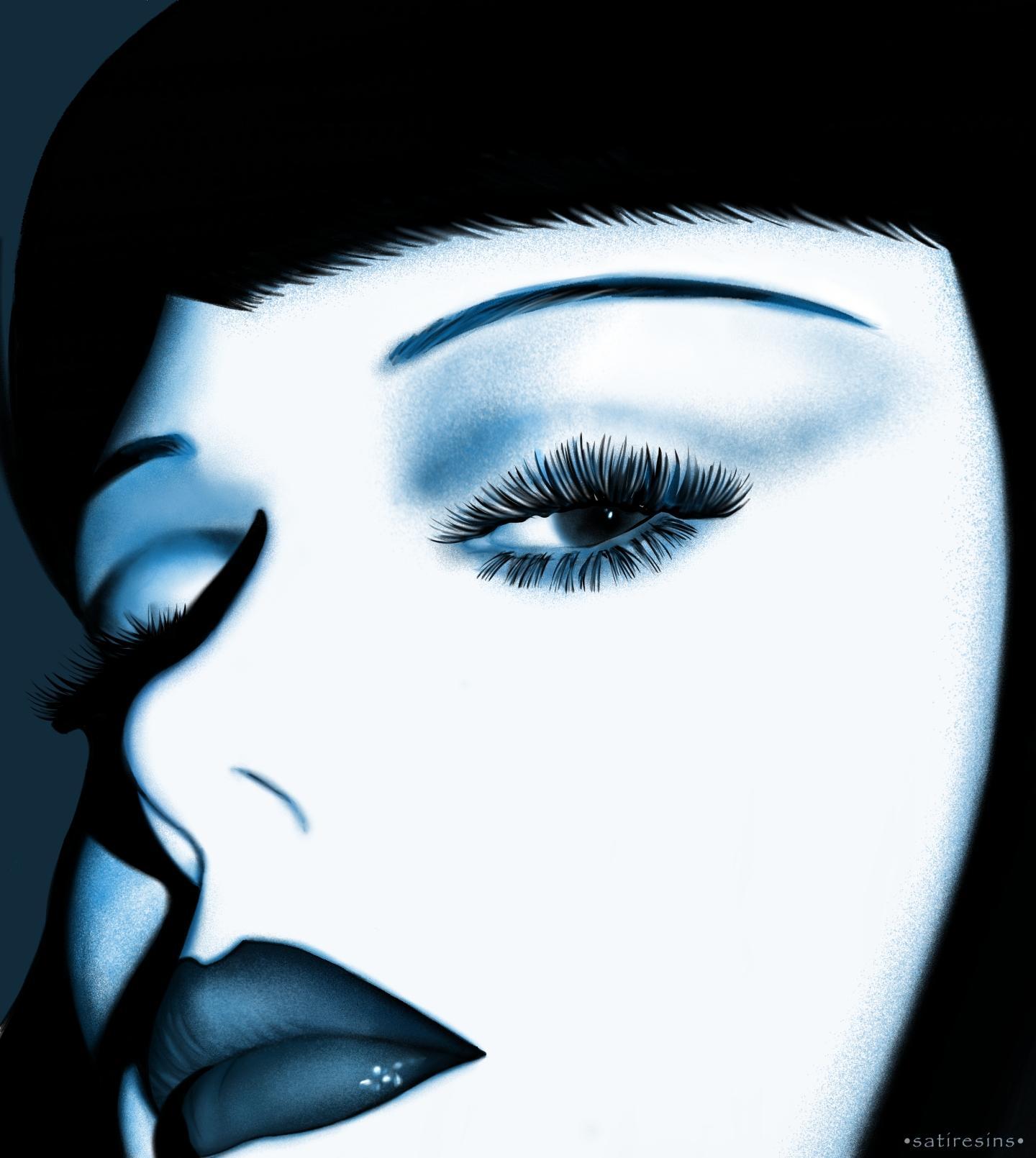
EXCHANGED GLANCES
By Sarah Garcia
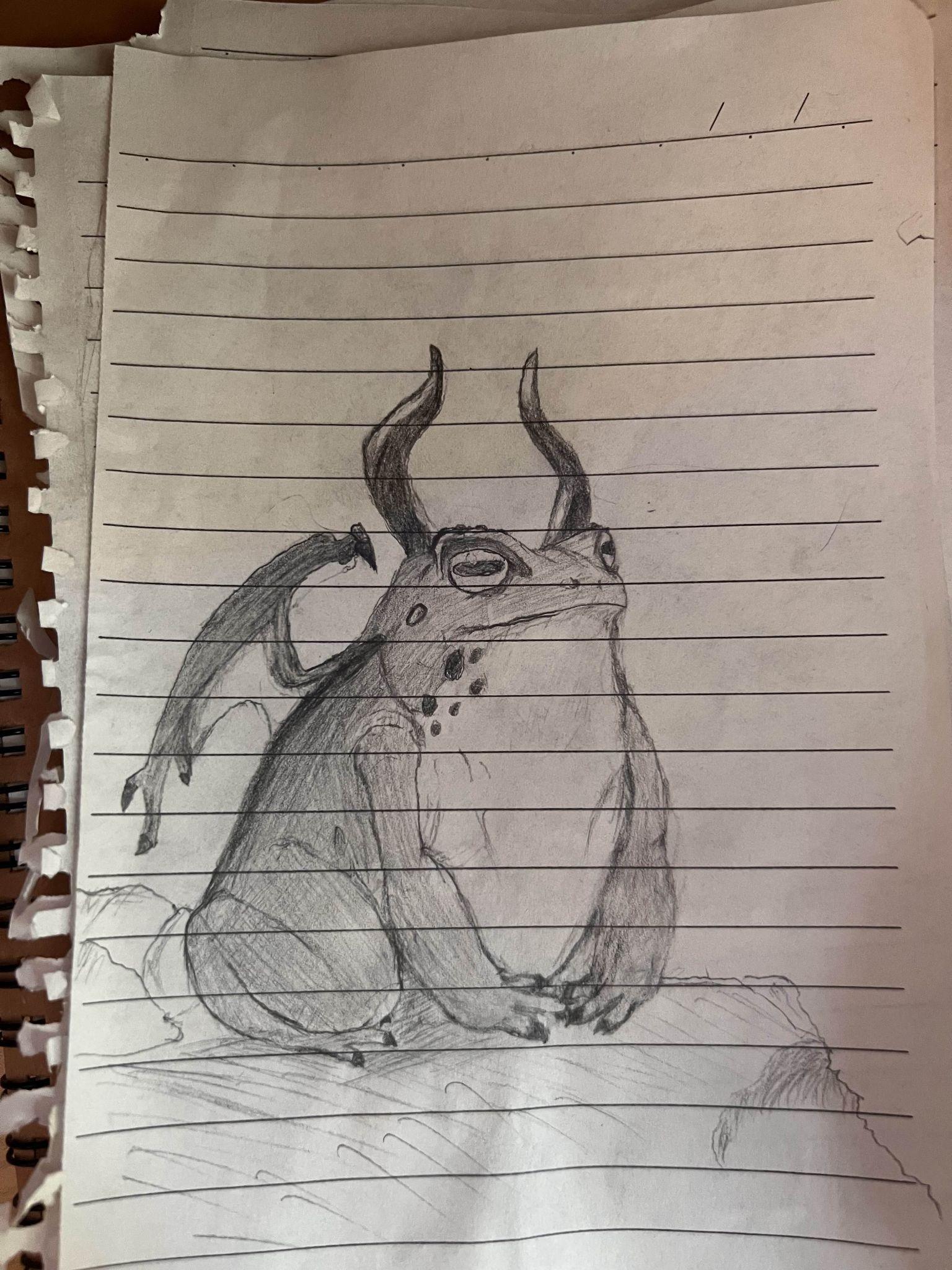
NOTE: Okay to crop image for clarity
By Sarah Garc a
Gurrak Toad
By Collin Cabral-Castro
GURRACK TOAD
By Collin Cabral-Castro
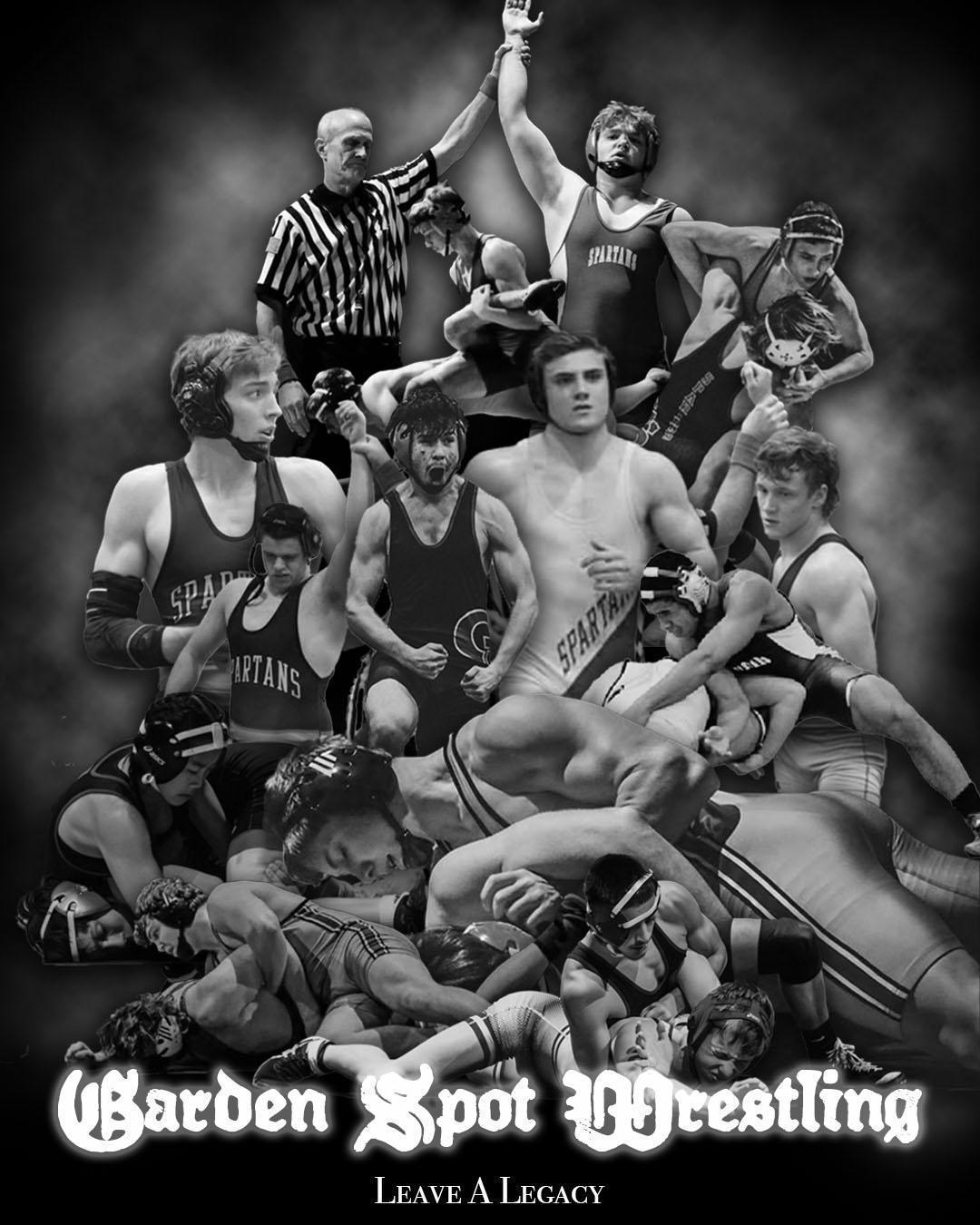
GARDEN SPOT WRESTLING: LEAVE A LEGACY

Garden Spot Wrestling: Leave A Legacy
By Katelyn Davis
By Katelyn Davis
States Bound
By Katelyn Davis
STATES BOUND
By Katelyn Davis
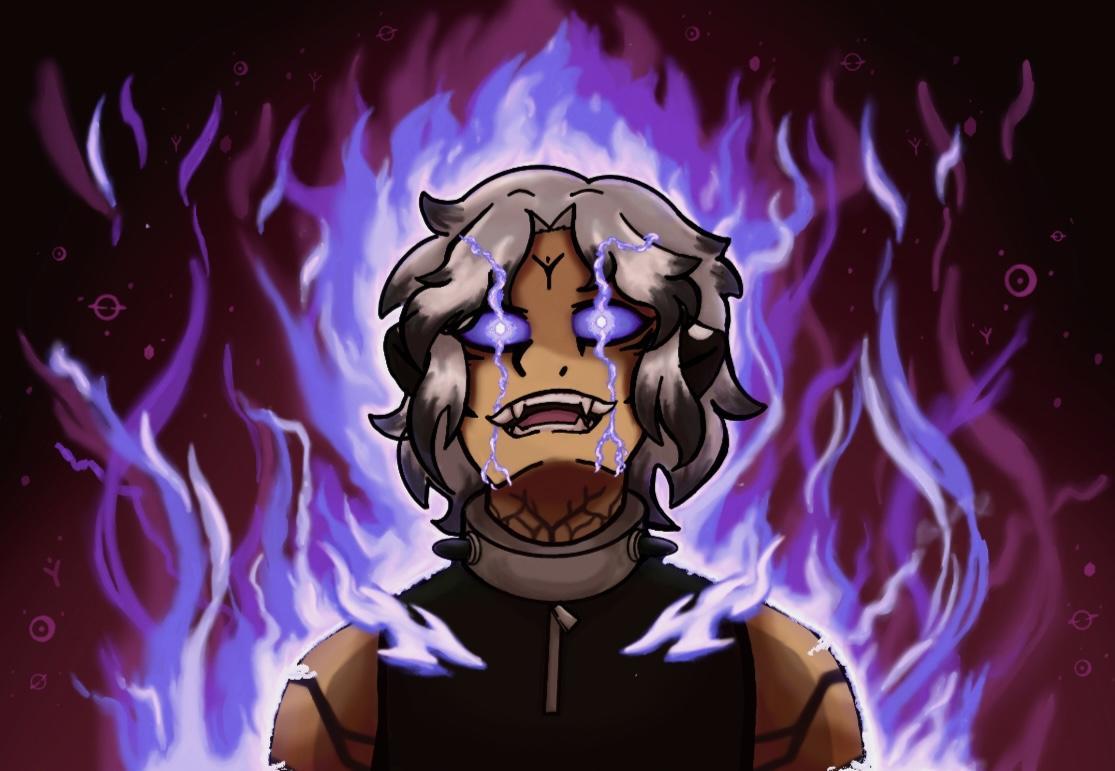
ENLIGHTENMENT
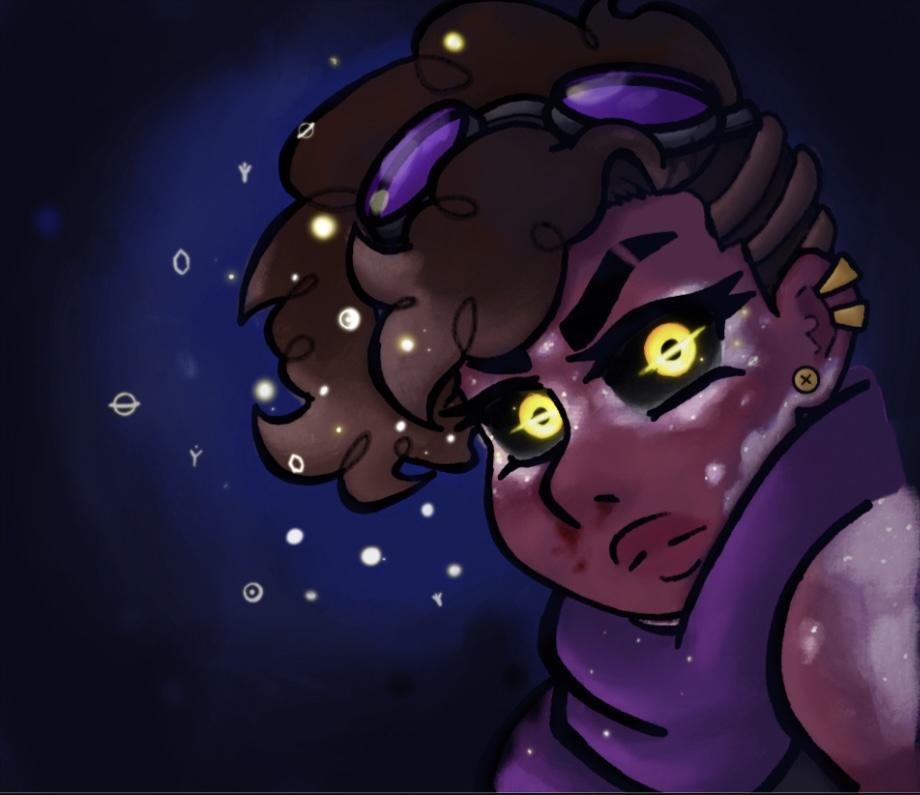
Calamity
By Samantha Canseco
By Samantha Canseco
Enlightenment
By Samantha Canseco
By Samantha Canseco
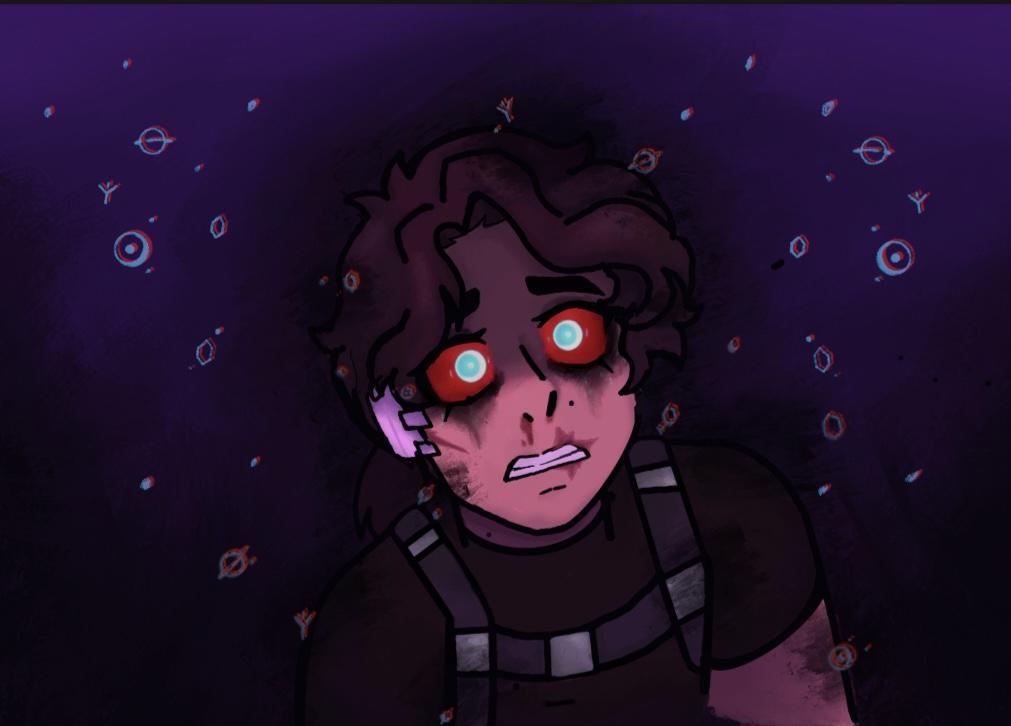
By Samantha Canseco
By Samantha Canseco
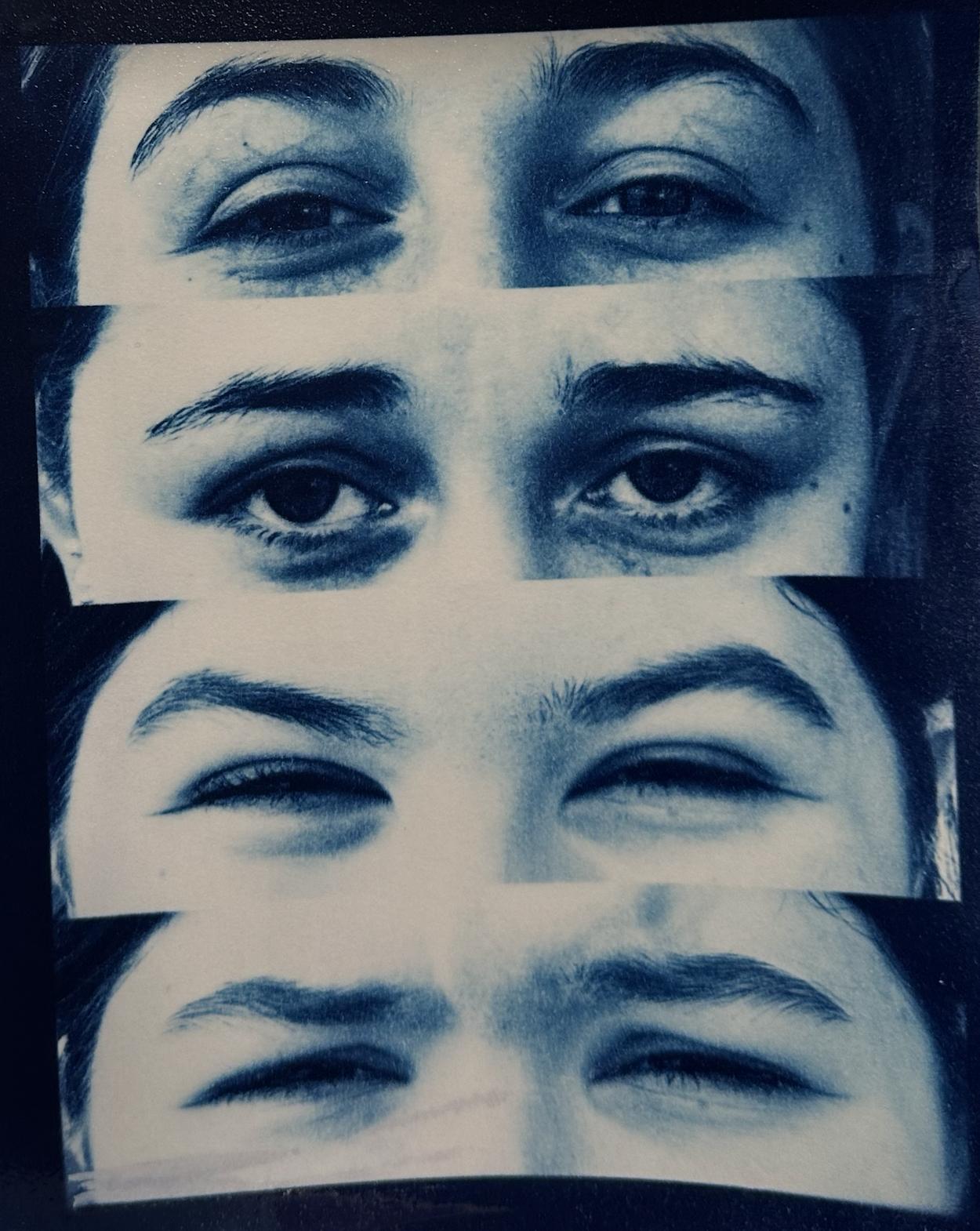
Expressive Eyes
By Kylie Dowd
EXPRESSIVE EYES
By Kylie Dowd
By Serena Elsasser
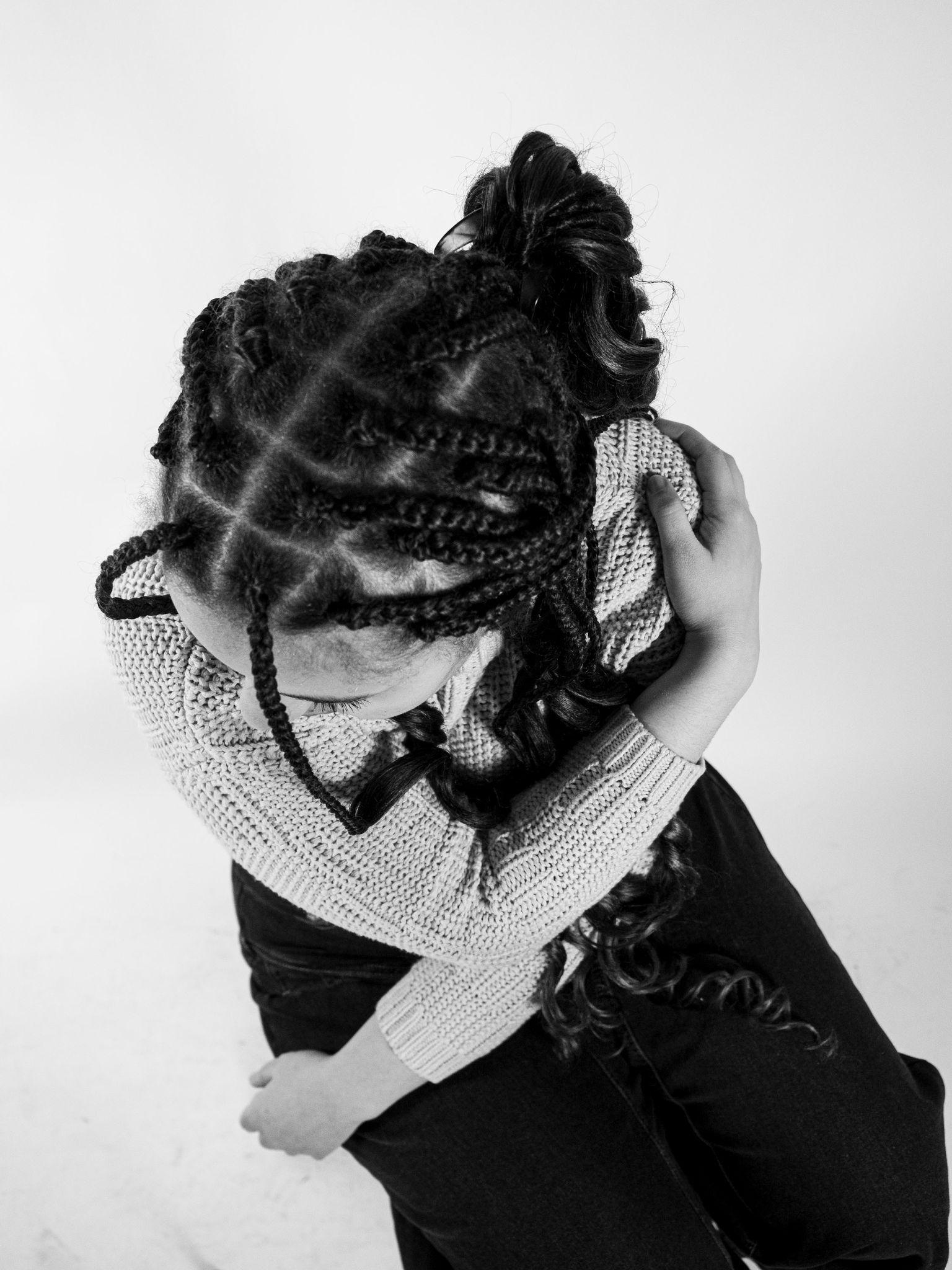
A CONFIGURATION OF SELF
By Serena Elsasser
A Configuration of Self
FAULT LINES UNDER THE SKIN
By Emma Danilowicz
*TRIGGER WARNING*
Content Mentions of: Blood & Eating Disorders
My body was cold; I tried shaking the blue off my fingers while sweat slacked my palm. My thoughts spiraled and flew beyond my reach with the increasing rate of my heartbeat. My vision was long gone; no more could I see the tile underneath me, nor could I know what was about to happen, no matter how much I fought it.
Pleading to my friend, “Trash can,” with a rushed inhale and a wavering voice, “trash can now.” I feel the shifting plastic under my hands, the solid structure of the small waste bin curled close to my body. I relax my neck, dropping my head in the bin, and fall asleep. ***
I go to the place where nothing can disturb me. A dream so perfect, why would I ever wake up? I feel the damp sand shift from beneath me, looking up at the sky; black with holes that shine from the heavens, twinkling as the gods look through their keyholes at me—the moon, a friendly face and steady in the sky; close enough to hold.
The ocean below nearly resembles the black blanket above me. The small waves of low tide crash and ripple a few paces before me. Picking up the sand, squeezing it tight, and dropping it from my balled fist slowly, my gaze remains stagnant on the water.
I know this is not real, that I’ve never seen this beach, never sat on its damp sand, heard this water; but I have sat under this moon for 7,066 days. I’m not sure where this beach is, but I know that my unconscious mind finds it peaceful. I come here during my worries — and in my sleep, I drift here afloat in the water daydreaming.
I shift my gaze from the water to the moon, the crescent now obscured by small black dots that expand and contract with my gaze. Slowly raising my eyes towards the rest of the world above me, the stars too seem less full than before, the black taking over, and by the time my eyes reach the water, I realize I no longer hear the waves lapping near me, nor do I see the moonlight sparkle against the water.
The sand underneath me turns solid, hard, structured. It feels as though I lie on a bed of cement as the cool sand shifts more callous. I know I must leave—
I’ve never been blessed enough to stay here. Breathing in, my lungs burn with effort, the breath sits tight in my chest, constricting my throat. Closing my eyes and exhaling all that I have left in me, the surface below digs deep into my hipbone as though I lay on my side.
No longer at the ocean, now lying on my hard bed, shuffling movements and faint voices overwhelm what was once the waves' steady song. My pillow must’ve fallen in the night, my sheets harder than before, colder, even slightly wet. Gently lifting my eyes, I assume I must’ve drooled in my sleep and lift my head to wipe the excess.
When my eyes open, expecting the light blue sheets of my bed to be beneath me, what truly lies there is the small square pattern of tile floor. Lifting myself upright, my muscles protest as the ringing in my head screams not to move. Behind me, the voice that seemed so faint, now easily recognizable, shakes with tension,
“She's awake! Get in here,” a warm hand touches my back, supporting me to sit up.
“She’s awake!” the voice cries again. Turning to face the friend behind me, whose kind brown eyes are wide with shock, I look down at my lap and silently beg to go back to the ocean; anything is better than the look of concern that traces her features. Saying nothing, I rise from the ground, and the blond girl, whom I spent all summer with, enters the doorway. She, too, is visibly tense, with raised shoulders, stuttering speech, and shaky hands. I note every movement. Looking down at the brunette, then to the blond, I could find no word.
“What happened?” a cliche, I knew as soon as it left my mouth, and I slowly looked around the room. Almost laughing to myself, wondering what all the panic was for, I recognize where I am. I remember this bathroom. I was here last night, but did I get so tired that I decided my bed would not be more comfortable? Did I let the constant exhaustion of my body win, and choose to sleep in here for the night?
Circling until I am faced with the sink and mirror, I walk over, each foot in front of the other, until I am parallel to the reflection stuck to the wall.
The mirror must be broken. In front of me is a girl whose pale skin is smudged with vibrant red, streaking across both cheeks, and flowing over her lips. The smell of iron is overwhelming as I observe the pink and blue splotches under her brow bone. Hinging my hips to look closer, I gape in the mirror as familiar eyes meet mine: the same I see every time I encounter a reflection.
Ripping paper towels from the holder, I switch the faucet to warm water, letting it saturate the white paper in my hands as the water saturates the sand. Wiping the blood, starting from my outer jaw, working under my chin and over my
lips, up my cheeks towards the purple circles under my eyes, I note the blood comes from my nose like twin rivers that have come to a trickle.
Behind me in the mirror, the blond figure stands, pale like fresh snow. She starts, “What do you mean, what happened?” Taking a deep breath, looking to the third girl, desperation laced through her eyes.
“You just passed out.” She answers her rhetorical question. “What the fuck happened?” Questions consume the room, and I can feel both their eyes looking expectantly at me for an answer, but all I can think of is the tile beneath my feet where the sand should be.
“We couldn’t get you up for like two minutes.” The brunette girl interjects as she comes into view behind me through the mirror.
“I don’t know,” I replied in a muffled voice, still dragging the now-red towel over my face, “I thought I just fell asleep.” Turning around to face them, “I’m okay though, I promise, everything is good!” adding a smile to the end of my sentence, trying to convince them as much as myself that the situation at hand is not as it seems. The two stare for a moment, at me, then each other, then to me again, and explain that I simply collapsed. I told them I thought I would throw up, and as I grabbed the trash can, I went down. Their warning that EMTs were on the way scared me more than anything else they had told me since I left the ocean.
I stand there pleading, begging, and rattling off obscure facts about myself and them to convince them I was okay and that I didn’t need medical help. I needed them to know I was mentally lucid, that I’m just a klutz who passed out. We all knew it was a lie.
Before long, police and EMTs entered the apartment, running tests, asking questions, accusing me of ingesting alcohol, and I assuring them the whole time, “I’m fine,” “I am sober,” “It was just a freak accident.”
I knew the reason I collapsed, I just begged silently that they wouldn’t ask.
“What was your last meal of the day?” Ice runs from my heart, racing to every limb, freezing my sweaty palms. My mouth dries, running my tongue along the roof of my mouth, swallowing hard to get some relief, pulling on the sleeves of my sweater, desperate to do anything but answer the question.
A long pause fills the room, dozens of eyes staring at me as I wipe the sweat collecting on my neck, anticipating my following words; the only question I hesitated on. “I’m uh– I’m not sure.” I look down, unable to meet anyone's face, “I think I ate lunch, and I had a water bottle at 7.” The EMT next to me looks at their watch. I can see the digital surface, I can see that it reads 11:47 PM, but I silently disacknowledge it.
“That was nearly five hours ago,” The medic answers, “That’s all?” I tip my chin down in a slight nod of my head. More voices start chatting, but I close my ears
and lift my eyes, guiltily looking towards my two friends.
It was no shock to us. Sure, they didn't know the severity, but nobody leaves campus for the summer and returns four months later, having lost twenty pounds and not setting foot in the gym. It is evident from my jeans, which struggled to button last year and now display a gap between my back and the fabric, that they are now too big. It was obvious in my sunken face and my lack of participation in group dinners at the dining hall. Sure, we all knew, but no, they did not know how bad it was.
The girl with the brown hair, turning her body towards the blond, whispering with another. I can hear them quietly ask the cops near them, “Which hospital do we meet you at?”
It is not long until I am strapped to the stretcher, entering my first ambulance, on the way to the hospital, where I am sure they will tell me I am undereating and dehydrated.
The bumpy road in the ambulance is a stark difference from the ocean I long to be at. I close my eyes, envisioning the familiar landscape, trying to listen for the waves, but they’re overpowered by the sound of beeping machinery and the medic asking questions. I try to think of my glowing friend above the water, grabbing it, pulling it tight to my chest in an embrace, hoping that if I hold on for long enough, the ocean will be sure enough to come to me and take back its moon with me along with it.
Of all the expected ridicules from the hospital, what was not expected to come out of their mouths were referrals to ENT doctors for the preceding steps on my nose and its care. I look to the doctors around me, each one with an unreadable face.
“It isn’t broken – you would be more bruised now. But, go as soon as you can; it looks fractured.” One of them reads off, along with more medical advice. The sterile environment matches their tone.
They all leave one by one, and as the last exits the room, blond and brown hair come from around the curtain and sit by my bed. Patiently, they answer all my questions and explain that they thought I nearly died, but we never did talk about the food. If it was taboo before this, it surely is now.
Not long after my entrance to the emergency room, I left, with my exit ticket being a cup of water and a bag of pretzels, which I finished and left in the waste bin. The three of us make our way back to campus, the two try to fill the conversation, but my head rattles on its own conversation with itself.
The crack I took to my nose opened the knowledge in me that I have an eating disorder. I knew it was there, an obvious statement. But nobody who is sick wants to admit it. Nobody wants to accept that they’re so far gone that it not only
broke their relationship with food, but also broke their body.
I return to my room, alone. Pulling the chair from my desk and plopping down, I read the clock mounted on my wall: 1:17 AM. Scooting the mirror at the end of my desk closer, clicking on the light, I see the damage once more.
Purple has replaced the pink spots, littering in small fragments over the left side of my face, darkening the circles under my eyes slightly, and stretching across the top of my nose, darkest on the part that slightly protrudes from under the skin. Gently wiping off the remaining makeup, I cringe at every swipe over my nose, with the tender cartilage yelling for me to stop. I sit at the mirror for a while, staring with new eyes at the person in front of me. My cheeks, once full like a child's, sit flush with the structure underneath, sharper cheekbones, a more pronounced jawline, even down to my collarbone, which gently pushes from beneath my skin.
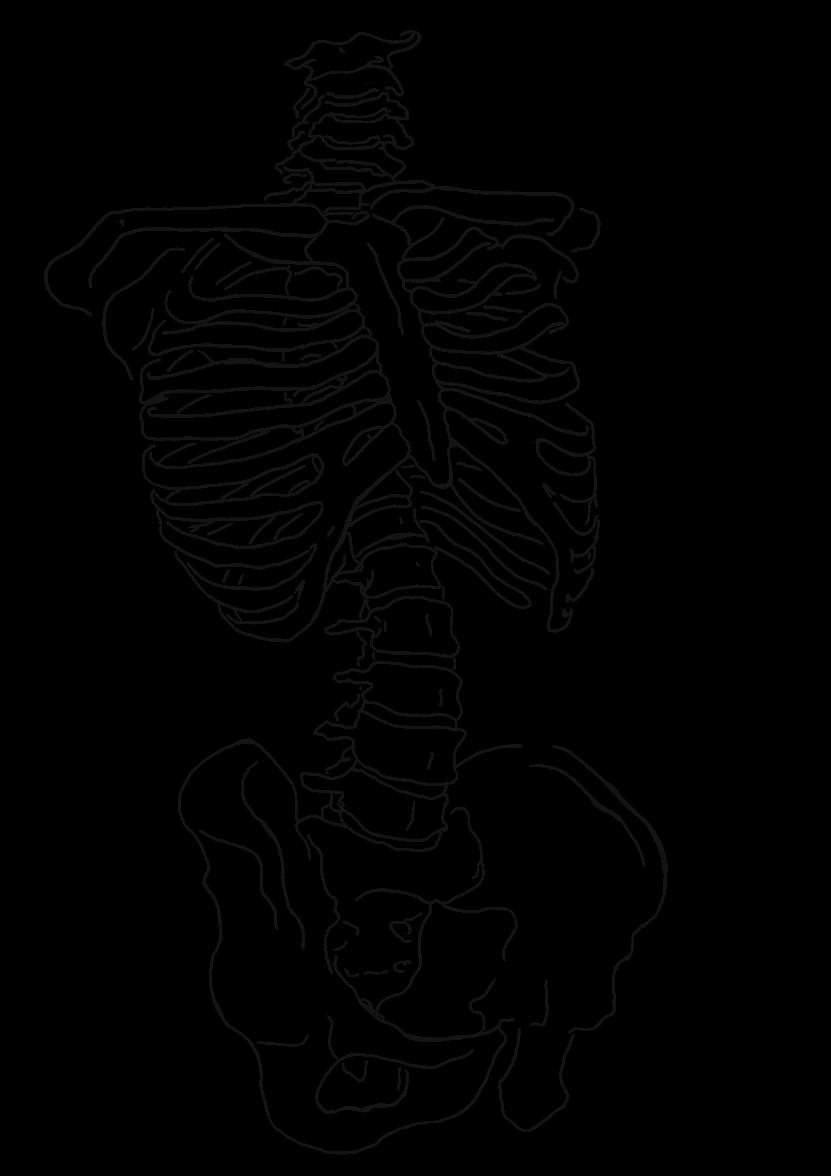
Pulling my shirt down slightly, I can see the ribbed divots of my sternum. Sliding my hands to my sides, I count each of my ribs and make a bracelet for my wrist with my fingers.
Gazing back at my broken face, feeling my hollow body holding me, I think back to the times I refused food, the times I praised my restraint with the reminder of one more pound, and recall the recent memory of what happened: my body giving up, collapsing at its final edge. Scaring my friends that I had just died, breaking part of my face, and with it, the desire to purge.
Some short weeks later, I sit in a doctor's office, having stitches cut out that weaved through my septum, with a cast sitting atop my nose protecting what was broken. Once it was all removed — cast, nasal splints, and stitches — I looked in the mirror to see the restoration of my nose.
Yet, the mirror, shaking in my hands, reveals a nose that is not mine—one with a bump at the top that disrupted the usual straight slope.
Sitting on the firm chair, paper crinkles beneath me as I shift in my seat, staring at my nose is not a better feeling than skinny. It is not passing out from hunger. Nor is it feeling the bones that structure my body. It is selfish to be so upset over a minor problem, but the disorder took everything from me: my weight, my motivation, my appetite, and now, part of my face.
SIR'S PERCH
By Laurie-Anna Bienaime
Oh, I’ve waited decades to tell this story.
My name is Sir Buttons, leader of this toy kingdom, defender of Chesna’s toys, and a veteran of the Juice Box Flood of 2006. I fought in this war strongly with my bear army. I am faithful guardian to a girl named Chesna. I was born in 1995, stitched together in some far-off factory I’ll never see again. I have brownbeige fur. I’m a little on the scruffy side with two mismatched buttons for eyes, one blue and one red. I remember a lady plucked me from the shelf at Toys R Us, tucked me under her arm, and carried me home. I was placed in a box where I heard a young high-pitched voice ask, “Is that for me?” The box flapped open to a bright faced little girl with wisps of dark hair and fists the size of walnuts, wrapping her fingers around me. That is when I truly began my quest.
Chesna.
For years, I lived in a world where the carpet was grass, the bed was a castle, and the closet door opened into an entire enchanted forest. That forest, by the way, was a dangerous place. I once battled an army of cats twice my size, nearly losing an arm. Chesna’s mother sewed me back up herself, her stitches were fierce. “You’re brave,” she told me, patting my head. After her mother patched me up, Chesna knighted me, with a plastic tiara she borrowed from another doll.
Her imagination was imaginably huge. She made me a jetpack out of two juice box straws taped together, with a rubber band to hold them on my back. I never flew, but in her hands, I soared higher than skyscrapers. When she spun me around the room, I could almost feel wind in my fur. Tea parties. Doctors visits. Car rides where I was wedged between the seatbelt and her shoulder. Sometimes she whispered things into my furry ears, and these were things she didn’t even tell her parents. Once, at a sleepover, I was shoved into a backpack with a flashlight, pajamas, and a glittery notebook. The zipper pressed into my nose, and for the entire night, I breathed in the metallic smell of pen ink and the sweet scent of tutti frutti. The year was 2006, and Chesna was clumsy with excitement. She had just been told she could take me to the park. A rare honor. She grabbed her lunchbox, me under one arm, juice in the other. A stumble, a trip, and suddenly it was Niagara Falls, but purple. The flood swallowed me whole. Grape juice seeped into my seams, staining my fur, clouding my left button eye. The world went dim on that side.
Chesna screamed like I was her child. “Sir Buttons! Sir Buttons!” She pressed napkins against me, whispering apologies as though she had betrayed me personally. I survived, but changed. That night her mother sewed a patch over my ruined eye. Blue fabric, the kind from an old T-shirt. A permanent scar, a reminder. Every knight needs a battle wound. Mine just smelled faintly of artificial grape for years after.
Chesna grew.
The enchanted forest in the closet became a science lab. Test tubes made from clear straws, bubbling beakers from old soda bottles. I was drafted as a lab assistant, a badge taped to my chest that read “Dr. Buttons, PhD.” My job was to watch for explosions and keep track of invisible variables. I did both with pride. Later, the room turned into a spaceship. Glow-in-the-dark stars scattered across the ceiling, her bed transformed into a cockpit. She gave me a seat beside her pillow and a headset made from yarn. For months, we fought off alien invaders (pillows stacked into monstrous shapes), and I was her co-pilot through every space jump. But slowly our little world faded into quietness. I became lonely. She spent less time in makebelieve kingdoms, more in notebooks filled with equations, doodles, and questions. Her toys, my companions in arms, were exiled to the closet, one by one. Dolls, blocks, figurines. Until it was just me, on the shelf, watching, always watching. From my perch, I saw everything. Her first fight with her parents, where words became swords. The night she stayed up crying over a grade she swore ruined her future. The afternoons she laughed so hard with friends that she snorted, a sound like a trumpet honking through water.
She didn’t talk to me as much, but sometimes, in the silence of the night, she would reach for me again. Her hands had grown bigger, her grip stronger, but she still found the worn seam on my paw, rubbing it. She would curl me against her chest, and for a few minutes, the years fell away. I was Sir Buttons, leader, protector, secret-keeper. I watched her learn to braid her hair, to line her eyes with this black marker. I always questioned why. I watched her scroll endlessly on glowing screens, her face lit an unnatural blue. I watched her grow restless, then hopeful, then scared of the future. I realized that I am just a stuffed animal. I don’t age like humans, but we do wear. My fur grew thin, beige turning into a dull tan. My stuffing slumped, leaving me with a permanent lean. My ear sagged where the thread had loosened.
I didn’t mind. Each wear and tear was proof I had been loved. Proof I still had a place.
When she left for her first overnight school trip, she hesitated. I saw this look in her eyes, her eye said, “too old to bring me, too young to leave me.” In the end, she patted my head and whispered, “Guard the room while I’m gone.” That was enough. My kingdom might have been reduced to four walls and a shelf, but I stayed the loyal leader of this realm.
But then...
One day, I saw Chesna packing. It was a lot of stuff. Posters rolled, books stacked, clothes folded into bins. I felt dread in my stitches. Then came the box. A cardboard box decorated in pink and bling, it had dolls, trophies, souvenirs, and now...
Maybe even me.
She paused, holding me in both hands. For a moment, I thought she would leave me behind. But no, into the box I went, cushioned between a seashell and an old diary. The dark was long, silent. Dust settled like snow. I dreamed of tea parties and juice boxes, of space battles and chatters. When the box opened years later, the light was harsher, colder. Chesna had grown into someone else entirely, an adult with tired eyes.
Yet she smiled when she saw me.
“Sir Buttons,” she whispered. “Still here.”
Now I sit high on a bookshelf in her apartment. Semi-retired, as I like to call it. My days of adventure are behind me, but my post is still one of honor. From up here, I watch her brush her hair in the mirror, humming off-key. I watch her fall asleep with the glow of screens still lighting her face. I watch her stumble through the beautiful chaos of adulthood, the messy, brilliant, heartbreaking human that was once full of energy. Some nights, she still reaches for me. She holds me tight, not like a child clinging to a toy,
After all, every human needs a little magic. That is the greatest honor I could ever ask for.
And I?
I’ve got the patch to prove it.
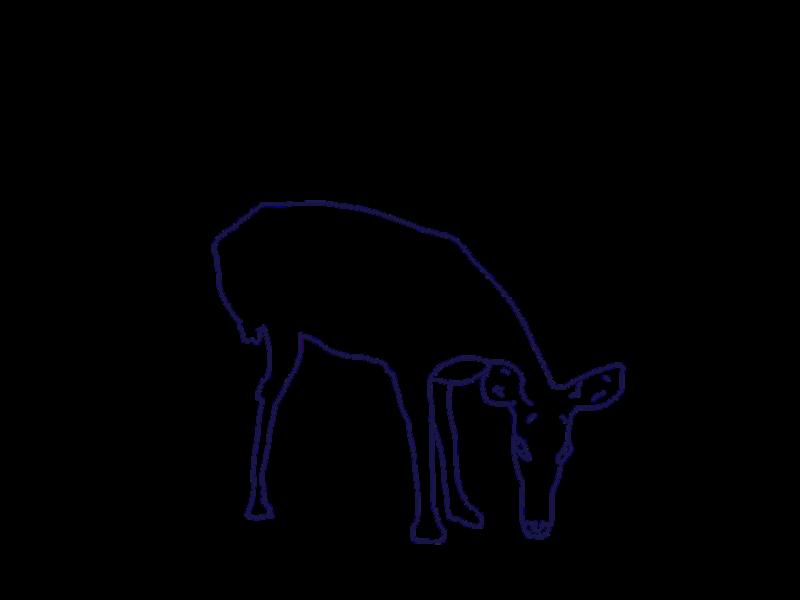
HOW TO BE A DEER IN A WORLD THAT WANTS YOU DEAD: A FIELD GUIDE
By Liz Kameen
A Deer That Hungers in Impossible Ways, Doe #1, unnamed
Species: Odocoileus phantomus (Phantom White-Tailed Deer)
Description: The Phantom Deer is known for the hole in her cheek, which prevents nourishment from staying inside her body. She eats, but she is always empty. Cause of Despair: Likely a tooth infection that ate through her fragile flesh. Habitat: Lonely woods in a dark, dusky fog. Surrounded by chewed but undigested flora. Notes for Observers: Do not feed the Phantom Deer – she cannot eat. Do not name her. Do not expect her to stay. She will pass away in a few days.
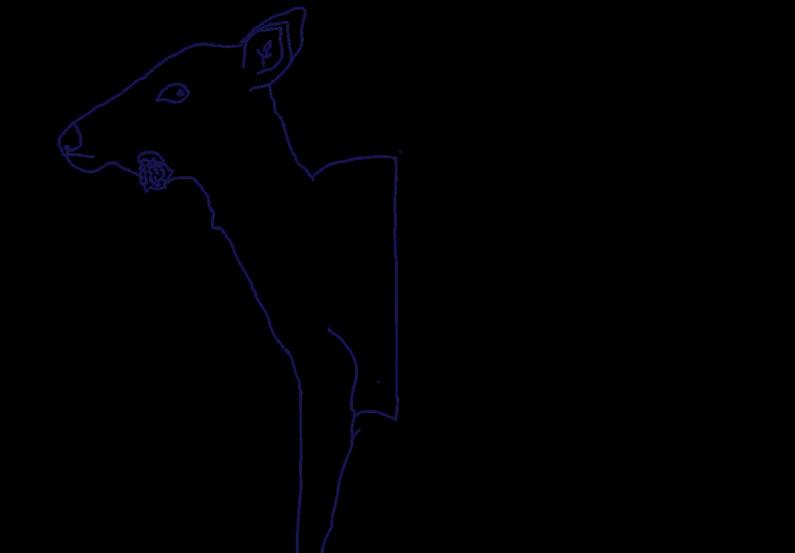
Deep in the woods is a deer with a healed hole in her cheek, and every leaf she eats releases from the corner of her face. She’s hurt by the bitter curse outside her peripheral gaze, wondering why her tummy constantly aches despite stuffing and stuffing her face. The local humans watch in foreign restraint, knowing any trap will likely lead to a case of capture myopathy, with her muscles eating themselves alive, but comprehending that her fate will likely catch up to her someday. Her eyes are wide, watery, and dark; deep down, she knows her time of darkness soon approaches. She reaches down to a pouch of hostas, nibbling away the light green border, reminiscing in the taste that will never meet her stomach acid. It leaks out of the hole in her cheek; she hears a strange noise from her stomach region –bubbles of uneaten gas grow up her throat.
She remembers when her mother would lick her genitals clean, masking the scent of her childish urine, eating her fawn’s feces to hide her baby’s trail. And when she first stood, her mother’s stare followed her from a careful, bushy distance. Until she was just a year old, she pressed against her mother’s side. Her whitespotted coat began to blend into her mother’s bronze coat – and then mother doe left her in a strange emerald patch, with her dusky brown eyes looking up towards the sun, wondering how she would stand in a shaky world on her own four legs. I remember my teenage trials of hunger, hugging my ribs to disguise the fat that dripped from them, starving myself skinny to be perfect in the eyes of others, and maybe that’s why it hurts so much – watching an innocent creature, beautiful beyond her belief, unable to nourish herself while standing in fields of green; deep, deep down, she reminds me of me. Now, I would starve my skin clean off my bones if that meant for one night she could feed and feel the warmth of the grassy pasture fill her whole.
And now, unbeknownst to Doe #1, her face has rotted away from a tooth infection, a foot rot in her saliva-dripping jaw. In her mind, her small, small mind,
she is hungry, and she does not know what is wrong with her broken body and slowly erasing cheek. Within a week, the vultures will eat her decaying body, and bugs will crawl into her sunken eyes. Her skeleton will be exposed – and the hole in her cheek will melt away into the earth that once nourished her small, frail frame. The botflies that found a home in her hide will also die – their lumps, hunger, and desires are all meaningless when the host they infiltrated has died.
A Deer That Hungers in Impossible Ways, Doe #2, “Mumps”
Species: Odocoileus pinguis maxillam (Fat-cheeked White-Tailed Deer)
Description: The Fat-cheeked White-Tailed Deer has big lumps on her cheeks – almost like a golf ball was inserted within the hide of her cheeks.
Cause of Despair: Arterial worms, cuts within the animal’s mouth that lead to food impaction, or bacterial infection can cause a lumpy jaw or cheek within this species of deer.
Habitat: A green, grassy yard, with a red-haired and red-cheeked grandma who often leaves apples out for the doe.
Notes for Observers: Do not name the Fat-Cheeked Deer. Do not get attached.
My grandma used to feed a doe in her yard that she named Mumps, after her big, fat, puffy cheeks. She wasn’t sure what was wrong with her, and after calling the Fish and Game Commission and local rehabilitation centers, she was told to leave it be and that there was nothing she could do. So, she continued feeding Mumps the best she could, offering a handful of apples or a toss of breadcrumbs and corn whenever the doe came close to their porch. My grandmother built a bond with Mumps over a few years – at first, she was too afraid to walk too close to the human, but after years' worth of feedings, Mumps even let my grandmother’s frail, shaking hands pet her rough fur.
One day, Mumps got too close, too comfortable to the neighbor’s land, and the fat-faced neighbor came out, red-faced and huffing with a big black shotgun, gunning her down without a single thought in his empty, empty mind. My grandma heard a bang and went out to check what the ruckus could be in her small suburban town, rushing down the porch with an apple half-cut in her worn and wrinkled hands. She suddenly saw Mump’s bloody body spread unnaturally across the now maroon-stained grass – a puncture hole directly laid into her chest, no longer rising and falling. The evening sun was setting, and Mumps looked golden, shining in the light, and my grandma couldn’t believe that was the last time she would ever see the sight of her kind, fat-cheeked deer – too trusting for this cruel world.
My grandma, kind to her core, raised her hand in a gasp, covering her mouth, still wet from the apple she had planned to feed her friendly fawn. When confronted, the neighbor had said he was “putting her out of her misery” and
that it was “no way to live a life.” My grandmother wondered if he would want a shot in the chest if he were ever impacted by a mild infection that caused no pain and no harm to him. I almost wished that someone would shoot him down in the same manner – that he would break his ankle, and someone would “put him out of his misery,” since “that was no way to live a life,” despite the possibility of a healed body and a lump-free smile. I wonder if that fresh venison was worth the loss of that innocent doe.
Deer are smart, despite their small brains, and adaptable to many conditions – but humans are one of the only cruel exceptions. Despite their best efforts, such as male deer intentionally moving “to lower-quality foraging areas to avoid and survive hunting activity from humans,” humans find ways to take an animal’s innocence – kind, warm creatures that have nothing to hide but their own pelt in broad daylight. My grandma knew she couldn’t save her, but she knew she couldn’t look away from the bloodied carcass of the animal she grew to love; she would witness her last moments of breath, because if anything, Mumps at least deserved a witness of her life, someone that would remember the sandpaper scratch of her tongue, and the way the sun would light up her amber-colored eyes.
A Deer That Lingers in Impossible Ways, Doe #3, unnamed
Species: Odocoileus tripodes (Three-legged White-Tailed Deer)
Description: A once-graceful doe hindered by the absence of one hind leg. Scar tissue or partially healed flesh often marks where the limb was lost, leaving her to navigate the underbrush with an awkward, three-legged gait. She cannot balance on her hind legs to reach tall leaves from trees like her fellow deer.
Cause of Despair: Likely a hunter’s trap that did not intend to catch a doe’s leg, a car’s blinding headlights that crash into the deer’s hind legs, an infection, or a failed predator attack.
Habitat: Transitional edges between forest and field, where other deer often roam in search of tender shoots, acorns, or crop leftovers. She remains near relatively safe spaces, housing developments, overgrown orchards, or protected woodland clearings until the demands of nature force her to travel farther, exposing her vulnerability.
Notes for Observers: Leave her alone. Do not try to help. You will cause capture myopathy, a quicker, more painful death than the ripping of her skin from a wolf’s jaw.
A three-legged deer licks the dew off the grass blades; her ears flick and turn at every leaf crunch nearby. She hops around on her two front legs, using her remaining hind leg to propel herself through the dense undergrowth. Most days, she’ll munch on some dandelions – the yellow dye staining her tongue is an interesting hue that she will never see. She doesn’t know she is an aggravation to the local population; she doesn’t know that the low-hanging fruit that she nibbles on in one of her few safe-spaces is the garden of a businessman, and the deer-deterrent
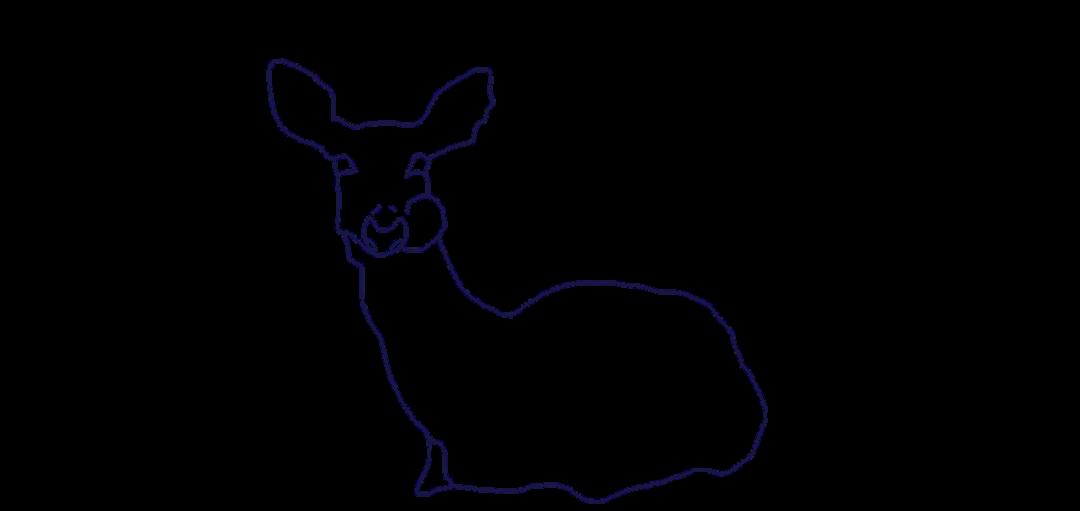
he one day sprays on his vegetables and flowers will give her a stomach ache that seems never to end. She can’t understand time, and she doesn’t know why she has to face so many barriers and pain in her short life. She doesn’t know that academics write, “We hear more each year about the high costs of crop and tree-seedling damage, deer-vehicle collisions, and nuisance deer in suburban locales.” She just doesn’t have a big enough brain to understand what is wrong and right.
Doe #3 stays with her familial group the best she can – her mother and her mother’s new fawns from this year. Coalitions of doe are much more interconnected than that of bucks, who often only travel in bachelor groups before mating season, and academics found that “Doe groups seldom included more than 1 adult doe, her fawns of the year, and her female offspring of the previous year.” But, despite their blood connection, her mother could not spare any time to chew up her food to feed her; her mother had to focus on her still-young fawns – the viable ones with all their limbs left. So, if Doe #3 lingered a little too long at a grassy spot, her pack would move on without her, and she would have to hobble up from her tucked legs and use all her energy to stay with her family, who had already seemed to think she was dead – a ghost that looked like them, one that just lingered.
Losing a limb does not stop the sunset and the howling coyotes, just as grief does not stop the world from turning. When my mother was diagnosed with cancer, I remember thinking the world should stop for both of us; I should have time to grieve, my homework should halt, the bills should stop coming in the mail, the sheriff should stop pinning that damned foreclosure paper to my favorite tree in the yard, like it was his weekly treat for himself – but none of that happens. Nothing stops; the moon still rises in a way that raises a lump in my throat. The world and forest remain indifferent; everyone is invisible to the pain they aren’t living. I want to lift my mother and Doe #3 to a better world, one in which their limbs remain intact, but instead, I stand here, powerless, hoping a little mercy finds them both in the end.
Although this doe survives the initial incident that stole the leg from her torso, she will be plucked from her flock within months – survival of the fittest, of course. She will feed herself until she can no longer survive the chase of the wolves, mountain lions, lynxes, coyotes, bears, and cougars. They will pick off the threelegged deer until there are none left, and their stomachs will be full with the taste of a bitter bite – their hunger will never be satisfied with a short, unfair fight. Sometimes, there is no happy ending. Mumps died by the gunpowder-stained hands of humans, which took years for her to trust. Doe #1 and #3 slowly rotted away, alone in a world that should have protected
them, forgotten by their family of fawns that should have shielded them, and their carcass will only feed the food web that had forsaken them. And the world moves on.
It always does.
"...STAINLESS POUNDERINGS..."
By Makenna Aylward
…The house was warm—a fire in the corner, burning brightly and with cheer. The beds were filled with little heads, sound asleep. Nothing could be heard but the crackling fireplace and the whistle-like snore of Mr. Baxter… all but one was asleep in the house. Who lies awake…? Annabella. She could not sleep—how could her sisters and brothers? Life was too full of wonder to slumber! Why—only this afternoon she encountered an angel. She was sure it was an angel. He had the strangest of stares… as though he knew all about her, and a smile—one that seemed to say: Hello, there. I’m a visitor here. How interesting life was! What strange creatures lie out there… Annabella, though not yet twelve, longed to see every face and discover every soul.
The candle burned on her lovely, young face as she pondered these things. The Baxters were a charming, respectable family—well-bred, well-groomed, and all as cheery as the very fire burning in the flurrying winter season. Puley, their agreeable cat (though such was rare), lay nestled in Mrs. Baxter’s shoulder—she rose up and down with her breaths. Annabella longed to grow up—people laughed at her “childish prattle,” though she wagered that coming from an adult, they would find it none too disagreeable. Such were the shortcomings of youth. But as she lie awake, head rested on her chin, glancing now and then at her brothers and sisters in their beds, watching her mother’s wind chimes which hung beside her bed—in their silver, elfin-like beauty, hearing the chorus of the fairies, sprites, nymphs, and pixies as she gently brushed her fingers on the chimes, covered in a blanket that was woven, carefully by her grandmother—still smelling of her grandmother’s perfume: tonka bean and violets—she decided that some beauty is best held in the heart of a child.
What did it mean… to grow up? She often wondered whether the addition of height and a few fancier (mind you, boring) words to the vocabulary was the extent to which an adult was classified. But let us speak plainly, thought Annabella, so we can all understand each other. She pursed her lips as she continued to ponder. Perhaps it’s a sort of game adults have—they try to outdo one another. Perhaps—and a most dreadful thought occurred—perhaps there comes a time in a girl’s life and in a boy’s when he or she must be turned into an automaton. Oh, they must be machinery! There was no other explanation. She frowned at this thought, though a new one came, bright and presenting light. Perhaps… some can carry these beauty-seeking eyes in their automaton suits. It’s a good thing to work hard, yes, but it’s no good without the correct eyes. That surely makes all the difference… Her little mind turned and turned
until she became quite sleepy indeed. She cuddled snuggly into her soft, plump bed. Fluttered eyes watched the night light dance—the flame’s flicker birthed a ballerina on the walls, dancing, dancing, the flame’s toes lulled Annabella into a sweet slumber…
COLD EMBRACE
By Ry Kral
Poor Faolán didn’t know the door was locked. He should’ve made that assumption sooner, but consumed by adrenaline, the thought slipped his mind. He tripped to the ground, then stumbled up again. Already, there were shards of glass jammed into his flesh, and as he shouldered his wing into the wooden frame, the glass stuck itself into the skin. The door gave beneath him, throwing him into the tiny room with such force that he hit the window across the room. Dr. Eakley cried out in pain, quickly covering his mouth as he realized what he’d done. The infected were drawn to loud noise, and that small screech was certainly loud enough. The footsteps that nearly passed him stopped, then sped up towards the noise. Faolán’s heart jammed itself into his throat as he fussed with the window. “Come on, come on, come on!” The window was completely locked, the magic of his fingertips unable to break through that which sealed it. He could not fly out. He could not leave. The doctor had successfully cornered himself.
Heart beating in his head, he didn’t hear the creature approach him. He only knew she was there when she bit through his neck.
Faolán stopped instantly, turning the moment teeth sank in, but it was already too late. Blood poured from him, even as he whipped around and stabbed a syringe into the creature’s throat. Its head flew off, ruptured by a shrieking sound and a shove of energy that pushed her across the room. The doctor gasped, pressing his hands to his neck to try to stop the blood. He couldn’t die like this; it would take him far too long to die if this was the way he went, and he had no idea if the godly blood in his veins would even let him turn. No evidence suggested that he could survive this; after all, he was still mortal.
With the undead completely still, Faolán dropped to his knees, then pushed himself up to lean against the wall below the window. Blood gushed down his neck from the open wound, one that should’ve killed him by now, but it didn’t. His body twitched despite his efforts to get it to stop, and the pain was unbearable. Without the energy left to hold them up, his hands and wings both fell, the former hitting the ground with a loud smack while the latter sadly shuffled down. The doctor’s lungs heaved as he let his eyes droop. Countless patients were put down under his guiding hand, and now it was his turn.
His thoughts drifted. As death prepared to take him, he saw the old clearing he’d spent many nights in. A younger boy, wings flapping eagerly, jumped through the cattails. Every few steps, he lifted from the ground, then fell back towards the water with a soft thud. His gentle, dark hands pushed at the reeds, pulling one off and studying it. From behind him, a young girl rushed forward,
golden hair awhirl with the evening breeze. The boy looked up, tilting his head. There was no sound, but his lips mouthed, “Who’re you?” Echoes of laughter followed, and the boy’s face brightened. He called her over, grabbing another cattail and passing it to her. His stance changed to a swordfight, and hers followed suit before they slashed at each other with swords that couldn’t hurt a gnat.
Faolán wondered where Aneirin was.
It had been years since he heard from the girl, a young woman now with her own life and her own troubles not unlike him. He wrote her a few times, but heard nothing back, and ventured that those letters sat unopened in his silent home in Sylle. As the doctor rattled a cough, a prayer tangled itself in it. “Keep her safe,” He rasped, not quite knowing who he was talking to. The words heaved his chest again, and further his body fell into the chill of death. Why hadn’t he died yet? The blood loss would’ve killed any mortal three times over. The boy won, tackling the girl to the ground below with further echoes of happy laughter. They faded like ashes into the cattails, fireflies carrying their presence on the wind.
A woman saw him next, a presence that knelt shakily in front of him. She brushed his hair from his face and pressed a kiss to his wound. Faolán knew he should’ve felt pain there, but there was none to be had anymore. His own experiment stood in front of him, pressing a cloth beneath his eyes to catch the sweat and tears. “Can’t you rest, doc?” Suture asked him. Her voice echoed so much now that he thought she’d spoken nonsense. Words didn’t leave his dry mouth anymore, replaced by a stream of blood that retched from his throat. “Poor Doctor Eakley…” She cooed quietly, holding his face. The doctor tried with all his might to reach his hand up to hers, but it remained inert. His body was no longer his to control. “I’m sure we’ll meet again. Then maybe you can tell me what you’re wanting to say.” There were so many things he wanted to say, but none escaped, not before his prize turned to dead, brown leaves before him. She too disappeared, leaving the doctor alone.
He slumped further down, shuddering when he couldn’t lift his body anymore. The floorboards that should’ve greeted his face were replaced by his own feathers, cold, sweating flesh, and sick, over-preened mess. His syringe lay inches away from his fingertips, covered in infected blood. Faolán fought the eyes that rolled back in his skull. “Guardian, help me…” With the last of his voice, he begged the being that raised him, the one that saw him as a boy, as a teen, and never knew him as a man. The one who’d abandoned him without a word. The one he knew would ignore him one final time. “Please, please, please…” Nothing came of it, and Faolán shuddered a whimper from a broken throat. A ringing seized his ears, taking away the last of his hearing. Exhausted eyelids tumbled down, and the eyes below them glossed over. A final, shuddered breath climbed up the doctor’s throat, fleeing from his open lips as the last beats of his heart lulled him to sleep.
DARLING CHILD
By Ry Kral
Faolán did not expect a six-year-old to run up to him upon his return to Sylle. Already, he was frustrated, having learned more than he was willing to hear over the last few days. The feathers of his wings brushed against his back, a wretched reminder of his lineage that he had no desire to be a part of. The young doctor scolded himself about it; he should’ve known something was different about his blood. People believed him without a second thought, they trusted him despite his strange ways, and they faced his unflinching brutality without a care. Lucky as he was, he had yet to be discovered for the tortures he’d committed. Off in his own world, sketching a young woman across the way, Dr. Eakley expected to be unbothered.
“Hello sir! I like your notebook!”
A young girl stood before him, pulling at a blue jumper that barely fit her. Her hair was an electric blonde, face freckled beyond a normal number, her dress swishing around her as she rocked back and forth. Bright eyes stared up, still shorter than him despite his sitting on the fountain. Water rushed behind him, and the reflected light shone onto her. The girl’s gaze stayed fixed on him, even as the sun’s gentle wrath stuck itself in her eyes. “Thank you, dear.” He snapped insincerely, rolling his eyes before looking back at his book. The woman he was drawing disappeared into the crowd, which only soured his mood further. The girl kept talking, but Dr. Eakley tuned her out, instead turning his focus towards someone else. A young couple chatted not far away, smiling and clasping each other’s hands. An old woman limped along towards a shop just beside them. A cashier stared boredly out the window. A barmaid rushed around inside the tavern nearby, the setting sun bringing in more customers. Each of them held his attention; their behaviors strung together to make a tapestry that defined Sylle.
That tapestry included the chatterbox before him.
He tuned back in, and once more, her little voice pierced his ears. “My parents left the book for me. Well, that’s what I imagine. I don’t really know for certain, sir. They’re not here anymore, and I never really knew them for myself.” On and on she prattled, shuffling herself up onto the fountain beside him. She stared at his charcoal as it flicked across the page, her head tilted towards his shoulder. “You’re a good draw-er, sir. Could you draw me?” Her eyes met his again, a beaming smile yanking at the sides of her face. Faolán had to admit his heart pulled; she held the same natural curiosity he held in his youth, cooped up in his guardian’s home, giggling over a new book. He let his shoulders settle with a deep sigh. “Sure, but you have to sit perfectly silent and still.”
“I can do that!”
“I have my doubts.”
Doubt he did, but she proved him wrong. Eager as a sunrise, the girl sat motionless, doing little more than tapping her fingers as Faolán sketched. He reached out a warm hand to touch the side of her face, tracing the shape it took, perfecting the details. The girl would flinch each time his hand reached forward, mumbling a soft, “I’m sorry,” each time she moved. “It’s alright,” Faolán told her. He heard his voice soften each time he said it. She had a caring, tired face, one that didn’t match her young age. There were worries in her eyes that didn’t belong there, ones that admittedly ached within the young doctor. How sad it was that she looked so scared.
Faolán couldn’t take the icy quiet that befell them for long. “What’s your name, dear?” The doctor asked, eyes glued to his work. “Aneirin. What’s your name?” Curiosity glossed over her eyes, a quirk of the eyebrow unbidden with it. Moving her hands along the fountain’s ledge, trying her hardest to remain still, she pulled the book from nearby. It was a ratty thing, one she opened to a new page as she pulled out a pencil from her hair. “My name’s Doctor Faolán Eakley.” The curiosity turned in an instant to confusion. “Oh! Em…” She struggled with the letters for a moment, breaking her focus to look at the page, spelling his name with an abysmal guess. Dr. Eakley couldn’t help but smile. “Here, let me spell it for you.” He did. With each letter, Aneirin’s face grew calmer, as if getting the answers bandaged a wound his name had given her. “Thank you, doctor.” She spoke with sweet shyness once she realized she wasn’t in trouble, then giggled with a pink face. “You’ve got a nice name. And soft hands, which is kinda weird. You look like you’d be meaner.” Faolán laughed. Only children would say such blunt things.
It didn’t take him long to get a sketch of her, nor to get her bouncing with excitement when she saw it. “You made me look so pretty!” She cried, her face scrunched with delight, so sincere it scalded. Her hands clutched her heart. “I wish I could draw like you. I’ve made drawings before, but nothing like what you do.”
“Oh, nonsense. Why don’t you give it a try? Here,” Faolán crossed his legs, sitting straight and closing his book. “I’ll sit still as a statue, and you can draw me.” Aneirin looked more excited, a feat he hadn’t believed possible. “Okay! I’ll try my best, doctor!”
Try her best, she did. Just as he had done, she reached up and traced his face, though it was clear she had no clue why he’d made those motions before. Her cheeks puffed with focus, her brows furrowed with intense concentration, with the apparent need to impress Faolán. He held back his laughter at the heartwarming sight. Slowly, the messy portrait of the doctor appeared on her page. He could make out his frizzy curls, the gentle bend of his nose, the harshness of his eyes. It wasn’t anywhere near perfect, but the details were there; Aneirin was more
observant than he gave her credit for.
The sun was nearly set by the time she finished her portrait, showing it off to Faolán as if he hadn’t watched her draw it. “Why, I’ve never looked better.” The doctor assured her, and her face all but lit up the square with pride. “Really?” He nodded, and she cheered out with great delight. The little girl closed her book, throwing herself into Faolán and wrapping her arms tightly around him. Her book clattered between them, and the doctor froze. The water of the fountain embraced the tips of his wings, the spray softly spilling into the soft grey. Faolán, ever a man of masks, wrapped his arms loosely around her, a hand laid over the back of her head for a moment. Aneirin didn’t move, but her hands shook at the affection he granted.
Faolán let go of her after a moment, looking into a pair of innocent brown eyes that shone with worry. “You ought to run home, Aneirin. Do you come from the orphanage?” Her defeat was palpable. “Aye, doctor, I do.” Face once more scarlet red, her sunken eyes fell weary. She pulled her book to her chest, looking around her with horrible fear. Aneirin didn’t want to go home; Faolán could relate. Now without a parent himself, everything was colder, crueller than it once was. The house was haunted without another soul to share it. Aneirin stared up at him with terrible pain. “Must I? It’s cold there. They say I talk too much, and they put me alone so I don’t talk. You don’t think I talk too much, do you doctor? I hope not. I don’t mean it, honest I don’t, there’s just so much to say, and I can’t not say it. It just gets all jumbled in my head, and once the words start, they can’t stop, and… oh, I’ve done it again, haven’t I?” Aneirin shrank in on herself, a small child made even smaller.
Faolán reached out from a place in his heart he never knew existed. A hand rested on her shoulder; he felt the gentle tremble of sadness that echoed from her. With it, the dwindling hope that dripped from her eyes made sense, pieces clicking together that never should have. She sniffled, hiding her face as much as she could. “I’m sorry. They tell me not to cry, doctor, but I can’t help it! It just happens, and it’s like the words, it doesn’t stop.” Dr. Eakley shook his head. “It’s no trouble to me whether you cry or not, and your words don’t frighten me.” A knot formed itself deep in his stomach when she looked at him again, her face crushed. Twinkles of lanternlight sparkled as stars in her eyes, the tiniest glimmers of hope that remained even in her pain. “You’re so nice to me. Can’t I go with you?”
Faolán was not a man of company. He had secrets to keep, research to conduct, and time that stretched thin between tasks. His home was not in Sylle, but across the island, in Shivis. This was only a visit here, a check-up on his guardian, and a break from the constant work. A pin on his breast burned him as he shifted with discomfort; the Saviors of Unworthy Lives were his duty. What was he supposed to do, abscond with the girl when he went to leave, put them both in serious danger?
Faolán’s fingers clutched around his book. The facility was no place for a little girl. By all accounts, the answer he gave was a stupid one.
“Of course you can, darling.”
The look on her face made every regret vanish. She gasped. For the first time, no words escaped her mouth, slack-jawed, and stunned. All was silent for a few breaths, tears and snot still sneaking down her little face. Her lip quivered. “You mean it?” The last chance to go back, to break this child’s heart and move on, didn’t even tempt him. “That I do.” Aneirin’s smile returned, and instantly she leapt off the fountain. The girl bounced with boundless joy, grabbing Dr. Eakley’s hand and waiting to drag him away. “Thank you doctor! Thank you, thank you!” She decreed it over and over, laughing and hugging Faolán again.
The doctor shoved his book back into his bag, and Aneirin tucked hers into the same place, before he scooped her into his arms, hearing her squeal and laugh. “You’re not afraid of heights, are you?” Faolán asked, and Aneirin wrapped her arms around his neck. “Nope!” The doctor fluttered his wings awake. “Then hold on tight.” Once she was secure, he ran a few steps and took off, the ground disappearing beneath him. Aneirin cried out, looking down, clutching tighter to Faolán before she buried her head into his shoulder. “Please don’t drop me, doctor!” Strong as he was, the doctor had full faith that he wouldn’t drop her, and no offense that she didn’t think the same. “Oh, trust me, I’ve carried much heavier and slipperier than you, my dear. You can look out, don’t worry.” Peeling her face away, she looked out with easing fear. The leaves on the trees below rustled with the air behind them, the doctor’s beating wings pushing with great strength against the wind. Aneirin was transfixed; every time she blinked, the world looked different. Each glance at the sky placed the moon somewhere new. It made her smile. “Pretty…” She whispered, full of wonder. Faolán smiled back. “Isn’t it? The world looks a kinder place when you can’t see the details.”
“Aye, it does.”
For the rest of the way home, Aneirin stayed quiet, not so sure what to make of it all. Faolán cradled her close, watching as the city of Sylle turned to sprawling fields below, growing well in the summer season. The heat wasn’t oppressive yet; it wasn’t ready to smother all the earth in its boiling depths. The night that surrounded them, by all accounts, was perfect— cool, calm, and quiet. By the time they reached the Eakleys, Aneirin was in a similar place, lolled softly on the doctor’s shoulder. He shifted her to one arm, trying his best not to break her drowsy state. When at last the door unlocked, it swung open to silence. The godspawn cast a light into it, just strong enough to show him his childhood room. Books young and old were scattered across the floor, the desk, and the bed, but he set Aneirin on the bed anyway. “Forgive me, dear. I’ve made a mess of the
place.” Half-lidded eyes looked at him with sleepy delight, the girl mumbling a careless nonsense word in place of what she meant. The doctor cleared the bed as he pulled the blanket over her. The light that trailed behind him dimmed to a fizzled spark, disappearing into the moonlight. As he closed the door, confused but pleased at the night’s outcome, he called behind him, “Goodnight, Aneirin.”
She didn’t hear, already asleep, enveloped in warmth and care she’d never known; swaddled in the soft blankets of the unsuspecting doctor, Aneirin was happy just to have a place to be.
THE SONG OF SWEET SHINING STARS
By Ry Kral
The hike was not a long or arduous one. It was smooth, flat terrain; by this point, most of the branches, rocks, and ruts were removed, covered up, or memorized. It was a simple trail that Faolán bolted down countless times as a child. He bounded over anything that stood in his way, from the pothole that twisted his feet as a boy to the grandfather tree that fell across the path in his teens. These days, that walk was slow and soothing, the daylight streaking through the treetops to touch his face and shoulders, blinding him when he stepped just right. Normally, Faolán would take a tougher trail now that he could, but he wasn’t looking out for himself today– he was looking out for his ward, Aneirin.
The doctor grabbed a branch of the fallen tree, swinging himself up and holding his hand out to the young girl below. “Come now, you can make it.” He sat on the old log, hands outstretched as Aneirin gazed up. A soft glow emitted from the doctor, a spell that let her see in front of her as the sun dimmed. Lights like fireflies circled his damaged hands. Aneirin shriveled away for a moment, tilting her head up at him. “I dunno Doc, that’s really high…” Through her hesitation was a peek of self-destruction, teasing the doctor the same way he teased her, a little daring attitude hidden beneath a thin mask of caution. Faolán knew it instantly, scoffing at it. “You’ve developed a sudden fear of heights then, my little Neiri?” He taunted back, leading the girl to giggle. “Nooo!” She whined, reaching up for his hands. Securing her foot against the bark, she climbed up to meet him. “That’s it! You teeny scamp, I knew you were fine.” The laughter persisted, infecting the doctor as he took her into his arms. “Aye, I know you know, and now you know that I know that you know, so I know that you know that–”
“Alright, alright. Don’t twist your tongue up too hard; it might bleed if you’re not careful.”
“You mean that?”
“No, Neiri. Not this time.”
The doctor slid carefully down the old tree, the little girl squealing as she clutched to him. Faolán’s heart swelled with joy, and that pushed the laughter from his throat. “You’re such a riot!” He told her, setting her down gently to the dirt below, seeing a soft pink hue envelop her cheeks as she looked up at him again.
“Why thank you, Doc!” Sweet as ever, she squeezed his hand and looked ahead.
“Come on! I don’t even know where we’re goin’ yet, can’t you tell me? We’ve been walkin’ for aaaaages, I can’t take it anymore!” Her childlike groaning yielded nothing as the doctor held up his chin and shook his head with false dramatics. “Not a chance.”
There wasn’t much more walking to do, and yet Aneirin talked the whole way. It had been nearly a year since Dr. Eakley took her into his care, and already there was a noticeable change. When they met, loneliness plagued her. She was frail and thin, clutching to him with bony, aching fingers and shying away from even the smallest of touches. Now, she was confident, chatty without remorse, and a bright, loud light amidst the darkness of his lost father. From the moment they met, Dr. Eakley knew she needed guidance, a steady hand to direct her pencil as it wrote, but what he hadn’t expected was Aneirin’s effect on him. The bags beneath his eyes disappeared, and his wings fluffed and filled with the healthy happiness he exuded. His house, once void of decoration, filled with artworks from either, and sometimes both, of them. His bookshelves grew to have not just scientific catalogues and records, but small chapter books that Aneirin pored over. Faolán Eakley wasn’t just happy– he was fulfilled. The cold soul his reputation beheld became compassionate, caring, and sympathetic.
They changed each other.
At last, midway through a grumbling about aching feet, the pair reached their destination. Faolán took both of Aneirin’s hands, crouching down to her level. “Now, you have to promise me to be careful. No runnin’ off where I can’t see you, understood?” Aneirin nodded eagerly, beaming bright enough to shoo the darkness away. As he parted the trees, the two stepped out into a small clearing. Before them stood a pond, clusters of cattails decorating the shoreline. Above them, the stars shone bright, the light pollution of Sylle’s lanterns completely absent. Fireflies– real ones, Aneirin noted gleefully– swarmed around the clearing. The water reflected the moonlight, sending rippling waves of gentle white glow about the pond. In it were two ducks, one sleeping soundly while the other watched. Night fell, and the croaks of frogs and clicks of cicadas did nothing to break the stillness. Aneirin was starstruck, gasping softly at the sight as she looked up at Faolán. “It’s beautiful, doc.” She whispered with wistful delight, the product of a life void of such calm meeting a life that was surrounded by it. “Well, go on then, explore! I know you’re just itchin’ to. Just stay where I can see you.”
Little Aneirin needed no other cues. She let go of his hand, moving towards the pond, flying through the cool, tall grass. Faolán trailed behind, opening his book as he always did. Not much had changed, but the vision of Aneirin in that sacred space was different. He sat where he could see her still, opening up a new page and pulling charcoal from his book. Flicking his eyes from it to her, then her to it, again and again, the doctor studied. The young girl looked around and laughed, twirling about the field in her new dress. It was a simple thing, lime green with a daisy right above her heart, but she’d treated it like a holy vestment. “It’s my first dress that’s not blue, Doc! I love it!” She’d cried, hugging him tight. Faolán had
hugged her back with a radiant smile, pleased to see her so excited. He drew her now, studying the young girl’s details. Short blonde hair formed a whirlwind of soft gold from her head. Brown eyes peered upward as pale little hands reached out towards a floating light. The glow glinted off her teeth, though there were a few gaps here and there where the first set fell out. Again and again, his little girl ran after the firefly, jumping to catch it before it drifted away. It went on for long minutes, Aneirin trying different tactics just to capture the fleeting flicker between her fingers. “Oh come on!” She pouted, brows furrowed. “I almost had that one, Doc!”
“I know you did, Neiri. Try again!” He didn’t need to tell her that; already, she was chasing after the next bug, cupping her hands gentler this time. Determined and intelligent, her change in path fascinated him. Most kids her age would just keep screaming, smacking their hands in random directions, but not her. Aneirin stepped soundlessly, moving towards it as if to give a gift, settling one hand over the other. From between her fingers, the little light flickered, bringing a gentle yellow haze to her curious smile. “Doc, look! Look look look look look!” She started off running, then walked back slowly towards Dr. Eakley. “I got one, I got one!” Faolán nodded, patting the spot beside him. “Aye, come show me then, don’t be a secret-keeper.” She did, nearly tripping as she thudded to the ground next to him, hip touching his. The grin she showed him was prize-winning.
“I caught a little lightning bug. Took me a few times, but I got it easy enough.” The light buzzed again, and as Aneirin opened her hands, the bug took off. “No no no!” Her demeanor changed in an instant, and though she tried to grab it again, the tiny creature was too fast. Faolán put a patient hand on her shoulder. “Now now, let it go.” He whispered to her, watching together as the bug flitted off. It flocked with a group, which Faolán was quick to spin into a story. “See, it’s for the best. Now that little bug’s gone off with his family, and they all get to be together. If you kept him here, he would never have been able to get back to them; they might’ve started to worry. Sometimes, when you love something so small and frail, you have to let it go. You wouldn’t want him to break, would you?”
Leaning into the doctor, Aneirin nodded in understanding. “I guess you’re right!” It was clear that she was distressed, watching the bug even as Faolán’s eyes turned away again. “I wish I got to do that. All I’ve got is the orphanage. And you, obviously, but that’s not forever.” Mumbling under her breath, Aneirin curled closer. “You’re gonna let go of me ‘cause I’m little too, and you’ve got your doctor-y business back home, but I won’t have a bug family to fly back to. It’s just me.” She shrugged, but grasped the doctor’s hand in a way that told him she was anything but nonchalant. Doctor Eakley ran a hand over her hair; it was true, he would have to go back to Shivis someday, but that wasn’t today. Today, he’d woken the young
Aneirin with a kiss to her forehead and a little green dress as a gift. Today, he’d made strawberry pie with her, mistaking the sugar for flour in an almost-catastrophic display. Today, he hiked with a sweet little orphan through the forest and showed her something she’d never seen before. Today, he loved Aneirin as the daughter he couldn’t have.
The sleeping duck woke over the pond, swimming over towards her protector. The other duck looked at her, lowering his head as she preened his feathers. They quacked softly at each other, as if caught in a sleepy conversation. Aneirin looked up at the doctor with a false smile, and Faolán gently kissed her head. She wound her body tightly around his arm, trying with all her might to cling to the lifeline the doctor provided her. They sat in silence for a moment, Dr. Eakley not willing to give her a false promise, before he started to sing. It was low and gentle, a rumble in his chest that pushed its way through his throat and emerged as a soft tune. His fingers glowed as they soothed the knots and kinks in Aneirin’s hair, keeping her close to him. The magic that came from his voice manifested in his fingers, and shimmering strands of silver strung through Aneirin’s hair. It was a glittering tinsel, an accidental effect of his voice that she seemed not to notice. The song felt natural, a piece of him that stayed hidden a long time before it emerged in gentle melody.
He watched the stars. They glowed with the souls of a thousand lives before him. Once, his father told him that they were people up there, transported to a distant universe in their deaths, and the stars were the only way they saw home. When a star caught your eye, you caught something in a distant soul’s. Faolán spent his life believing that, and as he looked at the small one beside him, he knew it was true. Perhaps Aneirin wasn’t miles away, stuck in the sky beyond, but she was lost. He saw it each time he saw her; though in recent months it was greatly diminished, there was still an endless sea of loneliness lodged in her heart. Faolán couldn’t remove it, but he could ease the burden of it. As his song slowed, the sleepy Aneirin looked up at him. “Why’d you stop?” He looked back at her. “To tell you I’m going to stay with you forever, Neiri. As long as you need me, I’ll be here. Even if I can’t be next to you, I’ll always be a letter away. You can keep me here,” He tapped her head, which made her giggle. “Even if I can’t be here.” He pointed to the grass on which they sat. Aneirin’s sadness slowly dissipated, a fog clearing the way for her sunlight once more. Impulsive as ever, she launched herself into his arms, squeezing tight around his chest. “You mean that, Doc?” Dr. Eakley braced, then hugged her back.
“Yes, Neiri. Of course I do.”
The night wasn’t much longer after that. They’d already been out about
an hour, and still there was a journey back to take. Lánnie finished his drawing, this time letting Aneirin study him as he did so, gushing about how good the artwork looked. Since having the young girl with him, the doctor’s portraits improved, and as she watched him draw, so did hers. As he sketched, he sang again, feeling that same, strange compulsion. There were times Aneirin joined in, recognizing the tune from lords-know-where, but soon, she started to drift. The lights in his fingers shimmered against his work as he finished it, and by that point, Aneirin’s head rested on his thigh, her mind soothed into sleep by his song. A gentle red glow, a magic that only could’ve come from him, danced like sparkles across her face. “Goodnight, starlight.” The same sentiment he always said, now lacking the young girl’s “See you in the morning light, sunlight,” tumbled from his lips. It was a little phrase they’d always told each other, something Aneirin insisted once she made it up, something the doctor never denied her. He signed off on the piece, dating it before he closed the book. Holding her face, he gazed down at her with a deep familial longing. One day, he hoped to adopt her, to present her with the paper that changed her life forever, but he needed to prepare to take that responsibility on. It would be difficult, he admitted, but how worth it it could be.
He smiled at the thought of Aneirin as his daughter before he pushed the idea from his mind. There was still work to be done in Shivis, that which commanded his full attention, but once that had come to an end, he would do all he could to make Aneirin’s life the dream she always told him about. Kissing her forehead once more, Faolán whispered to a freckled face, “And happy birthday, my little Neiri. Sweetest of dreams.”
FORGOTTEN BAPTISM
By Serena Elsasser
In my heart, there’s a curve of despair. Without mend or tool to close this gap, the air just…
Moves through it.
I can’t see the grass with just the moonlight, but the trace of fresh wetness gives me visions. You promised to come here when I needed you. Well, I need you. I feel you watching me walk to the river off the trail. Your nose pressed against a window pane, the veil of here and wherever you may be. Or maybe, there’s not a memory of us left in your mind; it’s all gone.
The raw earth below me aches the soles of my feet. I don’t remember the path being so barren, as if the first layer of skin has been peeled off. I pass that oak. You know the one, scathed by that wildfire, you used to call naked and giggle. I found myself face-to-face with its bark. Caressing the scars with my eyes.
I wonder what this tree hides inside. If the rings were to reveal a pattern so lost to time, we would claim it unrecognizable. Or maybe, its marks are universal. Shared with each living thing, tied and tethered to a history always known. There’s a babbling that brings me out of my mind and into my body. And as I look to my right, there it is.
The memory I had so long forgotten. You were she, sitting in the sunlight of spring, lapping up each drop of conversation between us. Brown hair and whips of sweet kisses; an aroma of honeydew. Our little jokes and remarks would leave us breathless with humor. This moment now feels timeless, and makes my throat clump and scratch.
“I love you.” “To the moon and back.” “Always.” What I would give to say that again, to you.
I reach the bank of the river, wishing I’d see you there with color in your cheeks, I only saw my reflection— a me untethered to life. A cyanotype of milky blue. Why did I think you would be here? Slumping to my knees, the mist of mass floating around me drops down on my chest. There's a rip in my body. You’ve made me a carcass. A nothing. A no one. And my lips can only wish you back, and if you knew me at all, you wouldn’t have left, and I hate that the tears coming out of my
eyes are fire, I hate how they bruise me—leaving me with a breathless nothing. What’s left is a decalcomania that outlines the version of me that burned when you left. My throat scratches, there’s a ping in my chest, I need to get it out.
A soft, light blue something slips out of my mouth; I cough my soul into my hands. Laid it in the water, and watched it be carried down and away. Tugging at my clothes, I got naked and exposed my flesh to the forest. Slowly, I descended into the clear water, my skin turning red and spine prickling. I let my tears fall into the water, encased by the consistent movement into the unknown. As I’m floating down this river, the fingers of peace part the rocks, gently move the crawfish, and cup my body. There’s a song I know, being recited by the canopy of the trees. The leaves stop rustling, and I can hear the very heartbeat of the earth beneath the water and semimate.
I close my eyes, enveloped in the nothingness that comes into my ears. Perhaps, your leaving was what ought to be done. A must of nature and a cycle that cannot be undone, that shouldn’t be. I unravel my skin, count the rings, and realize my pattern is you. In your shape, your smile. You are here in the river with me. I have always known you. One last breath, and I let my head break under the current. My eyes close; and in my mind, I see the walls of seclusion, and they bowed to me.
“To the moon and back…”