Uniting collectors of Liberty Seated coinage since 1973
Liberty Seated Collectors Club
National Officers
President Leonard Augsburger leonard_augsburger@hotmail.com
Vice President
Craig Eberhart craig@eberhart.us
Secretary Jeff Pritchard PO Box 10771, Bainbridge, WA 98110 jjpsr2@gmail.com
Treasurer Mike Rupert oldebullion@insight.rr.com
National Positions
The Gobrecht Journal Publication Greg Johnson (Editor/Publisher) lscc@lsccweb.org
E-Gobrecht Monthly Newsletter
Leonard Augsburger (Acting Editor) leonard_augsburger@hotmail.com
E-Gobrecht Layout Artist Maria Fanning
New Membership Chairman Joe Casazza jsazza236@gmail.com
Education Director John Frost john.frost@doubledimes.com
Advertising Director Jeff Pritchard jjpsr2@gmail.com
Team Leader - Regional Directors
Ken Otto kenotto53@gmail.com
Director - Southern Region
John Lundsten john.lundsten@yahoo.com
Director - Northeast Region
Joe Casazza (email above)
Director - Western Region [Open Position]
Director - Central Region
Dennis Fortier ricajun@msn.com
Liberty Seated Collectors Club Mission
To encourage, promote, and dispense numismatic knowledge of Liberty Seated coins; to cultivate fraternal relations among its members and all those interested in the science of numismatics.
LSCC website: www.lsccweb.org
LSCC email address: lscc@lsccweb.org
LSCC Membership Information: Dues are bargain priced at $30 per year and include 3 packed issues of The Gobrecht Journal, an award winning numismatic publication printed in glossy, full color. To join the Liberty Seated Collectors Club, for The Gobrecht Journal mailing address changes, or for other membership questions, please correspond with Jeff Pritchard, LSCC Secretary listed on this page. Articles, comments, or advertisements for publication in The Gobrecht Journal magazine may be addressed to Greg Johnson, The Gobrecht Journal Publication Editor.
Submissions, correspondence, information and comments for this digital publication (E-Gobrecht) are actively encouraged from its subscribers and may be sent to Leonard Augsburger, E-Gobrecht Publication Editor.
To be added as a “free” subscriber to E-Gobrecht or removed from the mailing list or to change your email address, please send an email message indicating your preference in the subject line to: e-gobrecht@msn.com
Wanted: Submissions for this newsletter!
Please consider submitting something for print. It need not be elaborate; it can be something as simple as a short note on a favorite coin, variety, neat find, happening at a coin show or local club, Liberty Seated coinage at auction, etc. If you are interested in it; rest assured, others will be too!
Sharing information is a goal of this newsletter and you need not be an experienced writer to submit material of interest to others. “This is your monthly digital publication. It is what you make of it!”
Please be sure to quote the E-Gobrecht and the LSCC as its contents are not copyrighted. Use its contents freely.
Welcome to the following new LSCC members this month:
#3083 Orrin Robie
#3084 James Weber
#3085 Michael Diodato
There are currently 1522 active subscribers to E-Gobrecht and counting, including 350 local coin clubs across the country.
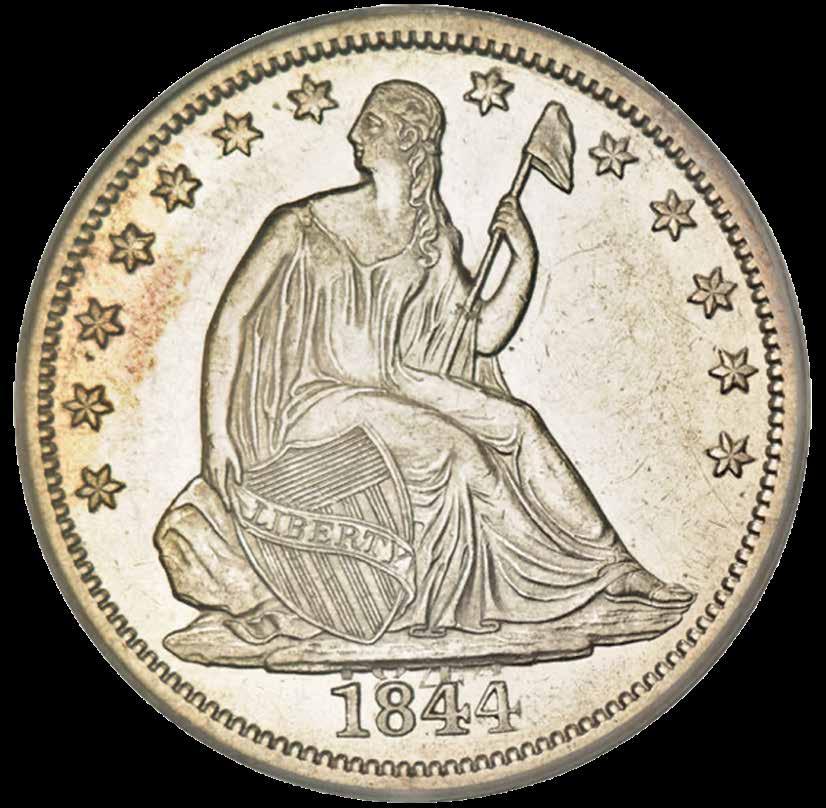
Cover image: Can you attribute this well-known Seated half dollar variety? Send guesses to leonard_augsburger@hotmail.com
The E-Gobrecht is an award winning informal electronic publication of the Liberty Seated Collectors Club (LSCC). The LSCC is a non-profit organization dedicated to the attributions of the Liberty Seated U.S. Coin series. The LSCC provides the information contained in this “electronic” e-mail newsletter from various sources “free of charge” as a general service to the membership and other subscribers with a numismatic interest. You do
not have to be a LSCC member to benefit from this newsletter; subscription to the E-Gobrecht is available on a complimentary basis to anyone. All disclaimers are in effect as the completeness and/or accuracy of the information contained herein cannot be completely verified. Contact information for LSCC and this publication can be found on the page 2.
President’s Message
Len Augsburger
Welcome to the April E-Gobrecht, and many thanks to this month’s contributors, including Jack Young, Jeremy Eaton, Ken Otto, Jeff Pritchard, and Mike Verhulst.
A shout out to Rich Chillingworth is in order, who correctly attributed last month’s cover coin as an 1843 50c WB-34. This month’s coin may be less of a challenge, but nevertheless I invite readers to submit their guesses.
LSCCers have answered the recent call for volunteers, and there are a couple developments in that area. Mike Rupert has taken over as Treasurer and is busy poring over our financial data. Mike is from Ohio and is well-known to club members in that area. On the E-Gobrecht front, Mike Fleming will be assuming the
Editor position starting with the May issue. Mike has not been collecting long but pursues both Barber and Liberty Seated coinage. Welcome to both Mikes!
As we have done at the last couple Central States Numismatic Society shows, our club meeting on Friday, April 24, 9AM Central, will be live-streamed via the NNP Symposium. The Zoom link is not yet available but will be posted shortly before the show at the NNP Symposium site: https://nnpsymposium.org/. Russ Bega, Chief Operating Officer for Harlan Berk Rare Coin, will be speaking on the precious metals markets and their impact on the rare coin trade. If you are not attending the show in person, I hope to see you online. Onward!
Monthly E-Gobrecht Newsletter
Advertising Rates
(Prices are per issue. All ads should include some Liberty Seated coins and/or related material.)
Full Page $100
Half Page $ 50
Quarter Page $ 30
Inquires & Special Rates: Contact Advertising Manager
Jeff Pritchard at jjpsr2@gmail.com
Deadline: 25th of the month prior to month of issue
For Advertising in The Gobrecht Journal, see contact above.
Donating Coins to the Liberty Seated Collectors Club?
By Jeff Pritchard – LSCC #1759
Aside from his numismatic interests, Pritchard is both a retired Certified Financial Planner (CFP®) and Chartered Advisor in Philanthropy (CAP®). (Always consult your tax professional when considering a charitable contribution!)
Now that the Liberty Seated Collectors Club has attained Public Charity (501c3) status, charitably inclined collectors can contribute funds to LSCC, just as they would to any other charitable organization. However, a question we often hear is whether someone can donate coins to LSCC and get a charitable tax deduction in the process? The short answer is “yes,” while this article addresses the sometimes-confusing aspects of why and how to do so.
Philanthropic collectors may want to consider donating coins themselves to support their favorite numismatic organizations.
Why should I consider donating coins to the Liberty Seated Collectors Club?
1. First and foremost, donating coins to LSCC provides financial support of our long-term mission; to enhance numismatic education and advance the study and appreciation for the coins of Christian Gobrecht.
2. Avoiding capital gains taxes. If you own coins that have enjoyed significant appreciation, the sale of those coins would normally trigger a tax liability. Adding insult to injury, coins and collectibles have an unusually high capital gains tax rate; as high as 28%. Add in the Medicare 3.8% surcharge and possible state taxes and the tax can amount to a considerable chunk!
3. By donating coins you may receive a charitable tax deduction, reducing your taxable income.
4. Depending upon your “age and stage” donating some of your coins can be an effective way to reduce your taxable estate.
Donating coins themselves can eliminate capital gains taxes and provide a charitable deduction to your taxable income
What are the required administrative procedures to donate coins?
First off, it’s important to discuss any contribution plans with the Liberty Seated Collectors Club to ensure the club is willing and able to accommodate your giving plans. Secondly, you’ll want to create a letter of agreement between yourself and LSCC to document the transfer of ownership. Third are the requisite IRS reporting forms. The table below summarizes the administrative responsibilities of both the Donor and LSCC for a donation of coins:
What does the required “qualified appraisal” for coin donations above $5,000 entail?
The purpose of a qualified appraisal is simply to ensure the value of the contributed coin(s) is in the ballpark of what the donor is claiming. The appraisal itself should include:
• Detailed description of the item(s) including country of issue, denomination, date, mint, grade, TPG information.
• Digital, or actual photo of the coin(s).
• Fair market value as of the date of donation based on industry publications, auctions results, etc. As to the Appraiser:
• The appraiser must be qualified (verifiable education or professional experience) and be independent of the donor. (An arm’s length relationship.)
If I contribute six $1,000 coins to LSCC, would that avoid the qualified appraisal requirement?
Probably not. If the coins are all of a similar nature, or derived from the same collection, the IRS aggregates your gifts, which would require an appraisal of the six coins.
My coin(s) have appreciated in value. Can I deduct the current market value?
A donor can deduct the market value for donated coins, versus their often lower cost basis so long as the following conditions are met:
$250–$499 None
$500–$4,999 a)File Form 8283 with Federal Income Tax Filing declaring date and value.
b)Draft letter transferring ownership.
$5,000–$19,999 a)File Form 8283 with Federal Income Tax Filing declaring date and value.
b)Draft letter transferring ownership.
c)Attach a summary of qualified appraisal.
$20,000–$49,999 a)File Form 8283 with Federal Income Tax Filing declaring date and value.
b)Draft letter transferring ownership.
c)Attach a summary of qualified appraisal.
$50,000 or Above a)File Form 8283 with Federal Income Tax Filing declaring date and value.
b)Draft letter transferring ownership.
c)Attach a summary of qualified appraisal.
a)Provide a writen receipt
a)Provide a writen receipt
a)Provide a writen receipt
b)Sign Form 8283 (Part V)acknowledging intent of “related use.”
a)Provide a writen receipt
b)Sign Form 8283 (Part V)acknowledging intent of “related use.”
a)Provide a writen receipt
b)Sign Form 8283 (Part V)acknowledging intent of “related use.”
1. The coin(s) have been held by the donor for 12 months or longer.
2. LSCC can use the coin(s) to further its charitable purpose. [What the IRS refers to as “related use” –Section 170 (e) (1) (B) (i)]. For example, if the donated coin(s) can be displayed at coins shows, furthering our educational mission, that would qualify. But if instead you chose to donate the coins to your local food bank, that wouldn’t further the food bank’s mission, and so the donor could only deduct the lessor of the cost basis or the current value.
A counterintuitive (frustrating) requirement, even if circumstances only allow you to deduct the cost basis of the coin(s) you’re contributing, if the current value is above $5,000., you still need to obtain the qualified appraisal – even if you’re not really using it.
What if LSCC auctions my coins and buys coins with a LSCC related use. Would that qualify for a market value tax deduction?
Probably not. The IRS has taken the view that “auctions” are not a charitable organization’s primary charitable purpose, which would apply to LSCC, or even the ANA, ANS, etc. The donor in this example should deValue of Donated Coin(s)
d)May trigger IRS Art Advisory Panel review.
Donated coins valued above $5,000 require a qualified appraisal.
duct the lessor of the coin(s) cost basis or current market value.
Is there a dollar limit to how much I can donate?
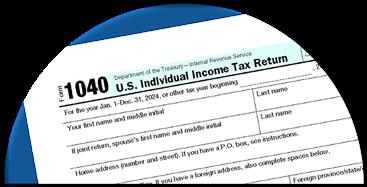
There is no dollar limitation on the amount you can donate, but there are limits to how much you can deduct from your taxable income in any given year. If you donate coins that meet the holding period requirement and further LSCC’s charitable purpose, the most you could deduct from your taxable income would be 30% of your Adjusted Gross Income (AGI). AGI is total income less above-the-line adjustments, or Line 11 on your 2025 Federal 1040 Tax Form.
However, if your donation was greater than 30% of your AGI, your excess deduction can be carried forward up to five years to offset future income. (There are two minor modifications to this rule taking effect in 2026 specifically for very high-income earners. Yet another reason to touch base with your tax professional.)
What if LSCC sells some or all of my donated coins within the next 3-Years rather than displaying them?
If LSCC sells your coin(s) within three years of your gift, it is the responsibility of LSCC to file IRS Form 8282, which identifies the donor and the original date of the gift. The donor would then have the responsibility to revise their charitable donation valuation down to their cost basis.
Any exceptions to this 3-Year lookback rule?
Yes, although a somewhat obscure one. If within the 3-year period, LSCC submits a written statement “under penalty of perjury,” to the IRS, saying that it had become “impossible” to continue using the coin(s) for a related use, along with the evidence of why it was impossible, the IRS will not look to the donor to recapture the difference in cost vs market deduction. [Section 170 (e)(7) (D)].
Isn’t there a new tax rule that allows me to get a charitable tax break even if I don’t itemize deductions?
Yes – brand new for 2026 – and somewhat of an his-
toric first. Even if you take the standard deduction and do not itemize deductions, you can take up to $1,000 off your taxable income ($2,000 for joint filers) for charitable contributions. All the appropriate guidelines for donating coins still apply, but it provides a welcome tax-break for the 90% of Americans that do not itemize deductions.
What about bullion coins that have legal monetary status in their country of origin, such as Maple Leafs or American Eagles? Can I deduct the current market value if I contribute them to LSCC?
This is the grayest of gray areas. IRS formal regulations do not specifically address this issue. There was a Private Letter Ruling (PLR#9225036) stating that Krugerrands and Maple Leafs were equivalent to cash and thus circumvent all the various requirements to deduct market value vs cost basis. However, Private Letter Rulings are purposely very narrow, and to this author’s knowledge the IRS has not specifically ruled in regard to American Eagles.
I’m a licensed coin dealer. If the 12-month holding period and related use requirements are met, can I deduct the market value of donated coins?
The IRS views a dealer’s coins as business inventory, and eventually subject to regular business income tax, not capital gains taxes. As such, a dealer contributing rare coins to LSCC would only be able to deduct the lessor of the coin’s cost basis, or their current market value. (And obviously a dealer isn’t permitted to do their own qualified appraisal.)
Please call us if you wish to consider a charitable contribution of coins. We cannot give tax advice, but we can let you know if what you’re considering would be feasible from the standpoint of the Liberty Seated Collectors Club.
The above is for informational purposes only. Everyone’s financial, tax and family circumstances are unique, so one should always consult with their tax professional when considering a substantial charitable contribution.
An Update on A Family of Counterfeit “Notched R” Trade Dollars
By Jack D. Young
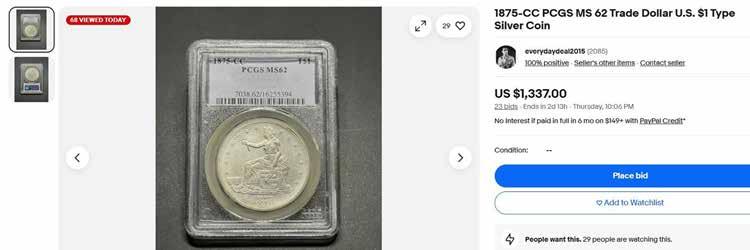
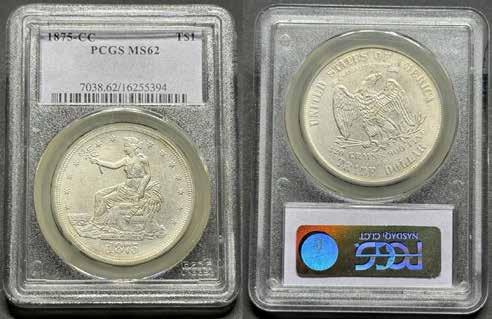
Dumpster diving on the “Bay” (ebay.com) recently turned up an interesting “PCGS” Trade Dollar for sale.
Images weren’t great but the reverse had the look of one I wrote about in the Summer 2025 Gobrecht Journal (#153) article on counterfeits, which I nicknamed the “notched R” Trade $’s:
Author’s Example of the “Notched R” family of Trade Dollars
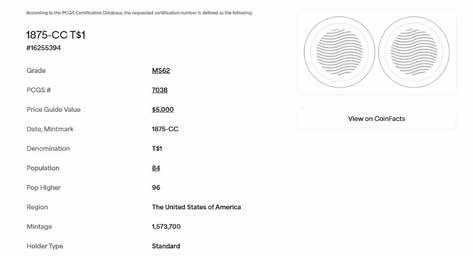
Checking the on-line PCGS site for the cert # on the label was no help, as there were no images or auction records available there.
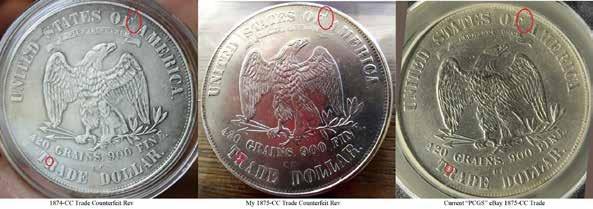
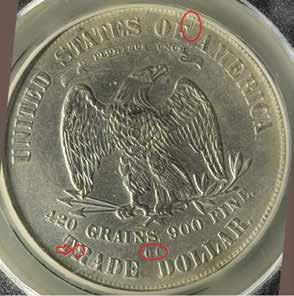
So I asked the seller for a better reverse image and that sealed the deal- a definite counterfeit coin! Image shows a known counterfeit 1874-CC, my 1875-CC and the subject example reverses:
Note, the subject example is an 1875-CC like mine from the article, which does not attribute as a genuine variety in any of my references. It has the notched “R” feature and a die break at the “F” in OF like most examples seen. I did note there are examples without the die break, so there appear to be different die states of the common reverse die.
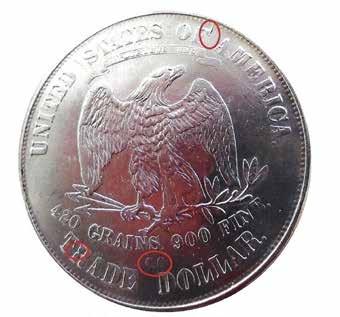
And a full image of the reverse and matching attribution marks follows:
Subject reverse and matching attribution marks
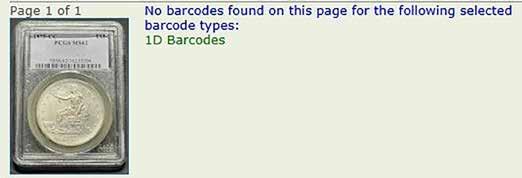
Screen-shot from the PCGS site for the claimed cert #
3 fakes and their reverses!
Not an expert on PCGS slabs, my go to guy on them responded that it was fake as well. I did note scanning the label barcode came up “no barcode found”, another good clue…
To my eye, surfaces look odd for an MS!
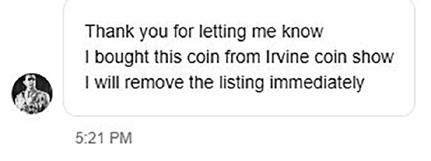
I notified eBay as well as my contact at PCGS while the bids keep climbing past $1,600.00 with two days left, but the seller actually ended the auction after a couple of messages between us:
Images posted in the Bay listing
Grade-Flation or Maturing Standards?
By Jeremy Eaton, LSCC Member #2895, SHS Member #36
Anyone who has spent any amount of time around numismatics has heard the term Grade-Flation. This term is generally meant negatively and is pointed towards ANACS, NGC & PCGS in the 2000s/2010s where the once rigid grade standards started slipping. This is also why you may see higher premiums in the marketplace commanded from PCGS Old Green Holders, Fatty NGCs, or soapbox ANACS holders. I believe CAC stickering and recently CACG has forced the other grading services to true up their standards or risk losing their reputations. In my opinion, PCGS in particular has really upped their game in recent years and are maintaining their “premium” status.
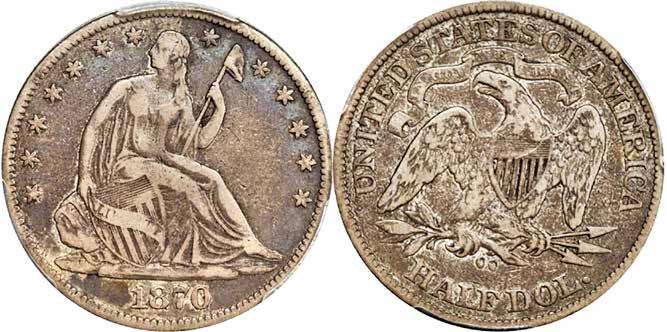
Case in point is this attractive 1870-CC WB-2. If I were to grade this, I would say it is a strong VG10, per-
haps even breaking into F12 territory. Going by CAC standards, it would be a VG coin as JA requires full Liberty in Fine which as you can see, it’s a few letters shy of.
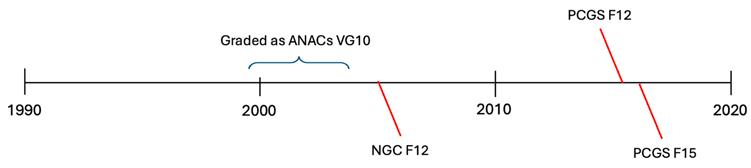
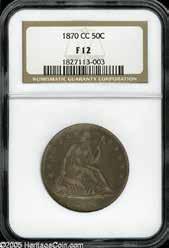
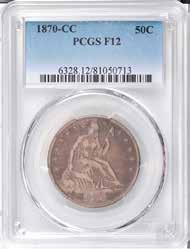
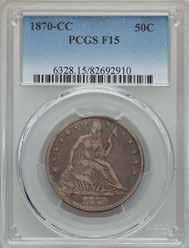
From my first sighting of this coin in a 2004 Heritage sale until it’s mostly recent sighting in a 2017 Heritage sale, it has bounced between 4 different holders, climbing the Sheldon scale along the way.
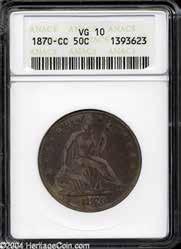
• 2004 ANACS VG10
• 2005 NGC F12
• 2016 PCGS F12
• 2017 PCGS F15
Judging by the generation of ANACs holder, I believe it was originally graded between 1999 and 2004 where it was then sold at auction.
Here are the four holders. There are a few identifiers that tell me this is the same coin but the one most visible here is the stark line above Liberty’s head where it is darker on the right and lighter on the left. Also, at the base of the rock where Liberty is sitting you can see a spot where the coin is much lighter in color than the rest of the coin.
This 1870-CC didn’t improve magically between 2004 and 2017; the standards did—or rather, they drifted, then corrected. Grade-flation gave us temporary highs
on paper, but the market has a way of self-correcting, and CAC’s role (bolstered by CACG) has accelerated that process. PCGS, sensing the shift, has tightened up and reclaimed much of its old prestige.
For collectors, the lesson is clear: chase quality and consistency, not just numbers on a label. The days of easy upgrades may be fading, and that’s a good thing— because in numismatics, the real premium has always belonged to coins (and services) that tell the unvarnished truth.
REGIONAL NEWS: April Brings the LSCC Regional Team to Central States and Manchester
By Ken Otto, LSCC Regional Team Leader, LSCC#2674
Late February and early March had two major coin shows that were back-to-back. The ANA National Money Show (ANA Winter Show) in Savannah and the Whitman Spring Expo in Baltimore were unusually close to each other in the coin show schedule this year. The fact that the two shows were only a week apart seemed to have had a negative impact on attendance at both shows. The LSCC regional team participated in both major coin shows and enjoyed both.
There will be many regional coin shows over the next few months and the LSCC regional team will be present at many of them. Of particular note, is the annual Cen-
tral States coin show in Schamburg in late April and the semi-annual New Hampshire Coin & Currency Expo in Manchester in early April.
The regional LSCC team participated in the Whitman Baltimore Spring Expo which was held on Mar 5-7 at the Baltimore Convention Center, 1 West Pratt St, Baltimore, MD 21201. The Whitman Baltimore show is a major coin show and a club meeting was conducted during the event. While the overall show was well attended by national and regional coin dealers, the public attendance was lower than usual. Hopefully, the attendance will pick back up to the normally strong level
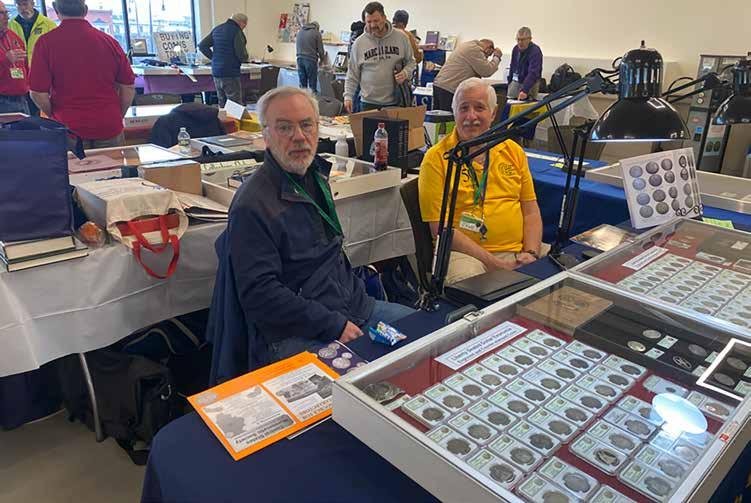
John Frost & Verne Pitman at the Manchester Show
during the fall Whitman Baltimore Expo in November. The club table was hosted by John Frost, Dennis Fortier, Greg Johnson and Ken Otto. We exhibited Liberty Seated coinage during the Civil War Years.
The regional team plans to participate in the New Hampshire Coin & Currency Expo which will be held on April 3-4 at the Doubletree by Hilton Manchester Downtown, 700 Elm St, Manchester, NH 03101. The club table will be hosted by Joe Cazassa and John Frost.
The regional LSCC team plans to participate in the Georgia Numismatic Association coin show to be held April 17-19 at the Dalton Convention Center, 2211 Tony Ingle Parkway, Dalton, GA 30720. This is an important regional show in north Georgia. The club table will be hosted by Dennis Fortier and Ken Otto.
The regional LSCC team will participate in the Central States coin show to be held April 23-25 at the Renaissance Schaumburg Hotel, 1551 North Thoreau Dr, Schaumburg, IL 60173, The Central States coin show is a large coin show that we look forward to each year. The
club table will be hosted by Dennis Fortier, Ken Otto, Craig Eberhart and others. A club meeting will be held at the show.
The regional team will also participate in the Pawcatuck Valley Coin Club (PVCC) annual coin show to be held May 3 at the Holiday Inn, 10 Laura Blvd., Norwich, CT 06360. The club table will be hosted by Verne Pitman.
The regional LSCC team will participate in the PAN spring coin show to be held May 28-30 at the Monroeville Convention Center, 209 Mall Blvd., Monroeville, PA 15146. This is a very important regional coin show that is well attended. The club table will be hosted by John Frost and Greg Johnson.
The regional team plans to participate in the Cincinnati Numismatic Expo to be held June 5-6 at the Sharonville Convention Center, 11355 Chester Rd., Sharonville, OH 45246. This is the second year in a row that we have had a club table at this show. The club table will be hosted by Dennis Fortier and Ken Otto.
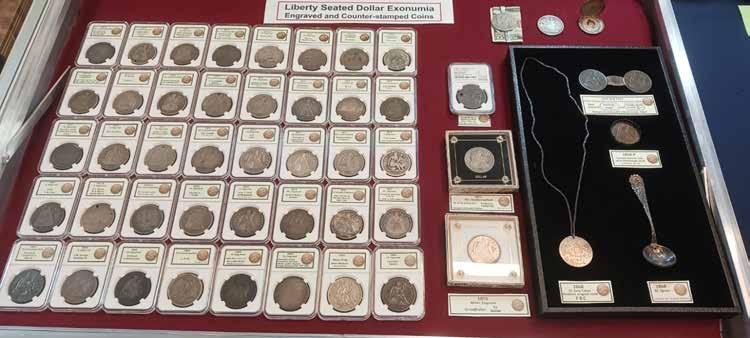
John Frost exhibits his new holders for the Liberty Seated Dollar Exonumia collection.
An Interview with Mike Verhulst
Like many collectors, Mike Verhuslt (LSCC #2586) was initially attracted to the hobby via the ubiquitous Whitman blue folders. He started with cents, searching through change jars, and soon learned that many of the dates were more easily acquired at coin shops, albeit at a higher price. The search for wheat cents eventually branched out to Indian cents, Buffalo nickels, and Mercury dimes.
Collecting paused during the teenage years, a not untypical pattern, and resumed after graduating from college and entering the work force. Mike noticed how ebay carried multiple listings for just about any coin you coin think of, and so the Indian cent album was resurrected. Once again, Mike cast a wider net over time, pursuing Standing Liberty quarters as well as Bust quarters and halves. These projects concluded quickly and Mike wished to seek a longer-term challenge.
Mike was of course familiar with the Standing Liberty quarters series key, the 1916 issue, with a production of 52,000 pieces. But while the mintage was seemingly low, the availability of the coin was remarkably high. Indeed,
PCGS alone has certified over 2,000 examples, and they are always available at a price (a quick check of just one site - collectorscorner.com - reveals four pieces for sale).
Liberty Seated coinage does not share the same profile – within this context, rare really means rare! Mike looked at the auction archives for issues like the early Carson City pieces and quickly grasped the reality of the situation. Mike settled on the quarter series, thinking the dimes were on the small side, and besides he had had previous experience collecting quarters in other series.
Mike made purchases from major auctions and attended larger shows in his area. He worked with about half a dozen dealers who specialize in Liberty Seated coinage, names familiar to most of us. He also checked online auctions and dealer sites on a daily basis and further traded coins with fellow collectors.
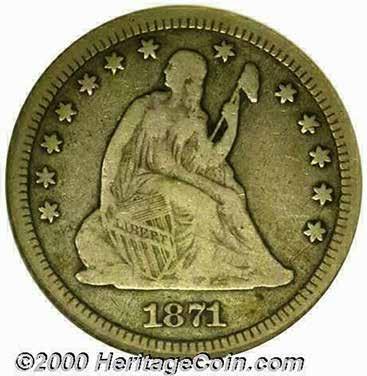
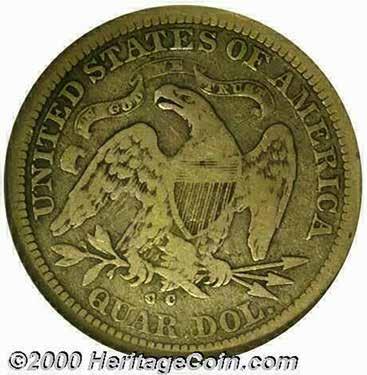
Most of his coins have been upgraded two or three times, with Gerry Fortin Rare Coins acting as an outlet for duplicates. A notable example is the 1871-CC quarter, which he first acquired in AG3 from the Stack’s
1871-CC 25c from the Verhulst collection, PCGS F12. Images courtesy of Heritage Auctions.
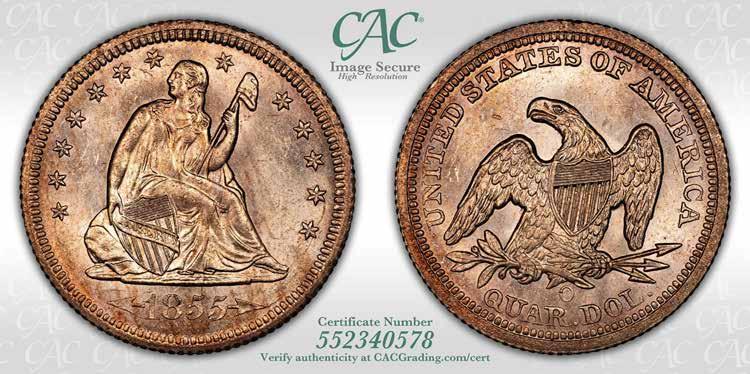
57th Street Sale. He later purchased a PCGS VG10 CAC piece and today owns an NGC F15 coin, one of his favorite pieces in the set, in addition to an 1855-O in PCGS MS63 CAC acquired from Paradime Coins.
Most of his coins have been upgraded two or three times, with Gerry Fortin Rare Coins acting as an outlet for duplicates. A notable example is the 1871-CC quarter, which he first acquired in AG3 from the Stack’s 57th Street Sale. He later purchased a PCGS G6 CAC piece and today owns a PCGS F12 (crossed from an NGC F15) coin, one of his favorite pieces in the set, in addition to an 1855-O in CACG MS63 CAC acquired from Paradime Coins.
Mike’s key criteria for evaluating coins are color and eye appeal. Indeed, he would prefer a colorful MS63 example over an untoned Gem. He is obviously a stickler for originality, with an impressive 80% success rate with CAC submissions. Mike’s coins are illustrated on the PCGS set registry, and a careful examination of the
images will further reveal his taste as a collector.
So why sell now? Mike views the current market as strong and has had difficulty upgrading pieces in recent years. As he is active on the PCGS Set Registry (under the collection name “Mike’s Seated Quarters”), the lack of upward mobility has also contributed to a desire to sell. He intends to stay active in numismatics, perhaps pursuing the “box of twenty” approach, possibly including non-Liberty Seated material.
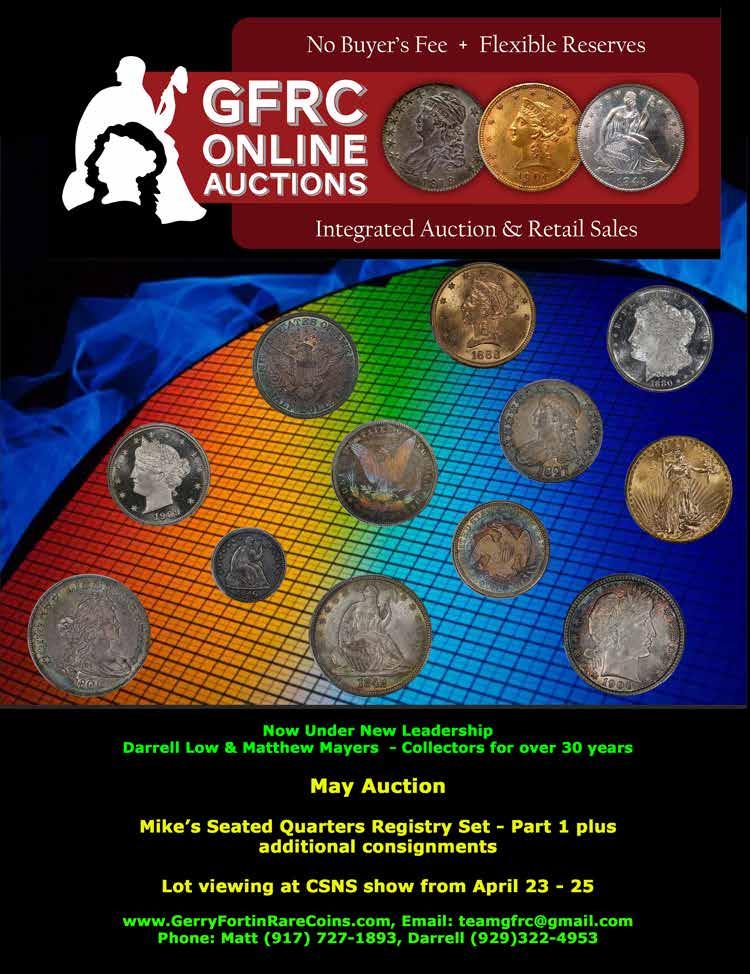
Mike’s Seated quarter set will be exhibited at the Central States show (April 23-25 in Schaumburg, IL) at the Gerry Fortin Rare Coins (GFRC) table. GFRC was recently acquired by Darrell Low and Matt Mayers, and this represents the first auction sale under the new management. This will be an online sale, closing Saturday, May 9. This sale will include part one of Mike’s set, with the second half to appear following the ANA convention. See the GFRC website (https://212collectibles. com/) for further information.
1855-O 25c, CACG MS63. Images courtesy of CAC.
This & That
Kudos to Paradime Coins principal Shannon Rajkatkul, who was profiled in the April /May issue of COINage magazine.
A big congratulations to John Dannreuther on the publication of his masterpiece on United States silver proof coinage. Yes, Liberty Seated proof coinage is thoroughly detailed. Despite the low mintages, more than a few of these issues have multiple die varieties. Why have a single 1875 proof quarter when you can have three different varieties? See orcararities.com for ordering information. This massive two-volume set is not cheap, but it costs less than just about any Liberty Seated proof coin. If John is not awarded the Numismatic Literary Guild Book of the Year prize for this effort, I will be shocked! Elsewhere, on graysheet.com, Eric Brothers compares the rarity of the 1870-CC and 1870-S half dollars.
Easy question, right? Not so fast. Brothers points out that fewer 1870-S half dollars have been certified, despite the ostensibly large production of the coin. For more, see the article at: https://www.greysheet.com/news/story/a-rare-cointhat-has-no-business-being-rare
Finally, Eric Brothers also penned a piece for the March 10 Numismatic News, “Seated Liberty Coinage: America’s Most Ridiculed Design.” Brothers details some of the early criticism surrounding the design and reviews the design considerations in moving from the No Drapery to With Drapery concept. Although I am a Numismatic News subscriber, I was able to find this article online at: