

IN LONDON
English Baroque Soloists
Peter Whelan – conductor
Christophe Coin – cello
Thursday 18 June 2026
7.30pm
St Martin-in-the-Fields, London
Monteverdi Choir & Orchestras presents
HAYDN IN LONDON
English Baroque Soloists
Peter Whelan – conductor
Christophe Coin – cello
HAYDN Symphony No. 100 in G major ‘Military’
HAYDN Cello Concert No.2 in D major, Hob. VIIb/2 interval
J.C. BACH Symphony in G Minor, Op. 6, No. 6
HAYDN Symphony No. 104 in D major ‘London’
SIGN UP FOR OUR NEWSLETTER What’s On | News | Reviews | Media PROGRAMME
HAYDN IN LONDON Scan to listen on Spotify

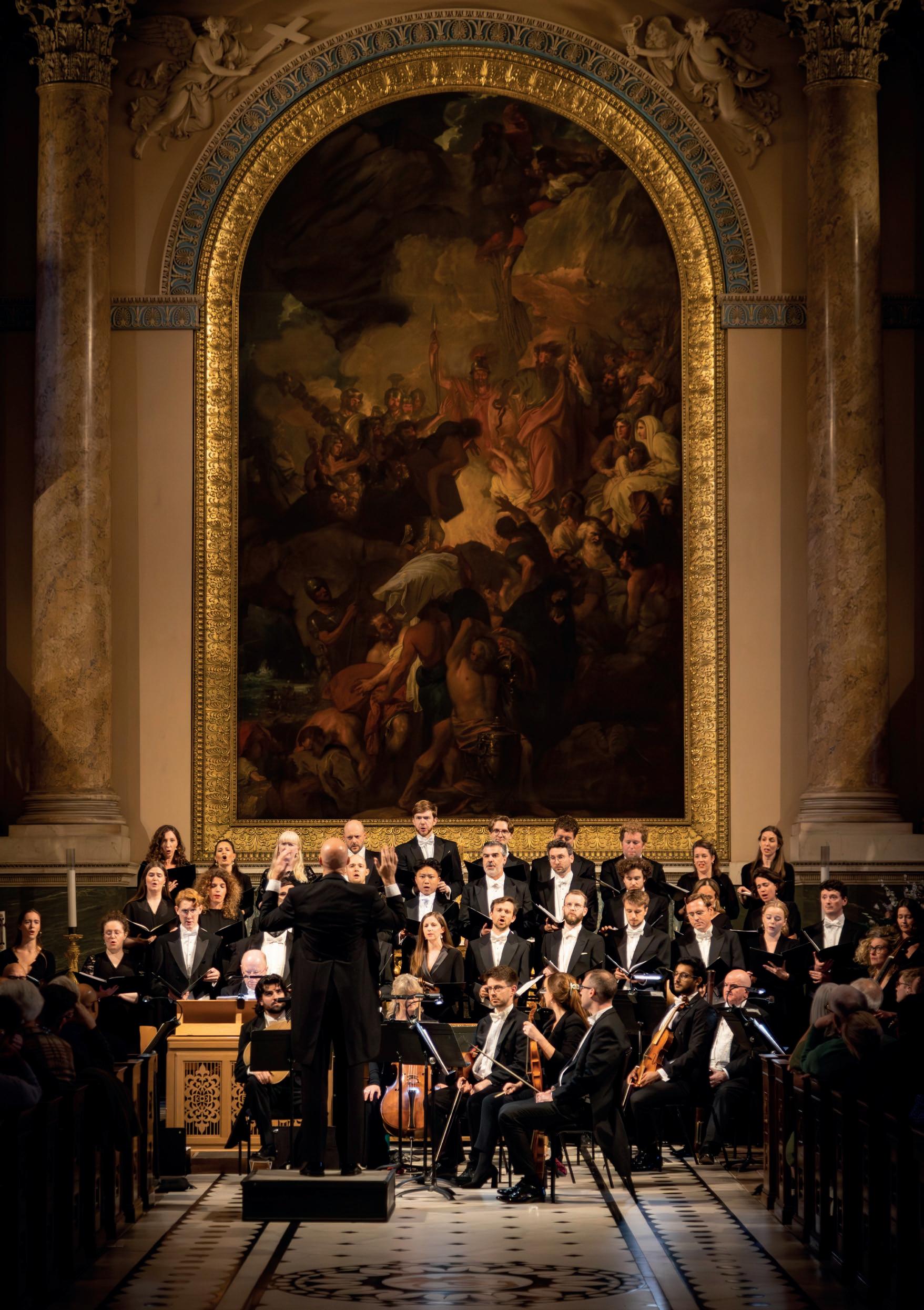
The Monteverdi Choir & Orchestras is proud to call St Martin-in-the-Fields its London home, and in 2026 this extraordinary building celebrates its 300th anniversary. To mark the occasion, tonight’s programme takes us back to the late Eighteenth Century, and the music that dazzled this neighbourhood at a time when London stood at the centre of European musical life, and Franz Joseph Haydn was its most celebrated visitor.
Haydn arrived in London in 1791 as an international celebrity, and audiences flocked to hear his latest symphonies (like the ‘Military’ and ‘London’ we’ll hear tonight) at the fashionable Hanover Square Rooms, only a short distance from St Martin’s. A previous mainstay of that concert scene had been the ‘London Bach’ (J.C., the youngest son of J.S.), whose G minor symphony opens the second half. Scholarly debate still rages over whether Haydn’s Cello Concerto No. 2 was premiered in London or not; we welcome renowned French period cellist Christophe Coin to perform it, making his MCO debut. Peter Whelan returns to conduct his second concert of the season, following March’s performance of Bach’s St John Passion ‘full of driving cinematic excitement and touching humanity’ (The Guardian).
This is our final St Martin’s concert of this season; we return in November with a star-studded cast for Handel’s Theodora, conducted by Christophe Rousset at the culmination of a South American and European tour. But we will be performing in London before then, as we return to the BBC Proms in August, for music by another European composing for London: Weber’s magical opera Oberon, in its 200th anniversary year, with the Monteverdi Choir and the Orchestre Révolutionnaire et Romantique conducted for the first time by Sir Mark Elder.
PROGRAMME NOTES
By Stephen Roe
Dr Andrew Frampton
The link between all the works in tonight’s programme is London: Johann Christian Bach’s main residence for the last twenty years of his life, and where Joseph Haydn spent two highly productive stays between 1791-2 and 1794-5. At least three of the works tonight were premiered in the Hanover Square Rooms, founded and inaugurated by Johann Christian Bach and Carl Friedrich Abel in their eponymous concert series from 1774 onwards. It was later the home of Johann Peter Salomon’s concerts where Haydn’s twelve London symphonies were first heard in the 1790s. Bach and Haydn never met, but they both knew each other’s music. In the last years of Bach’s life, Haydn’s music was performed in the Bach-Abel concerts and Bach’s symphonies were programmed in Haydn’s London concerts. They both shared a patron in Willoughby Bertie, 4th Earl of Abingdon, a promoter of concerts at Hanover Square in the 1780s.
Bach’s concerts and their successors were by subscription, open to both men and women. The public concert was one of the few venues unchaperoned women could attend. Tickets were issued separately for men and women. While they could be exchanged man to man or woman to woman, they could not be swapped between the sexes. Women slightly outnumbered men at Bach’s concerts.
The Bach-Abel Concerts bank accounts survive from between 1773-6, revealing the names of Bach’s audience, which comprised mostly the new middle class, merchants, businessmen, their wives, sons and daughters, the gentry and soldiers, with a sprinkling of nobles, politicians and court servants. More or less the same people attended the same concerts each week. The audience was knowledgeable, socially-interconnected and musically aware. Haydn could rely on the audience’s expectations in a symphony, concerto or sonata and, when he wished, confound them. The ‘surprise’ in the slow movement of his 94th symphony kept his listeners on their toes. A musically informed audience helped both Bach and Haydn in the development and style of their compositions. Both introduced a popular manner in their music, Bach using Scottish airs in his concertos, and Haydn tailoring his music to his audience, always ready to surprise and thrill, both men capitalising on their superb musicians and soloists, some of the best in Europe.
Paradoxically, Bach’s Symphony in G Minor, Op. 6, No. 6, Johann Christian’s most famous symphony, may be the only work here whose performance at the Bach-Abel concerts is in doubt. It is completely atypical of Bach’s mature musical style, with all three movements in a minor key; its ‘Sturm und Drang’
mood remote from Bach’s generally sunny style. It appeared in 1770 in a set of works published by the Amsterdam printer Hummel, almost certainly without Bach’s permission. While there are few reasons to doubt Johann Christian’s authorship, it is hard to place it in the context of Bach’s output. The first movement, with its roiling tremolandos, dramatic changes of direction and fierce intensity, recalls the music of Bach’s elder half-brother, Carl Philipp Emanuel, with whom Christian studied in Berlin after the death of Johann Sebastian in 1750. The creepy tread of the C minor slow movement also harks back to Emanuel and the Berlin tradition. The finale in 12/8, a practically unknown time signature in Christian’s works, is marked ‘Allegro molto’, in contrast to the more
sedate finales of all his other symphonic works. It flies off like a rocket and the final coup de théâtre is unprecedented in Bach’s music. The jury is out on where this work fits into Bach’s symphonic output. It is possible that it is a revised version of the Symphony which C.P.E. Bach records as having been written by Johann Christian in Berlin before he left for Italy in 1755 and which has hitherto been regarded as lost. Because Bach’s concert programmes are not described in detail in the London newspapers, we have little idea which pieces were performed. If the G minor symphony is a Berlin work, it is likely that Bach did not perform it in London, where the emphasis was always on new music, rather than the revival of earlier compositions.
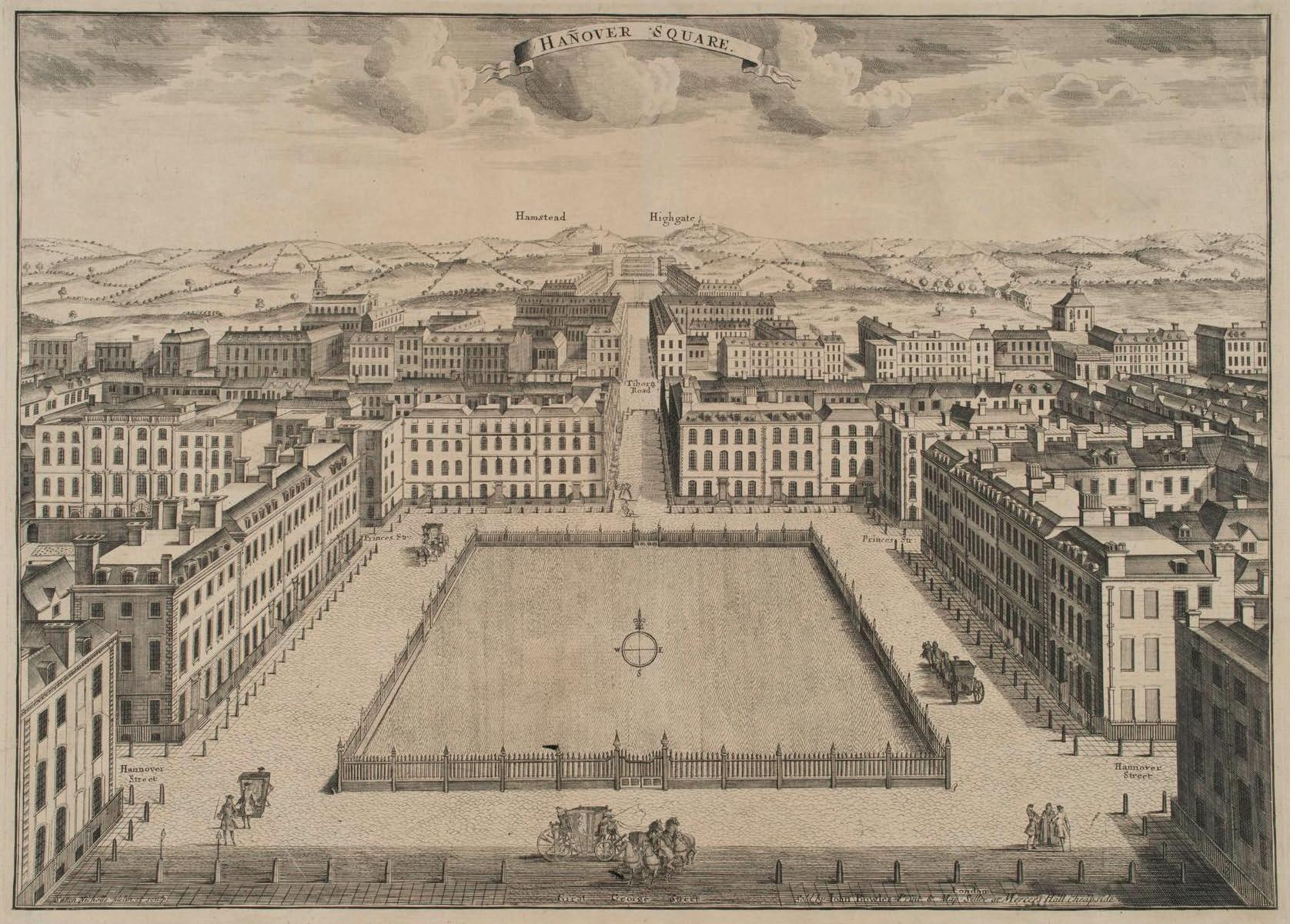
Sutton Nicholls (1689-1729): Hanover Square in the 1700s
Haydn’s D major cello concerto was long thought to be written in Esterházy for the virtuoso Anton Kraft. However, recent research by Thomas Tolley has shown that it was probably commissioned for Lord Abingdon’s Hanover Square concerts, which succeeded the Bach-Abel series after Bach’s death in 1782. Haydn’s autograph is dated 1783 and it was performed by the English cellist James Cervetto, a favourite collaborator of Johann Christian Bach, on 24 March 1784. Haydn was unable to travel to hear the performance. There is no indication that the composer and Cervetto ever met before Haydn’s London visits in the 1790s. It is Haydn’s second concerto for the instrument and with the later Trumpet Concerto is his greatest contribution to the concerto form. Like J.C. Bach’s concertos, it is in three movements but written on a more expansive scale. The virtuosic nature of the music far exceeds the normal fare at London concerts, and its length and difficulty would have surprised and enraptured the first audiences. Haydn was less at home with the concerto than with the symphony and this work has some strangely old-fashioned features. The ‘singing allegro’ style of the first movement is not unlike Christian Bach’s manner and the use of a dance movement (a gigue), as a finale, follows Bach’s usage. The oboes and horns have little independent material and mostly follow the strings and fill in the harmonies. The horns are silent in the short slow movement. Both instruments are denied the freedom they have in Haydn’s London symphonies.
The death of Prince Nikolaus Esterházy in 1790 released Haydn from amiable captivity in the Hungarian countryside and he could now travel and capitalise on the reputation built up over thirty years. In London, no longer constrained by princely taste, Haydn gained his musical freedom in the richest city in the world. The Symphonies Nos. 100 and 104, (composed in 1794 and 1795) show Haydn responding to this new freedom. The ‘Military’ Symphony was by far Haydn’s most popular work and one which for obvious reasons caused an immediate rapport with the audience. Picture the premiere. The audience spots several exotic instruments, associated with Turkish and military bands, 2 clarinets in C, triangle, cymbals and bass drum strung up high in early performances. But these are silent in the first movement. All expectations for a slow movement would surely incline towards a tranquil, unruffled oasis. But this is precisely where Haydn confounds his audience and shatters expectations: the new instruments enter with startling force in the C minor variant of the main theme. It is at once noble, heroic and not without menace: the trumpet fanfare towards the end paints not only the splendour of a regimental march, but the horrors of military conflict, at that time much of Europe being ablaze in the French revolutionary wars. After the Andante, Haydn withholds the Turkish instruments until they are unleashed towards the end of the finale, with many a merry, menacing and ardent thwack.
While the slow movement is indeed remarkable, the other movements too contain moments to make the
first audiences gasp and applaud: the wonderful introduction to the first movement with its modulations to distant keys and its disturbing air of mystery; the popular, whistleable tunes of the main material, and the sense of fear and threat which underpins much of the development sections. The Trio of the Minuet is also far from conventional, with its dotted rhythms and harsh fortissimo passages. The jovial finale, playful in its modulations and in the augmentations of the main theme in the development section, shows the audience just what Haydn can do with a seemingly artless tune. The 100th symphony was a real earopener in Hanover Square.
By contrast, Haydn’s last symphony, No. 104 contains less overt drama and humour than its predecessor. Brashness is absent and the only real joke occurs in the sudden silences of the Minuet. But it is arguably Haydn’s most skilful and greatest symphony. The solemn slow introduction to the first movement yields to the Allegro, and one of the composer’s most engaging and popular themes. The movement is monothematic, the main material serves both first and second subjects, with variety provided by counterpoints and changes in harmony and orchestral colour. Unusually a single theme dominates each of the first, second and fourth movements.
Once again, the slow movement contains several surprises, not least the unexpectedly martial sections of otherwise insouciant material. Haydn shows off his London flautist towards the end. The main material of the finale has a demotic feeling, some
writers finding references to London street-cries; others cite a Croatian folk-song and accompanying drone. In any event, its tunes speak directly to the audience: the skill and craftsmanship, the wit and imagination of this marvellous movement form a fitting farewell to Haydn’s symphonic career and to London, the city where he found such stimulation and contentment.
Dr Stephen Roe is a British-born Irish musicologist specialising in the Bach family. He has published over one hundred articles and several books, is a frequent contributor to music journals and scholarly publications and has lectured and broadcast widely about music. His catalogue of J.C. Bach’s autograph music manuscripts, letters and documents was published in 2025 and he is now engaged on a biography of the composer.
MCO’S 2026 ARTWORK
Our 2026 artwork mirrors MCO’s mission: to bring fresh perspectives, immediacy and drama to historicallyinformed musical performances. Applying the same principles to our visual identity, Matt Abel Smith’s designs for each concert draw on an artwork that is related, both historically and in subject matter to the repertoire, highlighting the close relationship between visual art and music.
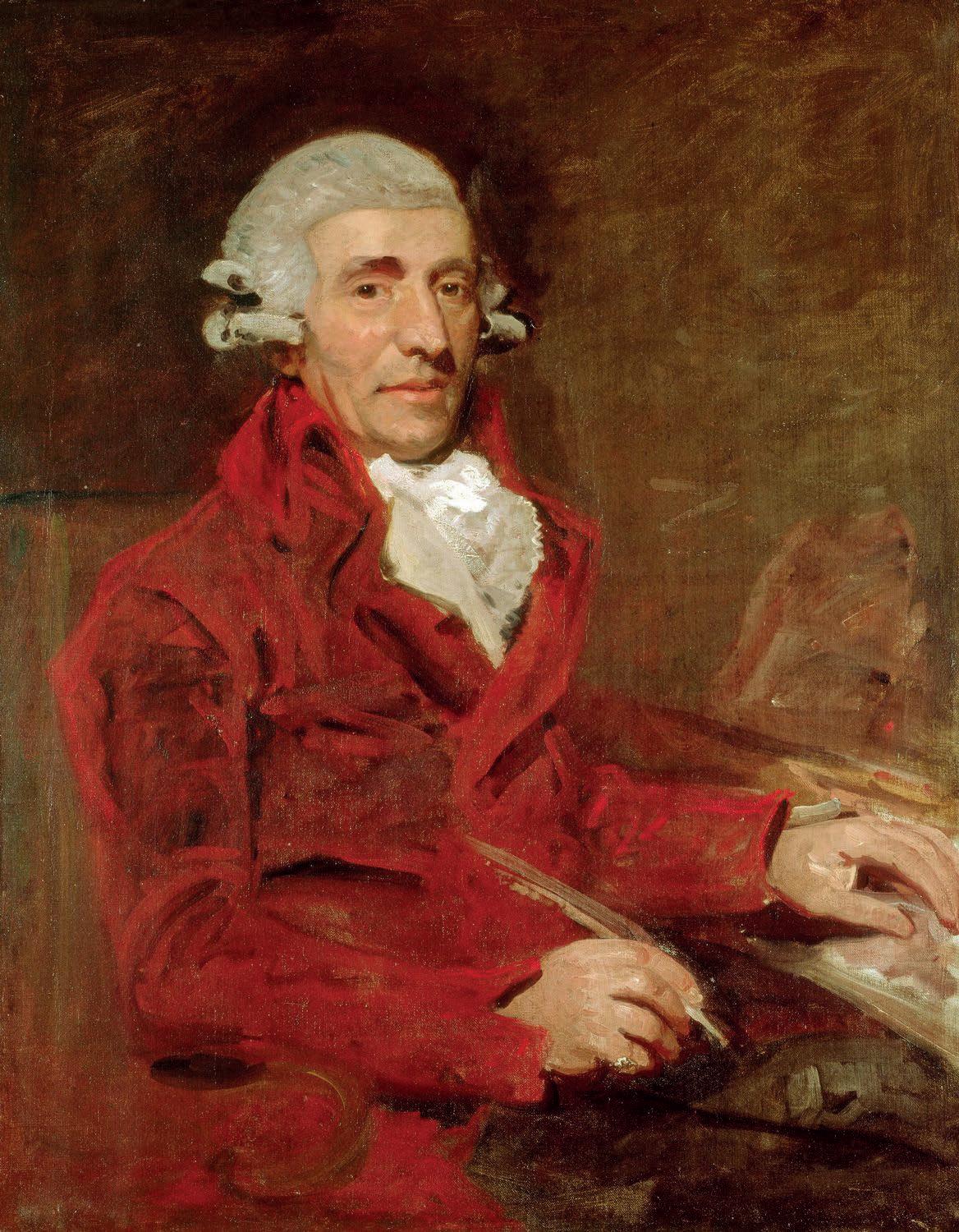
Portrait of Franz Joseph Haydn by John Hoppner (1758-1810)
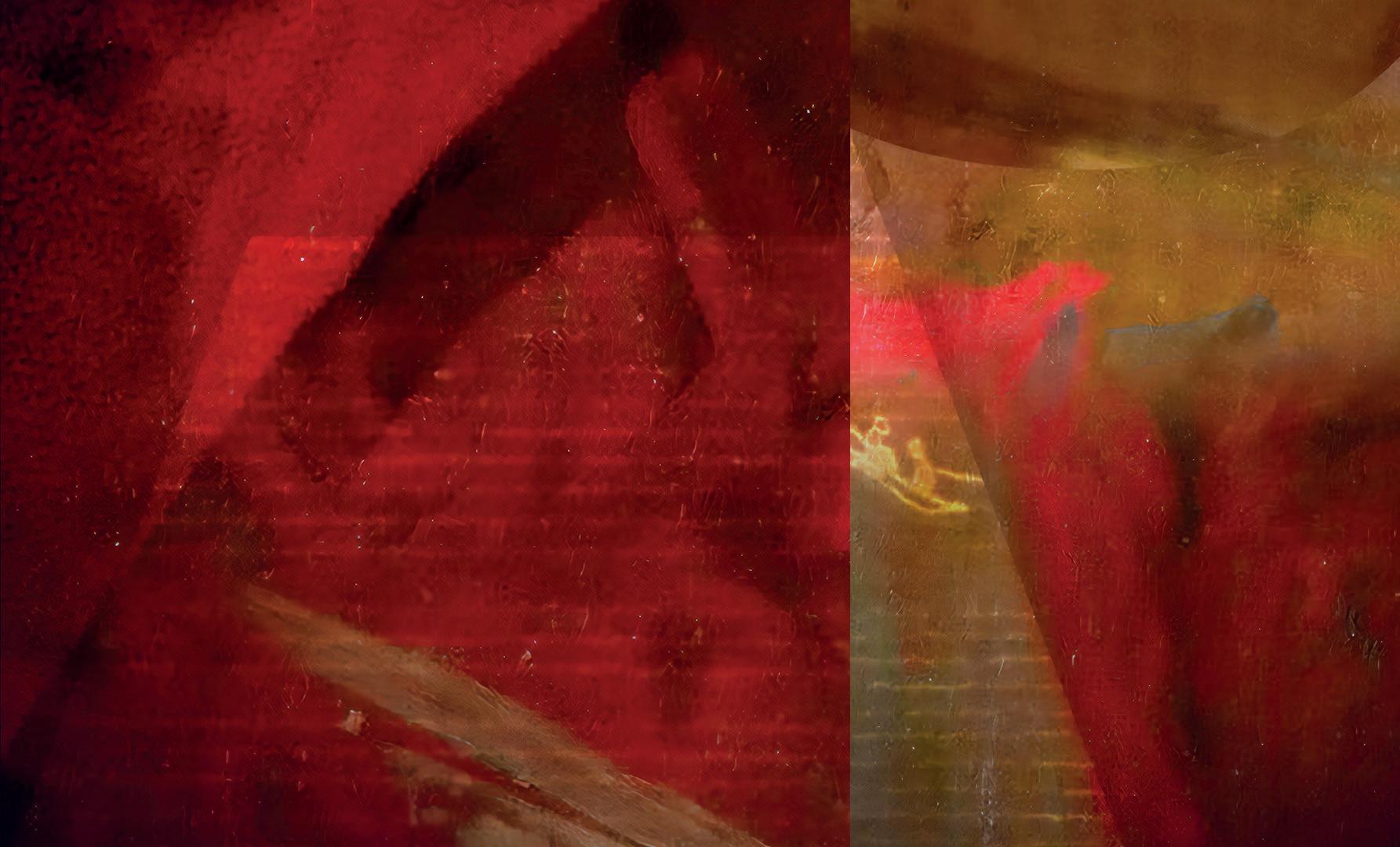
Taking closely cropped segments of the original artworks, each design borrows colour and texture from artists working centuries ago. For Haydn in London, the deep reds are taken from a portrait of the composer by John Hoppner, commissioned during Haydn’s first trip to London in November 1791 by George IV, then Prince of Wales. The portrait was unfinished by the time Haydn left the following May – and so it remained, only being delivered after the artist’s death in 1810. As a result, we see behind the curtain of a creative process: the facial features were praised at the time for being a great likeness to Haydn, but the red velvet jacket and bronze-hued background show a work still in progress and alive with possibility.
Overlaid in our artwork are etched lines from a print by Thomas Bowles, depicting the cityscape of London in 1751. Amidst a sea of detail, there are sights which would have been as familiar to Haydn as they are to us today - including the rippling waters of the Thames and the spire of St Martin-in-the-Fields punctuating the skyline.
ENGLISH BAROQUE SOLOISTS
The evening’s real glory was in the orchestral playing... The performance was revelatory.’ The Telegraph
For over 40 years, the English Baroque Soloists (EBS) has been one of the most innovative period-instrument ensembles, consistently challenging the preconceptions of audiences around the world. Equally at home in chamber, symphonic and operatic repertoire, its distinctively warm and incisive playing is instantly recognisable in music ranging from Monteverdi to Mozart. The orchestra has performed at many of the world’s most prestigious venues, including Milan’s Teatro alla Scala, the Concertgebouw in Amsterdam and the Sydney Opera House.
The orchestra’s 2026 season commenced with Bach’s St John Passion conducted by Peter Whelan in Barcelona, Budapest and London. In May, Jonathan Sells returned to conduct an immersive production of Purcell’s Dido & Aeneas, directed by Andrew Staples, in the dry dock of Cutty Sark in Greenwich, and on tour at the Bergen International Festival in Norway. This autumn, Christophe Rousset will conduct Handel’s Theodora on a tour to South America, central Europe and the UK, and in December, the EBS will perform a ‘Venetian Christmas’ with Francesco Corti and the Monteverdi Choir, exploring a programme of Monteverdi, Schütz and Gabrieli.
In February 2027, the orchestra will travel to the USA for a tour of Bach’s
St Matthew Passion with Masaaki Suzuki and the Monteverdi Choir, concluding at Carnegie Hall.
Highlights of 2025 included an all-Mozart programme with Marc Minkowski and the Labèque sisters, Bach’s 1725 cantatas with Masaaki Suzuki, and a programme of Bach, Purcell and Handel with Jonathan Sells, which toured to Aldeburgh and the Edinburgh International Festival. The year culminated with the orchestra’s first performances of Handel’s Messiah in almost three decades, touring to Paris, Rome, Milan and London, conducted by Christophe Rousset, and recorded for Harmonia Mundi.
In September 2025, MCO’s own record label, Soli Deo Gloria, released
its first recording of the EBS since the pandemic—an album of Charpentier Christmas music, recently selected as the benchmark recording of his Messe de Minuit pour Noël by France Musique. The album was recorded in December 2024 during a European tour conducted by Christophe Rousset, with performances described as ‘joyous and immaculate’ (The Guardian), ‘a refined festive celebration’ (The Times) and ‘an enchanting musical journey, showcasing their exceptional artistry and energy’ (Operawire).
Founded in 1978 by Sir John Eliot Gardiner, the EBS were part of the iconic Bach Cantata Pilgrimage in 2000 alongside the Monteverdi Choir, performing all of Bach’s sacred cantatas throughout Europe (recorded for Soli Deo Gloria). They have participated in major opera productions alongside the Monteverdi Choir in works by Handel, Purcell and Monteverdi, and made the earliest recording of Mozart’s complete piano concertos on period instruments, as well as his greatest operas for Deutsche Grammophon.
ENGLISH BAROQUE SOLOISTS
18 June 2026
Violin I
Charlotte Spruit
Simone Pirri
Sarah Bealby-Wright
Rachel Rowntree
Mark Seow
Lucy Waterhouse
Sophie Simpson
Rebecca Bell
Violin II
Beatrice Philips
Jayne Spencer
Will McGahon
Will Harvey
Anna Jane Lester
Chloe Prendergast
Joanna Lawrence
Viola
Pablo de Pedro
George White
Cara Coetzee
Joanne Miller
Samantha Hutchins
Cello
Felix Knecht
Ruth Alford
Gavin Kibble
Pedro da Silva
Double Bass
Rosie Moon
Kate Brooke
Zaynab Martin
Flutes
Elizabeth Walker
Rosie Bowker
Oboe
Rachel Chaplin
Mark Baigent
Clarinet
Fiona Mitchell
Sarah Thurlow
Bassoon
Catriona McDermid
Philip Turbett
Horn
Martin Lawrence
Joseph Walters
Trumpet
Robert Vanryne
David Hendry
Timpani
Matthew Hardy
Percussion
Tim Palmer
Stephen Gibson
Bobby Ball
PETER WHELAN
Conductor
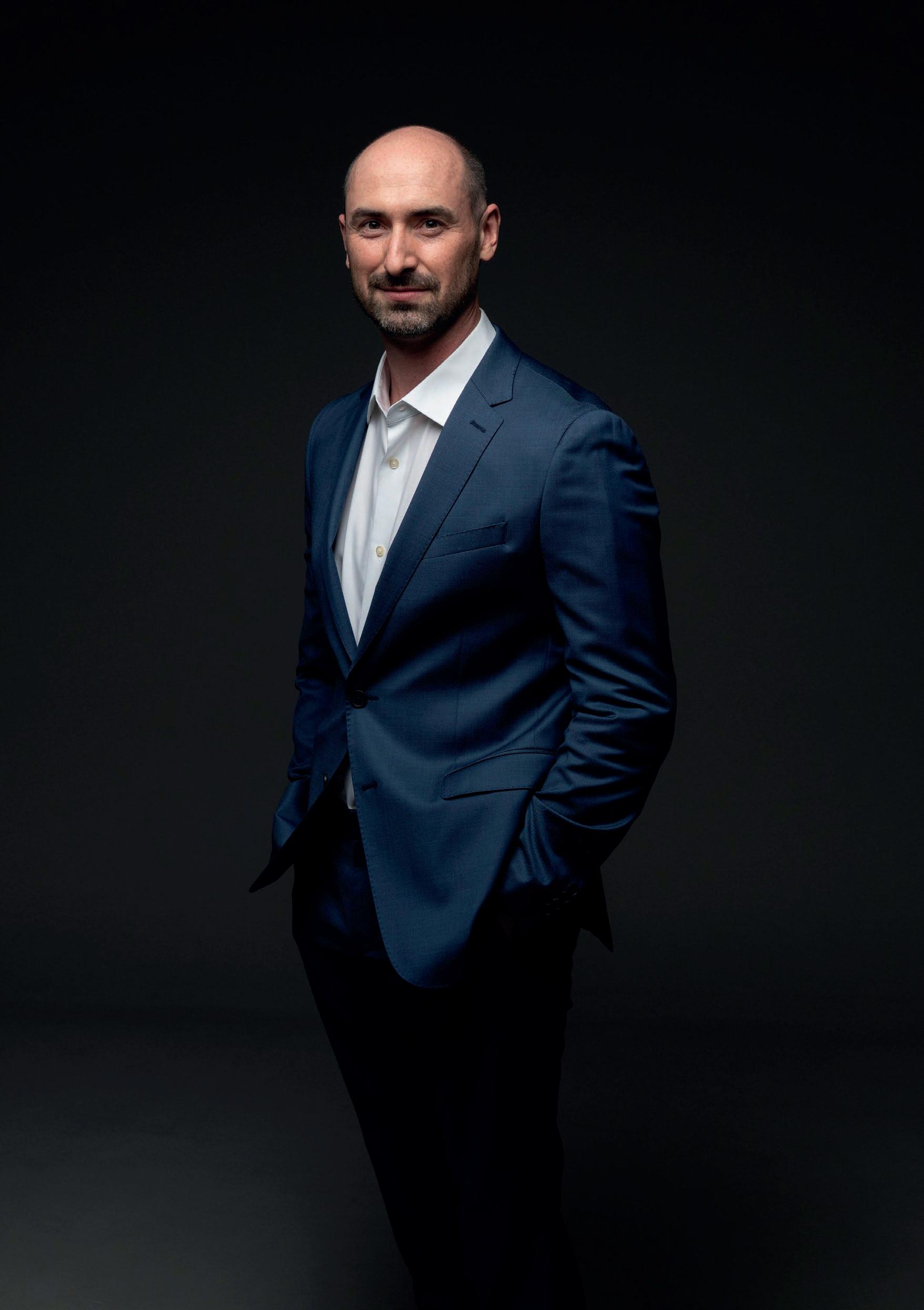
Olivier Award winner, Peter Whelan, is among the most dynamic and versatile exponents of historical performance of his generation. He is Artistic Director of Irish Baroque Orchestra and Curator for Early Music of Norwegian Wind Ensemble. In addition to taking up the role of Artistic Partner with National Symphony Orchestra Ireland in January 2026, he becomes Music Director of Philharmonia Baroque Orchestra from the 2026/2027 season and is Music Director Designate in 2025/2026.
As a conductor, Peter has a particular passion for exploring and championing neglected music from the Baroque and Classical eras. Recent engagements have included appearances with the Scottish Chamber Orchestra, Beethoven Orchester Bonn, Netherlands Chamber Orchestra, Royal Northern Sinfonia, Orchestra della Svizzera Italiana, Kristiansand Symphony Orchestra, Lahti Symphony Orchestra, Orchestra of the Age of Enlightenment, The English Concert, Dunedin Consort, Monteverdi Choir and English Baroque Soloists, Gluck Orfeo with San Francisco Opera, Vivaldi l’Olimpiade with Irish National Opera (across Ireland and the Royal Opera House, London) and Rodelinda at Garsington Opera.
Highlights of the 2025/26 season include an appearance at the BBC Proms with the Irish Baroque Orchestra and return visits to Philharmonia Baroque Orchestra, Scottish Chamber Orchestra, Meininger Hofkapelle, National Symphony Orchestra of Ireland and Tapiola Sinfonietta.
Peter’s artistic direction in live performance and the recording studio has been widely praised for its ‘rich insight, style and charisma’ (Guardian), its ‘stylish verve’ (BBC Music Magazine), and ‘energetic yet unfailingly sensitive direction’ (Gramophone). As a champion of early music and opera, Peter represents ‘the very best of contemporary trends in bringing this music to life: flex and zest with tempi, lithe and vigorous … an incredible alertness to colors and moods summoned by the cut-andthrust harmonic footwork of this music’ (Operawire) and ‘The English Concert and their musical director Peter Whelan brought Handel’s fabulous score to life in a performance of surpassing rhythmic energy, richly dramatic colouring and heart-breaking lyrical grace’ (The Telegraph).
CHRISTOPHE COIN
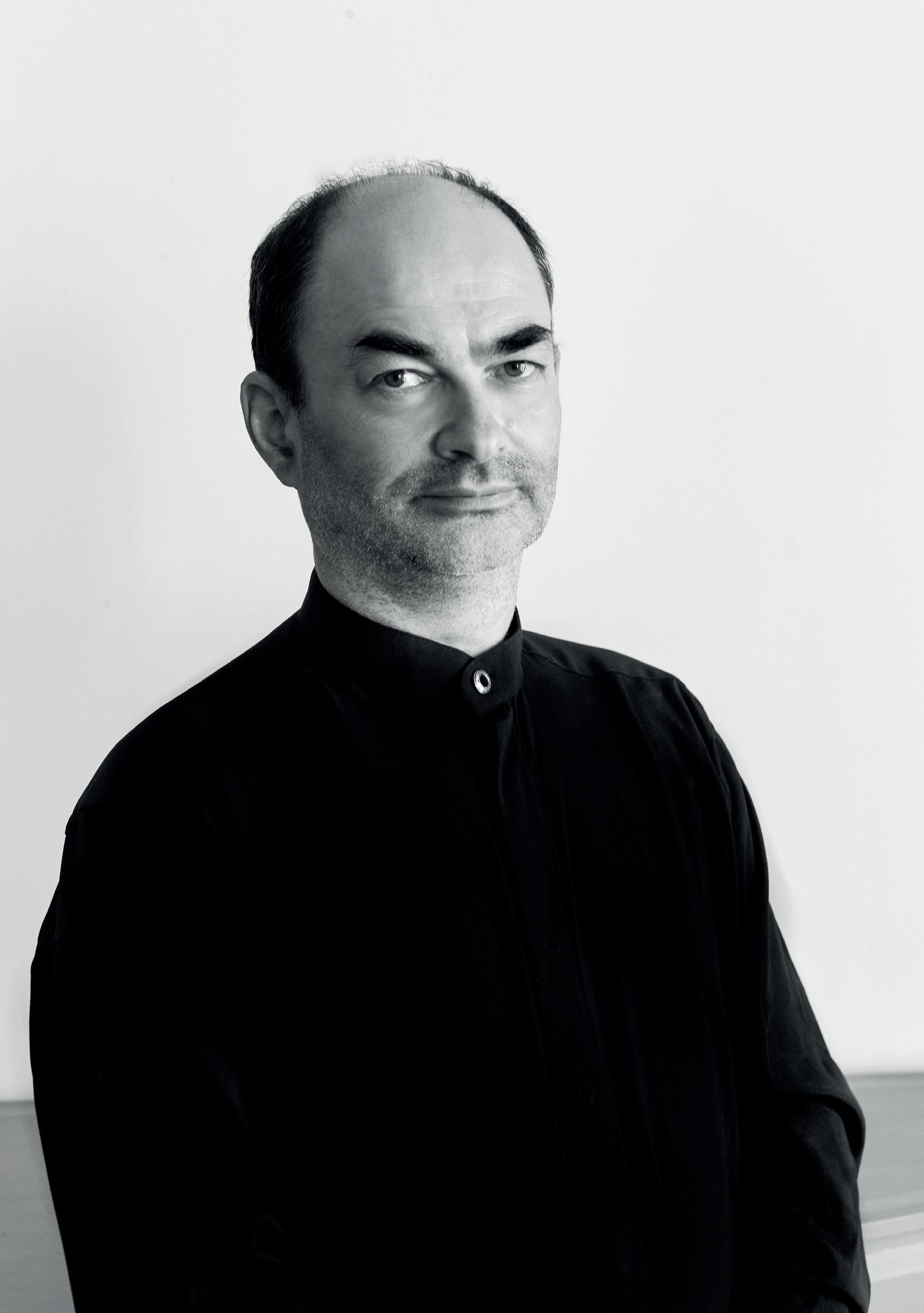
Christophe Coin has built a career as a soloist, chamber musician, conductor, teacher and researcher. He has recorded around fifty albums with several ensembles closely associated with his name, including the Baroque Ensemble of Limoges, which he directed for 22 years until 2012, and received a Victoire de la Musique award for his recording of Bach’s cantatas with piccolo cello. He is also a founding member of the Quatuor Mosaïques, established more than thirty years ago and widely regarded as a benchmark in the Viennese Classical repertoire. The quartet has received two Gramophone Awards for its recordings of Haydn.
As a soloist, Christophe Coin has recorded with many distinguished ensembles, including the Orchestre des Champs-Élysées, Il Giardino Armonico, The Academy of Ancient Music, Concentus Musicus, and the Orquesta Barroca de Sevilla, among others.
Christophe’s most recent recordings include Volume 3 of Vivaldi’s Concertos for the Vivaldi Edition (Naïve Classique), a tribute to the cellist Auguste Tolbecque (Passacaille), and Anton Reicha’s Symphonie Concertante for two cellos and orchestra (Claves), scheduled for release this autumn.
His curiosity and wide-ranging interest in the arts have led to collaborations in film, ballet, and theatre. In cinema, he contributed to La Note bleue by Andrzej Żuławski and Tous les matins du monde by Alain Corneau. In ballet, he took part in the creation of Bach Suite in collaboration with Rudolf Nureyev in 1984. His theatrical work includes Le Bourgeois gentilhomme by Molière (2014), productions of works by Maeterlinck (2015), and plays by Marivaux (2018–19), all staged by Denis Podalydès.
Passionate about instrument making and the questions it raises for contemporary performers, Christophe Coin has also initiated conferences and meetings on organology.
He was awarded First Prize in cello at the age of sixteen at the Paris Conservatoire (CNSMDP), where he studied under André Navarra. He later studied the viola da gamba with Jordi Savall at the Schola Cantorum in Basel. Today, he teaches both instruments at these two institutions.
MONTEVERDI APPRENTICES
Programme Ambassadors:
Dame Sarah Connolly & Mark Padmore
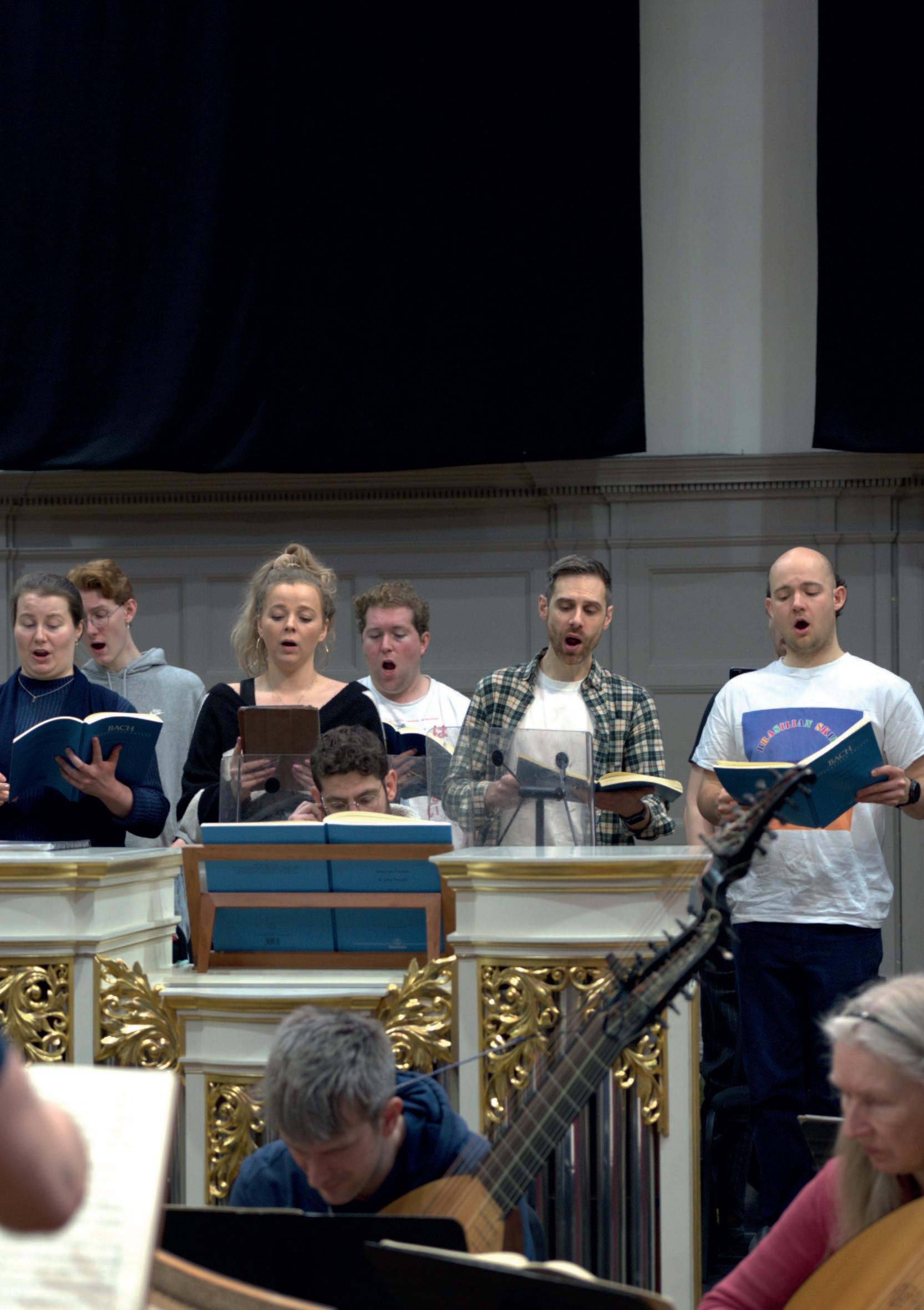
The Monteverdi Apprentices Programme was established by the Monteverdi Choir and Orchestras (MCO) in 2007 as the first of its kind in the UK. It continues to be a pre-eminent training scheme for young musicians, seeking to bridge the gap between higher education and a professional music career. The programme now has nearly 100 alumni, and several former Apprentices still perform regularly with both MCO and other leading ensembles.
By crafting a supportive learning environment for talented young artists, providing rewarding performance opportunities, and offering coaching and tuition from experts in a range of fields, the scheme is designed to nurture the next generation of musical talent. MCO aims to address some of the myriad of challenges faced by emerging classical musicians by integrating the Apprentices into the Monteverdi Choir, giving them the opportunity to learn and perform alongside world-class professional musicians, under the baton of a range of leading specialist conductors. Apprentices also take part in a variety of workshops and masterclasses led by prominent international artists such as Dame Sarah Connolly, Mark Padmore and Sophie Daneman.
We are extremely proud to have internationally acclaimed soloists Dame Sarah Connolly and Mark
Padmore as Ambassadors for the Monteverdi Apprentices Programme. Both Sarah and Mark have a long association with MCO, and both share our deep commitment to nurturing the next generation of vocal talent. Each brings a wealth of experience, a passion for ensemble singing, and a profound understanding of vocal artistry, stylistic versatility and the demands of a modern singing career.
MONTEVERDI APPRENTICES 2025/26
During the 2025/26 programme, the Apprentices have joined MCO performances including Mozart with Pablo Heras-Casado, Rossini with Jakob Lehmann and Handel with Christophe Rousset. More information about each of the nine Apprentices in the current cohort can be found in the ‘Education’ section of our website (monteverdi.co.uk).
Scan the QR code or visit: www.monteverdi.co.uk/education/ apprentices-programme
ONE GIANT LEAP
Support the Monteverdi Apprentices Programme and provide a step change for emerging professional musicians, turbocharging their creative development
Nurture a new generation of exceptional artistry To learn more and support, please contact Will Handysides, Head of Development: will@monteverdi.org.uk Scan the QR code or visit monteverdi.co.uk/education/apprentices-programme
SUPPORT THE MONTEVERDI ENSEMBLES
MAKE THE EXTRAORDINARY HAPPEN

The Monteverdi family extends well beyond our trio of acclaimed ensembles. From our international audiences, our dedicated Members and supporters, to the Board of Trustees and the MCO team: everybody makes a vital contribution towards our mission of shedding new light on the great works of classical music and sharing astonishing musicianship with the world. We rely on the generosity of individuals, trusts and foundations, and corporate partners to make the extraordinary happen. There are many ways to support us and become more closely involved in our world. We hope in these pages you will find the perfect way to join our family.
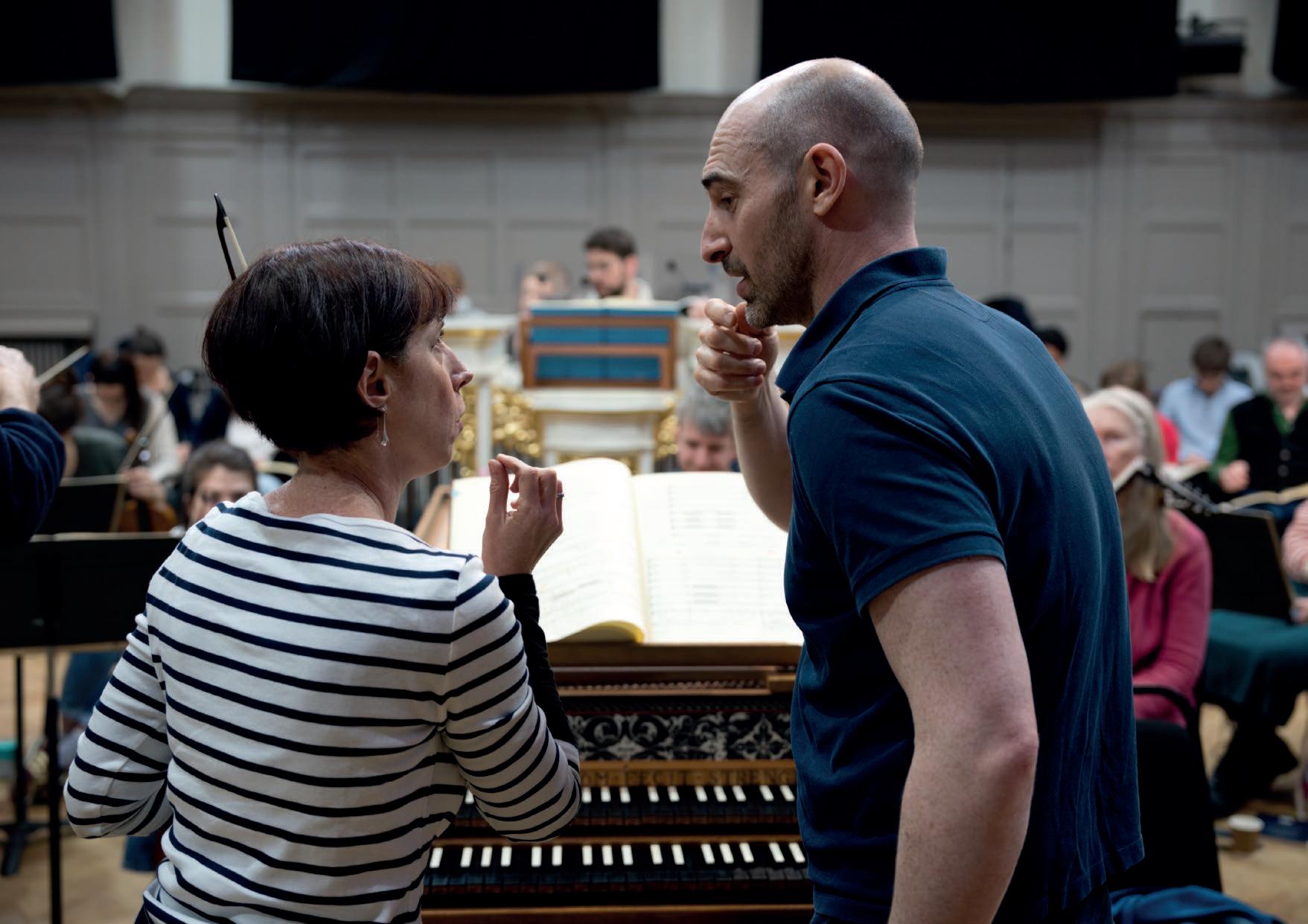
© Jude Lacey
To learn more, please contact Head of Development Will Handysides will@monteverdi.org.uk 0798 457 0627
MEMBERSHIPS
Members get exclusive access to a priority booking service for all our concerts, invitations to special events, and they are the first to hear our news through regular newsletters. We have four levels of membership, renewable each year, with additional benefits included for higher level members:
Platinum from £5,000
Gold from £3,000
Silver from £1,000
Bronze from £250
To join now, and for more information, visit the website, or you can get in touch: monteverdi.co.uk/support-us development@monteverdi.org.uk
PHILANTHROPIC SUPPORT
We warmly invite you to become more closely involved with the work and people of the Monteverdi Choir and Orchestras. The vital contributions of our philanthropic supporters, including our Benefactors, allow us to share astonishing musicianship globally, and ensure our legacy endures. In gratitude, we are delighted to offer those who support us as major donors a very close relationship with MCO and the incredible people who make up our ensembles and perform with us. From period instrumentalists to sublime vocalists, from our Apprentices to our roster of leading conductors – there are countless captivating stories to be told and remarkable journeys to witness. Philanthropists can enjoy a bespoke, one-
to-one involvement with MCO, tailored to their interests and schedule, as well as receiving invitations to our special events.
CORPORATE PARTNERSHIPS
The Monteverdi Choir and Orchestras has a global reputation for producing the extraordinary. We foster a collaborative culture of rigorous musical examination and unbridled virtuosity, resulting in spine-tingling, electrifying sell-out performances. Our award-winning recordings are upheld as the definitive versions of hundreds of musical masterpieces. We want to create unique partnerships with brands, that deliver on your objectives with a strong ROI, with engaging content, virtuosic concert experiences and opportunities to sponsor pioneering projects.
LEAVE A LEGACY
By choosing to leave a Legacy Gift to the Monteverdi Choir & Orchestras, you will play a crucial role in ensuring that the performers and listeners of the future will continue to be enthralled by the power of our music-making.
AMERICAN FRIENDS
Our American Friends play a valuable part in supporting and championing the work of the Monteverdi ensembles both in the US and beyond. The American Friends of the Monteverdi Choir & Orchestras, Inc is a registered 501(c)(3) organisation and donations to it are tax-deductible for US taxpayers to the extent allowed by law. EIN:31-1651106.
MONTEVERDI SUPPORTERS
PATRON
HM The King
PRESIDENT
Dame Carol Grigor DBE
PRINCIPAL FUNDER
Dunard Fund
BENEFACTORS
Michael & Fiona Beverley
David & Sandra Brierwood
Christian & Myrto Rochat
Sir David & Lady Walker
MEMBERS
PLATINUM
Lord & Lady Burns
Sir Vernon Ellis
The Isola/Little Family
Lady Susan Hussey
William Lock
Sebastian & Flora Lyon
Francis Norton
Helen & John Skinner
GOLD
Sarah & Mike Cuthbert
Nicholas Eldred
Sir Stephen Gomersall
Gordon Gullan
Stephen & Victoria Swift
Bankim Thanki KC
The Monteverdi Choir & Orchestras gratefully acknowledges the generous support of the following individuals, organisations and Trusts & Foundations
SILVER
Julia & Martin Albrecht
Peter & Stephanie Chapman
Martin Fraenkel
Tony Hales CBE
Lady Nixon
Mollie Norwich
Stefan Paetke
Professor Richard Portes CBE FBA
Sabine & Norbert Reis
Isabella de Sabata
Caz Weller Knight
BRONZE
Geoffrey Barnett
Donald D. Campbell
Vanessa Claypole
Lady Virginia Fraser
Nigel Gibson
Jenny Hill
Mark & Sophie Lewisohn
Robert Moreland
Mary Pinnell
Daan Posthuma
Anne Reyersbach
With grateful thanks to all those who wish to remain anonymous
CORPORATE PARTNERS
Morgan Stanley
TRUSTS & FOUNDATIONS
Dunard Fund
The David and Claudia Harding Foundation
Mrs F B Laurence’s Charitable Trust
The Rainbow Dickinson Trust
IN MEMORIAM
Roger Chadder
Peter J. Chapman
Ian Hay Davison CBE
Sir Henry Keswick
Judith McCartin Scheide
Nicholas Snowman OBE
Geoffrey Taunton
LEGACIES
The Estate of Prof. Andrew Dunlop Roberts
The Estate of Donald Gorman
The Estate of Howard Hodgkin
The Estate of Kevin Lavery
AMERICAN FRIENDS
The Negaunee Foundation
William Dudley
Dunard Fund USA
Neil Graham
David Kay
Seth Levi
Jai Shekhawat
Rory Walck
MCO TEAM
Dr Rosa Solinas
General Director
Martin Wheeler Finance & Administration Manager
James Halliday
Artistic Advisor & Librarian
Matthew Knight
Artistic Planning Manager
Janet Marsden
Artistic Operations Manager
Katie Care Concerts & Tours Manager
Will Handysides Head of Development
Charlotte Walker Development Assistant
Orlando Jones Projects Coordinator
Sophie Southall Marketing & Communications Assistant
Philip Turbett
Orchestra Fixer
Premier Comms
PR & media relations
Michael Pattison
Stage Manager
David Gerrard
Fortepiano Provider and Technician
MCO BOARD OF DIRECTORS
Christian Rochat (Chairman)
Nicholas Eldred
Sir Stephen Gomersall
Diana Houghton
Barra Little
Francis Norton
Caz Weller Knight
MCO CHAIRS CIRCLE
Michael Beverley
David Brierwood
Lord Burns
Sir David Walker
SIGN UP FOR OUR NEWSLETTER What’s On | News | Reviews | Media
Scan the QR code or visit: monteverdi.co.uk/pages/newsletter
LISTEN TO MCO Recordings | Videos | Performances | Podcasts

Scan the Spotify link to listen to the Monteverdi Choir, or buy our recordings at: shop.monteverdi.co.uk
MONTEVERDI CHOIR & ORCHESTRAS
Level 12, 20 Bank Street, Canary Wharf, London E14 4AD, UK info@monteverdi.org.uk monteverdi.co.uk
Registered in England & Wales Company No. 01277513 Charity No. 272279
Follow us on social media
Design: Linda Lundin, Park Studio

PETITE MESSE SOLENNELLE
Monteverdi Choir
Orchestre Révolutionnaire et Romantique
Jakob Lehmann – conductor
Friday 18 September 2026, 7.30pm
Alexandra Palace Theatre, London
monteverdi.co.uk/rossinipetite-messe-solennelle

OBERON
Monteverdi Choir
Orchestre Révolutionnaire et Romantique
Sir Mark Elder – conductor
Thursday 6 August 2026, 7pm
BBC Proms, Royal Albert Hall, London
monteverdi.co.uk/weber-oberon

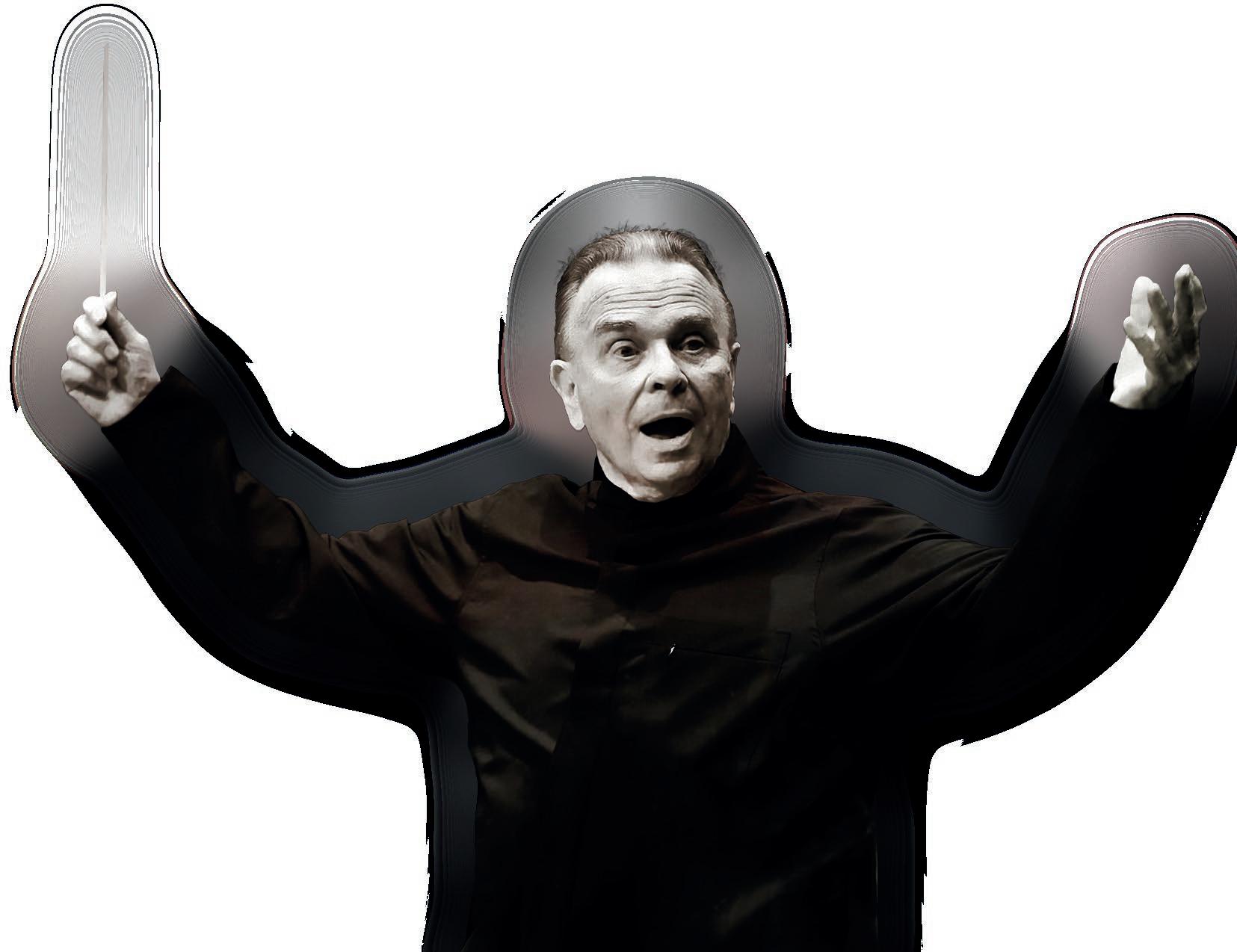
© Paul Marc Mitchell