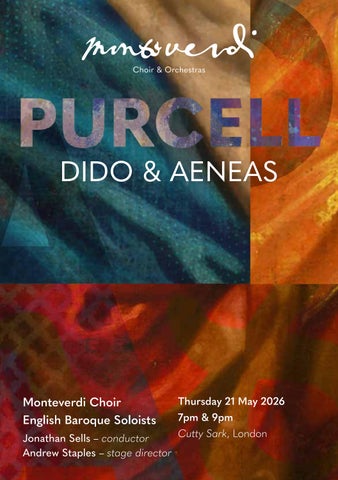

DIDO & AENEAS

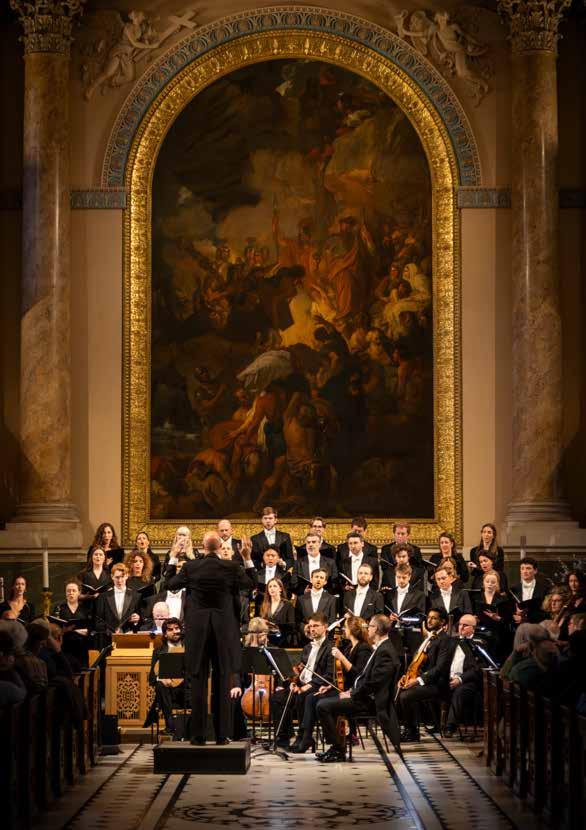
Monteverdi Choir
English Baroque Soloists
Jonathan Sells – conductor
Andrew Staples – stage director
Thursday 21 May 2026
7pm & 9pm
Cutty Sark, London
UP FOR OUR
What’s On | News | Reviews | Media
Scan the QR code or visit: www.monteverdi.co.uk/pages/newsletter
PURCELL DIDO & AENEAS
Thursday 21 May 2026, 7pm & 9pm
Cutty Sark, Greenwich, London
Thursday 4 June 2026, 7pm
Bergen International Festival, Norway
PURCELL DIDO & AENEAS
Scan to listen on Spotify

Monteverdi Choir & Orchestras presents
PURCELL DIDO & AENEAS
Monteverdi Choir
English Baroque Soloists
Jonathan Sells – conductor
Andrew Staples – stage director
Karima el Demerdasch – Dido
Hubert Zapiór – Aeneas
Johanna Wallroth – Belinda
Bethany Horak-Hallett – Sorceress
Zoë Brookshaw – Second Woman
Sofia Kirwan-Baez – First Witch
Rebekah Nießer-Jones – Second Witch
Robert Davies – Sailor
WELCOME TO ROYAL MUSEUMS GREENWICH
Cutty Sark, along with the National Maritime Museum, the Queen’s House, the Royal Observatory Greenwich, and the Prince Philip Maritime Collections Centre, is part of a family of world-class museums and historic sites at the heart of a UNESCO World Heritage Site. Together, they tell the story of Britain’s relationship with the sea, space, and time. Our collections explore art, science, archives, architecture, maritime endeavour, and discovery, and have shaped global history while continuing to inform our understanding of the world today.
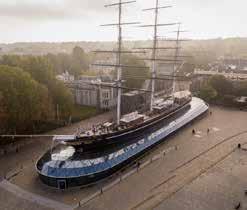
Cutty Sark is the world’s last surviving tea clipper – a masterpiece of Victorian engineering and a powerful symbol of global connection. Built for speed and trade, the ship remains an enduring emblem of human ambition and ingenuity. Today, suspended dramatically above her dry dock, Cutty Sark offers one of London’s most extraordinary and evocative performance spaces.
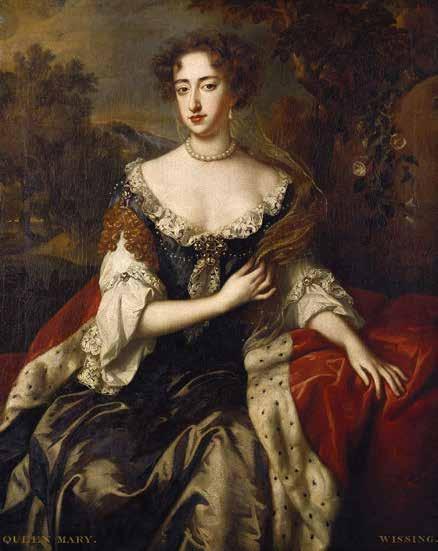
Tonight, beneath this soaring hull, we will enjoy a vivid reimagining of the 17thcentury masterpiece, Henry Purcell’s Dido and Aeneas, performed by the Monteverdi Choir and English Baroque Soloists. The programme includes Purcell’s Funeral Sentences, first heard at the funeral of Queen Mary II, who commissioned the Royal Hospital for Seamen at Greenwich, providing a home for retired or injured naval veterans.
At Royal Museums Greenwich, we aim to animate our sites, connect past and present, and invite new ways of experiencing our shared heritage. Presenting music of the highest calibre within historic surroundings plays an integral part in our wider mission.
We are also a charity. Every visit, ticket, and act of generosity helps us care for these remarkable places, expand access to culture and learning, and inspire future generations through history, science and the arts. To make a donation and find out more please visit rmg.co.uk/support-us.
Thank you and we hope you enjoy your evening.
© National Maritime Museum, London
WELCOME
from the MCO Team
Exceptional musicians and the period instruments they have devoted their careers to mastering are fundamental to the Monteverdi Choir & Orchestras’ work. Their artistry vividly brings to life MCO’s mission to bring fresh perspectives, immediacy, and drama to historically informed performances. We amplify their breathtaking musicianship by staging works in stunning heritage locations, perhaps none more remarkable than tonight’s: the dry berth of Cutty Sark
Stage director Andrew Staples’ vision transports us from Greenwich to Carthage, and transforms the gleaming copper hull of the world’s most famous tea clipper into the fateful presence of the Trojan fleet – a constant spectre hanging over the emotional drama of Purcell’s Dido & Aeneas.
Woven into the opera will be Purcell’s Funeral Sentences, written for the state funeral of Queen Mary II at Westminster Abbey, and also fitting for the location: it was Mary who established the Royal Hospital for Seamen here in Greenwich. The buildings are now known as the Old Royal Naval College and, together with Cutty Sark, form part of this UNESCO World Heritage site.
Choir Director Jonathan Sells returns to lead the Monteverdi Choir and English Baroque Soloists following his critically-acclaimed performance at the Edinburgh International Festival in 2025. Together with a cast of leading soloists, this promises to be a performance of Purcell’s celebrated opera like no other. Thank you for joining us for this unique experience. We hope to see you at our next London performance on 18 June, for which we return to our home at St Martin-in-the-Fields, celebrating the church’s 300th anniversary with music which was written in that very neighbourhood by Franz Joseph Haydn.
PROGRAMME NOTES
by Michael Burden
Dr Andrew Frampton
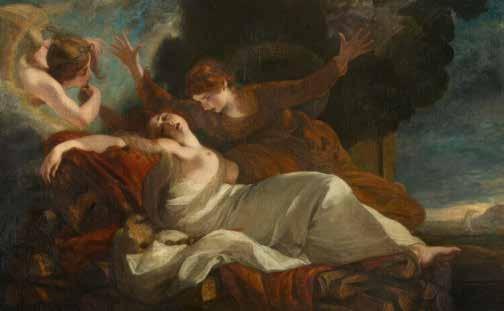
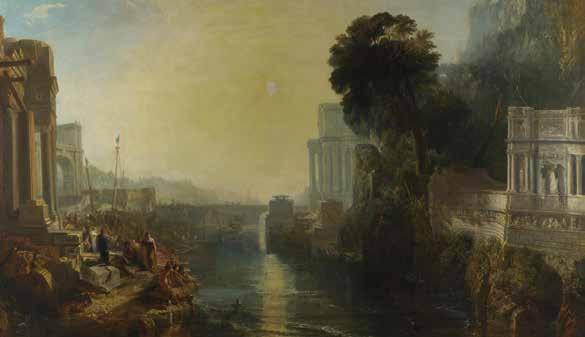
The Dido myth is one of the most enduring in Western art, literature, and music. It has been used as a story for operas and cantatas, and as a subject for pure musical inspiration; there are paintings by Rembrandt, Turner, Rubens (at least two), Batoni, Runciman, Reynolds, and Vouet; and there are books, plays, burlesques, and even a film, all of which deal with the life of the Queen. Despite many unresolved questions concerning the story and its origins, in essence it tells of Dido, Queen of the ancient city of Carthage. Aeneas, escaping from the ruins of the city of Troy that had finally fallen to the Greeks, sets sail to found a new city, Rome. Caught in a storm, he beaches his fleet in North Africa near Carthage, and meets and falls in love with Dido. After a brief dalliance, the Gods remind him of his duty, and he abandons her. She is distraught, calls on the Gods to hound Aeneas, and commits suicide.
To say that the story in whatever form was in frequent use is to state a truism. There are, for example, some 63 settings of Metastasio’s opera libretto Didone Abbandonata alone, and even one operatic spoof, Dido, Queen of Carthage, by one Ralph Schomberg, in which the unfortunate Queen hangs herself in her own garters. But despite its ubiquitous presence in the 17th- and 18th-century opera house (and several low-key appearances in the 19th-century), it is only Henry Purcell’s Dido and
Aeneas that is in the repertory today, where it is one of the most popular of Baroque operas; paradoxically, it is also one of the slightest, lasting less than one hour, with a small chorus and band, only a few characters, and no spectacle. And yet Purcell’s Dido emerges as one of the greatest and strongest 17thcentury opera heroines, a woman with great decision, and one who, even after the great 19th-century tragic heroines have trod the stage, still has appeal for a contemporary audience.
But despite the work’s popularity, the origins of the opera are clouded in obscurity. One of the few facts that everyone knows about Dido and Aeneas is that it was commissioned for a girls’ school in Chelsea and premiered there in 1689. ‘Fact’? Well, possibly. All that can really be said with certainty is that the opera was performed there, for we have from that year a libretto headed ‘An Opera perform’d at Mr Josias Priest’s boarding school at Chelsey. By Young Gentlewomen. The Words made by Nat. Tate. The Musick Composed by Mr Henry Purcell.’ The date of 1689 is taken from the publication date of Thomas D’Urfey’s New Poems, which contains D’Urfey’s ‘Epilogue the opera of Dido and Aeneas, at Mr Priest’s Boarding School at Chelsey. Spoken by Lady Dorothy Burke’. But that is all; even the ‘1689’ date is a terminus ad quem, not a precise pinpointing of the year of the Chelsea performance.
There is no documentation of that performance, no contemporary reports of the staging, no stage designs of any kind, and above all, no evidence that it was the premiere, or indeed, a ‘commission’ in the formal sense at all. It is not known whether the libretto was written for Purcell to set, or was already extant, or whether he had a
hand in the writing of it. And to deduce, therefore, that Tate and Purcell ‘collaborated’ on the opera is a dangerous assumption.
Does it matter? Well, yes it does. Such assumptions cause us to hear and to judge the score in an entirely inappropriate manner: it was ‘written
Portrait of Queen Mary II by Willem Wissing (1656–1687)
not for the Roi Soleil but for a young ladies’ academy’, which accounts for its ‘cheerful incorrectness’; it was ‘written for a fashionable boarding school’, and Purcell would have considered it ‘just a school masque’; the form of the work was dictated by its ‘planned performance at a girls’ school’; its performance at a girls’ school suggests a ‘female Aeneas’. These are just a few of the scholarly judgements heaped on the opera. Purcell’s intentions, both dramatic and musical, are being second-guessed, and we are being invited to connive in an aesthetic judgement that may well be not only meaningless, but also presumptive.
Surely some of these problems could be resolved by an examination of the score? Purcell must have left some indications of what he thought should be done. But there is, sadly, no autograph of Purcell’s music. The oldest surviving
scores are late 18th-century, and what we have in those scores is clearly only part of Tate and Purcell’s original intentions. The missing sections – a long allegorical masque-like Prologue sequence which links the opera firmly to France and to French operatic tradition, an important passage that closes the Grove scene, and two dances on a guitar ground – can be identified from the libretto. Courageous conductors and producers have made efforts to supply those missing sequences, but very rarely is there an integrated approach to this problem; some, for example, will restore only one or two dances, while others will add music for the missing Act II Grove Scene, but will leave the missing dances out. There is, of course, a case for performing just Purcell’s surviving music. However, there is precious little that can be said for supplying only those
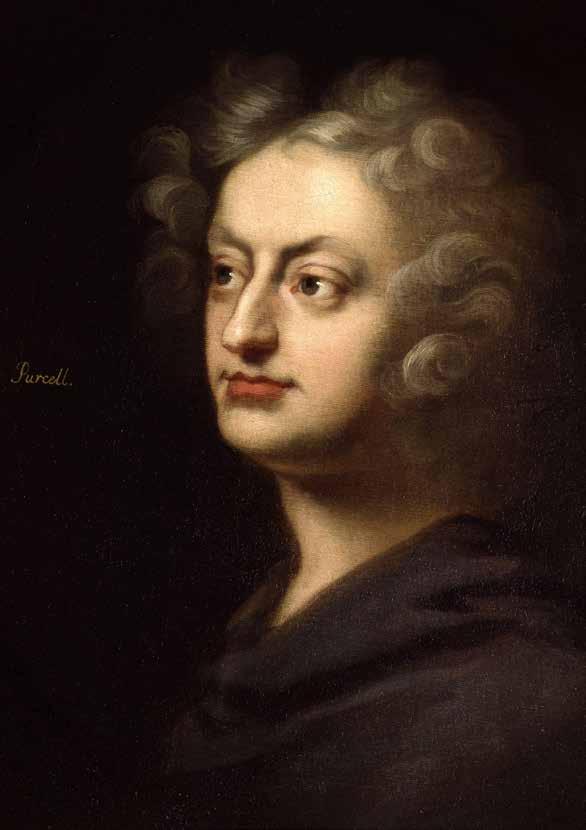
The Death of Dido by Sir Joshua Reynolds (1723–1792) opposite: detail of Portrait of Henry Purcell by John Closterman (1660-1711)
sections of missing music which suit modern day performers at any particular moment; such a process adds music not provided by Purcell to the score, while still leaving the work’s dramatic shape compromised.
This is all to say that the notion of an ‘authentic performance’ of Dido is an imperfect one. The one parallel that does offer us some means of interpreting Purcell’s work in context, is a small all-sung work by Purcell’s teacher, John Blow. Like Dido and Aeneas, the circumstances surrounding the writing of Venus and Adonis are obscure, but it was performed at court in the early 1680s; indeed, one source records that Mary (Moll) Davies, the King’s former mistress, took the part of Venus, while their illegitimate daughter, Lady Mary Tudor (about ten years old at the time),
sang the part of Cupid. Curtis Price comments that ‘the opera is to some extent a satire on the liberal sexual mores of King Charles’s court’. The one later recorded performance of Venus and Adonis was at Josiah Priest’s school in Chelsea 17 April 1684, suggesting that Purcell’s opera may have taken the same route; a court performance in the early 1680s (where it fits more easily stylistically in Purcell’s oeuvre) followed by one at the Chelsea Boarding School. Blow had been appointed organist of Westminster Abbey in 1668, but he resigned the post in 1679 in favour of Purcell, resuming it upon the younger man’s death in 1695; he was also a Gentleman of the Chapel Royal, and in 1674, had succeeded Pelham Humfrey as Master of the Children of the Chapel. Blow’s theatre music is confined mostly
Dido Building Carthage by J.M.W. Turner (1775–1851)
to musical additions to plays, and these are mostly from the 1680s. But this was precisely the circle in which Purcell was at this time working, and the close contact between the two men only highlights the fact that both operas have many things in common: they are all-sung, they have three acts and a prologue, and they contain a scene of comic relief; these parallels suggest that the operas are a true pair whatever the precise dates of composition and performances of both works. Among the contemporary readings which attempt to view the opera through modern eyes is the suggestion that Dido was destroyed from within by her suspicions that she was unable to trust the courtiers, an idea often linked to the chorus ‘Great minds against themselves conspire’. Another proposition is that the context of the opera allows for a modern lesbian reading, particularly in relation to the theme of sexual awakening among the girls at Priest’s school. There is no suggestion that these were Tate’s or Purcell’s ideas; it is an indication of the work’s durability that we are still able to find in it and to accept new readings of the story.
Regardless of how we view the meaning of the work, the image of the Queen is the one that draws and holds our focus and attention. So powerful is that image, that it creates an opportunity to reflect on the Queen’s predicament, and tonight’s performance will use music from Purcell’s own response to the loss of a Queen as a lens through which to view her. The death of Queen Mary in 1694 inspired Purcell’s The Funeral Sentences and Music for the Funeral of Queen
Mary. The performance opens with the Funeral Sentences’ opening march, offering a weighty solemnity to the arrival of Aeneas in Carthage. After Act I, in which Dido accepts Aeneas’s offering of love, comes ‘Man that is born of a woman’, a lament for short-lived commitment. After Act II comes ‘In the midst of life we are in death’, a movement that pre-figures the death of Dido; it reflects on Dido’s own death, one precipitated by her response to the loss of Aeneas.
Michael Burden is Fellow in Music at New College, Oxford, and Professor in Opera Studies in the University. He did his undergraduate and graduate work at the University of Adelaide in South Australia, and his PhD at the University of Edinburgh. He has served on the Council of the Royal Musical Association, is a patron member of the American Society for Eighteenth-century Studies, and is currently active as the immediate Past President of the British Society for Eighteenth-century Studies. He is Dean of New College and also holds the offices of Chattels Fellow and Portraits Fellow.
MCO’S 2026 ARTWORK
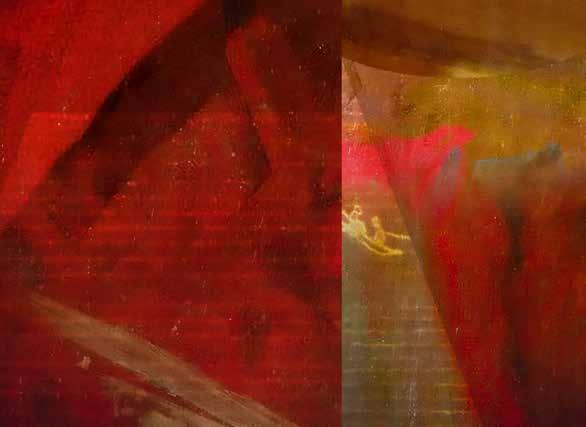
Our 2026 artwork mirrors MCO’s mission: to bring fresh perspectives, immediacy and drama to historicallyinformed musical performances. Applying the same principles to our visual identity, Matt Abel Smith’s designs for each concert draw on an artwork that is related, both historically and in subject matter to the repertoire, highlighting the close relationship between visual art and music.
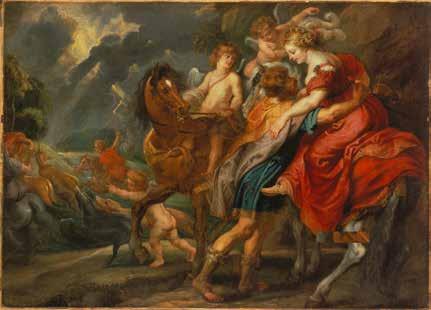
Dido and Aeneas by Jan van den Hoecke (c. 1611–1650)
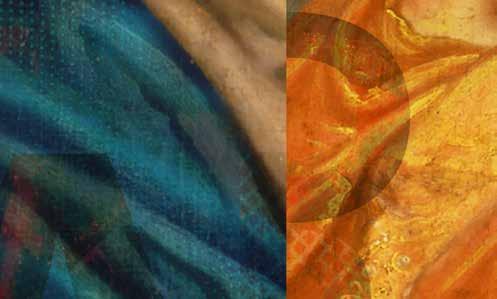
Taking closely cropped segments of the original artworks, each design borrows colour and texture from artists working centuries ago. For Purcell’s Dido & Aeneas, composed in the 1680s, the designs draw from a painting attributed to Rubens’ workshop in the 1630s. Research points towards the painting being from the hand of Jan van den Hoecke – one of the principal assistants of Rubens’ studio at the time. We can see his individual brushstrokes in the extreme crops, augmented with modern textures that nod towards the continual draw of this ancient story: from Virgil over 2,000 years ago, via the Old Master artists and Purcell in the 1600s, to its re-staging today.
The full scene depicts Dido and Aeneas sheltering from a storm, with striking contrast between the turbulent skies and the shimmering hues of the embracing protagonists’ clothes. In our artwork, the electric blues of Aeneas’ tunic and the orange-golds of his cloak are juxtaposed against the rich reds of Dido’s dress. These colours could equally represent the contest between Dido and Aeneas’ love and the lure of the ocean, as plotted by the Sorceress.
MONTEVERDI CHOIR
They are truly one of the finest choirs of their time.’
Bachtrack
For over 60 years the Monteverdi Choir has been recognised as one of the greatest and most influential choirs in the world. Through a combination of consummate technique and historically-informed performance practice, the Choir constantly strives to bring fresh perspectives, immediacy and drama to its performances.
The recipient of many awards, the Monteverdi Choir was named ‘Best Choir’ at the 2024 Oper! Awards, with the jury noting that: ‘At festivals, on concert tours and in their numerous recordings, this is an ensemble whose quality will always leave the listener speechless.’
The Choir’s 2026 season commenced with Bach’s St John Passion, conducted by Peter Whelan in Barcelona, Budapest and London, and a collaborative tour of Bach’s Mass in B minor with Laurence Equilbey and accentus/Insula Orchestra. In August, the Choir and Orchestre Révolutionnaire et Romantique will perform Weber’s Oberon at the BBC Proms, conducted by Sir Mark Elder. This autumn, Jakob Lehmann returns to conduct Rossini’s Petite messe solennelle at Alexandra Palace, and Christophe Rousset will conduct Handel’s Theodora, both on a tour to South America and in the UK with concerts in London and Oxford. This December, the Choir and EBS will perform a ‘Venetian Christmas’ with Francesco Corti, exploring a programme of Monteverdi, Schütz and Gabrieli.
The Choir’s 2025 programme expanded the range of its repertoire and conductor collaborations. This included two concerts at the Edinburgh International Festival: John Tavener’s monumental The Veil of The Temple on the opening night, conducted by Sofi Jeannin, and a programme of Purcell, Bach and Handel, conducted by MCO Choir Director Jonathan Sells, which was streamed on Deutsche Grammophon’s Stage+ platform.
Other highlights of 2025 include Bach’s 1725 cantatas with Masaaki Suzuki, Mozart’s Requiem with Pablo HerasCasado, Rossini’s Stabat Mater with Jakob Lehmann, and the Choir’s first performances of Handel’s Messiah in almost three decades, directed by Christophe Rousset.
On Good Friday 2025, MCO’s own record label, Soli Deo Gloria, released its first new recording since before the global pandemic – an album of Bruckner and Gesualdo motets recorded live in concert in October 2024, conducted by Jonathan Sells. This was followed in September 2025 by
an album of Charpentier’s Christmas music conducted by Christophe Rousset, recorded during a critically-acclaimed European tour in December 2024. The album was recently selected as the benchmark recording of his Messe de Minuit pour Noël by France Musique.
Founded in 1964 by Sir John Eliot Gardiner, the Monteverdi Choir has released over 150 recordings and won numerous prizes. In 2023, the Choir and English Baroque Soloists were honoured to perform at the Coronation of HM The King, with The Telegraph proclaiming ‘if the Monteverdi Choir isn’t singing when I get to the gates of Heaven, I want my money back.’
MONTEVERDI CHOIR
21 May 2026
Choir Director: Jonathan Sells
Soprano
Milly Atkinson*
Zoë Brookshaw†
Sofia Kirwan-Baez†
Rebekah Nießer-Jones†
Elizabeth Nurse*
Emily Owen
Cressida Sharp
Emma Walshe
Alto
Francesca Biliotti
Luthien Brackett
Lowri Bufton*
Chris Fitzgerald-Lombard
Matthew Monaghan*
Richard Pittsinger
Emma van der Scheer*
Tenor
Guy Elliott
Edmund Hastings
Thomas Herford
Sam Madden*
James Robinson Bass
Robert Davies†
Will Harmer*
Johnny Herford
Jack Lawrence-Jones
Thomas Lowen
Allyn Wu*
†
ENGLISH BAROQUE SOLOISTS
The evening’s real glory was in the orchestral playing... The performance was revelatory.’ The Telegraph
For over 40 years, the English Baroque Soloists (EBS) has been one of the most innovative period-instrument ensembles, consistently challenging the preconceptions of audiences around the world. Equally at home in chamber, symphonic and operatic repertoire, its distinctively warm and incisive playing is instantly recognisable in music ranging from Monteverdi to Mozart. The orchestra has performed at many of the world’s most prestigious venues, including Milan’s Teatro alla Scala, the Concertgebouw in Amsterdam and the Sydney Opera House.
The orchestra’s 2026 season commenced with Bach’s St John Passion conducted by Peter Whelan in Barcelona, Budapest and London. In June, a programme exploring Haydn’s time in London will be conducted by Peter Whelan, and in the autumn, Christophe Rousset will conduct Handel’s Theodora on a tour to South America, and in the UK with concerts in London and Oxford, the latter as part of the inaugural season at the new Sohmen Concert Hall in the Schwarzman Centre. In December, the EBS will perform a ‘Venetian Christmas’ with Francesco Corti and the Monteverdi Choir, exploring a programme of Monteverdi, Schütz and Gabrieli.
Highlights of 2025 include Mozart symphonies and double piano concerto
with Marc Minkowski and the Labèque sisters, Bach’s 1725 cantatas with Masaaki Suzuki, and ‘Sing to the Lord a New Song’, a programme of Bach, Purcell and Handel which toured to Aldeburgh, the Edinburgh International Festival and the recently-renovated North Wing at St Bartholomew’s Hospital in London. The year culminated with the orchestra’s first performances of Handel’s Messiah in almost three decades, touring to Paris, Rome, Milan and London, conducted by Christophe Rousset.
In September 2025, MCO’s own record label, Soli Deo Gloria, released its first recording of the EBS since the pandemic – an album of Charpentier Christmas music, recently selected as the benchmark recording of his
Messe de Minuit pour Noël by France Musique. The album was recorded in December 2024 during a European tour conducted by Christophe Rousset, with performances described as ‘joyous and immaculate’ (The Guardian), ‘a refined festive celebration’ (The Times) and ‘an enchanting musical journey, showcasing their exceptional artistry and energy’ (Operawire).
Founded in 1978 by Sir John Eliot Gardiner, the EBS were part of the iconic Bach Cantata Pilgrimage in 2000 alongside the Monteverdi Choir, performing all of Bach’s sacred cantatas throughout Europe (recorded for Soli Deo Gloria). They have participated in major opera productions alongside the Monteverdi Choir in works by Handel, Purcell and Monteverdi, and made the earliest recording of Mozart’s complete piano concertos on period instruments, as well as his greatest operas for Deutsche Grammophon.
ENGLISH BAROQUE SOLOISTS
21 May 2026
Violin I
Madeleine Easton
Jayne Spencer
Sarah Bealby-Wright
Violin II
Naomi Burrell
George Clifford
Will Harvey
Viola
Lisa Cochrane
George White
Cello
Marco Frezzato
Ruth Alford
Double Bass
Rosie Moon
Recorder
Elizabeth Walker
Annabel Knight
Trumpet
Neil Brough
Robert Vanryne
Paul Sharp
Sackbut
Miguel Tantos Sevillano
Theorbo / Guitar
Élodie Brzustowski
Harpsichord
James Johnstone
Percussion
Zands Duggan
JONATHAN SELLS
Conductor
Jonathan Sells first conducted the Monteverdi Choir and English Baroque Soloists in 2024 in London and became the Choir’s Director following their ‘brilliant’ (Gramophone) live recording of a cappella motets by Bruckner, Gesualdo, and others, released on SDG in 2025. He has since led them in Handel’s mighty Dixit Dominus at the Edinburgh International Festival (recorded live for Deutsche Grammophon Stage+ and BBC Radio 3), in Snape Maltings Concert Hall, and at London’s newly restored Barts North Wing.
Himself a member of the Monteverdi Choir from 2009–2018, Jonathan Sells combines an active international singing career with conducting and musical direction. His work is most closely associated with the music of the Baroque period, and especially that of J.S. Bach. Sells has appeared as a soloist in Australia (Bach’s WeihnachtsOratorium with the Australian Chamber Orchestra/Tognetti) and the USA (Lincoln Center and Carnegie Hall with Les Arts Florissants), alongside regular appearances at many major Bach and Baroque festivals across Europe, and above all in Switzerland, where he lives with his family.
In 2008 he founded the baroque collective Solomon’s Knot, ‘one of the UK’s most innovative and imaginative ensembles’ and the Resident Baroque Ensemble at Wigmore Hall since 2023. Under his leadership, Solomon’s Knot
‘set new standards’ with productions of J.S. Bach’s St John Passion and St Matthew Passion at Bachfest Leipzig, Thüringer Bachwochen, Snape Maltings, and Wigmore Hall. On the recommendation of Sir John Eliot Gardiner, he made his Bachfest Leipzig debut as musical director in 2016 with Bach’s Magnificat, later recorded and released on Sony Classical. Solomon’s Knot’s recording of J.S. & J.C. Bach Motets was released in 2023, and ‘demonstrates the innermost essence of this music like never before’ (Klassisk Musikk).
Leading from within the ensemble, Sells has directed memorised performances including Bach’s Mass in B minor, St Michael’s Day cantatas (BBC Proms), Hunt Cantata and Mass in F major (Bachwoche Ansbach, released on Prospero Classical), Christmas Oratorio (Wigmore Hall), and Handel’s Messiah and Esther (Händel-Festspiele Halle, Regensburg Tage Alter Musik). In 2025, he headed Solomon’s Knot in the world premiere of Chad Kelly’s new reconstruction of Bach’s Köthener Trauermusik at Wigmore Hall, Bachfest Leipzig, and Tage Alter Musik Regensburg.
Jonathan Sells has a burning curiosity for neglected geniuses of the 17th and 18th centuries such as Johann Kuhnau, George Jeffreys, and Barbara Strozzi, as well as later repertoire: he has conducted Beethoven, Dvorak, Prokofiev, Nielsen, and Varèse, and has worked with choirs from the UK to the Middle East.
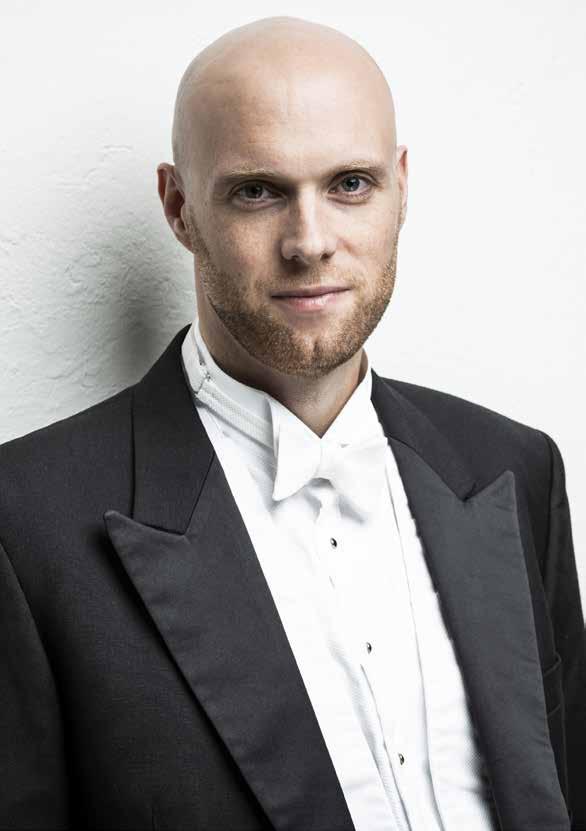
ANDREW STAPLES
Stage Director
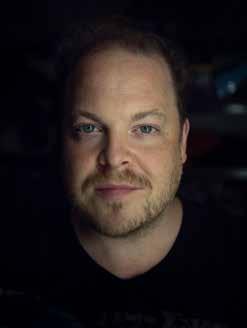
Andrew Staples is a renowned tenor and director whose career spans leading opera houses, major orchestras, and innovative film projects. Equally at home on stage and behind the camera, he brings a collaborative spirit and narrative depth to all his work.
As a singer, Andrew has performed with many of the world’s foremost conductors – including Sir Simon Rattle, Daniel Harding, Klaus Mäkelä, Gustavo Dudamel, and Yannick Nézet-Séguin –and with ensembles such as the Berlin Philharmonic, Vienna Philharmonic, Orchestre de Paris, Los Angeles Philharmonic, and Mahler Chamber
Orchestra. He has appeared at the Royal Opera House Covent Garden, the Metropolitan Opera, Staatsoper Berlin, Salzburg Festival, La Monnaie Brussels, and the Lucerne Festival.
Highlights of the 2025/26 season include Faust et Hélène with the London Philharmonic Orchestra and Wiener Symphoniker at the Bregenz Festival, Missa Solemnis with Orchestre de Paris, Haydn’s The Creation with Santa Cecilia, and Britten’s War Requiem with both the Cleveland Orchestra and the Berlin Philharmonic at the Salzburg Easter Festival. He also performs Schumann’s Das Paradies und die Peri with Wiener Symphoniker.
Andrew’s career as a film and stage director has led to collaborations with Joyce DiDonato, Kevin Puts, Daniel Harding, and ensembles such as Voces8 and Arcangelo. He has created music films and documentaries for Apple/ Platoon, Arte, Medici TV, and more. His Nocturne film with Alice Sara Ott won Audiovisual Music Production of the year (2025) at the Opus Klassik Awards. In 2025/26, he directs Emily, a new work by Kevin Puts for Joyce DiDonato and Time for Three, premiering at the Bregenz Festival.
Andrew continues to explore storytelling through music and image, creating work that bridges classical tradition with contemporary vision.
© Andrew Staples
TONIGHT’S PERFORMANCE
by Andrew Staples
Dido and Aeneas is an opera haunted from its very first moments by memory, foreboding, and the fragility of human happiness. In this production, staged beneath the great hull of Cutty Sark, Purcell’s masterpiece unfolds not as a distant mythological tale, but as a ritual of love, exile, and collective grief.
The setting of the ship is not merely atmospheric. Both Dido and Aeneas are survivors of catastrophe, displaced figures attempting to build meaning and stability after the collapse of their worlds. Dido has founded Carthage from the trauma of exile. Aeneas carries the burden of fallen Troy and the terrible weight of destiny. Their meeting is not simply romantic, but existential – two people recognising themselves in one another across the sea.
The ritual begins with a funeral procession through the space to Purcell’s Funeral Sentences, establishing a ceremonial world in which tragedy and loss are already present. Reeling from the horrors of war and fearing the threat of another, our story unfolds.
Soloists, chorus, and orchestra inhabit the space together, dissolving the boundaries between concert and drama. The Monteverdi Choir acts as a witnessing body through the action, while the orchestra surrounds the central playing area, allowing the drama to emerge from within the audience itself.
Visually, the world of the production suggests a civilisation suspended between grandeur and collapse. Distressed formal dress, shifting shadows, and sculptural tableaux create a landscape where beauty and ruin are codependent. Beneath the ship’s vast gleaming hull, Purcell’s music becomes at once intimate and monumental. The result is a lament not only for lost love, but for the futility of resisting destiny, fate, and the passing of time.

KARIMA EL DEMERDASCH
Dido
Karima El Demerdasch is a GermanEgyptian mezzo-soprano and is currently a member of the International Opera Studio at the Zurich Opera House. After completing four years of postgraduate and opera studies at the Guildhall School of Music & Drama in London under the tutelage of John Evans, Karima’s professional career began with her debut at the Salzburg Festival as a member of the Young Singers Programme last summer.
In 2024, she made her Wigmore Hall debut as a finalist in the Kathleen Ferrier Awards, followed by her solo debut at the Barbican Hall in 2025, where she performed the world premiere of a new work for voice and orchestra by Ben Pease-Barton. Her operatic roles include Prince Orlofsky Die Fledermaus, Dido Dido and Aeneas, and the title role in La Cenerentola. In her second season with the Zurich Opera Studio, her role debuts will include Second Lady Die Zauberflöte and Cherubino
Le nozze di Figaro
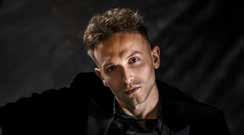
HUBERT ZAPIÓR Aeneas
Polish baritone Hubert Zapiór is a member of the ensemble at the Komische Oper Berlin, where he performs leading roles including Il Conte Almaviva Le Nozze di Figaro, the title roles in Don Giovanni and Eugene Onegin, Marcello La bohème, Billy Rise and Fall of the City of Mahagonny, Papageno Die Zauberflöte, Guglielmo Così fan tutte, and Pantalone L’Amour des trois oranges
Recent guest engagements include Guglielmo Così fan tutte at the Norwegian National Opera and the Polish National Opera, Il Conte Le Nozze di Figaro at the Staatsoper Hannover, Papageno Die Zauberflöte at the Polish National Opera, and the title role in Don Giovanni at Wrocław Opera.
In previous seasons, he made his debuts as the Marquis d’Obigny La Traviata at the Bayerische Staatsoper, Figaro Il Barbiere de Siviglia at the Norwegian National Opera, and Papageno in Barrie Kosky’s acclaimed production of Die Zauberflöte at the Polish National Opera. During his tenure as an ensemble member at Staatsoper Hannover, he was heard in leading roles such as Figaro Il Barbiere de Siviglia, Guglielmo Così fan tutte, Il Conte Le Nozze di Figaro, Papageno Die Zauberflöte, and Demetrius A Midsummer Night’s Dream
© Shirley Suarez
© Jan Windszus
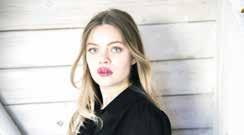

JOHANNA WALLROTH
Belinda BETHANY HORAK-HALLETT Sorceress
Soprano Johanna Wallroth has swiftly risen to international acclaim since her time in Wiener Staatsoper’s prestigious Opernstudio, with standout debuts in recent seasons on both the opera and concert stages. Debuts this season include as Pamina Die Zauberflöte at Theater Basel, as Governess The Turn of the Screw with Den Norske Opera, Bellezza Il trionfo del Tempo e del Disinganno at Teatro dell’Opera di Roma, under Gianluca Capuano, and Fiordiligi Così fan tutte in concert with Swedish Chamber Orchestra and at Verbier Festival. In concert, she reprises Barber’s Knoxville with The Cleveland Orchestra under Barbara Hannigan, and presents Mozart Arias with the Swedish Radio Symphony Orchestra led by Karina Canellakis.
Johanna has made highly praised debuts at Glyndebourne Festival Opera as Susanna Le nozze di Figaro, and as Cleopatra Giulio Cesare; and elsewhere as Barbarina in Barrie Kosky’s production at Wiener Staatsoper, Zerlina Don Giovanni at Opéra de Normandie Rouen, and at Opernhaus Zürich in Christian Spück’s choreographed ballet based on the Madrigals of Monteverdi led by Christoph Koncz. Future appearances include at Staatsoper Berlin, Opéra de Paris, and a return to the Glyndebourne Festival.
British mezzo-soprano Bethany HorakHallett is establishing strong credentials as a fine interpreter of Handel, Mozart and their contemporaries on both the opera stage and the concert platform. She recently made her Royal Swedish Opera debut as Cherubino Le nozze di Figaro having previously sung the role for Garsington Opera for whom she has also performed Dorabella Così fan tutte. She sang Virtue The Choice of Hercules in a production for the London Handel Festival and more Handel follows with Tirinto Imeneo for Cambridge Handel Opera Company. Bethany will make her English National Opera début in Mozart’s Women: A Musical Journey (to be filmed for Sky Arts) and creates the role of Yolanda in Mark-Anthony Turnage’s The Railway Children for the Glyndebourne Autumn Season.
Bethany has sung with the Orchestra of the Age of Enlightenment, Academy of Ancient Music and the Dunedin Consort. She made her BBC Proms début with the Monteverdi Choir. She has given programmes at the London Handel, Oxford International Song and Ludlow Festivals.
Bethany Horak-Hallett read Music at Leeds University and completed her training at Trinity Laban Conservatoire. She was a Rising Star of the Enlightenment and a Samling Artist and won Second Prize in the 2021 International Handel Singing Competition.
© Ben Reason
© Tina Axelsson
MONTEVERDI APPRENTICES
Programme Ambassadors: Dame Sarah Connolly & Mark Padmore
The Monteverdi Apprentices Programme was established by the Monteverdi Choir and Orchestras (MCO) in 2007 as the first of its kind in the UK. It continues to be a pre-eminent training scheme for young musicians, seeking to bridge the gap between higher education and a professional music career. The programme now has nearly 100 alumni, and several former Apprentices still perform regularly with both MCO and other leading ensembles.
By crafting a supportive learning environment for talented young artists, providing rewarding performance opportunities, and offering coaching and tuition from experts in a range of fields, the scheme is designed to nurture the next generation of musical talent. MCO aims to address some of the myriad of challenges faced by emerging classical musicians by integrating the Apprentices into the Monteverdi Choir, giving them the opportunity to learn and perform alongside world-class professional musicians, under the baton of a range of leading specialist conductors. Apprentices also take part in a variety of workshops and masterclasses led by prominent international artists such as Dame Sarah Connolly, Mark Padmore and Sophie Daneman.
We are extremely proud to have internationally acclaimed soloists Dame Sarah Connolly and Mark
Padmore as Ambassadors for the Monteverdi Apprentices Programme. Both Sarah and Mark have a long association with MCO, and both share our deep commitment to nurturing the next generation of vocal talent. Each brings a wealth of experience, a passion for ensemble singing, and a profound understanding of vocal artistry, stylistic versatility and the demands of a modern singing career.
MONTEVERDI APPRENTICES 2025/26
During the 2025/26 programme, the Apprentices have joined MCO performances including Mozart with Pablo Heras-Casado, Rossini with Jakob Lehmann and Handel with Christophe Rousset. More information about each of the nine Apprentices in the current cohort can be found in the ‘Education’ section of our website (monteverdi.co.uk).
MONTEVERDI APPRENTICES 2026/27
Applications are now open for the 2026/27 Programme, closing on 12 June 2026.
More information on the next iteration of the scheme and how to apply can be found in the ‘News’ section of our website.
Scan the QR code or visit: www.monteverdi.co.uk/education/ apprentices-programme
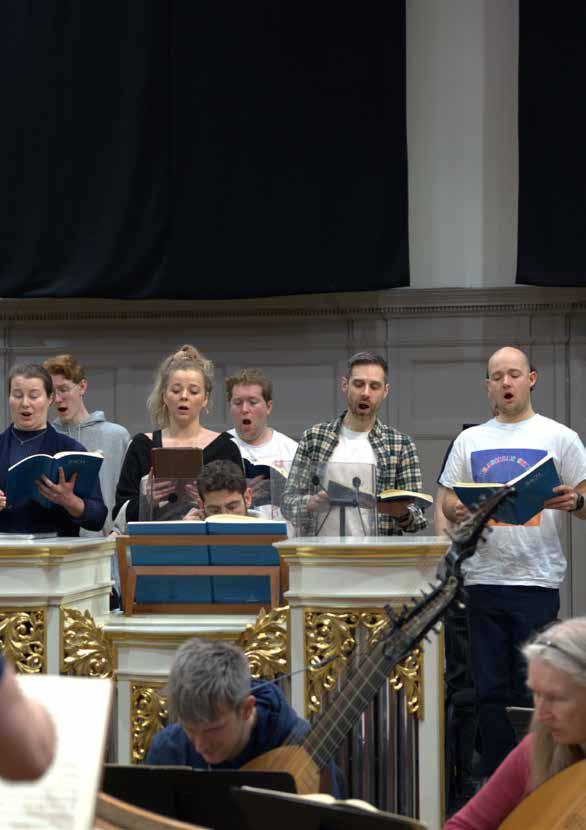
ONE GIANT LEAP
Support the Monteverdi Apprentices Programme and provide a step change for emerging professional musicians, turbocharging their creative development
Nurture a new generation of exceptional artistry To learn more and support, please contact Will Handysides, Head of Development: will@monteverdi.org.uk Scan the QR code or visit monteverdi.co.uk/education/apprentices-programme
SUPPORT THE MONTEVERDI ENSEMBLES

The Monteverdi family extends well beyond our trio of acclaimed ensembles. From our international audiences, our dedicated Members and supporters, to the Board of Trustees and the MCO team: everybody makes a vital contribution towards our mission of shedding new light on the great works of classical music and sharing astonishing musicianship with the world. We rely on the generosity of individuals, trusts and foundations, and corporate partners to make the extraordinary happen. There are many ways to support us and become more closely involved in our world. We hope in these pages you will find the perfect way to join our family.
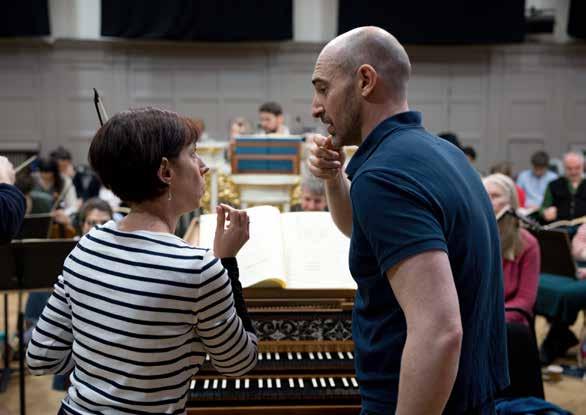
© Jude Lacey
To learn more, please contact Head of Development Will Handysides will@monteverdi.org.uk 0798 457 0627
MEMBERSHIPS
Members get exclusive access to a priority booking service for all our concerts, invitations to special events, and they are the first to hear our news through regular newsletters. We have four levels of membership, renewable each year, with additional benefits included for higher level members:
Platinum from £5,000
Gold from £3,000
Silver from £1,000
Bronze from £250
To join now, and for more information, visit the website, or you can get in touch: monteverdi.co.uk/support-us development@monteverdi.org.uk
PHILANTHROPIC SUPPORT
We warmly invite you to become more closely involved with the work and people of the Monteverdi Choir and Orchestras. The vital contributions of our philanthropic supporters, including our Benefactors, allow us to share astonishing musicianship globally, and ensure our legacy endures.
In gratitude, we are delighted to offer those who support us as major donors a very close relationship with MCO and the incredible people who make up our ensembles and perform with us. From period instrumentalists to sublime vocalists, from our Apprentices to our roster of leading conductors – there are countless captivating stories to be told and remarkable journeys to witness. Philanthropists can enjoy a bespoke, one-
to-one involvement with MCO, tailored to their interests and schedule, as well as receiving invitations to our special events.
CORPORATE PARTNERSHIPS
The Monteverdi Choir and Orchestras has a global reputation for producing the extraordinary. We foster a collaborative culture of rigorous musical examination and unbridled virtuosity, resulting in spine-tingling, electrifying sell-out performances. Our award-winning recordings are upheld as the definitive versions of hundreds of musical masterpieces. We want to create unique partnerships with brands, that deliver on your objectives with a strong ROI, with engaging content, virtuosic concert experiences and opportunities to sponsor pioneering projects.
LEAVE A LEGACY
By choosing to leave a Legacy Gift to the Monteverdi Choir & Orchestras, you will play a crucial role in ensuring that the performers and listeners of the future will continue to be enthralled by the power of our music-making.
AMERICAN FRIENDS
Our American Friends play a valuable part in supporting and championing the work of the Monteverdi ensembles both in the US and beyond. The American Friends of the Monteverdi Choir & Orchestras, Inc is a registered 501(c)(3) organisation and donations to it are tax-deductible for US taxpayers to the extent allowed by law. EIN:31-1651106.
MONTEVERDI SUPPORTERS
PATRON
HM The King
PRESIDENT
Dame Carol Grigor DBE
PRINCIPAL FUNDER
Dunard Fund
BENEFACTORS
Michael & Fiona Beverley
David & Sandra Brierwood
Christian & Myrto Rochat
Sir David & Lady Walker
MEMBERS
PLATINUM
Lord & Lady Burns
Morny Davison
Sir Vernon Ellis
The Isola/Little Family
Lady Susan Hussey
William Lock
Sebastian & Flora Lyon
Francis Norton
Helen & John Skinner
GOLD
Sarah & Mike Cuthbert
Nicholas Eldred
Sir Stephen Gomersall
Gordon Gullan
Stephen & Victoria Swift
Bankim Thanki KC
SILVER
Julia & Martin Albrecht
Peter & Stephanie Chapman
Tony Hales CBE
Lady Nixon
Mollie Norwich
Stefan Paetke
Professor Richard Portes CBE FBA
Sabine & Norbert Reis
Isabella de Sabata
Caz Weller Knight
BRONZE
Geoffrey Barnett
Donald D. Campbell
Vanessa Claypole
Lady Virginia Fraser
Nigel Gibson
Jenny Hill
Mark & Sophie Lewisohn
Robert Moreland
Mary Pinnell
Daan Posthuma
Anne Reyersbach
With grateful thanks to all those who wish to remain anonymous
The Monteverdi Choir & Orchestras gratefully acknowledges the generous support of the following individuals, organisations and Trusts & Foundations
CORPORATE PARTNERS
Morgan Stanley
TRUSTS & FOUNDATIONS
Dunard Fund
The David and Claudia Harding Foundation
Mrs F B Laurence’s Charitable Trust
The Rainbow Dickinson Trust
IN MEMORIAM
Roger Chadder
Peter J. Chapman
Ian Hay Davison CBE
Sir Henry Keswick
Judith McCartin Scheide
Nicholas Snowman OBE
Geoffrey Taunton
LEGACIES
The Estate of Prof. Andrew Dunlop Roberts
The Estate of Donald Gorman
The Estate of Howard Hodgkin
The Estate of Kevin Lavery
AMERICAN FRIENDS
The Negaunee Foundation
William Dudley
Dunard Fund USA
Neil Graham
David Kay
Seth Levi
Jai Shekhawat
Rory Walck
MCO TEAM
Dr Rosa Solinas
General Director
Martin Wheeler
Finance & Administration Manager
James Halliday
Artistic Advisor & Librarian
Matthew Knight
Artistic Planning Manager
Janet Marsden
Artistic Operations Manager
Katie Care
Concerts & Tours Manager
Will Handysides
Head of Development
Charlotte Walker
Development Assistant
Orlando Jones
Projects Coordinator
Sophie Southall
Marketing & Communications Assistant
Philip Turbett
Orchestra Fixer
Matthew Muller / Megan Russell
Stage Managers
Premier Comms
PR & media relations
David Wright
Keyboard Technician
William Reynolds
Lighting Designer
Carol Savage
Costumes & Masks
Poppy Savage – Studio2359
Production Support
Tuğçe Tez & Jo Harvey – TezArts
Production Support
Lighting supplied by GreenKit Ltd
MCO BOARD OF DIRECTORS
Christian Rochat (Chairman)
Nicholas Eldred
Sir Stephen Gomersall
Diana Houghton
Barra Little
Francis Norton
Caz Weller Knight
MCO CHAIRS CIRCLE
Michael Beverley
David Brierwood
Lord Burns
Sir David Walker
SIGN UP FOR OUR NEWSLETTER What’s On | News | Reviews | Media
Scan the QR code or visit: monteverdi.co.uk/pages/newsletter
LISTEN TO MCO
Recordings | Videos | Performances | Podcasts

Scan the Spotify link to listen to the Monteverdi Choir, or buy our recordings at: shop.monteverdi.co.uk
MONTEVERDI CHOIR & ORCHESTRAS
Level 12, 20 Bank Street, Canary Wharf, London E14 4AD, UK info@monteverdi.org.uk monteverdi.co.uk
Registered in England & Wales Company No. 01277513 Charity No. 272279
Follow us on social media
Design: Linda Lundin, Park Studio

IN LONDON
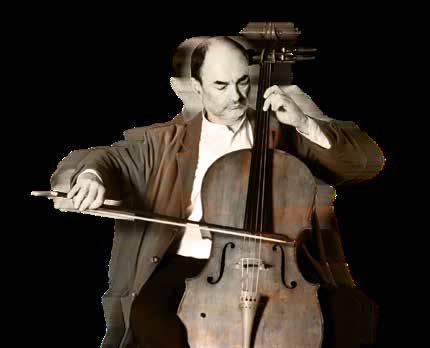
English Baroque Soloists
Peter Whelan – conductor
Christophe Coin – cello
Thursday 18 June 2026, 7.30pm
St Martin-in-the-Fields, London
monteverdi.co.uk/haydn-in-london

PETITE MESSE SOLENNELLE
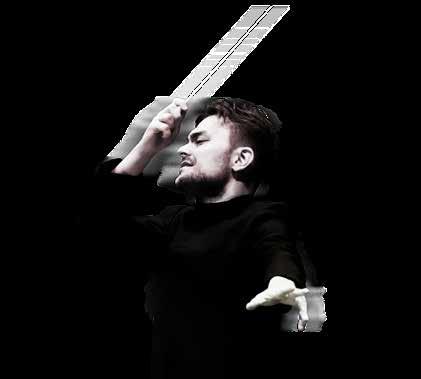
Monteverdi Choir
Orchestre Révolutionnaire et Romantique
Jakob Lehmann – conductor
Friday 18 September 2026, 7.30pm
Alexandra Palace, London
monteverdi.co.uk/rossinipetite-messe-solennelle
© Paul Marc Mitchell