FINAL RECITAL MONTEVERDI APPRENTICES

The Crypt, St Martin-in-the-Fields
Thursday 9 July 2026 8pm
Scan the QR code or visit: www.monteverdi.co.uk/pages/newsletter


Monteverdi Choir & Orchestras presents

The Crypt, St Martin-in-the-Fields
Thursday 9 July 2026 8pm
Scan the QR code or visit: www.monteverdi.co.uk/pages/newsletter
Monteverdi Choir & Orchestras presents
Milly Atkinson – soprano
Áine Smith – soprano
Lowri Bufton – mezzo-soprano
Elizabeth Nurse – mezzo-soprano
Emma van der Scheer – mezzo-soprano
Matthew Monaghan – countertenor
Sam Madden – tenor
Allyn Wu – baritone
Will Harmer – bass-baritone
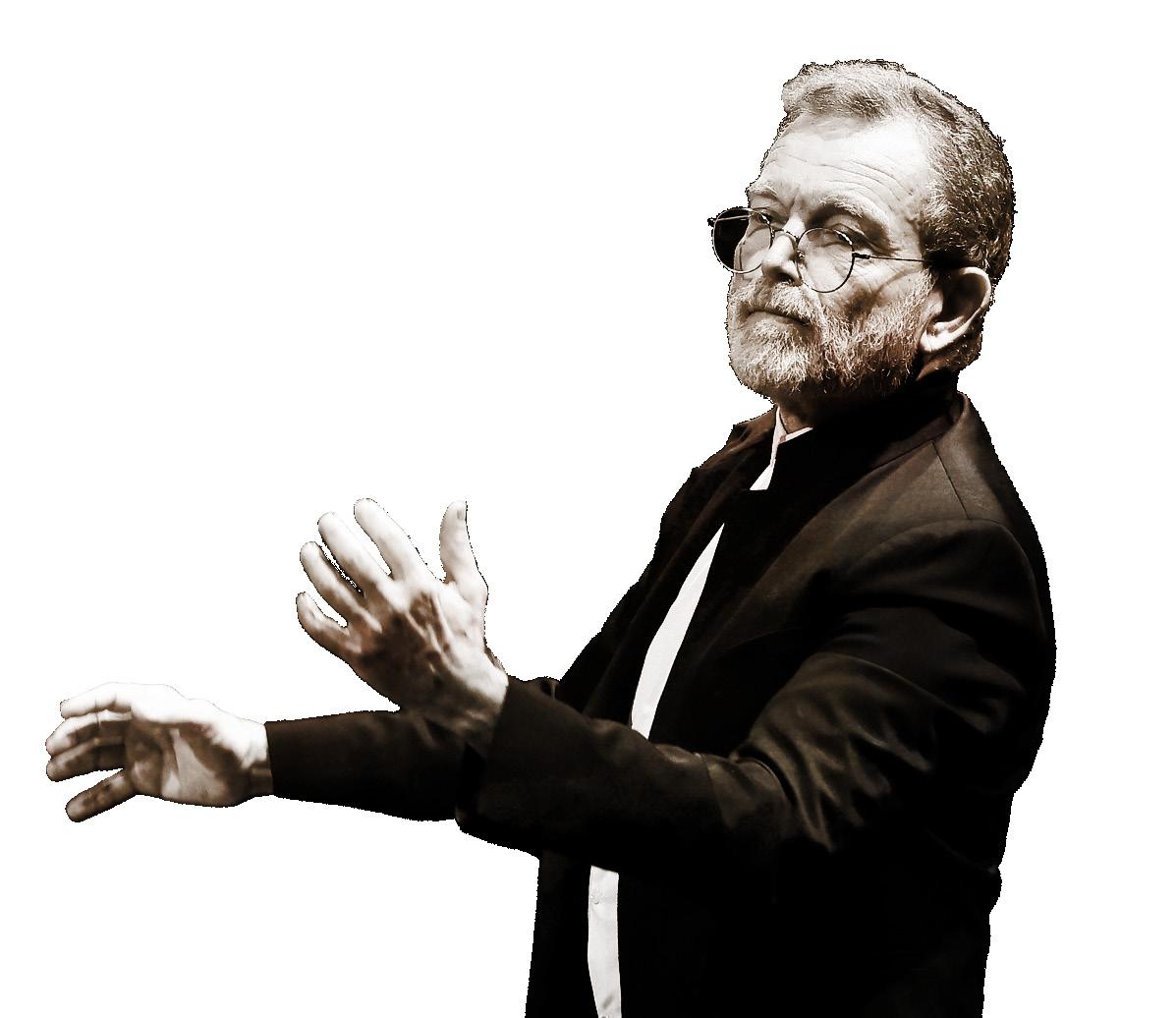
Jonathan Sells – conductor
Oscar Golden-Lee – tenor
Beatrice Philips – violin
Gabi Jones – violin
Jacob Garside – viola da gamba
Anhad Arora – harpsichord, piano
Toby Carr – theorbo
Monteverdi Apprentice Ambassadors:
Dame Sarah Connolly
Mark Padmore
Monteverdi Choir Mentors:
Lucy Knight – soprano
Francesca Biliotti – mezzo-soprano
Annie Gill – mezzo-soprano
Thomas Herford – tenor
Tristan Hambleton – bass-baritone
PURCELL Hear my prayer, O Lord
PURCELL From silent shades (Bess of Bedlam)
PURCELL A prince of glorious race descended
LAMBERT Il faut mourir
LAMBERT Ombre de mon amant
LAMBERT Vos mépris chaque jour
HANDEL With darkness deep
MONTEVERDI Hor che’l ciel e la terra
SCHÜTZ Herr, nun lässest du deinen Diener
interval
LASSUS Valle profonda
BACH Der Friede sei mit dir
BRAHMS Fünf Gesänge, nos. 1, 3 & 4
SCHUMANN Dunkler Lichtglanz
BRAHMS Der Abend
BRAHMS Nun, ihr Musen, genug!
DEBUSSY Trois Chansons de Charles d’Orléans
DOWLAND Can she excuse my wrongs?
SULLIVAN The long day closes
The Monteverdi Apprentices Programme has been an exciting part of MCO’s activities for nearly 20 years. Several former members of the scheme now perform with us regularly, with many having international careers as ensemble musicians and soloists; one of the early participants, Robyn Allegra Parton, will be joining us as the soprano soloist in Rossini’s Petite messe solennelle this September.
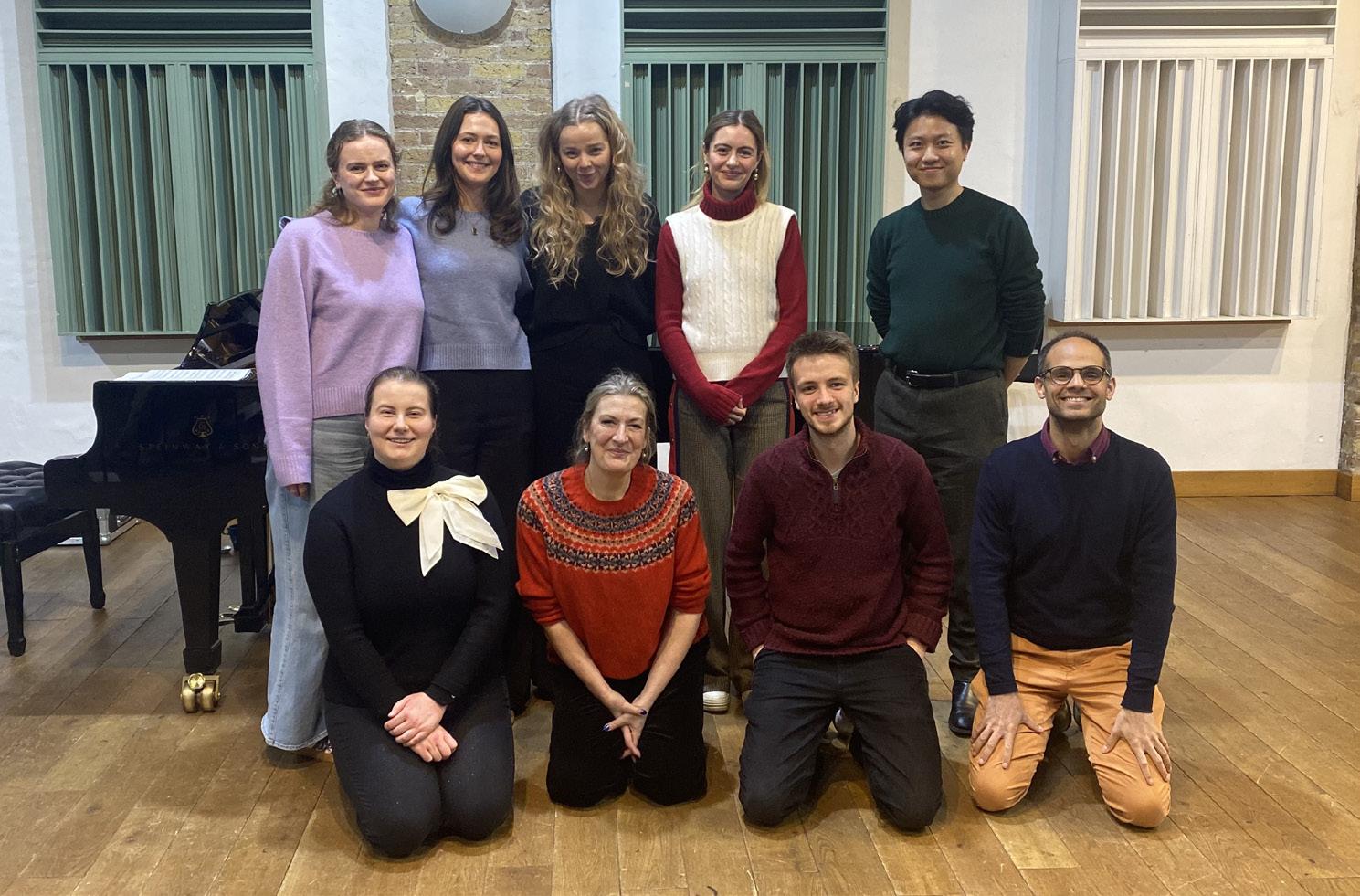
The nine singers in the 2025/26 cohort were selected from a larger number of applications than ever before. They come from as far afield as the Netherlands and Australia, and have brought their individual musicianship to projects with the choir, singing under Jakob Lehmann, Pablo Heras-Casado, Christophe Rousset, Peter Whelan and Jonathan Sells, in concerts in Spain, Italy, France and Norway, and our staged production of Dido and Aeneas under the hull of Cutty Sark in Greenwich.
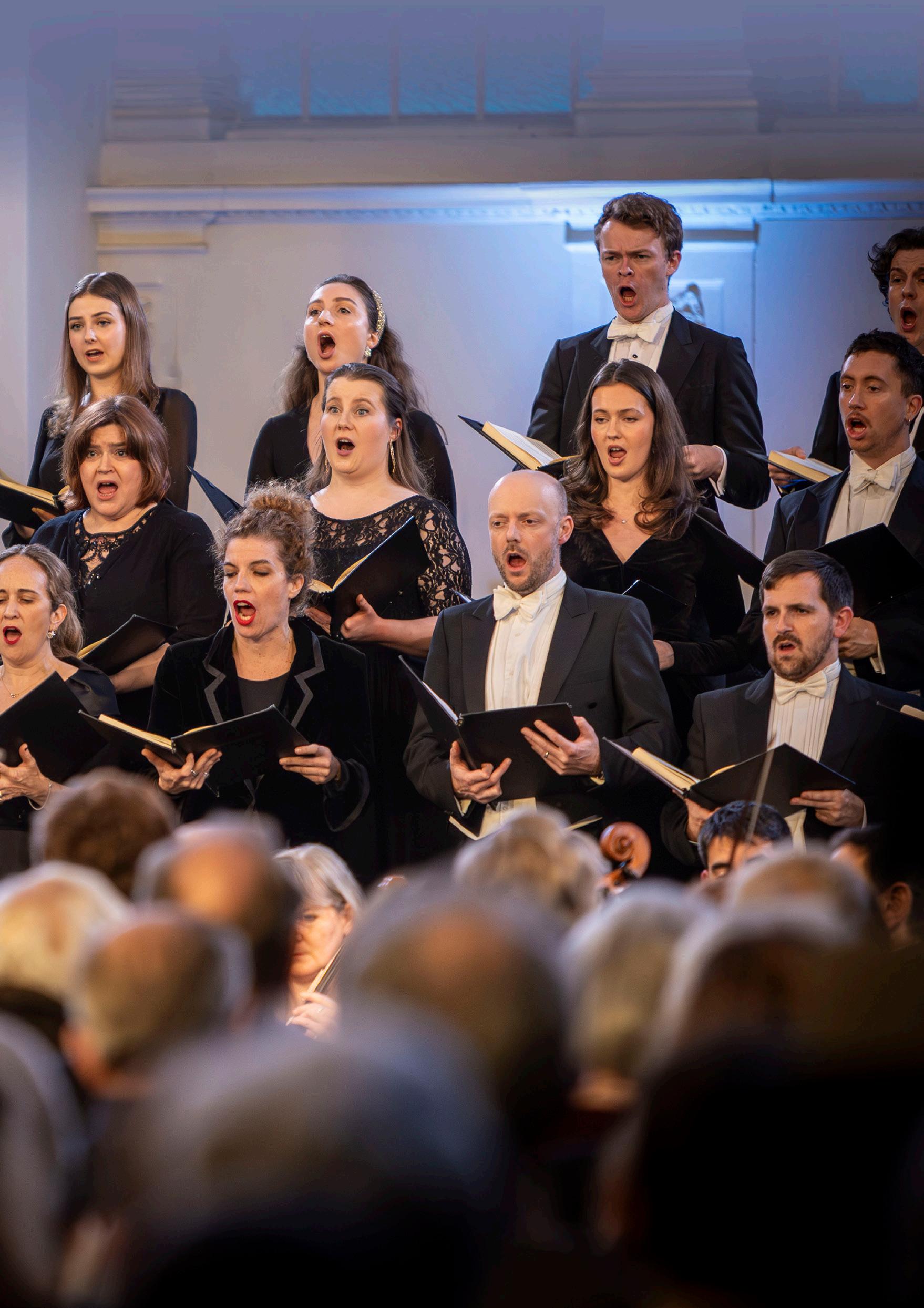
Tonight you will hear them as soloists and ensemble singers, reflecting their work over the last year with Apprentice Ambassadors Dame Sarah Connolly and Mark Padmore, and other masterclass leaders including Jakob Lehmann, Sophie Daneman, Richard Stokes and Elizabeth Kenny.
Alongside staples of Monteverdi Choir repertoire (Monteverdi, Bach, Schütz), tonight’s programme includes rarely heard songs by Purcell and the seventeenth-century French composer Michel Lambert; a ten-voice madrigal by Orlande de Lassus; and part-songs by Schumann and Brahms accompanied by piano duet.
PURCELL:
HEAR MY PRAYER, O LORD, Z. 15
Hear my prayer, O Lord: and let my crying come unto thee.
Psalm 102: v.1
PURCELL:
(BESS OF BEDLAM, Z.370)
From silent shades, and the Elysian groves, Where sad departed spirits mourn their loves;
From crystal streams, and from that country where Jove crowns the fields with flowers all the year,
Poor senseless Bess, cloth’d in her rags and folly, Is come to cure her lovesick melancholy.
Bright Cynthia kept her revels late, While Mab, the Fairy Queen, did dance, And Oberon did sit in state When Mars at Venus ran his lance. In yonder cowslip lies my dear, Entomb’d in liquid gems of dew; Each day I’ll water it with a tear, Its fading blossom to renew.
For since my love is dead and all my joys are gone, Poor Bess for his sake, A garland will make, My music shall be a groan.
I’ll lay me down and die
Within some hollow tree, The rav’n and cat, The owl and bat, Shall warble forth my elegy.
Did you not see my love as he pass’d by you? His two flaming eyes, if he come nigh you, They will scorch up your hearts!
Ladies, beware ye, Lest he should dart a glance that may ensnare ye.
Hark! I hear old Charon bawl, His boat he will no longer stay; The Furies lash their whips and call, ‘Come, come away.’
Poor Bess will return to the place whence she came, Since the world is so mad she can hope for no cure; For love’s grown a bubble, a shadow, a name, Which fools do admire and wise men endure.
Cold and hungry am I grown, Ambrosia will I feed upon, Drink nectar still and sing. Who is content
Does all sorrow prevent, And Bess in her straw, Whilst free from the law, In her thoughts is as great as a King.
Anon.
A PRINCE OF GLORIOUS RACE (WHO CAN FROM JOY REFRAIN?, Z. 342)
A prince of glorious race descended At his happy birth attended With rosy, smiling hours, to show He will golden days bestow.
Nahum Tate (1652-1715)
LAMBERT: IL FAUT MOURIR
Il faut mourir plutôt que de changer, Jamais un cœur ne doit se dégager, Quand un autre est fidèle à son amour extrême: Mais lors qu’il a souffert ce que l’on peut souffrir, Et que l’objet qu’il aime Augmente sa douleur au lieu de la guérir, Il faut changer plutôt que de mourir.
’Tis better to die than e’er to change, a heart must never seek to free itself when another is faithful to its truest love: but when it has borne all that one can bear, and the object of its affections increases its suffering instead of curing it, ’tis better to change than to die.
Il faut changer plutôt que de mourir, Quand la beauté qui nous peut secourir
Est toujours insensible à notre amour extrême: Mais il ne faut pas être inconstant ni léger Et quand l’objet qu’on aime Partage notre mal et le veut soulager, Il faut mourir plutôt que de changer.
Anon.
Ombre de mon amant, ombre toujours plaintive, Hélas! que voulez-vous! je meurs. Soyez un moment attentive Au funeste récit de mes vives douleurs. C’est sur cette fatale rive Que j’ay veu vostre sang couler avec mes pleurs.
Rien ne peut arrester mon ame fugitive, Je cède à mes cruels malheurs.
Ombre de mon amant, ombre toujours plaintive, Hélas! que voulez-vous? je meurs.
Vos mépris chaque jour me causent mille alarmes. Mais je chéris mon sort, bien qu’il soit rigoureux. Hélas! si dans mes maux je trouve tant de charmes, Je mourrois de plaisir si j’estois plus heureux.
HANDEL: WITH DARKNESS DEEP (THEODORA, HWV 68)
With darkness deep, as is my woe, Hide me, ye shades of night; Your thickest veil around me throw,
’Tis better to change than to die when the beauty who might rescue us remains insensible to our truest love: but we must not be inconstant or flighty and when the object of our affections shares our pain and wishes to ease it, ’tis better to die than e’er to change.
Translation: Susannah Howe
Shade of my lover, melancholy shade, Alas, what can I do? I am dying.
Listen for a moment
To the tragic story of my intense grief. It is on this fatal shore
That I saw your blood flow, mixed with my tears. Nothing can hold back my departing soul. I surrender to my cruel fate.
Shade of my lover, melancholy shade, Alas, what can I do? I am dying.
Anon.
Anon.
Translation: James Halliday
Every day, your scorn causes me a thousand agonies. But I cherish my fate, even if it is harsh.
Alas, if I find such pleasure in my pains, I should die of bliss if I were more content
Translation: James Halliday
Conceal’d from human sight. Or come thou, death, thy victim save, Kindly embosom’d in the grave.
Thomas Morell (1703-1784)
E’L VENTO TACE, SV 147
Hor che’l ciel e la terra e’l vento tace E le fere e gli augelli il sonno affrena, Notte il carro stellato in giro mena, E nel suo letto il mar senz’onda giace;
Veglio, penso, ardo, piango, e chi mi sface
Sempre m’è innanzi, per mia dolce pena: Guerra è’lmio stato, d’ira e di duol piena, E sol di lei pensando ho qualche pace.
Così sol d’una chiara fonte viva Move’l dolce e l’amaro, ond’io mi pasco; Una man sola mi risana e punge.
E perchè’l mio martir non giunga a riva, Mille volte il dì moro, e mille nasco, Tanto de la salute mia son lunge.
Francesco Petrarca (1304-1374)
SCHÜTZ: HERR, NUN LÄSSEST DU DEINEN DIENER
(MUSIKALISCHE EXEQUIEN, SWV 281)
Herr, nun lässest du deinen Diener in Friede fahren, wie du gesagt hast: Denn meine Augen haben deinen Heiland gesehen, welchen du bereitet hast für allen Völkern; Ein Licht, zu erleuchten die Heiden und zum Preis deines Volks Israel.
Thomas Morell (1703-1784)
Now that the sky and the earth and the wind are silent and the animals and birds are locked in sleep, Night’s starry chariot is wheeling round and in its bed the ocean lies motionless.
I lie awake, I think, I burn, I weep, and she who undoes me is always before me, to my sweet pain. War is my condition, full of anger and grief, and only thinking of her do I have any peace.
Thus from a single clear and vital fountain flow the sweetness and bitterness on which I feed; A single hand both nourishes and pierces me.
And so that my suffering does not reach its goal, a thousand times a day I die and a thousand am born, so far am I from my salvation.
Translation: James Halliday
Lord, now lettest thou thy servant depart in peace, according to thy word: For mine eyes have seen thy salvation, which thou hast prepared before the face of all people; A light to lighten the Gentiles, and the glory of thy people Israel.
Book of Common Prayer, Church of England
Valle profonda, i miei lamenti sentonsi, E gli animali tuoi a pietà muovonsi, E della trista sorte mia non curonsi:
Com’esser può se’l mio gran mal non provano, E i mei gravi sospir al cor lor giongono? Dunque del mio dolor tutti si dolgono.
Anon.
Der Friede sei mit dir, du ängstliches Gewissen!
Dein Mittler stehet hier, der hat dein Schuldenbuch und des Gesetzes Fluch verglichen und zerrissen. Der Friede sei mit dir, der Fürste dieser Welt, der deiner Seele nachgestellt, ist durch des Lammes Blut bezwungen und gefällt. Mein Herz, was bist du so betrübt, da dich doch Gott durch Christum liebt? Er selber spricht zu mir: Der Friede sei mit dir!
Anon.
Deep valley, my laments can be heard, and the animals are moved to pity, even if they do not care about my sad fate:
How can it be if they do not feel my great pain, that my deep sighs still reach their hearts? Thus, all grieve at my sorrow.
Translation: James Halliday
Peace be unto you, O troubled conscience! Your intercessor stands here, He has annulled and torn up your book of guilt and the curse of the Law. Peace be unto you: the Prince of this world, who has lain in wait for your soul, has been overcome and laid low by the blood of the Lamb.
My heart, why are you so downcast, since God loves you through Christ? He Himself saith to me: Peace be unto you!
Welt, ade, ich bin dein müde, Salems Hütten stehn mir an, [Welt, ade, ich bin dein müde, ich will nach dem Himmel zu,] wo ich Gott in Ruh und Friede ewig selig schauen kann. [da wird sein der rechte Friede und die ewig stolze Ruh.]
World, farewell, I am weary of you, Salem’s dwellings are what is meet for me, [World, farewell, I am weary of you, I wish to enter Heaven,] where I may contemplate God in peace and calm and eternal bliss. [where there is true peace and eternal stately repose.]
Da bleib ich, da hab ich Vergnügen zu wohnen, [Welt, bei dir ist Krieg und Streit, nichts denn lauter Eitelkeit;] da prang ich gezieret mit himmlischen Kronen. [in dem Himmel allezeit Friede, Freud und Seligkeit.]
Johann Georg Albinus (1624-1679)
There shall I abide, there delight to dwell, [World, you know but war and strife, naught but merest vanity;] there be crowned in the glory of heavenly splendour. [in Heaven there always reigns peace, happiness and bliss.]
Translation: Richard Stokes
BRAHMS:
FÜNF GESÄNGE, OP. 104, NOS. 1, 3 & 4
1. Nachtwache I
Leise Töne der Brust, geweckt vom Odem der Liebe, Hauchet zitternd hinaus, ob sich euch öffen’ ein Ohr, Öffn’ ein liebendes Herz, und wenn sich keines euch öffnet, Trag’ ein Nachtwind euch seufzend in meines zurück!
Friedrich Rückert (1788-1866)
1. Night Vigil I
Gentle notes of the heart, wakened by the breath of Love, Whisper quiveringly forth, if an ear, If a loving heart should open to you, and if none should do so, May a night wind bear you back sighing to my heart.
3. Letztes Glück
Leblos gleitet Blatt um Blatt
Still und traurig von den Bäumen; Seines Hoffens nimmer satt, Lebt das Herz in Frühlingsträumen.
Noch verweilt ein Sonnenblick Bei den späten Hagerosen— Wie bei einem letzten Glück, Einem süßen, hoffnungslosen.
Max Kalbeck (1850-1921)
3. Last Happiness
Leaf after leaf glides lifelessly, Quietly and sadly, down from the trees; With its hope never fulfilled, The heart lives in Spring dreams.
A ray of sun still lingers
On the late wild roses—
As on a last happiness, Sweet and devoid of hope.
4. Verlorene Jugend
Brausten alle Berge, Sauste rings der Wald, Meine jungen Tage, Wo sind sie so bald?
Jugend, teure Jugend, Flohest mir dahin; O du holde Jugend, Achtlos war mein Sinn!
4. Lost Youth
The mountains all were raging, The forest roared all around— The days of my youth— Where have they fled so soon?
Youth, precious youth, You have fled from me; O blessed youth, I was unsuspecting.
Ich verlor dich leider, Wie wenn einen Stein Jemand von sich schleudert In die Flut hinein.
Wendet sich der Stein auch Um in tiefer Flut, Weiss ich, dass die Jugend Doch kein Gleiches tut.
Josef Wenzig (1807-1876)
Sadly, I have lost you, As when someone idly hurls A stone Into the waves.
Though the stone may turn In the deep waves, I know that youth Does no such thing.
Translation: Richard Stokes
SCHUMANN:
DUNKLER LICHTGLANZ, BLINDER BLICK
(SPANISCHE LIEBESLIEDER, OP. 138)
Dunkler Lichtglanz, blinder Blick, Totes Leben, Lust voll Plage, Glück erfüllt von Mißgeschick, Trübes Lachen, frohe Klage, Süße Galle, holde Pein, Fried’ und Krieg in einem Herzen, Das kannst, Liebe, du nur sein, Mit der Lust erkauft durch Schmerzen.
Emanuel Geibel (1815-1884)
Dark light, blind gaze, Dead life, joy and pain, Fortune full of misfortune, Dull laughter, happy lament, Sweet bitterness, blessed pain, Peace and war in a single heart— Only you, Love, can be all that, With happiness paid for with pain.
Translation: Richard Stokes
BRAHMS:
DER ABEND
(DREI QUARTETTE, OP. 64)
Senke, strahlender Gott, die Fluren dürsten Nach erquickendem Tau, der Mensch verschmachtet, Matter ziehen die Rosse, Senke den Wagen hinab!
Siehe, wer aus des Meers krystallner Woge Lieblich lächelnd dir winkt Erkennt dein Herz sie? Rascher fliegen die Rosse. Thetys, die göttliche, winkt.
Schnell vom Wagen herab in ihre Arme Springt der Führer, den Zaum ergreift Kupido, Stille halten die Rosse, Trinken die kühlende Flut.
Sink, beaming God; the meadows thirst for refreshing dew, Man is listless, the horses are pulling more slowly: the chariot descends.
Look who beckons from the sea’s crystal waves, smiling warmly! Does your heart know her? The horses fly more quickly. Thetis, the divine, is beckoning.
Quickly from the chariot and into her arms springs the driver. Cupid grasps the reins. The horses come silently to a halt and drink from the cool waters.
An dem Himmel herauf mit leisen Schritten Kommt die duftende Nacht; ihr folgt die süße Liebe. Ruhet und liebet! Phöbus, der Liebende, ruht.
Friedrich von Schiller (1759-1805)
BRAHMS:
NUN, IHR MUSEN GENUG!
(NEUE LIEBESLIEDER, OP. 65)
Nun, ihr Musen, genug! Vergebens strebt ihr zu schildern, Wie sich Jammer und Glück wechseln in liebender Brust.
Heilen könnet die Wunden ihr nicht, die Amor geschlagen; Aber Linderung kommt einzig, ihr Guten, von euch.
Johann Wolfgang von Goethe (1749-1832)
DEBUSSY:
L99
1. Dieu! qu’il la fait bon regarder, La gracieuse bonne et belle; Pour les grans biens que sont en elle, Chascun est prest de la louer. Qui se pourroit d’elle lasser? Tousjours sa beauté renouvelle.
Dieu! qu’il la fait bon regarder, La gracieuse bonne et belle!
Par deça, ne delà, la mer, Ne scay dame, ne damoiselle
Qui soit en tous biens parfais telle!
C’est un songe d’y penser.
Dieu! qu’il la fait bon regarder!
2. Quant j’ai ouy le tabourin
Sonner pour s’en aller au may, En mon lit n’en ay fait affray Ne levé mon chef du coissin;
En disant: il est trop matin, Ung peu je me rendormiray,
In the sky above, with a soft step, comes the fragrant night; she is followed by sweet Love. Rest and love! Phoebus, the amorous, rests.
Translation: Emily Ezust
Enough, now, ye Muses! You strive in vain to show How joy and sorrow alternate in loving hearts. You cannot heal the wounds, inflicted by Love; but assuagement comes from you alone.
Translation: Richard Stokes
1. Lord! how good to look on her, The good and fair and gracious lady; For the high qualities within her, All are eager to praise her. Who could ever tire of her? Her beauty always increases.
Lord! how good to look on her, The good and fair and gracious lady!
The ocean knows of no woman in any quarter, Married or single, who is as perfect As she in every way. You would never dream of such a thing; Lord! how good it is to look on her!
2. When I heard the drum Summoning us to go maying, I neither leapt from my bed Nor lifted my head from the pillow.
And I said: it is too early. I shall sleep a little longer:
Quant j’ai ouy le tabourin
Sonner pour s’en aller au may.
Jeunes gens partent leur butin; De Nonchaloir m’acointeray, A lui je m’abutineray;
Trouvé l’ay plus prochain voisin, Quant j’ai ouy le tabourin!
3. Yver, vous n’estes qu’un villain; Esté est plaisant et gentil, En tesmoing de May et d’Avril
Qui l’accompaignent soir et main.
Esté revest champs, bois et fleurs, De sa livrée de verdure
Et de maintes autres couleurs, Par l’ordonnance de Nature.
Mais vous, Yver, trop estes plain De nège, vent, pluye et grézil; On vous deust banir en éxil.
Sans point flater, je parle plain.
Charles d’Orléans (1394-1465)
When I heard the drum Summoning us to go maying.
Let the young divide their spoils, I shall be happy to remain indifferent And share my spoils with him –For he was my nearest neighbour, When I heard the drum beat.
3. Winter, you are nothing but a rogue; Summer is pleasant and kind, As May and April can testify, Accompanying it each eve and morn.
Summer clothes fields, woods and flowers With his verdant livery, And many other colours too, As nature commands.
But you, Winter, you exude Snow, wind, rain and hail; You ought to be exiled. Winter, you are nothing but a rogue.
Translation: Richard Stokes
DOWLAND:
CAN SHE EXCUSE MY WRONGS?
Can she excuse my wrongs with Virtue’s cloak?
Shall I call her good when she proves unkind? Are those clear fires which vanish into smoke? Must I praise the leaves where no fruit I find?
No, no; where shadows do for bodies stand, That may’st be abus’d if thy sight be dim. Cold love is like to words written on sand, Or to bubbles which on the water swim. Wilt thou be thus abused still, Seeing that she will right thee never? If thou canst not o’ercome her will, Thy love will be thus fruitless ever.
Was I so base, that I might not aspire
Unto those high joys which she holds from me?
As they are high, so high is my desire, If she this deny, what can granted be?
If she will yield to that which reason is, It is reason’s will that love should be just. Dear, make me happy still by granting this, Or cut off delays if that die I must. Better a thousand times to die Than for to love thus still tormented: Dear, but remember it was I Who for thy sake did die contented.
Robert Devereux, Earl of Essex (1565-1601)
No star is o’er the lake, Its pale watch keeping, The moon is half awake, Through grey mist creeping, The last red leaves fall round The porch of roses, The clock hath ceased to sound, The long day closes.
Sit by the silent hearth In calm endeavour, To count the sounds of mirth, Now dumb for ever. Heed not how hope believes And fate disposes: Shadow is round the eaves, The long day closes.
The lighted windows dim Are fading slowly. The fire that was so trim Now quivers lowly. Go to the dreamless bed Where grief reposes; Thy book of toil is read, The long day closes.
Henry Chorley (1808-1872)

MILLY ATKINSON soprano
Milly studied for her BA in Music at Cambridge University, and then an MMus in Voice and Opera at the Royal College of Music, where she was an RCM Award Holder studying with Dinah Harris. In the 2025/26 season, Milly was a Song Easel Young Artist and an Emerging Artist with Longborough Festival Opera, where she covered Belinda in Purcell’s Dido and Aeneas with Barokksolistene. She was selected to compete at the Concours Corneille baroque singing competition in 2024 and the Monteverdi Cavalli Singing Competition in 2025. Recent solo roles include Zima in Rameau’s Les Indes Galantes, Oscar in Verdi’s Un Ballo in Maschera, Galatea in Handel’s Acis and Galatea, and Melpomene in Gluck’s Il Parnaso Confuso. Milly is also a keen songwriter, and enjoys organising recitals of diverse repertoire. She works with In The Dark London as a crossover vocalist, and also as a backing vocalist for folk bands and commercial music.
soprano
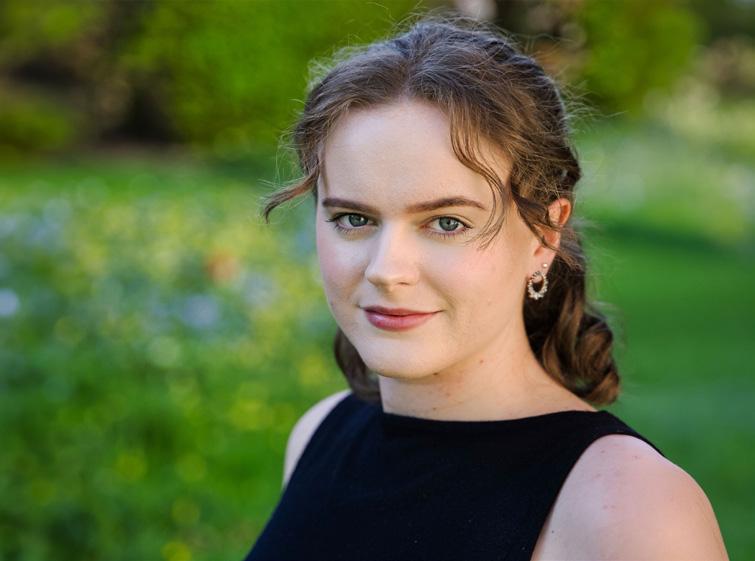
Born and raised in Crickhowell, South Wales, Áine Smith began singing with the Nidus Children’s Choir. Áine went on to read Music at Merton College Oxford, graduating in 2021 with a first-class degree. She held a choral scholarship with the Merton College Choir and sang with the Magdalen College Consort of Voices, and graduated in 2022 with Distinction from a Masters of Studies in Musicology at Merton. Áine is now based in London and has performed internationally with ensembles such as Tenebrae, Gallicantus and the ORA Singers. She is an alumna of Genesis Sixteen, the St-Martin-in-theFields Emerging Artists and the Tenebrae Associate Artists programmes. As a soloist, Áine has performed alongside Rachel Podger in the Brecon Baroque Festival and with the London Bach Society. She made her professional opera debut under Steven Devine with New Chamber Opera in 2024. Áine is passionate about access into higher education and choral music, and works as a facilitator for the Tenebrae Schools Development Programme and other schemes.
mezzo-soprano
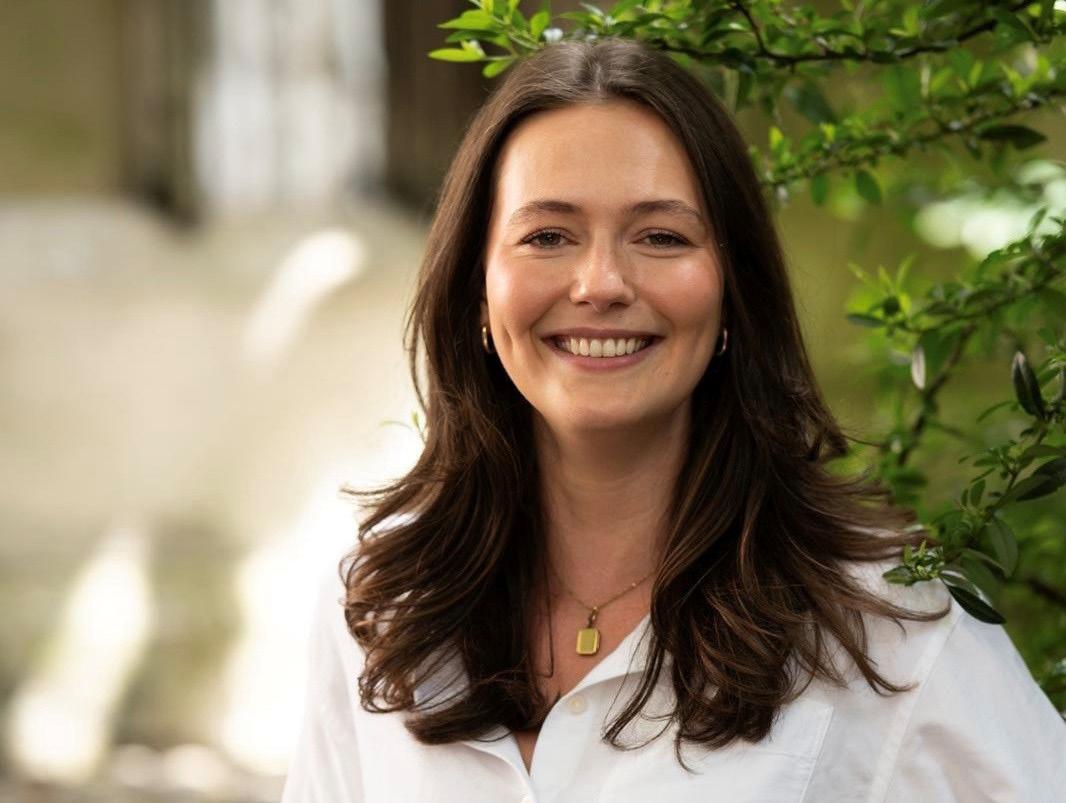
Lowri is a mezzo-soprano from midWales. She began singing as a chorister at Brecon Cathedral Choir, going on to be a choral scholar. Lowri graduated with a BMus in Vocal Performance from Trinity Laban Conservatoire of Music and Dance, during which time she was a Senior Choral Scholar with the Old Royal Naval College Chapel Choir. She has since undertaken a choral scholarship at St Martin-in-the-Fields, and was then part of their Emerging Artists programme. She now enjoys a freelance career in London performing with groups such as Arcangelo, Orchestra of the Age of Enlightenment, Ora Singers, Siglo de Oro, Tallis Scholars and St Martins Voices.
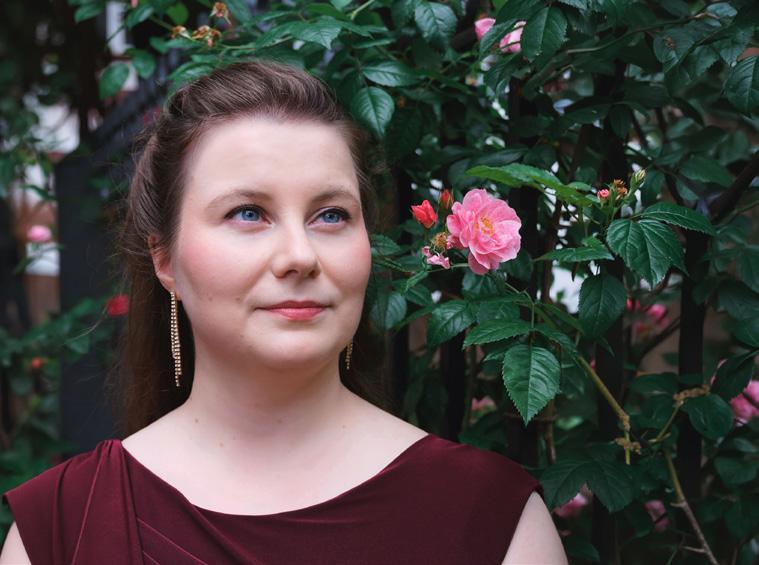
mezzo-soprano
Elizabeth Nurse is an experienced soloist and ensemble singer. She sings with ensembles including La Cetra Basel, The Oxford Consort of Voices, and Sinfonia of London Chorus. Elizabeth was a finalist in The Leach Award for Singing Competition 2024, and has performed as a soloist in the Keble Early Music Festival, in Merton Passiontide Festival, and in Brecon Baroque Festival directed by Rachel Podger. Elizabeth enjoys storytelling in music, and is committed to inspiring the next generation through music education projects. Song recital and chamber music are much-valued components of her creative life. Elizabeth holds a Masters in Early Music Performance from the Schola Cantorum Basiliensis, Switzerland, and a Masters in Musicology from the University of Oxford. She currently researches performance practice in the 18th and 19th centuries. Elizabeth is Marketing, Education and Outreach Manager for baroque ensemble Instruments of Time and Truth. Elizabeth is also a baroque and modern violinist, and performs with The Duke’s Consort.

mezzo-soprano
Emma van der Scheer is a Dutch contralto/mezzo who recently graduated from the Royal Academy of Music in London, where she studied with Susan Waters. She previously earned a Bachelor’s degree with distinction from Conservatorium Maastricht, followed by a specialisation in Early Music at the Schola Cantorum Basiliensis. Equally passionate about solo and ensemble singing, Emma has performed regularly throughout the Netherlands, Germany, France, Italy, Switzerland and the United Kingdom, with conductors such as René Jacobs, Francesco Corti and Jérôme Kuhn. Her operatic roles include Irene (Il Muzio Scevola), Orlofsky (Die Fledermaus), Rinaldo (Rinaldo) and Olga Olsen (Street Scene). As an oratorio soloist, she has appeared in works such as Handel’s La Resurrezione and Messiah, Mozart’s Requiem, and Haydn’s Nelson Mass
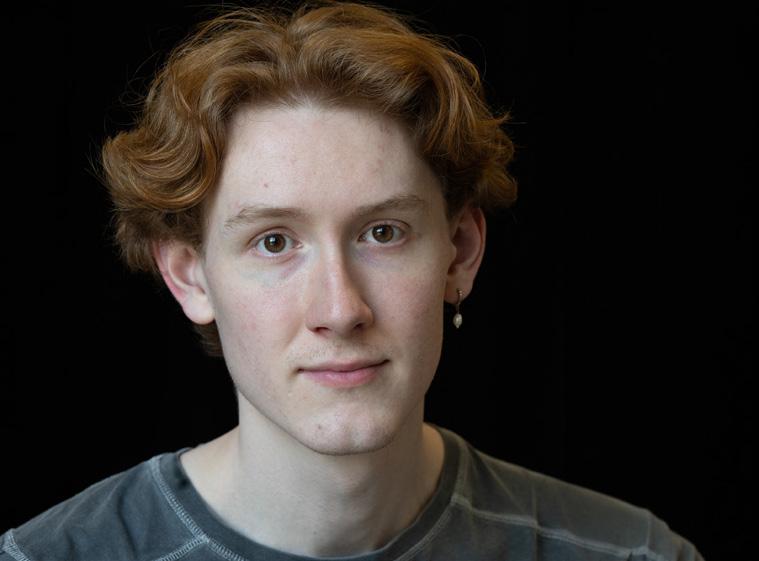
MATTHEW MONAGHAN countertenor
Matthew Monaghan is a countertenor Choral Graduate at St John’s College, Cambridge, having spent three years as a Choral Scholar whilst he read Music. He has been Musical Director of the a cappella ensemble The Gents of St John’s for two years, and directed their recent album recording, Urgent Business. Matthew is a Monteverdi Choir & Orchestras Apprentice 25/26, and enjoys performing in frequent solo and choral engagements, international tours, recordings and radio broadcasts. He has also been selected for the Glyndebourne Academy, where he will have the opportunity to develop as an opera singer. Outside of his own singing, Matthew is a keen choral conductor and is passionate about access to music education, leading singing workshops in state primary and secondary schools.
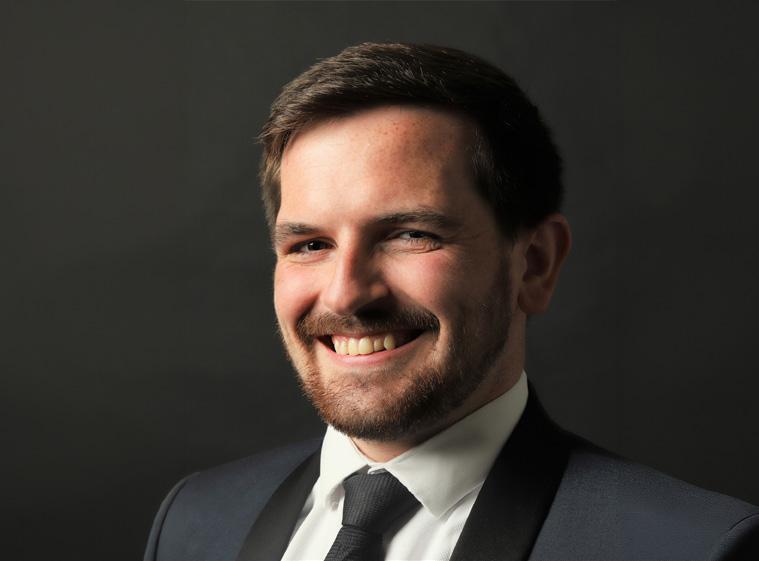
SAM MADDEN tenor
Sam Madden was born and grew up in Dunedin, New Zealand. As a soloist, Sam has performed with many of the finest orchestras in the United Kingdom including the Britten Symphonia, the Orchestra of the Age of Enlightenment, and the Philharmonia. As a recitalist, Sam has been a part of several illustrious recital series including a recurring recital at the International Festival of Sacred Arts in Edinburgh, and the Cambridge Arts Festival. During his time in the United Kingdom, Sam has held posts in several choirs including as a lay clerk at Ely Cathedral and as a choral scholar with St Martin-in-the-Fields. Sam has performed with and is a member of distinguished ensembles including Tenebrae, Chamber Choir Ireland, and St Paul’s Cathedral Choir. He can be heard on several broadcasts on the BBC and in various recording projects as both a soloist and ensemble member.
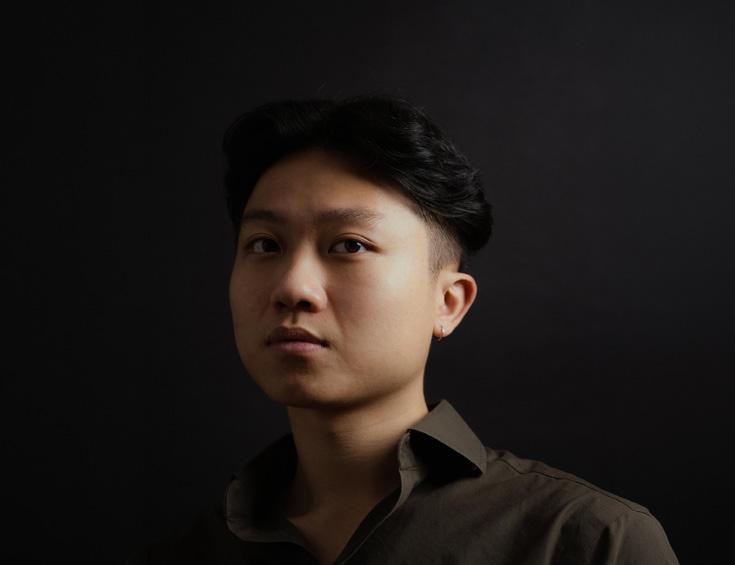
ALLYN WU baritone
Allyn is an award-winning Australian baritone based in London, working across Europe as both a soloist and ensemble singer, with a particular focus on historically informed performance, oratorio and song. He recently completed his postgraduate studies at the Royal Academy of Music with Distinction. He has performed with the Monteverdi Choir, Vox Luminis, The Sixteen, the Academy of Ancient Music and the Oxford Bach Soloists, and is a regular deputy at St Paul’s Cathedral, Westminster Abbey and Westminster Cathedral. He has worked with conductors including Masaaki Suzuki, Harry Christophers, John Butt and Christoph Rousset. In 2025, he won Second Prize at Le Poéme Harmonique’s Concours Corneille in Rouen. An Emerging Artist of the Brighton Early Music Festival, he recently gave the UK première of Mademoiselle Duval’s opera Les Génies. Equally devoted to song, he is a regular recitalist, appearing across London at venues including the Austrian Cultural Forum and the Italian Cultural Institute.

Will Harmer is a London-based singer, composer and pianist. He is a bass with St Martin’s Voices and has sung with BBC Singers, The Sixteen, Exaudi, Temple Singers and Monteverdi Choir. As a composer, Will won the Lord Mayor’s Composition Prize 2025 and has been commissioned by the BBC Singers, Oxford Song and Ludlow English Song Festival. He was a 202324 National Youth Choirs Young Composer and his choral works are published by Stainer and Bell. As a collaborative pianist, Will is a City Music Foundation Artist 2026 and a former Oxford Song Young Artist, and recently won the Kathleen Ferrier Help Musicians Accompanist Prize.
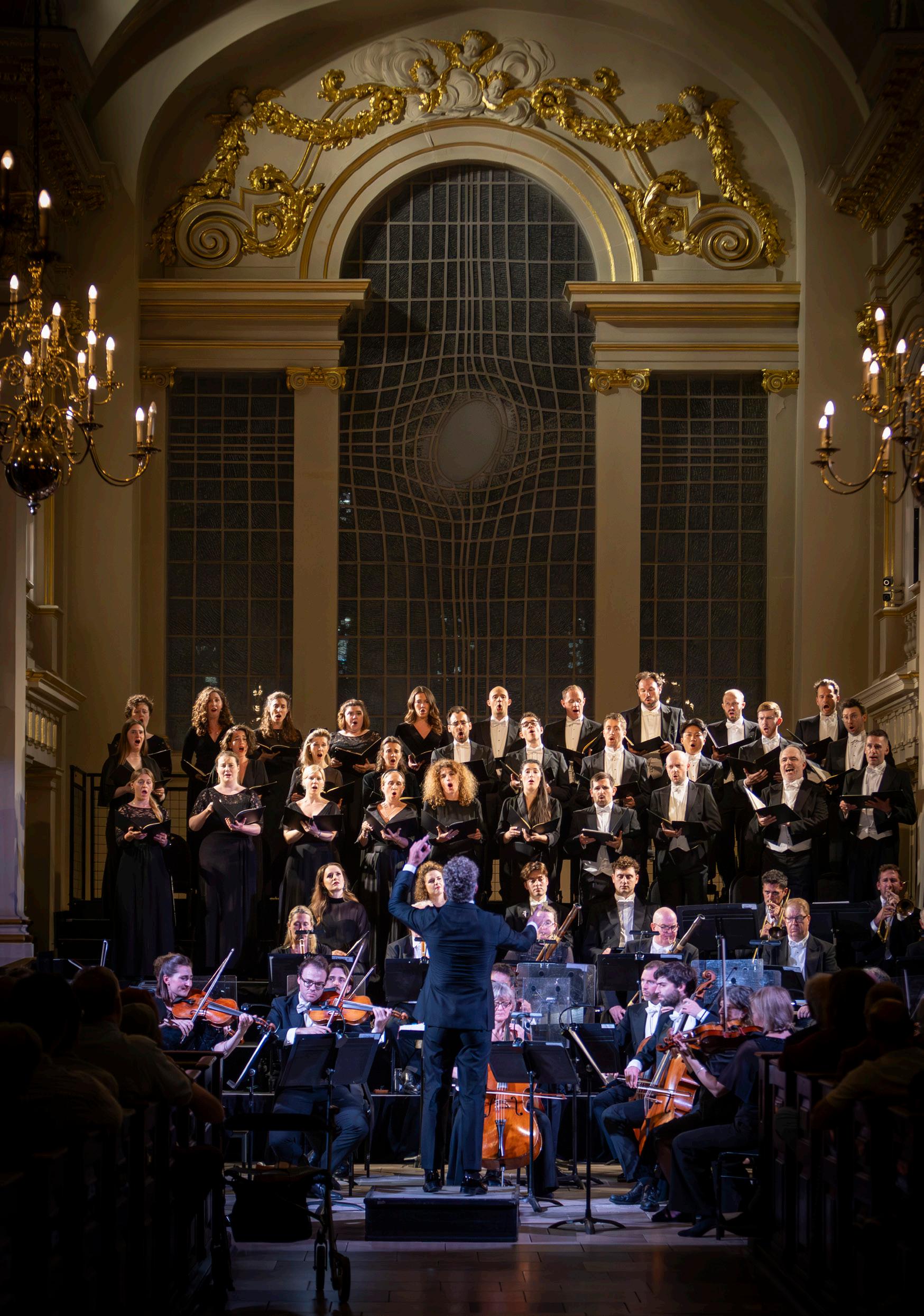
Jonathan Sells first conducted the Monteverdi Choir and English Baroque Soloists in 2024 in London and became the Choir’s Director following their ‘brilliant’ (Gramophone) live recording of a cappella motets by Bruckner, Gesualdo, and others, released on SDG in 2025. He has since led them in Handel’s mighty Dixit Dominus at the Edinburgh International Festival (recorded live for Deutsche Grammophon Stage+ and BBC Radio 3), in Snape Maltings Concert Hall, and at London’s newly restored Barts North Wing.
Himself a member of the Monteverdi Choir from 2009–2018, Jonathan Sells combines an active international singing career with conducting and musical direction. His work is most closely associated with the music of the Baroque period, especially that of J.S. Bach. Sells has appeared as a soloist in Australia (Bach’s Weihnachts-Oratorium with the Australian Chamber Orchestra/ Tognetti) and the USA (Lincoln Center and Carnegie Hall with Les Arts Florissants), alongside regular appearances at many major Bach and Baroque festivals across Europe, and above all in Switzerland, where he lives with his family.
In 2008 he founded the baroque collective Solomon’s Knot, ‘one of the UK’s most innovative and imaginative ensembles’ and the Resident Baroque Ensemble at Wigmore Hall since 2023. Under his leadership, Solomon’s Knot ‘set new standards’ with productions of J.S. Bach’s St John Passion and St Matthew Passion at Bachfest Leipzig, Thüringer Bachwochen, Snape Maltings, and Wigmore Hall. On the recommendation of Sir John Eliot Gardiner, he made his Bachfest Leipzig debut as musical director in 2016 with Bach’s Magnificat, later recorded and released on Sony Classical. Solomon’s Knot’s recording of J.S. & J.C. Bach Motets was released in 2023, and ‘demonstrates the innermost essence of this music like never before’ (Klassisk Musikk).
Leading from within the ensemble, Sells has directed memorised performances including Bach’s Mass in B minor, St Michael’s Day cantatas (BBC Proms), Hunt Cantata and Mass in F major (Bachwoche Ansbach, released on Prospero Classical), Christmas Oratorio (Wigmore Hall), and Handel’s Messiah and Esther (Händel-Festspiele Halle, Regensburg Tage Alter Musik). In 2025, he headed Solomon’s Knot in the world premiere of Chad Kelly’s new reconstruction of Bach’s Köthener Trauermusik at Wigmore Hall, Bachfest Leipzig, and Tage Alter Musik Regensburg.
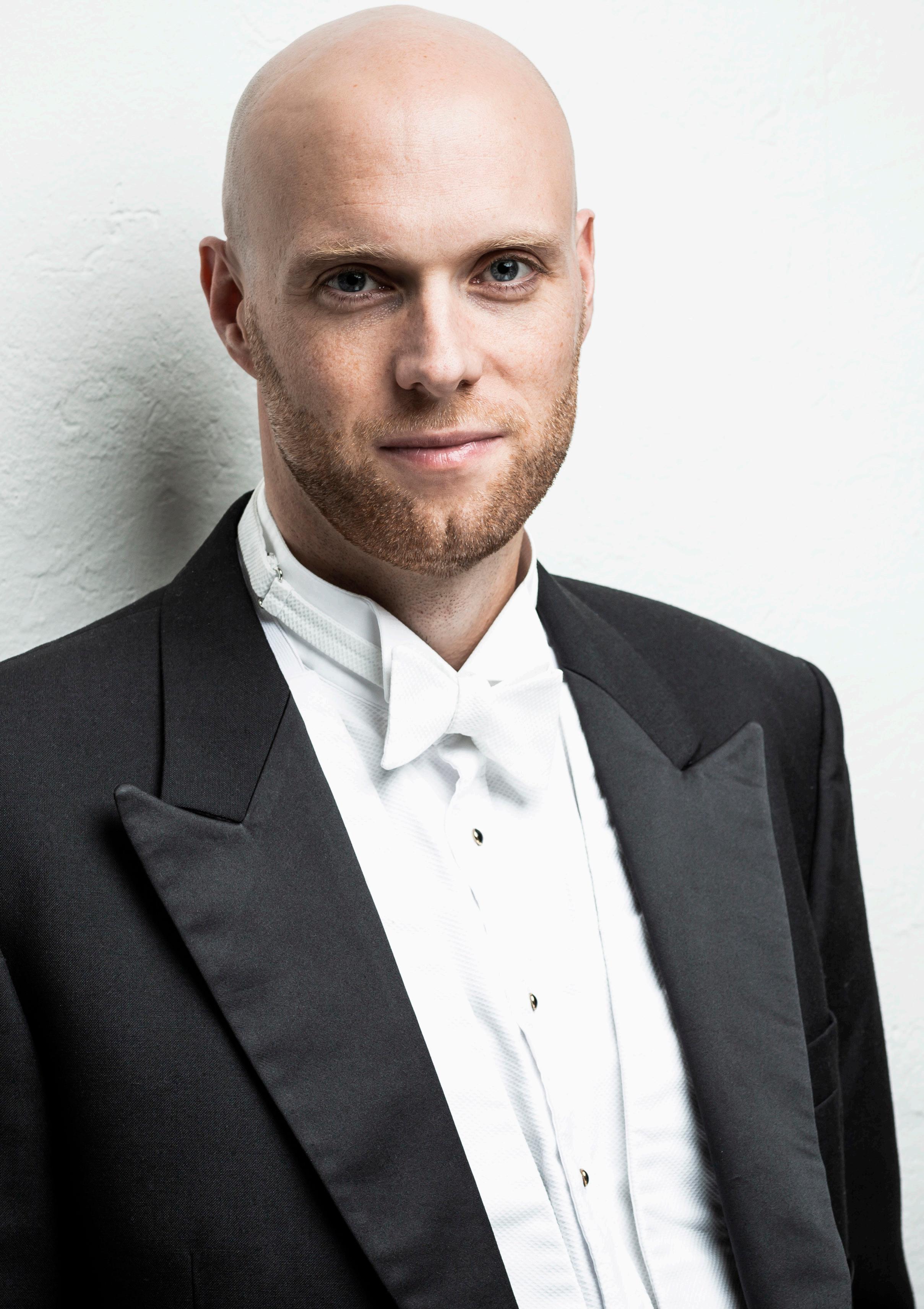
The Monteverdi Apprentices Programme was established by the Monteverdi Choir and Orchestras (MCO) in 2007 as the first of its kind in the UK. It continues to be a pre-eminent training scheme for young musicians, seeking to bridge the gap between higher education and a professional music career. The programme now has nearly 100 alumni, and several former Apprentices still perform regularly with both MCO and other leading ensembles.
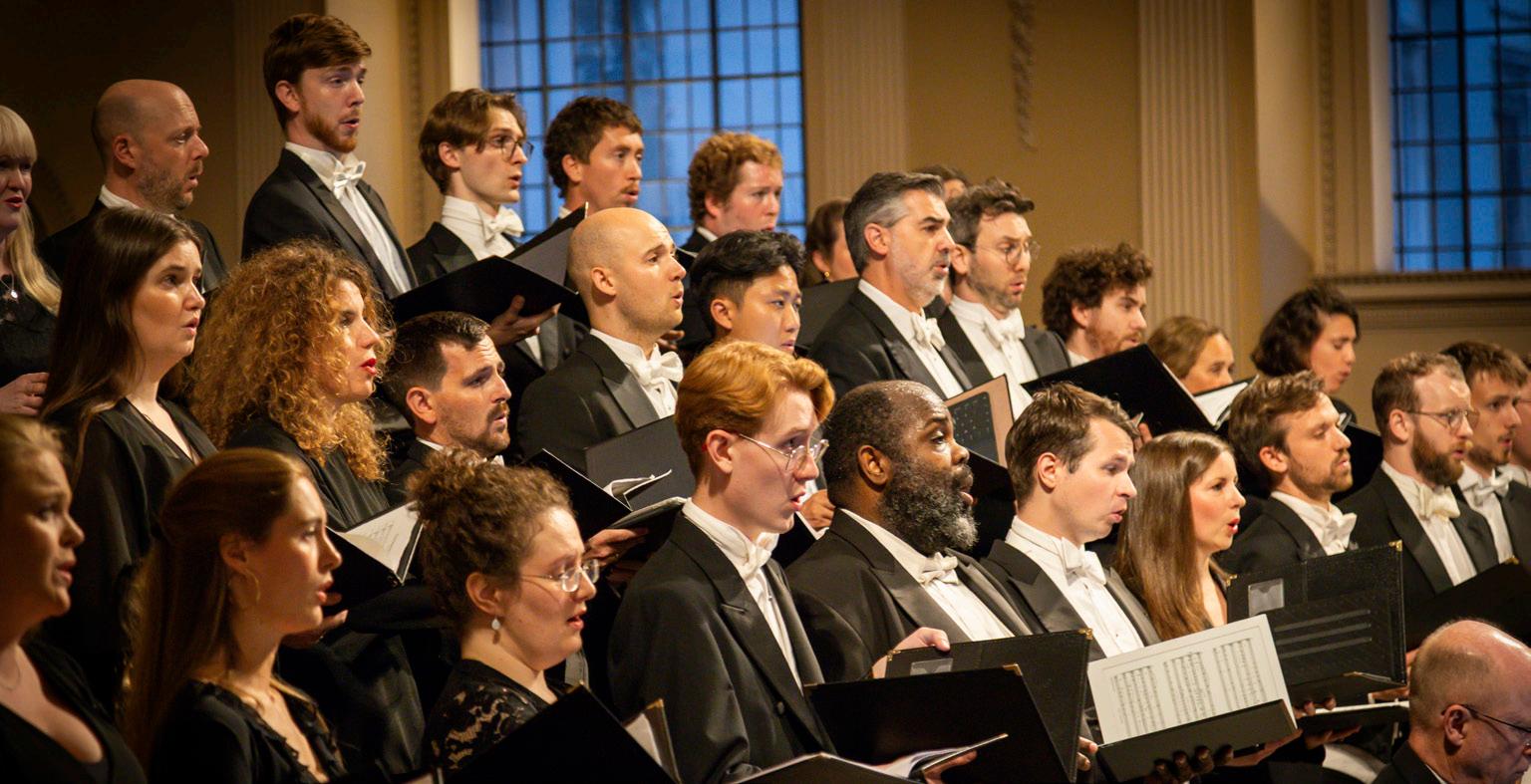
By crafting a supportive learning environment for talented young artists, providing rewarding performance opportunities, and offering coaching and mentoring from experts in a range of fields, the scheme is designed to nurture the next generation of musical talent. MCO hopes to address some of the myriad of challenges faced by emerging classical musicians by embedding Apprentices within our ensembles, equipping them with the skills, training and experience required to kickstart a sustained freelance career.
Choral Apprentices are integrated into the Monteverdi Choir, together with MCO’s two period instrument orchestras – the English Baroque Soloists and Orchestre Révolutionnaire et Romantique – for concert projects in London and Europe. This gives them the opportunity to learn and perform alongside world-class professional musicians, under the baton of a range of leading specialist conductors. Apprentices also take part in a variety of workshops and masterclasses led by prominent international artists such as Dame Sarah Connolly, Mark Padmore and Sophie Daneman, Monteverdi Choir mentors, and other experts from across the classical music industry.
MCO TEAM
Dr Rosa Solinas
General Director
Martin Wheeler Finance & Administration Manager
James Halliday
Artistic Advisor & Librarian
Matthew Knight
Artistic Planning Manager
Janet Marsden
Artistic Operations Manager
Katie Care
Concerts & Tours Manager
Will Handysides
Head of Development
Charlotte Walker Development & Events Coordinator
Orlando Jones Projects Coordinator
Sophie Southall Marketing & Communications Assistant
Premier Comms
PR & media relations
David Wright
Keyboard technician

Christian Rochat (Chairman)
Nicholas Eldred
Sir Stephen Gomersall
Diana Houghton
Barra Little
Francis Norton
Caz Weller Knight
MCO CHAIRS CIRCLE
Michael Beverley
David Brierwood
Lord Burns
Sir David Walker
SIGN UP FOR OUR NEWSLETTER
What’s On | News | Reviews | Media

Scan the QR code or visit monteverdi.co.uk/pages/newsletter
LISTEN TO MCO Recordings | Videos | Performances

Scan the Spotify link to listen to MCO
Level 12, 20 Bank Street. Canary Wharf, London, E14 4AD, UK monteverdi.co.uk


monteverdi.co.uk/rossinipetite-messe-solennelle
Monteverdi Choir
Orchestre Révolutionnaire et Romantique
Jakob Lehmann – conductor
Friday 18 September 2026, 7.30pm
Alexandra Palace Theatre, London




monteverdi.co.uk
Monteverdi Choir
English Baroque Soloists
Christophe Rousset –