SDG 144
8
43183 01442
Bach Cantatas Gardiner
Bach Cantatas Gardiner
Volume 25 SDG 144 P 2008 Monteverdi Productions Ltd C 2008 Monteverdi Productions Ltd www.solideogloria.co.uk Edition by Reinhold Kubik, Breitkopf & Härtel Manufactured in Italy LC13772
Soli Deo Gloria
2
25
CD 1 55:10 1-6 13:03 7-13 17:08 14-22 24:36
For the Fifth Sunday after Easter (Rogate) Wahrlich, wahrlich, ich sage euch BWV 86 Bisher habt ihr nichts gebeten in meinem Namen BWV 87 In allen meinen Taten BWV 97 (Occasion unspecified)
The Monteverdi Choir
Katharine Fuge soprano, Robin Tyson alto Steve Davislim tenor, Stephan Loges bass
Sopranos Katharine Fuge Nicola Jenkin Elin Manahan Thomas Donna Deam Suzanne Flowers Lucinda Houghton Rachel Wheatley Elisabeth Priday
The Monteverdi Choir The English Baroque Soloists John Eliot Gardiner
Altos David Clegg Charles Humphries Robin Tyson Frances Jellard
Live recording from the Bach Cantata Pilgrimage Annenkirche, Dresden, 27 & 28 May 2000
Tenors Vernon Kirk Paul Tindall Nicolas Robertson Simon Davies Basses Julian Clarkson Thomas Guthrie Alex Ashworth Lawrence Wallington
SDG144 FRONT WALLET
CMYK
The English Baroque Soloists First Violins Kati Debretzeni Anne Schumann Sarah Bealby-Wright Matthew Truscott Deirdre Ward Second Violins Peter Lissauer Henrietta Wayne Hildburg Williams Emilia Benjamin Violas Annette Isserlis Nicola Akeroyd Mari Giske Cellos Melanie Beck Catherine Rimer Double Bass Cecelia Bruggemeyer
Oboes Katherina Arfken Mark Baigent Catherine Latham Bassoon Ursula Leveaux Harpsichord Jan Waterfield Organ Robert Quinney
The Bach Cantata Pilgrimage On Christmas Day 1999 a unique celebration of the new Millennium began in the Herderkirche in Weimar, Germany: the Monteverdi Choir and English Baroque Soloists under the direction of Sir John Eliot Gardiner set out to perform all Johann Sebastian Bach’s surviving church cantatas in the course of the year 2000, the 250th anniversary of Bach’s death. The cantatas were performed on the liturgical feasts for which they were composed, in a yearlong musical pilgrimage encompassing some of the most beautiful churches throughout Europe (including many where Bach himself performed) and culminating in three concerts in New York over the Christmas festivities at the end of the millennial year. These recordings were made during the course of the Pilgrimage.
SDG144 FRONT WALLET
CMYK
The Monteverdi Choir Sopranos Suzanne Flowers Charlotte Mobbs Gill Ross Donna Deam Elisabeth Priday Emma Preston-Dunlop Altos Elinor Carter Richard Wyn Roberts Mark Chambers Charles Humphries Tenors Andrew Busher Rory O’Connor Andrew MackenzieWicks Paul Tindall Iain Rhodes Andrew P King
Basses Jonathan Brown Christopher Dixon Julian Clarkson Stuart MacIntyre The English Baroque Soloists First Violins Alison Bury Debbie Diamond Rebecca Livermore Jane Gillie Second Violins Lucy Howard Catherine Ford Stephen Jones Violas Annette Isserlis Rosemary Nalden Katie Heller Cello David Watkin
Double Bass Cecelia Bruggemeyer Oboes Michael Niesemann James Eastaway Catherine Latham Mark Baigent Bassoon Philip Turbett Harpsichord Howard Moody Organ Matthew Halls
CD 2 52:40 1-7 16:46 8-14 14:26 15-19 20
16:32 4:26
For the Sunday after Ascension Day (Exaudi) Sie werden euch in den Bann tun I BWV 44 Nach dir, Herr, verlanget mich BWV 150 (Occasion unspecified) Sie werden euch in den Bann tun II BWV 183 J C Bach: FĂźrchte dich nicht Joanne Lunn soprano, Daniel Taylor alto Paul Agnew tenor, Panajotis Iconomou bass The Monteverdi Choir The English Baroque Soloists John Eliot Gardiner Live recording from the Bach Cantata Pilgrimage Sherborne Abbey, 4 June 2000
The Bach Cantata Pilgrimage Patron His Royal Highness, The Prince of Wales Principal Donors The Dunard Fund Mr and Mrs Donald Kahn The Kohn Foundation Mr Alberto Vilar Donors Mrs Chappell Mr and Mrs Richard Davey Mrs Fairbairn Ms Juliet Gibbs Mr and Mrs Edward Gottesman Sir Edwin and Lady Nixon Mr and Mrs David Quarmby Sir Ian and Lady Vallance Mr and Mrs Andrew Wong Corporate Sponsors Gothaer Versicherungen Bank of Scotland Huth Dietrich Hahn Rechtsanwaelte PGGM Pensoenfonds Data Connection Jaffe Associates Singer and Friedlander Charitable Foundations and Public Funds The European Commission The Esmée Fairbairn Trust The David Cohen Family Charitable Trust The Foundation for Sport and the Arts The Arts Council of England The Garfield Weston Foundation Lauchentilly Foundation The Woodcock Foundation The Monteverdi Society The Warden of the Goldsmiths’ Company
The harpsichord used for the project, made by Andrew Wooderson, and the organ, made by Robin Jennings, were bought and generously made available to the Monteverdi by Sir David and Lady Walker (harpsichord) and Lord and Lady Burns (organ). Our thanks go to the Bach Cantata Pilgrimage committee, who worked tirelessly to raise enough money to allow us to complete the project, to the Monteverdi staff, Polyhymnia’s staff and, above all, to all the singers and players who took part in the project. The Recordings The release of the Bach Cantata Pilgrimage recordings has been made possible by financial and other support from His Royal Highness the Prince of Wales, Countess Yoko Ceschina, Mr Kevin Lavery, The Nagaunee Foundation and many others who answered our appeal. We cannot name them all, but we are enormously grateful to them. For the help and advice in setting up Monteverdi Productions, our thanks to: Lord Burns, Richard Elliston, Neil Radford and Fiona Kinsella at Freshfields Bruckhaus Deringer, Thomas Hoerner, Chaz Jenkins, John Kennedy, Stephen Revell, and Richard Schlagman and Amanda Renshaw of Phaidon Press.
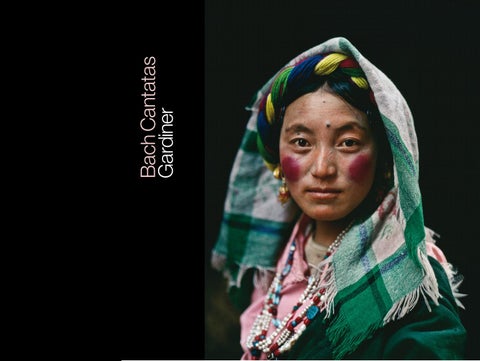
Recorded live at the Annenkirche, Dresden, on 27 & 28 May 2000, and Sherborne Abbey, on 4 June 2000, as part of the Bach Cantata Pilgrimage Producer: Isabella de Sabata Balance engineer: Erdo Groot (Polyhymnia International BV) Recording engineers: Thijs Hoekstra (Polyhymnia), Mario Nozza (Eurosound) (CD1); Matthijs Ruijter (Polyhymnia), Rob Aarden (Eurosound) (CD2) Tape editors: Sebastian Stein (CD1), Erdo Groot, Roger de Schot (CD2); Everett Porter Edition by Reinhold Kubik published by Breitkopf & Härtel Series executive producer: Isabella de Sabata Cover: Lhasa, Tibet, 2000 © Steve McCurry/Magnum Photos Series design: Untitled Booklet photos: Steve Forrest (p.6); Christfried Weirauch (p.8); akg-images/A. F. Kersting (p.13); Paul Barker/Country Life (p.31) Übersetzung: Gudrun Meier P 2008 The copyright in this sound recording is owned by Monteverdi Productions Ltd C 2008 Monteverdi Productions Ltd Level 2, Hertsmere House 2 Hertsmere Road London E14 4AB www.solideogloria.co.uk
Soli Deo Gloria
Bach Cantatas Gardiner
Johann Sebastian Bach 1685-1750 Cantatas Vol 25: Dresden/Sherborne
2
CD 1
55:10
For the Fifth Sunday after Easter (Rogate)
1 2 3 4 5 6
13:03 (2:24) (5:15) (1:44) (0:25) (2:19) (0:56)
Wahrlich, wahrlich, ich sage euch BWV 86 1. (Arioso): Bass Wahrlich, wahrlich, ich sage euch 2. Aria: Alt Ich will doch wohl Rosen brechen 3. Choral: Sopran Und was der ewig gütig Gott 4. Recitativo: Tenor Gott macht es nicht gleichwie die Welt 5. Aria: Tenor Gott hilft gewiss 6. Choral Die Hoffnung wart’ der rechten Zeit
7 8 9 10 11 12 13
17:08 (1:29) (0:32) (7:15) (0:47) (1:49) (4:01) (1:14)
Bisher habt ihr nichts gebeten in meinem Namen BWV 87 1. (Arioso): Bass Bisher habt ihr nichts gebeten in meinem Namen 2. Recitativo: Alt O Wort, das Geist und Seel erschreckt! 3. Aria: Alt Vergib, o Vater, unsre Schuld 4. Recitativo: Tenor Wenn unsre Schuld bis an den Himmel steigt 5. (Arioso): Bass In der Welt habt ihr Angst 6. Aria: Tenor Ich will leiden, ich will schweigen 7. Choral Muss ich sein betrübet?
14 15 16 17 18 19 20 21 22
24:36 In allen meinen Taten BWV 97 (Occasion unspecified) (3:58) 1. Versus I. Coro In allen meinen Taten (3:15) 2. Versus II. Aria: Bass Nichts ist es sp채t und fr체he (0:29) 3. Versus III. Recitativo: Tenor Es kann mir nichts geschehen (5:51) 4. Versus IV. Aria: Tenor Ich traue seiner Gnaden (0:36) 5. Versus V. Recitativo: Alt Er wolle meiner S체nden (3:38) 6. Versus VI. Aria: Alt Leg ich mich sp채te nieder (2:42) 7. Versus VII. Aria (Duetto): Sopran, Bass Hat er es denn beschlossen (3:13) 8. Versus VIII. Aria: Sopran Ihm hab ich mich ergeben (0:53) 9. Versus IX. Choral So sei nun, Seele, deine
3
CD 2 52:40
1 2 3 4 5 6 7
8 9 10 11 12 13 14
4
16:46 (2:01) (1:26) (5:17) (1:05) (0:48) (5:19) (0:50)
For the Sunday after Ascension Day (Exaudi) Sie werden euch in den Bann tun I BWV 44 1. Aria (Duetto): Tenor, Bass Sie werden euch in den Bann tun 2. Coro Es kömmt aber die Zeit 3. Aria: Alt Christen müssen auf der Erden 4. Choral: Tenor Ach Gott, wie manches Herzeleid 5. Recitativo: Bass Es sucht der Antichrist 6. Aria: Sopran Es ist und bleibt der Christen Trost 7. Choral So sei nun, Seele, deine
14:26 Nach dir, Herr, verlanget mich BWV 150 (Occasion unspecified) (1:36) 1. Sinfonia (3:16) 2. Coro Nach dir, Herr, verlanget mich (1:35) 3. Aria: Sopran Doch bin und bleibe ich vergnügt (1:49) 4. Coro Leite mich in deiner Wahrheit (1:08) 5. Aria (Terzetto): Alt, Tenor, Bass Zedern müssen von den Winden (2:05) 6. Coro Meine Augen sehen stets zu dem Herrn (2:53) 7. Coro Meine Tage in den Leiden
15 16 17 18 19
16:32 (0:28) (10:30) (1:04) (3:29) (1:02)
Sie werden euch in den Bann tun II BWV 183 1. Recitativo: Bass Sie werden euch in den Bann tun 2. Aria: Tenor Ich fürchte nicht des Todes Schrecken 3. Recitativo: Alt Ich bin bereit 4. Aria: Sopran Höchster Tröster, Heilger Geist 5. Choral Du bist ein Geist
Johann Christoph Bach 1642-1703 4:26 Fürchte dich nicht 20 (4:26) Fürchte dich nicht, denn ich hab dich erlöst
5
Introduction John Eliot Gardiner
When we embarked on the Bach Cantata Pilgrimage in Weimar on Christmas Day 1999 we had no real sense of how the project would turn out. There were no precedents, no earlier attempts to perform all Bach’s surviving church cantatas on the appointed feast day and all within a single year, for us to draw on or to guide us. Just as in planning to scale a mountain or cross an ocean, you can make meticulous provision, calculate your route and get all the equipment in order, in the end you have to deal with whatever the elements – both human and physical – throw at you at any given moment. With weekly preparations leading to the performance of these extraordinary works, a working rhythm we sustained throughout a whole year, our approach was influenced by several factors: time (never enough), geography (the initial retracing of Bach’s footsteps in Thuringia and Saxony), architecture (the churches both great and small where we performed), the impact of one week’s music on the next and on the different permutations of players and singers joining and rejoining the pilgrimage, and, inevitably, the hazards of weather, travel and fatigue. Compromises were sometimes needed to accommodate the quirks of the liturgical year (Easter falling exceptionally late in 2000 meant that we ran out of liturgical slots for the late Trinity season cantatas, so that they needed to be redistributed among other programmes). Then to fit into a single evening cantatas for the same day composed by Bach over a forty-year
span meant deciding on a single pitch (A = 415) for each programme, so that the early Weimar cantatas written at high organ pitch needed to be performed in the transposed version Bach adopted for their revival, real or putative, in Leipzig. Although we had commissioned a new edition of the cantatas by Reinhold Kubik, incorporating the latest source findings, we were still left with many practical decisions to make over instrumentation, pitch, bass figuration, voice types, underlay and so on. Nor did we have the luxury of repeated performances in which to try out various solutions: at the end of each feast-day we had to put the outgoing trio or quartet of cantatas to the back of our minds and move on to the next clutch – which came at us thick and fast at peak periods such as Whitsun, Christmas and Easter. The recordings which make up this series were a corollary of the concerts, not their raison d’être. They are a faithful document of the pilgrimage, though never intended to be a definitive stylistic or musicological statement. Each of the concerts which we recorded was preceded by a ‘take’ of the final rehearsal in the empty church as a safety net against outside noise, loud coughs, accidents or meteorological disturbance during the performance. But the music on these recordings is very much ‘live’ in the sense that it is a true reflection of what happened on the night, of how the performers reacted to the music (often brand new to them), and of how the church locations and the audiences affected our response. This series is a tribute to the astonishing musicality and talent of all the performers who took part, as well as, of course, to the genius of J.S.Bach. 7
For the Fifth Sunday after Easter (Rogate) Annenkirche, Dresden To Bach, frustrated and disgruntled in Leipzig, Dresden was a sort of Shangri-La. It was here that he had been crowned unopposed keyboard champion in 1717, and it was here that his Missa (the first two movements of what we know as the B minor Mass) was first performed in 1733. To see how music functions when it is properly valued and organised, he told the Leipzig Town Council, ‘one need only go to Dresden and see how the musicians are paid... relieved of all concern for their living, free from chagrin...’. The multiple layers of the city’s history seem difficult now for the foreign visitor to disentangle. Vestiges of the great eighteenth-century cultural metropolis are there for all to see in the rebuilt Zwinger, and the clean-up operation is gradually 8
ridding the city of evidence of its gruesome 1945 bombing. Even that Baroque marvel the Frauenkirche, constructed like some celestial theatre, is on its way to being rebuilt. The functional 1950s shoebox housing of the GDR era is still much in evidence, as are the former army barracks of the departed Russians. We were due to perform in the grey-stoned and severe Annenkirche, a rare survivor of the night of horror thanks to its robust steel roof. We were packed like sardines onto the tiny stage area against the hardsurfaced back wall for two successive concerts that opened this year’s Dresdner Musikfestspiele. I was not sure how we could make it work except to urge the singers and obbligato players to face and engage with the audience, to be aware of the mysterious process of re-creation and response in which we and they are all bound. I wondered what the four Germans in our group would make of the occasion. Many of the English musicians showed signs of being aware of the delicacy of the situation we found ourselves in. In addition to our habitual position of ‘bringing coals to Newcastle’, the potential impertinence of interpreting Bach to the Germans, we faced the far pricklier issue of performing Bach in the city whose cultural treasures had been wantonly destroyed by British bombs in one mad night towards the end of the war and with colossal loss of life. The first concert on the Saturday night was a bit tense, the telling stillness at the end of each cantata disturbed by a persistent and enthusiastic early clapper. But on Sunday we were more relaxed and the audience seemed utterly caught up in the music, assenting to familiar words and chorales like all the other East German audiences we have encountered
this year. For the things we most cherish in the music may not be what others respond to – and could of course be different to what Bach intended. This has struck me again and again in the course of the year: a ‘meaningfulness’ in Bach’s music beyond that of its original message. It all depends on your point of view, something noted by Bach’s Leipzig contemporary Johann Martin Chladenius in his Introduction to the Correct Interpretation of Reasonable Discourses, 1742. No author, he claimed, could be aware of all that his writing might imply, the meaning of words going far beyond any specific intentions. Bach’s first cantata for Rogation Sunday, BWV 86 Wahrlich, wahrlich, ich sage euch (1724), opens with a dictum from Christ’s farewell address to his disciples (John 16) sung by the bass soloist as Vox Domini, accompanied by strings and oboes: ‘Verily, verily, I say unto you, Whatsoever ye shall ask the Father in my name, he will give it you’. In the context of who we were, where we were and to whom we were singing and playing, this opening cantata had a particular poignancy. With almost any other composer the treatment of this subject matter could easily come over as crass, impertinent even, since it invites the listener to ask how these words of Jesus can be reconciled with his or her own experience. In presenting three fugal motifs reverentially and lucidly in the introduction, soon to be taken up by the bass soloist, Bach ensures that these are vocally conceived (as Dürr notes, it would be easy to sing the entire movement as a four-part motet with just continuo accompaniment). Bach’s anonymous librettist now expands his theme: we would all prefer to gather roses, even at
the risk of being pricked by the thorns, but in the sure knowledge that our prayers will be answered (No.2); for God keeps his promises (Nos 3 and 4), even if his help may be delayed (No.5); and he doesn’t set a time, but knows when it will be for the best (No.6). Bach reinforces the intrinsic optimism of the cantata’s libretto by describing a downward modulatory arc, beginning and ending in E major, a key positioned at the upper limit of his tonal spectrum and hence a-glitter with positive associations and sentiments. The virtuosic breaking of chords by the obbligato violin in the alto aria (No.2) stands of course for the breaking of the rose stems. It illustrates the hazardous business of negotiating the thorns in order to reach the blooms (metaphor for spiritual joy and beauty). The cut here is no easy snip of the secateurs, but a twisting, tearing figure for ‘brechen’, and a dissonance for the ‘stechen’ (pricking) of the thorns. The gently evocative mood of the B section is abruptly intensified at the words ‘that my entreaty and supplication will go straight to God’s heart’ in five bars of intense dissonance over a pedal E, with wild rhapsodic exclamations by the solo violin. Then abruptly the clouds lift, the violin is silent, and the alto (now with continuo alone) sings ‘For He has pledged His word’, Bach’s perfect way of conveying that our prayers have reached their target and will indeed be answered in due course. Next comes a chorale setting for soprano with two oboes d’amore and continuo (we chose bassoon) confirming God’s promise and word. In its apparent disregard for the needs of the two d’amore players to refill their lungs (one passage has seventy-two consecutive semiquavers for the first oboe!) this 9
movement feels as if it might have been conceived as an organ chorale. Yet the oboists’ task is to create the illusion of a graceful dance, suggesting to us the use of notes inégales, perhaps even the stratospheric circling of the angelic host referred to in Georg Grünwald’s hymn. A short secco recitative (No.4), contrasting the ways of the world (‘making many promises, keeping few’) with God’s delight in granting what he pledges, shows in miniature Bach’s skill and panache in placing angular, dissonant intervals to reinforce his text and its meanings. Finally there is a return to E major for a tenor aria with full strings, a sturdy bourrée-like movement in which the singer is assigned only a fragment (just a bar and half) of the introductory motif. Though instrumentally derived, this phrase has sufficient lapidary concision – quirkiness, even – for the singer’s recapitulations to etch the message in the listener’s consciousness: ‘God’s help is sure’, a declaration of faith, and one that is clinched by the closing chorale. Whether Bach’s congregation was up to noticing the presence of features shared with its predecessor from the year before in the structure of the opening movement of BWV 87 Bisher habt ihr nichts gebeten in meinem Namen – the opening Gospel quotation of Jesus’ words set for bass voice and fourpart strings doubled by oboes, the way its fugallyconceived polyphonic interplay of themes is taken up by the singer – we shall never know. But there, no doubt, propped up on his desk as a reminder and point of reference, was last year’s cantata. On this occasion Bach seems intent on projecting a more complex, nuanced theological message, even if it means writing against the grain of his listeners’ 10
expectations. The stern, declamatory energy of the music accords with man’s reprehensible neglect of Jesus’ words of promise: ‘Hitherto have ye asked nothing in my name’ (John 16:24). Nor is there any instant release; in fact Bach drags the listener down through three descending minor keys (d, g, c) for the first five of its seven movements, all in the interests of emphasising the world as a place of suffering or, as the second motto from St John’s Gospel puts it, ‘In the world ye shall have tribulation’. It is the second half of that dictum, ‘but be of good cheer; I have overcome the world’ (John 16:33), which marks the beginning of the tonal upswing back to D minor. This is the third successive post-Easter cantata which Bach set in 1725 to texts by Christiane Mariane von Ziegler, all of them, as Eric Chafe notes, dealing with ‘the understanding of Jesus’ suffering within the context of victory and love, increasingly articulating how the tribulation of the world is overcome’ in preparation for the Ascension. In stark contrast to the dramatised urgency of its preceding recitative, the D minor aria ‘Vergib, o Vater’ (‘Forgive, O Father, all our sins and be patient with us yet’) unfolds in a mood of sustained reverence and penitence. The plangent sonorities of the paired oboes da caccia merge with those of the alto soloist. Their repeated slurred duplets for the word ‘Vergib’ contrast and alternate with ascending arpeggios in the (bassoon) continuo, so that gestures of grief and entreaty are registered concurrently. The urgent supplication intensifies in the middle section as Bach propels his continuo instruments upwards through seven chromatic steps (d, e, f, f#, g, g#, a) and then five diatonic intervals (d, e, f, g, a). This reflects the
penitent’s belief in plain-speaking (‘no more... parables’), a reference to Jesus’ promise that ‘the time cometh, when I shall no more speak unto you in proverbs, but I shall shew you plainly of the Father’ (John 16:25). Ziegler and Bach are here emphasising the Lutheran theme that prayer, corresponding to the depth of the human predicament, is the best means of establishing and retaining contact with God in a hostile world. Dürr speculates that the second recitative (No.4), which does not appear in Ziegler’s printed text (1729), may have originated with Bach himself. Its presence softens the abrupt transition to the ‘comfortable words’ of Jesus in No.5, which represent the turning point in a musical design that Bach had been developing since his Mühlhausen days (in BWV 71 and 106). Bach ensures the prominence of this interpolated recitative by means of its string accompaniment, and by switching to the first person shifts the focus onto the individual believer’s acknowledgment of his guilt, then via the subsequent tonal re-ascent to D minor charts the way that this guilt and anxiety is overcome through faith. Just where you might expect a richly scored set-piece for Christ’s last words from the same chapter of John’s Gospel, Bach (and presumably Ziegler) decides to omit the emollient phrase ‘These things have I spoken unto you, that in me ye might have peace’. Instead, he shrinks his tonal palette and limits his Spruch to a continuo accompaniment (No.5): angular, severe and angst-ridden, in patterns hinting at a descending chromatic tetrachord. Even the pivotal phrase ‘ich habe die Welt überwunden’ is almost submerged, despatched in an upwards
movement to E flat minor lasting a mere nine bars before lapsing back to C minor. It is not until the sixth movement, an extended B flat major siciliano for tenor, strings and continuo of ineffable beauty, that Bach’s overall strategy becomes plain: to balance sorrow and joy, minor and major, and to show that the promise of comfort to the beleaguered soul is achieved at the cost of Christ’s passion and crucifixion. So the prevalent mood of tender, lyrical, semi-pastoral contrition and acceptance is both spiked and spiced with momentary dissonance at the words ‘leiden’ (‘suffer’), ‘Schmerz’ (‘pain’) and ‘verzagen’ (‘despair). This is confirmed in the final chorale drawn from the pietistic ‘Jesu, meine Freude’, with its characteristic references to pain being sweeter than honey, and to the thousand sweet kisses Jesus presses upon us. The return to D minor, as Chafe notes, is a reminder of ‘the necessary simultaneity in the world of suffering and of the divine love that ultimately overcomes it’. The final piece in the programme was BWV 97 In allen meinen Taten, a cantata without liturgical designation first performed in 1734. It uses the haunting Heinrich Isaac hymn tune ‘Innsbruck, ich muss dich lassen’ in both its opening and concluding movements. One theory is that, like the other three late chorale cantatas (BWV 100, 117 and 192), it started life as a wedding cantata. In retrospect, we should really have included this splendid cantata at the outset of our Pilgrimage, since Paul Fleming’s hymn was apparently written to mark the start of a long and hazardous journey he undertook to Moscow in 1633. Bach sets all nine verses unaltered, four of them as arias, one as a duet and two as recitatives, 11
so ensuring variety in instrumentation (unusually, he instructs the organ not to play in movements 3, 4 and 7) and in mood, in ways that keep both the performer and the listener fully engaged. He opens in ceremonial French overture style with antiphonal exchanges between reeds and strings. Only when the grave gives way to a vivace fantasia does he introduce his voices: sopranos intoning the ‘Innsbruck’ cantus firmus, the lower voices in animated imitation, borrowing the motivic outline from the instrumental lines, and all fluently embedded in the fugally conceived structure. The voices break into an urgent homophonic concluding statement: ‘[God] must in all affairs, if they are to succeed, counsel and act’, an injunction Bach leaves ringing in the listeners’ ears by eschewing the expected symmetrical return to the opening Grave. Verse 2 is a proto-Schubertian Lied for bass and continuo with elegant 6/8 rhythms and emphatic 6/4/2 pivotal chords. Verse 4 is an astonishing tenor aria with one of the most elaborate violin obbligatos in all the cantatas, complete with virtuosic figuration, ample double stopping and three- and four-part broken chords placed as the dramatic launch-pad for the tenor soloist’s syncopated exclamations of ‘nichts!’. One wonders whether this reversion by Bach to the style he had developed in Weimar and Cöthen in his solo violin sonatas and partitas was designed as a possible test piece for a particular virtuoso violinist, until one sees that the purpose here is to lay down the law – his laws of music, which are given a brilliant exposition in conformity with Fleming’s text, ‘I trust in His mercy... if I live by His laws’. The sixth movement is an alto aria in C minor with full strings: thicktextured, rich in passing dissonance and full of 12
pathos, and with a natural swing adjusted to the distinct motions of preparing for bed, waking up, lying down or just walking along. The seventh verse is cast as a quirky, almost jazzy duet for soprano and bass with continuo, a line that keeps interrupting itself. This is a catch-as-catch-can stretto for the two singers, part canzonet, part Rossini. Perhaps it is the word ‘Unfall’ (‘mishap’ or ‘accident’) which triggered Bach’s musical imagination here, since he is constantly teasing the listener with the potential for false entries, collisions or collapse. There is more than a hint of cartoon chase to it; yet it is not at all frivolous, showing a distinct likeness to another ‘I-go-to-my-fate’ duet with a palpably speech-like continuo, the much more sinister ‘O Menschenkind, hör auf geschwind’ (BWV 20, No.10). Order is restored in the delightful soprano aria with two oboes which follows (No.8): ‘I have surrendered myself to Him’, a carefree acceptance of God’s will that leaves it to Him whether to extend or conclude one’s lifespan. The final ‘Innsbruck’ chorale has three independent string parts augmenting the luminescent harmony. In performing these cantatas we had to contend with the variable acoustic of Dresden’s unalluring Annenkirche – boomy yet shrill when empty, far drier when full – and with the uncomfortable sensation that the sounds we produced were dropping two paces in front of us. Clearly this was not a problem for the Dresden audience, whose response at the end of the concert was warm and generous. I got the impression that all of us were intensely moved to have been granted this opportunity to celebrate Bach’s music in the city of his dreams.
For the Sunday after Ascension Day (Exaudi) Sherborne Abbey Once the Cathedral seat of St Aldhelm, preacher, scholar and singer, and of the twenty-six Saxon bishops who succeeded him, Sherborne Abbey was built in the late eleventh century to adjoin an older Saxon church. Shared uneasily between Benedictine monks and the townspeople with their own secular priests, the Abbey was set alight in 1435, the walls, crossing and choir still visibly reddened by the heat of the fire. It took a century to complete the process of restoring and ‘perpendicularising’ the Norman building, and once the monks had been expelled in 1539 the parish gained, in effect, a new church at a cost of a hundred marks, or £66 13s 4d, complete with dazzling fan vaulting atop the old Norman aisle walls and arcade columns supported neither by
pinnacles nor by flying buttresses. Instead of meeting the central ridge (as in King’s College Chapel), the fans are set back very slightly, the gap filled with an intricate pattern of ribs with carved bosses at their main intersections. Ham stone is so much warmer than Purbeck marble, and you could sense the musicians’ spirits lift as they made their way into the Abbey following last week’s Ascension Day cantatas in the impressive but chilly sobriety of Salisbury Cathedral, thirty miles to the east. Our programme for Exaudi began with a work once considered spurious but now generally accepted by scholars as Bach’s first cantata. Though BWV 150 Nach dir, Herr, verlanget mich has no specified liturgical designation, its underlying theme – the believer’s hopes of redemption in the hurly-burly of life – is particularly apt in the period between Easter and Ascension. We had given it five weeks before on Low Sunday in Arnstadt (Thuringia), its likely place of origin, where the 20-year old Bach in his first salaried post had to contend with a far from ideal group of performers (see SDG Vol 23). I was eager to revisit this intriguing, if slightly experimental, cantata, his opus 1 as it were, and to observe any internal growth or change that might have taken place by osmosis in the intervening weeks. Three things struck me. First was a sense of the care and consideration which had gone into the initial assembly of the text – three quotations from Psalm 25 concerned with prayer (No.2), guidance (No.4) and steadfastness (No.6), interleaved with three stanzas of anonymous verse. Bach gives vivid pictorial expression to the tussle experienced by the believer between the need to survive in a world of 13
tribulation and the imperative of holding on, secure in God’s protection. My second impression, notwithstanding other stylistic models (Nikolaus Bruhns in terms of the permutation fugues, and Bach’s early interest in Albinoni’s trio sonatas Op.1 (1694)), was of the clear debt the cantata owes to the surviving motets and sacred concertos of Johann Christoph Bach (1642-1703). He was JS Bach’s first cousinonce-removed, known to him during his infancy as the organist of St George’s, Eisenach, where he sang as a chorister, and the one ancestor he later singled out with the epithet, the ‘profound composer’. It was Johann Christoph, incidentally, who as de facto head of the family in 1702 (the year before his death) may have guided his young cousin and the Arnstadt town council towards one another when a vacancy for organ-assessor and organist of the Neue Kirche presented itself. The third feature to strike me on this occasion was the extent to which this little cantata is, in a sense, a blueprint for the more imposing Mühlhausen cantatas (BWV 131 and 71) Bach was soon to compose. The motivic links between the opening sinfonia and the ensuing Psalm verse, and the way the music is fluidly adjusted to the Affekt of each line of the text, is in clear anticipation of his similarly structured Aus der Tiefen (BWV 131), while the gentle lapping of the violin figuration and the slow oscillations of the bassoon in the prelude section of the sixth movement ‘Meine Augen sehen’ could be seen as a dummy run for the gorgeous turtledove chorus in Gott ist mein König (BWV 71, No.6). This time around we were searching for a more sensuous, mezzo-tinted sonority for this movement, a clearer aural inscription of all twenty-six rungs of 14
the tonal ladder in No.4, a quicker and more graphic rendition of the storm-buffeted cedar trees in No.5, and a more spacious way with the closing chaconne, balancing its portrayal of human affliction, very much a Johann Christoph speciality, above the true foundation of hope and faith (its ostinato bass). Traces of Bach’s performance style are few and far between, even in movements such as Nos 2 and 4 of this cantata with their explicit tempo changes. It takes practice to find the most convincing proportions between the sections, a tempo giusto for each movement, a convincing balance between voices and instruments both contrapuntally and chordally, and above all the right ‘tone’ for each line and every word of the text. The two Leipzig cantatas Bach wrote for Exaudi share the title Sie werden euch in den Bann tun, Jesus’ warning to his disciples that ‘They shall put you out of the synagogues’ (John 16:2). Both in their separate ways depict an earthly voyage beginning with the prophecy of imminent persecution and the need for submission and surrender to the Holy Spirit. But there the similarity ends. BWV 44 was composed as part of Bach’s first Leipzig cycle in 1724 and opens with a G minor prelude, a trio sonata for two oboes and continuo bassoon cast as an expressive lament, one which fans out into a quintet with the entry of the Vox Domini. For here, unusually for Bach and more typical of Schütz, the voice of Christ is assigned to two voices (tenor and bass) rather than one. In a way then more characteristic of Telemann, this leads without a break into a seismic ‘turba’ chorus, ‘Yea, the time cometh that whosoever killeth you will think he doeth God service’. It is punchy and arresting,
with abrupt drops in volume at the words ‘wer euch tötet’ and, at only thirty-five bars long, a potent cameo, a shocking persecution scene such as the world has seen repeatedly since the time of the early Christians. In its use of figura corta and the chromatic treatment by means of melismas on the word ‘tötet’ (kills), it is very similar to the ‘Kreuzige’ choruses from the St John Passion, which had received its first performance only six weeks earlier. Dürr observes that this cantata shares with three other post-Easter cantatas from the following year’s cycle (BWV 6, 42 and 85) a similarity in overall design and in the emphasis placed on Christian suffering in the world. From this one might speculate that those three cantatas were perhaps planned by Bach to be incorporated into his first Leipzig cycle along with BWV 44, but were put on hold until the following year as a result of his having over-extended himself in composing and preparing the St John Passion in March 1724. With limited creative energy left for new composition, and in order to complete his first Leipzig cycle, he resorted to earlier cantatas (BWV 131, 12, 172 and 194) and to recycling secular material from his Cöthen years (BWV 66, 134, 104, 173 and 184). Bach follows this opening chorus with a serene, elegiac C minor aria for alto with oboe, ‘Christians on earth must be Christ’s true disciples’, in which even the inevitable ‘torment, exile and sore affliction’ in the B section is presented as though temporary, soon to be ‘blissfully overcome’. Then we are back to a chorale which we encountered twice in early January, ‘Ach Gott, wie manches Herzeleid’ (‘Ah God, what deep affliction’), with its insistence on the heart’s pain and the narrow way to heaven. On this occasion it is
assigned to the tenor over a bass line possibly modelled on the organ chorales of Georg Böhm, Bach’s Lüneburg teacher, as it moves wearily and chromatically, yet still at twice the speed of the vocal melody it announces (No.4). The pivotal point of the whole cantata occurs in a pithy recitative for the bass (No.5) describing the evil power of the Antichrist. It uses the Baroque image of Christians likened to the branches of palm trees which, when weighted down, grow ever higher. This leads to a skilfully crafted aria for soprano with two oboes and strings, ‘Es ist und bleibt der Christen Trost’. Here Bach fuses elements of dance and song to capture in an Arcadian metaphor how ‘after such tribulations the sun of gladness soon laughed’. The vocal line is adorned with tripletised melismas suggesting the singer’s laughter at the impotent fury of the elements (cue for a vivid build-up of storm clouds, emblematic of affliction). To complete the journey from persecution to joy Bach turns once again to Heinrich Isaac’s great ‘Innsbruck’ tune for his closing chorale, recalling its recent appearance in the St John Passion where it voiced the hurt reaction of the Christian community at the cuffing (‘Backenstreich’) Jesus receives during the Sanhedrin trial. Bach’s second setting of Sie werden euch in den Bann tun (BWV 183) a year later, this time to a text by Christiane Mariane von Ziegler, is of even higher artistic calibre, and directed towards a different theological target. It is as though Bach and Ziegler, either independently or with promptings by the Leipzig clergy, decided to give a more positive gloss to the Gospel reading than in the previous year. With Pentecost looming perhaps Bach persuaded 15
his poet to review and reassemble with him many of the theological themes that he had brought to the surface in earlier weeks: worldly persecution (No.1), suffering mitigated by Jesus’ protection (No.2), comfort afforded by Jesus’ spirit (No.3), surrender to the guidance of the Holy Spirit (No.4), and the Spirit’s role in pointing to prayer as humanity’s means to obtain divine help (No.5). The opening Spruch, a fivebar accompagnato, is assigned here to four oboes (two d’amore and two da caccia) unique in Bach’s output outside his Christmas Oratorio – one in which he also inscribes an ascent by the first oboe to symbolise in miniature the upward journey out of despair. It is as terse and dramatic a curtain-raiser to a cantata as Bach ever wrote, so different from his solution the previous year when for the identical line he took eighty-seven bars for the duet and a further thirty-five bars for the chorus! There follows an epic aria in E minor for tenor with four-stringed cello piccolo, in which the singer protests that he does not fear the terror of death, while every ornate, feverish syncopation and rhythmic sub-pattern belies this. Meanwhile the cello maintains its serene and luminous course with sweeping arpeggios. Viewed one way the aria is an intimate scena in which we can follow the believer as he struggles to overcome his fear of persecution and of coming to a sticky end, sustained all the while by the soothing sounds of his companion, the ‘Schutzarm’ (Jesus’ protective arm) referred to in the text – the cello piccolo. (I found myself comparing this to the relationship Philip Pullman describes in His Dark Materials between individuals and their ‘daemons’.) By the end of the B section the penitent seems to have gained in 16
confidence as a modulation to G major points to the ‘reward’ soon to be meted out to his persecutors. It is a long aria, hugely demanding of both singer and cellist. Under Sherborne’s honey-coloured fan vaulting the effect was ethereal and utterly captivating. Re-establishing the positive key of G major for a single bar before falling back into E minor, the alto accompagnato ‘Ich bin bereit’ (‘I am prepared to give up my blood and wretched life for Thee, my Saviour’) is characterised by four four-note exchanges between the two pairs of oboes, which we deployed antiphonally. Chafe identifies a ‘transformational harmonic event’ in the tritone-related juxtaposition of f sharp and C (already anticipated in the B section of the previous aria), one that reflects ‘the experience of the Spirit within’ in response to an admission of sudden human weakness (‘should there be perhaps too much for me to suffer’). This serves to clarify the spiritual thematic progression of this cantata (far clearer to plot than its predecessor, BWV 44), as it culminates in a switch to C major for the soprano aria (No.4). This is an exuberant and elegant triple-timed dance intended, it seems, to celebrate the Spirit’s effect on the believer, and in which the two da caccias act as go-betweens, doubling the first violins at the lower octave and then taking off with their own garlanded melismas. Even here in the aria’s B section Bach chooses to underline human frailty at prayer and a dependence on the Spirit’s mediatory role by means of a modulatory plunge through the keys of d, g and c (just as he had done in BWV 87, No.6 two weeks ago), before settling back into C major. In addition he draws attention to the dialectic between the positive
workings of the Spirit (chirpy, upward melodic figures in the first violins doubled by the da caccias) and its dissipation in the murky recesses of the human heart (downward arpeggios in the continuo). Finally, with four oboes available to him, Bach imbues his closing chorale (to the tune of ‘Helft mir Gottes Güte preisen’ from one of Paul Gerhardt’s hymns) with exceptionally rich middle voices, perhaps to reinforce the idea that ‘knowing how to pray is the gift of the Spirit within’. To balance the performance of BWV 150 with which we opened the programme, I chose a work by Johann Christoph Bach. His five-voiced motet Fürchte dich nicht could hardly be more different from his younger cousin’s later eight-part setting (BWV 228): full of Schützian word patterns and the spinning out of exquisite polyphonic lines. Indeed, Johann Christoph may turn out to be the missing link between Schütz and J S Bach that German musicologists have been searching for, as a result of his having studied with Fletin, one of Schütz’s pupils. Whether all the pieces that have been attributed to him are genuinely his and not by one of the four other Bachs with the identical name (including J S Bach’s eldest brother) has yet to be resolved by scholars. This motet derives ‘directly or ultimately from Thuringian sources whose context arguably suggests [this particular] Johann Christoph as their composer, but does not guarantee it’, according to Daniel Melamed. Acquaintance and direct experience of conducting other works known to have been composed by J C Bach of Eisenach convinces me that this impressive and touching piece is indeed by him. It combines a celebrated text, ‘Fear not: for I have redeemed thee, I have called thee by thy name;
thou art mine’ from Isaiah (43:1), with a passage from St Luke’s Gospel (23:43), ‘Verily I say unto thee, today shalt thou be with me in paradise’. Held back for the first 38 bars which culminate with tender repetitions of ‘Du bist mein’ by the four lower voices, the sopranos now enter with the words ‘O Jesu, du mein Hilf und Ruh’, the sixth strophe of Johann Rist’s Kirchenlied ‘O Traurigkeit’. The effect is dramatic and poignant and the change of person with the use of ‘du’, first in reference to the believer (the lower four voices as a collective Vox Domini), then to Jesus (by the sopranobeliever), is subtle and telling. It is music that seems to go beyond its text and leaves you dazed in its slipstream. This was an uplifting programme given in a perfect architectural and acoustic setting to a receptive audience. As the applause died down and the musicians began to disperse, one lady exclaimed: ‘Please don’t go!’. © John Eliot Gardiner 2008 From a journal written in the course of the Bach Cantata Pilgrimage
17
Einleitung John Eliot Gardiner
Als wir Weihnachten 1999 in Weimar unsere ‚Bach Cantata Pilgrimage‘, unsere Pilgerreise auf den Spuren Bachs antraten, hatten wir keine rechte Vorstellung davon, wie das Projekt ausgehen würde. Versuche, alle erhaltenen Kirchenkantaten Bachs an dem entsprechenden Feiertag und innerhalb eines einziges Jahres aufzuführen, und Vorgänger, auf die wir uns hätten berufen oder die uns hätten leiten können, hatte es nicht gegeben. Wie bei der Planung einer Bergbesteigung oder der Überquerung eines Ozeans kann man sich noch so sorgfältig vorbereiten, die Route festlegen und die Ausrüstung in Ordnung bringen, letzten Endes hat man es mit Gegebenheiten – Menschen und Umständen – zu tun, die völlig unvermutet begegnen. Unsere wöchentlichen Vorbereitungen auf die Aufführung dieser einzigartigen Werke, ein Arbeitsrhythmus, den wir ein ganzes Jahr lang beibehielten, waren von verschiedenen Faktoren beeinflusst: Zeit (nie genug), Geographie (zunächst Spurensuche auf den Wegen Bachs in Thüringen und Sachsen), Architektur (die Kirchen, berühmte und weniger bekannte, in denen wir auftraten), der Einfluss der Musik einer Woche auf die nächste und die verschiedenen Veränderungen unter den Mitwirkenden, wenn Spieler und Sänger sich neu oder erneut der Pilgerreise anschlossen, und zwangsläufig auch die Unwägbarkeiten des Wetters, der Reise und unsere Müdigkeit. Wir sahen uns jede Woche neuen
18
Herausforderungen gegenüber, und jede Woche bemühten wir uns, sie zu bewältigen, den Blick auf die praktische wie auf die theoretische Seite gerichtet. Zuweilen mussten wir Kompromisse eingehen, um den Launen des Kirchenjahres zu begegnen (Ostern fiel 2000 ungewöhnlich spät, und das bedeutete, dass für die Kantaten der späten Sonntage nach Trinitatis der Platz knapp wurde und sie in anderen Programmen untergebracht werden mussten). Und wenn wir an einem Abend Kantaten gemeinsam aufführen wollten, die Bach über einen Zeitraum von über vierzig Jahren für den gleichen Tag komponiert hatte, mussten wir uns bei jedem Programm für einen einzigen Stimmton (A = 415) entscheiden, weshalb die frühen Weimarer Kantaten, die den hohen Orgelton zugrunde legten, in der transponierten Fassung aufzuführen waren, die Bach für ihre – tatsächliche oder vermeintliche – Wiederaufführung in Leipzig vorgesehen hatte. Obwohl wir Reinhold Kubik mit einer neuen Edition der Kantaten beauftragt hatten, in der die jüngsten Quellenfunde berücksichtigt wurden, blieben hinsichtlich Instrumentierung, Tonlage, Bassfiguration, Stimmtypen, Textzuordnung usw. noch viele praktische Entscheidungen zu treffen. Auch den Luxus wiederholter Aufführungen, in denen wir verschiedene Lösungen hätten ausprobieren können, hatten wir nicht. Kaum war ein Feiertag vorbei, rückten die drei oder vier Kantaten, die wir aufgeführt hatten, in den Hintergrund, und schon hatten uns die nächsten im Griff – was in der Zeit um die hohen Feiertage wie Pfingsten, Weihnachten und Ostern ins Uferlose geriet. Die Aufnahmen in dieser Folge sind ein Nebenprodukt der Konzerte, nicht ihre raison d’être.
Annenkirche, Dresden Für Bach, den die Arbeitsbedingungen in Leipzig enttäuscht und verstimmt hatten, muss Dresden ein Paradies gewesen sein. In dieser Stadt war er 1717 aus einem Improvisationswettbewerb widerstandslos als ‚allein[iger] Meister des Kampfplatzes‘ hervorgegangen, und hier wurde 1733 seine Missa uraufgeführt (die ersten beiden Sätze des Werkes, das wir heute als Messe in h-moll kennen). Damit sich die Leipziger Ratsherren davon überzeugen könnten, wie Musik funktioniert, wenn sie entsprechend wertgeschätzt und richtig organisiert wird, sollten sie ‚nur nach Dreßden gehen, und sehen, wie daselbst von Königlicher Majestät die Musici salariret werden: Es kan nicht fehlen, da denen Musicis die Sorge der Nahrung benommen wird, der chagrin nachbleibet...‘. Die wechselvolle Geschichte Dresdens ist heute für einen fremden Besucher wohl nicht so einfach zu entwirren. Überreste der großen Kulturmetropole des 18. Jahrhunderts liegen mit dem wiederaufgebauten Zwinger deutlich vor Augen, und in umfangreichen Sanierungskampagnen wird die Stadt allmählich von den Spuren des grauenvollen Bombenangriffs von 1945 befreit. Auch die aus der Barockzeit stammende, wie ein Himmelstheater angelegte herrliche Frauenkirche ist wieder aufgebaut worden (ihre Vollendung wurde im Oktober 2005 gefeiert). Die funktionalen Plattenbauten aus den 1950er Jahren der DDR-Ära sind immer noch
Für den fünften Sonntag nach Ostern (Rogate)
Sie sind getreue Dokumente der Pilgerreise, waren jedoch nie als endgültige stilistische oder musikwissenschaftliche Statements gedacht. Jedem der Konzerte, die wir aufgenommen haben, war ein ‚Take‘ der Generalprobe in der leeren Kirche vorausgegangen, das uns gegen Störfaktoren wie Außenlärm, lautes Husten, Zwischenfälle oder wettermäßige Beeinträchtigungen während der Aufführung rückversichern sollte. Aber die Musik dieser Einspielungen ist insofern sehr ‚live‘, als sie genau wiedergibt, was an dem betreffenden Abend vor sich ging, wie die Ausführenden auf die Musik ansprachen (die für sie zuweilen vollkommen neu war) und wie der jeweilige Ort, wo sich die Kirche befand, und das Publikum unsere Reaktionen beeinflussten. Diese Serie ist eine Würdigung der erstaunlichen Musikalität und des Talentes aller beteiligten Spieler und Sänger und natürlich des Genies J.S.Bachs.
19
überall zu sehen, ebenso die früheren Kasernen der abgezogenen Rotarmisten. Wir sollten in dem faden, streng wirkenden Gemäuer der Annenkirche auftreten, die dank ihres kräftigen Stahldachs zu den wenigen Gebäuden gehört, die jene Schreckensnacht mit geringen Schäden überstanden hatten. In zwei aufeinanderfolgenden Konzerten, mit denen in diesem Jahr die Dresdner Musikfestspiele eröffnet wurden, standen wir auf dem winzigen Podium dicht aneinander und gegen die harte Hinterwand gedrängt. Mir war nicht klar, wie wir es anders hätten bewerkstelligen sollen, als die Sänger und Obligatospieler so aufzustellen, dass sie mit Sichtkontakt zum Publikum die Hörer motivierten, an dem geheimnisvollen Prozess der Neuschöpfung und Reaktion auf diese Musik teilzunehmen, in den wir alle in gleicher Weise eingebunden sind. Ich fragte mich, wie die vier Deutschen in unserer Gruppe mit der Situation umgehen würden. Vielen der englischen Musiker war anzumerken, dass sie sich der heiklen Lage bewusst waren, in der wir uns befanden. Zusätzlich zu unserer üblichen Position, dass wir ‚Eulen nach Athen‘ trugen, und der Frage, ob unser Vorhaben, Bach für die Deutschen aufzuführen, nicht als Impertinenz ausgelegt werden könnte, stand die noch viel unerquicklichere Tatsache im Raum, dass wir Bach genau in der Stadt aufführten, deren kulturelle Schätze von britischen Bombern in einer Wahnsinnsnacht gegen Ende des Krieges, in der unzählige Menschen ihr Leben verloren, mutwillig zerstört worden waren. Die Atmosphäre im ersten Konzert am Samstagabend war etwas angespannt, ein begeisterter verfrühter Applaus störte die bedeutungsvolle Stille 20
am Ende der ersten Kantate. Am Sonntag waren wir dann lockerer, das Publikum schien in der Musik sprichwörtlich aufzugehen, reagierte zustimmend auf vertraute Worte und Choräle, genau wie die Zuhörer, denen wir in anderen deutschen Städten begegnet waren. Immerhin ist das, was wir selbst in der Musik am meisten schätzen, vielleicht nicht immer mit dem identisch, wofür andere empfänglich sind – und es könnte sich natürlich von dem unterscheiden, was Bach beabsichtigt hatte. Das ist mir im Lauf des Jahres immer wieder aufgegangen: eine ‚Sinnhaftigkeit‘ in Bachs Musik, die über ihre ursprüngliche Botschaft hinausgeht. Es kommt allein auf den Standpunkt an, wie Bachs Leipziger Zeitgenosse Johann Martin Chladenius in seiner Einleitung zur richtigen Auslegung vernünftiger Reden und Schriften 1742 notierte. Kein Autor, argumentierte er, könne sich all der Dinge bewusst sein, die seine Schriften möglicherweise implizieren, die Bedeutung der Worte gehe weit über alle konkreten Absichten hinaus. Bachs erste Kantate für Rogate, BWV 86 Wahrlich, wahrlich, ich sage euch (1724), beginnt mit einem Zitat aus Jesu Abschiedsrede an seine Jünger (Johannes 16), das der Bass in seiner Eigenschaft als Vox Domini vorträgt, von Streichern und Oboen begleitet: ‚Wahrlich, wahrlich, ich sage euch, so ihr den Vater etwas bitten werdet in meinem Namen, so wird er’s euch geben‘. Im Kontext dessen, wer wir waren, wo wir waren und für wen wir sangen und spielten, hatte diese erste Kantate eine besondere Brisanz. Bei fast jedem anderen Komponisten hätte die Behandlung dieses Themas leicht als schroff, gar anmaßend aufgefasst werden können, denn sie
fordert die Hörer dazu auf, sich die Frage zu stellen, wie sich diese Worte Jesu mit ihrer persönlichen Erfahrung vereinbaren lassen. Indem Bach ehrerbietig und klar erkennbar drei fugierte Motive in der Einleitung präsentiert, die der Bass bald übernehmen wird, bietet er die Gewähr, dass sie als vokale Elemente verstanden werden (wie Dürr bemerkt, ließe sich der ganze Satz leicht als vierstimmige Motette singen, nur vom Continuo begleitet). Bachs anonymer Librettist erweitert nun sein Thema: Wir würden alle liebend gern Rosen brechen, auch auf die Gefahr hin, von den Dornen gestochen zu werden, denn wir sind zuversichtlich, dass unsere flehentlichen Bitten bei Gott Gehör finden werden (Nr. 2); er hält sein Wort (Nr. 3 und 4), auch wenn seine Hilfe auf sich warten lassen sollte (Nr. 5); Gott setzt kein Datum dafür fest, er weiß, wann der beste Zeitpunkt gekommen ist (Nr. 6). Bach betont den Optimismus, der im Text der Kantate angelegt ist, indem er einen abwärts gerichteten modulatorischen Bogen beschreibt, der in E-dur beginnt und endet, einer Tonart, die an der obersten Grenze seines tonalen Spektrums angesiedelt ist und daher positive Assoziationen und Empfindungen aufblitzen lässt. Die auf der obligaten Violine virtuos vorgetragenen gebrochenen Akkorde in der Alt-Arie (Nr. 2) symbolisieren natürlich die Rosenzweige, die gebrochen werden sollen. Die Arie schildert das gewagte Unterfangen, die Dornen zu überwinden, um zur Blüte vorzudringen (eine Metapher für spirituelle Freude und Schönheit). Das Brechen der Rose ist hier nicht einfach nur ein Schnitt mit der Gartenschere, sondern eine sich drehende, zerrende Figur bei dem Wort ‚brechen‘, und die Dissonanz kennzeichnet die
‚stechenden‘ Dornen. Die behutsam in die Erinnerung verweisende Stimmung des B-Teils nimmt bei den Worten ‚dass mein Bitten und Flehen Gott gewiss zu Herzen gehen‘ mit wilden rhapsodischen Aufschreien der Solovioline in fünf scharf dissonanten Takten über einem Orgelpunkt auf E unvermittelt einen heftigen Ton an. Doch plötzlich heben sich die Wolken, die Violine schweigt, und die Altstimme (jetzt nur mit Continuo) singt: ‚weil es mir sein Wort verspricht‘. Auf diese unnachahmliche Weise lässt Bach deutlich werden, dass unsere Bitten ihr Ziel erreicht haben und wirklich zu gegebener Zeit in Erfüllung gehen werden. Darauf folgt eine Choralvertonung für Sopran mit zwei Oboen d’amore und Continuo (wir entschieden uns für Fagott), die Gottes Versprechen bestätigt. Dieser Satz, der das Bedürfnis der beiden Oboisten, frische Luft zu schöpfen (an einer Stelle werden der ersten Oboe zweiundsiebzig Sechzehntel hintereinander zugemutet!), so offensichtlich missachtet, legt die Vermutung nahe, dass er als Orgelchoral geplant war. Doch den Oboisten kommt die Aufgabe zu, die Illusion eines anmutigen Tanzes zu wecken (der die Verwendung von notes inégales nahelegt), vielleicht gar des himmlischen Reigens ‚der Engel Schar‘, auf die sich Georg Grünwald in seinem Text bezieht. Ein kurzes Seccorezitativ (Nr. 4), das die Gepflogenheiten der Welt, ‚die viel verspricht und wenig hält‘, Gottes Gewohnheit gegenüberstellt, uns zu unserer Lust und Freude das zu gewähren, was er zugesagt hat, zeigt im Kleinformat Bachs Kunstfertigkeit, steife, dissonante Intervalle dort zu setzen, wo sie dem Text und seiner Bedeutung besonderes Gewicht verleihen. Die Rückkehr zu E-dur erfolgt schließlich mit vollem Streichersatz in der Tenor-Arie, 21
einem robusten Stück in der Art einer Bourrée, der dem Sänger nur ein Fragment (gerade einmal anderthalb Takte) des einleitenden Motivs zuweist. Trotz ihres instrumentalen Ursprungs ist diese Phrase prägnant genug und – auf fast skurrile Weise – lapidar, um den Sänger in den Stand zu versetzen, die Botschaft in das Bewusstsein der Hörer einzumeißeln: ‚Gott hilft gewiss!‘, ein Glaubensbekenntnis, das zusätzlich vom abschließenden Choral bekräftigt wird. Ob Bachs Gemeinde zu erkennen vermochte, dass Formelemente im Kopfsatz der Kantate BWV 87 Bisher habt ihr nichts gebeten in meinem Namen bereits im Vorgängerwerk aus dem Jahr zuvor vorhanden waren – das einleitende Zitat der Worte Jesu aus dem Evangelium, vom Bass in einem vierstimmigen, von Oboen verdoppelten Streichersatz vorgetragen, die Art und Weise, wie der Sänger das fugiert angelegte polyphone Wechselspiel der Themen aufgreift –, werden wir nie erfahren. Aber es besteht kein Zweifel, dass Bach die Kantate des vergangenen Jahres als Gedächtnisstütze und zur Orientierung vor Augen hatte. Diesmal scheint er die Absicht zu haben, eine komplexere, differenziertere theologische Botschaft zu vermitteln, auch wenn das bedeuten sollte, dass er den Erwartungen seiner Hörer zuwiderläuft. Die unnachgiebige deklamatorische Kraft der Musik entspricht der sträflichen Vernachlässigung, die der Mensch den verheißungsvollen Worten Jesu entgegenbringt: ‚Bisher habt ihr nichts gebeten in meinem Namen‘ (Johannes 16, 24). Auch ist nicht gleich die Erlösung in Sicht, stattdessen zieht Bach seine Hörer in den ersten fünf der insgesamt sieben Sätze drei Molltonarten abwärts 22
(d, g, c), all dies in der Absicht, die Welt als ein Jammertal zu brandmarken, oder, wie das zweite Motto aus dem Johannes-Evangelium lautet: ‚In der Welt habt ihr Angst‘. Die zweite Hälfte dieses Jesusworts ist es, ‚aber seid getrost, ich habe die Welt überwunden‘ (Johannes 16, 33), mit der die tonale Aufwärtsbewegung zurück zu d-moll beginnt. Dieses Werk ist die dritte von drei aufeinanderfolgenden Kantaten, die Bach 1725 auf Texte von Christiane Mariane von Ziegler für die Sonntage nach Ostern komponiert hat, und alle, wie Eric Chafe bemerkt, befassen sich mit dem ‚Verständnis für das Leiden Jesu in einer Atmosphäre des Triumphes und der Liebe, die als Vorbereitung auf die Himmelfahrt immer wieder deutlich zum Ausdruck bringt, wie die Angst der Welt überwunden wird‘. Im krassen Gegensatz zu der drängenden Dramatik des vorherigen Rezitativs bestimmt eine Atmosphäre der Ehrfurcht und Bußfertigkeit die Arie in d-moll, ‚Vergib, o Vater, unsre Schuld und habe noch mit uns Geduld‘. Der wehmütige Klang der paarigen Oboen da caccia verwebt sich mit der Altstimme. Die bei dem Wort ‚vergib‘ wiederholten und verschleiften Duolen kontrastieren und wechseln mit den aufsteigenden Arpeggien des Continuos (Fagott), so dass Äußerungen des Grams und flehentlichen Bittens gleichzeitig vernehmbar werden. Das Flehen wird noch eindringlicher im Mittelteil, wo Bach seine Continuoinstrumente über sieben chromatische Stufen (d, e, f, f#, g, g#, a) und anschließend fünf diatonische Intervalle (d, e, f, g, a) nach oben treibt. Hier spiegelt sich der Glaube des reuigen Sünders an eine klare und deutliche Sprache (‚rede nicht mehr sprichwortsweis‘), ein Bezug auf Jesu Versprechen:
‚Es kommt aber die Zeit, dass ich nicht mehr durch Sprichwörter mit euch reden werde, sondern euch frei heraus verkündigen werde von meinem Vater‘ (Johannes 16, 25). Ziegler und Bach legen hier Nachdruck auf das lutherische Thema, das der Drangsal des Menschen entsprechend inständige Gebet sei das beste Mittel, in einer feindlich gesinnten Welt den Kontakt zu Gott herzustellen und aufrechtzuerhalten. Dürr äußert die Vermutung, das zweite Rezitativ (Nr. 4), das in Zieglers Druckausgabe (1729) nicht enthalten ist, stamme von Bach selbst. Es mildert den abrupten Übergang zu den ‚tröstenden‘ Worten Jesu in Nr. 5, die in einem musikalischen Konzept, das Bach bereits in seiner Mühlhausener Zeit (in BWV 71 und 106) zu entwickeln begonnen hatte, den Wendepunkt darstellen. Durch die begleitenden Streicher gewährleistet Bach, dass das eingeschobene Rezitativ genügend Gewicht erhält, und indem er zur ersten Person wechselt, verlagert er das Schwergewicht auf das Schuldanerkenntnis des einzelnen Gläubigen und weist über den tonalen Aufstieg zurück zu d-moll den Weg, wie diese Schuld und die mit ihr verbundenen Sorgen überwunden werden können. Genau dort, wo sich ein üppig orchestriertes Versatzstück für die letzten Worte Jesu aus eben diesem Kapitel des Johannes-Evangeliums erwarten ließe, beschloss Bach (und vermutlich auch Ziegler), auf den beschwichtigenden Satz ‚Solches habe ich mit euch geredet, dass ihr in mir Frieden habet‘ zu verzichten. Stattdessen reduziert er seine tonale Palette und beschränkt seinen Spruch auf eine Continuobegleitung (Nr. 5): hager, streng und angsterfüllt, in Mustern, die auf einen absteigenden
chromatischen Tetrachord hindeuten. Selbst der Schlüsselsatz ‚ich habe die Welt überwunden‘ wird fast erdrückt, verschluckt in einer Aufwärtsbewegung nach es-moll, die gerade einmal neun Takte anhält, bevor sie wieder nach c-moll abfällt. Erst im sechsten Satz, einem ausgedehnten Siciliano in B-dur von unbeschreiblicher Schönheit für Tenor, Streicher und Continuo, wird Bachs Gesamtkonzept deutlich: Er will Sorge und Freude, Moll und Dur so gewichten, dass die Verheißung, der gequälten Seele werde Trost zuteil, nur um den Preis der Passion und Kreuzigung Christi erfüllt werden kann. Die sanfte, lyrische, fast pastorale Stimmung, in der Reue und Akzeptanz geäußert werden, ist daher mit Dornen gespickt, gewürzt mit vereinzelten Dissonanzen bei den Wörtern ‚leiden‘, ‚Schmerz‘ und ‚verzagen‘. Das bestätigt auch der abschließende Choral, der auf dem pietistischen Lied ‚Jesu meine Freude‘ basiert und die üblichen ‚Zuckermetaphern‘ für den Schmerz enthält – ‚über Honig süße, tausend Zuckerküsse‘. Die Rückkehr zu d-moll, so bemerkt Chafe, sei eine Erinnerung daran, dass ‚in der Welt des Leidens notwendigerweise auch die göttliche Liebe vorhanden ist und sie bezwingt‘. Das letzte Werk in unserem Programm war BWV 97 In allen meinen Taten, eine nicht liturgiegebundene Kantate, die 1734 uraufgeführt wurde. Sie greift in den Ecksätzen auf die herzrührende Melodie des Liedes ‚Innsbruck, ich muss dich lassen‘ von Heinrich Isaac zurück. Einer Theorie zufolge soll sie ebenso wie die drei übrigen späten Choralkantaten (BWV 100, 117 und 192) ursprünglich als Hochzeitskantate komponiert worden sein. Aus der Rückschau betrachtet hätten wir diese wunderbare 23
Kantate eigentlich an den Anfang unserer Pilgerreise stellen sollen, denn Paul Fleming schrieb seinen Text offensichtlich vor Antritt einer langen und gefahrvollen Reise, die er 1633 nach Moskau unternahm. Bach vertont alle neun Strophen unverändert, vier als Arien, eine als Duett und zwei als Rezitative, und sorgt in der Instrumentierung (anders als sonst verzichtet er auf die Orgel im dritten, vierten und siebten Satz) und in der Stimmung für eine solche Abwechslung, dass die Aufmerksamkeit der ausführenden Musiker wie der Hörer ständig gefordert ist. Er beginnt im feierlichen Stil der französischen Ouvertüre mit antiphonalem Wechsel zwischen Rohrblattinstrumenten und Streichern. Erst wenn das Grave einer VivaceFantasie weicht, führt er seine Stimmen ein: Die Soprane intonieren den Cantus firmus ‚Innsbruck‘, die tiefen Stimmen folgen, die motivischen Konturen der instrumentalen Linien munter imitierend – alles geschmeidig eingebettet in einen fugiert angelegten Satz. Die Stimmen vereinen sich zu der eindringlichen homophonen Bekundung: ‚[Gott] muss zu allen Dingen, soll’s anders wohl gelingen, selbst geben Rat und Tat‘, eine Verfügung, die Bach in den Ohren seiner Hörer nachklingen lässt, indem er auf die erwartete symmetrische Rückkehr zum Grave der Einleitung verzichtet. Die zweite Strophe ist die Urform eines Schubert’schen Liedes für Bass und Continuo mit eleganten 6/8-Rhythmen und emphatischen 6/4/2Akkorden von zentraler Bedeutung. Die vierte Strophe ist eine eindrucksvolle Tenor-Arie mit einem der kunstreichsten Violinobligati all seiner Kantaten überhaupt. Virtuose Figurationen, weite Doppelgriffe und drei- und vierstimmige gebrochene Akkorde 24
dienen als dramatische Startrampe für die synkopierten Aufschreie ‚nichts‘ des Tenorsolisten. Man stellt sich die Frage, ob Bach mit dieser Rückkehr zu dem Stil, den er in Weimar und Köthen in seinen Violinsonaten und Partiten entwickelt hatte, nicht vielleicht die Fähigkeiten eines bestimmten Violinvirtuosen prüfen wollte, bis man bemerkt, dass sein Ziel hier ist, Regeln festzulegen – seine Gesetze der Musik, die in einer brillanten Exposition in Übereinstimmung mit Flemings Text vorgetragen werden: ‚Ich traue seiner Gnaden... Leb ich nach seinen Gesetzen, so wird mich nichts verletzen‘. Der sechste Satz ist eine Alt-Arie in c-moll mit voller Streicherbesetzung: üppig in ihrem Stimmengeflecht, reich an vorbeiziehenden Dissonanzen und voller Pathos, dazu ein natürlicher Schwung im Einklang mit den einzelnen Bewegungen der Menschen, wenn sie zu Bett gehen, in der Frühe aufwachen, sich hinlegen oder umherlaufen. Die siebente Strophe ist als ein skurriles, außer Rand und Band geratenes Duett für Sopran und Bass mit Continuo angelegt – eine Linie, die sich ständig selbst unterbricht. Es ist ein Freistilringen für die Sängerin und den Sänger, halb Kanzonetta, halb Rossini. Vielleicht ist es das Wort ‚Unfall‘, das Bachs Phantasie hier beflügelt hat, denn er neckt ständig seine Hörer mit falschen Einsätzen, Kollisionen oder Stürzen. Mehr als einmal wirkt es wie eine Verfolgungsjagd im Zeichentrickfilm, und doch ist es überhaupt nicht frivol und einem anderen ‚Ich-gehe-meinem-Schicksal-entgegen‘-Duett auffallend ähnlich, das eine dem Sprachduktus folgende Continuobegleitung aufweist – das sehr viel unheimlichere ‚O Menschenkind, hör auf geschwind‘ (BWV 20, Nr. 10).
Sherborne Abbey Sherborne Abbey, einst Kathedrale des Heiligen Aldhelm, der als Prediger, Gelehrter und Sänger wirkte, danach Sitz der sechsundzwanzig angelsächsischen Bischöfe, die ihm folgten, wurde Ende des 11. Jahrhunderts an eine ältere angelsächsische Kirche angebaut. Die in unstetem Wechsel von Benediktinermönchen und Städtern mit ihren eigenen weltlichen Predigern benutzte Abbey fiel 1435 einem Brand zum Opfer, die Mauern, die Vierung und der Chor erinnern mit ihrer deutlich sichtbaren Rötung noch immer an die Hitze des Feuers. Es dauerte ein Jahrhundert, bis die Restaurierung und Anpassung des normannischen Gebäudes an den spätgotischen Perpendikularstil abgeschlossen war, und nachdem die Mönche 1539 vertrieben worden waren, erhielt die Gemeinde tatsächlich eine neue Kirche zum Preis von 100 Mark, mitsamt einem überwältigenden Fächergewölbe über den alten normannischen Schiffswänden und Pfeilern, die weder von Fialen noch Strebebögen gestützt werden. Statt (wie in der King’s College Chapel) an der zentralen Scheitellinie zusammenzustoßen, sind die Fächer leicht zurückgesetzt, wobei der Zwischenraum mit einem komplizierten Muster von Rippen gefüllt ist, die an ihren Hauptschnittpunkten gemeißelte Schlusssteine aufweisen. Ham Stone ist sehr viel wärmer als Purbeck Marble, und es war zu spüren, wie sich die allgemeine Stimmung hob, als wir uns der Abbey näherten,
Für den Sonntag nach Himmelfahrt (Exaudi)
Die Ordnung wird wieder hergestellt in der sich anschließenden wunderbaren Sopran-Arie mit zwei Oboen (Nr. 8): ‚Ich habe mich ihm ergeben‘ – eine unbekümmerte Ergebenheit in den göttlichen Willen, die Gott die Entscheidung über Leben und Tod überlässt. Der abschließende ‚Innsbruck‘-Choral hat drei voneinander unabhängige Streicherstimmen, die den strahlenden Glanz der Harmonie noch weiter verstärken. Bei der Aufführung dieser Kantaten mussten wir uns mit der wechselhaften Akustik der nicht gerade reizvollen Annenkirche in Dresden begnügen – schrill hallend, wenn sie leer, sehr viel trockener, wenn sie besetzt war. Und wir hatten das unbehagliche Gefühl, die Klänge, die wir produzierten, schlügen zwei Schritte vor uns auf dem Boden auf. Für das Dresdner Publikum war das offenbar kein Problem; es spendete am Ende des Konzerts großzügig begeisterten Applaus. Ich hatte den Eindruck, dass wir alle sehr berührt waren, weil wir diese Gelegenheit erhalten hatten, Bachs Musik in der Stadt seiner Träume zu feiern.
25
nachdem wir am Himmelfahrtstag der vergangenen Woche in der eindrucksvollen, aber kühlen Nüchternheit der Salisbury Cathedral, ungefähr fünfzig Kilometer weiter östlich, aufgetreten waren. Unser Programm für Exaudi begann mit einem Werk, das früher als Fälschung galt, in der Musikwissenschaft inzwischen aber als Bachs erste Kantate anerkannt ist. BWV 150 Nach dir, Herr, verlanget mich ist zwar nicht liturgisch gebunden, doch das Thema des Werkes – im Getriebe des Alltags die Hoffnung der Gläubigen auf Erlösung – eignet sich für den Zeitraum zwischen Ostern und Himmelfahrt besonders gut. Wir hatten es fünf Wochen zuvor am Weißen Sonntag im thüringischen Arnstadt aufgeführt, wo es vermutlich entstanden war und wo sich der zwanzigjährige Bach in seiner ersten Festanstellung mit einer alles andere als idealen Gruppe von Musikern begnügen musste (s. SDG Vol 23). Ich wollte mir diese faszinierende, wenn auch leicht experimentelle Kantate, gewissermaßen sein Opus 1, unbedingt noch einmal vornehmen, um irgendeinem inneren Wachstum oder einer Veränderung auf die Spur zu kommen, die sich in den dazwischenliegenden Wochen ereignet haben mochte. Drei Dinge fielen mir auf. Da war zunächst die Sorgfalt und Überlegung, die Bach der Zusammenstellung des Textes hatte zuteil werden lassen – drei Zitate aus Psalm 25, die Zuversicht (Nr. 2), Führung (Nr. 4) und Standhaftigkeit (Nr. 6) zum Thema haben und von drei Strophen einer anonymen Dichtung durchsetzt sind. Bach verleiht dem Widerstreit in den Gedanken der Gläubigen zwischen der Notwendigkeit, in einer Welt der Drangsal zu überleben, und dem Gebot, unter Gottes sicherem Schutz durchzuhalten, 26
lebendigen Ausdruck. Mein zweiter Eindruck war, dass die Kantate, ungeachtet anderer stilistischer Einflüsse (Nikolaus Bruhns in der Permutationsfuge und Bachs frühes Interesse an Albinonis Triosonaten op. 1 von 1694), den überlieferten Motetten und geistlichen Konzerten von Johann Christoph Bach (1642–1703) viel zu verdanken hat. Dieser war Johann Sebastian Bachs Großcousin, den er in seiner Kindheit als Organisten der Georgenkirche in Eisenach, wo er als Chorknabe sang, erlebt und als ‚profonden Componisten‘ ins Licht gerückt hatte. Übrigens war es Johann Christoph, 1702 (dem Jahr vor seinem Tod) de facto Familienoberhaupt, der offensichtlich den Kontakt zwischen seinem jungen Vetter und dem Arnstädter Stadtrat forciert hatte, als eine Stelle als Organist an der Neuen Kirche in Aussicht stand. Drittens fiel mir bei dieser Gelegenheit auf, in welch hohem Maße diese kleine Kantate gewissermaßen der Vorwurf zu den imposanteren Mühlhausener Kantaten ist (BWV 131 und 71), die Bach bald komponieren würde. So, wie er die motivischen Verbindungen zwischen der einleitenden Sinfonia und dem folgenden Psalmvers gestaltet und die Musik flüssig auf den Affekt der jeweiligen Textzeile abstimmt, nimmt er bereits deutlich die ähnlich angelegte Kantate Aus der Tiefen (BWV 131) vorweg, während das sanfte Schmeicheln der Violinfiguration und die langsamen Schwingbewegungen des Fagotts im Präludium des sechsten Satzes ‚Meine Augen sehen‘ als ein Probelauf für die wunderbare Chorvertonung des Psalmtexts ‚Du wolltest dem Feinde nicht geben die Seele deiner Turteltaube‘ in Gott ist mein König (BWV 71, Nr. 6) gelten können. Diesmal suchten wir nach einem sinnlicheren,
dunkler getönten Klang für diesen Satz, nach einer deutlicher zu unterscheidenden Darbietung aller sechsundzwanzig Stufen der Tonleiter in Nr. 4, nach einer schnelleren und anschaulicheren Schilderung der vom Sturm zerzausten Zedern in Nr. 5 und schließlich nach einer Möglichkeit, der abschliessenden Chaconne mehr Raum zu geben, ihre Schilderung menschlicher Leiden, eine besondere Spezialität Johann Christophs, besser abzusetzen gegen Hoffnung und Glauben, die das wahre Fundament (ihr ostinater Bass) sind. Hinweise auf Bachs Aufführungsstil sind sehr spärlich vorhanden, selbst in Sätzen wie Nr. 2 und Nr. 4 dieser Kantate mit ihren offenkundigen Tempoveränderungen. Es erfordert Übung, für die einzelnen Abschnitten die sinnvollsten Proportionen zu finden, für jeden Satz ein tempo giusto, zwischen den Stimmen und Instrumenten hinsichtlich Kontrapunkt und Akkordbewegung ein überzeugendes Gleichgewicht zu schaffen und vor allem in jeder Zeile und bei jedem Wort des Textes den richtigen ‚Ton‘ zu treffen. Die zwei Leipziger Kantaten, die Bach für Exaudi schrieb, haben den Titel Sie werden euch in den Bann tun gemeinsam, Jesu Warnung an seine Jünger aus dem Johannes-Evangelium (16, 2). Beide schildern auf ihre eigene, voneinander unabhängige Weise eine irdische Reise, die mit der Prophezeiung drohender Verfolgung beginnt und für alle die Notwendigkeit beinhaltet, sich dem Heiligen Geist anzuvertrauen. Doch hier hört schon die Ähnlichkeit auf. Bach hatte BWV 44 1724 als Teil seines ersten Leipziger Kantantenjahrgangs komponiert. Das Werk beginnt mit einem Präludium in g-moll, einer Triosonate für zwei Oboen und Fagott als Continuo-
instrument, die als eindringliche Klage angelegt ist und sich zu einem Quintett auffächert, das den Einsatz der Vox Domini enthält. Denn hier, ungewöhnlich für Bach und eher typisch für Schütz, ist die Stimme Christi für zwei Stimmen (Tenor und Bass) und nicht nur eine bestimmt. In einer Weise, die eher typisch für Telemann ist, leitet sie in einen detonierenden TurbaChor über: ‚Es kömmt aber die Zeit, dass, wer euch tötet, wird meinen, er tue Gott einen Dienst daran‘. Er ist von überwältigender Wucht, unvermittelt leiser werdend bei ‚wer euch tötet‘, und mit seinen gerade einmal fünfunddreißig Takten ein gewaltiger Edelstein, eine schockierende Verfolgungsszene, wie sie die Welt seit der Zeit der frühen Christen immer wieder erlebt hat. Mit seiner Figura corta und der Chromatisierung durch Melismen bei dem Wort ‚tötet‘ hat dieser Chor eine große Ähnlichkeit mit den ‚Kreuzige‘Chören der Johannes-Passion, die gerade einmal sechs Wochen zuvor uraufgeführt worden war. Dürr bemerkt, diese Kantate beinhalte in ihrer Disposition und der Art und Weise, wie auf das Leiden der Christen in dieser Welt Nachdruck gelegt wird, Parallelen zu drei anderen nachösterlichen Kantaten des folgenden Jahrgangs (BWV 6, 42 und 85). Daraus ließe sich der Schluss ziehen, dass Bach möglicherweise geplant hatte, diese drei Kantaten gemeinsam mit BWV 44 in seinen ersten Kantatenjahrgang aufzunehmen, sie aber bis zum nächsten Jahr zurückstellen musste, weil er sich mit der Komposition und Vorbereitung der Johannes-Passion im März 1724 übernommen hatte. Weil ihm nicht sehr viel Zeit und Energie für eine neue Komposition für seinen ersten Leipziger Zyklus blieben, griff er auf frühere Kantaten zurück (BWV 131, 12, 172 und 194) und verwertete 27
Material aus weltlichen Werken seiner Köthener Zeit (BWV 66, 134, 104, 173 und 184). Bach lässt auf diesen Eingangschor eine getragene, elegische Arie in c-moll für Alt mit Oboe folgen, ‚Christen müssen auf der Erden Christi wahre Jünger sein‘, in der selbst die unvermeidlichen Heimsuchungen ‚Marter, Bann und schwere Pein‘ im B-Teil so präsentiert werden, als wären sie von kurzer Dauer und würden bald ‚selig überwunden‘. Danach kehren wir zu einem Choral zurück, dem wir bereits zweimal Anfang Januar begegnet waren, ‚Ach Gott, wie manches Herzeleid‘, und der den ‚trübsalvollen, schmalen Weg zum Himmel‘ beschreibt. Diesmal wird er vom Tenor vorgetragen, über einer Basslinie, die in der Manier, wie sie sich matt und in Halbtonschritten voranschleppt, möglicherweise nach dem Muster der Orgelchoräle Georg Böhms, Bachs Lehrer in Lüneburg, gearbeitet ist, und doch bewegt sie sich immer noch doppelt so schnell voran wie die vokale Melodie, die sie ankündigt (Nr. 4). Dreh- und Angelpunkt der ganzen Kantate wird das kernige Rezitativ für den Bass (Nr. 5), das die Heimtücke des Antichristen schildert. Es verwendet das in der Barockzeit gängige Bild, das die Christen mit Palmenzweigen vergleicht, ‚die durch die Last nur desto höher steigen‘, und leitet über zu einer kunstreich gestalteten Arie für Sopran mit zwei Oboen und Streichern, ‚Es ist und bleibt der Christen Trost‘. Hier verschmilzt Bach Tanz- und Liedelemente miteinander, um mittels einer arkadischen Metapher darzulegen, wie ‚doch nach den Trübsalstürmen die Freudensonne bald gelacht‘. Die mit triolisierten Melismen verzierte Gesangslinie weist auf das Gelächter hin, mit dem die Sängerin die ohnmächtige Wut der Elemente quittiert (das Signal, 28
das dräuende Sturmwolken aufziehen lässt, Symbol für die Heimsuchung). Um diese Reise durch die irdische Drangsal zu vollenden, greift Bach im Abschlusschoral noch einmal auf Heinrich Isaacs wunderbare ‚Innsbruck‘-Melodie zurück und erinnert daran, dass sie unlängst in der Johannes-Passion zu hören war, wo sie die schmerzerfüllte Reaktion der Christengemeinde auf den ‚Backenstreich‘ zum Ausdruck brachte, den Jesus bei seiner Gerichtsverhandlung vor dem Hohen Rat erhielt. Bachs zweite Vertonung unter dem Titel Sie werden euch in den Bann tun BWV 183, ein Jahr später geschrieben, diesmal auf einen Text von Christiane Mariane von Ziegler, ist von noch höherem künstlerischen Format und auf ein theologisches Ziel anderer Art gerichtet. Sie erweckt den Anschein, als hätten Bach und Ziegler beschlossen, entweder unabhängig voneinander oder vom Leipziger Klerus dazu genötigt, das Evangelium etwas hoffnungsvoller auszulegen. Da Pfingsten immer näher rückte, mag Bach seine Textdichterin überredet haben, die zahlreichen theologischen Themen, die er in den Wochen zuvor ausgegraben hatte, sich noch einmal vorzunehmen und in eine neue Ordnung zu bringen: weltliche Verfolgung (Nr. 1), Ungemach, das Jesus durch seine schützende Hand lindert (Nr. 2), Trost, den Jesus durch seinen Geist spendet (Nr. 3), Vertrauen auf die Führung des Heiligen Geistes (Nr. 4) und schließlich die Aufgabe des Heiligen Geistes, die Menschen zu lehren, wie sie richtig beten sollen, um göttlichen Beistand zu erlangen (Nr. 5). Der einleitende Spruch, ein fünf Takte umfassendes Accompagnato, wird von vier Oboen (zwei d’amore und zwei da caccia) vorgetragen, was in Bachs
Schaffen außerhalb seines Weihnachtsoratoriums einmalig ist. Und als Symbol für den Weg aus der Verzweiflung lässt er die erste Oboe hier sogar in die Höhe klimmen. Diese Passage ist der prägnanteste und dramatischste Auftakt zu einer Kantate, den Bach jemals geschrieben hat, so völlig anders als seine Lösung im vergangenen Jahr, als er den gleichen Text mit einem siebenundachtzig Takte umfassenden Duett und einem Chor von weiteren fünfunddreißig Takten vertont hatte! In der sich anschließenden monumentalen Arie in e-moll für Tenor mit viersaitigem Violoncello piccolo beteuert der Sänger, er ‚fürchte nicht des Todes Schrecken‘, obwohl ihn jede einzelne reich verzierte und fiebrige Synkopierung und die unterlegten rhythmischen Muster Lügen strafen. Unterdessen setzt das Cello mit dahinfegenden Arpeggien unbeirrt seinen lichtvollen Weg fort. In gewisser Weise ist diese Arie eine intime scena, die uns zeigt, wie sich der Gläubige müht, seine Angst vor der Heimsuchung und einem unerquicklichen Ende zu überwinden, ständig gestützt von den tröstenden Klängen seines Begleiters, des Cellos – als Symbol für den im Text genannten ‚Schutzarm‘. (Mir drängte sich hier eine Parallele auf zu der Beziehung zwischen Menschen und ihren ‚Dämonen‘, die Philip Pullman in seiner Trilogie His Dark Materials beschreibt.) Am Ende des B-Teils scheint der reuige Sünder zuversichtlicher geworden zu sein, denn eine Modulation nach G-dur verweist auf die ‚Belohnung‘, die seinen Verfolgern bald zuteil werden wird. Es ist eine lange Arie, äußerst anspruchsvoll für den Sänger und ebenso für den Cellisten. Unter dem honigfarbenen Fächergewölbe der Sherborne Abbey wirkte sie ätherisch und einfach überwältigend.
Noch einen einzigen Takt gewährt Bach der positiven Tonart G-dur, bevor er in dem Accompagnato für Alt, ‚Ich bin bereit, mein Blut und armes Leben vor dich, mein Heiland, hinzugeben‘, wieder nach e-moll zurückkehrt. Besonders typisch für dieses Rezitativ ist der viermal erfolgende Austausch von vier Noten zwischen den beiden Oboenpaaren, die wir antiphonal eingesetzt haben. Chafe erkennt in dem tritonusähnlichen Nebeneinander von fis und C (bereits im B-Teil der vorigen Arie vorhanden) ein ‚auf Transformation gerichtetes harmonisches Geschehen‘, das widerspiegelt, ‚wie der Geist im Innern erlebt wird‘ als Reaktion auf eine plötzlich auftretende menschliche Schwäche (‚gesetzt, es sollte mir vielleicht zu viel geschehen‘). Dieses dient dazu, die Entwicklung der spirituellen Thematik in dieser (sehr viel klarer angelegten) Kantate zu verdeutlichen, da sie in einem Wechsel zum C-dur der Sopran-Arie (Nr. 4) gipfelt, einem munteren und eleganten Tanz im Dreiertakt, offensichtlich dazu bestimmt, die Wirkung des Heiligen Geistes auf die Gläubigen zu feiern. Hier sind die beiden Oboen da caccia als Vermittler aktiv, verdoppeln die ersten Violinen in der Oktave und machen sich dann mit ihren eigenen Melismengirlanden auf den Weg. Selbst im B-Teil der Arie legt Bach Wert darauf, auf die Schwachheit der Menschen im Gebet und die Mittlerrolle des Heiligen Geistes zu verweisen, indem er in die Tonarten d, g und c modulatorisch abtaucht (so wie er es in Nr. 6 von BWV 87 zwei Wochen zuvor gehandhabt hatte), bevor er sich wieder in C-dur etabliert. Zudem lenkt er die Aufmerksamkeit auf den Gegensatz zwischen dem positiven Wirken des Heiligen Geistes (vergnügte, aufsteigende melo29
dische Figuren auf den ersten Violinen, die von den Oboen da caccia verdoppelt werden) und sein Umherirren in den düsteren Winkeln des menschlichen Herzens (abwärts ziehende Arpeggien im Continuo). Schließlich füllt Bach, da er ja vier Oboen zur Verfügung hat, seinen Abschlusschoral (auf die Melodie ‚Helft mir Gottes Güte preisen‘ aus einem Lied Paul Gerhardts) mit ungewöhnlich üppigen Mittelstimmen, vielleicht um hervorzuheben, wie das Gebet zum Himmel steigt: ‚es steigt und lässt nicht abe, bis der geholfen habe, der allein helfen kann‘. Um das Programm abzurunden und als Gegengewicht zu der Kantate BWV 150, die am Anfang stand, habe ich ein Werk von Johann Christoph Bach ausgewählt. Seine fünfstimmige Motette Fürchte dich nicht hätte sich von der späteren achtstimmigen Vertonung (BWV 228) seines jüngeren Vetters kaum deutlicher unterscheiden können: voller Wortmuster, die an Schütz erinnern, und fein ausgesponnener polyphoner Linien. In der Tat könnte sich erweisen, dass Johann Christoph das fehlende Bindeglied zwischen Schütz und J.S. Bach ist, das deutsche Musikwissenschaftler suchen, denn er hat bei Fletin studiert, der ein Schüler von Heinrich Schütz war. Die Frage, ob alle Stücke, die ihm zugeschrieben werden, tatsächlich von ihm stammen und nicht von einem der anderen Bachs gleichen Namens (darunter auch J.S. Bachs ältester Bruder), konnte von der Musikwissenschaft bisher noch nicht geklärt werden. Diese Motette stammt ‚direkt oder letzten Endes aus thüringischen Quellen, deren Kontext [diesen bestimmten] Johann Christoph als Komponisten nahelegt, aber keine Garantie dafür gibt‘, meint Daniel Melamed. Die Kenntnis anderer Werke, von denen 30
bekannt ist, dass der Eisenacher Johann Christoph Bach sie komponiert hat, und die direkte Erfahrung mit ihnen beim Dirigieren haben mich überzeugt, dass dieses eindrucksvolle und ergreifende Stück tatsächlich von ihm stammt. Das Werk kombiniert einen sehr bekannten Text, ‚Fürchte dich nicht, denn ich hab dich erlöst, ich hab dich bei deinem Namen gerufen, du bist mein‘, mit einem Vers aus dem Lukas-Evangelium (23, 43), ‚Wahrlich, ich sage dir, heute wirst du mit mir im Paradies sein‘. Nach den ersten achtunddreißig Takten, die in zärtlichen Wiederholungen der Worte ‚Du bist mein!‘ gipfeln, gesellen sich zu den vier tiefen Stimmen die Soprane mit den Worten ‚O Jesu, du mein Hilf und Ruh‘, der sechsten Strophe aus Johann Rists Kirchenlied ‚O Traurigkeit‘. Die Wirkung ist überwältigend, und der Wechsel der Perspektive durch die Verwendung des Pronomens ‚du‘, erst in Bezug auf den Gläubigen (die vier tieferen Stimmen als kollektive Vox Domini), dann auf Jesus (durch den Sopran als Gläubigen) ist raffiniert und eindrucksvoll. Das ist Musik, die sich über ihren Text zu erheben scheint und noch lange nachklingt. Es war ein besinnlich und optimistisch stimmendes Programm, einem aufgeschlossenen Publikum in einer idealen architektonischen und akustischen Umgebung dargeboten. Als der Applaus verklang und die Musiker aufzubrechen begannen, rief eine Dame: ‚Gehen Sie bitte nicht!‘ © John Eliot Gardiner 2008 Aus einem während der Bach Cantata Pilgrimage geschriebenen Tagebuch
Sherborne Abbey: Nave vault
For the Fifth Sunday after Easter (Rogate) CD 1 Epistle James 1:22-27 Gospel John 16:23-30
BWV 86
BWV 86
Wahrlich, wahrlich, ich sage euch (1724)
Verily, verily I say unto you
1
1. (Arioso): Bass Wahrlich, wahrlich, ich sage euch, so ihr den Vater etwas bitten werdet in meinem Namen, so wird er’s euch geben.
1. (Arioso) Verily, verily I say unto you, whatsoever ye shall ask the Father in my name, He will give it you.
2
2. Aria: Alt Ich will doch wohl Rosen brechen, wenn mich gleich die Dornen stechen. Denn ich bin der Zuversicht, dass mein Bitten und mein Flehen Gott gewiss zu Herzen gehen, weil es mir sein Wort verspricht.
2. Aria Yet I would gather roses, even though the thorns prick me. For I am confident that my entreaty and supplication will go straight to God’s heart, for He has pledged His Word.
32
3
3. Choral: Sopran Und was der ewig gütig Gott in seinem Wort versprochen hat, geschworn bei seinem Namen, das hält und gibt er g’wiss fürwahr. Der helf uns zu der Engel Schar durch Jesum Christum, amen!
3. Chorale And what the ever-gracious God has promised in His Word and sworn on His name, He will truly keep that vow. May He help us reach the angelic host through Jesus Christ, Amen!
4
4. Recitativo: Tenor Gott macht es nicht gleichwie die Welt, die viel verspricht und wenig hält; denn was er zusagt, muss geschehen, dass man daran kann seine Lust und Freude sehen.
4. Recitative God does not act as the world acts, making many promises, keeping few; for what He pledges must be granted, that His joy and pleasure can be seen.
5
5. Aria: Tenor Gott hilft gewiss; wird gleich die Hülfe aufgeschoben, wird sie doch drum nicht aufgehoben. Denn Gottes Wort bezeiget dies: Gott hilft gewiss!
5. Aria God’s help is sure; though His help may be delayed, it will not therefore be revoked. For God’s Word makes this manifest: God’s help is sure!
6
6. Choral Die Hoffnung wart’ der rechten Zeit, was Gottes Wort zusaget; wenn das geschehen soll zur Freud, setzt Gott kein g’wisse Tage. Er weiß wohl, wenn’s am besten ist, und braucht an uns kein arge List; des solln wir ihm vertrauen.
6. Chorale Hope awaits the right time, as God’s Word promised; when that shall happen for our joy, God does not set a time. He knows well when it shall be best, and does not treat us with cruel cunning; in this we ought to trust Him.
Text: John 16:23 (1); Georg Grünwald (3); Paul Speratus (6); anon. (2, 4-5)
33
BWV 87
BWV 87
Bisher habt ihr nichts gebeten in meinem Namen (1725)
Hitherto have ye asked nothing in my name
7
1. (Arioso): Bass Bisher habt ihr nichts gebeten in meinem Namen.
1. (Arioso) Hitherto have ye asked nothing in my name.
8
2. Recitativo: Alt O Wort, das Geist und Seel erschreckt! Ihr Menschen, merkt den Zuruf, was dahinter steckt! Ihr habt Gesetz und Evangelium vorsätzlich übertreten, und diesfalls möcht’ ihr ungesäumt in Buß und Andacht beten.
2. Recitative O Word that fills our spirit and soul with fear! Mankind, mark the summons it implies! You have wilfully infringed both Law and Gospel, therefore pray forthwith in reverence and repentance.
9
3. Aria: Alt Vergib, o Vater, unsre Schuld und habe noch mit uns Geduld, wenn wir in Andacht beten und sagen: Herr, auf dein Geheiß, ach, rede nicht mehr sprichwortsweis, hilf uns vielmehr vertreten.
3. Aria Forgive, O Father, all our sins, and be patient with us yet, when we in reverence pray and say: Lord, at Thy bidding, speak no more in parables, but rather intercede for us!
10
4. Recitativo: Tenor Wenn unsre Schuld bis an den Himmel steigt, du siehst und kennest ja mein Herz, das nichts vor dir verschweigt; drum suche mich zu trösten!
4. Recitative When our guilt rises even to Heaven, Thou seest and knowest my heart that can hide nothing from Thee; therefore seek to comfort me!
11
5. (Arioso): Bass In der Welt habt ihr Angst; aber seid getrost, ich habe die Welt überwunden.
5. (Arioso) In the world ye shall have tribulation: but be of good cheer; I have overcome the world.
34
15
2. Versus II. Aria: Bass Nichts ist es spat und frühe um alle meine Mühe, mein Sorgen ist umsonst. Er mag’s mit meinen Sachen nach seinem Willen machen, ich stell’s in seine Gunst.
2. Verse II. Aria There is nothing late or early, for all my toil, my worries are in vain. He may deal with all I do according to His will, I place it in His care.
16
3. Versus III. Recitativo: Tenor Es kann mir nichts geschehen, als was er hat ersehen, und was mir selig ist: Ich nehm es, wie er’s gibet; was ihm von mir beliebet, das hab ich auch erkiest.
3. Verse III. Recitative For nothing can befall me but what He has provided and what shall make me blest: I take it as He gives it; what He desires of me is what I have also chosen.
17
4. Versus IV. Aria: Tenor Ich traue seiner Gnaden, die mich vor allem Schaden, vor allem Übel schützt. Leb ich nach seinen Gesetzen, so wird mich nichts verletzen, nichts fehlen, was mir nützt.
4. Verse IV. Aria I trust in His mercy, that protects me from all harm and every evil. If I live by His laws nothing shall harm me, I shall lack nothing.
18
5. Versus V. Recitativo: Alt Er wolle meiner Sünden in Gnaden mich entbinden, durchstreichen meine Schuld! Er wird auf mein Verbrechen nicht stracks das Urteil sprechen und haben noch Geduld.
5. Verse V. Recitative May He mercifully deliver me from my sins, cancel all my guilt! He will not pronounce judgement immediately on my crimes, but will still forbear.
SDG144_booklet_AW:SDG118_booklet_dh3
36
5/3/08
08:37
Page 35
19
6. Versus VI. Aria: Alt Leg ich mich späte nieder, erwache frühe wieder, lieg oder ziehe fort, in Schwachheit und in Banden, und was mir stößt zuhanden, so tröstet mich sein Wort.
6. Verse VI. Aria Whether I go to rest late, awake early, lie down or go forth, in weakness and in chains, whatever befalls me, His Word shall comfort me.
20
7. Versus VII. Aria (Duetto): Sopran, Bass Hat er es denn beschlossen, so will ich unverdrossen an mein Verhängnis gehn! Kein Unfall unter allen soll mir zu harte fallen, ich will ihn überstehn.
7. Verse VII. Aria (Duet) For if He has decided, then I shall patiently go to meet my fate! None of the many mishaps will seem to me too cruel, I shall overcome each one.
21
8. Versus VIII. Aria: Sopran Ihm hab ich mich ergeben zu sterben und zu leben, sobald er mir gebeut. Es sei heut oder morgen, dafür lass ich ihn sorgen; er weiß die rechte Zeit.
8. Verse VIII. Aria I have surrendered myself to Him, to die and to live, as soon as He commands. Be it today or tomorrow, I leave to His decision; He knows the proper time.
22
9. Versus IX. Choral So sei nun, Seele, deine und traue dem alleine, der dich erschaffen hat; es gehe, wie es gehe, dein Vater in der Höhe weiß allen Sachen Rat.
9. Verse IX. Chorale Therefore, O soul, be true to yourself and trust in Him alone who has created you; whatever may happen, your Father on high counsels well in everything.
Text: Paul Fleming 37
For the Sunday after Ascension Day (Exaudi) CD 2 Epistle 1 Peter 4:8-11 Gospel John 15:26-16:4
BWV 44
BWV 44
Sie werden euch in den Bann tun I (1724)
They shall put you out of the synagogues I
1
1. Aria (Duetto): Tenor, Bass Sie werden euch in den Bann tun.
1. Aria (Duet) They shall put you out of the synagogues.
2
2. Coro Es kömmt aber die Zeit, dass, wer euch tötet, wird meinen, er tue Gott einen Dienst daran.
2. Chorus Yea, the time cometh, that whosoever killeth you will think that he doeth God service.
3
3. Aria: Alt Christen müssen auf der Erden Christi wahre Jünger sein. Auf sie warten alle Stunden, bis sie selig überwunden, Marter, Bann und schwere Pein.
3. Aria Christians on earth must be Christ’s true disciples. Attendant on them every hour are torment, exile and sore affliction, till they be blissfully overcome.
38
4
4. Choral: Tenor Ach Gott, wie manches Herzeleid begegnet mir zu dieser Zeit. Der schmale Weg ist trübsalvoll, den ich zum Himmel wandern soll.
4. Chorale Ah God, what deep affliction befalls me at this time. The narrow way is full of sorrow on which I must go to Heaven.
5
5. Recitativo: Bass Es sucht der Antichrist, das große Ungeheuer, mit Schwert und Feuer die Glieder Christi zu verfolgen, weil ihre Lehre ihm zuwider ist. Er bildet sich dabei wohl ein, es müsse sein Tun Gott gefällig sein. Allein, es gleichen Christen denen Palmenzweigen, die durch die Last nur desto höher steigen.
5. Recitative The antichrist, that great monster, seeks with sword and fire to persecute members of Christ, because their doctrine is odious to him. In doing so, he imagines that his actions are pleasing to God. But Christians are like palm-tree branches which because of their burden only grow higher.
6
6. Aria: Sopran Es ist und bleibt der Christen Trost, dass Gott vor seine Kirche wacht. Denn wenn sich gleich die Wetter türmen, so hat doch nach den Trübsalstürmen die Freudensonne bald gelacht.
6. Aria It ever remains the Christians’ comfort that God watches over His church. So even though tempests gather, after such tribulations the sun of gladness has always soon laughed.
7
7. Choral So sei nun, Seele, deine und traue dem alleine, der dich erschaffen hat. Es gehe, wie es gehe, dein Vater in der Höhe, der weiß zu allen Sachen Rat.
7. Chorale Therefore, O soul, be true to yourself and trust in Him alone who has created you; whatever may happen, your Father on high counsels well in everything.
Text: John 16:2 (1, 2); Martin Moller (4); Paul Fleming (7); anon. (3, 5-6) 39
BWV 150
BWV 150
Nach dir, Herr, verlanget mich (c.1708-9) (Occasion unspecified)
Unto Thee, O Lord, do I lift up my soul
8
1. Sinfonia
1. Sinfonia
9
2. Coro Nach dir, Herr, verlanget mich. Mein Gott, ich hoffe auf dich. Lass mich nicht zuschanden werden, dass sich meine Feinde nicht freuen über mich.
2. Chorus Unto Thee, O Lord, do I lift up my soul. O my God, I trust in Thee. Let me not be ashamed, let not mine enemies triumph over me.
10
3. Aria: Sopran Doch bin und bleibe ich vergnügt, obgleich hier zeitlich toben Kreuz, Sturm und andre Proben, Tod, Höll und was sich fügt. Ob Unfall schlägt den treuen Knecht, Recht ist und bleibet ewig Recht.
3. Aria Yet I am and shall remain content, though cross, storm and other trials may rage here on earth, death, hell, and what must be. Though mishap strike Thy faithful servant, right is and remains ever right.
11
4. Coro Leite mich in deiner Wahrheit und lehre mich; denn du bist der Gott, der mir hilft, täglich harre ich dein.
4. Chorus Lead me in Thy truth, and teach me: for Thou art the God of my salvation; on Thee do I wait all the day.
12
5. Aria (Terzetto): Alt, Tenor, Bass Zedern müssen von den Winden oft viel Ungemach empfinden, oftmals werden sie verkehrt. Rat und Tat auf Gott gestellet, achtet nicht, was widerbellet, denn sein Wort ganz anders lehrt.
5. Aria (Trio) Cedars must before the tempest often suffer much torment, and are often uprooted. Entrust to God both thought and deed, do not heed what howls against you, for His word teaches us quite otherwise.
13
6. Coro Meine Augen sehen stets zu dem Herrn; denn er wird meinen Fuß aus dem Netze ziehen.
6. Chorus Mine eyes are ever toward the Lord; for He shall pluck my feet out of the net.
40
14
7. Coro Meine Tage in den Leiden endet Gott dennoch zur Freuden; Christen auf den Dornenwegen führen Himmels Kraft und Segen. Bleibet Gott mein treuer Schatz, achte ich nicht Menschenkreuz; Christus, der uns steht zur Seiten, hilft mir täglich sieghaft streiten.
7. Chorus All my days of suffering are ended by God in gladness; Christians on the thorny paths are led by heaven’s power and blessing. If God remains my faithful jewel, I shall ignore human affliction; Christ, who stands by us, helps me daily win the battle.
Text: Psalm 25:1-2 (2); Psalm 25:5 (4); Psalm 25:15 (6); anon. (3, 5, 7) BWV 183
BWV 183
Sie werden euch in den Bann tun II (1725)
They shall put you out of the synagogues II
15
1. Recitativo: Bass Sie werden euch in den Bann tun, es kömmt aber die Zeit, dass, wer euch tötet, wird meinen, er tue Gott einen Dienst daran.
1. Recitative They shall put you out of the synagogues: yea, the time cometh, that whosoever killeth you will think that he doeth God service.
16
2. Aria: Tenor Ich fürchte nicht des Todes Schrecken, ich scheue ganz kein Ungemach. Denn Jesus’ Schutzarm wird mich decken, ich folge gern und willig nach; wollt ihr nicht meines Lebens schonen und glaubt, Gott einen Dienst zu tun, er soll euch selber noch belohnen, wohlan, es mag dabei beruhn.
2. Aria I do not fear the terror of death, I shrink from no adversity. Because the arm of Jesus shall protect me, I’ll follow gladly and willingly; those of you who do not spare my life and so believe you do God a service, He shall Himself reward you, so be it, with this I’ll be content.
41
17
3. Recitativo: Alt Ich bin bereit, mein Blut und armes Leben vor dich, mein Heiland, hinzugeben, mein ganzer Mensch soll dir gewidmet sein; ich tröste mich, dein Geist wird bei mir stehen, gesetzt, es sollte mir vielleicht zuviel geschehen.
3. Recitative I am prepared to give up my blood and wretched life for Thee, my Saviour, my whole humanity shall be devoted to Thee; I draw comfort that Thy spirit will stand by me, should there be perhaps too much for me to suffer.
18
4. Aria: Sopran Höchster Tröster, Heilger Geist, der du mir die Wege weist, darauf ich wandeln soll, hilf meine Schwachheit mit vertreten, denn von mir selbst kann ich nicht beten, ich weiß, du sorgest vor mein Wohl!
4. Aria Highest Comforter, Holy Ghost, Thou who dost show me the path on which I should journey, help my weakness by interceding, for I cannot pray for myself; I know Thou carest for my welfare!
19
5. Choral Du bist ein Geist, der lehret, wie man recht beten soll; dein Beten wird erhöret, dein Singen klinget wohl. Es steigt zum Himmel an, es steigt und lässt nicht abe, bis der geholfen habe, der allein helfen kann.
5. Chorale Thou art a Spirit that teaches how one should pray aright; thy prayers are granted, thy singing sounds well. It rises heavenward, it rises and never ceases till He hath given help who alone can help.
Text: John 16:2 (1); Paul Gerhardt (5); Christiane Mariane von Ziegler (2-4)
English translations by Richard Stokes from J. S. Bach: The Complete Cantatas, 1999, Scarecrow Press, reproduced by permission. Translations in other languages are available at www.bach-cantatas.com
42
20
Johann Christoph Bach Fürchte dich nicht
Johann Christoph Bach Fürchte dich nicht
Fürchte dich nicht, denn ich hab dich erlöst, ich hab dich bei deinem Namen gerufen, du bist mein. Wahrlich, ich sage dir: Heute wirst du mit mir im Paradies sein.
Fear not: for I have redeemed thee, I have called thee by thy name; thou art mine. Verily I say unto thee, today shalt thou be with me in paradise.
O Jesu, du mein Hülf und Ruh, ich bitte dich mit Tränen: Hilf, daß ich mich bis ins Grab nach dir möge sehnen.
O Jesus, my help and my rest, I entreat Thee with tears: give me strength to follow Thee until my life ends.
Text: Isaiah 43:1, Luke 23:43; Johann Rist
43
David Watkin cello ‘One of the many musical high points of the Bach Cantata Pilgrimage for me was at Eisenach. Sitting by the font in which Bach was baptised, I played three of the solo Cello Suites over the three days of Easter, one amidst each group of Cantatas. It seemed to me that Bach’s own belief in the immanence of God in all of his music, even in a bourrée for cello, could be no better illustrated than in this juxtaposition. Yet compared even with the intensity of those three days, as well as the other occasions when a Cello Suite was inserted (such as in this concert at Sherborne), the abiding memory of that amazing year was the constant, humbling challenge of the continuo role: the almost unending responsibility of keeping the music airborne and supple, letting the harmonic fabric breathe, and responding to the harmonic implications of the dance, the text and the melody without heavyhanded or self-conscious signposting. Having been only really acquainted with Bach’s standard works, that year was like a language gradually revealing its ever more varied possibilities while at the same time becoming more and more familiar. Something of a distraction then were the seven obbligati for cello piccolo, dotted throughout the year. I was fortunate to borrow a five-string cello piccolo modelled after an instrument from c.1600 by Amati. It was made in 1995 by Clive Morris, who also made my own four-string Baroque cello which I used throughout the project. I had thought to play all of the piccolo obbligati on this fine instrument, until I realised that many of them did not extend below G and only needed four strings, tuned an octave below those of the violin, a common tuning for smaller cellos before 44
the advent of string winding c.1670. Beare’s kindly lent me a fine old Italian ‘half-size’ cello which I restrung as it had almost certainly originally been used. The result was indeed a different sound from simply playing on the five-string instrument with the bottom string redundant. It was a sweetly resonant, plangent sound. By comparison, the obbligati requiring five strings explore an enormous range – perhaps bigger than that of any other non-keyboard instrument used by Bach. Almost like accounts of the castrato range, or even the huge sweep of Richard Strauss’s horn writing, the effect of a unified tone over such a range has a certain nobility, and Bach clearly enjoyed writing for it. Being involved in performances of the Cantatas is a pilgrimage of its own for a bass line player, into a world of harmonic inflection – and there is surely no greater pleasure imaginable. But stepping out of the continuo group into the treble clef once in a while was for me a reminder of just how inseparable are the harmonic warp and the melodic weft in the fabric of Bach’s music.’
Johann Sebastian Bach 1685-1750 Cantatas Vol 25: Dresden/Sherborne SDG144 COVER
CD 1
55:10
For the Fifth Sunday after Easter (Rogate) Wahrlich, wahrlich, ich sage euch BWV 86 Bisher habt ihr nichts gebeten in meinem Namen BWV 87 In allen meinen Taten BWV 97 Katharine Fuge soprano, Robin Tyson alto Steve Davislim tenor, Stephan Loges bass
CD 2 52:40
For the Sunday after Ascension Day (Exaudi)
CMYK
Sie werden euch in den Bann tun I BWV 44 Nach dir, Herr, verlanget mich BWV 150 Sie werden euch in den Bann tun II BWV 183 J C Bach: FĂźrchte dich nicht Joanne Lunn soprano, Daniel Taylor alto Paul Agnew tenor, Panajotis Iconomou bass The Monteverdi Choir The English Baroque Soloists John Eliot Gardiner Live recordings from the Bach Cantata Pilgrimage Annenkirche, Dresden, 27 & 28 May 2000 Sherborne Abbey, 4 June 2000
Soli Deo Gloria Volume 25 SDG 144 P 2008 Monteverdi Productions Ltd C 2008 Monteverdi Productions Ltd www.solideogloria.co.uk Edition by Reinhold Kubik, Breitkopf & Härtel Manufactured in Italy LC13772
8
43183 01442
2