SDG 137
8
43183 01372
Bach Cantatas Gardiner
Bach Cantatas Gardiner
Volume 16 SDG 137 P 2007 Monteverdi Productions Ltd C 2007 Monteverdi Productions Ltd www.solideogloria.co.uk Edition by Reinhold Kubik, Breitkopf & Härtel Manufactured in Italy LC13772
Soli Deo Gloria
2
16
CD 1 2-7 8-13 14-19 20-26
77:29 (12:59) (18:01) (14:56) (14:05) (16:53)
For the Sunday after Christmas
The Monte
Motet: Singet dem Herrn ein neues Lied BWV 225 Tritt auf die Glaubensbahn BWV 152 Das neugeborne Kindelein BWV 122 Gottlob! nun geht das Jahr zu Ende BWV 28 Singet dem Herrn ein neues Lied! BWV 190 (For New Year’s Day) Gillian Keith soprano BWV 152, Katharine Fuge soprano Joanne Lunn soprano BWV 28, Daniel Taylor alto James Gilchrist tenor, Peter Harvey bass The Monteverdi Choir The English Baroque Soloists John Eliot Gardiner Live recording from the Bach Cantata Pilgrimage St Bartholomew’s, New York, 31 December 2000
Sopranos Suzanne Fl Katharine F Joanne Lun Gillian Keit Elin Manah Charlotte M
BWV
122
Altos William Tow Robin Tyso Frances Je James Bur
Tenors Vernon Kirk Robert Mur Nicolas Ro
Basses Julian Clark Christophe Michael Mc Edward Ca
The Monteverdi Choir Sopranos Suzanne Flowers Katharine Fuge Joanne Lunn Gillian Keith Elin Manahan Thomas Charlotte Mobbs Altos William Towers Robin Tyson Frances Jellard James Burton Tenors Vernon Kirk Robert Murray Nicolas Robertson Basses Julian Clarkson Christopher Foster Michael McCarthy Edward Caswell
The English Baroque Soloists
Double Bass Valerie Botwright
Timpani Adrian Bending
First Violins Alison Bury Kati Debretzeni Nicolette Moonen Penelope Spencer Matthew Truscott Debbie Diamond
Recorders Rachel Beckett Xenia Lรถffler Mark Baigent
Harpsichord Howard Moody
Second Violins Peter Lissauer Rodolfo Richter Jane Gillie Deirdre Ward Violas Annette Isserlis Jane Rogers Katherine McGillivray Rosemary Nalden Cellos Alison McGillivray Catherine Rimer
Oboes Xenia Lรถffler James Eastaway Mark Baigent Bassoon Philip Turbett Trumpets Gabriele Cassone Paul Sharp Mauro Bernasconi Sackbuts Adam Woolf alto Abigail Newman tenor Steve Saunders bass
Organ Silas John Standage
The Bach Cantata Pilgrimage On Christmas Day 1999 a unique celebration of the new Millennium began in the Herderkirche in Weimar, Germany: the Monteverdi Choir and English Baroque Soloists under the direction of Sir John Eliot Gardiner set out to perform all Johann Sebastian Bach’s surviving church cantatas in the course of the year 2000, the 250th anniversary of Bach’s death. The cantatas were performed on the liturgical feasts for which they were composed, in a yearlong musical pilgrimage encompassing some of the most beautiful churches throughout Europe (including many where Bach himself performed) and culminating in three concerts in New York over the Christmas festivities at the end of the millennial year. These recordings were made during the course of the Pilgrimage.
The B
Patron His Ro The Pr
Princi The Du Mr and The Ko Mr Alb
Donor Mrs Ch Mr and Mrs Fa Ms Ju Mr and Sir Edw Mr and Sir Ian Mr and
Corpo Gotha Bank o Huth D Rech PGGM Data C Jaffe A Singer
Charit and P The Eu The Es The Da Char The Fo and t The Ar The Ga Lauch The W The M The W Com
The Bach Cantata Pilgrimage Patron His Royal Highness, The Prince of Wales Principal Donors The Dunard Fund Mr and Mrs Donald Kahn The Kohn Foundation Mr Alberto Vilar Donors Mrs Chappell Mr and Mrs Richard Davey Mrs Fairbairn Ms Juliet Gibbs Mr and Mrs Edward Gottesman Sir Edwin and Lady Nixon Mr and Mrs David Quarmby Sir Ian and Lady Vallance Mr and Mrs Andrew Wong Corporate Sponsors Gothaer Versicherungen Bank of Scotland Huth Dietrich Hahn Rechtsanwaelte PGGM Pensoenfonds Data Connection Jaffe Associates Singer and Friedlander Charitable Foundations and Public Funds The European Commission The Esmée Fairbairn Trust The David Cohen Family Charitable Trust The Foundation for Sport and the Arts The Arts Council of England The Garfield Weston Foundation Lauchentilly Foundation The Woodcock Foundation The Monteverdi Society The Warden of the Goldsmiths’ Company
The harpsichord used for the project, made by Andrew Wooderson, and the organ, made by Robin Jennings, were bought and generously made available to the Monteverdi by Sir David and Lady Walker (harpsichord) and Lord and Lady Burns (organ). Our thanks go to the Bach Cantata Pilgrimage committee, who worked tirelessly to raise enough money to allow us to complete the project, to the Monteverdi staff, Polyhymnia’s staff and, above all, to all the singers and players who took part in the project. The Recordings The release of the Bach Cantata Pilgrimage recordings has been made possible by financial and other support from His Royal Highness the Prince of Wales, Countess Yoko Ceschina, Mr Kevin Lavery, The Nagaunee Foundation and many others who answered our appeal. We cannot name them all, but we are enormously grateful to them. For the help and advice in setting up Monteverdi Productions, our thanks to: Lord Burns, Richard Elliston, Neil Radford and Fiona Kinsella at Freshfields Bruckhaus Deringer, Thomas Hoerner, Chaz Jenkins, John Kennedy, Stephen Revell, and Richard Schlagman and Amanda Renshaw of Phaidon Press.
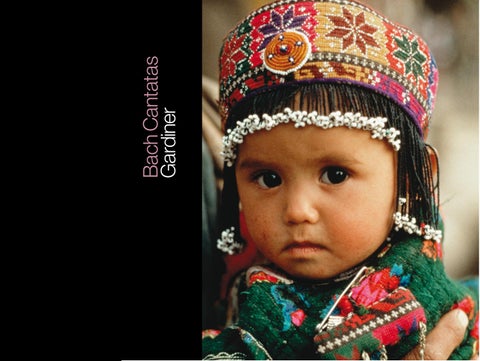
Recorded live at St Bartholomew’s, New York, on 31 December 2000, as part of the Bach Cantata Pilgrimage Producer: Isabella de Sabata Balance engineer: Everett Porter (Polyhymnia) Recording engineers: Carl Schuurbiers (Polyhymnia), Dirk Sobotka (Soundbyte NYC) Tape editor: Sebastian Stein BWV 190 reconstructed by Diethard Hellmann Edition by Reinhold Kubik published by Breitkopf & Härtel Series executive producer: Isabella de Sabata Cover: Mazar i Sharif, Afghanistan, 1991 © Steve McCurry/Magnum Series design: Untitled Frontispiece: Catherine Rimer Booklet photos: Steve Forrest (p.4), Catherine Rimer (p.6), Donald Bentvelsen (p.29) Übersetzung: Gudrun Meier P 2007 The copyright in this sound recording is owned by Monteverdi Productions Ltd C 2007 Monteverdi Productions Ltd Level 2, Hertsmere House 2 Hertsmere Road London E14 4AB www.solideogloria.co.uk
Cantata BWV 190 was endowed by Mr and Mrs Edward Gottesman
Soli Deo Gloria
Bach Cantatas Gardiner
Johann Sebastian Bach 1685-1750 Cantatas Vol 16: New York CD 77:29
For the Sunday after Christmas
12:59 Motet: Singet dem Herrn ein neues Lied BWV 225 1 (12:59) Singet dem Herrn ein neues Lied
2
2 3 4 5 6 7
18:01 (3:18) (2:47) (1:51) (4:33) (1:17) (4:14)
Tritt auf die Glaubensbahn BWV 152 1. Sinfonia 2. Aria: Bass Tritt auf die Glaubensbahn 3. Recitativo: Bass Der Heiland ist gesetzt 4. Aria: Sopran Stein, der über alle Schätze 5. Recitativo: Bass Es ärgre sich die kluge Welt 6. Duetto: Soprano, Bass Wie soll ich dich, Liebster der Seelen, umfassen?
8 9 10 11 12 13
14:56 (3:46) (5:07) (1:22) (2:36) (1:23) (0:40)
Das neugeborne Kindelein BWV 122 1. Coro (Chorale) Das neugeborne Kindelein 2. Aria: Bass O Menschen, die ihr täglich sündigt 3. Recitativo: Sopran Die Engel, welche sich zuvor 4. Terzetto con Choral Ist Gott versöhnt und unser Freund 5. Recitativo: Bass Dies ist ein Tag 6. Choral Es bringt das rechte Jubeljahr
Gottlob! nun geht das Jahr zu Ende BWV 28 1. Aria: Sopran Gottlob! nun geht das Jahr zu Ende 2. Coro (Chorale) Nun lob, mein Seel, den Herren 3. Recitativo ed Arioso: Bass So spricht der Herr 4. Recitativo: Tenor Gott ist ein Quell 5. Aria (Duetto): Alt, Tenor Gott hat uns im heurigen Jahre gesegnet 6. Choral All solch dein Güt wir preisen
14 15 16 17 18 19
14:05 (3:57) (4:25) (1:19) (1:07) (2:20) (0:56)
20 21 22 23 24 25 26
16:53 Singet dem Herrn ein neues Lied! BWV 190 (For New Year’s Day) (4:26) 1. Coro Singet dem Herrn ein neues Lied! (1:24) 2. Choral e Recitativo: Bass, Tenor, Alt Herr Gott, dich loben wir (2:32) 3. Aria: Alt Lobe, Zion, deinen Gott (1:22) 4. Recitativo: Bass Es wünsche sich die Welt (3:29) 5. Aria (Duetto): Tenor, Bass Jesus soll mein alles sein (1:29) 6. Recitativo: Tenor Nun, Jesus gebe (2:09) 7. Choral Laß uns das Jahr vollbringen
3
Introduction John Eliot Gardiner
When we embarked on the Bach Cantata Pilgrimage in Weimar on Christmas Day 1999 we had no real sense of how the project would turn out. There were no precedents, no earlier attempts to perform all Bach’s surviving church cantatas on the appointed feast day and all within a single year, for us to draw on or to guide us. Just as in planning to scale a mountain or cross an ocean, you can make meticulous provision, calculate your route and get all the equipment in order, in the end you have to deal with whatever the elements – both human and physical – throw at you at any given moment. With weekly preparations leading to the performance of these extraordinary works, a working rhythm we sustained throughout a whole year, our approach was influenced by several factors: time (never enough), geography (the initial retracing of Bach’s footsteps in Thuringia and Saxony), architecture (the churches both great and small where we performed), the impact of one week’s music on the next and on the different permutations of players and singers joining and rejoining the pilgrimage, and, inevitably, the hazards of weather, travel and fatigue. Compromises were sometimes needed to accommodate the quirks of the liturgical year (Easter falling exceptionally late in 2000 meant that we ran out of liturgical slots for the late Trinity season cantatas, so that they needed to be redistributed among other programmes). Then to fit into a single evening cantatas for the same day composed by Bach over a forty-year
span meant deciding on a single pitch (A = 415) for each programme, so that the early Weimar cantatas written at high organ pitch needed to be performed in the transposed version Bach adopted for their revival, real or putative, in Leipzig. Although we had commissioned a new edition of the cantatas by Reinhold Kubik, incorporating the latest source findings, we were still left with many practical decisions to make over instrumentation, pitch, bass figuration, voice types, underlay and so on. Nor did we have the luxury of repeated performances in which to try out various solutions: at the end of each feast-day we had to put the outgoing trio or quartet of cantatas to the back of our minds and move on to the next clutch – which came at us thick and fast at peak periods such as Whitsun, Christmas and Easter. The recordings which make up this series were a corollary of the concerts, not their raison d’être. They are a faithful document of the pilgrimage, though never intended to be a definitive stylistic or musicological statement. Each of the concerts which we recorded was preceded by a ‘take’ of the final rehearsal in the empty church as a safety net against outside noise, loud coughs, accidents or meteorological disturbance during the performance. But the music on these recordings is very much ‘live’ in the sense that it is a true reflection of what happened on the night, of how the performers reacted to the music (often brand new to them), and of how the church locations and the audiences affected our response. This series is a tribute to the astonishing musicality and talent of all the performers who took part, as well as, of course, to the genius of J.S.Bach. 5
Cantatas for the Sunday after Christmas St Bartholomew’s, New York Manhattan was magical in the first serious snowfall it had experienced in five years. It was New Year’s Eve and the festively lit trees in Park Avenue were weighed down with snow. Bach’s great double-choir motet Singet dem Herrn (BWV 225), with which we began our 59th and final programme of the pilgrimage, refers to the cutting wind which can wither grass and cut off life, and the temperature outside the church had fallen to minus 10 degrees. But then this is the time of year when vegetative growth habitually comes to a standstill. There is a direct parallel here in the way religious (and not just Christian) belief sees this darkest moment of mid-winter as a period of suspended animation and so an auspicious time to reflect on the fundamental mysteries of existence. 6
Bach captures that mood most poignantly in the contemplative middle section of his motet. The atmosphere in St Bart’s was exceptional, the packed audience rapt and mercifully cough-free. The mood of the choir and orchestra was a strange mixture of fragility and elation, as though the huge effort of reaching the finishing post had brought all the pentup emotion to the surface. It found release in the joyous, spirited singing of the outer sections of Singet dem Herrn with strong emphasis on ‘ein NEUES Lied’. The engagement, zest and sense of complicity amongst both the singers and players was palpable, a climax to a year-long venture in which new friendships had been formed and cemented through collective experience. Edward Said said to me afterwards that the performance of the motet was for him the high point of the evening. For others, though, it may have been the first cantata we performed, BWV 152 Tritt auf die Glaubensbahn. It really is a minor miracle, this intimate chamber piece for just two singers (soprano and bass) and six instruments (recorder, oboe, viola d’amore and viola da gamba, with cello and organ continuo), to which we added a seventh (a harpsichord) in the final movements. The Lutheran liturgy for the Sunday after Christmas distances itself from the mood of the incarnation and anticipates Christ’s coming Passion, crucifixion and death. Salomo Franck’s libretto is based on the contrast of opposites: it focuses on the image of the stone, the cornerstone of faith set by God in Jesus’ incarnation, but also the stumbling block to human inclination. Bach’s setting makes much play of this duality, humanity’s initial fall and the need for spiritual
abasement on the one hand, the triumph of faith and the soul’s attainment of the crown as the terminus of the ‘Glaubensbahn’ on the other. Right from the off, in the four slow introductory bars leading to one of the most spirited and purely instrumental of fugues (a rarity in Bach’s cantatas), one senses Bach’s purpose in pitting four such distinctive instruments against each other and the pleasure he takes in the mixing and blending of colours. All his youthful fantasy, his eagerness to experiment, as well as an already formidable command of counterpoint, are brought into play here. Bach shapes his cantata as a spiritual and musical journey. First, we are urged by the bass soloist to step onto the path of faith (No.2); then along the way, either side of the soprano’s aria which venerates the stone of faith (No.4), we are given stern admonitions, a warning of the fate of the ‘wicked world’ as it ‘stumbles over it into hell’ (No.3), and a denunciation of worldly wisdom (No.5). In the face of faith, reason has no persuasive power or strength. The heart needs to turn towards holy unity, symbolised by Bach in the convergence of his four chosen instruments as a foil to the dialogue between Jesus and the Soul. Achieving a convincing balance between the forward-moving, gigue-like melody of the four instruments and the space needed by the vocal lines to encompass the text is just one of the interpretative challenges of this intriguing cantata, a gem along with those other precious survivors of Bach’s later Weimar years (1714-17). Yet who really knew these new works in Bach’s day outside the immediate court circle? To his peers and contemporaries he was recognised primarily as a virtuoso organist and
then as a composer of instrumental music. What were they missing, and how many other vocal works from these years have been lost to us – perhaps more than 50%? The most likely explanation is that they were impounded by Weimar’s cantankerous duke when he locked the door to the organ loft where Bach kept his scores, and threw him into jail a month before his departure. BWV 122 Das neugeborne Kindelein, a chorale cantata composed in 1724 as part of Bach’s second mini-Christmas cycle for Leipzig, is surely about as close as he ever got to the traditional Christmas carollike image of the infant Jesus. And yet the anonymous librettist bypasses the set readings for the day, and in following closely to a hymn by Cyriakus Schneegass (1597) sticks to an old tradition which conflates the celebrations for Christmas and the New Year. Bach opens with the gentlest imaginable chorale fantasia, a lyrical tune by Melchior Vulpius, the hymn text just four lines long, divided by a delicate ritornello for three oboes and strings in the form of a pastoral lullaby, yet very different from the ones we are used to in Part II of the Christmas Oratorio. What this does is to make the eruption of the cello continuo and organ all the more dramatic as a prelude to the bass singer’s exhortation, ‘Mortals, you who sin each day, you should share the angels’ gladness’. Where the low pitch and dark tone colour of the bass soloist in dialogue with the basso continuo emphasises a mortal, earthly perspective, the soprano (whose first vocal entry mirrors that of the bass) then describes that of the angels, initially recoiling from accursed humanity. But at her words ‘erfüllen nun die Luft’ (‘now throng the air’), three recorders, the highest 7
instruments available to Bach, begin to harmonise Vulpius’s tune. Bach’s purpose is clear: to show that the opposing realms of men and angels can and will now be reconciled. It put me in mind of Botticelli’s ‘Mystic Nativity’ in London’s National Gallery, surely one of his most inspired compositions. There, right in the foreground, are angels embracing men. Just a few years before Botticelli put brush to this canvas in 1500, Savonarola had berated the Florentines very much like Bach’s bass soloist: ‘Repent of what you have done, repent of your sins, distance yourself from the Demon, let yourself be won over by the angels, the only ones who can bring you to the Saviour’. It may be that Botticelli’s painting was intended to serve as an illustration of Savonarola’s sermon, just as Bach’s cantata could be interpreted as an aural representation of Botticelli’s painting. The Schneegass hymn returns as the filling in the sandwich of the following trio: soprano and tenor singing the text of the ‘aria’, the altos that of the chorale doubled at the octave by violins and violas. ‘This is a day the Lord Himself has made’ declares the bass (No.5), rousing the choir to celebrate ‘the true year of jubilation... now is the time to SING!’. A similar injunction to render thanks to God for all the good things experienced in the course of the year lies at the heart of the cantata Bach composed a year later as part of his third Leipzig cycle: BWV 28 Gottlob! nun geht das Jahr zu Ende, a fitting title to sum up the parallel sense of loss and fulfilment, relief and regret within the group at the very end of a yearlong life-changing experience. The cantata begins as a spirited concerto-like movement with an antiphonal deployment of oboes and upper strings providing a 8
backcloth to the soprano’s dance-like call for a song of thanks. That song of thanks (‘Danklied’) is none other than the motet ‘Nun lob, mein Seel, den Herren’, which I had first learnt as a seven-year-old treble at a German summer school directed by a once-famous German choral conductor, Georg Götsch, then very frail. We sang it every day for a week, and I think I was profoundly bored; but half a century later I found myself galvanised by its stile antico sobriety and complexity, its buried treasures and subtleties, especially those that occur in its last fifty bars, in which you sense some immense cosmic struggle being played out. I fear the choir, too, may have been bored during rehearsal; but in performance, with the vocal lines doubled by strings, oboes, cornetto and sackbuts, they rose to the occasion in this penultimate Te Deum laudamus of the Pilgrimage. I found it immensely stirring. After that great chorus the remaining movements inevitably come as a bit of an anticlimax. Fine though the tenor accompagnato (No.4) and imitative duet for alto and tenor (No.5) undoubtedly are, it is the concluding chorale which makes the strongest impression. Paul Eber’s New Year hymn ‘Helft mir Gotts Güte preisen’ has cropped up several times in the course of the year, but never so powerfully or so movingly as in Bach’s harmonisation of this prayer for protection and sustenance in the year to come. In many ways it felt appropriate to be ending our Pilgrimage here in New York in the snow and on the cusp of the turning year. Anywhere in Germany it might have felt repetitive, inviting comparison with Weimar from where we had set out the previous Christmas. Anywhere in Britain people might have
been inclined to sit at home around the Christmas tree or in front of the telly. Here, on the other hand, was a new audience won over for Bach’s prodigious cantatas, and a challenge met by this hand-picked, travel-hardened team of pilgrims, who through an intensive, year-long exposure to this music had made such impressive individual and collective strides. The music we had spent a year grappling with is technically challenging: it is often a high-wire act demanding phenomenal precision, flexibility and virtuosity, as well as a responsiveness to your fellow musicians. It requires you to soak yourself in the idiom, and you need ‘Bach miles’ on the clock before you feel able to interpret these cantatas with relative ease and full conviction. Nowhere was this more apparent than in the final cantata of the tour. BWV 190 Singet dem Herrn ein neues Lied!, composed for New Year’s Day 1724, has come down to us in fragmentary form, at least as regards its first two movements, of which only the voice lines and the two violin parts have survived. All the remaining orchestral parts have to be reconstructed. Various attempts have been proposed and printed, none of them wholly convincing and some not very idiomatic. At least it is possible to extrapolate Bach’s intended instrumentation for the opening movement from the extant scoring of the final chorale. Everyone got to work, our two brilliant keyboard players, Howard Moody and Silas Standage, taking the lead filling in the missing figured bass lines with minimal fuss. Right up to the last moment in rehearsal we were adjusting new instrumental lines for the three oboes, three trumpets and timpani. With more time and skill we might have made a better job of it, but
when it came to the performance all the singers and players seemed intent on capturing the infectious joy and festiveness of this ebullient New Year piece. And of course the psalm text being almost identical to that of the motet we had sung at the start of the programme gave it added spice. Between the psalm verses Bach inserts two lines from Luther’s vernacular version of the Te Deum (1529). These he assigns to the traditional liturgical plainchant delivered in long notes by the choir in octaves, a technique of musical relief of which he was a master – and which is hugely imposing in performance. Luther’s clauses return, this time harmonised, in the litany-like second movement with ‘troped’ recitative interpolations for the three lower soloists. There is a dance-like aria in triple time for alto (No.3), to which we added the three oboes to double the homophonic string lines prompted by the plausibly secular origin of this fandango-like movement. But the pick of all the movements is the tender duet for tenor and bass ‘Jesus soll mein Alles sein’ (‘Jesus shall be my all’). Here again there is a problem: the sources offer no clue as to what instrument Bach intended for the ravishing obbligato, one which shares only the opening phrase, heard no less than six times, with the voice parts; for the rest it is made up of chains of wistful, gestural arabesques bouncing off a silent main beat. We experimented with oboe d’amore and then violin and found that it lay uncomfortably low for both instruments. Then remembering the viola d’amore called for in BWV 152, I asked Katherine McGillivray whether she would be willing to try it out. At first she demurred: her instrument was tuned to A=392 and it would entail either playing in E flat major 9
(with no open strings) or of tuning up. But when it came to the concert, and accompanied by her sister Alison on cello, Katherine brought just the right meditative and elegiac mood to this touching duet, sung with amazing restraint and control by James Gilchrist and Peter Harvey. In the end I had no hesitation in choosing this movement as our (second) encore. So the very last notes of the Cantata Pilgrimage, with everyone choked and fighting back the tears, were of Katherine’s hauntingly beautiful viola d’amore. With the Gospel reading (Luke 2:21) for New Year’s Day focussing on the circumcision and naming of Jesus, every line of this duet begins with the word ‘Jesus’. Bach’s intent is clear: to call attention to the believer’s eschatological hopes of ending his life, as he begins and ends the year, with the name ‘Jesus’ on his lips. Just as he does in many of his cantatas written for other pivotal moments in the church year – Annunciation (BWV 1), Easter (BWV 31) and the beginning (BWV 75, 76 and 20) and ending (BWV 60 and 70) of the Trinity season – Bach gives particular emphasis, here at the turning of the year, to the cyclic course of life, the inevitable progression from beginning to end. In the duet this is what lies behind the reference to Christ’s forthcoming Passion, ‘Jesus helps me through His blood’, a shadow passing across the music and clearing only for the last line, ‘Jesus makes my ending good’. As Eric Chafe has noted, acceptance of the cycle of life and death was and is the most natural and inevitable of human responses to existence. By beginning and ending his New Year cantata in the key of D major Bach seizes on the most readily 10
audible symbol to establish a solid framework against which the listener can measure the bumpy happenings and disturbances of the year gone by and the one about to begin. No doubt this was also his reason (as with two of his other New Year’s Day cantatas) for ending with a verse of Johannes Herman’s chorale, ‘Jesu, nun sei gepreiset’. With its fourteen-line strophes this hymn is the perfect symbol of the span from Alpha to Omega, the journey from beginning to end and its resumption at the moment of the year’s turning. © John Eliot Gardiner 2007 From a journal written in the course of the Bach Cantata Pilgrimage
Einleitung John Eliot Gardiner
Als wir Weihnachten 1999 in Weimar unsere ‚Bach Cantata Pilgrimage‘, unsere Pilgerreise auf den Spuren Bachs antraten, hatten wir keine rechte Vorstellung davon, wie das Projekt ausgehen würde. Versuche, alle erhaltenen Kirchenkantaten Bachs an dem entsprechenden Feiertag und innerhalb eines einziges Jahres aufzuführen, und Vorgänger, auf die wir uns hätten berufen oder die uns hätten leiten können, hatte es nicht gegeben. Wie bei der Planung einer Bergbesteigung oder der Überquerung eines Ozeans kann man sich noch so sorgfältig vorbereiten, die Route festlegen und die Ausrüstung in Ordnung bringen, letzten Endes hat man es mit Gegebenheiten – Menschen und Umständen – zu tun, die völlig unvermutet begegnen. Unsere wöchentlichen Vorbereitungen auf die Aufführung dieser einzigartigen Werke, ein Arbeitsrhythmus, den wir ein ganzes Jahr lang beibehielten, waren von verschiedenen Faktoren beeinflusst: Zeit (nie genug), Geographie (zunächst Spurensuche auf den Wegen Bachs in Thüringen und Sachsen), Architektur (die Kirchen, berühmte und weniger bekannte, in denen wir auftraten), der Einfluss der Musik einer Woche auf die nächste und die verschiedenen Veränderungen unter den Mitwirkenden, wenn Spieler und Sänger sich neu oder erneut der Pilgerreise anschlossen, und zwangsläufig auch die Unwägbarkeiten des Wetters, der Reise und unsere Müdigkeit. Wir sahen uns jede Woche neuen
Herausforderungen gegenüber, und jede Woche bemühten wir uns, sie zu bewältigen, den Blick auf die praktische wie auf die theoretische Seite gerichtet. Zuweilen mussten wir Kompromisse eingehen, um den Launen des Kirchenjahres zu begegnen (Ostern fiel 2000 ungewöhnlich spät, und das bedeutete, dass für die Kantaten der späten Sonntage nach Trinitatis der Platz knapp wurde und sie in anderen Programmen untergebracht werden mussten). Und wenn wir an einem Abend Kantaten gemeinsam aufführen wollten, die Bach über einen Zeitraum von über vierzig Jahren für den gleichen Tag komponiert hatte, mussten wir uns bei jedem Programm für einen einzigen Stimmton (A = 415) entscheiden, weshalb die frühen Weimarer Kantaten, die den hohen Orgelton zugrunde legten, in der transponierten Fassung aufzuführen waren, die Bach für ihre – tatsächliche oder vermeintliche – Wiederaufführung in Leipzig vorgesehen hatte. Obwohl wir Reinhold Kubik mit einer neuen Edition der Kantaten beauftragt hatten, in der die jüngsten Quellenfunde berücksichtigt wurden, blieben hinsichtlich Instrumentierung, Tonlage, Bassfiguration, Stimmtypen, Textzuordnung usw. noch viele praktische Entscheidungen zu treffen. Auch den Luxus wiederholter Aufführungen, in denen wir verschiedene Lösungen hätten ausprobieren können, hatten wir nicht. Kaum war ein Feiertag vorbei, rückten die drei oder vier Kantaten, die wir aufgeführt hatten, in den Hintergrund, und schon hatten uns die nächsten im Griff – was in der Zeit um die hohen Feiertage wie Pfingsten, Weihnachten und Ostern ins Uferlose geriet. Die Aufnahmen in dieser Folge sind ein Nebenprodukt der Konzerte, nicht ihre raison d’être. 11
12
St Bartholomew’s, New York Manhattan war zauberhaft, nachdem es dort zum ersten Mal seit sieben Jahren ausgiebig geschneit hatte. Es war Silvester, und in der Park Avenue bogen sich die Äste der festlich erleuchteten Bäume unter der Last des Schnees. Bachs großartige doppelchörige Motette Singet dem Herrn (BWV 225), die das 59. und abschließende Programm unserer Pilgerreise eröffnete, spricht von dem schneidenden Wind, der das Gras welken lassen und das Leben auslöschen kann – draußen waren die Temperaturen auf minus zehn Grad gefallen. Außerdem ist es die Jahreszeit, wenn in den Pflanzen das Wachstum zum Stillstand zu kommen pflegt. Hier gibt es eine direkte Parallele zum religiösen (und nicht nur christlichen) Glauben, der diese dunkelste Phase in der Mitte des Winters als einen Zeitraum auffasst, in dem das Leben ruhiger abläuft und der Mensch Gelegenheit erhält, über die grundlegenden Geheimnisse seiner Existenz nachzudenken. Bach fängt diese Atmosphäre auf sehr eindringliche Weise in dem besinnlichen Mittelteil seiner Motette ein. Die Stimmung in der bis auf den letzten Platz gefüllten Kirche St Bartholomew war einzigartig, das Publikum hingerissen und glücklicherweise ohne störende Huster. Chor und Orchester wirkten fragil und euphorisch in einer merkwürdigen Mischung, so als hätte die riesige Anstrengung, zur letzten Station der Reise zu gelangen, alle aufgestauten Gefühle an die
Kantaten für den Sonntag nach Weihnachten
Sie sind getreue Dokumente der Pilgerreise, waren jedoch nie als endgültige stilistische oder musikwissenschaftliche Statements gedacht. Jedem der Konzerte, die wir aufgenommen haben, war ein ‚Take‘ der Generalprobe in der leeren Kirche vorausgegangen, das uns gegen Störfaktoren wie Außenlärm, lautes Husten, Zwischenfälle oder wettermäßige Beeinträchtigungen während der Aufführung rückversichern sollte. Aber die Musik dieser Einspielungen ist insofern sehr ‚live‘, als sie genau wiedergibt, was an dem betreffenden Abend vor sich ging, wie die Ausführenden auf die Musik ansprachen (die für sie zuweilen vollkommen neu war) und wie der jeweilige Ort, wo sich die Kirche befand, und das Publikum unsere Reaktionen beeinflussten. Diese Serie ist eine Würdigung der erstaunlichen Musikalität und des Talentes aller beteiligten Spieler und Sänger und natürlich des Genies J.S.Bachs.
Oberfläche gebracht. Die Spannung löste sich, als die munteren, fröhlichen äußeren Abschnitte von Singet dem Herrn gesungen wurden, in denen deutlich zum Ausdruck kommt, dass das Lied ‚neu‘ ist. Das Engagement, die Freude und Begeisterung und das Gemeinschaftsgefühl zwischen Sängern und Instrumentalisten waren deutlich zu spüren, der Höhepunkt eines Unternehmens, das sich über ein ganzes Jahr erstreckt, neue Freundschaften hervorgebracht und durch gemeinsame Erlebnisse gefestigt hatte. Edward Said sagte mir hinterher, die Aufführung der Motette sei für ihn die Krönung des Abends gewesen. Für andere allerdings mag dieser Höhepunkt die erste Kantate gewesen sein, die wir aufführten, BWV 152 Tritt auf die Glaubensbahn. Wirklich ein kleines Wunder ist dieses intime Kammermusikstück für gerade einmal zwei Sänger (Sopran und Bass) und sechs Instrumente (Blockflöte, Oboe, Viola d’amore und Viola da gamba, dazu Cello- und Orgelcontinuo), denen wir in den Ecksätzen ein siebentes Instrument (Cembalo) hinzufügten. Die für den Sonntag nach Weihnachten vorgesehene lutherische Liturgie distanziert sich von der Stimmung der Inkarnation und verweist auf die kommende Passionszeit mit Christi Kreuzigung und Tod. Der von Salomo Franck verfasste Text stellt Gegensätze einander gegenüber: Im Zentrum steht das Bild des Steins, des Ecksteins des Glaubens, den Gott durch Jesu Menschwerdung gelegt hat, der aber auch der Stolperstein ist, an dem sich die Menschen verletzen können. Bach hebt in seiner Vertonung diese Dualität immer wieder hervor, er verweist einerseits auf den Sündenfall der Menschheit und die Notwendigkeit spiritueller Erniedrigung,
andererseits auf den Triumph des Glaubens und die Krone, die der Seele am Ende der ‚Glaubensbahn‘ zuteil werden wird, nachdem sie ‚Trübsal und Schmach‘ erduldet hat. Bereits im Vorspann, in den vier langsamen einleitenden Takten, die zu einer der schwungvollsten und (in Bachs Kantaten eine Seltenheit) rein instrumentalen Fugen führen, erkennen wir die Absicht des Komponisten, vier derart unterschiedliche Instrumente gegeneinander antreten zu lassen, und das Vergnügen, das es ihm bereitet, Klangfarben ineinander zu verweben. Bach bringt hier den Reichtum seiner jugendlichen Einfälle ins Spiel, lässt seiner Experimentierfreude freien Lauf und beweist, dass er den Kontrapunkt bereits hervorragend beherrscht. Seiner Kantate gibt er die Form einer spirituellen und musikalischen Reise. Zunächst werden wir vom Bass-Solisten aufgefordert, ‚auf die Glaubensbahn zu treten‘ (Nr. 2); wenn wir dann unterwegs sind, erhalten wir beidseitig der Sopranarie, die dem Stein des Glaubens huldigt (Nr. 4), eindringliche Ermahnungen, werden vor dem Schicksal der ‚bösen Welt‘ gewarnt, wenn diese ‚über ihn zur Höllen fällt‘ (Nr. 3), und erfahren, dass ‚die größte Weisheit dieser Erden‘ nichts wert sei (Nr. 5). Was Gott beschließt, lässt sich mit dem Verstand nicht begreifen und begründen. Im Glauben muss sich das Herz der heiligen Einheit zuwenden, von Bach symbolisiert durch die Annäherung der vier Instrumente, die für den Dialog zwischen Jesus und der Seele den Hintergrund schaffen. Ein überzeugendes Gleichgewicht zu erreichen zwischen der vorwärtsdrängenden, gigueähnlichen Melodie, die von den vier Instrumenten gespielt wird, und dem Raum, den die Gesangslinien für ihren Text 13
benötigen, ist eine der großen Herausforderungen bei der Interpretation dieser faszinierenden Kantate, ein Juwel neben all den anderen wertvollen Werken, die aus Bachs späten Weimarer Jahren (1714–17) erhalten sind. Doch wer außerhalb der höfischen Kreise kannte zu Bachs Zeiten tatsächlich diese neuen Werke? In seinen Kreisen und unter seinen Zeitgenossen hatte er in erster Linie als Orgelvirtuose und dann als Komponist instrumentaler Musik einen Namen. Was entging ihnen, und wie viele andere Vokalwerke aus diesen Jahren sind für uns verloren – vielleicht mehr als die Hälfte? Die wahrscheinlichste Erklärung ist, dass der missgestimmte Weimarer Herzog sie beschlagnahmte, als er Bach einen Monat vor dessen Abreise in den Kerker warf und die Tür zu der Orgelempore, wo er seine Partituren aufbewahrte, abschloss. BWV 122 Das neugeborne Kindelein, eine Choralkantate, die Bach 1724 als Teil des kurzen Weihnachtszyklus innerhalb seines zweiten Leipziger Kantatenjahrgangs komponierte, kommt wohl der herkömmlichen Vorstellung von einem Weihnachtslied, das dem Kindlein Jesus huldigt, am nächsten. Und doch geht der anonyme Textdichter den für den Tag vorgegebenen Lesungen aus dem Weg und hält sich, in enger Anlehnung an einen Choral von Cyriakus Schneegaß (1597), an den alten Brauch, die Feiern von Weihnachten und Neujahr miteinander zu verknüpfen. Bach beginnt mit der sanftesten Choralfantasie, die man sich vorstellen kann, einer lyrischen Melodie von Melchior Vulpius, deren Text gerade einmal vier Zeilen umfasst, in der Form eines pastoralen Wiegenliedes, in das sich ein zartes Ritornell für drei Oboen und Streicher fügt – ganz 14
anders als jene, wie wir sie aus dem zweiten Teil des Weihnachtsoratoriums gewohnt sind. Damit gerät die Eruption des Cello- und Orgelcontinuos als Präludium zu dem Mahnruf des Bassisten ‚O Menschen, die ihr täglich sündigt‘ noch weitaus dramatischer. Während die tiefe Tonlage und die dunkle Klangfarbe des Bassisten im Dialog mit dem Continuo die irdische Perspektive der sterblichen Menschen betonen, beschreibt die (bei ihrem ersten Einsatz den Bass spiegelnde) Sopranstimme die Sicht der Engel, die vor der fluchbeladenen Menschheit zurückschrecken, und schildert dann, wie es ihr bei den Engeln ergehen wird. Bei ihren Worten ‚erfüllen nun die Luft‘ beginnen drei Blockflöten, die höchsten Instrumente, die Bach zur Verfügung hatte, Vulpius’ Melodie zu harmonisieren. Die Absicht des Komponisten ist klar: Er will zeigen, dass die gegensätzlichen Reiche der Menschen und Engel nun miteinander vereint werden. Das erinnerte mich an Botticellis Gemälde ‚Die mystische Geburt‘ in der Londoner National Gallery, sicherlich eine seiner genialsten Schöpfungen. Dort, gleich im Vordergrund, befinden sich Engel, die Menschen umarmen. Als Botticelli dieses Bild um 1500 malte, hatte Savonarola kurz zuvor die Florentiner auf sehr ähnliche Weise wie Bachs Bassist zur Räson gerufen: ‚Bereut, was ihr getan habt, bereut eure Sünden, haltet euch vom Dämon fern, lasst euch von den Engeln gewinnen, denn allein diese können euch zum Erlöser bringen.‘ Es mag sein, dass Botticellis Gemälde als Illustration zu Savonarolas Predigt dienen sollte, so wie Bachs Kantate als akustisches Pendant zu Botticellis Gemälde aufgefasst werden könnte. Der Choral von Schneegaß kehrt in der Mitte des folgenden Terzetts wieder:
Sopran und Tenor singen den Text der ‚Aria‘, die Altstimme singt den Text des Chorals, in der Oktave von den Violinen und Bratschen begleitet. ‚Dies ist ein Tag, den selbst der Herr gemacht‘, erklärt der Bass (Nr. 5) und ermuntert den Chor, ‚das rechte Jubeljahr‘ zu feiern... ‚itzt ist es Singenszeit‘. Eine ähnliche Aufforderung, Gott für all die Wohltaten zu danken, die dieser in dem zu Ende gegangenen Jahr den Menschen zuteil werden ließ, liegt der Kantate zugrunde, die Bach ein Jahr später als Teil seines dritten Leipziger Zyklus komponierte: BWV 28 Gottlob! nun geht das Jahr zu Ende, ein Titel, der das Gefühl des Verlusts und der Erfüllung, der Erleichterung und des Bedauerns innerhalb der Gruppe am Ende dieses gemeinsam verbrachten Jahres, das unser Leben verändert hat, auf treffende Weise zusammenfasst. Die Kantate beginnt als beschwingter konzertartiger Satz im Wechsel zwischen Oboen und hohen Streichern, die zu dem tanzartigen Aufruf des Soprans, ein ‚frohes Danklied‘ anzustimmen, die Kulisse liefern. Dieses ‚Danklied‘ ist jene Motette ‚Nun lob, mein Seel, den Herren‘, die ich als siebenjähriger Knabensopran in einer deutschen Sommerschule kennengelernt hatte, die von Georg Götsch, einem einst berühmten, damals sehr gebrechlichen Chordirigenten geleitet wurde. Wir sangen das Lied eine Woche lang jeden Tag, und ich glaube, es hat mich entsetzlich gelangweilt; doch jetzt, ein halbes Jahrhundert später, war ich schlagartig fasziniert von der Nüchternheit und Komplexität seines stile antico, seinen verborgenen Schätzen und Subtilitäten, vor allem in den letzten fünfzig Takten, wo sich das Gefühl einstellt, dort werde ein riesiger kosmischer Kampf ausgetragen.
Ich fürchte, auch die Chorsänger dürften sich während der Proben gelangweilt haben; doch in der Aufführung, als die Gesangslinien durch Streicher, Oboen, Zink und Posaunen verdoppelt wurden, zeigten sie sich in diesem vorletzten Te Deum laudamus der Pilgerreise ihrer Aufgabe vollauf gewachsen. Ich fand es ungeheuer ergreifend. Nach diesem großartigen Chor vermitteln die übrigen Sätze zwangsläufig ein Gefühl der Ernüchterung. So schön das Tenor-Accompagnato (Nr. 4) und das Duett (Nr. 5), in dem Alt und Tenor einander imitieren, auch sein mögen, es ist der abschließende Choral, der am tiefsten beeindruckt. Paul Ebers Neujahrshymnus ‚Helft mir Gotts Güte preisen‘ war uns während des Jahres schon verschiedene Male begegnet, aber nie auf eine so packende, eindringliche Weise wie in Bachs Harmonisierung dieses Gebets, das für das kommende Jahr Schutz und Beistand erfleht. In vielerlei Hinsicht hielten wir es für angebracht, unsere Pilgerreise hier in New York im Schnee und auf dem Scheitelpunkt der Jahreswende zu beenden. An allen anderen Orten wo auch immer in Deutschland hätte unsere Aufführung wie eine Wiederholung gewirkt, hätte zu Vergleichen mit Weimar herausgefordert, von wo aus wir uns Weihnachten ein Jahr zuvor auf den Weg gemacht hatten. Wo auch immer in Großbritannien hätten die Leute wohl lieber zu Hause um den Weihnachtsbaum oder vor dem Fernseher gesessen. Hier hingegen gab es ein neues Publikum, das sich für Bachs wunderbare Kantaten hatte gewinnen lassen – eine Herausforderung, der sich diese sorgsam ausgewählte, von der Reise gestählte Truppe aus Pilgern stellte, die sich ein Jahr lang intensiv mit dieser Musik befasst und einzeln und 15
gemeinsam so eindrucksvolle Fortschritte gemacht hatten. Diese Musik, mit der wir uns ein Jahr lang geplagt hatten, ist technisch anspruchvoll; sie auszuführen, kommt häufig einem Hochseilakt gleich, der neben unglaublicher Präzision, Flexibilität und Virtuosität auch Aufgeschlossenheit gegenüber den Musikerkollegen erfordert. Sie verlangt von den Ausführenden, dass sie sich völlig in dieses Idiom versenken, viele ‚Bach-Kilometer‘ auf ihrem Zähler haben müssen, bevor sie sich imstande fühlen, diese Kantaten relativ ungezwungen und überzeugend aufzuführen. Nirgendwo war das deutlicher zu spüren als in der Kantate, mit der unsere Reise endete. BWV 190 Singet dem Herrn ein neues Lied!, für den Neujahrstag 1724 komponiert, ist nur in Fragmenten überliefert, zumindest was die ersten beiden Sätze betrifft, von denen lediglich die Gesangsstimmen und zwei Violinparts erhalten sind. Alle übrigen Orchesterstimmen müssen rekonstruiert werden. Verschiedene Vorschläge wurden veröffentlicht, keiner ist völlig überzeugend, manche sind nicht sehr idiomatisch. Immerhin besteht die Möglichkeit, die Instrumentierung, die Bach für den Kopfsatz vorgesehen hatte, aus der noch vorhandenen Partitur des abschließenden Chorals zu erschließen. Alle machten sich an die Arbeit, dem Beispiel unserer beiden brillanten Cembalo- und Orgelspieler folgend, Howard Moody und Silas Standage, die mit möglichst geringem Aufwand die bezifferten Basslinien einfügten. In den Proben passten wir bis zum allerletzten Augenblick neue Parts für die drei Oboen, drei Trompeten und Pauken ein. Hätten wir mehr Zeit gehabt und wären wir geschickter gewesen, wäre uns 16
das sicher besser gelungen, aber als es dann zur Aufführung kam, schienen alle Sänger und Spieler darauf bedacht, das Publikum an der Freude und Festlichkeit dieses übersprudelnden Neujahrsstückes teilhaben zu lassen. Und der Psalmtext, der mit dem Text der Motette, die wir zu Beginn unseres Programms gesungen hatten, nahezu identisch war, gab ihm eine weitere Würze. Zwischen den Psalmversen hat Bach zwei Zeilen aus Luthers weltlicher Fassung des Te Deum (1529) eingefügt. Diese weist er dem liturgisch überlieferten gregorianischen Choral zu, der vom Chor in langen Noten oktavierend vorgetragen wird, eine weitere Technik musikalischer Abwechslung, die er meisterhaft beherrschte – und die in der Aufführung ungemein imposant wirkt. Luthers Zeilen kehren, diesmal harmonisiert, in dem litaneiartigen zweiten Satz wieder, der ‚tropierte‘ rezitativische Einschübe für die drei tiefen Solostimmen enthält. Der tanzartigen Aria im Dreiertakt für Alt (Nr. 3) haben wir zur Dopplung der homophonen Streicherlinien, die offensichtlich der weltlichen Verwendung dieses fandangoartigen Satzes entstammen, die drei Oboen hinzugefügt. Aber die Krönung all dieser Sätze ist das zärtliche Duett für Tenor und Bass ‚Jesus soll mein Alles sein‘. Hier gibt es wieder ein Problem: Die Quellen bieten keine Anhaltspunkte, für welches Instrument Bach das hinreißende Obligato bestimmt haben könnte, das nur die Anfangsphrase, die nicht weniger als sechsmal zu hören ist, mit den Gesangsstimmen gemeinsam hat; der restliche Teil besteht aus Ketten versonnener Arabesken, die sich gestenreich aus dem Hauptrhythmus herauslösen. Wir haben ihn
probeweise von der Oboe d’amore und dann von der Violine spielen lassen und fanden, dass er für beide Instrumente unbequem tief lag. Als uns die Viola d’amore einfiel, die Bach in BWV 152 verlangt, fragte ich Katherine McGillivray, ob vielleicht sie es probieren würde. Sie hatte zunächst Bedenken: Ihr Instrument war auf A=392 gestimmt, und das würde bedeuten, dass sie entweder in Es-dur (ohne offene Saiten) zu spielen hätte oder es höher stimmen müsste. Doch als es dann zum Konzert kam, fand Katherine, von ihrer Schwester Alison auf dem Cello begeleitet, für dieses bewegende, von James Gilchrist und Peter Harvey erstaunlich besonnen und beherrscht gesungene Duett genau die richtige meditative und elegische Stimmung. Schließlich stand für mich außer Frage, dass dieser Satz unsere (zweite) Zugabe sein würde. So kamen die allerletzen Noten unserer Kantatenpilgerreise von Katherines unvergesslich schönen Viola d’amore – während alle einen Kloß im Hals hatten und mit den Tränen kämpften. Da im Evangelium für den Neujahrstag (Lukas 2, 21) von der Beschneidung die Rede ist und Jesus seinen Namen erhält, beginnt jede Zeile dieses Duetts mit dem Wort ‚Jesus‘. Bachs Absicht ist klar: Er will die Aufmerksamkeit auf die über das Irdische hinausweisende Hoffnung der Gläubigen lenken, ihr Leben so zu beenden, wie sie das Jahr beginnen und beschließen, mit dem Namen ‚Jesus‘ auf den Lippen. So wie es Bach in vielen seiner Kantaten handhabte, die er für andere Höhepunkte im Kirchenjahr geschrieben hatte – Verkündigung (BWV 1), Ostern (BWV 31), die ersten beiden Sonntage (BWV 75, 76 und 20) und die letzten Sonntage (BWV 60 und 70)
nach Trinitatis –, legt er hier, an der Jahreswende, besonderes Gewicht auf den zyklischen Verlauf des Lebens, die zwangsläufige Bewegung vom Anfang auf das Ende zu. ‚Jesus hilft mir durch sein Blut‘, diese Botschaft ist es, die in dem Duett den Verweis auf die Leidenszeit begründet, die Jesu bevorsteht. Ein Schatten legt sich über die Musik und hellt sich erst in der letzten Zeile wieder auf: ‚Jesus macht mein Ende gut‘. Wie Eric Chafe bemerkte, war und ist die Akzeptanz des Kreislaufs von Leben und Tod die natürlichste und unvermeidliche Reaktion des Menschen auf seine Existenz. Bach lässt diese Neujahrskantate in der Tonart D-dur beginnen und enden. Um die Störungen und Ereignisse, die im vergangenen Jahr Stolpersteine boten und straucheln ließen, und das Jahr, das nun beginnen wird, in einen stabilen Rahmen zu stellen, bedient er sich eines Symbols, das sich dem Ohr am leichtesten erschließt. Zweifellos war das auch der Grund (wie bei den anderen Kantaten für den Neujahrstag), warum er das Werk mit einem Vers aus Johann Hermans Choral ‚Jesu, nun sei gepreiset‘ beendete. Mit seinen vierzehn Zeilen ist dieser Choral das perfekte Symbol für die Spanne von Alpha bis Omega, für die Reise vom Anfang bis zum Ende und für den Neubeginn zur Jahreswende. © John Eliot Gardiner 2007 Aus einem während der Bach Cantata Pilgrimage geschriebenen Tagebuch
17
For the Sunday after Christmas Day Epistle Galatians 4:1-7 Gospel Luke 2:33-40
1
BWV 225
BWV 225
Motet: Singet dem Herrn ein neues Lied (1727)
Motet: Sing unto the Lord a new song
Singet dem Herrn ein neues Lied, die Gemeine der Heiligen sollen ihn loben. Israel freue sich des, der ihn gemacht hat. Die Kinder Zion sei’n fröhlich über ihrem Könige, sie sollen loben seinen Namen im Reihen; mit Pauken und mit Harfen sollen sie ihm spielen.
Sing unto the Lord a new song; let the congregation of saints praise Him. Let Israel rejoice in Him that made him, and let the children of Sion be joyful in their King. Let them praise His name in the dance; let them sing praises unto Him with the timbrel and harp.
Wie sich ein Vater erbarmet Gott, nimm dich ferner unser an, über seine junge Kinderlein, so tut der Herr uns allen, so wir ihn kindlich fürchten rein. Er kennt das arm Gemächte, Gott weiß, wir sind nur Staub, denn ohne dich ist nichts getan mit allen unsern Sachen.
Just as a father has mercy – O God, continue to sustain us – on his little children, so the Lord does unto us all, if we fear Him with pure childlike awe. He knows this feeble race, God knows we are but dust, for without Thee nothing is achieved with all our activity.
18
Gleichwie das Gras vom Rechen, ein Blum und fallend Laub. Der Wind nur drüber wehet, so ist es nicht mehr da, drum sei du unser Schirm und Licht, und trügt uns unsre Hoffnung nicht, so wirst du’s ferner machen. Also der Mensch vergehet, sein End, das ist ihm nah. Wohl dem, der sich nur steif und fest auf dich und deine Huld verlässt.
We are like grass from the rake, a flower and falling leaves: the wind has only to blow over it and it is no longer there. Therefore be our shield and light, and if our hope does not deceive us, Thou shalt continue to be so. So man too passes, his end is always near. Happy is he who, steadfastly and firmly, relies on Thee and on Thy benevolence.
Lobet den Herrn in seinen Taten, lobet ihn in seiner großen Herrlichkeit! Alles, was Odem hat, lobe den Herrn. Halleluja!
Praise the Lord in His mighty acts, praise Him according to His excellent greatness. Let everything that hath breath praise the Lord. Alleluia!
Text: Psalm 149:1-3; Psalm 150:2,6; Johann Gramann BWV 152
BWV 152
Tritt auf die Glaubensbahn (1714)
Tread the path of faith
2
1. Sinfonia
1. Sinfonia
3
2. Aria: Bass Tritt auf die Glaubensbahn, Gott hat den Stein geleget, der Zion hält und träget, Mensch, stoße dich nicht dran! Tritt auf die Glaubensbahn!
2. Aria Tread the path of faith, God has laid the stone which holds and bears up Zion, man, do not stumble on it! Tread the path of faith!
4
3. Recitativo: Bass Der Heiland ist gesetzt in Israel zum Fall und Auferstehen.
3. Recitative The Saviour has been placed in Israel for the fall and resurrection. 19
Der edle Stein ist sonder Schuld, wenn sich die böse Welt so hart an ihm verletzt, ja, über ihn zur Höllen fällt, weil sie boshaftig an ihn rennet und Gottes Huld und Gnade nicht erkennet! Doch selig ist ein auserwählter Christ, der seinen Glaubensgrund auf diesen Eckstein leget, weil er dadurch Heil und Erlösung findet.
The precious stone is not at fault, even if the wicked world sorely wounds itself on it, yea, stumbles over it into hell, because it spitefully collides with it, and does not acknowledge God’s grace and mercy! But blessed is a chosen Christian who lays his faith’s foundation on this cornerstone, for thus he finds salvation and redemption.
5
4. Aria: Sopran Stein, der über alle Schätze, hilf, dass ich zu aller Zeit durch den Glauben auf dich setze meinen Grund der Seligkeit und mich nicht an dir verletze, Stein, der über alle Schätze!
4. Aria Stone, surpassing every treasure, grant that I may always through my faith build on you my foundation for supreme happiness, and not wound myself on you, stone, surpassing every treasure!
6
5. Recitativo: Bass Es ärgre sich die kluge Welt, dass Gottes Sohn verlässt den hohen Ehrenthron, dass er in Fleisch und Blut sich kleidet und in der Menschheit leidet. Die größte Weisheit dieser Erden muss vor des Höchsten Rat zur größten Torheit werden. Was Gott beschlossen hat, kann die Vernunft doch nicht ergründen; die blinde Leiterin verführt die geistlich Blinden.
5. Recitative May the clever world be vexed that the Son of God leaves the lofty throne of honour and clothes Himself in flesh and blood and suffers as a mortal. The greatest wisdom on earth becomes before the will of God the greatest folly. What God has decreed, reason cannot fathom; the blind leader leads astray the blind in spirit.
20
7
6. Aria (Duetto): Soprano, Bass Seele, Jesus
6. Duet Soul, Jesus
Seele Wie soll ich dich, Liebster der Seelen, umfassen? Jesus Du musst dich verleugnen und alles verlassen! Seele Wie soll ich erkennen das ewige Licht? Jesus Erkenne mich gläubig und ärgre dich nicht! Seele Komm, lehre mich, Heiland, die Erde verschmähen! Jesus Komm, Seele, durch Leiden zur Freude zu gehen! Seele Ach, ziehe mich, Liebster, so folg ich dir nach! Jesus Dir schenk ich die Krone nach Trübsal und Schmach.
Soul How shall I, dearest of souls, embrace Thee? Jesus You must deny yourself and abandon all! Soul How shall I recognise eternal life? Jesus Recognise me with faith and be not angered! Soul Come, teach me, Saviour, to disdain the earth! Jesus Come, soul, and walk through suffering to joy! Soul Ah, draw me on, Beloved, and I shall follow after! Jesus I’ll give you the crown after grief and shame.
Text: Salomo Franck
8
BWV 122
BWV 122
Das neugeborne Kindelein (1724)
The newborn infant child
1. Coro (Chorale) Das neugeborne Kindelein, das herzeliebe Jesulein bringt abermal ein neues Jahr der auserwählten Christenschar.
1. Chorus (Chorale) The newborn infant child, the dearly-beloved little Jesus brings once more a New Year to the chosen Christian throng.
21
9
2. Aria: Bass O Menschen, die ihr täglich sündigt, ihr sollt der Engel Freude sein. Ihr jubilierendes Geschrei, dass Gott mit euch versöhnet sei, hat euch den süßen Trost verkündigt.
2. Aria O mortals, you who sin each day, you should share the angels’ gladness. Their joyful shouts that God is reconciled with you have proclaimed to you sweet comfort.
10
3. Recitativo: Sopran Die Engel, welche sich zuvor vor euch als vor Verfluchten scheuen, erfüllen nun die Luft im höhern Chor, um über euer Heil sich zu erfreuen. Gott, so euch aus dem Paradies aus englischer Gemeinschaft stieß, lässt euch nun wiederum auf Erden durch seine Gegenwart vollkommen selig werden: So danket nun mit vollem Munde vor die gewünschte Zeit im neuen Bunde.
3. Recitative with Instrumental Chorale The angels who have till now shrunk from you as though you were accursed, now throng the air in a lofty choir to rejoice at your salvation. God, who drove you out of Paradise, you and the angelic throng, allows you once more on earth to achieve perfect blessedness through His presence: so now give thanks with hearty voices for this long-awaited new order.
11
4. Terzetto: Sopran, Alt, Tenor con Choral: Alt Ist Gott versöhnt und unser Freund, O wohl uns, die wir an ihn glauben, was kann uns tun der arge Feind? sein Grimm kann unsern Trost nicht rauben; Trotz Teufel und der Höllen Pfort, ihr Wüten wird sie wenig nützen, das Jesulein ist unser Hort. Gott ist mit uns und will uns schützen.
4. Trio with Chorale If God is appeased and is our friend How blessed are we who believe in Him, how can the cruel foe harm us? his rage cannot deprive us of our comfort; Despite the devil and the gate of hell, their fury will avail them little, the infant Jesus is our refuge. God is with us and will protect us.
12
5. Recitativo: Bass Dies ist ein Tag, den selbst der Herr gemacht, der seinen Sohn in diese Welt gebracht. O sel’ge Zeit, die nun erfüllt!
5. Recitative This is a day the Lord Himself has made, who brought His Son into the world. O blessed moment, now fulfilled!
22
13
O gläubigs Warten, das nunmehr gestillt! O Glaube, der sein Ende sieht! O Liebe, die Gott zu sich zieht! O Freudigkeit, so durch die Trübsal dringt und Gott der Lippen Opfer bringt!
O faithful waiting, now at an end! O belief, that sees its goal! O love, that draws God to itself! O joy, that breaks through sorrow and brings our lips’ offering to God!
6. Choral Es bringt das rechte Jubeljahr, was trauern wir denn immerdar? Frisch auf! itzt ist es Singenszeit, das Jesulein wend’t alles Leid.
6. Chorale It brings this true year of jubilation, so why do we continue to mourn? Quick, rise! Now is the time to sing; the infant Jesus wards off all woe.
Text: Cyriakus Schneegaß (1,4,6); anon. (2-5) BWV 28
BWV 28
Gottlob! nun geht das Jahr zu Ende (1725)
Praise God! The year now draws to a close
14
1. Aria: Sopran Gottlob! nun geht das Jahr zu Ende, das neue rücket schon heran. Gedenke, meine Seele, dran, wie viel dir deines Gottes Hände im alten Jahre Guts getan! Stimm ihm ein frohes Danklied an; so wird er ferner dein gedenken und mehr zum neuen Jahre schenken.
1. Aria Praise God! The year now draws to a close, the New Year is approaching. Consider this, O my soul, the good that God’s hands wrought you in the year now past! Strike up for Him a joyous song of thanks, and He will continue to think of you and grant you more in this New Year.
15
2. Coro (Chorale) Nun lob, mein Seel, den Herren, was in mir ist, den Namen sein! Sein Wohltat tut er mehren, vergiss es nicht, o Herze mein!
2. Chorus (Chorale) Now praise, my soul, the Lord, let all in me now praise His name! His goodness he increases, forget it not, O heart of mine! 23
Hat dir dein Sünd vergeben und heilt dein Schwachheit groß, errett’ dein armes Leben, nimmt dich in seinen Schoß. Mit reichem Trost beschüttet, verjüngt, dem Adler gleich. Der Kön’g schafft Recht, behütet, die leid’n in seinem Reich.
Your sins He has forgiven you, He heals your great weakness, saves your wretched life, takes you in His embrace. He pours His blessings on you, making you young, like the eagle. The King is just, and He protects those who suffer in His realm.
16
3. Recitativo ed Arioso: Bass So spricht der Herr: Es soll mir eine Lust sein, dass ich ihnen Gutes tun soll, und ich will sie in diesem Lande pflanzen treulich, von ganzem Herzen und von ganzer Seele.
3. Recitative and Arioso Thus saith the Lord: I will rejoice over them to do them good, and I will plant them in this land assuredly with my whole heart and with my whole soul.
17
4. Recitativo: Tenor Gott ist ein Quell, wo lauter Güte fleußt; Gott ist ein Licht, wo lauter Gnade scheinet; Gott ist ein Schatz, der lauter Segen heißt; Gott ist ein Herr, der’s treu und herzlich meinet. Wer ihn im Glauben liebt, in Liebe kindlich ehrt, sein Wort von Herzen hört und sich von bösen Wegen kehrt, dem gibt er sich mit allen Gaben. Wer Gott hat, der muss alles haben.
4. Recitative God is a spring, where naught but kindness flows; God is a light, where naught but mercy shines; God is a treasure, which naught but blessing gives; God is a Lord with true and kind intent. Who loves Him in faith, honours Him in childlike love, takes His word to heart and turns from the path of evil, to him He gives Himself abundantly. He who has God has everything.
18
5. Aria (Duetto): Alt, Tenor Gott hat uns im heurigen Jahre gesegnet, dass Wohltun und Wohlsein einander begegnet. Wir loben ihn herzlich und bitten darneben, er woll’ auch ein glückliches neues Jahr geben. Wir hoffen’s von seiner beharrlichen Güte und preisen’s im Voraus mit dankbar’m Gemüte.
5. Aria (Duet) God has blessed us in the past year, with good deeds and prosperity alike. We praise Him from our hearts, and beseech Him that He may also grant us a happy New Year. We hope for this of His constant goodness and praise Him already with thankful hearts.
24
19
6. Choral All solch dein Güt wir preisen, Vater ins Himmels Thron, die du uns tust beweisen durch Christum, deinen Sohn, und bitten ferner dich: Gib uns ein friedsam Jahre, für allem Leid bewahre und nähr uns mildiglich.
6. Chorale We praise Thee for all Thy kindness, Father on heaven’s throne, that Thou showest us through Christ, Thy Son, and we beseech Thee now as well to grant us a peaceful year, to protect us from all sorrow and gently to sustain us.
Text: Erdmann Neumeister (1, 4, 5); Johann Gramann (2); Jeremiah 32:41 (3); Paul Eber (6) BWV 190
BWV 190
Singet dem Herrn ein neues Lied! (1724) (for New Year’s Day)
Sing unto the Lord a new song
20
1. Coro Singet dem Herrn ein neues Lied! Die Gemeine der Heiligen soll ihn loben! Lobet ihn mit Pauken und Reigen, lobet ihn mit Saiten und Pfeifen! Herr Gott, dich loben wir! Alles, was Odem hat, lobe den Herrn! Herr Gott, wir danken dir! Halleluja!
1. Chorus Sing unto the Lord a new song; let the congregation of saints praise Him. Praise Him with the timbrel and dance, praise Him with stringed instruments and organs! Lord God, we give Thee praise! Let everything that hath breath praise the Lord. Lord God, we give Thee thanks! Alleluia!
21
2. Choral e Recitativo: Bass, Tenor, Alt Herr Gott, dich loben wir, Bass Dass du mit diesem neuen Jahr uns neues Glück und neuen Segen schenkest und noch in Gnaden an uns denkest.
2. Chorale and Recitative Lord God, we give Thee praise, Bass That Thou with this new year dost grant us new happiness and blessing, and still thinkest on us with favour. 25
Herr Gott, wir danken dir, Tenor Dass deine Gütigkeit in der vergangnen Zeit das ganze Land und unsre werte Stadt vor Teurung, Pestilenz und Krieg behütet hat. Herr Gott, dich loben wir, Alt Denn deine Vatertreu hat noch kein Ende, sie wird bei uns noch alle Morgen neu. Drum falten wir, barmherz’ger Gott, dafür in Demut unsre Hände und sagen lebenslang mit Mund und Herzen Lob und Dank. Herr Gott, wir danken dir!
Lord God, we give Thee thanks, Tenor That Thy kindness in the days now past has protected the whole land and our worthy city from famine, pestilence and war. Lord God, we give Thee praise, Alto For Thy paternal faith is boundless, it is renewed each morning with us. And so we fold, merciful God, our hands in humility and praise and give thanks throughout our lives with mouth and heart. Lord God, we give Thee thanks!
22
3. Aria: Alt Lobe, Zion, deinen Gott, lobe deinen Gott mit Freuden, auf! erzähle dessen Ruhm, der in seinem Heiligtum fernerhin dich als dein Hirt will auf grüner Auen weiden.
3. Aria Praise, O Zion, Thy God, praise thy God with gladness, rise! and speak now of His fame, who shall lead you, as your shepherd, to graze in His sanctuary on green pastures.
23
4. Recitativo: Bass Es wünsche sich die Welt, was Fleisch und Blute wohlgefällt; nur eins, eins bitt ich von dem Herrn, dies eine hätt ich gern, dass Jesus, meine Freude, mein treuer Hirt, mein Trost und Heil und meiner Seelen bestes Teil,
4. Recitative Let the world desire what pleases flesh and blood; just this, this only I ask of the Lord, just this one thing would I like, that Jesus, my joy, my true shepherd, my comfort and salvation and my soul’s best portion,
26
mich als ein Schäflein seiner Weide auch dieses Jahr mit seinem Schutz umfasse und nimmermehr aus seinen Armen lasse. Sein guter Geist, der mir den Weg zum Leben weist, Regier und führe mich auf ebner Bahn, so fang ich dieses Jahr in Jesu Namen an.
might embrace me as a lamb of His pasture this year too with His protection and never more let me from His grasp. May His kindly spirit, that shows me the way to life, govern and lead me on an even course, and I shall begin this year in Jesus’ name.
24
5. Aria (Duetto): Tenor, Bass Jesus soll mein Alles sein, Jesus soll mein Anfang bleiben, Jesus ist mein Freudenschein, Jesus will ich mich verschreiben. Jesus hilft mir durch sein Blut, Jesus macht mein Ende gut.
5. Aria (Duet) Jesus shall be my all, Jesus shall be my beginning, Jesus is my light of joy, to Jesus I would devote myself. Jesus helps me through His blood, Jesus makes my ending good.
25
6. Recitativo: Tenor Nun, Jesus gebe, dass mit dem neuen Jahr auch sein Gesalbter lebe; er segne beides, Stamm und Zweige, auf dass ihr Glück bis an die Wolken steige. Es segne Jesus Kirch und Schul, er segne alle treue Lehrer, er segne seines Wortes Hörer; er segne Rat und Richterstuhl; er gieß auch über jedes Haus in unsrer Stadt die Segensquellen aus; er gebe, dass aufs neu sich Fried und Treu in unsern Grenzen küssen mögen. So leben wir dies ganze Jahr im Segen.
6. Recitative Now Jesus grant that with the new year His anointed one too may flourish; may He bless both trunk and branches, that their fortune rise to the clouds. Let Jesus bless both church and school, may He bless all true teachers, may He bless those who hear His teaching; may He bless both council and court; may He pour over every house in our town the springs of blessing; may He grant that once again both peace and faith may embrace within our borders. Thus we shall live throughout the year in blessing.
27
26
7. Choral Lass uns das Jahr vollbringen zu Lob dem Namen dein, dass wir demselben singen in der Christen Gemein; wollst uns das Leben fristen durch dein allmächtig Hand, erhalt deine lieben Christen und unser Vaterland. Dein Segen zu uns wende, gib Fried an allem Ende; gib unverfälscht im Lande dein seligmachend Wort. Die Heuchler mach zuschanden hier und an allem Ort!
7. Chorale Let us complete this year in praise of Thy name, that we may sing to it in the Christian fold; extend our life through Thine almighty hand, preserve Thy beloved Christians and our fatherland. Turn Thy blessing upon us, give peace to all around, give throughout the land Thy pure and joy-inspiring Word. Destroy all hypocrites here and everywhere!
Text: Psalm 149:1, Psalm 150:4,6 (1); Johannes Herman (7); anon. [?Picander] (2-6)
English translations by Richard Stokes from J. S. Bach: The Complete Cantatas, 1999, Scarecrow Press, reproduced by permission. Translations in other languages are available at www.bach-cantatas.com
28 42
This recording is dedicated to the memory of Katherine McGillivray (1970-2006) who was principal viola of the English Baroque Soloists. Katherine played viola d’amore obbligato in Cantata BWV 190, No.5.
29
Also available
Bach Cantatas Vol 1: City of London For the Feast of St John the Baptist BWV 167 / 7 / 30 For the First Sunday after Trinity BWV 75 / 39 / 20 Bach Cantatas Vol 6: Kรถthen/Frankfurt For the Twelfth Sunday after Trinity BWV 69a / 35 / 137 For the Thirteenth Sunday after Trinity BWV 77 / 164 / 33 Bach Cantatas Vol 7: Ambronay/Bremen For the Fourteenth Sunday after Trinity BWV 25 / 78 / 17 For the Feast of St Michael and All Angels BWV 50 / 130 / 19 / 149 Bach Cantatas Vol 8: Bremen/Santiago For the Fifteenth Sunday after Trinity BWV 138 / 99 / 51 / 100 For the Sixteenth Sunday after Trinity BWV 161 / 27 / 8 / 95
30
Bach Cantatas Vol 10: Potsdam/Wittenberg For the Nineteenth Sunday after Trinity BWV 48 / 5 / 90 / 56 For the Feast of the Reformation BWV 79 / 192 / 80 Bach Cantatas Vol 14: New York For Christmas Day BWV 91 / 110 For the Second Day of Christmas BWV 40 / 121 Bach Cantatas Vol 15: New York For the Third Day of Christmas BWV 64 / 151 / 57 / 133 Bach Cantatas Vol 19: Greenwich/Romsey For the Second Sunday after Epiphany BWV 155 / 3 / 13 For the Fourth Sunday after Epiphany BWV 26 / 81 / 14 / 227 Bach Cantatas Vol 21: Cambridge/Walpole St Peter For Quinquagesima BWV 22 / 23 / 127 / 159 For the Annunciation/Palm Sunday/Oculi BWV 182 / 54 / 1
Bach Cantatas Vol 22: Eisenach For Easter Sunday BWV 4 / 31 For Easter Monday BWV 66 / 6 For Easter Tuesday BWV 134 / 145 Bach Cantatas Vol 23: Arnstadt/Echternach For the First Sunday after Easter BWV 150 / 67 / 42 / 158 For the Second Sunday after Easter BWV 104 / 85 / 112 Bach Cantatas Vol 24: Altenburg/Warwick For the Third Sunday after Easter BWV 12 / 103 / 146 For the Fourth Sunday after Easter BWV 166 / 108 / 117 Bach Cantatas Vol 26: Long Melford For Whit Sunday BWV 172 / 59 / 74 / 34 For Whit Monday BWV 173 / 68 / 174
For further information, to join the mailing list and to buy online, visit www.solideogloria.co.uk 31
Howard Moody harpsichord Our Christmas in New York was the first time the pilgrimage had moved outside Europe. No ghosts of the master here, unlike the old towns and cities we had played where Bach himself had lived and worked. The snow and glitz provided a relaxing antidote to the depth and intensity of our music making. I was travelling with my wife and two very young children, and the practical implications were a constant reminder of Bach’s own domestic situation, with numerous children and a job in which he not only played, but wrote the music too! Being surrounded by my own children helped me connect with the images of awe and wonder that pervade the texts of these Christmas Cantatas. The concerts in New York brought us full circle, back to Bach’s Christmas music. It had been a huge musical and physical journey since the first pilgrimage concerts in Weimar exactly a year earlier and for me it had become almost an obsession to be part of as much of the pilgrimage as possible, relishing the unique opportunity to get inside such extraordinary music. Musically, there was a real sense that by this point in the pilgrimage both orchestra and choir were speaking exactly the same language. It felt as if we were carrying a new-found knowledge and inner experience of Bach’s music that was waiting to be shared by audiences. John Eliot’s passion for the music, texts and dramatic flow of each cantata had moulded us into a group where the musical ensemble and intention were on a radiant high. As with musicians of Bach’s time, who tended only to play contemporary music, we had been given an 32
opportunity over the year to focus on a single set of stylistic demands, rather than covering the usual span of music from five centuries expected of so many musicians today. Playing keyboard continuo in the middle of this was thrilling, being the only section in the orchestra allowed to improvise freely (as Bach would have done himself) around the textures and feel of the music. The opportunity to be free amidst such structure and discipline is a rare privilege. A lasting memory of the New York concerts was the exquisite viola d’amore obbligato by Katherine McGillivray in Cantata 190. My ear had got used to Bach’s beautiful vocal lines, but at these moments in his cantatas, when voices and instruments become one, something unique happens. As the encored piece in the final concert, it was a fitting conclusion to a fabulous year of music making.
Johann Sebastian Bach 1685-1750 Cantatas Vol 16: New York SDG137 COVER
CD 77:29
For the Sunday after Christmas Motet: Singet dem Herrn ein neues Lied BWV 225 Tritt auf die Glaubensbahn BWV 152 Das neugeborne Kindelein BWV 122 Gottlob! nun geht das Jahr zu Ende BWV 28 Singet dem Herrn ein neues Lied! BWV 190 (For New Year’s Day)
CMYK
Katharine Fuge, Gillian Keith, Joanne Lunn sopranos Daniel Taylor alto, James Gilchrist tenor Peter Harvey bass The Monteverdi Choir The English Baroque Soloists John Eliot Gardiner Live recording from the Bach Cantata Pilgrimage St Bartholomew’s, New York, 31 December 2000
Soli Deo Gloria Volume 16 SDG 137 P 2007 Monteverdi Productions Ltd C 2007 Monteverdi Productions Ltd www.solideogloria.co.uk Edition by Reinhold Kubik, Breitkopf & Härtel Manufactured in Italy LC13772
8
43183 01372
2