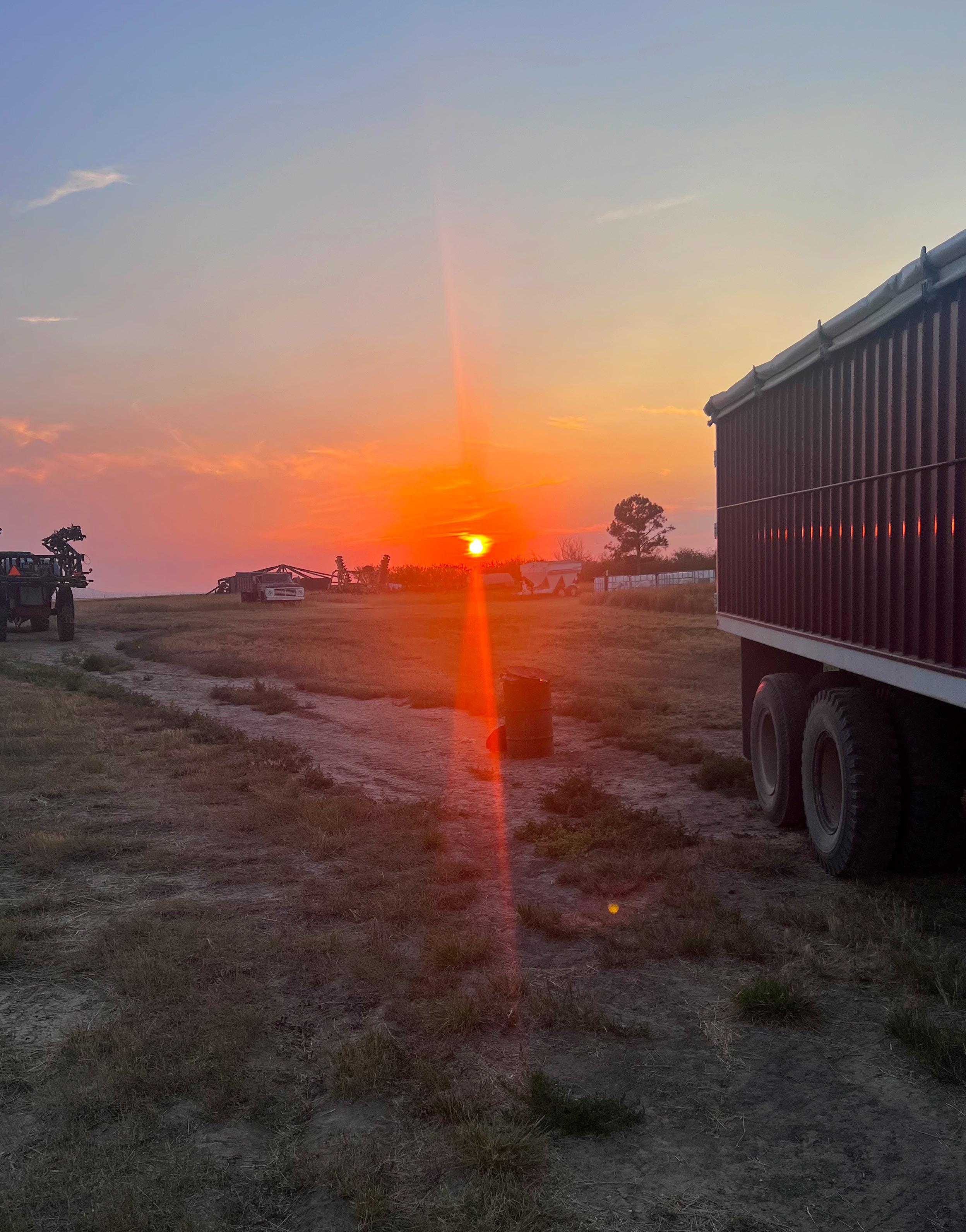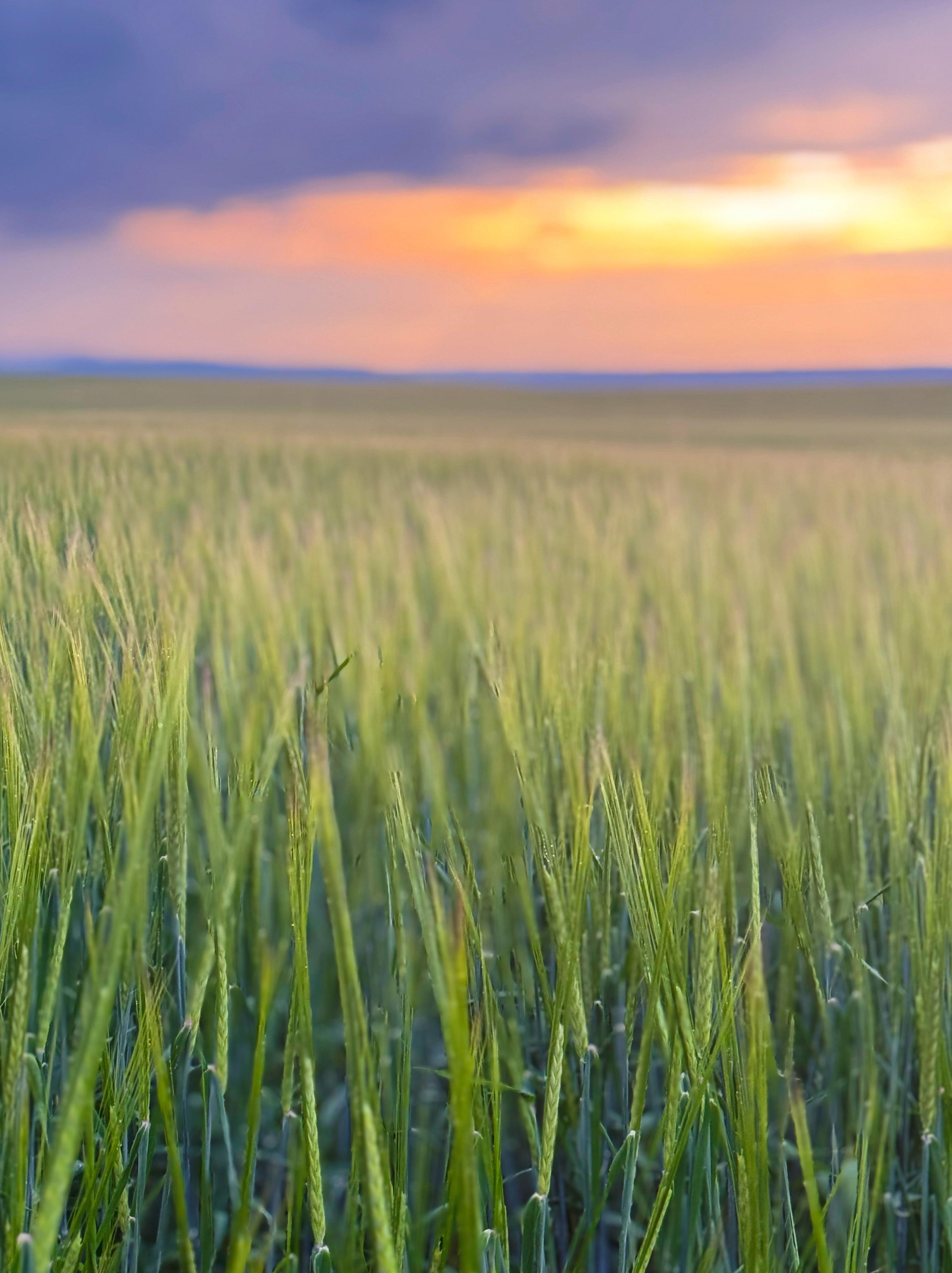

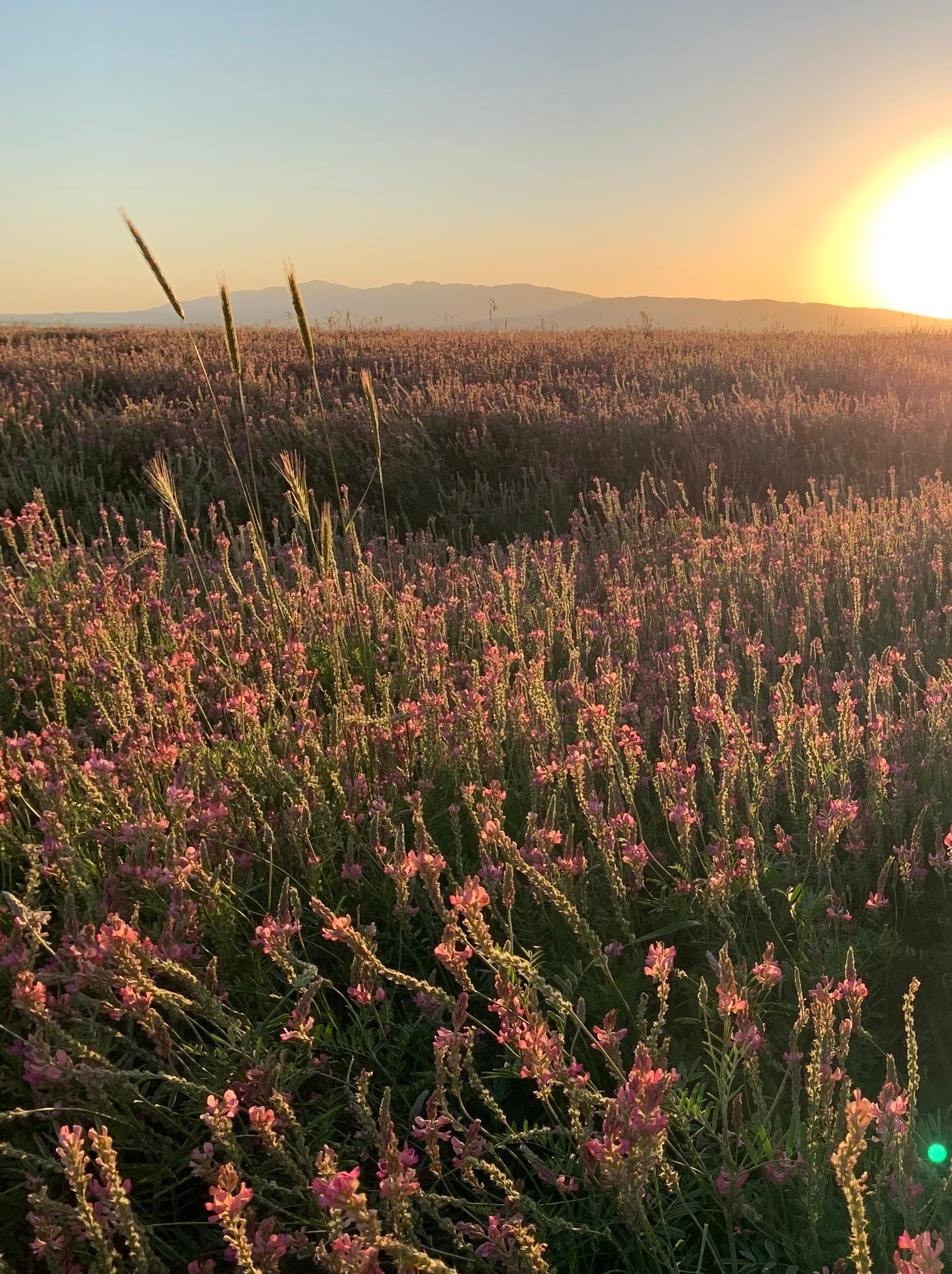

Summers in Montana are nothing short of magical—especially when you’re growing up farming and ranching. Long, sun-filled days are spent picking rocks from the fields, digging through piles of junk to find treasures on the farm to repurpose (my personal favorite and still is), checking crops, tending animals, and taking in the beauty of summer in Montana. It’s a rewarding part of the year that teaches hard work, responsibility, and a deep appreciation for nature and community, while loving all the adventures summer has to offer.
Summer means an abundance of time outside, surrounded by Montana’s breathtaking landscapes. Whether you’re spotting bison on a trip or taking time gardening in the warmth of the sun, or simply enjoying the smell of fresh cut hay in the Montana air, summer offers endless opportunities to connect with the outdoors.
As summer hits full swing, it’s a reminder that farming, ranching, and living close to the land is more than just a lifestyle in Montana—it’s a deeply rooted tradition and one of the most rewarding ways to spend a summer.
Montana Farmers Union is a fan of summer.
Montana Farmers Union is hitting the road this summer with our “Farmer’s Share” food trucks, bringing fresh produce, educational resources, and important conversations to communities across the state. These mobile markets, featured at several upcoming county fairs, highlight the challenges farmers and ranchers face in today’s food system while providing hands-on education for consumers.
Our Farmer’s Share Days are designed to inform the public about how their food dollars are spent. According to the USDA, more than 80 cents of every dollar spent on food goes to off-farm costs like marketing, processing, distribution, and retailing—leaving farmers and ranchers with just 14 to 15.9 cents. These events show how decades of industry consolidation have created fragile, uncompetitive supply chains that fail to fairly compensate the producers who grow our food.
“Farmer’s Share Days at county fairs not only provide education to consumers and producers alike, but can empower everyone to advocate for family farmers and ranchers in our communities and in our state,” said Rachel Prevost, MFU’s Member Services and Government Affairs Director.
At our fair booths, visitors can learn more about the realities of the food system and receive a voucher for a 75-cent cheeseburger—the true Farmer’s Share price—while MFU covers the rest of the cost. It’s a powerful way to connect the public with the people who produce their food and advocate for a fairer agricultural economy.
Montana Farmers Union incorporates these trucks into events like state fairs and summer programs, including local, community-driven Day Camps. These camps, facilitated by MFU Ambassadors and staff, are accessible alternatives to the larger Arrowpeak Camp, offering 4–5 hours of agriculture-themed activities, games, and crafts. Designed for a broad age range, they reduce travel and cost barriers, making them more convenient for families.


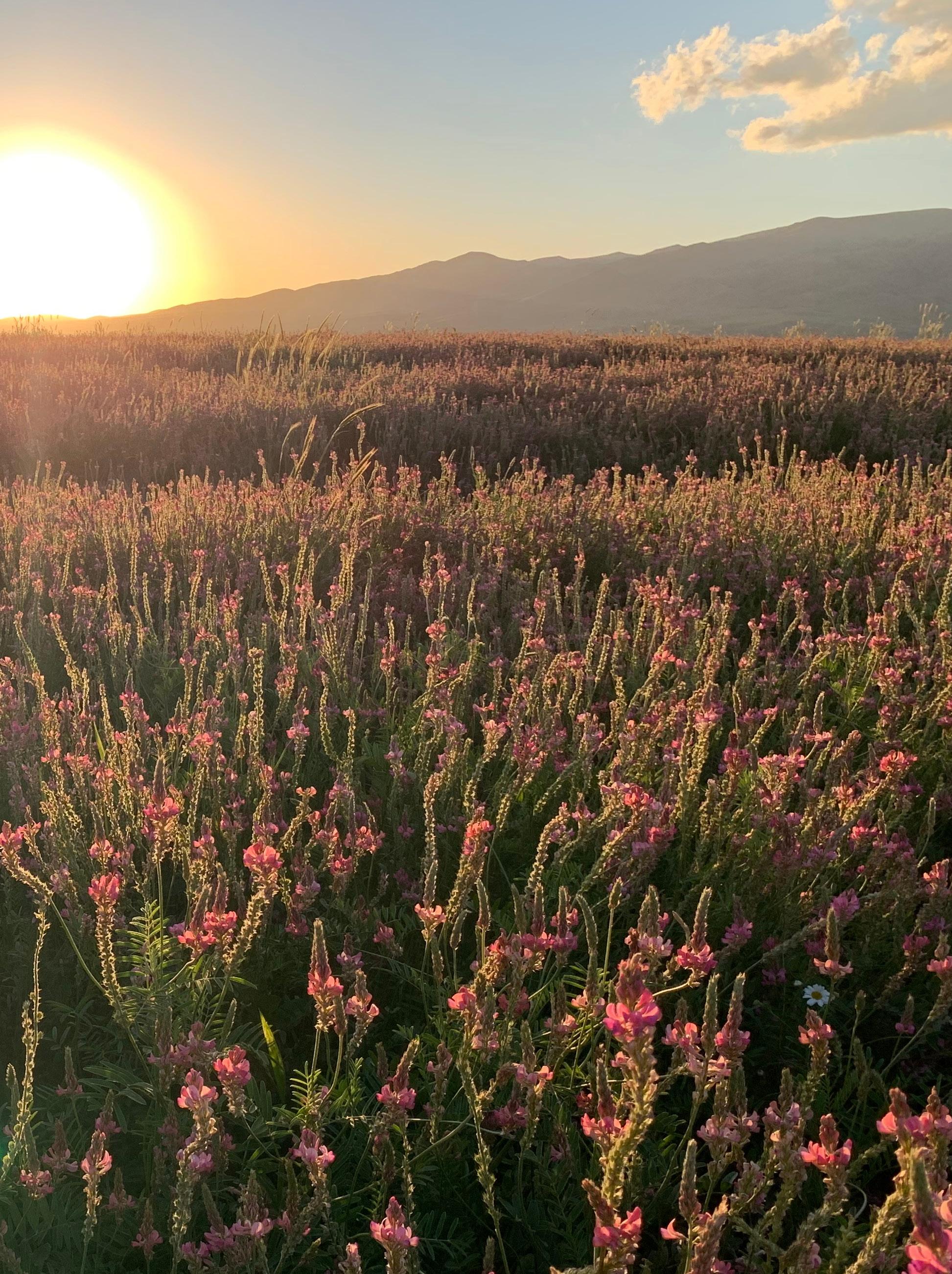

by MFU President Walter Schweitzer
Recently I figured out that I have been used by the very wealthy to do their bidding. I have been, for decades, advocating that we increase the estate tax exemption along with a stepped-up basis. A farmer friend of mine who is also a tax accountant explained to me how this can be detrimental to the transition of a family farm, and it is actually designed to benefit large estates that are primarily stocks and bonds. It was an aha moment for me.
Increasing an individual estate tax exemption from $5.49 million to $15 million benefits very few family farms in Montana and adds more than $200 billion to our debt. Countrywide, only 0.2% or 2 out of every 1,000 estates have had to pay an estate tax in 2017. Nationwide, only 80 small businesses or family farms owed an estate tax in 2017. Raising this exemption is a gift to the ultra rich.
It’s clear: increasing tax exemptions on a stepped-up basis doesn’t save the family farm – communicating and planning does. If you want your family farm to pass on to the next generations, the family needs to discuss who will continue to farm and plan accordingly. MFU is helping families at least begin the necessary conversations during its new Family Farm Succession Planning Institute immediately following Annual Convention Nov. 2 in Lewistown. The day offers an opportunity to discuss tools other than estate tax exemptions and stepped-up basis.
While stepped-up basis allows an estate to transfer at current value instead of purchase or depreciated value without paying taxes, it actually incentivizes an estate to sell off assets to be dispersed to heirs as cash. I have heard too many stories of a family farm dispersing upon the death of the farm owner because some of the family members want their share in cash now.
Many times, one sibling spent their whole life working on the farm while the others had jobs off the farm. When settling the estate, the off-farm siblings insist on selling the family farm and distributing the cash equally. Often the farming sibling’s share is too small to start their own viable farm. If there were strings attached to the stepped-up basis or triggers that required farm or small business to stay in the family for five to 10 years before getting the stepped-up basis, it might keep more family farms in the family.
Again, the stepped-up basis benefits the ultra rich with large stock and bond portfolios. If an estate had a stock portfolio with a current value of $15 million that was originally purchased for $1 million dollars, they would pay no taxes even though they earned an income of $14 million dollars and have never paid a tax on that income or gain.
Ultimately, if you want your family farm to pass on to the next generations, the family needs to discuss who will continue to farm and plan accordingly. Often for the family farm to be sustainable, the off-farm siblings will have to get a smaller share of the estate or be willing to lease their share at a reasonable rate. A successful transition requires open communication and planning with all family members. I have seen too many families torn apart during a transition because of the lack of forethought or communication.

MONTANA FARMERS UNION
PO BOX 2447
300 RIVER DRIVE NORTH, STE 1 GREAT FALLS, MT 59403
PHONE: (406) 452-6406
1-800-234-4071
FAX: (406) 727-8216
mfu@montanafarmersunion.com www.montanafarmersunion.com
Board of Directors:
Walter Schweitzer, President
Erik Somerfeld, Vice President, Power
John Ferrat, DIstrict 1, Toston
Rollie Schlepp, District 2, Conrad
Jeff Bangs, At-Large Director, District 1 & 2, Inverness
Sarah Degn, District 3, Sidney
Brett Dailey, District 4, Jordan
April Martin, District 3 & 4, At Large, Busby
Trent Stoltz, District 5, Pompeys Pillar
Mark Siderius, District 6, Kalispell
Ben Peterson, District 5 & 6, At-Large Director, Judith Gap
MFU Staff:
Walter Schweitzer, President
Matt Rains, Chief of Staff
Jan Johnson, Office Mgr., Assistant Secretary/Treasurer
Kari Kester, Administrative Assistant
Rachel Prevost, Government Affairs Director/ Member Svcs.
Heather Link, Communications Director
Jodi Koterba, Education Director & Ambassador
Alice Miller, Press Relations Specialist
Andrea Rutledge, Social Media Associate
Samantha Ferrat, Membership Ambassador
Eleanor Dutton, Membership Ambassador
Carissa McNamara, Membership Ambassador
Mary Jenni, Membership Ambassador
Jeri Copenhaver, Membership Ambassador
Montana Caise, Membership Ambassador
Julie Gagnon, Data Coordinator
Copyright © Montana Farmers Union, 2025 MFU Magazine is the official publication of the Farmers Educational and Cooperative Union of America, Montana Division.
MFU reserves the right to reject any advertisements. Membership: $50.00 per year
Montana Farmers Union Magazine is published quarterly.
Editors: Heather Link & Alice Miller
Layout & Design: Heather Link
Copy Editors: Alice Miller, Jan Johnson & Heather Link
Montana Farmers Union is the oldest and largest family farm organization in the state who represents family farmers and ranchers.
MFU is working for family farms, ranches, rural communities and supports its members through: strong education programs for both youth and adults, advocating member-driven policies, & legislation at the state and federal level, and cooperation through producer-owned co-ops.
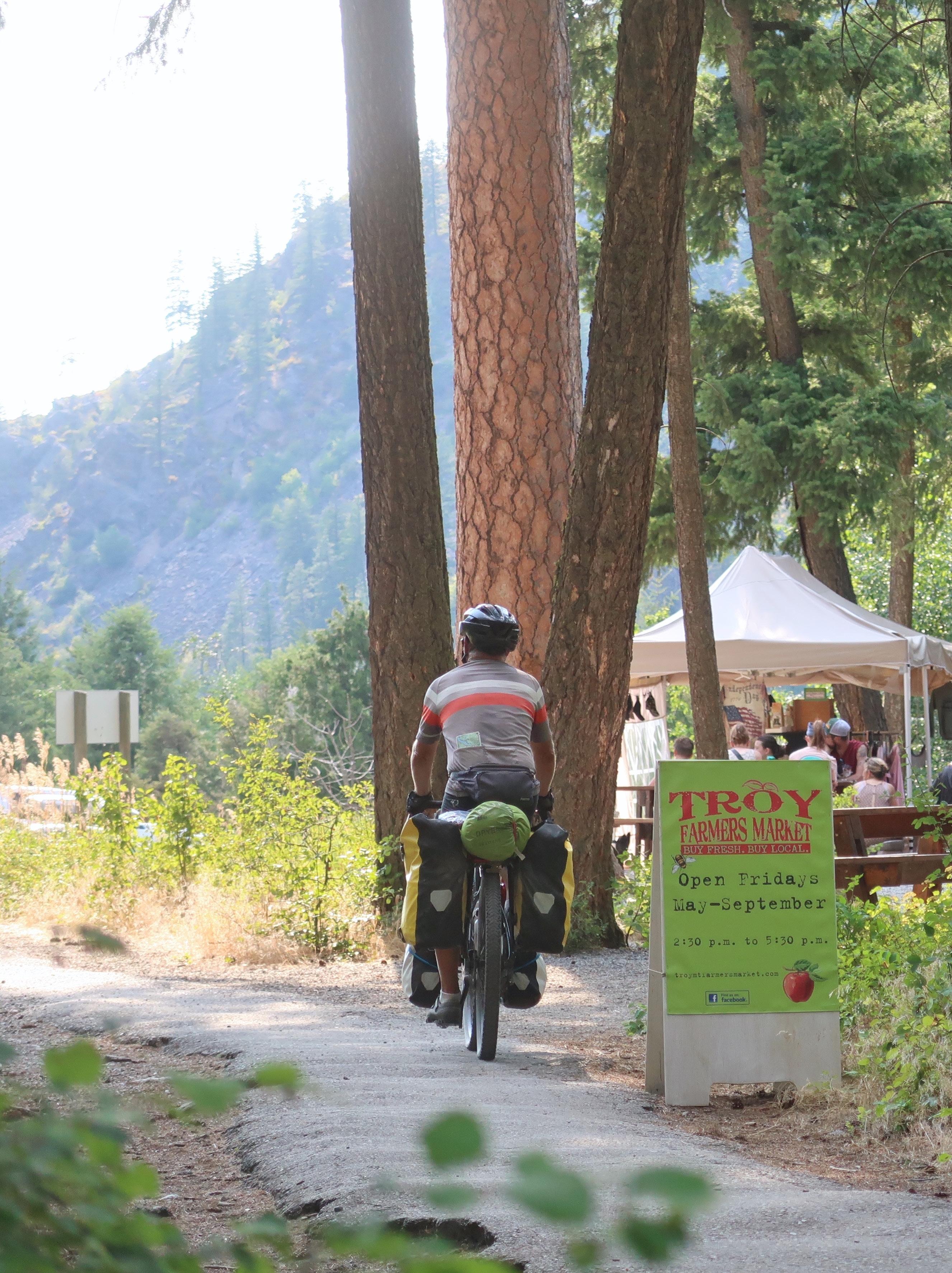

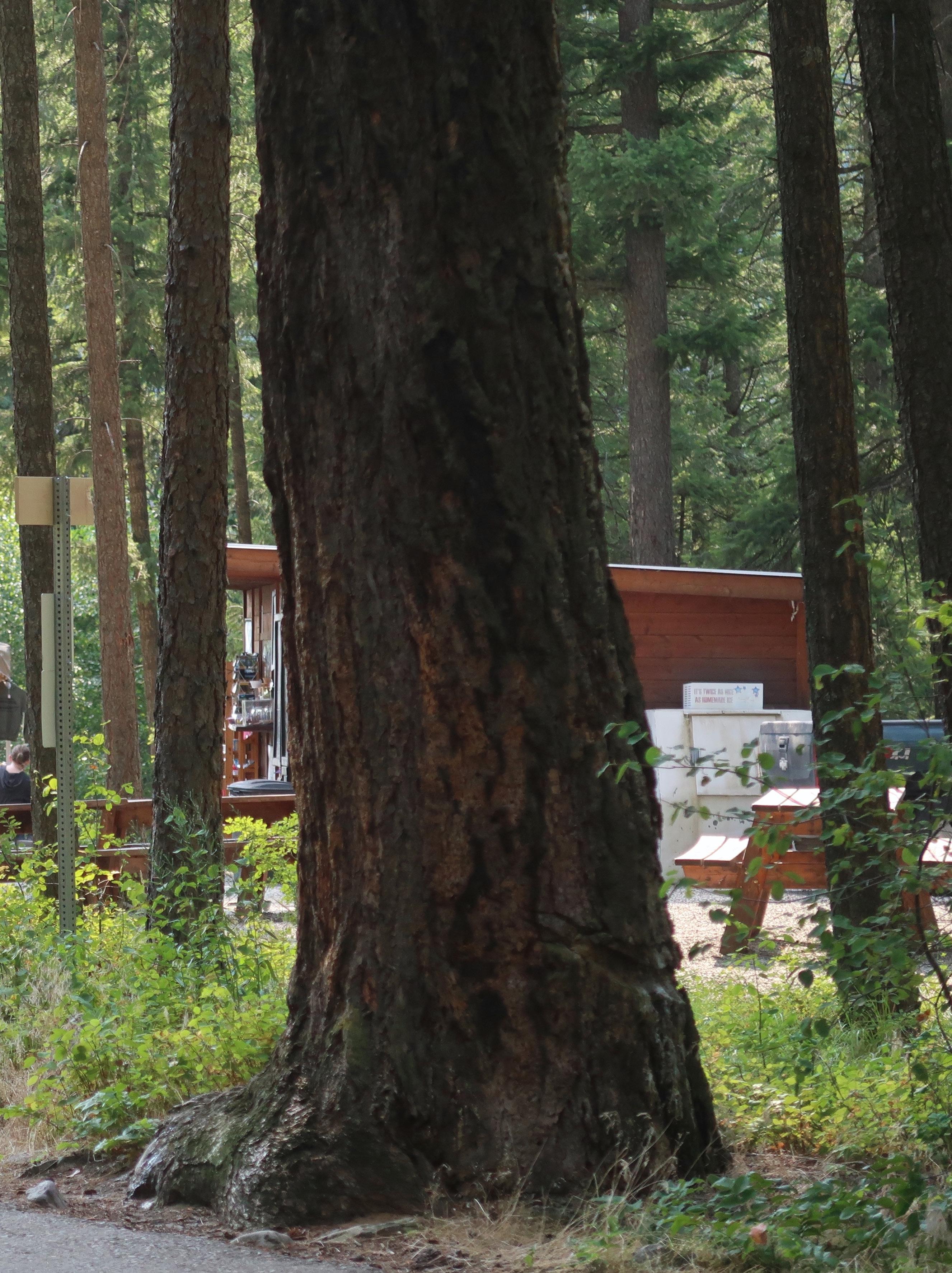
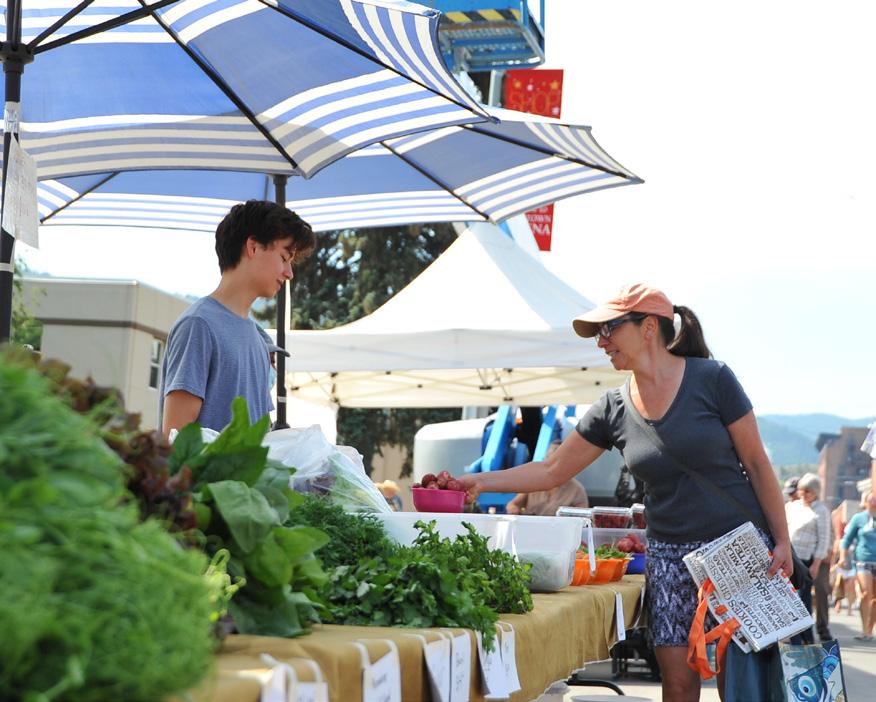
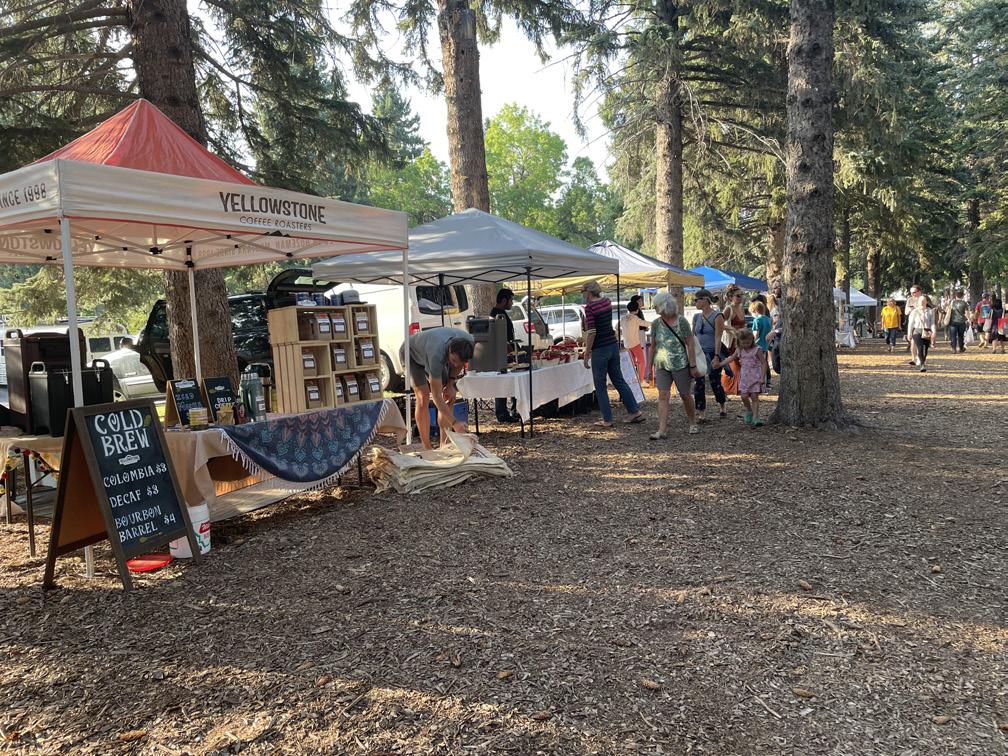
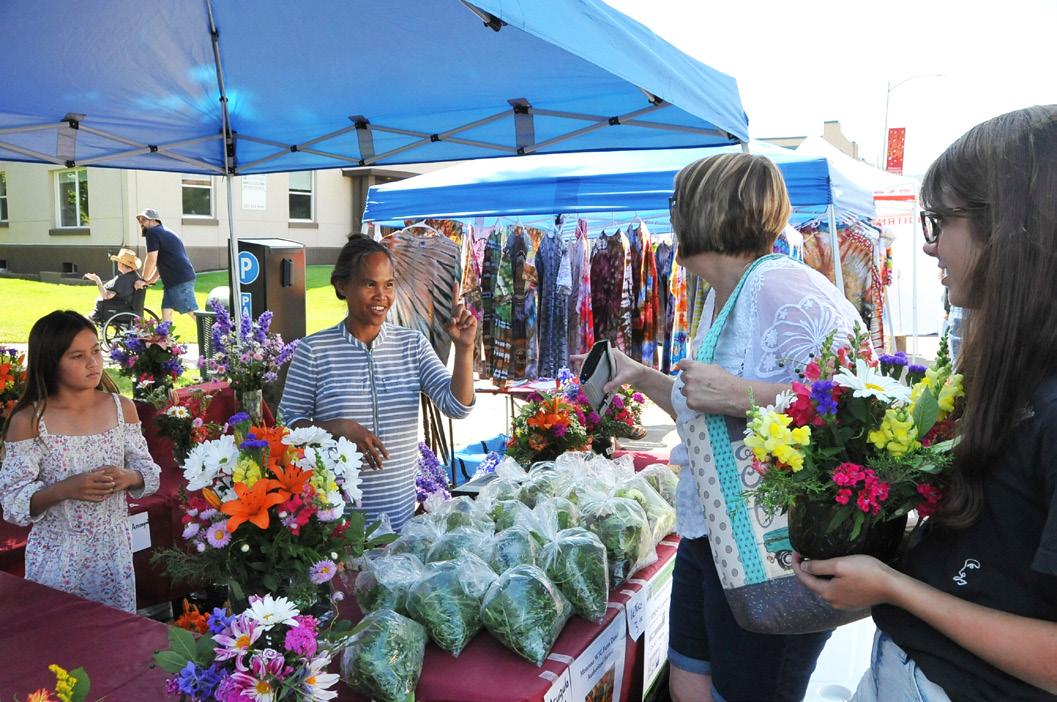
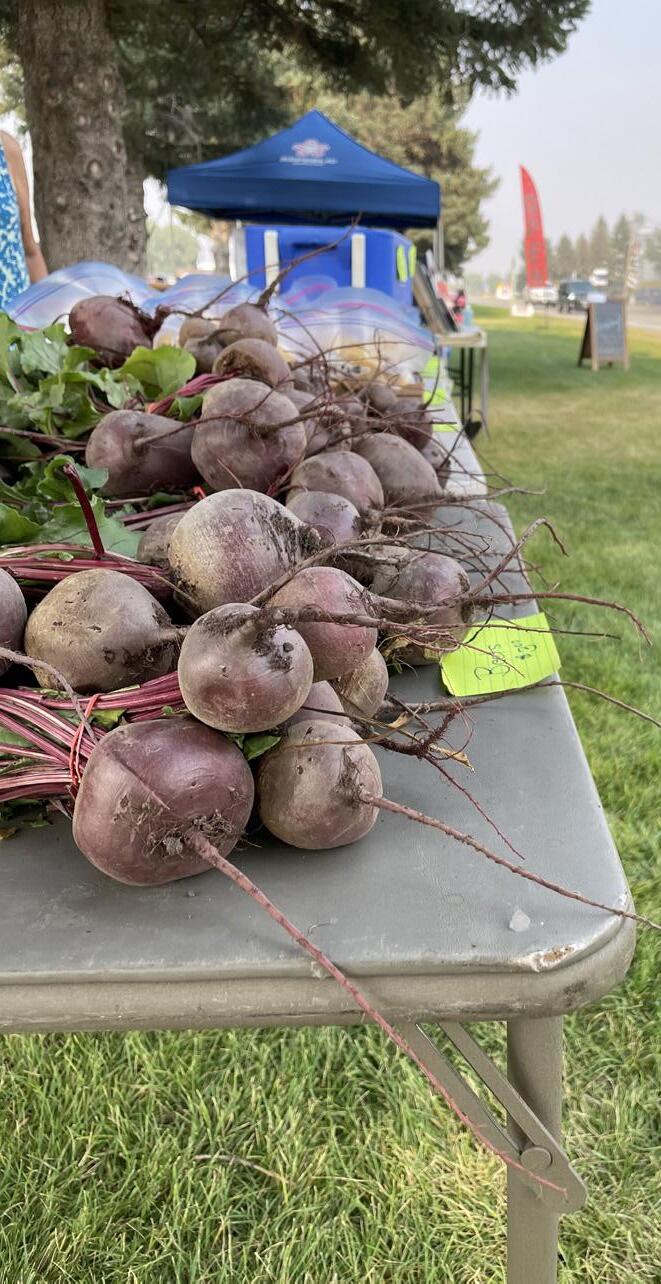
If you’re looking to visit a farmers market in Montana, you’ll have no shortage of options. More than 70 farmers markets operate across the state, from Missoula to Miles City and dozens of communities in between. These markets showcase the bounty of Montana, offering everything from fresh fruits and vegetables to meats, honey, dairy, and berries. Farmers markets also offer a wide array of value-added foods like artisan breads, jams and jellies, handmade sweets, and more.
Montana’s farmers markets are more than just a place to shop. They are vital, visible hubs of community life and local commerce. They provide farmers and food producers with critical income opportunities and help incubate small businesses. For many, these markets are also a first step toward scaling up wholesale or retail operations.
Continued on next page
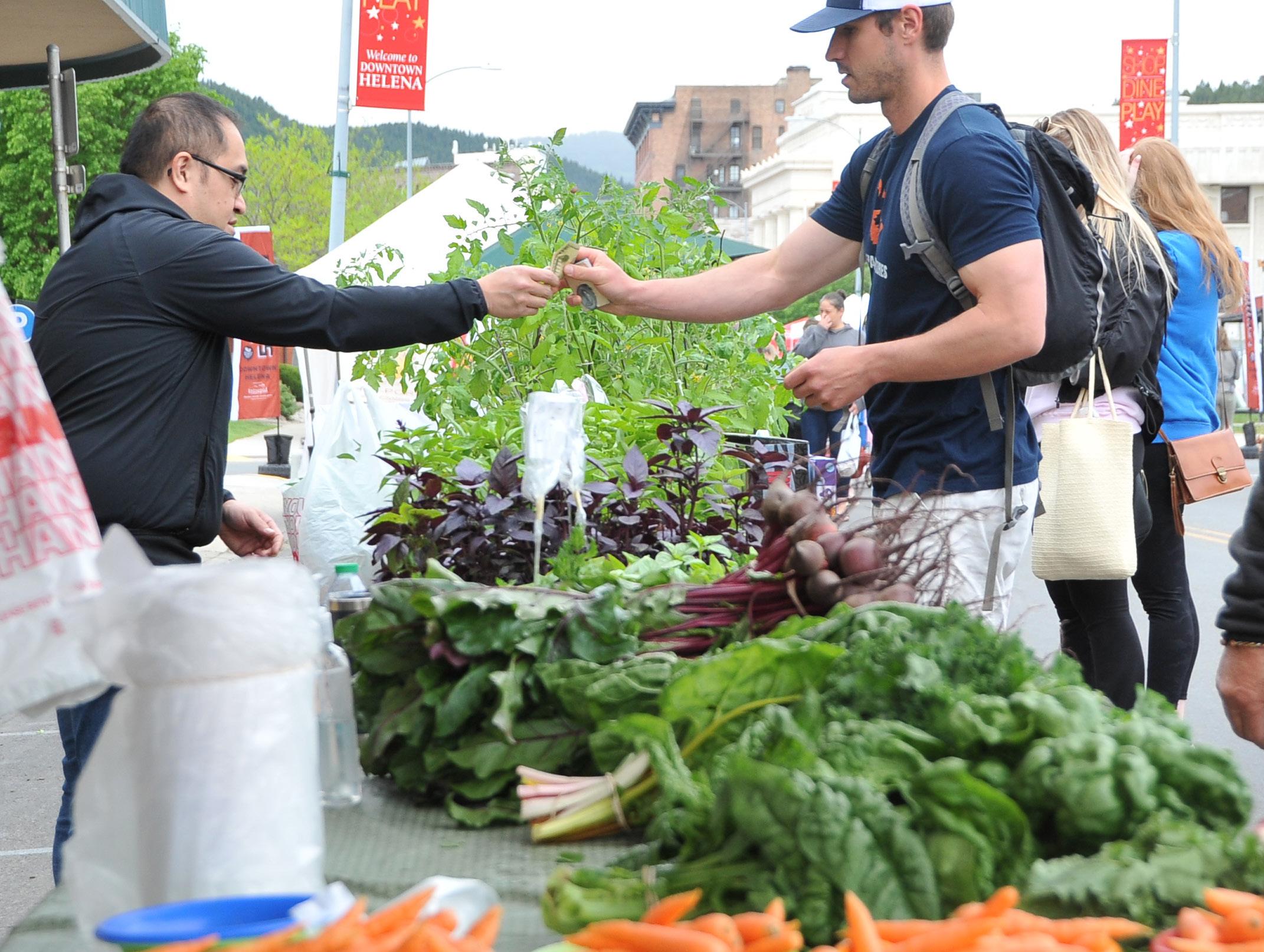
Farmers markets are for everyone, and they play a key role in supporting healthy communities by increasing access to fresh, nutritious foods. During the early, uncertain months of the COVID-19 pandemic, Montana farmers markets were designated as essential businesses – a recognition of their ability to meet food access needs safely in open-air environments when other supply chains were disrupted.
Nearly one-third of Montana’s farmers markets accept SNAP (Supplemental Nutrition Assistance Program) benefits and participate in the Double SNAP Dollars program, which doubles the purchasing power of SNAP recipients when they buy fruits and vegetables at farmers markets. By making fresh produce more accessible and affordable, these programs help address food insecurity and improve public health while keeping dollars in the local economy. Farmers Markets are also venues for the Women, Infant, and Children (WIC) program and Senior Farmers Market Nutrition Program, which help ensure that Montana’s youngest and oldest citizens have access to nutritious foods.
Beginning this year, farmers markets in Montana will begin implementing the Montana Harvest of the Month (HOM) program. The HOM program showcases Montana-grown foods in Montana schools, institutions, and communities, and it is a wonderful way to encourage customers to purchase and try different Montana-grown foods at farmers markets.
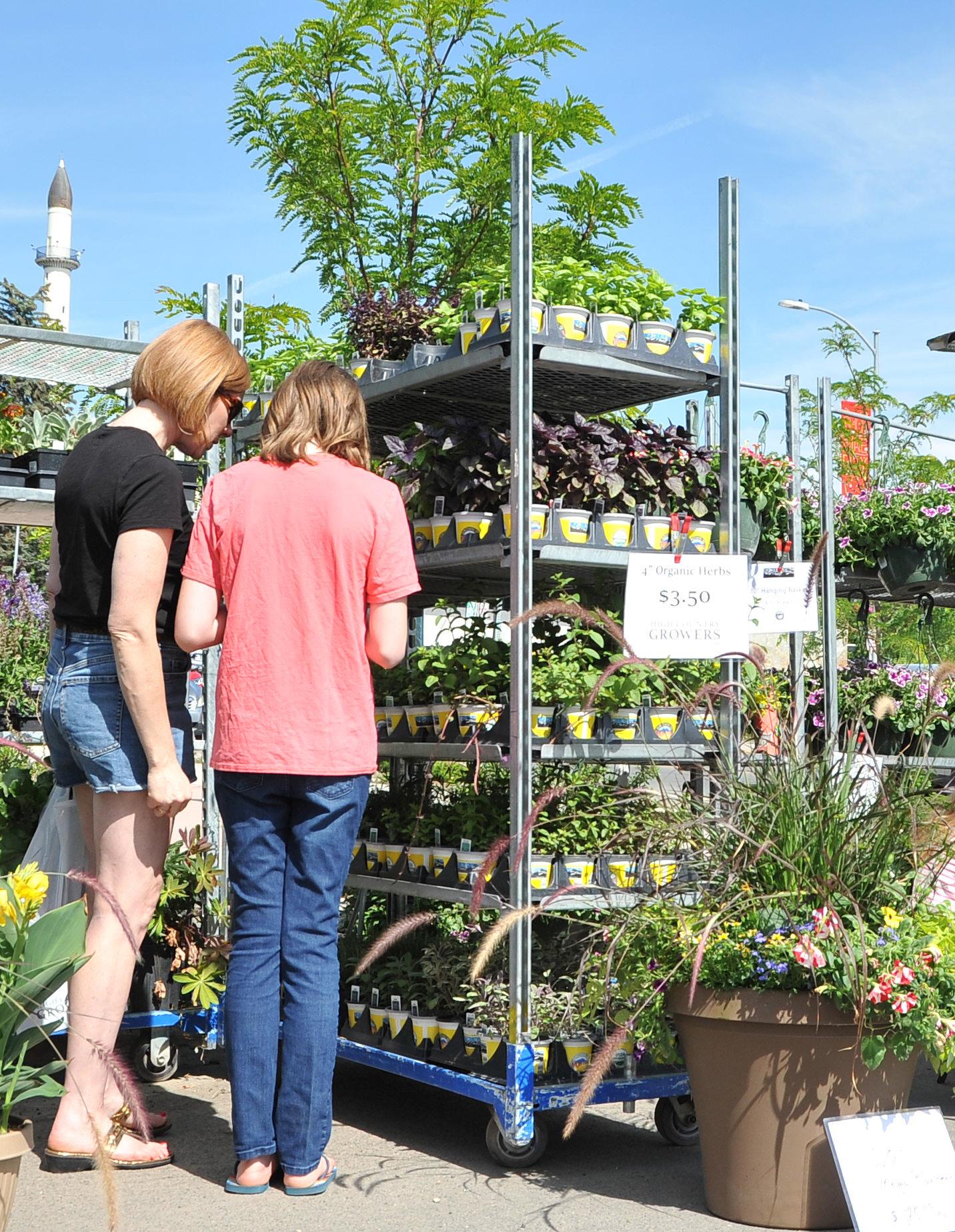
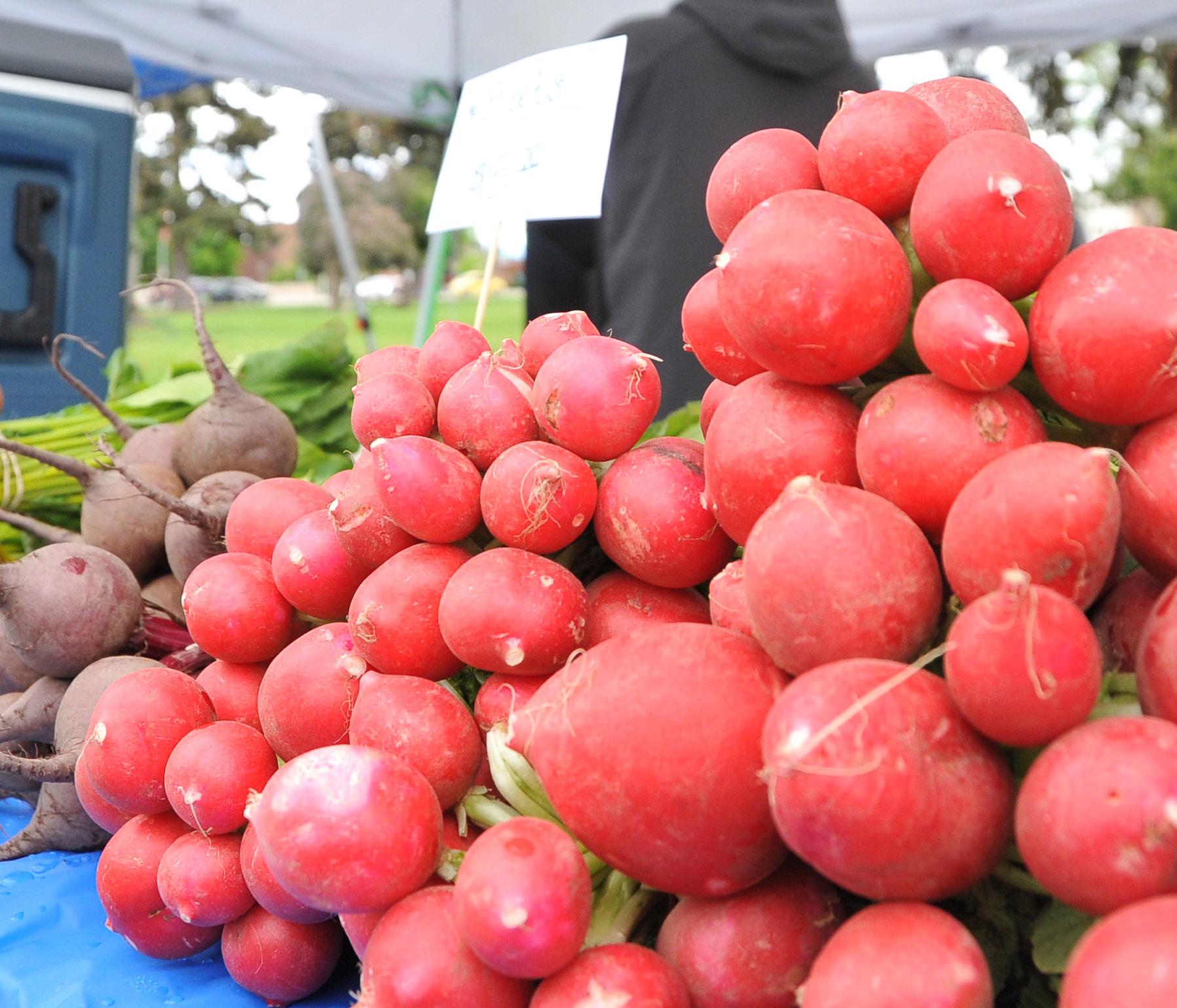
HOM provides an easy framework to follow with ready-to-use educational materials, and farmers markets are a perfect venue to further build on the nutrition education the program has offered in classrooms across Montana.
Farmers markets aren’t just a place to buy fresh produce – they’re a powerful economic engine for Montana communities. According to a 2021 study by the Bureau of Business and Economic Research, Montana’s farmers markets pulled in $17.3 million in revenue and sparked an additional $10.4 million in new spending across the state. Beyond the numbers, these markets serve as lowrisk launchpads for small businesses, helping local entrepreneurs grow and scale their operations. To further boost success, the Montana Farmers Market Network offers tools and support to help markets thrive and expand the reach of Montana-grown products. Interested in becoming a vendor or
starting a market of your own? Visit farmersmarketmt.com to learn more.
Given all that farmers markets contribute to Montana communities, it is no surprise there’s growing momentum to ensure they get the support they need. But markets continue to face persistent challenges, especially in rural areas.
Many markets are run by volunteers working with limited resources.
Turnover among managers is common, often due to little or no compensation. Operational funding is scarce, making it difficult to pay staff, recruit vendors, or create promotional materials. Rural markets in particular struggle to attract enough produce vendors to meet local demand.
Recognizing these challenges, the Grow Montana Food Policy Coalition partnered with Senator Gillespie during the 2025 legislative session to
introduce Senate Joint Resolution 11 (SJ11): A Study of Farmers Markets and Local Food Systems. The resolution passed, and as of this writing, has been assigned to the Economic Affairs interim committee for further consideration.
At their July meeting, the EAIC will determine how much time to dedicate to their assigned studies. SJ11 could shine a much-needed spotlight on the role of farmers markets in Montana’s food system and help identify policy solutions to strengthen and sustain them for the future.
As Montana continues to invest in its local food systems, there’s no better time to show your support than during National Farmers Market Week, celebrated annually during the first full week of August. Whether you’re a regular or a first-time shopper, we hope you’ll join us in celebrating Montana-grown food and the markets that bring it to your table.

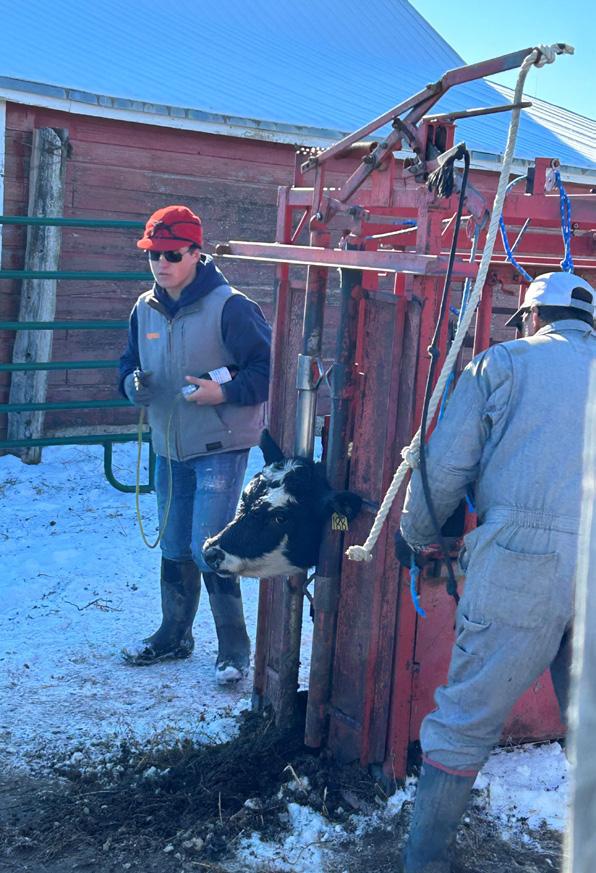
By Reinhard Bold
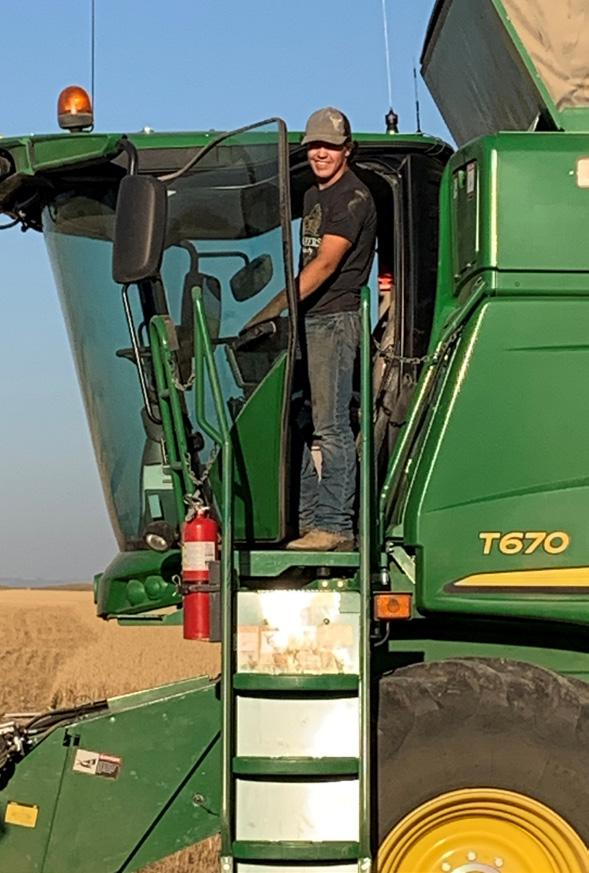
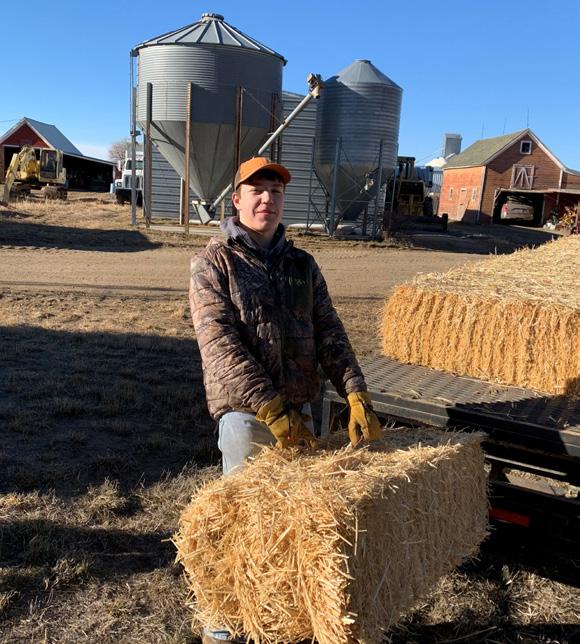
My name is Reinhard Bold. I am a fifth-generation Montana resident and agriculturist. I grew up on my family’s farm and ranch northwest of Big Sandy, where we raise small grains and commercial cattle.
I have learned some valuable lessons as a farm kid:
• Digging fence post holes is the only job where you get to start out on top.
• Dinner time is when the work is done.
• Don’t run the reverser when you plug the combine with a rock (learned this at the age of 10).
• And most importantly, being a steward of the land is a privilege.
As a young kid, I attended schools in Big Sandy and Havre.While at Havre, I worked with school administration to bring the FFA program to Havre High, knowing that FFA helps students develop a strong agricultural foundation with an understanding of the need for a reliable and sustainable food supply.As a college student, I still support FFA and am becoming more active in agricultural organizations such as Montana Farmers Union, Grain/Stock Growers, and Farm Bureau.
Currently, I am a sophomore at MSU-Northern pursuing a four-year degree in Ag Operations Technology and Diesel Mechanics. I chose to attend Northern because it offers hands-on, agriculturally based classes that can be applied directly to our farm. Farming has become an intricate business.As up-and-coming farmers and ranchers, we need to understand marketing strategies, government programs, changes in technology, animal health, and more – along with society’s needs and expectations.
Education is important in and out of the classroom.As a young farmer, gaining knowledge and experience from those working the land is a necessity.Which is why, even as a full- time student, I continue to work on the farm: feeding cows, helping calve, servicing and fixing machinery.This allows me the opportunity to have input on daily decisions being made on the farm.What I have learned, and what I will learn, working alongside my dad and uncle are invaluable lessons. Being a part of a family farm has also given me an opportunity to start my own cattle herd and work with my mom and sisters while fixing fence, working cows, and harvesting.After college, I hope to take on a full-time role in my family‘s operation.
On my family’s homestead, I can see how our farming practices have progressed over the last 100 years.There’s an old buckboard resting along the fence, a horse drawn cultivator sitting in a line with an open cab combine.This equipment may have lost its usefulness, but, during their times, these were the innovations that helped make production agriculture possible.With ever-evolving farming practices, it is vital that young farmers understand the lessons of the past and have optimism for the future. I do believe that agriculture is the backbone of the American economy, and I am proud to be an agriculturist who is helping feed the world.
"Give
Anaconda
Belgrade
Belt
Billings
Bozeman
Bridger
Broadus
Butte
Chester
Choteau
Circle
Coeur d" Alene
Conrad
Culbertson
Cut Bank
Dillon
Fairfield
Forsyth
Froid
Glasgow
Great Falls
Stefanie Thompson: 563-5991
Lacey Mitchell: 388-6774
Matt Triplett:952-0451
Judd Long: 252-9391
KJ Fauth: 969-2282
Art Hoffart: 586-6230
Dean Derby: 556-0893
Trent Leintz: 551-2163
Wesley Schwend: 662-3930
Jesse Fleming: 436-2115
Mathew Luedtke: 270-5304
Megan Hedges: 759-5150
Matt Luedtke 467-3444
Kaylen Lehner: 485-3303
Flathead Insurance 208-667-7485
Dirk Elings: 271-7047
Matt Stentoft 487-2629
Ashley Vanek: 873-2249
Sara Nye: 683-1250
Matt Luedtke: 467-3444
Donna Manuel-590 0866
Watts Agency: 346-1196
Matt Stentoft: 487-2629
Brady Burgess : 228 8282
Eric Hinebauch: 453-8413
Aeric Reilly: 570-5853
Kyle Tschetter: 836-7261
Hamilton
Hardin
Havre
Helena
Production
Jeff Dow: 799-4096

Eric Hinebauch: 437-2053
Alissa McClendon: 397-3146
Ray Lipp: 397-3146
Shawn “Tater” Erickson: 366-1287
Flathead Insurance: 752-8000
Randy Bloom: 257-1252
David Harriman 219-7650
Lorna Olson: 628-6649
Raleigh Heitzman: 538-8736
Colleen Wood: 293-2200
Cole Mauch 222-7151
Shane Anderson: 654-1589
Tayler Kennedy: 874-2560
Watts Agency: 874-1804
Andre Marcure: 543-7184
Ben Barker: 721-2540
Josh Rollins: 830-3073
Pam Jacobsen: 721-0599
Tom Monaghan: 926-2552
Lisa French: 826-4633
Ronan
Ryegate
Seeley Lake
Scobey
Bryan Jones: 363-6583
Melissa Wacker: 665-1867
Meagan Kinsella:265-2693
Alex Thornton:879-2028
Todd Crum: 443-4630
Chris Strand: 871-2260
Terry
Thompson Falls
Whitefish
Wolf Point
Ryan Kuntz: 581-4493
Andrew Luedtke: 676-0173
Audrey Stoican: 568-2336
Tom Monaghan: 677-7400
Matt Stentoft: 487-2629
KW Insurance: 424-8480
Russ Seubert: 434-5211
Cathy Hintz: 488-8326
KW Insurance: 937-6950
Watts Agency: 635-5782
Lisa French 827-3221
Rial Gunlikson: 862-4700
David Harriman 219-7650
Jesse Fleming: 653-2200

By Alice Miller, MFU Magazine Co- Editor
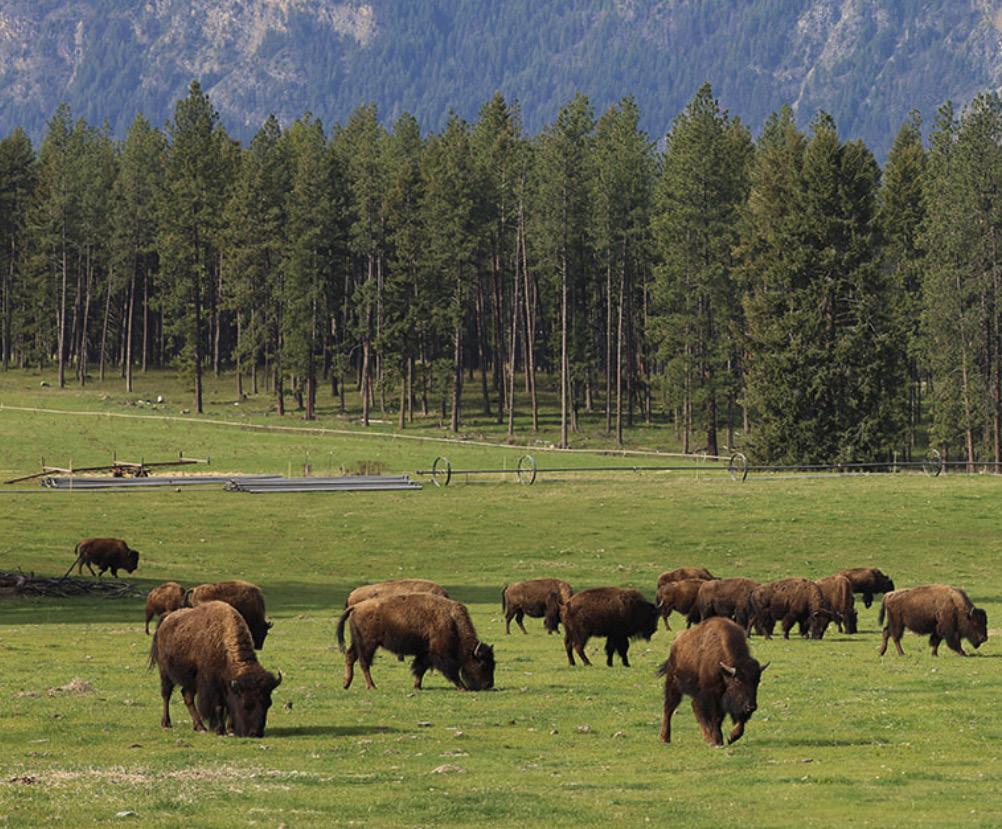
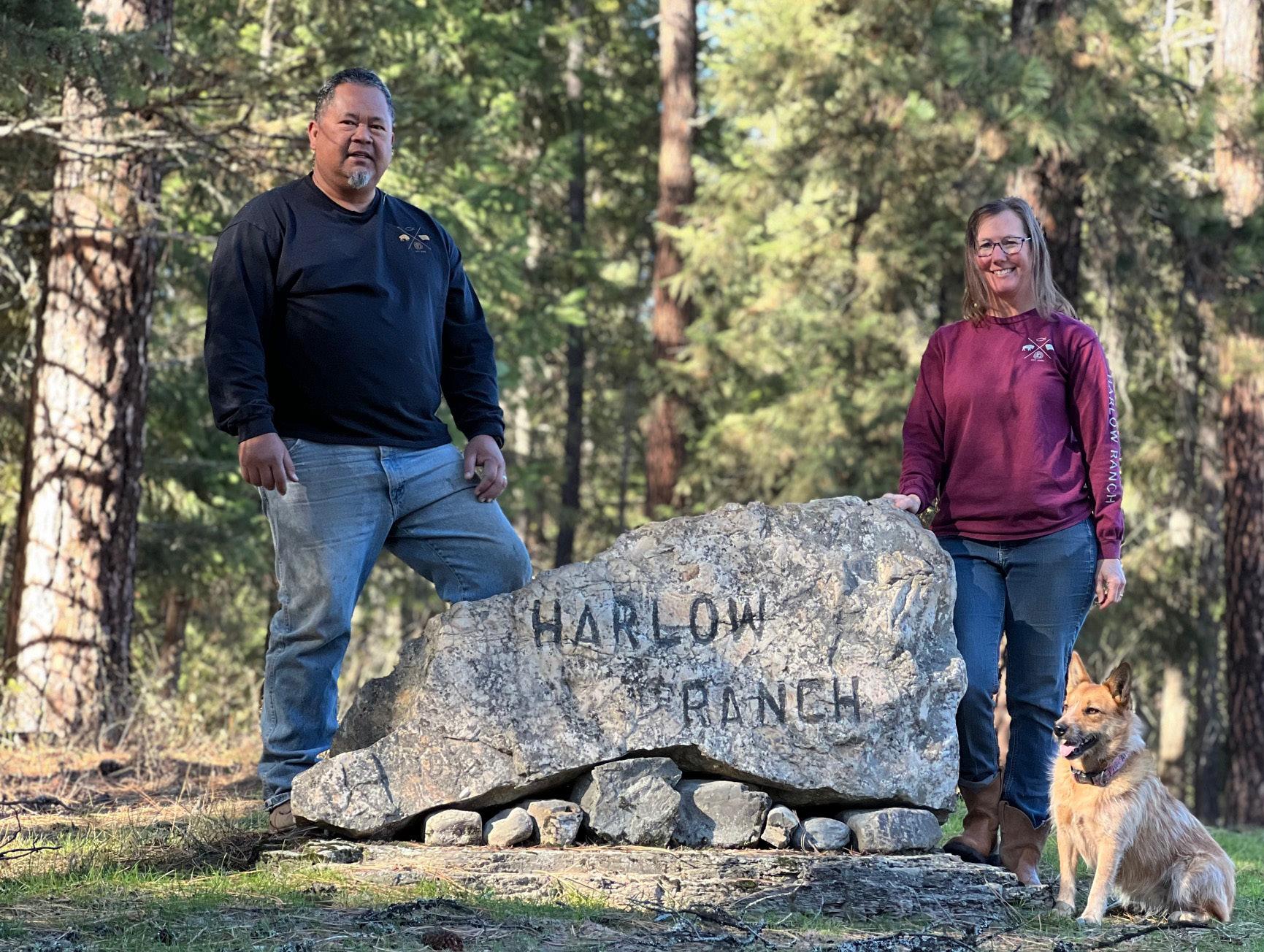
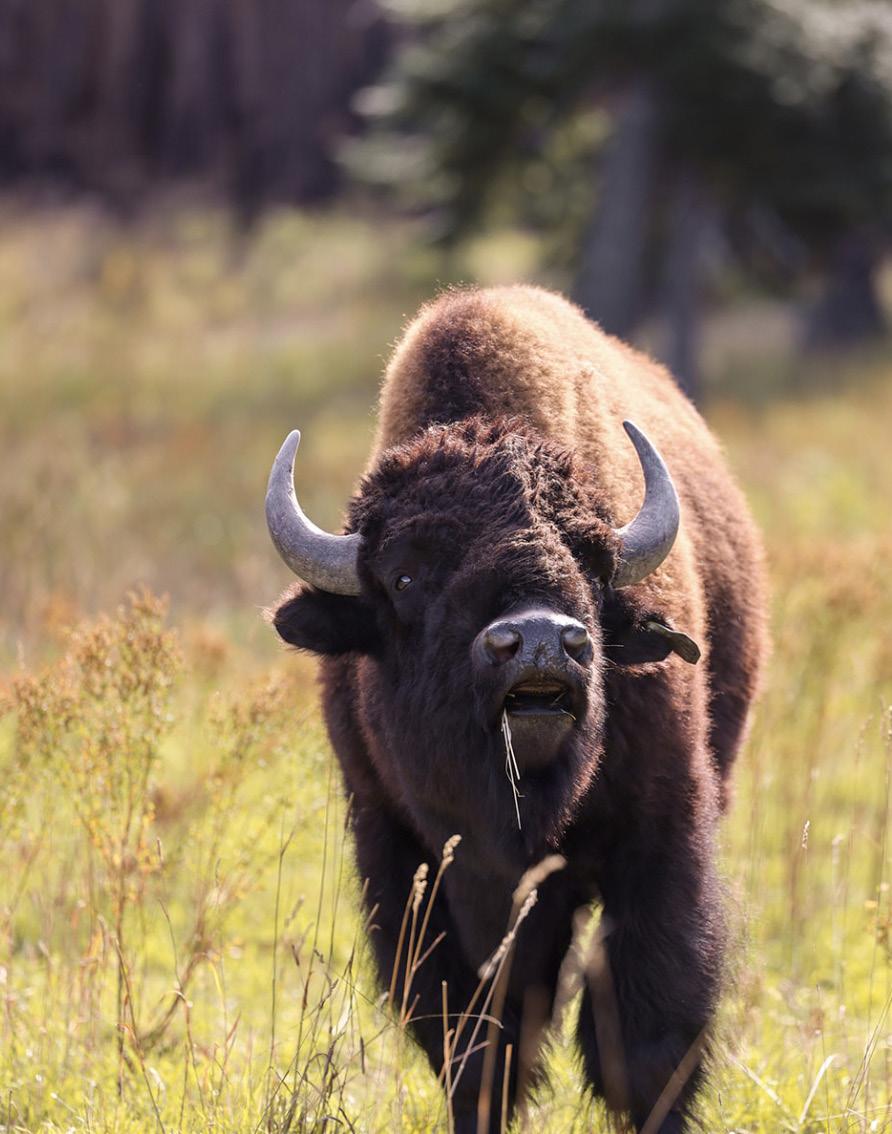
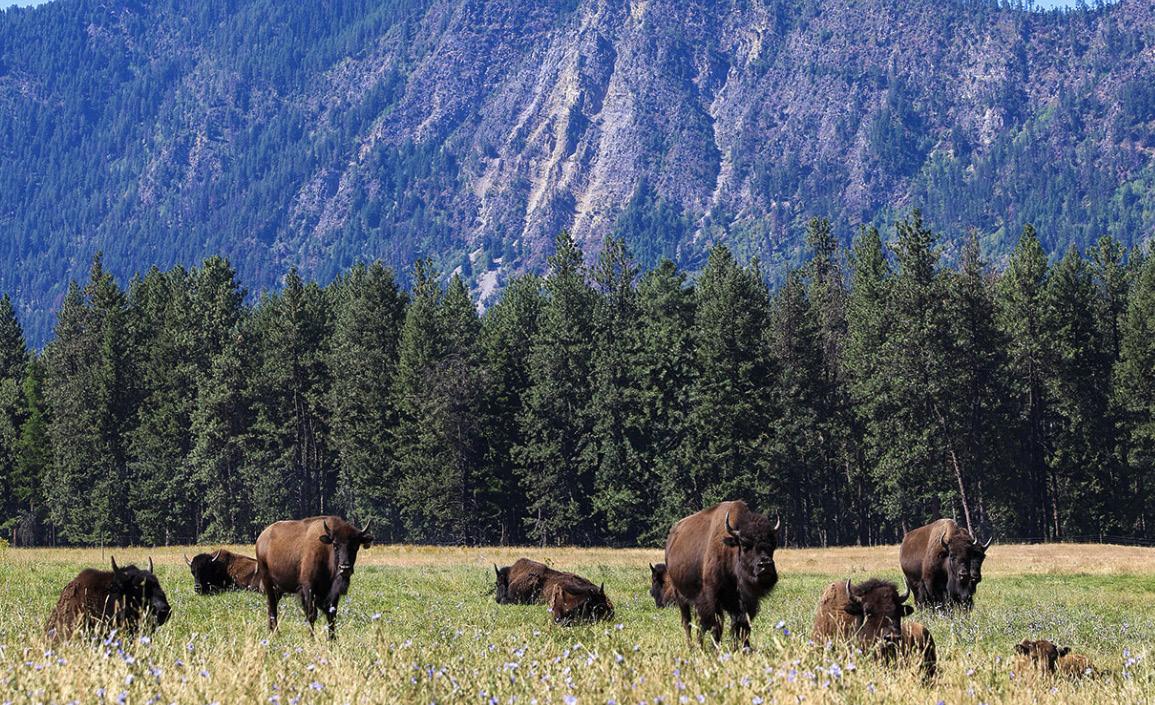
Since 1919, Harlow Ranch has morphed through five generations, the Great Depression, and two world wars. In today’s iteration, bison are revitalizing the land while the fourth and fifth generations are revitalizing the tradition of stewarding the land that comprises the ranch near Thompson Falls.
“We’re in this trying to honor the land, honor the legacy of the family that’s been here, honor the buffalo, and honor God,” fourth-generation owner Melinda Anakalea said. Although Anakalea grew up in Spokane, she spent summers and weekends at the ranch while her father maintained the family’s registered polled Hereford herd while simultaneously working full-time in Spokane. Before him, generations of family raised sheep before transitioning to a dairy and then to the Herefords.
Eventually, her dad leased the ranch, doubling the acres over the years as neighbors sold. Anakalea ended up in Hawaii, where she married Adam Anakalea and raised a family along with sheep, goats and pigs.
The family continued to lease out Harlow Ranch. Anakalea
wasn’t so sure she wanted to return. “I was like, ‘Well, I don’t know about that, they have winter,’” she remembered, laughing.
Nonetheless, in 2019, the couple returned to the ranch fulltime and jumped into learning about ranching and land and timber management.
“We were kind of on our own,” Anakalea said.
Her father was in his late 80s and had stepped away from the ranch. The long-term lease for the pastures was ending. There was ranch maintenance and timber management and the question of what to do with the pastures.
The couple settled on leasing some pasture to a local rancher while building a bison herd, purchasing 18 in March 2020. Today, the herd numbers roughly 100 with 25 to 30 calves each year.
“The selling point was really how self-sufficient buffalo are,” Anakalea said.
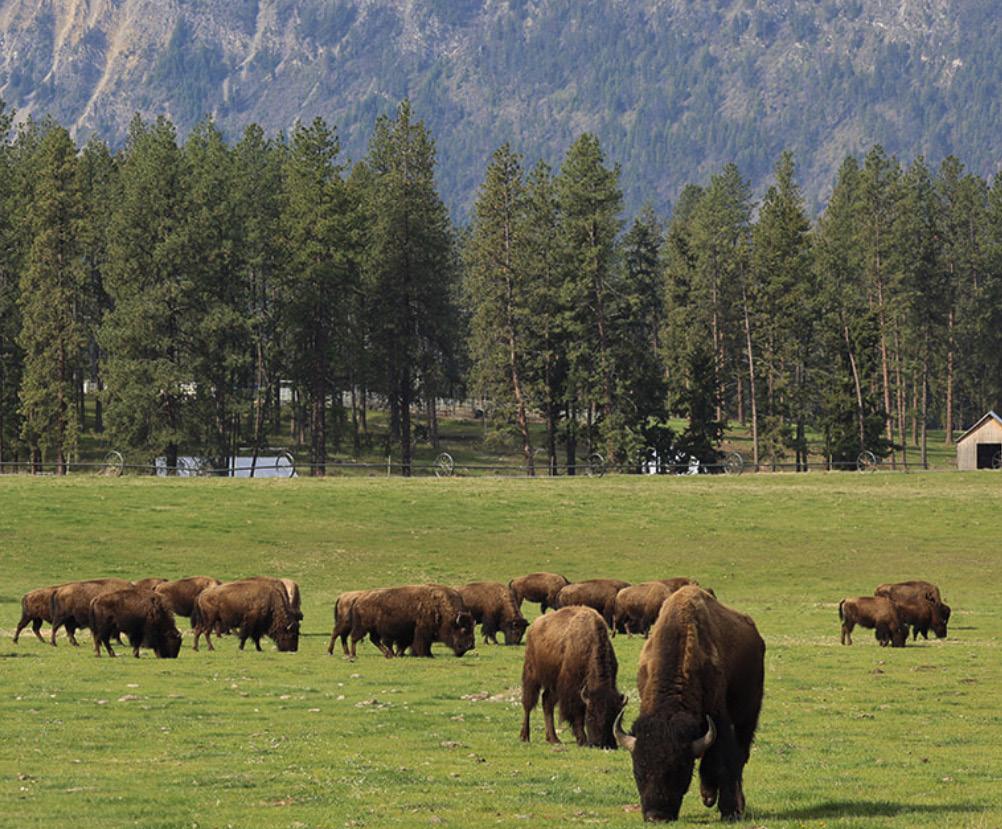
“It’s really about keeping [the buffalo] happy where they are and just sharing a respect and asking them to stay in their pasture and making sure they have food, water, and friends,” Anakalea added.
The strategy mostly works, with the buffalo beginning to pace when they’re ready for the next pasture. “I’ve learned to listen because if I don’t, I have to fix a gate.”
Since the beginning, Anakalea said she has learned many lessons from the herd, including about surrender, patience, and resilience, and ultimately changing her mindset on everything from efficiency to facing her fears.
“They have a powerful spirit, and if you can recognize and connect to that spirit – even for just a moment – it will change your life,” she said. “When you look into their eyes, and they look back at you, you share something.
There’s a level of communication there – a kind of knowing and recognition of each other. They recognize me, and I
recognize them.”
One day, a week into the buffalo arriving in 2020, Anakalea surprised them by bringing her dog along to check on them. The herd formed up with the largest at the front and the smallest at the rear and started walking straight toward them, backing off when they realized there was no threat. The whole encounter was contrary to the stampede Anakalea had expected.
The herd also taught her lessons about the resilience of the land. Most visibly, a corner of a paddock that was rock and knapweed that the cattle wouldn’t eat is now grass thanks to the herd’s love of the dreaded invasive and other pastures also have begun to recover more quickly in the grazing rotation.
Overall, the herd has taught her “that we are stronger together, that we are resilient, and our land is resilient, and the herd is resilient. There might be losses, but we can overcome them.”
Continued on next page
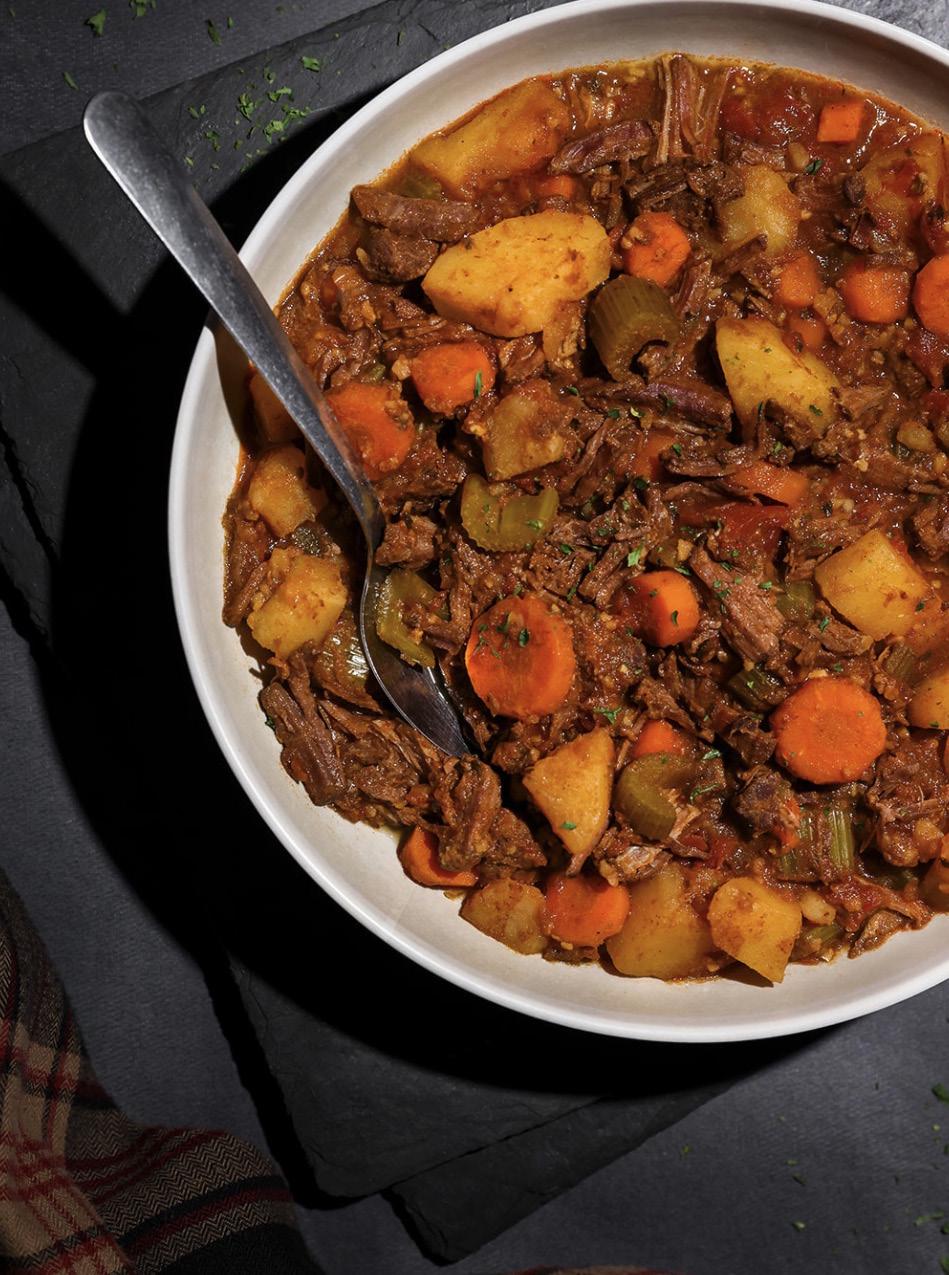
Recipe courtesy
Harlow Ranch Bison Company
Ingredients
2-3 pounds of bison osso bucco (meaty soup bones)
1 onion chopped
2-3 large carrots
2-3 stalks of celery with leaves
1 bunch kale
2 large potatoes if desired
Salt, pepper, garlic powder, herbs spices of your choice
Directions
1.Season Osso Bucco and sear in hot skillet
2.Transfer to slow cooker with chopped onions, celery, carrots, potatoes and kale
3.Harlow Ranch Stew Sauce: Mix 2T “better than bullion” beef base, 2T mayo, 1.5 cups hot water or broth with spices of your choice (black pepper, garlic herb spice, onion herb spice mix (kirkland brand).
4.Pour stew sauce over the veggies and meat - If you cook on high, you may need more sauce (or water or broth)
5.Cook on low 8-10 hours until the meat falls apart. Push marrow out of bones and into the sauce. Remove bones.
6.Serve with rice or pasta or gnocchi or enjoy as is.
Another learning curve was selling their product. No sale barn for bison is in the area and meat buyers for bison were states away.
Anakalea took out a $50 black and white advertisement in the local cooperative newspaper. “And my phone just started ringing. It was crazy.”
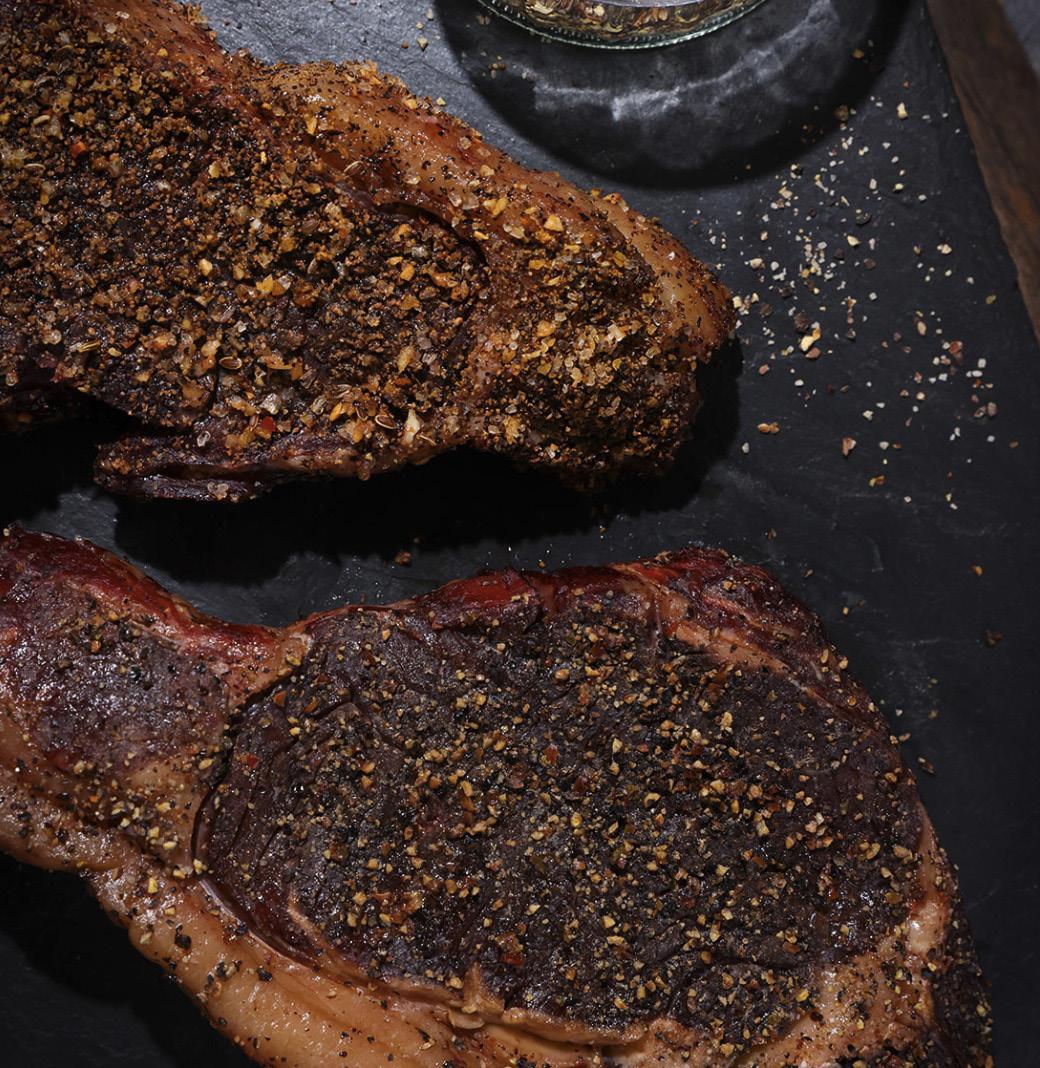
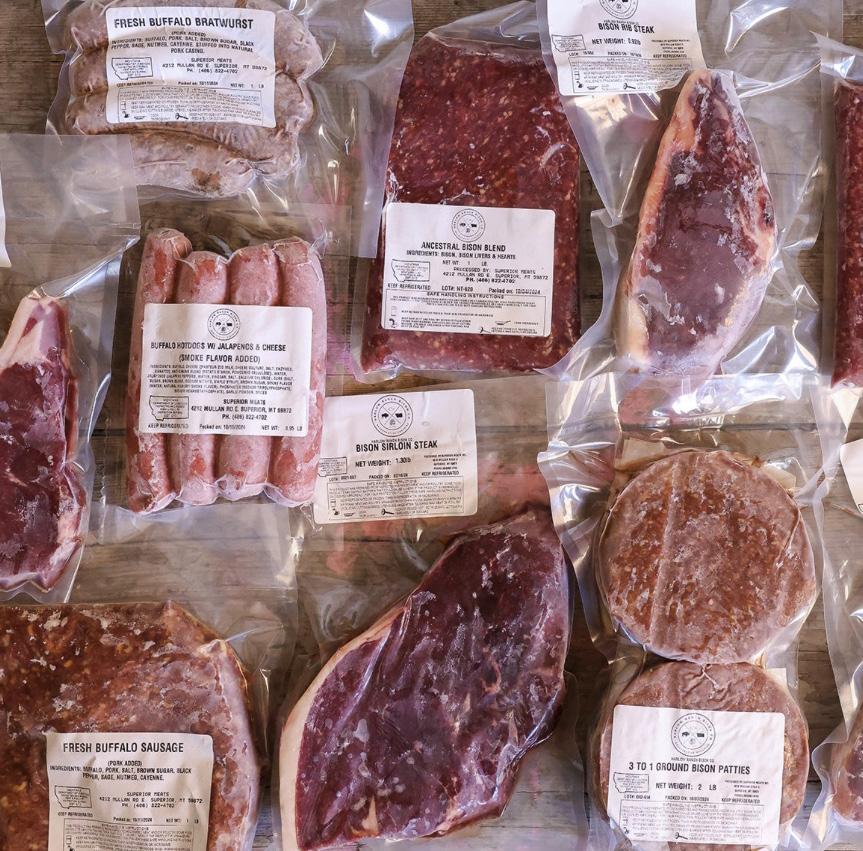
Initially, they sold wherever there was demand. Then, the reality set in that their buyers are essentially their bosses. “Who do I want to work with?” was a question Anakalea began to seriously contemplate, settling on selling mostly quarters and halves (a half equates to roughly 146 pounds of meat cut and wrapped). While they sell to a handful of restaurants, their main customer base is within a threehour radius that includes Missoula, Spokane, and Kalispell, with most customers in northern Idaho, and many return customers.
The bison graze on grass and are supplemented with hay and range cake made from alfalfa, peas, and sunflower meal, making for young, tender meat compared to hunted bison.
Several outreach opportunities pass the lessons on to others, as well, with year-round ranch tours and school field trips in the spring and fall. Harvest Host members can stay for free in an empty pasture in exchange for shopping at the ranch store.
“We love teaching people about the bison. The history and resilience, the great American comeback story, the uses of all the parts of the animal, and the amazing nutrition that comes from the meat,” Anakalea said.
As the herd has grown, so has the workforce, with Anakalea’s son and wife working alongside them since Fall 2024. The addition brought more changes, including a narrowing of focus on priorities. The family identified financial health, personal health, safety and security, organization and systemization, and soil, grass, and herd health as their five main goal areas for 2025. Each one reflects personal priorities and collective commitment.
“It brought the necessary unity to the team,” Anakalea said.
Especially when they don’t agree on
“Now we’re all working toward all the goals.”
Expanding the herd is on the longrange radar. Anakalea said she would love to run closer to 200 buffalo, but to do so while feeding as much hay as they currently do isn’t feasible. So they’re working to teach the current herd how to forage in the timber areas that border the pastures to make use of every acre possible.
Looking back, Anakalea said, she has no regrets about all the changes and learning over the past several years. Maybe a better plan beforehand would have been nice, she admitted, but no regrets – just awe at watching and working alongside the buffalo. “If we just keep putting one foot in front of the other, it’s going to be okay because there are things at work here that are bigger than us.”
By Jasmine Krotkov, Master Gardener

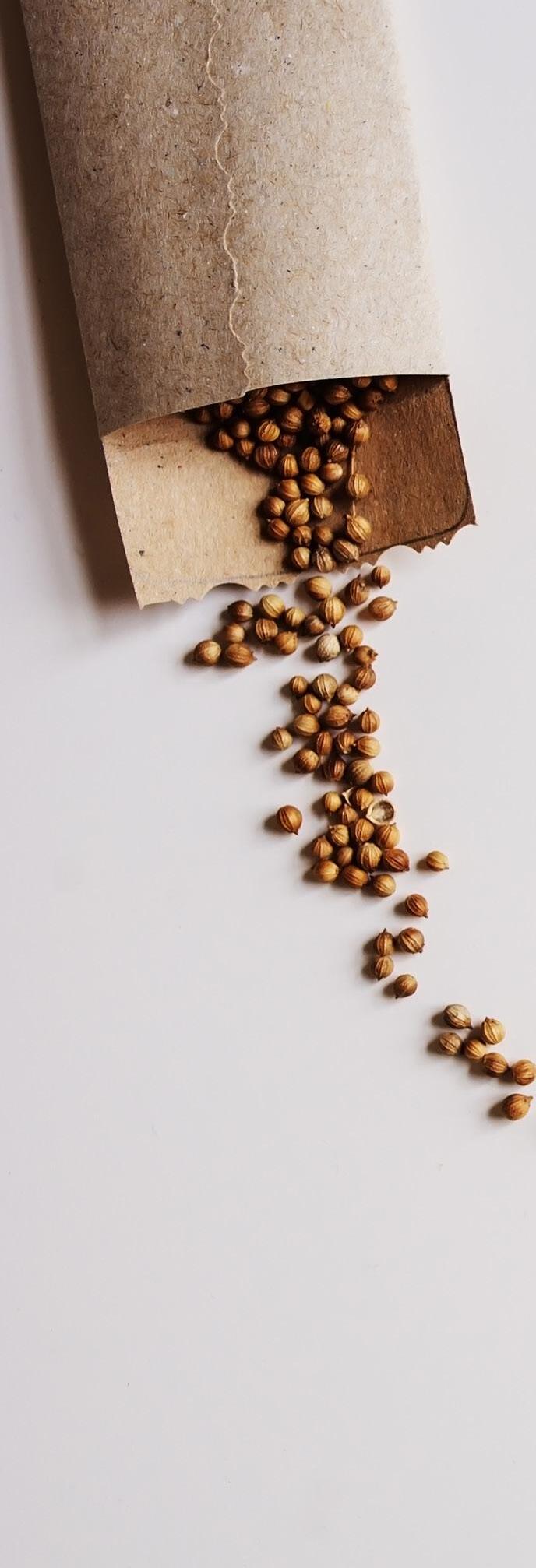
My primary personal reason for saving seeds from my garden to replant the following year is that I’m cheap. I hate spending $5 on a packet of seeds, which I won’t even plant all of, and the remainder of which I’ll forget about in some drawer until they’re useless.
Another perfectly good reason to save seeds is to preserve and pass on regional or family heirloom plants, which are best adapted to my microclimate. If nothing else, we should be saving and sharing seeds to increase our sovereignty of our food systems.
So now you have a reason to save seeds, but where to start? It’s like my grammy always used to say: Start where you are! If you haven’t planted yet, start by selecting seeds that are openpollinated and not hybrid. If you’ve already planted your garden, check the seed packets, or any other label that might still be around, to see if they’re hybrid or open-pollinated.
If you don’t know whether your plants are hybrids, you can still give seed saving a try. Start with the easiest vegetables to save seed from: beans, cucumbers, greens, peas, peppers, and tomatoes. Save the seeds with a question mark, and hope for the best! Next year you can try again.
Your seed packets might have all sorts of terms in addition to open-pollinated and hybrid. Here’s a quick overview. Botanical naming goes from the general to the specific. For example, Golden Acre Cabbage is Brassica (genus) oleracea (species) Golden Acre (variety).
Open-pollinated varieties produce seed true to type if they are allowed to cross-pollinate only with other plants of the same variety. If they cross with other varieties of the same species, their seed will not be true.Those seeds might grow cabbages, but they won’t be Golden Acre cabbages.
Hybrid varieties like Brassica oleracea Stonehead Hybrid are produced from the crossing of two different inbred lines. Seeds
from those plants won’t be true and might not even produce a fruit that looks or tastes like a cabbage.
Amongst open-pollinated plants, self-pollinated ones reproduce by using their own pollen. Cross-pollinated plants reproduce through the transfer of pollen from one plant to a different plant of the same species. Heirloom vegetables are old, open-pollinated varieties that have been passed down from generation to generation and are a reservoir of genetic diversity.
Now that you have some definitions down, let’s turn to the how. Start by selecting seeds from healthy plants and healthy produce, not the rejects. Let seeds mature on the plant before collecting. For vegetables, this sometimes means leaving them on the plant longer than you would for best eating quality.
To clean seeds from fleshy fruits, scoop out the contents and soak them in water. Once cleaned, remove the seeds from the water and dry them on a paper towel. Some fruits have a gelatinous coating that is difficult to remove and can inhibit germination. It can be removed by fermenting the seeds before cleaning the pulp off of them (which is a topic for another day).
Store seeds that are completely dry in a cool, dry place – in a jar in the refrigerator is ideal, but if that’s not an option, choose the coolest, driest place in the house. Last, mark your seed packets with plant type, variety, and any special growing conditions, such as steps taken to prevent cross-pollination.
Next Spring, when it’s time to plant your seeds, refer back to this article on germination on pages 48-49 in the Spring 2025 MFU Magazine availiable at montanafarmersunion.com.
Most of all: Have fun! Even if all you get around to doing in the way of saving seeds this summer is picking your favorite tomato and smearing some of its pulp onto a paper towel, next year you can tear the seeds off the paper, stick them in the ground and see what happens.

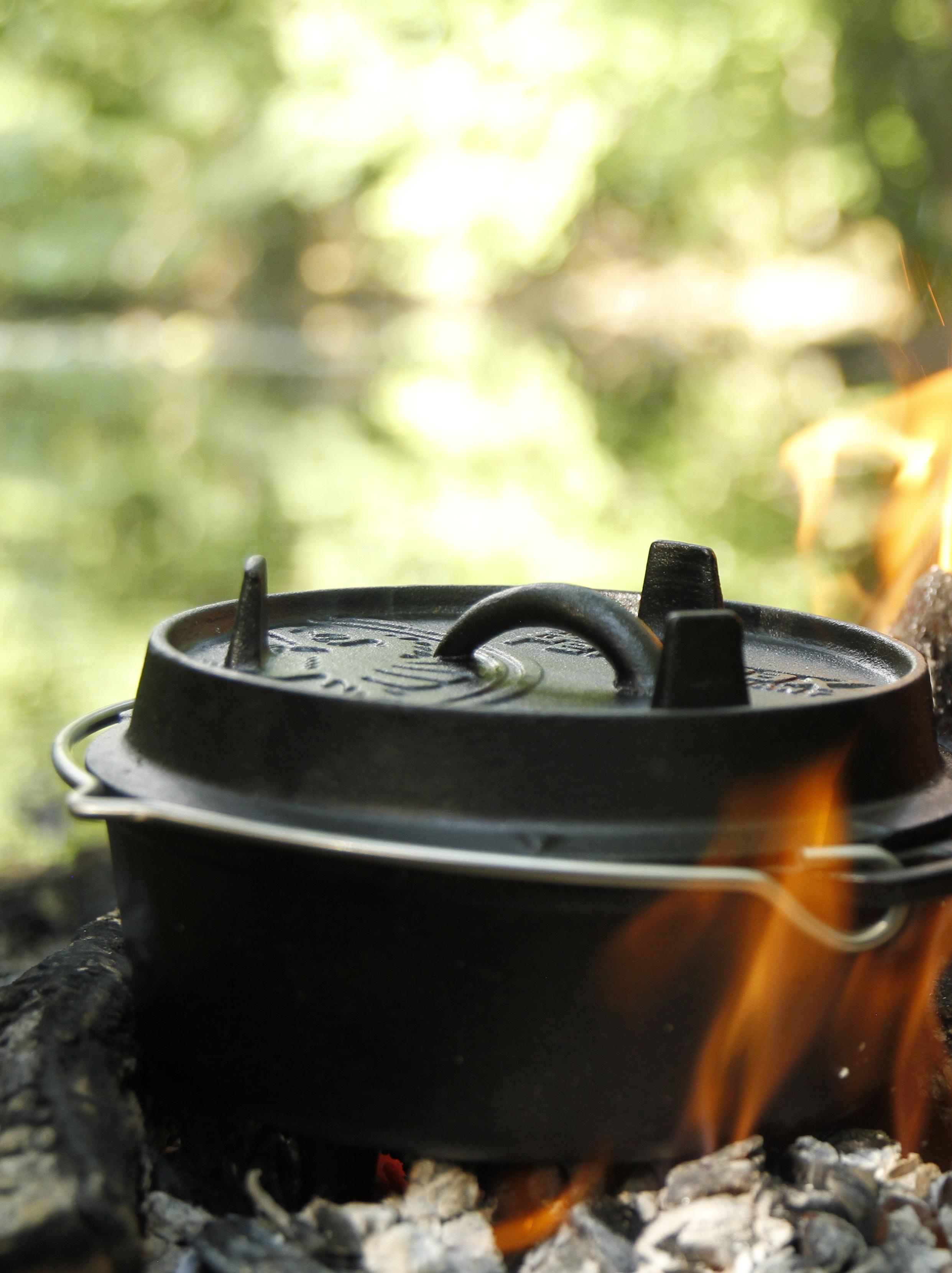

There’s a special kind of magic in Dutch oven cooking—especially when it’s done under the open skies of Montana. Whether you’re nestled around a campfire in the mountains or tucked into a quiet meadow, the Dutch oven brings people together with warmth, simplicity, and unforgettable flavor.
What makes it even better? Using fresh, farm-to-table ingredients sourced right here in the great state of Montana. Locally raised meats, garden-fresh vegetables, wild berries, and hearty grains all come alive in the Dutch oven, slow-cooked to perfection over glowing coals. It’s the taste of the land, lovingly prepared and shared beneath the stars.
Dutch oven cooking isn’t just a meal—it’s a celebration of Montana’s bounty, the joy of being outdoors, and the timeless tradition of gathering around the fire. It’s where rustic meets refined, and every bite tells a story.
Welcome to the world of Dutch oven cooking! Whether you‘re camping in the Montana backcountry or cozying up by a lake, Dutch oven cooking brings together rich flavors, local ingredients, and the joy of outdoor living. Here‘s everything you need to get started.
Cast Iron Dutch Oven (with legs and a flat lid—ideal for coals)
Lid Lifter or Hook
Heat-resistant Gloves
Charcoal or Campfire Coals
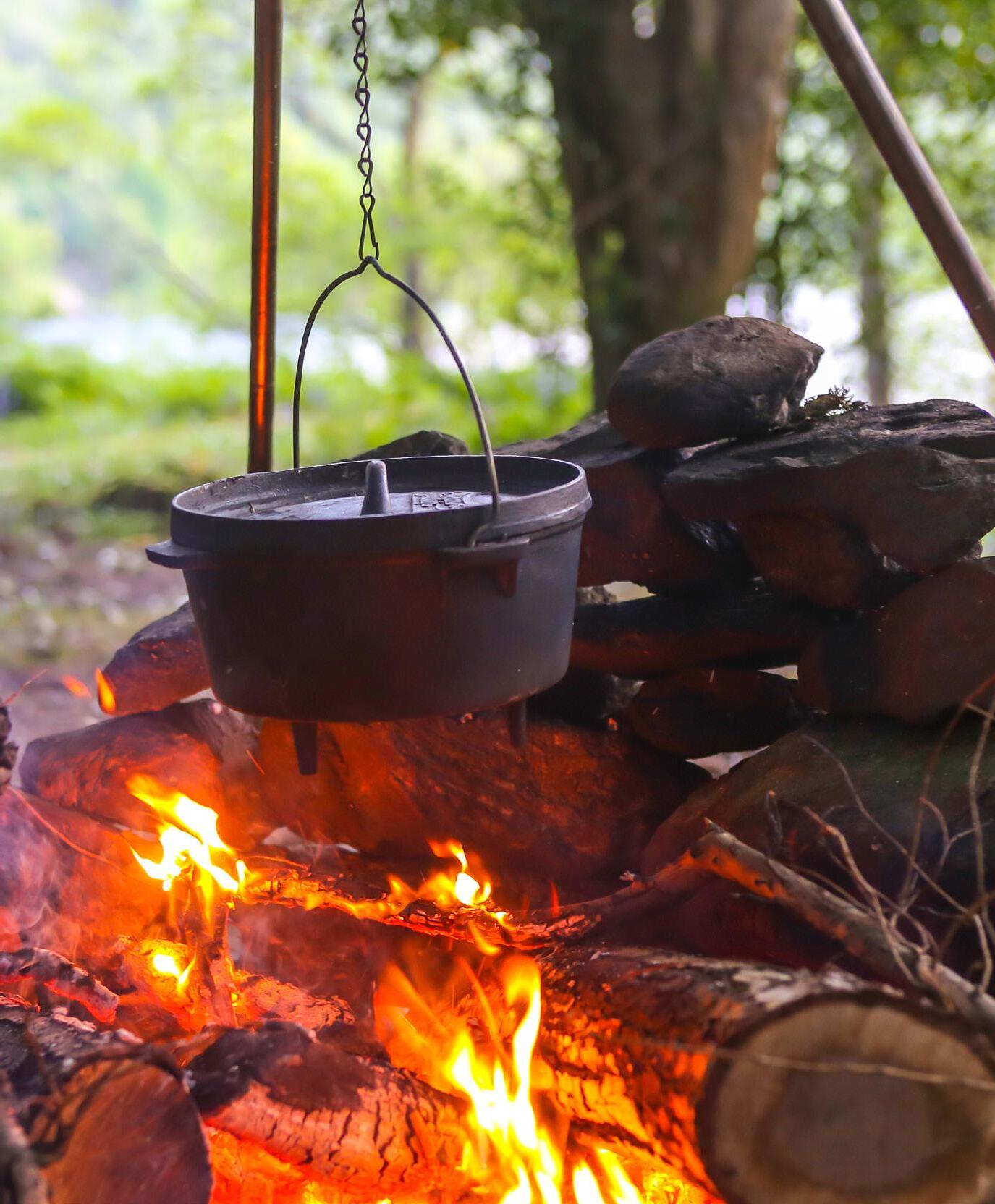
Tripod or Fire Ring (optional)
Tongs
Cooking Stand or Trivet (optional but handy)
Ingredients – Use farm-to-table Montana favorites like:
Local meats (elk, bison, beef, sausage)
Seasonal veggies (carrots, potatoes, onions)
Wild herbs or berries (huckleberries are gold!)
Grains or flour for baking
Prep Your Coals
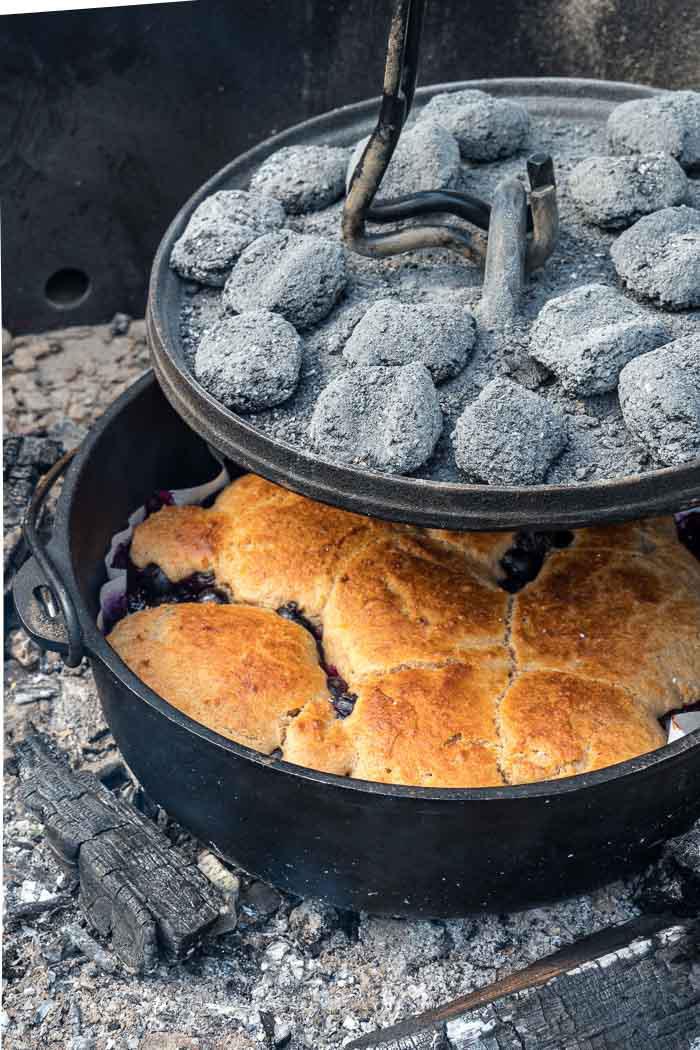
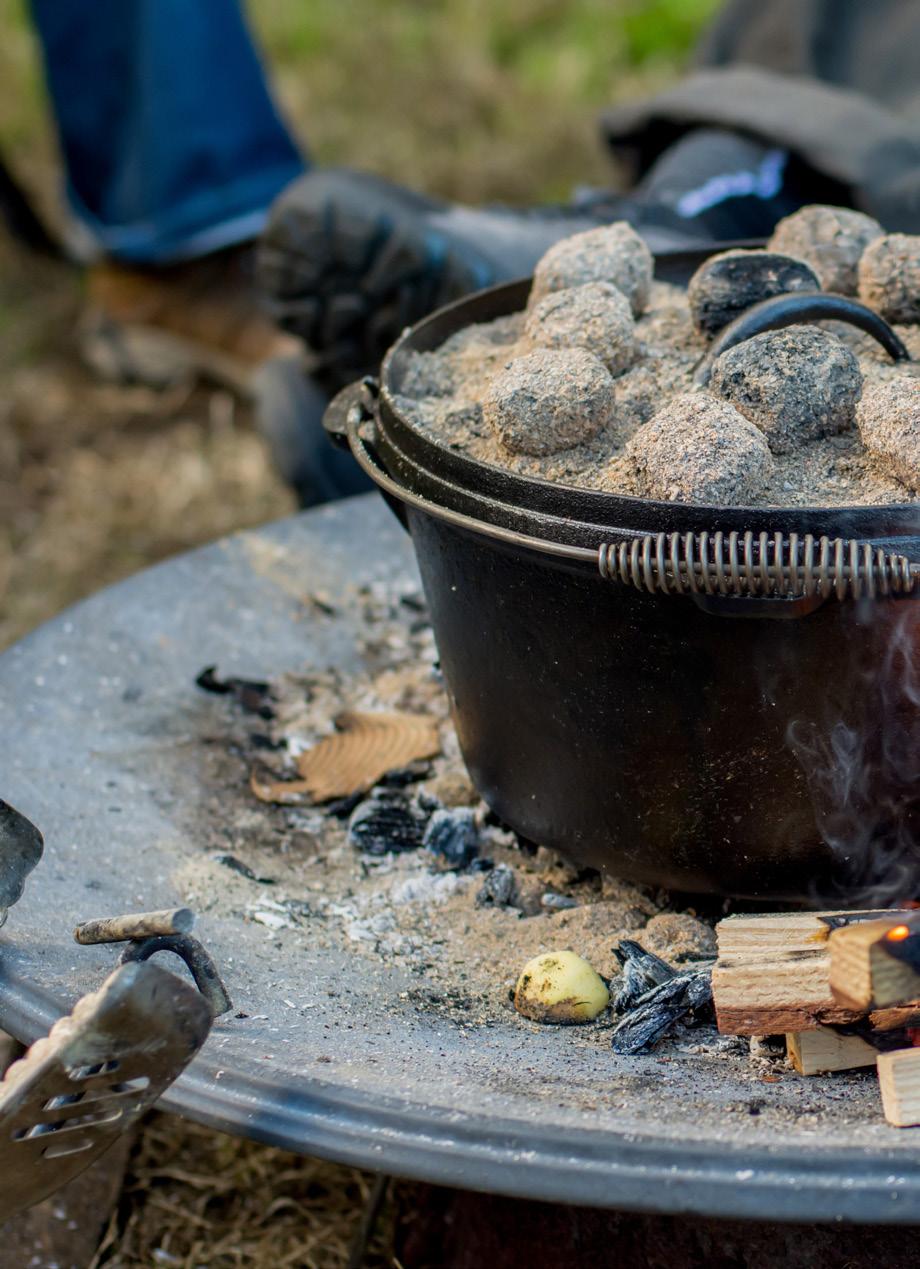
If using charcoal, start them 15–20 minutes before you cook.You’ll need about 2x the diameter of your Dutch oven in total briquettes (e.g., 24 coals for a 12-inch oven).
Understand the Heat Zones
You’ll cook using heat above and below:
Bottom heat: place 1/3 of your coals underneath the oven
Top heat: place 2/3 of the coals on the lid
This creates an oven-like effect perfect for baking, roasting, and braising.
Preheat (Optional)
Some recipes benefit from a preheated Dutch oven. Just place it over a few coals for 5–10 minutes before adding ingredients.
Clean-Up & Care
Let the oven cool, then rinse with hot water (no soap!).
Scrub gently with a brush.
Dry completely and coat lightly with oil.
Store with lid off or with a paper towel between lid and pot to prevent rust.
Windy day? Shield your oven with rocks or a fire ring.
Lid trick: Rotate the lid a quarter turn every 15 minutes to cook evenly.
Layering flavors: Sear meats and caramelize onions first for richer taste.
Dessert? Try a dump cake or cobbler using wild Montana huckleberries!
Why It’s Worth It
Dutch oven cooking is about more than the meal—it‘s a connection to tradition, the land, and the moment.
Using Montana-grown ingredients and an old-school method, you’ll create meals that are hearty, flavorful, and unforgettable.
Serves: 4–6
Cook Time: 45–60 minutes
Dutch Oven Size: 10“–12“
Ingredients
1 lb cubed local beef or elk
4 C potatoes, chopped
2 carrots, sliced
1 onion, diced
2 cloves garlic, minced
2 C beef broth or stock
1 tbsp tomato paste
Salt, pepper, rosemary to taste
Olive oil or butter for browning
Instructions
Heat oil in Dutch oven over coals.
Brown meat, then add onion and garlic. Sauté 5 min.
Add veggies, broth, tomato paste, and seasoning.
Cover. Place coals on top and bottom.
Simmer for 45–60 min, stirring once or twice.
Serve hot with bread!
Prep Time: 5 min
Rise Time: 8–12 hours
Cook Time: 30–35 minutes
Dutch Oven Size: 10“–12“
Ingredients
3 C flour
1 ½ tsp salt
½ tsp active dry yeast
1 ½ C warm water
Instructions
Mix all ingredients in a bowl. Cover and let rise 8–12 hours.
Preheat Dutch oven over coals for 10 min.
Place dough (on parchment) into hot Dutch oven. Cover and bake 30–35 minutes with coals top and bottom.
Remove lid for last 5–10 min for a golden crust. Cool slightly before slicing.
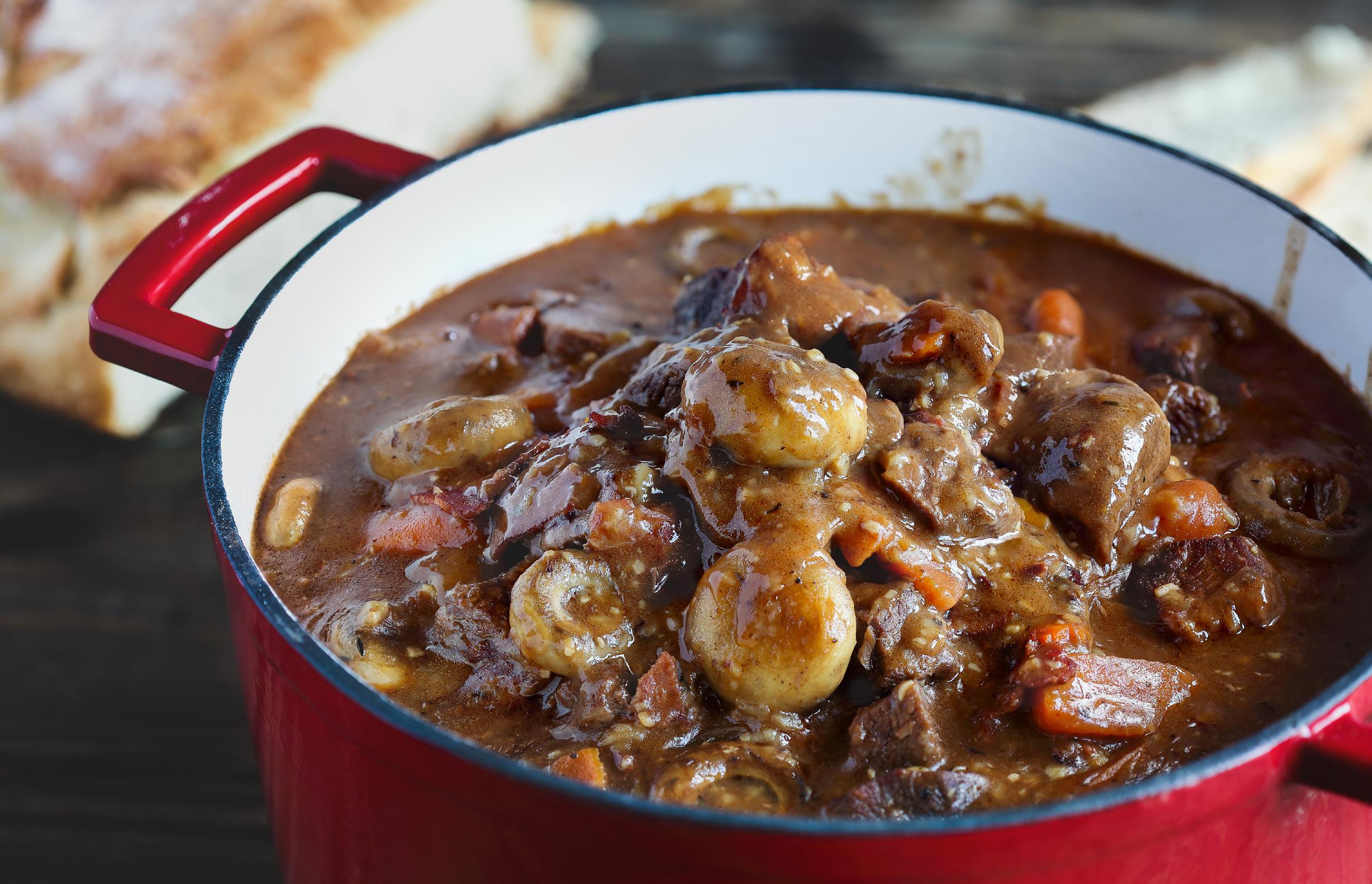
Serves: 6
Cook Time: 30–40 minutes
Dutch Oven Size: 10“
Ingredients
4 C fresh or frozen huckleberries (or mixed berries)
1/2 C sugar
1 tbsp lemon juice
1 C flour
1/2 C sugar (for topping)
2 tsp baking powder
1/2 tsp salt
3/4 cup milk
1/4 cup melted butter
Instructions
Grease Dutch oven or line with parchment.
Mix berries, sugar, and lemon juice. Pour in bottom.
In a bowl, mix flour, sugar, baking powder, salt, milk, and butter.
Spoon batter over berries (don’t stir).
Cover and bake with coals on top/lid for 30–40 min.
Serve warm with whipped cream or ice cream.
Serves: 6
Cook Time: 45–60 minutes
Dutch Oven Size: 12"
Ingredients
1 tbsp olive oil
1 onion, diced
2 cloves garlic, minced
2 bell peppers, chopped
1 zucchini, chopped
1 can (15 oz) kidney beans, drained
1 can (15 oz) black beans, drained
1 can (15 oz) diced tomatoes
2 tbsp tomato paste
1 tbsp chili powder
1 tsp cumin
Salt and pepper to taste
Optional: corn, jalapeño, cilantro
Instructions
Sauté onion and garlic in oil in the Dutch oven.
Add peppers and zucchini, cook 5–7 min.
Stir in beans, tomatoes, paste, and spices.
Cover with lid and simmer 30–45 min over low coals.
Serve with cornbread or tortilla chips.
Serves: 4
Cook Time: 30 minutes
Dutch Oven Size: 10“–12“
Ingredients
4–5 Yukon gold potatoes, diced
1 red bell pepper, chopped
1 small zucchini, chopped
1/2 red onion, diced
1 clove garlic, minced
4–6 farm-fresh eggs
2 tbsp olive oil or butter
Salt, pepper, paprika to taste
Optional: shredded cheese, hot sauce
Instructions
Heat oil in Dutch oven over coals.
Add potatoes and cook 10–15 min until starting to brown. Add peppers, onion, zucchini, garlic, and seasonings.
Cook 10 more min, stirring occasionally.
Make small wells and crack in eggs. Cover and cook 5–8 min until eggs are set.
Top with cheese or hot sauce and serve.
Mountain Breakfast Bake
Serves: 6
Cook Time: 35–45 minutes
Dutch Oven Size: 10"–12"
Ingredients
6 large farm-fresh eggs
1/2 C milk
4 C frozen hash browns (or grated fresh potatoes)
1 C shredded cheese (cheddar or pepper jack)
1/2 lb cooked sausage or bacon (or use plant-based)
1/2 onion, diced
1 bell pepper, chopped
Salt, pepper, and paprika to taste
Optional: chopped green onions, hot sauce
Instructions
Prep the oven: Light your coals and let the Dutch oven preheat for 5–10 minutes with a few coals underneath. Cook base veggies/meat: In the Dutch oven, sauté the onion and bell pepper in a little oil or butter. Add cooked sausage or bacon.
Add hash browns: Stir in the potatoes and cook for 10–15 minutes, stirring occasionally, until they start to brown. Mix eggs: In a bowl, beat the eggs with milk, salt, pepper, and paprika.
Combine and bake: Pour the egg mixture over the hash browns and top with cheese. Cover with the lid.
Bake: Place coals on the lid and cook for 20–30 minutes, until eggs are set and cheese is melted. Rotate the lid halfway through for even cooking.
Serve hot, straight from the oven
By Shawna McCauley



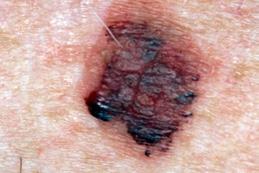
You run out the door without putting on sunscreen because you’ll only be out for a few minutes. This turns into a whole day adventure, because, well, you live in agriculture. Sound familiar?
The reasons – or shall we say excuses – for not wearing sunscreen are overwhelming. However, applying sunscreen really is an important part of your morning routine. For those of us who are not in the habit of wearing sunscreen or even grew up putting on baby oil instead, there are some important things about skin cancer you should know.
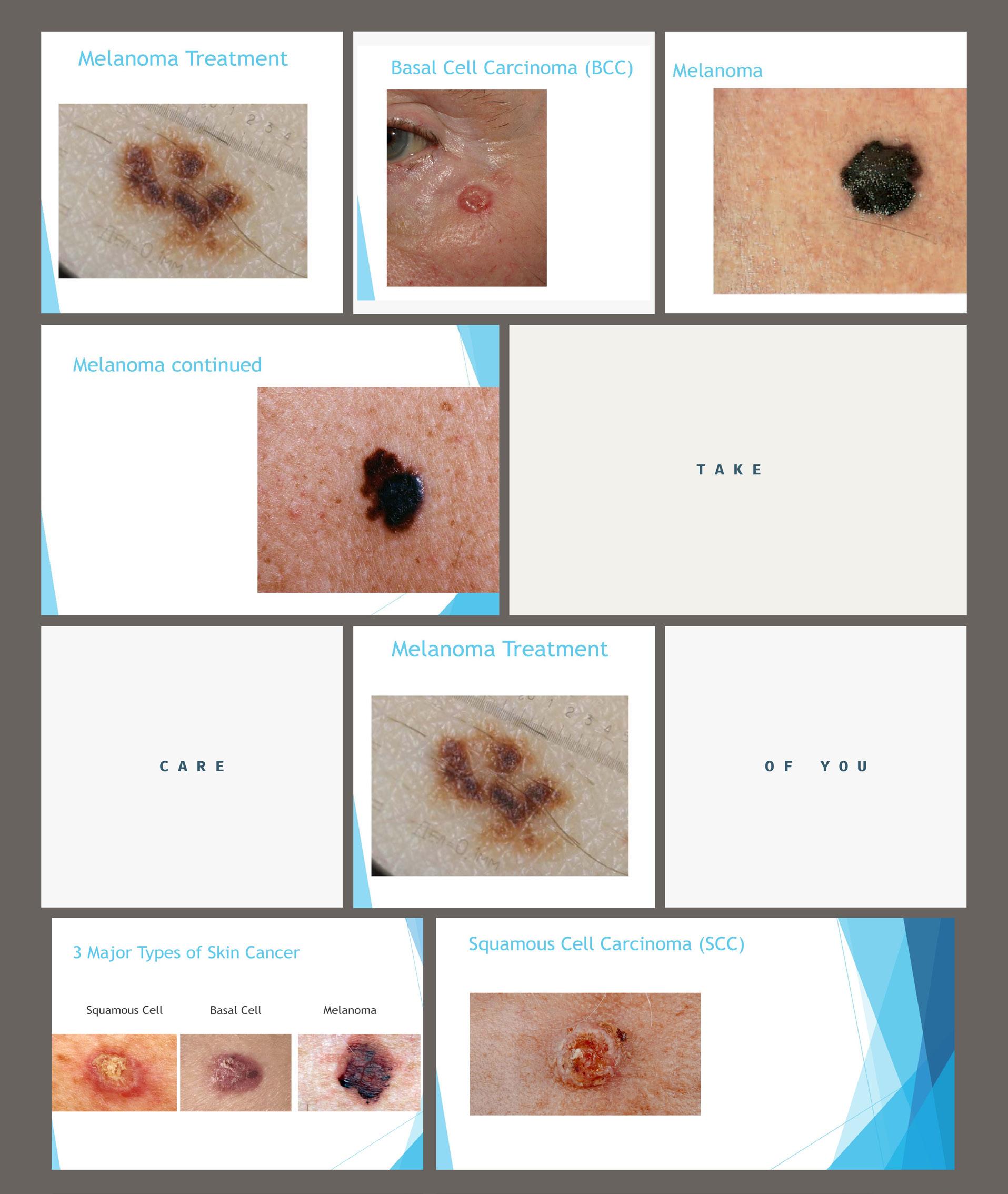
First, did you know there are other skin cancers besides melanoma? Melanoma is the scary skin cancer that, if left untreated, can metastasize and cause lots of problems, including death. Melanoma grows because of the sun, but it doesn’t always come on skin that sees the sun regularly. Melanoma can happen anywhere on your body, including on your back, leg, bottom of the foot, or even on your nether region. The longer melanoma sits on your skin, the greater the chances of it sending cancer cells throughout your body.
Have you ever used a tanning bed, even just for that nice “base tan” for the summer? Your chances of melanoma are drastically increased from tanning bed use, even just a few times. If you used a tanning bed before age 20, your chances of developing melanoma increase by 47 percent and the risk keeps increasing every time you tan indoors. Women under the age of 30 who tan indoors are six times more likely to develop melanoma than their non-tanning counterparts.
There are two other major types of skin cancer that are even more common than melanoma. These are basal cell carcinoma (BCC) and squamous cell carcinoma (SCC). BCC and SCC are directly caused by sun damage. This means that they only happen on skin that has repeated sun exposure. The most common places for BCC and SCC are your face, tops of your ears, your scalp (especially if you’re missing some hair up there), and the back of your hands. They can also happen on your chest or back if you have a history of sun exposure without a shirt on.
Unlike melanoma, BCC and SCC are not likely to spread to other parts of your body or cause death. Sometimes, they will creep under the skin a short way, but far metastasis is unlikely. They do, however, cause a lot of local damage to the skin, which can affect your appearance. If you have a skin cancer on your nose, the fear of disfigurement is real. Signs of a sun-induced skin cancer include sores or scabs that won’t heal or go away, a “spider bite” that won’t heal, a pearly bump that won’t pop, or a new pink patch of skin that doesn’t go away.
If you are experiencing any of these, it’s important to see your doctor or dermatologist to have them evaluated properly. Treatment for skin cancer depends on a lot of factors but can involve having the spot burned off or cut out. The smaller the cancer is, the smaller the healed scar will be. So, the sooner you take care of it, the better.
Sun protection is key in preventing skin cancer, but for some of us that ship has already sailed.
According to the American Academy of Dermatology Association, if you’ve had more than five blistering sunburns between ages 15 and 20, your risk of developing melanoma is increased by 80 percent and your risk of developing BCC or SCC increases by 68 percent. However, it is still important to wear sunscreen or sun protective clothing on a daily basis to prevent further sun damage (and it’s your best anti-aging secret).
What sunscreen is best, you ask? I always say it’s the one that you’ll wear. Zinc and titanium-based sunscreens are excellent options, but if you don’t wear them daily because of the white residue they leave behind, they aren’t helping you at all. I prefer rub on sunscreens for morning application, but I reapply with sprays so I don’t spread dirt and dust all over myself.
Powdered sunscreens or sunscreen in your makeup are a great way to start the day, but remember, you should be reapplying sunscreen every two hours if you’re outside. This means you’ll need another type of sunscreen throughout the day for all those reapplications. The AAD recommends SPF of 30 or higher if you’re planning to be outside. This includes those cloudy days because up to 80 percent of the sun’s harmful UV rays can come through the clouds. I always say, if it’s light enough to see
outside, you should be wearing sunscreen.
Nonetheless, getting my spouse to wear sunscreen or long sleeves in the summer is simply not going to happen. So, I just nonchalantly check his skin for signs of cancer about once a month and hope I can get him to the doctor if something actually pops up!
That’s Skin Cancer 101 in a nutshell. Be on the lookout for new spots on the skin or sores that won’t go away. And remember, no tan is a safe tan. Don’t forget to wear your sunscreen every day!
Go to https://www.aad.org/ for more useful information.
By Alice Miller, MFU Magazine Co-editor
As ranchers grapple with markets, labor shortages, input cost increases, and other industry challenges, precision agriculture is presenting itself as a solution.
“Everyone’s been really supportive in making sure livestock has a seat at that precision agriculture table because we’re a big part of Montana’s agriculture,” said Sam Wyffels, a beef specialist with Montana State University Extension.
Like all technology, precision agriculture technologies are quickly changing and becoming more accessible.
“Some of the tech has been around for a while, but the price point wasn’t feasible for production,” Wyffels said.
“There’s a lot more general interest in technology across the state and how it can be used, how it can be harnessed, and trying to figure out what technologies might be a good fit,” Wyffels added.
Labor shortages and the need to find efficiencies are one of the driving factors for the growing interest, Wyffels said.
However, if producers can afford the incorporation of technology, they still must answer if they can even use it because of tech infrastructure limitations in Montana’s rural areas.
Not all options are a good fit for all production systems, Wyffels said. “There’s the coolness factor, and then there’s the how is this technology going to work for you?”
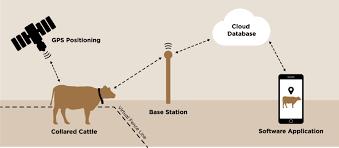
Virtual fence is by far the most asked about technology because of the cost and labor required to build fence.Virtual fences allow ranchers to achieve the same effect of physical fence lines with the tap of a finger – optimizing grazing or keeping cows out of certain areas.
“If you can draw it on the app, you can use it in your operation,” Wyffels said.
Granted, you still need a sturdy perimeter fence. “But what [virtual fence] does allow you to do is, within an allotment or within a ranch, is to customize your grazing.”
Virtual fence also allows for better crop-livestock integration, an area Wyffels said Extension is beginning to research based on producer interest. “Crop-livestock integration can reduce nutrient inputs and have soil benefits. So we’re looking to see if we can use virtual fence to manage livestock on crop land.”
Ranchers are also interested in applications for drones, with many looking to use them to check on herds and water troughs by flying over them.
While the cost of some precision technologies has decreased notably, the cost can still be prohibitive.
Five years ago, GPS collars would cost you $1,000 a pop. Today, GPS ear tags run roughly $150 each.
“That being said, $140 to $150 is still a pretty big investment, so we don’t see people putting those ear tags on every cow, but rather, they’re more interested in putting them on animals of interest,” Wyffels said.
For instance, a rancher might choose to put GPS ear tags on their bulls or use activity sensors to monitor their locations and breeding behavior, making sure the bulls have done their job and that they know where to find them on rangeland when breeding season ends – saving time and labor.
Pompeys Pillar rancher Trent Stoltz wanted to optimize grazing, so he chose to offset part of the cost of the virtual fence collars and tower by partnering with World Wildlife Fund. “We didn’t feel we had the manpower to move that much electric fence. But we knew if we could improve our grazing capacity through intense grazing practices it would be worth it.”
There was a learning curve with how to change the pastures with enough time for the program to communicate with the battery-powered collars and a small group of cattle who went rogue and ignored the shock signal. Overall, though, virtual fence is a win for their operation, Stoltz said. “It was quite cool that we were able to control the movement of 300 head of yearlings for the most part very well.”
By using the virtual fence, they were able to accomplish their goal of optimizing grazing.
“You can definitely see a difference on the hilltops where they had not previously grazed. Overall, I think it did help our pastures improve considerably,” Stoltz said.
Already, since they began using virtual fence, Stoltz said, the technology has improved and become more affordable.
“I think it is only going to become more affordable. For people on midsize to smaller ranches who want to improve their grazing and increased their carrying capacity it is a handy tool,” Stoltz said.
Even with improvements in technology and lower costs, hurdles to implementing precision ag technology in ranching remain.
“I personally think one of the biggest hurdles is that it’s something new. So there’s a learning curve. How do you use it? How do you use it most effectively?” Wyffels said.
Then, there’s cell service, or rather the lack of it. To address the issue, more companies are using radio signals instead.
“As these things get more and more dialed in, the data transmittal is getting better and better,” Wyffels said.
Interest among Montana ranchers continues to grow, Wyffels said. As ranches transition more responsibility to the next generation, the more interest there is in implementing precision ag technologies to solve problems. “It’s really an interesting development.”
Ultimately, Wyffels said the research Extension does is based on what producers need.
“We can’t answer producer questions without producer engagement,” he said, encouraging producers to attend educational programs or to contact Extension with questions.
“I would rather do research that’s meaningful to the state versus something that I think is interesting.”
Learn more about MSU Extension Animal and Range Sciences’ work on behalf of Montana ranchers and contact a specialist at https://animalrangeextension.montana.edu/.
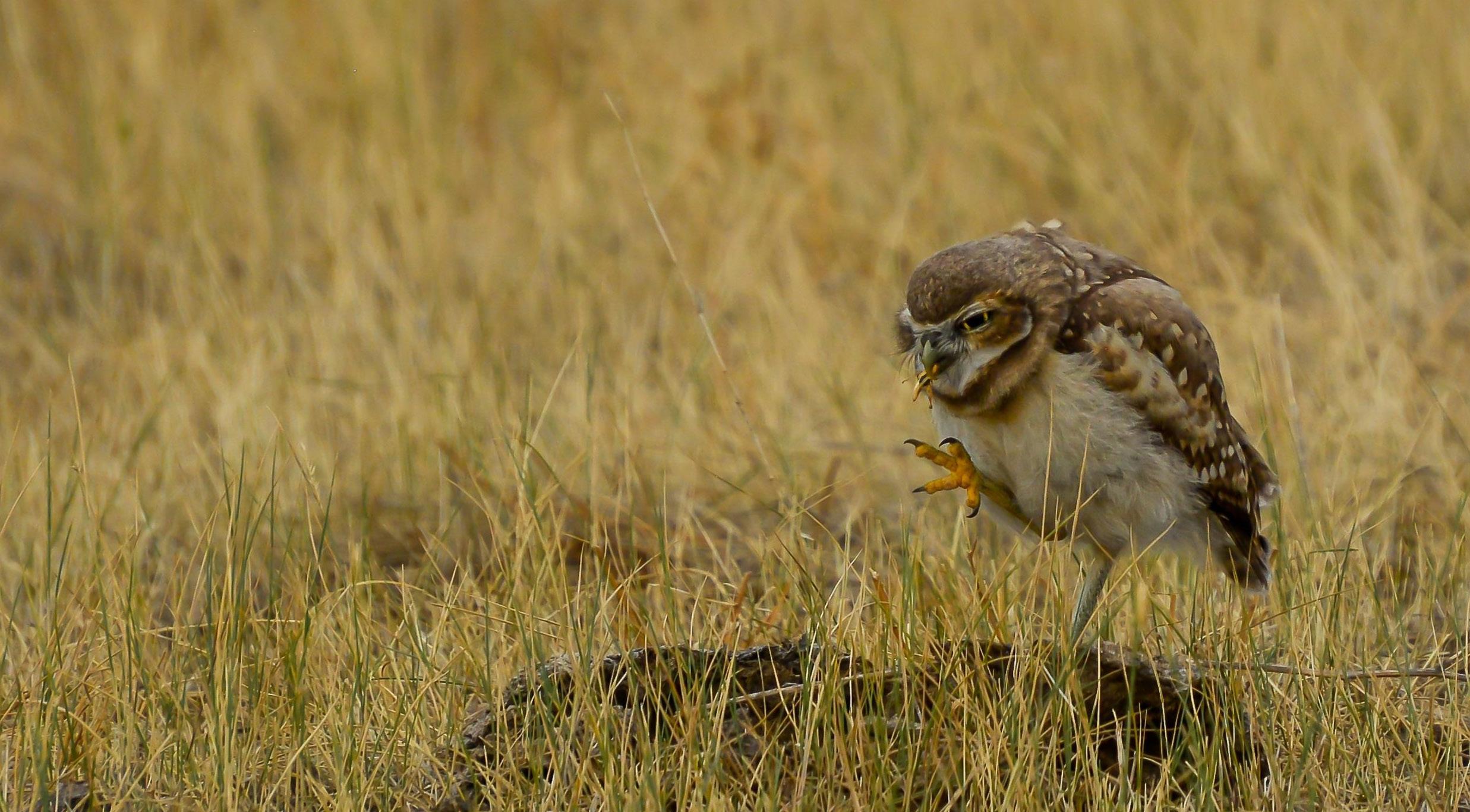
Farmers & ranchers are stewards of habitat, but sometimes wildlife gets too close to equipment, operations
By Nick Gevock
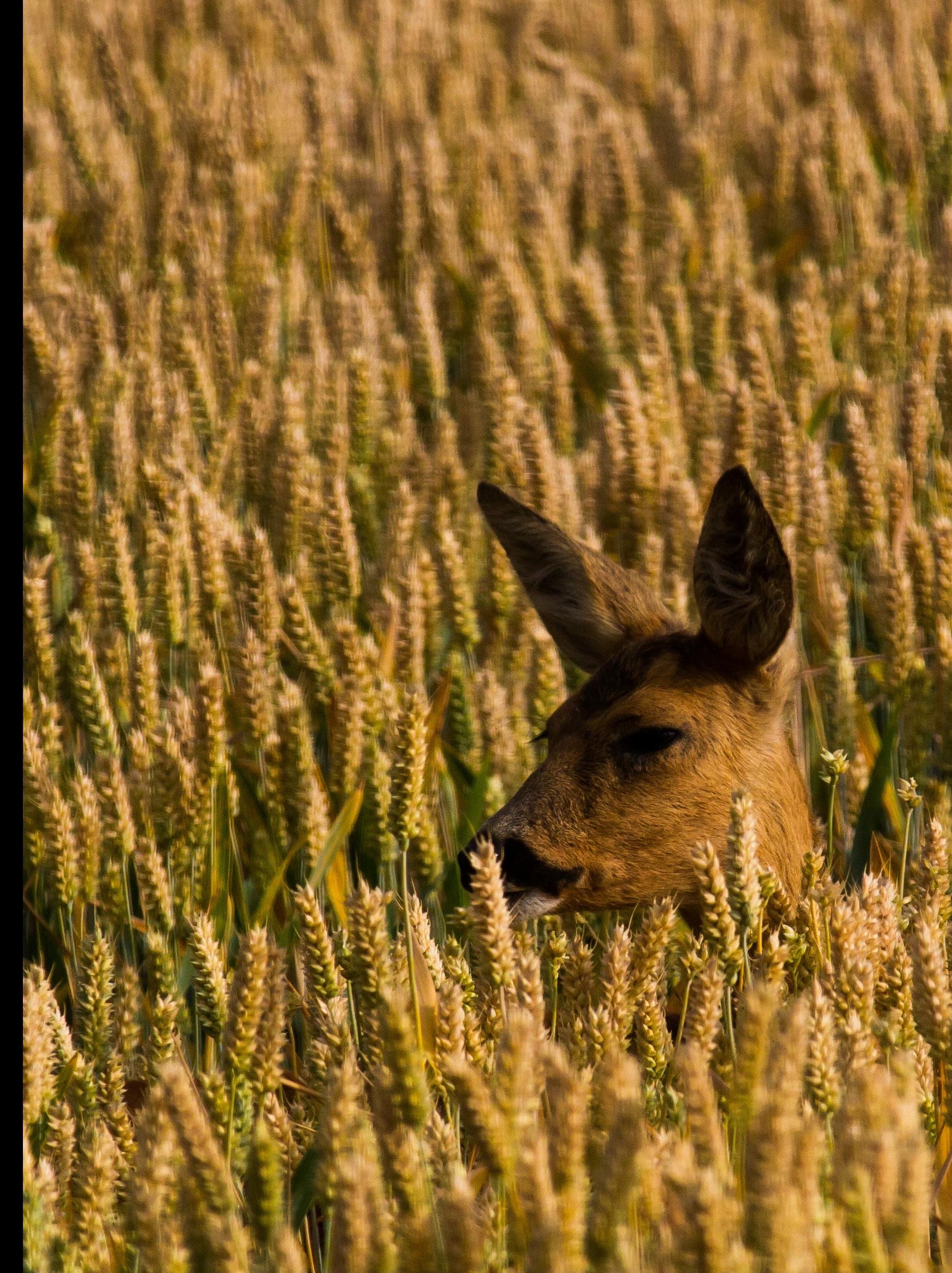
Many of Montana’s farmers and ranchers have had run-ins with wildlife while running their operations. The deer fawn run over by a bailer or combine. The game bird nests crushed. And the hundreds of game and song birds flushed while out working the land.
It’s part of the wildlife habitat that farms and ranches make up, and by far the benefits of working ag lands outweighs the mortalities caused by the productions of crops and livestock.
But still, what should ag producers do when they come across wildlife in the field? Farmers and ranchers like wildlife and enjoy seeing it on their property. At the same time, the demands of production agriculture means that crops need to be harvested at certain times.
Ken McDonald, Wildlife Division administrator with Montana Fish, Wildlife and Parks, says the agency has the same message for farmers and ranchers as it does for the general public when it comes to encountering deer fawns and elk calves.
“If you see what appears to be an orphan fawn, just let it be, because likely mom’s around and is going to come back,” McDonald says. “We don’t relocate, we don’t rehab,” he adds. “We let it be and let mother nature sort it out.”
It’s the hard reality of producing hay and crops, and the wildlife that often finds a home there.
There will always be some mortality on fawns and calves associated with production agriculture and the large equipment needed to make it happen.
The instinct for newborns and young animals is to sit tight when they’re left by their mother. That leads to natural mortality at times, and, at times from predator species. But while mortality rates are high, most fawns and calves do make it – and herds grow because of healthy habitat and the nutrition and security provided.
The one thing that McDonald says FWP does do on its farm leases located on Wildlife Management Areas is set a date for harvest so that animals are older, and more likely to move when equipment is coming toward them. That applies to more than mammals.
“Our recommendation on hayfields, and on our WMAs, is no harvesting until July 15, because birds are nesting in there, and if they’re cutting it in early June, they’re probably killing birds,” he says. “Where we have control of it, that will be one of our recommendations, but we’re not making a living off of it, and the production ag people get the first cutting as quick as they can, and so it can start growing, and waiting a few weeks, it’s money in the bag and less assured.”
The other aspect of ag operations is the transitional areas along fields – the tall grasses in the medians and edges. McDonald said those areas are essential for nesting birds, and so keeping those areas undisturbed as farmers and ranchers do is good for birds.
By Ali Moxley
Tucked away in the small town of Ronan at the base of the Mission Mountains sits a hardworking team dedicated to helping new and established Montana businesses grow and flourish. Mission West Community Development Partners has been providing communities with a wide range of economic development services for more than two decades, helping food and agriculture-related ventures navigate change.
While the organization has a variety of services utilized by producers and processors, one of their most impactful offerings is the Mission West Cooperative Development Center. The Co-op Center is one pillar of the organization that is integrated into all the work that Mission West assists with. Montana has a vibrant history of setting up cooperatives to address needs in both population centers and rural areas of the state. Currently there are more than 80 different cooperatives spanning a wide range of industries from agriculture to electric to child care.
When an organization or an individual is interested in setting up a cooperative they can reach out to Mission West for extensive guidance, training, and business development resources. Mission West will set up an initial meeting to learn more about the core needs and goals of the interested group. They will introduce people to the fundamentals of the cooperative structure to make sure they align with the trajectory of the business endeavor. Then, the team will help set up a steering committee that will represent the future members of the cooperatives. This steering committee is typically made up of seven to eight dedicated community members who understand the values of the group and have expertise in the industry. Once the cooperative has formed, Mission West continues to offer cooperatives resources, training, and assistance with business planning.
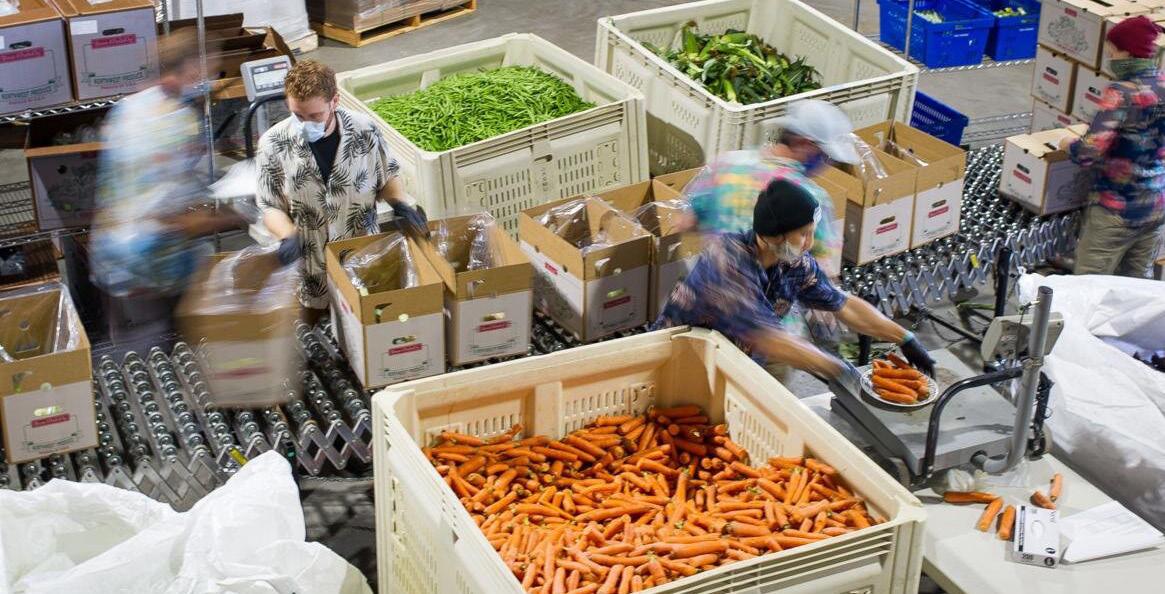
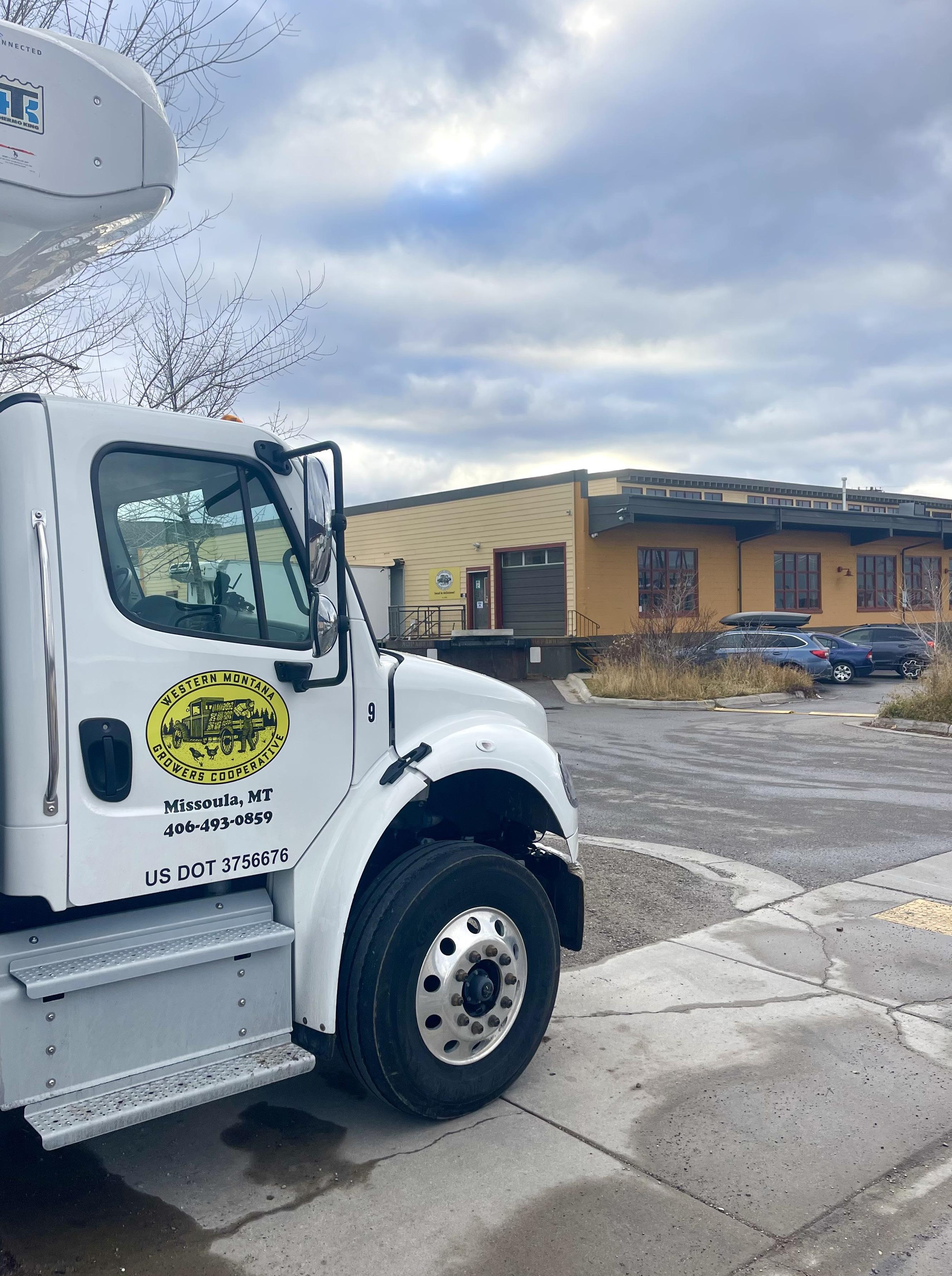
Over the years, the Mission West Cooperative Development Center has worked with several agricultural groups to help form cooperatives that directly address the needs of farmers and ranchers. Around 20 years ago, a group of producers approached MWCDC looking for assistance with forming a business that would collectively address aggregation, transportation, storage, and marketing needs. They hoped to overcome the challenge of producing food in rural areas but needing to expand sales into areas with a larger number of consumers and wholesale buyers. Individually, the producers could offer smaller amounts of specific goods, but by coming together, they vastly expanded the quantity and variety of goods available to larger buyers throughout the state. Working closely with MWCDC these producers were able to develop articles and bylaws, raise initial capital, and attract member investments. Through this process the Western Montana Growers Cooperative was born.
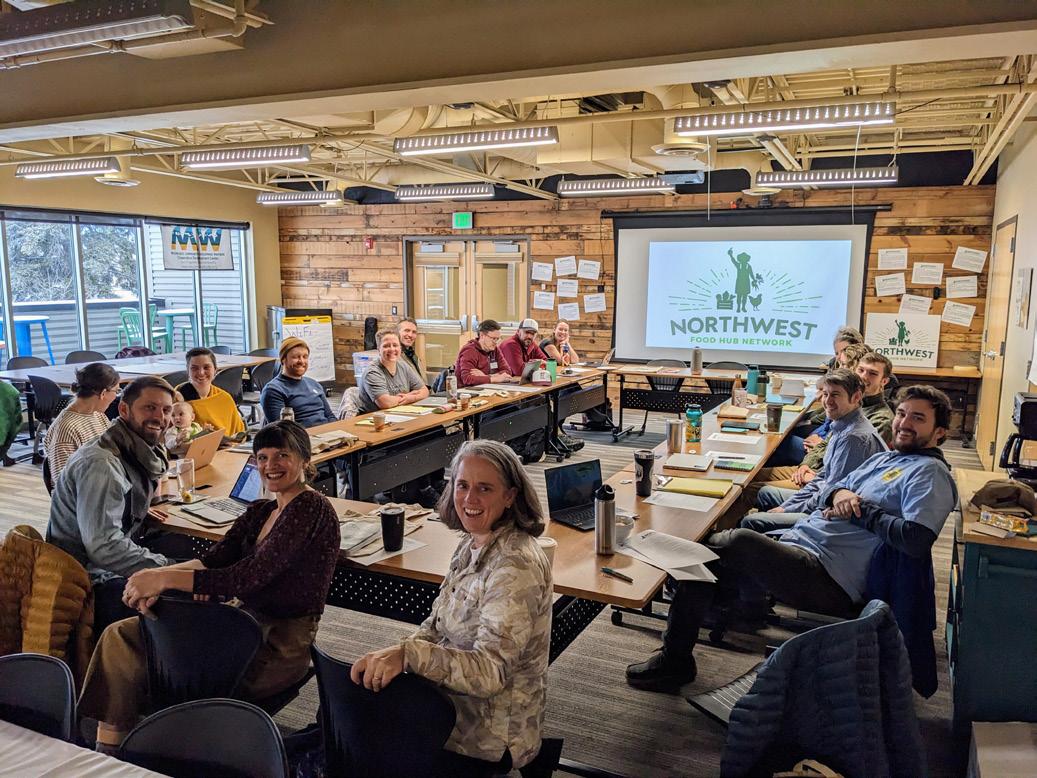
During the last few years, Mission West has continued to assist with food hub development throughout the region and state. In 2021 the Northwest Food Hub Network was formed through the work of a variety of producers, food hubs, and MWCDC.
This group is a regional network of farmer-owned cooperative food hubs that are based in Montana and Washington. Working together, this group has expanded their seasonal food offerings, more efficiently hauled and delivered food, shared business resources, and collectively closed large wholesale purchase deals.
Sometimes established businesses approach Mission West looking for guidance on how to convert a traditional business that is set up as a limited liability corporation or a sole proprietorship into a cooperative. This happens most frequently when there is a potential change in ownership. The Mission West team can help these types of businesses with owner transfer and legal processes. Charlie Michel, Mission West’s Cooperative Development Center Director, describes how this type of business transition often helps “preserve access to essential infrastructure.” This type of cooperative guidance was essential for the Glacier Processing Cooperative as a group of ranchers worked to purchase the processing facility from a private family.
Many cooperatives that form in the state are not directly tied to production agriculture but end up benefiting Montana’s producers. One example of this was the Ronan Cooperative Brewery, which has helped revitalize Ronan’s downtown. Charlie describes how “an underrecognized part of farming is the social fabric and quality of life that comes with living in rural areas.
We want producers to have community spaces that are festive and family friendly.” The brewery, which purchases many of their inputs from Montana farmers, is now owned by more than 600 residents.
There is space in many regional rural areas for future creative cooperative development. Charlie notes one exciting area he is working in is cooperative real estate investment. He views this type of cooperative as “a way to derisk property and land ownership and provide spaces for local businesses to thrive and grow.” Collective real estate purchase may allow future users of the building to purchase partial ownership of land and buildings and restructure the typical tenant/ landlord relationship. While Montanans will continue to explore new and versatile cooperatives, the cooperative structure is helping address food supply chain issues while strengthening communities through economic development.
By Megan Van Emon, Extension Beef Cattle Specialist, Montana State University
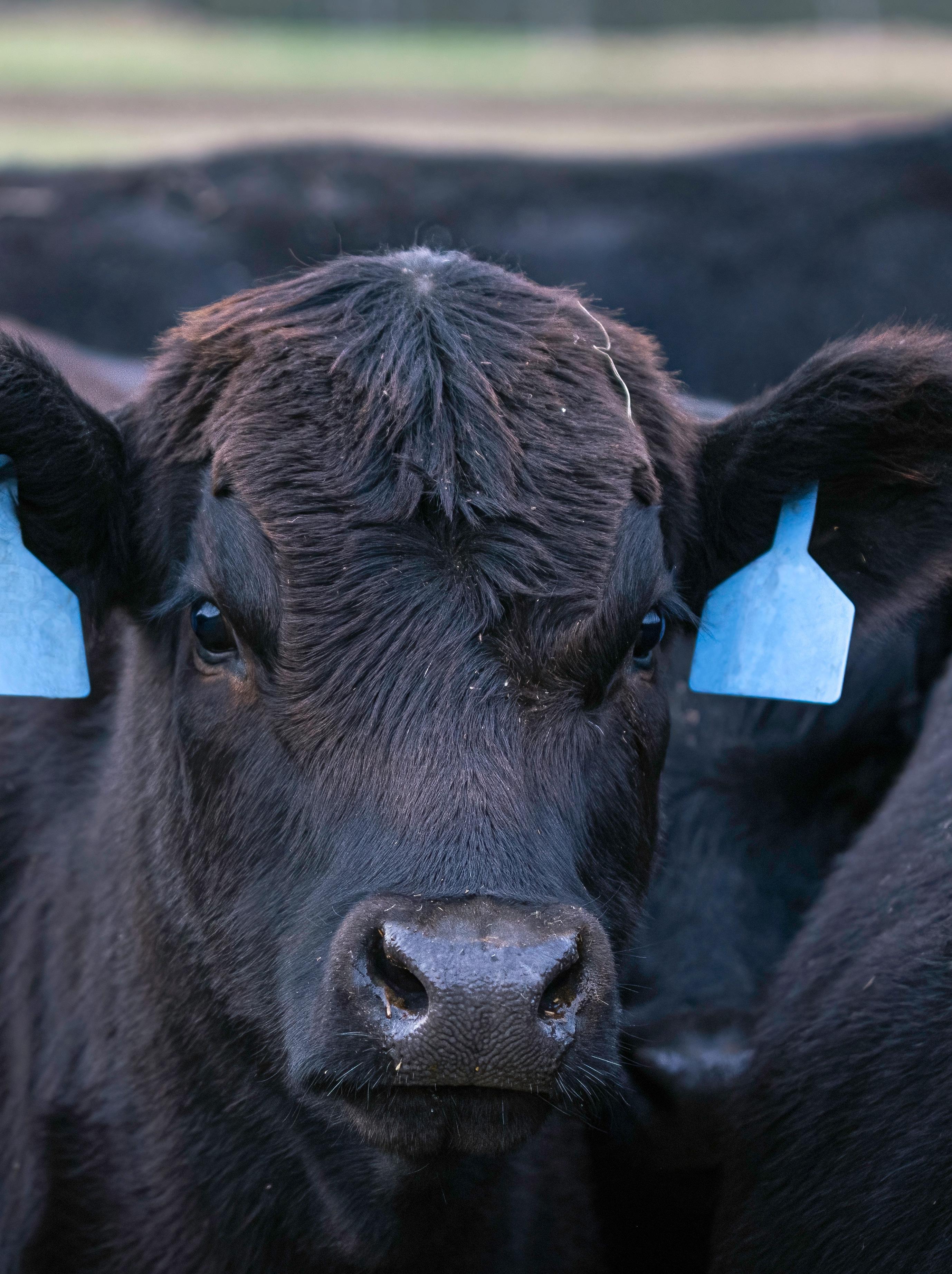
Weaning is one of the most stressful events in a calf’s life. The stress of weaning can impact calf health and may lead to incidence of illness and loss of production. Both environmental and physical factors can impact weaning, and all should be considered when making management decisions.
Weaning commonly occurs at seven months of age. This typically coincides with natural weaning and forage conditions declining. Weaning calves using lowstress techniques can aid in reducing negative health impacts on calves during the weaning process. These techniques may require more labor, time and facilities, but may be more beneficial to the health of the calves. Vaccination protocols can play a major role in calf health as well.
A strong vaccination protocol is key to the health of beef calves at weaning. Working with your local veterinarian to develop a vaccination plan for the entire year will keep calves healthy all year. Viral pathogens that should be considered are parainfluenza three (PI3), bovine viral diarrhea (BVD), bovine respiratory syncytial virus (BRSV) and infectious bovine rhinotracheitis (IBR). If possible, providing vaccines a month before weaning and a second dose at weaning as a booster, depending on label directions, can aid in boosting the immune system during weaning. Additional vaccines should be discussed with your veterinarian but may also include a combination of clostridials. More specific recommendations for any localized needs should be discussed with your veterinarian.
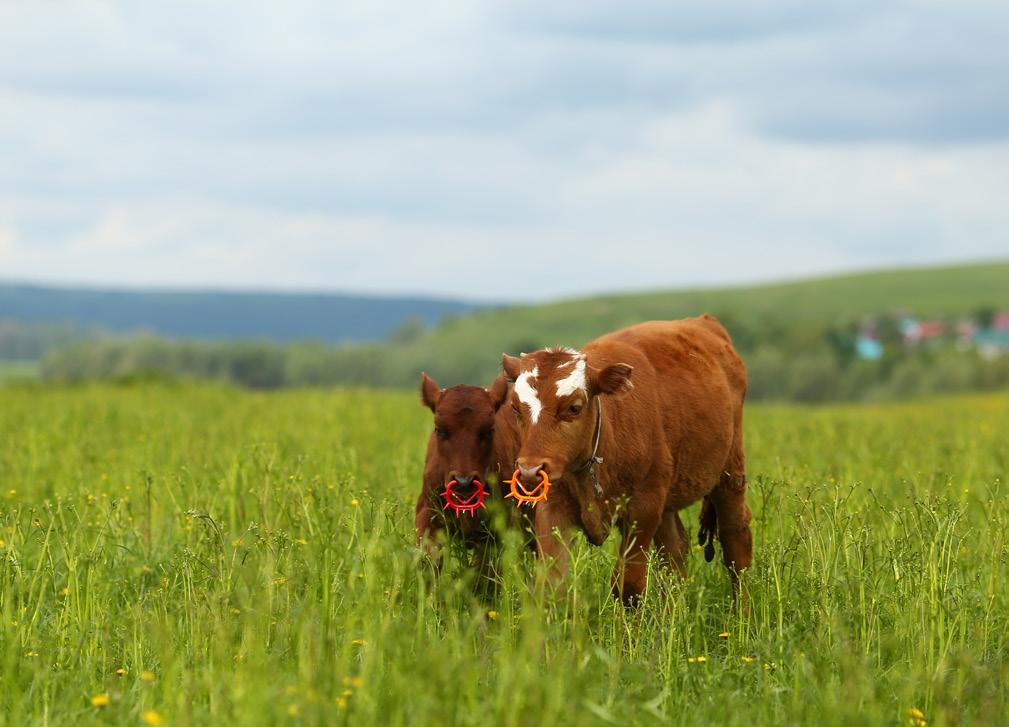
One option for weaning is to utilize nose flaps in a two-stage method. Using a nose flap device allows the calf to remain with the cow until the day of weaning. This allows the calf to have direct contact with the cow without being able to nurse. Step 1: Place the nose flap on the calf 7-14 days prior to weaning. Step 2: Separate the cow and calf and remove the nose flap. Using the two-stage method for weaning reduces stress on both the cow and calf. However, the twostage method increases the amount of labor needed due to having to apply and then remove the nose flaps and the cost of the nose flaps.
Fenceline weaning involves an abrupt separation of the calves from the cows, however, nose-to-nose contact through the fence remains. The fenceline weaning method does require an area with strong fences to ensure calves cannot get back with the cows. Fenceline weaning has been demonstrated to reduce stress on calves compared to traditional weaning. One example of fenceline weaning is to move cow-calf pairs into a new pasture a few days before
weaning. When ready to wean, separate the cows and calves and move the calves back to the same pasture and move the cows to the neighboring pasture. This keeps calves in the same environment and diet, which can also decrease the stress of weaning.
One of the most common methods, abrupt weaning involves the separation of the cow and calf and removes all contact, this is considered the traditional weaning method. Calves tend to walk the fenceline and vocalize after an abrupt weaning, which can be highly stressful. Calves are usually moved to a drylot or pasture for a backgrounding phase or placed on a truck to either be sold through the sale barn or direct marketing and transported to the new location. Selling and trucking calves immediately upon weaning can cause increased shrink loss and stress.
One thing to consider following weaning is to conduct a backgrounding/preconditioning phase for 30-60 days to reduce stress on the calves and potentially increase body weights. If considering keeping calves for a month or two post-weaning, this does require additional labor, facilities, and feed or pasture. These need to be considered when determining if keeping calves post-weaning will work in the operation.
Overall, weaning is a stressful event for both cows and calves and care should be taken to minimize health impacts. There isn’t a one-size-fits-all approach to weaning, and the method used should be assessed each year. Considering weaning methods and management early can help determine which practices will be most successful on the ranch. Maintaining healthy calves throughout the weaning process maintains production, growth, and lowers labor and treatment costs. Discussing weaning management through feasibility and economic viability can lead to a more successful weaning season, while maintaining the potential for adaptation depending on other environmental factors.
Growing up, I never really felt like I belonged. From various sports teams to clubs, I never quite found a place where I felt seen or valued – until I went to Montana Farmers Union summer camp at Arrowpeak.That camp changed everything. It wasn’t just a summer experience; it was the beginning of something so much bigger. At that camp, I made lifelong friends, built lasting memories, and most importantly, I found a place and a community that believed in me.
More than just belonging, I found purpose. Since my early days as a camper, MFU has opened countless doors for me. I’ve had the privilege of serving on the state Policy Committee, where I got to help shape the conversations that matter most to our rural communities. I’ve also represented Montana on the national stage as a delegate, three times.These opportunities gave me the confidence to use my voice and stand up for what I believe in.
Through MFU, I also participated in the Beginning Farmers Institute, a program hosted by National Farmers Union.That experience connected me with beginning farmers and ranchers across the country who, like me, are trying to build a future in agriculture. I also attended the College Cooperative Conference, where I gained valuable insights into cooperatives and their different structures.These programs gave me not just knowledge, but a network of support in people I can lean on during tough times and who understand the unique challenges we face in agriculture today.
Belonging to MFU means more than just being part of an organization. It means being part of a movement. It’s showing up at your local county meetings and seeing familiar, friendly faces. It’s knowing that someone always has your back, whether you’re navigating your first growing season, advocating for rural issues, or taking on new leadership roles.
MFU gives people like me the tools to grow not just as farmers, but as leaders and community members. It teaches us that our voices matter and gives us the confidence to speak up.The power of belonging to MFU is in the community, the advocacy, and the lifelong friendships. It’s knowing you’re never alone.
MFU isn’t just where I found my place; it’s where I found my people.
Ambassador Jeri Copenhaver - Golden Triangle
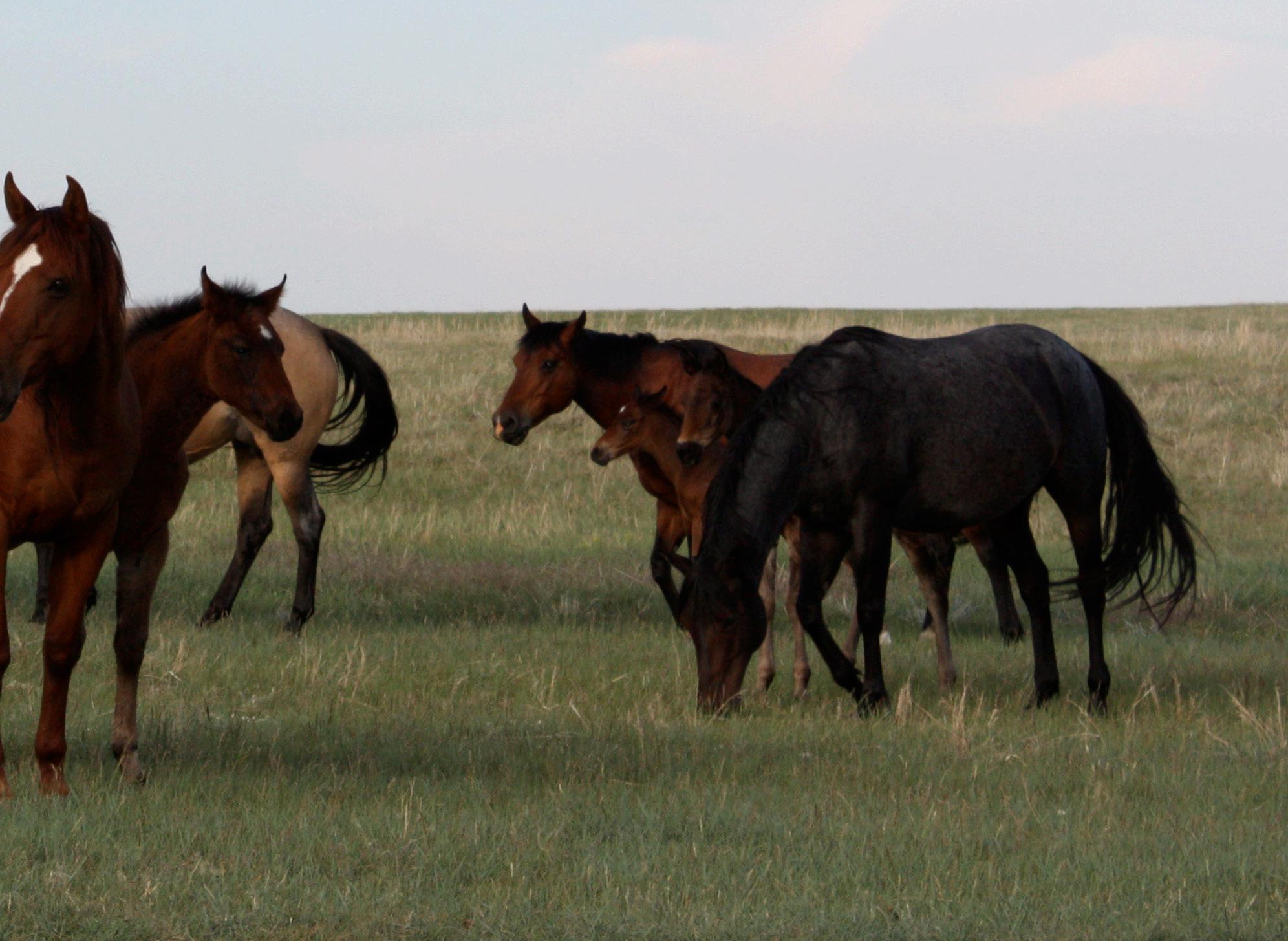
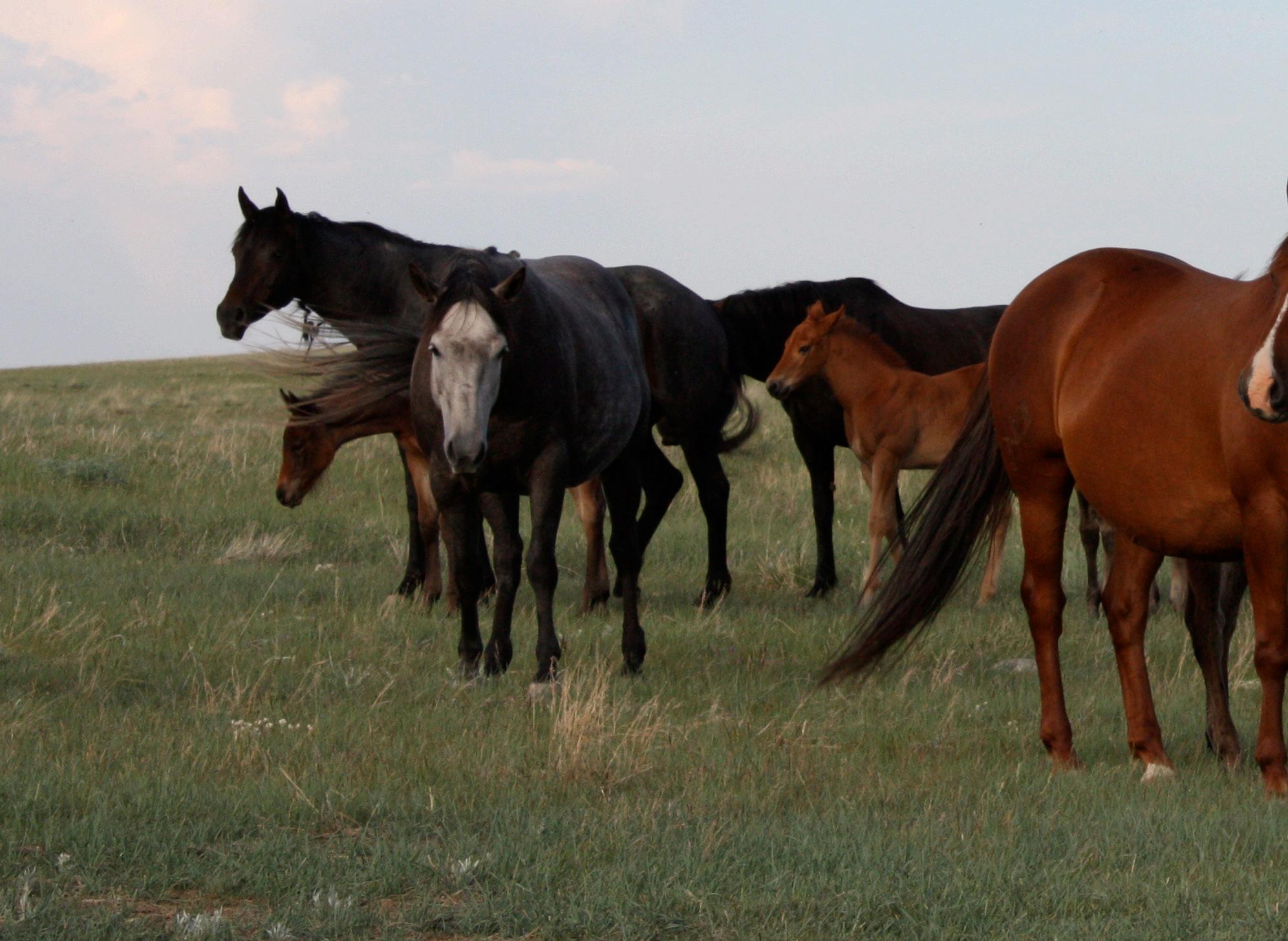
Between my husband and I, we have come to know, love, and live in several small towns and a half dozen farms.This was not out of choice, but because our parents’ farms, and then our own farms, were entombed beneath concrete with the promise of “bigger things,” then laid to rest permanently under the compulsions of “progress.”
Our journey through agriculture pushed us both upstream and down, and to neighboring rivers. Closed eyes, and backwards looking, we still know each inch of every piece of land from our past, by taste, touch, smell, and sight, mostly because of the hills we tried to hold water from going down, and the same hills we tried to convince cattle to go up.
Though our journeys took us many places, we never felt like we were in transition, because our foundation is the land, and we belong to agriculture.We have lived all our lives to farm, and farmed all our lives to live, and though it comes across as simple, we are astonished daily by the complexity of what it takes to accomplish this.
Now, as members of Montana Farmers Union, the metaphorical topography is much the same. As members of MFU, we belong to values set forth by those who came before us (long before the maps of progress were drawn), when economy was spiritual and less like the passive consumer economy its become today.The founding MFU principles, cooperation, legislation, and education, in any ascension of order guide our farm today.
Our belonging to Montana Farmers Union is about more than our current farm. It encompasses every past farm and every future farm that is working to hold intrinsic value in an ever-shrinking agricultural space.We belong to MFU because the ambience of the family farm should be more secure and more real than in the imagination of one’s own mind.We cannot plant a field, lay out a fence line, run cattle, break horses, or feed local communities on principle alone.We do this together with other members, like minded, and grassroots.
We have lived and thrived in agriculture because of the efforts of our family, friends, and neighbors teaching us endless lessons, and in this way also belonging to agriculture.The power of belonging to Montana Farmers Union is in each and every member that has taken a stand for agriculture by belonging before us and those who will take a stand for agriculture by belonging next.
Ambassador Carissa McNamara - Flathead
Continued on next page
Continued from previous page
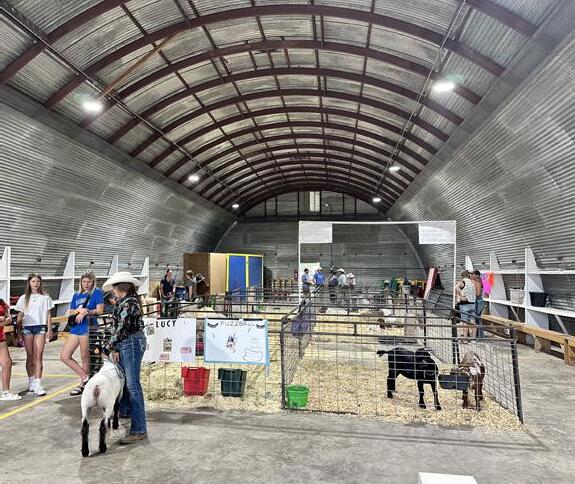
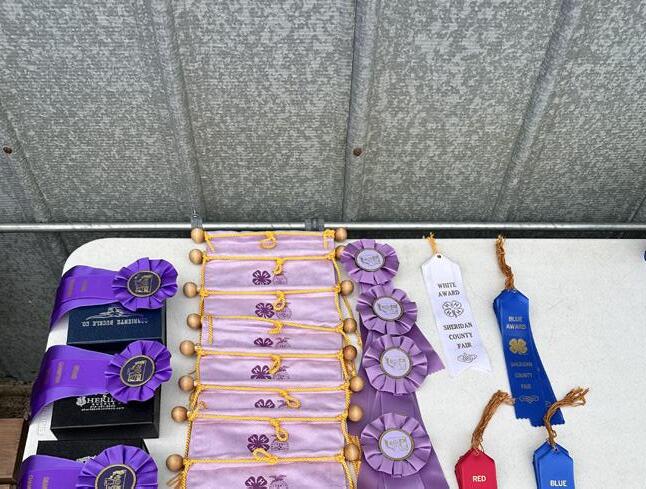
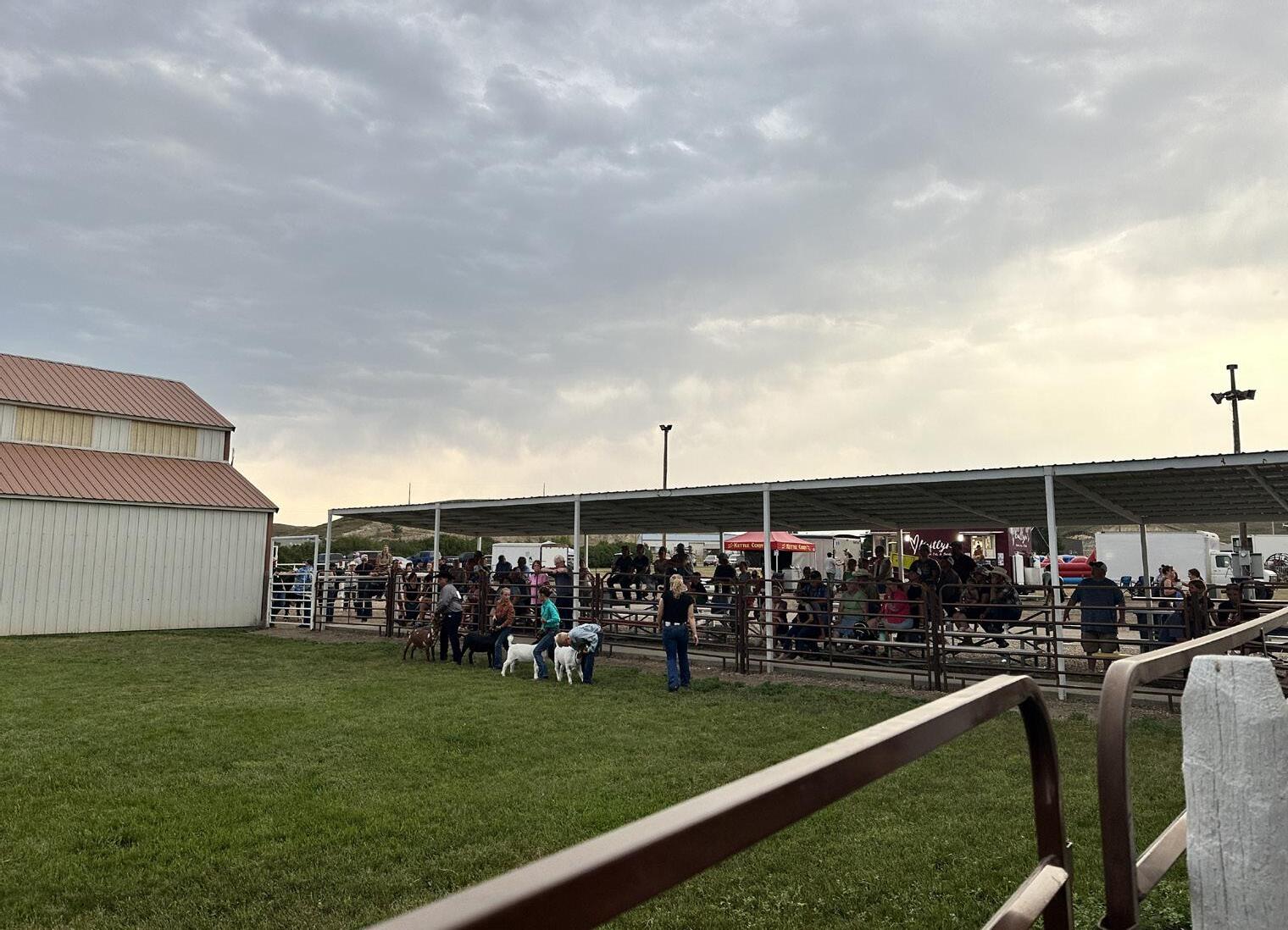
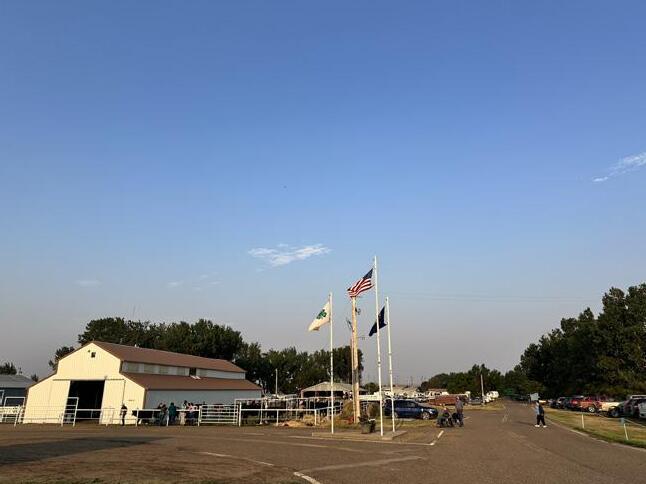
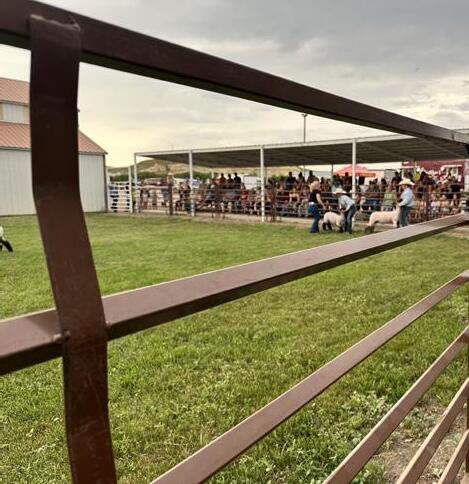
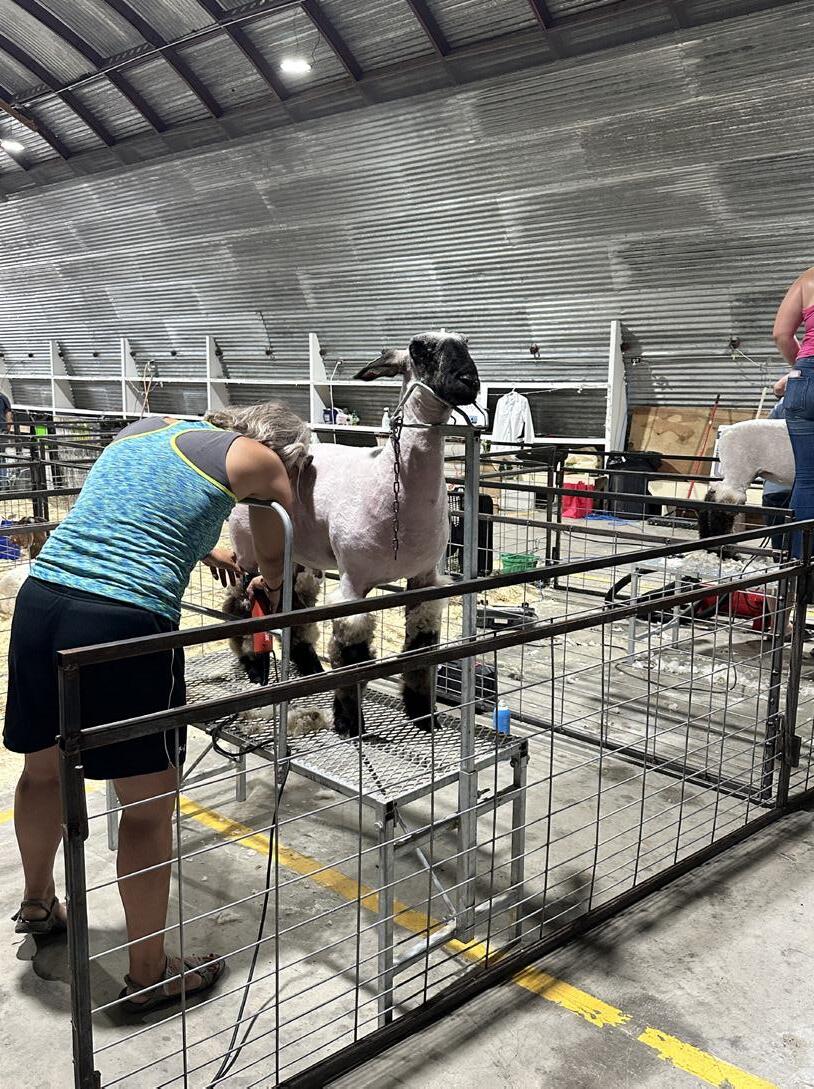
Fair week in Montana for kids in 4-H is more than just a highlight of the season – it’s the moment when hard work, responsibility, and countless early mornings pay off. And, if you’re lucky, the fair is a chance to be part of something deeper. For me, that chance came in the form of volunteering at several 4-H livestock shows last summer.
At the core of every fair lies the livestock barn – a noisy, bustling hive of activity where kids as young as eight are washing, brushing, braiding, and caring for their animals.This 95-degree evening in Plentywood last summer is one more lesson in animal care these youth are learning. Fans are blasting, and cool water baths are giving the animals a bit of reprieve from the hot day. For 4-Hers, the journey to the fair started months – sometimes years – earlier. Projects begin at home in the barn, the pasture, and the yard. Members learn how to feed, train, and care for their animals while keeping meticulous records and participating in local workshops.The fair is both the finish line and the launchpad: A culmination of learning and the beginning of new goals. And tonight is the night: show time.
During the Sheep Show, I had the best job – I handed out the ribbons.Throughout the evening, I stood shoulder to shoulder with longtime 4-H leaders and parents, all of us offering calm assurance as wide-eyed kids walked their sheep around the ring.What struck me most was the maturity of these young people.The kids discussed livestock management, project goals, feed rations, market conditions, and meat quality with the livestock judges.Their conversations weren’t small talk.They were the language of agriculture, of stewardship, of agriculturists. I could see the pride glowing from the kids as I congratulated each one and handed them a ribbon.
Volunteering gave me a new appreciation for what the 4-H livestock show really is. It’s not just a competition. It’s a launchpad. I watched teenagers gently mentor younger exhibitors. I saw kids thank the show judge, shake hands with competitors, and sweep the barn aisle without being asked. And I saw dozens of volunteers quietly ensuring the whole thing ran smoothly by checking animals, recording scores, organizing pens, running gates, and more. By dark, I was sweaty, but I was also smiling. Because in giving my time, I’d been gifted with something too, a glimpse of hope that Montana agriculture has a bright future.
Because behind every ribbon is a story, and sometimes, the best part is being there to help write it. I am thrilled to be volunteering again this summer in my region. See you all at the County Fair!
Ambassador Mary Jenni - Central Montana
The 2025 Montana Legislative Session is over! After an absolute whirlwind of bills, committee meetings, testimony, and action alerts, the members of MFU have made a difference.The MFU members in the Eastern part of the state had a particularly strong showing, if I do say so myself.They actively reached out to their representatives and committee members and did not let our legislators forget about the Eastern part of the state.Thank you! Grassroots legislative participation takes all of us!
Now what? The slump of post-legislative session, combined with the crazy busy summer schedule … understandably so, means it is difficult to put more on your plate. BUT.
Montana Farmers Union is a grassroots organization for a reason. MFU is directed through the policy that our members propose, brainstorm, and vote on. Our policy determines how MFU acts and responds at the state and federal level. Every year at our annual convention, MFU members vote on that policy.
A grassroots organization needs its members to participate – otherwise, it is no longer a true grassroots structure. Participation on your part, as a member, is vital to improving MFU. Before convention is upon us (October 31-November 1 in Lewistown), an MFU policy committee is formed to comb through the existing MFU policy and make improvements, additions, and set legislative priorities for next year.
Your participation in the policy process could be as simple as reading through the 2024-2025 MFU policy book and messaging an Ambassador any changes that you would like to see.You could join the MFU Policy Committee and be a part of the team that tackles the nitty-gritty.You could write new policy and submit it to the committee to be reviewed.You could let an MFU staffer know about an issue that is impactful or important to you and ask that it be addressed in the Policy Committee. Some members are deterred from the policy process because it might seem intimidating, or too technical. MFU staff are here to make that engagement as easy and seamless as possible. Our grassroots organization needs you to come to the policy table and share your thoughts, issues, and hopes for the future.
The bottom line: For MFU to stay grassroots and improve, we need members to engage in the policy process. It is the other side to legislative participation. Please, do not let the chaos of summer limit your legislative involvement.
Ambassador Eleanor Dutton - Eastern MT
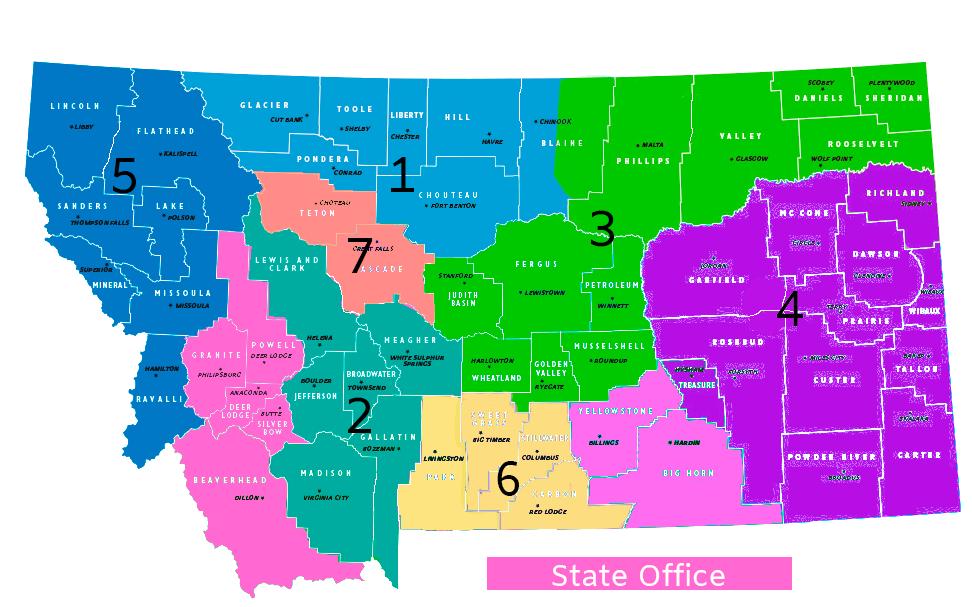
TETON/CASCADE (7)
There is power in belonging! I work a lot with youth, particularly members of 4-H and FFA.These very large and powerful youth organizations are recognized, known, and respected around the globe in the agricultural community.Why? These organizations create safe, diverse, empowering learning environments for youth to develop leadership, personal growth, and career success. Many of today’s farmers, ranchers, and members of rural communities look back on their involvement in FFA and 4-H with a smile on their faces and fond memories.This feeling of inclusiveness and engagement does not have to end with youth. Montana Farmers Union is a place where these positive experiences and a supportive atmosphere can continue throughout your life.
Montana Farmers Union membership is diverse and the grassroots organization offers an array of opportunities for engagement and involvement no matter where you are in the agricultural industry. Over the past year, I have witnessed MFU members testify at state and national legislative sessions to tell their stories and make a positive difference in the lives of others. MFU holds events like the NFU Legislative Fly-In held in Washington, D.C., the Helena Drive In, and Week of Action to equip members with tools to make a difference.
Maybe legislative action is not your cup of tea, but you are passionate about creating strong businesses where producers work together to achieve more. I have seen the cumulative effects of livestock producers banding together to form the Glacier Processing and Montana Premium Processing cooperatives and become USDA certified processing plants.There are many other cooperative ventures taking place, including food hubs, child care, and transportation.
My passion is education. I believe every individual should have the basic knowledge of where their food came from and how it got to their plate.Working with both youth and adults to educate in and about agriculture is my passion. I am so blessed to have been recently promoted to MFU Education Director and get to share my passion with youth and adults through camps, programs, and events.
Belonging to groups is not reserved for youth. Don’t leave out important lifelong learning opportunities like those offered through Montana Farmers Union.
Ambassador Jodi Koterba- Teton-Cascade
There are many reasons why I became a more engaged member of MFU. One of those was the promise, and delivery, of grassroots member-driven and created policy. Policy guides our leadership and members during legislative sessions here at home and in our Nation’s Capitol. It is our roadmap to a unified voice. Knowing where we are headed and how we’ll get there is battle No. 1 – then it’s advocacy for our organization and ourselves by sharing your story, confirming the importance of the family farmer and rancher to law makers and policy advisors.
Early engagement through reviewing and revising, I believe, will lead to policies that better reflect the needs and concerns of those affected. Being on the offense may be more effective for policy preparation. Being prepared with real life examples to illustrate support of our policies is impactful for other members as well as policy makers.
Participating as a member in policy review and/or creation is an eye-opening experience and increases the knowledge base of our organization and the views of previous committees.There is a wealth of knowledge and pertinent information just within our MFU state policy – and check out the NFU policy book too! Taking part in the process early on will provide a more comprehensive, inclusive, and sustainable roadmap for MFU, and will most certainly give a sense of ownership and responsibility to implement said policies. Having diverse perspectives early on will also lead to better, stronger policy and more effective decision making.
At first, I was hesitant to engage in policy creation or the legislation process, but that was because I did not think I had the skills or experience to do so. I was wrong. And you probably are too. For me, listening to policy committee webinars and being in the room during policy debate sessions at state convention led to having the confidence to do things like take part in policy discussions and serve on state policy committee to being part of our state delegation at national convention.These experiences also provided me with the confidence, tools, and knowledge to participate in legislative drive-ins, testifying multiple times during the Montana Legislative Session, as well as participating in the NFU Week of Action and D.C. Fly-In.
The sense of ownership is an empowering one. A person doesn’t know what may come about from taking one extra step, which could lead to multiple doors of opportunity for knowledge, self-discovery, positive change, networking, and connection, all in the name of advocating for and supporting our fellow family farmers and ranchers
Start at home, start in your community, start with MFU – just start!
Ambassador Samantha Ferrat - Missouri Headwaters
(6)
Though it is that time of year when the length of the days seems to be surpassed only by the length of the to-do lists, I’ve found myself reflecting in the pauses and as my mind wanders while making passes in the field or building paddocks.
Being relatively new in my role at MFU, as I’ve begun connecting with members in the local community and attempting to invite them in, I have been ruminating on just what it is that I find valuable about being a part of Farmers Union in the first place.
I think we can all agree that on any given farm or ranch there is no shortage of things to be done, and similarly, no shortage of ways a farm can positively impact its community and landscape. But at some point in this journey of learning to steward land, livestock, and relationships, I think we all must admit we simply cannot do it alone.
One farmer conserving soil won’t prevent a dust bowl. One drop of rain won’t nourish a crop. A single voice advocating for farmers is unlikely to bring about largescale change.
But collectively – a thousand soil-health-minded farmers, a thousand drops of rain, a thousand voices – now that just might drive change. And that’s the power of Montana Farmers Union, a truly farmer-led, grassroots organization that fights for those of us working on the land.
As a beginning farmer in the landscape that is 2025, getting started on one’s own feels like a fool’s dream.Without a community who cares about the newcomers, who mentors them, and gives them opportunities to establish themselves and grow, I wouldn’t stand a chance. Even so, some days it feels like a pretty slim chance. But the point is this: Agriculture was never meant to be a solo venture.
If we want to see real change in policy and in the culture and on the landscape at large then we must act collectively. In times when most of the system gouges producers of their hard-earned dollars, and the public is largely unaware of their plight, I believe that, just like the beginning times of Farmers Union in this country, we need to come together now more than ever.
Support your neighbors and fellow producers. Remind them we’re in this together. And while you’re at it … ask them if they want to join Montana Farmers Union.
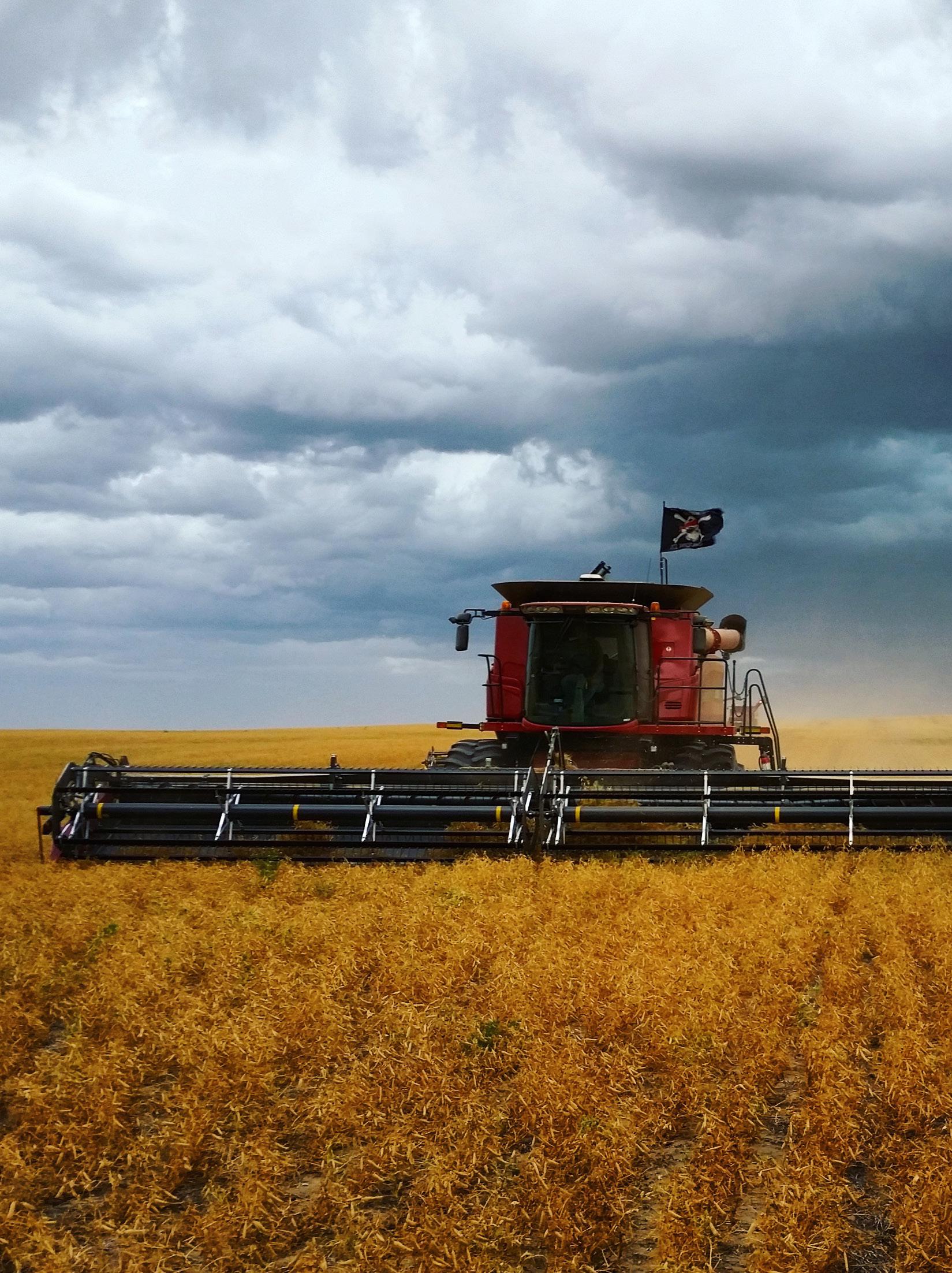

By John L. Hawley, Director of Communications, MSU Extension
Photos courtesy MSU-Extension
Agricultural organizations and neighbors have a long history of responding to disasters and crises of all shapes and sizes – and Montana State University Extension has proven to be a trusted partner in both preventing and responding alongside community members.
Examples of disasters and crises are wide-ranging, from major weather events to disease outbreaks to significant economic downturns to train derailments. Drought, floods, fires, invasive species, and livestock disease are just a few of the disasters routinely impacting Montana agriculture.
Organizations and producers alike should be prepared for disasters before they occur. Challenges such as flooding or rapidly spreading livestock disease can be unpredictable in scale, and an inadequate response can prolong the impacts of a disaster and potentially create a lack of trust between producers and industry leaders. Determining the role and appropriate response for your organization, operation, and self is critical. Government officials usually take the lead, forming crisis response teams and communicating with the public. During a disaster, organizations and MSU Extension are often called upon to serve on response teams, facilitate community events, and provide expertise.
Montanans can rely on MSU Extension as a trusted response and recovery partner. Extension’s roots in disaster and crisis response can be traced to the early 1900s, and our contributions continue today. In response to significant droughts in 2021 and 2022, MSU Extension formed an internal working group and launched a webpage with new and existing resources addressing all aspects of drought impacts. Extension agents and specialists offered 55 drought-focused seminars across Montana to more than 1,500 producers and community leaders. The webpage and seminars, in addition to increased local support from agents, complemented existing Extension and industry resources and provided communities with critical aid.
Extension also works proactively with communities to prepare for disasters. In 2024, agents and specialists organized a Northeast Montana educational tour focused on the threat of feral swine. Experts suggest feral swine could invade Montana in the coming years, potentially wreaking havoc on agricultural land. More than 350 people, including members of various agricultural organizations and government officials, attended the tour to learn how to prepare and respond if feral swine arrive. Activities like these present a greater opportunity for partnership between Extension and agricultural organizations and producers.
I encourage MFU members to engage with industry stakeholders to prepare for disasters. Supporting local crisis response plans and teams by joining other producers, government officials, and community members are just a few steps you can take to potentially minimize the impact of local or statewide disasters. Partnering with Extension offices and campus specialists can connect your community with land-grant university experts and reliable resources before, during, and after a disaster strikes.
Montana State University is a member of the Extension Disaster Education Network, developing educational resources and collaborating with other experts at land-grant universities.
To learn more about how Extension supports agriculture during a disaster and explore helpful resources, visit extensiondisaster.net.
Connect with your county or reservation Extension agent by visiting montana.edu/extension.

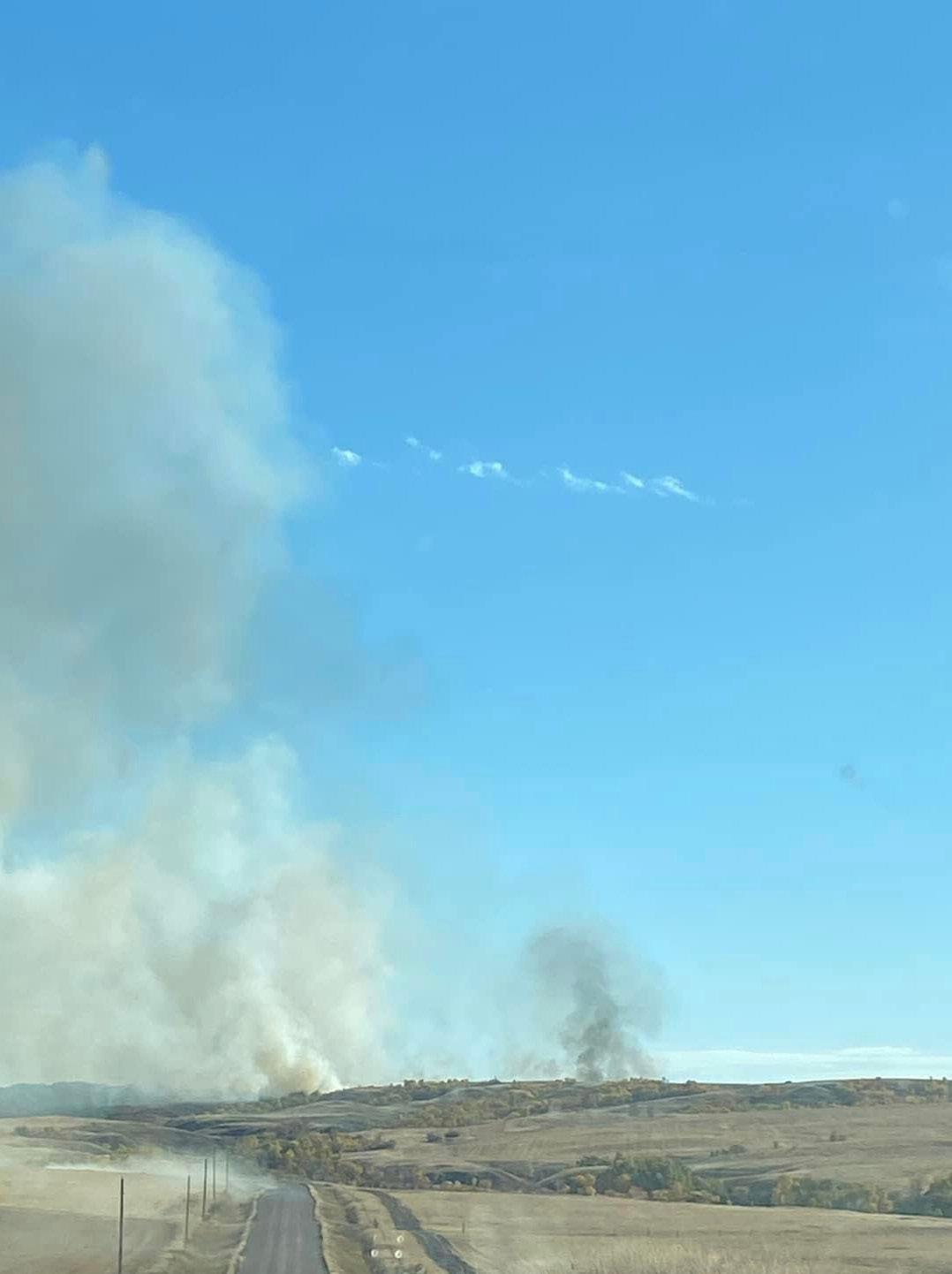
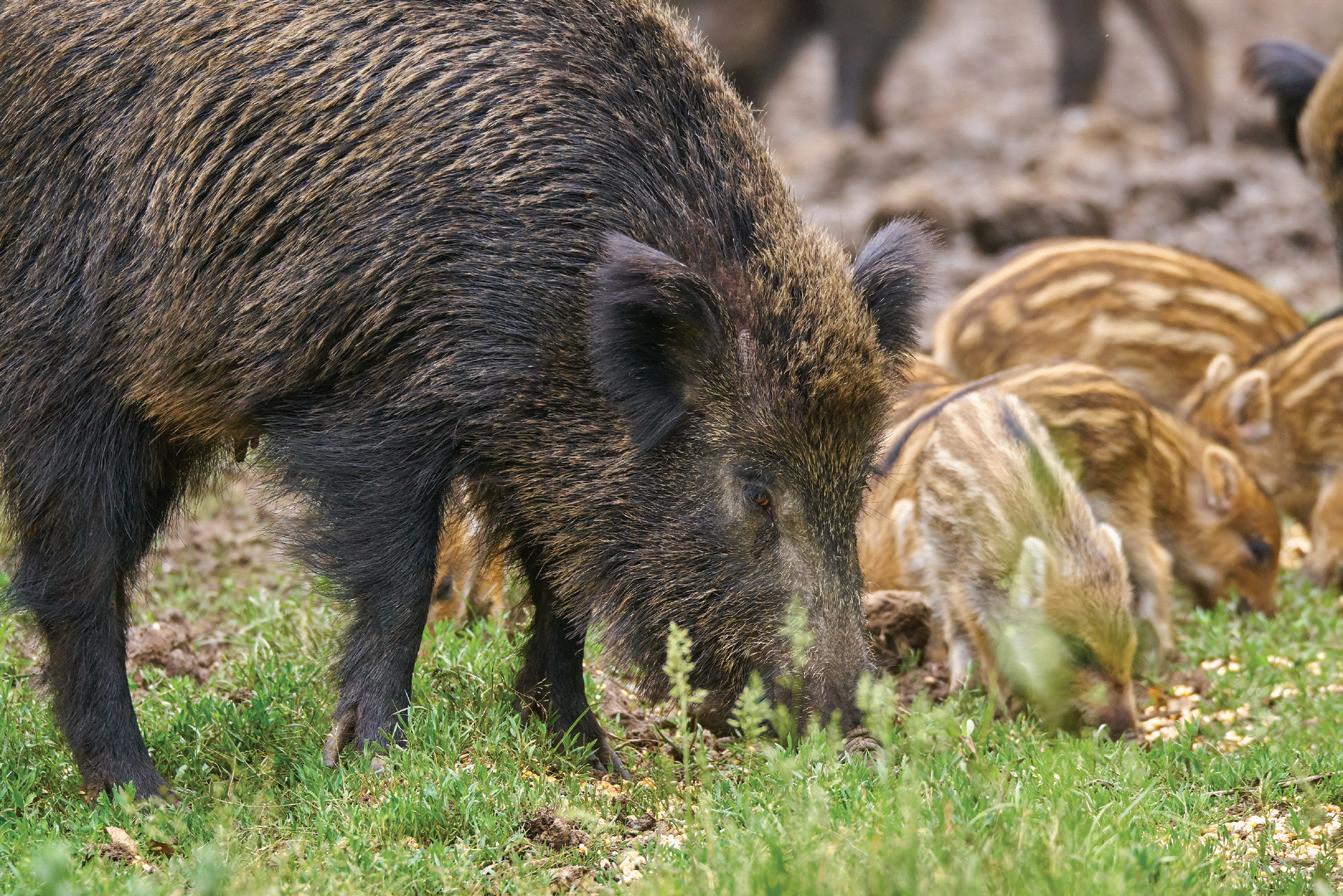
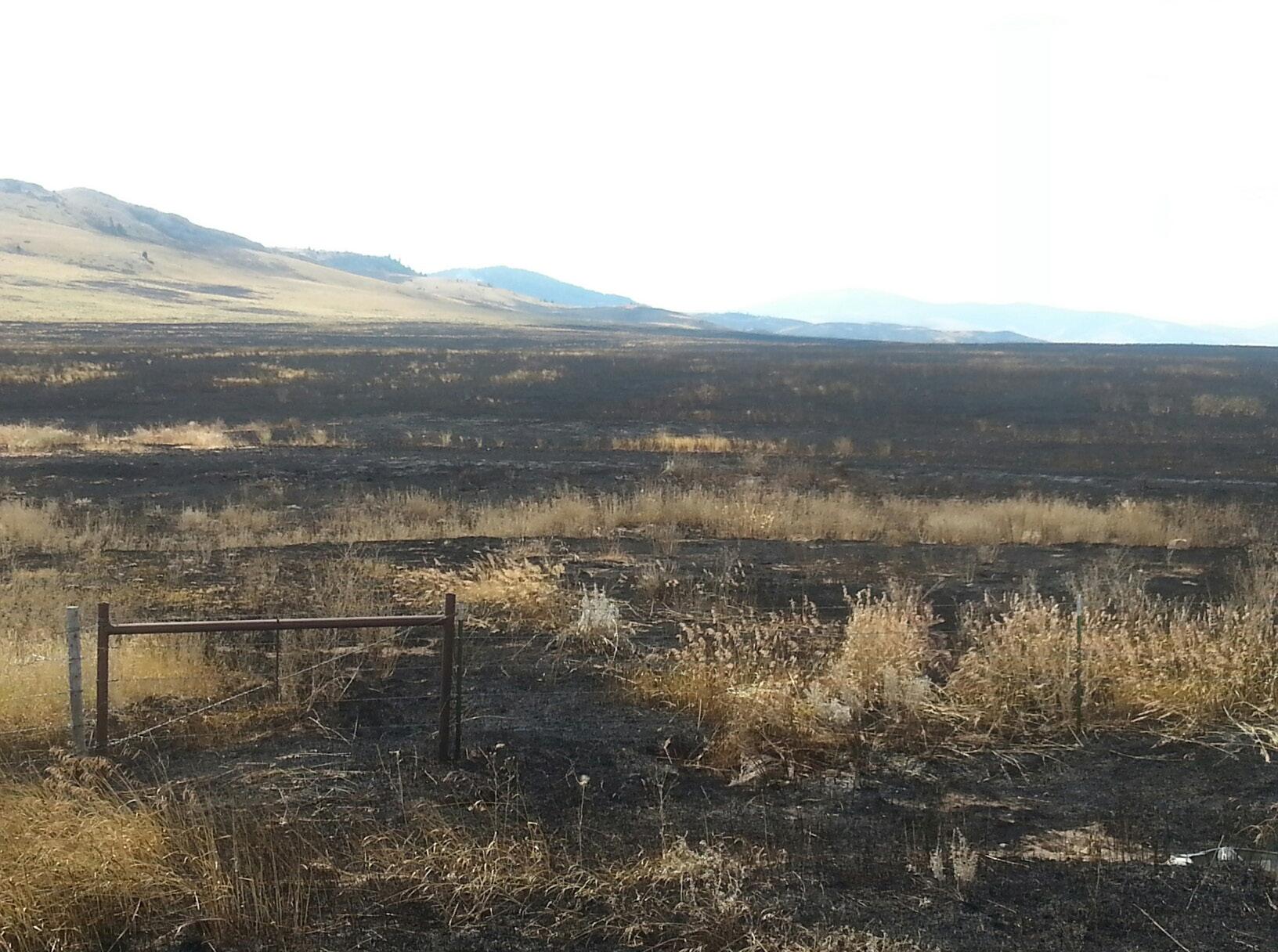

If you’re not sure exactly what you’re ordering when you purchase a quarter, half, or whole animal from your local rancher, you’re not alone.
“Most folks love the idea of food raised off the neighboring ranch, but they don't know what a quarter or half beef, pork or lamb, looks like in the freezer, or how to communicate how they want that beef, pork, or lamb to be processed to the local butcher,” said Carissa McNamara, who serves as MFU’s ambassador in the Flathead area.
Earlier this spring, McNamara organized a Know Your Cuts 101 workshop in Kalispell to connect ranchers and consumers. The workshop was a great educational opportunity for ranchers to learn how to better communicate with clients about butchering and packaging, and for consumers to learn about butchering and packaging, as well as how many pounds of meat they need to feed their families, how much freezer space that takes, and how to communicate how they want the meat packaged, McNamara said.
Buying locally ultimately gives consumers more options and ranchers more opportunities, strengthening communities, fostering entrepreneurship, and promoting agriculture, she said.
“We are always trying to look at our food systems from the consumer perspective. There are only two percent of farmers and ranchers left, and that means we need to invite folks to the table who put high value on the products we create and then stand next to us on the advocacy platform,” McNamara said.
Make sure you talk with your local butcher when you call with your cutting instructions. Don’t be shy asking questions about the best cuts for your family’s eating preferences.
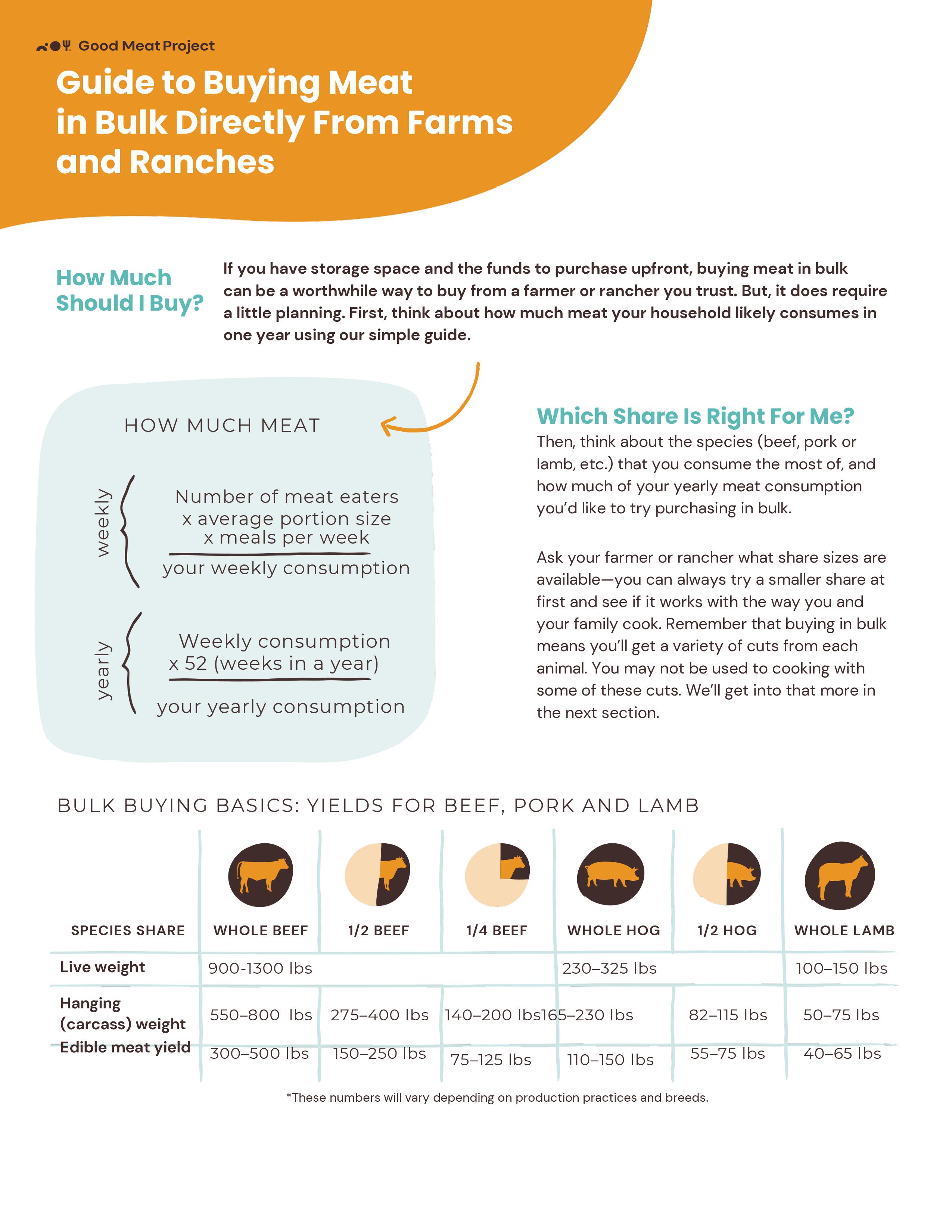
Continued on next page
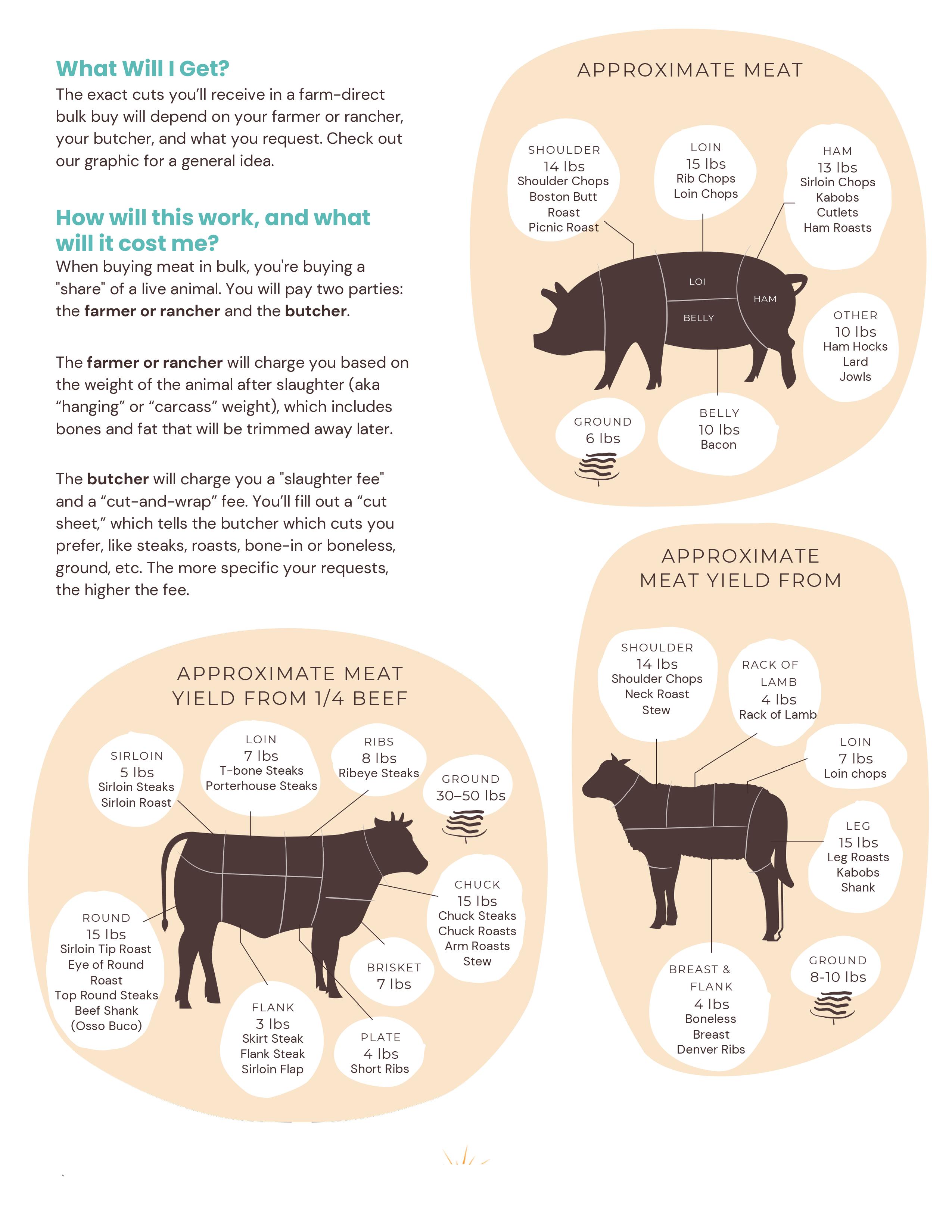
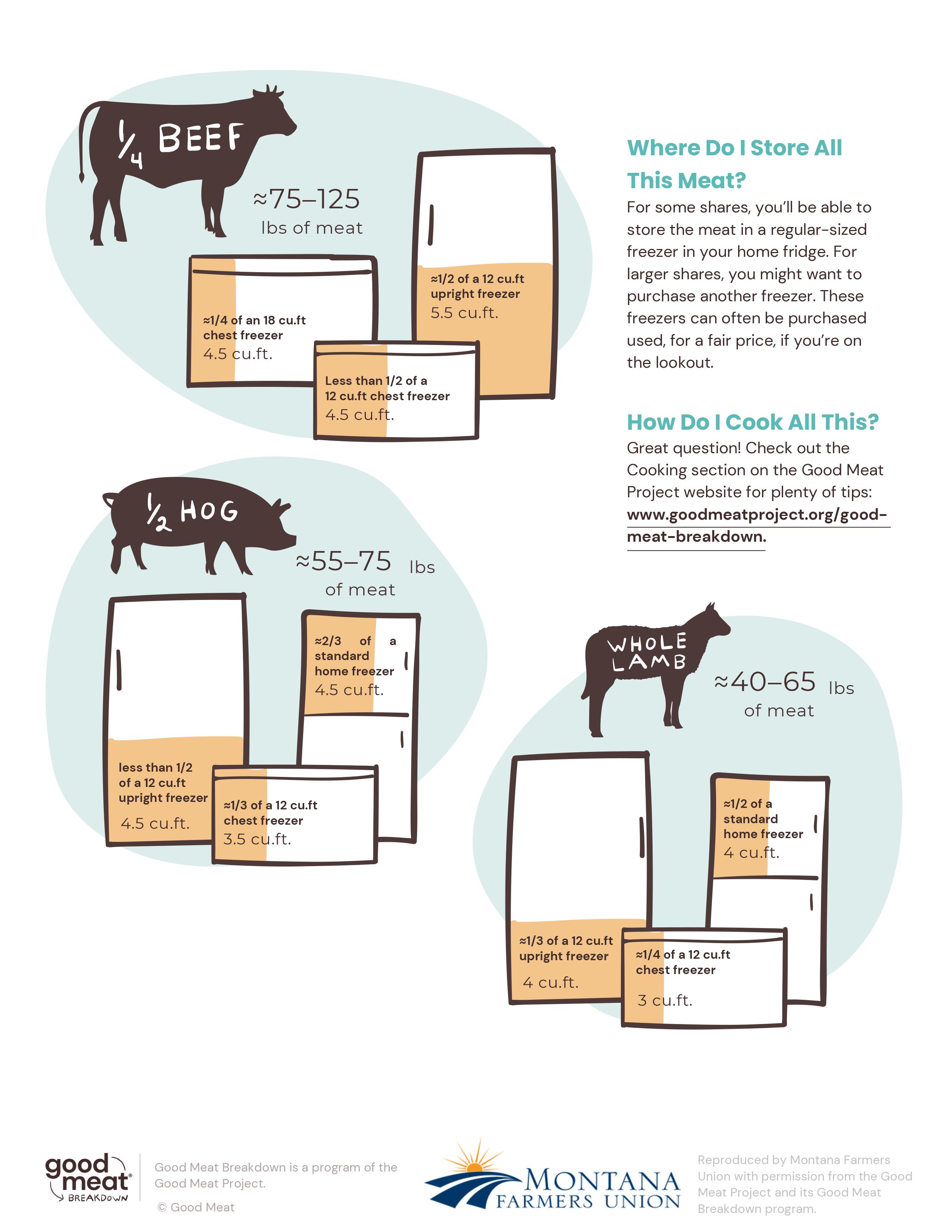
By Rachel Prevost, Member Services & Government Affairs Director
How do we keep or bring back the next generation to the family farm or ranch?
This question has a multifaceted answer. Ensuring we have good schools, accessible and quality healthcare, rural broadband, good roads and infrastructure, land, and a social community to join are all pieces of the answer. Another piece, that people tend to shy away from addressing, is farm finances.
Learning physical, mechanical, and stewarding skills is necessary for returning to or beginning an operation. Just as important is learning about and taking responsibility for farm finances, assistance programs, and resources.
But, money is a touchy subject.
Farm and ranch finances can be confusing, stressful, and overwhelming for the current generation, let alone the next generation. However, no real-time guidance for upcoming leadership could mean long-term trouble for the family farm. In instances of farm succession planning, early communication and education will help the next generation understand farm finances, expenses, and any other financial implications for the operation, ultimately easing the stress of succession planning. Early and frequent financial education also means a smoother transition of responsibility with leaders who are more confident about decisions and their impact on the overall operation.
A few actionable steps to start this education and these conversations on your farm include:
• The next time you work on crop maps, prepare information for FSA/NRCS programs, prepare taxes or work with your accountant, prepare payments or applications for operating loans and credit, renew land leases, pay bills for inputs/ seed/mechanical fixes, take 10-15 minutes to explain what you are doing and why this needs to be done. This time will help everyone involved on your farm know how financial decisions impact your farm and lend the necessary insight to start understanding these complex issues with a trusted person by their side.
• Make sure your next generation knows where the crop maps are kept, how livestock record keeping systems work, and where important farm documents are, including knowing the status of the estate plans/wills, etc. (Bonus: This means you too will know where all these important documents are, keeping you organized for whatever situations may arise.)
• Be frank and upfront about the true costs of your farm operations (paying input bills, loan payments, farm insurance, equipment repairs, and more).
• Check out Montana State University Extension resources on all these topics to help you start – and continue – these conversations and transitions of responsibilities. You can find those here: https://www.montana.edu/extensionecon/ publications.html
generation of family farmers and ranchers. The next time you attend an MFU event such as Ag Financial Literacy 101, Youth Empowerment Loan Program Workshop: Understanding Youth FSA Loan opportunities, Farm Family Succession Planning Workshops, bring along others from your operation.
Not only do these MFU workshops help the next generation, but they can help you expand your own understanding and re-evaluate if your systems and estate plans are working for your farm.
Don’t assume the next generation understands farm finances or that they will just “figure it out.” Having the farm finance conversation can start to build confidence in the next generation by showing that you take them seriously and that you value their involvement. When you bring the next generation to the table, they may ask questions that bring a new perspective. Plus, teaching and explaining these finances often helps deepen your own understanding of your farm’s financial footing.
If you are the next generation reading this, I encourage you to ask these questions and be willing to take 10 minutes to listen:
• Ask to sit down with the crop maps and leases and to learn the farm finances, taxes, insurance, expenses of inputs, seed, and equipment fixes.
• Ask where the important farm documents are kept and who the attorneys and accountants are.
Whether you’re stepping into leadership on a generational operation, or you’re looking to start your own, MFU is here to help both with educational programs and a grassroots community passionate about continuing family farms and ranches. Come join one of our MFU educational events on these topics and start laying or further fortify your farm finance foundation.
The next generation looks very different for every farm, ranch, and family – whether it’s kids, grandkids, extended family members, close friends, apprentices, interns, or bringing on a first-generation agriculturist who is dedicated to production agriculture. Whoever the next generation is, everyone involved with day-to-day operations on our family farms benefits from robust financial education.

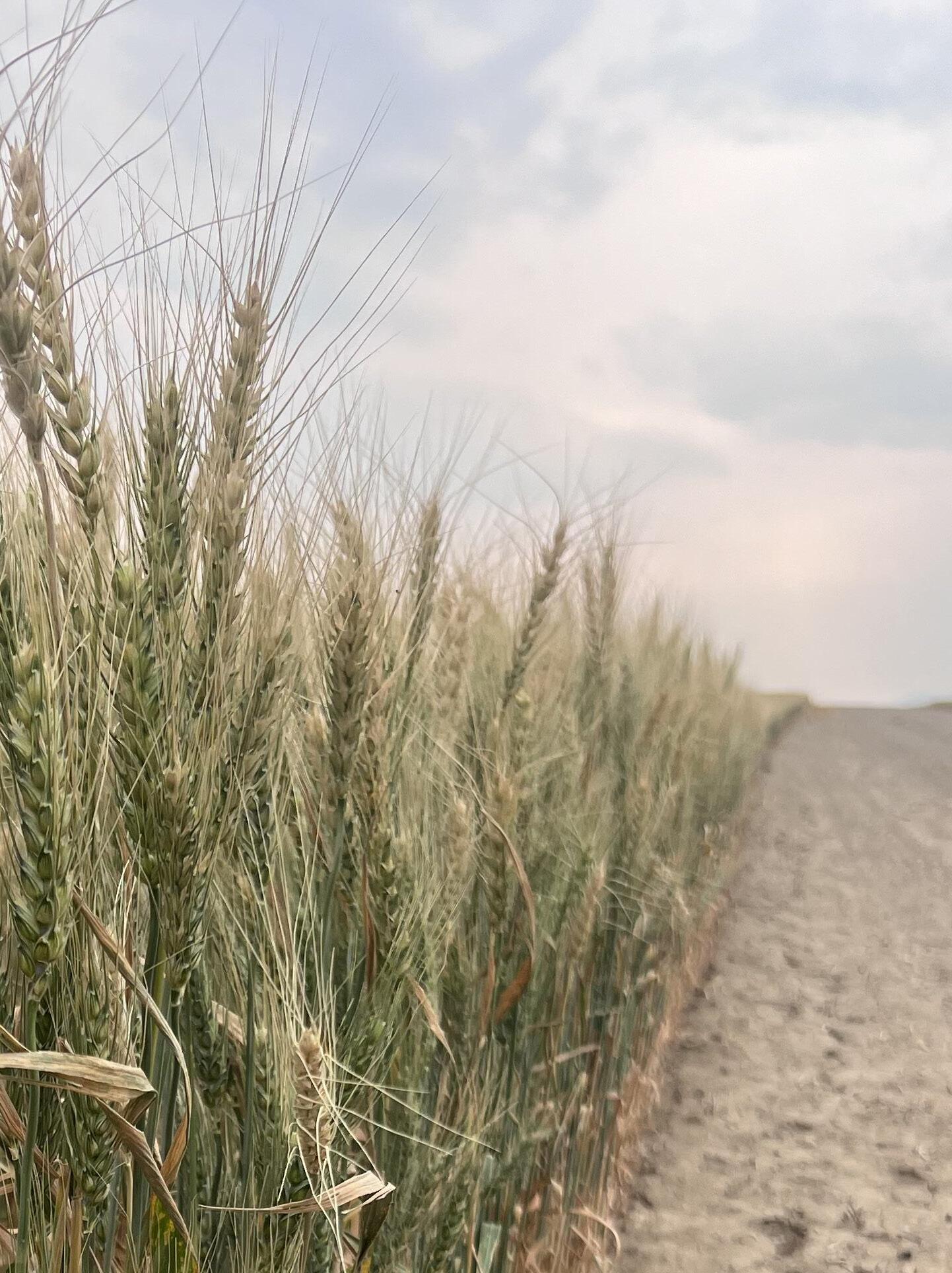
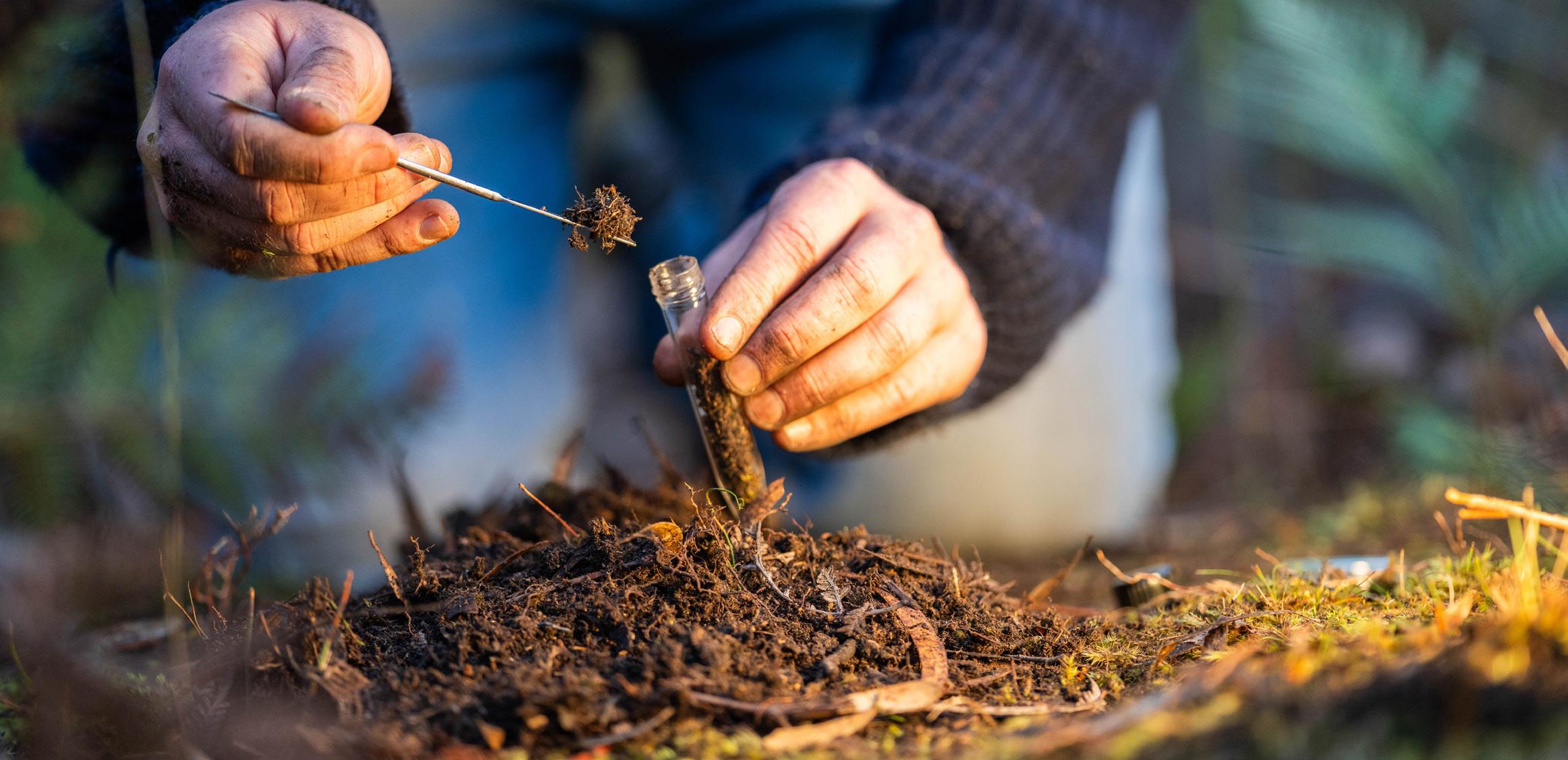
Montana Farmers Union has launched a new, free cohort centered on regenerative agriculture, open to all interested individuals. Whether you’re a seasoned producer familiar with regenerative methods or just beginning to explore them, you’re encouraged to join all or part of this program. This initiative was developed in response to members’ requests, reflecting MFU’s strong grassroots approach to shaping programs and policy.
Participants in the cohort benefit from monthly virtual coffee chats featuring expert insights and group discussions, handson learning opportunities through in-person events and farm tours, one-on-one peer mentoring, and access to a growing toolkit of practical resources built throughout the program on the Farmers Union Learning Lab. The program will run through this October.
Our goal is to build a supportive network in which participants can share ideas, ask questions, and learn from one another. The cohort is open to anyone in Montana interested in starting, enhancing, or deepening their understanding of regenerative farming.
The cohort kicked off April 15 with Marnie Thompson from NRCS discussing the six regenerative principles. A video recording is available on the Learning Lab platform. The first virtual coffee in May featured Kate Vogel, seed advisor from North 40 Ag, on using cover crops.
The Regenerative Farming Cohort will focus events and education on the six regenerative agricultural practices.
Cover the Ground: Maintaining soil cover using cover crops, mulch, or crop residue protects the soil from erosion, retains moisture, moderates temperature, and fosters a healthy environment for soil organisms.
Limit Soil Disturbance: Minimizing tillage or adopting no-till/no-dig methods helps preserve soil structure, maintain microbial life, and prevent erosion and nutrient loss, supporting long-term soil health.
Increase Biodiversity: Growing a variety of plants and incorporating diverse species into the farming system boosts ecosystem resilience, reduces pest pressure, and enhances soil fertility and pollination.
Keep Living Roots in the Ground: Keeping plants with living roots in the soil year-round sustains soil biology, improves structure, and increases carbon sequestration, ensuring the land remains productive and alive.
Integrate Animals: Incorporating livestock through managed, rotational grazing cycles mimics natural systems, enriches the soil with organic matter, promotes nutrient cycling, and reduces the need for synthetic inputs.
Know Your Context and Adapt: Understanding the unique characteristics of your land, climate, resources, and goals allows you to tailor regenerative practices effectively, ensuring they are practical, sustainable, and successful in your specific situation.
To learn more or register, contact me at jkoterba@montanafarmersunion.com or at 406-788-8816.













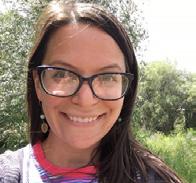

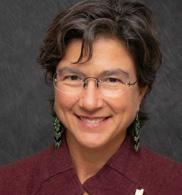
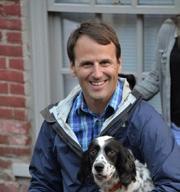
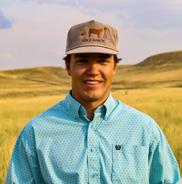




Ali Moxley is a food and agriculture-focused freelance journalist and grant writer based in Bozeman. She centers farmer perspectives, equity issues, and environmental stewardship in her writing. She has a master‘s degree in Sustainable Food Systems from Montana State University.
Tammy Howard is an Agriculture Specialist at NCAT, where she co-facilitates the Montana Farmers Market Network focusing on project and tools to support farmers market vendors.
John Hawley serves as Director of Communications for Montana State University Extension and has more than 10 years of experience working in Extension and higher education. Hawley is certified in crisis and issues management by the Association for Communication Excellence and has experience responding to a variety of issues impacting agriculture, including floods, invasive species, food security, and the COVID-19 pandemic.
Maura Henn is a Local Foods Systems Specialist at NCAT, where she coordinates the Grow Montana Food Policy Coalition and co-facilitates the Montana Farmers Market Network. She is a former farmers market manager.
Dr. Megan Van Emon is an Extension Beef Cattle Specialist at Montana State University. Her research focuses on supplementation strategies, cow-calf production, water quality, and bull development. Dr.Van Emon’s research and extension programs focus on ruminant nutrition and improving beef cattle production in Montana and throughout the United States.
Jasmine Krotkov is a Master Gardener with decades of experience designing and installing chinook zone gardens. She grows fruits and vegetables at elevation, where the growing season is short and the deer are hungry. She has taken time out from gardening to work as an advocate publicly for peace and a clean and healthful environment.
Nick Gevock is a campaign organizer for Northern Rockies Wildlands and Wildlife for the Sierra Club. He’s a hunter, angler and wildlife watcher who lives in Butte.
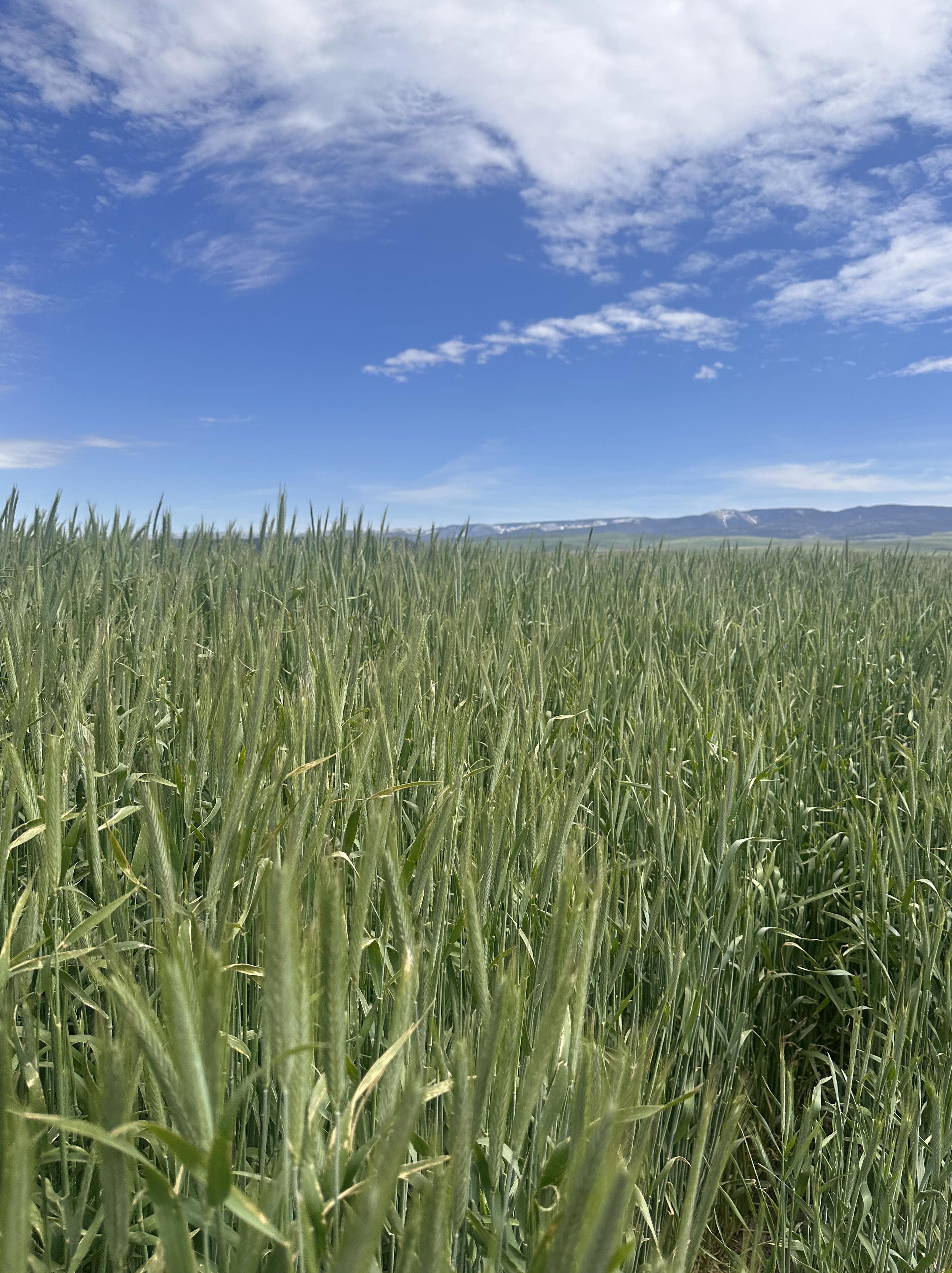
Reinhard Bold is a young farmer and rancher currently studying Ag Operation Technology and Diesel Tech at Montana State University-Northern. He is a past recipient of the Montana Farmers Union scholarship and is passionate about the future of agriculture. Reinhard brings a hands-on perspective to modern farming and rural life in Montana.
Shawna McCauley is a
Jodi Koterba Education Director and an Ambassador for Montana Farmers Union, developing curriculum, workshops, articles, and the Lunch & Learn Podcast to educate the public in and about agriculture. Koterba retired after 29 years of teaching high school agriculture and advising FFA chapters.Two agriculture curriculums written by her are currently sold nationwide.
Alice Miller is a Press Pelations Specialist with Montana Farmers Union and also serves as an MFU Magazine Co-Editor. Originally from the East Coast, she roamed The West as a newspaper reporter before settling down on her husband’s Hi-Line family farm and ranch, where they raise small grains, pulses, oil seeds, and Simmental Cattle.
Heather Link, the Communications Director at Montana Farmers Union, is also a Co-Editor and responsible for the layout and design of MFU Magazine. She holds a bachelor’s degree and over 15 years of marketing & design experience. Growing up, she visited her family’s farm on the Hi-Line, which is 110 years old and still operates today. She is married with two children and resides in Great Falls.
Rachel Prevost is the Membership Services and Government Affairs Director at Montana Farmers Union. Prevost grew up on her family’s farm and ranch in Northeastern Montana and was a 10-year member of 4-H and 5-year member of Montana FFA. Prevost studied Political Science, Communication Studies, and Public Relations for her undergraduate degrees and cares deeply about the vitality of our rural communities and the sustainability of family farms for generations to come.