
2026 STATE OF THE COUNTY AND INFORMATION GUIDE

2026 STATE OF THE COUNTY AND INFORMATION GUIDE


Established July 3



Monroe County, the southernmost county in the continental United States, is Florida 38th most populous, of 67 total counties. However, with our tourismbased economy, we serve far more people each year than just our permanent residents. The county comprises of the entire Florida Keys chain, the surrounding waters, and a largely uninhabited region of Everglades National Park and Big Cypress National Preserve on the mainland. Monroe County was the fourth county formed in Florida and originally encompassed all of South Florida south of Lake Okeechobee.
Statistics from https://edr.state. fl.us/Content/area-profiles/ county/monroe.pdf, https:// www.flhsmv.gov/, and Monroe County Tourist Development Council
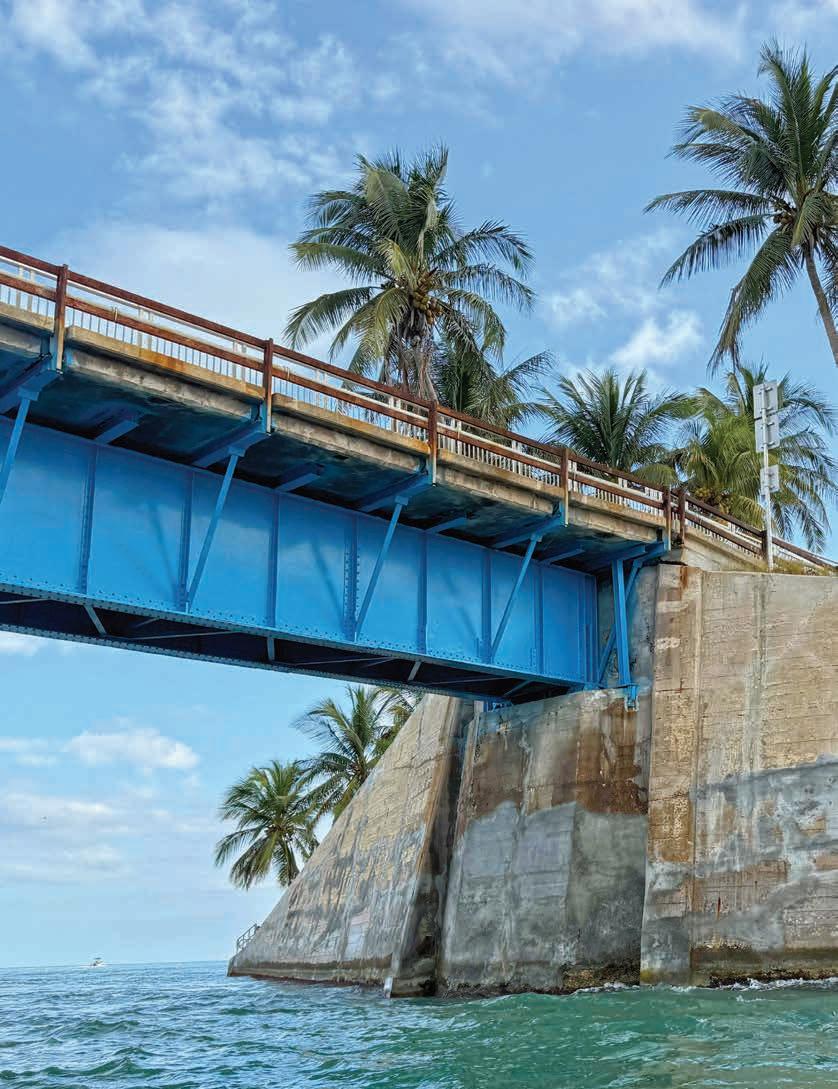
The Seven Mile Bridge as seen from the water. Photo by Kristen Livengood
The 2026 Monroe County State of the County and Information Guide is produced by Monroe County Public Information Officer Kristen Livengood and The Weekly Newspapers with the help of Monroe County’s Senior Management Team and staff.

Monroe County is often referred to as paradise. The natural environment, the amazing waters and diverse ecosystem, a strong economy, and the incredible people who live in or visit our community are front and center in our government’s passion to deliver excellent core services. Our staff, with the support of the Board of County Commissioners, works daily to maintain our infrastructure and assets, provide a safe environment, build a dynamic community with opportunities for our people and businesses, and ensure we maintain our special quality of life.
In 2025, Monroe County re-evaluated priorities to ensure we remain focused on core services, given that federal and state revenue sharing was reduced. We had to make some hard choices on which programs to grow and which ones to contract. Core services are those that the county government is required by law to provide. Mayor Michelle Lincoln will outline our primary accomplishments in her State of the County addresses throughout the Florida Keys, and you will read about the many accomplishments throughout this report.
Each department is proud of its accomplishments, and we will continue to focus on our mission: “To enhance quality of life by providing outstanding public service responsive to the needs of our citizens, our unique community and our environment.” This report highlights the projects, programs, and accomplishments that have improved our community. County staff work tirelessly to deliver these services, and we look forward to the future to continue and improve to make things even better.
It’s an honor to lead the county staff, with the help of so many seasoned, professional, and dedicated employees, and I look forward to 2026 with a strong, optimistic vision and plan to lead with proactive ideas to address the challenges we face to improve our special paradise.
Respectfully,

Christine Hurley, AICP Monroe County Administrator
This report is created each year to provide the community information on the State of the County, including the work of the previous year and a report card on the directives and policies of the Board of County Commissioners, with recommendations as to the actions or programs the county needs to implement to improve the county and safeguard the welfare of its residents and visitors. Within the report, each department has highlighted the directives they received from the commissioners and detailed how they responded, including resolutions, ordinances, regulations, and programs developed to serve our community.
Clerk of the Courts
Kevin Madok
305.292.3550, www.monroe-clerk.com
Sheriff
Rick Ramsay
305.292.7000, www.keysso.net
Tax Collector
Sam Steele
305.295.5010, www.monroetaxcollector.com
Property Appraiser
Scott Russell
305.292.3420 www.mcpafl.org
Supervisor of Elections
Sherri Hodies
305.292.3416, www.votemonroeflkeys.gov
Chief Judge
Timothy Koenig www.keyscourts.com
State Attorney
Dennis Ward www.keyssao.org
Public Defender
Robert Lockwood www.pd16.org
Board of County Commissioners
Mayor Michelle Lincoln
Mayor Pro Tem David Rice
Commissioner Craig Cates
Commissioner Jim Scholl
Commissioner Holly Merrill Raschein www.monroecounty-fl.gov/bocc
County Administrator
Christine Hurley, 305.292.4441 hurley-christine@monroecounty-fl.gov
Aide: ballard-lindsey@monroecounty-fl.gov
County Attorney & Risk
Bob Shillinger, 305.292.3470 shillinger-bob@monroecounty-fl.gov
Tourist Development Council
Kara Franker www.monroecounty-fl.gov/tdc
Land Authority
Cynthia Guerra www.monroecounty-fl.gov/landauthority
Scan QR code for county’s website
Monroe County | monroecounty-fl.gov
Assistant Administrator
Kevin Wilson, 305.453.8788 wilson-kevin@monroecounty-fl.gov
Fire Rescue
Chief RL Colina, 305.289.6323 Colina-RL@monroecounty-fl.gov
Emergency Management
Cory Schwisow, 305.289.6018 schwisow-cory@monroecounty-fl.gov
Engineering & Roads
Judith Clarke, 305.295.4390 clarke-judith@monroecounty-fl.gov
Facilities Management
William DeSantis, 305.292.4532 desantis-william@monroecounty-fl.gov
Parks & Beaches
John Allen, 305.453.8748 allen-john@monroecounty-fl.gov
Solid Waste & Recycling
Cheryl Sullivan, 305.292.4536 sullivan-cheryl@monroecounty-fl.gov
Growth Management
Emily Schemper, 305.289.2500 schemper-emily@monroecounty-fl.gov
Artificial Reefs
Dr. Hanna Koch, 305.289.2562 koch-hanna@monroecounty-fl.gov
Building & Permitting
Rick Griffin, 305.289.2521 griffin-rick@monroecounty-fl.gov
Code Compliance
Cynthia McPherson, 305.289.2508 mcpherson-cynthia@monroecounty-fl. gov
Planning & Environmental Resources
Devin Tolpin, 305.289.2500 tolpin-devin@monroecounty-fl.gov
Assistant Administrator
Tina Boan, 305.292.4550 boan-tina@monroecounty-fl.gov
Management & Budget
John Quinn, 305.292.4464 quinn-john@monroecounty-fl.gov
Purchasing & Administrative Oversight
Julie Cuneo, 305.292.4460 cuneo-julie@monroecounty-fl.gov
Community Services
Social Services & Veterans Affairs
Cathy Crane, 305.295.5150 crane-cathy@monroecounty-fl.gov
Fleet
Daryl Greenlee, 305.292.3452 greenlee-daryl@monroecounty-fl.gov
Medical Examiner
Dr. Michael Steckbauer www.monroecounty-fl.gov/ medicalexaminer
Airports
Richard Strickland, 305.809.5210 strickland-richard@monroecounty-fl.gov
Employee Services
Bryan Cook, 305.292.4458 cook-bryan@monroecounty-fl.gov
Information Technology
Alan MacEachern, 305.453.8792 maceachern-alan@monroecounty-fl.gov
Legislative Affairs
Lisa Tennyson, 305.292.4441 tennyson-lisa@monroecounty-fl.gov
Public Information Officer
Kristen Livengood, 305.680.8226 livengood-kristen@monroecounty-fl.gov
Public Library System
Kimberly Matthews, 305.587.3683 matthews-kimberly@monroecounty-fl.gov
Chief Resilience Officer
Rhonda Haag, 305.453.8774 haag-rhonda@monroecounty-fl.gov
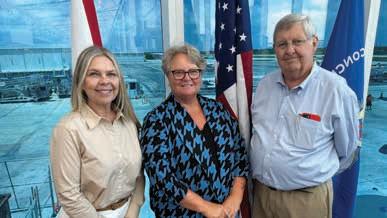
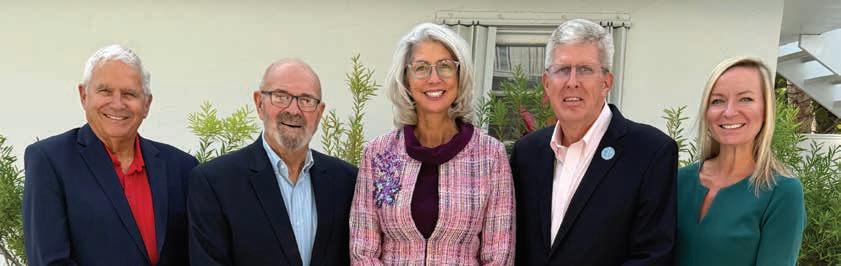
County Administrator Christine Hurley is responsible for the daily operations of county government, except for the constitutional offices. The public elects the constitutional officers, including the clerk of the court, sheriff, tax collector, property appraiser, and supervisor of elections. The county administrator, county attorney, land authority, medical examiner, and tourist development council are appointed by and answer directly to the Board of County Commissioners.
www.monroecounty-fl.gov/bocc

MAYOR
MICHELLE LINCOLN District 2
7280 Overseas Hwy Marathon, FL 33050
305.292.4512
boccdis2@monroecounty-fl.gov

MAYOR PRO TEM
DAVID RICE District 4
9400 Overseas Highway, Suite 210, Marathon, FL 33050
305.289.6000
boccdis4@monroecounty-fl.gov

COMMISSIONER
CRAIG CATES District 1
500 Whitehead Street, Suite 102 Key West, FL 33040
305.292.3440
boccdis1@monroecounty-fl.gov
EXECUTIVE AIDES

COMMISSIONER
JIM SCHOLL District 3
530 Whitehead Street, Suite 102 Key West, FL 33040
305.292.3430
boccdis3@monroecounty-fl.gov

COMMISSIONER
HOLLY MERRILL RASCHEIN District 5
102050 Overseas Highway, Suite 234, Key Largo, FL 33037
305.453.8787
boccdis5@monroecounty-fl.gov
Kacey Hunt Hunt-Kacey@ monroecounty-fl.gov
Tamara Lamarche
Lamarche-Tamara@ monroecounty-fl.gov
Amanda Walker Walker-Amanda@ monroecounty-fl.gov
Residents’ top 5 ranking of priorities include:
• Affordable/Workforce Housing
• Growth Control/ Overdevelopment/ Lack of Open Space
• Traffic on US1 and Road Safety
• Water Quality
• Wind Insurance Rates
2026 MONROE COUNTY BOCC MEETINGS
www.monroecounty-fl.gov/meetings
The BOCC holds open public monthly meetings. The dates and agendas are posted on the website. Meetings start at 9 a.m. Due to the geographic challenges of the 100-mile island chain, meetings are held on a rotating basis at three sites. The BOCC also holds public budget meetings and other special meetings during the year.
*Schedule subject to change
Sue Burke Burke-Sue@ monroecounty-fl.gov
Article VIII, Section 1(e) of the Florida Constitution states that, except when otherwise provided by the county charter, the governing body of each county shall be a Board of County Commissioners composed of five members serving staggered terms of four years. After each decennial census, the BOCC shall divide the county into districts of contiguous territory as nearly equal in population as practicable. One commissioner residing in each district shall be elected by the voters.
Nelson Government Center
102050 Overseas
Highway, Key Largo
305.453.8788
March 11
June 10
Sept. 9 Dec. 9
Marathon Government Center
2798 Overseas
Highway, Marathon
305.289.6036
Jan. 28
April 15
July 15
Oct. 21
Monroe County | monroecounty-fl.gov
Corie Abel Abel-Corie@ monroecounty-fl.gov
To enhance quality of life by providing outstanding public service responsive to the needs of our citizens, our unique community, and our environment.
Creating a better life every day for everyone in the Florida Keys.
Harvey Government Center
1200 Truman Avenue, Key West
305.295.4385
Feb. 18
May 20
Aug. 19
Nov. 17
www.monroecounty-fl.gov
Find the Board of County Commissioners, budget, county departments, projects, parks and beaches, legislative advocacy, permitting rules, hurricane preparedness and relief, department emails, phone numbers, and more.
HURRICANE INFORMATION
www.monroecountyem.com
Information Hotline: 800.955.5504 (activated for emergencies) Sign up for ALERT!Monroe: www.monroecountyem.com/alertmonroe /MonroeCountyEM
MONROE COUNTY SOCIAL MEDIA
/MonroeCountyBOCC @monroecountybocc flickr.com/monroecountybocc
Monroe County Fire Rescue: /monroecountyfirerescue
Key West Airport: /KWIAEWY /eyw_kwia Guardian Ad Litem: /galflkeys
Monroe County Libraries:
*See Libraries page for socials www.keyslibraries.org
Parks and Beaches: ParksAndBeaches.FUN /parksandbeaches
MONROE COUNTY TV (MCTV)
www.monroecounty-fl.gov/mctv
Comcast: Channel 76, AT&T U-Verse: Channel 99, Hotwire Fision TV: Channel 1615, ROKU, Amazon FireTV, Apple TV, online & mobile applications (iOS, Android), and the web.
Information Technology (IT) operates MCTV, the inhouse government television station that covers regular and special meetings of the BOCC, including Planning Commission, Code Enforcement hearings, and other live, pre-recorded, and original content. MCTV also delivers local election coverage, approaching weather and emergency information, a video bulletin board, and NOAA weather audio. See more on MCTV on page 40.
The Public Information Officer’s (PIO) primary responsibility is to provide accurate and timely information to the public and media about the actions, policies, and public meetings of the Monroe County Board of County Commissioners and the county departments. The PIO also provides the primary information for emergency management and fire rescue.
www.monroecounty-fl.gov/pio
Responsibilities include:
• Writes and distributes news releases.
• Maintains the county’s official social media communications.
• Creates content and maintains the official websites of Monroe County, Monroe County Fire Rescue, Monroe County Emergency Management, and Monroe County Parks & Beaches.
• Responds to questions from residents and the media.

Livengood-Kristen@ monroecounty-fl.gov Employees: 1
• Arranges press conferences and ceremonies.
• Works with state, federal, and other local government entities to ensure county residents receive information about programs and opportunities.
• Tracks current issues and trends concerning community members.
• Creates flyers, posters, charts, and other graphics to explain county programs & operations.
Sign up to receive county news releases directly to your email at www.monroecounty-fl.gov/notifyme.
You can also sign up for custom calendars and alerts for meeting notifications for specific boards or advisory committees, bid notifications, employment openings, and more.
The County Attorney’s Office manages the county’s responsibilities under Florida’s Public Records Act. Requests can be submitted at www.monroecounty-fl.gov/publicrecordsrequest. Public Records information is on page 41.
Islamorada: www.islamorada.fl.us
Key Colony Beach: www.keycolonybeach.net
Key West: www.cityofkeywest-fl.gov
Layton: www.cityoflayton.com
Marathon: www.ci.marathon.fl.us
CONSTITUTIONAL OFFICERS
Sheriff’s Office: www.keysso.net
Supervisor of Elections: www.votemonroeflkeys.gov
Clerk of Court: www.monroe-clerk.com
Tax Collector: www.monroetaxcollector.com
Property Appraiser: www.mcpafl.org
www.monroecounty-fl.gov/airports
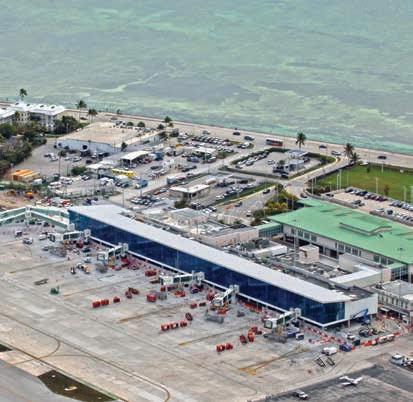
Key West International Airport’s brandnew 50,000-square-foot Concourse
A opened in April 2025 and features a contemporary design that preserves the airport's trademark island character. The facility, built 14 feet above ground, is designed to withstand 200 mph winds and storm surge. A highlight of the building is its 28-foot-tall, 600-foot-long curtain wall, which offers expansive views of the airfield and its natural surroundings. Electrochromatic glass, a high-tech material that automatically adjusts its tint with changes in ambient sunlight intensity, caps off the east and west ends of the building. The panels are programmed to be nearly opaque when the sun is harshest and fully transparent at other times. Each panel consists of two laminated layers with a space between them, creating an insulated envelope that reduces solar heat gain and glare. Concourse A features eight gates with air-conditioned glass passenger boarding bridges, new concessions, marble-finished bathrooms, and an overall enhanced level of service. The Concourse A and Terminal Improvements program is now in its second phase, slated for completion by spring 2026. It includes a modernized baggage claim with dual carousels, an expanded four-lane TSA checkpoint, a new pedestrian bridge, and new rental car counters.
Key West International Airport has won multiple awards in recent years. The facility was named Commercial Service Airport of the Year by the Florida Department of Transportation. Executive Director Richard Strickland has been named Airport Professional of the Year by the Southeast Chapter of the American Association of Airport Executives and FAA Southern Region Air Carrier Airport Manager of the Year.
EYW served 1.5 million passengers in 2025 on: Allegiant Air • American Airlines Avelo Airlines • Breeze Airways Delta Air Lines • JetBlue Spirit Airlines • United Airlines
Executive Director Richard Strickland
305.809.5210
Strickland-Richard @monroecounty-fl.gov
Airport employees: 20
On-Site Fire Rescue: 14
On-Site Sheriff’s Office: 25
Budget: $142 million


Nonstop service destinations include: Asheville, Atlanta, Boston, Charlotte, Chicago, Cincinnati, Dallas – Fort Worth, Fort Lauderdale, Houston, Indianapolis, Knoxville, Miami, Newark, New Haven, New York, Orlando, Orlando - Sanford, Philadelphia, Pittsburgh, RaleighDurham, Tampa, St. Petersburg, and Washington, D.C. In May 2026, Allegiant will add nonstop service to Columbus, Ohio's Rickenbacker International Airport.
With convenient connections at these hubs, the airlines offer service to many major destinations worldwide.
Total Land Area: 334 acres
Elevation: 3 feet above sea level
Runway: 9-27, 5,076 x 100 feet
Average commercial flights per day: 60
Based aircraft: 25
8 Monroe County | monroecounty-fl.gov
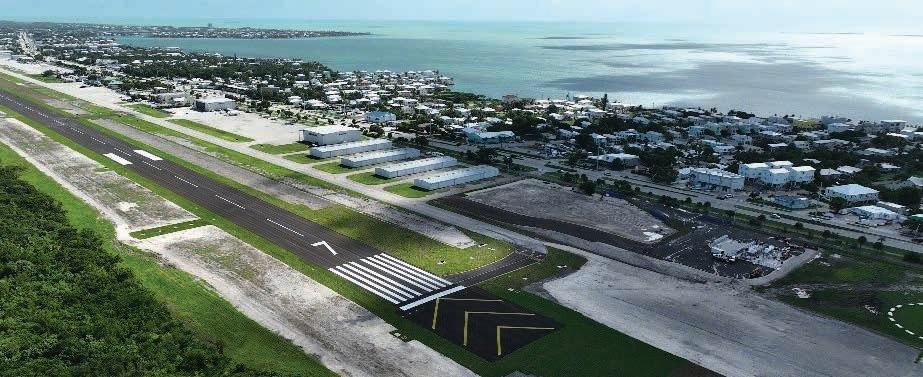
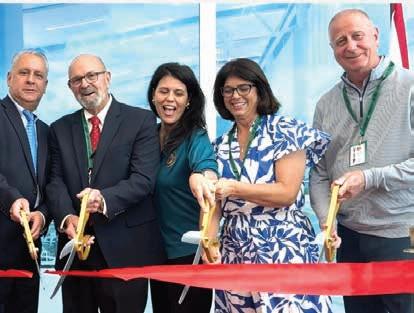
Florida Keys Marathon International Airport recently completed a runway reconstruction project, which serves two distinct purposes. The project increased the runway-to-taxiway separation from 200 feet to 240 feet. This shift now meets the FAA’s minimum standards. Second, the completed project replaced the runway’s aging pavement and upgraded airfield lighting to LED. The project required a 50-day runway shutdown in the fall of 2025. The fixed-based operator Million Air completed its new fuel storage facility. Jet-A fuel storage capacity now consists of two 30,000-gallon tanks. A dual storage tank for gasoline/diesel is included within the storage facility.
MTH provides private aviation, flight training, emergency, business, and ground transportation services in the Middle Keys. The airport is home to the Florida Keys Mosquito Control District, Monroe County Sheriff’s Office, Trauma Star operations, and the Monroe County Emergency Operations Center. MTH is also home to the Florida Keys’ largest electric-vehicle charging station, featuring 12 new fourth-generation V4 Superchargers and the latest Tesla technology.
In 2025, MTH had 43,000 total aircraft operations.
General aviation services and aircraft fueling:
Million Air General Aviation, 305.743.4222 & Million Air Jet Center, 305.743.1995
Total Land Area: 197 Acres
Elevation: 5 feet above sea level
Runway: 7-25, 5,008 x 100 feet
Based aircraft: 52
Marathon Airport Manager
Michael Legere 305.289.6302 Legere-Michael@monroecounty-fl.gov



www.monroecounty-fl.gov/budget
Director John Quinn
305.292.4464
Quinn-John @monroecounty-fl.gov
Employees: 4
Budget: $3.6 million

OMB effectively develops and implements Monroe County’s budget, promotes efficient, sound financial management, ensures governmental procurement regulations, facilitates financially responsible grant funding, and maintains the highest standards of ethics, integrity, and prudent expenditure of public funds.
OMB:
• Develops, publishes, implements, administers, and monitors annual operating and capital budgets.
• Provides financial analysis and revenue and expenditure forecasting.
• Performs multiyear budget forecasts, analyzes the effect of the state budget on the county budget, and prepares financial information in collaboration with county departments and the public.



Total FY2026 Budget
$672,067,874
BOCC Operating - 34.2% Sheriff - 15.4% Clerk of the Courts - 1.5%
Property Appraiser - 1.1%
Supervisor of Elections - 0.5% Tax Collector - 1.7% Judicial, State Attorney, Public Defender - 0.7%
Projects, inc
Svc - 20.9% Tourist Development Council - 12.8%
Budgeted Transfers, Cash Bal & Resv - 11.2%
Lee: FY25 Millage Rate: 3.7623
FY25 Tax Levy: $376.23
Collier: FY25 Millage Rate: 3.0107
FY25 Tax Levy: $301.07
Palm Beach: FY25 Millage Rate:
FY2026 Adopted Tax Levy: $269.29
(Per $100,000 of Taxable Value)
1Source: Florida Department of Revenue: Comparison of Property Taxes Levied
Fiscal year 2026 (FY2026) adopted budget
The Monroe County Board of County Commissioners finalized the FY2026 $672 million budget in September 2025. The budget funds the Board of County Commissioners; the constitutional officers, including the sheriff's office, tax collector, property appraiser, supervisor of elections, and clerk of court; and other appropriations for the Tourist Development Council, capital projects, and reserves.
• Monroe County continues to have the lowest millage rate in the State of Florida.
• The budget is effective from Oct. 1, 2025, to Sep. 30, 2026.
• The FY2027 timeline will be posted at www.monroecounty-fl.gov/calendar when announced.
Monroe County | monroecounty-fl.gov
FY2026 budget highlights
The budget maintains the same countywide millage rate as the prior year (2.6929). It continues to generate $2 million in additional emergency disaster reserves. This will increase reserves to $12 million, a level that has not changed since its original implementation in 2008.
Key FY2026 budget points:
• $15.6 million in county efficiency cuts resulting from budget roundtable meetings.
• Reduces the FY2026 aggregate millage rate to 3.3567, which is .6 percent less than last year.
• Investments in public safety:
• Compensation increases for EMS, firefighter, and law enforcement personnel to attract and retain a qualified workforce.
• Construction of a new fire station on Sugarloaf Key.
• Maintenance and improvement projects to the Monroe County Detention Center.
• Measures to improve government efficiency, being guided by the State Department of Government Efficiency (DOGE) through departmental consolidations and mergers, 45 position reductions, and cuts to noncore services.
• The budget continues to include $1.1 million for Human Services Advisory Board funding for local nonprofit organizations. The department also oversees the funding for competitive, discretionary, and mandatory grant programs funded by the BOCC. The BOCC awarded about $2.6 million in grants to nonprofit organizations to promote the well-being of vulnerable families, children, and individuals in the Florida Keys. Other responsibilities include facilitating meetings for the Human Services Advisory Board (HSAB) and the Substance Abuse Policy Advisory Board (SAPAB), and supporting implementation and monitoring for the Edward Byrne Memorial Justice Assistance Grant programs and the Clerk’s Drug Abuse Trust Fund.
Services Advisory Board grant cycle
www.monroecounty-fl.gov/purchasing
Director Julie Cuneo
305.292.4460
Cuneo-Julie
@monroecounty-fl.gov
Employees: 5
Budget: $1,043,248

The office provides high-quality purchasing, procurement, and contracting support to all county departments in a timely, cost-effective, and professional manner, while adhering to a strict code of ethics that promotes fair and open competition. Competitive bids and procurement opportunities are advertised through Bonfire, the county’s electronic bidding platform. Vendors are encouraged to register for free on the Bonfire website.
In response to a grand jury recommendation, the office is now responsible for contract compliance administration. Using a centralized contract management system, the office monitors, tracks, and ensures compliance with county contracts, agreements, and grants, and reports the data to county leadership.
The office also manages FEMA Public Assistance grants related to Hurricanes Irma and Ian. Of the 61 Hurricane Irma projects, 51 are in closeout status, with 45 fully closed. All Hurricane Ian project work is complete; of the 14 projects, eight are currently obligated.
The office also prepares for future disaster recovery efforts by participating annually in the Florida Division of Emergency Management’s Florida Recovery Obligation Calculation (F-ROC) program. F-ROC helps governments and eligible nonprofit organizations streamline the public assistance process, identify risks, and implement mitigation strategies before disasters occur.
This year, Monroe County ranked among the top three among 441 participants. This designation ensures that, following a declared disaster and FEMA Public Assistance approval, the county will receive an advance payment of 60 percent of obligated project funding, accelerating recovery and reducing financial strain. In recent years, FEMA funding has been provided solely on a reimbursement basis after project obligation.
www.monroecounty-fl.gov/building | www.monroecounty-fl.gov/permitting
The Monroe County Building Department, in coordination with Planning and Environmental Resources, protects public health, safety, and the environment by issuing permits for construction and development in accordance with the Monroe County Code and the Florida Building Code, consistent with Florida Statutes, and by ensuring consistency with the Monroe County Comprehensive Plan and Land Development Code.
The department:
• Provides plan review, permitting, and inspection services in compliance with the Florida Building Code, the Monroe County Code, and all other life safety codes.
• Coordinates unsafe structure abatement with code compliance and the county attorney and implements the Building Safety Inspection Program (BSIP).
• Provides contractor registration, licensing, and testing programs.
• Provides staff support for the Contractor's Examining Board and the Construction Board of Adjustment and Appeals.
• Coordinates administration and enforcement of the county’s floodplain regulations, pursuant to FEMA regulations required as a participant in the National Flood Insurance Program, including its Community Rating System (CRS) for flood insurance discounts, and works with FEMA to evaluate new floodplain mapping. The staff works with FEMA to resolve potential regulatory insufficiencies reported in the National Violations Tracker.
Building Official
Rick Griffin
305.289.2521
Griffin-Rick @monroecounty-fl.gov
Employees: 43
Budget: $6 million

Permit applications are accepted only through the online permitting system. No paper applications or document submissions are accepted. Instructional videos on registering an account, applying for a permit, and a walk-through of the application process from start to finish are available on the website.
Where do I find permits, inspections, contractors, or property information?
• Before Oct. 3, 2022: MCESEARCH, www.monroecounty-fl.gov/ mcesearch.
• After Oct. 3, 2022: Community Development, www.monroecounty-fl.gov/onlinepermitting.
• The interfaces allow the public to view permit and inspection status, search for local licensed contractors, and access property information for unincorporated Monroe County.
• Permit searches can be conducted by owner name, property address, permit or case numbers, and real estate numbers.
• Contractors can be found in a general “all” search, or by company name, category, license numbers, or contractor ID.
• Permits are required in unincorporated Monroe County for:
• Site preparation: land clearing, placement of fill, and excavation
• Demolition
• Tie-downs of habitable structures
• Signs
• Fences
• Sheds
Monroe County | monroecounty-fl.gov
• New construction and remodeling work of principal and accessory structures
• All electrical, mechanical, and plumbing tradework
• All work is subject to the county floodplain management requirements
• Resource extraction
• Any life safety work
(There are certain residential exceptions for several categories; contact the building department with specific questions.)
Key Largo: Nelson Gov't Center 102050 Overseas Hwy. 305.453.8800
Marathon Gov't Center 2798 Overseas Hwy., #300 305.289.2501
Big Pine Key
179 Key Deer Blvd. 305.289.2559
Stock Island 5503 College Road #203 305.295.3990
Ocean Reef 11601 CR 905, Key Largo 305.453.8765

Community Rating System (CRS)
www.monroecounty-fl.gov/crs
Unincorporated Monroe County is a class 3 CRS designation, saving 10,977 National Flood Insurance Programbacked policyholders 35 percent annually.
There are 244 CRS communities in Florida. Unincorporated Monroe County is one of four communities designated Class 3, meaning it is among the highestperforming in Florida. There is only one Class 2 in Florida.
Each year, brochures are sent to homeowners that identify flood risks.
Standard homeowners’ insurance doesn’t cover flood damage, but Monroe County’s participation in the NFIP allows residents to purchase federally backed flood insurance — even for previously flooded properties. Floods often cause more damage to belongings than to the structure, so owners should be sure their policy includes contents coverage. Flood insurance can help cover repair costs and may also help pay to elevate a substantially damaged home.
The county entered the CRS program in 2016. Participation in the program has saved policyholders more than $37 million.
www.monroecounty-fl.gov/floodmaps
The county received preliminary Federal Emergency Management Agency (FEMA) floodplain maps in 2019, showing newly modeled recommended regulatory elevations and wave-action risk areas. Current county zones include AE, VE, and X zones. New zones, such as the Coastal AE zone, were added to the maps and will include a boundary showing the Limit of Moderate Wave Action (LiMWA) zones, where waves are expected to affect the strength of structures. Per the Florida Building Code, structures in a Coastal A zone must also be constructed strong enough to withstand wave action.
The county will be required to formally adopt the maps by ordinance to ensure residents remain eligible for coverage under the National Flood Insurance Program. The maps will be used when reviewing permits to establish finishedfloor elevation and determine building and site design requirements, thereby
reducing the future risk of flooding. New lender requirements may take effect alongside flood insurance requirements. FEMA has not announced a timeframe for completing its review of the county’s map appeals, nor has it set an effective date for the new flood maps. Once announced, the county will provide six months' advance notice of the new effective date.
Future FEMA mapping elevations will be measured using a different datum standard (NAVD88). Staff will be available to assist the public in understanding how these proposed changes will affect each property owner. Elevation certificates created under the older datum will remain valid, subject to measurement conversions.
For more information, email: floodmaps@monroecounty-fl.gov.
www.monroecounty-fl.gov/bsip
Following state mandates, the building department implemented the BSIP for condominiums older than 25 years and three or more stories tall. The building safety inspection program continues to work with more than 70 structures to ensure the safe occupancy of condominium buildings that have reached their 25-year anniversary.
www.monroecounty-fl.gov/codecompliance
Code Compliance provides an equitable means of enforcing building, zoning, land development, environmental, and other county codes to protect community health, safety, and welfare. The department establishes partnerships with neighborhoods and external agencies to support compliance.
Staff made great strides during the transition to Oracle Permitting and Licensing (OPAL) software. Daily testing, development of standard operating procedures, and training sessions are scheduled as the software prepares to go live in 2026. Weekly testing and problem-solving are ongoing with support from IT and Oracle. In addition, the department is striving to close out cases in the Community Plus software, realizing it will no longer be supported.
The department has focused on resolving violations of land clearing, unsafe structures, vacation rentals, work without permits, and property standards. Case subtypes include compliance for food trucks, specialty hauler licensing, navigational hazards, unsanitary nuisances, right-ofway encroachments, dumping, and failure to obtain a business tax receipt.
As a reminder, under state law, a code inspector cannot accept anonymous complaints. A person who reports a potential violation must provide their name and address before an investigation can begin, unless there is reason to believe the violation presents an imminent threat to public health, safety, or welfare, or to the imminent destruction of sensitive
Director Cynthia McPherson
305.289.2508
McPherson-Cynthia@ monroecounty-fl.gov
Employees: 12
Budget: $2.3 million

To file a complaint: www.monroecounty-fl.gov/ codecompliance
Code case status: www.monroecounty-fl.gov/mcesearch or www.monroecountyfl. nextrequest.com
In person or by phone:
Nelson Government Center: 305.453.8806
Marathon Government Center: 305.289.2810
$1,503,928 82 244 543 426
WHAT IS ROGO: Rate of growth ordinance
The state Legislature designated the Florida Keys as an Area of Critical State Concern, and policies were adopted to control growth based on the carrying capacity – the minimum time required to safely evacuate the Florida Keys in the event of a hurricane, based on a statedetermined 26-hour evacuation model. ROGO was implemented to ensure the safety of residents during hurricane evacuations and to protect Monroe County’s significant natural resources, as required by the state.
The county is in the process of incorporating additional ROGO units approved in the past legislative session into the Monroe County Comprehensive Plan for building permits. The newly adopted statutory requirements include the following:
• The permit allocations must be distributed to counties and municipalities based on the number of vacant buildable lots within each jurisdiction.
• The permit allocations must be distributed over 10 years.
• The permit allocations may not exceed 900 Keyswide permits.
• All permits must be issued for vacant, buildable parcels.
• Only one permit may be awarded per parcel.
• The distribution must prioritize allocations for owner-occupied residences, affordable housing, and workforce housing.
www.monroecounty-fl.gov/planning www.monroecounty-fl.gov/ environmentalresources
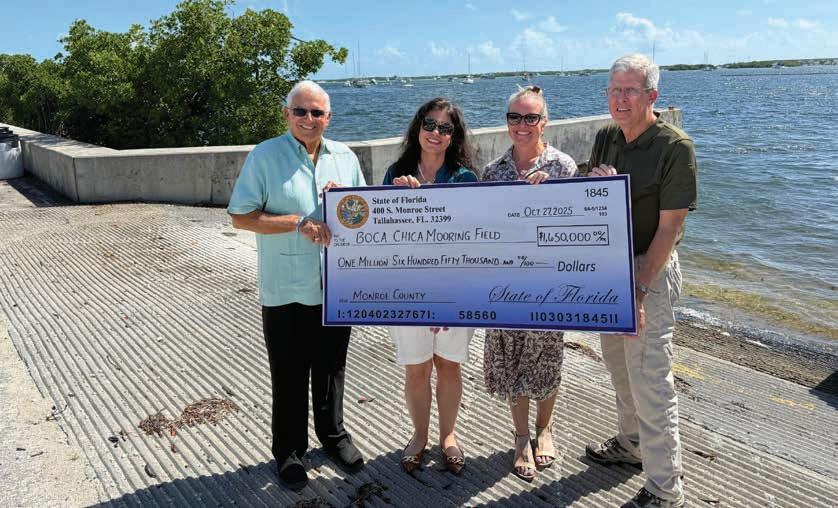
Senior Director
Devin Tolpin
305.289.2500
Tolpin-Devin@ monroecounty-fl.gov
Employees: 26 Budget: $9.4 million

The department is responsible for administering the Monroe County 2030 Comprehensive Plan and Land Development Code by reviewing all development proposals for compliance with these plans.
Reviews all development proposals for compliance with the comprehensive plan, including community character, growth management provisions, and environmental compliance; and processes amendments to the Comprehensive Plan and Land Development Code based on changing conditions and applicant requests. Services also include transportation planning, administration of the county’s affordable housing programs, and GIS administration. Email CioffariCheryl@monroecounty-fl.gov.
Develops, maintains, and disseminates geographic data and GIS resources for government and public use. GIS is used for FEMA flood mapping and remapping district lines, among other applications. Email Davisson-Bryan@monroecounty-fl.gov.
Reviews applications for compliance with environmental regulations, including habitat identification, landscaping, stormwater, land clearing, and FEMArequired review of potential impacts on endangered species under the permit referral process. Staff work to protect the sensitive environment and local endangered species, coordinating with state and federal environmental agencies. The office works with the Land Authority and the Florida Department of Environmental Protection on land acquisition initiatives to retire development rights. Email Roberts-Michael@monroecounty-fl.gov.
Works to protect the nearshore marine environment, ensure public access to waterways, and provide waterway infrastructure for recreational boating. The office manages Boating Improvement Funds and secures marine-related grants to remove derelict vessels, maintain channel markers, and provide pumpout service throughout the Keys. Email Burtner-Brittany@monroecounty-fl.gov.
Marine Resources reached another milestone with the removal of 190 derelict vessels in 2025 in partnership with FWC. The removals were funded through a $3 million American Rescue Plan Act grant, leaving fewer than 80 vessels under investigation or pending removal, a significant decrease from the historical range of 300 to 400 cases at any given time in the Florida Keys.
Since December 2024, staff have been making changes due to state legislation regarding ROGO allocations. The department has also been working on the following text amendments to the Land Development Code and Comprehensive Plan, as directed by the BOCC throughout the past year:
• Elimination of the 200-square-foot restriction on downstairs enclosures and removal of the remedial plan. Adopted by the BOCC on October 15, 2025.
• Increase the maximum height restriction of residential structures from 35 feet to 42 feet, in progress.
• Elimination of the required timeline between community meetings and the first public hearing for amendments and certain development applications. Adopted by the BOCC on Dec. 10, 2025.
• The U.S. 1 Level of Service Methodology Task Force has reconvened to revise the methodology.
• Conducting 2026 Arterial Travel Time and Delay Study.
• Food Truck Concerns: Developed a memorandum to summarize the regulations, and will be moving forward on amendments as directed by the BOCC.
www.monroecounty-fl.gov/firerescue
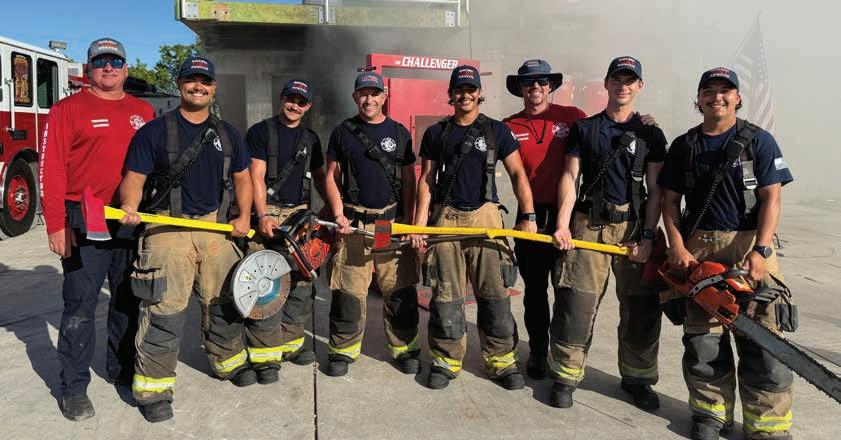
Monroe County Fire Rescue is responsible for safeguarding people and property by responding with speed, skill, and determination to all types of emergencies, 24 hours a day, 7 days a week, 365 days a year. The department operates:
9 fire stations
2 trauma star air ambulance bases
9 fire engines
2 ladder trucks frontline, 1 ladder reserve unit
2 tankers, 2 tanker reserve units
9 rescue trucks (ambulances)
1 fire engine (training unit at the Fire Academy)
Personnel are state-certified firefighters and emergency medical technicians (EMTs) or paramedics who provide fire and emergency medical services (EMS) to the citizens and visitors of the unincorporated areas of Monroe County from Tavernier to Stock Island, and the Key West International Airport.
Responsibilities include:
• Fire suppression
• Aircraft emergency response at Key West International Airport (ARFF)
• Advanced ground emergency medical response and transport
• Critical care air ambulance transport (Trauma Star)
• Fire prevention and safety education
• All-hazards disaster preparedness
• Countywide firefighting and EMS training
• Fleet services for fire rescue vehicles
Aircraft Rescue Firefighting
Aircraft rescue firefighting (ARFF) at Key West International Airport (EYW).
Station 7 at EYW provides fire, EMS, and ARFF services to travelers. Crash rescue equipment is stationed and maintained on-site. The ARFF unit undergoes an in-depth FAA safety inspection annually.
Fire Chief
R.L. Colina 305.289.6088
Colina-RL@ monroecounty-fl.gov
Employees: 179
Budget: $35 million
TRAUMA STAR

www.monroecounty-fl.gov/traumastar 305.289.6010
Trauma Star is the only air ambulance service in Monroe County. The Monroe County Sheriff’s Office pilots the aircraft, and medical care is provided by MCFR onboard. Trauma Star transports patients from designated landing zones and local hospitals to out-of-county hospitals for specialty care when ordered by a physician.
There are no out-of-pocket costs for county residents who use Trauma Star. If a county resident qualifies for a resident fee waiver, the county will seek reimbursement from private insurance companies and waive any remaining unpaid fees. The waiver form is available on the website.

FIRE PREVENTION
www.monroecounty-fl.gov/firemarshal
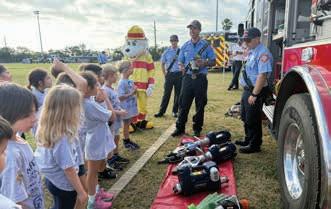
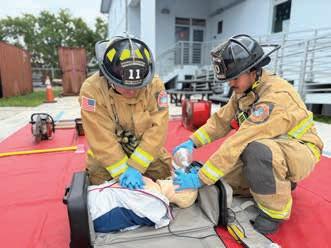
In accordance with the Florida Fire Prevention Code, Fire Prevention provides building construction plan reviews, fire cause investigations, life safety code enforcement, occupancy inspections, and community outreach and education, especially for children. The website provides inspection checklists and fees for commercial and vacation rental properties.
FIRE TRAINING ACADEMY
Joe London Fire Training Facility - Grassy Key www.monroecounty-fl.gov/fireacademy
Monroe County owns and operates the Fire Academy, one of only 51 state-certified firefighting training centers in Florida. The academy features a modern classroom, a multi-story training tower, and a live burn building—providing hands-on, realistic training that prepares recruits to become Florida-certified firefighters.
In addition to recruit training, the academy offers year-round fire and medical education for firefighter/EMTs and paramedics, supporting continued professional development across all levels of the fire service.
Those interested in pursuing a career or advancing their training can find an interest form available on the academy’s website for additional information
FY25 BY THE NUMBERS
4,724 76% 686 2,027
total fire rescue emergency responses patients transported by air ambulance medical responses by ground ambulance
of all emergency responses required emergency medical services
www.monroecountyem.com
FACILITY STATS
Size: 28,321 square feet.
Design: Based on a 500-year storm.
Can withstand 220-mph winds.
Impact rating: windborne debris missile criteria for hurricane shelter safe room.
First floor flood elevation: 20.2 ft. (17 ft. above ground).
Self-sustaining for 96 hours for up to 150 people, including food, drinking water, redundant generators for electric power, and wastewater storage.
Emergency communications via a redundant fiber-optic network and satellite phone/internet service.
Emergency Management creates the framework for communities to reduce vulnerability to threats and hazards and cope with disasters. Emergency Management includes mitigation, preparedness, response, and recovery from natural and manmade disasters. Emergencies include weather events such as hurricanes, tornadoes, and waterspouts; hazardous-materials accidents; mass migration; terrorist activities; large fires; air crashes; civil disorder; Turkey Point Nuclear Power Plant incidents; or pandemics.
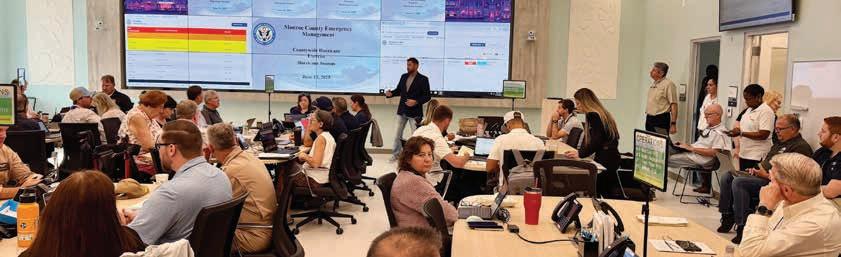
Monroe County Emergency Management, along with Monroe County Fire Rescue Administration and 9-1-1 Operations, moved into the new Emergency Operations Center in 2024. Monroe County was the last of Florida’s 67 counties to have a dedicated EOC built. The building was paid for with state and federal grant money.
• Executed a Special Needs call-down exercise in collaboration with the Department of Health.
• Completed a radiological reception center exercise involving FEMA, American Red Cross, Florida Department of Health, Monroe County Sheriff's Office, and the Florida Division of Emergency Management. This was the first exercise of this type in Monroe County in eight years.
Contracts and agreements:
• Finalized a 5-year update of the Monroe County Local Mitigation Strategy Plan. This ensures Monroe County's eligibility for pre- and postdisaster grant funding to mitigate the impacts of natural and manmade disasters.
• Updated the 10-year Memorandum of Agreement with Florida International University for sheltering Monroe County residents.
Director
Cory Schwisow
305.289.6012
Schwisow-Cory @monroecounty-fl.gov
Employees: 5

Budget: $987,366 ($414,875 is grant-funded)
• Completed a FEMA-evaluated radiological exercise in partnership with Florida Power and Light, Turkey Point Nuclear Facility, Collier County, and Miami-Dade County.
• Conducted its annual countywide hurricane exercise.
• Organized the annual hurricane shelter exercise with the Monroe Emergency Reserve Corps at Sugarloaf School.
• Established housing agreements with Isla Bella, Ocean's Edge, the Perry Hotel, and Tranquility Bay Resort to provide accommodations for emergency workers following disasters.
• Updated logistic staging areas for post-disaster.
Monroe County | monroecounty-fl.gov
www.monroecountyem.com/prep
Monroe County is vulnerable to hurricanes and has been hit by major storms, including the 1935 Category 5 Labor Day Hurricane that destroyed Henry Flagler’s railroad and, most recently, Hurricane Irma in 2017.
www.monroecountyem.com/shelters
In-county shelters are only available during category 1 or 2 storms. Out-ofcounty shelters are located in Miami for stronger storms. All shelters should be a last resort. Additional services are not provided at shelters. Plan to bring bedding and food for up to 72 hours.
• If you have special medical needs, register in advance at monroecountyem.com/specialneeds.
• All county shelters are petfriendly. Register in advance at monroecountyem.com/petsregistry.
• Prepare a supply or evacuation kit. Learn more at monroecountyem.com/emergencykit.
www.monroecountyem.com/ reentrystickers
Plan to stay at your evacuation destination until it is safe to return. Monitor official sites for reentry information. Do not congregate at checkpoints entering the Keys.
www.monroecountyem.com/alertmonroe
Sign up to receive emergency notifications regarding evacuation, shelters, reentry, and recovery activities directly from the EOC.
www.monroecountyem.com/ placardprogram
Businesses or organizations that are not represented within the EOC but believe they have a response mission can apply for the Business Reentry Placard Program. The enrollment period for the placard program and applications are announced on the website before hurricane season.
www.monroecounty-fl.gov/ volunteermonroe
Citizens who go through Monroe County’s Community Emergency Response Training (CERT) become part of the volunteer Monroe Emergency Reserve Corps (MERC) and can obtain early reentry placards.
The best place to get information is through official channels on page 7.
• Everyone needs to have a plan: Determine your evacuation destination to a relative or friend’s house, motel, hotel, or public shelter (as a last resort).
• Gather needed supplies for at least three days, including cash, medicine, and pet food.
• Keep your vehicle's gas tank full and ensure it is in good working order.
• Put up storm shutters and take other protective measures, including securing lawn furniture and tying down boats.
• Review your insurance policies and coverage, and take photos and/ or video footage of your property. Visually inspect your home and property.
• Charge your cell phone and make sure you have batteries for your portable radio.
• Follow official instructions and monitor official sites.
While Emergency Management monitored the threat of several storms this season, Monroe County was fortunate not to have to activate the EOC. In 2024, the EOC was activated for Debby, Helene, Milton, and Raphael. Be prepared; every storm is different.
www.monroecounty-fl.gov/employeeservices
Employee Services provides guidance and information to the county’s 632 fulland part-time employees, as well as the public. The department works to maintain a ready workforce that is talented, fairly compensated, healthy, diverse, and safety-minded while keeping pace with the evolving needs and goals of Monroe County.
Employee Services includes Human Resources, Group Insurance Benefits, and Safety and Security:
Manages all matters relating to the county’s most valuable resource, its employees, and is responsible for:
• Managing job recruitment, selection, and promotion.
• Developing and overseeing employee compensation and job classifications.
• Developing, promoting, and enforcing personnel policies.
• Promoting employee career development and job training.
• Orientation programs for new hires.
• Guidance for disciplinary actions.
Directives: In 2025, the department was tasked with developing a new policy to improve the administration of remote workers, which took effect on Jan. 1, 2026.
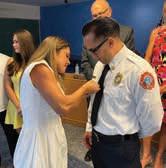
Administrative activities: Following a grand jury recommendation, the county reviewed and improved its whistleblower procedures. Human Resources evaluated several options, presented them to the BOCC, and implemented a streamlined solution that maintains the current county whistleblower ordinance and adds the Clerk of Court to the established reporting process.
Provides and administers health, prescription, dental, vision, and life coverage to more than 2,300 BOCC and constitutional officer employees, retirees, and dependent spouses and children. Benefits also administers the Employee Assistance Program for BOCC and all constitutional officers’ employees.
The county continues to offer health plan participants the opportunity to reduce employee premium costs through the Passport to Wellness program. Participants can save $600 annually by participating in preventive health screenings.
Recognizing the need to remain competitive in employee recruitment and retention, the county adopted medical/ pharmacy plan enhancements and costsharing changes in 2024, positioning BOCC benefits among the top offerings
in the county. In addition, the department has maintained employee/retiree costs for dental, vision, and supplemental life.
Provides safety training and programs, as well as workers’ compensation, to more than 1,700 BOCC and constitutional officer employees. Manages security programs and systems for county employees, buildings, and other assets.
Continues to enhance safety and security for employees, the public, and county assets by expanding access control systems. Currently, 750 users are enrolled in biometric access for the county access control system, using it an average of 1,200 times per day across various county facilities.
In addition to serving county employees, Benefits and Safety provides services to the Land Authority and the five constitutional officer agencies.
Director Bryan Cook
305.292.4458
Cook-Bryan
@monroecounty-fl.gov
Employees: 12
Budget: $44.7 million
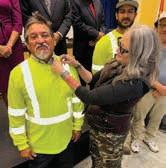

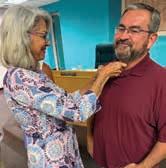
EMPLOYEE OF THE YEAR 2025
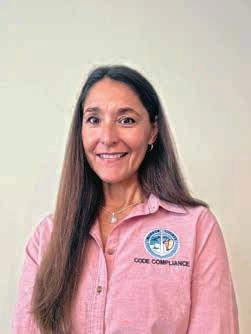
Employee of the Year and Second Quarter Code Compliance Liaison to the Special Magistrate
Petrick has served Monroe County citizens for 25 years and is recognized for her in-depth knowledge of county operations, as well as her positive attitude, collaborative spirit, and consistent willingness to exceed her regular duties.
Her responsibilities include managing Special Magistrate hearings, preparing documents for judges, responding to public inquiries, assisting inspectors and county attorneys, and coordinating public records requests and monthly departmental agendas.
“Nicole’s organizational skills and attention to detail have been key in ensuring smooth operations within the department,” said Director of Code Compliance Cynthia McPherson. “She conducts herself with professionalism and goes above and beyond daily to communicate, supply information, and meet deadlines.”
Coworker Gabriela Henri nominated her, highlighting her positive influence on workplace morale, noting that her supportive approach creates a collaborative environment that enhances both staff experiences and public service delivery.
www.monroecounty-fl.gov/jobs
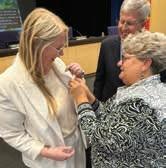
Here are the Monroe County employees honored with 2025 quarterly awards:

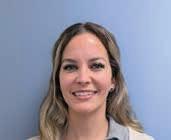
Monroe County hires about 75 employees each year. For job openings and employment applications, visit the website or apply in person at computer kiosks at the Historic Gato Building in Key West, the Marathon Government Center, or the Key Largo Public Library branch. Monroe County staff can also be found at numerous job fairs hosted throughout the Keys during the year.
www.monroecounty-fl.gov/engineering
The department includes Engineering Services, Upper and Lower Keys Roads Maintenance, and the Card Sound Toll Authority.
Responsibilities include:
• Managing engineering design, permitting, and construction of county transportation infrastructure projects, including roads, sidewalks, bridges, shared-use paths, and associated stormwater management systems.
• Review of right-of-way permit applications, issuance of permits, and inspection of work for conformance to county requirements.
• Review of property development/ redevelopment applications and road abandonment applications for impacts to county roads and rights-of-way.
• Performing ongoing maintenance on 311 miles of county-maintained roads and 26 bridges, including cutting vegetation, fixing potholes, cleaning storm drains, repairing road shoulders, addressing flooding complaints, installing signage, sweeping, and maintaining bicycle and shared-use paths.
• Operating and maintaining the Card Sound Toll and the annual pass program.
Bridge project updates
Duck Key bridges: Construction of the Harbour Drive Bridge was completed in December 2025, except for some minor work items. Work continues on the Seaview Drive Bridge. Updates are posted every two weeks at www.monroecounty-fl.gov/duckkey.
Repairs to Tom’s Harbor bridge (U.S. 1 onto Duck Key) will begin in February 2026 and will last for about one year. Card Sound bridges: Construction contracts for the replacement of the Tubbys Creek and Mosquito Creek bridges on Card Sound Road were executed in October 2025; construction is anticipated to begin in February 2026 and continue for 18 months. The Project Development and Environment planning phase for the replacement of the largest Card Sound Bridge is underway and scheduled for completion in 2027. Engineering design and permitting will follow.
Card Sound Toll Authority
www.monroecounty-fl.gov/ cardsoundtoll
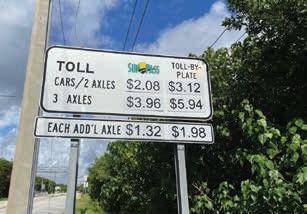
The Card Sound Toll uses Toll-By-Plate, SunPass, and EZ Pass. No cash is accepted at the toll. The toll funds the maintenance and the future repair and replacement of the five bridges along Card Sound Road. Two discount programs are available for travelers with two-axle vehicles who use SunPass. In 2025, 198 annual passes were sold. More information on the monthly discount program, which requires no enrollment, and the annual pass program can be found on the website.
Current road projects
www.monroecounty-fl.gov/roadprojects
Over the past several years, a common challenge has been the effect of sea-level rise on neighborhoods. After years of seeking grants to address these issues, staff developed improvement projects to mitigate the flooding impacts.
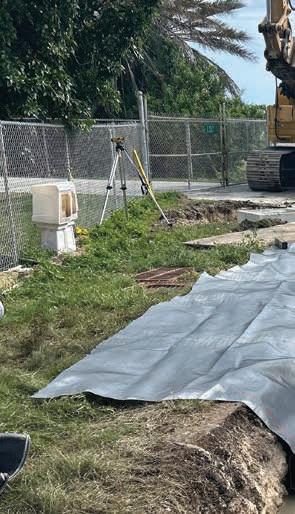
PROJECT HIGHLIGHTS INCLUDE: Monroe County created a program this year to address potential residential road problems beyond core services. Learn more about the Neighborhood Improvement MSBU program on page 39.
Winston Waterways, Key Largo: The project includes elevating portions of 15 road segments and installing an engineered stormwater collection, treatment, and disposal system consisting of a pump station, piping, a force main, and injection wells for disposal. Engineering design and permitting are underway and are expected to be completed by May 31, 2026. The design phase is funded by a combination of Florida Department of Environmental Protection (FDEP) Resilient Florida grant funds and a Hazard Mitigation Grant Program (HMGP) grant through the Florida Department of Emergency Management (FDEM) and the Federal Emergency Management Agency (FEMA).


Monroe County | monroecounty-fl.gov
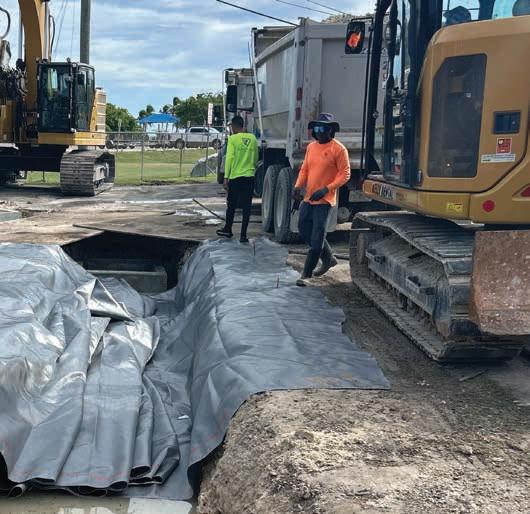
Conch Key: Proposed improvements include road elevation, construction of an engineered stormwater management system consisting of valley gutters, piping, catch basins, water treatment infrastructure, a pump station, a force main, and three pressurized injection wells for stormwater disposal. The project’s engineering design and permitting phase is funded 50 percent by a Resilient Florida grant and 50 percent by local funds. Design and permitting is 90% complete.
Twin Lakes Key Largo: Flood mitigation includes road elevation and drainage improvements to manage floodwater flow and storage. Construction is scheduled to be completed in May 2026. Construction funding is from a combination of a Resilient Florida grant, a federal appropriation, and local funds.
Director
Judy Clarke, P.E.
305.295.4390
Clarke-Judith
@monroecounty-fl.gov
Employees: 38

Budget: $21.4 million & $15 million in grant funding
Big Coppitt: The project consists of engineering design and construction of improvements to 19 roads, including elevating portions of road segments and constructing an engineered stormwater collection, treatment, and disposal system consisting of inlet structures, pump stations, piping, a force main, and injection wells for disposal. Design is at the 60% milestone and is scheduled to be complete in May 2026. The project is funded by a combination of FDEP Resilient Florida grant funds and a Hazard Mitigation Grant Program (HMGP) grant from FDEM and FEMA.
Flagler Avenue Road Improvement
Project: This project consists of replacing the existing gravity stormwater drainage system with a new collection system, pump stations, and a force main, along with pressurized injection wells for disposal, and reconstructing the road with an asphalt base to make it resilient to sea level rise. The project is currently in the engineering design phase, which will be completed by May 2026. An HMGP grant funds the design through FDEM and FEMA, along with a local county match.
www.monroecounty-fl.gov/fleet
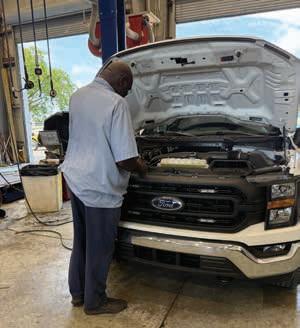
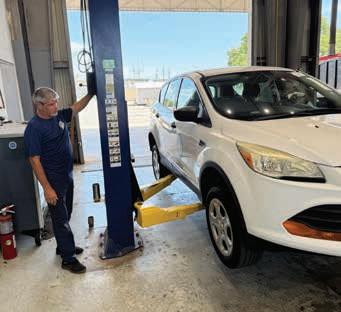
The department operates, manages, and continues to improve county garages located in Rockland Key, Marathon, and Plantation Key. The department provides safety inspections, maintenance, and repairs for about 997 units, including 328 Monroe County Sheriff’s Office vehicles.
Fleet maintains safety and environmental accountability, including large-capacity fuel tanks, fuel pumps, and backup generators. The department provides fuel 24/7 at fully automated sites for county and Monroe County School Board vehicles, even during electrical power outages. Fleet is always in hurricane preparation mode with in-house maintenance, inspections, repairs, and refueling for the county’s 70-plus emergency generators.
Additionally, the department:
• Resolves manufacturer’s vehicle and equipment safety recalls.
• Manages outside warranty, accident repairs, and other outsourced contract maintenance and repairs.
• Operates and maintains a preventative maintenance and repair tracking system, a fuel management tracking system, and the GPS vehicle and equipment tracking system.
• Manages and administers Fleet contracts and written agreements.

Director Daryl Greenlee
305.292.3452
Greenlee-Daryl
@monroecounty-fl.gov
Employees: 17
Budget: $2.1 million


NEED A VEHICLE?
www.monroecounty-fl.gov/surplus Fleet sells surplus vehicles and equipment three to four times annually.
6,131
31 98.5% 33,824 78%
68,364
www.monroecounty-fl.gov/facilities
The department is responsible for the day-to-day maintenance and operations of more than a million square feet of county-owned and leased buildings throughout the Florida Keys. When a facility needs significant repairs or improvements, the department also handles project management for the county. The department is also responsible for testing air quality, certifying and maintaining alarm systems, and elevators.
2025 brought a new vision from county leadership for planning, procuring, and maintaining the county’s considerable infrastructure supporting county operations and the constitutional officers. Project Management merged with Facilities Maintenance in October 2025 to streamline those initiatives.
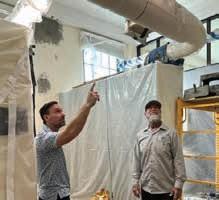
Facilities maintenance continues concrete spalling work at the Historic Gato Building at 1100 Simonton Street, Key West. The Historic Gato Building houses Monroe County administrative offices, including the County Administrator, Community Services, Solid Waste, Management and Budget, Employee Resources, the UF IFAS Extension Services, and the Florida Department of Health in Monroe County. The building was originally a cigar factory built in 1871, but was destroyed by a fire in 1915. The current building was rebuilt and opened in 1920.
The county owns and is responsible for vital infrastructure throughout the Florida Keys, including some infrastructure within Monroe County’s five cities.
The county’s infrastructure:
• 2 airports (Key West and Marathon)
• 23 parks and beaches
• 8 boat ramps
• 1 community pool (Key Largo)
• 311 miles of county-maintained roads
• 26 county-owned bridges
• 5 public libraries
• 3 government centers
• 3 courthouses
• 4 community centers
• 4 museums
• 9 fire stations
• 1 fire training facility
• 1 medical examiner’s facility
• Several historic buildings
• State attorney, public defender, and aupervisor of elections offices.
• Various other facilities used for county operations.
2025 accomplishments:
• Big Pine Park Community Center Flood Panels
• Big Pine Park amphitheater (TDC funded)
• Marathon Tax Collector seawall repairs (Hurricane Ian)
• MCSO Stock Island stucco repairs
• East Martello exterior lighting (TDC funded)
• Historic Courthouse exterior masonry waterproofing (DHR funded)
• Jacobs Aquatic Center heater replacement (TDC funded)
Director
Willie DeSantis
305.292.4532
DeSantis-William @monroecounty-fl.gov
Employees: 82
Budget: $10.1 million

The department provides 24-hour, routine, and emergency maintenance to the Monroe County Sheriff's Office's (MCSO) three detention facilities, three substations, the headquarters building, the gun range, the Trauma Star hangar, the Department of Juvenile Justice, and the court holding. The employees are skilled in plumbing, air conditioning, locksmithing, electrical work, carpentry, and appliance repair at an industrial level.
The department:
• Provides routine and emergency maintenance, and small construction improvements.
• Ensures that all MCSO accreditation standards are met.
• Assists with developing new MCSO buildings, supplying specific expertise.
• Maintains a safe working environment for MCSO employees and jail inmates.
• Follows all policies set forth by MCSO in sensitive work environments.
www.parksandbeaches.fun
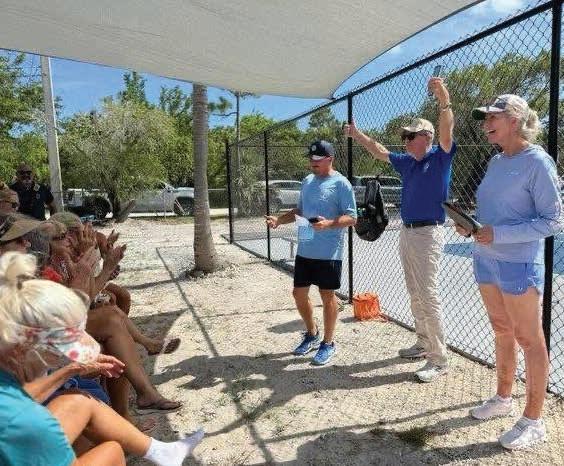
The department provides quality parks, beaches, facilities, amenities, and services to meet the recreation needs of the entire community. The department strives to create opportunities for residents and visitors to enjoy life, explore nature, and energize their health. The department manages 23 parks across more than 168 acres, along with eight boat ramps and four community centers.
Staff hold certifications in various fields and regularly participate in training to stay informed about the latest developments in the field. Their commitment ensures the highest level of service for the community.
Countywide, the department expanded its program opportunities to meet the community's needs through partnerships, leagues, volunteers, and staff.
A proud supporter of Special Olympics Florida, dedicated to coaching and hosting practices and games. The JOY and AARP programs are designed to meet the needs of our senior community. Youth Leagues provide athletic opportunities for our young residents. Volunteer instructors also offer activities such as line dancing, Tai Chi, and more.
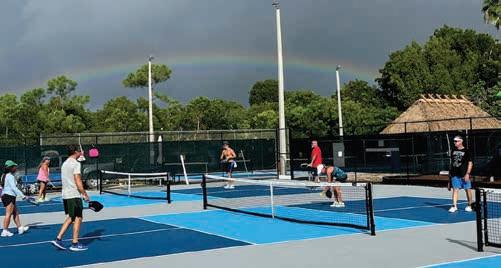
The county renovated and expanded the courts at Higgs Beach and added 10 pickleball courts at Key Largo Park, four at Bay Point, and six at Blue Heron Park on Big Pine Key. These improvements bring the total to 30 dedicated pickleball courts and six multi-use courts, meeting increasing demand while still supporting tennis. Tennis courts were resurfaced at Key Largo Park, and basketball courts were resurfaced at Friendship Park in Key Largo and Harry Harris Park in Tavernier.
Director John Allen
305.453.8748 Allen-John @MonroeCounty-FL.Gov Employees: 27 Budget: $5,252,483.

New backstops and lighting were installed, along with new water fountains and concrete trash cans at multiple locations.
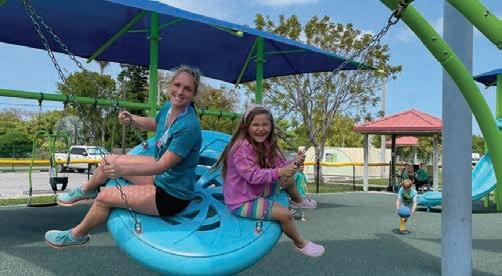
A new playground was installed at Higgs Beach in Key West, and essential repairs were completed at Bernstein Park on Stock Island and Wilhelmina Park on Big Coppitt.
To enhance park experiences, new fitness equipment and shade structures were added, along with fun new activities like gaga pits at multiple parks.
Big Pine Community Park now features a new amphitheater, made possible by a TDC grant, bringing concerts and performances to the community.


Monroe County | monroecounty-fl.gov
Parks and beaches across the Florida Keys are being upgraded with accessible features, including swings and playground equipment, beach wheelchairs, and accessible beach pads.
Dog parks
• Watson Field on Big Pine Key.
• Higgs Beach Dog Park in Key West.
Community centers
• Plantation Key
• Big Pine Activity Center at the Community Park
• Big Pine Key Community Center at Winn-Dixie Plaza
• Bernstein Park on Stock Island
A water safety and swim lesson program offering two weeks of free swim lessons to kindergartners at Key Largo Elementary and Plantation Key School in collaboration with StandGuard, the Monroe County School District, and Monroe County Parks and Beaches. Since its launch in 2023, the program has provided over 250 swim lessons to children in the Upper Keys.
During summer, winter, and spring breaks, camps are offered at Bernstein Park, Big Pine Key Community Park, Sugarloaf School, and Plantation Key Community Center.
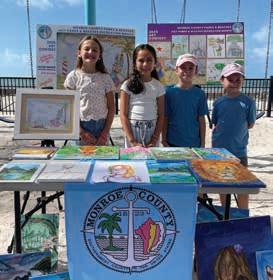
Parks and Beaches continues to create and host events that provide outstanding opportunities for residents and guests.
Big Coppitt Key
• Big Coppitt Volunteer Fire
Department Park
• Wilhelmina Harvey Park
Big Pine Key
• Big Pine Key Community Park
• Blue Heron Park
• Palm Villa Park
• Pine Channel Nature Park
• Watson Field Park and Big Pine Key Dog Park
Geiger Key
• Boca Chica Beach
Key Largo
• Friendship Park
• Rowell’s Waterfront Park
• Key Largo Community Park
• Jacobs Aquatic Center
• Peace Park - behind Murray Nelson
Government Center
Key West
• Higgs Beach
• Key West Pines Park
Little Duck Key
• Veterans Memorial Beach
Ramrod Key
• Ramrod Park
Saddlebunch Keys
• Bay Point Park
Sugarloaf Key
• Sugarloaf School Shark Park
Stock Island
• Bernstein Park
Tavernier
• Old Settlers Park
• Harry Harris Park Par
www.monroecounty-fl.gov/medicalexaminer

Director
Dr. Michael R. Steckbauer
305.743.9011
MEO@
monroecounty-fl.gov
Employees: 2
Monroe County built a state-of-the-art medical examiner’s facility on Grassy Key in 2008 to store records and perform examinations and testing in the morgue. Florida’s 67 counties are served by 25 districts appointed by the governor in three-year terms.
By statute, the medical examiner determines the cause and manner of death of a human being under the following circumstances: criminal violence; accidents; suicides; the sudden unexplained death of an otherwise healthy person, unattended by a practicing physician or other recognized practitioner; in a prison or penal institution; in police custody; suspicious or unusual circumstances; criminal abortion; poisoning; diseases that threaten public health; and employmentrelated diseases, injuries, or toxic agent.
The medical examiner’s primary tool is an autopsy. When an investigation is complete, a death certificate listing the cause and manner of death is filed with the Florida Department of Vital Statistics.
Monroe County participates in the National Missing and Unidentified Persons System (NamUs). The system helps identify unclaimed persons, but the family has not been notified by local law enforcement. Anyone can search the NamUs database at www.namus.gov or call 855.626.7600. They offer help to families searching for a missing family member.
The request form for an autopsy report is available on the website. The form can be emailed to meo@monroecounty-fl.gov, or mailed to the medical examiner’s office, 56639 Overseas Highway, Marathon, FL 33050.
www.monroecounty-fl.gov/boatramps
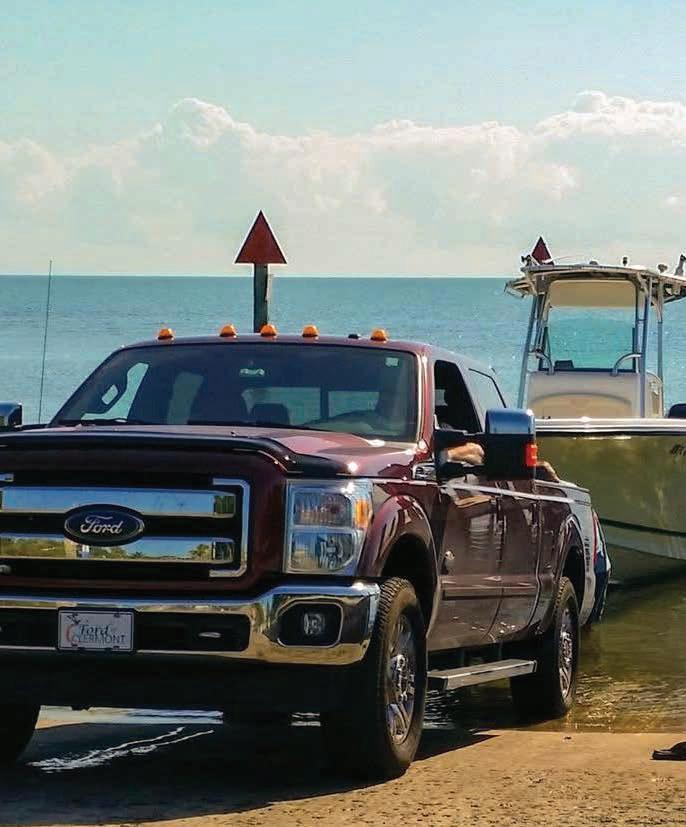
Big Pine Key
Eden Pines, MM 30.8 Bayside
Recommended for 25’and under boats, no public parking allowed
Geiger Key
Geiger Key boat launch, next door to Geiger Key Marina, Atlantic side
Key Largo
Mike Forster Memorial Park, MM 95.2
Recommended for bay or flats boats, limited parking
Tavernier
Harry Harris Park, MM 92.5, Atlantic Side
If using one of the parking spaces, please follow size rule
Monroe County | monroecounty-fl.gov
Big Coppitt Key
Gulf View Boat Ramp, MM 9.3
Recommended for 25’ and under boats, limited parking
Cudjoe Key
Blimp Road, MM 21.2 Bayside
Recommended for bay or flats boats
Little Torch Key
State Road 4A, MM 28.5 Bayside
Recommended for 25’ and under, limited parking
Big Pine Key
Koehn Ave., MM 30.8 Bayside
Recommended for flats boats
www.monroecounty-fl.gov/reefs
The office partners with the Florida Fish and Wildlife Conservation Commission (FWC) and the Florida Keys National Marine Sanctuary (FKNMS) to develop a science-based, sustainable framework for designing, deploying, and evaluating habitat-support structures in areas where habitat loss or degradation have been observed, to improve conditions and resources within the marine environment. Discussions with vendors, local stakeholders, community partners, regulatory agencies, and scientists are underway to advance project development.
Ecosystem benefits
• Habitat creation and enhancement.
• Marine life migration waypoints.
• Promotes biodiversity.
• Reduces pressure on natural reefs.
• Increases habitat structural complexity to improve ecosystem function and enhance fish communities.
Economic benefits
• Creates jobs and income.
• Generates economic activity and state revenue.
• Supports the fishing, diving, and tourism industries.
• Strong community and educational value.
County Artificial Reef Coordinates
5/4/2025
Director
Dr. Hanna Koch
786.847.5443
koch-hanna@monroecounty-fl.gov
Employees: 1

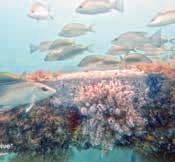
In May 2025, the program completed its first project, which included three patch reefs made from donated concrete power poles, about 16 nautical miles northeast of Key West, in federal waters of the Gulf. The poles were stacked in perpendicular layers to create a variety of spaces at about 40 feet deep.
The next set of deployments is planned for summer 2026 and includes up to 156 structures, 12 patch reefs, and three sites in Gulf waters. The permitting groundwork for up to 15 additional artificial reef sites has been laid, including 21 submitted permit applications covering shallow, mid-, and deep-water areas off the Upper, Middle, and Lower Keys in the Gulf and Atlantic Ocean. Deployments within the FKNMS are planned for 2026-27.
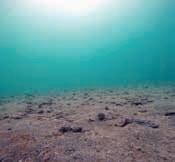
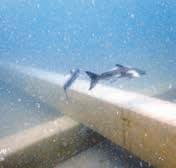
Below: One year post-deployment shows the reefs are teeming with life, hosting more than 90 marine plant and animal species.
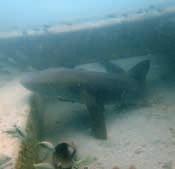
Budget: $15 million: The program is entirely funded through a State of Florida grant (FWC #23132). In the Florida Keys, 62 artificial reefs, including wrecks, were placed mainly between 1982 and 1989. Before this program, the most recent artificial reef placed in Florida Keys waters was the Vandenberg wreck off Key West in
www.monroecounty-fl.gov/legislativeaffairs


• Develops the county’s annual legislative agendas, identifies priority legislation and appropriations, and determines specific strategies for achieving those priorities.
• Directs and manages federal and state lobbyists, assigns tasks, confers weekly, and tracks progress.
• Monitors congressional and state legislation, agency regulatory actions, preemptions, and budgets with potential effects on Monroe County; advises commissioners and staff with appropriate actions.
• Schedules and manages legislator and agency meetings, fly-ins, etc., and prepares itineraries, written materials, and legislative packages.
• Prepares all written legislative communications, including talking points, trifolds, leave-behinds, and resolutions.
• Represents the county in legislative organizations, like FAC, Small County Coalition, Gulf Coast Parishes and Counties, and NACO.
The department oversees and monitors:
• RESTORE Act Program in response to the Deepwater Horizon Oil Spill in 2010.
• Local Multi-Year Implementation Plan and monitoring of the Gulf Consortium’s State Expenditure Plan, management of local pot and Consortium pot grant funds, and development and submission of applications for this funding.
• Legislative funding related to Everglades restoration and protection of Florida Bay.
• Periodic and as needed advocacy related to licensing and remediation activities of Turkey Point Nuclear Facility.


The 2026 session started Jan. 13, 2026. This year’s legislative priorities reflect the county’s ongoing dedication to preserving the unique environment, economy, and quality of life in the Florida Keys, while also addressing challenges related to insurance affordability, property tax stability, and flood resilience.
Key highlights

• Property tax monitoring: Monitor any state or executive proposals that could reduce or eliminate property taxes, which serve as the county’s most reliable funding source for essential services like law enforcement, emergency response, and public health.
• Water quality protection: Advocate for a $20 million appropriation under the Florida Keys Stewardship Act and continued funding for Monroe County’s vessel pump-out program and other water quality projects that protect coral reefs, seagrass meadows, and canal systems vital to the Florida Keys’ tourism and fisheries economy.
• Land acquisition (Florida Forever): Support the continuation of the $5 million Florida Forever set-aside through 2036 for land acquisition to retire development rights and protect environmentally sensitive areas. The county is also requesting $2.5 million for targeted land acquisition to mitigate military encroachment and support affordable housing initiatives.
• Affordable and workforce housing: Pursue state legislation to exempt Habitat for Humanity from construction performance bond requirements on county-leased land and seek authorization for ad valorem tax relief for longterm workforce rental properties.
• Wind and hurricane insurance affordability: Advocate for the restoration of the 10 percent annual rate cap on Citizens Property Insurance, an increase in coverage limits to $1.5 million, and the rollback of flood insurance mandates for properties outside designated flood zones.
• Resilience and flooding: Continue to secure Resilient Florida Grant Program funding for county road elevation and flood mitigation projects that address tidal and storm-related flooding, which threatens homes, infrastructure, and public safety.
• School readiness program eligibility: Support legislation to raise the income eligibility threshold for Monroe County families, allowing more working parents to access early education opportunities that prepare children for school success.
• Area of Critical State Concern and ROGO protection: Advocate for exemptions to state land-use preemptions that could override Monroe County’s Rate of Growth Ordinance (ROGO), Comprehensive Plan, or environmental protections that safeguard the Florida Keys’ fragile ecosystem.
State Representative
James “Jim” Mooney
myfloridahouse.gov
District 120
District Office: Nelson Gov’t Center 102050 Overseas Hwy
Key Largo 305.453.1202
State Senator
Ana Maria Rodriguez flsenate.gov
District 36
District Office: 8401 NW 53rd Terrace
Doral
850.487.5039
Governor Ron DeSantis flgov.com
400 S. Monroe Street
Tallahassee 32399
850.717.9337

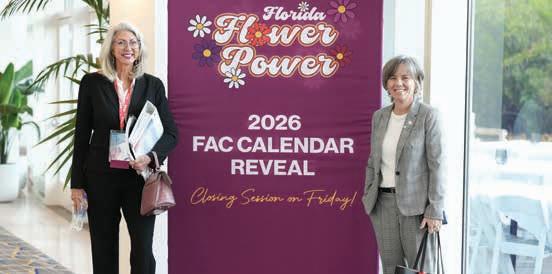


Director Lisa Tennyson
305.509.1709

FEDERAL REPRESENTATION
Senate
Ashley Moody
moody.senate.gov
202.224.3041 - D.C.
Senate
Rick Scott
rickscott.senate.gov
Miami Office: 901 Ponce de Leon Blvd. Miami, FL 33134
786.501.7141 - Miami
202.224.5274 - D.C.
House
Carlos Gimenez
gimenez.house.gov
District 26
Key West office: 1100 Simonton St.
Suite 1-123
202.225.2778 - D.C.


Tennyson-Lisa @monroecounty-fl.gov Employees: 1
“Monroe County has benefitted greatly from the leadership of our delegation members, Senator Rodriguez and Representative Mooney, and the ongoing support from the legislature and the Governor’s office. Our successful collaboration with state leaders enables us to continue preserving the uniqueness of the Florida Keys and our unmatched environment.”
– Lisa Tennyson, legislative a airs director
This year, the county’s federal priorities include: Protection of affordable flood insurance and the reauthorization of the National Flood Insurance Program (NFIP) with reforms that address Risk Rating 2.0. Affordable flood insurance protects property owners, property values, local tax revenue, and economic activity. Monroe County remains highly concerned about the new impacts of Risk Rating 2.0 on premiums, as well as the ongoing impacts of the current and unsustainable glide paths (18 percent for homes and 25 percent for commercial properties)
Federal investment in infrastructure and resilience projects. The county is endeavoring to make the Keys more resilient in the face of climate change, sea level rise, and persistent severe flooding. The county also remains focused on the protection of our natural resources and water quality. These important efforts require ongoing advocacy to maintain our federal partnerships and secure federal funding, specifically for these federal programs:
• Funding for Army Corps of Engineers programs that directly benefit Monroe County.
• Coastal storm mitigation program.
• Florida Keys water quality improvement program.
• Everglades restoration.
• Support coral reef conservation efforts, congressional funding for disaster mitigation and recovery, changes to the emergency watershed program, and funding for seniors, veterans, housing, and social services.
• Oppose oil drilling and exploration, lease expansion, and seismic testing.
• Federal appropriations.
The department administers programs designed to support low-income residents, seniors, individuals with disabilities, and households facing financial hardship. Services are delivered countywide through a combination of federal and state grant funding and local county funding to ensure access to essential assistance and promote stability, independence, and well-being.
Offices:
• Historic Gato Building, 1100 Simonton Street, Key West
• Tradewinds Plaza, 101491 Overseas Hwy, Suite 4, Key Largo
PROGRAMS AND SERVICES
Alzheimer’s Disease Initiative (ADI) and Older Americans Act (OAA) programs: Through these programs, the county provides eligibility-based services to elderly and disabled adult residents through federal and state grants and local county funding that support nutrition services and in-home and supportive care designed to promote independence and delay or prevent institutional placement.
Senior nutrition services: Provides hot meals in congregate settings for residents age 60 and older. Frozen, home-delivered meals are also provided for seniors who are unable to attend congregate sites. During 2025, about 37,000 meals were served to seniors throughout the Keys.
Meal sites:
• Key West Senior Citizen Plaza, 1400 Kennedy Drive, Key West.
• Monroe County Community Center, 179 Key Deer Boulevard, Big Pine Key.
• Tradewinds Plaza, 101491 Overseas Hwy, Suite 4, Key Largo.
In-Home and supportive services:
Provided to eligible elderly and disabled residents to support safe, independent living. Services include in-home caregiving, personal care, homemaker assistance, respite care, companion services, escort
and chore services, as well as facility-based adult and senior care and consumable supplies necessary to support daily living and caregiver relief.
Energy and utility support:
Energy assistance: The Low-Income Home Energy Assistance Program (LIHEAP) helps income-eligible households with cooling and heating costs.
Weatherization assistance program: Supports income-eligible households by improving residential energy efficiency through critical repairs, renovations, and the installation of cost-saving energy measures.
HOUSING AND HOUSING
State Housing Initiatives Partnership (SHIP) program: Administers housing assistance, including disaster mitigation, homeowner rehabilitation, rental rehabilitation, and homebuyer assistance. SHIP is funded through the State Housing Trust Fund and administered locally by Monroe County in accordance with state statute and the county’s adopted Local Housing Assistance Plan (LHAP). In 2025, the program provided assistance and rehabilitation to over 80 households, totaling more than $3 million across the Keys. In addition, the county funded $400,000 in rental rehabilitation assistance to support the preservation and improvement of affordable rental housing.
Rental assistance: Provided to incomeeligible residents experiencing financial hardship, based on funding availability, to help prevent housing instability.
Indigent services: Administers assistance for final expenses to individuals deemed indigent. In 2025, the department coordinated 51 indigent cremations, ensuring dignified disposition in accordance with county policy.
Director Cathy Crane Crane-Cathy @monroecounty-fl.gov
Social Services
Employees: 22
Budget: $3,299,379

Referrals: 305.292.4408 or MCSSreferrals@monroecounty-fl.gov
Veterans Affairs
305.295.5150
Employees: 7
Budget: $1,096,630
2025 Social Services Actions and Administrative Initiatives
Housing policy adoption: Adopted the 2025–2028 Local Housing Assistance Plan (LHAP), establishing the policy framework for administration of the State Housing Initiatives Partnership (SHIP) program and reaffirming the county’s commitment to safe and affordable housing.
Transportation services agreement
Consistent with BOCC priorities, the department finalized an agreement with the Guidance Care Center to improve access to medical appointments, nutrition services, public assistance, and other essential activities for eligible residents.
Need a ride? Monroe County residents 60+ or adult residents with disabilities, limited income, or needing essential or priority transportation. Priority trips include: medical appointments, meal sites, public assistance, grocery shopping, and employment. Call Guidance/Care Center to schedule a ride at 305-434-7660 #2 or visit guidancecarecenter.org.
The Monroe County Veterans Affairs Department (MCVAD) provides entitlement assistance to more than 6,500 fulltime Veterans, 2,500 seasonal Veterans, active-duty service members, and their families throughout the Keys. The department facilitates more than 15,500 client interactions annually.
Veteran compensation & pension recovery
Assisted Monroe County Veterans in securing $12,654,487.34 in federal VA compensation and pension benefits. This total includes $7,851,892.80 in new annual awards and $4,802,594.54 in retroactive payments.
Claims assistance & casework
Submitted 326 Intent to File applications for compensation, pension, survivor benefits, and DIC, protecting effective dates while claims were developed. Completed 48 VA health care enrollment applications, prepared 58 income verification reports, and conducted 19 burial flag presentations. Veterans Service Officers opened 589 VA cases and closed 485.
Appeals advocacy & specialized services
Prepared and prosecuted 21 Virtual Board of Veterans’ Appeals hearings before a Veterans Law Judge under the Appeals Modernization Act, providing local veterans access to board-level review without travel outside Monroe County.
Veterans transportation program
Provided transportation support for nearly 500 veterans to and from the Miami VA Medical Center for essential medical care, averaging nearly 1,000 miles traveled weekly and more than 43,000 miles over the year.
Outreach & transition support
Played a key role in preparing 240 transitioning service members for civilian life through TAPS briefings at NAS Key West, while educating more than 2,700 veterans and family members by providing critical VA benefits and services information through structured presentations.
Monetary compensation
• Service-related disabilities
• Non-service-connected pensions
• Burial benefits
• Survivor’s benefits
• Educational and vocational rehabilitation benefits
• VA home loan eligibility assistance
• Appeals of any denied benefit
• Board of Veterans Appeals virtual hearing representation
Nonmonetary benefits
• Burial entitlements, including indigent and unclaimed Veterans
• Courtesy Veterans transportation program
• Military service medal, decoration, and award issuance or replacement
• Military service records or document requisitions
VA health care application assistance
Documentation assistance with the Department of Veterans Affairs for Disabled Veterans license tags, property tax exemptions, and educational benefits
Virtual medical examination coordination
Virtual office appointment services
2025 Veterans Affairs Actions and Administrative Initiatives
Transportation Operations and Service Enhancements: The Veterans Transportation Program maintained and enhanced access to essential medical care through ongoing coordination with the Miami VA Medical Center. In 2025, two aging vehicles were replaced with newer models at no cost to Monroe County, significantly improving fleet reliability and service continuity.
VA Health Care Application Assistance
Provided documentation support to the Department of Veterans Affairs for Disabled Veterans license plates, property tax exemptions, and educational benefits, while coordinating virtual medical examinations and facilitating virtual office appointments.
Nelson Government Center
305.453.8777
102050 Overseas Hwy, Suite 244, Key Largo
Historic Gato Building
305.295.5150
1100 Simonton Street, Suite 1-190
Key West.
Veterans Transportation Program
305.295.5159
Satellite Office:
Marathon library
2nd Wednesday of each month
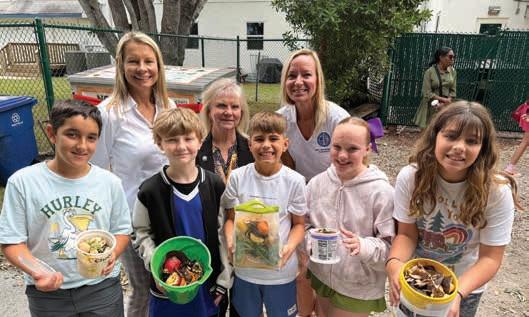
www.monroecounty-fl.gov/solidwaste
Provides unincorporated Monroe County City of Marathon, Key Colony Beach and Layton with a sustainable, environmentally sound, and cost-effective solid waste service to support the needs of the county’s businesses and residents. The department collects storm debris from residential areas affected by weather events, supports special environmental groups in nearshore water and right-ofway cleanup initiatives, and promotes “Reduce, Reuse, Recycle” through community events and education to create a safe, sustainable environment for future generations.
For bulk waste, such as furniture and appliances, residents can contact their hauler to schedule a free pick-up (up to four per year allowed).
BY THE NUMBERS
90,056
tons of household trash and construction debris (a decrease of 1,777 from 2024)
27,858
tons of yard waste (a decrease of 3,519 from 2024)
Solid Waste is responsible for:
• Municipal solid waste
• Vegetation/yard waste
• Construction debris
• Pollution control on county rights-of-way
• County-owned transfer stations
• Recycling and recycling education
• Specialty hauler licensing
Transfer station & recycling centers
Garbage, construction debris, yard waste, and recycling are collected and hauled off the islands. Residents can drop off items directly at the three transfer stations. Hours: 8 a.m. to 3:30 p.m., Monday through Saturday. Includes electronic waste.
County household hazardous waste collection
Monthly collection points throughout the Florida Keys allow residents to dispose of chemicals and electronic waste safely.
7,380
tons of recycling (a decrease of 762 from 2024)
125,294
total tons removed from transfer stations in 2025
Director Cheryl Sullivan 305.292.4536
Sullivan-Cheryl@ monroecounty-fl.gov
Employees: 17
Budget: $22.3 million

Transfer stations and hazardous waste collection times:
• Cudjoe Key Transfer Station: First and third Wednesdays of each month, 10 a.m. to 2 p.m.
• Long Key Transfer Station: First and third Fridays of each month, 10 a.m. to 2 p.m.
• Key Largo Corner of Atlantic Avenue and Homestead Avenue: Second and fourth Wednesdays of each month, 10 a.m. to 2 p.m.
• Key Largo Transfer Station: HHW appointment only call 305-367-4236
Household Hazardous & E-Waste 2026 Collection Dates: 9 a.m. to 1 p.m.
Marathon: 10600 Aviation Blvd.
• Jan. 10, 2026
• April 11, 2026
• July 11, 2026
• Oct. 10, 2026
• Jan. 9, 2027
Stock Island:
Bernstein Park, 6751 5th Street
• Feb. 7, 2026
• May 9, 2026
• Aug. 8, 2026
• Nov. 14, 2026
• Feb. 13, 2027
Monroe County | monroecounty-fl.gov
Homeowners in unincorporated Monroe County , City of Marathon, Key Colony Beach, and Layton will pay $577.11 in 2026 for garbage, yard waste, and recycling collection. The fee is listed on the Monroe County property tax bill.
Call 9-1-1 if you see illegal dumping in action!
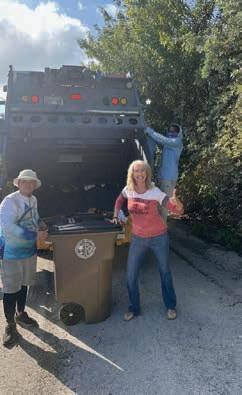
www.monroecounty-fl.gov/recycling
Monroe County does recycle. The recycling center accepts #1, #2, and #5 plastics. Tin, aluminum, cartons, cardboard, plastic bottles, and newspaper are always accepted.
Reminders of things that CANNOT be recycled include plastic grocery bags (can be brought back to the grocery store), food waste, Styrofoam, furniture (including plastic outdoor furniture), toys, plastic planter containers (can be returned to garden store),
Things to know about the new 96-gallon trash carts
• Latch the lid to keep trash contained from animals and wind.
• Do not place garbage on top of the lid or on the ground. Garbage not in the cart will not be picked up.
• Use 32-gallon cans for yard waste and blue carts for recycling.
• After collection, the cart must be removed from the curbside and returned to the side yard, corner of the house, back yard, or under the house for proper storage.
• Residents are responsible for the replacement cost of lost, stolen, or damaged carts. (Secure your cart during storms.)
• If one 96-gallon cart is insufficient for your residence, you can contact your local hauler for additional cart(s) at a fee.
garden hoses, hangers, electric wires, sporting goods, clothing, pots and pans, yard waste, hazardous materials and chemicals, and propane tanks, especially the small Coleman camping tanks.
Remembering what cannot be recycled is extremely important because if more than 10 percent of the recycling is contaminated, it goes to the landfill instead.
Want free compost or garden glow up items?
Up to 6 bags of free compost (nutrientrich black dirt) for unincorporated Monroe County residents and residents of Marathon, Key Colony Beach, Islamorada, and Layton are available at the county’s three transfer stations on the first Saturday of each month from 8 a.m. to noon, or until it is gone. Proof of residency is required – a driver’s license, utility bill, tax bill, etc. You must be able to load your own bags. In addition, residents can pick up free fertilizer, household paint, and other lightly used items while supplies last, perfect for a garden glow-up, as part of the county’s reuse initiative.
keyslibraries.org
The Monroe County Public Library was on track for a record year in total circulation in 2025 - patrons have borrowed well over 400,000 physical books, ebooks, e-audiobooks, and digital magazines, as well as video on DVD and on Kanopy, the library’s streaming app. Thousands of people of all ages attended programs at the five branches, including story times, games, art and crafts classes, author talks, concerts, summer reading, and more.
In the past fiscal year, the library also saw an almost 10 percent increase in borrowers (people who use the library). To


better serve the community, the library added the GetSetUp platform to empower older adults through personalized learning, health engagement, and resource navigation.
The Islamorada branch received a top-tobottom refresh with new carpet, paint, and furniture, with more improvements planned for the historic building’s 60th anniversary in 2026.
2025 highlight: The library created and launched a new website at keyslibraries. org. This site includes a new, easier-touse online calendar for library programs,
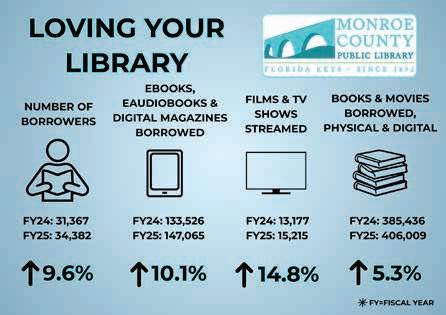




a new and improved site for the Florida Keys History Center, a conch-shell button that always returns you to the main menu, and automatic translation into Spanish and Haitian Creole. The library also created and launched its own app that allows library members to manage their accounts, search for and request items, and even check them out at the library desk, self-checkout machines, lending machines, and pickup lockers. The app includes popular library links like Libby and Kanopy, as well as a way to scan a book’s ISBN barcode to see if it’s in the library collection.
Senior Director
Kimberly Matthews
305.292.3595
Matthews-Kimberly
@monroecounty-fl.gov
Employees: 39
Budget: $6.5 million

The Florida Keys History Center site includes the historic image archive, Today In Keys History posts, Island Chronicles feature, and links that allow visitors to pursue their own historical research into the Keys from home.
KEY WEST
Senior branch manager:
Kim Rinaldi
700 Fleming Street
305.292.3595 /keywestlibrary
BIG PINE KEY
Acting branch manager: Riona Campbell
213 Key Deer Blvd.
305.872.0992 /bigpinelibrary
MARATHON
Senior branch manager: Rob Rinaldi
3251 Overseas Hwy
305.743.5156 /marathonlibrary
ISLAMORADA
Senior branch manager:
Naomi Trevino
81830 Overseas Hwy
305.664.4645 /islamoradalibrary
KEY LARGO
Senior Branch Manager: Naomi Trevino
101485 Overseas Hwy.
Tradewinds Shopping Center 305.451.2396 /keylargolibrary
FLORIDA KEYS HISTORY CENTER
Lead historian: Dr. Corey Malcom
700 Fleming St.
Key West, FL 33040
305.809.5260 /florida-history
The three animal shelters are community resources for pet owners and lovers. Animal Control is responsible for enforcing regulations, protecting the public from the dangers and nuisances of uncontrolled, dangerous, or feral animals, and protecting animals from cruelty, abuse, and abandonment. They spay and neuter animals to make them available for adoption. Animal Control conducts investigations, issues citations, and attends court proceedings related to alleged violations.
Key West and the Lower Keys
MM 0 through MM 16.5
Florida Keys SPCA
5711 College Rd., Key West
305.294.4857
After hours: 305.304.5964
www.fkspca.org
Big Pine Key and the Middle Keys
MM 16.5 through MM 70
Florida Keys SPCA
10550 Aviation Blvd., Marathon
305.743.4800
After hours: 305.394.7806
In 2025, the Florida Keys SPCA sheltered 492 dogs, 802 cats, 31 birds, 28 reptiles, 7 ferrets, 10 guinea pigs, 14 hamsters, 29 rabbits, 10 domestic rats, 1 hedgehogs, 1 kinkajou, 1 bat and 1 tarantula. 659 were adopted, 411 were reunited with their families, and 66 were transferred to rescue partners. 34 pets were sheltered through the safe haven program and reunited with their families.
The FKSPCA also provided 511 children with valuable lessons on responsibility and pet care through its Youth Club and Critter Camps. The FKSPCA offers scholarships, ensuring the program is accessible to all.
The mobile clinic provided affordable and free spay/neuter and wellness services for pets and pet owners from MM0 to MM70. Locations included Bahama Village, Stock Island, Big Coppitt, Cudjoe, Sugarloaf, Ramrod, Torches, Big Pine, and Marathon.
The FKSPCA received several grants from Grey Muzzle Foundation, Petco Love Foundation, Florida Animal Friend Foundation, and Greater Good Charities providing spay or neuter for 1,279 dogs and cats, and wellness exams and services for 599 pets.
Key Largo and the Upper Keys MM 70 through MM 112 Humane Animal Care Coalition 105951 Overseas Hwy, Key Largo 305.451.0088 www.humaneanimalcoalition.com
The Upper Keys Animal Shelter received 110 dogs and 167 cats, adopted out 60 cats and 20 dogs, and provided 267 free spays and neuters. Service road calls were 331, and lost-and-found matches were 52. Since July 2000, the Upper Keys Animal Shelter has provided 12,678 free spay/neuter surgeries for communityowned dogs and cats in our service area.





www.monroecounty-fl.gov/resiliency


Monroe County is underway with the design and implementation of more than $225 million of county road adaptation projects to maintain long-term access to homes, and living shorelines and breakwater repairs to mitigate the effects of rising sea levels. The office identifies the county’s vulnerable areas, then prepares and implements projects throughout the Keys to help enable long-term resilience for the region, working closely with numerous county departments on implementation.
The department:
• Plans for the natural environment, parks, and county infrastructure, including roads and buildings.
• Updates a Keyswide vulnerability assessment for sea level rise projections and exposure/sensitivity maps, updates the inventory of all county assets expected to be affected by sea level rise over the next 50 years, and updates the methodology.
• Collaborates with the Southeast Florida Climate Compact on projects, grants, and the annual summit.
• Develops plans and projects to mitigate the effect of sea-level rise at an estimated cost of $5 billion for the county and $3 billion for the municipalities.

Prepares and implements resilience grants under the state’s Resilient Florida program. Coordinates with Engineering on design and neighborhood outreach for road adaptation projects. (See Page 23.)
The U.S. Army Corps of Engineers’ $2.6 billion Florida Keys Coastal Storm Risk Management project is underway. The project addresses the hardening of U.S. 1, dry floodproofing of critical government infrastructure and commercial buildings, and the potential elevation of thousands of residential homes. Engineering and design for the U.S. 1 road stabilization areas are underway, totaling 5,500 linear feet at mile markers 79.5, 70.9, 70, 67, 37, and 34.5. Construction is estimated at $16 million and is anticipated for 2027/28. Sixty-five percent of the cost is paid by federal funds, and 35 percent by the county, with reimbursement from the Florida Department of Transportation for the U.S. 1 parts.
The county received a notice of award for $4 million in Stewardship Act funding and will begin restoring Canal 82 in Key Largo. The county applied for $10 million in Stewardship Act funds in August 2025 to support additional canal restoration projects, including backfill, organic muck removal, and air curtain installation. Design and construction are anticipated for 2025-26 if funds are awarded.
Chief Resilience Officer
Rhonda Haag 305.453.8774
Haag-Rhonda @monroecounty-fl.gov Employees: 1 Budget: Approx.
$20 million grant funds

The county is also underway with $12.5 million in projects funded by the federal RESTORE Act grant received in 2025 for the restoration of six canals in the Big Pine Key Avenues area: canals 293, 295, 297, 299, 300, and 315. Construction of the muck removal/backfill projects is anticipated to begin in 2025 and be completed over the next two years. Each canal will also receive a weed gate to prevent seaweed from entering.
Design and permitting are complete, and construction is anticipated to begin in early 2026 for two grant-funded breakwater repair projects: a $2.1 million project to repair the Tavernier breakwater and a $1.3 million project to repair the Rock Harbor breakwater. Restoring the breakwaters will provide resilience to the oceanside communities and help improve water quality by reducing the amount of floating seagrass entering and clogging the canals behind the breakwaters.
Design and permitting are nearing completion, and construction is anticipated to be complete by the end of 2026 for two living shoreline projects: a $3.3 million project to repair the Duck Key breakwater and create a living shoreline, and a $900,000 project to create a living shoreline on Long Key to provide coastal resiliency for the county’s Long Key transfer station. The living shorelines will provide environmental and resilience benefits.
www.monroecounty-fl.gov/msbu
At the direction of the Board of County Commissioners, staff is proposing to expand its existing Municipal Service Benefit Unit (MSBU) program in unincorporated Monroe County to allow neighborhoods to request a variety of neighborhood improvement projects. The new program will broaden the scope of possible improvements beyond those aimed at addressing road flooding, including street lighting and beach cleaning. Once a project is approved by a majority of the neighborhood (50 percent plus one) and the commissioners, the county will fund and implement the work and will then recover the expenses through a capital and/or operations and maintenance assessment. A financial hardship deferral component is also being considered for property owners with very low incomes, allowing the assessments to be deferred until the property is sold.
Many neighborhoods are facing challenges from sea-level rise, as king tide flooding is becoming increasingly widespread with each passing year. The county is constructing a pilot project in Twin Lakes to elevate roads and adjust drainage to address the flooding. Several other projects are underway. Even though the county received hundreds of millions in grants to help cover the cost of these improvements, construction costs will likely exceed the available grant funding. With 97 neighborhoods anticipated to need roadway drainage improvement projects by 2045, at a cost exceeding $2.5 billion, the county is proposing to use this new program to supplement the differential in project costs above any available grants. This avoids using ad valorem taxes, also known as property taxes, to fund these specific neighborhood projects, preventing countywide tax increases.
The new program would allow property owners to initiate and fund projects such as:
• Road elevations and drainage improvements.
• Canal restorations and weed gates.
• Beach renourishment and erosion control.
• Living shorelines.
• New sidewalks.
• Additional street lighting.
• Other infrastructure or services that benefit a specific area.
Important note: the county will continue to implement and fund basic operations, such as regularly scheduled maintenance and repair, repavement of existing roadways and bridges, maintenance of existing drainage structures, roadway striping, right-of-way vegetation trimming, and minimally required street lighting and signs.
Projects must be requested by residents and approved by a majority of the property owners (50 percent plus one) who would benefit from the improvements.
The county may advance funds for research, design, permitting, construction management, and related project tasks, with the costs reimbursed to the county through one or more special assessments on the properties that benefit. The county may also apply for grants to offset project costs when available.
Residents interested in learning more about the process can review the proposed flowchart, presentation, and draft ordinance on the website.
1. RESIDENTS meet to discuss and gather support for new project and agree to fund project costs.
3. County reviews project for feasibility. If not feasible, advises residents and project terminates.
5. County initiates assessment process to fund planning, design & permitting costs.
7. County advises of const. cost estimate (w/contingency), O&M cost and properties in benefit area.
9. SKIP if no grant. County applies for grant. If no award, County conducts VOTE #3. If YES, Move Forward. If NO, recoup costs-to-date through assessment.
11. County executes contract and constructs project.
13. County completes construction and operates and maintains the project.
2. RESIDENTS approach county to discuss project.
4. County prepares cost estimate and conducts Vote #1. If YES (≥50%+1), move forward. If NO, stop project.
6. County completes design and permitting and determines benefit area.
8. County conducts VOTE #2. If YES, Move Forward. If NO, Residents re-pay costs-to-date through assessment.
10. County bids work. Advises residents of price inc. contingency VOTE #4 occurs, If YES (50%+ 1) move forward
12. County adjusts assessment to include capital cost and O&M cost.
14. RESIDENTS enjoy project benefits and pay assessment.

www.monroecounty-fl.gov/it

Director Alan MacEachern
305.453.8792
MacEachern-Alan @monroecounty-fl.gov
Employees: 14
Budget: $3 million

• Extended use of the Oracle Community Development online application to include Code Compliance.
• Replaced legacy document storage application with modern alternative, migrated data, and trained users on enhanced functionality and security options.
MONROE COUNTY TELEVISION (MCTV)
www.monroecounty-fl.gov/mctv
MCTV@monroecounty-fl.gov
305.295.5128
The department provides efficient, reliable, and cost-effective technology, telephone, and video services to county employees as well as network and telephone services to the constitutional officers.
Services include:
• The Service Desk provides end-user computing support, including supplies and maintenance of desktops/ laptops, monitors, phones, software, printers, and more.
• IT infrastructure support services, including the data center, networks, servers, telecommunications, hardware, etc.
• Applications support for enterprise software, business systems, and web integration.
• Services for project management and procurement.
• TV broadcast and audio-visual needs through Monroe County Television (MCTV).
• Improved overall network redundancy and resilience by optimizing existing infrastructure and adding additional network capabilities.
• Installed and configured core network, phone services, and AV systems to multiple new locations (including the new EOC) in support of the BOCC, the sheriff, and other constitutional officers.
• Upgraded and improved employee and citizen wireless access coverage across multiple core government buildings.
2026 expectations:
• Extend the use of the Oracle Community Development online application to include Planning.
• Refresh and upgrade the county’s desktop computer environment.
• Work with multiple departments to implement modern cloud-based software supporting their specific functionality requirements.
• Continue to extend MCTV through additional distribution and the creation of original content.
Monroe County | monroecounty-fl.gov
MCTV live-broadcasts all BOCC meetings, including special meetings, the annual budget meetings, and other county board and committee meetings. See page 7 for channel details.
All televised county meetings are rebroadcast one week after the original broadcast and are posted to Video On Demand the following day. Recordings of BOCC, the planning commission, and other meetings are available on the MCTV video-on-demand system. Meeting requests can be submitted via the online duplication request form or downloaded from Video On Demand.
MCTV also broadcasts information in the event of a hurricane or other local emergency, as well as National Oceanic and Atmospheric Administration (NOAA) weather audio.
MCTV’s primary programming consists of live and pre-recorded programs, original content, and local, state, and federal public service announcements. MCTV also airs children’s educational programming on Saturdays.
www.monroecounty-fl.gov/countyattorney
County Attorney
Bob Shillinger
305.292.3470
Shillinger-Bob @monroecounty-fl.gov
Employees:

County Attorney: 14 lawyers, 3 support staff
Risk Management and Public Records: 2 support staff
Budget: $14.9 million (includes insurance policies for all county buildings & vehicles)
The office provides high-quality, costeffective legal services to the commissioners, the county administrator, county departments, and county advisory boards. The legal staff provides counsel on virtually every major decision made by the BOCC and county staff. Staff lawyers handle topics ranging from A (airport law) to Z (zoning). The office also serves as the county’s Records Management Liaison Office (RMLO) and the Risk Management Office.
BY THE NUMBERS
lawyers 14 261+ years of combined experience
7 1 1,000
board-certified as experts in city, county, and local government law, a distinction held by only 302 of the more than 113,000 (0.2%) members of the Florida Bar.
board-certified in State and Federal Government and Administrative Practice, a distinction held by only 71 Florida lawyers (.06%).
• Assisted the administration with drafting responses to four audits by the clerk as well as recommended policy changes.
• Requested and underwent a clerk’s audit of Risk Management that resulted in no findings.
• Transitioned EMS and Trauma Star billings to a new National Provider Identifier & Florida Medicaid Provider numbers.
• Assisted the TDC in procuring new advertising, public relations, social media, and website providers in response to three recent audits.
• Assisted MCFR in developing an expedited acquisition process for fire rescue apparatus.
• Initiated full-time representation for the Supervisor of Elections.
• The office was recognized for excellence by the Florida Bar & Florida Association of County Attorneys.
• Fulfilled the BOCC’s directive to prosecute vacation rental ordinance violations and collect outstanding code-compliance fines and costs totaling $1.14 million in FY25. Collected fines and costs are deposited in the county’s general fund, reducing property taxes.
Staff attorneys review every contract, interagency agreement, bid solicitation, resolution, and ordinance considered by the commission. In FY25, the office processed and reviewed 599 resolutions, 40 ordinances, and 1,414 other agenda items, including contracts, agreements, grants, and litigation items.
www.monroecounty-fl.gov/ publicrecordsrequest
The office oversees the preservation, maintenance, and disposal of all county records in accordance with the Florida Public Records Act and state retention requirements. The Public Records Unit receives all record requests and coordinates the county’s response. In FY25, the office processed 3,484 record requests.
• Updated the county’s property, liability, and casualty policies for 103 buildings and 355 vehicles.
• Reviewed and approved 611 agenda items.
• Reviewed and managed 155 liability claims made against Monroe County.
Represented the county in more than 1,000 cases in state and federal courts and administrative hearings.
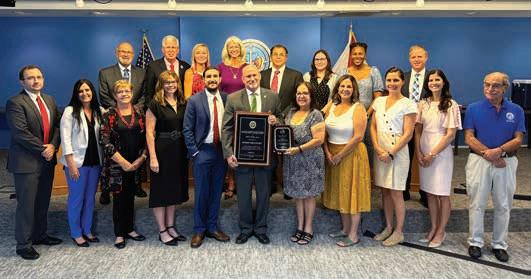
www.monroecounty-fl.gov/extensionservices
www.monroe.ifas.ufl.edu
www.fb.com/MonroeCountyExtension
Director Alicia Betancourt
305.292.4501
Betancourt-Alicia@ monroecounty-fl.gov
Employees: 3

County budget: $171,046
Grant funding: $593,475
UF funding: $629,896
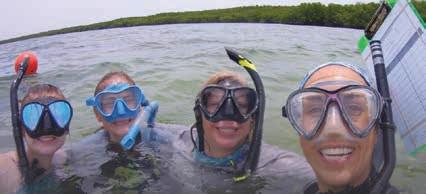
Monroe County Extension and Florida Sea Grant working in cooperation with the FWC to restore sponges in the Florida Keys. More than 4 acres were restored in 2025.
• In plant clinics throughout the county, 108 active master gardener volunteers dedicated 2,986 hours, valued at $87,818.
In the Keys, the University of Florida Institute of Food and Agricultural Sciences (UF/IFAS) Monroe County Extension Service provides timely and relevant solutions to enhance the lives of residents. The Extension Service brings current, science-based answers through programs such as Master Gardener, Climate Smart Floridians, Florida Keys Water Watch, Florida Master Naturalist, and others.
• Extension staff and volunteers planted and maintained four demonstration gardens for residents to learn about sustainable practices, including reduced fertilizer and pesticide use, appropriate plant selection, and successful vegetable gardening techniques, through visual and hands-on learning.
• Leads Florida’s Coral Reef Resilience program communications team to create science-based documents that teach the public about coral bleaching, coral diseases, and invasive species, and trains residents and visitors to use FDEP’s SeaFan.net as a reporting tool.
• Restored four acres of sponges in cooperation with the Florida Fish and Wildlife Conservation Commission.
• Community science reporting generated $23,648 of in-kind support for the Florida Horseshoe Crab Watch Program, Lakewatch, Florida Keys Water Watch, and how to report invasive species to FDEP’s SeaFan.net.
www.monroecounty-fl.gov/gal
GAL continues its mission to represent the legal interests of abused, abandoned, and neglected children in the court and community. Over the past year, the focus has been on providing mentors to youth likely to age out of foster care. The multidisciplinary team, including an attorney, a child welfare professional, and a community volunteer or pro bono attorney, works with youths to connect them with supportive adults who will remain with them past 18. These mentors help teens move into independence. The circuit office has increased its local social media presence to provide awareness of the impact and the need, providing community members the opportunity to step up and make a difference in the lives of our community’s most vulnerable children and teens.
Core values
• Integrity: The office upholds the highest standards of ethical behavior, ensuring honesty, dignity, and accountability across all its activities.
• Excellence: The office strives for excellence in all that it does, setting high standards for quality, performance, and professionalism.
Circuit Director
Alexsa Leto
305.292.3485
Leto-Alexsa @monroecounty-fl.gov
Budget: $293,000
Employees: 6 (2 county, 4 state)


• Child-centered representation: The office is bound by a duty of undivided loyalty and due care to each child. GALs represent each child’s legal interests, using a best-interest standard of decision-making.
www.keysarts.com
Executive Director
Elizabeth Young
305.295.4369
Director@keysarts.com
Employees:
3 full-time, 1 part-time
Budget: $385,000
By designating the Arts Council as the official local arts agency, the county also sets aside 1% of all capital projects into a fund to be used by the arts council to fund arts programing.
The council promotes the destination, in partnership with the Tourist Development Council, as a vibrant arts community rich with a diverse history. To build audiences and raise awareness, the council funds grants to visual, performing and literary artists, and arts organizations. To enrich and enhance Monroe County for its residents and visitors, the arts council supports and administers the Art in Public Places 1% for Public Art program in all government buildings and many outdoor venues.
The council focuses on expanding its programming countywide, and in all disciplines in creative and innovative ways. It strives for results that strengthen the economy, promote active community engagement, and support arts education and advocacy. It advocates in a leadership role by gaining knowledge through participation in Americans for the Arts, Florida Association of Local Arts Agencies (FALAA), and Florida Association of Public Art Professionals (FAPAP) initiatives.
Connecting the public to a sense of place and community through the arts is ongoing with year-round programming and exhibits. The arts council’s signature project, Connections Project: a Mosaic of Keys Artists, spotlights the many talented visual artists and musicians working and living in the Keys. Over 150 canvases created by local visual artists will be displayed at the musical receptions from Key Largo to Key West. Each canvas, created in various genres, connects and demonstrates how the arts build community and how we inspire each other.
Additional programming includes professional development for artists, workshops on how to apply for grants and complete public art proposals, and Gather ’Round - a series of creative conversations.
www.monroecounty-fl.gov/tdc www.visitfloridakeys.com
President & CEO
Kara Franker
305.296.1552
kara@fla-keys.com

The TDC manages tourism marketing efforts for the Florida Keys to ensure long-term economic stability based on visitor-related revenues. The efforts benefit residents and visitors by using revenue produced from tourism to improve environmental and community resources. The council prioritizes enhancing residents’ quality of life by minimizing property taxes and safeguarding the Florida Keys’ primary industry – tourism.
The TDC has various advisory committees and board members – some 54 volunteers who represent all facets of the community. It is the legislative extension of the BOCC to appoint nine TDC members and 15 at-large District Advisory Committee seats. TDC revenues fund marketing efforts and infrastructure improvements, such as beach maintenance and brick-and-mortar projects.
In fiscal year 2025, the TDC allocated $12 million to capital-related projects that reduced tax burdens on residents and improved their quality of life. The BOCC approves all TDC policies, funding, and expenditures.
The TDC continues to emphasize the many sustainabilityfocused “only in the Keys” activities that set the Florida Keys apart from other destinations.
VISITORS PAY TOURISM TAXES, NOT RESIDENTS. RESIDENTS BENEFIT. HERE'S HOW:
In Monroe County, we allocate significant chunks of funding from tourist tax dollars every year for capital projects for local organizations that benefit the community and visitors.
In the last 5 years, tourists paid for: Marine & Coral Restoration: $4.3 million
Beach-related: $12 million
Culture & Arts: $8 million
Fishing & Diving: $15 million
Community Events: $10 million
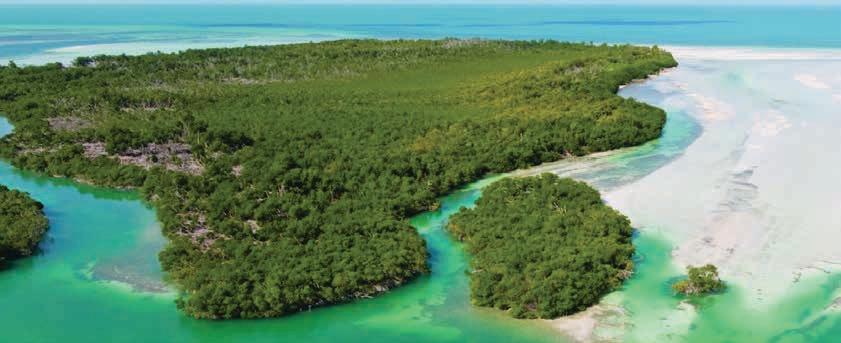
www.monroecounty-fl.gov/landauthority
The BOCC created the MCLA in 1986 to purchase property for conservation, recreation, the protection of property rights, and affordable housing. Many of the properties bought are conservation lands consisting of tropical hardwood hammocks, pinelands, and wetlands that provide environmental benefits, including habitat for endangered species and migrating birds, lands that help protect water quality, and lands that enhance longterm resilience.
MCLA funding for land acquisition comes primarily from a half-cent tourist impact tax on Florida Keys lodging and a surcharge on admissions and overnight camping at state parks in unincorporated Monroe County. MCLA also resells land to the state for conservation, which leverages state funding and allows replenishment of local funds. Fiscal information can be found on the website.
Florida Area of Critical State Concern, Florida Forever acquisitions: For decades, the state and federal governments have purchased conservation land. Since 2016, the county and MCLA partnered with the Florida Department of Environmental Protection (FDEP) to purchase Florida Forever conservation land through the Florida Keys Stewardship Act. The act enables the state to spend up to $5 million annually to acquire land within the Florida Forever program project areas, including:
• North Key Largo Hammocks
• Coupon Bight / Key Deer
• The Florida Keys Ecosystem
Under the partnership with the FDEP, MCLA assists with appraisals and surveys, acquires the land, and resells it to FDEP, speeding up the process. The county works with FDEP to identify ideal properties that accomplish conservation objectives and eliminate potential takings liability. From July 2016 through November 2025, FDEP spent $15,804,404, retiring 189 development rights. State funding is limited for the FDEP 2026 fiscal year, but MCLA is continuing to make land purchases in the Florida Forever program project areas.
MCLA oversees more than 2,020 acres of conservation lands owned by MCLA, the county, or the state. These conservation lands vary in size and habitat and can consist of large tracts or a collection of individual lots within neighborhoods. Newly purchased conservation land typically needs restoration to remove invasive exotic vegetation or plant native vegetation. Funding for land stewardship comes from mitigation fees for land clearing and Florida Fish and Wildlife Conservation Commission funds.
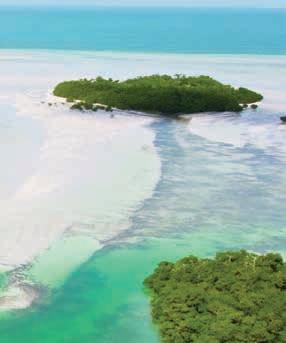
MCLA purchases buildable lots that do not contain any significant habitat to retire the residential density or transferable development rights. These purchases protect private property rights while reducing potential private property rights claims resulting from limitations imposed by the designation of the county’s Area of Critical State Concern. Since 2016, 28 contracts have closed, retiring 31 development rights at $2,848,266.
Executive Director
Cynthia Guerra Guerra-Cynthia@ monroecounty-fl. gov
Employees: 7
Budget: $34.6 million
MCLA
$242,000 County 304/316 fund

When non-conservation buildable lots are acquired under the density reduction program, they may be resold to adjacent homeowners or a property owners association. When sold, the lots are deedrestricted in perpetuity to ensure that future owners are aware they cannot apply for a ROGO allocation or build residential units or habitable space.
The Less than Fee program is a willingseller program that allows homeowners to retain ownership of a contiguous, vacant lot to keep it as vacant or use it for legally allowed accessory uses like a pool, open yard, or garage in exchange for
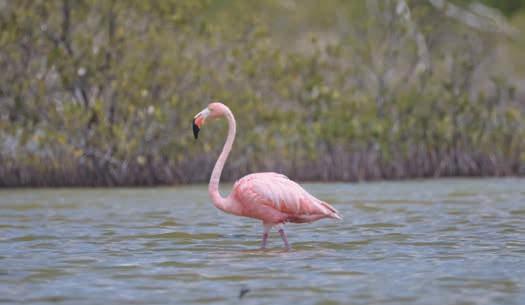
selling the right to build a home or any habitable space on that lot in perpetuity. Allowable accessory structures must be permitted and comply with land use regulations. Since 2018, the county has acquired 103 rights for $5,438,631.
MCLA provides funding for land acquisition to use as affordable housing or contributes funding toward the construction of affordable housing at the request of an eligible local government or agency. Environmentally sensitive land may not be acquired or developed for affordable housing. MCLA has spent more than $69 million since 1988 and assisted in providing 1,381 affordable housing units.
In the aftermath of Hurricane Irma in 2017, FloridaCommerce allocated $15 million in grant funds to the program to purchase property from voluntary homeowners affected by the hurricane. The acquired homes were demolished, and the land was dedicated to open space in perpetuity. The grant was completed in June 2025. In total, 21 contracts closed for $12,438,105, retiring 21 market rate and one transferable development right. Of the $15 million awarded, $14,654,938 was spent.
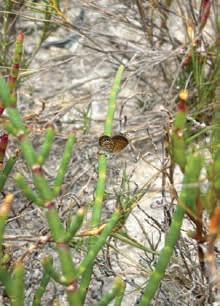
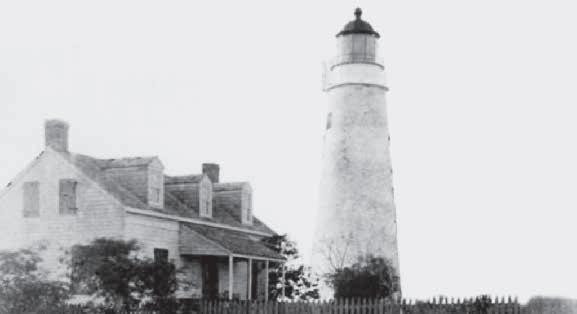
Take a step back in time
Monroe County owns and maintains multiple historic properties, including the 1890 Courthouse in Key West, the 1914 Truman School, which is the Harvey Government Center in Key West, the 1892 Key West Sheriff Residence and Jail, and the 1936 Tavernier School. Museum locations include Pigeon Key, the Key West Lighthouse and Keeper’s Quarters, and the East and West Martello Civil War forts.
Pigeon Key
www.pigeonkey.net
While Henry Flagler was building the Overseas Railway to Key West in the early 1900s, more than 400 workers lived in the railroad village on Pigeon Key, located in the path of the Old Seven Mile Bridge. Pigeon Key had a post office, commissary, and one-room school from 1908 to 1912.
When a hurricane destroyed the railway in 1935, Pigeon Key became the headquarters for the Florida Road and Toll Bridge District. Starting in 1968, the island served for 20 years as an environmental field station for international researchers studying tropical marine and island ecologies with the University of Miami. In 1993, the Pigeon Key Foundation assumed stewardship and began restoration efforts to turn it into a museum.
Admission: $30 for adults and $25 for children over the age of 3, $28 for Veterans, and $23 for Monroe County residents. A 30-passenger tram takes visitors back and forth to Pigeon Key and is included in the ticket price.
The Old Seven Mile Bridge
A 2.2-mile section of the historic Old Seven Mile Bridge, paralleling the Florida Keys Overseas Highway, reopened in 2022 so residents and visitors can once
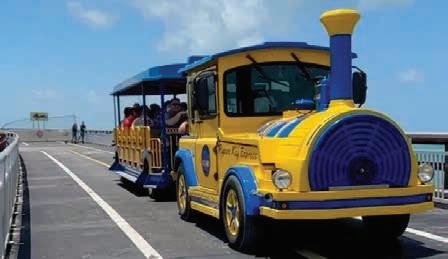
again use it for cycling, walking, running, rollerblading, watching sunrises and sunsets, and accessing Pigeon Key.
The bridge was built as part of Henry Flagler’s Florida Keys Over-sea Railroad and was completed in January 1912, connecting the Keys and mainland Florida for the first time.
In 1938, the original railroad bridge was converted to carry automobiles. In 1982, the new Seven Mile Bridge (actually 6.79 miles long and one of the world’s longest segmental bridges) debuted alongside the historic one.
Vehicular traffic on the restored bridge is not allowed, but an adjacent parking lot can accommodate up to 35 vehicles. The City of Marathon, with the county’s help,
also purchased property adjacent to the bridge for additional parking, a short walk from the entrance.
East and West Martello Civil War forts
In 1822, the U.S. Navy surveyed sites for a fort to command the harbor in Key West. In 1836, the U.S. Army and a French military engineer planned nine forts to command Key West harbor. The high cost led to revising the plan to three: Fort Zachary Taylor and two Martello Towers.
The two towers built in the mid-1860s on South Roosevelt Boulevard were never involved in a battle. They were used during the Spanish-American War in 1898 for quartering troops, and from 1914 to 1944 for radio stations and an anti-aircraft battery on the beach.
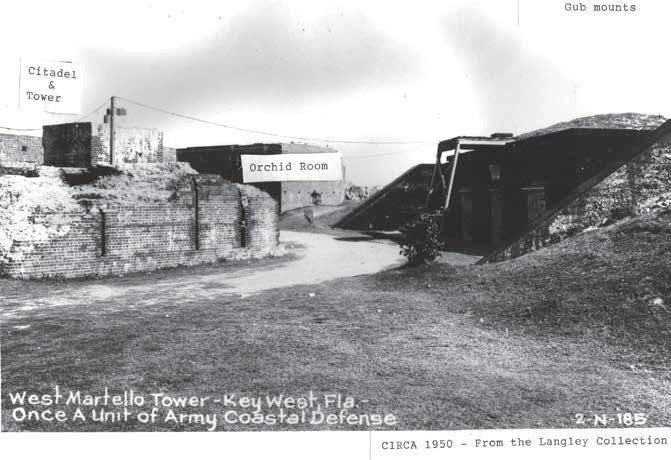
In 1947, the Army-owned towers became the property of Monroe County. The West Tower had become an eyesore along the shoreline, with pressure in 1949 to demolish it. County Commissioner Joe Allen persuaded the commissioners to stop the demolition.
The Key West Garden Club has leased the West Tower from the county since it was listed in the National Register of Historic Places in 1976. Fort West Martello is free. Donations to the Key West Garden Club are accepted at the door. Guided tours are $25. www.keywestgardenclub.com.
The Key West Art & Historical Society restored the Fort East Martello Museum in 1950, the first museum in the Florida Keys. In 1972, it was added to the U.S. National Register of Historic Places. The museum houses Stanley Papio’s metal sculptures and Robert the Doll, a supposedly haunted doll belonging to the late artist Robert Eugene Otto. Admission to Fort East Martello Museum is $15.50 for adults; $11.50 for students with ID and Monroe County residents, and seniors 62 and older; $7.50 for children (7 and up); free for active military and for children under 7. www.kwahs.org.
The county maintains the historic brickwork at both the East and West Martello towers. The towers also continue to receive Monroe County Tourist Development Council funding for upgrades, road and parking repairs, roofing,
and grass areas – perfect for concerts and festivals throughout the year.
The 1892 jail was designed to mimic the Monroe County Courthouse, built two years earlier. The jail and courthouse were considered impressive civic accomplishments and symbols of Monroe County’s position as the most populous county in Florida at that time, with the U.S. Census showing more than 18,000 citizens in Key West.
The 1892 jail was the fifth to be built at historic Jackson Square. In 1907, a 10-foot-high concrete wall was built around the jail, and in 1910, the jail was expanded to increase capacity with a two-story concrete cell block.
In 1952, the front of the old jail was demolished and replaced with a new jail and office for the Monroe County sheriff.
Today, only the rear portion of the 1892 building remains, along with the entire 1910 addition and the 1910 cell block, which is being turned into a museum.
938 Whitehead Street | www.kwahs.org There are 88 steps to the top, which is the highest viewpoint in Key West. After the first Key West Lighthouse was destroyed in an 1846 hurricane, a new lighthouse 50 feet tall was constructed. In 1894,
the growth of trees and taller buildings in Key West led to it being raised so the light was about 100 feet above sea level.
The Coast Guard decommissioned the Key West Lighthouse in 1969 and turned it over to Monroe County. The county leases it to the Key West Art & Historical Society as a museum.
Admission is $15.50 for adults; $11.50 for students with ID, Monroe County residents, and seniors 62 and older; $7.50 for children (7 and up), free for active military and for children under 7.
The Historic Gato Building
The Historic Gato Building in Key West was built in the 1800s, then rebuilt after a 1916 fire. The building was home to a thriving cigar factory. The building is self-touring and free for visitors to explore its history and art installations by the Florida Keys Council of the Arts. The building underwent extensive spalling repairs in 2025. Open from 9 a.m. to 5 p.m. weekdays.

Monroe County residents with proper ID can enjoy free admission to all four Key West Art & Historical Society museums on the first Sunday of each month.
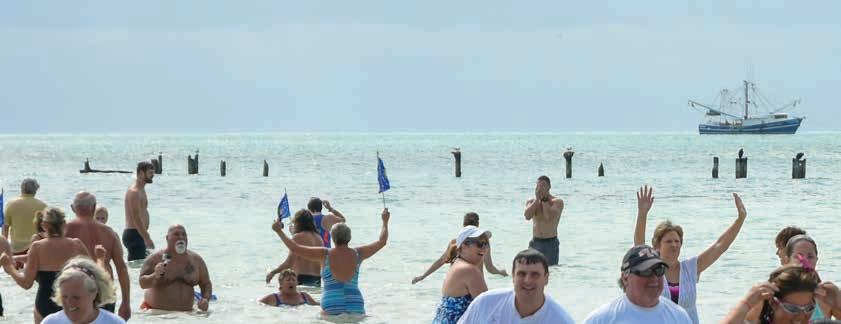
Monroe County’s citizen boards and committees contribute to the government in various ways; some serve as advisory groups to the BOCC, while others work on issues and projects in the community.
Works on affordable housing opportunities for residents and the workforce and fulfills Florida Statute requirements regarding the Local Housing Assistance Plan.
Contact: Cheryl Cioffari 305.289.2562
Cioffari-Cheryl@monroecounty-fl.gov
The five-person BOCC-appointed committee reviews and recommends proposals for commissioned permanent public art. Projects are funded by the “1% for Art” ordinance created in 2001. It strives to promote and support the vibrant arts community by enhancing public buildings throughout Monroe County.
Contact: Elizabeth Young 305.295.4369
Director@keysarts.com
Construction Board of Adjustment and Appeals
Hears discrepancies in interpretations of the current county building codes.
Contact: Jamie Gross | 305.289.2583 contractor-license@monroecounty-fl.gov
Contractors Examining Board
A quasi-judicial code enforcement board that hears public complaints about unlicensed contractor code violations and imposes penalties for them.
Contact: Jamie Gross | 305.289.2583 contractor-license@monroecounty-fl.gov
Reviews applications for development approval and reviews applications for amendments to the text of the Comprehensive Plan, Land Development Code, and map amendments.
Contact: Ilze Aquila | 305.289.2529 Aguila-Ilze@monroecounty-fl.gov
Duck Key Security District Advisory Board
Provides security services for the residential areas of Duck Key.
Contact: rtabner@outlook.com www.monroecounty-fl.gov/duckkey
Historic Preservation Commission
Designates and regulates historic properties within unincorporated Monroe County.
Contact: Diane E. Silvia 305.292.6718 hfkf@bellsouth.net
Human Services Advisory Board
Reviews funding requests from nonprofit human services agencies and makes recommendations to the BOCC.
Contact: Andrew Roltsch | 305.292.4476 Roltsch-Andrew@monroecounty-fl.gov
Key West International Airport Ad Hoc Committee on Noise
Acts as a conduit for information on issues related to airport and aircraft noise.
Contact: Deborah Lagos | 305.294.9595 deborah.murphy.lagos@gmail.com
Monroe County | monroecounty-fl.gov
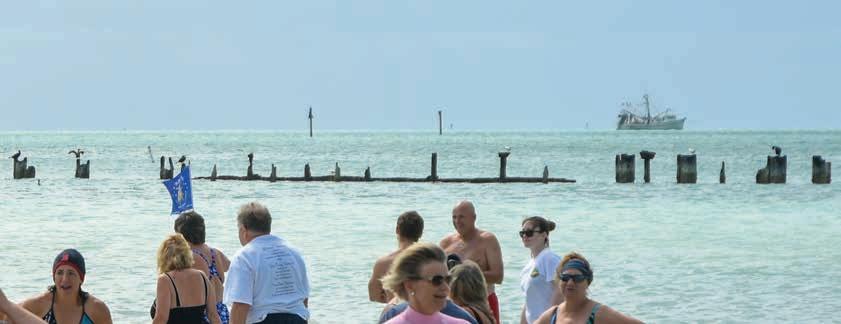
Makes recommendations to BOCC on matters related to Land Authority property acquisitions.
Contact: John Beyers | 305.295.5180 Beyers-John@monroecounty-fl.gov
The 5-person BOCC-appointed board reviews existing facilities, programs, expenditures, and revenues and recommends improvements, additional facilities, and programs.
Contact: Erika Nodal | 305.289.2569 Nodal-Erika@monroecounty-fl.gov
The 5-person BOCC-appointed board serves as the local planning agency. Reviews proposed amendments to the text of the Comprehensive Plan, Land Development Code, and map amendments, and provides recommendations to the BOCC. The committee also reviews and either approves or disapproves applications for major conditional use permits, variances, and Rate of Growth Ordinance (ROGO) awards.
Contact: Ilze Aquila | 305.289.2529 Aguila-Ilze@monroecounty-fl.gov
Recommends grant funding to private, nonprofit organizations using money from the Sheriff’s Office’s forfeitures and seized assets.
Contact: Michelle Quad | 305.292.7090 mquad@keysso.net
Reviews and recommends applications for funding under the Florida Department of Law Enforcement’s Byrne Justice Assistance Grant program and the Clerk’s Drug Abuse Trust Fund. This board also serves as the county’s Planning Council for the Florida Department of Children and Families Office of Criminal Justice, Mental Health, and Substance Abuse.
Contact: Andrew Roltsch | 305.292.4476 Roltsch-Andrew@monroecounty-fl.gov
Sets an overall direction for the Monroe County tourism marketing effort to ensure long-term, sustained growth in tourism revenues and the sustainability of resources.
Contact: Ammie Machan | 305.296.1552 ammie@fla-keys.com
The BOCC approved a resolution in July 2019 to create a committee to study and research traffic issues and create formal recommendations for the governing bodies of the five municipalities and the BOCC. The committee was reconstituted in 2024 and will have meetings through June 2025 to update the list of priority transportation projects for the Florida Keys. These projects will be formally submitted to FDOT for use in its five-year work plan.
Contact: Janene Sclafani | 305.289.2545 Sclafani-Janene@monroecounty-fl.gov
Other boards and committes
• Fire and Ambulance Taxing
District 1 Board of Governors
Contact: Cheri Tamborski 305.289.6088 tamborski-cheri @monroecounty-fl.gov
• Monroe County Local Coordinating Board for the Transportation Disadvantaged
Contact: Anjana Morris 305-592-1452 ext. 101 amadanmorris@healthcouncil.org
There are seven constitutional officers in the Florida Keys. Voters in the entire county elect them. They are the sheriff, clerk of the court, supervisor of elections, tax collector, property appraiser, state attorney, and public defender. The constitutional officers report to the people. Each has different responsibilities mandated by state law.
SUPERVISOR OF ELECTIONS
www.keyselections.org
Sherri Hodies
305.292.3416
Employees: 10

The supervisor of elections oversees all elections in Monroe County. On the website, residents can register to vote, request voteby-mail ballots, check voting status, find their polling place, request signature and address changes, and change party affiliation. Residents can also find information on candidates running for office or learn how to become a candidate for county elections.
Supervisor of elections offices:
Key West: 5200 College Road, Stock Island Marathon: 10015 Overseas Hwy.
Key Largo: 102050 Overseas Hwy., #137
As of Jan. 5, 2026, the county has 54,117 active registered voters.
14,759 Democrats | 24,733 Republicans
14,625 Others
On the website, election results are available starting in 1932; sample ballots starting in 1987; and total voters who came out to vote starting in 1958, when Monroe County had only 11,544 registered voters.
COURT & COMPTROLLER
www.monroe-clerk.com
Kevin Madok, CPA
305.292.3550
Employees: 90

The clerk of court serves as the county’s chief financial officer and treasurer and is the ex officio clerk to the BOCC. The clerk is the custodian of all official records and is in charge of all records relating to the circuit and county criminal, civil, juvenile, probate, and traffic departments, including traffic citations and other court-related payments. The clerk also serves as the county auditor and county recorder.
Key West traffic/criminal
500 Whitehead St. | 305.292.3545
Key West civil/recording/records
530 Whitehead St. | 305.292.3540
Marathon office
3117 Overseas Hwy. | 305.289.6027
Plantation Key office
88770 Overseas Hwy., Ste. 2 | 305.852.7145
PROPERTY APPRAISER
www.mcpafl.org
Scott Russell
305.292.3420
Employees: 37

The property appraiser is responsible for identifying, locating, and fairly valuing all property within the county for tax purposes. Determining fair, equitable value for property is the only role of this office. The property appraiser does not create value; the value is made by buying and selling real estate in the marketplace. The property appraiser has the legal responsibility to study those transactions and appraise property accordingly.
Main Key West office
305.292.3420
500 Whitehead Street (rear of building)
Marathon satellite office
305.289.2550
MM 48, 2798 Overseas Hwy., Suite 310
Upper Keys satellite office
305.852.7130
MM 88.7, 88700 Overseas Hwy., Islamorada
JUSTICE SYSTEM 16TH JUDICIAL CIRCUIT COURT
www.keyscourts.net
CHIEF JUDGE: Timothy J. Koenig
Trial court administrator:
Elomina


50 Monroe County | monroecounty-fl.gov

www.monroetaxcollector.com
Sam Steele
305.295.5000
Employees: 61
The tax collector is an agent responsible for collecting state and government revenue and public funding. The tax collector is responsible for the collection of ad valorem taxes, non-ad valorem taxes, motor vehicle and vessel registration, title applications, collection of vehicle and vessel sales tax, issuance of hunting and fishing licenses, driver’s license services, concealed weapons, local business tax, issuance of hurricane re-entry stickers for Monroe County residents, U.S. passport services, and collection of tourist development taxes.
The tax collector works with information from the property appraiser’s office for the tax roll, which includes real estate taxes, tangible taxes, and assessments such as fire, solid waste, and sewer.
Main Key West office
1200 Truman Ave., Suite 101
305.295.5000
Marathon branch
3015 Overseas Hwy. | 305.289.6034
Plantation Key branch
Annex building, 88800 Overseas Hwy.
305.852.7150
Key Largo branch
Tradewinds Shopping Center 101487 Overseas Hwy. | 305.853.3562
Key West driver’s license office
3304 N. Roosevelt Blvd.
305.293.6338
Big Pine Key branch
247 Key Deer Blvd. | 305.872.4751 (Tuesday-Thursday 9 a.m. to 3 p.m.)

www.keysso.net
Rick Ramsay
Emergency: 911
Non-emergency: 305.292.7000
Crime Stoppers: 866.471.8477
rramsay@keysso.net
Employees: 600
Download the MCSO app: Apple or Google
The Monroe County sheriff’s office (MCSO) is the primary law enforcement agency providing service from MM 112 (including County Road 905 and a portion of Card Sound Road) to MM 5 in Key West. The agency is also charged with operating county detention facilities and serving civil papers in the entire county. On the MCSO website, users can find information on arrest data, active warrants, victim resources, and more.
5525 College Road, Key West
305.296.2424
Freeman substation - Cudjoe Key 20950 Overseas Hwy.
305.745.3184
Marathon substation
3103 Overseas Hwy.
305.289.2430
Islamorada substation
86800 Overseas Hwy.
Roth substation - Plantation Key 50 High Point Road
305.853.3211
Key Largo substation
102050 Overseas Hwy.
305.664.6480
Main Detention Center, Stock Island
305.293.7300
Don’t miss the Animal Farm: free of charge, the second and fourth Sunday of the month from 1 to 3 p.m.
Marathon Detention Center 305.289.2420 Plantation Key Detention Center 305.853.3266
MONROE COUNTY SCHOOL DISTRICT
www.keysschools.com
Five board members are elected countywide to represent their respective districts.
School board members
District 1: Darren Horan, 305.923.9331
darren.horan@keysschools.com
District 2: Yvette Talbott
305.296.2639
yvette.talbott@keysschools.com
District 3: Mindy Conn
305.293.1400 x53323
mindy.conn@keysschools.com
District 4: John Dick
305.395.0657
john.dick@keysschools.com
District 5: Sue Woltanski, 305.240.1565
sue.woltanski@keysschools.com
Superintendent: Edward Tierney
305.293.1400, Edward.Tierney@keysschools.com
BY THE NUMBERS
8,592
Students enrolled
Demographics
3,483
21
1,266
Hispanic Black
3,437
134
White Asian
193
Homeschooled Students
1,286 Number of schools
Most populous school: Key West High School Students
There are five municipalities in the Florida Keys. Each has its own elected mayor, council, and government for the operations of its city. The rest of Monroe County, known as “unincorporated Monroe County,” is governed by the Monroe County Board of County Commissioners.
ISLAMORADA
www.islamorada.fl.us
86800 Overseas Highway, Islamorada
305.664.6400
Mayor: Don Horton
Village manager: Ron Saunders
Public Information: village.manager@ islamorada.fl.us
KEY COLONY BEACH
www.keycolonybeach.net
305.289.1212
Mayor: Freddie Foster
City administrator: John Bartus cityadministrator@keycolonybeach.net
KEY WEST
www.cityofkeywest-fl.gov
1300 White St., Key West | 305.809.3700
Mayor: Danise “Dee Dee” Henriquez
City manager: Brian Barroso
Public information officer: Alyson Crean acrean@cityofkeywest-fl.gov
www.cityoflayton.com
68260 Overseas Highway, Long Key 305.664.4667
Mayor: Bruce Halle cityhall@cityoflayton.com
Administrative assistant: Mimi Young myoung@cityoflayton.com
NAVAL AIR STATION KEY WEST
www.cnrse.cnic.navy.mil
Naval Air Station Key West continues to contribute to the community at large, economically, in public safety, and environmentally. It has enhanced operational and readiness requirements for the Department of Defense, Department of Homeland Security, National Guard units, federal agencies, and allied forces supported by the station.
Public information: Danette Baso Silvers danette.basosilvers@navy.mil
Stations in Islamorada and Marathon. Also operating Sector Key West, which is responsible for 55,000 square miles, including Cuba and the Bahamas. The Coast Guard protects the maritime border, environment, and marine commerce. It conducts search-and-rescue and law enforcement operations, and in the event of a disaster, the Coast Guard works with Monroe County Emergency Management.
Station Islamorada: 305.664.8077
Station Marathon: 305.743.1991 Sector Key West: 305.292.8713
NOAA
www.floridakeys.noaa.gov
NOAA is responsible for the Florida Keys National Marine Sanctuary, which protects 2,900 nautical miles of Florida Keys coastal and ocean waters.
Public information: Julie Cheon julie.cheon@noaa.gov
Key West
www.floridakeys.noaa.gov www.weather.gov/key
For all weather-related matters, the county entrusts the experts at NWS-KW with updated forecasts and other expertise. Daily forecasts are available on the website and during hurricane events.
Public information: Jon Rizzo jonathan.rizzo@noaa.gov
MARATHON
www.ci.marathon.fl.us
9805 Overseas Highway
305.743.0033
Mayor: Lynny Del Gaizo
City manager: George Garrett garrettg@ci.marathon.fl.us
Public information officer: Carlos Garcia pio@ci.marathon.fl.us
Monroe County | monroecounty-fl.gov
U.S. CUSTOMS AND BORDER PROTECTION www.cbp.gov
In the event of an emergency, agents become a part of the county’s Emergency Management team. The agency is also responsible for border security and detaining illegal immigrants, preventing human trafficking, and checking people in and out at the Key West Port of Entry located at 301 Simonton St., Room 105, Key West; 877.227.5511.
FEDERAL PARKS IN THE KEYS www.fws.gov
Dry Tortugas National Park www.nps.gov; 305-242-7700
Great White Heron National Wildlife Refuge
Key West National Wildlife Refuge
National Key Deer Refuge Visitor Center
30587 Overseas Hwy. Big Pine Key 305.872.0774
CEMETERIES
Key West Cemetery
701 Pauline St, Key West
Southern Keys Cemetery
258 Ave A, Big Coppitt Key African Refugee Cemetery
Higgs Beach, Key West Memorial Gardens of the Keys 31211 Ave. A, Big Pine Key Pioneer Cemetery
81801 Overseas Hwy, Islamorada
FLORIDA FISH AND WILDLIFE
CONSERVATION COMMISSION (FWC) www.myfwc.com
FWC includes law enforcement, licenses and permitting, conservation, and research. FWC officers work with the sheriff’s office to respond to water-related issues and public safety matters. The agency also brings in supplemental officers and equipment to support emergency management as needed.
include environmental public health, immunizations, HIV prevention and care, refugee health screenings, Healthy Start, WIC, family planning, epidemiology, STD testing, tuberculosis control and prevention, school health, dental sealants, vital statistics, and tobacco prevention. DOHMonroe is also a partner in special needs care during emergency evacuations. Administrator and health officer: Dr. Carla Fry
STATE PARKS IN THE KEYS www.floridastateparks.org
Bahia Honda
36850 Overseas Hwy, Bahia Honda 305.872.2353
Curry Hammock
56200 Overseas Hwy, Marathon 305.289.2690
Dagny Johnson Hammock
County Road 905, MM 106, Key Largo 305.676.3777
Florida Keys Overseas Heritage Trail 90 linear miles of trail, Key Largo to Key West; 305.853.3571
Fort Zachary Taylor
601 Howard England Way, Key West 305.292.6713
Indian Key
Offshore Islamorada, 305.664.2540
John Pennekamp Coral Reef MM 102.5, Key Largo www.Pennekamppark.com, 305.664.3777
Lignumvitae Key 77200 Overseas Hwy, Islamorada, 305.664.2540
Long Key
67400 Overseas Hwy., Long Key 305.664.4815
San Pedro Underwater
Archaeological Preserve
Remains of a Dutch-built ship off Indian Key 305.664.2540
Windley Key Fossil Reef
Geological Site
84900 Overseas Hwy, Islamorada, 305.664.2540
FWC now manages several boat ramps in the Keys
• Gulf View Boat Ramp, MM 9.3
• Blimp Road, MM 21.2 Bayside
• State Road 4A, Little Torch Key
• Koehn Ave., MM 30.8 Bayside
Public information: Liam Rodriguez Liam.Rodriguez@fwc.com
Vessel Turn-In Program
FWC continues to accept applications for its Vessel Turn-In Program (VTIP), a voluntary program designed to help owners dispose of their unwanted at-risk vessels before they become derelict, at no cost to the boat owner. A derelict vessel in state waters is a criminal offense and can carry serious penalties, including fines and possible jail time. To qualify for VTIP, a vessel must be floating in state waters and cannot already be determined derelict by law enforcement. The owner must have at least one written at-risk warning or citation and possess a clear title to the vessel. Visit MyFWC.com/VTIP or call 850-4885600 for more information.
Monroe.floridahealth.gov dohmonroe@flhealth.gov 305.293.7500
The Florida Department of Health in Monroe County’s (DOH-Monroe) mission is to protect, promote, and improve the health of residents and visitors in the Florida Keys through state, county, and community efforts. Programs and services
1100 Simonton St, Gato Building, Key West
Public information: Jennifer Lefelar Jennifer.lefelar@flhealth.gov
Health care centers
1100 Simonton St, Key West 3333 Overseas Hwy, Marathon 50 High Point Rd., Tavernier
FLORIDA DEPARTMENT OF ENVIRONMENTAL PROTECTION www.FloridaDEP.gov
The DEP is the state’s lead agency for environmental management and stewardship, divided into three areas: land and recreation, regulatory, and ecosystem restoration. DEP has been an integral agency for the county’s canal restoration, stormwater, and sustainability projects.
FLORIDA DEPARTMENT OF MOTOR VEHICLES www.flhsmv.gov 305.289.2600
FLORIDA HIGHWAY PATROL www.flhsmv.gov
State law enforcement agencies have officers working collaboratively with local law enforcement. 850.617.2000
FLORIDA DEPARTMENT OF TRANSPORTATION (FDOT) www.fdotmonroe.com
Public information: Julie Brown julie.brown@dot.state.fl.gov
305.927.1497
Key Largo Chamber of Commerce
www.keylargochamber.org
106000 Overseas Hwy., 305.451.1414 info@keyslargochamber.org
Marathon Chamber of Commerce
www.floridakeysmarathon.com
1222 Overseas Hwy., 305.743.5417 info@floridakeysmarathon.com
Islamorada Chamber of Commerce
www.islamoradachamber.com
87100 Overseas Hwy., 305.664.4503 info@islamoradachamber.com
Lower Keys Chamber of Commerce
www.lowerkeyschamber.com
31020 Overseas Hwy., Big Pine Key info@lowerkeyschamber.com
305.872.0752
Key West Chamber of Commerce www.keywestchamber.org
510 Greene St., 305.294.2587 info@keywestchamber.org
Key West Business Guild
808 Duval St., 305.294.4603 www.gaykeywestfl.com
Florida Keys Mosquito Control District
www.keysmosquito.org
Five board members are elected countywide to represent their district. The mission is to control mosquitoes efficiently in an environmentally sensitive manner while protecting the public from health threats and nuisance issues that could impact the local economy.
Director: Andrea Leal, 305.292.7190
Public information: Chad Huff
305.292.7190 x 131 chuff@keysmosquito.org
Florida Keys Aqueduct Authority
www.fkaa.com
1100 Kennedy Dr., Key West 305.296.2454
Five board members represent the entire county and are appointed by the governor. Public information: Ashley Roberts, aroberts@fkaa.com, 305.295.2150
Florida Keys Electric Cooperative www.fkec.com
91630 Overseas Hwy., Tavernier 305.852.2431
The nine-person board, elected by the coop’s members, represents four districts from the Seven Mile Bridge to Ocean Reef, and to the county line on the 18-Mile Stretch.
Public information: Nikki Dunn Cullen, news@fkec.com, 305.587.9256
Key Largo Wastewater Treatment District
www.klwtd.com
103355 Overseas Hwy, Key Largo, FL 33037
305.451.4019
The district’s boundaries include the territory consisting of Key Largo, all lands east of Tavernier Creek, Tavernier, and Key Largo, with the exception of Ocean Reef.
Keys Energy Services
www.keysenergy.com
1001 James St., Key West 305.295.1000
The five-seat elected governing board for the Lower Keys electric company represents the 7-Mile Bridge to Key West. Communications: Julio Torrado, Julio.Torrado@keysenergy. com, 305.295.1023
xfinity
1010 Kennedy Dr, Suite 200, Key West 800.266.2278
AT&T
1113 Key Plaza, Key West 5109 Overseas Hwy., Marathon 305.296.5007; 855.293.7676
What makes Monroe County truly great is its people – the residents, business owners, and visitors who share a deep sense of pride in protecting our environment, preserving our economy, and caring for our unique island community. Guided by this shared commitment, the Board of County Commissioners is focused on one clear goal: ensuring that Monroe County and the Florida Keys remain the best place to live, work, and visit.
The year 2025 brought both challenges and opportunities. In response, the county took a thoughtful, disciplined approach to its finances and operations. We conducted a comprehensive review of efficiencies across departments, streamlined processes, and tightened our budget, while never losing sight of our responsibility to deliver essential core services. Even as we trimmed costs, we remained steadfast in serving not only our yearround residents but also the millions of visitors who support our local economy.
Significant progress continued at Key West International Airport. With the passenger boarding bridges now complete, we are moving forward with improvements to the baggage handling system, parking garage, and car rental facilities. These enhancements will further modernize the airport experience, and, yes, rumor has it the beloved Happy Family will once again be there to greet travelers as they arrive in paradise.
At the Marathon airport, runway improvements have been completed to meet FAA standards, positioning the facility to accommodate more flights and putting us one step closer to potential commercial airline service.
Public safety and emergency response also saw major advancements. The county invested in three new Trauma Star helicopters, strengthening our ability to safely and quickly transport trauma patients to the mainland when every second matters.
Looking ahead, I am particularly excited about the Neighborhood Improvement Program under consideration by the commissioners. This initiative will empower neighborhoods to pursue enhancements beyond core services, with county assistance in permitting and access to grant funding, strengthening our resiliency, community pride, and local engagement across the Keys.
Another major milestone on the horizon is the Boca Chica Mooring Field Project, which is progressing steadily and is anticipated to continue through this year. This project will significantly improve conditions for our liveaboard residents through dedicated mooring balls and a shoreside facility, balancing environmental protection with quality of life.
I have highlighted just a few of the many accomplishments throughout our county in 2025, all made possible by our exceptional and dedicated Monroe County staff across every department. Their professionalism, pride, and hard work are the backbone of our island chain’s success. Working alongside them, and with our commissioners, continues to be both rewarding and inspiring.
As we move forward into 2026, I am confident that Monroe County will continue to meet challenges headon, embrace opportunities, and build a strong, sustainable future for generations to come. Here’s to a successful and promising year ahead.

Michelle Lincoln Monroe County Mayor
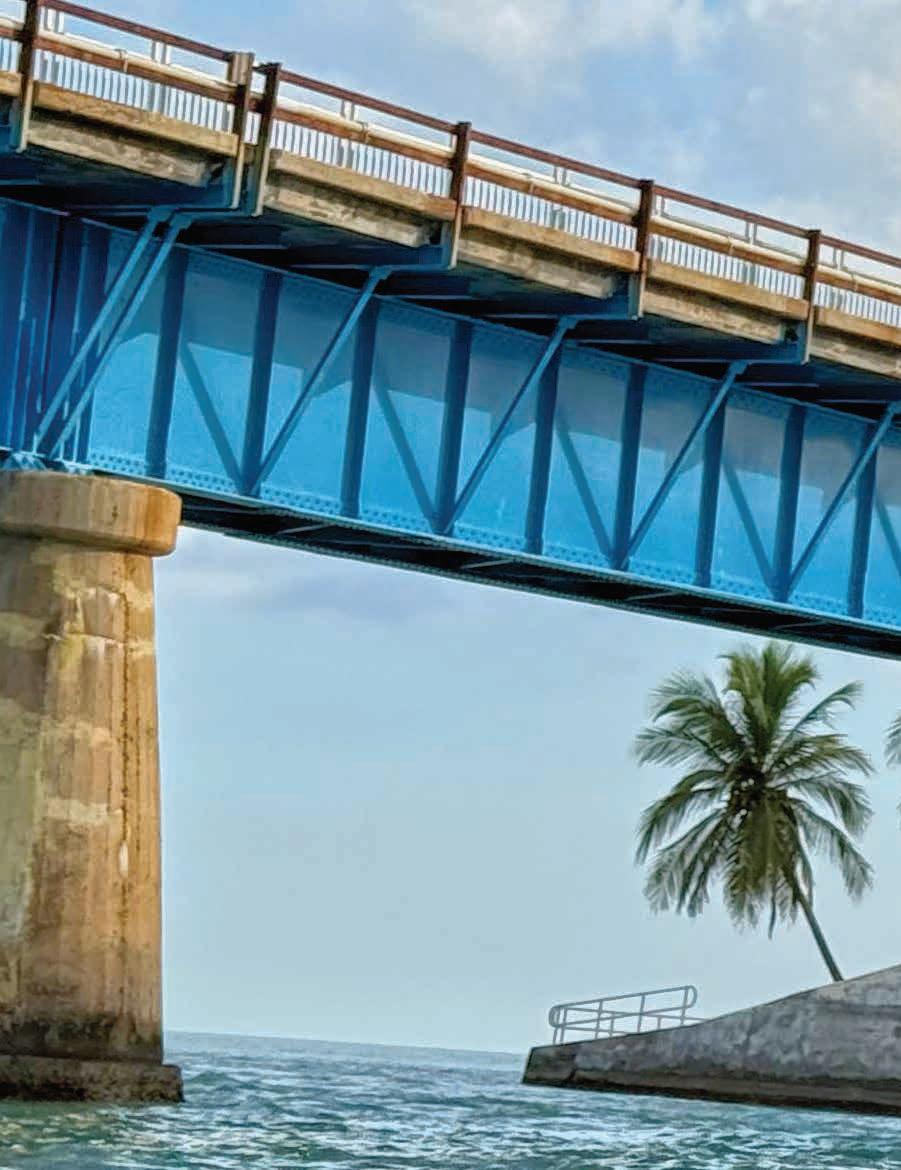
www.monroecounty-fl.gov

