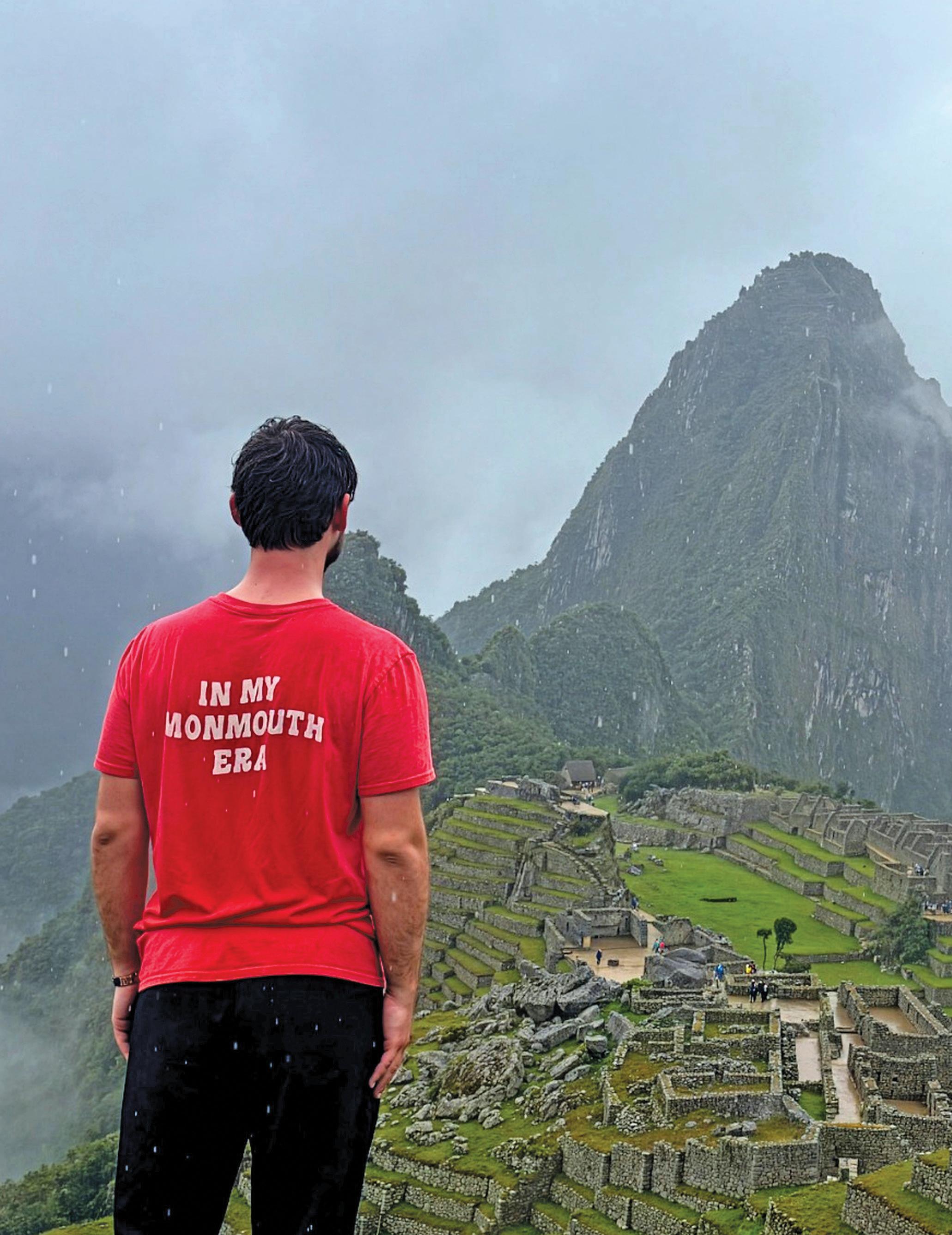

Fighting Scots explorers who took part in a January-term trip to Peru’s Machu Picchu reported several instances of being in awe of their surroundings. A fellow traveler captured Talon Hunter ’27 experiencing one of those moments. See story on page 14.
SPRING 2026
VOL. 41, NO. 1

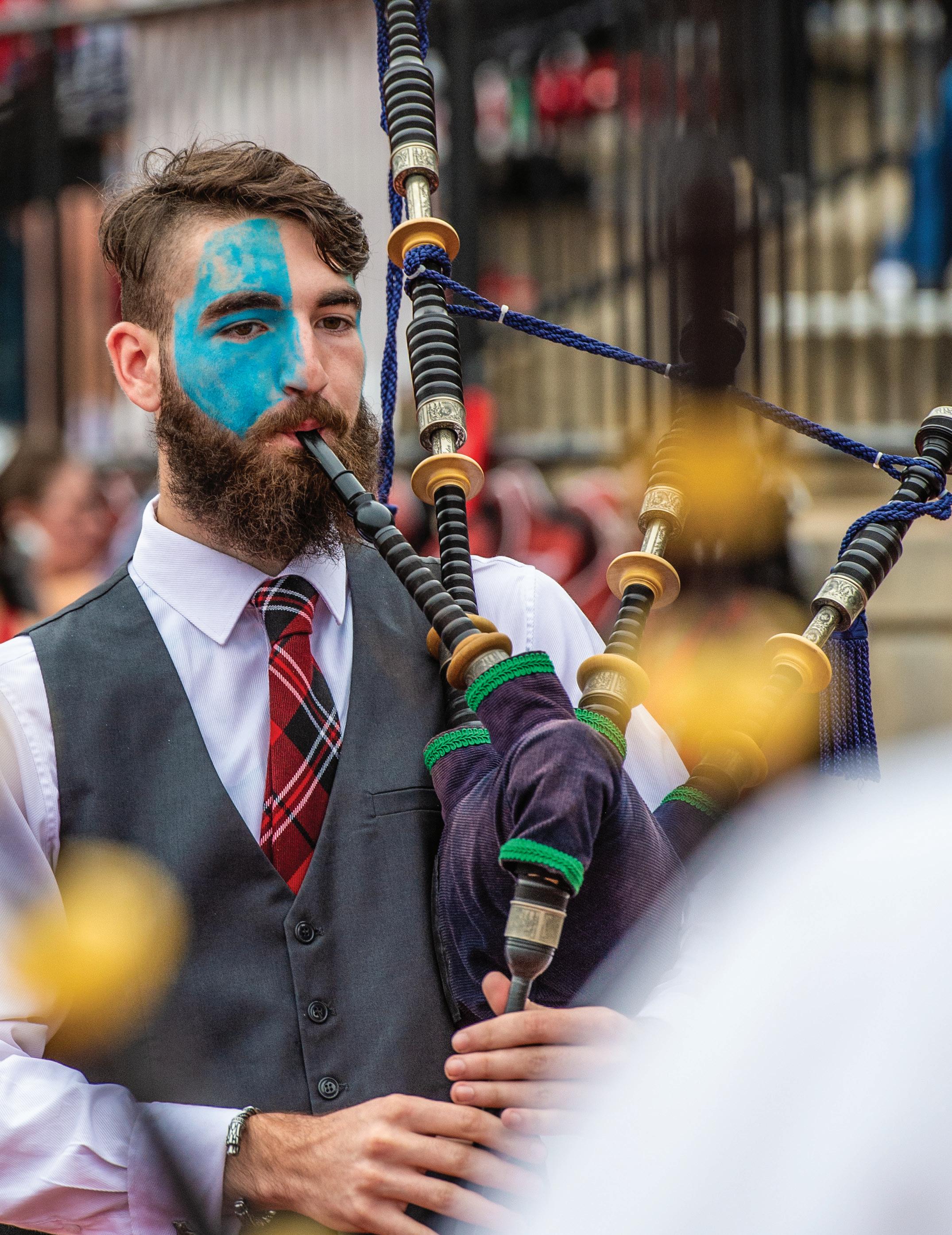
Pipe Band major Orin Weiss ’29 of Girard, Kan., displays his full Scots pride at last October’s Homecoming.
PHOTO BY KENT KRIEGSHAUSER
VICE PRESIDENT FOR DEVELOPMENT AND COLLEGE RELATIONS
Hannah Maher
SENIOR MARKETING DIRECTOR
Keri Dodson ’18
ASSOCIATE DIRECTOR OF COLLEGE COMMUNICATIONS, EDITOR
Barry McNamara
GRAPHIC DESIGN
Jeff Rankin
PRESIDENT
Dr. Patricia Draves
BOARD OF TRUSTEES
Mark Kopinski ’79, Chairman
Dr. Ralph Velazquez Jr. ’79, Vice Chairman
Douglas R. Carlson ’66
Daniel A. Cotter ’88
Dan Dickson ’89
Dr. Harvey Echols ’81
Christine Beiermann Farr ’90
Robin Ottenad Galloway ’90
William J. Goldsborough ’65
Augustin “Gus” Hart ’68
Mahendran Jawaharlal ’86
F. Austin Jones
The Rev. Robert C. McConnell ’72
Pamela Malone Meanes ’90
Bradley C. Nahrstadt ’89
Gail Simpson Owen ’74
Anthony J. Perzigian ’66
Dennis M. Plummer ’73
Anita Ridge ’88
Tim Salier ’96
The Hon. John J. Scotillo ’72
Dr. Carlos F. Smith ’90
Nancy L. Snowden
Mark E. Taylor ’78
Jean Peters Witty ’88
ALUMNI BOARD REPRESENTATIVES TO THE BOARD OF TRUSTEES
Marybeth Dues Johnson ’93
Mark Tupper ’94
ALUMNI BOARD EXECUTIVE COMMITTEE
Mark Tupper ’94, President
Wade Brown ’07, Vice President
Tessa Jones Brooks ’18, Secretary Maggie Ramirez ’09, Member at Large
Monmouth College Magazine is published for alumni, students, parents and friends of Monmouth College. All opinions expressed in signed articles are those of the author and do not necessarily reflect those of the editorial staff or the college.
Monmouth College does not discriminate on the basis of race, religion, color, sex, national origin, ancestry, disability, age, military service, marital status, sexual orientation, pregnancy or other factors as prohibited by law. The college admits students of any race, religion, color, sex, and national or ethnic origin to all rights, privileges, programs, and activities generally accorded or made available to Monmouth students. Monmouth is an Equal Opportunity Employer and complies with all applicable federal and state laws regarding non-discrimination. Any inquiries regarding Title IX or the college’s Policy Prohibiting Discrimination, Harassment and Retaliation (www.monmouthcollege.edu/nondiscriminationpolicy) should be directed to the Title IX coordinator identified below. The coordinator will be available to meet with or talk to students, staff and faculty regarding issues relating to Title IX and this policy.
Michelle Merritt ’89 Dean for Student Success, Title IX Coordinator 309-457-2115 • equitywellbeingoffice@monmouthcollege.edu
Dear Alumni and Friends,
Since I last wrote to you in November, the momentum across the Monmouth College campus has only continued to build. Each week brings new examples of our students, faculty and alumni demonstrating the spirit and determination that define this community. It’s an exciting time for Monmouth, and I’m grateful to share a few of the developments shaping our path forward.
One of the most inspiring moments of the past few months came from a transformational $5 million leadership gift from alumnus William Goldsborough ’65 and his wife, Beverly. Their generosity is already helping us invest in our campus, strengthen the student experience, and accelerate important initiatives that support Monmouth’s longterm growth. Gifts like this reflect a deep confidence in our direction and remind us how powerful the partnership between the college and its alumni can be.
We have also seen encouraging signs in enrollment and recruitment. This past year’s incoming class marked our first increase in new student enrollment in a decade, with 265 first-year and transfer students joining the Monmouth
community. That positive trend continued into the spring as our annual scholarship competition welcomed a record number of prospective students and families to campus. Their enthusiasm reinforces what we already know: students are drawn to the close mentorship, meaningful opportunities and vibrant campus life that define the Monmouth experience.
Our students themselves continue to be our greatest ambassadors. Recently, senior Cassandra Nolasco earned a national undergraduate research award for her work studying Alzheimer’s disease, an achievement that highlights the remarkable scholarship taking place in our laboratories and classrooms. Across disciplines, our students are presenting research, pursuing internships, studying abroad and engaging in service that reflects both intellectual curiosity and a commitment to making a difference.
Moments like these remind us that Monmouth’s strength lies in its people and in the shared belief that a personalized liberal arts education can transform lives. Together, we are building on our traditions while investing in the future, expanding opportunities
for students, strengthening the campus environment, and ensuring that every Fighting Scot is ready for success after graduation.
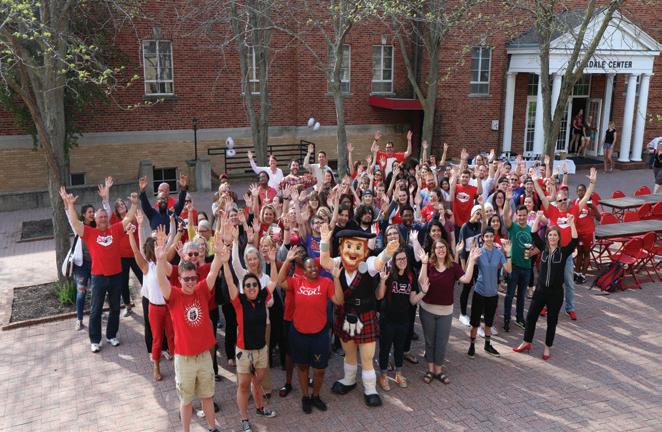
That spirit of collective momentum will be especially visible on April 15 as we celebrate our 10th annual Scots Day of Giving. This special day brings alumni, parents and friends together from around the world to support the students and programs that make Monmouth extraordinary. Every gift, no matter the size, helps provide scholarships, enhance campus experiences and ensure that future generations of Scots can thrive here.
Thank you for the pride you take in this college and for the many ways you continue to champion Monmouth. Your support makes these achievements possible and fuels the bright future we are building together.
More to come,

PATRICIA DRAVES PRESIDENT MONMOUTH COLLEGE
A transformational $5 million investment from 1965 graduate William Goldsborough the former chair of his alma mater’s Board of Trustees—and his wife, Beverly, is accelerating Monmouth’s momentum, strengthening the student experience, modernizing the campus and investing in the college’s future.
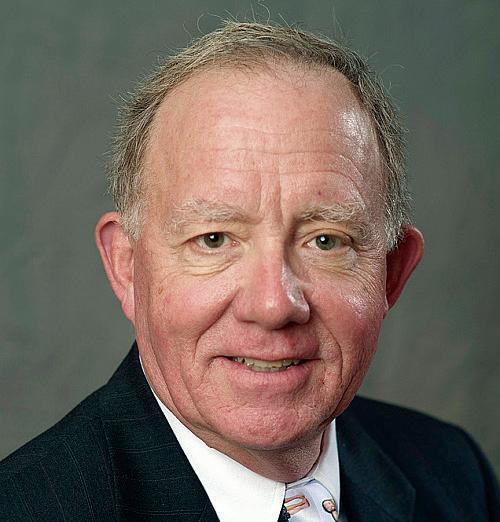
“Beverly and I made a decision to pull our estate gift forward so we could see its impact in our lifetime,” said Goldsborough. “We believe strongly in what’s happening at Monmouth right now, and we hope our decision encourages others to step forward and invest in the college’s momentum.”
President Patricia Draves agrees, noting, “This remarkable $5 million leadership gift is transformational for Monmouth. Bill and Beverly’s generosity reflects deep belief in Monmouth’s mission and its future, and it is already changing what’s possible for our students and our campus. We are profoundly thankful for their vision, their partnership and the legacy they continue to build at Monmouth.”
The gift focuses on three foundational priorities: expanding opportunity for students, caring for Monmouth’s campus and positioning the college for long-term growth.
A significant portion of the gift will permanently support Peterson Residence Hall, ensuring one of Monmouth’s most beloved student communities remains a vibrant and welcoming home for generations of Scots.
“The fund’s annual income will provide steady resources for renovations, furnishings and facility upkeep, relieving pressure on our operating budget,” said Hannah Maher,
Monmouth’s vice president for development and college relations.
The largest portion of the investment—just shy of $2 million—is targeted for digital transformation, one of five foundational pillars that President Draves vowed to address shortly after taking office in 2024.
“To remain competitive and future-ready, Monmouth must modernize its digital environment, both behind the scenes and in the ways we reach, teach and engage students,” said Draves.
The investment strengthens how Monmouth recruits, communicates and teaches—from upgraded classroom technology that enhances learning and collaboration, to modern digital tools that help the college connect with new families, support faculty and prepare students for today’s workforce.
This investment will also remove long-vacant campus buildings, improving safety and appearance while opening space for future development.
Collectively, the Goldsboroughs’ $5 million leadership gift strengthens Monmouth’s foundation while fueling its future —investing in students, the campus and the tools needed to grow.
The Monmouth Fund is Monmouth’s quiet safety net flexible, unrestricted support that doesn’t always make headlines but keeps our “students ready for success” promise real every day. It helps sustain the financial aid professional who walks families through scholarships and aid, supports the contract that brings Penny the omelet lady to campus, keeps the lawnmower running so our grounds stay beautiful, and even provides the tartan kilts our bagpipers wear with pride.
Inspired by this kind of everyday impact, Bill and Beverly Goldsborough chose to direct a meaningful portion of their leadership commitment to the Monmouth Fund, underscoring how important this flexible support truly is. By following their example with a gift of any size, you join a community of alumni, parents and friends whose philanthropy—large and small—helps ensure Monmouth remains a stable, caring place where students are ready for opportunity, ready for tradition and ready for what’s next.
“This gift accelerates our momentum,” said Maher. “We are incredibly grateful to Bill and Beverly for their leadership and generosity, which allows us to move forward with confidence and invite others to join in shaping what Monmouth can become.”
“I wish I had considered pulling our gift forward earlier, but better late than never,” said Goldsborough. “It’s only natural to want to see how one’s philanthropy can make a difference at an institution."
By Barry McNamara
When he was a student-athlete at Monmouth, Jim Elsey ’76 played on a perfect team. Now, half a century later, he and his wife have come up with a perfect gift to support his alma mater. In a few years’ time, the Jim ’76 and Roxann Elsey Endowed Scholarship Fund will be established. In the meantime, the couple’s gift has started an annual scholarship bridge fund so that the impact of their giving can be felt immediately.
“My wife and I talked about this as a couple and agreed it was important to do,” said Elsey, who lived in the Quad Cities for many years but now calls Sioux Falls, S.D., home. “It’s our way of giving back to the place that gave so much to me. But we needed to figure out a way to build up to it. That’s why we talked about an investment over four fiscal years. The scholarship’s endowed state kicks off in 2028 in the fourth year.”
Elsey encourages all Monmouth alumni, as they get older, to think about how the college has impacted their lives and act according to their feelings. “I know what was right for us, but others need to decide what’s right for them and their situation in life,” he said.
Recognizing the rising cost of earning a degree, the Elseys’ gift seeks to ease financial barriers for students while fostering recruitment and retention efforts through meaningful scholarship support. Preference will be given, first and foremost, to students planning to major in engineering. An interest in business administration and demonstrated financial need are other qualifiers for the scholarship.
“I was a really poor kid from a small town,” said Elsey. “Monmouth was my first experience seeing a different world. Suddenly I was part of something bigger—a team, a fraternity (Alpha Tau Omega) and friendships that stayed with me. The social experience mattered every bit as much as the classroom. I’ve always appreciated the experiences that I received at Monmouth. And now, I think it’s important to help kids today experience that different world, just like I was able to. They’re trying to reshape their life. A big reason I chose engineering as a focus was because of how it prepares leaders. My hope for the engineering program is that it really becomes special—a foundation in science and math, yes, but also on innovative thinking and problem solving. I hope there are plenty of internship opportunities, because that will really help make it special and will immensely help our graduates secure their first job.”
The Elseys found a simple, tax-smart way to support Monmouth, directing Jim’s Required Minimum Distributions from his IRA straight to the college. By using a Qualified Charitable Distribution, their gift goes directly to Monmouth, allowing them to make their scholarship contributions easily and without increasing their taxable income. “It’s truly dollar for dollar,” said Elsey. “Using this method just made sense to us.”
As an endowed scholarship, the Elseys’ generosity will have a lasting impact, supporting Monmouth students for genera-
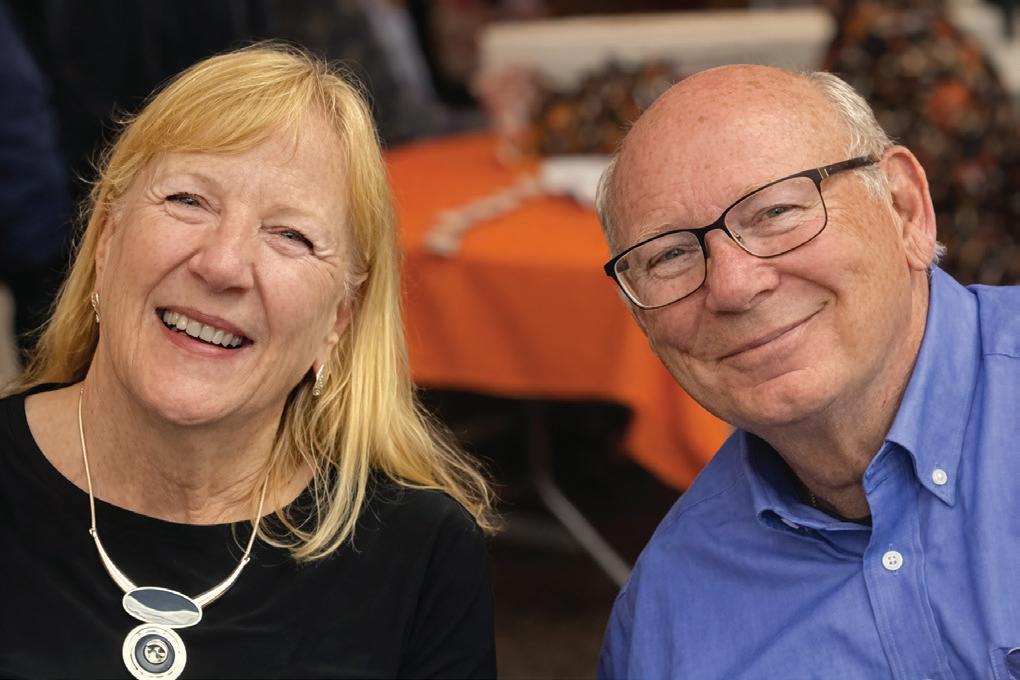
tions, strengthened even further by the planned gift they have documented with the college.
After graduating from Monmouth with a degree in business—and earning an MBA from Drake University—Elsey had a successful four-decade career, the majority of that time at John Deere. He moved up the ranks at the international company, holding several key positions. One was serving as a global commodity manager in supply management, leading the team that purchased all John Deere steel products. He also led multiple teams that purchased wheels, tires, tracks and chain. Another role was managing worldwide forecasting for the parts division, where Elsey was tasked with understanding present and future customer needs for 300,000 parts, ensuring availability, and managing inventory.
Although Elsey often heard about the college from his Kewanee High School wrestling coach, Bill Taylor ’67, he originally planned to bypass Monmouth and attend Western Illinois University. But after a late change of heart, he found himself competing for a spot on a very talented Monmouth football team, coached by the legendary Bill Reichow. “It was a real gift to learn from some of the best players to ever wear a Monmouth jersey,” said Elsey. “At that time when you’re in the middle of it, you don’t really have the perspective of how truly special that experience is.”
But Elsey made sure to be back on campus for Coach Reichow’s 90th birthday celebration and, three years later, when the 1972 team was honored as the initial member of the Fighting Scots Champions Club in 2022. Moments like those serve as a special reminder of why giving back to Monmouth is so important.

At the start of her presidency in 2024, Patricia Draves identified five strategic pillars that would guide the college. Following is a snapshot of recent developments in those five key areas.
Prospective students and families continue to respond to the personalized opportunities that define our campus, and recent admission events and scholarship competitions have brought record levels of engagement. Financially, we continue to strengthen our position through thoughtful stewardship and philanthropy. The support of our alumni and friends remains critical, and we are grateful for the generosity that fuels scholarships, academic innovation and campus improvements. The continued growth of endowed scholarships and program support will ensure that a Monmouth education remains both accessible and transformative for future generations.
At Monmouth, our greatest strength remains our ability to help students realize their potential through a truly personalized educational experience. Faculty continue to expand opportunities for internships, undergraduate research, creative scholarship and hands-on learning experiences that prepare students for the rapidly evolving world beyond graduation. At the same time, our faculty are continuing their thoughtful review of the core curriculum, ensuring that it reflects both our liberal arts traditions and the skills today’s graduates need to be successful—critical thinking, communication, collaboration and adaptability in a digital and global economy. There are some distinctive elements you will come to see for today’s learners. Stay tuned this summer.
Our culture of connection continues to grow stronger through the engagement of our alumni and extended Monmouth family. The Tartan Network initiative has
already helped connect prospective students with the college through referrals from alumni, families and friends who want to share the Monmouth experience with the next generation. Alumni are also playing an increasingly active role in mentoring students—providing internships, job shadowing opportunities, classroom guest lectures and professional networking that help our students envision their future careers. The president has engaged with our legislators in Washington and Springfield to advocate for our students and for possible funding opportunities for them. Three such outside supports are already in place: a STEM grant for under resourced and academically excellent science students; TRIO, which will support 140 students with more resources; and SAMSA, which supports our students’ wellbeing without increased costs.
This year marked the official launch of Monmouth’s six new academic schools, a structure designed to foster collaboration, innovation and interdisciplinary learning. By bringing faculty together across related disciplines, this model encourages creative thinking and new academic possibilities that reflect the future of higher education. The inaugural chairs of each school are already helping guide this transition and shape exciting, innovative opportunities for faculty collaboration and student learning.
We continue to strengthen the systems that support students from their first conversation with Monmouth through graduation and beyond. At the same time, our digital transformation continues to advance campus technology and infrastructure, allowing us to better support teaching, learning and student services. As we look ahead, we are thoughtfully exploring how emerging tools—including artificial intelligence and new digital platforms—can enhance enrollment, strengthen operations and expand the ways our students learn and engage with the world. Our faculty and staff have been offered monthly AI training sessions and the faculty have engaged in three AI workshops focused on teaching and learning.
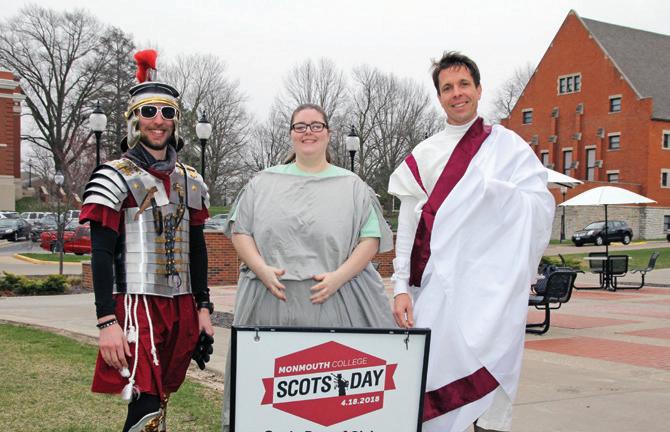
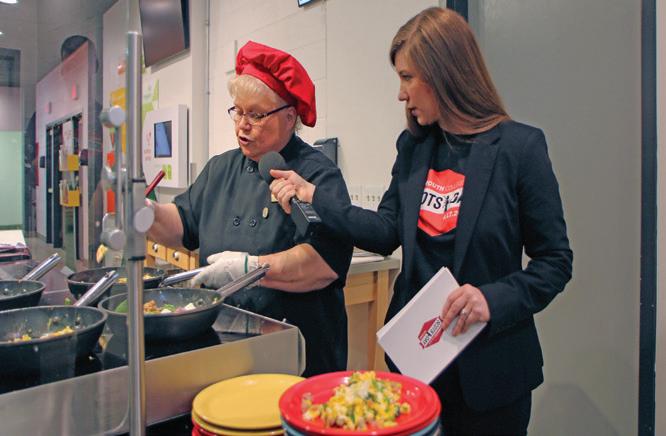
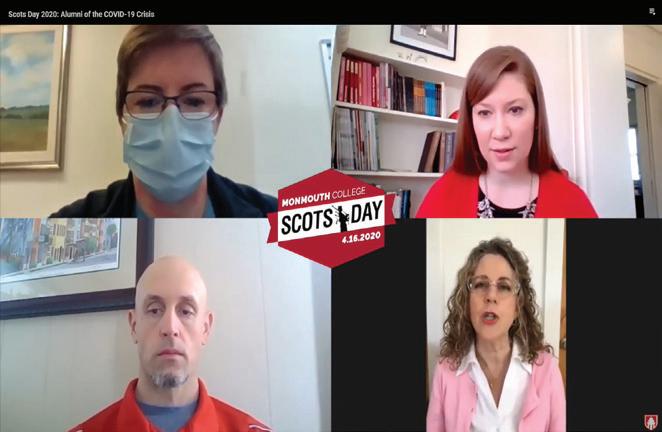
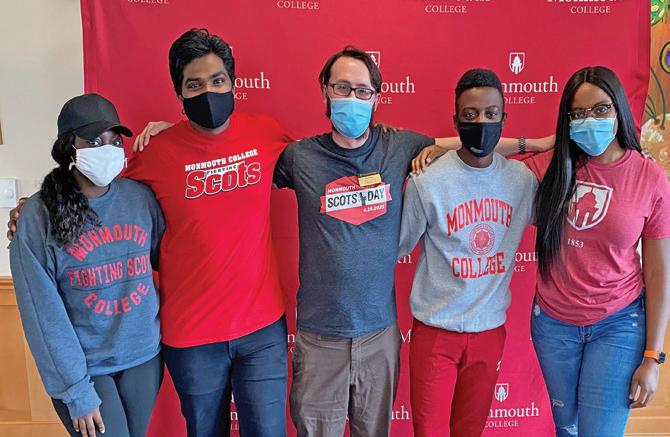
Join in on the fun on April 15
Maybe it’s the thrill of watching a map of the United States gradually be overtaken with tartan (we’re looking at you, Rhode Island and Alaska!).
Maybe it’s all the buzz on social media, as Tartan Nation looks back fondly on their time on campus, recalling favorite professors, traditions and moments. Or maybe it’s the ability to pitch in and help fund a specific project—or two (more on both of those thoughts in a moment).
But whatever the case, Monmouth College’s annual Scots Day of Giving has always been a fun and memorable occasion, and this year promises to be no different, as the alumni office stages the event for the 10th time on April 15. In its first nine years combined, the collaborative fundraiser has brought in more than $2.25 million to the college.
“We are thankful for all the support we received throughout Scots Day,” Hannah Maher said in 2017 as the first year of the event wound down. “It’s such a testament to how the college community feels about Monmouth.”
That “community” tradition has continued— even through a challenging pandemic—and Maher, who’s now the college’s vice president for development and college relations—has no doubt that Year 10 of Scots Day of Giving will follow suit.
“When we launched Scots Day of Giving nearly a decade ago, the hope was simple—that the Monmouth community would rally together in support of the place that shaped so many of us,” said Maher. “It’s been inspiring to see thousands of alumni, parents and friends from across the country come together each year. The impact on our students and campus has been tremen-
dous, and it’s a powerful reflection of the pride and generosity that define the Fighting Scots community.”
This year’s theme of “What’s Your Tartan 10?” will encourage alumni to share on social platforms their top 10 features and memories of Monmouth College.
Scots Day of Giving typically features a handful of areas where donors can target their gift—often involving the Monmouth Fund, the Fighting Scots Society and the Senior Class Gift, which are all on the docket again this year. Supporting Monmouth’s new Loyalty Scholarship and helping the Fighting Scots Marching Band acquire new uniforms are other options.
And thanks to a new initiative this year—“The Draves Double,” named in honor of Monmouth President Patricia Draves—donors are encouraged to support a pair of those causes.
MONMOUTH FUND: Wherever the college’s need is greatest, the Monmouth Fund helps bridge the gap. It
improves technology on campus, makes professional development opportunities available to faculty and staff, and provides financial aid that helps keep the Monmouth experience in reach for all students. Gifts to the Monmouth Fund ensure traditions of the college remain for generations.
FIGHTING SCOTS SOCIETY: Every honor earned, every record set and every championship moment achieved is strengthened by the Fighting Scots Society. Funding elevates the experience for Monmouth student-athletes, empowering them to compete at the highest level and to lead with pride.
SENIOR CLASS GIFT: The Class of 2026 is rallying behind a campus beautification project that will add color, character and school pride to a shared space on
campus, incorporating elements that celebrate the spirit of the Fighting Scots.
LOYALTY SCHOLARSHIP: Monmouth students are able to persist and succeed because financial support meets them where they are. The Loyalty Scholarship provides critical financial aid that helps ease the cost of attendance and ensures students can continue their Monmouth education with confidence.
MARCHING BAND UNIFORMS: Monmouth’s band brings energy, pride and tradition to campus and community events. New marching band uniforms will provide student musicians with a unified, professional look as they represent the college, support Fighting Scots athletics and carry forward a beloved Monmouth tradition.

By Barry McNamara
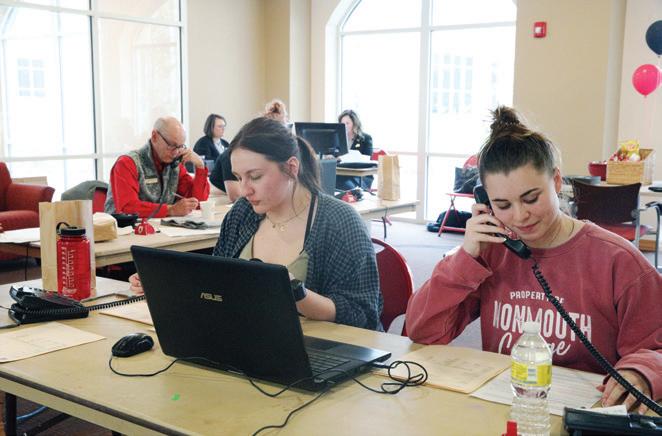
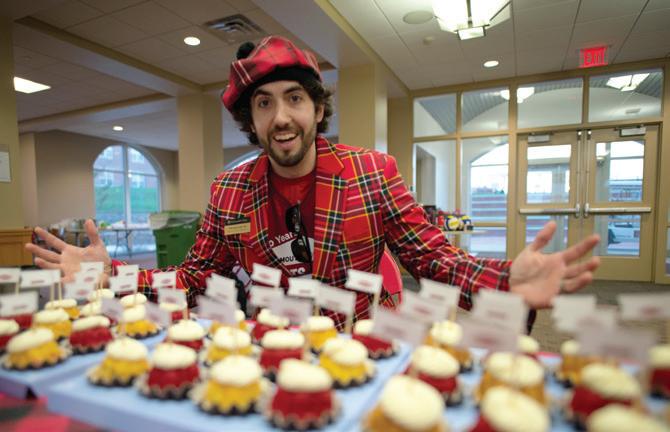
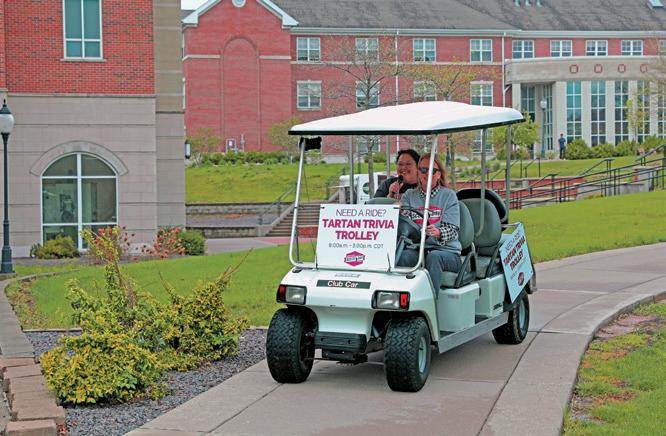
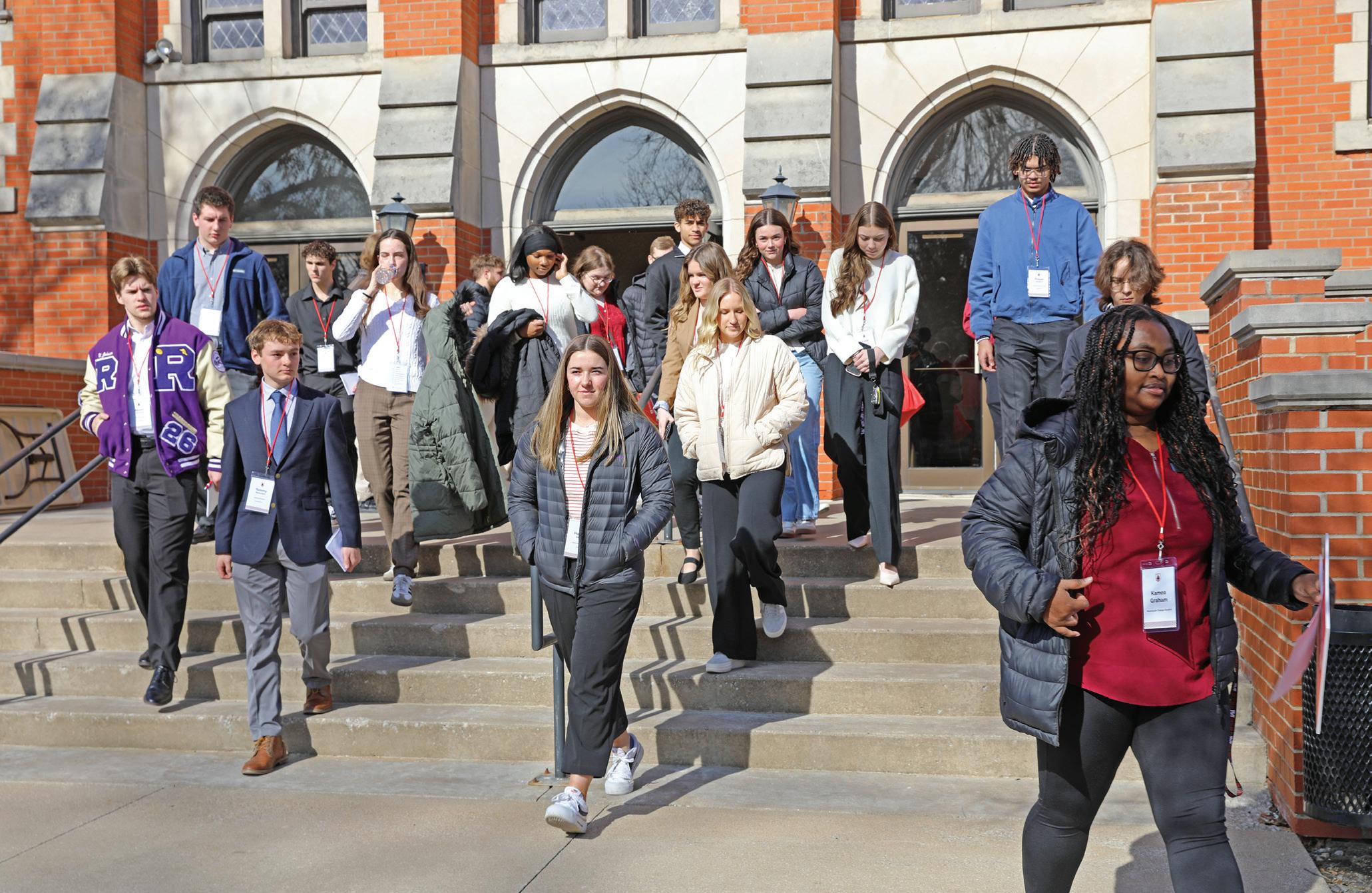
By all accounts, Monmouth’s annual scholarship competition—which was held across campus in early February—was an outstanding event.
The statistics certainly back that up, as there were 137 prospective students on campus and, with their guests, a total of 359 visitors, with both figures setting new records for the day. Additionally, 33 students were interviewed virtually.
More than 150 volunteers made the day possible, including 26 Monmouth alumni who returned to campus to lend a hand. The volunteers supported the prospective students and their parents in a variety of ways, from mock classes and interviews, to tours and informal conversations, to sessions for the parents on such topics as financial aid, student wellness, international travel and athletics.
“The day showcased the very best of who we are, and the vibe across campus was energetic, warm and welcoming,” said President Patricia Draves. “Throughout the day, countless students and parents sought me out to tell me how wonderful their experience had been. I heard comments such as, ‘This isn’t our first rodeo—we’ve been to many events, and this is, by far, the best.’”
Tasked with leading the campus-wide initiative was Monmouth’s director of admission visits and events, Michelle Carlson ’04.
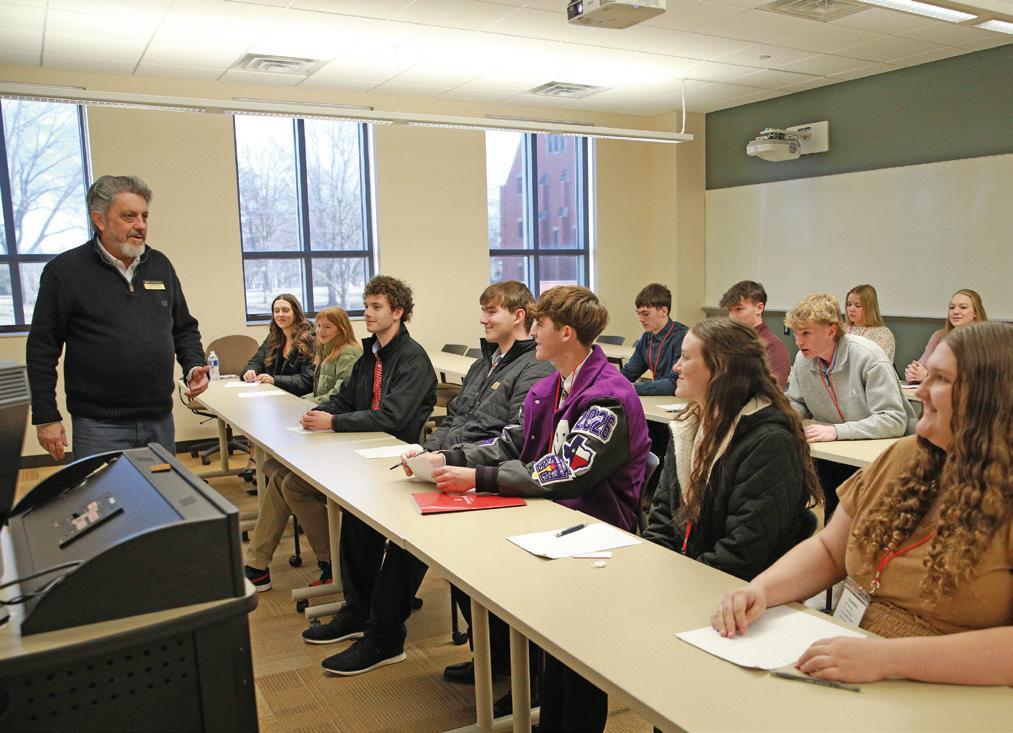
“Sometimes we get caught up in the day to day and this event always reminds me why Monmouth College is so special. The sense of community is so real,” said Carlson. “Alumni, faculty, staff, current students, current student parents—everyone plays a part in making this event a success. The amount of pride and passion that is shared with future Scots is remarkable.”
In addition to the contributions made by Monmouth’s faculty, staff and alumni, Carlson praised the efforts of current students, who she said were “all over the place—helping with
presentations, serving as group leaders and tour guides, getting students and guests where they need to go—that list is endless.”
One of the faculty who assisted—and has for several years —is psychology professor Joan Wertz.
“I enjoy meeting and talking with the scholarship competitors,” said Wertz. “They are an impressive group of young people, and I get excited about the possibility of having them in my classes in the future. Participating in the event is a good way to show prospective students that the faculty here cares about students and their goals, and we’ll be as helpful as we can be as they figure out their paths forward.”
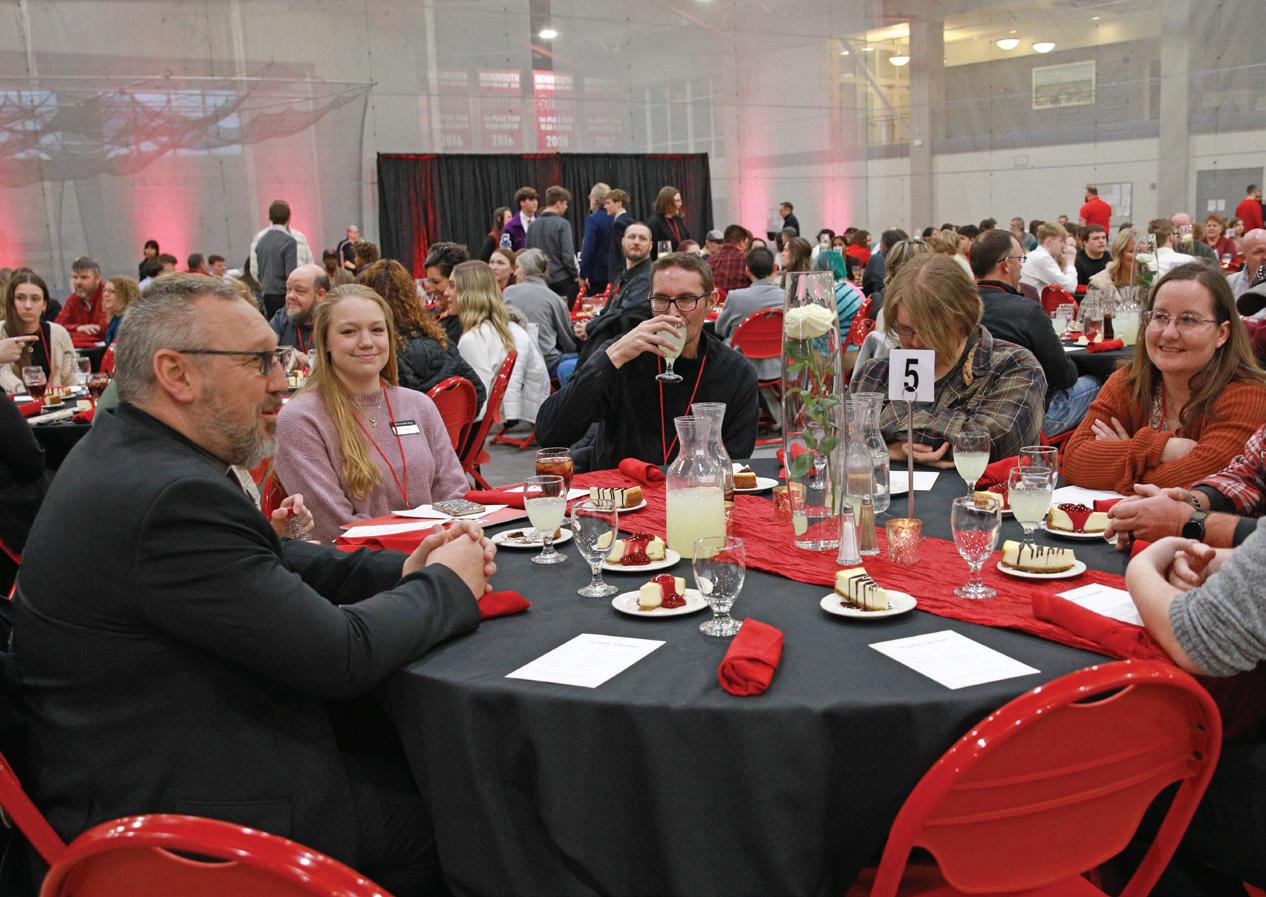
“It’s always rewarding to see a student on campus a few years later who remembers something about that day, even if they haven’t taken a course with me,” said Wright. “You realize they’ve found their way to campus and to a calling they’re excited about. At graduation one year I had a student who told me she’d been in my sample class, and it helped her and her family make the choice to study at Monmouth.”
All the volunteers contribute in meaningful ways, but Carlson doled out extra praise to “unsung heroes.”
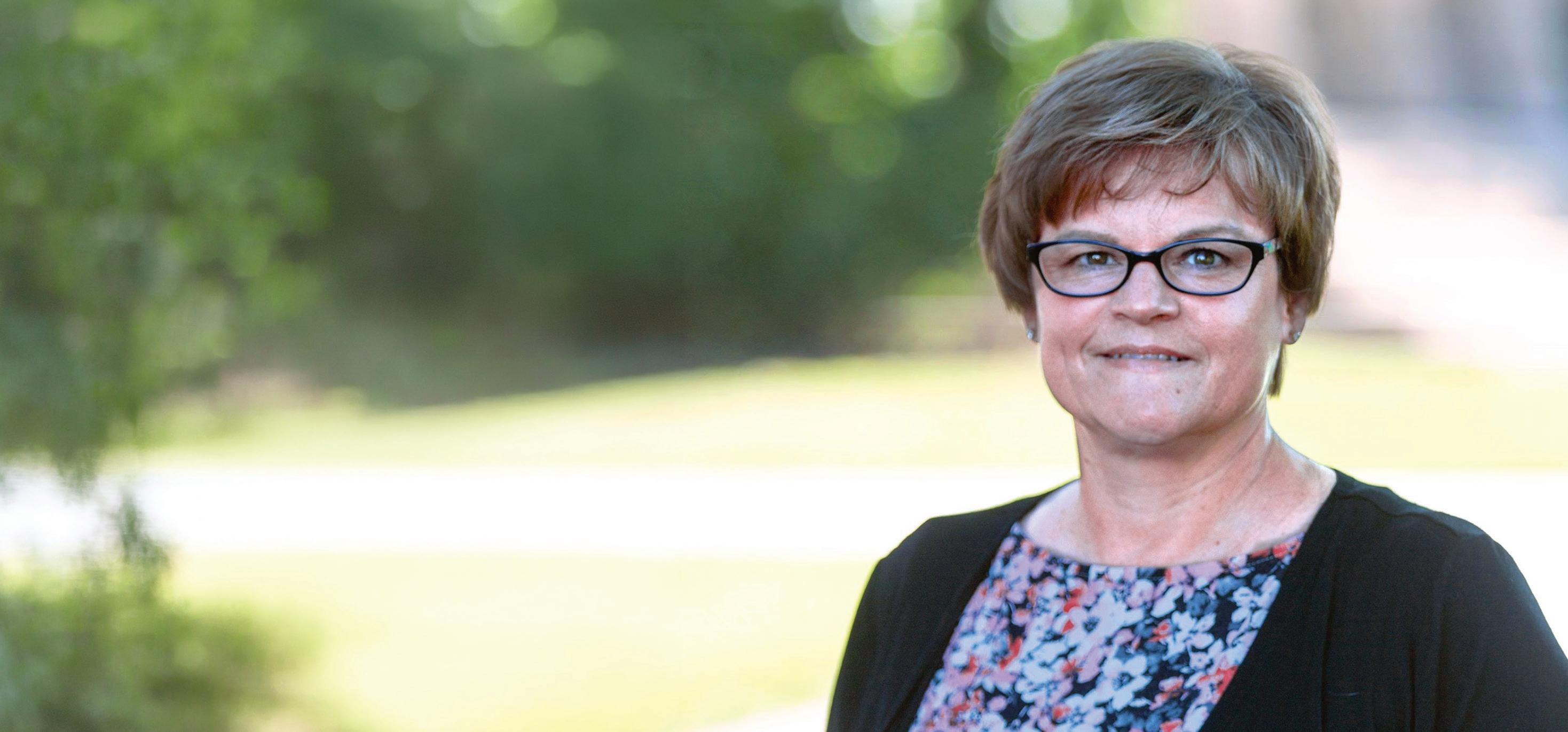
A staff member who annually contributes to the effort is Marnie Steach, a 1995 graduate and director of the college’s Wackerle Center for Career, Leadership and Fellowships.
“This is such an exciting day on campus and there is so much energy,” said Steach. “It’s fun to see prospective student scholars interact with current students, faculty and staff. Monmouth holds such a special place in my heart, and I love having the opportunity to help others see themselves at Monmouth.”
Part of Steach’s role is to present to parents about the Wackerle Center.
“As a parent myself, I really appreciate how important it is to know that your student has resources and support available to them to help them navigate their academic and career paths,” she said.
English professor David Wright volunteers his time by teaching a mock class.
“I enjoy the presence and energy of sharp, eager minds all gathered in one place. And I enjoy getting to interact with them during a sample class,” he said. “However much energy I might bring to that classroom, they match it, even when they are nervously awaiting a scholarship interview. That exchange of smarts and energy are what they can expect when they come back to campus as students, so it’s a good introduction to the best we do here at Monmouth.”
Wright observed that the impressions made on the college’s big day can be lasting.
“Our facilities crew is incredible and handles so many thankless tasks,” she said. “All the set-ups and transformations of spaces is all credit to them. It brought a smile to my face when I walked into the Center for Science and Business at 7:30 a.m. to a clean scent, as one of our custodians was doing one last mop before our guests began to arrive. And Aramark amazes me—the hospitality they provide with refreshments throughout the day and then the turnaround to pull off a delicious dinner in the fieldhouse at the end of the day.”
Later in the month, Carlson and the campus community were right back at it, hosting another scholarship competition, the inaugural Scholarship Match Day, which drew 38 students and 100 guests in total. The targeted group were admitted high school students who were not eligible for the scholarship competition, were admitted after the competition date or were unable to attend.
“Through the generosity of donor-funded scholarships, we may be able to award additional funds based on geography, academic interest, co-curricular interest and other factors,” said Stephanie Levenson, Monmouth’s vice president for enrollment management. “We can get to know the participating students beyond their application and determine if they match up with any of the scholarships. We’re excited to host this new event and have future Fighting Scots on campus who have the potential to be strong students who’ll be active and contributing members of our community.”
By Barry McNamara
If her life had taken a different course, Monmouth administrator Karen Ogorzalek
might be in the midst of her 36th year at an elementary school in New England, transitioning a few years ago from her time as a beloved secondgrade teacher to the school’s warm, caring principal and leader.
But while majoring in elementary education at Eastern Connecticut State University in the 1980s, the former Karen Macarthy realized that her newfound resolution to be an involved student was opening a new world.
“I was going to be a teacher,” said Ogorzalek, the college’s vice president for student affairs and dean of students, who was recently honored for 35 years of service to Monmouth. “During the semester I was doing my student teaching, I remember thinking, ‘I love this, but I really love student activities.’”
Entering college, Ogorzalek had made a conscious effort to transform from the “mildly involved” marching band student she was in high school.
“I thought, ‘I’m going to be something. I’m going to do something,” said Ogorzalek, who was class president for two years before spending the next two years as president of ECSU’s equivalent to Monmouth’s Association for Student Activity Programming, better known as ASAP.
Her career shift was aided by a trip to a National Associa-
tion for Campus Activities conference.
“I learned this can be a job,” she recalled. “I can do something I love for the rest of my life.”
The next step was two years of graduate school, which Ogorzalek completed at Framingham State University, just a state away in Massachusetts. But once that was completed, where would her new career take her?
Enter Jackie Condon, who held Ogorzalek’s current position for 23 of the 37 years she worked at Monmouth.
“I went to Chicago for a job fair, met Jackie Condon, got a job interview, and the rest is history,” said Ogorzalek, who’s married to campus electrician Mark Ogorzalek
Much of that history is closely intertwined with Condon, who retired in 2017.
“Sitting in her office is a little surreal for me,” said Ogorzalek, seated behind her desk in the southeast corner of Poling Hall’s main floor. “So much learning and mentoring happened here. I’ve always been a pretty good problem solver, but I feel like she really helped me take that to another level.”
In particular, Ogorzalek remembers Condon helping her level up by using the short, simple word “or.”
“She’d say ‘or’ a lot,” said Ogorzalek. “You’d present your solution, and she’d say, ‘Or … .’ It was her way to get you to broaden your horizons—to think about the students and what’s best for them. She just challenged you to think bigger. She’d hold up her hands (at two heights) and say, ‘You’re here, but you need to be here.’ She was very good at pushing you out of your comfort zone.”
Ogorzalek was just two years older than Monmouth College seniors when she became director of the Stockdale Center more than 35 years ago.
And, in doing so, she helped foster a protégé who could do the opposite—make students comfortable and secure in their home away from home at Monmouth.
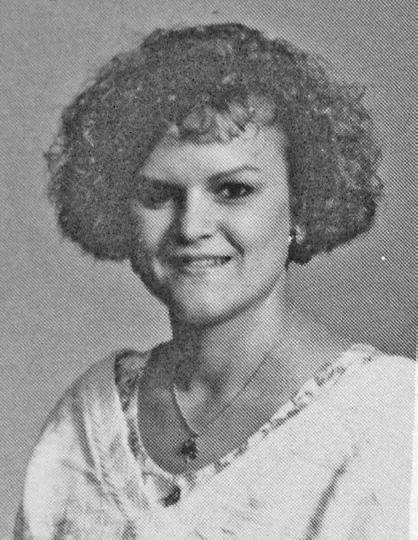
“At first, I was their friend,” said Ogorzalek, who was just two years older than Monmouth’s seniors on her first day on the job on July 1, 1990, when she was tasked with, among other things, serving as director of the Stockdale Center. “Then I was like an older sister, and then an aunt, and then a mom. I don’t even want to think of what I am right now.”
Another lesson Condon taught Ogorzalek was, “You’ve got to allow people to see something in you that you don’t even see yourself.” That, too, is a lesson she’s paid forward, as she’s often a sounding board for a student who says, “I don’t know want I want to do. What am I doing? What’s my purpose?”
“It’s seeing that something in them that they don’t see in themselves—that’s part of what we do,” said Ogorzalek. “I remember a student we had who was struggling. He was a good kid. He just needed some help. I hired him, and he worked for me as a student manager and an orientation leader. He ended up graduating and being successful. I remember that we asked our student managers to dress professionally, but he never could iron a shirt. I gave him an iron for graduation. That day, his mother gave me a hug. She said, ‘Thank you for being who you were to my son.’”
The job is not without its challenges. Two of the most serious ones came one after the other.
“COVID was hard for the students,” she said. Students simply didn’t return to Monmouth’s campus from spring break in 2020, which was especially difficult for that year’s seniors. Even when students did return in the fall of 2020, it was a completely different vibe, with masks, hybrid classes and daily email reports on the number of active cases, which Ogorzalek was in charge of distributing.
“The students couldn’t socialize in the way they wanted,” she said. “It took away a whole part of the college experience that happens outside the classroom. We didn’t want to wear a mask, but we had to wear a mask.”
Such restrictions are in the past, but Ogorzalek is fairly certain that the COVID effect has not yet worn off.
“I don’t know if all of the students—and I’m talking everywhere, not just Monmouth—are ready to be at school,” she said. “In the last three to five years, students are just
so much different than they were before. They’re thirsty for somebody to talk with them. Maybe that’s a result of COVID. It’s to the point where I’ll ask them, ‘Do you need a hug?’ Or they’ll say, ‘Can I have a hug?’ Sorry, I’m getting a little emotional right now just talking about it.”
Just when campus life seemed to be getting back to normal in the fall of 2022, there was a fire in the Stockdale Center. It wasn’t enough to destroy the building, but everything inside had some degree of smoke damage, so the hub of campus activity—the facility where Ogorzalek had spent most of her career—was shut down, and the closure lasted nearly two years.
“I’ve had a few fires on campus during my time here, but Stockdale was definitely the worst,” she said. “I’d been pretty much in that space for 30 years. The first chance I had to go in and look around, I walked around and then came out the back door. Mark was there in his truck. I just went up to him and started crying. I felt like that was my home. It was so devastating to go through and see it, thinking about all the things I’d done in that building, all the students I’d worked with in that building. Mark was my release. Then I walked back here to Poling and just came into my office and shut the door. The rest of the staff was like, ‘Something’s wrong with her.’ But when you’re at a place so long, you become one with it.”
Those were some tough times, but it’s stories like the one about “the iron guy” that keep Ogorzalek coming back to the job, day after day, year after year.
“We’re the ‘people people’ for our students,” she said. “We’re here for them. … You spend so much time with students that they do feel like family.”
They feel comfortable, and Ogorzalek does, too.
“I’m exactly where I need to be, doing exactly what I want to do,” she said. “You don’t come into this professional side of higher ed if you don’t care about students. My husband knew I’d be talking about my career today, and he said, ‘Nobody stays in a place for 35 years unless they believe in the mission.’”
It’s a belief that grew within Ogorzalek the longer she stayed.
“I really thought this would be a steppingstone – get my feet wet, gain some experience and move on,” she said. “I didn’t go to a small school. This would’ve been a perfect fit for me because of the small school environment. Early on, I said to Jackie, I’d really like to have some experience with fraternity and sorority life, and she gave it to me. Every opportunity I could take, I took.”
We’re a long way from Karen Macarthy’s first day on the job in 1990, but the administrator now known affectionately to most students as “Dean O” still believes in Monmouth’s mission—perhaps now more than ever—and she’s not done yet.
AMonmouth graduate who has paired an extremely successful legal career with shaping his world through service and leadership will deliver the keynote address at his alma mater’s 169th Commencement Exercises.
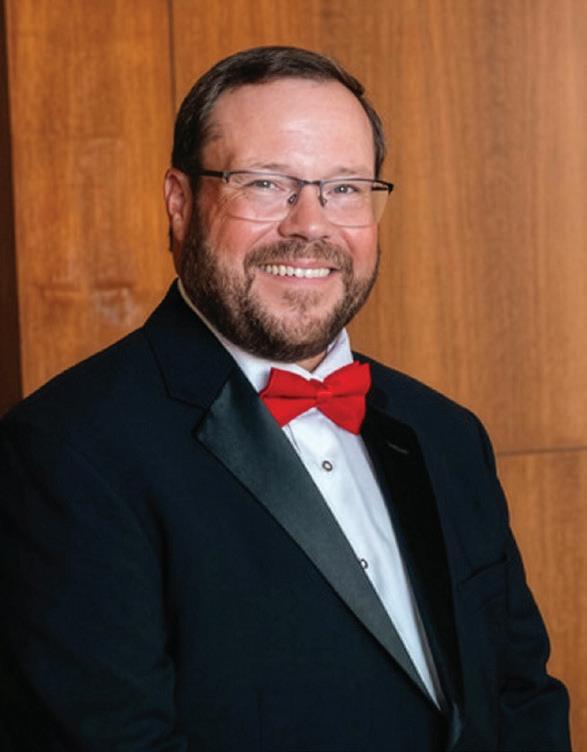
Retired attorney Brad Nahrstadt ’89, who’s served on the Monmouth College Board of Trustees for nearly a quarter-century, will address the Class of 2026 at noon May 17 on Wallace Hall Plaza.
“I’ve known Brad since my previous time on Monmouth’s faculty,” said President Patricia Draves. “I love working with him on the Board of Trustees, and what I so appreciate about him is his deep commitment to our mission and the way he works directly with students, faculty and administration to make sure our students are getting more opportunities.”
After graduating summa cum laude with degrees in English and political science—also, as one of the first four students to complete the Monmouth College Distinction Program—Nahrstadt earned his juris doctorate, cum laude, from the University of Illinois College of Law in 1992. He began his legal career as an associate at Williams Montgomery & John and was named a partner in the firm in 2001. Five years later, he was the youngest member of the firm ever elected to equity partnership. In 2012, Nahrstadt became one of the five founding partners of Lipe Lyons Murphy Nahrstadt & Pontikis, Ltd., which he served for seven years as the president and managing partner. The following two years, he served as the chief operating officer of Donohue Brown Mathewson & Smyth, retiring in 2021 after 30 years in the legal field.
His client list read like a who’s who of corporate America, including Quest Diagnostics, General Electric, Bausch & Lomb, Dow Corning, Black & Decker, Borg-Warner Corporation, Costco Wholesale Corporation, CBS Corporation and insurance companies such as Progressive and GEICO.
In 2006, Nahrstadt was selected from more than 900 nominees as one of the 40 Illinois Attorneys under Forty to Watch by the Chicago Daily Law Bulletin . From 2008
to 2019, he was named a Leading Lawyer in the areas of medical malpractice defense law and products liability defense law. Fewer than 5 percent of the licensed lawyers in the state of Illinois are so recognized.
During that time, he earned a pair of even more highly selective memberships—in the American Law Institute, the leading independent organization in the U.S. producing scholarly work to clarify, modernize and improve the law, and in the Litigation Counsel of America, a trial lawyer honorary society whose membership is limited to less than one-half of one percent of American lawyers.
“…I so appreciate [Brad’s] deep commitment to our mission and the way he works directly with students, faculty and administration to make sure our students are getting more opportunities.”
—President Draves
As a Monmouth student, Nahrstadt was selected as the Blue Key Senior Man of the Year, in part due to his active membership in Sigma Phi Epsilon, including two years as the fraternity chapter’s president. He took that love of SigEp into his post-graduate life, serving in various leadership roles that prepared him for being elected grand president of the fraternity in 2023. Last year, he received the Paul B. Slater Award for distinguished service on SigEp’s national board of directors and, that same month, he was inducted into the Order of the Golden Heart, the highest honor the fraternity can confer upon a member.
Through that affiliation, Nahrstadt has frequently returned to his alma mater to present anti-hazing programs to Monmouth’s Greek life community. He also returns annually as one of the leading advocates for the college’s distinctive moot court competition, which provides a rare opportunity for undergraduates to argue real legal cases before members of the legal community and select faculty. Monmouth has honored him as both its Young Alumnus Award recipient (2000) and its Distinguished Alumnus Award recipient (2014). The following year, he was one of the three inaugural inductees into the college’s Order of Omega Fraternity and Sorority Hall of Fame.
As an attorney, Nahrstadt was the author or co-author of more than 90 articles that have appeared in some of the leading legal publications in the country.
Since retiring, Nahrstadt has continued to write, authoring four books, three of them on early 20th-century politics, including the first full-length biography of Alton B. Parker, the 1904 Democratic nominee for president. His latest book, The Men in the Arena: Theodore Roosevelt, William Howard Taft and the Political Convention that Reshaped the Republican Party, is scheduled for publication by Bloomsbury Press in December.
A college education can be difficult enough as students wrestle with academic rigor, time management and new surroundings. But add in such challenges as a disability, being a first-generation college student or coming from a low-income family, and that level of difficulty can be raised.
That’s where new staff member Kari Fischer enters the scene. Fischer is Monmouth’s new director of TRIO, an initiative funded by the U.S. Department of Education. Her role is to work with students who have those additional challenges—approximately 20% of the college’s enrollment.
“The goal is to help them be successful, to help them graduate,” said Fischer, who joined the staff earlier this year after spending the past 2∏ years in a related position at Knox College. “We want to make sure they have the
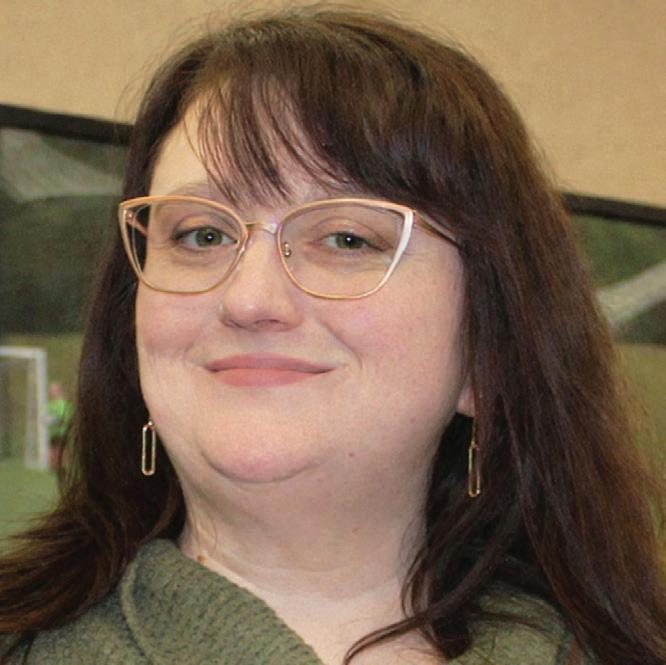
Kari Fischer
academic support they need and that they’re aware of the opportunities they have for student services such as counseling, advising and tutoring. We also want to make them aware of scholarships and help them be comfortable
talking to the financial aid office. In general, we just want to make life easier for them.”
Fischer, who’s from Rochester, Minn., earned a bachelor’s degree in recreation and tourism from Winona State University. She holds a master’s degree in therapeutic recreation from the University of Iowa.
Simply put, Fischer said she was attracted to this type of work because “I like helping people.” Her early to-do list in her new role includes “meeting a lot of people and marketing what TRIO is and what it’s all about. I’ll work on getting students interested and getting faculty and staff interested. … I love working with college students—I love how creative and adventurous they are. I’m constantly blown away by the things they accomplish.”
In 2022, Socorro Nolasco, the grandmother of Cassandra Nolasco ’26, passed away. The cause was Alzheimer’s disease, which Nolasco called “the most common form of dementia.” The progressive neurodegenerative disease accounts for between 60–80 percent of all dementia cases. That death of a close family member has fueled Nolasco’s research efforts at Monmouth, and her grandmother would be very proud to learn that her granddaughter just received a national award for it.
Blue Key, a century-old premier honor society that recognizes students at senior institutions of higher education, named Nolasco the 2026 recipient of its inaugural Undergraduate
Research Award.
Nationwide, Blue Kay has 40 active chapters at colleges large and small.
A double major in biochemistry and neuroscience, Nolasco works in the laboratories of chemistry professor Audra Goach and biology professor Janet Ugolino
“Cassandra is a brilliant research scientist,” praised Goach. “She has some of the best critical thinking skills I’ve seen in a student since I started teaching at Monmouth in 2006.”
The more Nolasco has been involved in research— including a summer spent on campus through the “Doc” Kieft research program—the more she realizes that the deck was stacked against her grandmother. As of last
year, an estimated 7.2 million Americans age 65 and older are living with Alzheimer’s dementia. Women, she’s learned, are twice as likely to be affected by Alzheimer’s as men, and Hispanic and Black populations are at higher risks than average.
The gender issue, in particular, has driven Nolasco’s research, as Goach explained.
“She immediately, upon researching peer reviewed literature, discovered the connection between Alzheimer’s and hormone levels,” said Goach. “It was a joy to discuss the planned experiments with Cassandra as she shaped her project, which utilized model membrane systems with me and with C. elegans (worms) as model systems with Dr. Ugolino.”
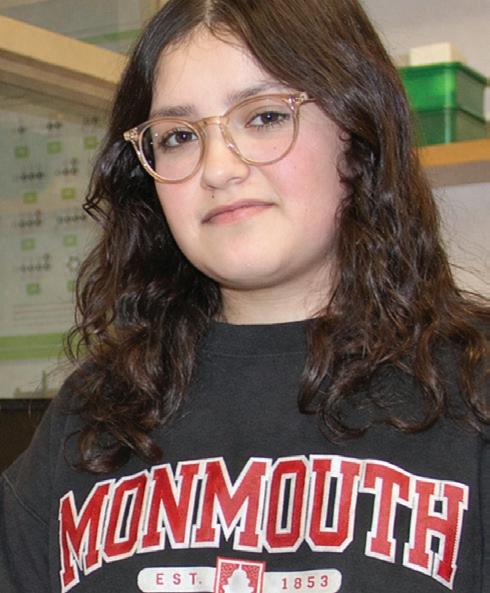
“I think there’s been good progress (with Alzheimer’s research). We know more about it now,” said Nolasco, who hopes future research will be more targeted to the populations most affected. “There are research articles dropping all the time, but we still don’t know the cause of the disease.”
By Jesia Choity ’27
During the Christmas break academic session known as “J term,” I joined a small group of Monmouth students on an unforgettable academic journey to Peru. It was a trip that blended physical challenge, cultural immersion and historical exploration along one of the world’s most iconic routes—the Inca Trail to Machu Picchu.
We were led by our seasoned traveler and biology professor, James Godde, and guided by Fernando, a local expert whose knowledge of the Andes and Quechua culture shaped so much of what we learned. Together, we engaged with history not only through study, but through direct physical and cultural immersion in the Andean landscape. Our 11-day trip included five days of hiking the Camino Inka (Inca Trail) with Quechuas Expeditions. Our group, which also included Madison Hieser ’26, Talon Hunter ’27 and Dante Sardelli ’26, prepared for the trek with a practice hike near Huchuy Qosqo before beginning the multiday journey through the Andes. Along the way, we camped on the trail, relied on porters who carried equipment and supplies, and navigated steep stone paths originally constructed by the Incan Empire. The trail tested all of us physically and mentally.
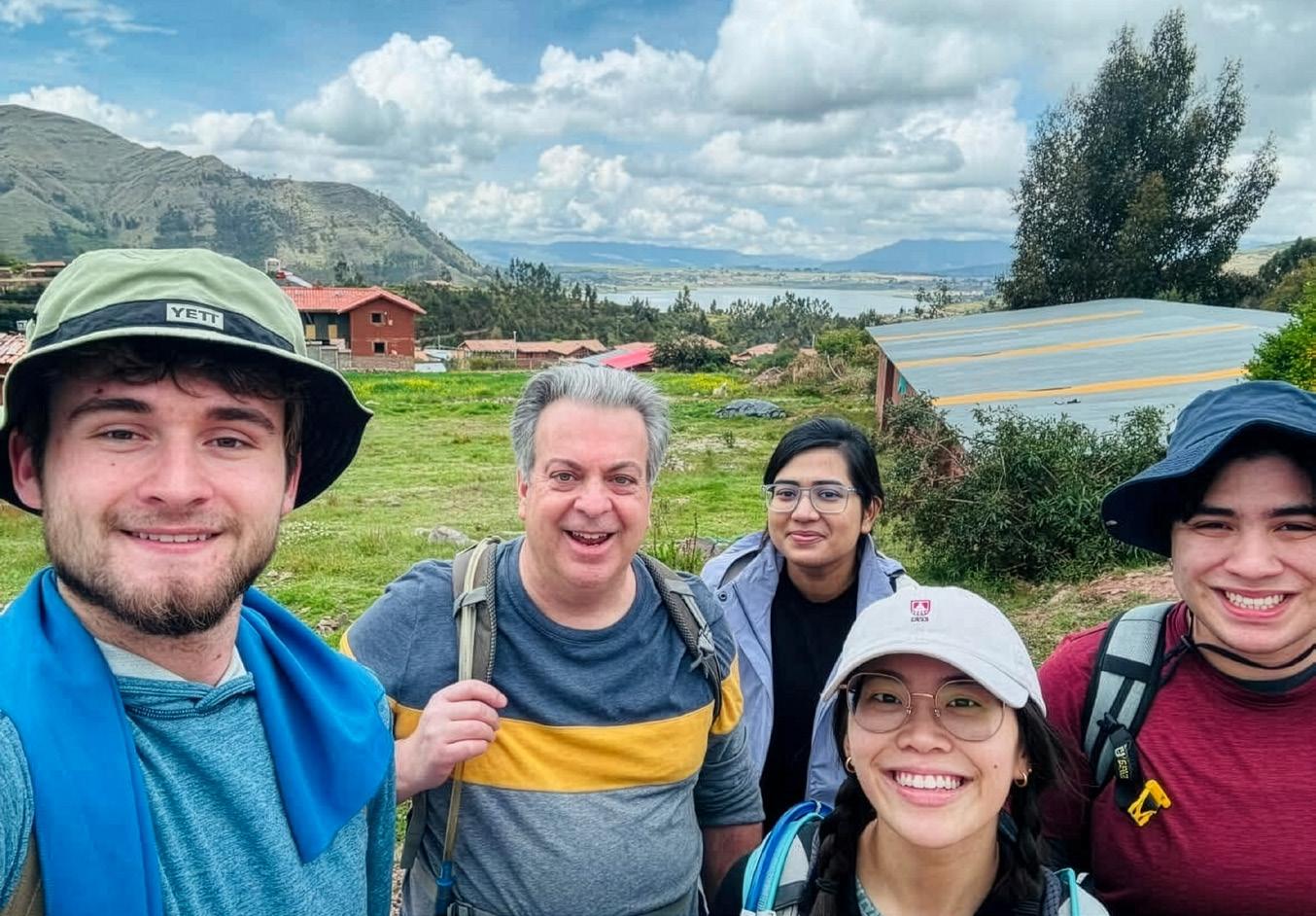
From steep mountain passes to Machu Picchu, Monmouth students experienced a transformative J term on Peru’s iconic Inca Trail. From left are: Talon Hunter, Professor James Godde, Jesia Choity, Madison Hieser and Dante Sardelli.
Our first view of Machu Picchu came through the Sun Gate (Inti Punku), the traditional entrance for those completing the Inca Trail. Approaching the site on foot gave us a powerful sense of arrival— Machu Picchu wasn’t just a monument but part of a vast, living landscape.
Machu Picchu wasn’t just a monument but part of a vast, living landscape.
As we moved through cloud forests, mountain passes and archaeological sites, moments of reflection came naturally. Madison described one such moment when she paused not from exertion, but from awe as she reflected on the forest’s sacred energy and the Quechua people who once traveled those paths.
For me, the experience carried deep personal meaning. I still can’t believe I have done this. I was talking to my best friend after the trip, and she exclaimed, “Jesia, you hiked the Andes, the Andes mountains!” and that made me believe I really did this. I had a notebook filled with the pictures of The Seven Wonders of the World that I used to cut from magazines and newspapers. Now, seeing a picture of Machu Picchu with me in it seems unbelievable.
For me, the experience extended far beyond travel. It was incredibly
meaningful, no less valuable than an academic degree. Hiking the Andes was always on my bucket list, and this trip allowed me to check off more than I ever expected. Meeting Fernando, experiencing the warmth of the Peruvian people, and witnessing the strength and dedication of our heroes— the porters and our cook—left a lasting impression. Seeing what the human body is capable of when pushed with determination has set a new personal standard for me and will continue to inspire me throughout my life. Without a doubt, this was the most memorable J term—one that the five of us will always proudly share.
Dante echoed the same sentiment, writing about the joy and impact of the journey, calling it “a trip of a lifetime,” and encouraging anyone physically able to hike to experience Machu Picchu for themselves. Professor Godde shared how proud he was of us, noting that we came in with different abilities and levels of fitness but all pushed ourselves to complete what he described as
one of his more difficult Scots Term endeavors.
Throughout the expedition, Fernando introduced us to the Quechua language and cultural perspectives. One phrase— Tupananchiskamama, meaning “See you next time” —became our symbolic farewell, capturing the gratitude,
reflection and connection that stayed with us long after the journey ended.
For all of us, the Inca Trail was far more than a hike. It was an immersive academic experience that blended history, culture, physical endurance and shared learning. By walking the same paths once traveled by the Incas, we gained a deeper
appreciation for the past and for the power of experiential education—an experience that will continue shaping our perspectives long after returning to campus.
The author is a junior neuroscience major and international studies minor from Bangladesh. She is president of Monmouth College’s International Club.

Fo r most professors, teaching happens inside four walls. But for biology professor James Godde, teaching happens across continents.
When reflecting on his 20 years leading student travel, Godde admitted, “That’s a hard question,” when asked which trip stands out most. But as a biologist, his answer became clear: “I’d have to say the Galapagos Islands (2011). That’s probably the most relevant destination to my teaching.”
For Godde, travel isn’t separate from his profession. It’s woven into it.
“After my first trip, it hit me that this is a great profession for travel,” he said. “We have specific periods set aside for such travel and an ever-changing pool of students who want to see the world. There isn’t a single place that we could travel to that doesn’t have something interesting to see in terms of biology.”
Some of his favorite trips are deeply tied to his students.
“Continuing with my biology theme, the first trip that I led at Monmouth (to Costa Rica in 2009), as well as my trips to Borneo (2014) and Sumatra (2018) particularly stand out as favorites,” said Godde, who has left the country at least once every year since 2006.
Those destinations offered extraordinary biodiversity, but what made them unforgettable was guiding students through those experiences.
Along the way, there have been moments that sound almost unreal. For example, Godde keeps a picture of the Sultan of Brunei on his desk, recalling, “During their Eid celebration, everyone in Brunei is invited to the palace for a feast.
Professor James Godde
I met the Sultan and had a brief conversation with him.”
Other memories are lighter but just as lasting. Reflecting on the many unexpected moments that happen during student trips, he laughed and said, “There’s too many to count! Students who come on my trips do so with an understanding that they may later star in my great stories.”
Travel has also shaped his worldview. In particular, visiting developing countries has changed how Godde sees life beyond academia.
“Traveling to developing countries has made me more grateful for what I have and has reinforced my belief that money doesn’t buy happiness,” he said.
Godde’s hope is that students walk away with more than academic knowledge.
“My goal is to build self-confidence in students after they make it through the challenges of international travel and to instill in them the same love of travel that I have.”
There is still one destination on Godde’s list that remains unfinished business.
“I would love to see Rapa Nui (aka Easter Island). Its remoteness means that it would be an expensive trip, but this remains a bucket list item for me.”
For Godde, biology is not confined to lectures or laboratories. It lives in rainforests, volcanic islands, palace courtyards and even along remote highways. Through travel, he teaches more than science—he teaches curiosity, resilience and perspective. In his classroom, the world itself is part of the syllabus.
—Jesia Choity
By Barry McNamara
One of the first clues Dave Mann had that his childhood was different than most was when he realized—around the time he was in second grade—that he didn’t share the same last name as his sibling.
Little did he know at the time that the reason for that discrepancy would lead to him having thousands of “brothers and sisters” as an adult. Or to traveling thousands of miles a few months ago to meet even more.
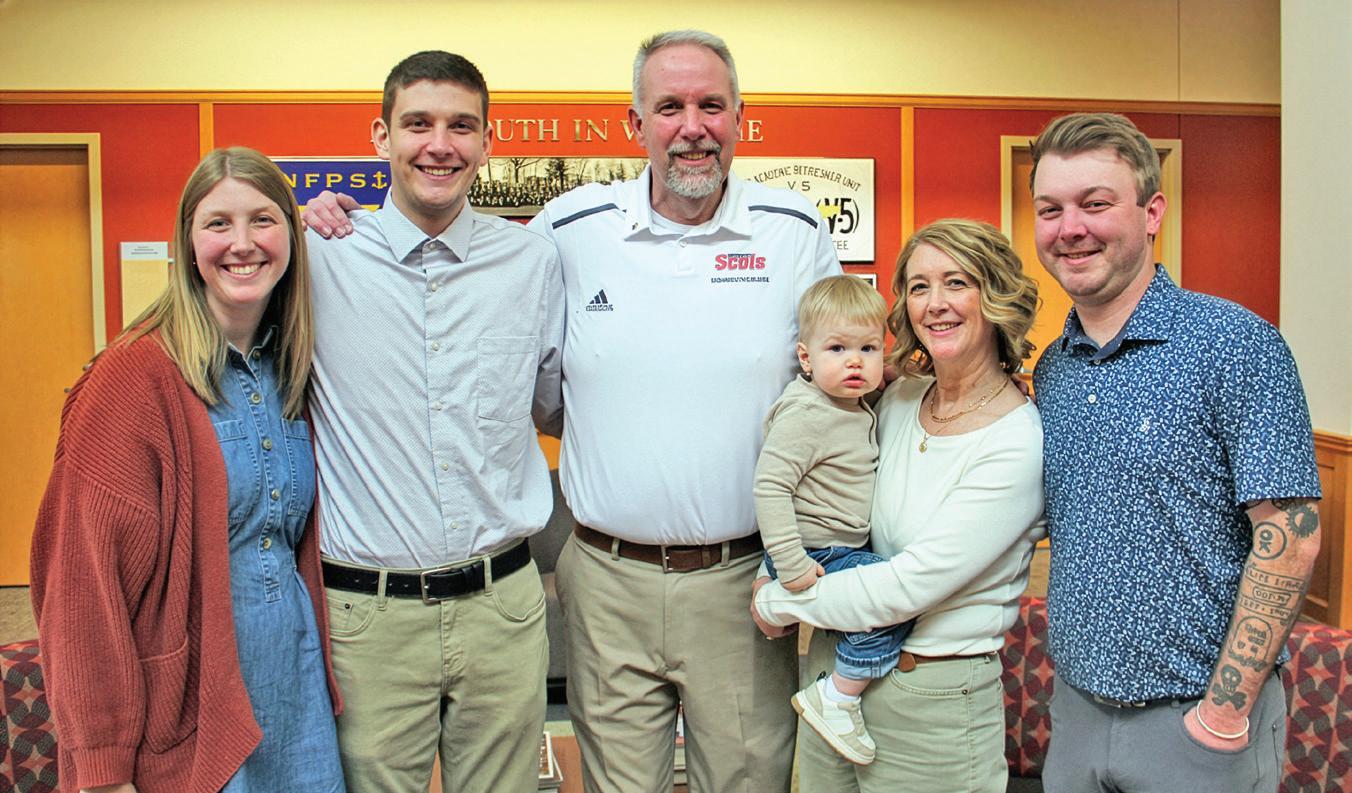
Officially in Monmouth College’s Class of 1995, Mann is married to Beth Doty Mann ’95, and the couple lives in Metamora, Ill. Dave is a purchasing coordinator for Alter Metal Recycling and Beth is a branch manager for Dakota Supply Group. One of the couple’s three children, Rylee Mann ’21, worked for a time in Monmouth’s admission office after graduating from her parents’ alma mater. She’s now the student success advisor for health careers at Illinois Central College.
Rylee grew up with her father by her side, able to attend her swim meets and a variety of other activities and family events. That wasn’t the case for Dave and his father.
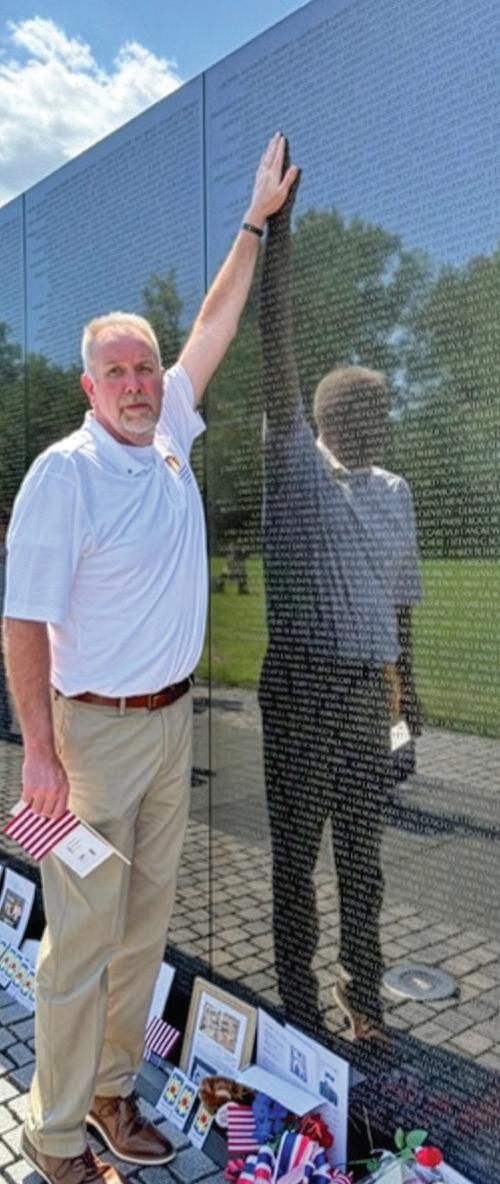
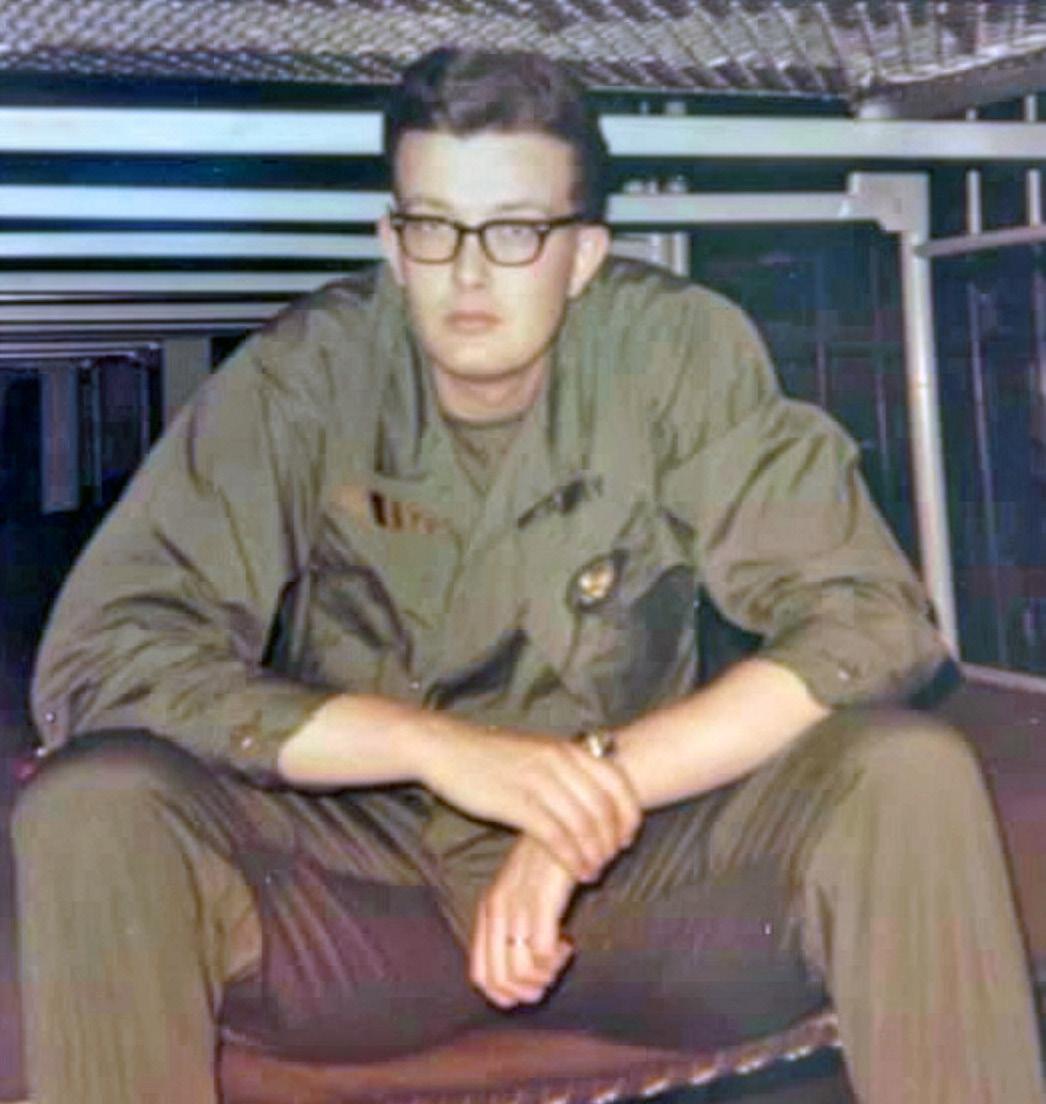
Mann reaches toward the name of his late father (pictured above in Vietnam), engraved on the Vietnam War Memorial wall in Washington, D.C. A frequent visitor to the monument, he says it helps connect him to the parent he never knew.
David Roy Mann was among the U.S. soldiers killed while defending the base at Dak To, a key strategic location near the borders of Vietnam, Cambodia and Laos that was under what turned into a two-month siege. Just over a month into his tour in Vietnam, Mann was 20 years old. In Earlville, Ill., he left behind his 19-year-old wife, Phyllis, who was 6½ months pregnant at the time with a child she’d name in her husband’s memory.
“I just knew that my dad was killed in a war, and the details came about later,” Mann said of his earliest recollections of the tragic news. Once Mann was old enough to understand, his grandmother “always made sure I knew. … She always talked to me about my dad, and she told me she could see him in me.”
Letters his father had sent home during his short time in the military also provided some information. Other details came much later in Mann’s life.
In the letters, Mann’s father kept his father—Dave’s grandfather—up to date on his state of mind, where the constant threat of harm weighed heavily.
“I’m scared s***less and I wish someone could get me out of here, but I’m a Mann, and I will take it like a Mann,” he wrote. “I sure miss you all.”
In another letter, Mann’s father expressed more concerns, writing, “It’s not really too damn safe here, but don’t tell Phyllis, because I told her I was real safe, because I don’t want her to worry about me. I don’t want anything to happen to our baby. … Tell Phyllis I love her and give her a kiss for me. … See you in about 350 days.”
That day never came because of the fighting at Dak To that ended his life on May 28, 1969. From Rocket Ridge, a six-foot-long 122mm rocket fired into his heavily sandbagged bunker position killed him instantly, along with eight other men. Nineteen more were wounded.
Fifty years later, Mann learned those specific details at a reunion of “The Brotherhood of Dak To Defenders” from a Vietnam veteran who knew his father.
“That brought much comfort, knowing that he didn’t suffer,” said Mann. “He also told me the most important thing which was that my dad was a good man and a good soldier, and that he did his job well. I couldn’t thank him enough for that.”
Mann said the brotherhood has been very welcoming to him since his first contact with the group in 2009, and he’s also made many connections through Sons and Daughters in Touch, an organization for children of soldiers killed in Vietnam—Gold Star children—of which there are approximately 20,000. He learned about it on a visit to the Vietnam War Memorial in Washington, D.C. “The Wall” there chronologically lists the names of 58,318 Americans who gave their lives in service to their country. Every five years, a multi-day “Reading of the Names” event is held, with thousands of volunteers reading aloud each and every one of those names. Mann has participated twice, reading 30 names and concluding with “my father, David R. Mann,” whose name is on Panel 23
West, line 10.
Mann visits The Wall at other times, too, viewing his father’s name, which is his name, too.
“It gets to me every time,” he said. ”I don’t know what it is, but you just feel connected. I like to go there at night. It’s quiet, it’s peaceful. I don’t know how to explain it. It just brings me comfort being there. I always leave something there, in my mind to make sure he knows I was there, that he’s not forgotten, and that he’s remembered and loved.”
Mann sometimes passes messages on to other soldiers whose names are on The Wall after receiving requests from other Sons and Daughters in Touch.
“Someone will notice on Facebook that I’m going to The Wall, and they’ll say, ‘Hey, can you stop by and say hi to my dad?’” said Mann. “Gladly. Every time. We just don’t want our fathers forgotten.”
The organization opened up a comprehensive new source of support and information, one he’d been lacking all his life.
“The war was controversial, and I think people just wanted to move on,” said Mann during a powerful Monmouth Associates talk he gave on campus in February. “For my mom, it was like, they handed her a flag, and it was ‘Here you go. Figure it out.’ There were no retreats, no information, no instruction on how to handle grief.”
Essentially, no one to talk to.
“Growing up, there was no one around me who’d lost a father in the war,” said Mann. “You would think at some point in your life, you would’ve run into somebody that was in the same situation as you. I went all though high school. I attended—sadly—multiple colleges, and still never ran into anybody who lost their father in Vietnam until I found the Sons and Daughters in Touch in 2017.”
From there, said Mann, it’s been “quite the trip.”
“It’s been overwhelming, but overwhelming in a good way. It’s been a blessing to me. To be with people who
went through the same things you went through growing up … it’s been the most wonderful experience for me. You can share your feelings without being judged, because everybody understands. It just filled my heart.”
Mann’s research and connections have filled in some gaps, but others remain. For example, his father’s company was scheduled to be moved from Dak To in the middle of May. The transport to Qui Nhon—where Mann says “it wasn’t as wild”—never arrived, and no one seems to know why it didn’t happen. Two weeks later, his father died, part of a 48% casualty rate of soldiers killed or wounded during the siege.
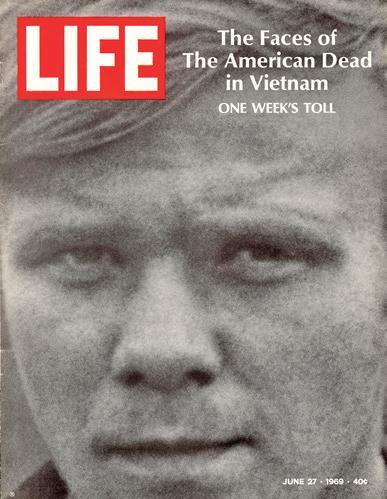
All gave some, some gave all In addition to the letters, another document helps bring his father to life. In June 1969, Life magazine published the photos of 242 soldiers who had been killed in action in Vietnam in a seven-day period, an issue that resonated across the nation. His father’s photo was one of them. On the cover was the image of a young man and 11 stark words: “The Faces of the American Dead in Vietnam: One Week’s Toll.”
Mann said he has about a half-dozen copies of the issue, and he finds himself looking for more whenever he enters a business that has such artifacts.
“You just don’t know out of that generation what was lost—it’s just sad,” said Mann. “They would’ve changed and affected the world. They’ll always be remembered if you say their names.”
Mann wonders often about his father, who stood 6-foot-7, and who passed along that height gene to his 6-3 son.
“A lot of ‘what-ifs’ have crossed my mind,” he said, including, “What would it have been like if he made it home?” Scheduled to return to the U.S. in April of 1970, his father was planning to go back to school to study drafting at Morrison (Ill.) Tech.
“My life was altered before it had even begun. You don’t know what you missed out on. There’s so much I wondered about growing up. What did he sound like? What did he like? I knew he grew up on a farm. I’m told he was caring and compassionate. When it really hit me was when I turned 21, thinking, ‘All right, I’ve already outlived him by a year.’”
At 21, Mann was in the midst of the “multiple colleges” to which he referred. One of them was Western Illinois University, which led him to driving through Monmouth on his way to and from campus. Monmouth might not have been his first choice, but it’s the school where he participated in Commencement, walking in 1994, then officially earning his degree in history later.
“I was not the ideal student, but I love that place,” said Mann, whose original plan was to teach and coach. He even served as an assistant for Monmouth’s women’s basketball team—which is how he met Beth—and coached in nearby Roseville. “I just remember warm spring days being out on the (Gibson Hall) balcony. Playing Wiffle ball in the courtyard there. Just
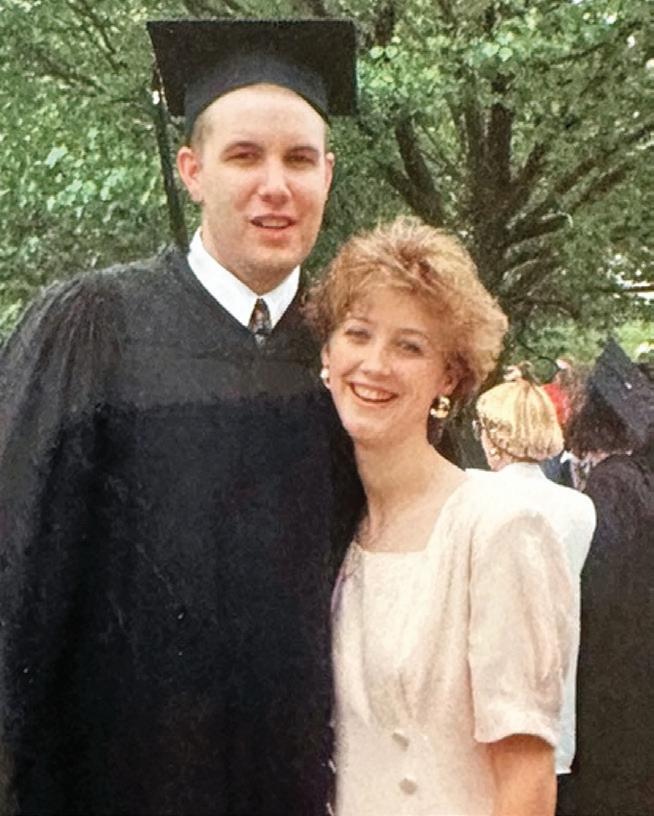
the ability to walk out our dorm room door and be outside.”
In addition to speaking at the luncheon during his return to campus, Mann also met the college’s Stockdale Fellows, members of a group named for Vice Adm. James Stockdale ’46 and his wife, Sybil, both prominent Vietnam War figures.
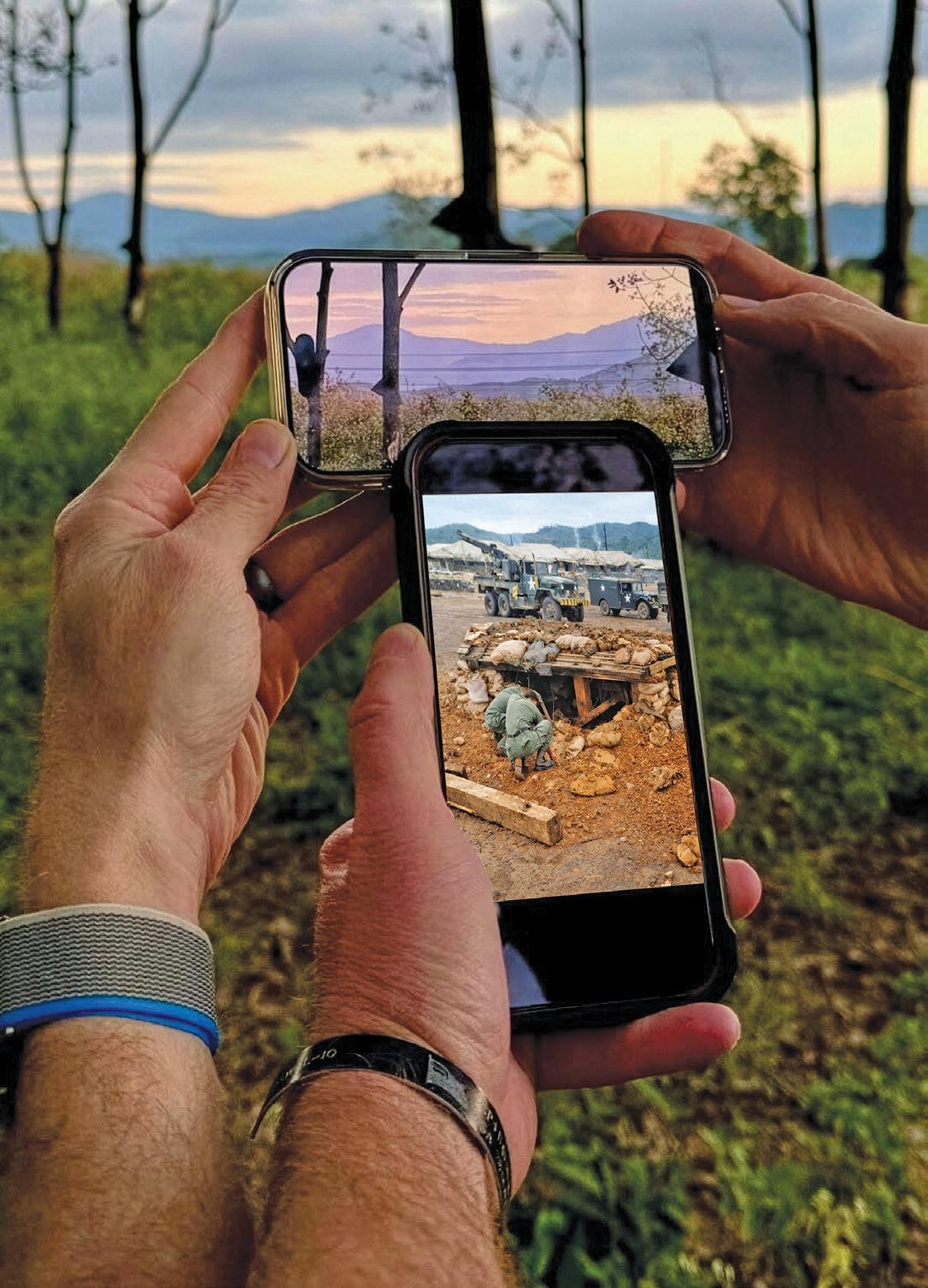
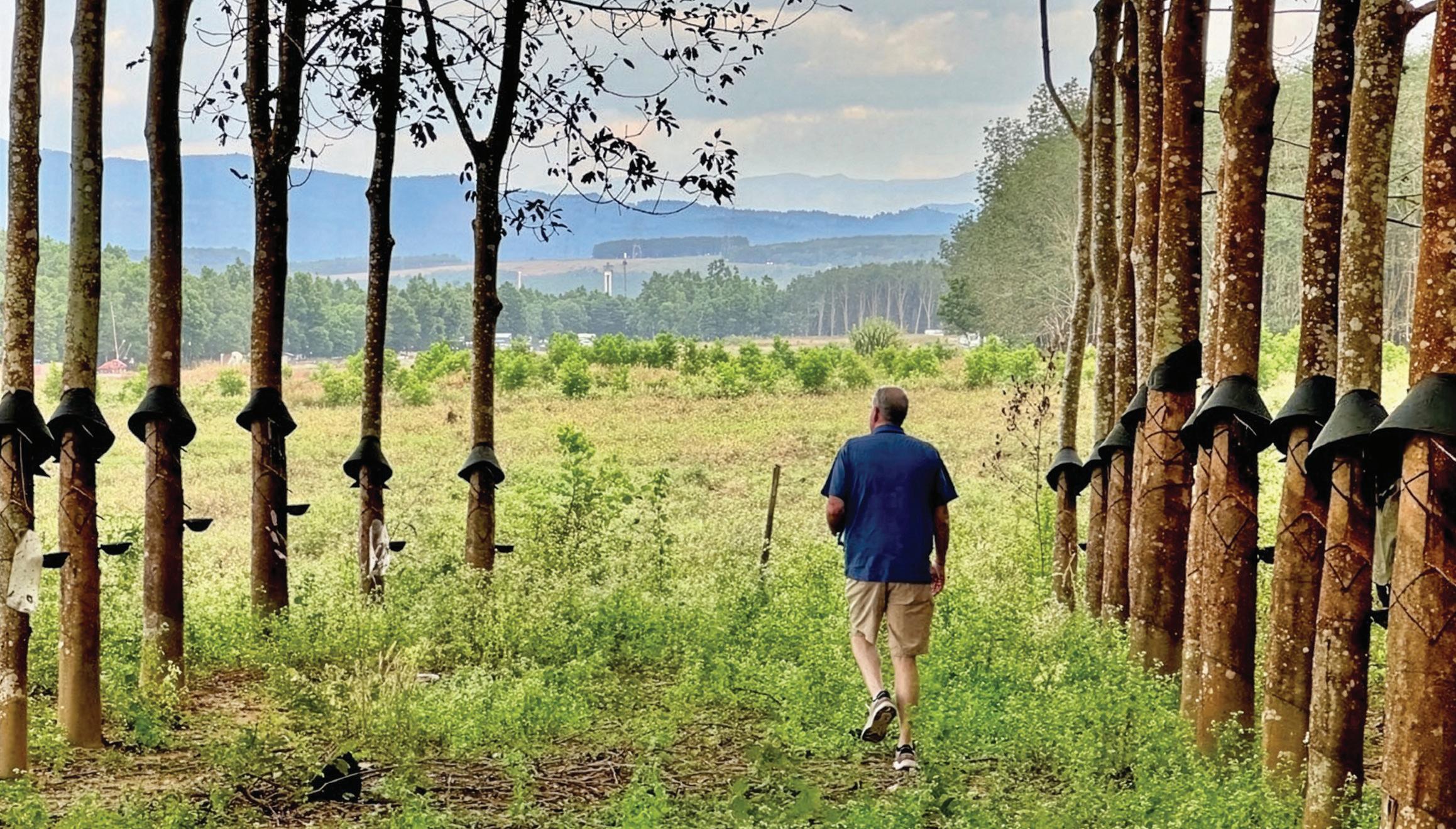
In late November 2025, Mann traveled with 11 other Gold Star sons and daughters to Vietnam. They met Vietnamese sons and daughters who also lost their fathers and, together, they visited sites in Vietnam where their fathers were killed.
“I just wanted to be where he was,” said Mann, who, despite that desire, still needed some encouragement from Beth to make the trip, which was organized by the 2 Sides Project.
“The first day on our itinerary really set the tone for the whole trip in terms of what I thought I could get out of it— how it might help me,” said Mann. “We all shared about our fathers, on both sides. We had to have translators. There
was a lot of emotion. Growing up, I never gave one thought to the other side of it.”
In fact, he only thought of Vietnam in very negative terms.
“Growing up, I was angry at all things Vietnam,” he said. “It was fresh. Now I’m 56. I need to put it behind me—the anger. It’s always gnawing at me. Don’t get me wrong—it took me a long time to get even where I’m at now. But what good is this anger doing for me? This baggage, I’ve been carrying around for a long time. It was time to get rid of it.”
In that sense, traveling to Vietnam was mission accomplished.
“It’s been a long journey, but it’s been worth it,” said Mann. “It was more than I expected—the best exhale I’ve ever had in my life. It was just like the weight of everything had been relieved off my shoulders, just because, that’s as close as I’m ever going to get to him. It was a moment 56 years in the making, and it was beautiful. It was life changing. I was at peace with it, finally.”
There is a recording of Mann’s speech at the site, which Beth was able to view live from the U.S. at 4:30 a.m.
“Dad, I’m here,” Mann said through
tears. “I’m here where you took your last breath—where you fought and gave your life. I’ve been so sad and so angry for so long. I knew I had to come here. … I’m 56 years old now, and you are missed so very much. You missed the birthdays and the graduations, my marriage to Beth. You have three grandchildren—Braden, Rylee and Turner. You’d be so proud of them all. And now you’d be a great-grandfather. You married a strong woman who’s always been my rock for all these years. I know she misses you. I hope I’ve made you proud. I’ve tried to be a good son, father and husband. I hope in your eyes I have. I came here to find peace and healing, and I have. I’ve been surrounded by love this entire trip—by my Wall brothers and sisters, by the Vietnamese people I’ve met. It’s a beautiful country with kind, caring people, and they honor their ancestors as we honor ours. I love and miss you. Your son, David.”
Editor’s Note: Podcast interviews conducted with Mann through the Vietnam Veterans Memorial Fund and Honor Flight Chicago were instrumental in the telling of this story.
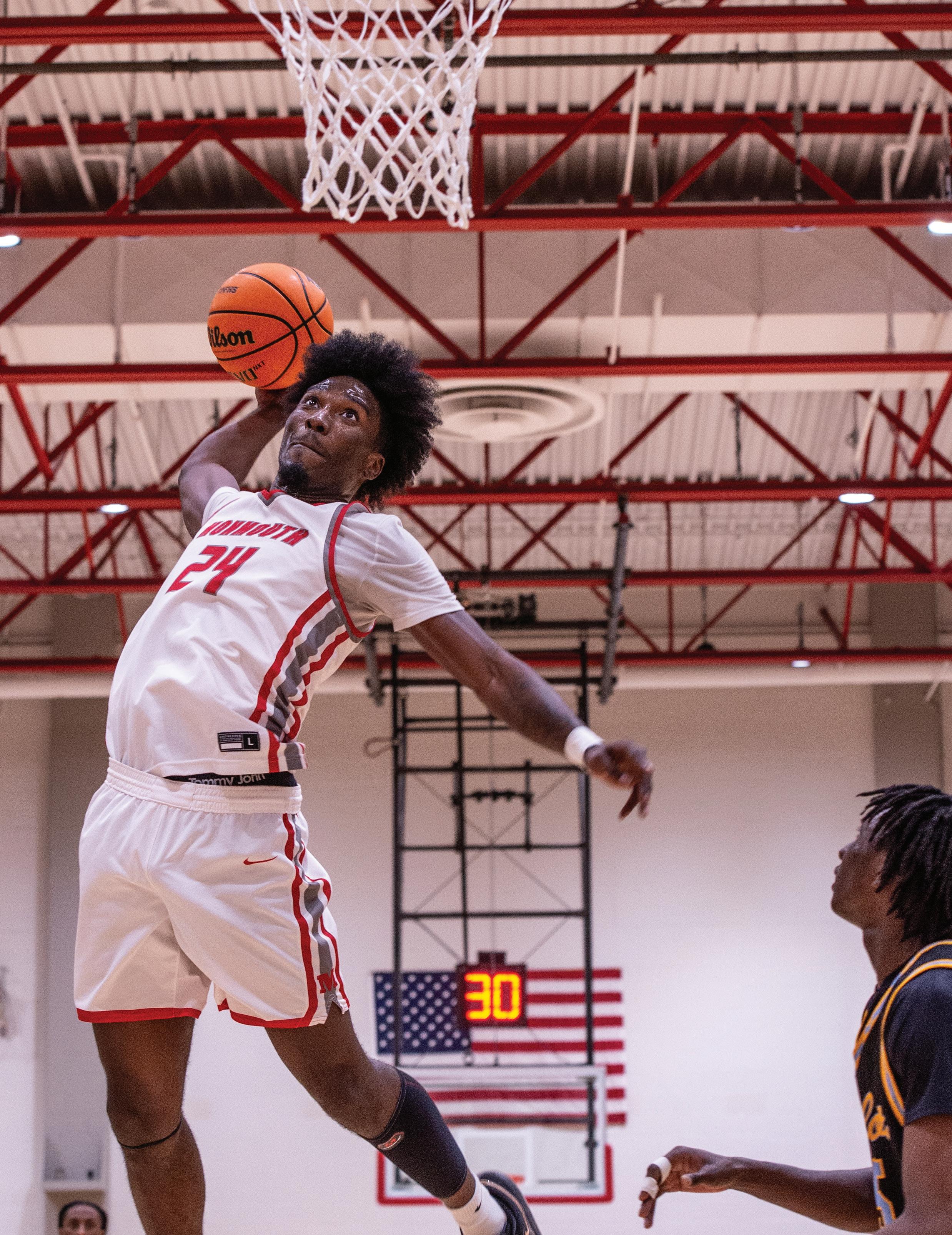
In one respect, the Fighting Scots men’s basketball team took a step forward this season, but coach Todd Skrivseth’s squad still fell one game short of reaching the NCAA tournament for the first time since 2018.
Playing against Lake Forest in the semi-final round of the Midwest Conference tournament, Monmouth gained a measure of revenge for last year’s two-point loss to the Foresters in the semis. Led by a collegiate-high 35 points from Zay Brown (19.8 points per game), the Scots posted a 93-84 victory. The sophomore standout added team-highs of nine rebounds and three steals as five Scots scored in double figures.
One of them was senior point guard Kyle Taylor (11.2 ppg), who eclipsed the career 1,000-point mark in
Senior shot putter Kayla Braun won her first Midwest Conference title with a season-best throw of 43-8¾. It was the 18th shot put title in Fighting Scots history.
Kent Kriegshasuer photo
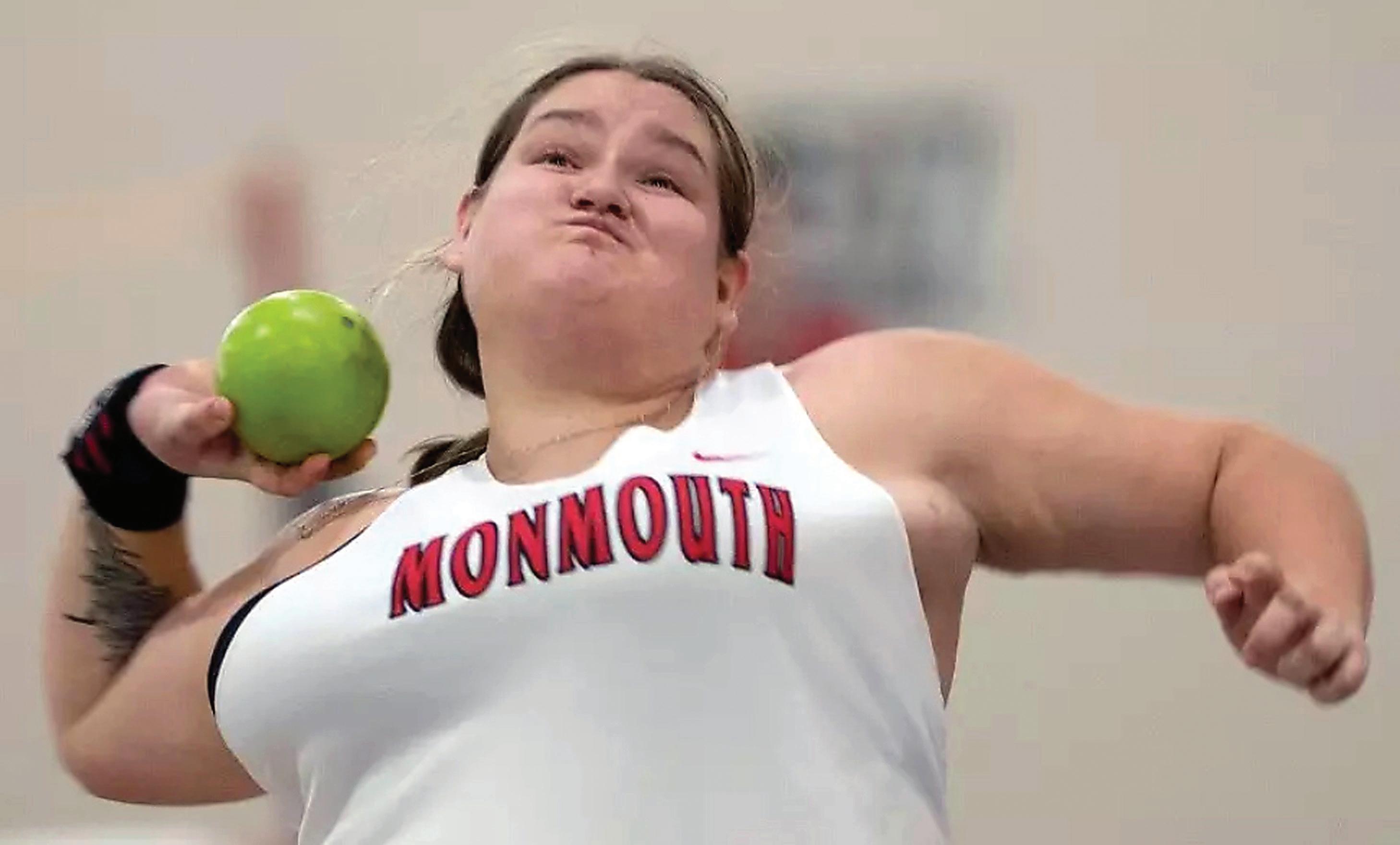
Monmouth’s final home game. Another was sophomore Cameron Thomas (16.1 ppg), who ended the season with 21 consecutive double-figure games, including a 37-point outburst at Grinnell in early February.
However, that performance came in Monmouth’s first league loss of the season, and Grinnell was able to defeat the Scots again in Iowa on the final day of February, winning the MWC title game 85–56 to advance to the NCAA tournament.
The Scots came within 0.4 seconds of potentially hosting the MWC playoffs but lost 63–62 to Illinois College on the final day of the regular season, as the Blueboys sank a pair of free throws in the final second. The loss knocked Monmouth to second place in the league at 14–2. A victory would’ve led to a coin flip to determine the host, as Grinnell’s league record was 15–1.
Together, Brown, Thomas and Taylor made the All-MWC squad, marking the first time this century that three Scots accomplished the feat. Brown, who broke Jim Thornton’s longstanding school record with 36 straight double-figure games over a two-season span, was named the conference’s Player of the Year for the second straight season. He and Lance Castle ’95 are the only two Monmouth players to earn the honor multiple times.
The Scots’ starting lineup also included seniors Max Maring (10.3 ppg) and Jason Huber (6.1 ppg). The quintet all started at least 25 of Monmouth’s 27 games. At 20–7, Monmouth equaled the program record for victories, which
was also accomplished by the 2018 and 2025 squads, as well as back-to-back teams in 1989 and 1990.
In other team news, senior Turner Plumer—who has already earned the prestigious honor of representing Monmouth as a Student Laureate of the Lincoln Academy— was the recipient of the MWC’s Elite 20 Award for having the top GPA among the four schools who qualified for the league tournament.
In indoor track, a quintet of field event athletes captured a combined six MWC titles—seniors Kayla Braun (shot put and weight throw), Blake Orwig (shot put) and Lane Grice (pole vault) and juniors Tashawn Ruffin (triple jump) and Logan Morse (high jump). Versatile freshman Kaden Fogelsong, who competed in a heptathlon earlier in the season, was named the MWC’s Newcomer of the Year on the men’s side, while Braun earned the Field Performer of the Year for women. The men placed fourth as a team while the women took sixth.
In swimming, sophomore Allie Warren had the Scots’ top MWC finish, touching third in the 200-yard breaststroke. The women’s team placed fifth, while the men finished sixth. Sparked by senior point guard Kynlee Stearns, the women’s basketball team posted their most victories since 2022. Stearns averaged 11.9 points and 2.2 assists as the Scots placed seventh in the MWC.
BY BARRY McNAMARA
Andrew Hoth’s company may operate a short line railroad, but they’re in it for the long haul.
That was one of the messages the 1995 graduate shared as he returned to campus for the second straight year to speak to Monmouth’s “Midwest Entrepreneurs” class. The Burlington Junction Railway executive told the type of story that fits neatly into the college’s long tradition of alumni who built unexpected careers by following opportunity wherever it appeared.
“You know you’re an entrepreneur,” he told the students last spring, “when you stop on the way to the office to buy toilet paper and then sign the employee paychecks when you get there. As an entrepreneur, you wear all the hats.”
Hoth wears plenty of them. His official title is corporate relations lead, but the job stretches far beyond what fits on a business card. He spends his days keeping current clients satisfied, finding new ones, assessing risk and making sure capital is allocated wisely.
“There’s two rules of money,” Hoth told the students on his most recent visit. “Cash is king, and once you spend it, it’s gone. Don’t over-leverage yourself. If the bank called all our notes tomorrow, we could pay them. That makes it easier to sleep at night.”
One way to keep clients satisfied is to provide solutions. “It’s not about us,” said Hoth, whose company bills itself as flexible and reliable shipping and receiving experts. “We want to help you fix your problem.”
Hoth and his team provided one such solution for the Army Ammunition Plant in nearby Middletown, Iowa, pointing to the savings they’d generate from transporting their steel from Scranton, Pa., by rail rather than truck.
“Heavy stuff is better by rail,” said Hoth. “We helped the Army move it, so we solved a problem AND we got a loaded revenue car.”
Being a short line, BJRY doesn’t carry that load the whole way but, as Hoth noted, “We’re the first mile or the last mile of every move.”
That includes everything from bombs to Blue Bunny ice cream, as BJRY also works with the LeMars, Iowa-based company, which is all the way across the Hawkeye State on its western border.
“Our pitch line is, ‘Do you want a railroad running your railroad, or do you want a bank running your railroad?’” said Hoth. “If you’re not approaching a business or entity and telling them your story, somebody else is. I pride myself on seeing new
Andrew Hoth ’95

opportunities and taking the right risks. You have to understand your customer’s supply chain to know how you can serve them better.”
After graduating from Monmouth, Hoth earned a law degree from the University of Iowa and returned to his hometown of Burlington to practice law and work in the family business, which had an unlikely beginning. When the Rock Island Railroad collapsed in one of the largest bankruptcies in U.S. history, its assets were liquidated. Hoth’s father—an attorney with no railroad background—decided it might be interesting to buy a few miles of track around Burlington. In 1985, BJRY was born.
Class I railroads—the long-haul carriers—often find it too expensive to deliver freight directly to nearby factories and warehouses. That gap created a niche for short line railroads— small operations only a few miles long that handle the first or last leg of a shipment. Once the Hoths owned track, owning a locomotive or two made sense, and soon the company added locomotive service and repair to its offerings.
What began as a small short-track operation shuttling freight between the local BNSF yard and Burlington area customers has grown into a system that moves about 43,000 railcars a year. Today, BJRY owns 50 locomotives, and 90 employees keep the system running, from locomotive cabs to maintenance shops to office desks.
Eventually, said Hoth, the right talented people around you are on board and invested, and “the founders get to make themselves irrelevant.”
Hoth’s job demands a wide range of skills—legal, financial, logistical, interpersonal. It’s also the kind of work, he suggested, that a liberal arts education provides valuable tools to excel: thinking broadly, solving problems and adapting quickly. And Hoth does all those things well.
1964 Jim Addleman of Windsor, Colo., retired on his 82nd birthday after 57 years in various aspects of the car business.
Karen Brown Baker of Fort Smith, Ark., is the director (and a teacher) of the preschool program at the First Baptist Church in nearby Greenwood.
Ron Mervis of Westerville, Ohio, is the founder and chief science officer of Nirvana Neuroscience. Previously, he was a neuroscience professor at the University of South Florida College of Medicine. He had retired, but “hated it,” so he founded his contract research organization.
1966
60th REUNION JUNE 4-7, 2026
An article by Jim Wilson made the cut of the prestigious Harvard Magazine , which has more than a quarter million subscribers. Wilson wrote about Takashi Komatsu , an alumnus of both Monmouth and Harvard, who was instrumental in strengthening the relationship between the U.S. and Japan. Wilson has also authored a book on Komatsu, who graduated from Monmouth in 1910.
1971
55th REUNION JUNE 4-7, 2026
Frank Wollrab of Clarkesville, Ga., retired a decade ago from his position as executive director of global strategy for AT&T International Services and reports that he’s “living large in the mountains of northeast Georgia.”
1975 Dave Boyle of St. Louis has retired after 23 years in the pastoral care department at DePaul Hospital, where he was a board-certified chaplain.
1976
50th REUNION JUNE 4-7, 2026
Last October, Bruce Weiman of Fisher, Ill., was inducted into the United Methodist Association of Communicators Hall of Fame for excellence in video production. “Bruce’s longevity of service to nine United Methodist bishops and the leadership he has brought to the
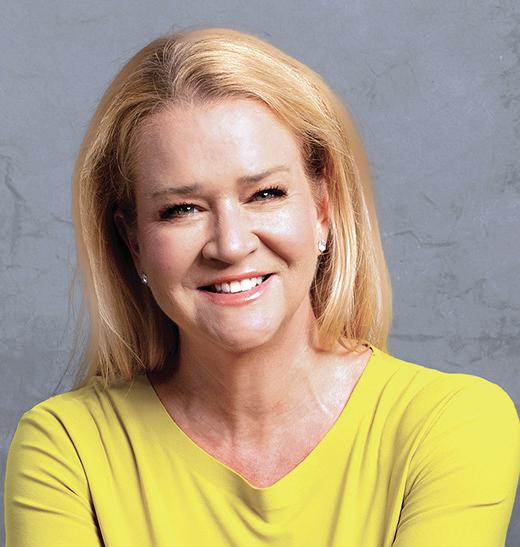
conference’s communications ministry is unparalleled,” read his nomination
1977 Gary Neudahl of Wylie, Texas, has retired, freeing up time to travel from California to Maine and from Michigan to Honduras. He also volunteers as a teacher’s aide at select Christian schools and as a groundskeeper for select parks, streets and walkways in Wylie and Honduras.
1981
45th REUNION JUNE 4-7, 2026
1988
Chris Lawson of Springfield, Ill., is a retired brigadier general. He recently presented the late Herb McMath for induction into the American Football Association Hall of Fame in Canton, Ohio. A former NFL player, McMath was an assistant coach of the semi-pro Springfield Bucs.
1992
Kate Francis, former museum affairs officer for the city-owned Springfield (Mo.) Art Museum, was named the inaugural executive director of the Friends of the Springfield Art Museum. She brings a quarter-century of non-profit fundraising and executive experience to the position, including five successful years at the museum, which will celebrate its centennial in 2028.
Dawn Stoyanoff was named the chief information officer at the University of New England in Maine. She most
recently served as the assistant vice president for enterprise applications and services at the University of Chicago. “Dr. Stoyanoff’s exceptional communication skills, strategic vision and deep technical expertise make her ideally suited to lead UNE’s technology initiatives at this pivotal moment,” said a campus spokesperson.
1997
Trina Madole Metz of Burlington, Wis., is a principal in the Round Lake (Ill.) School District.
R.J. Haines will be inducted into the Illinois High School Football Coaches Hall of Fame. At his current school, Manteno, Haines has compiled a record of 105–97 with 11 playoff appearances. Previously, he won 23 games and a state championship in four seasons at Iroquois West.
2000
Ken Morris Jr., of Ankeny, Iowa, is the executive director of family and community engagement for the Ankeny school district.
2001
Heather Clark Fox of Galesburg, Ill., is a teacher at Lombard Middle School.
Lara Patrova of Tallinn, Estonia, is the owner/gemologist of Jewels & Gifts by Lara, a family-owned chain of fine jewelry stores.
Sarah Crummy Wolek of Arlington Heights, Ill., has started a new position at Sherwin-Williams leading its industrial wood technical service team for North America. She also completed her certification in product management from Northwestern University’s Kellogg School of Management, as well as completing a master’s degree in medieval studies from the University of Wales Trinity St. David. The latter was capped by a thesis on Roesia de Verdun, a 13th century Norman aristocratic woman from Staffordshire, England. “Monmouth’s liberal arts curriculum allowed me to pursue both chemistry and history, passions which continue today,” she said.
2003
Sherri-Gae Scott of Windsor Mill, Md., is the director of innovation at the American Gastroenterological Association.
Dawn Cassiday Smith of Monmouth is a third grade teacher in the Galesburg school district.
THE SCOTLIGHT
BY BARRY McNAMARA
Asimple way to describe 1980 Monmouth graduate Don McKillip is that he’s a man for all seasons. And when you count up the many years he coached football, wrestling and track and field—in addition to his participation in a series of related activities—there have been A LOT of seasons. In fact, it’s a number approaching 200, and it surpasses that lofty milestone if you include his days as a young athlete in nearby Galesburg and with the Fighting Scots football team.
Before we dive into all those seasons, a quick word from McKillip, who’s still adding to his list, even though he’s retired from full-time teaching and coaching.
“My dad was a workaholic. He taught us all how to work,” said McKillip from his home Minooka, Ill., the first town you come to when you exit suburban Chicago to the southwest. He and his wife of 43 years, Diane, have two adult children, Amanda and Collin, a daughter-in-law, Jackie, and four grandchildren. “My 42 years of teaching, all those years of coaching—just work. It’s never about winning. It’s about having fun.”
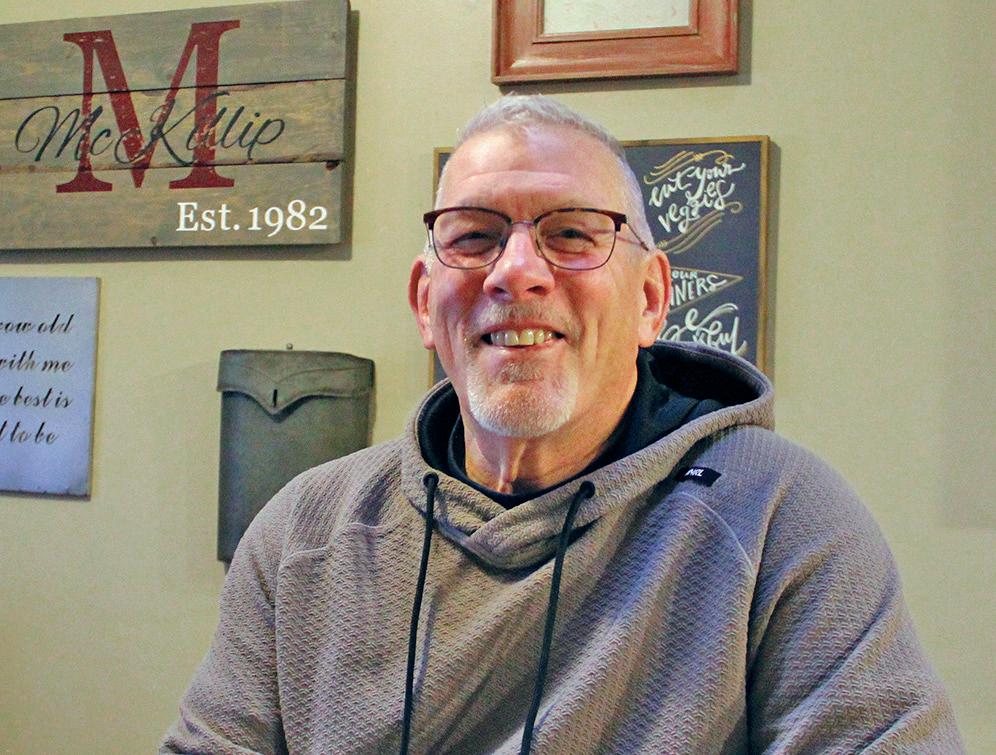
timely investment as the boom in youth sports has created a need.
The idea caught on, and other schools wanted to implement it.
“Schools would say, ‘Let’s start an officiating program, but we don’t know how to get it started,’” said McKillip. “So they’d reach out, and I’d help them with that.”
On the weekend of his interview, McKillip had just returned from officiating a wrestling tournament roughly 100 miles west on Interstate 80 in Geneseo. He’s a fixture at wrestling meets in the I-80 corridor and suburban Chicago, and the former wrestling coach’s reputation is so solid that since 2014 he’s annually been assigned to work the IHSA state tournament.
For his contributions in that area, McKillip was inducted into the Illinois Wrestling Coaches and Officials Association Hall of Fame in 2024.
While he was still teaching, he found a way to incorporate officiating into the curriculum at suburban Lockport (a few miles northeast of Minooka), where he worked for 18 years.
“Lockport has a unique P.E. program—it’s very diversified,” said McKillip. “It’s not just rolling out a ball. The thinking is, ‘Let’s teach kids more.’ So they were looking for ideas to teach the kids, and I started providing instruction on officiating,” a
When McKillip is officiating, he trusts his vast experience in the sport, along with his complete impartiality.
“The biggest thing is, you know the rules,” he said. “Most people think they know all the rules, but they don’t. So you’re one up on everyone else. And with officials, there’s a real passion for the sport they do. We don’t care who wins, we’re just passionate about the sport. I would have paychecks sitting in my sock drawer for so long that schools would have to call me to cash them. But I was just having fun—just doing what I love doing.”
Prior to officiating, McKillip compiled a stellar record as a wrestling coach. In 16 years, he led Marian Catholic High School in Chicago Heights to five regional titles and had 20 state qualifiers, five state placers and the school’s first-ever state champion in any sport. His Marian teams went 265–145–2.
There doesn’t appear to be much of a stress level in McKillip’s current winter role—maybe only driving to and fro in Midwestern weather (more on driving in a minute)—but perhaps his least stressful seasons have come in the spring as he coaches track and field. Results in that sport are objective, not subjective, so when an athlete such as Marian Catholic’s Casey Taylor soars 40-3∑ to win her third consecutive state triple jump championship, there’s not much to debate. Only one competitor came within two feet of her. Taylor’s run from 2003–05 was a high point of McKillip’s spring success, with the squad placing as high as 14th among the state’s Class AA teams. He’s also coached track and field at Dowling Catholic in West Des Moines, Iowa, and in Illinois at Aledo and Lockport.
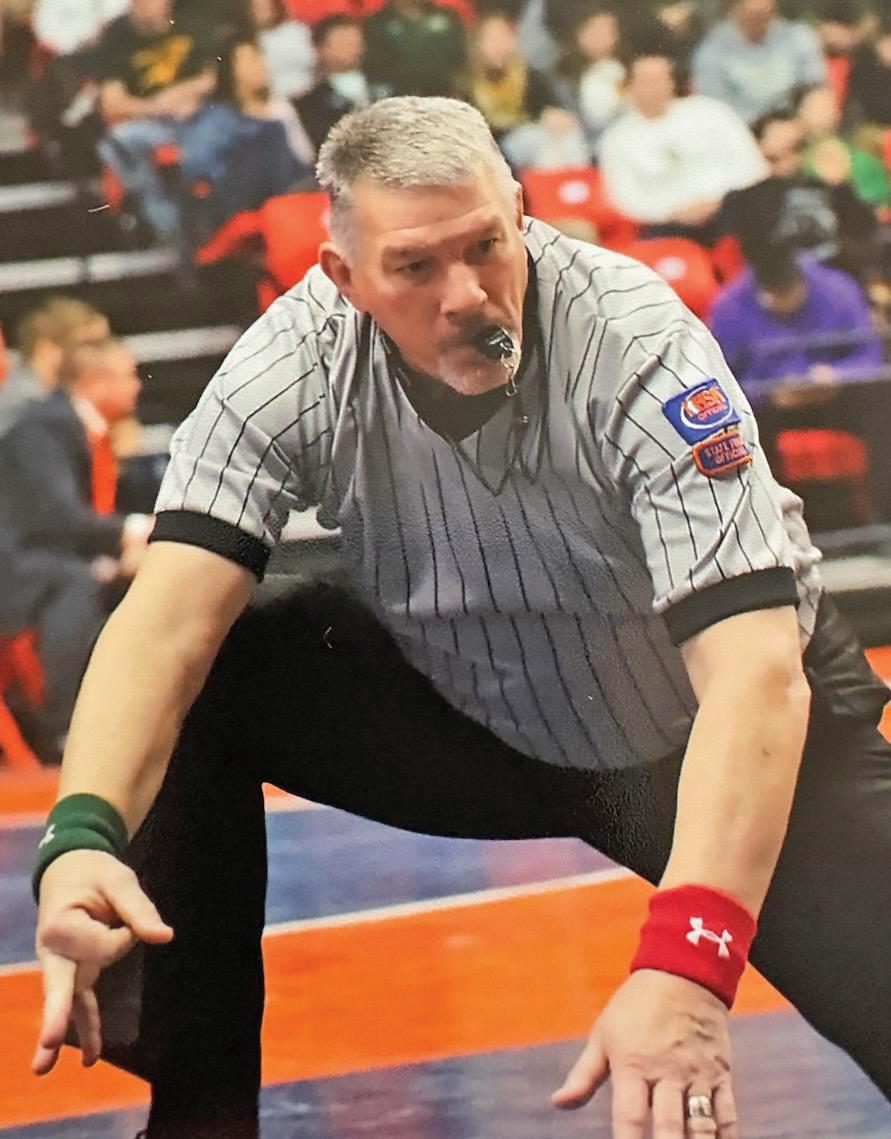
Which brings us to autumn and football—a sport that’s been an important one in his life and the lives of some of his nine siblings, including Monmouth alum Dale McKillip ’80 and Dean McKillip, who was a starting fullback on Coach Hayden Fry’s first Iowa Hawkeyes football team in 1979.
Don played three seasons on the gridiron for the Fighting Scots, all of them coached by the legendary Bill “Moose” Reichow. At the time, Monmouth’s enrollment was between peaks, but McKillip— who joined the Tau Kappa Epsilon fraternity—made the best of it.
“On a small campus, you know people,” he said. “That’s always been important to me—that closeness of community. Even though it was a small setting, we were competitive. I still tell people that two-thirds of the campus were athletes when I was in school.”
Until he took up umpiring, the warmest of all seasons gave McKillip a break from team sports, but he was still hard at work, teaching the next generation of drivers. It’s a job he did so well that in 2023, he was named the Teacher of the Year by the Illinois High School & College Driver Education Association.
McKillip has served as president, president-elect and Region 3 director with the IHSCDEA, focusing on advancing driver education through technology and innovative teaching. He’s been recognized for creating engaging driver’s ed environments, using platforms such as NearPod, EdPuzzles and Google Classroom, and addressing modern challenges like cellphone use (there’s no word on whether he created the state’s current “Texting while driving? Oh, cell no” signage).
Asked to provide a one-minute driver’s ed lesson, McKillip reduced his years of teaching even further to just one word: “Patience.”
“And don’t just think about yourself. You’re out there to protect everyone else. So a big mistake I see is tunnel vision. What’s in front of you is important, but what’s to your right? To your left? Behind you? Those things are just as important. And always expect the unexpected.”
In doing that instruction, McKillip took on a role that many parents don’t have the—well—patience for.
“Parents will say to me, ‘Bless you. I don’t know how you do it,’” he said. “I tell them, ‘I’ve got the fastest left hand in the west,’” able to redirect the car, if need be, from his passenger seat on the right, which is equipped with a foot brake, which he’s had to use “not too often.”
Once his Monmouth diploma was in hand, McKillip needed a first job. He said he found one based on the principle, “It’s not what you know, it’s who you know.”
“I started my coaching career my senior year of college, coaching the football team at Costa Catholic School (in Galesburg),” where his brother, Darren, was on the team. “There was a man in Des Moines who had my dad as a teacher when he was in Fort Madison (Iowa). He was president of the Catholic grade school football league. And Dean was playing at the University of Iowa. He reached out to my dad about my brother, and Dad said, ‘He’s not looking to get into education, but Donald is, and he’s looking for a teaching job.’ I’d never been there in my entire life, but I was off to Des Moines,” where he taught and coached four years at Dowling Catholic and picked up additional teaching credentials at Iowa State University.
Then came four years at Aledo before 18 years apiece at Marian Catholic and Lockport. In addition to all his years as a varsity head coach and assistant, his fall “seasons” have also included his time as a cross country coach and a volleyball official.
Looking back, McKillip might not have been able to predict the accolades that would come his way later in his career, but he definitely forecast the career, itself.
“You can check my high school yearbook,” he said. “It says I’m going to be a teacher and a coach. We never grow up—coaches are kids at heart. It keeps you young. You touch so many young lives, then you watch them grow up and become great people. It’s been a pleasure.”
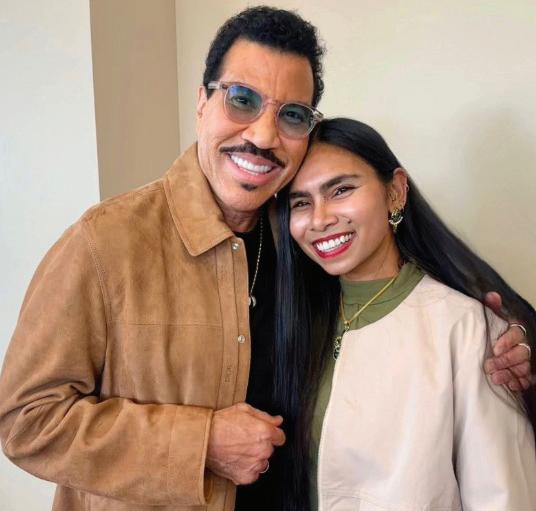
Nadine Waran-Perrero ’17, a member of the Belmont University faculty who speaks fluent Malay, Mandarin, German and English, was recently at a loss for words when she got to work with Lionel Richie, a judge and mentor on ABC’s American Idol, which filmed its 2026 auditions at Belmont. She commented: “It’s not an everyday occurrence to be called “Professor Perrero” by the Lionel Richie!”
Continued from page 23
2003
Rebecca Russell Stiglitz of Bolingbrook, Ill., recently opened a business as a pediatric sleep consultant and postpartum doula.
2004
Ryan Evans of Brookfield, Ill., has made the next move up the ladder in the field of education. He recently began his new role as superintendent of the Brookfield LaGrange Park School District. Evans started as a student teacher in the district, where he’s also been a teacher, assistant principal and principal.
2007 After 11 years as Monmouth’s offensive coordinator, former Fighting Scots standout Joe Freitag was named the new head football coach at Sewanee University in Tennessee.
Corey White of St. Louis, Mo., was promoted to vice president of Global Supply Chain–Advanced Solutions at MilliporeSigma, a biotechnology company.
2008
Dave Abrams of Clermont, Fla., is the national manager for Daniels Health, a medical waste disposal company.
Joanna Martorelli of Katy, Texas, is a therapist with Anchor & Path Therapy. Dan Pollman of Pekin, Ill., is a claim manager with Pekin Insurance.
2010 Melissa Krage Albrecht of Bloomingdale, Ill., is the OEM program manager at CDK Global, which connects its automotive clients with world-class dealership software solutions.
2013 Kevin Lindsay of Mundelein, Ill., is director of amusement marketing for Incredible Technologies.
2016 Kaity Cleaver Dougherty of New Berlin, Ill., is an early childhood educator for Memorial Health.
2017
Nadine Waran-Perrero joined Belmont University’s Curb College faculty last fall as instructor of media and entertainment industries after previously serving as the college’s student enrichment coordinator. Currently pursuing a Ph.D. centered on cultural and creative policy and the Malaysian music industry, she holds a master’s degree in performing arts management from Columbia College Chicago. Her work at the Nashville-based university focuses on building meaningful entertainment industry connections for students while continuing her own scholarship. She was involved in the recent American Idol auditions, which filmed at Belmont.
2019 Elizabeth Smith of Stillwater, Okla., is the study abroad coordinator for the College of Engineering, Architecture and Technology at Oklahoma State University. She recently became a certified professional in education abroad by the Forum of Education Abroad.
2020 Shaniah Anderson of Muscatine, Iowa, is an enterprise account manager for HNI Workplace Furnishings.
Zelinda Taylor of Springfield, Ill., is studying at the Southern Illinois University School of Medicine.
2022
Cullen Marshall of Kewanee, Ill., has moved on from his position at Monmouth, but not before receiving Order of Omega’s 2024–25 award for top adviser in the MidAmerica region, one of just four regions in the nation.
2023
Sreya Roy is the latest Monmouth alum to join the team at MilliporeSigma, beginning a position as an associate production scientist.
2024 Natalie Rottman MacLellan of Paducah, Ky., is a branch assistant at River Valley AgCredit.
2008 Joanna Martorelli and David Simmons
April 4, 2025
2016 Kaity Cleaver and Kilyan Dougherty
March 4, 2025
2020 Shaniah Anderson and Josh Anderson
September 14, 2024
Zelinda Taylor and Tyler Altfillisch ’17
October 4, 2025
2024 Natalie Rottmann and Liam Maclellan
July 18, 2025
2011 Rissa Inman and Courtney Oakes a daughter, Everett Skye
April 12, 2025
2012 Megan and Sean McNamara a daughter, Liliana Marie
March 2, 2026
2013 Corrine Kellerhals Ranard and Derek a son, Cooper James
May 22, 2024
2018 Mallory Misener Higgs and Alec a son, Holden
October 28, 2025
Rebecca and Christian Jones a son, Bryce Taylor
January 8, 2025
2019 Brittani Kratz Davis and Cyle a daughter, Poppy Alora
November 30, 2024
Submit your news online to: monmouthcollege.edu/alumni/update-your-info by email to: alumni@monmouthcollege.edu or by U.S. mail to: Monmouth College Magazine Attn: Alumni Programs 700 East Broadway Monmouth, IL 61462

1948
Melba Errebo Cordell, 100, of Oklahoma City, Okla., died Dec. 11, 2025. She was a member of Kappa Kappa Gamma in her one year at Monmouth before completing her degree in music and psychology at Oklahoma State University, where she helped establish a KKG chapter. Cordell later earned a music teaching certification and taught elementary school music for 16 years. She was preceded in death by her husband of 63 years, and survivors include 15 great-grandchildren.
1951 Donna Niemann Stephan, 96, of Appleton, Wis., died Dec. 19. 2025. She graduated with a degree in speech/communication/theater and was a member of Crimson Masque and Kappa Delta. She later received a master’s degree in education from Northern Illinois University. Stephan was an elementary educator her entire career, predominantly at Countryside School in Barrington Hills, Ill. She also provided speech therapy services and developed reading curriculum. Stephan was preceded in death by her husband of 65 years, Robert. Survivors include 19 great-grandchildren.
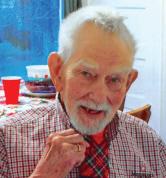
1956 Larry Sterett, 92, of Biggsville, Ill., died Sept. 6, 2025. After transferring from the University of Illinois, he was a member of Tau Kappa Epsilon, graduating from Monmouth with a degree in mathematics. He taught advanced math, chemistry and physics for 37 years at Biggsville High School, which later became Union High School. Sterett also coached three sports, including 33 years with the track team. He was preceded in death by his wife of 67 years. Survivors include daughters Deborah Sterett ’77 and Tamee Sterett Renwick ’84
1957 Stephen Lindell, 90, of Northbrook, Ill., died in November 2025. He graduated with a degree in chemistry and was a member of the tennis team and Alpha Tau Omega. After graduating from the University of Illinois College of Dentistry, he practiced general dentistry for 50 years in three Chicagoland locations. Among various civic commitments, Lindell was the Illinois state chairman of the Pierre Fauchard Academy, an honorary dental service organization.
1958
Marybeth Buland Hawk, 90, of Roseville, Ill., died Dec. 27, 2025. She graduated with a degree in elementary education and started down that career path before devoting her life to being a homemaker. She was preceded in death by her husband of 59 years, Elmer.
Bill Walton, 96, of Scottsdale, Ariz., died Nov. 3, 2025. He came to Monmouth from Kewanee (Ill.) High School, where “The Mighty Midget” was inducted into its hall of fame, and he was an M Club Hall of Fame inductee at Monmouth, as well, participating in basketball, baseball, track and football, including three years as the Scots’ starting quarterback. He graduated with a degree in physical education and was also member of the Octopus Club and Theta Chi, serving as president of the fraternity. Walton’s athletic exploits continued after graduation with coaching success in Kewanee and Elgin following two years in the Marine Corps during the Korean War. During
1959
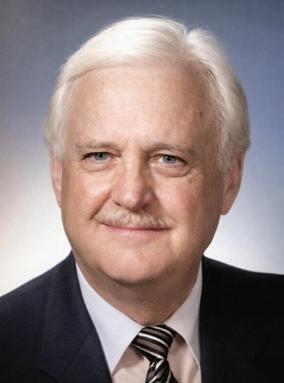
those coaching years, Walton earned a master’s degree in education administration from Bradley University. He then pivoted to the field of landscape architecture—earning a degree from Iowa State University—and was instrumental as a city council member in developing the golf course which is home to the Phoenix Open. He also helped develop a green corridor in Scottsdale known as Indian Bend Wash, and he shared his expertise with communities across the Southwest through W.N. Walton & Associates, Inc. Walton stayed active athletically through his lifelong passion for golf, shooting his age at 74. He was preceded in death by his wife of 67 years, Bobbie Faus Walton ’51.
Sandra Halliday Wilson, 87, of Frederick, Md., died Oct. 26, 2025, after struggling from Parkinson’s and dementia. A physical education graduate, she was a member of the synchronized swim team and Pi Beta Phi. She was a P.E. teacher in her younger years before moving to New Jersey in 1977, where she was an administrative assistant at Medford Nursery. Upon retiring in 2004, she moved to Seaford, Del., to enjoy boating on the Nanticoke River with her husband of 64 years, Jack.
1961
Bonnie Ahlenius Bernholdt, 86, of Elk Grove Village, Ill., died Nov. 19, 2025. A member of Alpha Xi Delta, she graduated with a degree in home economics. She taught that subject after graduation, and worked in education again after raising her family, serving as an aide in the Itasca (Ill.) school district. Upon retiring, she became a master gardener through the University of Illinois Extension Service, and she was named the State Outstanding Master Gardener in 2011. Very active in civic organization in Elk Grove Village, Bernholdt was a Rotary Foundation Paul Harris Fellow.
1961 Robert Kniss, 95, of Galesburg, Ill., died Oct. 5, 2025. After serving in the Air Force, he graduated with a degree in physical education and was a member of the football team. Kniss was an insurance agent and broker for many years, and he also coached football in Knoxville,
Aledo and Galesburg. Survivors include stepchildren Kim Glasgow Dougherty ’89, Susan Glasgow Lawrence ’99 and Steve Glasgow ’02.
1962
Karl Cook, 84, of Olney, Ill., died June 10,2024. A member of the wrestling team, he graduated with a degree in physics.
1963
Katie Crissey Ainsworth, 84, of Moline, Ill., died Dec. 29, 2025. A member of Pi Beta Phi, she graduated with a degree in English. Ainsworth was an international flight attendant with TWA. She later worked more than a decade at Staack Florist in Moline. She was preceded in death by her husband of 52 years. Survivors include a granddaughter, Lauren Fulscher ’23
Bill Holland, 82, of Lenexa, Kansas, died Jan. 2, 2024. A member of the baseball team and Alpha Tau Omega, he graduated with a degree in economics. Holland spent two years in the Navy before beginning a long, award-winning career with Hallmark Cards. Survivors include his wife of nearly 58 years, Roxann Rick Holland ’66
1964
Faith Friberg Beaupre, 82, of Plymouth, Ind., died Dec. 20, 2025. She studied business administration and was a member of Pi Beta Phi before transferring to DePaul University. A model, she was known as “Miss Manners” because
of the years she spent teaching local children etiquette and table manners. As the spouse of an Illinois legislator, Beaupre frequently worked on elections and campaigns, and she also worked in her husband’s law office and for the Bank of Bourbonnais.
1965
Michael Lafferty, 82, of Gloucester, Mass., died Jan. 6, 2026. He graduated with a degree in history and was a member of the football and wrestling teams. He enlisted in the Air Force and trained to be a pilot. His six years as a captain included two short tours in Thailand and a tour in Vietnam, for which he was awarded the Distinguished Flying Cross. Professionally, Lafferty was a commercial pilot, and he also ran a photography business. Survivors include his wife of 60 years, Ann Murphy Lafferty ’65, and a brother, William Lafferty ’55
Chuck Lindsay, 82, of Rio, Ill., died Nov. 9, 2025. He was a member of the basketball team and Sigma Alpha Epsilon before graduating and joining the Navy. As a 2nd class radioman, he was on both diesel and nuclear submarines during the Vietnam War. After leaving the service, he worked as an insurance agent for Porter Insurance Agency for more than 30 years, retiring in 2011. Lindsay was also part-owner of Lin-Nel Standard Horse Farm.
Edward Wilmot, 84, of Westbrook, Conn., died Dec. 25, 2025. He graduated with a degree in history and was a member of the baseball team. Following college, he enlisted in the navy and served aboard the USS Wright, which functioned as the president’s communication ship. After completing his military service, Wilmot built a successful career with RR Donnelley and Sons, an integrated communications company.
1966
Roger Sheffield, 83, of Naperville, Ill., died Feb. 4, 2026. He graduated with a degree in government and was a member of Sigma Alpha Epsilon. After earning an MBA from Loyola University, Sheffield built a successful career as a certified public accountant, eventually founding his own firm, Sheffield, Haley & Rodgers, in Naperville. Survivors include a grandson, Patrick Crawford ’16
David “D Dub” Whiteman, 81, of Knoxville, Ill., died Dec. 25, 2025. He graduated with a degree in physical education and was a member of the football, basketball and track teams and Tau Kappa Epsilon. He coached those same three sports for a combined 94 seasons. Whiteman taught at several area schools, but spent most of his career at Knoxville, being named the Class 1A Outstanding Athletic Director in 2001. Along the way, he earned a master’s degree from Western Illinois University. Survivors in-
Bonnie “Bebe” Bondurant Shaddock of Laguna Niguel, Calif., died Feb. 18, 2026. The longtime member of Monmouth’s Board of Trustees was inducted into the college’s prestigious Hall of Achievement in 2020. She earlier received Monmouth’s Distinguished Service Award.
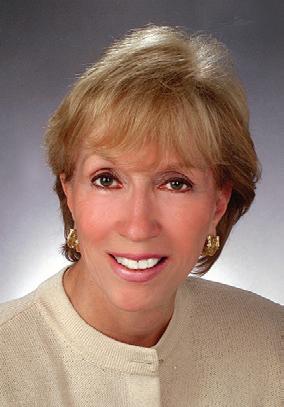
A lifelong advocate for women and champion of young women’s educational ambitions, Shaddock remained an active supporter of Kappa Kappa Gamma throughout her life.
“Bonnie was a spitfire,” said Hannah Maher, Monmouth’s vice president for development and college relations. “While small in stature, her heart was large and her wit unmatched. As a loyal Kappa, trustee emerita, generous donor and former campaign co-chair, she leaves a beautiful legacy at her alma mater.”
Among Shaddock’s many gifts to Monmouth were supporting Hewes Library, establishing a scholarship, and assisting with the purchase of a new home for Kappa Kappa Gamma. Most recognizably, she and her late husband, Roland, purchased The Manor on the corner of South 6th Street and Broadway before returning it to the college, where it today is known as the Bonnie Bondurant
clude his wife of 58 years, Maryanne Marine Whiteman ’67, a son, Toby Whiteman ’96 and a grandson, Jase Whiteman ’27
1968
Gary Scheidemantle, 79, of Kissimmee, Fla., died Dec. 25, 2025. A member of Theta Chi, he graduated with a degree in business. He devoted 38 years of his professional life to Liberty Mutual Insurance Co., retiring in 2007. The avid golfer then served as a volunteer for 11 years at the World Golf Hall of Fame in St. Augustine, Fla.
1970
Kathleen Leable, 77, of Highland Park, Ill., died Nov. 22, 2025. She graduated with a degree in French, then worked in information tech-
Alumni House. Shaddock came to Monmouth from Kirkwood, Mo., and was actively involved as a student, serving as president of KKG and of her residence hall. After a few years as a teacher in California, the English major had the opportunity to venture professionally into educational TV, a medium which was just getting off the ground. Using lessons learned from biology professor Robert Buchholz as a foundation, her show taught science to thirdand fourth-grade students. From there, Shaddock became involved in communications and ultimately was called to the state capital by California’s superintendent of public instruction to draft legislation that brought funding for educational technology—including computers— into classrooms.
After serving as deputy director of the California Public Broadcasting Commission, she co-founded Oliver/ Asselin and ran it for 12 years. The company produced educational television programming for such clients as PBS, Encyclopedia Britannica, the National Institute of Health and the U.S. Department of Education.
She was preceded in death by a brother, James Bondurant ’57
nology management at Baxter Laboratories. She later opened her own business, Hillcrest Antiques, and managed estate sales.
1971
LaDonna Richardson Anderson, 76, of Bettendorf, Iowa, died Nov. 21, 2025. She was a member of Kappa Kappa Gamma before attending Iowa State University, where she completed a degree with a focus on child development and family studies. Anderson was passionate about teaching children to read and won a Helping Us Grow Award for her contributions in that area. Survivors include her high school sweetheart and husband of 56 years, Gary Anderson ’70, and children Melissa Anderson Clark ’96 and Derek Anderson ’99
Maj. Gen. Phillip Killey Jr., 84, of Scottsdale, Ariz., a Vietnam War fighter pilot who went on to serve as director of the Air National Guard from 1988-94, died Jan. 25, 2026.
A 2004 inductee into Monmouth’s prestigious Hall of Achievement, Killey was a member of the football and track teams and Theta Chi, graduating with a degree in economics.
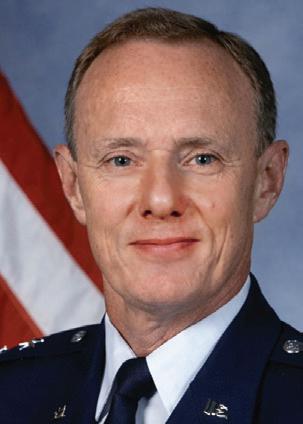
to command 1st Air Force, Air Combat Command/ Continental United States North American Aerospace Defense Command Region at Tyndall Air Force Base, Florida, from 1994–98. He completed his nearly 40year military career with a second term as the adjutant general of South Dakota from 1998–2003.
Dan Jaynes, 73, of Ames, Iowa, died Feb. 19, 2026. He graduated with a degree in physics and was a member of Sigma Phi Epsilon. He also held a master’s degree in soil science from the University of Wisconsin and a Ph.D. in agronomy from Penn State University. Working for the USDA’s Agricultural Research Service, Jaynes was an internationally recognized leader in the field of soil science whose research improved understanding of nitrate leaching and led to practical changes in water management practices across Iowa and around the world.
He began his military career as an Air Force F-4 fighter pilot, flying 129 combat missions in Southeast Asia during the Vietnam War from 1967 to 1968. Overall, he amassed 6,500 flight hours in multiple aircraft during his career.
Killey left active duty in 1969 and joined the South Dakota Air Guard’s 114th Tactical Fighter Group in 1970. He rose through the ranks quickly, becoming the adjutant general of South Dakota from 1987 to 1988, before his appointment as Air Guard director in the nation’s capital.
After serving atop the Air Guard, Killey became the first Guardsman
Patricia Kehr Kimble of Crestview, Fla., died Jan. 7, 2026. She graduated with a degree in speech/communication/theater and was a member of Kappa Kappa Gamma. She earned a master’s degree in special education from Northwestern University and dedicated her career to education, working initially in Chicago with hearing-impaired students and communicating through American Sign Language. Kimble retired after nearly 25 years with Northwood Elementary School in Crestview, touching countless young lives along the way. Survivors include a son, Adam Edmonds ’99, and a sister, Joan Kehr Long ’76.
1972
Richard Balfanz, 75, of Winneconne, Wis., died Oct. 16, 2025. He graduated with a degree in history.
1974
Howard Bartlow, 74, of Rushville, Ill., died Dec. 15, 2025. After transferring from Robert
Following his retirement from the military, Killey was a consultant on government, military and homeland security issues. In 2009, 1st Air Force/Continental NORAD Region named its new headquarters building the Killey Center for Homeland Operations.
“General Killey was one of the original architects of today’s Air National Guard,” said retired Maj. Gen. Francis M. McGinn. “The Air National Guard that now contributes every day to Air Force worldwide operations is his legacy. The Guard and our nation are forever in his debt.”
Survivors include a sister, the Rev. Linda Killey Baldwin ’61
Morris College, he graduated with a degree in history. A talented and respected cattle buyer, he worked for Bartlow Brothers Inc. for many years.
Dave Sharp, 75, of Monmouth, died Jan. 6, 2026. He graduated with a degree in English and was on the football team. Sharp held a variety of jobs in the area, several connected to public safety and/or investigative work and including stints with the Monmouth Police Department, United Ambulance, the Department of Children and Family Services and the Illinois Secretary of State. He also worked for Gamble’s, was a substitute teacher and worked in the Illinois driver’s license facility. Sharp was on the Monmouth City Council for 25 years before serving as mayor of the city from 1993–97. Survivors include his “son” Joel Carlston ’87, one of several children in need for whom he became the legal guardian.
Linda Johnson Ellison, 72, of Monmouth, died Nov. 9, 2025. She graduated with a degree in elementary education and was later a faculty member at her alma mater. Ellison, who held a master’s degree in education from Western Illinois University, devoted her life to teaching, specifically special education. She taught for 34 years in the Knox-Warren special education department at Monmouth High School, propelling countless lives forward with her compassion, commitment and advocacy.
Randy Seals, 76, of Monmouth, died Dec. 25, 2025, the morning after leading a candlelight service at Sugar Tree Grove Church, where he’d served as the pastor the past five years. He served in the Air Force during the Vietnam War. A summa cum laude psychology graduate, Seals worked in the trucking industry, serving as the vice president for several companies, including Monmouth-based Munson Transportation. He spent the past 20 years of his career working as a data scientist for McLeod Software. Survivors include his wife of 56 years, Linda; son, Jason Seals ’97, and a granddaughter, current student Meadow Seals.
1977
Bruce Thomas, 70, of Algona, Iowa, died Nov. 15, 2025. A member of the football and wrestling teams and Theta Chi, he graduated with a degree in business. He also held business degrees from the University of Iowa and Southwest Minnesota State University. Thomas was a business instructor and athletics coach for three years before joining Heartland Mutual Insurance Association in Algona, where he worked for more than 40 years, retiring in 2020 as president and CEO. An Eagle Scout and a very active citizen in Algona, he was inducted into the Iowa Emergency Medical Service Hall of Fame. Survivors include his wife of 50 years, Sue.
1984
Brian “Doc” Elliott, 67, of Monmouth, died Nov. 25, 2025. He graduated with a degree in history and was a member of Alpha Tau Omega. He held many jobs in the area, including schoolteacher and manager of the Filling
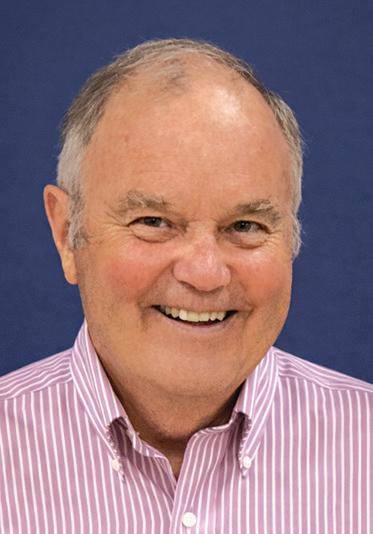
J. Rodney Lemon, 84, of Monmouth, emeritus professor of political economy and commerce, died March 2, 2026.
A farm boy from nearby Aledo, Ill., he graduated from Monmouth with a degree in economics and was a member of The Oracle staff and Sigma Phi Epsilon. After earning a Ph.D. from the University of Illinois in 1968, he taught at the University of Wisconsin-Platteville for two years, followed by five years with the University of Memphis before joining the Institute of Gas Technology—the think-tank for the American natural gas industry—where he was the lone economist, joined by 250 engineers. Lemon returned to his alma mater in 1976 as chair of the business and economics department, commencing a 31-year tenure. Throughout his teaching career, he was most attentive
Station restaurant. Elliott’s main career was in the newspaper industry, and he served as a circulation manager for several regional publications, as well as papers in Ohio and Kansas. For three years, he was executive vice president of the Monmouth Area Chamber of Commerce.
1989 David Kelton, 58, of Champaign, Ill., died in November 2025. He graduated with a degree in speech/ communication/theater and was a member of Sigma Phi Epsilon. After graduating, he moved to Champaign and began his career in property management, eventually founding the company that became Facilities Management, Inc. Survivors include his wife, Rosanne Naab Kelton ’88
2021 Jordan Ball, 26, of Oneida, Ill., died in an automobile accident on Dec. 1, 2025. He graduated with a degree in history and was a member of the baseball team, a sport he coached in his first teaching job at Monmouth-Roseville High School. He then moved to the Galesburg school district, where he also taught and coached. Survivors include his wife and childhood sweetheart Alexis Enright Ball ’21
Erhard “Dutch” Saettler, 90, of Monmouth, the college’s former registrar,
to students who sought help or showed self-initiative. Lemon headed the revision of Monmouth’s business program to teach the subject from a liberal arts perspective, with the department’s name—political economy and commerce—signifying that unique approach.
“The political economy and commerce curriculum that he developed for Monmouth students was the most intellectually exciting approach to the study of economics I’ve ever seen,” said his longtime faculty colleague, Mike Connell. He also continued to analyze and write on natural gas and energy issues, authoring more than 50 professional articles. When the government projected future prices in the late 1970s and early ’80s, the Department of Energy referenced their prices with those projected by the energy lab at Massachusetts Institute of Technology, by the American Gas Association, and by Lemon. Three editorials in the Wall Street Journal cited Lemon’s
died Jan. 12, 2026. He held that position throughout the 1990s, retiring in 2000 but remaining active in the community.
John Hiel, 78, of Avon, Ill., 78, died Feb. 25, 2026, in Marco Island, Fla. Survivors
work, and Energy Monthly called him an “Architect of the Revolution” who provided the “intellectual legwork” for the deregulation of natural gas and electricity in the United States. Presidents Reagan, H.W. Bush and Clinton gave speeches using Lemon’s estimates and reasoning.
For his 31 years at the college, Lemon wore three hats successfully. His family farm grew over that period from a little over 600 acres to nearly 1,800 acres. On the road, he spoke on future natural gas supplies, demands and prices and what constitutes optimal regulation. At the college, he taught students about how prices and outputs become established in various countries, and how jobs, inflation, growth, interest rates and exchange rates are interrelated and determined.
He retired in 2007 and, the following year, received Monmouth’s Distinguished Alumnus Award.
Survivors include his wife of 60 years, Hallie Simpson Lemon ’63.
include his wife of 58 years, Elizabeth Hiel, a former member of the Monmouth College Board of Trustees, and sons Travis Hiel ’96 and Trevor Hiel ’99.
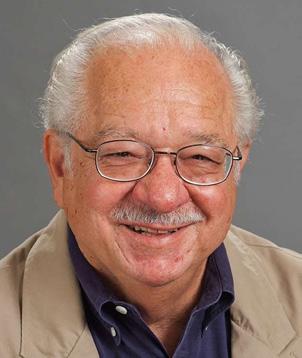
Joe Angotti, 87, of Monmouth, the former executive producer of NBC Nightly News, who served as a visiting distinguished professor of communication at Monmouth for a decade, died Jan. 25, 2026.
“When I think of my friend Joe, I recall mostly laughter, fine wine and bowls of pasta,” said Monmouth faculty member Robin Johnson ’80. “And listening to his fascinating and, at times, riveting stories of working at NBC during the tumultuous 1960s.”
One of those stories was Angotti bringing to light “the mountaintop speech” that Martin Luther King Jr. gave the day before his assassination on April 4, 1968.
Known for his calm leadership and editorial rigor, Angotti played a key role in shaping NBC’s news operations and mentored countless journalists throughout his career. His work earned numerous professional honors, including an Emmy Award for a series on world hunger.
“I often wondered if our students realized just how lucky they were to hear about his background and thoughts on modern media and political coverage,” said Johnson, who recalled that Angotti arranged for him to interview former NBC news anchor Tom Brokaw, a colleague and good friend of Angotti’s. “Joe embodied the highest standards of what we need to journalism to be, and I think that’s his legacy.”
Survivors include his wife of 63 years, Karen, with whom he founded the Rainbow Riders Therapeutic Riding Center in Monmouth.
Robin Johnson ’80
250th celebration is a good time to relearn the fundamentals of our democracy
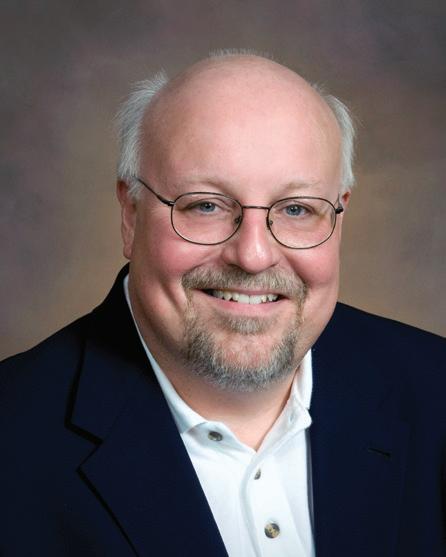
In my “Midwest Politics” class discussion about immigration last semester, I related the story of how President Ronald Reagan and House Speaker Tip O’Neill would regularly meet for cigars and whiskey to discuss compromise on key issues, including immigration reform, despite their different party affiliations. Many of the students chuckled and thought I was kidding! I convinced them that I was, indeed, serious but it left me concerned for them as citizens who haven’t experienced any similar examples of bipartisanship and compromise in their lifetimes.
As we prepare to celebrate our nation’s 250th birthday, it’s a good time for all of us to go back and relearn some basic principles about our country’s founding and how things get done. Both sides in today’s bitter hyper-partisan debates could perhaps step back from the precipice that could threaten our democracy and recommit to our founding principles.
Change in the American form of government is difficult. Our Founders made it that way on purpose to prevent tyranny. That’s why we have separation of powers, popular sovereignty, checks and balances, judicial review, and federalism. Never in history had such a constitutional republic been attempted. That’s why some still refer to it as “The American Experiment.” We’re still trying to form a more perfect union.
The filibuster is a good example. This obstruction tactic (mentioned nowhere in our founding documents) is unique worldwide to the U.S. Senate and was developed to subjugate African Americans in the 19th century and later to oppose civil rights measures in the 1960s. Its use was later expanded by both parties to obstruct other types of legislation and then to oppose judicial and Cabinet nominees. Some far left voices called for its abolition when Democrats controlled all levers of government in the Obama and Biden administrations. Some in the MAGA movement are now doing the same while Republicans control the presidency and both Houses of Congress. Both sides, of course, take advantage of the filibuster when they’re in the minority and extoll its chief virtue of requiring a super-majority (60 votes) to cut off debate. Ironically, in these polarized times when our country
is split down the middle, the filibuster may be preserving our democracy by preventing the tyranny of the majority.
Compromise, then, is essential in our form of government to enact legislation and get things done. It seems many on both sides of the political divide have forgotten that. Our very form of government was forged in a spirit of compromise. Our Founders had bitter disagreements, such as the proper role of government, and whether the biggest threat was tyranny or disorder. Jefferson and Hamilton presented two different ideological approaches to our government. But they were able to both make concessions to come to an overall agreement and make our government what it is today.
Change in the American form of government is difficult. Our Founders made it that way on purpose to prevent tyranny.
Yuval Levin, in his latest book American Covenant, looks to one of our founding documents for guidance on how to overcome our differences. The Constitution holds the key for breaking out of our discord and bringing back some sense of unity to our nation. For example, he argues for Congress to resume its intended lead role in lawmaking, reversing a trend of it abdicating its responsibilities to the executive branch. Having Congress play the role it was assigned in the Constitution would force more compromise between the two sides to get things done and make policy change more durable due to bipartisan support.
It’s understandable why people become frustrated with the pace of change. People vote for leaders based on policy preferences and commitments to get things done. When they fall short, it’s easy for people to either become disengaged from the process or look for ways to change the rules or institutions to effect more rapid change.
But the answers may very well lie in going back to the basics of our constitutional system. As July 4 approaches, we can all be better citizens by relearning the basic principles from our founding and the documents that continue to sustain the American Experiment to this day. And future classes will have modern examples of our government compromising to achieve the common good.
Robin Johnson ’80 is a political, governmental relations and public policy consultant. He has been a member of the Monmouth College political science faculty for more than 25 years.
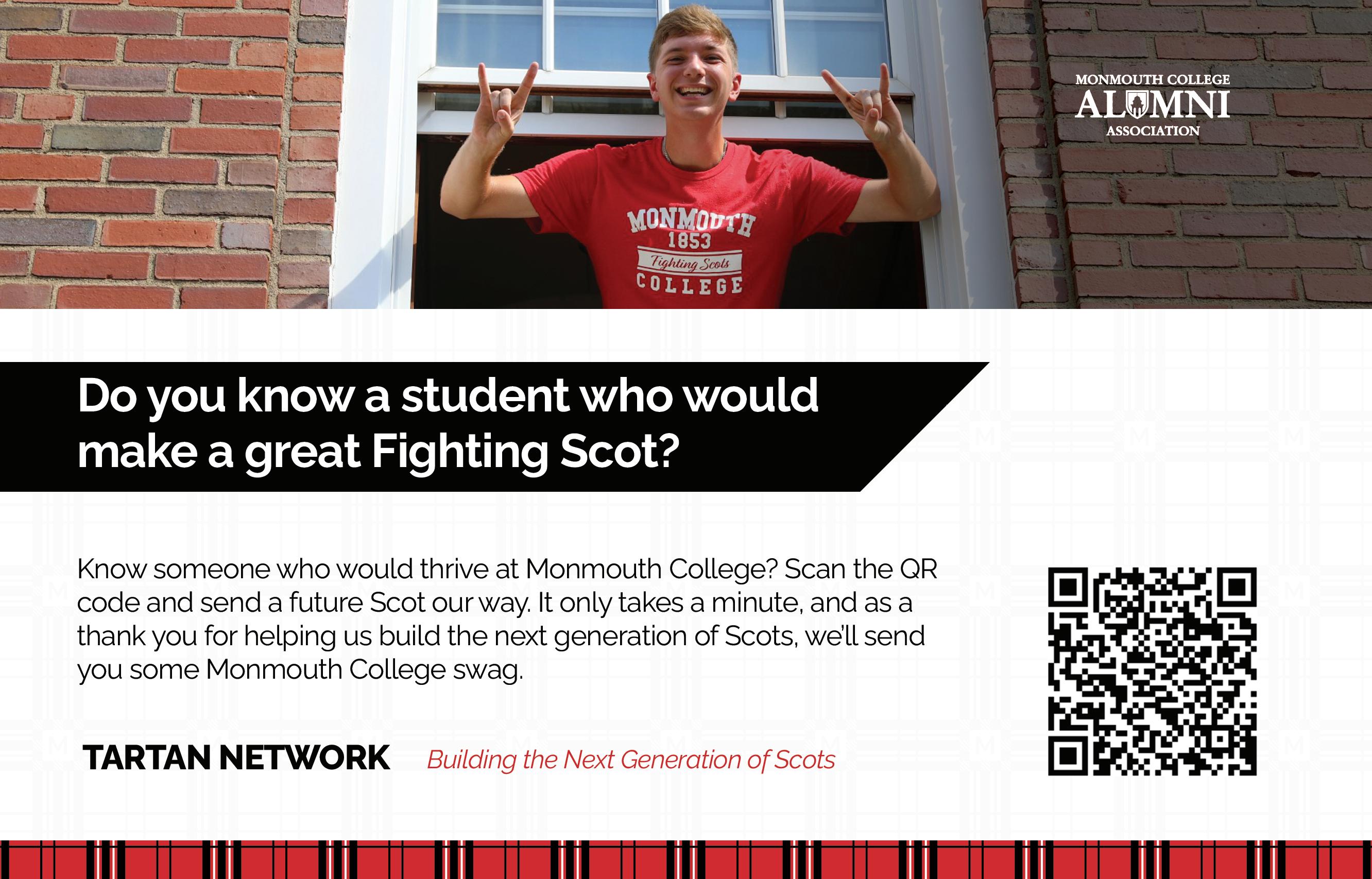



Monmouth College
Monmouth College Athletics
Monmouth College Alumni
@MCFightingScots
@MonmouthCollege
@MonmouthCollegeAthletics
@MonmouthCollege_Alumni
Monmouth College
@MonmouthCollege
Monmouth.College
#MonmouthCollege #RollScots #ItsGreatToBeAScot
CONTACT US:
MAGAZINE EDITOR
mcnamara@monmouthcollege.edu
309-457-2117
ADDRESS CHANGE
monmouthcollege.edu/update
309-457-2231
Monmouth College Magazine spring 2026
Monmouth College 700 East Broadway Monmouth IL 61462-1998
www.monmouthcollege.edu
CHANGE SERVICE REQUESTED