How Rising Borrowing Costs Can Affect Your Loan Repayment Plan
Borrowing money can help manage planned expenses and unexpected financial needs, but the cost of a loan plays an important role in long-term financial planning. When borrowing costs increase, borrowers may need to review their repayment strategies, monthly budgets, and existing financial commitments. Understanding these factors can help individuals make informed decisions and avoid unnecessary financial pressure. Whether you are considering a new loan or managing an existing one, it is important to understand the terms of borrowing and how they affect your ability to repay on time.
Understanding Borrowing Costs Borrowing costs include the interest charged on a loan and any applicable fees or charges associated with obtaining and maintaining it. The total cost depends on the lender's terms, the loan type, the repayment period, and the borrower's financial profile. When borrowing costs rise, new borrowers may find that available loan offers are less affordable than expected. For existing borrowers, the impact depends on whether their loan has a fixed or variable interest rate and on the conditions stated in their loan agreement.
Understanding the complete cost of borrowing before accepting an offer can help you plan your finances more effectively.
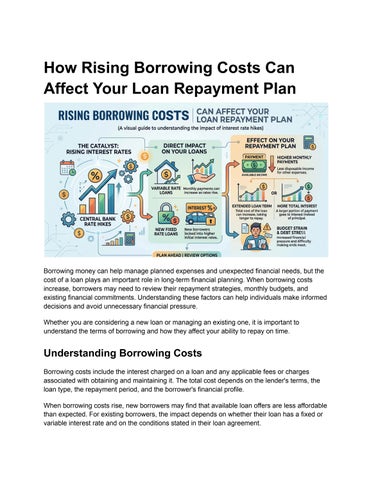
How Rising Borrowing Costs Can Affect Loan Repayments 1. Monthly Payments May Become More Difficult to Manage Higher borrowing costs can increase the repayment burden, depending on the loan structure and applicable terms. When a larger share of your income goes towards debt repayments, less money may remain for household expenses, savings, and emergencies. Reviewing your monthly budget can help you identify expenses that need adjustment before repayment becomes difficult.
2. The Total Cost of Borrowing Can Increase Interest is an important component of the overall cost of a loan. When an applicable interest rate increases, the total amount payable may also rise, depending on the outstanding balance and repayment conditions. Borrowers should review their loan statements and agreements to understand how interest is calculated and whether changes to the rate can affect future payments.
3. Existing Financial Commitments May Require Reassessment People managing multiple financial obligations may find it harder to maintain a comfortable budget when borrowing becomes more expensive. Reviewing existing loans, credit card obligations, essential household expenses, and regular savings can help you understand how much repayment you can reasonably afford. Avoid taking on additional debt without considering its effect on your existing commitments.
4. Emergency Savings May Become More Important Unexpected expenses can create difficulties when a large portion of monthly income is already committed to repayments. Medical expenses, household repairs, or temporary changes in income may make it harder to meet payment deadlines. Building an emergency fund gradually, according to your financial capacity, can provide a buffer against unexpected costs. Avoid using all available savings to repay debt if doing so would leave you unable to manage essential expenses.
What Borrowers With a Low Credit Score Should Consider A borrower's credit history can influence how lenders assess a loan application. Other factors, including income, existing debt, repayment capacity, and the lender's eligibility criteria, may also affect the decision. People researching an instant personal loan for low cibil should pay particular attention to the actual terms of available loan offers. A lower credit score does not guarantee approval, and loan availability, interest rates, documentation requirements, and processing times vary between lenders. Before applying, consider the following: ● Review your credit report for errors or unfamiliar entries. ● Check whether the lender's eligibility criteria match your financial circumstances. ● Compare the interest rate and applicable charges rather than focusing only on the application process. ● Calculate whether the repayments fit your regular income and essential expenses. ● Avoid submitting applications without first understanding the lender's requirements. Taking time to evaluate these factors can help you make a more informed borrowing decision.
Practical Ways to Manage Your Loan Repayment Plan 1. Review Your Monthly Budget List your regular income, essential expenses, existing repayments, and savings contributions. This gives you a clearer picture of how much money is available for loan payments. Identify non-essential spending that can be reduced without affecting important household needs. Even small budget adjustments may help you maintain a more manageable repayment routine.
2. Understand Your Loan Agreement Check whether your interest rate is fixed or variable, when payments are due, and whether the lender can change the applicable rate under the agreement. Also review any charges associated with late payments, early repayment, or changes to the loan arrangement. Understanding these details can help you avoid unexpected costs.
3. Prioritise Payments Carefully
Keep track of payment due dates and make repayments according to the agreed schedule. Missing payments may lead to additional charges and could negatively affect your credit history. If you anticipate difficulty making a payment, contact your lender promptly to ask about the options available under your loan agreement. Any revised arrangement will depend on the lender's policies and approval.
4. Avoid Unnecessary Borrowing Taking out another loan to manage existing repayments can increase your overall financial obligations. Before borrowing again, assess whether the expense is essential and whether your current income can support the additional commitment. If you are comparing an instant personal loan for low cibil, make sure you understand the repayment terms and total borrowing cost before proceeding with an application.
5. Monitor Your Financial Position Regularly Your income, household expenses, and repayment responsibilities can change over time. Reviewing your budget and outstanding balances regularly can help you identify financial pressure early. Keep records of payments, check loan statements, and update your repayment plan when your circumstances change.
Is Refinancing Always the Right Solution? Refinancing may be worth exploring when a borrower can obtain more suitable loan terms. However, it does not automatically reduce the total cost of borrowing. Before refinancing, compare the new interest rate, applicable fees, remaining repayment period, and any charges associated with closing the existing loan. A lower monthly payment may result from a longer repayment period rather than a lower overall cost. Evaluate the complete terms before deciding whether refinancing is appropriate for your situation.
Common Mistakes to Avoid When Borrowing Costs Rise Borrowers can protect their financial stability by avoiding several common mistakes: ● Ignoring changes in loan statements or repayment terms. ● Focusing only on monthly instalments without checking the total borrowing cost. ● Taking on additional debt without reviewing existing obligations.
● Assuming that a low credit score makes loan approval impossible or guaranteed. ● Using all emergency savings to meet repayments. ● Delaying communication with a lender when repayment difficulties arise. Careful planning and a clear understanding of loan terms can help reduce the risk of avoidable financial stress.
Final Thoughts Rising borrowing costs can make loan repayment more challenging, particularly when household budgets are already under pressure. Understanding interest rates, reviewing loan agreements, monitoring expenses, and maintaining a realistic repayment plan can help borrowers manage their financial commitments more responsibly. For anyone considering an instant personal loan for low cibil, comparing lender requirements and borrowing costs is especially important. Choose a loan only when the terms are clear and the repayments are manageable within your financial circumstances.
Frequently Asked Questions 1. What happens when borrowing costs increase? Depending on the loan terms, higher borrowing costs may increase interest expenses or make new borrowing less affordable. The impact varies according to the interest rate structure and the outstanding loan balance.
2. Can rising borrowing costs affect existing personal loans? Yes, they can affect existing loans with variable interest rates or agreements that permit rate changes. Fixed-rate loans generally follow their agreed rate conditions, subject to the contract.
3. Can I get an instant personal loan for low CIBIL? Availability depends on the lender's eligibility requirements, credit assessment, income, existing obligations, and other factors. Neither approval nor instant disbursement is guaranteed.
4. How can I make loan repayments easier to manage? Review your budget, track payment dates, understand your loan terms, and avoid unnecessary borrowing. If you expect repayment difficulties, contact your lender to discuss available options.
5. Should I refinance my loan when borrowing costs rise?
Not necessarily. Compare the new loan's interest rate, fees, repayment period, and total cost with your existing agreement before deciding whether refinancing is suitable.