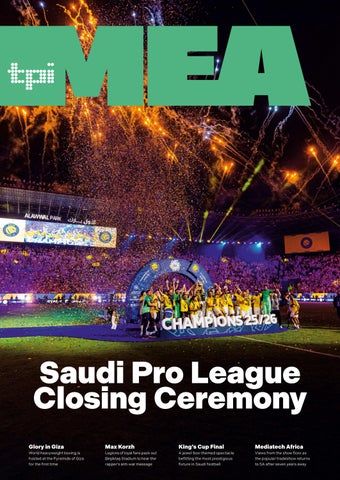
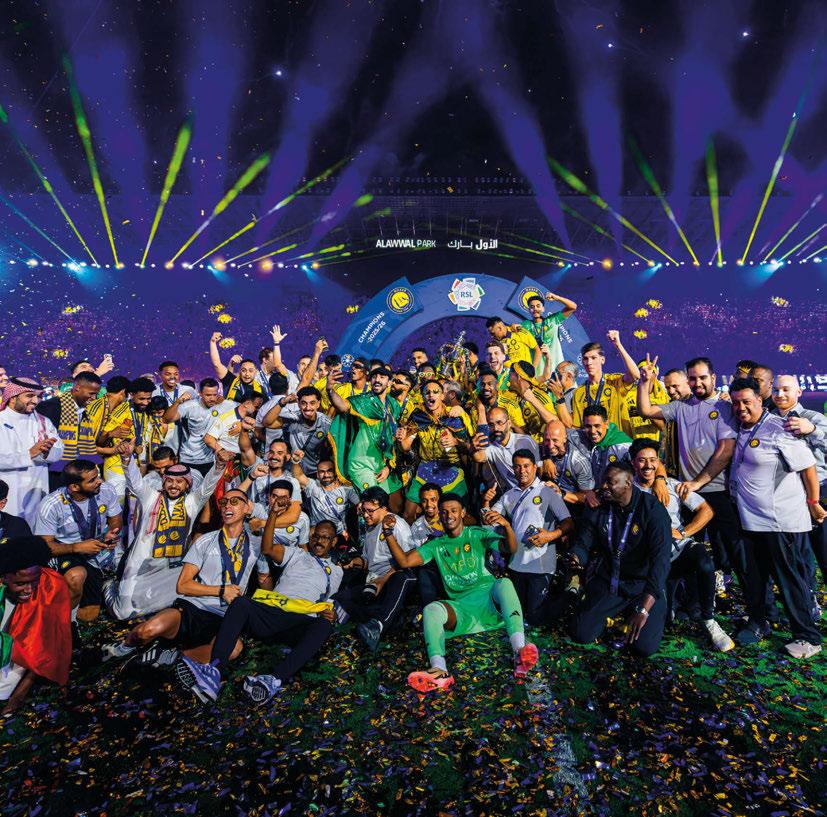
Saudi Pro League Closing Ceremony
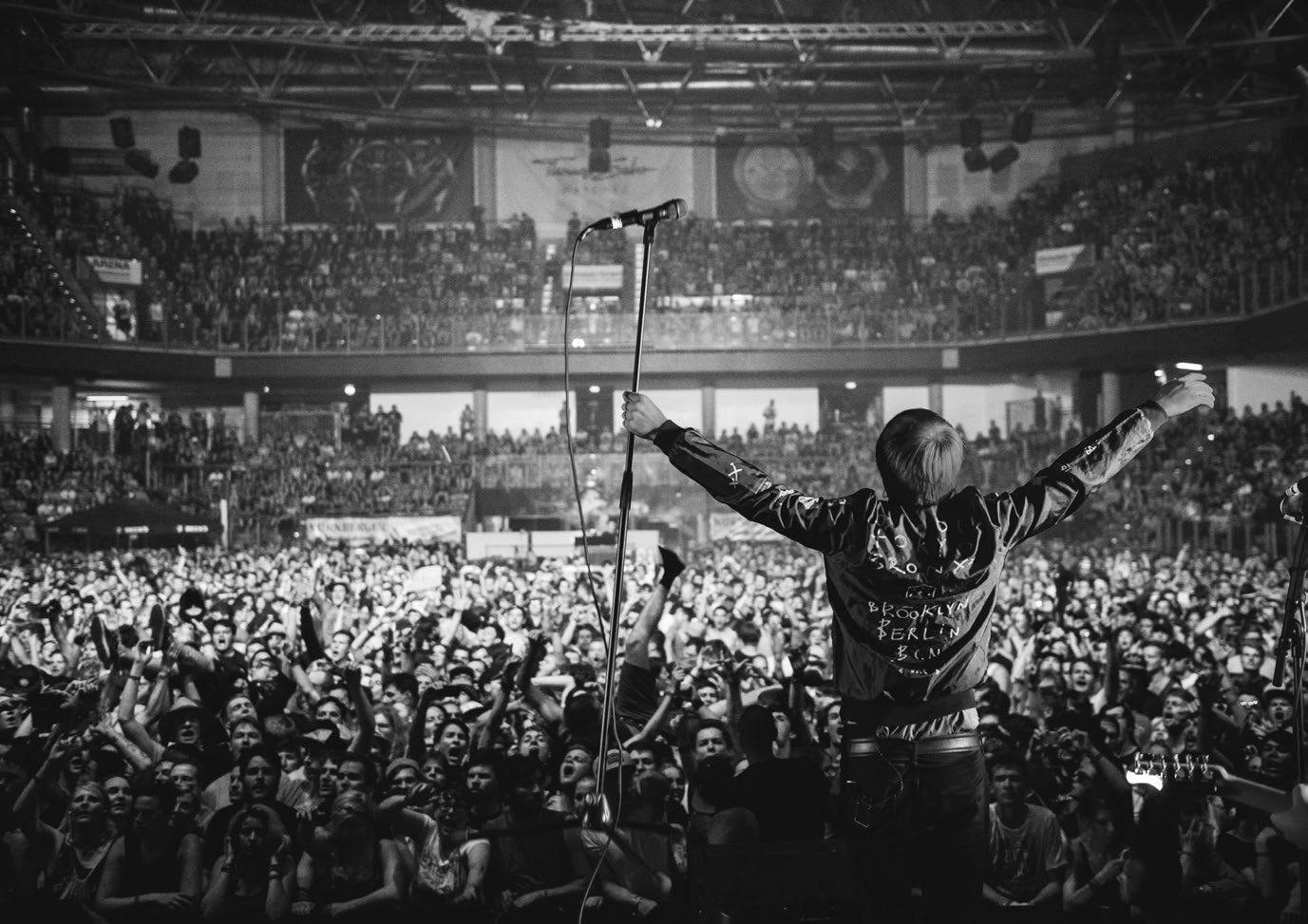
Max Korzh Legions of loyal fans pack
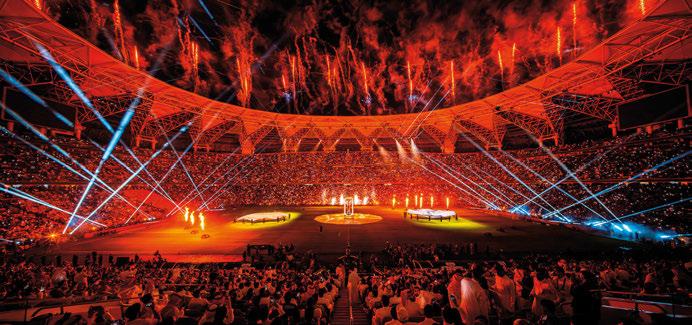
Glory in Giza World heavyweight boxing is hosted at the Pyramids of Giza
/ Every stage, every night
Elevate your live sound with rock-solid reliability
Say goodbye to feedback loops and bulky floor monitors. The 3000 Series IEM delivers clear, high-fidelity audio directly to the performer’s ears, giving them total control over what they hear. Easy to deploy and simple to operate, it’s the ultimate upgrade to achieve a cleaner stage and a studio-quality live mix every single night.
learn more at audio-technica.com
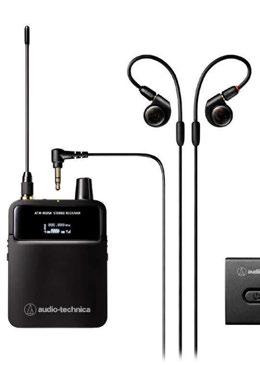
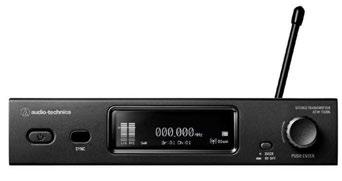
3000 Series IEM
Welcome to TPiMEA
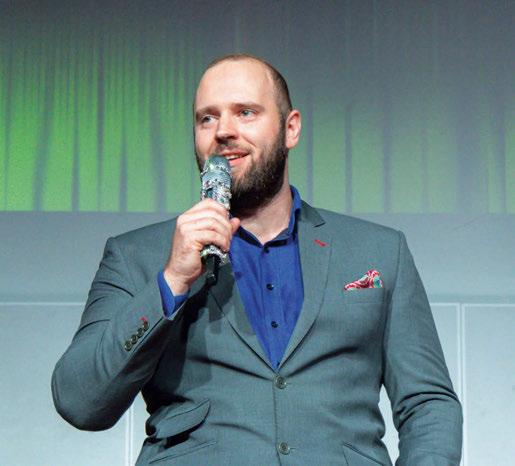
Peter Iantorno Editorial Director
I’ve never been a great lover of tradeshows. An intense three days of dashing through endless halls between back-to-back meetings, constantly running slightly late and rarely able to get past the pleasantries before it’s time to move on again… not my idea of fun. However, my recent trip to Johannesburg to attend Mediatech Africa made me realise that maybe my problem wasn’t with the tradeshow itself but with the way I was approaching it.
Taking place at the Kyalami Grand Prix Circuit And International Convention Centre – a venue that is a fraction of the size of the likes of the Fira in Barcelona – the show was consistently busy, yet the task of ‘doing the rounds’ felt eminently achievable. This meant that rather than stacking up 20-minute speed sessions, I had the freedom to roam the halls without a set agenda or the need to curtail interesting conversations to stick to an unattainable schedule. I even managed to eat lunch every day, which is a refreshing change from my usual tradeshow diet of coffees and canapés.
As ide from my own personal moment of realisation, the most striking thing that I took from Mediatech was that the African live events industry is very much alive and kicking – and that is not just South Africa but the entire continent. If some of the discussions that took place during the show come to fruition, you will be seeing much more Africa content in TPiMEA over next 12 months and beyond. Watch this space… Until then, read more of my Mediatech ramblings and see if you can spot yourself in our show coverage on page 34
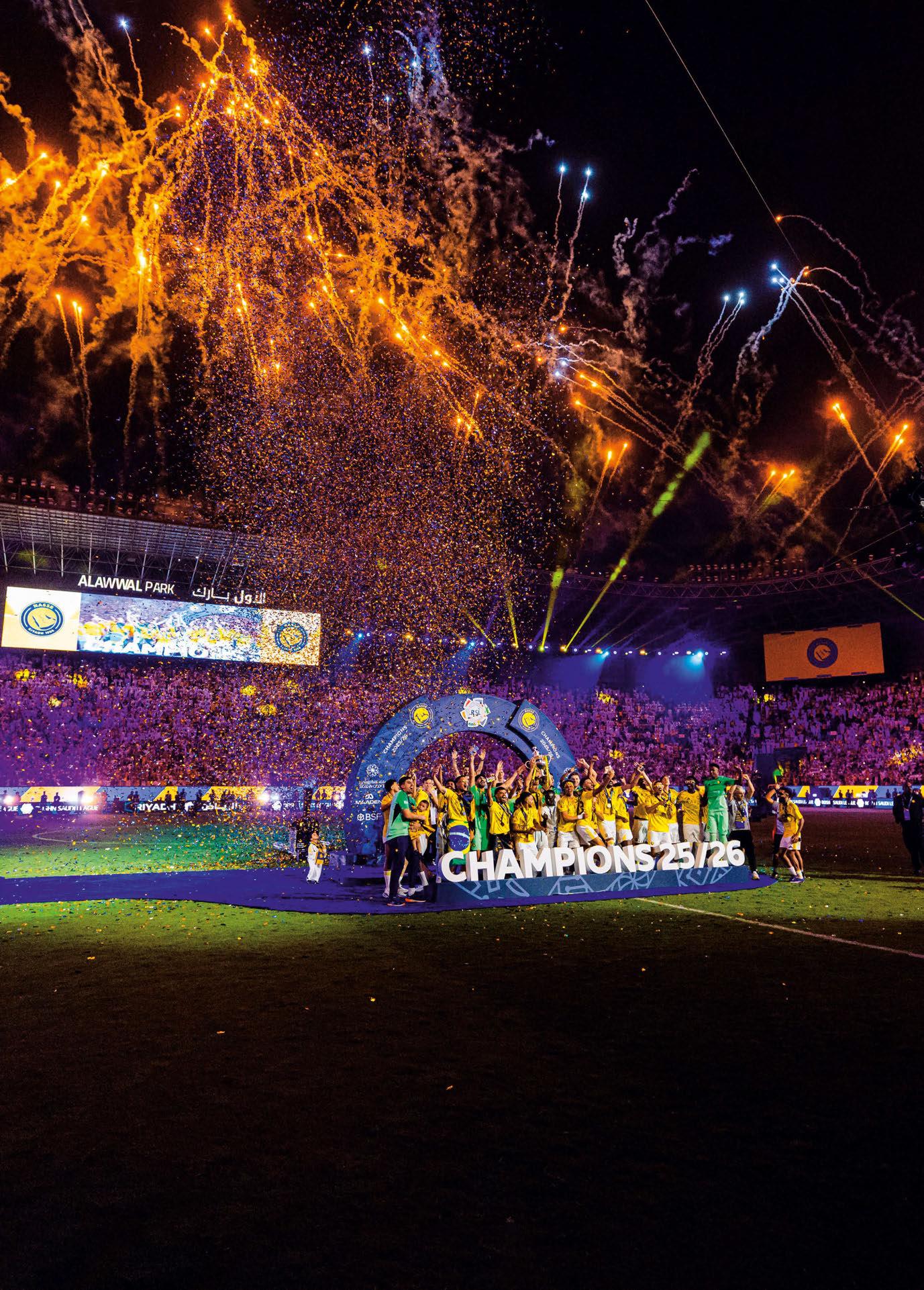
Ou r cover story for this issue comes from Saudi Arabia, where entourage was tasked with producing not one but two closing ceremonies for the final day of the Saudi Pro League. Why two ceremonies, you ask? Because the league-winning team was only decided on the final day of the season, meaning that one of the planned celebrations would never see the light of day. Read more about how the entourage team and its suppliers tackled this unique challenge on page 38
As well as putting together this issue of TPiMEA, we have also been busy with making arrangements for the upcoming TPiMEA Awards, which is set to take place at Coca-Cola Arena on 10 September. Tickets and tables are available now, so if you haven’t got yours yet, what are you waiting for? Simply scan the QR code on the left to secure your entry to what promises to be a special night. I’ll see you at the bar!
Enjoy the issue.

First Look
8 Alex Wuerfel
The Group CEO of ES:ME Entertainment Services reflects on three decades in the business, sharing his take on what makes a good leader.
Event Focus
16 Max Korzh: Live in Istanbul
A mammoth L-Acoustics system at Beşiktaş Stadium.
22 King's Cup Final 2026
A jewel-box spectacle befitting the most prestigious fixture on the Saudi Arabian domestic football calendar.
28 Morocco DGSN Anniversary
Morocco celebrates 70 years of its General Directorate of National Security with a huge ceremony in Rabat.
32 Jordan Independence Day
TriTec AV deploys Jordan’s first d&b XSL system.
34 Mediatech Africa 2026
The popular tradeshow returns after seven years.
Production Profile
38 Saudi Pro League Closing Ceremony
As the Saudi title race goes down to the wire, entourage produces two closing ceremonies – only one of which could ever see the light of day...
48 Glory in Giza
The Pyramids of Giza host world heavyweight boxing for the first time.
In Profile
54 Ogma Safety
Co-founder Declan Meenan explains how the company is expanding its team in preparation for a busy season.
56 M:E Entertainment
The company aiming to put Nigeria on the touring map.
Interview
60 The evolution of Banban
MDLBEAST's Mazin Khamis discusses the development of the Soundstorm site at Banban and how the company is nurturing the Saudi supplier ecosystem.
62 Disguise Middle East
As Disguise expands its presence in the region, Chief Product and Technology Officer, Raed Al Tikriti tells TPiMEA about the company's long-term ambitions.
Feedback
66 Reclaiming the skies
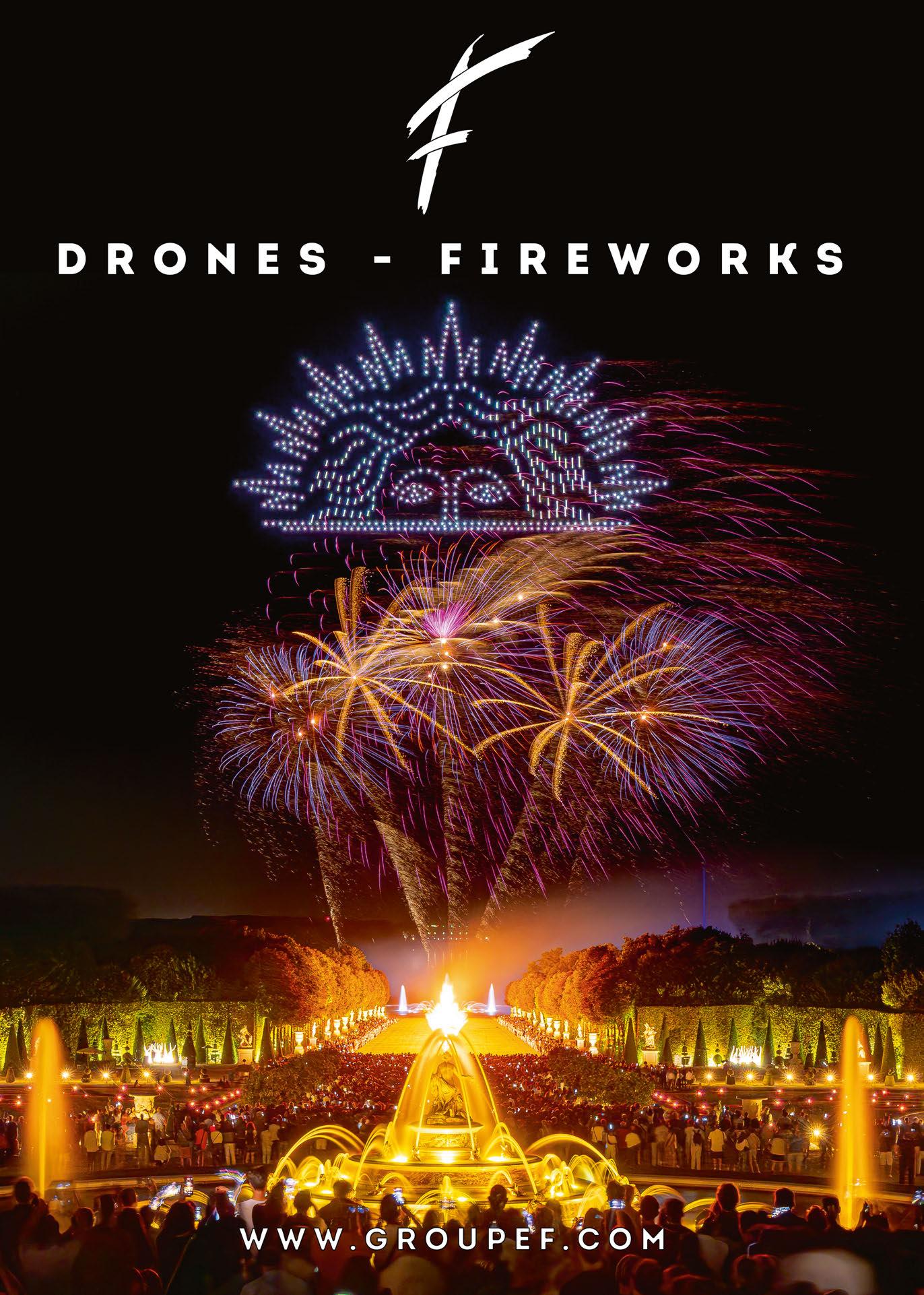
Groupe F’s Nicolas Chavance reflects on a series of ambitious projects that demonstrate the enduring appeal of aerial spectacle in the Middle East.
69 Gear Heads
The Neumann MCM 114 goes under the microscope.
70 Regional Round-up
The latest news, including the Coca-Cola Arena Venue Experience, NMK's new free educational initiative, Flyman Training in SA, and Aurras' investment in Ayrton.
Editorial Director
Peter Iantorno
Tel: +44 (0)161 476 8360
Mobile: +44 (0)7763 233637
e-mail: p.iantorno@mondiale.co.uk
Managing Editor
Stew Hume
Mobile: +44 (0)7702 054344 e-mail: s.hume@mondiale.co.uk
Contributing Editor
Jacob Waite
Mobile: +44 (0)7592 679612 e-mail: j.waite@mondiale.co.uk
Contributing Assistant Editor
Alicia Pollitt
Mobile: +44 (0)7508 441986
e-mail: a.pollitt@mondiale.co.uk
Commercial Director
Fran Begaj
Mobile: +44 (0)7852 336728 e-mail: f.begaj@mondiale.co.uk
Senior Account Manager
Matilda Matthews
Mobile: +44 (0)7413 555978 e-mail: m.matthews@mondiale.co.uk
Account Manager
Tom Dyson
Mobile: +44 (0)7306 505230
e-mail: t.dyson@mondiale.co.uk
Account Manager
Molly Cummins
Tel: +44 (0)161 476 8360
e-mail: m.cummins@mondiale.co.uk
Digital Content Manager
James Robertson
Mobile: +44 (0)7725 475819 e-mail: j.robertson@mondiale.co.uk
Marketing and Event Manager
Alice Clarke
Mobile: +44 (0)7752 392465 e-mail: a.clarke@mondiale.co.uk
Marketing and Event Assistant
Charlie Moore
e-mail: c.moore@mondiale.co.uk
Chief Executive
Justin Gawne
Mobile: +44 (0)7768 850767
e-mail: j.gawne@mondiale.co.uk
Mondiale Group Chairman Damian Walsh
Graphic Design & Production
Dan Seaton: d.seaton@mondiale.co.uk
Jez Reid: j.reid@mondiale.co.uk
Accounts
Jodie Matthews / Sarah Miller: ar@mondiale.co.uk
Cover Photography
Saudi Pro League by entourage
Printed By Buxton Press www.buxpress.co.uk
www.tpimeamagazine.com
www.tpimeaawards.com www.tpimagazine.com www.tpiawards.com
@TPiMEA_Magazine / TPiMEAMagazine
@ tpimea_magazine /company/tpimeamagazine
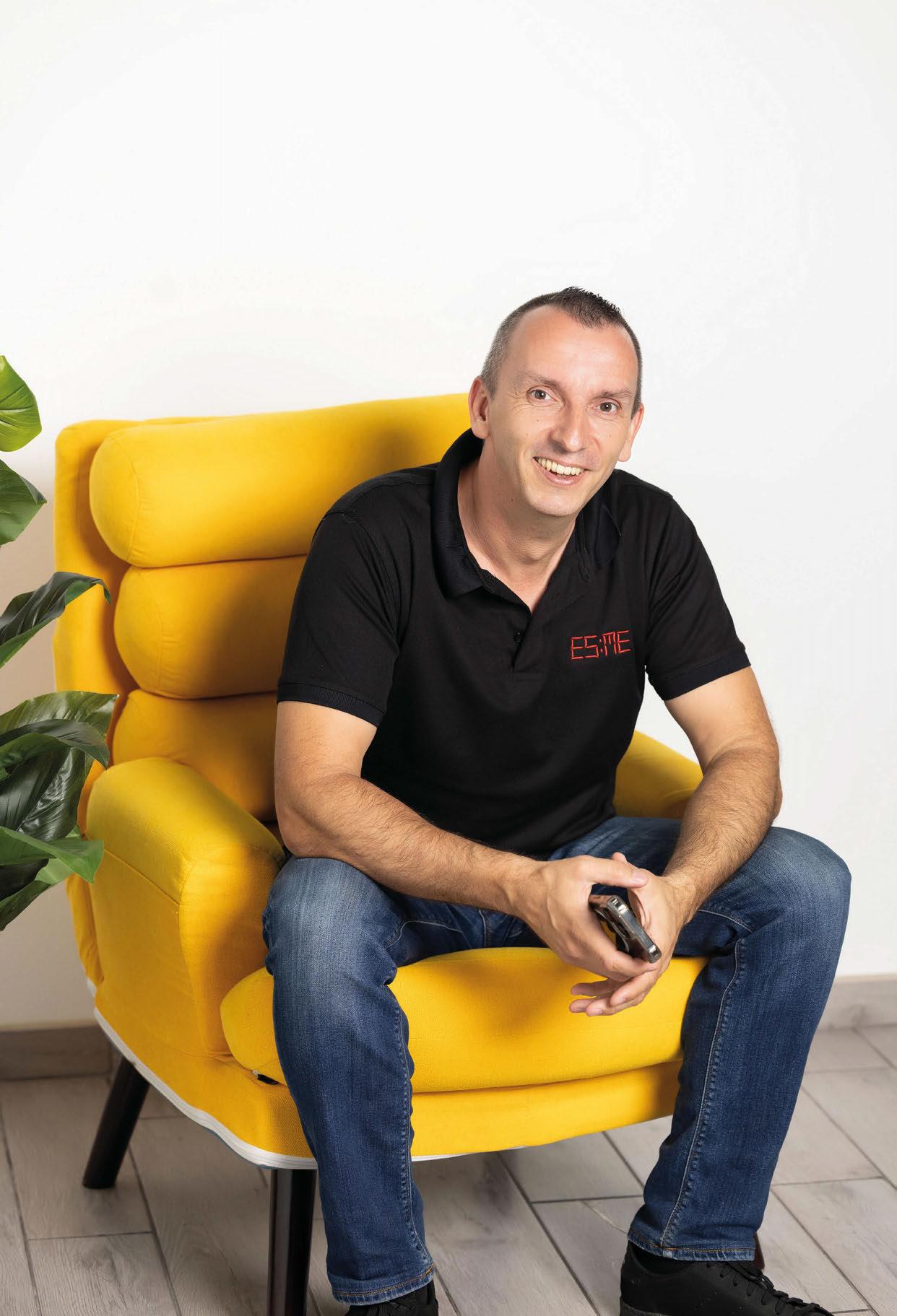
Alex Wuerfel, Group CEO, ES:ME Entertainment Services
From village festivals in rural Germany to some of the Middle East’s most ambitious live productions, Alex Wuerfel has built a reputation for solving complex technical challenges while growing ES:ME into one of the region’s leading specialist event services companies. The Group CEO reflects on three decades in the industry, the evolution of ES:ME, and why leadership is about setting the example rather than giving instructions.
Leadership can take many different forms, from being a role model always ready to muck in with the team, to being a master strategist maintaining an overview and deploying the right people in the right positions. For ES:ME Group CEO Alex Wuerfel, leadership has never been about titles or hierarchy. Having spent more than 30 years working across almost every discipline of the industry – from security and crowd management to rigging, technical direction and business ownership – he has built his approach around leading by example.
“I ’m still a very hands-on leader,” he tells TPiMEA. “I don’t push the car from behind; I pull it from the front.”
It’s a philosophy that has helped transform ES:ME from a specialist rigging company into a multidisciplinary operation serving clients across the UAE, Qatar and Saudi Arabia.
Equally important, it has shaped a company culture built on continuous learning and trust. “You can see it in the team,” Wuerfel explains. “If you shout the whole day, you have a shouting team. If you stay calm, take the time to explain things and treat people with respect, that behaviour transfers through the entire organisation.”
As ES:ME continues to grow, TPiMEA sits down with Wuerfel to discuss the lessons, mentors and leadership principles that continue to guide both him and the business.
What got you interested in the live events industry?
I grew up in a small village in Germany where my uncle and grandfather owned the only pub in town. They organised all the local festivals, sports events and community celebrations, so events were part of my life from the beginning. As soon as you were old enough to reach the beer tap, you were helping out.
My u ncle played in the local band, and I was always around events. Later, when I was a teenager, I took on
arranging the school disco, and I used to organise techno raves in abandoned houses or under highway bridges. I was always involved in live events in one way or another.
What were your first steps into the industry on a professional level?
I studied electrical engineering and alongside my studies, I did a lot of martial arts. One day somebody asked if I could help provide security for a major artist over a weekend. I did it and, from that moment on, I was hooked.
For the first 10 years of my career, I was mainly working in crowd management, artist security, close protection, backstage management and logistics. However, back in the 1990s, everybody was expected to do everything, so my engineering background came in handy for helping with the technical setup and dismantling. I would help build the show, work the show as security and then help take it down again. That mentality put me in front of the right people, and eventually clients started asking me to bring more crew and more people I trusted, and my career grew from there.
What lessons did you learn from your touring days?
You build your reputation by being dependable. People start asking you to come on tour because they know you will find solutions and get the job done, no matter how challenging the situation is. I have found this to be the case on my own journey as even after moving to the Middle East, I was still given the opportunity to work internationally – on London 2012, Sochi 2014 and Tokyo 2021 for example. It’s always nice when clients continue calling you years after your first gig with them because they know that you will deliver, and they want the confidence of having you on the team.
The biggest lesson I learned from touring was that the audience doesn’t care who did which job; they only care
whether the show happens. So, the people who do well on tour are the ones who roll up their sleeves and go above and beyond what is expected of them. That mindset has stayed with me throughout my career.
How did your move to the Middle East come about?
In 2006 a client asked me if I would go to Qatar to work on the Asian Games. I didn’t even know where Qatar was at the time, but I have always been open to new opportunities, so I was happy to give it a try.
I arrived in Qatar as a freelance contractor working on broadcast rigging and lighting across multiple venues, and I was immediately taken by the size, scale and speed at which the project happened. From then on, I was hooked on the region, and I knew that I would be spending a lot more time there.
I started with a plan of spending the busy winter season in the Middle East and then returning to Europe for summer festival season. However, we became busier and busier here and eventually, in early 2008, I decided to sell my company in Germany and move to the Middle East permanently, joining Rene Karnahl in the early days of Even2.
What were the early days of managing Even2 like?
It was much more challenging than it is today. We arrived as a specialist rigging company in a market where almost everybody claimed to be full service. At first, many people didn’t really understand why they might need a specialist rigging company; it was hard to demonstrate the value that we could bring. However, once clients experienced the level
of expertise, planning and safety we brought to projects, we started getting traction.
A lot of our early success came through word of mouth. Some of our biggest jobs came because competitors told clients: ‘For this rigging project, call Alex.’ That’s one of the best compliments you can receive.
What was behind the decision to merge Even2 into the ES:ME Group?
We started as Even2, but as the company evolved and expanded, we created ES:ME Entertainment Services. At the beginning, we were purely a rigging company, but we were getting more and more requests from clients to move into other areas. They wanted us to provide technical management and planning, power distribution, lighting and other technical services.
I’ve always believed in collaboration and for years we worked with specialist audio and video partners while presenting a complete solution to the client. However, there came a point when sub-hiring equipment became more expensive than buying it ourselves and shipping it into projects. Ultimately, we saw an opportunity to expand the team, our inventory and our capabilities, and it proved to be a major turning point for the business.
How has ES:ME grown from its early days into the multidisciplinary, multilocation company it is today?
We started with a few hoists and some truss in Ajman. In Qatar, our first move was storing some gear in a friend’s garage. Today, we have facilities in the UAE, Qatar and Saudi
Arabia, with thousands of square metres of warehouse space across the region.
We’re now operating with around 50 full-time people between administration, operations, rigging, lighting, engineering and warehousing, and during busy periods we’ll bring in another 50 to 60 freelancers. The growth is great, but it comes with a lot of responsibility, which I don’t take lightly.
What have been some of your highlights with ES:ME?
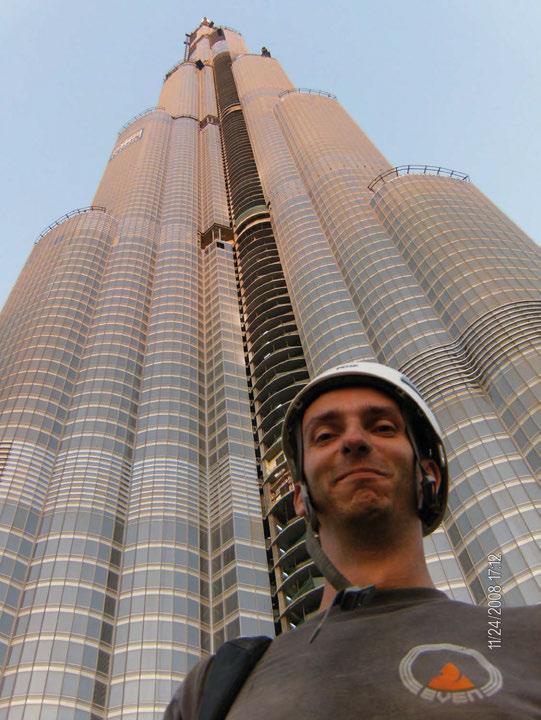
There have been so many, but a couple that immediately spring to mind are the opening of the Burj Khalifa in 2010 as well as the opening of Ferrari World in the same year.
Another one of my favourites was the Aston Martin Centenary project in 2013, where an Aston Martin Vanquish was landed on the helipad of the Burj Al Arab. I remember I was having coffee with a friend one morning and he got a call from his client; without explaining anything, he handed the phone over to me and said, ‘this is one is for you’.
Th e client explained the project to me and then I went directly to his office, still wearing my shorts and flip-flops, to get the ball rolling on the project. From the first call to show day, we had just nine days, but somehow, we managed to pull it off. It was an amazing project to be a part of.
More recently, DIALOGUE for Christopher Bauder at Noor Riyadh 2023 was an incredible project. We installed hundreds of moving lights across multiple skyscrapers, which required almost military levels of precision, from large-scale equipment logistics down to details such as exact elevator timings. The result speaks for itself.
Where are the biggest opportunities for growth for ES:ME Entertainment Services?
We’ve been operating in Saudi Arabia for a few years now and the company is doing well there, but we have still barely scratched the surface of what is possible. Most of our work in the country at the moment comes through existing clients, which is great, but there’s a huge, untapped potential in the market and a massive opportunity for growth.
Th ere’s plenty of competition, but Saudi Arabia is a massive market and there is more than enough opportunity for specialist expertise like we have at ES:ME. With that said, we’re not in a rush – I prefer to grow naturally and build from a strong base, which is exactly what we are doing.
What is your approach to investment in equipment?
The backbone investment is always the most important thing. I focus on buying equipment that has a long lifespan
and serves the majority of our client base. We’re not heavily involved in the touring market, so we don’t need to buy the newest moving lights every year just to satisfy technical riders. If a specific designer requests something special, we know where to source it, but our investment strategy is based on long-term value rather than chasing every new product release.
How much focus are you placing on ES:ME’s rope access offering moving forward?
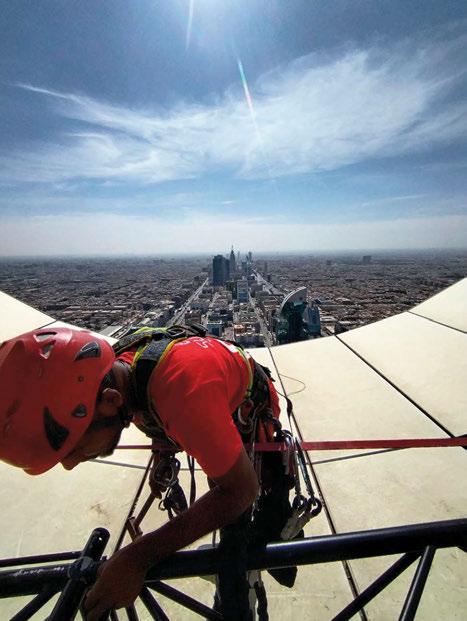
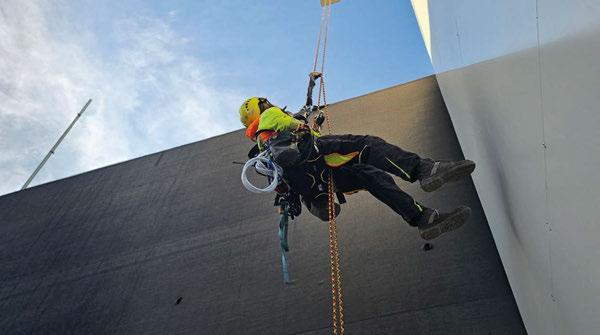
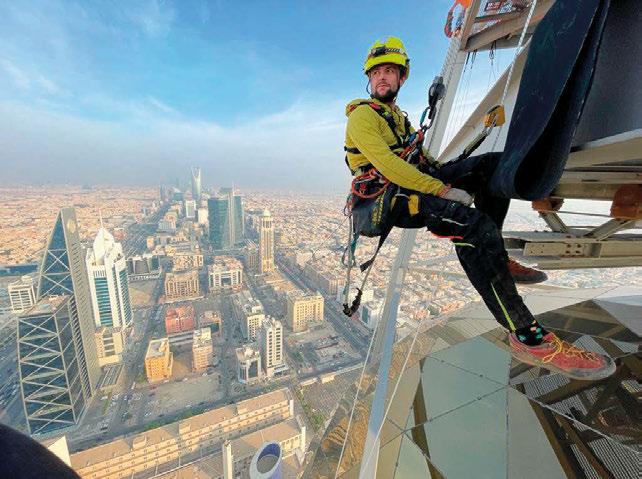
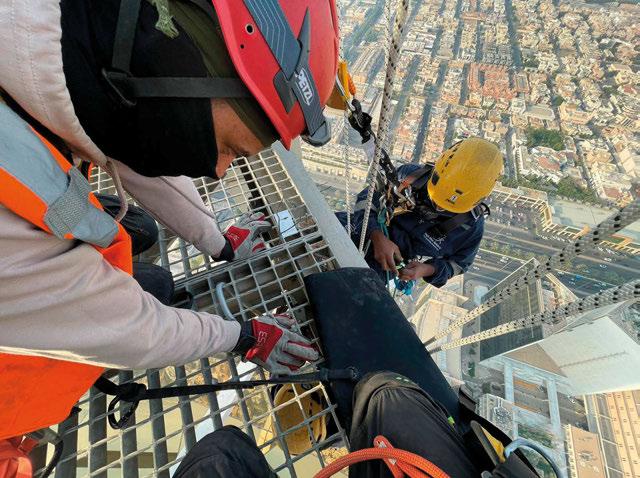
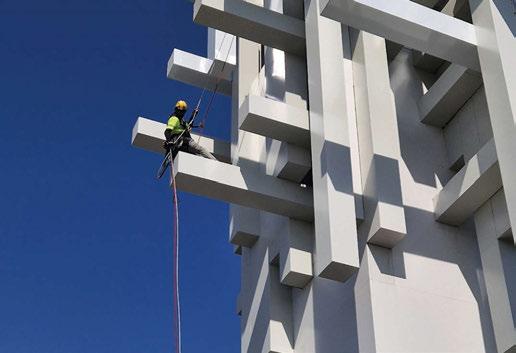
It’s a major focus because it makes perfect sense alongside our existing expertise. Most riggers already hold rope access certifications, and we’ve completed numerous difficult access projects over the years. The difference is that we bring an event technician’s mindset. Clients don’t have to hire somebody who understands rope access but not technology; they can hire people who understand both.
The re are huge opportunities in stadium installations, permanent infrastructure projects, façade lighting, LED installations and other specialist access work. Even in slow periods for live events, construction projects continue, so it gives us another strong business stream and keeps our people working throughout the year.
Why is training so important to you?
As part of the AV Alliance, I’ve delivered multiple training sessions everywhere from Rwanda to Greece and across the Middle East, as well as in-house training programmes for our own teams and clients.
My mission is simple: to give everybody the skills and knowledge required to put on safe events. I still see too many accidents happening, particularly in developing markets. People working at height without harnesses, people working without the proper footwear or equipment and either ignoring or being unaware of basic safety procedures. If I can help improve standards and prevent accidents, then I feel I’m giving something back.
The company now has the right structures and processes in place so that it can manage itself for extended periods while I’m away, which means I can spend more of my time sharing knowledge. As well as education being important, it’s also something I really enjoy. I’d love to open a school one day.
ES:ME has always been well represented at industry awards such as the TPiMEA Awards. How much importance do you place on this?
Recognition is always nice because it validates the hard work of the team, but for me, the greatest achievement is seeing clients continue to trust us and seeing people who worked with us go on to achieve great things in their own careers. That means we are doing something right.
Who have been your mentors over the years?
My first mentor was probably my grandfather. He was a master carpenter who ran his own business, and while I didn’t always appreciate all his advice when I was younger, I certainly appreciate it now. He taught me that the phrase ‘that’s not my job’ should never be part of your vocabulary. He had a ‘whatever it takes’ attitude, which is something I now try to embody with the way I lead the team.
Professionally, I have had several mentors who believed that I was capable of more than I believed in myself. Those people have been incredibly important. Here in the Middle East, someone I always looked up to was Mark Brown. Watching how he built and grew Eclipse taught me a lot.
What does your day-to-day role at ES:ME look like?
I’m still a very hands-on leader. I don’t really like the word ‘delegation’; I prefer ‘leverage’. I rely on the skills and expertise of other people, and I trust them to deliver, but ultimately, I’m still responsible for the outcome.
One of my biggest achievements recently was taking a two-week holiday without opening my laptop once.
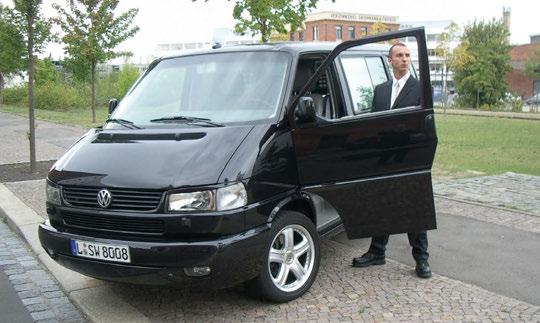
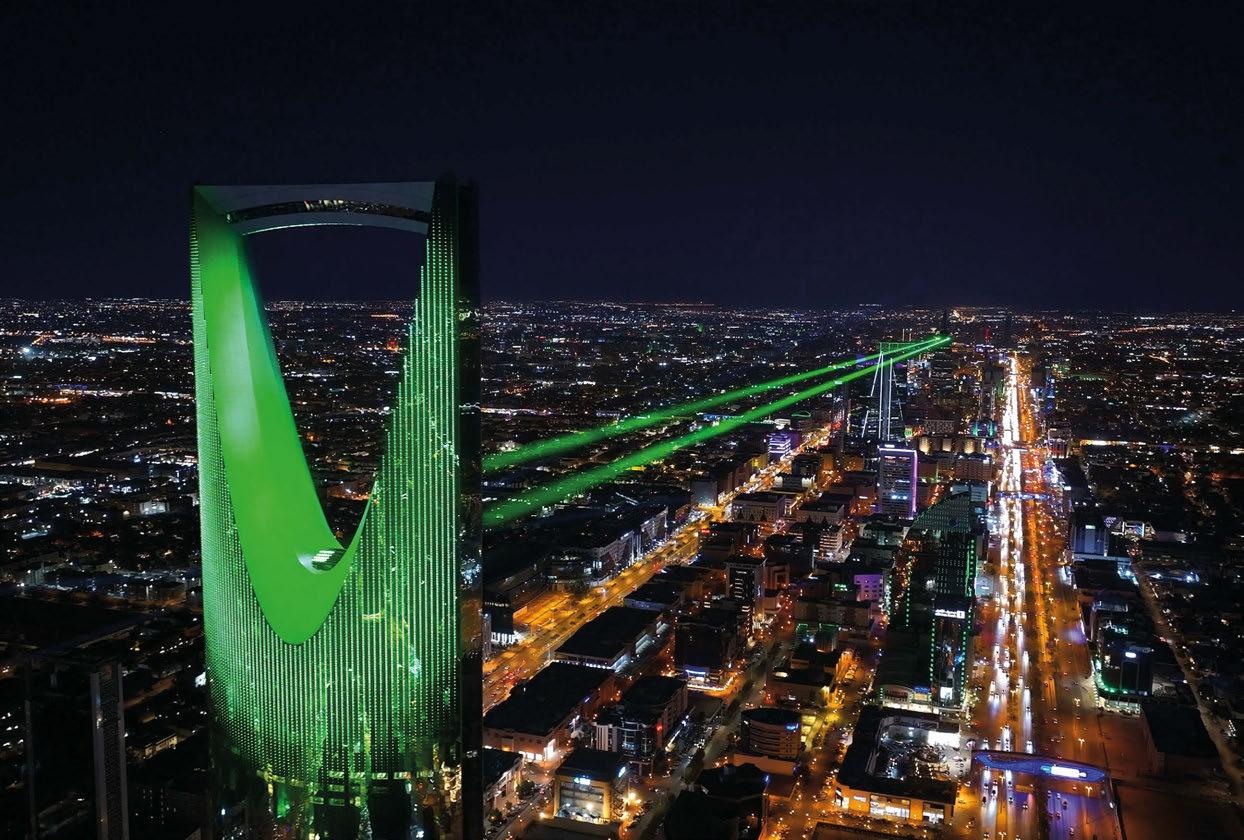
Previous page and opposite: Christopher Bauder’s DIALOGUE installation at Noor Riyadh 2023, which required great levels of precision from the ES:ME team.
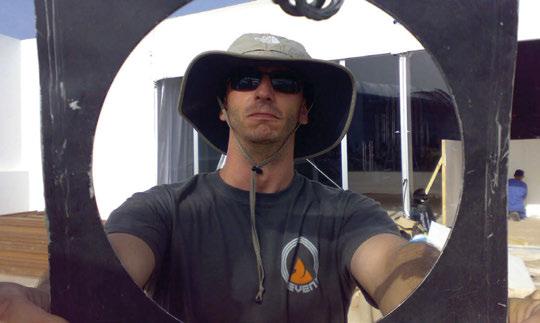
Above (top-bottom): Wuerfel working on the Burj Khalifa opening in 2008; In the early days of Even2; At the start of his career in live events, working security back in Germany.
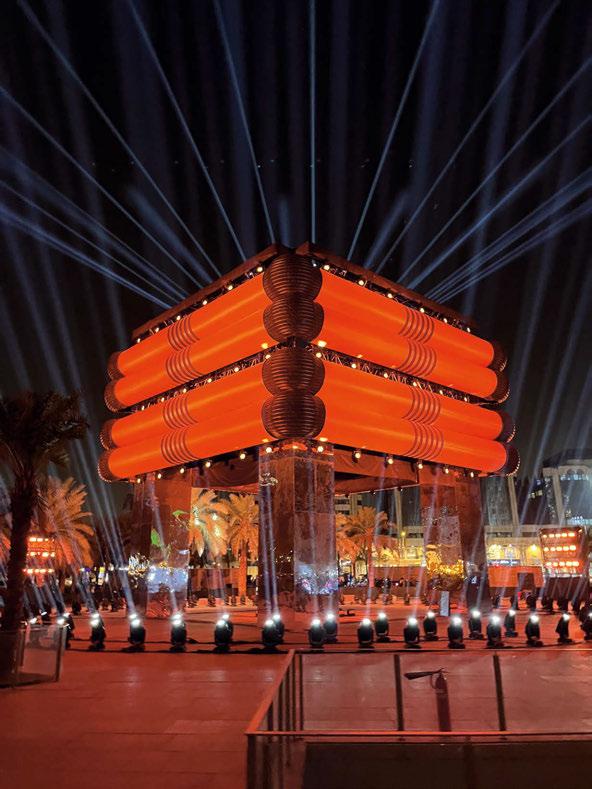
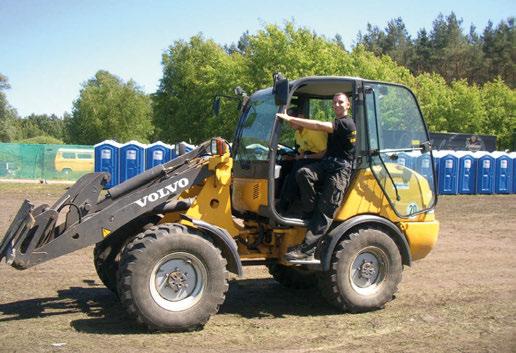
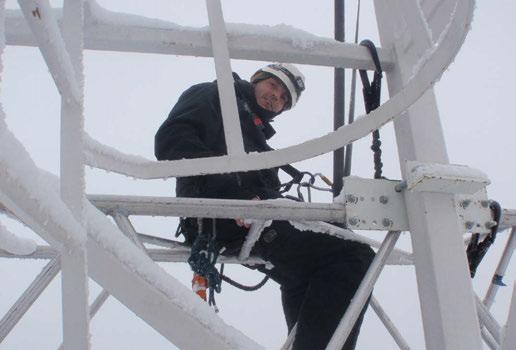
That proved not only that our systems, playbooks and procedures are working as they should be, but also that the team are more than capable of steering the ship while I’m away. This wouldn’t be possible without the full buy-in of our skilled and experienced team.
What are your ambitions for the company?
My goal isn’t to become the biggest company in the world or even the biggest in the region. I want ES:ME to become known as the company people call when a project is genuinely difficult and requires specialist expertise, wherever in the world that project happens to be.
I wa nt clients to buy into the ES:ME mindset and standards, so they are happy to deal with anyone at ES:ME because they know that we are all working to the same high standards. Success for me is building a company where somebody else can deliver exactly the same quality and service because they understand the systems, values and standards we have created.
I’m also proud when people leave the company and go on to contribute to the industry at a high level. Of course, I
always want the best people to stay with us – and we like to think we provide enough opportunities that most people do stay – but if somebody becomes a technical director or a department head elsewhere after working with us, that has to go down as a success story.
How do you switch off outside of work?
I have become very good at switching off because if I want to show up as the best leader possible, I need to look after myself. A healthy mind can only live in a healthy body. I walk my dog, go to the gym every day and read something every day, mostly non-fiction.
I e njoy active holidays – climbing waterfalls, exploring caves and kayaking through lagoons are much more interesting to me than sitting on a beach for two weeks.
On e of the best things I ever did was remove email from my phone. Mindset is incredibly important. Learning how to switch off, be present and focus on what’s in front of you is one of the most valuable skills I’ve developed.
Photos: ES:ME Entertainment Services www.es-me.net
Above: ES:ME’s delivery at Riyadh’s King Fahd National Library Park for KSA Founding Day 2024.
Right (top-bottom): A young Alex on site in Germany; working at height in freezing conditions; and ES:ME on site at MDLBEAST Soundstorm 2025.
Max Korzh: Live in Istanbul
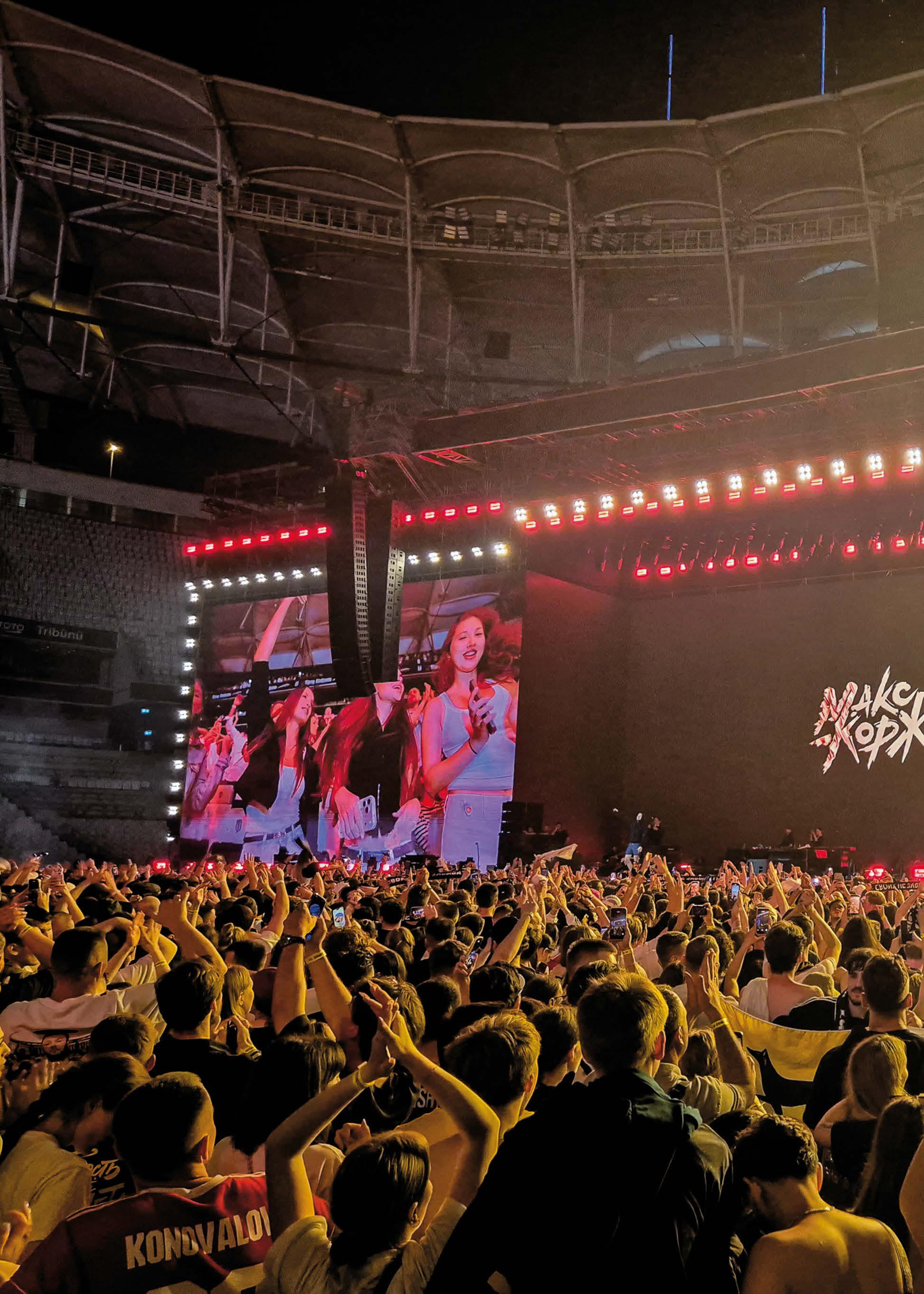
The Belarusian rapper shares his staunch anti-war message to a packed-out Beşiktaş Stadium with JSA Stage company providing technical infrastructure and Red Flame Creations taking on an ambitious audio design scope.
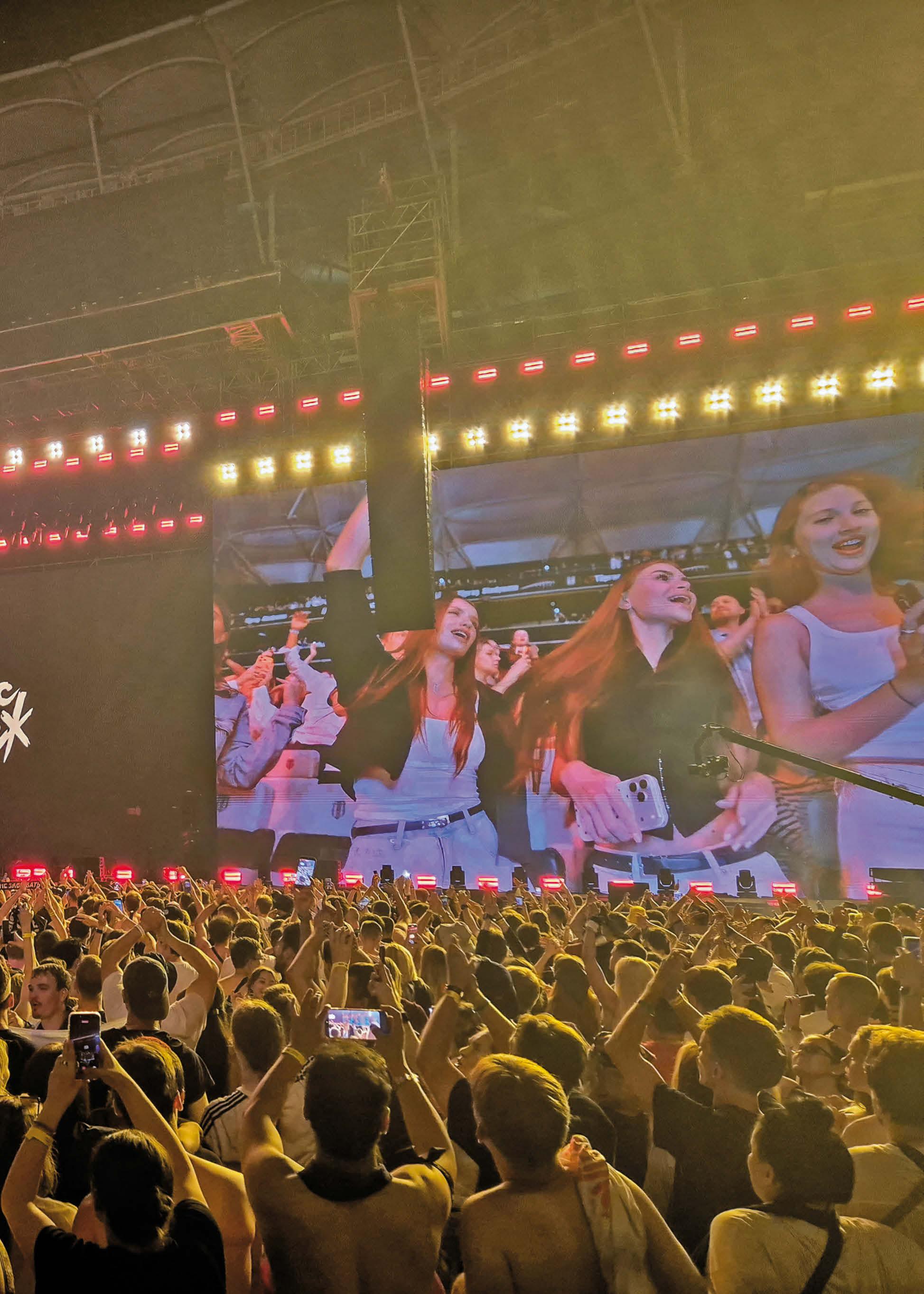
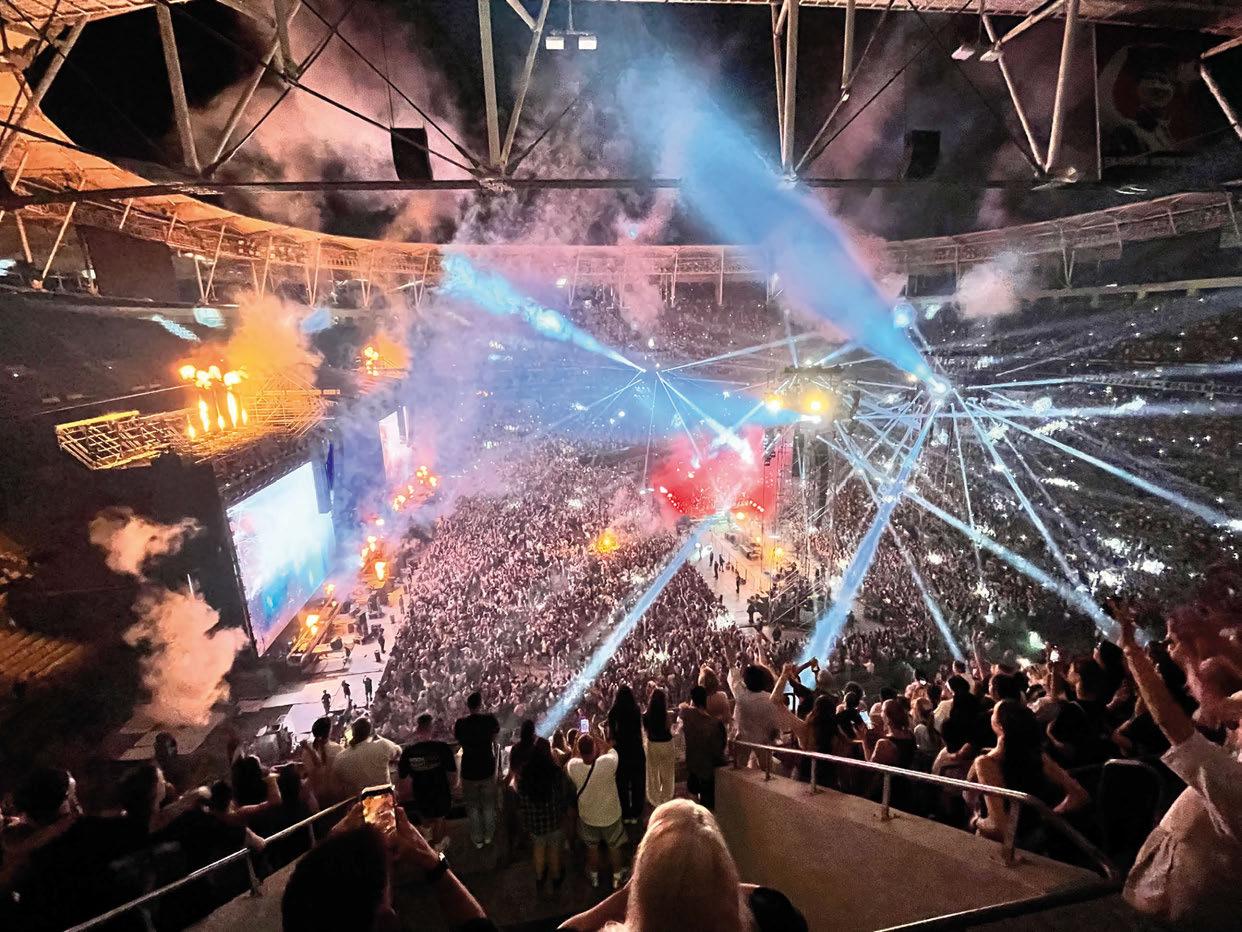
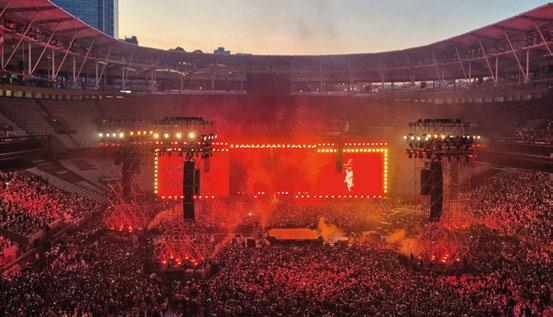
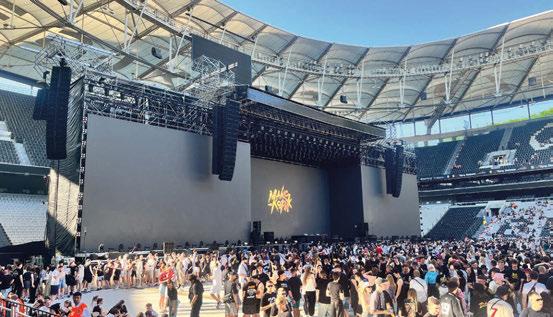
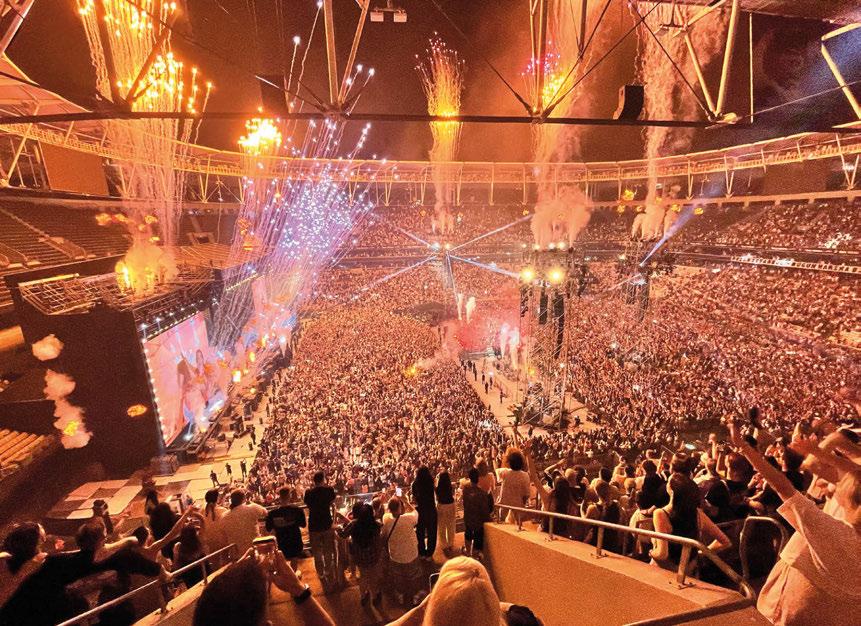
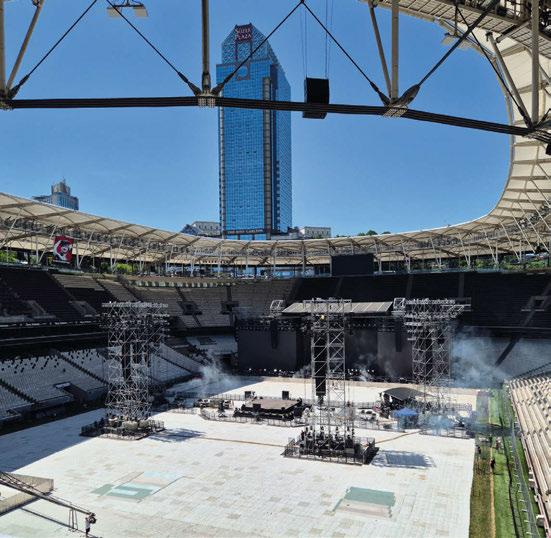
Wherever rap star Max Korzh goes, legions of loyal fans follow. This was no different in Istanbul as the artist played to a sold-out Beşiktaş Stadium, cheered on by a rapturous crowd singing along to every word of his extensive back catalogue. With such a devoted fanbase in tow, only the very best would do when it came to technical production. The artist entrusted JSA Stage Company with technical infrastructure, with Managing Director Alexander Strizhak taking the role of General Manager of Production, while Red Flame Creations, led by Sergiy Zhytnikov, handled the audio design and deployment.
“The technical execution and production scale of the event matched the highest international touring standards, driven by European engineering solutions and comprehensive on-site management,” began JSA’s Strizhak, whose role saw him successfully
integrate all the technical departments as well as logistics and crowd safety into a single synchronised operational system.
While JSA has previously provided stage engineering and structural solutions for Max Korzh’s stadium shows in the likes of Latvia, Czech Republic and Estonia, the Istanbul project marked a significant evolution. “For this event, we assumed full responsibility for the entire turnkey production cycle of the technical department – from initial stage blueprints to live site management,” Strizhak stated.
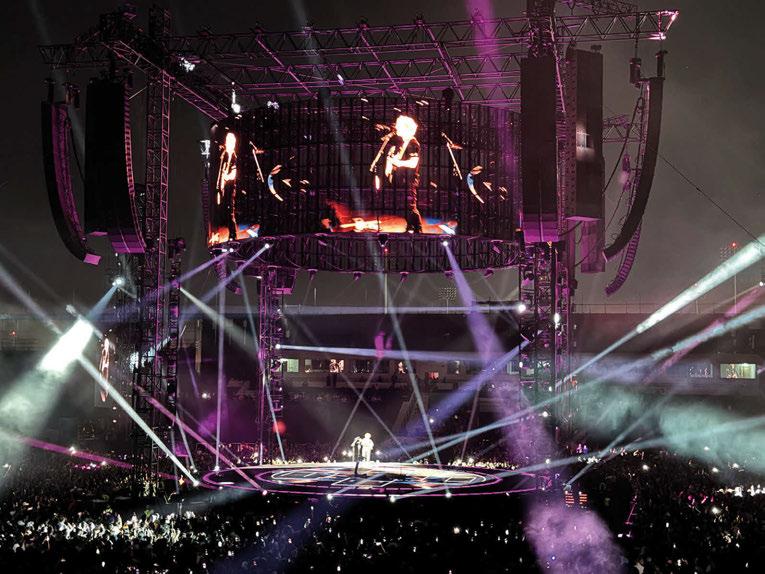
Th e custom main stage was built using a proprietary modular concept developed by JSA Stage in 2023. “The configuration features seamless, full-stage LED screen integration and audio portal housing, designed to maximise visual impact while remaining adaptable to varying stadium layouts,” the GM of Technical Production explained. JSA also engineered a
B stage in the centre of the floor, allowing the artist to appear directly within the crowd during key moments of the show to perform a special acoustic set.
Strizhak maintained an overview as local Turkish contractors erected the main stage, FOH towers, camera platforms, dedicated structures for lighting and pyrotechnics, as well as safety fences and crowd control barriers according to JSA Stage’s technical specifications.
“O f course, there were some challenges during the concert preparations,” Strizhak recalled, noting that contractors were primarily hired by the promoter, and communication and processes between all production participants had to be properly managed.
“I stanbul has proven that our custom stage concepts and stadium management expertise allow us to deliver world-class production for artists of various levels anywhere
in Europe, regardless of local infrastructure or regional specifics,” Strizhak commented.
“We have created a scalable, highly efficient stadium blueprint. JSA Stage is fully open to collaborations for upcoming tours with both European and Russian-speaking artists, guaranteeing strict compliance with international production standards for complex shows.”
‘A dream system’
Ahead of the run, the Max Korzh camp was looking for a system designer with a track record of creating large-scale stadium sound… enter Sound System Designer, Sergiy Zhytnikov: an engineer with 27 years of experience in the industry, and 24 years with the L-Acoustics system, spending the past decade working exclusively with L-Acoustics. “Max is very involved in the production, and he is committed to making the show sound as good as possible,” he began.
“Right from the first conversations, it was clear that I would be given the freedom to design the right system that the show needed, which was music to my ears. For me, it was a dream system.”
Zhytnikov’s first port of call when designing the system was to delve into the artist’s back catalogue. “I did some research into his music and his audience because ultimately we play for the people and they will be the ones who decide if it sounds good,” he stated. “We started with the ethos of ‘let’s not look at what people have done before’. We wanted to focus on what we can deliver to the audience and what best serves the content of the show.”
As well as being a natural showman, Max Korzh is known for his anti-war stance, and the rapper’s songs often carry strong messages of peace, which meant that clarity in the sound system was paramount to ensure that the lyrics were not lost behind the music.
“People come to this show not just for the music but also to hear what Max has to say,” Zhytnikov explained. “He needs to be heard properly by the whole audience, no matter where they are in the stadium.”
With this in mind, the engineer designed a system he described as “balanced with a smooth transition from low end into the mid-range” and, of course, with “no holes” in the coverage. “The system needed to be punchy and powerful but also well balanced,” he noted.
For the Istanbul show, Zhytnikov specified a massive L-Acoustics system, which was supplied locally by Sens Music and Solid Technical Solutions. The system comprised a total of 104 K1, 92 K2, 84 KS28, 18 KARA II, six A15 and 133 LA12X amplifiers, all running over AVB network.
Th e system included main hangs of 14 K1 and four K2 with 12 flown KS28 subs; side hangs of 14 K1 and four K2, with rear hangs of eight K2 providing additional fill to extend the coverage on the side of the side array.
“This is my first time using a rear hang like this,” Zhytnikov revealed. “Normally we would overshoot a few top boxes to make sure there are no gaps on the side of the array system, but this rear-hang solution allowed us to have much more precision without wasting energy on the side hang.”
A total of 36 KS28 were ground stacked in groups of three spread across the width of the stage to provide low end, while six A15 served as centre fills, 12 KARA II provided in fill and a further six KARA II were used for outfill. Four delay
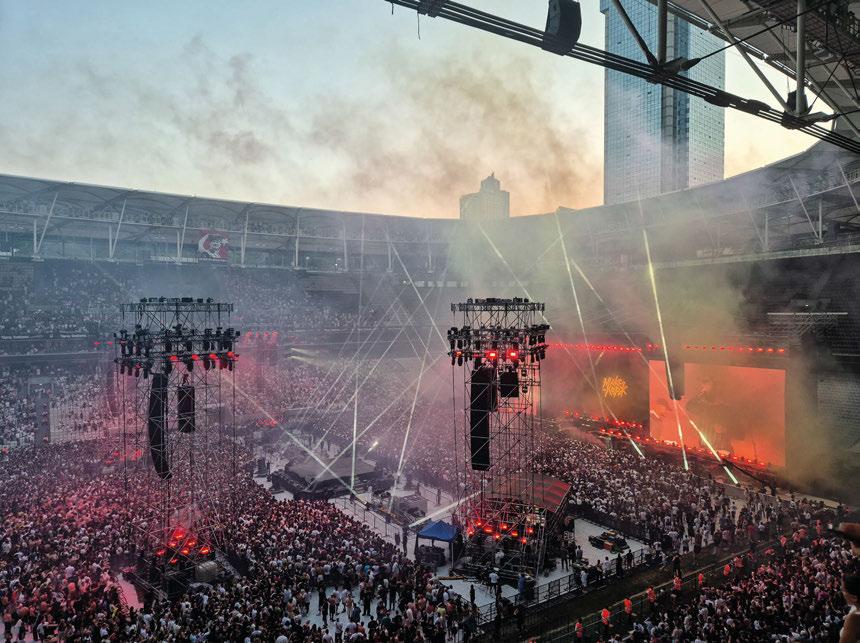
towers extended the coverage, with 12 K1 and six K2 as well as six KS28 (in cardioid combination) in each delay.
Th ere were also two delay outfills of six K2 to support the first ring of the delay towers and six ground stacks of four K2 each to support the B Stage. A Yamaha DM7 with Rio D2 was at FOH, while an Allen & Heath dLive with DM48 MixRack was used for monitors.
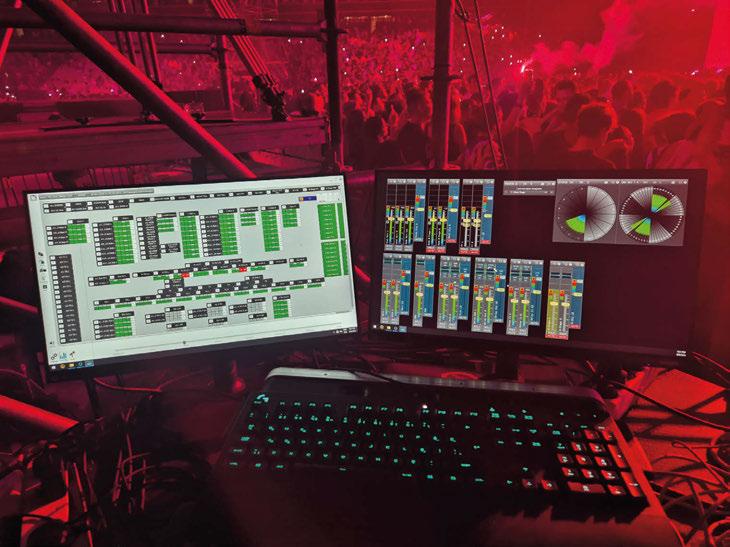
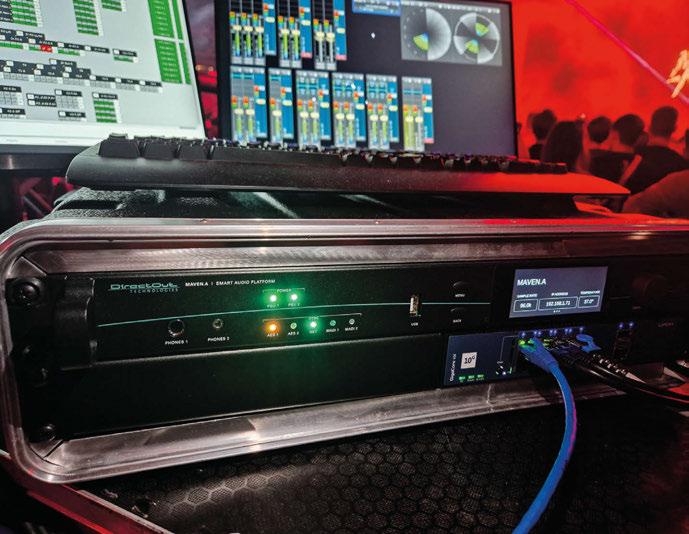
Processing was handled by DirectOut MAVEN.A, supplied locally by Radikal Electronik, which took 11 outputs, enabling the team to switch quickly between the main stage and B stage systems. “It’s a lifesaver,” Zhytnikov said of the technology. “That transition between systems has to happen smoothly, I’m not sure it would have been possible without using DirectOut.”
Looking back on the project, the Sound System Designer was very pleased with the final results. “We achieved a level where the clarity was exceptional, and you could still feel the punch of the system in the very back of the stadium,” he commented. “I am delighted with where we ended up.”
And while the tour rolled on to Düsseldorf next, which came with an even larger sound system, Zhytnikov is already looking ahead to a possible return to Istanbul. “Istanbul is a place where you can really express yourself creatively. I’m sure that we’ll be back next year, and I will see what I can improve.”
Photos: JSA Stage, Red Flame Creations www.jsa-stage.company www.redflamecreations.com
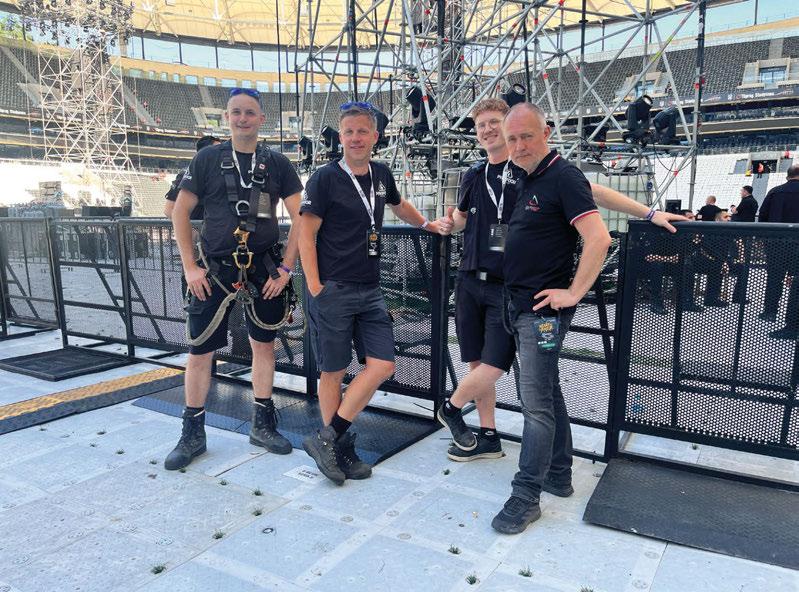
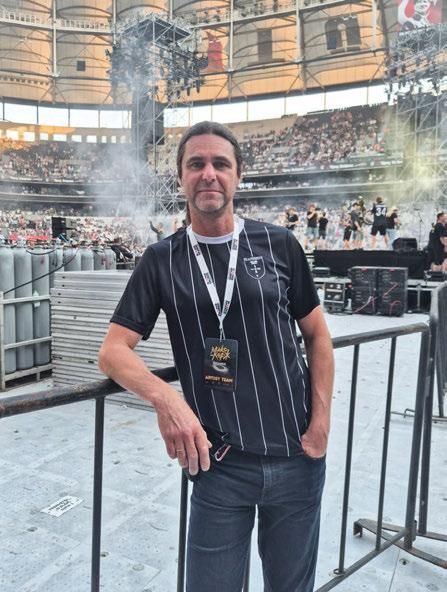
Top left: Alexander Strizhak and the JSA Stage team. Top right: Sound System Designer, Sergiy Zhytnikov. Above left: DirectOut MAVEN.A handled processing.






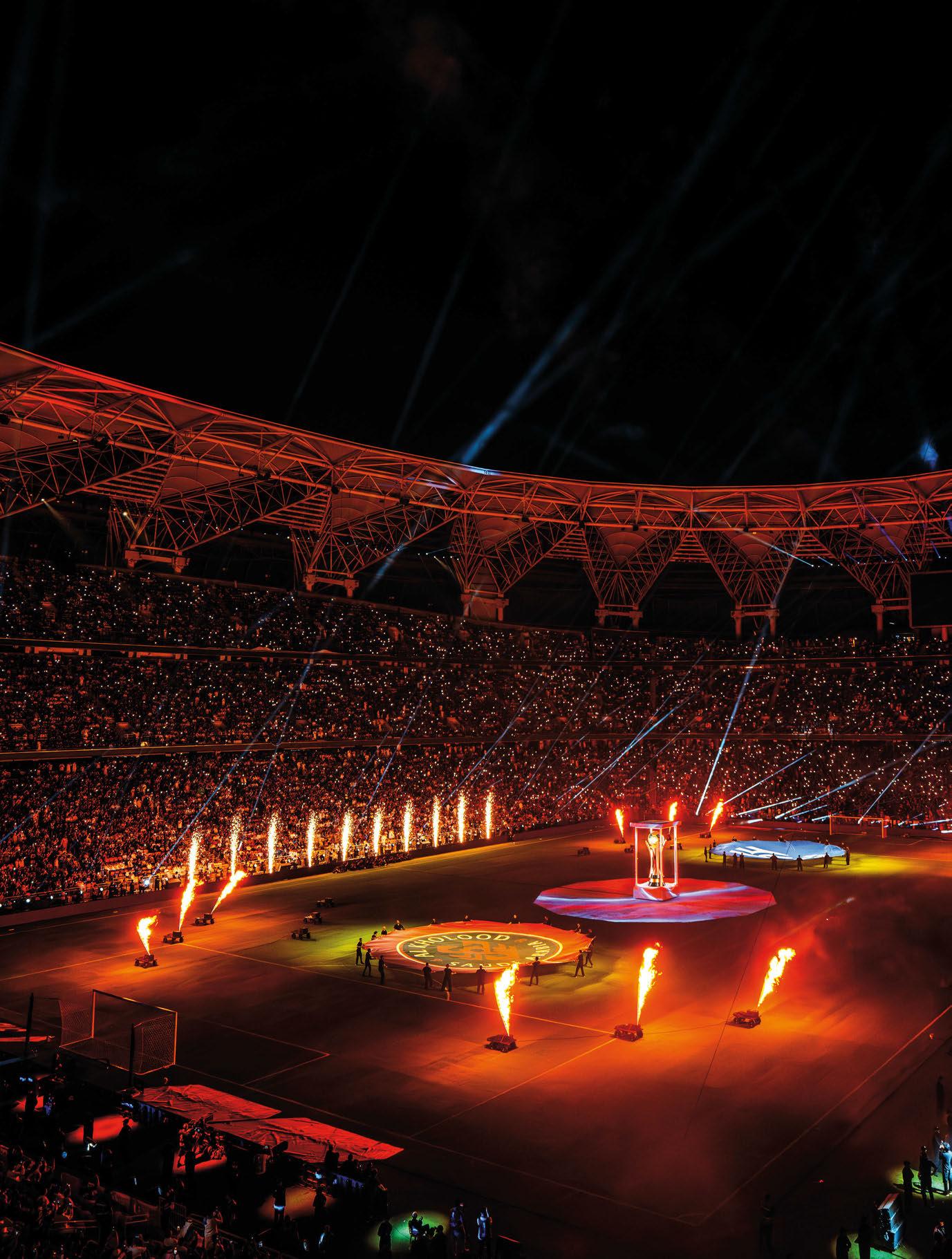
King’s Cup Final 2026
Under the stewardship of the Ministry of Sport, a bold creative vision transforms Jeddah’s King Abdullah Sport City Stadium into a jewel-box spectacle befitting the most prestigious fixture on the Saudi Arabian domestic football calendar.
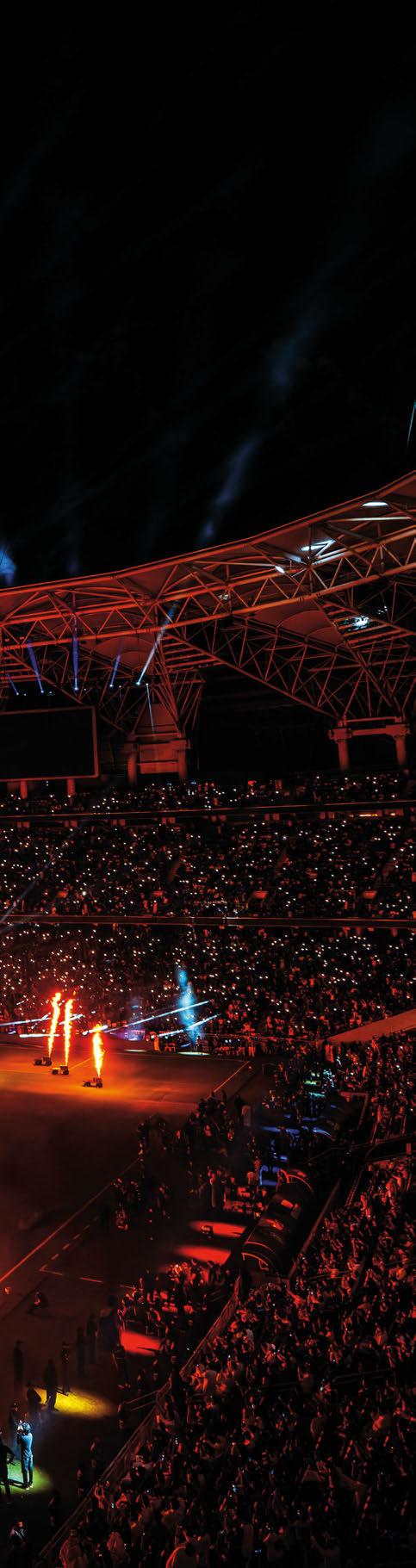
The 2026 King’s Cup Final was staged under the direction of the Ministry of Sport, the client and custodian of Saudi Arabian football’s flagship domestic knockout competition. Overseeing the ceremony on the Ministry’s behalf were Deputy Minister of Sport & Youth, Abdulaziz Almasaed; Project Director, Bader M. Almusleh; and Operations Manager, Ibrahim Almozan, who together set the ambition for a spectacle worthy of the occasion at Jeddah’s King Abdullah Sport City Stadium.
For the Ministry of Sport, the King’s Cup Final represented far more than a title decider. It was an opportunity to celebrate the game’s central place in Saudi national life and to showcase the Kingdom’s ambition as a home for world-class live events. The Ministry’s leadership set a clear brief: an occasion that felt unmistakably Saudi in identity while meeting the highest international standards of ceremonial production. That vision – rooted in prestige, heritage and national pride –shaped every creative decision that followed.
To realise that vision, the Ministry of Sport appointed Blink Experience as the agency responsible for delivering the ceremonial production. With a typically tight timeline to overcome, Blink assembled a team led
by Executive Producer, Haya O Zakour, and Ceremonies Manager, Lamia Abdullayeva, working alongside Creative Director, Luca Taschini; Artistic Director, Giulia Marocchino; Choreographer, Tatiana Myrkou; Music Producer, ON THE SLY; video content creator, OCUBO; and many others.
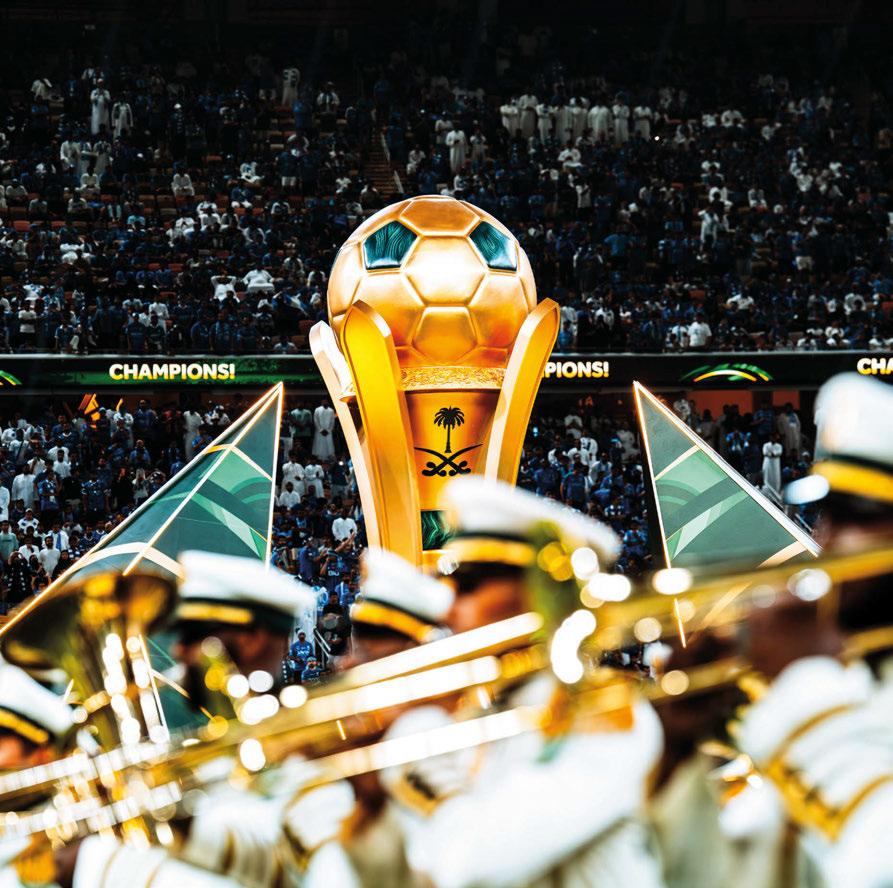
‘A jewel among Saudi competitions’ In designing the concept for the ceremonial elements of this year’s King’s Cup Final, Creative Director Luca Taschini set out to turn the stadium into an Aladdin’s Cave of wonders, containing a precious jewel as a symbol of prestige, rarity and value. “The King’s Cup was conceived as the jewel among Saudi competitions, because of both its sporting importance and its direct connection to the Royal Family and Saudi football tradition,” he explained. “The jewel was never treated as decoration, rather as a visual and emotional language capable of expressing prestige, heritage, precision and ambition.”
Th e creative process began with a broad exploration around this year’s communication objectives and the symbolic value of the King’s Cup. “From the beginning, the intention was to balance an international ambition with a
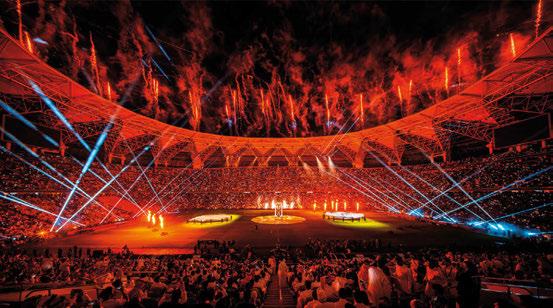
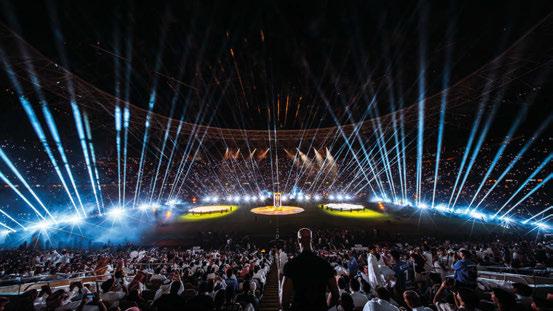
strong sense of Saudi identity and local culture,” Taschini stated, noting how every layer of the ceremony expanded on the jewel concept.
“Jeddah became a jewel city within Saudi Arabia, the stadium a jewel of sports infrastructure, the two finalist clubs jewels of Saudi football, and ultimately the trophy was the crown jewel – the most desired prize in the national game.”
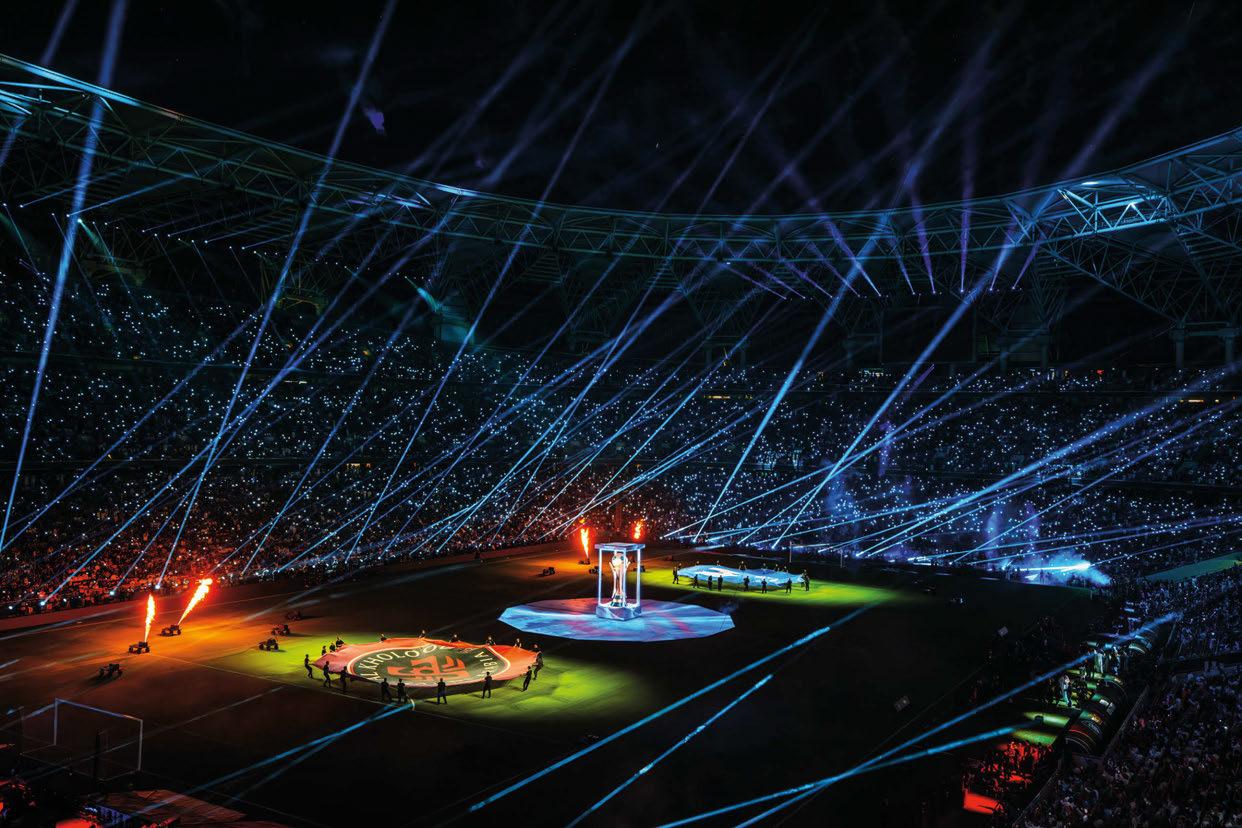
“We developed a unified visual system built around the symbolic language of the jewel. The geometry of the team banners, the trophy reveal and the video content were all shaped around its forms, reflections, tension and brilliance,” Taschini said. “The music followed the same direction, balancing restraint and intensity while incorporating elements rooted in local identity.”
Video content was central to defining the identity of the two finalists. “One of the key visual ideas was the confrontation between two iconic towers representing the clubs’ cities – the
futuristic Kingdom Tower in Riyadh for Al Hilal and the more traditional tower of Al Rass for Al Kholood,” Taschini explained. “This contrast visually expressed two different histories and identities competing on the pitch.”
Befitting a fixture with a direct connection to the Royal Family, the occasion demanded flexibility until the very last moment to accommodate the presence of royalty. “We had to continuously adapt to different operational scenarios linked to the presence of HRH MBS,” Taschini revealed. “Events of this scale naturally require a high degree of flexibility until the very last moment.” Show Caller Charbel Karam played a key role in preserving the rhythm and integrity of the ceremony throughout these transitions.
‘An iconic piece within Saudi culture’ Progression was a strong theme of this year’s ceremony, with Taschini and Artistic
Director Giulia Marocchino focussing on a rhythm that built into a crescendo as the show developed. “The show began in a restrained and atmospheric way before gradually building toward the act dedicated to football and the two finalist clubs, where the pace intensified to reflect the energy and dynamism of the game,” the Creative Director described.
This sense of progression was matched by ON THE SLY, which was entrusted with the music direction, composition and sound design. “The score opened in a minimal and atmospheric place before gradually opening up into something larger and more emotional around the reveal moments and climax sections, but still felt connected throughout,” described ON THE SLY’s David Wakefield.
“We were also really pleased with the way the different musical influences, textures and emotional states all existed together within the
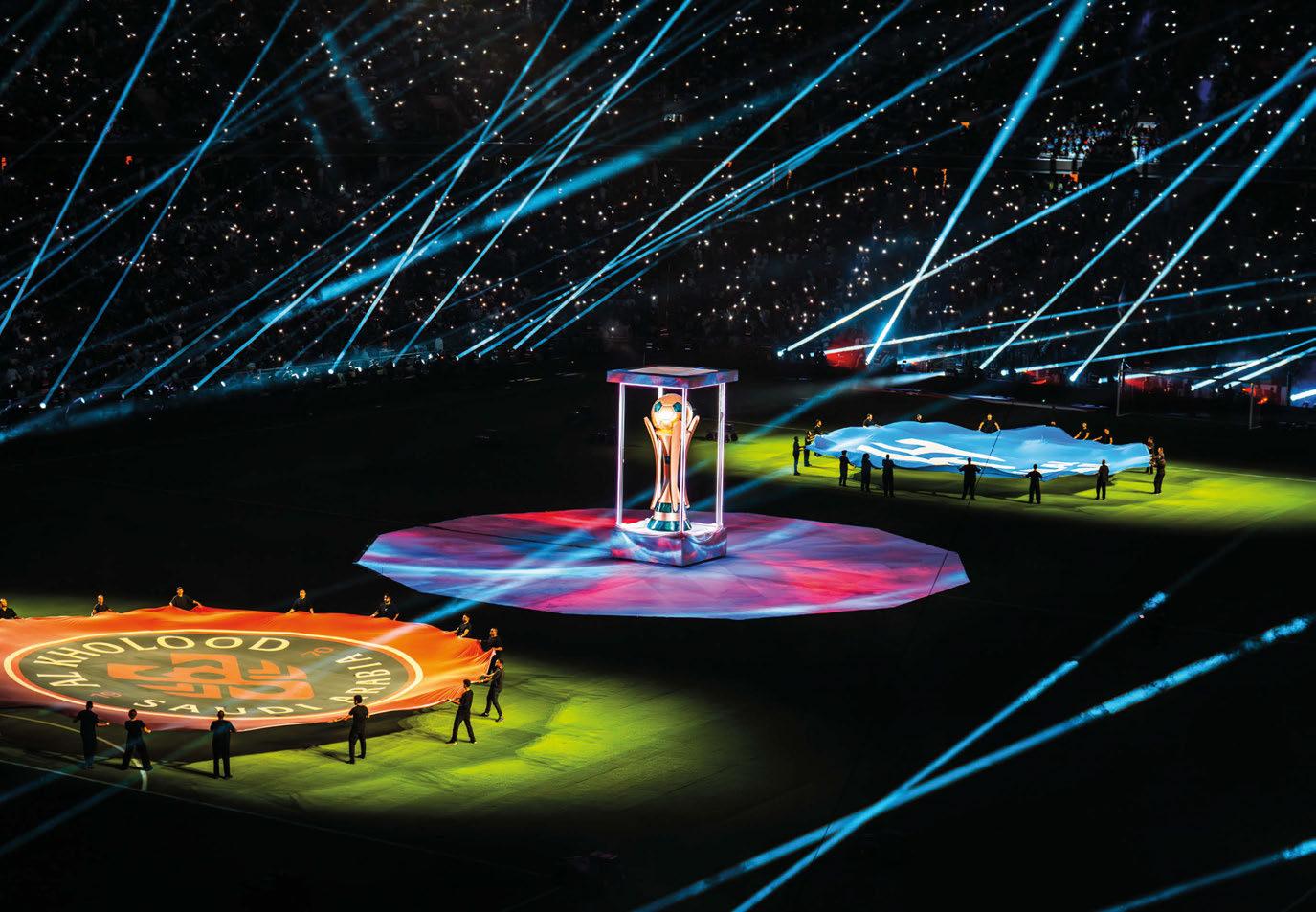
same coherant musical piece rather than feeling like they were segmented,” he added.
Sau di singer-songwriter Nourah Alammary, together with the client, served as an important collaborator when it came to the Saudi musical references and instrumentation running through the score. “We were using oud textures, daf drums and regional musical influences throughout, but always as part of the overall musical identity of the ceremony,” Wakefield revealed. “The inclusion of Fouq Ham Al Sohob carried a huge amount of emotional and symbolic weight. It’s such an iconic piece within Saudi culture, particularly around football and national occasions, so there was a responsibility to make sure it landed in the right way within the wider ceremony.”
Taschini was also pleased with the level of integration when it came to local culture. “That dimension helped the audience feel emotionally
connected to the ceremony rather than simply spectators,” he stated. “For that, I’m very grateful for the creative input from Nourah Alammary and for the flexibility of the ON THE SLY team throughout the process.”
‘A strong sense of visual unity’
What pleased Taschini most was seeing the various scenic and creative elements ultimately work together in a balanced and coherent way throughout the ceremony. “Despite the escalation of the show, there was still a strong sense of visual unity,” he commented. “In this type of show, what ultimately matters is the audience’s emotional response. When all the elements align correctly, they create images that people do not simply watch but physically experience together as a collective moment.”
That collective moment was, above all, a celebration of the Ministry of Sport’s vision for
the King’s Cup and its wider ambition for Saudi sport. By backing a production that placed national identity and heritage at its heart, the Ministry delivered a final that honoured the tournament’s prestige while affirming the Kingdom’s standing as a stage for world-class live events.
Tas chini concluded by thanking the Ministry of Sport for its trust and the entire Blink Experience team for “creating such a strong and positive working environment” throughout the project. “Despite the challenges of producing a show of this scale within a very limited timeframe, the atmosphere always remained constructive and focused on achieving the best possible result,” he commented. “The final result was very much the outcome of that collective effort.”
Photos: Kraken Production Studio www.blinkexperience.com www.onthesly.com
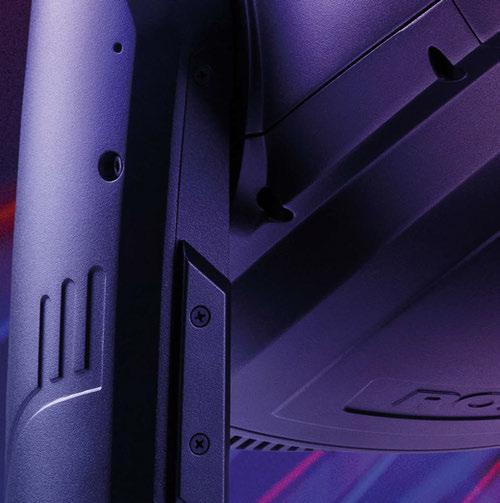

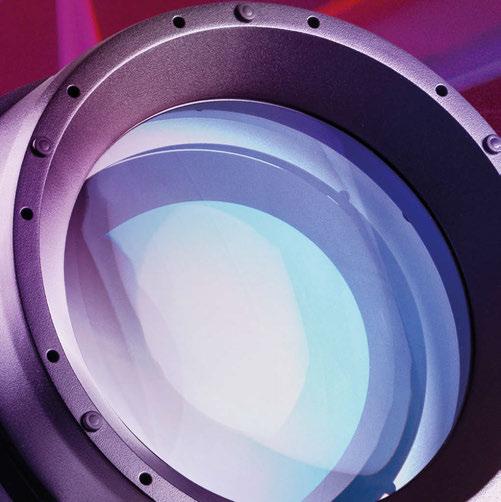
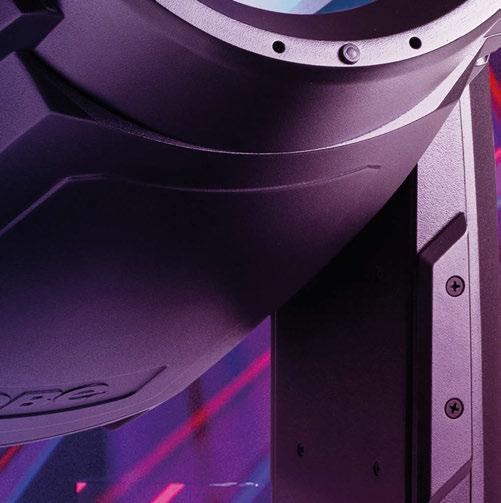
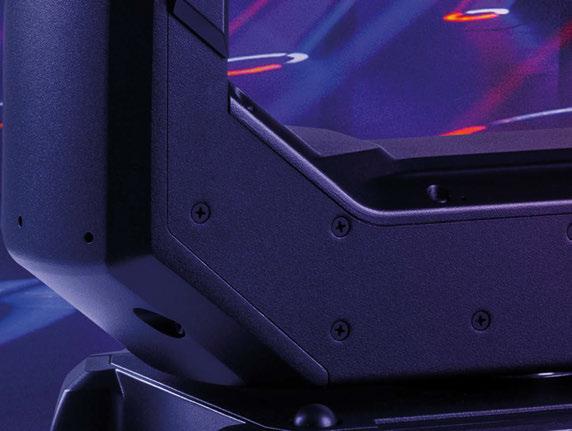



Extremely Compact Long-throw Powerhouse


easy to handle and well equipped
Your everyday go-to IP65 LED WashBeam, easy to handle and well



Morocco DGSN 70th Anniversary
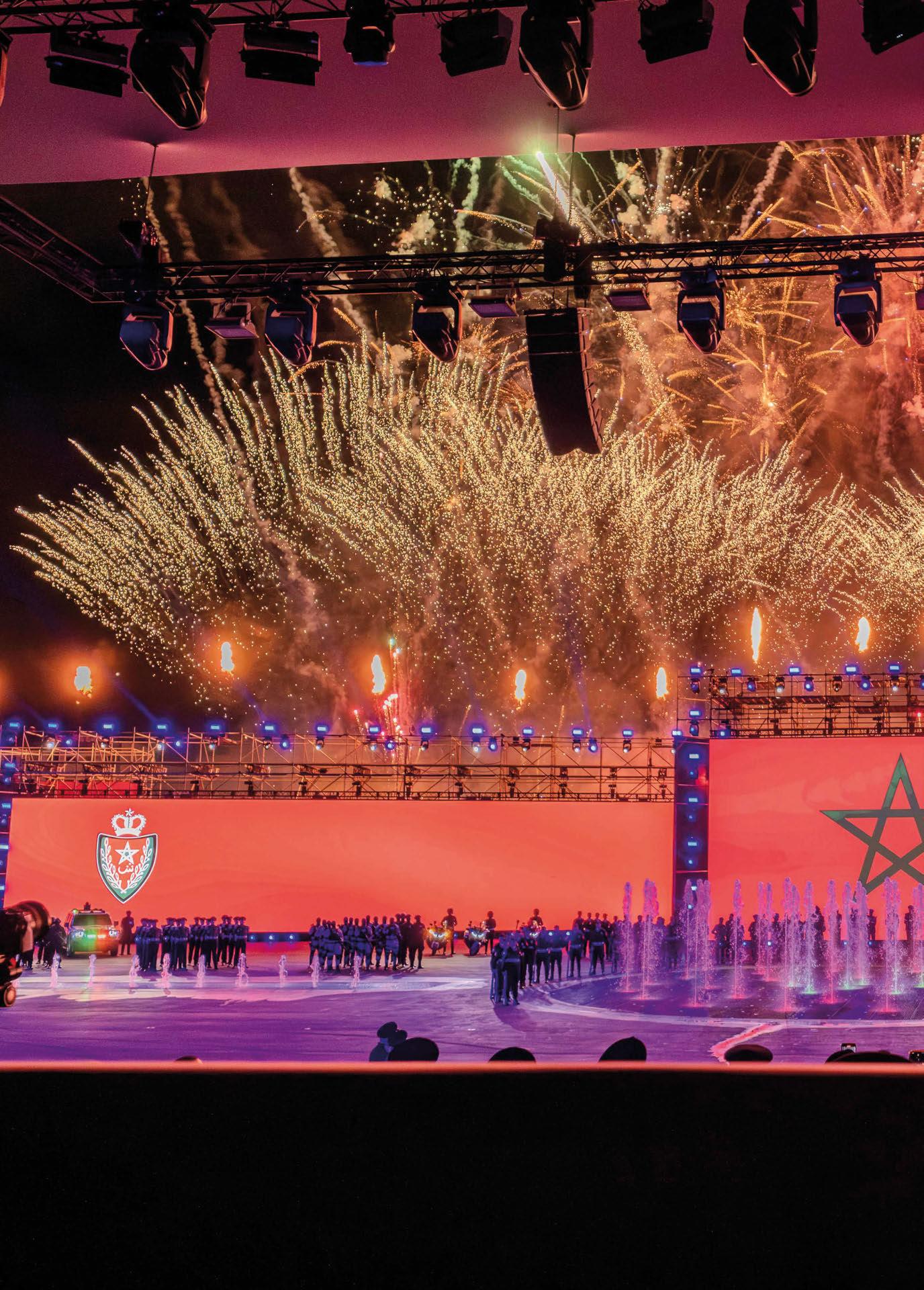
Delight Event Management delivers a large-scale ceremony in Rabat to celebrate 70 years of Morocco’s General Directorate of National Security.
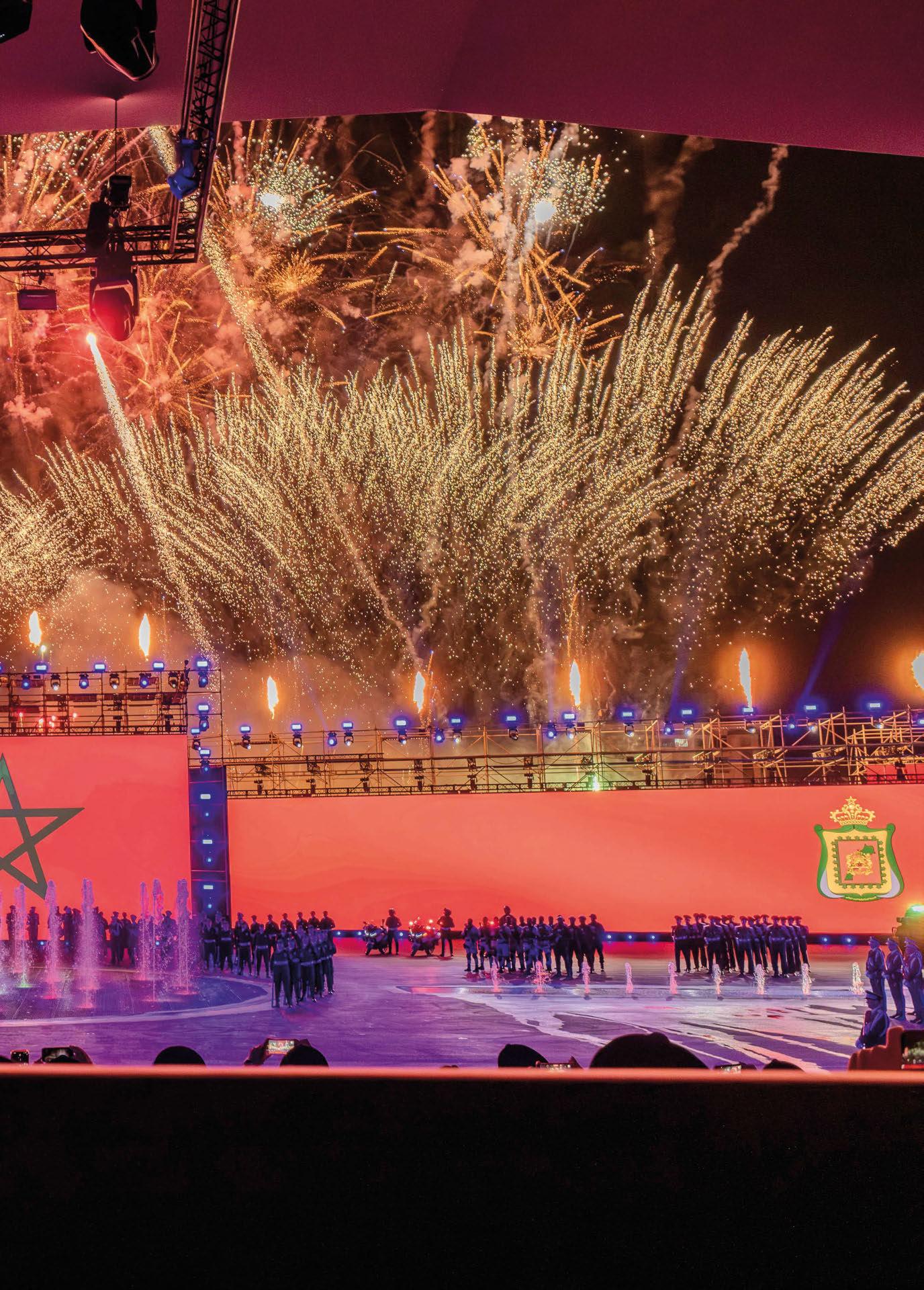
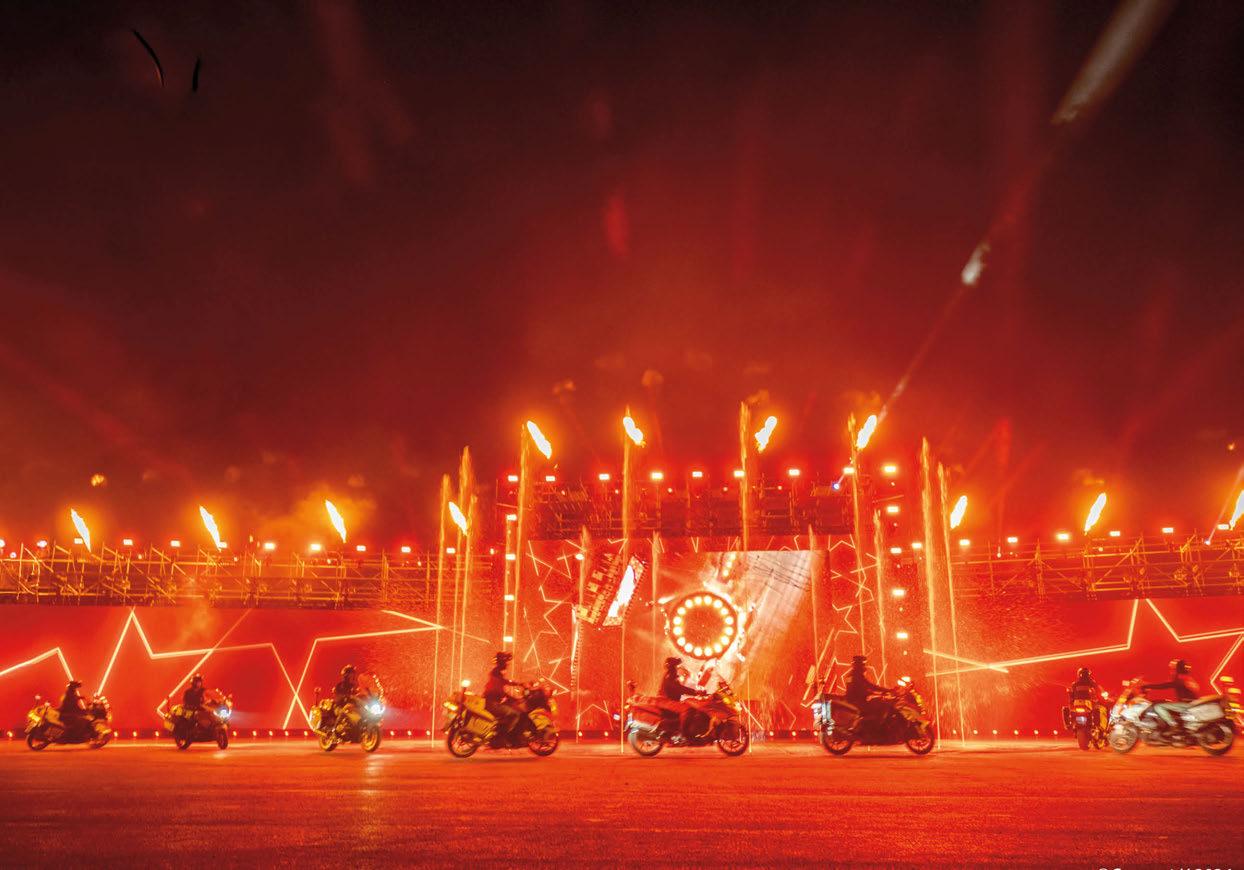
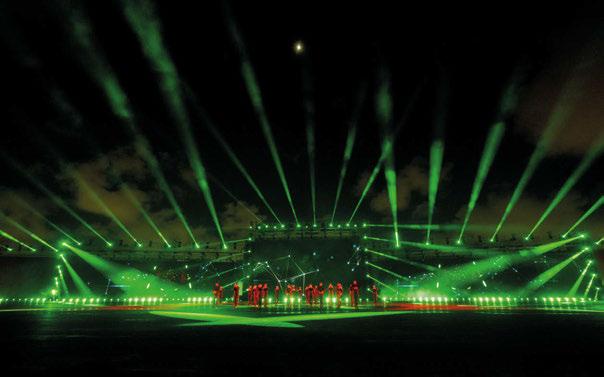
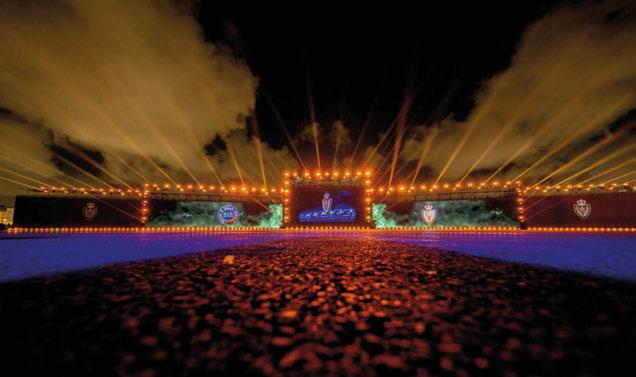
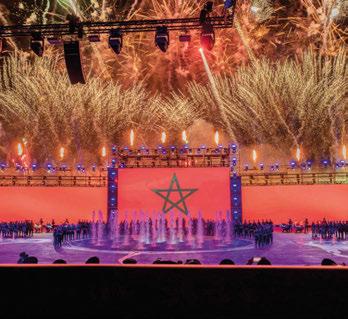
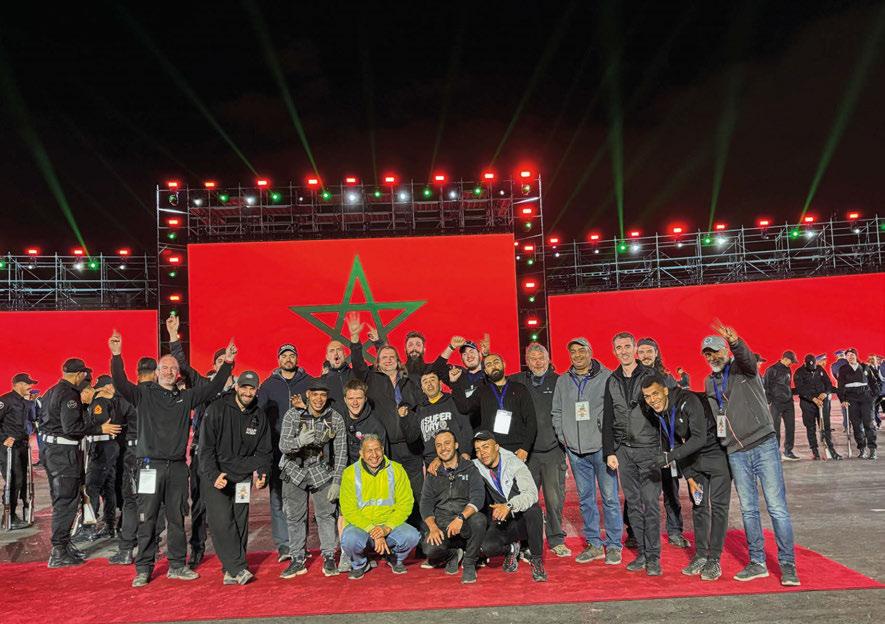
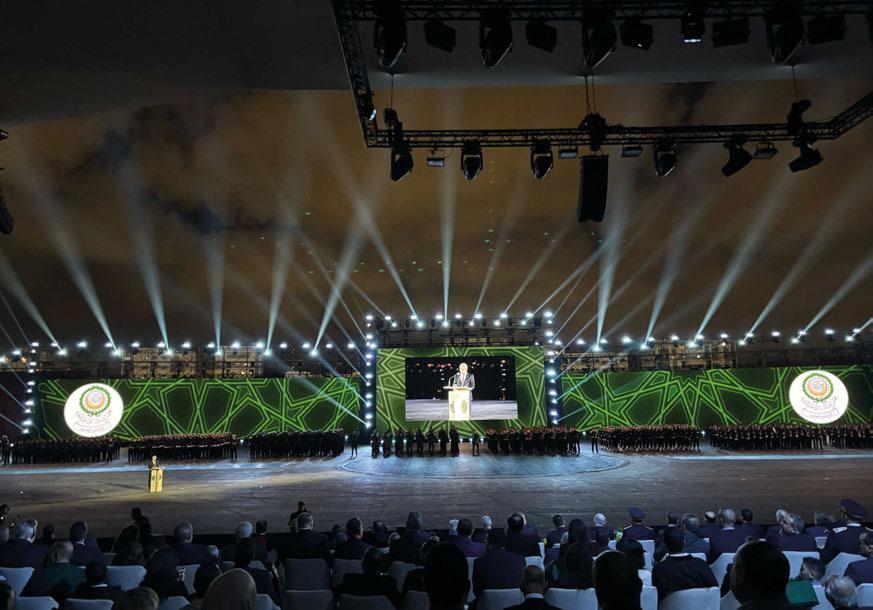
Morocco marked the 70th anniversary of its General Directorate of National Security (DGSN), with a massive outdoor event that combined the military precision of a traditional parade and the visual appeal of a high-level live production. With the event celebrating the country’s national police force, lead agency Delight Event Management once again turned to Concept K to produce a lighting design befitting the production, with Novelty supplying the extensive lighting package.
Le d by French lighting, set, and multimedia designer Frédéric ‘Aldo’ Fayard, the Concept K team collaborated closely with the project’s Artistic Director, Stéphane Thiodat of SC Production to create the lighting design.
Novelty – part of Groupe Novelty – also played a crucial role after being commissioned directly by Project Director Brice Jakubowicz of
Delight Event Management to develop a technical solution capable of meeting the ambitious artistic vision of the show.
“The first challenge was simply the scale,” explained Aldo, founder and Lead Designer at Concept K. “We had to illuminate an area equivalent to two football fields filled with people, vehicles, horses, and military equipment. At the same time, we needed to provide sufficient brightness for the thousands of VIP guests and meet the requirements of the broadcast team and their cameras. It was essential to highlight and enhance the police forces during this important 70th anniversary celebration.”
With a huge stage, six towers, and a large guest tent all needing to be integrated into the lighting and effects system to highlight the parade showcasing various DGSN squads, the lighting design became increasingly complex
as the project progressed. “During the creative process, the concept evolved and we adapted accordingly,” Aldo said. “As always, we had to work within budget restrictions and, thanks to our long-lasting collaboration with Stéphane, the process was very smooth and efficient.”
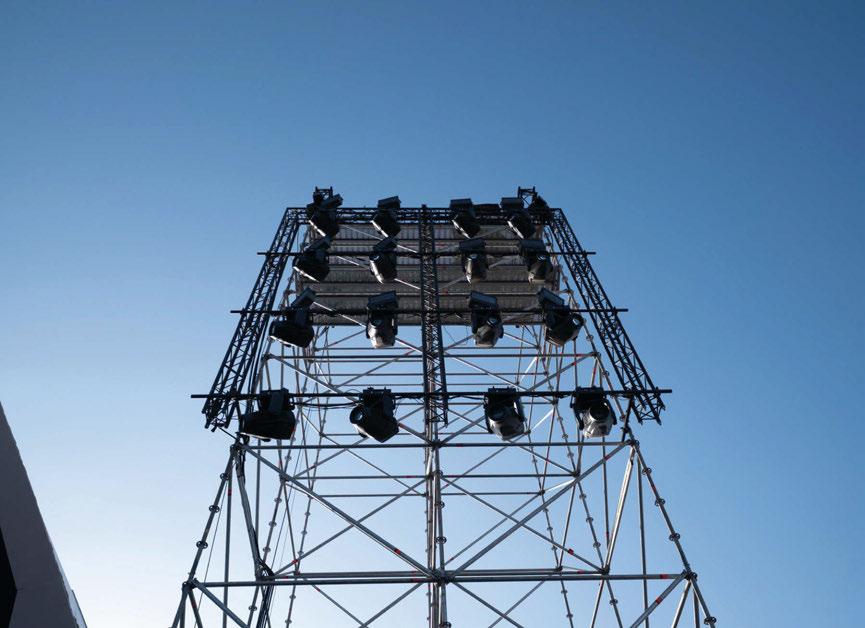
To support the creative vision, Concept K expanded upon the original scenic design, using the entire structure as a platform for lighting and laser integration. The incorporation of fountain effects into the setup, as well the fact that the show was staged outdoors on open ground adjacent to the ocean, meant that weatherproof fixtures were a necessity. “We needed fixtures that were completely dust-tight and waterproof,” Aldo explained.
Novelty’s Director of Business Development, Ben Mechta, also cited the operating environment as the project’s primary challenge.
“Installed on a vast outdoor site exposed to significant dust and high humidity, the lighting system also had to withstand potential adverse weather conditions, as this time of year can bring periods of heavy rain,” he noted. “To meet these demanding conditions, the lighting design naturally relied on IP65-rated fixtures, ensuring maximum reliability regardless of the weather.”
To this end, Novelty supplied an extensive lighting inventory including 180 Elation Proteus Maximus, 80 Proteus Hybrid and 160 Sōl I Blinder fixtures, as well as 160 SGM P-6, 30 Martin MAC Aura XIP, 80 Astera FP1 Titan Tubes, two Robert Juliat Cyrano Followspots, and six Look Solutions Viper NT Smoke Machines.
‘The outcome of a collective effort’ “For key and side lighting, we were looking for a very powerful fixture with narrow zoom capable of covering long distances,” Aldo described, explaining the selection of Elation Proteus Maximus. “Our conditions were demanding because the performance space covered approximately two football pitches. At the same time, for backlighting across the expansive performance area, we required a very wide beam angle to cover as much surface area as possible with a limited number of fixtures. Although it’s not the newest fixture on the market, it remains highly competitive compared to many more recent products,” he added.
The Proteus Hybrid fixtures complemented the design by providing versatile beam and spot effects throughout the production. “We’ve worked with the Proteus Hybrid many times before,” Aldo said. “Its IP65 rating and true hybrid functionality were its key criteria. There are very few fixtures capable of delivering both beam and spot performance while also offering the reliability needed for outdoor events.”
Concept K was among the first to use the Sōl I Blinder, thanks to Novelty’s early investment in France, and Aldo has been a fan of the multi-use blinder and effect light ever since. In this case, some 160 of the fixtures were used throughout the space for visual accents, rhythm cues, colour washes, and dynamic backlighting.
“It ’s lightweight, easy to rig, efficient, RGBLAW, offers a wide beam angle, carries an IP65 rating, and delivers exceptional value,” Aldo commented. “We used it for backlighting, effects, colour rendering of each sequence, and to reinforce the rhythm of the show. The Sōl I is a true multitool – we love it.”
Th e wider production team included: Technical Director, Philippe Pero; Head of Audio, Brieuc Bourgeois; Director of Photography, Theo Broche; Lighting Programmer, Kelian Sevrée; Laser Programmer, Santi Fernandez; and Fountain Programmer, Paul Simon; -Novelty Project Manager, Sylvain Ponte; and Site Manager, Benoit Fontenaille.
“The event went very well,” Aldo concluded. “A huge thank you to Stéphane Thiodat for his trust on this very special project, and many thanks as well to Delight Event Management. We were also very happy to work with the Novelty team, who provided full support from project preparation through on-site execution. A good result is always the outcome of a collective effort, and that was certainly the case here.”
Photos: Concept K, Novelty www.ckv2.com www.groupe-novelty.com
Jordan 80th Independence Day
TriTec AV deploys Jordan’s first d&b XSL system for the country’s 80th Independence Day celebration at Amman’s Al Husseiniya Palace.
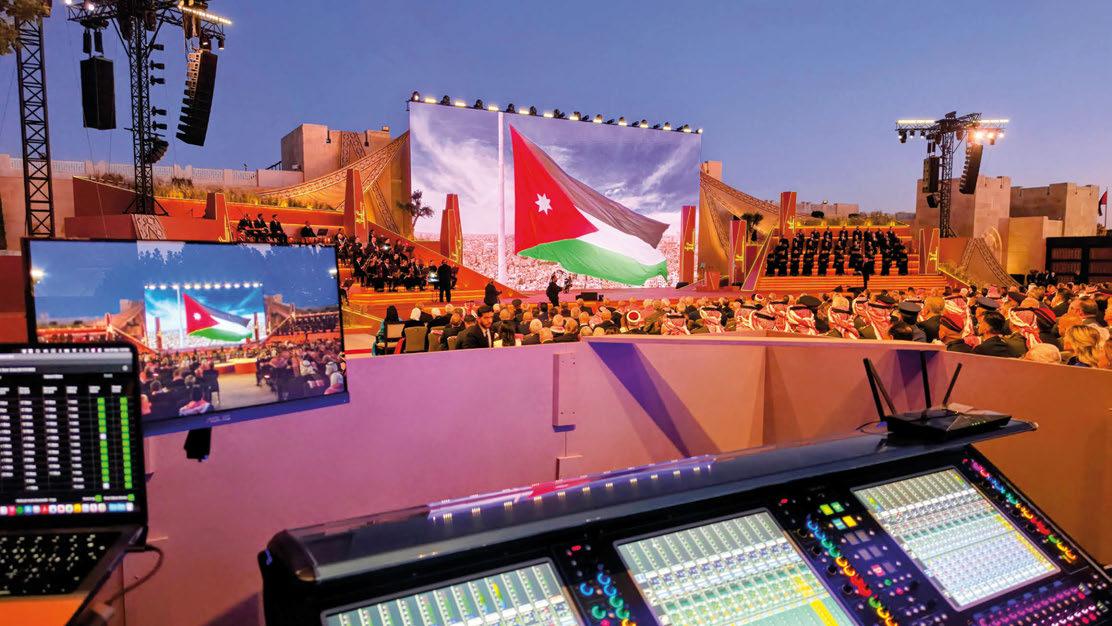
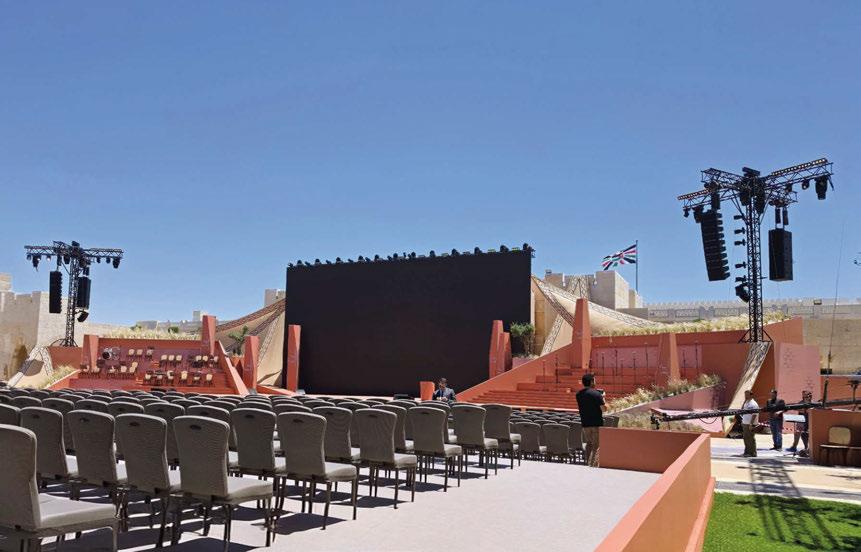
On 25 May 2026, Jordan celebrated the 80th anniversary of its independence from British rule. To mark the momentous occasion, a grand celebration was held at Al Husseiniya Palace in Amman, with a VIP audience including His Majesty King Abdullah II, Queen Rania and other high-ranking members of the royal family in attendance.
While the event was a chance for the entire country to mark its most important cultural celebration, it also served as a major milestone for Jordan’s live events industry, as event technology specialist TriTec AV deployed the country’s first ever d&b audiotechnik XSL system for the occasion.
“This was a proud moment for TriTec AV and for the Jordanian production industry,” said Marwan R Abujaber, CEO and owner at TriTec
AV. “Introducing the d&b XSL System to Jordan at such an important national event allowed us to demonstrate the system’s power, clarity, and control in a truly meaningful setting.”
With the ceremony featuring live orchestral music, choir performances, playback video elements and a keynote address from King Abdullah, TriTec AV was tasked with providing a turnkey technical solution, including audio, communications, video and lighting, that would stand up to challenge of marking the occasion of great national importance.
Th e lighting rig featured an array of Claypaky fixtures including Arolla Aqua LT, Mini-B and Tambora, with primary and secondary MA Lighting grandMA3 consoles used for control. With no roof on the stage, the TriTec AV team had to get creative with lighting positions. “We had to
install all our lighting around the venue, among the audience area and flown from the PA powers at the sides of the stage,” explained TriTec AV’s Najib Albakhit. “That was a bit of a challenge, but we were pleased with the result.”
The video setup meanwhile comprised Absen PL V2 2.9mm LED panels, with content powered by Dataton WATCHPAX 62 media servers running WATCHOUT 7. “There are often last-minute changes to video content, and our recent upgrade to WATCHOUT 7 means that these changes can happen with the least amount of disruption possible,” Albakhit added. “This was our first time using the system since the upgrade and it was very smooth and efficient.”
Wh en it came to audio, TriTec AV deployed a main system of d&b XSL hangs, with 10 XSL8 per side, supported by four flown XSL-SUBs
behind each main array. The front row and centre audience areas were covered by XSL12. The main system was complemented with T-Series loudspeakers in line array format as side fills and powered by D80 amplifiers, with signal distribution via Dante.
With the audio system needing to deliver exceptional speech intelligibility, musical clarity, consistent audience coverage and high gainbefore-feedback, Albakhit and the rest of the TriTec AV audio team were keen to see what their new XSL system could offer – and they weren’t disappointed. “The moment the music started playing, we were all blown away by the quality and the balance of the system,” he stated, noting that d&b ArrayProcessing was used to ensure consistent sound distribution, tonal balance, highfrequency coverage and headroom across the entire audience space.
TriTec AV owner Abujaber was also delighted with the performance of the system. “The cardioid performance made a major difference on stage, especially with the orchestra and choir,” he added. “The system delivered the speech intelligibility and musical quality required for an event of this importance.”
Monitors were a combination of six d&b M2 loudspeakers deployed across the stage to assist
solo singers and centre-stage dancers as well as a Shure PSM 1000 Wireless system for in-ears. DiGiCo Quantum 338 consoles were used for control, while a Riedel Bolero wireless system handled communications.
Brad Maiden, General Manager for d&b Middle East, added his thoughts on the XSL’s Jordanian debut. “It’s great to see TriTec AV putting their new XSL System to such a
prestigious first use,” he remarked. “TriTec AV has been a valued partner of ours for many years and their passion for audio is as infectious as our own. We’re delighted to see them expand their inventory and we look forward to them delivering many more events such as this.”
Photos: TriTec AV www.tritecav.com www.dbaudio.com
Mediatech Africa 2026
As South Africa’s biggest trade show for the live events, AV and broadcast sectors returns following a seven-year hiatus, TPiMEA is on-site at Johannesburg’s Kyalami Grand Prix Circuit And International Convention Centre for the much-anticipated comeback of Mediatech Africa.
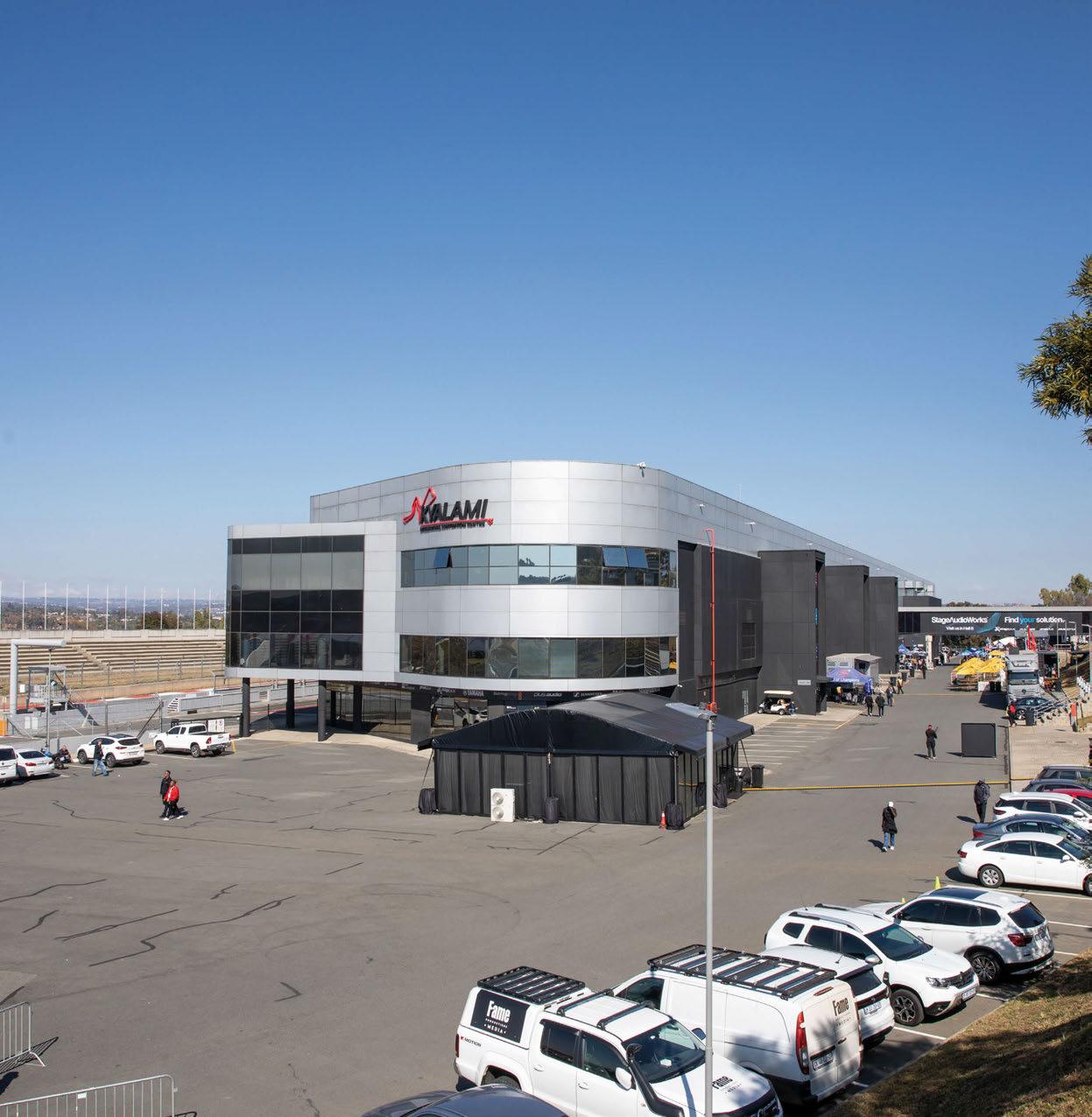
Held over three days from 30 June to 2 July, this year’s Mediatech Africa saw a huge return to form for the popular tradeshow.
With the previous Mediatech Africa having taken place in 2019, it’s been a long wait for South Africa’s live events, AV and broadcast sectors to get a local show of their own. And while final visitor numbers weren’t available at the time of writing, the show floor seemed busy throughout each of the three days, with a range of visitors primarily from South Africa but also from elsewhere on the continent ensuring that the atmosphere in the halls remained lively throughout the duration of the show.
This was the first time the show had taken place at Kyalami Grand Prix Circuit And
International Convention Centre, and it worked well as a venue, despite some limitations in terms of roof height, load bearing and the size of some of the halls limiting what was possible in terms of production levels.
That said, the organisers’ decision to create distinct zones within the show proved to be a smart one, with the more boisterous live events technology exhibitors grouped together on one side of the venue and the typically quieter corporate AV exhibitors benefitting from a much more formal atmosphere on the other.
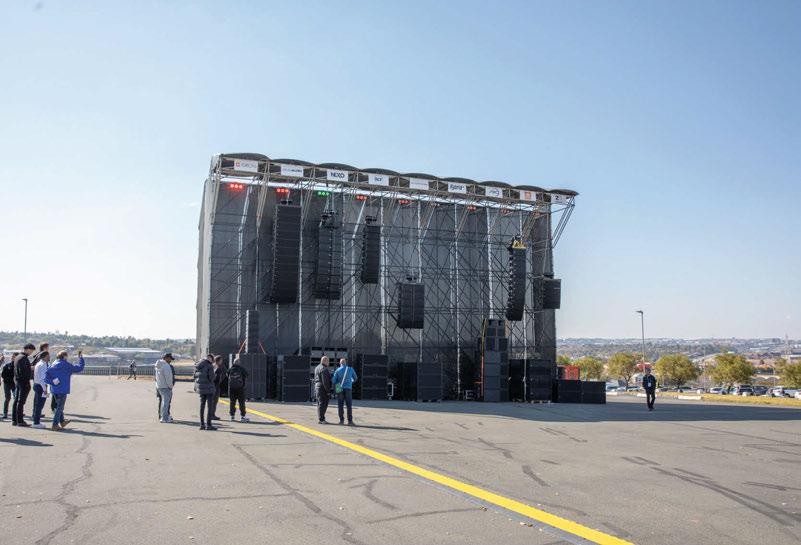
Th e show also featured several outdoor areas, with an audio demo area, which was kitted out with a DiGiCo Quantum 225DS courtesy of DWR Distribution that was used to feed signal to
all the demo systems on show, including Celto, Plus Audio, Nexo, RCF, AudioCenter, Hybrid+, Arc, and Myth Audio.
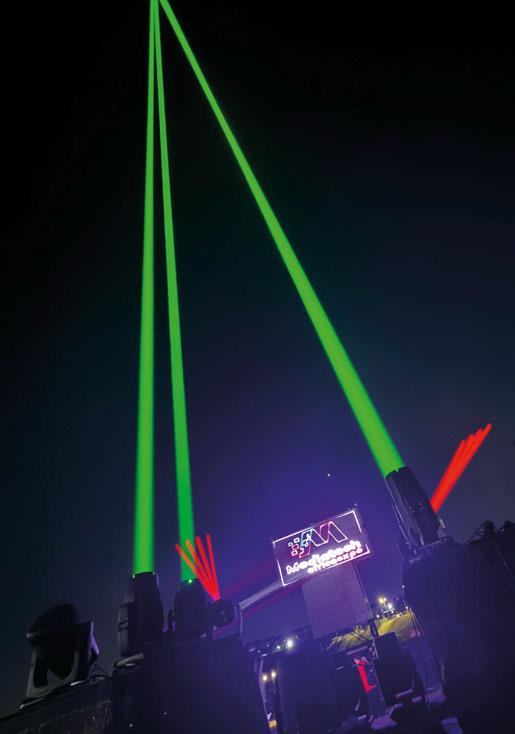
Th ere was also an outdoor performance stage, which was supplied and operated by Gearhouse and, after dark, Behind The Volt provided its South Africa-based KVANT Prestige Beam 600s for the KVANT Lasers showcase.
Re gional distributors were out in force, with the likes of BC Electronics, Electrosonic, Planetworld, Prosound, Stage One and several others taking large stands in which international brand representatives were hosted along with members of their in-house teams.
Stage Audio Works (SAW) and DWR Distribution took it one step further, with both
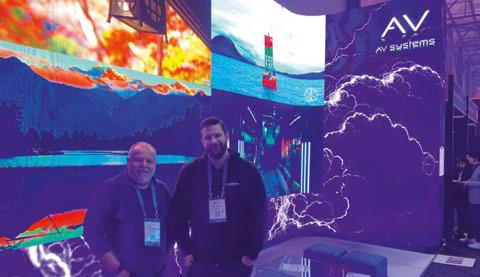
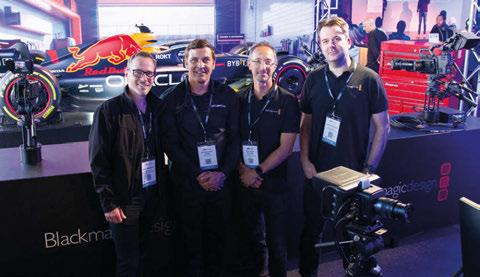
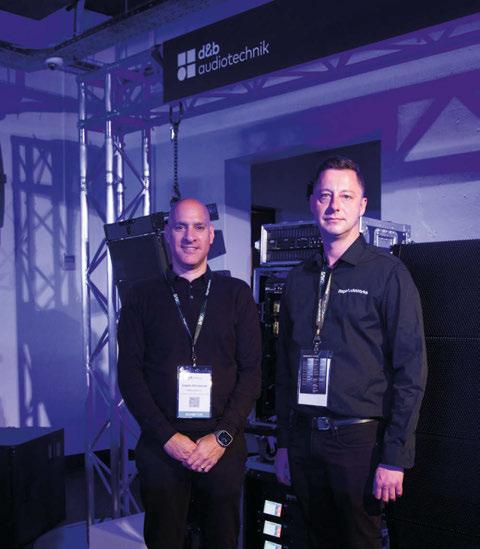
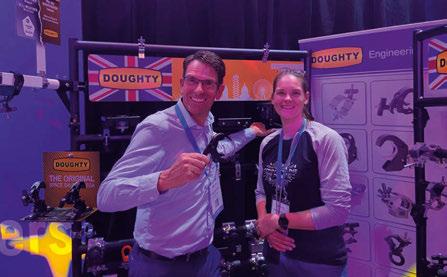
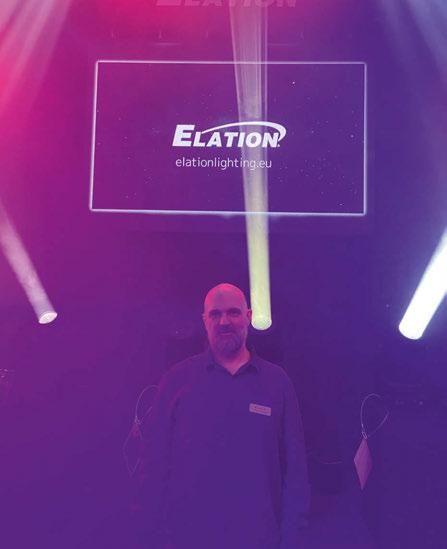
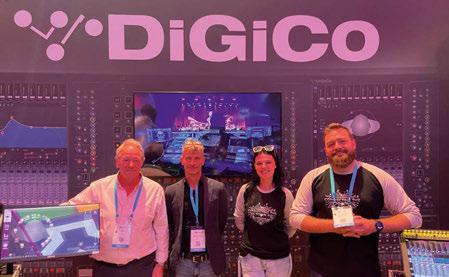
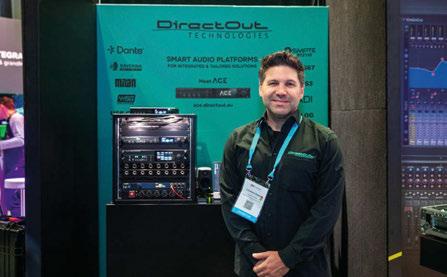
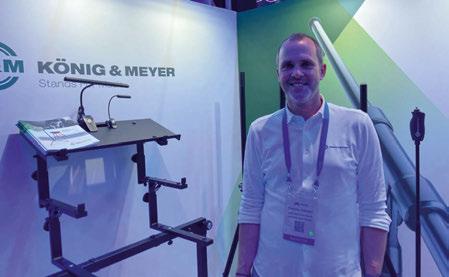
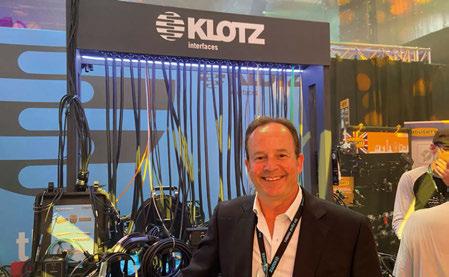
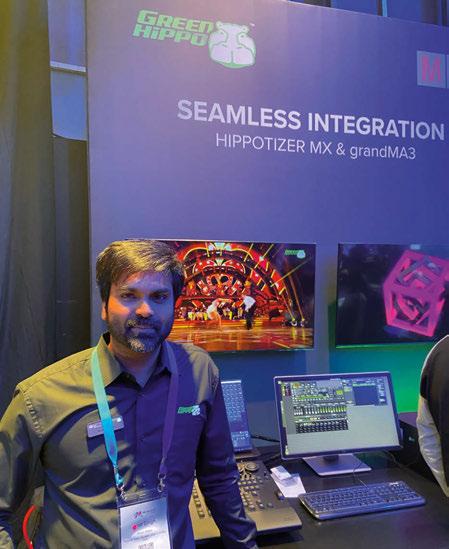
Above: (left-right, top-bottom): AV Systems’ Alvaro Rodrigues and Francois Classe; the Claypaky team; the DiGiCo team; Blackmagic‘s Chris Waddington, Michele De Bendetti and James Townsend with SAW’s Earl Devereux-Quicke; Doughty Engineering’s Julian Chiverton with DWR’s Kristy Hartnady; Ofer Lapid and Nasser Abbas of Gearhouse; d&b’s Gianni Abruzzese with SAW’s Gustav Barnard; Elation Professional’s Jonas Stenvinkel; DirectOut’s Lorenzo Sassi; Christian Kämmer of König & Meyer; Green Hippo’s Amit Singh; Frederic Kromberg of Klotz; the Planetworld team.
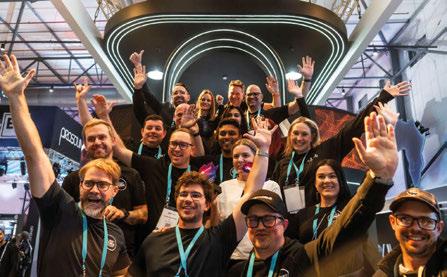
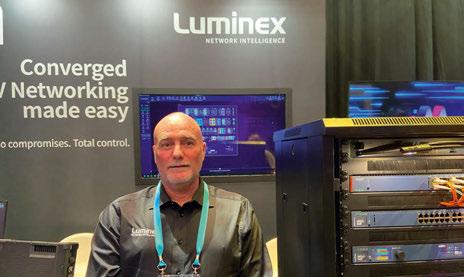
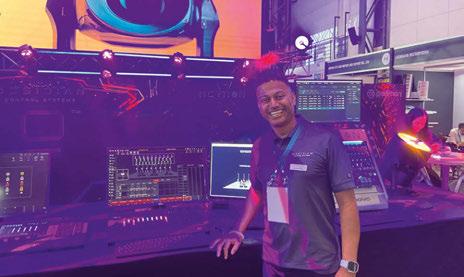
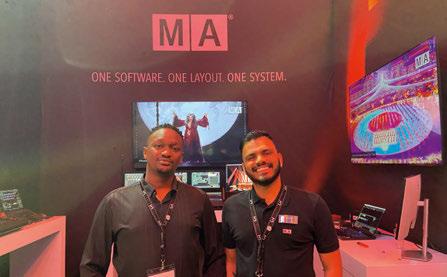
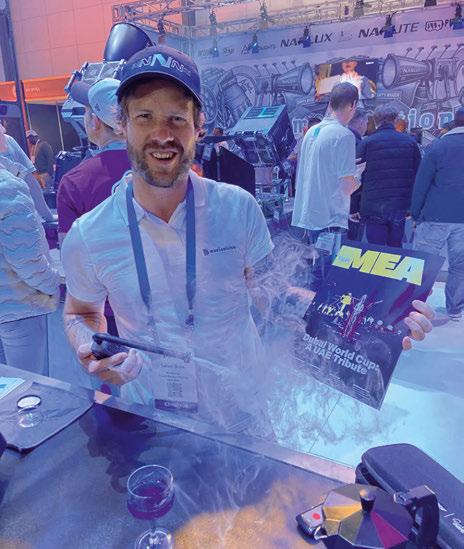
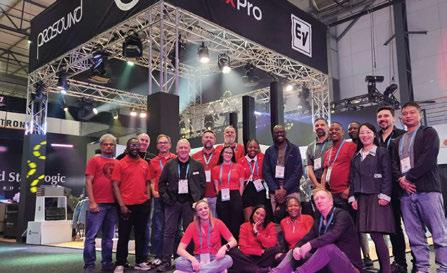
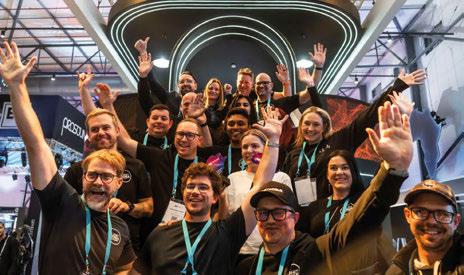
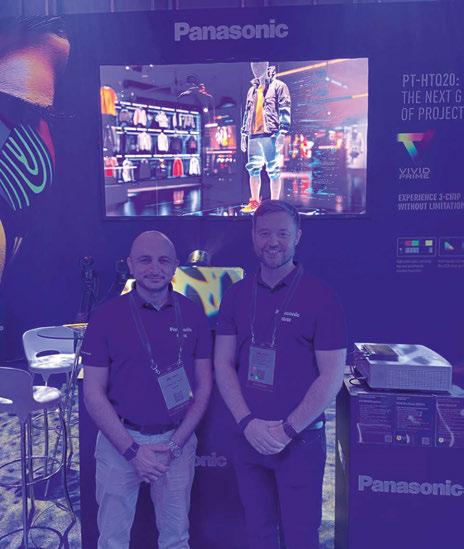
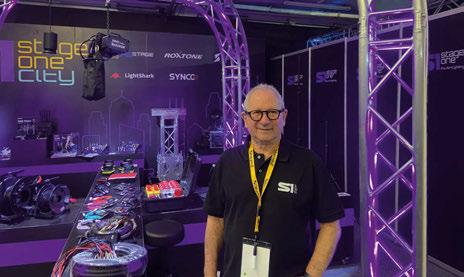
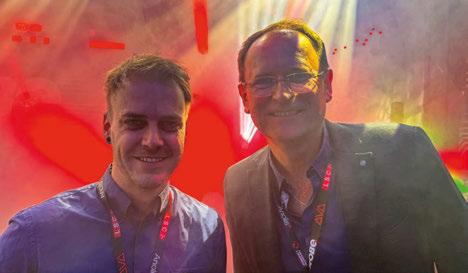
Above (left-right, top-bottom): Gerald Delen of Luminex; Ken Kibiru and Hemanth Rao of MA Lighting; Movievision’s Tehan Buys; Koy Nemanthian of Obsidian Control Systems; DWR’s Shae Webb and Loice Mpofu; Francois Yadi and Tony Molloy of Panasonic; the Prosound team; the BC Electronics and Celto audio teams; Kris Hill of Theatrixx Technologies; Liam van Vuuren and Mandy Thomas of ShowTex; Stage One’s Peter Berry; Robe’s Tomáš Kohout and Jozof Valchar; Grant Bales-Smith of Vari-Lite.
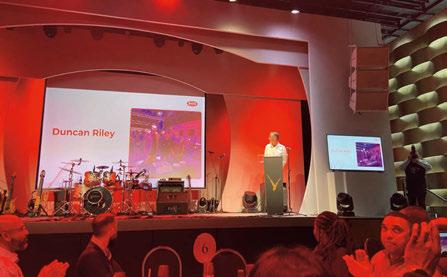
Right (left-right, top-bottom): The DWR distribution team and suppliers; Behind The Volt provided its South Africa-based KVANT Prestige Beam 600’s for the KVANT Lasers showcase; Chris Mead and Mehdi Khelil of L-Acoustics; DWR’s Duncan Riley talking at the SOS Charity Auction; the outdoor audio demo.
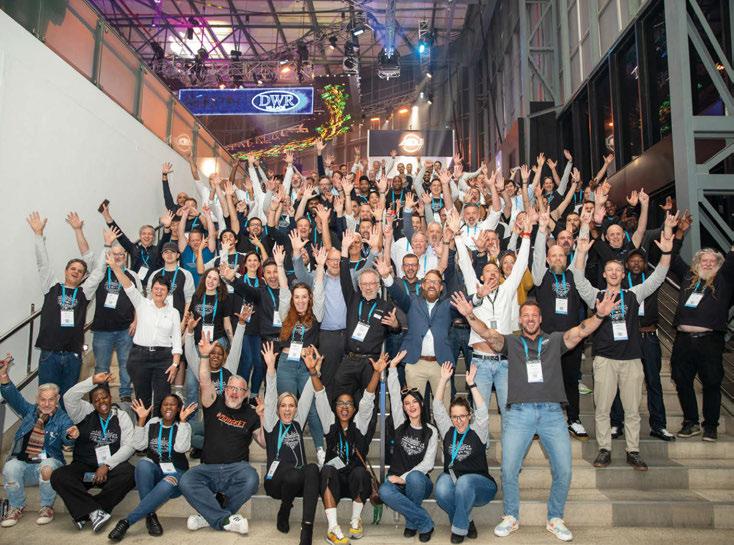
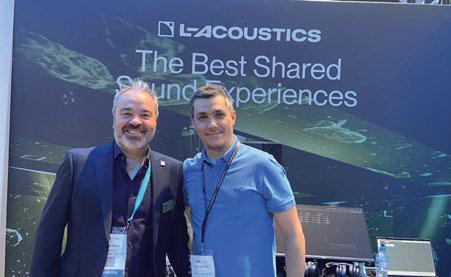
making a major splash by taking over their own respective halls at either end of the venue. SAW used its space to host daily morning coffee and evening drinks receptions as well as regular educational talks from the likes of d&b audiotechnik’s Steve Jones and many others.
On the other hand, DWR Village was the largest area of the tradeshow, with Gearhouse, MGG, Pure Event Gear, Dream Sets, Sets Drapes Screens, Pure Event Gear, FogTech, Stage Effects, AJT Creative, and AV Unlimited all contributing their services to bring the space to life.
As well as 32 of DWR’s suppliers each hosting their own stand, the DWR Village also
included a performance area featuring a show, Tungsten & Diode, that ran three times a day.
DW R also made the most of the influx of visitors to South Africa generated by Mediatech by hosting its SOS Fundraising Dinner & Auction. Held at The Venue, Melrose Arch, the evening drew a packed house, which was treated to the comedic stylings of Aaron McIlroy, who hosted the auction in aid of the much-deserving SOS charity, which was established 10 years ago to support members of the events industry during unexpected hardships.
Af ter an incredibly successful comeback edition, it’s fair to say that Mediatech Africa 2026
more than lived up to expectations. “Our first show was in 2001 at the Sandton Convention Centre,” commented Expo Director Simon Robinson, recalling the long history of the event. “It was small, focussed mostly on broadcast. We never imagined that our little show at the southern tip of Africa would become something the industry talks about globally. That’s what makes this return so exciting.”
Me diatech Africa is set to return to Johannesburg in 2028, with an exact date and location still to be announced.
Photos: Chris Duys, DWR Distribution, TPiMEA www.mediatech.co.za
Roshn Saudi Pro League Closing Ceremony 2026
As the Saudi Arabian title race goes down to the wire, for the second year in a row, entourage produces two closing ceremonies (only one of which could ever see the light of day) to ensure that there’s a spectacular crowning moment, whatever the result.
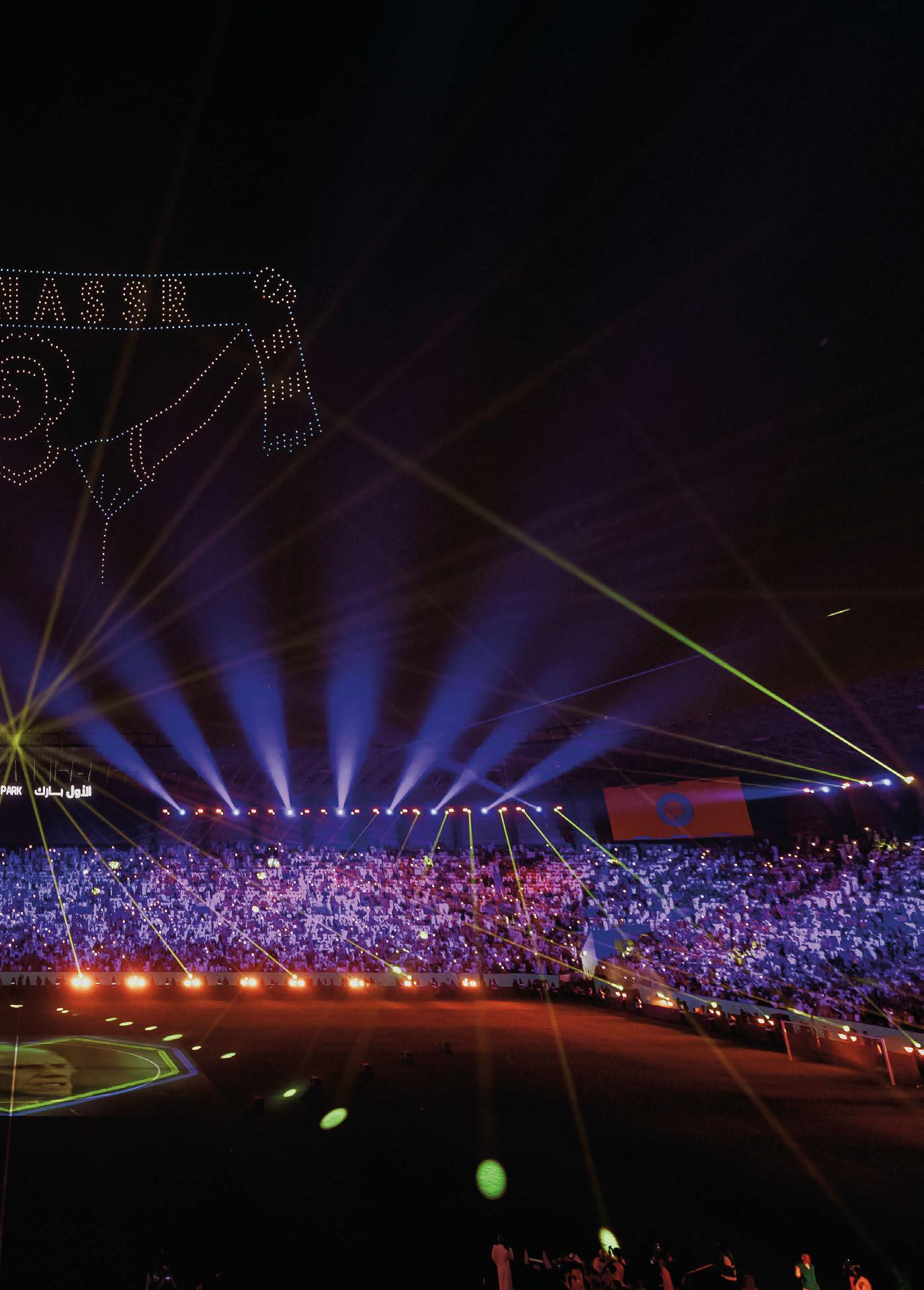
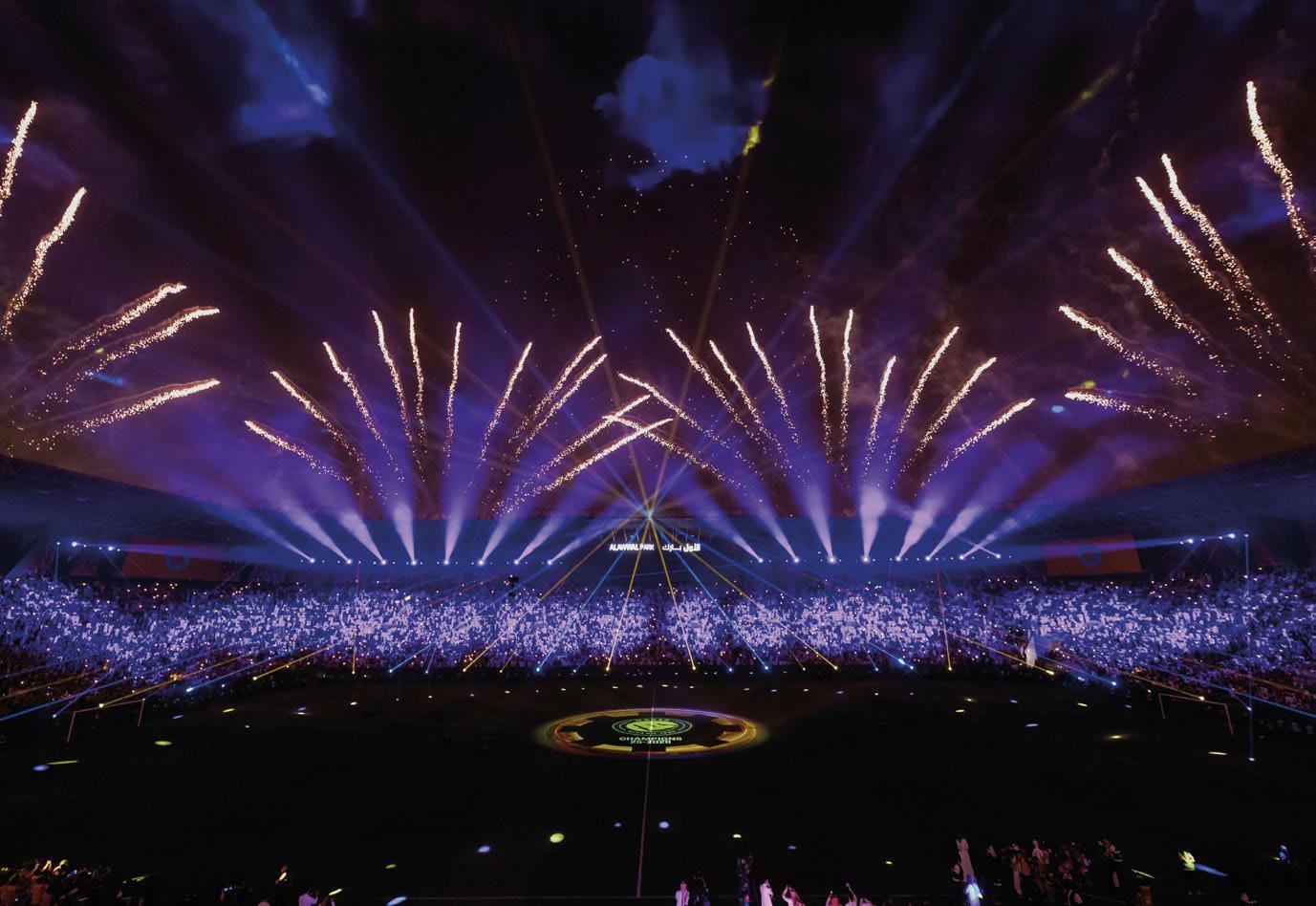
There are plenty of unknowns in the world of live events, with everything from inclement weather or unexpected VIP attendance to transport issues and equipment failure all considered run-of-the-mill challenges to the seasoned live events professional. In normal circumstances, one of the few factors that can be safely set in stone is where the event will take place. However, in the case of the Roshn Saudi League (RSL) Closing Ceremony, even this was left uncertain until just moments before the show was due to start.
“Projects of this scale are normally planned around fixed dates, venues and schedules that are confirmed weeks or even months in advance. This was the exception,” explained Executive Artistic Producer, Jean Marc Chandoo of entourage, which was tasked by the Saudi Ministry of Sport with producing the event.
“The moment we would go live – and where –depended entirely on the outcome of matches that were completely out of our hands.”
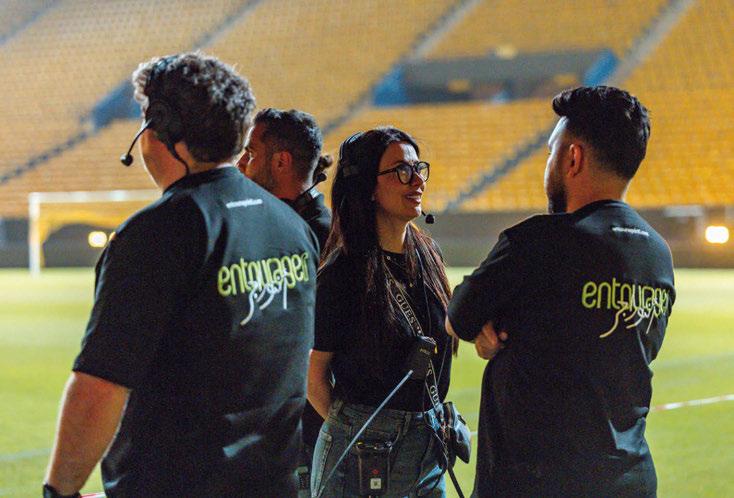
With several teams still in contention for the RSL title, entourage assembled and led a team of
specialist partners – including SLS Production, Groupe F and others – developing a flexible creative framework that celebrated the journey to the championship while allowing the final narrative, visuals and club identity to be tailored to the eventual winner.
“The focus was always on creating an emotionally engaging experience that would resonate with fans while showcasing the latest in event technology,” Chandoo said. “The focus was always on creating an emotionally engaging experience that would resonate with fans while showcasing the latest in event technology.”
As the season reached its final weeks, the title race tightened significantly. Going into the final matchday, local rivals Al Nassr and Al Hilal were both still in contention, with their matches taking place simultaneously in the same city, around 90 minutes’ drive away from each other.
So, just a week out from show day, the decision was made to develop an additional production at a second stadium. “It became clear that we needed to prepare for more than one possible outcome,” recalled entourage’s
Technical Director, Nick Toll. “We had to ensure that we were fully prepared regardless of which club secured the championship.”
This meant while the project from Al Nasser’s match at Al Awwal Park was at an advanced stage, a second on-ground production team was stood-up at the venue for Al Hilal’s match at Al Majma’a Sport City Stadium, with additional specialist suppliers engaged, ensuring all technical elements were ready to be deployed at either venue.
“The key to overcoming this challenge was meticulous planning, strong collaboration across all stakeholders, and the ability to scale resources without compromising quality,” stated Toll. “By preparing for every possible scenario, we were able to execute the winning ceremony seamlessly the moment the championship was decided, despite the uncertainty that existed until the final whistle.”
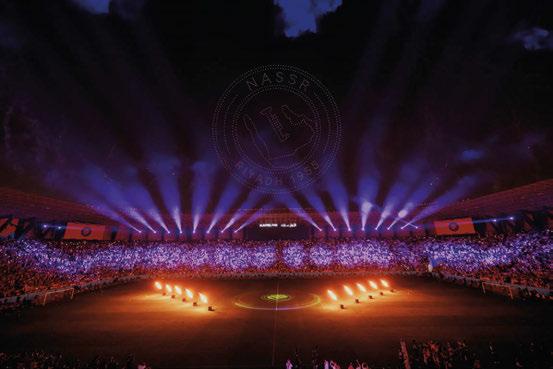
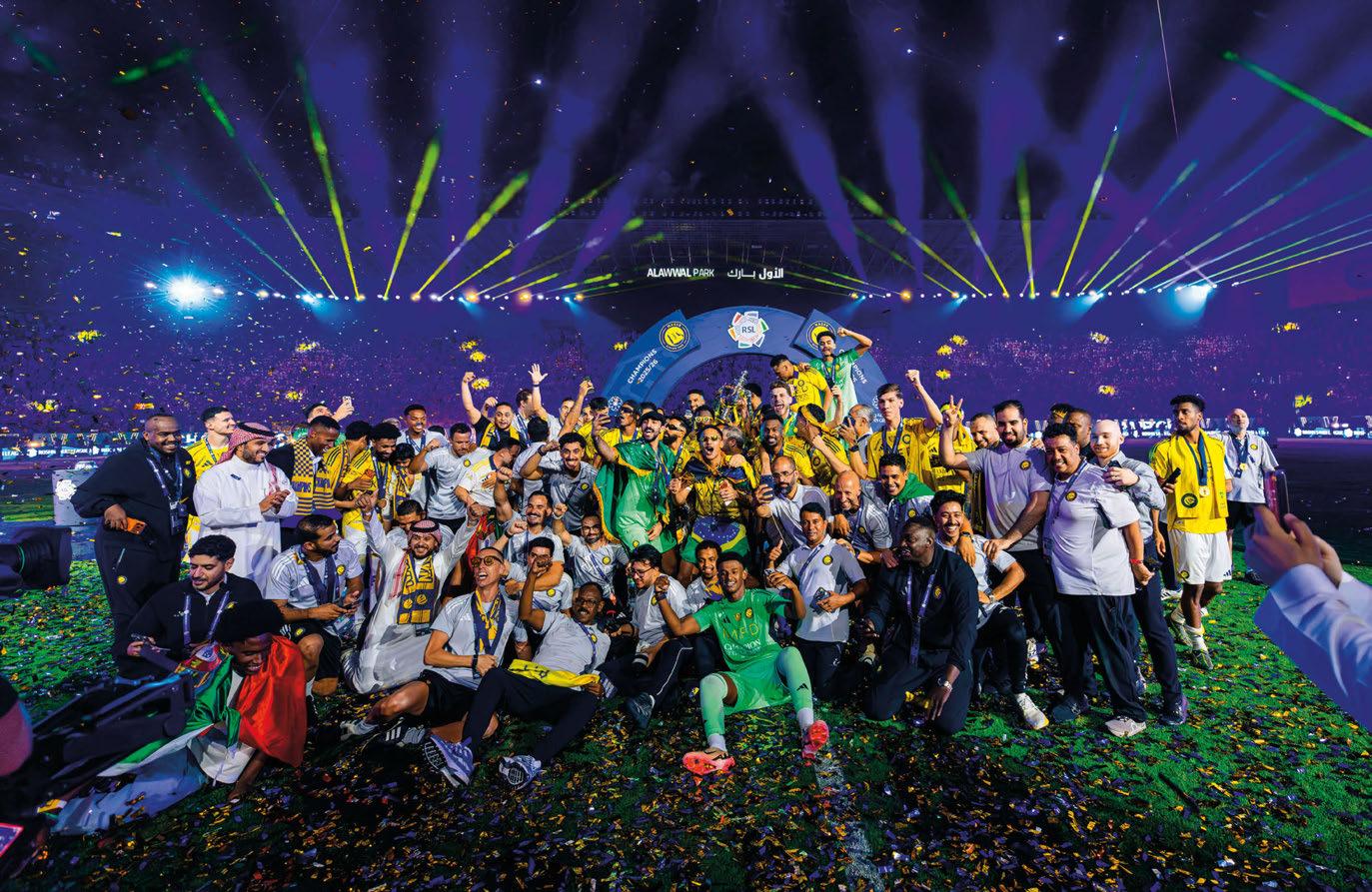
With Al Nasser eventually triumphing in their match, confirming their first RSL victory since 2019, the original planned show was the one that took place. However, according to Toll, he would
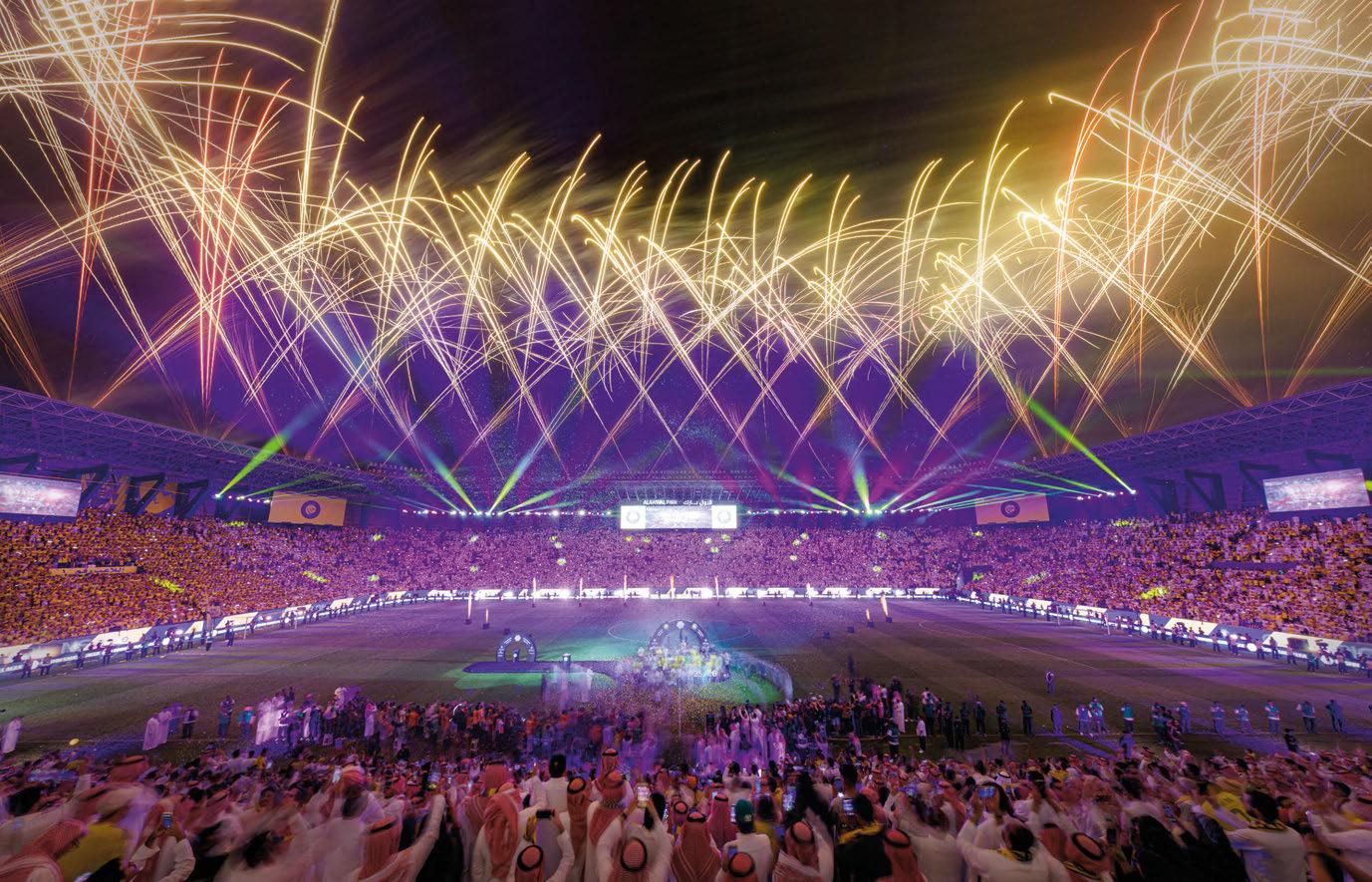
have been happy with either scenario. “Seeing it all come together on the final whistle was the most satisfying part,” he commented.
‘The emotional crescendo of the season’ Winding the clocks back to the early planning stages of the project, Bana Homad, Senior Account Manager at entourage, looked back on the challenging brief: “The main aim of the RSL Closing Ceremony was to create a powerful season finale – a moment that celebrated not only the league winners, but the fans, the clubs, and the growing global energy around Saudi football,” she explained.
“This was more than a closing show; it was the emotional crescendo of the season,” she added. “With 26,000 people watching live in the stadium and thousands more following the broadcast around the world, the ceremony had to work on
two levels – it needed to feel spectacular and immersive for the audience in the venue, while also delivering a polished, cinematic experience for viewers watching remotely.”
De spite entourage also being entrusted with last year’s RSL Closing Ceremony in Jeddah, according to Chandoo, the pressure and expectation were even higher this season, with Al Nassr’s high-profile players such as Cristiano Ronaldo and Sadio Mané bringing a heightened level of international interest.
“The trust from the Saudi Ministry of Sport came with great responsibility; it pushed our creative, technical, and production teams to think bigger, deeper, and more strategically about how we could transform two five-minute shows into a powerful celebration and spectacle,” he stated.
“The creative approach had to match the scale of the moment. We wanted to build a show that
felt premium, emotional, and contemporary; a celebration worthy of the players on the pitch, the passion in the stands, and the millions of fans connected to the league globally.”
From a show direction perspective, the entourage team’s goal was “to combine multimedia, music, lighting, staging, and live ceremony moments into one seamless narrative”. Chandoo added: “Every element had to support the story of victory, pride, and celebration, while maintaining the energy and pace expected from a major live sports entertainment production. Ultimately, the project was about honouring the champions, elevating the fan experience, and presenting the RSL as a world-class sporting and entertainment platform.”
Th e Artistic Producer delved into his inspiration for the show, which he says was driven by the ambition of the Saudi Ministry of

Scale
End-to-end
Asset-backed
Sport to “continually raise the benchmark” for live sports entertainment in the Kingdom.
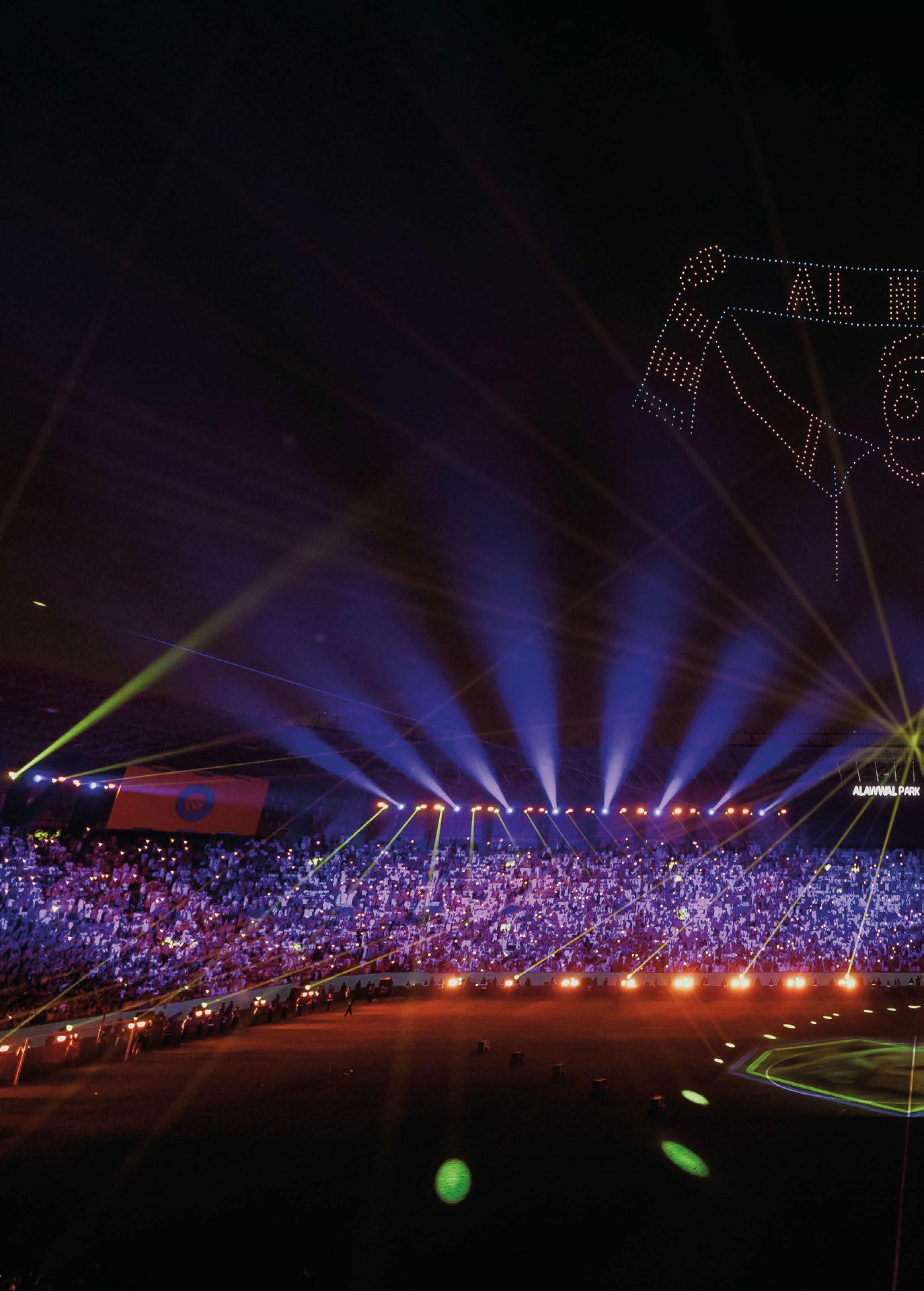
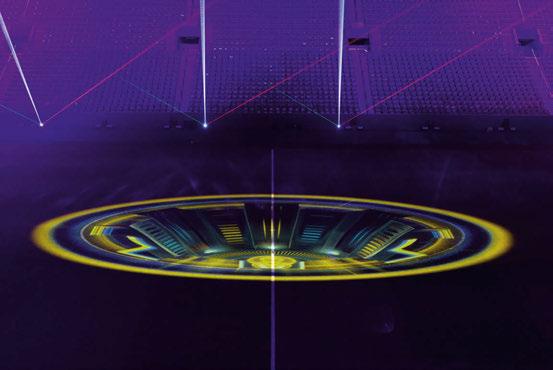
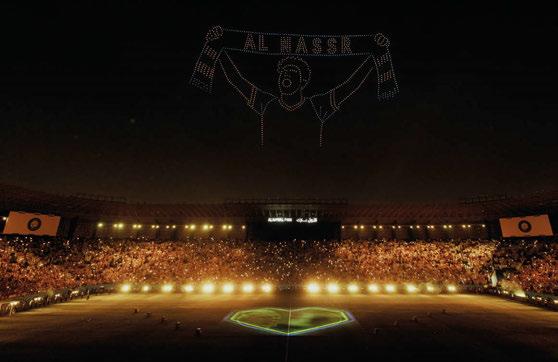
“The central narrative, approved by the client, was built around the theme ‘Laylat Al Nasr’ (Night of Victory),” Chandoo commented. “This became the creative heartbeat of the ceremony. It connected directly to the identity of the winning club, the passion of its fans, the energy of the stadium, the field of play, and even the sky above us as a live canvas.”
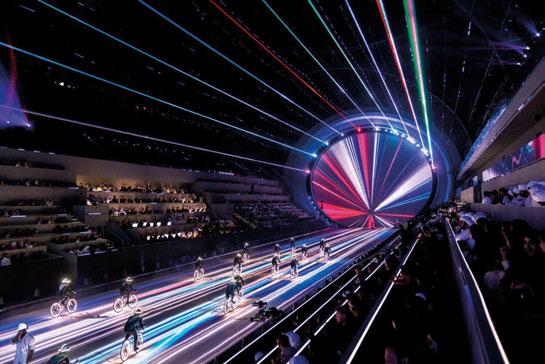
Chandoo wanted the show to feel “immersive and cinematic”, with the audience feeling like they were part of the production. “The creative direction was designed as a journey of exhilaration, building layer by layer through music, visuals, light, fire, lasers, drones, and fireworks,” he stated. “Every element had to serve the emotional arc of victory.”
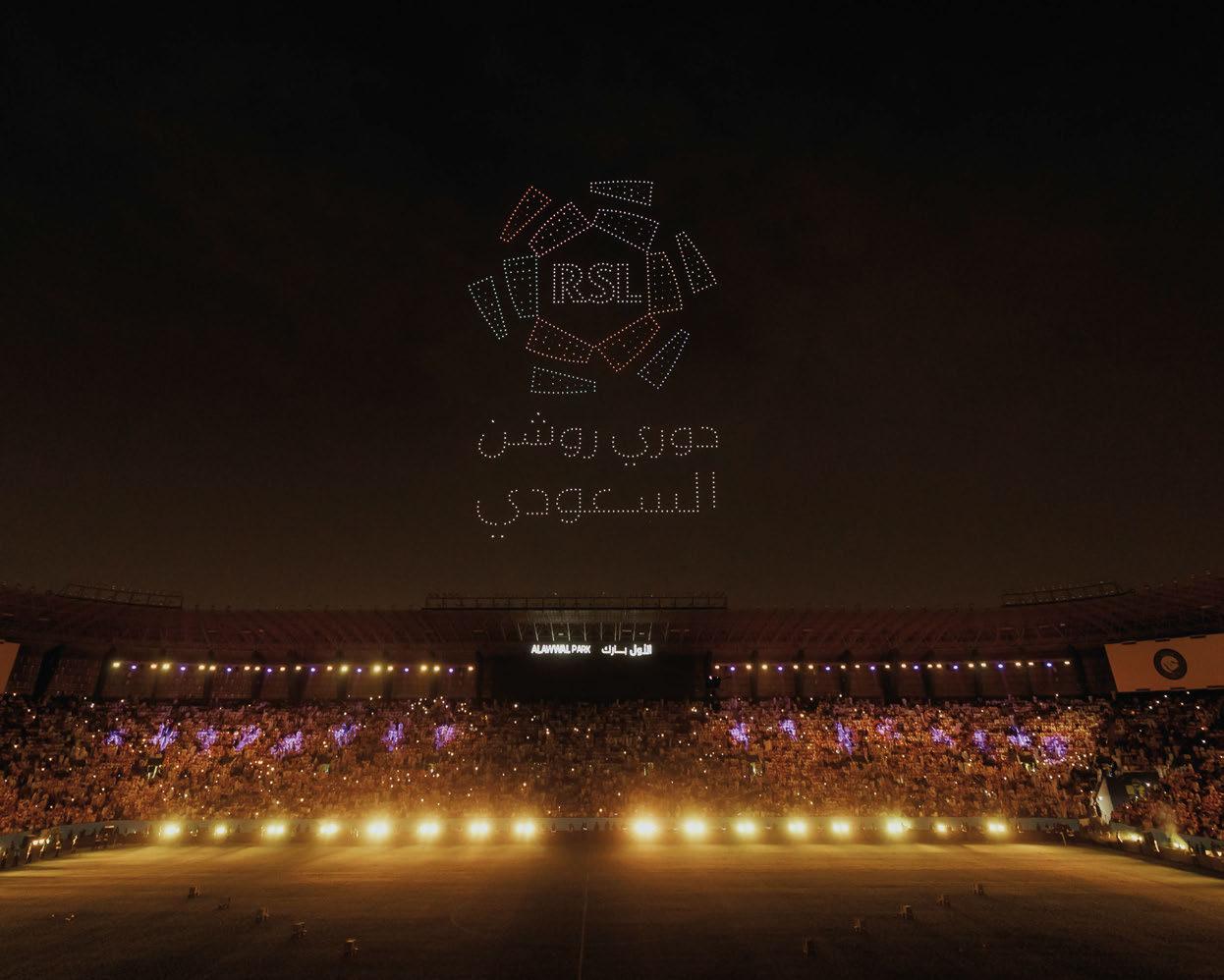
Te chnology was not used simply for impact; it was used as a storytelling tool throughout. “Video mapping projection transformed the field, lighting beams created scale and movement, flames and stage effects added intensity, lasers sharpened the atmosphere and interaction with the projection mapping, thousands of drones extended the story into the sky, and the three layers of fireworks punctuated the show’s key moments and the final sense of triumph,” Chandoo described.
‘Unique creative and technical challenges’ Brought onboard by entourage from the early stages of the project, Alex Douglas was charged with creating a full lighting design scope to support Chandoo’s overall creative vision, working under the technical direction of Toll.
Re counting the “unforgettable experience”, Douglas shared his impressions of the project with TPiMEA: “This was my first time working with Jean Marc Chandoo and under the technical direction of Nick Toll, and it was a real pleasure,” he commented. “Large-scale stadium ceremonies always bring unique creative and technical challenges, but seeing the entire venue come alive for such a significant sporting occasion made it incredibly rewarding.”
With an extensive lighting inventory to choose from courtesy of entourage’s appointed turnkey technical supplier for the project, SLS Production, the Lighting Designer called upon Alexander Kotov, who aided in the drawing process.
“We developed multiple iterations of the design to overcome the venue’s rigging limitations while still delivering stadium-scale impact,” Douglas explained.
“While we originally planned on a perimeter truss, due to space considerations, we eventually settled on a series of 1.2m totems, which allowed the strobe and beam fixtures to be raised above the LED advertising boards.”
As well as creating a strong perimeter around the pitch, the totem lighting solution ensured that the stadium became part of the show. “I really pushed to get the lighting above the video wall,” Douglas revealed. “I’ve seen stadium shows where the lighting is shooting over the LED hoarding from the floor position, but raising it gave us a much better angle to create some extremely eye-catching looks.”
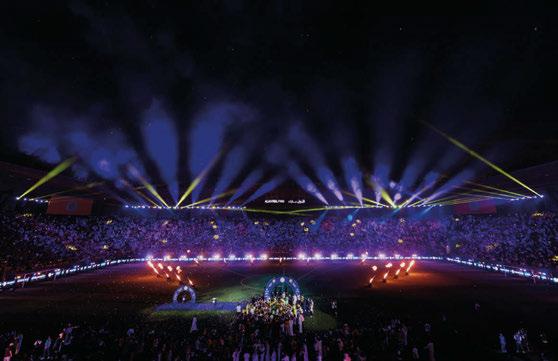
Alongs ide more than 50 flood/strobe fixtures positioned strategically around the field and used heavily in yellow and blue during drum hits to provide “punchy eye-candy effects”, 20 Claypaky Skylos delivered “powerful sky beam effects”
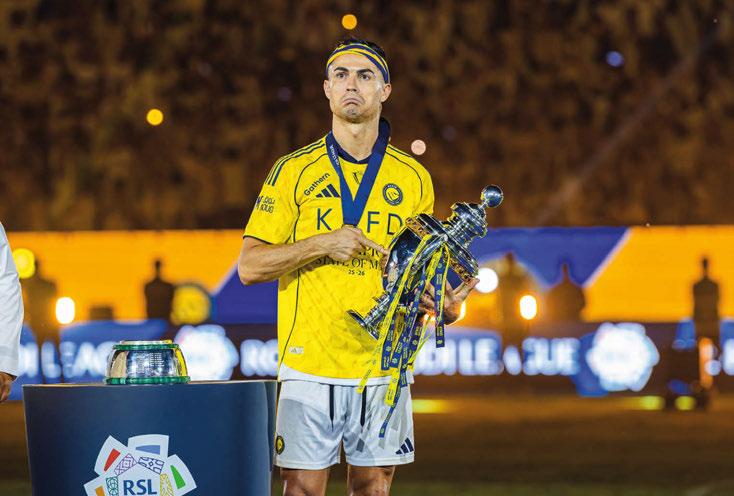
Above, top: entourage’s Bana Homad, Senior Account Manager, with Mohammad Suliman, Senior CG Generalist, and Technical Director, Nick Toll. Middle: Lighting Designer, Alex Douglas manning his MA Lighting grandMA3 during a pre-show programming session. Bottom: The presence of Al Nasser’s Cristiano Ronaldo raised international interest in the event.
and 26 Ayrton Cobras provided what Douglas described as some “pitch-focussed looks and aerial beam architecture”.
With no mid-tier lighting positions available at Al Awwal Park, a roof-mounted flown rig consisting of 72 Ayrton Cobras, 80 Zonda 9s and 16 Robe FORTEs added verticality to the lighting design. “The Zondas played a key role in illuminating the stands with colour and dimmer chases, while the Cobras delivered dynamic breakup effects and aerial looks,” Douglas described, adding that the Robe FORTEs handled key lighting duties for the trophy stage and championship lift moment.
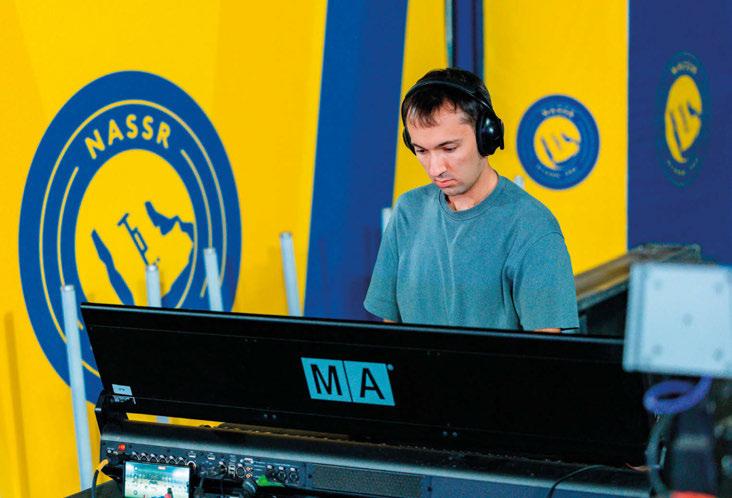
Whe n it came to programming, the LD used CuePoints imported into an MA Lighting grandMA3, with the entire show locked tightly into timecode apart from the trophy lift, which was triggered manually.
Ensuring that the lighting design was cohesive and blended well with the various other production elements was one of the primary considerations for Douglas. “There was a lot
going on – from video content on the floor to flames, fireworks and drones,” he described. “I had to ensure that the lighting contributed to the overall look rather than dominating.”
One of Douglas’ closest collaborations was with Laser Operator, Jonathan Prasad. With the pair having worked together on several previous projects, they were happy to be reunited once again. “We were able to programme side by side, so we ensured that wherever there were strong laser moments, I would reduce the intensity of the lighting,” Douglas recalled. “Jonni is a very experienced operator at stadium level, and I enjoyed working with him again.”
Prasad presided over the laser setup, which included six 35W lasers used to map the field of play, providing text effects and tracing the video elements on the centre circle, and eight 35W lasers positioned pitchside to create striking eye candy effects, with both systems running from Pangolin BEYOND.
Th e Laser Operator worked closely with content creation team Inframes ahead of arriving
onsite to pre-program all the laser moments using Depence R4. “Once arriving to site, we provided video with a custom test pattern, so once the lasers were aligned with the projectors, all the work done ahead of time came to life with minimal adjustments,” he explained.
For the pitchside lasers meanwhile, Prasad provided accents for the fast moments of the show and ambient looks for the slower sections. “The job was very smooth due to the amount of coordination and delivery of tracks and content from entourage before arriving on the ground,” he noted.
Alongside the lighting supply, SLS Production also provided a range of audio and video solutions, including a Meyer Sound LYON audio system, DiGiCo SD12 console and Shure Axient microphones, alongside Barco UDX 4K 32 video projectors and Resolume Arena media servers.
Douglas praised the SLS Production team, led by Technical Manager Kevin Shyam and HOD Lighting Tony Thomas. “They’re a great team and they always deliver,” he commented.
‘Everything moved exactly as planned’ Groupe F was tasked by entourage with providing a further visual flourish, which the company delivered in the form of flames on the field of play as well as a spectacular firework show that lit up the sky above the stadium.
A total of 15 wave flame generators were deployed on the pitch – and speed was very much of the essence when it came to setup and removal. “We opted for wireless wave flame generators that were easily movable on trolleys for a super-fast installation and dismantling operation,” explained Groupe F’s Deputy Managing Director, Nicolas Chavance.
“M odern stadium ceremonies require wireless equipment and solid methods to set up everything in a limited time, while ensuring that the display lives up to expectations.”
The company also designed a 360° firework display, with 30 firing positions from the stadium’s
rooftop used to create almost 3,000 pyro effects with various different designs.
“As we played literally above the audience in this stadium, we chose to display specific pyro material, with no fallout, for maximum security,” Chavance explained.
While the project came with all the usual logistical supply chain challenges associated with delivering a large quantity of pyrotechnic materials, Chavance noted that the uncertainty surrounding the outcome of the match only added to the task at hand. “Everyone was on standby to adapt in real time,” he recalled.
Th e Deputy Managing Director went on to pay tribute to the entourage team, including the “very talented and benevolent leader”, JeanMarc Chandoo and “super-solid production and technical leader”, Troy Morgan.
“J ean-Marc knows how to put together very different technologies on the field of play to
create something amazing for the audience in the stadium as well as the broadcast,” Chavance commented. “While Troy knows exactly how to keep things moving forward in a complex environment when multiple departments are operating alongside each other.”
Executive Artistic Producer Chandoo concluded with a final fond look back at the project: “Once the final whistle went, everything moved exactly as planned. Watching the show run flawlessly, seeing the client’s reaction, the fans celebrating and the players lifting the trophy made all the hours of preparation worthwhile,” Chandoo reflected.
“Those five-and-a-half minutes are what everyone remembers, but they are built on 45 days of planning and the dedication of an incredible team.”
Photos: entourage, Groupe F www.entourageintl.com
Glory in Giza
The Pyramids of Giza host world heavyweight boxing for the first time, with a world-class technical production that strikes the perfect balance between the live audience and a massive global pay-per-view broadcast.
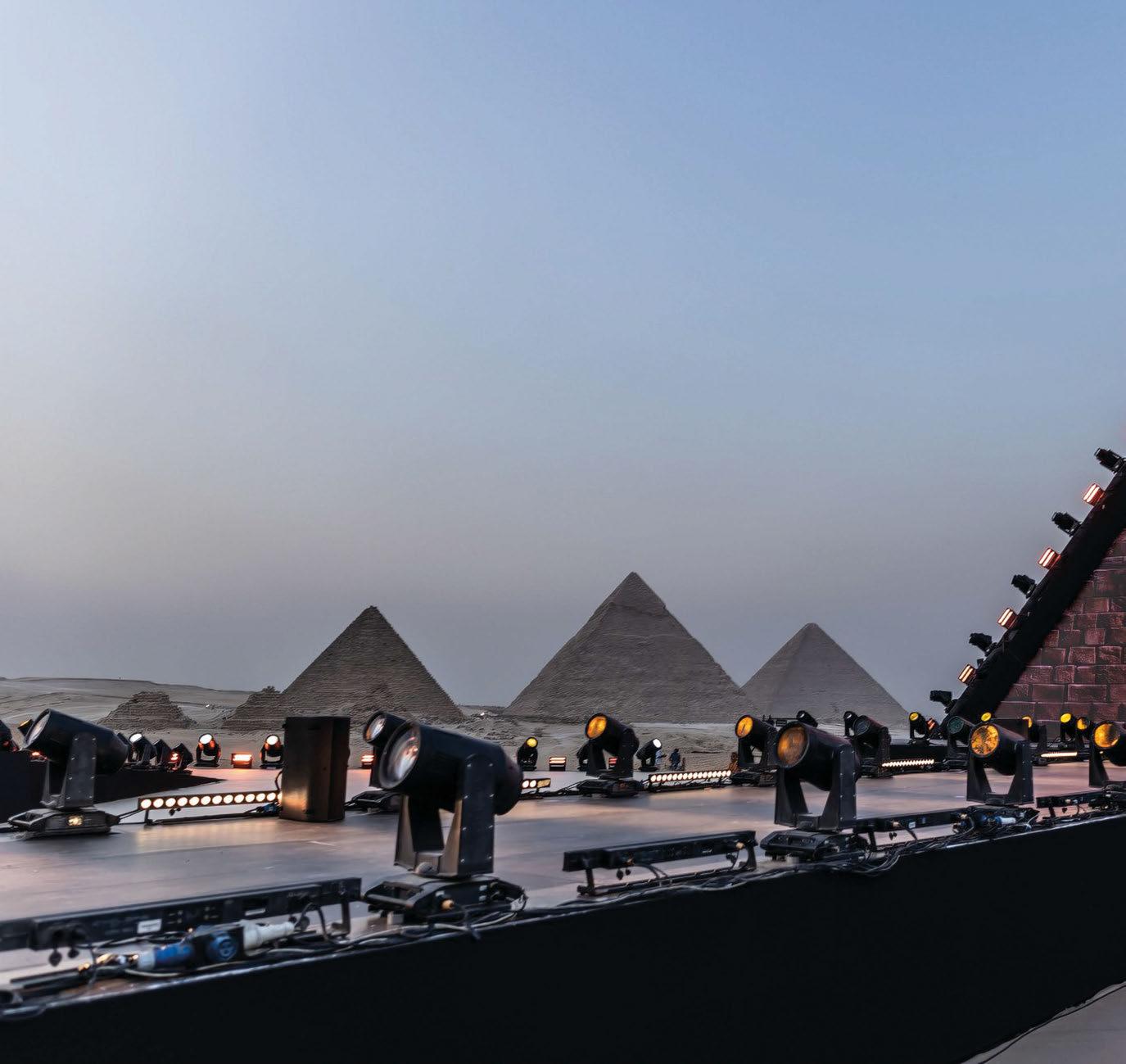
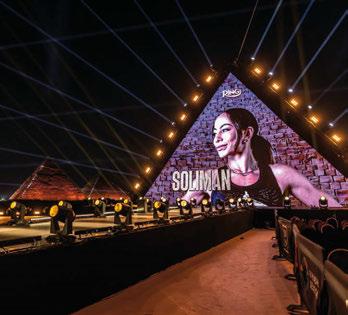
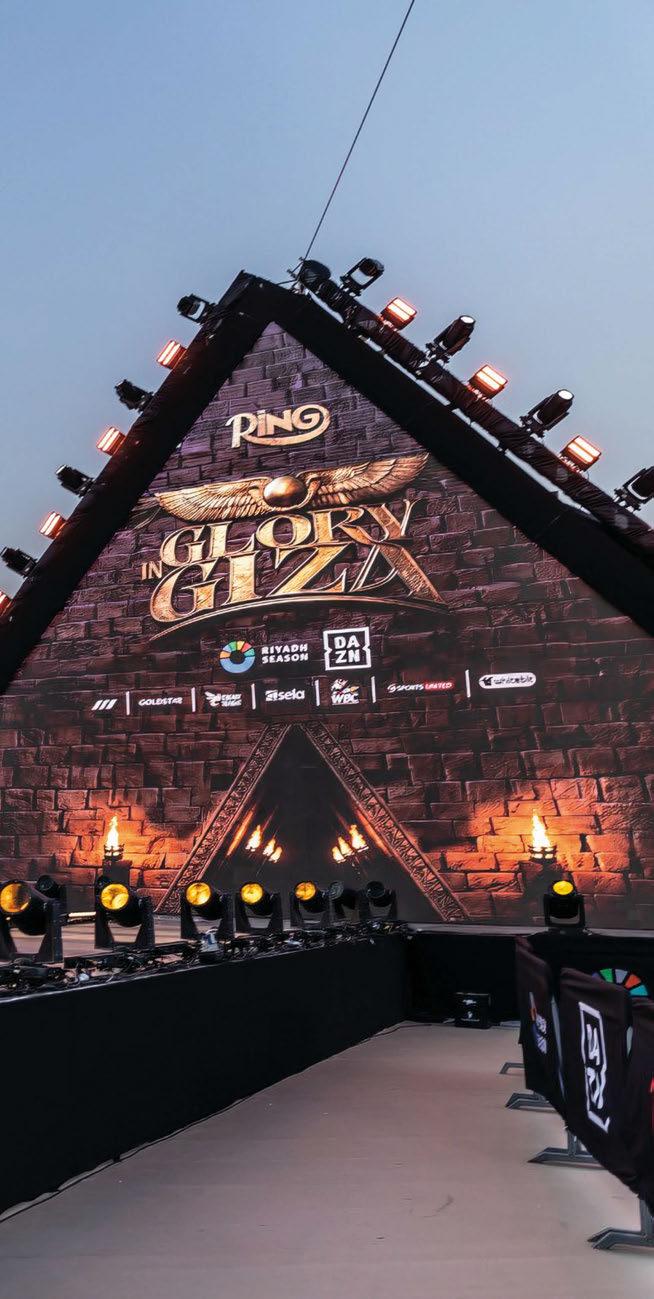
From the Rumble in the Jungle to the Thrilla in Manila, boxing has a long history of holding bouts in previously unheralded locations, which go on to become iconic. In something of a twist to this tried-and-tested formula, Glory in Giza brought world heavyweight boxing to one of the world’s best-known historical sites, as Giza Plateau staged its first ever professional boxing card, with the Pyramids forming a remarkable backdrop.
Promoted by Matchroom with The Ring, Riyadh Season, the General Entertainment Authority, and Sela, the event saw undisputed World Heavyweight Champion Oleksandr Usyk defend his WBC title against kickboxing legend Rico Verhoeven in the main event.
Given the monumental task of hosting a world-class, globally broadcast pay-per-view
event directly against the backdrop of the Giza Pyramids, HiLights Group was appointed as the master technical production partner, charged with the end-to-end technical execution across audio, lighting, and video.
“B ecause the venue is an ancient heritage site rather than a standard arena, we had to deploy highly sophisticated, non-invasive, and robust outdoor setups to meet elite sports broadcasting standards,” stated Hamed and Ahmed Arafa, cofounders of HiLights Group.
Hi Lights’ process on the project began with an extensive pre-production phase, which included site mapping through 3D scans of the venue to plot technical footprints without touching any of the ancient structures. The pre-production team also ran technical simulations including wind-load calculations for outdoor LED screens, acoustic
simulations and lighting plots. “We also designed a fully redundant fibre-optic network and power backup system to guarantee uninterrupted global broadcast feeds,” the cofounders noted.
Wh en it came to the load-in, HiLights deployed heavy, self-supporting ground structures for the boxing ring’s overhead rig and LED screens, while climate-controlled hubs were installed to protect sensitive audio, lighting, and video control systems from desert heat and dust.
Overnights meanwhile consisted of lighting focusses for camera colour accuracy, timealigning the line-array audio systems, and stress-testing the zero-latency video routing to broadcast trucks.
While the historic venue presented unique opportunities in terms of aesthetic, that came with significant limitations, which were necessary
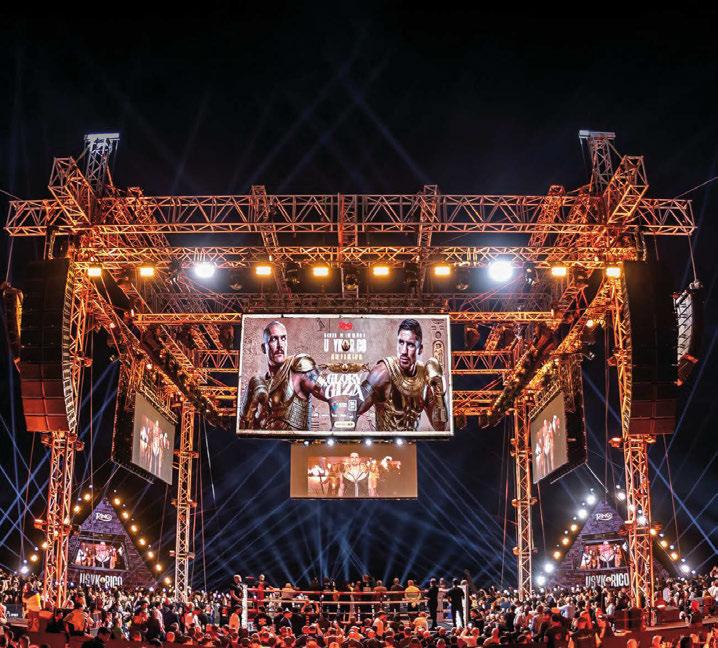
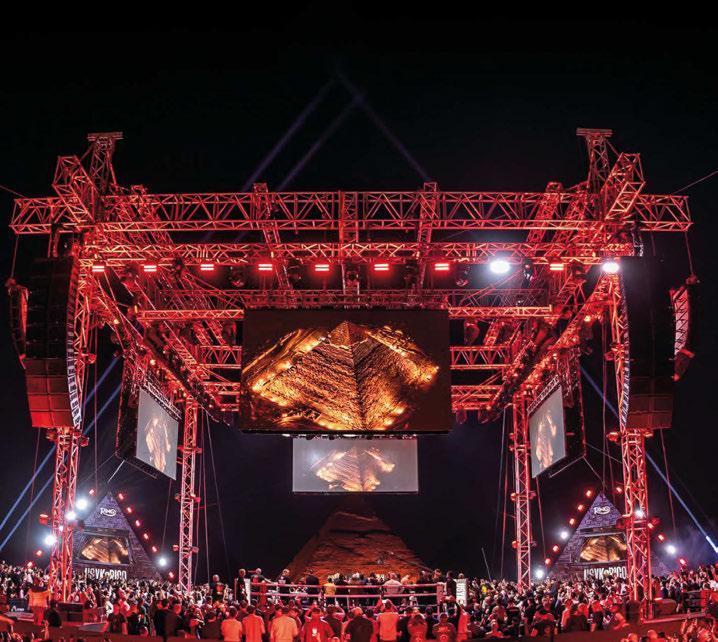
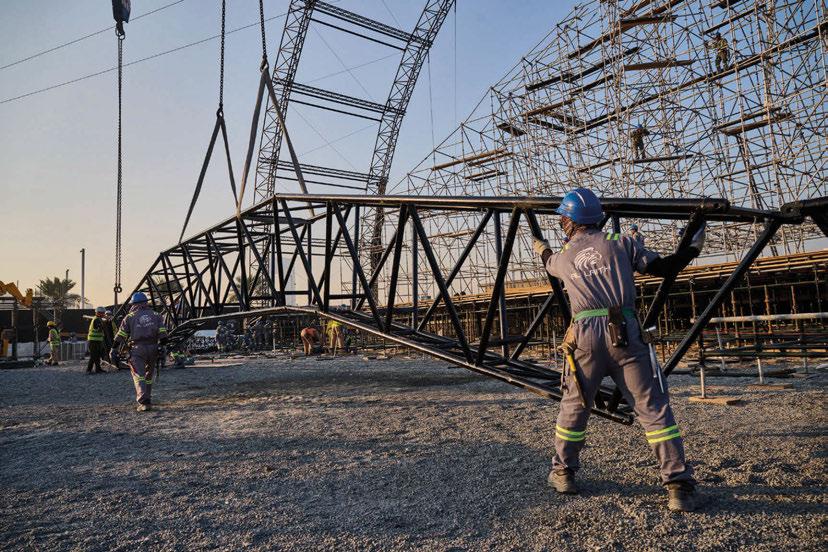
to protect the ancient archaeological site. Chief among these challenges was the fact that drilling into the ground was strictly prohibited, meaning that every single structure – including the heavy overhead boxing ring grid and the supports for the hundreds of square meters of LED screens – had to be entirely self-supporting via meticulously calculated ballast systems.
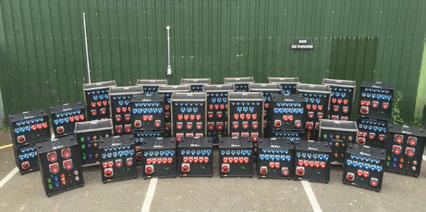
Power was also a challenge as with no existing venue grid, the HiLights team had to deploy a completely independent, synchronised generator farm, with four 500 kVA diesel generators connected in parallel to a main distribution board with an 800A main breaker, distributing power throughout the stage area, ring, grandstands and fan zone.
To successfully execute such a large-scale, multidisciplinary project, HiLights deployed what
the cofounders dubbed an “elite technical task force” of more than 200 skilled technicians, with all disciplines covered by specialists in their respective fields.
‘Striking the balance’
Every element of the technical production was geared towards achieving an experience that was not only world-class for the live audience but also lived up to the standards of a global broadcast. “Striking the balance between a live audience and a global pay-per-view broadcast is one of the most complex challenges in modern technical production, especially at a heritage site like the Giza Plateau,” the HiLights cofounders explained. “To ensure neither audience was compromised, we approached the design through dual-purpose engineering, where every
technical element served a distinct role for both the cameras and the crowd.”
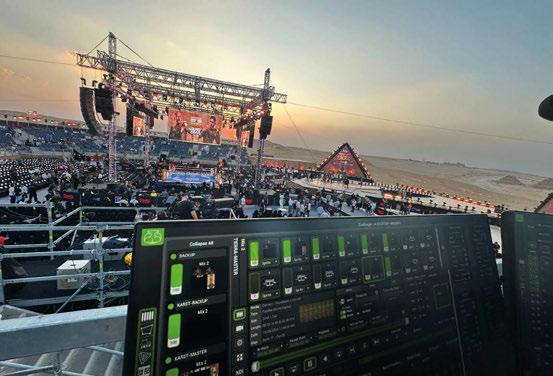
Aiming to achieve “audience coverage and sonic consistency”, HiLights’ audio team deployed a comprehensive L-Acoustics PA system in a six-tower configuration, strategically positioned throughout the venue. “This design ensured a seamless listening experience while addressing the unique acoustic and logistical requirements of one of the world’s most iconic landmarks,” stated the cofounders.
Th e system included a main PA consisting of 20 K1, 24 K2 and 32 Kara, with low-end delivered by 22 KS28. A further eight A15, 12 X12, four X15, four 5XT and two Syva were deployed to cover front fill, out fill and delay systems.
Di GiCo Quantum 5 consoles were positioned at both FOH and monitors, while a Shure wireless
ecosystem comprising eight Axient Digital PSM 1000 and eight AD4D Dual-Channel Receivers ensured reliable RF operation and artist monitoring. “This configuration delivered secure wireless transmission, stable RF performance, and dependable monitoring coverage across the venue,” the cofounders added.
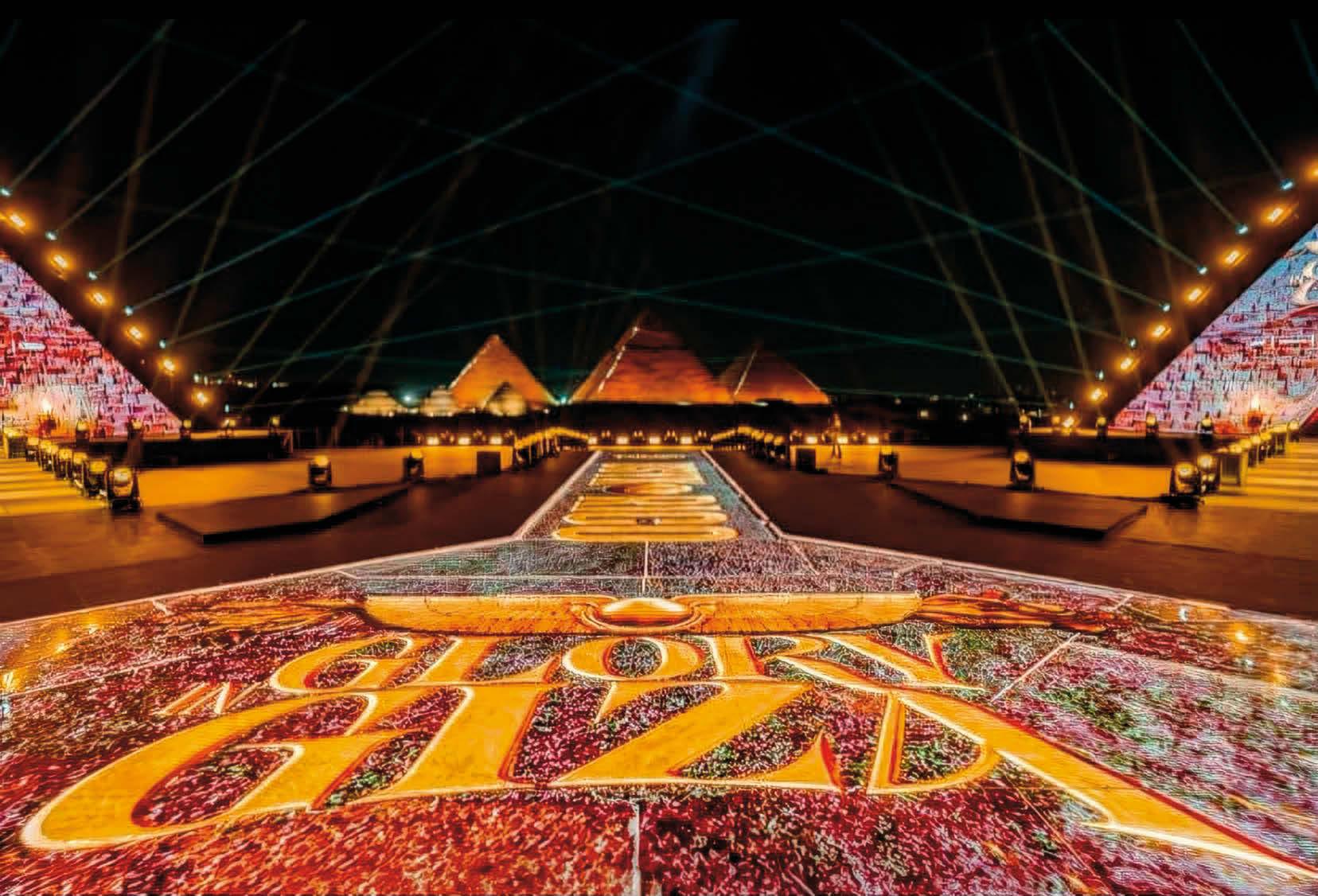
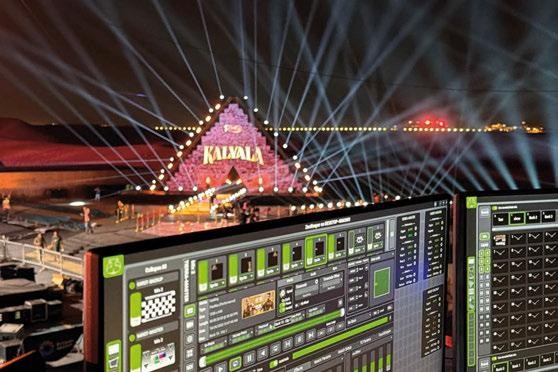
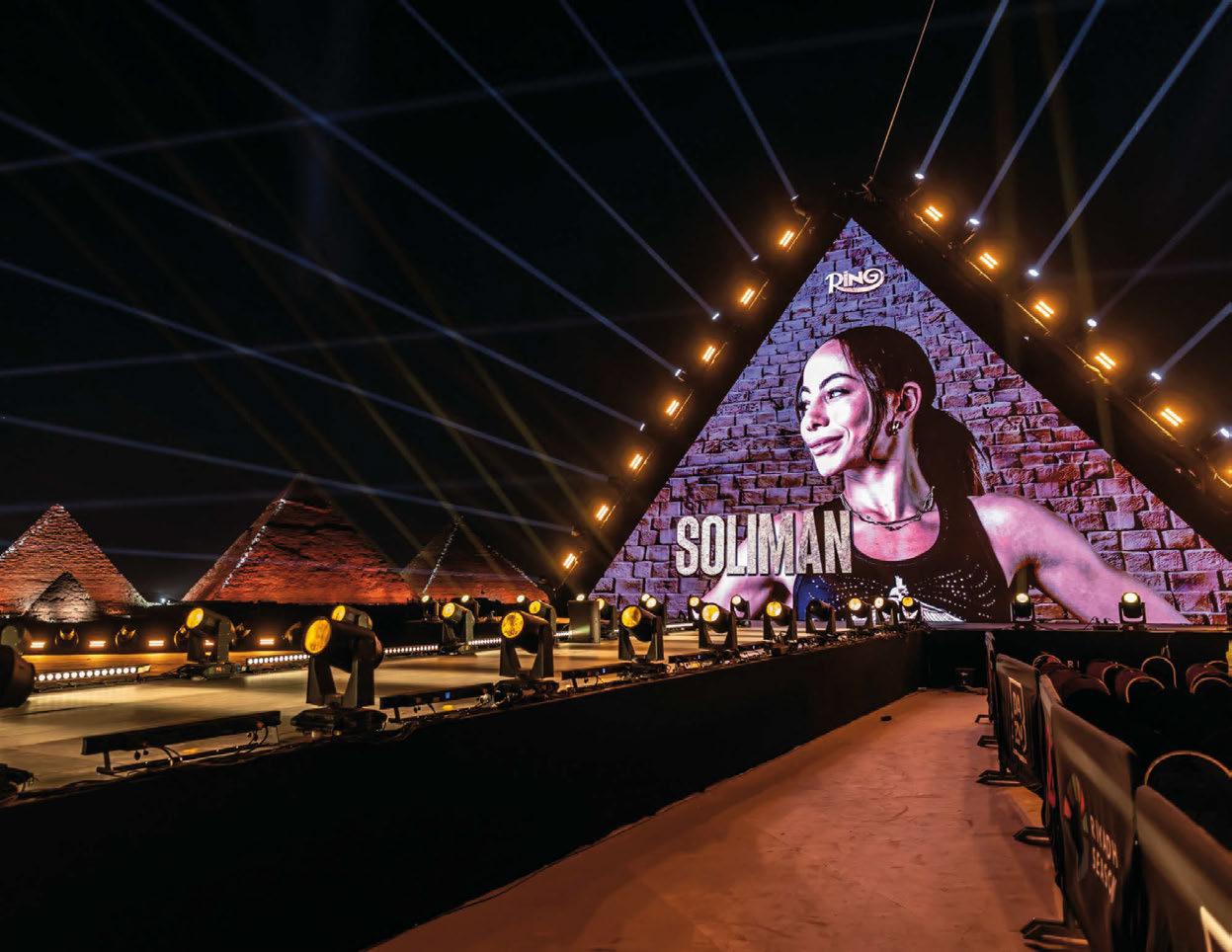
Equally impressive was the huge lighting rig, which totalled 3,145 fixtures delivering 72,633 parameters across 163 universes. The deployment was split into key areas, including venue and audience lighting, perimeter and landscape, framing of the pyramids and LED screens, and key lighting for the boxing ring.
“To meet the strict high-definition and slowmotion requirements of a world-title broadcast,
the overhead truss directly above the ring was populated with precision, high-output fixtures to eliminate shadows and ensure perfect colour rendering,” the cofounders explained.
Va ri-Lite VL 3600 Profile IP was the primary profile fixture, with its framing shutters used to crisply cut and lock the key light exactly to the boundaries of the canvas. Ayrton Veloce fixtures meanwhile were integrated into the ring’s overhead rig to provide powerful, uniform wash and beam coverage, ensuring the fighters remained illuminated from every camera angle.
Ae rial beams were used to create depth on wide camera shots and frame the open-air arena against the dark desert sky, with high-intensity fixtures positioned on the floor around structural
perimeters. Vari-Lite VL 4000 Beam Washes were deck-mounted around the arena floor, while IP-rated Ayrton Cobra fixtures were positioned across the site perimeter.
Ayrton Cobras were deployed also as specialised, ultra-bright laser beams aligned with the Pyramid screens. “Their virtually parallel, long-throw laser sources allowed them to cut sharply through the air against the historic backdrop, adding an extra layer of dynamic motion,” the cofounders noted.
Elsewhere, Cyclops Lighting Sparkly Wash 37s were used to provide smooth colour washes over the audience and site footprint and Sparkly 440s strategically positioned around the arena structures acted as multipurpose spot/beam
fixtures, handling general area lighting and midair structural textures.
“M anaging over 72,000 parameters across an expansive outdoor heritage site required an enterprise-grade control network backbone,” the cofounders noted when discussing the lighting control solution, which included five MA Lighting grandMA3 Full Size consoles, two Light consoles, five PU XL processing units, and two PU L processing units.
DM X over IP data transmission across the long fibreoptic runs was handled via Madrix ArtNet, utilising a matrix of three LUNA 16, 24 LUNA 8, and four LUNA 4 distribution nodes.
Th e event’s video requirements called for what the cofounders described as “a highresolution visual display network capable of handling extreme outdoor conditions while delivering pristine, zero-latency content for both the live audience and the global broadcast”. This included hundreds of square metres of Visiotek PH3.9 outdoor LED, which formed the core visual canvas, deployed as large-scale IMAG screens
on either side of the boxing ring and as main scenery displays across the site.
With heavy visual content throughout the sprawling site, a fully redundant Green Hippo media server network was deployed, enabling the HiLights video team to manage complex sitewide multiscreen playback while maintaining precise synchronisation between live feeds, graphics, and show cues.
Hippotizer Boreal+ MK2 acted as the primary backbone for the main surfaces, handling the heavy lifting in terms of playback and visual mapping, while Hippotizer Karst+ managed secondary screen surfaces, side screens, and digital ribbon displays. Both the Boreal and Karst setups were configured in a master/slave setup, providing complete redundancy.
Analo g Way Aquilon RS6 was deployed as the master screen management system and presentation switcher, functioning as the central brain for video routing, allowing the technical crew to split video feeds instantly, cutting between live fight feeds, replay packages, and
media server content. “This meant the broadcast stream could cut to a commercial break or an international commentary panel, while the live venue screens simultaneously switched to exclusive crowd cams, sponsor loops, or live entertainment, ensuring both audiences received a premium, uninterrupted experience tailored exactly to how they were watching the show,” the cofounders explained.
NovaStar H9 Video Wall Splicers were positioned downstream from the RS6 to handle the final pixel-to-pixel splicing, processing, and signal distribution. “The H9 units functioned as both powerful video wall processors and robust LED controllers, directly sending the calibrated, synced video signals to the LED panels via stable fibreoptic runs.”
‘More than just a sports production’ Arena Group played a significant role in the event infrastructure, delivering the FOH platform, two camera towers, the lighting support structures and 3,100 Clearview seats – Arena’s proprietary
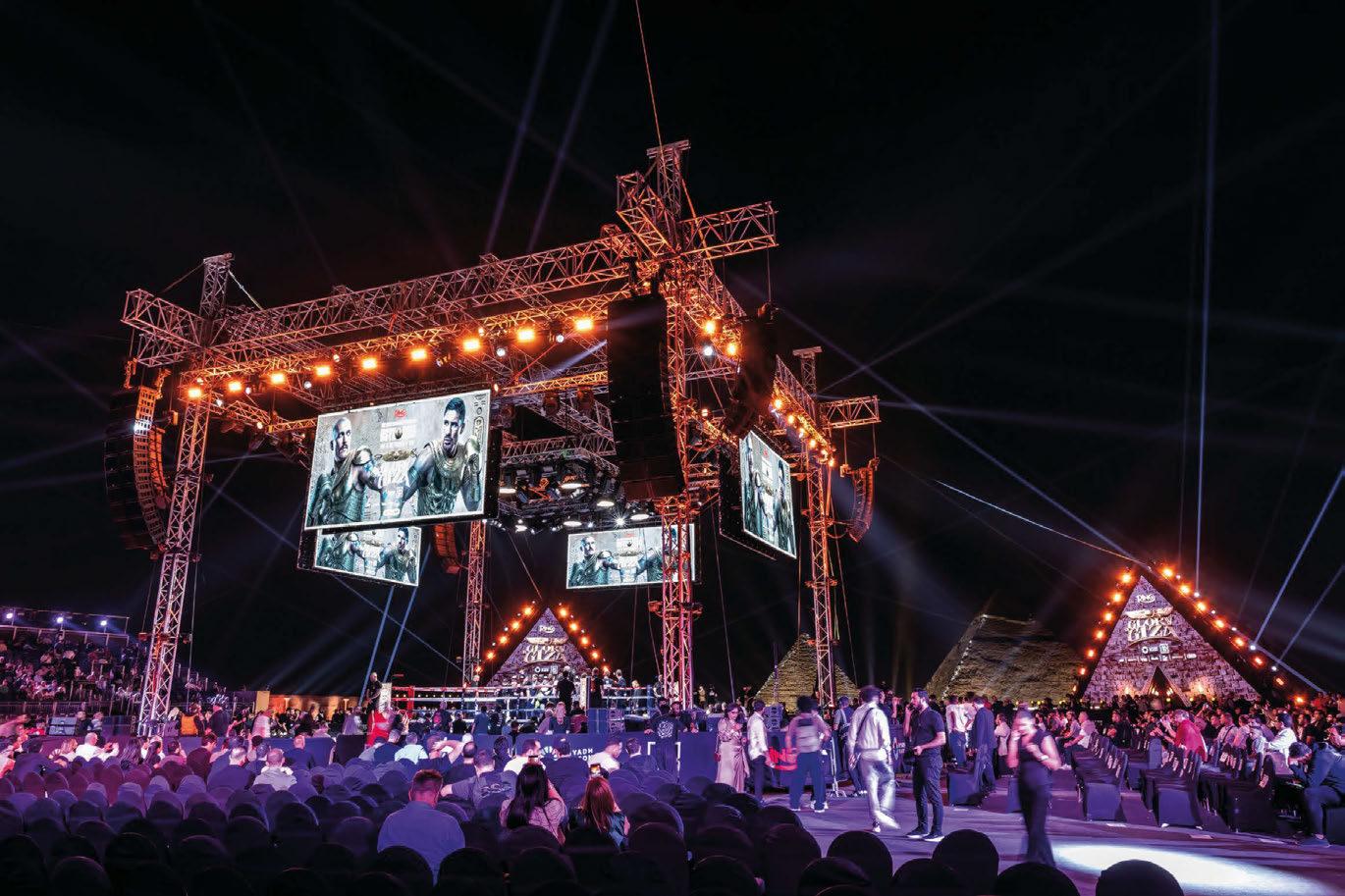
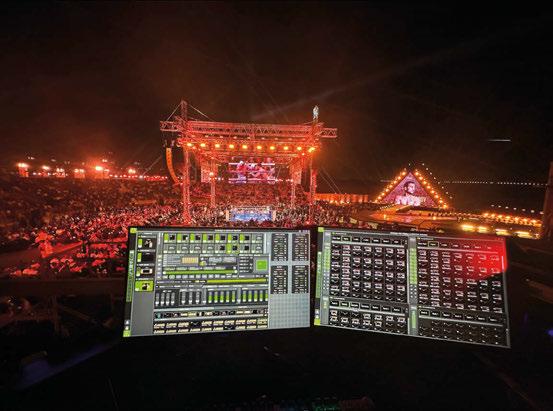
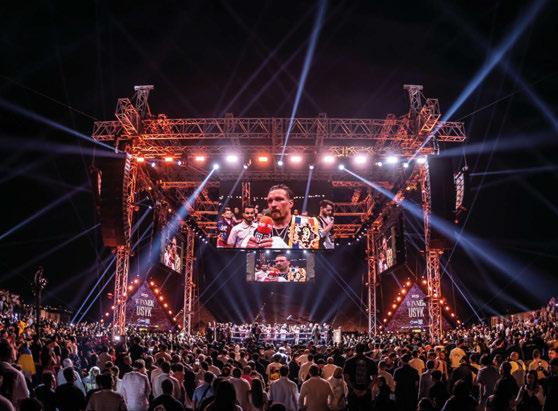
modular seating system that is known to provide better sightlines and comfort for spectators.
With Glory in Giza representing the company’s first project in Egypt, Arena’s General Manager – MEA – Seating, Brendan Williams, looked back fondly on a successful Egyptian debut. “Our involvement in Glory in Giza began in March with the initial planning and design phase,” he recalled.
“Working closely with the client, we developed and refined the design until the final concept was agreed, ensuring that the proposed solution met both the creative vision and the practical demands of the project,” he continued. “Once the design was approved, the focus shifted to detailed operational and site-delivery planning.”
Th e Arena team coordinated with the timelines of the other contractors, integrating
their activities into the event’s overall production schedule to ensure an efficient installation process. “Following the completion of this planning phase, the required equipment was prepared at our warehouse in Jeddah and transported to Cairo, ready for delivery and installation on site,” Williams stated.
Des pite the challenges that came from working in Egypt for the first time, which included logistical and visa delays, Williams was pleased to report that the Arena team stayed positive and worked long hours to deliver the project as planned. “A lot of respect must go to the team for their achievements,” he commented.
“Thank you to Chris Coles and Zeeshan Jabbar for flying out last-minute to help deliver the project. I would also like to thank Salah Shukri
and his team from Sela for their amazing support throughout the project.”
Also delighted with the results, the HiLights cofounders shared their final thoughts on the project: “Glory in Giza was more than just a sports production; it was a testament to what can be achieved when heavy industrial engineering and world-class technical production meets a deep respect for historical preservation,” they concluded. “To every single individual who wore the HiLights Group badge on the Giza Plateau – thank you for your professionalism, your grit, and your commitment to excellence. We made history together.”
Photos: HiLights Group www.hilightsgroup.me www.arenagroup.com

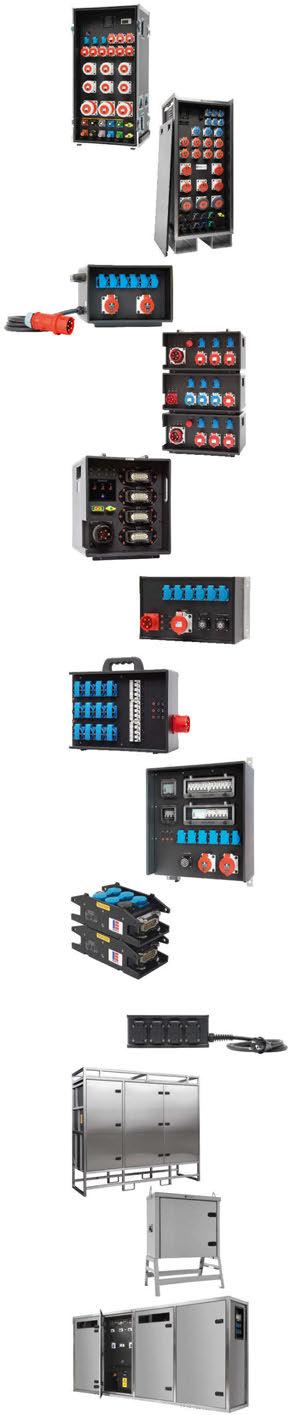
Ogma Safety
After a decade quietly supporting some of the region’s largest events, Ogma Safety is stepping into the spotlight. TPiMEA speaks with co-founder Declan Meenan about how the company is expanding its team and preparing for a busy season across the Middle East and beyond.
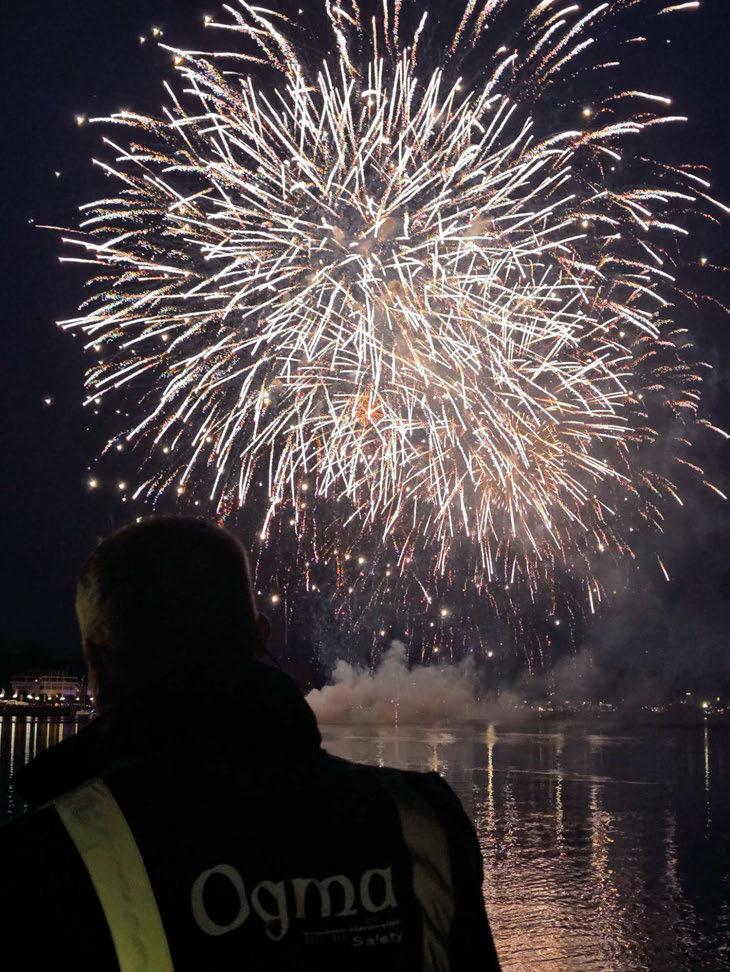
By their very nature, health and safety and crowd management tend to be disciplines within the live events industry that go largely unnoticed by many. Yet, extensive work is being done behind the scenes of all the region’s biggest and best events to ensure that everything, from load-in to live show to derig, runs smoothly, safely and without incident.
On e company that has been a mainstay in this field over the past decade is Ogma Safety, having spent the past 10 years since its foundation in 2016 quietly building its reputation in both the Middle East and in Europe. “We’ve been operating in the Middle East and Europe supporting our clients on major events and exhibitions for years, but we have never really shouted about what we do until now,” stated Ogma Safety Director and co-founder, Declan Meenan, discussing the company’s expansion plans with TPiMEA. “However, we can see how much the Middle East market especially is growing, and we plan on growing with it.”
A former police officer, Meenan got his first taste of the live events world at just 16 years old, working alongside his father, who was Head of Security for Derry City Football Club at the time. “We come from all different backgrounds,” the co-founder said of the Ogma team. “While I come from a police background, we have former government advisors, construction safety, food safety, teachers… the wide range of experience within the team is a real asset to us.”
In fact, despite the recent challenging period for the Middle East, Ogma has continued with planned hiring activities, bringing in six new full-time staff. According to Meenan, this focus on building the Ogma team is proof of the company’s belief in the region. “It’s not just talk,” he commented. “We have made a deliberate bet on the momentum building across the Middle East’s live events landscape. Rather than taking a pause-and-wait approach, we decided to invest now in a team that is capable of supporting the company’s next phase of growth.”
Along with its growing full-time team, Ogma can also call upon a large pool of freelance talent based in the UAE as well as the wider Middle East and in Europe.
“You won’t often see us needing to go on a major recruitment drive as we already have the relationships in place with trusted freelancers who are ready to jump onto projects,” Meenan revealed, noting the example of a major international project taking place in August, which Ogma had 25 staff onboarded for within just 15 minutes of having the job confirmed.
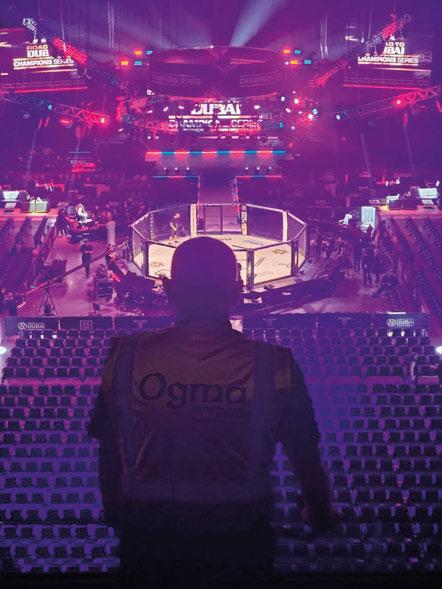
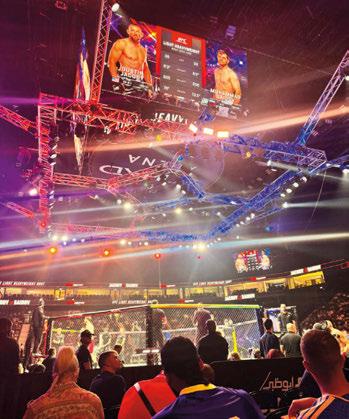
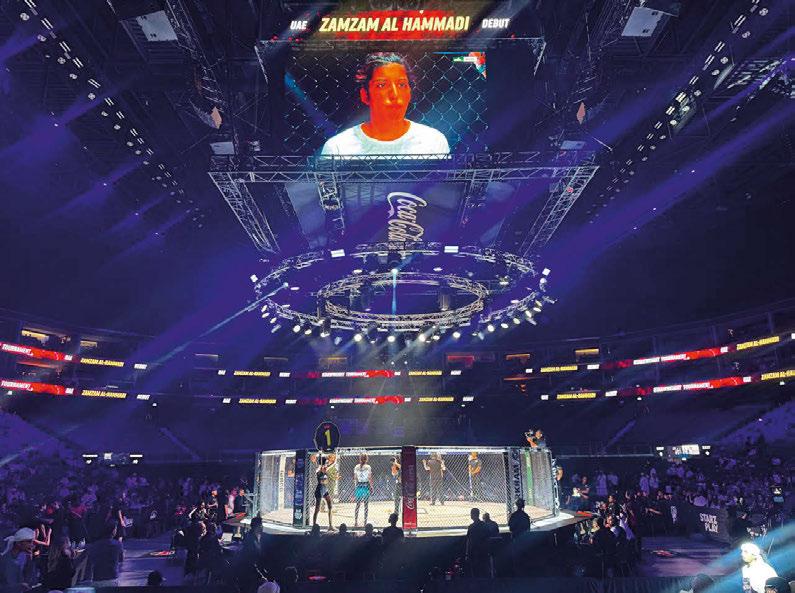
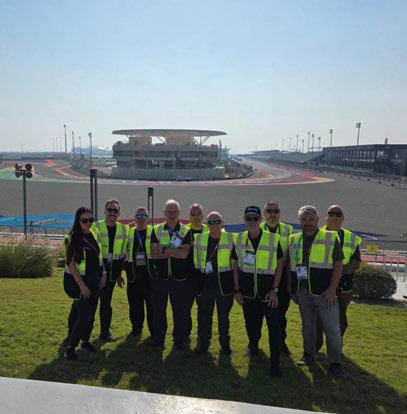
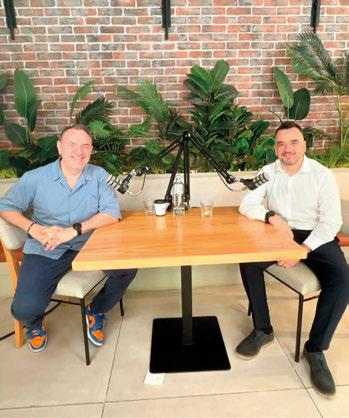
“We had flights and accommodation booked and the team ready to go,” he recalled.
Me enan believes that this ability to mobilise large teams at a moment’s notice is key to Ogma’s excellent record when it comes to client retention. “I’m extremely proud to say that we have never lost a client,” he beamed. “We often get calls from clients asking for specific people by name after working with them and being able to call on the same trusted people time after time is a massive value add that we’re able to bring.”
This loyalty is something that Meenan and the Ogma team do not take for granted, and there’s a genuine care given to ensuring that everyone is treated properly on any project that the company takes on.
“When I arrived in the region around eight years ago, working long hours used to be worn as a badge of honour; if you hadn’t been awake for 24 hours during a job then people joked that you were working a half day,” he recalled. “We saw this change massively when Expo 2020
came in and put in place strict welfare conditions, and since then there’s been a real shift in how most people in the region now understand that the most successful events are delivered without the need for working crazy hours.”
Des pite the clear progress made throughout the region since Expo 2020, Meenan still sees some areas where improvement is required. “My biggest area of concern is when you see the same crew who were on site from early in the morning during set-up still working through into the following night during derig,” he observed. “We all know that derig is most dangerous time at any event – crew want to get out quickly and they are often fatigued after a long live day. This is where split shifts offer a significant improvement in terms of safety.”
As well as the need for safeguarding against fatigue, Meenan explained why the greatest step any event can take to ensuring safety is allowing enough time for planning. “If we are brought into a project in the initial stages, we can ensure that
health and safety are baked into every aspect of the event,” he commented. “Most of our work happens long before we reach an event site, and we’re able to add so much more value if we are involved from the start.”
While the Ogma team is in the midst of a busy summer season handling several large-scale festivals and events for international clients, Meenan isn’t taking his eye off the ball when it comes to the Middle East. “Pretty much all the live shows that were scheduled to take place from the end of February up until the summer were rearranged for Q4 this year or Q1 of 2027, so we know that it’s going to be all hands on deck to make sure we can deliver,” he shared.
“While some have scaled back during this period, we have continued to invest and build because we know that the industry will be back bigger and better than ever before and we want to be ready for when that happens.”
Photos: Ogma Safety www.ogma.global
Above right: Meenan during his recent appearance on The Backdrop podcast with host, Michael MacLennan.
M:E Entertainment: putting Nigeria on the touring map
Karim Mattar and Sarvie Etebarian, founders of Lagos-based M:E Entertainment, discuss their plans to position Nigeria as a fixture on the global touring calendar.
Like many great companies, M:E Entertainment started as a result of its co-founders’ personal frustration. “We both spent years travelling to experience the kind of electronic music events that weren’t available at home at that scale,” began Karim Mattar, explaining how he and fellow co-founder Sarvie Etebarian became inspired to launch M:E Entertainment. “When we’d come back to Lagos and talk about it with friends, the conversation kept circling back to the same question: ‘why do we have to leave?’”
Nigeria has always had the culture, the crowd and the energy required to host successful live events. However, the co-founders spotted a gap at the top end of the market. “There are already collectives here doing serious work; DJs with real followings, sold-out events, a rave scene that predates us by years – we didn’t come in to start something from scratch,” Etebarian stated. “The specific gap we saw was access to the very top tier of international acts in the house and electronic scene; the A-list headliners that Nigerians were spending thousands of dollars travelling abroad to see. We just wanted to make that experience available here, at the production scale it deserved.”
The co-founders come from quite different backgrounds, with Etebarian moving across tech, real estate, and business development, while Mattar brings direct experience in the live entertainment and hospitality space, having
founded and contributed to several notable venues and events in Lagos.
“O ne of us is always thinking about the vision and the business case, while the other is thinking about execution and relationships – and we both do both things,” Mattar revealed.
Th e company has already made a splash on the Lagos live events scene, organising Rampa Lagos in March 2025, which attracted over 2,000 attendees, followed by welcoming Grammy Award-winning DJ Black Coffee to Lagos in April 2026. “Rampa was a genuine risk, and we knew it,” Etebarian recalled. “Lagos had been selling out electronic music events long before we came along, and the rave culture here is deep and established. The unknowns were on our end: could we execute at the scale and standard we were promising? Would an artist of that profile feel comfortable coming? Would the production hold up? It sold out, and it answered those questions, for us and for the wider DJ and booking circuit. Burna Boy and Olamide showing up that night wasn’t something we engineered; it just happened because the room was right.”
Black Coffee Lagos, in partnership with DAPO, built on this success in a different way. “We had a full night of amazing talent like Caiiro, Da Capo, and Enoo Napa doing a B3B coupled with Massuma, Shoba, Remixia, Addy Edgal alongside Black Coffee. People flew in from the UK, South Africa and elsewhere,” Etebarian added. “When
that starts happening, when Lagos is the destination rather than the place people are flying out of, you know something has shifted in how the city is being perceived on the global circuit.”
‘Technical production is everything’ When it comes to technical production, the M:E Entertainment team leave no stone unturned. “Technical production is everything,” Mattar stated. “The entire argument we’re making is that Lagos can deliver an experience that feels like what you’d find in Ibiza or at a major European festival. If the sound is off, if the staging doesn’t hold up, that argument falls apart immediately. The audience here is informed; they know what world-class looks and sounds like. They’ll notice if you’re not meeting it. We’ve invested heavily in production precisely because we don’t want anyone – the artists or the crowd – to feel like they’re getting a version of something rather than the thing itself.”
Whil e West Africa has historically been a difficult place to execute major technical productions, Mattar believes this is changing.
“There are real infrastructure challenges –logistics, power, sourcing the right equipment – but every event that executes well raises the floor for what’s possible,” he commented. “What we’ve also found is that when you commit clearly to international standards and communicate that to production partners and artists from the start,
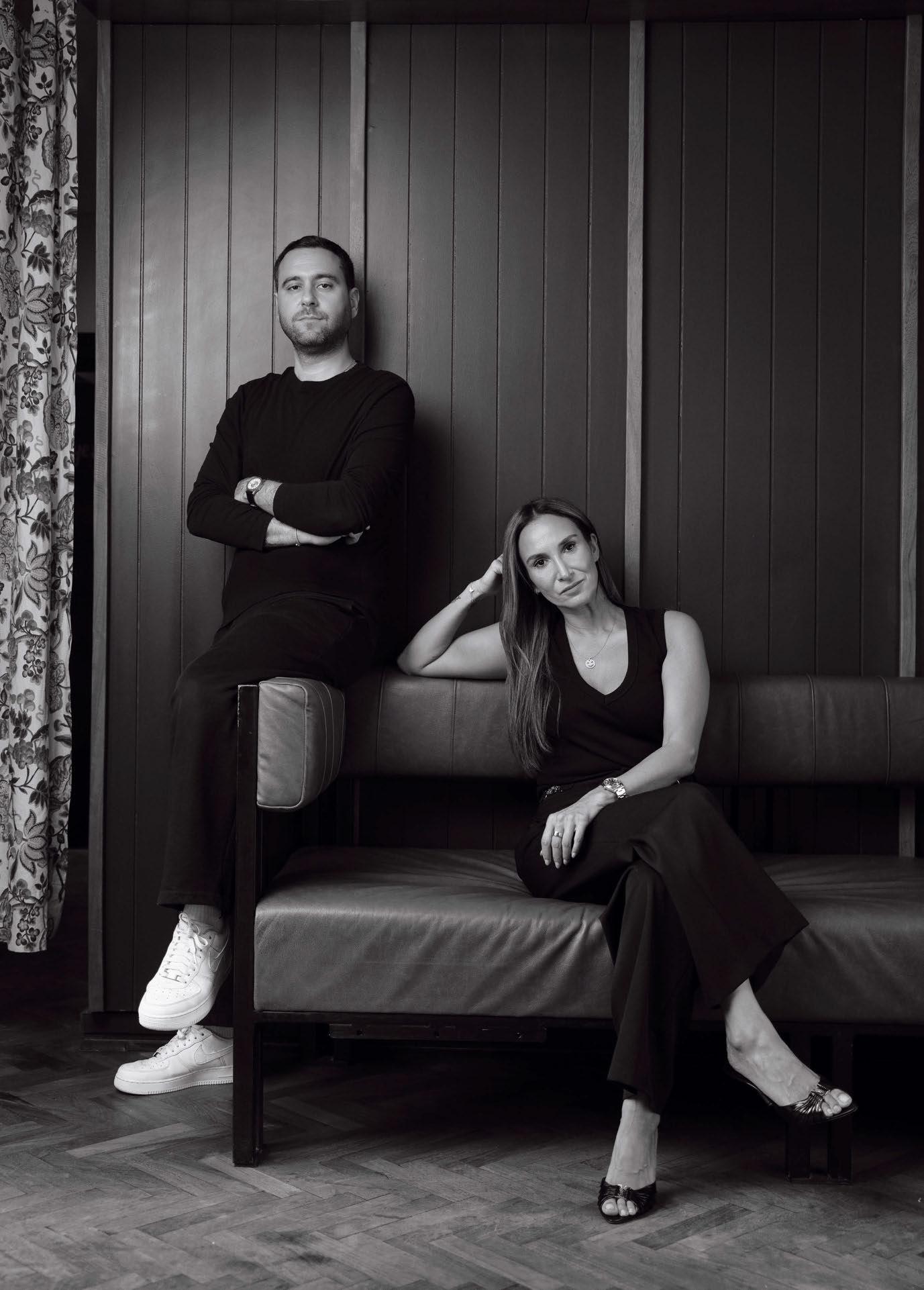
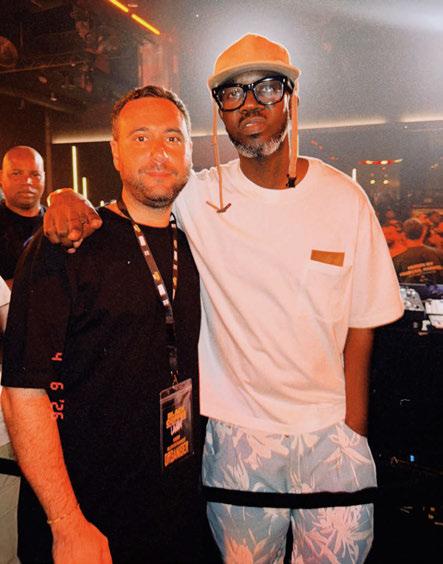
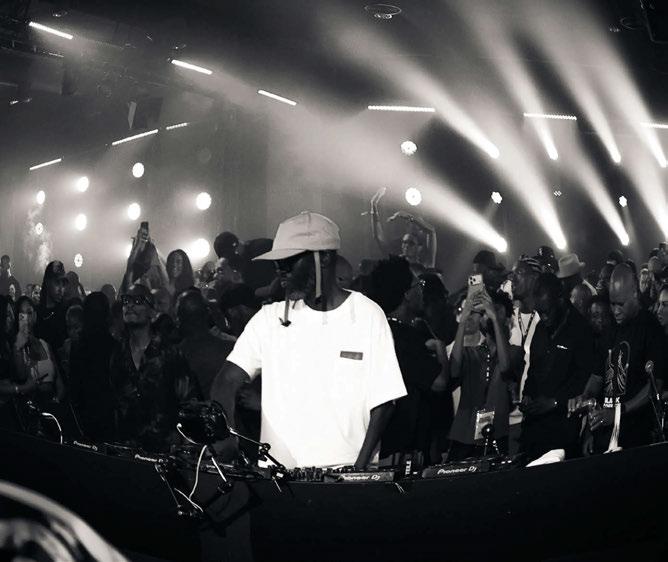
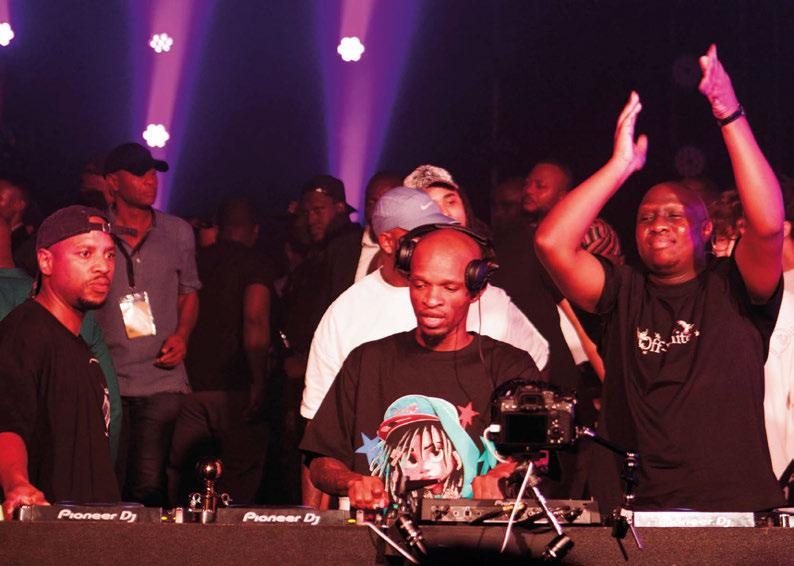
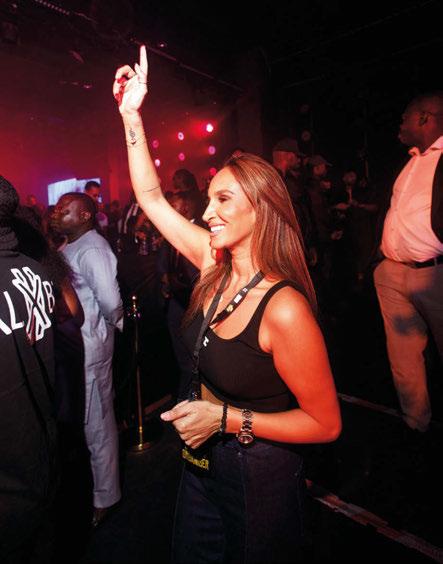
people rise to meet it. The talent and the desire have always been here. What’s been growing is the investment and the belief that it’s worth doing at that level – and that belief is now being backed by evidence.”
Chief among those operational challenges is power. “Anyone who hasn’t worked here underestimates the challenge of event power until they’re in it,” Mattar stated. “You’re essentially building your own infrastructure for every event.”
Equipment logistics and sourcing the right technical crew are also not a given. “This can take significantly longer and cost more than it would in a market with established supply chains for this kind of production. Timelines must be much longer because there’s less room for things to go wrong close to the date,” Mattar explained,
noting that the biggest challenge, however, is often perception. “Convincing international acts and their teams that Lagos is a safe, professional, well-organised destination requires work upfront. Once they’ve visited, that conversation becomes much easier. Every event that delivers well is part of building that track record.”
According to Etebarian, “consistency, and more companies willing to invest at this level” are what is required for Lagos to truly make its mark on the world stage. “The culture and the crowd have never been the problem,” she added. “What’s been missing is a sustained track record of large-scale productions executing well, and the coordination between promoters to build a calendar that the global circuit can plan around. Artists and their management make decisions
based on reliable data; ticket sales, production quality, and how smoothly shows run. Every event that delivers builds that case. We’re trying to contribute to it, but we’re clear that it’s bigger than any one company.”
The co-founders are taking a considered approach when it comes to programming. “We intentionally don’t do events every month,” Etebarian noted. “Part of what makes a city a destination is that sense of occasion; when something only happens once or twice a year, people plan around it – they book flights, they talk about it in advance. We want M:E events to be in people’s calendars before the lineup is announced; that’s the culture we want to build.”
Mattar also added that every event that brings international attendees helps to build the
case for Lagos as an entertainment destination in its own right. “The ultimate goal for us is for artists and their teams to start factoring Lagos into their touring decisions the way they factor in other major cities,” he commented. “That doesn’t happen overnight, but it happens through consistency and through us delivering events that people genuinely remember.”
Looking ahead, the duo plan on building towards bigger events at larger venues with higher capacities. “When that happens, we want the lineups to reflect the full breadth of the scene – local and continental artists like the ones we’ve already been platforming alongside the international headliners,” Etebarian shared.
“The ultimate ambition is to bring worldclass live experiences to Nigeria across genres and formats – whatever people are currently travelling abroad to see,” Mattar concluded. “We’re being deliberate about the pace; we’d rather build something that lasts and means something than scale quickly and lose what makes it worth doing.”
Photos: M:E Entertainment www.meentertainment.co
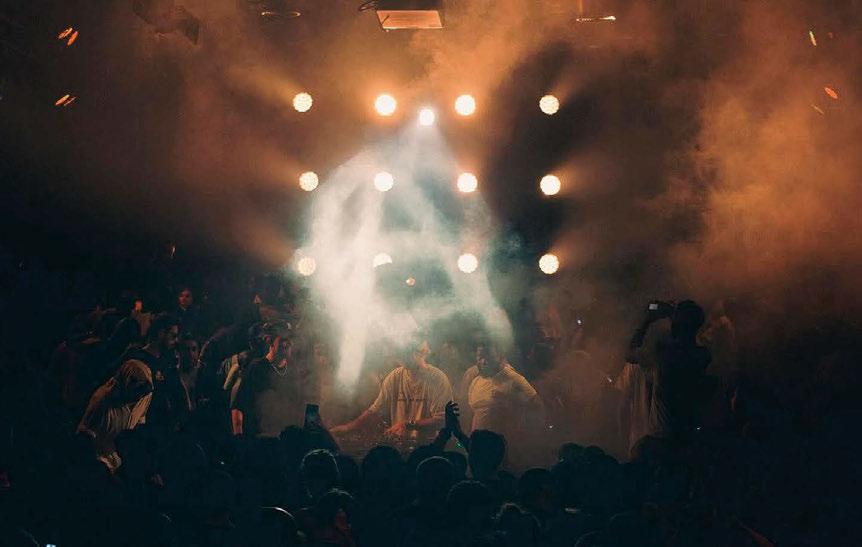
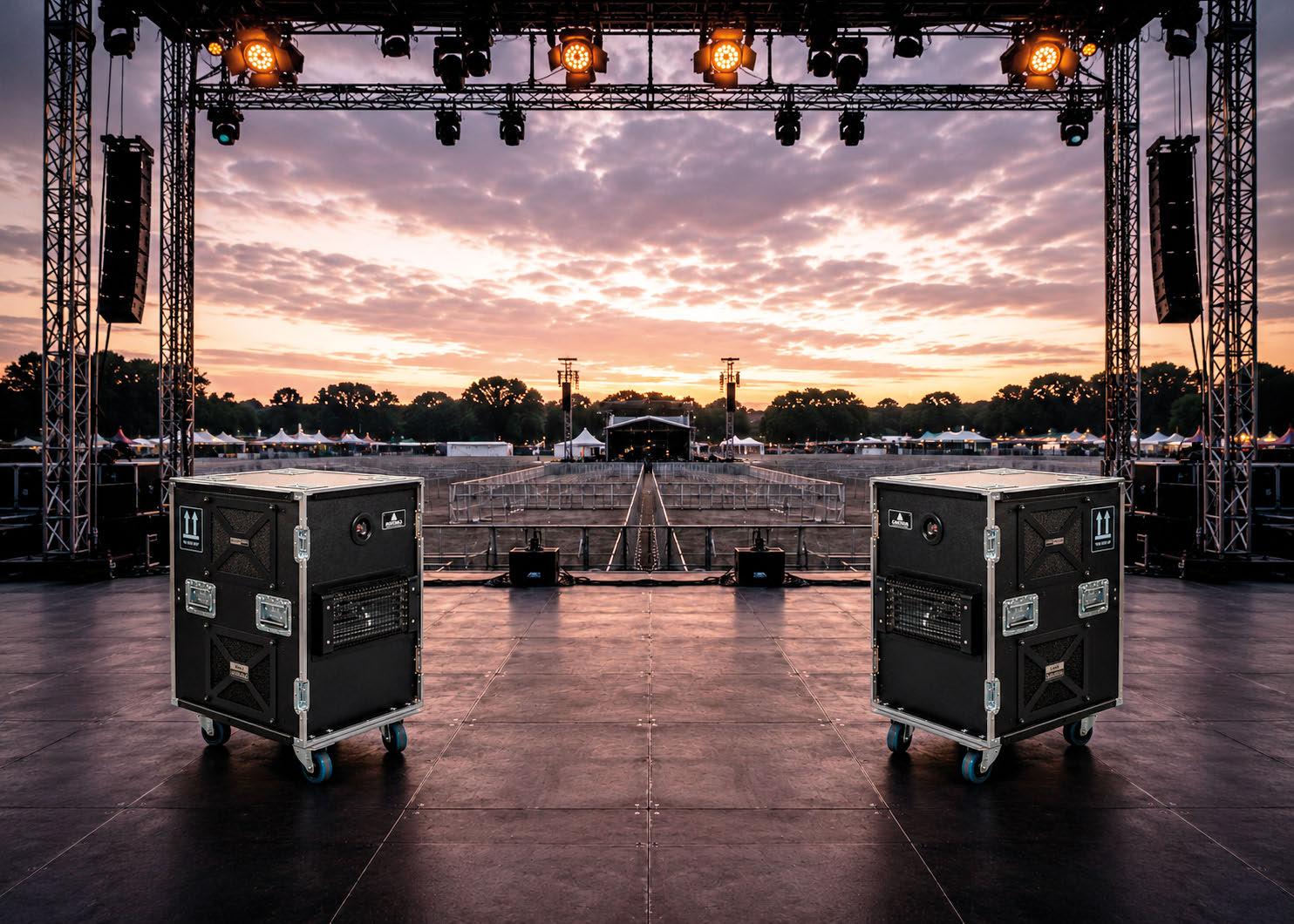

The evolution of Banban
Mazin Khamis, Executive Director of Marketing, Commercial & Products at MDLBEAST, discusses the development of the Soundstorm site at Banban and how the company is helping to nurture the local Saudi supplier ecosystem.
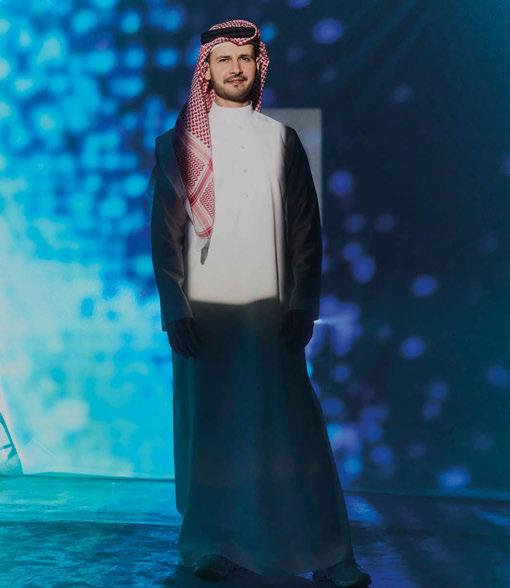
How has the site at Banban evolved since the early days of Soundstorm?
Banban has evolved significantly from the early editions of Soundstorm. In the beginning, it was primarily activated as a large-scale festival site, with much of the infrastructure being built around the immediate needs of each edition.
Over time, MDLBEAST has approached Banban more strategically. The site has increasingly become a long-term entertainment platform rather than a temporary event location. We have invested in understanding the site’s operational requirements, audience flows, production needs, supplier access, artist logistics, safety protocols, and guest experience.
Ea ch edition has allowed us to learn, improve, and build more resilience into the site. Today, Banban is not only associated with Soundstorm; it is becoming an adaptable asset that can support different event formats, audience sizes, and production ambitions.
How does the infrastructure lend itself to being flexible enough to host events of various sizes and formats?
The strength of Banban is its scale and flexibility. The site can be configured in multiple ways depending on the event format, whether that is a major multi-stage festival, a more
focussed cultural event, a concert-led experience, or a smaller activation.
A lot of the planning has been around modularity. That means thinking carefully about zones, access routes, backof-house areas, artist compounds, production corridors, crowd movement, parking, security layers, F&B, and guest services in a way that can expand or contract depending on the event.
For a large-scale festival such as Soundstorm, the site needs to support multiple stages, very high footfall, extensive production requirements, and a broad range of guest experiences.
For a smaller event, the same site can be activated in a more focussed way, using selected zones and infrastructure while maintaining strong operational standards.
That flexibility is extremely important because the future of live entertainment is not one-size-fits-all. Different audiences, formats, and creative concepts require different site configurations.
What are the main differences between operating the site for an incoming production and activating it during an in-house event?
The biggest difference is the role MDLBEAST plays. For an in-house event such as Soundstorm or A Thousand and One, MDLBEAST is involved across the full value chain. That includes the creative concept, commercial model, programming, ticketing, marketing, guest experience, production, operations, partnerships, and delivery. We are not only operating the site, but we are building the entire event experience.
For an incoming production, the role is more focussed on enabling the event to happen successfully at Banban. In that case, MDLBEAST acts more as a site operator, infrastructure partner, and local delivery enabler. The incoming promoter or production brings its own creative and commercial objectives, while we support them with the site, local knowledge, operational framework, supplier ecosystem, compliance, and guest-flow planning.
In b oth cases, the objective is the same – to deliver a safe, world-class, and commercially viable event – but the level of creative and commercial ownership differs.
What eco-friendly initiatives is MDLBEAST pursuing at its Banban site?
Sustainability is becoming an increasingly important part of how we think about Banban. For an event site of this scale, the biggest opportunities are in long-term planning, asset reuse, waste management, energy efficiency, and reducing the need to rebuild the same infrastructure from scratch every year.
On e of the key directions is moving from a purely temporary-event mindset to a more reusable infrastructure model. That means looking at what can be retained,
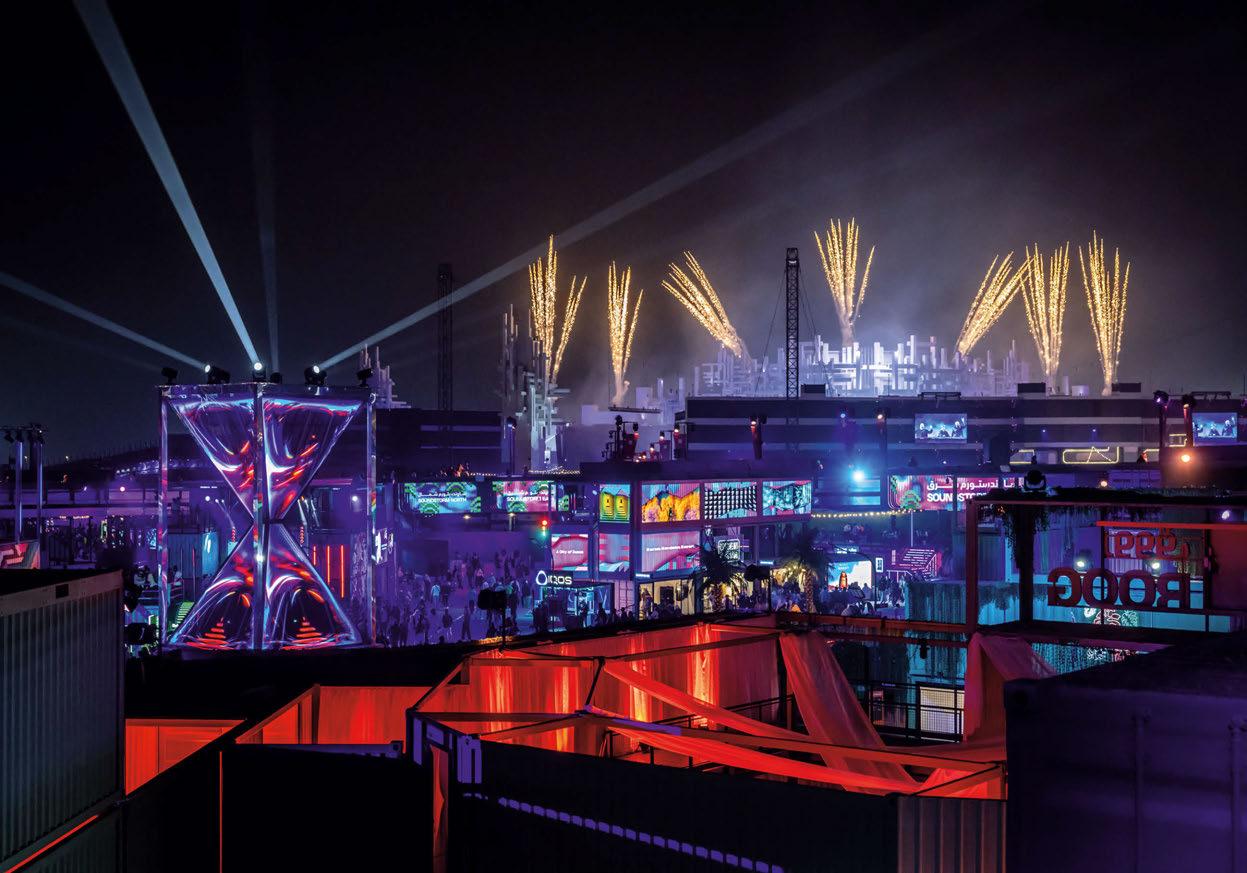
repurposed, or improved between events, rather than repeatedly building and dismantling everything.
We a re also looking at practical initiatives such as better waste segregation, more responsible material choices, more efficient power planning, improved water management, and reducing unnecessary single-use materials where possible.
For us, sustainability is not only about isolated initiatives. It is about embedding better decisions into the way the site is planned, built, operated, and improved over time.
What’s the long-term vision for the evolution of the Banban site?
The long-term vision is for Banban to become one of the region’s most important live entertainment platforms.
Soundstorm proved that Saudi Arabia can host large-scale music experiences at a global standard. The next phase is about turning that success into a more permanent and versatile infrastructure base that can support different types of events, formats, partners, and audiences.
We s ee Banban as a site that can continue to serve flagship MDLBEAST events, while also creating opportunities for other productions, cultural experiences, international partnerships, and new event concepts.
Th e ambition is not only to build a better festival site. It is to contribute to a wider entertainment ecosystem that develops local talent, attracts international expertise, supports suppliers, creates jobs, and strengthens Saudi Arabia’s position as a major live entertainment destination.
We saw that MDLBEAST recently held an event to connect with new suppliers. What is the company’s strategy when it comes to selecting which suppliers you’ll be working with moving forward?
Our supplier strategy is focussed on building a strong, reliable, and scalable ecosystem around live entertainment. As the industry grows, we need partners who can deliver to international standards while also understanding the
local market. The selection process is not only about price. It is about capability, safety, reliability, technical quality, scalability, creativity, compliance, and the ability to work collaboratively under complex event conditions.
We a re also looking for suppliers who want to grow with the industry. Live entertainment in Saudi Arabia is moving quickly, and we need partners who can invest in their teams, improve their systems, bring new ideas, and consistently raise the standard.
Th e supplier engagement event was part of that wider approach. It was about opening the conversation, identifying new capabilities, and making sure more companies understand the opportunities available within the live events sector.
How much of a focus is there on building the local supplier ecosystem?
It is a major focus for MDLBEAST. From the beginning, one of MDLBEAST’s roles has been to help build the industry, not only to deliver events. That means creating opportunities for local suppliers, freelancers, technicians, creatives, operators, and service providers to participate in increasingly complex productions.
International expertise remains important – especially in specialised areas – but the long-term objective is to strengthen local capability. The more we can develop Saudi-based suppliers, the more sustainable and competitive the industry becomes.
This is important commercially, operationally, and strategically. A stronger local supplier base means much better responsiveness, more knowledge transfer, greater cost efficiency over time, and more career pathways for Saudi talent.
For MDLBEAST, building the local supplier ecosystem is part of building the future of the entertainment industry in the Kingdom. Photos: MDLBEAST www.mdlbeast.com
Disguise unveils its Middle East ambitions
As Disguise expands its presence in the Middle East, TPiMEA catches up with Raed Al Tikriti, Chief Product and Technology Officer, to find out more about the company’s long-term plans for the region.
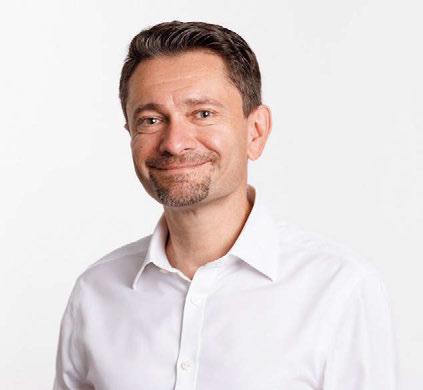
Why is now the right time to double down on your presence in the Middle East?
Disguise has been part of the Middle East’s immersive landscape for years. Partners and customers across the region have been choosing the platform for their most ambitious projects, from landmark permanent installations to some of the world’s largest live events. Throughout that time we’ve supported customers through our global 24/7 services and remote teams, but as the scale and complexity of what the region is delivering has grown, we recognised that remote support simply isn’t enough. For a market that is building at this level of ambition, you need people on the ground who understand the projects, the partners, and the cultural context. That realisation has been central to our decision to formalise our presence here.
While expanding in the Middle East was always part of our 2026 roadmap, when the geopolitical situation
escalated, we made a conscious decision to redirect some of that energy toward supporting our partners and customers directly. That meant running training sessions, webinars, and knowledge-sharing resources, and simply being more available – through calls and meetings – for teams navigating a very uncertain environment.
How impressed have you been with the way that projects and partners in the region have used Disguise technology so far, and why do you think that Disguise has been so well received in the region?
Some of the most ambitious uses of Disguise technology in the region happened organically. Projects like the Burj Khalifa and Al Wasl Dome at Expo 2020 were delivered by regional partners working at an extraordinary level – we were proud to be part of those stories.
TER HAL by Dragone in Saudi Arabia is a good example of a partner taking the technology somewhere we hadn’t necessarily anticipated – using it to give a deeply cultural performance a new life through a tech-driven lens, which takes real creativity.
Phygital Games of the Future is something we’re also very excited about. The event deployed 25 Disguise media servers across both the GX and EX range, which speaks to something we find really encouraging: partners in the region are working with the full Disguise ecosystem to push what’s possible. That level of investment and technical ambition, for an event that’s redefining what sports and entertainment can look like together, is pretty extraordinary.
Th en there’s MDLBEAST Soundstorm. The scale of the visual experience, the ambition of what the production team set out to achieve, the sheer complexity of what was delivered in real time were on another level.
Soundstorm has become one of the most important live events in the world, and the standard it sets for immersive visual production is remarkable.
As for why Disguise has been well received, I think it’s less about us and more about the fact that the region’s
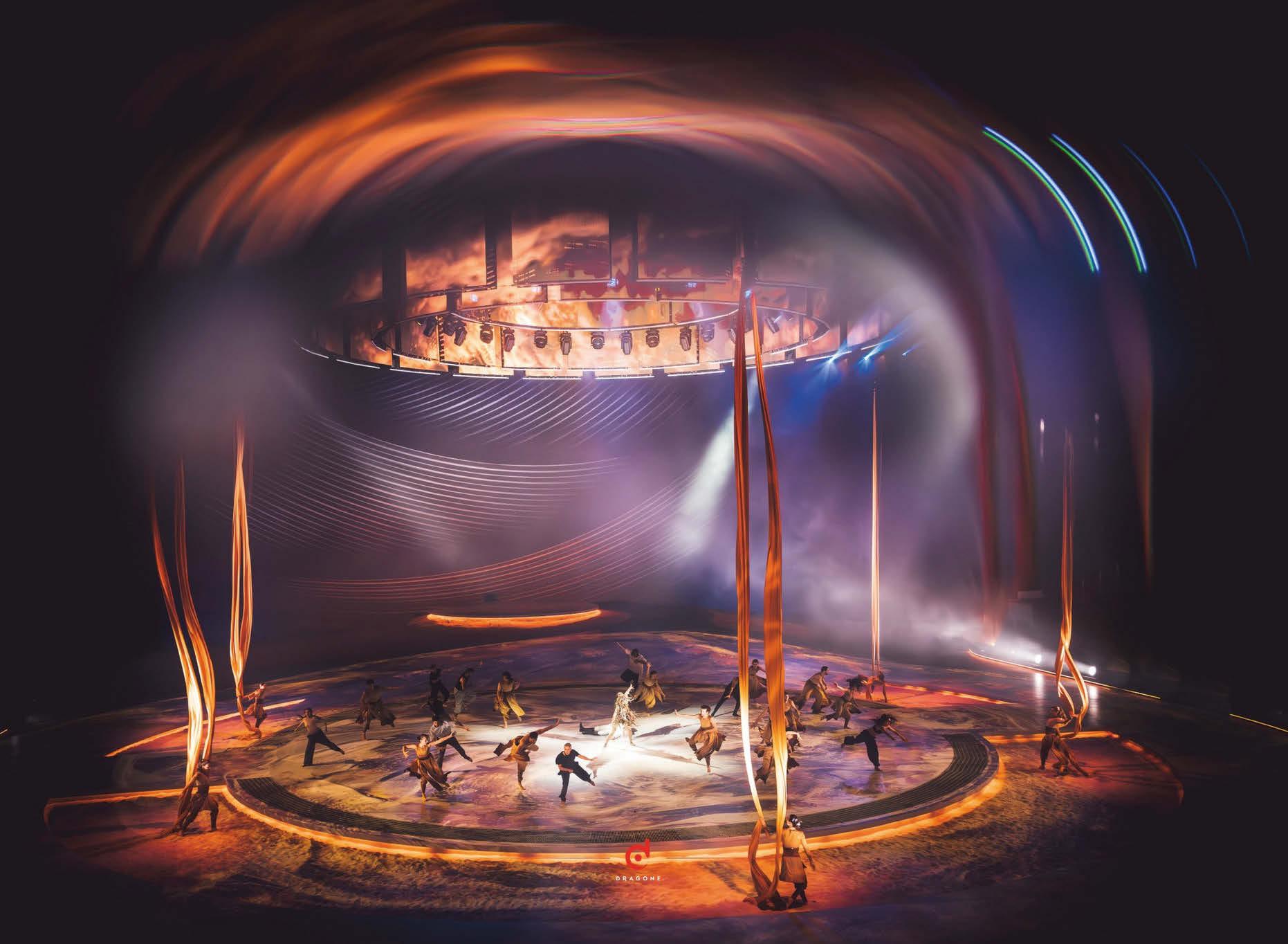
partners are exceptionally talented, and they gravitate toward tools that don’t get in the way of their ambition. If Disguise has earned its place here, it’s because those teams have trusted it to deliver under real pressure, and it has.
Where do you see the biggest opportunities for growth for Disguise?
Saudi Arabia represents an extraordinary growth opportunity. The scale of Vision 2030 investment, gigaprojects like Qiddiya, represents an unprecedented pipeline of destination-scale experiences being built from the ground up. They are entirely new cities and entertainment districts where immersive technology is being designed in from day one.
Th e UAE is equally important to us. Dubai has been the foundation of our regional story. The Burj Khalifa, One&Only Za’abeel and Al Wasl Dome are UAE projects, and the country continues to set the benchmark for what largescale immersive experiences can look like. It remains one of the most dynamic markets in the world for live events, hospitality destinations and landmark installations, and we see a significant runway for growth there.
Sp orts and venue infrastructure is a major opportunity across the region, too – particularly with the FIFA World Cup 2034 on the horizon. The appetite for technology that can flex across football, esports, concerts and cultural events, often in the same venue, is very real.
Cultural institutions and museums are another area we’re watching closely. There’s a genuine ambition across the region to tell national stories through contemporary immersive means – not to replicate what’s been done elsewhere, but to create something entirely of this place. That requires long-term, permanent infrastructure, which is exactly what Disguise is built for.
Across all of these sectors, one conversation comes up again and again: audience and fan engagement. In Saudi Arabia, 63% of the population is under 30 – they are a young, digitally native audience with exceptionally high expectations for live experiences. Clients want to know how immersive technology translates into real, measurable outcomes: longer dwell times, stronger social moments, more reasons for audiences to return.
Th e evidence is compelling: venues delivering immersive visual experiences are seeing uplifts of up to 15% in social engagement and 40% growth in third-party event bookings. The shift from one-off spectacle to permanent immersive infrastructure is well underway, and that’s the conversation we’re most excited to be part of.
Tell us more about your planned new business entities… The establishment of formal business entities in Saudi Arabia and the UAE is a natural extension of what we’ve been building toward. We have team members based in the region covering the commercial, creative and technical
Facing page: Disguise Chief Product and Technology Officer, Raed Al Tikriti. Above: TERHAL by Dragone.
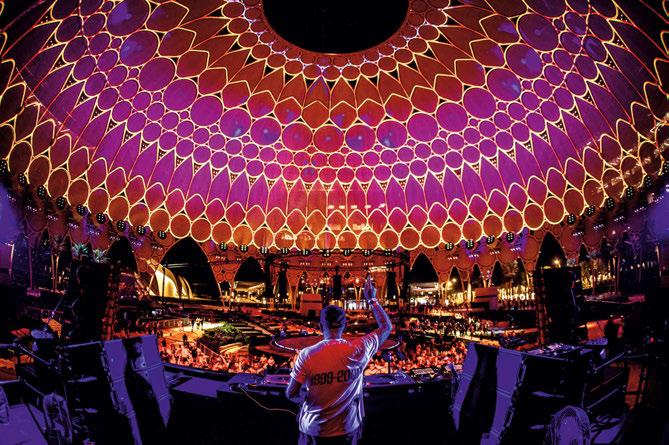
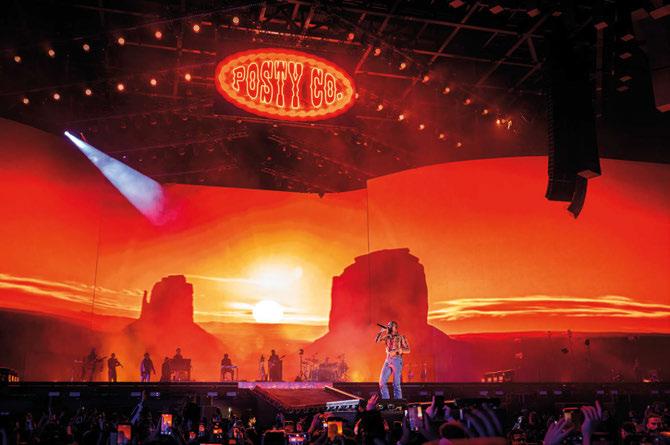
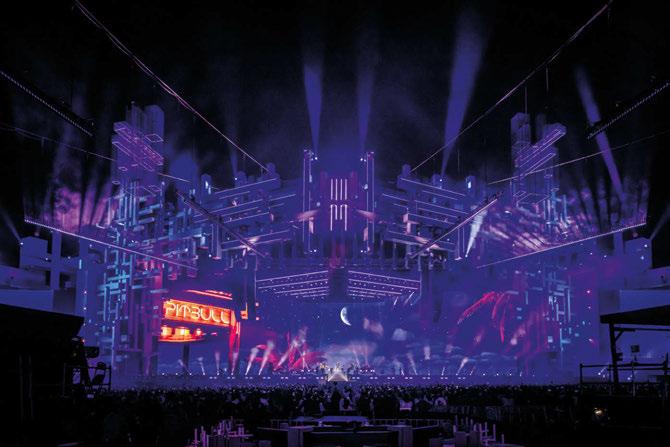
functions, and I personally make regular visits alongside other members of the Disguise leadership team. That direct presence has already changed the quality of the conversations we’re able to have – being in the room during the design phase, understanding the specific dynamics of a project, and being available in the way that complex productions demand makes a real difference.
Th e formal entities in Saudi Arabia and the UAE are about giving that presence a proper foundation, so our regional team has the structure and resources to operate effectively long-term, and so clients and partners have the confidence that Disguise is genuinely committed to the region. The intention is to have teams across both Saudi Arabia and the UAE, reflecting the fact that these are two distinct markets that each deserve dedicated focus.
You’ve already appointed Issa Al Azry… what will your approach be to building out your Middle East team as your presence grows?
Issa is a great example of the kind of hire we’re making: someone with deep roots in the region, strong technical expertise, and strong relationships within the creative and production community.
We’re building deliberately rather than rapidly, and we’re currently recruiting for a Sales Manager role based in the region, so the team is actively growing.
At a l eadership level, we’re also investing significant time on the ground. Our VP of Marketing, Alexandra Coulson, is present in the region focussed on building and strengthening relationships across our partner and customer ecosystem. Presence at that level matters because it signals that this isn’t a market we’re managing from a distance.
Our approach to building presence in the Middle East isn’t only about headcount. A significant part of it is about deepening our work with the partners who are already here. Companies like A LOUD MINORITY (ALM), mediaPro International, Vita Events, Creative Technology and other partners have been delivering extraordinary projects in this region for years, and our role is to work alongside them more closely, bring projects to them, and make sure that the full weight of Disguise’s technical and creative capability is accessible to them on the ground.
Training and community are also central to the strategy. We’re expanding our regional training roadshow programme and investing in our ambassadors’ programme here, the Creators Circle, bringing operators, users, and creative technologists together to learn, share, and push the platform further. We’ll also be increasing our event presence across the region, which we see as an important way to stay embedded in the conversations that matter.
Ultimately, we’ll scale the team in line with demand, but the foundations we’re putting in place now, through people, partnerships, training, and events, are designed to make sure we’re ready for what’s coming.
What do your partnerships with both Tanmiya and ALM bring to the party?
Tanmiya brings us closer to the client landscape in Saudi Arabia and the wider Gulf – helping us navigate a market where relationships and local knowledge matter enormously. There are significant projects and opportunities in the region that we simply might not have any knowledge or visibility of without partners who are deeply embedded in those networks.
A LO UD MINORITY operates at the other end of the project lifecycle, in the creative and technical delivery of complex productions. ALM has built a remarkable reputation in the region, delivering some of the most ambitious shows and experiences around the world, and they bring a depth of local expertise and creative capability that complements what we do. Disguise has always specialised in the biggest, most complex projects with a lot of moving parts, and having partners like ALM who can
Above (top-bottom): Al Wasl Plaza at Expo City Dubai; Post Malone’s performance at MDLBEAST Soundstorm; Pitbull on stage, also at Soundstorm.
work closely with us across every stage of execution means we can be confident that nothing gets lost between concept and delivery.
It ’s also important to say that Tanmiya and ALM are two partnerships we’re announcing publicly. We also work with a wide range of partners and consultants across the region who are doing incredible things: rental houses with significant Disguise fleets, system integrators, technical production companies, and creative studios who have been delivering landmark projects here for years.
Companies like mediaPro, Vita Events, Pixel Artworks and Creative Technology have been central to some of the region’s most defining experiences, and those relationships are just as important to us. Our expanded presence is as much about deepening those existing partnerships as it is about forming new ones. The goal is to be a better, more available, more useful partner to everyone in the ecosystem.
What are your ambitions for Disguise in the Middle East?
At the most straightforward level, we want to build on what’s already been achieved here and support even more of the region’s most ambitious immersive experiences. The projects that have been delivered across the Middle East over the past few years have been genuinely world-class – and what’s coming next, as Vision 2030 accelerates and the region continues to invest in destination-scale
entertainment, cultural infrastructure, and sports, is going to be extraordinary. We want Disguise to be at the heart of that.
Our ambitions go beyond being a technology provider. One of the things we feel strongly about is helping to develop the local talent ecosystem. The Middle East has incredible creative and technical energy, and we want to invest in that, through training, through the Creators Circle, through knowledge-sharing programmes that give local operators, designers, and technologists the skills to own and lead these projects themselves. The goal is to help build the capability so that the region can deliver the next generation of experiences on its own terms, with Disguise as a long-term partner in that journey.
We also see a real opportunity to contribute to the broader ambitions that Vision 2030 represents. The region has set out an incredibly clear vision for what it wants to become: a global hub for culture, entertainment, sport, and tourism. We believe immersive technology has a meaningful role to play in achieving that.
If we can help bring the best and most innovative experiences to audiences here, and in doing so help cement the Middle East’s position as one of the world’s leading destinations for live and immersive entertainment, that’s an ambition we’re genuinely excited to be part of.
Photos: Dragone, UNTOLD, MDLBEAST www.disguise.one
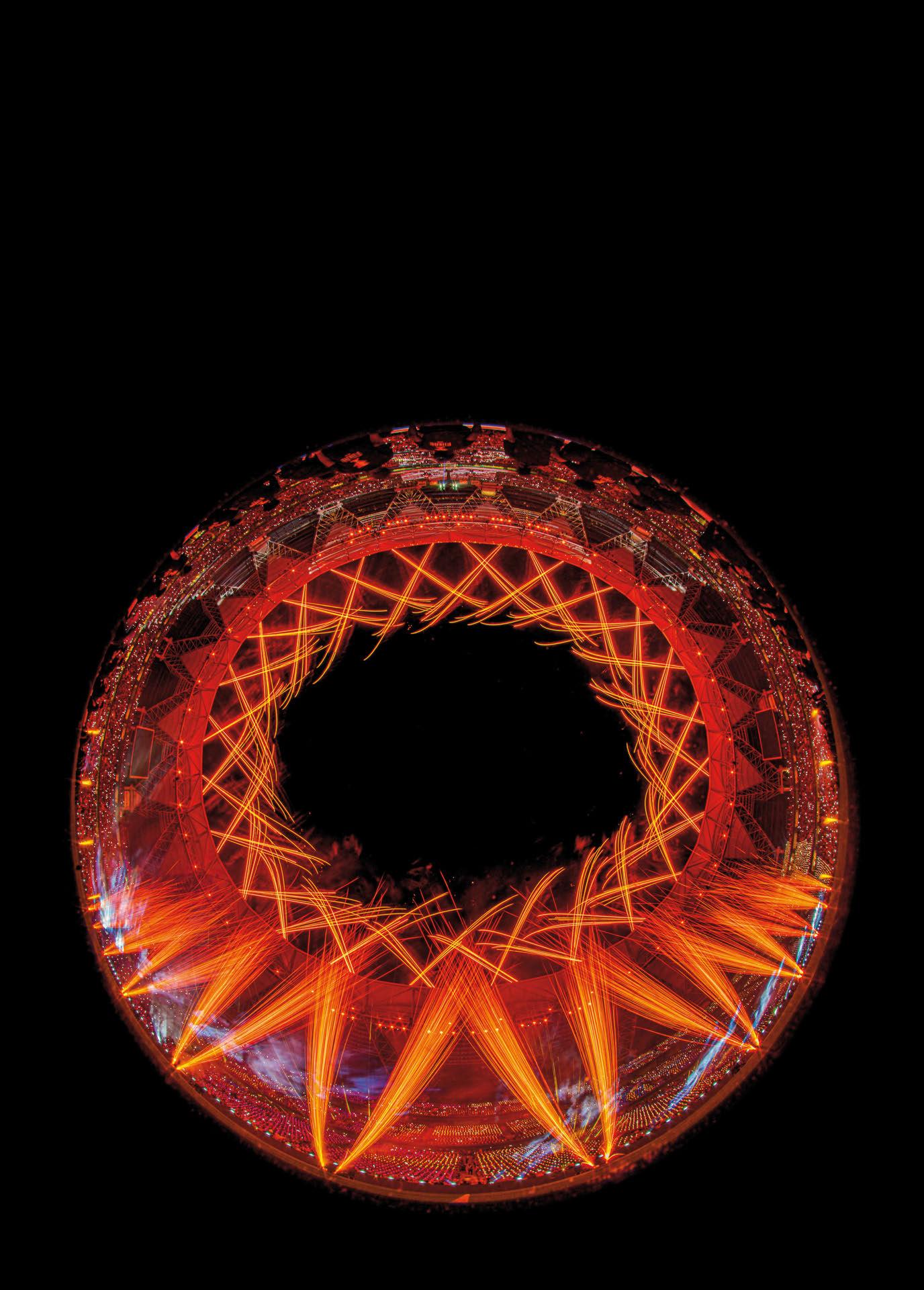
Reclaiming the skies
Despite the tumultuous times for live events across the Middle East, Groupe F’s Nicolas Chavance reflects on a series of ambitious projects that demonstrate the enduring appeal of the aerial spectacle and the region’s appetite for innovation.
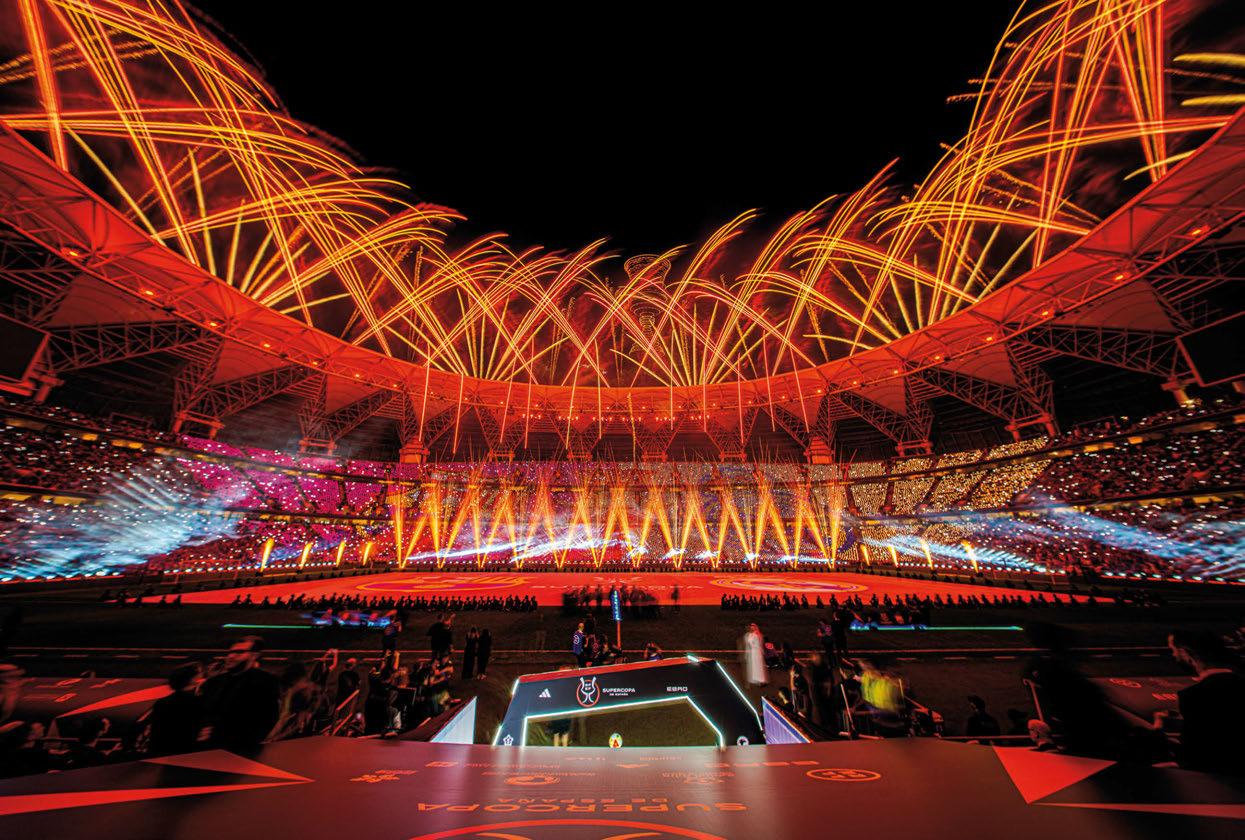
The Middle East has long had a reputation for leading the way when it comes to fireworks, drone shows and aerial effects. With a constant drive for development backed by the resources and a demand from end clients to break world records and deliver bigger and better, the region is often cited as best-in-class for aerial displays.
On e company that has played a significant role in the Middle East’s development in the sector is Groupe F. Having been involved in some of the world’s biggest sporting events, since the Barcelona Olympic Games back in 1992, the company has more recently lent its visual flair to some of the Middle East’s most important sporting occasions, from Special Olympics and Dubai World Cup to the Esports World Cup, Formula 1 and Formula E.
“We have grown on solid foundations over the years,” explained Groupe F’s Deputy Managing Director, Nicolas Chavance. “We aim to create moments that are iconic, innovative, and, whenever possible, something people haven’t seen before.”
Over the past few months, Groupe F has been given what Chavance described as “some great opportunities to make the skies of Saudi Arabia come alive” – including the Spanish Super Cup, which was produced by SELA.
“That was a very exciting project,” he recalled. “We had effects on the pitch, fireworks on the roof, and also a technical first for us: launching fireworks from the catwalk under the stadium roof, directly above the audience, which of course required extremely strict safety conditions.”
Similarly challenging was Groupe F’s work at the WWE Royal Rumble Riyadh, which saw the company collaborate with Strictly FX and Sela to display fireworks on multiple buildings in the centre of Riyadh simultaneously, while deploying a new generation of pyro drones and ‘neverseen-before’ pyro effects.
“Then there was the Formula E Grand Prix in Jeddah, with Sela and LAB2580,” Chavance recalled, reminiscing about the series of successful deployments. “That brought many different elements together: pyro effects on drones, the artistic direction and choreography for the drone show, fireworks on the water and on the Shangri-La, plus special effects along the track. It was a combination of different skills and technologies in a single experience.”
De spite the slowdown in events caused by the situation in the region, according to Chavance, there’s a real sense that a return to the boundary-pushing events that the Middle East is known for is not far away. “We can see things picking up again – especially in sports,” he reported, noting further recent projects including the ROSHN Saudi Pro League finale in Riyadh with entourage [page 38], AFC Women’s Cup with Sela, and the School Football Tournament with the Ministries of Education and Sports.
“What these recent projects required from all of us was agility, resilience, listening, and strong teamwork,” he commented. “In a region that can be fragile, where logistics can become a daily challenge, you must work together, face situations as they come, and find smart, practical solutions.”
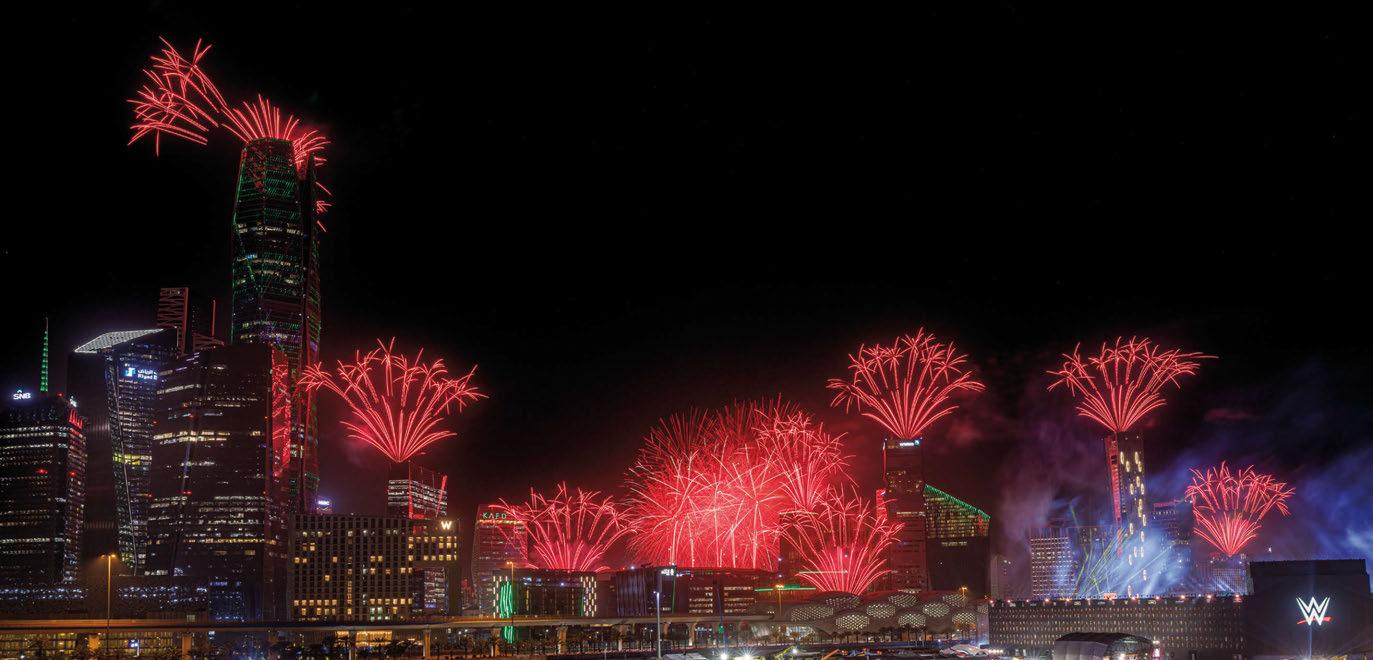
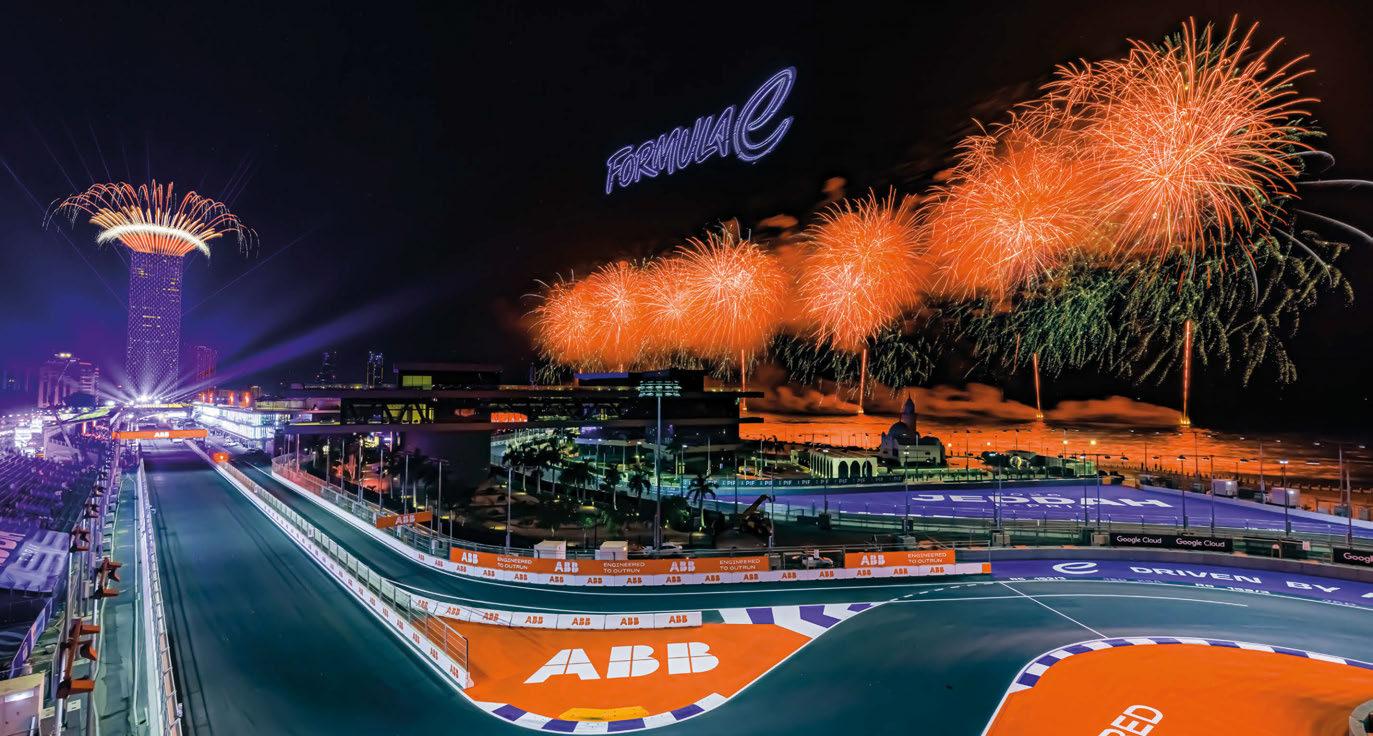
For Chavance and the Groupe F team, regardless of the project, the standard of delivery must be consistent.
“Everything we do – whether we’re working on the roof of the PIF tower at KAFD or on a school’s stadium pitch – we maintain rigorous working practices, collaborating very closely with agencies, production teams, organisers, and TV directors. We are participants, we contribute, and we’re grateful to be there,” he commented. “We’re fully aware of the responsibility. Safety always comes first, for the people and for the event, no matter the scale.”
Th e Deputy Managing Director closed with a message of pride and positivity. “We’re genuinely proud that we were able to deliver ambitious events alongside very talented production teams. Across all these projects, we felt the
same thing every time – audiences need joy, beauty, spectacle, kindness, and moments where they can come together,” he commented.
“This period is teaching us resilience. We adapt, but we stay true to who we are. It’s a challenge, but it drives us to keep innovating, creating and making the sky shine. We are proud to contribute and work with clients who trust us, always keeping in mind that people come first, and that the world remains fragile,” he concluded. “Now, we’re preparing what’s next. Brighter days are coming, bringing new opportunities that will demand even more innovation, more beauty, and the highest level of safety. We’ll be ready.”
Photos: Groupe F www.groupef.com
Neumann MCM 114
As the Firdaus Orchestra utilises the Neumann MCM 114 on its recent show at Al Wasl Plasa, Expo City Dubai, Alice Macaluso of the brand’s Middle East distributor, Venuetech, takes TPiMEA on a deep dive into Neumann’s dedicated miniature clip microphone solution.
Where does the MCM system sit within Neumann’s range of microphones?
While Neumann is widely known for its studio microphones, small-diaphragm condensers, and stage vocal microphones, the MCM system sits within Neumann’s live sound portfolio as its dedicated miniature clip microphone solution for close-mic’ing acoustic instruments on stage.
Th e system is modular, with dedicated mounting options for strings, brass, woodwinds, percussion, guitar, piano, and other acoustic instruments, making it highly adaptable across orchestral, theatrical, broadcast, and live event applications.
What are the main features?
The main benefit of the MCM 114 is that it gives users Neumann sound quality in a format that is practical for live use. At the heart of the system is the KK 14 capsule, which captures instruments with detail, clarity, and a natural tonal balance.
For sound engineers, the MCM 114 allows close-mic’ing while preserving the natural character of the instrument, which is especially valuable in live and outdoor environments where clarity, isolation, and gain before feedback matter.
For musicians, the dedicated mounting options are designed to hold securely without interfering with the performance.
This is particularly important for orchestral and acoustic performers who need the microphone to stay securely in place while allowing them to play comfortably.
For rental companies, venues, and production teams, the modularity of the system helps one microphone platform to be adapted across multiple instruments and performance types, making it a practical and long-term investment.
Why is the MCM 114 a good fit for the Middle East market?
The Middle East market is increasingly driven by high-profile live events, cultural productions, orchestral performances, broadcast projects, festivals, and premium destination venues. These productions often demand international-level audio quality, but they also come with real operational challenges, including open-air venues, fast setup schedules, complex stage layouts, and high visual expectations.
From Venuetech’s perspective, clients need guidance on the right solution, the correct configuration, and how exactly the system will perform in the actual venue or the chosen production environment.
Th e MCM 114 allows us to support those requirements with a solution that is reliable and technically capable for the standard of productions taking place across the region.
Tell us about the recent case of the MCM 114 being supplied to the Layali Firdaus shows at Al Wasl Plaza…
The Layali Firdaus shows at Al Wasl Plaza were a strong example of how the MCM 114 performs in a demanding live orchestral environment. Al Wasl Plaza is a prestigious and visually impressive venue, but it also presents real challenges for sound reinforcement, particularly for outdoor orchestral performances where wind and open-air conditions can affect the clarity and stability of instrument capture.
For the Firdaus Orchestra, the MCM 114 was supplied across several instrument sections, including cellos, double basses, woodwinds, brass, and qanun. The requirement was to capture the expression and detail of each instrument while supporting the overall orchestral balance in a live environment.
Th e feedback from the project was very positive. The microphones helped deliver a natural, detailed sound with minimal corrective processing, while the mounting system provided stability for live performance.
For Venuetech, it was a strong demonstration of how the MCM 114 can support premium regional productions where both technical reliability and musical authenticity are essential.
What kind of support does Venuetech offer to Neumann users in the region?
Venuetech supports consultants, integrators, rental companies, engineers, venues, and end users of Neumann in the region through a combination of product consultation, technical guidance, hands-on demonstrations, training, and after-sales support.
For systems such as the MCM 114, this includes guidance on the right microphone set, instrument-specific clips, mounting accessories, and application approach based on the venue, performance type, and also technical requirements. In our role as the regional distributor, Venuetech also works closely with Neumann to bring manufacturerlevel product knowledge into the local market. This allows us to support users across live sound, broadcast, studio, education, house of worship, and performance venue applications with practical advice that is relevant to real project conditions in the region.
Photo: Venuetech www.neumann.com. www.venuetech.ae
Coca-Cola Arena launches Venue Experience
The new attraction allows guests to take a peek behind the scenes of one of the world’s leading live entertainment venues.
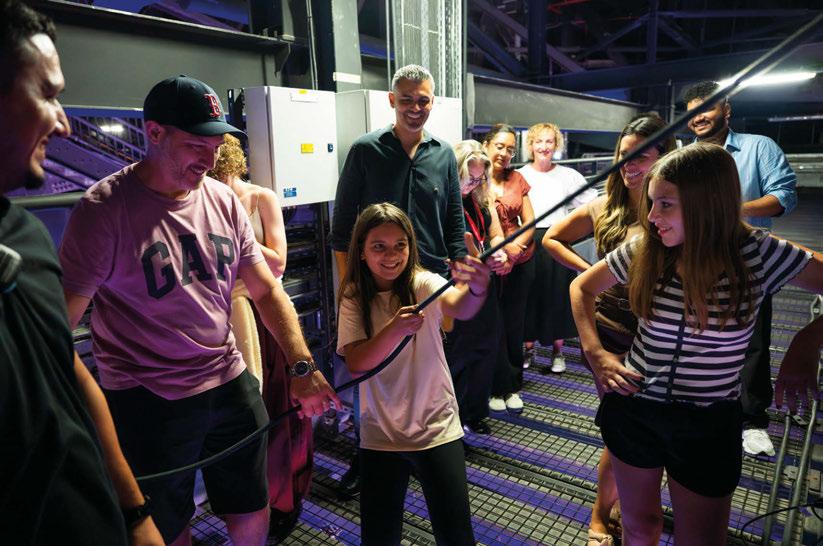
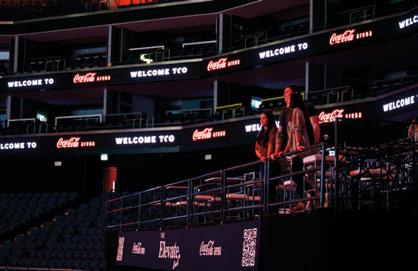
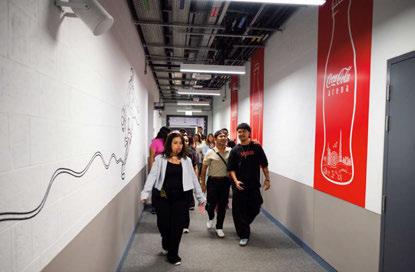
For those who work within the live events industry, the backstage areas at arenas are the most normal thing in the world. However, it’s easy to forget that for the majority of the ticket-buying public, what goes on behind the scenes is a subject of great curiosity. Aiming to tap into this interest, Coca-Cola Arena has launched the Venue Experience – a brand-new attraction that gives guests exclusive access to the stories and spaces within the venue that they would not normally be privy to.
TPiMEA was among the first to try out the experience at an invitation-only media event, during which Coca-Cola Arena’s General Manager, Mark Jan Kar, sat down for a chat.
“Coca-Cola Arena has become one of Dubai’s most iconic attractions and entertainment destinations, but what many people don’t see is the incredible ecosystem that exists behind every show,” he began.
“From artists and athletes to production crews, hospitality teams and technical experts, every event is powered by passionate people working together to create unforgettable experiences. The Venue Experience brings that world to life, giving guests exclusive access to the stories, spaces and innovation behind the curtain,
and allowing them to experience Coca-Cola Arena in a way that’s never been possible before.”
Designed to be fun, immersive and highly interactive, the Coca-Cola Arena Venue Experience invites guests to discover backstage areas, artist dressing rooms, premium hospitality spaces, exclusive lounges and spectacular viewpoints overlooking the arena bowl. Along the way, guests hear stories from some of the venue’s most memorable moments, learn how world-class productions come together, and enjoy unique photo opportunities.
Ac cording to Jan Kar, the Venue Experience is just one of the ways that the Coca-Cola Arena is maximising its offerings to the community. “We’re in the business of ensuring that our venue is in use for as many days as possible, so we’re always looking for ways to fill any gaps in the schedule, which are becoming increasingly few and far between,” he said. “Serving our community is a major focus for us, so we’re happy to be able to invite people behind the scenes for a fun and unique experience.”
Gu ests can choose between two tour experiences – the 90-minute Behind the Scenes Tour, which offers a peek at the venue’s most iconic locations, showcasing the artist journey,
premium hospitality experiences and the transformation of the arena from event to event, or the two-hour Access All Areas Tour, which unlocks additional restricted areas including The Catwalk above the main bowl.
Th e Coca-Cola Arena Venue Experience was launched to the public in July 2026, with additional dates to be announced throughout the year. Tickets are AED100 for the Behind the Scenes Tour and AED130 for Access All Areas.
As well as the Venue Experience, Coca-Cola Arena has also been announced as the new home of the TPiMEA Awards 2026, and Jan Kar signed off by sharing his excitement ahead of the highly anticipated ceremony on 10 September. “This will be our first year hosting the TPiMEA Awards, and we’re delighted to finally have the event at Coca-Cola Arena,” he commented.
“We work alongside so many of the people and organisations who are shortlisted, so to get the opportunity to get the industry together to celebrate their achievements in our very own venue will be truly special. We’re honoured and thrilled to be the host this year and hopefully for many more years to come.”
Photos: Coca-Cola Arena www.coca-cola-arena.com
NMK Academy launches free education initiative
‘Invests in You’ aims to make education more accessible by offering sponsored training programmes for industry professionals.
NMK Electronics has launched a new education initiative, offering free training programmes to the region’s industry professionals.
Th e initiative officially launched with a complementary L-Acoustics System & Workflow certification at NMK Beyond, which welcomed UAE-based audio professionals for a full day of manufacturer-certified technical education. While the course carries a standard training value of AED650 per participant, every seat was fully sponsored by NMK.
“At a time when the Middle East ProAV community faces one of its most challenging periods, it takes market leaders to set the standards and create the conditions that enable the audiovisual industry to continue to prosper,”
said NMK’s Regional Managing Director, Alex Kemanes. “NMK remains committed to giving back to our AV community and elevating the skills of audio engineers.”
Th e initiative is being delivered through the company’s NMK Academy, which has been providing manufacturer-certified training, technical workshops, hands-on demonstrations, and professional development programmes across the GCC for several years.
Th e initiative has already received overwhelmingly positive feedback from participants. Hussain Lokhandwala, Head of Audio Department, GDL, said: “It’s amazing to see NMK doing something like this. L-Acoustics training is rarely offered complimentary, and
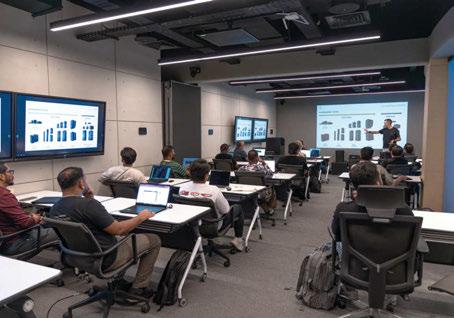
initiatives like this help professionals continue learning and developing their skills.”
Another attendee, Tim Molodkin, Freelance Audio Engineer, shared: “This was my first official L-Acoustics certification, and I’m extremely happy to have had the opportunity. NMK Academy encouraged me to continue my learning journey.”
Ga briel Carassco, Systems Engineer at mediaPro International, added: “The official workflow makes everything easier and more professional. Initiatives like this show that NMK is genuinely investing in engineers and helping us grow professionally.”
Photo: NMK Electronics www.nmkelectronics.com
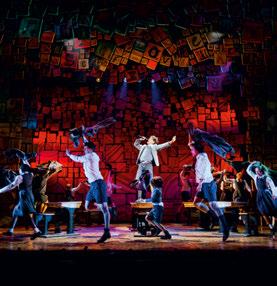


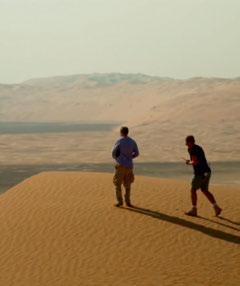
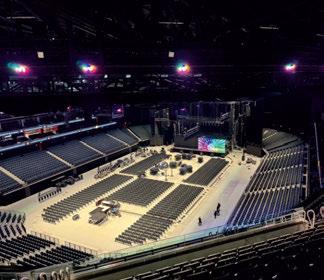
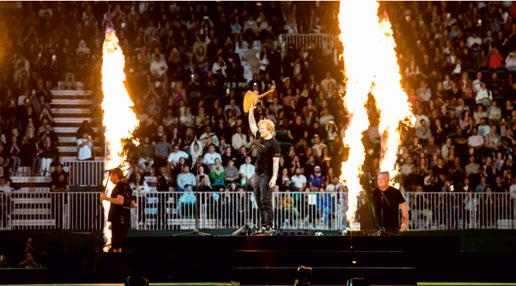
Aurras Group commits to Ayrton in South Africa
The company makes a significant investment in Ayrton fixtures through the manufacturer’s exclusive South African distributor, Planetworld.
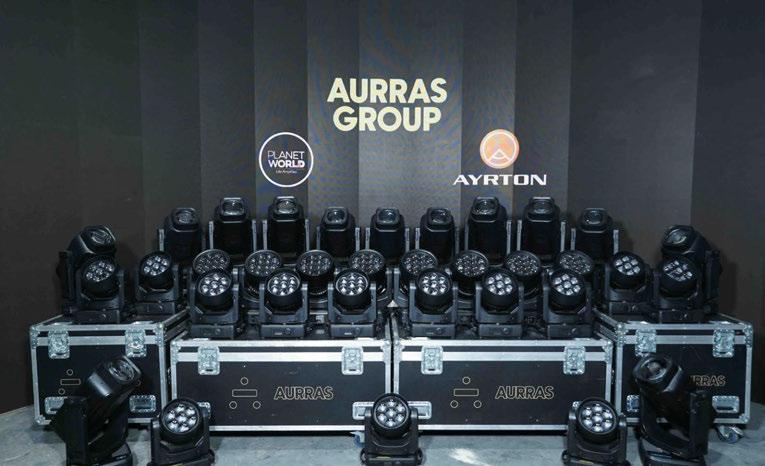
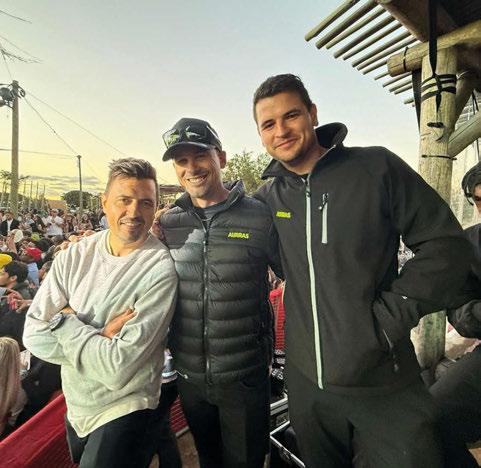
South African technical production supplier, Aurras Group, has expanded its inventory of Ayrton fixtures, adding Stradale Profiles and increasing its consignment of Nando 502 Wash fixtures to accompany its existing stock of Rivale Profiles. Aurras Group now has the largest rental inventory of Ayrton fixtures in South Africa.
Au rras Group was formed in 2023 by Justin Heyman and Gareth Aitken who merged their companies, TechX and OutputAV, so they could expand their service offerings and take on larger events. The company now specialises in the supply of lighting, sound, visual, structural and power requirements to events, theatre, festivals, concerts, corporate events and installations.
The company has a long-standing relationship with Planetworld, Ayrton’s exclusive distributor for South Africa, and together they have been major advocates for Ayrton across the country. “When we formed Aurras, we had to decide what brand to invest in,” Heyman recalled.
“M ike [Summerfield, Planetworld’s Pro Live Business Development Manager] introduced us to Ayrton and we haven’t looked back since. We cater for a very wide range of projects and felt that Ayrton fixtures had the versatility to be able to handle this.”
“The nature of the South African market demands a lot of flexibility, so we knew Ayrton would be a perfect match for Aurras,” added
Summerfield, who first brought the Rivale Profile to Heyman’s attention shortly after its launch.
“Rivale was our first foray into professional lighting fixtures and a big step for us, but within six months we made a repeat order and doubled our stock,” Heyman recalled.
“This was followed closely by 24 Nando 502 Wash fixtures, and six months later we ordered a further 24 Nando Washes, 24 Zonda 3 Washes and 24 Stradale Profiles, which we are also the first to own in South Africa.”
Gobos are a major consideration for Heyman due to the company’s theatre work. “We wanted a fixture that could be finessed for theatre productions, with seamless CMY colour mixing,” he commented.
“We also needed a fixture that we could put into a festival and blow the socks off the crowd, with great beam effects, high output, different prisms, and again, a great gobo selection – and IP rating was very important to us because of the climate here. Rivale ticked all of those boxes.”
Th e first consignment of 24 Nando 502 Washes was initially bought for Aurras’ indoor corporate projects, but doubling up to 48 gave them capacity for outdoor shows, too, making use of the fixture’s IP rating.
Having been impressed with the performance of their initial Ayrton investments, Heyman and Aitken needed something more compact, lighter and with a reduced footprint
for smaller productions. “With Stradale, we now have 24 smaller units that can deliver a similar output and features as Rivale,” Heyman stated. “It’s a great advantage to be able to offer a standardised rig from a family of fixtures with the same gobos and colour temperatures. It makes life a lot easier and the lighting designers love it.”
In 2025, Aurras Group was awarded the contract to provide and execute the lighting for Rocking The Daisies Main Stage, one of Cape Town’s most iconic music festivals, for the first time. “We deployed a full rig of Ayrton fixtures including 24 Rivale Profiles, 10 Stradale Profiles and 34 Nando 502 LED Washes,” Heyman said.
Aurras Group and Planetworld have played an important role in Ayrton’s strengthened presence in South Africa.
“We’ve had amazing support from Planetworld,” stated Heyman. “We took a bit of a risk investing in a new brand from the get-go, but we’re very happy with our decision and we believe it has paid off.
“The fixtures have shown excellent performance with minimal issues, reinforcing our decision to invest in additional units,” Heyman concluded. “They are total workhorses and the build quality is excellent.”
Photos: Planetworld www.aurrasgroup.co.za www.ayrton.eu www.planetworld.co.za
Gearhouse Splitbeam and DWR Distribution host Basic Theatre Flyman Training
Held at Teatro Montecasino Johannesburg, the course attracts representatives from theatres across South Africa.
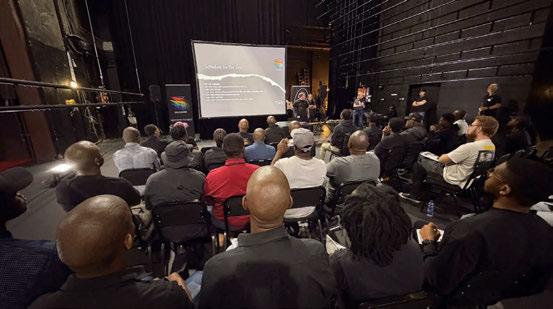
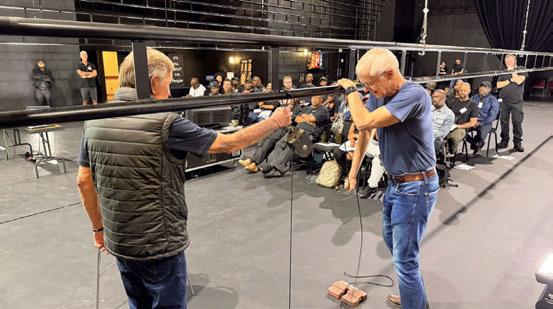
Theatre specialist Gearhouse Splitbeam recently collaborated with DWR Distribution to host a Basic Theatre Flyman Training course at Johannesburg’s Teatro Montecasino. Delivered by some of South Africa’s most experienced practitioners, the course taught participants the fundamentals of theatre flying systems.
“I have wanted to host flyman training for many years,” stated Alistair Kilbee, Managing Director of Gearhouse Splitbeam. “It is one of those theatre roles that often goes unnoticed, yet it is absolutely essential. A good flyman is like a good followspot operator – you only notice them when something goes wrong. I wanted to help change that perception and hopefully inspire more technicians to become interested in this highly specialised craft.”
For Kilbee, choosing the right trainers was critical. Rather than relying solely on theory, he wanted participants to learn from people with decades of hands-on experience.
“Rob Young from DWR is a master when it comes to the manufacture of flying systems, while lighting consultant and freelancer Denis
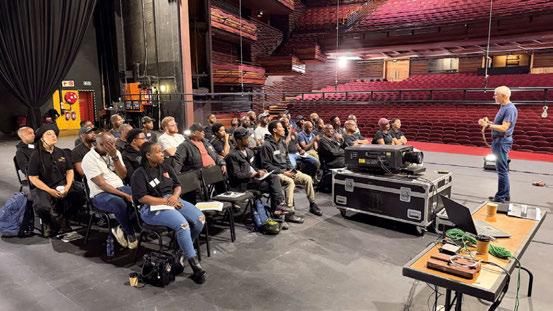
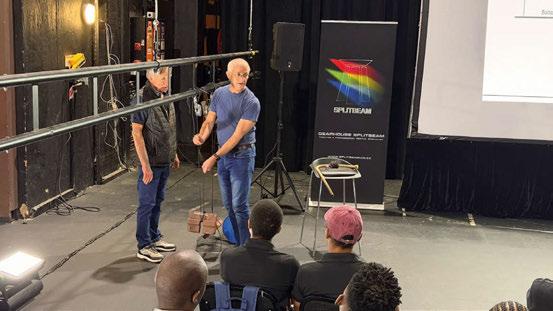
Hutchinson has been involved in the construction of flying systems in the majority of theatres around the country,” he explained.
“Together with Keith Pugin from DWR, they brought an incredible depth of knowledge and practical insight. Their experience is something that simply cannot be learned from a textbook.”
The training also benefited from the expertise of veteran flymen Stephens Olifant and Hammilton Sefara, with whom Kilbee has worked for more than 20 years.
“They are among the most professional, passionate and highly skilled flymen I have ever worked with,” he said of the trainers. “We all recognise that none of us are getting any younger, and there is a responsibility to ensure that the next generation of theatre technicians receives as much knowledge as possible while we are still able to share it.”
The beginner-level course introduced participants to single and double-purchase handline flying systems, covering essential terminology, operating procedures and safety practices. Delegates learned how to balance
loads, call moves and communicate effectively during performances, while practical sessions provided valuable hands-on experience in bar lashing, knot-tying and running show cues.
The Teatro generously opened its doors for the training, providing an ideal environment for both theory and practical learning.
Organisers hope this will be the first of many future training initiatives aimed at developing technical theatre skills in South Africa and ensuring that valuable industry knowledge continues to be passed on.
Gearhouse Splitbeam extended its gratitude to Duncan Riley and the DWR Distribution team for their support in making the training possible.
“The investment in the future of our industry was evident throughout the course,” Kilbee commented. “We are incredibly grateful for the partnership with DWR and look forward to growing this and other theatre training opportunities in the years ahead.”
Photos: DWR Distribution www.dwrdistribution.co.za www.gearhouse.co.za