
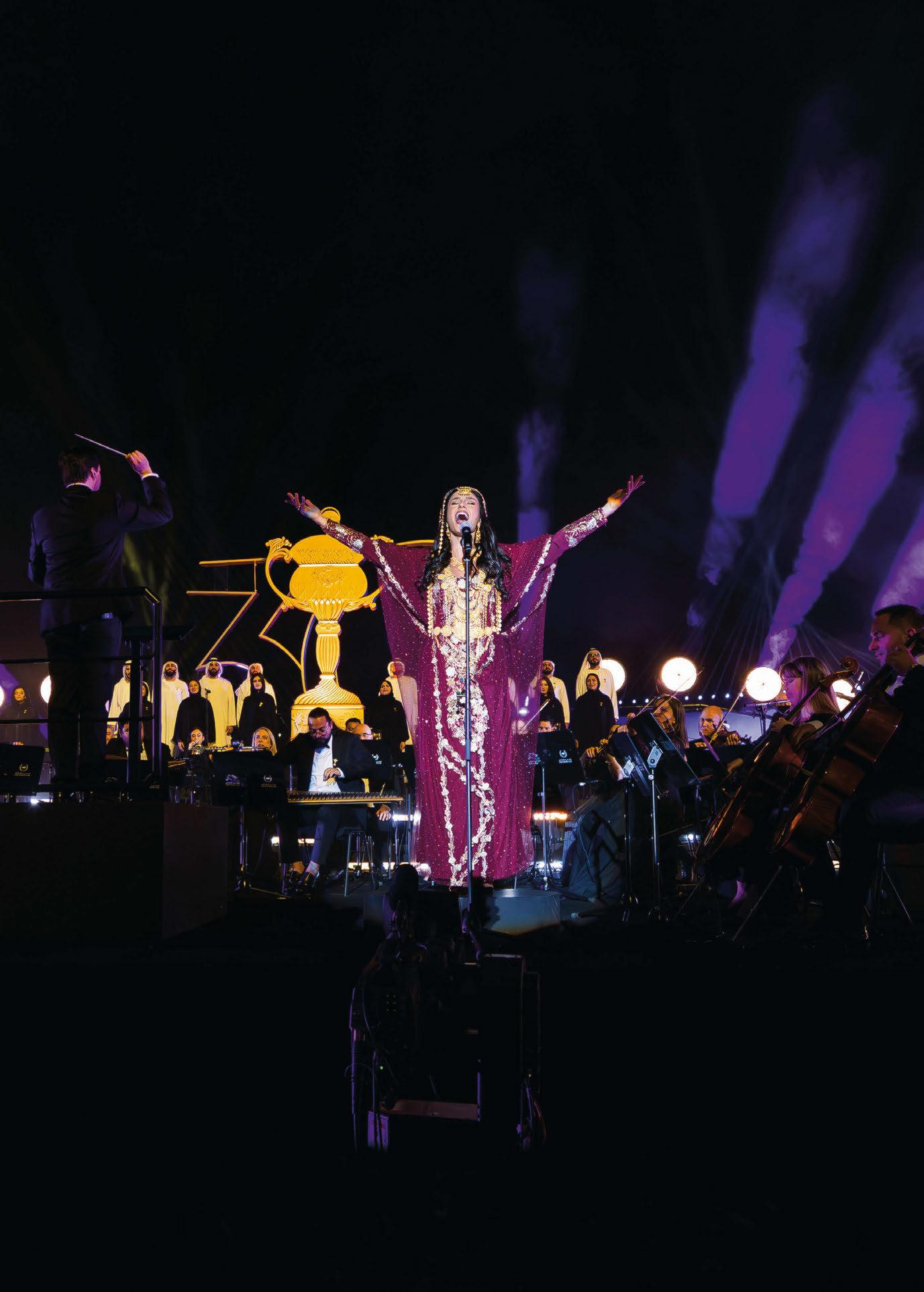
Dubai World Cup: A UAE Tribute
/ Every stage, every night
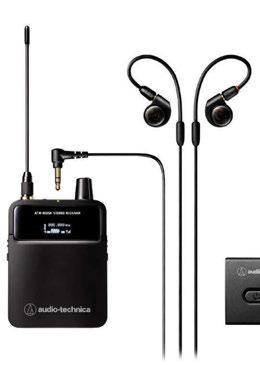
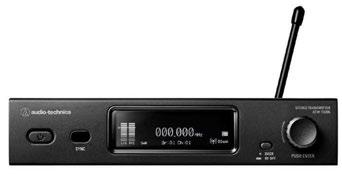
Elevate your live sound with rock-solid reliability
Say goodbye to feedback loops and bulky floor monitors. The 3000 Series IEM delivers clear, high-fidelity audio directly to the performer’s ears, giving them total control over what they hear. Easy to deploy and simple to operate, it’s the ultimate upgrade to achieve a cleaner stage and a studio-quality live mix every single night.
learn more at audio-technica.com
Welcome to TPiMEA
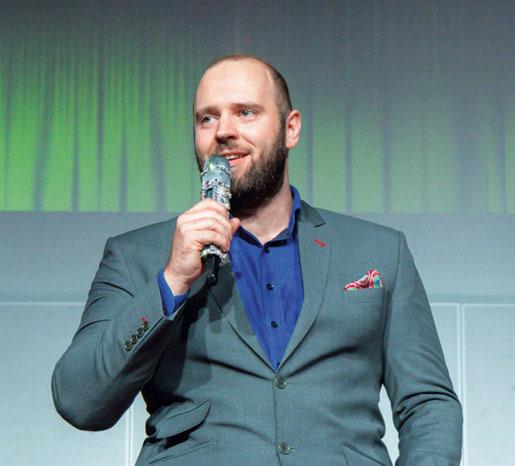
Peter Iantorno Editorial Director
I’ve been working on TPiMEA for long enough now that whenever I hear about a show taking place in the Middle East or Africa, my mind immediately jumps to the questions, ‘which suppliers were involved?’ and ‘what kit was used?’ In normal circumstances, the answers to these questions would usually form the basic framework around which the subsequent article is built. However, with the current circumstances in the region being very far from normal, you may notice that several of the articles in this edition take a rather different form from our usual style.
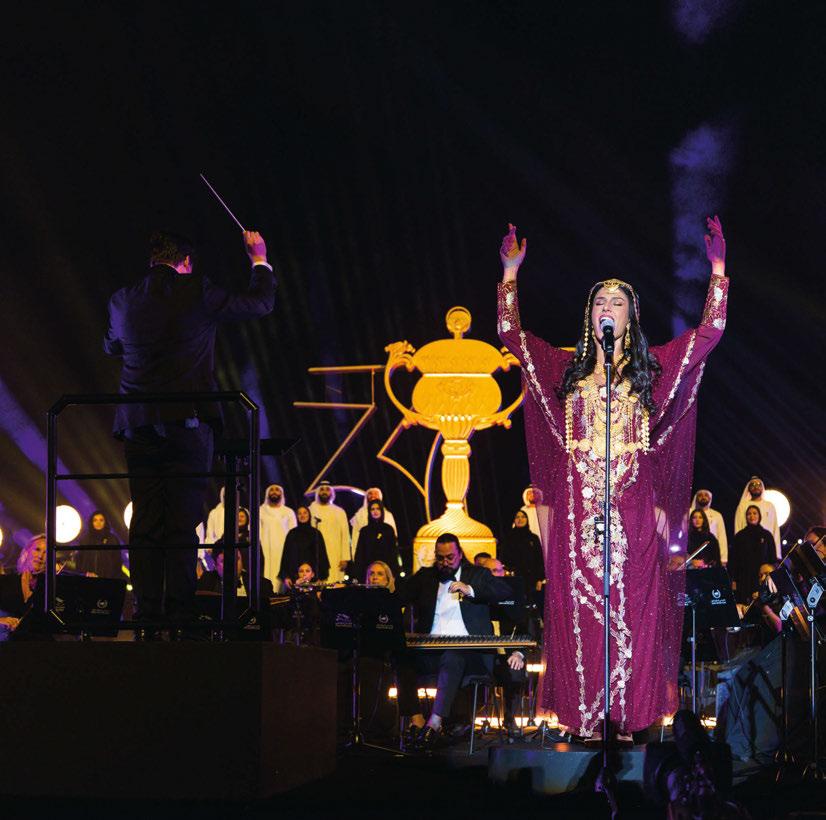
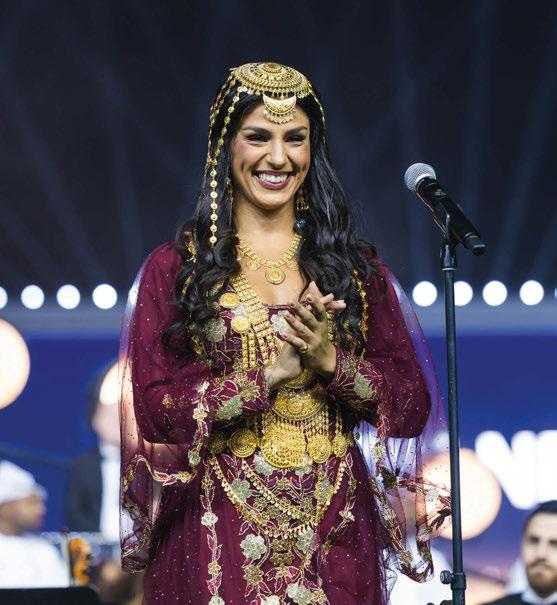
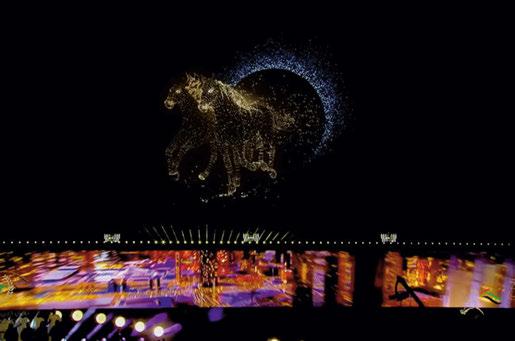
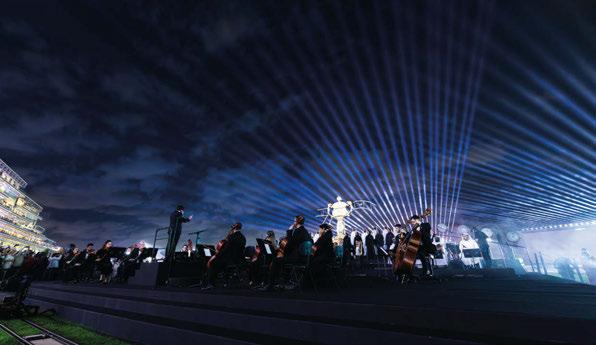
Chief among them is our cover story for this issue –Dubai World Cup: A UAE Tribute. While the annual horse race is usually accompanied by a world-class audiovisual extravaganza, for this year, the event was honoured in a very different format, with a touching tribute to the strength, resilience and unity of the country, utilising well-known Emirati songs played by the UAE Philharmonic Orchestra and sung by Amanda Maalouf.
“As the music built, the emotion became overwhelming – not because of production value, not because of the technology, but because everyone watching understood what this piece represented,” explained Alsayegh Worldwide’s Group CEO, Alex Bendiouis. In a special article on page 32, Bendiouis gives a firsthand account of the days and weeks leading up to the event, revealing the fascinating story of how, against all odds, the show did indeed go on.
While the successful running of the Dubai World Cup was something of an outlier among the raft of cancellations and postponements brought about by the conflict, the region’s live events industry has not been standing still during these most trying of times. On page 42, we hear from a selection of industry leaders to find out how they have been navigating the road to recovery.
Outside the Middle East, the African market is set for a boost in the coming months as Mediatech Africa returns to Johannesburg at the end of June after seven years away. We have an interview with Expo Director Simon Robinson previewing the long-awaited return of the event on page 48 I’ll be attending the show, so if you’ll be there and would like to meet, don’t hesitate to get in touch.
Enjoy the issue.

First Look
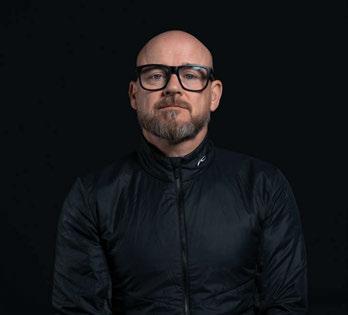
8 Al Woods
From festival fields to the top table at Clair Global UAE, Al Woods is helping shape the next chapter of the Middle East’s live events industry – drawing on lessons learned from a lifetime as an audio technician.
Event Focus
16 Karan Aujla: P- Pop Culture Tour
India gets its largest d&b audiotechnik deployment to date at New Delhi’s Jawaharlal Nehru Stadium.
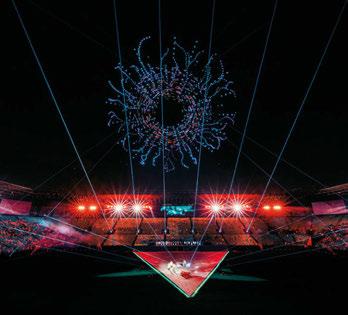
18 KSA Commission for Health Specialities Graduation
Dreamed by Us produces an immersive multimedia opera, using live performance, lighting, projection, drones and 25,000 wireless audience devices.
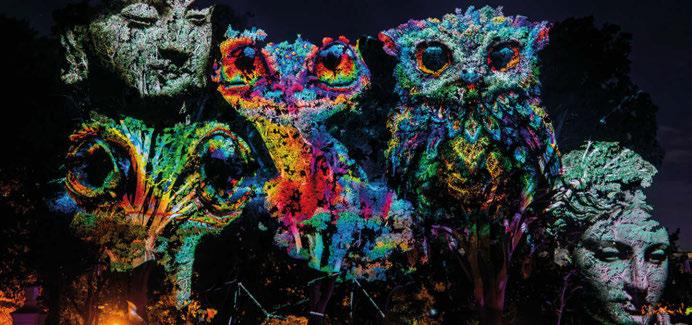
24 LUMENOCITY
Cape Town’s Company’s Garden is transformed into a living canvas of light, creativity, and imagination.
Production Profile
32 Dubai World Cup: A UAE Tribute
Alsayegh Worldwide Group CEO Alex Bendiouis tells the fascinating story behind the most meaningful ceremony in the country’s history.
Interview
42 The show must go on
As the Middle East live events industry continues to count the cost of the regional conflict, TPiMEA catches up with some key figures from across the sector to find out how they are navigating the road to recovery.
48 Mediatech Africa
Expo Director Simon Robinson previews the first Mediatech Expo in seven years.
50 The future of live events
The Aggreko team discusses the smarter energy systems and data-led design behind the region’s biggest productions.
Feedback
54 The human touch
Why community, accessibility and long-term engagement are at the centre of LINKVIVA's events.
56 The showcaller's handbook
CasaMilan Founder Stefano Milan shares his essential tips for showcallers across the region.
58 Gear Heads
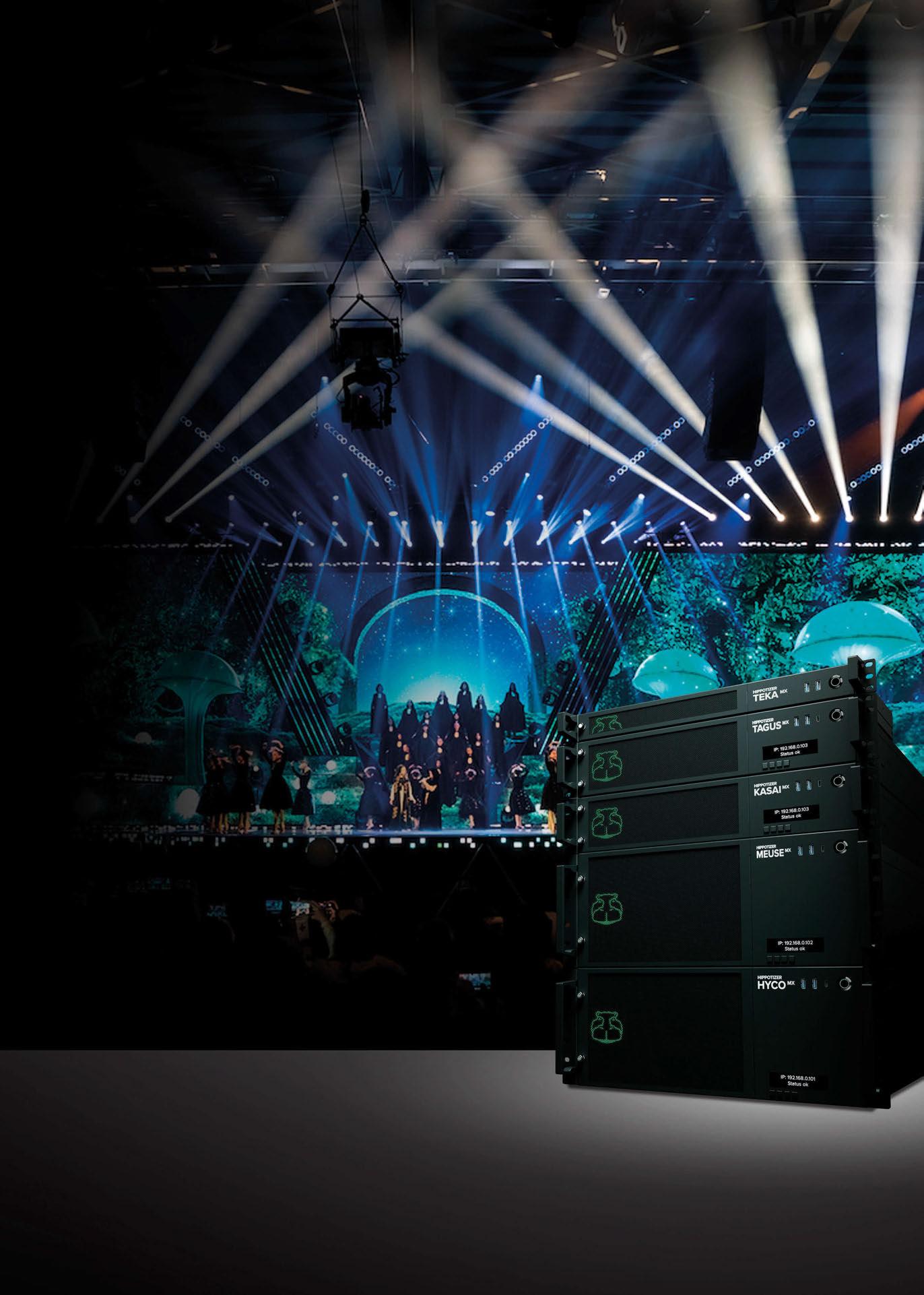
L-Acoustics and d&b audiotechnik unite with SoundPLAN to launch a universal standard for environmental noise prediction across multiple sound systems; and Green Hippo's Hippotizer MEUSE MX goes under the microscope.
62 Regional Round-up
The latest news, including a KSA milestone for ESM Operations, HOF and VUEAV's partnership, new hires at Audio-Technica and Trivandi, DWR's deal with König & Meyer, and HK Audio COSMO's southern Africa debut.
Editorial Director
Peter Iantorno
Tel: +44 (0)161 476 8360
Mobile: +44 (0)7763 233637
e-mail: p.iantorno@mondiale.co.uk
Managing Editor
Stew Hume
Mobile: +44 (0)7702 054344
e-mail: s.hume@mondiale.co.uk
Contributing Editor
Jacob Waite
Mobile: +44 (0)7592 679612 e-mail: j.waite@mondiale.co.uk
Contributing Assistant Editor
Alicia Pollitt
Mobile: +44 (0)7508 441986 e-mail: a.pollitt@mondiale.co.uk
Commercial Director
Fran Begaj
Mobile: +44 (0)7852 336728 e-mail: f.begaj@mondiale.co.uk
Senior Account Manager
Matilda Matthews
Mobile: +44 (0)7413 555978 e-mail: m.matthews@mondiale.co.uk
Account Manager
Tom Dyson
Mobile: +44 (0)7306 505230 e-mail: t.dyson@mondiale.co.uk
Account Manager
Molly Cummins
Tel: +44 (0)161 476 8360 e-mail: m.cummins@mondiale.co.uk
Digital Content Manager
James Robertson
Mobile: +44 (0)7725 475819 e-mail: j.robertson@mondiale.co.uk
Marketing and Event Manager
Alice Clarke
Mobile: +44 (0)7752 392465
e-mail: a.clarke@mondiale.co.uk
Marketing and Event Assistant
Charlie Moore e-mail: c.moore@mondiale.co.uk
Chief Executive
Justin Gawne
Mobile: +44 (0)7768 850767 e-mail: j.gawne@mondiale.co.uk
Mondiale Group Chairman Damian Walsh
Graphic Design & Production
Dan Seaton: d.seaton@mondiale.co.uk
Jez Reid: j.reid@mondiale.co.uk
Accounts
Jodie Matthews / Sarah Miller: ar@mondiale.co.uk
Cover Photography
Dubai World Cup by Alsayegh Worldwide
Printed By Buxton Press www.buxpress.co.uk
www.tpimeamagazine.com www.tpimeaawards.com www.tpimagazine.com www.tpiawards.com
@TPiMEA_Magazine
/ TPiMEAMagazine
@ tpimea_magazine /company/tpimeamagazine
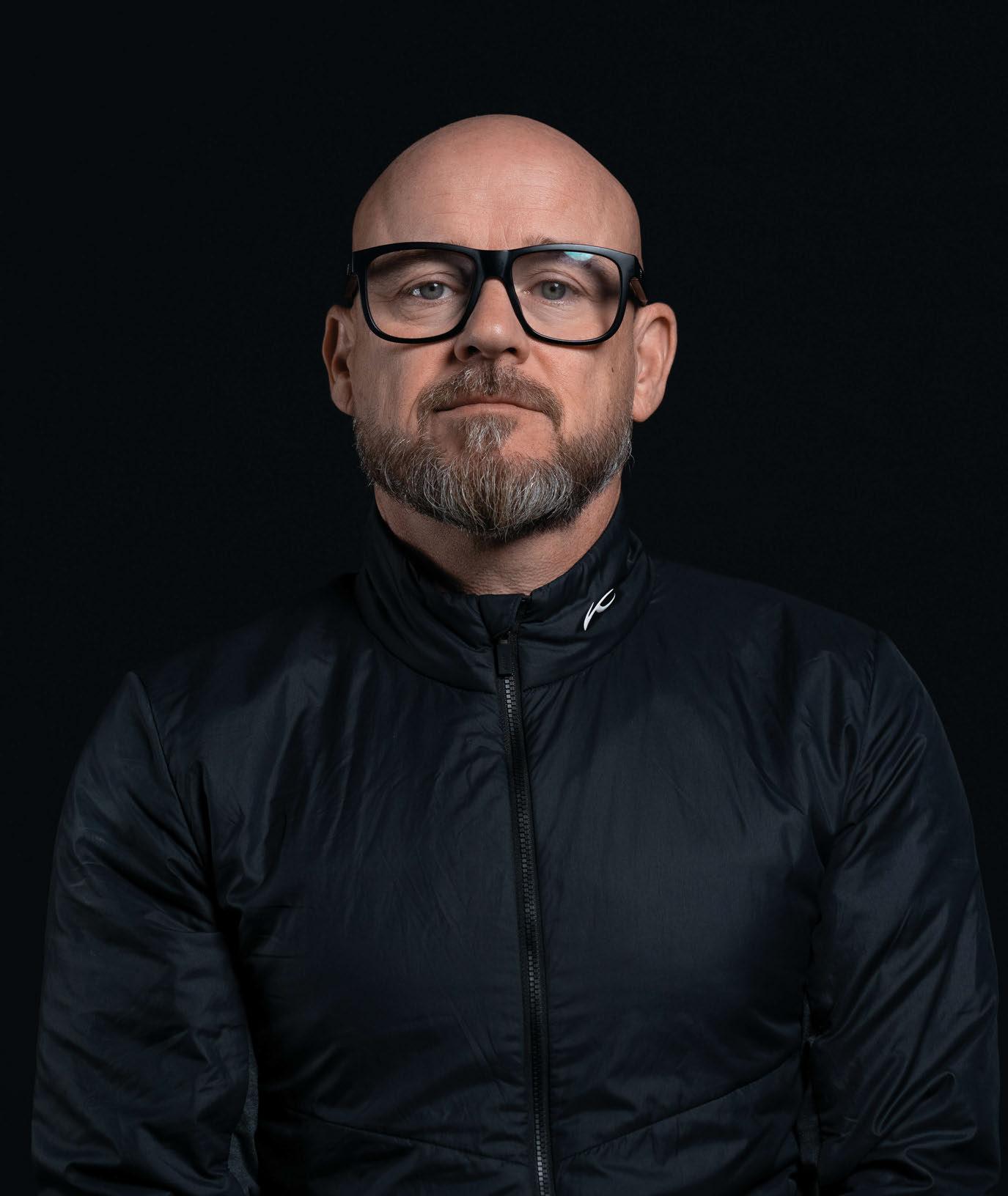
Al Woods, COO, Clair Global UAE
From festival fields to the top table at Clair Global UAE, Al Woods is helping shape the next chapter of the Middle East’s live events industry – drawing on lessons learned from a lifetime as an audio technician.
Like many leaders in the live events industry, Al Woods is not someone who grew up with designs on climbing the corporate ladder and conquering the business world. However, through a career built on hard work, loyalty and dedication, this self-confessed failed musician turned audio engineer now finds himself in a position of seniority in a global organisation, leading the UAE location of Clair Global, and working closely with its KSA team. “Back when I was loading my drum kit into my dad’s car for my first gigs all those years ago, I could never have imagined that I’d make a career out of this industry let alone what I do now,” he told TPiMEA.
In this First Look interview, he reflects on the pivotal moments that shaped his path – from European tours and muddy festival fields to the halcyon days of Dubai’s fledgeling live events scene, Expo 2020, and ultimately playing a big part in launching Clair in the region – while offering a candid take on leadership, team culture, the realities of an evolving global events industry, and his love of playing golf (badly).
What sparked your interest in the industry?
I grew up in the northeast of England, in a little village called Lanchester, just outside Consett. At the time, it was right in the middle of the steelworks shutting down, so what had once been a thriving working-class area became pretty rough, pretty quickly. There was a lot of unemployment, and the atmosphere changed quite dramatically.
My parents, my brother and my sister were all extremely musical, so music played a big role in our house. They were from a classical background, which was my first real exposure to music, but when I was around 16, I discovered alternative music, and I started playing drums in a few bands. I’m a failed musician – as many of us professional audio engineers tend to be…
Af ter leaving my comprehensive school I started at music college, but I didn’t finish the course because by then the band I was in had started making a bit of money, travelling around Europe playing covers at working men’s clubs, army bases et cetera. It was a lot of fun.
It dawned on me that I was never going to be good enough to be a pro musician, so I dropped the drumsticks and went on the tools as a technician, touring with a cabaret
big band. I dislike the term ‘roadie’, but essentially, that’s what I was doing – travelling the world, loading gear, setting up, sleeping in venues or in the truck, figuring things out as I went. The equipment we were using was terrible, and when I look back, I realise I had no clue what I was doing with it, but it was a great experience.
What was your first move into the world of professional live audio?
Eventually the jazz band disbanded and suddenly I found myself in London, out of work, needing to figure out the next step. So, I applied for a job at RG Jones and started in the warehouse. That was my real entry into professional audio.
From there, things moved quickly. The company was going through a transition, a lot of experienced people had moved on, and I ended up becoming a project manager much sooner into the role than I would have expected. It was a trial by fire, and I learned on the job, but soon I was mixing my own shows.
What kind of work were you doing in those early years?
A bit of everything, and looking back, it was truly invaluable. We handled a lot of TV work, mixing both FOH sound and monitors for various artists. I mixed monitors for Jools Holland on Don’t Forget Your Toothbrush and mixed FOH for Gladiators, among others. There were plenty of game shows, too, where we spent hours just riding lapel mics, as well as ceremonies at the Guildhall in London and mixing a couple of mics at Buckingham Palace for investitures. It wasn’t always the most exciting work, but it taught me professionalism, discipline, and how to adapt to very different corners of our industry.
Th ere was also a lot of classical work, which I loved; concerts for English Heritage, the Classical Spectaculars, mixing orchestras at the Royal Albert Hall. Trying to get an orchestra to sound natural but amplified was a challenge I loved. Point source PA, analogue console, a couple of DN410 and a REV 7; some people will remember those days – not a plug-in in sight. It was a huge learning experience that gave me a broad foundation. Even though I didn’t really utilise my mixing skills as much as my career progressed, those years helped to train my ears and gave me a level of confidence and understanding that I still rely on today.
When did life on the road start to become a bigger part of your career?
After leaving RG Jones, I went freelance in the late ’90s and started working with companies like Capital Sound and Delta. That’s when touring really kicked off.
My first proper gig was a Vanessa-Mae tour in Russia, in January. That was an eye-opener – freezing cold, tough conditions, but brilliant.
From there, I started working with more bands – Ocean Colour Scene, Kasabian, The Strokes, Stereophonics and Billy Talent. I moved from being a PA tech to becoming a Systems Engineer, which was a big step.
Later on, I got into more pop-oriented touring, working with Kylie Minogue, looking after Chris Pine as a Systems Engineer, and working with Gary Bradshaw and Chris Vaughn on Take That. I’ve worked with some great people –audio engineers and production personnel who really know their craft. It’s been such a privilege.
Alongside the touring, I used to run a little company called Reassuringly Average Audio, which used to pull together teams of freelancers and place the right people on the right tours. I was so busy with my day-to-day work, and I never really wanted to invest into it to make it profitable, but again it helped set me up with some of the people skills that would help me later in my career.
What was life like during those touring years?
It was a busy time. I was on the road pretty much constantly for well over a decade. On tour, you’re working hard, but
you’re also living in a bit of a bubble. Back in the day, before the industry changed, it was quite a lifestyle – big budgets, and personally plenty of excess. But that world shifted; the industry changed, budgets tightened, and the reality of the job became more apparent. The industry became more regulated which, in my opinion, it really needed.
Th ere’s also a darker side to that lifestyle. I saw a lot of people burn out and some people struggle with addiction. I knew that if I didn’t make a change at that point, I could easily be that man. That was a big factor in me eventually stepping away. It was a hard decision to end that chapter and get off the bus.
How did the move to Dubai come about?
I started doing bits of work in Dubai from around 2008; I would come over during quieter periods in the UK and help out Andy Jackson on his shows. However, I didn’t officially move to Dubai until 2013.
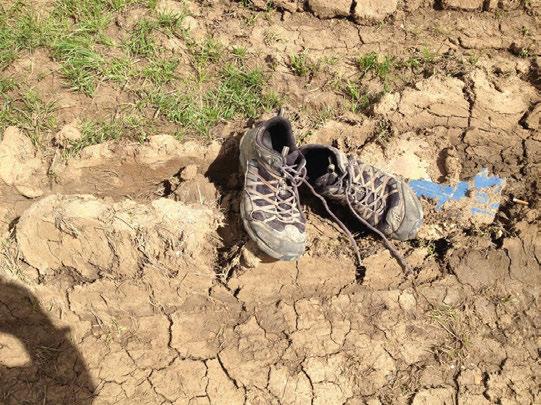
I to ok over the role of Crew Chief at the 2012 Olympic Games, which was an incredible but exhausting experience. Shortly after that, I remember vividly standing in a muddy field after loading out an EDM festival called Secret Garden Party and thinking “I’m done with this”.
I ha d been talking to Andy for a while about coming to Dubai full-time and one day I came out and asked him, “Would you fancy giving me a job?” Thankfully, he was up for it, so I packed up and moved over.
Part of it was about wanting stability – a normal routine, a car, a wardrobe to hang my clothes, a place to call home
I‘M AN ARTIST


OLA MELZIG
PRODUCTION MANAGER
M&M PRODUCTION MANAGEMENT

I just love the new generation of the Artist user interfaces. The SmartPanel‘s intuitive workflow and its very visual layout are simply fantastic.
I can customize it in any way I need, which is absolutely crucial for the big live events I typically work on.“
ARTIST INTERCOM
Professional and reliable live communications. Seamless integration of Riedel‘s SmartPanel and Bolero wireless intercom. Easily scaling from 16 to 1024 ports with flexible licensing.

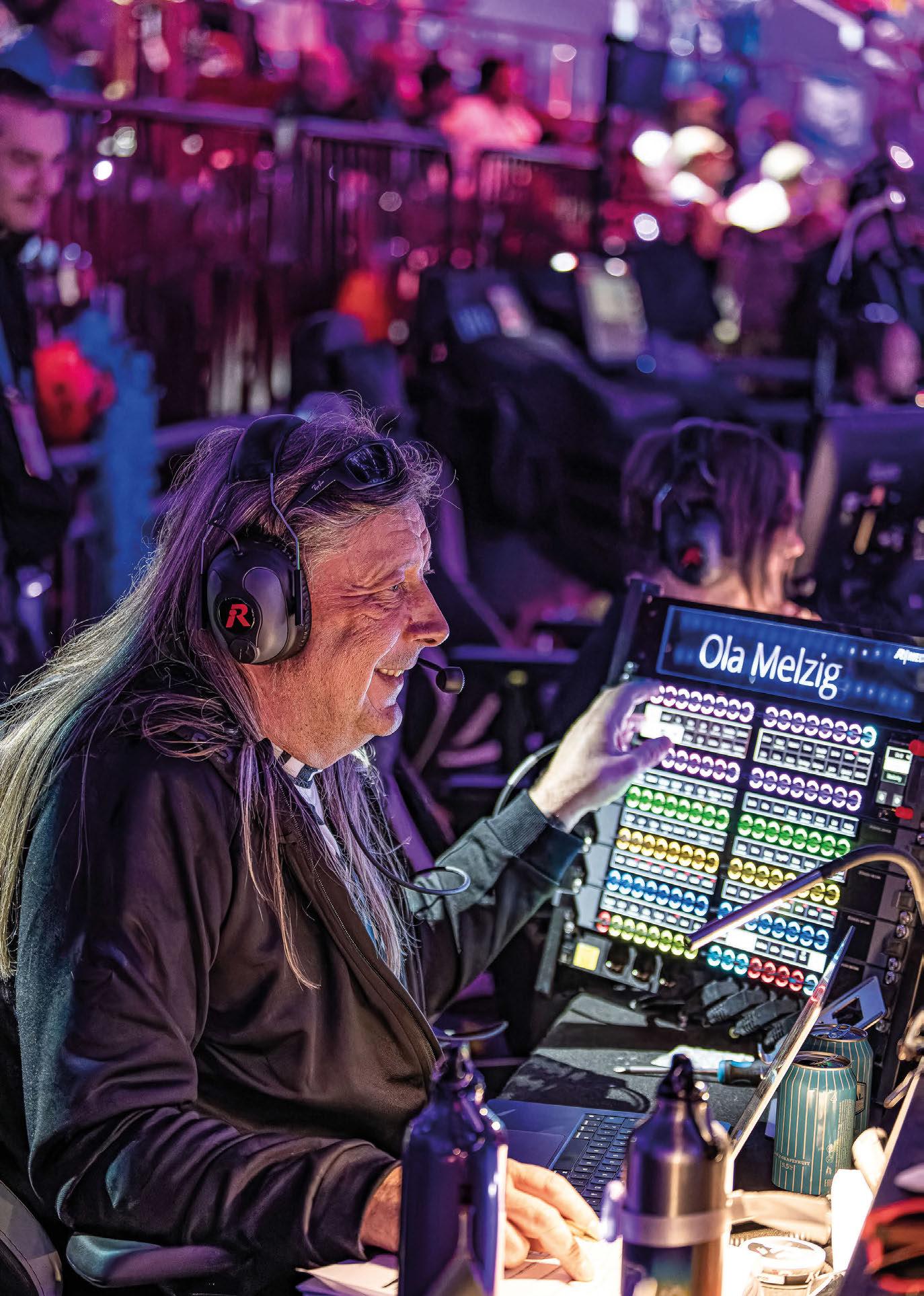
Photo by Ralph Larmann
– and a big part of it was also about stepping away from the touring lifestyle and resetting.
What were those early days in Dubai like working with Delta Sound?
They were fantastic. It felt like we were really building something with likeminded people who all trusted each other. There was a strong sense of camaraderie, the work ethic was solid, and we had a bespoke offering that did really well in the market.
What’s interesting is how many of those people are still part of my life now – both professionally and personally. Some of them are working with me at Clair Global; others have gone on to different roles across the industry. You start to see how interconnected everything is. People move around, but the relationships stay.
What stands out from your time working on Expo 2020? When COVID hit, I spent a few months back in the UK which, looking back, was probably one of the best periods of my life. Aside from the general fears for how the industry was going to bounce back, I felt so lucky to be able to spend that time at home with my partner, Jo, and loved ones. It was a huge leveller for me and made me realise that there is much more to life than earning money and working your ass off.
Of c ourse, there eventually came a point when I had to try to get back to work, and on my return to the UAE, I was offered a role as a Senior Technical Manager at Expo 2020.
Technically, it was straightforward – I knew the equipment, and I knew most of the key people. The pace of work was very different to event work and rock ’n’ roll touring, and I often found myself going to my boss Bill Ainley and asking for more work to do. He was only too happy to oblige.
Through my stupidity, I somehow ended up managing multiple supplier contracts, overseeing compliance, dealing with logistics, and even designing a black box theatre alongside Rebecca Hanbury at Wonder Works. I also wrote and tendered a sitewide backline specification, which was ultimately won by MEI.
I was very much thrown in the deep end; it was a huge shift from what I’d been doing at Delta and during my touring years. However, looking back, it’s one of the most valuable experiences I’ve ever had. I got to work alongside some incredible companies and people, and it gave me a valuable perspective of the processes involved in producing mega events in the Middle East – a free fast-track degree in client-side compliance, procurement, budgeting, logistics, and high-level event execution.
How did the opportunity with Clair Global come about? It came through conversations with Andy Jackson. I had always stayed in touch with Andy as a friend, and he mentioned that there was interest in setting up a Clair Global presence in the Middle East.
As my role at Expo was coming to an end, he asked if I’d be interested. Initially, I wasn’t sure – I’d told myself that I was
done – but the more we talked about it, the more it made sense. The idea of building something from the ground up, with the backing of a global organisation, was very exciting. I also knew that we both had the experience and drive to make it work in the Middle East, and here we are nearly four years later as a well-established company in the region.
What were those early days with Clair in the region like?
We started with a small office, then an empty warehouse, with a team of four people – Andy, Rob Turner, Sherin Stocks and me. That was it. Our first show was 50 Cent at Coca-Cola Arena, and not only did we have no equipment, but we didn’t have any infrastructure either. At that point, everything was sub-hired or brought in from the US and the UK in shipping containers. The group built packages for us – the US control and the UK PA were all dispatched to us as plug-and-play; it was pretty amazing.
It was full-on, but the team made it all come together. In the beginning, it was all hands on deck – even I found myself back on the tools, prepping gear and loading trucks. Before long, we brought in more talented people who we knew and trusted, and as others saw what we were building, the momentum grew. The Clair reputation played a huge part, and soon we had top-notch techs reaching out, eager to be part of it.
It felt like we had the band back together but this time there was worldwide support from a trusted name. I remember early on being in the US, talking to the Clair
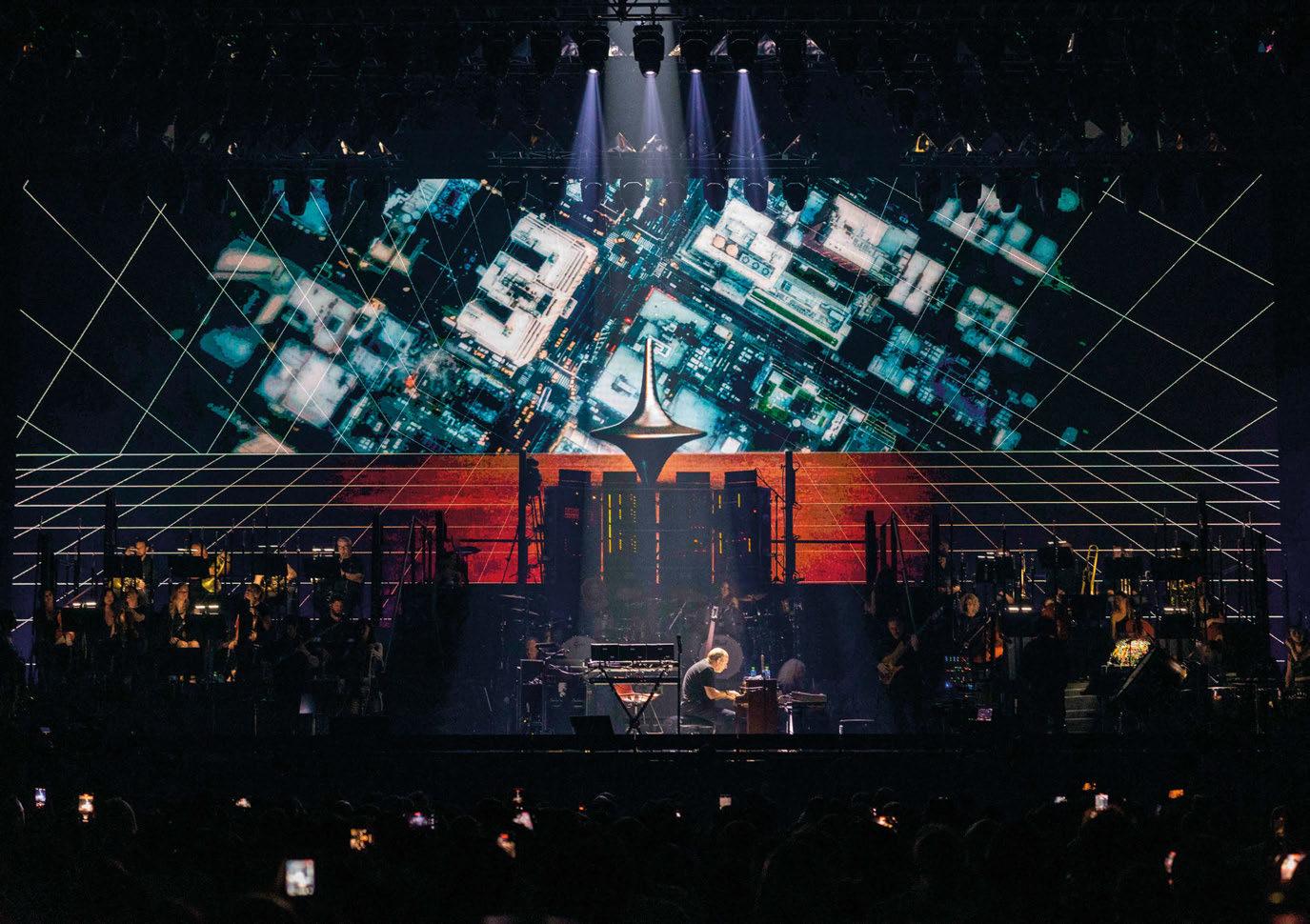
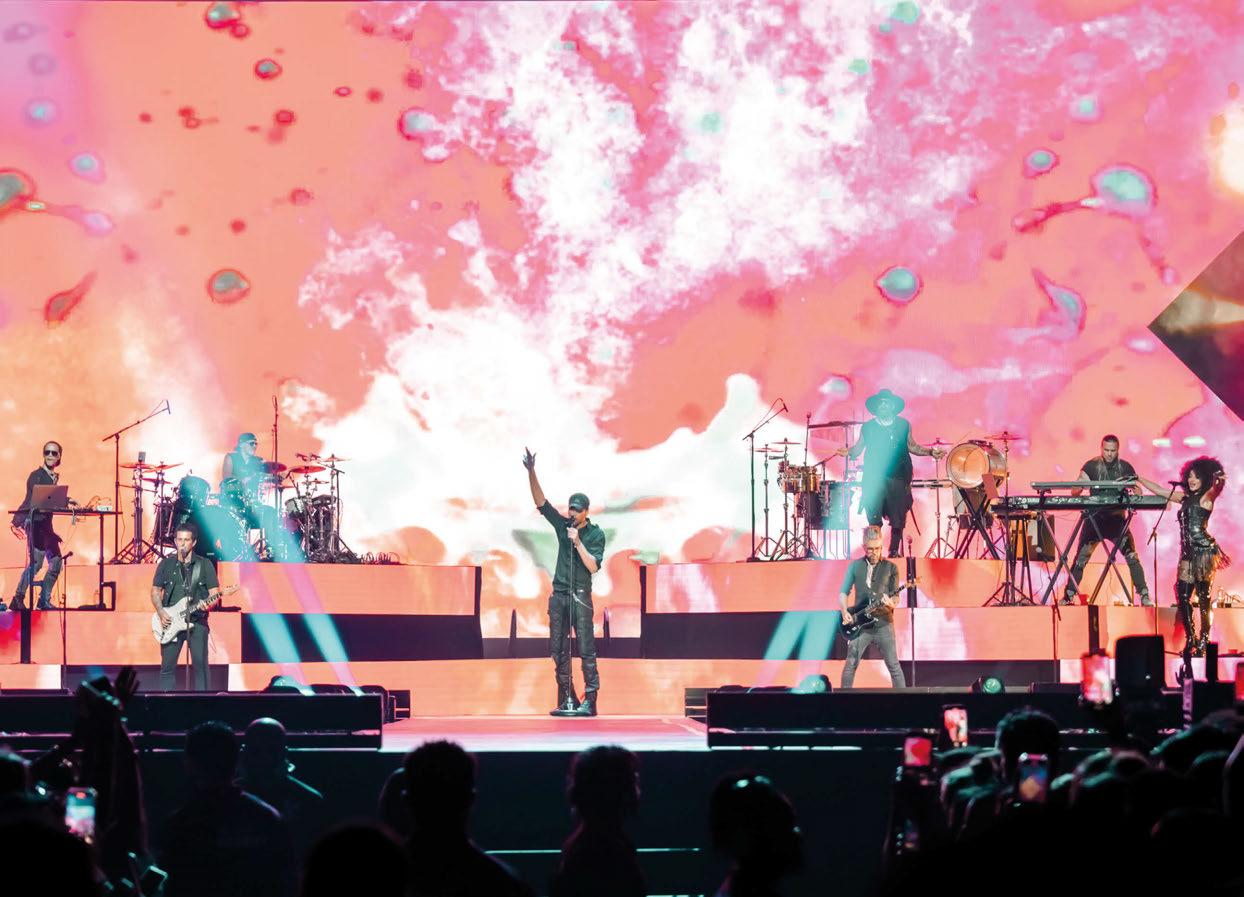
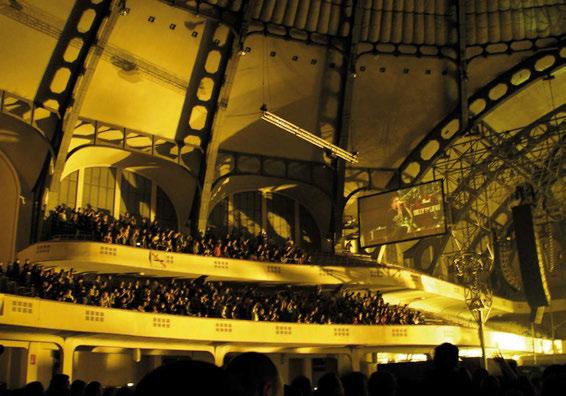
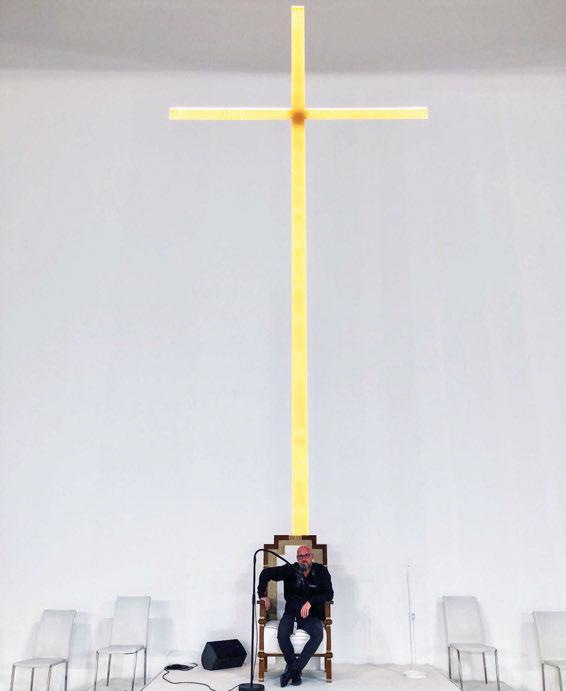
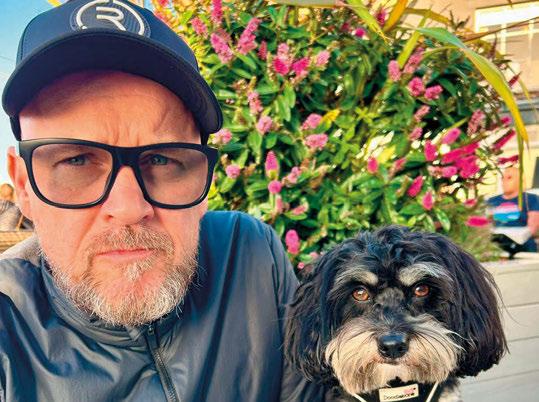
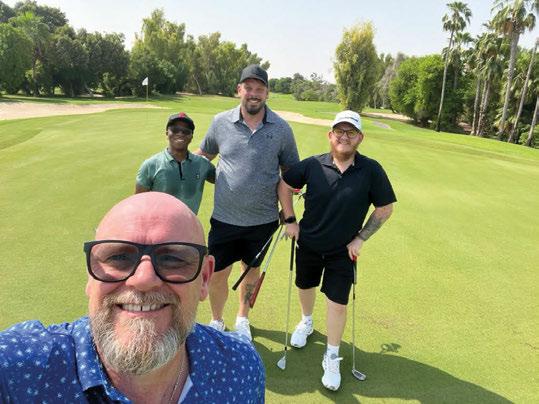
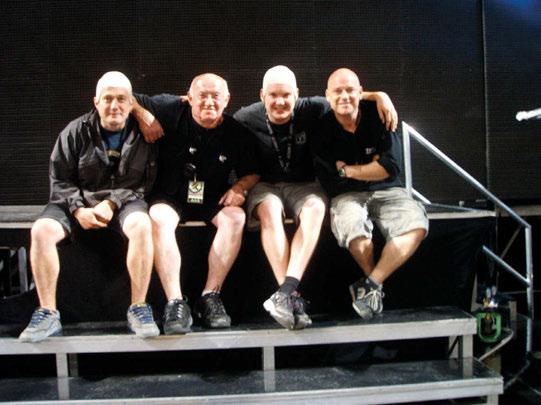
Opposite: Enrique Iglesias at Etihad Arena. Left: Billy Talent at Festhalla, Frankfurt. Bottom left: Woods takes the top seat during the Papal Visit to Abu Dhabi, 2019. Top right: With Oscar the dog. Bottom right: Switching off with some of the ME team.
Global leadership team, and saying, “The only thing we’re missing is the gear”. And the immediate response was: “Send them what they need”. That kind of backing makes a huge difference.
Clair has grown rapidly in the region. What does the operation look like now?
We’ve grown significantly, both in terms of people and capability. We’ve built strong teams across all our services – audio, communications, and data. That has been a key focus – diversifying what we offer rather than just being seen as a PA rental company.
Ou r facility in Jebel Ali has expanded, and our inventory has grown, but more importantly, our reputation continues to grow. We are now delivering a range of large-scale events across the region, from supporting A-list international touring artists, many of whom are already clients within the wider Clair Global Group, to major cultural and sporting ceremonies, to complex data and communications projects.
How important is team-building and training?
It’s critical. For me, the most important thing is giving people opportunities – whether that’s working on different types of projects or experiencing different parts of the world. Being part of a global organisation allows us to move people between regions, making the most of Clair’s vast global network, which is hugely valuable. It’s never just
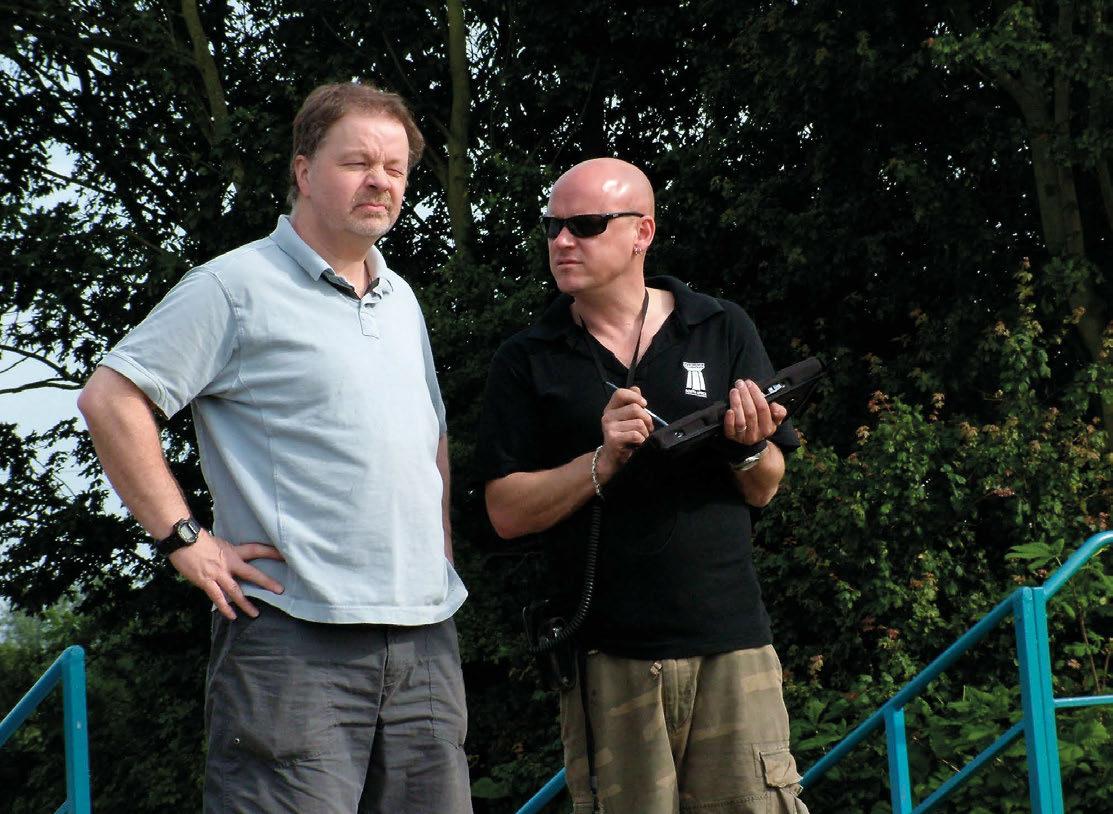
about getting the job done – it’s about growth, learning, and genuine personal development. When our technicians travel abroad and see firsthand how others approach the work, they bring back invaluable insights and that same commitment to precision that defines our industry.
I’ve always believed that knowledge is meant to be shared, not kept. Every time we share what we know, our entire team becomes stronger. Seeing our people grow, refine their skills, and earn positive feedback from clients for their onsite performance fills me with real pride.
What’s your approach to equipment utilisation?
We’re strategic about it. Anyone can buy equipment – that’s not what sets you apart. It’s about how you use it, maintain it, and deliver with it. Being part of a global network gives us flexibility. We don’t have to own everything locally; the market is seasonal, requirements change year to year, and we can draw on resources from other regions when needed. That allows us to stay agile and competitive.
What have been some standout projects for you?
We started strong at Clair and we haven’t looked back since. I look back fondly on the Yasalam After-Race Concerts at the 2022 Abu Dhabi Grand Prix, led by Dana Beaudin and George Forsyth. To be trusted with delivering that in our first year was a big statement, not to mention very symbolic as I had been involved with this event since my Delta days and it was one of the first jobs I did for Andy as a freelance system engineer in 2009. It took a lot of faith from Rob Eatock, Haidar Shukry and the Ethara team. CO P28 in 2023 was another major milestone –particularly on the data and communications side. Ed Ross
came onboard late in 2022 and took over that project, and he did an amazingly fabulous job. The Clair UAE team was relatively small, but we delivered this huge project. These kinds of projects really showcase the breadth of what we can do with our local resources and global support.
Who have been your biggest mentors over the years?
I wouldn’t call them mentors per se, but there are definitely people I’ve looked up to. The late Mark Bonner was one of the first people in the industry who I really admired –someone with a clear vision and strong business sense. Keith Davis is another – straight-talking, honest and incredibly loyal. Also, Brian and Mike from BRP – all these people shaped the British audio industry when I was cutting my teeth as a sound engineer. And, of course, there is Andy Jackson, who has been a great friend and a huge influence throughout my time in the Middle East. I’ve learned so much from working with him over the past 20 or so years.
More recently, working within Clair, I’ve developed a lot of respect for the senior leadership team – people who genuinely care about not only the company and its people but the industry as whole.
What’s your outlook on the health of the Middle East live events market?
There are external factors at play currently affecting the market that are out of anyone’s control. I’m confident that the region will recover but, in the meantime, it’s about staying flexible and being prepared to respond as soon as demand returns. On a more personal level, we have an incredible team here and holding that responsibility for these people who I’ve known and worked with for a long
time during tough periods like we’re in now is something that I don’t take lightly.
What are your long-term plans?
Long term, I’d like to leave something behind – a business that runs well, that people have built and are proud to be part of. We’ve already put in place a strong management structure with shared responsibilities, which is important for stepping in when needed and long-term sustainability.
I’m not planning on stepping away anytime soon, but when I do, I want to know that what we’ve built here will continue to thrive. I owe it to those people who have helped us get this far on the journey.
Finally, how do you switch off?
Golf has become my main escape; it forces total focus. I find it hard enough anyway, but you can’t play well if your mind is anywhere else. Being on the course, in the fresh air with likeminded people helps me properly switch off from work.
A couple of years ago, after a long time apart, my son came to visit me in Dubai. Those days were special; just the two of us out on the course, a few beers afterward, and even some fiercely competitive padel matches. The golf was especially levelling; my head out of work, time really slowed down, enabling us to have a laugh and reconnect.
I’ve also started boxing lately, which is a completely different challenge – physically demanding and brilliant for clearing your head. Between golf and boxing, I’ve found ways to step back, reset, and keep a bit of balance amid everything else.
Photos: Clair Global www.clairglobal.com
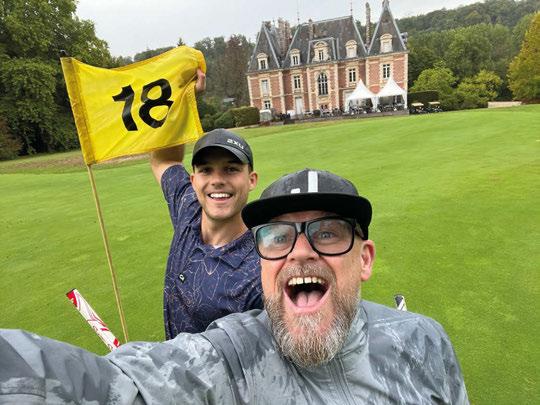
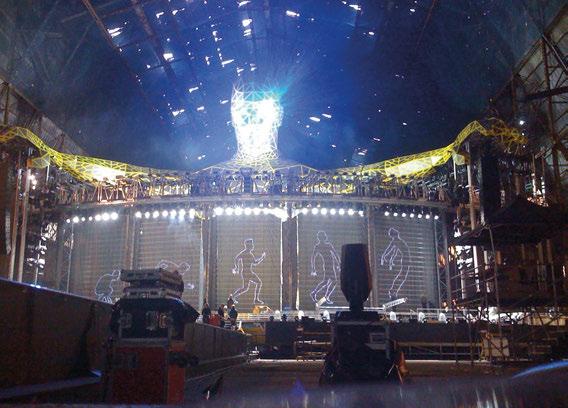
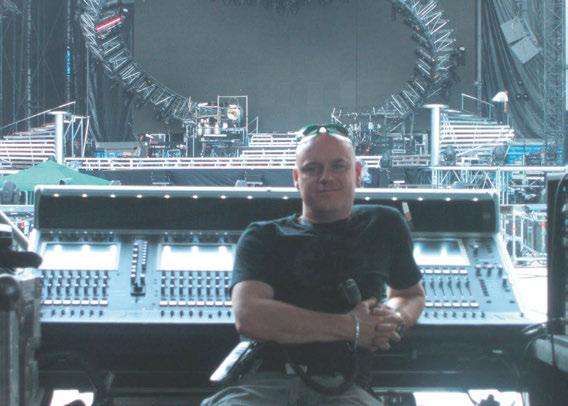
Opposite page: Al Woods with ‘FOH Legend’, Gary Bradshaw. Above, Top left: Backstage at Take That’s Beautiful World Tour
Top right: The muddy boots from Woods’ final UK festival. Middle left and right: snaps from touring days. Bottom: On the golf course with son, Connor.
Karan Aujla: P-Pop Culture Tour
India gets its largest d&b audiotechnik deployment to date as the Punjabi star wows a 75,000-strong audience at New Delhi’s Jawaharlal Nehru Stadium.
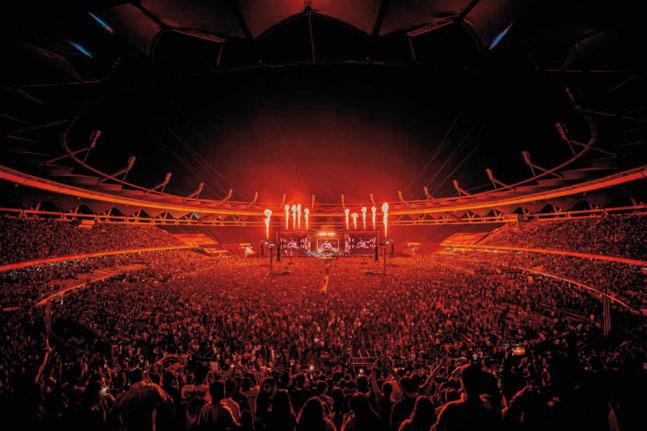
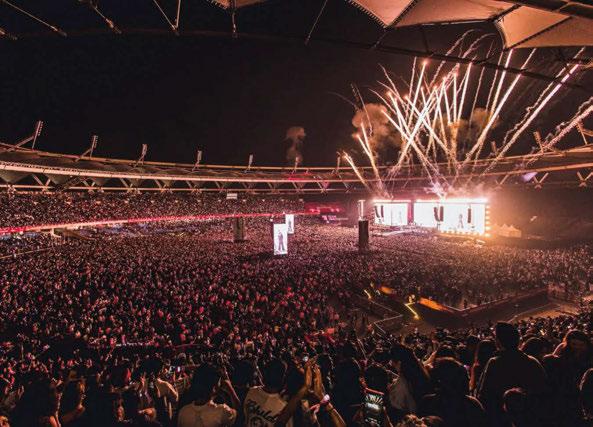
When Karan Aujla kicked off the India leg of his spectacular P-Pop Culture Tour in New Delhi, it was a show that set a new benchmark for live music in the country. Among its many achievements, the production featured India’s largest ever deployment of d&b audiotechnik inventory, specified for this leg of the tour by local rental company Hertz & Pixels and supplied by d&b’s local partner, Ansata.
On e of the most popular artists in the Punjabi-speaking music world, Karan Aujla also provides an important connection to the wider music industry, with hits on the UK Asian chart and Global YouTube music chart. With Aujla drawing massive attention, the arrival of his P-Pop Culture Tour in India was as high-profile as any performance has ever been in the region.
With a 75,000-strong audience in attendance at Delhi’s Jawaharlal Nehru Stadium, FOH Engineer O’Necean Gordon was aiming for consistency and control. “With a crowd of this size, it’s important to make sure the experience translates everywhere, and is consistent from show to show,” he explained. “I like to keep things clean and controlled, especially in the low end, so that it doesn’t become uneven across different zones. My approach was to really trust the system design and then mix into that.”
Gordon had the largest d&b system to be fielded in the country to date at his disposal. Consisting largely of SL-Series, it included 32 GSL cabinets making up the main system, supported by 20 flown SL-SUBs and 52 floor-standing SL-GSUBs, with more SL-Series – 96 KSL cabinets in total – providing outfills and delays. The system also included 16 AL90 augmented array boxes as front fills, and 12 V-Series as 270˚ stacked fills. The entire system, with the exception of the subs and fills, was optimised with d&b audiotechnik’s proprietary ArrayProcessing software.
Ne il Lean, Education and Application Support at d&b audiotechnik EMEA, who supported Hertz & Pixels and Ansata with the system design, explained that the needs of the system were multifaceted. “The goal in designing a system for a stadium isn’t only ‘how loud can it go?’ but ‘how even can the coverage be?’ and ‘what’s the best intelligibility that can be achieved?’. The challenge is to do this at a level that can be heard above the noise of 75,000-plus excited audience members,” Gordon stated.
“W ith d&b’s ArrayProcessing, it is very easy to achieve consistent overlap between the mains, out-fills, delays and fills. That accuracy helped immensely with the evolution of the design, from the planning phase to deployment,” he added.
Gordon commented on the “solid foundation” offered by the d&b system, “before you even touch the console”. He noted: “The clarity and headroom mean you’re not fighting the PA, you’re working with it. That then lets you focus more on the musicality of the mix rather than having to problem solve.”
He s aid what stood out was how predictable everything felt. “When I made a move, it translated the way I expected it to,” Gordon reported. “That kind of consistency builds a lot of confidence – especially in a fast paced, highpressure environment.”
De scribing the support as “top tier,” Gordon praised the local suppliers and manufacturer. “Ansata and d&b understood the assignment – that it’s not just about having great gear, it’s also about execution. Everything was dialled in, and communication was smooth throughout. Knowing those competent individuals were there made it very easy to focus on delivering. That kind of support makes a huge difference, especially on a production of this scale.”
Photos: Rapkar, Team Innovation www.karanaujlamusic.com www.ansata.net www.hertzandpixelz.com www.dbaudio.com


Saudi Commission for Health Specialities Graduation Ceremony
Creative duo Dreamed by Us produce an immersive multimedia opera, using live performance, lighting, projection, drones and 25,000 wireless audience devices to turn spectators at Riyadh’s Al Nasser Stadium into an active storytelling surface.
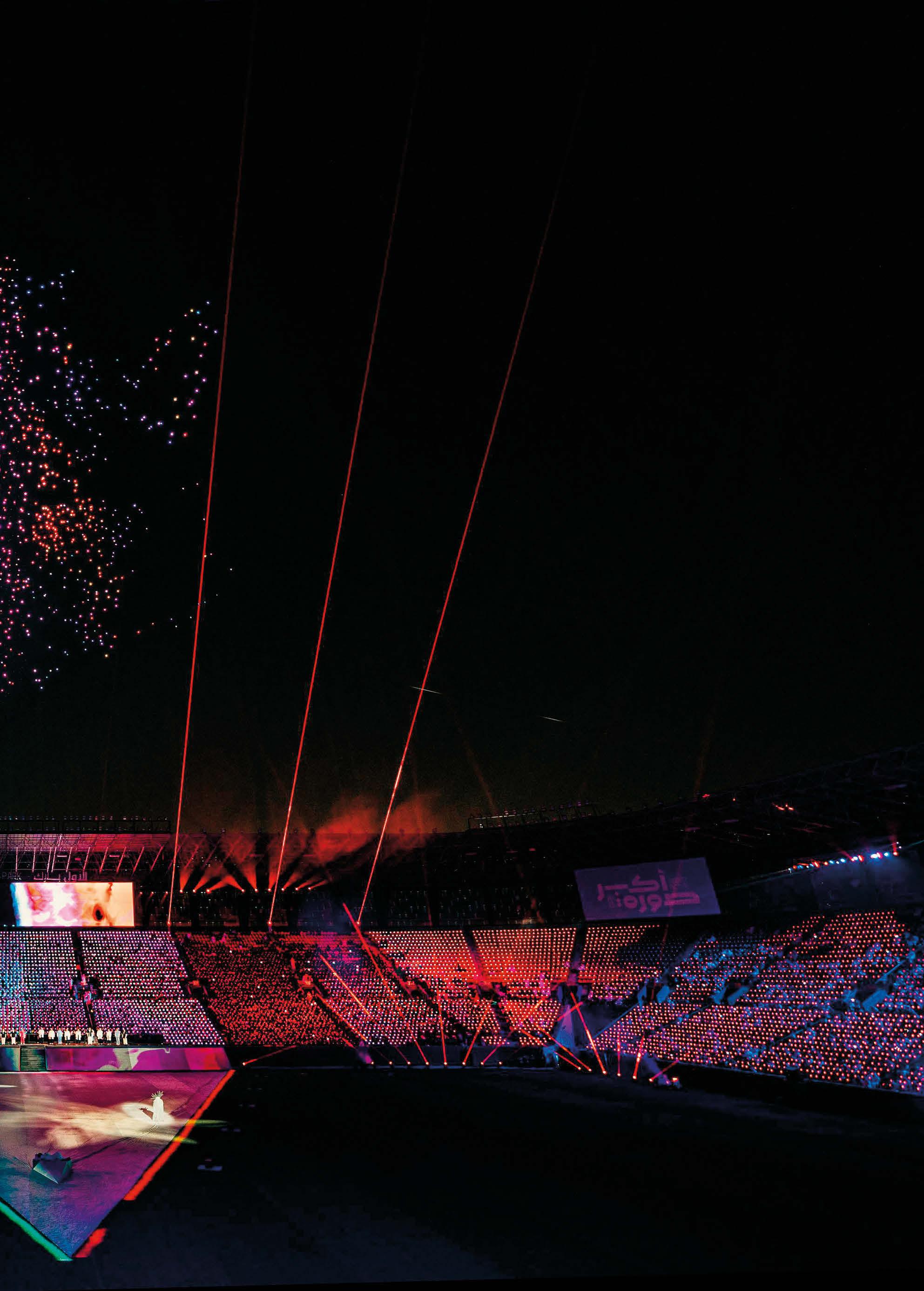
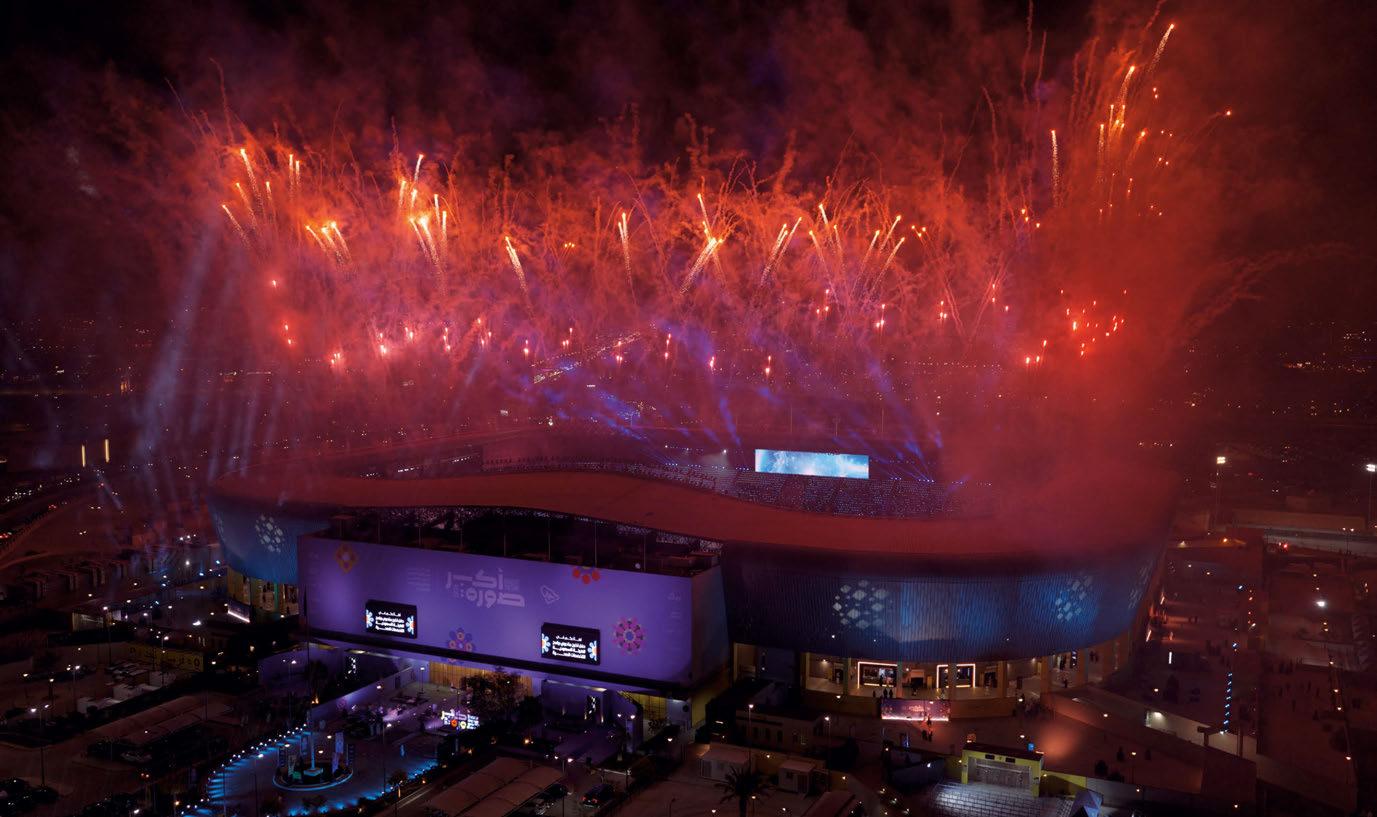
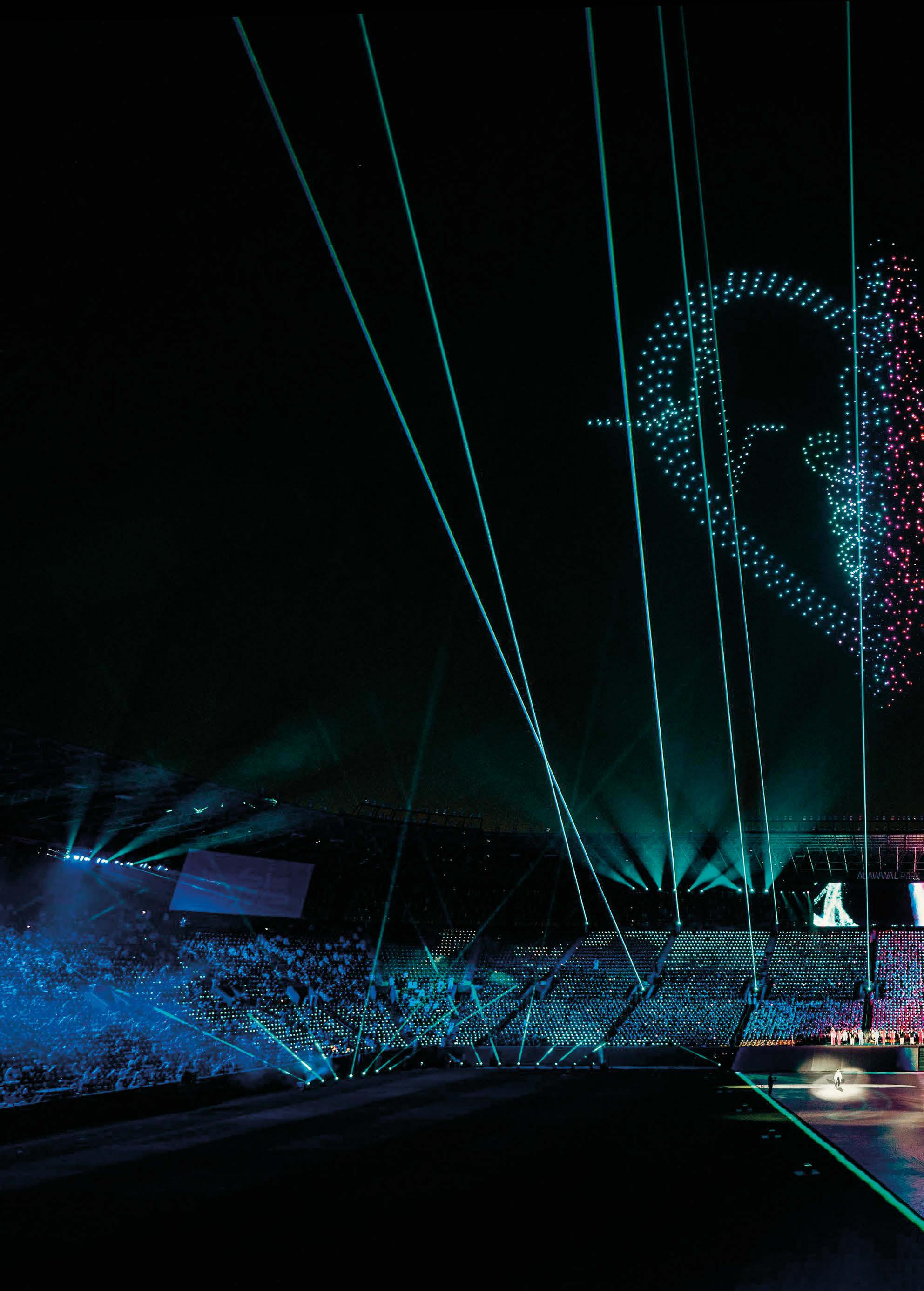
For large-scale ceremonies, the challenge has long been how to make audiences feel connected to a narrative unfolding hundreds of metres away. At Al Nassr Stadium in Riyadh, creative studio Dreamed by Us attempted to answer that question by transforming the audience itself into part of the scenography.
Commissioned by the Saudi Commission for Health Specialties and delivered by ADD Enterprise, the graduation ceremony brought together approximately 8,000 graduates in a production that blended live opera, projection, drones, lasers, audience lighting and immersive multimedia storytelling.
Rather than treating the crowd as passive spectators, the production team integrated them directly into the visual language of the show through Enjoy Technology’s wireless audience system, Enjoy Galaxy. The result was a technically ambitious stadium-scale experience in which the grandstands became a dynamic extension of the stage. “The ambition was to elevate the ceremony and reflect the significance of this milestone for the graduates, with the audience becoming part of the overall creative approach,” explained Show Designer and Show Director, Olivier Ferracci.
The production brought together several creative and technical partners, including:
Lumasky (drones), Igual (fireworks), Lightab (lighting design), Love4lasers (laser design), Imvision (video content), DC (construction), and Spectrum (audio, video, lighting and lasers).
The production’s central concept revolved around the transition from student to healthcare professional. Olivier Ferracci and Scriptwriter and Stage Director, Nora Matthey de l’Endroit, conceived the show as what they described as one of the country’s first “opera rock multimedia” productions featuring fully live opera singers rather than pre-recorded vocals.
Th e narrative drew inspiration from the Hippocratic Oath, using theatrical storytelling to symbolise commitment, responsibility and service. However, translating such themes into a 25,000-seat stadium environment required a visual system capable of operating across multiple layers simultaneously.
“We wanted the audience to feel emotionally involved in the story, not just observe it,” the creative team explained. “When the idea of a virus was introduced, it was visualised as something spreading across the stadium, moving from the stage into the audience.”
To a chieve this effect, audience lighting became more than decorative enhancement. Using thousands of wireless LED devices distributed throughout the stands, the
production transformed spectators into what Ferracci described as a “living surface” capable of movement, colour transitions and visual continuity between the pitch and seating bowl.
“The entire production served to heighten the drama and emotions expressed by the various characters,” the team stated. “Turning the audience into a screen particularly helped us create continuity between the pitch and the stands, amplifying the feeling emanating from each actor while helping us establish a link with more aerial effects such as lighting, projection, audience light, lasers and drones.”
Unlike conventional LED walls, the “human pixel” approach introduced a different set of technical parameters. Resolution, refresh rate and brightness had to be recalibrated for the realities of human spacing and wireless communication rather than fixed display hardware.
“Technically, this involved applying filters to adapt the content to the resolution and refresh rate provided by the device,” Olivier noted. “Then came on-site adjustments to calibrate the various effects and sources relative to one another in order to achieve the smoothest continuity.”
The integration process demanded close collaboration between creative and technical teams from the earliest stages of pre-production. Storyboarding proved essential, allowing the
production team to map the interaction between stage action, audience effects, projections and aerial elements before arriving on site.
“I n our creative process we storyboard everything as part of a truly gradual process,” the team explained. “The theatrical background of Nora helps a lot in transforming emotion into graphical patterns.”
That workflow became especially important given the scale and density of multimedia elements involved. Beyond audience lighting, the production incorporated overhead screens, floor projections, live performers, drones and laser systems, all of which required careful balancing to avoid visual overload.
“Taking into consideration the scale of every tool from human to drones was essential in order to avoid each of them ruining the attention,” Olivier reflected. “It’s like a musical score where you have to know when to highlight the soloist, the choir or the entire ensemble. Each effect was treated as a protagonist in its own right.”
At the heart of the technical infrastructure was the challenge of maintaining synchronisation across approximately 25,000 wireless devices distributed throughout the stadium environment.
“B eyond the creative aspects, one of the key challenges was finding a visual balance between the different layers of the show,” the team explained. “Some elements naturally come with different brightness levels, so part of the process was adjusting and fine-tuning the intensity to make sure everything could sit together as one coherent image.”
Latency and responsiveness became critical considerations. In large-scale audience systems, even minor delays can break the illusion of continuity, particularly when content interacts directly with music, projections and choreography on the stage.
“Keeping everything responsive and in sync at that level was essential,” Olivier said. “It really depended on a system that could hold together reliably throughout the show.”
For wired audience-display systems, cabling requirements can introduce major deployment challenges, particularly inside existing stadium infrastructure. However, the wireless nature of the system significantly improved installation logistics and rehearsal efficiency.
“The wireless aspect had a very real impact in practical terms,” the team noted. “It made the installation much faster and more flexible. It also meant avoiding a lot of cabling and all the coordination that usually comes with it, which can easily slow things down on a project like this.”
That flexibility enabled the team to devote more rehearsal time to refining creative synchronisation rather than infrastructure management – an increasingly important advantage as live event productions continue growing in scale and complexity.
Dreamed by Us believes this shift reflects a broader evolution in audience-display technology. Historically associated with simple colour effects in ceremonies and opening shows, modern wireless systems now allow audiences to become active participants within narrative structures. “It’s a rapidly evolving field,” they observed. “Things have shifted from simple colour effects to content, then to interactivity, and now towards more fully live experiences.”
Importantly, the team sees the technology not as spectacle for spectacle’s sake, but as
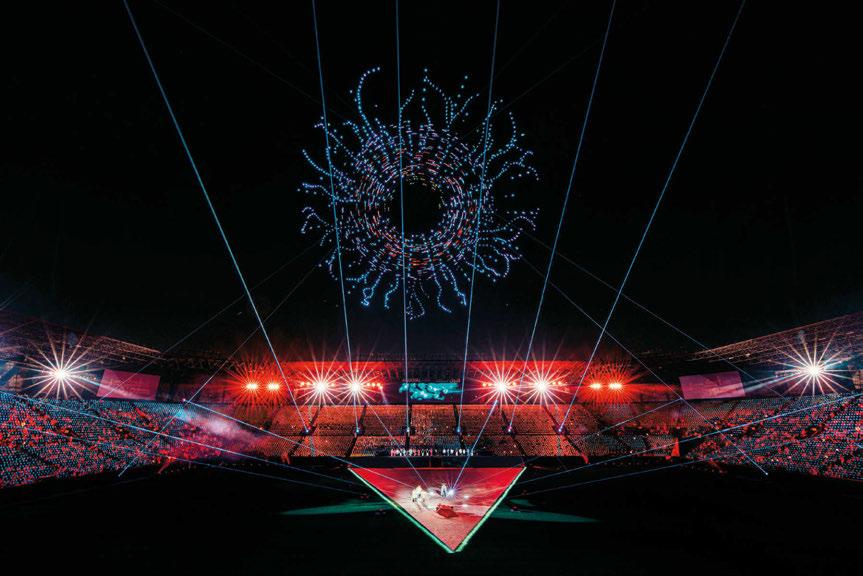
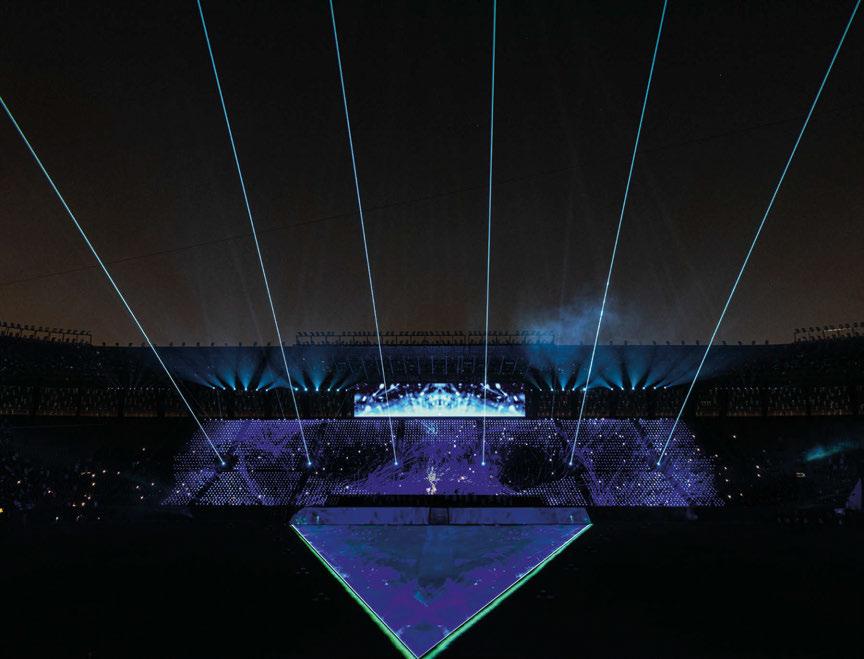
Dreamed by Us turns the entire audience at Riyadh’s Al Nassr Stadium into one giant visual canvas, utilising Enjoy Galaxy wireless LED wristbands for the Saudi Commission for Health Specialities’ graduating ceremony.
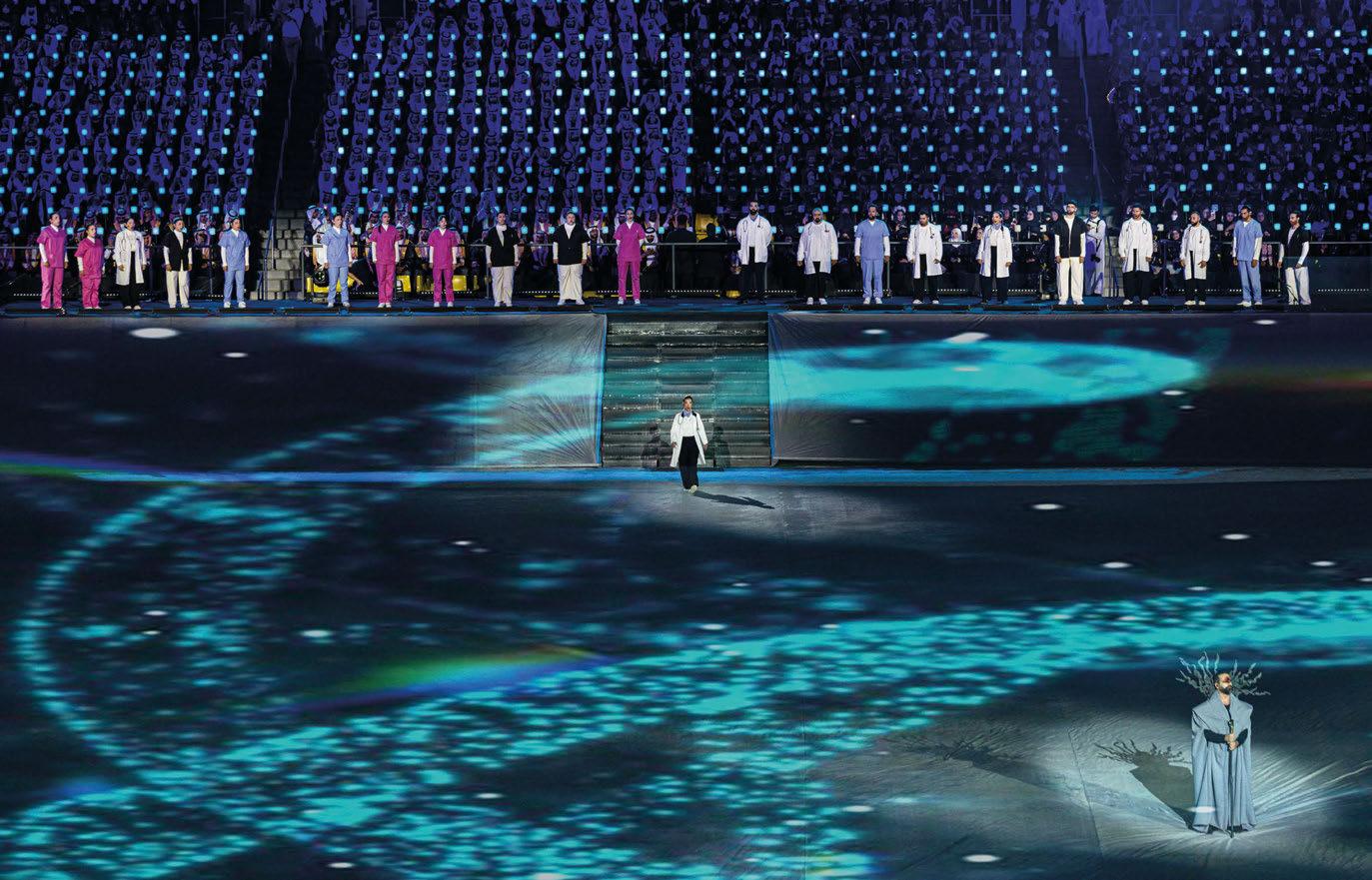
a storytelling tool capable of changing how audiences emotionally connect with large-scale productions. “You could feel a real sense of engagement and pride from the audience,” they recalled. “They were no longer just watching the show but becoming part of it.”
That audience integration also changes the perspective of other creative disciplines within live production. “It changes the way broadcast and lighting designers consider the crowd,” The duo stated. “Not just as spectators, but as part of the momentum.”
As stadium ceremonies continue embracing immersive technologies, projects such as the Al Nassr Stadium graduation ceremony demonstrate how wireless audience systems are evolving from visual enhancement into a fully-fledged storytelling medium. This production represented more than technical experimentation; it was an attempt to create emotional continuity between performer and spectator at scale.
For Dreamed by Us, the project ultimately became about, in Olivier’s words: “pride, passion, and satisfaction at having been able to bring such a sparkle to the eyes of all these people.”
Photos: Dreamed by Us www.instagram.com/dreamed.by.us
“Keeping everything responsive and in sync at that level was essential; it really depended on a system that could hold together reliably throughout the show.”
Olivier Ferracci, Show Designer & Director

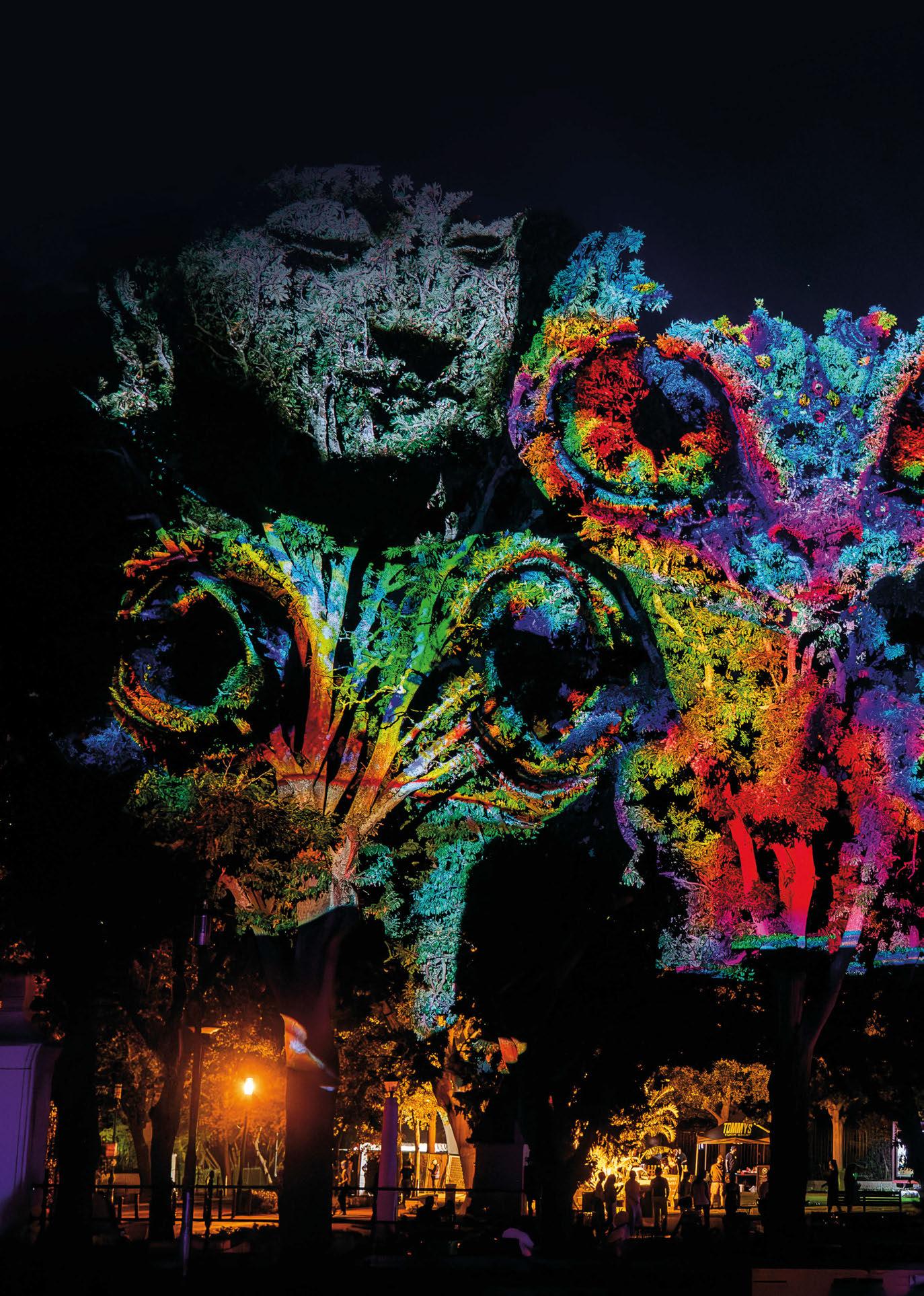
LUMENOCITY
The great and good of South Africa’s creative production industry come together to help transform Cape Town’s Company’s Garden into a living canvas of light, creativity, and imagination.
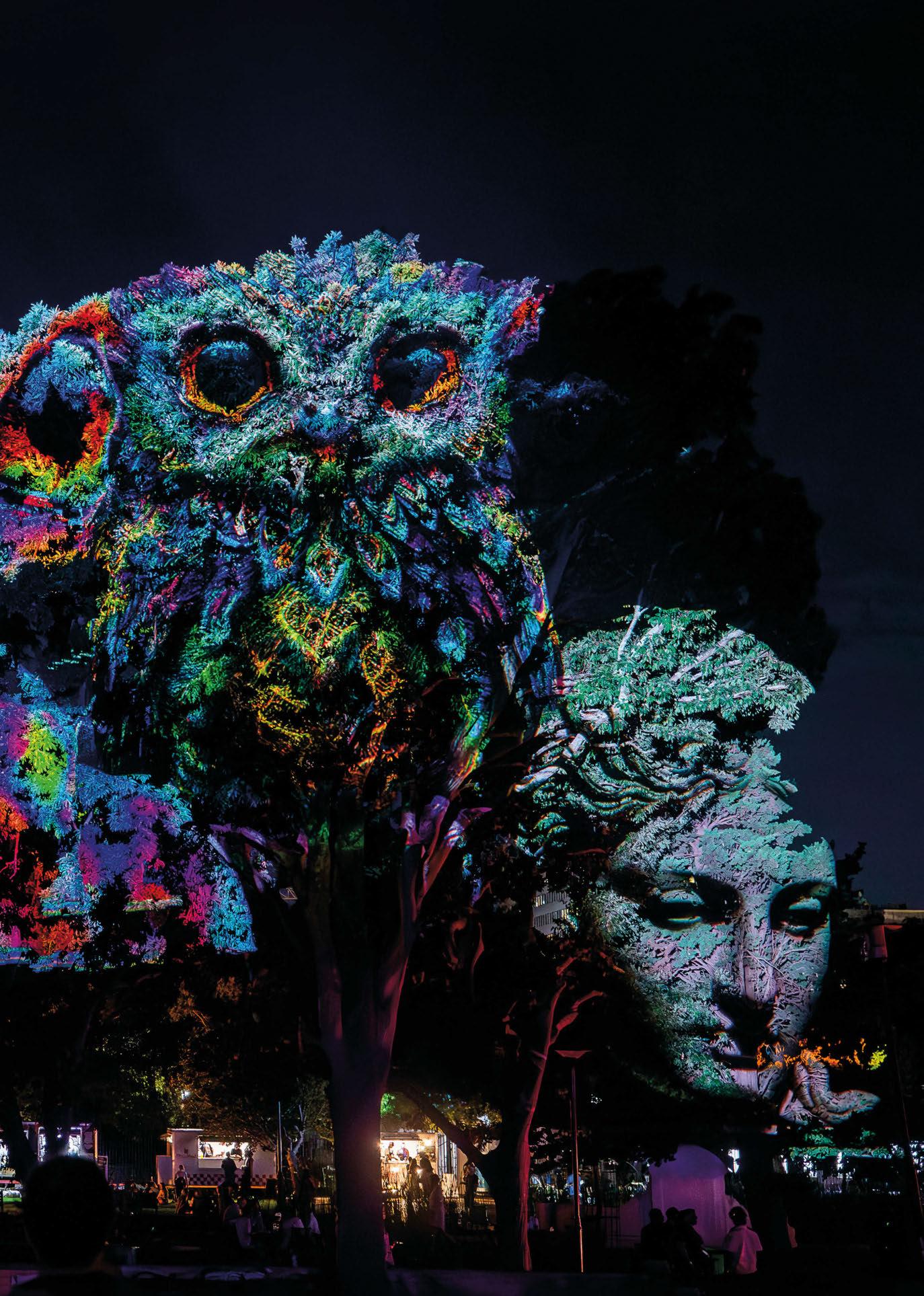
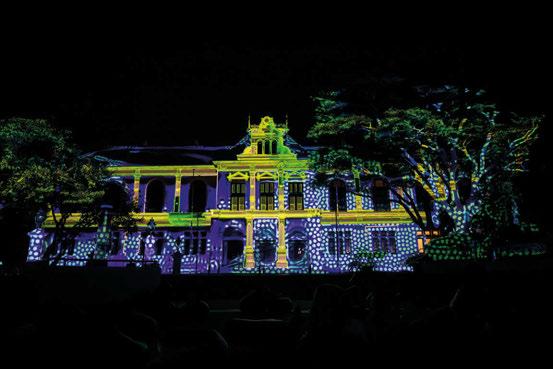
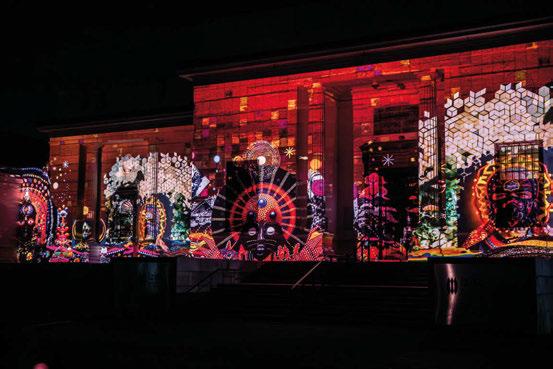
It’s not often that you can live out your dreams in a professional capacity, but for Gareth Hadden, who has long harboured ambitions to hold a light art festival in Cape Town’s historic Company’s Garden, the inaugural LUMENOCITY, which took place over four days in early April, was the realisation of a long-held goal. “This is an idea that I have been holding on to for quite some time,” he commented. “To see it take shape in the way it did really is a dream come true.”
For Hadden, whose background lies firmly in technical production and design, having produced some of South Africa’s biggest and
most ambitious shows over the years through his boutique design and production house, the project represented both a personal reset and a professional challenge. “I’m used to taking on huge shows with demanding clients, so the production side is well within my wheelhouse, but I knew nothing about the commercial side – ticket sales, marketing, and PR,” he recalled. “I’ve always stuck to my lane in design and production, and this was a different challenge entirely, but one I was excited to take on.”
Unperturbed by the steep learning curve that lay ahead, Hadden threw everything at the project – even going as far as putting his house
up as collateral to secure the initial cash injection required to get LUMENOCITY off the ground. “It was a massive gamble,” he confided. “But this is something that I have had in my mind for many years – something I’ve always believed in, and I knew that, with the right support, I would be able to pull it off.”
What followed was less a conventional event build and more a collective rallying cry to South Africa’s live production community, with Hadden’s long-standing relationships across technical production, rental and staging quickly becoming the foundation upon which LUMENOCITY was built. “When people heard that
I had this idea, the support was incredible,” he recalled. “Most people are used to my projects having big budgets, but this was something completely different and still the response from most of my old friends in the industry was one of empathy and a genuine desire to help get this thing off the ground.”
That support rapidly evolved into a formidable network of suppliers, distributors and manufacturers coming together to contribute equipment, expertise and ideas. “All of a sudden, we had a bunch of the country’s best tech suppliers all helping, all chipping in,” said Hadden. “They weren’t worried about commercial returns; they just wanted to come and play.”
With this base of industry heavyweights behind the project, Hadden was then able to attract several South African artists to lend their creative talents. A staunch supporter of local talent, Hadden subsequently turned down multiple approaches from overseas-based creatives looking to get involved.
“This is a South African-made project; we have the talent, skills and equipment here, and I feel it’s my duty to utilise and support the local network,” he commented.
The resulting festival became an unusual convergence of disciplines; large-scale
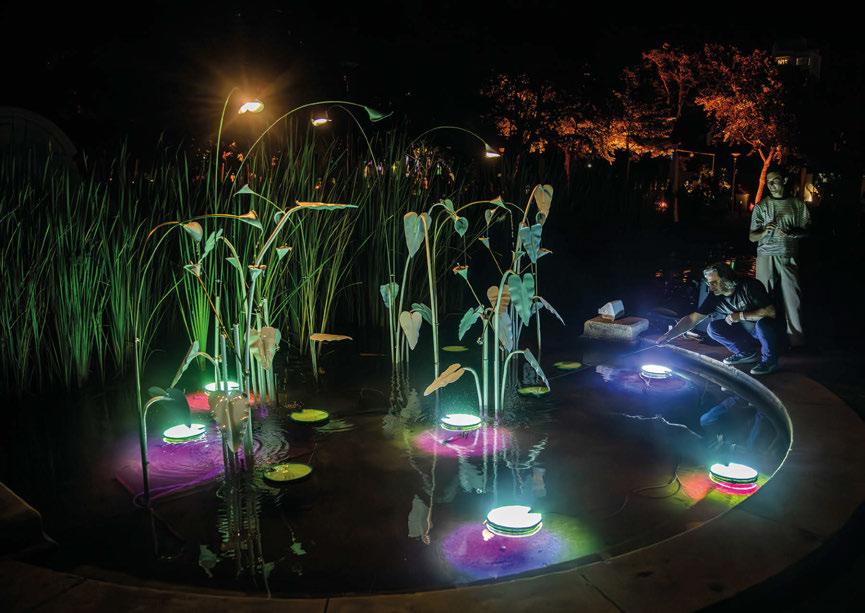


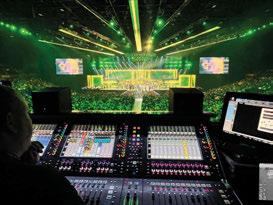
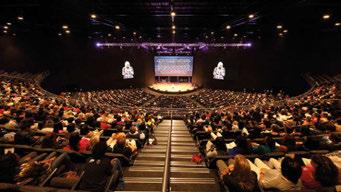






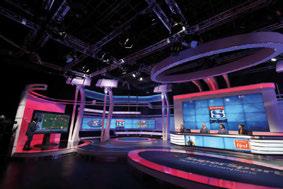






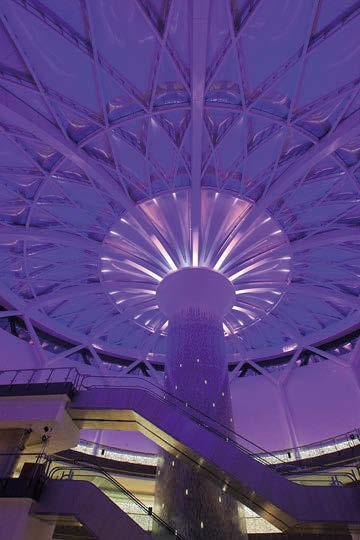


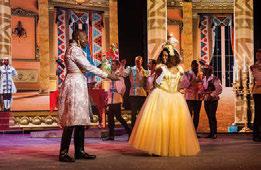




















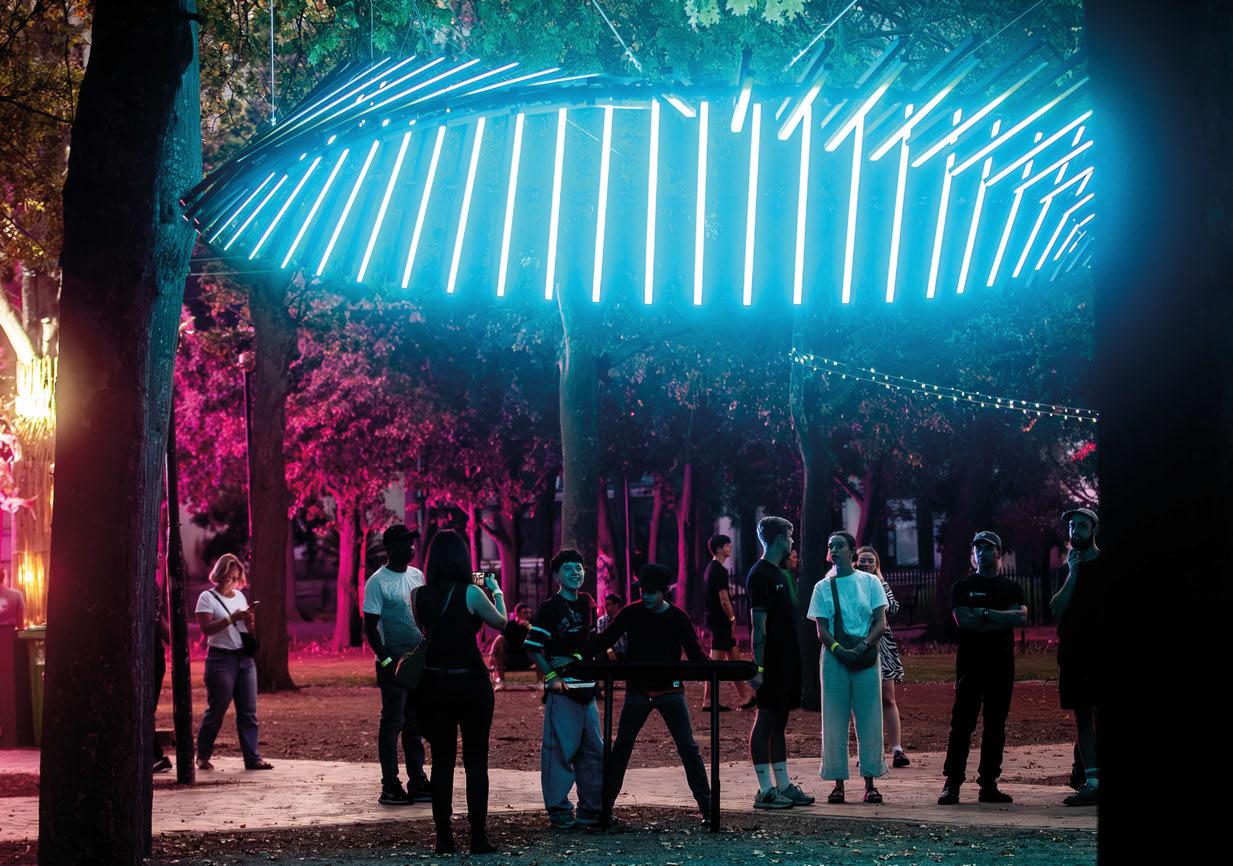
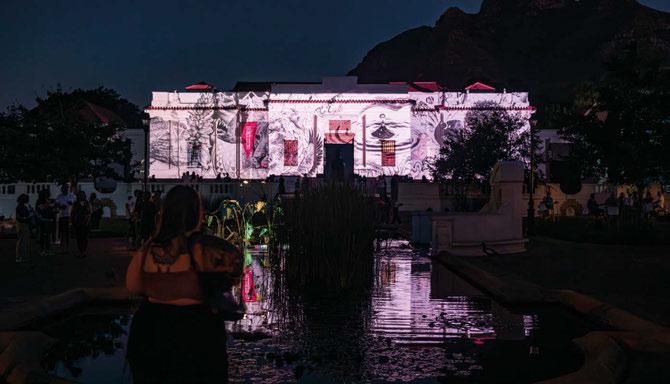
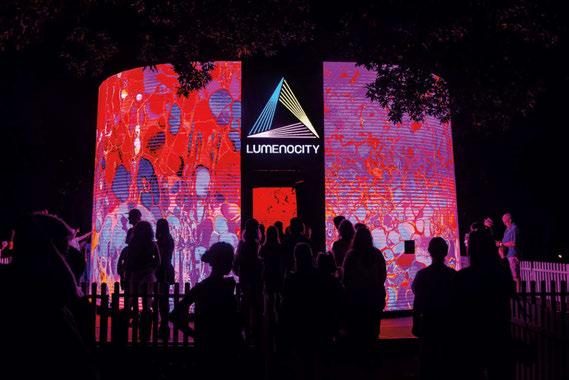
entertainment technology sitting alongside a selection of interactive environments, projectionmapped architecture and intricate handcrafted installations created by local artists.
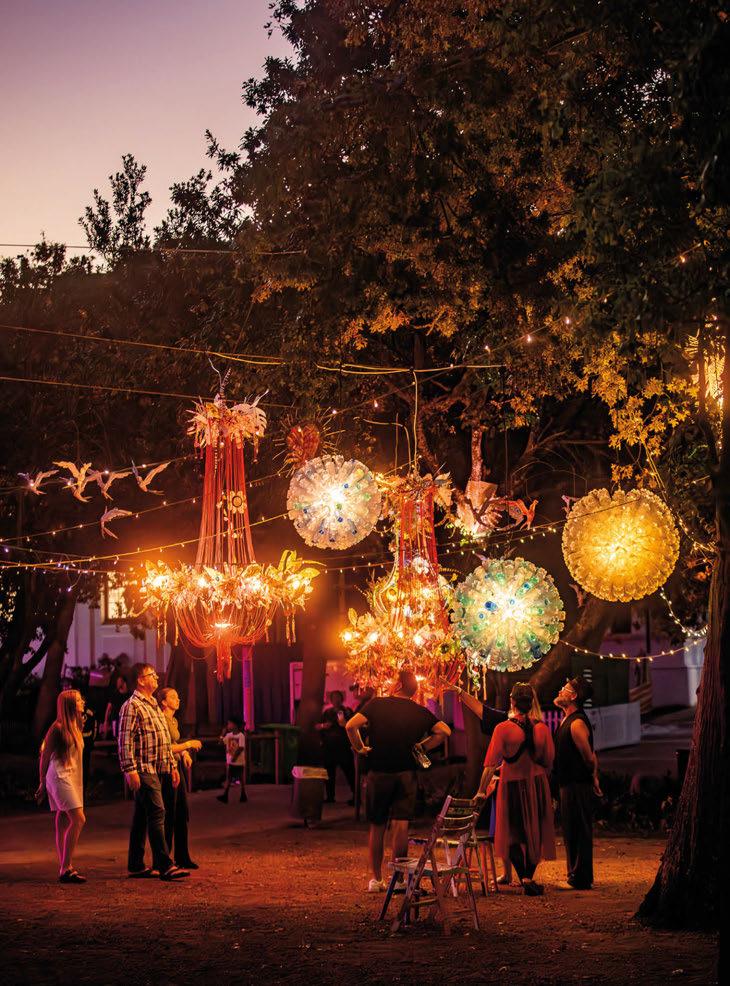
“We had the very latest in technology sitting alongside local artisans making installations from recycled bottles, and somehow it just worked together,” Hadden reflected.
‘There was a lot of love’
The scale of supplier support illustrates the depth of confidence the local industry had in the project, with the likes of Gearhouse, MGG, DWR Distribution and ShowTex among the many local suppliers who gave the event their backing.
“As well as supplying tonnes of kit and people, which were essential to the success of the project, the belief and support from the industry has been incredible,” Hadden smiled.
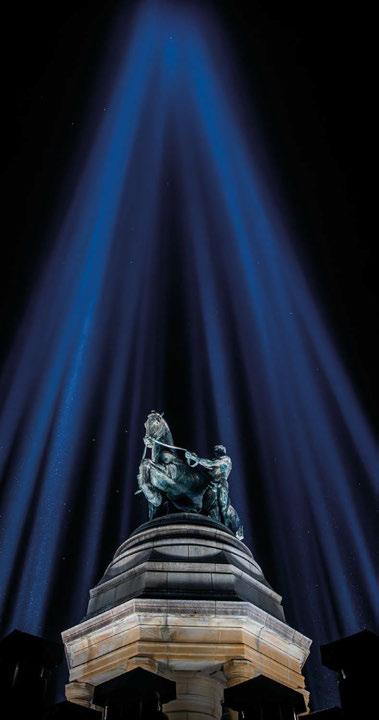
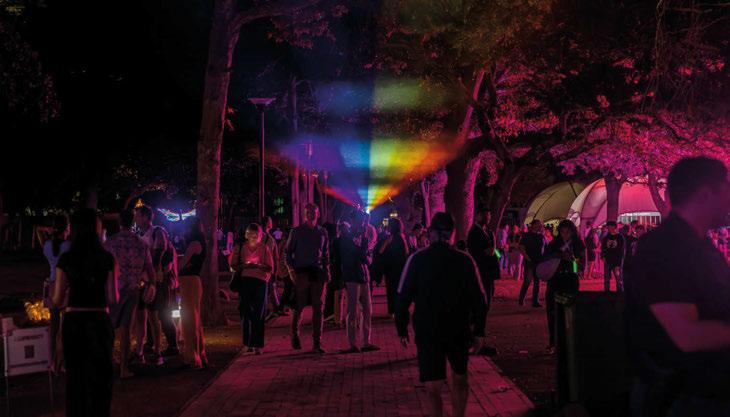
When it came to the installations, the Beam of Hope, featuring 32 5K xenon searchlights supplied by Gearhouse, saw a powerful beam fired directly up from the heart of the city into the skies above, alerting Cape Town residents that something special was coming. “The whole city saw this gigantic beam firing into the sky,” Hadden recalled. “That was my calling card.”
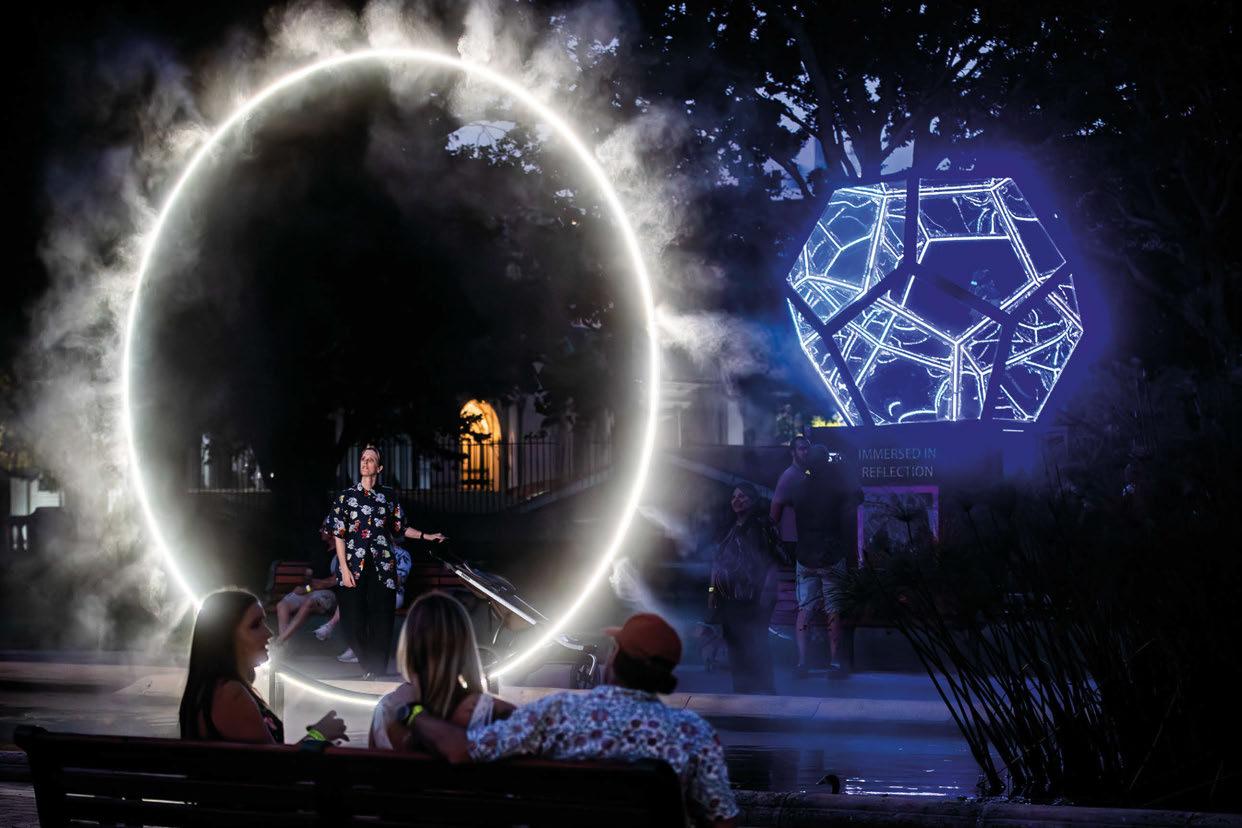
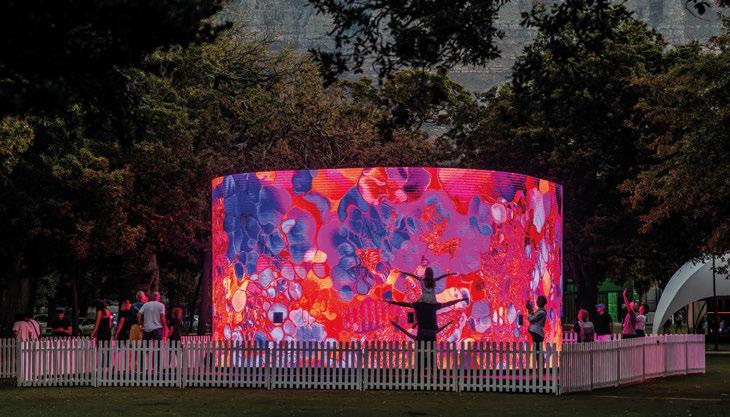
Elsewhere, Lumen Edge supplied four 25k laser projectors for one of the festival’s visual centrepieces – large-format projection mapping onto the Iziko Museum façade; MGG supplied projection for Iziko Gallery; DWR’s Duncan Riley sent a Robe iBOLT, which was used to stunning effect to create a rainbow beam firing the length of the gardens; ShowTex supplied two custom GiantMirror creations – a kaleidoscopic tunnel and an LED dodecahedron; and numerous independent creatives contributed a range of
specialist technology, scenic structures and interactive concepts.
That collaborative philosophy extended beyond established suppliers and programmers, with third year students from Cape Town Creative Academy also getting involved. “We offered students guidance as well as a platform to present a proper meaningful end-of-year project,” Hadden explained. “It was a huge opportunity for these young people just starting on their journey into the industry.”
Creative independence was put at the forefront of every decision throughout the process, with Hadden giving short shrift to any potential sponsor that attempted to compromise the artistic integrity of the event. “We turned down several potentially lucrative opportunities that wouldn’t have fit with the aesthetic of the event,” Hadden revealed. “I was
firm that there would be no pop-up banners; everything had to be curated and beautiful.”
Resisting the temptation to overcommercialise, brand integration was handled selectively, with the event working alongside car brand Mini on projection mapping, while radio partner KFM provided extensive promotional support.
Op erationally, the biggest challenge proved not to be technical delivery, but audience demand. “In my wildest dreams, I thought we were going to sell 3,500 tickets for Saturday, but we actually sold 5,800,” Hadden revealed. “Not only did we have to stop selling and declare the event sold out, but we had to rapidly upscale our infrastructure in terms of crowd management and catering just to meet the extra demand.”
Yet despite the steep learning curve, LUMENOCITY’s success demonstrated that not only does South Africa have the demand for such an event but the country also has the infrastructure and creative flair to deliver it locally.
“There was a lot of love in this event,” Hadden reflected. “The whole of the industry that I’ve been working with for 20 years came together and supported it, which was truly humbling.”
Lo oking ahead, Hadden is not short on ambition. As well as a five-year plan to grow LUMENOCITY inside Cape Town, culminating with video mapping onto Table Mountain, he plans on using the event as a platform to showcase South African creatives internationally. “My long-term dream is to go to one of the more established international festivals and take South African artists to the rest of the world,” he commented.
“There was something really special in the air. We had 17,000 people, from children to the oldest person I knew at the show being 95 years old.
We had all demographics, religions, and colours – it was such a harmonious event that really brought people together, which is rare in these times,” Hadden concluded. “And for the creative and production industries here in South Africa, the event has seen genuine connections formed, which I have no doubt will strengthen the industry in the long run.”
Photos: Jonx Pillemer www.lumenocity.co




Extremely Compact Long-throw Powerhouse


easy to handle and well equipped
Your everyday go-to IP65 LED WashBeam, easy to handle and well



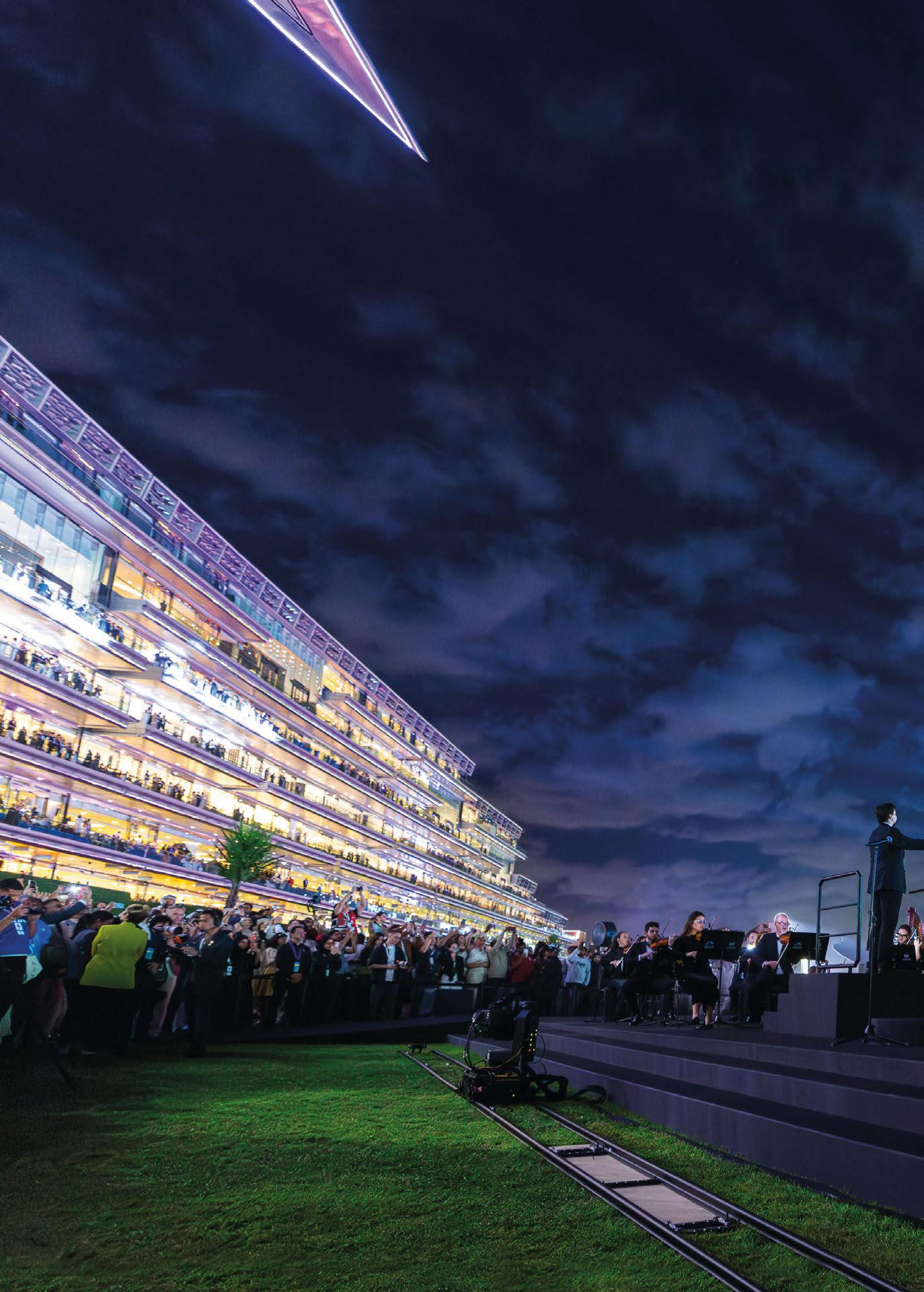
Dubai World Cup: A UAE Tribute
Alsayegh Worldwide Group CEO Alex Bendiouis explains how quick thinking, controlled chaos and an unshakable commitment to honouring the resilience, strength and unity of the UAE ensured the delivery of perhaps the most meaningful ceremony in the country’s history.
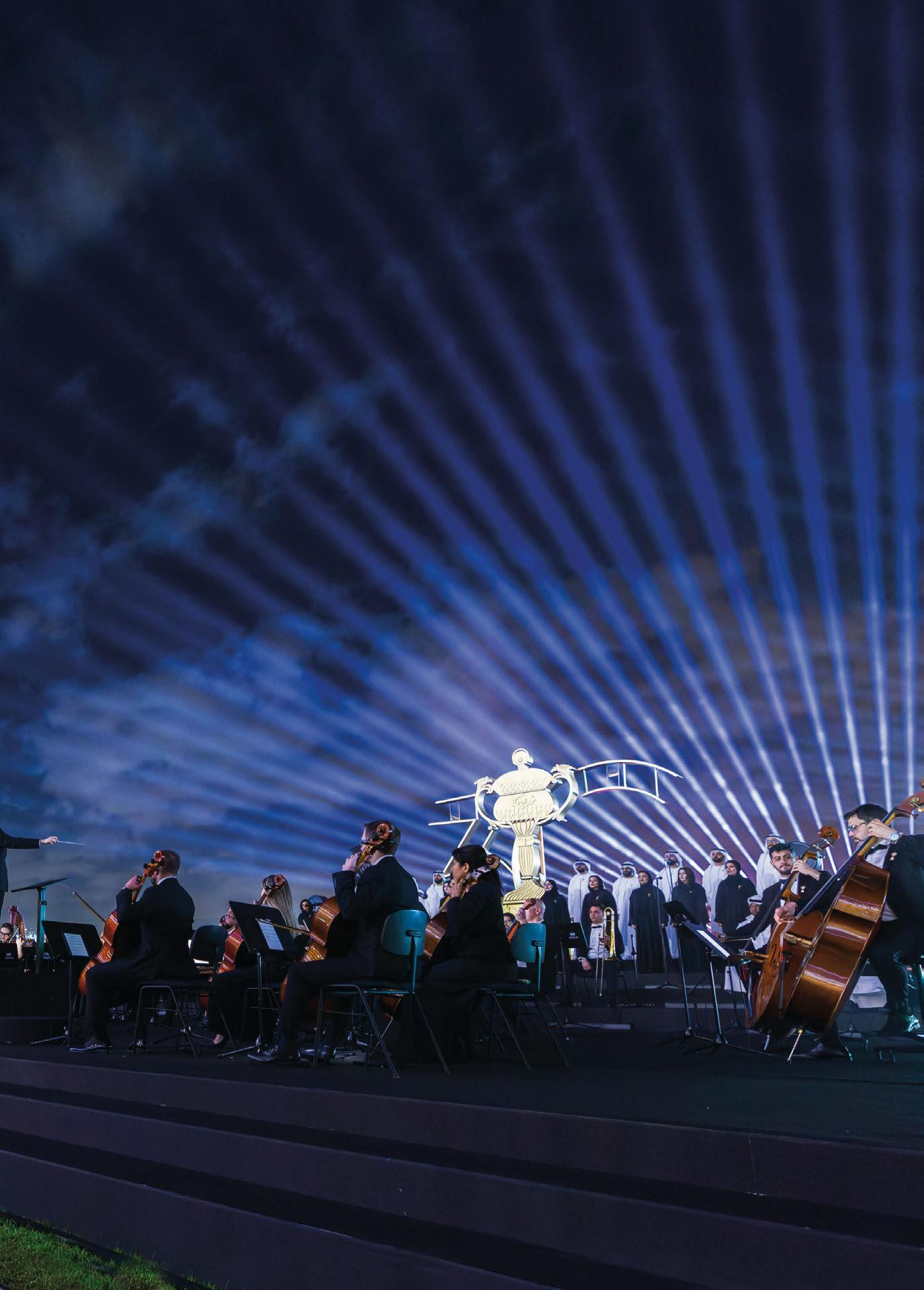
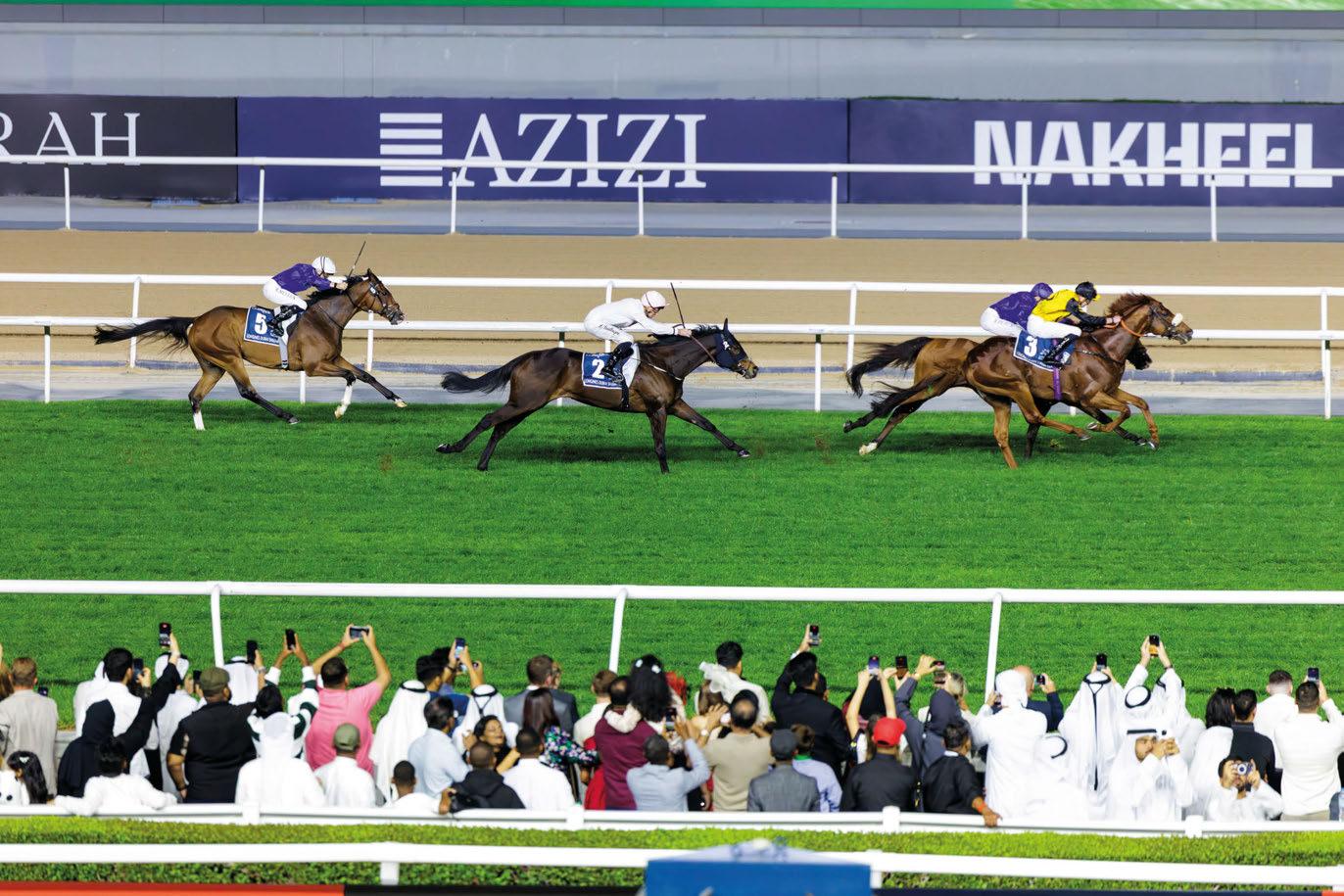
Amid the catalogue of cancellations due to the regional conflict, the successful running of Dubai World Cup stood as a ray of light and a powerful demonstration of the resilience, teamwork and belief present among the UAE’s live events industry.
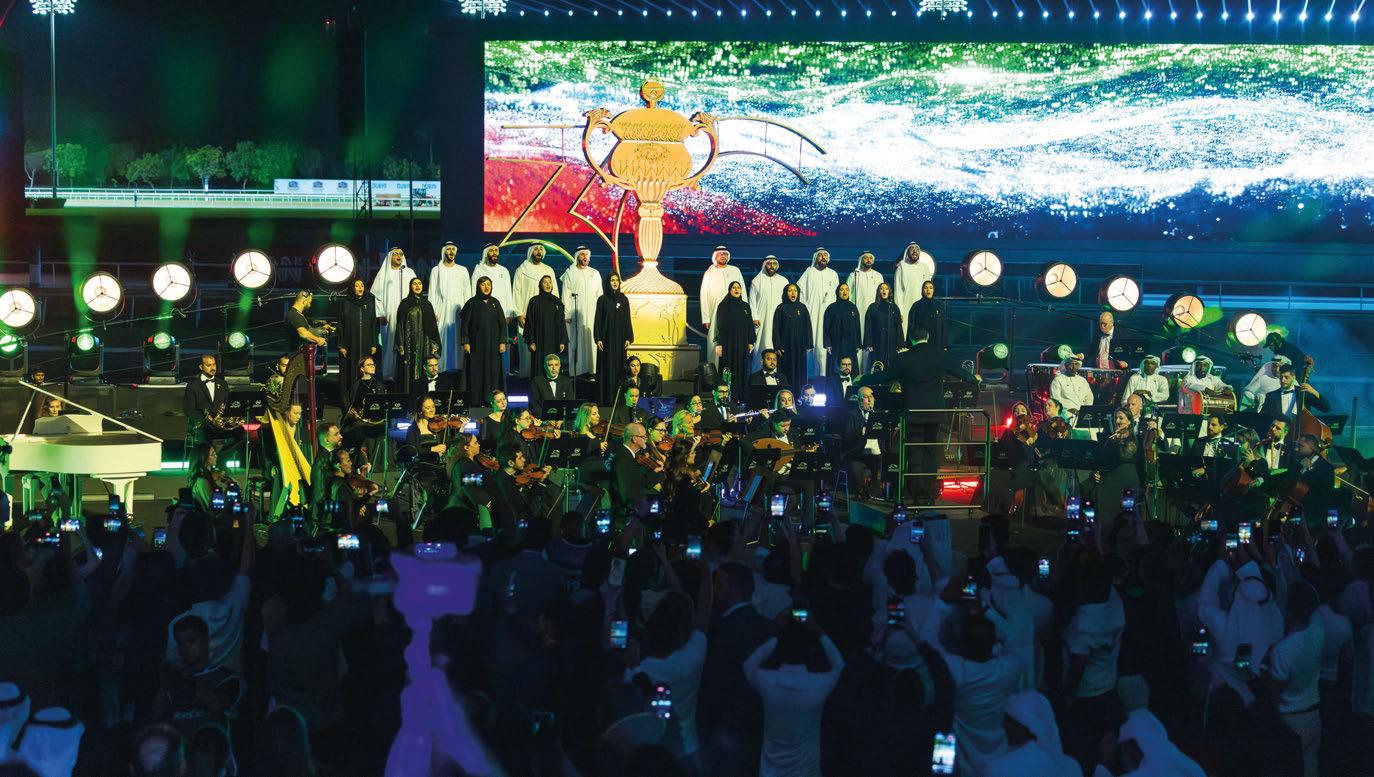
Given just two weeks to completely overhaul the concept for the Opening Ceremony, the Alsayegh team created, planned and delivered the production in a revised format from the usual drone- and firework-filled celebration, utilising well-known Emirati songs played by the UAE Philharmonic Orchestra and sung by Amanda Maalouf, and including AR drones for broadcast, which was viewed by millions around the world.
In this special feature, Alsayegh Worldwide Group CEO Alex Bendiouis takes TPiMEA behind the scenes of the days and weeks leading up to the event, revealing the fascinating story of how, against all odds, the show did indeed go on...
This was not just another show
“If you’ve spent enough time in this industry, you know this moment well. It’s close to 3am, final rehearsals – the hour where exhaustion and
adrenaline blur into one. Somewhere on site, tucked behind LED walls, flight cases and half empty coffee cups, a makeshift meeting room has formed out of necessity rather than design.
To your left sits the lighting programmer, baseball cap low over his eyes, shorts, headset hanging from his neck, chair turned backwards so he can lean into the backrest for support. To your right stands the client, replaying what they’ve just witnessed on stage, offering observations from a perspective you no longer naturally see yourself. After nearly a year of living inside the show, your vision becomes dangerously close to it.
Around you, your team. Focussed, tired, loyal – some typing notes, some sketching changes, some staring silently into the distance while processing 10 different problems at once.
It ’s a scene that anyone in live events would recognise instantly. But this time, something feels different. The comments coming from the client are not about content, cueing, lighting transitions or stage movement. Nobody is discussing pyro timings or camera angles. Nobody cares whether the finale hits hard enough. Because suddenly,
the conversation has become far bigger than the show itself. The question hanging in the air is no longer ‘can we improve this?’ It is: ‘Can this even go ahead?’
At that moment, every face around the table changes. Not because of the budget. Not because of delays. Not because the production is behind schedule. Everything else, ironically, is on track. But looming over all of us was something nobody in the room had ever been prepared for. The kind of scenario you never account for in production schedules, technical recce documents or contingency plans. The UAE was under attack from the skies.
Re gional dynamics had shifted overnight. Priorities had changed, the atmosphere across the country had changed with them, and now every decision carried a different weight.
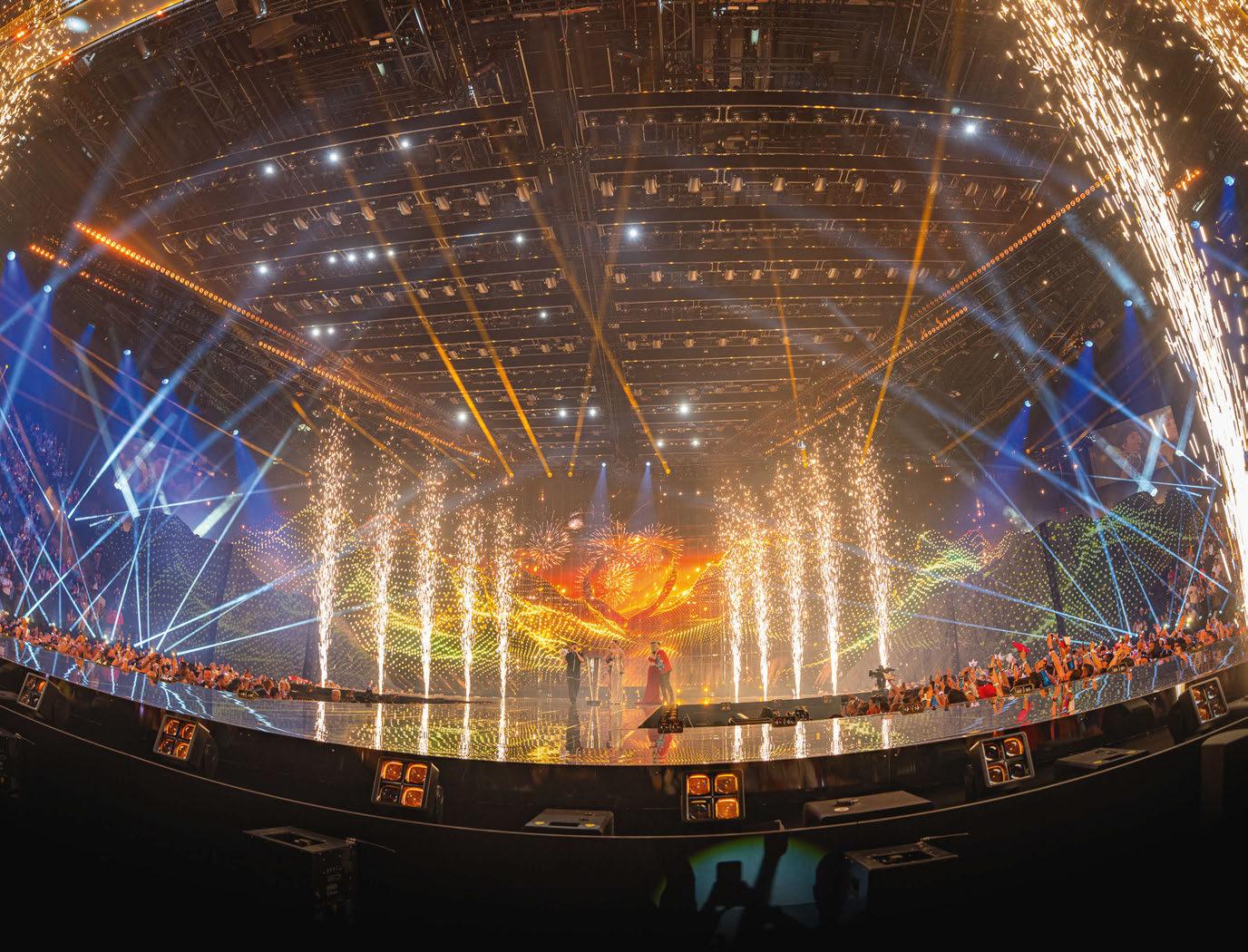
Yet beneath the uncertainty, there was also resolve. Because this was not just another show. This was the 30th Anniversary Closing Ceremony of the Dubai World Cup. One of the nation’s proudest stages. A global broadcast watched across more than 200 countries. A moment that represented far more than sport
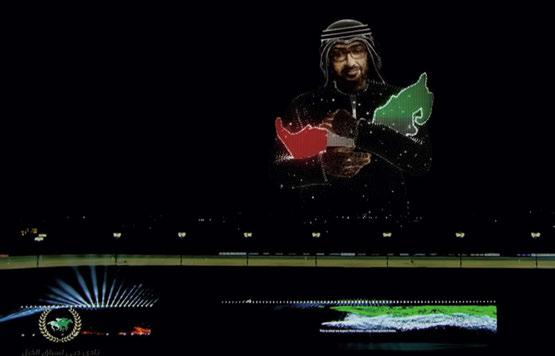
or entertainment. And under the direction of the leadership, one message became immediately clear: The event itself would continue.
Th e exact conversations behind closed doors may never be known, but you could almost imagine the response when the question was asked about whether such a milestone event should proceed. Quick. Calm. Decisive. We move forward, because nations do not demonstrate resilience when circumstances are easy. They demonstrate it when the world is watching during moments of uncertainty.
‘A message of resilience, unity and confidence’ So, now we knew the Dubai World Cup would go ahead. More than 60,000 people were still expected to attend. The world would still tune in. And in typical Dubai fashion, the country would still deliver something extraordinary.
But there was one enormous problem. Our show had effectively disappeared overnight. For the past five years, the closing ceremony had become globally recognised for its aerial spectacle. Drones. Skydivers. Paramotors.
Aircraft formations. Fireworks on a scale few places on earth could rival. The sky itself had become our canvas. Now the sky was closed. Drones were banned. Aircraft could not operate. Pyrotechnics suddenly felt inappropriate in a country that had spent weeks hearing real explosions overhead. Everything the show had been built around was suddenly gone.
And so there we were again. It’s 3am, we’re at the same table with the same exhausted faces. Except this time, the reality felt unavoidable. The show must go on, but our show might not. Oddly enough, nobody panicked.
Th ere are moments in this industry where instinct takes over. Moments where you stop thinking commercially, creatively or personally. Moments where perspective becomes bigger than the production itself. Deep down, every single one of us knew that whatever was best for the country was ultimately what mattered most.
Yet, there is something about this industry that builds a very particular kind of resilience inside people. Not stubbornness, ego or the desperation to protect months of work;
something much deeper than that – a belief that impossible moments are exactly when live events matter most.
You could hear it in the client’s voice, too; they didn’t want to cancel it either. They had lived this project alongside us for almost a year. The disappointment in the room wasn’t frustration. It was heartbreak.
Th en suddenly, a thought landed. I remember looking up and asking: ‘Hold on… the Dubai World Cup horse race is still happening, but the closing ceremony can’t?’ The reply came: ‘Yes, there are too many restrictions. Almost every major component is affected.’
That was the moment something shifted in my mind completely. Because if the Dubai World Cup itself was still moving forward, then this was no longer simply about hosting a horse race. This was about sending a message to the world. A message of resilience, unity and confidence.
This was not the moment to retreat quietly. This was the moment to stand taller than ever. So, I asked for one thing. ‘Give us until 9pm tonight, after Iftar. Let us show you another
MAGICBLADE NEO
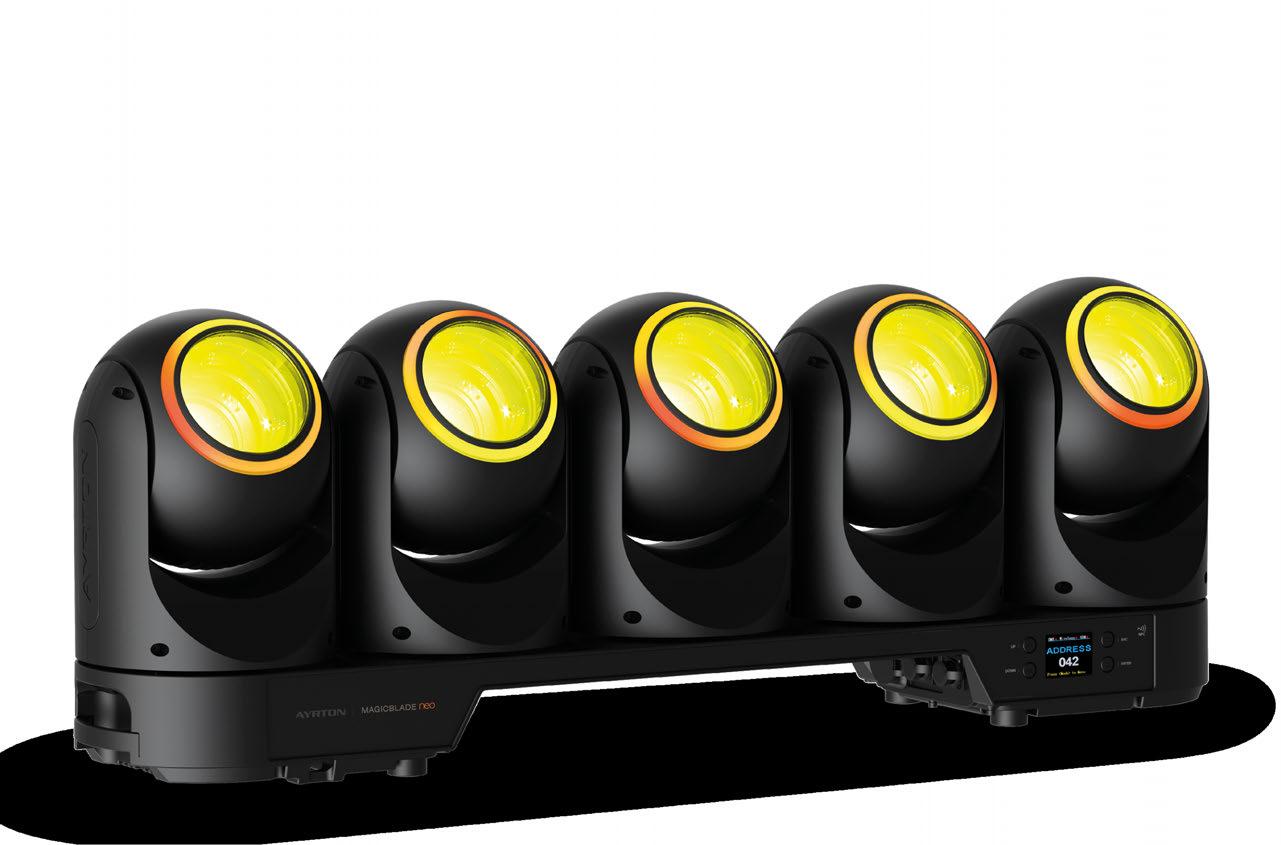
MagicBlade Neo is a marvel of technology, capable of creating endlessly reconfigurable curtains of multiform light, unreal vortexes, and striking volumetric effects through absolute mastery of light. The 5 independent heads of MagicBlade Neo are spaced just a few millimetres apart and give the impression of touching. This avant-garde luminaire, inspired by MagicDot Neo, makes it possible to create ultra-compact matrices, perfect alignments and spectacular plays on perspective. MagicBlade Neo is an impressive concept which, at first glance, suggests infinite possibilities.

Illuminance at 5 m 16,000 lux (1 head)
Zoom Aperture 3° to 30°
way.’ There was a pause, then the client agreed. Truthfully, I think they agreed more from trust than expectation. Years of partnership. Years of surviving impossible situations together.
I’m not sure anyone genuinely believed a completely new closing ceremony concept could be created in a matter of hours. Strangely, as the meeting ended, the idea had already begun forming in my head. Quietly at first – incomplete, fragile, but alive. Paired with the belief I had in our team, I knew we had a chance.
‘This country will emerge stronger than ever’ The clock was brutal. Time was almost nonexistent, but the determination inside the room had changed completely. The concept itself, in its earliest form, was incredibly simple. Not spectacle, technology or scale for the sake of scale: Emotion.
I gathered the team together. ‘Some of us have lived here for decades. Some of you were born here. None of us ever imagined we would witness a moment like this. But we
are still here. We haven’t run. We haven’t fled. We are moving forward together’. And then I referenced the words that had stayed in all our minds throughout those weeks: ‘This country will emerge stronger than ever’.
Those words became the foundation of everything that followed. Suddenly, this was no longer about proving how big a show Dubai could produce – the world already knew that. This became about showing what Dubai stands for: Unity. Strength. Humanity.
Th e feeling in the room changed. People stopped thinking like technicians and started thinking like storytellers, like human beings. There was genuine emotion behind the work now, full of gratitude, pride and responsibility.
Someone referenced the emotional impact of Olympic ceremonies. The power of people walking together beneath flags, where nationality, race and politics momentarily disappear in favour of something bigger.
Someone else mentioned music. Songs that transcend entertainment and become messages
in themselves. Songs that make entire stadiums feel connected.
And then the direction became clear. What if, instead of filling the sky with spectacle, we filled the stadium with emotion? What if this ceremony became a tribute to unity itself?
By 11am, the framework existed – barely, but it existed. We had less than 10 hours to save the show, and this is where fully integrated agencies become capable of pulling off miracles.
Whe n the impossible arrives, specialisation alone is never enough – you need every discipline moving as one organism: Creative, production, music, content technical, operations, strategy, design… everyone.
However, there was still one brutal reality hanging over all of us. This was happening just two weeks before the show. Whatever idea we created now would need to be designed, produced, rehearsed and executed all within 14 days, during regional conflict, storms and floods. We had just two weeks to create something capable of emotionally uniting a nation. So, the
call was made, the A Team assembled. Rudy Sibai, our Head of Video, Audio and one of the key show producers, took ownership of the soundtrack and emotional score.
Nasim Sarmadi, the Creative Lead, began shaping the visual narrative. Abdulatif Alsayegh, our Chairman and cultural compass, helped guide the deeper meaning behind every message and reference. Amer Qadri, leading the project delivery team, immediately began stress testing whether any of this could realistically happen under such conditions.
Th en there was me. Trying to shape an idea that could turn a closing ceremony into something far more meaningful – a tribute to the UAE, a global message broadcast from Dubai to the world.
‘Something deeper than spectacle’ As the hours disappeared, fragments slowly began connecting together. What if we used the newly formed Dubai Philharmonic Orchestra? What if the national anthem became the emotional heartbeat of the piece?
Th en the client added another layer. Two song options were sent through: Hay Bel Shahama and Ya Salam Ya Dubai – songs deeply rooted in Emirati emotion and identity, filled with nostalgia, pride and meaning.
Su ddenly, the shape of the ceremony began revealing itself: An orchestra, a national tribute, an emotional narrative… But something was still missing, because this wasn’t just for the stadium; this was for broadcast, for homes, for millions watching around the world. We needed a voice.
The orchestra conductor recommended an artist we had never worked with before, Amanda Maalouf – a Lebanese singer with a powerful emotional tone and, more importantly, an immediate understanding of the mission. This was not about performance. This was about unity, emotion and delivering something that people could feel.
Th e next few hours became critical. At that point, we still had no idea whether the concept would actually be approved – whether the client genuinely believed in it or was simply respecting the years of partnership between us.
Usually, presentations of this importance take weeks – huge cinematic flythroughs, perfect renders, state-of-the-art animations, carefully scripted moments… This time, we had hours.
So, imagine the scene: One screen, one emotional music track, mood footage, B-roll, rough animations, and notes scribbled directly onto visuals.
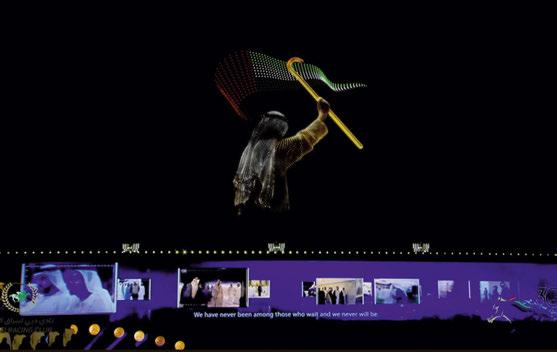
The drones were still visible in some frames, except now accompanied by side notes saying: “AR for broadcast only.” At one point there was a static PNG image of an orchestra dropped onto the screen with an arrow beside it reading: “Orchestra enters stage.”
Under normal circumstances, it would have looked unfinished to the point of embarrassment, but then the music began and suddenly none of that mattered anymore.
Th e emotion took over the room instantly. You could feel it through the call. Thumbs up emojis started appearing from the client side. Messages, reactions, silence in places where people would normally interrupt… We knew at that moment that we had struck something deeper than spectacle.
As the music built, the emotion became overwhelming – not because of production
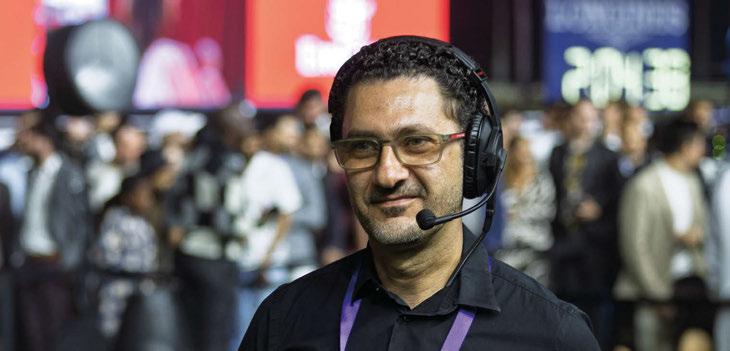
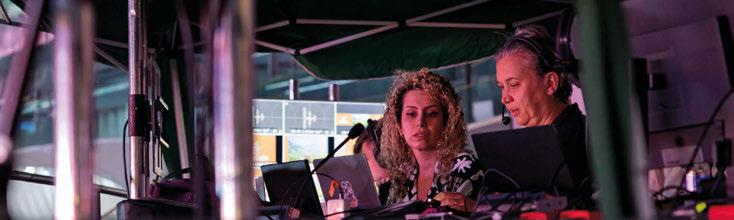
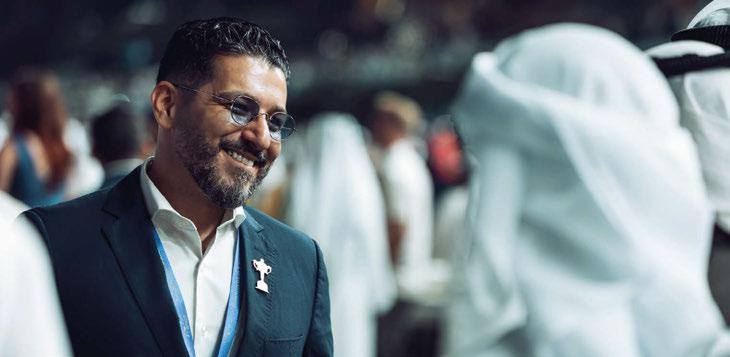
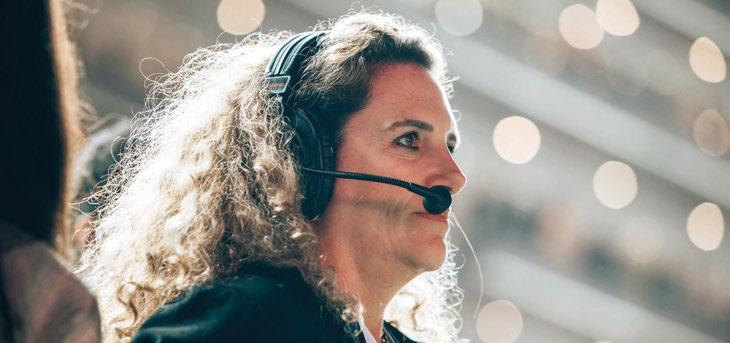
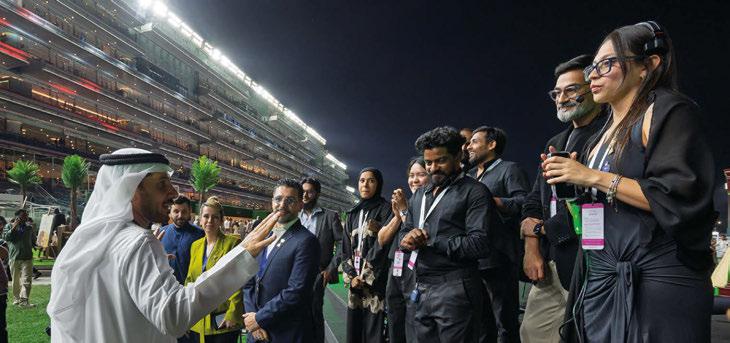
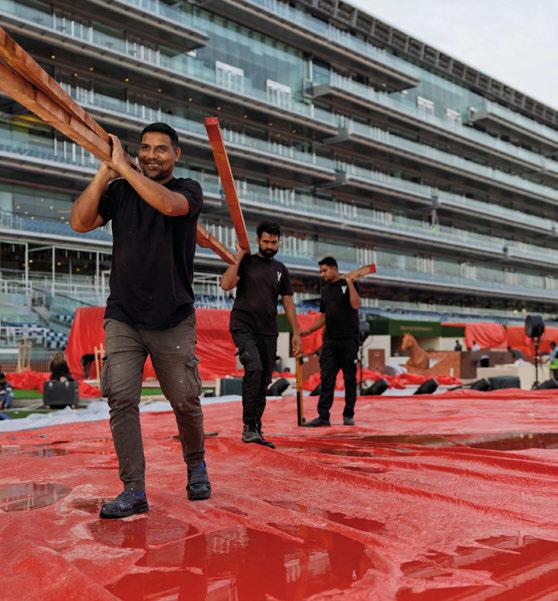
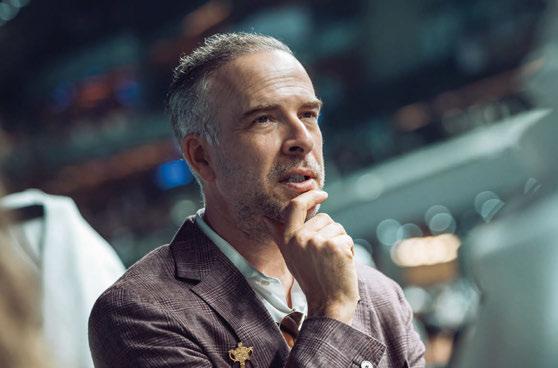
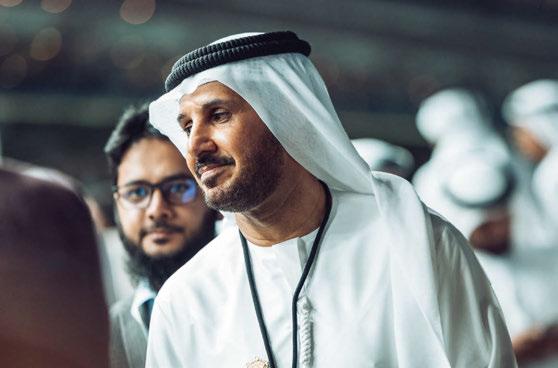
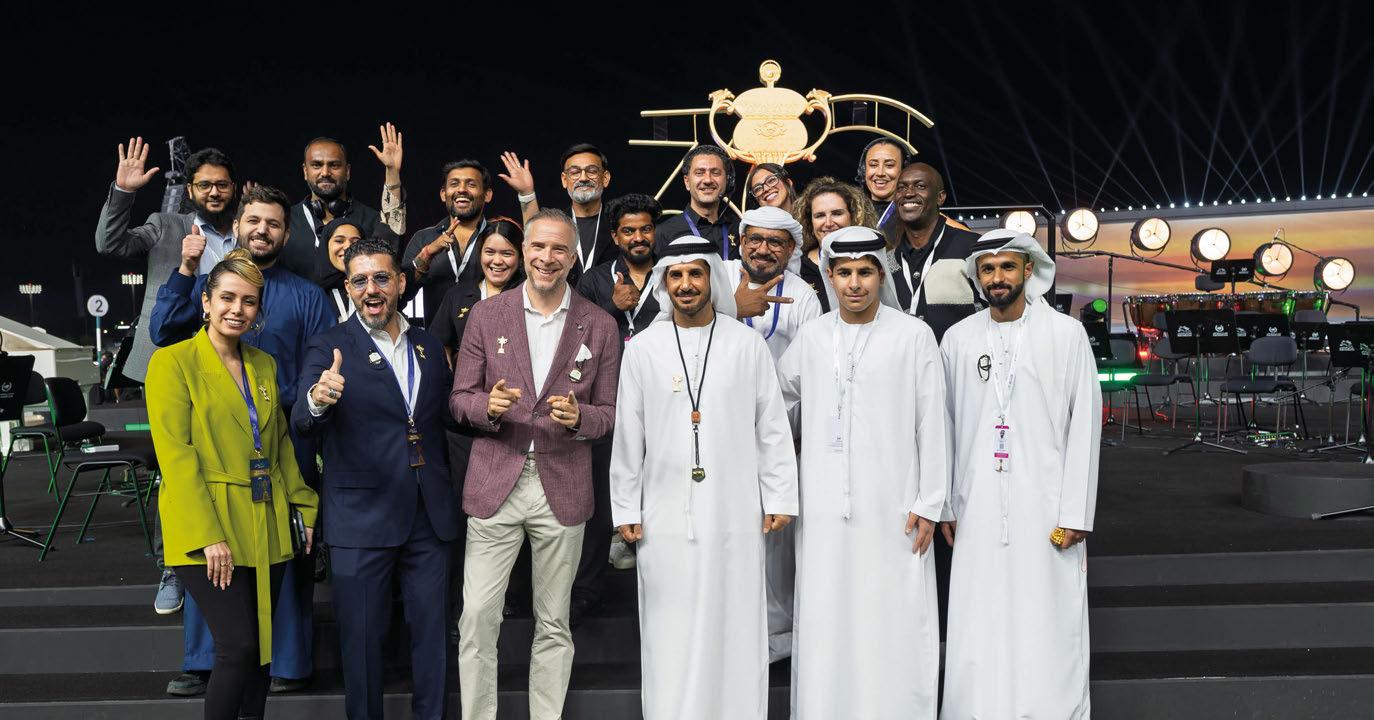
Opposite page (left-right): Wet weather hampers the build; Singer, Amanda Maalouf; Group CEO, Alex Bendiouis; Chairman, Abdulatif Alsayegh. Above (top-bottom): Project Delivery Lead, Amer Qadri; Creative Lead, Nasim Sarmadi with Showcaller, Dominique Zawisza; Head of Video and Audio, Rudy Sibai; Event Director, Claudia Mosquera; Members of the Alsayegh team.
value, not because of the technology, but because everyone watching understood what this piece represented.
This was no longer simply a replacement show. It had become a tribute to resilience, leadership, and the country that everyone in that moment was grateful to call home.
By the end of the presentation, there were tears visible through the video call screens. And honestly, I do not think that emotion came purely from what we had created.
It c ame from what everybody was collectively living through at that moment in time. The country needed positivity, hope and unity, and suddenly, this ceremony had become a vehicle for all three.
Eventually, we received the provisional green light to proceed. I would love to say that everything became smooth after that, but these are live events, and nothing is ever smooth. Alongside missile threats, airspace restrictions
and the pressure of rebuilding an entire closing ceremony in under two weeks, another challenge arrived: a storm – and a big one at that.
Th e following days became a blur of recording studios, rehearsals, wet stages and constant improvisation. Orchestra rehearsals happened in canteens. Rain covers were dragged on and off equipment endlessly.
Th ere were moments where entire teams had to physically grab violins and cellos and sprint them indoors before another downpour arrived. Every rehearsal window felt temporary. Every build schedule felt fragile. Yet somehow, the idea kept growing stronger.
Th e weather refused to stop. Until finally, almost unbelievably, it cleared around 11pm the night before the event. Only then could we properly rehearse sections of the show in full.
Before that, we had been operating in fragments; minutes between rain showers, quick resets, last-second recordings. It was controlled
chaos. Somehow, against every realistic expectation, we made it happen.
In my humble opinion, it became the greatest Closing Ceremony the Dubai World Cup has ever had. It was certainly not the biggest, the loudest or the most technologically advanced, but I believe it was the most meaningful.
Be cause for one brief moment, in the middle of an incredibly uncertain period for the country, we used one of the world’s biggest stages not simply to entertain, but to remind people what Dubai and the UAE truly stand for: Resilience. Unity. Strength. And that is something that none of us will ever forget.
None of this would have been possible without the devoted teams working around the clock, as well as the full support and guidance of Dubai Racing Club and the UAE leadership, to whom we are all eternally grateful.
Photos: Alsayegh Worldwide www.alsayegh.com
Visualize your next show with technology that breaks boundaries
For over 20 years, Disguise has powered the world’s most groundbreaking live shows, stage designs, and award ceremonies - from the VMAs to Eurovision and MDLBEAST Soundstorm. Discover how our technology lets you merge realities and create unforgettable visual experiences.
Contact us at info@disguise.one
Image Credit: Ralph Larmann
The show must go on
As the Middle East live events industry continues to count the cost of the regional conflict, TPiMEA catches up with some of the key figures from across the sector to find out how they are navigating the road to recovery.
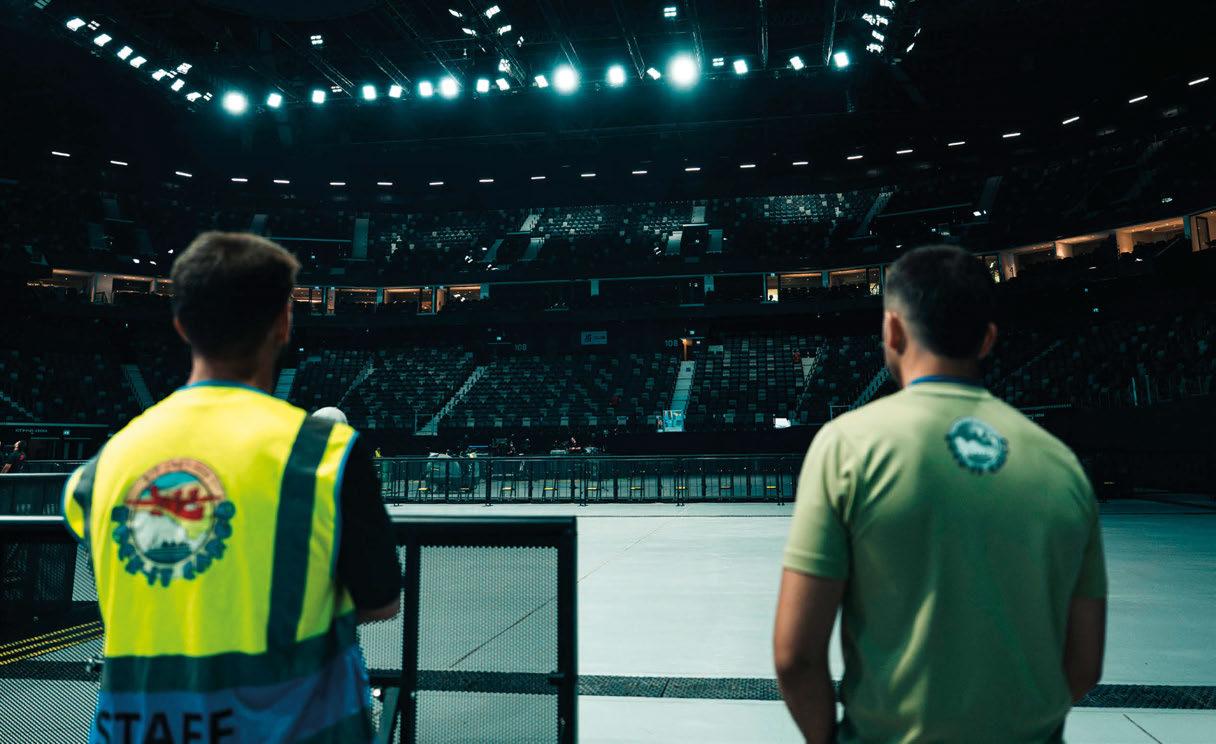
The live events industry can be volatile at the best of times, with any number of factors – from crew shortages and supply chain issues to geopolitical unrest and extreme weather – all having the potential to throw the sector into disarray at a moment’s notice. This volatility has been put into stark relief for those in the Middle East over the past few months since the onset of the Iran conflict, which has led to the widespread postponement or cancellation of events throughout the region – including our very own TPiMEA Awards, which has shifted from May to 10 September – in turn causing knock-on effects for all those who live and work within it.
Just as the conflict provoked a wide spectrum of reactions from the general public, there have also been a variety of responses from the region’s live events industry, with businesses forced to adapt rapidly to the shifting market conditions. This has led to some undoubtedly
tough decisions. Measures such as delays on planned investments, hiring freezes, staff restructuring and redundancies are an unwanted reminder of the dark days of COVID that everyone would rather forget. However, unlike the universal suffering brought about by the COVID years, this current crisis is much more regionalised, with the rest of the world continuing to go about their business largely unaffected by the situation in the Middle East.
With many in the region suddenly finding themselves with open calendars, there are plenty of opinions and anecdotal insights available but beyond that, it’s not easy to gauge the true market sentiment. With this in mind, events recruitment specialist ESMOS Recruitment recently produced a study (which is available to download for free on www.esmosrecruitment.com) into how the industry is dealing with the conflict, bringing together responses from employers and employees across the region to “provide
a balanced, impartial snapshot of current sentiment”. According to the company’s Managing Director, Mark Benaicha, the purpose of the report is simple: “To offer a clear, honest reflection of the market today, helping businesses and professionals make informed decisions in the months ahead.”
Unsurprisingly, the findings of the report indicated a market under pressure, with 100% of employers reporting a loss of 2026 revenue, almost 60% of which describing that revenue loss as “significant” or “critical”. In response, 82% of businesses acknowledged a pause on freelance or contract usage, with almost 65% implementing a hiring freeze and over 40% having made redundancies.
In terms of project timelines, companies reported that 76.5% of all events had been postponed or cancelled, with almost 60% being pushed back to Q4 – potentially creating a severely back-loaded market.
“What stood out most was the consistency in sentiment across both employers and employees,” Benaicha stated, discussing the findings with TPiMEA. “There’s a clear acknowledgement of pressure, whether that’s revenue, job security, or operational challenges, but alongside that, there’s also a strong sense of resilience. Employers have put a real emphasis on employee retention and have gone above and beyond to protect their staff wherever possible. The downside to this is that freelancers have felt the biggest negative impact with no support network behind them.”
On e area that did stand out was the disconnect in communication. “In several cases, employers felt they were being transparent, while employees felt a lack of clarity. That gap is something that will need to be addressed as the market stabilises. Employees will all be taking notes about how things have been handled during this period and will recreate their lists of desired future employers.”
For ESMOS Recruitment, while the shift in hiring activity has had an effect on the business, the fact that the company is fully focussed on permanent recruitment within the events industry rather than staffing or temporary solutions has brought stability. “We also work with a number of organisers and businesses with international portfolios, which has helped balance regional fluctuations – while some areas slowed, others continued to hire,” Benaicha explained. “More importantly, it’s allowed us to play a key role in supporting people on the ground. We’ve been able to move event professionals affected by redundancies or disruption into new opportunities relatively quickly, which has been a real priority for us during this period.”
Be naicha closed with a message of positivity for the industry: “This industry has always been resilient and we’re already seeing signs of that again,” he commented. “While there’s been disruption, there’s still strong underlying demand, particularly from businesses with diversified, international event portfolios. Activity hasn’t stopped; it’s just shifted with a focal point of Q4 as the potential go to quarter.
“There’s also been a real sense of the industry pulling together. Businesses are adapting, people are supporting each other, and there’s a shared understanding of the challenges being faced,” he added. “As large-scale events begin to return, the focus will naturally shift back to growth starting locally, regionally then globally. The businesses that have stayed close to their people and remained agile will be in the strongest position to capitalise. The foundations of the industry are still very much intact, and that’s something to be confident about.”
‘People are still keen to come out’
Few arms of the industry have been subjected to the abrupt stop-start nature of the current market more visibly than venues. For Malcolm Giles, Senior Director of Venue Services at Coca-Cola Arena, the emotional impact of watching a packed calendar suddenly empty was immediate. “After we came out of COVID, everyone worked incredibly hard to put the venue in a very strong position, with a packed schedule of back-to-back shows. Then
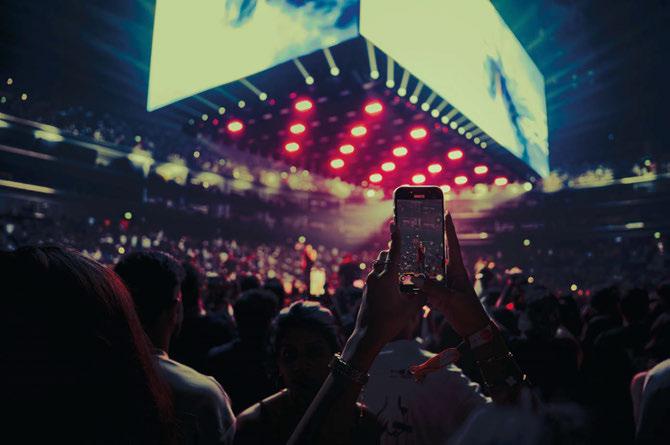
Left: The Rock-it Cargo team continued to operate at full capacity throughout the disruption.
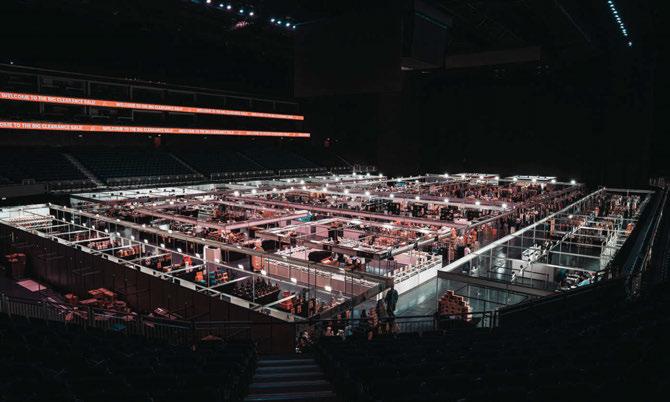
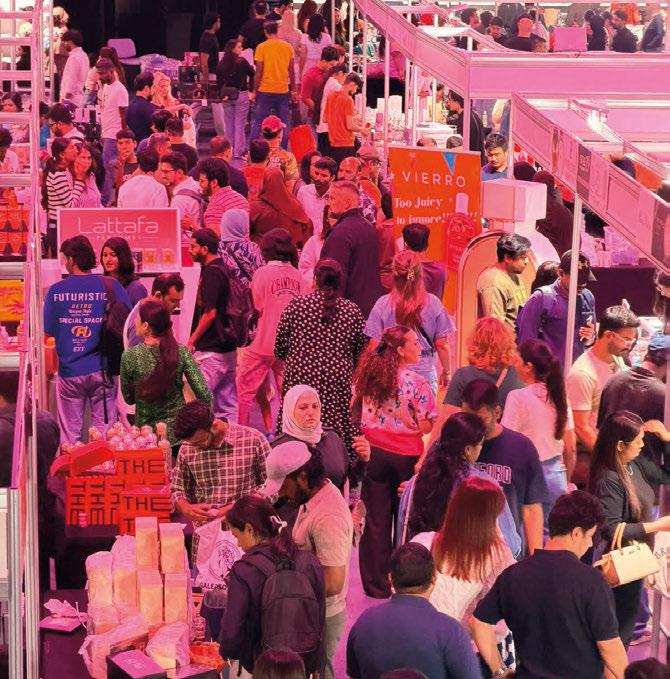
Above: Coca-Cola Arena showed its versatility by transforming from an elite events venue into a giant shopping destination.
suddenly, we saw the calendar almost empty overnight – it felt like COVID all over again,” he reflected.
Yet, unlike the enforced shutdown due to the pandemic, this time there was no government mandate to stop public gatherings – meaning that the venue had the option to introduce alternate events to fill the void left by the postponements. One such event was the Big Clearance Sale – a “shopping extravaganza” that saw the arena transformed into an indoor retail space. “For us, this was an opportunity to gauge public interest in attending the venue,” Giles explained, discussing the “incredibly successful” nature of the event. “We had 35,000 people through the door within the first week,” he added. “That shows that people are still keen to come out.”
For the Coca-Cola Arena’s in-house technical team, the quiet period has provided an opportunity to catch up on housekeeping and maintenance around the venue. “We have taken a structured approach, pulling our staff into additional roles to ensure that they remain engaged and we’re ready to go when the market picks up again,” Giles explained, noting his confidence in the broader outlook for the region. “The positivity is there. Most events were postponed rather than cancelled, and I believe that once more events resume, we will start to see a snowball effect with more artists returning. I think the market will come back even stronger than before.”
‘The resilience of this industry is strong’ Maintaining an oversight of international travel and transportation conditions, logistics companies are always a good barometer for the health of the industry. For Rock-it Cargo, the effects of the conflict were felt immediately. “We had several major projects at both planning and operational stages when the conflict began,” revealed Head of Sales, Middle East, Bob O’Brien. “Initially, the expectation was that disruptions would be minor, but the situation escalated very quickly into what we have all experienced over the past number of months.”
Th e immediate priority for the Rock-it team was to keep clients informed. “The landscape across air, sea, and road freight movements throughout the GCC was changing constantly, so we were focussed on communicating this to clients while rerouting inbound shipments and live projects wherever possible,” O’Brien stated.
Th e Rock-it team continued to operate throughout the disruption – initially remotely and then back full-time in the office. “We felt safe throughout, and we are now very busy in the planning stages for summer and Q4, which is an extremely positive position to be in considering everything the industry has faced,” O’Brien reported. “It has undoubtedly been another challenging period, particularly for freelancers, self-employed professionals, and some business owners who were forced to pause or cease trading during this time.”
Th e Head of Sales shared a “strong sense of positivity” around what he predicts will be an “exceptionally busy” Q4. “We expect there will be a focus on bringing shows back online to help stimulate events and tourism, and position the region as a safe and attractive destination for entertainment,” he said. “The resilience of this industry is strong, and I’m genuinely looking forward to seeing everyone busy again in live events. I believe we’ll quickly regain momentum and move into a strong finish to the year.”
‘Momentum returning across the region’
The pause on events and sudden drop in demand for equipment and technicians has naturally taken its toll on rental houses throughout the region. However, according to Creative Technology Middle East (CTME) President, Andy Reardon, the company acted quickly to protect its people, maintain operational continuity, and ensure it remained ready to support clients as the market stabilised.
“We quickly implemented a structured business continuity approach, including the formation of a dedicated
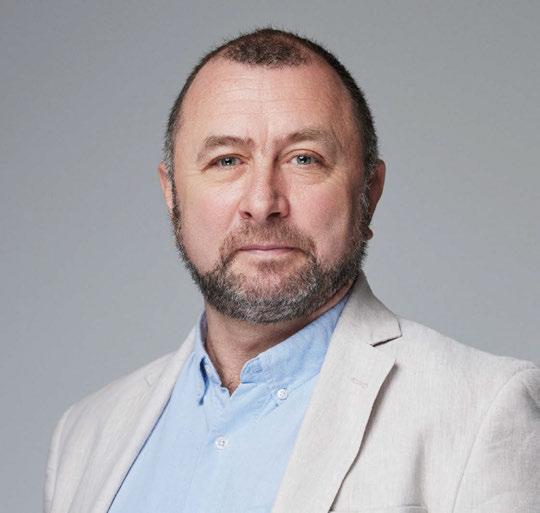
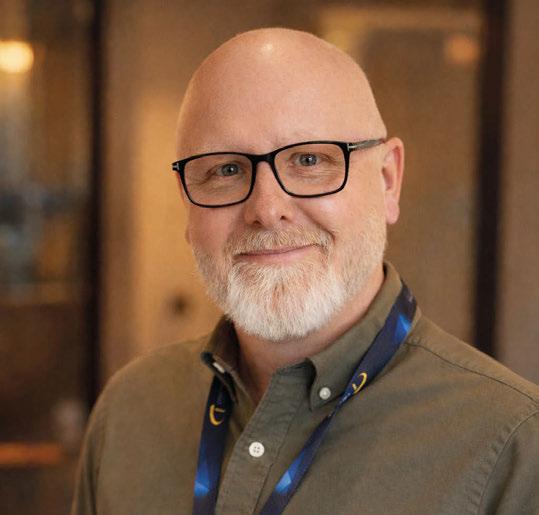
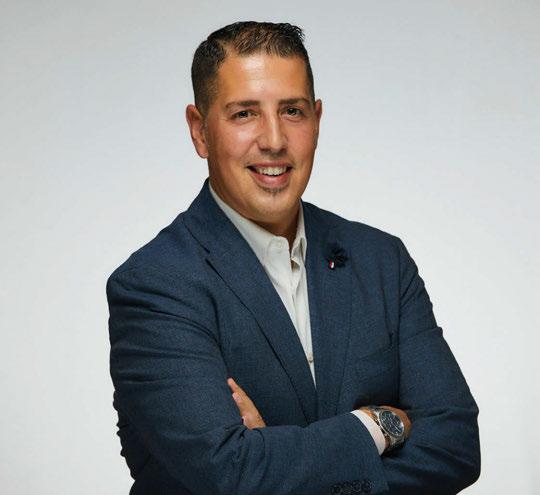
Above (Top-bottom): Coca-Cola Arena Senior Director of Venue Services, Malcolm Giles; President of Creative Technology Middle East, Andy Reardon; ESMOS Recruitment Managing Director, Mark Benaicha.
senior leadership task group operating with daily oversight,” he explained. “This allowed us to make informed, real-time decisions across all our territories while maintaining clear communication with both our teams and our clients.”
From an operational perspective, CTME took proactive steps to remain resilient, including pausing non-essential capital expenditure, tightening cost controls, and redeploying some resources across the business to maximise utilisation. The company also worked very closely with the wider CT Group to optimise equipment deployment, ensuring assets were positioned where they could deliver the greatest value while supporting demand across multiple markets.
Im portantly, activity across CTME’s Systems Integration and Venue Services divisions remained consistent throughout the period. “Teams have continued to operate on-site across multiple GCC countries, supporting critical infrastructure and long-term projects,” Reardon stated.
“Throughout this period, our people have demonstrated tremendous professionalism, flexibility, and commitment, supporting clients, projects, and wider group initiatives across multiple territories. Preserving capability has been a key priority for us, ensuring we remain well positioned as activity returns.”
While parts of the live events pipeline naturally slowed, other areas of the business continued to progress. “The enquiry levels we are seeing, combined with the proactive approach of our commercial teams working closely with clients and partners, reinforce our confidence that underlying demand remains strong,” said Reardon. “In many
cases, projects have been deferred rather than cancelled, which gives us confidence that activity will continue to build as market conditions stabilise.”
Lo oking to Q4, Reardon described the outlook as positive, with the company already engaged in largescale opportunities across entertainment, sport, and government-led initiatives throughout the region.
“There is a clear intent from clients to move forward, with projects being planned with greater confidence and longer lead times,” he commented.
“We continue to see significant investment in sport, entertainment, tourism, and infrastructure, providing a strong foundation for future activity,” he added. “There is a real sense of momentum returning across the region, and with that comes renewed confidence from both clients and the wider industry.”
According to Reardon, the period has reinforced the importance of resilience, adaptability, and strong partnerships. “Our focus throughout has been on supporting our people, maintaining close relationships with our clients, and working collaboratively across the wider CT Group to ensure we remain agile and ready to respond as opportunities return.
“The demand is there, the ambition is clear, and the region continues to be one of the most exciting places globally for large-scale events,” he continued.
“As confidence returns and activity levels in the region continue to build, we remain focussed on supporting the next phase of growth with all of the capability, expertise, and operational readiness that our clients expect.”
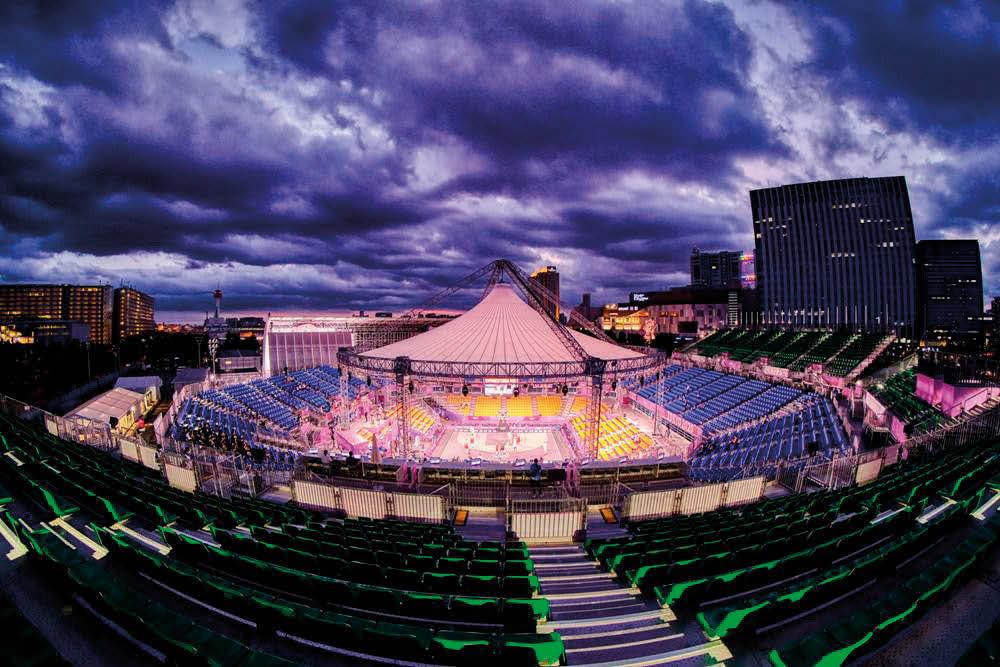
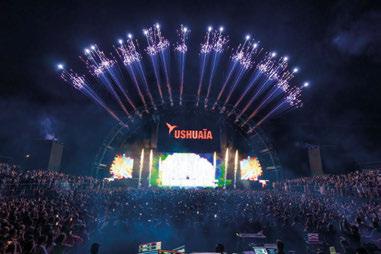
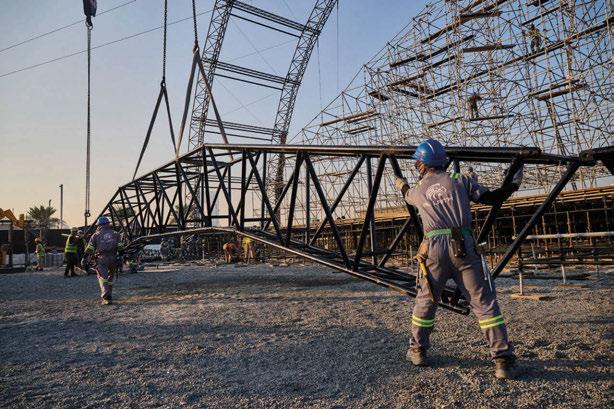
Scale & capability. Design, supply, and installation of large-scale temporary structure.
End-to-end control. From engineering and fabrication through to logistics, installation, and dismantling.
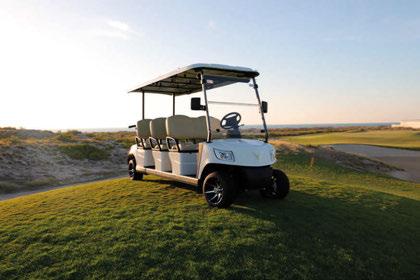
Asset-backed delivery. A large in-house fleet of structures, seating, staging, machinery, site overlay and transport.
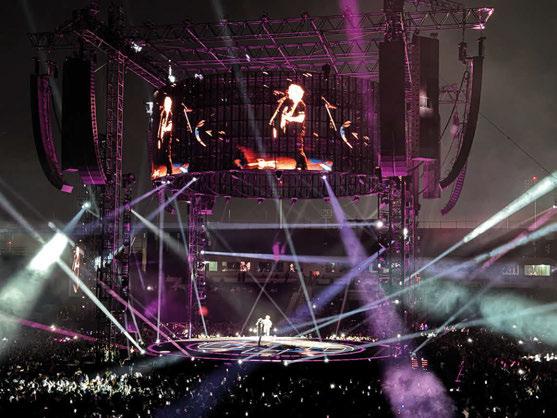
Your Partner in Excellence
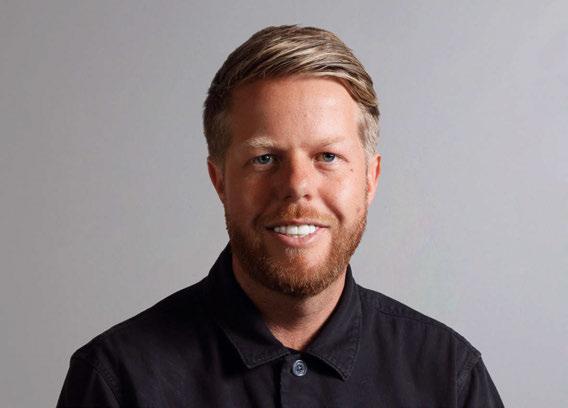
‘A crisis is a moment of opportunity’
The sense of confidence in the strength of the region is shared by Laser Saga Founder, Serge Lomadze, who expects the industry to “change for the better” in the near future. “After every winter, there is spring,” he commented.
“Strong teams led by strong founders, building teams will get stronger – people are the strongest pillar in live events. Many of us have focussed on new connections, partnerships, internal reviews, new creations and improvements – this will reflect in how the industry evolves from here on.”
Lomadze explained how the company is using the period of instability to bring about marginal gains. “Our philosophy is built around 1% daily improvements,” he stated.
“We’re using this time to double down on the tasks that have been pending for a while – the ones that are non-urgent but important, that don’t require much financial investment but do need team sessions and hands-on action.”
Th e company is also conducting what Lomadze described as “a strong restructure in processes and an infrastructure redesign – aimed towards reduced on-site time and increased reliability, improving the HSE, focussing on the Sell and Integrate division”. He added: “Weekly training for the team has become a habit, and we’ve rebuilt our experimental demo area in Dubai, giving access to local talents and partners to experience and create the shows.”
Having lived in the UAE for more than 30 years, Lomadze has seen more than his fair share of ups and downs, and he’s well aware of the best route to recovery.
“At Laser Saga, we’re counting on ourselves, our internal resources, and the support of our partners and suppliers,”
he commented. “Partnerships and fair play are what forms long-term relationships and fuels the industry. Sharing knowledge, resources, venues, and tools between industry professionals is crucial.”
In the spirit of prioritising long-term partnerships, Lomadze has made the decision to change some of Laser Saga’s policies around international hiring, putting local businesses first wherever possible.
“Let’s be honest, we have all delivered a lot of shows working with internationals, taking business away from local companies,” he admitted, noting the change to now prioritise local businesses.
“We have also offered our expertise and resources more openly to regionally based companies,” he added. “This season has shown the true faces of many, so I see this as the perfect moment to ‘declutter’ and build some strong, long-lasting relationships based on shared values. We opened our doors to those in need, and in return we saw new doors open to us.”
Ac cording to Lomadze, a crisis is a moment of opportunity. “I see the whole region becoming even more united after this crisis, and I also see international productions, artists and agencies plotting more trust into the region and those of us who stayed here, created here and will continue doing so.”
‘Regional collaboration’
For Energie Entertainment, the direction of travel has started to change following the initial short-term shutdown of events. According to the company’s Founder and CEO, Tyler Davis-Smith, there has been a noticeable rise in enquiries
Top left: Energie Entertainment Founder and CEO, Tyler Davis-Smith. Above: Laser Saga Founder, Serge Lomadze. Left: Ogma Safety team members on site at the Qatar Grand Prix.
Right: A sold-out Coca-Cola Arena for Majid Al Mohandis Concert on 29 May, 2026.
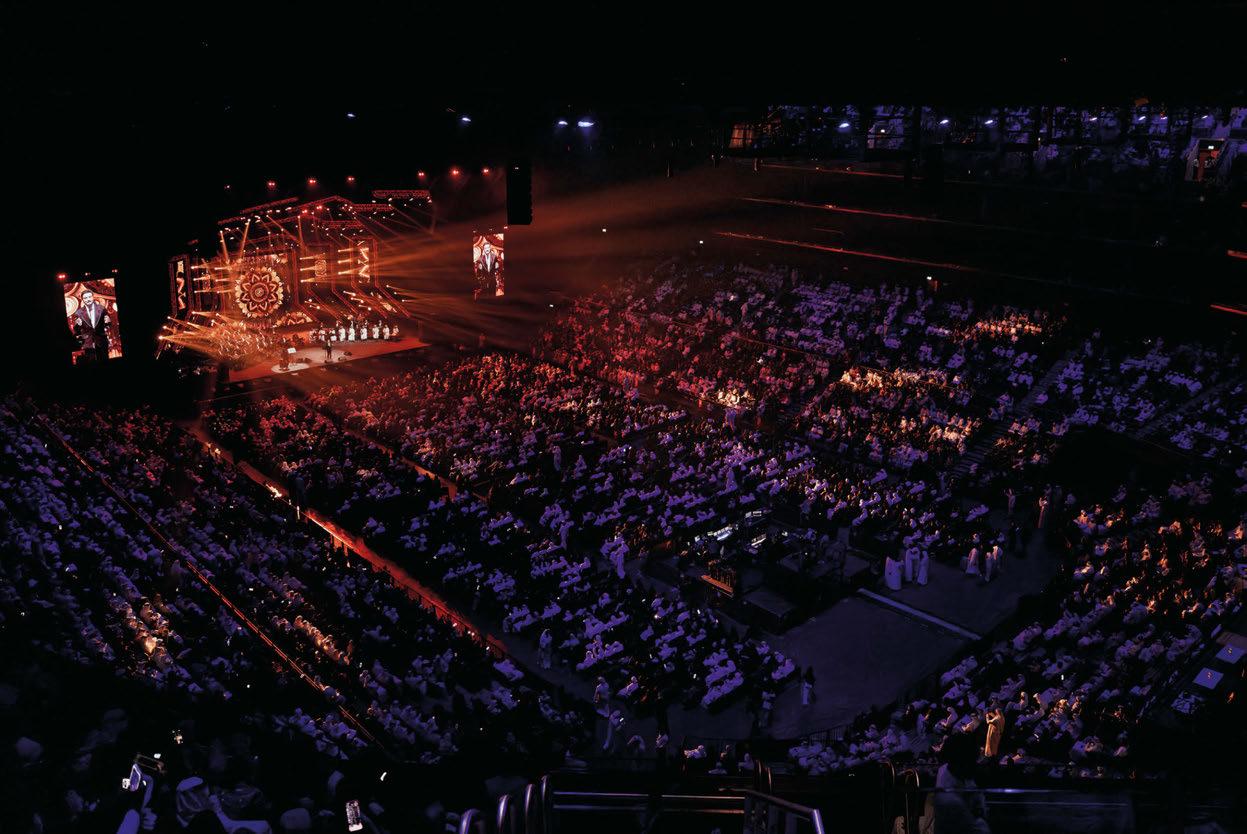
from international entertainment agencies and show producers looking to collaborate with Energie on shows in the UAE and wider GCC region.
“W ith flights becoming more expensive, schedules less predictable, and some international routes even facing cancellations, bringing in performers and production teams from the UK and overseas is becoming increasingly challenging for live events across the region,” he explained.
“As a result, more companies are now looking at how they can utilise talent, production support, and creative resources that are already based here in the GCC with partnership and collaboration.”
For the Energie Entertainment team, that has meant increasing conversations around supplying Dubai-based performers, show control teams, regional entertainment support, and utilising its in-house costume department for events across UAE, Saudi Arabia, Qatar, and beyond.
“I think it’s a really positive shift,” Davis-Smith commented.
“The GCC has an incredible pool of world-class performers, creatives, show teams, and entertainment infrastructure already in-region,” he added. “Leveraging what is already here not only reduces logistical risk but also allows events to be delivered in a more agile, sustainable, and reliable way. Regional collaboration within the entertainment industry is only getting stronger, and we’re proud to be part of that evolution.”
Another company that is maintaining its confidence in the region is Ogma Safety, which recently welcomed six new team members to its growing business across the Middle East and Europe. “Even in the most challenging times, progress doesn’t stand still,” stated Ogma’s Declan
Meenan. “In a period where uncertainty has impacted the events sector, this is more than just recruitment – it’s a clear vote of confidence in the region, the industry, and the incredible people we work alongside every day,” he said of the new appointments.
“The Middle East in particular has consistently shown resilience, ambition, and an ability to adapt. We see that same spirit in our clients, partners, and wider network –and it’s what gives us absolute confidence that the events sector will not only recover, but come back stronger,” he added. “We’re proud to continue investing in our team and the region, supporting safe, world-class events. Here’s to resilience, collaboration, and what comes next.”
Among all the conversations that have taken place with those leading the recovery in the Middle East’s live events industry, that theme of resilience seems to crop up time and time again. And while there undoubtedly remain some tough times ahead, if there’s one thing the region has proved over the years, it’s that it has the resilience required to get through even the most challenging situations and ultimately come back stronger.
Photos: Coca-Cola Arena, Creative Technology Middle East, Energie Entertainment, ESMOS Recruitment, Laser Saga, Ogma Safety, Rock-it Cargo. www.esmosrecruitment.com www.coca-cola-area.com www.rockitcargo.com www.ct-group.com www.lasersaga.com www.weareenergie.com www.ogma.global
Mediatech Africa
After a seven-year hiatus, Mediatech Africa returns with renewed purpose, sharper market insight, and a redefined focus on the continent’s evolving AV and live production sectors. Expo Director Simon Robinson explains why 2026 marks a turning point for the show and the wider African industry.
After nearly a decade away, Mediatech Africa is back and, according to Simon Robinson, it’s not simply a continuation of what came before. Instead, the 2026 edition represents a reset – a recalibration shaped by years spent working across distribution, production, and the wider technology ecosystem.
Du ring the gap, driven largely by market shifts and the pandemic, fundamental changes have taken place not just at the event but throughout the industry. Where Mediatech once centred heavily on broadcast and film production, today’s show reflects a broader landscape. Live events and AV integration have surged to the fore, while traditional broadcast has diminished in influence. Meanwhile, the rise of content creation tools and social media-driven production has introduced new audiences.
Robinson and his team have used the intervening years since the past Mediatech Africa in 2019 to immerse themselves in different corners of the market, gaining insight into the challenges facing distributors, rental companies, and production professionals alike. That experience, he says, has reshaped everything from marketing strategy to exhibitor engagement, ensuring the show is more aligned with real-world industry needs.
Crucially, Mediatech Africa returns at a time when the continent’s appetite for technology is growing rapidly. With more international manufacturers looking to establish a presence and increasing numbers of visitors from across
sub-Saharan Africa, the show is positioning itself not just as a South African event, but as a true pan-African hub.
In this interview, Robinson discusses the challenges of relaunching, the shifting balance of industry sectors, and why he believes Mediatech Africa is poised to become the definitive AV platform for the continent.
This year’s show looks set to be potentially your biggest and best yet. What do you put that down to?
We took a very conservative approach when planning the comeback. After seven years away, we had to treat this almost like a brand-new event. However, the level of commitment we’re seeing from exhibitors and clients is extremely encouraging – not just in terms of numbers, but in what they’re putting into the show. There’s a sense of momentum. Exhibitors are investing more, and that creates a better experience for visitors. So, while we’re cautious by nature, all the signs are pointing in the right direction.
How has it been returning after such a long break?
It’s been tough. Being away from organising exhibitions for that length of time means you must rebuild knowledge, relationships, and processes, but it’s been a good challenge. What has really helped is that I didn’t just sit still during those years. I worked on the distribution side, did freelance production, and got involved in various parts of the industry. That gave me a different perspective. I’ve seen the market from multiple angles, and that insight has been invaluable.
How has that broader experience influenced the show?
It’s changed our approach to almost everything – especially marketing and audience targeting. Understanding the verticals within the industry means we can be much more precise in reaching the right visitors for our exhibitors.
On the production side, we’ve also seen first-hand the challenges rental companies face –pricing pressures, undercutting, operational demands. That gives us a better understanding of what they need from a show like Mediatech. It’s also allowed us to step back and ask what really works, rather than just repeating what we’ve always done. You can’t take anything for granted. You must keep improving and delivering value.
How has Mediatech’s sector focus shifted?
Originally, we were very much a broadcast-focussed show, before expanding into film and television production, and later into live events. The real turning point for live events came when we moved venues in 2009 – that’s when that sector really took ownership of the show. More recently, we’ve been trying to build the AV integration side – the kind of market you’d associate with major international shows. That’s been a slower process and we hadn’t quite reached
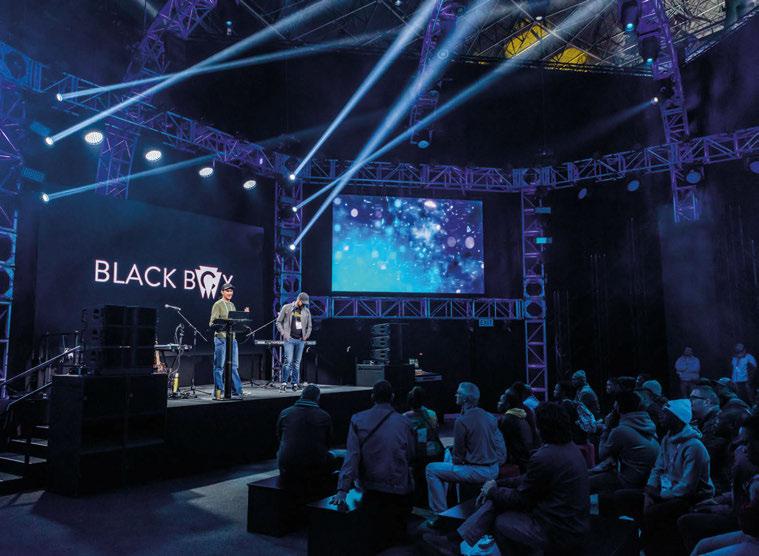
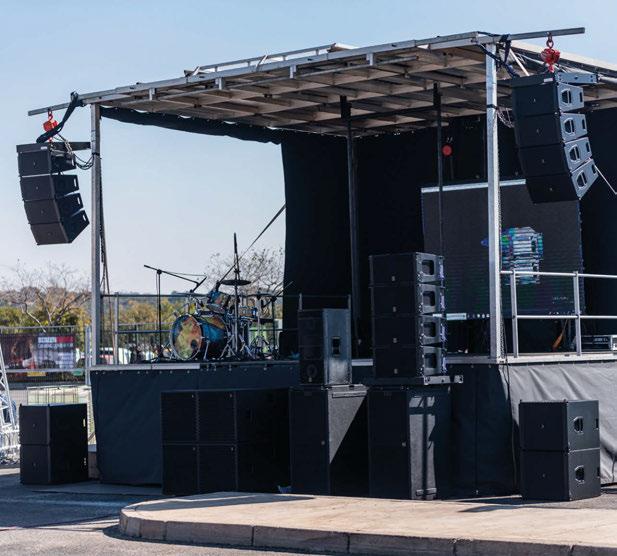
the point where that sector felt a sense that Mediatech is the definitive show for them. However, that’s changing. Post-COVID, the growth in corporate AV – driven largely by remote work and unified communications – has been huge. Manufacturers in that space are now coming on board in a big way. One of our goals this year is for that sector to fully embrace Mediatech.
Tell us about the new venue…
Kyalami Grand Prix Circuit & International Convention Centre is a good fit for Mediatech. As well as being a prestigious venue conveniently located in Midrand, the space allows us to create distinct zones within the show. That is important because the sectors we cater to have very different requirements. For example, live events can be loud and high-energy, whereas corporate AV tends to be quieter and more formal. By separating them, we can create better environments for both exhibitors and visitors.
Th ere are some limitations. The roof height in certain halls isn’t ideal, and the power supply is a challenge for a show like Mediatech, which draws a significant amount of power. We will need to bring in generators.
We also could have used larger halls, as some areas sold out quickly, but overall, Kyalami gives us the flexibility, location, and profile we need for the next Mediatech.
What can attendees expect in terms of features?
We’re bringing back some favourites, like the outdoor sound demos, but with a new format. We’ll have multiple systems showcased on a single stage, covering everything from emerging brands to established names. We’re also introducing sound demo rooms and a range of productionled features designed to inspire and entertain. Plus, we have a few surprises we’re not ready to announce just yet...
How important is the houses of worship market in Africa?
It’s huge – arguably one of the biggest drivers of installed live event technology. Some of these churches operate at an incredibly high level, using top-tier equipment across audio, lighting, and control. They also produce and stream content, so they overlap with both live production and broadcast. It’s a very dynamic and influential sector, particularly in Africa.
Mediatech has traditionally been a distributor-led show. Is that changing?
Yes, quite significantly. While the region’s distributors continue to be well represented at the show, we’re now also seeing much more direct involvement from manufacturers who want their own brand presence rather than being part of a distributor’s stand. That’s something we’ve actively encouraged. It helps exhibitors stand out and gives visitors
a better experience. You’ll definitely notice more standalone manufacturer booths this year.
How important is it to attract visitors from across the wider African continent?
It’s critical. There’s a real hunger for technology across Africa, and many people don’t have the opportunity to attend international shows. We’re positioning Mediatech as the African AV show. Our ability to reach those audiences has improved massively, especially through social media. It’s much easier now to target specific groups, whether that’s churches, corporate users, or technicians.
What broader industry trends are you seeing in Africa?
One thing that stands out is the level of skill in South Africa’s production sector. The quality of work is comparable to places like the Middle East but often delivered on much smaller budgets, which is really impressive.
We’re also seeing increased movement of talent. During COVID, many professionals went abroad, particularly to the Middle East, but some are now returning. That could influence things like freelance rates.
Has the situation in the Middle East had any other impact on the show?
Not significantly at this stage. A handful of international suppliers have said that higher airfares and limited flight routes may affect the number of staff they can send. We also expect our diesel bill for generators to be a challenge. That said, changes in other regional events could create opportunities and might encourage companies to look at Africa more seriously. We’re working to make the show as attractive a proposition as possible, partnering with airlines and hotels to keep costs reasonable. Compared to Europe, South Africa still offers excellent value in terms of hospitality.
With such a long gap since the last Mediatech, are you also targeting a new generation of attendees?
Definitely – there’s a whole generation that has never experienced Mediatech. Someone who was a student in 2019 could now have five years’ industry experience and be attending for the first time. That brings fresh energy and new perspectives to the show, which is very exciting.
What’s your long-term vision for Mediatech Africa?
Right now, the focus is on making this comeback show as strong as possible. We have some big ideas about how to expand Mediatech and strengthen its position as a truly African platform. For now, though, it’s about delivering a world-class event and building from there.
Photos: Mediatech Africa www.mediatech.co.za
Designing the future of live events
As the Middle East’s live events market continues to grow in scale and ambition, Aggreko is investing in specialist expertise, smarter energy systems and data-led design to deliver more efficient and sustainable temporary power solutions for the region’s biggest productions.
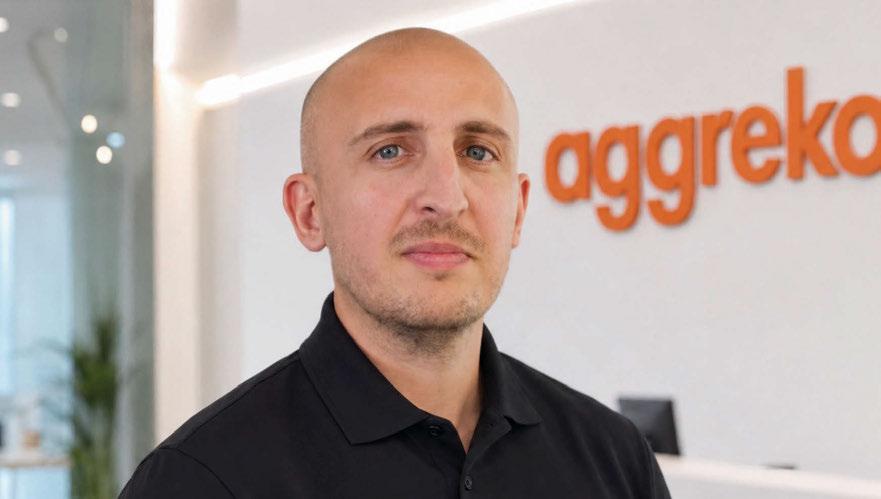
In the Middle East’s rapidly expanding live events sector, expectations around power infrastructure are changing fast. From international sporting tournaments and music festivals to large-scale cultural celebrations and immersive entertainment experiences, organisers are finding themselves under increasing pressure to deliver not only flawless production values, but also measurable sustainability outcomes.
For Aggreko, that shift has prompted a renewed focus on intelligent event design. The company has recently strengthened its regional Events Design capabilities with the appointment of three highly experienced specialists: JP Botha as Renewable Energy Engineer, Neil Williams as Events Design Lead, Middle East, and Mark Diamond as Events Design Engineer for Saudi Arabia.
To gether, they bring decades of experience supporting major global sporting events, Olympic venues and landmark productions, reinforcing Aggreko’s strategy to evolve beyond the traditional role of temporary generator supplier into a fully-fledged energy solutions partner.
“At Aggreko, exceptional events start with intelligent design,” explained the company’s Event Sector Leader,
Adam Rhodes. That philosophy is becoming increasingly important as clients place greater scrutiny on the environmental impact of their events.
According to Rhodes, sustainability conversations in the region have matured significantly over the past few years.
“Many of the international and annual event projects have now set their own environmental, social and governance goals, often with credible targets for year-on-year reduction of their event-related carbon emissions,” he commented.
“It could be argued that on occasions in recent years sustainability has been considered a tick-box or buzzword, and by implementing a visible battery, solar array or hydrogen generator, the event is showing efforts to be ‘sustainable’,” he added. “We are out of that phase now and stakeholders are holding themselves and their suppliers accountable to provide actual data and new initiatives to prove that the event is reducing its CO2 footprint compared to the previous edition.”
As a result, event power providers are now expected to deliver far more than temporary infrastructure. Clients increasingly want evidence-based strategies that reduce emissions without compromising reliability – a balance
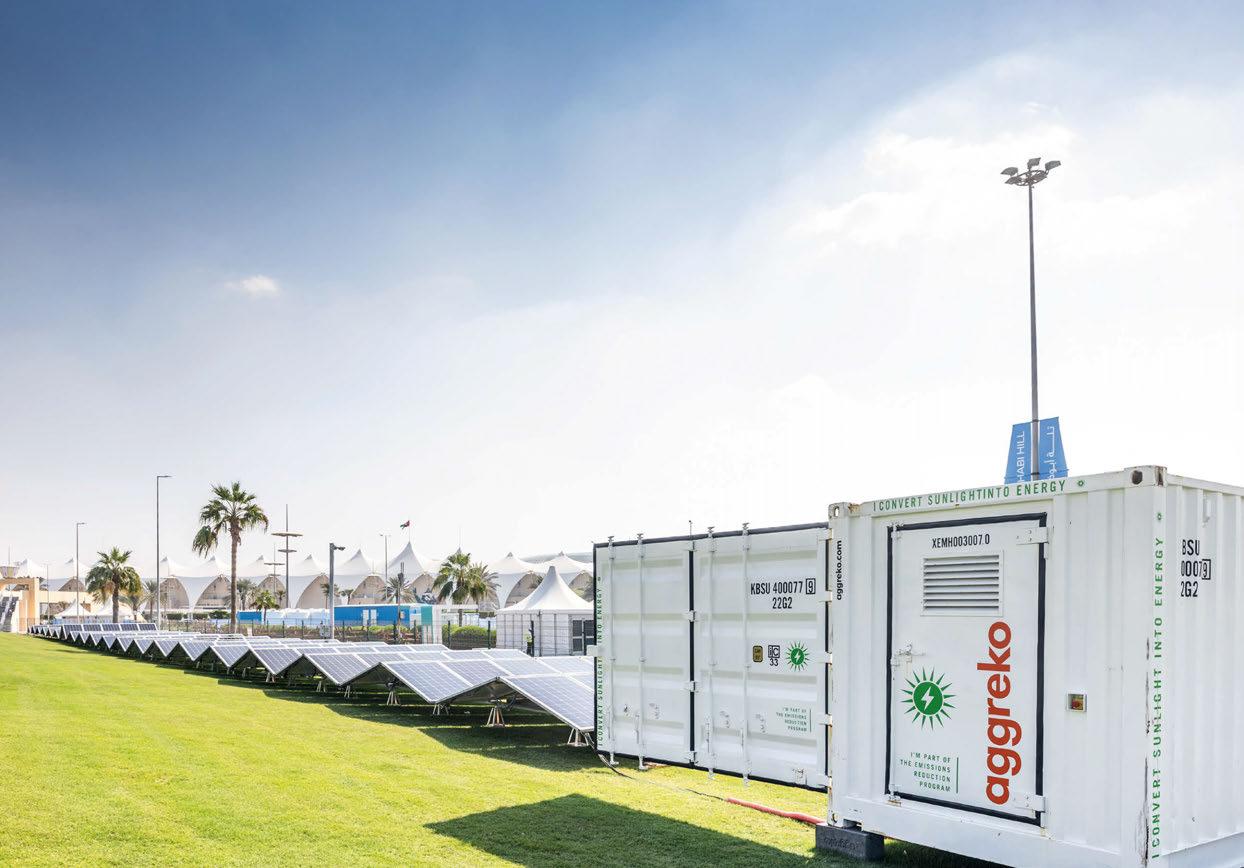
that requires deeper technical expertise and more detailed planning from the earliest stages of a project.
“D esigning for a more efficient and sustainable event requires expertise and a thoughtful process,” Rhodes continued. “As one simple example, AVL suppliers will often issue their power requirements at total connected loads but in reality, there is always diversity to be applied and so to gain efficiency this needs qualifying, ensuring that there isn’t any large unnecessary wastage in the amount of available power and diesel being burned.”
This need for smarter system design has been a major driver behind Aggreko’s investment in specialist personnel. Williams, who brings 28 years of international experience across complex live environments, now leads the company’s regional event design strategy. Diamond, meanwhile, is based in Saudi Arabia, strengthening Aggreko’s capability in one of the world’s fastest-growing live events markets; and Botha is responsible for the battery and solar products and application.
The group is helping Aggreko deliver increasingly advanced hybrid energy systems that combine generators, Battery Energy Storage Systems (BESS), solar technology and remote monitoring tools to optimise performance in real time. “For energy transition products like batteries and solar, it isn’t as simple as replacing a generator with a battery,” Rhodes explained. “There are load profiles, durations and site considerations to think about before determining whether it can bring real impact.”
According to Williams, designing reliable temporary power systems begins with understanding the specific
operational demands of every event. “The design process begins with a consultation where we have an initial discussion with the client to ensure we are fully aligned on the event brief and the requirements of the power supply,” he explained. “Once the scope of work is understood, we tailor our design specific to the job, leveraging our experience of Middle East event venues to present and deliver a solution where safety, reliability and cost-efficiency are our priorities.”
Safety, he stressed, remains the foundation of every project. “Firstly, electrical safety is non-negotiable, and all designs must comply with local authority standards and international best practice,” Williams said. “A detailed load assessment, where we analyse the average and peak demand of the system in line with a clear categorisation of the loads in terms of criticality, underpins the overall reliability of the solution and allows us to design appropriate redundancy and resilience ensuring continuity of supply throughout the event.”
That attention to detail is critical in the Middle East, where productions are often staged in challenging climates and temporary venues. “Events in the Middle East involve complex production setups in some of the most demanding environments,” Williams continued. “As a result, our solutions are always designed with practicality in mind which allows us to integrate seamlessly with our end user.”
Once those operational considerations are mapped out, Aggreko’s design teams then optimise the system holistically, balancing sustainability targets with operational resilience. “This includes right-sizing of equipment, using
hybrid and battery solutions, and optimising our distribution layouts,” Williams explained. “All of which reduce fuel consumption, lower emissions and improve operational efficiency while maintaining the reliability required for live events where there is no margin for failure.”
For Botha, one of the most significant developments shaping modern event power design has been the rapid advancement of battery storage technology. “Battery Energy Storage Systems have come a long way, especially with lithium-ion technology,” he said. “It’s now practical to run certain parts of an event without generators for periods of time, which also cuts down on noise.”
Th e operational benefits extend well beyond emissions reduction. “These systems are also great for handling spikes in demand, so you don’t need to oversize your generators as much,” Botha noted. “Hybrid setups are becoming standard now – combining solar, batteries and smaller generators. Solar on its own isn’t always enough, but it still makes a noticeable difference in reducing fuel usage as a direct substitute.”
Aggreko’s Events Design Engineer for Saudi Arabia, Mark Diamond, highlighted the growing importance of intelligent energy management systems, which allow engineers to monitor and control power usage dynamically throughout an event. “You can now actively control when generators kick in, when batteries are used, and how the load is spread,” he explained. “That can help bring down both costs and emissions.”
Ce ntral to Aggreko’s evolving strategy is the use of data analytics and remote monitoring technology. Through its dedicated Data Science Team, the company analyses telemetry data captured through Aggreko Remote Monitoring (ARM) systems alongside operational data collected on site. By studying historical performance trends and real-time operational metrics, the company is able to refine system designs and improve energy efficiency from one event to the next.
“This approach has already been implemented across major events such as Formula 1, the eSports World Cup and MDLBEAST festivals,” Diamond added. “The data-driven approach eliminates unnecessary oversizing, directly reducing rental costs and fuel consumption.”
Beyond internal optimisation, the technology is also providing clients with unprecedented visibility into their own energy usage. “It allows us to produce dedicated customer or job-specific dashboards, giving live visibility to our clients across key metrics such as generator run hours, fuel consumption, CO2 emissions and load profiles,” Rhodes explained. “Data can be drilled down to all electrical parameters, giving us a level of insight which supports our operational decision making and can help clients to better understand the performance and environmental impact of our power solutions.”
As the Middle East continues to invest heavily in major events, tourism and entertainment infrastructure, the demand for sustainable temporary power solutions is only expected to accelerate. For Aggreko, the company’s expanded design team represents both a response to that demand and a statement of intent about the future direction of the business.
Photos: Aggreko www.aggreko.com
Previous page: Aggreko’s Event Sector Leader, Adam Rhodes. Above (top-bottom): Renewable Energy Engineer, JP Botha; Events Design Engineer for Saudi Arabia, Mark Diamond; Events Design Lead, Middle East, Neil Williams.

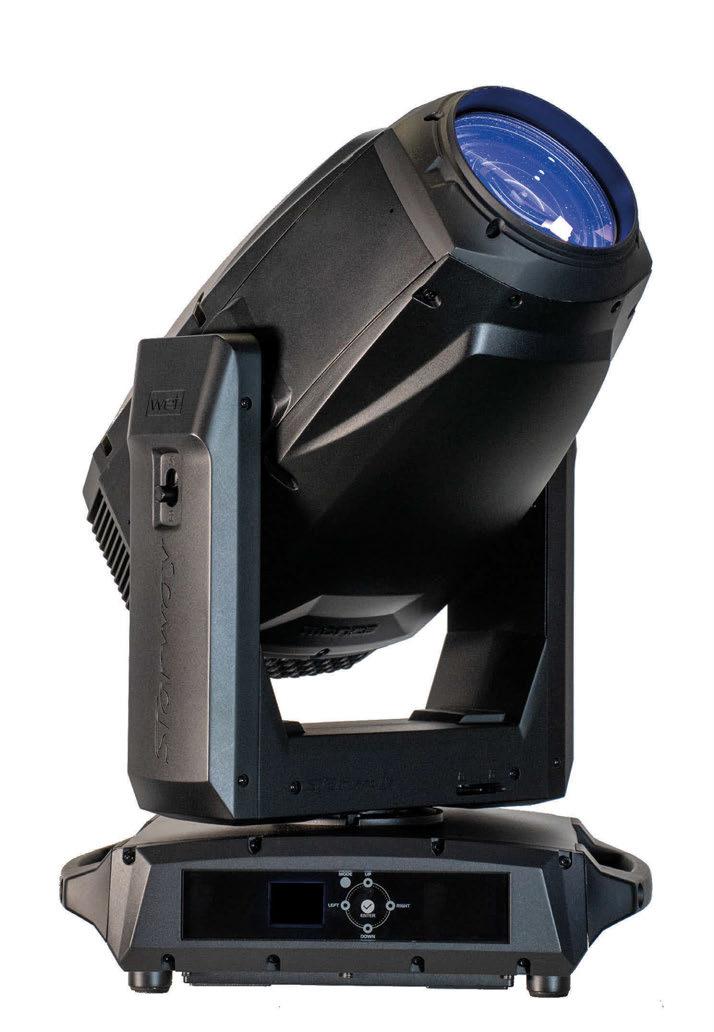
Monza WET is a compact and powerful Spot projector, equipped with a 350W white LED, delivering a luminous flux of 13,000 lumens.
With an extended zoom range from 3° to 49°, a CMY trichromy coupled with a progressive CTO, and a color wheel featuring 8 colors + 4 filters, Monza WET offers maximum flexibility to meet all creative requirements.
It includes 7 rotating gobos, 11 fixed gobos, an iris, a full-closing 4-blade framing system, and two stackable prisms (linear 6-facet and circular 6-facet), providing a wide range of effects. Two progressive frosts, Heavy and Medium, enhance its capabilities for smooth transitions and homogeneous projections.
With its IP65 rating, Monza WET is designed to withstand all conditions, both indoors and outdoors. It supports DMX, RDM, Art-Net, and sACN protocols, and includes a wireless DMX solution, ensuring a simplified and efficient setup.
La magie de la lumière

First French professional lighting manufacturer to obtain CSR 26000 label certified by APAVE
The human touch
As audiences increasingly demand more personal and purposeful event experiences, LINKVIVA is rethinking what large-scale public events are supposed to do, placing community, accessibility and long-term engagement at the centre of its work.
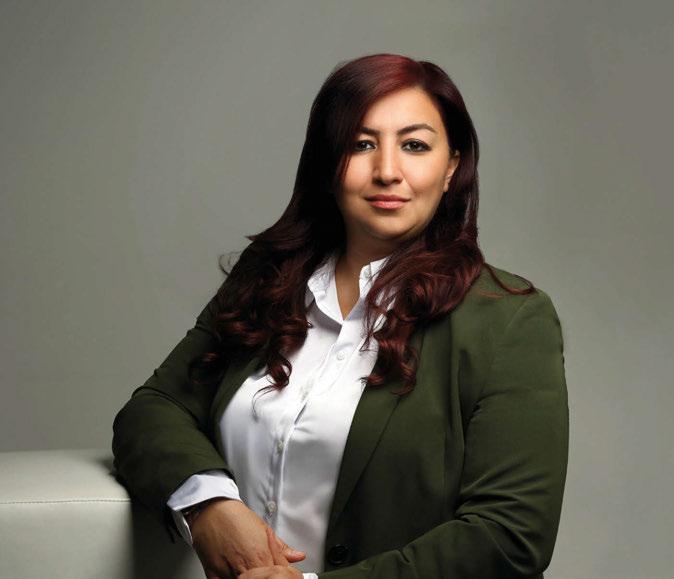
There was a time when scale alone defined success in the events industry. Bigger stages, larger crowds and more elaborate productions were the goal. However, according to LINKVIVA Marketing Director Ayah Alrashdan, audiences have changed.
“Audiences today expect events to stand for something beyond entertainment,” she commented. “Spectacle still attracts attention, but purpose is what creates emotional connection and long-term loyalty.”
That shift is now influencing event design across the Middle East and globally. Increasingly, organisers are finding that audiences want to leave with more than some merch and a few social media photos to remember the event by. They want experiences that feel connected to their lives, values and communities.
Alrashdan described how audiences are no longer satisfied with simply watching a performance unfold in front of them: “We are seeing a major shift from passive attendance to active participation,” she explained. “Audiences no longer just want to watch. They want to engage, contribute, connect, and feel that their time at an event had meaning beyond the moment.”
That distinction between attendance and participation also impacts the creative process. “This shift has completely changed how we approach event development,” Alrashdan
stated. “We no longer begin by asking, ‘What will impress audiences visually?’ We begin by asking, ‘What role will this event play in people’s lives?’”
For LINKVIVA, that has meant focussing more heavily on experiences that encourage audiences to participate rather than consume. Alrashdan pointed to “community-led experiences, wellness and lifestyle integration, interactive and participatory formats, user-generated storytelling, cultural relevance and local identity” as key areas shaping the company’s thinking for future projects.
Th e agency is also paying closer attention to what happens after audiences leave the site. “The event is no longer the finish line,” Alrashdan said. “It is the beginning of an ongoing relationship with the audience. The strongest indicator of an event’s success is what happens after it.”
Ac cording to Alrashdan, partnerships with public sector organisations are essential in achieving community impact. “Government partners provide long-term vision, strategic direction, and the ability to connect events to national priorities such as quality of life, tourism growth, community wellbeing, and cultural development,” she stated. “The strongest events are ecosystems where public sector, private sector, communities, and creators all contribute toward a shared purpose.”
Th e Marketing Director cited the Kayan Wellness Festival as one of the clearest demonstrations of how events can create meaningful social connection. “What made Kayan special was that people were not simply attending for entertainment,” Alrashdan said. “They came to reconnect with themselves, with others, and with wellbeing in a meaningful way. The emotional response was incredibly powerful because attendees felt part of something meaningful and positive.”
‘Understanding the audience’
While these ideas often begin at a conceptual level, LINKVIVA Head of Production Abhishek Purao stated that the real challenge lies in translating them into physical experiences that still feel personal at scale. “It starts with understanding the audience,” he explained. “Every creative, operational, and spatial decision is shaped by who is walking through the door.”
For Purao, large-scale production is not about overwhelming audiences with activity. Instead, it is about making people feel considered at every stage of their journey. “At scale, attention to detail becomes even more important,” he said.
With many of LINKVIVA’s large-format events attracting family audiences, spaces where people can slow down, such as shaded seating areas, are vital. “The best largescale events do not make guests feel like part of a crowd,” Purao commented. “They make them feel like part of a shared experience.” The Head of Production also believes that many of the most important design choices are
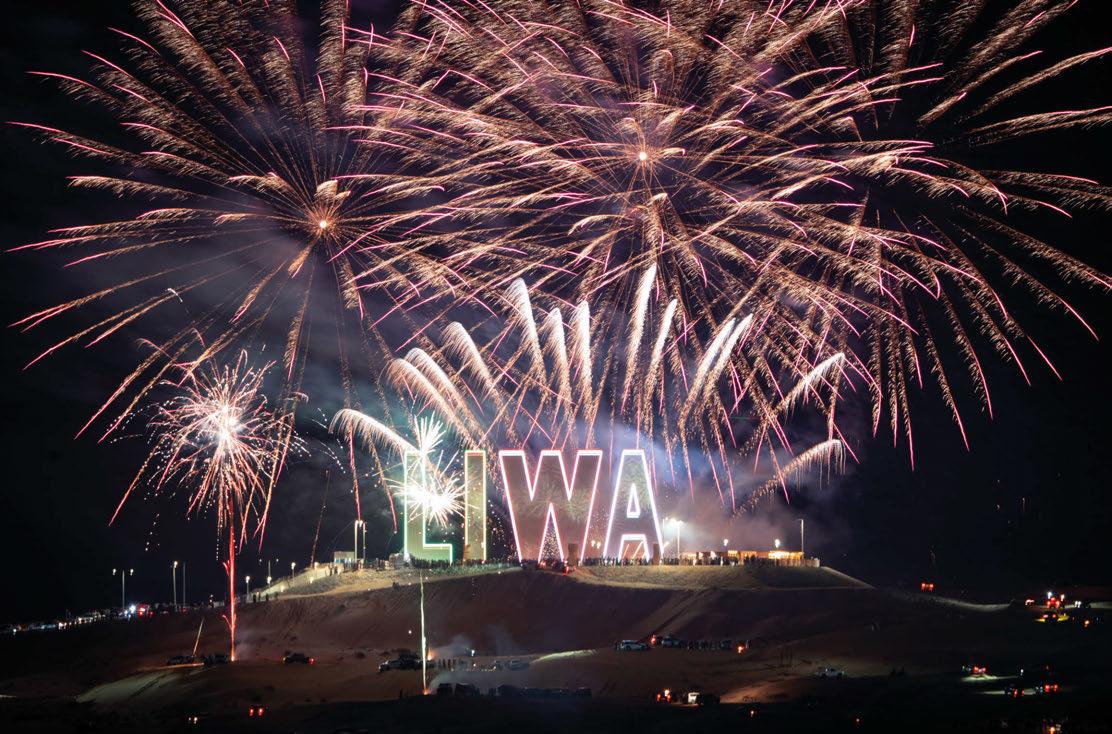
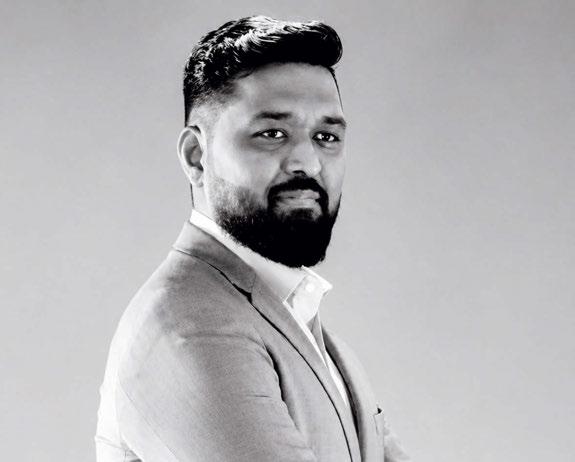
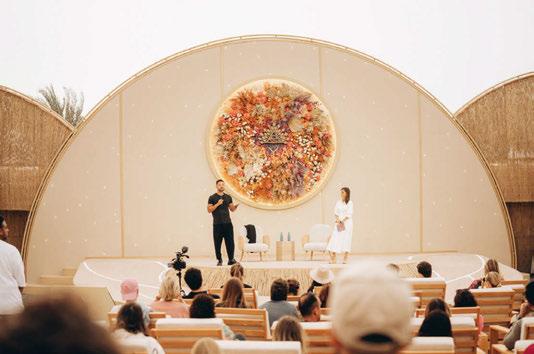
Facing page: LINKVIVA Marketing Director and judge at the TPiMEA Awards 2026, Ayah Alrashdan. Left: LINKVIVA Head of Production, Abhishek Purao. Top: The Liwa Festival. Above: Kayan Wellness Festival.
invisible when they work properly. “If people are confused, uncomfortable, stuck in queues, or fighting their way through a badly planned site, they are not forming a community; they are forming complaints,” he stated.
“We design for discovery. Guests should be able to create their own path through the event, finding moments that feel relevant to them, while still feeling connected to the larger atmosphere.”
This flexibility has proved to be particularly important for multi-generational audiences, where expectations and behaviours can differ significantly across age groups. Some visitors go looking for live entertainment and activations, while others simply want comfortable spaces to relax and spend time together.
Sustainability runs through every production decision, with LINKVIVA actively working with clients on longer-term production models that allow structures, furniture, signage and décor to be reused across multiple editions rather than discarded after a single weekend.
The company is also reducing single-use materials through refill stations, reusable bottles and improved waste
segregation systems. “These are not glamorous things, but they matter,” Purao commented. “Sustainability is usually won in the boring details.”
For LINKVIVA, sustainability is ultimately connected to public trust. “When we reuse assets, involve local suppliers, reduce waste, respect the site, and leave behind less damage, we create events that communities are more willing to support year after year,” Purao explained.
While Purao acknowledged that temporary events won’t become entirely sustainable overnight, he stated his belief that progress depends on consistent improvement rather than perfection. “Every edition should move the benchmark forward,” he commented.
“Every destination has its own rhythm, expectations, and community values,” Purao added, discussing the agency’s stance on creating unique event formats. We adapt the experience to the place, the people, and the culture around it. The goal is simple – everyone should feel like the event was designed with them in mind.”
Photos: LINKVIVA www.linkviva.com
The showcaller’s handbook
CasaMilan Founder Stefano Milan discusses how a meticulous approach to showcalling can elevate an on-site performance from ‘crossing your fingers’ to ‘clockwork precision’.
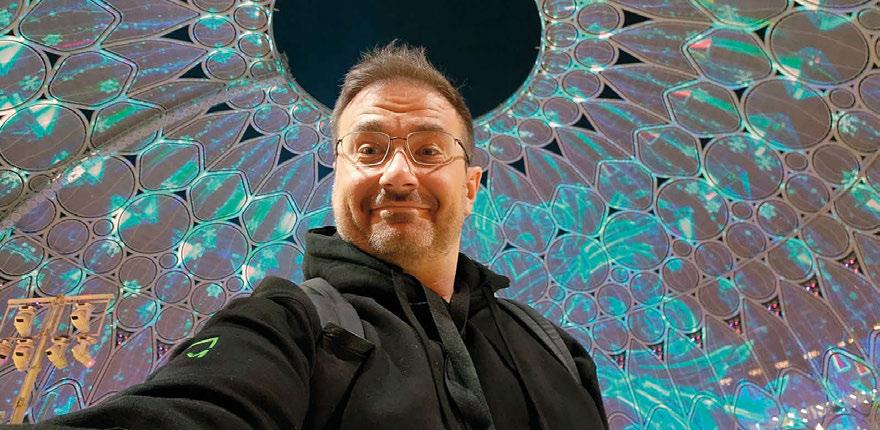
Anyone who has spent time backstage in the Middle East knows that the energy can get incredibly chaotic, incredibly fast. For Stefano Milan, Founder of CasaMilan, establishing complete control the moment he steps into a venue starts long before the first cue is even muttered.
“My number-one rule is simple: claim your territory,” Milan opened, emphasising the importance of spatial discipline backstage. “You cannot afford to be the person fighting for a corner of a flight case five minutes before doors open. Your workspace is your cockpit – if it’s cramped, your show will feel cramped.”
To mitigate this, Milan makes it a point to ask the vital logistical questions long before arriving on-site. “I need to know exactly where I am sitting,” he explained. “You have to actively request your dedicated table, chair, power extensions, and relay screens for camera feeds or timecode. Secure that real estate early so you can focus entirely on the execution of the show, not the furniture.”
Once the physical workspace is locked down, the cuesheet becomes a showcaller’s primary weapon. However, building a document that actually holds up under real-world pressure requires a refined approach to design and collaboration. “If your crew needs a magnifying glass to read your cues, you’ve already lost the battle,” Milan laughed. “A great cue sheet isn’t an essay; it’s a highly visual roadmap. It needs to be clean, and the font must be entirely legible – absolutely no size six text!”
In a fast-moving production ecosystem, version control and accessibility can make or break a backstage workflow. Milan is a big advocate of leveraging modern digital sharing,
utilising platforms like Google Sheets for the crew and client so everyone retains a live link to the working documents. “This sheet is, of course, protected so that I am the only one who is able to edit, while all others are viewers,” he specified.
“N aturally, the cue sheet is also saved and shared with the crew and client via email, WhatsApp, and as a physical printout. But for the love of production, we also need to stop using filenames like ‘Final_Final_v2’. It breeds unnecessary confusion. Stick to a strict, clear versioning system like V01, V02, or V06. Whether your team prefers digital or physical copies, get it to them early and lock it in with a solid, uninterrupted Cue-to-Cue rehearsal.”
Turning down the noise
Comms traffic can get notoriously messy, especially on complex, multiagency gigs in the region. According to Milan, maintaining strict vocal discipline across comms is paramount to keeping a production on track. “Silence is golden, but clear comms are platinum,” he stated. “A show completely lives or dies by the rhythm of the headset. Before you even whisper the first ‘Standby’, you have to lay down the comms ground rules.”
To p revent cross-talk and confusion during critical moments, Milan cross-checks his calling plan against the crew’s channel access to ensure everyone hears exactly what they need to hear – and absolutely nothing they don’t.
“Establish that distinct vocal rhythm early in the day to avoid that dreaded ‘Who said that?’ chaos mid-show,” he advised.
Th e old industry phrase of ‘It’ll be alright on the night’ is a philosophy that Milan vehemently rejects. “Absolutely not!”
he countered. “True professionalism in this business is built entirely on what I call the 5Rs: Rehearse, rehearse, rehearse, rehearse, and rehearse again.”
To e nforce this standard, Milan has trained his team to strongly advise their clients to respect three core practices onsite: detailed speaker briefs to give even the most seasoned pros a quick mic and stage reminder; rigorous tech checks to physically verify every single signal and battery life before talent steps on stage; and content lockdown before going live. “Last-minute surprise content comes with high risk,” Milan warned. “If a piece of content hasn’t been checked, verified, and rehearsed, we ensure the client is fully aware of the risks involved with going live and of potentially jeopardising their event.”
Wh en it comes to the equipment required to navigate a modern production, Milan recommends a blend of modern tech and traditional kit. “Digital is fantastic for overall efficiency, but analogue is your only true fail-safe,” he stated. “You need a setup that actively supports your workflow.”
On the digital side, adding an additional monitor can be “a total game-changer” for keeping scripts and show timers visible simultaneously. “Then you have your comfort and safety essentials – your hat, hoodie, chargers, cables, and your standard PPE gear,” Milan noted. “Never, ever forget what I call the ‘Old Gold’: a clipboard, a pen, and paper. When the local power flickers or your laptop decides it’s time for an automatic update, you will be incredibly glad you have that hard copy sitting right in front of you.
“To anyone heading out on-site in the region over the next few weeks: Tanta merda!”
Photos: CasaMilan www.casamilan.co
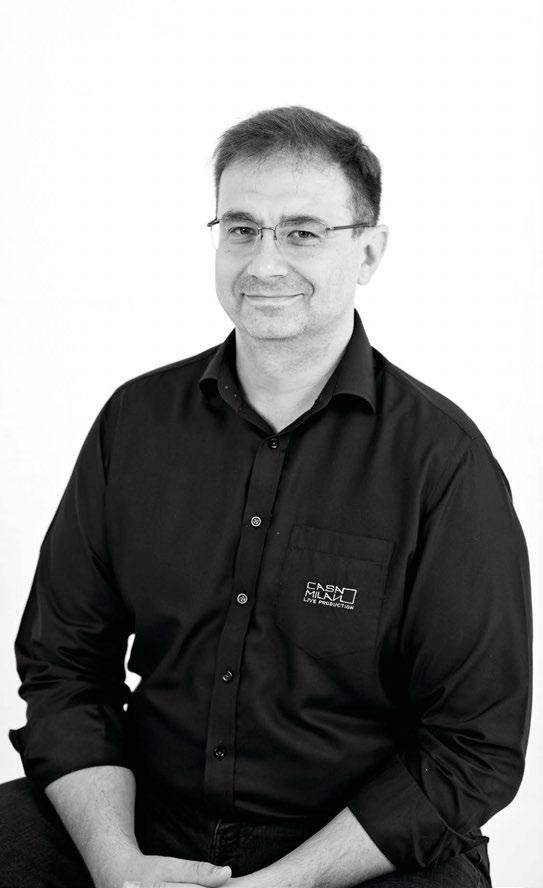
System Design Exchange: a new standard for noise prediction
As industry giants d&b audiotechnik and L-Acoustics unite with SoundPLAN to launch a universal standard for environmental noise prediction across multiple sound systems, TPiMEA discovers how this development is set to revolutionise audio delivery at the region’s outdoor events.
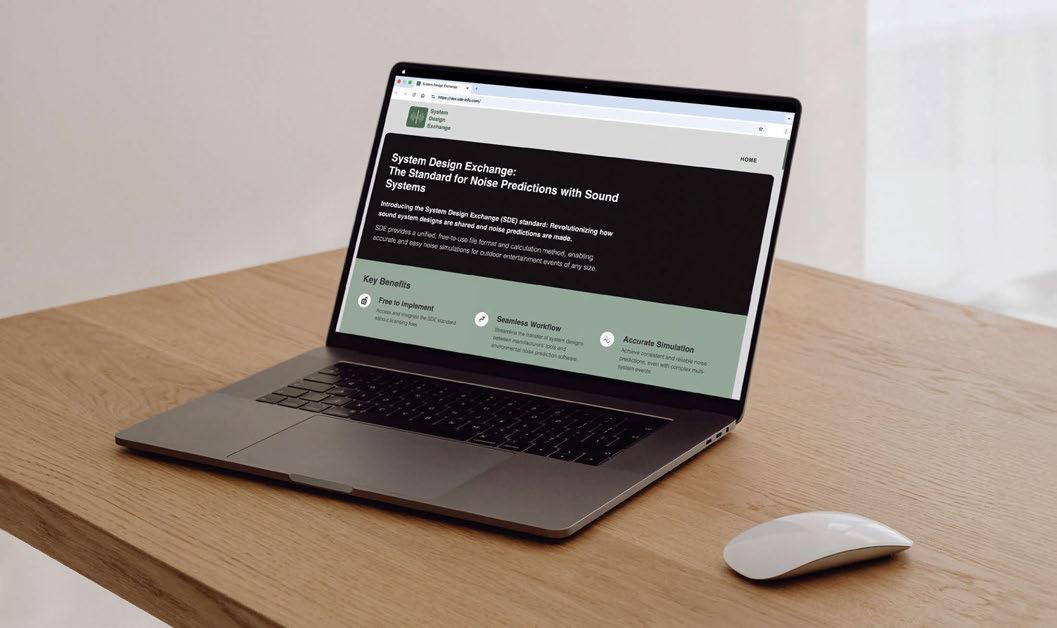
Historically, predicting noise emissions from festivals and events with multiple stages using systems from different manufacturers has presented a challenge for engineers. Each system relied on its proprietary tools, and the lack of interoperability often resulted in inconsistent noise predictions, making it difficult to meet environmental requirements. However, all of this is changing with the introduction of the new SDE standard.
The result of a groundbreaking collaboration between, d&b audiotechnik, L-Acoustics, and SoundPLAN, SDE is a revolutionary, manufacturer-agnostic standard for noise prediction across multiple sound systems. The new standard provides a unified
method and file format to ensure reliable, consistent, and comparable predictions in environmental noise software. It defines how to export data from system design software, such as d&b’s ArrayCalc or L-Acoustics’ Soundvision and details the methodology for calculating complex acoustic interactions. This includes calibration and decoherence factors, ensuring the highest level of accuracy at any distance – something that hasn’t been possible until now.
Th e development has been met with universal approval from the regional representatives at both companies, with Wissam Shaheen, Education and Application Support, d&b audiotechnik Middle East, describing it as “a welcome step forward”, and
Mehdi Khelil, Head of Application, Middle East, Africa & Eurasia at L-Acoustics stating that it will “change the quality of the conversation” between the region’s sound system designers and permitting authorities.
“The Middle East has become increasingly mature in the way it approaches large-scale outdoor events, with environmental noise now rightly treated as part of responsible planning, permitting, health and safety, and community impact,” commented Shaheen.
“For us, this thinking is not new. Through ArrayCalc and NoizCalc, d&b has long connected loudspeaker system design with environmental noise prediction, because good design is not only about achieving level for the audience; it is about controlling energy with
intent. That is where directivity, consistency and control become so important: more art for the audience, less noise for everyone else,” Shaheen added.
“What makes SDE particularly valuable is that it takes this principle beyond one manufacturer’s ecosystem, giving consultants, production teams, organisers and authorities a consistent way to assess complex, multi-stage sites.”
With SDE, system technicians can export their designs as standardised SDE files, which can then be imported into environmental noise software like SoundPLAN. This streamlined, secure and fast workflow as well as the consideration of complex acoustic summation for the correct calculation of coherent sources (considering phase), allow consultants and event organisers to perform equivalent calculations in order to accurately predict noise emissions for festivals with multiple stages and systems from different manufacturers.
In the future, the SDE format will be made available to other manufacturers and other noise management software.
Des cribing the Middle East as “one of the most exciting, and frankly, one of the most demanding, markets for large-scale live events right now”, Khelil referenced Saadiyat Nights in Abu Dhabi – an open-air programme on Saadiyat Island, surrounded by residential villas and buildings – as a recent example where noise management was crucial.
“These are events happening in and around lived-in environments, with communities and authorities who need to be brought along on the journey, not presented with a fait accompli after the fact,” he explained.
“When designers can sit down with a venue or permitting authority and show a genuinely accurate, manufacturer-neutral noise model, a prediction grounded in the full acoustic behaviour of the systems being deployed, the dynamic shifts,” he added. “At Saadiyat Nights, that meant designing an L2 system shaped by precise noise prediction from the outset: a consistent audience experience inside the footprint, and minimised spill into the residential areas beyond it.”
He furthered: “For us, the Middle East isn’t a market we’re watching from a distance. It’s one where the appetite for world-class production is already there. SDE helps make sure the infrastructure around that production, including the planning, the design, and the community engagement can keep pace with it.”
Joche n Schaal, Managing Director at SoundPLAN, concluded: “SDE will set a new benchmark for noise prediction in the audio industry. Its innovative, collaborative approach promises to establish SDE as an industry standard, simplifying workflows and delivering the most reliable and accurate prediction of noise emissions from different sound system manufacturers to date.”
Th e new SDE standard is available now. For L-Acoustics users, SDE is currently available to consultants trained and certified by L-Acoustics, and through the company’s Environmental System Design service. For d&b users, SDE is accessible directly within ArrayCalc.
Photos: d&b audiotechnik, L-Acoustics, SDE www.soundplan.eu www.dbaudio.com www.l-acoustics.com
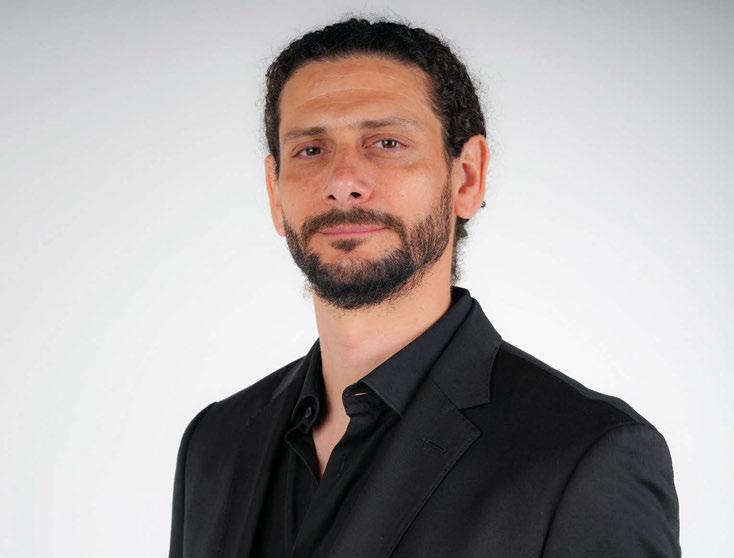
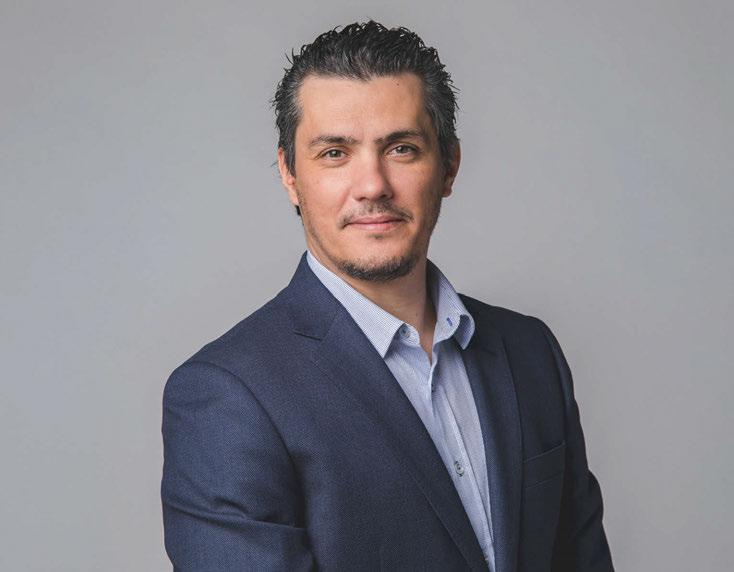
Above (top-bottom): Wissam Shaheen, Education and Application Support, d&b audiotechnik Middle East; Mehdi Khelil, Head of Application, Middle East, Africa & Eurasia at L-Acoustics.
Green Hippo Hippotizer MEUSE MX
As Extreme Productions becomes the Middle East’s first rental house to add the MEUSE MX to its inventory, Fady Fouad, Technical Video Specialist at Procom Middle East, explains how this could see the region shift towards more robust, high-resolution workflows.
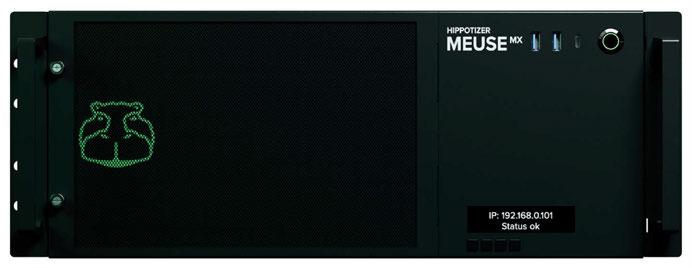
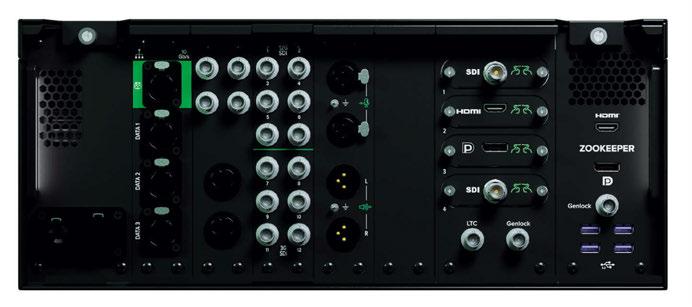
Where does the Hippotizer MEUSE MX fit into Green Hippo’s range of media servers?
The MEUSE MX serves as the high-capacity anchor for the MX Series. From a technical standpoint, it sits at the top of the range for output density, pushing up to four 4K outputs from a single unit. This makes it the specific choice for high-resolution canvases where you need to drive a massive number of pixels without overcomplicating the rack.
While its sibling, the HYCO MX, is the series leader for raw processing and generative content power, the MEUSE is optimised as the primary output engine. The entire MX range is designed to scale with the project’s footprint, moving from the TEKA MX with a single 4K output, through the TAGUS and KASAI MX with dual 4K outputs, up to the four-output capability of the MEUSE and HYCO models.
What are the main features that will benefit end users?
From an operator’s perspective, the modular output architecture is a significant advantage. The ability to swap modules for HDMI 2.0, DP
1.4, or 12G-SDI means the server can fit into any system design, which eliminates the need for external converters and reduces potential points of failure in the signal chain.
For professional environments where synchronisation is especially critical, the builtin Genlock ensures that everything remains frame-accurate across multiple outputs and larger system arrays.
We are also seeing very high Notchmarks on these units, which is essential for running heavy real-time effects and generative content without dropping frames. Furthermore, the support for uncompressed playback ensures total visual fidelity, allowing the content to look exactly as the designers intended without compression artifacts.
Why is the MEUSE MX ideal for the needs of the Middle East market?
In a region where projects consistently outdo the one before, the MEUSE MX provides a practical solution to the challenge of massive system expansion. Through HippoNet, we can seamlessly cascade multiple units to act as a
single, unified system, which is the only reliable way to manage the massive LED environments and immersive experiences common in this specific market.
A major feature for local workflows is the removable U.3 media slot. When dealing with the tight deadlines and massive file sizes typical of regional productions, being able to physically transport and deploy content without waiting for slow network transfers or re-encoding is a massive efficiency gain. It essentially removes the ‘waiting for progress bars’ bottleneck from the technical workflow.
Tell us about Extreme Productions’ recent purchase of the system… how important could this be for productions in the region? Extreme Productions is a well-established player known for handling highly complex setups, so their move to the MEUSE MX is a significant validator for the series.
By adding these units to their inventory, they are setting a new technical benchmark for what production houses in the region can deliver. This adoption is the perfect kick-off for the MX series in the Middle East, signalling a shift toward more robust, high-resolution workflows that can meet the increasing creative ambitions of regional events.
What kind of support does Procom Middle East offer to users?
At Procom Middle East, we provide technical support throughout the entire equipment lifecycle. This starts with pre-purchase consultation to ensure the server integrates perfectly with a client’s existing gear and specific project needs.
We close the knowledge gap through specialised hands-on training, ensuring that when an operator is on-site, they are efficient and confident in the system’s capabilities.
Beyond the initial setup, we provide dedicated service, maintenance, and regular software updates to ensure the gear stays in peak condition. We also make it a priority to keep our users informed on the latest industry releases by scheduling regular demos, whether that is in-house at our facility or directly at the client’s own warehouse.
Photos: Procom Middle East www.green-hippo.com www.procom-me.com

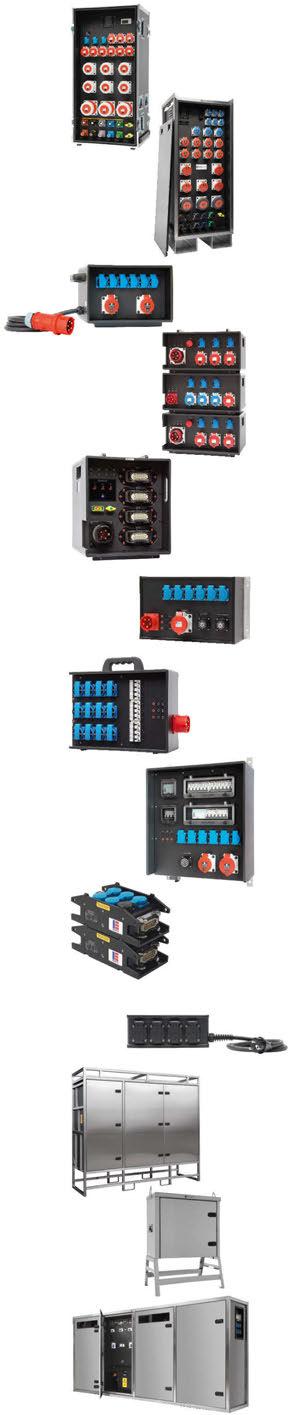
ESM Operations lands Saudi Pro League contract
The company completes detailed assessments of 16 stadiums focussing on public safety and crowd management.
ESM Operations has secured a landmark contract with the Saudi Pro League, marking a significant step in enhancing public safety and operational standards across the fast-growing football league, as the Kingdom continues its rapid evolution as a major destination for international sport.
The company has already successfully completed Phase One of the project, delivering comprehensive stadium reviews across the league. This initial stage involved detailed assessments of 16 Saudi Pro League stadiums, with the remaining two excluded due to ongoing construction and capacity considerations.
Th e work focussed primarily on public safety and crowd management, with evaluations covering key operational areas including arrival,
last mile, ingress and egress, stadium operations, internal circulation, pitch protection, and egress and dispersal. A consistent scoring methodology was applied across all venues to ensure that fairness and transparency was maintained.
A detailed report was completed for each stadium, assessing performance across 11 categories and multiple subcategories, benchmarked against international best practice and ESM’s extensive operational expertise.
Results were presented using a clear, trafficlight-style framework, categorising performance as ‘poor’, ‘medium’, ‘good’, or ‘very good’. “This first phase has provided a clear and structured understanding of current operations across the league. By applying a consistent methodology rooted in international standards, we’ve been
able to identify both strengths and opportunities for improvement,” said David Dymitrow, Head of Public Safety and Crowd Management at ESM Operations. “As the Saudi Pro League continues to develop its matchday environment, there is an increasing focus on delivering safe, secure, and professionally managed event operations. We are proud to support the league on this journey and look forward to building on these strong foundations in the next phases of the project.”
Building on these insights, the next steps will focus on supporting the development of a more standardised public safety and crowd management platform across all Saudi Pro League clubs.
Photo: ESM Operations www.esmoperations.com
HOF partners with VUEAV
The companies announce a strategic distribution agreement for the Middle East.
HOF is continuing to strengthen its international distribution network, welcoming VUEAV as a new strategic distribution partner for the Middle East.
Des pite the currently tense geopolitical and economic situation in the region, the collaboration starts immediately, with VUEAV acting as the official distributor for HOF products in the relevant markets across the region.
“The decision to publish this announcement is intentional,” the companies noted. “Both companies aim to send a clear signal of reliability, continuity, and partnership – especially in a time marked by uncertainty.”
Edwin Duivelaar, HOF’s Export & Sales Manager, noted that the partnership marks “an important step” in further positioning the company’s truss systems in what he described as a “strategically significant” region. “With VUEAV, we have gained a highly professional
and exceptionally well-connected partner with an in-depth understanding of the Middle Eastern market,” he stated.
The partnership also represents a significant strategic move for VUEAV. Simon Smith, Owner & Partner, commented on the announcement: “VUEAV is delighted to collaborate with HOF, as this partnership aligns perfectly with our strategy of building long-term partnerships with renowned manufacturers of premiumquality products,” he stated. “Our goal is to comprehensively represent HOF’s interests across the Middle East and further establish the brand within the local market. This includes fast response times, short delivery routes, local product availability, demonstration and training services, and professional pre-sales support.”
Photo: HOF www.vueav.com www.h-of.de
Audio-Technica builds on Middle East team
Rocky Solarta and Varun Asokan join to strengthen the company’s regional presence.
Audio-Technica Middle East has announced the appointment of Rocky Solarta as Business Development Manager and Varun Asokan as Technical Sales Manager.
“We are delighted to welcome Rocky and Varun to the team at an exciting time for the business,” stated John Dodson, Managing Director, Audio-Technica Middle East.
“Their combined expertise and industry knowledge will be instrumental as we continue to grow our commercial offering across our various target markets. These appointments reflect our ongoing investment in talent to better support our partners and customers across the region.”
Both roles will focus on expanding AudioTechnica’s commercial portfolio, supporting customers and partners across installation, professional live sound, rental and broadcast
applications. Akhil Raphael, Sales Director, Audio-Technica Middle East commented: “Both Rocky and Varun bring valuable experience and fresh perspectives. As we expand our footprint in the commercial audio segment, their roles will be critical in strengthening our technical support capabilities and driving new business opportunities. We look forward to the impact they will make in delivering high-quality audio solutions to the market.”
The company noted that these appointments underline Audio-Technica Middle East’s strategic focus on the commercial audio sector and its continued commitment to delivering innovative, reliable solutions for live sound, broadcast, rental and fixed installation projects.
Photos: Audio-Technica Middle East www.audio-technica.com
Trivandi strengthens Saudi leadership
The company makes a series of appointments to support the Kingdom’s major event and giga-project ambitions.
Trivandi has expanded its leadership team in Saudi Arabia, with Nick Randall joining as Managing Director, KSA, and Neal Beevers taking the role of Executive Director to lead the company’s Advisory practice.
“The scale of what is happening in the Kingdom is remarkable,” stated James Bulley, Co-Founder and CEO of Trivandi. “Since our first assignment in KSA in 2019, we have understood that the scale of Vision 2030 projects requires a different kind of partner. Clients are looking for people who have done it – who understand how to navigate the complexity of delivery and take accountability for the result. By bringing Nick and Neal into our Riyadh-based team, we are strengthening our ability to sit with our clients and turn their vision into an operational reality.”
Ra ndall joins Trivandi with over 20 years of experience in the sports and events industry
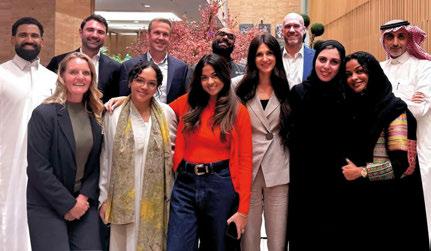
having worked across numerous Olympic and Commonwealth Games and the Qatar 2022 FIFA World Cup. “There is nowhere in the world right now with the ambition and momentum of Saudi Arabia; what attracted me to Trivandi is the commitment to having a permanent presence in the Kingdom,” he stated.
“We are building a regional platform with senior leaders on the ground who understand the market and can work in partnership with our clients to make sure these incredible projects succeed. Just as importantly, we are empowering the local teams who will lead these projects into the future.”
Be evers meanwhile brings 25 years of consulting experience, including over a decade of dedicated work in KSA on projects including Qiddiya, the Saudi Ministry of Sports, Royal Commission for Al-Ula, and the Saudi General
Investment Authority. “Clients want more than a generic framework – they want advice from people who have delivered on the ground,” he commented. “I joined Trivandi because their integrated delivery partner approach is exactly what I believe in – providing tailored, actionable solutions. I’m looking forward to helping our clients navigate the transition from bold vision to successful operation.”
Al so joining the company are Ammar Alzayer and Mohammed Siddiqui. Alzayer joins as Academy Director, leading the Trivandi Academy, while Siddiqui has been brought in as Strategy and Commercial Director, bringing specialised experience from the region’s largest projects, including the FIFA World Cup 2022, FIFA World Cup 2034 and NEOM Sport.
Photo: Trivandi www.trivandi.com
Divine Concert Sound invests in HK Audio
The company puts the system straight to use on Harare’s popular all-female Doek & Slay festival.
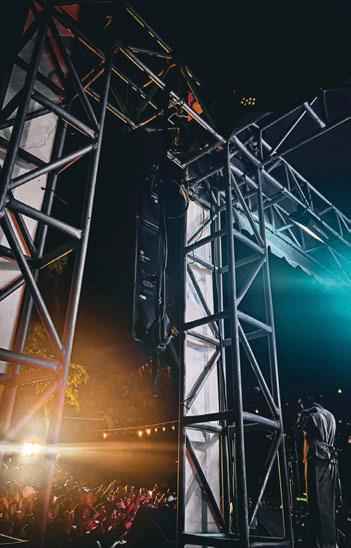
König
Divine Concert Sound called on its brand-new HK Audio COSMO system to cover the recent Harare edition of Doek & Slay. By purchasing HK Audio’s flagship line array system, the Zimbabwean rental house became the first COSMO user in southern Africa.
As a longstanding HK Audio partner, Divine Concert Sound has a comprehensive inventory of the German manufacturer’s equipment, including the COHEDRA line array. The latest addition to its roster has seen the rental house invest in the COSMO line array system as well as CONTOUR X point source cabinets and C Subs.
“We’re delighted that Divine Concert Sound has become the first COSMO user in southern Africa,” said HK Audio International Sales Manager for Africa, David Leonhard. “They have a long history of using HK Audio and this is just the start of the next chapter in our relationship.”
Hosted at the Glamis Arena, the Harare edition of Doek & Slay provided the perfect opportunity to put the new COSMO system through its paces. Described by its organiser as “a safe space where women can express themselves openly and without judgement”, the
travelling festival brings major Zimbabwean acts to all-female audiences across the country.
HK Audio Application Support Engineer Karel Noon joined Leonhard in Zimbabwe to provide training on the new system. “Using a new system on a major event can be nerve-wracking, but David Mwale and his team at Divine Concert Sound did an excellent job,” recalled Noon.
“They have a deep knowledge of HK Audio equipment and were able to get the best out of COSMO. It was great to play a small part in such an important event.”
David Mwale, owner of Divine Concert Sound, added: “We’re proud to be the first rental company in southern Africa to invest in COSMO. We’ve always been fans of the premium sound and German build-quality you get from HK Audio loudspeakers, and this investment builds on that. Doek & Slay is a popular event that attracts a big crowd. It was important for us to deliver the kind of sound that reflects the scale of the show and COSMO ensured we could do that.”
Photo: HK Audio www.divineconcertsound.co.zw www.hkaudio.com
& Meyer appoints DWR Distribution
The entire König & Meyer product range is now available through DWR Distribution in South Africa.
König & Meyer has strengthened its international presence through a new partnership with DWR Distribution.
“S outh Africa is an exciting and growing market with a vibrant creative scene,” explained Christian Kämmer, Export Manager at König & Meyer. “With DWR Distribution, we have gained a partner who strongly shares our values: quality, reliability, and the ambition to support professional users in the best possible way.”
DW R Distribution also looks ahead to the partnership with confidence: “König & Meyer has stood for decades for products that professionals around the world rely on,” said Duncan Riley, Director at DWR Distribution.
“This level of quality fits perfectly with our commitment to offering only the best solutions to our customers.” From now on, the entire König
& Meyer product range will be available through DWR Distribution in South Africa, including microphone, speaker, and keyboard stands, as well as a wide range of accessories, supported by local service and expertise.
Th e upcoming Mediatech Africa Expo will mark the first official presentation of König & Meyer products by DWR Distribution as part of the new partnership. CEO Gabriela König and Export Manager Christian Kämmer will be present to support the launch and engage directly with partners and users.
“We are excited to bring these products into the market and closer to the people who use them every day,” added Riley.
Photo: DWR Distribution
www.k-m.de www.dwrdistribution.co.za
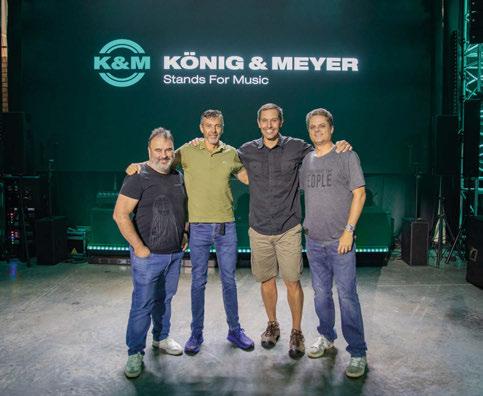
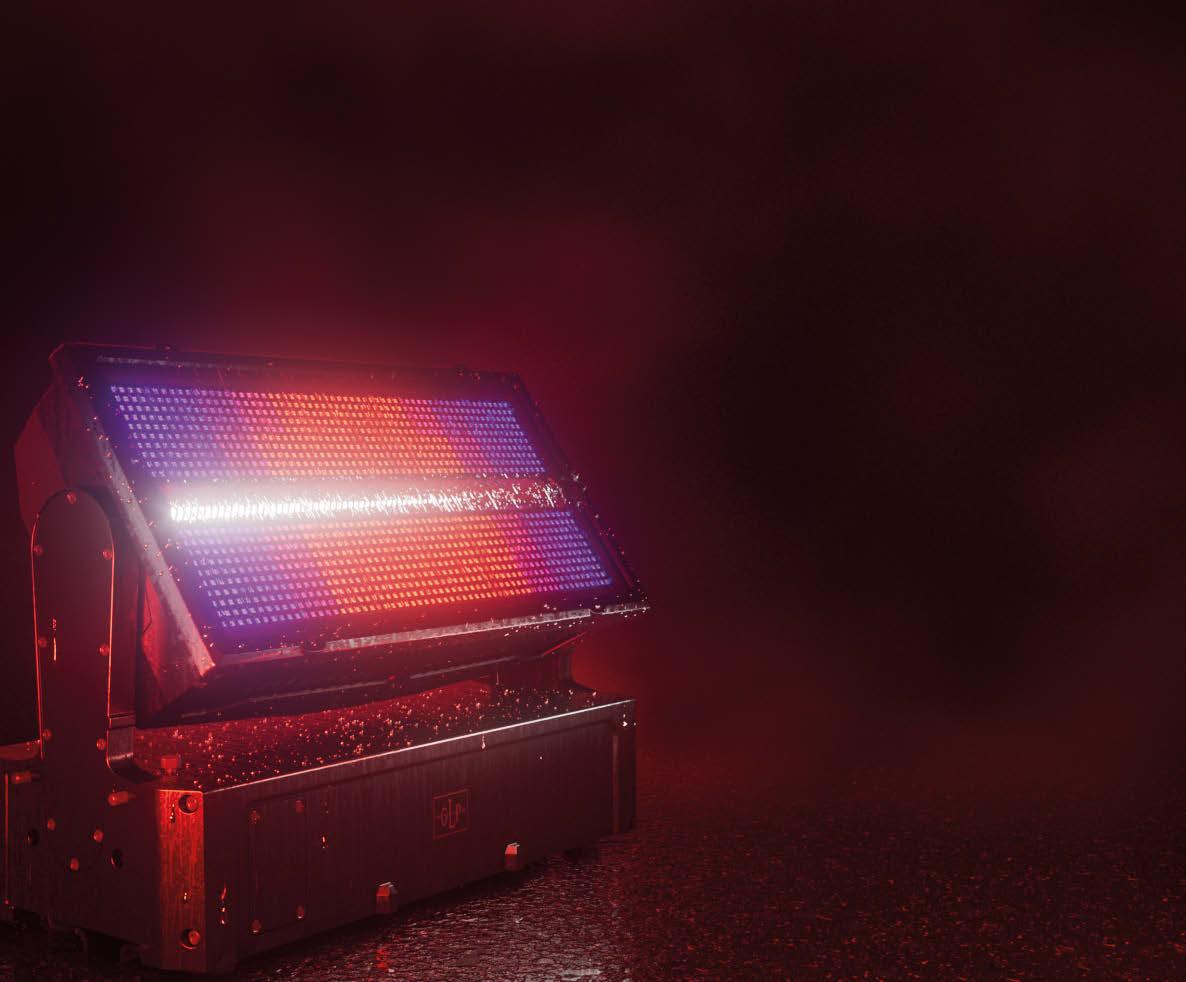





















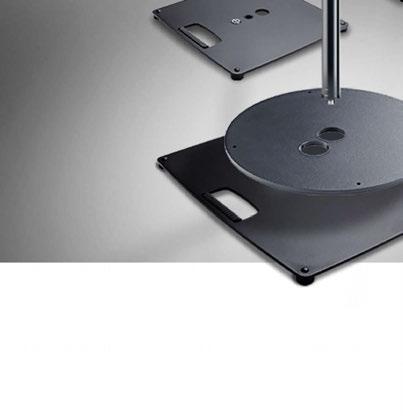


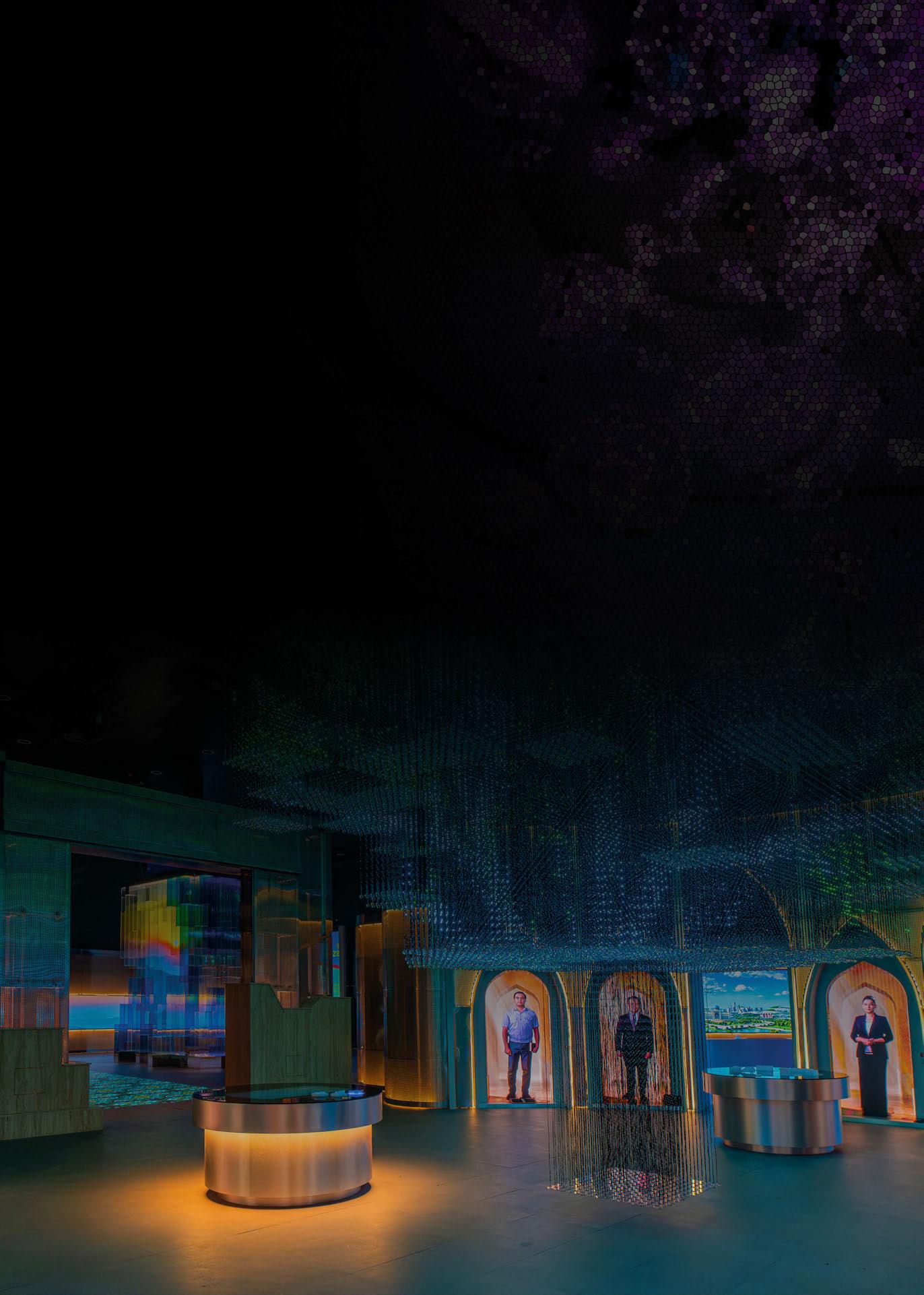

SCALABLE NETWORKING SIMPLIFIED.
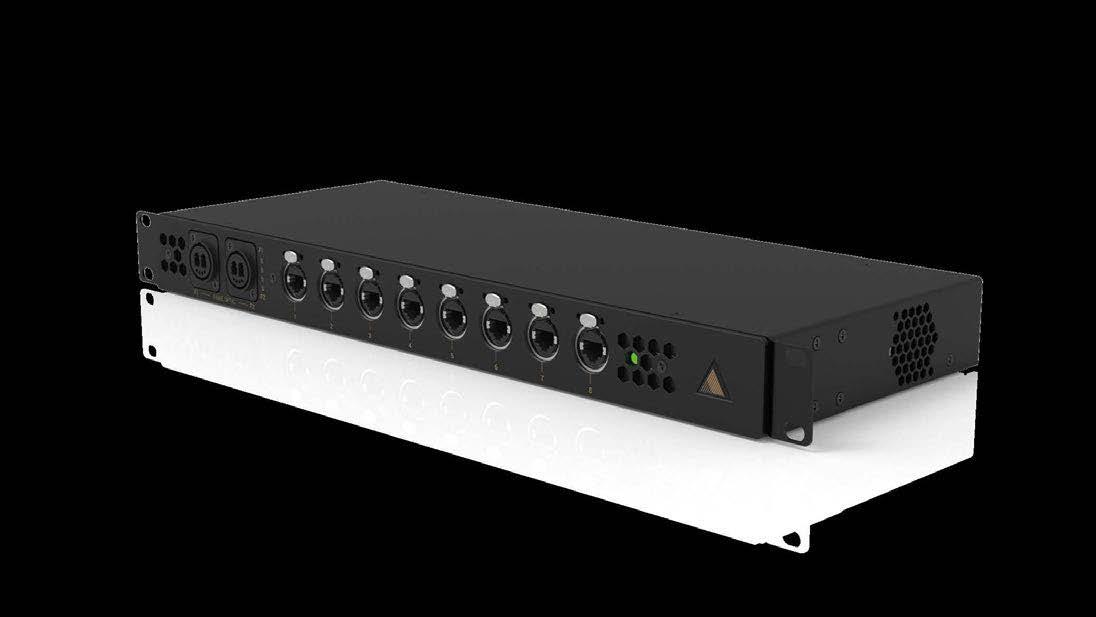

Whether deploying a redundant or primary-only network topology, the MS8.2 Milan network switch is perfectly suited to simplify mobile, installed systems and spatial audio applications.