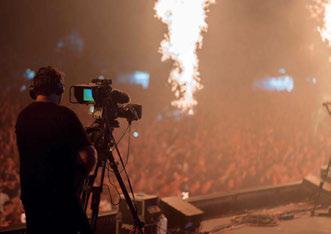
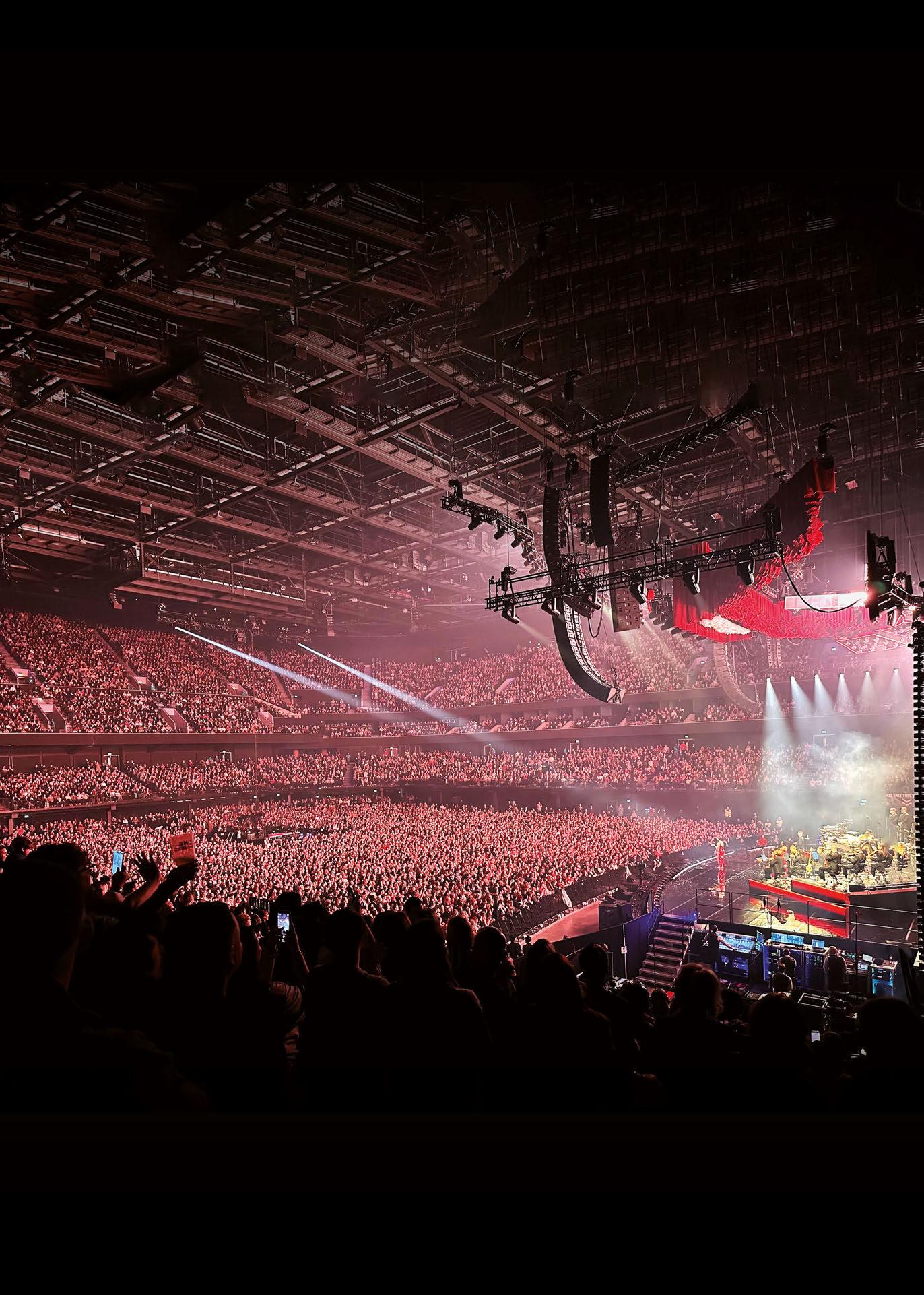
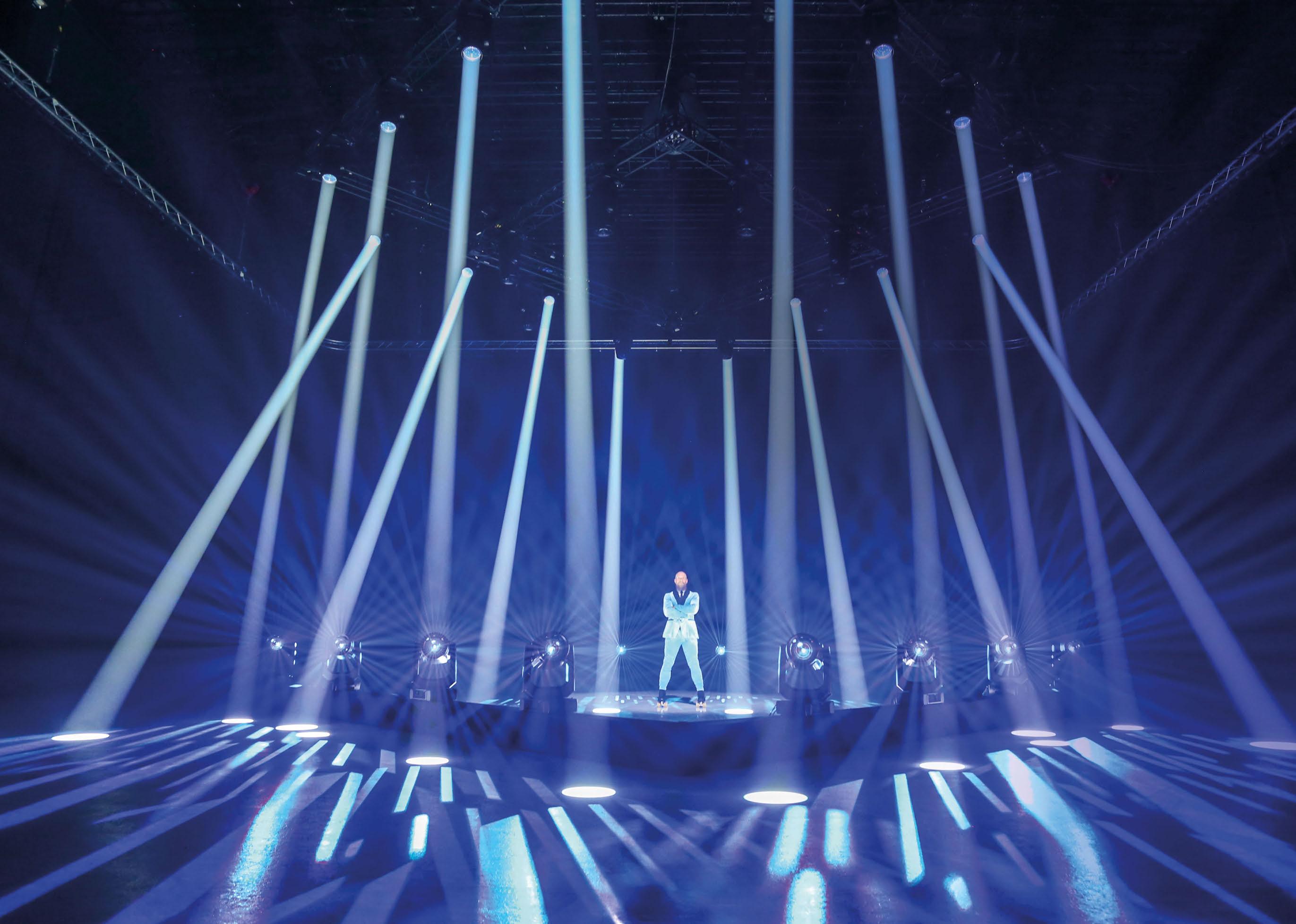
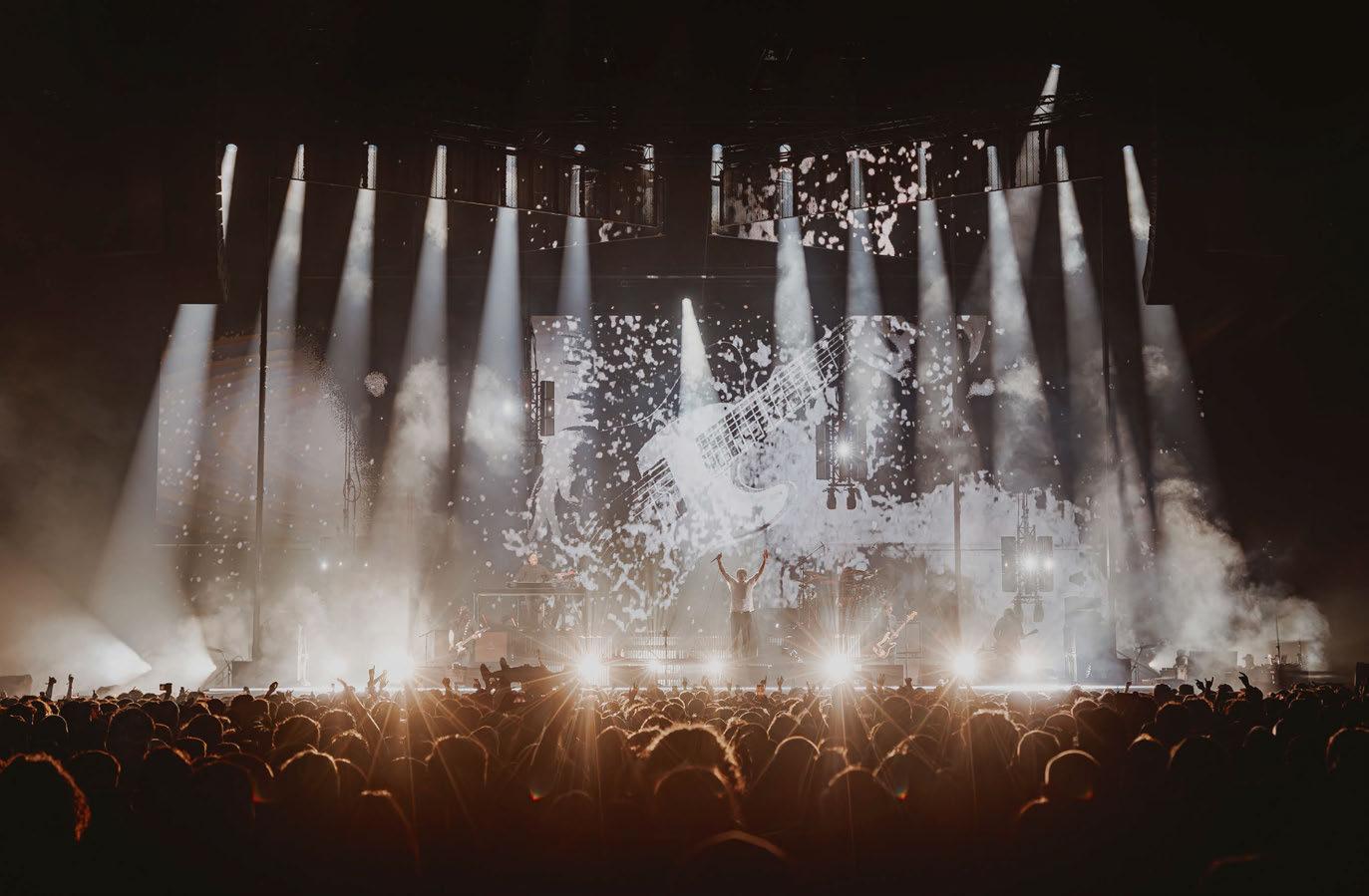
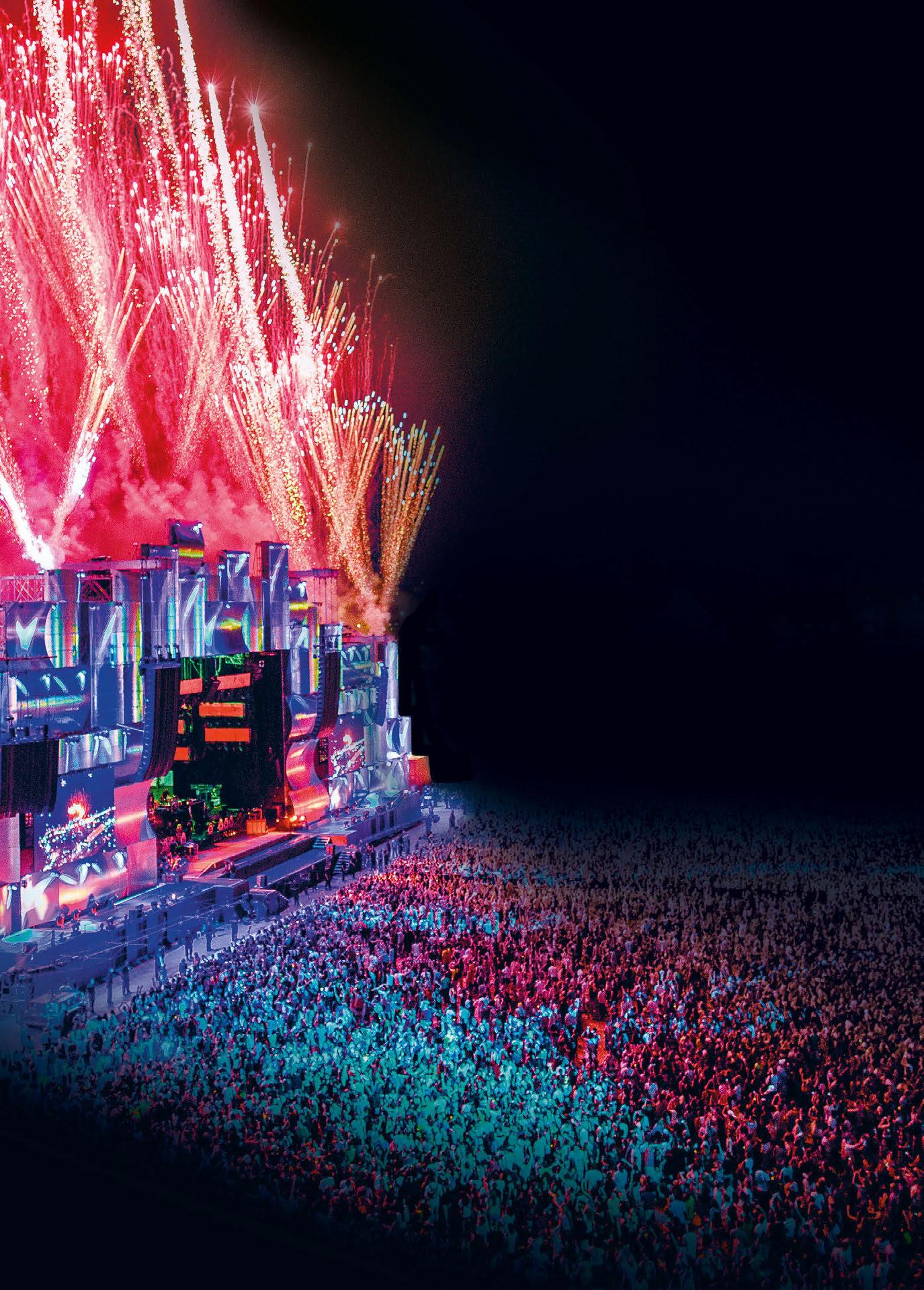
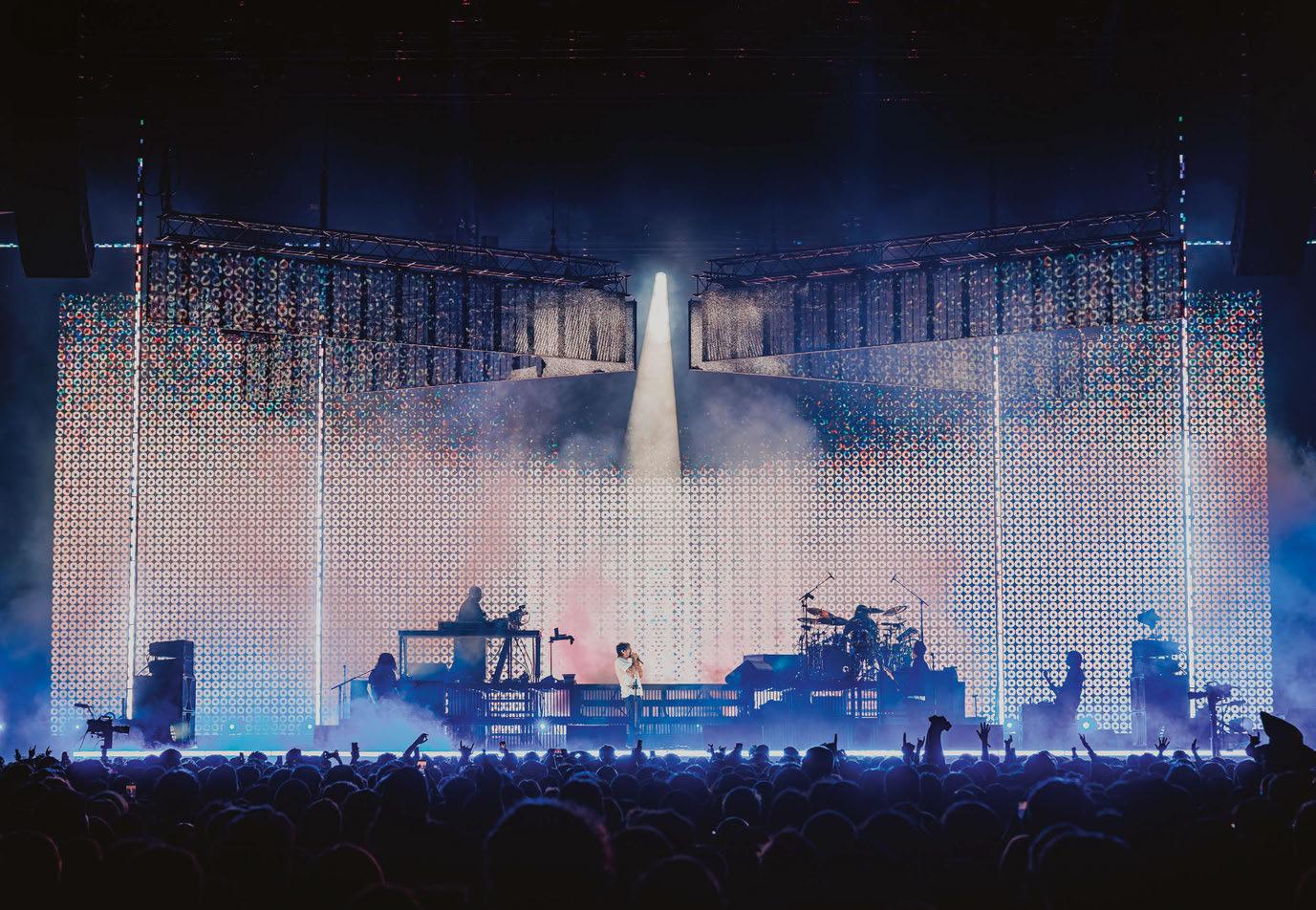
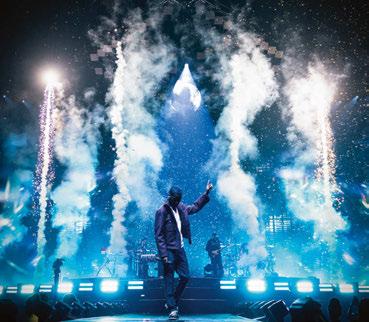
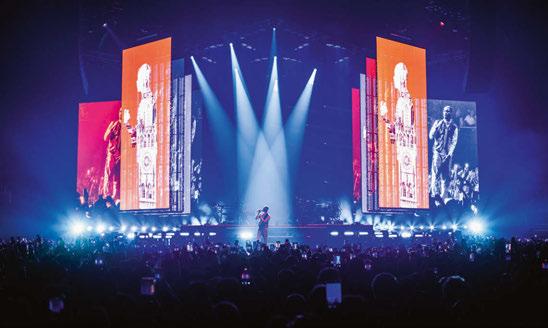
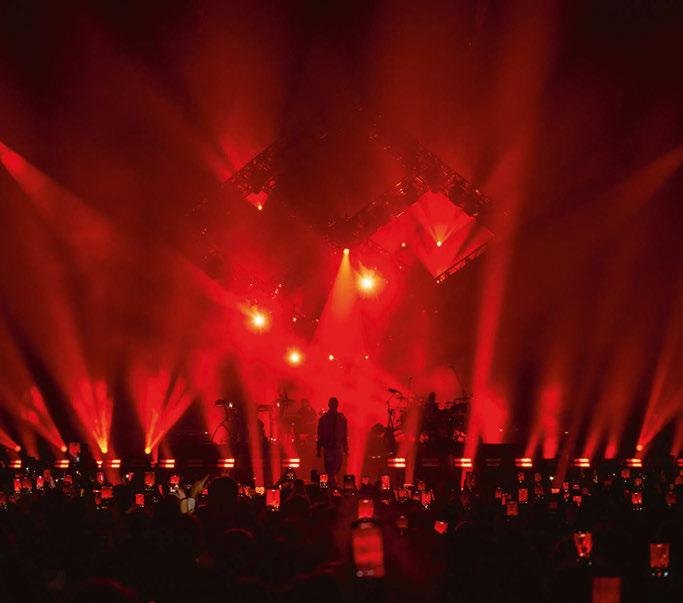
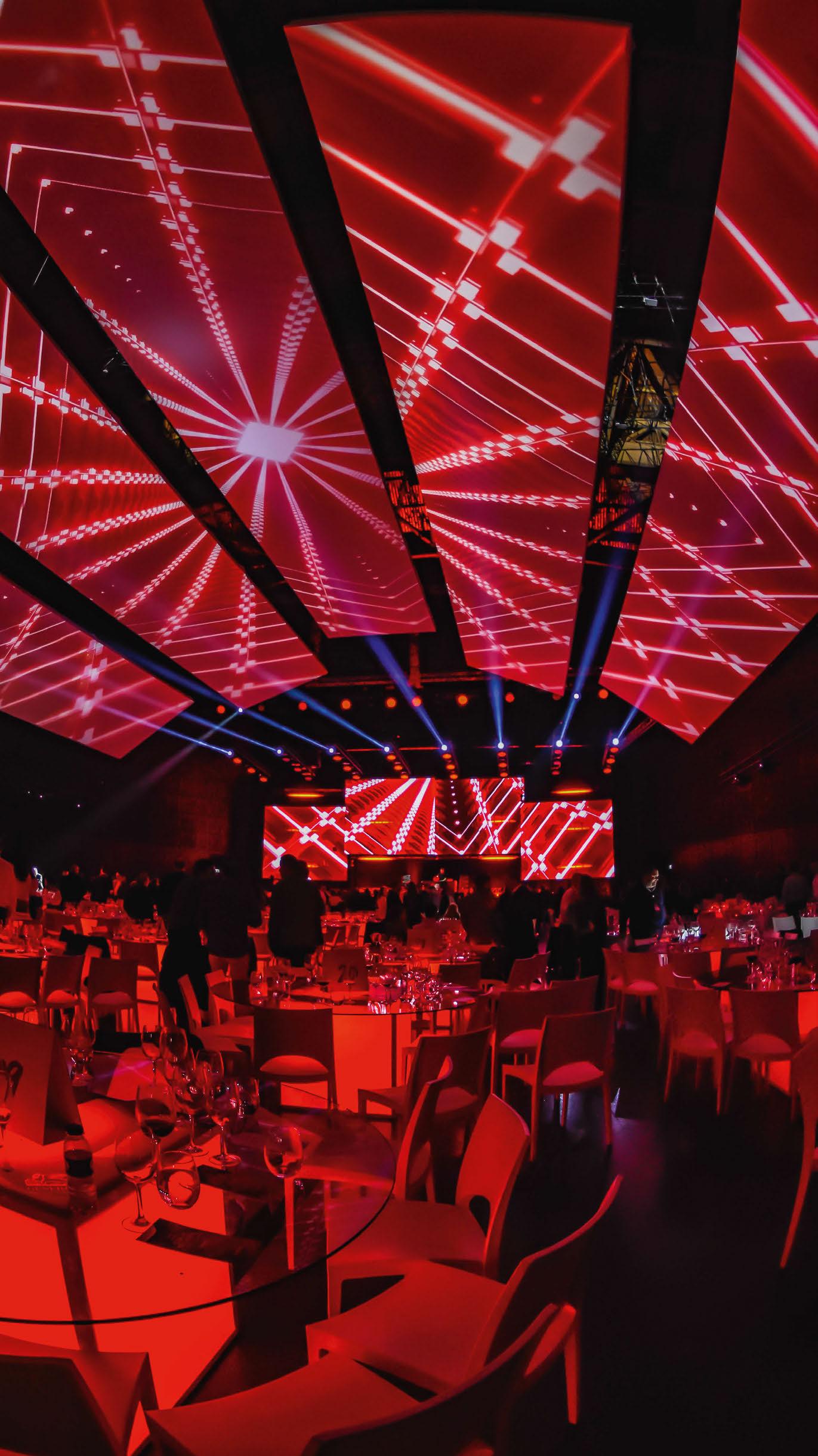
A shapeshifting production that puts the fan experience first
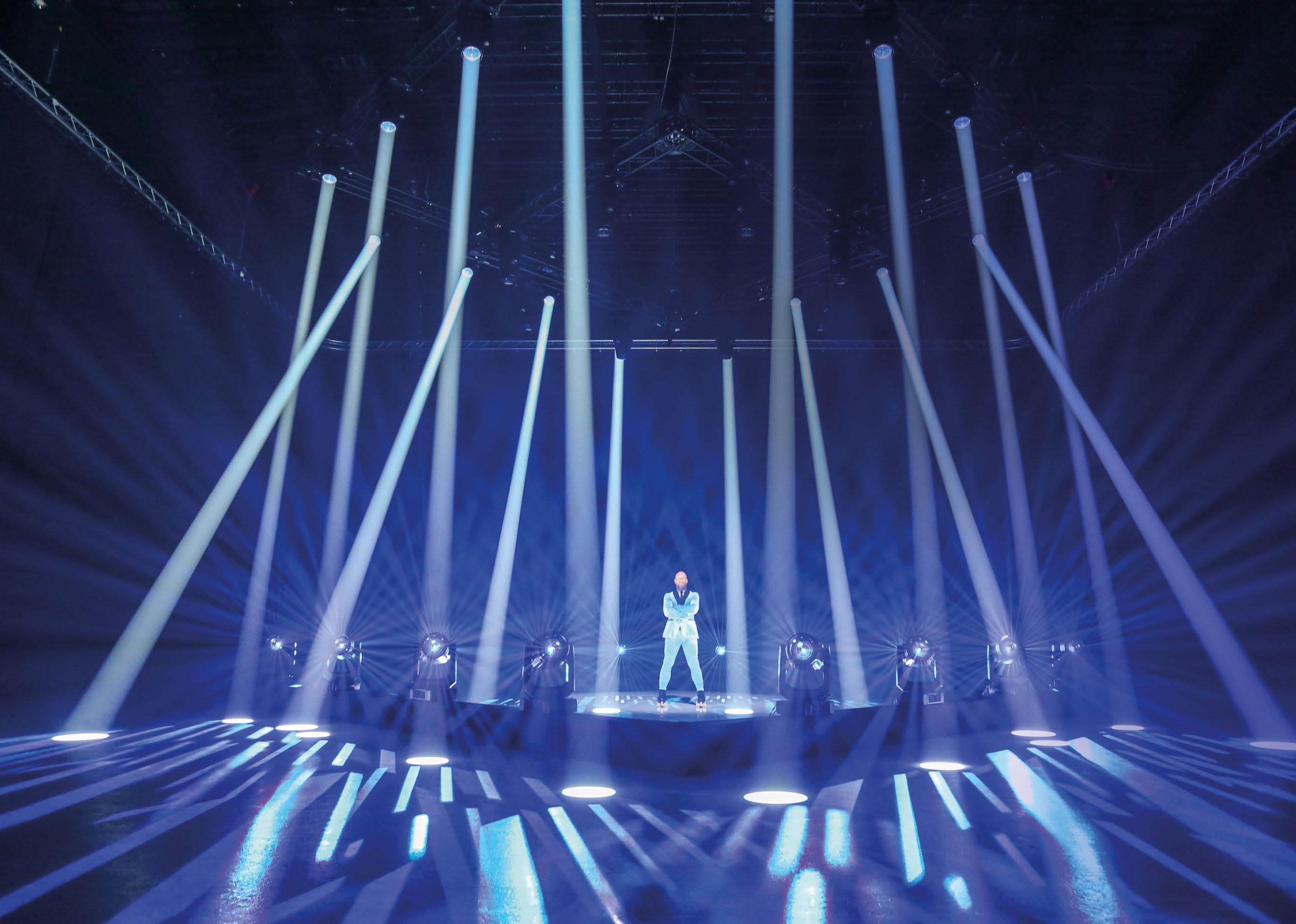
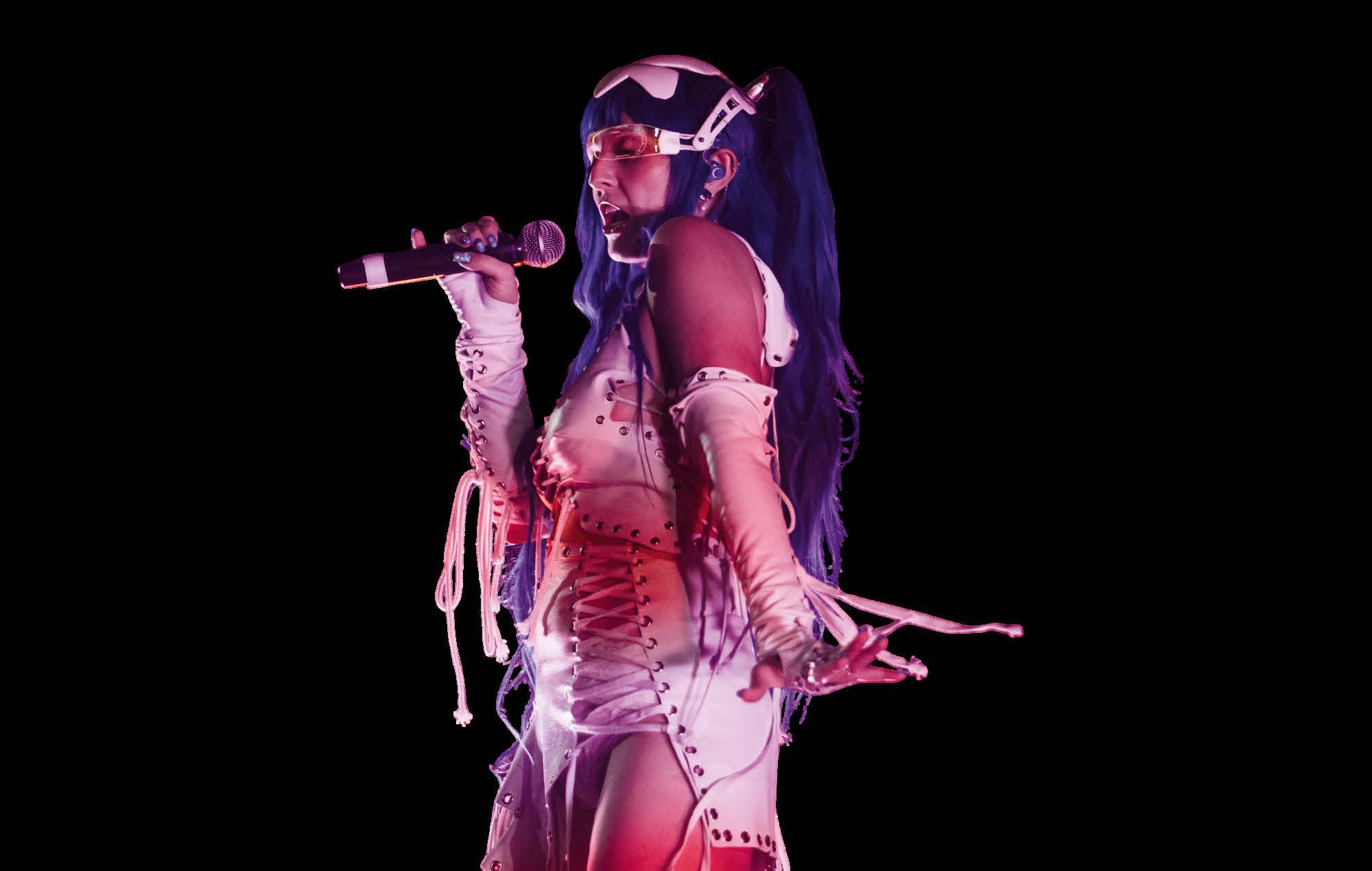
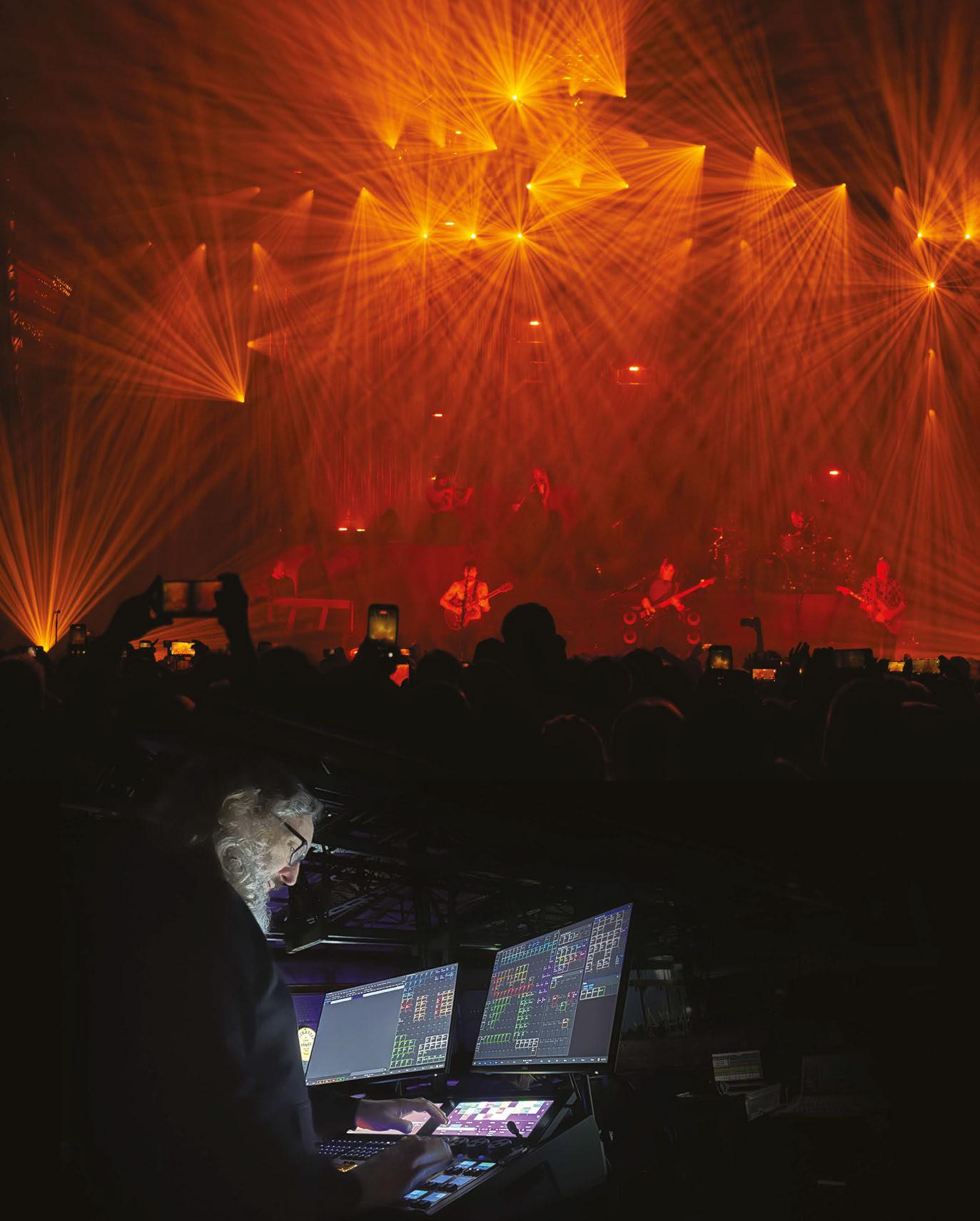
DEFTONES
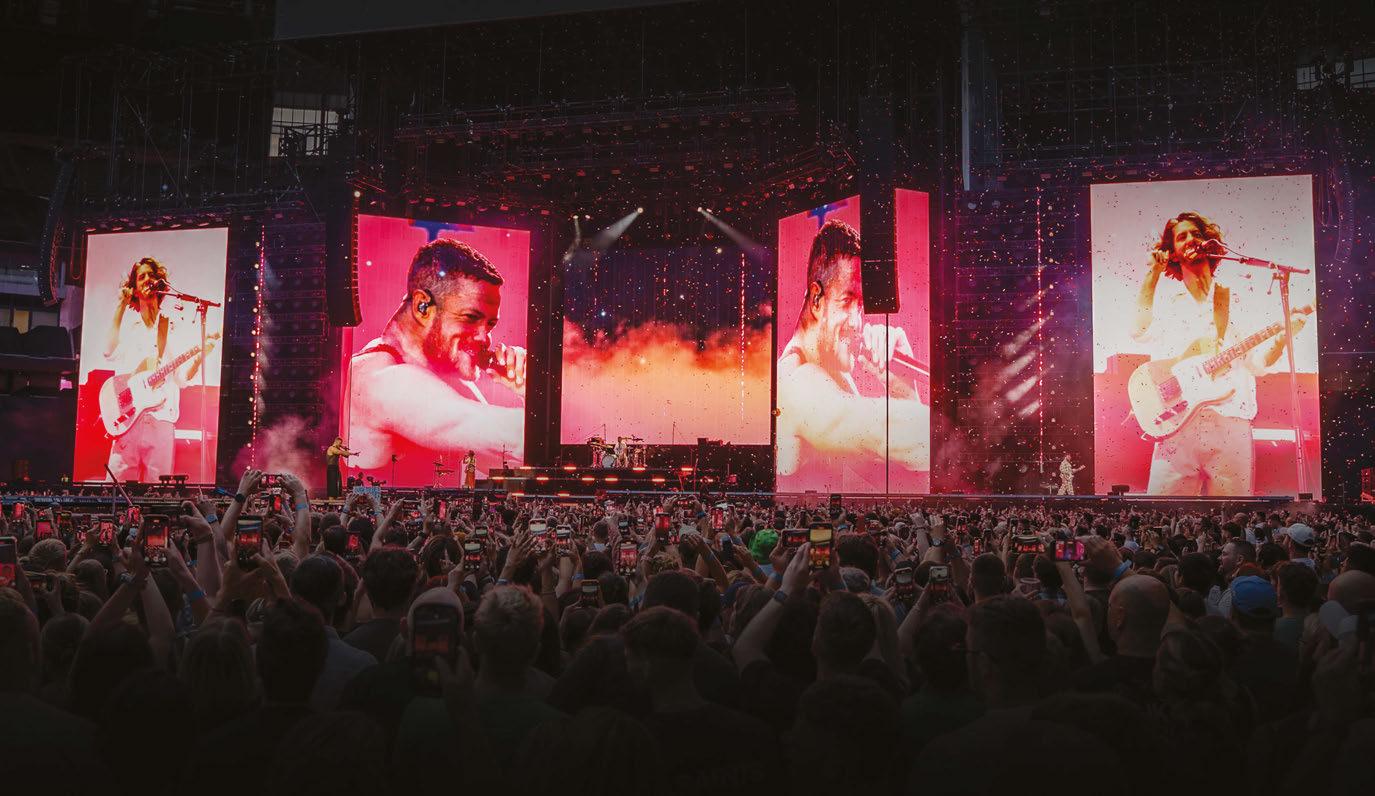
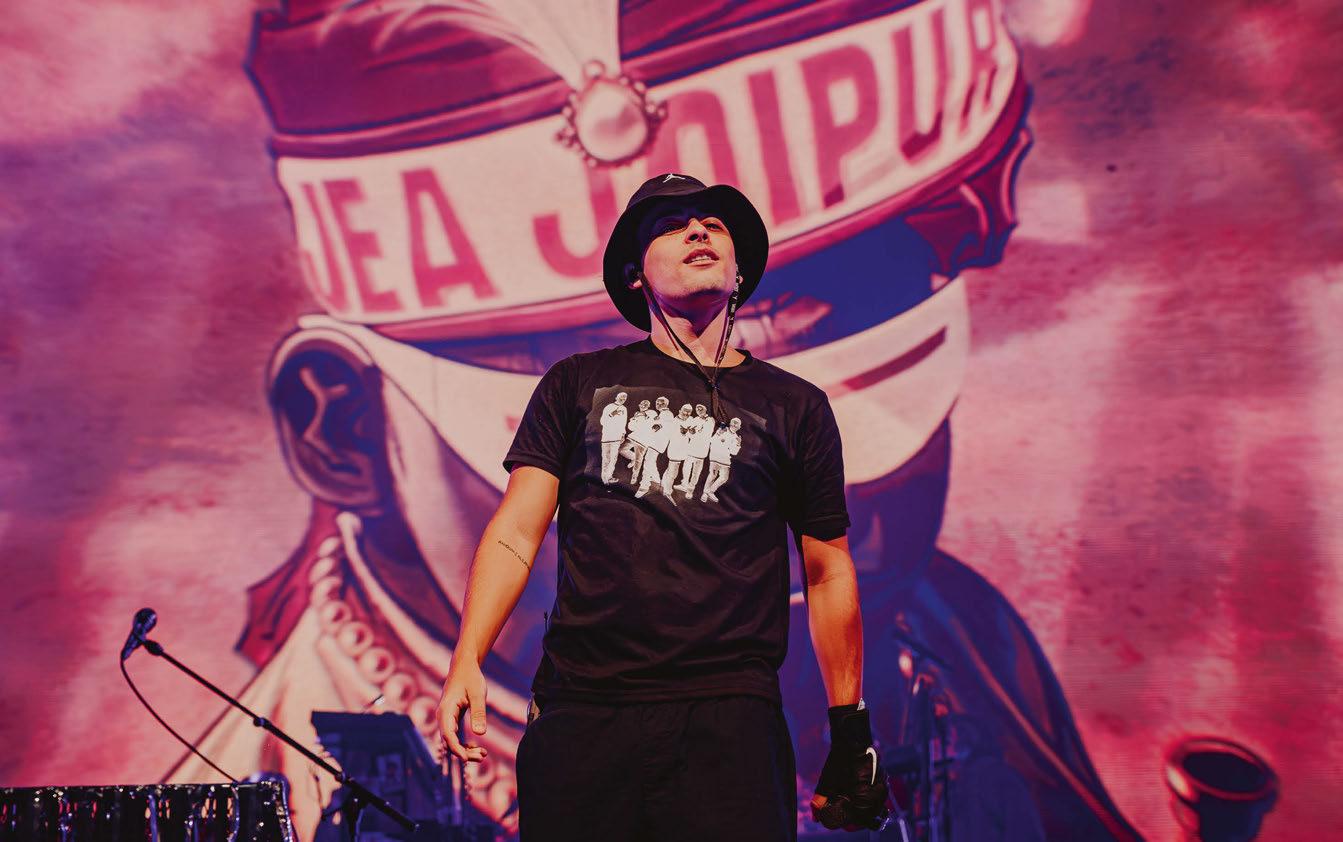
The band returns to the touring circuit backed by a team of sector specialists
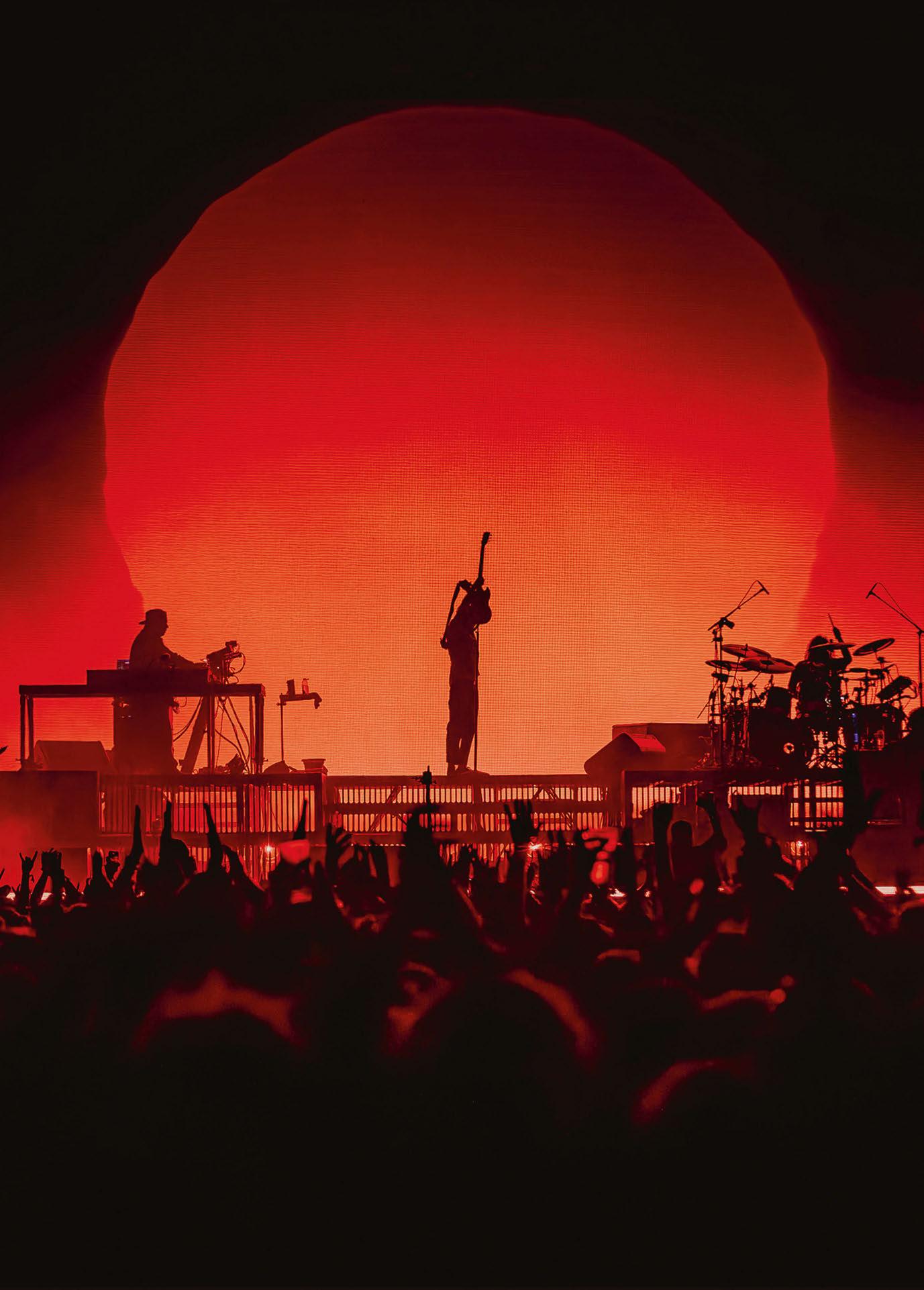
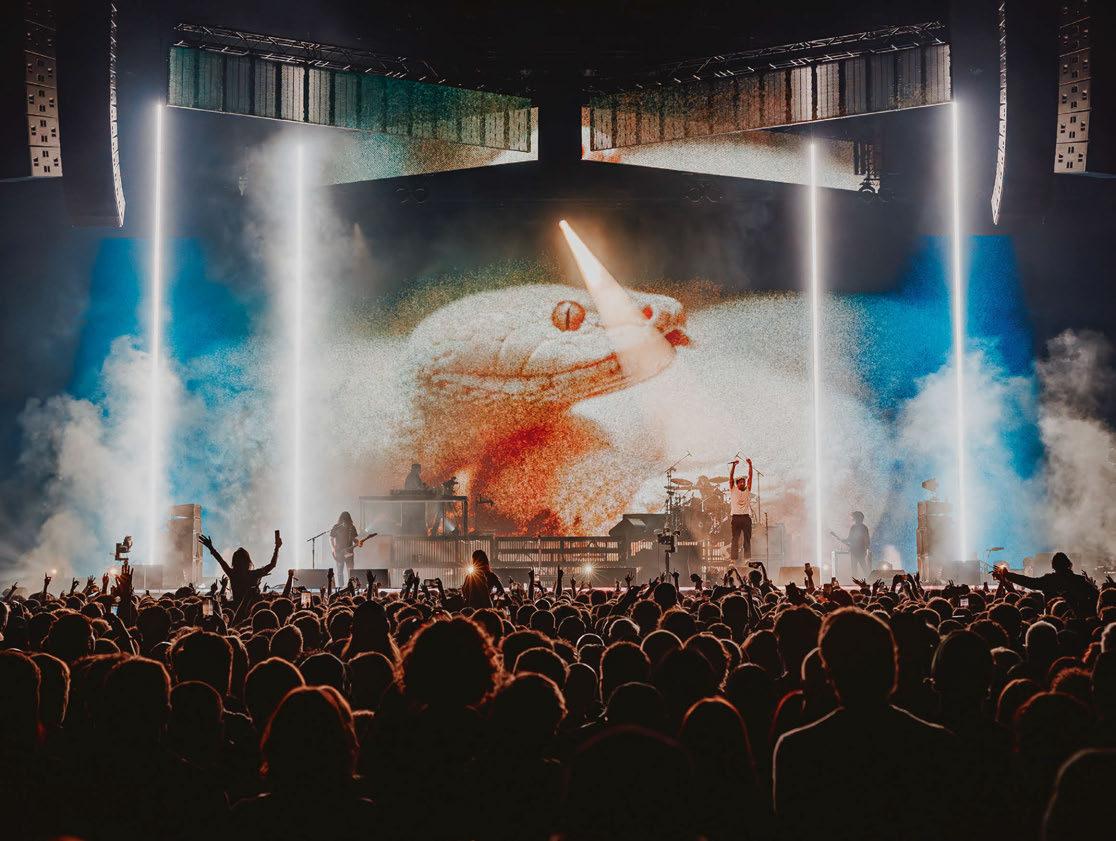
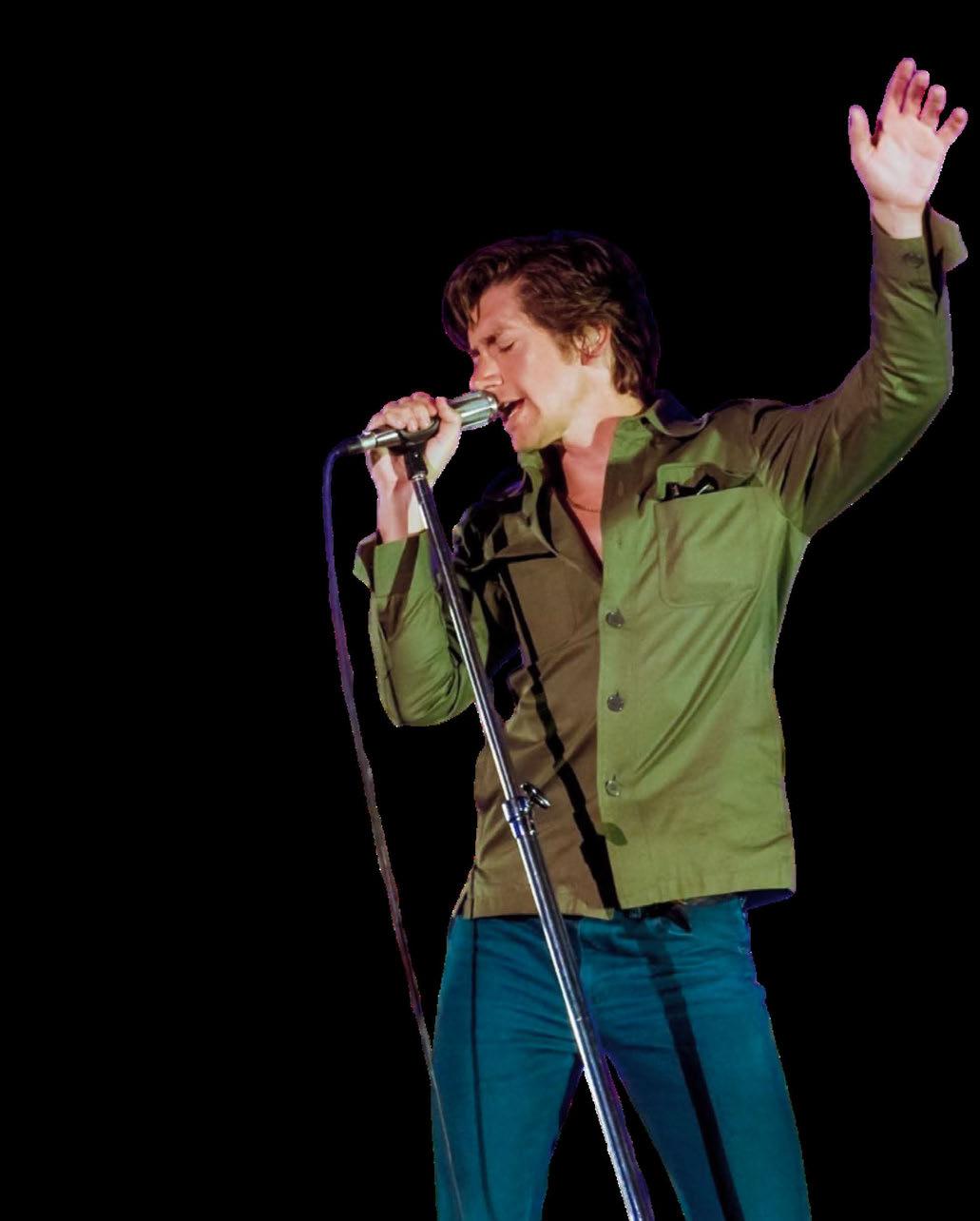
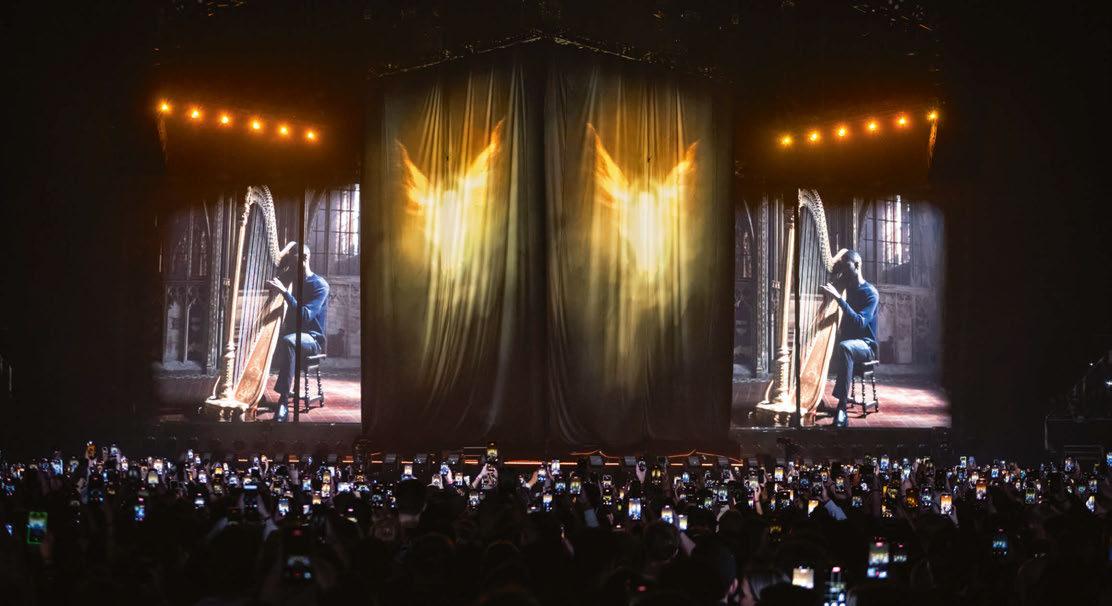
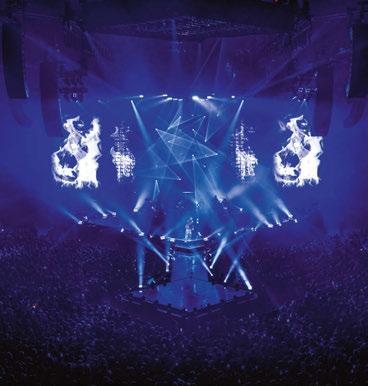
GORILLAZ
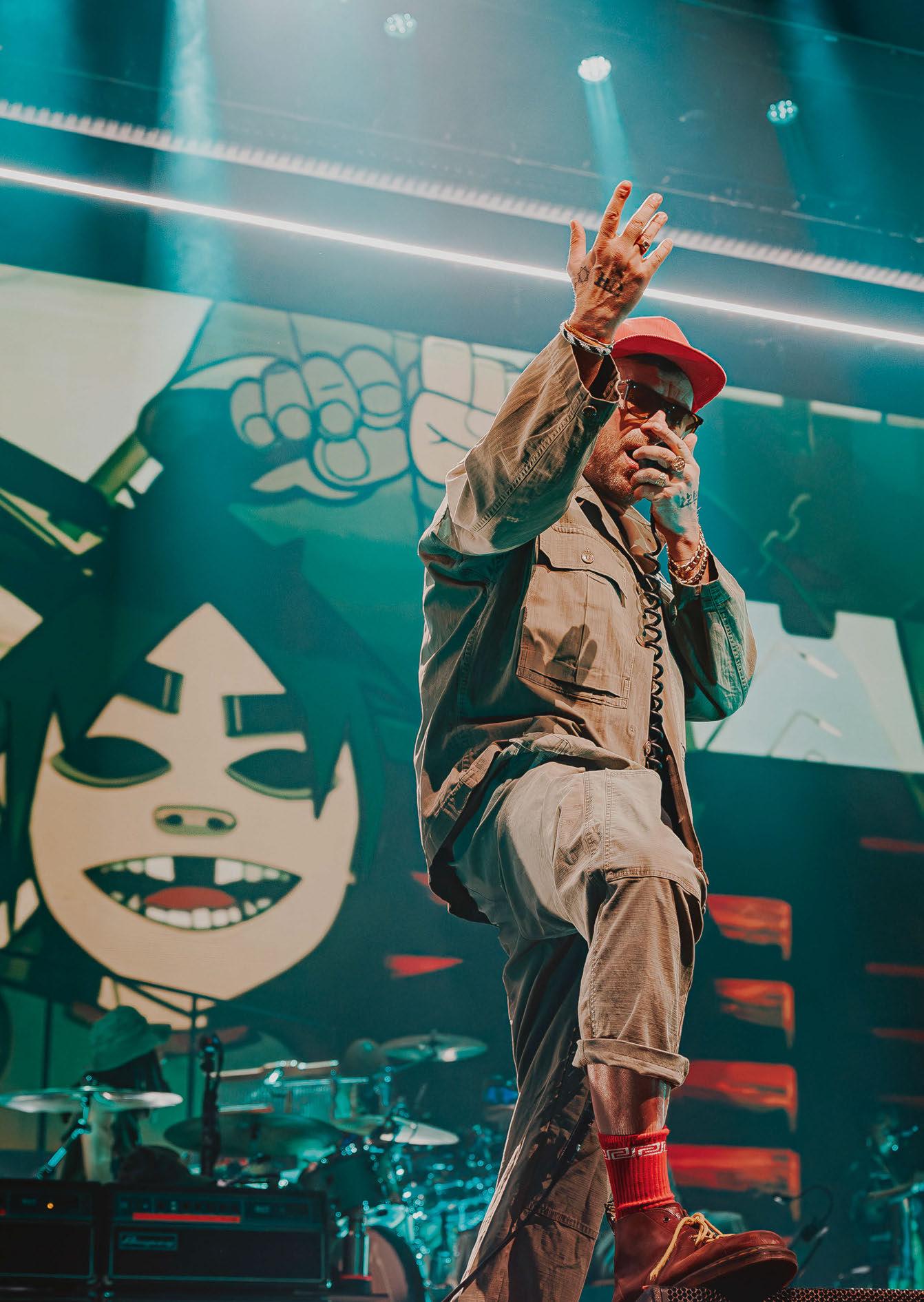
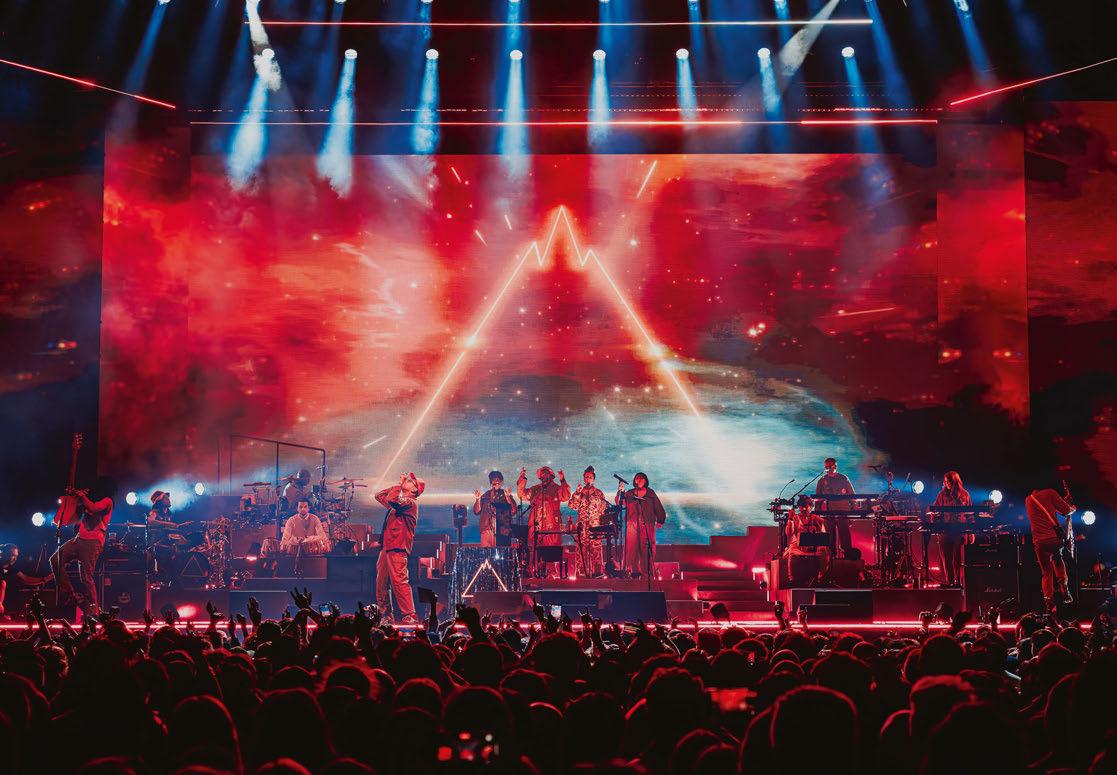
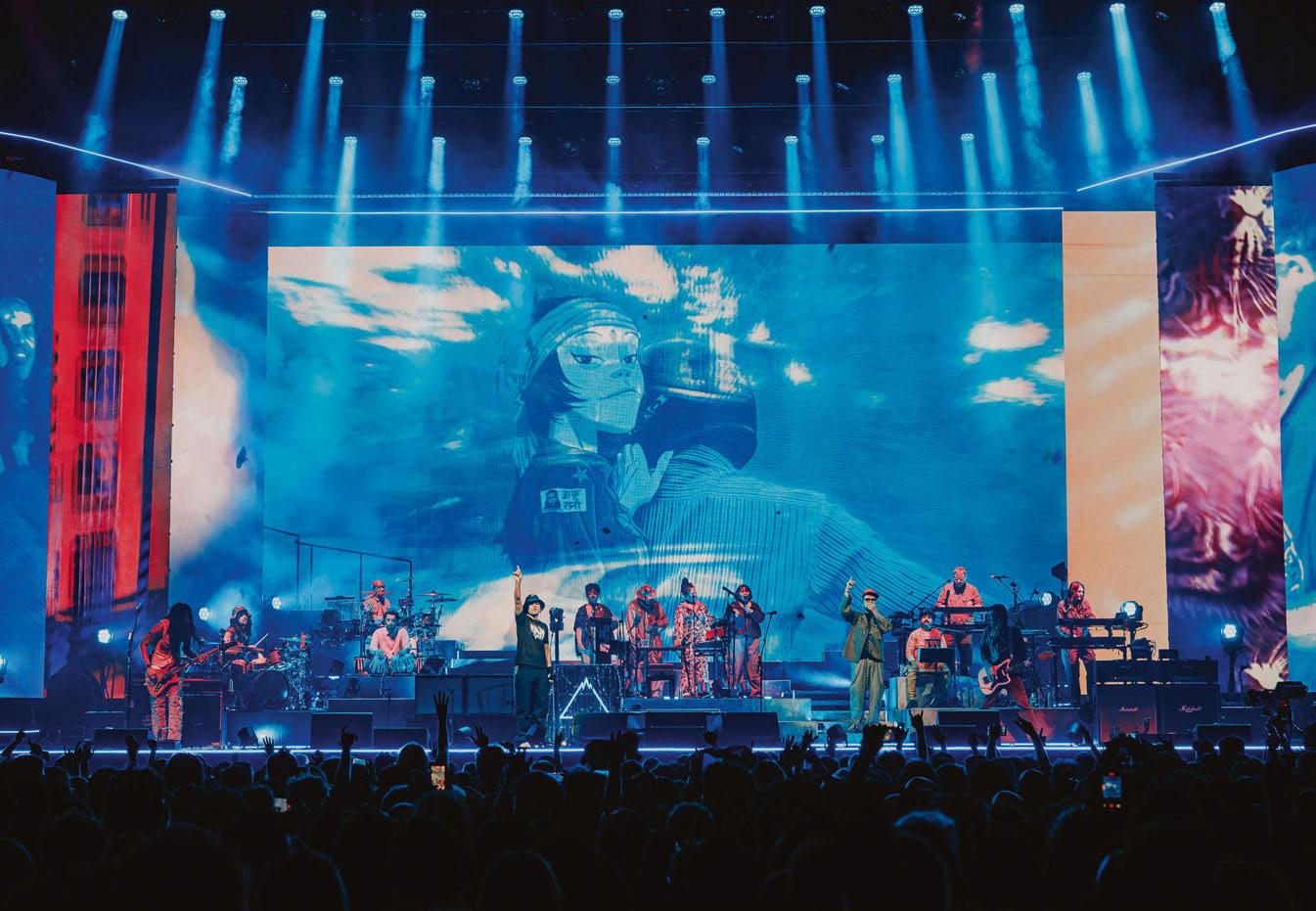
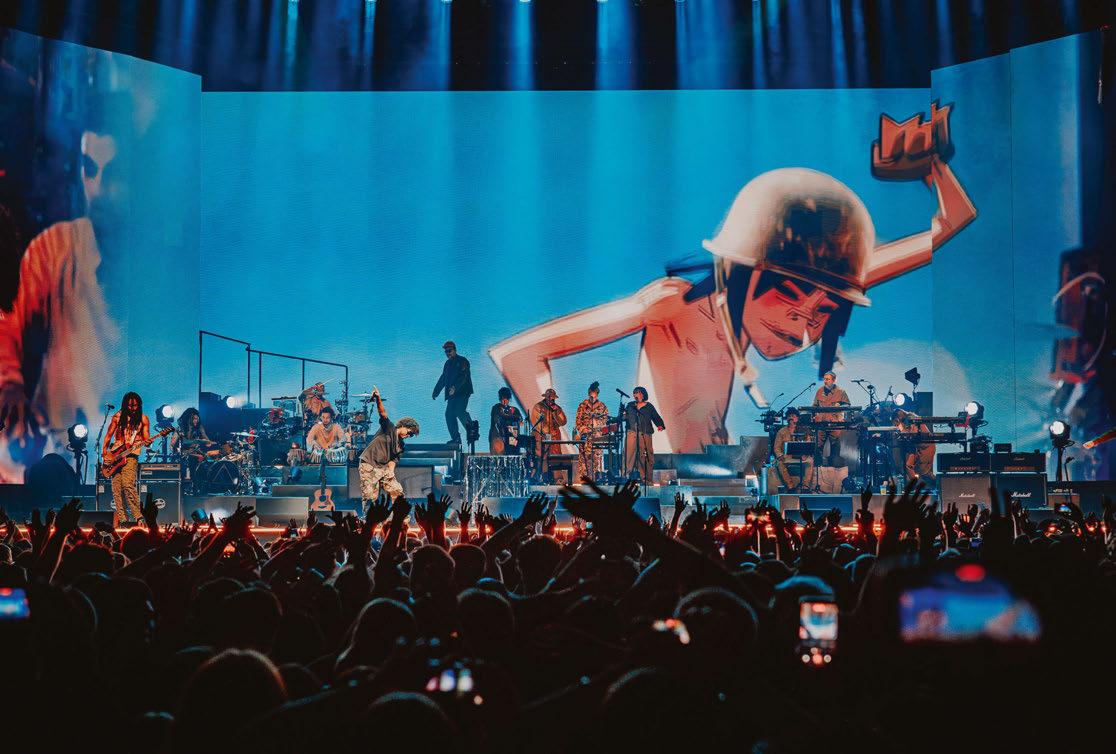
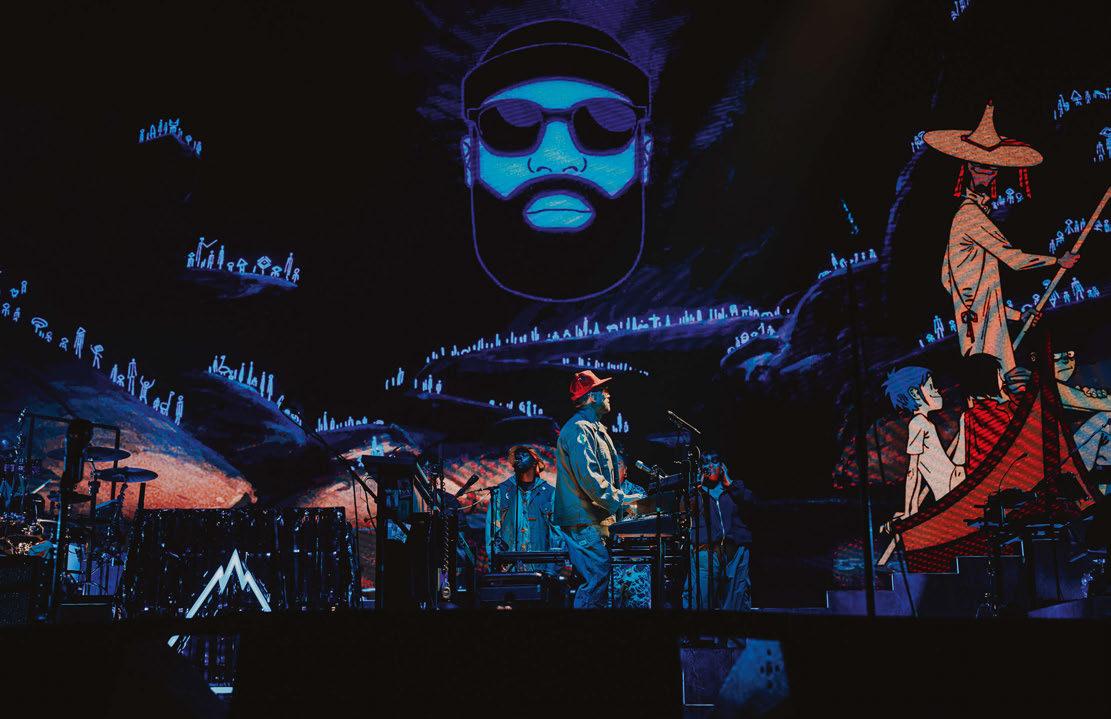
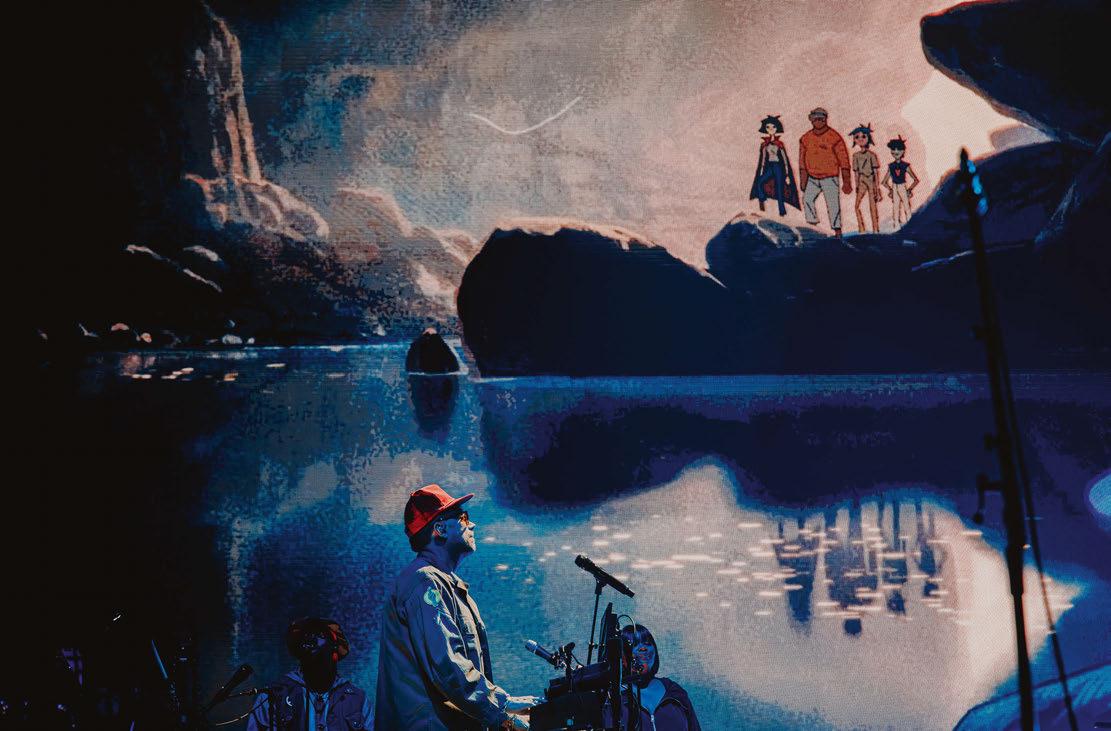
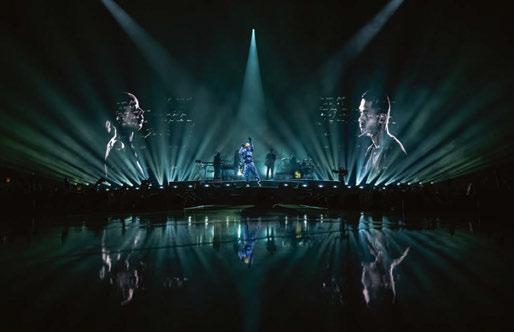
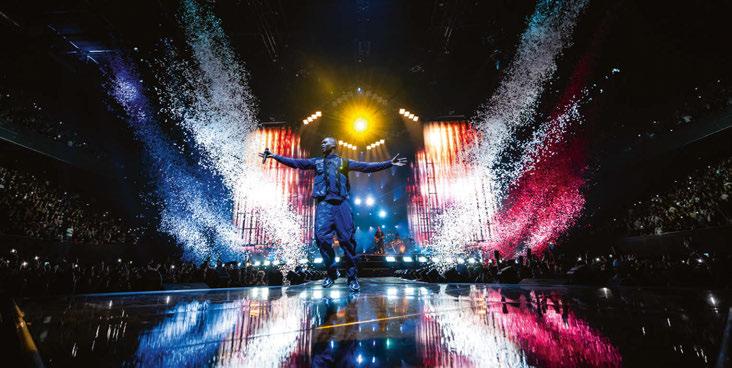
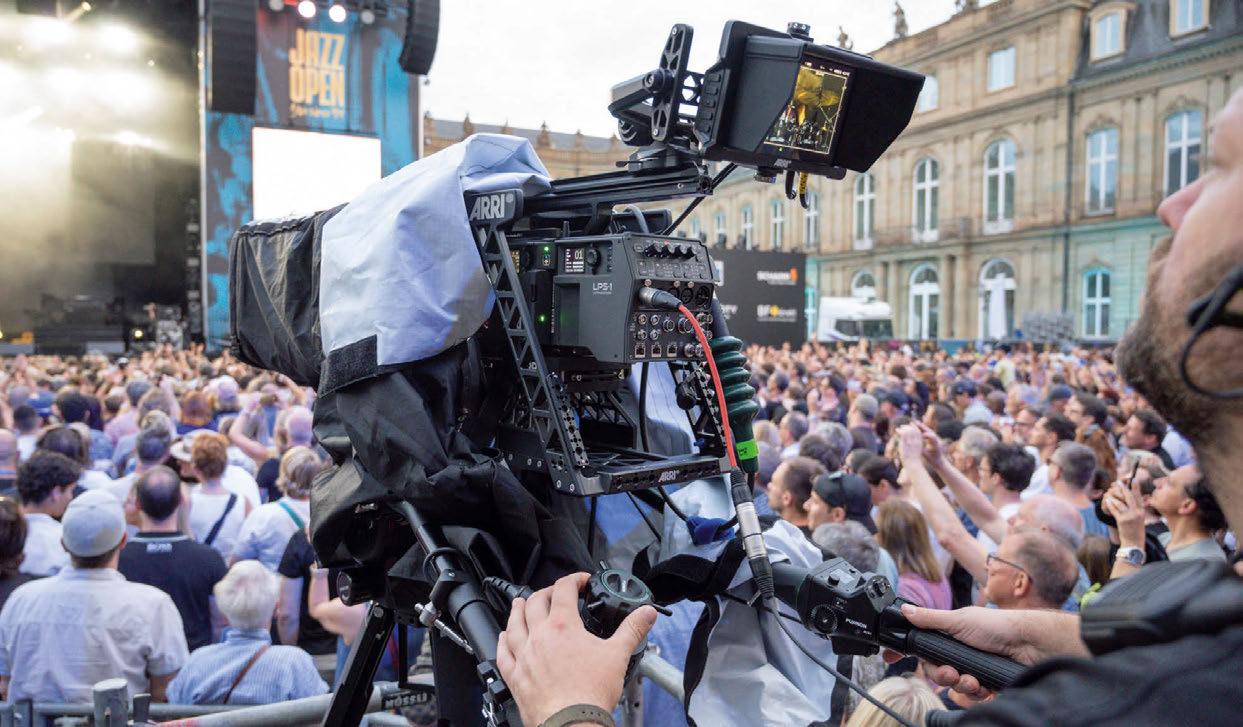
The animated artists and their dedicated crew present a love letter to India
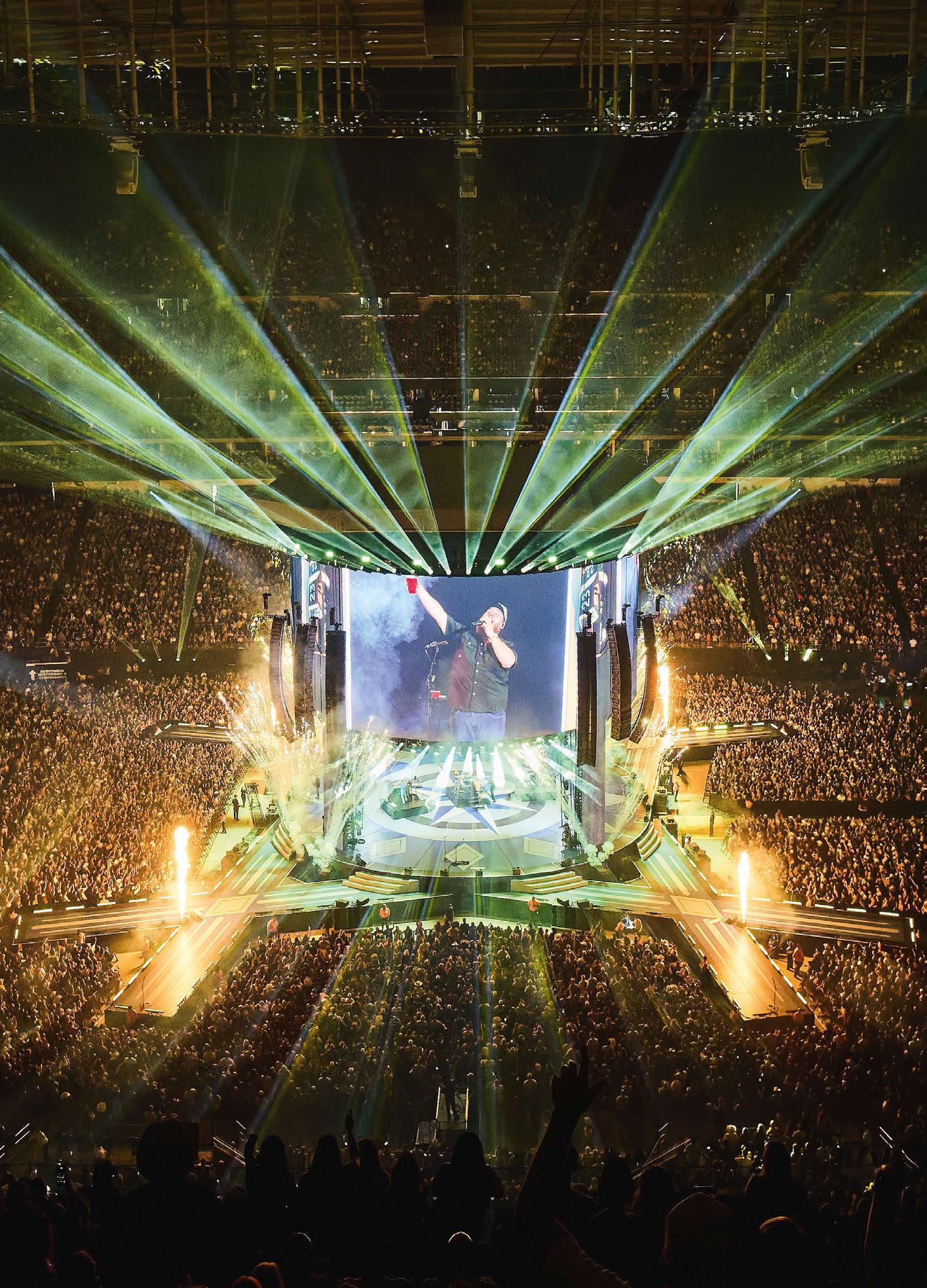
Photo by David Bergman, Luke Combs My Kinda
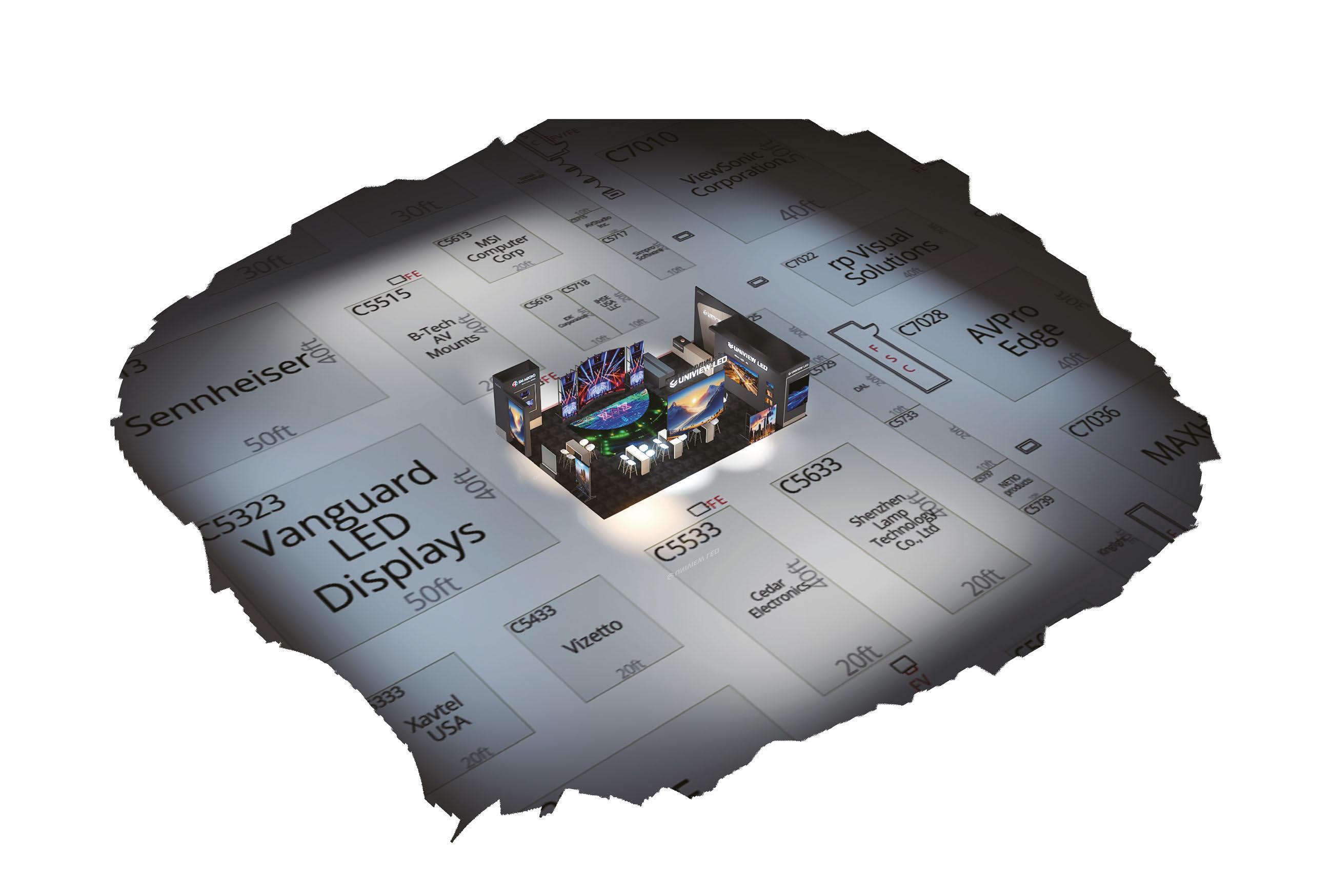
June 17–19, 2026 Las Vegas Convention Center Booth C5525
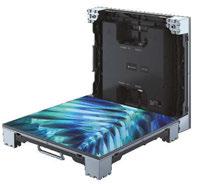
Discover Uniview LED’s latest rental and stage display solutions at InfoComm 2026. Designed for touring productions, concerts, festivals, and immersive live experiences, our solutions deliver fast setup, reliable performance, and exceptional visual impact. Featuring transparent touring screens, rental-ready LED displays, and interactive stage applications built for the demands of professional live production.
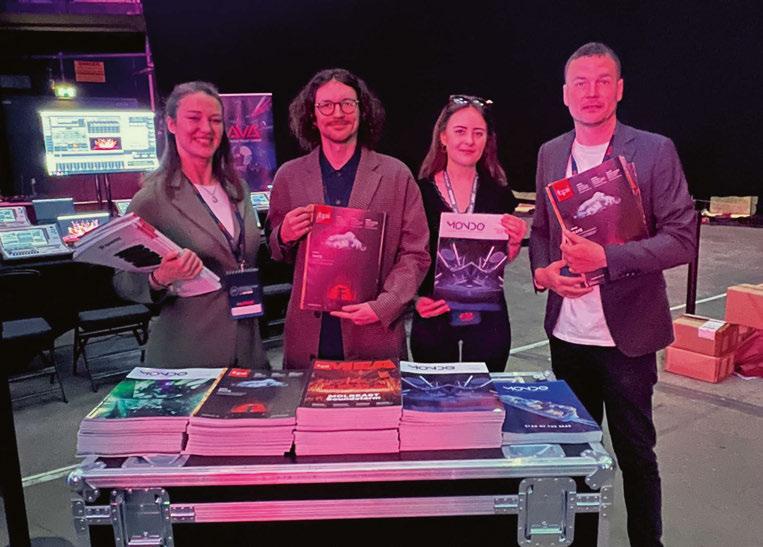
I often find myself trying to explain to friends and family, much as I did to the hundreds of enthusiastic visitors who stopped by our flightcase of magazines at Production Futures ON TOUR at Manchester’s AO Arena this April, that our remit – while sometimes difficult to quantify and nuance withstanding – is simple.
We follow the stories of those who often dress in black, don radios, and roll flightcases for a living. If there’s a story that involves equipment and crew moving from A to B, bringing audiences together, if only temporarily, and offering a moment of escapism from the harsh realities of 2026, then it’s likely within our scope.
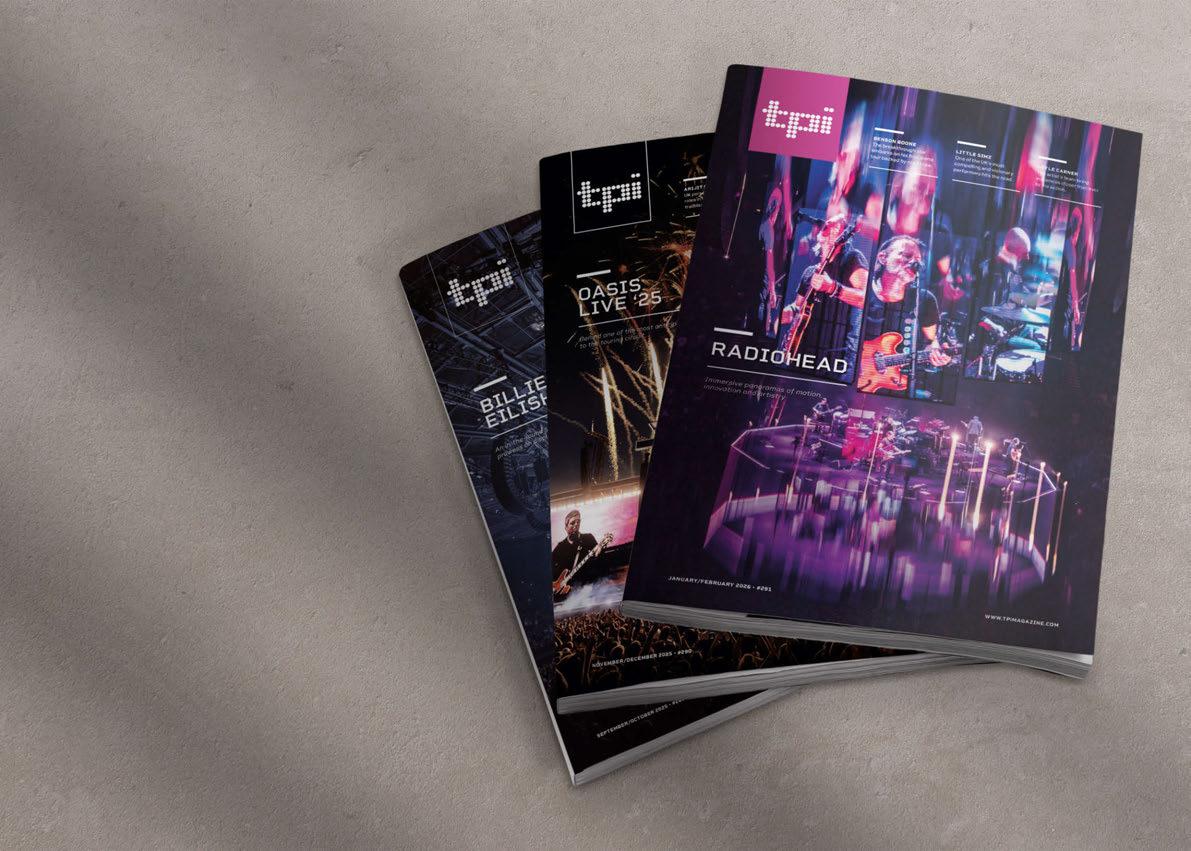
At t he risk of becoming too meta, a flick through the pages of TPi #293 reveals just that: a collection of striking productions, insightful company profiles, in-depth interviews, equipment rundowns and more, brought to life through the creative flair of our talented in-house production design team and contributing photographers.
Much like the build up to any tour, these pages are the result of weeks and months of planning, collaboration, drafting, redrafting, and
careful approval before finally reaching you. With every edition, we hope to shine a light on an often invisible sector, to highlight the roles that so often go unseen, and to celebrate the best this industry has to offer.
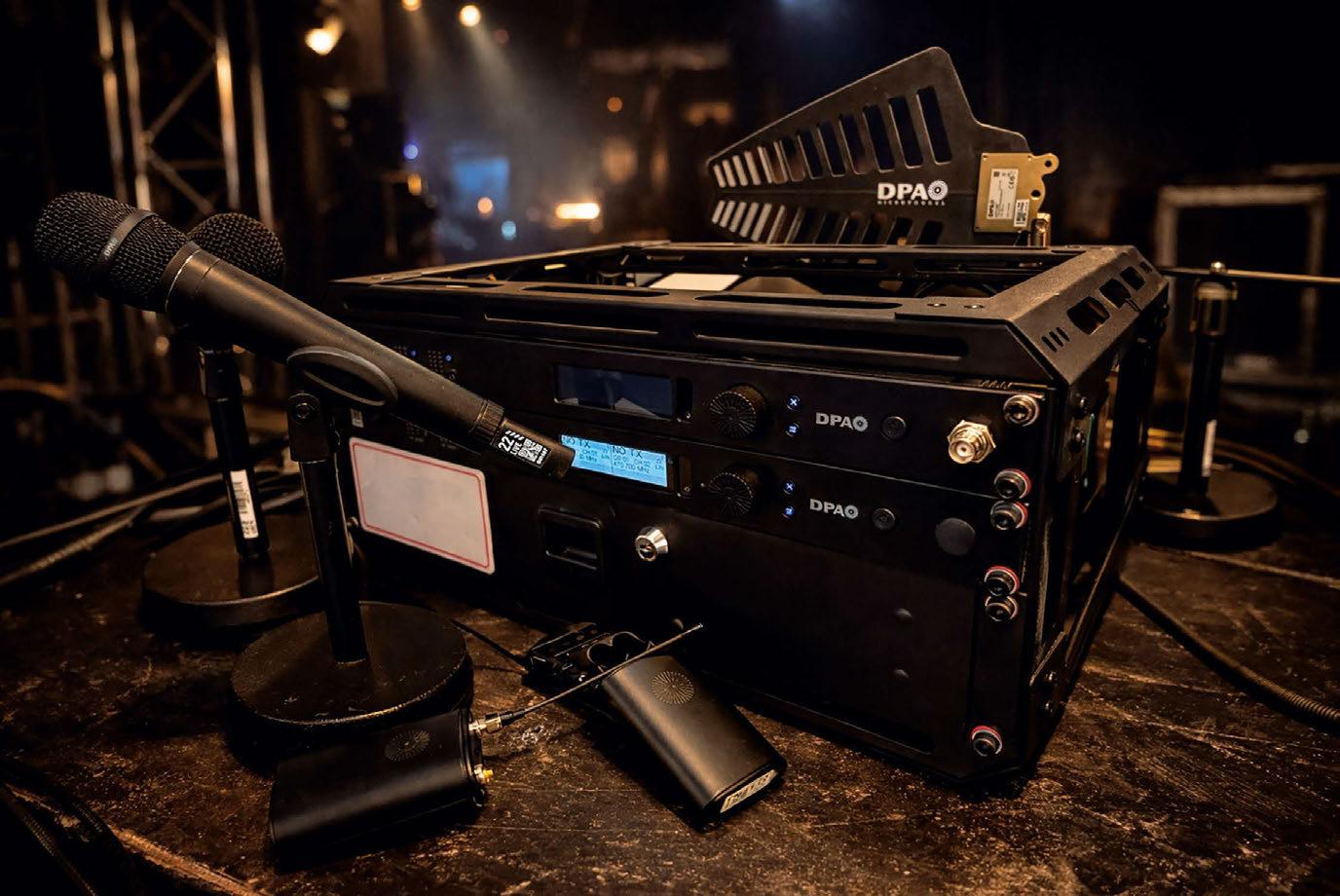
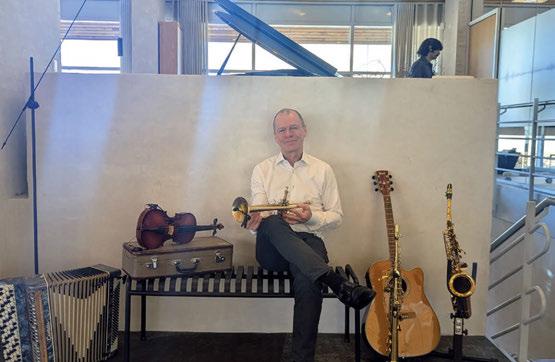
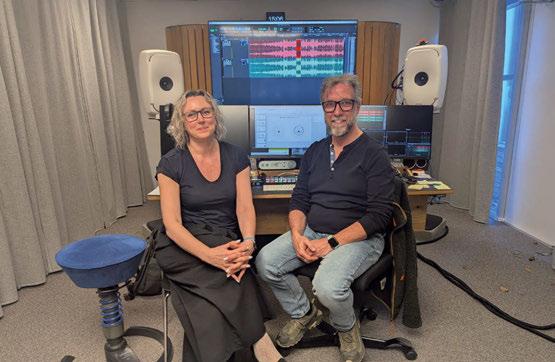
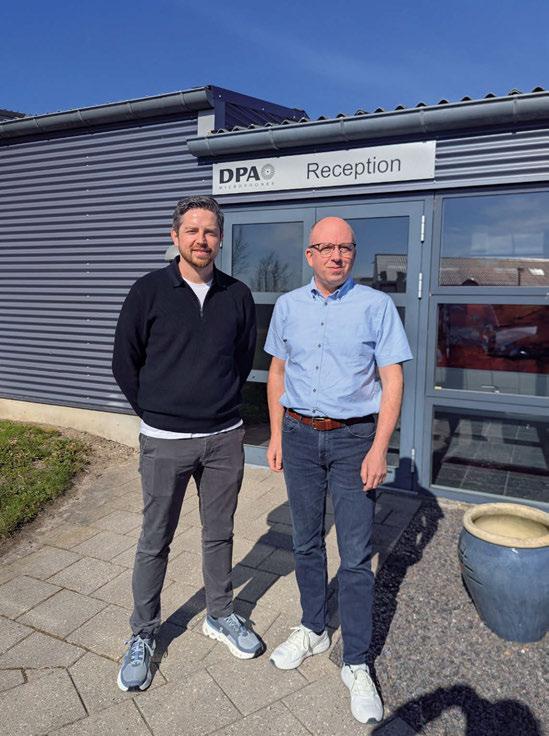
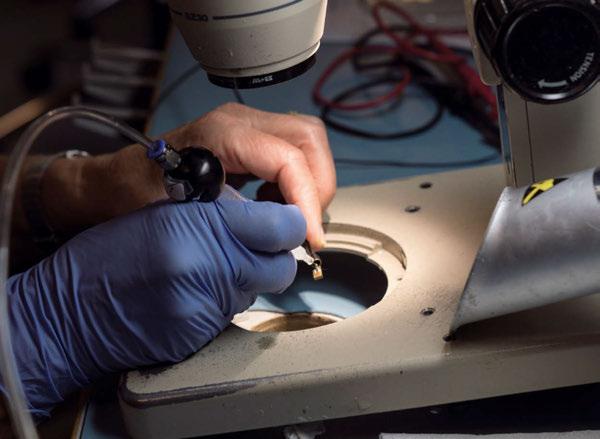
In t his issue, that includes a 10-page Production Profile on cover star DAVE’s shapeshifting show, with TPi and Production Futures’ Breakthrough Talent Award-winners on the crew sheet [p62]; Ali pulls double duty with Tyrone Brunton-inspired coverage of Deftones [p32] and Gorillaz [p44] – one more tour profile and he will take home a TPi-signed match ball; and Stew gives his insight on the industry pioneers who are pushing touring IMAG closer to IMAX [p78] and travels to Denmark to discover what’s next for the latest member of the Audiotonix family, alongside Wisycom and Austrian Audio – DPA Microphones [p102].
Subscriptions, Mondiale Media Limited, Strawberry Studios, Watson Square, Stockport, SK1 3AZ, UK. Tel: +44 (0)161 476 5580 Email: subscriptions@mondiale.co.uk www.tpimagazine.com www.tpiawards.com www.gtlsessions.com Total Production International (TPi)
Access our complete range of globally available professional AV equipment and request your rental quote online.
Stay up to date with the latest innovations and product r releases from our partner brands.
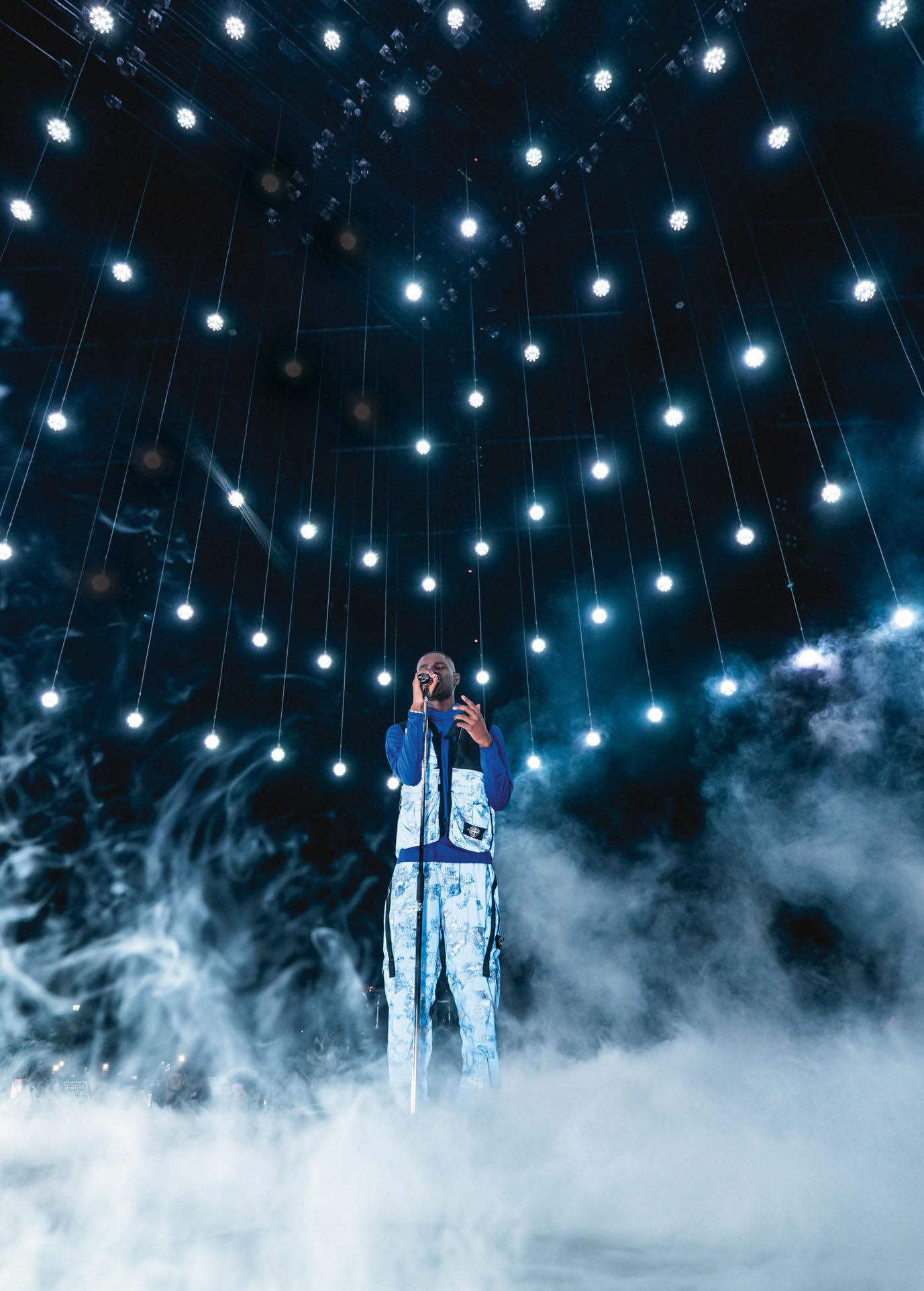
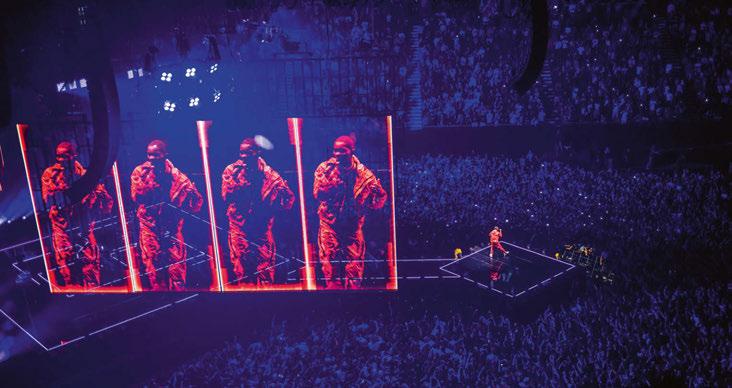
ON THE COVER DAVE
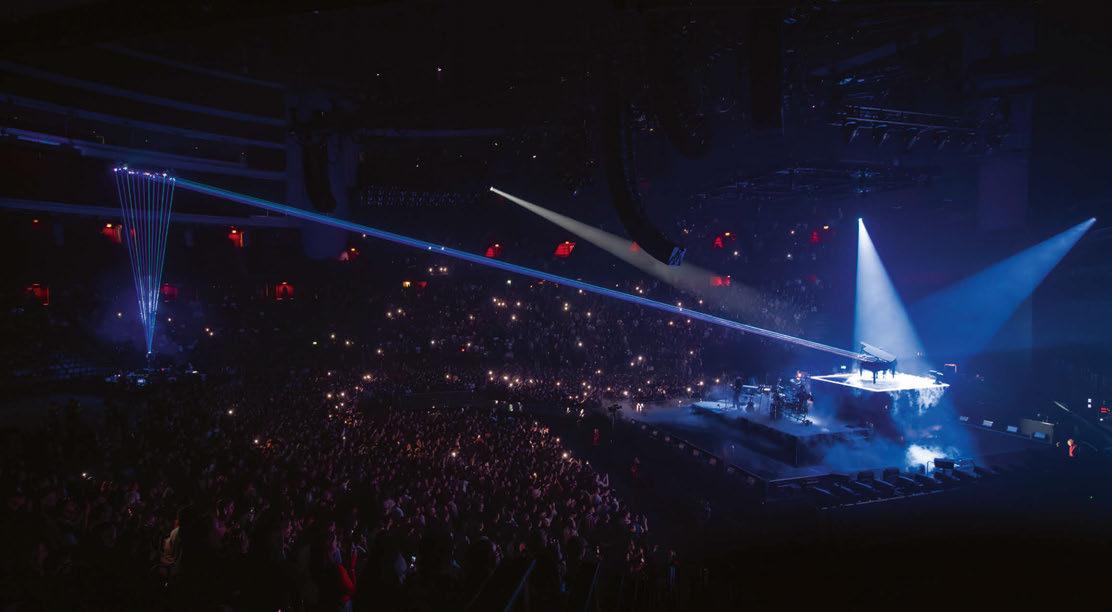
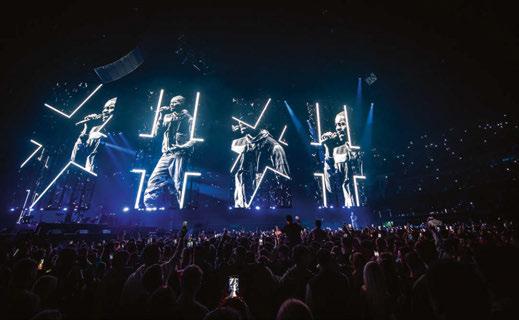
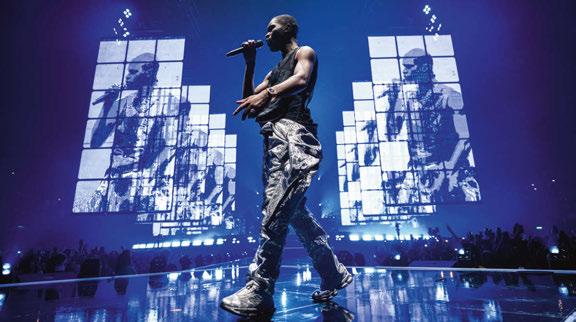
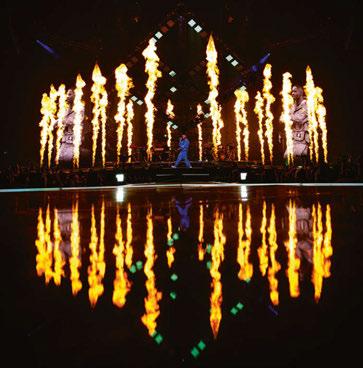
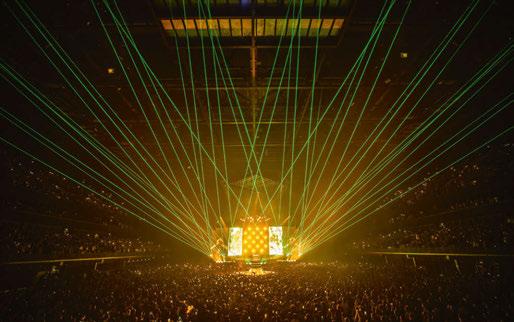
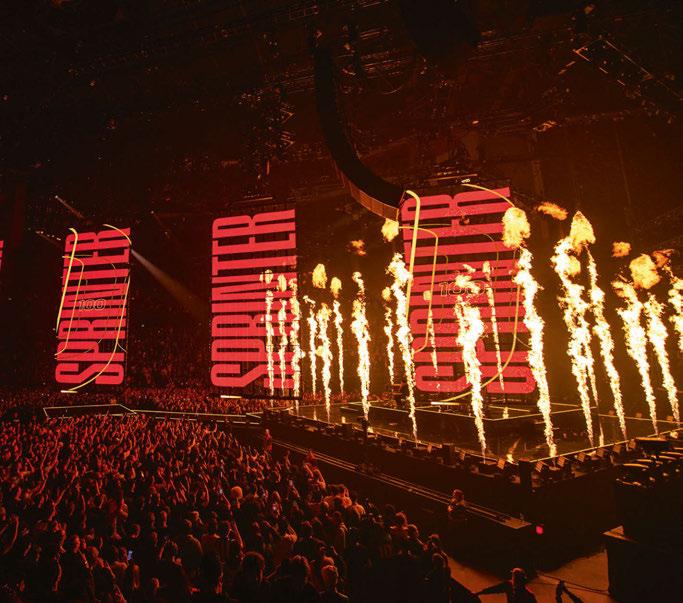
Laser-firing instruments, pyrotechnics, hidden subwoofers, shapeshifting video, and a revolving door of guest performers – all set beneath a four-curtain kabuki drop.
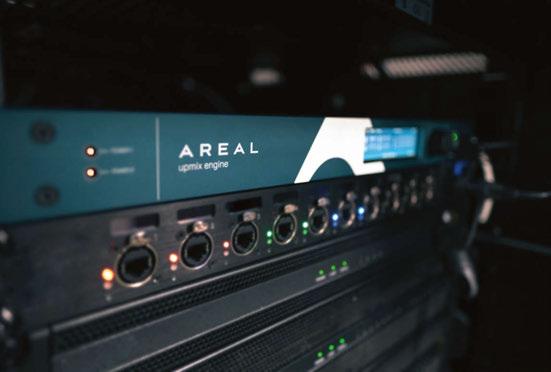
10 Elation, ALT and Production Park illuminate SXSW’s BME stages. 14 Areal Upmix Engine immerses DJ mixes at Tomorrowland Winter.
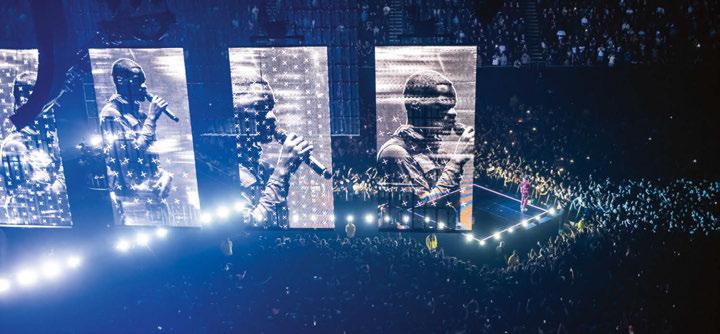
Vendors pull out all the stops for MGK’s visual spectacular.
DMX Productions and SWG Events help stage The MOBOs.
Tour managers and tour providers unite for GTL Sessions.
INTERVIEW
80 Meet the industry pioneers transforming IMAG into IMAX.
86 PixMob reflects on two decades of innovation.
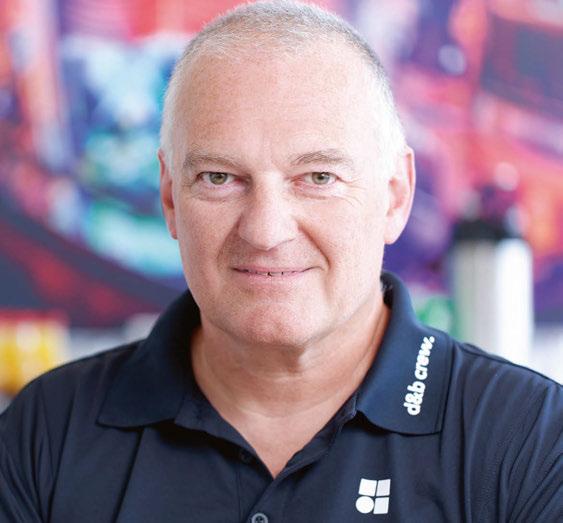
88 d&b’s Matthias ‘Matze’ Christner debunks the ‘network wars’.
90 Subfrantic sets its eyes on the arena market with 360° service.
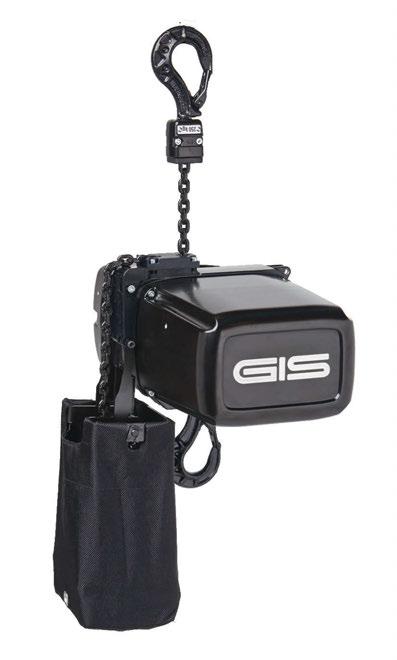
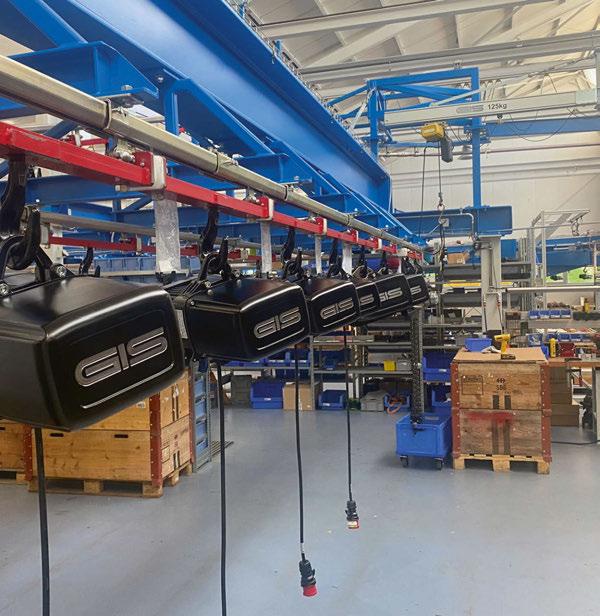
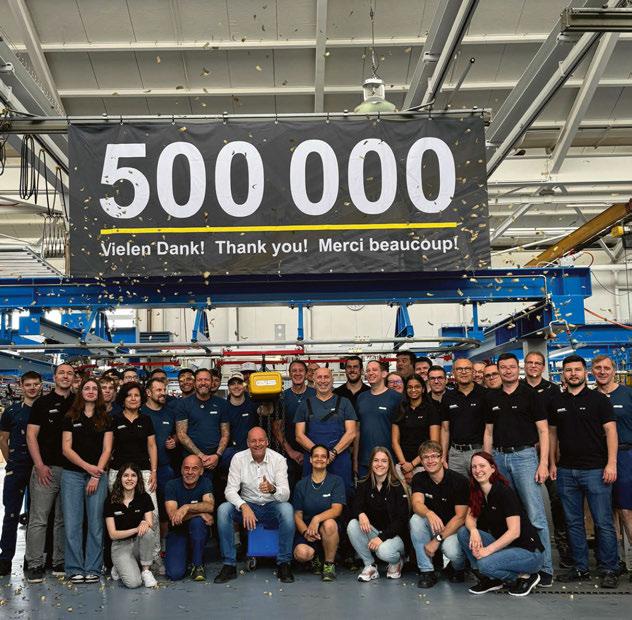
94 Charting the processes behind GIS’ signature lifting solutions.
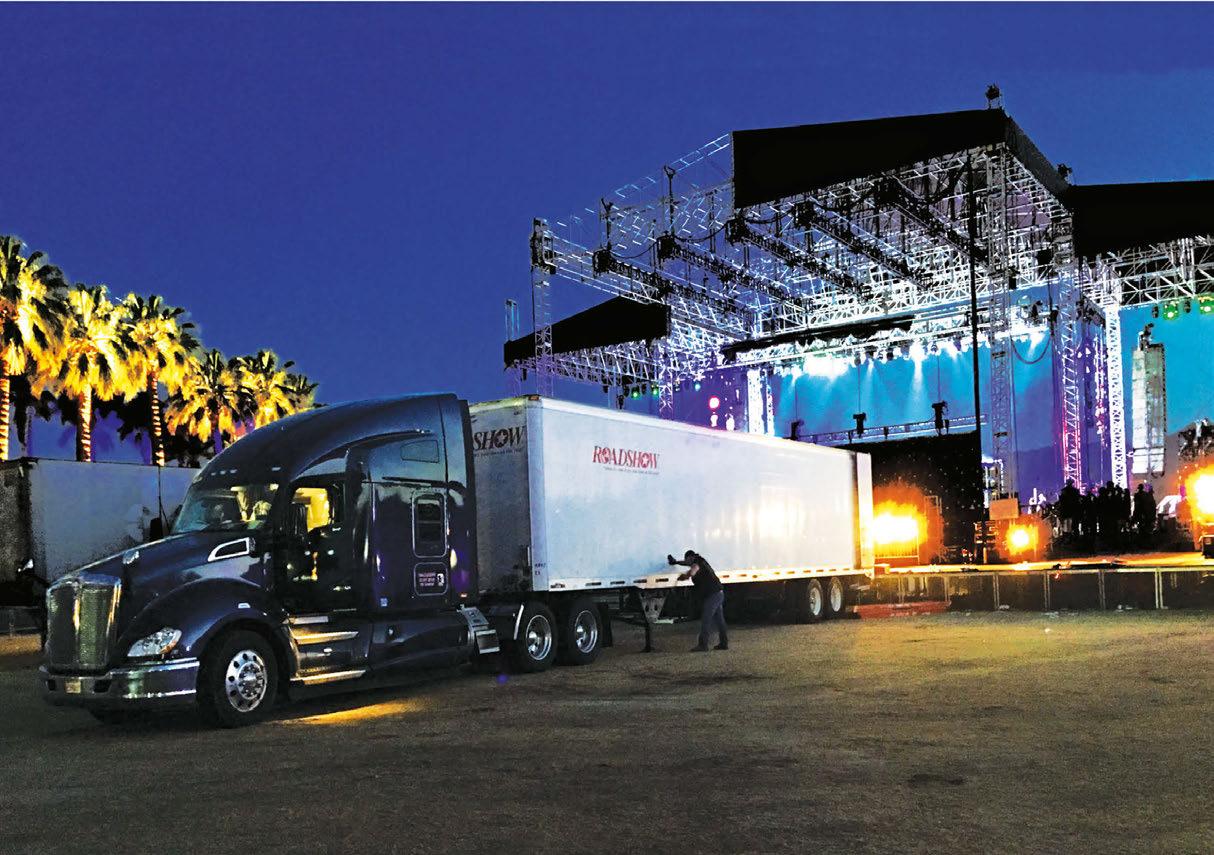
98 Fly By Nite adapts to the everevolving landscape of touring.
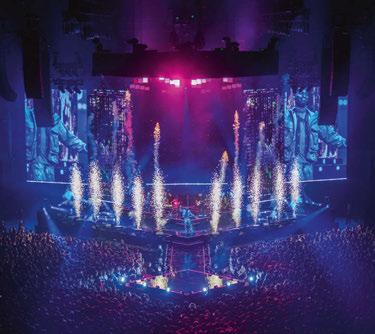
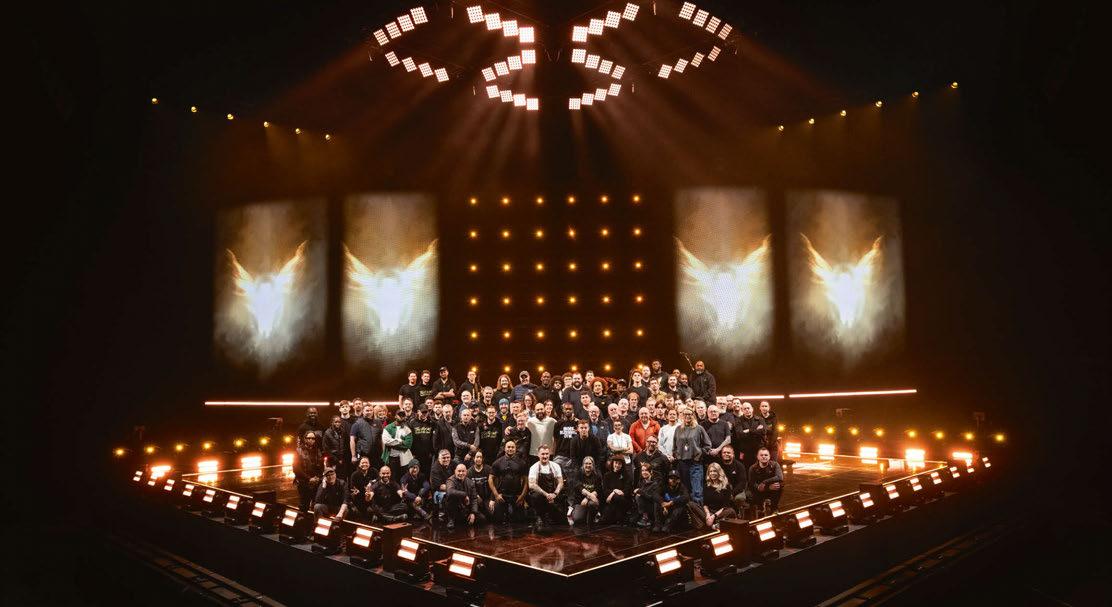
The alternative metal band returns to the touring circuit with production crew in tow.
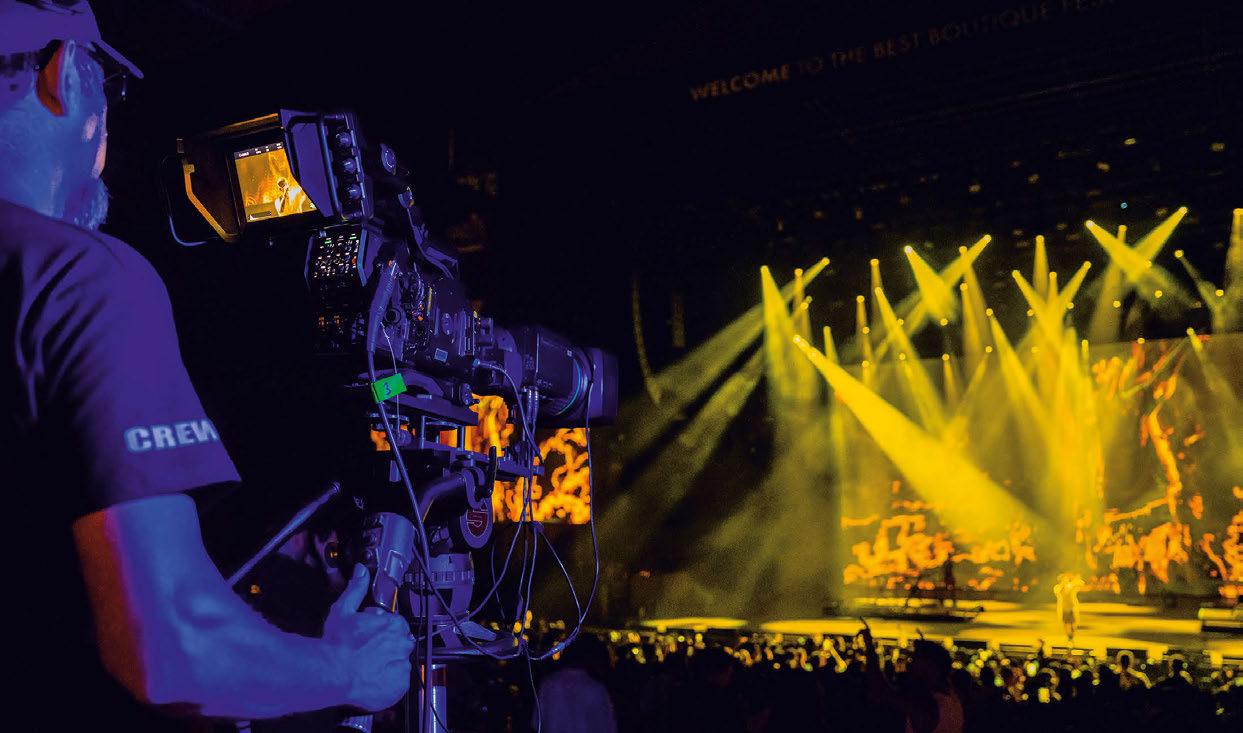
Wonderfully creative technical teams hit the road for The Mo untain Tour.
102 DPA Microphones formally joins the Audiotonix network.
PRODUCTION FUTURES
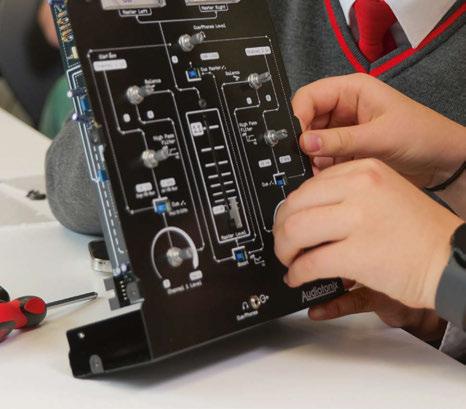
106 Audiotonix and Production Futures’ Make Noise initiative.
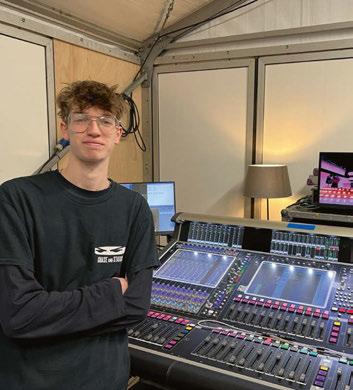
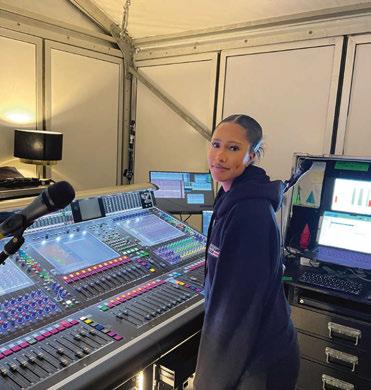
108 Meet the young engineers mixing The BRIT Awards 2026.
GEAR HEADS
110 Introducing the Allen & Heath Avantis 2.0.
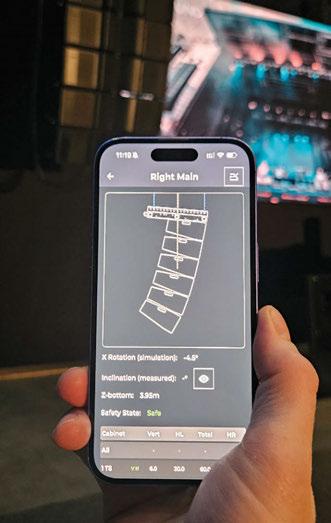
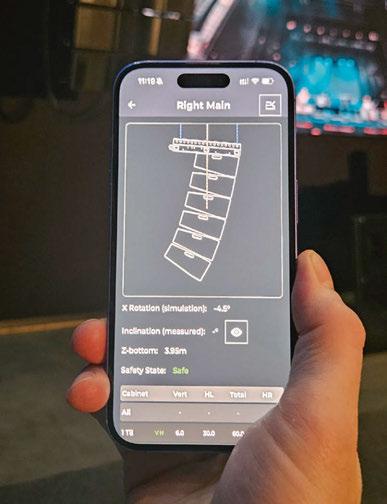
112 PK Sound launches the .d ynamics MOVE app.
FEEDBACK
114 Lightware underlines the value of traditional matrices.
116 Suzi Green highlights the importance of community.
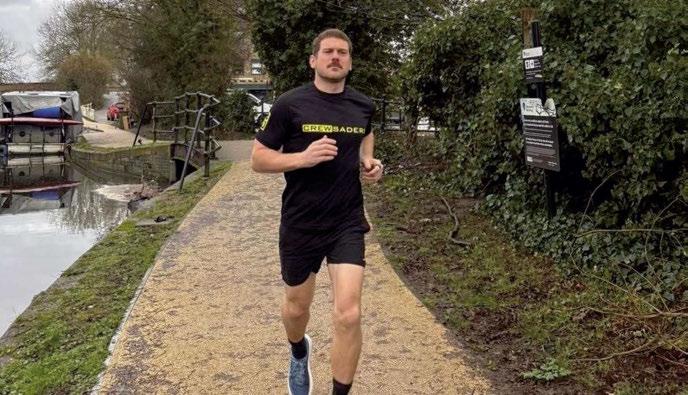
118 Crewsaders’ David Walmsley takes on 30 marathons.
BACK CHAT
122 Instagrid’s Andy Barnby takes the hot seat.
SOUTH BY SOUTHWEST: BME STAGES
Elation partners with the Academy of Live Technology and Production Park to equip students with lighting solutions for multiple performance areas across Austin.
@Autefault and Academy of Live Technology
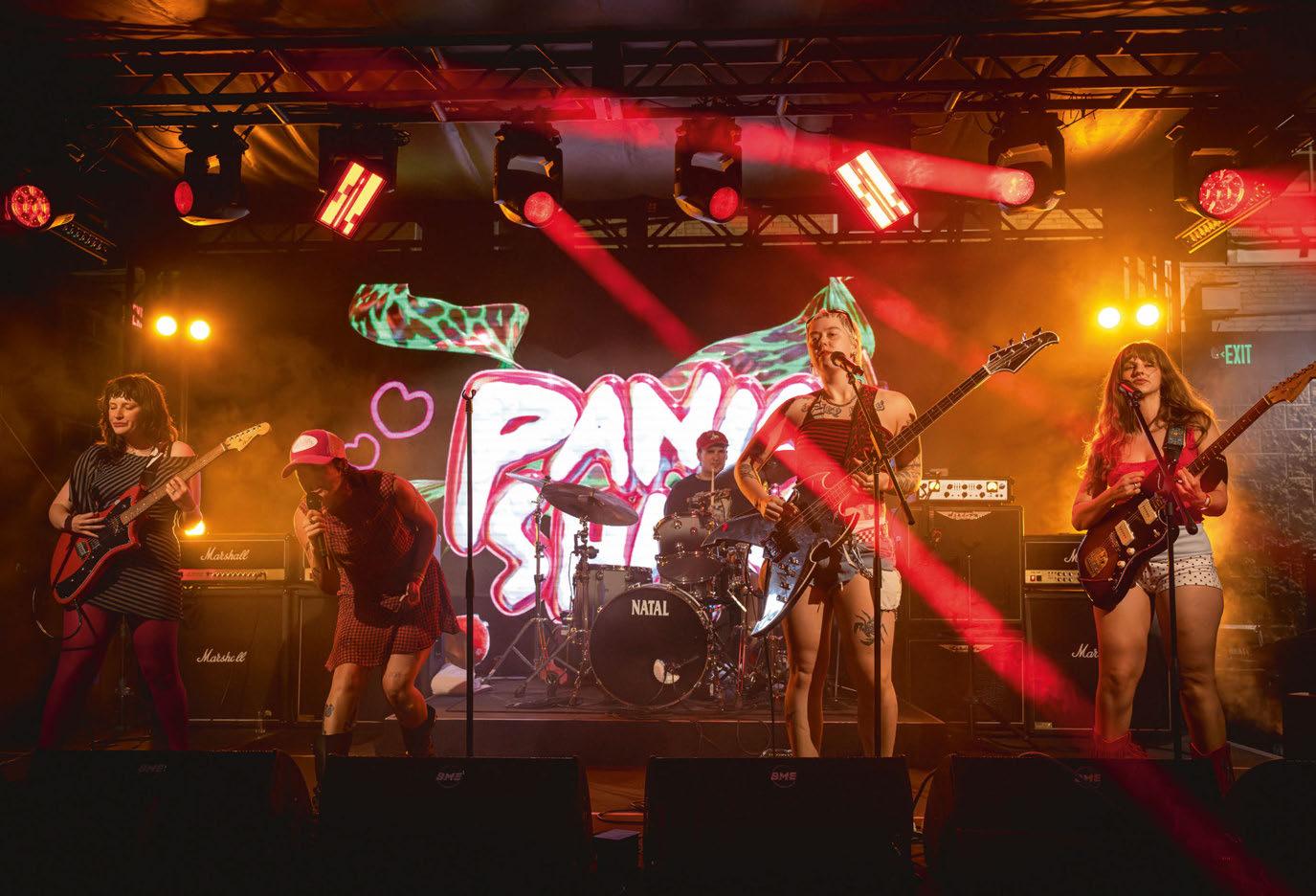
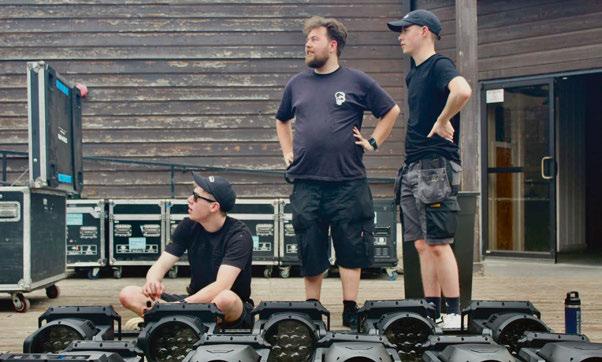
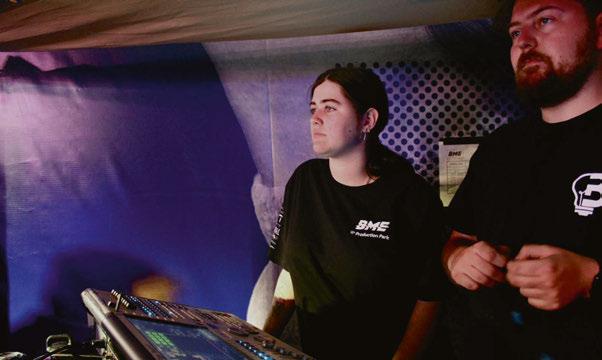
Elation lighting solutions supported the British Music Embassy (BME) stages at South by Southwest (SXSW) 2026 conference and festival in Austin, Texas. Partnering with the Academy of Live Technology (ALT) at Production Park, Elation REBEL and PULSE series fixtures illuminated a diverse line-up of performing artists while giving the next generation of lighting technicians invaluable hands-on experience.
The British Music Embassy champions British music internationally, providing emerging artists with high-profile exposure and meaningful career opportunities. Its stages at SXSW are high-profile platforms that have launched several artists who went on to global fame, including Amy Winehouse, Sam Fender, and The 1975.
With campuses at Production Park in Wakefield, UK, and Rock Lititz in Pennsylvania, ALT equips students with real-world experience alongside world-class production
facilities, supported by Elation’s cutting-edge lighting technology.
As an ongoing partner of ALT and Production Park, Elation supplied a creative lighting package for the BME stages at this year’s SXSW, delivered from Elation’s US office. The setup included REBEL WASH, REBEL LINE, REBEL DARTZ, and REBEL PROFILE fixtures, alongside PULSE PANEL, PULSE PANEL FX, and PULSE BAR luminaires, plus SŌL BLINDER units and MAGMA PRIME TOUR fazers.
Ant Forbes, Studio and Production Manager at Production Park, led a professional production crew supported by ALT students from the UK and US campuses to build and operate the BME stages at SXSW.
“T he support from Elation has been absolutely integral to delivering the British Music Embassy stages at SXSW,” Forbes said. “Access to high-quality, industry-standard lighting allows us to create a professional, dynamic environment for every artist and
audience member. The Elation fixtures are not only reliable and versatile, but they give us the creative flexibility to respond to a wide range of performances across the program. Partnerships like this are essential – without Elation’s continued backing, bringing a showcase of this caliber to life simply wouldn’t be possible.”
An integral part of the experience for ALT students is the opportunity to gain practical experience working with professional lighting gear, bridging classroom theory with real-world application. Emma Cook, Director of Student Support and Experience at ALT, highlighted the impact: “We’re incredibly grateful for Elation’s continued support. Providing students with hands-on access to industry-standard lighting equipment is invaluable, equipping them with the practical skills and confidence they need to step straight into the live events industry. From supporting the British Music Embassy stages at SXSW to supplying the equipment
Photos:
WITH ELATION’S REBEL SERIES
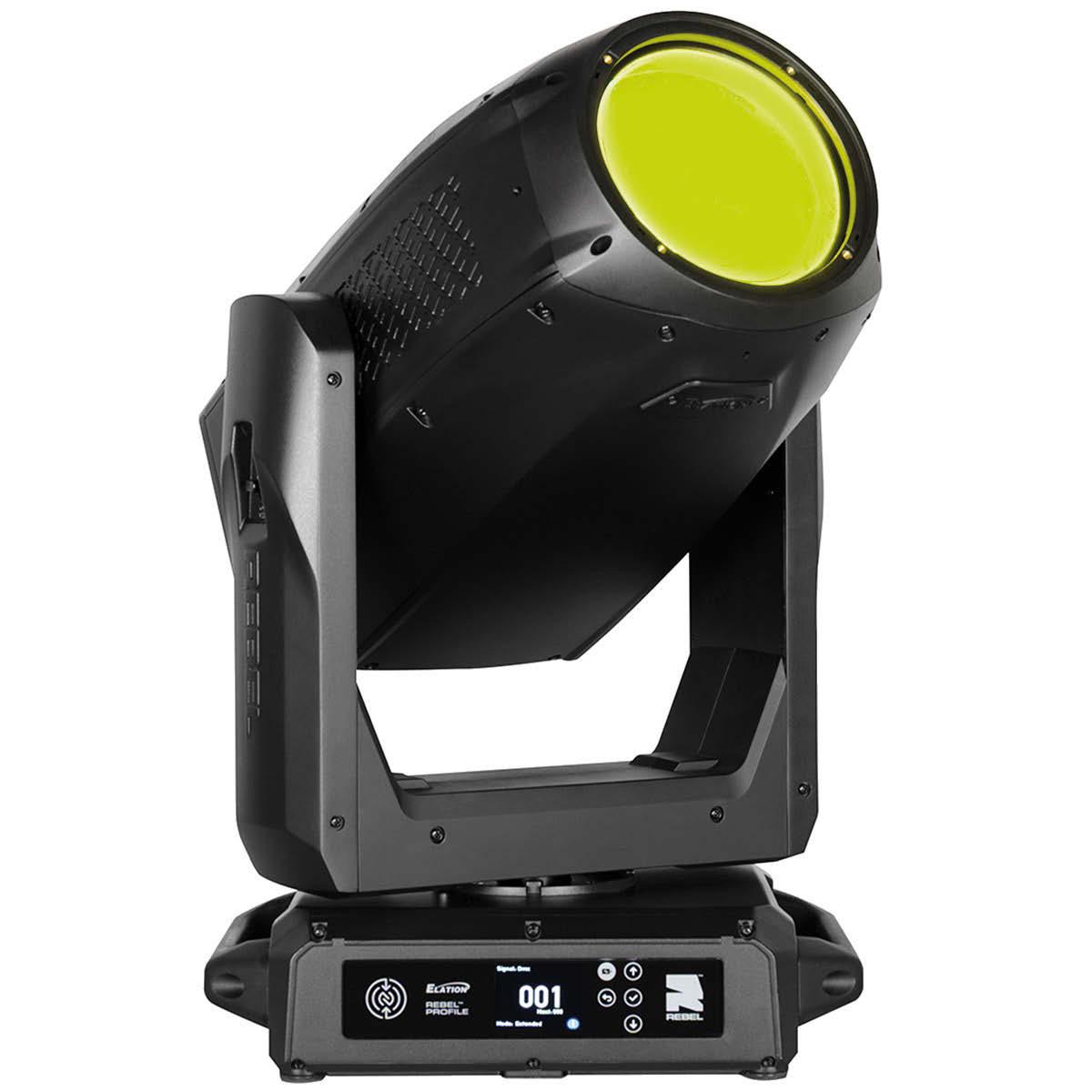
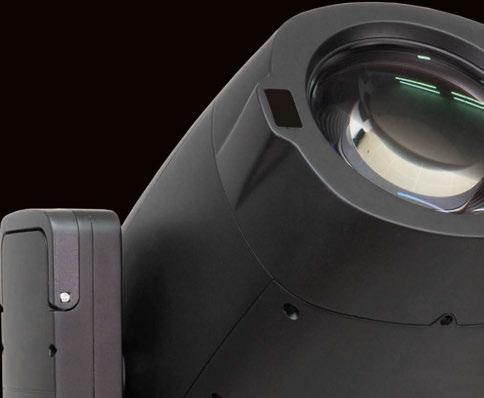
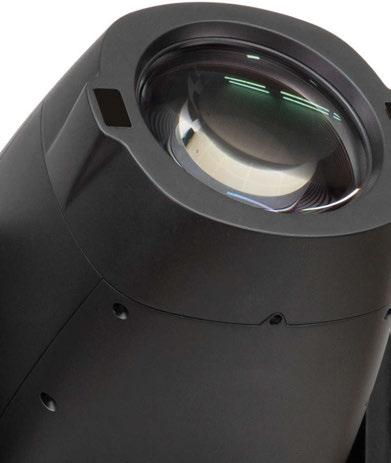
The REBEL PROFILE™ packs power and flexibility into a compact, IP65-rated design for indoor and outdoor use.
Its 600W 6,500K LED engine delivers 22000 lumens for bold beams, crisp gobos, and stunning aerial effects.
A 3.5° – 51° zoom range and full blackout framing adds versatility for any venue.
Features include 15 glass gobos, animation wheel, dual prisms, dual frost, and a high-speed iris.
our students use across their projects, this partnership plays a vital role in nurturing the next generation of live events professionals and helping to shape future talent.”
Bradley Nicholson, Lead Lighting Designer for the BME stages, praised both the exceptional student talent and the gear they worked with. Nicholson’s lighting team included Thomas Skinner as ALT Stage Lighting Designer and Operator, and Archie Baxter (ALT UK) and Presley Thurlow (ALT USA).
“T hese students tackled every challenge that was thrown their way, and I can honestly say I was very impressed with every aspect of their work, from build to derig,” he said. “I can’t wait to see what they go on to do in their inevitably successful careers.”
Nicholson s ays he felt his creativity flourish this year, in part from designing with the new REBEL series fi xtures.
“T he REBEL DARTZ were punchy and created some super cool beam effects on st age and over the audience. The REBEL WASH 4s and 12s flooded t he w hole space with light and t he pixel effects made for some nice eye candy. This year, I feel the addition of a downstage face light bar accompanied by t he CTO fl ags in t he REBEL PROFILE lit t he
performers perfectly and helped me to focus on creating awesome states while ensuring the artists were always seen.”
A GLOBAL HUB FOR CREATIVITY
Renowned for networking, cross-industry collaboration, and launching emerging artists, SXSW naturally draws lighting design professionals keen to experience both rising acts and cutting-edge gear.
Terese Porterfield, Lighting Designer for Alanis Morissette, was on hand and shared her thoughts of the event: “I had the pleasure of visiting the BME stage and seeing some of Elation’s latest lights. T he REBEL fi xtures offered flexible programming and smooth color mixing. I was impressed with the punch it packed and can easily imagine using them in the future when I need a small but powerful show with a lot of options.”
Noah Connolly, Lighting Designer for August Burns Red, was also in attendance and highlighted the design possibilities inherent in t he PULSE fi xtures: The PULSE PANEL F X br ings architectural automation to smaller scale touring. It is great to have a fi xture that can allow parts of the rig to morph into something completely new. The integrated
L-Track rigging on the PULSE BAR opens interesting configuration possibilities w ith less hardware. This is great for complex setups in carts for mid-size touring.”
Cole Sanford, Lighting Designer for Alpha Wolf, Dayseeker, and Make T hem Suffer, took in several acts on the BME stages and cited two major standouts of his evening. “ The first is t he PULSE PANEL and PULSE PANEL F X w ith its seamless blend of two plates of segmented RGB zones within the main strobe area. It has a higher output t han many competing fi xtures, and more features, and looks great for small or large venues.”
Sanford added: “The second is the REBEL LINE 16, a fi xture t hat has some amazing features. You can do cool things with the dual segmented heads with individual zoom and tilt. It also has very practical locking and connecting mechanisms and thoughtfully placed ports. It’s easy to set up and pairs easily with the smaller REBEL LINE 8. It also has a very sneaky set of SparkX cold-white LED pixels to give you even more to play with.”
Fifty influential designers, programmers and operators whose support, innovation and enthusiasm have shaped the Avolites story. See them every month on our socials, and view the list as it develops here: avolit.es/ambassadors
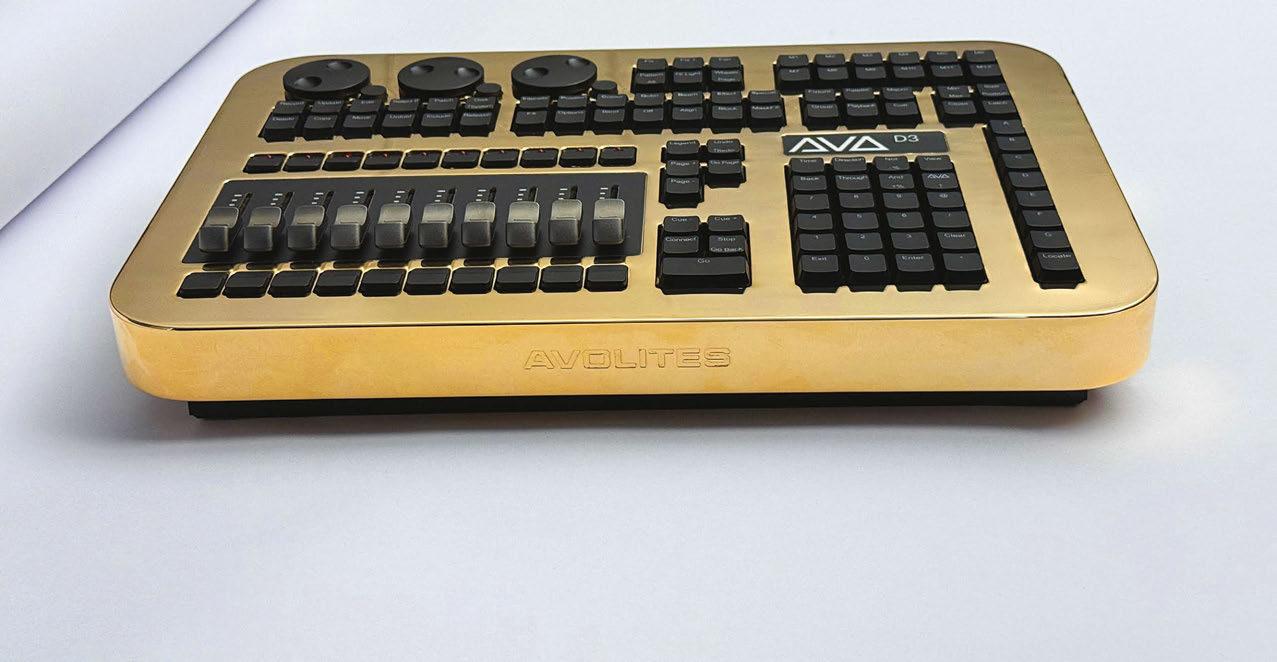
ENTER OUR GOLDEN CONSOLE COMPETITION
This is your chance to win the world’s only 24-carat gold plated D3-010. Collect golden tokens to win: find out how at avo50.gold
Compatible with a USB-C touchscreen
Powered by Titan, it supports 8 universes without a laptop
Features 10 playback faders, 3 encoder wheels and 12 macro buttons Avolites’ Compact key layout makes it a seamless extension to your Avolites toolkit The smallest, most lightweight standalone full-featured console on the market
AREAL AT TOMORROWLAND WINTER
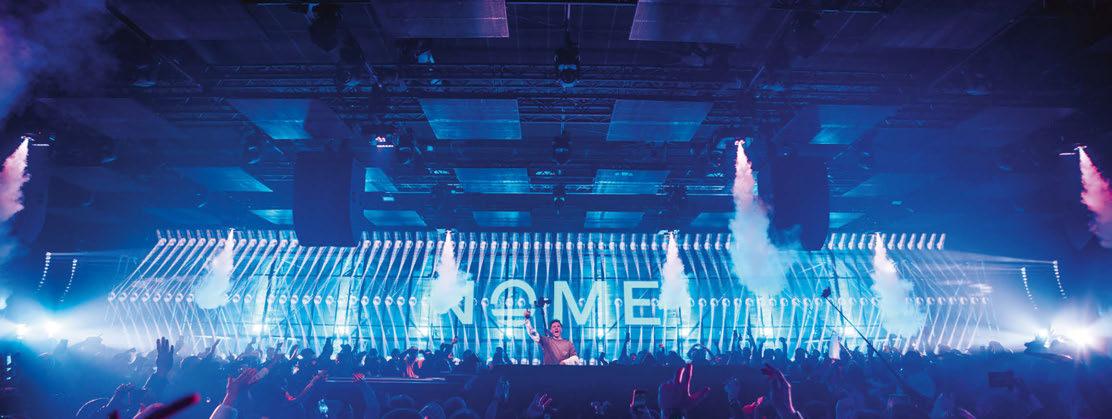
The electronic music festival returns with Areal’s brand-new Upmix Engine providing sonic immersion across all stages.
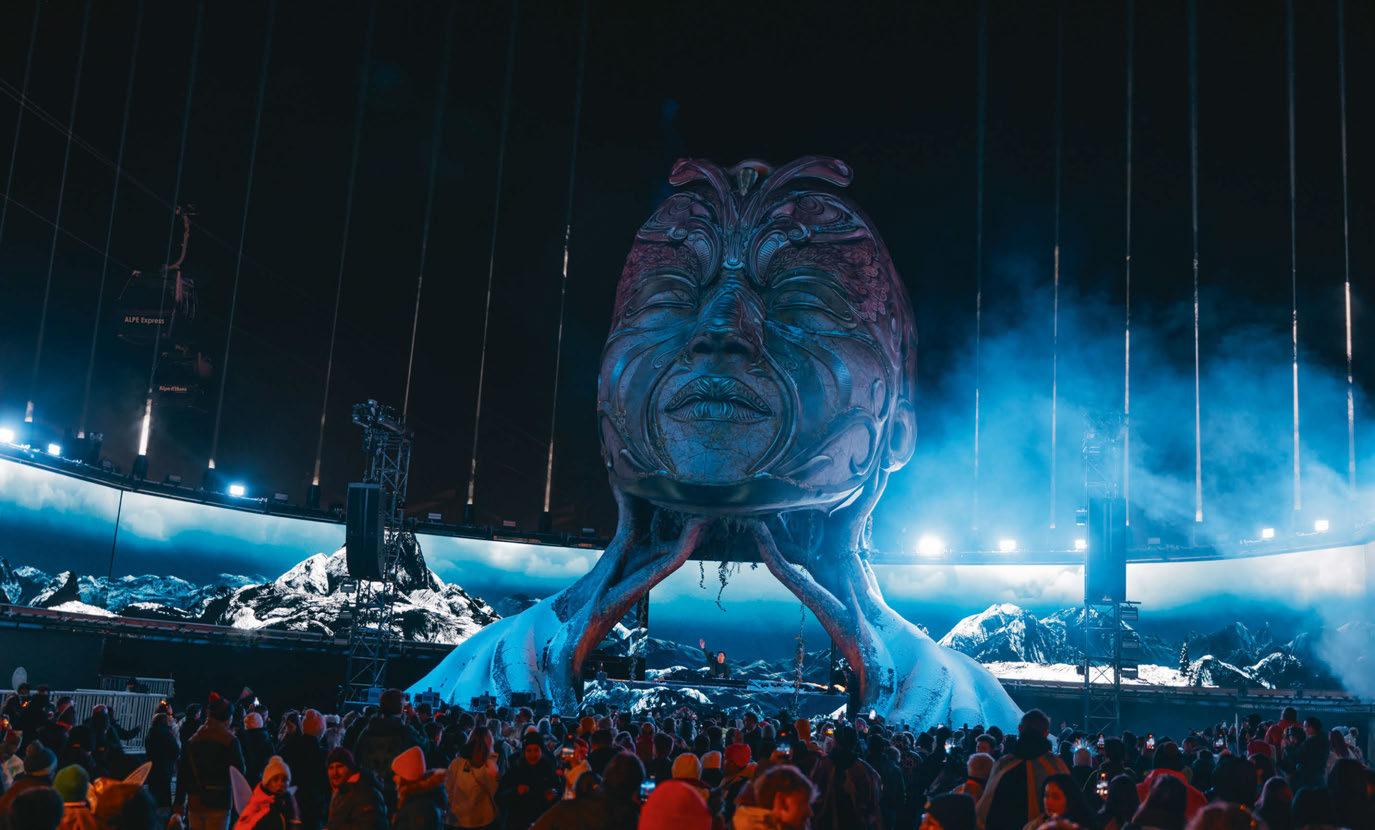
Tomorrowland Winter is like very few festivals on the events calendar. Staged 2,000m above sea level at the picturesque Alpe d’Huez ski resort in the French Alps, the festival combines skiing, snowboarding, and electronic music, attracting 22,000 revellers to the slopes for a week of sun, snow, and immersive beats.
This year saw the introduction of several new stage concepts, including ORBYZ and a brand-new MainStage. The Cage stage also received a technological overhaul, featuring a reimagined Floating Sky and an enhanced sound design courtesy of Areal.
Throughout the week, over 150 artists, including the likes of Time, Axwell, Charlotte de Witte, Dimitri Vegas, Henri PFR, Lost Frequencies, MAALA, Novah, Ofenbach, Steve Angello, and many more, took the sound experience to unprecedented heights –figuratively and literally.
Pieter Doms, co-founder of Areal and NoizBoyz, is a freelance system technician and sound engineer with a long history of pioneering immersive audio. He’s worked independently and as part of the NoizBoyz collective. “By being both developer and user, you can ensure the perfect experience. It validates the work you’re doing,” Doms explained, speaking to TPi as the snow settled on the slopes.
Since 2016, Doms has led the sound design at Tomorrowland, constantly pushing the boundaries to create more immersive experiences with every event. In 2019, Areal’s initial prototype for the Upmix Engine was
introduced at Tomorrowland Belgium. The experimental technology explored how to translate stereo sound into a live, immersive experience. With the onset of the COVID-19 pandemic, live events came to a standstill, giving the team time to reflect rather than refine. Faced with the uncertainty of whether live experiences would ever fully return, Doms began asking a different question: how can we bring this immersive experience into people’s homes? This shift in thinking led to the invention of the SR1 headphone, designed to deliver spatial audio beyond the venue.
Alongside the Upmix algorithm, which converts stereo into immersive audio in real time, both innovations are driven by his desire to make “spatial audio more accessible,” ultimately lowering the barriers to immersive sound in both live and studio environments.
Areal’s first product for the live events market, the Upmix Engine, laid the foundation for the company’s immersive ambitions, with the SR1 headphone emerging later as a natural extension into the studio space.
“It quickly became clear that the SR1 was capable of providing a much more accurate 3D soundscape than binaural audio,” he recalled. “While it proved to be a powerful tool for immersive monitoring and content creation, the Upmix Engine continued to evolve in parallel. The focus remained on refining it into a robust live solution, with the Upmix algorithm as an additional feature which could enhance the overall experience.”
Multiple prototypes and Tomorrowland festivals followed, each further refining the
technology. “We discovered that using multiple speaker setups surrounding the audience gave us a much more even distribution of sound and a more focussed delivery. This approach reduced sound spill between stages and to neighbouring areas, making it easier to manage acoustically,” he explained.
Tomorrowland Winter marked the first time a production unit was used, as opposed to a prototype. “The algorithm is identical, but this was the first year every stage at the festival was powered by Areal,” Doms clarified.
A three-point main PA system behind the LED screens featured 30 L-Acoustics K1 and four K2 loudspeakers, augmented by eight flown KS28 subwoofers. The main stage also featured a four-point delay system, which included four L2 and four L2D boxes.
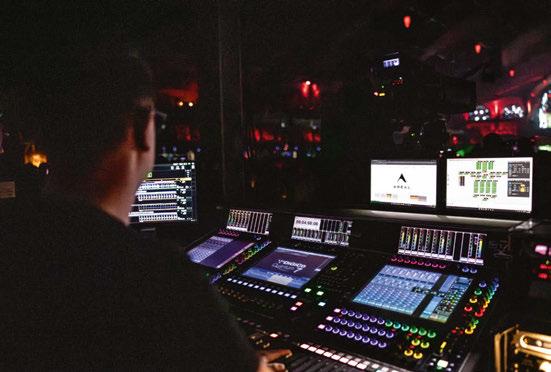
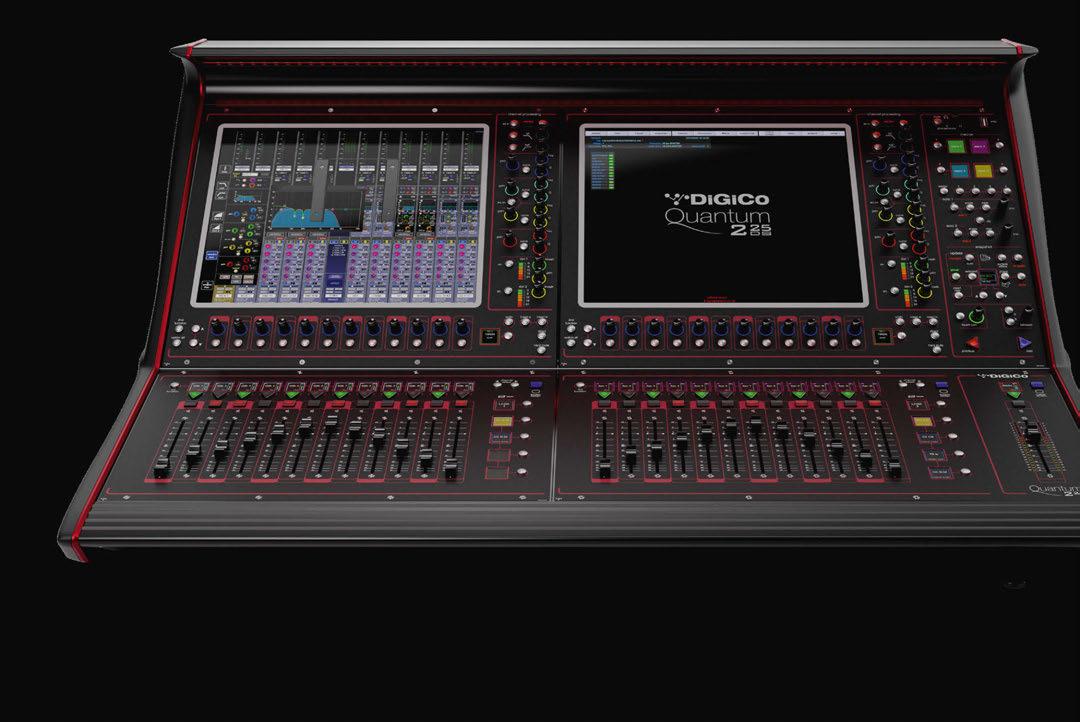
A secondary delay system contained 12 Kara II loudspeakers and a ground sub array of 32 KS28s. A DiGiCo Quantum 7 served as the FOH console, with system processing achieved through a DirectOut PRODIGY.MP, TiMax OutBoard, and, of course, the brand-new Areal Upmix Engine.
“We’ve expanded each year,” Doms stated, proudly. “At Tomorrowland Belgium, Areal covered nine out of the 13 stages, and at Tomorrowland Winter in France, where regulations are more stringent, our technology covered all the stages. The festival’s location within the village homes requires a particularly cautious approach to sound management.”
At t he CORE stage, a six-point 270º immersive setup comprised two pairs of L-Acoustics L2 and L2D loudspeakers
Words: Jacob Waite
Photos: Areal and Tomorrowland
as the main system, along with eight A15 loudspeakers and 28 KS28 subwoofers. A DiGiCo SD12 and the Areal Upmix Engine ensured crystal-clear audio. Meanwhile, the Cage stage featured a four-point system with four L2D loudspeakers and 16 KS28 subwoofers, powered by the same DiGiCo Quantum 7 and Areal Upmix Engine at FOH. Doms is keen to move beyond an engineering perspective and focus on the creative potential of the technology.
“O f course, it’s an Upmix Engine – it converts audio. It can be used in conjunction with any immersive mixer like L-ISA, d&b Soundscape, or TiMax running in parallel,” he explained. “It can be used in any setup where more than two speakers overlap, providing more coherent and homogeneous speaker cooperation.”
Sound engineers are always keen to experiment, and Doms emphasises that Areal tries to provide guidance in the field.
“T he algorithm’s flexibility means that engineers can interpret and experiment with the Upmix Engine in various ways. It’s constantly evolving,” he said. “My colleague handles the early shift, and I mix in the evenings on the main stage using Areal.”
The numbers speak for themselves: “If you can achieve a great show peaking at 98.5 dB LAeq over 15 minutes, that’s impressive!”
Discussing the adoption of Areal technology in the field, Doms likened the transition for engineers to the shift from 4:3 to 16:9.
“Suddenly, your side fills become much wider and more open, which makes the sound more enjoyable to listen to,” he explained.
However, mixing 2,000m above sea level is not without its challenges. As Doms recounted with a laugh: “One night we arrived to find snow on the FOH console. It certainly makes for an exciting experience.”
Af ter the success of Tomorrowland Winter, Doms swapped the -20°C chill of the French Alps for the +20°C warmth of Miami, where he joined Hardwell for Ultra Festival, before gearing up for Tomorrowland Belgium 2026, where Areal will power nine stages.
Despite the shock to the system, Doms is proud of the achievements in Alpe d’Huez. “What’s great about Tomorrowland Winter is the camaraderie on the mountain. Artists perform afternoon shows on the slopes, and the next day they’re on the main stage. It’s one of those festivals where artists are more accessible, especially early in the season,” Doms reminisced, fondly. “It was a great opportunity to showcase Areal to artists and sound engineers.”
www.areal.world
www.winter.tomorrowland.com
Areal’s new Upmix Engine brings immersive sound to Tomorrowland Winter.
MGK: LOST AMERICANA TOUR
With the singer’s tongue-in-cheek spectacle, BPM SFX, Fuse Technical Group, Upset, and UK Rigging unite to deliver every playful visual twist across the tour’s UK and European run.
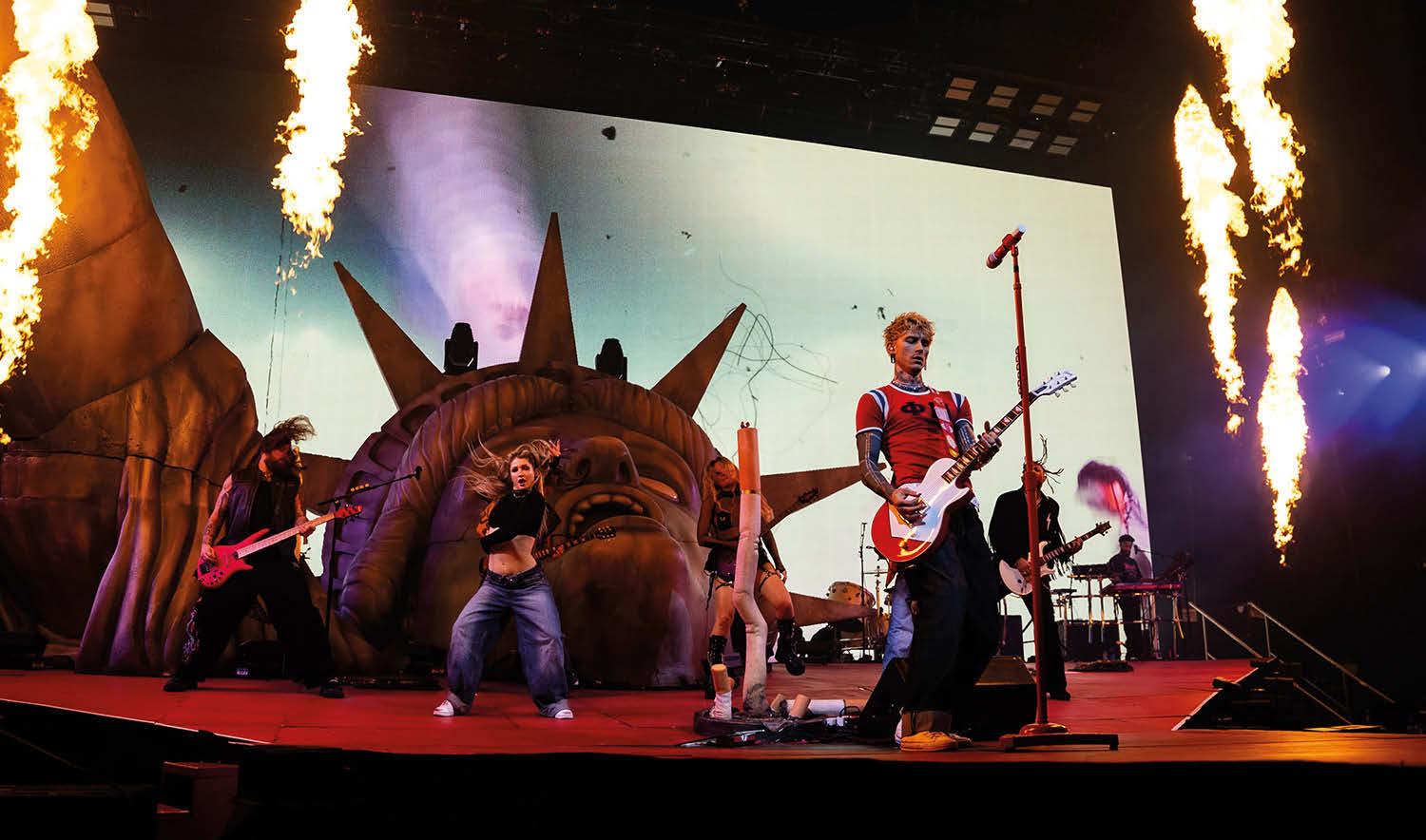
MGK’s live performances show a distinct variety. From high-octane rap tracks to fist-pumping punk anthems, the singer’s enjoyment on stage is evident. What is apparent is his tendency to ‘do what is fun’ bleeds into the production design.
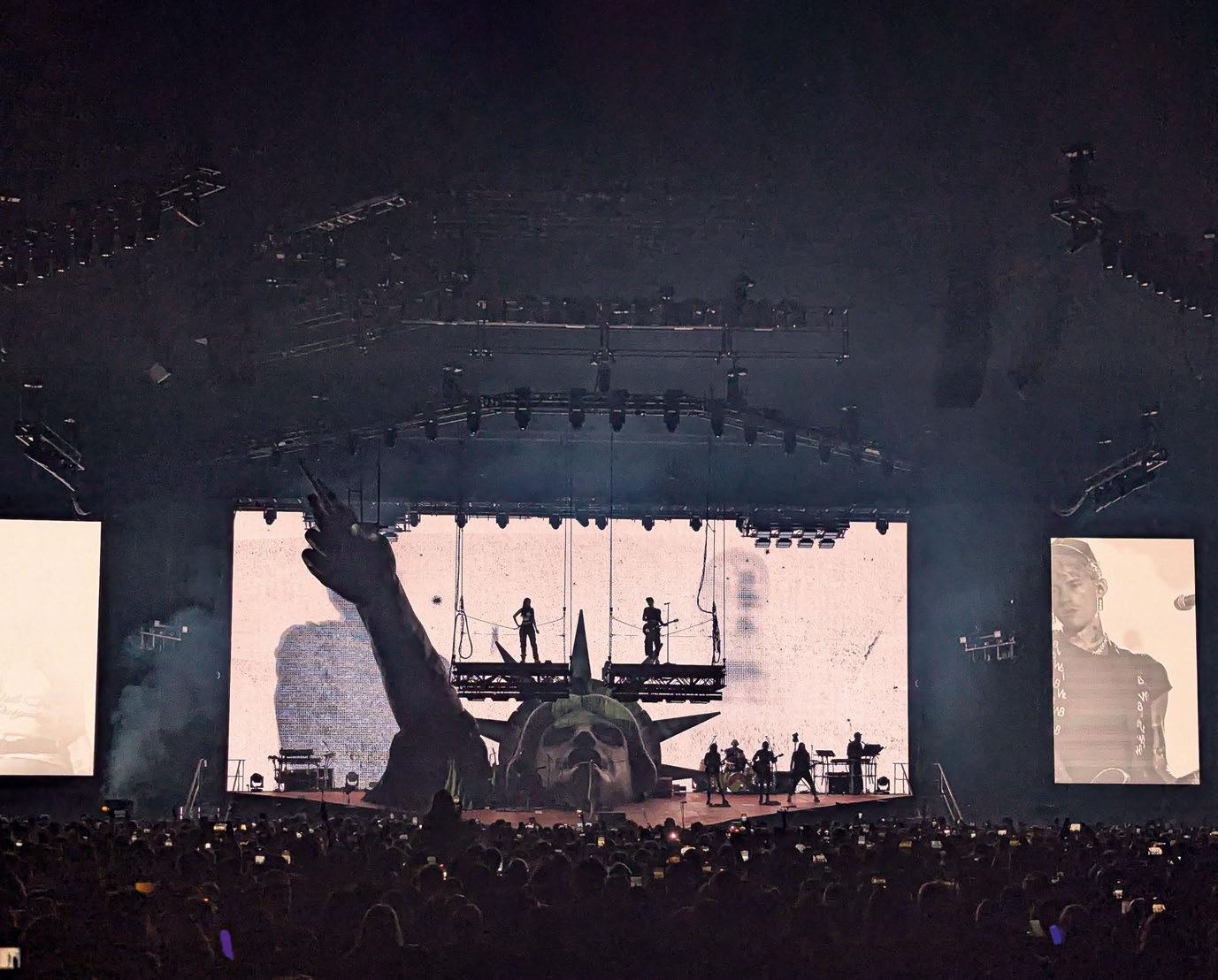
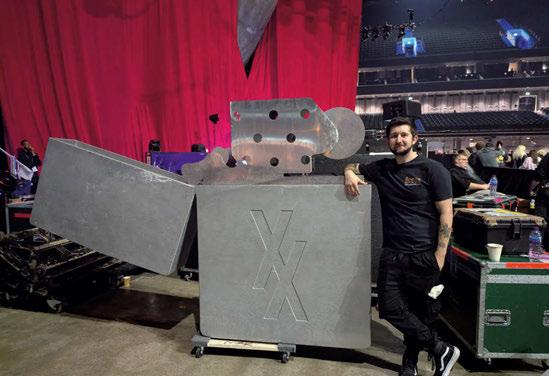
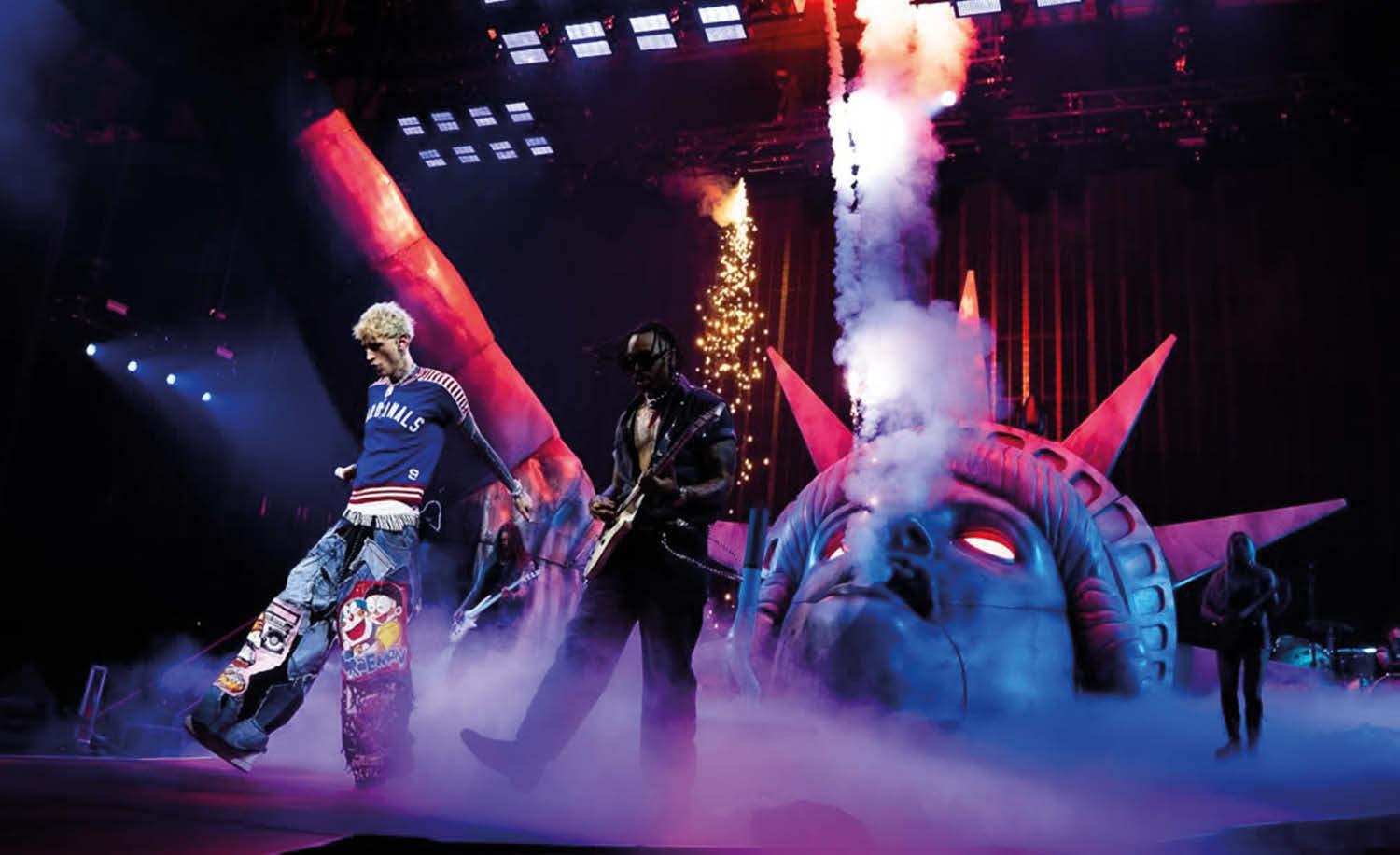
How many other shows would think of building a ginormous head and arm inspired by the Statue of Liberty, resplendent with a giant Zippo lighter that ascends to light a cigarette in the statue’s hand?
Behind these moments are a hardworking team ensuring that each mark is hit on time and – more importantly – safety is ensured.
The production, headed up by Tour Manager Lukas Schmitt, Production Manager Mick Pearce, and Technical Director Dan Arbelaez,
began in the US. In Europe, a refreshed roster of local specialists in BPM SFX (special effects), Upset (staging and lifts) and Fuse Technical Group (lighting and video), and UK Rigging (rigging and automation), among others.
ELEVATING THE PRODUCTION
UK Rigging’s Mark Horsley, Head of Automation and Operator, and his team oversaw all overhead automation. This included two large lighting pods that doubled up as performance platforms, the all-important automated Zippo, as well as the opening ‘gag’, which saw MGK’s guitar descend from the heavens.
Running on a MOVEKET Expert T-III Console, the team deployed four VMK-500 variablespeed hoists (running at 24mpm) on each
performance platform. There were also two VMK-500s used for the Zippo, with a VMC-250 (running at 40mpm) for the guitar which doubled up as a performer and crew access method to the pods in case of an emergency.
“Automation is a relatively similar technology to rigging, with the utilisation of motors, and it’s our belief that a big part of automation is dealing with load management and understanding the basic engineering principles of moving things,” Horseley commented. “I think some people take for granted how much weight shifts during certain movements.”
He went on to explain what it was about the MOVEKET system that had attracted the company to the solution. “We really liked its versatility. Not to mention its safety system is
Words: Stew Hume
Photos: TPi and Jake M Christian
the highest quality, with a SIL 3 (Safety Integrity Level 3) rating.”
Horsley highlighted that MOVEKET systems can handle six major use cases in automation, ranging from moving a truss to flying artists above an audience. “The support from Liftket UK and MOVEKET is second to none. We could have a problem and, in 20 minutes, have a solution,” he enthused.
The other benefit of the MOVEKET system was the speed at which Horsley and the team could get the show programmed.
“We had four days for rehearsals when they came over from the States. On the second day, we sat down with Dan, the Technical Director, to go through all the positions and cues. There are some complex moves, but we had everything set out in over an hour.”
This speed, according to Horsley, was thanks to the workflow. “There is a 3D object calculator on the MOVEKET system compared to others, where you would have a spreadsheet or must do complex maths to put things in position – it’s laborious. With this, we set everything up in 3D so we can say this is how it will look on stage.”
The result is a set-up akin to a pre-vis, making collaboration with the wider team far simpler. All the moves were triggered by timecode sent via the playback department. “People used to be very against using timecode
for automation, as they didn’t want to give ultimate control away, and there was no easy way to integrate a safe measure like a ‘deadman’ trigger,” stated Horsley. “In MOVEKET, we can incorporate any additional measure we want, such as pressure pads, to signal to the system that it is ready to go before the cue is triggered. The beauty is we can stop that cue and reactivate it without having to reset the system.”
He noted that it was possible to make alterations to the moves even during the show, if necessary. He elaborated: “If the LD wanted an extra metre for a move, I could do that while the show is running. It gives us real flexibility to make decisions in the moment.”
The MOVEKET system provided PSN data to inform other departments. “On this tour, the lighting department is using the PSN data for the Follow-Me tracking system, along with some effects on the video screen,” stated Horsley. “It’s all surprisingly well integrated for a show that was set up with departments being 1,000 miles apart.”
FUSING IT TOGETHER
Going deeper into the utilisation of the PSN information was Jessica ‘Clover’ Rushing, the tour lead on the Follow-Me system. Provided by lighting and video supplier Fuse Technical Group, Clover shared her thoughts on the tracking system: “Follow-Me is such a versatile
UK Rigging’s Mark Horsley, Head of Automation and Operator; SFX Crew Chief James Manning; Upset’s Rob Taylor and Paul ‘Choda’ Martin.
CONTROL SERIES
Supports various motor configurations & channels
Direct & Low-Voltage Control available
Same interface across all versions
Precise & safe control for every application
solution, but it was great for this tour specifically due to the amount of automation we were doing,” she began. “Follow-Me has a great PSN system, as it is able to track the information the automation team is sending, meaning that I can track the performers as and when they are going up and down on the platforms.”
Three operators – one focussed on MGK and two on the dancers or musicians, depending on the song, controlled the pan and tilt of the lights. PSN data came into play as performers entered the automated platforms. “I can create what is called a ‘slack line’, which ensures the spot never falls off the platform, then my operators are just moving left and right to make sure the spot stays on the platform,” explained Clover.
mmenting on Fuse’s involvement with the show were Mike Drew and Quinn Adams. “A key element of the lighting package was the purpose-built risers that were seamlessly integrated with the Fuse pre-rig truss pods, providing automated platforms for MGK to perform on and move across during the show,” stated Drew.
e company supplied Robe iFORTE LTXs; TMB Solaris Flare Q+; GLP JDC1 Strobes; CHAUVET Professional COLORado PXL Bar 16s as well as ACME Lighting Lyra, Supernova, and Tornado lighting fixtures. “Follow-Me tracking was essential, allowing any rig fixture to function as a followspot, highlighting performers from anywhere on stage,” added Drew. “The PSN data ensured precise automation, keeping cues seamless and reducing the need for manual operation. The result was a show where lighting moved as dynamically as the performance itself, with every moment
r video, Fuse provided an upstage wall consisting of ROE Visual V8T LED panels, with two flanking IMAGs comprising ROE CB5 MKII LED panels. All screens were driven by Brompton Technology SX40 video processors, with the director utilising a Ross Carbonite 2 M/E video switcher to cut cameras. All live footage was captured by three Panasonic AK-UC4000 camera chains and three Panasonic AW-UE150 PTZ cameras on-stage. GK brought high energy to every performance on the Lost ,” commented Adams. “Production, led by Daniel Arbelaez and Mick Pearce, provided leadership, direction, and execution. Design, led by Tino Schaedler and TJ Hoover, brought the artist’s creative vision to life through immersive, striking
visuals. Fuse Technical Group is proud and thankful to support this artist and team in bringing the show to life.”
FIRE AND STEEL
Upset provided staging elements, along with two automated lifts built into the stage. Representing Upset on site was Paul ‘Choda’ Martin and Rob Taylor.
“A ll the scenic elements – such as the Statue of Liberty – came from the American leg, but then Upset were brought in to provide the UK and European main stage and the two lifts.”
The project presented an opportunity for Upset to deploy its brand-new electric ribbon lift and scissor lift.
“Having electric lifts rather than hydraulic versions has made life a lot easier,” commented Choda. “Everything has been designed very well, and with the kabuki, we easily fit into two trucks. Upset’s stage, with its snap braces, means that it is very quick to take down each and every night.”
Greg Smith, Founder of Upset, discussed some of the technical challenges in delivering this project. “The biggest challenge was having to replicate the stage from the previous US leg of the tour exactly,” he commented. “This was imperative in order to ensure their bespoke props from the US leg, a gigantic Statue of Liberty head and arm, would fit seamlessly into the UK and European leg of the tour.”
The whole top section of the set was raked, meaning Upset had to create custom leg frames
in-house to ensure this section of the stage fitted together effortlessly and safely. “The process began with the frames being drawn virtually by one of our CAD technicians, before being passed on to our fabrication team,” explained Smith. “There are a total of 38 custom frames which had to be created from scratch within a three-week period. It was a challenging but rewarding operation, as the hard work in the warehouse made the build easier for our on-site set carpenters under time pressure.”
For Upset’s automation offering, the company deployed a star lift and scissor lift built into the set. The star lift, which brought MGK through the mouth of Lady Liberty at the top of the show, was, like the scissor lift at the top of the catwalk, able to rise four metres into the air. “Our lifts were perfect for this tour, as they are fully automated and programmable. As soon as our team input the desired settings into the software, they worked to the second at the same desired speed for every show,” commented Smith.
BPM SFX oversaw the extensive SFX delivery for the show. From Showven Sparkulars to several MagicFX flame units, there was certainly enough for SFX Crew Chief James Manning and his team of two – Nathan Roddy and Tom Lewis – to be getting on with.
Several MagicFX products were deployed throughout the production, including two Flameblazer heads at the top of the stage, followed by further Flameblazer heads down the side of the stage.
“Using the Flameblazer system with external fluid tanks and pumps makes our life easier on the road,” stated Manning. The show was operated via an MA Lighting grandMA3 Lighting desk, with all pyrotechnics fired by a Galaxis controller. The production featured a custom pyro guitar, which the singer played and held during the set.
“It’s a special bit of kit, and we designed and manufactured a mounting system for it,” commented Manning. “They are now taking this out with them for the rest of the tour – he does this gag quite a lot, so we designed and built a tourable version and they now never have to change it.”
To close, the SFX Crew Chief reflected on one of his favourite moments in the show –the gigantic Zippo lighter. “We have installed a Galaxis G-Flame into the scenic lighter,” explained Manning. “As it is an automated set piece, we worked closely with the UK Rigging team on the gag.”
To complete the effect, BPM SFX pumped haze up the arm to then come out of the cigarette after it was ‘lit’.
Following the success of the European leg, MGK and the team headed to Australia and New Zealand, before returning back to the States with The Lost Americana Tour. www.machinegunkelly.com www.ukrigging.net www.up-set.co.uk www.fuse-tg.com www.bpm-sfx.com
MOBO AWARDS 2026
DMX Productions and SWG Events descend on Manchester’s Co-op Live to help power the 28th edition of the MOBO Awards...
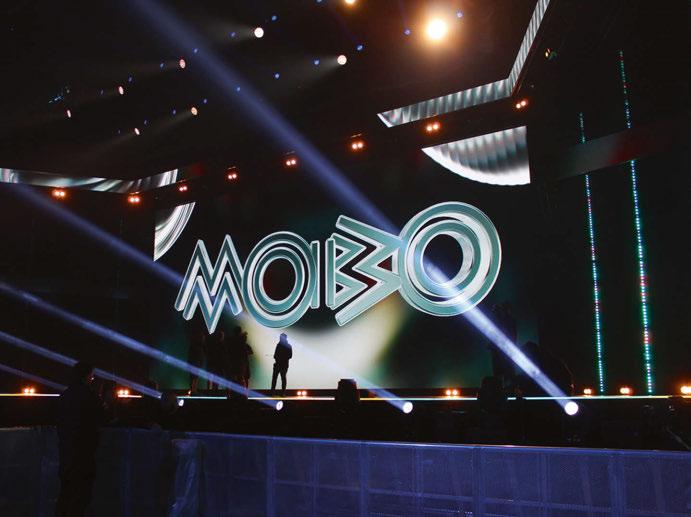
The MOBO Awards arrived at Manchester’s Co-op Live for its biggest ceremony yet – with Olivia Dean, FLO, Slick Rick, and even a Grime tribute among a catalogue of notable performances. Behind the scenes, a production design by DMX Productions shaped the look and feel of the show, while longstanding supplier SWG Events provided a comprehensive audio package.
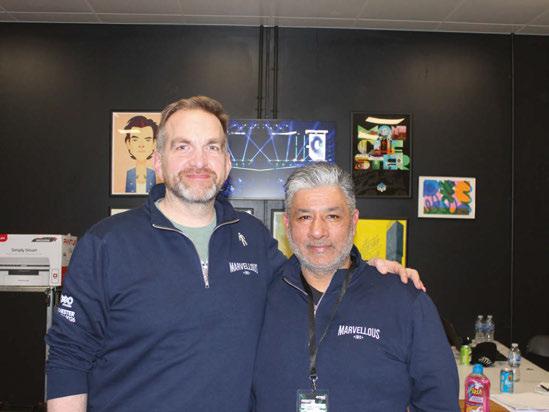
Production Manager, Rob Smalldon of Marvellous Inc, whose role began on the MOBOs in 2006, oversaw production elements, from red carpet and brand activations to the elaborate stage setup, which had to be suitable for both streaming viewers and those in the audience at the venue.
“It’s such a multifaceted job; there are multiple elements to it that aren’t just putting an awards show on to an audience,” Smalldon said. “Being a part of it for so long means that we know how to approach the different things that come along with the MOBOs. This year’s edition was in the biggest venue it has ever been in, which meant that we could work with TV Production company CC-Lab to put in an elaborate camera setup for broadcast without compromising on attendees’ view.”
Smalldon brought on SWG Events and DMX Productions after working with both
companies throughout his time in the industry. “This job is so complex, you can’t throw it at anyone,” Smalldon explained. “You have to choose people who are extremely detailed and genuinely care about achieving excellence,”
We brought on SWG Events who did a great job, while SJ Grevett of DMX Productions is the driver of the technical design of the awards.
The diversity of expertise and collaboration across all the teams is a real testament to everyone behind the event,” Smalldon added.
The SWG Events team on the project featured Audio Crew Chief, Simon Purse; Systems Engineer and Presenter FOH, Ryan Bass; Artist FOH, Matt Pope; Monitor Engineer, Sam Jones; RF Technicians, Phil Hughes and Callum Jones; Stage and Broadcast Patch, Fraser Wilks and Laura Evans; Playback Engineer, Ian Williams; and Head of Projects and Rental, Joe Bailey.
The audio supplier deployed 32 Martin Audio Wavefront Precision WPL cabinets for the left and right hangs, with 24 for the outer hangs, 18 SXH218 subwoofers, eight X8 and six X12 for lip fills, all driven by iKon amplifiers.
“It’s the biggest one we’ve done in a while. You can see that the artists are trying to push what they can achieve in the space by the scale of performances,” Purse commented. “This gig
is fast and high pressure, so we’ve brought in a team we can really rely on, which is important.”
Given SWG Events’ longstanding relationship with Martin Audio, Purse said it was the obvious choice for this event: “It’s our flagship system that we use throughout the summer on various events, and it is working really well in here, too. It is my PA of choice,” Purse added.
Bass agreed: “It just works in this setting. What you can do with the box and its optimisation is great; it rigs nicely and sounds good – what more could you want?” he said, going onto to tell TPi how the team had to position the PA wider than usual, to account for the set. “We also have the thrust to contend with, which has meant our subwoofers are under the stage.”
A DiGiCo SD12 with SD Rack and Outline Newton rack was deployed at both FOH and monitors. “Presenters can pop up anywhere in the venue at any moment, and they could be stood next to a front fill, so it’s been a process of getting the right timelines to avoid any feedback,” Bass explained.
“It’s been a challenge but also interesting from my perspective; seeing it come together is rewarding.”
RF coordination was large undertaking for the show, looked after by Hughes and Jones.
Words: Alicia Pollitt
Photos: TPi
“We’re operating at around 70 coordinated channels with 120 overall, including dancer and artist packs,” Hughes said, explaining how working on the MOBO Awards for the past three years has helped streamline his process. “An awards ceremony is unique because we’re constantly looking after something, whether that be a performer or a presenter, you don’t get the downtime that you would on a festival.”
Hughes deploys the artist and presenter mics, which are a mix of both Shure and Sennheiser, and utilises a Shure Axient Digital PSM microphone system and a Sennheiser SR 2050. “Our system has been rock-solid; there are lots of options for us to choose between the two manufacturers. It has been important for us to dive into both applications and they have both been great for artist mixes,” Hughes said. “This has been the busiest MOBOs so far in terms of RF.”
Playback Engineer, Ian Williams, deployed a dual redundant Qlab playback system. “We’re doing a bit of bussing to get everyone’s tracks together, so that when we’re bringing in remote playback rigs and handling timecode, it all happens in one place,” he explained, running through his system. “We have to be agile and make sure our comms are right so that it all works when it’s supposed to.”
With multiple artists coming in for one show, Williams described the environment as “dynamic”, and to help him adhere to tight timeframes, he plans in advance so that he can adapt if any changes need to happen during the awards load-in and rehearsals. “It’s been nice to be a part of the show; we get to see some of the acts do performances in a way you usually wouldn’t see. The team behind this are great and doing it on this scale has been really good.”
SJ G revett took on the challenge of production design for the MOBO Awards, and enlisted Jack Pettit as designer and programmer. “As we do more and more MOBOs with DMX Productions, Jack has been taking on more and more control. He looks after all creative programming and helps make this all happen,” Grevett said.
The creative this time around, Pettit told TPi, began a couple of months before the event, with all of the lighting, video and special effect elements coming directly from DMX Productions. “We really focussed on delivering something big, bold and immersive, we also love to have big IMAG screens on shows like this so we’re utilising ESDLumen Dazzle panels for that and Fabulux Galaxy for the upstage,” Pettit explained.
Pettit and the DMX Productions team utilised the Robe iFORTE LTX for front light, which he said “looks great on camera” to formulate a creative that works for both broadcast and a live audience, similarly with the CHAUVET Professional STRIKE Bolt all around the outside of the arena. We get some lovely pops of colour when they pop into the shots of the room; they do a good job,” Pettit said. The CHAUVET Professional Storm 4s and Aryton Rivale are the main work horses of the show and are part of a 420 strong fixtures list. All control is done via MA Lighting grandMA3 desks with a Luminex network of GigaCore30i, GigaCore20T and Gigacore10 network switches providing the backbone.
The DMX Productions team featured Grevett, Pettit, as well as Mat Butler, Oliver Player, Tom Bithell, Kajusz Dykiel, Ben Avery, Alex Chun, Finnlay Mcdermott, Jonathan Grilli, Bradley Rumball, Alexander Muller, Jack Gillham, Josh Lamb, Reece Larner, Tyler Smith and Liam Mace.
With winners that included Jim Legxacy, Nova Twins, and RAYE, the MOBO Awards stand as a consistent celebration of excellence in music and culture of Black origin.
“MOBO is an organisation that is going from strength to strength, and the awards is a great celebration of what the organisation does yearround,” concluded Smalldon. “The way that the awards and the organisation has grown over time has been amazing; I am proud to be a part of it.”
www.mobo.com
www.swg.events
www.dmxproductions.co.uk
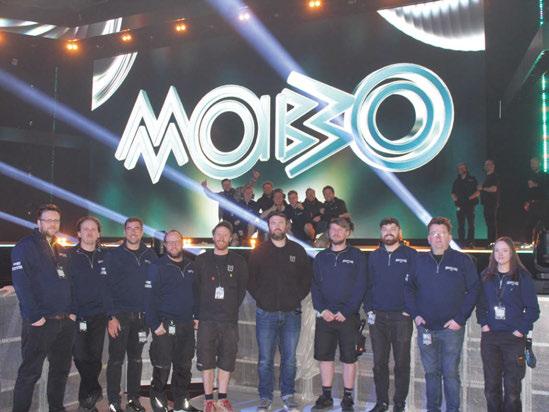
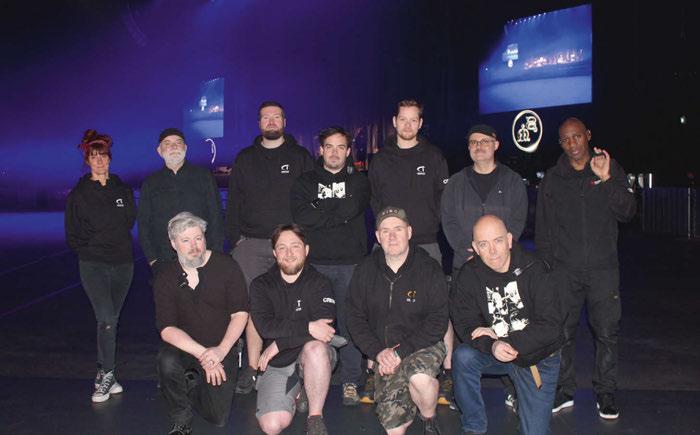
Production Manager, Rob Smalldon, Site and H&S Manager, Bobby Sagoo; Head of Projects and Rental, Joe Bailey; Monitor Engineer, Sam Jones; Systems Engineer and Presenter FOH, Ryan Bass; Playback Engineer, Ian Williams; Audio Crew Chief, Simon Purse; Artist FOH, Matt Pope; Stage and Broadcast Patch, Fraser Wilks; RF Technicians, Callum Jones and Phil Hughes with Stage and Broadcast Patch, Laura Evans with a timely photobomb by the DMX Productions’ crew.
GTL SESSIONS
Tour managers and service providers assemble in Málaga for the third edition of the annual community gathering...
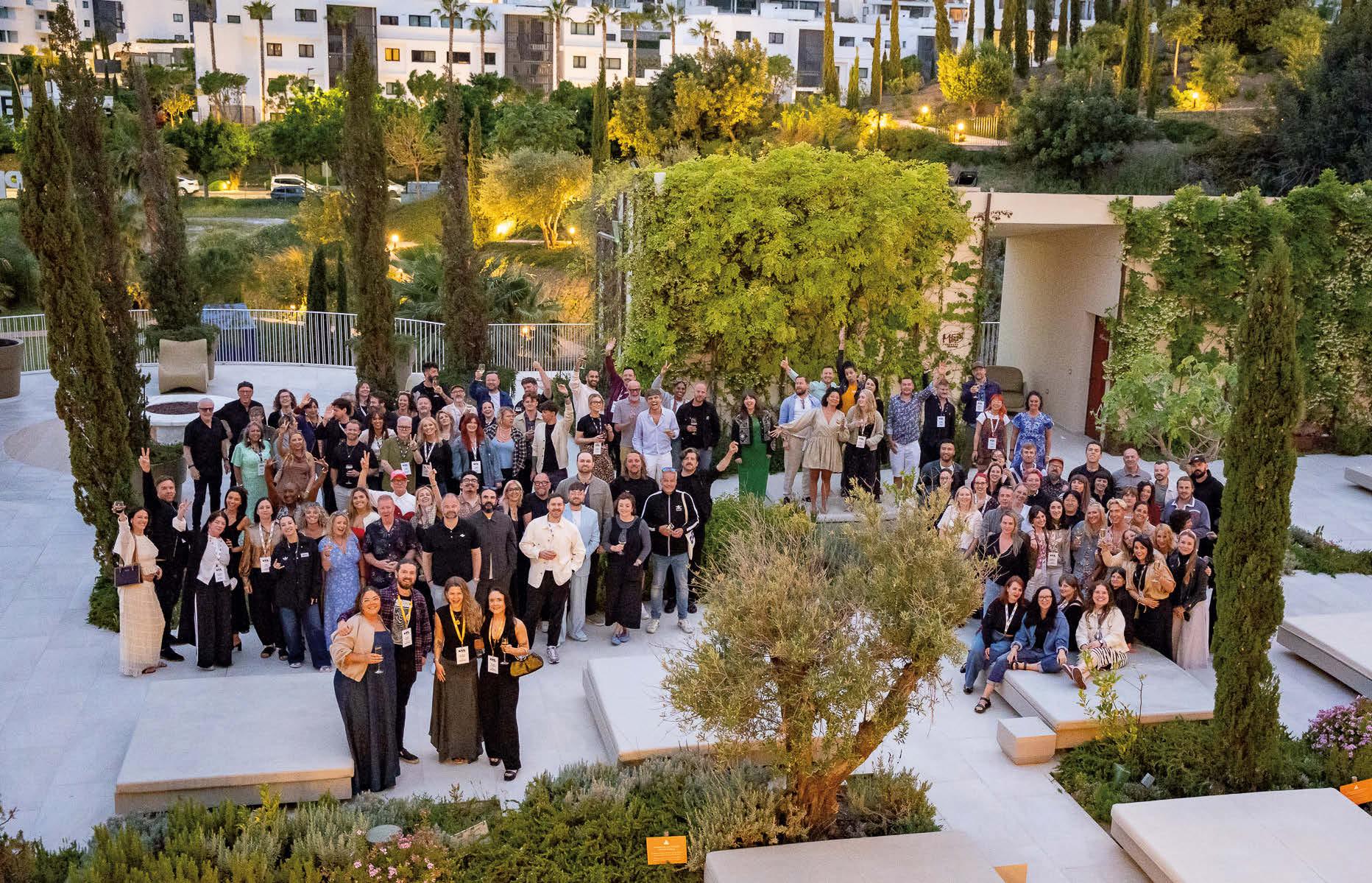
After two successful years of hosting GTL Sessions on the island of Mykonos, for 2026, TPi opted to move the European chapter of the event to a new venue, the Higuerón Hotel Málaga. The event drew interest from the wider industry with over 40 new tour managers and provider delegates gathering for a networking experience like no other. With service providers of all disciplines – from hoteliers to travel agents, insurance specialists and more – the diverse lineup also included a variety of tour managers at different
stages of their careers, which provided open conversations about how different levels of touring can learn from each other.
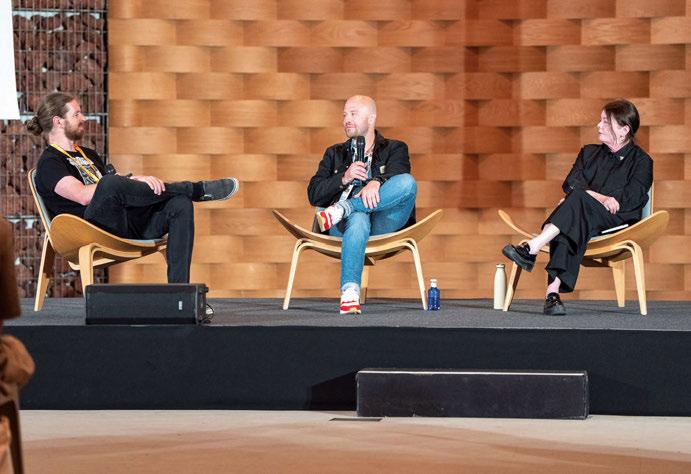
Another jam-packed programme of Symposia Sessions returned this year, including Radical Optimism, which was chaired by Andy Franks, and featuring Peter Abbott, Sascha Heeney; Fuelling The Machine, featuring Lei-Lana Er, Dr Shannon McEwen and Olivia Morris; Breaking the Code of Touring starring Andy Corrigan, Ben Melman and Fiona Nolan; The Leadership Pyramid with Duchess
Iredale and Mathias Cobbaut; and It’s Not Just All Rock ‘n’ Roll with Doug Wilson, Bryn Jones and Hollie Doherty.
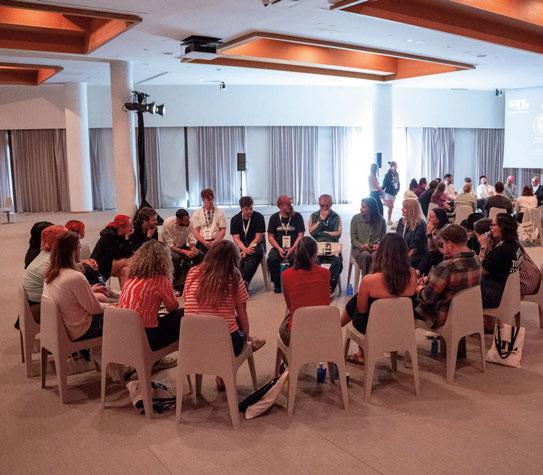
New this year, following feedback from previous attendees, the Roadies Roundtable saw three groups led by Suzi Green, Ade Bullock and Steev A Toth, where attendees looked at what touring means for them in the past, present and future.
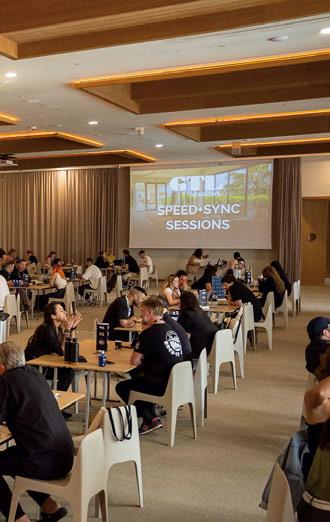
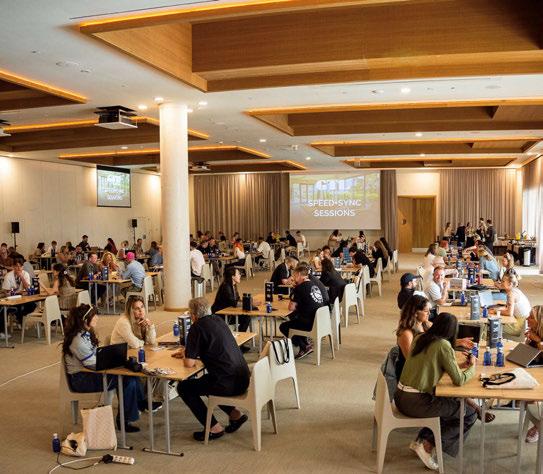
Sy mposia Sessions weren’t the only event on the calendar. Speed + Sync meetings also returned, with 20-minute slots between
Words: Alicia Pollitt
Photos: Callan Halliwell
tour managers and service providers, which opened up dialogue between the two and led to conversations about how the industry can improve and how their services can further benefit touring parties.
Rock-it Cargo and Travel Places also contributed to the GTL Sessions Bursary Scheme, which saw Crystal Feng and Genny Turay able to attend with all travel expenses covered – leading them to make valuable connections across the tour service suppliers and other tour managers.
TPi spoke to several of the Tour Managers and delegates to get their immediate impressions of the event.
“T he GTL Sessions format is great. I found myself sitting with people that I wouldn’t usually and it is something that I wasn’t necessarily expecting when arriving to GTL. It has been absolutely great and if I knew any other tour managers were free, I would absolutely recommend it,” Andy Franks said.
“GTL is amazing, especially as a first experience of coming and feeling like I didn’t know anyone in the space. It’s a great way of connecting with people and knowing I will have these connections for life,” Connie Morton-
Young, added. “I now know that when I am on a festival, I will hopefully see some familiar faces.”
Chris Tyler furthered: “There are a lot of friends and colleagues you end up working with over the year doing this, and you go through intense environments with them – there are lots of people you have only ever interacted with over email and I think it’s a safe space for people who go through this type of work to be able to talk to each other. Unless you do this job, it’s hard to explain what it’s like, so to be around so many people who understand it is special. It’s open, caring and collaborative.”
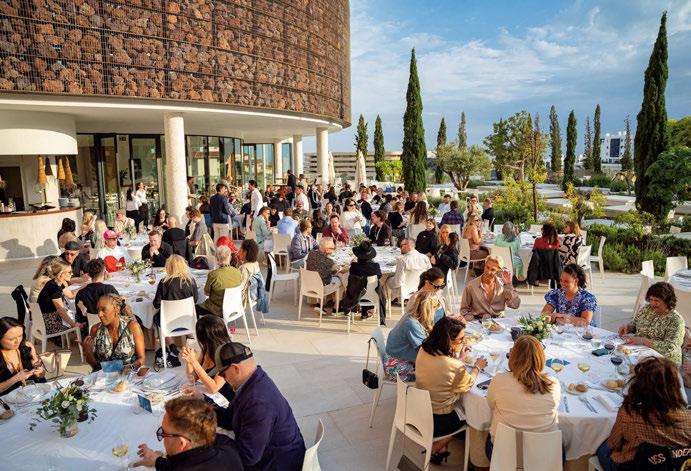
As GTL Sessions drew to a close, tour managers and service suppliers shared one final meal, marking not just the end of the programme, but the start of new conversations, partnerships, and ideas set in motion over the past few days.
For those unable to wait a year to join us, fear not. GTL Sessions: The Americas will take place for the first time from 22 to 25 September in Cancún, Mexico.
If you are interested in joining us then, please do not hesitate to get in touch or register your interest via the website below. www.gtlsessions.com
GTL Sessions brings delegates together at the Higuerón Hotel Málaga for three days of conversation, collaboration, and exploration.
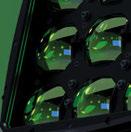
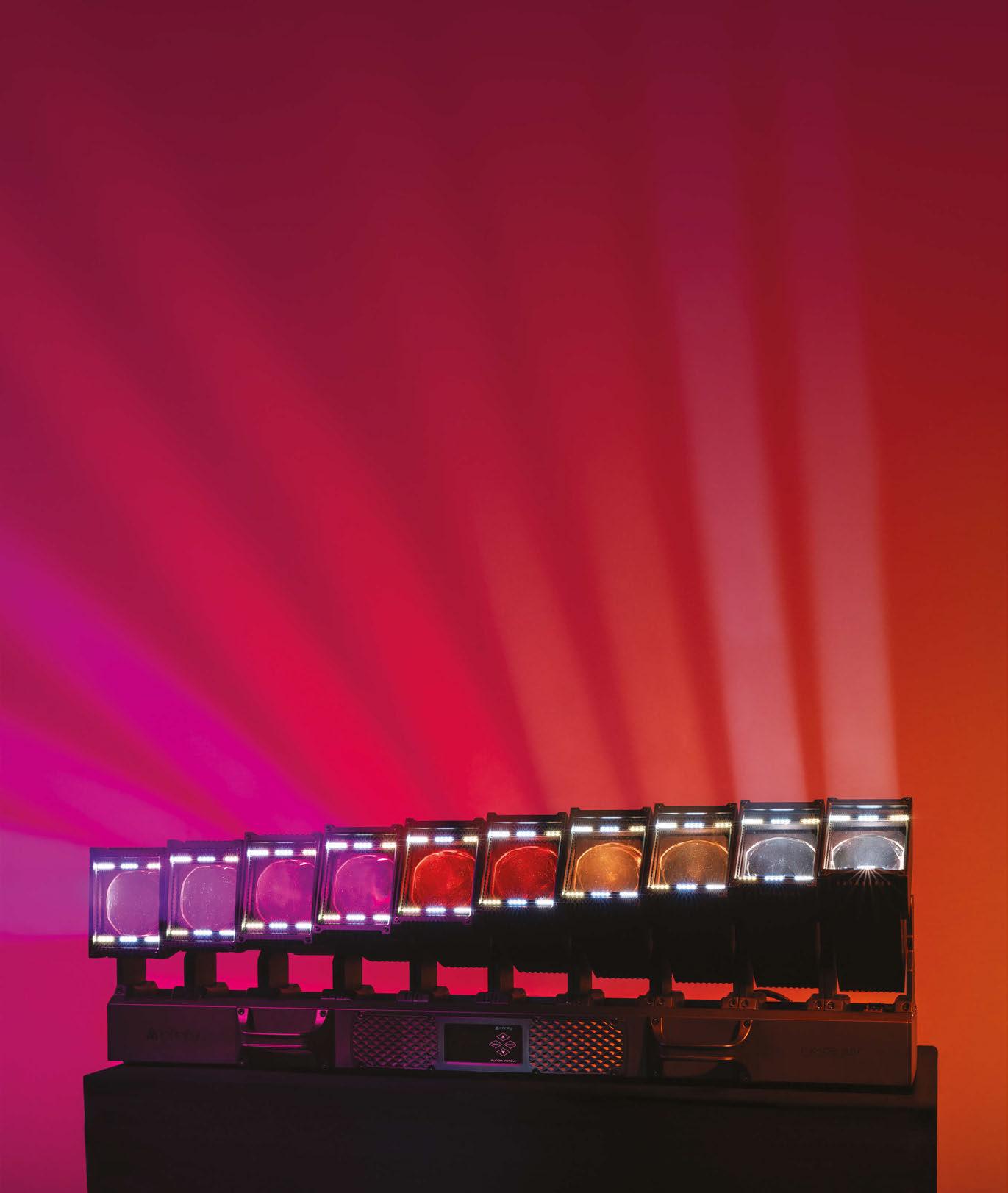
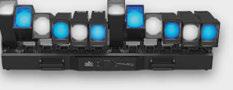
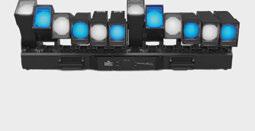
A True Workhorse Long-throw Luminaire
No compromise IP65/66 high-output low footprint
LED WashBeam and FollowSpot
DEFTONES: PRIVATE MUSIC ON THE ROAD
Inspired by the minds of Chino Moreno and Mark Wakefield and executed by a creative touring crew, Deftones are back and better than ever…
Words: Alicia Pollitt
Photos: Luke Dyson, Clemente Ruiz and TPi
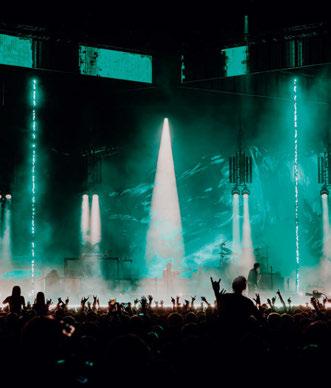
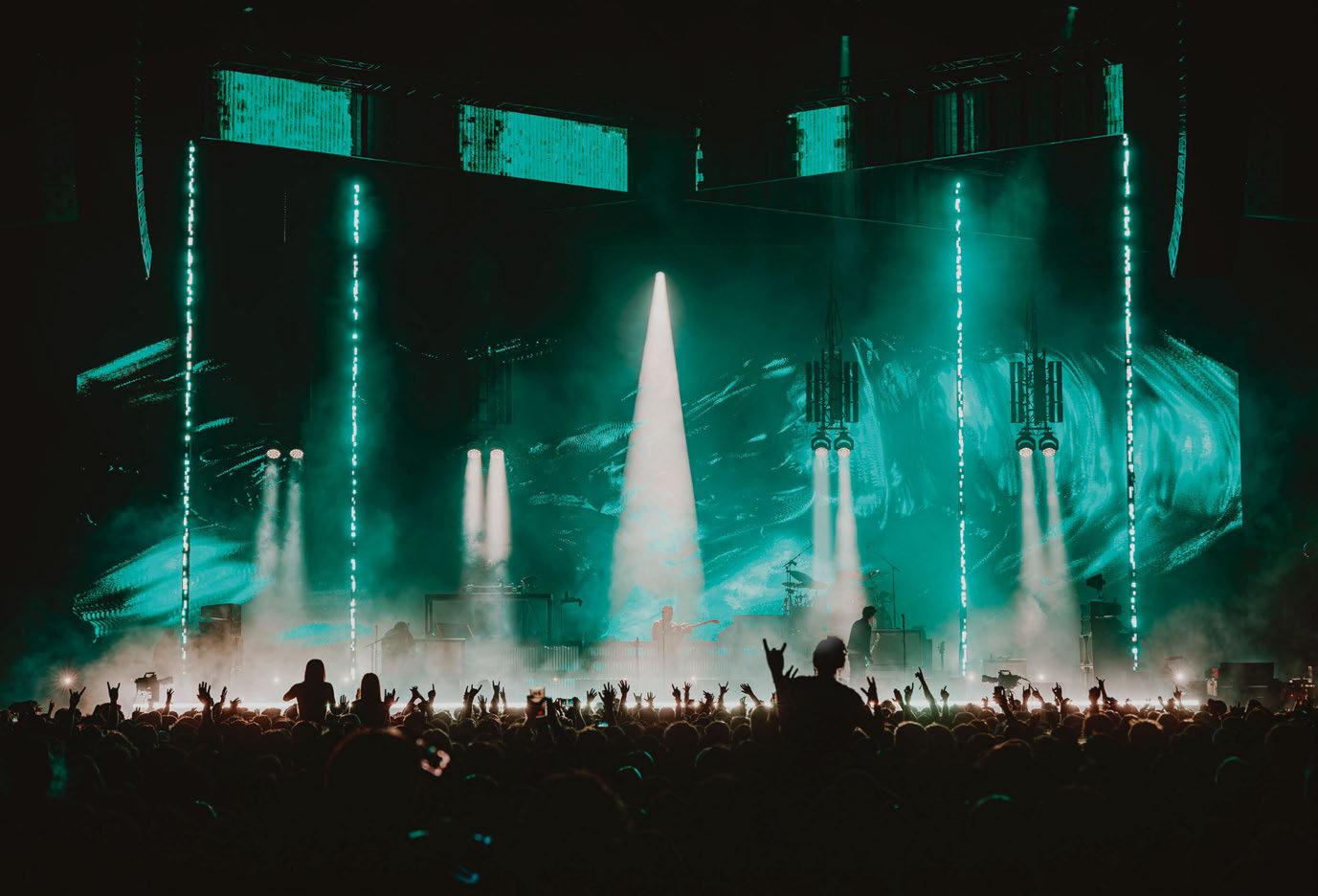
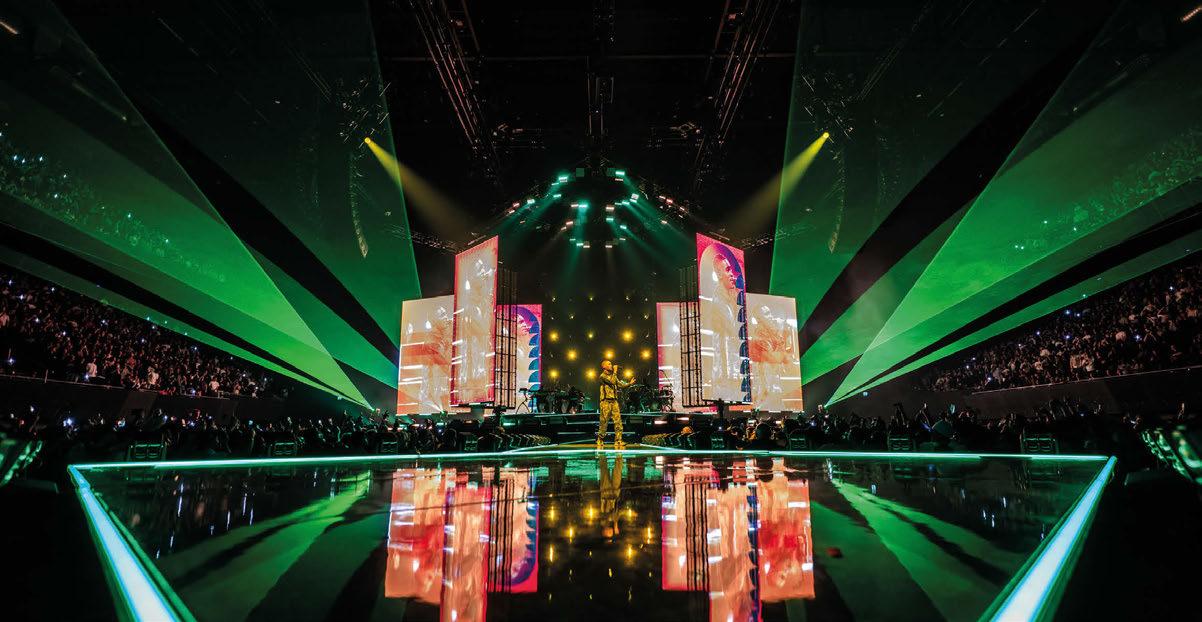
With decades of material and experience to draw from, Deftones returned to the touring circuit to support the release of their 10th studio album, Private Music. The tour has seen the band visit bigger venues, with an innovative production and technical finesse courtesy of creative and technical suppliers.
Production Manager Tyrone Brunton welcomed TPi to Birmingham’s bp pulse LIVE, and following a recce of the venue, he shared an insight into the tour’s origins.
“T his process has evolved over a couple of years to get to where we are now, at arena level, and through the introduction of Matt Pitman, the further Pixelmappers team, and the wonderful vision from Chino and Velvet Hammer’s Mark Wakefield, the show has been elevated to the next level.”
The production manager enlisted the aid of PRG (automation, lighting, rigging and video), Vis-A-Vis (cameras), Britannia Row Productions – part of Clair Global (audio), TAIT (staging and risers), CSE Radiotek (tour radios), Fly By Nite (production rehearsals and trucking), Mission Control (RF), Phoenix Bussing (crew and artist transport), Sarah’s Kitchen
(catering), Road Ramps Europe (stage ramps), and Pixelmappers (creative). “The suppliers I choose for any tour are known and trusted; it’s all about people and loyalty,” Brunton explained.
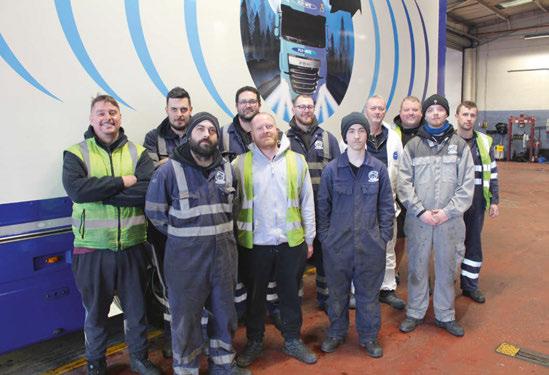
“For difficult back-to-backs, we employed our usual formula of flying a touring rigger ahead and getting in a local steel, or full rigging package to have points hanging once we arrive in the next city,” Brunton revealed. “This, in addition to a cleverly designed scalable production from Pixelmappers and our DART rigging team of Martin Gehring, Kim Kusters and Florian Jordan, meant that we could deal with shoehorning our large production into tighter venues.”
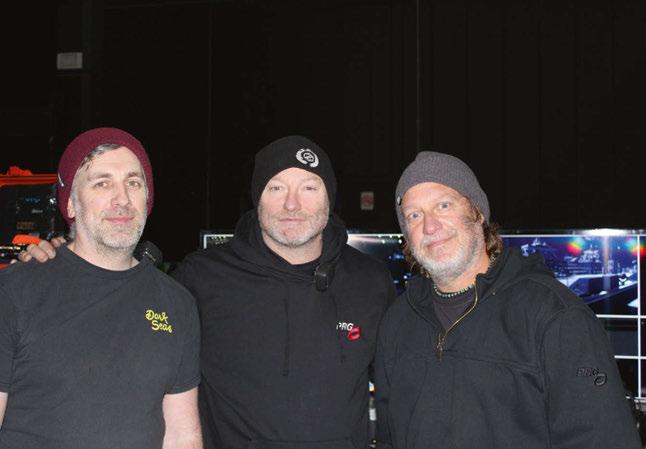
Br unton described the crew working alongside him as “exceptional”. He elaborated: “A special thanks goes to our Stage Manager, Sean Brady. I never leave home on a tour without Sean – he goes above and beyond every day,” Brunton said. “A special mention also goes to Randall and Erik from PRG – those guys were a huge part of getting the tour across the line – and, as always, Bullet from TAIT. Not forgetting the unsung heroes of the tour, Sarah’s Kitchen, who kept everyone
fuelled and well fed by Royston and Lou –amazing people and incredible food.”
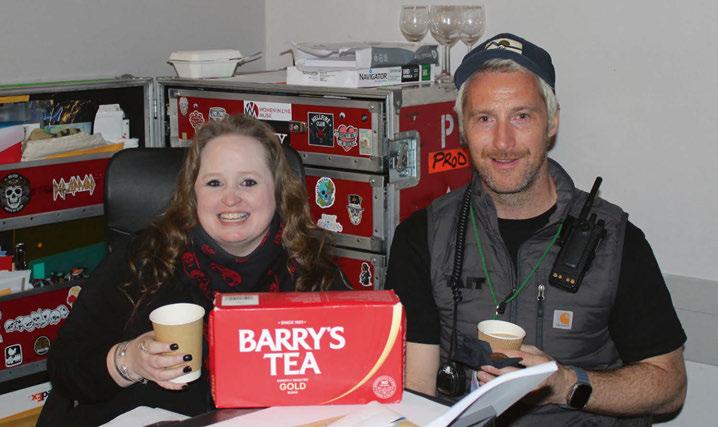
Accompanying Brunton in the production office and ensuring the crew had everything they needed on the run was Production Coordinator, Sinead Madden, who put kindness at the forefront of her role. “If you treat the people around you with kindness, you always get the best out of a person,” Madden said. “My role is keeping everyone together and keeping it going; making sure everyone is OK and looked after is crucial when on the road.”
Madden spoke about how, in her position, she gets respect from the crew from day one, and with the rise of women on the road, she makes active changes to make her female counterparts on the road more comfortable.
“Despite the rise of women on the road, it can still be a challenge – even getting a shower with a locking door can be difficult, but in that circumstance, I work with venue security so that there is someone ensuring only women can use that room,” Madden explained. “Little things like that make a difference.”
With a production case full of Barry’s Tea, and always ready should someone need her
on a show day, Madden reflected on the tour: “Everyone on this tour is fantastic, wonderfully professional, and works very well with one another,” he said.
DEPARTING THE BODY
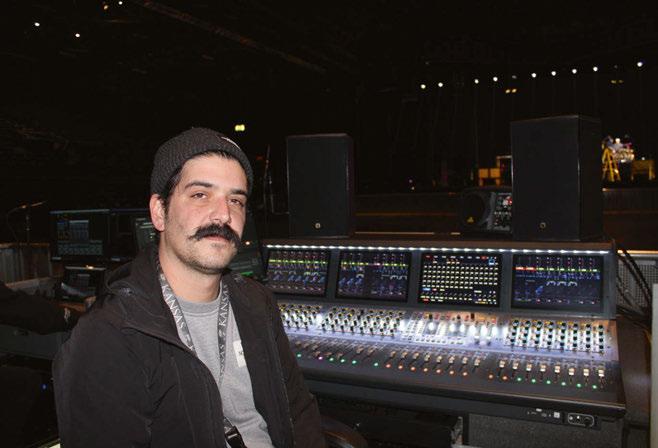
FOH Engineer Ben Wilcox, a self-proclaimed fan of the band and regular user of Avid consoles, mixed on an Avid S6L-32D surface. “(Monitor Engineer) Zach Thornton and I are big fans of the Avid ecosystem – I have been using them for a very long time. I have been an Avid guy since before they were even called Avid,” Wilcox laughed.
The FOH Engineer wanted his mix to be as big and heavy as possible to fit into true Deftones style – focussed on heavy drums, guitars, and then tying it all in with Chino Moreno’s vocals. “We use a specific preset on a very old Yamaha SPX90 processor unit, which I won’t give away,” Wilcox smiled. “That is what the crowd knows as Chino’s voice, so we have taken that and mocked it up with some newer kit, so it is a bit more stable for the road, and user-friendly.”
For Wilcox, as a fan and having experienced mixing the band’s monitor and FOH sound, seeing Deftones rise to this level has been a rewarding experience. “We’re all fans; I started when their popularity was on the rise and it has ramped up from there. It has been nice to see the guys get their flowers; they are finally where
we all thought they should be this entire time,” Wilcox added. “It is a big responsibility, but one that I am happy to take on. I know the way I want to watch the band, which is a straightforward rock show, and pulling that off every night is what I try to do.”
Monitor Engineer, Zach Thornton also enjoyed the workflow of an Avid S6L-32D console. “Everyone has their own flavour and workflow that works but I have become more than accustomed to the sound of this desk because I have used it so often over the past two years,” he said.
A new addition to the camp was the introduction of FiR Audio in-ear monitors, which Thornton brought in at the start of 2025. “We tested them and now the band doesn’t want to do any gigs without them,” he said. “Each band member wants their mix to be instrumentheavy in whatever they are playing, and I generally build the other components around that, but we like to remain instrument-forward.”
As shows get more complex and lean further on timecode and playback, Thornton noted that the Deftones show has stayed “classically rock ’n’ roll” and “controlled chaos”.
He f urthered: “We are really dialling in gain structure and focussing on getting the best bassline possible from the stage, and then making further tweaks from there. We are live mixing for each venue, which means that I can adapt to how the band is playing each day.”
Emily Arnold, Monitor and RF Technician, oversaw the deployment of Shure Wireless Workbench and Aim-TTi Spectrum Analyser. For the band’s microphones and IEMs, Arnold deployed a Shure PSM 1000 monitoring system paired with Axient Digital System.
“T his setup works well for this situation… I also work closely with licensing to make sure we’re operating within the right bandwidths,” Arnold added. “It has been refreshing being out on the road with Deftones. It is a traditional rock ’n’ roll show and has been fun.”
Mission Control supported Arnold with RF and radio licensing. “We have worked with the band and their team for several years. It’s always a pleasure working with them for their headline tours and festival dates,” said Mickie Rollins, Live Events Coordinator at Mission Control. “Understanding the importance of RF and walkie-talkie licensing in live sound, we’re always confident everything will go smoothly. We can’t wait until the next time!”
CSE Crosscom, proud communications supplier, designed a tailored setup for the tour, which saw the company provide a fleet of Motorola Solutions two-way radios along with custom touring cases to keep the equipment organised and enable efficient setup.
“Clear and reliable communication is essential for touring productions, and our aim is always to ensure that production, stage, and technical teams can stay connected
throughout every show. By working closely with the tour’s production team, we were able to deliver a system that supports the fastpaced environment of a major international tour while remaining straightforward for the crew to deploy each day,” commented Dan Howroyd, Hire Manager at CSE Crosscom. “CSE Crosscom is proud to support worldclass touring productions and looks forward to continuing our work with the Deftones team on future shows.”
Due to t he show being staged in different venue sizes, the PA rig was scalable. At its biggest, the system featured 20 d&b audiotechnik KSL on the main hang, six SL subwoofers on the sub hang, as well as eight SL subs on the ground per side. “Our system is fairly standard of an arena-level gig, and due to the d&b audiotechnik rig being so adaptable, it has been fairly straightforward to scale up and down,” PA Technician, Declan Povey explained.
Although subcontracted for the tour through Britannia Row Productions, Povey’s role did not stop at the audio department, with him operating a Robe RoboSpot system during the show. “It’s fun doing both sides of things out on the road. Before this tour I hadn’t operated a spotlight before and even though I thought it would be simple, it has been so different f rom anything I have ever done. I ’m still finding it f un!” For Povey, working with Britannia Row Productions, is a pleasure: “They are fantastic to work with, and have always provided a great
team of people to work alongside. They are very knowledgeable both on t he road, and off it.” Bradley Hayden, Operations at Britannia Row Productions, added: “It’s been a pleasure working with the Deftones team and supporting the local technical requirements for Clair Global Account Executive, Todd Johnson. The band continues to be a major force in alt metal, and their UK arena tour was a blistering success. Thanks to engineers Ben Wilcox and Zach Thornton and Production Manager, Tyrone Brunton for placing their trust in us to bring their vision to life.”
INFINITE SOURCE
“Deftones has been an absolute wonder project to work on. We have been doing it for about a year now and it has been a complete journey since then,” Show Designer, Matt Pitman said, having recently been named Lighting Designer of the Year at TPi Awards 2026. “Chino and Mark Wakefield c ame to us w hen t hey wanted to create a paradigm shift in how they approached their live shows. The approach we took with the show was focussing on how theatrical and cinematic Chino’s tastes are.”
Pitman went on to tell TPi that it could be assumed that Deftones could be represented with a dramatic and heavy design, but instead took an opposite approach, and focussed on storytelling. “As a band, they express themselves through large musical gestures and sometimes how it sounds isn’t necessarily how
Production Manager, Tyrone Brunton; Stage Manager, Sean Brady; Lighting Operator and Programmer, Oliver Hynds and Video Operator; Media Server Specialist, Matteo Zaniboni; Monitor and RF Technician, Emily Arnold.
they want to be portrayed,” Pitman explained. “When we made the show, we went all out and did all the bells and whistles, and since then we’ve been pulling it back and refining it into something that feels a bit more alternative.”
Working with Chino and Wakefield was an “absolute gift” for Pitman, who was grateful for the singer’s collaboration in curating a show the band were happy with. “Everything Chino does is a brilliant addition to the design. He truly has treated everyone in the team as an artist working at the same level as him, and that has been such a wonderful environment to work in,” Pitman added. “Both Chino and Mark have such a good vision of what they want the show to be, and having their input has meant that I have been able to accentuate what they really want.”
Helping aid Pitman’s overall vision for the show were a selection of lighting solutions. Namely, ACME LIGHTING PIXEL LINEs; GLP impression X5s and JDC Burst 1s; Robe iFORTE LTXs and RoboSpots; Chroma-Q Colour-Force II 12s and Ayrton Veloce Profiles. Atmospherics came in the shape of HazeBase Base Hazer Pros, Look Solutions Viper 2.6s, MDG Fog TheONE and theFAN.
The show was operated and programmed by Oliver Hynds, who joined Pixelmappers in 2024 as design associate for Dua Lipa’s Glastonbury headline show. “Ollie’s work has always been outstanding and he is now an important part of our Pixelmappers team,“ Pitman enthused. Hy nds, whose first-ever arena tour was on the road with Deftones, discussed his
involvement: “This is the third iteration of the show that we have done, and it feels like the best version that we have done so far,” he stated.
While the original show design had chevron screens with an abundance of strobes and a video ‘X’, the production TPi saw in Birmingham kept the width of the show, along with the ‘X’ but with flatter screens. “We have basically taken each element from every version and evolved it into what we have now,” Hynds added.
Using an MA Lighting grandMA3, Hynds worked with his colleague, Olly Martin, in Mode 3 when he was programming the original US show to create sequences for the show. “There is no timecode on this show, so it means I have got to pay attention, keeping the show in time manually, which is interesting,” Hynds said.
For Hynds, a notable moment of the show was using the ACME LIGHTING PIXEL LINE IPs, which the team used Disguise media servers to pixel map into, as well as the automation on four lighting pods and the video ‘X’.
“We use it for scene changes as opposed to automation within songs. For some moments we bring it low and close, whereas for others we bring it cinematic and wide,” Hynds noted.
RADIANT CITY
Matteo Zaniboni, Video Operator and Media Server Specialist, also worked from an MA Lighting grandMA3 and utilised a Disguise GX 3 media server and software. “Disguise is my favourite media server to work with; it has all the workflows that I usually look for – it works in a
PA Technician, Declan Povey; Video Engineer, Jon Priest, Video Crew Chief, Steve Jones and Video Director Keith Blackard; Monitor Engineer Zach Thornton and FOH Engineer, Ben Wilcox.
Introducing three point-source loudspeakers designed to support a range of multi-purpose applications, a full suite of supporting accessories, and the latest updates to our unified software ecosystem. These additions bring unmatched flexibility, broader deployment options, and deeper system integration to the comprehensive SRX900 Series. With powered line arrays, flyable and ground-stacked subwoofers, and now versatile point-source models, the SRX900 Series strikes the ideal balance of value, performance, and professional-grade capability. Learn more at jblpro.com.
way in which I imagine the show so I can have a clear idea of what is happening,” Zaniboni said.
The tour utilised ROE Visual CB5 LED panels with Brompton Technology Tessera SX40 processors for the video back wall, while INFiLED TITAN X8 LED panels made up the ‘X’. The screens are utilised not only for content curated by Rizz, which was produced by Pixelmappers’ Alba Skottowe, but also in lieu of separate IMAG screens.
“T he integration we have with the IMAG footage, and the content is something you don’t normally see, and within this show, everything is blended so that sometimes the audience can feel as though the camera input is a part of the content,” Zaniboni explained. “Not all of the songs have IMAGs, and when they do, the footage isn’t predominant; it blends well and means we can pick or choose.”
Zaniboni receives PSN data from the tracking team so that he can see the exact position of the band in a 3D visualiser. “It’s a fun tool, and is one of the many options that Disguise gives me,” Zaniboni said. “I’m using perspective projection of the content to ensure that I am adding the right content on the ‘X’ based on the height and where it’s moving. It’s a good exercise to get right.”
Reflecting on t he tour, Z aniboni commented: “I haven’t been touring for long and have instead been doing corporate and projection mapping in the Middle East and found myself
asked to do this one. It has been a new experience, I have enjoyed it, the Pixelmappers gang are beautiful people, and the crew are very welcoming.”
Vis-A-Vis Video provided two Blackcam B60 rail systems with L2, 2m towers and LH Heads. “Chino is a very dynamic artist who is moving around constantly on stage; having a dynamic moving camera system to complement his performance really adds to the show,” Vis-AVis’ Andrew Shaw said. “It’s always amazing to be involved. We have worked with the crew across multiple different projects and they have been an absolute pleasure to work with.”
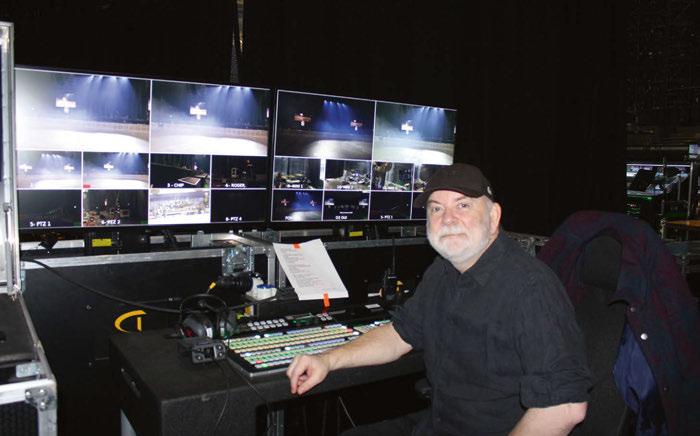
Video Director Keith Blackard oversaw all aspects of camera and control to ensure every angle had perfect composition and purpose to integrate into the video content. “This is not your typical show with side IMAG screens. All camera work must integrate seamlessly into the content on the upstage wall, so sizing and shapes play a huge role in keeping the camera work interesting and the audience engaged,” Blackard explained. “Typically, I would have an entire upstage wall to work with, but in this show, I get specific slices of t he screens, so it becomes a challenge to blend with the content and ensure that the cameras cut through in a way that the audience can consume. Chino is such a dynamic performer that the black cam rail system became the tool to always stay ahead of the action and keep the movement
flowing. A lthough t he primary focus is always on Chino, I can balance out the rest of the band with the use of POV cameras placed around the drum and DJ risers.”
Blackard’s kit of choice was a Blackmagic Design ATEM 2 M/E Constellation HD with a Videohub 12G. “I have been with Blackmagic for many years and I feel comfortable with their system – it is diverse enough that you can connect different systems, w hile utilising t he ecosystem they already have,” Blackard said. “We also have instrument POV cameras, which I c an shade for additional effects as well as some bigger camera kit for the wider shots as well as an extra camera to capture the crowd, which we edit w ith notch effects.”
During the show, Blackard often made himself mobile, immersing himself fully in the performance. “We all see a lot of shows, and this one feels unique. Chino is so passionate about the show, and you can really feel his energy as a performer. When you see someone in a good headspace, having a good time, you can really v ibe off it,” B lackard added. I stand when I direct, I want to be a part of the energy; my job is to chase the action, and he brings it.”
PRG Account Executive, Erik Paquette, added: “After t wo successful North A merican legs, it was an honour to be able to continue our support of the Pixelmappers team and Tyrone on this leg. From a supplier standpoint, you could not ask for a better team to work with.”
METAL DREAM
TAIT was brought into the fray for the first time for the band’s North American run in 2025, and has been involved with the camp since, working with Brunton to adapt staging requirements for each leg and festival appearances. The company originally provided a rolling main stage, a thrust with a grated surface and multitiered band risers out of its Lititz facility and when the tour crossed the Atlantic, its Wakefield base recreated the custom riser setup that was two tiers on either side, and featured steps. The risers also included grill fascias to match the show theme and shine lights through.
“It’s been fantastic to be involved with every variation of this show, and we have a long relationship working with Tyrone Brunton on previous artists like Gorillaz and The Prodigy,” TAIT’s Adam ‘Bullet’ Bettley commented. “It makes it easy to collaborate and find the right stock solutions to pull off the design without changing the overall budget. It’s also always a pleasure to work with Matt Pitman to create the looks he wants and set the right vibes, no matter the scale of the production.”
Phoenix Bussing provided three doubledecker crew sleeper buses, and one super high decker band sleeper bus from Beat The Street. Phoenix Bussing’s Andy Gray commented: “Tyrone is a great production manager, and we
have worked with him for over 10 years now on various tours so although this was our first time working with Deftones, Tyrone knew exactly what he would get from us in regard to buses, drivers and overall service.”
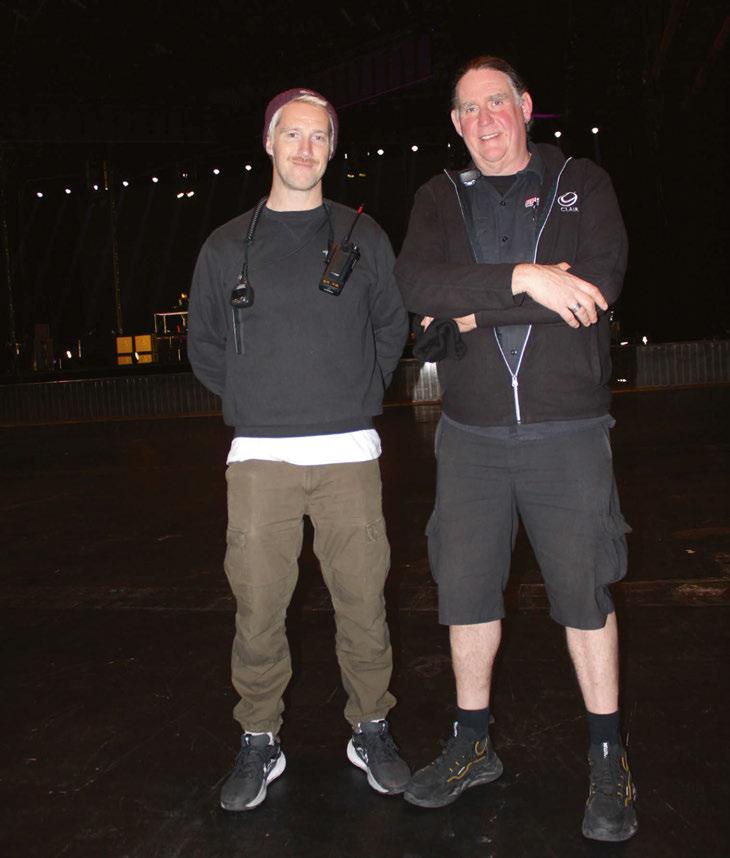
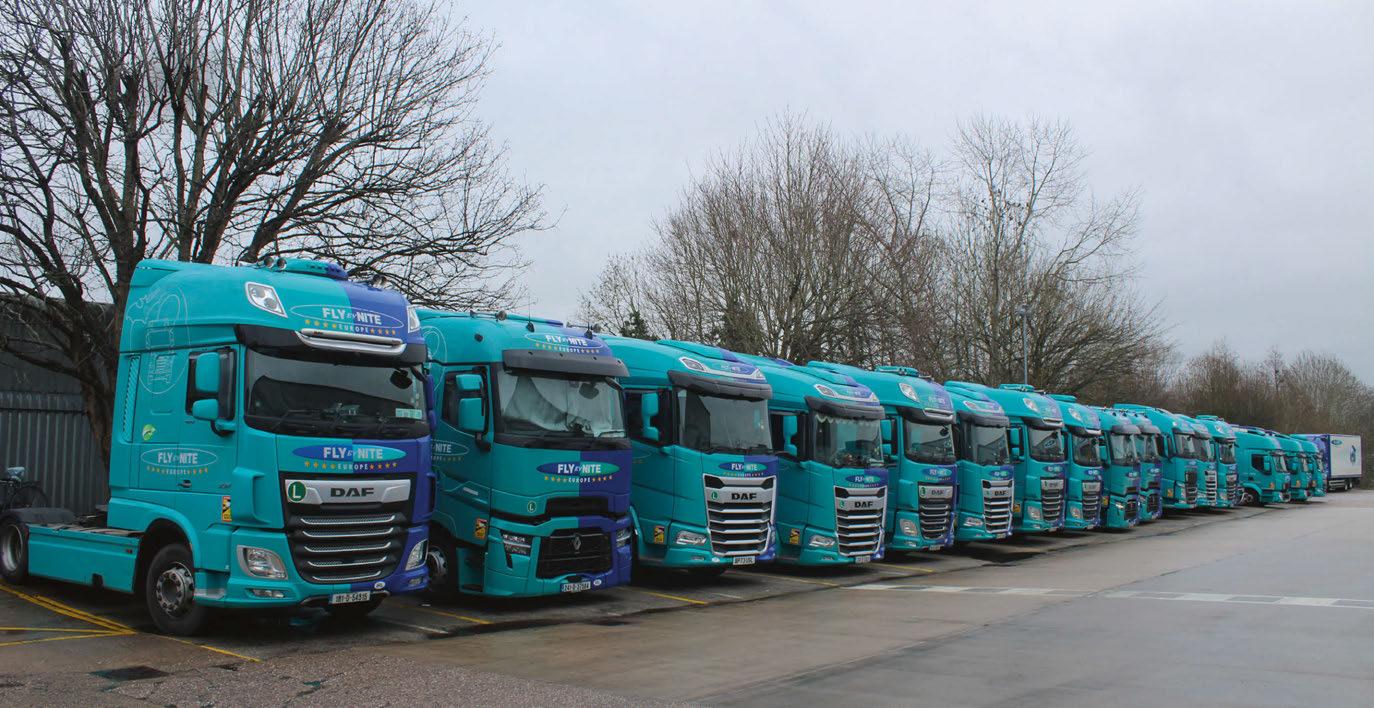
Production rehearsals took place at Fly by Nite rehearsal studios, with the company also providing nine trucks for the run. Fly By Nite’s Tom Curtis said that the combination of both allowed production rehearsals and the beginning of the tour to “go off without a hitch” and in a “greener way” with fewer dead miles. “Being in such proximity to a production that is utilising our rehearsal space and our trucks means that any last-minute planning can be done face to face and more efficiently,” Curtis explained. “It makes that relationship a lot more personable,” he said.
Scottie Sanderson, Fly By Nite Rehearsal Studio Manager, added: “It was great to have Tyrone, Sean and Sinead in the building and experience first hand the dynamic they brought. Having known and worked with them in previous roles, collectively for probably 60 years, it was a privilege to host their rehearsals.”
Curtis praised Lead Driver, Rob Stockwell and his number two driver, Caleb Edwards, as well as the wider team, who are placed with Brunton on tours whenever they are available due to their existing and growing relationship.
“He trusts them, and he trusts us, and they have worked closely with him, so it made sense for them to take the lead on this once again,” Curtis enthused. “The reception from the production team has been nothing but positive. It has been a seamless and smooth tour working with that team and I can’t do anything but congratulate and thank them for making our jobs easier.”
For many, including fans of the band within the crew, Deftones are finally performing at a level that befits their iconic back catalogue and creative vision. That dedication has seen one of the most exciting rock shows take to arenas, with the tour not ending at the end of the UK run as South American audiences were treated to Private Music on the road, with tech and a dedicated crew in tow. www.deftones.com www.pixelmappers.com www.prg.com www.visavis.video www.missioncontrolltd.com www.instagram.com/sarahskitchen01 www.road-ramps.com www.csecrosscom.co.uk www.phoenix-bussing.co.uk www.fbnstudios.co.uk www.flybynite.co.uk www.taittowers.com www.clairglobal.com
GORILLAZ: THE MOUNTAIN TOUR
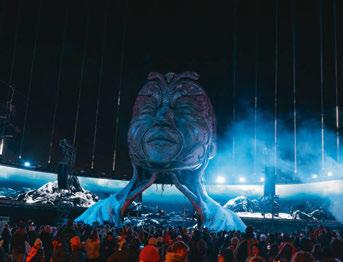
Following their 25th anniversary, Gorillaz return to stages with a love letter to India, even more extensive lore, and some of the most dedicated technical touring specialists to bring Damon Albarn and Jamie Hewlett’s unconventional and inimitable vision to audiences once again…
Words: Alicia Pollitt
Photos: Luke Dyson and TPi
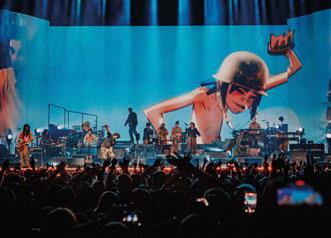
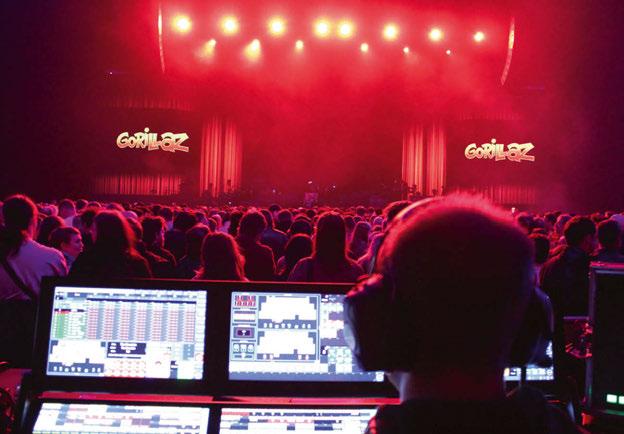
In celebration of The Mountain, the four animated cult-heroes: 2D, Noodle, Murdoc Niccals, and Russel Hobbs, go on a journey of love, loss and everything in between. Nowhere was the evidence of the devotion fans have towards the fictional band more on show than in Dublin’s 3Arena, where the final night of the UK and Ireland leg of the tour took place and where TPi met with some of the creative and technical minds behind the run.
Tour Director Neil McDonald and Production Manager Tyrone Brunton enlisted the help of Lights Control Rigging (lighting), Entec (audio), Opto (playback, network and timecode), Creative Technology (video), Dart Rigging and Projekt (rigging), TAIT (rolling stage), and Illusion Design & Construct (top set). On the creative side, SWEAR Studio worked closely with the band to deliver the creative concept, direction and show design for the tour.
“It is great to be back in the Gorillaz camp once again,” Brunton said. “It is a pleasure
to be working alongside Neil, whose wealth of knowledge and experience made it much easier for me to navigate through the advance process as i was mostly on the road working with another artist during this period.”
Accompanying the Production Manager once again was Production Coordinator, Sinead Madden. Describing The Mountain Tour as “clever”, Madden said: “Everything about this camp is thought through and clever; the minute those characters come on the screen, it gets loud because people love them so much. It’s a fantastic show; it is wonderful to be involved.”
Supported by a team made up of London Mars and Gabriele Power, Tour Manager, Marcus Duffy entered the industry following in his late father’s footsteps. “I knew I liked the industry because my dad worked within it; he showed me what the live music industry was truly like,” Duffy explained.
Moving from Assistant Tour Manager to Tour Manager, Duffy has embraced the extra
responsibility with The Mountain Tour seing the introduction of two additional band members as well as, in true Gorillaz fashion, an array of special guests. “That’s what Gorillaz has always been for me,” he stated, going on to show his appreciation for the team. “I wouldn’t be able to do this without the people around me – they are the most important thing.”
Darren ‘Tricky’ Edwards, Security Advisor on behalf of HSM Tour Security, told TPi that this tour, like any, has different needs and protocols: “Every venue or artist is different. Gorillaz comes with a large touring band and multiple features and special guests, so we are always prepared for that,” Tricky said. “Damon likes to be very mobile on the stage, and he also enjoys going into the crowd, so I’m on hand whenever he feels like doing that.”
Tr icky also discussed the importance of the Showstop Procedure for HSM Tour Security. “Our security riders require us and the venue to have a Showstop manager onstage, so if
we need to stop the show, we can straight away,” he stated, noting that he was at the first Showstop Procedure course in Southampton and has since gone on to host another course in Wales.
THE MANIFESTO
Rigging duo Martin Gehring and Kim Kusters from Dart Rigging + Projekt oversaw 45 tonnes of kit and 85 rigging points. “This show is unusual; because the content is so integral to the show, we can’t have an A and a B rig – the show that goes into the biggest venues must also go into the smallest, without compromising on how it looks and feels,” said Gehring. “It was a challenge and took a lot of work in pre-production, but we pulled it off, and the show feels uniform venue to venue.”
St age management team of two, Rishi Gowry and Sean Brady, tackled The Mountain together, with Brady handling trucks and crew and Gowry the stage and backline. “I’ve always pushed for two stage managers where I can,” Gowry said. “We work long days and this is a very busy stage.”
The duo oversaw 13 trucks and a 60 by 40ft Mag Deck stage from TAIT, with a top set
integrated with LED and electrics delivered by Illusion Design & Construct, with markout usually beginning at 6AM daily. “Stage management on this tour is not just trucks and crew; it is also quite artist-facing – I am the last person Damon sees before he heads onto stage every night,” Gowry said.
TAIT’s Adam ‘Bullet’ Bettley noted the ease of use the company’s staging has given the production at load-in and load-out. “With it being a stock solution, we can quickly pull the assets from our closest location to the start of the tour,” he noted. “For this brief run, the simplistic stage let the aerial rig and screen content be the star for Gorillaz’ unique onstage presence.”
Bullet praised PM Brunton: “Tyrone is a trusted expert in the industry, and we’re lucky to have an exciting history working with him across various artists, including Gorillaz, Deftones and The Prodigy. We’ve become mates over the years, so having that familiarity with each other makes conversations easier, and sees the production come together faster.”
Rory Evans, Managing Director at Illusion Design & Construct, commented: “Illusion is delighted to have been able to continue
our great partnership with SWEAR Studio to once again support Gorillaz’,” he said. “We took the initial design brief and developed a plan for a lightweight but robust structure –something that could handle repeated quick installs and derigs, while still fitting into a 40ft shipping container. The structure also had to be millimetre perfect based on the adjacent kinetic video walls on stage.”
Evans reflected on the collaborative process. “It was hugely rewarding to build on the band’s globally recognised visual and creative identity,” he said. “We look forward to seeing Gorillaz when the show moves to Tottenham Stadium in June.”
Joining Kusters, Gehring and Brady as some of the first members of the team to enter the building, the rigging and stage management teams started a ritual on the run: “At the end of mark-out, Kim will come over with our ginger shots, and we will do a shot together, which is always quite a nice thing,” Gowry said.
ON MELANCHOLY HILL
With the band celebrating 25 years in 2025, the celebrations, which included an exhibition, House of Kong [see MONDO-DR 36.1],
coincided with the new album being created.
SWEAR Studio – with Steve Gallagher at the helm – collaborated with Gorillaz’ co-creators Jamie Hewlett and Damon Albarn to develop and deliver the show design for the tour.
“Two things were happening at the same time; one was looking back over 25 years, and the other was looking forward to the next record,” Gallagher said. “I was working towards both these things at the same time and it was a good summary of what The Mountain is all about – the idea is the journey of life and taking on board all the things you’ve learned and finding fulfilment and renewal within that.”
Gallagher reflected on his eight-year journey collaborating with Damon Albarn and Jamie Hewlett as the Creative Director for Gorillaz’ live shows. “It all begins with rough demos of songs, or drawings and I get this opportunity to listen to the music and imagine what the world might look like in a live format,” he said. “It is amazingly creative and collaborative. Gorillaz has become this ever-changing, ever-evolving collection of collaborators both visually and musically.”
Th e Mountain Tour begins with its namesake song as the opening musical component, which sees the introduction of each of the animated band members as they reunite on the screens through the music video, which was created for The Mountain, the Moon Cave and the Sad God
“I wanted to use Jamie’s music video to open the show, because these characters
have fully realised lives of their own, and you can really feel the love the crowd has for them. The three songs included in the music video stand as a metaphor for life’s journey, and I had the idea that we could use them to structure the show: The Mountain at the start, The Moon Cave as the middle and The Sad God as the end,” Gallagher explained. “It also meant that in between, we could explore 25 years of incredible music and visuals while giving Damon and Stu (Lowbridge) the opportunity to change the setlist show by show.”
SWEAR worked on over 100 songs’ worth of content for the UK and Ireland run, continuing festival runs and then worldwide. “It’s always interesting to go into each leg of the tour; the arena run in the UK and Ireland always has a very specific feel to it, the festival shows are more stripped back, and then into American arenas, which will have a different feel,” said Gallagher. “The show is constantly evolving, and it’s a brilliant thing to be involved in.”
The band wanted to make a statement in the live show against generative AI, which resulted in the creation of a large red button, wheeled on at any point of the show, by a character named Alan, called ‘Algorithmic Atrophy’.
“W hen discussions began, we had also been working on the staging, and because we had all this imagery of temples from India, we decided on these tiered staircases that lead to nowhere; we started calling them ‘the algorithmic
Production Coordinator, Sinead Madden with Production Manager, Tyrone Brunton; Stage Manager, Rishi Gowry; Security Advisor, Darren ‘Tricky’ Edwards and Head Rigger, Martin Gehring.
Experience our industry-leading ‘British sound’, precision-engineered fit, and tour-ready build quality - trusted by thousands of artists, musicians, and sound, sport, and security professionals since 2015.
Explore our range, from the entry-level C2A, relied upon by leading sports professionals, to our industry favourite C6A, or flagship C8A, favoured by stadium artists and engineers. Enjoy first-class UK-based customer support, with all servicing and repairs carried out in-house.
Feel your music - with complete peace of mind.
(expires 30/06/26)
staircases of doom’,” Gallagher elaborated. “That evolved into the Algorithmic Atrophy button, and whenever it was pressed, the show would descend into chaos.”
The button is actually a MIDI trigger that goes into the playback system and then out to the other departments. “We made a bunch of different video clips that would play at random and in the moment, it appears to be AI, but it is stage trickery. The clips are randomly selected so we never know what we are going to get,” Gallagher revealed.
As t he tour’s Creative Director, Gallagher oversaw a top-notch team at SWEAR Studio that included: Lead Producer, Alexa Pearson; Lead Designer, Sam Coulton; Lead Video Designer, Gemma Yin-Taylor; Video Designers, Dan Steward, Florence Van-Bergen and Monica Ng; Associate Designer, Jean-Baptiste Gilles; Studio Assistant, Billie Billington; and Studio Director, Steph Allen.
Reflecting on the tour, as the first leg came to its close, Gallagher said: “It’s the most amazing project to work on. I was a huge fan of Jamie’s from Tank Girl, and Blur’s from the very early days. To have this job now is nuts – I have to pinch myself.”
Pi xelmappers also collaborated closely with SWEAR Studio; for Lighting Designer Matt Pitman, working with the band was also full circle. “I had Gorillaz posters in my room when I was a teenager. When I first got the call in 2017,
I ran around my room like an excited teenager; it was such a wild idea to me that I would work for them,” he laughed. “We have done many things since then, and there is no possible way to get bored as there is always so much you can do.”
Reimagining the show this time around, Pitman wanted to display the band in all their glory, and through an “enormous amount of effort”, he described The Mountain Tour as the “best Gorillaz show we have ever done”.
Pit man and the Pixelmappers team had three-and-a-half days in production rehearsals to programme and make any tweaks. “This show is joyous, mischievous, rich and enthralling,” he stated. “The show has been supplied and taken care of brilliantly by LCR, the excellent team from Creative Technology. My massive love also goes to Neil McDonald, Tyrone and Sinead in the hot seats. Olly Martin, who is the most wondrous collaborator and wonder-human, and not forgetting Tom Snell here at Pixelmappers, who is the unsung hero behind many things.”
The fixtures Pitman chose for The Mountain Tour were Ayrton Rivale, Argo 6 Wash, Robe iFORTE LTX, Martin Professional VDO Sceptron XB, MAC Aura XIP, ACME Lighting PixelLine IP, Astera PixelBrick, CHAUVET Professional Color Strike M and COLORado PXL Curve.
Programming and looking after the show on the road was previous TPi Award winner, Olly Martin, who operated an MA Lighting
Video Director, Steve ‘TSP’ Price; Lighting Operator and Programmer Olly Martin; LED Engineer Sofia Santos, Video Director Steve ‘TSP’ Price, Video Systems Engineer Matt Canter, Disguise Programmer Robin Senoner, Racks Engineer Matt Gibson, Camera/LED Mike Forde; Camera/LED, Roger Nelson, Camera Supervisor, Chris ‘Chip’ Wood, LED Engineer Sam Chitty, Lead LED Engineer Gary King, Video Crew Chief Richard Corns; LED Engineer, Sofia Santos, Video Director Steve ‘TSP’ Price and Camera Operator, Sam Brown.
grandMA3, running 120 universes. “The show is filled with fun, nerdy challenges,” he said. “We narrowed down to 100 programmed songs for the UK and Ireland run and we receive the setlist about 30 minutes before doors, which is the best challenge as a programmer.”
Martin went on to tell TPi that because the video content was so important, the Pixelmappers team lit the show scene by scene, to accentuate the content. “It’s almost theatrical, and it’s beautiful because every song has a unique look, and it’s rare that you get to do that with a band,” he explained. “Every song has a meaning and an emotion, which is really cool.”
Martin described the Martin Professional VDO Sceptron XB as the workhorse of the rig, which is utilised for mapping as well as lighting. “The colours are great, the dimming is fantastic, and getting to choose whether or not I’m running lighting or video is really cool – I even crossfade between the two, which is awesome.”
While the show is run mainly on timecode, the band occasionally likes to “change it up”,
which Martin has a solution for. “I have plug-ins that mean I can wind the timecode around, so if they go off, I can offset temporarily, see what Andy (Hamwee, Playback Engineer) is doing and push it back; he will then communicate with us when we’re back in,” he explained. “We’re using all three ports on the console, a programmer net, which we’re using some plugins we’ve written to make notes from the console, we’re also doing OSC triggers so that lighting and video can go off at the same time.”
ROCK THE HOUSE
Creative Technology delivered the video package, with Head of Entertainment Connie Glover at the helm, and Arek Wegrzyn acting as Project Manager. The touring crew featured: Head of Department, Richard Corns alongside Steve ‘TSP’ Price, Video Director, Chris ‘Chip’ Wood, Camera Supervisor, Gary King and Sofia Santos, LED Engineers, Sam Chitty, LED HOD, Matt Gibson and James Liriano, Racks Engineers, Sam Brown, Mike Forde and Roger Nelson, Camera Operators, Comms Engineer, Paul Coghill and Disguise engineer and lead
programmers, Robin Soener and Matt Canter.
The crew looked after 260 sq m of ROE Visual BQ4.6 with HELIOS LED processing, and three Disguise GX 3 servers alongside Sony FR7 PTZ, Panasonic UC4000 4K and Canon UHD-DIGISUPER 122 cameras.
“Gorillaz is such a special band; each of the technical elements come together to create a really good-looking show,” Corns stated. “Connie Glover from Creative Technology has been looking after us on this one and she’s set us up to succeed; she’s amazing.”
With content at the heart of the show, the crew are also working with an elaborate video setup, with TSP at the helm as Video Director: “This is an unusual show in that the cameras are very much secondary to the content – we’re only on screen for about half of the show,” TSP commented. “It’s a huge visual experience.”
The camera deployment comprised 12 cameras – four PTZ, four mini-cams, two FOH long-lenses, a camera on a track and dolly and a handheld camera in the pit.
TSP directed on the fly for The Mountain Tour, attributing the reason to the
SSL Live Bundle with L200 Plus console with Blacklight II, (3) MPL 16-8 Dante-enabled stageboxes and Net I/O HC Bridge.
Step Into the Power of SSL Live. Now More Accessible Than Ever.
The SSL Live production platform is extremely flexible, with an almost infinite number of system configurations available. SSL Live Bundles have been developed to provide complete systems optimised for touring, installed sound, and church audio, in the most cost-effective way possible.
New SolidPitch and KLANG Integration
The new SSL Live V6.2 delivers a major software update, introducing SolidPitch, an onboard vocal-tuning effect and full KLANG control integration for personalised immersive in-ear mixing. Alongside these additions, V6.2 provides a range of workflow and control enhancements designed to give engineers greater creative flexibility, faster operation, and more precise control for complex shows and installations.
Contact one of our live sound experts to learn more about the new SSL Live Bundles and to find out why you should step up to SSL Live.
unpredictability of the band. “Their music to me is simultaneously sophisticated but also quite punk rock – and that really works for me,” TSP said, adding that he utilised a Ross Video Carbonite Ultra switcher when directing. “I’ve always liked their music, and I have always respected it, but it wasn’t until I got into an arena with them that I realised how big the sound is live. Video must match that confident performance.”
Fi ve camera operators fed the footage to TSP. “It’s been a great tour, with a great crew,” stated Camera Supervisor, Chip. “What has been refreshing on this run is that all of our camera operators are working with their role as their first discipline, which is nice to see.”
FOH Camera Operator, Sam Brown also shared: “Working with four experienced camera operators and such a creative, positive and encouraging Director has been a breath of fresh air. Because of this we were able to raise our game creatively, inspiring each other to deliver high-quality shots that complimented the stunning content, show design and music. Working within a diverse crew, was also refreshing,” Sam added. “We supported each other’s emotional and physical wellbeing by checking in across the demanding schedule, with streamlined structure from the top down. Even the band are diverse, which says a lot about who Gorillaz are.”
Reflecting on the tour, King commented: “It has been nice, organised and a real good band
of people.” Chitty agreed: “We’re all waiting to come back and do it all over again for the Tottenham Hotspur show in June.”
Creative Technology’s Connie Glover noted the innovation on display on The Mountain Tour – something she described as being “synonymous” with the band. “Being involved in a project where visual storytelling and advanced technology are so fundamentally linked has been particularly rewarding. It provided an opportunity to contribute to a show that not only embraces complexity but also leverages it to enhance the audience experience. For me personally, a career goal,” Glover commented.
“Key to the delivery of the system was the collaboration with Disguise Engineer and Lead Programmer Matt Canter and Robin Soener. Their depth of expertise in complex system design and integration is widely recognised within the industry. Working in close partnership with our in-house teams, they played a critical role in navigating technical challenges and ensuring a seamless deployment, resulting in a consistently highperforming show environment,” she added.
“Equally, the contribution of Video Crew Chief Rich Corns cannot be overstated. His leadership and operational oversight have been instrumental in maintaining efficiency and reliability on the road, enhancing the day-today touring experience for all involved. Seeing the production translate so effectively into the
Assistant Tour Managers, Gabriele Power and London Mars with Tour Manager, Marcus Duffy; FOH Engineer, Matt Butcher; Monitor Engineer, Dave Guerin; SR PA Tech John Paul ‘JP’ Kearney, RF Engineer Colin Woodward, Stage Tech and Damon cable runner Alex Goodby, Stage Tech and Patch Master Kevin Gill, Systems Engineer Alex Chapman and SL PA Tech, George Hughes.
the show introducing transform.suite ‘26.
70+ plugins. 11 world-class brands. exclusively for transform.engine and transform.go. available now.
fourieraudio.com/suite activate today.
bring the studio to live!
$749 for 12 months. key features
- one-click install and activation
- manage a fleet of engines with ease online
- one annual payment for non stop access
- perfect for a rider
live arena – resonating with audiences on a nightly basis – is a source of considerable pride for the team at Creative Technology.”
SOUND CHECK (GRAVITY)
The audio team deployed two DiGiCo Quantum 8 consoles at monitors and FOH, while a third console, a Quantum 326, was used exclusively for playback. Looking after playback, MIDI control and autocue infrastructure was Live Music Producer, Andy Hamwee of Opto.
“After ten years with Damon and Gorillaz, every track in the catalogue has been programmed, developed, and dialled in to a level you only get with that luxury of time. Last year’s four album specific shows let us revisit a lot of these songs with a fine-tooth comb, and that work now underpins The Mountain Tour. Opto specialises in translating the essence of the studio into a live setting via the tech we deploy, and with a band this expansive it is the perfect place to do it,” Hamwee commented. For Hamwee, running a company often means he doesn’t find himself on the road, but he makes an exception for Gorillaz. “This gig consistently pushes the envelope of what’s possible. Matt Butcher at FOH, Dave Guerin on monitors and I are integrated in a way that isn’t standard for most projects, we’re entirely reliant on each other, and that takes a level of
trust you can only build over years.”
Hamwee believes that the audio team is “pushing the limits” of what the technology can do through the integration of visuals, audio, backline and the music. “The real challenge is making 25 years of Gorillaz feel like one cohesive sonic world. The setlist evolves nightly, so a song we haven’t played in five years has to sit cleanly next to the new material. That’s months of refining every sound running through our world, consistency is what lets a catalogue this diverse hold together,” he said.
With playback running over 150 channels and utilising its own console to manage and monitor it all, Hamwee notes this approach is increasingly standard for an Opto system, alongside backline and MIDI integration, timecode distribution and shout systems.
“We’re running four fibre loops in playback alone to achieve all these integrations, every song has to be ready, with redundancy and every option available. Our aim is always to utilise technology where possible to remove creative limitations for the client, and it’s never boring,” Hamwee said.
Colin Woodward, RF Technician, deployed a Sennheiser Spectera wireless system including three base stations to cover what would traditionally be over 100 channels of RF. “The Spectera has helped massively. It requires a
totally different way of thinking; having three base stations has been really useful, allowing me to cover the stage and even the dressing rooms,” Woodward said. “It sounds incredible, they drive headphones so well, the noise floor is non-existent, and it has integrated with our system and extensive fibre loops well. It also has the capability to expand, which will be especially useful for the upcoming Tottenham show.”
Woodward said that the show couldn’t have been staged the same way on older equipment, noting that the Sennheiser system has stood up to the industry-wide challenge of space on the spectrum. “More and more airwaves are constantly being auctioned off, and while we’re very lucky in the UK with Ofcom, different challenges apply for the other places this tour will be visiting, but I think the technology will stand up to the challenge,” he said.
Over in monitor world, Dave Guerin oversees over 280 channels and 100 inputs – and that is without the addition of choirs and orchestras, which the camp expects for June’s Tottenham Hotspur show. “I’ve been using DiGiCo for a long time, and they always listen to what people have to say and make improvements on feedback,” Guerin said, adding how he manages his workflow. “I break up my layers so that they are easier to manage. I’ve also written
Project: Dave, Photo by Timmsy
my own apps, which means I can look at all the outputs on the desk without having to find them underneath.”
Guerin uses dgApps, which features Router, Faders and Doris, to distribute his mixes more efficiently, with three of the musicians on stage having their own version of the app so they can adjust their mix for any additional changes. The guitar technicians also have another app which allows them to listen to the bass in the guitar and all the RF, so they know the RF is working before they pass the instrument along to a musician. “My apps help me with different things, for example during On Melancholy Hill two of our musicians go up three decibels in each other’s mix, so instead of putting the entire desk into automation, I can adjust it on my iPads, and when the song is over it readjusts back to where it was originally,” Guerin explained.
Damon Albarn now utilises IEMs – Cosmic Ears C8A – which also resulted in the use of Beyerdynamic MCE86S and LEWITT LCT 040 audience microphones. “We tried Cosmic Ears during the pandemic and have been using them ever since. Damon even moved onto them as of August,” Guerin added. “I would usually use wedges, but now he is on them, I have been utilising them myself.”
Working with Entec is second nature for Guerin, who first worked with the supplier in 1995. “I teched a Blur tour and that’s when I first
met Matt (Butcher, FOH Engineer). The thing with Entec is when you ring them, you’re talking to Dan (Scantlebury, Operations & Technical Director) and Tom (Olorenshaw, Assistant Head of Sound at Entec) directly,” Guerin enthused.
Matt Butcher mixes the show from FOH. “I’ve been here since day one, and it has been so many different things since then, but this evolution with the new album has been more theatrical – there is more of a story to tell,” he began. “The set list is interesting, bringing together so many different albums and genres. They have different sonic characteristics, so bringing that to a live audience has been interesting and just goes to show Damon’s incredible writing.”
Butcher works with snapshots to move through the different albums and accentuate each of the instruments on stage. With around 100 songs ready to go on the desk, he told TPi that mixing The Mountain Tour was a challenge, which he queues effects and dynamic mix moves to adapt to, but there are certain moments that Butcher described as ‘terrifying’, including the Algorithmic Atrophy red button, which is featured at a random part of the show.
“For me, it triggers an audio input straight into the bus and it goes through an Eventide H3000 harmoniser in a downward rippling effect. I am becoming more comfortable with it now, but the idea of having a random thing across my mix at 100db was daunting,”
Butcher explained.
He utilised internal effects on his DiGiCo Quantum 8 console, as well as a Blue Cat Flanger, Lexicon Pro reverb, Slate Digital MetaTune, Solid State Logic DeEss, DirectOut PRODIGY.MP, Fourier Audio transform.engine and up to eight vocal microphones, including a Shure 527 for vocal distortion. “I’m using the internal delays; I use two for vocal effect spins, which are reconfigured so they regenerate on themselves,” Butcher said.
The FOH Engineer also brought along his advanced O-Level project from 1982, which he could use to create synth-like noises between songs to add to the atmosphere of Gorillaz. “To me, it’s like the sound of the future. I can play around with it to do pitch changes, and the most interesting thing is that the pitch is in musical intervals, so there is a lot you can do with it,” Butcher explained. “I was building different things at the time, and this one came from a 1966 transistor mic preamp that had been used for the audience mics at the World Cup – which shows the great upcycling world that I live in.”
Butcher’s mix is relayed to the audience through a d&b audiotechnik system with GSL on main hangs, KSL on side, flown SL subwoofers with YP and VP fills, which was looked after by Systems Engineer, Alex Chapman. “Consistency throughout the arena is the key for me – with the level that PA
systems are now working with, everyone expects a level of quality, and I am following d&b audiotechnik’s motto of ‘democracy for listeners’ because I want everyone in the room to have the same listening experience,” Chapman explained. “We have a redundant reaper system, we’re running on up to four full loops on this gig, and we’re pushing what the entire department can do.”
“Entec
It’s
Elisa Alberici, Head of Events, Rough Trade
Audio supplier, Entec, was proud to be a part of the project, Operations & Technical Director / Head of Sound at Entec, Daniel Scantlebury, commented: “It’s amazing to work with the team again. Entec has worked with Damon since he started and this tour specifically was a chance to design it from the ground up and reimagine it all,” Scantlebury said. “There’s been a lot of new technology, which is great because it meant we can push the boundaries of what we would usually do. We’re grateful as a supplier that Gorillaz and the crew but their trust, and work collaboratively, with us to deliver the show that they want.”
Gorillaz, whose introduction 26 years ago was met with intrigue, have kept up their pace of curating music that transcends genres, beautifully animated worlds and enticing lore while pushing the envelope of what a live show can be in 2026. With a wonderfully creative and technical team at the direction of its animated characters, The Mountain Tour continues into festival season, with a subsequent US tour in the autumn and further into South America and India in the winter. www.gorillaz.com www.lcr-rental.com www.enteclive.com www.optolive.com www.swear.studio www.pixelmappers.com www.ct-group.com www.dartnet.de www.taittowers.com www.illusiondc.com www.dgapps.ie
LD Richard Larkum with Biffy Clyro in Concert, Zenith München – Futique Tour 2026
DAVE: THE BOY WHO PLAYED THE HARP TOUR
Laser-firing instruments, pyrotechnics, hidden subwoofers, shapeshifting video, and a revolving door of guest performers –all set beneath a four-curtain kabuki drop. This is the story of The Boy Who Played the Harp Tour, a spectacle masterminded by a road-tested production crew for one of Britain’s most exciting contemporary musical auteurs…
Words: Jacob Waite
Photos: Timmsy
The Boy Who Played the Harp Tour features several striking production design elements and cameos which not only do their job in eliciting a reaction but deliver fleeting, blink-and-you’ll-miss-it moments that require months of planning, collaboration and rehearsals to realise. Yet, as has become a hallmark of DAVE’s output, nothing is predictable. Setlists, guest artists and backstage cues change. This not only keeps the crew – an award-winning team whose stories TPi have charted over several years –on their toes, but in an era of artifice, provides an organic experience.
Production Manager, Paddy Hocken, was enlisted to orchestrate the tour. With global touring on the agenda, a fresh set of creatives – Creative and Video Director, Matt Askem; Production Designer, Tim Routledge; and Lighting Director and Programmer, Morgan Evans of Tim Routledge Design – alongside Stufish’s Ray Winkler and Faz Barber, delivered the production design in collaboration with DAVE and his support team.
To meet the brief, Hocken brought in experts in their field, including Beat The Street (crew travel), Skan PA Hire – a Clair Global company (audio), Dutch Barrier Services (barriers), ER Productions and FABER Engineering (lasers and special effects), Freight Minds (freighting), HZ Audio (audio control), Lovely Things (furniture), Luke Halls Studio (visual content), Neg Earth Lights (automation, lighting and rigging), Popcorn Catering, Production Park (production rehearsals), Stage Miracles (local crew), Stufish Entertainment Architects (co-production design), TAG (travel agents), TAIT (staging and lifts), Tim Routledge Design
(co-production design), Transam Trucking (logistics), Universal Pixels (video), and others.
“On paper it’s quite a light schedule, with no back-to-backs across 16 shows. However, there are rarely any days we are not at venues, be it for a mark out, pre-rig or unloading trucks,” Hocken explained, speaking to TPi ahead of the final show of the European tour at Manchester’s Co-op Live. “Equally, we have delivered it all within a single day several times.”
The video tracking element of the show was the most significant challenge the production faced during the build. Hocken elaborated: “We are installing nearly 100m of track, circa 50m a side, which is quite a big ‘gig blocker’ first thing in the day, and it’s a time-consuming element to assemble. It’s not just the track for the screen – there are several tracks that run parallel to the main tracks with all the cable management, so getting all those elements in place is challenging.”
Between those elements sits an automated moving lighting grid, a drone grid, and ‘sniffers’, which vacuum up drapes following a kabuki drop during the intro. The whole centre of the room is effectively a mass of machinery in two tiers: the grid and track, with another set of trusses suspended below. “Managing all of that has been challenging; however, the first time you notice the tracking screens moving towards you is a special experience,” he said. “It’s a show that can take on a life of its own, with a revolving door of guest artists, and a journey through his musical career.”
Hocken was supported in the production office by Advance Production, Amanda Davies; Production Coordinator, Kai Roberts; Backstage Coordinator, Amber Cox; and
others. “We keep an ‘open door’ policy and do what we can to look after the crew. Usually that means good food and quality hotels with early check-ins,” he added. “Bringing young talent through the industry is something close to my heart. I was given the opportunity by others to get on a tour at a very young age. We have had several interns and warehouse staff from Clair Global and Neg Earth Lights, who come to load-ins and load-outs so they can become more familiar with the industry.”
Head Caterer Stu Jackson and Caterers Jake Ireland, Andrew Webster, Liz Boyle, Kimmy Moody and Sam Tomblin of TPi Award-winning Popcorn Catering fed the 120-strong touring party. “We have years of experience, which pays off when touring Europe, where logistics can be tricky,” Popcorn Catering’s James Maggiore said. “There were busy and long days, but that’s where experience comes in handy.”
To t ransport the production crew across Europe, Beat The Street provided four double-deck Setra 16-berth buses, with Lead Bus Driver, Scott Pickering, and Bus Drivers Julian Bergmüller, Markis Heitzinger and Per Baumgartner ensuring the crew were transported from A to B safely and seamlessly. “We have worked with Paddy on several tours over the years, and it’s always a pleasure to work with him and his team,” Beat The Street’s Garry Lewis stated.
PRODUCTION DESIGN
Given DAVE’s penchant for experimentation, Matt Askem fulfilled the unique role of touring Creative Director – a trusted sounding board for the artist to bounce ideas off and evolve the show. “One of the specific requests was
the ability to make each show different, along with MIDI control of the lights and lasers,” Askem explained. “DAVE knew which tracks he wanted to perform, but it was important for there to be a narrative arc. He’s had a 10-year career, so he wanted to present his albums in blocks. The other insight I gathered was that he wants people in the bleachers to have a great experience, and that motivated the moving screens concept by Tim Routledge.”
Co -Production Designer, Tim Routledge, added: “What I wanted to do was take a screen that simply sits there – we’ve used transparent screens on numerous tours in different ways – but I’ve always wanted to layer them and do more than just place someone behind them and light them. I knew Neg Earth Lights had a version of this tracking and rotational system that we’d used in a much simpler way on another project.”
The idea was to take four screens, layer them, and have them travel down the room in formation, chasing content between them to create depth, while rotating to alter the architecture of the arena and deliver IMAG views regardless of where audiences were seated. “DAVE is more into IMAG looks than graphical content, so IMAG was always going to be a major part of the show, transporting viewpoints around the room,” Routledge noted.
In collaboration with the wider creative team, Routledge designed the diamondshaped B-stage and riser, with a flown truss directly above, populated with a variety of lighting fixtures, alongside a diamond-shaped truss concealed in the roof to house the ‘drone balls’, which cascade in varying configurations.
In keeping with the diamond geometry, every lighting fixture in the rig – aside from
the balls – was square. “I wanted to create something that would change the architecture of the stage, particularly for the track, The Boy Who Played the Harp, which has a monochrome palette. The balls could change colour, but we kept them in white or warm white. The shapes were something DAVE could effectively conduct with his hands, eventually settling on 3D angel wings inspired by the album artwork. It gave him a playful stage to interact with and became one of the most ‘Instagrammable’ moments,” Routledge said.
Guitarist Joseph Caleb, Drummer Dexter Hercules, Bassist Lawrence Insula and Keyboardist David Davis were introduced during Screwface Capita l. “Given DAVE’s musicality, we wanted to make the band more of a feature and allow him to communicate with them during the performance,” Askem noted. “While the band appears on roughly half the set – with 10 tracks to playback and the rest live – the challenge of where to position them led to the addition of a thrust and B-stage, effectively hiding the band in plain sight.”
Alongside the tracking system, left and right IMAG screens ensured full coverage. Askem, Routledge and Stufish worked closely to ensure a cohesive visual language that translated both in the room and on camera. “What I tend to bring is an understanding of how to make someone look good on camera, and how that translates to iPhone footage as well,” Askem explained. “Working with Tim and Richard, we graded the screens, so they functioned for both broadcast cameras and audience phones, avoiding overexposure and maintaining balance for a cohesive look.”
Askem booked studio time to capture additional content, lifting vocals from the likes
of James Blake, Stormzy and Jim Legxacy, and others. Where artists were unavailable due to schedules, bespoke promo content filled the gaps. Screwface Capital saw the blow-through screens layered to create towering structures. “I particularly liked the running figure in that track; it moved up and down the screens in layers, creating depth. That was a success and an idea from Luke Halls Studio,” Askem said.
Clash marked the first moment all screens tracked forward, layering content featuring Stormzy. “We used a lot of interference, which allowed different camera feeds across stacked screens. Using black within the screens is a useful tool when things become visually busy, particularly with transparency. When you rotate the screens, that issue disappears, so using them as one large surface was effective,” Askem continued. “A key consideration was that we could only track the screens when the band weren’t playing, as they obscured the stage. With setlist changes, we sometimes had to adjust the automation accordingly, so everything was built with flexibility in mind.”
For the Victory Lap section, a MIDI DJ kit rose on a lift. In each city, DAVE and his producer incorporated local influences and sampled beats. Earlier in the show, interval VTs featuring location-specific monologues were filmed and broadcast. “Those monologues were late additions. He’s a unique artist –playing piano and guitar, rapping and DJing – so having a live element to showcase that range is essential. The content for UK Rap features visuals from every city on the tour,” Askem said, noting how TAIT delivered the drum machine podium in just two days during rehearsals.
“We wanted the show to feel ethereal and transformative, so modularity became central
&
to the process,” explained Stufish’s Ray Winkler. “Everything fits within a defined module size for efficient trucking and assembly. But modularity is only as interesting as how you use it – that’s where creativity transforms a technical solution into something more esoteric and ephemeral, suited to DAVE’s performances and his connection with the audience. The aim was always for the technology to recede, allowing the storytelling to come forward. It was the skill of the entire team, weaving those elements together, that truly brought the design to life.”
RIGGING
Head Rigger, Steve Walsh, began work on the design in October, assessing plots and determining what could be accommodated within each venue. The result was 135 points, a total flown weight of 56 tonnes, and a substantial number of two-tonne motors to facilitate the automated tracking system.
All the rigging was fitted with load cells connected to Kinesys LibraCell, allowing the team to track weight distribution across motors and monitor dynamic movement in real time. “This allows us to identify issues and troubleshoot quickly. With something as heavy and dynamic as moving video walls, load monitoring is essential. It’s very easy to overload without that level of oversight.”
Walsh was supported by Riggers Barnsley Grain and Tam Shrijver. “We make a strong team. It’s important to understand each other’s workflows, and we all share the same mindset when it comes to load-ins and -outs, managing empties and maintaining equipment,” Walsh
commented. “Everyone is aligned. It’s been a good tour. I won’t miss the early alarm calls, but we’ve got a great team on the road, which makes it all worthwhile.”
STAGING AND TRUCKING
In the lead-up to the tour, Production Park supported the production within its arena-sized facilities in Wakefield. “The team was fantastic to host. This was their first time using Studio 005, a large-scale space, so we placed extra focus on advance planning ahead of the load-in and that preparation paid off,” said Production Park Studios Manager, Scott Matthews. “With full-space rigging, a 500-tonne load capacity and impressive acoustic treatment, Studio 005 provided the team creative freedom.”
Production Stage Manager, Phil ‘Tico’ Ryder, and Head Carpenter and Show Stage Manager, Jason Slaney-Welch, oversaw deployment of the diamond-shaped main stage, thrust and B-stage, all built using TAIT’s Mag Deck system. The decks were finished with high-shine Marley, with integrated shelves for lighting.
“It’s a big tour with a complex design, but I enjoy the challenge,” said Tico. “The ‘big monster’ in the room is the pair of giant automation trusses. They’re the longest and most time-consuming elements of the build, so we prioritise them at the start of the load-in to ensure enough time for assembly.”
The main stage featured three band risers, alongside a fourth mounted on a scissor lift. The lift is used to raise and lower the piano for key moments, as well as a MIDI drum machine that appears during the performance. “A unique
aspect of the lift, and how it integrates with the stage, is that we effectively built in a ‘parking garage’,” explained TAIT’s Jordan Whittemore. “You have the arena floor, then a middle-level deck where the piano and drum machine are stored when not in use. The lift drops down, the carpenters roll the equipment on, and it can then be raised to stage height – or higher –depending on the effect required.”
Tico described the TAIT stage system as “relatively straightforward to assemble” once the automation trusses are flown, though the process requires careful coordination. “There’s a logistical dance to make it work. I do a lot of pre-planning in CAD, mapping out exactly where everything lands during load-in. If you approach it the wrong way, you can quickly run into problems, so preparation is invaluable.”
With a clean aesthetic high on the creative agenda, subwoofers were concealed beneath the stage to eliminate visible clutter. “The Mag Deck system is modular, so we can swap full decks for half decks and adjust the structure underneath,” Whittemore explained. “We adapted the under-stage space to better accommodate the subs and improve access.”
Hocken worked with the team to integrate subs and atmospheric machines under the stage. Routledge added: “We wanted a clean, floating, diamond-shaped stage in the middle of the room. Straight lines help reduce visual clutter. There will always be instruments on stage, but I’m a strong advocate for hiding monitors and backline wherever possible.”
An 8ft walkway was constructed beneath the stage for artist access, with additional space
allocated for engineers. “You get a lot of value out of this system,” he noted.
Tico and Slaney-Welch were supported on site by Head Electrician Jack Wills; Lead Carpenters Mark Fitchen and Carpenters; Ray Bogle, Jack Redman, Scott Turnbull and Aico Boschoven. “This is a team effort,” Tico said. Jason helps with unloading trucks, positioning equipment, managing storage, and reloading.”
He praised the tour’s transport partner: “Transam Trucking are excellent. Their black trucks look the part, and Lead Truck Driver Scott Cooper is both a friend and colleague who can second-guess what I’m thinking.”
Transam Trucking supplied a fleet of 22 EU-registered DAF XG and Scania trucks, along with drivers and a dedicated merchandise truck, ensuring consistency across the European and UK run.
“T he trailers are key for the crew – they’re all new, specifically designed and fully equipped 2024/25 registrations, well-lit to keep loading and unloading as safe as possible while as quick as possible with a production of this size,” commented Transam Trucking’s Natasha Highcroft. “We also used this tour to trial and train younger drivers in a live environment, which proved to be a valuable opportunity.”
Lead Truck Driver Scott Cooper – praised by Hocken for “going above and beyond” during load-ins and -outs, effectively becoming part of the stage management team – was supported by a large team of drivers across the tour.
Around the perimeter of the stage and across the band risers, RGBW tape battens – a new TAIT product – delivered seamless LED runs. To achieve this 3D printed clips were bolted to batten allowing the tape and
diffusers to be push-fitted and connected cleanly. TAIT also supplied the ‘sniffers’ used in the show’s opening sequence. Four printed drapes fabricated by Blackout, rigged on kabuki solenoids by Neg Earth Lights, were released and then vacuumed away by the system. Around 40 TAIT UK staff contributed to the package, spanning several departments.
Reflecting on the collaboration, Whittemore said: “It felt like a true partnership from the outset. It’s rare to have in-person vendorproduction meetings, but Paddy pushed for it, and it made a difference.”
St age Miracles, which supported rehearsals at Production Park, provided additional crew on select dates. “Continuity of crew on the road makes a huge difference,” Tico said. “There have been some long and challenging days, but it’s the team that’s held everything together and made it such an enjoyable tour.”
AUTOMATION
“The setlist changes frequently, so we’ve ended up with eight distinct automation moments that have continued to evolve over the course of the tour. Ideally, you want everything fully dialled in, but the fluidity of the automation is part of what makes these 16 shows so exciting,” explained Automation Operator, Jody Diaz-Francis.
Following the opening songs, the screens tracked forward in unison, maintaining their orientation to create layered depth and bring the action closer to the audience, before returning to their default position. Later in the set, the screens rotated 90° to form a box configuration, each facing stage left and right, before dispersing and tilting back to their
original format for a final pass into the room. “The challenge isn’t achieving these looks, but getting the timing right,” Diaz-Francis noted. “The screens can travel up to 40m, so we must ensure they don’t interfere with lighting or special effects. Equally, if the screens are forward-facing and the flown diamond lighting structure is lowered, they can’t move at all, so it becomes a delicate choreography between all of the automation elements.”
The TAIT systems were controlled via a TAIT Compass console running Navigator software. Screen movement was driven by a Kinesys Elevation system, supplied by Neg Earth Lights, with APEX 1250 hoists used to raise and lower the diamond lighting truss. The ‘drones’ truss meanwhile was fitted with FOS Technologies DMX winches.
Safety was paramount throughout, with spotters positioned stage left and right and software limits programmed into each automation element.
The APEX hoists feature safety PLC networks, dual encoders and braking systems, continuously monitoring operational data, in addition to Kinesys LibraCell.
The automation department was led by Crew Chief, Ben Hammett, alongside Operator Jody Diaz-Francis and Technicians, Richard Kent, Remi Buchanan, Andrea Cammisa, Dan Wiseman, Klins Ganger, Jamie Catt and Blaine Dracup. “It’s incredible how we can transform an arena into something that feels more like a club environment using automation,” concluded Diaz-Francis. “This is a show that is built by people. Every single department brought the right attitude and a shared drive to make it a success.”
I‘M AN ARTIST
OLA MELZIG
PRODUCTION MANAGER
M&M PRODUCTION MANAGEMENT
I just love the new generation of the Artist user interfaces. The SmartPanel‘s intuitive workflow and its very visual layout are simply fantastic.
I can customize it in any way I need, which is absolutely crucial for the big live events I typically work on.“
ARTIST INTERCOM
Professional and reliable live communications. Seamless integration of Riedel‘s SmartPanel and Bolero wireless intercom. Easily scaling from 16 to 1024 ports with flexible licensing.
Photo by Ralph Larmann
LIGHTING
“We’ve been heavily involved not just in lighting, but in the set and automation as well. With a show this technical, everything must be fully integrated, so our role extended into more of a scenic overview,” explained Lighting Programmer and Director, Morgan Evans. “A lot of the key moments – like the laser piano and the drone balls – are rooted in lighting. I don’t think we’ve done two shows the same.”
The aim was to create something that initially felt like a traditional concert presentation, before the tracking screens transformed the space into something far more immersive than a standard end-on stage.
For control, Evans utilised MA Lighting grandMA3 software, working entirely within a Recipe-based structure to deliver more than 53,000 timecode events across the set, built from approximately 6,000 Recipe lines. “There are so many snare hits and repeating patterns, so it was intricate to programme,” Evans explained. “We’re doing some interesting things with MIDI triggers – when DAVE plays piano, drum machine or guitar, certain inputs trigger lighting responses.”
Overhead, Ayrton MagicPanel fi xtures formed t he ‘hero’ element of t he flown diamond tr uss, with Perseo units providing backlight. The MagicPanels – which Routledge hadn’t used in a decade, and Evans had never previously encountered – proved a standout.
“We really enjoy using them; they’re incredibly punchy and a reminder that you don’t always need t he newest fi xture,” Routledge commented. “Neg Earth Lights always maintain them impeccably. We had them in mind from the outset of the project as they could deliver
the tracking and rotational systems for the screens, as well as custom metalwork to make the drones tourable.”
Neg Earth Lights’ Sam Ridgway added: “It’s a highly ambitious technical production, and we were proud to supply the full lighting, rigging and automation package. This included a tracking truss system supporting eight rotating video screens either side of the thrust, along with custom-engineered pod structures that are automated throughout the show.”
All fi xtures were integrated into a FollowMe system, allowing flexible control across the r ig. ACME Lighting PIXEL LINE IP fi xtures were installed beneath the screens, creating a continuous horizon line of light. As the screens t racked into t he room, t hese fi xtures st robed into the audience, washing the crowd in light. Along the downstage edge, Robe’s WTF fi xtures delivered infinite pan and t ilt. “We’re doing some really dynamic work with the WTFs,” Evans explained. “They can zoom in and out, produce tight beams and strobe effects, giving us a huge range of looks on t he downstage edge. Ayrton Bora fi xtures punch through from the rear, adding depth, while the Perseos create a powerful wall of light.”
Routledge elaborated: “We wanted volume – lots of light and plenty of haze – which drove the inclusion of t he W TF fi xtures. B y stripping back the central video element at times, the show takes on a more rock ’n’ roll aesthetic. Behind t he floating diamond stage, we installed large runs of moving lights on wheel trusses, forklifted onto a secondary deck, which allowed us to create depth beneath the screens and reinforce t he illusion of a floating environment. Pi xel mapping was essential, but always used
tastefully, ensuring the band remained the focus rather than being overwhelmed by video.”
The Follow-Me system enabled Evans to repurpose fi xtures t hroughout t he show. “ We can have every light in the rig doing something bold in one moment, then switch to more traditional followspot use in the next. It tracks movement across lifts and pods, so wherever the performer goes, the system adapts.”
The colour palette leaned heavily into reds, steels and contrasting warm and cool tones. “We’re using coloured key light extensively,” Evans noted, highlighting Professor X as a standout. “The opening to No Words is a stripped-back, two-tone warm and cool look with just haze and DAVE, which works beautifully. The show covers a wide range –from high-energy strobe moments to intimate piano sections – and t he lighting reflects t hat.”
He continued: “Neg Earth Lights enabled this concept. The system is packaged cleanly; everything is organised meticulously – from the way the back wall is rigged to the consistency of fi xtures on t he B -stage. It all contributes to a show t hat builds efficiently and looks polished.”
The lighting team comprised Crew Chief Keith Johnson, alongside Technicians Steve Percy, Peter Horne, Craig Ralph, Chantelle Young, Jason Hyne and Joao Magalhaes.
Ridgway added: “We assembled a diverse and highly skilled crew capable of meeting the demands of such a technical production. Throughout t he planning process, many staff contributed at various stages. It is a dedicated team with a shared commitment to delivering the highest standards.”
Routledge concluded: “The reveal of DAVE is particularly special – four kabuki drops and
THE ONE BOX THAT
16 XLR and AES3 OUT
DANTE I/O MADI
Box clever. Be smarter.
Works with any Dante or MADI system
16 analogue or 8 stereo digital outputs
Built-in redundancy with dual power and backup network
Converts both ways: Dante <> MADI, with passthrough
Simple remote control via the KLANG:app
Compact 1U rack design for touring or tight spaces
four sniffers, very much ‘seat-of-your-pants’, but it worked flawlessly every night.
“Morgan’s programming on Professor X, bringing in the diamond truss, is another highlight,” he continued. “The addition of PIXEL LINE IP fixtures beneath the screens means there’s always a lighting layer moving in sync with the automation. The large Ayrton Bora looks from the rear trusses are striking. It’s all about elements appearing from nowhere. Certain moments – like the laser piano and guitar – must be timed precisely, but much of the show remains freeform, which keeps it exciting. It’s rare to work on a project where both the artist and the team are this special.”
VIDEO
Cameras were positioned across all four sides of the diamond-shaped B-stage, with additional coverage on the main stage. Oblique cameras were placed further down the B-stage on both sides, while a FOH camera tracked DAVE’s movement along the thrust. A handheld camera at the end of the thrust delivered dynamic, hero-style shots. Two further remote cameras operated on tracks to cover the main stage, complemented by mini cameras and a PTZ unit mounted on the truss to provide a bird’s-eye view of the piano moments and Victory Lap drum machine sequences.
Universal Pixels Project Manager, Ben Annibal, oversaw the video deployment, working with the company’s technical team and crew coordinators to assemble the right personnel for rehearsals and the tour. ROE Visual V8T LED panels were driven by Brompton Technology SX40 processors. Content was captured using Panasonic UC4000 cameras, paired with Fujinon UA107 lenses. Two custom-built barges housed the camera PPU system alongside Disguise GX
3 media servers and processing, allowing for efficient deployment and strike.
Media Server Programmer and Operator, Richard Turner – whose career in video predates the wider adoption of video projection for touring in the early ’90s – operated two Disguise GX 3 servers (one active, one backup) from FOH, supplied by Universal Pixels. “They understand the realities of touring – they’re a people-first company, and the packaging is excellent; you can’t lose the orange boxes,” Turner remarked, further praising the support of Disguise.
Luke Halls Studio delivered the bulk of the content. “Even though the screens are large, they’re 8mm resolution, so we can fit everything across two HD canvases, meaning the workload isn’t overly heavy. I handle multiple video inputs and use Disguise to map and manipulate them across the screens, adding colour effects where needed,” Turner explained. “Matt and I probably double the average age of the bus, but it’s great to see such a young, enthusiastic crew coming through. Paddy leads it all brilliantly.”
The wider video team included Crew Chief, Al Bolland; Video Engineer, Brony Margotts; Camera Supervisor, Patrick Hall; Lead LED Technician, Al Wright and LED Technician/ Camera Operators, Paul Borthwick, Jules Blagg and Oscar Winter.
Highlighting the collaborative nature of the project, Annibal noted: “We carried out test builds in Neg Earth Lights’ warehouse while the custom metalwork was being fabricated and cable runs planned. This was far from an offthe-shelf solution. The result is a striking show that feels genuinely different.”
Reflecting on the process, Askem concluded: “It’s been challenging but I’m proud of what we’ve achieved. The entire team has
been fantastic. DAVE is a true artist – a gifted performer with something important to say.”
Luke Halls Studio oversaw the conceptual and visual development of all screen-based content for the tour, shaping the overarching narrative and ensuring integration with lighting, stage design and live camera elements. The result was a cohesive creative vision, carried through from initial concept to on-site delivery. “There was a shared ambition to push the creative as far as possible while remaining purposeful,” explained Luke Halls. “Everything needed to serve the artist and the narrative, so decisions were always grounded in intent rather than spectacle.”
The studio operated with a core team of 10 – Luke Halls, Mark Todd, Rae Shepherd, Elettra McConnell, Barbora Giliute, Uzo Uzoigwe, Tom Scott, Jason Moss, Daisy Finetto and Gary West – working across creative direction, 2D and 3D design, Notch effects, editing and content production. A combination of tools, including After Effects and real-time engines such as Notch, were employed throughout.
“W hile there are familiar pipelines we return to, each show demands its own approach depending on the creative and technical requirements,” Halls noted.
Among the standout moments, Halls cited the “high-energy impact” of Sprinter, with bold, graphic compositions tightly synchronised to the pace and attitude of the track. “It’s one of those moments where everything aligns – the familiarity of the song, the audience reaction and the visual language all reinforce each other,” he stated.
Ra indance provided a contrasting highlight, leaning into the more emotional side of the show. “It allowed for a more immersive, almost hypnotic visual language that draws the audience in,” Halls concluded. “What makes
EagleStrike was born from a bespoke request for a signature luminaire. It stands as the first LED-source followspot in Ayrton’s range, engineered for intensive outdoor use across long distances where precision is paramount. To create this uncompromising and unmatched extreme-luminaire, Ayrton developed an oversized 270 mm front lens that delivers a record-breaking illuminance of over 100,000 lux at 10 metres, with the beam narrowed to just 2.9°.
Illuminance at 10m > 100,000 lx
Zoom Aperture 2.9° to 43° Weight
Front Lens
it effective is the synergy with lighting and staging – it’s less about watching content and more about feeling the world of the track.”
SPECIAL EFFECTS AND LASERS
One of the tour’s defining visual moments came in the form of the laser piano. Stufish’s Ray Winkler reflected: “The way it integrated into the wider show was special. The audience could directly connect DAVE sitting at the piano with the lasers responding to each keystroke, firing out over the crowd. There’s a tangible cause-and-effect that everyone in the room can feel.”
Laser Programmer and Operator Cam Dominy – a Rose Bruford College graduate, alongside Lighting Programmer and Director Morgan Evans – walked TPi through the system. “The brief was for DAVE to effectively ‘play’ the lasers from the keyboard. Every note sends a MIDI trigger to me, which fires a cue stack and activates the lasers. We have 12 lasers, matching the octave of the piano, so whatever he plays, the lasers follow – it’s a nice detail.”
The piano lasers were ER Productions Beam ER units – 5.5W RGB fixtures – integrated into a scenic set piece, requiring close collaboration with the carpentry team.
Another standout moment came during Thiago Silva. “I drew a lot of inspiration from dance music. It’s a fun track to programme,” Evans commented. Laser choreography had to be tightly aligned with the tracking screens to avoid any clashes or reflections. “At the end of
the track, there’s a half-second window before the screens pass over the laser paths, so timing is critical.”
More laser moments featured in Selfish, where notes trigger high-powered AT60X ER lasers, and Starlight, the closing number. “The brief was to create a starfield effect,” Dominy stated. “Slow, ambient looks in blues and whites, with occasional ‘shooting stars’ triggered on drum hits with trailing effects.”
The system extended beyond the stage, with 12 lasers positioned above FOH, mirroring those embedded in the piano.
“T hey terminate on a truss above FOH, each matched one-to-one and triggered by the same cues,” Dominy explained. “We used wireless DMX and battery power on the truss to avoid sightline issues. From behind, it almost resembles a harp – as if he’s playing it out into the room. Power and data were a challenge; we’re running a 5kW battery system and wireless solutions to make it work.”
At mospheric effects included six Look Solutions cryo fog machines and MDG ‘pocket’ units, delivering low-lying smoke across both the main stage and B-stage. “It keeps the stage looking clean – you don’t notice it until the space fills with haze,” Dominy noted.
Py rotechnics and flame effects further elevated the show’s impact. A total of 24 Magic FX FLAMEBER units were positioned around the perimeter of the main stage, with additional pyro positions along the downstage edges, including Magic FX Stadium Shot Mk3 confetti
launchers. A large confetti moment during Raindance marked the show’s finale.
Control systems included Pangolin software for high-powered upstage lasers, while MA Lighting grandMA3 handled DMX-based fixtures. Galaxis software was used for pyro control, with grandMA3 triggering flames, cryo fog and confetti, all operated by SFX and Pyro Lead, Eleanor Waller. “DAVE was my first tour four years ago, so this feels like a full-circle moment,” she reflected. “I have stayed within the rap and grime scene since, so when this came around again, I jumped at the chance.”
A total of 24 FLAMEBER units fire around the stage in Verdansk with a fierce two-second burn on the lyric ‘airlifted’ as Waller explained: “After the first show, we added 10 pyro positions and six confetti shots to enhance the impact. Verdansk is a personal highlight for flames. It was challenging to programme, but incredibly rewarding. Raindance, with pyro and confetti, is a perfect closing song.”
All confetti on the tour was biodegradable, with CO₂ supplied locally at each venue. “Collaboration has been key,” Waller added. “Touring this across Europe, including four sold-out shows at The O2, has been special. It’s been my first time working closely with a laser team, which has been a great learning experience. SFX Technician Andrew Rowland has also stepped up on his first tour.”
Dominy concluded: “It’s been great to see the laser piano gain traction on social media. It’s always a bit nerve-wracking because I can’t
fully check it until it happens live, but there’s a real sense of relief when he hits that first note and everything lands perfectly.”
AUDIO
One of the longest-serving members of the camp, alongside Keyboardist David Davis, FOH Engineer Charles Bidwell of HZ Audio – whose company supplied the audio control package –has been mixing DAVE for nine years.
“A lot of attention goes into recreating the studio patches for live use – particularly on piano, with samples being triggered via MIDI. Everything arrives sounding like the record, so my job is to translate that into an arena environment and make it feel even bigger than the record,” he said.
The aim was for the live show to faithfully represent DAVE’s catalogue while maintaining consistency across a multitude of production styes, leaning into the full body of work. “We spent a lot of time in band rehearsals before arriving at what we have now.”
During rehearsals, the audio team ingested stems from every project, building a full multitrack Ableton session. “It meant we could break everything out appropriately. For example, on days we have Kano, we use his live microphone; on days we don’t, we still have a dedicated Kano playback channel in the mix. We’re always mixing around him rather than him being baked into a playback stem,” he explained. “We’ve had features from Stormzy, Tems, James Blake, MoStack, Kano, and Jim Legxacy. When guests are present, we can soundcheck them quickly and integrate them without reprogramming our showfiles.”
As an Allen & Heath shop, dLive consoles are used at FOH and for Monitor Engineer Megan Collier. Everything on stage runs
digitally via DX protocol, with DX168 units in backline racks, and another at drum. A DX32 fitted with AES cards handles Shure Axient Digital, AD-PSM and AD4Q systems.
“Ideally, we keep everything digital right up to the last moment,” Bidwell said. “Megan ingests all the stage information and sends it over FibreACE to FOH. Playback comes in via MADI with analogue backups; the dLive handles all formats seamlessly. At FOH I’m running a DM32 MixRack, S7000 surface and a C1500 sidecar. I’ve got three I/O cards –FibreACE from stage, AES into the SKAN Drive Rack (feeding the PA), and a Dante 128 card for multitracks/UAD inserts.”
Bidwell’s outboard rack features SSL Bus+ and Fusion for Masterbus processing and an Avalon 737 on vocals. “The Fusion adds tape-style saturation and warms the low mids, while the Bus+ is running in G-bus mode with a Pultec-style EQ. That’s really solidifying the mix at the final stage,” he explained. “We’re using dLive DEEP processing throughout, which is flexible and offers the characteristics of studio dynamic processing in the live environment.”
His standout moments in the set include History segued into No Weapons. “I love the build and energy from the crowd – straight away they get two tracks from the new album. Hard-hitting History into No Weapons, which has a strong message however equally fun and becomes a huge crowd singalong… With his catalogue the set could be three hours long.”
The PA featured 16 d&b audiotechnik GSL loudspeakers per side on the main hangs, 16 KSL on the side hangs, 12 XSL on the rear hang, and 12 KSL delays positioned to account for the tracking screen system. “Matt Vickers did the pre-design and mechanical planning before handing it over to us on the road,” Systems
Engineer, Finlay Watt said. “The challenge is managing spill from the PA onto the thrust, but we’ve been able to control that well. The delay hangs are powered from the same amp carts, so there’s a fair amount of cable routing.”
Audio Crew Chief, Joachim Dewulf, added: “The moving screens require additional delay hangs to fill gaps. They’re closer to the stage than typical delays, effectively filling shading created by the screens. The early starts help massively – by the time we hang PA, all the motors are already up, so load-ins are efficient.”
A sub array of 20 SL subs in a semi-circle configuration was positioned beneath the stage. “It looks counterintuitive on paper, but because of the depth and spacing, it works perfectly in practice,” Watt noted.
DAVE wore UE 11 Pro in-ear monitors, while the band used a mix of Ultimate Ears and JH Audio. “DAVE’s mix changes from song to song,” Collier explained. “Some tracks are playback-heavy, while others have live instrumentation. He plays guitar on Selfish so those moments are simpler and more functional to keep him locked in, especially with such a sub-heavy stage. He spends a lot of time on the B-stage: when he moves into the crowd the reaction is incredible - it’s a chorus of excitement.” A Shure Nexadyne Supercardioid microphone was used for vocals. “He has a lower register, and it really suits his voice – it’s a big step up in clarity,” Collier said. Of t he dLive’s 128 channels, 110 are used, including a switchboard of talkbacks. “I enjoy Kano on Chapter 16. Feeding the crowd’s reaction into their mixes makes it a fun and interactive part of the show,” she added. “The Boy Who Played the Harp is always a standout.”
Although mixing under the stage is not common practice, Collier explained: “It took
a couple of rehearsals to fully understand how a mix from below stage translates. The musicians all have wired talkbacks and DAVE’s AD2 features a ‘talk switch’, so he can easily communicate any adjustments.”
The team included PA Technicians, Brooke Paterson and Tobia Piatti and Communications Technician, Eiran Simpson. Monitor Technician, Harry Dilloway supported HZ Audio with RF management, guest integrations, microphone changes, lift cues and stage patching. Reflecting on t he 16-date tour, Collier concluded: “It’s a big production with a lot of moving parts. It’s constantly evolving, but with the right gear, the right people, and big spreadsheets, anything is possible.”
Playback and Backline Technician, Chris Purcell liaised with Charles Bidwell during the design process to create a system with multiple layers of redundancy. “At some shows, I would be stripping timecode for new interstitials or arrangements when the doors to the gig are open, and the crowd is in the venue. Clearly communicating these changes and liaising with each department has been critical,” he said. “Before d ay one, I had a project w ith 64 songs in chronological order, with each of the 20-plus featured artists individually separated so I could eyeball the Ableton session and be ready for anything should a guest appear on the night. This expanded during rehearsals with multiple versions and arrangement edits being added,” Purcell recalled. He harnessed two RME Digiface Dante interfaces which fed a DirectOut Technologies EXBOX.MD, which handled conversion to MADI at 96kHz.
An SFP MADI transceiver further provided three simultaneous streams: two via coaxial linked to the redundant main and spare inputs of the dLive SuperMADI card, and a third optical
feed to a Ferrofish A32 Pro, w hich converted the signal to analogue.
“We have an extensive MIDI network, thanks to iConnectivity MioXM/XL interfaces. The drum triggers are converted to MIDI and return to me to play samples. This MIDI data is forwarded to Morgan’s console so that Dex’s t riggers c an fire lighting cues if we’re not running to LTC. Likewise, DAVE’s piano outputs MIDI to me which triggers Kontakt for the audio. This signal is simultaneously forwarded to Cam at FOH, allowing DAVE to ‘play’ t he bank of 12 lasers installed in the piano shell in real time.”
DAVE’s four AKAI MPD setup is all MIDI, triggering samples in Ableton which are updated daily. Every keyboard on stage switched between playing sounds in Ableton or playing sounds from the boards themselves with bi-directional MIDI. DAW-wise, Purcell ran Ableton Live 12. “Jonny Leslie, DAVE’s Studio Producer, also works in Live, so it’s the most natural choice. For show control and setlist management, I ’ve w ritten my own Max4Live device called Conductor and custom scripted iPad control template in TouchOSC – I’ve used the process of touring with DAVE to beta test and develop additions to a new release of Conductor: version handling and featured artist metadata have made my life much easier!” Purcell enthused.
The wider team involved in staging The Boy Who Played the Harp Tour included Co-Managers, Jack Foster and Benny Scars; Management, Justin Scott, James Walsh and Killian Farrell; Tour Manager, Justine Ellis, A rtist Chef, Tom Taylor; Road Manager, Helena King; Merchandiser, Tom Lee; Live Nation’s Adam Maughan, WFB Live’s; W illiam Bowman, Ace Bowman, Charles Monneraud, James Trood and Katie Dyer. “I spend most of my time down
in the underworld with the backline team, Dan Norris and James Sharpe, w ho are both at t he very top of their game,” Purcell concluded. “The team is the best in the business. Everybody is so staggeringly good at their job that it makes you strive to not be the weak link!”
In one of the VTs, DAVE notes that his first Manchester show took place at t he Deaf Institute for just 100 people. Fast-forward nine years, and with a touring party larger than that crowd in 2017, and Bidwell’s earlier sentiments are even more poignant: “Mixing multiple sold-out nights at T he O2 and Co-op Live is incredible,” he commented.
“Every night is great, even if things don’t quite go to plan. The O2 felt like a homecoming, however, Co-op Live is t he best-sounding arena in the world. DAVE is such a special artist to work w ith; t he crew are t he best.” www.santandave.com www.beatthestreet.com www.clairglobal.com www.dutchbarrier.com www.er-productions.com www.freightminds.com www.hzaudio.co.uk www.lovelythings.co.uk www.lukehalls.com www.negearthlights.com www.paddyhocken.com www.popcorncatering.co.uk www.productionpark.co.uk www.stagemiracles.co.uk www.skanpa.co.uk www.stufish.com www.tag-group.com www.taittowers.com www.timroutledgedesign.com www.transamtrucking.co.uk www.universalpixels.com
LET’S GET CINEMATIC
With the growing advancement of camera technology in live production, meet those at the forefront of the video evolution, making IMAG on tour look more like IMAX.
Words: Stew Hume
Photos: Blackmagic Design and ARRI
The proliferation of video technology in touring productions has been a recurring theme in TPi. A decade ago, the big debate was the convergence of lighting and video departments – a topic that has long since concluded. Often, a creative or show director at the top of a production chain will see LED screens, lighting, staging, and automation as part of a single creative vision. Safe to say, it’s led to some outstanding performances, many of which we have witnessed firsthand. However, there has been a quietly evolving piece of this puzzle that, only in recent years, has grown in relevance: the evolution of camera technology.
For the longest time, the standard setup of two tripods with long lenses at FOH, along with perhaps a pit cam or a plethora of PTZ cameras, ensured IMAG screens were fed
content so those at the rear of venues didn’t miss out on the action. However, increasingly video departments are looking to take the camera craft to a new level to achieve that ‘cinematic’ style to the footage captured. With that goal, the specifications of the equipment and camera technology requested by riders have become more sophisticated.
With more productions aiming to achieve this goal, we turn the lens on some of those at the forefront of this evolution – from manufacturers to end users – to see what they believe these developments will deliver to the touring ecosystem.
SETTING THE SCENE
We asked several leading video directors what had led to this change. “A lot of this has come from artists being more aware of social
content,” mused Matt Askem, who oversaw the video delivery on DAVE’s latest tour [p62].
With an extensive history as a touring Director, recently Askem has taken up the role of Creative Director for high-profile acts including Adele and RAYE [see TPi #292]. He explained how the influence of social media has manifested in tour productions.
“Social content is very much a means of advertising an artist’s brand and tour. That means a greater focus on how they look on camera and how well a show might translate to those shooting with video.”
Director Steve ‘TSP’ Price concurred: “When I started touring 20 years ago, IMAG were just two projector screens on the side of the stage, using footage from three cameras. Nowadays, video, lighting and stage design are all interconnected, and you would be hard
pushed to find a stage that isn’t built around a giant LED screen.” According to TSP, this evolution means that directors are now dealing with multiple cameras and screens.
“For Queen, I have 12 cameras and eight screens, so I’m often directing three different camera mixes simultaneously to screens of different aspect ratios,” said TSP, considering the changing use of video within touring.
“My role as a director has changed a lot. As directors, we’re bridging the connection between the artist and the audience, we’re uniting the room and adding a new layer of creative presentation to the show, while capturing footage for various other means, such as YouTube or socials.”
In fact, for RAYE’s recent tour, TSP decided to bring in an additional video editor to support the repackaging of the footage caught for this other medium.
That said, it’s not just the quantity but the quality of equipment that is seeing a marked change, with many commenting on the requests from clients to achieve ‘cinematic’ footage. “The term ‘cinematic’ has become a catch-all term for many things,” commented Jack Banks, Director for Mumford & Sons and one of the founders of Core Control [more on
that later]. “It could mean that you are using Super 35 or Full Frame to achieve a shallow depth of field; to others, cinematic might mean creating something that has warm grain or something more akin to Dune that is very crisp and desaturated – technically, both cinematic but very different looks. It even covers epic tracking shots from something like an Agito,” Banks added. “There is a lot of stylistic choice within those boundaries.”
Despite this wish for more clarity on the term, Banks noted that the more high-end equipment being used by camera teams on tour is presenting many new opportunities. This greater interest in a more bespoke delivery of camera packages led Banks and fellow founders to create Core Control, a tour service provider offering bespoke, high-quality video capture solutions. “Our intention for Core Control is not to get into the LED business – there are enough big players in that game. What we can offer is a sole focus on video control, taking our collective experiences across camera direction, server programming and system design to provide a platform to support productions to get the most out of the technology that is on offer,” Banks said, further expressing that, with this greater focus on
camera capture, in partnership with the huge strides made in LED and server technology, live tours could, “offer things that are better than you would get in the cinema”.
He added: “It would be wild for our industry to be leading the charge when, with video, we’ve often lagged behind film and TV.”
Banks even stated that we might see more people move over from the world of film, especially as that sector is experiencing a quieter time right now – an interesting development, seeing as just five years ago, during the pandemic, the opposite was true.
BUILD IT AND THEY WILL COME…
With a clear demand for more high-end camera products, TPi spoke to some of the industry’s biggest manufacturers to see how they were answering the call.
Craig Heffernan, Blackmagic Design Director of EMEA, has noticed the growing demand from touring clients for more sophisticated equipment. “The background of Blackmagic was high-end post-production equipment,” he commented. “However, over the past 10 to 15 years, we have integrated cameras into this offering – the first of which was designed for cinema.”
According to Heffernan, the way cameras are used in live touring has changed, and therefore, so have the options. “There was a time when it felt like cameras had to be off stage and hidden. Hence, we’d talk about using micro-cameras on drum kits, with the pit crew capturing shots from below. But as artists have learned to understand the value of high-quality stage images – either on screen or for post-recording for socials – they have accepted that you must have cameras close to get those looks. If you rely on a telephoto lens, optically, you are not going to get the quality most would consider ‘cinematic’,” Heffernan stated. “By wanting ‘cinematographic looks’, it means camera operators will have to be closer, and you have to accept that those lenses require operators to be close to make the art.”
That thinking is now feeding into Blackmagic’s wider live production roadmap, with the company recently announcing a free live update for URSA Cine 12K LF adding ST 2110 output over 10G Ethernet, alongside a new studio viewfinder, B4 mount and servo control cable for multicamera workflows.
“T here is a growing expectation that live systems should deliver the flexibility of broadcast, but with image quality that feels much closer to cinema,” Heffernan added.
It ’s why the Blackmagic team has seen wider use of products such as the PYXIS and URSA Cine 12K LF, which are light enough not to be too intrusive if an operator were on stage. As well as a greater presence of camera operators on stage, many productions have made track and dollies a more common part of video tech
specs to create sweeping, dramatic looks and get cameras closer to the action. Products such as the Motion Impossible AGITOs and the utilisation of MagTrax or Luna Remote Systems offer multiple ways to create dynamic solutions.
Ad am Sculthorp, Business Development Manager for Live Entertainment at ARRI, joined the conversation: “There’s a clear shift toward cinema-grade cameras and lenses in touring,” he commented. “With LED walls and high-resolution IMAG, productions want film-style dynamic range, smooth highlights, and consistent colour. That’s where cinema cameras purpose-built for live use fit naturally into the touring toolkit.”
Sculthorp pointed to the ALEXA 35 Live, which had been used recently in several live shows. “We’ve adapted by making cinematic capture dependable in fast-paced live environments, and straightforward to integrate into touring workflows.”
One key difference he noted when comparing touring to a film shoot was the greater number of variables. “Live touring presents unique challenges because these shows are lit for the audience, not necessarily for TV. Therefore, the vision engineers must handle extreme contrast, fast, saturated LED lighting changes, haze, strobes, and minimal setup time, all while keeping multiple cameras matched from venue to venue.”
It ’s why the ARRI ALEXA 35 Live is built for these conditions, offering dynamic range, strong low-light performance, and natural highlight roll-off. “Its exceptional colour reproduction and highlight handling help
Video Director, Steve ‘TSP’ Price; Director for Mumford & Sons and one of the founders of Core Control, Jack Banks.
crews maintain consistency, simplify camera matching, and streamline the workflow throughout a tour,” Sculthorp said. “Video is becoming a core creative layer of the show, alongside lighting and choreography, not just a way to make the artist visible. As capture and display evolve, we’ll see more deliberate looks per song and tighter integration between content, cameras, and lighting.”
Panasonic Field Marketing Manager, Josh Milligan agreed: “There has been a clear and accelerating shift toward the adoption of cinema-grade technology in live touring environments. Productions are increasingly aiming to deliver a visual experience that matches the sophistication audiences expect from film and high-end television.”
In line with this demand, Milligan shared how Panasonic has taken a holistic approach in supporting this sector. “A major area of development has been large-sensor camera systems,” Milligan commented. “By combining these with high-performance pan/tilt heads, Panasonic enables productions to achieve shallow depth of field, wide dynamic range, and rich colour reproduction while retaining the flexibility required for live environments. On the software side, we introduced a suite of intelligent tools designed to simplify increasingly complex setups such as autoframing, auto-tracking, and Image Adjust Pro to reduce the need for manual intervention.”
Milligan closed by discussing the potential cross-pollination of ideas and techniques from cinema into the live touring market. “Camera movement is one of the most impactful areas,”
he stated. “Techniques commonly used in film and sports broadcasting, such as stabilised tracking shots, jib or crane work, and dynamic multiangle coverage, can enhance the visual storytelling of a live show dramatically. These approaches help create a sense of immersion, even in large-scale venues. Another key area is the use of High Dynamic Range (HDR) and Log capture. These formats, standard in film and premium television production, provide greater latitude for colour grading and image refinement. Even in live workflows, they enable a richer, more nuanced visual output.”
Danny Hodgetts of CuePilot – a software that allows users to create a digital cue list, enabling more precise planning of shots captured during a performance – also weighed in on the topic. “Creating quality content on IMAG screens is something more artists are recognising the value of,” stated Hodgetts. “It makes sense that cinematic techniques are being applied to these screens. A trend we’re seeing is high-end TV directors being brought in to help translate those ideas to touring. Nevertheless, it’s important to remember that touring is a very different beast to TV, and the screen director must keep the live audience experience at the front of mind.”
Hodgetts explained how CuePilot supports these goals of improving the quality of IMAG content: “CuePilot can assist this shift by automating certain cuts that would be difficult or impossible to execute manually. However, the main benefit we’re seeing is the ability to work across departments. All creative teams can use a single timeline to place cues,
allowing everyone to see what others are doing. It enables quick review of rehearsals with the full production, making it easier to implement changes that enhance storytelling. Finally, being able to communicate this clearly to camera operators – who may be local or unfamiliar with the show – helps ensure the right shots are captured at the right time, in line with the director’s vision.”
REN TAL HOUSES
As with all elements of a live show, no single piece is greater than the sum of its parts. TPi tracked down some of the rental houses grappling with the greater demand while investing in LED screens, servers, and processing power. “We’ve seen a noticeable increase in demand for cinema-grade cameras on touring productions,” commented 4Wall Entertainment’s Rhodri Shaw.
“T he main high-end options in the touring market for cinema-style camera channels are currently the ARRI ALEXA 35 Live systems and the Sony HDC-F5500 Super 35 platform. These large-sensor cameras require a completely different lens setup, as they’re not compatible with traditional B4 Mount broadcast lenses. It’s not just a camera upgrade, it’s a full shift in infrastructure, with significant investment in both cameras and glass.”
Shaw shared an interesting counter take on the move to more cinematic technology for touring productions: “The camera feed is ultimately processed through media servers with additional real-time effects applied. At that point, there’s an ongoing discussion around
whether the move to cinema cameras justifies the added cost and complexity, as the final on-screen result can often appear similar to a well-managed traditional broadcast setup.”
Ashley Ball, Video Technical Manager at Adlib, who deployed the ALEXA 35 system for the Shirin David’s SCHLAU ABER BLOND Tour 2025 [see TPi #288], highlighted some of the changes seen from the rental perspective. “The flexibility excites me the most,” stated Ball, discussing the benefits of using a higher calibre of camera equipment.
“Particularly with the ALEXA 35, we can have a show that is super clean, crisp and perfect, then on the next show, we can implement their looks and texture engine to create an image that is imperfect, stylised and gritty, depending on the style the designers are working towards. The doors are suddenly open to many more effects without needing to overuse graphical effects in a media server.”
He continued to outline how this trend led Adlib to alter its offerings to customers. “We’ve started designing our PPU systems around cinema camera systems, including higher bit-depth via ST2110 and HDR monitoring. Additionally, our manufacturing and design teams have been working to make these new camera systems better packaged for touring to keep the pace of a load-in and -outs.”
Ben Annibal of Universal Pixels picked up on this growing market demand. “It’s definitely something we are seeing a lot more when it comes to the cameras that are being specified for tours with a focus on making the image capture look better than they have before,” he
said, adding that he thought it was a matter of time before this development would happen, especially given how new video as a discipline had been around in live touring.
“V ideo has simply not been around as long as lighting and sound. Now it’s coming to the forefront and is a part of almost every show. Due to this, the tech is developing so rapidly that everyone is pushing it.”
Fuse Technical Group’s Ben Johnson has observed a noticeable increase in requests for cinema packages on tours.
“Initially driven by large stadium shows utilising cinema cameras, this trend has grown as the technology has become more cost-effective and integrated with SMPTE 311 workflows,” he explained.
He believes that this shift is not limited to on-site displays only but now extends to colour workflow control and ISO archive recordings for future use by artists. To meet this demand, Fuse has invested in RED Raptor XL Broadcast Solution, which Johnson cited as the “optimal choice for touring cinema cameras.”
He added: “The workflow is straightforward and efficient, utilising SMPTE fibre to connect cameras and CCUs. Additionally, Grass Valley switching equipment supports a LOG workflow from camera to screen, allowing servers to control which LUT is applied and when. This provides greater creative control over both dynamic range and colour processing.”
He closed by predicting that the use of cinema cameras in arena touring would continue in 2026 and 2027. “I am encouraged that greater competition will drive the
Panasonic Field Marketing Manager, Josh Milligan; 4Wall Entertainment’s Rhodri Shaw; Craig Heffernan, Blackmagic Design Director of EMEA.
development of solutions specifically designed for the travel demands of these systems,” he stated. “I look forward to expanded feature sets as equipment footprints become smaller and easier to ship globally.”
FOCUS UP
Clearly, this move to a more sophisticated camera setup was never going to be an overnight change in live touring, and, as with all innovations, it will likely be only those on the bleeding edge with large budgets who can lean into these more sophisticated workflows. However, due to the importance of capturing eye-catching footage of live shows, not just for social promotions, but the success of streamed content such as Taylor Swift’s The Eras Tour (Taylor’s Version), Harry Styles’ One Night in Manchester and now Billie Eilish’s Hit Me Hard and Soft: The Tour (Live in 3D), it feels like the need for a cinematic camera system to be part of the ecosystem is inevitable.
While a decade ago the topic of conversation was the convergence of departments within a tour, perhaps now, the conversation might be the convergence of the touring and film industries, with the same camera equipment utilised in both fields; different canvases using the same paintbrush.
www.blackmagicdesign.com
www.arri.com/en
www.cuepilot.com
www.panasonic.com
www.4wall.com
www.universalpixels.com
www.fuse-tg.com
PIXMOB: TWO DECADES OF INNOVATION
From Milan to California in 48 hours, PixMob’s start to 2026 is testament to 20 years of ingenuity…
It was a monumental start to the calendar year for Montreal-based wireless lighting specialist, PixMob, delivering audience immersion at the Olympic Winter Games Milano Cortina before turning around just 48 hours later for Bad Bunny’s record-breaking Super Bowl LX Halftime Show.
“It’s incredible to see our products on the biggest live shows in the world,” reflected CCO and Partner Jean-Olivier ‘J-O’ Dalphond, speaking to TPi following what he described as the most successful month in the company’s 20-year history.
St aged at Milan’s San Siro Stadium, the Winter Games marked PixMob’s third Olympic collaboration, following the success of Paris 2024 and Sochi 2014.
Central to the production was the company’s MVT ‘Human Video Screen’ system, with more than 65,000 audience members equipped with LED wristbands, effectively transforming the crowd into a dynamic visual canvas. PixMob’s technology extended beyond the audience. Fourteen modular light boxes,
populated by performers, were integrated into the scenography, triggering synchronised effects alongside the wristbands. The result was a cohesive visual environment, supporting performances from Andrea Bocelli, Mariah Carey, and other international artists.
“We’re incredibly proud of how the team used the audience as a constant visual texture,” Dalphond said, buoyantly. “It becomes more than an effect – it’s part of the storytelling.”
That philosophy has underpinned PixMob’s evolution over the past two decades. From early experimentation with audience-driven lighting to large-scale Human Video Screen deployments, the company’s technology has featured in more than 10,000 events worldwide, including eight Super Bowls, FIFA tournaments, the Eurovision Song Contest, Formula 1 and global tours for artists like Beyoncé and Coldplay, and others. “It’s humbling when you step back and look at the scale,” he said, earnestly. “It also highlights how collaborative this industry is. These moments only happen because of the teams behind them.”
Founded in Quebec in 2006, PixMob first gained international traction through projects combining LED technology with live performance, notably the launch of Microsoft Kinect alongside Cirque du Soleil. What began as a design-led studio has since evolved into a fully integrated technology manufacturer. However, the journey has been far from linear.
“In the early days, it was about survival and invention,” Dalphond recalled. “We were creating bespoke experiences, which was exciting but difficult to scale. That mindset of pushing boundaries is still very much part of who we are.”
Today, PixMob positions itself as a creative enabler, with a growing emphasis on service and reliability. “The technology has to work –every time,” he stated. “We’re currently scaling our production teams to meet demand, but ultimately, we’re there to support the creative vision. Whether it’s the Olympics or a Halftime Show, the stakes are high.”
At t he time of writing, the company works with more than 35 professional sports teams,
Words: Jacob Waite
Photos: PixMob
while also expanding into permanent installations. Its NOVA LED armrest system, deployed at Intuit Dome in Los Angeles, removes the need for batteries through a hardwired solution, allowing for continuous, interactive fan engagement. “What differentiates us is vertical integration,” Dalphond explained. “We design, manufacture and control every element of the product lifecycle. That gives us the flexibility to adapt quickly and deliver.”
Earlier this year, PixMob also featured its Aura Light Stick [pictured] at the Academy Awards, or the Oscars to you and I, in a strategic move inspired by the widespread use of light sticks in Asian markets. “We wanted to bring our own approach to that format and launch it on a global stage,” he said. “It was a big moment for us.”
While high-profile events remain a core focus, J-O is equally energised by working with emerging artists and new markets. “Sometimes the most interesting applications come from smaller or less established acts,” he noted. “That’s where you often see the most creative use of our technology in the field.”
Pi xMob currently employs around 200 staff globally, with manufacturing spread across multiple territories, including Asia and the Americas. This distributed model has enabled the company to remain agile in the face of industry challenges. “COVID-19 was the toughest period we’ve faced, but we adapted,” J-O recalled. “We pivoted into contact tracing solutions for film and event productions, and importantly, we didn’t lose anyone from the team.”
That ability to evolve continues to shape PixMob’s long-term strategy, particularly as it explores the role of AI in live production. “We see AI as a tool to support creativity,” J-O added. “Programming is often timeintensive, so anything that gives designers more time to focus on the creative is a positive. For us, it’s about enabling more shows, and better shows.”
Looking ahead, global growth remains firmly on the agenda, alongside a continued focus on enhancing collective audience experiences. In Europe, PixMob has recently merged with CrowdLED.
“T heir product is so good that we want to scale that for events below the threshold of what we can serve. It’s harder for us to serve smaller events and still supply the production teams with the infrastructure to control without a member of PixMob to operate,” he explained, citing the motive behind this partnership.
Curious to further “explore and experiment” with ways for audiences to “come together” and “serve production teams” by providing technology to enhance the human experience, J-O is excited by the prospect of life in 2046.
“We see ourselves as a global-first company. Twenty years from now, I would like to have an office on every continent to make our solutions accessible and affordable,” he concluded. “Live events bring people together in a way nothing else can. That shared experience, that collective energy, is what drives everything we do.” www.pixmob.com
SHAPING THE FUTURE OF SYSTEM DESIGN
Contributing to d&b audiotechnik’s technological development since 1997, Matthias ‘Matze’ Christner highlights the importance of innovation inspired by heritage and debunks the ‘format wars’.
Words: Jacob Waite
Photos: d&b audiotechnik
Matthias ‘Matze’ Christner, Head of R&D Systems & Technologies at d&b audiotechnik, plays a pivotal role in shaping the company’s long-term technology strategy and advancing next-generation professional audio solutions. With a background spanning physical acoustics, system engineering and networked audio architectures, he combines scientific rigour with practical product innovation.
Over the course of his career, Matze has contributed to some of d&b audiotechnik’s most significant technological developments. He has been instrumental in advancing broadband directivity control and cardioid system design, innovations that have redefined clarity, control and consistency for touring applications worldwide.
Speaking to TPi, the Stuttgart native reflects on an unconventional route into the company: “It’s a funny story,” he began. “My plan was to leave the industry after a summer of touring and move into laser optics. But while travelling between festivals, I promised a d&b employee who was with us that I’d give the company a call, and the rest, as they say, is history...”
Matze credits his time in the field, alongside the experience of his colleagues, as a key
influence on d&b audiotechnik’s direction. Insights gathered from real-world applications continue to inform product development and help align innovation with the needs of engineers on the ground.
Over three decades, he has moved from loudspeaker electroacoustic engineering to a broader systems perspective, working across signal processing, software development and overall system design.
This evolution is reflected in d&b audiotechnik’s Systems & Technologies department, a specialist team of around 12 focussed on long-term innovation.
“One of the most significant developments has been our processing architecture,” he explained. “From the early days of the D12 amplifier through to the D80 platform, there has been continuous evolution. Understanding the interaction between loudspeakers and amplification, what each requires from the other, has enabled more efficient, competitive and energy-conscious system designs, including partially passive solutions.”
While tradeshows typically serve as launch platforms for new products, d&b’s presence at Integrated Systems Europe (ISE) 2026
Matthias ‘Matze’ Christner, Head of R&D Systems & Technologies at d&b audiotechnik.
balanced innovation with heritage. Alongside previews of the U-Series multipurpose point source loudspeakers and the 42S ultracompact model, the company also showcased the enduring F1220, among other solutions.
“These products still influence us today,” Matze noted. “It was a milestone at the time. I experienced it first-hand as an engineer working with one of the early d&b audiotechnik customers... It was a clear step up from anything I had used before.”
He later identified directivity as t he defining factor behind that impression. “It delivered a superior direct-to-reverberant ratio compared to other systems available at t he t ime,” he s aid. “E xperiences like that stay with you, directivity remains a core driver of our development.”
That continuity is reinforced by d&b audiotechnik’s culture. “There’s a long-standing joke that once you join d&b, you never really leave,” he laughed. “ Long-serving employees provide continuity, shared knowledge and valuable first-hand insight.”
At t he same time, newer members of the product management team bring fresh perspectives. Close collaboration between R&D and product management ensures a
balance between technical excellence and market relevance. “It’s a dynamic that has to be built and renewed every d ay,” Matze added. “T hat’s w hat makes it strong.”
Central to d&b audiotechnik’s philosophy is a pragmatic approach to technology. “We don’t adopt technology for its own s ake,” he emphasised, earnestly. “There has to be a clear technical requirement, using the right tool for the job.”
This thinking extends to networking. Matze has been a strong advocate for open, futureproof architectures, including the adoption of Milan-AVB.
“If you require precise timing at the processing endpoint to drive a line array, AVB-Milan currently offers t he necessary per formance. In other scenarios, other protocols may be perfectly viable. There’s no need to engage in ‘format wars’ – it’s about usability and reliability for t he end user.”
He cited the transition from analogue outboard processing to integrated controller systems, which enabled more users to achieve consistent results.
“A similar shift is happening in networking. The most reliable and efficient solutions w ill
ultimately prevail. System configuration should be prepared in advance, not built from scratch on site,” he underlined.
This user-centric approach is also evident in tools such as d&b’s proprietary ArrayProcessing software, which transformed system design and optimisation workflows. “ It was a g ame changer,” he reflected. We didn’t invent the underlying concept, but we made it accessible and practical.”
The s ame holistic t hinking informed t he SL Series, from electroacoustic design through to rigging and system planning.
Initially driven by the need to address environmental noise in outdoor applications, its cardioid behaviour also delivered unexpected benefits indoors. “ The level of improvement exceeded our expectations,” Matze recalled. Looking to t he f uture, he sees automation and emerging technologies, including AI, as ‘enablers’ for the sector. He elaborated: “Their greatest value lies in supporting system planning and setup, reducing trial and error, and getting engineers to a ready-to-go system faster,” he concluded. If it helps you be t he first person in c atering, it’s worth it.” www.dbaudio.com
A NEW ERA FOR SUBFRANTIC
TPi sits down with Managing Director Steve Davies of Subfrantic to hear about the reinvention of the company’s 360° inventory and the team’s renewed focus on the arena market.
Words:
The last time Subfrantic featured in TPi was in 2021, as lockdown regulations were beginning to ease and the team unveiled their new rehearsal studios.
The goal at the time was to answer the call for more high-quality rehearsal facilities in the UK. Throwing themselves into the project, Subfrantic expanded and renovated its Bromley HQ, creating a unique set of spaces that were not only functional but also homely for customers looking to settle in for a few days ahead of an upcoming tour - whether for band rehearsals or pre-production.
More recently, however, Managing Director Steve Davies and the team have turned their focus back to the company’s 360° rental offering, setting their sights on becoming a dependable choice for the arena market. The story of this latest chapter has not been
without its struggles. In summer 2022, Davies was diagnosed with stage four throat cancer, leading to a year of treatment and recovery. Now, three years on from successfully beating the illness, his focus has been renewed, with a clear ambition to further strengthen Subfrantic’s offering to the market.
“O ver a decade ago we did our first arena-sized productions, with audio coming via our Turbosound Aspect point source rig. Although that was a great rig, it didn’t take off the way we’d hoped as this was the time when the industry moved away from point source systems in favour of line arrays.”
Off t he back of this, Davies felt the company needed to change course and focus on a line-array offering, which eventually led to the company’s relationship with L-Acoustics products. This meant downsizing their
Stew Hume
Photos: Subfrantic
Subfrantic Managing Director Steve Davies.
offerings and gradually building them up again, which led to a wholesale rethinking of how the company operated.
“A bout 10 years later, during COVID, I took the time to look at our rental inventory and work out where I wanted to go with it. I knew I wanted to grow but I also wanted that inventory to be as good as it could be, so I decided to overhaul absolutely everything, starting with audio. In the past, we always had great speakers, but our infrastructure wasn’t as strong,” he explained. “So this time, we started with upgrading that infrastructure first.”
Pr ior to the pandemic, the company invested in a Yamaha RIVAGE PM10 and has since made significant additions, including more RIVAGE and DM Series consoles, DiGiCo Quantum desks, Avid S6L surfaces, and further Allen & Heath dLive mixing systems.
“T he goal was to cover all of the main professional desks on the market,” Davies stated. “We changed our monitoring and RF systems to the current top end industry standards too, integrated fibre, then upgraded and modernised how we handle power.”
The company also upgraded its existing L-Acoustics KARA to KARA II and moved from LA8 to LA12X and P1. “Bringing AVB into the mix was a game-changer for us in terms of how good our systems sound and how easy they are to manage,” enthused the Managing Director.
With everything else in place, he explained that he then needed to make a major investment in PA and, after much deliberation, chose to invest in L-Acoustics L2, via UK dealer Core Pro Audio.
“W ith this new chapter, we did briefly consider the idea of just offering control packages, it certainly would’ve been
COMPACT STAGE
Create your ideal lighting or speaker stand with durable base plates in various sizes and matching extension rods – or choose a complete stand from the K&M Compact Stage series. With smart design, exceptional stability, and optional weight plates, this system offers maximum flexibility for stage, rehearsal room, or studio. Convenient carrying bags ensure safe and easy transport. Discover space-saving stands tailored to your needs.
a lot cheaper!” mused Davies. “There are a few companies that offer that service and they do it very well. I really enjoy that side of our work, but I also love big PA systems so I knew I had to do both!” he chuckled.
“W hen the L2 came out, and I heard how good it was, I knew I couldn’t really consider purchasing another model or brand when there was an option out there that I loved, and that fitted in so well with our existing infrastructure and relationships.”
This decision was further cemented when Subfrantic oversaw the Gregory Porter arena tour last year, deploying a sub-hired L2 system, which Davies said performed flawlessly.
The company has now taken delivery of their new L2 system and are currently implementing it into their infrastructure and workflow, with the goal of sending the offering out on the road in the second quarter of this year. After that, the team plans to turn its attention to the video department, refreshing that arm of the business. “We’ve already done considerable amounts of work on the infrastructure, our control systems are good and we have a sizeable quantity of LED video wall, so our plan is for that to become our IMAG
offering as we invest in a new product with a smaller pixel pitch to do the rear slab. As for lighting, we moved our systems over to fibre last year, and have already started reinvesting in new desks and fixtures,” commented Davies.
Speaking more broadly, Davies explained why he still believes there is strong demand for an independent 360 supplier like Subfrantic at the arena level.
“We find our clients like having a single point of contact – someone who can disseminate information to the relevant departments and handle a lot of the PM responsibilities,” Davies explained. “It means clients don’t need a full understanding of each vertical, and our team can review the design with a holistic view of the show. If a client is asking for a large video setup, we can assess all of the affected elements and create a realistic package for audio and lighting too, finding the right compromise for the event where there are clashes rather than creating friction between suppliers.”
He added that providing a 360° solution allows all planning to be done in a single set of documents, keeping everyone aligned and making it easier to share resources - from crew to technical infrastructure, often with
significant cost savings. He also expressed his belief that there is still space in the market for smaller independents to operate at the arena level, highlighting several one-off shows he has recently quoted for at venues such as The O2, OVO Arena Wembley, and The Royal Albert Hall.
“We’re not interested in trying to poach tours that already have established relationships with other companies, that’s not how we work,” he commented. “But there have been plenty of one-offs already and we’ve picked up several new clients just on the rumour that we were investing into L2. I believe we’ll soon pick up more regular touring work once we demonstrate our capabilities to a wider audience.”
In closing, Davies highlighted Subfrantic’s longstanding involvement at South by Southwest Festival, where the company supports the British Music Embassy stages across Austin alongside Production Park and the Academy of Live Technology [p10] - it marks a valuable opportunity to get an early look at emerging British talent. “You never know where the next job or the next big act might come from,” he concluded with a smile. www.subfrantic.com
GIS: SWISS LIFTING SOLUTIONS
With almost seven decades of experience manufacturing electric chain hoists and system supplier of complete crane systems, TPi retraces GIS’ history and discovers the processes behind the company’s signature lifting solutions…
Words: Alicia Pollitt
Photos: GIS
From its beginnings as a supplier of products in the field of precision metalworking, for example to the Swiss Army in 1957, right through to launching its first ever chain hoist in 1963. GIS has a seven decade track record of manufacturing and developing systems for the live touring market, built on innovation, adaptation and a progressive company culture that has seen them expand outside of Switzerland and develop over half a million chain hoists and counting.
With bases in Germany, United Kingdom, and the US, GIS’ worldwide distribution network includes 95 companies – 40 specifically focussed on serving the live entertainment sector around the world from Australia, Asia, Europe and America.
The inspiration behind the creation of GIS’ chain hoists came down to fate as GIS
Marketing Specialist, Lukas Bühlmann, alluded to: “The team that was using a different chain hoist, in the production for a different product, witnessed an incident that made them think they could do a better job of creating the chain hoists,” he recalled. “So, our people made a chain hoist, and here we are, on the fourth generation of GIS electric chain hoists.”
The company’s third generation, which was launched in 2005, saw its first foray into products for the live entertainment industry, but its current generation was the first time the company had paid undivided attention to the needs of the live touring and installation world.
“GIS had identified a part of the market within entertainment that could have benefited from our engineering here, and we jumped at the opportunity,” Bühlmann said. This is not to say GIS has forgotten about other aspects of
its business, which proved beneficial amid the COVID-19 pandemic.
“During the pandemic, our wide range of products, which includes not only electric chain hoists but also crane systems and vacuum lifters, proved to be a great asset. This allowed us to focus on other industry sectors and limit the damage caused by the shutdown in the entertainment industry.”
It i s no secret that productions are getting bigger and heavier. Bühlmann shared how GIS has adapted to meet required safety regulations. “The market wants security and monitoring so crew can check what load is on a chain hoist, or where the hook path is,” Bühlmann said.
“T he goal for us is to provide that as uncomplicated and cost-effective as possible so that it is easy for our partners to deploy it.”
Sustainability is paramount for GIS, who implemented a CO2-neutral heating system which supplies both its office building and production halls with heat – saving around 110,000 litres of heating oil per year. GIS began development for climate-friendly heating in 2019 when the new production hall was built, with plans to add a wood pellet heating system - however this plan didn’t go ahead and instead was replaced with a heat pump system which was installed in Spring 2024, with operation starting in October of the same year.
“The system has been supplying 12,000sq m of operating space with heat,” Bühlmann added. “There is also the electricity that we work with which utilises water power, which is also ‘green’, as well as a cycle to work scheme, Schötz is quite small and many members of our team are from the local area, so it’s not unusual for them to cycle to work.”
Commitment to sustainability doesn’t just mean greener energy for GIS, with investment in its people also essential to business. Bühlmann elaborated: “We have 150 employees and are growing sustainably, we like to grow this way, slowly but constantly.”
GIS also provides young people in the nearby region with apprenticeship opportunities across polymechanics, commercial clerks and engineering departments. “The apprentices start here at age 16 and stay with us for three to four years and then the goal is to then retain these highly skilled professionals within the company in the long term – last year we had four apprentices who graduated, and three of them stayed,” Bühlmann said.
He believes the core of the company is built around the customer base and its relationship with its technological experience. “We have
long-term partnerships that are very important to us, we have some that date back 60 years. Our slogan is ‘Swiss Lifting Solutions’ and those aren’t just empty words,” he said.
In the summer of 2024, GIS produced its 500,000th chain hoist, after developing its first in 1963 – over that time, the company has risen from just six to 150 at the production site in Schötz. “500,000 is an impressive figure,” commented Ivan Muri, Managing Director at GIS AG. “You have to bear in mind that hoists, unlike televisions or mobile phones, have a very long service life and are often in use for decades.”
GIS’s manufacturing of chain hoists for entertainment now sees the company creating products that have a 4,000kg lifting capacity in a single fall operation, or 6,300kg in a double fall operation – adapting to the industry as it expands. “We have been developing products for the manufacturing industry for a long time. When designing the current generation of electric chain hoists, we focused on the entertainment industry’s specific needs, paying particular attention to the lightweight, modular design of the hoists. For instance, a second brake, which is required for safety standards, can easily be installed on the existing motor shaft or preparations for path and load measurement can be easily integrated,” Bühlmann said.
As TPi discovered during a site visit, GIS’s operations have managed a range of duties across its 69-year history and continues to do so now – not only operating in the entertainment landscape but also through agriculture, transportation and much more.
Closing in on 70 years, Bühlmann says he is “excited” to see how and where the company will grow in the next 70 years… www.gis-ag.ch
GIS hoists and part of the GIS team celebrating manufacturing its 500,000th chain hoist at its Schötz, Switzerland site in July 2024.
FLY BY NITE
From trucking to rehearsal studios, storage solutions and ATA Carnets, Fly By Nite reveals how it’s adapting to an ever-busier touring schedule after scooping Favourite Trucking Company for the third consecutive time at the TPi Awards – making it 10 wins to date.
Words: Stew Hume
Photos: TPi Magazine
It had been almost two years since I last visited Fly By Nite at its Redditch HQ, and, as many in the sector are aware, the company has since faced the heartbreaking reality of soldiering on after the death of founder, David Coumbe. A stalwart of the industry who founded the company in 1989, his presence is still felt at the logistics specialists’ offices and in the minds of the staff. Since his passing, members of upper management had to assume new roles and honour Coumbe’s legacy, including the newly appointed Director, Joanne Sewards and Operations Director, Paul Walker.
“It was very important for the team that Dave’s legacy lived on in all the work we do,”
stated Sewards. “It took a year for everyone to settle into new roles following Dave’s passing,” added Walker. “It was a great loss and required some adjusting as a company. However, the biggest thing we miss – apart from his character – is his vast array of contacts on both sides of the pond. He’d also come across every scenario imaginable when it came to transport. We have taken the wealth of knowledge that Dave passed on, and through his teachings and values, we are able to contribute to the level and standard he set.”
A NEW CHAPTER
Like many UK-based trucking companies, Fly By Nite had to establish bases in Europe to
continue operating in both the UK and Europe due to Brexit regulations. In 2021, the company formed Fly By Nite Europe in Dublin and joined forces with Saan Trucking, a Dutch trucking company, to create Saan FBN Europe, which operates out of the Netherlands.
The company also recently increased its footprint in Dublin to a two acre site, “which strengthens our capacity to serve the European market further,” stated Sewards.
“We’ve had to adapt, from the way we sell ourselves through to handling the requests from the production managers,” mused Walker, referring to the tendency for more “wrangling on prices” when it came to quoting for a tour. “People seem to be driving down costs from
the supplier side, which means that PMs think more savings can be made. There are some jobs that have been driven down to a stage where they’re not worth doing,” he revealed.
Despite this unwelcome trend, Fly By Nite is doubling down on providing the best service possible. “Many PMs appreciate our services and will come to us due to the calibre of our drivers, not to mention our ability to deal with those bigger tours of upwards of 90 trucks,” stated Sewards.
The company highlighted that, due to industry demand, over the past few years, the company has made significant investments, purchasing 85 new trucks since July 2023 and an additional 100 trailers.
Ad am Pettigrew, Workshop Manager, commented: “We’ve been looking at our business model and saw an opportunity to purchase trucks of a different configuration,” he explained. “One thing that we have struggled with is aiding the movement of generators, and we often had to outsource vehicles for these moves. But now we have invested in 6/2 axle tractor units – 44 tonne payload, meaning we don’t have to rely on sub contactors anymore.”
Pettigrew believes these investments are mission-critical to its service. “It’s always about
having an overview of what trucks are going in and out on tour,” he said. “The newer trucks have inbuilt software that will send information of any fault over to the dealer, who then will contact us to look at it – sometimes even before a warning will appear on the driver’s dashboard. Over the years, we’ve increased our network of service partners across Europe, so that in the worst-case scenario, a problem can be fixed.”
Going over every detail seems to be a theme among Pettigrew and his team of mechanics, who are constantly questioning how to make things more efficient and, in turn, provide better service to customers. “We changed over to HVO recently, which heavily reduces the carbon footprint of our tour. We’ve investigated more minute changes such as tyres with less rolling resistance that then burn less fuel, as well as improving the aerodynamics of the trucks for the same reason.”
While TPi was on site, it coincided with a day when Pettigrew was looking over a new e-truck. “It’s been used on several jobs to get an idea of where this offering could sit within Fly By Nite’s overall business.”
Sewards added: “We’re continually looking at the sustainable side of the businesses.
Fly By Nite Sales Manager, Tom Curtis; Operations Director, Paul Walker; Transport Manager of Fly By Nite Europe, Eddie Charlton; Director, Joanne Sewards; Fly By Nite’s Sales team of Fiona Nolan, Colin Eyre, Lucy Young and Tom Curtis; The hardworking mechanic team; Scottie Sanderson, Fly By Nite Rehearsal Studios Manager.
Our move to HVO is just the start, and it’s now a debate whether we should invest in electric vehicles and even implement our own electric charging station or perhaps even look at hydrogen, but it is something that we will continue to discuss.”
Recently, the company reviewed its internal processes regarding drivers’ time spent going in and out of Europe. “We’ve created our own in-house tracker which keeps tabs on drivers’ time in Europe, both for work and holidays, so when we put them on a tour, we can see the number of days they have left,” he commented.
A 360° OFFERING
Although trucking is arguably the business’ most well-known offering, there are two other major arrows in the company’s quiver, with both the large arena sized rehearsal facility down the road from the HQ, and Fly By Nite’s extensive storage facility keeping band’s equipment safe away from the road.
“We want to be a one-stop shop for customers,” stated Sewards. “Scottie [Sanderson], who oversees the rehearsal
facility, has been with us for many years, but more recently, we’ve made efforts to unite, giving productions the solutions to provide their trucks, studio space and storage all from one company.”
Sanderson picked up on this closer working relationship and shared what it means for customers: “There has been increased focus, and collaboration between the studio and transport sides of the business. We’re keen for more people to know that we can do a deal together. It’s not a hard sale but more a ‘value add’ to the service.”
For both the studio and storage offerings, the company is responding to greater industry demand for infrastructure. “Currently, 95% of our band storage cages are full,” stated Walker. “A few months ago, we even had to add a mezzanine to one of our warehouses as demand was so great. Customers seem to appreciate the ease of access with the option of potential 24-hour access to their equipment and room to prep anything they might need.”
Market demand has also led the team to consider expanding its rehearsal offering.
“Currently, we are seriously looking at the addition of a band rehearsal facility as that seems to be one of the main things we are missing,” shared Sewards.
THE ROAD AHEAD…
“Unquestionably, last year was busy and the touring season has elongated,” said Sales Manager Tom Curtis, reflecting on the past 12 months. The trucking company has had firsthand experience at the sharp end of the touring market, having provided logistics for five of last year’s ten highest-grossing tours.
“It’s a stat that we are particularly proud of,” stated Sewards. “As we move into another busy year, our goal is to continue listening to clients, understanding what they need from us, and finding ways to make things easier for them.”
With a glance at the calendars on the wall, it’s clear that 2026 is set to be more of the same for Fly By Nite, with an increasingly elongated touring season. What is equally clear, however, is that the company’s new senior team has a firm grip on the wheel. www.flybynite.co.uk
DPA MICROPHONES
As DPA formally joins the Audiotonix family, TPi visits its Danish HQ to trace the brand’s evolution and examine what the next chapter could bring.
Words: Stew Hume
Photos: DPA Microphones
When it comes to truly appreciating music, most fans will agree that brilliance lies in the details. Whether it’s the technique of a musician or the subtleties in a singer’s voice, these small differences are often what separate the good from the great. It is these intricate details – and the goal of capturing them – that seem to be the overarching mission within the walls of DPA Microphones. Well known throughout the live events space, particularly for its specialisation in high-quality miniature microphones as well as its array of instrument mics, the company
has expanded its offerings in recent years –most recently with the development of a new wireless solution to the market.
As well as its new product developments, this year the company announced that it will join the wider Audiotonix family, alongside Wisycom and Austrian Audio.
“DPA Microphones, Wisycom, and Austrian Audio are premium brands known for their strong and visionary product offering, used by many high-end customers who are familiar with all the Audiotonix brands,” commented CEO at DPA Microphones, Kalle Hvidt Nielsen,
at the time of the announcement. “We share many location sound professionals with Sound Devices who rely on best-in-class audio quality and top-notch reliability, and so by joining Audiotonix, we get the opportunity to offer more premium solutions to discerning, qualityfocussed customers.”
A few weeks later, TPi was sitting in the boardroom at DPA HQ to hear from Nielsen firsthand about what he hopes being part of this wider body of companies could mean for DPA. “We’ve found the perfect home with Audiotonix,” he began. “It will create many
opportunities, lead to more connections, and open more doors for DPA. I don’t see it as a top-down ownership, but one where we can share ideas among brands.”
WIND THE CLOCKS BACK
DPA’s entry into the entertainment market began as a spin-off venture from Brüel & Kjær, a company that created measurement microphones. “They are the world’s leading specialists in measurement microphones used in multiple markets such as the aeronautical industry,” stated Nielsen, who, prior to his time at DPA, worked as CEO for Brüel & Kjær.
At some point in the 1970s, a measurement microphone was used to record an orchestra, and although that was not its original purpose, those working on the project admitted that the audio quality of the recording was superior.
This led to the company creating a small production audio branch within the business. Then, in 1992, Ole Brøsted Sørensen and Morten Støve made a management buy-out of the production audio branch, taking their learnings to form Danish Pro Audio (DPA), establishing the foundations of the company we know today.
Another key aspect of the company’s DNA comes from a hearing aid manufacturer, Muphone. “We started a collaboration with them in the mid 90s to aid in the creation of a miniature package for our microphones,”
stated the CEO, outlining how this knowledge went into the development of some of the company’s current product lines. The CEO puts DPA’s success down to three core principles that go into each product: “clarity, consistency and durability”.
Morten Rubæk, Production Director at DPA, who oversees the company’s manufacturing warehouse in Denmark, furthered the point: “It’s not just about making a good capsule or microphone,” he stated. “These microphones must be used in real-life environments and need to last and continue to perform.”
Walking around the company’s warehouse, the word that immediately springs to mind is ‘intricate’. From the numerous stages of manufacturing that require work under a microscope to create diaphragms, to the extensive testing of each capsule, the level of care that goes into products such as the 4099 Instrument Microphone and the range of Lavalier miniature microphones is truly impressive. “We have processes in our manufacturing line where we are working below one micrometre,” emphasised Rubæk. To give context, the average strand of hair measures around 70 micrometres.
This level of precision is one of the reasons Nielsen stressed the importance of keeping manufacturing in Denmark. “Having all manufacturing here in Denmark has been pivotal for us. Not only does it mean
Microphones CEO, Kalle Hvidt Nielsen; Product Management Director, Helga Volha Somava and Global Sales Support Manager, Bo Brinck; VP Sales and Marketing at DPA Microphones UK, Sam Simon-Norris with Production Director, Morten Rubæk.
DPA
manufacturing can work very closely with R&D but having all elements of the business in the same country means we can keep control of the most critical element – our IP.”
The CEO explained that while it’s possible to open up any microphone and identify the components, the real “secret sauce” lies in the process of creation. This is why he and the team have dismissed the possibility of outsourcing manufacturing to other regions, to ensure their quality standards are upheld and critical intellectual property is protected.
Nielsen also noted that DPA’s approach to bringing new products to market has evolved, particularly in how the company’s R&D teams prototype ideas by investing in digital modelling software. “It’s been a massive investment, but we now have a detailed acoustic mathematical model to develop microphones. At the start of the process, we can define the goal of a new product, model it, and the computer can create the optimal solution. It means we can crank out better products faster.”
The mission to provide better solutions –especially when it comes to achieving greater clarity in captured audio – was a recurring theme among DPA staff during the visit, including Bo Brinck, Global Sales Support Manager. “One of our biggest innovations in recent years has been CORE+,” stated Brinck.
Announced last year, CORE+ reinvents how audio is captured with DPA products, eliminating the non-linearities typically generated by the microphone’s membrane and electronic components. “It gives the ability to pick up the sound in a clearer way and not
introduce that distortion; it’s a revolution in sound,” he enthused. “We’re having a smooth transition as we phase out CORE in favour of the new CORE+ system,” explained Helga Volha Somava, DPA Product Management Director. “We stopped selling the original CORE models from October of last year as we rolled out the new version.”
WIRELESS
While continuing to advance its microphones, DPA recently debuted its first entry into the wireless market with the N-Series, a fully digital, true-diversity, wideband system.
“T he move into wireless is all linked to a broader strategy,” commented Nielsen. “DPA stands for high quality, and we want to maintain that with our microphones. However, we know that 80% of our mics will be used with some form of wireless system.”
With this in mind, the company aimed to provide customers with a solution that maintains DPA quality throughout the signal chain. That said, the CEO was clear that he sees the high end of the market as saturated.
As a result, the N-Series has been geared towards projects and events that may not have the highest channel counts, but where audio quality remains a priority.
“T he N-Series is perfect for a wide variety of live and installed applications,” commented René Moerch, Director of Product Development. “We expect to see it quickly adopted in corporate events and presentations, houses of worship, touring productions, and fixed installations such as
conference centres and government facilities.” Ease of use was also a key factor in the system’s development. As such, the N-Series offers wideband operation, giving engineers more flexibility than many high-end systems, making setup faster and more reliable in challenging RF conditions.
SHARING KNOWLEDGE
Although delivering high-quality products is clearly the goal for DPA, another common theme shared across the company is a desire to share knowledge. This is most evident in DPA Mic University, an online resource featuring articles and materials that explore the nuances of working in sound.
“We want to share knowledge, as we know that people who understand the principles of working with sound will make the right decisions themselves,” stated Somava. “We always want to keep it brand neutral as the goal is all about knowledge sharing and education of the community.”
All the resources for Mic University can be found on the company’s website. From its origins in measurement microphones to its latest ventures in wireless and digital prototyping, DPA’s journey has been defined by attention to detail.
Now, with the company part of the wider Audiotonix family, it finds itself with greater opportunity to further its ambitions to capture the purest sounds from artists. And if its track record is anything to go by, the details will continue to make all the difference.
www.dpamicrophones.com
AWAKEN, IGNITE AND ILLUMINATE
High brightness | IP65-rated | 16-bit motor control
First-class features and effects | Leading lightweight technology
Comprehensive control options
PRODUCTION FUTURES LAUNCHES MAKE NOISE
The initiative uses the power of audio technology to open production careers for 12 to 18-year-olds.
Photo: Production Futures
Production Futures has revealed the Make Noise campaign, a national initiative aimed at young people aged 12 to 18, designed to raise awareness of the wide range of ‘behind the scenes’ roles in the live event production and touring industry.
The launch comes at a time when the UK government and creative industry bodies are actively working to demystify careers in the arts and technical sectors, with research showing that while many young people are interested in creative jobs, they often don’t know what skills or routes exist.
At t he same time, national education reforms are putting greater emphasis on STEM and technical learning, recognising that audience-driven technical roles are as vital as the artists on stage.
Funded by a grant from LIVE Trust, a new funding initiative supported by a £1 ticket levy on UK arena and stadium shows, the campaign is supported by Audiotonix, a global market leader in the manufacture of professional audio mixing consoles, ancillary products, and software tools.
The Trust’s initial funding round is focussed on strengthening the grassroots-music ecosystem, including venues, touring, festivals and workforce development, and the Make Noise initiative sits squarely inside that workforce-building remit.
At t he heart of the Make Noise campaign is a nationwide competition to win one of twenty Audiotonix STEAM DJ Mixer kits for
schools, colleges, youth theatres, charities, home-education groups and community organisations across the UK. The competition officially launched at the Production Futures ON TOUR event, held at Manchester’s AO Arena on 20 April 2026.
The STEAM DJ Mixer is a build-it-yourself, two-channel mixer kit developed as an educational initiative to inspire the audio engineers of tomorrow. The kit introduces the principles of audio engineering by allowing participants to build and interact with real equipment, giving them practical insight into how sound is created, controlled and delivered in a live environment, effectively bridging the gap between classroom theory and real-world technical work.
Each competition-winning group will receive their STEAM DJ Mixer kit to make and keep, enabling them to develop skills and interest through hands-on learning, as well as longterm access to professional audio technology with which they have a tangible connection.
The initiative is aligned with the wider push for STEAM and technical-skills education, and mirrors the government’s and industry efforts to “plug the pipeline” of young people into STEM-adjacent creative-tech roles.
Hannah Eakins, CEO of Production Futures, explained the idea behind the initiative: “Make Noise is about opening doors for the future workforce of the production industries. There are thousands of rewarding careers behind the scenes in live events, but many young people
simply don’t know that they exist. With the support of LIVE Trust and Audiotonix, we’re putting real equipment into the hands of young people and groups, giving them a practical, creative way to explore careers in audio and events production.”
Helen Culleton, COO Audiotonix added: “The STEAM DJ Mixer project as part of the Make Noise initiative is a great example of making creative technology accessible to all, giving participants a hands-on introduction to the tools, skills, and behind-the-scenes thinking that power live events and audio engineering.”
Jon Collins, CEO at LIVE Trust, added: “We’re delighted to be funding Production Futures ‘Make Noise’ project through LIVE Trust. There are so many roles in the live music sector that often go unnoticed. Giving young people visibility of those roles, along with the opportunity to build their skills, networks and develop their early careers, is key to building a sustainable future for our industry.”
A supporter of Production Futures, Mayor of Greater Manchester, Andy Burnham, concluded: “Greater Manchester is home to a world-class live events and creative sector, and it’s really important that we support pathways into good jobs in these parts of our economy. Programmes like Make Noise are a great way to introduce young people to technical skills in live production and open doors to opportunities across the industry.”
SHORTLIST ANNOUNCED & VOTING OPEN VOTING CLOSES EVENT
THURSDAY 2 JULY
THURSDAY 2 JULY
THURSDAY 2 JULY
THURSDAY 30 JULY
THURSDAY 13 AUGUST
THURSDAY 10 SEPTEMBER
STUDENTS MIX WITH THE BEST AT THE BRITS
Britannia Row Productions provides The BRIT School’s Bo Sorensen and Tyanne Lloyd a memorable work experience opportunity at The BRIT Awards…
The 46th edition of the BRIT Awards, which saw the ceremony’s first foray outside of London, can count performances from Harry Styles, ROSALÍA, and a touching tribute to Ozzy Osbourne among its highlights.
Behind the scenes, The BRIT Awards longstanding vendor, Britannia Row Productions, deployed audio equipment and professionals as well as offering a unique work experience opportunity for 18-year-old students, Bo Sorensen and Tyanne Lloyd, from The BRIT School.
”We were impressed with how prepared they were for their interviews and the experience they already had working with live audio. They clearly had a passion for the industry, and it was a pleasure to be able to offer them a place,” Account Executive at Britannia Row, Tom Brown said. “They integrated with the crew perfectly and quickly became part of the show team before we even left the warehouse. I hope the experience gave them further insight on what it’s like working on shows of this nature – we would gladly welcome them back.”
Sorensen and Lloyd, who both study Production Arts at The BRIT School, say that working at The BRIT Awards was a dream come true: “I have always been interested in sound and I had three things I was telling my friends and family when I was in secondary school, and they were get into The BRIT School, work the BRIT Awards and get a distinction. With two down, I’m hoping to get all three!” Production Arts at The BRIT School covers several
disciplines, from set building to costume design, but for Lloyd, working on a musical and meeting FOH Engineer, Sam Vincent is where she fell in love with sound.
“T he more I got behind a sound desk, the more I realised this is what I want to do,” she said. “Having this opportunity has been great, the Britannia Row team are not only lovely, but are also very dedicated to their job, which is definitely inspiring.”
Sorenson added: “It is interesting to see how the equipment we have used at school is deployed on a show of this scale, we have gone from asking if we can hear a microphone, to part of a team that is broadcasting to millions,” he said. “The pressure is definitely there to get it right, but I enjoy it.”
Lloyd agreed: “We’re feeling the pressure because we care about it, and because we’re surrounded by people who know everything and strive for perfection, it makes me want to be the exact same way.”
Looking to the future, Sorenson sees himself continuing in the sector, with the goal of hitting the road. “I have always been a very practical person, so the idea of travelling the world on a tour bus sounds exciting.”
Sorensen looks forward to going freelance and applying for a Britannia Row apprenticeship after graduating: “We were talking to Marcel van Limbeek, Head of Education at Brit Row, who told us that by the second year of the course, you’ll be out on gigs and getting hands-on experience, but even working in
the warehouse would be a goal for me.” Lloyd has recently accepted a place on a sound design course and is excited to explore how sound can complement a story: “There’s a beauty in taking something from nothing and creating something for people to hear. I think I’ll gradually get into live music as I get older because there are so many different technical aspects to it that I am just discovering.”
Audio Crew Chief, Liam Tucker, was impressed with the two new recruits: “Bo and Tyanne soon learnt what they needed to do to help us achieve being load-in and show-ready. I saw their knowledge grow, and their desire to do a good job didn’t dwindle. They showed commitment during load-out, too, proving they want to be successful. They both have a bright future ahead.”
Gu y Lovegrove, Production Manager at The BRIT School, stated: “Opportunities like this are key to the future careers of our students. Working with professionals like Britannia Row provides a fantastic experience where Production Arts students can get a real feel for the industry and build connections with the professionals who work in it. The BRIT School is free, providing a unique platform for young people who want to work in the entertainment industry and the creative arts, and we are always looking for industry links that give our students real, hands-on experience.”
www.brits.co.uk
www.britanniarow.com
www.brit.school
Words: Alicia Pollitt
Photo: TPi
MEDIA SERVERS
ALLEN & HEATH: AVANTIS 2.0
Product Manager, Christopher Melendy reveals what features end users will benefit from and when we can expect to see Allen & Heath’s latest mixing console...
Words: Christopher Melendy
Allen & Heath
What was the inspiration behind the creation of the Avantis 2.0 console?
“The Allen & Heath mindset has always been to give users as much power inside the box so that cost and complexity can be reduced while providing the best sounding desks available to the market. Avantis is the ‘bridge’ product between our smaller format consoles and our flagship dLive systems, with live requirements being nearly identical. As shows get more complex, our users need more channels for double-patching, more buses for groups and talkback matrices, and faster ways of navigating the console. Additionally, the very first call I received when RackUltra FX launched for dLive was from an engineer who wanted to know when those features would be available for Avantis. In short, we’re giving the people what they asked for, by improving an already great platform.”
How long did Avantis 2.0 take to come to life, from concept to creation?
“We’ve got a community of users that are always feeding us ideas that we include as part of every release, so development is ongoing. However, certain things needed to be considered from the development of the original console which was released December of 2019. Solo and Avantis consoles were given some internal expansion slots that allow the new hardware upgrades to be fitted, which requires quite a bit of forethought as to how we are going to improve systems during their usable lifespan. Development of the RackUltra FX hardware and software took over four years to complete for dLive, and that work has to be considered part of this process. Additionally, our DSP engineers had countless hours optimising certain algorithms to work within the existing framework. With all this development
coming together at once, it became obvious what we would be offering with this release around the time of our last major release in November 2023.”
What features will end users benefit from?
“The release is composed of three major elements; dPack expansion, RackUltra FX, and firmware features which give different benefits to users at every level. dPack is a software upgrade that’s always been available for Avantis and Solo consoles and offers a lot of the processing available to our dLive users in a simple software upgrade.
“W ith dPack, input channel processing is increased from 64 channels to 96, our configurable buses go from 42 to 54, and we’ve increased the number of Dyn8s (a combination of a multi-band compressor and dynamic EQ) from 16 to 24. ‘More’ is obviously better in this case, and the demand for more configurable buses will benefit users of all kinds by adding more flexible routing possibilities.
“W ith RackUltra FX, we’ve added studioquality reverbs, real-time vocal processing (including a corrective vocal tuner and some harmonisers), as well as some saturation and distortion effects.
“It will require existing Avantis or Solo users to get their consoles upgraded with the required hardware, but the new Ultra versions (which have the dPack and RackUltra FX module fitted at the factory) will give new adopters the ability to obtain everything at once. Having this kind of processing means users can reduce the amount of outboard gear needed on any show, which reduces the overall cost and complexity of any setup, as well as reducing the amount of gear needed.
“As always, we’re adding a bunch of features that are available to any existing user through a firmware upgrade – even if you don’t have the dPack or RackUltra FX upgrade. Our website has the full list, but there are some great workflow enhancements that make navigating the console faster and provide more info at a glance. We’ve added extended channel libraries that make it easy to save a whole channel strip and recall selectable parameters.”
Photo:
How can sound engineers tailor the surface to benefit their workflow?
“Just like dLive, Avantis has a configurable bus structure which means you can use any of the available buses for groups, auxes, PAFLs, or Mains outputs. With the Avantis 2.0 dPack expansion, that means you could have up to 52 mono Auxes in addition to your PAFL bus if you desired. The ability to add another stereo in-ear mix, or a matrix for a record out gives a lot of flexibility when needs change.
“From a workflow standpoint, Avantis has a ‘liquid’ surface layout; which means you can put any channel or bus on any fader layer. This is essential for optimising workspeed and space, especially on smaller consoles where fader counts are limited. Surface layout can be recalled by scene or from a softkey, as well as any underlying parameters stored to the console via scene recall filters. Theatre users will appreciate our cuelist editor, and corporate users get a 64-channel automatic mic mixer built in. For Avantis 2.0, we’ve added better mapping for selectable parameters to the rotaries to the side of the screen, while the rotaries in the channel strip can be used for a
number of different selectable variables, such as gain, pan, or dynamic processing values.”
Where can we expect to see the Avantis 2.0 in the coming months?
“With this upgrade, Solo has become the most powerful self-contained compact mixer in its class, so we expect to see even more adoption into compact touring. There are already a lot of acts flying with Solo, and extra channels, buses, and RackUltra FX package is generating a lot of excitement with rental companies that have had a ‘sneak-preview’. The dual screen Avantis has been popular as a house desk for regional festivals, as well as the industry-standard installation option for performing arts centers and houses of worship. Having built-in vocal tuning was the biggest ask from this group of users – as going outside the desk can be risky.
“If you want to hear stories about ‘who’ and ‘where’ Avantis 2.0 is being adopted, keep an eye on our social media as we share the stories. One of the fun things we did before launch was bring a beta release to the SXSW festival in the US. There were a lot of Avantis and Solo consoles at that festival, so getting
the reactions about the upgrades as engineers were introduced to them was a great time.”
In your opinion, what is the most exciting feature of Avantis 2.0?
“I’ve got two standouts that really come to mind. The first has to be the Spaces Reverb Designer that’s part of the RackUltra FX package. The first time I heard a demo, it literally brought tears to my eyes – it’s so good. You can run the Decay time up to infinity and the tails evolve into this beautiful thick sound that must be heard to be believed. The other feature that I love is the Smart Rotaries feature that we’ve added for everyone with Avantis 2.0. It’s contextual control that maps the parameters of whatever processing you are working on to the controls on the righthand side of each screen. This puts the most important controls for compressors, gates, FX, and PEQs on tactile controls so you can work a lot faster. If you’ve got the dPack upgrade, manipulation of more complex units like the NEQ-12 or the Dyn8 become much easier than ever before.”
www.allen-heath.com
PK SOUND .DYNAMICS MOVE
Colton Schmidt, Engineering Manager at PK Sound, highlights the benefits of the company’s latest app for sound engineers.
What was the thought process behind the creation of the .dynamics MOVE app?
“.dynamics MOVE was the brainchild of Danyil Fedorov, one of our up-and-coming software developers. The combination of our robotic line source systems and PK .dynamics software already offers an unprecedented degree of remote and real-time directivity control, though during some recent site visits, Danyil realised that we could take ‘remote’ a few steps further. Imagine mechanically adjusting and optimizing your system’s coverage – vertical and horizontal – from anywhere in the venue, while you’re moving around. That realisation turned into a basic proof of concept, which eventually became a major development project and the app that’s available today.”
How will the app support end users in the field and benefit those operating in the dynamic world of live events/touring?
“Our robotic solutions already offer considerably faster and safer deployments compared to conventional line arrays. MOVE delivers an even bigger increase in speed and mobility during setup, tuning, and teardown. Before or even during the show, an engineer can traverse the venue and make mechanical or tuning adjustments on the fly from any listening position. This is an extremely powerful tool that both enhances the process and results in a better overall deployment for the whole audience.”
What challenges have you and the team faced bringing this app to the market and how did you overcome them?
“We didn’t encounter significant challenges during development thanks to our already established and tested workflows in .dynamics.
We worked very closely with some of our core users during development in a closed Alpha program to ensure we were making something our users wanted and could integrate into their workflows. As for going to market, one that comes to mind is understanding the requirements to publish an app to the Apple and Google stores, which was a new experience for our team. Beyond that, honestly, the big challenge is relaying to people what this tool can actually do. Unless you’re familiar with .dynamics and our robotic arrays, it can be hard to imagine being able to reshape your system coverage remotely and in real time from your phone. That said, once people try it, the results always speak for themselves. This isn’t a gimmick or anything – it’s a real, first-of-itskind solution and is turning a lot of heads out in the field.”
How does .dynamics MOVE transform the way engineers interact and optimise systems?
“.dynamics MOVE gives the user even more freedom to easily make coverage and tuning adjustments without overly complicated software and workflows. .dynamics combines every stage of the modern live sound workflow in one very intuitive solution, and MOVE is an evolution of that. Since the two applications are synced and work together, users can switch between mobile and desktop seamlessly depending on the task or location in the venue.”
Are there any considerable differences in control scope versus the desktop platform?
“The simple answer is no. MOVE contains the same functionality as the desktop application, minus the ‘Venue’ tab, which is the simulation portion of the software. Additionally, as we add new features to .dynamics, we will also
be updating the app to continue to deliver increased value and flexibility to our users.”
How does it handle system monitoring, data visibility, and service logging?
“Again, MOVE provides all the same monitoring and logging capabilities as .dynamics. This makes it a very powerful tool even during showtime, where you can adjust the output of every device in the system and monitor performance in real time down to the component level – even when you’re not at FOH. This includes input, output, and individual channel monitoring. Additionally, PK has an already established service note system for quality control and logging purposes. A user can save a service note to a specific loudspeaker for seamless communication with colleagues back at HQ, or the next shift at the venue. This feature is standard on all PK loudspeaker solutions.”
What has the response been like from end users and the industry at large?
“Everyone that’s used the app has absolutely loved the flexibility and mobility it gives them during their deployments. I think .dynamics
MOVE will raise the bar of what people expect from loudspeaker control software. The ability to control devices from multiple sources and having everything synced seamlessly is not a new concept. Why shouldn’t you be able to do it with a professional loudspeaker system?
A lot of our industry’s tools and workflows are stagnant and haven’t advanced with the times. Live sound engineers and technicians should challenge the status quo and expect a higher standard and better experience – something we are more than happy to deliver.”
www.pksound.live
Words: Colton Schmidt
Photo: PK Sound
POWER THAT TOURS WITH YOU
We know the audience experience takes centre stage, so our touring power solutions are custom designed specifically to suit your production needs.
Delivering safe, reliable, scalable energy that travels the globe with your show and deploys quickly at every venue. For multi city Arena & Stadium shows, CES Power has been your trusted touring power partner for over 25 years.
• Twinpack generators scalable for larger power requirements & redundancy/back up
• Zero-emission battery systems to support sustainable touring
• Air Conditioning systems for on stage cooling
• Transformers & UPS systems for multi voltage, 50 or 60 Hertz operation
• Expert tour ready technicians to handle all aspects of power ready show delivery and operation
• Scalable A & B systems for advance city pre-positioning
IF YOU CAN TOUR IT, WE CAN POWER IT
THE VALUE OF TRADITONAL MATRICES
Tamás Lehel, Product Portfolio Manager at Lightware, shares why traditional matrices still have a place in touring...
Words: Tamás Lehel
Photo: Lightware
Assessing our sales numbers, it’s clear that traditional matrices are a consistently popular choice for handling complex signal management in live event environments, and the number of matrices sold worldwide for the live events or rental and staging markets shows no signs of slowing.
At Lightware, we offer a portfolio of over 30 different models of HDMI 2.0 matrices, several w ith features specifically designed for t hese markets, such as locking Neutrik(R) PowerCON connectors instead of t he standard IEC power connectors, for example.
Our s ales insights are not surprising, as we all know t hat production professionals are required to work under pressure in live environments, so t hey continue to choose products t hey c an depend upon and are familiar w ith.
We meet a lot of live and rental market customers w ho w ill openly share stories about how s atisfied t hey are w ith our matrices, and t hat t hey rely on t hese t rusted products for t heir events, as was t he c ase at ISE 2026 earlier t his year, w hich proved to be a very positive experience for t he Lightware team.
T he show is an important meeting point for the global AV community, and beyond product discussions, it is always valuable to reconnect with long-term rental partners, system integrators, and production professionals who rely on our solutions in demanding li ve scenarios. Many of our booth v isitors emphasised t hat for live shows, keeping
systems simple and minimising potential issues and points of failure is t he most important t hing. Our d ata reflects t his t rend.
When it comes to utilising t raditional matrices in t he touring market, t he benefits are numerous. T he ease of use, reliability and field-ready rack design are all simple, yet important attributes t hat benefit actual realworld users.
With most networked AV systems, t he setup requires complex configuration for each show, increasing t ime on site and introducing t he need for skilled staff.
In contrast, a matrix switcher is a very st raightforward piece of k it. T he crew just needs to connect t he desired inputs and outputs, power it on and possibly set up EDIDs if needed. Front panel buttons on t raditional matrices c an be useful for manual crosspoint sw itching or for recalling presets. V ideo signals are t aken c are of, and t he team c an concentrate on other production elements. Besides t he configuration challenge, fewer t hings c an fail during a live show w hen using a matrix. Matrices are often used for v ideo redundancy, providing failover switching to a backup source.
To ensure a robust backup, t his setup should be kept as simple as possible, and t he technician should be able to perform t he switch without any f urther complications. A matrix is the most reliable way to achieve t his. O f course, a well-designed and properly configured networked AV system c an be just as reliable as a
matrix, but reaching t his s ame level of reliability requires more setup t ime. As mentioned, the physical properties and form factor, such as f ront panel buttons, PowerCON mains connectors and redundant power supplies, c an make a matrix switcher especially suitable for li ve event use.
Looking to t he f uture, we believe matrix sw itchers w ill continue to be used for basic signal management for a long t ime to come, and we plan to keep t hese products in our portfolio.
T he simplicity and lower cost, especially in small to mid-size systems, w ill remain an ad vantage for matrices.
For 8x8 to 16x16 systems, t he combination of IP endpoints and managed switches often costs more t han a matrix and introduces more failure points. L arger systems are more likely to move towards AV-over-IP solutions as t hese c an take advantage of t he flexibility and long c able distances provided by t he technology.
At Lightware, we would like to maintain our market position and good reputation in t he li ve, touring and rental market. W hile our new product developments are primarily t argeted at t he corporate and education markets, in many c ases, t hey c an also be used w ithin live event applications.
We’re proud to have many c ase studies f rom li ve events and rental and staging projects t hat showcase interesting and innovative applications of our products.
ww w.lightware.com
THE BACK LOUNGE: BUILDING COMMUNITY
TPi Awards’ Tour Manager of the Year 2026 and music industry psychotherapist, Suzi Green, outlines the importance of community within the sector.
Words and photo: Suzi Green
The live music industry is, at its heart, built on connection. However, there is no denying for many of us working behind the scenes in what from the outside might appear to be the rock ’n’ roll party-on lifestyle, the lived experience can be markedly different.
A c areer in touring is defined by long hours, transient working environments, and limited st ructural support, and it’s only recently t hat we’ve begun to acknowledge t his working pattern places significant strain on mental and physical health.
T he pandemic brought an abrupt t wo-year pause to live events and t ravel, and it was within t his context, plus struggling w ith my own mental wellbeing at t he outset of COVID-19, that T he BACK LOUNGE was born.
For many, including myself, t his t ime ex posed not only t he financial precariousness but also t he psychological cost of an industry that often relies on resilience w ithout consistently resourcing it.
M y experience of uncertainty and declining mental health highlighted a f undamental absence of more t han just income as work dr ied up, w hich also lost connection to a t ribe who could relate to t he f ragility of our identities, gi ven our chosen c areers, and w ho provided a space w here it felt s afe to share.
T he BACK LOUNGE emerged in response, an online peer support group and, importantly, a space to bring together anyone connected by t heir passion for music, w hether crew,
performers, f reelance or employed, in a way that encouraged shared understanding and mutual support around t he world, reflecting t he global nature of our jobs.
From a psychotherapy perspective, t he protective role of community in relation to anxiety, depression, and burnout is well documented. Social connection c an mitigate the impact of stress, particularly in professions where individuals operate outside of t raditional organisational f rameworks. A pply t his to our industry and absence of structure c an lead to individuals f unctioning in relative isolation without access to an obvious hierarchy of support. Sound familiar?!
T he BACK LOUNGE, alongside a growing number of communities and peer-led support networks, seeks to address t his by offering an opportunity for people to speak c andidly about both professional and personal challenges. These communities are not only supportive but also generative, creating a sense of shared identity and collective resilience, and w hilst lone silos might struggle to bring change, coming together c an certainly keep t he conversation going, strengthen our resolve and influence accountability and best practice.
The legacy of t he pandemic has also contributed to a broader cultural shift. T here is now an increased w illingness across our industry to acknowledge and engage in discussions around mental health and addiction - areas t hat have historically been
st igmatised or minimised. Community safe spaces have both benefited f rom and contributed to t his shift, helping to normalise vulnerability and encourage people to seek help. In doing so, we c an challenge t he longstanding narrative of self-sufficiency and t he ‘just get on w ith it’ attitude and look to create a more relational and interdependent way of working together.
As t he touring landscape continues to evolve, shaped by economic pressures, shifting audience behaviours, and t he broader global context, t he need for such communities becomes increasingly apparent, way beyond the pandemic.
For all of us w ho are committed to working in t his industry we love, for w hom navigating ongoing uncertainty has become t he norm, these networks offer both emotional and practical support. T hey are a means of sharing knowledge, adapting to change, and sustaining wellbeing in an environment t hat c an otherwise feel isolating w hen t he struggle is real.
Ultimately, T he BACK LOUNGE represents both a personal response to a moment of cr isis and an ongoing collective response to an enduring need as t he community grows.
It affirms a simple yet powerful premise: t hat connection is f undamental to sustaining both the individuals w ithin it and t he touring industry as a w hole.
www.healthy-touring.com/the-back-loungelive
CLOCKING UP THE MILES FOR CHARITY
Crewsaders’ David Walmsley, throughout April, completed a 30-marathon challenge in 30 days – running from the Isle of Skye to London to raise money for Backup Tech, Mind and SAMH.
Words and photo: David Walmsely
What made you take on this challenge?
“The idea came about almost a year ago now. I had been hearing about more people doing interesting endurance challenges, and I wanted to see if that was something I could do. I’d wanted to raise some funds for a mental health charity for a while, and then one day, while I was sitting with a brew, the idea came to me, and I committed to it on the spot.”
Why was the Isle of Skye the ideal starting point for this 30 in 30 project?
“I chose the Isle of Skye, specifically the northernmost point, because that’s where I have some very fond memories of holidaying with my mum, two sisters and my best mate growing up.
“I ’ve incorporated some meaningful places on the journey, such as the family home in Liverpool, and I wanted to use the 30 days of running as a time to reflect on my life so far, and these meaningful places will serve as ‘bookmarks’ to do that. I will be finishing in London because that’s where I live now, and it made sense to run home.”
What has the industry’s response been like?
“The industry’s response has been one of intrigue. It’s not the sort of challenge that you hear about every day, so most people have a list of questions, and although the conversation starts with a tone of scepticism, it most shifts to become one of warmth and support. A lot of these chats with colleagues in the industry come to a similar point with them saying one of a couple things; ‘I’ve had a few ups and downs myself’ or ‘Yeah, I had a friend who suffered with their mental health’. It really is a case of, if you haven’t experienced a mental health issue yourself, then you absolutely know someone who has. This is one of the things I want to highlight with this challenge.”
Why raise money for Backup Tech?
“The reason I wanted to run for Backup Tech specifically was that I wanted to run in solidarity with my friends and colleagues who may be struggling with their mental health. The events industry is a great industry and I’m proud of the work I do. But it’s a particularly stressful one, and I’ve seen and experienced the toll that
it can take when we are working a physically demanding job, often with unsociable hours, with so many different moving parts and a very strict timeframe. I chose the charity, Backup Tech, to support an industry that has been very good to me over the years but presents its own unique challenges for the mental health of everyone involved.”
What do you hope the lasting impact will be?
“I’m hoping that my challenge will highlight the issue of mental health, not as a taboo subject, but as one that deserves to be spoken about in the same way we would talk about our physical health. I hope it will help anyone experiencing a problem with their mental health to understand that they are not the only person struggling and that it’s a normal and solvable problem, but that if it seems unsolvable, these charities are here to help guide anyone who needs them. And selfishly, I want to see what I’m capable of and push the limits of what I believe is achievable for myself and have one hell of an adventure while I’m at it.”
www.gvwhl.com/NHYPE
Interfacio connects professionals with world-leading pro AVL brands. Emma takes care of your business, so your customers can take care of the
Emma knows and loves the live event technology industry. She cultivates great customer relationships to develop and strengthen your brand. We work with world-leading Audio, Video and Lighting brands and suppliers to help find top talent for their business and engineering teams in the UK, EMEA, North America and APAC.
Instagrid Clean Energy Specialist – Live Events, Andy Barnby, reflects on the company winning The Green Award at the TPi Awards and reveals what’s next...
What has the first quarter of 2026 been like?
“It has been strong for Instagrid. In the UK, the film, media, and events sector are leading the way when it comes to global sales and demand for units (with FME), reflecting the world leading FME industry we have here. We’re supporting high profile events worldwide - from powering fireworks at the Burj Khalifa on New Year’s Eve in the UAE to supplying portable power for live broadcast equipment at the Super Bowl in the US. Rising fuel costs are continuing to drive demand across all sectors, but importantly, Instagrid is now a well known and trusted name in the industry. As a result, we’re seeing significant year on year growth, alongside a rapidly expanding global distribution network. Today, Instagrid is available (via distributors) in markets as far reaching as Australia, Chile, and Singapore, firmly establishing our presence on every continent. With Europe and North America our flagship direct sales markets.”
How did it feel for you and the team to walk away with this year’s Green Award?
“Shock and pride. This award belongs to the thousands of customers, end users, rigging crews, build teams, and event managers who have trusted Instagrid and embraced a new way of powering events. Moving away from tried and tested generators to a relatively new technology represents a change for the industry. Power is critical at any event, and trust is only earned by delivering reliability. Winning the Green Award is a powerful endorsement of Instagrid – not just as a trusted power solution, but as a genuinely sustainable one. It recognises the positive impact our technology is already having across thousands of events, helping the industry operate more responsibly without compromise.”
How is the summer season shaping up?
“The outlook for summer is extremely positive. We’re seeing consistent demand from power companies that already stock Instagrid, with many steadily increasing the size of their fleets as the season approaches. One of the most exciting developments this year is our involvement in the Battery Power Hub - a pioneering, mobile ‘clean power hub’ from Bristol City Council designed to provide renewable energy for 20 festivals, events, and film productions throughout 2026. The initiative aims to replace diesel generators entirely, and major events such as Love Saves the Day and Forwards Bristol have already expressed strong interest. The goal is simple but ambitious: to prove that large scale events can be powered sustainably. This builds on the success of ACT 1.5 and the iconic Massive Attack headline show two years ago, which ran entirely on battery power. While the initial focus was on larger battery systems for live event delivery, attention quickly turned to the build and breakdown phases – where Instagrid plays a critical role. Being brought into that conversation is hugely encouraging, and we’re thrilled to be part of a project that represents the future of clean event power.”
Why should event organisers consider battery-based portable power systems?
“In today’s climate, it’s fair to question continued investment in fossil fuelled power systems when cleaner, more efficient, and better performing alternatives already exist. Battery based portable power isn’t a future concept; it’s a proven solution that’s available right now. While Instagrid systems require a higher upfront investment, the economics are compelling. With an average cost of around
40p per recharge, our total cost of ownership modelling consistently proves Instagrid units are significantly cheaper than generators across the typical product life cycle. For organisations that prefer not to invest, Instagrid is also widely available through rental partners across the UK and beyond. The UK events market is among the most progressive when it comes to sustainability, and that momentum is driving adoption. Thanks to Vision for Sustainable Events, A Greener Future, and initiatives like The Show Must Go On report and the Bristol City Battery Hub, the industry is demonstrating that battery power isn’t just more sustainable, it’s also commercially viable and operationally superior. For event organisers, the choice is no longer between sustainability and performance. With battery based power, you get both.”
What can we expect from Instagrid this year?
“We have multiple product variations that operate across the globe, with some built for specific sectors. Our Instagrid ONE is our flagship product – the 230v system, widely used in Events. We also offer the LINK and LINK Max system – they enable units to be linked together to extend run time – or (with LINK MAX) take three 230v units to create a 400v three-phase power. LINK MAX was greatly received in the event sectors – so build teams can stay in control when erecting stages. There are variants for construction, emergency services and the military – as well as adaptations for different voltages and countries. We have a large product development team in our head office in Ludwigsburg, Germany – who are always working on new products, hopefully more can be revealed later this year!”
Photo: Instagrid
SCALABLE NETWORKING SIMPLIFIED.
Whether deploying a redundant or primary-only network topology, the MS8.2 Milan network switch is perfectly suited to simplify mobile, installed systems and spatial audio applications.