AUDIO & LIGHTING CONSOLES
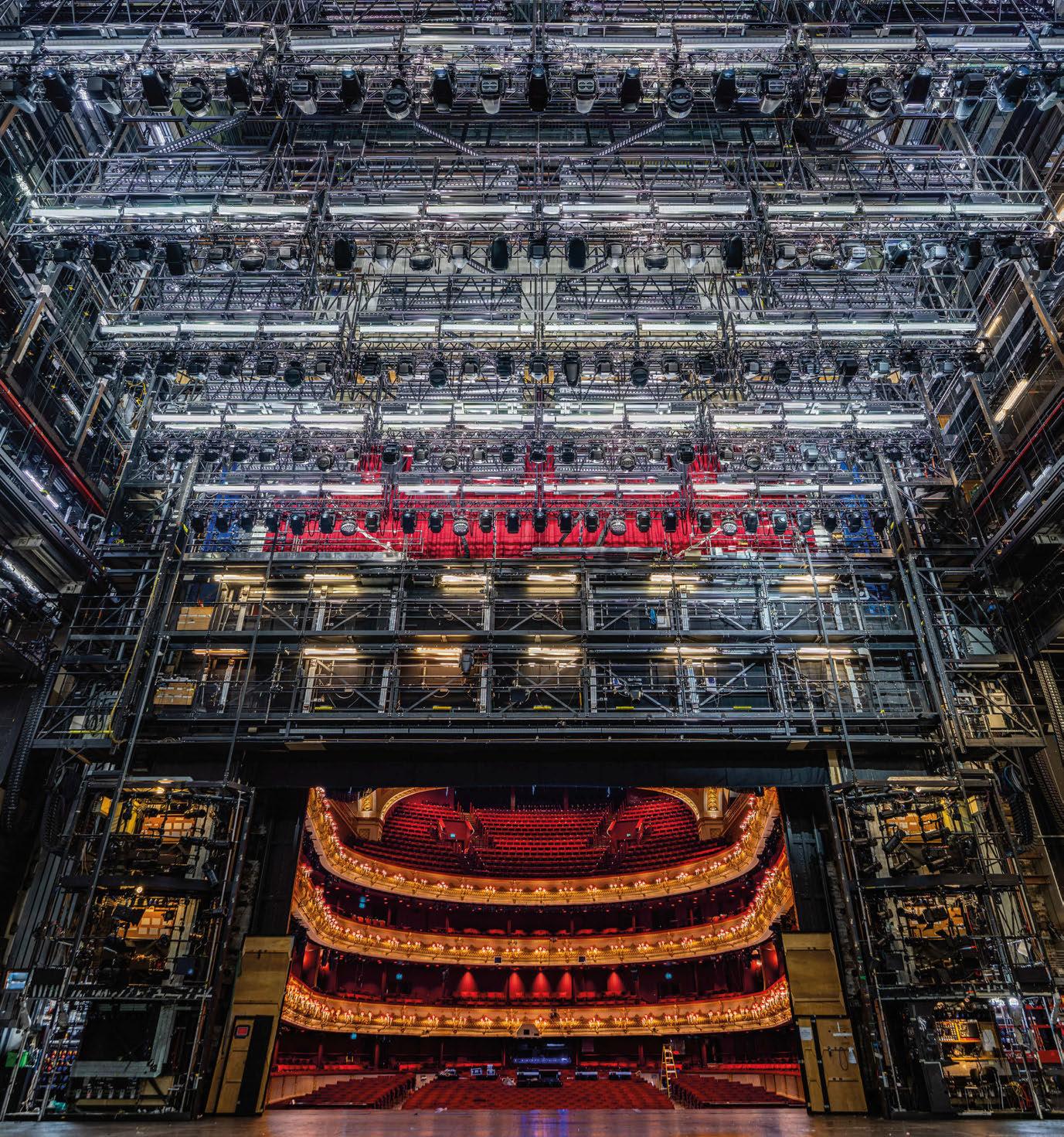
ROYAL OPERA HOUSE THEATRES & CONCERT HALLS

AUDIO & LIGHTING CONSOLES
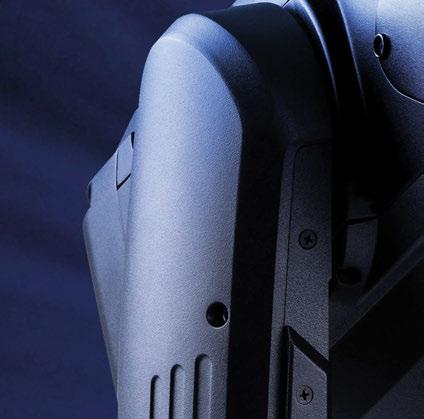
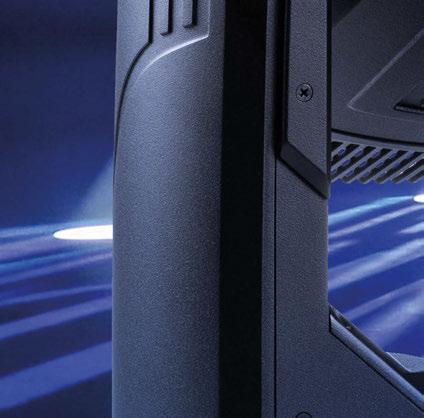
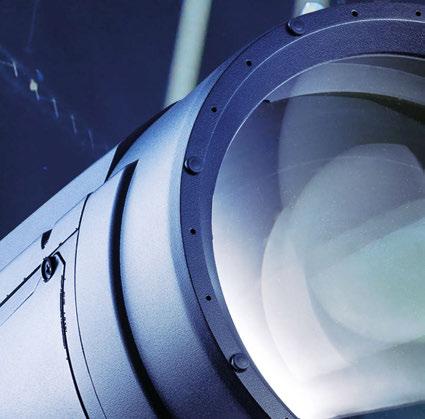
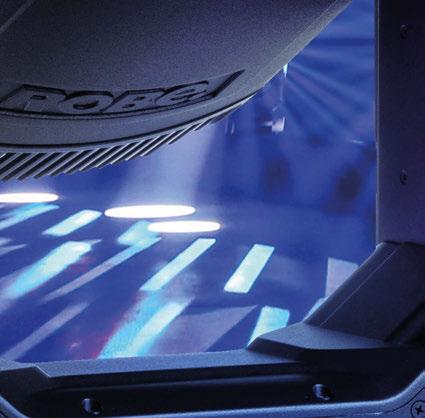
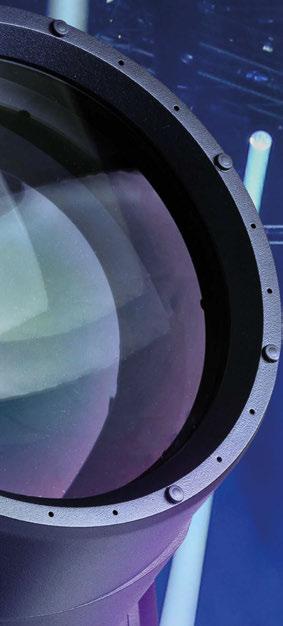
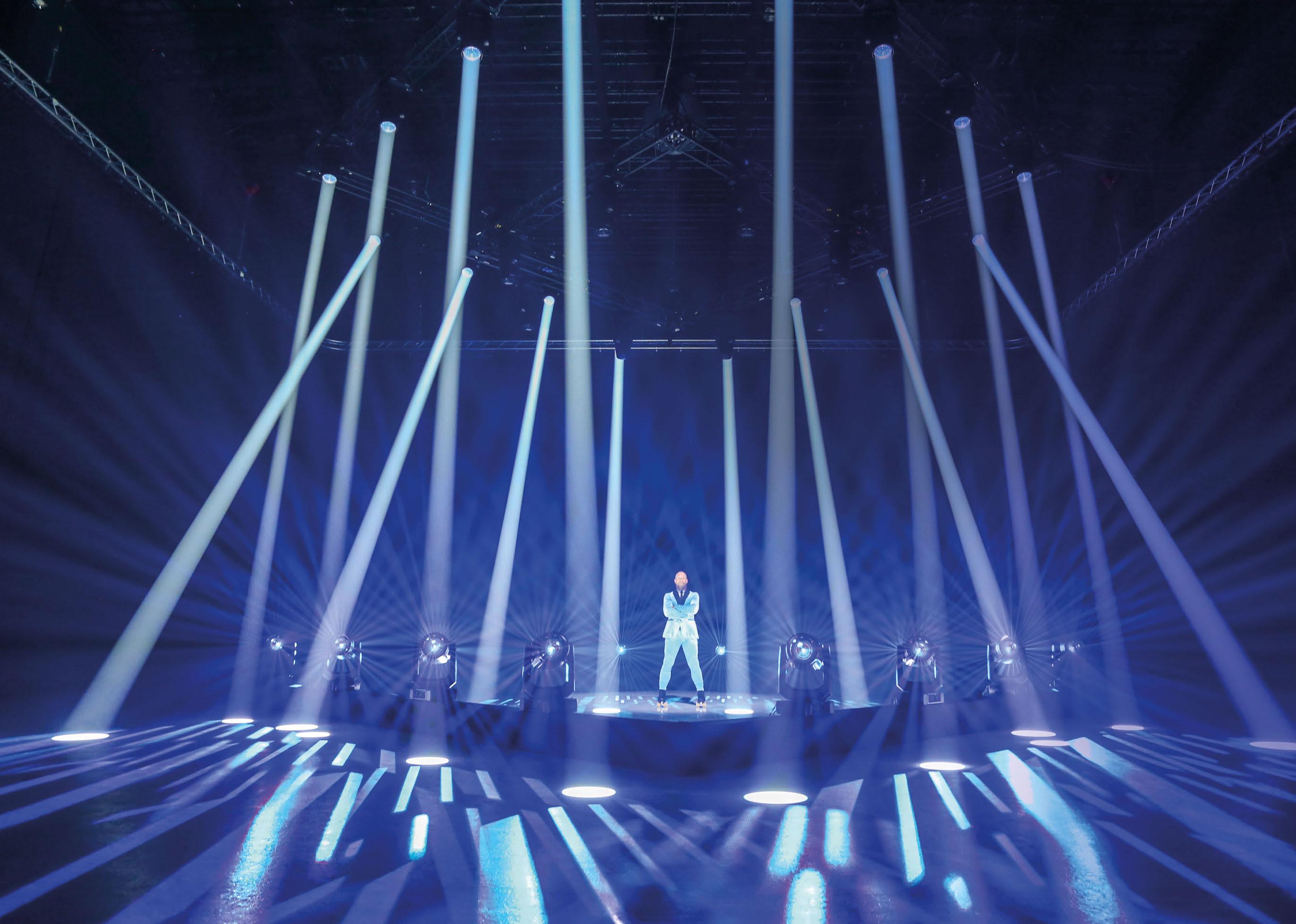
The REBEL PROFILE™ packs power and flexibility into a compact, IP65-rated design for indoor and outdoor use.
Its 600W 6,500K LED engine delivers 22000 lumens for bold beams, crisp gobos, and stunning aerial effects.
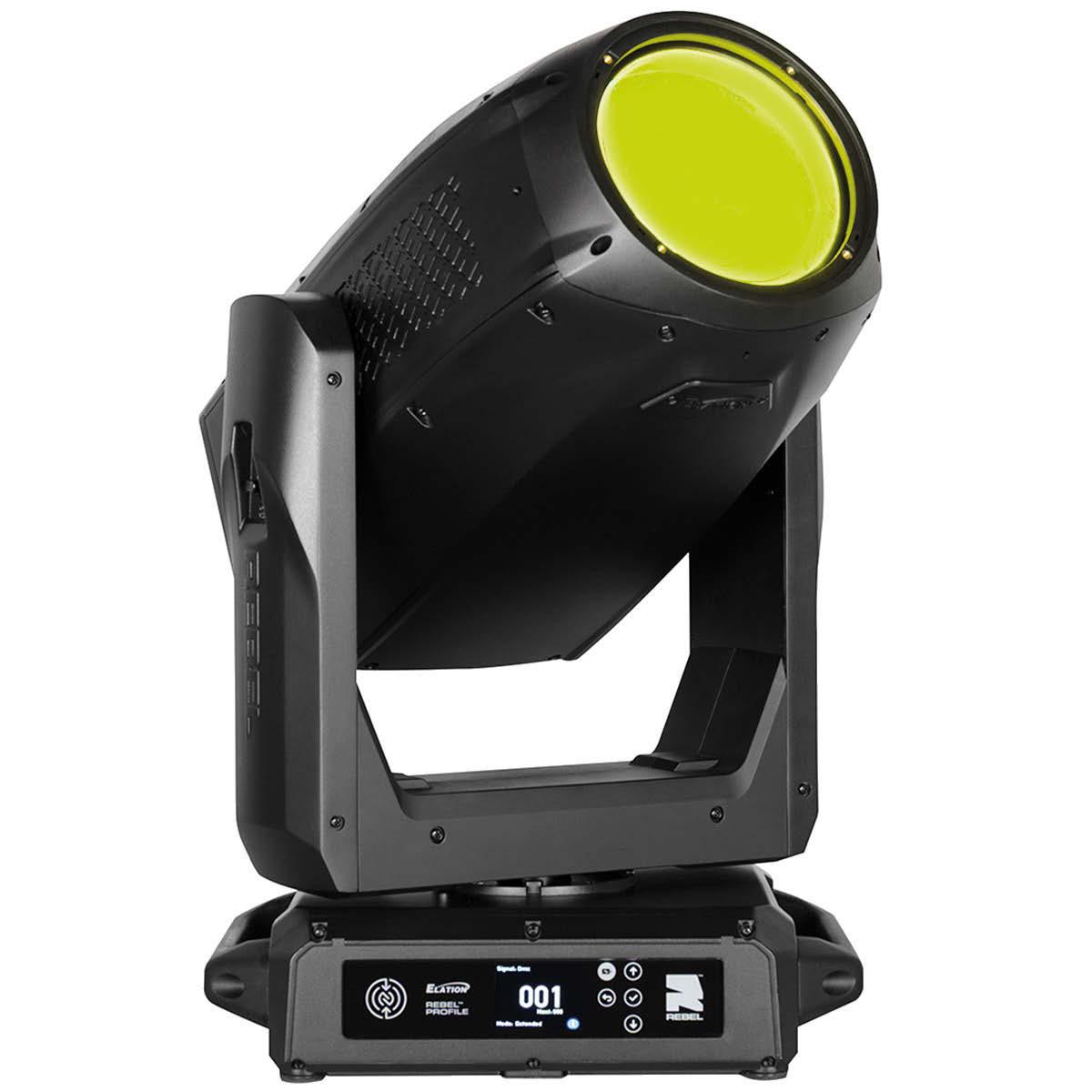
A 3.5° – 51° zoom range and full blackout framing adds versatility for any venue.
Features include 15 glass gobos, animation wheel, dual prisms, dual frost, and a high-speed iris.

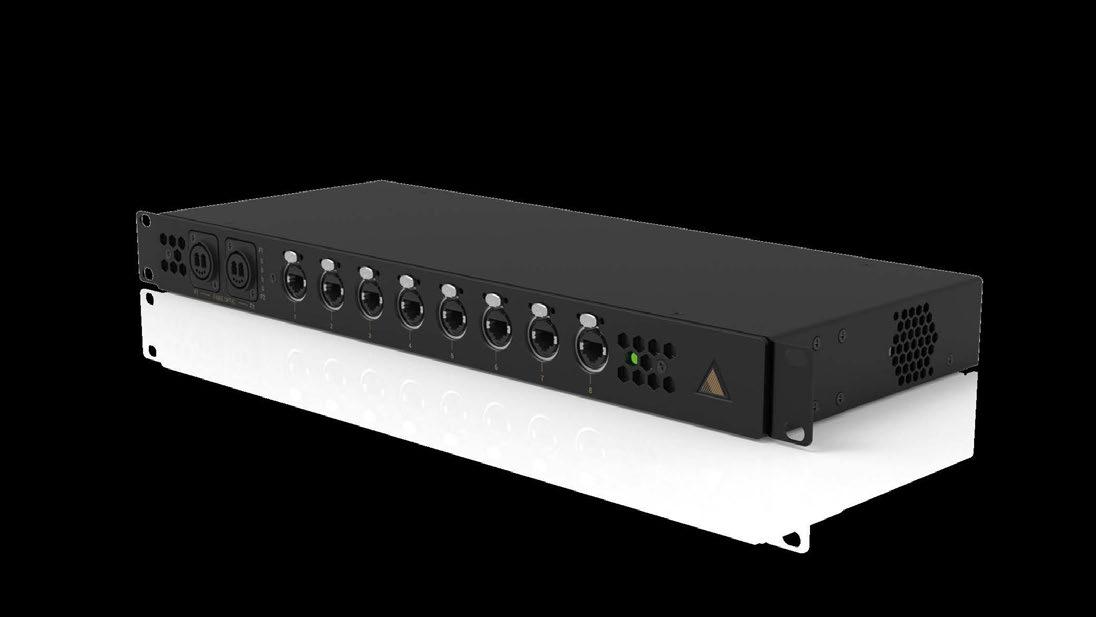

Whether deploying a redundant or primary-only network topology, the MS8.2 Milan network switch is perfectly suited to simplify mobile, installed systems and spatial audio applications.





















MONDO-DR 36.4
MAY / JUNE 2026
ON THE COVER Royal Opera House
Photo courtesy of HOF
EDITOR
Todd Staszko t.staszko@mondiale.co.uk
ASSISTANT EDITOR
Daisy Thorogood d.thorogood@mondiale.co.uk
ACCOUNT MANAGER Cameron Crawford c.crawford@mondiale.co.uk
ACCOUNT MANAGER
Bethany Price b.price@mondiale.co.uk
MARKETING & EVENTS MANAGER Alice Clarke a.clarke@mondiale.co.uk
MARKETING & EVENTS ASSISTANT Charlie Moore c.moore@mondiale.co.uk
DESIGN & PRODUCTION Mel Capper, Jez Reid, Dan Seaton
DIGITAL CONTENT MANAGER James Robertson j.robertson@mondiale.co.uk
EDITORIAL DIRECTOR Peter Iantorno p.iantorno@mondiale.co.uk
CEO Justin Gawne j.gawne@mondiale.co.uk
FINANCE DIRECTOR Amanda Giles a.giles@mondiale.co.uk
CREDIT CONTROL ar@mondiale.co.uk
GROUP CHAIRMAN Damian Walsh
MONDIALE PUBLISHING Strawberry Studios, Watson Square, Stockport SK1 3AZ , UK
Tel: +44 161 476 8340 Fax: +44 161 429 7214
ANNUAL SUBSCRIPTION RATES (7 ISSUES) UK: £30.00 / Europe: £50.00 / Rest Of World: £65.00
Two year rates are available on request. Subscribe online at www.mondiale.co.uk or call +44 (0)161 476 5580 ISSN: 1476 4067
Mondo DR (ISSN 1476 4067) is published in January, March, May, July, September, November and December by Mondiale Publishing Ltd, Strawberry Studios, Watson Square, Stockport, SK1 3AZ, UK
Subscription records are maintained at Mondiale Media Ltd, Strawberry Studios, Watson Square, Stockport, SK1 3AZ, UK mondo@mondiale.co.uk www.mondodr.com www.mondodrawards.com Printed by Buxton Press, Palace Road, Buxton, UK
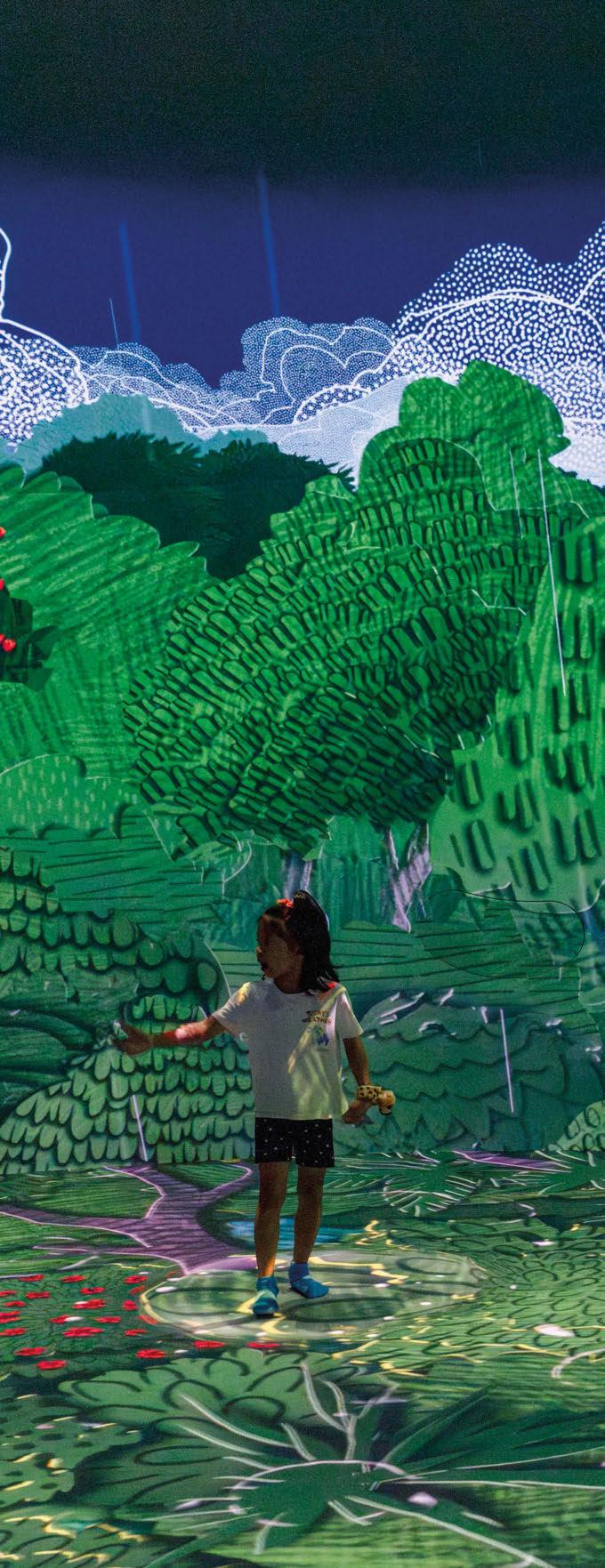
As we plan the editorial content for each edition, we always aim to bring you projects and stories from around the world – and this issue is no different, with an immersive playscape in Singapore, nightclubs in New York and India, and a theme park in Germany, among many, many others.
The cover story comes from behind the stage at the Royal Opera House in London, and we have a huge venue report on the Theatres & Concert Halls sector, full of audio, lighting, and communications upgrades.
This issue’s Big Interview is with celebrated sound designer Gareth Owen, and there are updates from Lightware, LumenRadio and Symetrix, with the latter celebrating its 50th anniversary this year. Elsewhere, the MONDO-DR Awards is fast approaching, with the ceremony set to take place on 17 June during InfoComm. We can’t wait to reveal this year’s winning projects and welcome you to what is sure to be a huge night of celebration. Finally, whether you’re flicking through a physical copy or swiping across it digitally – enjoy the issue!
TODD STASZKO
EDITOR





MAY 28–30
PALM EXPO / AV-ICN MUMBAI, INDIA www.palmexpo.in
MONDO-DR AWARDS LAS VEGAS, USA www.mondodrawards.com JUN 17
MAY 28-31
PROLIGHT & SOUND, GUANGZHOU GUANGZHOU, CHINA
https://prolight-sound-guangzhou. hk.messefrankfurt.com
MEDIATECH JOHANNESBURG, SOUTH AFRICA www.mediatechafrica.co.za JUN 30-2 MAY
JUN 3-4
INFOCOMM LAS VEGAS, USA www.infocommshow.org JUN 17-19
ABTT LONDON, UK
https://www.abtt.org.uk/abtt-theatre-show


JULY 15-17 JULY
INFOCOMM ASIA BANGKOK, THAILAND www.infocomm-asia.com
SEPT 6-8
PLASA SHOW LONDON, UK https://plasashow.com
SEPT 11-14
IBC AMSTERDAM, THE NETHERLANDS https://show.ibc.org
JULY 28-31
PRO AVL INDONESIA EXPO JAKARTA, INDONESIA https://proavl-indonesia.com
SEPT 14-16
CHURCH FACILITIES EXPO BIRMINGHAM ALABAMA, USA https://www.churchfacilitiesexpo.com
SEPT 2-4
INTEGRATE SYDNEY, AUSTRALIA www.inter-bee.com
SEPT 16-18
INFOCOMM INDIA MUMBAI, INDIA https://www.infocomm-india.com


No compromise IP65/66 high-output low footprint
LED WashBeam and FollowSpot

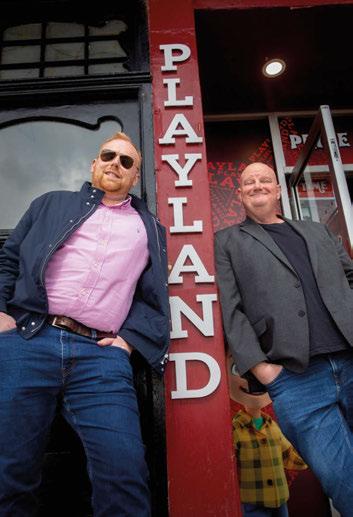
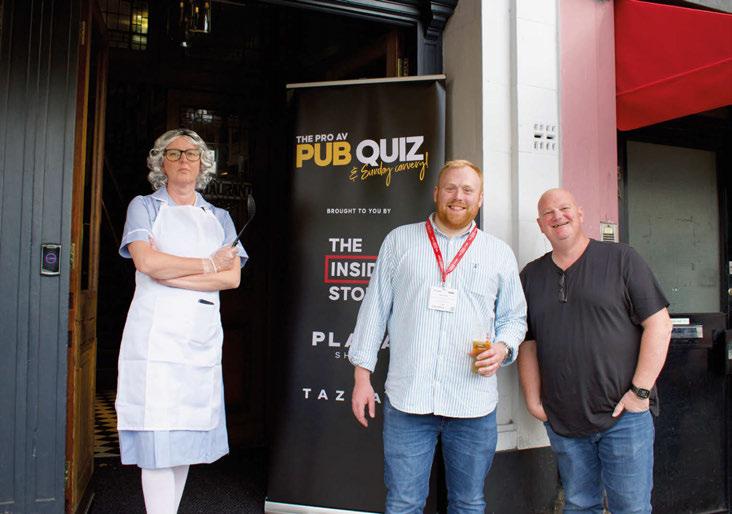
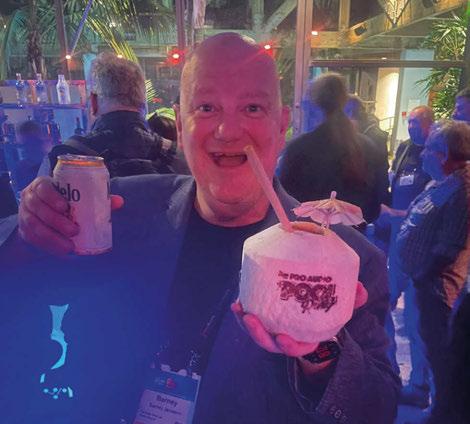
Full-service marketing agency The Inside Story has grown from a one-man operation into a multifaceted company during a decade in the business. Here, its founder Barney Jameson and newly appointed Managing Director, Mike Rodel discuss the ins and outs of a busy agency that puts the client’s vision front and centre in all its storytelling while having as much fun as possible in the process.
When Barney Jameson launched The Inside Story on April Fool’s Day in 2016, he knew exactly what he was doing. The symbolism was funny to him, given that the company was a leap of faith into uncharted waters for the former journalist and publisher.
Having spent many years reporting on the Pro AV industry, he often talked to the most innovative people, and noticed that conversations would often end with a question directed at him:
“Can you take a quick look at this campaign?”
It happened so often that he suspected there was the potential for a business to grow out of those informal conversations, as he put it, “I figured there might be something in it… the potential of a company.”
With his wife heavily pregnant and the future uncertain, Jameson took a chance, and what started off as a small consultancy and PR firm has grown organically over time into a multiskilled team able to help brands amplify their voice in myriad ways.
“We mostly work with manufacturers, and after gaining an understanding of what their customers care about most, we then help tell that story effectively across every available channel,” said Jameson. “This can be across company branding, PR, video and animation, organic and paid-for social media campaigns as part
of an overall digital strategy, and website creation via our sister company, The Outsourcing Agency – and every department is led by someone who specialises deeply in their craft.”
The early years were shaped by Jameson’s background in pro audio journalism, which meant that The Inside Story naturally leaned heavily into audio‑focused work and PR.
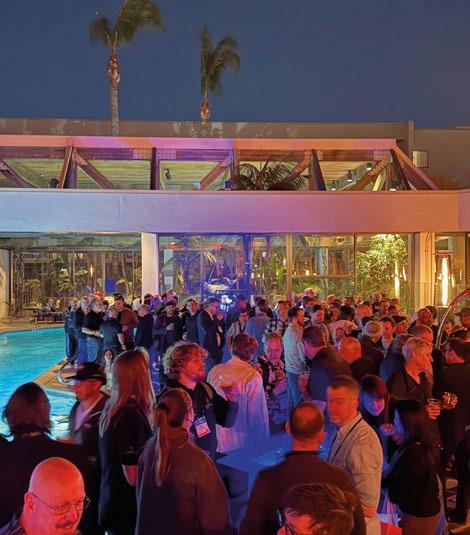
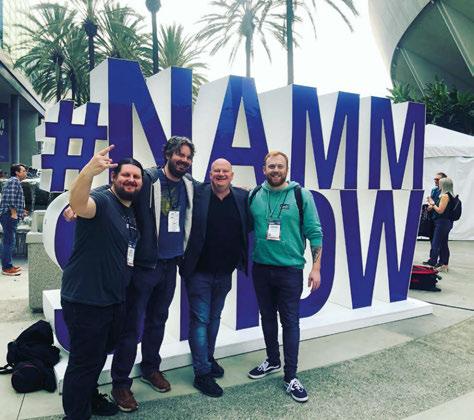
“The first major milestone was working with The NAMM Show and developing the pro audio side of it,” reflected Jameson. “That became the catalyst that transformed an idea into a real business. NAMM’s leadership agreed to let me work closely with them to build out the pro audio hall and demo spaces, which continues to grow year on year.”
That partnership and its early success gave the company its first major validation, and as demand for its services grew, Jameson realised he needed help. “PR was exploding and taking up too much time, and I really needed someone to take that side of the business and thrive,” said Jameson, who turned to a familiar face in his former colleague, journalist James Ling.
Similarly, Jameson hired John Hull to oversee the company’s video work, and Mike Rodel, now Managing Director, was brought in for his digital marketing and social media expertise. “The formula is
simple,” said Jameson. “First, I have to prove that the demand is there for a service, and then I hire someone better than me to run it and step aside to leave them to it.”
After the company’s first few years of operation, the future looked positive with clear growth, but in 2020 when the pandemic struck, Jameson knew that they – along with the whole industry – would be in for a period of immense hardship.
“Like the rest of the live events industry, the company was hit hard,” he reflected. “It was hell on earth, really, as the industry just collapsed almost overnight.”
With Rodel being the company’s digital expert, he and Jameson continued working with clients to keep their online presence going with livestreaming, while the rest of the team was furloughed.
During the We Make Events RED ALERT campaign, the team documented the boat that made its way down the Thames past Westminster, which was a poignant day for the industry, and with signs that things were beginning to open up a little more, Jameson knew that things would return to normality once the trade shows were confirmed and the industry could reconnect in person.
“When everything reopened, this company was in a very different place,” said Jameson. “At ISE, I recall walking across the upper walkway knowing that our team was out there in the different halls taking care of things.
I didn’t have to rush to a meeting; I had time, and that was humbling because it made me realise that we had come a long way and thankfully made it through the most difficult period imaginable.”
With Rodel stepping into the role of Managing Director in February this year, the company entered a new chapter. Rodel, who oversaw the growth across the social and digital department, sees the company shifting more towards having deeper integration with clients.
“Instead of having a traditional agency model with a ‘this budget buys this output’ relationship, we position ourselves as an extension of clients’ internal teams,” said Rodel. “Marketing has become more complex and competitive - everyone had to sharpen their tools when they came back after the pandemic. The competition can be a good thing for everyone –it pushes people to be better and more accountable.
“Another element is that brands can no longer rely on doing one or two things well; they need a flexible, multidisciplinary approach.”
Rodel also emphasised the importance of maintaining a human-led culture both from a company perspective, and the industry as a whole.
“We are a human-led, service business – we don’t sell anything,” he continued. “So, we must be happy working to those parameters and be supported in that environment. My focus is to have that competitive edge and help our clients to have the same.”
Both Jameson and Rodel have observed major shifts in branding exercises across the industry over the past decade, with the barrier to creating content being lower than ever becoming one of a few eyeopening developments.
“This has been brilliant for smaller brands that don’t have dedicated marketing teams, giving them a way to tell their story and get it in front of the right people,” said Rodel.
“However, it also makes things a little bit more crowded. For content to have value, it needs to be able to cut through a lot more noise now –and one of the key elements to achieve this is to have authenticity.”
It is not only the digital world that is crowded; Rodel noted that the booths that offer genuine experiences on the trade show floor are the ones that stand out amid myriad product displays.
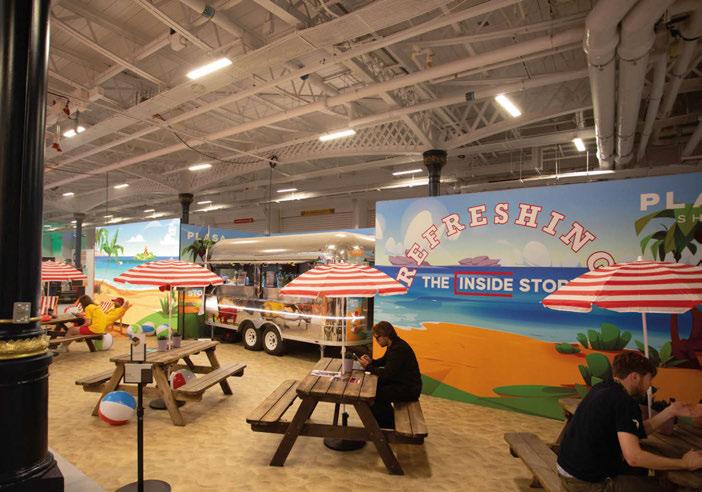
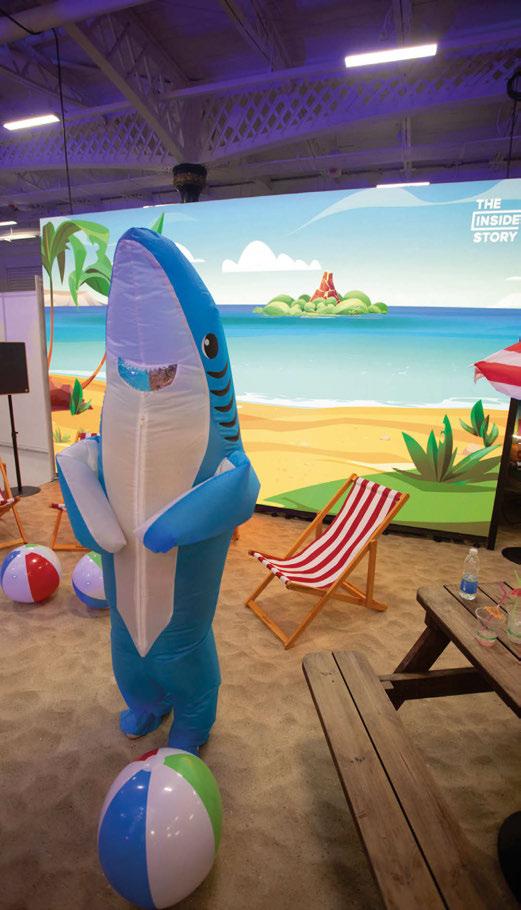
“People will always be hungry for real, in-person engagement, and because the live events and touring market came back so much stronger than people expected after the pandemic, there’s been a clear shift towards making the trade show experience more memorable.”
Jameson believes that creativity within marketing and branding is more important than ever, with economic pressures and geopolitical instability meaning that companies must often “do more with less”, which forces innovation.
“As challenging as it’s been, it’s pushing people to be far more inventive and creative in the campaigns they create,” said Jameson. “From a marketing perspective, for a long time in the industry, you would see
the same style of adverts appear again and again, but now companies are starting to rise above it and succeed because they’re doing something more interesting; that’s the kind of thing I find exciting.”
Despite the huge surge towards digital platforms over the past 15 years, Rodel and Jameson both see the traditions of print media forming a valuable part of company branding. “Having once been a publication owner, print media holds a special place in my heart,” said Jameson. “It still has great relevance, but for campaigns to be successful they need to be broader and use print media as part of a unified campaign.”
Rodel agrees. “I think there’s an element of credibility that comes with being in the right publications, but any kind of marketing activity – be it social, blogs, print ads, online or print articles – must be multipurpose. If a case study on a company website is being covered in a magazine, that provides another angle for it to be shared on socials, and it can be utilised on the trade show booth as a link from the
product to real-world solution – it’s another touchpoint in a cohesive story.”
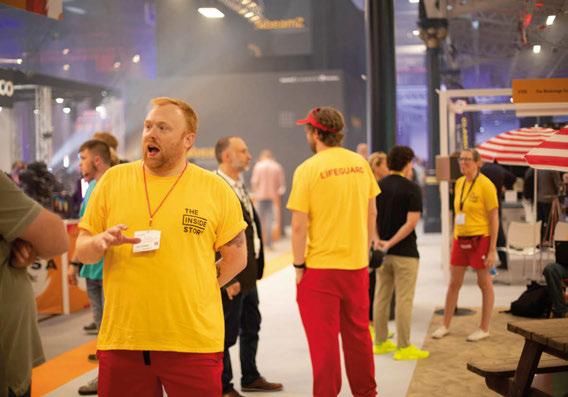
While storytelling is at the heart of The Inside Story, it’s modus operandi is based on having fun. As a core part of the company culture, Jameson and Rodel embrace social connection and emphasise that the industry runs on relationships. “Everything is built on trust and relationships. For brands, the real value lies in recognising that their people are marketers in themselves,” said Rodel “The moment they fail to recognise that, they risk losing the trust those relationships are built on.”
For Jameson, having fun in an essential ingredient to success. “Socialising and having fun are crucial to who we are,” he concluded.
“I attribute a lot of that to DiGiCo, because before I launched the company, I saw what they were doing in the market and the way that they always put that first.
“I really respected and admired it, so we’ve worked hard to try to do the same... not look like we’re working too hard!”
www.gettheinsidestory.com
“AS SOUND DESIGNER, I TAKE OWNERSHIP OF THE SONIC IDENTITY OF THE SHOW. IN MUSICAL THEATRE, THAT STARTS WITH HOW THE SCORE, VOCALS, AND DIALOGUE LAND IN THE ROOM.”
GARETH OWEN Sound Designer

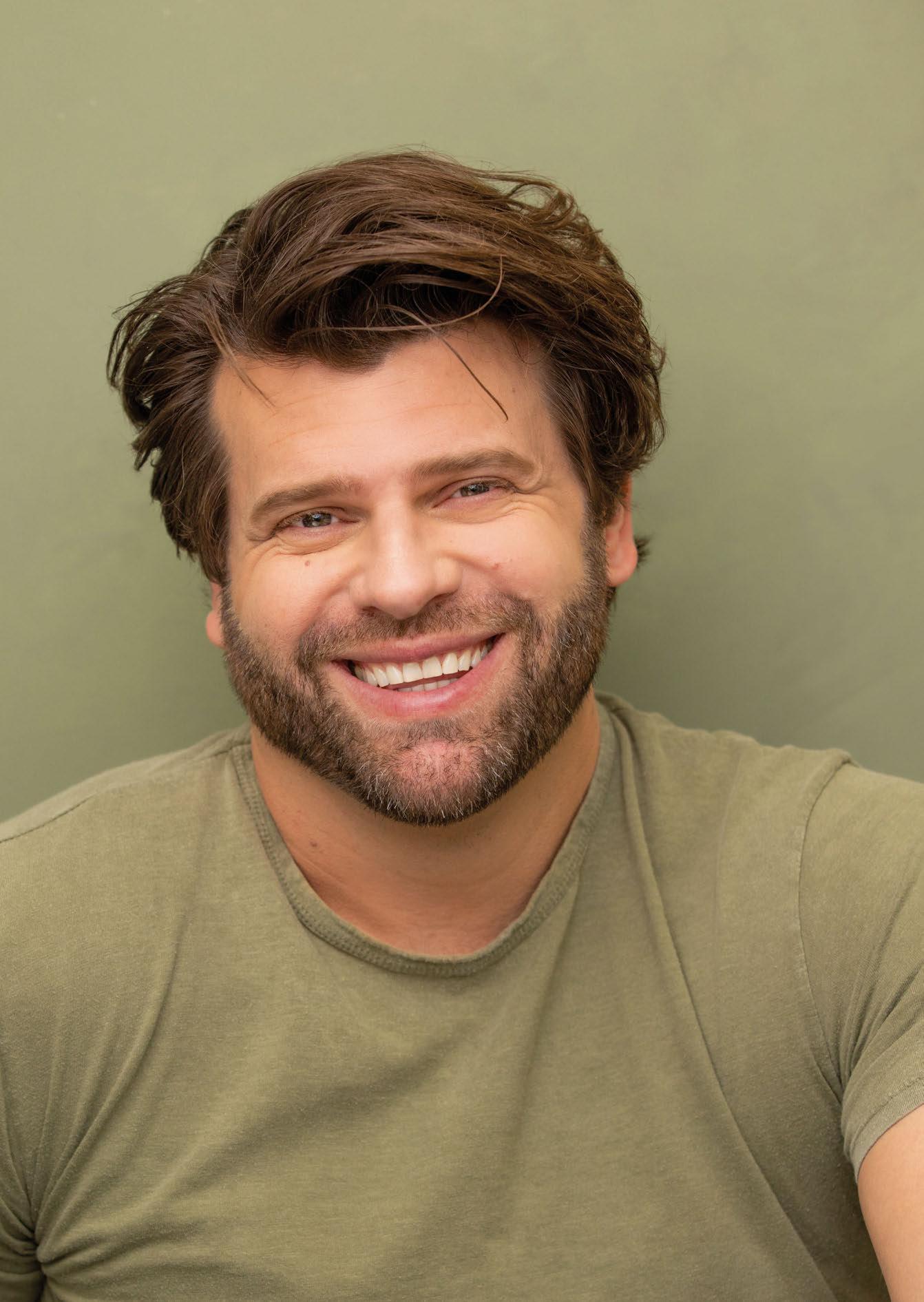
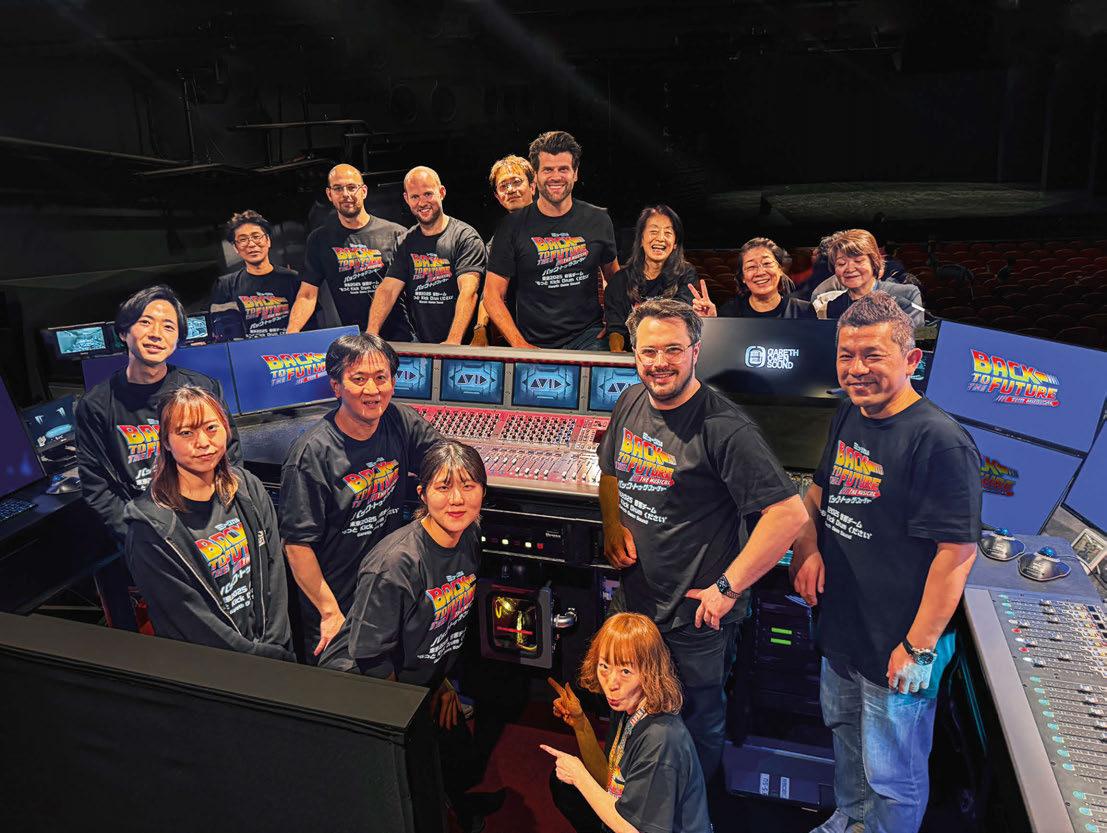
Gareth Owen has spent more than 25 years changing the way musical theatre sounds. In that time, he has helped move the craft from a largely invisible technical discipline into one of the defining creative forces in modern production. Earning him a collection of Tony and Olivier Awards, his work is heard across Broadway, the West End and beyond.
Owen’s sound design has shaped the audio identity of some of the biggest musicals, from Come From Away, & Juliet, and MJ the Musical, to Back to the Future: The Musical, Hell’s Kitchen, and the newly opened Paddington: the Musical. Across his career, he has pushed immersive audio into the theatrical mainstream and helped develop technologies that are now becoming standard tools across the industry.
Yet, for all the technical firsts and industry accolades, Owen remains rooted in a straightforward principle.
“Probably the most important thing I ever learned about theatre sound is that you have to hear the words – not just some of them, but all of them,” he began, noting that this statement sits at the core of his craft.
The sound designer learned this lesson early. During his early work at Orbital Sound, the company was responsible for an enormous slate of Christmas pantomimes each year, designing, supplying, and crewing around 30 productions in a compressed timeframe. Each show functioned as a miniature musical, with varying budgets, varying ambitions and, inevitably, varying outcomes.
Whenever something went wrong, Owen and Orbital Project Leader, Luke Hyde, were often the ones called in to fix it. “Every time it would be the same problem: you couldn’t hear the words. Almost every time the designer in question would have got too fancy, trying out all sorts of clever tricks but missing the fundamentals. Sound design 101: if you can’t hear the words, you’ve fundamentally failed.”
That philosophy has remained central throughout his career, even as the scale of his productions has expanded dramatically.
Before theatre became his professional home, Owen’s formative years were spent in live music. After starting out in nightclub production, he moved into touring and festival work with SSE, building experience in the oftenchaotic world of rock and roll.
The practical lessons of speed and adaptability were obvious, but the human lessons proved just as valuable. “In rock and roll I was surrounded by all sorts of people from all different walks of life.”
Touring, he noted, taught him coexistence under pressure. “You are crammed into close confinement with a lot of other people, many of whom you just met, and given a load of stressful jobs to do, often at odd times of the day and night!”
That experience shaped the collaborative instincts that have become one of his defining professional traits, which today can be seen when Owen joins any new project as sound designer. When he enters a production, his first conversations are often less about loudspeakers and signal flow and more about inspiring confidence in the team. “For the kind of shows I generally do, it’s usually the composer I have to reassure. Often, I work with veterans of the music industry – the kind of people for whom music is their whole life – who are solidly at the top of their game. These kinds of people have very little tolerance for bad sound, and they don’t take BS well. I need to set their minds at ease and make sure
they know they are in safe hands.”
Once that relationship is established, the rest of the creative process tends to flow more smoothly. Directors, he noted, are often relieved to know that the musical and sonic integrity of the production is being handled by someone who speaks both the language of theatre and the language of music.
The role of a modern theatrical sound designer extends far beyond effects and reinforcement. “As sound designer, I take ownership of the sonic identity of the show. In musical theatre, that starts with how the score, vocals, and dialogue land in the room.”
He continued: “I’m responsible for the full system. This also includes managing sound system reliability, RF stability, gain structure, and redundancy so the performance is repeatable under live conditions.” This repeatability is especially relevant, as theatre is not a one-night concert. It is a system that must function eight times a week, often for years.
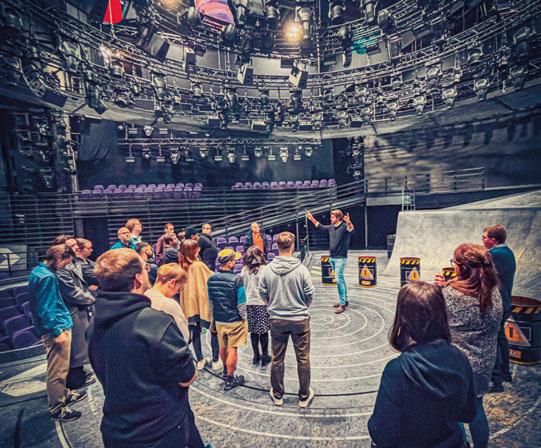
On stage with Gareth Owen
Owen’s recent work on Paddington: the Musical at London’s Savoy Theatre offers a good example of how theatrical sound design requires both creativity and engineering skill. On the surface, the challenge was to make a bear talk, sing, and feel convincingly present on stage. In practice, it required one of the most sophisticated sound systems ever deployed in a West End theatre. Because Paddington’s physical performer and vocal performer are separate, Owen and his team had to create a seamless illusion. Using d&b Soundscape alongside zactrack performer tracking, the vocal is dynamically localised to the bear’s position anywhere on stage. A dedicated speaker grid embedded in the stage floor further anchors the sound to the character’s precise location. The technical solution’s success lies in its invisibility. Audiences do not think about object-based spatial rendering or tracking algorithms. They simply believe the bear is speaking.
Owen’s team also developed systems to match the acoustic signature of an offstage vocal booth to the reverberant onstage environment, ensuring the voice blended naturally with the rest of the cast. Another custom process was created to suppress servo motor noise from the animatronic bear head before it could bleed into nearby microphones.
If Paddington represents one kind of technical challenge, Andrew Lloyd Webber’s Cinderella presented another altogether. Staged at the Gillian Lynne Theatre, with its famous rotating auditorium, the production demanded a rethink of how object-based sound could function in a space where the audience itself was in motion.
Owen’s solution was the first object-based sound system designed specifically for a rotating auditorium. It required the localisation engine to adapt continuously as the listening geometry changed, preserving spatial coherence regardless of where the audience was facing at any given moment.
The system had to remain musically expressive, dramatically transparent and operationally robust throughout an extended commercial run.
Even for someone accustomed to solving unusual problems, certain productions stand apart. When asked about his most complicated jobs, the designer cited Starlight Express at the Troubadour Wembley Park Theatre. “Forty cast members skating through the audience while singing, all wearing in-ears, with the
“WHEN I BUILD SOLUTIONS, THE GOAL IS NOT MORE TECHNOLOGY; IT’S LESS RESISTANCE, FASTER ITERATION, TIGHTER INTEGRATION, AND FEWER FAILURE POINTS.”
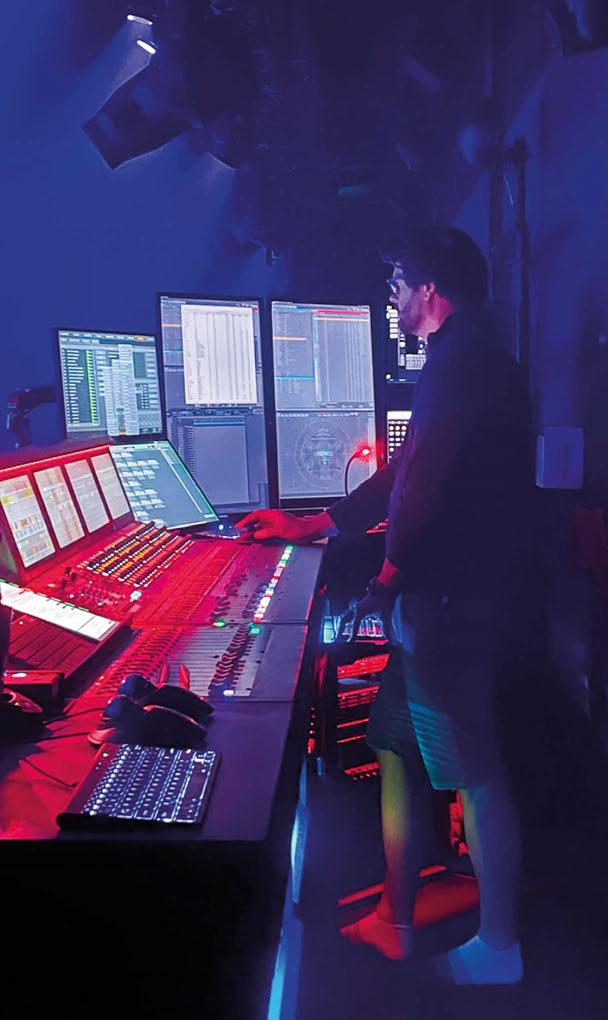
Left: Come showtime, Owen monitors for failure points rather than admiring the result, always ready to act if required.
sound coming from where they were standing, or skating. That one gave me a headache for months.”
Transforming theatre tech
Owen’s parallel career as a technology entrepreneur has become an increasingly important part of his influence on the industry. Through Show Control and Fourier Audio, he has helped reshape the infrastructure available to sound professionals. “Most people design within the limits of the tools. If the tools don’t support the intent, the idea gets compromised. Building systems changes that – it removes the separation between idea and execution.”
This mindset has allowed him to move beyond adapting existing products. He creates tools that directly address the needs of modern theatrical production. “When I build solutions, the goal is not more technology; it’s less resistance, faster iteration, tighter integration, and fewer failure points.”
That philosophy is evident in Fourier Audio’s transform. engine, a dedicated platform for running studio-grade plug-ins in live environments, as well as in Show Control’s software developments, including EnSnap, created in collaboration with d&b.
When discussing manufacturer relationships, what matters for Owen is the alignment of priorities. “The relationships that matter are the ones where engineering and application are in direct dialogue. For example, companies like Avid, Shure, and DPA all sit in critical parts of the signal chain. When those systems are designed with real-world use in mind, you get stability and control. When they’re not, you spend your time working around the issues they create.”
His work with d&b on Show Control’s EnSnap emerged from a practical need rather than a marketing opportunity. “It wasn’t conceived as a feature for its own sake; it was a way of bringing snapshot-level control and recall into a system that was already central to the show.”
“That partnership is useful because it aligns priorities. d&b are system-level thinkers. They care about predictability, deployment, and repeatability at scale. EnSnap fits into that by tightening how control data, system states, and show
logic interact.” When Fourier Audio was acquired by DiGiCo’s parent company AudioTonix in 2023, it was a significant moment commercially and strategically. “We met with all sorts of different people who were interested in acquiring us in the early days and James Gordon, CEO of Audiotonix, just made sense. He’s the kind of guy who just does what he says he’s going to do. There are less of those people around than you might think.”
The audio design of tomorrow
When asked about the future of theatrical sound, Owen replied: “The actual frontier is system coherence across the entire signal chain.”
AI will certainly play a role, he added, particularly in areas such as dialogue tracking, gain management, and anomaly detection. But its role will be tightly constrained by the demands of live performance.
“It augments the operator, it doesn’t replace them, at least not yet,” he affirmed. Owen believes that spatial audio, meanwhile, still faces a more fundamental challenge in the question of its consistency. Until immersive systems can reliably translate intent across different venues and deployments, true standardisation will remain difficult.
The larger shift, he believes, lies in moving away from console-centric workflows toward distributed processing, networked control and software-defined signal chains. This same thinking is already changing the way productions are designed.
“More productions are treating audio as infrastructure rather than a collection of cues. Networked transport, distributed processing, tighter integration between departments – that enables consistency across venues and casts without rebuilding the show every time. It also shortens iteration cycles in rehearsal because the system can absorb change instead of fighting it.”
Another “pressure point” for the audio technology industry, as Owen puts it, surrounds labour and training. “The skill ceiling is rising faster
than the pipeline of people who can operate at that level,” he said. “You end up with powerful systems that are under-utilised or misused, which undermines reliability.”
He believes that the trajectory is positive, but only if the industry keeps prioritising clarity, repeatability, and control over novelty. “The moment those slip, the technology starts working against the show rather than for it.”
As the curtain rises
Given the scale and ambition of his productions, it’s easy to imagine a production’s opening night as an emotional high for the sound designer. Owen describes it differently: “It’s not a rush as such, more a compression.” He continued: “By opening night, everything collapses down to whether the design holds under real conditions. You’re standing at the desk (usually pacing) tracking risk far more than emotion. Cast behaviour, gain before feedback, how the room is reacting and sounding with a full audience, whether the mix translates consistently across the space – particularly where the critics are sitting!
“There’s a level of detachment because the work is already done. I’m not scared, but I am waiting for something to go wrong. If something breaks, it’s not a creative problem anymore, it’s a system problem.”
The designer explained that in this moment, he’s listening for failure points, not admiring the result, focusing on sound intelligibility, balance, transitions, and timing. “Does it read cleanly, does it stay stable, what was that click, can it recover if something (or someone) behaves abnormally? At the same time, there’s a quiet confirmation when the show lands – a moment of ‘nailed it’, if you will. When dialogue carries without effort, when musical moments hit without the design team needing to intervene, when the audience response aligns with what you intended; that’s the signal that the design has done its job.”
After that, it becomes about consistency, he stated. “Opening night

isn’t the finish; it’s the start of repeatability, hopefully for many shows to come.” Owen’s journey from living in a tent in a band’s back garden to becoming one of theatre’s most respected sound designers offers a compelling narrative, but he resists romanticising it. “The starting point doesn’t matter. The operating model does. The people who progress are the ones who build repeatable standards early and stick to them under pressure,” he said. He reiterated the importance of this statement when asked to conclude by sharing what advice he would give those entering the industry, looking to glean inspiration from his accomplished career. “Reliability beats flashes of brilliance. That’s the first lesson. Theatre is a long run, not a single mix. If you can deliver the same result consistently, you become useful. If you can’t, you become risky. People hire against risk.”
The second and third lesson from Owen urges professionals to ensure they have an in-depth knowledge of any technology they’re working with. “In sound design, taste is simply not enough. You need a technical baseline that doesn’t collapse when the variables change. Alongside this, you also must understand systems, not just tools.
“Don’t anchor your thinking to a console or a plug-in. Learn signal flow, timing, latency, control layers, and failure modes. That transfers across productions and keeps you adaptable as the technology shifts.”
Next, he explained, proximity to decision-making matters.
“Get into rooms where choices are being made, not just executed. That’s where you learn how sound supports narrative, not just how to make something sound good in isolation.” Finally, and as Owen said, “probably most importantly,” anyone looking to work successfully in theatre must “make sure people actually want to sit in a dark room for months on end with you!”
www.garethowensound.com
“RELIABILITY BEATS FLASHES OF BRILLIANCE. THAT’S THE FIRST LESSON. THEATRE IS A LONG RUN, NOT A SINGLE MIX. IF YOU CAN DELIVER THE SAME RESULT CONSISTENTLY, YOU BECOME USEFUL. IF YOU CAN’T, YOU BECOME RISKY. PEOPLE HIRE AGAINST RISK.”
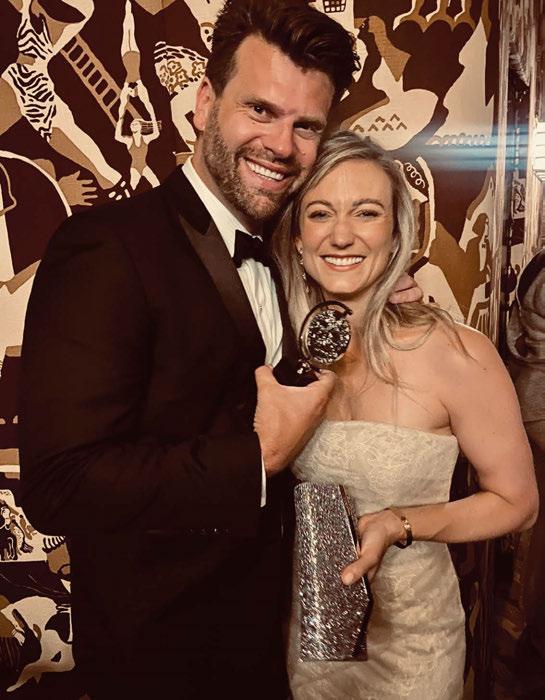
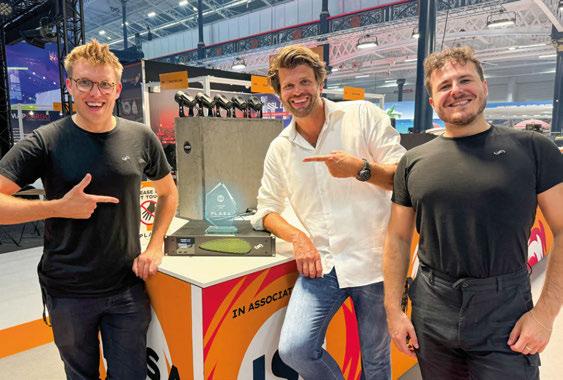
Left: Owen with his PLASA Innovation Award, honouring Fourier Audio’s transform.engine.
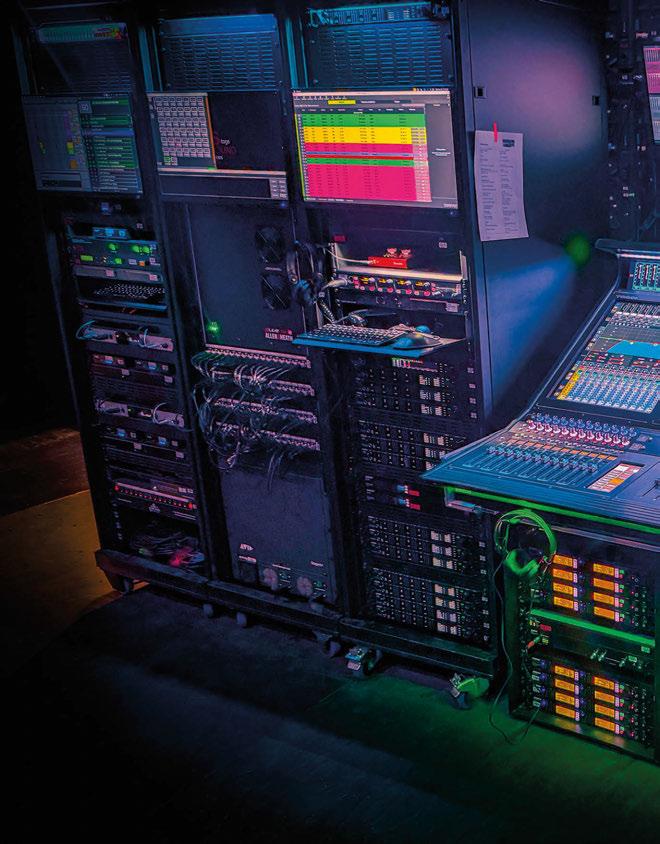
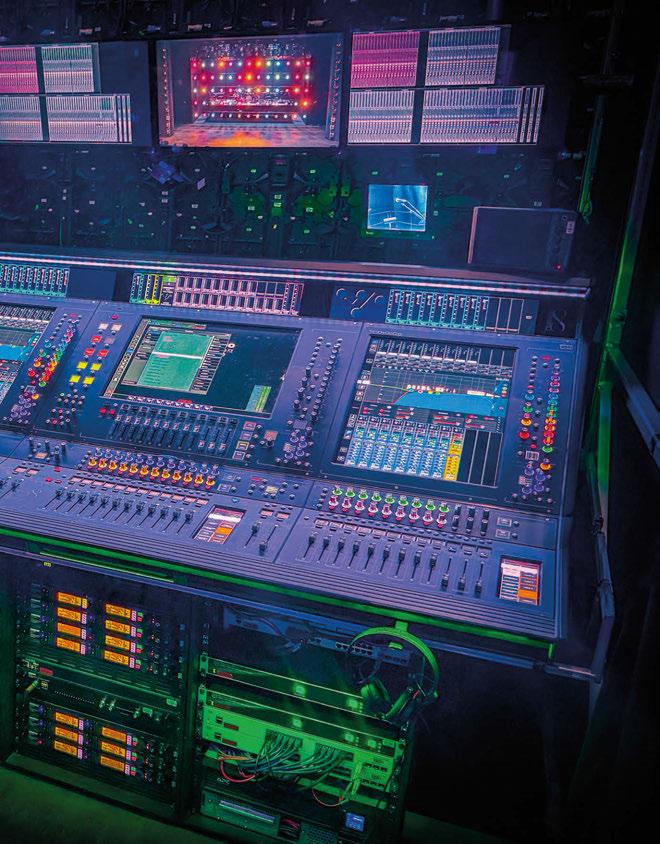
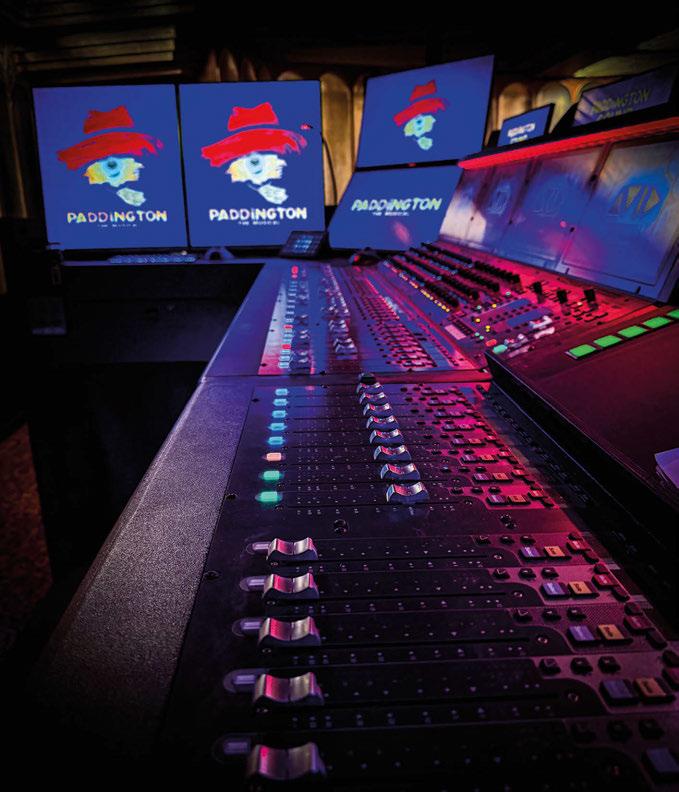
Below: The mixing desk for ‘Paddington: The Musical’.
Upgrades and enhancements at seated performance venues around the world.
COMPANY: Meyer Sound
LOCATION: Cincinnati, USA
Photo: Kelly Settle
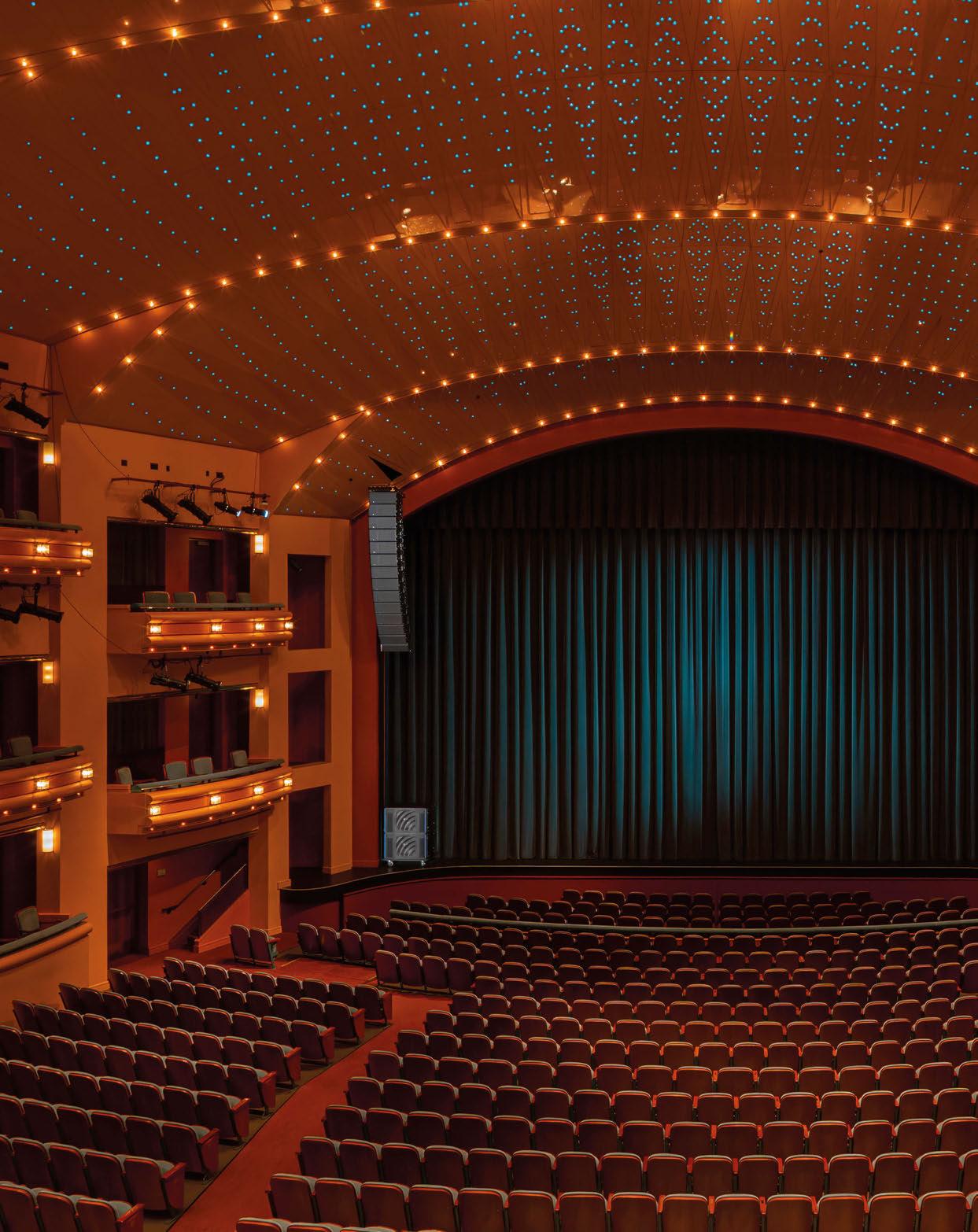
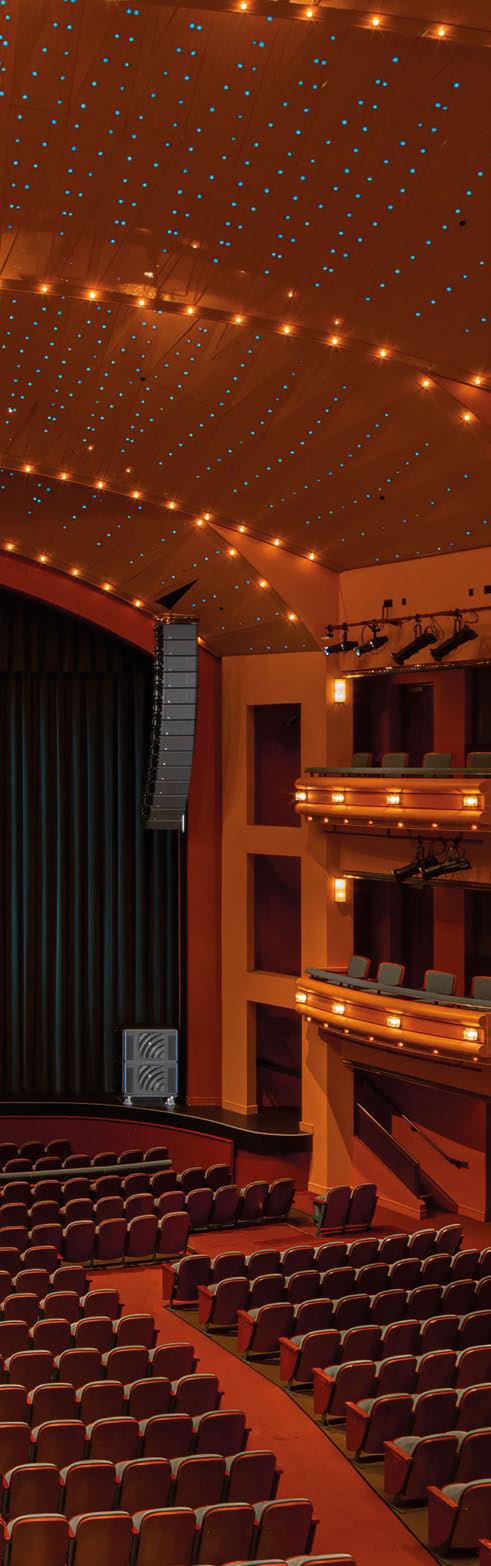
The Aronoff Center for the Arts in downtown Cincinnati has upgraded its main performance space with a new Meyer Sound LEOPARD system in its 2,700-seat Procter & Gamble Hall. Designed and integrated by Ovation Audiovisual, the installation builds on the venue’s 30-year relationship with Meyer Sound, delivering uniform coverage and the flexibility that is now typically demanded by today’s Broadway tours and high-impact productions.
Opened in 1995, the Aronoff Center serves as Cincinnati’s primary Broadway stop while also hosting concerts, symphony performances, ballet, and special events. As the home of First Financial Bank Broadway in Cincinnati, presented by TriHealth, Procter & Gamble Hall regularly welcomes national touring productions with exacting technical expectations. The venue must support dialogue-driven musicals, high-energy concerts, and orchestral programming –often within the same week – requiring equal emphasis on clarity, headroom, and uniform coverage across all seating areas. The hall originally opened with a Meyer Sound system that served reliably for three decades. With advancements in loudspeaker technology and networked processing, the organisation elected to modernize while building on that legacy. “We knew we wanted to move to a line array to get more even coverage,” explained Aronoff Center Audio Engineer Mike Meuche, noting that coverage was only part of the equation: “The previous system was more suited to light reinforcement and lectures. Anytime we had anything louder coming in who wanted to push upward of 90 or 100 dB, we were renting a system – and that took significant time to put in.”
The hall’s multi-tiered seating geometry presents distinct coverage challenges, particularly in the upper balcony. The upgrade provided an opportunity to apply modern modelling and system design tools to refine tonal consistency throughout the space. The new system
is based around 28 LEOPARD compact linear line array loudspeakers, supported by eight 900-LFC and four 2100-LFC lowfrequency control elements and three ULTRA-X82, one ULTRA-X80, and two ULTRA-X40 loudspeakers as fills.
Everything is driven by the Galileo GALAXY Network Platform, with support for Milan networking to accommodate touring and in-house workflows.
Ovation extensively modelled the space using Meyer Sound’s MAPP 3D system design and prediction tool to verify coverage and predict performance before installation began.
“We were able to show from the beginning that the system would perform within plus or minus a dB and a half throughout the space,” said Ovation co-owner Bob Cochran. “That modelling gave everyone confidence. We knew the system would hit the target.”
For Ovation, the project represents the beginning of a partnership. “We really understand how they’re using the space and how they’re using the system,” Cochran explained. “That context allows us to bring more accurate solutions than if we just installed a P.A. and walked away.”
Hybrid operation was fundamental to the system design. Broadway tours frequently arrive with their own main systems while relying on in-house delays and fills. GALAXY processing provides touring engineers with a familiar control environment, enabling efficient alignment between visiting and house infrastructure. Presets allow venue staff to optimise the system for ballet, symphonic, or high-SPL concert use without reconfiguring the core architecture.
“The Aronoff Center presents hundreds of events each year,” said Maddie Regan, General Manager of the Cincinnati Arts Association. “The new Meyer Sound LEOPARD system affords us the flexibility to provide world-class audio experiences for a wide range of events, including lectures, symphonies, Broadway productions, and choral events.”
www.meyersound.com
COMPANY: Yamaha
LOCATION: Venice, Italy
Photos: Michele Crosera and Teatro La Fenice
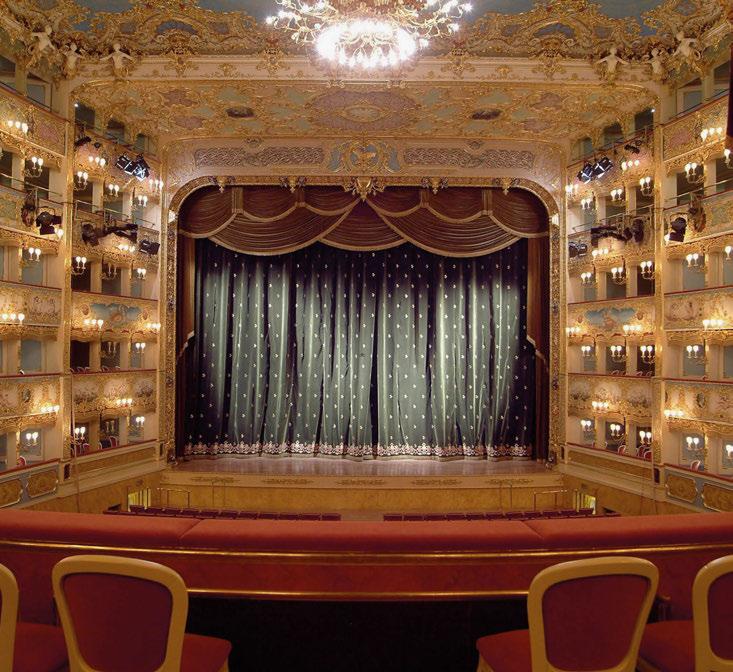
Originally founded in 1792, Teatro La Fenice is one of the world’s most prestigious opera houses and has twice been rebuilt having suffered massive fire damage in the past.
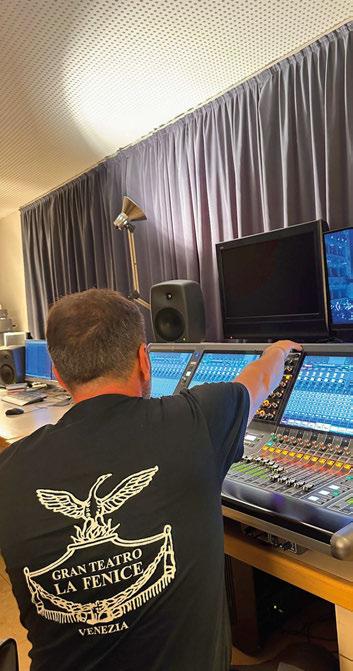
Recently Yamaha RIVAGE PM5 digital mixing systems have brought the recording facilities at Teatro la Fenice and its older sister venue, Teatro Malibran, right up to date.
Located in Venice’s famous San Marco district, Teatro La Fenice was founded in 1792 and has had a long association with Yamaha audio technology, whose resilience is highlighted by one of the new RIVAGE PM5 systems being used to replace a Yamaha PM1D digital console, which launched in 2001.
Meanwhile, the smaller Teatro Malibran – founded in 1678 – has seen a RIVAGE PM5 system replace the analogue mixing console.
Although the Yamaha PM1D was still working flawlessly, the RIVAGE PM5 system is a huge step forward in terms of technology and flexibility, which has allowed Michele Benetello – head of the Teatro La Fenice AV department – and his team to update performance recordings to the quality expected by today’s audiences.
“We are committed to the highest possible recording quality, through careful microphone placement, in-depth musical and technical study of the opera, our expertise, live listening to our productions and critical playback evaluation of the results,” he said. “At Teatro La Fenice, the need was for better microphone preamplifiers and to achieve a more
detailed signal, to integrate the Dante protocol for recording and distribution, as well as to adopt a more modern and flexible workflow which includes plug-ins, reverbs, EQs and so on. At Teatro Malibran, it was about making the transition to a digital system and aligning the workflow across both studios.”
The Yamaha Italia technical team visited both venues, carefully evaluating what would be the best solutions, suggesting RIVAGE PM5 as the best combination of facilities, size of mixing surface, and ease of use to satisfy both venues’ technical needs and being a significant step up from the previous systems.
“Over time we have built strong trust in the reliability of Yamaha products and the quality of the company’s technical support is always timely and knowledgeable, so the presence of the technical team made it possible to approach the project with complete confidence,” said Benetello. “Yamaha products allowed us to manage this transition smoothly, creating an infrastructure which allows us to interface different environments using the Dante protocol and to control the surfaces remotely for system checks.”
He continued: “The installation brought a clear step forward – the audio results are superior to the past, the technologies have been updated and our workflow has been simplified and modernised, making operations smoother and faster. We are fully satisfied!”
www.yamaha.com
COMPANY: Robe
LOCATION: Zagreb, Croatia
Photo: Tomislav Jagar
Lisinski Concert Hall in Zagreb is known for staging large-scale music shows, conference and congress events. Opened in 1973 and named after Croatian composer Vatroslav Lisinski, it is acclaimed for its acoustic quality, central location, and multigenre programming across its 1,800-capacity main theatre and 300-seat small hall.
The venue has been investing in Robe moving lights for a decade and has 20 Spiider LED wash beams, eight MegaPointe, 12 LEDBeam 350 and four LEDWash 600 in the main hall and eight LEDBeam 150 in the small hall, which are looked after and utilised by a lighting crew of four led by Dubravko Laslavić, who has been Head of Lighting for 25 years.
The Spiiders and the LEDBeam 350 fixtures are the most recent purchases, delivered over a three-year period by Robe’s Croatian distributor, LAV Studio, as part of the venue’s technical upgrade.
Around 500 shows are staged there over the 10-month annual season, with both halls seeing a mix of rock and pop plus classical and orchestral works. This wide range of performance means that lighting must be flexible and offer plenty of scope. Lighting technician Dragan Micić came onboard around three and a half years ago, and was familiar with Robe from his work at Croatia’s National Theatre, so he was delighted when it was decided to add more Robe to the rig.
“When visiting crews are working here and they see we have Robe on the rig, it’s instantly recognised as a good, solid brand that everyone is happy to use,” he said.
The main hall is large with a 25m-wide stage, so brightness was a critical feature when choosing fixtures – a process that also went through a competitive tender process – and silent running was another, especially for classical shows.
CRI and colour mixing were also looked at and compared between the different options, with Robe coming out on top of all of these. Reliability was another factor, as was the backup and support that they know they can rely on from LAV Studio, explained Dragan. “The Robe package offered really good value and great all-round performance,” he said.
In addition to the lighting department having a say in which fixtures were chosen, the venue’s overall head of technical, Nikola Tuškan, was involved, so the decisions were collective and based on the different bids that were presented. www.robe.cz











COMPANY: EM Acoustics
LOCATION: Plymouth, UK
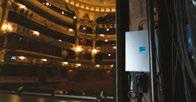
First opened in 1982, Theatre Royal Plymouth (TRP) hosts a broad spectrum of performances including touring musicals, dance productions, comedy and drama.
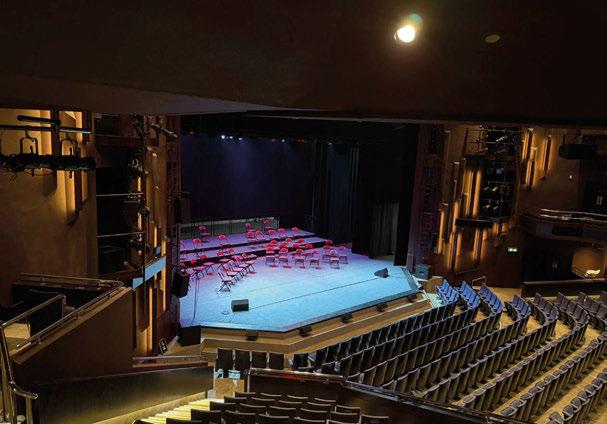
The Lyric Theatre is a versatile space with a seating capacity of 1,300, which can be reduced to 800 through the adjustment of the theatre’s moving roof. This adaptability allows the theatre to accommodate both large touring productions and more intimate performances.
When TRP required an upgrade to its ageing sound system, EM Acoustics was a natural choice.
“I’ve been using EM products for years across all the venues in the theatre,” said Dan Mitcham, Head of Sound at Theatre Royal Plymouth. “We have always had a great relationship with them, and the upgrade to EM for the Lyric just made sense to us because we knew what their products were capable of.”
Having successfully used EM Acoustics in its smaller auditoriums, including the 200-seat Drum Theatre and its 50-seat Lab, the replacement of the 30-year-old Lyric sound system was destined to follow suit.
“The old system had been in place since the theatre opened, and while it served us well, it was outdated,” continued Mitcham. “Our CEO James MacKenzie-Blackman is committed to investing in the theatre and helped the project gain momentum after hearing a production through EM Acoustics loudspeakers a few years ago.”
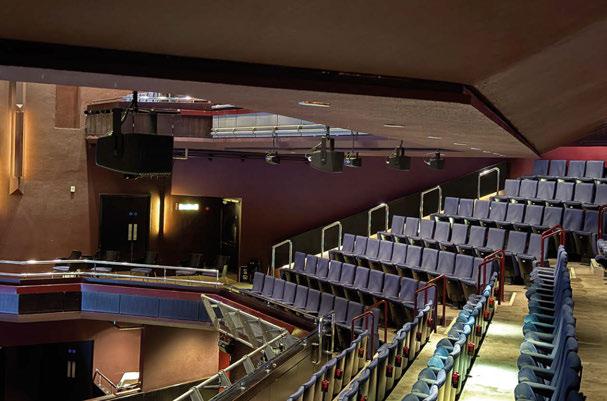
The Lyric auditorium presented several challenges for the in-house technical team. The venue’s irregular shape, combined with the ability to alter the ceiling height, meant that achieving uniform sound coverage across the space required careful planning.
“The Lyric has a really unusual auditorium shape, with a moving roof and a plenum area that partially blocks the left part of the main PA from certain seats in the stalls,” said Mitcham. “We knew EM would be able to solve these challenges effectively.”
Mitcham and the team designed a configuration to ensure the delivery of clear, even sound coverage throughout the auditorium, regardless of seating position.
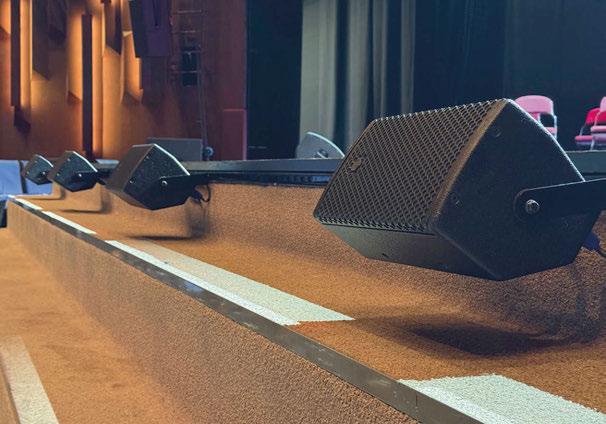
The main PA on the proscenium is based around EM Acoustic’s flagship Reference Series with R10 loudspeakers placed on the left and right sides across all three levels, complemented by a centre cluster of R8, with one unit per level.
For enhanced low-frequency response, S18 subwoofers are positioned on either side of the stage, whilst pairs of S15 loudspeakers ensure additional coverage in the circle and upper levels.
To address more focused audio needs, pairs of EMS81X loudspeakers are used as side fills in the circle and upper levels, while EMS61 and EMS51 serve as delays and fills across the stalls, circle, and upper circle. Powering this setup are five DQ10 and five DQ6 amplifiers, all networked via Dante.
“The fact that the EM amplifiers are Dante-enabled is a great advantage,” said Mitcham. “We want to establish a full-venue network infrastructure going forward, so this gives us a truly future-proofed solution – something we can rely on for years to come.”
The new sound system has significantly improved the audio quality at Theatre Royal Plymouth.
“The sound is incredible and so transparent. It sounds fantastic straight out of the box,” said Mitcham. “We’ve had minimal need for EQ adjustments for the physical system element, meaning we can spend more time refining the performance characteristics, enhancing what the audience hears, so it’s made our jobs much easier.”
The flexibility gained from a full EM Acoustics installation has proven beneficial, not only for the Lyric auditorium but for all three stages within the venue. “We’re now fully EM across all three stages, and the flexibility is a real asset. Any loudspeaker from any of our stages can be used in any other space, which has been invaluable for us. It gives us great adaptability and continuity.
“The support we’ve had from EM Acoustics has been outstanding, and we’re confident that this upgrade will serve us well for years to come,” concluded Mitcham. www.emacoustics.co.uk
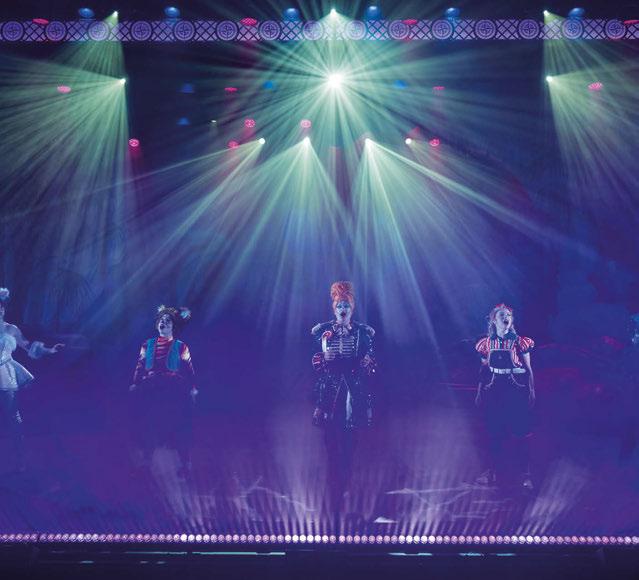
COMPANY: White Light
LOCATION: Harlow, UK
Established in 1971, Harlow Playhouse has since been a cornerstone of the cultural of the small town, hosting an array of performances across two theatres: a 400-seat main auditorium and a 120-seat studio theatre.
Showcasing a variety of events, from music and comedy to musicals and drama,
Harlow Playhouse plays a pivotal role in the local arts scene, and following the success of two capital funding bids, the venue was first able to enhance its audio system, a project successfully managed by sister company d&b solutions.
To further its commitment to sustainability and operational efficiency, Harlow Playhouse secured a second capital bid to upgrade its lighting system. The venue approached White Light (WL), a d&b solutions company, to oversee the investment.
Operations Manager Emily Parsley spearheaded the lighting overhaul.
“As part of Harlow Council’s initiative to enhance energy efficiency, we were very happy to receive funding to upgrade our lighting rig, reducing both our energy consumption and operating costs,” she began. “Our aim was to replace outdated traditional lighting, including high-wattage tungsten fixtures and discharge lamp moving lights, which consumed around 1,500 watts per unit.
“Transitioning to LED fixtures not only cuts down energy usage and expenses but also increases flexibility. The old tungsten fixtures also generated significant heat and incurred high maintenance costs.”
Parsley and her team had specific lighting solutions in mind, but were also keen to explore alternative options in collaboration with WL’s Senior Business Development Manager, Jonathan Haynes.
They ultimately incorporated a range of ETC fixtures including Halcyon Titanium, Source Four, ColorSource Spot V and ColorSource Fresnel V, as well as GLP Impression X4 Bar 20 Battens, and Martin MAC Aura XB.
“The new rig offers us greater versatility,” noted Parsley. “Previously, we relied on a standard four-color wash with LED backlights and a few moving lights. Now, with all colour-changing units, we’ve expanded our creative possibilities.”
Recognising the significance of this investment, Haynes facilitated multiple product demonstrations to help Parsley and her technical team assess the best solutions.
“The WL Sales team was incredibly supportive and always available,” continued Parsley. “They provided comprehensive demonstrations to ensure we made the right choice, and their expertise and responsiveness were invaluable throughout the decision-making process.
“We are absolutely thrilled with our new rig, as are all the visiting productions that use it,” concluded Parsley. “We’re immensely grateful to WL for their guidance and for providing exactly the fixtures we needed.”
www.whitelight.ltd.uk




1.680
COMPANY: d&b audiotechnik
LOCATION: Dublin, Ireland
Opened in 2010, Bord Gáis Energy Theatre (BGET) is a striking presence in Dublin’s Docklands and is Ireland’s largest fixed-seat theatre, with a capacity of 2,111. Having been served for 15 years by a sound system based around d&b audiotechnik’s Q-Series it was time for a renewal, and longevity was once again a key requirement.
“With our programme well-established, we knew what we were looking for,” explained Technical Manager Liam Fitzgerald. “Having seen many types of touring PA, we knew what set-ups worked well, and –unfortunately – which had let our audience down.”
Working closely with sound designer Kevin McGing – a BGET regular, and a long-term user of d&b systems – they developed a detailed brief. In addition to quality, reliability, support and longevity, they also needed a system that was rider-friendly, and fully capable of serving the onenight events which filled the gaps among BGET’s busy programme of musicals, opera, and ballet.
Then, because touring productions tend to depend on the house delays and fills – whether or not they bring their own main PA – great attention had to be paid to these loudspeakers. “These elements were a major focus for us,” said Fitzgerald, “not just an after-thought.”
There was also a strong aesthetic concern. With over 350 performances per year, it was essential for the PA to remain in place at all times, but discreetly so – and, when in use, reliable dispersion control was vital. For the ‘visible’ delays and fills, meanwhile, it was essential that cabinets were as unobtrusive as possible.
Fitzgerald turned to some of the very latest innovations in d&b’s product line. “In my experience,” he says, “d&b means quality, reliability, long service life, long-term back-up and quick turn-around on service. I have great confidence in their product: I don’t need to ask questions. I know the kit won’t be let out of the factory unless it’s right.”
The timing of d&b’s latest models hitting the market was perfect: the CCL for main left and right, and the new U-Series for delays and fills. A significant upgrade in specification to the previous Q-Series, the
CCL provides consistent dispersion: 120˚ for the CCL12 and 80˚ for the CCL8. d&b’s acoustic modelling via ArrayCalc ensured optimisation of placements, and – as the system sits permanently behind acoustically transparent cloth panels in the proscenium – d&b also advised on the precise opening needed for the CCL to maintain its cardioid control, allowing the wall openings and cloth covers to be finessed as necessary. Attention to the rest of the system was similarly detailed. Because of the focus on delays and fills, the brief specified that these should all be from a single loudspeaker series. Despite this coming in the early stages of the run-up to the U-Series launch, d&b were able to supply all necessary measurements and advance information to allow the design to progress with the U-Series (predominantly U3 cabinets, 53 in total, plus two U5).
Using d&b’s compact 40D and 5D installation amplifiers, all delays and fills are powered by just one amp channel per cabinet, giving touring shows great configuration flexibility. Accessibility and ease of use is further increased with a series of default pre-sets, available at the touch of a button via d&b’s R1 remote control software.
The installation – itself a challenge with the venue having just 10 dark days per year – was carried out by the BGET team, with additional on-site engineering support from the experienced McGing and commissioned by d&b EAS (Education & Application Support) engineers.
“The CCL boxes’ output is excellent for their size and weight,” said Fitzgerald, “and they sound very well together with the U-Series. Both treat the HF in a similar way, and both have the dispersion control we required – while the clean look of the U-Series really suits our auditorium too. It was an easy choice in the end.
“The d&b team were amazing, working hard to make sure we had everything we needed for our very tight install windows. The new system is more powerful, efficient and capable, but also far more controlled, with a lot more primary source reaching more people, giving a much better experience for our audience and tours.”
www.dbaudio.com







COMPANY: Martin Audio
LOCATION: New York City, USA
One of the world’s most celebrated cultural institutions, the Metropolitan Museum of Art, has transformed the sonic experience of its Grace Rainey Rogers Auditorium with a sophisticated, modular Martin Audio upgrade. This installation overcomes the venue’s long–standing acoustic challenges while providing a high–fidelity portable system for performances across the museum’s gallery spaces. Opened in 1954 as a purely acoustic hall – designed primarily to showcase instruments from the Met’s own collection with no amplification intended – the 700-capacity hall has remained largely unchanged in appearance. Yet, as the auditorium’s programming evolved, so too did its audio demands. The legacy sound system previously installed – early-generation powered column speakers positioned only on the left and right sides of the room – delivered severely uneven coverage, with significant gaps across both the floor and balcony, making it barely adequate for lectures and unsuitable for contemporary musical performances.
Sebastian Hurtado joined The Met as Senior Technical Manager AVMS Production in 2024. As a seasoned audio engineer who has worked across multiple countries and throughout the USA, the sound in the auditorium became an immediate focus. “I think I identified the need for an upgrade within three days of arriving,” he recalled.
Once a business case had been authorised and budgetary approval came, Hurtado wasted no time. His brief was clear: replace the legacy system with a single, unified solution capable of handling everything from intimate lectures to full live bands – all while preserving the visual and architectural integrity of the historic space.
After consulting with several top-tier manufacturers, Hurtado and his team selected Martin Audio, citing both the product fit and the quality of communication with the Martin Audio team throughout the process. “We sent an initial concept, and they mapped it out and made recommendations,” said Hurtado. “It made us feel confident it was being
done correctly.” The final installed system is anchored by three Martin Audio TORUS Series T1230 and one T1215 constant curvature array elements, configured as a centre cluster and rigged from a truss at the front of the stage. “We didn’t want to change the essence of the space, and with no positions possible to hang a left-right line array, we realised a centre cluster was the way to go,” outlined Hurtado.
“It covers the lower and upper centre of the house incredibly well. Even without subwoofers, the low end from the TORUS 12s is substantial for video playback and presentations.”
Four Martin Audio FlexPoint FP12 12-inch point–source speakers are positioned on the sides to fill outer coverage gaps, while four FP6 6-inch models – precisely time-delayed – address the notoriously difficult underbalcony zone.
“The FP6s have provided one of the biggest improvements,” he noted. “They sound fantastic and are delayed so well that it almost seems like they’re not doing anything, which is perfect.”
For larger performances, a ground–stacked system comprising three per side TORUS T820 8–inch tops and two per side SXC115 15–innch cardioid subwoofers, is designed to handle any production required in the space, while ten Martin Audio LE100 stage monitors round out the rig.
“The response has been noticeable by everyone,” said Hurtado. “The even coverage is the most significant improvement; there’s not a dead spot in the entire room. And we have the full frequency range represented with incredible clarity and fullness. Whether it’s a lecture that keeps the audience engaged, or a full band with brass and strings, everything is represented properly.”
The entire system was purchased through dealer ADI, who also handled amplifier programming and final tuning. Physical installation – including routing cables through the building’s complex, century-old infrastructure – was carried out by Hurtado and his in–house team. www.martin–audio.com
COMPANY: ADI
LOCATION: London, UK
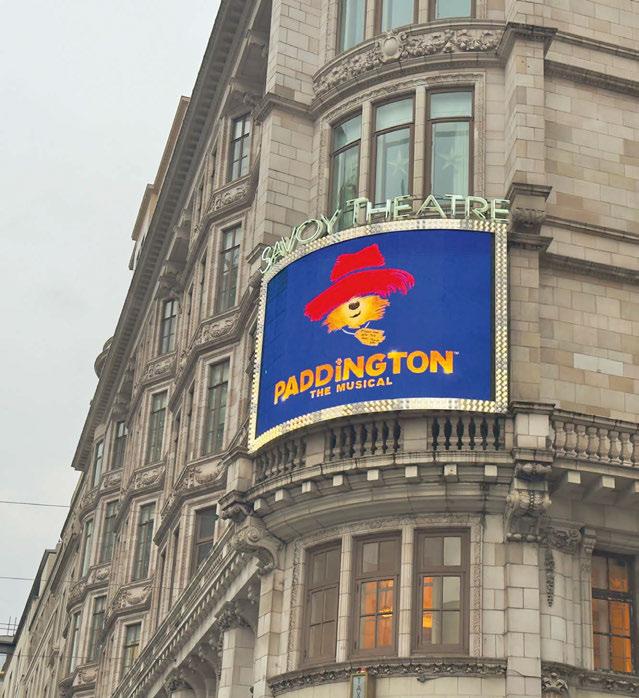
Famed for being the first public building in the world to be lit by incandescent electric lights, The Savoy Theatre has always pushed the boundaries of digital innovation, and recently it enhanced and optimised its exterior signage capabilities with an LED makeover from ADI.
The company’s proprietary 4mm MT Series LED screens have been installed in three exterior locations at the legendary venue – a 9.68 sq m curved display on the main high street, a 5.53 sq m dual-sided vertical banner on the outside facade and 6.91 sq m canopy ribbon at the entrance of the theatre and luxury hotel – providing multiple digital canvases for The Savoy Theatre to connect with its audiences.
Commenting on the installation, Matthew Turbett, General Manager at The Savoy Theatre, said: “We chose ADI because of their proven expertise in seamlessly integrating LED screen hardware within historically significant venues.
“We were looking for a digital signage partner that understood the balance between blending new technology with our theatre’s unique heritage.
“Their super-lightweight and slimline MT Series product offered the high visual impact we needed to engage our audiences effectively, while allowing us to use the latest LED technologies across our venue.”
Drew Burrow, Head of Bespoke & Creative at ADI’s Displays Division, commented: “We are incredibly proud to have provided the famous Savoy Theatre with a bespoke digital upgrade just in time for such an exciting show premiere.
“Sustainable by design, the MT Series offers an incredibly lightweight and slimline LED display product offering a range of unique design features that drive energy efficiency, reliability and sustainability over operational lifespan.”
As theatres continue to elevate the audience experience, many are upgrading from static signage to high resolution LED displays, and this transition reflects a broader trend toward flexibility and innovation, enabling venues to adapt content instantlyfrom showtimes and promotions to immersive storytelling moments - while delivering greater visual impact.
“Transforming a venue steeped in history requires a delicate balance of technical expertise and creative vision; our sustainable MT Series is the perfect solution to deliver high visual impact that respects the building’s heritage while bringing it firmly into the modern era,” concluded Burrow.
www.adi.tv

COMPANY: L-Acoustics
LOCATION: Bordeaux, France
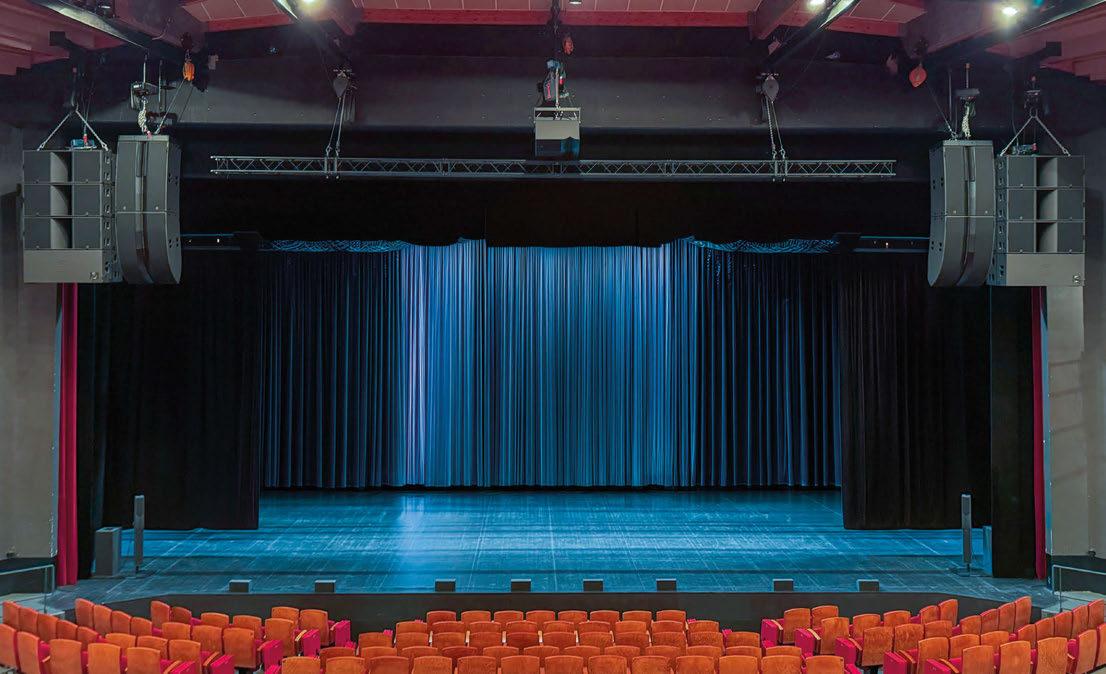
Located on the outskirts of Bordeaux, Le Pin Galant has completed a comprehensive audio upgrade featuring L-Acoustics L2, marking the venue’s continued partnership with L-Acoustics after more than 30 years with its legacy V-DOSC system. The 1,400-seat auditorium welcomes nearly 100,000 visitors annually for a diverse programme of music, dance, comedy and theatre. The upgrade became a priority when Fimalac Entertainment acquired Le Pin Galant in 2025.
The venue’s technical team had clear objectives: maintain the exceptional audio quality they’d achieved with V-DOSC while embracing technology that would meet the demands of modern productions.
Le Pin Galant turned to Audio Pro, L-Acoustics Certified Provider and system integrator for Nouvelle-Aquitaine, to design and implement the solution.
The project came with a hard deadline: the system needed to be operational for the opening of the 2025-2026 cultural season that kicks off in France’s crucial September “rentrée” or back-to-school period.
“The complexity of the project demanded meticulous planning, and we relied heavily on Soundvision throughout the design process,” explained Philippe Chassereau, Audio Pro’s Sales and Purchasing Manager. “Soundvision has been an essential tool for us for years, allowing us to carefully model venues to predict how our systems will perform.” Audio Pro used Soundvision to configure speaker placement
and amplifier setup, including equalisation and delay settings. This comprehensive approach saved time during installation, allowing the team to fine-tune the system design before any equipment arrived on site.
The system centres on L Series, with one L2 and one L2D enclosures per side for the main hangs. “The clarity and exceptional coverage that L2 affords made it an obvious choice for addressing our primary task of catering to different types of events,” said Chassereau. Eight ground-stacked KS28 subwoofers deployed in cardioid configuration provide powerful yet controlled bass that enhances musical performances without overwhelming the space during speech-focussed events.
A central hang of one A15 Wide and one A15 Focus add clarity for speech-heavy events, while two Syva and two Syva Low provide in-fill. Eight X6i handle front-fill coverage, guaranteeing intelligibility even in the challenging seats closest to the stage.
The system is powered by four LA7.16i, two LA12X, and four LA4X amplified controllers, with system processing managed through two P1 processors. The networking infrastructure includes four LS10 audio network switches and one LC16D format converter. The LC16D serves to expand connectivity, acting as a bridge between the Milan-AVB network and legacy digital connections, and enabling signal distribution to additional rooms and wedge amplifiers throughout the venue. The team chose Milan-AVB as the primary protocol,
recognising it as the current reference standard for professional sound reinforcement systems. With L-Acoustics network devices, the entire system can be managed directly through LA Network Manager, simplifying operations for the venue’s technical team.
The new system was calibrated and ready on schedule, and two weeks later it received its first major test when French artist Calogero performed two sold-out shows. “The response from the venue’s technical team, artists and audiences has been overwhelmingly positive,” added Chassereau. “The technical team adapted to the new system remarkably quickly, helped by a comprehensive four-day training programme that covered all the modules necessary to operate the system effectively. “The support from L-Acoustics was essential. We had direct access to L-Acoustics specialists at every turn, from commercial support from the Sales team, technical expertise from the Application team, and logistics coordination –everyone was committed to meeting the needs of the project and delivering it on time, which made all the difference in its success.”
Le Pin Galant is now positioned to attract an even wider range of world-class artists and productions. “The project is already generating interest from other nearby venues, where similar upgrades are being considered,” concluded Chassereau. “We believe this installation is setting a new standard for sound in the broader Bordeaux region.” www.l-acoustics.com


COMPANY: Powersoft
LOCATION: Itabirito, Brazil
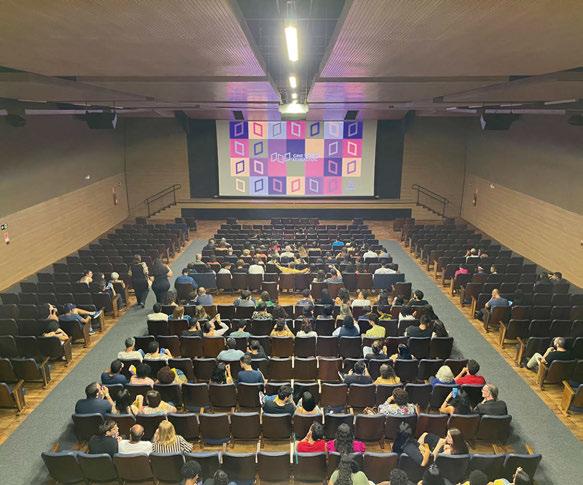
After a period of closure and renovation, the Cine Teatro Liz Bastos in south-eastern Brazil has reopened utilising Powersoft’s thirdgeneration install amplifier platform, Unica, to deliver intelligent, intelligible audio.
The amplifiers provide enough power for an immersive Dolby Cinema experience while offering the flexibility to handle theatre, music, dance and lecture programming, with plenty of power to spare.
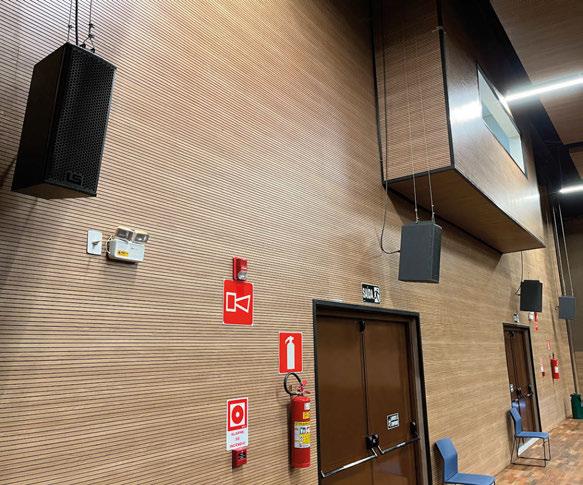
As part of the renovation, local consultant Leonardo Pavanello Projetos was tasked with conceiving a completely new AVL system for the 571-seat venue, and for the audio component, the consultant specified a 7.1 surround sound setup capable of delivering an allencompassing 3D audio experience for filmgoers but which could, if needed, also allow for the use of spatial sound by visiting concert tours and other live events.
The system would also need to be compact and energy efficient without compromising the quality of the audio.
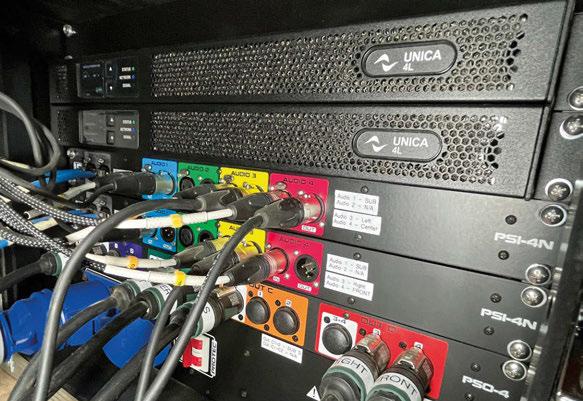
To meet this challenging brief, systems integrators Multicom Engenharia and Universal Music Brazil selected the Unica platform as the engine for this new do-it-all sound system. Unica’s native AES67 connectivity enables seamless integration with the Cine Teatro Liz Bastos’s Dolby Cinema processor (the technology behind Dolby Atmos surround sound), while Powersoft’s ArmoníaPlus software enables straightforward, intuitive channel patching and easy day-today control of the amplifier system.
Maximum efficiency is achieved through the power-sharing capabilities built into Unica. Using Powersoft’s Power Sharing Tool, the Universal Music Brazil and Multicom Engenharia teams were able to use the same amplifier to power and process both subwoofers and high-frequency response speakers, cutting rack space and total system cost while maintaining the output needed for both films and live shows.
“The 7.1 surround sound system has made a huge difference to the cinema experience, and the possibility of using it for live shows is a totally new perspective,” said Universal Music’s Gera Vieira
In addition to elevating the movie- and concert-going experience, the new system provides cinema staff with a true plug-and-play experience requiring no in-depth technical knowledge.
“Once the power is on, there’s no intricate set-up needed,” Vieira explained. “The automatic switching from digital to analogue allows an ultra-fast transition from movies to music shows.”
The installation pairs two Unica 8K8 and two Unica 12K4 amplifiers with LS Áudio speakers and subs, and a Dolby Cinema processor. Since reopening, the redesigned Cine Teatro Liz Bastos has garnered consistent praise for the quality of the visitor experience and its cutting-edge, immersive AV system.
Carluccia Carrazza, cultural director at the Secretariat of Heritage, Culture and Tourism of the city of Itabirito, sums up the local response to what she describes as “the wonderful, immersive sound system”: “No matter where you are sitting, it feels like you’re inside the movie.”
www.powersoft.com
COMPANY: Audiofocus
LOCATION: Amsterdam, the Netherlands
Photo: Jorrit Lousberg
Situated at the heart of the Amsterdam-Oost district, the 600-capacity Balkissoon Theater was created during the transformation of the former Christus Koningkerk church into a hotel complex by entrepreneur Lenny Balkissoon. The ambition for Balkissoon Theater is to offer a multifunctional space where young people from the locality can perform, while also serving as a corporate events and conference venue.
To facilitate this, an Audiofocus ARRoCC constant curvature loudspeaker system has recently been installed as part of a complete sound reinforcement and control solution Balkissoon appointed Audio Acoustics to design, supply and install the system for the theatre, which needed the flexibility to accommodate a diverse events programme, while remaining simple enough for volunteers and guest technicians to operate.
As befits its previous role as a house of worship, the space has lively acoustics that are beautiful for vocals but present challenges for amplified sound. With hotel rooms situated above and adjacent to the auditorium, minimising sound transfer was also a key consideration.
Audio Acoustics opted for loudspeakers from Audiofocus to meet the project’s requirements. Left and right arrays of ARRoCC constant curvature speakers provide the main sound reinforcement, each comprising one wide dispersion CC210W and one narrow CC210N cabinet to achieve the desired coverage.

A pair of 18-inch 118SG ground stacked subwoofers per side deliver low frequency support, while six Isolde AP108 point source units serve as fills and delay speakers. All loudspeakers are driven by Audiofocus’ A-series SCiO amplifiers with integral DSP and remote management capability.
“For this project it was important to tailor the audio system to work with the natural acoustics of the venue, not fight with them,” explained Audio Acoustics Sales Engineer, Sjoerd Wierda. “The ARRoCC series gave us the flexibility to devise a compact speaker setup that perfectly matches the room’s geometry.
“Using the amplifiers’ onboard DSP we individually tuned each loudspeaker to the acoustic requirements of its exact position in the auditorium, creating a controlled, clear, and powerful sound image. We were also able to deliver the desired even coverage from the front row to the back of the hall, without excessive reflections or unwanted low-frequency build-up.”
Audio Acoustics integrated its own TCU (Total Control Unit) system to provide unified, intuitive control over all aspects of audio, video, projection, and lighting. Presets allow the space to be reconfigured for theatrical performances, conferences, or film screenings with a single press of a touchscreen or wall panel.
www.audiofocus.eu
COMPANY: K-array
LOCATION: Florence, Italy
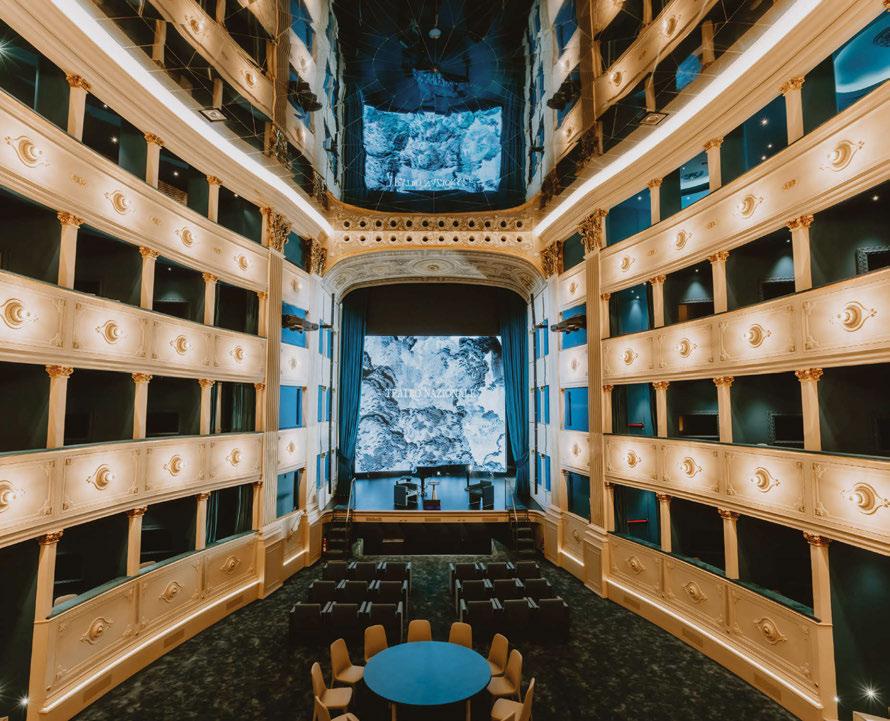
A venue which is deeply connected to a tradition rooted in Florentine identity, Teatro Nazionale has been restored not only with the recovery of its architecture, but through the possibility of resonating once again with a new immersive sound system.
A collaboration between Archea, Studio Sound Service, and K-array, the project was a meeting point between architectural sensitivity, electroacoustic expertise, and technological innovation, where sound is not treated as an added element but as an essential component of the theatrical experience.
The goal was not simply to introduce a new sound system, but to restore perceptual integrity to a historic space, elevating the quality of listening without altering its identity.
The design challenge was delicate, with the preservation of the rooms’s aesthetic charm and natural acoustics a top priority, however the project required the integration of a Dolby Atmos multichannel sound system, and there were restrictions on where loudspeakers could be placed.
The response to this complexity emerged from a closely integrated collaboration between Archea, Studio Sound Service, and K-array. Archea led the integration of the system while respecting the architectural balance of the hall; Studio Sound Service developed the acoustic and electroacoustic design, supporting the project through dedicated simulations and precise final tuning; K-array provided a
loudspeaker ecosystem capable of combining directivity, precision, frequency extension, and minimal visual impact.
At the heart of the project is a sound system designed to deliver an immersive, uniform, and controlled listening experience, reproducing the full frequency spectrum – from 20 Hz to 20 kHz – with clarity and spatial coherence.
The main system comprised of two columns of six Python-KP102 I, positioned on either side of the proscenium, ensuring defined, deep, and precisely controlled sound projection.
Low-Frequency Management is handled by two Thunder-KS4PI, strategically placed in the orchestra pit or within the first tier of boxes, providing body and extension without compromising the balance of the hall. Front fill is provided by three Kobra-KK52 I which are installed horizontally along the stage edge and concealed beneath the frame to ensure maximum intelligibility in the front rows with almost no visual impact.
The venue’s immersive surround system features KGEAR GH4 loudspeakers complemented by four Rumble-KU210, positioned on the floor near the Ls2, Rs3 and Lr, Rr zones, reinforcing sonic envelopment, spatiality, and the overall immersive effect. Every decision was calibrated to address a specific challenge of the venue.
The ultra-slim line array columns – one of K-array’s distinctive signatures – allowed the system to maintain a minimal visual presence,
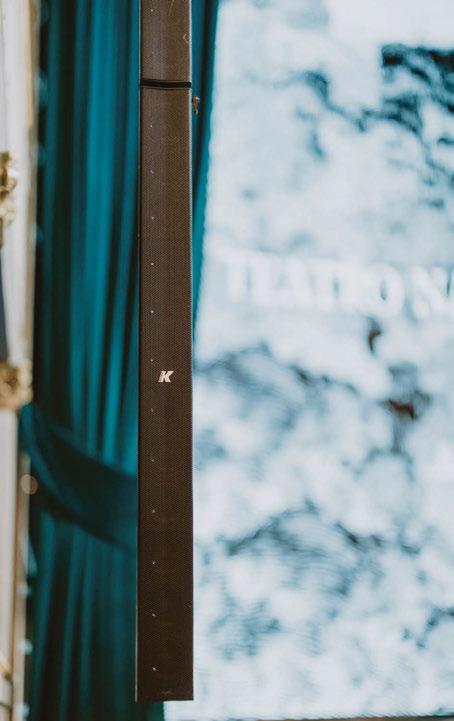
ensuring that attention remains focused on the stage rather than on the technical infrastructure. The front fill systems solved intelligibility issues in the front rows without altering the stage edge or introducing elements that could interfere with the architectural reading of the space.
Low-frequency management, particularly delicate in a compact historic theatre, was addressed through strategic placement and compact high-performance components capable of delivering energy and depth without overwhelming the environment.
The surround configuration, finally, made it possible to integrate the immersive language of Dolby Atmos into a venue that was not originally designed to host this type of technology.
This represents one of the project’s most significant achievements: allowing the complexity of contemporary audio reproduction to coexist with the balance, delicacy, and spatial quality of a historic theatre.
The result is a system in which architecture, acoustics, and technology function as a single organism, and Teatro Nazionale now stands as a new benchmark for interventions in historic theatres: a place where memory continues to speak, enhanced by technology that does not impose itself, but instead serves the performance, the space, and the city.
www.k-array.com www.archea.it
www.studiosoundservice.com
COMPANY: CHAUVET Professional
LOCATION: Albertville, France
Le Dôme Théâtre is a multipurpose facility that follows the words of its simple, straightforward mission statement: Art en Territoires (Art in the Territory), which in practical terms means bringing cultural opportunities to the rural communities of the Auvergne-Rhône-Alpes region.
Pursuing the vision articulated by these words, The Dôme Théâtre touches local life in a variety of ways, not only through its 720-seat theatre, but also with a wide range of educational and community programmes, in conjunction with local partners.
Serving rural communities as it does, the theatre strives to be many things to many people, and in its most recent season it put on 35 different shows, including a dozen aimed at young families.
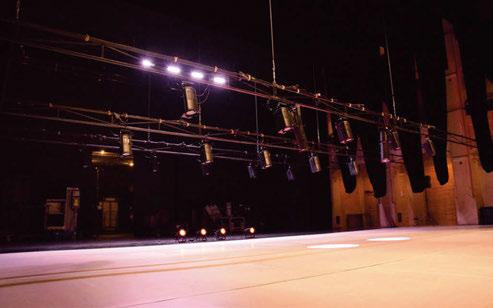
The diversity and volume of its productions and activities requires a lighting system that is flexible and easy to setup, and the venue recently made a significant step in meeting this standard, by installing a new all-LED lighting system anchored by 164 CHAUVET Professional fixtures, installed by S Group Équipement.
The lighting upgrade was initiated by the theatre’s Technical Director Manuel Roche. Monitoring during this first season of use was carried out by Sharleen Fort, along with principal stage manager Laurent Deviers Régisseur, as well as Sylvain Roos, General Director, and Franck Huynh of S Group Équipement.
The new equipment made an immediate difference in the quality of the theatre’s lighting in addition to saving time.
“It has really sped up the work in terms of the number of projectors we have to set up,” said Deviers Régisseur. “For some shows, it enables us to divide the number of lights by two or even three.
“When we finished all the end of the year functions in December, we had a lot of events lined up. Having full LED colour sources streamlined our setups in these cases, and it has also meant I have had to up my game in
terms of programming, which was great. Our new LED kit has changed the way we approach colour schemes.”
Deviers Régisseur heaped praise on the 64 Ovation Rêve E-3 multicoloured LED ellipsoidal units in the kit for their “exceptional brightness.” He also appreciates the 16 Ovation Cyc 1 full colour low profile figures for the “wonderful job” they do diffusing colours.
The 60 par-style fixtures in the kit (40 Ovation P-56FC units and 20 COLORado Solo 3s) have also contributed greatly to the colour rendering prowess of the theatre’s lighting system.
Particularly helpful in adding versatility is the barn door feature of the COLORado pars, said Deviers Régisseur.
As is so often the case with meaningful changes, the lighting upgrade at Le Dôme Théâtre did not happen overnight. “It was quite a process,” said Fort. “The first studies started in 2019 when Manuel Roche and Laurent Deviers talked to several manufacturers. The Ovation fixtures were demoed in June 2023 by Franck Huynh and Sylvain Roos from S Group Équipement. This is what convinced the team to go ahead.”
Like the rest of the theatre’s team, Fort is very happy with the decision, noting that the feedback they have received has been uniformly positive. She remarks that with the new kit, “we can now offer modern stateof-the-art solutions to everyone.” And in so doing, Le Dôme Théâtre is indeed living up to the words of its mission statement. www.chauvetprofessional.com
COMPANY: Robert Juliat
LOCATION: Basel, Switzerland
Photos: Ingo Hoehn
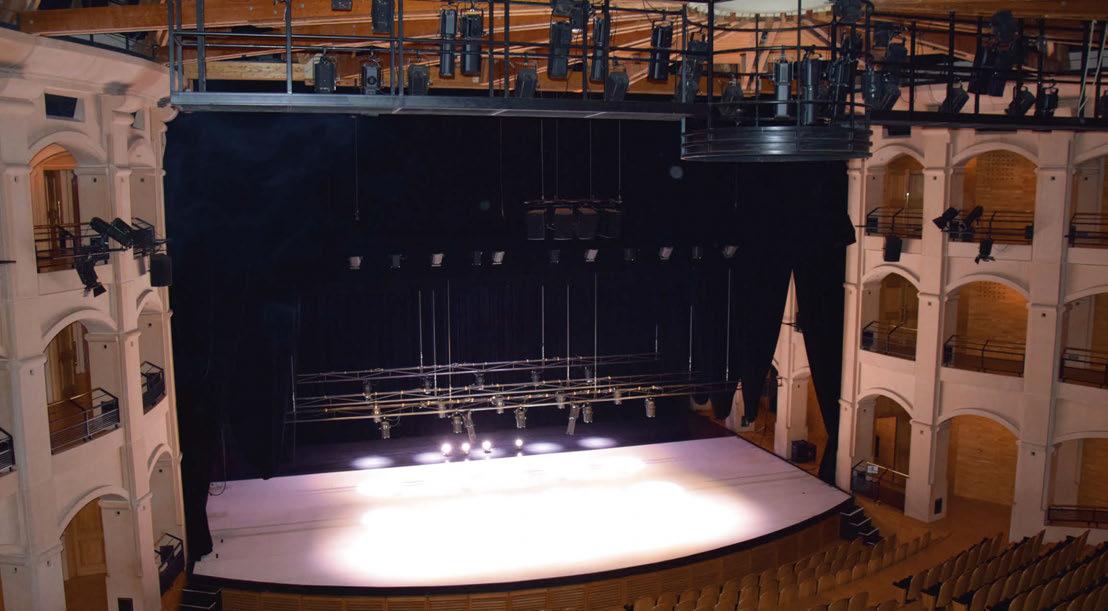
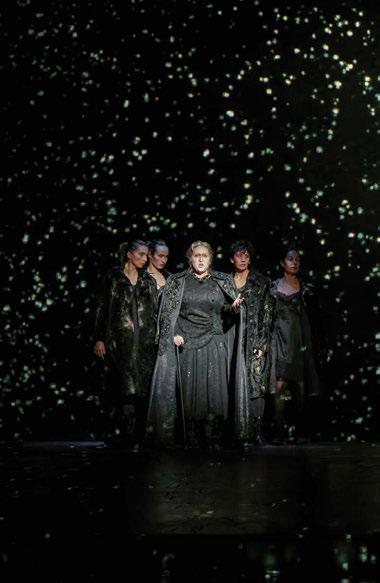
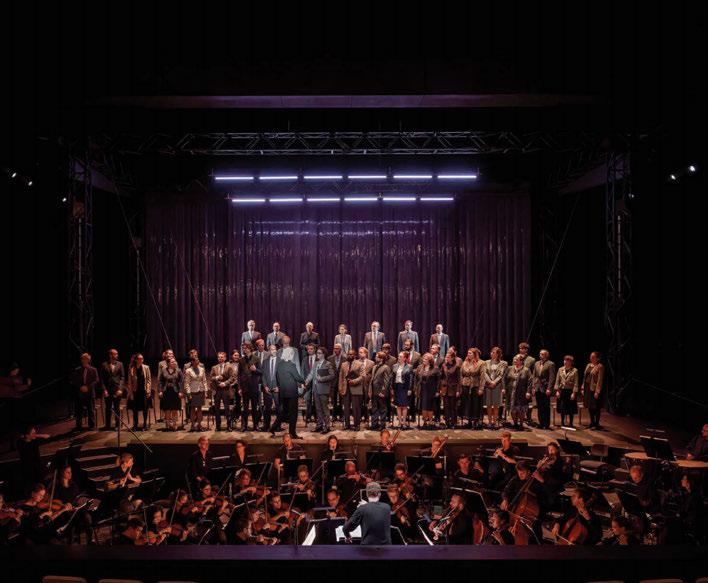
Theater Basel, Switzerland’s largest three-genre theatre with its own opera, ballet and theatre ensembles, celebrated the 50th anniversary of the new Stadttheater building in 2025, and invested in four new Robert Juliat LED followspots for its Grosse Bühne (Big Stage).
The 860-seat Grosse Bühne is primarily used for Theater Basel’s own opera and ballet productions, but also hosts theatre and musical performances and the occasional touring production, with 10 original productions each year, and more than 40 productions across all stages.
Two Arthur LT long throw LED followspots and two RJ Tristan compact LED followspots were supplied by RJ’s exclusive distributor for Switzerland, Electric Claudio Merlo (ECM).
The theatre made its new followspot investment as part a continuous renewal of its lighting system, a plan which ensures it can always bring the best and latest technology to its productions.
“The new RJ followspots arrived just at the right time as our existing spots were beginning to show their age,” said Theater Basel’s head of lighting and resident lighting designer, Cornelius Hunziker, who has been at the venue since 2012. “We were simultaneously able to upgrade our followspot stock to LED.
“We were looking for devices that could reliably replace HMI 2.5kW and 1.2kW followspots in terms of optical system, light quality, and brightness,” he explained. “Robert Juliat is well known for its followspots, and we have other HMI and LED models from them already in use inhouse. We have had good experiences with these, so it was a sensible choice for us to stay with the brand.
“We specified our requirements in-house as a team, had the devices demonstrated by ECM, and tested them thoroughly. ECM have been a
very good partner to us for a long time. They provide excellent service, and are very quick and dedicated when it comes to enquiries and technical support.
“Our trials showed us that Arthur LT and Tristan were the best quality in terms of the optical system, brightness, and above all, light colour and quality, with a great CRI.”
Located in open positions behind the audience seating, quietness of operation was of paramount importance, and Hunziker confirms that Arthur LT’s Silent Mode is very efficient at meeting these requirements.
The Theater’s two Robert Juliat Tristan 7°-14.5° 825W LED followspots, with their new motorised iris, replace an existing pair of 1.2kW HMI fixtures. Unusually the Tristans are suspended from heavy duty Z-Decke truss on either side of the proscenium, from where they cover throw distances between 12m–23m. “We have a very steep angle and very restricted hanging space, so this was the only way to mount Tristan,” said Hunziker. “Even so, despite its compact size, we also removed the front colour changer, but it’s the perfect beam angle for this position. The handling is great, as are the brightness and dimmer.”
The new Arthur LT followspots were used for the first time in Theater Basel’s musical production Grand Finale, before all four new units were brought into play for the classic revival of Mozart’s The Magic Flute.
“We are very happy with our new Arthur LT and Tristan followspots,” concluded Hunziker.
“They are much brighter and the LED gives us a constant light source with no need to colour shift as the lamp gets older.”
www.robertjuliat.com www.ecm-sa.ch
COMPANY: NEXO
LOCATION: Béziers, France
From Maurice Chevalier to Josephine Baker, many of the great stars of the pre-war era have graced the stage of the iconic Théâtre des Variétés in Béziers. Designed by architect Paul Harrant in 1904, this listed historical monument has been reborn after a magnificent restoration in which scenography and AV technology specialists Scenarchie worked hard to ensure that the original charm and atmosphere were retained within a venue now equipped for 21st Century productions. With a brief of trying to keep technology as discreet as possible, the team at stage equipment specialists TEXEN Vendargues and Aix-en-Provence selected loudspeakers from NEXO’s ID Series in a white finish to blend into the surroundings.
Pairs of NEXO’s ID84 column speakers are mounted on the frame and in the first-floor balcony, supplemented by NEXO IDS312 and L15 subs respectively. The ID84 features a configuration of eight 4-inch drivers with an array of dome tweeters on a curved baffle which results in particularly low levels of distortion and extends the product’s suitability well beyond the traditional column speaker role of voice reproduction. The directivity switch on the rear panel enables instant switching of vertical HF dispersion in a speaker that achieves a particularly long throw and consistent coverage. NEXO’s ultra compact ID14s from the same series perform roles both as under balcony fills and monitors in a system that is powered by pairs of NEXO NXAMP4X1Mk2 and NXAMP4X2Mk2 Powered TD Controllers. www.nexo-sa.com | www.scenearchie.com | www.texen.eu
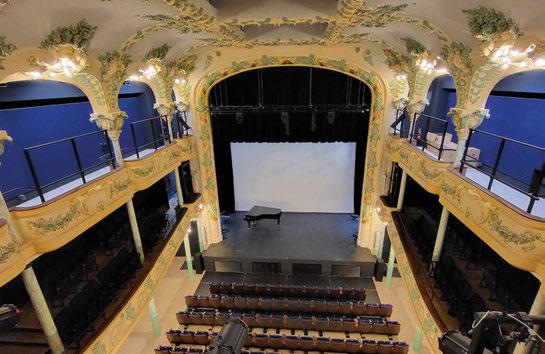
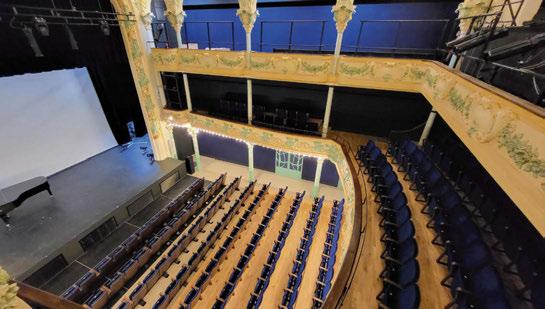
COMPANY: Amadeus, HOLOPHONIX
LOCATION: Nanterre, France
Photos: Helen Karam
Following a major renovation, Théâtre Nanterre-Amandiers on the outskirts of Paris has becomes the first venue to deploy Amadeus’ NUMAX XV point-source system, which combines with HOLOPHONIX spatial processing to deliver a flexible, immersive sound environment. One of France’s leading public theatre institutions, Théâtre NanterreAmandiers is known for its commitment to contemporary creation and large-scale productions. Its 800-seat main auditorium hosts theatre, experimental works, and hybrid productions combining music, scenography, and complex sound design. An extensive renovation from June 2021 to December 2025 provided an opportunity to rethink the hall’s technical infrastructure, particularly its approach to sound reinforcement. When Technical Director Jean-Michel Nedellec first reviewed the plans, the proposed system followed a conventional LCR configuration, with no consideration for immersive workflows. However, following an encounter with HOLOPHONIX spatial sound processing at Théâtre National de Chaillot, a revised design was proposed with additional loudspeaker positions throughout the auditorium. The architecture imposed limitations as rigging along lateral walls was restricted, and ceiling height ruled out line arrays. For the surround system, Amadeus C12 loudspeakers were integrated directly into the lateral acoustic panels. “The result is a surround system that is genuinely invisible. The loudspeakers are completely embedded within the panel structure,” said Nedellec. For front-of-house, a compact point-source solution was selected, with Amadeus SR-1000 units deployed along the stage ramp as front-fill, in line with the objective of achieving high performance without introducing visually dominant elements into the space. Given these constraints, the key question was whether a pointsource system could deliver sufficient output and control. Touring engineers were initially sceptical. “The first reaction was often ‘this is not going to work – there is no visible line array, so where does the power come from?’” explained Nedellec. NUMAX was developed in response to these limitations. Deployed here as the primary frontof-house system, the NUMAX XV delivers full-range response down to
40Hz, controlled low-frequency directivity through an integrated cardioid section, and high midrange articulation, reaching 142 dB peak SPL within a compact format.
“NUMAX represents the outcome of several years of development informed by real-world spatial audio projects, with a focus on projection, clarity, and controlled directivity across the full frequency range,” commented Gaëtan Byk, CEO of Amadeus and HOLOPHONIX. The integration of NUMAX was not part of the original specification. The system had initially been designed around the Amadeus C15 platform, but construction delays aligned the project with the release of NUMAX. The front-of-house system comprises nine NUMAX XV units, configured with progressive horizontal dispersion from 90° - 120°. Across the wider deployment, Amadeus C12 loudspeakers provide surround coverage, supported by additional rear positions. Infra-low-frequency extension is handled below 40 Hz where required.
Additional ultra-compact C4 units are installed at the rear of the hall to provide near-field coverage for the furthest audience positions. CX 15 R monitors are available for stage use and can be deployed as needed depending on production requirements.
The system was tested during the opening weekend with Barocco, directed by Kirill Serebrennikov, a demanding hybrid production combining rock band, orchestra, and lyric voices. “When the sound engineer arrived, there were no issues at all. The system delivered exactly the level of power we needed,” noted Nedellec. The spatial layer is handled by HOLOPHONIX, an agnostic platform enabling both conventional and object-based workflows and deployed across multiple spaces within the theatre, including a second room equipped with a Meyer Sound loudspeaker system. Since opening, the sound system has supported a wide range of productions, from spoken theatre to complex spatial sound design. “We didn’t just install a system. We built an understanding of what the theatre needs and how it can evolve,” concluded Nedellec. www.amadeuslab.com | www.holophonix.xyz
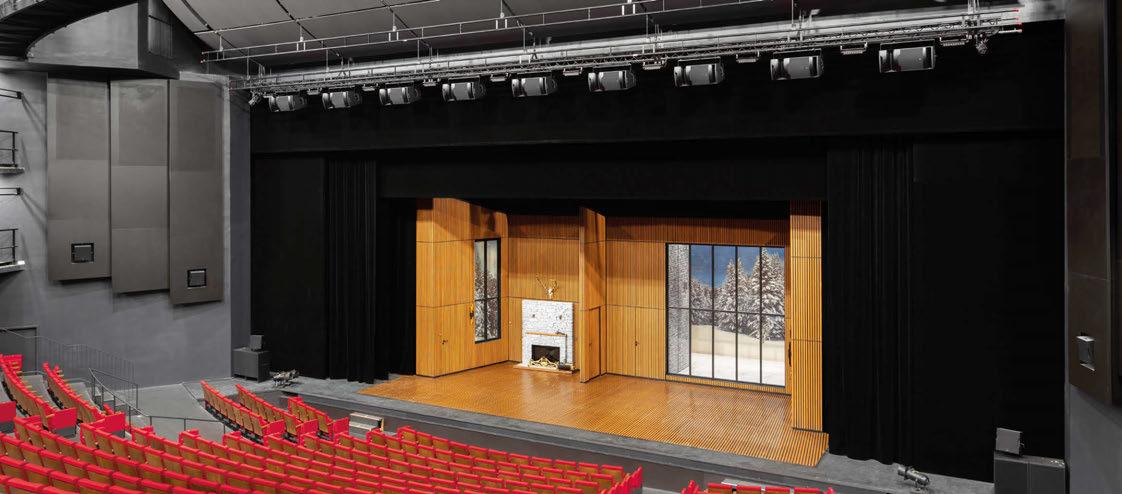

















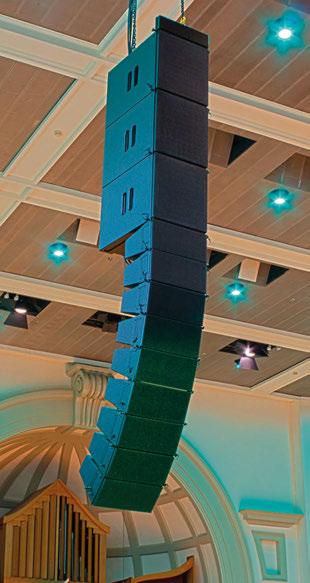
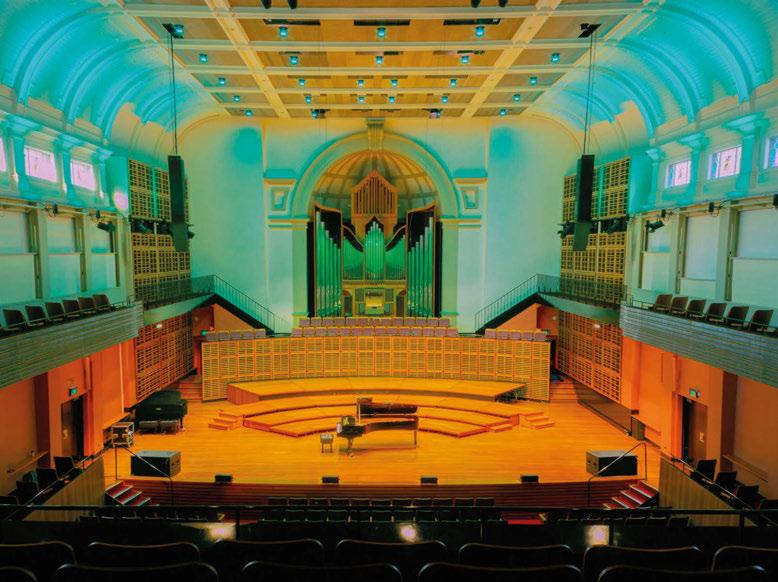
COMPANY: Alcons Audio
LOCATION: Sydney, Australia
The Sydney Conservatorium of Music, part of the University of Sydney and one of Australia’s oldest and most prestigious music schools, has completed a major audio upgrade to its heritage-listed Verbrugghen Hall. Founded in 1915 by Belgian conductor and violinist Henri Verbrugghen, the Conservatorium is housed in the Greenway Building — a landmark within Sydney’s Royal Botanic Gardens, designed by architect Francis Greenway.
Originally constructed as stables for Governor Lachlan Macquarie in 1821, the building was later converted into the Conservatorium, with extensive renovations in 2001 to accommodate its growing programs.
Verbrugghen Hall, a 528-seat venue renowned for its acoustics, traditionally required little amplification for orchestral performances. However, the legacy PA system, installed at the turn of the century, was increasingly unable to meet modern demands, particularly for speech and contemporary amplified performances. The challenge was to deliver high intelligibility across the audience while preserving the hall’s architectural integrity and avoiding excessive acoustic excitation. Additionally, system components had to be lightweight – under 150kg / 331lb per hang
point – and visually discreet to maintain the hall’s aesthetic and historic features, including its century-old pipe organ.
To address these requirements, David Betterridge of Loud And Clear Sales, in collaboration with Drew Bisset Designs, proposed a left/right Alcons Audio LR7/ LR7B system covering the full audience area, supplemented with VR5 front fills and BF362 bass extensions for performances requiring additional low-end support.
“The modelling in Ease Focus suggested very even coverage, with excellent frequency response across all audience areas, and as long as we could position the arrays precisely, the system would perform exactly as intended,” said Betterridge.
Close collaboration with venue staff and specialist engineering ensured that hang points were installed to respect both the building’s structural limitations and sightlines.
The system was installed and commissioned, and has already exceeded expectations, with Jarrad Salmon, Technical Production Manager at the Conservatorium, stating: “As a classical hall originally designed for orchestral music, Verbrugghen Hall presents a distinct set of challenges for the growing number of events requiring live sound reinforcement.
“The space is highly reverberant and was built long before modern production standards were considered, making it difficult to achieve clarity and coverage without compromising the venue’s structural integrity, sightlines, or limited stage space.”
The first experience of the Hall’s team with an Alcons system came during an external client’s event, and they were immediately impressed by the system’s speech intelligibility and overall performance.
Jarrad continued: “As we explored options for a permanent installation, Alcons emerged as one of the few systems capable of meeting the quirks and constraints of the space, while remaining within budget. The postsales support from Loud and Clear has been outstanding, further reinforcing our confidence in the investment.”
The installation represents a fusion of heritage architecture and modern audio engineering, delivering a system that is as unobtrusive visually as it is powerful sonically. Performers and audiences alike can now experience every nuance of music and speech with unprecedented clarity, while the hall’s historic character remains fully intact. www.alconsaudio.com www.loudandclear.com.au
COMPANY: Lawo
LOCATION: Vienna, Austria
The ORF Radio Symphony Orchestra Vienna has inaugurated its newly upgraded sound control room at the Vienna Musikverein, which is now fully equipped with IP-based audio technology from Lawo.
This modernisation marks a significant step forward in enhancing live broadcast workflows, capturing the intricate soundscapes of orchestral performances with even greater precision, and ensuring robust operational reliability for high-profile live productions.
The smooth functioning of the control room plays a central role in mixing not only numerous concerts and live broadcasts throughout the year, but also the globally celebrated Vienna Philharmonic New Year’s Concert, viewed by millions around the world.
The decision to implement Lawo technology was driven by the need to improve system compatibility and foster synergies across ORF’s production infrastructure.
“This new setup is more than just an upgrade – it’s our gateway into next-generation audio IP technology,” commented Reinhard Tomek, Project Manager Audio Technology at ORF. “It offers us tremendous flexibility for future expansions and seamless integration of external devices. The incorporation of Lawo’s HOME platform simplifies system management, while keeping interfaces to external IP-enabled systems open and adaptable.”
At the heart of the new infrastructure is an mc²56 MkIII production console featuring 48 faders, powered by an A__UHD Core audio engine licensed for 256 DSP channels.
Two A__stage80 stageboxes provide connectivity, while the signal architecture is managed via Lawo’s HOME platform, designed for IPbased production environments.
The console runs the latest software version 12.2, which introduces several key enhancements.
Most notably, a new 7-band EQ with three dynamic bands enables sound engineers to shape orchestral audio with exceptional precision.
Additional improvements include optimised channel displays, more intuitive operation of audio crosspoints via the HOME API, and the ability to switch banks and layers directly from the fader panel.
Previous software versions such as 10.12 and 12.0 laid the foundation for deeper integration between console, DSP, and network.
With the HOME mc² DSP app, CPU-based processing resources are now also available.
Another major highlight is the full integration of Waves SuperRack V15. Extensive Waves plug-in bundles can be loaded into the Immersive Wrapper and operated directly from the console – ideal for immersive formats such as 5.1.4, 7.1.4, or 9.1.4.
“Native control of Waves processing within the console streamlines live operations significantly,” Tomek explained. “It allows complex sound processing to be embedded directly into the workflow, eliminating the need for external workstations or workaround solutions.”
Following commissioning in August, Lawo conducted a three-day handson training session for ORF’s sound engineers, focusing on practical application of the new features.
The system made its debut in September 2025 during the seasonopening concert featuring the Munich Philharmonic Orchestra under the direction of Lahav Shani.
“Despite the new technology, it was a routine production for our team – a clear sign that the system is intuitive and the transition went smoothly,” Tomek concluded.
With this renovation, ORF ensures that future productions at the Vienna Musikverein can be realised with maximum reliability and cutting-edge technical capabilities.
At the same time, the new infrastructure enables the exceptional acoustics of the Musikverein’s Great Hall to be captured with unmatched precision and brought vividly to life for radio audiences. www.lawo.com
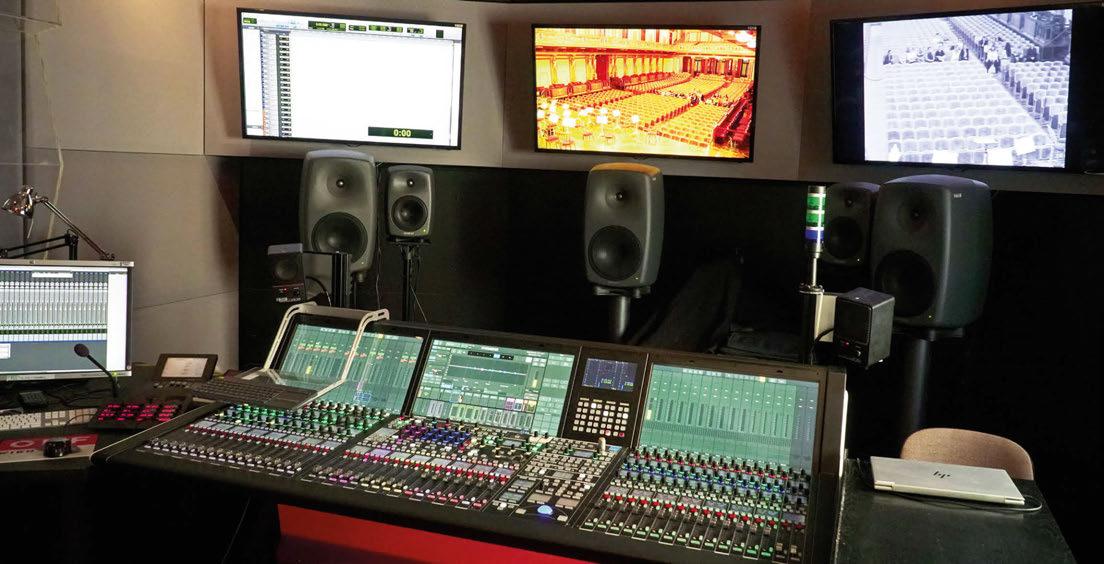
COMPANY: HARMAN Professional Solutions
LOCATION: Shiga, Japan
The Biwako Hall has become the first performing arts venue in Japan to install SPAT Revolution Wave Field Synthesis immersive audio system powered by HARMAN’s FLUX:: technology. This system enables an auditory experience that positions sound precisely on stage, creating a fully immersive environment that enhances the audience’s engagement, regardless of seating location.
Located 20 minutes from Kyoto on the shores of Lake Biwa, the 1,848-seat Biwako Hall is renowned for its diverse programming, and its unique acoustics are tailored to classical performances. The installation of the SPAT Revolution reflects Biwako Hall’s commitment to innovation in the performing arts. The system upgrade enhances the hall’s Front of House (FOH) package, introducing five main frontal sound points and a front-fill system to the space.
The integration of the SPAT Revolution immersive engine enables Biwako Hall’s sound engineers to create a lifelike audio experience by positioning sound sources, such as performers and instruments, as objects in a virtual space.
Sound outputs are then distributed through both the proscenium speakers and an array of eight front-fill speakers, creating the sensation that sound emanates directly from specific stage positions.
The system, controlled via a tablet PC, allows for seamless management and adjustment of sound objects and acoustics from anywhere in the hall, optimising the mixing process beyond the FOH console integration to SPAT Revolution.
“Biwako Hall has long been known as a leader in Japan’s opera and classical music scene, and the addition of SPAT Revolution solidifies its standing as a cutting-edge performance venue,” said Mr. Masahito Oshitani, Audio Technical Manager, Biwako Hall. “This installation not only exemplifies our commitment to immersive sound solutions but also provides audiences with an unparalleled sensory experience, underscoring Biwako Hall’s dedication to artistic excellence.”
The addition of this immersive audio system underscores Biwako Hall’s reputation as a pioneer in the performing arts and reinforces HARMAN’s dedication to transforming the auditory experience for live events worldwide. Furthermore, this installation showcases the cross-brand compatibility and seamless integration capabilities of HARMAN’s immersive audio technologies, laying the groundwork for future enhancements. www.harman.com
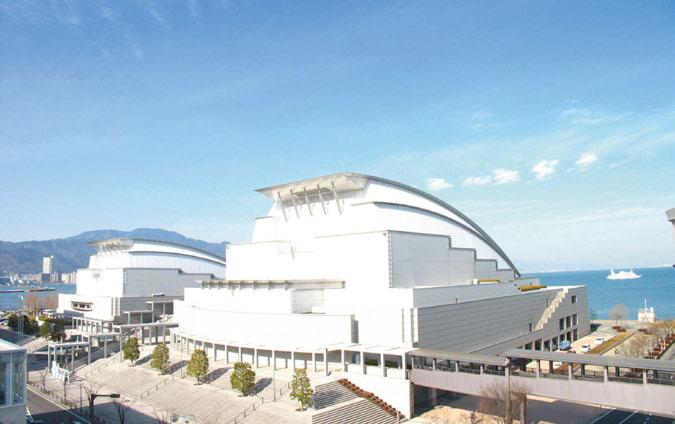
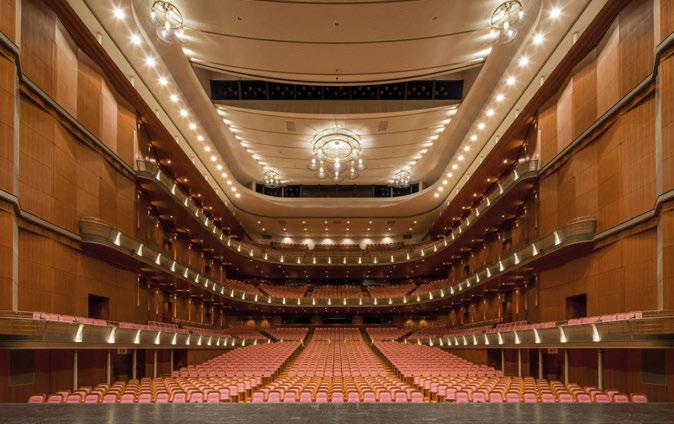
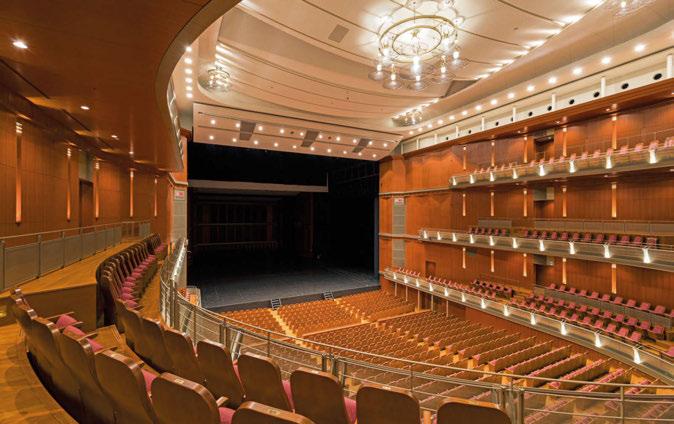
Coral
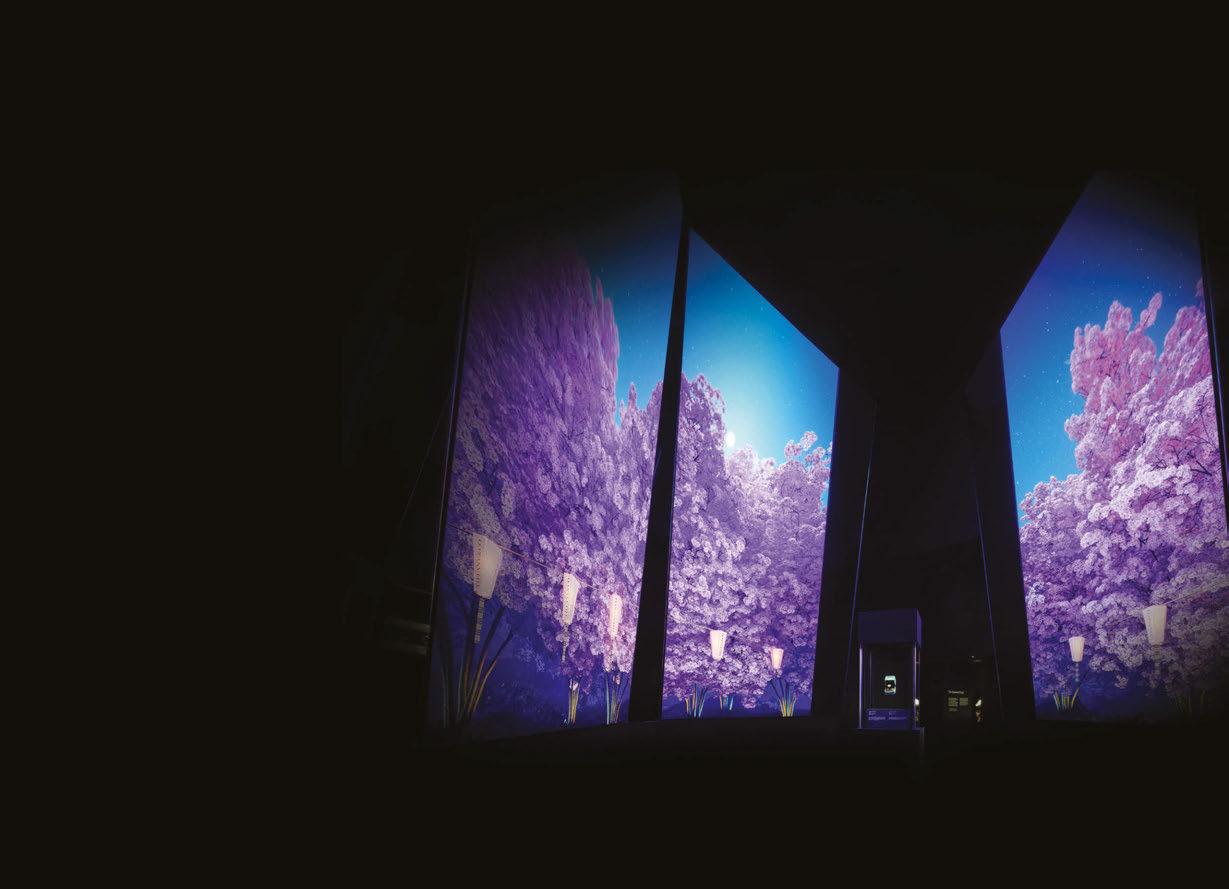
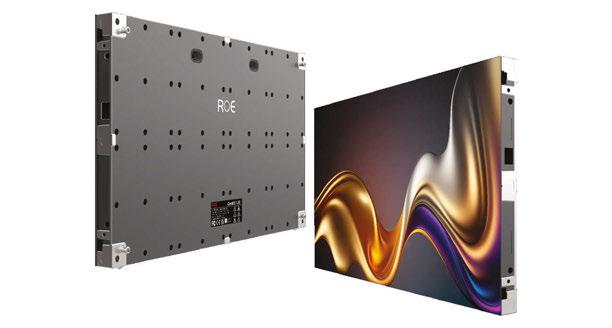
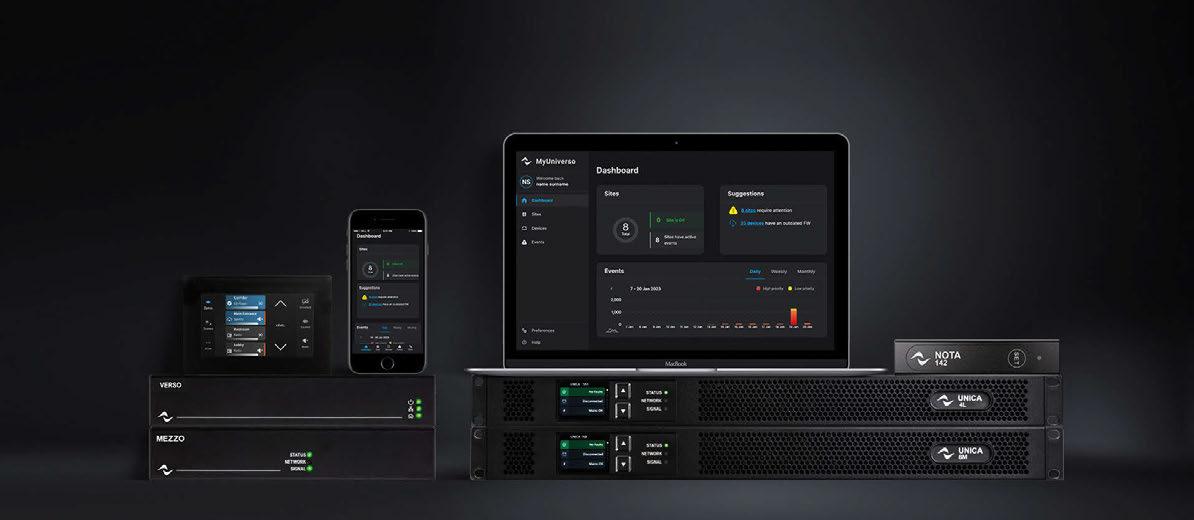
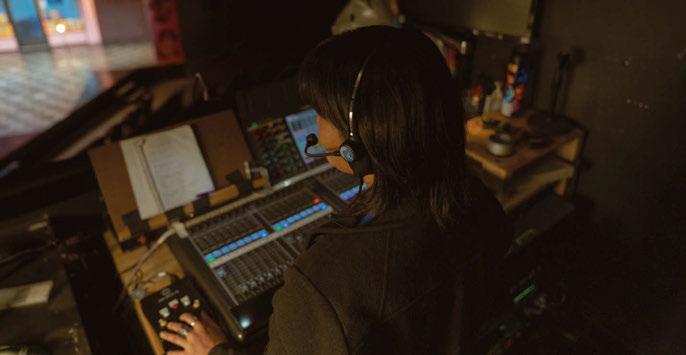
COMPANY: Clear-Com
LOCATION: Berkeley, California, USA
For many decades, Berkeley Repertory Theatre has relied on ClearCom for high-performance communications that ensure precision and coordination during every production. As the theatre recently upgraded to Clear-Com’s Arcadia Central Station, FreeSpeak II digital wireless intercom, and HelixNet Digital Network Partyline System, it continues a legacy of seamless communication that supports the artistry and technical demands of live performance.
Located in downtown Berkeley the theatre’s two spaces - the 599-seat Roda Theatre and the 399-seat Peet’s Theatre – are now equipped with Clear-Com’s digital communications technology.
Founded in 1968, the venue has become a cornerstone of regional theatre, winning the 1997 Regional Theatre Tony Award and earning a reputation for artistic excellence.
Satisfying Berkely Rep’s requirements demand extensive flexibility as the theatre’s annual season, presented across its two stages, includes a wide range of productions from classic plays to world premieres and contemporary works. The new system, overseen by Sound and Video Supervisor Lane Elms and Senior Sound Engineer Angela Don, brings together an Arcadia Base Station, FreeSpeak beltpacks, FreeSpeak Antenna Distribution units, and FreeSpeak Antennas, as well as multiple HelixNet Stations, HelixNet Remote Stations, HelixNet Belt Packs, and Powerlines.
Arcadia serves as the central hub for the theatre, seamlessly integrating FreeSpeak II and HelixNet channels into one system. This unity is crucial for managing productions that span both theatres, enabling real-time
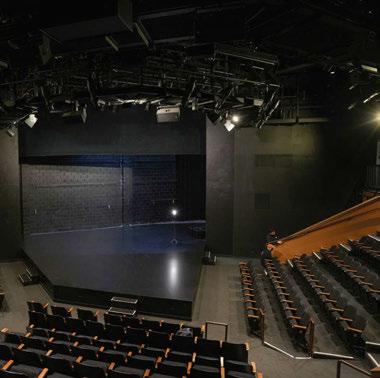
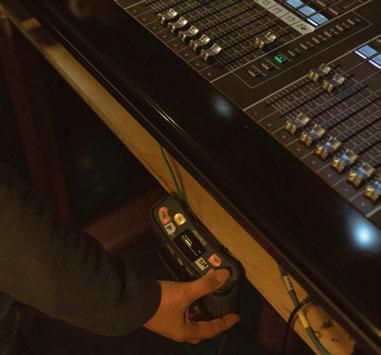
communication between crew members across the different stages.
“Clear-Com’s reliability and top-tier performance have supported our productions for decades,” said Lane Elms, Sound and Video Supervisor at Berkeley Repertory Theatre. “Clear-Com is essential to our live operations, from new works to full-scale pre-Broadway musicals. Our recent upgrade to a digital system has enhanced this even more, allowing us to seamlessly interface with our backstage page, lobby paging system, and archival recording systems.
“Beyond Clear-Com’s technology, we’re fortunate to have such a good relationship with their team. From the beginning, Clear-Com has checked in regularly – a practice that Regional Sales Manager Jay Wallace continues today. It’s reassuring to know Clear-Com is just a phone call away, and we’re proud to consider them part of our Berkeley Repertory Theatre family.”
Jay Wallace, who has worked closely with the theatre for years, underscored Clear-Com’s relationship with the team, “Berkeley Repertory Theatre’s dedication to creating one-of-a-kind high-quality theatre has been so exciting to watch and support. We’re honoured to provide their work with a reliable system that meets their needs.”
Angela Don, Senior Sound Engineer at Berkeley Repertory Theatre, concluded: “Clear-Com’s solutions are more than just equipmentthey’re an integral part of our theatre.
“It’s great to know we have such dedicated support, from technology that meets our evolving needs to a team that’s always there for us.” www.clearcom.com
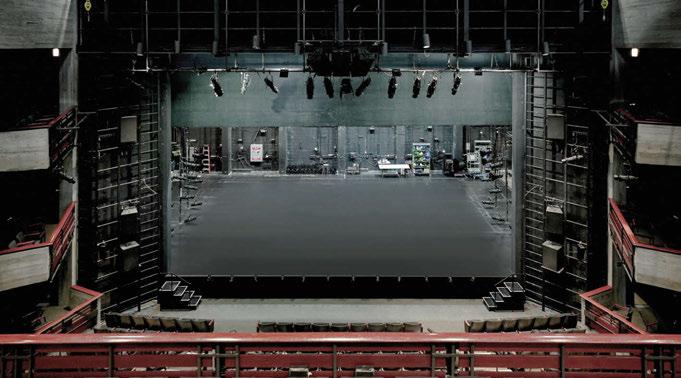
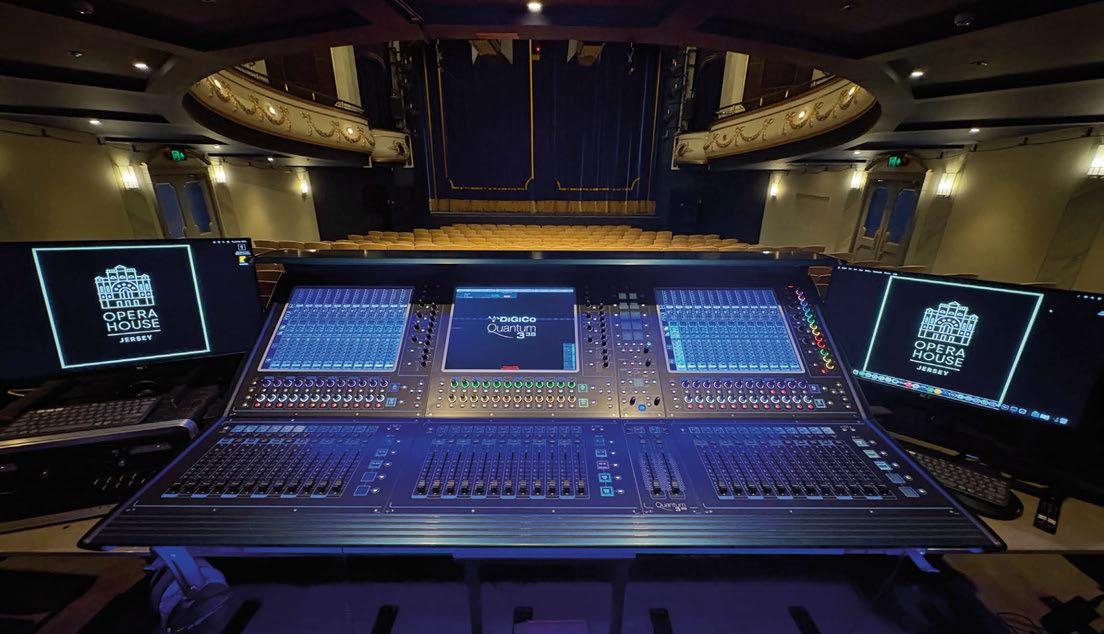
COMPANY: DiGiCo
LOCATION: Jersey
The 125-year-old Jersey Opera House (JOH) recently reopened after a five-year refurbishment period with a gala performance in October 2025. In the last few months, the JOH has re-established itself as an outstanding live venue, delivering sellout performances from greats like Gilbert O’Sullivan, to children’s favourites like Horrible Histories, with dance, comedy and cinema also thrown in. Technical Manager, Chris Wink, explained how a generous benefactor donation for equipment facilitated the purchase of a brand-new Quantum 338T, supplied by Stage Electrics, adding to their existing DiGiCo SD9 and securing the future purchase of a Quantum 112.
“We were lucky enough to benefit from huge generosity, so we now have a fantastic Quantum 338T and are developing a cutting-edge d&b audiotechnik loudspeaker system,” he expanded. “The Quantum 338T will position us perfectly as we begin to produce more work in-house and is a natural fit for the calibre of artists that visit the JOH.
“We are really investing in equipment and people since our building project finished. Many of our visiting shows already use DiGiCo, so the Q338T helps with our workflow, making setups much easier.”
In a five year long, government funded construction project, the entire structure of JOH has been upgraded and repaired. The final upgrades were to the theatrical equipment, including full lighting and sound systems. The Quantum 338T was chosen thanks to its trio of 17-inch, high brightness screens and large console surface area. With 156 input channels, 72 busses and a 36 x 36 matrix, the Quantum 338T is built for complex shows and is exactly what JOH needs.
“The Opera House started out as a replacement for the Theatre Royal,” Wink continued. “Over the years it has had many refurbishments, but in 1997 it was taken back to its original form, and we have updated and safeguarded that work. It’s a beautiful, historical building, but we are looking to the future with modern works being commissioned, including
a brand-new opera, pantomime and dance. The Quantum 338T is proving essential because of our varied workflow and the speed at which we change shows.”
The DiGiCo T software upgrades the standard Quantum 338 with a variety of added features, including increasing the matrix from 24 to 36 with individual Nodal delays and aliases on each channel. When coupled with the ultra-flexible 32bit SD cards and an Optocore loop, Wink gains a level of agility that has enabled him and his team to deliver crystal clear sound, regardless of the genre of the show. As he continues, it is the ability to make the racks whatever you need them to be that makes the DiGiCo ecosystem so appealing.
“The SD-Racks being able to be whatever you need, wherever you need it, via hot-swapping cards is essential,” he said. “We also use Orange Boxes within the system, once again adding more flexibility, certainly for Dante inputs and outputs, and personal monitoring requirements.
“Because of the unique nature of our venue, we often end up taking multi-track recordings, too. Software wise, we’ve really noticed the impact that Mustard and Chilli processing has, it felt like a big change from our SD9.”
With a varied repertoire it is often the shows that need the most subtle reinforcement that require the most care.
“The quality of the preamps in the 32-bit cards delivers a level of finesse that is not present with other brands,” Wink concluded. “It’s about having a system that’s powerful and punchy enough to deal with any rock or pop artists that come over, but also be quiet and clean enough to deal with the subtle reinforcements of a spoken word play, or an opera. There are times when you need a sledgehammer and there are times when you just need a little file – and the DiGiCo Quantum 338T does everything.” www.digico.biz
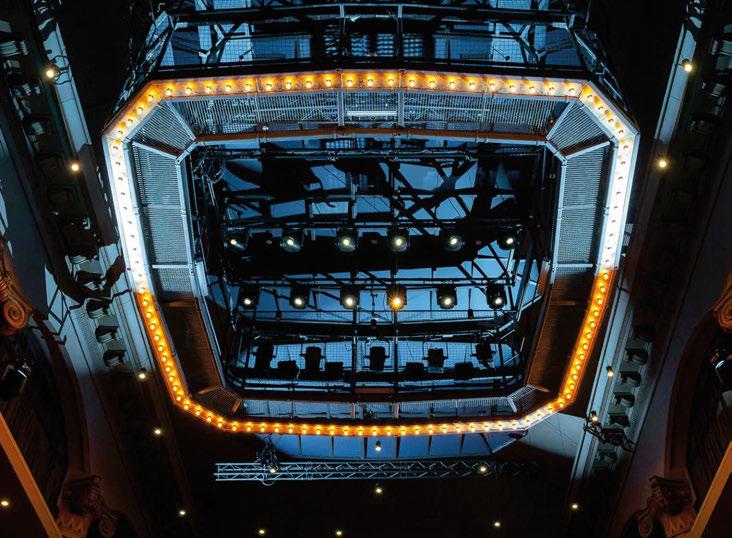
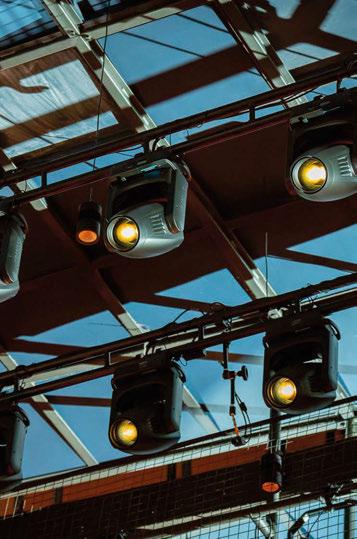
COMPANY: Ayrton
LOCATION: Bergen op Zoom, the Netherlands
Photos: Tim van Etten
Theater De Maagd, a converted churchturned-theatre in Bergen op Zoom, has recently undergone technical modernisation, part of which included transitioning from halogen to LED lighting.
Ampco-Flashlight Sales, Ayrton’s exclusive distributor for The Netherlands, recommended Ayrton Diablo TC as a versatile and advanced LED fixture that aligns with the theatre’s vision for its future, installing 16 Diablo TCs as front lighting and an additional six units for use on stage.
The drive for innovation and a new way of working was precisely the reason the theatre chose Ayrton Diablo, as Cees Snellink, Head of Technology at Theater De Maagd, explained:
“Switching to Ayrton Diablo saves us time and money because we now need much less physical setup compared to the conventional halogen lighting we used previously.
“Much of the preparation can now be done digitally which significantly reduces the number of hours needed on stage to design a light show. In addition, working with LED moving heads at height is both safer and more efficient, and we no longer need to work in difficult-to-reach places.”
Nicky Jonker, Technical Coordinator, and Benjamin-John Paulissen, Lighting Technician at the theatre, were closely involved in the preliminary process and selection of Diablo TC.
Based on their forward-looking vision, they were searching for a specific product that met all their requirements. After nearly nine months of shootouts and comparisons between different brands, they concluded that Ayrton stood out in several key areas. “Of all the lights we tested, Ayrton’s colours were the most faithful to the existing Lee filters,” said Jonker. “There was virtually no physical difference – which was the main reason we chose Ayrton. Every theatre company that visits us is amazed by the colour accuracy of Diablo.”
Diablo’s compact size proved another advantage: “Despite its small size, the light output is more than sufficient for our venue, and it’s also very quiet,” explained Paulissen. “This is important since some of the fixtures are placed relatively close to the audience seating. When the seating area is empty, we can increase the power if needed. In practice, this isn’t necessary, but it’s a great option to have, and that flexibility in output and fan control is very useful.”
The team has programmed the new Diablos in a way that allows each visiting production to quickly and easily adjust the settings to their needs, and Paulissen is very satisfied with the new system’s usability: “I no longer have to climb up to adjust the lights manually,” he said. “We can load different presets into the
Diablos, so everything is handled digitally, saving a lot of time. We have multiple control points in the theatre where we can operate the lighting, either via a computer or a lighting console which makes working with these lights much easier.
The venue also found Diablo’s pricing to be very favourable. “Diablo stood out in terms of technical performance, colour accuracy, and price-quality ratio,” continued Paulissen. “I’ve seen lights that cost thousands of euros more but didn’t meet our requirements. We first looked at the specifications we needed and the quality of the light. Based on that, we chose the Diablo. When we then received the price quote, it turned out to fit perfectly within our budget.”
Ampco Flashlight Sales was thrilled to have contributed to the modernisation of such a unique venue as Theater De Maagd, as product specialist, Arnoud de Leeuw who oversaw the entire sales process, concluded: “It was great to work with people who clearly knew what they wanted and what was important to them.
“I am glad that I was able to play a role in realising their future vision. The end result is not only technically impressive but also visually stunning.”
www.ayrton.eu
www.ampco-flashlight.com
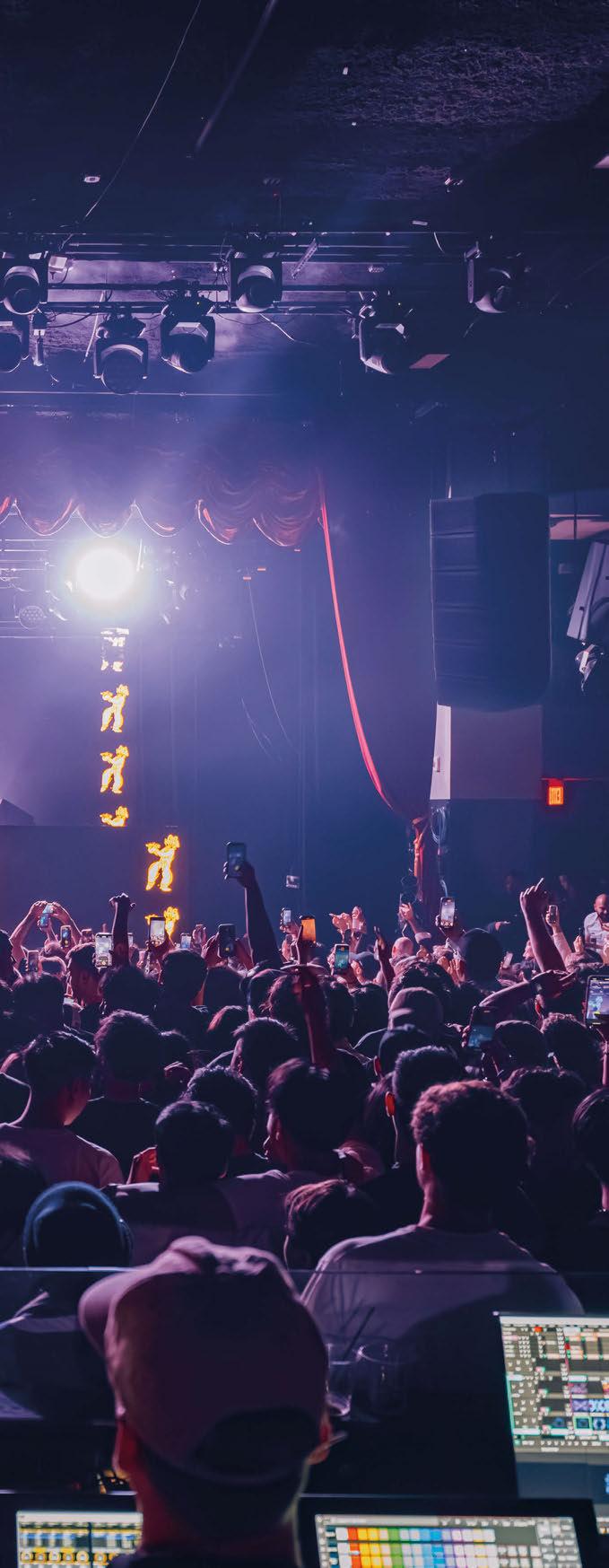
Modulo Pi media servers bring Ephemera’s immersive dining experiences to life
Through its concept of immersive dining, Ephemera Group offers a culinary experience that transports guests into spectacular worlds – from tropical jungles to ocean depths, passing through enchanted forests.
To bring these multisensory environments to life, the group relies on an audiovisual system designed and integrated by Fosphor, with Modulo Pi’s Modulo Player media servers at its core. In a four-year span, Ephemera Group has opened seven immersive restaurants across France, each offering its own sensory universe – ranging from space exploration to journeys into a volcano, a tropical jungle, enchanted forests, or underwater worlds.
The latest to open is Under The Sea in Montpellier, a 750 sq m venue which immerses visitors in a fantastical marine world inspired by ocean depths and abyssal creatures.
In total, four Modulo Player media servers, each equipped with four outputs, power 14 Epson EB-695 projectors.
“For this restaurant, we developed video mapping directly onto the decorative sculptures,” explained Coquereau.
“The projections follow the contours of the set to bring underwater elements to life – octopuses, turtles, and other creatures appear to move within the space. This transforms the physical décor into a living, dynamic environment.”
Thanks to the show control features of the Modulo Player media server, a custom control panel has been created for each site, giving access to a range of commands and scenarios. Each restaurant is equipped with a touchscreen tablet hosting this interface, allowing for simple and intuitive control of the installation.
www.modulo-pi.com
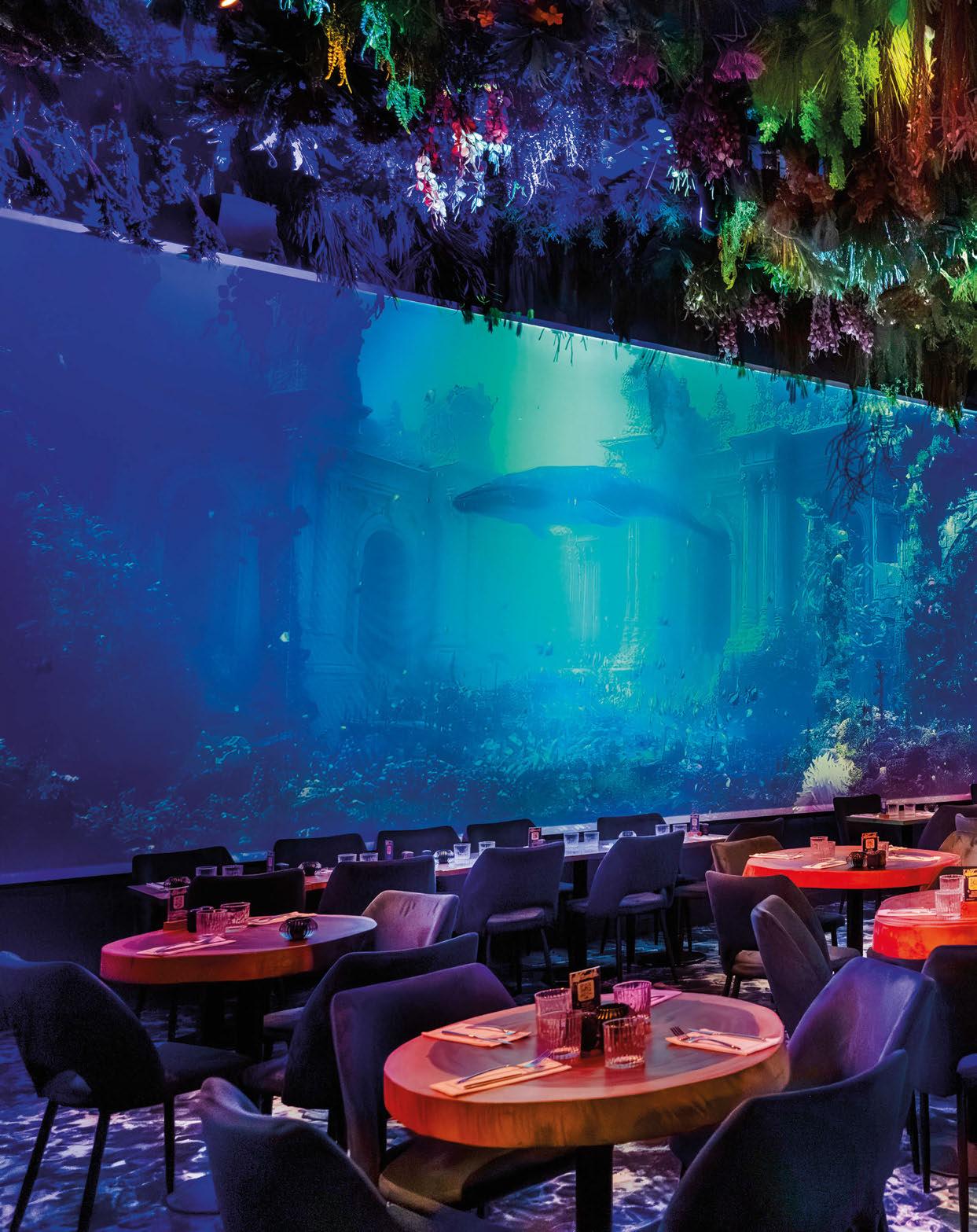
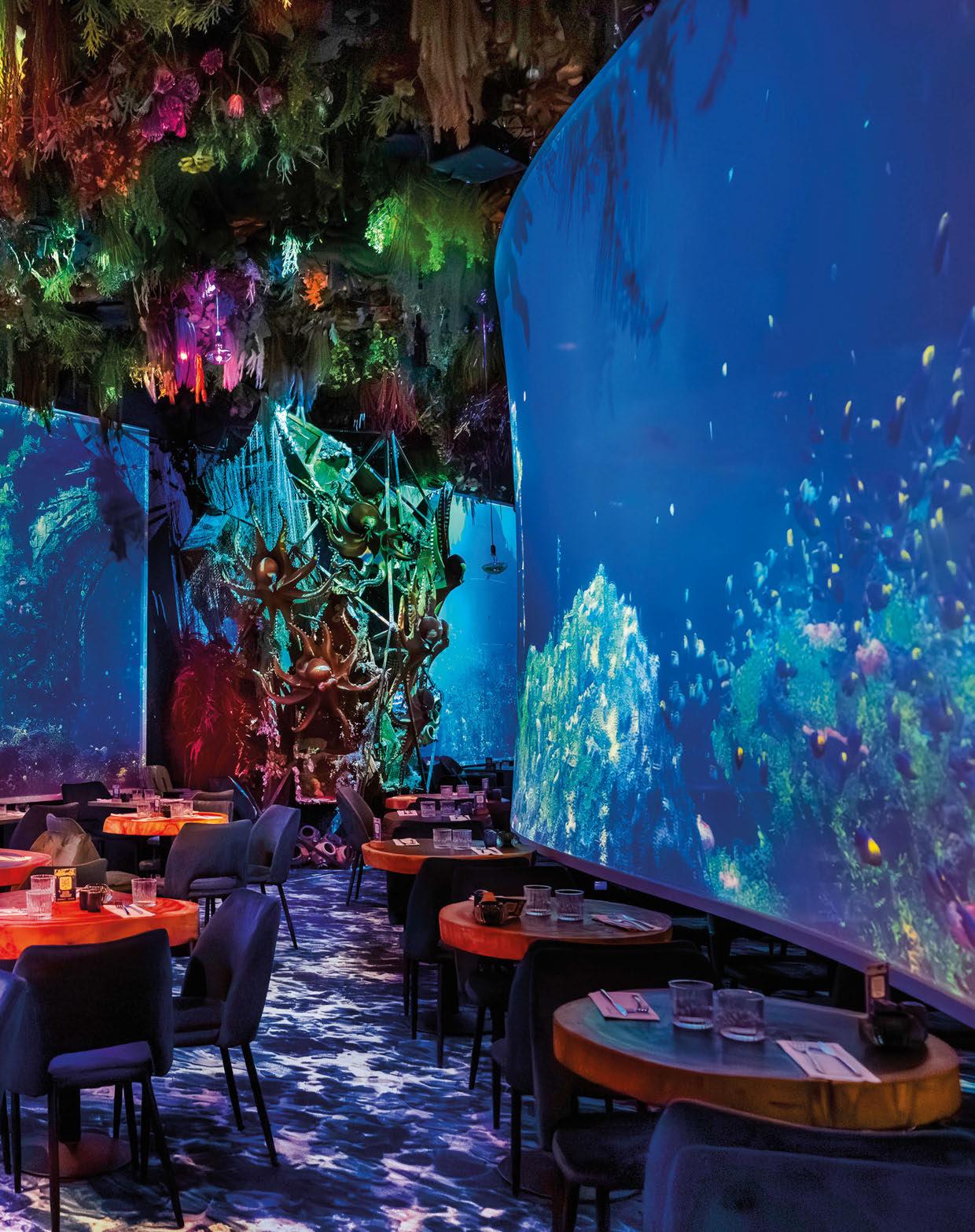
BOTTROP / GERMANY EMEA
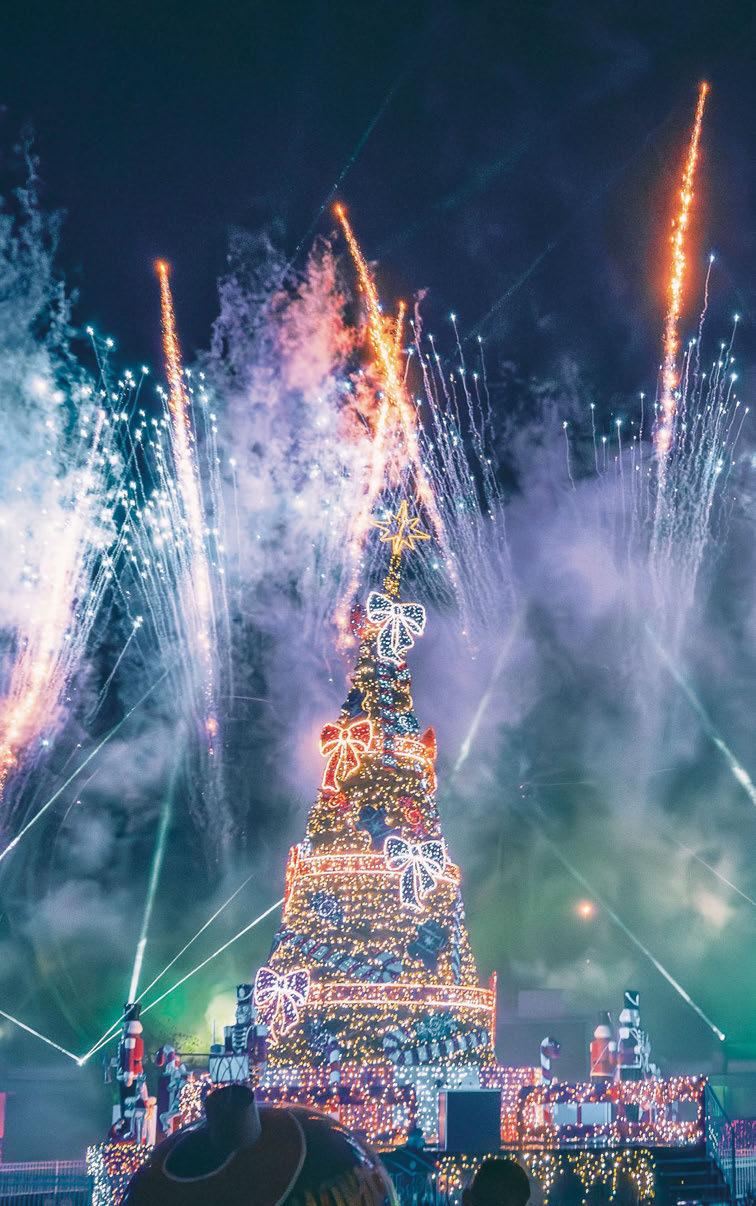
A long-term creative partnership between the amusement park’s internal team, integrator Bentin Projects, and manufacturer Q-SYS allows the Hollywoodinspired Movie Park Germany to house vibrant and innovative entertainment offerings.
At a modern theme park, the guest experience is shaped just as much by what visitors hear and see as by the rides themselves. At Movie Park Germany, this understanding has driven the park’s technical team to develop a highly adaptable, venue-wide AV infrastructure, enabling continuous creative evolution while maintaining operational reliability. Working in close collaboration with integration partners, including Bentin Projects, the park’s in-house specialists have spent the past several years building out a unique system architecture centred on the Q-SYS Full Stack AV platform. The result is a unified control environment spanning audio, video, lighting, show control, and special effects across the entire site. While external partners have supported implementation, the vision behind the park’s AV transformation has been led internally. This in-house technical team has formed a strong bond with the Q-SYS theme parks division, allowing for a continuous dialogue where the manufacturer and the venue can share ideas and come up with new, inventive methods of deploying and using the technology. Torsten Haack, Q-SYS EMEA Theme Parks Director, stated: “This theme park is always first on my list to turn to when we’re introducing new add-ons to the Q-SYS Full Stack AV platform. I love visiting this venue. The teamwork and innovation behind the scenes are incredible.”
The driving force behind most audiovisual innovations at Movie Park is the venue’s technologically ambitious pair, Walter Weijten and Fabian Jung. They are joined by Christian Pieper and a whole host of skilled team members. “We handle most of the design and programming of the park ourselves,” began Walter Weijten, Supervisor of Audio & Entertainment Technical at Movie Park Germany. “From lighting to audio to special effects like smoke machines, we design and programme everything through Q-SYS. For our annual special events like Christmas or Halloween, we spend the whole year thinking about how the park should feel and how it should evolve. We’re using Q-SYS to create vivid atmospheres throughout the park that perfectly fit each season.” This long-term, creative approach has shaped how the technology has been deployed. What began
as a focused project for a single attraction has grown into a fully integrated ecosystem, guided by the park’s ambition to create seamless and controllable guest experiences. Reflecting on the early stages, Bernhard Blank of Bentin Projects said the direction was already clear. “When we started on the Movie Park Studio Tour in 2020, the team already had a strong idea of what they wanted. It was obvious this was going to be more than a single project. It set the foundation for everything that came after.” Following the success of the Studio Tour, a multi-dimension coaster, Movie Park Germany expanded its use of Q-SYS, replacing its ageing audio infrastructure and moving towards a more flexible, centralised system.
“Movie Park’s technical team were not thinking in terms of a simple upgrade,” Blank said. “The idea was to build something that could grow with them. We worked with the team to develop a Q-SYS backbone that would support that long-term vision.”
The foundation for future attractions
Today, Q-SYS provides the central control layer for a wide range of operational and entertainment systems across the park. As attractions are built, Movie Park Germany’s technical team, oftentimes alongside Bentin Projects, continues to connect each one to the Q-SYS network for operation. New rides are designed with integration in mind from the outset, allowing them to slot into the wider network with minimal friction. For Weijten and his team, ease of use has been essential. “Once everything is set up, it becomes very straightforward to use,” he said. “That is when it gets interesting for us. We can change the atmosphere of the park throughout the day without difficulty, and
that opens up a lot creatively.”
The ability to control every aspect of the park environment has become central to Movie Park Germany’s creative strategy. “What makes the system powerful is that it goes beyond audio,” said Weijten. “You can bring everything together in one place. Sound, lighting, video, show control, effects. It all works as one system.”
Most broadly, Movie Park Germany uses Q-SYS to manage audio distribution across multiple themed areas and attractions, giving operators precise control over individual zones. Background music can be adjusted or muted in specific areas, whether for maintenance or special events, while the rest of the park continues operating uninterrupted. Outside of this, for the park’s technical team, Q-SYS has created new opportunities to truly experiment. Fabian Jung, Multimedia, Show & Event Technology at Movie Park Germany, said: “We are always trying new ideas. We do not just use the systems in a standard way. We are constantly looking at how we can use it differently to create something new for guests.” As an example of this, Weijten pointed to what the next stage will be in Movie Park’s innovative useage of Q-SYS: a deeper integration between the operational ride systems and the AV entertainment controls. “On a new attraction currently under development, we are creating a closer relationship between ride and show controls. Q-SYS is not controlling the ride, but it is allowing the AV solutions to interact much more directly with the attraction’s operation. This opens up new possibilities for synchronisation.” As well as empowering the team with creative freedom, the reliability of Q-SYS has also had a major impact on daily operations. “In the
Left: Movie Park Germany during its 2025 ‘Hollywood Christmas’ season.
Above: (Left to right) Torsten Haack of Q-SYS, Fabian Jung of Movie Park Germany, Bernhard Blank of Bentin Projects, and Walter Weijten of Movie Park Germany.
past, a lot of time went into solving problems,” he continued. “Now the system runs really smoothly, so we can focus on creating new things. That is a big change for us, and it is what we enjoy most.”
Altering the atmosphere
One of the clearest examples of this flexibility can be seen in Movie Park Germany’s dramatic transformations during its special events. In seasonally themed environments, the AV infrastructure doesn’t change or get swapped out; instead, the park relies on programming its permanent visual and sound solutions to change the mood.
The Movie Park Germany team are all Q-SYS certified, so whenever these new events or attractions pop up, the team can easily devise a new and creative configuration of audiovisual programming, scripting all technology in the area to match the desired energy. For the 2025 Halloween season, the park ran its 27th annual Halloween Horror Festival. During the daytime, guests could experience a traditional family theme park atmosphere, and by evening, the entire environment shifted.
At the touch of a button, Q-SYS initiated a complete park-wide transition. “During the day, it feels like a classic theme park,” said Jung. “Then, at 6 pm every night during the festival, one command triggers the entire transformation. The soundtrack changes, the lighting changes, fog machines start, flame
effects activate, and suddenly the whole park becomes something completely different, creating a spooky aura. That is the beauty of an integrated control platform.”
With more than 280 scare actors, multiple scare zones, and nine horror attractions during the 2025 Halloween Horror Festival, reliable automation was essential. Q-SYS coordinated the audiovisual layers that supported Europe’s largest Halloween event, ensuring consistent execution night after night. These technologically sophisticated scares were supported by Movie Park’s own theming, with custom IP and storylines created by Manuel Prossotowicz and his teams. The same flexibility extends to the park’s Christmas offering. During Movie Park’s Hollywood Christmas, Q-SYS manages festive ambient audio, themed lighting, and nightly show moments, including the illumination sequences for the park’s signature Christmas tree. “Christmas works differently,” Weijten noted. “The atmosphere is seasonal all day long. But again, Q-SYS makes it simple. We can trigger complete thematic changes instantly and ensure every zone feels connected to the event.” For the technical supervisor, this capability for flexibility has been key to delivering on long-standing creative ambitions. “We always wanted to transform the whole park, not just parts of it,” he said. “Now we can do that consistently, every evening, and keep improving it each year. That is very satisfying for the team.”
Another key use of the platform can be found in the Roxy 4D cinema, where Q-SYS acts as the master control solution for the space’s multifaceted technical environment. “There are four major control systems involved in the 4D cinema: projection, 3D image processing, seat motion control, and audio,” Blank said. “Q-SYS sits above all of them. It controls the interaction between those systems, manages the audio, and provides the user interface. Here, we’ve given the operator one easy-tomanage system.”
That same philosophy extends to other park attractions. In the upgraded Movie Park Studio Tour, Q-SYS controls preshow sequences and synchronises ride-based effects as vehicles move through each scene.
“As the vehicle enters a scene, Q-SYS triggers a timed sequence. Audio starts, lighting cues fire, fog machines activate, flame effects trigger, and projection elements launch.
Everything is synchronised to the ride position,” Weijten stated.
Q-SYS also supports projection mapping installations throughout the park, including large-format façade shows on Main Street. Partners such as Bentin Projects remain involved with the amusement park and its technical team. “We were here just two months ago installing additional equipment,” Blank revealed. “It is an ongoing process.
Movie Park is continually investing to stay at the forefront of show control.”
Recent additions include new Q-SYS Core processors. One of the newest installations is within the A Quiet Place maze in Studio 1, where additional Q-SYS processing provides control over the experience’s immersive soundscapes. Further upgrades began in early 2026, when Bentin Projects, alongside Q-SYS, reviewed park restaurants Trattoria Hollywood and Dunkin’ Donuts, which Haack noted “now incorporate the full Q-SYS sound concept, from loudspeaker to amplifier to core.”
Ultimately, the strength of Movie Park Germany’s AV ecosystem lies in the combination of robust technology and a highly engaged in-house team.
“It has allowed us to realise ideas that we have had for a long time,” said Weijten. “And the more we work with it, the more possibilities we see. We are always looking for ways to improve and develop new experiences.”
Blank agreed that the result is a cohesive system. “Everything works together, and that is what makes it successful. It supports the way the park wants to operate and create experiences.” At Movie Park Germany, this combination of technical control and creative ambition continues to drive the park forward. www.movieparkgermany.de www.bentinprojects.com www.qsys.com
Below left: ‘ Hollywood Christmas’ at Movie Park
Germany
Below right: Movie Park’s 2025 ‘Halloween Horror Festival’.
L’Eden treats its visitors to a newly converted, colourful, and all-LED system from CHAUVET
Marc Brissonet, Technical Director of L’Eden, led the way in the initiative to convert the venue to an all-LED system. This process began in late 2024 when the theatre installed eight Ovation Rêve E-3 colour rendering ellipsoidal fixtures and 10 Ovation Rêve F-3 colour rendering Fresnels from CHAUVET Professional. As a multi-disciplinary house, the performance venue hosts a wide variety of different types of productions, and Brissonet acknowledges that initially, some touring companies were hesitant to perform under LED lights. Experience, however, taught them otherwise.
“Some companies came in with preconceived notions – concerns about colour rendering, intensity, or beam quality,” said Brissonet.
“But once they saw what the Rêve units could do, most of those doubts disappeared. LED technology has come a long way, and today we’re able to get excellent results across a wide range of applications.
“An example is how the Rêve F-3s offer us all the flexibility we had with traditional fixtures, but with far better colour control, consistency, and energy efficiency,” he continued.
“They’ve made our setups faster and more precise. Honestly, they’re a great replacement.”
Purchasing the Rêve fixtures was one of the steps Brissonet has taken to convert the venue to an all-LED system. This year, l’Eden added six Maverick Storm 2 Profile fixtures and two Rogue Outcast 2X Washes to its house rig.
“The potential is already clear,” Brissonet said of the new fixtures. “Having motorised LED fixtures in the venue gives us a lot of creative flexibility. I’m glad that Chauvet offers IP20 fixtures, because IP65 is often unnecessary in venues like ours.” Prior to embarking on his journey to an all-LED system, he upgraded the theatre’s lighting capabilities by acquiring a ChamSys MagicQ MQ250M Stadium console.
“We needed more universes to control our fixtures, and this console offered the right combination of features and price. I had a solid introduction to the system via Rémy Rouvoy, while Victor Faré familiarised us with the lighting fixtures. Brissonet concluded: “Prisme Éclairage, who handled the integration and provided excellent support throughout the project deserves a lot of credit. The lighting quality is better, and the response from visiting productions has been encouraging … even from those who were initially hesitant about using LED!”
www.chauvetprofessional.com
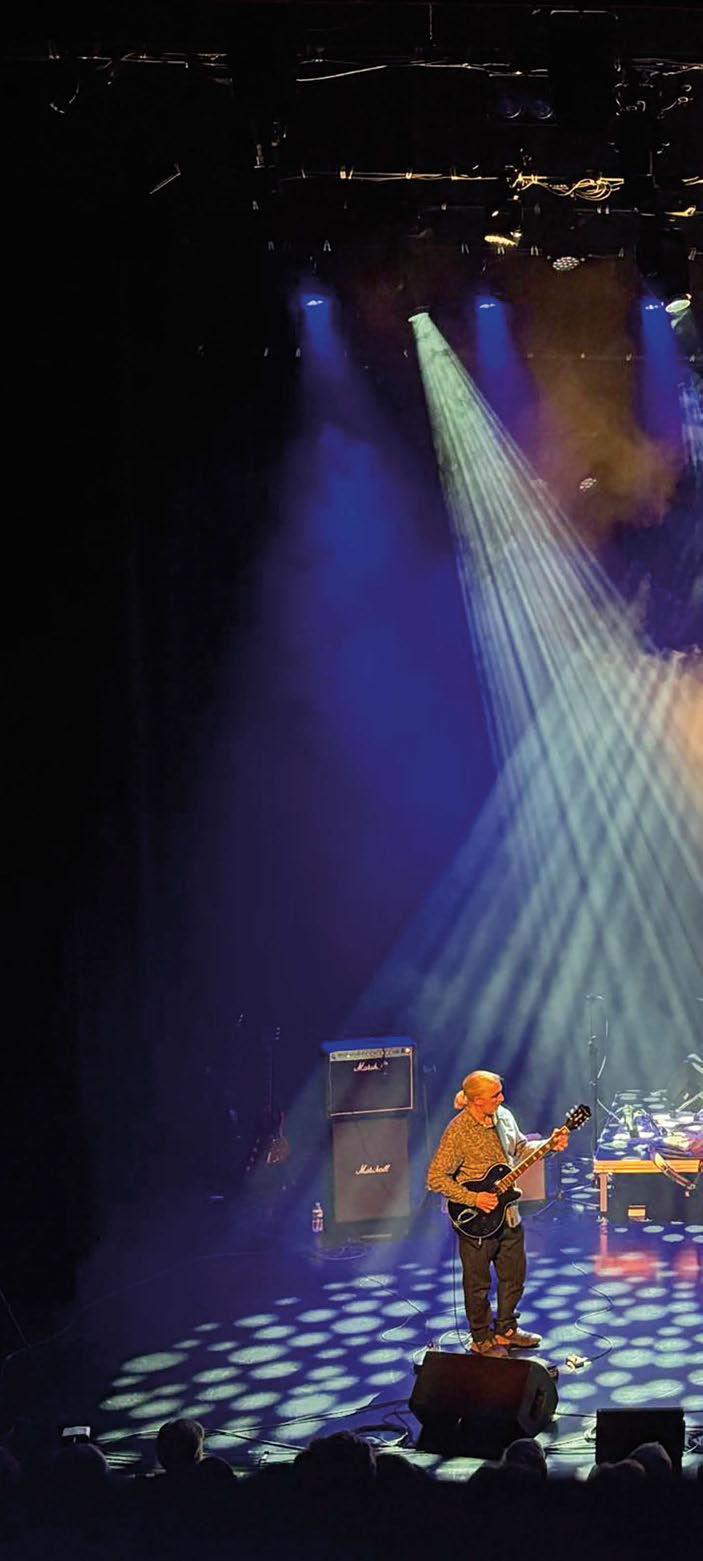
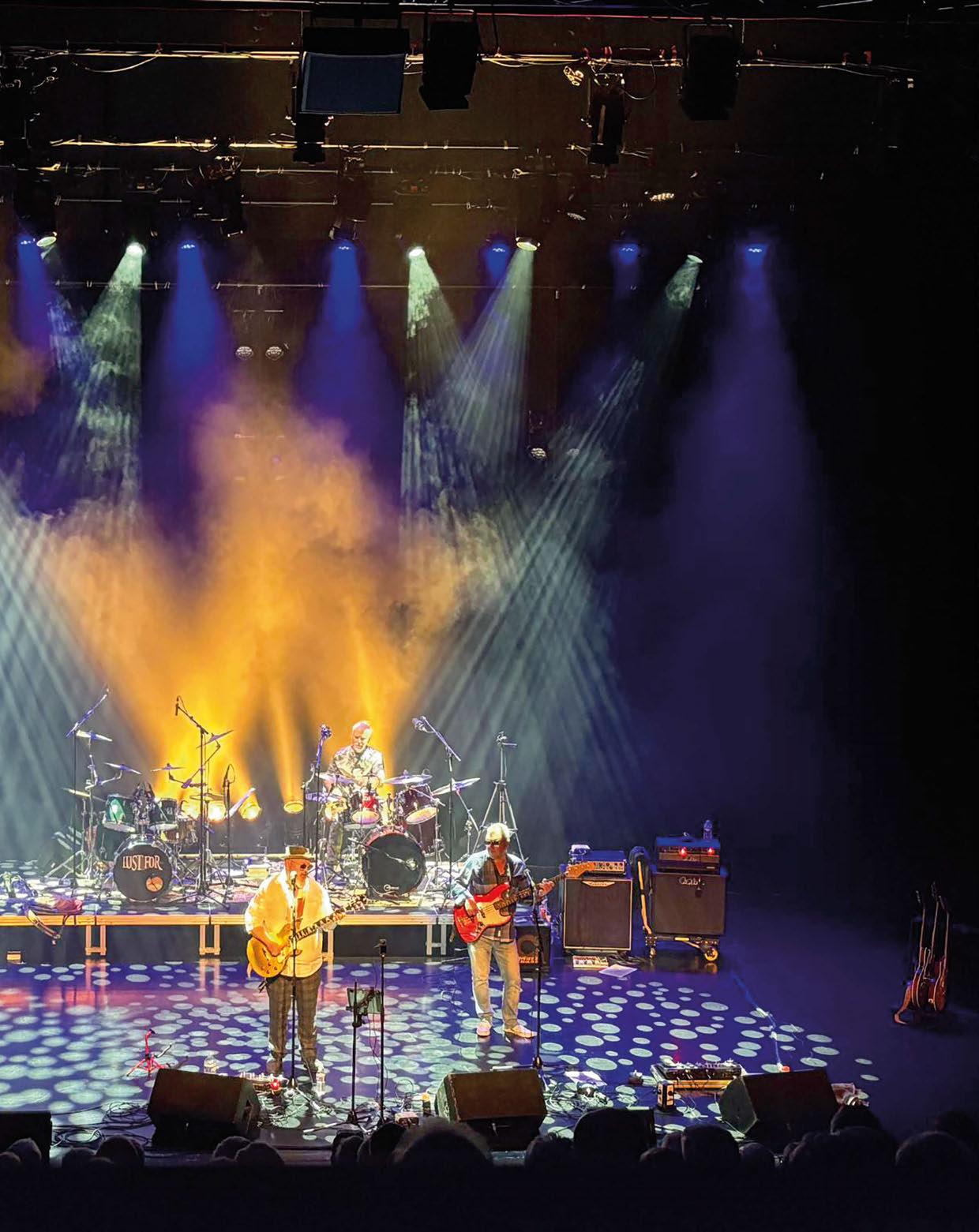
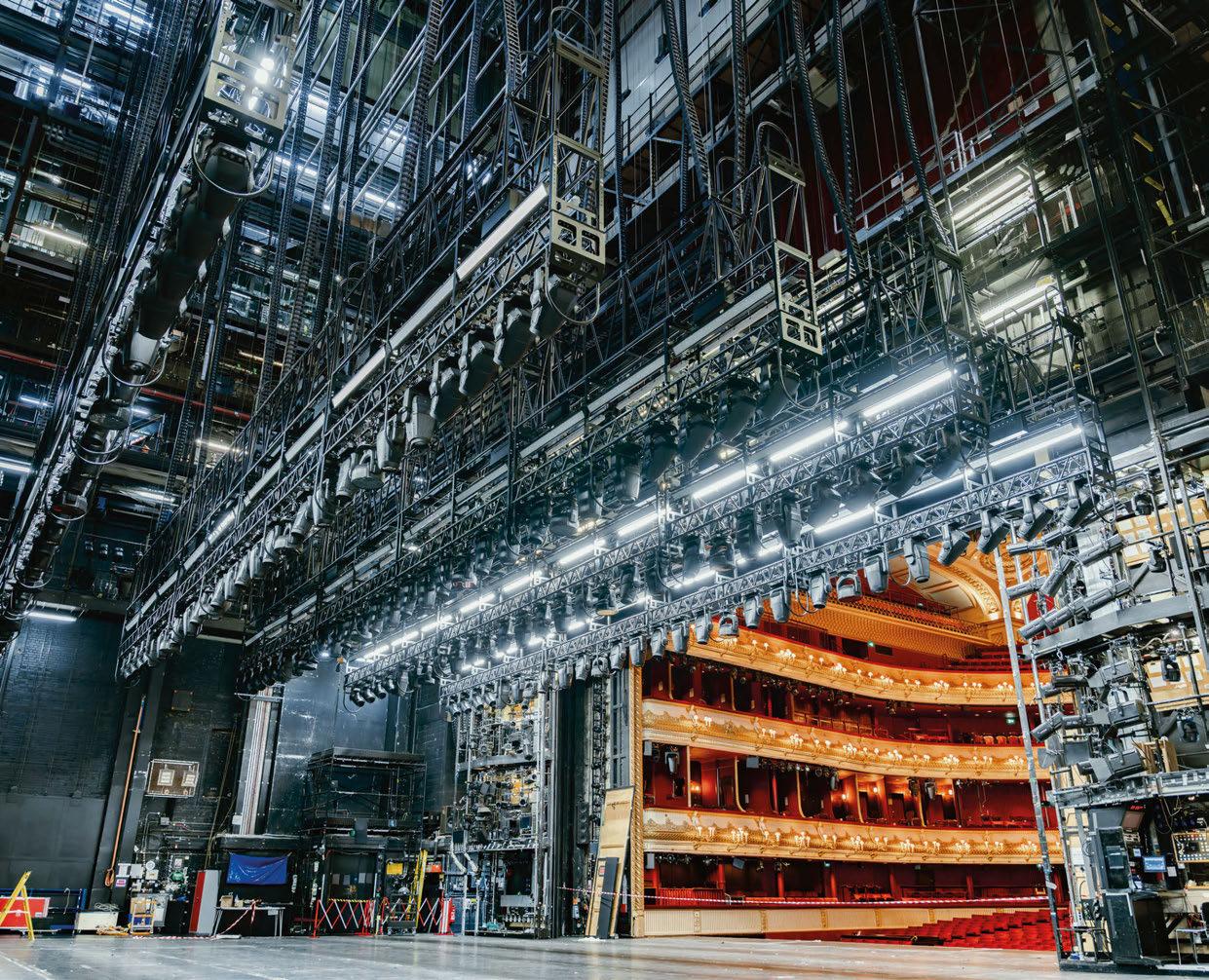
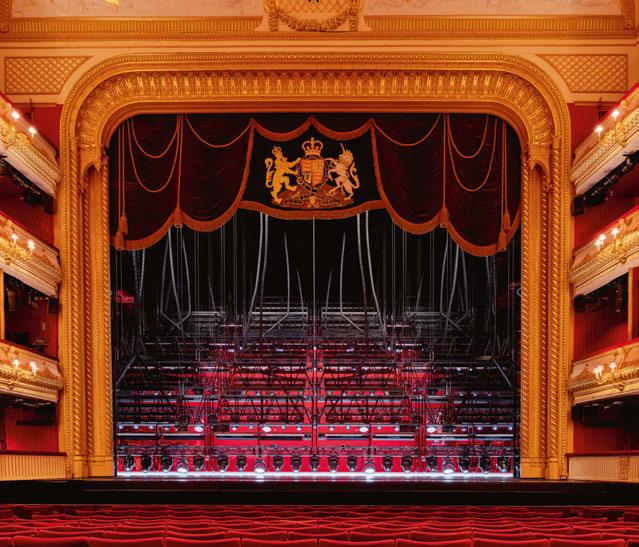
Located in the heart of Covent Garden, the Royal Opera House is the home of The Royal Opera and The Royal Ballet, which are known collectively as the Royal Ballet and Opera. Working closely with the Royal Ballet and Opera, HOF developed and produced a customised truss construction for the upper stage machinery, which formed part of the comprehensive renewal of the venue’s lighting fixtures – beginning with the installation of 90 Martin Professional MAC Viper XIP fixtures – to serve as the foundation of a new era for one of the world’s most demanding performance environments.
The project combines high load-bearing capacity with minimal dead weight, and demonstrates how modern aluminium constructions can replace traditional steel solutions in complex theatre environments.
The venue was faced with a particular challenge: increasing demands from modern stage and lighting technology, combined with the weight of the existing steel construction, which pushed the limits of the individual steel wire ropes, with a load capacity of 420kg each. At the same time, the structural conditions above the stage restricted the available installation height.
Therefore, a complete redesign of the truss system for all five battens was required – one with minimal weight, optimised height and maximum stability.
The Royal Ballet and Opera approached HOF to develop a new truss system, and a custommade aluminium construction was created to overcome the numerous technical challenges.
The solution combines a modified MLT FOUR PRE RIG TRUSS, and MLT THREE PRE RIG TRUSS, with elements of the HOFFORK 350-5 concept. At the centre of the system is the
mother truss, based on a modified MLT FOUR installed upside down. Its open-top design allows it to accommodate approximately 70% of the height of the energy chain storage units to optimise the available space.
The bottom truss is a combination of MLT THREE and HOFFORK 350-5 elements which completes the system.
The mother and bottom trusses are connected via a specially developed aluminium interface that fulfils several functions. It carries working and safety lighting, and enables efficient handling during maintenance and changeovers.
A key focus of the project was to improve day-to-day operations. The system allows suspended trusses to be removed from the load and placed onto up to 50 MLT dollies without requiring full dismantling.
This meant that the entire structure does not need to be dismantled, nor would the dollies be overloaded. The result is significantly improved flexibility and efficiency, particularly during changeover periods.
“The trussing systems and accessories, such as dollies and T-pieces, significantly improve our daily operations, especially during maintenance periods,” said George Townsend, Lighting Project Manager at the Royal Ballet and Opera.
Each of the five battens measures 21m in length and is divided into three independently movable units. Through the use of aluminium, the total weight of the construction was reduced by approximately one third, from 7.9 to 5.3 tonnes. At the same time, the height of the truss construction was reduced from 4.7m to 4m, making optimal use of the space above the stage. Around nine tonnes of energy chains were used, with a total length
Customised five-batten truss solution from HOF improves the day-to-day technical operations at one of the UK’s premier performance spaces.
HOF
of over 1km. The mother truss carries the dead weight of the energy chains and also additional payloads of up to 15 tonnes.
Specially developed deflectors prevent the closely-spaced trusses from touching or snagging during the travel distance of 25m.
The project was realised within 16 weeks from order placement to installation, made possible by HOF’s high level of vertical integration, precise planning, and collaboration with the Royal Ballet and Opera, London.
Initial prototypes of the mother truss were produced shortly after project start, tested and optimised in coordination with the venue. Pre-assembly work, including the integration of the energy chains, was partially carried out off-site at the RBO storage facility in Aberdare, South Wales.
The final installation in Covent Garden was completed in a three-week span, fitting into the venue’s limited maintenance period.
Musa Halimeh, Renewals Programme Lead at the Royal Ballet and Opera London, concluded: “HOF was an incredibly fast, competent and cooperative partner, enabling us to implement the project efficiently.”
With the installation of the Martin MAC Viper XIP fixtures, the venue became more energy efficient, but they are significantly heavier than
the previous tungsten fixtures, and the new lighter support structures needed to include a suitable energy supply system.
For this, igus delivered 20 complete zig-zag systems ready for installation, equipped with e-chains of the E4.56 series including cables, to the theatre. The 112kg cable packages contain robust chainflex motor, bus, data, fibre optic and control cables that have been specially developed for moving applications. In total, there are now nine tonnes of energy chains with a total length of over 1km, which open and close when the lighting hoists travel up and down over 25m – reliably, quietly and inconspicuously as before.
This customised truss solution had been tailored to the specific structural and operational requirements of the Royal Opera House, and by combining proven systems with project-specific adaptations, the result is a construction that balances load capacity, reduced weight, compact design and operational flexibility – meeting the demands of a modern, high-performance theatre environment.timeframe.”
www.rbo.org.uk
www.h-of.de
www.martin.com
www.igus.ie
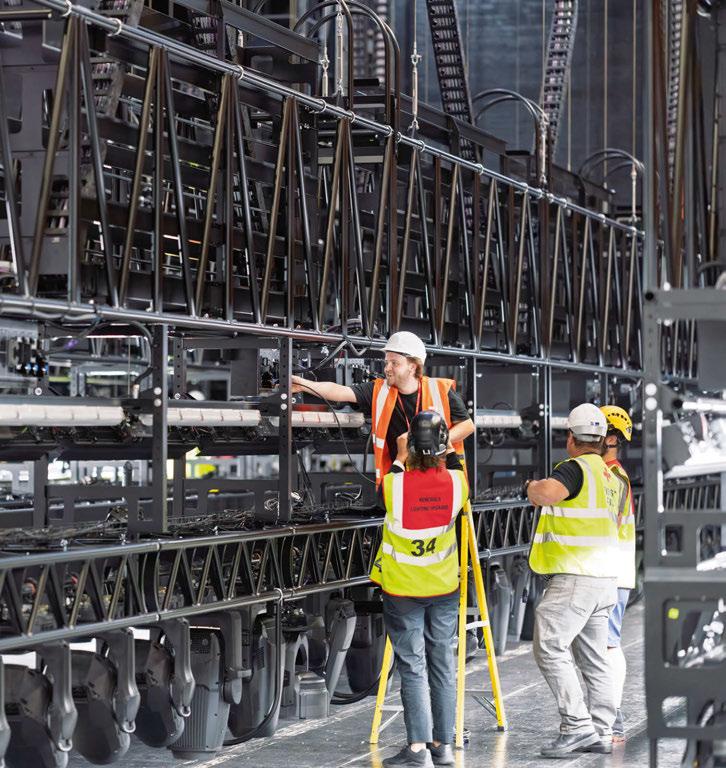
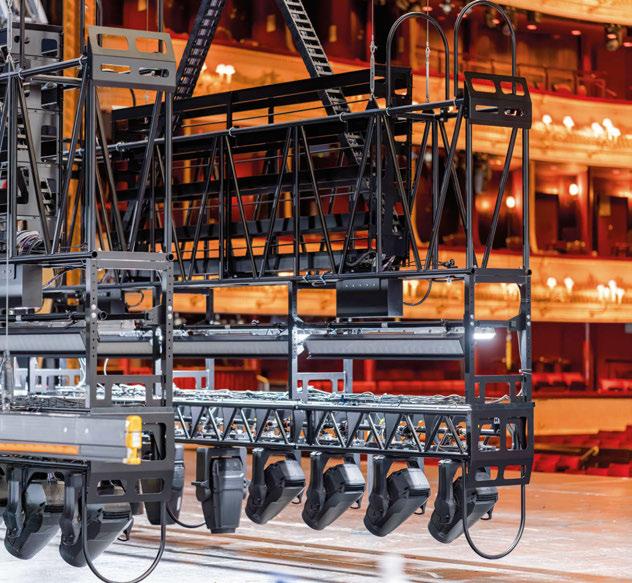

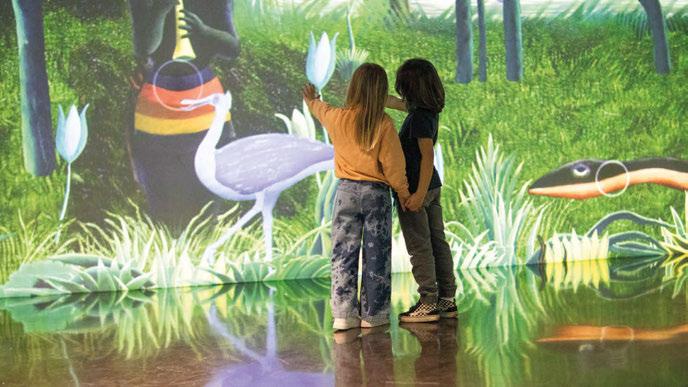


modulo-pi
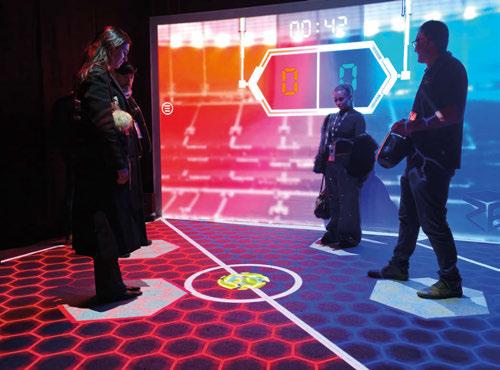
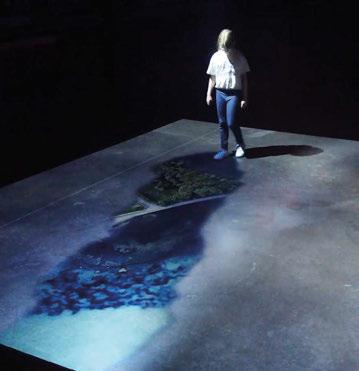


Located within the Port of Rotterdam’s visitor centre, Portlantis, the Helios Experience is an immersive, multi-sensory exhibition powered by advanced control from Pharos Architectural Controls, designed to bring Helios Concepts to life through a fully automated 4D virtual tour. Developed as a seamless journey, the installation guides visitors through a carefully choreographed sequence of pre-show, main experience, and exit, all operating without the need for on-site staff. At the core of the project was the challenge of delivering a fully integrated system within a confined space, requiring significant structural adaptation alongside precise technical coordination. Every element – from lighting and audio to video and motion systems – is centrally managed via the Pharos platform, ensuring accuracy, reliability, and perfectly timed transitions throughout the experience. The control infrastructure is built around two Pharos Designer LPCs. One acts as the primary controller, overseeing logistics such as visitor flow and automated door systems, while the second is dedicated to show control, managing lighting, sound, and video playback. This dualcontroller approach enables flexibility while maintaining complete synchronisation across all systems. Supporting this are four Pharos Designer RIO 44 modules, extending the system to monitor and control elements, including automatic sliding doors and the Simworx 4D cinema. All AV components are network-controlled, enabling fast, responsive communication. Three integrated Pharos Designer TPS touch panels provide an intuitive user interface for system oversight and operation. Delivered through a collaboration between SemMika and Pharos Architectural Controls, the Helios Experience demonstrates how intelligent control and dynamic lighting can combine to create a compelling, fully automated visitor attraction. www.pharoscontrols.com
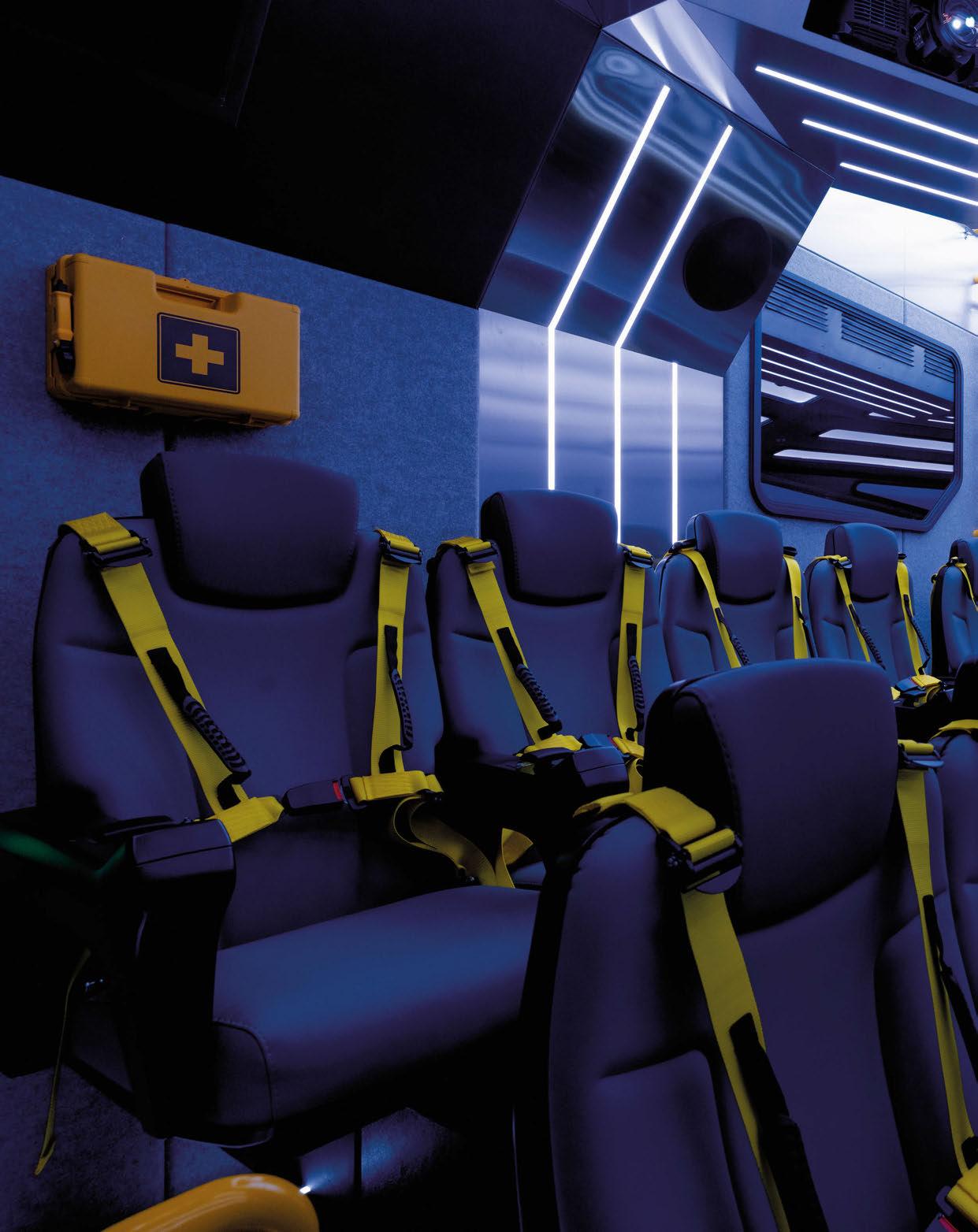
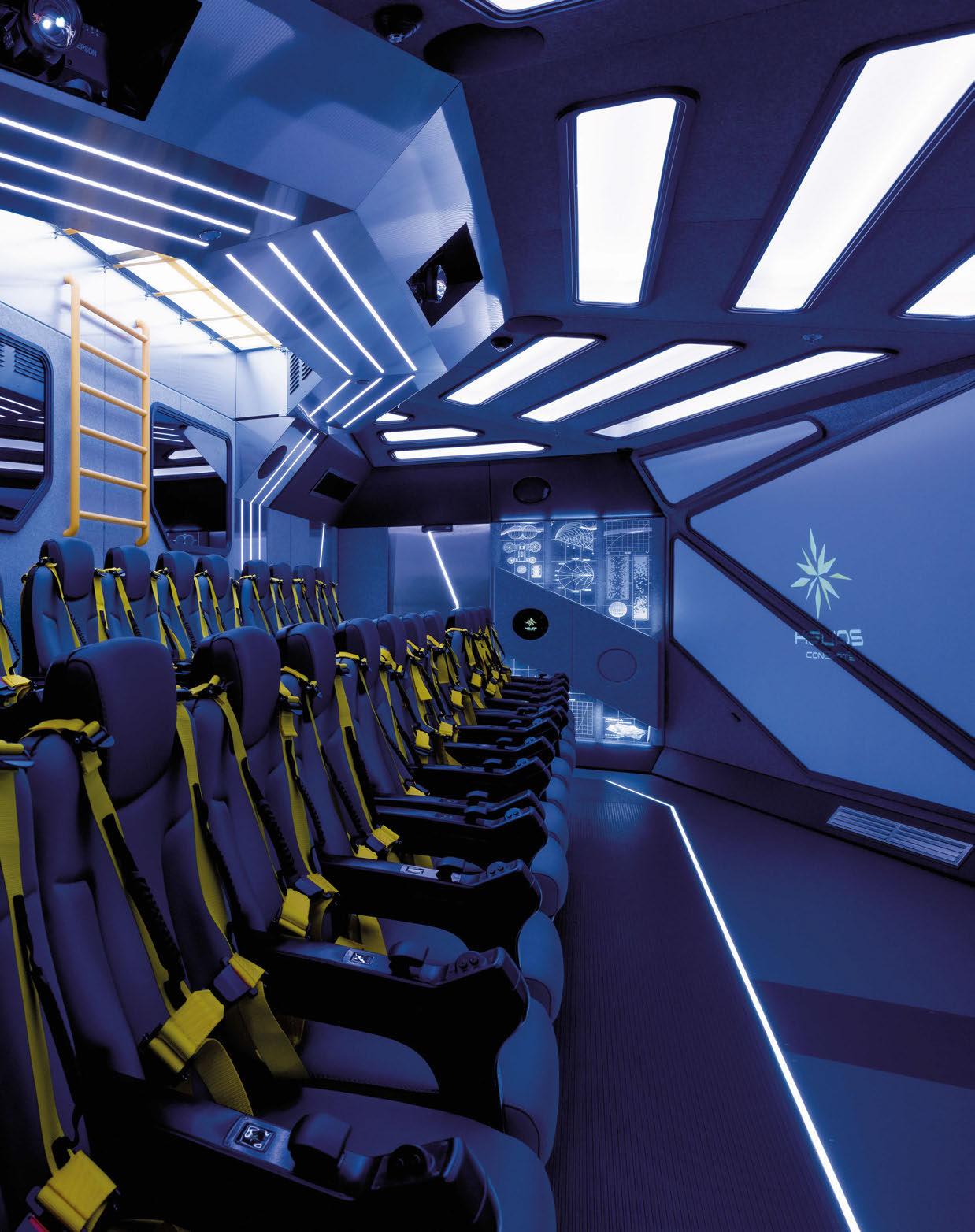
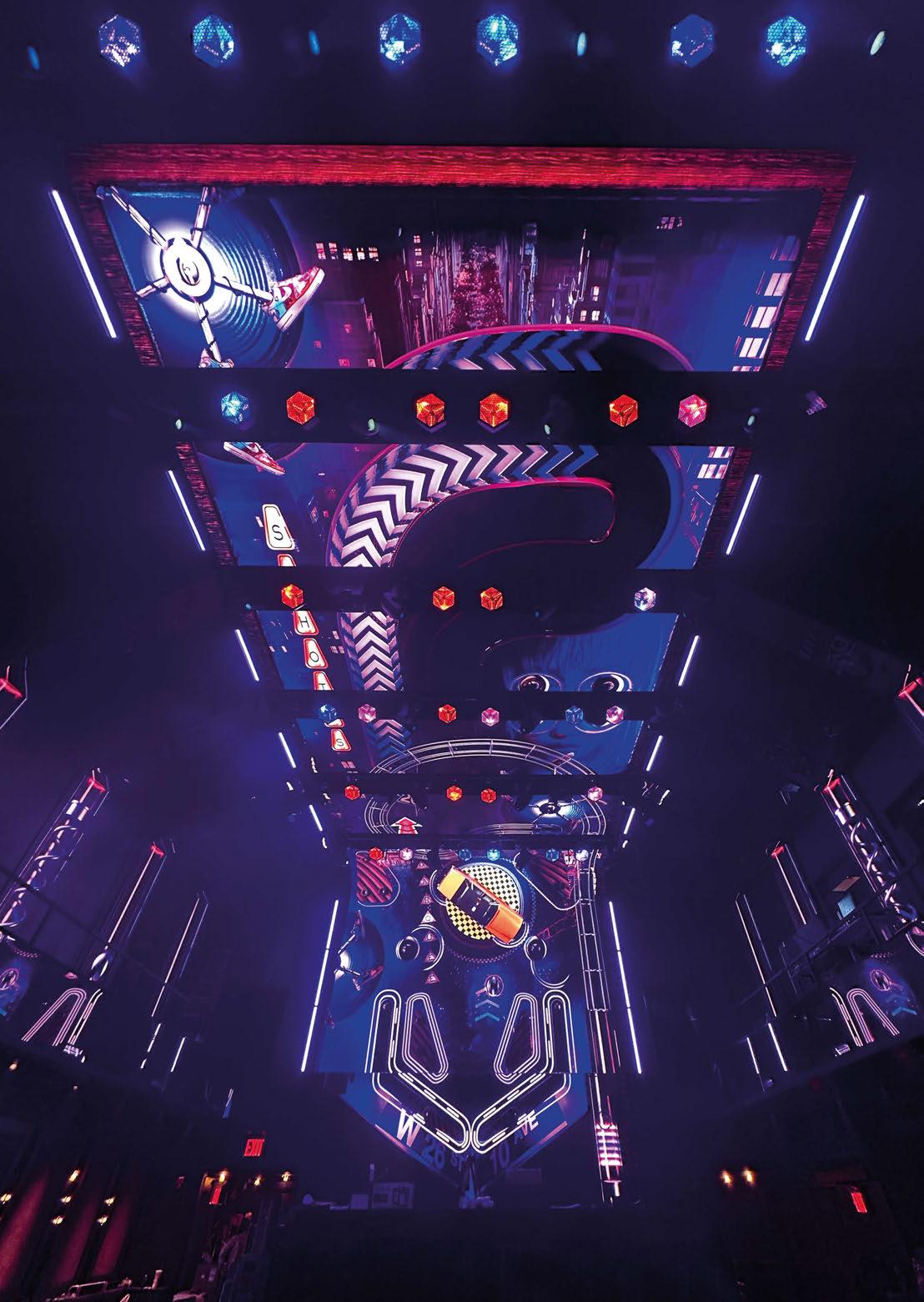
Storied night spot reopens with an immersive lighting, video and audio upgrade.
After more than two decades as one of Manhattan’s most recognised nightlife institutions, Marquee New York has entered a new era following a major audiovisual renovation designed to modernise the venue while preserving its legacy as a destination for world-class electronic music.
Located in Chelsea, the club has been a cornerstone of the New York nightlife since it opened in 2003. The latest redesign places immersive production technology at the centre of the experience, integrating advanced lighting, high-resolution LED video, and a powerful L-Acoustics sound system to create a fully integrated performance environment.
The project brought together a team of production specialists including SJ Lighting, responsible for the venue’s lighting design and programming infrastructure, and Visual Artform, the creative studio commissioned to develop the bespoke LED video content that drives the venue’s visual identity.
The result is a venue that feels both refined and energetic – combining architectural design with a dynamic production system capable of delivering high-impact performances from the world’s leading DJs.
Lighting plays a defining role in shaping the atmosphere of the renovated venue.
Designed and implemented by SJ Lighting, the system blends architectural illumination with performance-driven show lighting to create an environment capable of evolving throughout
the night. The rig centres around Volux Spectra 300 moving spot fixtures, delivering powerful aerial effects and sharp beam looks above the dancefloor. These are complemented by Portman P3 EVO fixtures, which bring a distinctive tungsten-inspired aesthetic and visual warmth that contrasts with the modern LED elements in the room.
Linear energy comes from Volux Flaris Blade strobes, adding high-impact strobe and chase effects during peak moments, while tmb’s Solaris SoLED strobes provide additional punch during major show cues.
“We wanted the lighting system to feel integrated into the architecture rather than just hung above the dancefloor,” explained Steve Lieberman, President of SJ Lighting. “The goal was to give the room texture and depth while still being able to deliver the kind of highenergy looks that today’s DJs expect.”
The lighting system is supported by more than 1,000 ft of RGBW LED pixel neon tape, installed throughout the venue to create dynamic architectural accents and subtle environmental lighting that can shift colour and intensity throughout the night.
Control of the entire lighting environment is handled via a MA Lighting grandMA3 console, allowing the team to create complex programming that synchronises lighting cues with the venue’s visual content and music programming.“We designed the system so it could handle both house programming
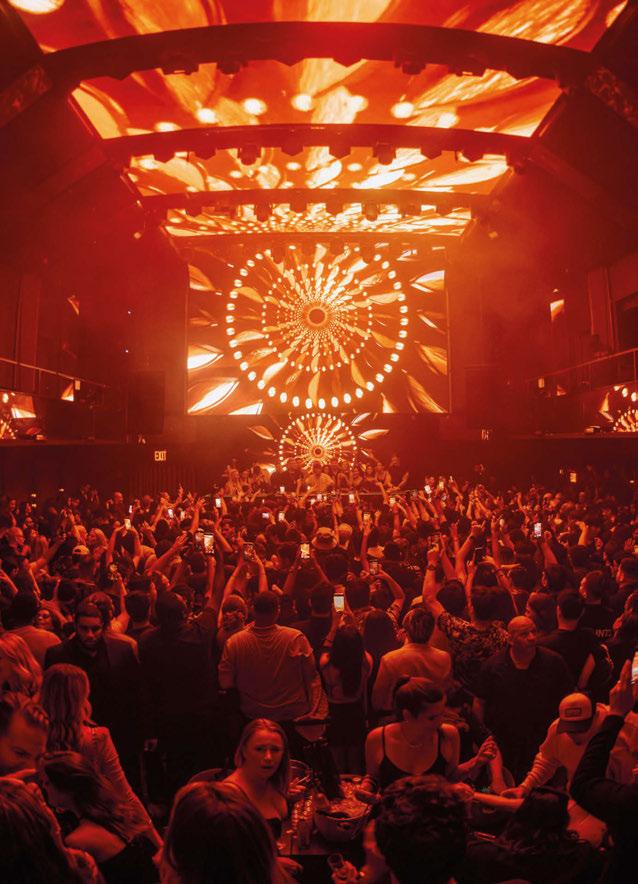
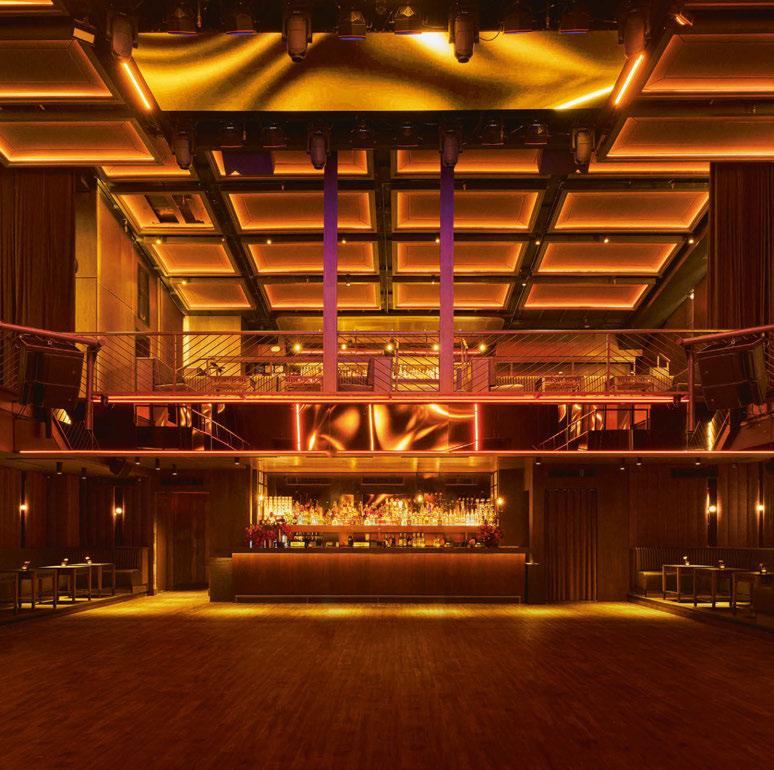
“RATHER THAN USING GENERIC VISUALS, WE DESIGNED A CONTENT PACKAGE TAILORED TO THE ARCHITECTURE OF THE VENUE, SO THE VIDEO BECOMES PART OF THE OVERALL PRODUCTION DESIGN.”
and guest lighting designers,” Lieberman added. “Flexibility was the key.”
Complementing the lighting system is a network of high-resolution LED video surfaces throughout the venue. The installation features DVS Viusite-2X LED displays with a 2.6mm pixel pitch, delivering sharp visual clarity across the room while allowing the screens to integrate seamlessly into the architecture of the club.
To maximise the creative potential of the LED environment, Visual Artform was commissioned to develop a bespoke library of visual content specifically designed for Marquee’s layout and performance programming.
“Our approach was to treat the LED screens like an extension of the stage environment,” said Simon Evans, Creative Director of Visual Artform.
“Rather than using generic visuals, we designed a content package tailored to the architecture of the venue, so the video becomes part of the overall production design.”
The content includes kinetic motion graphics, abstract visual environments, and rhythm-driven sequences designed to respond to electronic music performances. Close collaboration between the lighting and video teams ensured both elements worked together cohesively.
“When lighting and video are designed together, the whole room becomes a canvas,” Evans explained. “The goal is to enhance the energy of the music without overwhelming the space.”
The venue also incorporates a broadcast and content capture capability through PTZ Optics
LIGHTING
24 x Volux Spectra 300 Spot
32 x Portman P3 EVO
16 x Volux Flaris Blade
6 x Solaris SoLED
2 x Astera HydraPanels
1,000 ft RGBW LED pixel neon tape
1 x MA Lighting grandMA3
VIDEO
DVS ViuSite-2X 2.6mm
3 x PTZ Optics Move SE 30x Zoom
1 x PTZ Optics Studio 4K
SPECIAL FX
2 x MasterFX Mystic Mini www.sjlighting.net www.visualartform.com
cameras, including a Move SE 30x Zoom and Studio 4K camera, allowing the club to capture performances and produce digital content for online platforms. Atmosphere plays a crucial role in the overall sensory experience of the club.
Two MasterFX Mystic Mini haze machines provide a consistent atmospheric layer throughout the venue, showing off the lighting beams and laser effects cutting through the air to their full potential.
The venue’s infrastructure also supports fog and cryogenic special effects, alongside provisions for laser installations and mirror ball effects, giving the production team the ability to create dramatic show moments during headline DJ performances.
While lighting and visuals shape the visual identity of the venue, the sonic experience is anchored by a powerful L-Acoustics sound system, which delivers deep, controlled low frequencies alongside precise highfrequency clarity, ensuring consistent sound coverage throughout the venue. For DJs and performers, the system provides the accuracy required to
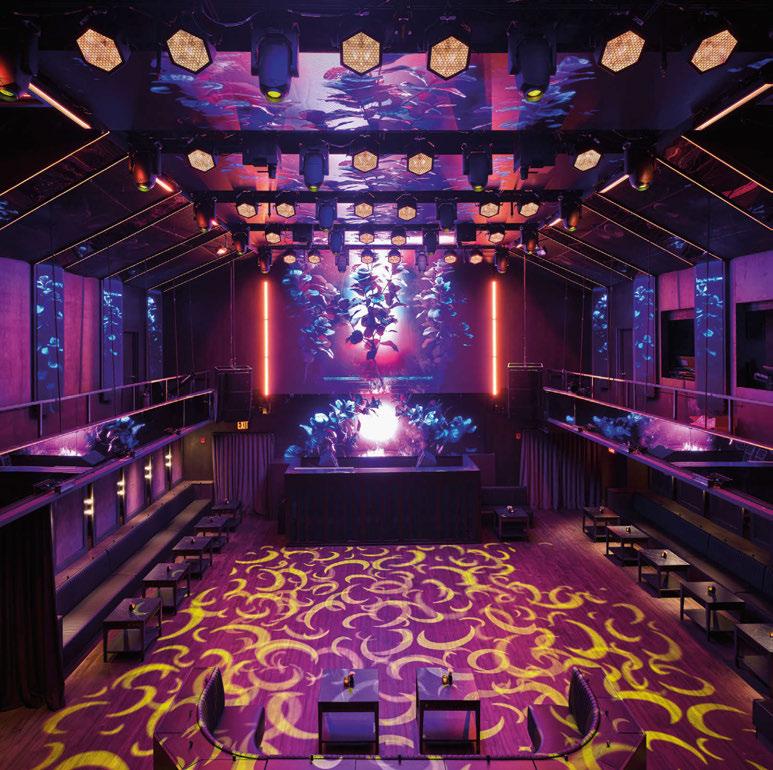
perform modern electronic music at the highest level, allowing every detail of the mix to translate across the dancefloor.
With its newly integrated lighting design, bespoke LED visual content, and worldclass audio system, Marquee New York has positioned itself once again at the forefront of the city’s nightlife scene.
“Marquee has always been about energy and connection,” Lieberman commented. “With this renovation we wanted to honour that legacy while giving the venue the tools to deliver the kind of immersive experiences audiences expect today.”
For Evans, the project reflects the growing importance of integrated production design in modern nightlife venues. “Today’s audiences expect an environment where music, visuals, and lighting work together,” he commented.
“When those elements are designed as one system, the result is something far more powerful.”
As nightlife continues to evolve, Marquee’s latest transformation ensures that one of New York’s most iconic clubs remains ready for the next generation of dancefloor moments.
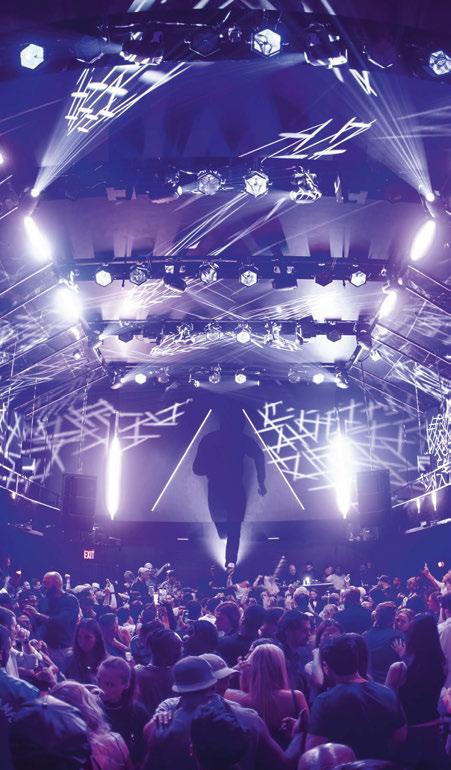

From small set pieces to stadium roof points, Broadweigh wireless load cells meet every rigging challenge — now with the BW-S900 9000kg variant for the heaviest lifts. Trusted worldwide, they deliver real-time load data with accuracy and reliability. Know more. Do more.


BW-S475
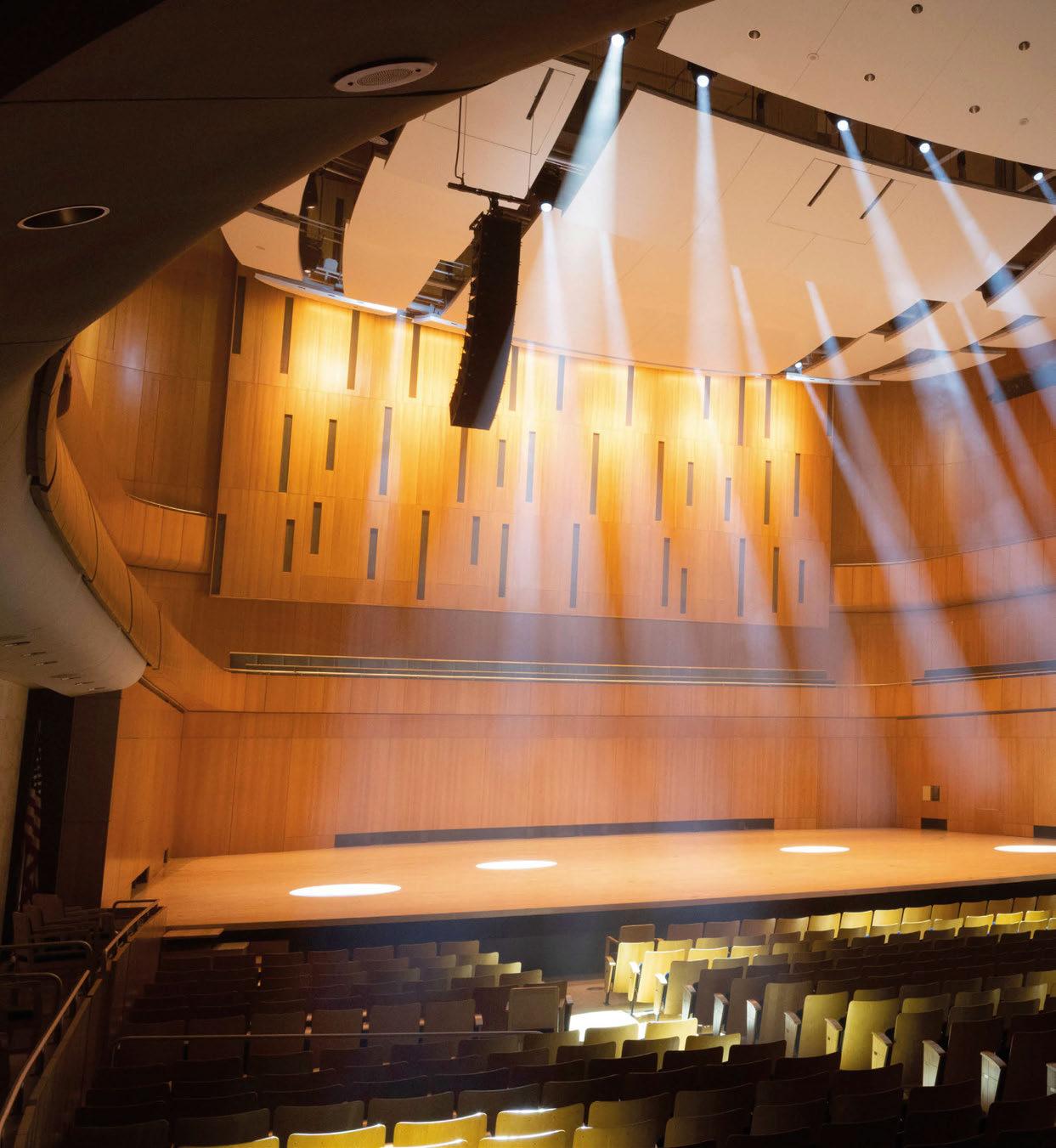
Popular concert hall undergoes a substantial upgrade to celebrate 20 years of operation, including a full stage and house lighting overhaul overseen by Theatrical Media Services.
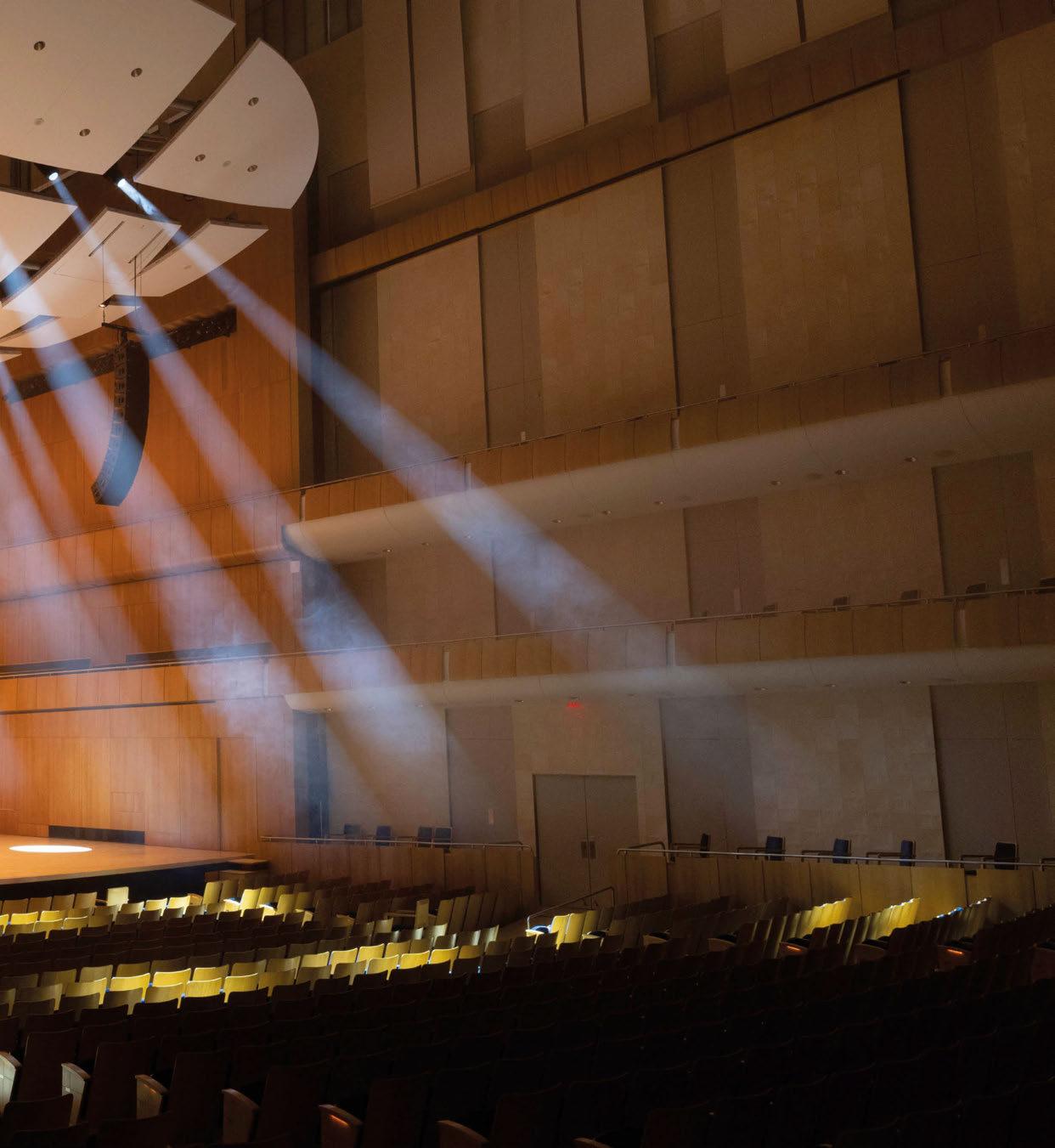
Owned by Omaha Performing Arts (OPA), the Holland Performing Arts Center is the home of the Omaha Symphony Orchestra and regularly plays host to a variety of touring acts that come through the Midwest.
In celebration of the Center’s 20th anniversary ahead of the 2025-26 season, its owners decided it was time for a major lighting upgrade in the main auditorium – the Peter Kiewit Concert Hall – as part of sitewide updates for the performer and guest experience.
For this milestone project, the venue turned to longtime local partner
Theatrical Media Services (TMS), led by Michael Arch, Vice President of Production at TMS, to design and integrate a lighting solution that would honour the space’s acoustic and aesthetic sensitivities, while bringing its technology into a new era. The venue’s previous lighting rig, which combined conventional ellipsoidal fixtures with
early-generation LEDs, was starting to age, and driven largely by the acoustical considerations for the Omaha Symphony the TMS team knew the updated lighting system had to operate silently while still providing impactful visual effects.
Arch spent nearly four years at the Holland Center as the house electrician and lighting designer from 2021 before he and his partners purchased TMS in January 2025, and he began researching the lighting upgrades with the venue’s ownership during his tenure there.
His experience spans decades in the production world, including a five-year stint as LD for psychedelic rockers The Flaming Lips, which gives him a keen perspective on balancing artistry, technology, and the practical needs of clients. “One of the challenges we faced with this hall’s previous lighting rig was that it used undersized profile fixtures
and relied on conventional lighting, which wasn’t always conducive to focusing,” Arch commented. “I had been advocating for some time to bring in moving lights and upgrade to a new generation of LED fixtures in the front and side positions.”
“The symphony is also very particular about lighting; it cannot create any noise, and they are very opposed to using a lot of haze in the space.”
The venue itself further added to the challenge. “The space is beautifully warm, but it’s very bright and everything is wood toned,” continued Arch.
“Previously, that meant any colour on stage tended to get swallowed, and the symphony’s restrictions made it difficult to create visual movement or depth with the existing fixtures.”
The last update was for the 10th anniversary, and for the 20th there was a need to balance acoustical precision for the symphony along with the technological advancements of modern concert lighting.
“The new system needed to be both bold in look, flexible in function, and able to disappear when needed,” said Arch.
While compiling a wish-list of fixtures, Arch discussed options with Ryan Murray, Associate Vice President of Operations at OPA, and the pair travelled to LDI in December 2024 to scope out some potential solutions.
“Ryan is the kind of person that if he needs to make a decision on something then he’ll do everything he can to learn about it. So, going to LDI was really a great opportunity for him to see what was out there,” commented Arch.
After returning to Omaha with some firmer ideas, Arch reached out to the local reps from Elation, High End Systems, and Ayrton to demo a range of fixtures in the hall.
“We spent eight hours doing a shootout, and it was great having the reps in the space and talking us through the technologies,” said Arch.
The final design saw solutions from all three manufacturers chosen to meet the room’s many different needs.
“High End Systems’ Halcyon Silent were chosen as the backbone of the system for their fanless design and incredible colour fidelity,” he added.
The Silent units are dedicated to Symphony performances, where absolute quiet is non-negotiable, while Halcyon Platinum fixtures provide the punch and versatility needed for more dynamic shows.
“We also picked Ayrton’s Zonda 9 FX due to the LiquidEffect face feature and the size of the bubblehead, which allows us to create movement over the stage for symphony productions without causing big changes on the
“I HAD BEEN ADVOCATING FOR SOME TIME TO BRING IN MOVING LIGHTS AND UPGRADE TO A NEW GENERATION OF LED FIXTURES IN THE FRONT AND SIDE POSITIONS.”
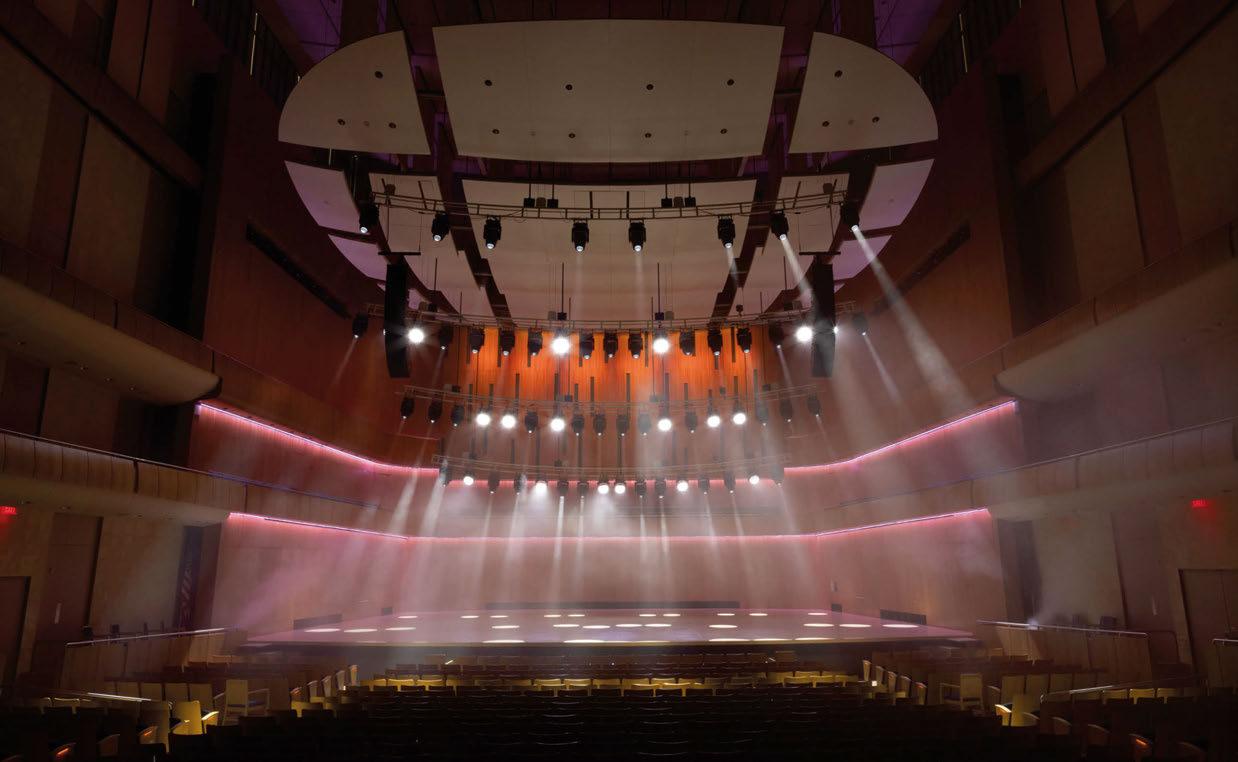
members, as well as providing us with a bold wash light that can fill the space with bold colours and be a featured part of touring designs,” said Arch. “The last key to the puzzle was the Elation KL CORE IP – these replaced the main front light and high side positions – and this was all rounded out with Chroma Q Color Force 2+ for a back wall wash, and Elation Proteus Rayzor Blades for floor effect lighting as needed.”
The KL CORE IP can be adapted as an ellipsoidal, Fresnel, or moonlight, and its compatibility with third-party shutter barrels allowed TMS to repurpose barrel mounts from the venue’s existing Source Four fixtures and attach them to the KL COREs.
“That’s one of the reasons we were able to sell the CORE specifically to this space,” explained Arch. “It allowed them the flexibility to use their existing inventory of barrels but added in the flexibility you get from a great colour engine.”
In addition to stage lighting solutions, Arch sought to enhance the ambience of the room with the addition of LED strip lighting in the
Above: A selection of fixtures from multiple brands were required to suit the space’s acoustic and aesthetic sensitivities.

Supports various motor configurations & channels
Direct & Low-Voltage Control available
LIGHTING
25 x High End Systems Halcyon
18 x High End Systems Halcyon Platinum
76 x Elation KL CORE IP
6 x Elation Proteus Rayzor Blade L
20 x Ayrton Zonda 9 FX
4 x Chroma Q Color Force II 72
2 x Chroma Q Color Force II 48
140m Environmental Lights CoveWash Dual-Bend RGB3000k
www.o-pa.org www.tmsomaha.com

Same interface across all versions
Precise & safe control for every application
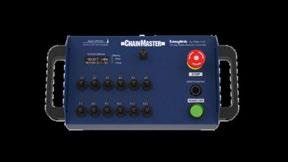
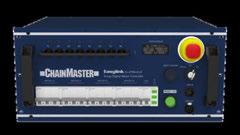
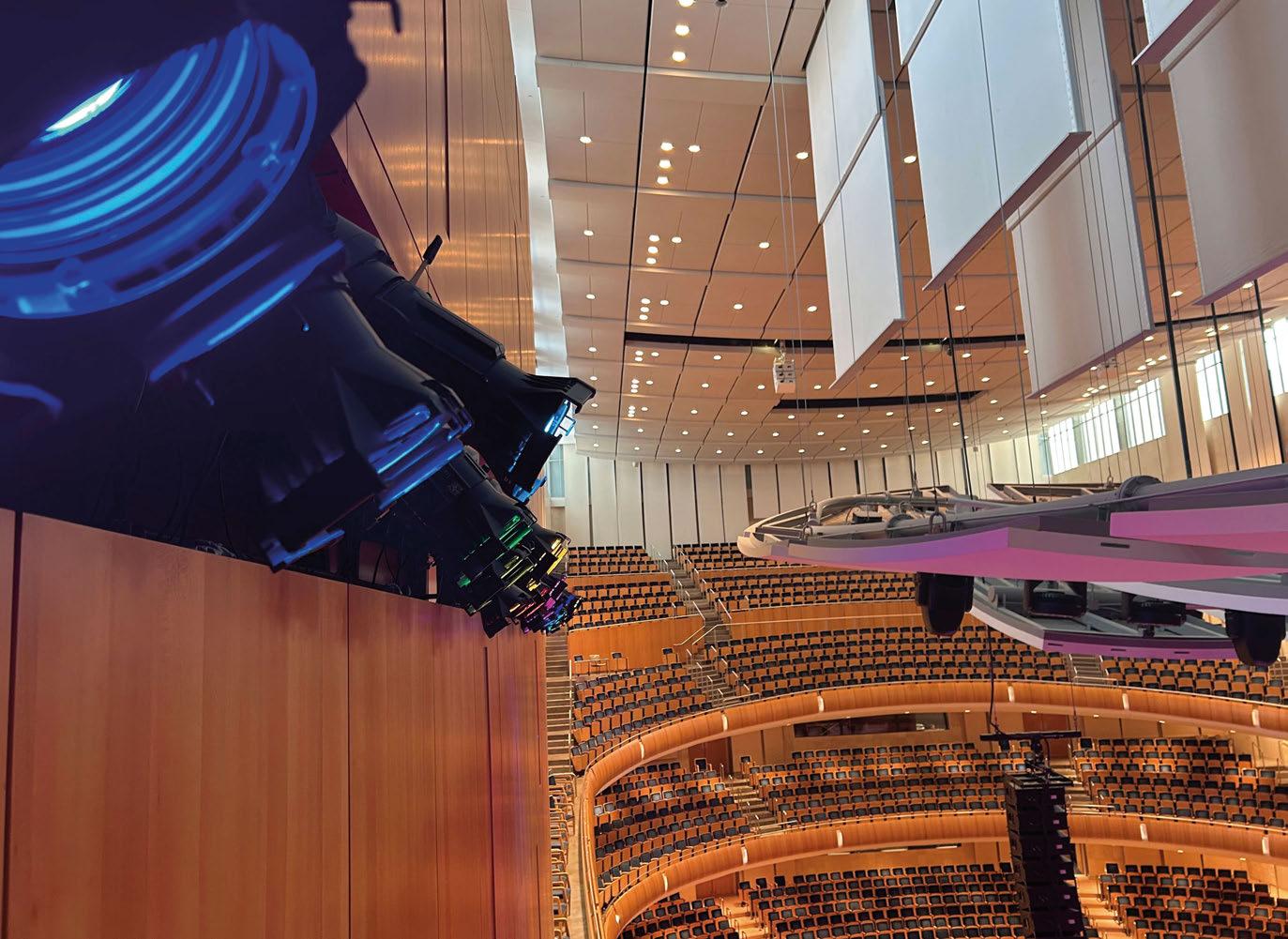
coves. “While I was working at the venue on a symphony show, we hosted a concert with visual designer Doug Fitch who came in and created an environmental lighting element utilising strip lights along the walls,” commented Arch. “It worked nicely for that show and so Ryan and I discussed the potential of adding this as a permanent feature during the renovations.”
After some brainstorming, Arch and TMS colleague Chris Wood landed on Environmental Lights’ CoveWash Dual-Bend RGB3000k for this dynamic architectural piece.
“This hall is incredibly bright, not just acoustically, but also visually,” said Arch. “It takes colour incredibly well, and with the new cove lighting we have introduced a feature that allows for control of the ambient feel of the room and for subtle changes that does not affect the orchestra. It works in conjunction with all the other aspects of the installation to make the stagehouse one cohesive space.”
One final upgrade was utilising RC4 Wireless lighting control for the new fixtures attached to the venue’s batten truss located at the back of the stage, which wasn’t previously fed by cabling due to the building’s restrictions.
This allows for the whole system to be linked, with control handled by the venue’s preexisting MA Lighting grandMA3 compact XT, which TMS had previously sourced for the hall from ACT Entertainment.
“This upgrade is an example of a great collaboration,” concluded Arch, whose love of the venue turned this into something of a passion project. “While the space was purpose-built 20 years ago to house the Omaha Symphony, its mission has grown to include all manner of events.
“It had long outgrown its existing lighting technology which stifled opportunity for flexibility due to the room’s many important architectural features; features that are always in the way, and work against the goals of the lighting designer.
“This project brought together the seemingly disparate interests of a venue touring house and the staunch traditionalism of a symphony orchestra, and we developed systems within the unique constraints of the building to achieve the needs of the symphony, allowing them to be traditionalists when they need, while also injecting modern technology into the stagehouse.”
The lighting upgrade was completed ahead of the venue’s 2025-26 season
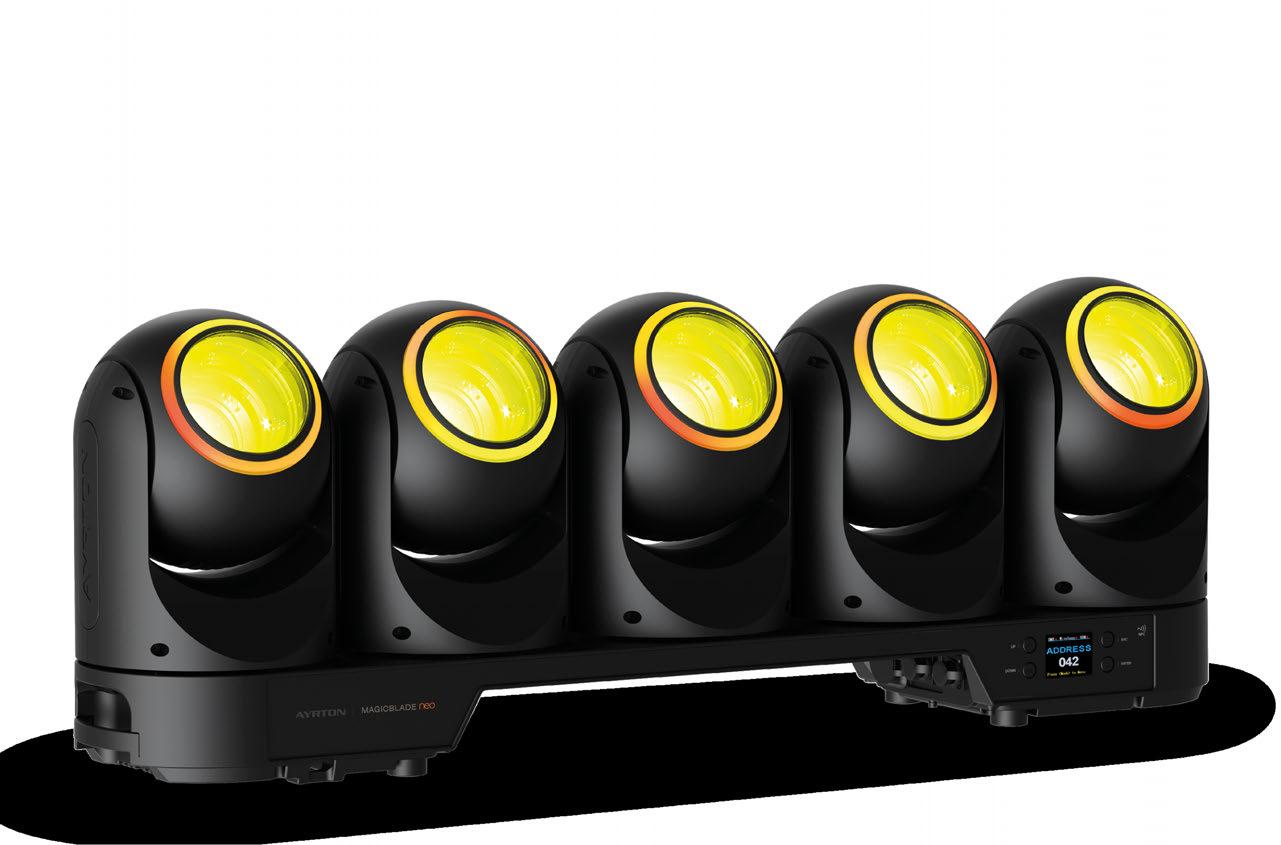
MagicBlade Neo is a marvel of technology, capable of creating endlessly reconfigurable curtains of multiform light, unreal vortexes, and striking volumetric effects through absolute mastery of light. The 5 independent heads of MagicBlade Neo are spaced just a few millimetres apart and give the impression of touching. This avant-garde luminaire, inspired by MagicDot Neo, makes it possible to create ultra-compact matrices, perfect alignments and spectacular plays on perspective. MagicBlade Neo is an impressive concept which, at first glance, suggests infinite possibilities.

Illuminance at 5 m 16,000 lux (1 head)
Zoom Aperture 3° to 30°
Front Lens 5 x 100 mm
Weight 32,4 kg Native CRI < 86
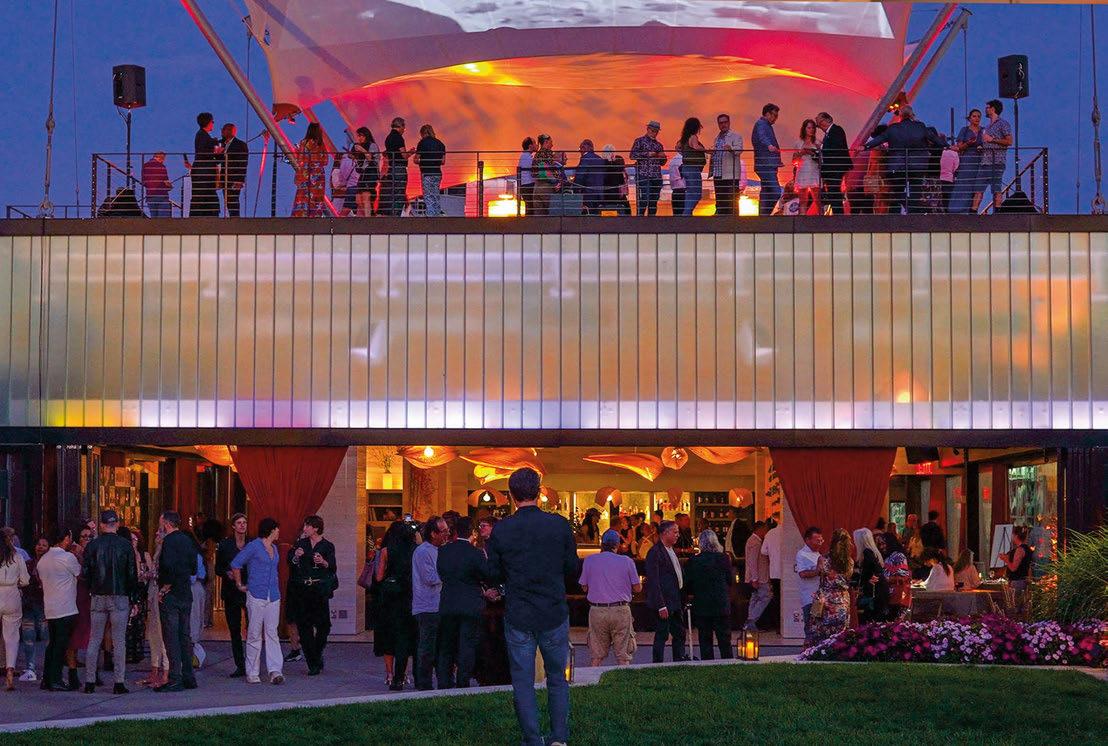
Genelec delivers immersive audio for Miru NYC, City Winery’s new high-end Japanese rooftop experience
Rising above New York City’s Hudson River, Miru NYC, the latest venture from the City Winery team, brings an elevated blend of fine dining, immersive sound and panoramic views to Manhattan’s West Side.
To match the venue’s high-end aesthetic and “listeningroom” concept, City Winery partnered with systems integrator AVLX to create a truly world-class audio experience built around Genelec’s large-format Smart Active Monitors, including flagship 1236A and 1234AC models, along with S360As for additional coverage.
Marc Colletti, City Winery’s National Production and Technical Director, said: “We wanted to go above and beyond with MIRU NYC, delivering a space where both the food and the listening experience are spectacular.”
AVLX’s Managing Partner, Chris Torri, partnered with Colletti to oversee the design and integration. “They wanted that classic look of exposed-driver loudspeakers, and we knew
Genelec could deliver both form and function,” noted Torri. The system features two Genelec 1236As, two 1234AC models and two S360As, all run through a BSS BLU 96 kHz DSP. Multiple stereo analogue XLR wall panels allow for plug-and-play access by DJs and guest engineers, while a Technics SL-1200GR2 turntable paired with a McIntosh MP100 phono preamp supports Miru’s vinylcentric programming. Once commissioned, the system delivered what both AVLX and City Winery had envisioned. Colletti concluded: “Whether we’re playing vinyl, streaming curated playlists or hosting special events, everyone who walks in comments on how incredible the sound is. The Genelec team was fantastic to work with – professional, collaborative, and open to pushing their technology into a new kind of environment.” www.genelec.com


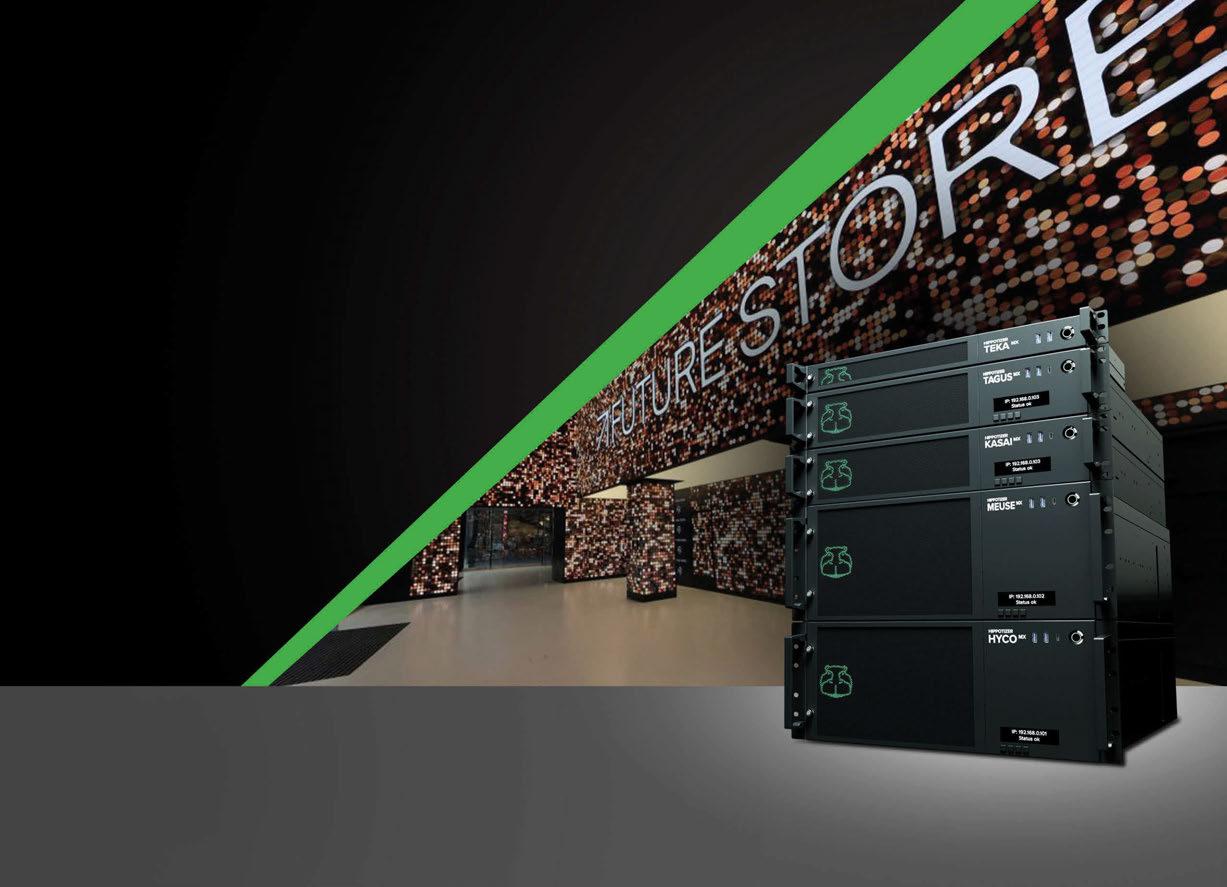
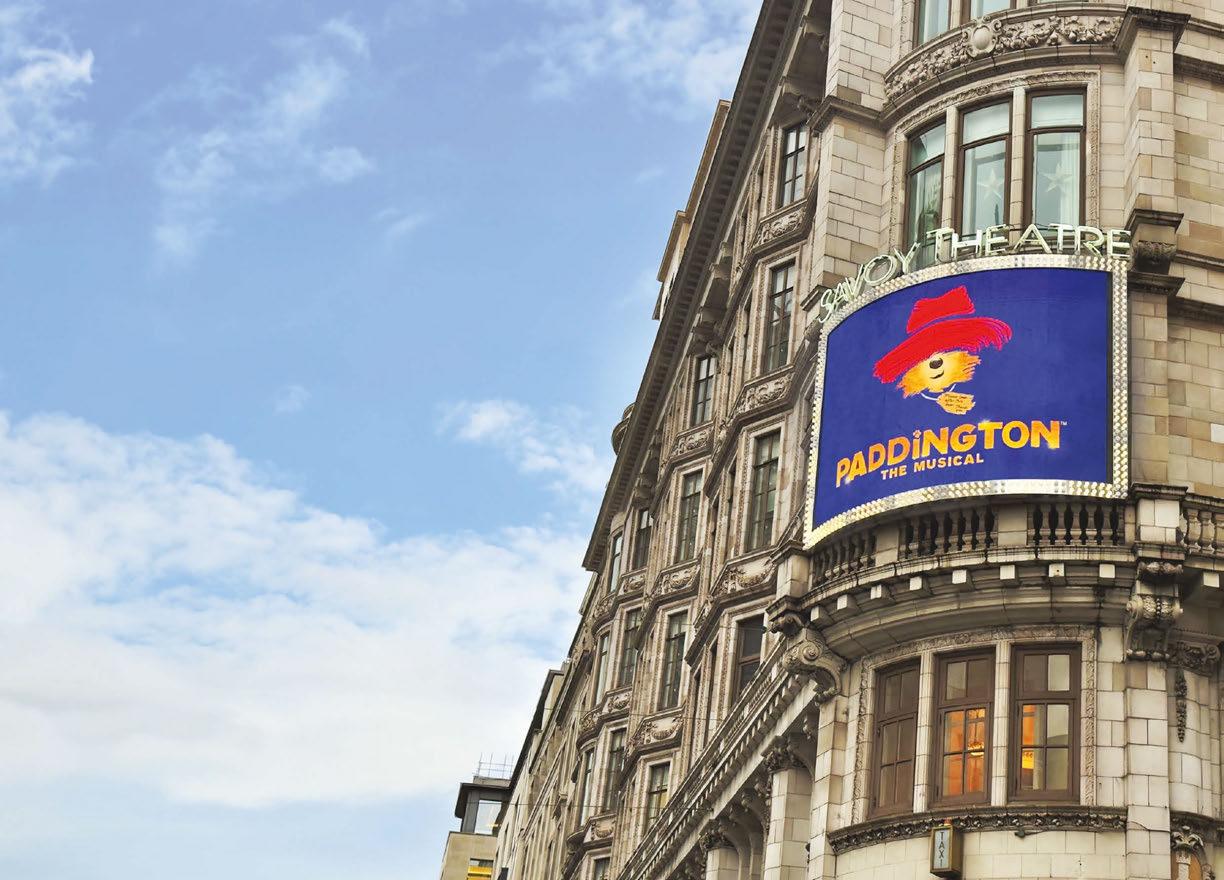
AMERICAS
CLAREMONT, CALIFORNIA / USA
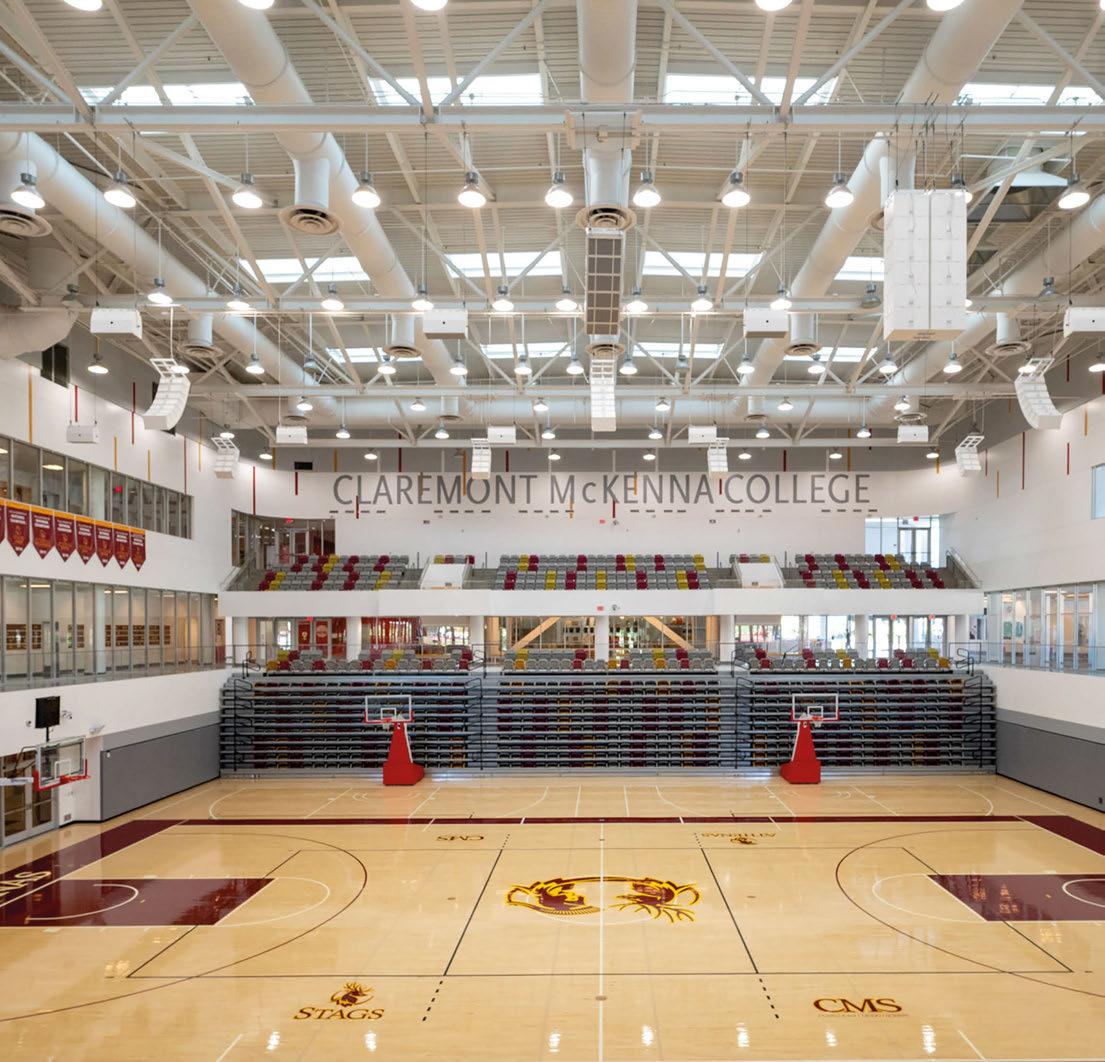
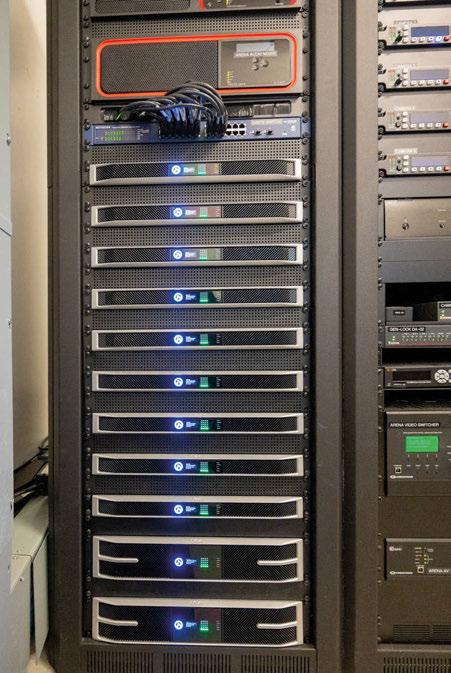
Since Claremont McKenna College opened the Roberts Pavilion in 2016, the 2,500-seat arena at the heart of the facility has served a variety of purposes, primarily as a venue for volleyball and basketball games. However, the space has also been used for a wide range of other events, including hosting guest speakers, orientation, and convocation ceremonies.
As the venue evolved into a multipurpose space, it soon became apparent that the existing audio system needed to be replaced.
“The previous system worked fine when it was installed, but as the college grew and Roberts Pavilion started doing different and more elaborate setups, it was inadequate,” noted Steve Hollingsworth, Sales Rep. for Western Audio Visual, the college’s longtime AV integrator.
In updating and modernising the system for the venue, there were numerous challenges, not least of which is the fact that, like most arenas, it’s a highly reverberant space, requiring higher SPL and far more detailed coverage overall to provide intelligible speech and full-range music to areas that the pre-existing system simply couldn’t.
“The original system only had 16 speakers, just blasting sound in order to be heard,” Hollingsworth continued. “They had to turn the audio up so high that it reverberated off the walls and the court so much that it was unintelligible – a cacophony. The goal was to bring the system up to current standards and increase intelligibility so that you can understand what people are saying when they’re using microphones.”
In order to achieve that goal, a new distributed audio system featuring a dBTechnologies IS Series PA for the bowl was proposed; with dBTechnologies’ Applications Engineer, Andy Tindall, Western AV’s Kevin Laymon, and GeerTech Application Engineers, Brandon Operchuck and Alyssa Ishii, all working together closely on the project.
In all, 79 dBTechnologies IS Series speakers, including 55 dBTechnologies’ IS210L, 12 IS210T, and 12 IS115S, all custom-painted white to minimise visual impact, were deployed – making this the largest IS Series installation in North America.
“Roberts Pavilion has a 50ft-high ceiling with reflective surfaces everywhere,” Tindall explained. “My thought
Multipurpose hall receives a massive audio upgrade with a newly installed system to meet the required SPL and speech intelligibility.
Opposite page and left: A newly installed dBTechnologies sound system is powered by 11 LEA Professional amplifiers at the Roberts Pavilion.
here was to ensure very focussed coverage, and dBTechnologies’ newest passive line arrays, the IS Series model IS210L, were an ideal choice to achieve that.
“One of the IS Series defining features is that it is costeffective, and line arrays work better as the line gets longer – with the IS Series, we were able to place the appropriate number of speakers in the right places, focus coverage, and get a successful acoustic result. The design revolved around that.”
Essentially, the goal was to expand detailed coverage to avoid having to crank the system up to the point where it was uncomfortable for anyone close to a loudspeaker. “To do that, we needed to shorten the distance between listeners and loudspeakers at every opportunity, without exacerbating the issues of being in a gym by having more PA. That was one of the problems of their original system,” Operchuck said.
The number of loudspeaker elements deployed is high for an arena of this size, Operchuck said, “But it’s about precision; small clusters covering small areas, which allows us to keep the volume of each cluster lower, and the overall room noise – the ambient and destructive, reflective energy from the sides and backs of the line arrays and sides of line arrays and so on – at a minimum.”
Directionalising the audio was critical. “In addition to basketball and volleyball games, they do clinics and other events, so there are different setups on the court and different audience configurations,” said Hollingsworth. “With the is system in place, we were able to provide presets for different uses, as well as allowing specific zones to be turned on and off when necessary. “Now, it’s not just a case of ‘turn it on and turn it up’, it’s ‘here is what we are doing, and here is the preset for that – hit that, and away we go.’”
To achieve optimal coverage, in addition to IS210s deployed to cover the court area, 55 IS210L were used to cover the audience areas around the court. The lower tier of bleachers is covered by six arrays, focused in at the beginning of the first bleacher and ending right at head height of the standing person at the rail at the top of that section. To cover the upper-tier seating, smaller arrays of IS210L were used, with the loudspeakers placed as close
as possible to the audience to provide defined coverage and intelligibility.
For low end, Tindall added: “We weren’t able to do a single stack, so we married two stacks of six subs, side by side, with 12 IS115S in all. So, it’s essentially one big sub cluster. In spaces like this, I’ve had more success in touring applications flying fewer sources or a single source right over the stage. If the space is available, the resultant transient is clean, and you don’t get a smeared result in some seats as you would with subs 50 or 60 ft apart.”
For home team practice sessions, a four-zone ‘shower’ system comprised of 12 IS210Ts was created specifically for the court area. Allowing the centre zone – which covers the area where the stage would be for graduation and convocation ceremonies – to be turned off as needed.
Other gear deployed includes a Biamp Tesira integrated networked AV processing and distribution platform as the central DSP to manage the audio overall, and two LEA Professional CS1504D amplifiers driving the subs, as well as nine CS704D-ADSP to drive the arrays and point source elements.
“The ADSP version of the amps gives us FIR filters to work with, and we were able to load official dBTechnologies
presets for their IS Series on LEA Professional amplifiers. That was our starting point for tuning, which worked phenomenally. It was also very nice that dB took the time to do that,” Operchuck stated. “It makes for far better results.” While achieving optimal coverage and clarity were the primary goals, the system also had to be extremely userfriendly, he continued: “So, a coach can just grab a mic, turn it on to talk to the players, and have a Bluetooth connection so they could work out with music. That’s 85% of what that room’s going to do.”
Given the challenges inherent in the space – notably the wooden court floor, “there are still some acoustical challenges to address,” Operchuck noted, “But the school is planning an acoustic treatment project to lower the RT60 of the room and diminish the effect of reflections further. And because we were so surgical with the PA, we were able to keep the energy in the areas that it should be in and not overflowing everywhere.”
Even now, however, the arena is far better equipped to meet Claremont McKenna’s needs than it was before, with Hollingsworth concluding: “The result was tremendous. It’s night and day from before to after.”
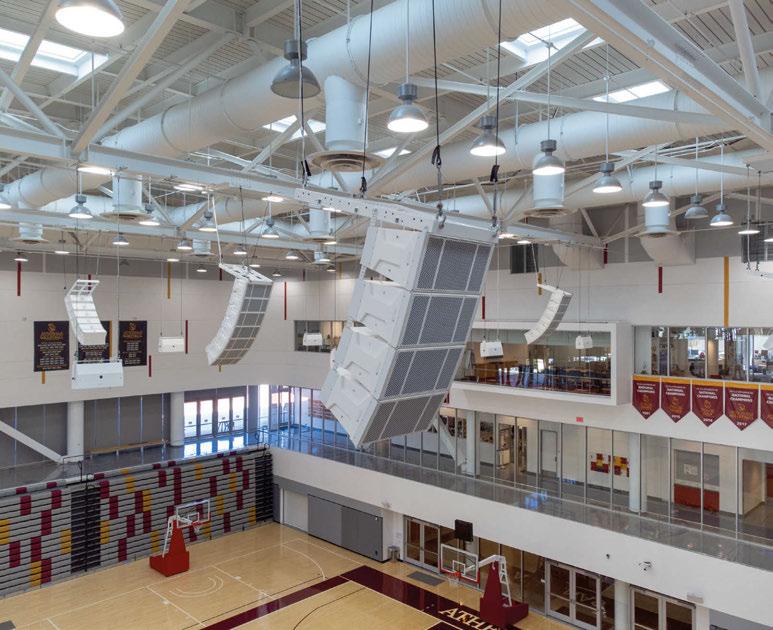
AUDIO
55 x dBTechnologies IS210L
12 x dBTechnologies IS210T
12 x dBTechnologies IS115S
2 x LEA Professional CS1504D
9 x LEA Professional CS704D-ADSP
www.wav1.com www.geertech.net
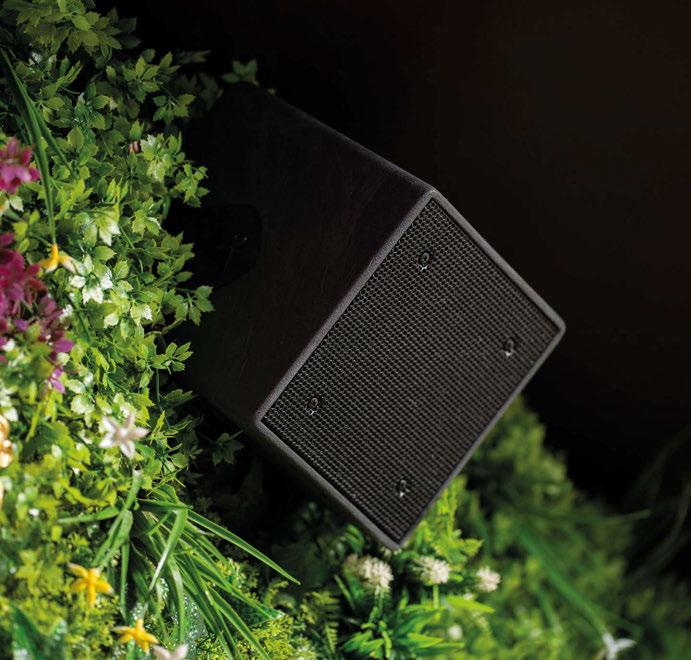
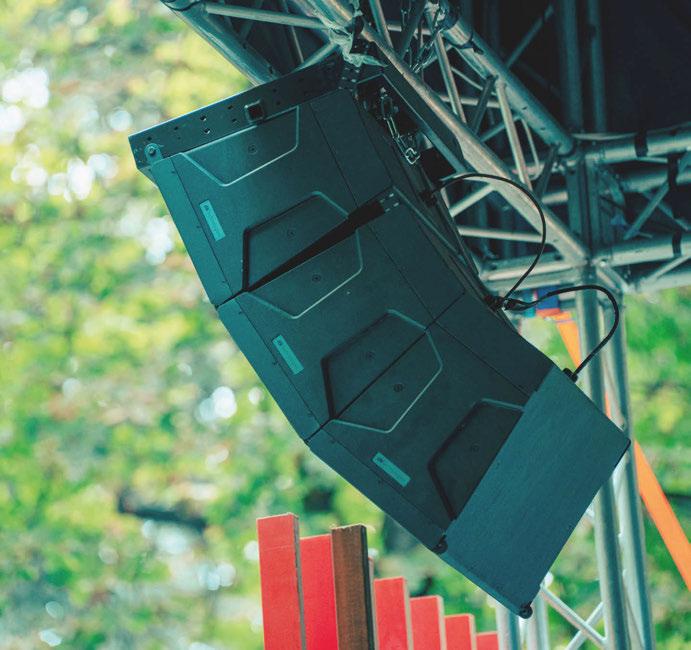
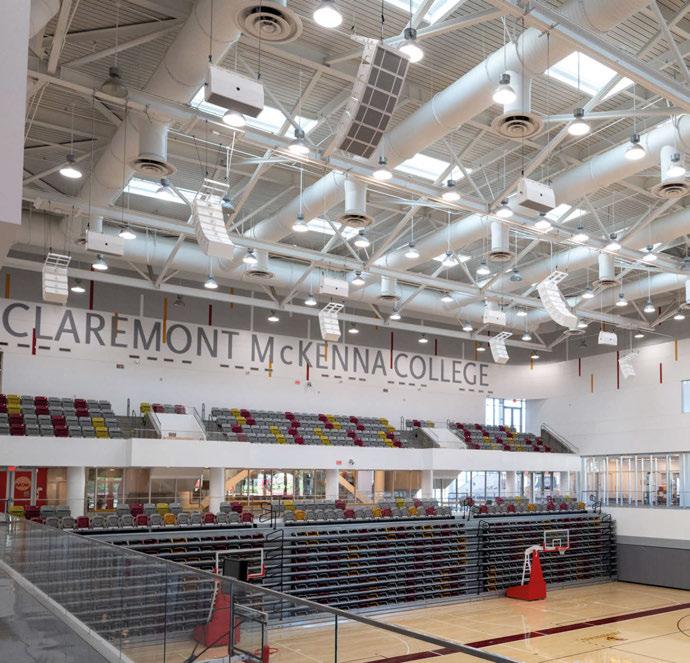
The complete range of installation speakers. Engineered for every space in any environment. From intimate venues to large-scale arenas.
Big Night Live ushers in a new era with Funktion-One’s Vero VX system
In Boston’s bustling entertainment district, Big Night Live is where club culture meets concert-scale production. On any given night, you might catch an EDM heavyweight, a metal band in full flight, or a hip-hop icon working the crowd. The venue recently took a leap forward in redefining the live sound experience by choosing Funktion-One’s Vero VX. The system, supplied and installed by Sound Investment, marks a turning point not just for Big Night Live, but for live music venues in the area. “This is more than an upgrade,” said Mike Green, Director of Production at Big Night. “It’s the beginning of a new era for live sound in New England.”
For a venue that demands flexibility and sonic excellence in equal measure, the Vero VX system has brought exactly that. “With Vero VX, we don’t have to touch the processing between acts. It just works every time,” said Green. The compact yet powerful VX system delivers high SPL, vocal intelligibility, and cohesive summation across the frequency range. “Touring engineers and artists constantly tell us how good it sounds, and that feedback matters,” he added.
Jesse Vengrove, Big Night’s Technical Director and Lead Audio Engineer, noted: “The room used to have areas where the mix felt off. Vero VX smooths all of that out. There’s a consistent sound from front of house to the back of the room, which gives guest engineers way more confidence.”
In Funktion-One’s Vero VX, Big Night Live has found a system that matches its ambition. “We’re raising the bar,” said Green. “And we’re proud to do it with a system that prioritises quality, musicality and design. It makes us - and every act that steps on stage - sound their best.”
www.funktion-one.com
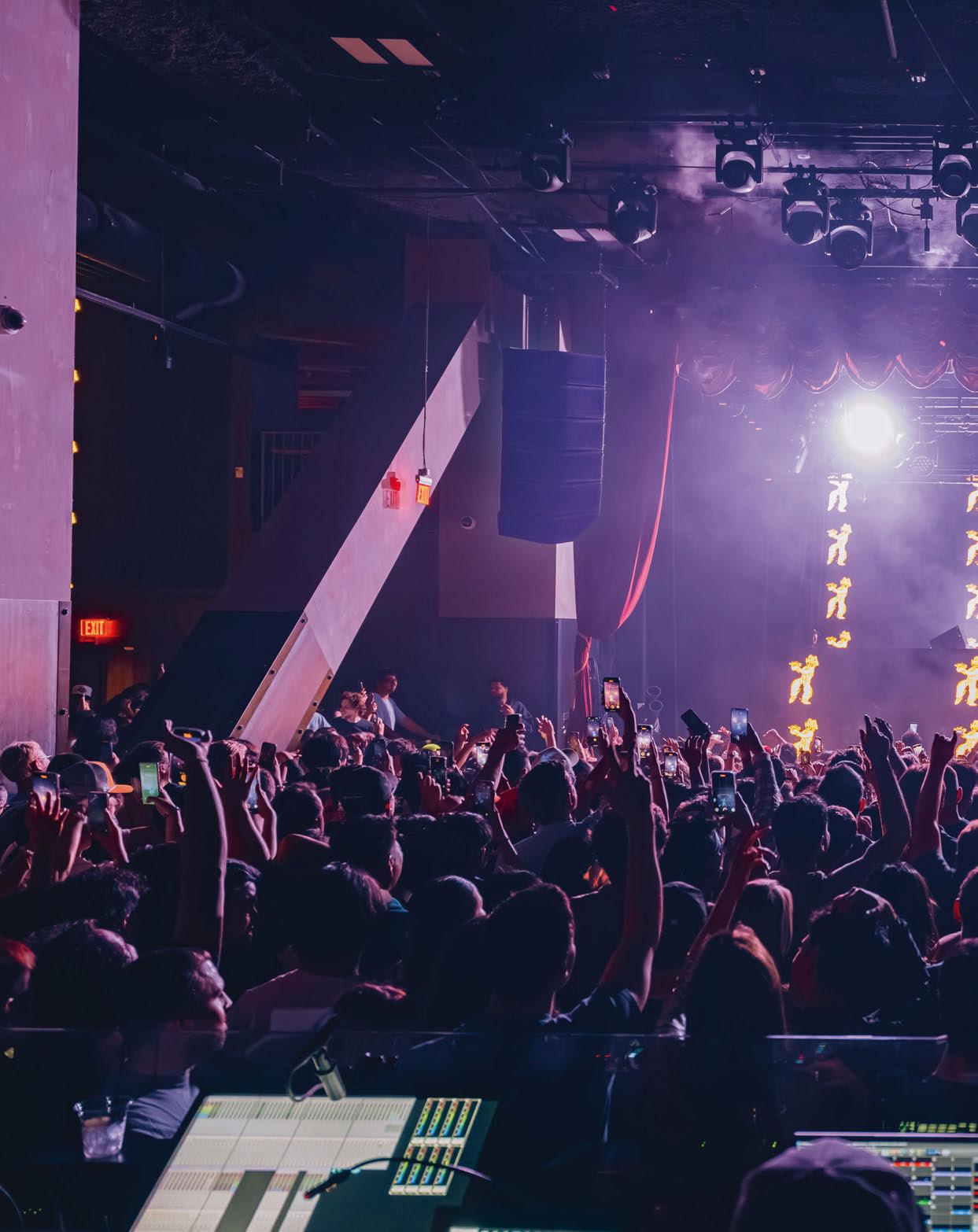
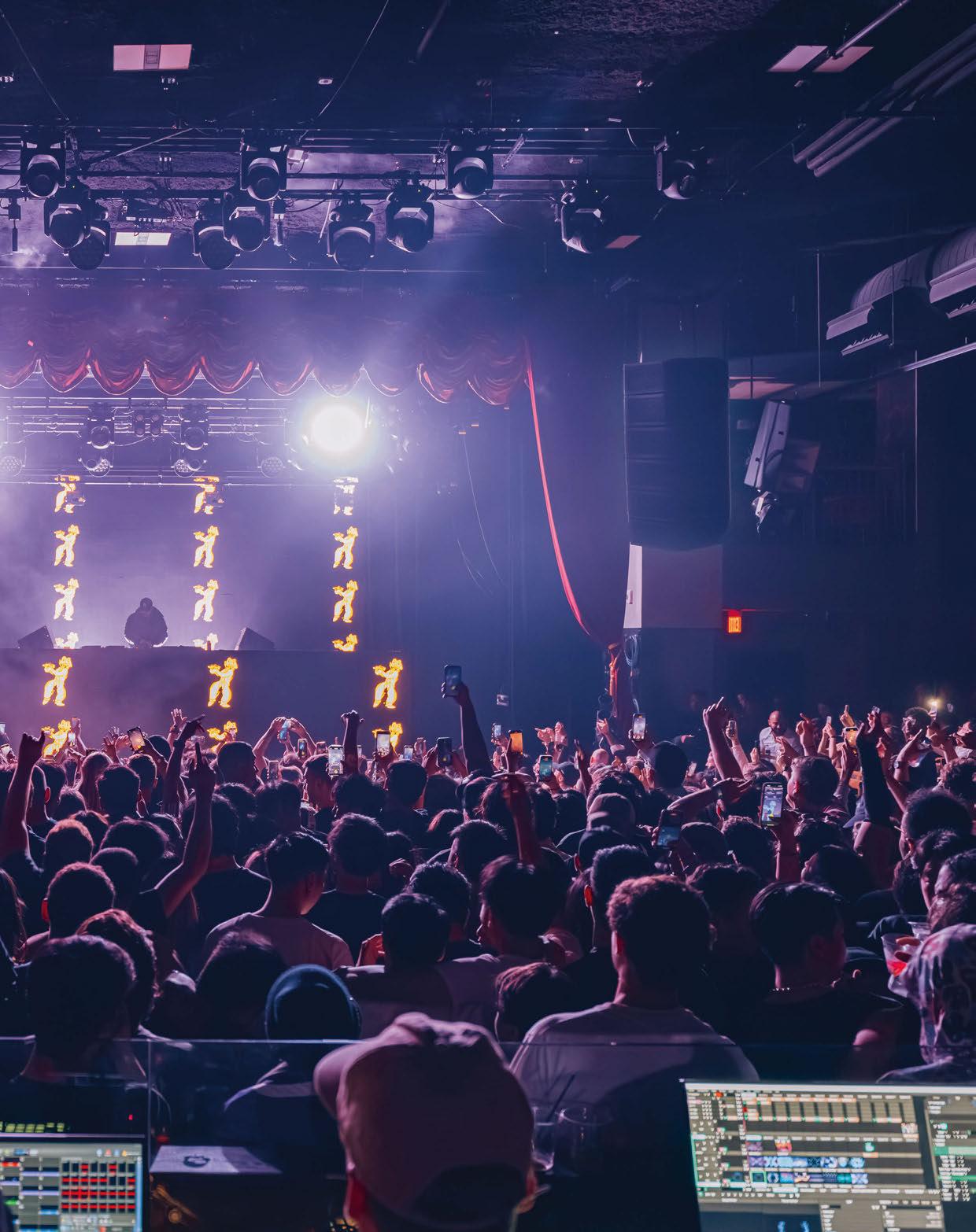
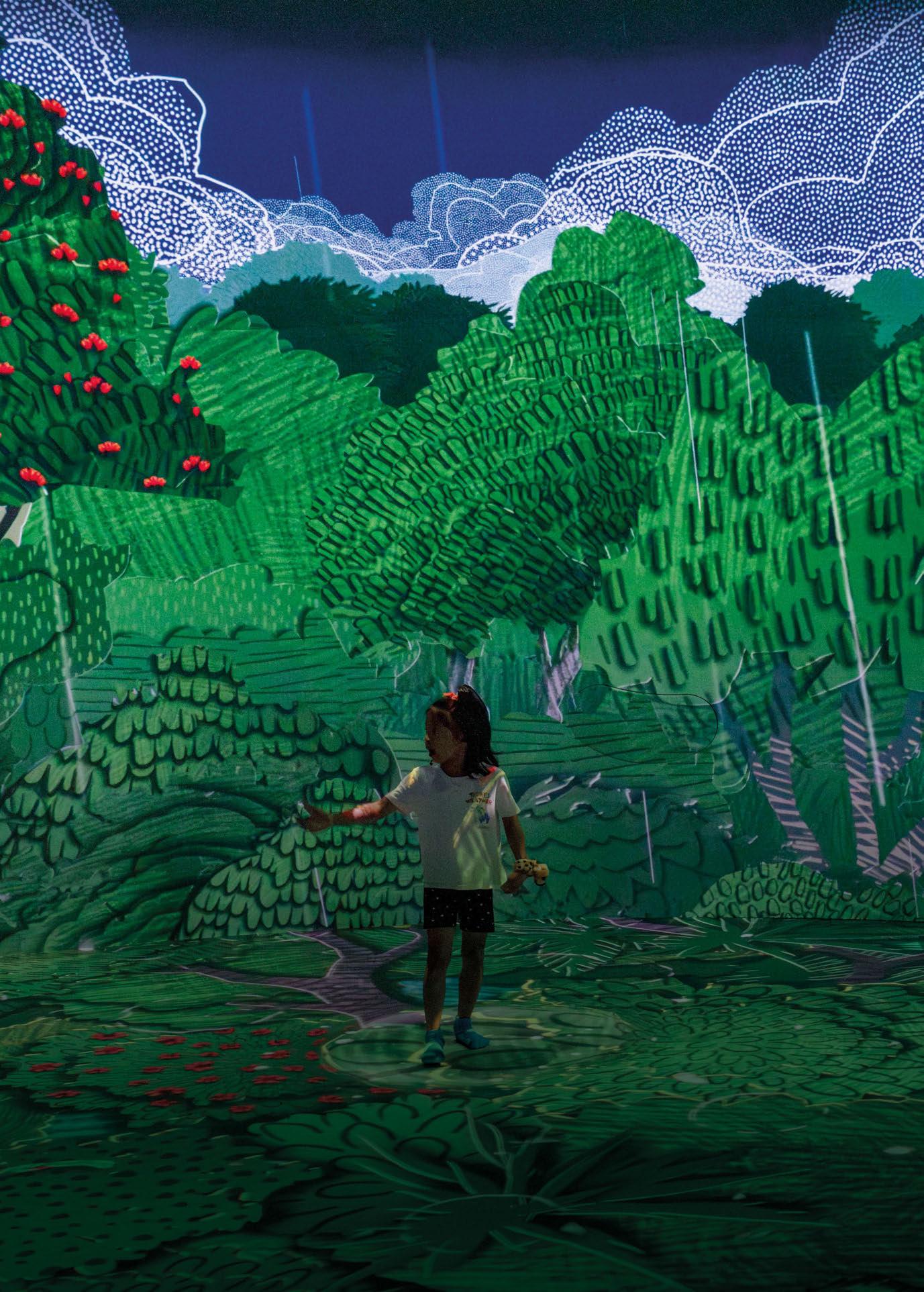
Mandai Wildlife Group partners with Moment Factory to create and produce Singapore’s largest indoor natureinspired playscape, with complex AV solutions delivered by Mediatechnic Solutions.
Through a labyrinth of climbable spider webs, giant tree roots, immersive soundscapes, and responsive digital marshes, Curiosity Cove’s multisensory experience lets children wander on their own imaginative adventures through nature-themed zones which have been designed with them in mind.
Located within the Mandai Wildlife Reserve, operated by Mandai Wildlife Group, the attraction opened in November last year and adds an indoor dimension to the wildlife and nature destination.
Appointed as lead experience designer and content producer for Curiosity Cove, Moment Factory worked closely with the Group’s development team and wildlife experts to help shape the project’s DNA to create a seamless narrative experience from start to finish.
The result is a journey of discovery through more than 30 multisensory touchpoints across four ecosystems: Forestlands, Grasslands, Drylands,
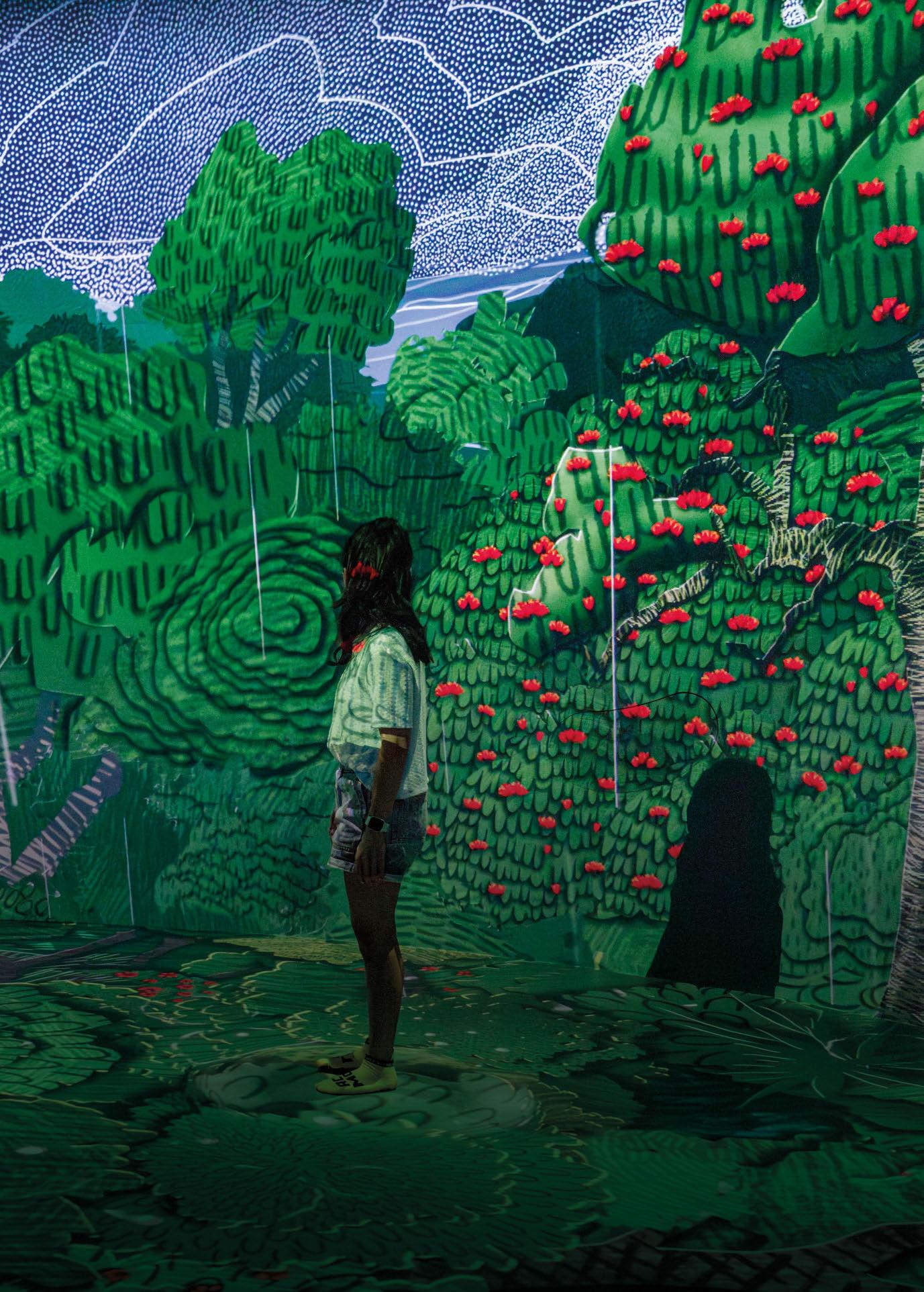
and Wetlands, designed to engage children’s cognitive, social, and motor development.
Technology, from sensors, projectors, LED floors, lighting, to spatialised sound, is thoughtfully embedded into architectural elements, creating a unified “phygital” environment where movement awakens hidden life or alters light and sound.
François Morel, Producer at Moment Factory, who led the project for the creative studio, takes up the story: “The main goal for this project wasn’t to produce a breath-taking, technically spectacular show, but an inspirational discovery experience that could be enjoyed by young children, and so the technology was there to support that,” he said.
“After the overall design of the experience and the delineation of its different zones, we proceeded to study the technological options. This analysis revealed that projection was the most relevant solution for

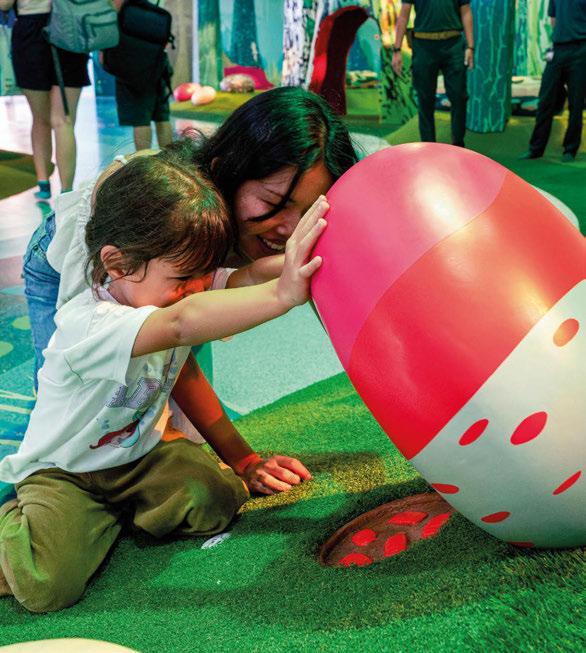
certain zones, while others required interactive systems, or simply staging based on light and sound effects, all within a very colourful scenographic environment.
“Our mandate was to design the whole experience with the scenography, and the design intent of the technical aspects of what we wanted to achieve.
“We spec’d technology that we are familiar with, and put the schematics together with parameters noting the manner in which we want the final effect to work, and with that the AV contractors decided on a suitable solution.”
The AV tender for the project was won by Singapore-based integrators Mediatechnic Solutions, with Narindren Balakrishnan leading the project.
“For this project, the tender was for a full build with components specified, and once we dug a little deeper we had some input with the equipment specifications to suit the local market here,” said Balakrishnan.
“A large part of our business is the after sales service and support, and this was an important consideration because clients often require maintenance – and that comes with specialised knowledge, which you can’t expect all venue technicians to have. And so with that in mind I push for brands that have an established service centre here in Singapore.”
For the sitewide audio solutions, a combination of brands was utilised, with QSC Core 610 and amplifiers paired with JBL Control series loudspeakers for ambient sound, and Martin
Audio loudspeakers from its CDD series for the venue’s major exhibits.
“The whole audio package is running on QSC amplification and Q-SYS Core 610 with a redundant unit,” said Balakrishnan.
“For the enclosed areas, Martin Audio CDD loudspeakers were selected because they met the required criteria, and they worked out really nicely considering the size and shape of some of the rooms, which had minimal acoustic treatment.”
For Balakrishnan, the timing was just right when it came to some of the specifications of certain technologies, namely the LED tiles as well as the projectors.
“During ISE 2023 our team met up with shortlisted brands – primarily Panasonic and LG, which both had new product launches at the show,” said Balakrishnan. “We were given a demo of LG’s new LFCG039 LED floor tiles and had the opportunity to see the actual product, installed in a size similar to this installation –and being able to see the finish and assess the viewing angles made the selection of LG an easy one.
“At the Panasonic booth the local Singapore team showed us the REQ series of projectors, and we discussed requirements with the technical team to ensure the lenses we required would be available on the new platform, as well as the lead-time to meet this project’s timeline.
“We have a long and strong working relationship with both brands and we are very
Above: Additional sensory elements are delivered via transducers, which are installed discreetly to vibrate and add subtle haptic effects at certain touch points.


OLA MELZIG
PRODUCTION MANAGER
M&M PRODUCTION MANAGEMENT


I just love the new generation of the Artist user interfaces. The SmartPanel‘s intuitive workflow and its very visual layout are simply fantastic.
I can customize it in any way I need, which is absolutely crucial for the big live events I typically work on.“

ARTIST INTERCOM
Professional and reliable live communications. Seamless integration of Riedel‘s SmartPanel and Bolero wireless intercom. Easily scaling from 16 to 1024 ports with flexible licensing.

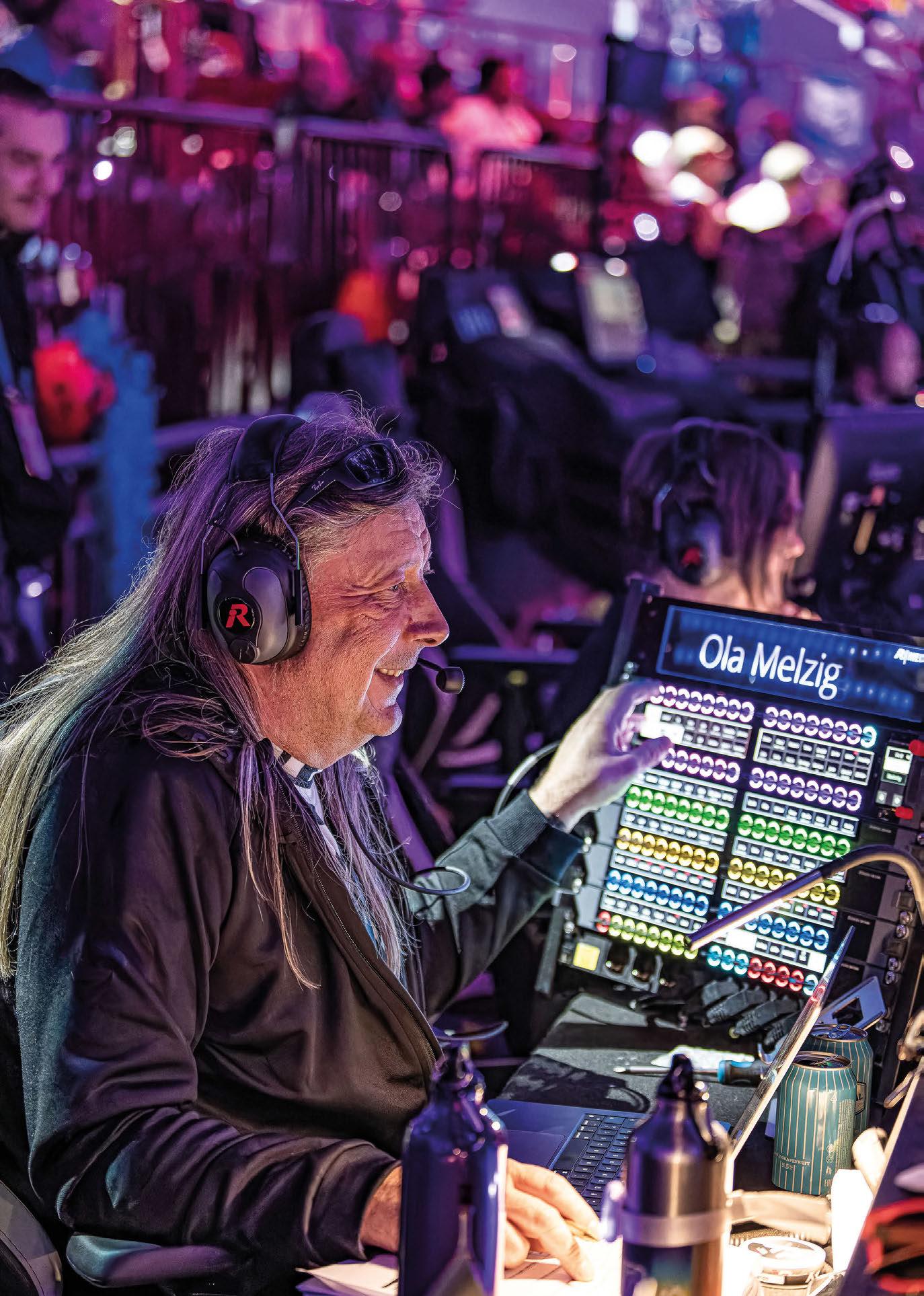
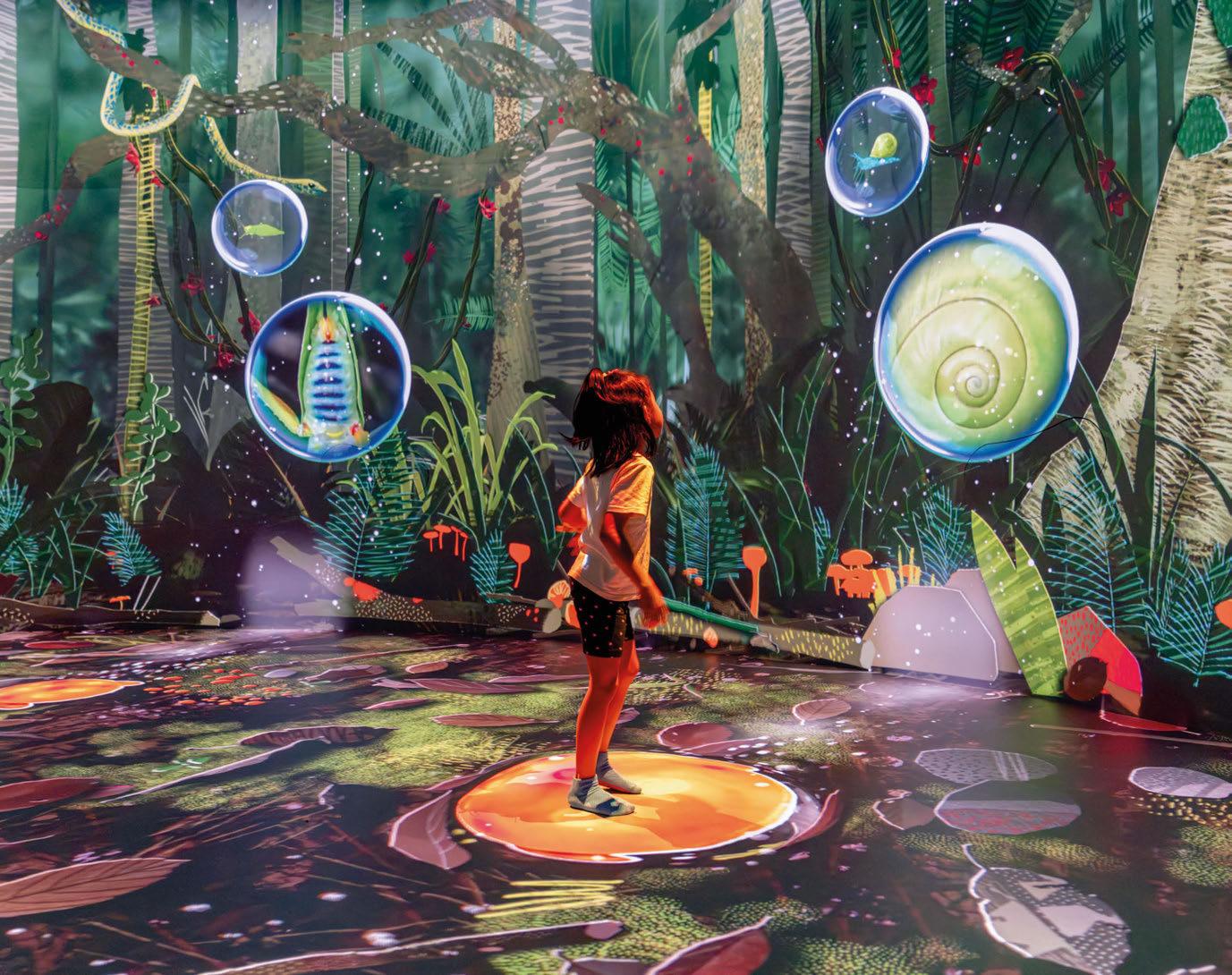
confident with the support that they offer – pre, during and post, so selecting their equipment was made easier,” he continued.
“When we looked at designing the venue’s AV network, Netgear had recently launched their AVLine switches, so the timing was excellent as that really simplified the design.”
For the project, 103 panels of LG LFCG039 LED were utilised, while in the rooms where projection mapping was required Panasonic’s PT-REQ80B, PT-REQ10B and PT-RZ690 projectors were selected.
For Balakrishnan, the installation and configuration of the projectors had some design challenges. “The ‘Reef Retreat’ zone was challenging for us to map,” he said. “Each reef had two projectors, and the initial configuration was for stacked projectors, but I felt we needed to utilise them as left and right to mitigate shadows, and so after discussions with Moment Factory this was put into practice – however, this reconfiguration demanded agile manipulation it came to mapping the space, because the reef is multidimensional.”
All content, with the exception of the video, is distributed across the main NetGear network, running AV over IP, while the video signals for the LED floor and projectors are run over fibre using a Lightware MX2MFR24R-RF matrix, with content transmitted from that to OPTJ-RX90 receivers set up locally.
“I was comfortable using Lightware for this aspect of the project, there was a local team at ISE and they talked me thorough the technology,
Above: All content, with the exception of the video, is distributed across a NetGear network, running AV over IP.
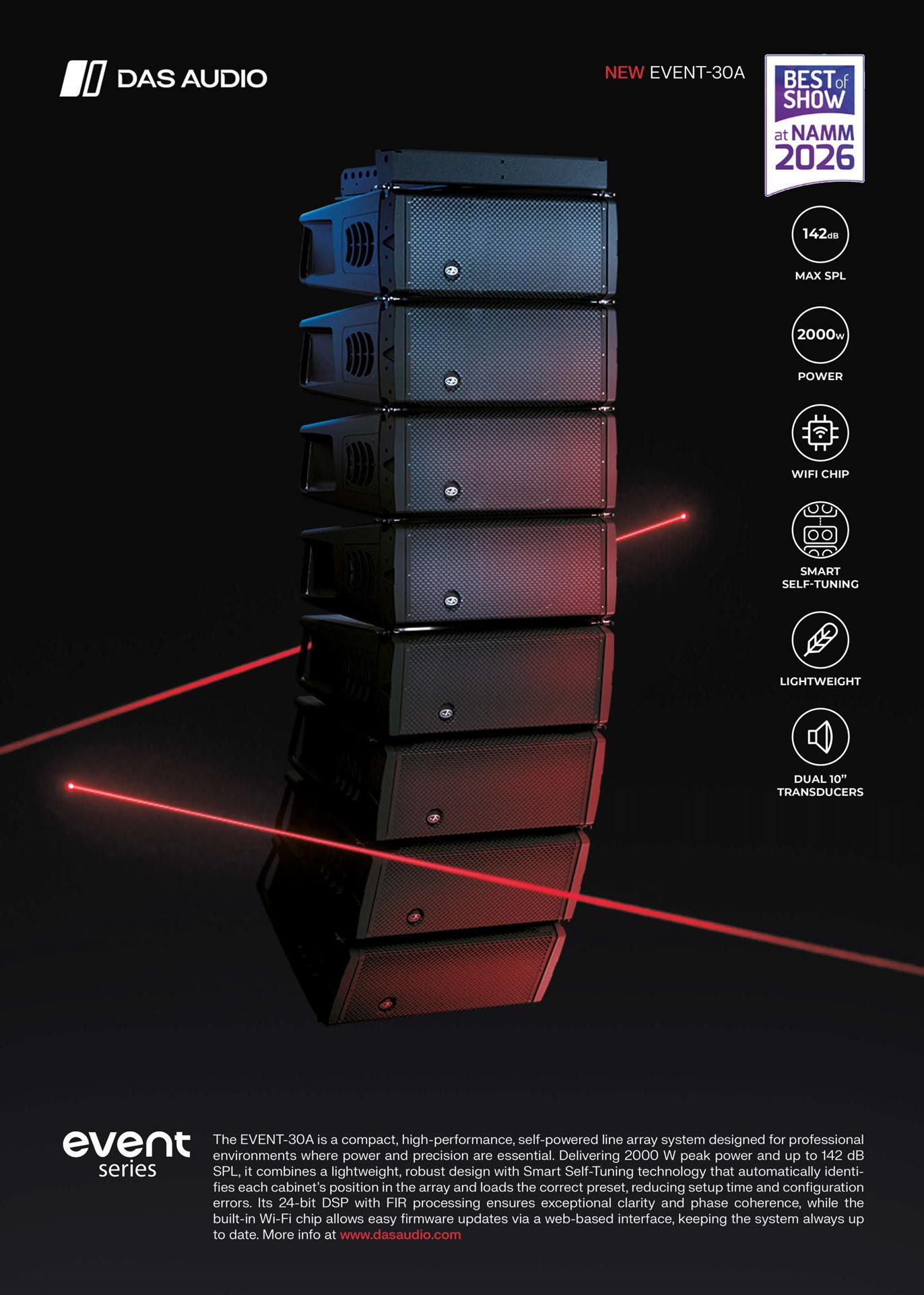
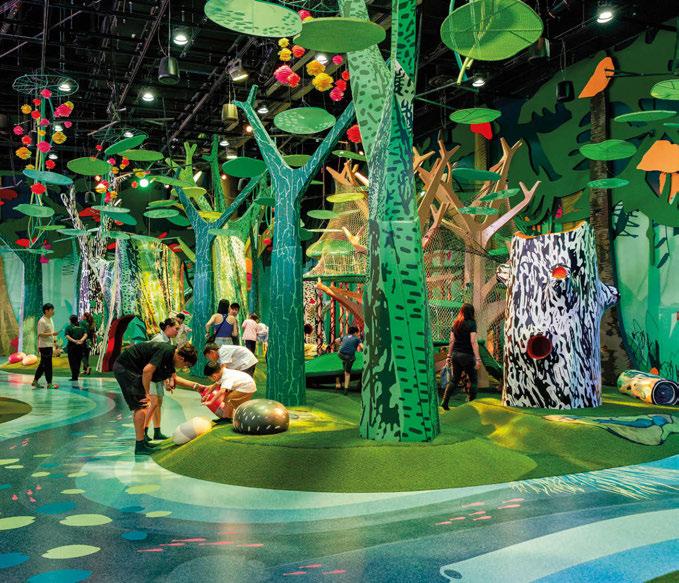
with the OPTJ-RX90 receivers being small enough and be powered by the REQ series projectors,” said Balakrishnan. “That saved me the headache of having to find an external power source in those areas.
“The Lightware platform is also really easy to program and deploy, and they offer local support, which were all considerations during the equipment selection process.
“The configuration of the LAN room and rack placement was made so that co-dependant systems were placed next to each other in a cascading manner, Interactive PCs first which were fed to the Pandoras box whose outputs are fed to the next rack containing the Matrix switchers,” he continued. “We did it this way so that it would be much easier for the venue staff to trace and track the cabling in case of issues in the future.”
Control for the entire park is run through Medialon Manager V7 by 7thSense, which is operated via a local PC station or iPad through the local Wi-Fi, which is set up so technicians can control and troubleshoot with more flexibility.
With technologies essential in serving the children’s curiosity, interactivity becomes a tool in enhancing their fascination and discovery, as Morel continued: “There are no instruction panels across the site, it is purely intuitive. It’s a playscape, and we wanted to make sure that with all of the interactivity that the technology is hidden, robust and out of the reach of the children.”
Added sensory elements are delivered via transducers, which are installed discreetly to vibrate and add subtle haptic effects at certain touch points, including a fallen log, singing trees, and interactive eggs.
“This subtlety is perfect for the innocence of children,” said Morel.
With Curiosity Cove, Mandai Wildlife Group has added an extra space for children to explore within the Mandai Wildlife Reserve, and the seamless integration of scenography and technology has made the project a resounding success.
Bennett Neo, Group CEO, Mandai Wildlife Group, said: “Curiosity Cove has been designed to ignite children’s natural curiosity and offer them an engaging introduction to nature in a way that excites and inspires. This immersive experience invites kids to discover wildlife and ecosystems, and brings nature’s story to life through interactive play tools and phygital elements.”
Left and below: Curiosity Cove is a multisensory experience that allows children to wander freely on their own imaginative adventures.
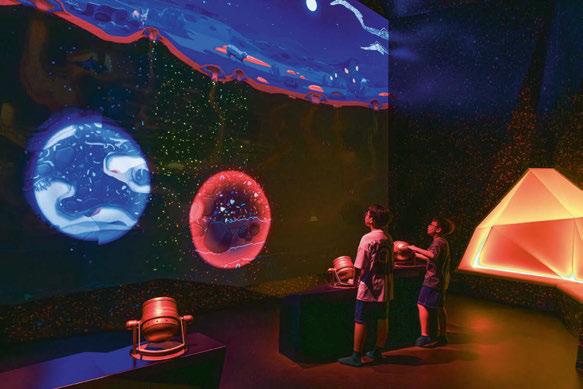
TECHNICAL INFORMATION
VIDEO
8 x Panasonic PT-REQ80B
9 x Panasonic PT-REQ10B
8 x Panasonic PT-RZ690
4 x Panasonic PT-REQ80
103 x LG LFCG039 LED
2 x Lightware MX2M-FR24R-RF (HDMI input, fiber output)
32 x Lightware HDMI20-OPTJ-RX90
AUDIO
69 x JBL Control 23-1
22 x JBL Control 67 P/T
33 x JBL Control 47LP
4 x JBL Control 62P
28 x Martin Audio CDD6
16 x Martin Audio CDD12
8 x Martin Audio CDD10
2 x Martin Audio CSX112 sub
2 x Martin Audio CSX118 sub
4 x Powersoft Mover Inertial Drive transducer
12 x Powersoft Mover Direct Drive transducer
7 x QSC - CX-Q 2K4
15 x QSC CX-Q 4K8
4 x QSC CX-Q 8K8
21 x QSC CX 84K
2 x QSC CORE 610
www.mandai.com www.momentfactory.com www.mediatechnic-solutions.com




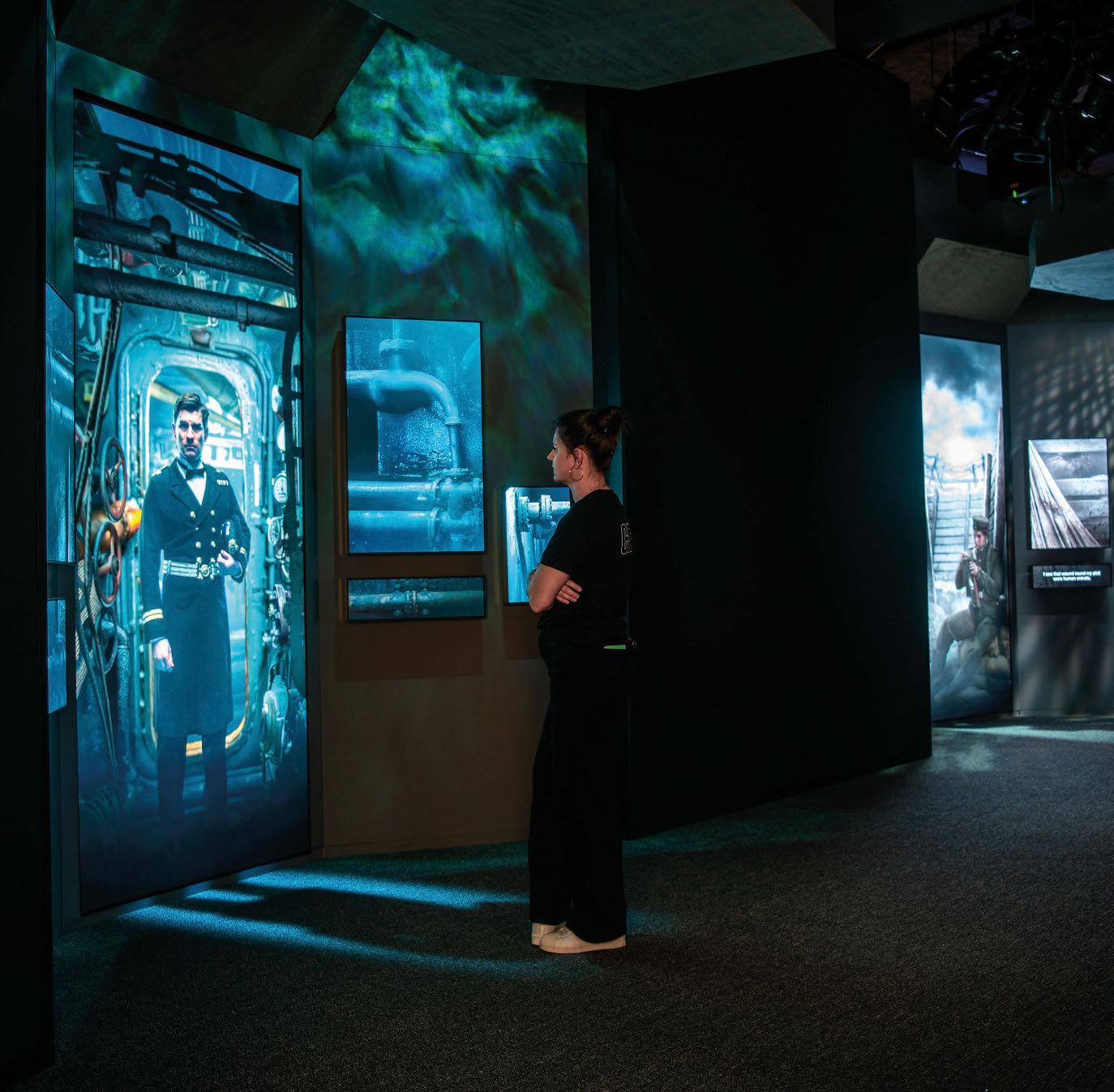

PIXERA zero delivers powerful, reliable media playback in a compact footprint — ideal for museums, themed attractions, retail and corporate environments.
Designed for seamless integration and long-term stability, PIXERA zero gives system designers and integrators maximum flexibility with minimal space requirements.
Compact. Capable. Installation-ready.
Scan for more


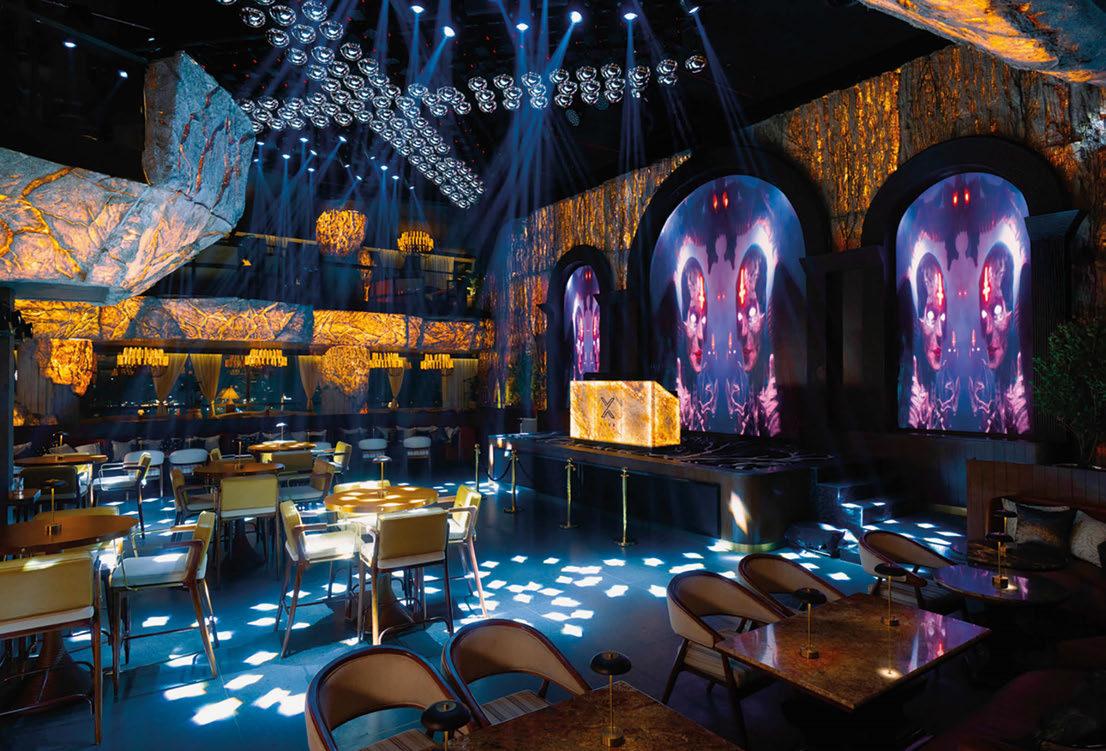
X Live deploys a complete Creative Sound Concepts audio system to provide its guests with the highestquality music experience possible
Performance venue X Live, located within the Delhi NCR region, features VIP balconies on three sides, each offering an unobstructed view of a large, elevated stage dedicated to live bands and DJs.
Saurabh, the promoter, appointed Avian Teck Solutions P Ltd, a Delhi-based integration company, to execute an audio system installation that would make X Live a premier liveperformance venue.
After careful evaluation, Avian selected the touring series from Creative Sound Concepts (CSC). When the system was first commissioned, the clinical transparency of the signal chain caught the owner, Mr. Saurabh, by surprise. Upon hearing the first performance, he was amazed at the absolute vocal mid-range clarity and transient detail. The engineering challenge was significant: the system had to provide uniform coverage for both the immediate dance floor and the expansive three-sided balcony tiers within the double-height void. Avian addressed this by utilising
CSC’s flagship horn-loaded point-source array, capable of 120-degree vertical dispersion.
The front-of-house PA utilises the RR212HL-90 to anchor the space for the audience in the front rows, while the narrowdispersion RR212HL-40 was specifically chosen to tackle the balcony areas. The low-frequency foundation is handled by four high-energy CSC CR 218s subwoofers, tuned for tight, musical extension.
This is further supported by CSC CF210 units flanking the stage and CSC CF10s serving as fills in the balcony and peripheral spaces, ensuring a uniform SPL throughout the venue. Powering this massive acoustic engine are CSC Audio Class D post-filter feedback topography amplifiers and an MS 26 digital signal processor.
By refusing to compromise on the science of the signal chain, X Live has created an environment where the music is felt as much as it is heard.
www.csc-audio.com
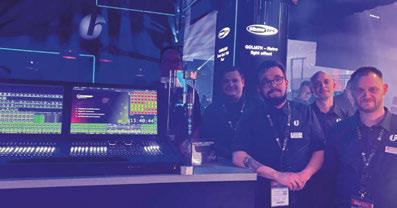
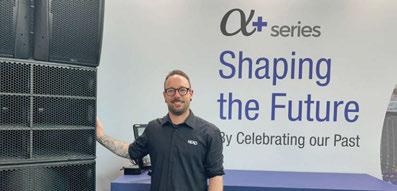
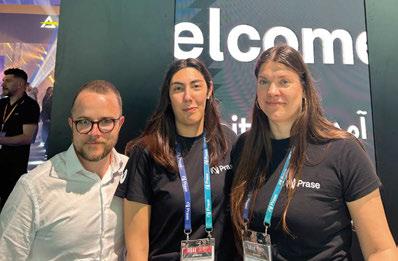
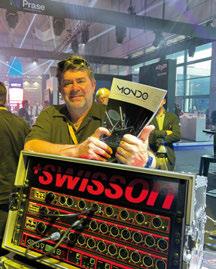
EMEA
RIMINI, ITALY / 12 – 14 APR, 2026
Italy’s leading audiovisual event hosted more than 250 brands across ten pavilions during its tenth edition. This year, Music Inside Rimini (MIR) welcomed a notable international audience, seeing a 15% increase in international visitors by comparison to the 2025 show, demonstrating its discernible growth as an important trade show for exhibitors and attendees alike.
Across the three-day event, MIR presented a diverse schedule of events within sectors including live events, corporate, broadcast, theatres and museums, retail and education, in addition to brands and distributors reconnecting with customers at their stands.
Day one’s events started in the South Hall, with DJ Kowu’s opening act, a perfect start to the show for fans of innovative musical structures. This was followed by a discussion titled ‘The Sound Engineer’s Profession’, with Alberto Butturini, offering the audience the opportunity to delve into both the technical aspects of the profession, as well as Butturini’s personal endeavours in freelance work.
In the AV Connect Arena, ‘The Future of World Entertainment: State of the Art and New Perspectives’ panel discussion took place, exploring immersion and cross-formats in the industry, and how entertainment will continue to transform through these influences.
The second day of the show featured a similarly dynamic itinerary; ‘From Studio to Stage’ explored the musical and design journey of the group Focusrite, with Chris Calcutt, Product Specialist.
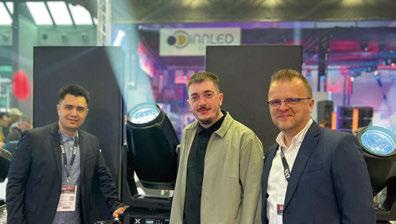
The PRASE team with Alessandro Bizzarri
Matteo Riva of Epson.
Stefano Sandri of Audiosales SRL.
Thomas Gottschlichof Swisson.
Following this, the conference entitled ‘Human After All? How Man and Machine Define Contemporary Creativity’ in The MIR Arena debated the evolving role of artificial intelligence in the music, entertainment and digital content industries.
Martin Köhler, Blackmagic Design Senior Product Specialist, presented a panel entitled ‘2110 for Everyone’, discussing the converter’s features to simplify setup for broadcast, live production, and audiovisual environments, allowing the audience an insight into the applied uses of the product through this presentation.
The final day branched into a discussion on ‘Immersive design: architecture, light, and technologies for new places of interaction’. Here, attendees were presented with themes of architecture interacting with technology and how this can evoke emotion in connected spaces. Furthermore, lighting enthusiasts were welcomed to ‘In Search of Light’, a discussion that saw several lighting designers ponder the choice of fixture and how these are tailored to the technical and creative needs of the individual project.
The final event of the show, ‘Backstage on Stage’, opened a dialogue on the value of training and how this relates to professional identity, employability, and awareness, exemplifying how MIR remains an worthwhile show for both those with longevity in the industry and those at the beginning of their journey. www.mirtechexpo.com
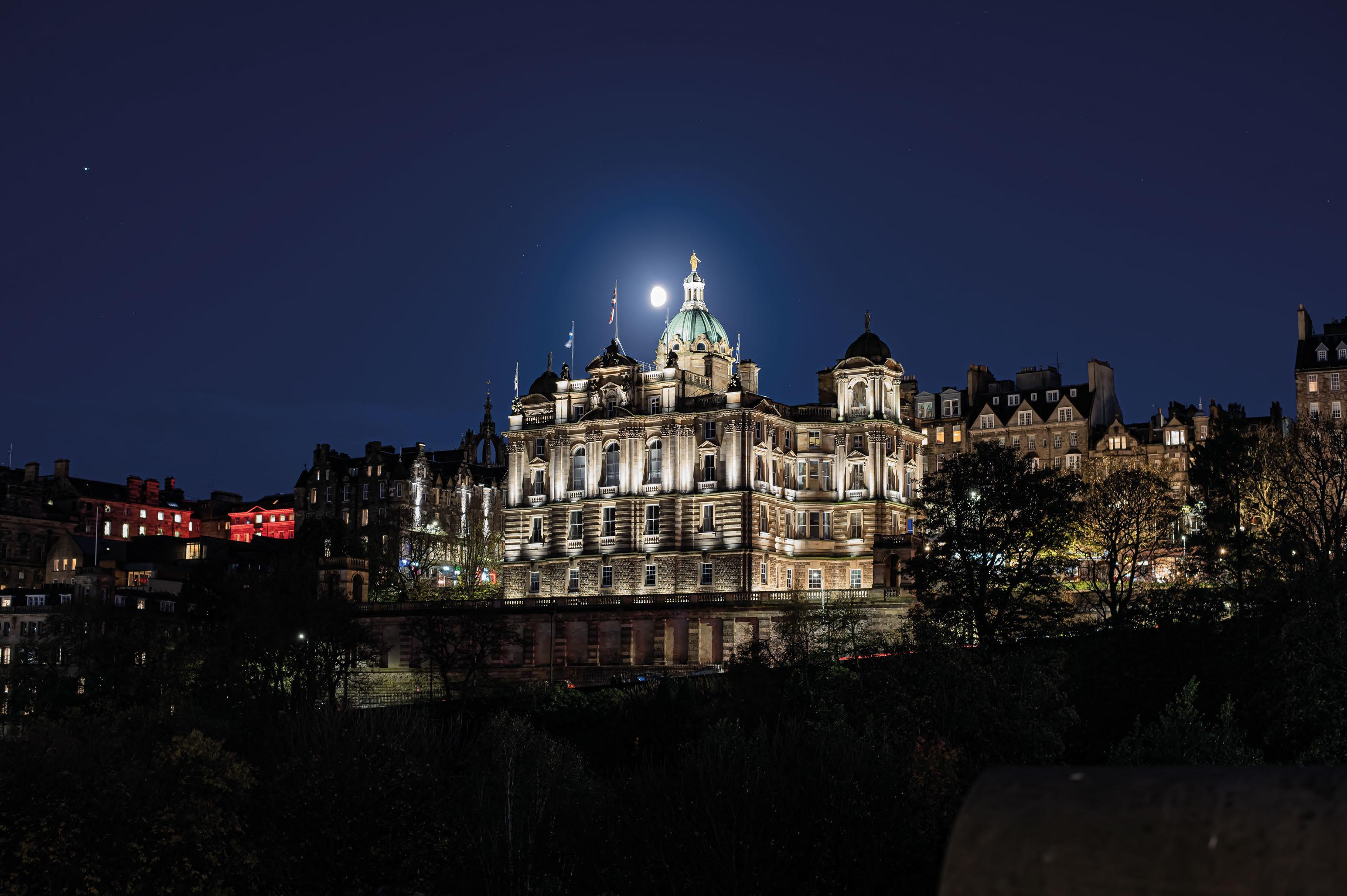
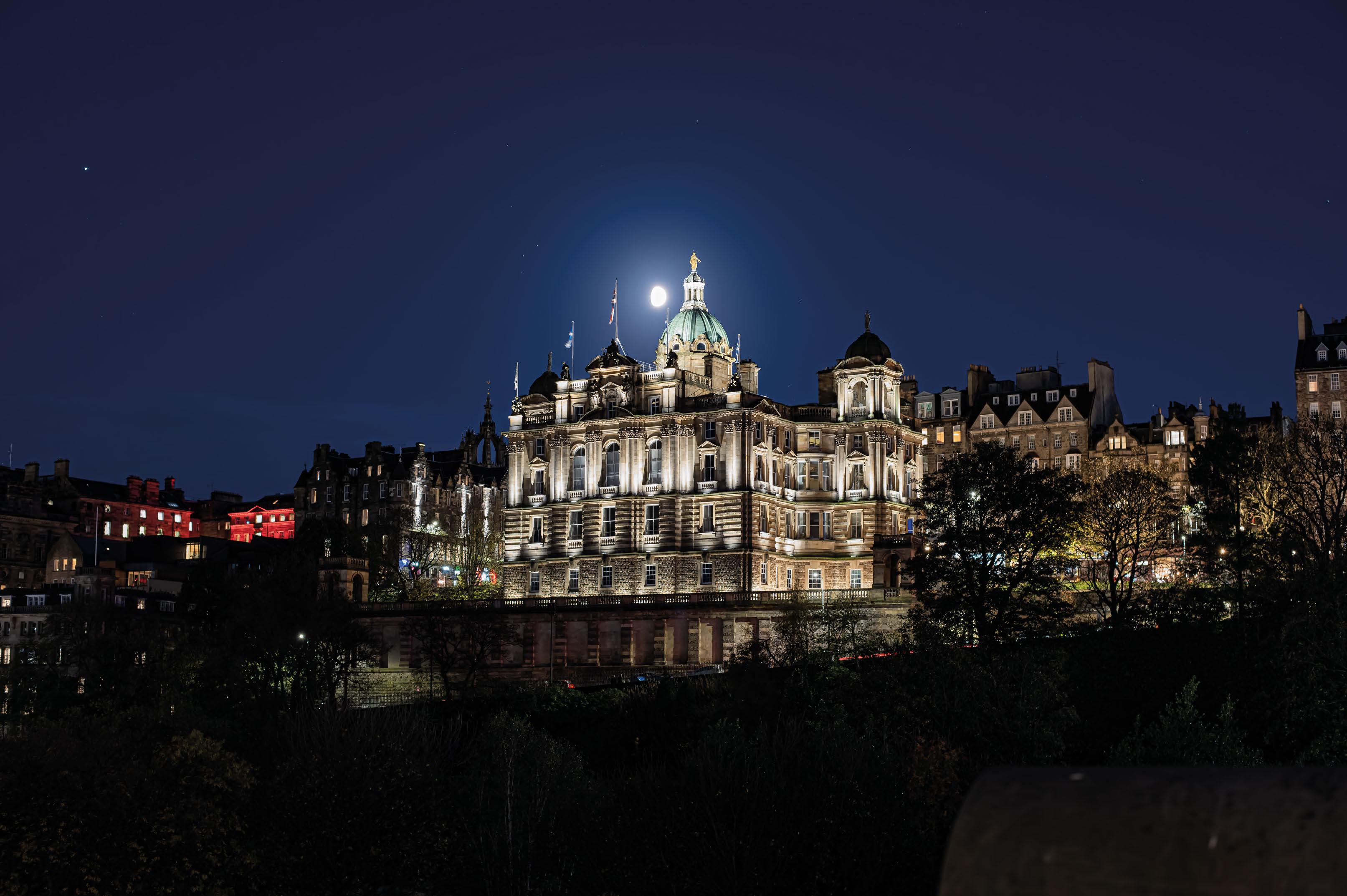
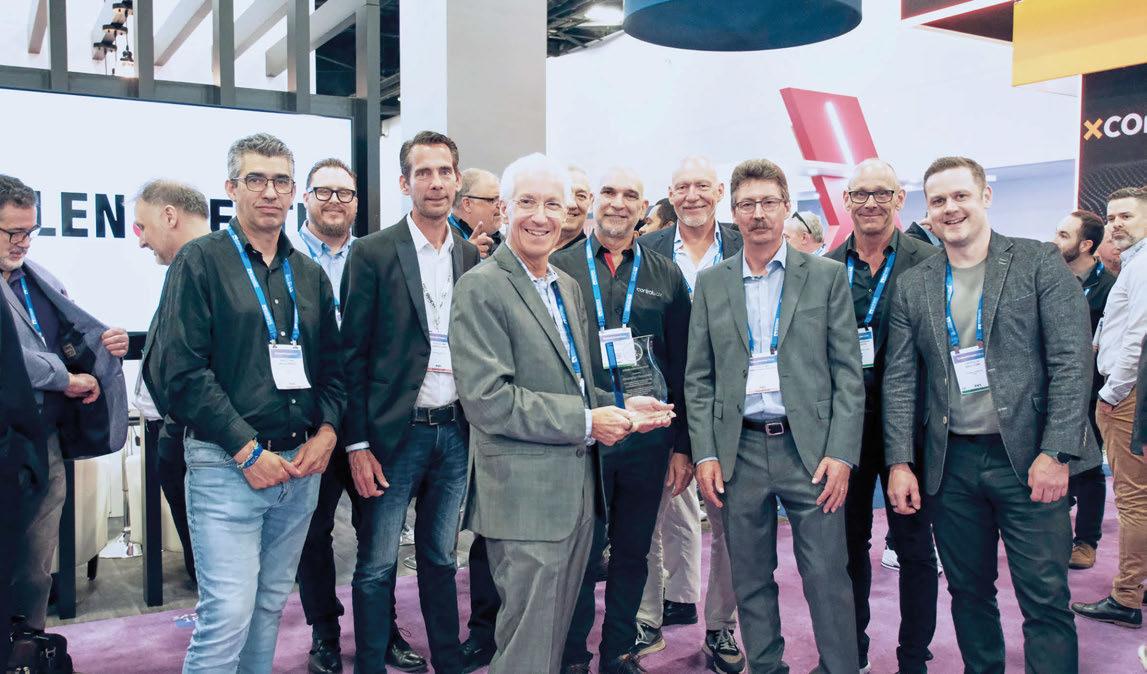
Seatrade Cruise Global 2026, the trade show that connects the professional global maritime entertainment and leisure industry, achieved the largest attendance of the exhibition’s 41-year history. One particular success across the show floor came from the International Cruise Ship Entertainment Professional Association’s (ICSEPA) presence.
At the organisation’s networking event on the evening of the second day of the show, the ICSEPA presented Christopher Vlassopulos, maritime entertainment technology veteran, with a lifetime achievement award, honouring his impact on the industry – the first time that this accolade has been awarded.
Vlassopulos was a fitting initial recipient, alongside his over 26-year role at Royal Caribbean as the Manager of Sound & Light, New Building & Innovation, he originally helped found ICSEPA alongside cruise ship entertainment system integrator, Control AV. Amir El Yordi, President of Control AV, presented the commendation to Vlassopulos, in a celebration that he had been planning for some time, unbeknown to Vlassopulos.
Having recently stepped away from his role at Royal Caribbean to partly retire, and partly allow himself to focus on freelance consulting in the maritime field, Vlassopulos received the award for his innovations throughout his career. When asked what’s next for him, he said: “I’m definitely not done yet! There’s still so many opportunities for me to get involved with interesting
ideas and projects, all of which I’m always grateful to be asked to help with. I’m somewhat seen as the grandfather of the cruise industry, in regard to sound, light, video, and entertainment rigging; I have over 26 years of knowledge to pass down.”
Kelly Gonzales, Senior Vice President of Architectural Design, Newbuilding & Innovation for Royal Caribbean, came forward with great praise for Vlassopulos, who refers to her as “an innovator with real skill”.
Gonzales began, humorously: “After over 25 remarkable years, it’s hard to imagine this place without you – though, given your travel schedule, you’ve given us plenty of trial runs.”
She continued: “From day one, you’ve been at the heart of every major project this department has delivered. If it beeped, flashed, projected, amplified, or cost more than a small house, you not only understood it – you made it behave. Our major entertainment systems may be cutting-edge, but we all know the real operating system has quietly been you. In true British fashion, even the most monumental successes were usually
met with a modest nod and something along the lines of, ‘not bad, considering’.” Vlassopulos responded: “It’s an honour to be recognised as a big contributor to Royal Caribbean’s mantra of doing what has never been done before in at-sea entertainment.”
When asked about his proudest achievements throughout his career, he mentioned Royal Caribbean’s Oasis of the Seas vessel, which was the first in the Oasis class. “We were a tight-knit group of tenacious professionals at the top of our game,” he said. To me and many others, Oasis today is still really the benchmark of innovation with so many ‘firsts’, for example, its Aquatheater. Its entertainment offerings and the systems behind them are toplevel. We were challenged to create the best and biggest possible cruise ship at the time, which was a thrilling task.”
As well as his achievements with the cruise line, Vlassopulos is proud of his work in co-founding ICSEPA with Control AV. “As was visible at Seatrade this year, the organisation has matured significantly, in tandem with the industry’s needs maturing. A group like ICSEPA is a crucial space for empowering communication between cruise ship professionals, as in the entertainment department, every cruise line has similar challenges and hurdles to overcome, quite differently from landbased entertainment.
“A lot of simple things become extremely complicated when you add seawater, vibration, and 24/7 operation to the equation, so manufacturers and experts can benefit from having an organisation to both learn and teach.”
The ex-Royal Caribbean innovation manager believes that onboard entertainment technology progresses so fast that we almost can’t predict exactly what will be possible on future vessels. “In the 1970s, a land-based installation was just some pin spots and a mirror ball!” he remarked. “These quickly progressed, and so too has at-sea AV, with vessel theatres often being better equipped than Broadway or West End venues.”
However, some constants will never change in the industry, he noted. Ship crews will always need to take on the majority of the operation and maintenance of audiovisual solutions, without the venue taking any ‘dark days’ to catch up. A significant improvement in this area is the popularisation of remote networking and monitoring, though.
Vlassopulos looks forward to the industry paying more attention to safety-based technology in entertainment venues. “Safety and system stability always need to be paid attention to, especially when the tech is being used as heavily and extensively as it is in a 24-hour running cruise ship venue.” ICSEPA keeps an eye on safe practices within the industry so it can continue to promote them. He said that as soon as the Seatrade exhibition ended this year, he and the Control AV team immediately began making plans for ICSEPA’s presence at the 2027 edition of the trade show. “It’s been an extremely positive exhibit for us, and we’re looking forward to having an even larger ICSEPA and entertainment professional attendance next year.”
The overall sentiment of the AV professionals who attended Seatrade 2026 was largely similar, with attendees enjoying a show floor that featured more entertainment AV experts and organisations when compared to the previous year, though future editions of the exhibition plan to expand in this area.
Vlassopulos wrapped up the discussion by speaking about the impact that the maritime entertainment field has on audiovisual technology. “Many manufacturers are realising that if technology can work and survive on a cruise ship, it’ll survive anywhere!”
Gonzalez then concluded her acknowledgement of Vlassopulos, stating: “Whether on-site across the globe, wrangling with a vendor, or quietly solving the unsolvable from afar, you’ve left your award-winning mark everywhere we’ve been. Thank you for everything you’ve led, negotiated, wrestled, fixed, guided, and quietly perfected.”
www.icsepa.com
Opposite page: Christopher Vlassopulos receives his lifetime achievement award from Control AV and ICSEPA. Above Vlassopulos and various maritime industry professionals at ICSEPA’s Seatrade event.
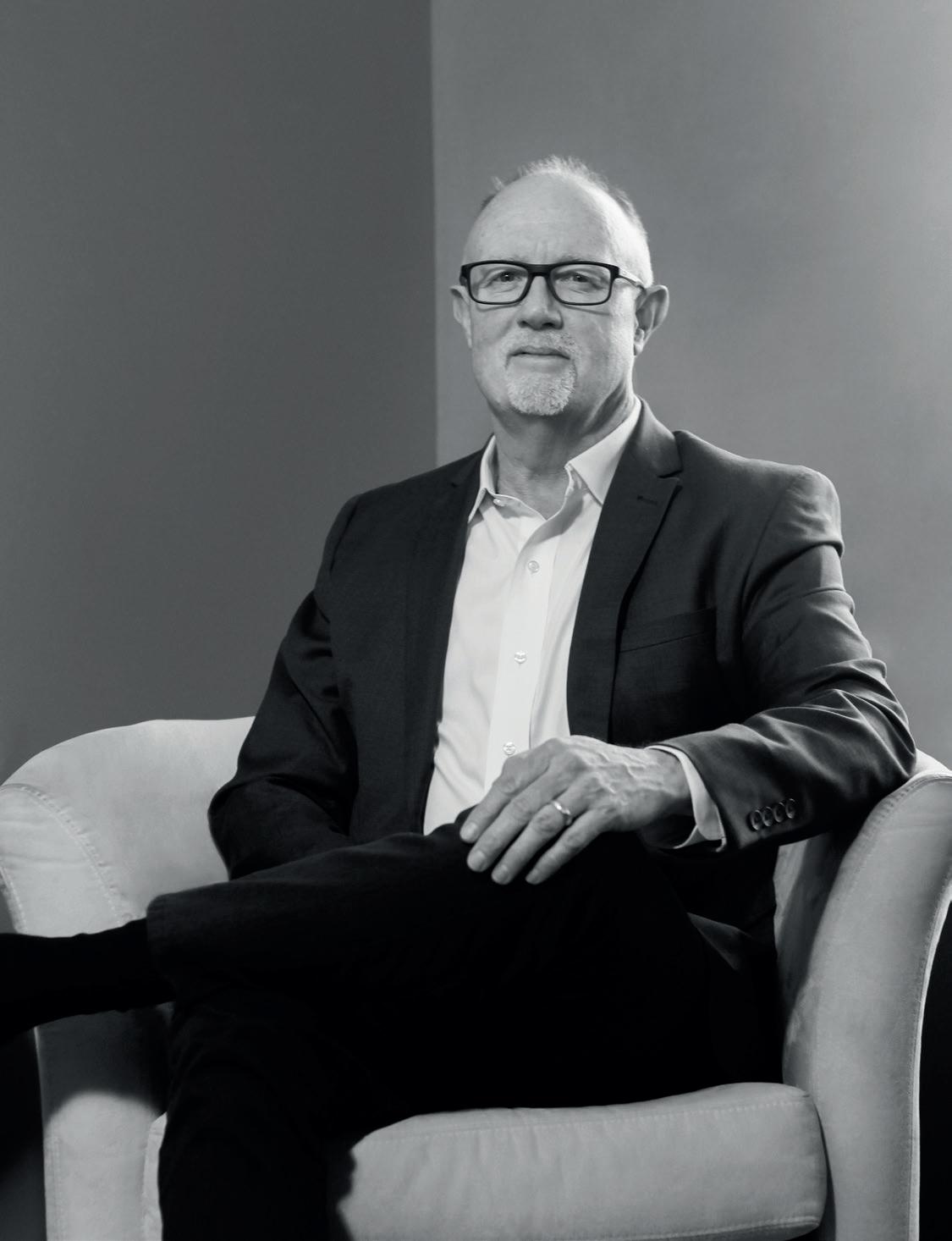
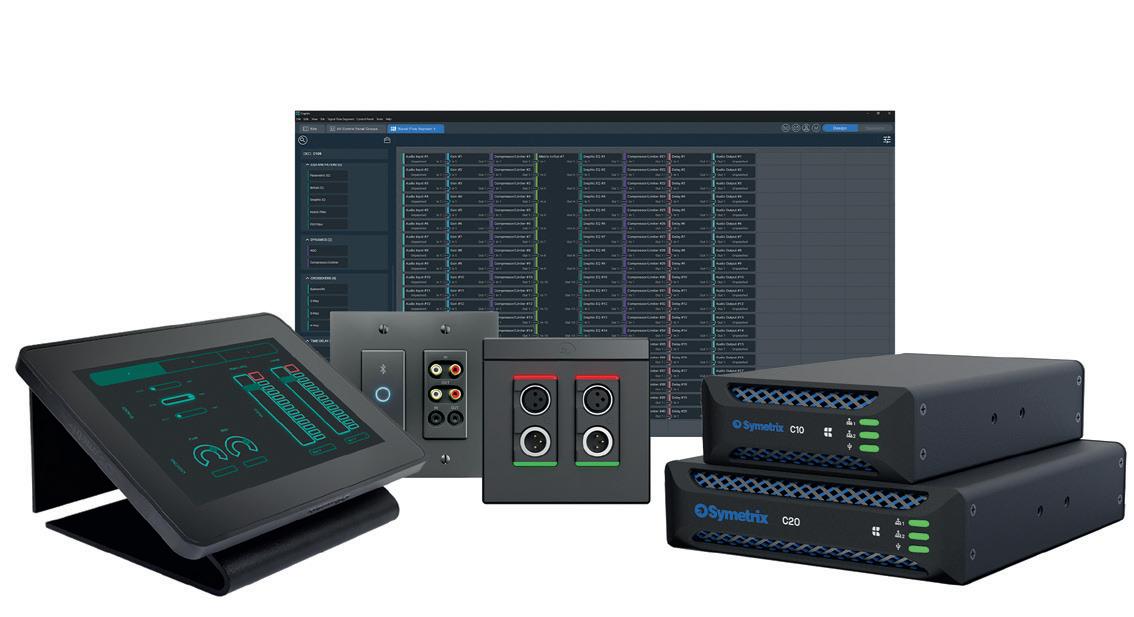
As Symetrix celebrates its 50th anniversary in 2026, owner and CEO
Mark Graham shares some of the important milestones as the company enters a new chapter with the launch of its new AV platform, Cognio.
Fifty years in this industry is significant in itself, and for Symetrix, that anniversary reflects a long tradition of continuous reinvention and pioneering new technologies. The company’s roots were in professional audio, and it was founded in 1976 by a recording studio engineer named Dane Butcher, out of a loft in Seattle. Symetrix quickly earned a reputation for pristine audio, predictable behavior, and gear that could be trusted to perform. As the company expanded from recording and broadcast into installed and networked AV systems, the underlying philosophy remained the same. Sound quality and reliability are key, and technology exists to support the engineer’s intent, rather than dictate it. Over time, this approach gave Symetrix a distinct place in the market, delivering clarity, intelligibility and consistency.
From those early days serving studio and pro audio applications, the business evolved alongside the market, expanding into installed AV and networked audio while maintaining the same
core principles, and today, that foundation has grown into a broader ecosystem spanning processing, control, monitoring, and software-driven workflows.
Our current direction clearly shows that transformational growth: from trusted audio processing into a much broader AV platform story built around networked systems, interoperability, intuitive control, and increasingly software-first workflows. Several milestones helped define that trajectory. The launch of the SymNet platform in the early 2000s pushed the industry toward open-architecture, system-level DSP design, giving integrators more freedom to think in terms of complete solutions rather than fixed hardware limitations.
In 2012, Symetrix was also an early adopter of Dante networking, introducing products such as SymNet Edge and Radius at a time when AV over IP was still unfamiliar to many in the industry. By treating networked audio as infrastructure rather than an add-on,
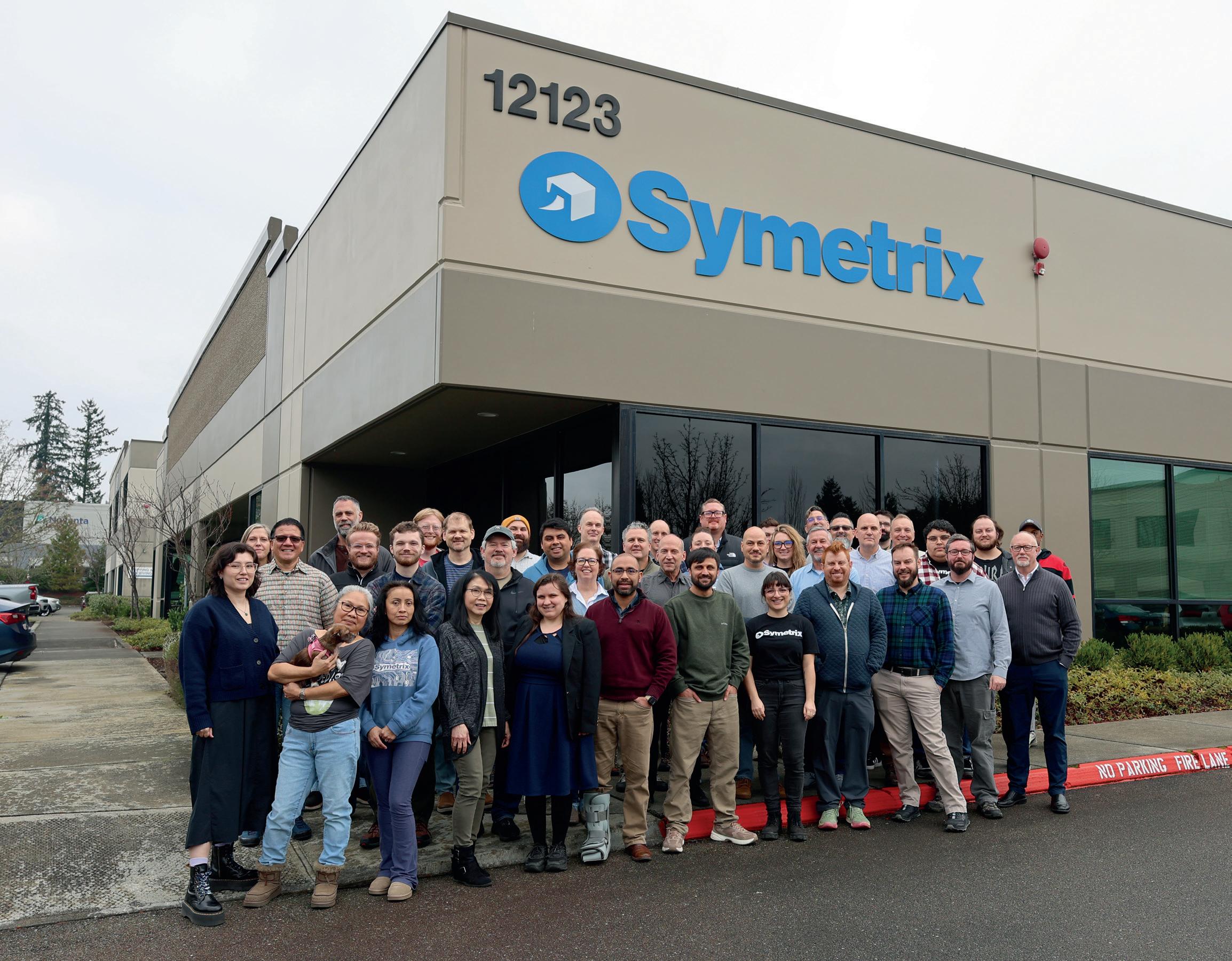
Symetrix enabled scalable systems, with cleaner installs and deployments that aligned naturally with IT environments long before that approach became mainstream.
Milestone
What stands out in this milestone year is not just longevity but momentum – Symetrix is celebrating 50 years of innovation with the launch of Cognio, the industry’s next-generation AV and control platform. More than just a product introduction, Cognio symbolises the company’s legacy of audio performance and evolution into an interoperable AV-over-IP platform, with stronger remote management capabilities and a new generation of design tools intended to reduce friction for consultants, integrators, and end users.
Symetrix has helped shape the market by making sophisticated AV systems more usable, more flexible, and more supportable over time. That means not only delivering high-performance processing and control, but also enabling end users to benefit from simpler interfaces, more reliable day-to-day operation, and systems that can evolve with changing needs. The company’s emphasis on intuitive control, remote monitoring, and integrated workflows has helped move the conversation beyond raw hardware specifications to the actual user experience – things such as how easily a space can be operated, maintained, scaled, and adapted over time. Seen in that light, Cognio is less a departure and more the next step in a long, consistent evolution. Just as SymNet and early Dante adoption reshaped how AV systems were connected, Cognio rethinks how those systems are designed. It shifts the starting point away from hardware constraints and toward software-driven design, visualisation, and long-term system management, while staying true to the same principles that have guided Symetrix since the beginning.
System design
Symetrix is moving beyond the traditional model in which system design starts with fixed hardware and everything else has to conform to it. Our direction, and where we believe the industry is heading, is software-first: solutions that are more scalable, more flexible, and more aligned with how modern AV networks are designed and managed.
The benefit is that consultants and integrators can first focus on the needs of the end user and their application of the technology – rooms, zones, workflows, user experience – and then map the appropriate hardware to that design. That improves scalability, shortens deployment time, enables easier system expansion, and reduces the operational friction associated with rigid, hardware-centric architectures. We believe this is the industry’s next evolution: moving toward systems that are inherently stable, scale gracefully, and evolve continuously over time.
Customer and partner feedback has been central to this direction and the overall brand evolution. The launch of Cognio is more than five years in the making, with years of research, design, and development shaped by extensive market research feedback from consultants and integrators worldwide.
Our intention was never to simply introduce new technology for the sake of new technology; it’s about addressing real frustrations in the field, including overly complex design tools, inefficient workflows, difficult interface creation, and disconnected tools for commissioning, troubleshooting, and operations. Our relationships with integrators, consultants, and end users are critical because they are the people who deal with these challenges every day.
At every stage of our history, Symetrix has focused on making
AV systems easier to design, deploy, and operate, without compromising sound quality. That guiding principle connects our studio roots to today’s networked systems and to the software-first future we are building with Cognio. To us, what makes Cognio different is that it is not just a product update or even a new product that incrementally improves upon the old – it is a fundamental rethinking of how AV systems are designed, deployed, and operated. Cognio is a software-driven Audio, Video, and Control platform built around distributed intelligence, code-free control, and DesignOps software. It’s the result of more than five years of deep research and development to create something entirely new. Rather than requiring users to start with fixed hardware, Cognio lets them design around rooms, zones, and signal flows first, then add hardware later. It also introduces a patented wire-free workflow in which designers place modules in sequence and the system automatically maintains routing logic behind the scenes, reducing clutter, errors, and design time. Add true pre-hardware emulation, a no-code interface builder, and unified workflows from design through operation, and the potential market impact is clear: faster deployment, lower complexity, more scalable systems that flexibly evolve over time, and a workflow that better matches how modern AV professionals actually work. Ultimately, we see Cognio being used anywhere flexibility, scalability, and long-term operational visibility matter, and it is designed to adapt as requirements change, which is critical in modern AV environments.
Beyond Cognio, 50 years is an excellent time to reflect on the broader strength of the Symetrix platform. That includes flagship solutions such as the D100 Server, Radius NX and Prism digital signal processors, and SymVue control interfaces, as well as continued investment in remote monitoring and management, deeper third-party interoperability, and faster, more visual workflows for consultants and integrators. We are not simply celebrating the Symetrix history; we are using this milestone year to show the industry how we’re leading the charge toward a more connected, software-first, AV-over-IP future.
www.symetrix.co
“WE’RE NOT SIMPLY CELEBRATING THE SYMETRIX HISTORY; WE’RE USING THIS MILESTONE YEAR TO SHOW THE INDUSTRY HOW WE’RE LEADING THE CHARGE TOWARD A MORE CONNECTED, SOFTWAREFIRST, AV-OVER-IP FUTURE.”
Previous page: Symetrix CEO Mark Graham. The newly launched Cognio platform. The Symetrix team pictured outside its HQ in Seattle, Washington.
Above:
A Symetrix D100 server controls and connects different devices from different brands over a centralised AV network at a recent upgrade at the Seinäjoki University of Applied Sciences in Finland.




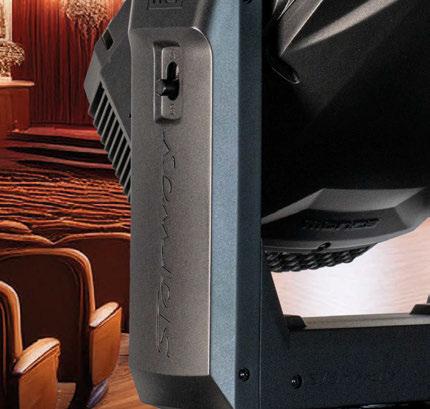
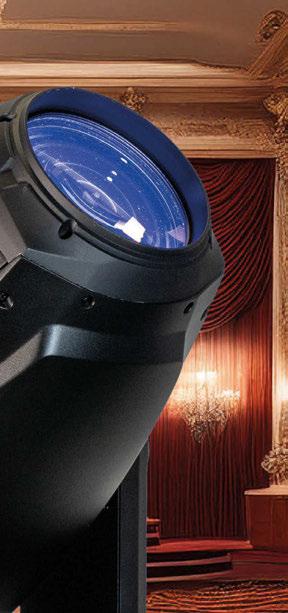

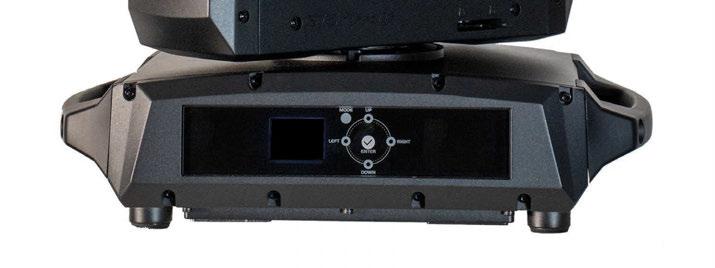

Monza WET is a compact and powerful Spot projector, equipped with a 350W white LED, delivering a luminous flux of 13,000 lumens.
With an extended zoom range from 3° to 49°, a CMY trichromy coupled with a progressive CTO, and a color wheel featuring 8 colors + 4 filters, Monza WET offers maximum flexibility to meet all creative requirements.
It includes 7 rotating gobos, 11 fixed gobos, an iris, a full-closing 4-blade framing system, and two stackable prisms (linear 6-facet and circular 6-facet), providing a wide range of effects. Two progressive frosts, Heavy and Medium, enhance its capabilities for smooth transitions and homogeneous projections.
With its IP65 rating, Monza WET is designed to withstand all conditions, both indoors and outdoors. It supports DMX, RDM, Art-Net, and sACN protocols, and includes a wireless DMX solution, ensuring a simplified and efficient setup.



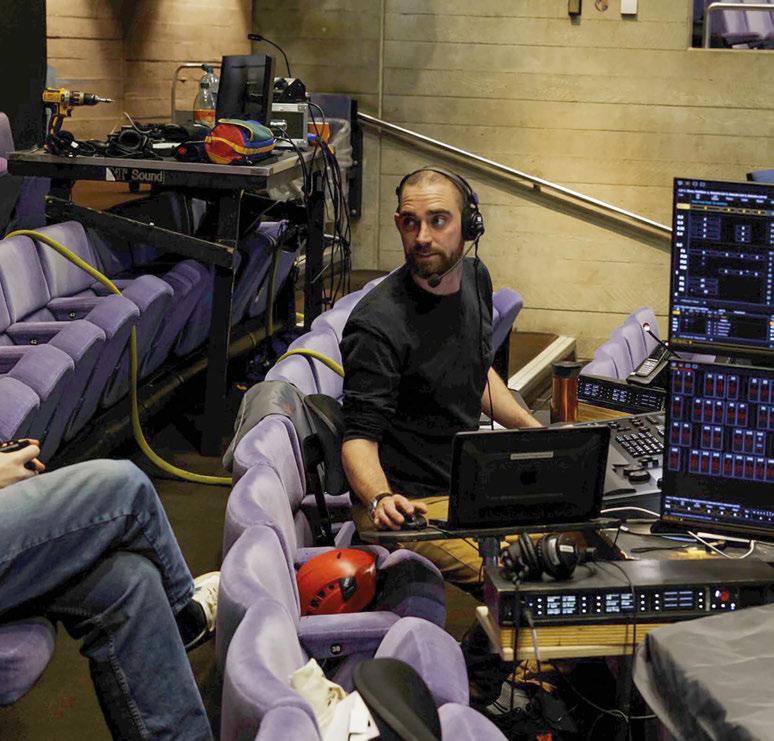
Wireless control is no longer a niche tool in theatre production. It has become a practical, everyday part of how shows are built and delivered. Sean Dane, International Sales Manager for LumenRadio, speaks to MONDO-DR about the ways this tech can be used to greatly increase creative freedom on stage, supported by theatre technical managers with their own anecdotal evidence.
For companies like LumenRadio, which specialise in wireless technology, the shift from wired to wireless as the popular luminary control choice reflects a broader change in the industry, where lighting systems are expected to be as flexible and responsive as the productions they support.
According to Sean Dane, International Sales Manager for LumenRadio, the story of wireless in theatre stretches back further than many might expect. “Wireless DMX has been an integral part of theatrical products for many years. As far back as the early 90s, major productions started using speciality products to support their productions,” he explained. “Over the past 30 years, massive advances have been made that continually free the artistic vision of designers and directors.”
For Dane, the most important of those advances are not just about performance, but about how the technology fits into the creative process. “In my opinion, the biggest changes have come from the miniaturisation of the radio platforms and the inclusion of one standardised wireless language across so many manufacturers.” That combination has had a direct impact on what is possible on stage. Smaller radio modules mean that
wireless control can be embedded almost anywhere. Dane said: “Miniaturisation has allowed wireless products to be hidden in the smallest of places in order to create the ‘spectacle’ of theatre.
“Whether it’s magical glowing orbs, enchanted books, wireless candles, or illuminated costumes. All things are possible given the size of the OEM modules we provide and the products available that include them.” At the same time, the growth of a broad ecosystem of compatible products has removed a long-standing limitation for designers. He continued: “Having some 200 OEM partners that integrate LumenRadio CRMX receivers allows technicians and designers to focus on finding the product that best fits their needs, regardless of manufacturer need versus ‘the one that has wireless’. This variety helps foster creativity rather than limit it.”
These developments are happening alongside a wider shift in how productions are conceived. Dane points to new style of staging, where fluid transitions and continuous movement are replacing traditional scene changes.
“I found that over time, production design has evolved. Shows are now designed more cinematically to reduce run time and quickly
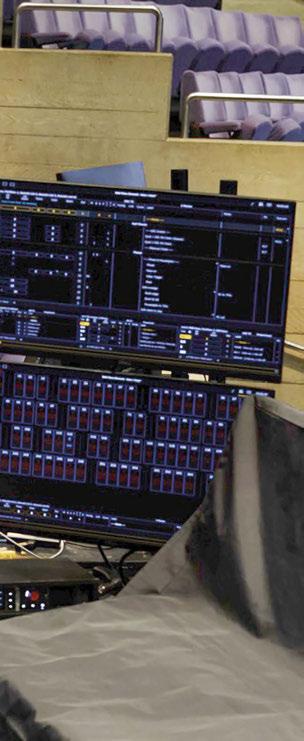
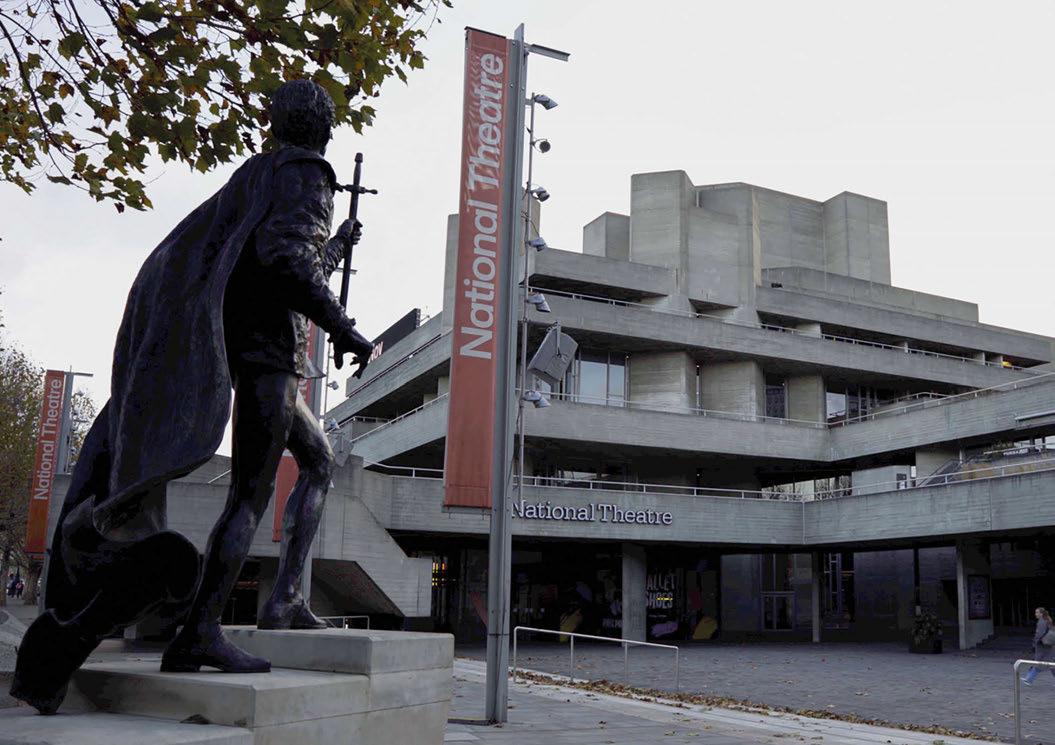
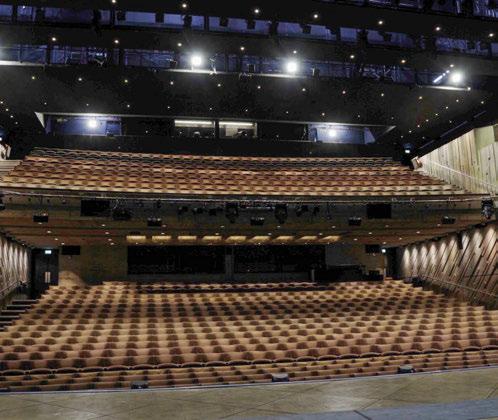
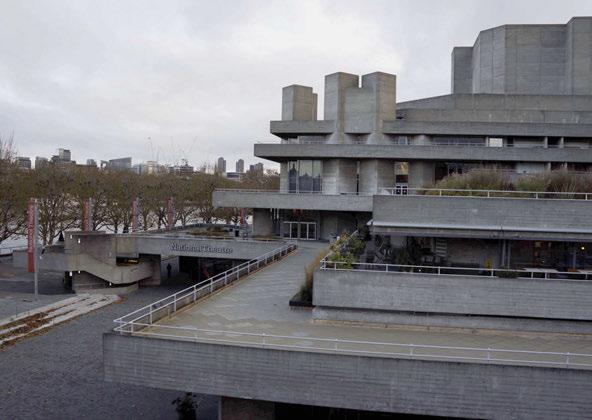
move the story from one location to another,” he noted. “The days of blackouts and scene changes where electrics could be plugged into floor pockets have become sweeping vista changes.”
Wireless control plays a central role in enabling this approach. Fixtures are no longer tied to fixed positions or constrained by cable runs. Instead, they can move with scenery, be integrated into props, or appear in places that would previously have been impractical. “Now there are fixtures with built-in CRMX that can solve basically any challenge that previously required custom solutions or actor-activated props,” Dane added. “Small panel lights, bulbs, tiny foggers, and miniature dimmers are all easily accessible. These new fixture products make show maintenance more efficient and reduce the burden on the crew.”
London’s National Theatre goes wireless
We can see that wireless is both expanding what designers can do creatively and simplifying how these productions are then delivered. A clear example of this can be seen at the National Theatre in London, where wireless control has become a core part of daily operations. With three venues under one roof and a schedule of up to 24 performances a week, the National Theatre operates at a scale where
reliability is critical. Productions are often recorded or broadcast to cinemas around the world, meaning any technical issue has immediate and visible consequences. After adopting LumenRadio’s CRMX technology and Stardust transmitters, the lighting team quickly saw the benefits. Andrew Grant, National Theatre Lighting Control Manager, stated: “The system genuinely worked out of the box. We configured and paired the devices and were up and running. After nearly a year across three theatres, it’s been rock solid.” That reliability has allowed the team to shift its focus. Instead of spending time managing infrastructure, they can concentrate on creative development. “With this equipment, we’re creating bigger and more complex shows,” Grant explained. “And we have more time to concentrate on other aspects of the production instead of worrying about the connectivity.”
Wireless control also addresses a practical reality of working in a busy theatre environment. “We can’t always get a cable to where we need it,” Grant said. “The ability to quickly place fixtures anywhere and control them instantly is fundamental to how we create shows today.”
LumenRadio in practice at the Gothenburg Opera
Similar benefits can be seen in other venues working with complex productions. For example, at the Gothenburg Opera in Sweden, the challenge is constant change. Productions rotate frequently, and staging is often reconfigured on a daily basis. In this environment, the ability to adapt quickly is essential. Before adopting wireless DMX, complex set designs created significant logistical issues. Running cables around moving scenery and performers was both time-consuming and restrictive. Wireless control has removed many of these barriers.
Gothenburg Opera’s Technical Manager, Peter Götzlinger, revealed: “Before using wireless DMX, we had a lot of challenges with complex set designs, pieces that moved on stage and having to run cables among singers, and so on. But nowadays, when we have the signal wireless instead of in cables on the floor, it works really great.”
Götzlinger pointed to the scale of what is now possible.
“We had a dance performance that had a very complex set design with 40 Astera tubes. Without the CRMX system from LumenRadio, it would have been impossible to do that kind of design. It’s really a game-changing technology.”
Across these case studies, LumenRadio’s Dane noted, it can be understood that wireless control enables creative freedom, simplifies workflows, and supports increasingly complex productions. The international sales manager is clear about where the biggest impact of this technology lies. “Creative flexibility is the key benefit for production,” he said. “Theatrical technicians are continually asked to make the impossible possible. CRMX is the most versatile tool in the bag to do that.”
At the same time, the operational and financial advantages are hard to ignore: “Operationally, the workflow is streamlined into one control system and becomes easier to evolve with every production. Wireless DMX allows for flexible installation positions without adding additional control infrastructure, reducing labour and material costs,” Dane continued. Furthermore, when looking at long-term benefits in terms of scalability, wireless system stability and longevity ensure that new devices can be added as needed without having to invest in a new wireless platform. These factors are contributing to
a steady increase in adoption across the industry. For Dane, this trend is only set to continue. “Adoption of wireless in productions has continually increased since its inception. With the CRMX platform being adopted by most manufacturers, the growth is only expedited.”
While specific developments remain under wraps, the direction of travel is clear. “We spend every day focused only on developing and optimising RF technology. I see some very exciting developments underway that will only give productions and manufacturers increased functionality to meet the needs of the evolving entertainment industry.”
Dane concluded with enthusiasm for what’s next in wireless: “The future is bright, and we are dedicated to making sure it can be reliably illuminated wirelessly, without worries.”
www.lumenradio.com
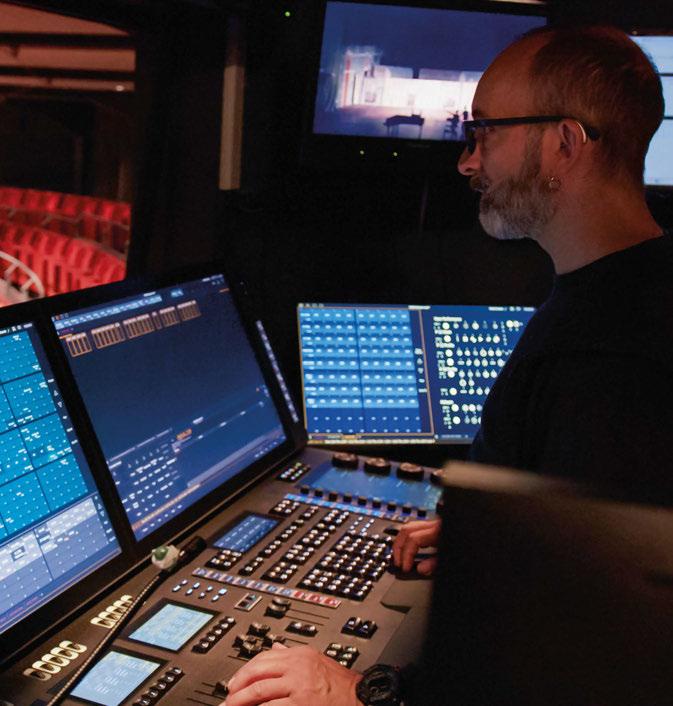



•Create without compromise


•No more visible cables
•Complete flexbility of placement
•Quicker setup / teardown












From national theatres to touring productions, LumenRadio’s CRMX enables lighting technicians to create bigger, more complex shows - without the limits of cables.
MONDO-DR SITS DOWN WITH LIGHTWARE’S PRESIDENT OF GLOBAL SALES, SIGGI HERMANN, TO DISCUSS THE COMPANY’S GROWTH WITHIN THE PAST FEW DECADES, WHAT IT MEANS TO HAVE AN ENGINEER-FIRST MINDSET, AND THE MANUFACTURER’S GOALS FOR THE REMAINDER OF THE YEAR.
Lightware has been serving the AV industry since 1998. Where did the company begin?
Siggi Hermann: Lightware began its journey in downtown Budapest in 1998, founded by Gergely Vida, the CEO of Lightware. What started as a small service business - operating from a 29-square-metre apartment and focusing on projector and plasma TV repairsquickly grew into something more. That early hands-on experience soon led to product development.
The first projects included building foundational video devices, such as an analogue composite matrix, as well as experimenting with VGA signals, laying the groundwork for the company’s long-standing expertise in signal management.
Over the upcoming years Gergely Vida was more and more focused on developing signal management products mainly around digital video formats. This brought us finally to the leadership position on USB-C.
How has Lightware grown since this, and what do you feel have been the key factors in its development?
Siggi Hermann: From those beginnings, Lightware has grown into a global organisation with more than 400 professionals. Today, our solutions are available in over 30 countries, supported by 18 offices and a wide network of distributors, while a significant part of the product portfolio continues to be manufactured in Europe at the company’s headquarters in Budapest.
This growth has been driven by a consistent focus on signal management excellence and an “engineer-first” mindset, working closely with system designers, consultants, integrators and AV professionals to develop practical solutions that simplify real-world deployments.
The COVID period marked a turning point for the industry, accelerating the shift towards USB-C connectivity and modern collaboration workflows. As hybrid working became the norm, the demand for simpler, more flexible and reliable meeting room solutions increased significantly. At the same time, Lightware has worked to remain resilient as
market conditions changed. In the face of parts shortages, for example, the company kept production moving by redesigning key products to work around missing alternative parts, helping to ensure continuous manufacturing.
What has been your personal journey with the company?
Siggi Hermann: I joined Lightware in 2022 as Vice President of Business Development for the EMEA region, focusing on expanding the company’s presence in the EMEA region, expanding our sales team, opening several offices and experience centers and building new partnerships with global enterprise customers. In 2024, I was promoted to President of Global Sales, which allows me to build on that regional experience and support our teams, partners and customers worldwide, staying close to real project challenges while helping to scale how Lightware delivers consistency and long-term value globally.
Can you tell me about Lightware’s key technologies and the problems they solve? Siggi Hermann: Our core products are based around our knowledge in USB-C. Lightware’s key collaboration technologies are built around the Taurus product family with the aim of removing the everyday friction that slows meetings down.
With the Taurus products, a user can connect a laptop with a single USB-C cable to handle the core in-room needs, bringing signals together in a straightforward way and reducing the need for adapters, extra cables, and inconsistent room-to-room experiences. For larger spaces, Taurus TPX extends the same USB-C-centred workflow over longer distances (up to 100 metres), so cameras and microphones can be positioned where they work best without complicating what the user has to do at the table. We have on top the Taurus TPN ecosystem. This puts the same functionality into an AV-over-IP or as we call it “UC-over-IP” ecosystem. With all these products we can guarantee the same user experience from a small room up to a big conference hall.
Above: Siggi Hermann, President of Global Sales, Lightware.
Right: A selection of images from the Lightware HQ in Budapest.
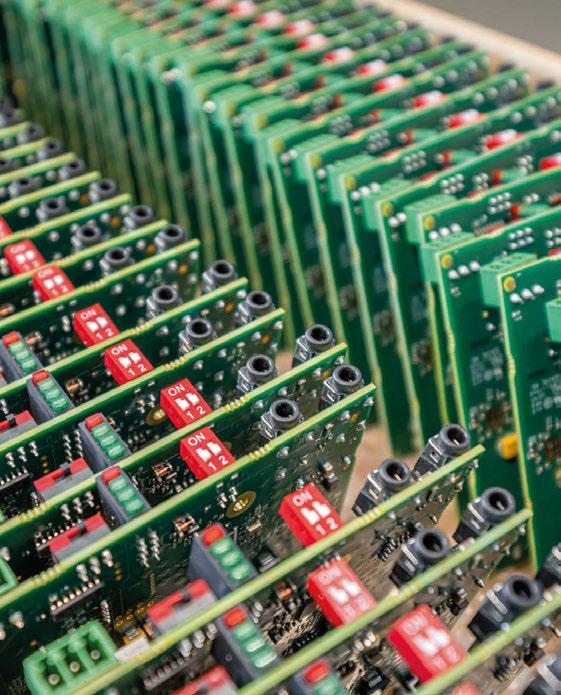
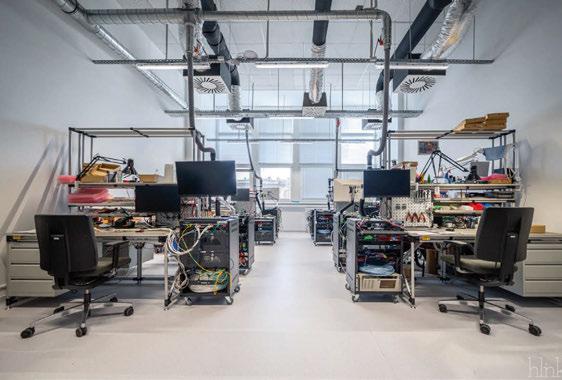
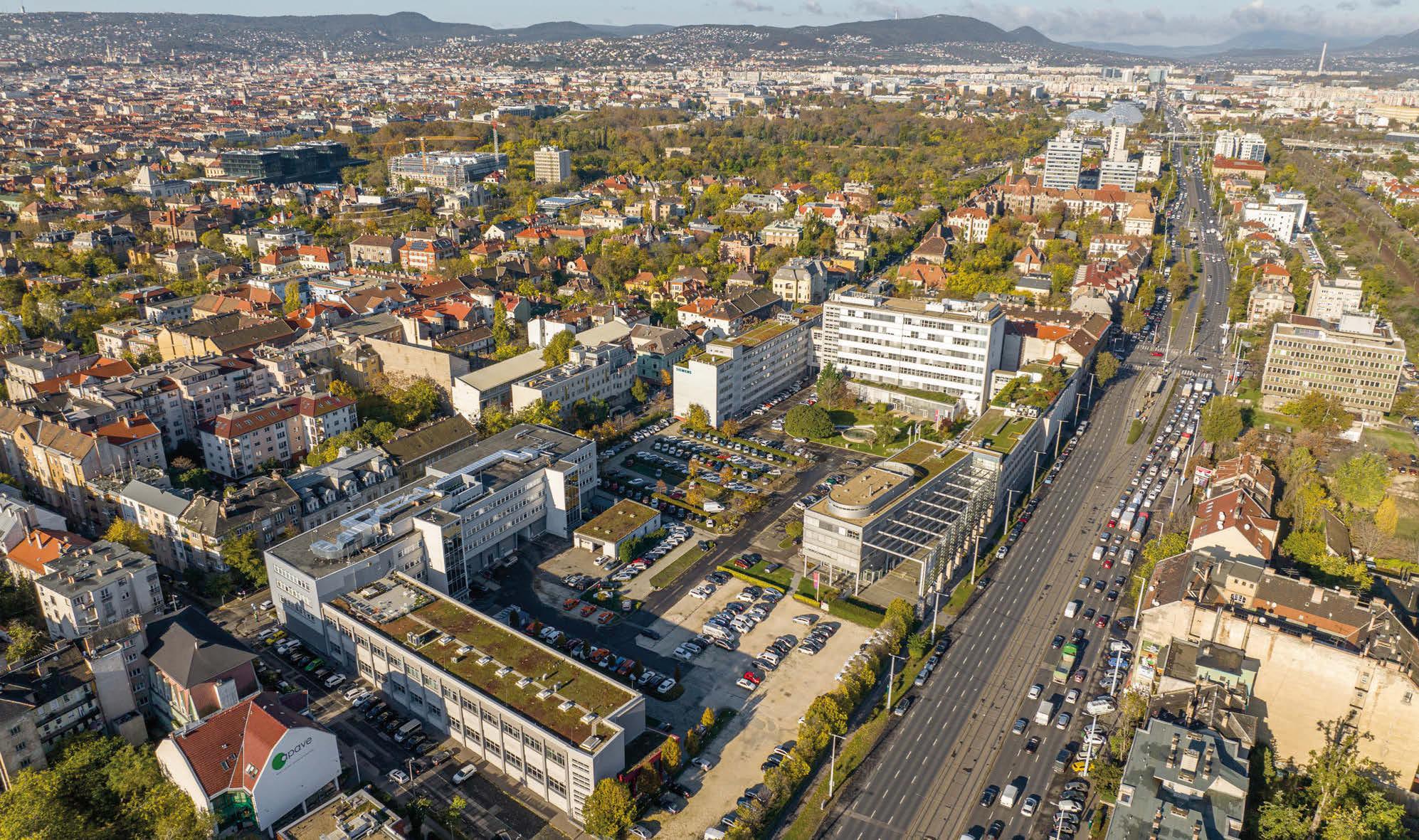
Are there any specific case studies that you feel highlight the value of Lightware technology?
Siggi Hermann: One notable reference is the Red Bull office in Bangkok, where the focus is on improving everyday meeting productivity. By implementing Taurus UCX, the solution demonstrates how streamlined USB-C connectivity can reduce user friction and support more reliable collaboration.
A further example is Tateside’s smart meeting spaces in landmark offices in London. Here, Taurus UCX supports modern collaboration requirements while helping to create a consistent and intuitive user experience across multiple meeting rooms.
How does Lightware stay close to its customer/potential customer base and make sure it’s creating products that they really want?
Siggi Hermann: We stay close by treating the AV community, including engineers, integrators, and system designers as a core input to product strategy. That “listen first” commitment is explicitly part of our company positioning and mission.
We also invest in knowledge-sharing, such as expanding experience and training centres worldwide and providing professional learning resources via Lightware Academy online courses, so customer feedback is paired with real-world education and support.
What does Lightware hope to achieve in 2026?
Siggi Hermann: In the future, we want to be seen as the “experts in USB-C technology.” This starts with the full featured USB-C cable and comes to the “UC-over-IP” TPN ecosystem. The company will continue developing the TPN ecosystem around predictable performance, centralised management, and IT-friendly operation, including the 100-endpoint MMU. In parallel, Lightware will keep improving users experience with USB-C and BYOD/BYOM workflows that are easier for AV and IT teams to support. The company also plans to invest further in customer enablement through expanded training and hands-on experience, helping teams deploy and operate systems with confidence.
www.lightware.com







Q-SYS. The Full Stack AV Platform.

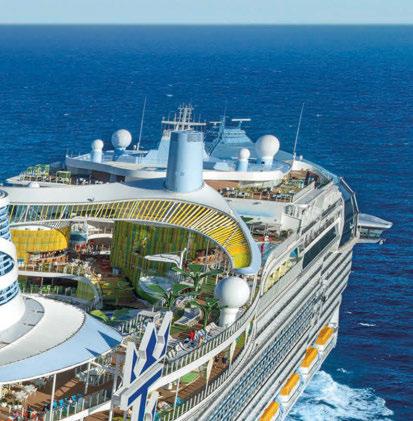
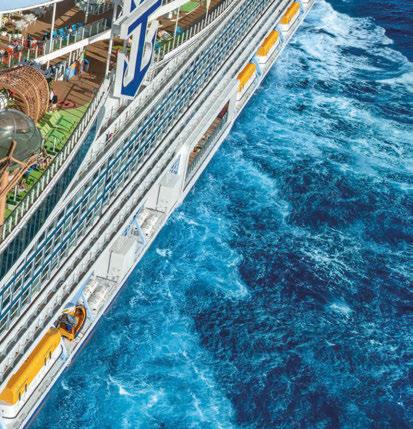






Infinity introduces the CHIMP G3 Core and CHIMP G3 Ultra — the first consoles in the third generation of CHIMP DMX control. Built on a completely new hardware and software architecture, CHIMP G3 is designed for professional production environments where speed, clarity and reliability are critical. Although Infinity has rebuilt the CHIMP from the ground up, the familiar CHIMP operating logic has been retained. At the core of the CHIMP G3 range is a new powerful processing engine with upgraded CPU and GPU architecture delivering significantly increased performance. This enables smoother graphical performance, faster calculations, improved multitouch response and headroom for larger, more complex shows.
Both G3 models support up to 65 DMX universes, freepatchable DMX outputs and integrated LumenRadio wireless DMX. Comprehensive connectivity includes USB-C and USB-A, HDMI, dual network ports, MIDI, audio I/O, GPIO and support for multiple external displays. A backlit keyboard, battery-backed power supply and robust mechanical construction make CHIMP G3 suitable for both fixed installations and touring use.
Infinity has split the G3 range into two models to suit different production scales, while maintaining the same software feature set and processing power. The CHIMP G3 Core is designed as a compact, versatile control desk for theatres, corporate events, touring productions, rental houses and education. It features a single hinged 24-inch touchscreen, 15 motorised faders and 35 executor buttons, offering a strong balance between portability and handson control. The CHIMP G3 Ultra is the flagship model, built for situations where maximum overview and tactile access are required. With two hinged 24-inch touchscreens, 40 motorised faders and 60 executors, it is aimed at festival stages, broadcast, large tours and complex busking workflows. The physical interface has been re-evaluated based on operator behaviour rather than hardware constraints. Button spacing, key profiles, actuation force and panel angles have all been refined to reduce fatigue and improve accuracy during long programming sessions and live operation. Newly sculpted buttons guide finger placement, while a reduced actuation force supports fast, repetitive input. Full RGB backlighting across buttons, faders and encoders ensures clear visual feedback in dark show environments. Motorised faders on both models provide immediate visual confirmation of playback states across pages and executor banks.
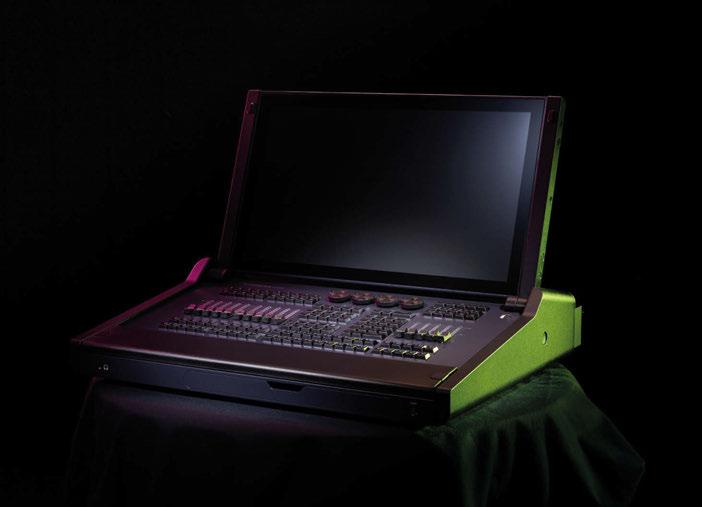
While CHIMP G3 retains a familiar workflow for existing users, the underlying software engine is completely new. It has been designed to scale automatically as show data grows and to reduce unnecessary menu navigation. Key features include freely assignable screens and widgets, allowing operators to tailor layouts to different disciplines, and dynamic pools that expand automatically without fixed limits. The advanced FX engine presents effects graphically, enabling operators to visualise waveforms, offsets and timing changes in real time. This reduces programming time and improves precision, particularly on large rigs. Colourcritical environments benefit from the enhanced CCT and Tint Picker, which allows accurate adjustment of whites and skin tones across mixed fixture types.
Text-based pool and fixture filtering enables fast selection within large datasets. With logical labelling, operators can isolate specific fixture groups instantly, significantly speeding up programming and live adjustments.
CHIMP G3 is conceived as a long-term platform rather than a fixed product. The architecture supports future software development, additional integrations and optional control hardware. For existing CHIMP users, the transition is immediate and intuitive. For operators new to the platform, the learning curve remains deliberately manageable, prioritising clear structure and practical workflows.
With CHIMP G3 Core and Ultra, Infinity delivers a professional lighting control platform that focuses on efficient operation, consistent performance and creative freedom, built for real productions, real operators and realworld demands.
www.highlite.com
The ADJ AX2 is a powerful, hardware-based lighting console designed to meet the demands of modern production environments. Combining the command-line-driven capabilities of ONYX software with a tactile control surface, it offers a fast, intuitive workflow for creating complex lighting looks with precision and confidence. Developed in partnership with Obsidian Control Systems, the AX2 delivers both flexibility and performance in a robust, tour-ready format. At its core, the console features a responsive control layout with 10 playback faders, assignable buttons, digital encoders, and dual touchscreens, including a foldable 15.6-inch Full HD display. www.adj.com
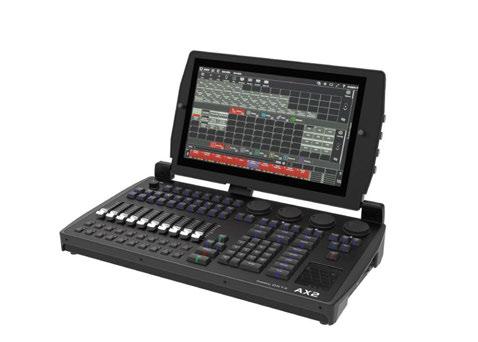
Created in consultation with leading visual designers and alongside expert industrial designers, D9 is ready for the next generation of ultimate shows and beyond. With vast screen real estate, all-new controls, and unique media integration, it combines control of all visual aspects of the show. The T-Bar delivers more refined control with even smoother manual fades. Paired with Avolites’ unique Scene Master functionality, it brings total professionalism to live creativity. This scene master function is complemented by a double width Commit button and four further control buttons, plus a dedicated LCD screen for continuous status data. www.avolites.com
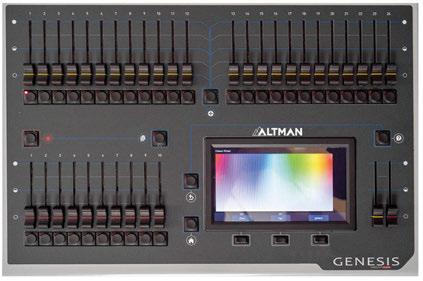
The Genesis lighting control console combines the ease of use of a fader-based lighting controller with the power of a touch-screen graphical user interface. The heart of Genesis is the 7-inch capacitive touch screen, which provides a power user interface with the familiarity of today’s smartphones. Genesis lighting control consoles make it easy to control today’s complex luminaires. The intuitive software guides the user through each step of the programming, ensuring a simple learning curve for novice users. Advanced functionality is also supported with features such as shape FX, Chases, fan, and individual Cue timing. www.altmanlighting.com
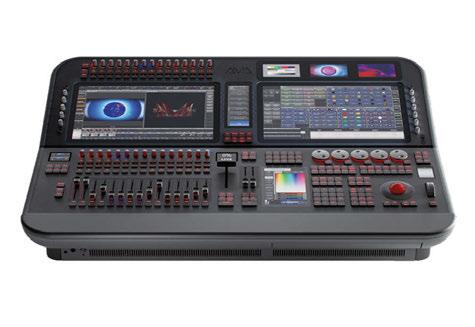
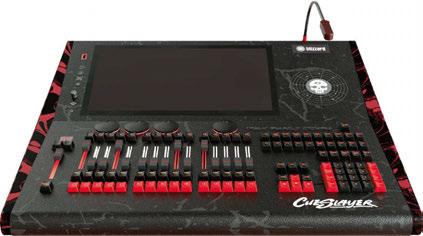
The CueSlayer is a professional lighting console built for designers who demand power, precision, and road-ready reliability. Commanding up to eight universes (4,096 channels) via Art-Net or four universes (2,048 channels) through DMX output, it’s built to handle large, complex lighting rigs with ease. A 15.6-inch, high-resolution touchscreen serves as the users’ command centre, with multiple configurable screen layouts for faster, more intuitive programming. Fifteen motorised faders and 15 playback keys — each across 80 pages — give users deep, hands-on control, while 3-colour backlit buttons and four backlit encoders keep them locked in under any lighting condition. www.blizzardpro.com
The MagicQ MQ500M+ Stadium Console is ChamSys’ flagship lighting control solution, designed for the most demanding live productions, from global touring and festivals to theatre, broadcast, and largescale installations. Delivering 400 universes of DMX directly from the console, it eliminates the need for external processing, providing a powerful, all-in-one platform for complete show control. Built for speed and precision, the MQ500M+ features 42 illuminated playbacks, including 15 motorised faders, 15 encoders, and 12 execute keys, giving programmers instant visual feedback and flexible control at their fingertips. Dual 15-inch HD multi-touch displays and support for up to eight external screens enable highly customisable workspaces, while dual motorised crossfaders provide seamless operation for theatre-style cueing. www.chamsyslighting.com
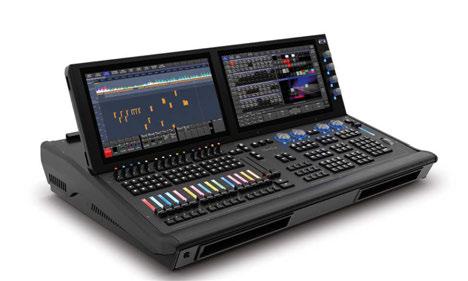
ColorSource consoles provide affordable, comprehensive control with an approachable, streamlined interface. With ColorSource consoles, setup and programming is made easy. From patching to performance, ColorSource consoles enable users to navigate and program quickly. The multi-function onboard touchscreen provides not only a customisable stage map but also colour and parameter controls, a full palette system, effects manipulation, and the Playback Toy live busking controls. The onboard faders can be used as direct channel controls or as playback faders. For preprogrammed shows, ColorSource consoles include comprehensive cue stack functionality. Assign additional faders as submasters, group masters, or a grandmaster. www.etcconnect.com
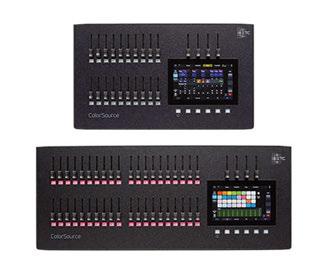
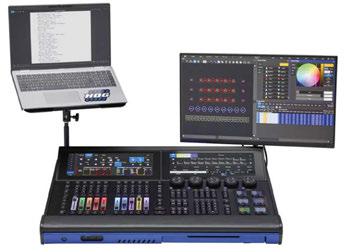
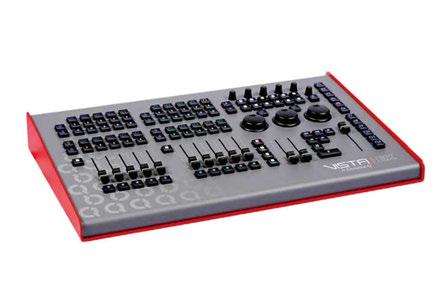
The Vista EX control surface provides large amounts of physical control within a compact footprint, capable of delivering small to large-scale shows. Featuring 12 customisable playback faders and 60 assignable buttons, Vista EX ensures that users have enough hands-on control for even the most demanding of shows, whilst providing the flexibility to adapt to any genre of production or event. Vista EX also features four function keys, which, when combined with the 60 playback buttons, offer up to 300 user-definable actions per page, providing high control from a small unit. www.chroma-q.com
EUROLITE DMX LED Color Chief
The EUROLITE DMX LED Color Chief controller is a compact and user-friendly DMX lighting desk designed specifically for controlling LED fixtures, light bars, and simple lighting effects. Built with smaller live venues, mobile DJs, houses of worship, and event spaces in mind, the controller offers an intuitive workflow that simplifies the programming of colour-based lighting shows without requiring advanced DMX knowledge. The unit can control up to eight fixtures or fixture groups, each with as many as four segments and up to 30 DMX channels per device. It supports LED fixtures with up to six colours, including RGBWAUV configurations, making it highly versatile. www.steinigke.de/en/eurolite
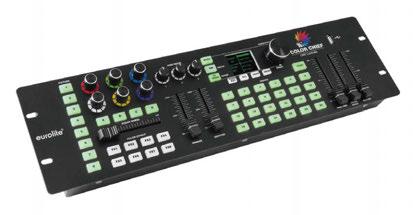
The Stage Hog provides all the power of the Tour Hog but with more adaptability. This headless variant includes accessory mounts that enable users to add third-party monitor, tablet, laptop, or camera adapters. Whether for space-conscious environments or users requiring greater flexibility, Stage Hog is the ideal choice for productions that require adaptability and high performance. On the system level, Stage Hog consoles output 64 universes via a combination of local DMX, sACN and Art-Net, and remote processing with HPU units enables seamless system expansion. www.etcconnect.com
The LS1 is a control surface with all the power of the Lightshark engine in compact hardware, with all the main functions of the most powerful lighting desks. The LS1 console has up to five control screens, a strong aluminium frame, 10 faders + master, a 4.5-inch TFT colour screen, and four encoders. The console comes with A full set of hardware connections suitable for DMX512, Ethernet, USB Data & Power and WiFi. www.lightware.com
The grandMA3 onPC DMX-key is the perfect plug and play solution for various applications and venues. Designed for small venues, theatres, clubs, TV studios, and houses of worship, it also integrates seamlessly into system racks for architainment, theme parks, and stadium installations. With a simple USB-C connection, the DMX-key unlocks 4,096 parameters in the free-of-charge grandMA3 onPC software, providing the performance and proven reliability of the grandMA3 platform. Users benefit from the same intuitive workflow and feature set used on larger systems – without additional hardware requirements.
www.malighting.com
The MEGA CONSOLE is the first console to feature three control platforms in one package, including Lumen8, Enlighten, and Disco. The software ranges from a simplified introduction to MEGA LITE’s control platform to advanced production and theatrical control. All three software include a simple fixture profile builder, multi-universe output via ArtNet, direct fader channel programming, and a simplified built-in 3D visualiser. With this console, suppliers are now able to inventory one unit and still be able to offer it to a variety of customers. www.mega.lighting
The NX3 is an advanced lighting console built on the intuitive ONYX platform. Crafted to boost speed and creativity, it delivers lighting control that feels naturally fluid, whether at a live event or an installation. With 64 Universes, 10 motorised faders, RGB backlighting, and a slate of other professional features, the NX3 delivers power and clarity, while its advanced hardware and refined layout enable fast, precise handling of even the most complex lighting setups. www.obsidiancontrol.com Obsidian Control Systems
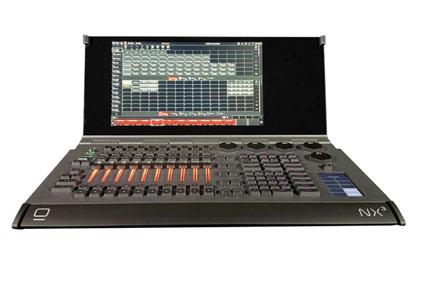
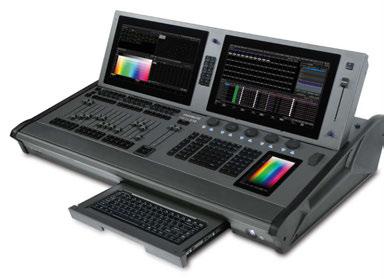
Neo X15
Vari-Lite’s Neo X15 is a flagship, highperformance lighting console engineered for large, multiuse venues that demand power, flexibility, and reliability. Designed for environments ranging from houses of worship and studios to performing arts centres, arenas, and concert halls, the X15 delivers a featurerich platform capable of handling diverse production styles with ease. Built on Vari-Lite’s mature Neo software, the X15 helps designers achieve creative results faster with an advanced effects engine supporting pixel mapping, media playback, timelines, and dynamic workflows. Integrated audio I/O, SMPTE timecode, and MIDI control allow seamless synchronisation between lighting, audio, and video systems, making complex, cuedriven productions simple to manage. www.vari-lite.com

Bring every guest closer to the performance with seamless, personalized audio.
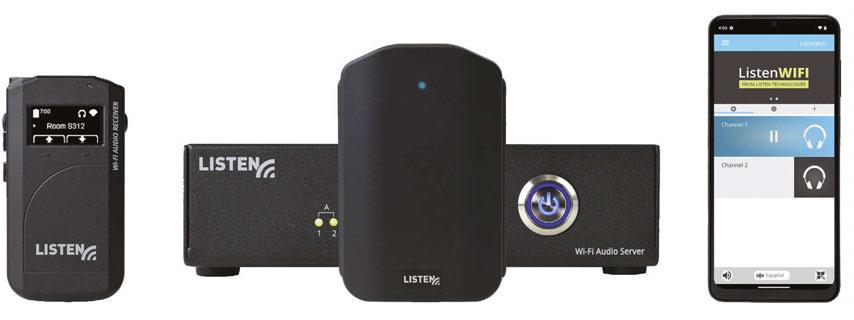
In live performance, every detail matters. But distance, acoustics, and background noise can make it difficult for some guests to fully experience the moment.
ListenWIFI transforms how audiences hear—delivering clear, low-latency audio directly to smartphones, Bluetooth® hearing aids, or dedicated receivers over your existing Wi-Fi network.
From front row to balcony, every guest can enjoy the performance as it was meant to be heard, without barriers, without complexity.
KEY FEATURES & BENEFITS
Personalized Listening
Stream crystal-clear audio directly to personal devices for a more immersive experience.
Multilingual Access
Offer interpretation and multiple audio channels for diverse, global audiences.
Seamless Operation
Automatic channel connection with simple, network-based deployment and management.
BECAUSE GREAT PERFORMANCES SHOULD BE HEARD BY EVERYONE.

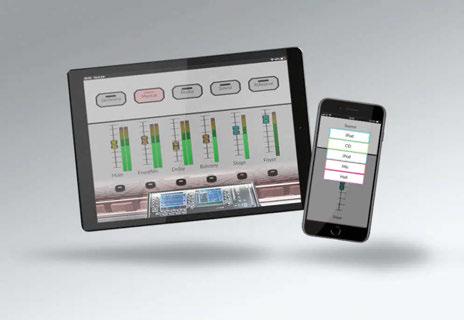
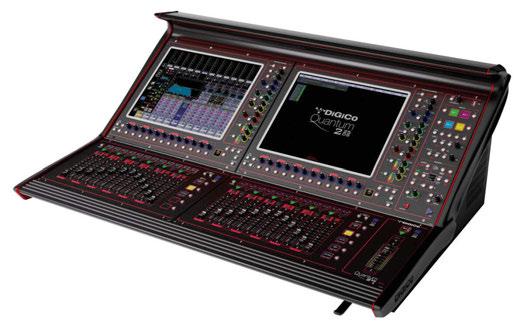
Custom Control is a customisable, cross-platform control app, providing bespoke control over AHM, dLive, and Avantis installed audio systems. The design of the app interface is via Custom Control editor software. Access to all levels, mutes, and sends is provided, together with preset recall, source selection, and metering. Tabs can be configured for easy access to multiple control pages or zones. A library of control designs is provided, with the option to add custom graphics to match the venue. Once complete, the configuration is uploaded to the AHM processor, Avantis or dLive MixRack, ready for deployment. www.allen-heath.com
Quantum 225DS incorporates all of the new design features introduced in 2020 with the Quantum 338, and of course uses three large-scale seventh generation FPGAs to continue the unrivaled Quantum legacy. The console merges tried and tested workflows with immense processing muscle, bold innovation and all of the Quantum features, giving you the ultimate tool set. Quantum 225DS brings two 17-inch, 1000 nit, high brightness multitouch screens with both a meter bridge and soft quick select buttons for quick and intuitive operation. 41 individual TFT LCDs displaying channel information and metering, bank information, macros and more guide you immediately to the controls you need. Plus, 25 100mm touch sensitive faders in two banks of 12 plus a dedicated user-assignable master fader with high resolution metering. With a maximum of 72 input channels with 36 busses and a 12 x 12 matrix, all with full channel processing, Quantum 225 brings Quantum to a wider user base. Also included as standard are Mustard Processing channel strips, Spice Rack plugin style native FPGA processing options, Nodal Processing and True Solo. www.digico.biz
The Lawo mc²36 all-in-one audio mixing console combines compact design with a comprehensive feature set and capabilities like ButtonGlow and touch-sensitive rotary controls, colour TFT fader-strip displays, LiveView video thumbnails, and precise 21.5-inch full HD touchscreens. Built around Lawo’s A__UHD Core technology, it offers 384 processing channels at 48/96kHz and 864 channels of I/O. Native IP connectivity with IP Easy and HOME allows for intuitive plug-andplay configuration, plus direct point-to-point stagebox connections. Designed for quick deployment in remote and on-site scenarios alike, it’s ideal for theatre, house of worship, corporate, live, and broadcast applications. www.lawo.com
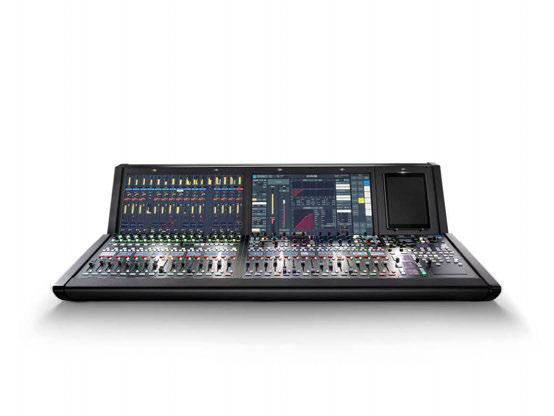

The new High Output family of loudspeakers expands the Sonance Professional Series into spaces that demand greater SPL, variable coverage control, and low-frequency performance.











sonance.com/highoutput


The High Output family is available in pendant, surface mount, blind mount in-ceiling, and two-piece in-ceiling configurations, all sharing consistent voicing for seamless mix-and-match deployment. Built for foreground music in environments with high ambient noise, the compression driver delivers the clarity and SPL headroom to keep music clean and intelligible. Interchangeable horn assemblies ship in the box, allowing installers to adjust between 80° or 120° coverage in the field without special tools. A high-excursion 8-inch woofer extends low-frequency response to 41 Hz on select models, reducing system complexity.
MIDAS HD96-AIR-CC-IP
The MIDAS HD96-AIR-CC-IP is a compact, high-performance live digital mixing console designed for touring engineers and professional live sound environments. Part of MIDAS’s Heritage-D series, it combines the company’s renowned audio quality with a highly portable form factor, making it suitable for flyable rigs and space-conscious productions. At its core, the HD96-AIR-CC-IP delivers up to 144 simultaneous input channels and operates at a 96 kHz sample rate, ensuring high-resolution audio processing. It features 123 time-aligned, phase-coherent mix buses, alongside 24 VCA groups and 24 POPulation groups, giving engineers extensive control over complex mixes. www.midasconsoles.com
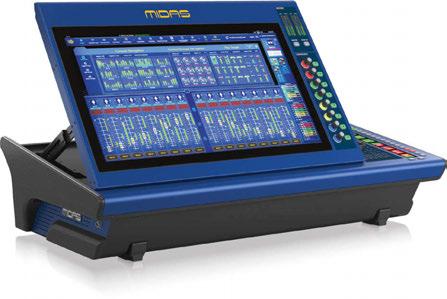
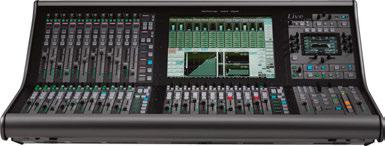
Solid State Logic L550 Plus
The secret to the success of the L550 Plus is SSL’s dedication to great sound. Part of this is attributable to exemplary top-notch performance throughout the signal chain: bringing SSL Studio grade mic pre’s to the stage, high-quality audio conversion, 96kHz operation and excellent summing. The combination of multi-touch screen control with assignable hardware controls, the use of colour coding, the open architecture, which lets engineers configure the console layout to suit their own way of working, the arsenal of processing options, and more, all enable operators to perform at their very best. www.solidstatelogic.com
Soundcraft
The Vi7000 digital mixing consoles deliver Soundcraft’s best Vi sound ever, bringing optional 96kHz processing, upgraded channel counts, and even more reliable hardware. Partnering a compact control surface with new Local Rack and Active Breakout box hardware, Vi delivers simultaneous mixing of up to 128 inputs and 32 mono/stereo busses. Pristine sound quality is assured by ultra-low noise mic amp designs and enhanced 96kHz* 40-bit floating point digital audio processing, while FX come courtesy of 8 independent Lexicon multi-FX units, BSS DPR901ii integration, and a BSS graphic EQ on every bus output. www.soundcraft.com
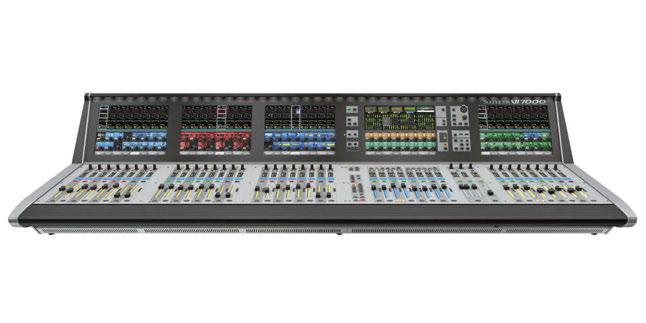
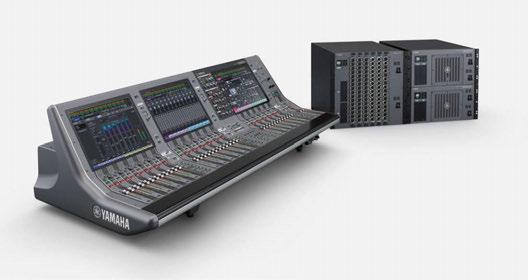
To support the sound engineers who support the artists and performers, Yamaha makes no compromises when it comes to quality –the RIVAGE PM series embodies this. RIVAGE PM5 Mixing System packs RIVAGE PM power and performance into a lightweight, intuitive console. The RIVAGE PM mixing system provides up to 288 inputs, 72 mix buses, and 36 matrices, with a flexible audio network option. The addition of a third display screen on the PM5 console has made it possible to offer a more touch-centric interface in a compact, significantly lighter console that is easier to transport, set up, and operate in a wide range of venues.
www.yamaha.com

Create your ideal lighting or speaker stand with durable base plates in various sizes and matching extension rods – or choose a complete stand from the K&M Compact Stage series. With smart design, exceptional stability, and optional weight plates, this system offers maximum flexibility for stage, rehearsal room, or studio. Convenient carrying bags ensure safe and easy transport. Discover space-saving stands tailored to your needs.


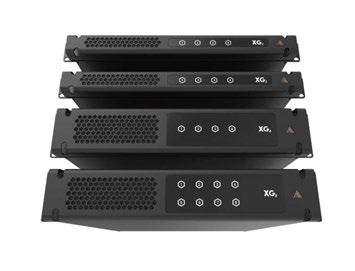
Adamson
XG Integrator
Booth: N6445 / Demo Room: N203
Milan AVB audio networking Up to 16Kw of highly efficient class D amplification Leading Class-D and SMPS designs Integrated powerful DSP Redundant network integration www.adamson.ai
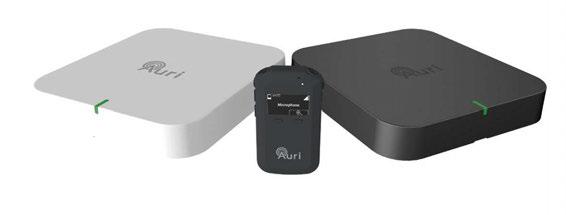
Booth: C8817
• Direct-to-device audio: No app, no pairing, no network
• Multi-channel flexibility: Languages, audio description, assistive listening
• Venue-ready performance: Scalable, reliable, easy to manage
• Future-ready technology: Built on Auracast broadcast standard
• Inclusive by design: Works with hearing aids, earbuds, or receivers www.auriaudio.com
CHAUVET Professional
Ovation Rêve E-3
Booth: N7435
• A high-output, multi-colour LED ellipsoidal that fuses a full spectrum of saturated colours with a range of precisely tuneable whites Complete with emulated red-shift and virtually silent operation Ideal for theatrical productions, broadcast studios, houses of worship, and any application requiring silent operation With both vibrant, full-colour rendering and high-quality white light from a single fixture
Offers a tuneable CCT range from 2800 K to 8000 K with high CRI www.chauvetprofessional.com
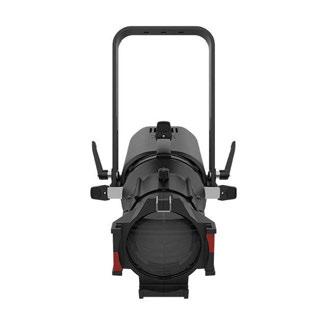
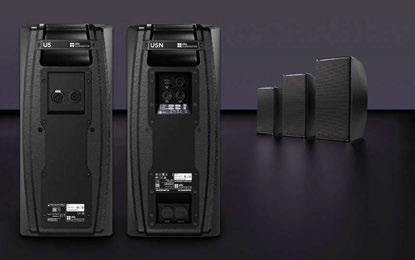
d&b audiotechnik U-Series
Booth: N6623 / Demo Room: N103
Compact, 2-way, point source loudspeakers available in two variants
• Passive variants (U3, U5 U7) are powered by d&b amplifiers
• Networked variants (U3N, U57N, U7N) can be powered by AC or PoE++ or both for power redundancy
• Single cable operation mode for network variants enables power, signal, remote monitoring and control via a single CAT6 Ethernet connection
All models feature a tool-free (patent pending), rotatable high-frequency waveguide-horn www.dbaudio.com
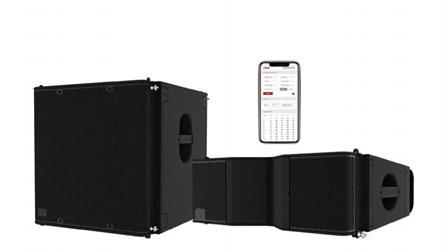
DM88
Booth: N6350
• The system tech’s toolbox
• FOH system management with console switching
• Format conversion (Analogue, AES3, Dante)
• Speaker management with matrix and flexible routing
• Grouping across multiple devices and EQ Layers www.nstaudio.com
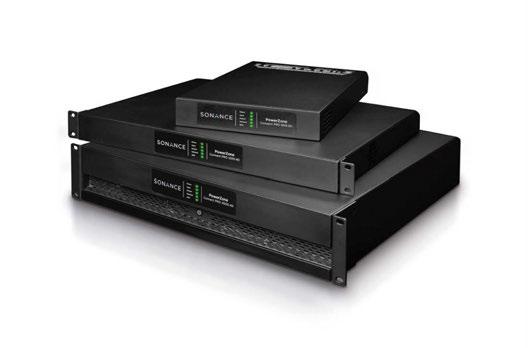
Booth: N6345 / demo room: N117
• Newport Series additions – launching the NT208L Line Array, NT116S Subwoofer and Online Array Assistant (OAA) software
• The series offers simplicity of operation, space efficiency and high performance for touring and live productions, installations and festivals
NT208L is a dual 8-inch active line array that delivers 141 dB SPL with 50 Hz low-frequency extension, featuring EAW’s Adjustable Horizontal Directivity (AHD)
NT116S subwoofer offers 4000W of peak onboard power, 135 dB max SPL and low-frequency extension to 25 Hz
OAA is a browser-based tool that provides angles, pick-points and switch settings for peak performance, ensuring rigging is right on the first hang www.eaw.com
Booth: N7835
• Complete audio solutions, designed to disappear — visit the booth and experience what a complete audio system looks like when it’s built to perform and designed to disappear
• Hear the Professional Series High Output loudspeaker family, engineered with a high-performance compression driver design to deliver the high SPL and adjustable dispersion demanding commercial projects require
Experience the new PowerZone Connect PRO, a family of Hi-Z direct-drive amplifiers with advanced zone processing, engineered for professional AV environments Explore architectural loudspeakers from Sonance and James — high-performance solutions custom crafted to minimize visual presence and disappear seamlessly into any space
Discover IPORT, an enterprise-grade solution that transforms iPad into a modular business tool, from audio control to point-of-sale and beyond www.sonance.com/infocomm
Booth: C10206
Cognio makes its USA debut at InfoComm 2026, experience the industry’s next-generation AV and control platform by Symetrix
Get hands-on with Cognio, exploring a fundamentally new, software-defined approach to designing, deploying, and operating AV systems with greater flexibility and scalability
• Discover a smarter path beyond hardware-centric AV, with distributed intelligence and unified workflows
• Experience the full Symetrix ecosystem in action –D100 Server, Radius NX, Prism DSPs, SymVue control, and high-performance xIO endpoints
See how AV is evolving toward scalable, software-driven architecture www.symetrix.co
WEDNESDAY 17 JUNE 2026 OLE RED, LAS VEGAS

For sponsorship opportunities please contact Cameron on c.crawford@mondiale.co.uk or Bethany on b.price@mondiale.co.uk
Pinnacle Systems
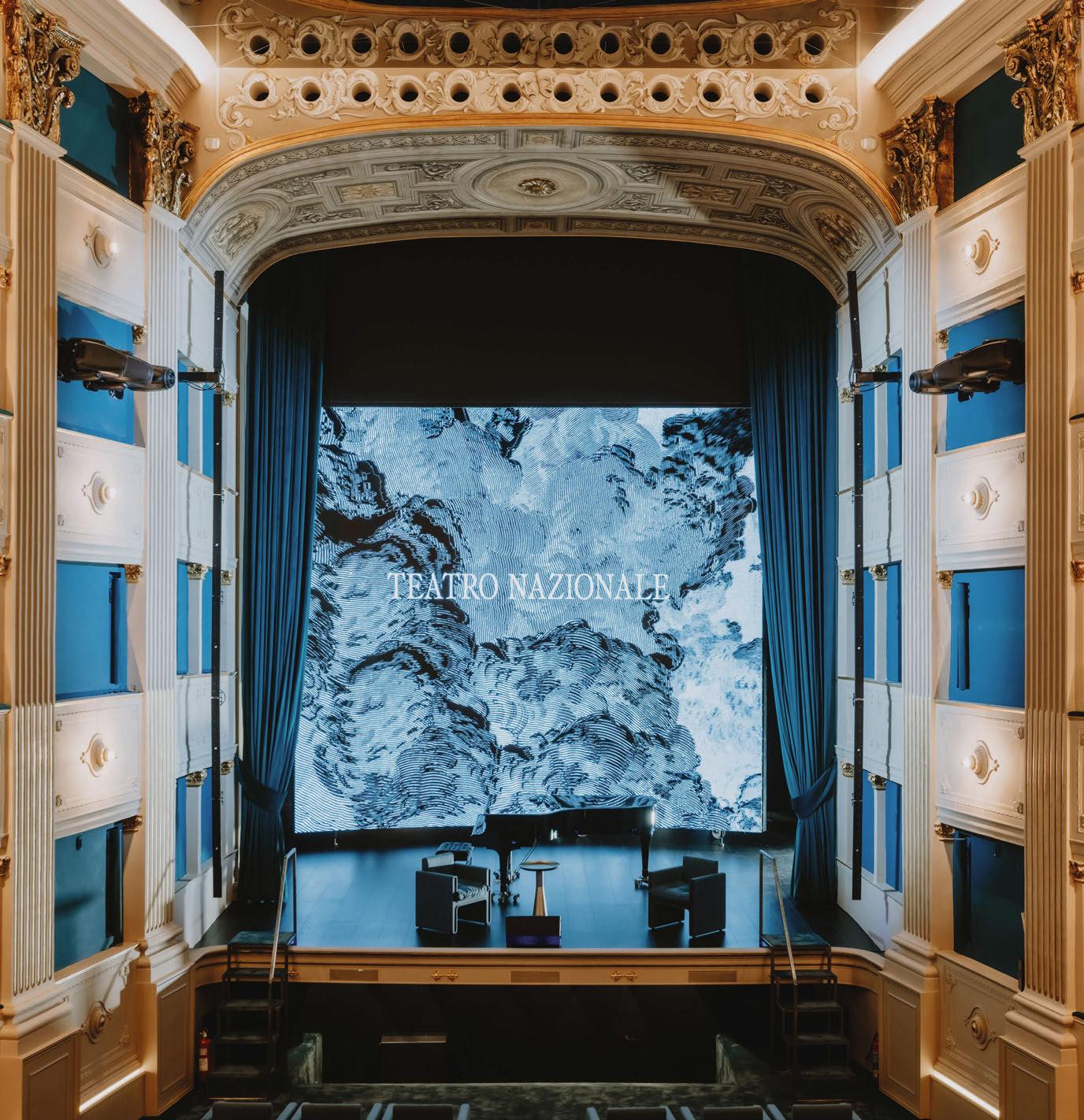

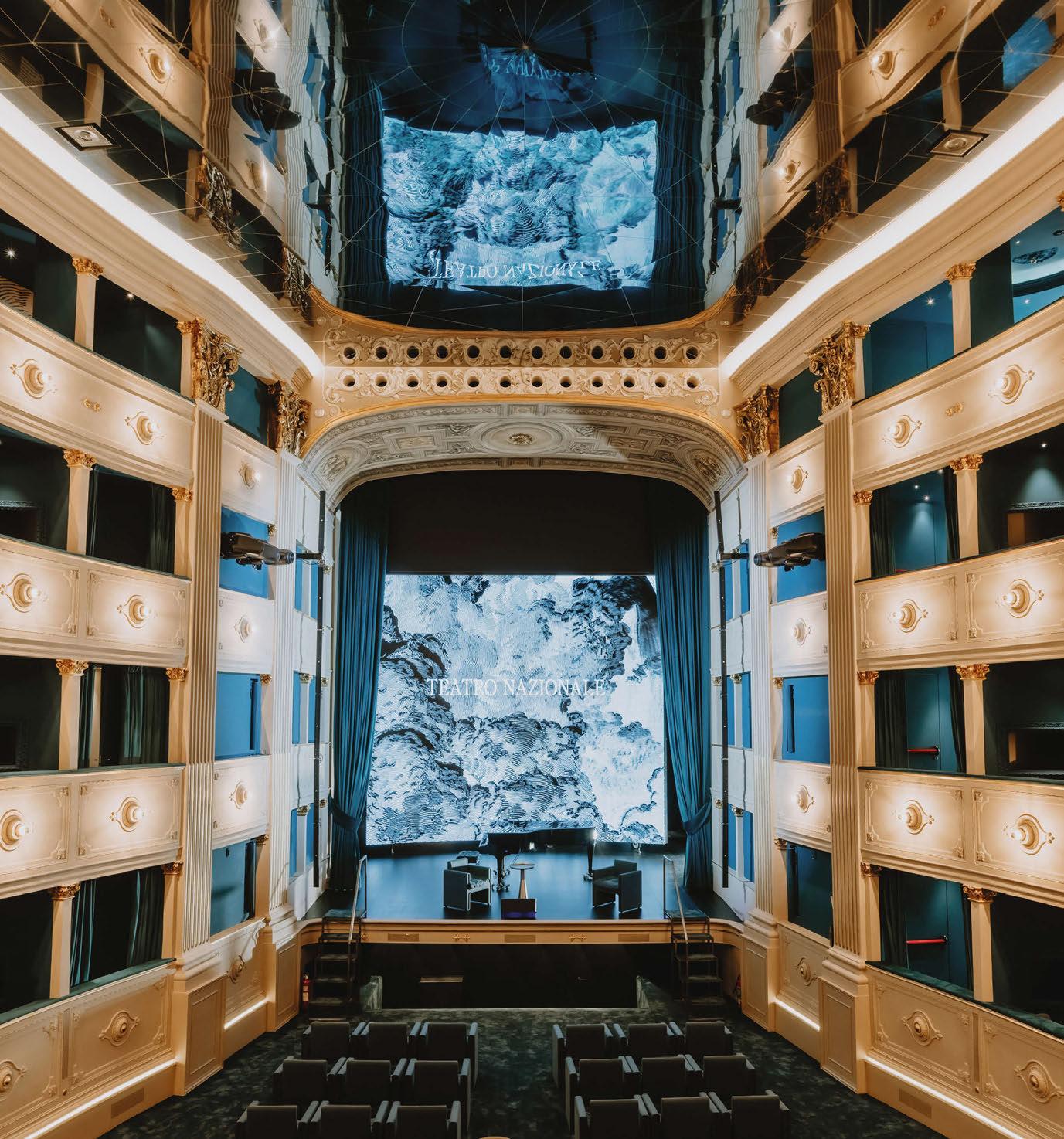
In a historic theatre, every intervention demands balance. At Teatro Nazionale in Florence, the challenge was not to add technology, but to restore sound to its original role: bringing the space back to life.
The K-array system was designed to integrate seamlessly with the architecture, without altering it, delivering uniform coverage, high
intelligibility, and elevated SPL throughout the venue. Ultra-slim Python-KP102 I line arrays ensure precise and controlled sound projection, while Thunder-KS4P I subwoofers provide depth and powerful low-frequency extension with minimal visual impact. A result where aesthetics and performance coexist: technology is perceived in what you hear, not in what you see.
In Birkenhead, England, Future Yard is testing what it takes for a grassroots venue to hold its ground. A live music space shaped by and for its community, it stands in contrast to a wider UK landscape where smaller venues are under increasing pressure to close. Its approach goes beyond its programming, with education and sustainability built into dayto-day operations.
Training pathways into production and live music are creating jobs and opportunities within the local area, while its environmental work is focused on reducing impact and contributing to a more sustainable live events sector beyond its immediate community.
As Director of Audiences, Christopher Torpey (below right) put it, “Future Yard is a community music venue; it’s grassroots, down to its core. By community, I mean that we want to make sure that the people who are in our immediate vicinity and the overall area benefit from what we do.”
Future Yard’s Sound Check programme covers live sound, lighting, stage management, event production, and front-of-house operations, with participants moving from classroom-style sessions into real-world deployments on gigs.
Torpey is clear about the gap it addresses. “People can feel that the music industry is hard to get into… especially the tech and production side. It can feel difficult to figure out the modern entertainment world. We want to give those people a home here.”
The training reflects the full signal chain and production workflow.
Trainees are exposed to PA system configuration, gain structure, stage patching, RF coordination, monitor engineering, lighting rig setup, and show control, alongside softer skills such as advancing shows and managing audiences. Crucially, they shadow and then work on live events, rather than being confined to simulation.
“It’s about all the roles that go into making a show happen,” Torpey said.
“The people who are there way before and long after the performance itself. The PA setup, the PA running… all the people in the shadows making it happen.” This approach has a direct operational payoff. A large proportion of the venue’s technical and event staff have come through the programme.
Future Yard’s Net Zero 2030 Roadmap, its mission to become one of the only operationally net-zero UK music venues by 2030, places environmental performance alongside its audio and production standards. For Sustainability Manager James Gillaspy, the work began with measurement and understanding of the venue’s ecological effects.
“Understanding where and what our impact is is such a key part of the work,” he explained. “Where is it coming from, what choices do we make, how do these create carbon emissions, and how we can affect those things.” A prime illustration of the success of the venue’s programmes like Sound Check, Gillaspy’s career began with education at Future Yard. “I started with no industry experience… over the course of a three-month training programme, you learn the basics within a larger production team.” He moved from trainee to event manager and now oversees sustainability strategy. One of Future Yard’s more technically relevant sustainability initiatives was last year’s Plug + Play. The concept is
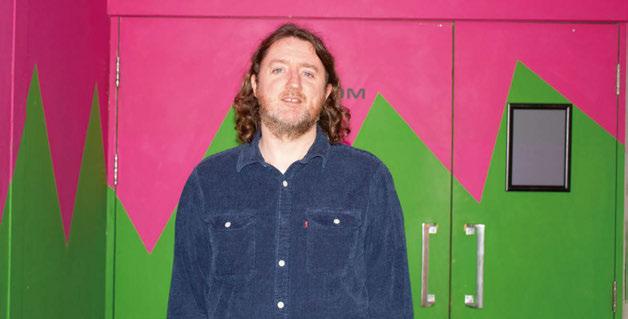
straightforward: reduce artist travel emissions by ensuring the venue is equipped with sufficient backline and production infrastructure. This means artists can arrive by public transport, instead of needing trucks full of extra equipment to ensure their technical requirements are met. After its launch, the scheme was able to cut local artists’ car travel by 25 percent. “We’re asking the question, what is our role within our community,” Gillaspy said, “and how can we not only be a thriving business within the community, but help create a thriving, artistic, creative community around the venue.”
Most recently, Future Yard has been working on its BUILD OUR FUTURE campaign, garnering support for the creation of a new 600-capacity performance space on site that will feature a full audiovisual setup provided by Adlib. On this, Jayne Clough, Board Member at Future Yard, stated: “Since opening Future Yard, there have been so many incredible acts and unforgettable nights. It’s inspired the community, provided jobs, and nurtured creativity. We hear about beloved venues closing all the time, and so what we are trying to do now is future-proof Future Yard.” www.futureyard.org