38| Building the Next Chapter: Moeller’s Strategic Plan
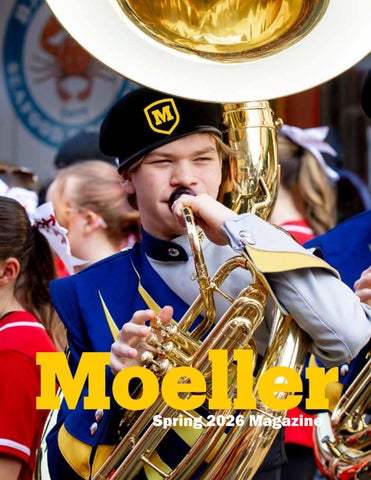
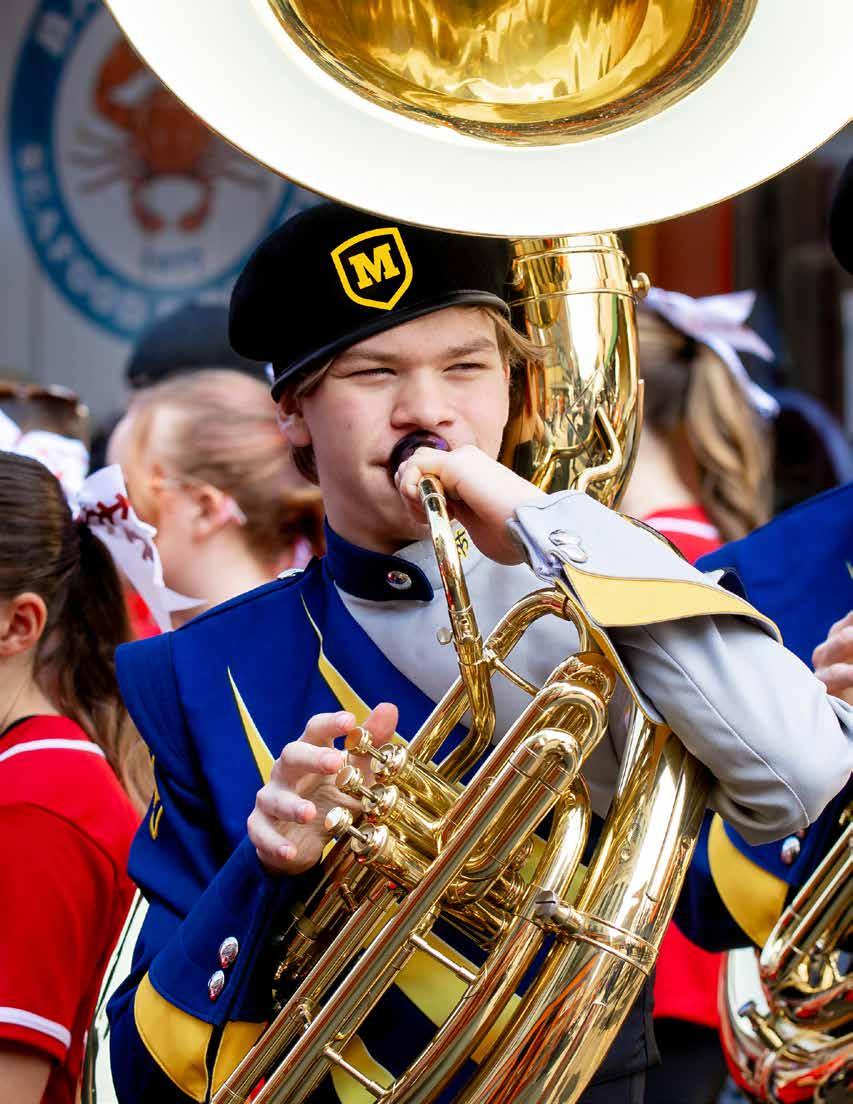
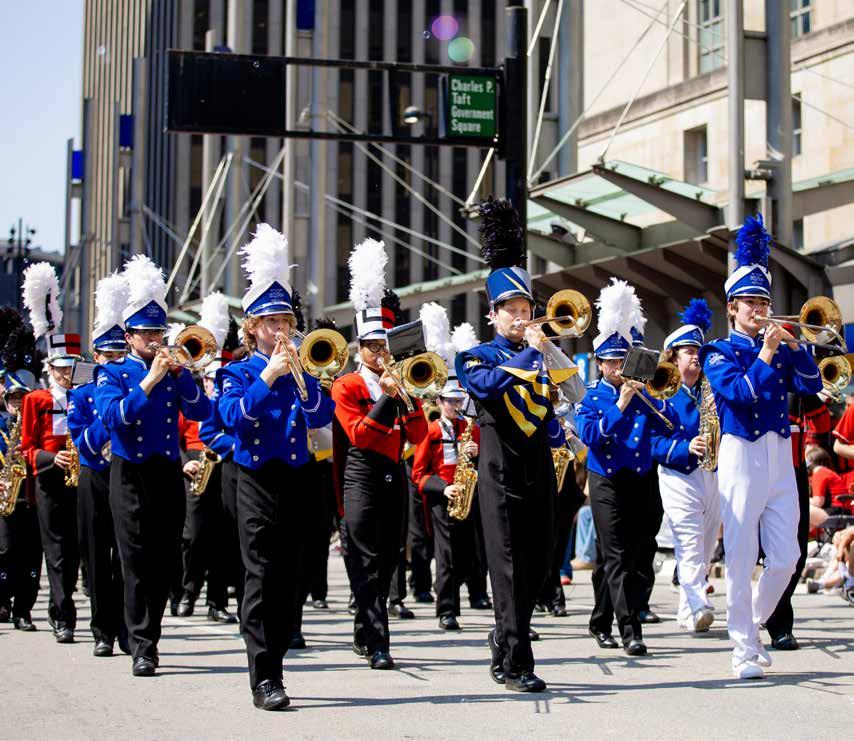
42| Marching, Music, and GCL Pride on Reds Opening Day
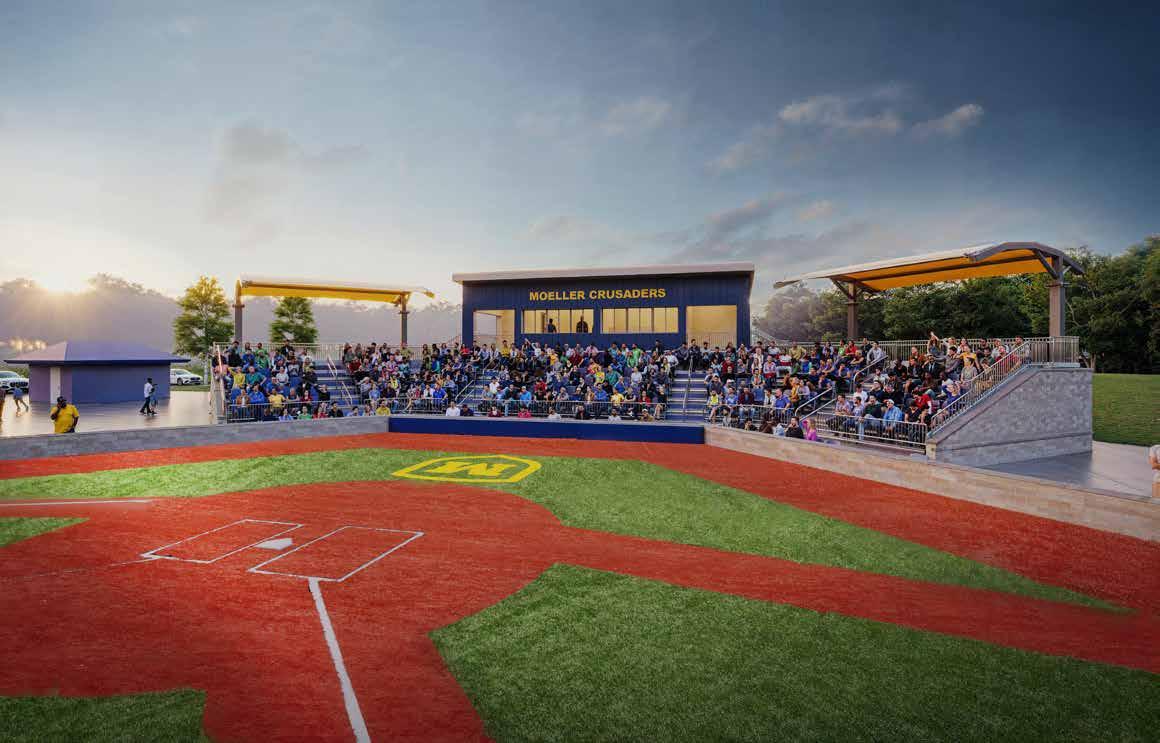
44| A Transformative Gift for Crusaders Baseball
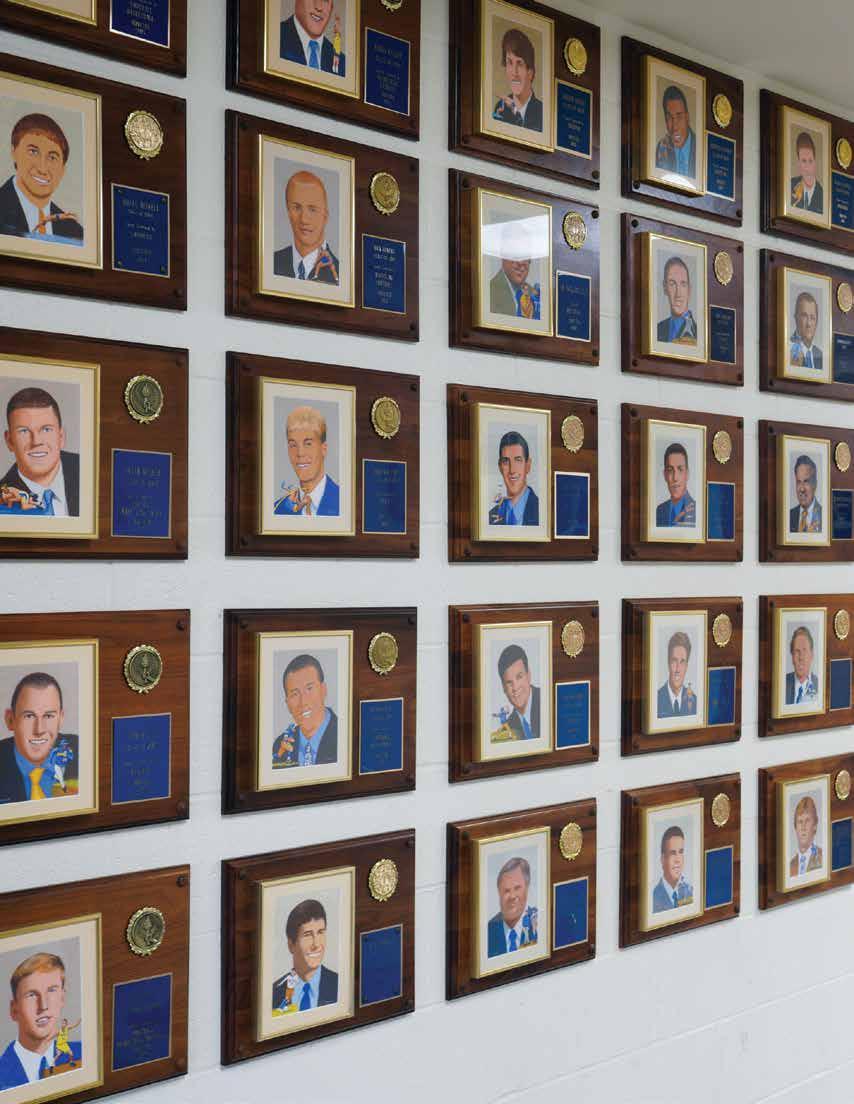
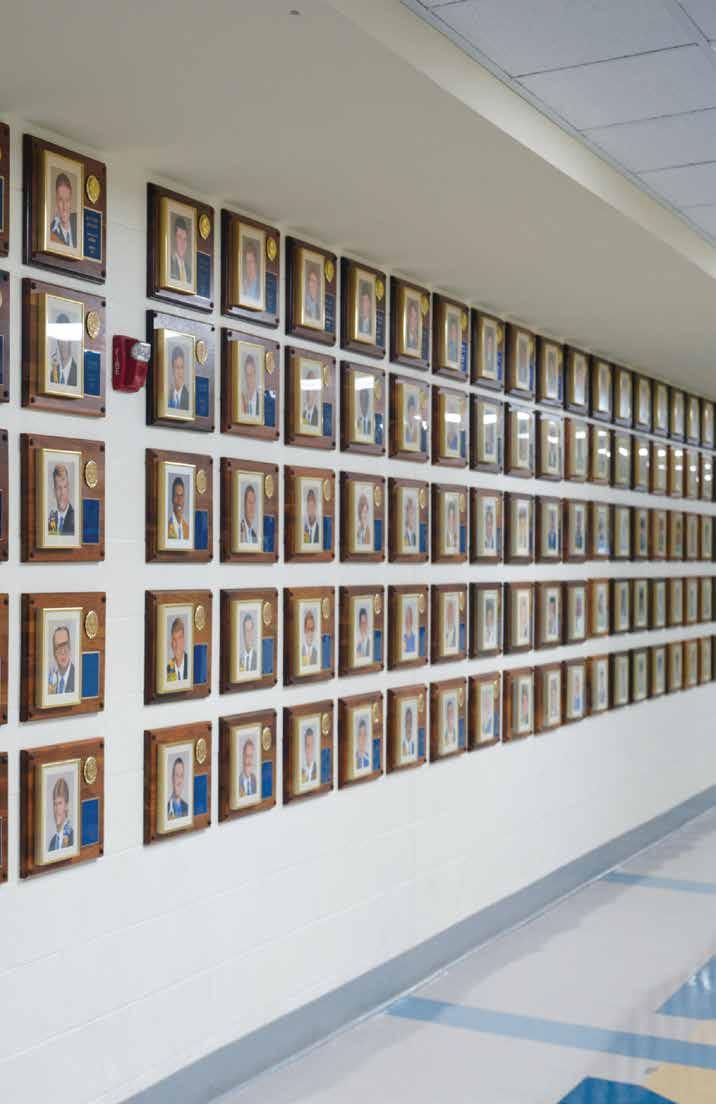
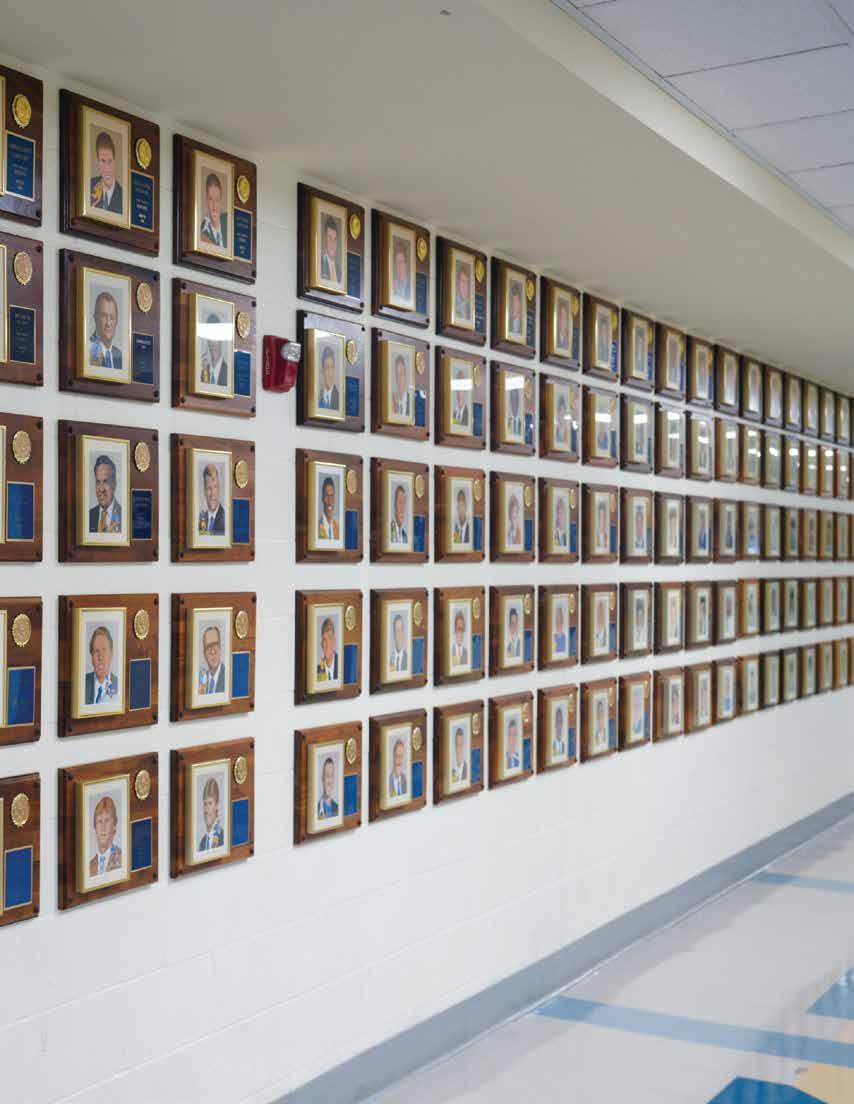
46| 2026 Hall of Fame Inductees
50| Reunion Weekend
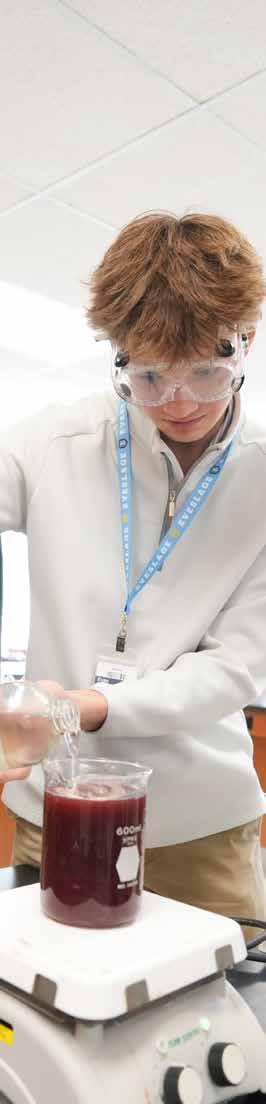
MoeTerm ignites curiosity and creativity
Molecular Modeling students represent in DC 35 Moeller.org gets a new look
44 Kremchek Stadium to be completed by 2027
46
2026 Gerry Faust Hall of Fame Inductees
As I reflect on the completion of my first academic year as president of Moeller High School, I do so with deep gratitude and a profound sense of honor. Serving this ministry has been both humbling and energizing. While I have learned a great deal over these first 12 months, what I value most is who I have come to know: the dedicated faculty and staff who bring our Mission to life every day; the alumni who remain steadfast in their love for Moeller; and the countless supporters who give selflessly of their time, talent, and treasure to advance
Six members of our faculty and staff are retiring this year. I would like to offer heartfelt thanks to Mrs. Mary Fischer, Bro. Bob Flaherty, Mr. Jeff Gaier, Mrs. Diane Hoctor, Mr. Frank Minnick, and Mr. Dan Shannon for their decades of dedicated service to Moeller. Through their dedication to our Catholic, Marianist Mission, they have helped form generations of remarkable men. Their legacy lives on in every student they taught, mentored, and inspired.
There is much to celebrate from this first year. We have launched the Strategic Growth Plan, work that will be completed in the coming months and will serve as the foundation for an upcoming capital campaign. In January, we initiated MoeTerm, which was met with overwhelming success and demonstrated what is possible when we create space for students to engage in purpose-driven, immersive experiences. I hope you will take a moment to enjoy the reflections featured in this spring issue.
As we look ahead, I am excited to build on this momentum, strengthen our foundation, invest in excellence, and ensure Moeller continues to form our students into remarkable men—men of faith, character, and leadership—for generations to come.
Yours in Service, Jason Niehaus ’93
MOE TERM
This year marked the launch of MoeTerm, a new four-day immersive learning experience designed to elevate Moeller’s educational philosophy of REALearning. Stepping away from the traditional class schedule, students explored hands-on courses that encouraged curiosity, creativity, and real-world skill development. From learning practical life skills, to exploring career fields, to collaborating on creative projects, MoeTerm transformed four school days into a dynamic hub of discovery and engagement.
The best way to understand MoeTerm is through the experiences themselves. The following reflections offer a closer look at several of the courses that made this inaugural year such a memorable and meaningful success.
experience
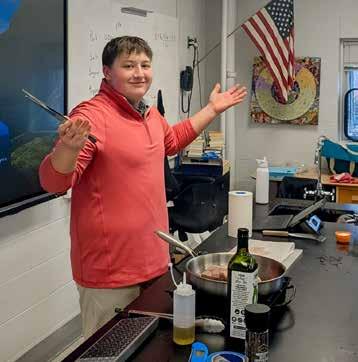
Opposite: Testing how different steak temperatures transform flavor, juiciness, and texture—because every degree makes a difference.
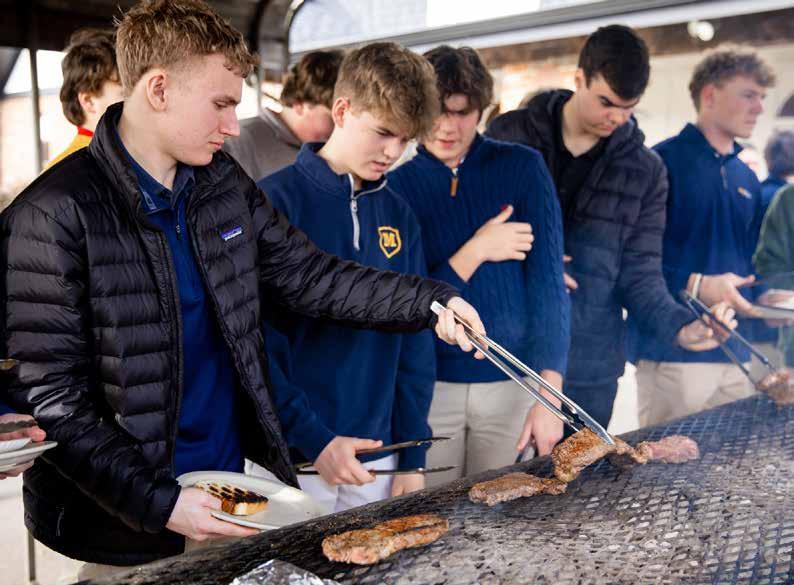
Above: Students grilling their steaks and salmon at Valley Vineyards.
experience
A Journey from Farm to Table
What does it really mean to understand where your food comes from? For students in A Journey from Farm to Table, the answer unfolded over four immersive days of science, agriculture, and hands-on culinary exploration. From grinding breakfast sausage to grilling steak, the experience traced the path of food from pasture to plate—transforming everyday meals into stories of labor, biology, and global commerce.
The week began not with a lecture but with action. Students rolled up their sleeves and made their own breakfast sausage, setting the tone for a program rooted in participation. After viewing the documentary Before the Plate, they researched a favorite food and traced the origins of its key ingredients, sparking thoughtful conversations about sourcing, sustainability, and supply chains. As one student reflected, the week offered “a lot of information about how food is processed today and how the food market works in today’s world.” What began as a curiosity about favorite meals quickly evolved into a deeper awareness of the complex systems behind them.
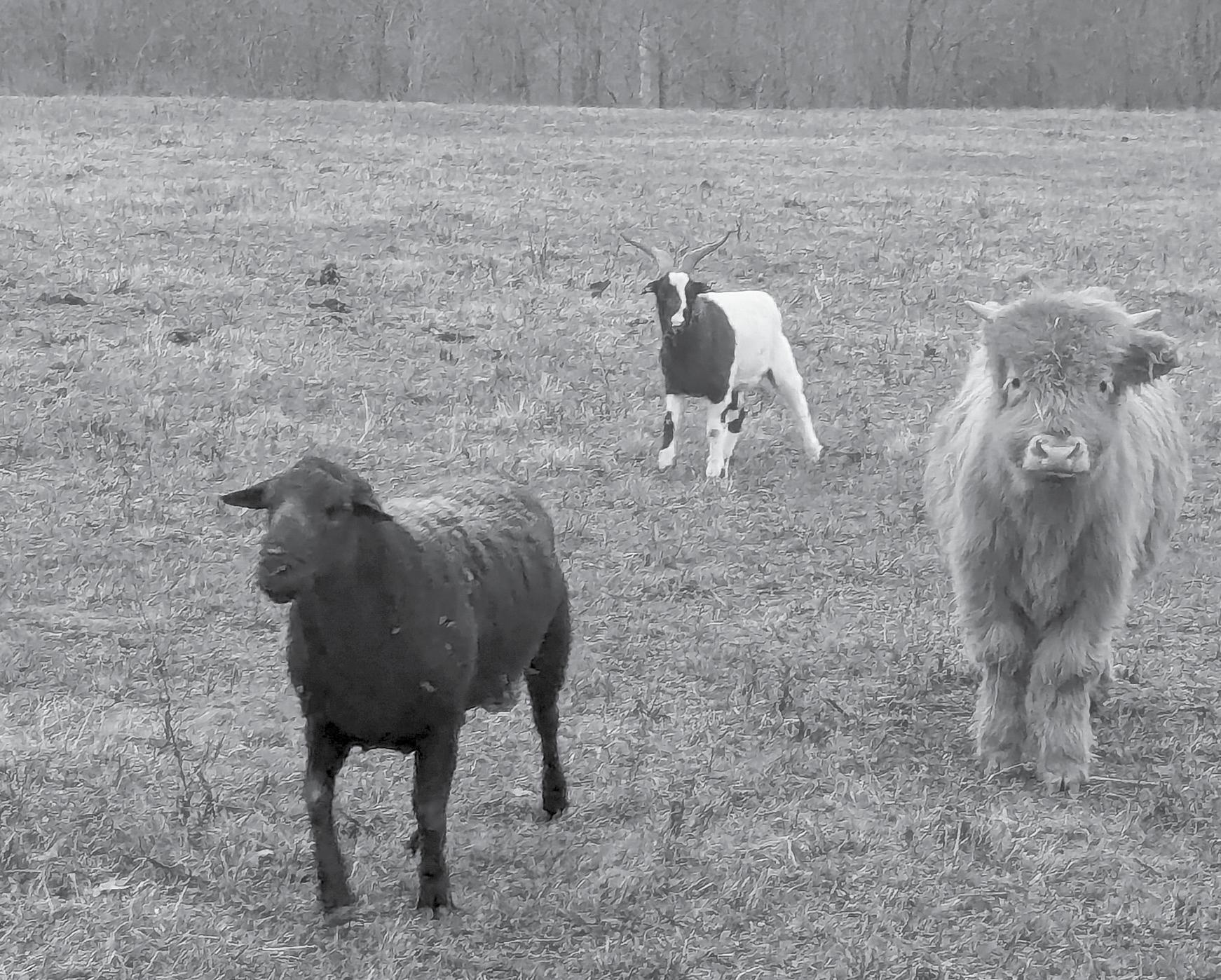
On the second day, the classroom shifted to the fields of Emmett Ridge Farm. There, students encountered agriculture firsthand, observing how animals are raised, cared for, and integrated into responsible farming practices. For many, this was the most eye-opening part of the week. One student shared that the visit “gave me an appreciation for what I eat every day,” while another admitted it helped him realize that “what I eat does come from a real animal.” The experience bridged the gap between supermarket shelves and living systems, grounding abstract concepts in tangible reality.
Day three introduced the craft of butchery at New York Butcher Shoppe, in downtown Montgomery, where students learned about meat processing and the variety of cuts that make their way to dinner tables. Back on campus, they applied that knowledge in the kitchen, cooking eggs and steaks in multiple ways and experimenting with seasoning, temperature, and
technique. For some, it was a first step into culinary independence. One student proudly noted it was his “first time ever cooking or using a grill.” Paired with a viewing of Food, Inc. 2, the day balanced an appreciation for traditional practices with a critical look at modern food industry challenges.
The program culminated at Valley Vineyards, where students grilled their own steak or salmon in an outdoor setting that felt both celebratory and reflective. With tongs in hand and lessons fresh in mind, they brought together everything they had learned—animal science, farming practices, supply chains, and cooking techniques—into one shared meal.
Student reflections captured the impact of the week. “It was an amazing experience…we had some great field trips,” one wrote. Another explained, “I was looking to get experiential learning about where our food comes from, and this experience did just that.” Perhaps the most fitting summary came from a student who recognized the interdisciplinary depth of the program: “My favorite part was seeing how all the different sciences, farm practices, and anatomy all go together.”
By the end of MoeTerm, students walked away with more than just new recipes or grilling skills. They gained a fuller understanding of the intricate journey food takes before it reaches the table—and a renewed respect for the people, processes, and science that sustain it.
Big Moe Records: Where Hits Are Made
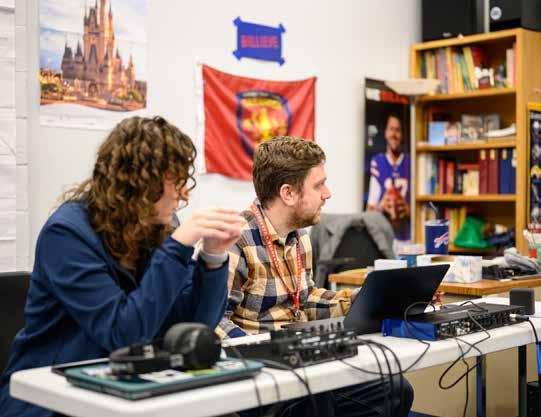
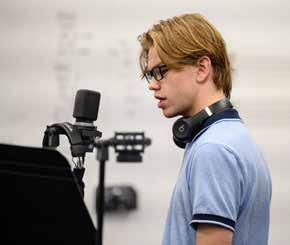
Big Moe Records provided students with an opportunity to embrace their musical strengths by actively participating in the entire process of songwriting, rehearsal, recording, and editing. Students were divided into groups of 3–4 members, fostering collaboration as they worked together to create their own musical compositions. The final two days of the program focused on recording, editing, and re-recording their work to achieve their desired outcomes.
Mr. Scott Paeplow, director of the vocal music program, aimed for students to develop a deeper appreciation for the extensive effort, dedication, collaborative nature, and intricacies involved in creating a song. Additionally, he hoped they would gain insight into the free cloudbased platforms and tools available to them for writing their own music beyond their MoeTerm experience.
Mr. Paeplow was pleasantly surprised by the diverse approaches students naturally gravitated toward. One group formed a band, another took a rap song trajectory, and another used a single guitar with rap vocals. Students demonstrated excellent self-awareness of their musical strengths and effectively utilized them to guide their songwriting process.
“I’ve never made an actual song before—I’ve only been behind the production. I’ve never mixed or mastered a song, but now that I’ve had the opportunity, it’s really fun,” Judah Hardy ’26 shared. “It helped me realize that the song-making process isn’t easy, but it’s something I plan on continuing to do.”
One of the groups participated in a recording session on Wednesday and realized afterward that they had not achieved their desired outcome. Instead of being disheartened, students took the opportunity to listen critically to their performance and offer constructive feedback to each other. This introspective process led them to return the next day more prepared and eager to lay down the track.
Mr. Paeplow has since incorporated some of the elements and methods of this MoeTerm experience into a semester-long course in music technology.
Left: Ms. Taryn Rupp and Mr. Scott Paeplow record music written and performed by students.
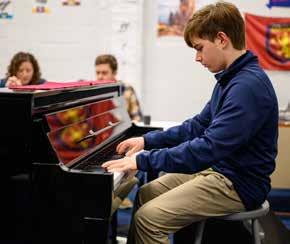
Right, top and bottom: Students play and sing their composed music.
Scan to listen to original music from Big Moe Records
Films and Frights
Intervention specialist Mrs. Katie Frider and social studies teacher Mr. Mike Ricco’s MoeTerm course explored monster movies as symbols of personal and societal fears. These stories offered students a way to examine psychology, history, biology, and culture from a new perspective, connecting emotional experience with scientific and social inquiry.
Students viewed The Thing, a classic science fiction horror film that examines isolation, paranoia, and the fear of losing one’s identity. They measured their own physiological responses to suspenseful stimuli, learning how lighting, sound, and pacing prime the brain to anticipate danger. Microbial containment experts from Q Laboratories visited Moeller to discuss professional lab safety and the handling of potentially hazardous microorganisms. Students asked thoughtful, professional-level questions, with the experts later commenting on how impressed they were by their curiosity, focus, and maturity.
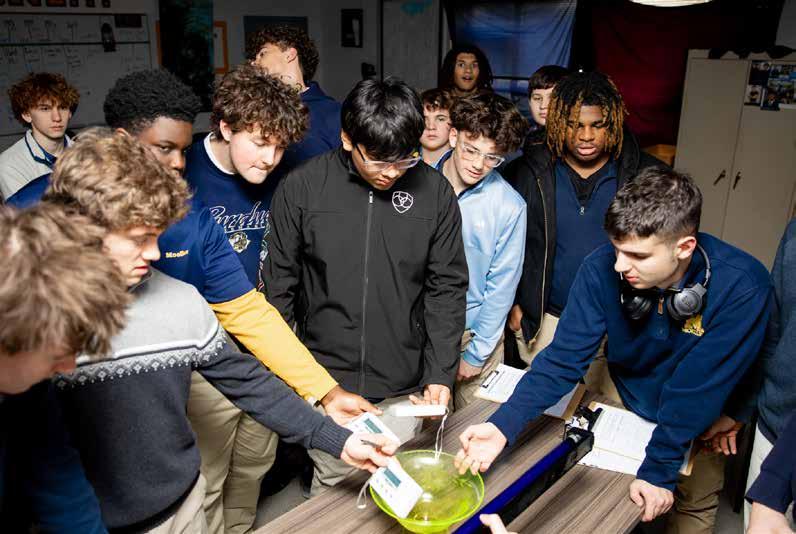
Students gathered around glowing uranium glass, connecting the eerie themes of radiation and nuclear fear after watching Godzilla.
Students also viewed Godzilla Minus One to understand the cultural and psychological impact of the atomic bombings of Hiroshima and Nagasaki. The film provided a lens for exploring how societies process trauma through storytelling. Students used Geiger counters to measure radiation levels at school, connecting the cinematic themes to real-world data and encouraging them to think critically about the science behind the story.
Another activity asked students to reflect on a personal fear and transform it into their own “monster.” Each of these creations demonstrated how monsters historically communicate warnings about violating societal norms. Students engaged in psychological reflection, creative expression, and cultural analysis while considering the consequences of fear-driven behavior. By creating their own monsters, they discovered that fear can be a lens not only for storytelling but also for understanding themselves, their world, and the lessons hidden in both.
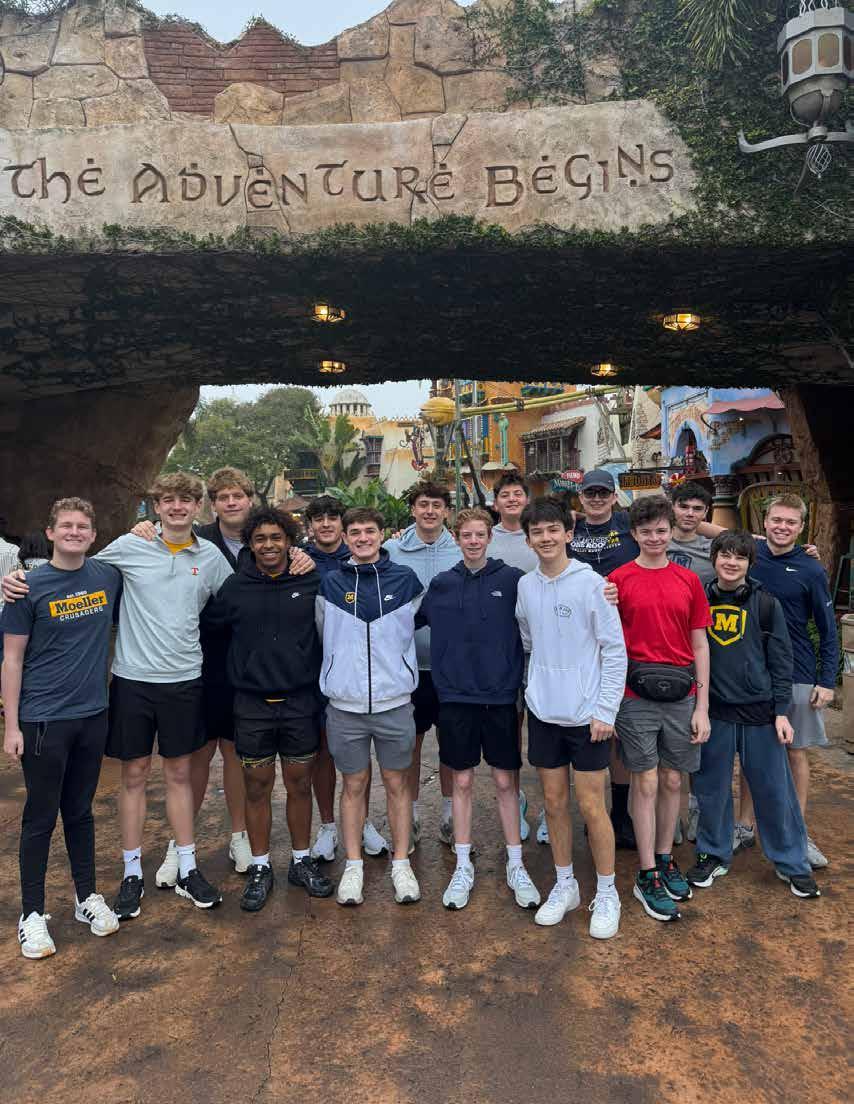
The Men of Moeller embraced camaraderie and adventure throughout the week, creating lasting memories together.
Give Kids The World
Give Kids The World was a domestic service immersion experience led by Mr. Jack Hodges, English teacher and Trinity House dean, and Ms. Karen Tlucek, mathematics and business teacher and Eveslage House dean. Students traveled to Kissimmee, Florida, to volunteer at Give Kids The World Village, serving families visiting through Make-A-Wish Foundation. Through active and relational service, students helped create joyful, meaningful moments for children and families whose wishes were being fulfilled.
Originally, the trip was designed to provide students with an opportunity to complete their required volunteer hours in a fully immersive setting while serving a community they would not typically encounter in the Tri-State area. What proved most inspiring, however, was that every student who signed up for the course had already met or exceeded their service requirements. Each young man participated for one reason alone: a genuine passion to serve.
One of the most memorable moments of the week was when students met a mother and her 11-year-old son.
The young man’s wish was to visit Super Nintendo World, because of his love for Mario. When he discovered that several of the Men of Moeller were fellow fans, an immediate bond was formed.
For the next three mornings, the family made it a point to attend breakfast while the students were serving, just to continue their conversations about Mario, sharing stories about his life, and even asking questions about what it’s like to attend an all-boys school. What may
Fifteen Men of Moeller united
a
have seemed like small interactions became powerful moments of connection for both parties.
For many students, experiences like this became the true highlight of the trip. They discovered that service is not only about tasks completed but also relationships formed. In what can be an extremely overwhelming and emotionally taxing time for many families, the simple act of showing up with joy, warmth, and attentiveness brought light into their days.
The Men of Moeller embraced camaraderie and adventure throughout the week, creating lasting memories together. Yet through their journaling and reflection, many expressed that the greatest lesson they had learned was the value of presence. They came to understand that we never truly know what someone else may be carrying, and instead of judging others at first glance, we are called to respond with kindness.
Whether serving breakfast in Florida or cheering at a sibling’s volleyball game back home, students recognized the importance of living in the moment. They learned and enforced the already-present idea that the greatest gift anyone can give is their time—and genuine service begins with simply being present and offering a smile.
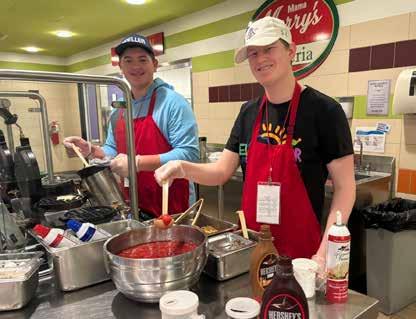
Above: Students created joy at breakfast time by making waffles with unlimited sundae toppings.
Opposite:
around
common goal – to show up with a smile and brighten the days of every child at Give Kids The World Village.
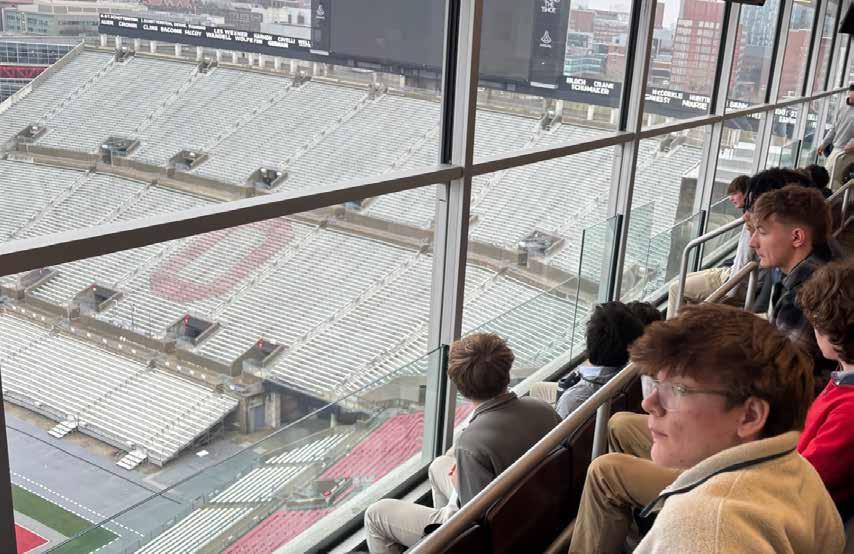
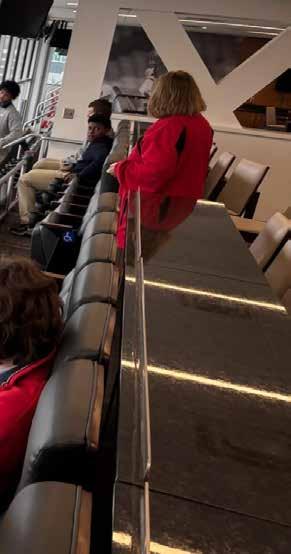
Inside the Game: Exploring the Business of College Athletics
MoeTerm provided a fantastic opportunity for students to look beyond the scoreboard and discover the vast world of college athletics.
Inside the Game: Exploring the Business of College Athletics was designed to open students’ eyes to the many professional pathways available in sports and to help them see their individual gifts. The primary goal was simple: to help students understand that athletics is far more than what happens on the field or court. The sports industry includes hundreds of meaningful careers that highlight
a wide range of talents. Throughout the week, students explored roles in business operations, finance, marketing, videography, digital design, ticketing, and studentathlete academic advising, among others. Many students who may not see themselves as varsity athletes began to realize that there is still a place for them in the world of sports.
Students visited the University of Dayton, Miami University, The Ohio State University, and the University of Cincinnati (UC). Each institution was intentionally selected, because it represents a different NCAA
Division I conference, offers a wide variety of sports, and varies in campus and athletic department size. This allowed students to compare athletic operations across multiple environments, which they highlighted in a final group presentation.
At each stop, students met with senior administrators, participated in panel discussions, and toured athletic facilities that are typically off-limits to visitors. These behindthe-scenes experiences brought the business of college athletics to life in a way that a classroom simply cannot replicate.
Perhaps the most exciting moment came when one student connected with an administrator at Ohio State and was offered an opportunity to work as a football equipment manager when he gets to campus in the fall! Additionally, Moeller reconnected with alumnus Dan Cloran ’88, now serving as deputy athletic director at Ohio State, who generously shared his time and insights.
This MoeTerm was especially meaningful for Pillar House college counselor Mrs. Allison Oakley, who began her own career in college athletics as a student worker in the
sports communications department at UC and later as a communications intern working with the Big East Conference before spending two years with the West Virginia University athletic department.
“This experience allowed me to reconnect with former colleagues and utilize professional relationships at UC and Miami to create unique opportunities for our students,” she said. “It was incredibly rewarding to share my own journey and watch students begin to envision their own.”
One of the most powerful outcomes of the week was the gratitude and engagement shown by students, who wrote thoughtful, heartfelt thank-you notes to speakers, reflecting how impactful the experience had been. As one student shared, “The most memorable part of the course was sitting in the press boxes at the different college stadiums and going on the Ohio State football field. The most impactful part was learning all of the different jobs in college athletics, because I didn’t know there were that many.”
Ultimately, the biggest takeaway for students was the importance of networking and building relationships. The week reinforced that success in the sports industry often begins with connections, curiosity, and the willingness to explore opportunities beyond the spotlight.
Bridging Cultures: Exploring and Serving Hispanic Communities
In Bridging Cultures: Exploring and Serving Hispanic Communities, students learned about the contributions of Hispanic communities and the ongoing challenges they face, both locally and globally. Through interactive activities, servicelearning projects, intercultural exchanges, and real-world examples, the course helped students identify solutions to contemporary issues that create a positive and lasting impact as well as develop a deeper appreciation, connection, and empathy for all members of the global community.
Mathematics teacher Mrs. Kelly Grote was most surprised by how genuinely engaged the students were at each of the service locations. “They not only completed the tasks they were given but also actively looked for additional ways to help and took initiative without being asked,” she said. “It was also incredibly (continued next page)
Students tour the governor’s suite at The Ohio State University stadium.
rewarding to see them make meaningful connections between what our guest speakers shared in the classroom and the real needs within the Cincinnati community. Their enthusiasm and ability to apply their learning in such a tangible way made the experience especially impactful. It was powerful to watch their perspectives grow in such a meaningful and lasting way.”
One student shared, “When we went to Su Casa [Hispanic Center], we not only helped others but also, in the process, got to see smiles on the people’s faces.”
Students reflected on how this experience helped them recognize our shared humanity. They began to see that, even though people’s backgrounds and circumstances may be different, everyone is simply trying to do the best they can. That realization was especially evident during students’ time at Su Casa, where they connected personally with the individuals they were serving and gained a deeper sense of empathy and understanding.
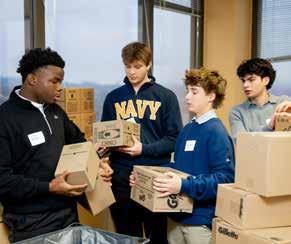
At Su Casa, students helped with a variety of tasks, including sorting and distributing food items, winter coats, and baby items. They also made sandwiches for lunch and item distribution for young Hispanic mothers.
ImagininGuatemala
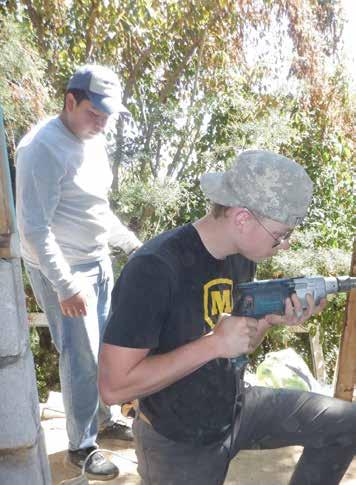
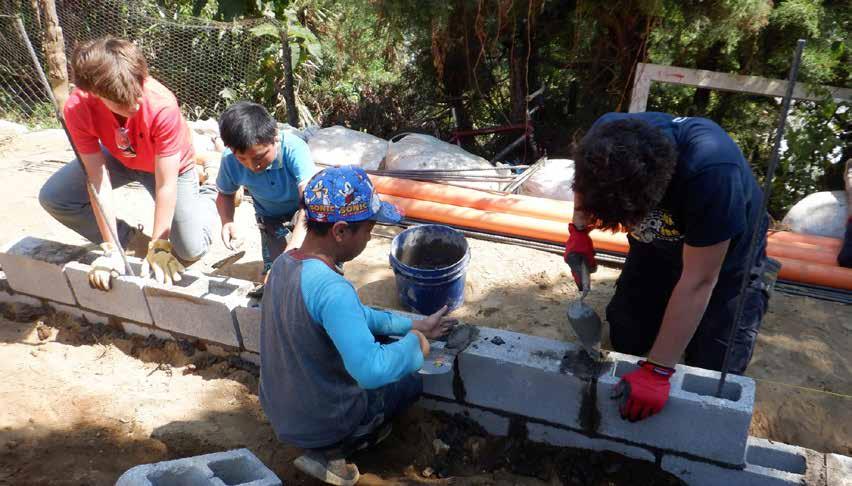
For the inaugural MoeTerm, Spanish teacher Mrs. Colette Herron and English teacher Mrs. Lindy DeMaria, along with Mr. Tom Kresyman, controller in the Business office, led 12 students through Antigua, Guatemala, where they partnered in a home-building mission for Mayan families.
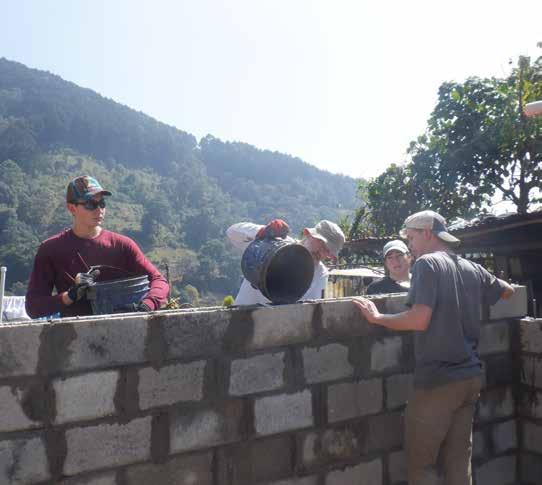
Over the course of four days, the group built two homes with ImagininGuatemala, a nonprofit organization dedicated to bettering the physical living conditions and social well-being of families in the surrounding villages of Antigua. Students learned to lay bricks, mix cement and mortar, hang cement board, install roofing, and lay tile. They enjoyed gaining handson skills while working side-by-side with members of the local community.
The reward, after days of intense labor, came when the group handed keys to two grateful families and celebrated the completion of their new homes.
“It was truly wonderful helping families and building a global community,” DeMaria said. “I loved the opportunity to practice my Spanish, immerse myself in the culture, and show God’s love for others.”
In addition to building homes, students immersed themselves in Guatemalan culture. The trip began with visits to four surrounding pueblos, where they explored local markets and experienced daily life in smaller communities.
“I hoped the students would be open to learning and gaining a deeper understanding of Guatemalan culture, food, and language,” Herron said.
Students roll up their sleeves laying brick, hanging drywall, and building more than a house… they’re helping create a home for a Mayan family.
“I also hope they saw the complexity of poverty in the Antigua region and how volunteering can make a real difference. Most of all, I hope they recognized that we are all made in God’s image and likeness and that the people of Guatemala are striving to live their lives just as we are in the United States.”
Students also learned how macadamia nuts are grown, harvested, and used to support local communities. They visited a chocolate and honey plantation to see how these products are made using ancient Mayan traditions and, of course, enjoyed sampling traditional Guatemalan chocolate.
Scott Kaplan ’27 reflected, “I learned that even though people there have fewer opportunities, they’re still very happy. I enjoyed speaking Spanish with everyone and hearing their stories. It felt amazing to hand the keys to the family and see how grateful they were.”
A highlight of the trip was a visit to San Francisco el Grande for the final Mass of the Jubilee. Because the students completed the trip as a pilgrimage, they received a special blessing from a Franciscan friar.
Haunted Cincinnati: Ghost Stories from the Queen City
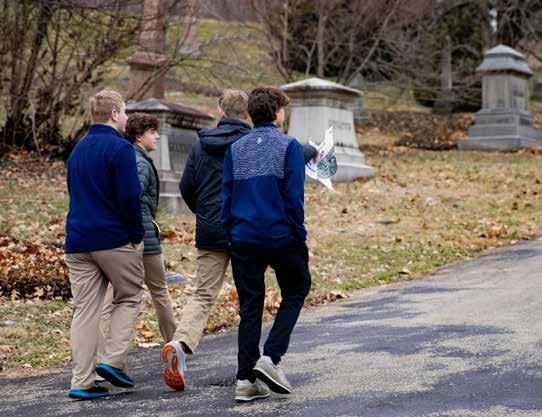
Students bravely team up for the Spring Grove Cemetery scavenger hunt searching for famous crypts, supposed hauntings, and notorious Cincinnatians.
In this spine-tingling and creative course, 40-plus students explored some of Cincinnati’s most “haunted” locations and legends, using history, science, and lore as the foundation for crafting their own stories. During the week, students visited Spring Grove Cemetery to discover mass graves and an alleged child witch buried there and completed a ghost tour in downtown Cincinnati using SLS (structured light sensor) software to observe potential phenomenon. Mr. Geoffrey Girard, writer-in-residence and theatre arts director, was particularly intrigued during the group’s visit to the infamous Symphony Hotel.
“An old brothel by all accounts, almost every room in that building had a legend and named ghost connected to it,” he said. “One in particular, named ‘Monica,’ is apparently particularly active. Nothing weird happened this visit, but, admittedly, the video I took within flickers way more than it should.” A plan for next year is for this MoeTerm to spend the whole night.
Mr. Girard, whose first novel was nominated for a Bram Stoker Award, teamed up with Mr. Jon Bennett, English teacher and Pillar House dean, and Mrs. Cassie Allen, Quiroga House college counselor. Mr. Bennett and Mr. Girard have taught Moeller’s Gothic and Horror Literature senior elective course for years and, with Mrs. Allen, are also members of Moeller’s Adult Writing Club. “Learning about, and then writing about, things that go bump in the night, or day, isn’t too much of a stretch for the three of us,” Mr. Girard said. The course also featured guest speakers, including a Hocking Hills ghost hunter and local young adult horror author Kristen Simmons.
Haunted Cincinnati is designed to spark curiosity as students draft podcasts, films, and/or short stories, honing skills in storytelling and research. “By the end of the week,” Girard said, “students have developed their storytelling and entertainment skills, drawing inspiration from real haunted sites.” Sessions included how ghosts are portrayed in other cultures and how the idea of ghosts and evil spirits fits into Catholic teaching.
Evan Crabb ’28 shared, “Going through the Spring Grove Cemetery scavenger hunt was the most interesting part of the week for me.” In small groups, students were sent out to find the graveyard’s most infamous tenants and spots. Upon returning, Crabb joined the other students in producing a piece of fiction based on his week. “My final story was…okay,” he admitted. “I made edits after MoeTerm to make it better and definitely had fun working on it.”
Introduction to Narrative Game Design
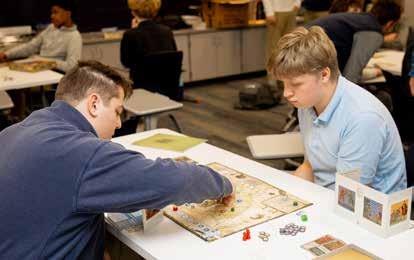
In Introduction to Narrative Game Design, students were tasked with designing and building a playable prototype of a tabletop game (think Monopoly or even Dungeons & Dragons), including story elements—character, setting, and conflict—which shaped gameplay. They also designed a PowerPoint “sales pitch” and presented their work to local gaming specialists.
Led by English teacher Mr. Justin Claypool and world languages teacher Dr. Justin Chmiel, students worked together in groups, creating clever aspects of their games—unique artwork, writing, settings, characters, and mechanics.
To help inspire their designs, Claypool and Chmiel set up several “speed dating-style” games around the room, including a sci-fi role-playing game, for students to try a variety of play styles and mechanics.
Claypool told the room of mostly freshmen, “At the end of our MoeTerm, if you decide that you’re super interested in tabletop gaming—or even game design—I’ll
be very, very happy. However, I’ll still feel good if you realize that you never want to do anything like this again. Knowing what you want to do is great for guiding your future life and career choices, but knowing what you don’t want to do can be just as, if not more, valuable.”
Above: Students play sample narrative games.
Below: The finished product of a game named Front Lines Into Germany, designed by students.
Moeller Master Chefs: Cooking Up Change –
A Culinary Adventure with a Purpose
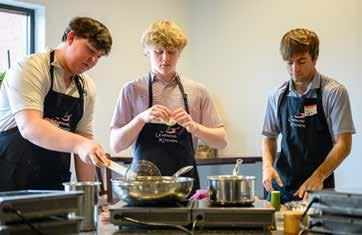
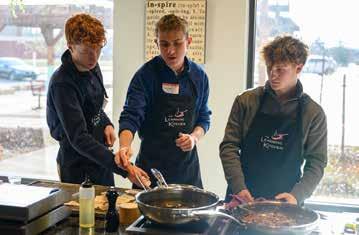
Moeller Master Chefs, led by English teacher Mrs. Mandy Ocariz and science teacher Mr. Dan Shannon, introduced students to new flavors, foundational culinary skills, kitchen safety, and meaningful lessons on food insecurity. Moeller chefs spent two days at The Learning Kitchen in West Chester, where they worked in teams to prepare dishes to share with everyone. Once the food was ready, they feasted on empanadas, crab rangoons, spring rolls, Asian slaw, and mushroom tortellini. Then, a few chefs returned to the kitchen to prepare cherries jubilee over an open flame. Another day was spent shopping, touring, and tasting at Jungle Jim’s International Market in Fairfield. Before their visit, students paired up to create grocery lists for the charcuterie boards they would assemble for an afternoon of taste testing. From salami florets and thinly sliced strawberries, to the perfect pairing of Port Salut and fig jam, students crafted award-winning boards to both enjoy and take home.
Back at The Learning Kitchen, students practiced their knife skills while preparing a fresh garden salad. They
learned the art of making pasta from scratch and homemade marinara sauce. Like any proper Italian feast, the meal ended with lemon-filled cannoli. Once their dishes were complete, the chefs sat down, said grace, and enjoyed the fruits of their labor.
On the final day of MoeTerm, a volunteer from St. Vincent de Paul joined the group to discuss the needs of the Cincinnati community, particularly those related to food insecurity. The week concluded at the St. Vincent de Paul food pantry, where students sorted donations, stocked shelves, and assisted customers with their weekly necessities.
Moeller Master Chefs was more than just a week in the kitchen—it was a journey that blended creativity, skill-building, fellowship, and service. From mastering knife techniques and crafting fresh pasta, to exploring global flavors at Jungle Jim’s, students embraced every opportunity to grow as confident, capable chefs. More importantly, they cultivated gratitude, teamwork, and a commitment to serving others—a recipe for success that will last far beyond MoeTerm.
Lunch on Day 3: Pasta, crab rangoons, and other international fare.
Our Daily Cup of Moe
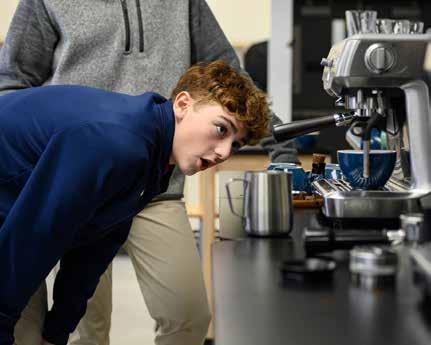
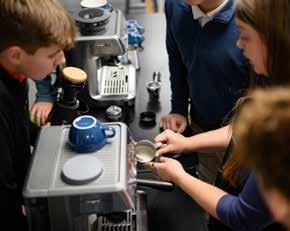
Coffee is more than a morning routine—it is a global story, a science, and an art. Our Daily Cup of Moe invited students to explore coffee from its historical roots to the final pour of latte art, transforming a familiar beverage into a subject of discovery and skill.
Students began by examining the history of coffee, tracing its origins from East Africa to its spread across the globe. They explored how culture, trade, and innovation shaped coffee into one of the world’s most widely consumed drinks. This historical lens helped students understand that every cup connects to centuries of tradition and global exchange.
From there, the focus shifted to the science of flavor. Students learned how roasting influences taste, aroma, and body, and how factors such as origin, altitude, and processing methods shape a coffee’s unique profile. Through guided tastings, they sampled and compared a variety of beans and beverages, developing the ability to identify flavor notes and differences in acidity and sweetness. A highlight of the experience was a visit to Deeper Roots Coffee, where students observed professional roasters at work and saw how green beans are transformed into the rich, aromatic coffee they enjoy. The visit connected classroom learning to real-world application and showcased the craftsmanship behind a successful local business.
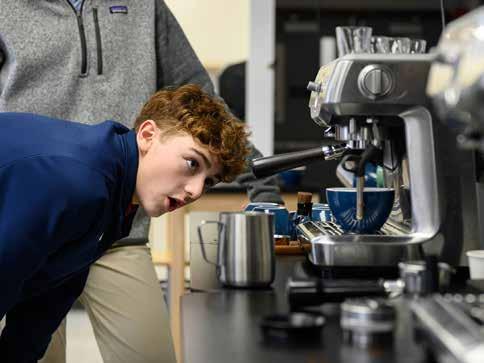
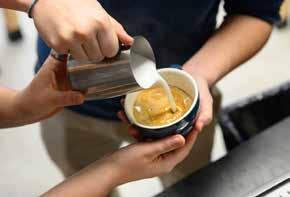
Back in the classroom, students became baristas. They practiced pulling a great shot of espresso, focusing on grind size, tamping, extraction time, and crema. They learned how to properly steam milk and experimented with creating latte art. Brewing methods were also explored, including drip, pour-over, French press, cold brew, and AeroPress. By preparing the same beans using different techniques, students experienced firsthand how brewing methods dramatically affect flavor.
Perhaps most meaningful was watching students refine their palates and grow in confidence. As science teacher Mrs. Mary Peña-Porras reflected, “I loved watching the students learn to identify the different flavor notes in coffee. One of my favorite moments was hearing a student exclaim, after taking a sip of black coffee, ‘I can actually taste the raspberry!’”
This moment captured the heart of the course—discovery through experience. By the end of the week, students had gained more than practical skills. They developed sensory awareness, an appreciation for global agriculture and local entrepreneurship, and a deeper respect for the craft behind every cup. Coffee became not just something they drink but something they understand.
Students learn the science and artistry behind a great espresso shot and experiment with latte art in this hands-on coffee course.
Rock ‘n’ Roll Revolution: From Chuck Berry to the White Stripes and Beyond
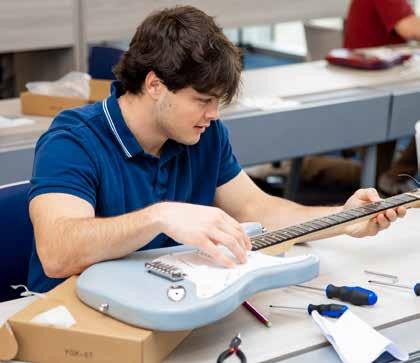
What began as a course on the history of rock ‘n’ roll transformed into a three-pronged experience that provided students with skills, knowledge, and their own handmade guitar.
Director of student support services
Mr. Danny Aielli ’09, who plays lead guitar with the local band The Remains, worked with students on how to play guitar. He taught them the riffs to “Sweet Home Alabama” and “Sunshine of Your Love.” At the end of the week, every student got up in front of the class and performed something they had learned in a mini recital.
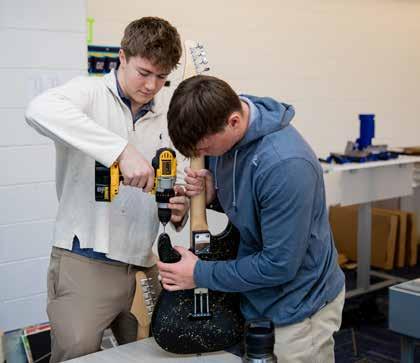
From raw wood to real sound. Students design, paint, assemble, and string their own guitars, then bring them to life.
on the most influential performers of all time. Their top five:
1. The Beatles
2. Chuck Berry
Perhaps the most meaningful element of Rock
‘n’ Roll Revolution, was the bond students made with one another.
— Principal Michael Shaffer
Mathematics teacher Mr. Peter Gettings helped get them there by working alongside every student to build and paint their own electric guitar. In addition to walking away with an instrument to continue playing at home, students developed basic skills with screwdrivers and drills as they constructed their masterpieces.
Students worked with Principal Michael Shaffer to immerse themselves in the music they love, taking in original performances by the Beatles, Chuck Berry, Nirvana, and others. At the end of the week, they voted
3. Led Zeppelin
4. Nirvana
5. Elvis Presley
Learning how to play guitar on the very guitars they had built themselves, while discussing how rock music evolved throughout the decades, was only part of the experience. “Perhaps the most meaningful element of Rock and Roll Revolution,” Shaffer said, “was the bonds students made with one another. “They reported finding new friendships and connections over a shared love of music that they otherwise wouldn’t have found.”
This was most evident on the final day, when the class took a field trip to explore Cincinnati’s rock music scene. At the Black Music Walk of Fame, students interacted with displays while learning that John Legend was born in Springfield, Ohio. Students toured the Andrew J. Brady Music Center and enjoyed a live show at Arnold’s. They used the launching point of music to form a new community.
Roles and Reels: Cincinnati’s Theater & Film Scene
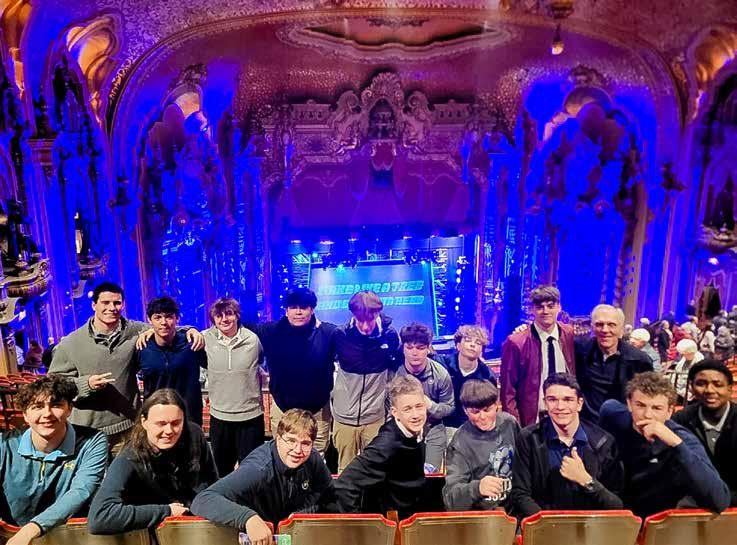
In Reels and Roles, Mr. Eric Eble, English department chair and speech and debate coach, had hoped to show students the depth of Cincinnati’s drama and film scene, with the Queen City claiming a number of playhouses and movie theaters that make it unique among Midwestern cities. Ironically, in January, none of those places were screening plays or films, so students traveled to Columbus to see Back to the Future: The Musical at the Ohio Theatre.
To prepare for the trip, students watched the original film (which, to Mr. Eble’s surprise, many had not
seen). They gained from world languages teacher Mr. Bob Hotze a grasp of its history (including Michael J. Fox being subbed into the leading role after it had already been filmed), and partnered with the Cincinnati Playhouse in the Park’s educational outreach team. After students visited the Playhouse for a tour and acting classes on Monday, Playhouse actors traveled to Moeller on Tuesday to show students how plays are staged through a reading of Zombie Thoughts, their traveling production, and brainstorm how and why directors make professional decisions regarding actors, costumes, music, and other stagerelated elements.
Mr. Eble was surprised at how entranced students were by the special effects in Back to the Future on Wednesday night. Freshman Kris Zieger’s dad, Kerry, e-mailed him, writing, “Kris said MoeTerm was the best week of school ever. Funny, we just saw Hamilton over the Christmas break. Kris said that Back to the Future was better than Hamilton.” As a result, Kris has joined the crew for Moeller’s spring musical.
While some of the students have not necessarily transformed into drama critics, they all definitely found the joy that can come from taking in an engaging musical.
Students in Roles and Reels attend Back to the Future: The Musical at the Ohio Theatre in downtown Columbus.
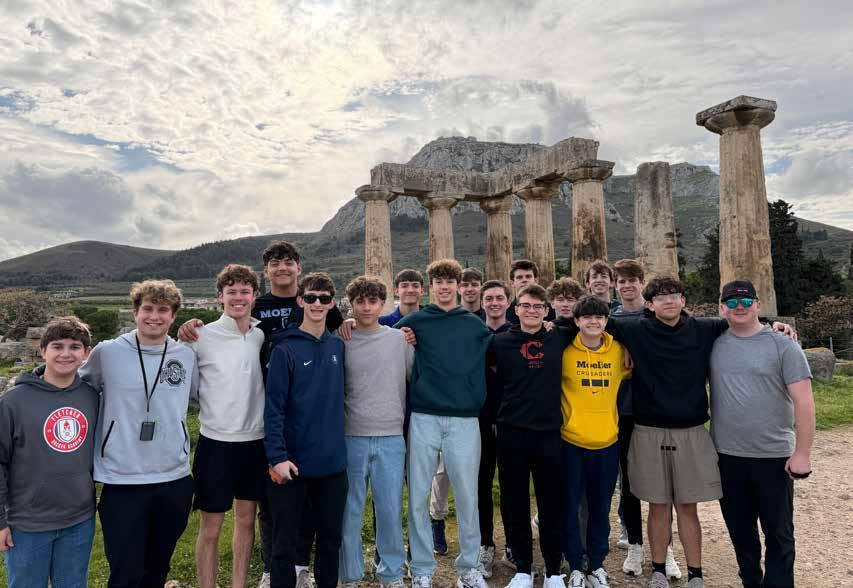
Savoring Greece: A Journey Through Culture, Cuisine, and Innovation
On January 2, 24 members of the Moeller community boarded a plane bound for Athens. What followed was more than a tour of ancient ruins—it was an immersive experience in history, culture, cuisine, and camaraderie. Students’ first taste of Greece came in the winding streets of the Plaka district, where they gathered for their first of many memorable meals. Beneath the glow of café lights and the shadow of the Acropolis, students sampled traditional Greek dishes—most notably gyros, which quickly became a favorite. Even those hesitant about eating lamb were won over.
The next morning, history took center stage as the group climbed to the Acropolis of Athens and stood before the iconic Parthenon. There, students explored Greek mythology, learned why Athens bears the name of the goddess Athena, and discovered the symbolism of the olive tree—peace and prosperity that has endured for millennia. They also heard the remarkable story of how
the Parthenon survived wars, invasions, and centuries of change. One student admitted that he hadn’t expected to be so captivated. “I didn’t know if I was going to love all the history,” he reflected, “but I found that I was constantly intrigued by the architecture and the Greeks’ ability to build huge temples on the tallest hills without modern technology.”
From Athens, the group traveled to Corinth, once a thriving trade hub of the ancient world. At the Temple of Apollo, students stood in the very place where Saint Paul addressed the Corinthians—an experience that made the pages of Scripture and history come to life. For many, the connection between ancient ruins and enduring faith left a lasting impression.
The journey continued to the Tomb of Agamemnon and the hilltop fortress of Mycenae, where students gained a first-hand understanding of strategic geography during the Peloponnesian Wars. Along the way, students also
learned about ancient pottery, jewelry-making techniques, and the time-honored craft of olive pressing—traditions that have shaped Greek identity for centuries.
Perhaps no destination captured the group’s imagination quite like Olympia, birthplace of the original Olympic Games. Walking the same grounds where ancient athletes once competed, students envisioned the spectacle of early competitions. They were surprised to learn that the first Olympics were local events featuring only a handful of ordinary citizens—there were no professional athletes, no global broadcasts, no sponsorships. Students even hosted their own race on the ancient track, blending playful competition with a deep respect for tradition.
For many, the connection between ancient ruins and enduring faith left a lasting impression.
No trip to Greece would be complete without experiencing the islands, and though January weather lacked the postcard-perfect warmth of summer, the group boarded a ferry and ventured into the Aegean Sea. Students explored charming streets, sampling baklava, pistachio butter, souvlaki, crepes, and—of course—more gyros. Food, like history, became part of the story they would carry home with them.
Yet, beyond temples, ruins, and legendary sites, the most meaningful takeaway may have been something less tangible. One student shared, “My favorite aspect of the trip was the friendships I made. I was concerned at first, because there were only a few guys I knew coming in, but now I can say we’re all friends.” In Greece, students didn’t just study civilization—they stepped into it. They tasted it, walked through it, raced across it, and reflected on its lessons. From the heights of the Acropolis to the track at Olympia, they encountered a culture that continues to shape the modern world. And in doing so, they discovered not only the richness of ancient Greece but also the enduring value of shared experience.
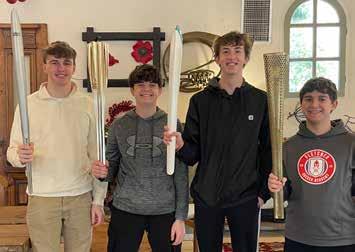
Holding history in their hands—students explore the legacy of the Olympic Games through iconic torches from around the world.
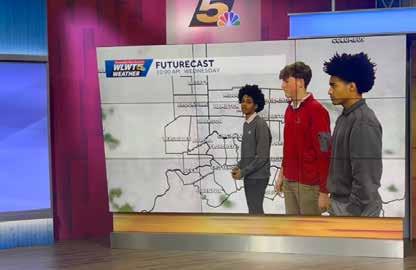
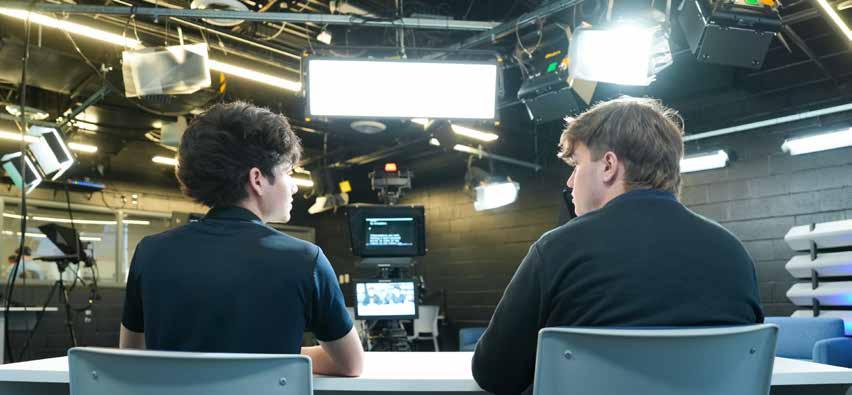
Future broadcasters at work—learning from the pros inside WLWT News.
Outside the Lines: Sports Broadcasting
We’re living in a time where sports media dominates the airways. Whether it’s a live game production, studio show, or podcast, it isn’t hard if you’re a casual fan to find something to watch or listen to. But how does everything get put together? Who are the people telling the stories? How much time and effort goes into creating each individual element? These were just a few of the questions Mr. Nathan Eten, Moeller’s broadcasting teacher, hoped students would be able to answer by the time they completed his MoeTerm course. Students spent the first day learning about all of the different careers in sports broadcasting and watched examples of great storytelling by Fox Sports reporter Tom Rinaldi before becoming familiar with cameras and microphones. The class discussed the components of telling a story, landing an interview, shooting B-roll, and editing it all together to create a package, with one goal in mind: to play it in between Moeller’s live stream of the junior varsity and varsity games against La Salle High School that Friday.
“I wanted to simulate what having a deadline is like, since that’s what most people in sports media face every day,” Eten said. “I was surprised by students’ creativity in the way they shot their B-roll, their diligence in editing, and how much they enjoyed seeing it all come together.”
MoeTerm 2027
MoeTerm 2027 is just around the corner. With one year in the books, Moeller is prepared to launch one of its most dynamic and diverse program lineups yet. With five brand-new travel excursions, an exciting collection of innovative on-campus courses, and the return of several student favorites from 2026, next year’s MoeTerm promises meaningful opportunities for every Crusader.
At the heart of MoeTerm’s mission is the belief that learning extends far beyond the traditional classroom. Designed to immerse students in authentic, hands-on experiences, the program invites them to explore new places, develop practical skills, and discover personal passions. The 2027 travel roster exemplifies that spirit of adventure. Students can journey internationally to Costa Rica or explore destinations closer to home, including Southern California, Florida, Chicago, and Kentucky’s Mammoth Cave National Park. Each experience blends education with exploration, offering students the chance to engage with new cultures, industries, and environments in ways that bring learning to life.
For students remaining on campus, the options are just as compelling. New offerings such as Spikeball 101, Do It All By Moe-Self, Interact with Porsche, and Lights, Camera, Animate! introduce fresh opportunities for creativity, innovation, and skill development. Whether mastering a fast-growing sport, learning practical life skills, designing user experiences inspired by the automotive industry, or producing animated films, students will find courses that will both challenge and inspire.
From global travel to local innovation, from culinary exploration to career immersion, MoeTerm reflects Moeller’s commitment to experiential learning at its finest. Whatever their interests, students will find a pathway to explore, create, and grow—and the Moeller community eagerly anticipates the stories, discoveries, and achievements that will emerge.
1960 s oc i e t y 1960
The 1960 Society is an invitation to all members of the Moeller Family to secure Moeller’s future through planned giving commitments and ensure that the school’s sacred Mission lives on forever. Leaving a legacy to those who follow begins with a conversation about how your passions and interests align with Moeller, our Mission and the Men of Moeller. Let’s explore together opportunities to leverage the power of the Moeller Endowment to advance Moeller’s important Mission into the future.
Charitable Gift Annuities
A Charitable Gift Annuity (CGA) at Moeller affords benefactors the opportunity to make an impactful gift while also benefiting from a partial income tax deduction and the financial security of fixed annual payments for the duration of their lives, backed by the full assets of the high school.
As with estate gifts and Charitable Remainder Trusts, benefactors can dedicate the purpose and use of their gift at Moeller after they pass away.
Charitable Remainder Trusts
A Charitable Remainder Trust (CRT) presents members of the Moeller Family a “win-win” giving option, allowing alumni, parents and friends of the high school to benefit personally from the performance of Moeller’s endowment and make an extraordinary gift.
Gifts to a Moeller CRT are investing in the Endowment. Members of the Moeller Family receive a variable, annual income stream that reflects the endowment’s year-over-year performance for the duration of their lives or a term of years, all without the assessment of any in-house management or administrative fees. When the term of a CRT ends, the balance of the CRT may be dedicated by the benefactors, either for Moeller’s greatest need or for a particular purpose indicated by the family.
Those who establish a CRT at Moeller may also benefit from an immediate income tax deduction, avoid immediate recognition of capital gains taxes for gifts of appreciated stock and reduce estate taxes.
Estate Gifts
An estate gift is quite often the simplest and most recognizable way for a member of the Moeller Family to realize their charitable goals and typically provides an avenue for alumni, parents and friends to have an impact at Moeller beyond what would be possible during their lifetime.
An estate gift can be made by including Moeller High School in the terms of a will or revocable trust, or by naming Moeller as the beneficiary of a retirement plan, like an IRA, while allowing benefactors to maintain complete use and control of their assets for the duration of their lives.
While these gifts can be modified at any time, sharing one’s estate gift intentions allows Moeller to plan for the future and paves the way for benefactors to dedicate the use of their estate gifts either for areas of Moeller’s greatest need or for a particular purpose indicated by the family.
Real Estate Gifts
Gifts of long-term appreciated assets to Moeller (including real estate and privately held business interests), via outright gift or to fund a Charitable Remainder Trust, allow benefactors to minimize or completely eliminate the capital gains that would have been recognized had the benefactors sold these assets.
Moeller Achieves Platinum Status–AGAIN
College Board announced that Archbishop Moeller High School has been named to the 2025 Advanced Placement® Program (AP®) School Honor Roll, earning Platinum distinction. This is the second year in a row Moeller has earned this distinction, being the only all-boys Catholic school in Ohio to earn Platinum status for two years in a row.
The AP® School Honor Roll recognizes schools whose AP® programs are delivering results for students while broadening access. Schools can earn this recognition annually based on criteria that reflect a commitment to increasing college-going culture, providing opportunities for students to earn college credit, and maximizing college readiness.
“Earning AP Platinum Status for the second consecutive year is a powerful affirmation of the academic culture at Moeller. To be recognized again, and as the only all-boys Catholic school in Ohio to achieve this distinction, speaks to the commitment of our students, the expertise of our faculty, and our shared pursuit of excellence grounded in our Catholic, Marianist mission,” said Dr. Christine Brookbank, Moeller’s provost.
“AP gives students the opportunity to engage with college-level work, to earn college credit and placement, and to potentially boost their grade point averages,” said Trevor Packer, head of the AP® program. “The schools that have earned this distinction are proof that it is possible to expand access to these college-level courses and still drive strong performance—they represent the best of AP.”
Moeller’s curriculum currently includes 24 AP® classes. College Board’s AP® program enables students to pursue college-level studies—with the opportunity to earn college credit, advanced placement, or both—while still in high school. Through AP® courses in 38 subjects, each culminating in a challenging exam, students learn to think critically, construct solid arguments, and see many sides of an issue—skills that prepare them for college and beyond.
From the SAGE Kitchen
It’s berry season! Use freshly picked raspberries and strawberries for this protein-rich dessert.
Ingredients:
1/8 cup raspberries 1 ¼ cups strawberries 1 tablespoon strawberry jam Cooking spray 1 1/3 cups crushed graham crackers 2 tablespoons trans fatfree margarine 1 tablespoon brown sugar 8 ounces firm tofu 2/3 cup cream cheese 2/3 cup granulated sugar 1 egg ½ teaspoon unsweetened lemon juice ½ teaspoon lemon zest 1 tablespoon all-purpose flour ½ teaspoon vanilla extract 7 raspberries (garnish)
Preparation:
1. Trim strawberries. Melt margarine. Slice tofu.
2. Heat oven to 350°F.
3. In a saucepan over medium heat, cook berries and jam for 5 minutes, stirring occasionally.
4. Mash berries with a fork and cook until mixture measures 1/3 cup (per pan). Set aside and allow to cool.
5. Spray an 8-inch spring form pan with cooking spray. Wrap outside with foil and line inside, bottom, and sides with cut parchment paper. Spray pan again.
6. In a food processor, combine graham cracker crumbs, melted margarine, and brown sugar. Process until crumbs are moistened. Press into the bottom of the pan.
7. Bake for 10 minutes. Allow to cool.
8. In a clean food processor, combine: tofu, cream cheese, and sugar. Process for 1 minute or until smooth. Scrape the sides of the bowl and mix when needed.
9. Add egg, lemon zest, lemon juice, flour, and vanilla. Process for 1 minute or until smooth.
10. Pour mixture into the pan. Smooth the top.
11. Drop dollops of berry mixture around top of the cheesecake and swirl with a butter knife.
12. Lightly cover pan with aluminum foil and bake for 50-70 minutes.
13. Cool and refrigerate overnight. Garnish with raspberries.
From student-athletes to busy families, more people are looking for ways to fuel their bodies with foods that are both nutritious and satisfying. We talked to our friends at SAGE to see if they had a fun way to add some sweet protein. They delighted us with this innovative and tasty dessert.
TAKING SCIENCE
TO NEW HEIGHTS
Telling the Molecular Story of Scientific Structures
At the first annual Students Modeling A Research Topic (SMART) Team Symposium in Longmont, Colorado, held during the final weekend of March, Moeller students once again demonstrated what it means to learn beyond the classroom. Representing the school on a national stage, the Moeller Molecular Modeling (MO3) team presented four molecular research posters alongside peers from Colorado, Kansas, and Wisconsin, engaging in high-level scientific dialogue and collaboration.
Each presentation reflected months of rigorous study and hands-on exploration. Students shared their work on a diverse range of proteins and real-world applications:
• Klotho – presented by Kyle Borgemenke ’26
• Komodo Dragon Venom – presented by Connor Connolly ’26, Adam Falci ’27, Jack Bruns ’27
• Lyssavirus (Rabies) Protein P3 – presented by Jake Allen ’26
• Retatrutide – presented by Giovanni Mikesell ’27
Following their presentations, Moeller students participated in evaluating and learning from other MO3 teams across the country, exchanging ideas and deepening their understanding of complex biological systems. Beyond the symposium, the experience extended far beyond the conference room. Students immersed themselves in both scientific discovery and the natural beauty of Colorado. Highlights of the trip included hiking the iconic
Flatirons in Boulder, touring the National Center for Atmospheric Research (NCAR), and visiting Biodesix, a publicly traded pharmaceutical company. At Biodesix, students engaged directly with the company’s chief scientific officer and research team, gaining insight into cutting-edge lab work and career pathways in the field. The symposium also offered opportunities to connect with the broader Moeller community.
The idea was that storytelling through molecular models could engage students much more effectively than traditional lectures.
Students met with Jeff Dornoff ’82, president of the Denver Chapter of the Moeller Alumni Association, as well as Ben Hall ’18, a founding member and former captain of MO3 who now teaches biology. These connections reinforced the lifelong impact of a Moeller education and the strength of its alumni network.
Additional highlights included keynote presentations from the superintendent of St. Vrain Valley Schools and a researcher from the University of Colorado Anschutz Medical Campus, as well as a lively post-presentation “Swap Meet,” where students from across the country connected in a relaxed, social setting.
This year marked several milestones for Moeller’s MO3 team. Students developed a record five posters—the most in a single year—and two team members, Jake
Allen ’26 and Connor Connolly ’26, achieved the rare distinction of presenting at four annual conferences.
Experiences like the SMART Team Symposium reflect the power of REALearning in action—where curiosity leads, collaboration thrives, and students are challenged to apply their knowledge in meaningful, real-world contexts. As Moeller continues to invest in programs that push boundaries and inspire innovation, opportunities like this ensure that our students are not only prepared for the future—but ready to shape it.
Celebrating a successful SMART conference—students and Mr. Dan Shannon reflecting on a weekend of discovery, collaboration, and standout presentations.
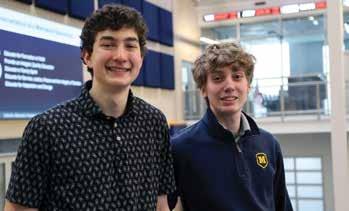
In March, Noah Pitz ’27 (left) and Scott Kaplan ’27 presented the molecular story of retatrutide at the American Society for Biochemistry and Molecular Biology (ASBMB) convention in Washington, D.C. Retatrutide performs the primary function of both Ozempic and Mounjaro, along with an additional fat-burning capability, and is currently in its testing phase.
Leo Tierney ’26
FAITH, COFFEE, AND CONVERSATION: Agape Latte Comes to Moeller
Astudent-led initiative brings meaningful faith dialogue to the Moeller community.
What began as a summer camp experience on the campus of Boston College has blossomed into one of the most engaging new programs at Archbishop Moeller High School. Leo Tierney ’26 first encountered Agape Latte during a BC summer camp, where the nationally recognized program fosters meaningful conversations around faith, vocation, and service. Inspired by the relaxed atmosphere, the authenticity of the speakers, and the depth of conversation the format invites, Leo came home determined to share the experience with his classmates.
“I wanted students to have a space to talk about faith that felt different from a religion class,” Leo explained. With guidance from the Campus Ministry team at Boston College, who generously shared advice and resources, Leo helped launch an Agape Latte chapter at Moeller—giving students a new outlet to engage with faith outside of the traditional classroom setting.
Agape Latte is built on a simple but powerful premise: gather students in a relaxed, faith-based environment and listen to people tell their own stories. The structure is intentionally casual. Speakers share short, personal talks about their own relationships with God and how their faith journeys have led them to meaningful experiences. A Q&A session follows, inviting students into the conversation rather than simply asking them to listen. The collaborative nature of the program—mixed with the warmth of a coffeehouse setting—helps faith feel personal, accessible, and real.
By bringing in speakers from outside of Moeller, the program exposes students to a wide variety of voices, vocations, and lived experiences. The short speaking times keep the energy high, and the Q&A format ensures every event feels like a genuine dialogue rather than a lecture.
Moeller’s own community has also stepped up to share their faith journeys. Teachers Mr. Lynch and Mr. DiCristoforo each took the stage, offering students an intimate look at how faith shapes the lives of the adults they see every day in the hallways and classrooms. Their willingness to be vulnerable and candid set a powerful tone for the program.
What started as an idea from a single student has grown into a meaningful new tradition at Moeller. Agape Latte is already showing students that faith is not limited to the walls of a classroom or a chapel—it is lived out through stories, service, and conversations shared over a cup of coffee. Thanks to Leo Tierney’s initiative and the support of Boston College’s Campus Ministry, our community is cultivating a space where young men can listen, ask questions, and grow in their own journeys of faith.
As the program continues, Moeller looks forward to welcoming more speakers, hearing more stories, and watching more students discover that the conversation about faith is one well worth joining.
Agape
Latte at Moeller was honored to welcome these speakers this school year:
Bro. Dr. Bob Donovan, SM — Bro. Bob has dedicated his life to caring for patients experiencing poverty and homelessness, and is the founder of the Center for Respite Care. His message reminded students that faith often finds its fullest expression in service to the most vulnerable.
Mr. Steve Clark Sr. — Athletic director at Cincinnati College Preparatory Academy, Mr. Clark spoke about how faith and leadership intersect in the world of athletics and education, offering students a compelling look at how to live out their values in everyday work.
Bro. Jean Dossous, SM — A member of the St. Francis de Sales community, Bro. Jean also serves a local Haitian community and shared his perspective on cross-cultural ministry, resilience, and living the Gospel in solidarity with others.
from medicine.
Bro. Dr. Bob Donovan talked about the transition to religious life
CHEERS to NEW ADVENTURES
MARY FISCHER Vice President of Advancement
Mary Fischer
Although Mary Fischer is retiring after 18 years as a Moeller employee, she has used her gifts to help the Advancement and Alumni offices since the day her son, Brendan ’08, began his time as a Man of Moeller in 2004. With a degree in public relations affording her some professional opportunities early on, Mary found her niche in the Catholic school environment. As her responsibilities at Moeller grew, so did her passion to help advance such an important mission as Moeller’s. Among the many memories to smile back on, her favorite is surpassing the capital campaign goal and realizing the support for Moeller. She shares that it was a feat experienced by all and a true testament to the work that goes on every day, both in and out of the classroom. “I’ve always said that I have a job where I fall in love with people,” Mary says, “and that has certainly been the highlight of my career—engaging and getting to know so many incredible people.”
President Mr. Jason Niehaus ’93 shares, “Mary’s contributions to Moeller will extend far beyond her years of service. The genuine relationships she built have deepened the connections that people have with Moeller. Mary extended the light from her passion to serve this ministry and we are forever grateful.”
Dan Shannon
Dan’s path to the classroom has always felt like a calling—one shaped by a family full of educators. “I have always been around teachers,” he reflects, recalling generations of relatives who shared the same vocation. He can even point to the exact spot on Miami University’s campus where he decided to become a biology teacher. Since arriving at Moeller in the fall of 1984, that sense of purpose has defined his impact. In 2012, he launched the Molecular Modeling club, starting with a milestone 3D-printed molecule and quickly expanding into real-world collaboration with a University of Cincinnati College of Medicine mentor. Today, students present their work at national conferences in places like Washington, D.C., and Colorado—an extension of Dan’s vision for authentic, hands-on learning. And through it all, one thing hasn’t changed: “Moeller is just one big, supersized family… and I remember laughing a lot.”
Principal Michael Shaffer shares, “I’ve known and worked alongside Dan for over 20 years. He took me under his wing and gave sage advice for someone like me starting out in the field. As an administrator, I turn to him constantly as the model of what a great teacher is. He’s patient and inclusive with his students, he’s an experiential teacher, and, most importantly, his inquisitiveness and inventiveness are contagious to both students and colleagues alike. Dan inspires enthusiasm for investigation and the sciences in students who think that science isn’t for them. He does it in a way that makes every student feel valued, seen, and confident that they can succeed.”
Jeff Gaier
Jeff Gaier has been a member of the Moeller faculty for the past 44 years. He began teaching computer courses during his second year at Moeller, when the school went from having two computers to 20. Jeff’s career at Moeller began through a connection with Bro. Ron Luksic, who was his high school guidance counselor at Chaminade Julienne. Jeff was looking for a way to use his finance degree from Miami University and Bro. Ron, who was the dean of academics at Moeller at the time, thought that Jeff would make a good teacher and encouraged him to apply for an opening teaching business and coaching soccer and wrestling. Jeff shares that he chose to use his skills in a school setting, because as technology has advanced at Moeller, there is an opportunity to learn something new every day. His favorite part of Moeller is the relationships he has developed with faculty, staff, and students. Mr. Carl Kremer, Moeller vice president and head varsity basketball coach, shares, “Jeff is truly one of the greatest leaders in the history of our school. He ensured that Moeller was ahead of other schools in the use of technology throughout Cincinnati and beyond. He also built a nationally-recognized wrestling program from the ground up that is still thriving today. Jeff did all this through his commitment to Marianist values. Teachers, students, athletes, and parents all know that Jeff represents the family spirit and is driven to do the best for everyone. His humble and unselfish attitude grew trust that allowed him to be such a significant contributor to Moeller’s growth over the past 40 years. Moeller would not be where it is today without the contributions of Jeff Gaier.”
JEFF GAIER Technology Director
DAN SHANNON Science
DIANE HOCTOR Spirit Shop Manager
Diane Hoctor
Diane Hoctor is a familiar face to all who stop by the Spirit Shop for their Moeller gear. She has worked at Moeller for 24 years and has run the Spirit Shop since 2008. Among her many favorite memories of her time at Moeller, the one that stands out above the rest involves her own Man of Moeller. Her son, Bubba, who had bravely battled cancer, graduated with the Class of 2010. As he walked across the stage, his classmates, along with all those in attendance, gave him a standing ovation, surrounding him with love and unwavering support. In that moment, Diane knew their family was exactly where they were meant to be.
Mrs. Lisa McAlpine, administration assistant, shares, “My memories of Diane are filled with good food, a woman who seemed to know everyone, and someone who was always ready to help, especially students. I met Diane when we were fellow football moms—her youngest son and my oldest son played together on the team. She was involved in anything and everything that recognized and supported students. She loved baking her famous chocolate chip cookies, which the boys absolutely loved. My sons told stories about word spreading that she had cookies in the Spirit Shop, and everyone rushed down from class to make sure they got one before they were gone. We often had ladies’ lunches on Fridays in the Main Office. Whenever Diane was involved, she elevated everything—bringing real plates, cloth napkins, and, of course, wonderful food. She made even the simplest gatherings feel special.”
Frank Minnick has been teaching at Moeller for 33 years. While finding the quality of his own high school education lacking, Frank felt called to pursue a career in education, because he believed that teaching could and should be done better. His favorite Moeller memory is the telephone call he received in late June 1993 from Ken Keener ’65, a former Moeller English teacher, offering him a teaching position. This moment truly changed the course of his life.
Provost Dr. Christine Brookbank shares, “When alumni remark on the influence of Frank in their lives, they often point to his passion for teaching them how to write. While students may not always appreciate the many rounds of revisions he requires, they leave Moeller as stronger writers and more thoughtful critical thinkers because of his guidance. As his colleague in the English department, I’ve long admired his deep knowledge of the literary canon and his skill in placing works within their historical context. As an administrator, I’ve also witnessed his persistence and dedication to shaping our students into remarkable young men. He holds them to high standards and works tirelessly to help them meet those expectations.”
farewell saying
FRANK MINNICK English
Frank Minnick
BRO. BOB FLAHERTY
Pastoral Counselor
Bro. Bob Flaherty
Bro. Bob Flaherty has served Moeller for 58 years following one year at both Chaminade College School in Toronto, Ontario, and Chaminade Julienne Catholic High School in Dayton. Stemming from his admiration for the brothers he had as teachers at North Catholic High School in Pittsburgh, Pennsylvania, and the University of Dayton, he dreamed of being a brother one day.
Mr. Carl Kremer, head varsity basketball coach, shares, “Bro. Flaherty has been a fixture of the Marianist charism within our school for nearly 60 years. No matter what role he played—teacher, guidance counselor, head of guidance, or student government moderator—Brother has been a role model who has promoted the family spirit that is Moeller. He’s certainly been a blessing to our school and to the thousands of students, parents, and colleagues he’s influenced over the years.”
Mr. Andrew Simon ’94 shares, “Bro. Flaherty has had a big impact on my life, ever since I first stepped foot on Moeller’s campus as a freshman in 1990. He was my guidance counselor and really helped me prepare for college and beyond. My fondest memories of Brother are from my senior year, when I was lucky to be a Guidance office runner. I spent a lot of time hanging out in his office, chatting about anything and everything when the job had down time. There are few people who have been as important to Moeller’s history as Bro. Flaherty. Thank you, Brother, for all that you have done for me and for Moeller!”
HONORING BRO.FLAHERTY
The Moeller Family gathered to honor Bro. Flaherty on April 1 with a Mass and reception. Scan the code to see all of the photos.
Hosts Barrett Cohen and Andy Nagel ’88
A FRESH LOOK for MOELLER.ORG
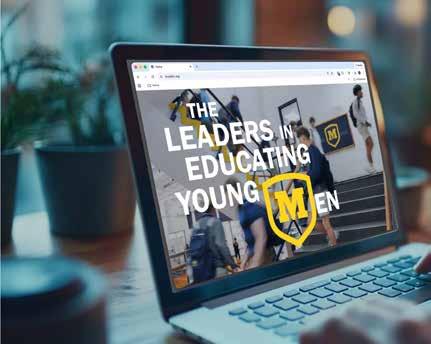
Moeller.org Has a New Look
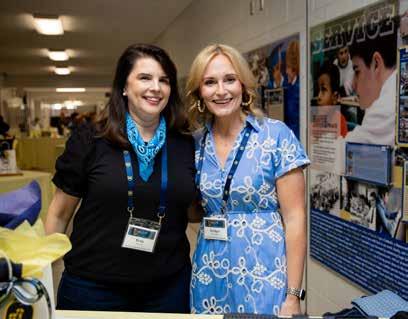
Designed with our families, alumni, and prospective Crusaders in mind, the redesigned website offers streamlined navigation, updated visuals, and a more dynamic way to experience life at Moeller. From admissions to academics, visitors can more easily explore what makes our brotherhood strong and why Moeller is the leader in educating young men. The new site better reflects who we are today—Catholic. Marianist. Forming our Students into Remarkable Men—while providing a modern, user-friendly experience for our entire community.
Dazzling in Denim,
If you missed all of join us on April
Brilliant in bling
the fun this year, April 10, 2027!
AUCTION GALA
BUILDING
Leaders THE NEXT
MOELLER’S STRATEGIC GROWTH PLAN CHAPTER:
Where Faith and Innovation
Shape Tomorrow’s
Archbishop Moeller High School has never stood still.
From its founding in 1960, Moeller has been defined by bold vision, Marianist leadership, and a commitment to forming young men of faith, character, and intellect. Each generation has built upon the foundation laid before it— strengthening academics, expanding facilities, deepening faith formation, and elevating the Crusader brotherhood through the House System.
Under the leadership of President Jason Niehaus ’93, Moeller has developed a five-year Strategic Growth Plan to set the direction of its future. This plan is about strengthening mission, enhancing excellence, and positioning Moeller for sustainable success well into the future.
“Archbishop Moeller High School is primed for a very bright future,” Mr. Niehaus said. “The purpose of the Strategic Growth Plan is to advance the school’s Mission—Catholic. Marianist. Forming our Students into Remarkable Men. We will continue to build upon the growth and success we have already achieved, positioning us for the next generation of Men of Moeller.”
Over the Last Decade
Moeller has experienced significant progress across multiple dimensions:
Strong and stable enrollment
Investment in campus improvements and learning environments
Expanded academic pathways and co-curricular opportunities
Continued success in athletics and student life
Strengthened advancement efforts and donor engagement
Deepened commitment to Marianist identity and faith formation
These gains did not happen by accident. They reflect disciplined leadership, strategic fundraising, alumni loyalty, and the dedication of faculty and staff who believe deeply in Moeller’s mission.
We know that sustained excellence requires forward planning. The educational landscape is shifting. Catholic schools must be proactive, innovative, and mission-focused to thrive. The next five years will ensure that Moeller does not merely respond to change, but leads through it.
The Vision for the Next Five Years
The Strategic Growth Plan centers on several key priorities designed to secure Moeller’s future and elevate its impact.
Domain A: Mission and Catholic Identity
• Faith Formation
Domain B: Governance and Leadership
• Faculty/Staff Professional Development
• Optimization of the Moeller Board
Domain C: Academic Excellence
• Relational Learning
• Experiential Learning
• Authentic Learning
Domain D: Operational Vitality
• Admissions/Enrollment Management
• Faculty/Staff Engagement
• Endowment
• Alumni Engagement
• Facilities
• Athletics
Leadership and Process
President Niehaus and the Board of Trustees endorsed the process, shaped by stakeholder input—faculty, board members, alumni, parents, and community leaders— ensuring that it reflects both institutional wisdom and forward-looking strategy.
The process is deliberate:
1. Assessment and data analysis
2. Defined strategic objectives
3. Measurable benchmarks
4. Transparent accountability
This is not a static document. It is a dynamic framework that will guide decisions, resource allocation, and leadership focus through 2031.
What Comes Next
In the coming months, the school will:
Finalize strategic metrics and timelines
Communicate specific implementation phases
Align budgeting with strategic priorities
Launch key initiatives tied to enrollment, facilities, and advancement
The success of this plan will depend on the full Moeller community—students, families, alumni, donors, and friends. It will be crucial for all of us to work together to bring about the execution of the plan at all levels.
Moeller’s history is marked by courageous leadership and faithful commitment. Every generation has faced change. Every generation has responded with conviction. This Strategic Growth Plan is the next chapter in that story. The mission remains clear. The brotherhood remains strong. And the future of Archbishop Moeller High School has never been more promising.
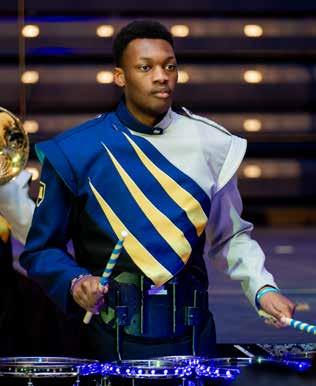
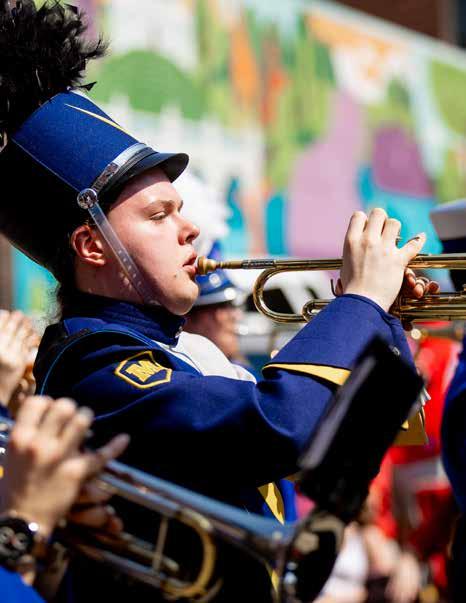
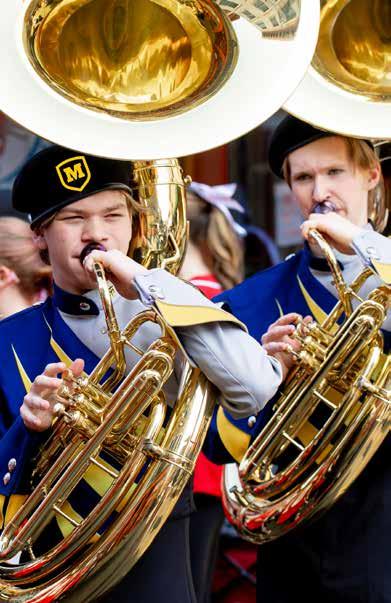
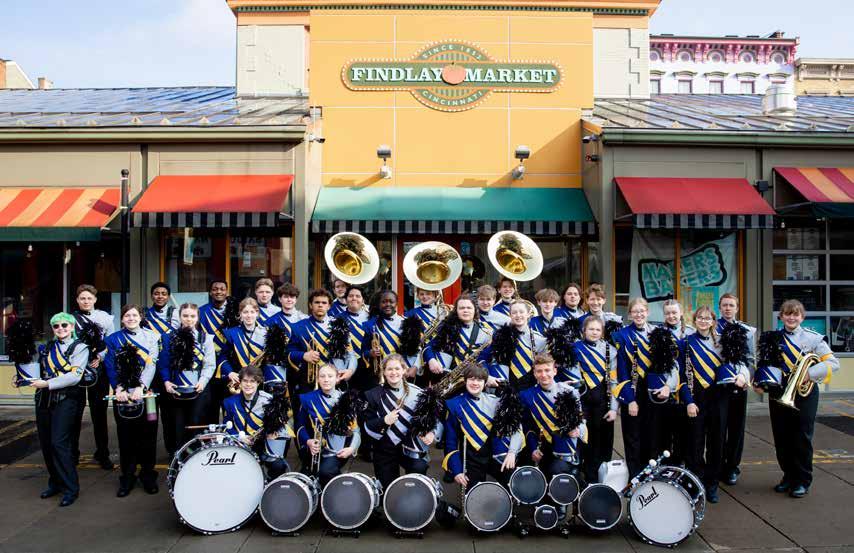
The Moeller/MND Band did an outstanding job performing in the Opening Day Parade. They joined the bands of St. Xavier and La Salle, representing their schools and their city with pride.
MARCHING, MUSIC, AND GCL PRIDE OPENING DAY
A Transformative Gift CRUSADERS BASEBALL
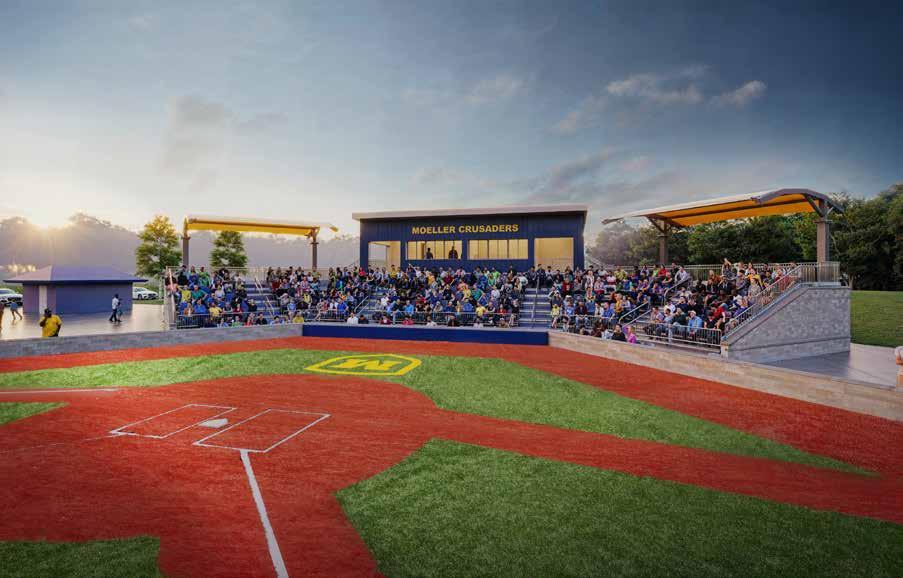
Last fall, Moeller announced a transformative gift from nationally-recognized orthopedic surgeon Dr. Timothy Kremchek—one that will permanently shape the future of Crusaders Baseball and further strengthen the Moeller brotherhood.
Dr. Kremchek’s extraordinary generosity will fund the construction of the grandstands stadium at the Bucher Athletic Complex, completing the home of Crusaders Baseball and creating a dynamic gathering space for the entire Moeller community.
“Dr. Kremchek’s generosity continues a remarkable family legacy at Moeller,” said Jason Niehaus ’93, president of Archbishop Moeller High School. “His father played such an instrumental role in caring for our student-athletes and building the foundation of Moeller athletics. Now, he has taken that commitment to an entirely new level. His vision and generosity will impact generations of Moeller student-athletes, and we are profoundly grateful.”
Best known as the longtime Cincinnati Reds team physician and one of the nation’s leading orthopedic surgeons, Dr. Kremchek has dedicated his career to helping athletes reach their fullest potential. His gift reflects not only his professional passion for sports medicine but also his deep belief in Moeller’s Mission and the transformative power of generosity.
“I may not be a Moeller graduate, but I’ve seen firsthand the impact this community has on young men,” Dr. Kremchek said. “My hope is that this gift shows others—alumni, parents, friends, or simply people who care about developing studentathletes—that we all can play a role in making something better. You don’t have to wear the Moeller crest to be part of its story. Together, our generosity can shape experiences that last a lifetime.”
Construction is scheduled to begin in June 2026, with the new stadium expected to open prior to the start of the 2027 baseball season.
More than a new facility, the stadium represents something deeper: a continued investment in brotherhood, excellence, and the formation of remarkable young men—ensuring that the Crusaders legacy continues to advance for generations to come.
KREMCHEK STADIUM
Leave a lasting legacy at the new home for Moeller Baseball! For a gift of $2,000, you can secure the naming rights to a seat at Kremchek Stadium, complete with a personalized plaque featuring your name or the name of someone you wish to honor. Or, rally your teammates to celebrate a memorable season! Payment plans are available. To reserve your seat, please contact Kate George at kgeorge@moeller.org.
GERRY FAUST ATHLETIC HALL OF FAME INDUCTEES 2026
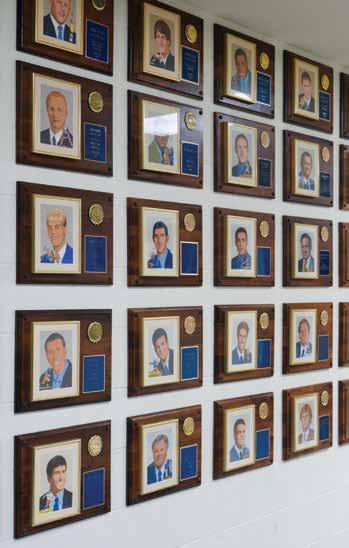
Moeller High School is proud to announce the 2026 class of the Gerry Faust Athletic Hall of Fame, honoring five outstanding alumni whose achievements on and off the field have brought distinction to the Crusader athletic program. “We are incredibly proud to welcome this outstanding group of alumni into the Gerry Faust Athletic Hall of Fame,” said Moeller High School president Jason Niehaus ’93. “Each of these inductees exemplifies the Moeller tradition of excellence — not only in their sport, but in their academics, their character, and their service to others. We are equally honored to recognize Coach Fred Hesse with the Brother Choquette Award for his tireless dedication to our student-athletes over nearly two decades. Celebrating the achievements of our alumni and coaches is a reminder of what it truly means to be a Crusader, and we look forward to honoring them.”
Jason Grunkemeyer ’96 – Basketball
Jason Grunkemeyer was a two-year varsity starter who earned All-State honors during the 1995–1996 season. At graduation, he ranked among Moeller’s all-time leaders in multiple statistical categories, including 5th in free throw percentage, 10th in free throws made (184), 16th in scoring (760 points), and 16th in three-point field goals (58). He went on to play at Miami University, where he was a three-year starter, a member of the 1999 “Sweet Sixteen” team and served as team captain his senior year. Grunkemeyer’s coaching career included positions at St. Louis University, Miami University, and Ball State University, and he also served as athletic director at both Talawanda High School and Hilton Head Christian Academy in South Carolina. He currently serves as deputy athletic director and sport administrator for both men’s and women’s basketball programs at the University of Maine. He and his wife, Angie, have three children, Josh, Nate, and Evelyn.
in 1993, and was named to the All-SEC Academic Honor Team in 1994. He ranks among UK’s all-time leaders in career RBI (5th, 155), career doubles (8th, 47), career hits (13th, 212), and hits for a season (10th, 86). He currently works as an area construction manager for D.R. Horton Homes and resides in Tampa, Florida, with his wife, Stephanie. Brad and Stephanie have two daughters, Abbie and Sidney (Billy), and two grandchildren, Baker and Landry.
Each of these inductees exemplifies the Moeller tradition of excellence — not only in their sport, but in their academics, their character, and their service to others.
— Moeller High School president Jason Niehaus ’93
Brad Hindersman ’90 – Baseball
Brad Hindersman was a two-sport athlete at Moeller, serving as a three-year starting catcher in baseball and a two-year varsity football player. He compiled a career .399 batting average with 101 hits (6th all-time), 25 doubles (5th all-time), and 73 RBI (5th all-time) in his Moeller career. He earned team captain honors his senior year, was named best defensive player his sophomore year, and best offensive player his senior year. He was also a teammate and battery mate with his brother Brian (‘89), a 2019 Gerry Faust Hall of Fame inductee, sharing a state championship ring in 1989. Hindersman went on to letter all four years at the University of Kentucky, earning 2nd Team All-SEC honors in 1992 and both All-American and All-SEC recognition
Marcus Rush ’10 –Football
Marcus Rush was a three-year varsity starter at defensive end and team captain his senior year. He followed up his 2nd team GCL honors his junior season with a senior season that included 70 tackles (35 solo), 15.5 tackles-for-loss, 11 sacks, two blocked kicks, two interceptions, and a touchdown. He was named All-GCL, GCL Co-Athlete of the Year, All-Ohio, and All-Midwest and was rated among the nation’s top defensive end prospects. Rush finished his Moeller career with 161 tackles and 20 sacks. He went on to Michigan State University, where he became the program’s all-time leader with 53 starts at defensive end and ranks among the Spartans’ all-time leaders in sacks (7th, 18.5), sack yardage (8th, 131 yards), tackles for loss (7th, 37.5), tackles for loss yardage (7th, 183 yards), and forced fumbles (tied 6th, 5). Rush also had 16 career pass break-ups and two blocked kicks. He was a member of three bowl championship teams, including the 2014 Rose Bowl. Following the 2015 NFL Draft, Rush signed with the San Francisco 49ers as an undrafted free agent and went on to spend time with the Jacksonville Jaguars, Kansas City Chiefs, and Denver Broncos. Marcus currently works as an account manager for Associated Packaging Inc. and resides in Cincinnati.
Dakota Sizemore ’14 – Wrestling
Dakota Sizemore was a two-sport athlete, earning two state football championships (2012 and 2013) as a linebacker and a wrestling state championship at 160 lbs. in 2013. Sizemore compiled a 124-32 career record across four years of wrestling at Moeller. He qualified for the state tournament all four years, placed three times, and finished in the top ten all-time in career pins. Sizemore earned numerous individual honors including two GCL Championships, three GCL all-star team selections, three Academic All-Ohio distinctions, two Nike Wrestling All-American Team selections, and the Moeller Outstanding Wrestler Award in both 2013 and 2014. He went on to wrestle at Ohio University. Sizemore currently works as a financial analyst at First Financial Bank and resides in Cincinnati with his wife, Hallie, and their son, Cameron.
Keith Watkins II ’13 – Football
Keith Watkins II was a four-year letter winner in both football and basketball who capped his career as team captain of Moeller’s 2012 State Championship football team. His senior season was historic: 322 rushing attempts, 2,146 yards, and 28 touchdowns—earning him GCL Player of the Year, First Team All-GCL Offense, First Team All-TriState, First Team All-Ohio, and Cincinnati Enquirer Co-Player of the Year honors. His career totals of 3,045 rushing yards (6th all-time), 28 touchdowns (2nd all-time), and 258 points (3rd all-time) cement his place among the program’s all-time greats. Rivals.com ranked him the No. 34 running back prospect nationally in his class. Watkins went on to play at Northwestern University as a defensive back, and his sophomore season finished tied for second among
cornerbacks with 41 tackles. Watkins currently serves as a senior sales executive with Paycor and resides in Hebron, Kentucky, with his wife, Taylor, and their three children, Nash, Blaze, and Dawson.
Brother Choquette Award Recipient: Fred Hesse
As part of the annual Hall of Fame induction ceremony, Moeller High School will also present the Brother Choquette Award, the school’s highest honor for an assistant coach. The award is named after Moeller’s first athletic director, Brother Joseph Choquette, and has been presented annually since 2017 to an assistant coach who has made a significant contribution to their sport. This year’s recipient is Fred Hesse, assistant basketball coach and 1974 graduate of Badin High School. Coach Hesse is in his 19th year coaching basketball at Moeller, following a 21-year tenure at Badin High School that included seven years as head coach. His decades of dedication to the game and to the young men he has coached make him a most deserving honoree.
BOURBON & CIGAR STAG
Sponsored by
Friday, June 5, 2026
Scan here for tickets
REUNION WEEKEND
Bourbon & Cigar Stag Returns to Kick Off Reunion Weekend
Reunion Weekend at Moeller will once again begin with one of the school’s most anticipated traditions—the annual Bourbon & Cigar Stag, set for Friday, June 5, from 6:00 to 10:00 p.m.
This relaxed, welcoming gathering brings together alumni, past and current Moeller dads, and friends of the school for an evening that celebrates the spirit of Big Moe. While bourbon and cigars give the event its name, the evening is truly about reconnecting, sharing stories, and enjoying the brotherhood that defines the Moeller community.
The event will take place primarily outdoors, with food served in the Activity Center. Guests can enjoy bourbon tastings, but there will also be other adult beverage options and non-alcoholic drinks available. And for those who don’t smoke cigars, there’s no need to worry—the event has long been enjoyed by plenty of non-smokers who simply come for the atmosphere, conversation, and camaraderie.
“This is really one big Moeller reunion welcoming everyone who loves this school,” says Andy Nagel ’88, alumni director. “And, you don’t have to drink bourbon or smoke a cigar to attend.”
Tickets include admission, food, drinks, and a cigar for those who choose to partake, along with plenty of opportunities to reconnect with classmates and meet fellow Crusaders from across generations. Several discounted ticket options are available, including special pricing for Golden Crusaders (Classes of 1964–1975), Moeller coaches, young alumni (Classes of 2006–2022), and reunion classes ending in 1 or 6. A non-alcohol ticket option is also available.
Whether you’re reconnecting with old classmates or simply enjoying a summer evening with the Moeller community, the Bourbon & Cigar Stag promises a memorable start to Reunion Weekend 2026.
Scan the QR code to see the details for all of the 2026 reunions.
Alumni Invited to Help Shape the Future of the Moeller Alumni Association
With more than 13,000 alumni across the Moeller brotherhood, the Crusader network remains one of the school’s greatest strengths. As Moeller transitions from its current Strategic Growth Plan into the next chapter, the Alumni Association is preparing for several updates and new opportunities for engagement—and alumni are invited to play a key role. The alumni office is currently seeking Crusaders interested in serving in a variety of volunteer and leadership roles, including Alumni Board members, committee chairs and volunteers, class captains, and event volunteers. These roles help strengthen connections among alumni and ensure that the Moeller brotherhood remains active, engaged, and supportive of the school’s mission.
Alumni Board Opportunities
Serving on the Alumni Board offers graduates the chance to help guide alumni engagement and initiatives. Board members serve a three-year term and participate in one-hour meetings every other month.
Board members are also encouraged to maintain a visible presence in the Moeller community by attending events and supporting alumni-sponsored gatherings such as the Sports Stag, Bourbon & Cigar Stag, Father-Son Mass, and other key alumni events.
Committee Leadership and Participation
Moeller is also seeking alumni to lead and support several committees that help shape alumni programming and outreach. Current opportunities include:
• Athletics
• Regional alumni events
• Special events—including the Sports Stag, Bourbon & Cigar Stag, Reunion Weekend, Father-Son Mass, Golf Classic (2027), and sport-specific alumni nights
• Young Professional Organization (YPO)— serving alumni from the Classes of 2006–2021
Class Captains
• Advancement—supporting initiatives such as the Crusader Challenge, Giving Tuesday, and Spring Day of Giving
• M.E.N. (Minority Engagement Network)—working alongside D’Juan Francisco ’85
Each class also benefits from strong leadership through class captains, with a goal of four to six captains per class. Class captains attend one to two meetings each year and serve as a vital connection between the alumni office and their classmates—sharing updates, gathering feedback, and helping encourage participation in alumni events and giving initiatives.
Event Volunteers
For alumni who may not be able to commit to an ongoing role, event volunteering is another meaningful way to stay connected. Many Moeller events rely on volunteers who can lend a hand for a single evening or activity.
Building the Best Alumni Association
Alumni interested in getting involved are encouraged to reach out to the alumni office and share where their interests lie. Together, Crusaders can continue strengthening the brotherhood and supporting Moeller High School for generations to come.
We Love it When You Come Home!
It’s always best to schedule your visit in advance so our team can be sure to give you the time and attention needed to make the most of your visit to Moeller. While a brief tour may sometimes be possible on a drop-in basis, availability can vary depending on schedules.
To plan your next visit to Big Moe, please email Alumni Director Andy Nagel ’88 at anagel@moeller.org. We’d love to welcome you back to campus.
9001 Montgomery Road
Cincinnati, Ohio 45242
CHANGE SERVICE REQUESTED
Baseball Camp
Grades 3-5: June 15-17
Grades 6-8: June 22-24
Incoming 9: June 1-2
Basketball Camp
Grades 2-3: June 15-18
Grades 4-6: June 1-4
Grades 6-8: June 8-11
Cheer Camp
Grades 1-5: July 25
Football Camp
Grades 2-5: June 22-25
Grades 6-8: June 15-18
FUNdamentals Camp
Grades 2-6: July 6-9 & July 20-23
Over25
Ice Hockey Camp
Grades 1-4: July 31-Aug. 2
Grades 5-8: July 31-Aug. 2
Lacrosse Camp Grades 3-8: June 29-July 2
Soccer Camp Grades K-8: June 15-18
Volleyball Camp
Grades 3-5: July 7-9
Grades 6-8: July 14-16
Incoming 9: July 7-9
Wrestling Camp
Grades 1-6: June 29-July 1
Grades 3-12: July 27-30
3D Maker Camp
Grades 5-8: July 13-16
Animation Movie Production (AMP) Camp Grades 5-8: July 20-23
Art Camp
Grades 3-5: June 8-11
Grades 6-8: June 8-11
Big Moe Broadcasting Camp Grades 5-8: June 1-4
Chemistry Camp Grades 7-8: June 1-4
Crusader Lego Masters Camp Grades 3-6; July 20-23 & July 27-30
Engineering Camp Grades 7-8: June 1-4
High School Placement Test Prep Camp
Grade 8: July 27-31 & Aug. 3-7
MOELLER CAMPS MoellerCamps.org
Camper eligibility is based upon grade in fall 2026
Entrepreneurship Camp Grades 5-8: June 22-25
Esports Camp Grades 5-8: June 22-25
Lego Stop Motion Animation Movie Production (LAMP) Camp Grades 5-8: July 20-23
Maker Grand Prix Camp Grades 5-8: June 8-11
Man of Moeller Camp Grades 6-8: July 27-30
Medieval Maker Camp Grades 5-8: June 8-11
Mobile Application Development (MAD) Camp Grades 5-8: July 13-16
Robotics Camp Grades 6-8: June 15-18
Theater Camp Grades 5-8: July 6-10
Video Games: From Campaigns to Conclusion Grades 7-8: July 27-30