SPRING 2018 1
AN IMMERSIVE COLOR EXPERIENCE
FRIDAY, APRIL 27 8 PM–MIDNIGHT 3 DJs • INTERACTIVE ART • DRINKS • HORS D’OEUVRES TICKETS: $15 / $50 INSIDER MMOCA.ORG/CHROMA
2 MODA
227 STATE ST
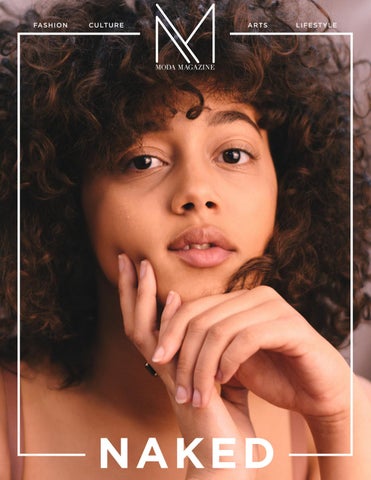
Team EDITOR IN CHIEF Darby Hoffman DEP UTY EDITOR Eva-Delilah Weiland ART DIRECTOR Lauren Chung WUD PUBLICATIONS COMMITTEE DIRECTOR L. Malik Anderson WUD PUBLICATIONS COMMITTEE ADVISOR Jim Rogers WUD PRESIDENT Iffat Bhuiyan ON THE COVER Joicelyn Brenson by Cameron Smith SPECIAL THANKS TO MMoCA Neroli ReThreads
ASSOCIATE ART DIRECTOR Channing Smith PHOTOGRAPHY DIRECTOR Marissa Haegele ARTS CURATOR Ben Golden CREATIVE DIRECTOR Geordon Wollner FASHION EDITOR Ashley Mackens LIFESTYLE EDITOR Cassie Hurwitz CULTURE EDITOR Haidee Chu ARTS EDITOR Margaret Duffey FINANCIAL MANAGER Margaret Brennan WEB MASTER Leah Leonidas CREATIVE TEAM Alexa McGoey Channing Smith Emily Woodzicka
STAFF WRITERS Amelia Faist Clarke Smith Margaret Duffey Maryam Muhammad Matthew Weinberger Molly Rapozo Naomi Gallagher Shelby Spiegel CONTRIBUTING WRITERS Abbey Meyer Grace Herndon Molly Burki Sam Georgson MODELS Britta Seaberg Ciara Halvik Deborah Zongo Faith Champa Isha Senghore Jiayue He Joicelyn Brenson Lauren Cleary Samantha Krusic Simon Guma Synovia Knox ART Anna Snell James Arbaje Kaitlin Banafsheha Molly Burki PHOTOGRAPHY Amelia Faist Caroline Daniels Cameron Smith Jing Zeng Marissa Haegele Matthew Weinberger
SPRING 2018 3
Table of Contents SPRING 2018
LIFESTYLE
ARTS
07 Naked and Unafraid
14 If I Were Naked, Would This Be Porn?
Behind Uraban Decay’s most coveted line
12 Less is More
The quiet protest you can make every day
22 Baring it All
Opening up about the struggles of chronic acne
30 Strip It Down
Put down the chips and pick up a blueberry
FASHION 10 With or Without
The transformative power of accessories
28 Reclaiming Sexuality
Unapologetically scandalous
CULTURE 04 Freedom to Feel
How society’s obsession with masculinity limits male vulnerability
32 Naked Politics
An analysis of potential for bipartisanship in the the Trump era
4 MODA
The blurry line between obscenity and eroticism in art
16 Malcolm Bracey: A Rising Controversy
Madison creator of Porn Hoodies talks about normalizing nudity in public with clothing art
18 Explorating Literary Vulnerability
A glimpse into how different writers address emotional nudity
20 Flesh and Stone
A series of photographs exploring the expressive nature of the human body
FEATURED 24 Body Canvas
Bodiful: the body is the look
36 Creative Spread
Beautiful and bare. Deborah, Joicelyn, Jiayue and Lauren in Aerie
LETTER FROM THE EDITOR
REMOVE YOUR
RESERVATIONS When was the last time you were truly vulnerable? Personally, I can’t remember. In fact, I think many of us aren’t willing to genuinely take this type of risk. We almost always rely on a near-guaranteed outcome before taking the plunge. Even when claiming that we are “baring it all,” we continue to grasp for some degree of certainty and safety. As rational creatures, it makes sense that we wouldn’t take an action if we couldn’t at least partially predict the turnout. Take sharing a secret with a friend, for example. Although your emotions may tell you that you’re putting yourself completely on the line, we use trust, environment and the quality of our relationships to determine that a seemingly life-or-death decision is actually much less threatening. Our world lends itself to this almost constant notion of certainty: We know what our schedules will entail down to the hour, what times we should be at which locations and who we’ll interact with throughout
our days. So, what would it look like to put ourselves out in the world with absolutely no promises? I believe true vulnerability lies in these moments, when we’re not sure what to do; when we don’t know on which side the coin will land. If you have no clue of life’s trajectory (say, if you are graduating college and pondering where life will take you), stop and breathe. True vulnerability isn’t rooted in fear and anxiety like we tend to think. Rather, it lies in taking the only step that is actually feasible in situations of uncertainty: learning to trust. I know, it sounds ridiculous. Am I expecting that we just sit back and wait for life to happen for us? Absolutely not. But, that doesn’t mean that we should stress aimlessly to “fix” every aspect of our life that isn’t picture perfect. I’m beyond guilty of this constant doeverything mindset, and honestly, my mental health has thanked me recently for silencing my brain and just letting whatever is going to happen — happen.
Malcolm Bracey, a local designer, exemplifies this unquestioning vulnerability. Despite the controversy surrounding his pieces, he trusts in himself to continue creating his product (page 16). Our society’s obsession with toxic masculinity also highlights the importance of vulnerability, as a broken system prevents men from trusting themselves and, instead, forces them to censor their expression (page 18). From here on out, I’m aiming to practice radical vulnerability, and I hope you will too! Be realistic about what you can change in this moment and consciously silence that voice that says you always need to do something. I believe that allowing the world to be a bit more uncertain is one of the most vulnerable — and ironically, most productive — positions we can put ourselves in. Good luck and enjoy this semester’s print issue!
SPRING 2018 5
CULTURE
FREEDOM TO F E E L HOW SOCIETY’S OBSESSION WITH MASCULINITY LIMITS MALE VULNERABILITY WRITTEN AND ILLUSTRATED BY MOLLY BURKI, CONTRIBUTING WRITER
Independent, unemotional, strong — masculinity can be a weight on men’s shoulders as they try to navigate society’s expectations. “It makes me feel like I have something to prove,” a male student at UW-Madison says. For these men, this expectation leaves them fearful of being teased or seen as “less reliable.” It has limited their ability to be vulnerable. “Formative years are such a confusing time in anyone’s life. It just seemed as if the path of least resistance was to play into those notions,” one UWMadison student says. “As a gay man, it made me struggle with my identity and coming to terms with my sexuality,” another says. Toxic masculinity is the multitude of masculine stereotypes that confine the male gender. They socialize men into believing that they are not allowed to feel deeply, express deeply or be
6 MODA
anything less than strong.1 Women, on the other hand, often grow up being trained to possess a higher emotional intelligence. As young girls, they are often asked to express their feelings.2 From a young age, societal expectations of masculinity engrain gendered expectations into the brains of young boys. Emotions are viewed as feminine and tears as a stain of weakness. Toddler boys who fall and get hurt are greeted with, “It’s okay, don’t cry. Be a man!” As lighthearted as the phrase may seem, it often turns into a less playful concept and more of a demand as years go on. This is just one of the many forms of toxic masculinity that young men are face as they grow up. Social climate is changing in a way “Toxic masculinity in boys is fueling an epidemic of loneliness.” NBCNews.com. January 18, 2018. Accessed February 01, 2018. 2 Reiner, Andrew. “Teaching Men to Be Emotionally Honest.” The New York Times. April 04, 2016. Accessed February 01, 2018. 1
that allows unheard voices to come to the forefront. Yet while more women are confronting their experiences and exposing their feelings, many men are still hidden behind the wall of masculinity. Although men are privileged with powerful voices, some are caught in an inability to communicate their vulnerabilities, too afraid to speak. Men not only have a difficult time being vulnerable but also communicating this vulnerability. The macho stereotype disproportionately affects black, male youth. As young men, they are exposed to stereotypes that depict them as hypersexual and aggressive.3 The unfair prescription impacts the way they view themselves and their place in society. When junior high comes around, girls can walk with arms draped around Pelzer, Danté L. “Creating a New Narrative: Reframing Black Masculinity for College Men.” The Journal of Negro Education. January 01, 2016. Accessed February 01, 2018. 3
each other and face no backlash from peers, yet the same is often not true for teen boys. Men often avoid emotional intimacy, as vulnerability and empathy are often considered “feminine” or “gay.” These unfortunate stereotypes compel many teens to defend the smallest amounts of affection they show with the phrase, “no homo.” However misguided, the fear of homosexuality shows a potential tie to the fear of femininity, too. The connection between these identities is grounded in men’s shared perception of them as weakness, stemming from the dominance of patriarchy in Western society.4 Similarly, stay-athome dads and male nurses — among other men— are taken less seriously because of their stereotypically “feminine” duties. Although men are often innately more Mitchell, Travis. “3. Americans see society placing more of a premium on masculinity than on femininity.” Pew Research Centers Social & Demographic Trends Project. December 05, 2017. Accessed February 15, 2018. 4
emotive and socially oriented than women,5 the feared, yet mistaken connection between homosexuality, femininity and weakness often cause adolescent boys around the age of 13 to 14 to lose their intimate friendships.6 This only further alludes to the effect toxic masculinity — and consequently emotional isolation — poses on maturing men.7 This emotional isolation for young men, especially black men, has caused worry due to its implications on mental and physical health. Niobe Way, a professor of psychology at New York University, states that the physical health impact of emotional isolation is equivalent to smoking over a pack of cigarettes a day.8 The mental health statistics also display obvious effects of isolation on men. Men are four times more likely to die of suicide than women.9 Ibid Ibid 7 Ibid 8 Ibid 9 “Suicide Statistics.” AFSP. 2016. Accessed February 01, 2018. 5
In Wisconsin specifically, suicide is the second leading cause of death for ages 15-34.10 The increase in suicide occurs after age 15, around the same time teens boys start to experience ridicule for showing their vulnerable side.11 To address the stigma of femininity and homosexuality as weakness, our society must start with institutions. Although the media is a large perpetrator of upholding stereotypical masculinity, another institution that would arguably be able to create the most impact is education. Sex education and health classes typically focus on heterosexuality. This not only leaves many LGBTQ youth thinking that their orientation is wrong or abnormal, it also deprives them of a full sex education that informs their sexuality.
6
Although sex education is one place 10 11
Ibid Ibid
SPRING 2018 7
“
EMOTIONS ARE VIEWED AS FEMININE AND TEARS AS A STAIN OF WEAKNESS. TODDLER BOYS WHO FALL AND GET HURT ARE GREETED WITH, “IT’S OKAY, DON’T CRY. BE A MAN!”
“
where understandings of gender roles are put in place, curriculum often blatantly ignores the gender spectrum. The fact that curriculums only gloss over gender identity, gender expression and sexual orientation serves to limit people’s gender expression. A male-identifying person may feel the pressure of toxic masculinity as a result, therefore dressing, interacting and behaving in a way that’s consistent with the image of a “masculine man.”
Furthermore, as positive, inclusive discourse about homosexuality emerge, we can hope that the misconstrued stereotypes — as well as the homophobic actions it incites — will continue to dissipate. If the stereotype of homosexuality being a weakness could be broken, perhaps, too, could the idea that a man’s strength being defined by his lack of “femininity” or “gayness.” Through this, toxic masculinity may lose its place in society.
If gender expression and identity were more openly discussed in education, it might not seem abnormal for men to express their feelings openly, for it would not be seen as a designated female trait. Open discussions about different ways of expressing identities, gender and orientation would allow for a stronger understanding — and therefore less misconceptions — about femininity and masculinity.
Unfortunately, men today still feel the societal pressure to remain “strong” rather than vulnerable. Ironically, however, University of Houston research professor Brené Brown found that the ability to be vulnerable is what makes people feel strong and worthy.12 She states that vulnerability is a necessity, for it is “a birth place of
8 MODA
Brown, Brené. “Listening to shame.” TED: Ideas worth spreading. March 2012. Accessed February 01, 2018. 12
joy, creativity, belonging, and love.”13 Part of this vulnerability rests on the importance of being open with oneself, but also within relationships. When institutions and norms enable growing male youth to accept their vulnerability and connect emotionally, their health and development benefits too. Such acceptance of vulnerability and emotional expression also helps many teens in times of struggles, as it provides them with an emotional outlet in the solidarity of friends who are experiencing similar issues. Before we can foster such an atmosphere of acceptance for young men, we must first raise them to be open and comfortable with feeling upset, confused or loved. We must raise them to be soft, intimate and vulnerable. Men are always fighting to be strong, yet vulnerability takes the greatest strength of all. 13
Ibid
LIFESTYLE
NAKED & UNAFRAID BY SHELBY SPIEGEL, LIFESTYLE STAFF WRITER ILLUSTRATED BY ANNA SNELL
If you have not heard of or seen the Urban Decay Naked line, chances are you might be living under a rock. Urban Decay, founded in 1995 by Sandy Lerner, Wende Zomnir and David Soward, began with a color palette inspired by the urban landscape with shades such as Smog, Rust and Acid Rain.1 The cosmetics company is best known for their Naked line, which includes a variety of products that began in neutral shades and expanded to encompass a line of every product and color imaginable. The piéce de résistance of the collection is the five-palette lineup. Each contains 12 eyeshadows, as well as a double-sided eyeshadow brush that is perfect for creating 1
stunning looks. The Naked line also includes three basic eyeshadow palettes that work well for people who like to stay extra natural. Although the eyeshadow palettes are the most popular, the line also includes an array of complexion products including foundations, concealers, blushes, contour kits and brushes. Fans can also nab lip gloss, eye pencils and shimmery highlighter. Each featured palette has a color scheme that is tailor-made for its unique eye looks. Although each palette costs a small fortune at 54 dollars, the colors are extremely pigmented and give you exactly what you pay for — pure, naked beauty.
“About Us,” Urban Decay.
SPRING 2018 9
NAKED I PALETTE: FORMAL FOCUS The original Naked palette consists of neutral tones that are perfect for special occasions. To start, apply the shade “Sin” to the inner part of the lid and “Toasted” to the outer lid. Define the look by applying “Hustle” to the crease and “Buck” directly above the crease, blending to create a gradient effect. Instead of eyeliner, apply “Dark Horse” to the outer corner to add further definition. Finish off by dotting “Virgin” directly onto the brow bone and “Half Baked” on the inner corner. This final step adds a touch of brightness to a dramatic look.
NAKED II PALETTE: EVERYDAY EASE The Naked II palette is a go-to when creating an everyday, natural look. If you tend to wear daytime eyeshadows, their extreme versatility makes these shades perfect. Swipe “Verve” over the entire lid, adding “Half Baked” to the outer portion. Blend “Busted” into the crease for subtle definition. To complete the look, add the shade “Foxy” directly under the brow. This last touch adds extra definition to your eyes and pulls everything together.
NAKED III PALETTE: A STUDY IN PINK This palette has a wide array of fresh, rosy colors. If you have blue eyes, the use of this palette’s pink shades will make them pop. Otherwise, the colors are perfect for the end of spring and beginning of summer. For one floral look, apply the shade “Trick” to the inner lid and “Buzz” to the outer lid. To create a blended appearance, apply “Nooner” to the crease and “Limit” directly above. Be sure to blend away all the hard edges. To balance the bright colors, finish off by adding “Darkside” to the outer corner and “Dust” to the inner corner. With this palette, you will be wearing rose-colored glasses every day.
10 MODA
NAKED SMOKY PALETTE: GOING GLAM The eye-catching shimmers and dark shades in the Smoky Palette make it an essential for any night out. To create one of these signature metallic looks, first apply “Password” to the lid and “Armor” directly on top. This combination creates a three-dimensional, shimmery glow. Smoke up the look by blending “Whiskey” into the crease and “Black Market” into the outer corner. Apply a mixture of “Combust” and “Thirteen” under the brow and “High” to the inner corner before stepping back and admiring your masterpiece.
NAKED HEAT PALETTE: COPPER TONES As the newest of the five, the Heat Palette is composed of many bright orange and copper shades that are perfect for creating a bold, statement eye. Pairing this palette with neutral outfits will surely make the shades stand out. Start your dramatic, fiery look by applying the shade “Lumbre” to the lid. Blend “En Fuego” into the crease and “Low Blow” directly above it to create a warm effect. Finish off by applying “Ashes” to the outer corner and “Ounce” to the inner, defining the eye and preparing to leave the room ablaze.
“
“
EACH FEATURED PALETTE HAS A COLOR SCHEME THAT IS TAILOR-MADE FOR ITS UNIQUE EYE LOOKS.
The palettes are intimidating if you do not know where to start. However, with these five looks you will be a professional in no time! Although each palette is extremely versatile, the looks focus on the heart of each palette to create unique styles that are anything but bare.
SPRING 2018 11
FASHION
12 MODA
W ITH OR W ITH OUT: THE TRANSFORMATIVE POWER OF ACCESSORIES BY ASHLEY MACKENS, FASHION EDITOR SAMANTHA KRUSIC PHOTOGRAPHED BY ASHLEY MACKENS Feeling whole and putting one’s best foot forward is sometimes a struggle. To battle this, women take control of their outward appearance to express who they are (or at least who they want people to think they are). A woman’s wardrobe is a compilation of her attitudes and emotions; it can be used as a means to stand out or hide away. But, no look or woman is complete without accessories. The most gorgeous dress still leaves a woman naked without the jewelry to love and support it. However, jewelry is not the only feature to take an outfit to the next level. Hats, scarves, sunglasses, handbags and shoes also play an important role in completing a woman’s look. Anyone can pick a pretty blouse off a rack and call it a day, or they can transform that blouse into not just a fashion statement, but an expression of personality and style with the help of accessories. Simple or over-the-top, accessories add a layer of sophistication to an
outfit. Pairing the right design elements together gives a woman a polished aire. In the Netflix documentary, Iris, the queen of accessories herself, Iris Apfel, states her belief that, “jewelry is the most transformative thing you can wear.” The style icon was known for her interior design work as well as her impressive collection of diverse clothing and jewelry. Apfel did not care if something was new or used, designer or bought local. She only cared if a piece spoke to her. She lived her life by the motto, “more is more and less is a bore.” Apfel did not put limitations or constraints on her wardrobe. She was not afraid to wear something more than once in public, because she always used a different combination of accessories to make her outfits fresh. She advised others to, “put your money in accessories. You could create a million different looks.”
clothing line — Rachel Zoe, is also a strong supporter of accessories. She has expressed on The Zoe Report that, “accessories are everything. To me, they are more important than clothes.” Coming from someone so reputable in the fashion industry, it would be wise for everyone to take note and never forego adding accessories to an outfit before leaving the house again. Like Apfel, Zoe does not shy away from flamboyant pieces. Rather, she wears them with confidence and ease. She says, “I see bold accessories as a woman’s armour.” So for those women feeling incomplete or hesitant to step out in the world, put on that amour and face the day. Being confident starts with convincing yourself, then convincing others. With the help of fabulous accessories, a woman’s outfit — and perhaps even her outlook on life — can transform for the better.
Another icon — famous for her expert celebrity styling and successful
SPRING 2018 13
LIFESTYLE
L ESS IS MORE WHY WOMEN ARE GOING BRALESS
BY SAM GEORGSON, CONTRIBUTING WRITER; ILLUSTRATION BY JAMES ARBAJE
Going braless: it’s comfy, it’s trendy and it makes for an ultra-fashionable touch of defiance. In the spirit of the Free the Nipple Movement — one of the fastest growing movements of our time – women everywhere are dumping their uncomfortable underwire intimates, losing their push-up bras and tossing their painful shapewear. In their place, women are going for a much more comfortable, liberating look: bra-free. In ancient Greece and Rome, women were often documented as roaming bra-free. However, starting in the 1500s, the corset became the norm for ladies. It was taboo to go without the constricting garment, as they
14 MODA
were considered proper for Western middle and upper class women. With a lot of pressure, corsets curved the female body into an hourglass shape — the desirable figure of the time. Nowadays, many view the corset as a physical and symbolic restriction of women because of this health hazard.1 Surprisingly, the bra we know today was originally a form of liberation. Patented by New York City socialite Caresse Crosby, the brassiere was a new invention that offered breathing room. When women saw Crosby out, dancing freely without the restraints of a corset, they begged her to make
more. Bras and brassieres became increasingly popular during World War I, as women joined the workforce and found it too difficult to work under the constraints of a corset.1 Since the introduction of the modern bra, there has certainly been some controversy over its liberating qualities. Bras went out of style during the Roaring ‘20s only to return in the ‘30s with the invention of elastic straps. In 1968, feminists attempted to burn bras at the Miss America pageant, referring to them as “instruments of female torture.”2 Since then, the bra has undergone Nell Greenfieldboyce, “Pageant Protest Sparked Bra-Burning Myth,” NPR, September 05, 2008, accessed February 07, 2018. 2
Lucie Couillard, “A history of the bra,” NY Daily News, October 13, 2015. 1
many evolutionary changes with the introduction of sports bras, strapless bras and the more low-key “bralette” that you may be sporting right now. There is also a movement to get rid of the bra altogether. Today, women everywhere are ditching their oldfashioned bras and slipping into something light and lacey before leaving the house. Oftentimes, women are rocking even less. This new braless trend models itself after the liberation of the female figure that the original brassiere hoped to achieve. The Free the Nipple Movement began in 2012 with actress Lina Esco and a small group of women. They fought to raise awareness about the many discriminatory injustices that continue to exist between men and women, down to the dress-code. Two years later, they released a feature film under the same title, which quickly sparked what has become an international movement pursuing equality, empowerment and freedom for all.3 Even today, this campaign is still growing. Many celebrities have demonstrated support for the movement. Among the most vocal are Kendall Jenner, Chelsea Handler and Miley Cyrus. Each woman chose to bare all on social media — making use of #freethenipple — and have even spoken out publicly about the issue.4
Lina Esco, “OUR STORY,” FREE THE NIPPLE, accessed February 04, 2018. 4 Patricia Kozicka, “Why more women are freeing their breasts by going braless,” Global News, July 27, 2016. 5 Gotopless.org, “Gotopless.org - GoTopless celebrates its 10th year…”
This bra-free movement is the quiet protest that women can easily incorporate into their everyday lives. Although these small moments of
Going bra-free simplifies the morning routine and allows for a comfortable and totally relaxed day, while still packing a light punch of protest. The new braless trend also celebrates body positivity. By inspiring women to leave their brassieres in the backs of their drawers, this movement encourages women to embrace their bodies and all of the beauty that comes with their feminine, natural shape. Whatever their breasts may look like, women can feel free. Of course, not all women find freedom in forgetting their bras at home. Women and their lovely lady lumps come in all shapes and sizes, and some need more support than others. All women deserve to feel comfortable and confident, and if that means putting on your favorite push-up bra or strapping into something more supportive, then by all means, you go, girl.
“ TODAY, WOMEN EVERYWHERE ARE DITCHING THEIR OLDFASHIONED BRAS AND SLIPPING INTO SOMETHING LIGHT AND LACEY BEFORE LEAVING THE HOUSE. ”
Even more revolutionary is the Go Topless Protest, which celebrated its 10th anniversary in 2017. The event is celebrated every year on the weekend nearest August 26th, Women’s Equality Day. Tens of thousands of people marched for women’s rights and protested the sexualization of the female body in cities across the globe.5 3
Going braless is the politically fashionable trend that perfect complement these powerful feminist movements. Women cannot be out, spirited and shirtless, parading the streets everyday in protest. Instead of preaching their message in a march, women are adjusting their daily routines as students and mothers, at work and at home, while leaving behind what used to be a key article of clothing.
resistance might not make the same loud, in-your-face statements as the Free the Nipple campaign or the Go Topless marches, they allow for routine demonstration of equality in everyday life. There is more to going braless than making a statement; doing so makes for a totally comfortable and bodypositive feminist feeling. For many women, bras are an uncomfortable societal necessity, and most celebrate the small moment of freedom when they can rid themselves of their undergarments upon returning home.
Bras, bikinis and bandeaus are meant to be worn by women who want to wear them. They are designed to give added support, serve as a smoothing layer underneath your clothes and add a little lace detail to a cute outfit. Most importantly, they are always a choice.
The bare-breasted movement gives women the option to wear what makes them comfortable. It encourages women to take ownership of their bodies, refuse to be sexualzed in ways that men are not and feel powerful and confident in their own skin. To reference mindset mentor and entrepreneur Yvonne Lines, it is these small acts of defiance that keep us motivated.6 For the women who feel empowered by ridding themselves of their ta-ta tamers — whether it be simply for style and comfort or for making a light political statement — go out and slay your day, blissful and braless. Yvonne Lines, “Small acts of defiance can keep us motivated,” Medium, November 16, 2017. 6
SPRING 2018 15
ARTS
IF I WERE NAKED, WOULD THIS BE PORN? BY MARGARET DUFFY, ARTS EDITOR BRITTA SEABERG, CIARA HAVLIK, FAITH CHAMPA AND ISHA SENGHORE PHOTOGRAPHED BY AMELIA FAIST
Experimenting with nudity, artists push boundaries on a daily basis. Protests, legal action, threats, jail time and more have followed many of the daring artists who have chosen to toe the line between pornographic content and art. Today, erotic art is far more suggestive and explicit than works viewed as erotic during earlier periods such as the Renaissance. Still, the distinction between porn and art remains unclear. One of the strongest examples of sensitivity to eroticism in America occurred when the Cincinnati Contemporary Arts Center decided to host The Perfect Moment, an exhibition featuring photographs by Robert Mapplethorpe in 1990.1 The most controversial subjects included nude portraits of African American men, members of the gay S&M community and nude children. Palmer, Alex. “When Art Fought the Law and the Art Won.” Smithsonian.com, Smithsonian Institution, 2 Oct. 2015. 1
16 MODA
Washington D.C.’s Corcoran Gallery cancelled its showing of the exhibition because the American Family Association was urging politicians to revoke the gallery’s endowment. However, the CAC moved forward to honor the work of Mapplethorpe, who had just passed away from AIDS. The day the exhibition opened in Cincinnati, a grand jury issued two criminal indictments against the museum and another two against the CAC’s director. Eventually, the museum and director were found not guilty on all charges.2 The outcome of the trial stands as one of the most important decisions in art history concerning artistic censorship. As society has welcomed more sexual and risque content into mainstream culture over the past 20 years, artists have naturally gained greater freedom to experiment with the human body 2
Ibid.
than in past decades. The blurry line between obscenity and eroticism may foster growth in the art world today but can also be reason for unease. While the CAC decision was a major victory, it did not give much clarity to the distinction between porn and art, meaning there is still room for question and potential prosecution. Does porn mean imagery depicting intercourse or just a nude body posed in a highly seductive fashion? What about masturbation or the presence of bodily fluids? All of these have qualified as erotic art in the past, because a meaning for it other than self pleasure can be identified. However, the subjective nature of art criticism makes this basis for legitimization weak. Today, the lack of clarity works in favor of experimentation, but the avoidance of the obscenity label may not last forever.
SPRING 2018 17
ARTS
MALCOLM BRACEY:
A RISING CONTROVERSY WRITTEN AND PHOTOGRAPHED BY AMELIA FAIST, ARTS STAFF WRITER POST PRODUCTION BY CHANNING SMITH
In recent years, Malcolm Bracey has become one of the most influential and controversial artists in Madison. For better or worse, everyone has an opinion on his work. His ventures range from pop art and paintings to his most highly criticized work — Porn Hoodies. We sat down with him for an exclusive interview to gain some insight on his work. MODA MAGAZINE: Do you consider your clothing line art? MALCOLM BRACEY: Yeah, now I do. When I first started I did — but now more so than ever because I’m doing everything myself instead of taking things from the internet and putting them on t-shirts. I’m taking pictures, so it’s photography. … Art can be anything like pictures itself. If I was a photographer and I just put pictures of a naked woman up on a wall, people would be like “Ok, that’s art [if] it can get put up in a gallery or something like that.” But… because it’s associated with streetwear and getting put on clothes, that devalued it in some sense. But… I make clothes too. It’s not just porn on clothes; I make clothes without porn on them. I do my own stitching, I do my own everything — I can sew and all that, so it’s just a small part of it really. MM: What inspires you to make it? MB: For the most part, I would say fun. I’m trying to break boundaries … and uplift people. You know the bigger picture is good, but for the most part, just have fun with it.
18 MODA
MM: How do you feel about your clothing line and the pornographic images being reflected back on you as a personal brand?
MB: I feel like people respect it a little bit more. Now that I say I do my own stuff, people say “Oh, okay. That’s a little bit cooler.”
MB: It doesn’t bother me ... It’s just natural. Everything I do is natural. People have sex every day, so it’s not like I’m crazy. It’s just publicly that it’s coming out. That’s why people feel so uncomfortable about it. I don’t have a problem with it … My mom and my grandma don’t care what I do, and after that, it kind of doesn’t matter.
MM: When you were originally doing it with screenshots, did you have the models’ permission?
MM: What has been the rewarding part of your work?
most
MB: Reactions? MM: That’s rewarding? MB: Yeah, it’s hilarious. It makes me laugh, and it’s why I did it in the first place. MM: What’s been the most punitive part about having the project? MB: The worst thing was the first year I made it. I went to New York, and this lady yelled at me on the subway. She bitched me out hella crazy in front of everybody, and I was just shocked that that happened. That was really the only time that’s ever happened to me. Everybody else — you don’t like it or you look away or you just look at me weird or something, but she went with it all the way. MM: How do you think the response to your work has changed since using your own photography?
MB: When I first started … it was just pornstars, so I was just taking it from the internet. I didn’t have any permission or anything. MM: Do you see it more as a business or more as your art? Which part motivates you more? MB: I’d say they’re equal, because when I first started, it was all about the art of it. I wasn’t even making money for the first, like, year. I was breaking even [but] I wasn’t making any money until last year, so it was definitely all for the art. Now that I’m making money, it just makes it even better, honestly. MM: If you could tell everyone one thing about your work or yourself, what would it be? MB: I would just say not to take anything too serious. That’s one of my biggest things. We only have so long here. [If] some people are tripping about what’s on my hoodie here or anything like that, [it] is past me. MM: Have you gotten a stronger response from men or women? MB: A lot of girls have been buying them lately. When I first started, it was
a lot of dudes, but now a lot of women are buying them. I feel like it’s making a stronger point for me. We also asked a few community members to speak about their personal opinions and reactions to the clothing line. MM: What is your initial reaction to Bracey’s work? A little bit startling, not something that I’ve seen before. MM: Do you believe this is art? Why
or why not? I’m not very knowledgeable about the art industry as a whole, but I do think that it’s a form of expression. Therefore, yes, I would consider it art. -Lauren Sterr, Age 18
to rationalize a purchase. I also don’t like how graphic and intense some of the images selected are. He certainly could’ve chosen something more flirtatious, and still erotic, and he would’ve really deepened his potential pool of buyers.
MM: What is your initial reaction to Bracey’s work?
MM: Do you believe this is art? Why or why not?
While in specific settings I could see wearing something from his fashion line, the number of times in my life that I think I’d actually be able to rock something like that would be too few
I don’t. It’s more of a provocative prank. None of it is original. Mostly, it strikes me as a practical joke. -Malcolm Halsey-Milhaupt, Age 24
SPRING 2018 19
ARTS
EXPLORING L ITE RARY V ULN E RABILITY BY NAOMI GALLAGHER, ARTS EDITORIAL ASSISTANT BRIANNA FULLER PHOTOGRAPHED BY JING ZENG; ILLUSTRATION BY LAUREN CHUNG “Waking up every day and loving someone who may or may not love us back, whose safety we can’t ensure, who may stay in our lives or may leave without a moment’s notice, who may be loyal to the day they die or betray us tomorrow – that’s vulnerability.”1 This quote is by Brené Brown, a research professor in topics of shame, guilt and courage, which she discusses in her 2012 TED Talk, “The Power of Vulnerability.” Although this phrase may appear oxymoronic, it is because — from youth — we are programmed to conceal shame and maintain a facade of strength in the face of fear. Brown points out that, contrary to our emotional intuitions, embracing vulnerability actually makes us stronger and grants us access to an entirely new dimension of fulfillment. In literature and poetry, this idea of emotional nudity is dominant and has been explored through many approaches. The following is a collection of writers who touch on vulnerability and the stripping down to one’s core feelings. Egyptian-born novelist André Aciman examines the beauty and reward in eliminating barriers of the emotional and physical nature in his steamy novel Call Me By Your Name.2 The witty protagonist, Elio, lives more or less at ease and with an exceptional mind in a seaside home equipped with chefs, maids and no shortage of female attention. This comfortable routine is suddenly rattled by the arrival of Oliver, the handsome American scholar who is to spend the summer on his parents’ property. Brown, Brené. “The Power of Vulnerability” TED. Jun. 2010. Lecture. 2 Aciman, André. Call me by your name. Picador/ Farrar, Straus and Giroux, 2007. 1
20 MODA
Elio’s painfully accurate internal narrative captures the timidity and anxiety that accompanies realizing something huge about one’s self before reconciling with it. After an achingly long run of self-consciousness, unclear flirtation and intentional neglect of Oliver, Elio embraces vulnerability and unleashes his mounting feelings, fully aware of the fleeting days of Oliver’s liaison and not so of his romantic preferences. An inspiring tale of falling back into uncertainty and accepting the inevitable, Call Me By Your Name features no shortage of nudity (both in the literal and metaphorical sense). Another master of a certain literary bareness is Joan Didion, who in 2013 was awarded the National Medal of Arts by former President Barack Obama. In The Writer on Her Work I (1976)3, Didion breaks down the purpose of writing to a simple point about unveiling one’s emotions. “I write entirely to find out what I’m thinking, what I’m looking at, what I see and what it means. What I want and what I fear.” She suggests that, perhaps, writing is the mechanism by which we are exposed, not just to the world but to ourselves. Though Didion may use writing primarily as an organizational method of finding her own clarity, embedded in this philosophy is an inherent and profound sense of vulnerability. Her mantra asserts a sort of stripping down to one’s core feelings by way of writing, hence why one can’t help but notice this unique and endearing purpose behind her work while reading. In addition to blessing her audience with eloquence and literary genius, she has simultaneously Sternburg, Janet. The Writer on her work. Norton, 1980.
presented them with the insight and tools to wrestle with their own feelings. Finally, Rupi Kaur — one of contemporary poetry’s most worshipped icons — articulates Brené Brown’s credo even further. The young poet accompanies her piercing words with minimalist line drawings, the fusion of which produces an overwhelming sense of rawness. “you tell me to quiet down cause my opinions make me less beautiful but i was not made with a fire in my belly so i could be put out i was not made with a lightness on my tongue so i could be easy to swallow i was made heavy half blade and half silk difficult to forget but not easy for the mind to follow” - Rupi Kaur, Milk and Money4 This poem in particular addresses vulnerability in literal and stylistic approaches. A dominant meaning of the piece is to not conceal any part of one’s self for the sake of others. This is emphasized by her lack of punctuation, capitalization and, really, her overall syntactic simplicity. At age 25, Kaur is wise beyond her years in the world of emotional intelligence. The reader who may find themselves hesitant to commit or to expose how they feel and who they are has a starting point with each of these writers. Though it seems there are many forces which steer us away from opening up — pain, fear, guilt, regret, (American culture) — the importance of vulnerability is made evident in countless facets of the world, not limited to literature.
3
4
Kaur, Rupi. Milk and Honey. Andrews McMeel.
SPRING 2018 21
ARTS
FLE S H & STON E WRITTEN AND PHOTOGRAPHED BY MATTHEW WEINBERGER Elegance. Strength. Passion. Inspired by the vitality of Auguste Rodin’s sculptures of the idealized human body, this series of photography by Matthew Weinberger, titled Flesh and Stone, seeks to capture the raw emotions similar to those experienced through Rodin’s sculptures. There is a long history of photographing nudes, with a myriad of prolific artists exploring this trope, including Bill Brandt, Ruth Bernhard, Nobuyoshi Araki, Robert Mapplethorpe and Irving Penn. The series explores the
22 MODA
expressive quality of our bodies in their purest form, unclothed and in nature, through photographing nudes in action, capturing a moment of emotion, giving life to subjects that will forever be frozen in time. This selection of photographs was taken during the winter in Madison, Wisconsin, on Lake Mendota. See the full photo modamadison.com
serise
at
SPRING 2018 23
LIFESTYLE
B A R I N G IT ALL BY ABBEY MEYER, CONTRIBUTING WRITER ABBEY MEYER PHOTOGRAPHED BY MARISSA HAEGELE
For someone who grew up facing only occasional breakouts and minor blemishes, it is easy to take clear skin for granted. Breakouts are a very typical ailment. In fact, acne is the most common skin condition in the United States and affects up to 50 million Americans annually.1 However, a number of people live with chronic acne, a condition involving severe and persistent cysts, redness and irritation. Sometimes, it is a struggle to face the world with a naked face. Chronic acne sufferers experience isolation and depression, further advanced by the stigma of imperfections and the increasing pressure to adhere to a certain type of beauty. One of the central problems with persistent acne is the negative mindset that accompanies the condition. When fighting acne, it is incredibly easy to lose hope, both in the clearance of your complexion, as well as your future plans. This is because those with acne often feel sidelined by their complexion, as the lack of confidence leaves you postponing social events and outings with friends until you can get control over your skin. “You feel trapped in your own body. Every part of your day revolves around trying to clear your skin,” an anonymous acne fighter says. “You
feel isolated, like everyone is only paying attention to your acne ...trying to look nice in any other way will go unnoticed because you’re still ugly.” Falling into depression while facing the social isolation of acne is becoming a large risk to the population. Many acne patients can develop acne-induced dysmorphophobia, where the patient views their skin as repulsive or continues thinking of their acne as severe even after their complexion clears.2 In a study by the British Skin Foundation, 33 percent of acne sufferers consider suicide, while 13 percent have admitted to self harm as a result of having acne.3 Those who suffer acne have lower selfesteem and confidence, as well as less social involvement, than those with clear skin.2 “Everything social becomes so difficult,” another acne fighter says. “You’re not happy with how you look, but it’s completely out of your control to change it. You can’t just ‘work harder’ for clear skin, because there isn’t one solution that works for everyone.” While acne is only a superficial ailment, society is not very forgiving of the struggles for those without clear skin. There is no room for models or celebrities to have poor complexions, and when they do, photoshop and Amanda Oakley and John Collier, “Psychological Effects of Acne,” DermNet New Zealand, Febuary 2014. 3 A. Smithard, C. Glazebrook, and H. Williams, “Acne prevalence, knowledge about acne and psychological morbidity in mid-adolescence: a community-based study,” British Journal of Dermatology 145, no. 2 (2001): 274-279.
airbrushing are there to hide those imperfections. Without normalizing acne in media, the condition becomes less accepted as a common condition, further isolating those with acne from the rest of society. Recently, popular makeup companies have been designing beauty products with lighter formulations to promote the “natural beauty” movement.4 However, these campaigns further alienate those who suffer from acne by equating natural beauty with glowing, clear skin. There are currently no mainstream campaigns to promote acne as beautiful or normal. Even Kendall Jenner, who recently graced the Golden Globes with a minor breakout, faced criticism and humiliation through online harassment. It is easy to see why people with acne feel worthless or lesser than those with clear skin because of this obvious, negative stigma. As a longtime fighter of acne, I relate to these feelings and statistics. My acne manifested around November of 2016, during my freshman year of college. Far away from home, surrounded by only students and strangers, I experienced a period of feeling lost, hopeless and like I was wasting my college years hiding from the world.
2
D.R. Bickers, H.W. Lim, D Margolis, M.A. Weinstock, C. Goodman, E. Faulkner et al., “The burden of skin diseases: 2004 a joint project of the American Academy of Dermatology Association and the Society for Investigative Dermatology,” Journal of the American Academy of Dermatology 55. 1
24 MODA
After a year of sitting in the confines of my dorm room tirelessly searching Elizabeth Holmes, “Women Embrace the ‘No Makeup’ Look, Companies Pitch Products to Help,” The Wall Street Journal, January 21, 2015. 4
the internet for products, treatments or diets that would heal my skin, I realized that there is no complete cure to acne, and looking for one was a poor use of my time. What I later learned was that even without a definite cure, a combination of treatments can effectively keep skin calm and clear. Problems arise when this treatment cannot be found. For months on end, I felt the physical and emotional pain of acne, only to realize that the problem was not my skin, but rather it was my beliefs about how my complexion impacted who I am as a person. Now more than ever, young people believe appearance determines their future success. This couldn’t be further from the truth. Though my own skin has gotten worse since I first started seeing breakouts, I have never been more active in my life or felt more confident in my abilities than I do right now. Our society’s stigma of acne may never disappear, but being aware of those who have it and the impact on their lives should not be understated. The easiest way to feel more in control of the situation is educating yourself. With so many books and online resources, becoming an expert on the causes and treatments of acne can lead to a solution. More importantly, though, is paying attention to the parts of you that cannot be measured by the conventional beauty standards. Beauty is not defined by the clothes you wear, the color of your skin, the shape of your body or the scars and blemishes you may or may not have. Rather, beauty is the personality and attitude you bring to the world to make it better. Stay aware of all that you bring to those around you and how that improves your surroundings. As Audrey Hepburn once said, “True beauty in a woman is reflected in her soul.”
SPRING 2018 25
B O DY CANVAS
DIRECTED BY MARYAM MUHAMMAD, FASHION STAFF WRITER AND CLARKE SMITH, FASHION EDITORIAL ASSISTANT SYNOVIA KNOX AND SIMON GUMA PHOTOGRAPHED BY MARISSA HAEGELE Humans view themselves as the center of the Universe — the body being the center of power; the body being the center of art and of fashion, fathomed by the allure of the physique. It is easy to become encapsulated by the frame clothes can curate for the body. Loomed by layers, it is easy to lose a sense of the skin, curves and markers of experience that make clothes more exceptional to the eye. The evolution of fashion has started a cycle getting back to what is raw, pure — nude. Let the body be
26 MODA
a canvas; let the hem be cut short enough to see the shape of underboob and sideboob and skin painted by lace material, only to compliment one’s natural nude. Transparent pieces usher an understanding and appreciation of the newly detailed torso or booty. The body’s canvas is now given color by the clothes. There is no need to be nude, but no shame if chosen. This time, no fabric means no limits to the shifting definitions of beauty and the appreciation of au naturel.
Shirt Urban Outfitters Bra Models own SPRING 27 Pants2018 Thrifted
Dress Zara 28 MODA
Pants Thrifted Shirt Thrifted
FASHION
MTV.COM
SASSYREIGN.COM
TWITTER - @EENAHSANAIRB
R EC L A I M I N G SEXUAL IT Y, ONE SHEER D RESS AT A T IM E BY CLARKE SMITH, FASHION EDITORIAL ASSISTANT Society loves the word “acceptable.” They love to use it, abuse it and most importantly, distinctively define it. People are constantly forming opinions and standards for what one should do, think and wear without realizing that the new wave is not caring what others think. When it comes to fashion, it’s always been an art form that thrived off of self expression. However, self expression seemed to be acceptable only to a certain extent, stopping at how women dressed themselves. If we’re being frank, come on… it’s 2018. We’re past accepting those who police every little thing and attach irrelevant meaning to actions based on the norm. For centuries, women have been told how to dress to gain a certain reaction: a floor length dress to exude elegance, less clothes to get a man to want you or even a crown on
30 MODA
your head to make people treat you as a valuable human being. And yet, I can be graceful in a mini skirt, will be respected in a bikini and frankly, can be as sexual as I want even in a floor length gown. My see-through top with a $30 lace bralette is not for male recognition, I promise. It could be because I’m proud of the breasts I was given or simply because nothing else looked as cute underneath it. But ultimately, it is for me. One should not have to be dressed as a princess — whatever that really means — for them to be treated like one. People should do so until advised otherwise. Some say the way you present yourself determines how you are treated; but presentation and respect don’t always have a linear relationship. Presuming a high regard for, say, a poorly presented business model
in an office with specific rules and expectations, then yes, you should have known better. But, not when it comes to life and art and especially not when it comes to fashion. The respect that a woman is owed is not contingent upon her clothing. Your thoughts are not our problem; your salivation over what we choose to show is not our problem; and neither should be treated as such. It’s a narrative that has developed for a while now: reclaiming power by stripping away a norm’s meaning. This is often applied to language like idioms and colloquialisms, but fashion is becoming the favorite occupier. Using nudity and showcasing one’s body freely within fashion used to be a concept that was mainly exemplified and mildly accepted on those in the limelight, like celebrities on the
red carpet where boundaries are sometimes encouraged to be pushed. Think of Cher, Lil Kim, Rihanna, Kim Kardashian and Lady Gaga. These stars all seemingly lack the capacity to care about what others think as they get dressed. These days, however, this concept also empowers your local mother of two to strut confidently down the street. We’re moving towards using one’s body as a vital piece of the outfit. Clothes used to be something that draped over the body to create art. The art effortlessly lived within the structure of the clothing as it covered ones body. Now, we’re letting the clothing be a mere accessory to the body. The body is the focus, the body is the outfit, the clothing is there for dramatic effect. We’re continuously challenging the role of the body as something to be clothed but better yet, as something that is to be used in its purest form: free. And we’re doing so while simultaneously forcing society not to make assumptions and conclusions from what that means. We’re enforcing sayings like, “Look but don’t touch” and “My body, my choice” because they encompass the idea that the body’s visibility, even in public settings, is not an invitation to possess it. What a woman wears and what she chooses to show shouldn’t make you uncomfortable just because you wouldn’t wear it. Recently, I came across an Instagram comment on one of my favorite boss babes’ pictures that was the perfect example of this new narrative. Her name is Briana Wilson and she’s the creator and designer of Matte Brand. Being the free-spirited, inspirational fashion enthusiast that she is, she gave us look after look during fashion week. In one of her pictures in particular, she dared to basically bear her entire top
half, wearing nothing but a diamond bra with a baby blue chunky fur thrown over it. While this wowed some in the most inspirational, confident way that it could, it disappointed others. Under her picture, a follower wrote: “This is a clear example of why the world class us black women as low because all some of us do is advertise our bodies to the world without the slight of respect for ourselves.” Aware of how some may react and very sure of herself, Briana shot back,
“ IF I’M WEARING A SHIRT, I’M NOT WEARING A BRA. IF I’M WEARING A BRA, I’M NOT WEARING A SHIRT. ” RHIANNA
“is it not clear that I do not care the way the world classes me? Bitch I class myself.” Couldn’t have said it better myself. Remember, there is more subjectivity in the world than we might think. Don’t let a societal norm pressure you into abiding by it. It is a widely spread belief, not a law. Allow yourself to define what it means for you to be tasteful. Determine what “too much” is under your own terms and conditions. You are allowed to define
your personal self respect in regards to clothing, because you are the one wearing it. The first person that comes to mind when thinking about this concept is Rihanna. She demolishes sexual boundaries almost every time she steps out of the house, whether that be her disinterest in always wearing something form-fitting, stepping out in 2000s-esque jeans and sweats or choosing to confidently attend a public event in a sheer shirt. On these occasions when she does decide to casually walk around in transparent outfits, there is no self-respect uproar because of the confidence she exudes. You don’t see her being classified as anything but herself, because she is successful in owning her taste and demanding respect; not because of how she covers her nipples, but because of her attitude. One can’t claim to be their own person and dictator of their own life but have that attitude stop at what they wear. Being hung up on what others think of you is degrading and tiring to say the least. This applies to all facets of life. What someone thinks about your personality, your family and especially your outfit is none of your concern. Opinions can be formed but should never be forced upon one another. The world of fashion is judgemental but still relies on individuality and fearlessness first. Be unapologetically scandalous. Bear it all with no regrets. It is liberating to take control of your life and body, as well as not feeling restricted in a world full of so. many. good. clothes. However, It starts with us as women. We embody power, respect and strength, so we’re reclaiming our time, one bra-less boob at a time. The future is female for a reason.
SPRING 2018 31
LIFESTYLE
ST RI P I T DOW N T H E NAK ED TRUTH O F E AT ING WHOLE FOODS WRITTEN BY MOLLY RAPOZO, LIFESTYLE STAFF WRITER PHOTOGRAPHED BY CAROLINE DANIELS
32 MODA
A food in its raw, natural form is nutritionally perfect. Imagine the most pure blueberry, rich in health benefits from antioxidants that combat aging and fight cancer, as well as nutrients that support digestive health and boost brain function. Blueberries are rich in fiber, potassium and vitamin C, all common additives in food today. Walk down any of the countless processed food aisles at the grocery store, and you will find breads, cereals, pastas and granola bars boasting that they are fortified with fiber and vitamins. You could get your nutrients from all these false sources, — bread that has added vitamin C or pasta that has added fiber — or you could get these nutrients (and more) from their naturally occurring sources. Foods that are not processed are enriched by nature, allowing their nutrients to work together. The amount of fiber, potassium and vitamin C in a blueberry all complement each other because of the nature of what holds them together. Whole, unprocessed foods are not pumped with preservatives, sweeteners or additives and are better for you than processed foods with big claims. Eating foods in their wholesome form — before any additives or major processing — can make you fuller for a longer period of time, which often leads to weight loss. Unprocessed foods can also reduce inflammation, improve digestive health and give you more energy. Outwardly, they can improve your skin and give you a healthy glow, add shine to your hair, and, as mentioned, possibly even shrink your waistline. Almost every food that you touch in a day is processed in one way or another. It is important to note, though, that frozen fruits or vegetables (while technically processed) are much better for you than a bag of chips. The overprocessing that goes into making the bag of chips removes all the nutritional benefits of potatoes. Plus, salt and oil are added to improve the taste, further worsening the nutritional value. Essentially, the further a food is from
its natural form, the less healthy it is. One of the easiest ways to avoid processed foods and buy them in their whole forms is the age-old trick of shopping the periphery. The periphery of any grocery store is going to hold all the fruits, vegetables, bulk grains, nuts, meats and dairy products. These sections still hold the occasional processed snack or sugary chocolate milk, but by skipping as many of the inner aisles as possible, you avoid the endless selection of cookies, pastas and cereals that are made with an insanely long list of unpronounceable ingredients. Bonus points if you can make it to the farmer’s market when it is in season. Here, you are guaranteed to find the most minimally or completely unprocessed foods. Plus, it will all be local. You can feel great about what is going into your body, while also feeling great about supporting local farmers. Eating raw carrots and almonds all day is incredibly boring, but what is exceptionally exciting about natural foods is that you can make many of your favorite processed foods by using ingredients with less preservatives and more flavor. There are some fantastic blogs with recipe upon recipe of natural foods thrown together to mimic anyone’s favorite treat. If you are inspired to strip down your diet, some fantastic whole food bloggers to visit are Luise and David of Green Kitchen Stories, Sarah of My New Roots and Ella of Deliciously Ella. These blogs place a huge emphasis on what it means to eat foods in their naturally occurring state and offer many suggestions for all kinds of dietary needs. Eating foods in their natural form brings fresh flavors and added health benefits to your body. Treating your body right by shopping on the periphery or at the farmer’s market and making healthy substitutions for your favorite treat can make drastic changes to how you feel inside and out.
SPRING 2018 33
LIFESTYLE
NAKED P OL I T I CS IS BIPARTISANSHIP REVEALING ITSELF TODAY? BY GRACE HERNDON, CONTRIBUTING WRITER ILLUSTRATION BY KAITLIN BANAFSHEHA
34 MODA
Despite Lincoln’s famous quote that “A house divided against itself cannot stand,” we hear the phrase ‘a nation divided’ slip into nearly every political discourse in our country today. Regardless how you perceive the direction the United States is heading, perpetual political division and polarization has continued to grow.
Language inciting division and “in versus out” groups permeates all sides of Trump’s discourse across issues, from immigration to tax reform. The New York Times, too, supports this idea by alluding to Trump’s consistent and distinct rhetoric. Specifically, they cite Trump’s use of “you” and “we” versus “them” or the unnamed enemy.4
This division has created vast gaps in conversations and contestations amongst those with different views, especially since the election of President Donald Trump. According to a Pew Research Center survey, 86 percent of Americans consider the conflict between Democrats and Republicans to be “strong or very strong.” The perception of partisan conflict is more pervasive and severe than that of conflicts between any other two groups or identities, including wealth, geography, race and age.1
Ironically, however, Trump called for unity during the State of Union address. “Tonight, I call upon all of us to set aside our differences, to seek out common ground, and to summon the unity we need to deliver for the people. This is really the key. These are the people we were elected to serve,”5 Trump said to the displeasure and disbelief of Democratic leaders in attendance.
The current administration has presented us with an unpredictable, yet momentous situation. Most recently, the government has been dealing with full-blown shutdowns; this is a first for a government in which the White House and Congress are controlled by the same party.2 The ability to communicate effectively and productively — both within and outside our own political parties — has deteriorated; attempts at bipartisan efforts have failed continually and repetitively. So far throughout the Trump presidency, we have had Trump and his counterparts changing the content of their speech repetitively. Yet, their rhetorics have remained unwaveringly divisive across topics and time frames. Records show that Trump’s most popular word choices to be “win, stupid, weak, loser, we, they.”3 Gramlich, John. “Far more Americans say there are strong conflicts between partisans than between other groups in society.” Pew Research Center. December 19, 2017. 2 Matthews, Dylan. “This is the first real government shutdown under one-party government, ever.” Vox. January 19, 2018. 3 Taylor, Jessica. “Trump Makes Bipartisan Pitch 1
The Chicago Tribune juxtaposes this displeasure with Trump supporters’ positive reactions as the President dialed down his word choice to deliver a “speech [that] wasn’t vulgar ... [which] had the left seething.”6 The perceived insincerity of Trump’s words further illustrates that his rhetoric goes beyond word choice; it stretches to concepts of tone and lack of follow. Trump continued to lead the State of the Union with little reference In First State Of The Union, But Also Plays To Base.” NPR. January 30, 2018. 4 YourDictionary. “Donald Trump’s 20 Most Frequently Used Words.” Your Dictionary. 2017. 5 Kass, John. “Democrats can’t see compromise while stabbing their eyes over Trump’s speech.” Chicagotribune.com. January 31, 2018. 6 Healy, Patrick, and Maggie Haberman. “95,000 Words, Many of Them Ominous, From Donald Trump’s Tongue.” The New York Times.
to policy reform efforts that utilized bipartisan ideas. This led to next-day fury from Democrats who found this combination of vocabulary and rhetoric to reach a new level of deception by the Trump administration. Will this polarization continue to expand even past the current administration? If the midterms this fall create a shift from the current Republican dominance of three branches of government, will our discourse and discussion change? These are all key questions with which the public wrestles today, but they all lead to one grand conundrum: is bipartisanship possible given the polarization today? The term “bipartisan” dates back to the beginning of the 20th century, with a definition of “represented, characterized by or including members from two political parties or factors.”7 With a two-party system, the United States has encountered and found use for this term in a variety of facets since its creation: the Great Compromise of 1787, to the Endangered Species Act of 1973 and the 1977 Food Stamp Act and more recently, the 21st Century Cures Act of 2016.8 Today it is often used in reference to effective collaboration between Democrats and Republicans. In many ways, however, the contending Dictionary.com. “Bipartisan.” Dictionary.com. Bipartisan Policy Center. “History of Bipartisanship.” Bipartisan Policy Center. 7
8
“BIPARTISANSHIP WILL TAKE THE EFFORTS OF ALL OFFICIALS IN POWER, INCLUDING TRUMP, TO UNDERSTAND THAT COLLABORATION IS A NECESSARY AND VITAL STEP TOWARDS AN AGREEMENT BEING REACHED.” SPRING 2018 35
views, beliefs and ideologies of Democrats and Republicans explain our government’s inability to settle disagreements effectively. To simplify party ideologies for a moment, the Democratic Party today often attracts immigrants, blue-collar workers and minorities, while taking a liberal approach to issues that aligns with the belief that “the federal government should take a more active role in people’s lives, particularly those who are in need.”9 The Republican Party, on the other hand, generally believes that the federal government should intervene less in business and the economy, favoring “less government spending on social programs.”9 When standing on these opposite ends of the spectrum, collaborative decisions amongst parties seems rather unlikely or unattainable. The current lack of communication, improvement and innovative compromises on both parties in Congress only serves to further exacerbate its dysfunctionality. Senator Angus King, I-Maine, commented on the issue in a recent New York Times article. He said that “the Senate has literally forgotten how to function... We’re like a high school football team that hasn’t won a game in five years. We’ve forgotten how to win.”10
Scholastic.com. “What Do Parties Stand For?” Scholastic. 10 Sheryl Gay Stolberg and Nicholas Fandos. “As Gridlock Deepens in Congress, Only Gloom Is Bipartisan.” The New York Times. January 27, 2018. 11 Diaz, Daniella, and Deirdre Walsh. “Pelosi mara-
36 MODA
Although this modern example of a collaborative group evinces a step towards bipartisanship, Trump said in a tweet that this bipartisan deal is a “total
a necessary and vital step towards an agreement being reached. As fall midterms approach, the possibility of winning back the House majority with a 24-seat win increases amongst political analysts.15 With Doug Jones’ Alabama win, Democrats must secure two more seats in the Senate for a majority.16 With one or both of these wins for Democrats, the country could see a dramatic shift in political leadership. It may make bipartisan efforts more viable than before — or it may do the opposite. The Democrat and Republican in Congress may continue to remain stagnant in a gridlock.
“ ALTHOUGH THE CURRENT POLITICAL CLIMATE PUSHES PARTY LINES FURTHER APART, THERE MAY BE AN INCREASED EFFORT FOR BIPARTISANSHIP AS ITS BENEFITS ARE WEIGHED AND ACCESSED WITH TIME ”
Meanwhile in the House, Minority Leader Nancy Pelosi managed to break a record for the longest speech on the floor, discussing how the budget deal failed to address DACA with any permanent solution for recipients and sharing stories from recipients regarding their success in the United States for just over 8 hours at the beginning of February.11 9
The controversies surrounding DACA serve as one example of this issue. To negotiate the program that essentially protects undocumented child immigrants who came to the U.S. before the age of 16 from deportation,12 a collection of lawmakers have formed a bipartisan coalition for a substitute to DACA that both parties can agree on.13
waste of time.”14 As time ran out with the March 5 deadline for an agreement that would prevent another government shutdown, the unsuccessful efforts of these senators quickly unraveled hope for a timely resolution. Bipartisanship will take the efforts of all officials in power, including Trump, to understand that collaboration is thon speech on DACA sets record.” CNN. 12 Kopan, Tal. “Bipartisan House group unveils new DACA proposal.” CNN. January 29, 2018. 13 Trump, Donald J. Twitter. February 05, 2018. 14 Pramuk, Jacob. “Trump shoots down new bipartisan McCain-Coons immigration plan: It’s a ‘total waste of time’.” CNBC.
And, while Trump sits in power with a hefty veto, a divided Supreme Court is butting heads consistently. Key structural obstacles, such as filibusters, call for a modest look at the possibility of bipartisanship as a first-choice path for the three branches.
However, a small shift in the balance of power could still have dramatic impacts. This comes in the form of incentives for both sides to give each other equal voice and to consider others’ ideas and opinions in a receptive and empathetic manner. Although there may be issues in which a compromise would be rendered impossible and farfetched, bipartisan and overall receptive and perceptive efforts may settle many debates. Richard G. Lugar, president of the Lugar Center, suggests in the annual Bipartisan Index Rankings “despite the highly charged political environment of the past several years, Congressional bipartisanship did improve in the 114th Congress as compared to the 113th Congress.”
Cillizza, Chris. “Democrats chances of winning back the House just got a major boost.” CNN. 16 Prokop, Andrew. “After Doug Jones’s win, here’s what Democrats need to do to retake the Senate in 2018.” Vox. 15
Although the current political climate pushes party lines further apart, there may be an increased effort for bipartisanship as its benefits are weighed and accessed with time.17 Cooperation through bipartisanship is a central aspect of democracy. Leaders and participants from all branches must acknowledge and work towards this collaboration — the executive’s genuine and active efforts included. Although bipartisanship on the federal level seems quite far-removed from many of our roles as constituents in the democratic process, there are grassroots bipartisan efforts occurring The Lugar Center. “The Lugar Center and Georgetown University’s McCourt School Unveil 2016 Bipartisan Index Rankings for All Members of Congress.” The Lugar Center. April 26, 2017. 17
daily in which anyone get involved. While increasing polarization of ideologies may prompt the defense of individual viewpoints, conversations and active listening elicit poignant and thoughtful responses that mitigate divides and differences. From collaborative discussions groups to bipartisan events and campaigning, from contacting your representatives to simply sitting down to someone, an attempt to listen and have thoughtprovoking, intellectual discussions about vital issues will inevitably contribute to our bipartisan efforts. Over the last year, mainstream media have focused on a number key issues and concerns. Still, these concerns never disappeared or improved — Trump’s blatantly divisive and hateful
rhetoric certainly does not help. But this is on us, too; so many have followed and agreed with his ideas, which points to deeper societal cleavages and issues that still affect our society. If we were to attain bipartisanship during the Trump administration’s time in office, maybe we will would to stand in solidarity with each other knowing that we are all humans who deserve respect. Bigotry, hatred, inequality, injustice and distrust continue to run rampant, but with work that serves to help us understand our complexities as people with different backgrounds, strengths and weaknesses, we can begin to learn from each other to overcome obstacles with determination and bipartisanship.
BROW DESIGN HAIR COLOR & CUTS LASH EXTENSIONS MANICURES BALAYAGE KERATIN HAIR
SKIN
NAILS
LASHES
BARBER
353 E CAMPUS MALL | MADISON |SPRING 608.478.6147 2018 37 | #NEROLIMADISON | NEROLISALON.COM
REAL
JOICELYN BRENSON, LAUREN CLEARY, DEBORAH ZONGO, JIAYUE HE PHOTOGRAPHED BY CAMERON SMITH CREATIVE DIRECTION: GEORDON WOLLNER CREATIVE TEAM: EMILY WOODZICKA, CHANNING SMITH, ALEXA MCGOEY SPECIAL THANKS TO AERIE.
SPRING 2018 43