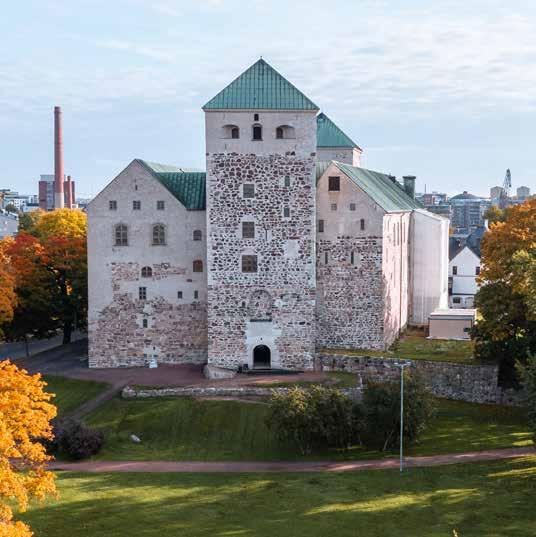

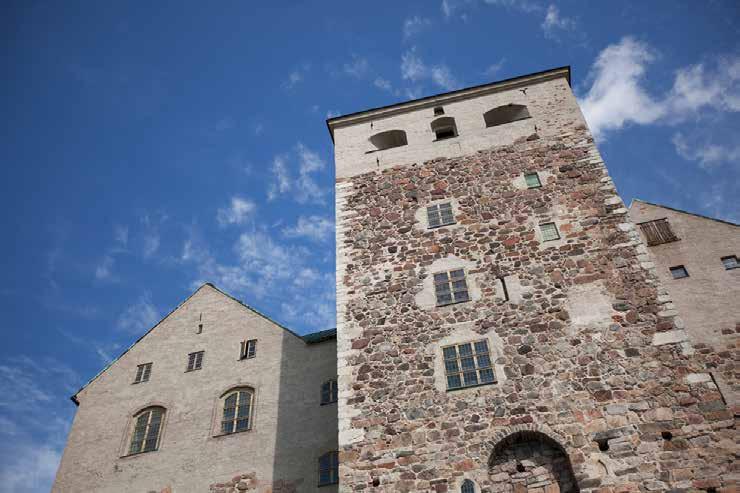
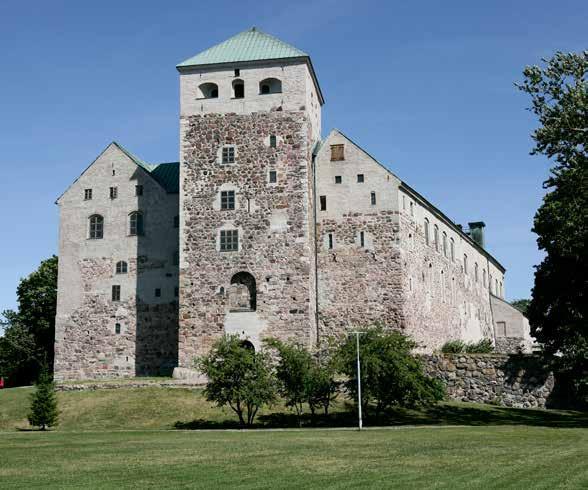
The stately Turku Castle has guarded the mouth of the Aura River since the late 13th century. Within its tall granite walls, history has unfolded in remarkable ways.
Over the centuries, the castle has been both defended and besieged, with its governors changing over time. During Duke John’s era, it became a stage for courtly life. The medieval rooms of the keep and the Renaissance floor built by the duke allow visitors to experience both the grandeur and hardships of times past.
Crown’s People
– Exhibition on the Castle’s Soldiers and Defence Who were the soldiers, and where did they come from? What was their daily life like? And what happened when news of an impending siege reached the castle?
Guided tours in Finnish, Swedish and English 2 June–30 Aug
Opening Hours Tue–Sun 10am–5pm / 2 June–30 Aug Tue–Sun 10am–6pm Linnankatu 80, tel. +358 2262 0300 turunlinna.fi/en
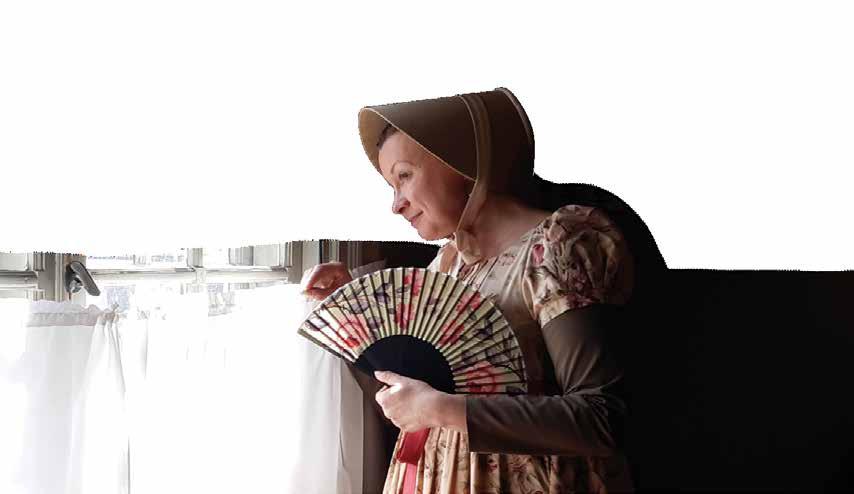
The Pharmacy Museum’s storefront houses the oldest remaining pharmacy interior in Finland, dating back to 1858. The museum also includes workrooms for the self-sufficient pharmacy: the materials room, two laboratories and an herb room.
In the Qwensel House, you can explore this period in Turku and the life of the family of Qwensel’s most famous resident, Joseph Pipping, the father of Finnish surgery. The interior is decorated in the Rococo and Gustavian styles of the late 18th century.
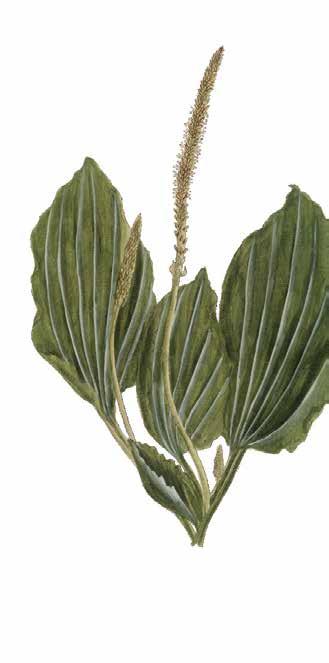
The exhibition When the Doctor is Far from Home presents the plants, diseases and remedies used in folk medicine during the 18th and 19th centuries, when doctors, pharmacies, and hospitals were few and far between.
During summer the courtyard comes to life and the kids are welcome to play pharmacist and customer in the children’s pharmacy. The quaint Cafe Qwensel offers sweet and savoury delights as well as homemade, 18th century style beverages.
Guided tours in Finnish, Swedish and English 2 June–30 Aug
Opening Hours Tue–Sun 10am–5pm / 2 June–30 Aug Tue–Sun 10am–6pm Läntinen Rantakatu 13b, tel. +358 2262 0280 qwensel.fi/en
The museum quarter is the only district of wooden houses that survived the Great Fire of Turku in 1827. The more than 200-year-old buildings stand on their original sites, and the alleys, yards, and homes of the block form a unique environment in the middle of the city.
Dive into Luostarinmäki’s colourful history people that used to live here. You will find the stories of schoolchildren and midwives, musicians and circus performers. In Kids’ Luostarinmäki you can get to know history by doing and experimenting yourself. Play in the cottage, the Little Watchmaker’s Shop, and the Little Huckster’s Shop.
Guided tours in Finnish, Swedish and English 23 June–16 Aug
Opening Hours Tue–Sun 10am–5pm / 2 June–30 Aug Tue–Sun 10am–6pm Vartiovuorenkatu 2, tel. +358 2262 0350
luostarinmaki.fi/en
Now, forever, Turku 6
Hiking with a caveman 8
The Iceman vs. the Boogeyman 12
Captain Finland: How to make it in Finland, Part 3 14
Theater in the summer night 16 Maps of Turku & Ruissalo Island 18
Hotels providing Turku Times 20 Turku timeline
Expanding perspectives: A year of art at Turku Art Museum Life in a new language

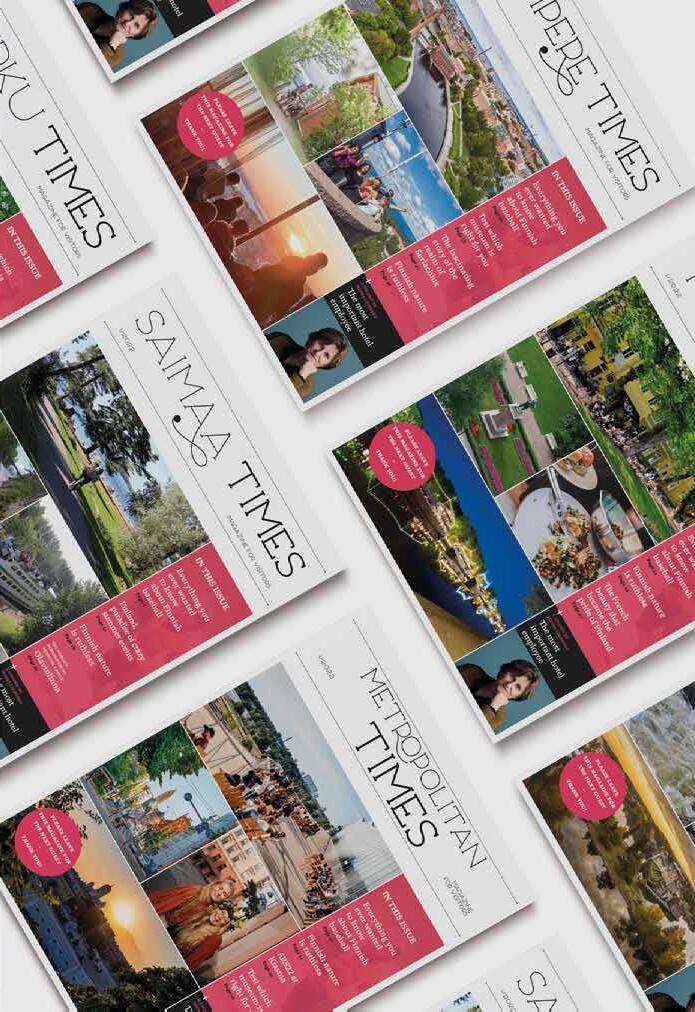
Turku Times
Magazine for Visitors Issue 1/2026
Summer www.turkutimes.fi
ISSN 2342-2823 (print)
ISSN 2669-8285 (online)
Graphic design & layout
Petteri Mero
Mainostoimisto Knok Oy
A hotel night in Paris – Column by Rosa Liksom Digital edition of Turku Times: www.turkutimes.fi The
Editor in chief Roope Lipasti
Sales manager Raimo Kurki raimo.kurki@aikalehdet.fi Tel. +358 45 656 7216
Sales manager Kari Kettunen kari.kettunen@aikalehdet.fi Tel. +358 40 481 9445


Published by Mobile-Kustannus Oy Betaniankatu 3 lh FI-20810 Turku, Finland
Member of Finnish Magazine Media Association (Aikakausmedia)
Publisher Teemu Jaakonkoski
Printed by Newprint Oy
Cover photos Aura river bank. Photo: Visit Turku Archipelago Vähätori. Photo: Åbo Creatives / Visit Turku Archipelago Turku Castle. Photo: Jarmo Piiroinen / Visit Turku Archipelago Föli waterbus.
Photo: Terri Vahtera / Visit Turku Archipelago Rosa Liksom. Photo: Pekka Mustonen
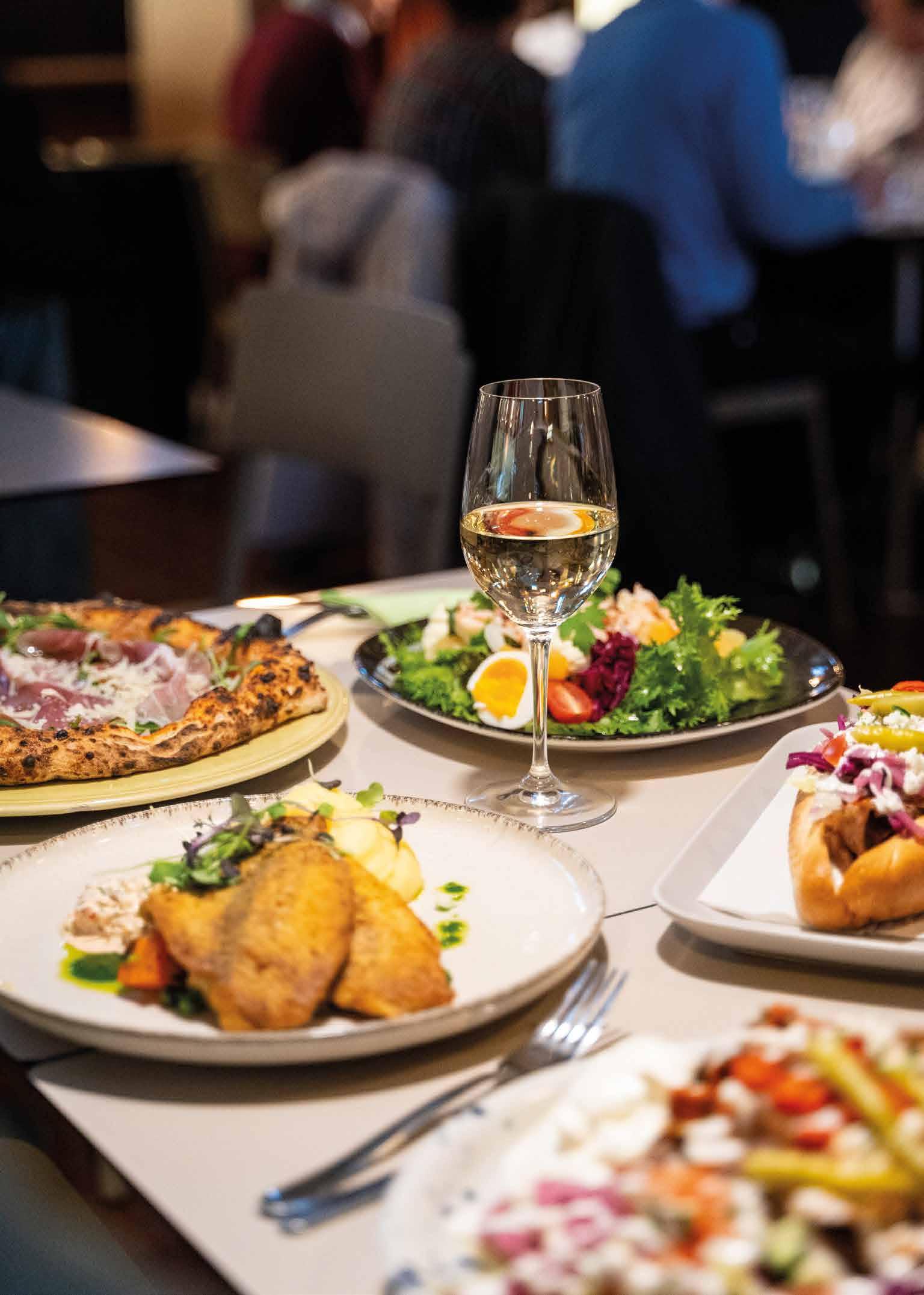
Located by the Aura River in the heart of Turku, Restaurant OOBU offers a unique dining experience where tradition meets modern flavors.
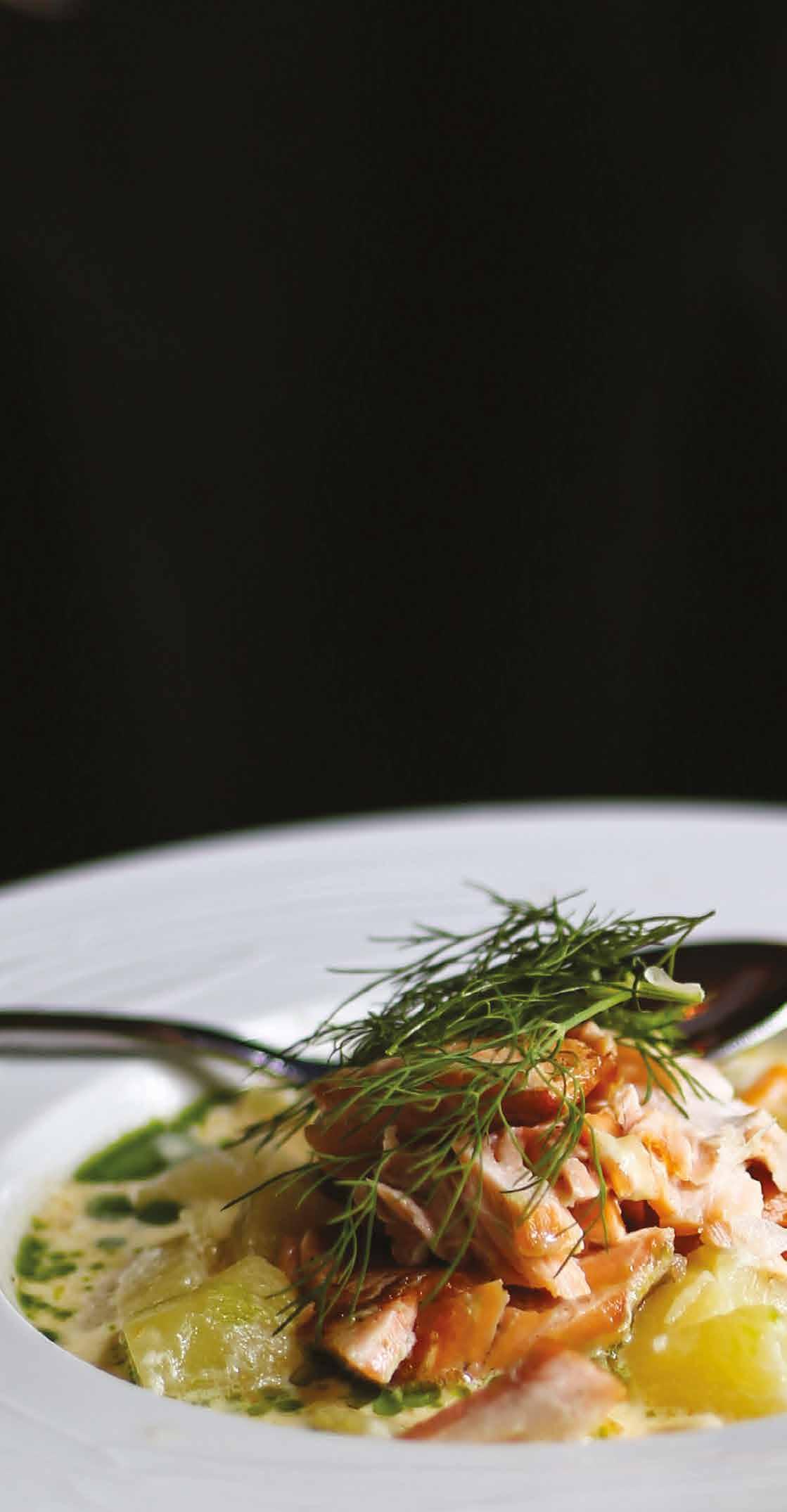
Savor fresh seafood and locally sourced ingredients, from smoked salmon soup to lamb and fish dishes, all served in the elegant atmosphere of the historic Bassi House.
All our dishes are gluten and lactose free, crafted with care to ensure a delightful dining experience for everyone.
Whether you're looking for a relaxing lunch or an unforgettable dinner, OOBU is your gateway to the best of Finnish cuisine.
Opening Hours:
Lunch 11:00-14:30
Tuesday 11:00-22:00
Wednesday 11:00-22:00
Thursday 11:00-22:00
Friday 11:00-23:00
Saturday 12:00-23:00
Sunday & Monday closed
Book your table today and indulge in the flavors of the archipelago!
Läntinen Rantakatu 9 20100 Turku
www.oobu.fi info@oobu.fi
+358 (0)20 128 09 00
Secure your table at OOBU now—scan the QR code and reserve your spot for an unforgettable dining experience!
DeAr reAders,
It is a pleasure to welcome you to Turku and to the world’s most beautiful archipelago.
Turku is the oldest city in Finland, a place where history has been made for nearly 800 years. For centuries, we have pioneered, and many new ideas and innovations have entered Finland through Turku. However, history in Turku is not merely about preserving the past; it is the foundation on which we build the future – a carbon-neutral and international city where you can enjoy both proximity to nature and the vibrant pulse of urban culture.
Turku is a city of experiences all year round. The Cultural Riverside, stretching from Turku Cathedral to the sea, is the heart of urban culture, where culture lovers can enjoy numerous concerts, theatre performances, art exhibitions, a rich selection of museums, and a wide variety of events. In late 2026, Fuuga – a world-class concert hall renowned for its acoustics and architecture – will open on the banks of the River Aura.
The riverbanks are a true oasis for both locals and visitors. Along the river, you will find not only culture, but also beautiful scenery, atmospheric cafés, and top-tier restaurants. Turku’s food culture is diverse and of high quality, and the city is justly known as Finland’s culinary capital. Here, food is not just nourishment – it is culture, encounters and delicious experiences.
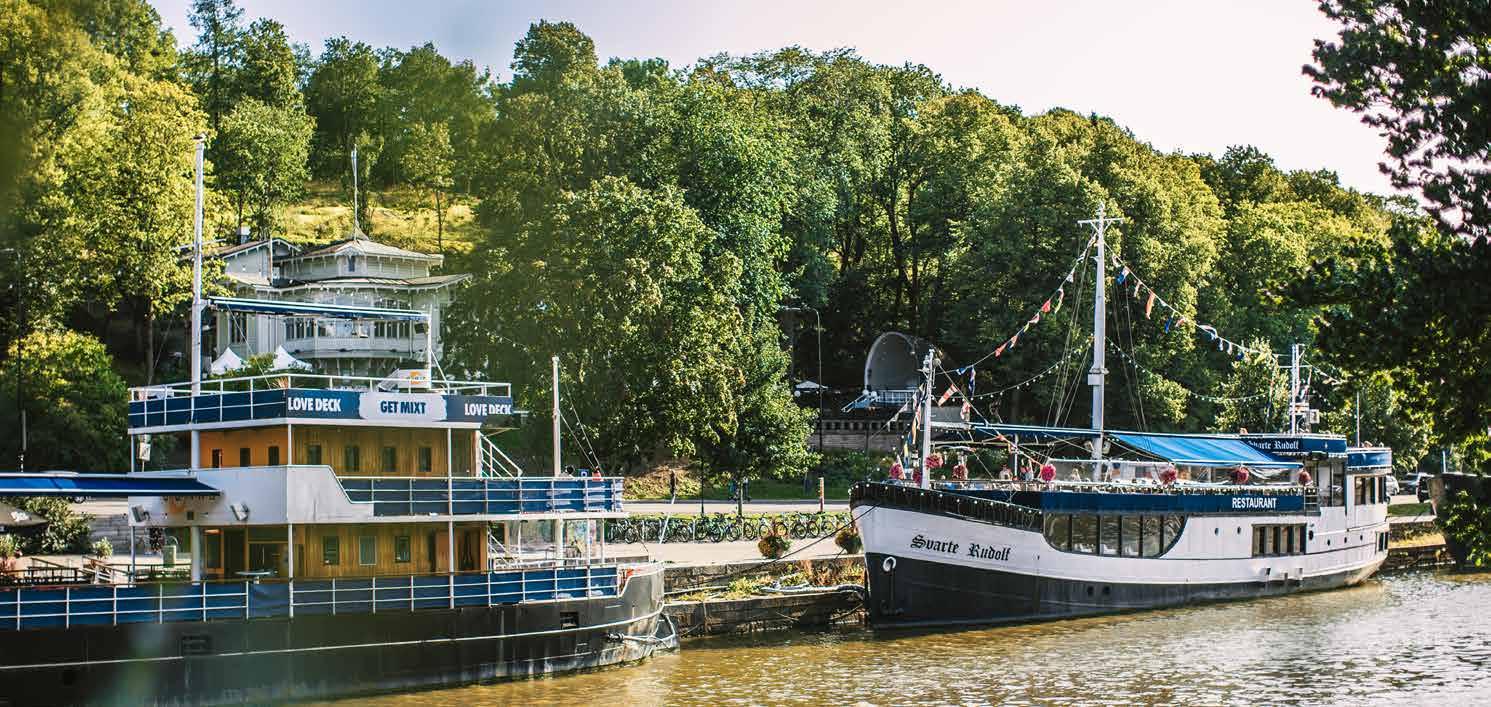
In Turku’s many excellent restaurants, you can enjoy everything from lunch made with ingredients from local producers to Michelin-quality dining. You can savour both local dishes and international cuisine on riverboats, in a former prison, or on rooftops with panoramic views of Turku. Our traditional market hall is also
well worth visiting. Food is part of Turku’s identity – and we take pride in sharing its richness with every visitor. Whether you are a gourmet, an adventurous foodie, or a fan of local products, Turku offers a culinary journey to remember.
You can savour both local dishes and international cuisine on riverboats, in a former prison, or on rooftops with panoramic views of Turku.
Vibrating with modern urban culture, Turku is nestled in the embrace of the world’s most beautiful archipelago. Surrounded by over 40,000 islands and islets, it offers a truly maritime atmosphere. As a port city, the sea is an integral part of Turku’s identity. You can sense it just a few kilometres from the city centre on Ruissalo Island, where enchanting oak forests, pristine beaches and winding nature trails await.
Turku is a unique combination of history, urban culture, and maritime experiences. Above all, Turku is a place where smiles are shared, and where everyone can feel at home. I hope the city captures your heart during your visit – and inspires you to return again and again.
Warmly welcome to Turku,
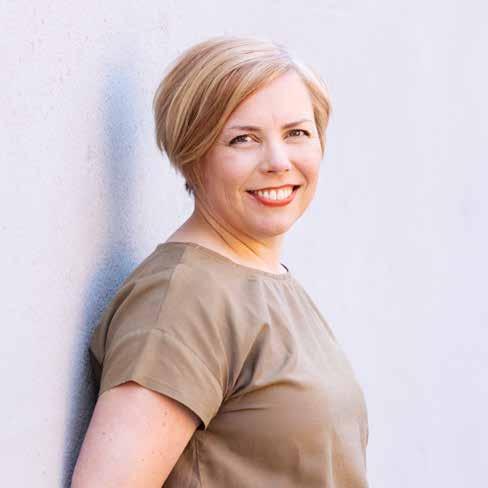
Piia Elo, MAyor of turku

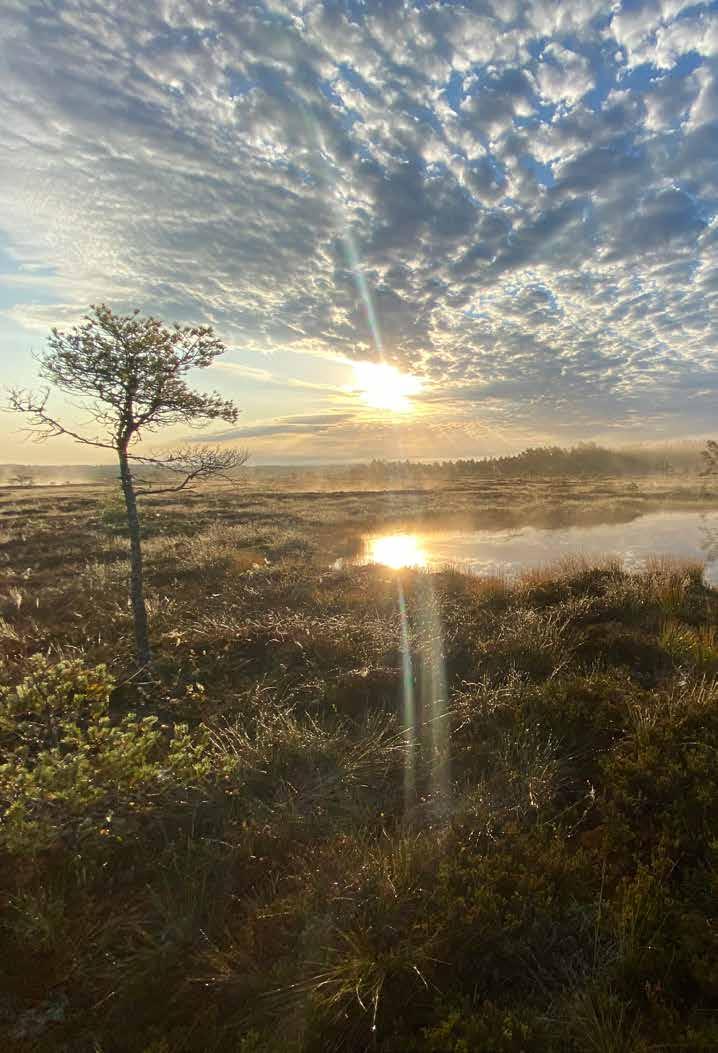
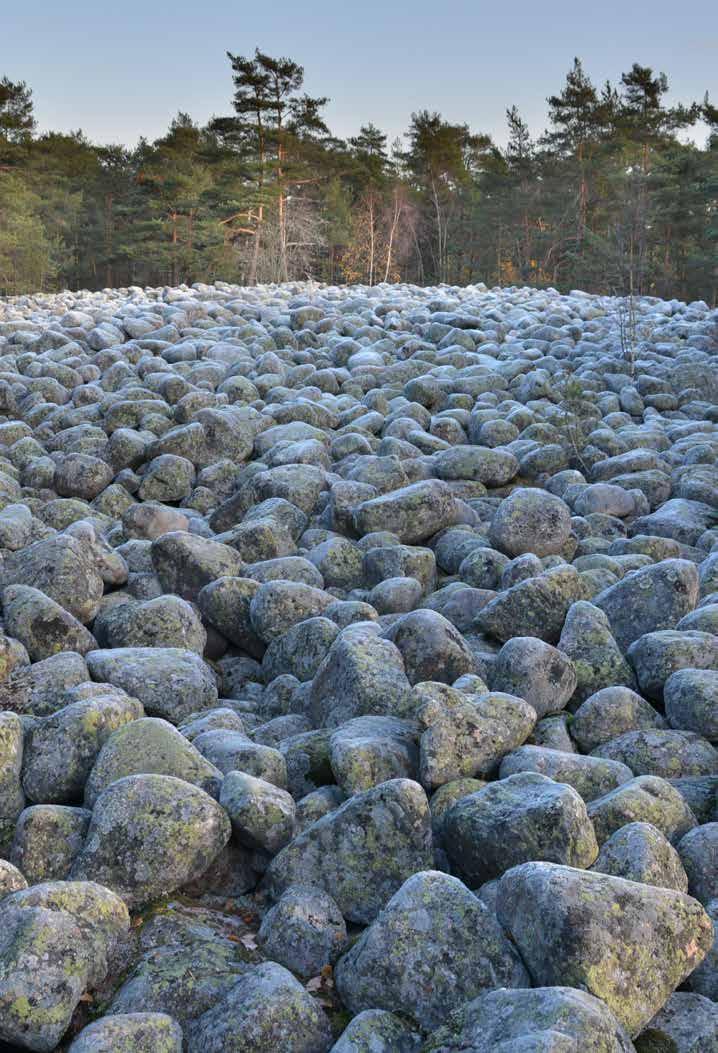
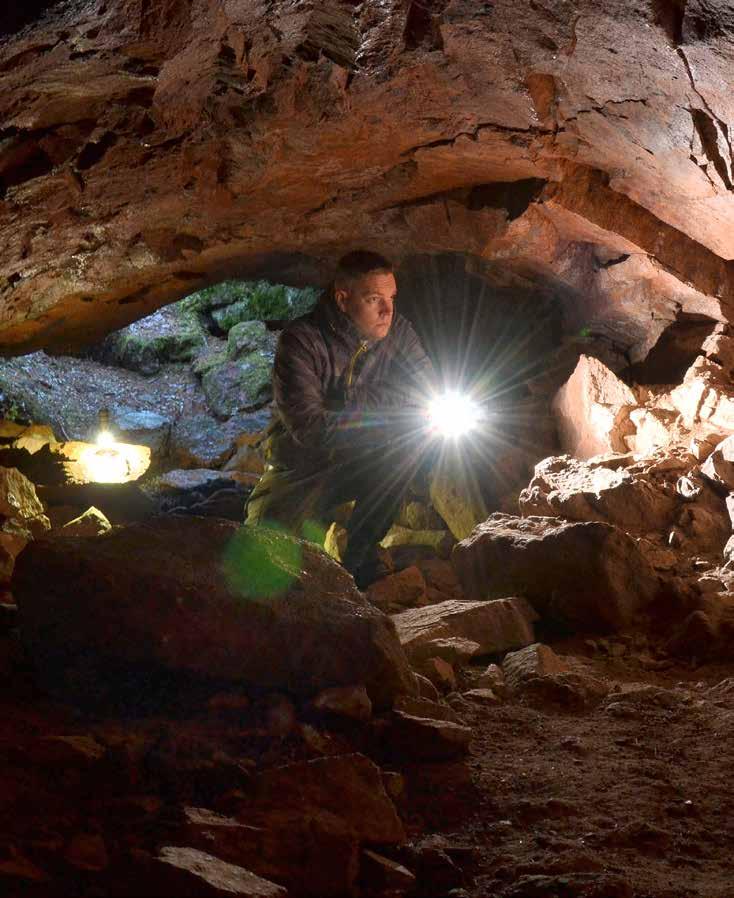
Tuomo Kesäläinen has a list of the hundred best geological sites in Finland. He reminds us we have the Ice Age to thank for the uniqueness of Finnish nature.
When nonfiction writer and nature guide Tuomo
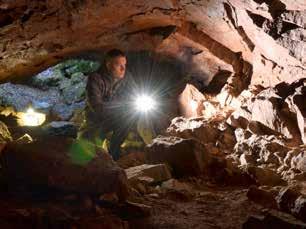
Kesäläinen visits the forest, he generally isn’t looking for berries or even at the views. Instead, he’s looking for something more exciting: caves, ravines, giant’s kettles, and the inland shingle beaches known as “devil’s fields.” The places where Finland’s Ice Age history can be seen most plainly.
Kesäläinen, a Naantali native, has spent years mapping Finland’s geological curiosities, places that tell the story of a time when an ice sheet shaped the landscape in a way that is rarely seen elsewhere in Europe:
“There is nowhere where the Ice Age is as visible as it is in Finland – well, maybe in Sweden,” Kesäläinen says.
His interest in unusual natural places arose early in his childhood. Kesäläinen’s family were caravanners and spent their vacations traveling around Finland, Sweden, and Norway.
“Whenever we stopped, we always hiked a nature trail. Or if there was an interesting giant’s kettle or cave somewhere, we went to see it. When I got my driver’s license, I started heading out on my own. First, I worked through all the known sites, and when I ran out of those, I started to think that there must be more. That’s when the real search began.”
One major source of inspiration for Kesäläinen was caver Aimo Kejonen, who had spent decades mapping Finland’s caves and collecting folklore about them. Kesäläinen became Kejonen’s man in the field, as Kejonen was already elderly. Kesäläinen searched for and checked sites, documented them, and collected stories. The collaboration resulted in several books.
It turned out that there were plenty of stories to tell. Many of Finland’s unusual natural sites are linked to stories about devils, giants, and other supernatural creatures.
“When you see a devil’s field, which is actually an old seabed and just filled with heaps of rocks, it’s no wonder that people have thought them supernatural. It’s simply hard to comprehend how all those stones got there.”
Some of these unusual places were considered sacred in pagan times. The devil stories may have been linked to them later, when Christianity arrived, so that the old worship practices would be forgotten. Similarly, many churches were built on the sites of former sacred groves.
“And obviously, giants and devils are much more interesting explanations than a boring old Ice Age,” Kesäläinen says with a laugh.
Giants and devils are much more interesting explanations than a boring old Ice Age.
In his latest book, Suomen kauneimmat retkikohteet – 100 geologista erikoisuutta, Kesäläinen presents one hundred of his own favorite nature spots in Finland. The sites are divided into categories: caves, ravines, devil’s fields, ridges, and kettle holes created by the Ice Age.
“For each site, I give a scientific explanation and a QR code to help you locate it. I wanted to make the book as comprehensive as possible: it covers the whole country, from Åland to Koli and the northernmost reaches of Lapland. Ostrobothnia, too, which is often left empty on nature maps.”
So, what is it that’s special about Finnish nature?
“Our landscapes aren’t ostentatious, like in Norway. They’re more restrained. But the traces of the Ice Age are unique. I would want foreign visitors to see the big bogs and lakes – and of course the midnight sun.”
If you’re exploring the forest without a specific destination, Kesäläinen has a simple tip: climb up onto the exposed bedrock.
“The higher, the better. A typical Finnish forest is often dense and hard to navigate, but it’s easier to move around on the rocks, and the views are better. Plus, old trees and twisted pines often grow there.”
Another underappreciated and sometimes even slightly feared destination is a bog:
“You don’t have to be afraid of sinking in up to your neck. Boots are good enough. It’s also interesting that a completely normal Finnish forest is a place that can make people nervous. I’ve had visitors from Central Europe who found the silence and untouched nature of the forest even frightening. An exotic experience is surprisingly close by.”
According to Kesäläinen, one of the greatest treasures of Finnish nature is Everyman’s Rights.
“Anyone can go almost anywhere in nature. That’s unique. In Finland, you won’t find much nature you have to pay for.” s
Tuomo Kesäläinen's easy daytrip tips
Helsinki area: “There too, I would direct my gaze toward the sea. From on the water, you can also get a view of a beautiful national landscape, the skyline of Helsinki, which is worth seeing. There are several islands designated for recreational use, and they can be reached by ferry from the Market Square. Some of the islands are on the UNESCO World Heritage List.
Again, if the sea doesn’t interest you, it’s not a long way to Nuuksio National Park, which is another place you can get to by bus. There you can experience the Finnish forest and lake landscape. It’s a reliable and easy attraction, for both foreigners and Finns.”
Jyväskylä: “The lake view is also worth seeing in Jyväskylä. The Kanavuori nature trail is one great option. It starts quite close to the city center, and the scenery is stunning. It’s sometimes even compared to Koli. And there are plenty of other nature trails in Jyväskylä, too.”
Tampere: “Pyynikinharju is a stunning natural attraction right in the city center. The ridge reaches 80 meters high, with a beautiful lake on either side, and of course, the old wooden houses are idyllic.
By tram, you can get to a different sort of destination: the Hervantajärvi hiking trail. It’s a beautiful and interesting trail, where you can easily walk 10 kilometers. You can even go swimming while you’re at it.”
Turku: “The obvious choice is the sea. The rugged archipelago, with its thousands of islands, is unique, and you can get there right from the center of Turku. Even just the water bus ride to Ruissalo is nice. You can get further out by taking a ferry. For example, the island of Seili is great.
If you’re not interested in water, I recommend a bog. Kurjenrahka National Park can be reached by bus from the Market Square in 45 minutes. The scenery is beautiful, and there’s no danger of getting lost.”
Saimaa: “The whole area is special, of course, but if I have to be more specific, Punkaharju is my personal favorite. It’s a unique geological formation, and it has all the recreational amenities you could hope for, from bicycles to SUP boards and boats. Punkaharju also has the country’s best scenic road, which you can travel by car. Imatrankoski is another impressive and easily accessible destination. It’s one of the largest rapids in Europe, and when the dam is opened, it’s a sight to behold. It’s also a geologically interesting place, with many giant’s kettles, for example.”
Tuomo Kesäläinen: Suomen kauneimmat retkikohteet – 100 geologista erikoisuutta. (Readme.fi, 2026)
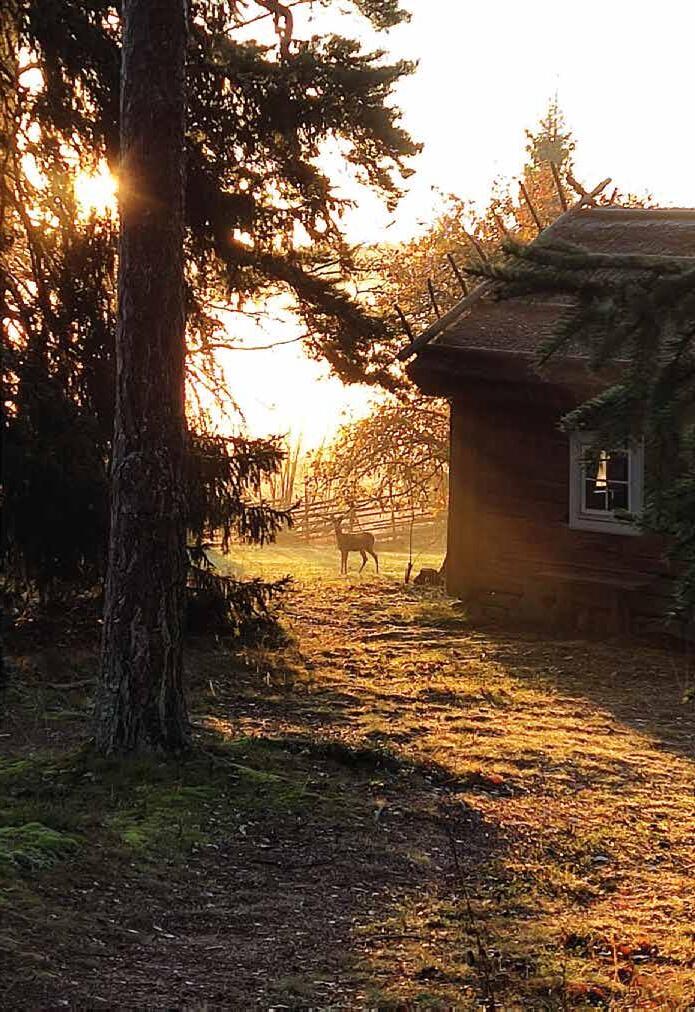
sagalund – story grove
A 125-year-old open-air museum on the island of Kimito – just a step away from the world-renowned Archipelago.
Children’s program, lunch café, and museum shop.
65 km / 40 miles from Turku 125 km / 78 miles from Helsinki.
OPEN TUE–SUN 11 AM–5 PM sagalund.fi
5 June – 13 Sep 2026

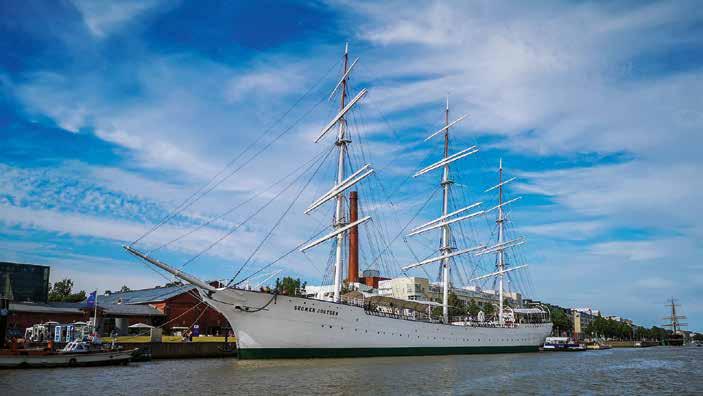
Rest for a while on the banks of the River Aura and enjoy the relaxed atmosphere of the maritime quarter
Travel through time and take a plunge into the past on our tall ships: Suomen Joutsen and Sigyn.
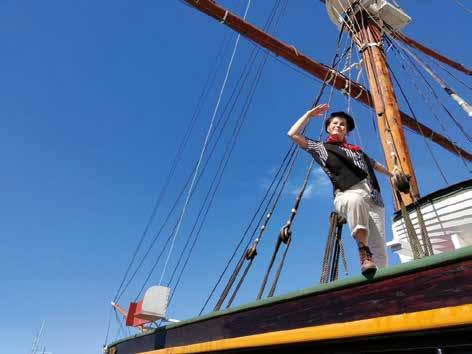
Forum Marinum invites everyone to sense the sea See you soon?
2 Oct 2026 – 17 Jan 2027
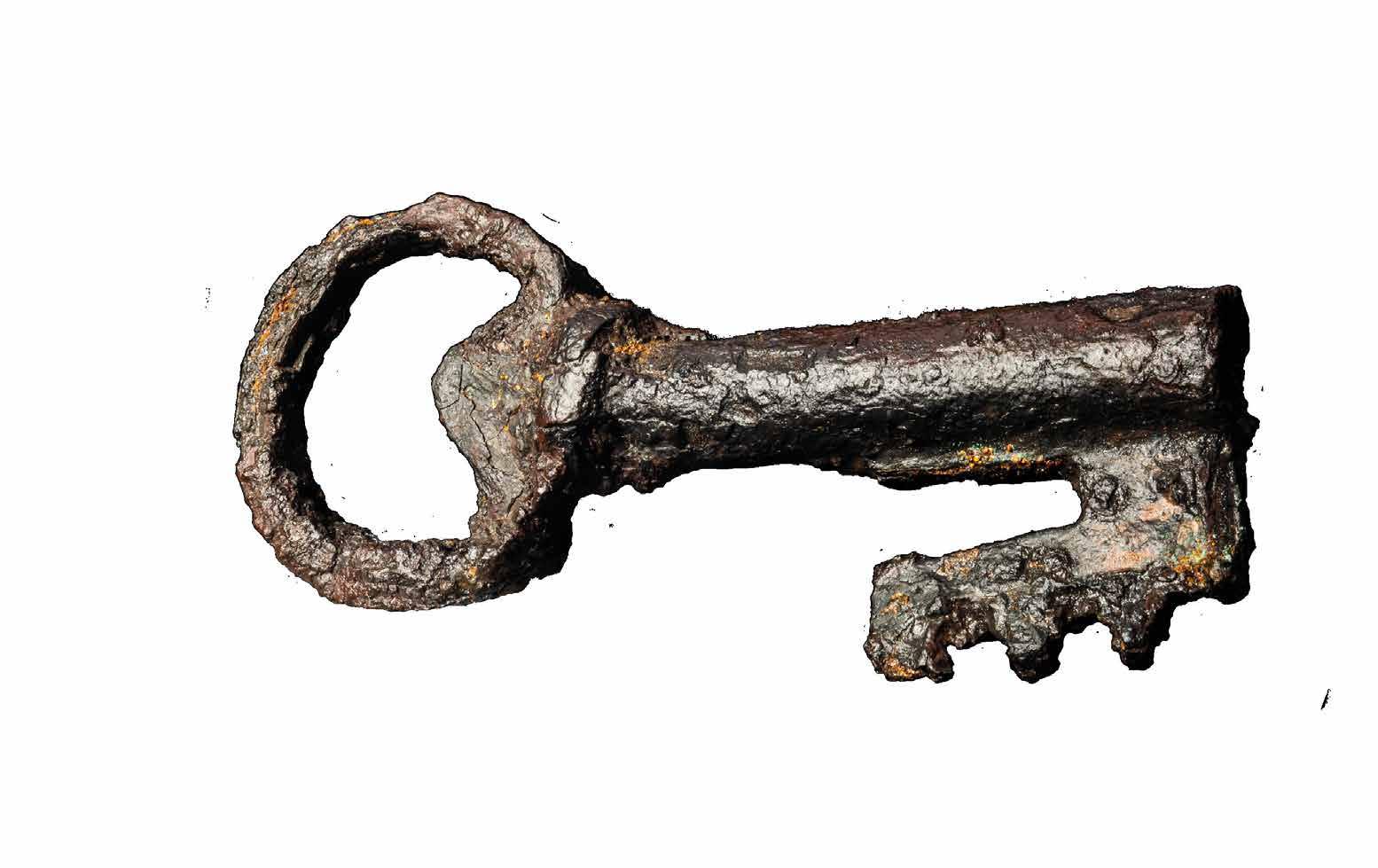
Travel back in time at Aboa Vetus! Explore history right where it happened at Finland’s only archaeological museum.


Finnish sports history is full of legends with equally legendary nicknames
Written by Matti MäkeLä
by Christina saarinen


Let’s start with the one that’s been used most often. Of those who have been called “The Flying Finn”, the most famous – and, in the opinion of many, the only true – bearer of the name was 1920s running legend and nine-time Olympic champion Paavo Nurmi However, the same nickname had already been used for Finnish running star Hannes Kolehmainen, who predated Nurmi and won three gold medals at the 1912 Stockholm Olympics and the marathon in Antwerp eight years later. Since Nurmi, the name has been used ad nauseam for countless Finnish runners, not to mention Formula and rally drivers. The most recent runner to earn the title was Lasse Virén, who won the 5,000 and 10,000 meters at both the 1972 Munich and 1976 Montreal Olympics. Anyone who knows anything about athletics knows that using the word “flying” to describe Finnish long-distance runners today wouldn’t even pass for a bad joke.
Due to his sullen and quiet nature, Nurmi was also called “The Great Silent One,” which as a nickname goes, is pretty clumsy; it even sounds a bit North Korean (which is rarely a good thing). Its clumsiness is all the more apparent when compared to “The Iceman,” the nickname that Formula team principal Ron Dennis gave Kimi Räikkönen for exactly the same character traits. Räikkönen earned the nickname, of course: his Garbo-esque response to his race engineer on team radio has gone down in Formula history: “Just leave me alone. I know what to do.” What elevates the story to Casablanca level (as is well known, neither Bogart nor anyone else ever said, “Play it again, Sam,” in the film) is that Räikkönen is often misquoted as saying, “I know what I’m doing,” instead.
World Championships in 1995. He wasn’t called “The Giant” or “The Colossus of Kemi” (a small town in Northern Finland), but instead, “The Fairy of Kemi.”
Similarly, the best ski jumper of all time, Matti Nykänen, was known early in his career as “Masa the Mouse,” which referred to his small stature and was also a twist on the given name of Japanese ski jumper Masahiro Akimoto (“Masa the Mouse” is Masa-hiiri in Finnish, and Masa is a common nickname for Matti). This not-so-cool name was abandoned at the 1982 World Championships in Oslo when Nykänen earned the first elite gold medal of his career by jumping by far the longest jump in the competition, in an almost impenetrable fog. Mice don’t jump like that.
He scored his goals by smashing them into the net from right in front of the goal, after sneaking past the defenders as if from out of nowhere.
The young players that led Finland to its first World Ice Hockey Championships win in 1995, Saku Koivu, Ville Peltonen, and Jere Lehtinen , were nicknamed the “Huey, Dewey, and Louie Line” after Donald Duck’s nephews. Koivu’s and Lehtinen’s successful NHL careers earned them cooler nicknames in North America: with his all-around skills, Lehtinen was known as “Mr. Fix-It,” and Koivu, who played as captain of the Montreal Canadiens for many years, was known simply as “Captain K” (which you might also interpret as having a certain comic-book quality). When Koivu returned to Finland and his hometown club, TPS, during the NHL lockout season, he was greeted at his first home game with a huge "Return of the King" banner, a reference to the Lord of the Rings trilogy.
Alongside “The Iceman,” another contender for coolest nickname is world motorcycle road racing champion Jarno Saarinen’s “The Baron.” The name is based on a nickname Saarinen’s mother gave him, “The Cat Baron,” after he brought home a stray cat he found somewhere as a child. It’s fitting of this aristocratic style that statues of Saarinen, who died tragically at the 1973 Grand Prix race in Monza, have been erected both in Assisi, Italy, and in his hometown of Turku. Abroad, Saarinen was also known as – surprise, surprise – “The Flying Finn.”
Royal nicknames are particularly popular in football: among many others, Pelé (“Rei Pelé”) and Michel Platini (“Le Roi”) are called kings, while Franz Beckenbauer is an emperor (“Der Kaiser”). In Finland, too, the best football player of all time, Jari Litmanen , has been unimaginatively titled “The King,” but in general, people here seem to prefer more humorous – and sometimes even slightly mean – nicknames (like those given in Mexican drug cartels, whose hard-nosed bosses have been given nicknames like “Shorty” and “Chicken Little”). Take, for example, Mika Halvari, a 190-centimeter-tall shot-putter who weighed 140 kilos when he was competing and won silver at the
A top candidate on the list of strangest-sounding nicknames is definitely that of 1985 World Rally champion Timo “Slack” Salonen. For a long time, the nickname was said to have come from Salonen’s habit of driving rally with only one hand on the steering wheel. However, Salonen himself later corrected the story, explaining that he had called Erkki Pitkänen, who had driven the same kind of car as Salonen in Finnish rally races in the 1970s and whom Salonen had squarely beaten, “Slack Pitkänen.” The jeer came back to bite him, however, and became Salonen’s own nickname.
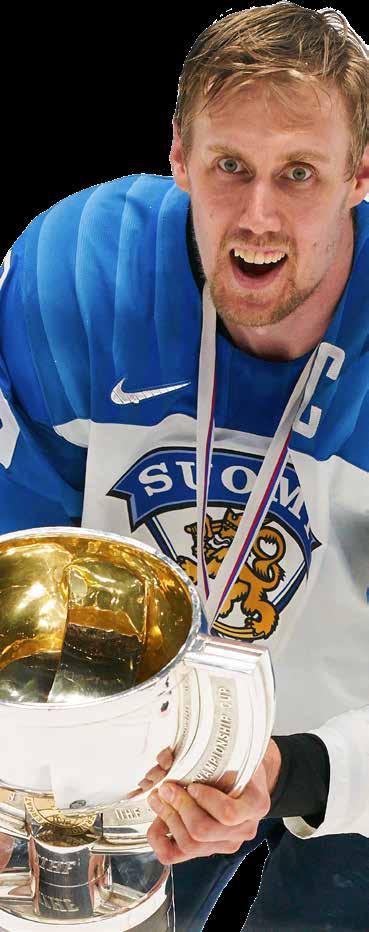
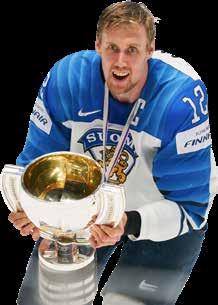
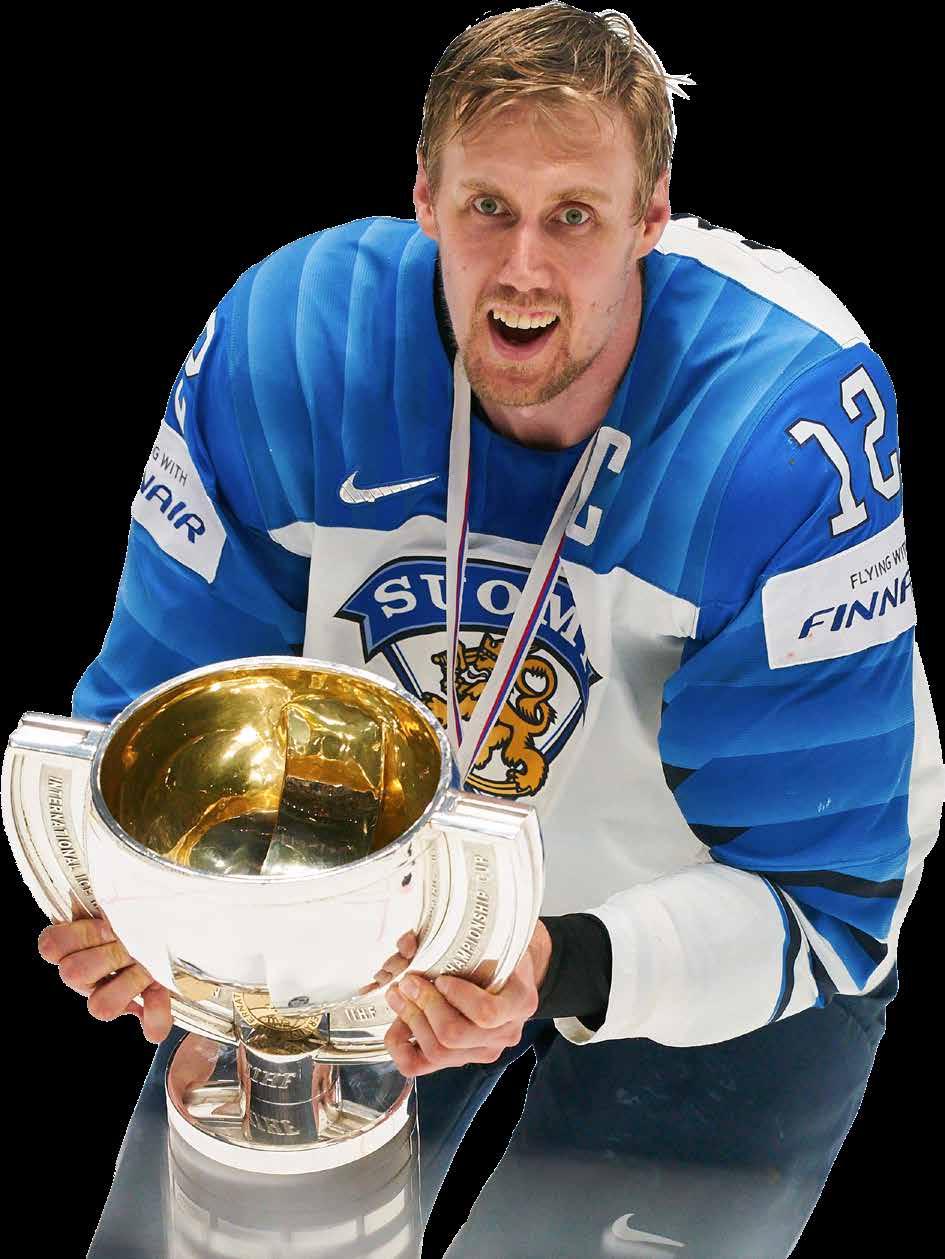
Hockey player Marko Anttila got his nickname “The Boogeyman” already in his school days, based on his large size and first name (which sounds similar to mörkö, meaning boogeyman in Finnish), but he only truly lived up to his nickname at the 2019 World Championships. During the tournament, he scored four crucial goals in the playoff rounds: first a last-minute equalizer against Sweden in the quarterfinals, then the winning goal against Russia in the semifinals, and finally two goals in Finland’s 3–1 championship victory over Canada. He scored his goals by smashing them into the net from right in front of the goal, after sneaking past the defenders as if from out of nowhere – just like the father of all boogeymen, Michael Myers, in the Halloween movies. s



Art, and especially theater, doesn’t take itself too seriously in Finland. Or at least not in the summer, when Finns swap their jeans for track pants and decamp to summer cottages in remote villages with practically nothing to offer: just a shop, a seasonal farmer’s market, a gas station, and a local history museum with old plows on display.
And a summer theater!
Finland has more summer theaters relative to population than anywhere else in the world. No one even knows exactly how many there are, but estimates hover somewhere around 600. And they’re popular, too: over a million people attend summer theater performances each year, which is quite an impressive figure in a country of five million people.
Summer theaters perform outdoors, so a hat might be useful, and a windbreaker will help with the mosquitoes. It’s a good idea to
bring along a blanket and a seat pad. An umbrella too, if the seating isn’t covered.
Standards of behavior are also looser. It’s not unheard of for there to be a group of people in the audience who have had enough drinks before the show that they find everything really funny – to the extent that the rest of the audience thinks they find everything too funny. So it’s well-advised to moderate your intake, at least during the show.
Every Finn knows more or less what to expect when they buy tickets to a summer theater performance in cottage country. More likely than not, there will be humor, some of it off-color, as well as plenty of funny hats and wigs. The genre is farce – or “bush farce,” as we say in Finland. The actors are for the most part amateurs: the local
shopkeeper, the bus driver, and a few others. If there’s money, a real actor will play the main role. The sets are a volunteer effort, as are the concessions sold at intermission. The director’s uncle provides security.
As an alternative to humor, the theater might offer local history or a well-known classic of Finnish literature.
To be honest, that’s an overblown caricature of summer theater. Summer theater is also put on by professionals. Especially in larger cities, all the theater companies also produce their own summer theater, in which case the end result is just as professional as it is indoors in the winter, down to the same actors. But it’s still summer theater.
So what’s really the essence of summer theater? Let’s ask Satu Rasila. She’s one of Finland’s most popular playwrights and the dramaturg of Turku City Theatre.
Rasila points out that it isn’t actually the content that makes a summer theater, because it can be anything, as mentioned earlier.
“The common factor must be something else. And it’s probably the circumstances, the summer. The performances are outdoors, and the weather could be anything: oppressively hot, or then again, snowing. And maybe a squirrel will decide to come and take part. Things going on outside the play are present in a very concrete way, and the conditions can affect the performance in all kinds of ways.”
Summer theater audiences are also in some ways more forgiving than at a regular theater. They tend to be more tolerant of double-entendres and drunken humor.
“Summer theater features a kind of communal camp humor, an aesthetic of bad taste. And the audience agrees to go along with the idea that now it’s okay to laugh at stupid things. The audience puts up with a lot of other things too, like sitting on hard wooden benches in the rain! I remember one performance where the audience had covered seating, but the actors were out in the open. It started raining so hard that you couldn’t make out anything the actors were saying in the midst of all the noise. Eventually, lightning struck the sound booth. At that point, they finally stopped the performance.”
According to Rasila, summer theater is also a very communal form of theater, for both the creators and the audience. It’s theater from the heart, and Finns love it:
“Perhaps it’s where Finns’ love of so-called normal theater also stems from. People in Finland go to the theater about 3.5 million times a year, which is really a lot,” says Rasila.
Rasila notes that summer theater is often associated with a certain old-timiness or nostalgia, sometimes also with a homespun feel:
“My own grandfather once gave me the advice, when he was performing, that if you forget a line in summer theater, you can always just say, ‘So, anyway,’ which gives you a little time to think. To this day, the aesthetics of summer theater still often spring from that kind of ‘So, anyway’ world!”
Nonetheless, a successful summer theater succeeds for the same reason as any other theater:
“It has to be exciting. The performance has to somehow give you a nudge, strike a nerve, make you laugh or cry. A lukewarm effort doesn’t cut it in summer theater either.”
The play is written to be completely impossible for an actor - in one case, Miska is on stage in two roles at the same time.
Summer theaters generally have some kind of specialty: some do only comedy, some do classics, some do musicals.
Rasila has written summer theater plays for Emma Teatteri in Naantali, which is a comedy theater. Comedy is more difficult as a genre today than in the past, as perceptions of what is appropriate to laugh at have been changing. Many old comedies don’t resonate with audiences of today because of the way they portray people.
“On the other hand, comedy and summer theater give you the opportunity to do practically anything. For example, we once did a show called Hockey Night. Ice hockey at the summer theater on a summer evening! It was completely ridiculous, but audiences liked it,” Rasila recalls.
One audience favorite has been comedies that have many more roles than there are actors. These generally involve attempting something “impossible,” such as telling the eight-hundred-year history of Turku in two hours (and the program promised to present the history of Helsinki and Tampere as well!).
“Quick role changes make for good comedic pace and tension. For example, in one play, the actor Miska Kaukonen, who has done a lot of these, had just six seconds to change his whole outfit. Your foot had better land in your shoe on the first try, or it’s all over. Audiences have also learned to enjoy seeing how an actor manages – or whether he can manage – to pull off his seemingly impossible task.”
Kaukonen will have the chance to show off his clothes-changing skills this summer as well:
“We have a play at Emma Teatteri called Loistojuttu (A Brilliant Idea). It’s an award-winning French comedy that centers around the idea that everyone has a doppelganger. Miska Kaukonen plays three different characters, and the play is written to be completely impossible for an actor – in one case, Miska is on stage in two roles at the same time. It’s going to be fun!” s

01 centro hotel
Yliopistonkatu 12, 20100 Turku
Tel. +358 2 211 8100 www.centrohotel.com
02 forenoM ApArthotel turku
Kristiinankatu 9, 20100 Turku
Tel. +358 20 198 3420 www.forenom.com
03 forenoM preMiuM ApArtMents turku kAkolAnMäki
Michailowinkatu 1, 20100 Turku
Tel. 020 198 3420 www.forenom.com
04 hiisi hotel turku seAport
Toinen poikkikatu 4, 20100 Turku
Tel. +358 20 778 0777 www.hiisihomes.fi
05 holidAy club cAribiA
Kongressikuja 1, 20540 Turku
Tel. +358 30 087 0900 www.holidayclubresorts.com
06 hostel s/s bore
Linnankatu 72, 20100 Turku
Tel. +358 40 843 6611 www.hostelbore.fi
07 hotel helMi
Tuureporinkatu 11, 20100 Turku
Tel. +358 20 786 2770
www.hotellihelmi.fi
08 hotel kAkolA
Kakolankatu 14, 20100 Turku
Tel +358 2 515 0555 www.hotelkakola.fi
09 hotel MArtinhovi
Martinkatu 6, 21200 Raisio
Tel. +358 2 438 2333 www.martinhovi.fi
10 originAl sokos hotel kupittAA
Joukahaisenkatu 6, 20520, Turku
Tel. +358 10 786 6000 www.sokoshotels.fi
11 originAl sokos hotel Wiklund
Eerikinkatu 11, 20100 Turku
Tel. +358 10 786 5000 www.sokoshotels.fi
12 pArk hotel
Rauhankatu 1, 20100 Turku
Tel. +358 2 273 2555 www.parkhotelturku.fi
13 rAdisson blu
MArinA pAlAce hotel
Linnankatu 32, 20100 Turku
Tel. +358 20 123 4710 www.radissonblu.fi
14 scAndic hAMburger börs
Kauppiaskatu 6, 20100 Turku
Tel. +358 30 030 8420 www.scandichotels.fi
15 scAndic JuliA
Eerikinkatu 4, 20100 Turku
Tel. +358 30 030 8423
www.scandichotels.fi
16 scAndic plAzA turku
Yliopistonkatu 29, 20100 Turku
Tel. +358 30 030 8421
www.scandichotels.fi
17 solo sokos hotel turun seurAhuone
Eerikinkatu 23, 20100 Turku
Tel. +358 10 786 4000 www.sokoshotels.fi
18 tuure bed And breAkfAst
Tuureporinkatu 17, 20100 Turku
Tel. +358 2 233 0230 www.tuure.fi

Eerikinkatu 30 Turku


We have billiard tables, dart boards and many other way to spent quality time with family and friends.



Check our website for more information

I N T I A N H E
B A R & G R
Intian Helmi brings you the finest Indian over 15 years of experience come and in authentic Indian dishes. Freshly prepare traditional techniques, a clay oven to lo flavours and the blends of different sau famous all around the world and can be right here.
Brahenkatu 14, 20100, Tur +358 41 318 6460
1229
The Pope orders the bishopric to be moved from Nousiainen to the new city of Turku. By the river Aura in Koroinen, there is a white memorial cross standing in the place where the Bishop’s little castle once was. It is a nice place to visit, as is the entire riverbank, where one can walk or go jogging.
1300
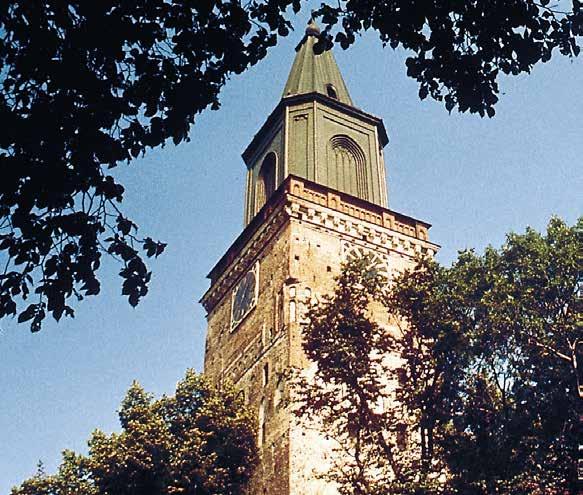
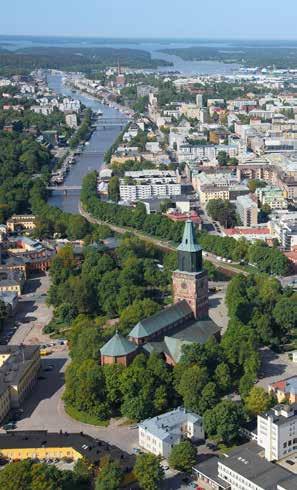
The Turku cathedral is inaugurated. It is the most beautiful cathedral in Finland. Not least because it is also the only proper cathedral in Finland.
1308
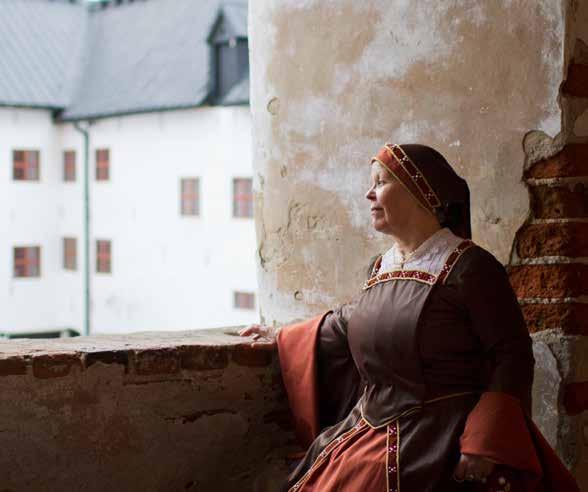
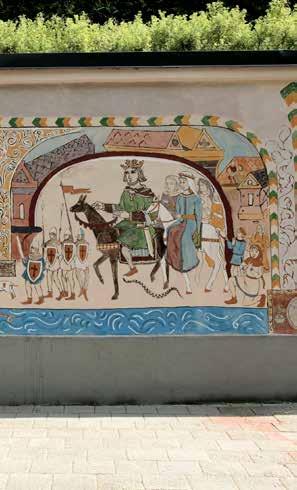
The first documented mention of the Turku Castle, although the construction probably began as early as the 1280s. Builders in Turku were in no hurry, as the castle wasn’t completed until 1588. The most magnificent Renaissance period in the history of Finland was seen in Turku castle during the reign of Catharina Jagiellon and Duke John (later king John III) 1562–1563.
1414
The first bridge over river Aura is built. It was called The Pennybridge.
1500
Turku is not quite a Hanseatic city, but almost. It is one of the major cities in Sweden and its international trade is significant.
1543
Mikael Agricola, the father of written Finnish, publishes his first book. It is also a milestone of Protestantism in Finland.
1634
The first map of Turku is published, and for a good reason, too: there were already 6,000 habitants, so the city was huge!
1640
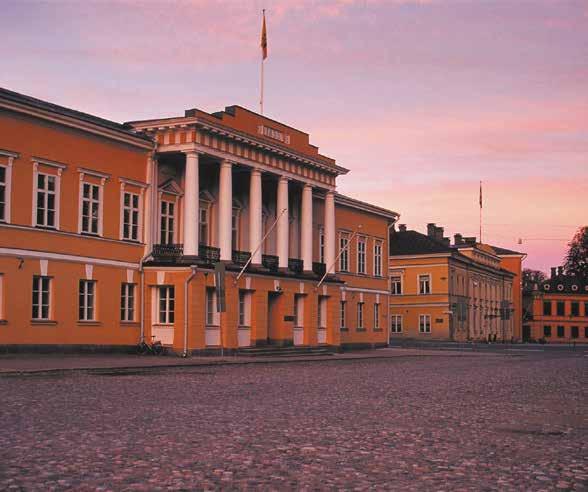
The University of Turku is established. Nowadays, Turku is still a renowned city of higher education with more than 40,000 students studying at six universities.
Written by roope Lipasti
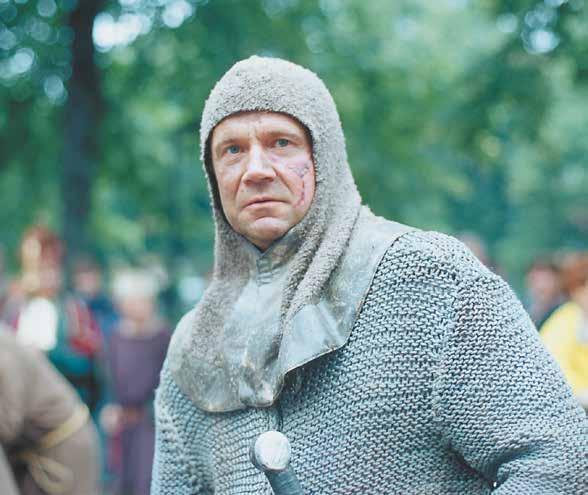
Finlands first printing house is established in Turku. It prints books, among them the thesis Aboa Vetus et Nova by Mr Daniel Juslenius (1676–1752), in which he studies the birth of Turku. His conclusion was that the people in Turku are decendants of Jaafet, the third son of Noah.
Sweden loses Finland to Russia in 1809, and in 1812 Helsinki is declared as the new capital – something that still slightly upsets people in Turku.
Turku burns down and almost the whole city must be built again, which is the reason why Turku doesn’t have a medieval centre anymore.
The first Christmas tree illuminated with electric lamps is erected in front of the Cathedral. The tradition became regular in the 1930s.
1917 Finland declares independence.
The University of Turku is established again, since the original Academy was moved to Helsinki after the great fire in 1827. Åbo Akademi University, the only university in Finland with Swedish as official language, was founded in 1918. (Åbo is the name of Turku in Swedish.)
Finland is at war with Russia. Turku suffers great damage during the bombings, among other buildings the castle is partly burned.
1956, 1976, 1989, 1990, 1991, 1993, 1995, 1999, 2000, 2001, 2010. TPS, the biggest ice-hockey club in Turku, wins the Finnish championship.
Turku suffers from the so called “Turku sickness” – meaning that many beautiful old buildings were demolished in order to be replaced with modern blockhouses.
Turku is the European Capital of Culture. 2026
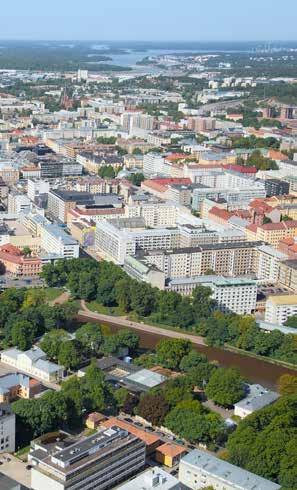
Turku is the sixth largest city in Finland with 210,000 inhabitants. It also is one of the nicest cities and most popular holiday destinations in Finland, with its historical attractions and magnificent archipelago. s
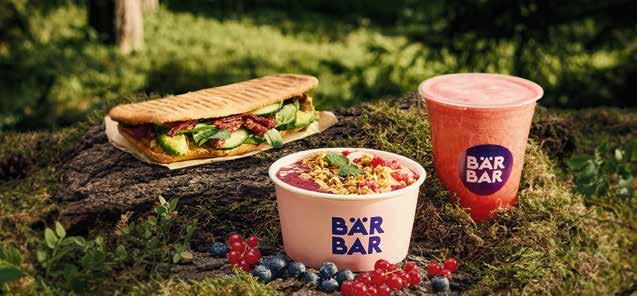
smoothiessmoothie bowlssandwichescoffee
Kristiinankatu 6, 20100 Turku, @barbarturku, app.barbar.fi World’s easiest bus

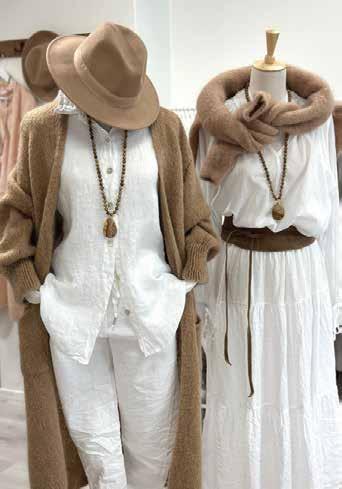
THE MOST STYLISH LINEN CLOTHING FOR WOMEN THIS SUMMER!
Enjoy timeless fashion and the comfort of natural materials. Explore our wide selection and find your favorite summer look!
Yliopistonkatu 18, 20100 Turku kauppa.wilhelmiina.net
Open Mon–Fri 10–18, Sat 10–16
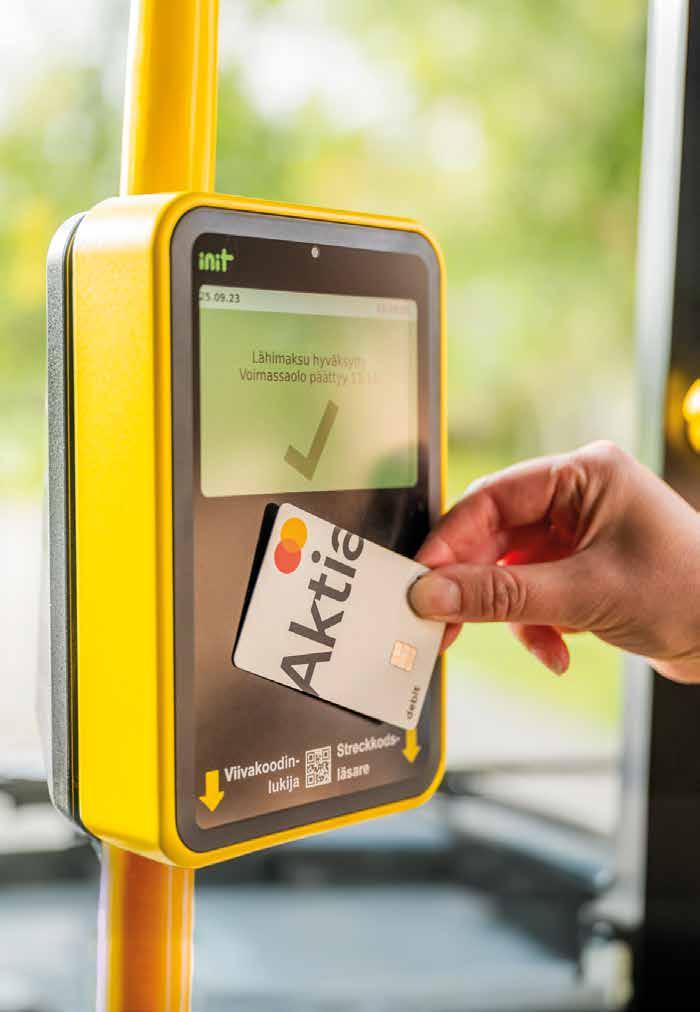
Single tickets are valid for 2 hours


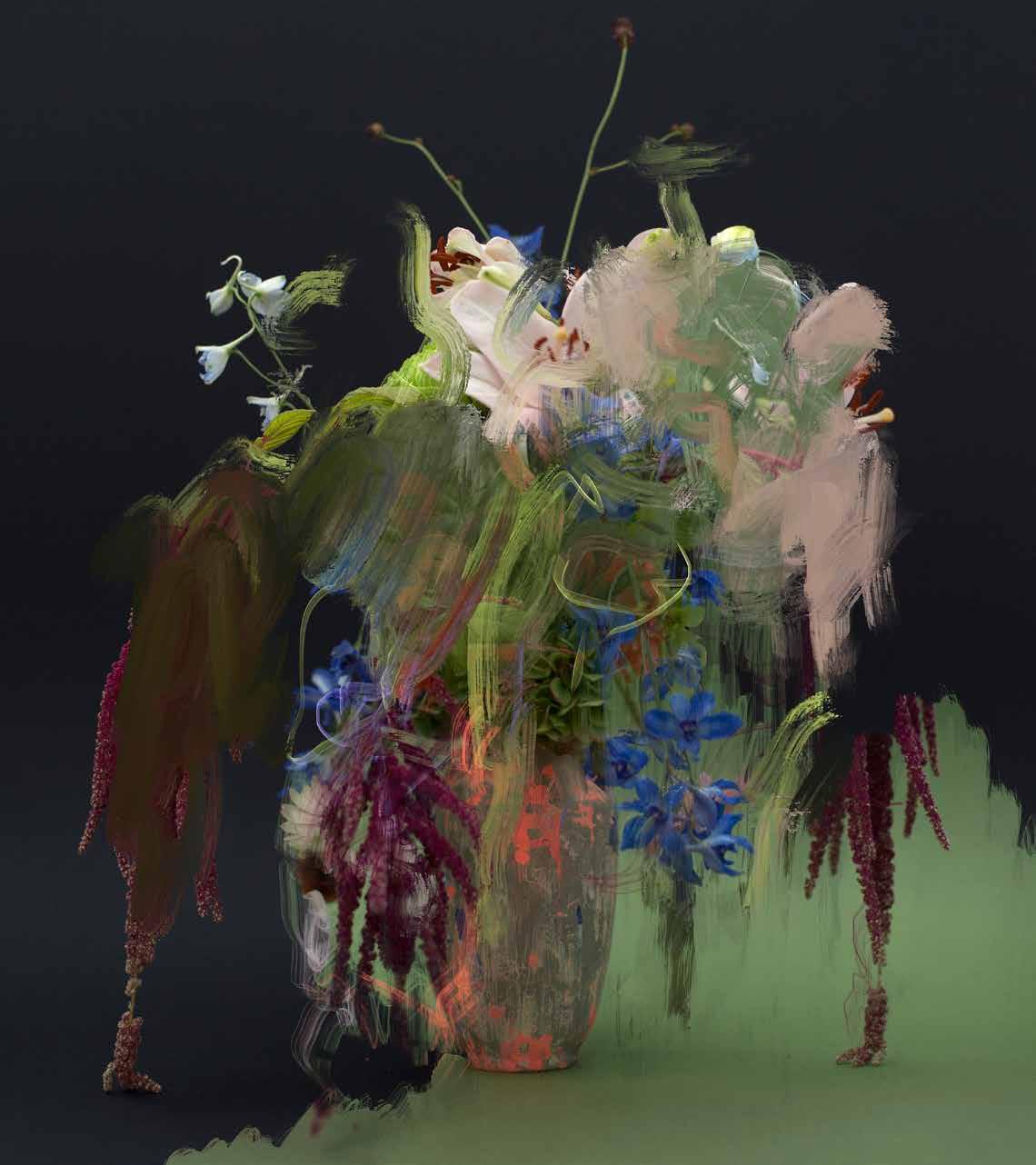
Rising above the leafy Puolalanmäki hill in the heart of the city, Turku Art Museum is more than a striking granite landmark – it is a gateway into new ways of seeing, feeling, and understanding the world. In 2026, the museum invites visitors on a journey that goes far beyond traditional art appreciation. This year’s exhibitions encourage us to pause, reflect, and attune ourselves to other forms of life – human and non-human alike.
At the core of the programme lies a timely and thought-provoking question: how do we relate to the world around us? We are used to viewing life through a human-centered lens, measuring other beings by their usefulness or similarity to us. Yet the exhibitions at Turku Art Museum gently challenge this perspective. Through photography, painting, and symbolic imagery, they open up alternative ways of perceiving – grounded in empathy, curiosity, and a deeper awareness of our interconnected existence.
Is colour something we see - or something we create?
The year begins with the evocative work of photographic artist Sandra Kantanen (b. 1974). Her exhibition explores landscapes not as static views, but as living spaces shaped by memory, transformation, and perception. Moving fluidly between the real and the imagined, Kantanen’s images capture nature’s fragility and constant change.
Since the early 2000s, she has developed a distinctive technique that merges photography with painterly expression, drawing inspiration from Chinese landscape traditions and Eastern philosophy. The result is a body of work that challenges the boundaries between mediums and invites viewers to question how images – and realities – are constructed. Standing before her works, one is encouraged to look inward as much as outward, discovering how personal experience shapes the way we see the world.
Alongside this, the collection exhibition What (a) Colour offers a vibrant and accessible counterpoint. Drawing on over 60 works from different periods – from the Finnish Golden Age to contemporary art – it explores colour as one of art’s most powerful yet elusive elements. Through paintings, photography, sculpture and moving image, the exhibition examines colour as both a physical phenomenon and a cultural construct. Visitors are guided from soft darkness to radiant light, experiencing how colour is shaped not only by the world around us, but also by perception itself. Playful yet thought-provoking, What (a) Colour invites visitors of all ages to reconsider a simple question: is colour something we see – or something we create?
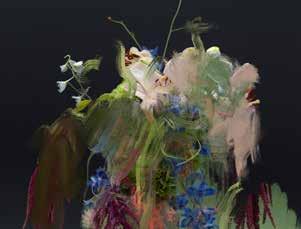
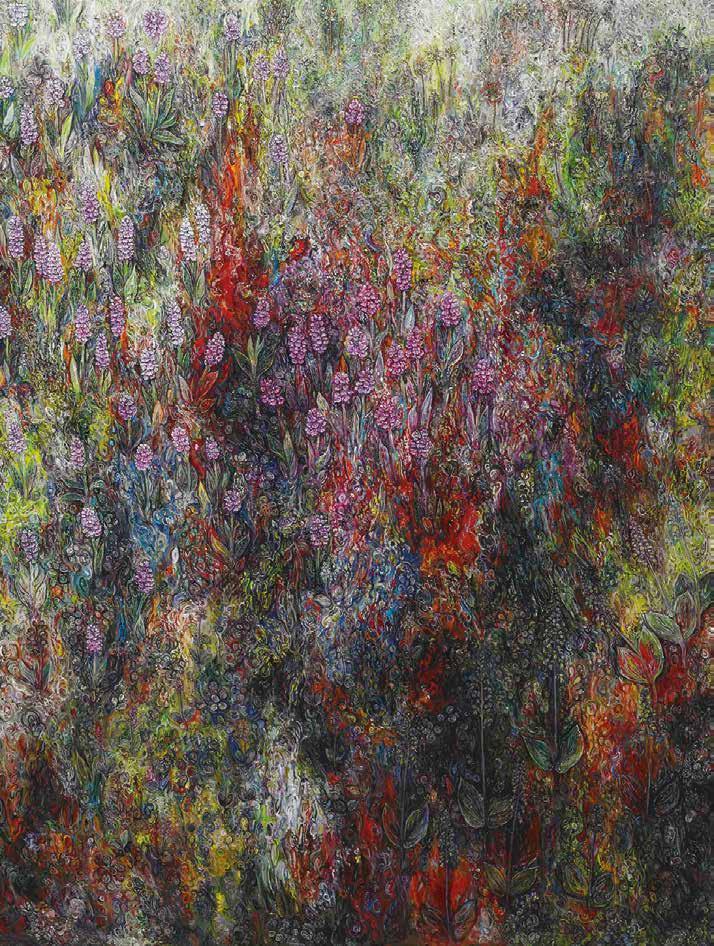
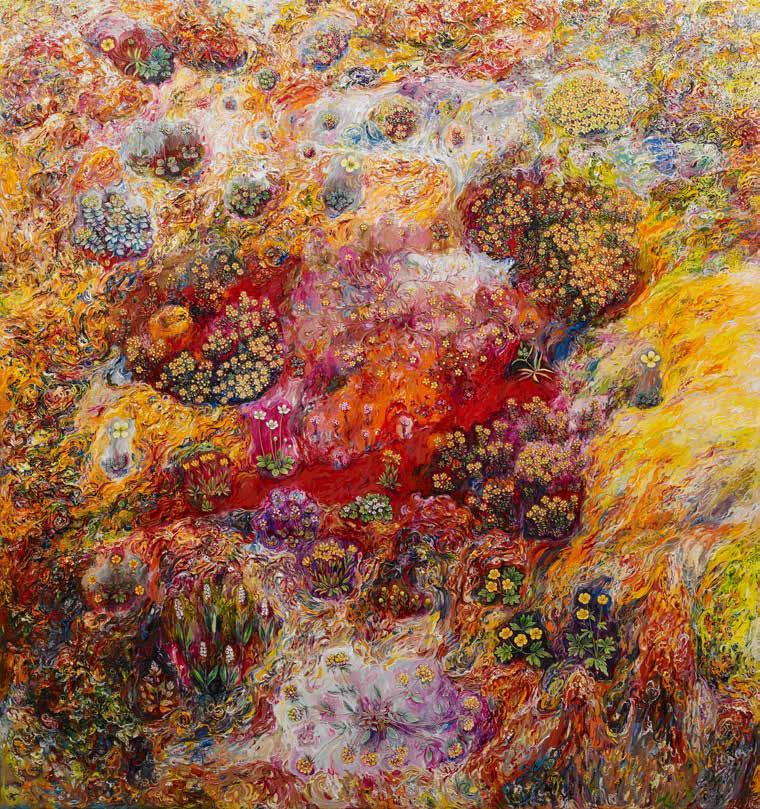
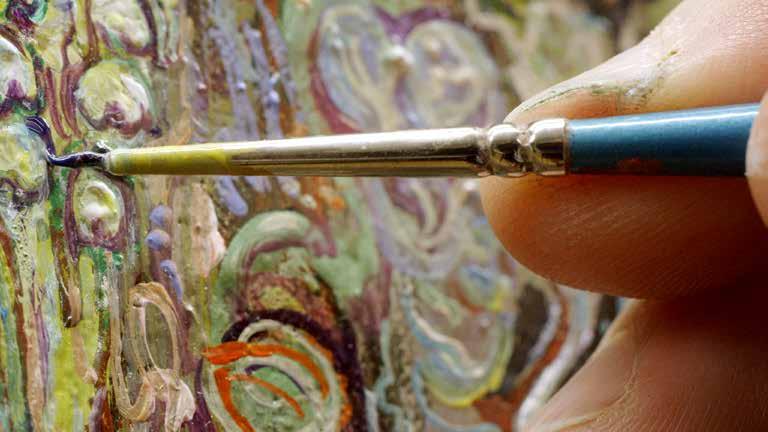
As summer unfolds, the museum transforms into a lush, almost otherworldly garden through the work of Icelandic painter Eggert Pétursson (b. 1956). His large-scale exhibition fills the galleries with the intricate beauty of Arctic plant life, drawn from Iceland’s unique and often mysterious landscapes.
Pétursson’s paintings exist in a fascinating space between scientific observation and imaginative composition. Built on careful fieldwork, his practice begins outdoors, where he studies plants in their natural habitats with quiet attentiveness. Yet the final works emerge in the studio, shaped by memory, classification, and conceptual thinking.
Plants are not symbols or decorative motifs, but living entities.
His compositions range from meticulously detailed botanical depictions to expansive, almost abstract surfaces where plants repeat in rhythmic patterns. Despite their precision, these works are not mere representations – they are reconstructions of lived experience, where memory and observation intertwine.
What makes Pétursson’s work particularly compelling is his respectful approach to the non-human world. Plants are not symbols or decorative motifs, but living entities with their own presence and integrity. His paintings invite us to slow down and encounter them on their own terms.
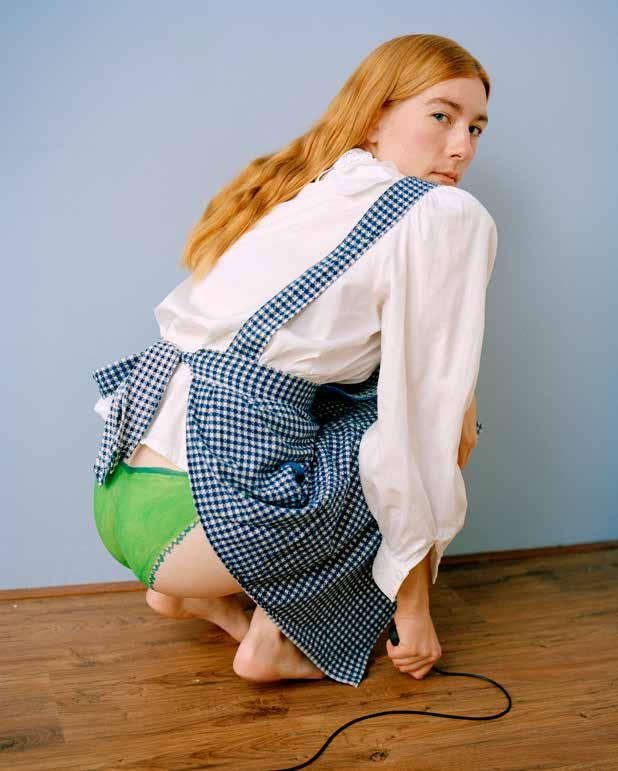
them as multidimensional and complex, challenging simplistic moral interpretations.
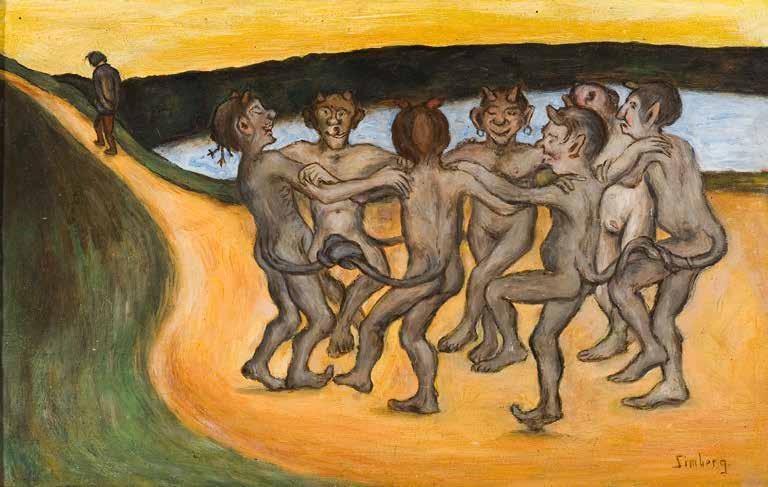
Toward the end of the year, the museum turns to one of Finland’s most beloved artists, Hugo Simberg (1873–1917). This comprehensive exhibition offers a rare opportunity to explore the full breadth of his artistic vision, from iconic masterpieces to lesser-known works.
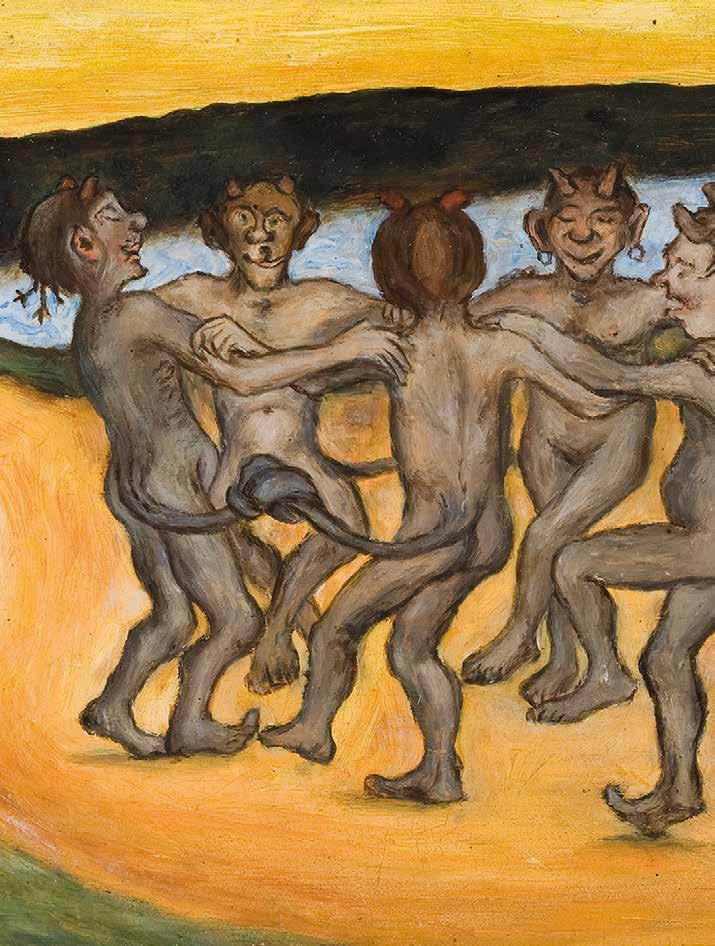
Simberg is renowned for his deeply empathetic and imaginative style. His works inhabit a symbolic universe where devils may appear gentle and human, and death is portrayed as a natural, even tender presence. Through these unexpected perspectives, he touches on universal themes – vulnerability, spirituality, mortality, and belonging.
The exhibition reveals both his technical mastery and his openness to experimentation, highlighting why his art continues to resonate so strongly today.
What unites the 2026 programme at Turku Art Museum is its invitation to look beyond the visible and familiar. Whether through Kantanen’s dreamlike landscapes, Pétursson’s botanical worlds, Simberg’s symbolic narratives, or the sensory explorations of colour, each exhibition encourages a shift in perspective.
A visit to Turku Art Museum is not only about exhibitions – it is also about atmosphere. After exploring the galleries, visitors can unwind at Cafe Victor, a cosy and much-loved café within the museum.
Here, art meets everyday pleasure: a cup of coffee, a light lunch, and a moment to reflect on what you’ve seen. In summer, the experience extends onto the café’s beautiful terrace, widely regarded as one of the most charming viewpoints in the city. Surrounded by greenery and overlooking Turku, it offers the perfect setting to slow down and savour the moment.
For travellers, this makes the museum far more than a cultural attraction. It is a place to pause, to observe, and to reconnect – with art, with nature, and with the many forms of life that share our world. s
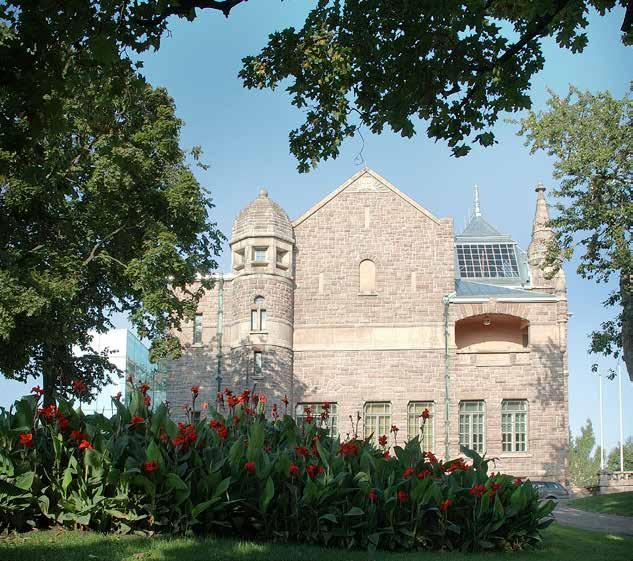
TURKU ART MUSEUM
Aurakatu 26 | turkuartmuseum.fi
Open Tue–Fri 11am – 7 pm, Sat–Sun 11 am – 5 pm
Admission 15 / 8 € or Museum Card.
Free admission for visitors under 16 years.
Guided tours in English on second Sunday of the month at 3 pm (starting from 14 June).
• SANDRA KANTANEN: BETWEEN LANDSCAPES until 17 May 2026
• WHAT (A) COLOUR until 8 November 2026
• EGGERT PÉTURSSON: MILLEFLEURS 5 June – 13 September 2026
• HUGO SIMBERG 2 October 2026 – 17 January 2027
Museum also hosts temporary exhibitions such as Studio and Darkroom series dedicated to contemporary art.
19).
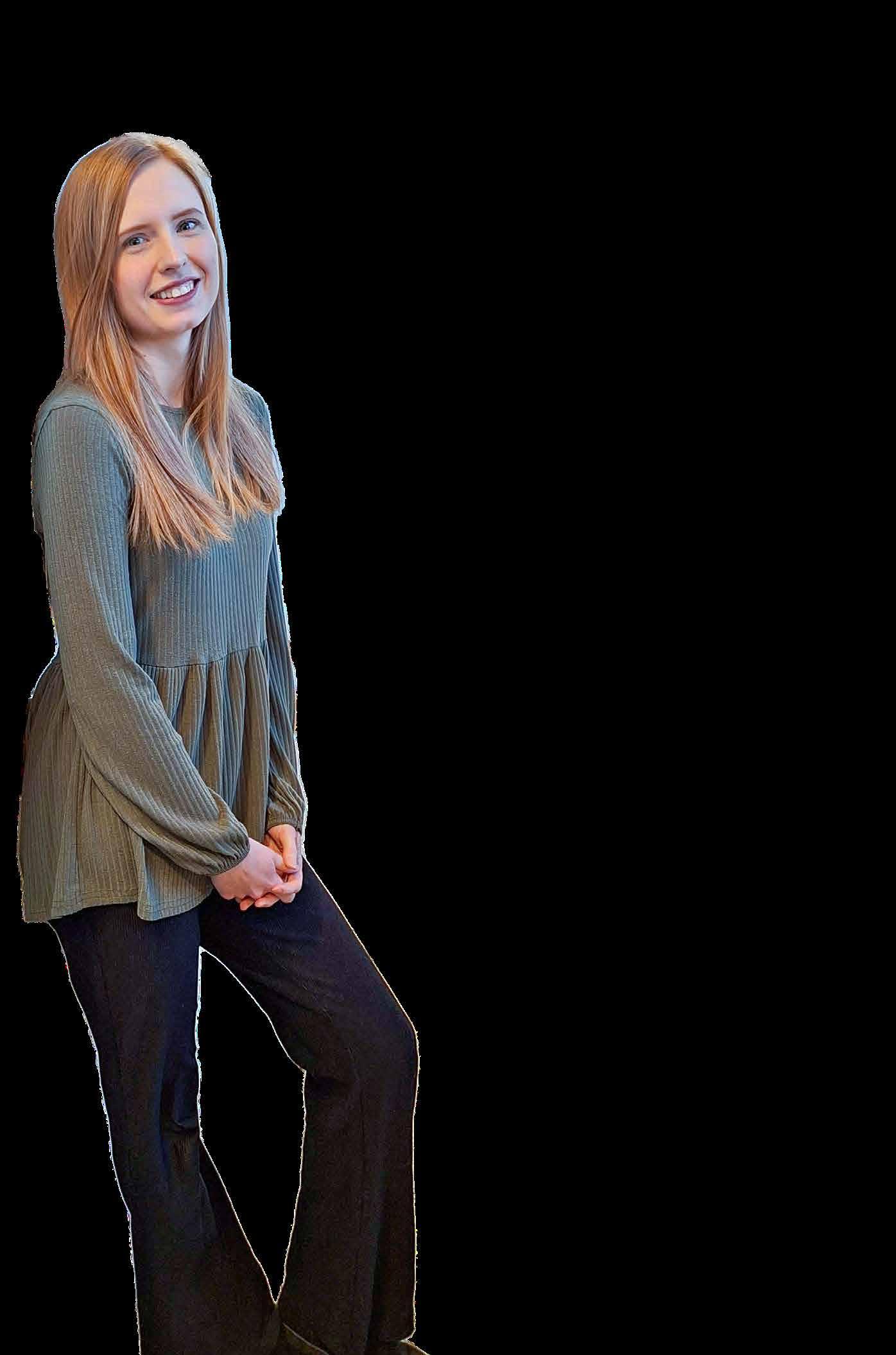
Ever heard of an inkfish, river horse, salmon snake, wash mushroom, or peeing boy? No? Well, they are literal translations of Finnish words into English. The words actually mean octopus, hippopotamus, dragon, sponge, and windshield washer nozzle. And they are also examples of how Alicia Iredale makes her followers laugh on her popular Instagram account, @britinfinland, where she talks about learning Finnish.
moved from the UK to Finland to be with her boyfriend about six years ago and decided to learn this difficult language. A little more than a year ago, she started making videos on Instagram in which she speaks Finnish and wonders
The videos have become hugely popular, and a single video might get five million views. And it’s no wonder: Iredale’s pronunciation is exceptionally good, and she’s a natural performer, as if she were born in front of a camera. And
Moving to a new country was also interesting, as Iredale knew hardly anything
“For example, I didn’t really understand that there’s a proper summer here! It’s actually a rather common misconception: people think that there’s always snow in Finland, though in fact, the summer is often warmer here than in England. In the same vein, when we were at a cottage for the first time in the winter, I was told that it would be by a lake, and I wondered where the lake was. I didn’t
Iredale has training as an early childhood educator, so when she came to Finland she thought she would work at an English-speaking daycare center. But then she spotted a year-long language course for foreigners and decided to dedicate the
“I discovered that I really enjoyed studying and learning new words. I’d never studied languages before, so it was something new. And I learned a lot in a year. Of course, at first, I understood a lot more than I could actually speak. After studying for a year, I went to work at a Finnish-speaking daycare, which was great for language immersion. I was with one- to three-year-olds, and they don’t speak very well yet either. The sentences are short and the
From the children, Iredale also learned that the most important thing is to be understood, regardless of whether the grammar is perfect. It was
“It was only through work that I really started to become fluent in the Because of course there are many differences there: while a task may be
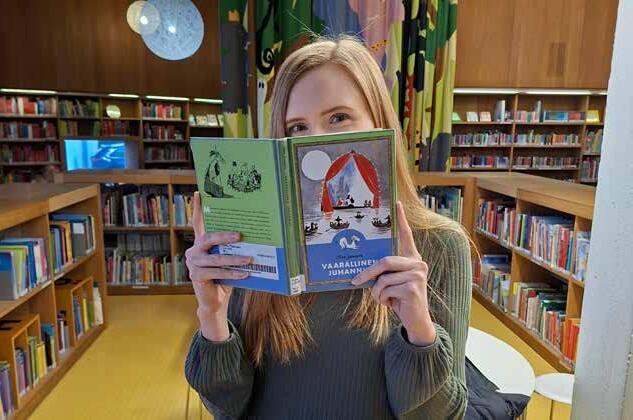
In Finland, almost everyone speaks English, so you can get by here without knowing Finnish. But on the other hand, language opens many doors:
“At first, we lived with my boyfriend’s parents, and I didn’t want everyone to always have to switch to English because of me. I wanted to learn at least enough to understand what everyone was talking about. These days, I understand maybe 95 percent. Thanks to knowing the language, I was also able to participate in staff conversations at the daycare. And people in Finland definitely appreciate it when someone even tries to learn the language! It’s sort of an icebreaker.”
On the other hand, it’s often a problem that Finns can be quick to switch to English if they notice someone is fumbling with the language:
“For example, if I asked something in a store, they would immediately answer in English because they wanted to be helpful. That doesn’t happen anymore. The other side of the coin is when people assume I speak perfect Finnish, and then they use complicated sentences and speak quickly, as if speaking to a Finn.”
Finnish is also not the easiest language. Compared to English, for example, Finnish is completely the same – except for the vocabulary, grammar, structure, and pronunciation...
Iredale finds the different noun forms particularly tricky. There are 15 of them.
“When I ask for a cup of coffee, is it kuppi kahvia or kupin kahvia? But on the other hand, I don’t really care anymore if I make mistakes. I would never say anything if I always had to speak perfectly.”
Another tricky thing is the way consonant sounds change in Finnish. Iredale has even made a video about this: how Finns delete letters in the possessive form of words.
“For example, the possessive form of the word ‘Turku’ is ‘Turun.’ Of course, there are rules about when to delete letters, but there are quite a few exceptions. Sometimes the inflected form of a word can look so different that it can easily be mistaken for a completely different word. For example, the negative form of the phrase sataa vettä [which means ‘it’s raining’] isn’t ei sataa vettä, it’s ei sada vettä. And that word looks completely different!”
Though we could also point out that in English, a person who lives in Liverpool is called, against all logic, “Liverpudlian,” so other languages are guilty of it, too…
When you change countries, you also encounter many oddities and differences in everyday life:
“For example, a dish brush is something we don’t have in Britain. We also don’t have cheese planes. Cheese is either cut with a knife or comes ready sliced. Once, when I had just started working at the daycare, I was asked to get the cheese plane from the kitchen, which was tricky because I didn’t know what it was. And to top it all off, the Finnish word has ä and ö in it.”
Or how about Finnish interior design culture:
“Every single kitchen in Finland has Fiskars scissors and Moomin mugs. And there will usually be something from Marimekko somewhere in the home. The UK doesn’t have such a homogeneous culture.”
And even the cultural clichés are true:
“People’s personal space is so important that they will wait for the bus a long way from the stop so that they don’t get too close to anyone else. Personally, I don’t want to be that far away, so I just rudely go right up to the stop. And the funny thing is that it’s usually
1) Understanding language begins with speech. Don’t focus on written language alone because it won’t help in everyday communication. If you only read the written language, you won’t understand anything in ordinary speech situations.
2) Practice in different ways: by listening, writing, and thinking. For example, podcasts have been good for me. Even though you listen to them, they also help a lot with speaking. You can learn different phrases and structures – and words, of course. I also often talk to myself in Finnish.
3) Write down new words so they’ll be easier to remember. And if you can somehow contextualize them, that will also help you remember.
the same people waiting there at the same time for the bus every weekday morning!”
Accessing culture through language
Iredale has been making content about her life in Finland on Instagram for quite some time, but when she started making videos in which she speaks Finnish and shares her observations about the language, a little more than a year ago, her social media blew up.
The most popular seem to be videos that have some kind of “learn with me” angle, where Iredale wonders about or teaches some quirk of the Finnish language – and most of the students are Finns.
“They always give me a lot more examples. I suspect that the videos lead Finns to discover things about their own language that they might not have thought about.”
Another hit product has been various direct translations. For example, the Finnish word rautatie, meaning railroad, would translate to “iron road” in English. Or animals: if you translate the Finnish words for raccoon and anteater directly into English, you get “wash bear” and “ant bear,” which is admittedly funny.
“Learning the language is also always a key to the culture. If you don’t know the language, there are essential things you won’t understand. For example, Finns are very matter-of-fact people, they go straight to the point, and even sound a bit blunt to outsiders. And when a Finn speaks English, that Finnish abruptness often carries over into their English, but that’s not how English people speak! We like to mince words and sugar-coat things. But when you learn to speak Finnish, you realize that it’s not that they’re rude, it’s a way of thinking.” s
Join the Development of Archipelago Tourism!
Want to share your ideas to help make Southwest Finland’s archipelago even more attractive to travelers from around the globe? Take part in the Archipelago Tourism Developers Community!
As part of the community, you can
• Influence the development of archipelago tourism
• Share your views and experiences
• Be involved in creating something new!
All participants will be entered into a prize draw. Register here:





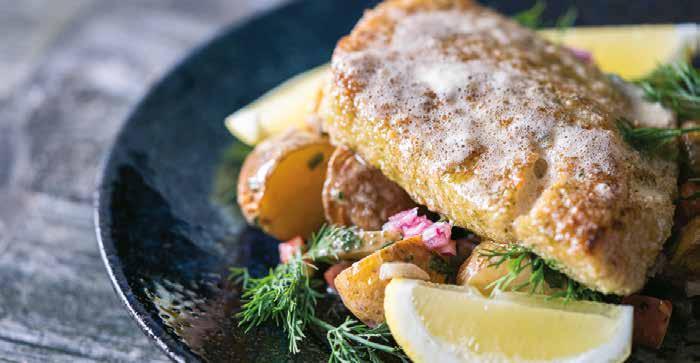
The absolute best fish and seafood lunch in town.
You are warmly welcome.
Open mon-sat 11-15
Located in Turku Market hall. Eerikinkatu 16
Varmista näkyvyytesi: Puh. 045 656 7216 | Puh. 040 481 9445 www.aikalehdet.fi

We create functional identities and unforgettable brands. So stop hiding and let’s level up your image! www.knok.fi
In the course of the trip from Charles de Gaulle Airport to central Paris, the grumpy, middle-aged taxi driver managed to curse the city’s system of roads, the government, the president, and elderly care. I looked out the backseat window at late autumn’s black Seine, where I had once swum, in the intoxication of youth; at Pont Neuf, where a few years earlier I had photographed women dressed in blue burqas.
The hotel was near the Saint Denis metro station, down the side street. The receptionist, an old man, stumbled wearily out of the back room. I apologized for my late arrival and explained that my flight from Helsinki to Paris had been delayed by several hours.
I climbed the narrow, creaky stairs to the third floor. The stairwell smelled of a bygone century, of dust, cigarettes, and 4711 Eau de Cologne. My room key hung on a heavy keychain carved from walnut wood. I wondered how many people had held this key before I was born. I threw my small backpack on the bed and opened the thick drapes. The large window looked out on a rainy street that was lit by dim street lamps. The dark windows of the tired old house next door stared back at me.
The mahogany bed creaked as I slipped under the heavy blanket. For a moment, I counted reindeer, until I fell into a deep sleep.
Early in the morning, I woke up to the strange feeling that I wasn’t alone in my room. I flicked on the bedside lamp and saw a suitcase with a big Pikachu sticker on the side. Someone was sleeping in
the armchair. He had hidden his face inside the hood of his white sweatshirt, but from the sticker on the suitcase and the sleeper’s childlike hands and slim torso, I deduced he was a Japanese teenager. I didn’t get up, out of fear that I would wake him. I wondered what I should do. I decided to lie in bed until the boy woke up.
At seven o’clock, the boy was still sleeping. I got out of my bed, took a shower, got dressed, and opened the window. The boy woke up, jumped from his chair, pulled the hood off his head, and without looking at my face, apologized in a quiet, shy voice.
“Sorry! I’m so sorry.”
“It’s okay,” I said.
“I’m very sorry, but this is my room,” the boy said. He explained that he had come from the airport during the night, found me, an older woman, in his bed, and been too exhausted to start straightening things out.
“What’s your room number?” I asked.
The boy answered: number six.
I said that couldn’t be because my room number is six.
When I handed him my room key, I realized that my room number was actually nine. It was my turn to apologize. The boy covered his mouth with his hand and said that he could take room nine.
I sat alone at a table by the window in the breakfast room and looked down at the street. The morning was sunny, the sky turquoise.
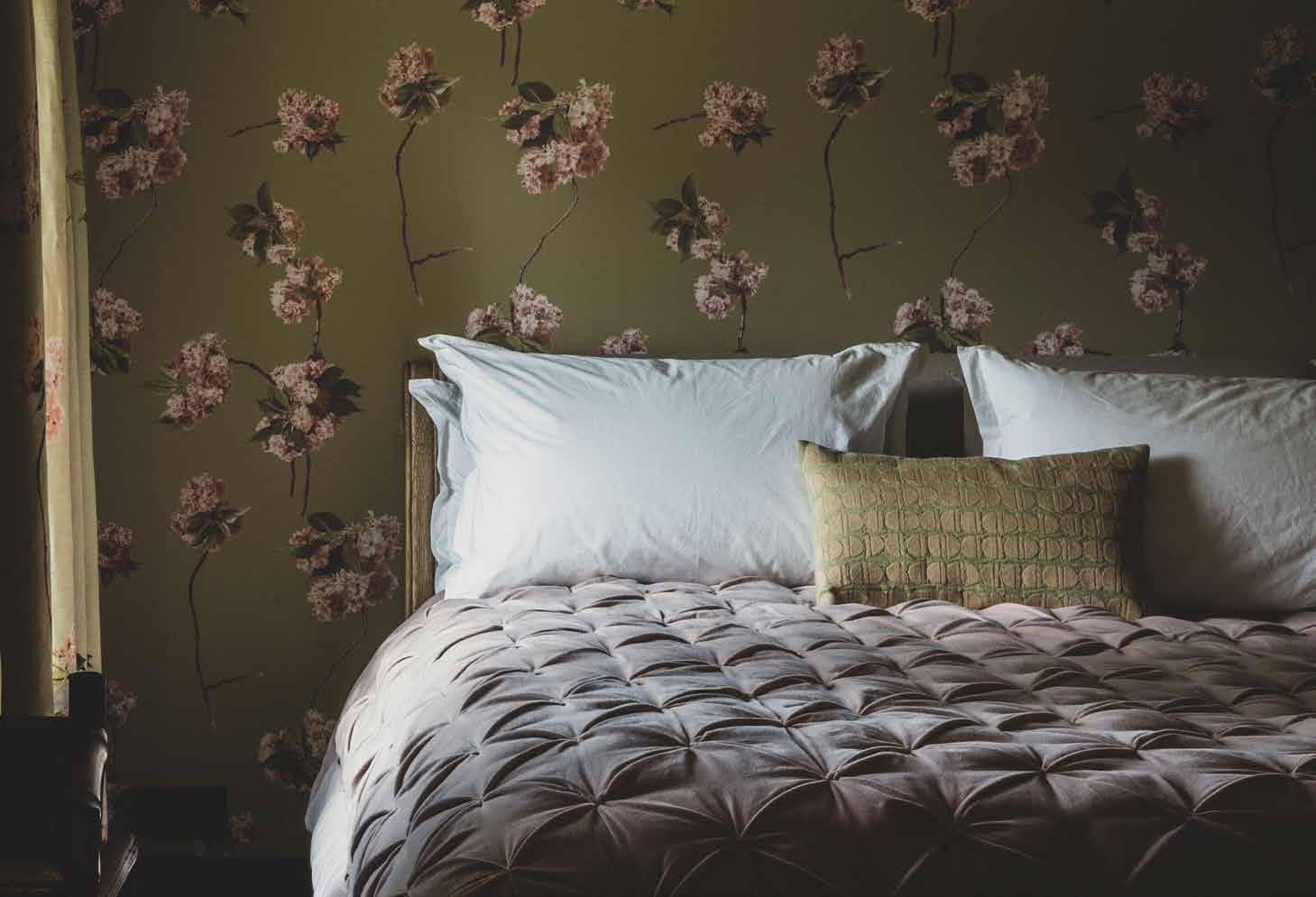
The mahogany bed creaked as I slipped under the heavy blanket. For a moment, I counted reindeer, until I fell into a deep sleep.
A stout wind carried dry maple leaves over the street. Over there, someone was hurrying along; over there, cheek kisses were being exchanged; over there, some people were chatting while their dogs peed on the autumn leaves. The boy sat at the next table and smiled at me sympathetically. I asked what had brought him to Paris.
“Long story short,” he said, looking at me ruefully, “a year ago, the week after my mother was buried, I was at a sushi bar with my friend when an older, middle-aged French woman came up to me and asked if I was interested in modeling. The woman seemed nice, but I said I wasn’t interested in modeling. I thought she would turn out to be a scam artist. Or maybe even a pervert, luring depressed young people into prostitution. After a short conversation, the woman handed me her business card and said to call if I changed my mind. A few months later, when I had finished school and life with my father was really hard, I called the number, and now I travel between Tokyo and Paris. What about you? Why are you in Paris?” the boy asked.
I told him I was an author and on my way to a literary festival in Normandy. He said he had only ever read a single novel in his life and still wondered how he managed to finish it. We chatted, laughed, and ordered more coffee, and when it was time to move on, the boy asked if I would like to come see a fashion show in the evening; he would be modeling accessories by Alexandre Mattiussi
“I would love to,” I said, “but Normandy is calling.”
When I gave the boy my email address, he smirked and said, “Don’t forget to lock your hotel room door.”
The next fall, I received an email from the boy. He said that he was living in Milan and had seen my book Scompartimento n. 6 in a bookstore window. s
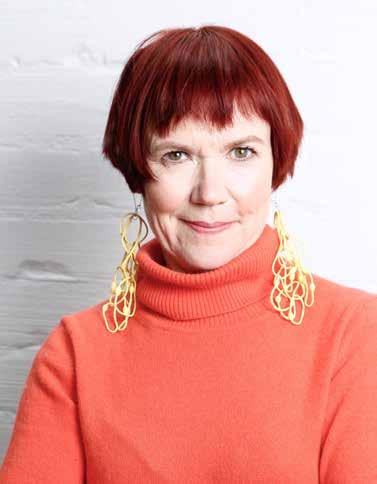
Rosa Liksom is an author whose works have been translated into many languages. Hytti numero 6 (Compartment No. 6) won the prestigious Finlandia Prize and was made into a film that won the Grand Prix at Cannes.












































































Ruissalo Boatyard’s
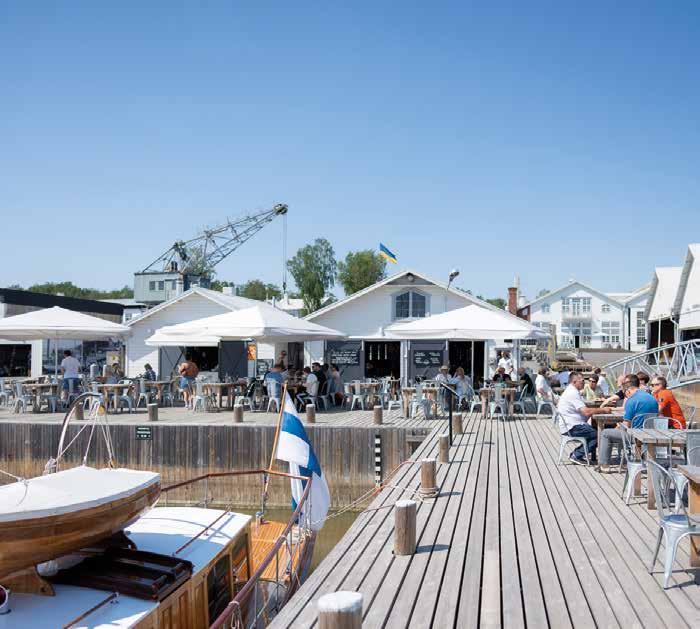
www.ruissalontelakka.com • www.tenlen.fi