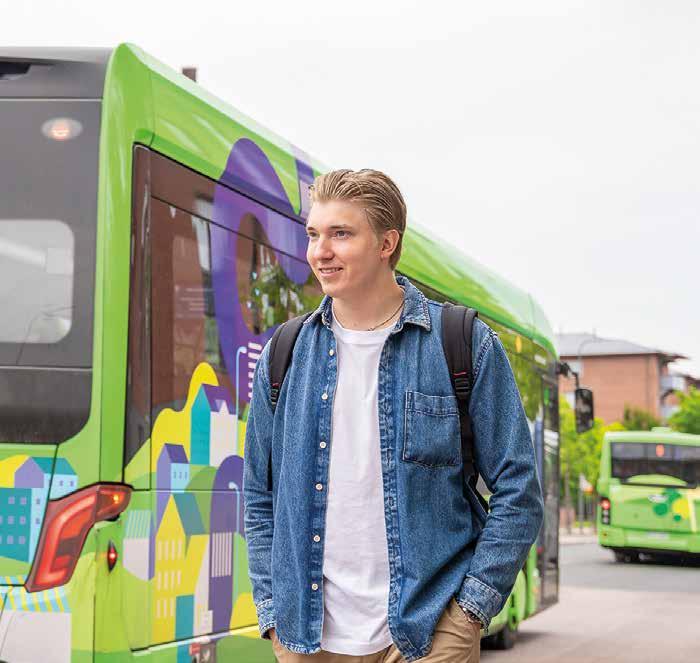
Explore the area comfortably, safely and sustainably with Linkki buses.
You can easily pay for your bus ticket with the Waltti Mobiili app or by contactless payment.
Tickets, routes and timetables: linkki.jyvaskyla.fi/en
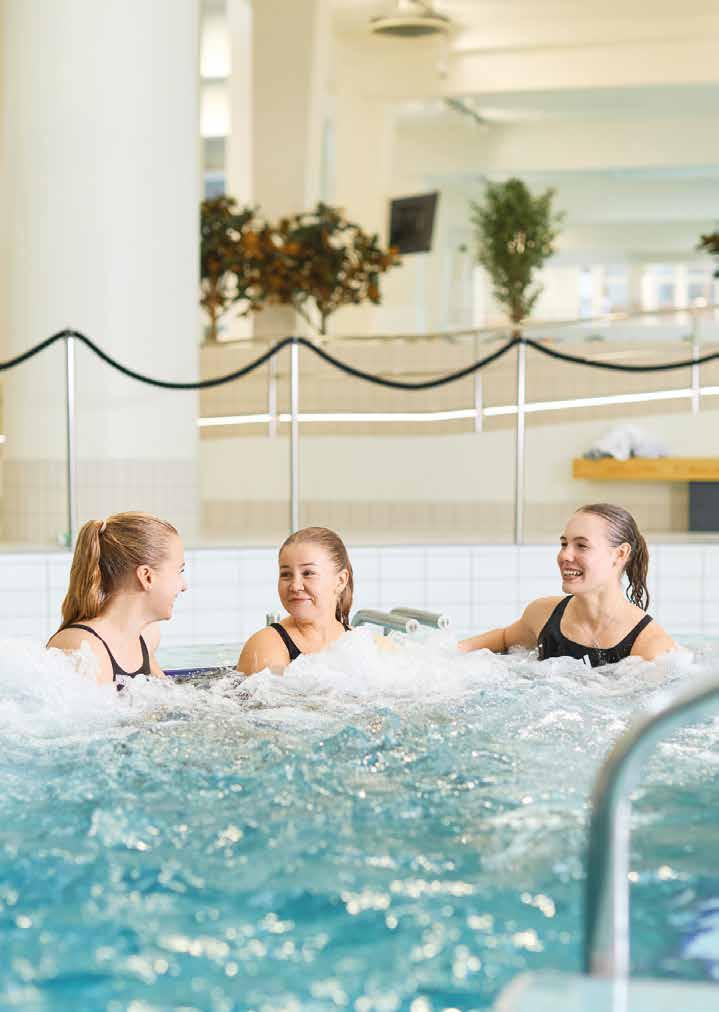
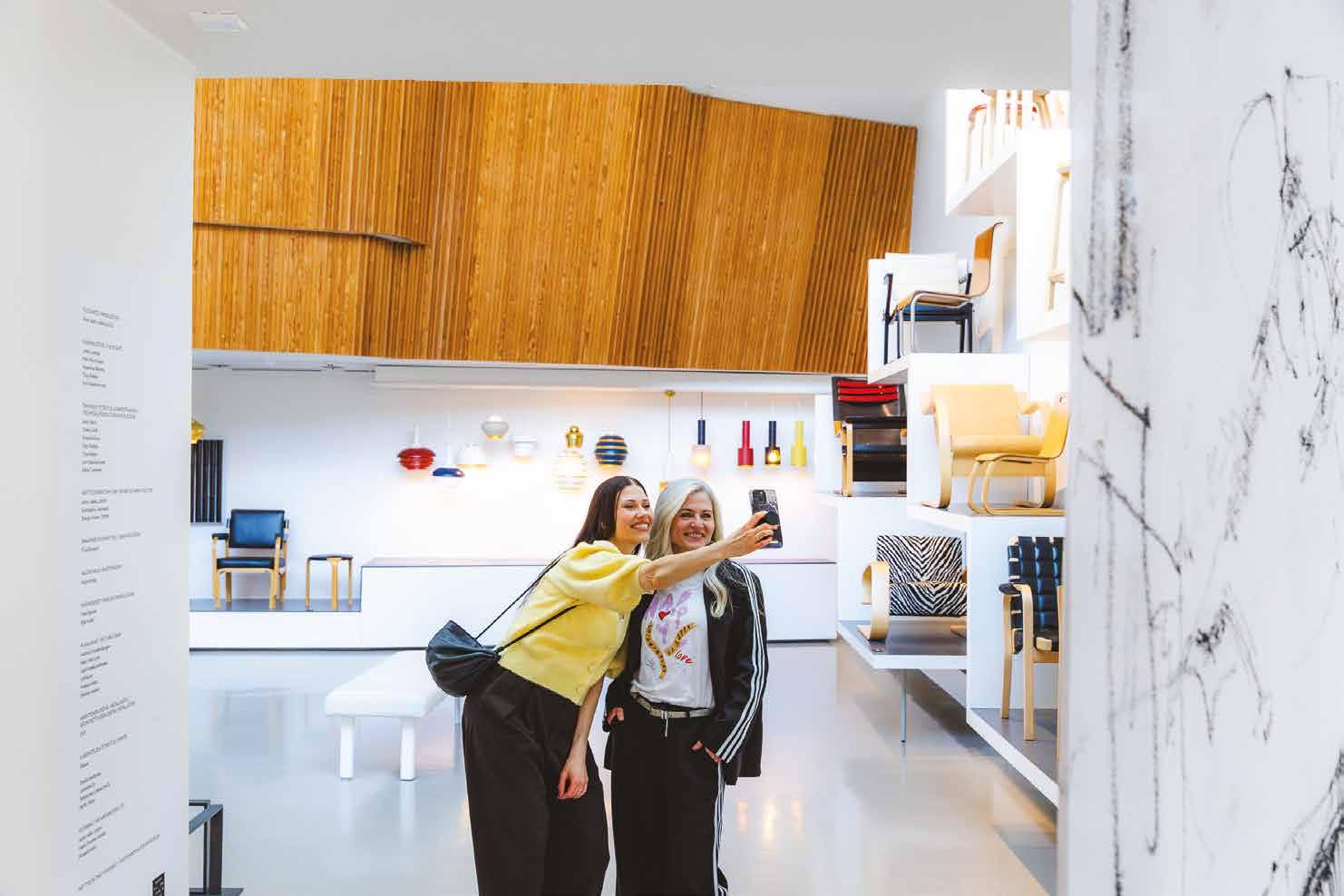
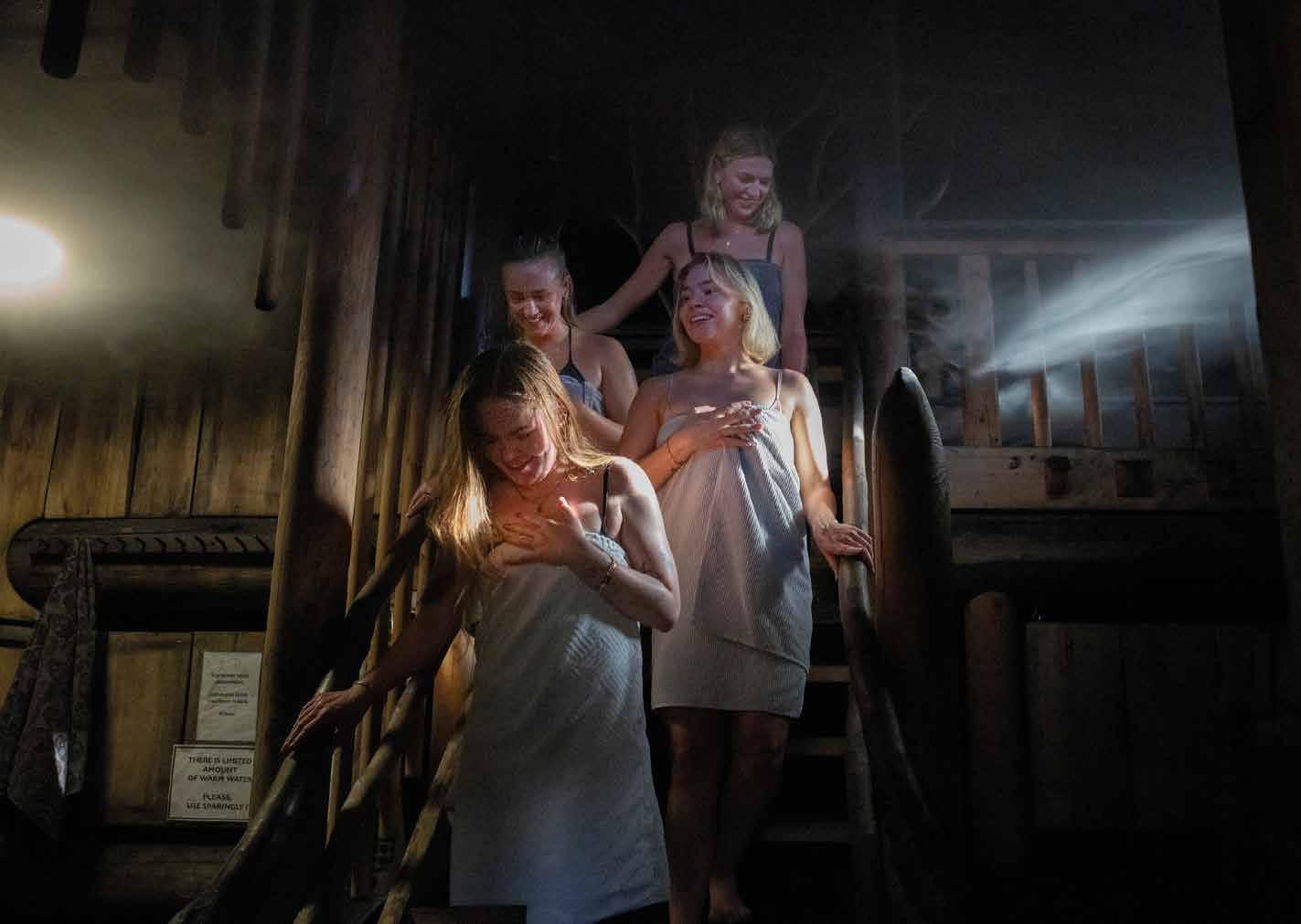
Experience the unique atmosphere of AaltoAlvari Aquatic Centre!
Swimming hall, located near the city centre, offers a wide range of opportunities for exercise and well-being, whether you are a fan of swimming, sauna, relaxing hydromassages or water slides.
Come and enjoy and relax at our versatile swimming hall designed by renowned Finnish architect Alvar Aalto.
JYVÄSKYLÄ CITY THEATRE, founded in 1961, produces high-quality and diverse theatrical experiences, ranging plays from new Welcome to experience
ALVAR AALTO
REPERTOIRE AND SCHEDULE jklteatteri.fi
SOCIAL MEDIA @jklteatteri
Both auditoriums, as well as the restaurant and restroom facilities, are accessible.
Jyväskylä’s Museums delight with variety! Fascinating art exhibitions at the Jyväskylä Art Museum, interesting stories of the olden times at the Craftsmens’ Houses and various craft phenomena at the Craft Museum of Finland. jyvaskyla.fi/museot
CONTENTS
Welcome to Jyväskylä – the coolest city in Europe! 6 Theater in the summer night 8
Jyväskylä in a nutshell 10 Map of Jyväskylä 12
Hotels providing Jyväskylä Times 14
Hiking with a caveman 16
The Iceman vs. the Boogeyman 18 World Capital of Alvar Aalto 21
Captain Finland: How to make it in Finland, Part 3 24 A hotel night in Paris – Column by Rosa Liksom 26
Jyväskylä Times Magazine for Visitors Issue 2026–2027
www.jyvaskylatimes.fi
ISSN 3087-5447 (print) ISSN 3087-8667 (online)
Graphic design & layout
Petteri Mero
Mainostoimisto Knok Oy
Editor in chief Roope Lipasti
Sales manager Raimo Kurki raimo.kurki@aikalehdet.fi
Tel. +358 45 656 7216
Sales manager Kari Kettunen kari.kettunen@aikalehdet.fi
Tel. +358 40 481 9445
Published by Mobile-Kustannus Oy Betaniankatu 3 lh FI-20810 Turku, Finland
Member of Finnish Magazine Media Association (Aikakausmedia)
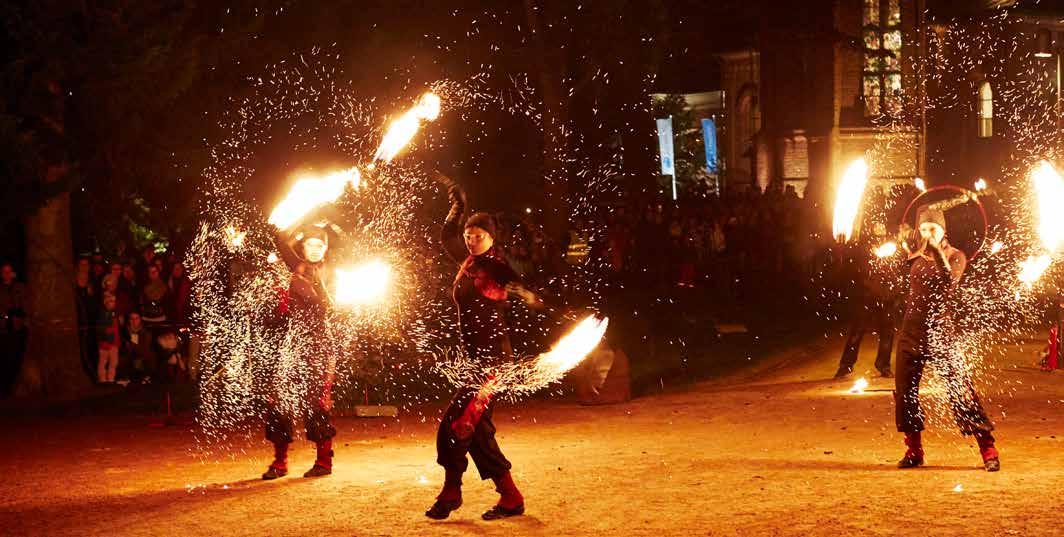
Photo: Nina Huisman / Visit Jyväskylä Region City of Light event.
Photo: Keijo Penttinen / Visit Jyväskylä Region Rosa Liksom. Photo: Pekka Mustonen
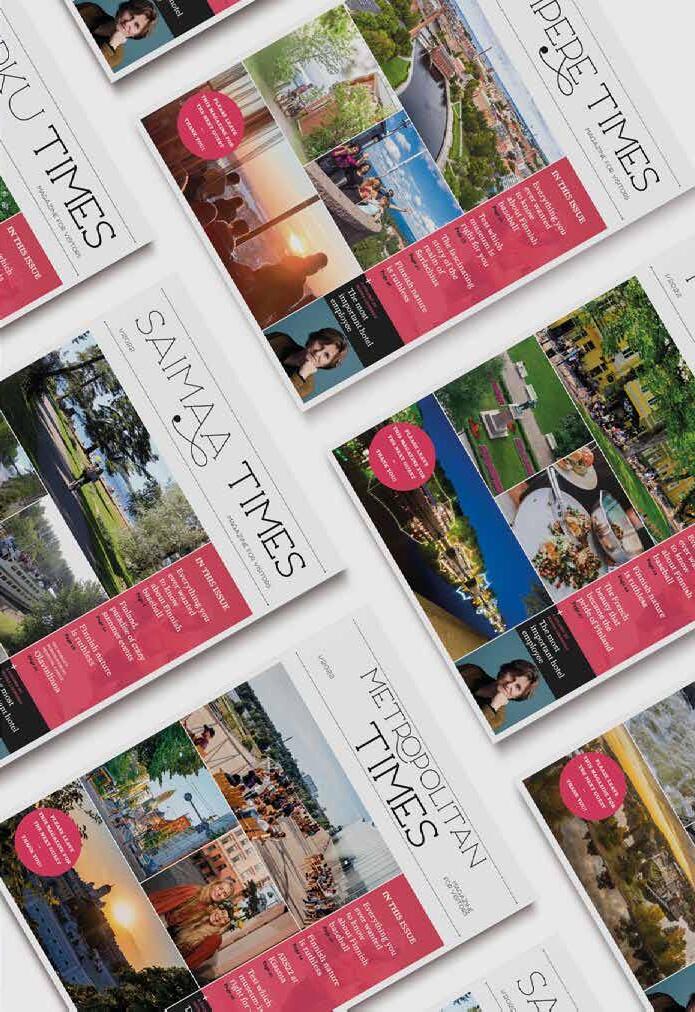
Digital edition of Jyväskylä Times: jyvaskylatimes.fi. The magazine is available in hotel rooms in the city of Jyväskylä (see page 14). The next issue will be out in June 2027.
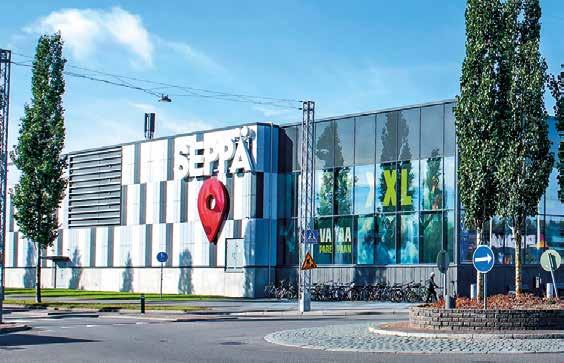
SHOPPING CENTRE SEPPÄ
Biggest and Best shopping centre in town
Easy to reach Park for free or hop on buses S5, 20, 36, 41 or 45 from city center
50 shops & restaurants fashion, food, beauty, home & more! Download and join Seppä Club Get exclusive offers & surprises
Ahjokatu 3-5, Jyväskylä – Just 2,5 kilometers from city center kauppakeskusseppa www.kauppakeskusseppa.fi
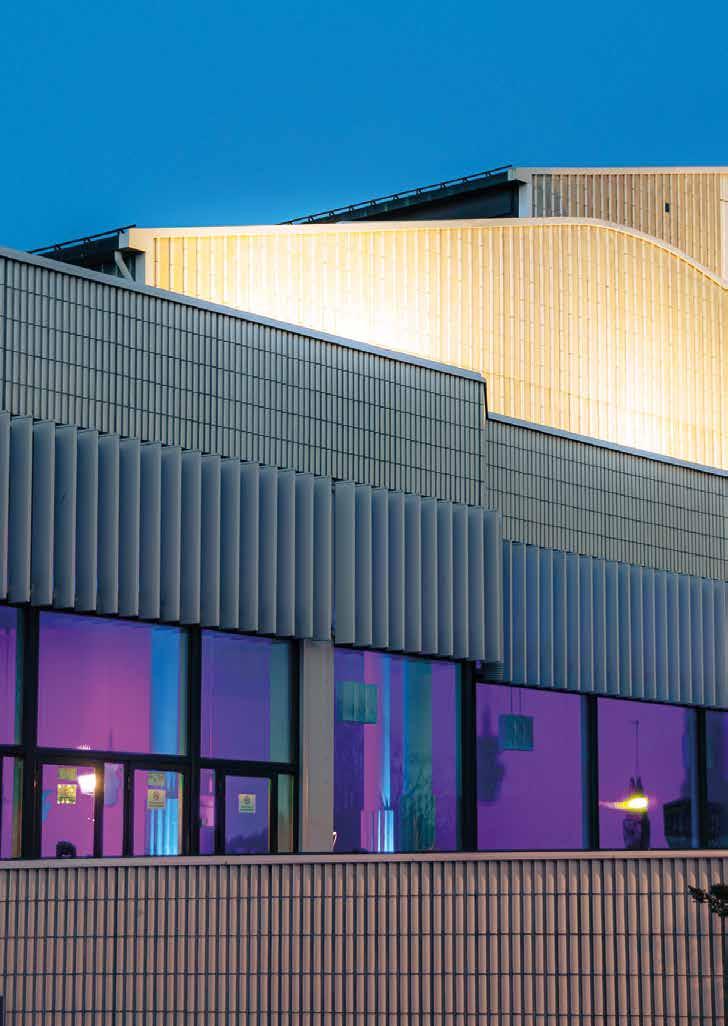
Paviljonki Fair and Event Center paviljonki.fi • Lutakonaukio 12, Jyväskylä
photo: Roosa-Maria Kauppila
Welcome to Jyväskyläthe coolest city in Europe!
Jyväskylä is known as a lively student city, where every third person you meet is a student. Educational institutions such as the University of Jyväskylä and the University of Applied Sciences attract students from all over Finland and the world, fostering an environment of innovation and creativity. This youthful energy permeates the city, creating a vibrant atmosphere that is both welcoming and inspiring. Jyväskylä also has a national reputation as a city of physical recreation and sport.
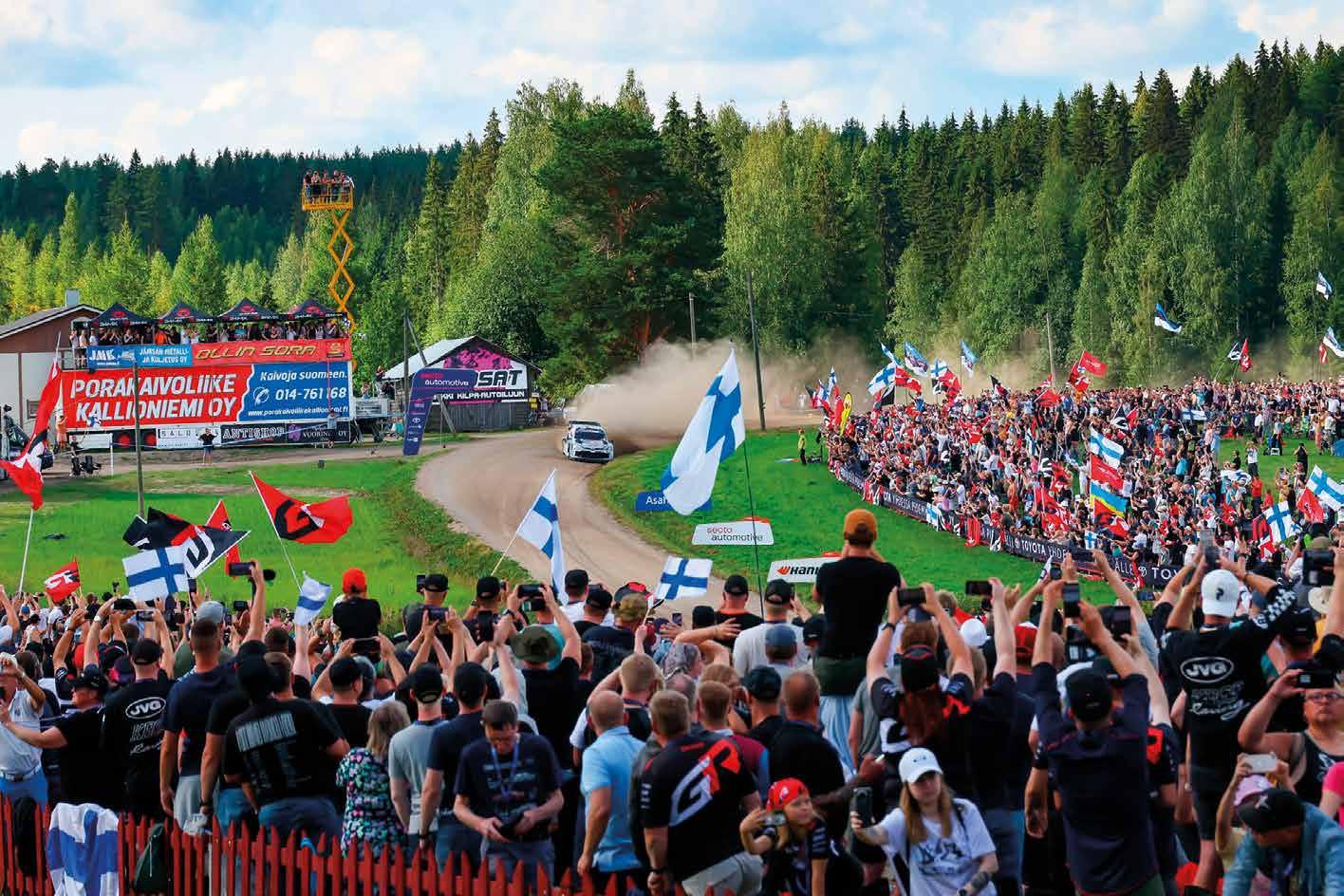
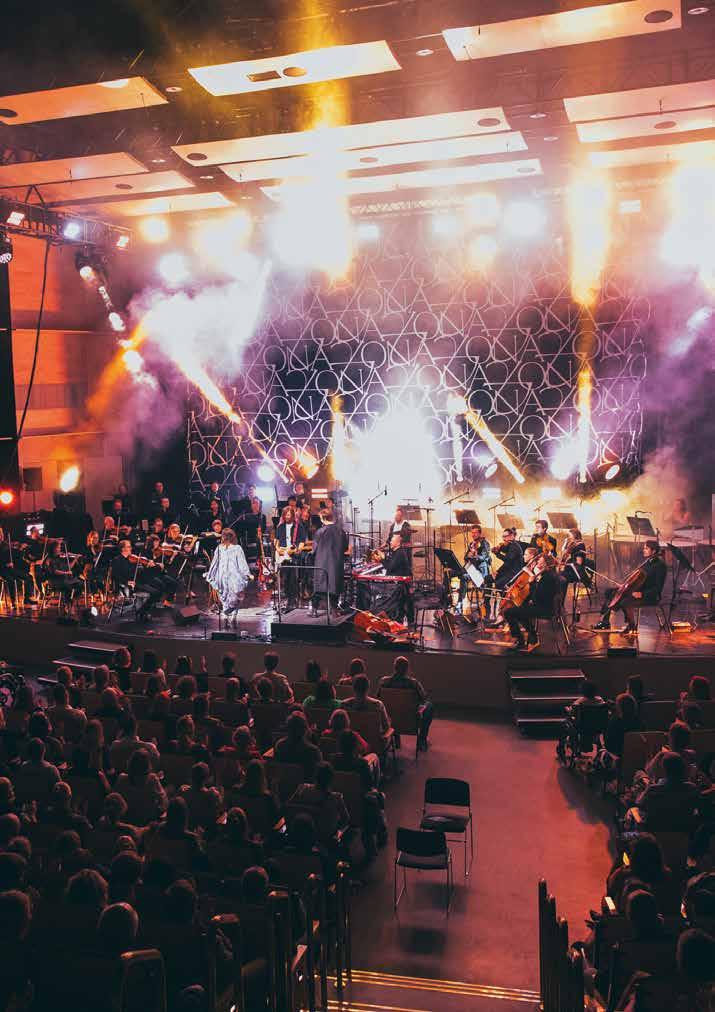
Visitors and residents alike are treated to a vibrant cultural scene, ranging from the symphony orchestra and city theatre to urban subculture. The city is a lively venue for all kinds of events. Particularly well-known are the Jyväskylä Festival, the longest continuously organised city festival in the Nordic countries, and the Secto Rally Finland, a round of the Finnish World Rally Championship. Jyväskylä has decades of rally history, and the Finnish Rally has regularly been
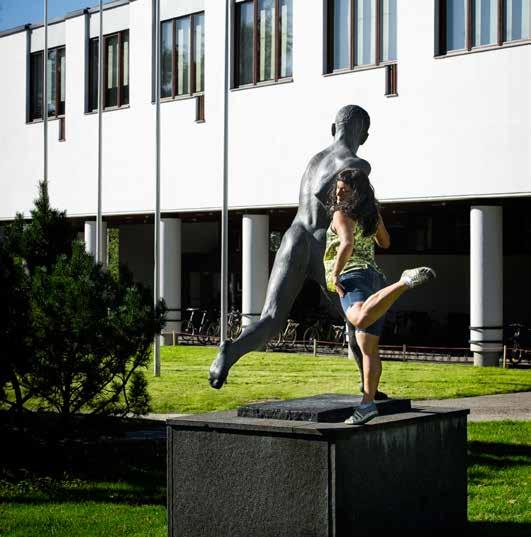
As the capital of Alvar Aalto, Jyväskylä is a real treat for those interested in world-famous architecture. Jyväskylä is home to more significant Aalto buildings from different periods than anywhere else in the world. These 29 buildings include Aalto's masterpiece, Säynätsalo Town Hall, which the New York Times called one of the most influential post-war buildings in the world. Jyväskylä and the surrounding area also boast two of Finland's seven UNESCO World Heritage Sites: Petäjävesi Old Church, a masterpiece of Nordic wooden architecture from the 18th century, and the Oravivuori triangulation point in the Struve chain. How cool is that?
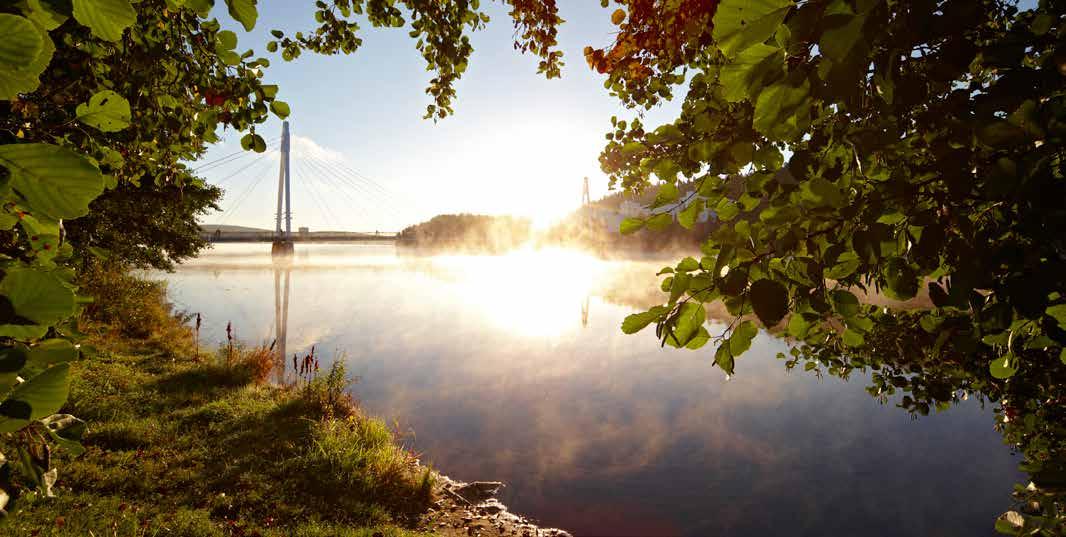
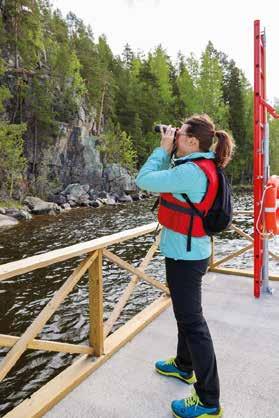
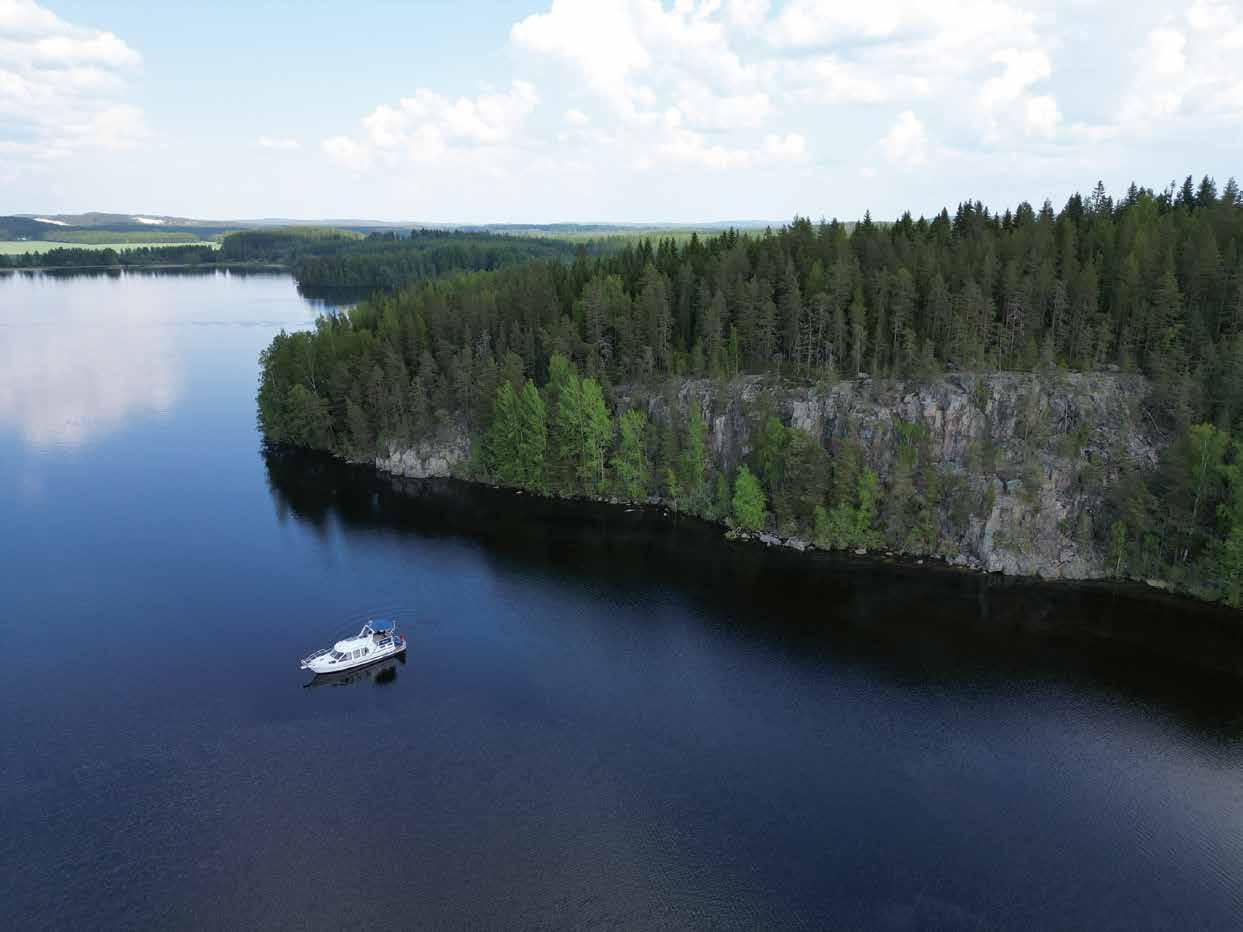
As a city, Jyväskylä presents a unique combination of urban atmosphere and closeness to nature, and even in the busy city centre you are only a few steps away from the delights of nature. The city's location in the heart of Lakeland Finland and Europe's largest integrated lake district makes for a breathtaking landscape. There are nearly 4,000 lakes in the region, the largest of which is Finland's longest and deepest lake, Lake Päijänne. The region's waterways provide a wide range of water activities. For example, canoeing, swimming and lake cruising are all possible within a stone's throw of the centre of Jyväskylä. The four national parks in the Jyväskylä region offer an opportunity to experience Finnish nature in all its diversity. And after a day in the great outdoors, what could be better than enjoying the warmth of the saunas in the World Sauna Region?
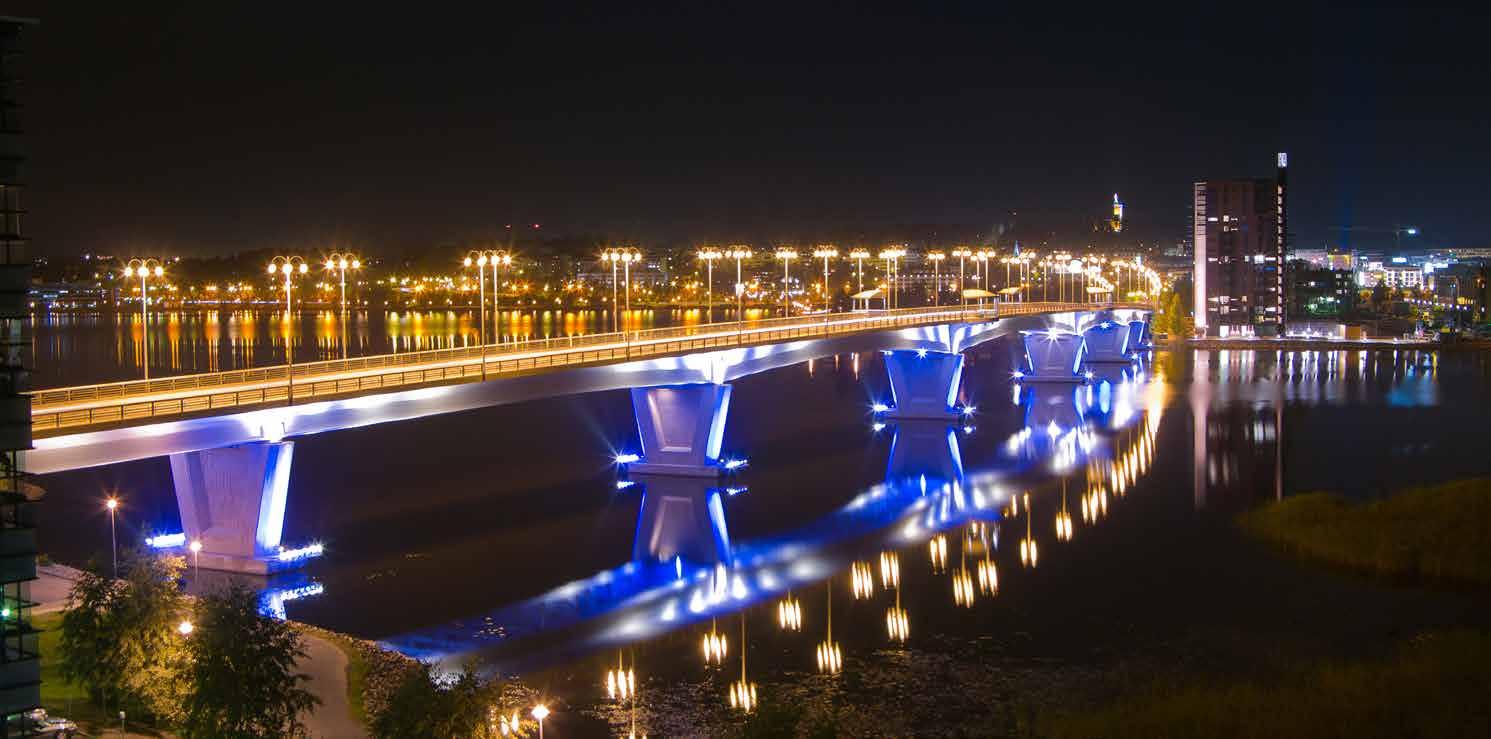
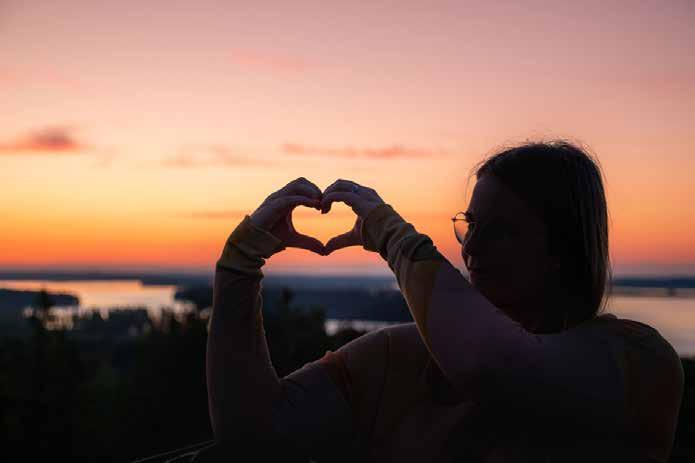
Europe's coolest city is cool in all four seasons. As dusk falls earlier and earlier in the autumn, Jyväskylä glows even brighter. The city has invested in quality urban lighting for more than 25 years and currently has more than a hundred permanently illuminated locations, such as bridges, building facades and works of art. Illuminated landmarks such as the observation tower on Harju Ridge, Matti Nykänen's ski jump, Kuokkala Bridge and Kuokkala Water Tower shape Jyväskylä's skyline and welcome visitors to the City of Light. In winter, Lake Jyväsjärvi in the city centre, at Lutakko harbour, freezes over and becomes a two-kilometre-long skating rink.
I hope you enjoy your visit here in Jyväskylä and welcome you back to our city anytime.
Timo Koivisto mAyoR of jyväskylä
Frans & Sandra
Freetime
Green Egg
Jalo Kitchen & Lounge
Laaksoravintola Loiva
Revolution
Rosso
Sataman Viilu
Trattoria Aukio
Urban Bistro
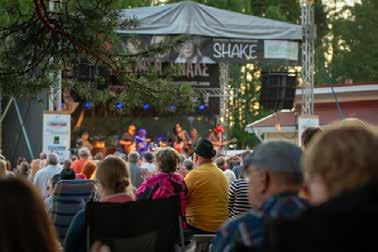
Theater in the summer night
Finland is the promised land of summer theater.
Art, and especially theater, doesn’t take itself too seriously in Finland. Or at least not in the summer, when Finns swap their jeans for track pants and decamp to summer cottages in remote villages with practically nothing to offer: just a shop, a seasonal farmer’s market, a gas station, and a local history museum with old plows on display.
And a summer theater!
Finland has more summer theaters relative to population than anywhere else in the world. No one even knows exactly how many there are, but estimates hover somewhere around 600. And they’re popular, too: over a million people attend summer theater performances each year, which is quite an impressive figure in a country of five million people.
Summer theaters perform outdoors, so a hat might be useful, and a windbreaker will help with the mosquitoes. It’s a good idea to
bring along a blanket and a seat pad. An umbrella too, if the seating isn’t covered.
Standards of behavior are also looser. It’s not unheard of for there to be a group of people in the audience who have had enough drinks before the show that they find everything really funny – to the extent that the rest of the audience thinks they find everything too funny. So it’s well-advised to moderate your intake, at least during the show.
Amateurs and professionals
Every Finn knows more or less what to expect when they buy tickets to a summer theater performance in cottage country. More likely than not, there will be humor, some of it off-color, as well as plenty of funny hats and wigs. The genre is farce – or “bush farce,” as we say in Finland. The actors are for the most part amateurs: the local
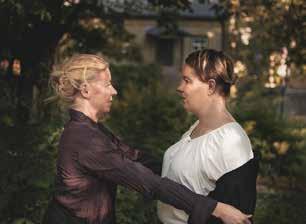
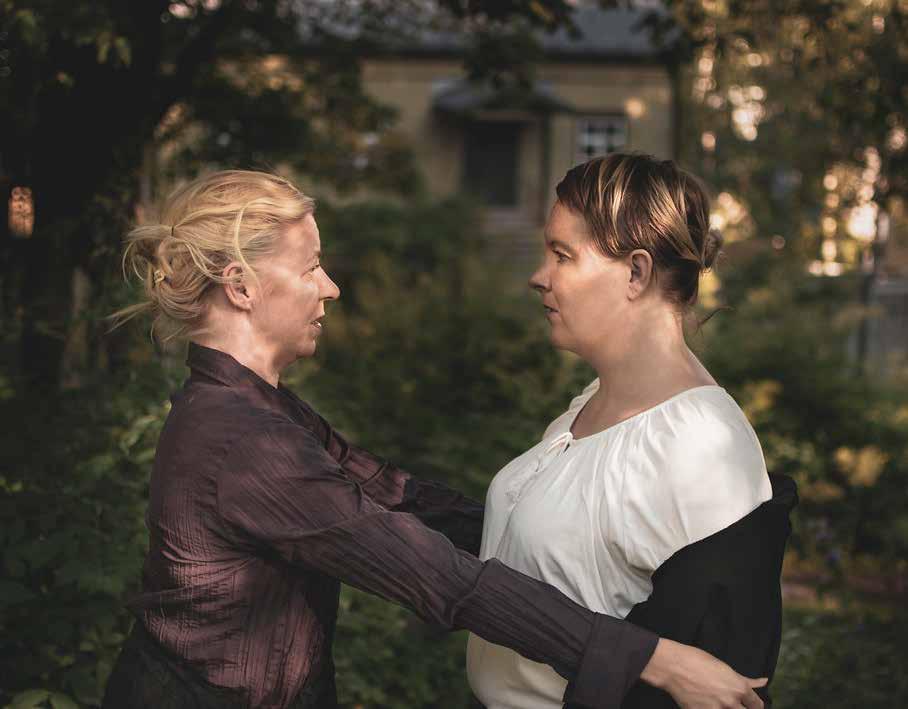
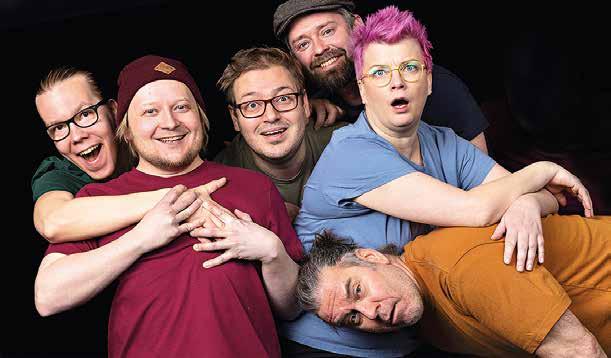
Wivi & Hanna is the summer 2026 play at Teatterikone in Jyväskylä.
Written by roope Lipasti
transLated by Christina saarinen
shopkeeper, the bus driver, and a few others. If there’s money, a real actor will play the main role. The sets are a volunteer effort, as are the concessions sold at intermission. The director’s uncle provides security.
As an alternative to humor, the theater might offer local history or a well-known classic of Finnish literature.
To be honest, that’s an overblown caricature of summer theater. Summer theater is also put on by professionals. Especially in larger cities, all the theater companies also produce their own summer theater, in which case the end result is just as professional as it is indoors in the winter, down to the same actors. But it’s still summer theater.
So what’s really the essence of summer theater? Let’s ask Satu Rasila. She’s one of Finland’s most popular playwrights and the dramaturg of Turku City Theatre.
Uncontrollable weather
Rasila points out that it isn’t actually the content that makes a summer theater, because it can be anything, as mentioned earlier.
“The common factor must be something else. And it’s probably the circumstances, the summer. The performances are outdoors, and the weather could be anything: oppressively hot, or then again, snowing. And maybe a squirrel will decide to come and take part. Things going on outside the play are present in a very concrete way, and the conditions can affect the performance in all kinds of ways.”
Summer theater audiences are also in some ways more forgiving than at a regular theater. They tend to be more tolerant of double-entendres and drunken humor.
“Summer theater features a kind of communal camp humor, an aesthetic of bad taste. And the audience agrees to go along with the idea that now it’s okay to laugh at stupid things. The audience puts up with a lot of other things too, like sitting on hard wooden benches in the rain! I remember one performance where the audience had covered seating, but the actors were out in the open. It started raining so hard that you couldn’t make out anything the actors were saying in the midst of all the noise. Eventually, lightning struck the sound booth. At that point, they finally stopped the performance.”
Lukewarm isn’t good enough
According to Rasila, summer theater is also a very communal form of theater, for both the creators and the audience. It’s theater from the heart, and Finns love it:
“Perhaps it’s where Finns’ love of so-called normal theater also stems from. People in Finland go to the theater about 3.5 million times a year, which is really a lot,” says Rasila.
Rasila notes that summer theater is often associated with a certain old-timiness or nostalgia, sometimes also with a homespun feel:
“My own grandfather once gave me the advice, when he was performing, that if you forget a line in summer theater, you can always just say, ‘So, anyway,’ which gives you a little time to think. To this day, the aesthetics of summer theater still often spring from that kind of ‘So, anyway’ world!”
Nonetheless, a successful summer theater succeeds for the same reason as any other theater:
“It has to be exciting. The performance has to somehow give you a nudge, strike a nerve, make you laugh or cry. A lukewarm effort doesn’t cut it in summer theater either.”
The play is written to be completely impossible for an actor - in one case, Miska is on stage in two roles at the same time.
Mission impossible
Summer theaters generally have some kind of specialty: some do only comedy, some do classics, some do musicals.
Rasila has written summer theater plays for Emma Teatteri in Naantali, which is a comedy theater. Comedy is more difficult as a genre today than in the past, as perceptions of what is appropriate to laugh at have been changing. Many old comedies don’t resonate with audiences of today because of the way they portray people.
“On the other hand, comedy and summer theater give you the opportunity to do practically anything. For example, we once did a show called Hockey Night. Ice hockey at the summer theater on a summer evening! It was completely ridiculous, but audiences liked it,” Rasila recalls.
One audience favorite has been comedies that have many more roles than there are actors. These generally involve attempting something “impossible,” such as telling the eight-hundred-year history of Turku in two hours (and the program promised to present the history of Helsinki and Tampere as well!).
“Quick role changes make for good comedic pace and tension. For example, in one play, the actor Miska Kaukonen, who has done a lot of these, had just six seconds to change his whole outfit. Your foot had better land in your shoe on the first try, or it’s all over. Audiences have also learned to enjoy seeing how an actor manages – or whether he can manage – to pull off his seemingly impossible task.”
Kaukonen will have the chance to show off his clothes-changing skills this summer as well:
“We have a play at Emma Teatteri called Loistojuttu (A Brilliant Idea). It’s an award-winning French comedy that centers around the idea that everyone has a doppelganger. Miska Kaukonen plays three different characters, and the play is written to be completely impossible for an actor – in one case, Miska is on stage in two roles at the same time. It’s going to be fun!” s
Dramaturg of Turku City Theatre Satu Rasila.
You can find information about the local summer theater (kesäteatteri in Finnish) on the internet.
Jyväskylä in a nutshell
Written by roope Lipasti
Jyväskylä is one of the most central cities in Finland, and not just on a map. Located not only in the middle of Finland, but also in the middle of lakes, it is the most beautiful and vibrant city. Jyväskylä is home to just under 150,000 people, making it the seventh largest city in Finland. The entire region has a population of just over 190,000 people. The city is old by Finnish standards, having been founded in 1837.
However, the area has been inhabited since the Stone Age. The earliest known inhabitant by name was Heikki Ihanninpoika Jyväsjoki, mentioned in documents dating from 1506.
Due to good waterways and roads, Jyväskylä developed into a small trading town. It was first granted market rights in 1801, and when city rights were applied for a little later, the application cited the liveliness of the place, as a dyer, tanner, goldsmith, coppersmith and tinsmith had settled there, and there was a tavern that was always open!
Even today, there is one open 24/7, at least for fast food lovers, but also the rest of the town's restaurant scene is pretty good.
Jyväskylä is Also known in Finland as the "Athens of Finland", referring to the city's long cultural tradition. Jyväskylä was committed to education and, among other things, the first institution to provide teacher training in Finnish, for both men
and women, was founded in the city in 1863. Jyväskylä also wanted to have a university as early as in the 19th century, although one was not established until 1966. In any case, Jyväskylä is currently the largest student city in Finland in terms of population. Almost every third person in the city is a student – there are around 40,000 of them – and this of course has an impact on the city's events and lively nightlife.
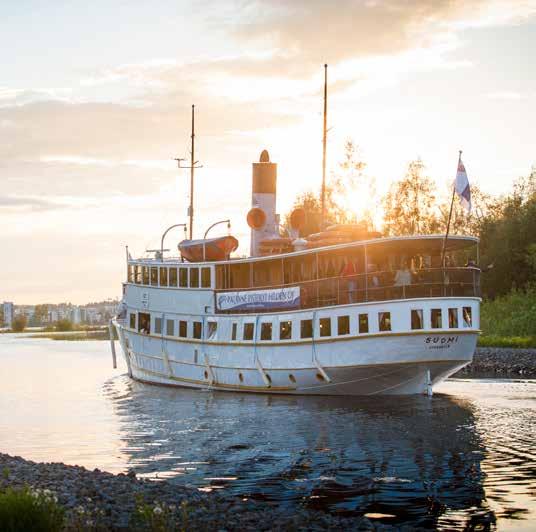
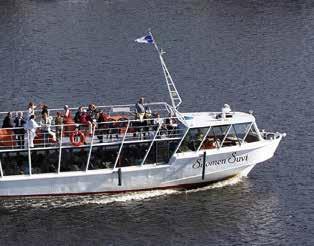
A striking feature of Jyväskylä is its many lakes, which can be found in every direction. So it's not difficult to go swimming! Also regular steamboat services began as early as in the 1850s, and you can still take a steamboat in summer to explore the Päijänne landscape.
The Ridge (Harju) in the centre of the town and the observation tower there are also recognisable landmarks of the city. In addition to the view, The Ridge is a popular jogging and outdoor recreation area. The pedestrian street in the town centre is a hub of both shopping and restaurants.
Jyväskylä is also a rather hilly area by Finnish standards. The highest point is Pirttimäki, which is 249 metres high. In addition to the Ridge, the other well-known "mountains" are Laajavuori, where the ski resort is located, and the hill of Matti Nykänen, the city's great ski jumper.
But Jyväskylä is not only a city of culture and beautiful landscapes. As a centre of growth and one of Finland's major industrial centres after the war, its population increased sixfold. As a result, more housing was needed and – as was the country's custom – almost all the historic wooden buildings in the centre were demolished.
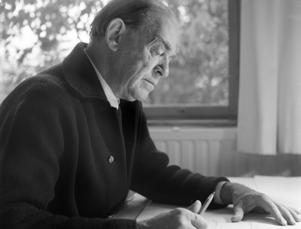
On the plus side, Jyväskylä is the city of Alvar Aalto (1898–1976), known worldwide for his distinctive modern architecture and design. Aalto founded his architectural practice in Jyväskylä in the autumn of 1923 and designed numerous buildings in and around the city, for example The University campus is well worth a visit. And so is the Alvar Aalto Museum. A tourist might also want to take a daytrip to the nearby towns and cities. For example, Säynätsalo Municipal Hall or Muurame Church by Aalto are popular destinations.
Especially in summer, the city also hosts a wide range of musical and cultural events, as well as the famous Jyväskylä World Rally Championship. s
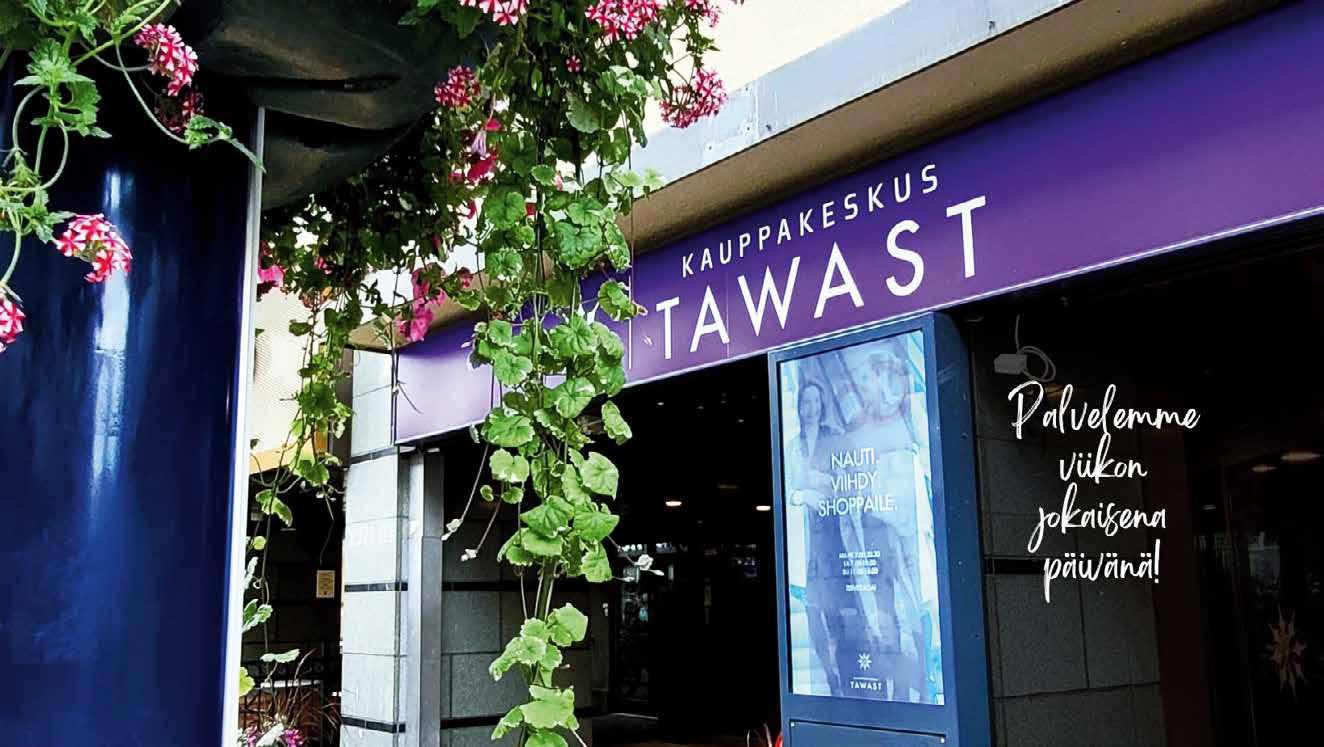
Tawast shopping centre / kauppakeskustawast.fi
Kauppakatu 33–35, Jyväskylä.
Welcome to Tawast!
Take a moment to yourself, enjoy, have fun and shop right in the heart of Jyväskylä!
Opening hours:
Mon–Fri 7 am–8.30 pm Sat 7 am–6 pm and Sun 11 am–6 pm
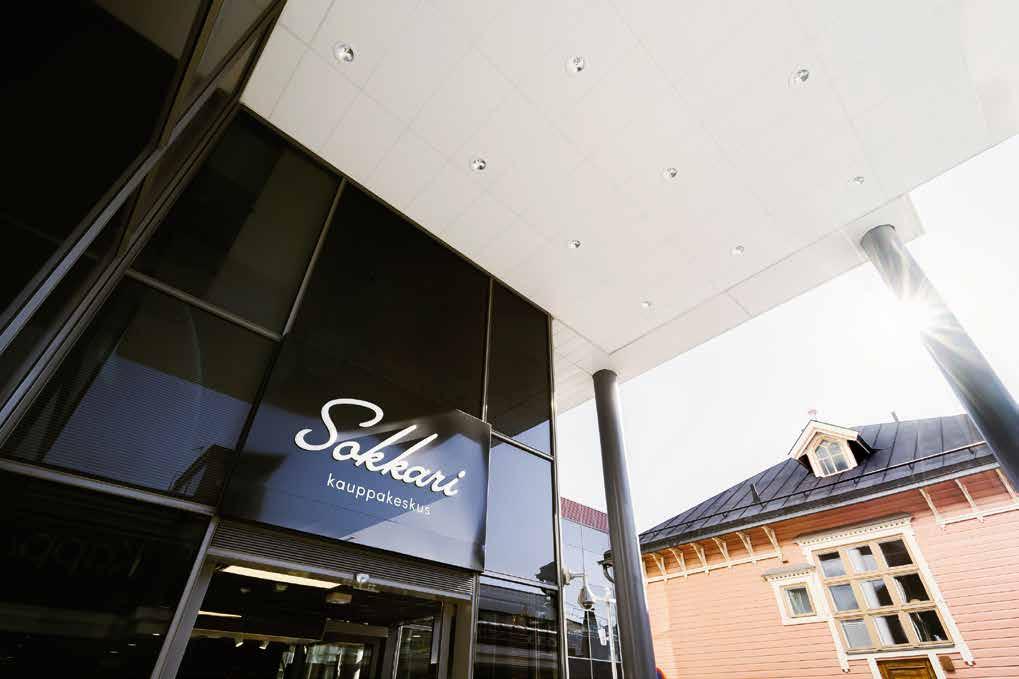
Sokkari shopping centre / sokkari.fi
Kauppakatu 24, Jyväskylä.
Welcome to Sokkari!
Right in the middle of the city Sokkari shopping centre with it’s thirty speciality stores and restaurants offers a first-class service experience. Come and sample the Sokkari vibe, we’re certain you’ll enjoy the time spent with us!
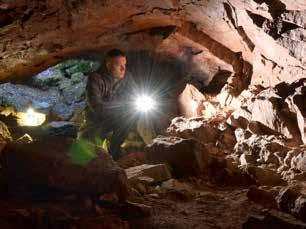
Tuomo Kesäläinen has a list of the hundred best geological sites in Finland. He reminds us we have the Ice Age to thank for the uniqueness of Finnish nature.
When nonfiction writer and nature guide Tuomo
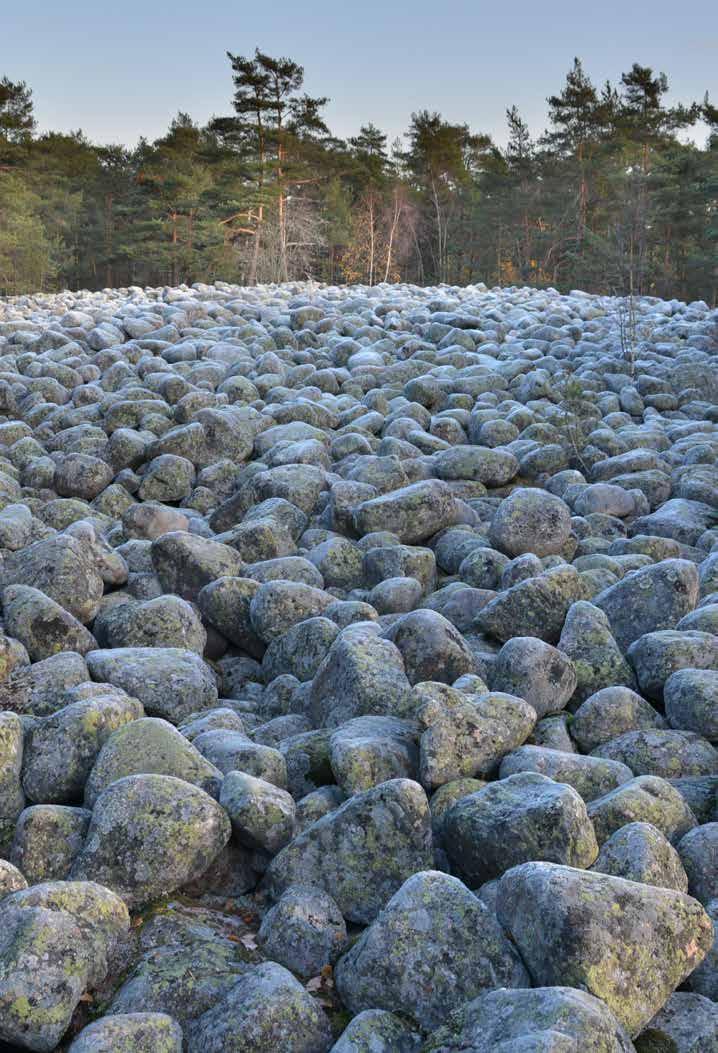
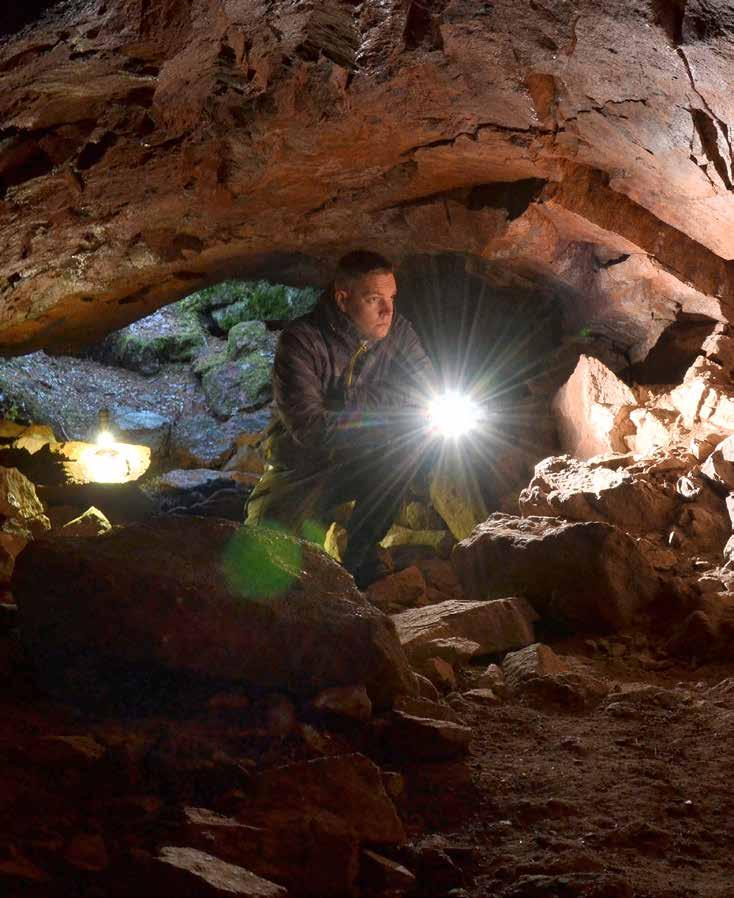
Kesäläinen visits the forest, he generally isn’t looking for berries or even at the views. Instead, he’s looking for something more exciting: caves, ravines, giant’s kettles, and the inland shingle beaches known as “devil’s fields.” The places where Finland’s Ice Age history can be seen most plainly.
Kesäläinen, a Naantali native, has spent years mapping Finland’s geological curiosities, places that tell the story of a time when an ice sheet shaped the landscape in a way that is rarely seen elsewhere in Europe:
“There is nowhere where the Ice Age is as visible as it is in Finland – well, maybe in Sweden,” Kesäläinen says.
His interest in unusual natural places arose early in his childhood. Kesäläinen’s family were caravanners and spent their vacations traveling around Finland, Sweden, and Norway.
“Whenever we stopped, we always hiked a nature trail. Or if there was an interesting giant’s kettle or cave somewhere, we went to see it. When I got my driver’s license, I started heading out on my own. First, I worked through all the known sites, and when I ran out of those, I started to think that there must be more. That’s when the real search began.”
Caves and devil’s fields
One major source of inspiration for Kesäläinen was caver Aimo Kejonen, who had spent decades mapping Finland’s caves and collecting folklore about them. Kesäläinen became Kejonen’s man in the field, as Kejonen was already elderly. Kesäläinen searched for and checked sites, documented them, and collected stories. The collaboration resulted in several books.
It turned out that there were plenty of stories to tell. Many of Finland’s unusual natural sites are linked to stories about devils, giants, and other supernatural creatures.
“When you see a devil’s field, which is actually an old seabed and just filled with heaps of rocks, it’s no wonder that people have thought them supernatural. It’s simply hard to comprehend how all those stones got there.”
Some of these unusual places were considered sacred in pagan times. The devil stories may have been linked to them later, when Christianity arrived, so that the old worship practices would be forgotten. Similarly, many churches were built on the sites of former sacred groves.
“And obviously, giants and devils are much more interesting explanations than a boring old Ice Age,” Kesäläinen says with a laugh.
Written by roope Lipasti transLated by Christina saarinen
Old seabed, often called a Devil's field.
Giants and devils are much more interesting explanations than a boring old Ice Age.
Everyman’s Rights are an invitation
In his latest book, Suomen kauneimmat retkikohteet – 100 geologista erikoisuutta, Kesäläinen presents one hundred of his own favorite nature spots in Finland. The sites are divided into categories: caves, ravines, devil’s fields, ridges, and kettle holes created by the Ice Age.
“For each site, I give a scientific explanation and a QR code to help you locate it. I wanted to make the book as comprehensive as possible: it covers the whole country, from Åland to Koli and the northernmost reaches of Lapland. Ostrobothnia, too, which is often left empty on nature maps.”
So, what is it that’s special about Finnish nature?
“Our landscapes aren’t ostentatious, like in Norway. They’re more restrained. But the traces of the Ice Age are unique. I would want foreign visitors to see the big bogs and lakes – and of course the midnight sun.”
If you’re exploring the forest without a specific destination, Kesäläinen has a simple tip: climb up onto the exposed bedrock.
“The higher, the better. A typical Finnish forest is often dense and hard to navigate, but it’s easier to move around on the rocks, and the views are better. Plus, old trees and twisted pines often grow there.”
Another underappreciated and sometimes even slightly feared destination is a bog:
“You don’t have to be afraid of sinking in up to your neck. Boots are good enough. It’s also interesting that a completely normal Finnish forest is a place that can make people nervous. I’ve had visitors from Central Europe who found the silence and untouched nature of the forest even frightening. An exotic experience is surprisingly close by.”
According to Kesäläinen, one of the greatest treasures of Finnish nature is Everyman’s Rights.
“Anyone can go almost anywhere in nature. That’s unique. In Finland, you won’t find much nature you have to pay for.” s
Tuomo Kesäläinen's easy daytrip tips
Helsinki area: “There too, I would direct my gaze toward the sea. From on the water, you can also get a view of a beautiful national landscape, the skyline of Helsinki, which is worth seeing. There are several islands designated for recreational use, and they can be reached by ferry from the Market Square. Some of the islands are on the UNESCO World Heritage List.
Again, if the sea doesn’t interest you, it’s not a long way to Nuuksio National Park, which is another place you can get to by bus. There you can experience the Finnish forest and lake landscape. It’s a reliable and easy attraction, for both foreigners and Finns.”
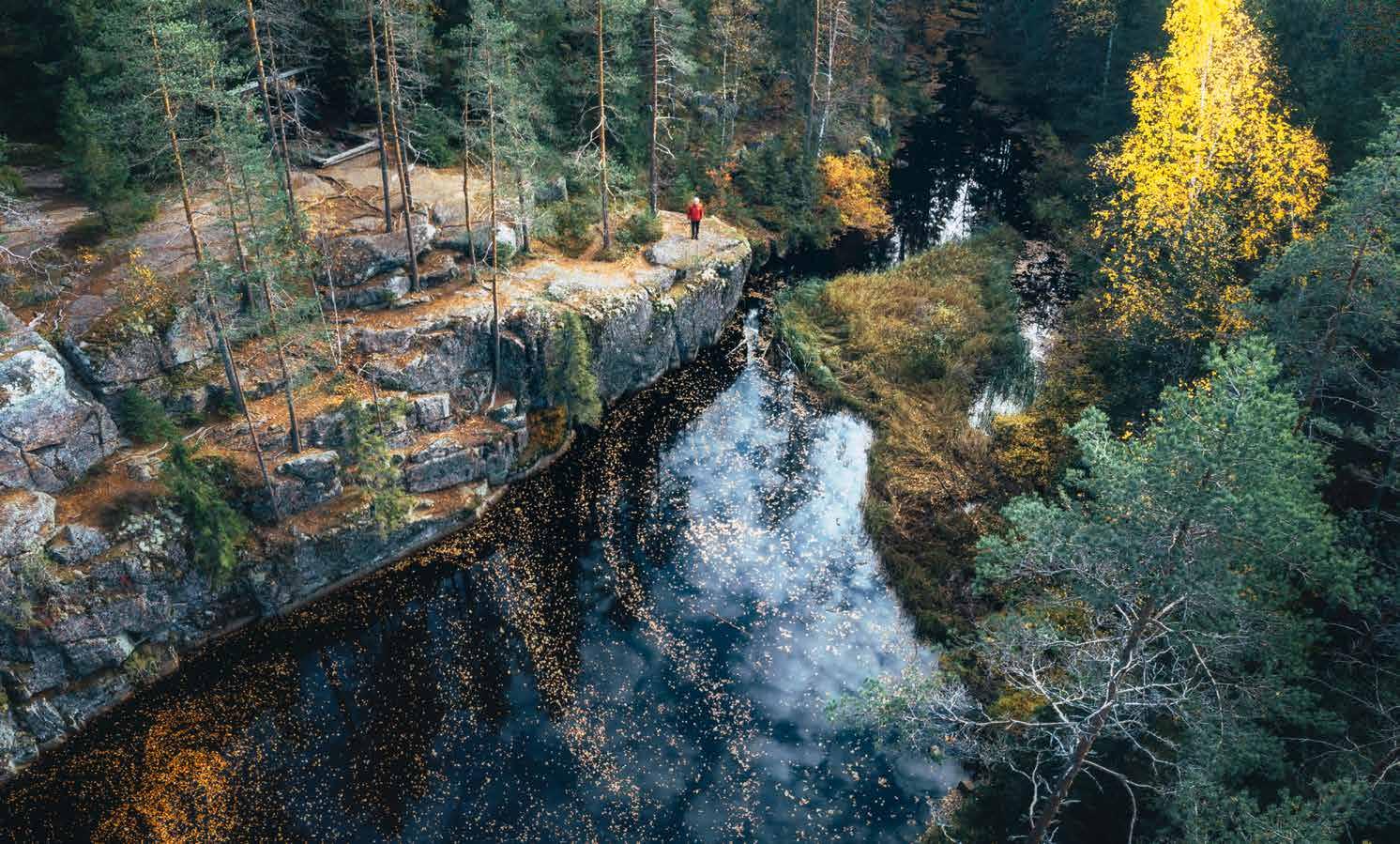
Jyväskylä: “The lake view is also worth seeing in Jyväskylä. The Kanavuori nature trail is one great option. It starts quite close to the city center, and the scenery is stunning. It’s sometimes even compared to Koli. And there are plenty of other nature trails in Jyväskylä, too.”
Tampere: “Pyynikinharju is a stunning natural attraction right in the city center. The ridge reaches 80 meters high, with a beautiful lake on either side, and of course, the old wooden houses are idyllic.
By tram, you can get to a different sort of destination: the Hervantajärvi hiking trail. It’s a beautiful and interesting trail, where you can easily walk 10 kilometers. You can even go swimming while you’re at it.”
Turku: “The obvious choice is the sea. The rugged archipelago, with its thousands of islands, is unique, and you can get there right from the center of Turku. Even just the water bus ride to Ruissalo is nice. You can get further out by taking a ferry. For example, the island of Seili is great.
If you’re not interested in water, I recommend a bog. Kurjenrahka National Park can be reached by bus from the Market Square in 45 minutes. The scenery is beautiful, and there’s no danger of getting lost.”
Saimaa: “The whole area is special, of course, but if I have to be more specific, Punkaharju is my personal favorite. It’s a unique geological formation, and it has all the recreational amenities you could hope for, from bicycles to SUP boards and boats. Punkaharju also has the country’s best scenic road, which you can travel by car. Imatrankoski is another impressive and easily accessible destination. It’s one of the largest rapids in Europe, and when the dam is opened, it’s a sight to behold. It’s also a geologically interesting place, with many giant’s kettles, for example.”
Finnish sports history is full of legends with equally legendary nicknames
Written by Matti MäkeLä
by Christina saarinen
transLated
Let’s start with the one that’s been used most often. Of those who have been called “The Flying Finn”, the most famous – and, in the opinion of many, the only true – bearer of the name was 1920s running legend and nine-time Olympic champion Paavo Nurmi However, the same nickname had already been used for Finnish running star Hannes Kolehmainen, who predated Nurmi and won three gold medals at the 1912 Stockholm Olympics and the marathon in Antwerp eight years later. Since Nurmi, the name has been used ad nauseam for countless Finnish runners, not to mention Formula and rally drivers. The most recent runner to earn the title was Lasse Virén, who won the 5,000 and 10,000 meters at both the 1972 Munich and 1976 Montreal Olympics. Anyone who knows anything about athletics knows that using the word “flying” to describe Finnish long-distance runners today wouldn’t even pass for a bad joke.
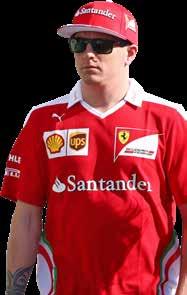
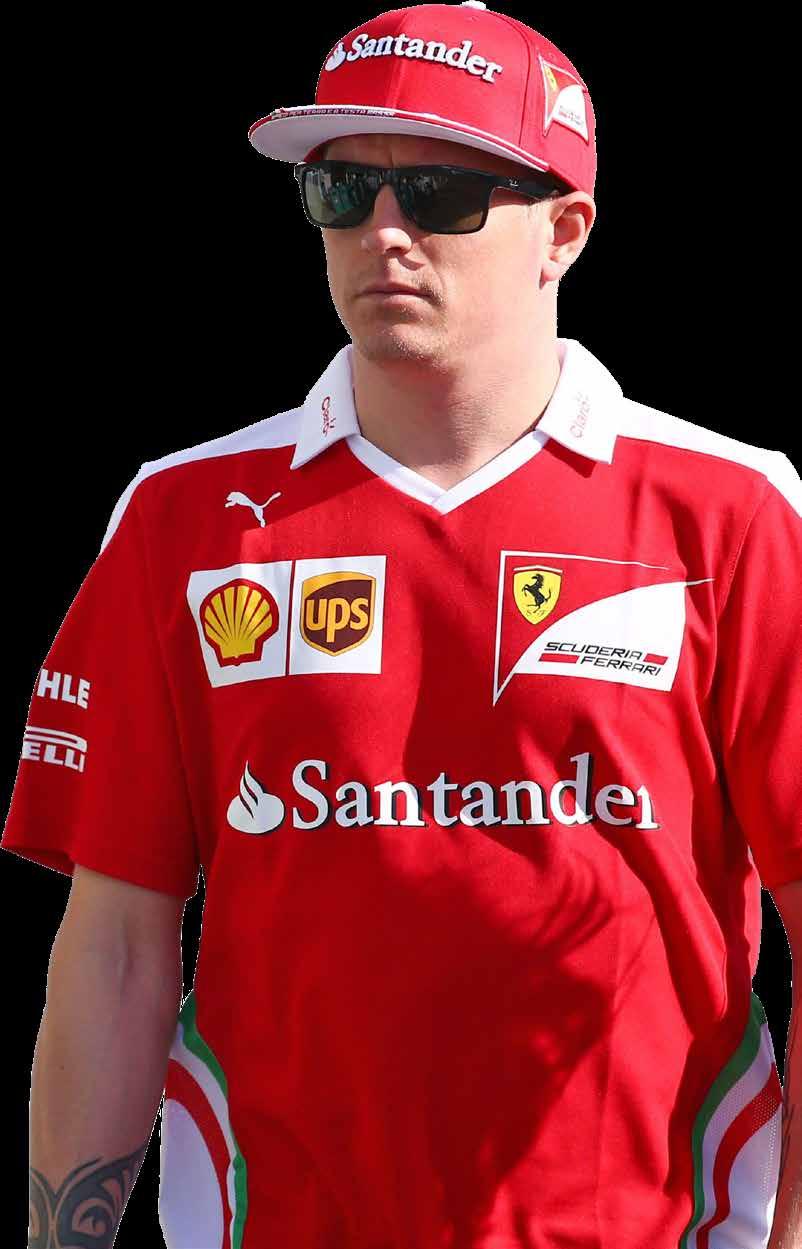
Due to his sullen and quiet nature, Nurmi was also called “The Great Silent One,” which as a nickname goes, is pretty clumsy; it even sounds a bit North Korean (which is rarely a good thing). Its clumsiness is all the more apparent when compared to “The Iceman,” the nickname that Formula team principal Ron Dennis gave Kimi Räikkönen for exactly the same character traits. Räikkönen earned the nickname, of course: his Garbo-esque response to his race engineer on team radio has gone down in Formula history: “Just leave me alone. I know what to do.” What elevates the story to Casablanca level (as is well known, neither Bogart nor anyone else ever said, “Play it again, Sam,” in the film) is that Räikkönen is often misquoted as saying, “I know what I’m doing,” instead.
World Championships in 1995. He wasn’t called “The Giant” or “The Colossus of Kemi” (a small town in Northern Finland), but instead, “The Fairy of Kemi.”
Similarly, the best ski jumper of all time, Matti Nykänen, was known early in his career as “Masa the Mouse,” which referred to his small stature and was also a twist on the given name of Japanese ski jumper Masahiro Akimoto (“Masa the Mouse” is Masa-hiiri in Finnish, and Masa is a common nickname for Matti). This not-so-cool name was abandoned at the 1982 World Championships in Oslo when Nykänen earned the first elite gold medal of his career by jumping by far the longest jump in the competition, in an almost impenetrable fog. Mice don’t jump like that.
He scored his goals by smashing them into the net from right in front of the goal, after sneaking past the defenders as if from out of nowhere.
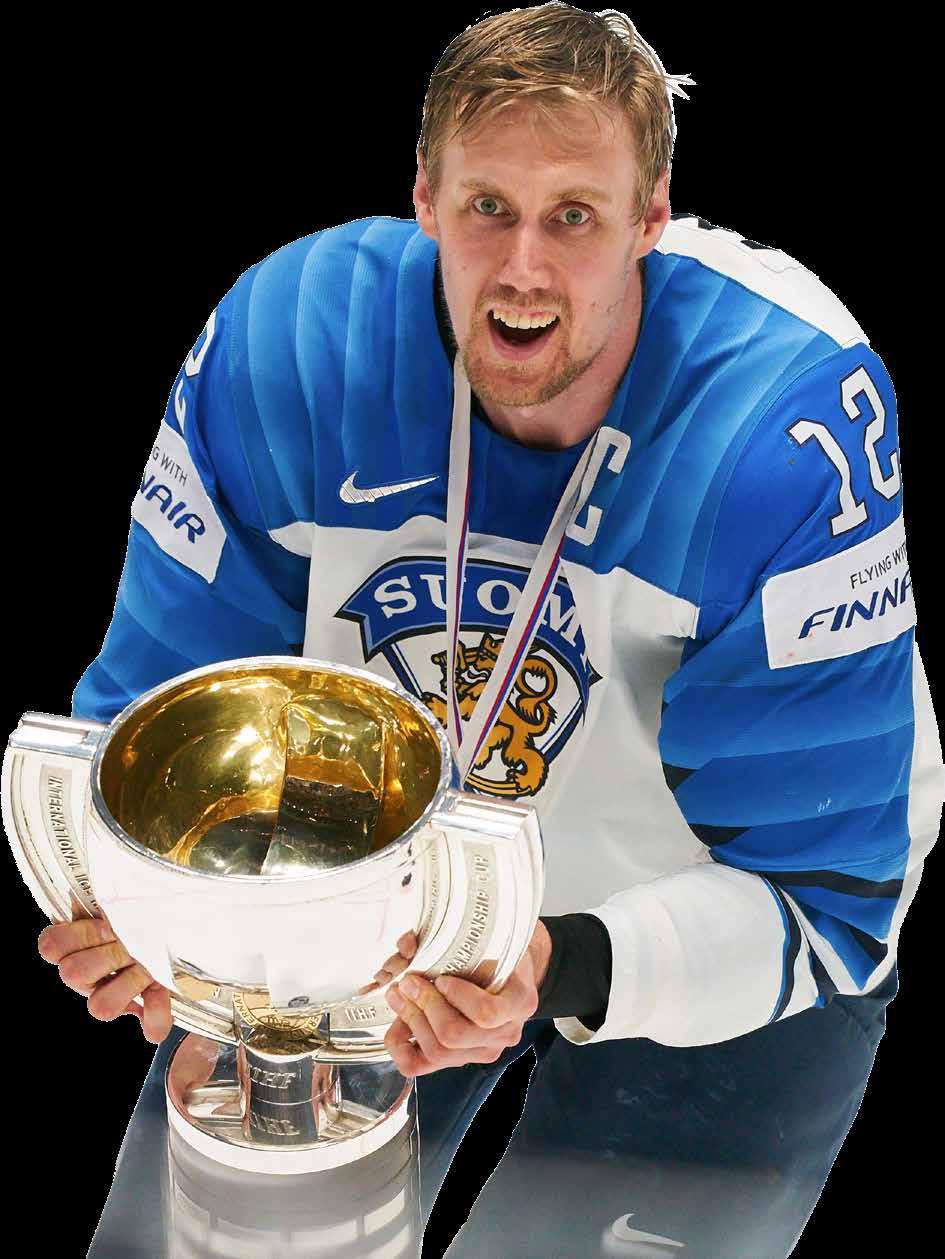
The young players that led Finland to its first World Ice Hockey Championships win in 1995, Saku Koivu, Ville Peltonen, and Jere Lehtinen , were nicknamed the “Huey, Dewey, and Louie Line” after Donald Duck’s nephews. Koivu’s and Lehtinen’s successful NHL careers earned them cooler nicknames in North America: with his all-around skills, Lehtinen was known as “Mr. Fix-It,” and Koivu, who played as captain of the Montreal Canadiens for many years, was known simply as “Captain K” (which you might also interpret as having a certain comic-book quality). When Koivu returned to Finland and his hometown club, TPS, during the NHL lockout season, he was greeted at his first home game with a huge "Return of the King" banner, a reference to the Lord of the Rings trilogy.
Alongside “The Iceman,” another contender for coolest nickname is world motorcycle road racing champion Jarno Saarinen’s “The Baron.” The name is based on a nickname Saarinen’s mother gave him, “The Cat Baron,” after he brought home a stray cat he found somewhere as a child. It’s fitting of this aristocratic style that statues of Saarinen, who died tragically at the 1973 Grand Prix race in Monza, have been erected both in Assisi, Italy, and in his hometown of Turku. Abroad, Saarinen was also known as – surprise, surprise – “The Flying Finn.”
Royal nicknames are particularly popular in football: among many others, Pelé (“Rei Pelé”) and Michel Platini (“Le Roi”) are called kings, while Franz Beckenbauer is an emperor (“Der Kaiser”). In Finland, too, the best football player of all time, Jari Litmanen , has been unimaginatively titled “The King,” but in general, people here seem to prefer more humorous – and sometimes even slightly mean – nicknames (like those given in Mexican drug cartels, whose hard-nosed bosses have been given nicknames like “Shorty” and “Chicken Little”). Take, for example, Mika Halvari, a 190-centimeter-tall shot-putter who weighed 140 kilos when he was competing and won silver at the
A top candidate on the list of strangest-sounding nicknames is definitely that of 1985 World Rally champion Timo “Slack” Salonen. For a long time, the nickname was said to have come from Salonen’s habit of driving rally with only one hand on the steering wheel. However, Salonen himself later corrected the story, explaining that he had called Erkki Pitkänen, who had driven the same kind of car as Salonen in Finnish rally races in the 1970s and whom Salonen had squarely beaten, “Slack Pitkänen.” The jeer came back to bite him, however, and became Salonen’s own nickname.
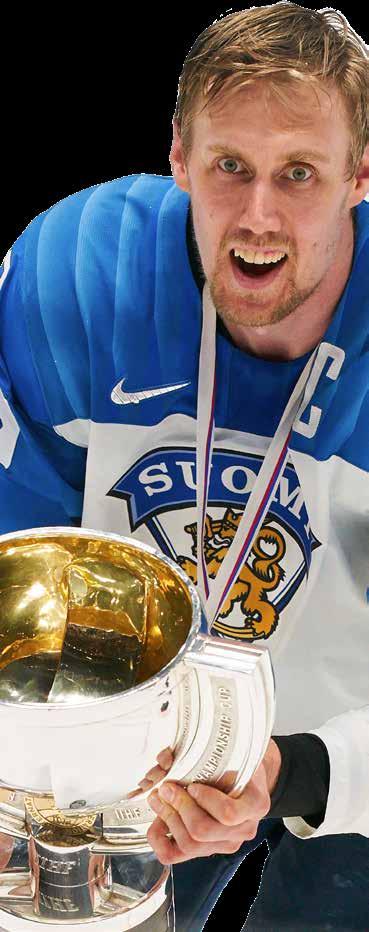
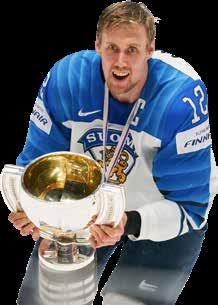
Hockey player Marko Anttila got his nickname “The Boogeyman” already in his school days, based on his large size and first name (which sounds similar to mörkö, meaning boogeyman in Finnish), but he only truly lived up to his nickname at the 2019 World Championships. During the tournament, he scored four crucial goals in the playoff rounds: first a last-minute equalizer against Sweden in the quarterfinals, then the winning goal against Russia in the semifinals, and finally two goals in Finland’s 3–1 championship victory over Canada. He scored his goals by smashing them into the net from right in front of the goal, after sneaking past the defenders as if from out of nowhere – just like the father of all boogeymen, Michael Myers, in the Halloween movies. s
ARE YOU HIDING YOUR BRAND?
We create functional identities and unforgettable brands.
So stop hiding and let’s level up your image!
www.knok.fi
The largest touring theater in Finland
Teatteri Eurooppa Neljä on hyvän tuulen kansanteatteri, joka vie laadukasta musiikkiteatteria ympäri Suomen.
Kiertueteatterin kotinäyttämö löytyy Jyväskylästä ja suuren suosion saanut kesäteatteri naapurikunnasta Muuramesta. Seuraa meitä somessa ja tervetuloa katsomoon!
Esitysaikataulut: www.te4.fi – Kysy myös tilaus esityksiä
Jyväskylä has three sites in the Finnish UNESCO World Heritage Nomination
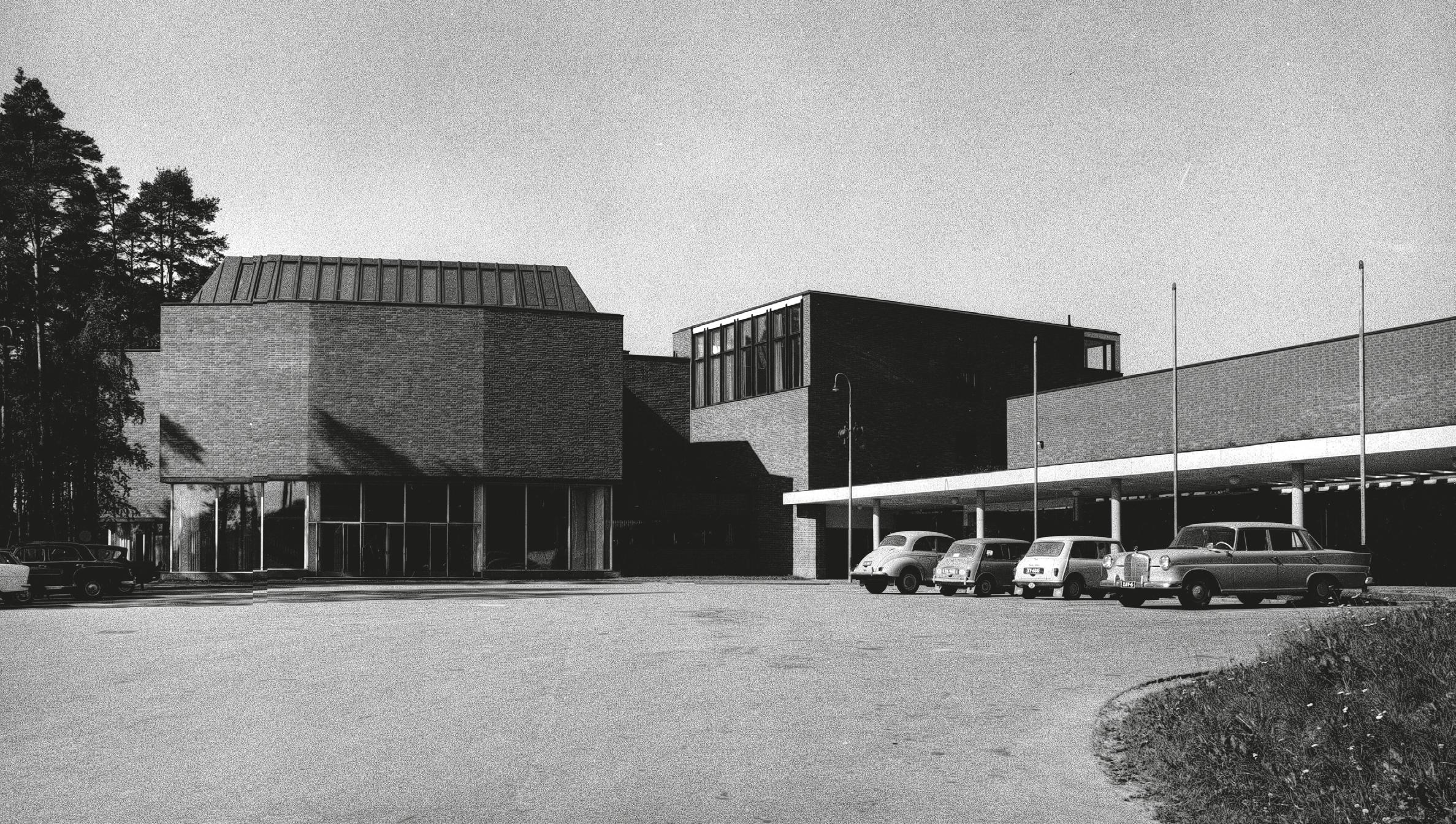
Jyväskylä is known for its beautiful untouched nature, its humanistic and scientific university and its heavy emphasis on sports. In the international world of culture, however, Jyväskylä is well known for its modern architecture and especially works by architect Alvar Aalto
Alvar Aalto's first architecture office began operation in Jyväskylä in 1923. Many early works by Aalto can be found in Central Finland the region around Jyväskylä. Many of the early works were church restorations in a delicate Nordic Classicist style.
Jyväskylä has made a point in calling itself the World Capital of Alvar Aalto. That is not completely inaccurate. There were more than 80 designs made by the Aalto’s to Jyväskylä, 40 of them were built, 30 buildings still exist and 3 important compositions were nominated to the World Heritage List in 2025.
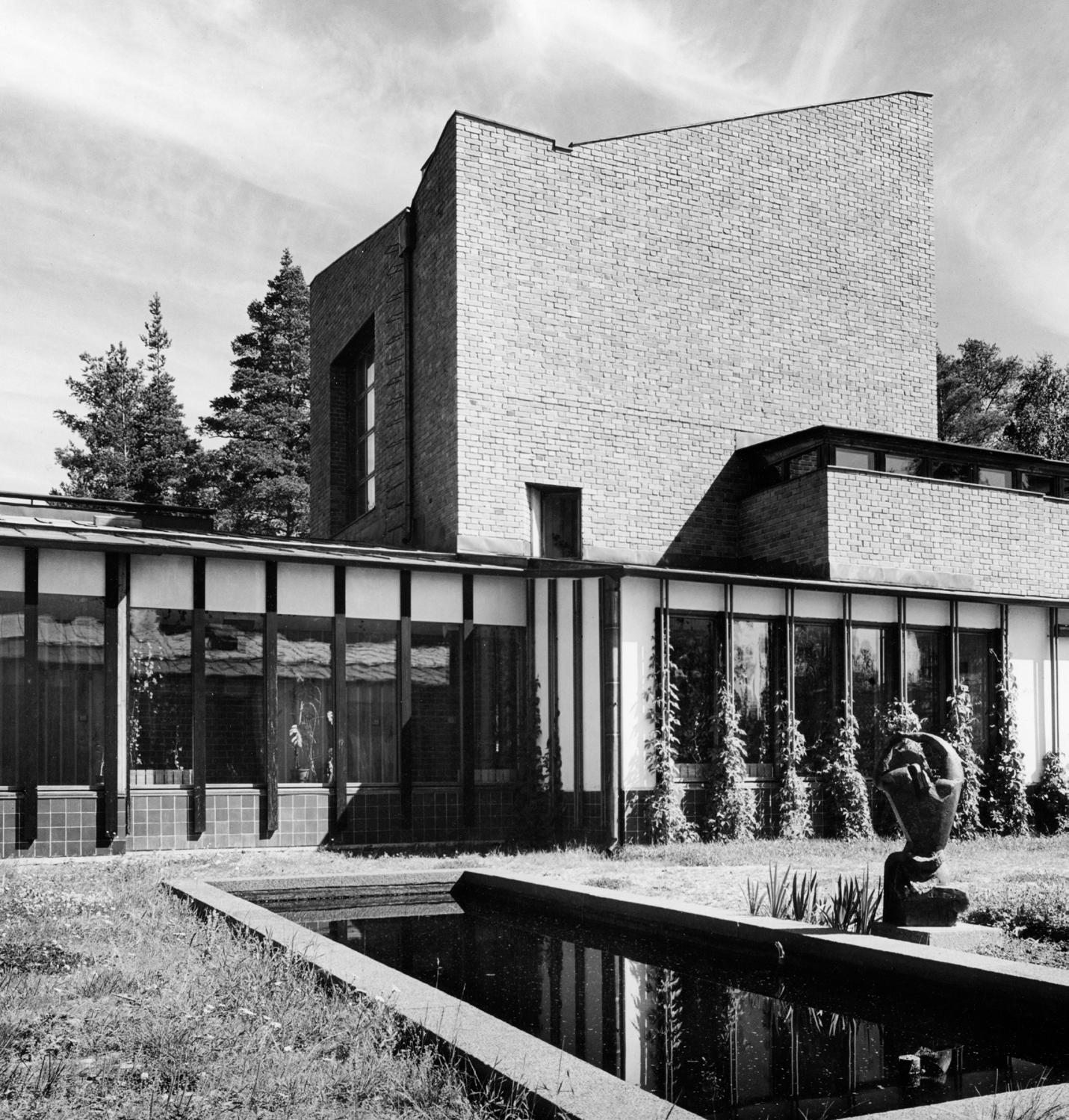
Säynätsalo Town Hall.
Increasing knowledge of Alvar Aalto
The Alvar Aalto Foundation and the City of Jyväskylä have done cooperation that dates from the 1960’s when the Alvar Aalto Museum was created in Jyväskylä. The Foundation and the City have worked together to increase knowledge on Alvar Aalto since the merger of the Museum and Foundation in 1998. A completely renovated Aalto2 Museum Centre was opened to the public in 2023 today operating in two Aalto designed buildings joined by a new connecting wing.
Aalto Works is a serial nomination made by the Finnish Government to UNESCO in 2025. The nomination consists of 13 buildings and sites in Finland in seven cities: Helsinki, Imatra, Jyväskylä, Kotka, Paimio, Pori and Seinäjoki.
Three of these sites are in Jyväskylä: the Aalto Campus of the Jyväskylä University, the Säynätsalo Town Hall and the Muuratsalo Experimental House.
Alvar Aalto is known worldwide for his humanistic approach to modern architecture which is something we don't have on the List now.
All different, all unique
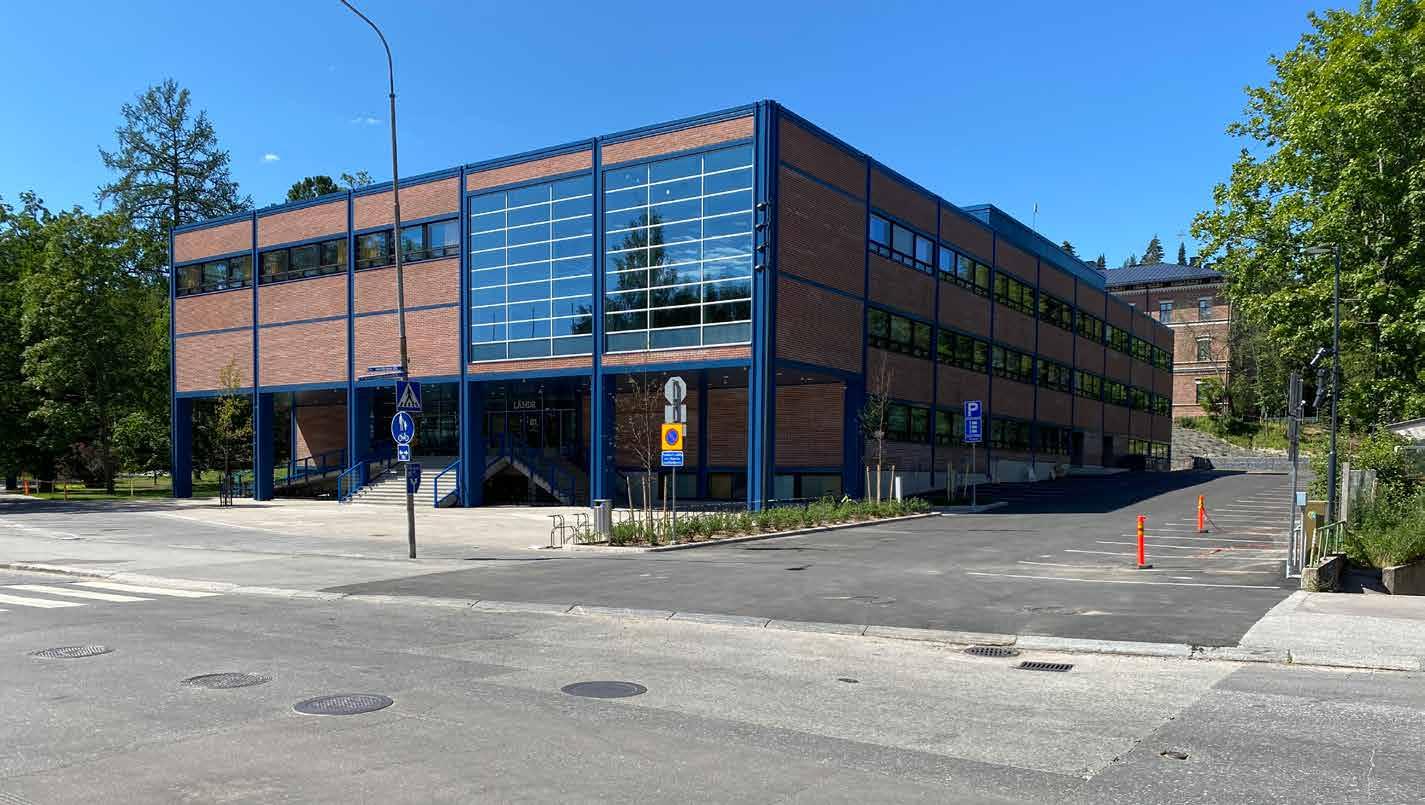
The Aalto Campus (1950–1971) was a very important steppingstone in Aalto’s career and in university campus design in the world. Aalto made his version of the American lawn campus and situated it between existing teacher seminary buildings with gardens and a forest like park area.
The Seminary Hill Campus is a remarkable example of quality architecture from four different eras: Konstantin Kiseleff in the 1880’s, Alvar Aalto in the 1950’s and 1960’s, Arto Sipinen in the 1970’s and Ilmari Lahdelma in the 2000’s. All important Finnish architects of their time.
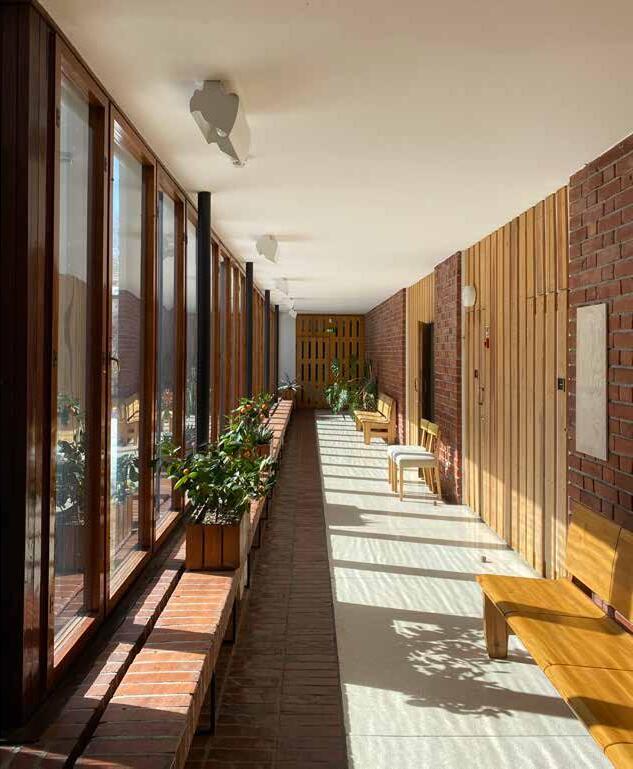
The Säynätsalo Town Hall (1952) is one of the first multi-purpose buildings in Finland. It’s a civic centre with commercial space and residencies in one building. As all the nominated Aalto sites in Jyväskylä the Town Hall is a tribute and come back of exposed red brick architecture in Finland.
The Town Hall is part of a larger aerial plan by Aalto who envisioned a modern settlement around an industrial pine plywood plant, the Town Hall being the core of the community.
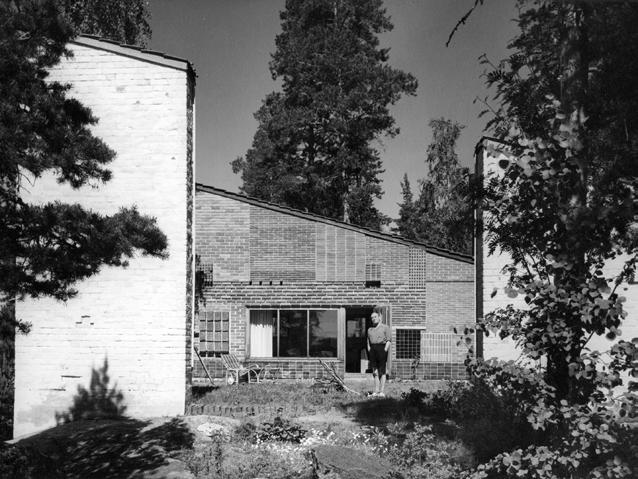
The Muuratsalo Experimental House (1953) was built as a summer residence and studio for Elissa and Alvar Aalto. Many projects were designed there, and the building itself was a project: experimentations on building without foundations, natural heating and cooling and especially testing the use of different building materials.
The Aalto Campus, the Main Building of the University of Jyväskylä .
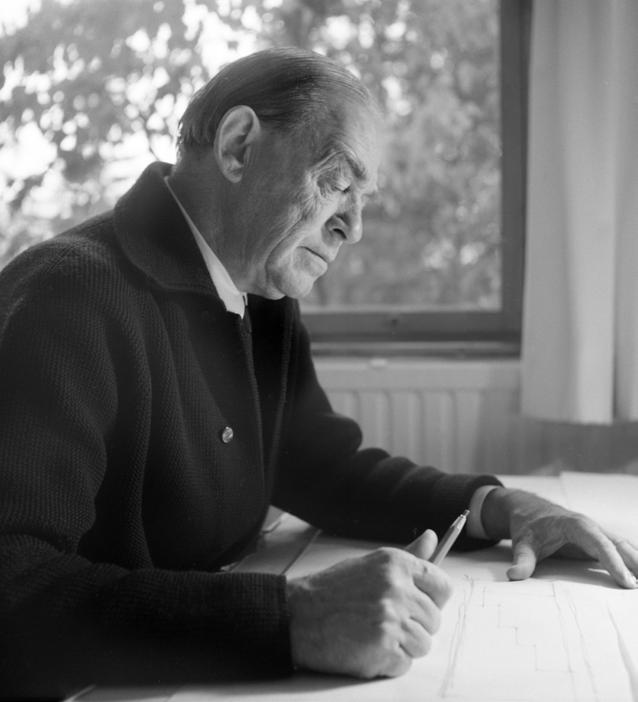
Alvar Aalto.
High-quality modern architecture
All nominated sites in the series represent the UNESCO Criterion (ii) [which] recognizes sites that exhibit an important interchange of human values over a span of time or within a cultural area of the world. It highlights significant developments in architecture, technology, monumental arts, town planning, or landscape design, showcasing influence across different regions or cultures.
The 'Aalto Works' Serial World Heritage Nomination is by far internationally the most interesting initiative Finland has ever made according to the World Heritage Convention (1972). Finland is known for its high-quality modern architecture, yet this is the first time this type of Modern Heritage is given for assessment by the World Heritage Committee. This will happen this July in Busan, South Korea. Alvar Aalto is known worldwide for his humanistic approach to modern architecture which is something we don't have on the List now. Getting the Aalto series to the World Heritage List is good news to all Aalto fans around the globe and a boost in promoting Finland as a country appreciating its modern architecture and design heritage. s
AALTO2 MUSEUM CENTRE
Alvar Aallon katu 7, Jyväskylä
Opening hours
Tue–Sun 11 AM – 6 PM winter season (September–April)
Tue–Sun 10 AM – 6 PM summer season (May–August)
Aalto2 Café open Tue–Sun 11 AM – 5.30 PM
Tickets
Normal ticket 18 € | Children 7–17 years old 4 € on map (page 12)
The Aalto Campus, the Library of the University of Jyväskylä (Arto Sipinen 1974).
The Muuratsalo Experimental House.
Säynätsalo Town Hall.
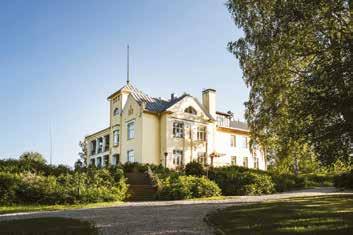
Kuokkalan Kartano
JYVÄSKYLÄ TIMES COLUMN
A hotel night in Paris
In the couRse of the trip from Charles de Gaulle Airport to central Paris, the grumpy, middle-aged taxi driver managed to curse the city’s system of roads, the government, the president, and elderly care. I looked out the backseat window at late autumn’s black Seine, where I had once swum, in the intoxication of youth; at Pont Neuf, where a few years earlier I had photographed women dressed in blue burqas.
The hotel was near the Saint Denis metro station, down the side street. The receptionist, an old man, stumbled wearily out of the back room. I apologized for my late arrival and explained that my flight from Helsinki to Paris had been delayed by several hours.
I climbed the narrow, creaky stairs to the third floor. The stairwell smelled of a bygone century, of dust, cigarettes, and 4711 Eau de Cologne. My room key hung on a heavy keychain carved from walnut wood. I wondered how many people had held this key before I was born. I threw my small backpack on the bed and opened the thick drapes. The large window looked out on a rainy street that was lit by dim street lamps. The dark windows of the tired old house next door stared back at me.
The mahogany bed creaked as I slipped under the heavy blanket. For a moment, I counted reindeer, until I fell into a deep sleep.
Early in the morning, I woke up to the strange feeling that I wasn’t alone in my room. I flicked on the bedside lamp and saw a suitcase with a big Pikachu sticker on the side. Someone was sleeping in the armchair. He had hidden his face inside the hood of his white sweatshirt, but from the sticker on the suitcase and the sleeper’s childlike hands and slim torso, I deduced he was a Japanese teenager. I didn’t get up, out of fear that I would wake him. I wondered what I should do. I decided to lie in bed until the boy woke up.
At seven o’clock, the boy was still sleeping. I got out of my bed, took a shower, got dressed, and opened the window. The boy woke up, jumped from his chair, pulled the hood off his head, and without looking at my face, apologized in a quiet, shy voice.
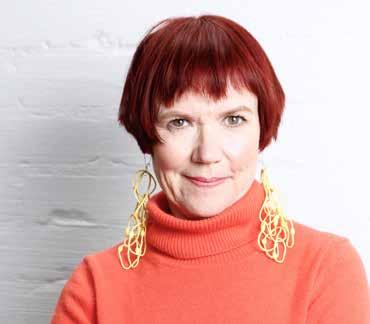
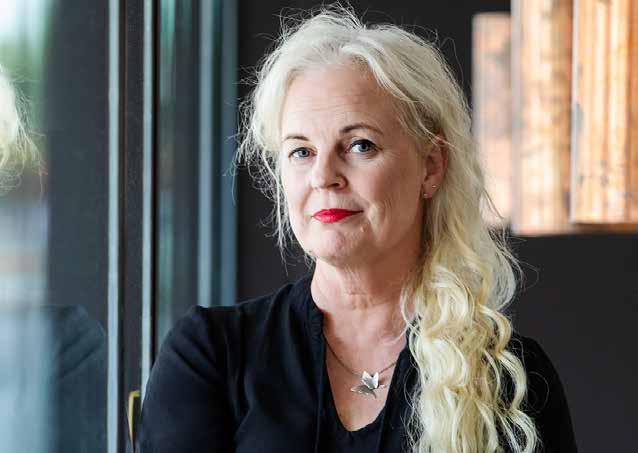
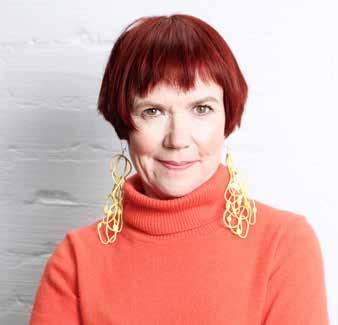
Rosa Liksom is an author whose works have been translated into many languages. Hytti numero 6 (Compartment No. 6) won the prestigious Finlandia Prize and was made into a film that won the Grand Prix at Cannes.
“Sorry! I’m so sorry.”
“It’s okay,” I said.
“I’m very sorry, but this is my room,” the boy said. He explained that he had come from the airport during the night, found me, an older woman, in his bed, and been too exhausted to start straightening things out.
“What’s your room number?” I asked.
The boy answered: number six.
I said that couldn’t be because my room number is six.
When I handed him my room key, I realized that my room number was actually nine. It was my turn to apologize. The boy covered his mouth with his hand and said that he could take room nine.
I sat alone at a table by the window in the breakfast room and looked down at the street. The morning was sunny, the sky turquoise. A stout wind carried dry maple leaves over the street. Over there, someone was hurrying along; over there, cheek kisses were being exchanged; over there, some people were chatting while their dogs peed on the autumn leaves. The boy sat at the next table and smiled at me sympathetically. I asked what had brought him to Paris.
“Long story short,” he said, looking at me ruefully, “a year ago, the week after my mother was buried, I was at a sushi bar with my friend when an older, middle-aged French woman came up to me and asked if I was interested in modeling. The woman seemed nice, but I said I wasn’t interested in modeling. I thought she would turn out to be a scam artist. Or maybe even a pervert, luring depressed young people into prostitution. After a short conversation, the woman handed me her business card and said to call if I changed my mind. A few months later, when I had finished school and life with my father was really hard, I called the number, and now I travel between Tokyo and Paris. What about you? Why are you in Paris?” the boy asked.
I told him I was an author and on my way to a literary festival in Normandy. He said he had only ever read a single novel in his life and still wondered how he managed to finish it. We chatted, laughed, and ordered more coffee, and when it was time to move on, the boy asked if I would like to come see a fashion show in the evening; he would be modeling accessories by Alexandre Mattiussi
“I would love to,” I said, “but Normandy is calling.”
When I gave the boy my email address, he smirked and said, “Don’t forget to lock your hotel room door.”
The next fall, I received an email from the boy. He said that he was living in Milan and had seen my book Scompartimento n. 6 in a bookstore window. s
Written by rosa LiksoM transLated by Christina saarinen