Conference Director and Moderator: Matthew Bardowell, PhD
Conference Associate Director: Julie Ooms, PhD
Special thanks to:
University Communications
MBU’s Scholarship & Research Committee
Special Events
Office of Academic Affairs
Mollie Monje
Mercedes Parker
James Wright
Editorial Assistant: Susannah Cerutti
Webmaster: Joel Lindsey
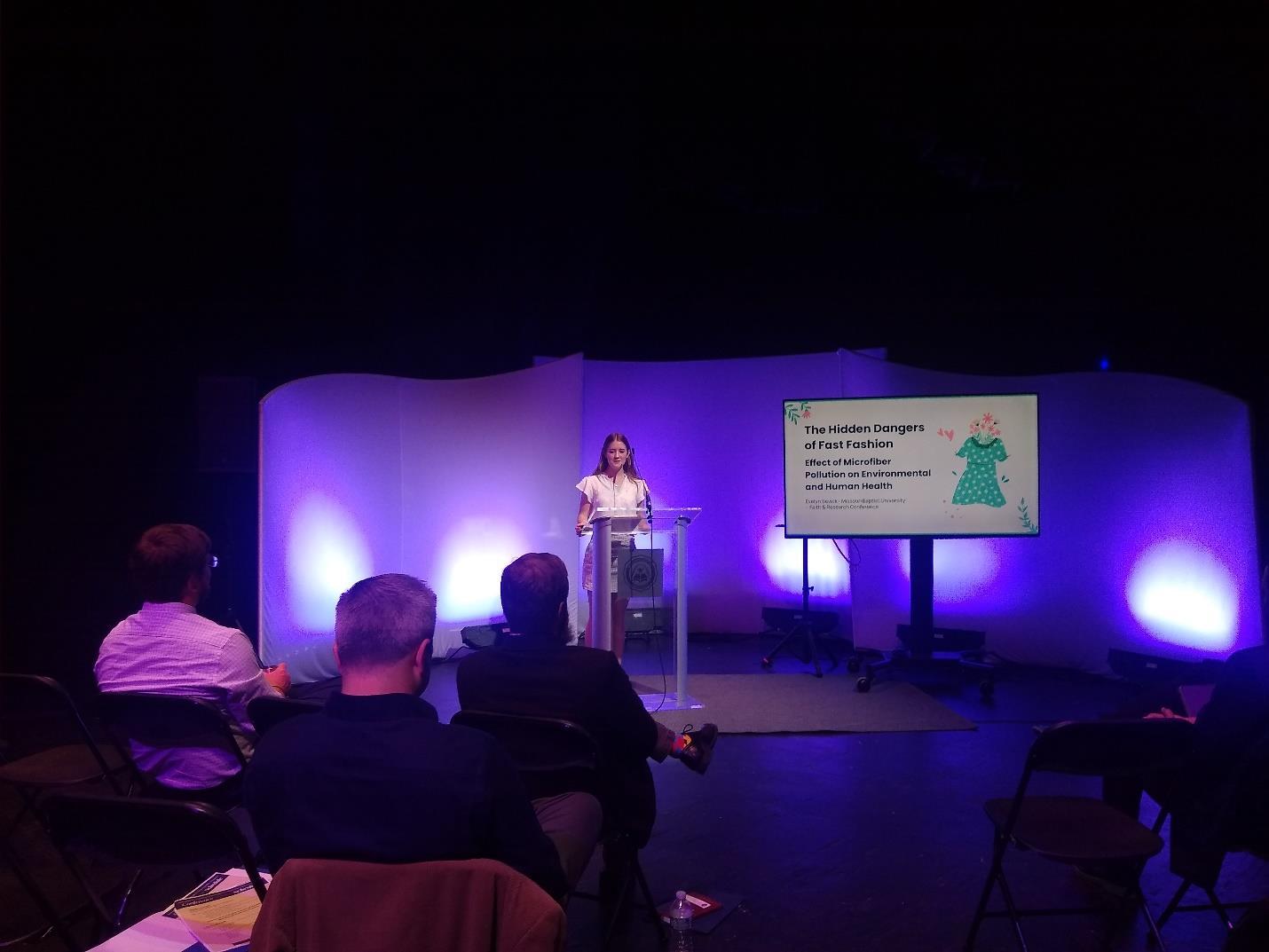
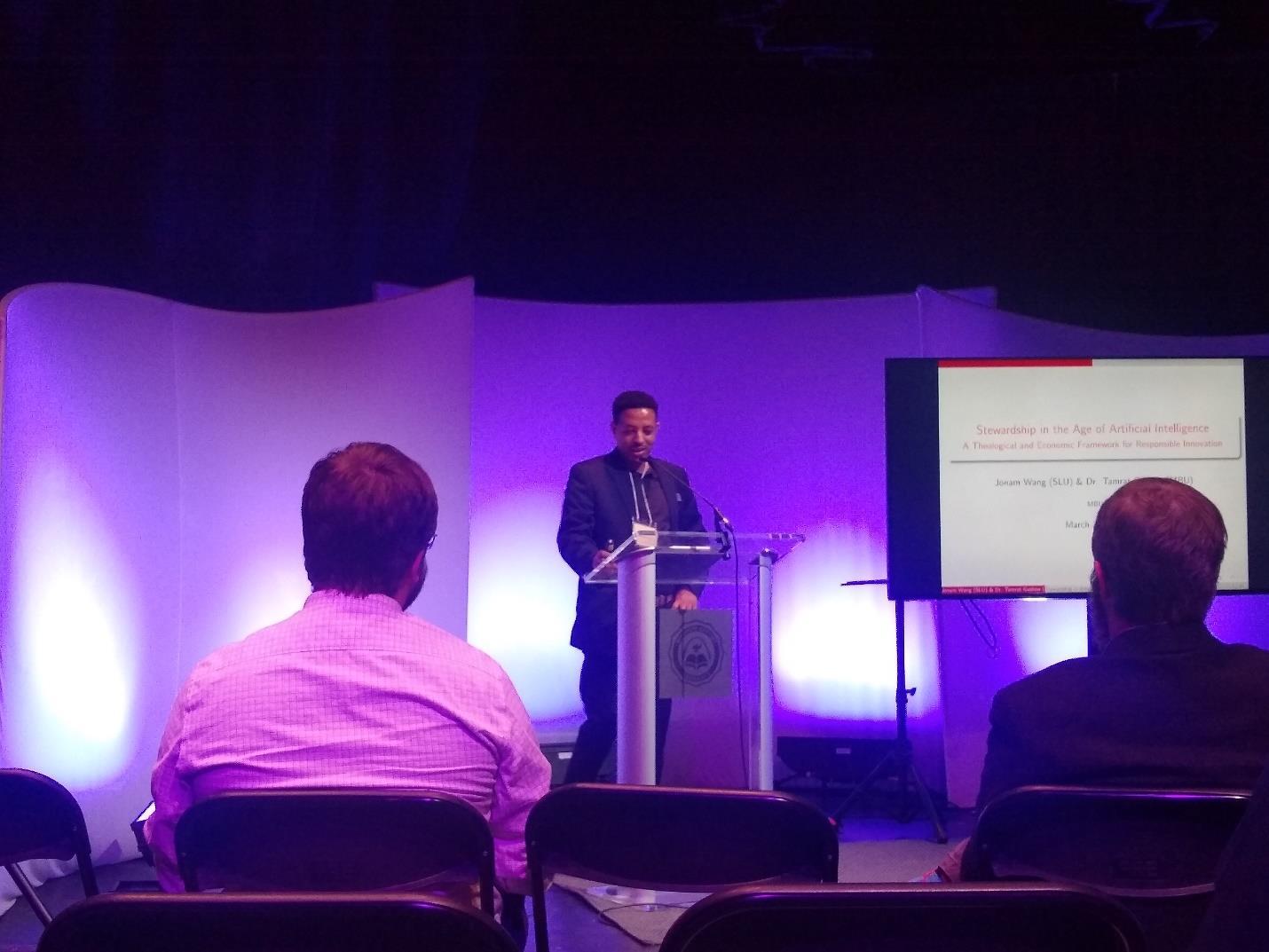
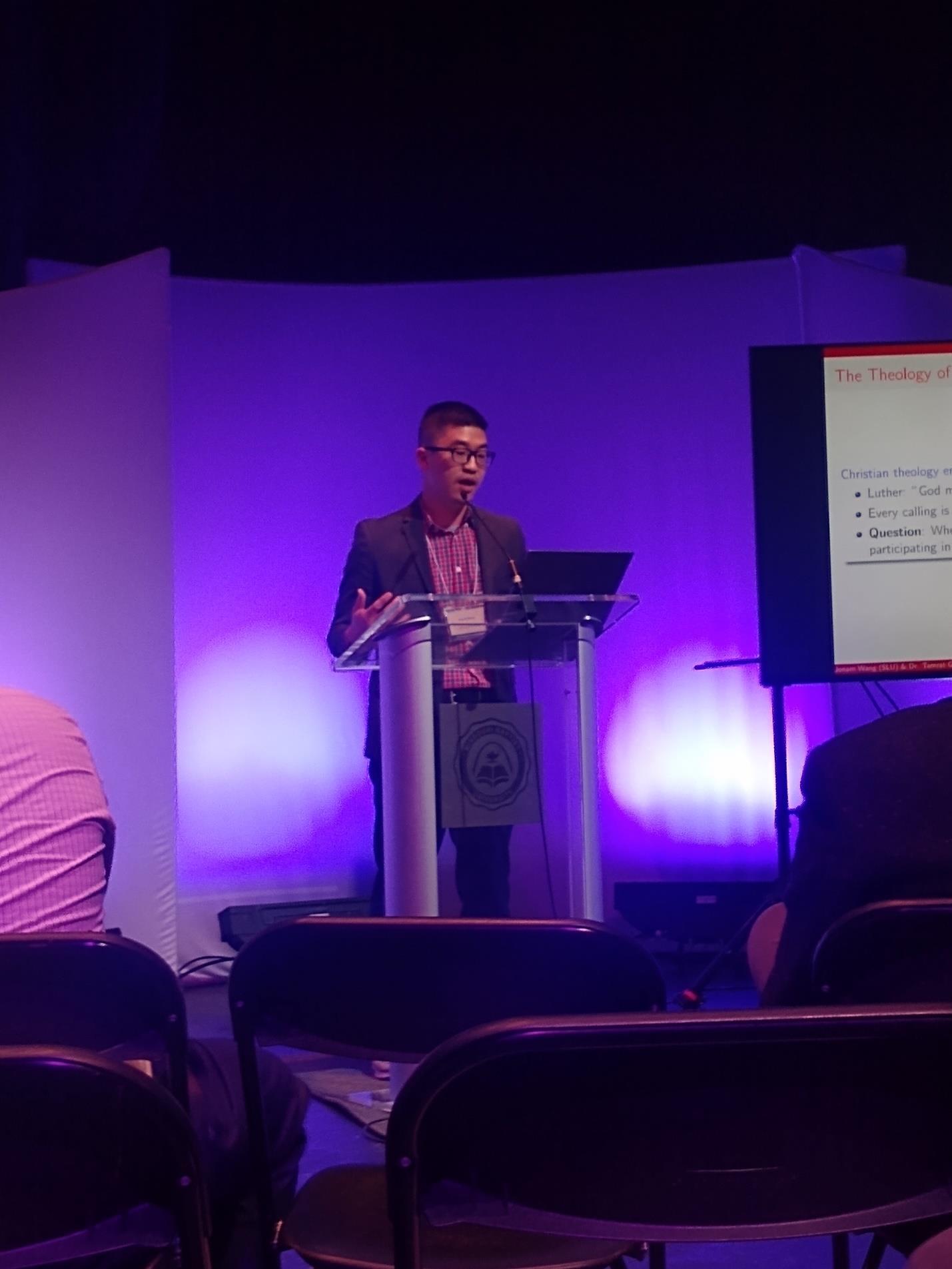
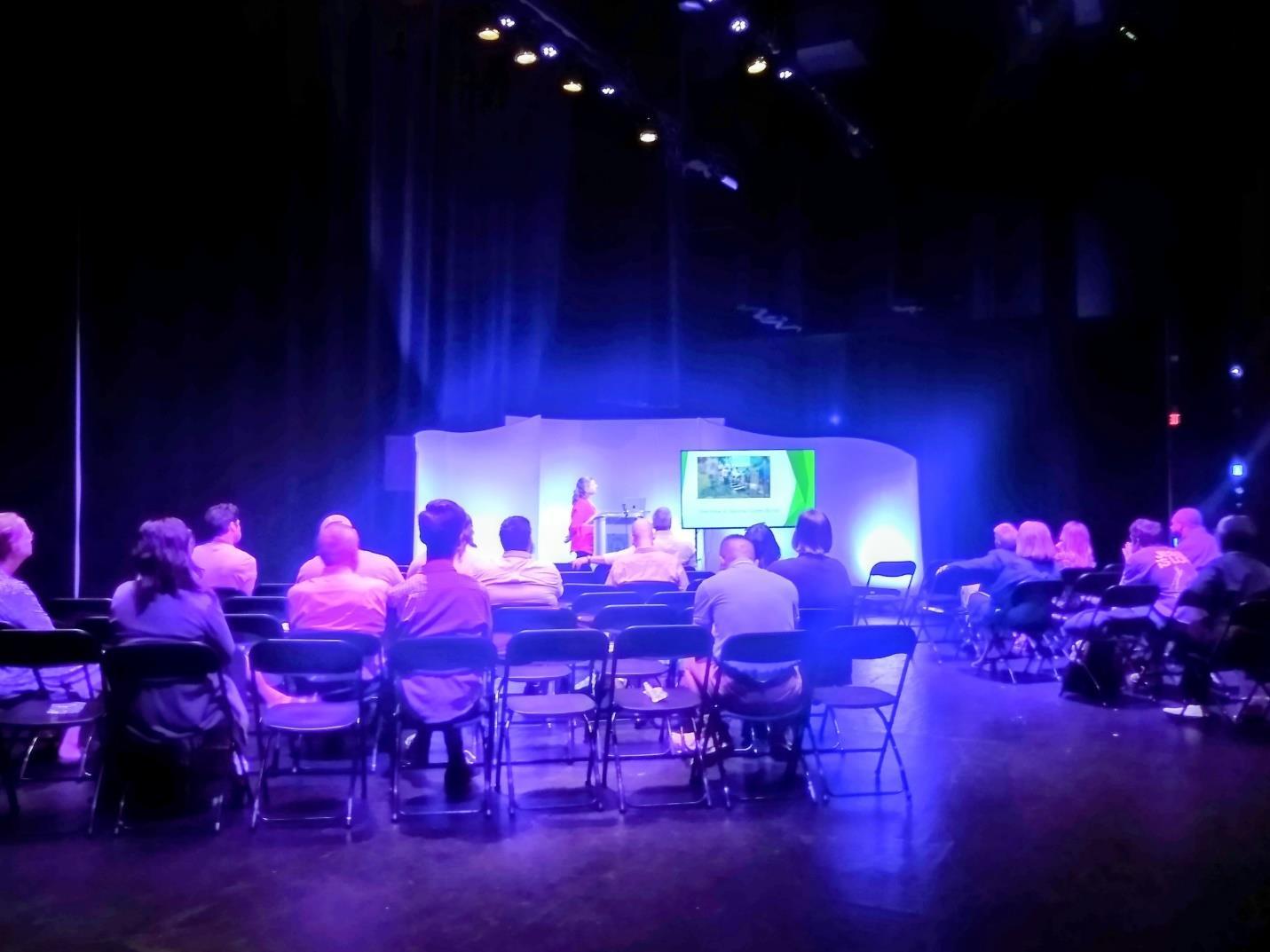
Proceedings photos by John J. Han: Front Cover (15 January 2026)
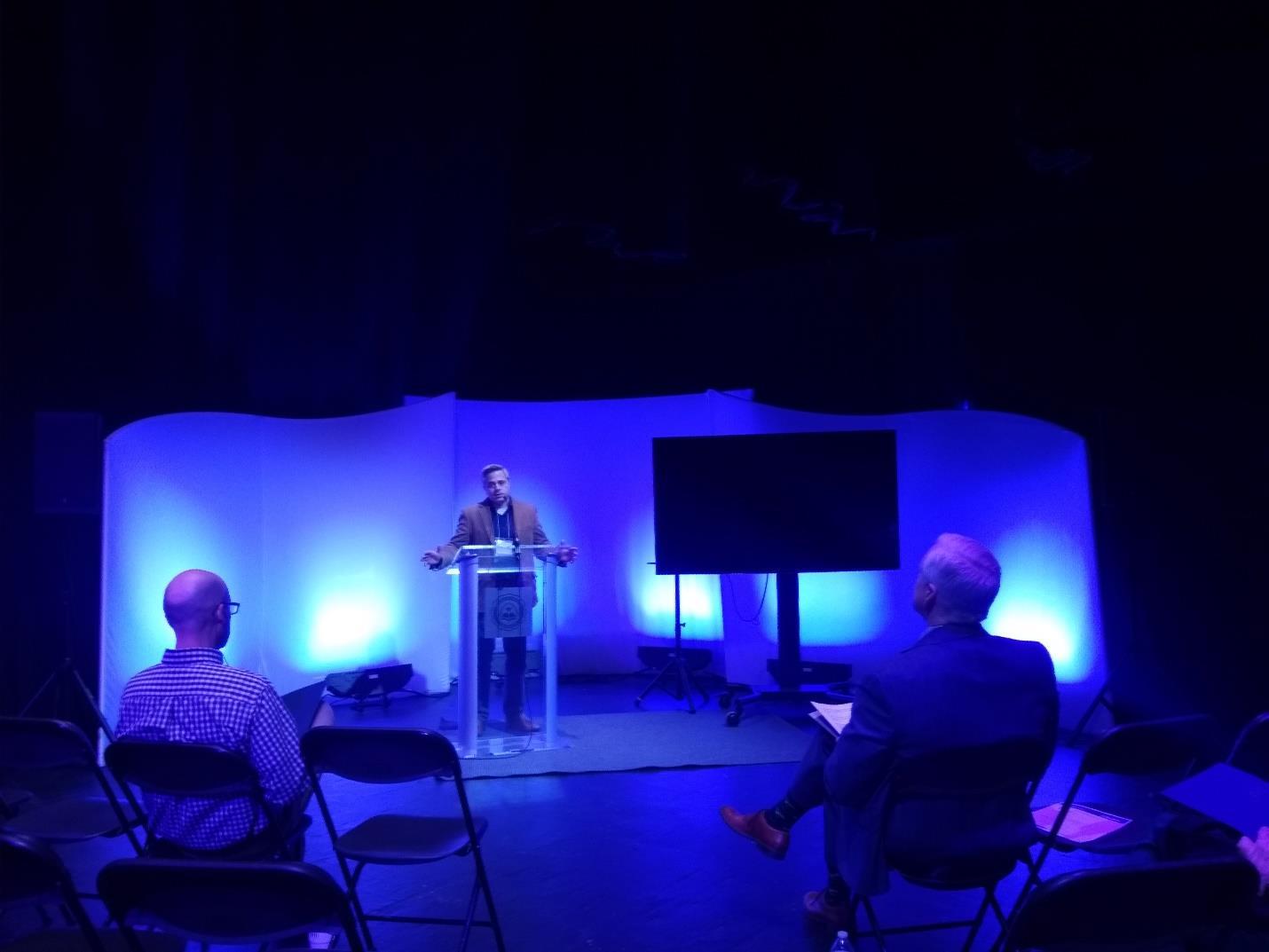
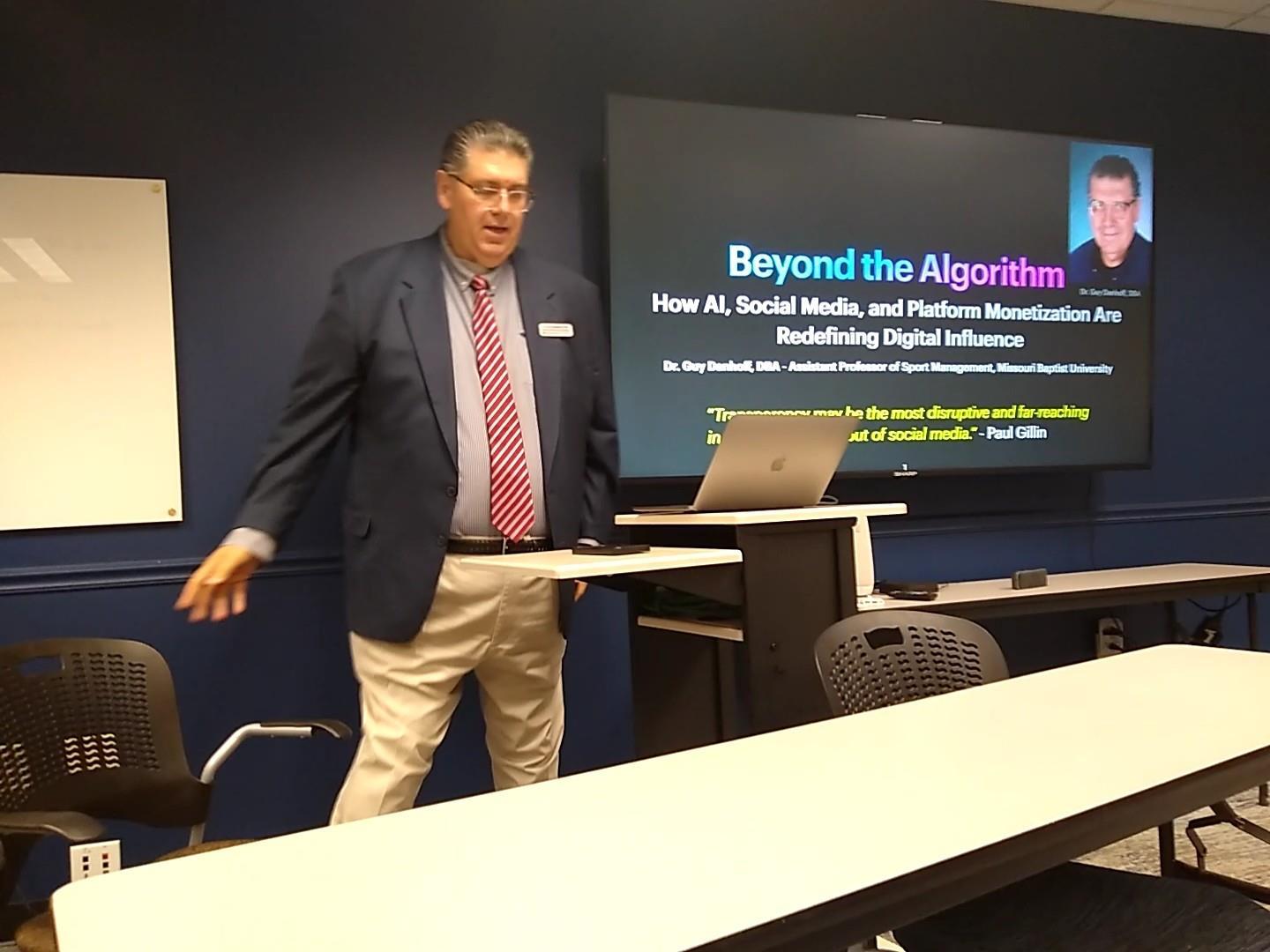
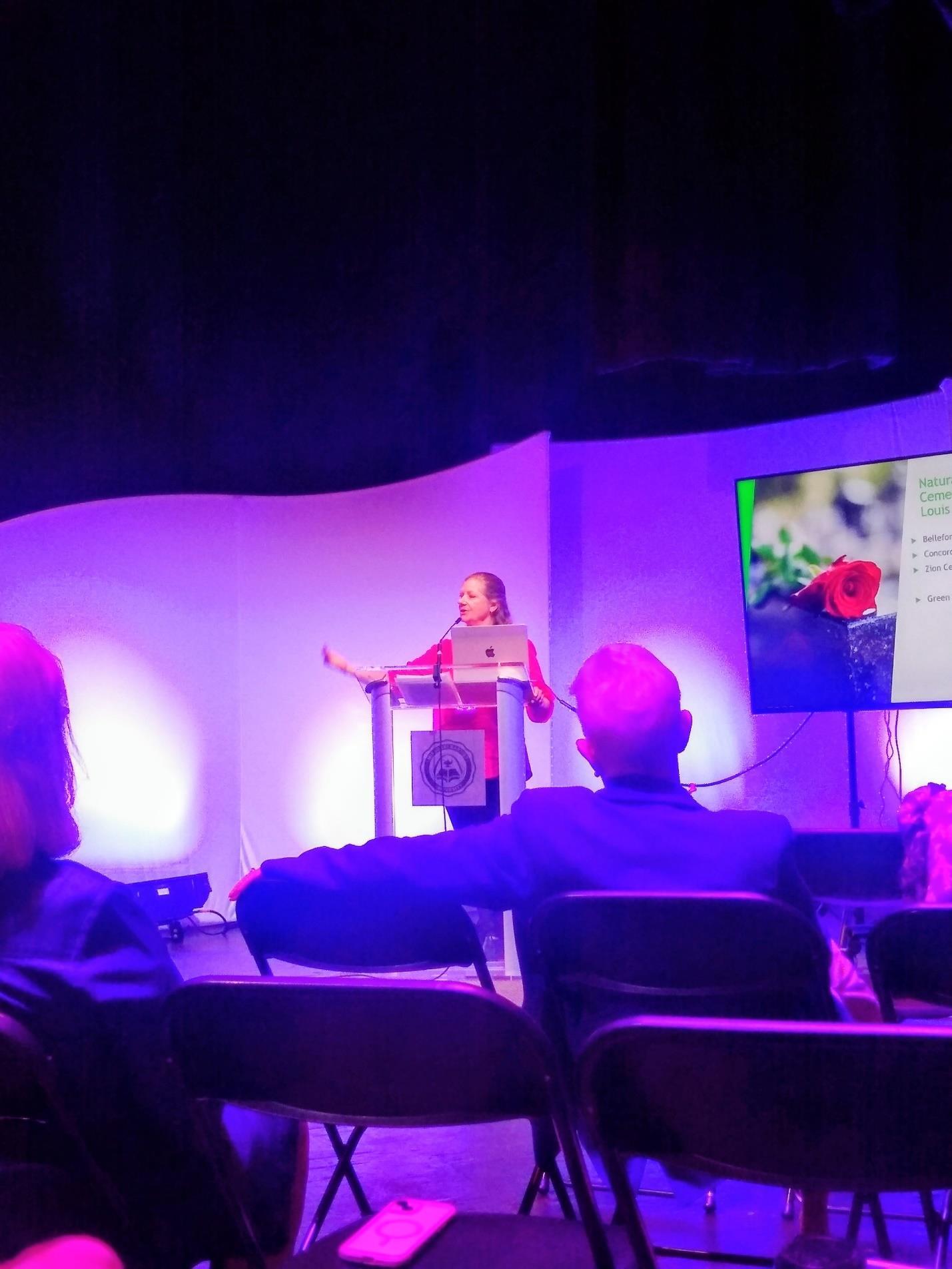
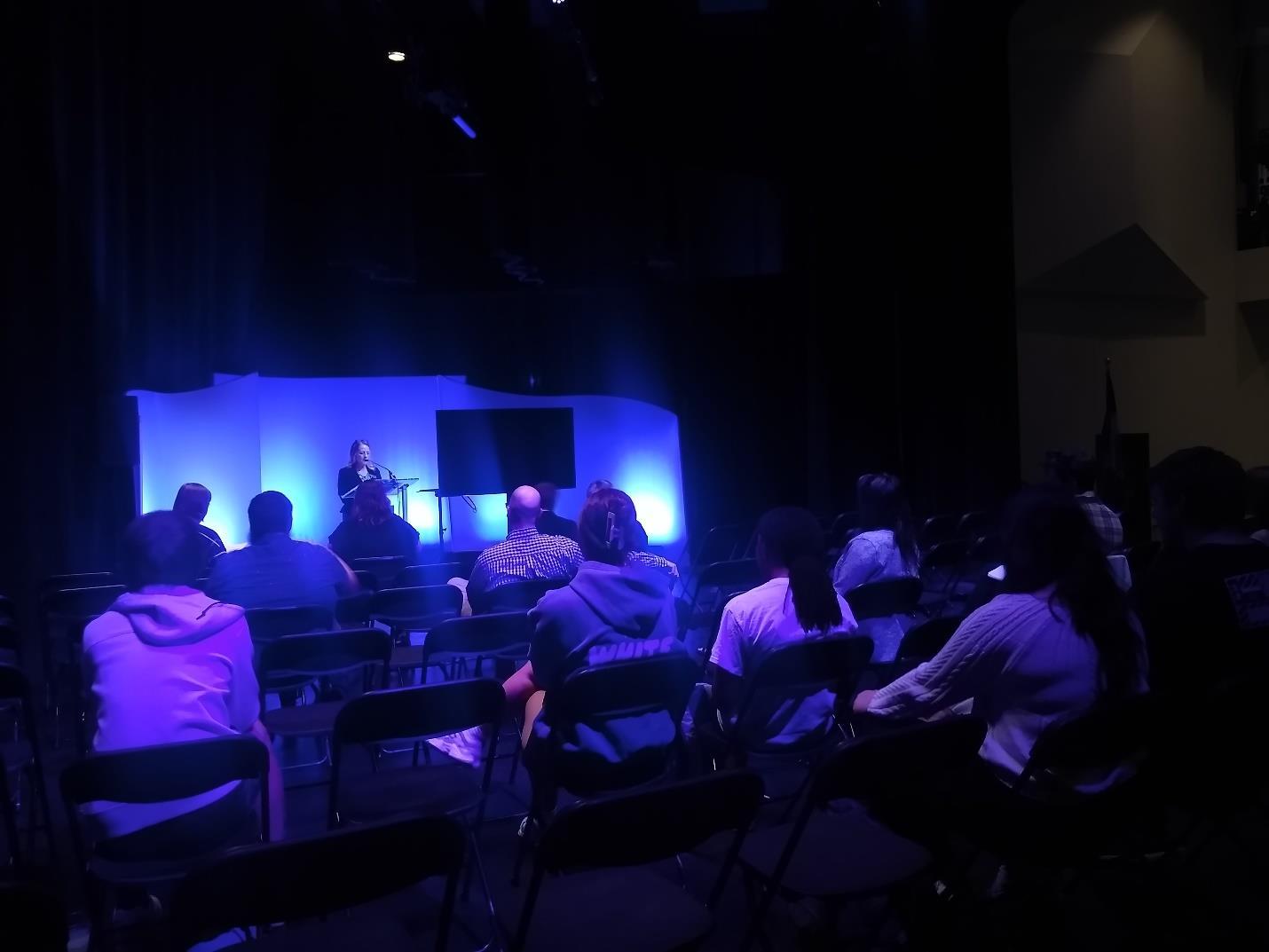
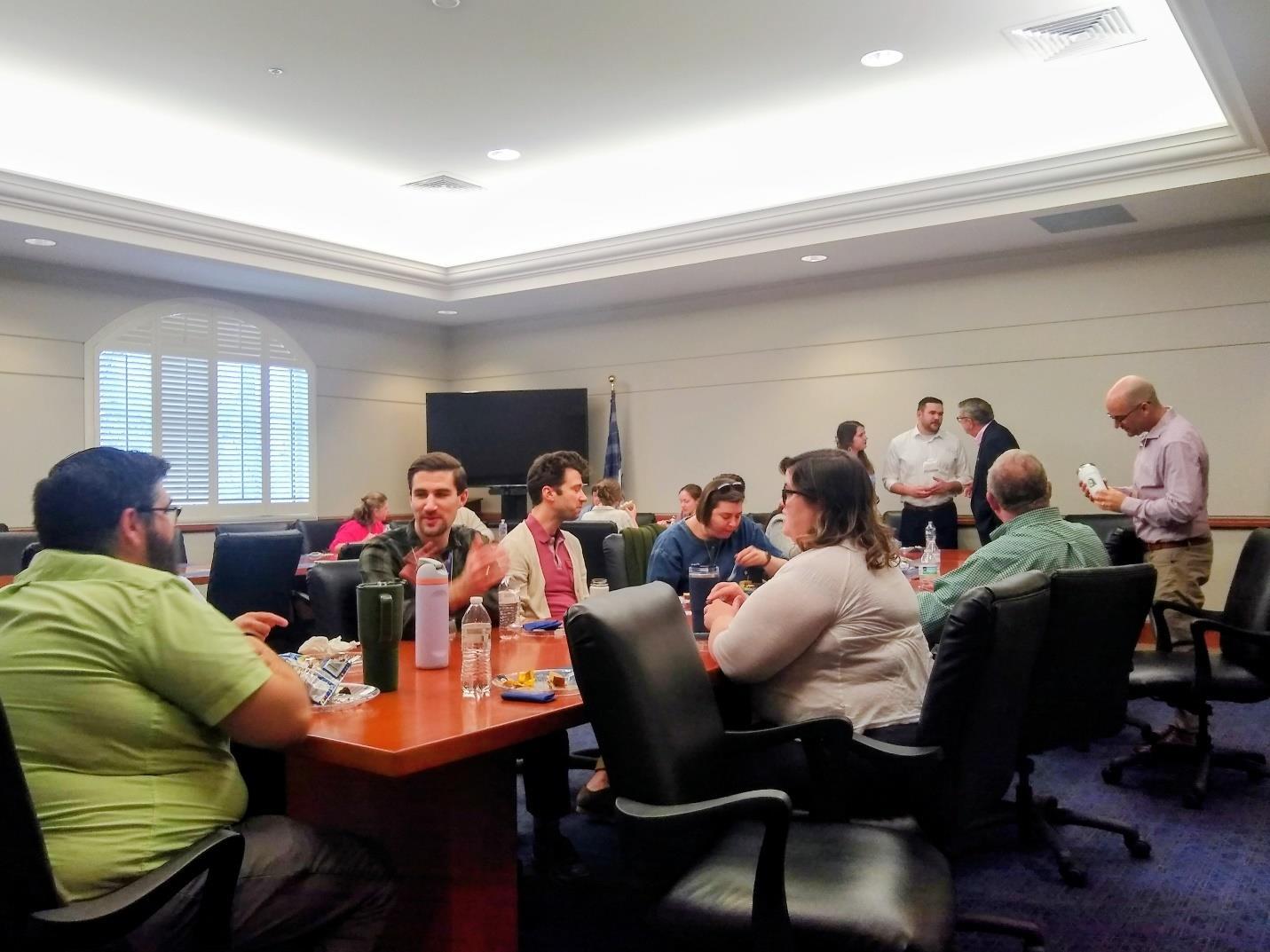
Snapshots of the Eighth Faith and Research Conference Back Cover (22 January 2026)
Study Is a Weariness”: R.F. Kuang’s Dark Academic Duology and the Practice of Hospitality
Julie
The Earth Groans: Patristic Hearings of Romans 8:18-23 Timothy Bitz
The Emotional Laborers in Charles Williams’ The Greater Trumps Colin
Evelyn
Shall be as Gods: Modern Technology and the De-naturing of Human Creatureliness
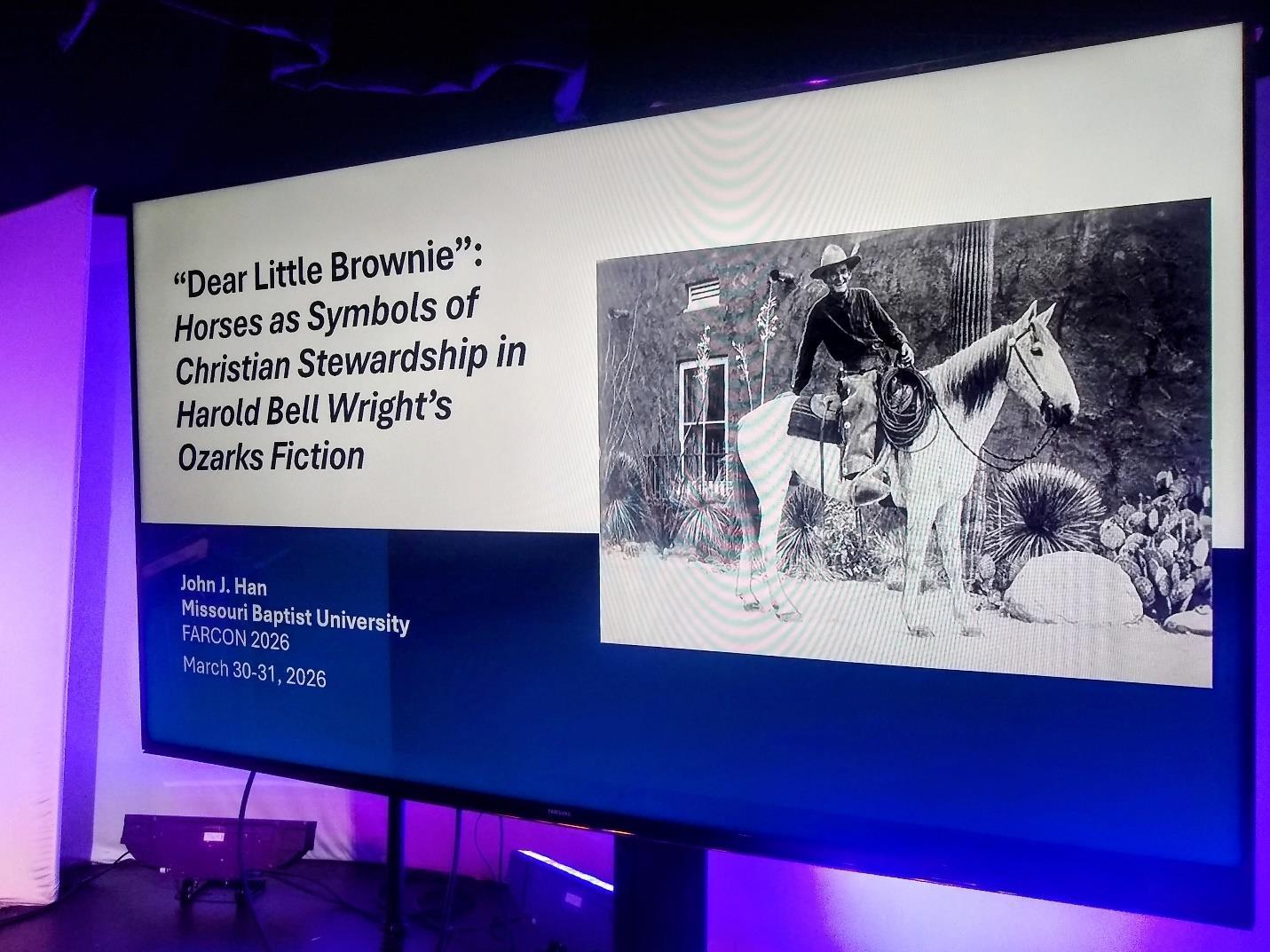
“Dear Little Brownie”: Horses as Symbols of Christian Stewardship in Harold Bell Wright’s Ozarks Fiction
John J. Han
Editor’s Preface
The papers collected in this volume were originally presented at the Eighth Annual Faith and Research Conference, held on the main campus of Missouri Baptist University on March 30-31, 2026.
This year’s conference further strengthened its reputation as a leading interdisciplinary evangelical academic event under the leadership of Dr. Matthew Bardowell and Dr. Julie Ooms, both full-time professors of English at MBU. It brought together scholars from within and beyond the university, along with dozens of students who presented their research or showcased their work in the Mabee Great Hall.
This volume brings together selected papers submitted by conference presenters. Readers will encounter a diverse range of faith-related topics explored throughout these pages. We intend to continue publishing these annual proceedings to encourage ongoing reflection and scholarly engagement.
The University’s Scholarship and Research Committee pursues three goals: to focus on defining scholarship and research for faculty and students, to assist and support opportunities for research across campus, and to provide guidance for facilitating scholarship and research. The Annual Faith and Research Conference is a way to promote these goals, which are intricately connected to the mission of the University. In addition to MBU faculty, we envision this annual event as an academic venue for Christian faculty at other institutions as well.
We seek academic topics related to faith and research for the ninth conference in spring 2027, including:
• The integration of faith and an academic discipline
• Christianity and contemporary culture
• Service learning
• Artificial intelligence and Christian ethics
• Christian education in the twenty-first century
• A significant trend within the discipline that may interest the public
• Any other faith-related topic within the discipline that may be of general interest
Stay tuned for the announcement of the central theme and exact dates of the event. Scholars and students interested in presenting their academic
work are encouraged to contact Dr. Matthew Bardowell, the conference director and moderator, at Matthew.Bardowell@mobap.edu.
JULIE STEINBECK
“Much Study Is a Weariness”: R.F.
Kuang’s Dark Academic Duology and the Practice of Hospitality
The phrase “dark academia” probably rings few bells outside of the consumption of popular literature. A subset of Gothic literature, it evokes images of darkened libraries, ancient lecture halls, the scratching of pens on paper, and the rediscovery of knowledge hidden for centuries. These images are accurate: “dark academia” is an aesthetic that centers around education, magic systems, and the fantastical, all with a gloomy, sinister undertone. The romanticization of learning and discovery are contrasted by the seedy underbelly of the establishment and the misuse of academic knowledge. Accompanied by such novels as Donna Tartt’s The Secret History and Susanna Clarke’s Jonathan Strange and Mr. Norrell, R.F. Kuang’s works Babel and Katabasis in particular use the dark academic genre to showcase how academic work that can be used for human flourishing is easily turned into a tool for harm. A scholar of language herself, Kuang’s experiences in elite universities such as Cambridge, Oxford, and Yale lay the foundation for her exploration of how a boon for humanity turns to a detriment. While study and knowledge creation are to be used to open new worlds and provide a path for greater appreciation of God and of each other, R.F. Kuang’s duology shows how misplaced values can move from the helpful stewardship of knowledge to the idolization of knowledge.
In true academic form, Kuang gives her works subtitles; in this case, the full title of the first in the duology is Babel: Or the Necessity of Violence: An Arcane History of the Oxford Translators’ Revolution. As the novel, set in the 1830s and 1840s, begins, the main character, a Chinese boy on the verge of dying from cholera, is taken from his home by Professor Richard Lovell, a member of the faculty at Oxford University. Lovell raises the boy in his own house, allowing him to choose an English name and providing a strict education in Greek, Latin, and Robin’s native Chinese in preparation for his admittance to Babel: the Royal Institute of Translation at Oxford, where students study foreign languages not just for the translation of written works or to aid traveling dignitaries and religious figures, but for the ability to pair words in specific languages with a tangible effect. For example, using the Chinese word for “invisible,” carved into a bar of pure silver, would have the effect of making the speaker disappear
(Babel 66). Other silver bars are used for travel, for protection, or for destruction. Because of its utility, engraved silver is used in all settings for the benefit of the British Empire leading to political subterfuge and conflict using the translation students’ work. What Robin originally thinks is “the loveliest place on earth” gradually morphs into a symbol of oppression and injustice (Babel 56). Because the Crown must expand its power and its ability to hoard silver, the Academy is used to colonialist ends using the linguistic magic of elite academic institutions to mine resources around the world. Oxford is originally a haven for Robin and his cohort; however, he soon struggles with what he knows is unjust and what he wants to achieve as an Oxford scholar. This internal conflict only grows after helping thieves steal silver from the Babel tower. Robin then meets his half-brother, Griffin, a former Babel student-turned-leader in the Hermes Society, an organization devoted to the removal of silver bars from the clutches of the wealthy in England. Griffin believes this theft will right the wrongs of the Empire:
Let me paint you a picture, brother. You’ve noticed by now that London sits in the center of a vast empire that won’t stop growing. The single most important enabler of this growth is Babel. Babel collects foreign languages and foreign talent the same way it hoards silver and uses them to produce translation magic that benefits England and England only. […] The newest, most powerful bars in use rely on Chinese, Sanskrit, and Arabic to work, but you’ll count less than a thousand bars in the countries where these languages are widely spoken. […] (99)
In other words, Griffin has discovered that translation is less a means of cultural outreach and more a demand on other cultures touched by the Empire. Speakers of different languages, such as Robin and the others in his cohort, are brought to Oxford to use their native tongues as resources. Robin, later, is assigned to China to do translation work between a British trade ambassador and the Emperor’s office. China refuses the deal that England offers, which, it is revealed, was anticipated and intended to start a war between China and the British Empire: “These talks were merely the pretext for hostilities. Those men had funded Professor Lovell’s trip to Canton as a final expedition before they introduced the bill to Parliament” (348). The full intention is to use the academic knowledge built up by Robin’s years of hard work and the veneer of academic integrity not to build diplomatic relationships but to rob China’s coffers.
In this way, translation is a symptom of the greater problem of the misuse of academic knowledge in the service of colonialism. What begins as an academic pursuit morphs into a tool for empire-building. Michael Dodson writes that language translation specifically from other languages into English is a means of “constructing European authority,” sanitizing cultural works in the colonized region and cementing a European heritage for academic achievement (Dodson 809, 811). Furthermore, earlier linguistic philosophies and theories on the development of languages grew to imply a national hierarchy:
This basic thesis of language formation could then be extended from individuals to nations, and further, from language to culture. In sum, language became closely linked to the minds of the people who gave rise to that language, and the historicity of the language itself is borne in changes introduced by the mental or civilizational development of its common speakers. The characteristics of language, as such, can be made to mark distinctions in mental development and civilizational status. (813)
In the evolution of the process of translation, these theories have then grown to imply that “to study language is to study culture,” resulting in the study and appreciation of the culture surrounding the language being “set aside” (Robinson 2). In Babel, little attention is paid, then, to the cultures surrounding the languages spoken by Robin or the other students in his cohort, let alone appreciating the contributions of those cultures and languages of study.
In fact, this “setting aside” of non-English cultures is common in the novel, and Professor Lovell winds up being a stand-in for how academic misuse becomes a tool for these extreme ends. From the beginning, readers see Lovell erasing the identity Robin had before being brought to London. When Robin attempts to tell Lovell his given name, he is cut off and told that “No Englishman can pronounce that” (Babel 10). He also insists that Robin pick a surname “that will do in London” despite Robin knowing that “Family names were not things to be dropped and replaced at whim […] They marked lineage; they marked belonging” (11). Lovell, however, insists that “The English reinvent their names all the time. The only families to keep theirs do it because they have titles to hold on to, and you certainly haven’t got any” (11). Already, the necessity of Robin’s original language is downplayed and erased in favor of the dominant surrounding culture.
Lovell sets up Oxford University as “the center of all knowledge and innovation in the civilized world” (23). In beginning Robin’s studies in Latin, he rebuff’s Robin’s frustrations at the complexity of Latin and his missing the simplicity of Chinese: “Every language is complex in its own way. [… Latin is] much more elegant, you see?” (25). Make no mistake: Lovell loves his studies, his field, and his job.
Lovell venerates knowledge but does so at the expense of the people that it directly influences. Nowhere is this more evident than when Lovell, knowing the intentions of Robin’s trip abroad for trade negotiations, is fine with the unfavorable results. He has known about the real reason for the failed trade deal but did nothing to stop it. He is, clearly, fine with the hoarding of these resources and with the lower status of those that his knowledge would do well to serve. He tells Robin that “I am where I am because I believe in knowledge and scientific progress, and I have used them to my advantage. They are where they are because they have stubbornly refused to move forward with the future” (210). Finally, Lovell catches Robin in his under-the-table dealings with the Hermes society and mocks him for wanting fairness for others: “And are we obligated to distribute silver bars all around the world to backward countries who have had every opportunity to construct their own centres of translation? […] Why must it be Britain’s problem if other nations fail to take advantage of what they have?” (263).
Such an attitude was certainly not uncommon, and it still thrives in some circles. Sultana describes a 2017 publication in Third World Quarterly entitled “A Case for Colonialism.” Sultana writes that “The piece advocated the recolonization of the so-called Third World (or Global South) by European countries and argued that the benefits of colonization outweighed the cost” (Sultana 237). Of course,
[t]he false claims that colonialism led to a host of advantages for the colonized are regularly presented by colonial apologists to intentionally obfuscate colonialism’s real objectives: to subjugate others for the gain of the colonizers and to justify wealth accumulation. (238)
The sentiment of that original publication matches what Lovell and others at elite places like Oxford display in the pages of Babel: knowledge developed in academia belongs to the dominant power of the time and so can be used to grow the surrounding culture’s stores of wealth. The erasure of culture, identity, and language thanks to the over-veneration of academic
knowledge ends up being the death of Lovell and, eventually, of Robin as he loses his life at the hands of the state.
With that, we turn to Kuang’s other work, Katabasis: A Fantastical Descent into Hell, Rivalry, and Redemption in the Pursuit of Academic Glory. The premise of this satirical novel, considered the spiritual successor to Babel, is simpler: Alice Law, a graduate student of Cambridge in the 1980s, witnesses the death of her advisor, Dr. Jacob Grimes, in a freak magical accident. Because she needs a committee chair and later letters of recommendation, she devises a way to follow Grimes’ soul into Hell to bring him back up. Alice and her fellow classmate and Grimes advisee, Peter Murdoch, then journey through the Dante-esque levels of Hell to find Grimes’ soul and bargain with the Lord of Hell to allow him to return to the world of the living for the time it takes for Alice to finish her degree.
Most would agree that the dogged pursuit of a degree in a field that one is passionate about is a laudable effort. However, the story of Katabasis covers other ways in which the pursuit of knowledge can be misused. Like Babel, Katabasis shows what happens when the thrill of the chase becomes an idol. However, where Babel focuses mainly on the tragedy of colonialism in academic settings, Katabasis emphasizes the cost of academic pride; namely, the dehumanization of others and the self, as well as discrimination against others.
Alice is the typical overworked graduate student who spends hours in the lab, subsists on peanut butter sandwiches, and has her eye on a tenuretrack position in a high-ranking institution. But when she considers what price she will need to pay to retrieve Grimes from Hell, she does not care that she will lose half of her natural remaining lifespan. She muses that “no one outside the academy could possibly understand. She would sacrifice her firstborn for a professorial post. She would sever a limb. She would give anything, so long as she still had her mind, so long as she could still think” (Katabasis 8). Simply learning and discovering how the magical world works is not enough for Alice. Instead, she needs the status of a high position in an elite place to consider all the work that she does as worth it. Her teaching work is only a formality, calling the undergraduate students she supervises “naïve, eager things” for whom “ignorance was truly the secret to bliss” (30). Of course, never mind that Alice was an undergrad once upon a time, but that is not explored as she considers what work is actually necessary for her to do. And who can blame her? Such an attitude is displayed by those with authority over her, particularly in Jacob Grimes. Grimes is considered in the novel to be the greatest at what he does. Alice describes him as ignoring the smaller details of his work, because
he’d long reached the stage of his career where one left that sort of grunt work to graduate students. Professor Grimes’s days were devoted to profound, deep thinking. He saw above the mountains and clouds to discern the truth, and then he descended to utter pronouncements like Moses coming down Mount Sinai. (9)
Because he has reached an exalted point in his career, Grimes can now afford to sit back and let the “grunt work” be done by those he deems beneath him: his graduate assistants and advisees. Here, readers can easily guess that the lower academic status one is, the less likely they are to be treated as a human worthy of consideration. When working for Grimes, Alice becomes a proverbial “ghoul that lived on canned soups and crackers” (59). She is dragged into an experiment where Grimes tattoos pentagram symbols on her arm to see if its effects will hold longer than one etched in chalk. Alice isn’t a valuable student or someone with a will of her own. Rather, she is a lab rat, a test subject, to stay in the good graces of a man who she associates with power and success (150). When Alice and Peter are discussing how terribly he treated his students before his death, they still affectionately describe Grimes as “our tyrant” (161). Their desire for a piece of the academic success Grimes has attained makes the journey and resulting struggle seem almost reasonable. Such is the result of the tunnel vision from the over-veneration of academic knowledge, when someone as prideful as Grimes is still seen as someone who has succeeded in that world. Again, such situations are not uncommon in academia and are even considered commonplace: “[Grimes] was not the only neglectful professor, after all—all the faculty in the department cut corners when it came to teaching duties” (30). Students in Alice’s position often wind up overworked, underpaid, and disrespected to the point of mental illness and poverty. Smith et al. describe working class students (those that often go without material comforts and must work to keep themselves from losing their housing or other opportunities) as consistently feeling “isolated and overwhelmed” on campus, with greater amounts of stress and lower graduation rates, often with little support (Smith et el. 131-2). Alice, as a textbook working-class graduate student from the US, would then feel even more isolated in a UK institution, leading to more susceptibility to accept the treatment she is given.
What’s more, Alice is a female student, meaning she has to achieve more than a male student in her field to be taken seriously:
Every now and then a research paper surfaced on why male voices were better suited for magick, citing reasons of pitch, depth, or steadiness, and they always sparked a big hubbub involving outraged statements from women-in-magick societies and apologetic statements from journal editorial boards. Alas, no one had managed to conclusively prove these studies false. (Katabasis 14)
The implied question here is whether these studies are actually disputed, or if they are implicitly accepted despite the bad public optics. Once again, these trains of thought are not unusual in academic settings. An article from Knights and Richards explains how in UK institutions, women are more likely to have short-term contracts instead of longer ones, with 50% of women in academia on a fixed-term contract, compared to about 38% of men (Knights and Richards 217). The pay gap between male and female academics is also on the rise, more so than the general labor market, particularly in the sciences (218). Why does this happen? Knights and Richards posit that men are more likely to be appointed to higher academic posts, leading to the higher pay (218). If Alice wants a high-paying position with a long-term contract, she absolutely must have visible successes part of the reason she wants to fetch Grimes back from oblivion in the first place: “She wanted everyone to know where she had gone, if only so that when she returned in triumph, Professor Grimes in hand, there would be no doubts about her success” (Katabasis 22). Sex-based discrimination seems so normal that it becomes “such a boring truism that Alice was no longer disturbed by the fact” (301).
Perhaps the greatest academic sin shown in Katabasis is not done to Alice; instead, rival student Peter Murdoch becomes of a victim of academic theft. After working on his dissertation on categorization and its implications on a particular paradox, he winds up in the hospital with a severe flare-up of Crohn’s disease. Upon returning to campus six weeks later, he finds that Grimes has taken his paper and published it under his own name, not naming Peter as a coauthor. Peter, having not told anyone about his chronic illness and why it caused him to be away for a month and a half, barges into Grimes’s office “with full confidence that he could set things right” (353). Instead, Grimes refuses to acknowledge his misconduct:
From my point of view, Mr. Murdoch, you were a happy collaborator until you quit. You haven’t signed into the lab since January. I have called and written many times, to no response.
You have offered no explanation and no apologies. You dropped off the face of the map for over a month and expected me to do nothing with our findings? […] Listen, Murdoch. I will make many excuses for talent. Great minds work at their own tempos. I know this. But you are getting lazy. And laziness does not get you published in Arcana. It gets you expelled. (353-54)
What should be an offense worthy of dismissal from one’s post instead would net Grimes more academic accolades if he didn’t then die the next day as a result of not checking his proofs.
The question a reader might then have is why Peter did not report Grimes to anyone. Becker focuses on the reasons why graduate students might not seek justice when their work is plagiarized; namely, power differentials and fear of retaliation (Becker 253). While the literature surrounding the amount of plagiarism of student work by professors is murky at best, Becker notes that much of the work stolen was from PhD students and that participants in her study had to seek recourse outside of the university (257). When there is little hope of justice being given, it is no surprise that Peter would not try to report Grimes’s misdeeds. As such, Grimes shows how little he thinks of his students and their work of discovery by instead passing it off as his own.
In these two novels, Kuang shows readers a devastating pattern: academia can easily become a hostile place not because the pursuit of knowledge is valued. It is because the people are not. Students’ humanity is valued less than what they can produce, and their work is stolen from them. Power differences make students unable to refuse tasks given to them by those that hold their careers in their hands. Their ethnicity makes them useful for the dominant culture while at the same time preventing them from achieving their full potential. In all these cases, students’ humanity is valued far less than what they are able to give to those in power. Thus, acting against these impulses in the pursuit of academic knowledge becomes imperative. Sultana emphasizes the following:
In the instances when an academic publication or a research project either openly or indirectly promotes violent subjugation of Other peoples, utilizes flawed and dubious argumentation, or does not engage with existing scholarly work with any substance, all academics have the duty to critique and safeguard academic integrity. (250)
In other words, the colonialism of Babel and the theft, dehumanization, and discrimination of Katabasis will enable academia’s detractors and leave those outside the academy with a greater sense of distrust. Safeguarding against these types of ideologies that get in the way of appreciation and hospitable treatment of others will help the relationship between academia and the general public. Robinson suggests that language work be done in a context where the culture is at the forefront of study, rather than left as an afterthought, considering each one’s complexities rather than presuming primitivity (Richardson 3). Mohamed Mousa suggests taking into account the additional barriers that female faculty can face in university hiring practices (Mousa 753-54). Knights and Richards imply that academic discovery does not have to be considered “a conquest of knowledge” or a “competition for scarce material” (Knights and Richards 231). Finally, those in faith-based institutions can advocate for seeing the students as lovingly, wonderfully created in the image of God.
Ultimately, good stewardship comes from knowing the true worth of things. In academia, it is easy to let the pursuit of knowledge itself a good thing become greater than the people involved. The thrill of discovery is a gift we are given. But when that gift is allowed to ascend higher than its place, as Kuang’s novels each warn, then it stops being stewardship and can only be called an idol.
Works Cited
Dodson, Michael S. “Translating Science, Translating Empire: The Power of Language in Colonial North India.” Comparative Studies in Society and History, vol. 47 no. 4, October 2005, pp. 809-35. JSTOR, https://www.jstor.org/stable/3879344
Kuang, R.F. Babel: Or the Necessity of Violence: An Arcane History of the Oxford Translators’ Revolution. Harper Voyager, 2022.
Kuang, R.F. Katabasis: A Fantastical Descent into Hell, Rivalry, and Redemption in the Pursuit of Academic Glory. Harper Voyager, 2025.
Knights, David, and Wendy Richards. “Sex Discrimination in UK Academia.” Gender, Work, and Organization, vol. 10 no. 2, 10 March 2003, pp. 213-38. Wiley Online Library, https://doi.org/10.1111/1468-0432.t01-1-00012.
Mousa, Mohamed. “Academia Is Racist: Barriers Women Faculty Face in Academic Public Contexts.” Higher Education Quarterly, vol. 76, no.
4, October 2022, pp. 741-58. Wiley Online Library, https://doi.org/10.1111/hequ.12343.
Robinson, Douglas. Translation and Empire: Postcolonial Theories Explained. Routledge, 2011.
Smith, Laura, et al. “‘Talking Across Worlds’: Classist Microaggressions and Higher Education.” Journal of Poverty, vol. 20, Dec. 2015, pp. 127–51. EBSCOhost, https://doi.org/10.1080/10875549.2015.1094764.
Sultana, Farhana. “The False Equivalence of Academic Freedom and Free Speech: Defending Academic Integrity in an Age of White Supremacy, Colonial Nostalgia, and Anti-Intellectualism.” ACME: A Journal for Critical Geographies, vol. 17 no. 2, May 2018, pp. 228-57, https://doi.org/10.14288/acme.v17i2.1715.
TIMOTHY BITZ
The Earth Groans: Patristic Hearings of Romans 8:18-23
Introduction
Have you ever heard a surfer stand in awe of the ocean and her waves? They do not need to acknowledge a Creator to acknowledge the ocean’s own immensity or power. They hear what the Earth is saying. What about a New Age practitioner who may not hear the audible voice of the trees whisper to them, but still claims to be in sync with the creation around them? Perhaps you remember how a progressive seminary made the news by asking their student body to practice confession to potted plants.1 All the while they acknowledged that the plants present did not have a voice.2 Or even in pop culture, where killer planets become people-like creatures who can impregnate women, manipulate their sons, and even scheme for universal domination.3 Are you sure Creation does not groan?4 We those that subscribe to the historic, orthodox, Christian faith once for all delivered to all the saints—have a rich heritage of people hearing creation groan. How they heard creation groan had significant implications for how they lived in creation.
The task here is to take a brief look at a familiar passage, Romans 8:18-23, that presents God’s creation longing for redemption. This essay employs three patristic interpreters Origen, Augustine, and John Chrysostom to show how each one understood the referent of κτίσις and the scope of future redemption. Origen and Augustine view κτίσις through humanity, though using different interpretive tools. Chrysostom, on the other hand, maintains a literal, non-human, non-rational reading through Antiochene exegesis5 and prosopopeia6 as a rhetorical device. And we will have a glimpse of how κτίσις anticipates, and participates, in the renewal of all things.
Before we proceed, it would serve well to have the modern understanding on the table. Does creation have rationality? Does creation have a voice? You may likely assume that modern and contemporary NT scholarship would interpret κτίσις as non-rational, sub-human creation. And you would be correct. Douglas Moo,7 Leon Morris,8 Colin Kruse,9 and Thomas Schreiner10 all share the same sentiment: Creation is non-rational
but personified within the text. This is not what we find with the first two Fathers we are exploring below.
Origen11
Born in the late second century (c. 185), he flourished throughout the third century as he pushed back against the notion of Valentinian Gnosticism. It does not seem that he is able to detach himself from it entirely though, as he develops more than just unhelpful positions on humanity and embodiment. Origen was influenced by two distinct figures. Clement of Alexandria, and modern scholarship indicates that he was taught by Ammonius Saccas the same philosopher who taught Plotinus.12 Origen is important to us in this conversation for several reasons. Not only is he the first systematician of the Christian faith, his theology deviates in certain respects from orthodoxy. It is how he views creation that he is relevant to this subject.
Working out of Origen’s Romans Commentary, he considers κτίσις in the passage to mean a rational creation. That is, it thinks, hears, remembers. Since creation has a mind, it would groan when it could and needed to do so (4.6). He explains why creation groans by giving two reasons. First, creation has been subjected to involuntary futility due to the Fall. Second, creation longs for coming glory (4.7). The Spirit bears witness to the rational mind, or spirit. He includes angels in his model of creation (5.3). The spirit, or reasonable aspect of creation, is to be considerably better than the soul or body because of its thinking faculties (2.2). He gives a cataloged list of the needs of the body:
Embarrassing process of digestion, the sense of shame associated with procuring offspring, how children are conceived, born, and raised. And behold, what great futility is contained in these things, what great corruption to which the creation of the soul, noble and rational, has been subjected, although unwillingly. (4.10)
They become “embarrassing” or “shameful” as creation was subjected to servitude as its lower-ordered needs override its higher capacity. Humanity was overcome by futility, or the needs of the body (4.9). Origen is fine saying that the soul and spirit are being renewed currently by the Holy Spirit. Yet the struggle for freedom will continue as the body feels hunger,
fear, and pain (4.8). It seems that hunger and pain are somehow evil, not just happenings that tell us something is wrong.
Human existence is dotted with what Origen calls “seeds of future glory.” Farming and agricultural language give way to a helpful reimagining of suffering. The garden of suffering will yield fruit. And torn bodies will become glorious. The glory in store for future sons of God is weightier as suffering increases (4.3). And God grants gifts to his people. Roles based around giftings denote and justify God's design in this (5.2). The Spirit does not negate or prevent suffering in any way. Rather, God gives gifts and relates the sufferer to future glory (5.5). This gifting and role-making is to help ground the would-be son of God that He is not alone in the world, and God is with him through his life of suffering. These gifts and roles are not for one another alone. They are for the community of faith.
Origen notes that rational creation looks at the present pain and battles of life and grieving because of it. Rational creation also rejoices when those pains and battles are overcome. Suffering and pain are current realities though, which necessarily means that groaning will persist. This must be because physical bodies exist. Origen struggles to reconcile both the text and his theology. When the current body is present, groaning will occur. And if groaning occurs, all of creation participates in that groaning (4.15). And redemption for Origen is not the resurrection, but something like the beatific vision heightened, unfailing virtue, love and union with Christ (5.11). Creation’s groaning though is not cosmic, but in its body’s groaning. It is almost as if the natural world disappears into anthropology.
Augustine13
We now turn to Augustine. There appear to be three important features of Augustine’s theology worthy to note. First, he prioritizes a healthy sense of trust in Christ and primacy of the Scriptures. Second, note that Augustine is a churchman. He was steeped in the African martyr tradition, who placed a high priority on suffering and death as a gift honoring a select number of Christians.14 Finally, Augustine is not Origen reincarnate, but the similarities between the two are notable. There remains some Neoplatonic flavor in Augustine.15 He will follow aspects of Origen’s interpretation as he responds to his friend’s question on the examined passage.
Augustine was not using Greek at this time; he is pulling from the Latin Bible. Creatura should appropriately be rendered creation, and not
creature. ἡ κτίσις and τῆς κτίσεως gives no indication as to why the text needs to read with humanity being the sole focus here. The more natural reading of the text has all of creation in mind. Verse 23 provides a hermeneutical clue: Not only the creation, but we ourselves [...] groan inwardly as we await adoption as sons.” Augustine wants to be biblical here. His pastoral instincts point toward a broad redemption, but his anthropology prevents him from getting there.
He unfolds his system before us. Creation can represent creation because of a tripartite anthropology. He takes cues from Origen's theology and hermeneutics. Augustine makes an interpretive jump to collapse creation into the image-bearing creature, humanity. Augustine's anthropology is conceptualized in three facets. First, corpus, or that which is extended physically. It is time-and-space bound. Next is anima, that is, the life-giving aspect of humanity. It is what animates humanity. Finally, spiritus, or the rational component of humanity. Humanity falls because the corporeal, or, better said as, fleshly, desires of the human drive down into the soul and spirit. Instead of the rational driving the person, the inverse happens (76.5). And if humanity still groans and suffers, creation will as well.
African martyrs were lionized in Augustine’s day (and rightly so). And now that martyrdom was becoming less of a threat in the church in his day, there needed to be another way to differentiate from the populace. Suffering is a clear way to differentiate from nominalism. He explains that putting to death “the deeds of the flesh” brings pain or suffering. He then applies a spiritual reading to this: Fasting, chastity, public beatings, toiling for the sake of the Church, ignoring one’s own pleasures (76.2). The denier chooses to suffer for the sake of coming glory. Redemption is total comprehensive (comprehensi sunt and comprehendantur).16 He applies the passage pastorally, reminding that groaning signals the redemption of both humanity and all of creation (76.6). But not all will receive the adoption as sons. Augustine is careful to qualify the statement those with the fruit of the Spirit will be called sons and daughters of God.
Chrysostom
17
Origen and Augustine reduce κτίσις to humanity, albeit inconsistently, through a variety of means. John Chrysostom offers a different reading of the text that will feel more familiar to contemporary readers. Like many of the Church Fathers, Chrysostom was primarily a
pastor. His project is theology made practical, giving handles to the local congregation. He does this by prioritizing a literal reading of the text à la the Antiochene school. This is the fruit of his interpretation on Romans 8. First, how does Chrysostom interpret κτίσις? He understands it to mean the world. This is the first departure from Augustine and Origen. The world is non-rational to Chrysostom. He says, “We are not to fancy them alive, or ascribe any reasoning power to them […]” (8.19-20). How does a non-rational creation groan? He employs prosopopeia, giving voice to an inanimate object. The earth groans. And it groans because it is subject to a curse of not bringing forth its full fruit, instead producing thorns and thistles. The suffering creation experiences now is not because it had acted poorly, or wrongly. It is because humanity has acted evilly. But just as creation was made for us, and corrupted by us, God will redeem creation again for our sakes. Chrysostom does not downplay the present suffering of humanity. Hopeful theological realism is what softens the blow, though, as the future glory is incomparable to what is currently experienced. Future hope is prioritized through three concerns that he highlights (8:18). First, he calls believers to exhibit contempt for today. Second, he calls for them to desire future glory. Finally, he explains that God both loves and honors humanity.
Humanity and the non-rational κτίσις are co-laboring to the same end; there is a synergistic partnership in place. If humanity suffers, κτίσις will suffer. The goal is not to cease suffering per se. Rather, it is to participate together in suffering until glorification takes place (8:22).
Creation shames the hearer as they hear the longing of redemption. This is a challenge to not be “less” or “worse” than creation in suffering. Because if we are glorified, creation will be too (8.22).
Creation persists to serve, however, by continuing to hope that humanity may long for cosmic redemption, which includes adoption as sons. Chrysostom uses a nurse analogy to describe its service, and how it receives its reward. The nurse of a king's child may receive good things as she cares for the offspring. She genuinely cares, is genuinely blessed, but would not otherwise experience benefit without caring for the King's child. So, too, is it with the Earth.
Conclusion
Though Origen and Augustine both miss a critical thrust of Romans 8:18-23, as it speaks to creation specifically, their instincts regarding
representation are not bad. We can appreciate the different views from which they address the topic. Both Origen and Augustine care about creation’s representation through humanity. While this is not the text to utilize to support their claim, we can look to other biblical texts that clearly teach representation considering recent scholarship. The Tradition would argue for rational or intellectual capacity as a key component to being made in the image of God. Fair enough. The Hebrew Bible provides far more stable grounding for Origen and Augustine’s representative instincts. Modern ANE scholarship argues, however, that co-regency is a massive component to understanding the imago Dei. To be made in the image of God, regardless of how distorted by the Fall we may be, implies that the human creature was designed to be a cultivating and keeping picture of royalty.18 This is good news to people with disabilities. Rationality is not the crown of creation; all image-bearers can serve as co-regents over creation.
And yet Chrysostom appropriately diverges from Augustine and Origen at this salient point. Creation is not collapsed into humanity. Nor is creation just a spectator to coming glory but will actually experience cosmic redemption. Creation both serves and is a beneficiary to humanity's eventual glorification.
Chrysostom’s thoughts on 8:24 are worth mentioning. The world does not want us to have it as its goal or treasure. “For if thou demandest to have everything in this world, thou hast lost that well-doing of thine, through which thou didst become bright [...]” (8.24). To treasure the world above the great gift of the Spirit, or adoption as sons, is a desire to forfeit both creation’s lofty goal and your transformation. Do not make it your reward. Instead, help creation by stewarding your suffering for its good, too.
Creation expects a reward. If you can imagine creation sighing and groaning, it is because of our shared state in futility. And if you could imagine creation sighing, could you also imagine creation hoping for redemption, too? Creation suffering means that creation hopes. May we not hope less than the non-rational creation around us.
Notes
1 Credit is due to Dr. Matthew Bardowell for reminding me of this chapel service. Union Seminary, “Worship At Union,” Union Theological Seminary, September 18, 2019, https://utsnyc.edu/blog/2019/09/18/worship-at-union/.
2 Murray Campbell, “We Harvest What We Sow,” The Gospel Coalition | Australia, September 19, 2019, https://au.thegospelcoalition.org/article/we-harvest-what-wesow/.
3 Ego is a powerful cosmic entity in the Marvel Universe that has a planet functionally serve as his body. James Gunn, Guardians of the Galaxy Vol. 2 (Marvel Studio, 2017), Film, 137 mins.
4 I am grateful to Dr. Aaron Halstead for noting that viewing creation as sentient and rational does not put someone outside of the pale of orthodoxy.
5 Antiochene and Alexandrian are the primary two ways in which the Patristic era read the Scriptures. The Alexandrian tradition gave focus to spiritual readings of Scripture and was championed by the likes of Clement and Origen. Antiochene prioritized the literal sense (think authorial intent) of the Scriptures. Elizabeth A. Clark, Reading Renunciation: Asceticism and Scripture in Early Christianity (Princeton, N.J: Princeton University Press, 1999). 72-73.
6 Prosopopeia is an example of personification; not all personification is prosopopeia. The sense of the term is to give a voiceless object or ideas a voice. Douglas Mangum, “Prosopopeia,” in The Lexham Glossary of Theology (Bellingham, WA: Lexham Press, 2014).
7 Moo interprets creation to be subhuman and non-rational while intensifying the disaster of the Fall. Douglas J. Moo, The Epistle to the Romans, The New International Commentary on the New Testament (Grand Rapids, MI: Eerdmans, 2010). 514.
8 He leans comfortably against a personified, non-rational reading of creation. Leon Morris, The Epistle to the Romans, A Pillar Commentary (1988; Digital, Grand Rapids, MI: Eerdmans, 2005). 320-321.
9 Kruse connects Genesis 3 to Romans 8. The earth was not cursed because it itself was guilty. “Subjection” language personifies creation, exemplifying great violence done to it because of human sin. Colin G. Kruse, Paul’s Letter to the Romans, The Pillar New Testament Commentary (Grand Rapids, MI: Eerdmans, 2012), Digital. 343.
10 Schreiner believes personification is the rhetorical device used in Romans 8:18-23. Thomas R. Schreiner, Romans (Baker Exegetical Commentary on the New Testament), 2nd ed., Baker Exegetical Commentary on the New Testament, ed. Robert Yarbrough and Joshua Jipp (Grand Rapids, MI: Baker Academic, 2018), Digital. 425.
11 Origen, Commentary on the Epistle to the Romans, Books 6–10, vol. 104, trans. Thomas P. Scheck, The Fathers of the Church (2002; Washington, D.C.: Catholic University of America, 2014), Digital. 60-79.
12 Mark J. Edwards, “Origen,” in The Stanford Encyclopedia of Philosophy, Summer 2022, ed. Edward N. Zalta (Metaphysics Research Lab, Stanford University, 2022), https://plato.stanford.edu/archives/sum2022/entries/origen/.
13 Augustine of Hippo, Saint Augustine: Eighty-Three Different Questions, vol. 70, trans. David L. Mosher, The Fathers of the Church (1982; Washington, D.C.: Catholic University of America, 2014), Digital. 149–157.
14 Michael A.G. Haykin, “Augustine” (Seminar, The Southern Baptist Theological Seminary, Louisville, KY, January 28, 2026).
15 It is good enough to say that Neoplatonism is in Augustine’s background. Scholars should be careful though to not overstate its contribution to Augustine’s life and theology. For example, this is one significant challenge with Brown’s titanic work on Augustine. For all of Augustine’s quirks and faults, he sought to first serve Jesus by working from the Bible. With that said, there are several sources that trace the multiple, different connections that tie Augustine to Plotinus and Origen. One example is Cary’s work on the inner self in Augustine. He follows a line through Plato, Plotinus, Augustine and Locke and how they detail the interiority of humanity. Origen borrows language from the first two, utilizing sensory language for the “inner man,” or heart. And Augustine takes this language, building upon it something seemingly brand-new that would go on to form Christian Spirituality even to today. Phillip Cary, Augustine’s Invention of the Inner Self: The Legacy of a Christian Platonist (New York: Oxford University Press, 2000). 4-5, 48.
16 Augustine of Hippo, Eighty-Three Different Questions, vol. 70. 155.
17 John Chrysostom, Nicene and Post-Nicene Fathers 1.11: Saint Chrysostom: Homilies on the Acts of the Apostles and the Epistle to the Romans, vol. 11, trans. Philip Schaff, Early Church Fathers (1889; Christian Literature Company, 2001), Digital. 439-446.
18 G. K. Beale, The Temple and the Church’s Mission: A Biblical Theology of the Dwelling Place of God, New Studies in Biblical Theology (Downers Grove, IL: InterVarsity Press, 2004), Digital. 81.
Bibliography
Augustine of Hippo. Saint Augustine: Eighty-Three Different Questions. Vol. 70, translated by David L. Mosher. The Fathers of the Church. 1982; Washington, D.C.: Catholic University of America, 2014. Digital.
Beale, G. K. The Temple and the Church’s Mission: A Biblical Theology of the Dwelling Place of God. New Studies in Biblical Theology. Downers Grove, IL: InterVarsity Press, 2004. Digital.
Campbell, Murray. “We Harvest What We Sow.” The Gospel Coalition | Australia, September 19, 2019.
https://au.thegospelcoalition.org/article/we-harvest-what-we-sow/ Cary, Phillip. Augustine’s Invention of the Inner Self: The Legacy of a Christian Platonist. New York: Oxford University Press, 2000.
Chrysostom, John. Nicene and Post-Nicene Fathers 1.11: Saint Chrysostom: Homilies on the Acts of the Apostles and the Epistle to the Romans. Vol. 11, translated by Philip Schaff. Early Church Fathers. 1889; Christian Literature Company, 2001. Digital.
Clark, Elizabeth A. Reading Renunciation: Asceticism and Scripture in Early Christianity. Princeton, N.J: Princeton University Press, 1999.
Edwards, Mark J. “Origen.” In The Stanford Encyclopedia of Philosophy, Summer 2022, edited by Edward N. Zalta. Metaphysics Research Lab, Stanford University, 2022.
https://plato.stanford.edu/archives/sum2022/entries/origen/ Gunn, James. Guardians of the Galaxy Vol. 2. Marvel Studio, 2017. Film, 137 mins.
Kruse, Colin G. Paul’s Letter to the Romans. The Pillar New Testament Commentary. Grand Rapids, MI: Eerdmans, 2012. Digital. Mangum, Douglas. “Prosopopeia.” In The Lexham Glossary of Theology. Bellingham, WA: Lexham Press, 2014.
Moo, Douglas J. The Epistle to the Romans. The New International Commentary on the New Testament. Grand Rapids, MI: Eerdmans, 2010.
Morris, Leon. The Epistle to the Romans. A Pillar Commentary. 1988. Digital. Grand Rapids, MI: Eerdmans, 2005.
Origen. Commentary on the Epistle to the Romans, Books 6-10. Vol. 104, translated by Thomas P. Scheck. The Fathers of the Church. 2002; Washington, D.C.: Catholic University of America, 2014. Digital.
Schreiner, Thomas R. Romans (Baker Exegetical Commentary on the New Testament). 2nd ed. Baker Exegetical Commentary on the New Testament, edited by Robert Yarbrough and Joshua Jipp. Grand Rapids, MI: Baker Academic, 2018. Digital.
Union Seminary. “Worship At Union.” Union Theological Seminary, September 18, 2019. https://utsnyc.edu/blog/2019/09/18/worshipat-union/
COLIN MOLL
The Emotional Laborers in Charles Williams’ The Greater Trumps
The sociologist, Dr. Arlie Russell Hochschild, teaches us that emotion is the heart of sociology (d’Oliveira-Martins & Hochschild 4). With her 1983 publication of The Managed Heart: Commercialization of Human Feeling, the sociology of emotion subdiscipline was born. This monograph offers a theoretical framework and social basis to emotion processes. Hochschild interviewed flight attendants in the late 70’s and discovered the “heart” to be the location of their labors and that, to succeed in their work, those hearts must be managed (Hochschild 5-7). Flight attendants must generate feelings of warmth and welcome in the cabin, and those feelings must be felt to be sincere by those immediately present. Failing in this leads to what passengers might perceive as inauthentic greetings, hollow gestures and shallow encounters. This leaves the passengers feeling somehow slighted, perhaps because the cabin does not feel effortlessly cared for or maybe because the passengers were not able to catch some of that warmth and reproduce it within themselves. Another consequence of this could be isolation or alienation from colleagues. Imagine how your own estimation of someone can change when something they say sounds “phony.” Also imagine a time when you were trying to communicate something of importance, only to hear yourself expressing it with a tone that suggests that it does not matter. All this emotional labor can lead to burnout and an impaired ability to express emotion outside of a professional context. Hochschild predicted that the marketplace would continue to demand greater emotional labor from the work force, and that seems abundantly true.
But what does it mean for emotion to be the heart of sociology, or the scientific study of society and social interaction? How are we to think about this? To answer these questions, it seems necessary to define “emotion” —a word that, in my view, eludes definition by standard propositional terms. This is the strength of this Faith and Research conference, because it seems to me that only the humanities can hope to perfectly account for this garden variety word.
In this present attempt to get closer to a more complete understanding of emotion, I will draw from three theological philosophers: St. Augustine, Jonathan Edwards, and William Torrey Harris and then from the Oxford Christian Charles Williams. Williams’ novel, The Greater
Trumps, presents a magisterial story that suggests there is little difference between emotional and spiritual forces. The Christmastime setting alone hints at this suggestion. Is there any more emotionally dense time of the year, or any day of greater importance in the liturgical calendar? It is my view that Williams’ work gives life to a conceptual understanding of emotion based in the writing of these three theological philosophers. My claim in this paper is that a perfect definition of emotion requires the propositional knowledge supplied by these philosophers, plus an account from the softer side of the humanities, and I think The Greater Trumps is the perfect literary companion for this job.
I will begin with the intellectual heritage of Augustine, Edwards and Harris. Augustine’s philosophy of memory divides the mind into three: there is the understanding, the will and the memory (Confessions 10.8.12). It is within the memory where emotion and the affective capacities reside (10.14.21-22). In searching his own memory, Augustine likens what he finds to a cavernous unconscious space where the will places things before the conscious awareness of the understanding. William Torrey Harris, a nineteenth century idealist philosopher and educator with a rich St. Louis history, goes a different direction in his account of emotion. Harris also divides the mind into three, but he treats the memory differently. His division of three is the intellect, will and feeling. Memory, for Harris, is a function of the mind (Harris 162). Memory is an activity of the mind that is ‘coordinated’ by the intellect and the will. Feeling, for Harris, is will and intellect in an unconscious form. Feeling, moreover, has biological and physiological components. Here is a passage from what Harris’s biographer, Dr. Kurt F. Leidecker, considers Harris’s magnum opus, Psychologic Foundations of Education: An Attempt to Show the Genesis of the Higher Faculties of the Mind, which was published in 1898 (536):
On the side of unconscious intellect we have all the feelings that are passive or contemplative sensations, emotions, and affections. On the side of unconscious will we have instincts, appetites, and desires. On one side the feelings look toward the intellect, and tend to become conscious and pass over into cognitions, motives, and reflections. On the other side, the feelings tend to rise into conscious volition, and become deliberate and responsible.
A. On the intellectual side we have (a) sensation, which is partly physical, using the five sense-organs and the general or common sense sometimes called the feelings of vitality (as in such sensations as rest and weariness, sickness and health), (b) Emotions—(1) hope, terror, despair, fear, contempt, etc.; (2) aesthetic pleasure in the presence of the beautiful and sublime; (3) the religious emotions, (c) Affections, benevolence (or kindness, sympathy, pity, mercy, etc.), gratitude, friendship, family love, philanthropy, etc., and the opposite affections of malice, wrath, jealousy, envy, etc.
B. On the will side we have (a) instincts which move us unconsciously to acts performed by us as animals laughing, crying, winking, dodging a missile thrown at one, etc. (b) Appetites for food and drink, sleep and exercise, etc. (c) Desires for happiness, or pleasure, or knowledge, and such other desires as ambition, avarice, vanity, pride, etc. (Harris 162-163)
Conscious intellect and will, moreover, can turn back into unconscious feeling. This is the only way that feelings can be educated that is indirectly through the intellect and the will. In other words, heart culture (one of Harris’s favorite terms) can only come about through good lessons and habits (163). Jonathan Edwards argues in The Religious Affections that it is the affections or emotions that mediate personal relationship with God, and that love is the fountain of all emotions (Edwards 23-35). He goes on to characterize the saints as having complete possession of their emotions during their earthly lives (37).
How are we to tie together these spiritual and conceptual ideas, strengthen them, and keep them from separating apart? How are we to grasp them in our minds? A story can enable us to “think down the metaphysical ladder” to borrow a phrase from the philosopher Dr. Eleonore Stump. It is much easier to go down the ladder than to go up, but going down can open the mind to what going up would be like. Stump made use of a story to help explain eternity as God’s mode of existence a mode of existence that is exceedingly difficult to comprehend for those of us with time as our mode of existence (Stump & Kretzmann 470-472). I would say that a game, such as the one subserved by a deck of tarot cards, can be just as useful as a story as an explanatory tool. Charles Williams makes use of both a story and a game in The Greater Trumps, and they both support one another in forming Williams’ account of emotion. Before looking for the
intellectual insights therein, let me share a synopsis of both the story and the game included within the novel.
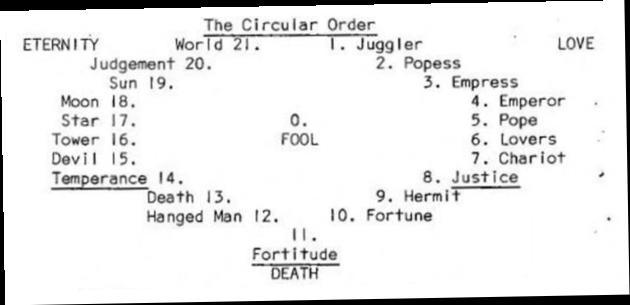
A standard deck of tarot cards is split into two: there are the greater trumps and the lesser trumps. These are also known as the major and minor arcana. The major arcana number 22, while the rest are split into four suits of 14. Each of these 78 cards has a traditional meaning and significance, and the tarot deck within Williams’ novel does not differ all that much from the standard tarot decks that are still in wide circulation today. The major arcana are the most significant of them all, and each of the cards has a traditional ranking or order with one noteworthy exception. Here is a copy of The Circular Order included in Nancy Lou Patterson’s 1974 paper: The Triumph of Love: Interpretations of the Tarot in Charles Williams’ The Greater Trumps.
Patterson argues that this is the order most favored by Williams, because it best conveys the central importance of the Fool to the Tarot system (20). It reveals something of his theology, and I think it also hints at what Hochschild means when she places emotion at the heart of sociology. Another way to think about this is to think about a circular procession all centered around the Fool. The procession or parade starts with the Juggler, followed by the Popess, and ultimately ends with the World. Patterson argues that Williams would also favor this way of thinking about the circular order, and this is because the Tarots are likely modeled after the Roman Triumph parade. The word “trump” is just a reworking of the word “triumph” (21).
The traditional use of a tarot deck involves drawing cards at random from the deck to create a spread (there are many different spreads), then reflecting on the spread as part of a meditation on a question about life. The meaning of the drawn cards, plus the spread especially where the cards fall in that spread—and the reader’s immediate experience all mediate the tarot’s contribution to answering the question.
The story of The Greater Trumps revolves around the two families of a soon-to-be-married couple: Nancy and Henry. Nancy, and her family, are unknowingly in possession of the original tarot deck. Henry, and his family, are seeking this original tarot deck to exploit its supernatural powers. Henry’s family invites Nancy’s family for a Christmas weekend at their English country home as part of their plot to take possession of the original tarot deck. It should be noted that, despite Henry and his family’s covetous desire for the tarot deck, Nancy and Henry really do seem to be in love with one another. In any case, Williams draws important connections between the major arcana and these two families. In particular, he goes to great lengths to imbue supreme mystery and meaning into the unnumbered card the Fool and into Nancy’s elderly aunt, Sybil Coningsby. Williams also weaves a kind of strange and charming unity between Sybil and the Fool throughout the novel. In an early scene, the two families are sorting through the original tarot deck and admiring the different cards. Sybil, who is described as a “saint” by Nancy and a “mystery of self-possession” by Henry, breaks with the rest of the gathered family when she expresses her thoughts on where the Fool ought to fall in the ranking of the major arcana (Williams 8, 53).
“Nought usually comes at the beginning,” Ralph said. “Not necessarily,” said Sybil. “It might come anywhere. Nought isn’t a number at all. It’s the opposite of number.” (17)
The Fool, moreover, is described in this same scene in this way:
[Nancy] picked up the last card, that numbered nought, and exhibited it. It might have needed some explanation, for it was obscure enough. It was painted with the figure of a young man, clothed in an outlandish dress of four striped colours black and grey and silver and red; his legs and feet and arms and hands were bare, and he had over one shoulder a staff, carved into serpentine curves, that carried a round bag, not unlike the balls with which the Juggler played. The bag rested against his
shoulder, so that as he stood there he supported as well as bore it. Before him a dragon-fly, or some such airy creature, danced; by his side a larger thing, a lynx or young tiger, stretched itself up to him whether in affection or attack could not be guessed, so poised between both the beast stood. The man’s eyes were very bright; he was smiling, and the smile was so intense and rapt that those looking at it felt a quick motion of contempt no sane man could be as happy as that. He was painted as if pausing in his stride, and there was no scenic background; he and his were seen against a flatness of dull gold. (20)
It is through passages like this that Sybil is differentiated from the other characters, and the Fool is differentiated from the other major arcana except for the relationship between the Fool and the Juggler, which you may recall being the first card in the major arcana. The reader never once has needed to doubt Sybil’s status as saint, and Williams goes on to draw additional points of connection between Sybil and the Fool. Henry’s family gradually becomes aware of the affinity between these two, and they begin to see Sybil as the key to mastering the full supernatural powers of the original Tarots. Henry’s family has accumulated a wealth of information about the original Tarots, but Henry’s father tells us “there are no writings which tell us anything at all of the Fool“ (30). This is an early clue that there could be some element of the unconscious about the Fool, or perhaps that his significance can only be understood through immediate experience. I want to direct your attention to this point of dissimilarity between the Fool and the Juggler—a card that the family does understand. Even though Henry’s family has no information about the Fool, they know he plays an important role in the tarot deck and this is why they start plotting a way to enlist Sybil in their cause.
Henry’s family eventually gains possession of the original tarot deck and conjures (somewhat by accident) a supernatural snowstorm. Utter chaos ensues throughout the country home as the cards begin coming to life bringing with them all sorts of reality-bending mischief. As the rest of the novel progresses, only Sybil can navigate the supernatural upheaval and restore order. As a point of illustration, she is singular in her ability to close heavy doors blown open by the supernatural snowstorm. Near its end, the story comes to a climax of meaning and illumination with this scene:
Then suddenly they [being the Tarots] were gone, and the cloud was gone, and everywhere, breaking from Sybil’s erect figure,
shone a golden light, as of the fullness of the sun in his glory, expanding in a rich fruition. Over the snow spread and heaped around, over Aaron and the others with him, over the stairs and the landing and those who were on it, and on over and through the whole house, the light shone, exquisite and full of promise, radiant and full of perfection. The chaos of the hall was a marvel of new shape and colour; the faces of those who stood around were illumined from within. It was Christmas night, but in the sunlight, between Sybil and Joanna, seriously engrossed, two small strange children played. The mystery which that ancient seer had worked in the Greater Trumps had fulfilled itself, at that time and in that place, to so high a point of knowledge. Sybil stood there, and from her the sun of the Tarots ruled, and the holy children of the sun, the company of the blessed, were seen at least by some of the eyes that watched. For Annabel saw them and was ignorantly at peace; and Aaron saw them and was ashamed; and Nancy and Henry saw them, and Nancy laughed for mere joy of seeing, and when he heard it Henry felt his heart labour as it had never done before with the summons and the power; and Sybil saw them and adored, and saw beyond them, running down the stairs between herself and Nancy as if he were their union, and poised himself behind Joanna as if he supported and protected her, the vivid figure of the Fool. He had come from all sides at once, yet he was but one. Allreconciling and perfect, he was there, running down the stairs [receiving and bestowing light] as he had run down the storm. (228)
A calm Christmas night in the English countryside is how the story concludes.
Now to piece together the story, the game and the intellectual collateral presented on emotion. It is Sybil’s emotional capacities the power of the saints as Edwards might say that gives her spiritual strength and mediates her connection with the Fool. The Fool, who is both inside and outside the major arcana, is, in Patterson’s view, also the subconscious counterpart to the Juggler, who is the conscious creator within the system (Patterson 29). The Fool is to our numinous spiritual experiences as the Juggler is to our theological accounts of God, and their embrace is the full accounting of the divine. The thesis of my brief paper is this: the Fool, the ultimate bringer of reconciliation and perfection in the story and in the
game, is the personification of emotion as it is understood by Harris –unconscious feeling rising to the conscious intellect. It is our emotions that form the union between persons, and it is our emotional connection with God that perfects our lives. Augustine himself muses upon the compelling similarities between the three components of his philosophy of mind and the Trinity – the Father, the Son and the Holy Spirit (The Trinity 15.21.41). Harris likewise muses about the Trinity as a metaphor for mind (Leidecker 236). Williams concludes his novel with something to say about this too:
The three great orders of grace and intellect and corporal strength […] gathered round the place where Sybil kneeled […] and the search within and the search without were joined. (229)
I am not trying to claim that Williams read Harris and then wrote The Greater Trumps. But I do think The Greater Trumps does an excellent job of taking the reader down the metaphysical ladder to explain the back and forth between unconscious feeling, and conscious intellect and will. I also think it does an excellent job of explaining the spiritual strength that pours out from the hearts of the saints. It is unfortunate that Harris fell out of academic and cultural memory, but his Psychologic Foundations was published late in the hour of idealism. Pragmatism was the dominant pattern of thought at the close of the nineteenth century and it continues to be the case up to our present moment (Leidecker 533-535). I see a kind of parallel between Harris and Williams, who also fell into a kind of obscurity—outshined by the other Oxford Christians. It is my hope that this paper might reignite some interest in these two brilliant thinkers.
In closing, the humanistic knowledge conveyed through these works shines light on what it means for God to be love. It also shines light on what it means to live the moral imperatives of loving God with all your heart and loving your neighbor as yourself. Conceptually speaking, I think all of this confers authority to Harris’s philosophy of mind and the central importance of feelings to who we are, and how we are to interact with the world. To combine these theological and philosophical points is to strengthen Hochschild’s claim that emotion is the heart of sociology. Emotion, just like the Fool, ought to be placed at the center of it all. Emotion, just like the Fool, is both inside and outside of the system. It is sometimes conscious, and it is sometimes unconscious. This alludes to why scholars will probably never agree on one definition of emotion, and that is because there is something spiritual and unintelligible about it. Charles
Williams teaches us that everything is foolish until it is known, and this is the way of it with the emotional forces that make up our professional, academic and personal lives (Williams 196).
Augustine. (1963). The Trinity, trans. S McKenna. Catholic University of America Press.
d’Oliveira-Martins, M., & Hochschild, A. R. (2014, September 8).
Emotional Labor Around the World: An Interview with Arlie Hochschild. Global Dialogue.
Edwards, J. (1746). The Religious Affections. Banner of Light.
Harris, W. T. (1898). Psychologic Foundations of Education: An Attempt to Show the Genesis of the Higher Faculties of the Mind. D. Appleton and Company.
Hochschild, A. R. (1983). The Managed Heart: Commercialization of Human Feeling. University of California Press.
Leidecker, K. F. (1946). Yankee Teacher: The Life of William Torrey Harris. Philosophical Library, Inc.
Patterson, N.-L. (1974). The Triumph of Love: Interpretations of the Tarot in Charles Williams’ The Greater Trumps. Mythopoeic Society Seminar Proceedings, 1(4).
Stump, E., & Kretzmann, N. (1992). Eternity, Awareness, and Action. Faith and Philosophy, 9, 463–482.
Williams, C. (1932). The Greater Trumps. Victor Gollancz Limited.
EVELYN SEVICK
The Hidden Dangers of Fast Fashion: Effect of Microfiber Pollution on Environmental and Human Health
Introduction
In the last 15 years, global clothing production has doubled, causing a significant increase in plastic pollution (Moorhouse, 2020). Based on this information, why do factories continue to produce fast fashion clothing that will remain in the ecosystem for decades?
More recently, the fashion industry has shifted towards a fast fashion model in which manufacturers produce cheap clothes made from plastic materials at a rapid pace, but the plastic that makes up these clothes contributes to a significant amount of pollution as individuals wash them and dispose of them shortly after purchase. The synthetic fibers release microplastics and dyes into the ecosystem and collect in water systems, seep into soils, and float in the air before it eventually bioaccumulates within the organisms that interact with their environment.
Once these plastic pollutants and textile dyes enter food webs, they remain in organisms for long periods of time and disrupt biodiversity as it kills sensitive organisms and causes reproductive defects, leading to a decrease in biodiversity as affected ecosystems only contain the species that can survive greater amounts of plastic pollutants (Periyasamy, 2023).
The production of fast fashion textiles requires a quick supply of fossil fuels as the plastics used to create fibers that consist of crude oil and natural gas, causing problems within the carbon biogeochemical cycle as increased carbon emissions enter the atmosphere (Abbate et al., 2024). Also, the increased deforestation required to create space for developing industries contributes to an imbalance of stored carbon and atmospheric carbon since trees absorb a great amount of atmospheric carbon.
The fast fashion industry not only harms biodiversity and biogeochemical cycles within ecosystems, but it also threatens human health. Workers in textile industries experience a great amount of exposure to unmanaged plastic pollutants and toxic dyes, and companies often disregard the health of the workers to avoid spending more money than necessary on health of the working environment. Low-income families
often inhabit the surrounding areas of factories, meaning that they unfairly receive exposure to the pollutants irresponsibly disposed of into the surrounding environment (Bick et al., 2018).
Although most people fail to realize, humanity ingests and inhales microfibers around the world regardless of distance from textile industries. Microfibers contaminated everything people interact with, including the air they breathe inside and outside, the food they eat, and the water they drink, no matter where food and water originated from (Periyasamy, 2023).
The evolving system of fast fashion contributes to environmental injustice and significantly harms environmental and human health as microfibers easily contaminate and persist in ecosystems over long periods of time, but a transformation in consumer behavior and industry regulations could considerably reduce the rate of plastic textile production and decrease the amount of microplastic released into the environment.
Human Impact
While most of society places the blame for the pollution released by fast fashion factories on the industries themselves, the constant demand for buying cheap, new clothes as social media increases the popularity of trendy fashions significantly contributes towards the success of fashion industries more than society realizes.
More than ever before, as soon as clothes stain or tear, individuals dispose of them instead of repairing or repurposing them due to the immense amount of new clothes available for easy purchase (Koul et al., 2025).
Individuals buy an excess amount of clothes for various reasons, including boredom, social media trends, special events that require specific one-time use clothing items such as Halloween costumes, and a lack of education on the environmental and human health concerns associated with microfiber pollution caused by the fast fashion industry (Koul et al., 2025).
Since the fast fashion system provides industries with a quick flow of income despite the claims towards environmental and human health harm, most successful industries have almost no interest in responsible management of textile wastes and continue to use low-quality materials and carelessly release the pollutants into the surrounding area since business will continue regardless if they spend extra money on more environmentally friendly options or not (Abbate et al., 2024).
In a vicious, unethical cycle, low-income consumers purchase fast fashion clothing since they cannot afford new clothing made from natural materials, which further contributes to the amount of microfiber pollutants in their area as most low-income families live in the cheaper areas around factories. (Bick et al., 2018).
To combat these issues, individuals can complete several simple tasks that do not decrease quality of life. These include avoiding purchasing from fast fashion brands, shopping at thrift stores, repairing damaged clothing or repurposing it into different items such as hand towels or quilts, purchasing clothes made with natural materials that break down in the environment quickly such as cotton, and most importantly, not buying new clothes at all since most individuals have plenty of clothing available in their closets for one person.
At the large-scale level, governments can enforce policies that ensure fast fashion industries responsibility manage the release of microfibers into the environment and improve the safety of working conditions along with policies that ban the production of synthetic textiles.
Individuals have the greatest impact on the amount of microfiber pollutants released into the environment through their economic decisions, but the lack of knowledge on the impact of these harmful pollutants causes society to mindlessly contribute to the increase in supply and demand for this detrimental source of clothing.
Economy and Policy
The fast fashion industry impacts more than just on environmental and human health as it also collides with the complex economic world. Since businesses often value profit over the environmental effects of their productions, the implementation of one policy cannot completely solve the problem of fast fashion’s environmental destruction.
The current fast fashion industry benefits consumers and producers alike since consumers must only pay a small amount for clothing while producers can use cheap materials to generate high profits, and workers benefit from the job opportunities provided by the industry (Abbate et al., 2024).
On the other hand, since clothing made from synthetic materials falls apart quickly and consumers dispose of them at a rapid rate, landfills increase in size until they can no longer support the great amount of nondegradable waste and governments must build new landfills to support the
influx of clothing waste, meaning that the price of the new landfills passes down to the consumers who must ultimately pay the price (Bick et al., 2018).
Consequently, if industries switch to natural but more costly textiles and improve working conditions, then they will not profit from their goods as much as they would with cheap materials and labor, and consumers would have to pay more for their clothing.
To address this issue of profit maximization over serving others and the environment, government entities can introduce subsidies on natural textiles such as cotton and wool to encourage industries to use these sustainable materials over synthetic materials, especially if governments reduce the price of natural textiles below the price of synthetic textiles as businesses most often choose the cheapest options to produce the highest profits.
Specific policies to address environmental and human health harm caused by fast fashion manufacturers include taxes and fees on synthetic materials, incentives on the purchase and use of natural textiles, and strict chemical regulations as well as several other policies that monitor chemical use and pollutant exposure.
Without the intentional execution of these policies, fast fashion industries may continue to conduct business using their current methods and further contribute to the decline in environmental and human health.
Ethics and Worldview
Opinions on fast fashion differ based on ethical philosophies and worldviews, but the industry raises several concerns about its ethical implications on people and the environment.
Through an anthropocentric view, fast fashion benefits humanity due to its affordability and reliable supply, and therefore the environment must suffer exposure to pollutants to support human development (Enger & Smith, 2021).
Through a biocentric view, every organism impacted by microfiber pollution holds the same value as any human exposed to pollution, meaning that fast fashion unethically harms organisms in both terrestrial and aquatic environments.
Through an ecocentric view, microfibers released into surrounding ecosystems harm the ecosystem as a whole and deprive its ability to
perform ecosystem services as the pollutant bioaccumulates throughout entire food webs and travels through water systems (Enger & Smith, 2021).
Since all these perspectives form based on personal morals and opinions, a Christian worldview provides a consistent ethical foundation for both environmental and human health that believers and non-believers alike can apply towards the ethical implications of the fast fashion industry.
In Genesis 1:28, God declares the dominion mandate to Adam and Eve: “‘be fruitful and increase in number; fill the earth and subdue it. Rule over the fish in the sea and the birds in the sky and over every living creature that moved on the ground’” (New International Version, 2011).
God’s instruction to have dominion over every living creature on the earth calls humanity to care for the health of the environment rather than to exploit the resources God has provided for His creation.
Instead of mindlessly releasing pollutants into the environment for the benefit of convenience and affordability for humanity, individuals should honor His creation and consider the environmentally harmful implications of their consumer choices towards fast fashion (Bratton, 2018).
In his book A Different Shade of Green: A Biblical Approach to Environmentalism and the Dominion Mandate (2019), Gordon Wilson further establishes the importance of obeying the dominion mandate as he explains the caretaking role in which God has assigned humanity with over His creation, and people must utilize His resources sustainably and in a God-honoring way as to not judge His creation and to instead support the growth of humanity while also encouraging environmental care.
When viewed through a biblical perspective, individuals can understand that the fast fashion industry fails to steward God’s creation, meaning that individuals within the industry must gain a biblical understanding of the dominion mandate to make ethical decisions that both foster human development and support environmental sustainability to ultimately honor God and His creation.
Conclusion
Overall, the environment cannot support the rapid rate of synthetic textile production and the microfibers released into ecosystems by the manufacturers and the clothes themselves, and humans must experience the same plastic pollution exposure through interactions with the environment and the synthetic clothing.
Consumers and producers promote the success of fast fashion and therefore contribute to an increase in plastic pollution in all aspects of terrestrial and aquatic environments.
Although fast fashion has released an extensive amount of plastic pollution into the environment that the naked eye cannot see, ecosystems can slowly recover through the help of individual and government actions such as altering purchasing habits to support sustainable clothing brands and policies that punish industries for irresponsibly releasing pollutants into surrounding areas.
Anyone can reduce the amount of microfiber pollution simply by reducing their consumption of clothing and instead purchasing clothes made from natural materials, preferably second-hand clothing.
Seemingly harmless economic decisions can significantly harm the environment as they can fund the unethical fast fashion industries to continue producing plastic clothing, so the responsibility lies in the consumers to make the environmentally sustainable decisions that ultimately contributes to environmental and human well-being while also honoring God through the careful dominion of His creation.
References
Abbate, S., Centobelli, P., Cerchione, R., Nadeem, S. P., & Riccio, E. (2024). Sustainability trends and gaps in the textile, apparel and fashion industries. Environment, Development and Sustainability, 26, 2837–2864. https://doi.org/10.1007/s10668-022-02887-2
Bick, R., Halsey, E., & Ekenga, C. C. (2018). The global environmental injustice of fast fashion. Environmental Health, 17, 92. https://doi.org/10.1186/s12940-018-0433-7
Bratton, S. P. (2018). Eco-dimensionality as a religious foundation for sustainability. Sustainability, 10(4), 1021. https://doi.org/10.3390/su10041021
Enger, E.D. & Smith, B. F. (2021). Environmental Science (16th ed.). McGraw Hill Education
Koul, M., Tiwari, A., Khanna, K., Bisht, R. R., & Garg, S. (2025). Impact of fast fashion trends and knowledge of environmental impact on consumer behaviour: Promoting process safety and responsible consumption (SDG 12). Environmental Science Archives, 4(2), 521530. www.envsciarch.com/_files/ugd/4b6a78_9b10174bb21f4f9e b247f4d2ed0c5420.pdf
Kounina, A., Daystar, J., Cordella, M., De Mey, J., Gabrielle, B., Tapia, C., Urrego, J. P., Van der Velden, R., & Boucher, J. (2024). The global apparel industry is a significant yet overlooked source of plastic leakage. Nature Communications, 15, 49441.
Moorhouse, D. (2020). Making fashion sustainable: Waste and collective responsibility. One Earth, 3(1), 17–19. https://doi.org/10.1016/j.oneear.2020.07.002
New International Version. (2011). BibleGateway.com. https://www.biblegateway.com
Periyasamy, A. P. (2023). Microfiber emissions from functionalized textiles: Potential threat for human health and environmental risks. Toxics, 11(5), 406. https://doi.org/10.3390/toxics11050406
Wilson, G. (2019). A Different Shade of Green: A Biblical Approach to Environmentalism and the Dominion Mandate. Canon Press
CHANGE TAN
Evolution, Creation, and God’s Identity
Two Opposing World Views
Most, if not all, of us have encountered the two opposing world views, that of Darwinian evolution and that of the Jewish and Christian Bible, probably understood. Because people have different ideas about what evolution is and what the Bible says, the “properly understood” phrase is important.
Based on evolution, at the beginning there was nothing, then the big thing, then, slowly, simple life emerged from nonlife. The simple life then evolved, through a long time, into complicated life and, eventually, humans. When humans developed to certain degrees, they created religions because they felt a need of religion and created gods (idols) to worship. According to this view, the universe is about 13.8 billion years old, the Earth 4.5 billion years, and the humans about half a million years.
According to the Bible, at the eternal past there was a self-existing, non-created, (YHWH) הוהי God. He, in fact, is the creator of everything. God created the heavens and the earth and everything in them, including time, space, and humans, about 2.5 million days ago, i.e., about 6,000 years ago. Then came the Fall and the corruption. At some point in history, humans turned to worshiping objects fashioned by their own hands idols.
This is clearly summarized in Romans 1: 20-22, for God’s “invisible attributes, that is, His eternal power and divine nature, have been clearly seen since the creation of the world, being understood through what He has made. As a result, people are without excuse.” But people “though they knew God, they did not glorify Him as God or show gratitude.” Consequently, “their thinking became nonsense, and their senseless minds were darkened. Claiming to be wise, they became fools.” Then, “they exchanged the glory of the immortal God for images resembling mortal man, birds, four-footed animals, and reptiles.”
A Personal Experience
I believed the evolutionary point of view for most of my life until 2006, when I was asked to teach molecular biology, a course I had never taken myself. When I was preparing my lectures for molecular biology, I noticed that eukaryotic cells could not use the DNA replication, transcription, or translation machineries of bacteria to replicate, transcribe, or translate their genomic DNA, and vice versa (Tan & Tomkins, 2015a, 2015b; Tan, 2022). For those who are not familiar with biology, life is divided into three domains: bacteria, archaea, and eukarya. Bacteria and archaea are prokaryotes. A eukaryote cell has a nucleus, but a prokaryote cell does not. Prokaryotes are unicellular, while eukaryotes can be unicellular or multicellular and are found in organisms like plants, animals, fungi, protists, and humans.
I noticed that bacteria and eukarya have distinct DNA replication machinery. Figure 1 shows the replication initiation in bacteria like Escherichia coli (E. coli) on the left and that of eukarya like baker's yeast Saccharomyces cerevisiae (S. cerevisiae) on the right. Obviously, many more genes are involved in eukaryotic DNA replication initiation. However, the problem is not the numbers of genes involved but their identities; the genes involved in bacterial replication initiation are mostly unrelated in sequence to those involved in eukaryotic replication initiation.
Figure 1. A comparison of DNA replication initiation in E. coli and S. cerevisiae. A: Initiation in E. coli. B: Initiation in S. cerevisiae. Note that in each case the proteins involved are unique to either E. coli or S. cerevisiae. From Figure 6 of (Tan & Anderson, 2024).
Bacteria and eukarya also have distinct transcription and translation machinery. Figure 2 is a comparison of their translation initiation factors. Many people know that the translation occurs in a ribosome. However, without translation initiation factors, translation cannot occur. In bacteria there are three translation initiation factors made of three different proteins. A eukaryotic cell needs 16 initiation factors that are made of dozens of proteins.
Figure 2. Counting bacterial and eukaryotic translation initiation factors. Bacterial IF 2 and eukaryotic eIF5B share some sequence similarities, and, thus, are shown with the same color. The same is true for bacterial IF1 and eukaryotic eIF1A. From Figure 6, with modification, of (Tan, 2022).
What is worse is that from the same RNA, totally unrelated proteins would be generated using the bacterial vs the eukaryotic systems because each has its own way of defining and locating the translation starting and ending sites (Figure 3). I'm not saying that the same RNA will be translated into different proteins in the two systems because a gene that a bacterium recognized as a gene will not be recognized as a gene at all in a eukaryote cell. They will just be recognized as junk at the most or as a food to be digested. This is the reason if one wants to express a human gene in a bacterium, he/she must make the human gene look like a bacterial gene, e.g., replacing the human gene promoter with a bacterial gene promoter and removing all the introns within the human gene because bacterial genes does not have introns.
Figure 3. The same RNA may end up with two different proteins in bacteria and eukaryotes. Blue box: Shine-Dalgarno sequence; green box: translation initiation site; red box: translation stopping site. Top: The hypothetical mRNA would be used to code for a protein with amino acids MFIWA, based on a common mechanism of translation of bacteria like E. coli. The ShineDalgarno sequence is often important for translation initiation in bacteria. It hybridizes to an anti-Shine-Dalgarno sequence, which is reverse and complementary to the Shine-Dalgarno sequence, in the 16S rRNA. Bacteria use the AUG that is a few nucleotides downstream of the Shine-Dalgarno sequence, as the translation initiation site. Bottom: The same hypothetical mRNA could be used to code for a protein with amino acids MAKEV, based on the mechanism of translation of eukaryotes like yeast. Eukaryotes normally use the first AUG from the 5’ end of an mRNA as the translation starting site. Note that the three AUGs (underlined in the middle panel) have different meanings: The first AUG is used as a translation starting site in eukaryotes but not in bacteria. In contrast, the second AUG is used as a translation starting site in bacteria but not in eukaryotes. The third AUG is part of two codons, the third base of the codon AUA and the first two bases of the codon UGG. Note also that the protein-coding regions are different in bacteria and in eukaryotes. From Figure 6, with modification, of (Tan & Anderson, 2024).
In short, in between prokaryotes and eukaryotes, what we have is inviability, not even death, because death means what is dead used to be
alive only something alive can die (Figure 4). If it were never alive, it could not die. Indeed, having prokaryotes is not helpful for making eukaryote. You would have to start from ground zero again. So, eukaryotes could not have evolved from procaryotes.
Figure 4. Inviability separate prokaryotes and eukaryotes.
The more I study and research, the more I am convinced that the characteristics of genes and genomes in different organisms, including bacteria, archaea, and eukaryotes, demonstrate, just as the Bible says in Genesis one, that God created different organisms according to their kinds. I’m talking about molecules, genes, and genomes genes and genomes are my focus.
Meanwhile, I felt that God was calling me to work on the issue of evolution and creation. Guess what? I said “No!” to God because I thought that only the Word of God, i.e., the Bible, could change people’s hearts while the issue of evolution and creation was useless. Furthermore, I found that it was very painful and costly to work on this issue.
By God’s grace, now I'm convinced that the issue of evolution and creation is very important. In fact, it is intimately connected with the identity of God. Indeed, God as Creator of all is the foundation of God as Judge of all, as the only Savior, and our hope in Jesus (Figure 5). If God as the Creator were to collapse, everything else would also collapse.
Figure 5. God as the creator of all is the foundation of Him as the judge of all and the only savior, as well as our hope in Jesus.
Revelation from the Bible
I will use Isaiah chapters 40 to 48 to illustrate my point here. These chapters provide a sharp contrast between (YHWH) הוהי the creator God and idols. I will draw your attention to only a few passages here.
In chapter 40, which started with God’s saying “Comfort, comfort My people,” God asked the question whom one would compare Him with.
18 Who will you compare God with? What likeness will you compare Him to?
19 To an idol? something that a smelter casts, and a metalworker plates with gold and makes silver welds for it?
20 To one who shapes a pedestal, choosing wood that does not rot? He looks for a skilled craftsman to set up an idol that will not fall over […]
25 “Who will you compare Me to, or who is My equal?” asks the Holy One.
26 Look up and see: who created these?
He brings out the starry host by number;
He calls all of them by name. Because of His great power and strength, not one of them is missing.
27 Jacob, why do you say, and Israel, why do you assert: “My way is hidden from the Lord, and my claim is ignored by my God”?
28 Do you not know? Have you not heard? Yahweh is the everlasting God, the Creator of the whole earth. He never grows faint or weary; there is no limit to His understanding.
Chapter 41 describes that God, as a judge, summons the whole earth in court for trial: “The islands see and are afraid, the whole earth trembles.” Strikingly, instead of returning to God in repentance, people encourage each other to make idols:
The craftsman encourages the metalworker; the one who flattens with the hammer supports the one who strikes the anvil, saying of the soldering, “It is good.” He fastens it with nails so that it will not fall over.
Chapter 42 is a chapter known as a song of God’s servant, the Servant Jesus. God the Father says to God the Son:
5 This is what God, Yahweh, says who created the heavens and stretched them out, who spread out the earth and what comes from it, who gives breath to the people on it and life to those who walk on it
6 “I, Yahweh, have called You for a righteous purpose, and I will hold You by Your hand. I will keep You and appoint You to be a covenant for the people and a light to the nations,
7 in order to open blind eyes,
to bring out prisoners from the dungeon, and those sitting in darkness from the prison house.
Chapter 43 starts with this:
Now this is what the Lord says— the One who created you, Jacob, and the One who formed you, Israel “Do not fear, for I have redeemed you; I have called you by your name; you are Mine.
A few verses later, God says: 7 everyone called by My name and created for My glory. I have formed him; indeed, I have made him.
Chapter 44 spends about half of its ink detailing how an idol, especially a wooden idol, is made. Figure 6 is an AI’s rendering of verse 1320, about how a person chops a tree, uses half of it to make fire to warm himself, to bake bread, and to roast meat, and uses the rest to make an idol, praying to it: “Save me, for you are my god.”
Figure 6. The making of a wooden idol. An AI’s rendering of how a person makes an idol based on Isaiah 44:13-20. Figure, with slight modification, was generated by ChatGPT (https://chatgpt.com/c/6897aa20-3338-8327b832-df70faaf460c).
In contrast, we are told at the end of the same chapter:
24 This is what the Lord, your Redeemer who formed you from the womb, says: I am Yahweh, who made everything; who stretched out the heavens by Myself; who alone spread out the earth;
25 who destroys the omens of the false prophets and makes fools of diviners; who confounds the wise and makes their knowledge foolishness;
26 who confirms the message of His servant and fulfills the counsel of His messengers.
In chapter 45, after we were told that one of the reasons that God chose and helped the Person King Cyrus is
6 so that all may know from the rising of the sun to its setting that there is no one but Me.
I am Yahweh, and there is no other.
7 I form light and create darkness, I make success and create disaster; I, Yahweh, do all these things.
Two verses later we have a warning:
9 “Woe to the one who argues with his Maker one clay pot among many. Does clay say to the one forming it, ‘What are you making?’ Or does your work say, ‘He has no hands’?
10 How absurd is the one who says to his father, ‘What are you fathering?’ or to his mother, ‘What are you giving birth to?’”
This warning is followed with another mention of God as the creator of the heavens and the earth, and man, even Israel:
11 This is what the Lord, the Holy One of Israel and its Maker, says:
“Ask Me what is to happen to My sons, and instruct Me about the work of My hands. 12 I made the earth, and created man on it. It was My hands that stretched out the heavens, and I commanded all their host.
In verse 18 of Chapter 45, God gives us a definition of God:
For this is what the LORD says he who created the heavens, he is God; he who fashioned and made the earth, he founded it; he did not create it to be empty, but formed it to be inhabited he says: “I am the LORD, and there is no other. (New International Version)
A Much-needed Detour
This Isaiah 45:18 reminds us of Genesis one and two. It is worth diving deeper here, to Hebrew, the language that most of the Old Testament was initially written in, because some people, even some theologians and some scientists, argue for humans having evolved from animals, instead of being directly created from dust by God, based on three Hebrew words that can be used for describing creation: 1) bara (ארב) to create, only apply to God, 2) yatsar (רצי) to form or fashion, as a potter makes a pot, and 3) asah (השע) to make. I am color-coding these three words for the ease of following them. The following table is Isaiah 45:18, in Hebrew on the left and in English translation on the right, with the three creation words color-coded:
For this is what the LORD says he who created (אֵ֨רוֹבּ) the heavens, he is God; he who fashioned (רֵ֨צי) and made ( ּ֙הָשעו) the earth, he founded it; he did not create (הָָ֖אָרב) it to be empty, but formed (הָָ֑רָצי) it to
be inhabited he says: “I am the LORD, and there is no other. (NIV)
Some argue for humans evolving from animals using Genesis 2:7, claiming that God did not use the word bara (ארב) in this verse, which describes how God made men:
7 Then the Lord God formed the man out of the dust from the ground and breathed the breath of life into his nostrils, and the man became a living being (
They argue that this indicated that God did not create a man directly but chose a man who had evolved from animals and “breathed the breath of life into his nostrils.”
To hold on this view, we needed to ignore what God said in the rest of the Bible. For example, Genesis 1: 26 and 27, in which bara (ארב) is used three times, asah (השע) once, while yatsar (רצי) is not used.
26 Then God said, “Let Us make (הֶֹ֥שֲעַָֽנ) man in Our image, according to Our likeness. They will rule the fish of the sea, the birds of the sky, the livestock, all the earth, and the creatures that crawl on the earth.”
27 So God created (אֵָ֨רביַו) man in His own image; He created (אִָּ֣רָבּ) him in the image of God; He created (אָֹ֥רָבּ) them male and female.
We also need to ignore Genesis 5, where the genealogy of Adam was listed. Same as the above Genesis 1:26-27, bara (ארב) is used three times, asah (השע) once, while yatsar (רצי) is not used.
5 These are the family records of the descendants of Adam. On the day that God created (אָ֤רבּ) man, He made (הָֹ֥שָע) him in the likeness of God; 2 He created (םָָ֑אָרבּ) them male and female. When they were created (םָָֽארָָֽבּה), He blessed them and called them man.
Back to Genesis 2:7, after God “breathed the breath of life into”
Adam’s nostrils, Adam became a living being, which is הָָֽיַח שֶפֶֹ֥נ (colored in green in this essay for easy identification) in Hebrew, the same words used to describe the animals that God made from the dust and brought in front of Adam to see what he would call them in the same chapter, Genesis 2:19. These animals were also said to be yatsar (רצי) by God. Does that mean that God’s breathing into Adam’s nostrils made him devolve into an animal?
19 So the Lord God formed (֩רֶציַו) out of the ground every wild animal and every bird of the sky, and brought each to the man to see what he would call it. And whatever the man called a living creature (הָָ֖יַח שֶפֶֹ֥נ), that was its name.
By the way, the fishes (or sea dwelling animals) God made on the fifth day of creation were also called הָָֽיַח שֶפֶֹ֥נ in Genesis 1:20 and 21.
Furthermore, Genesis chapters 6 to 8, which describes God’s flooding the earth to destroy breathing humans and breathing animals, teach clearly that the breath of humans and the breath of animals are the same. This is a fact we are certain scientifically today animals and humans breathe the same air, using the oxygen it contains to make energy from foods.
Back to Isaiah, to Isaiah 43:7, as if just to avoid any confusion, bara (ארב), asah (השע) and yatsar (רצי) are all used, together, back-to-back in the same verse, to describe the relationship between God and his chosen ones:
7
7 everyone called by My name and created (ויִִ֑תארְׁב) for My glory.
I have formed (ויִִ֖תְׁרַצְׁי) him; indeed, I have made (ויִִֽתיִשֲע) him.
In Isaiah 48, we are told that this Creator of all, including time, space, and humans, is Jesus. This is consistent with what the New Testament teaches repeatedly (e.g., John 1:1-3, Colossians 1:15-17, Hebrews 1:1-2, 10-11, Revelation 4:11, 14: 7).
Conclusion
In summary, the heavens and the earth and all within them, personally for me, genes and genomes of organisms from bacteria to humans, point to God as a creator but point away from evolution, the idea that life came from non-life naturally and simple life evolved into complicated life, including humans. The Bible clearly teaches that God is the sole creator and the only savior. This calls us to trust and obey God, instead of fighting against Him as I used to, and to become His good and faithful steward, stewarding God’s words and God's world.
References
Tan, C., & Tomkins, J. P. (2015a). Information Processing Differences Between Archaea and Eukaraya—Implications for Homologs and the Myth of Eukaryogenesis. Answers Research Journal, 8, 121-141.
Tan, C., & Tomkins, J. P. (2015b). Information Processing Differences Between Bacteria and Eukarya Implications for the Myth of Eukaryogenesis. Answers Research Journal, 8, 143-162.
Tan, C. L. (2022). Facts Cannot be Ignored When Considering the Origin of Life #3: Necessity of Matching the Coding and the Decoding Systems. Answers Research Journal, 15, 49-58.
Tan, C. L., & Anderson, E. H. (2024). Revising the Central Dogma: Regulated, Dynamic, and System-Dependent Information Coding and Decoding. BioComplexity, 2024(3), 1-21.
https://doi.org/10.5048/BIO-C.2024.3
W. JACKSON WATTS
You Shall be as Gods: Modern Technology and the Denaturing of Human Creatureliness
In 2024, philosopher Matthew Crawford described a memorable experience at a dinner party. He sat beside a man whose daughter had recently married. The father found it difficult to find the right words to say at her wedding reception. He had many memories, anecdotes, and basic facts about her life, yet he struggled to compose a fitting toast. He then told Crawford that he turned to ChatGPT, providing it with material simply to see what it offered. Not surprisingly, it produced what would have amounted to an average to above-average wedding toast—perhaps preferrable to what he would have written himself. Ultimately, he opted not to use it. Crawford writes that “the intuition that stopped him from deferring to AI” is revealing.1
Human beings are the type of creatures for whom language is constitutive. Other mammals and members of the animal kingdom communicate in ways that we colloquially call “language,” yet humans are unique in the nature and sophistication of their language. They exercise care, intentionality, and engage in meaning making.2 Crawford writes, “unlike an LLM [large language model] or a parrot, things have significance for us, and we search for words that will do justice to this significance.” Moreover, self-articulation seems fundamental to human nature. The father of the bride takes pen and paper and “strives to encompass in words the elusive truth of his daughter, as seen from the unique vantage of a father, in a way fitting for this pivotal movement in the progression of her life.” In articulating this relationship, it becomes more “fully revealed to him.”
1 Matthew B. Crawford, “AI as Self-Erasure,” https://hedgehogreview.com/webfeatures/thr/posts/ai-as-self-erasure. Accessed 22 August 2024.
2 Yuval Noah Harari aptly illustrates the suppleness of human language in contrast with other species. He says, “We can connect a limited number of sounds and signs to produce an infinite number of sentences, each with a distinct meaning. We can thereby ingest, store and communicate a prodigious amount of information about the surrounding world.” See Sapiens: A Brief History of Humankind (New York: Harper, 2015), 22. Harari’s narrative of humankind is fascinating, if also highly speculative and not altogether convincing.
We need not strain to see how different this is from an LLM calculating and acting on probabilities in word selection. Yet consider Crawford’s most startling claim: “If we accept that the challenge of articulating life in the first person, as it unfolds, is central to human beings, then to allow an AI to do this on our behalf suggests self-erasure of the human.”
“Erasure of the human” is both an ominous and ambiguous phrase. From at least the time of Francis Bacon in the early seventeenth century, Westerns have adopted the narrative of technical progress that emphasizes the improvement of human life. (Increasingly, we’re told that human nature itself can be improved through our manmade interventions.) Yet we’re increasingly warned by politicians, educators, social critics, and even technologists themselves that our devices are undermining us.
These harmful effects have been widely documented. They include the strain on relationships and the body politic.3 Economic dislocations are a major theme in tech criticism as widescale automation and artificial intelligence intrude on many industries.4 Mental health has also become a prominent theme in recent literature.5 The well-being of adolescents and adults alike is a growing concern, so much so that the last U.S. Surgeon General sounded the alarm.6 While the negative political, economic, and mental health effects of new technologies are a concern, something deeper is being missed. Far too few accounts of so-called “tech criticism”, especially from Christians, show how technological engagement reorients and erodes other features of creaturely life. Particularly, modern technologies often diminish our awareness of human contingency and finitude, especially as these are illustrated by our dependence upon and embeddedness within the natural world.
To state it another way, human creatureliness, especially as characterized by physical embodiment (and therefore human finitude and
3 Cf. Max Fisher, The Chaos Machine: The Inside Story of How Social Media Rewired Our Minds and Our World (New York: Back Bay Books, 2022); Johann Hari, Stolen Focus: Why You Can’t Pay Attention And How to Think Deeply Again (New York: Cross, 2022); Siva Vaidhyanathan, Antisocial Media: How Facebook Disconnects Us and Undermines Democracy (New York: Oxford University Press, 2018).
4 Cf. Darrell M. West, The Future of Work: Robots, AI, and Automation (Washington, D.C.: Brookings Institution 2018).
5 Cf. Jonathan Haidt, The Anxious Generation: How the Great Rewiring of Childhood is Causing an Epidemic of Mental Illness. (New York: Penguin, 2024).
6 Michelle Chapman, “Tobacco-like warning label for social media sought by US Surgeon General who asks Congress to act.” https://apnews.com/article/surgeon-general-social-media-mentalhealth-df321c791493863001754401676f165c Accessed 20 August 2024.
dependence), is undermined and contradicted by the dominant technological ethos.7 It is particularly at odds with the stated goals of such a society. Accordingly, Christians committed to preserving and honoring God’s good intentions for human creatures must be vigilant about the denaturing forces around us and upon us.
The Trouble with Nature
The linguist Raymond Williams famously asserted that “nature” and “culture” were “among the two or three most complicated words in the English language.”8 It’s not too surprising that these words make the cut. Christians often define nature as those things which occur in creation by Divine design, whereas culture refers to the ways humans interact with and create new things from nature. However, both words have a wide semantic range.
Nevertheless, when I speak of something like human nature I don’t intend it as a moral description, as in human depravity. Instead, I mean more generally “the way human beings are by virtue of their design.” Humans are creatures. God made them, even if procreation mirrors (by analogy) something like making.9 Human creatures have a particular constitution which makes certain ways of being in the world possible, and other ways impossible. We eat, drink, wear clothing, exercise, fight, and engage in romantic relationships. Conversely, we don’t jump over buildings, physically occupy multiple spaces concurrently, procreate with other species, or absorb oxygen from water. Collectively, we can call these possibilities and limits our “nature.” As the sociologist Christian Smith explains, “human beings as they exist in the world embody a particular constitution they have a human nature rooted in nature more broadly.”10 However, both the tools with which humans interact, as well as the larger values and assumptions associated with their social environment,
7 Adam Kirsch says that the two prevailing narratives are that of (Anthropocene) antihumanism and transhumanism. See Kirsch, The Revolt of Humanity: Imagining a Future Without Us (New York: Columbia Global Reports, 2023), 11.
8 Raymond Williams, Keywords: A Vocabulary of Culture and Society (New York: Oxford University Press, 2014), 49, 219.
9 Oliver O’Donovan calls this being begotten. See O’Donovan, Begotten or Made? (New York: Oxford University Press, 1984).
10 Christian Smith, What is a Person? Rethinking Humanity, Social Life, and the Moral Good from the Person Up (Chicago: The University of Chicago Press, 2010), 10, 15. Emphasis mine.
can de-nature humanity. That is to say, they have a material effect on how humans think and act in the world. To be precise, it may be best to say they re-nature. Human beings certainly aren’t always dehumanized in the runof-the-mill happenings of everyday life. Instead, they are reoriented in how they experience the world as embodied creatures, creatures who are inherently finite and dependent.
“You shall be as gods” harkens back to the words of the Serpent in Eden. He falsely promises Adam and Eve something which was never God’s intent for them. While this false promise is associated with the discernment of good and evil, it conveyed a deeper message: what you are and what you have is insufficient. You could have and be more. The implication is clear: God’s gifts and designs are stingy, cruel, or at the very least, limiting. As Genesis 3-6 will make clear, failing to listen to God leaves us not only as “not-gods,” but creatures diminished in their image-bearing vocation.11
Anne Snyder wisely reminds us, “Limits are something we learn to respect, typically by experiencing the consequences of exceeding them.”12 There’s no truer example of this than Adam and Eve. But in modernity the concepts of nature, limits, and personhood are under assault.
What Do We Want?
No one needs to be convinced that the digital landscape has changed dramatically in 14 years.13 What hasn’t changed is the obsession with human mastery over time and space. We grow more anxious and less patient even as we enjoy computing speeds previously unimaginable. Data storage options are generously available for our digital needs. And the explosion of video platforms from Google Meet to Marco Polo to Microsoft Teams to Zoom make transcending physical space a daily experience. The COVID-19 pandemic only accelerated this trend, but it was already occurring prior to 2020.
What has changed? Our ability to wait for things is still being eroded by our engagement with “high-speed” everything.14 Attention spans
11 One night recall here D.A. Carson’s poignant phrase, “the de-godding of God. See D.A. Carson, The Gagging of God: Christianity Confronts Pluralism (Grand Rapids: Zondervan Academic, 2002).
12 Ann Snyder, “Embodiment’s Grace,” Comment 39:3 (Summer 2021), 4–5.
13 In 2010, Verizon Wireless launched their “Rule the air” campaign. This was certainly a harbinger of technical mastery of the digital landscape.
14 Johann Hari, Stolen Focus.
continue to shrink.15 And anxiety rates soar, even as we grow more prosperous, accessible, flexible, and supposedly efficient in our professional and personal experiences. However, consider two notable developments. First, not only do the functionality of and assumptions surrounding modern technologies seek to transcend time and space. They increasingly transfigure the way we think about matter, or materiality. Second, the quest to transcend time, space, and matter is often invisible to us in its effects on both the natural world and on human beings, who are themselves embodied and embedded in nature. I’ll provide two illustrations of both developments.
“Gender-Affirming Surgeries”
Contemporary America is the most visible host to one of the greatest crises imaginable: a rejection of biological sex as a good and normative pathway to discovering and expressing gender. The roots of this crisis are deep, arguably at least two hundred years old.16 It’s not merely a cultural conflict, but a debate which touches the heart of civilization and human identity: what is a person and what is a body?
Perhaps the first major indication that the crisis was deeper than a handful of preteens with “the wrong kind of friends” is whenever the main medical procedure in question migrated from “sex-change surgery” to “gender-reassignment surgery” to “gender-affirming care.” Orwellian vibes aside, the distress created by feeling that one’s gender identity differed from one’s “assigned” biological sex cannot be remedied by conventional therapeutic interventions. Instead, otherwise healthy bodies must be acted upon. A natural process must be stopped (puberty). Bodies need a different set of hormones. Such bodies require a scalpel to remove and/or manipulate breast tissue, genitalia, and more. The body isn’t a natural given to help discern one’s identity; it is an impediment, a mistake, a prison.
More than intellectual, psychological, or expressly theological errors underwrite modern gender confusion.17 The ability and willingness to
15 This claim is well-established in the literature, but how this has happened in conjunction with email checking would be an easy example to illustrate how ubiquitous the problem is. See Cal Newport, A World Without Email: Reimagining Work in an Age of Communication Overload (New York: Penguin, 2021), 3–93.
16 Carl Trueman, Trueman, The Rise and Triumph of the Modern Self: Cultural Amnesia, Expressive Individualism, and the Road to Sexual Revolution (Wheaton: Crossway, 2020).
17 Part of the underlying theological error which views the body as a problem, or even a prison, has deep roots in church history. Some of the ancient confusion can no doubt be attributed to the
perform such “medical interventions” on largely healthy bodies has created a plausibility structure wherein we believe that because we can do something, we should do something.18 While many won’t recognize this as a technological problem, it is. Τεχνή, from which we derive technology, refers to human craft, skill, or art. It’s more than a thing. In fact, it’s much more about capacity than objects or devices. This speaks to what underlies all socalled technological advancements: the human ability and, eventually, the drive to make things.
In a culture which prizes not only its tools but its techne, solutions like “gender-affirming care” become plausible. As many tech critics in the last century warned, in a means-driven society, ends get lost, or at least become irrelevant.19 If we don’t know what a body is for, then what we do with it becomes secondary, subject to personal fulfillment and selfactualization.
“Brain Computer Interfaces”
Neuralink is a neurotechnology company Elon Musk founded in 2016. It’s not the only company in this market space, but it’s by far the best known. Its primary product is a brain-computer interface that is “fully implantable, cosmetically invisible, and designed to let you control a computer or mobile device anywhere you go.”20 They assert that their technology intends to “restor[e] autonomy to those with unmet medical needs today” Yet they also seek to “unlock human potential tomorrow.”
To these ends they are conducting clinical trials, having implanted their device in several individuals coping with either spinal cord injuries or ALS.21 This innovation would have sounded like science fiction ten or 15
influence of the early Gnostics, while some of the modern confusion, I believe, stems from a simple but unfortunate translation of sarx (σαρξ) as “flesh.” (Modern English-speakers think first about materiality and bodies when they hear the word, not “fallen, unredeemed humanity.”) Whatever the specific source of the error, it remains: the body is bad, or at best, a limitation to be overcome. Few English speakers would deny that the most common connotation of the word “limits” is negative.
18 This insight is expressed well in Neil Postman, Technopoly: The Surrender of Culture to Technology (New York: Vintage, 1993).
19 I am indebted to Dr. Bruce Little for first sharing this insight with me. Little is Emeritus Professor of Philosophy at Southeastern Baptist Theological Seminary in Wake Forest, North Carolina. He was channeling the insights of figures like Marshall McLuhan and Neil Postman. 20 https://neuralink.com/ Accessed 22 August 2024.
21 The recent call for participants in a clinical trial puts it plainly: “redefining the boundaries of human capabilities requires pioneers.”
years ago, but this possibility is now here. Regardless of how fascinating these developments may be, a larger question remains: what assumptions about materiality, and the body specifically, are at work?
Imagine someone crippled at birth or due to an auto accident. They could be able to manipulate the space around them to lead a normal life. Companies such as Neuralink seem to offer a second chance at something like a normal life. If people can navigate their homes, education, and public life generally through interface with a computer, this seems life-affirming. While these devices will not restore function to a particular limb, they minimize dependence upon nurses, family, and well-meaning neighbors to perform everyday tasks. Moreover, they seem to fall within the scope of what most Christians would consider ethical medicine.
However, recall the other side of Neuralink’s promise: “unlock human potential tomorrow.” What starts as meeting a need gradually enables an aspiration. What often begins by addressing a legitimate medical need easily migrates into a trans-humanistic venture.22 How will we respond when implantable devices which work in tandem with our brains are implanted into entirely healthy bodies? If this enhances one’s experience of online gaming, is that a sufficient moral basis for proceeding? Or, what if we allow our bodies to sleep at night, while some functionality could be reserved via device for composing a grocery list for the next day? In 2026, these thought experiments aren’t so experimental. Tony Reinke summarizes the distinctions well:
In response to debilitating challenges, neurological implants may help remedy strokes, brain seizures, blindness, deafness, and even paralysis. They may even help alleviate depression, anxiety, and addictions. But ethics are sketchier when we talk about the use of these implants to augment healthy people.23
The distinction between restoration and augmentation or enhancement is no small one.24 Restoration puts back in place something that previously functioned or that currently fails to attain an established standard or norm. Note that this idea assumes something like a givenness, design, or a nature. Conversely, to augment or enhance refers to expanding something’s
22 Many conscientious citizens warned about the inevitable migration of medical marijuana for chronic sufferers to its legalization for recreational uses. This precise development has happened in many states.
23 Reinke, God, Technology, and the Christian Life, 252.
24 Blake Crouch’s 2022 novel Upgrade (and ones like it) feels less sci-fi and more of a preview.
existing capabilities. This seems innocuous. Doesn’t weight-training augment or enhance, not restore? Aren’t some forms of exercise doing more than restoring?
The answer lies in bodily design itself: muscle mass matters to our overall picture of bodily health and well-being. Lung capacity certainly matters to bodily health and well-being. Stretching or “pushing ourselves” is well-within the framework of what our bodies are capable of under normal circumstances. In fact, they seem quite well-suited to some degree of lifting, pulling, jumping, and the like. They do not seek to transcend the given body. They draw forth the potential already embedded within it.
To summarize, the contemporary technological ethos increasingly sees the body as a limit to be overcome, not a gift to be received. It does not see finitude as a good or even an inescapable fact, but an unfortunate biological constraint that we should rightfully aim to surpass.
Unseen Impacts
The second aspect of recent cultural developments is the quest to transcend time, space, and matter. It’s often invisible, both in terms of its impact on the natural world and upon human beings who are themselves creatures embedded in nature.
These two assertions are mutually reinforcing. Human pursuits which do not respect human nature, including embodiment, are almost always disrespectful toward the natural world as well. This in turn undermines humanity in two ways. First, human finitude and dependence are ignored. Second, society also ignores the ways in which humans depend upon the natural world.
I will illustrate these interrelated assertions by highlighting the myth of digital immateriality, and by reflecting on the unique relationship between human creatures and the earth.
“The Myth of
Digital
Immateriality”
Writing in Comment, Michael Sacasas cautions against a widespread, modern lie. He writes,
There is an evident temptation to imagine that digital media constitutes an immaterial and disembodied realm of human activity. . . Virtual reality and cyberspace, for example, both suggest an abstract realm detached from the sphere of things
and bodies. Similarly, when we interact on social media, it is too easy to think of our interlocutors as mere avatars existing in an ethereal realm detached from the so-called realm world. The problem with digital culture, however, is not that it is, in fact immaterial and disembodied, but that we have come to think of it as such.25
The latter claim could be argued as being self-evident. After all, who hasn’t experienced the ways in which modern technology makes us “forgetful of our bodies”?26 Many have found it all-too-easy to sit for hours watching YouTube videos, scrolling on a device, or online gaming, not realizing that a mealtime has passed, or the wee-hours of the morning have arrived. Think of how “binge” has migrated from being a negative way of eating to a typical way of viewing shows on a streaming service. Sacasas has such examples in mind when he speaks of how digital culture disembodies us, causing us not to consider how our technologies engage (or disengage) our bodies. However, he painfully illustrates the real-world impacts of our pursuit of technological progress and mastery. He writes of the Chinese city of Baotou, where an artificial lake of toxic, infernal sludge exists. More sites like these have emerged around the globe, making the environment dangerous and unlivable. Such sites exist because they are practically unavoidable as the mining efforts of rare-earth metals have ramped up to meet the global demand (especially Western demand) for the latest innovations. Many of the essential components of these devices include rare-earth metals. Thus, they must be extracted from wherever they can be found, cheaply, quickly, and often carelessly.
Besides the hazards these sites create for those working or living near them, perhaps the greatest problem is that they are invisible to those who benefit from the bounty which has been extracted. We don’t see lakes of toxic sludge in most American communities. We do not consider their existence. And if we do, we are not sufficiently troubled by them to curb our consumer appetites. We do not see the massive data centers increasingly dotting the natural landscape. After all, it’s really in the “cloud,” or is it? Nevertheless, humanity pays a long-term price for the short-term demands of digital supremacy.
25 L.M. Sacasas, “The Materiality of Digital Culture,” in Comment 39:3 (Summer, 2021): 51–59.
26 Sacasas uses this phrase, citing Alasdair MacIntyre, Dependent Rational Animals: Why Human Beings Need the Virtues (Chicago: Open Court: 1999), 5.
“Formed from the Dust of the Earth”
One of the more striking Scriptural pictures of human beings is God creating man from the dust of the earth. While it is only when God breathes (ruach) into the dust that man becomes a living creature (nephesh) and bears God’s image, the dust isn’t inconsequential. It gives form to the image-bearer. However, something deeper is at work. Our origins in the dust of the earth heightens our sense of our finitude, our limits, and especially our dependence upon the earth to live the good life God has in mind.
In his book From Nature to Creation, Norman Wirzba argues that God’s existence, human value, and respect for creation hinge upon each other.27 Wirzba provides two insights that are especially relevant. First, “the way we name and narrate the world determines how we are going to live within it.”28 Second, “creatureliness is the overarching metaphysical framework in terms of which human life and action receive their significance and value.”29 Let’s briefly consider both claims.
While Sacasas is concerned about a naïve view of digital culture’s impact, Wirzba is concerned about a naïve view of language, one which sees language as neutral, inert, or inconsequential to how we understand and navigate the world. He invites us to imagine calling a plant a flower instead of a weed. A flower evokes pleasant thoughts and associations. We will be more likely to enjoy, honor, and even protect the flower, whereas we seek to eradicate weed. It is unwanted, harmful, parasitic even. Similarly, what if we describe a plant as a vegetable in development? We may come to see this plant “as an indispensable member of [our] household economy because vegetables feed [us] and thus make [our] life possible and potentially a delectable experience.”30 What we call things matters.31
If we apply this thought experiment to terms like “nature” and “creation,” the significance of language to life comes into focus. Too often the use of “nature” to describe God’s world renders the world more vulnerable to being reduced to a mechanism or a resource to be used as we see fit. However, “creation” inclines us to “see it and our involvement with
27 Norman Wirzba, From Nature to Creation: A Christian Vision for Understanding and Loving Our World (Grand Rapids: Baker Academic, 2015), 7.
28 Wirzba, From Nature to Creation,18
29 Ibid., 96–97.
30 Ibid., 19.
31 One need not be a postmodernist or an advocate for the “strong” version of the Sapir-Whorf Hypothesis in linguistics to agree with this claim.
it in a particular, God-honoring sort of way. It is not a material mechanism that runs according to its own laws. It is instead the material manifestation of God’s love operating within it.”32 Perhaps the most vivid way Wirzba reinforces this claim is in saying that “food is God’s love made delectable.”33 Conversely, the ethos of a technocratic society tends to reduce creation to a world of natural “resources” to keep pace with human desires. However, earth does not depend upon us; we depend upon it. This is where Wirzba’s second claim above comes into view. Some might be tempted to argue that he exaggerates when he claims that “creatureliness is the overarching metaphysical framework in terms of which human life and action receive their significance and value.” However, when we look at the ground we must pause and remember our limits and dependence. We need the earth to give forth its fruit to eat. “Eating is the most intimate act whereby we witness to our need of and dependence on others.”34 These others include people, but also animals, plants, and soil. Consider that Eve comes from Adam’s side, and thus, she does not exist of her own volition. Yet Adam’s origins are in the soil itself. Soil is a marvelous thing which God uses to bring forth life. Even as we understand human creation as a special Divine act, it is striking that soil continues to bring forth life as part of God’s good design for his glorious (and often edible!) creation.35 Indiscriminate use of pesticides, fungicides, and other chemicals all technologies call into question a biblically shaped vision of the earth. Moreover, they presuppose human supremacy over creation, not loving stewardship and interdependence. Quite aside from simple carelessness with chemicals, a milieu in which obsession with techne prevails makes honoring creation increasingly unlikely. Short of radical environmentalism—often prone to regard nature as god itself—market forces and consumer demands have won the day.36
32 Ibid.
33 Ibid.,124.
34 Ibid., 121.
35 Wirzba says, “It is an astounding thing to say that the life of God begins and finds a basic (and abiding) point of contact in the ground beneath our feet. […] The dependence described in the Genesis story is not abstract or optional. It is embodied, and smelt in every breathe and tasted in every swallow and bite.” (103)
36 Craig Gay summarizes the historical situation well: “A mistaken theological conception of the nature of creation may thus lie behind the activistic, manipulative, and thoroughly anthropocentric bent of modern scientific culture. Science’s understanding of nature, after all, does not simply expose the fact that nature has been disenchanted, but also that nature is theologically mute. Indeed, understood scientifically, nature does not bespeak anything beyond the possibility that God if he exists at all is apparently creative and powerful. This narrowing
When we do not see the world rightly, we do not treat the world rightly.37 Conversely, when we do not take seriously human beings as embodied creatures, finite and dependent by nature, we in turn do not take seriously our embeddedness within creation.
Taking God, the World, and Ourselves Seriously
Early Internet and tech pioneer Jaron Lanier once wrote: “In the last year or two the trend has been to remove the scent of people, so as to come as close as possible to simulating the appearance of content emerging out of the Web as if it were speaking to us as a supernatural oracle.”38 This was in 2006. These trends have only intensified as digital life evolves and as the moral significance of the body and the material world is eclipsed. Christians must reaffirm that our faith is a world-affirming faith.39 That is to say, it affirms the goodness of material existence.40 In addition to our doctrine of creation, the doctrines of incarnation, resurrection, ascension, and future resurrection should reinforce our affirmation of the
of creation’s theological significance has granted a great deal of freedom to scientific inquiry and to the technological manipulation of nature; but it has also contributed substantially to the sterility, barrenness, and impersonality of modern technological society and culture.” See Craig M. Gay, The Way of the (Modern) World: Or, Why it’s Tempting to Live as if God Doesn’t Exist (Grand Rapids: Eerdmans, 1998), 121. What’s especially ironic is that classical biblical teaching is what provides the basis for modern science. Jens Zimmermann notes, “the Judeo-Christian idea of creation assumes the inherent intelligibility of nature, of a rational universe.” Only such a universe could be studied and understood scientifically! See Zimmermann, Incarnational Humanism: A Philosophy of Culture for the Church in the World (Downers Grove: InterVarsity, 2012), 117.
37 Trueman elaborates on the problem of rejecting the normativity and meaningfulness of nature. “If society/culture is merely a construct, and if nature possesses no intrinsic meaning or purpose, then what meaning there is must be created by human beings themselves.” The Rise and Triumph of the Modern Self, 195.
38 Jaron Lanier, “Digital Maoism: The Hazards of the New Online Collectivism,” cited in Matthew Crawford, “AI as Self-Erasure.” Lanier’s remarks are accessible at https://www.edge.org/conversation/jaron_lanier-digital-maoism-the-hazards-of-the-newonline-collectivism. Accessed 28 August 2024.
39 We should recall that kosmos has at least three distinct meanings in Greek, only one of which refers to the fallen world/unredeemed human activity—the world we’re told not to love in 1 John 2.
40 I am reminded of the wonderful adage of Ken Myers of Mars Hill Audio Journal: “Matter matters.”
body. These collectively provide a foundation and framework for seeing human embodiment as good, even as that entails finitude and dependence. We are first dependent upon the Creator. Tony Reinke explains, “Creaturely autonomy is a fantasy. God’s providence over the world, his church, and our lives is reality.”41 In a world which prizes speed, efficiency, overworking, and omnipresence, this is a challenging claim to accept. It’s even more challenging to live in light of daily.
If an affirmation of the body’s goodness is biblical, then the entailments of that affirmation must be acknowledged. “Finitude is an unavoidable aspect of our creaturely existence,” writes Kelly Kapic.42 All creatures “are limited by space, time, and power, and our knowledge, energy, and perspective also have always been limited.”43 This is not a concession to the doctrine of sin, even if human sinfulness does alter the dynamic of these limits also. For example, by virtue of God’s design, I cannot be fully present everywhere at once. Due to pride in technological achievement, I increasingly manifest the belief that I can be everyone at once. After all, my digital tools seem to enable that. Pride, then, causes me to reject the limits creation imposes on me. Humility is needed to recognize that I am not God, nor something more or less than human.
There are many ways Christian virtue and sanctification aid us in trying to recover the goodness of embodiment in a tech-driven world. However, I’ll conclude with two areas that can condition us to appreciate both the goodness of the body and the goodness of limits and dependence.
Sabbath
Many theologians have recently invited us to situate the Sabbath within a larger theological context and trajectory.44 Far more than a narrow, binding principle about limiting human activity one day of the
41 Reinke, God, Technology, and the Christian Life, 267.
42 Kelly M. Kapic, You’re Only Human: How Your Limits Reflect God’s Design and Why That’s Good News (Grand Rapids: Brazos, 2022), 6. Kapic’s award-winning book is a superb treatment of human finitude.
43 Kapic, You’re Only Human, 12.
44 Two of the more consequential treatments of Sabbath include Norman Wirzba’s Living the Sabbath: Discovering the Rhythms of Rest and Delight (Grand Rapids: Brazos, 2006), and Marva Dawn’s Keepin the Sabbath Wholly (Grand Rapids: Eerdmans, 1989). For an accessible look at multiple perspectives, see Christopher John Donato, ed., Perspectives on the Sabbath: Four Views (Nashville: B&H Academic, 2011). For a more recent treatment within confessional Lutheranism, see Joel Biermann, Day 7: For Work, Rest or Play (St. Louis, Concordia Publishing House, 2024).
week, many are recovering a notion of Sabbath that has implications for more than Lord’s Day worship.
Joel Biermann argues for a vision of Sabbath which sees it as part of the vita receptiva (“the receptive life”).45 Such a life is one in which God is the giver, and we are the ones who gratefully, humbly, and joyfully receive. Among these gifts are work, rest, and play. As we engage in these practices, we exhibit both a grateful spirit but also a dependent existence. Our work only yields fruit because of God’s good earth. We rest because God gave us bodies which require it quite apart from the sweat of our brows. And we play because God gave us bodies capable of interacting with creation in a joyful and dynamic manner.
By “practicing Sabbath” seven days a week, we honor the body, the earth, and God. There are times when we do cease from particular activities as either a concession to our created finitude, or due to the limits imposed by a fallen world. The pace of life created by technological advances certainly factors in. Reinke writes, “In the age of steam, machines, and computers, the church reminds the world of the Sabbath rest.”46 Of course, due to human sinfulness we’re capable of getting activities and schedules out of proportion. However, Sabbath entails both active and passive responses to a God who made us embodied, finite, dependent creatures. Sabbath is only possible when viewed as God’s gift to humanity, not an arbitrary barrier to human flourishing. Seeing created life, particularly the body, as a gift enables us to see Sabbath as a commensurate gift. As Norman Wirzba powerfully argues, “In the most fundamental sense, every body is a place of gift.”47 That gift is accompanied by the rhythms of work, rest, and recreation.
Sexuality
A common complaint lodged against confessional Christians is that they spend far too much time focused on sexuality and gender.48 This complaint is ironic on two levels. First, it presupposes that a libertarian understanding of human freedom in these areas is good for society, without further argument. Notice that no one sees the Christian response as fitting,
45 Joel Biermann, Day 7: For Work, Rest, or Play (St. Louis: Concordia, 2024), 241–242.
46 Reinke, 282.
47 Norman Wirzba, Food and Faith: A Theology of Eating (New York: Cambridge University Press, 2011), 103. Emphasis his.
48 Readers should note that I am purposely placing gender under the larger heading of sexuality in order to privilege an older understanding of sex as not merely about the act of intercourse.
given the fact that liberal societies have staked so much on sexual freedom and gender exploration. (They aren’t the obsessed ones, in other words. The church is!)
However, a second irony is that society is so invested in these topics because it believes they are worthy concerns. Christians couldn’t agree more. The sexed body is so important—and so are its possibilities and limits. Therefore, we must all be full participants in contending for it means to be male and female in relation to one another.
I mention above that surgical “gender-reassignment” is an example of how technique biases the debate over Gender Dysphoria/transgenderism in a particular direction. Yet another obstacle is the long-standing, public/private dichotomy that underwrites life and politics in liberal societies. This bypasses questions of sexual order, relegating it to the realm of “private actors” doing with their bodies what they desire. (Think of the sentiment “My body, my choice” applied to everything, and not merely abortion.)
However, relegating sexuality to the realm of the private, or minimizing it more generally is both out of step with Scripture and even the least ambitious natural law proposals. R.J. Snell writes:
Quite a bit is at stake with respect to sexual morality; with each and every action, of any sort, the character and flourishing of the agent is at stake a person is at stake, and persons are intrinsically valuable. From this perspective, sexual matters are neither less nor more important than any other, for every voluntary act constitutes (in part) the character of the agent. That sex is immediately tied to the body, instinct, emotions, desires, and passions does not elevate or diminish its relevance to our well-being. We are composite beings ensouled bodies not dualistic things, and what we do with our bodies we do, the person does, the entirety of the person does, since there is no self distinct from our body and no body divorced or separated from our self. Virtue is always, in every context, dealing with our body; for virtue is about us, ourselves, and we are a body, and virtue is always and in every instance related to our instincts, emotions, desires, and passions. Virtue orders humans as we are, in our totality.49
49 R.J. Snell, “Why Sex Matters.”
https://www.thepublicdiscourse.com/2024/08/95687/?utm_source=rss&utm_medium=rss&ut m_campaign=why-sex-matters. Accessed 26 August 2024.
Sexuality entails everything from physical acts to personal character to bodily well-being to the generation of new life. Even if one accepts some form of “sexual minimalism” when it comes to which aspects of the topic are subject to public debate and policy, we will never escape the debate. Sexuality implicates bodies, and people have bodies. All of them. Moreover, in a social and cultural context where personal identity is paramount, we will not escape substantive debates over all bodily life (whether male or female).50
Conclusion
Because all human life is lived in the body, the implications of how we shape our tools and how our tools shape us are far reaching. They are daunting, but Michael Sacasas offers a hopeful word:
New technologies challenge us. If we are up to the challenge, they give us the opportunity to reconsider things we have taken for granted. They invite us to rethink and recalibrate our assumptions about what it means to be human, perhaps even to reclaim some goods we had lost sight of along the way.51
Those goods, I contend, include understanding oneself as a Divine imagebearer whose image-bearing activities occur not in an immaterial mental or spiritual world. Rather, they occur in the context of embodied life in a world that nourishes us even as we steward it. We are limited and will always be limited. We are dependent and will always be dependent. While our finitude and dependence must be understood in the light of the curse of sin and the ongoing temptations of technological life, we must first ground our
50 Ann Snyder poignantly summarizes: “To be human is to be called by name, not a number. It is to be attached to another, usually multiple others, and to negotiate the evolving shape of these attachments over a lifetime. It is to be perceived as legitimate, as a full participant in a family, a community, a workplace, a country. It is to have freedom to choose between good and evil, and to be capable of hurting—or healing—another. It is to be fragile, embodied, limited, mortal. It is to seek and make meaning, to feel pain, to desire, to honour, to worship. It is to hope that we are each particular and unrepeatable, even as we are desperate to know that we are never actually alone.” “Who Do You Say That I Am?” Comment 40:4 (Fall 2022), 4-6.
51 L.M. Sacasas, “Re-sourcing the Mind.” https://theconvivialsociety.substack.com/p/resourcing-the-mind. Accessed 26 August 2024.
understanding by respecting and believing that we are creatures who were made very good.
JOHN J. HAN
“Dear Little Brownie”:
Horses as Symbols of Christian Stewardship in Harold Bell Wright’s Ozarks Fiction
Introduction
In the early twentieth century, Harold Bell Wright (1872-1944) emerged as one of the most widely read American novelists, shaping popular perceptions of rural life through his fiction set in the Ozarks.1 His novels present the region not merely as a physical setting but as a moral landscape in which character is tested, refined, and revealed. While Wright’s work has often been discussed in terms of didacticism, religious commitments, and pastoral vision, relatively little attention has been paid to the symbolic function of animals within his fiction. This essay argues that horses in Wright’s Ozarks novels are more than utilitarian elements of rural life; they serve as indicators of moral character and vehicles for articulating a distinctly Christian ethic of stewardship. Through his treatment of horses, Wright constructs a moral framework in which compassion toward animals reflects spiritual integrity, while neglect indicates ethical failure. His fiction advances a vision of moral ecology in which human responsibility extends to all of creation. This essay focuses on the representation of horses in two of Wright’s Ozarks novels—The Shepherd of the Hills (1907) and The Calling of Dan Matthews (1909)— while situating these depictions within the cultural and material realities of early twentieth-century Ozarks life.
Horses and the Material Realities of Ozarks Life
At the turn of the twentieth century, horses were essential to daily life in rural Ozarks communities. Where mechanized transportation was largely absent, horses enabled mobility, facilitated trade, and supported agricultural labor. They were deeply embedded in the economic and social fabric of the region, serving as vital instruments of both survival and status. In his book Pioneers of the Ozarks, Lennis Leonard Broadfoot (1891–1984) combines brief biographies of Ozarks residents with hand-drawn
illustrations.2 In the preface, Broadfoot emphasizes the authenticity of his portrayals: “They are the true types, and people that I know intimately. Every picture is a careful life study. I have treated them seriously, honestly, literally, and without injecting a vestige of satire” (7). Several pages depict figures with horses, including a fox hunter on horseback (21) and a man using a horse for “cheap transportation” in the hills (43).
This centrality also helps explain the cultural weight of horse stealing. While not necessarily more frequent than other rural crimes, it carried severe economic consequences and strong moral stigma. An 1878 incident in Carroll County, Arkansas in which two accused horse thieves from Missouri were hanged by a local posse underscores the seriousness of such offenses. In Harold Bell Wright’s That Printer of Udell’s, for example, the prevalence of horse theft is hinted at in a striking moment of dialogue: when the protagonist seeks employment at a print shop, the owner remarks, “I don’t care if you’re wanted for horse stealing. Can you go to work now?” (40).
Wright’s depictions of horses are thus grounded in the material conditions of mountain life, where travel across rugged terrain required endurance and reliability.3 His attention to detail reinforces this realism: the word horse appears 39 times in That Printer of Udell’s, 100 times in The Shepherd of the Hills, and 27 times in The Calling of Dan Matthews. More importantly, his characters depend on their animals not only for their livelihoods but also for maintaining connections to the broader community. The ethical implications of human-animal relationships are embedded in everyday practice, reinforcing the idea that moral character is revealed through ordinary acts of care and responsibility.
Horses and Moral Character in The Shepherd of the Hills
In The Shepherd of the Hills, horses move from the background into a more dynamic and symbolic role, closely tied to identity, action, and moral formation. Within the rugged Ozarks landscape, horsemanship becomes a defining trait of characters, especially young men such as Young Matt, whose skill, courage, and restraint in riding reflect their inner development. Horses also drive the novel’s dramatic energy, enabling pursuit, escape, and encounter across difficult terrain.
Horses serve as cultural markers, distinguishing those who belong to the life of the hills from those who do not. In this context, the horse symbolizes not only physical capability but also the disciplined ordering of
the self, aligning with Wright’s broader Christian vision of strength governed by moral restraint. Wright develops a more explicit and relational vision of Christian stewardship toward animals than in his earlier work, presenting them not merely as instruments of labor but as participants in a moral order grounded in care and responsibility.
In Chapter 2, the care of horses quietly reflects a deeper moral character that aligns with Christian virtue. When Young Matt immediately goes to meet Sammy Lane’s pony, tends to it, and later ensures it is properly fed, his actions demonstrate responsibility, attentiveness, and humility. He does not treat the animal as a mere tool but as a living creature deserving care, suggesting a stewardship ethic that echoes the Christian idea of caring faithfully for what one has been entrusted with.
In Chapter 7, Sammy’s interaction with her horse suggests a quiet moral awareness that aligns with Christian virtue. Her gentleness with Brownie allowing the pony to rest, graze, and move at an unhurried pace reflects patience, humility, and care for creation. Rather than exerting dominance, she shows stewardship, treating the animal as a companion rather than a mere tool. This interaction affectionately expressed in her address to “dear little Brownie” (Wright, Shepherd 147) serves as a particularly illuminating example of everyday stewardship, where small acts of care reflect broader spiritual integrity.
In Chapter 33, Sammy’s desperate nighttime ride further deepens this connection. As danger presses in, she depends entirely on Brownie, yet her urgency never turns into selfish disregard. Even in fear, she remains mindful of the pony’s well-being adjusting her riding, encouraging him with gentle words, and trying to “make it as easy as possible” for him (Wright, Shepherd 147). Her whispered prayers for the horse’s safety further reveal a heart oriented toward God.
At the same time, Brownie’s response running with “eager, outstretched head” (Wright, Shepherd 147) symbolizes the harmony that arises from such care. The trust between rider and horse becomes more than practical; it reflects a moral relationship built on kindness and responsibility. Sammy’s treatment of Brownie shows that true virtue is not abandoned in crisis but revealed more clearly under pressure.
In this novel, stewardship is not framed as domination but as a practice of care that acknowledges the dignity of the animal while affirming human responsibility. Animals become quiet indicators of moral integrity, reinforcing the novel’s broader themes of redemption, humility, and ethical living.
Horses and Ethical Formation in The Calling of Dan Matthews
In The Calling of Dan Matthews, horses and other working animals appear as necessary companions in sustaining livelihood, reinforcing the dignity of labor and the interdependence between humans and the natural world. Their treatment is never careless or exploitative, suggesting that ethical living includes attentiveness and respect toward all aspects of creation.
At a deeper level, Wright uses these quiet depictions to reinforce the novel’s central concern with spiritual vocation and moral awakening. Dan Matthews’s journey toward understanding his calling is shaped by encounters emphasizing humility, service, and integrity values that extend beyond human relationships to include one’s interaction with the natural world. The horse functions as a subtle indicator of ethical consistency, linking faith with daily practice.
In Chapter 1, the old physician’s care for animals quietly reveals the depth of his kindness, even though his outward manner is rough and gruff. We are told that he knows not only every person in Corinth, but also “ every “dog and cat, and horse and cow” (Wright, Calling 204), along with their habits and quirks. This attention shows more than professional familiarity it reflects a genuine concern for living creatures. He notices the small details of their lives, from a cow’s behavior to a dog’s mischief, suggesting patience, attentiveness, and a willingness to care even for those who cannot speak for themselves. Such awareness points to a compassionate spirit that extends beyond human patients to the whole community of life around him.
His willingness to serve anyone in need further reinforces this kindness. The Doctor will travel long distances and work just as hard for a poor backwoods farmer as for a wealthy banker, and this same spirit likely shapes how he treats animals, including horses that are essential to rural life. Horses would have been critical companions in his medical practice, carrying him across miles to reach the sick. His familiarity with them implies respect and dependence rather than neglect or indifference. Even though he appears harsh, his actions reveal otherwise: he consistently gives his time, energy, and care to both people and animals. In this way, his treatment of animals reflects a deeper moral character one marked by quiet compassion, humility, and a kind of everyday goodness that defines him as a truly kind man.
In Chapter 2 of The Calling of Dan Matthews, horses—particularly Dan’s pony, Tramp—serve as a subtle but meaningful window into Dan’s
character. The pony responds to the boy’s whistle with trust and eagerness, showing a bond built on care rather than fear. Dan treats Tramp with gentle affection, speaks to him as a companion, and prepares him efficiently for their ride, revealing his natural kindness, competence, and respect for living beings. This interaction illustrates that Dan’s moral character is instinctively right, reflecting a harmony with nature that is unspoiled by the cynicism or hardness often seen in adults like the Doctor.
For the Doctor, observing Dan with his horse reinforces his sense that the boy is extraordinary. While the Doctor is analytical and shaped by years of professional experience, Dan’s ease, consideration, and innate goodness are instinctive and unstudied. The horse becomes a symbol of the boy’s balance, self-control, and integrity, highlighting his natural, uncorrupted strength of character. Through Tramp, the narrative shows that true moral and emotional strength is expressed in gentleness and care, and that Dan’s harmony with animals mirrors his broader harmony with life, making him, in the Doctor’s eyes, a living revelation of the best qualities of humanity.
Through these portrayals, Wright suggests that true spiritual calling is expressed through faithful conduct in all areas of life, including oftenoverlooked human-animal relationships. The steady movement of the horse mirrors inner rhythms of reflection and moral discernment, reinforcing the Christian ethic of stewardship as an integrated part of everyday living.
Conclusion
In The Shepherd of the Hills and The Calling of Dan Matthews, horses emerge as quiet yet persistent witnesses to Wright’s moral vision. The horse functions as a measure of stewardship, revealing the inner life of characters through outward care. To tend an animal with patience and responsibility is to enact a form of lived ethics.
Wright’s use of horses also points to a broader theology of embodiment and vocation. Faith is not confined to doctrine but is worked out through daily practices traveling difficult roads, performing labor, and exercising compassion in ordinary interactions.
Through these depictions, Wright demonstrates that ethical truths are embedded in ordinary experience. Horses, both practical companions and moral indicators, reveal character and reinforce ethical consistency. In Wright’s Ozarks fiction, the treatment of animals is inseparable from the cultivation of virtue, emphasizing that care, respect, and attentiveness toward all creation are central to moral and spiritual development.
Notes
1 Three days after presenting this paper, I delivered a paper on Ozarks thriller novelist Laura McHugh at the annual Ozarks Studies Association conference in Springfield, Missouri. Professor Joseph Farmer, an Ozarks literary scholar from Northeastern State University (Tahlequah, Oklahoma), and I were in the same session. After his presentation on Donald Harington and other Arkansas authors, I asked him who he thought had the highest national stature among Ozarks novelists. He listed two: Donald Harington and Daniel Woodrell. When asked what he thought about Harold Bell Wright, he answered that he was “the grandfather of Ozarks novelists.” I agreed with him. Although Wright was immensely popular and his stories are uplifting, they are often marred by sentimentalism and predictability.
2 The first edition of Broadfoot’s Pioneers of the Ozarks was published in 1944 by the Caxton Printers in Caldwell, Idaho. Owing to its popularity, additional printings and editions followed soon thereafter. The edition cited in this essay was published by the Harlin Museum of West Plains, Missouri, in 2008. The author’s dedication reads:
In memory of my pleasant contacts with these people, and for their kind and courteous co-operation with me in procuring this valued collection of art, I am hereby expressing my appreciation and good will by dedicating this book to the “pioneer fathers and mothers” of the Missouri hills. (6)
3 Horses also figure prominently in the cultural geography of the Ozarks, even in placename associations and regional identity. While not all such connections are etymologically direct, towns such as Cabool and surrounding communities participate in broader narratives of frontier mobility, rural transport, and equestrian heritage.
Works Cited
Broadfoot, Lennis Leonard. “Preface.” Pioneers of the Ozarks. 1944. Harlin Museum, 2008, p. 7.
Miller, C. J. “Carroll County.” Encyclopedia of Arkansas, revised by David Sesser, 2022, 5 Aug. 2025.
Wright, Harold Bell. The Calling of Dan Matthews. 1909. A Harold Bell Wright Trilogy: The Shepherd of the Hills, The Calling of Dan Matthews, God and the Groceryman, Pelican, 2007, pp. 17-191.
. The Shepherd of the Hills. 1907. A Harold Bell Wright Trilogy: The Shepherd of the Hills, The Calling of Dan Matthews, God and the Groceryman, Pelican, 2007, pp. 193-401.
. That Printer of Udell’s. 1903. Pelican, 2011.
KRISTEN NUGENT
Jesus Christ as the Model Trauma-Informed Social Worker: A Framework for Christian Stewardship and Human Flourishing
Abstract
Cultural conversations surrounding stewardship often emphasize environmental concerns while overlooking the foundational role of human relationships. This paper argues that Jesus Christ models a traumainformed approach to care that reframes Christian stewardship as fundamentally relational. Drawing on Scripture, trauma-informed theory, and clinical social work practice, this paper explores how Christ’s ministry embodies principles of safety, attunement, agency, and restoration. Integrating personal experience in developing a “Christian” Master of Social Work program, including the design of second-year clinical courses with trauma-informed principles, the author demonstrates how embodied presence and relational care align with both theological and clinical frameworks. The paper further contends that healing at the individual level contributes to broader stewardship, as restored individuals are better equipped to care for others and engage responsibly with the world. Ultimately, this work invites Christian Social Work to view stewardship not merely as environmental responsibility, but as participation in God’s redemptive work through the restoration of human dignity and connection.
Jesus Christ as the Model Trauma-Informed Social Worker
Introduction
Contemporary discourse on stewardship frequently centers on environmental responsibility while neglecting the condition of the human person. At the same time, the prevalence of trauma, anxiety, and relational disconnection continues to rise across clinical and community settings. These realities invite a reconsideration of stewardship through a theological and relational lens.
Within a Christian framework, stewardship begins with recognizing the inherent dignity of individuals created in the image of God (Genesis 1:27, New International Version). Yet many individuals experience
profound disconnection from God, from others, and from their own embodied selves. This disconnection often manifests in patterns of control, avoidance, and dysregulation that affect not only personal well-being but also relational and societal functioning.
This paper argues that Jesus Christ provides the clearest model of trauma-informed care and, in doing so, offers a framework for understanding Christian stewardship as fundamentally relational. By examining the ministry of Christ alongside contemporary trauma-informed principles and clinical practice, this paper integrates faith and social work in a way that is both theologically grounded and professionally relevant.
Theological Framework: Imago Dei and Restoration
The concept of stewardship is rooted in the belief that human beings are created in the image of God and entrusted with care over creation. However, this stewardship is not limited to the external environment; it includes the care of one another as bearers of divine image.
In Luke 4:18 (New International Version), Christ articulates His mission: to bring good news to the poor, freedom to the oppressed, and healing to the brokenhearted. This mission reflects a deep attunement to human suffering and a commitment to restoration. Similarly, in Matthew 9:36 (New International Version), Jesus responds to the crowds with compassion, recognizing their distress and vulnerability.
These passages reveal a consistent pattern: Christ moves toward suffering with presence, compassion, and intentional care. His interactions restore dignity, agency, and connection—key elements that align with trauma-informed care.
Romans 8 gives an example of this restoration within the broader redemption of creation, suggesting that personal healing is integrally connected to the renewal of the world.
Jesus as a Trauma-Informed Practitioner
Trauma-informed care emphasizes principles such as safety, trustworthiness, empowerment, and relational connection. While these concepts are articulated in modern clinical language, they are reflected in the relational ministry of Christ.
In John 4 (New International Version), Jesus engages the Samaritan woman with attunement and respect, acknowledging her story without condemnation. In Mark 5:25-34 (New International Version), He responds to the hemorrhaging woman with sensitivity and affirmation, restoring both her health and social identity. In multiple instances, Jesus asks individuals what they desire, honoring their agency and participation in the healing process.
These interactions demonstrate a model of care that prioritizes presence, emotional safety, and relational connection. Christ does not impose healing; He invites it.
Clinical Integration: Trauma-Informed Social Work Practice
In my work as a trauma-informed therapist and in the development of a “Christian” Master of Social Work program at Missouri Baptist University, I have observed the profound impact of relational presence on healing. In particular, when designing the second-year clinical courses, I intentionally structured the curriculum to reflect trauma-informed principles. These courses ensure that students learn to recognize and respond to the signs of trauma while modeling relational attunement, safety, and empowerment. Students engage with Scripture, clinical theory, and reflective practice to embody Christ-centered care in real-world clinical settings.
Clients presenting with anxiety, attachment disruptions, and complex trauma often struggle with issues of safety, trust, and self-regulation. A consistent theme in clinical practice is the importance of being seen and known without judgment. Trauma disrupts an individual’s capacity for connection and regulation, often resulting in patterns of hypervigilance or emotional withdrawal (van der Kolk, 2014).
In practice, fostering environments of safety, supporting emotional awareness, and modeling consistent, attuned presence are essential. These approaches mirror the relational patterns demonstrated by Christ and are intentionally modeled for students in the second-year clinical courses. By experiencing this integration firsthand, students are better prepared to provide trauma-informed, Christ-centered care to the individuals and communities they serve.
Reframing Stewardship as Relational
When stewardship is understood solely in environmental or economic terms, it overlooks the foundational role of human relationships. A traumainformed Christian perspective suggests that stewardship begins with the care of individuals created in God’s image.
As individuals experience healing, they become more capable of engaging in healthy relationships and contributing meaningfully to their communities. This relational restoration extends outward, influencing how individuals engage with broader systems, including care for creation. Thus, stewardship is not separate from healing; it is an extension of it.
Conclusion
The ministry of Jesus Christ offers a model of care that is deeply relational, restorative, and consistent with trauma-informed principles. By integrating this model into social work practice and education, Christian professionals are uniquely positioned to contribute to both individual healing and broader societal well-being.
Stewardship, in this sense, is not merely the management of resources, but the faithful care of people. It begins with seeing others with compassion and dignity and extends into all areas of life. By integrating trauma-informed principles in social work education, particularly through second-year clinical courses, students are equipped to carry Christ’s model of care into their professional lives, creating ripple effects of healing and restoration.
References
Holy Bible, New International Version. (2011). Zondervan. van der Kolk, B. A. (2014). The body keeps the score: Brain, mind, and body in the healing of trauma. Viking.
DAVID A. LEE
Biotechnology: Loving Neighbors and the Environment
Stewardship + Creation: How Ought We Treat our Fellow Creatures? Here, I will make the case Christian environmental stewardship is fundamentally different from secular environmentalism. While we may be allies with unbelievers in many ways, Christians must not simply adopt a non-Christian environmental ethic, even when it is presented with a veneer of spirituality. If we jump in the backseat after slapping some Bible verses on the bumper, we cannot be surprised when the secular environmentalist movement it arrives at an unbiblical destination.
Instead, the church must be in the driver’s seat, demonstrating to the world why and how we should care for the planet. One way this can be shown is through the application of biotechnology, which can allow us to fulfill the biblical mandates that we love our neighbors and steward Creation.
Why Should We Care for Creation?
But first, why should Christians care for the environment? The biblical doctrine of Creation tells us that the world is valuable to us because God has given it value (Genesis 1:31). It matters to Him, so it should matter to us.
On the other hand, secular environmentalism typically relies on pantheistic or naturalistic worldviews, both of which claim mankind is simply part of nature rather than having authority over it. Ironically, this undermines their claims that human environmental harm is a moral failure. While this is true, it’s worth pointing out that such moral judgment is not applied to invasive species like the feral hog or the zebra mussel when they damage ecosystems. Claims of moral failure rely on moral absolutes only supplied by the Judeo-Christian worldview and an understanding that mankind is responsible for creation. You cannot have moral failure without moral standards.
It is true that we are part of creation, we are also given authority over it. In Genesis 1, God gave mankind the Dominion Mandate after creating them in His image, serving as His ambassadors. In discussing this
dichotomy Francis Schaeffer wrote, “Man is separated, as personal, from nature because he is made in the image of God. That is, he has personality, and as such he is unique in the creation; but he is united to all other creatures as being created.” (Schaeffer, 1970, p. 40). Like the zebra mussel, we are created beings, but like the Creator, we have authority over them. You cannot have responsibility without authority.
But we must remember that we are not owners of Creation. King David put it well when he sang that “the earth is the Lord’s and the fulness thereof” (Psalm 24:1 ESV). He is the owner of Creation and has appointed us to be the stewards over it. In exercising dominion, we act as leaders, not supreme rulers. Like the Pevensie children in The Chronicles of Narnia, we are “lowercase” kings and queens under the “capital” High King. We are rulers over His Creation vice-regents under the King of Kings.
When scientists use technology to modify creation, particularly the genetic code, they are often accused of “playing God.” Such warnings can be helpful in cautioning against abuse and overreach, but the phrase itself may be imprecise. A more helpful framework is to consider our role as stewards serving as the Lord’s ambassadors and acting on His behalf as caretakers of creation. In that sense, human beings are always exercising a delegated authority over the created order. When such stewardship is guided by the principles laid out in Scripture, it need not be seen as overstepping but rather as a faithful expression of that responsibility.
How Should We Care for Creation?
The goal of biblical stewardship is dominion without destruction. To accomplish this goal, a Christian environmental ethic must be constructive, restrained, restorative, and balanced.
Constructive
Stewardship is not simply preservation; it is wise investment. In Matthew 25:14-30, Christ tells a parable of 3 servants who were entrusted with talents from their master. Two were lauded for wisely investing the funds, doubling their talents. The third was condemned for burying his talent in the ground. Wise stewards are productive, tending the Garden we were entrusted with so we can provide for ourselves and those under our care.
Restrained
We rely on the created world for food, clothing, shelter, energy, security, and countless other resources and services. And we have great capacity to use such resources and alter the world around us, especially through modern technology. But we must exercise restraint. If we take as much as possible, or engineer as much as possible, we damage Creation and harm future generations. Francis Shaeffer put it this way, “[…] we should not do all that with our technology we can do” (Schaeffer 1970, p.67, emphasis mine). Or, as Ian Malcolm put it in Jurassic Park, “Your scientists were so preoccupied with whether or not they could, they didn't stop to think if they should” (Spielberg, 1993). We should cautiously utilize resources and modify the natural world, but in a sustainable way meeting present needs without compromising future needs. Wise stewards are protective.
Restorative
The Christian recognizes that Creation is fallen (Genesis 3:17-19), eagerly awaiting Christ’s redemption (Romans 8:18-25). As image-bearers, we have a role to play in this restoration through our care for the planet. Secular environmental ethics are often preservationist, seeking to minimize human impact out of a misguided notion that we are simply part of the problem. Instead, biblical ethics indicate that proper dominion is restorative and that abdicating that responsibility results in environmental harm. Wise stewards are redemptive.
Balanced
When asked what the greatest commandment was, Jesus responded that we are to love God and love our neighbor as ourselves (Matthew 22:3739). Loving our neighbor means we should care for the oppressed (Luke 10:25-37), treat others as we would want to be treated (Matthew 7:7-12), and not neglect the “least of these” (Matthew 25:31-46; James 4:17). These responsibilities should not be compromised in the process of caring for Creation. A biblical ethic must not devalue human life from the womb to the tomb—as so much of the secular worldview does. Wise stewards balance care for creation with their love for their neighbor.
“Playing God” with Biotechnology
Biotechnology involves the manipulation of genetic material and processes to produce novel products or functions. Innovations in biotechnology have improved the quality of life for millions of people. Others have succeeded in limiting environmental damage or restoring ecosystems. Here we will consider seven applications of biotechnology and how they can enable us to love our neighbors and steward Creation.
Creating Medications
Approximately 2 million Americans suffer from Type 1 Diabetes, a condition in which their pancreas fails to produce the insulin needed to regulate blood sugar (Baumblatt et al., 2024). Treating this condition usually requires the injection of insulin which, for the first 60 years, was harvested from the pancreases of slaughtered pigs. Then, beginning in 1982, researchers successfully produced human insulin in bacteria using recombinant DNA technology. The human insulin gene is inserted into the chromosome of Escherichia coli, which replicates and produces insulin, which is then purified and injected into patients. This is how virtually all the world’s insulin is produced today (Miller, 2025), and is a great example of constructive stewardship.
Treating Malnutrition
Millions of people in the developing world suffer from malnutrition. Vitamin A deficiency, more common in southern and southeast Asia, causes approximately 1 million deaths and 500,000 of blindness per year largely in young children. A key innovation to treat this condition is Golden Rice, which has been modified using genes from daffodils to produce beta carotene (the precursor of vitamin A) giving it a distinctive golden color. Eating one bowl of this rice provides the daily dose of vitamin A, and it can be easily re-seeded and grown in the countries that need it most. It was developed over 25 years ago and has repeatedly shown no risk to human health or the environment (Regis, 2019). Golden Rice was approved for use in the Philippines in 2021 but was banned 3 years later due to intense lobbying from western environmental activists. Now, the fate of this
lifesaving technology is uncertain (Normille, 2024). However, technology like this shows how stewardship can and should be constructive.
Curing Genetic Disorders
Approximately 100,000 people in the U.S. suffer from sickle cell disease, a lifelong genetic disorder that produces misshapen red blood cells, causing severe chronic pain, anemia, jaundice, and fatigue. This disorder is caused by a single mutation, a copying error in a single protein. Thanks to the recent developments of CRISPR-Cas9 gene editing, this mutation can be repaired in living bone marrow cells. Gene therapy can then be used to introduce these cells to the bone marrow, which replicate and produce healthy blood cells. This is not hypothetical or science fiction, it is now history. Victoria Gray was the first patient to be treated using this procedure and after 5 years, her blood cells are still healthy (Coddington, 2024). This is a wonderful example of restorative stewardship!
Limiting Animal Exploitation
With five times the tensile strength of steel, spider silk is the strongest natural fiber on earth. As such, there are countless applications for its use, such as surgical sutures, artificial tendons and ligaments, biodegradable plastics, and even bullet-proof clothing. However, it is difficult to massproduce because spiders are territorial and cannibalistic (Spider Silk, n.d.). So, researchers have used biotechnology to produce spider silk using unlikely partners—goats. So called “spider goats” have been genetically altered to produce proteins in their milk, which are then spun into high strength fibers (“Strong Silk Fibers Produced from Spiders and Goat’s Milk,” 2003).
Other applications can help protected or vulnerable species, such as horseshoe crabs. These marine arthropods have bright blue blood with a special clotting chemical called Factor C. This chemical is uniquely able to test for toxins in medical applications, including vaccines, cell and gene therapies, and dialysis products. But this chemical which is critical for limiting human suffering is harvested by collecting and bleeding out these horseshoe crabs. However, researchers have used recombinant DNA technology to clone the horseshoe crab genes, producing Factor C without threatening this endangered species (Tsang, 2025). Both of these examples allow a more constructive and restrained use of these valuable resources.
Reducing Crop Damage
A leading cause of crop damage is pests such as the European corn borer and cotton bollworm. These larvae destroy entire fields of crops, limiting available food and threatening farmers’ livelihoods. The most effective treatment uses Bt protein, which is naturally produced by certain soil bacteria and is toxic to these pests. Using systems that occur in nature, the Bt gene has been incorporated into the genome of “Bt corn” and “Bt cotton.” The plants then produce their own defense, which is harmless to humans and most other animals. Over 40 years of study has shown Bt corn to be safe and effective at reducing pests, crop loss, insecticide use, and fungal toxins (Dively et al., 2018). This shows how stewardship can and should be constructive and balanced with love for our neighbors.
Restoring Endangered Species
Stewardship must also be restorative. In the 19th century, the American Chestnut made up 25% of the trees in the woods of the East Coast. They were ecologically significant and economically valuable for lumber, animal feed and chemicals. But over 40 years, most of these trees were killed due to an invasive fungal infection, disrupting ecosystems and causing the extinction of several animals that depended on them. But researchers have used genetic engineering to grow trees that are resistant to the fungus, which will allow them to gradually repopulate forests. The trees are engineered to detoxify the fungal acids, allowing them to coexist with the fungus which prevents the fungi from becoming resistant to the trees (Faubel, 2018). This is the first use of genetic engineering for specifically environmental purposes and has received a rare endorsement from the Sierra Club, an environmentalist organization that usually opposes such technology (Morgan, 2021).
Other species have been brought back from extinction using genetic technology. The black footed ferret was once prevalent in the Great Plains but was threatened when populations of prairie dogs their preferred prey were destroyed. As more colonies disappeared, many thought the species was extinct. But frozen tissue samples were used to create clones, bolstering the species’ numbers and bringing them back from the brink of extinction (Fritts, 2022). While full de-extinction raises ethical concerns, approaches like this show how stewardship can be restorative.
Eradicating Diseases
What do you think is the deadliest animal known to man? The surprising answer is the mosquito. Mosquitoes carry several deadly diseases including malaria, which killed 610,000 people in 2024, roughly ¾ of whom were children under 5 years old (Fact Sheet about Malaria, 2025). To address this issue, some have proposed eradicating the female mosquitoes using a genetic technique called gene drives. This technology uses CRISPR-Cas9 gene editing to alter a gene, then includes the code for guiding the Cas9 protein which acts like genetic scissors that cut the DNA – to alter the other copy of the gene in the offspring. This “drives” the gene through a population in just a few generations, much faster than standard inheritance (Naidoo & Oliver, 2025).
However, this approach raises an important question – if we can eliminate a species to protect our own, should we? Only a handful of the hundreds of mosquito species carry the disease, so this effect would be minimal. Another concern is the effect of this extinction on ecosystems. While this is proposed to be minimal, ecosystems are complex and there may be unforeseen effects.
So, this presents a dilemma: on one hand, the use of this technology could eliminate a species and threaten an ecosystem. On the other hand, it could save hundreds of thousands of human lives. Another biblical principle is worth mentioning here, which is that neglecting to act is not an amoral act. Doing nothing is not a risk-neutral choice (Matthew 25:31-46).
Other, more restorative approaches have also been offered, such as the use of gene drives to prevent transmission without eliminating the mosquito species, effectively immunizing them against the parasites they carry (Naidoo & Oliver, 2025). But more extreme applications have also been proposed, such as eradicating any species we wanted to – such as invasive species. While such potential is troubling, it turns out gene drives have not been as effective as once thought. This could be seen as divine grace, limiting our capacity to unwittingly damage Creation.
In any case, this example illustrates the importance of a restrained and balanced approach to stewardship. We must not do to Creation everything that we can do. But our efforts to care for creation should be balanced with our love for our neighbors.
Conclusion
Biotechnology has great potential to restore or damage the environment. As stewards, it is our responsibility to use it wisely in a constructive, restrained, restorative, and balanced way.
References
Baumblatt, J., Fryar, C., Gu, Q., & Ashman, J. (2024). Prevalence of Total, Diagnosed, and Undiagnosed Diabetes in Adults: United States, August 2021–August 2023. National Center for Health Statistics (U.S.). https://doi.org/10.15620/cdc/165794
Coddington, M. (2024, August 6). Breaking the Chains: How CRISPR Gene Therapy Gave Victoria Gray a New Life. Biopharma from Technology Networks.
Dively, G. P., Venugopal, P. D., Bean, D., Whalen, J., Holmstrom, K., Kuhar, T. P., Doughty, H. B., Patton, T., Cissel, W., & Hutchison, W. D. (2018). Regional pest suppression associated with widespread Bt maize adoption benefits vegetable growers. Proceedings of the National Academy of Sciences, 115(13), 3320–3325. https://doi.org/10.1073/pnas.1720692115
Fact sheet about malaria. (2025, Winter). World Health Organization. https://www.who.int/news-room/fact-sheets/detail/malaria
Faubel, K. (2018). SUNY ESF researchers growing 10,000 blight-resistant American chestnut trees. Syracuse.Com. https://www.syracuse.com/news/2018/04/american_chestnut_tree _project.html
Fritts, R. (2022). In a conservation first, a cloned ferret could help save her species. Science.Org.
Morgan, K. (2021). The Demise and Potential Revival of the American Chestnut | Sierra Club. Sierraclub.Org. https://www.sierraclub.org/sierra/2021-2-marchapril/feature/demise-and-potential-revival-american-chestnut
Naidoo, K., & Oliver, S. V. (2025). Gene drives: An alternative approach to malaria control? Gene Therapy, 32(1), 25–37. https://doi.org/10.1038/s41434-024-00468-8
National Diabetes Statistics Report United States Diabetes Surveillance System. (n.d.). Retrieved March 28, 2026, from https://gis.cdc.gov/grasp/diabetes/diabetesatlas-statsreport.html
Normille, D. (2024, Autumn). What a Philippine court ruling means for transgenic Golden Rice, once hailed as a dietary breakthrough. Www.Science.Org. https://www.science.org/content/article/whatphilippine-court-ruling-means-transgenic-golden-rice-once-haileddietary
Regis, E. (2019). The True Story of the Genetically Modified Superfood That Almost Saved Millions. Foreign Policy. https://foreignpolicy.com/2019/10/17/golden-rice-geneticallymodified-superfood-almost-saved-millions/
Schaeffer, F. (1970). Pollution and the Death of man. Crossway. (Original work published L’Abri Fellowship)
Spider Silk. (n.d.). Retrieved March 28, 2026, from https://www.chm.bris.ac.uk/motm/spider/page4.htm
Spielberg, S. (Director). (1993). Jurassic Park [Video recording]. Universal Pictures.
Strong silk fibers produced from spiders and goat’s milk. (2003). Advanced Materials & Processes, 161(9), 26–28. https://go.gale.com/ps/i.do?p=AONE&sw=w&issn=08827958&v=2. 1&it=r&id=GALE%7CA109220565&sid=googleScholar&linkaccess=a bs
Tsang, J. (2025). Horseshoe Crabs Break Free from Biomedical Testing. The Scientist. https://www.the-scientist.com/horseshoe-crabs-breakfree-from-biomedical-testing-73214
Notes on Contributors
Timothy Bitz is a PhD student in Biblical Spirituality (SBTS). His research explores early Christian spirituality, focusing on its historical development and the contemporary need for its retrieval within the church. Serving as a pastor in St. Louis, he emphasizes faithful preaching, discipleship, and missional living. He longs to strengthen the connections between biblical theology, Patristic interpretation, and vibrant Christian praxis. Timothy’s ministry and life are pro ecclesia, making spiritual theology accessible and life-giving for everyday believers. He lives in St. Louis with his wife and three children and enjoys writing, teaching, developing leaders for ministry, and smoked meats.
John J. Han (PhD, University of Nebraska-Lincoln) is Professor of English and Creative Writing and Associate Dean of the School of Humanities and Theology at Missouri Baptist University. Dr. Han is the author, editor, co-editor, or translator of 35 books, including Certainty and Ambiguity in Global Mystery Fiction: Essays on the Moral Imagination (Bloomsbury Academic, 2024), To the Hills and Hollows: Haibun and Tanka Prose (Cyberwit, 2024), and Harold Bell Wright’s Ozarks: Photos with Notes (Cyberwit, 2023). His forthcoming book, Echoes from the Hills: Critical Essays on Ozarks Literature, co-edited with Dr. C. Clark Triplett, will be published by the University of Arkansas Press.
W. Jackson Watts (PhD, Concordia Seminary) has served as the Senior Pastor of Grace Free Will Baptist in Arnold, Missouri since 2011. He has authored, co-authored, or edited four books, including Biblical Beliefs: Doctrines Believers Should Know (ETA, 2013) and The Promise of Arminian Theology (Randall House Academic, 2016). He serves as an officer on the local, state, and national levels for the National Association of Free Will Baptists. He is also an adjunct instructor for Jefferson College (religion/philosophy), and Randall University (theology and ministry). He is deeply interested in ecclesiology and cultural studies, as well as the relationship between doctrine and practice. He and his wife Mckensie reside in the St. Louis area with their two children. More of his popularlevel writings can be found at www.churchatopia.com.
Dr. David A. Lee, an Associate Professor of Biology at Missouri Baptist University, holds degrees in geology, paleontology, biology, and education.
His doctoral research focused on perceptions of biotechnology in educational settings. He serves as the director of the new Environmental Science program at MBU and hosts the Popcorn Theology podcast.
Colin Moll, MPH, is a public health professional with a diverse range of academic interests. He earned his master’s degree from the Johns Hopkins Bloomberg School of Public Health in 2020. Prior to this, he earned his bachelor’s degree from Saint Louis University. His academic work includes a co-written publication on rumination, stigma and other determinants of mental health in a competitive gaming community. His interests span Theology, Public Health, and Sociology, focusing on topics like Emotion, Rumination, and Health Technology. He currently works in an administrative role for a large healthcare system, focusing on interdisciplinary collaboration.
Kristen Nugent is a Professor in the Master of Social Work program at Missouri Baptist University and a trauma-informed therapist with extensive experience in clinical practice and online education. She specializes in working with complex trauma, codependency, international adoption, and addiction, integrating evidence-based approaches with a biblical Christian social work practice perspective. Dr. Nugent teaches graduate social work courses, mentors emerging clinicians, and presents on topics including compassion fatigue, resilience, and spiritual integration in practice. She maintains a small private practice and is passionate about equipping students and clients to cultivate emotional health, relational wholeness, and sustainable rhythms of self-care and leadership development.
Evelyn Sevick is student at Missouri Baptist University pursuing a bachelor’s in environmental science with a minor in geoscience. She is a member of the university’s Honors Program as well as the Sigma Zeta National Honor Society. Evelyn has conducted research on the impacts of fast fashion on environmental and human health as well as the influence of greenwashing on the environment. She works as a teaching assistant on campus in chemistry classes, and she hopes to continue her research in environmental science and conservation.
Julie Steinbeck is a St. Louis-area native. After graduating from Truman State University with her Master of Arts in Education, Steinbeck began teaching college English in 2016 and is now the Director of First-Year
Composition at Missouri Baptist University. Most of her teaching work centers on showing freshmen how to write and seniors how to parse sentences and finalize their capstone projects. Her poetry and nonfiction writing appear in Cantos, Fireflies’ Light, Intégrité, and The Right Words. Steinbeck enjoys the English language, dogs, hot beverages, music, and new recipes. She cannot be left unsupervised in bookstores.
Dr. Change Tan received a BS in chemistry from Hunan Normal University, an MS in organic chemistry from Nan Kai University, a PhD in biochemistry from the University of Pennsylvania, and postdoctoral training at Harvard Medical School. She taught first as an assistant and then an associate professor at University of Missouri before she joined the Missouri Baptist University as a professor in biology and biochemistry. Her research interests include genetics, developmental biology, molecular biology, and the origin of life and its diversity. She is a co-author, with Rob Stadler, of The Stairway To Life: An Origin-Of-Life Reality Check (Evorevo Books, 2020).
Snapshots of the Eighth Faith and Research Conference
Call for Submissions to MBU’s Academic and Literary Journals
Intégrité: A Faith and Learning Journal is a peer-reviewed academic periodical published both online at https://www.mobap.edu/about-mbu/publications/integrite/. and in print. Founded in 2002, the journal examines historical, philosophical, theological, cultural, and pedagogical issues related to the integration of Christian faith and higher learning. Published twice a year, it includes research articles (15-25 pages double-spaced), review articles (10-25 pages), short essays (4-8 pages), book reviews (4-8 pages), and poetry.
INDEXING: Intégrité is listed in the Southern Baptist Periodical Index and the Christian Periodical Index.
Send submissions to John.Han@mobap.edu.
Submission deadlines: March 1 & September 1
Target publication dates: April 30 & October 30, respectively
Cantos: A Literary and Arts Journal is an international magazine published online and as a hard copy. It welcomes submissions from poets, fiction writers, nonfiction writers, playwrights, and visual artists.
Fireflies’ Light: A Magazine of Short Poems is an international online magazine of short-form poetry. It showcases minimalist poems, essays on poetry and poetics, book reviews, and photo essays on places made famous by poetry.
Publication dates: April 15 & October 15, respectively
The Right Words: A Magazine of Nonfiction, an online periodical, publishes various literary works based on facts. We particularly welcome personal essays, research-based papers, faith and learning essays, memoirs, family stories, book reviews, movie reviews, and photo essays.