





We’re ’Bred Differently. Just like




We’re ’Bred Differently. Just like
February 2026 | Issue 210
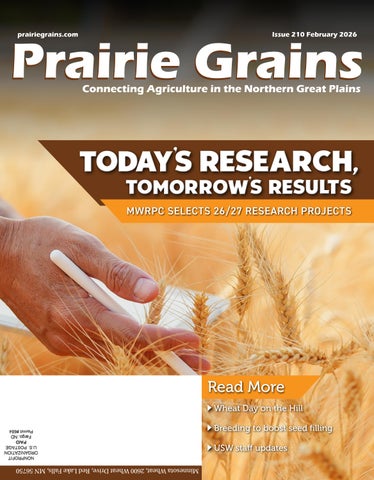
Every spring, when Minnesota wheat producers plant seed in the ground, the Minnesota Wheat Research & Promotion Council is right there next to them, making wheat checkoff investments towards research that improves farmers’ bottom lines. Get a sneak peek at the wheat research projects slated for crop year 2026 on pages 16-19. 2 1 3 4 5 06 24 26
Rock solid: MAWG’s new officer team enters 2026 energized
12 Legends of agriculture: North Dakota Grain Growers Association lives up to state’s brand
14
Small grains, small margins: Annual Small Grains Update meetings travel throughout NW Minnesota
Looking ‘Scharpe’: South Dakota Wheat Growers Association growing forward with new executive director
Family matters: Montana’s grain community gathers for annual convention
PUBLISHER AND CIRCULATION
Minnesota Association of Wheat Growers
2600 Wheat Drive • Red Lake Falls, MN 56750 218.253.4311 • Email: mnwheat@mnwheat.com Web: www.mnwheat.org
EDITORIAL
Sydney Harris, Managing Editor
Ag Management Solutions
Ph: 218.689.5091
Email: sharris@agmgmtsolutions.com
CONTENT EDITORS
Drew Lyon, News Editor
Ag Management Solutions
Ph: 507.388.1635
Email: dlyon@agmgmtsolutions.com
Katelyn Engquist
Ag Management Solutions
Ph: 507.508.1540
Email: kengquist@agmgmtsolutions.com
ART DIRECTOR
Alex Troska
Ag Management Solutions Ph: 952.334.2539
Email: atroska@agmgmtsolutions.com
ADVERTISING SALES
Jill Thibert
LHM & Co
Ph: 218.280.2821
Email: jill@lhmandco.com
ABOUT PRAIRIE GRAINS
Prairie Grains magazine is published six times annually and delivered free of charge to members of these grower associations, and agriculture producers in Minnesota, North Dakota, South Dakota and Montana. To subscribe or change address, please write or call our circulation department.

Minnesota Association of Wheat Growers 2600 Wheat Drive • Red Lake Falls, MN 56750 218.253.4311 • Email: mnwheat@mnwheat.com Web: www.mnwheat.org
North Dakota Grain Growers Association 2401 46th Ave SE , Suite 204 • Mandan, ND 58554 701.222.2216 • Email: danw@ndgga.com Web: www.ndgga.com
South Dakota Wheat Growers Association 116 N. Euclid, Box 667 • Pierre, SD 58501 605.224.4418 • Email: wheatinc@midco.net

Montana Grain Growers Association P.O. Box 1165 • Great Falls, MT 59403 • 406.761.4596 Email: erobinson@mgga.org • Web: www.mgga.org
February 2026 | Prairie Grains | Page 3
In our current culture of hot takes, we tend to fall into the cycle of jumping to biases where we feel most comfortable. I challenge people to remember the importance of a cohesive ag community and point their focus toward a common goal that benefits our industry.
My leadership mindset is driven by my desire to get results. I encourage patience and consideration of others’ viewpoints. Being a husband, father to four young children, a full-time farmer, rancher and business owner, I frequently exercise my ability to adapt and pivot and recognize the value of that flexibility. While I am not one to make rash decisions, I understand the benefit and necessity of getting things done in a timely manner. As I step into this presidential role, my friend Kevin Leiser has left some big shoes to fill. Kevin led with integrity, passion and desire to keep wheat farmers in the forefront of our mission as the Minnesota Association of Wheat Growers (MAWG). As president I will be accessible, out-front engaging with respect, candor and positivity.
I take a thoughtful approach to leadership. I believe in patience and consideration of all perspectives. Managing a busy farm, business and family has taught me the importance of careful decision-making. As president of MAWG, I may not be the loudest voice in the room, but I am committed to being present, listening and communicating with honesty in every setting. I avoid unproductive arguments and focus on what benefits agriculture and our rural communities. For me, this work is personal. I have a family to provide for and an operation to pass down to the next generation. I work alongside my father on the same land as my ancestors,
spanning 6 generations, beginning in the 1880s; agriculture is more than a mere occupation. Farming and family are quite literally my life from sunup to sundown; promoting policies that improve, not hinder, agriculture is what matters most. That is the message I tell legislators during faceto-face meetings.
I have told my story throughout my entire advocacy career and will continue to share during the year ahead, starting with the National Association of Wheat Growers’ (NAWG) meetings and Hill visits in late January in Washington, D.C. Those visits take place after this issue goes to press, and these days, it is impossible to predict the news of the day in our Nation’s Capital. But I can assure our readers that, as we represent Minnesota at the national level on NAWG, we will discuss a range of issues with policy leaders. During our visit to D.C. last fall, discussions were held regarding trade, improving the farm safety net and the MAHA movement. As a farmer in his early 40s, I am passionate about explaining the many challenges our generation of farmers face, including health care costs, higher interest rates, low commodity prices and diminishing rural communities. Farmers are resilient, but agriculture needs effective policies at every level to ensure our long-term success.
Advocacy requires teamwork. Achieving our policy goals is only possible through collaboration, and I am grateful to work with an excellent officer team, including Vice President Tate Petry and Secretary/Treasurer Kristin Hamre. I also rely on the experience of the MAWG presidents who came before me, who now serve as board members; Kevin Leiser, Mike Gunderson and Erik Youngren, and

board member Logan Johnson. Our staff, including Executive Director Brian Sorenson, Vice President of Operations Coreen Berdahl and State Lobbyist Bruce Kleven ensure our operations run smoothly. I look forward to partnering with other state and national commodity groups to strengthen our coalition.
With Minnesota’s 2026 Legislative Session approaching, our annual Wheat Day on the Hill in St. Paul is right around the corner. On March 2-3, we will have the opportunity to speak directly with legislators from both parties about our challenges and priorities. I encourage all MAWG members to participate, not only to gain firsthand experience and to ask questions, but also to share your perspectives with decision makers.
As spring nears, I am committed to fostering civility in our political discussions and highlighting the contributions of wheat farmers. I invite you to join me in sharing our story and continuing this effort.
Austen Germolus farms near Borup, Minnesota, and is president of the Minnesota Association of Wheat Growers.

The calendar turned a few weeks ago, but farmers prefer the crop calendar. We are still in the old crop year. We are focused on old crop and cleaning out bins, reviewing the financials from last year and slowly making plans for the new crop year.
There is no official start date for the new crop year. It depends on the year. We need a few warm days, hints of black in the fields and maybe that first load of seed delivered. Then we are all in on new crop and making money in 2026.
New Year’s Resolutions are all the talk in January, but as farmers, we still have time to make New Crop Year’s Resolutions. How are we going to do better for the 2026 crop year? Time for a reset and restart.
One area I am emphasizing with my farmers is the cost of marketing, specifically storage and deferred pricing costs. If you have not reviewed those costs, spend an hour paging through your 2025 settlements. While you are looking at the settlements, also look at the basis if you are someone who likes to roll the basis contract once, twice or until the elevator says you can no longer roll.
Many farmers carried 2024 crop
into 2025, then harvested a large crop and ran out of storage. Bushels were delivered when prices were low, no one wanted to sell and storage costs started accumulating. Deferred pricing seems like a minimal cost at a few pennies a month, but there is usually an upfront cost too.
Paying storage and deferred payment costs can make you money if the market rallies, but few farmers calculate the cost. You need to understand the costs if you want to pay for the possibility of rallying prices.
Most elevator websites or apps make it easy to download your 2025 settlements. You can see the prices received for your sales in 2025. Look at your sales and create a marketing plan to beat the prices you received in 2025. When we create our marketing plans, my mind still recalls the beans in the teens, $10 wheat and $6 corn. There is nothing exciting about contracting crops at today’s mediocre prices. I am still going to recommend contracting at mediocre prices. We can contract at mediocre prices for our first sale or two and then keep selling as the market rallies. Do not aim for a home run at the first sale. Get something
priced, especially if you want or need to deliver at harvest.
As I review the 2025 year with farmers, we look at the profitability of each crop. We publish our 2025 data in March, and you can find out overall, which crops were the most profitable. We can adjust our cropping plans based on projected profitability, but that is just a projection. In my area, corn did very well in 2025, but we had incredible yields. If we plug more typical yields into 2026 projections, there are no stand outs in the cash flow.
If you are going to make changes to your crop rotation, make sure you are using typical yields, and not what happened last year. We have many crop options in the Northern Plains, and I do not want one year’s experience to cause major changes to the plan.
We can make money in 2026, but it might require a few small changes to how we market our crops. We need to take advantage of pricing opportunities. I hope my first sales are my worst sales. I would love an extra buck or two per bushel at harvest. And I hope my biggest problem next fall is tax planning with all my extra income.
Time is money and Minnesota Association of Wheat Growers (MAWG) Vice President Tate Petry knows that the time he spends advocating for farm-friendly policy in St. Paul and Washington, D.C., on behalf of Minnesota’s wheat industry is worth the cost.
That’s why he threw his hat in the ring to run for a third three-year term as a MAWG director and was reelected on Dec. 10 during MAWG’s annual meeting at the 2025 Prairie Grains Conference in Grand Forks.
“I see a lot of value and a lot of importance in ensuring that wheat farmers are represented both in the
state and nationally,” Petry said.
Since 1975, MAWG has represented Minnesota wheat producers at the state and national level with membership dues funding lobbying efforts on issues that improve profits for growers and support educational programs.
“We have a fantastic lobbyist that keeps a really close eye on things in St. Paul so we can advocate specifically on Minnesota topics like pesticide use and the new Paid Family and Medical Leave law,” Petry said.
While he’s been a MAWG member for many years, it wasn’t until he became a board director that the depth of the organization’s value sunk in.
“It’s been a really fun experience,” Petry said. “It’s given me a lot of opportunities to meet people and network. And frankly, it makes my operation better because it forces me to be attentive to policy.”
Policy decisions that are made in St. Paul may seem far removed from the farm, but the impacts resound.
“Like, oh, we have to do this on our farm because that policy wasn’t something I was aware of or depending on the way that policy is structured in a way that we can take advantage of. It’s been a good opportunity, and I’ve really enjoyed the meetings and getting to know people and the experience.”
It may take time and pull him away from the farm every once in a while, but in the end, Petry knows that it will pay off.
“It’s really important to stay involved,” Petry said. “There’s not a lot of people out there who are willing to spend the time and effort to go down some of these rabbit trails of, “Okay, how did this happen?’”
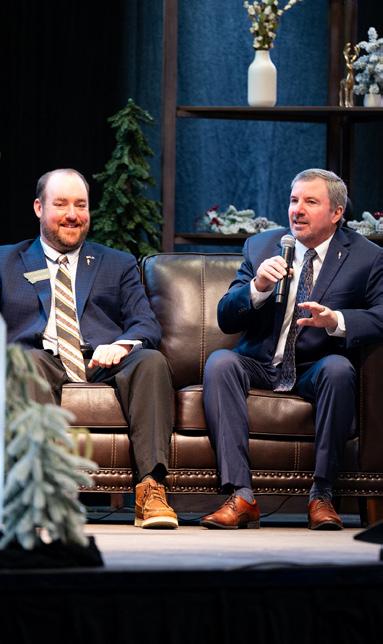
During its January board meeting, MAWG farmer leaders elected its 2026 officer team. Austen Germolus, transitioned from vice president to president, taking the reins
from Kevin Leiser.
“Austen’s really good at stepping back and evaluating programming,” Petry said. “He’s good about asking, ‘Are we best serving our growers with this programming?’ or ‘What can we do in the future to better serve them?’”
Previously serving as treasurer, Petry was appointed vice president by his peers while Kristin Hamre took over the secretary/treasurer role.
“I’ve known Tate quite a long time and he’s rock solid, smart and a young farmer,” said Germolus, who farms
near Borup. “Both he and Kristin have a wealth of knowledge with a passion about the wheat industry. They both bring different dynamics to the board with their backgrounds. … It’s just great to be surrounded by a great group and know that I’m not just doing this alone.”
As Minnesota’s 2026 legislative session gets under way, MAWG will be closely monitoring issues that could impact wheat farmers.
“MAWG is really well positioned to serve Minnesota wheat growers at both the state and national level,” Petry said.
“I see a lot of value and a lot of importance in ensuring that wheat farmers are represented both in the state and nationally.” - Tate Petry

By Mark Askelson
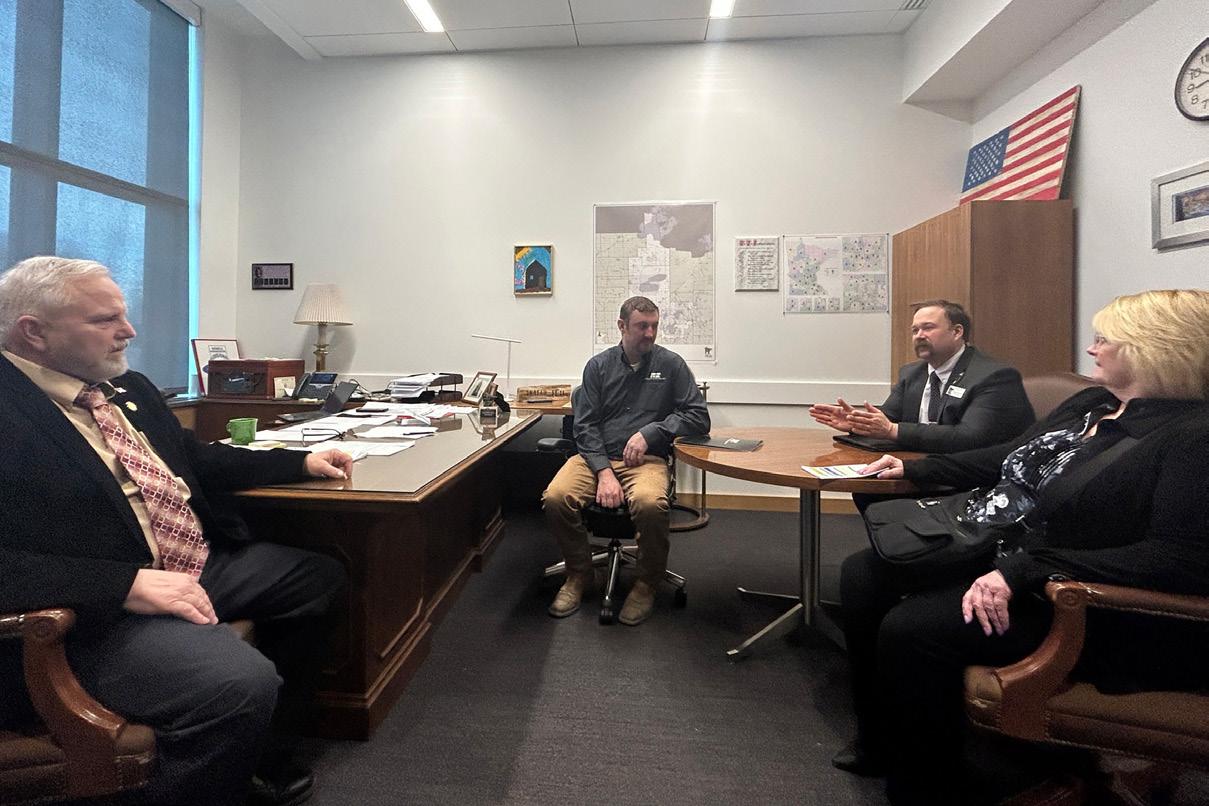
Who better to tell the story of wheat growers to our legislators in St. Paul than our wheat producers themselves? The Minnesota Association of Wheat Growers (MAWG) is encouraging wheat farmers to share their unique stories and join MAWG for its annual Wheat Day on the Hill, March 2-3.
“It’s a great opportunity to get down to the state capitol and lobby for the things that are important to us as farmers,” said trip veteran Austen Germolus, president of MAWG. “When we go down there, people do listen, and it sets up a connection between us and our legislators.”
The overnight bus trip is free for all MAWG members, or $150 for non-members, which includes transportation, meals and lodging. The bus will leave Red Lake Falls at 11 a.m. on Monday, March 2 and make stops along the way in Fertile, Twin Valley, Hawley, Rothsay and Fergus Falls. There will be a group dinner and legislative update on Monday night where they will be briefed on talking points and learn about the bills being debated at the Capitol, followed by a full day meeting with legislators on Capitol Hill on Tuesday.
“If you’ve never done a hill visit or been a part of this bus trip before, there’s no reason to be intimidated,” said Germolus, who has participated in the Wheat Day on the Hill more than a handful of times. “It’s a worthwhile experience and we team people up with those have done it
before, so between that and the MAWG staff who coordinate everything, we make it easy for you.”
During the hill visits, participants will meet with the legislators in their district, as well as others who serve on committees important to agriculture. By going as a group, Germolus says it gives wheat growers power by numbers and more opportunities to share their message.
“We need to have a voice, and this is the best way to do it,” Germolus said. “As a group we are stronger than just as a single person on their own. We can divide and conquer.”
In addition to building a relationship with local legislators, the bus trip provides an opportunity to network with other wheat growers throughout the region as well.
“I think getting to know the people who serve in office is important, because at the end of the day, they’re just regular people like us and they really enjoy hearing from the farmers,” Germolus said. “And you also get some quality time getting to know other producers, where they’re from, what else they grow and expand your network of people.”
The bus will depart St. Paul at 3:30 p.m. on Tuesday and will drop participants off at their respective stops on the way to Red Lake Falls.
Participation is limited to the first 45 registrants. To participate, please call 218-253-4311, ext. 7 or email cberdahl@mnwheat.com by Feb. 13 for a hotel guarantee.
Join other members from the MN Association of Wheat growers on an overnight bus trip to St. Paul where participants will meet with legislators from their district and others who served on committees important to agriculture. This is your opportunity to tell your story on how policies and laws affect your farm.
What to expect? All attendees will:
• Be updated on state legislative issues from MN Wheat’s legislative strategist
• Team up with other growers and meet with individual legislators (appointments are pre-arranged)
• Meet other growers on a relaxing round-trip motor coach ride to St. Paul
Monday, March 2, 2026
11:00 a.m. Depart Red Lake Falls
11:30 a.m. Depart Fertile
12:00 p.m. Depart Twin Valley
12:30 p.m. Depart Hawley
1:10 p.m. Depart Rothsay
1:40 p.m. Depart Fergus Falls
- - - Other pickups along the way if needed - -- - - Lunch will be served on the Bus - - -
4:40 p.m. Arrive St. Paul - check in to hotel Radisson St Paul downtown
5:00 p.m. Legislative update & group dinner

legislatorswithyourlocal andtell
Tuesday, March, 3, 2026
7:00 a.m. Breakfast at hotel
8:00 a.m. Producers Team Appointments - 3:00 p.m. with individual legislators
3:15 p.m. Group photo on Capitol steps
3:30 p.m. Depart St. Paul - - - Supper along the way - - -
6:30 p.m. Arrive Fergus Falls
7:00 p.m. Arrive Rothsay
7:35 p.m. Arrive Hawley
8:10 p.m. Arrive Twin Valley
8:30 p.m. Arrive Fertile
9:00 p.m. Arrive Red Lake Falls
Registration Cost: ~ FREE for all MN Association of Wheat Growers members ~ $150 for all non-members
Registration includes: Transportation, meals and hotel room. (Hotel room based on double occupancy.)
Register by February 16, 2026 for hotel guarantee. Late registrations based on hotel availability. To participate, call 218-253-4311 ext. 7 or email cberdahl@mnwheat.com
Limited to the first 45 registrations.
Minnesota Assn. of Wheat Growers • 2600 Wheat Drive • Red Lake Falls, MN 56750
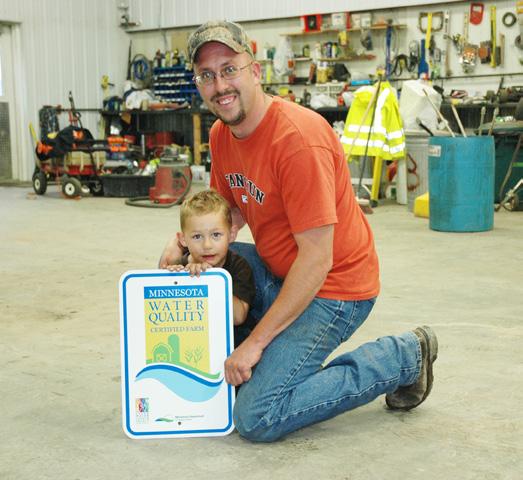
When the Minnesota Agricultural Water Quality Certification Program (MAWQCP) launched as a pilot program in 2014, an intrepid, conservation-minded farming operation had to be the first to enroll.
Jared and Jerry Nordick’s family farm in Wilkin County in the Red River Valley checked every box: Passionate about soil health and water quality, flexible in adopting new techniques, including buffer strips, and eager to engage with stakeholders.
“I want to be open and transparent as a farmer to what I’m doing on my farm,” Jared Nordick said. “I would rather try to be proactive than reactive.”
The Nordicks’ passion for conservation led to their operation being the first to enroll in the MAWQCP, a oneof-a-kind program that has grown into the national model for how to run a voluntary, farmer-focused soil health initiative that rewards farmers for implementing conservation practices. The Nordicks’ county Soil & Water Conservation District specifically sought out their family operation to enroll.
“They saw what we were doing, and said, ‘I think you guys would just be slam dunk, be able to take this and run with it right away.’” Jared recalled. “But it’s not about being the first – it’s about pride in what we do in agriculture.”
Jared, who now sits on the Wilkin County Soil & Conservation District board, credits his father for instilling a commitment to soil health and water quality.
“My dad is a conservationist and was doing buffer strips before they were even talked about,” Jared said. “Not every
ditch needs a buffer strip, but they’re a great site-specific, source-specific tool.”
Nordick said he hopes his early promotion of MAWQCP alleviated initial reluctance farmers may have had about participating in a voluntary program that’s protecting Minnesota’s water resources.
“I think so many people thought that you were opening up a can of worms to your farm to show them what you were doing, and if there was something wrong, you were going to get chastised for it, or you were going to get a penalty,” Nordick said. “But farmers still need to learn, and we need to be open-minded and we’re thinking into the future for my kids or my grandkids. It’s not about today nor tomorrow, it’s the future of the American farm families also.”
Since the program became available statewide in 2015, Minnesota farmers continue to follow in the Nordicks’ footsteps. As of early 2026, 1,739 farms totaling over 1.24 million acres have been certified across Minnesota. Farms have added nearly 7,900 new conservation practices. Those new practices are reducing greenhouse gas emissions by nearly 55,000 metric tons each year and have kept more than 57,000 tons of sediment out of Minnesota rivers while saving 170,000 tons of soil and 73,000 pounds of phosphorous on farms each year. The conservation practices have also reduced nitrogen loss by up to 49%.
Studies also continue to show that MAWQCP-enrolled farmers report higher profitability.
“As a farmer, we need economics and stewardship together,” Nordick said, “and we’re doing stewardship and still learning and still trying and using all the resource tools available to improve the economic side. We’re all trying to stay in business for the next year.”
MAWQCP connects farmers with local conservation district experts to identify and mitigate any risks their farm poses to water quality on a field-by-field basis. Once certified, each farm is considered in compliance with new water quality laws and regulations for 10 years.

In fall 2025, Nordick was among the first group to reapply for certification.
“Being in regulatory compliance is like buying an insurance policy, so if something does change, we can start working with those folks,” Nordick said. “Reenrolling was short and sweet, to the point. … It’s kind of like an ongoing research project.”
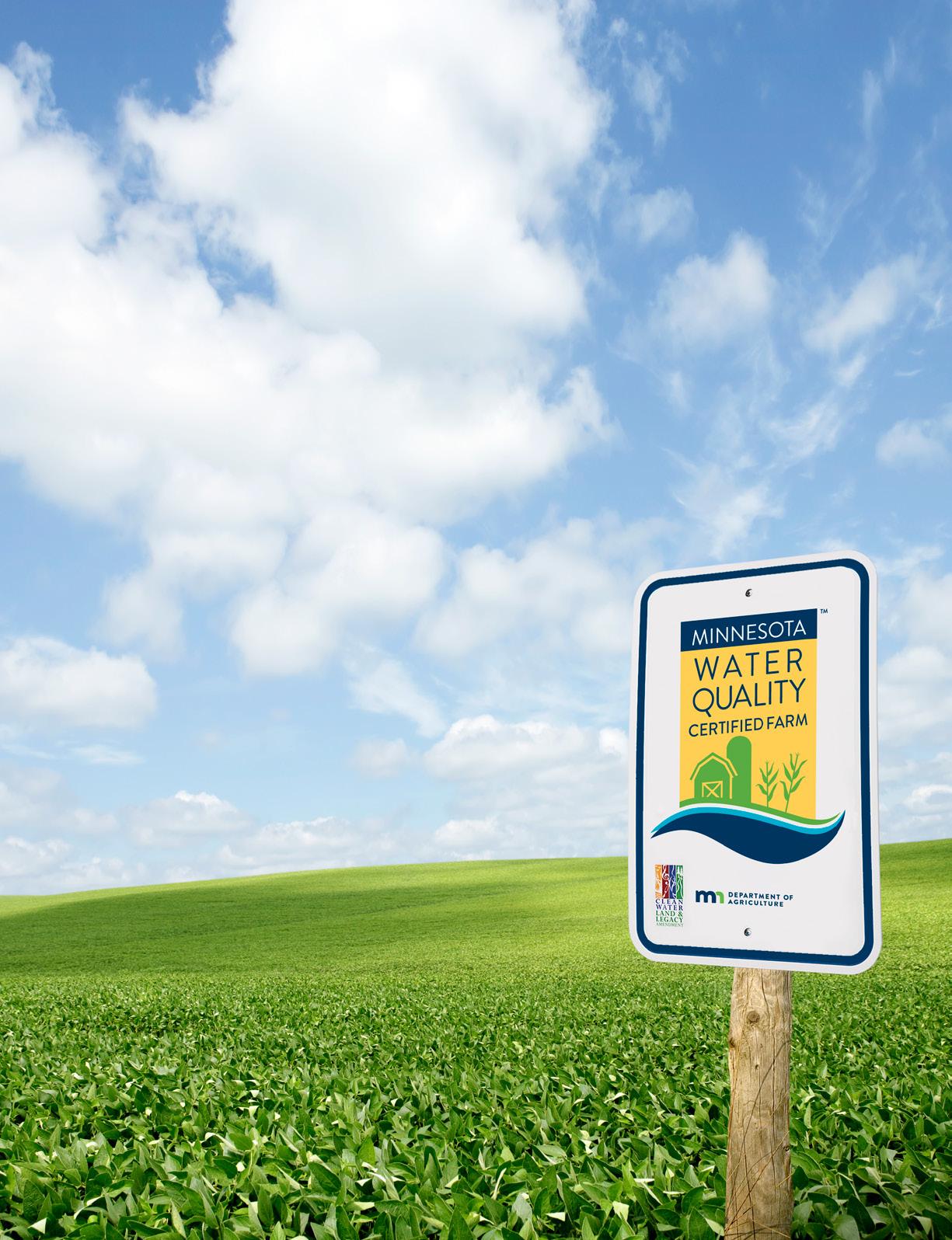
Certified farmers also receive a MAWQCP sign, along with other benefits including financial assistance programs.
“The agriculture organizations and MDA have believed in this program by working together to secure the funding that comes out of the Legislature to support agriculture,” said Nordick, who’s testified on behalf of MAWQCP at the Capitol. “Getting involved is the biggest thing.”

By Sydney Harris

North Dakota is legendary.
North Dakota Grain Growers Association lives up to state’s brand
And so is the North Dakota Grain Growers Association (NDGGA). For more than 50 years, NDGGA has served the state’s wheat and barley producers with representation, education and proactive advocacy.
“We’re working on behalf of North Dakota producers,” NDGGA Executive Director Nick Sinner said. “This is their organization and they fund the activities that we do.”
NDGGA doesn’t sit on its haunches. Though the North Dakota Legislature doesn’t reconvene until January 2027, the organization hasn’t let off the gas when it comes to fostering relationships, building communication with its members and maintaining a presence at the federal level.
“We’re always keeping an eye out for what they’re coming up with in Washington, D.C.,” NDGGA President Ryan Ellis said. “We have a really good relationship with Senator Hoeven’s and Senator Cramer’s office, as well as with Representative Fedorchak.”
Those relationships were fostered in December when a delegation from NDGGA, including Sinner, landed in D.C. as part of the Midwest Council on Agriculture’s (MWCA) Annual Meeting, which included Hill Visits. Currently, NDGGA Secretary/Treasurer Jarred Billadeau serves as MWCA’s vice president.
“It always works better if you have a direct relationship with members of Congress in Washington, D.C.,” Sinner said. “We want to have a relationship that when we call them or stop by their office, we know each other and we’ve developed trust.”
Meeting face-to-face with legislators goes a long way toward building the connections that make NDGGA an ag advocacy powerhouse.
“We give them good information that they can use to help develop any legislation or programs that need to be put in place,” Sinner said. “We want them to turn to us so that we can tell them our thoughts and have numbers to back up what we’re trying to do.”
Keeping tabs on the happenings at federal agencies within the USDA, like its Risk Management Agency and Farm Service Agency, is another critical component of NDGGA’s dayto-day. The policies and programs rolled out by various agencies are cornerstones of farming operations across North Dakota.
“We talk directly with federal agencies and reach out to them regularly,” said Ellis, who farms near Williston.
Things may appear sleepy, but Bismarck is buzzing.
In November, NDGGA joined the
Peace Garden State’s agriculture community at Ag Commissioner Doug Goehring’s Commodity Councils and Ag Associations meeting in Bismarck.
“Because we have so many different commodities that are produced in North Dakota, it’s important to bring everybody together and listen to reports about how the year has been and what some of the major issues are to help build relationships,” Sinner said.
Though the various agriculture groups around the state have priorities that are specific to their crop or product, for the most part, they’re all trying to paint the same bigger picture.
“As far as the commodity groups are concerned, we’re all generally pushing for the same big-ticket items,” Ellis said. “It’s important that we all meet and get to know the people involved, whether those are the executive directors or the producers on the boards.”
Along with commodity group updates, the meeting in Bismarck featured North Dakota Department of Agriculture program updates, the proposed Land Enhancement program from ND Game & Fish and a Burlington Northern Sante Fe update. North Dakota exports $5.4 billion annually in agriculture products, and the possible merger of Union Pacific and Norfolk Southern railroads has the potential to greatly affect producers’ bottom line.
“In North Dakota, so much of the
production has to be exported, either around the rest of the United States or overseas,” Sinner said. “We depend on the railroads a lot so from an NDGGA perspective, we are going to be watching this.”
Clear communication. Strong membership.
This year, NDGGA is ramping up its communications, improving correspondence between the board of directors and its members.
“We don’t want them to have to ask, ‘Well, what are you doing for me, today?’” Sinner said. “It’s important that they know and support the activities that we’re undertaking. We want to show that we are, in fact, putting funds to good use and we’re being careful about how we handle those funds.”
North Dakota farmers raise, NDGGA represents. NDGGA membership gives producers a voice on a wide range of issues including Farm Bill policy and implementation, state policy, crop insurance, transportation issues, water management, landowner rights, research and education.
“Decisions are being made – in Washington, D.C., and Bismarck – whether you’re involved or not,” Ellis said. “It’s better to be involved.”
Your voice matters. Join NDGGA today to preserve the prosperous tradition of North Dakota agriculture, protecting your way of life for generations to come. Scan


By Mark Askelson
Margins are tight and researchers and farm business managers shared a similar message during this year’s Small Grains Update meetings throughout northwest Minnesota: Cut the fluff.
Hosted by the Minnesota Association of Wheat Growers and Minnesota Wheat Research & Promotion Council with support from the Minnesota Soybean Research & Promotion Council (MSR&PC) and Minnesota Corn, the Small Grains Update meetings were held Jan. 13-16 with stops in Dilworth, Halstad, Crookston, Lancaster and Roseau. The final meeting in St. Hilaire was canceled due to weather.
The Good, the Bad and the Ugly
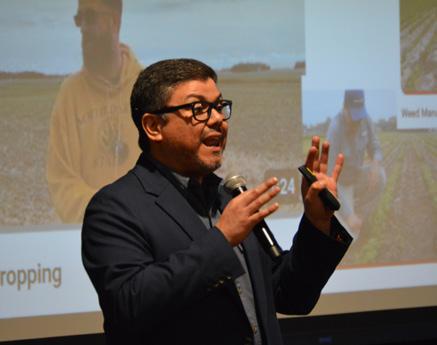
Jochum Wiersma, University of Minnesota small grains specialist, shared a review of the 2025 wheat variety trials and some of the lessons learned that can be applied to the upcoming growing season. Starting with the good, Wiersma stated 2025 followed ongoing trends with another record yield for wheat growers in Minnesota, which saw an average production of 69 bushels an acre. The half a bushel increase over last year’s average was close to on par with the annual average increase of about a bushel per acre over the last 30 years. The most common grown variety this past year was MNRothsay, followed by WB 9590, MN-Torgy and SY Valda.
Moving on to the bad, there were reports of sprout damage once again in 2025, along with some issues with Fusarium Head Blight in west-central Minnesota. However, Wiersma notes the issues were much more localized compared to the year prior.
“If you didn’t have any problems with all the discounts, that’s good. Pinch yourself,” said Wiersma. “During harvest, a lot of guys actually did not run into problems with protein, and that’s a good thing.”
And now the ugly, which to no surprise, were the wheat markets. The average price of hard red spring wheat for the 2025 marketing year was the same as it was back in 2001.
“It’s ugly, just no better way to put it,” said Wiersma. “Luckily, yields have gone up, so that gives us a little margin but not like it was back in 2008 when we shot up to $13.”
To help with the tight margins, Wiersma notes that this upcoming crop year might be a year to cut the fluff. But the input that wheat growers should not skip out on is nitrogen.
“You can mind the phosphorus for a year, you can mind the potash for a year, but stick to your nitrogen plans because everything I’ve done with research over the last 30 years shows how important nitrogen is for wheat,” Wiersma said.
“Northwest Minnesota has been exempt on nitrogen practices for a while, but with the rumblings I hear out of St. Paul, I don’t know if that will be the case forever.”
Reduce yield damage, increase value
Another way producers can help themselves in staying profitable in 2026 is to avoid taking hits to their yield by using available research on disease, pest management and weed control. In the soybean world, one of the biggest contributors to yield loss is soybean cyst nematode, according to MSR&PC Research Director Sergio Cabello Leiva.
“Nothing takes more bushels away than soybean cyst nematode,” Cabello Leiva said. “10 to 30% of your yield can be taken away without showing any foliar symptoms, so it’s important to test your soils, rotate your crops and choose the right varieties to plant. Utilize our research and maximize your yields to drive your profit.”
Make marketing plans, not excuses
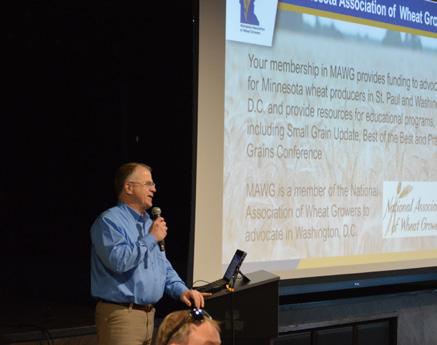
While just growing a crop can be challenging enough, trying to market your crop during a period of volatile markets and tight margins can really have producers scratching their heads trying to figure out how to make cash flow. Betsy Jensen, Farm Business Management instructor at Northland Community and Technical College, urged producers during the Small
Grains Update meetings to take a disciplined, numbers-driven approach to grain marketing.
Jensen said the industry is in unchartered territory, but proactive producers could still have time to capitalize.
“I’ve been doing this for 25 years and I have no doubt that analysis for 2025 and cash flows for 2026 will be the worst I’ve ever done,” said Jensen, a columnist with Prairie Grains. “But I do think 2026 can be profitable. It’s still early in the year and I’m not ready to give up yet, but we are going to have to be pretty vigilant about what we’re doing.”
According to Jensen, the first step in building a marketing plan is to look backward before looking ahead. With tools like the Bushel app and CHS platforms, producers can now easily download their grain sales into Excel and analyze average prices, highs, lows, and — most importantly — expenses. Storage fees, deferred payment charges and interest costs can quietly erode profits.
Once past performance is clear, producers can start setting benchmarks for future sales. Jensen encouraged farmers to define three key prices: a
minimum acceptable price, a target average price and a “lightning-strikeme-dead” price — a level so high that if it appears, grain should be sold immediately without hesitation.
Jensen also tied marketing decisions closely to cost of production and cash flow needs.
“I work with a lot of successful farms, and I see the same three things from all of them,” said Jensen. “They have cash, they pay taxes, and they know their own cost of production.”
Knowing true costs, not just county averages, but farm-specific numbers is critical because of wide variations among farms. In tight years, the goal is not perfection but contribution: choosing crops and marketing strategies that at least contribute something toward overhead and family living. Jensen believes that 2026 will for sure be one of those tight years where producers will need to cut costs.
“My outlook for 2026 is that it does not cash flow, so there’s no room for fluff in the inputs,” Jensen said. “We are lucky to have some alternative crops here in the north, such as canola and sunflowers, but nothing looks great for cash flow.”

By Sydney Harris
MWRPC research projects set to boost yields, battle weeds, develop varieties
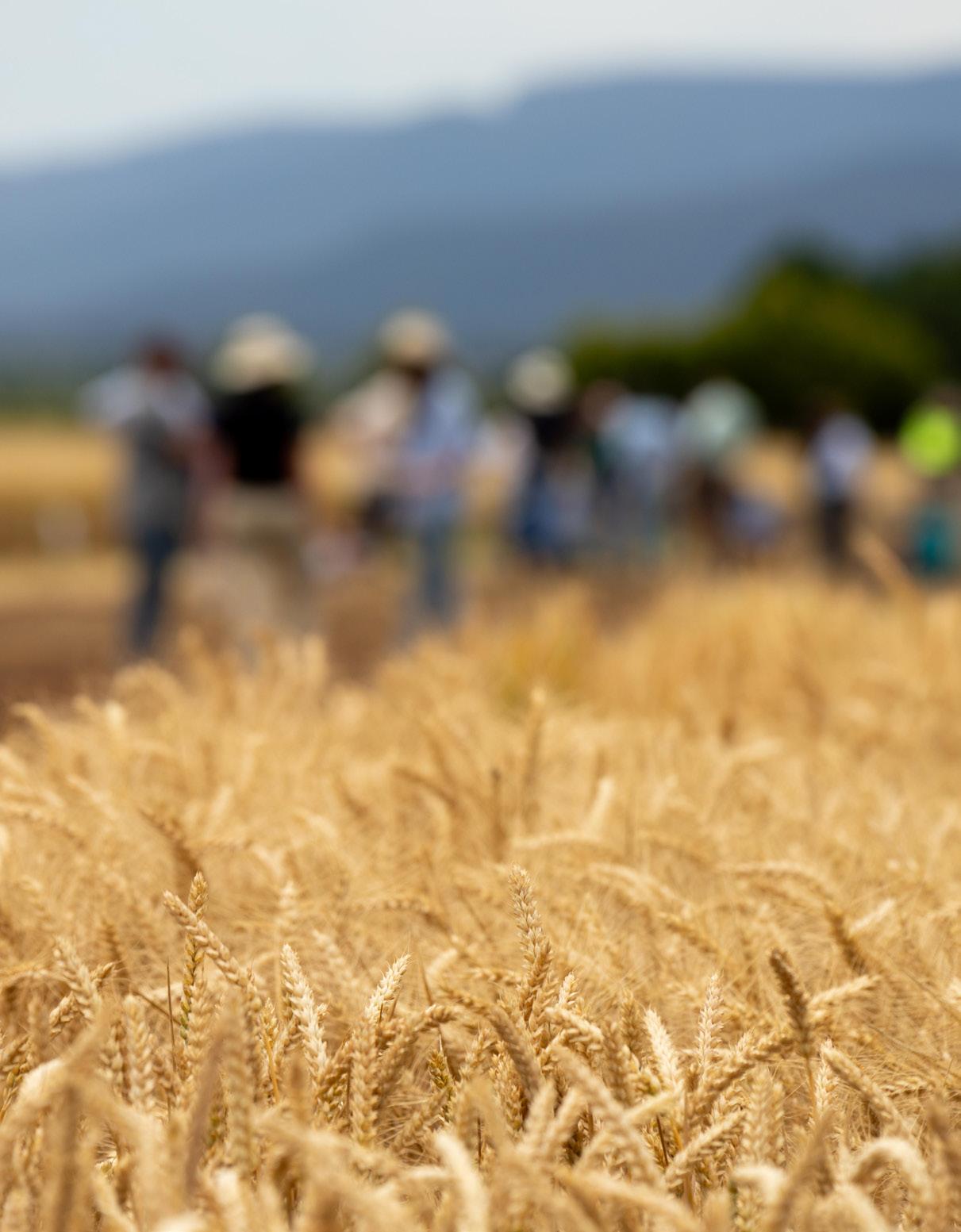
As Minnesota wheat producers plant seeds in the ground, the Minnesota Wheat Research & Promotion Council (MWRPC) plants seed for the future by investing checkoff dollars into research projects that will improve farmers’ bottom lines.
Every September, MWRPC requests wheat research proposals for the Minnesota Wheat Research Committee to preview. If a researcher’s proposal is selected to review, they give a presentation before the Research Committee during the Prairie Grains Conference. Following the presentations, the Research Committee evaluates each proposal and makes their recommendations to MWRPC in early January.
For Crop Year 2026, six new research projects received funding while seven projects that have previously been funded were also granted checkoff dollars. In addition, two continuous projects received funding, as well as an educational project focused on the Minnesota 4-H Small Grains Education Initiative.
Take a sneak peek at the new research projects that will be hitting the ground running when the snow melts and the birds start chirping.
Project: A field high-throughput screen to breed for faster N remobilization and higher MN wheat yields
Principal Investigator: Walid Sadok, University of Minnesota
Because a main priority of the University of Minnesota wheat breeding program is to increase wheat yields while improving or maintaining seed protein concentration, researchers have examined the physiological drivers of historical wheat yield increases for over a century. This led to the discovery that quadrupling yields was associated with an increase in the ability of varieties to maintain high rates of photosynthesis during seed fill while accelerating the remobilization of nitrogen (N) compounds from leaves toward developing seeds. Therefore, achieving higher yields will have to target improving those two processes but photosynthesis measurements are time consuming and leaf N quantifications are destructive and cost prohibitive, making it impossible to use photosynthesis and leaf N to screen thousands of lines that make up a breeding pipeline.
Walid Sadok, the principal investigator of the project, is proposing a novel screening method that is based on a strong association discovered between leaf N and photosynthesis on one hand, and its chlorophyll concentration on the other hand. His goal? To develop a phenotyping pipeline on a set of 75 highly diverse wheat varieties and breeding lines that will be scaled up to screen a much larger number of genotypes after validation. If successful, the project will enable breeding to boost traits that drove historical Minnesota wheat yield increases, leading to higher yields and an increase in wheat growers’ economic returns.
Project: Pilot sampling program to screen for herbicide resistance in MN weeds
Principal Investigator: Zach Bateson, National Agricultural Genotyping Center Minnesota wheat farmers dedicate significant resources to combatting weeds, but every year farmers and other agriculture professionals report new cases of weeds overcoming herbicides. As herbicide resistances (HR) continue to spread, identifying where and what HR traits lurk in weed populations can help inform control strategies. Because DNA testing is a relatively new method that can rapidly screen for specific HR markers within emerging, in-season weeds, farmers, crop advisors and extension staff have limited access to the biotechnology.
The not-for-profit organization, the National Agricultural Genotyping Center (NAGC) located in Fargo, N.D., has led a multi-year, statewide initiative to evaluate the distribution of HR in waterhemp and kochia populations in North Dakota. Since 2023, NAGC has received over 1,000 leaf samples and collectors receive a personalized and confidential report on Group 2, 9 and 14 herbicide resistances within five days of NAGC receiving the submitted leaf samples. At the end of the cropping season, data are aggregated at the county level to evaluate statewide HR distribution. Through this project, led by principal investigator Zach Bateson, NAGC will offer Minnesota growers free HR testing for kochia and waterhemp while expanding detection into grassy weeds like green foxtail and wild oat.
Principal Investigator: Rebecca Curland, University of Minnesota
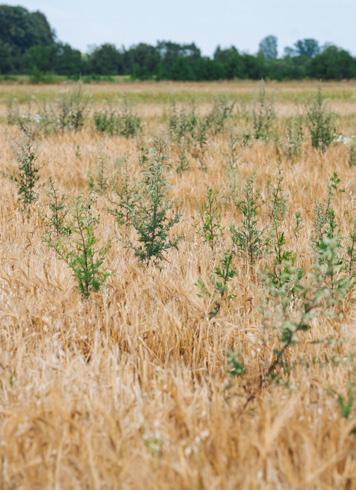
Bacterial leaf streak (BLS) is a thorn in Minnesota wheat producers’ side, and the true economic toll on yield is still a critical knowledge gap for producers and researchers. A primarily foliar pathogen, the BLS lesions that develop into chlorotic and necrotic tissue lead to decreased grain fill due to decreased photosynthetic capacity. The lack of quantitative yield loss data is a hurdle for producers because they need to know potential yield reductions in order to weigh the return in prioritizing the selection of resistant wheat varieties over other traits and to invest in the development of additional control methods.
A two-year endeavor, this project, led by Rebecca Curland, will quantify the yield losses associated with BLS across ten diverse hard red spring wheat varieties grown in Minnesota. And, by collaborating with the Bacterial Leaf Streak Research Initiative working group organizing similar yield-loss trials across the U.S. and Canada, the project will create a robust dataset representing multiple environments.
Project: Characterization of late maturity a-amylase (LMA) susceptibility in HRS wheat
Principal Investigator: James Anderson, University of Minnesota
Low Hagberg falling numbers (HFN) continue to cause substantial economic losses in spring wheat and lead to steep market discounts for producers. The primary cause of low HFN is preharvest sprouting (PHS) causing elevated a-amylase levels. However, in recent years, there have been low HFN in otherwise PHS-resistant varieties and during seasons without rainy conditions before harvest, suggesting the involvement of another phenomenon, known as late maturity a-amylase (LMA). LMA is a developmental misexpression of a-amylases caused by cool temperatures, or heat shocks in some cases, during the late grain maturation period.
The goal of this project, led by James Anderson, is to evaluate key HRS wheat genotypes for LMA susceptibility using a validated controlled-environment assay and enzymatic quantification. A secondary objective is to explore the usability of near-infrared for screening a-amylase/FN as an alternative to enzyme activity assays. The information from this work can be used in future research to inform breeding decisions, identify genotypes for genetic characterization and improve an inhouse LMA testing pipeline.
Project: Early stage phenomic selection in the UMN wheat breeding program
Principal Investigator: James Anderson, University of Minnesota
Because it influences the breeder’s ability to identify promising wheat genotypes early and is directly related to genetic gain, accurate phenotyping is crucial in wheat breeding. Genotyping and genomic selection are still widely used and useful for predicting genetic values, but they are not suited for early selection when there are too many genotypes.
This project, led by James Anderson, aims to enhance the accuracy of selection and streamline the breeding of wheat experimental lines using a low-cost, high-throughput screening method. The proposed technology relies on near-infrared spectroscopy (NIRS) of the wheat kernels to predict the characteristics of the genotypes for other traits. Though no specific traits will be targeted with the project, if successful it can enhance the genetic gain for many traits, giving growers access to higher-yielding varieties with good wheat quality, lodging resistance, disease resistance and other desirable characteristics.
Project: Continued provision of rapid end-use quality characterization services to the University of Minnesota wheat breeding program
Principal Investigator: George Annor, University of Minnesota
Over the past several years, the Cereal Chemistry Laboratory in the Department of Food Science and Nutrition led by George Annor has provided the University of Minnesota wheat breeding program with rapid end-use quality characterization services. The lab has developed predictive models for estimating key end-use quality parameters such as Farinograph water absorption using the Gluten Peak Tester (GPT), which have enabled rapid screening of over 3,000 samples and drastically reducing the time and resources needed to evaluate early-generation breeding lines. This service is essential to the wheat breeding program’s ability to identify promising lines with desirable processing qualities at the early stages of breeding.
MWRPC’s investment in this project is critical to maintain the rapid evaluation pipeline, ensuring that the Minnesota wheat breeding program can sustain genetic improvement efforts in end-use quality traits. The project directly supports efficient variety development, reduced screening time and improved breeding decision-making.
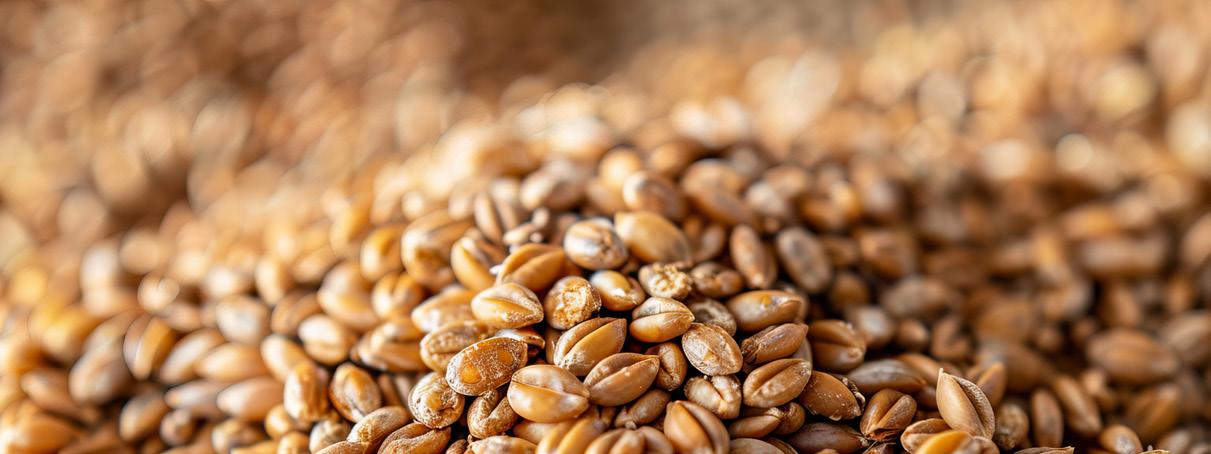
In addition to the new research projects, MWRPC committed checkoff dollars toward the following:
• University of Minnesota Wheat Breeding Program – James Anderson, University of Minnesota
• NWROC disease nursery technician – Jochum Wiersma, University of Minnesota Extension
• Southern MN small grains research & outreach – Jochum Wiersma, University of Minnesota Extension
• Accelerated breeding for Fusarium head blight resistance in spring wheat – Karl Glover, South Dakota State University
• Optimization of Bacterial leaf streak screening nurseries for HRSW in MN – Rebecca Curland, University of Minnesota
• Breeding resilient winter wheat varieties for FHB resistance & straw strength – Sunish Kumar Sehgal, South Dakota State University
• ND & MN On-Farm Research Network – Carlos Pires, North Dakota State University
New Continuous Funding:
• Minnesota Small Grains Pest Survey 2026 – Anthony Hanson, University of Minnesota Extension
• 2026 Hard Red Spring Wheat Regional Quality Survey – Shahidul Islam, North Dakota State University
Educational Funding:
• Growing the next generation: MN 4-H small grains education initiative – Brian McNeill, University of Minnesota

By Deanna Kanne

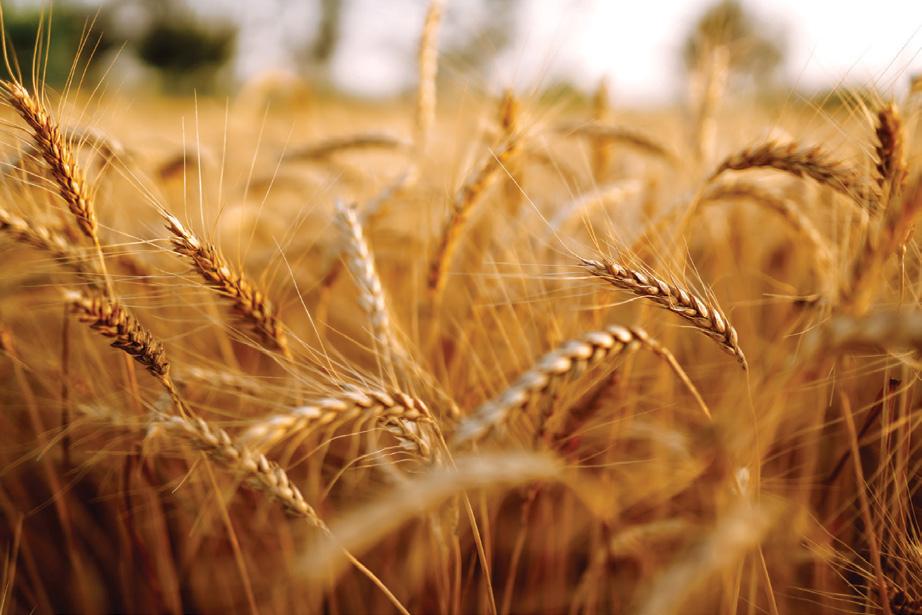
Plant breeders look for many traits in their crop varieties: drought tolerance, disease resistance and environmental adaptations, to name a few. The most common type is breeding for yield increases, which can be seen throughout history in all crop varieties.
Wheat breeding has increased yield in spring wheat steadily since 1915. Walid Sadok of the University of Minnesota Department of Agronomy and Plant Genetics and his team are working to determine how that’s happened.
“What we were interested in is to understand what changed in wheat to lead us to those yield increases we have seen since the ‘60s or even earlier than that,” Sadok said.
The study, funded by the Minnesota Wheat checkoff, took two years. Sadok’s hypothesis was that the yield increase in wheat was due to a photosynthesis increase during seed fill.
“Photosynthesis is this kind of really interesting process where plants use light energy to fix carbon dioxide,” Sadok said. “Then they invest that carbon dioxide into sugars and then those sugars are used by the plant to grow itself and grow roots.”
To measure photosynthesis, Sadok used a portable photosynthesis system. It was extremely precise, but each measurement took 5-10 minutes.
“We wanted to test a much higher, more rapid screen,” Sadok said.
Enter the chlorophyll meter. Using this system, each measurement took about three seconds, allowing for a much faster measurement. While this isn’t a direct photosynthesis measurement, Sadok’s data shows that there is a strong correlation between photosynthesis measurements and chlorophyll content.
So why did photosynthesis increase?
Throughout the plant’s life span, photosynthesis provides the plant with nutrition from the sun. The plant converts light energy into chemical energy, helping the
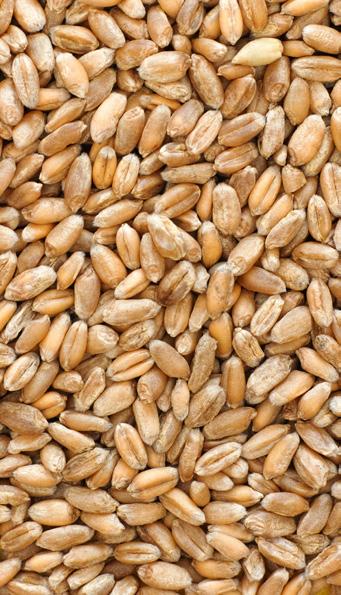

plant grow. During seed fill on a wheat plant, which lasts about eight weeks, photosynthesis begins to decline as the plant starts to dry out.
In Sadok’s research, he replicated the yield increases in 30 spring wheat varieties from 1915 to 2022. Over the span of two years, photosynthesis was measured at various points in time during the seed fill process.
“We were able to recreate the yield increase that historically happened in the region,” Sadok said. “The older varieties were completely out-yielded by the more recent varieties in a way that is related to the year of release.”
Sadok’s team of researchers noticed during this seed fill timeframe that the rate of decline in photosynthesis is much steeper in the older varieties than the newer varieties; the plant used to die a lot faster than it does today. This gives the plant more time for seed fill, thus increasing yield.
For future breeding, this means a potential fasttrack for yield increases.
“We expect that if this trait is actually captured intentionally and integrated, it can pick up the rate of yield increase,” Sadok said. “That’s the goal for the farmers, to have varieties that are more high yielding based on this trait.”
While Minnesota wheat and soybean farmers focus on growing quality crops, the Minnesota Wheat Research & Promotion Council and the Minnesota Soybean Research & Promotion Council invest checkoff dollars to help make the growing easier.
These checkoff-invested research projects are published in the Minnesota Wheat & Soybean Research Review.
Peruse the digital version of the 2025 Minnesota Wheat & Soybean Research Review!
SCAN HERE TO VIEW THIS YEAR’S RESEARCH BOOK!
The report of research projects is advised by the Minnesota Wheat Research Committee and is funded in part by the Minnesota wheat checkoff. Funding for this book is provided by the Minnesota Wheat Research & Promotion Council and the Minnesota Soybean Research & Promotion Council.
By Bailey Grubish
“Growing forward” is the new motto South Dakota Wheat Growers Association (SDWGA) is sporting in 2026. The organizational refresh includes new Executive Director Jennifer Scharpe.
Scharpe took the role of the SDWGA executive director Oct. 1, 2025, with help from former Executive Director Caren Assman. Assman, who retired, brought valuable contributions to the association and the transition.
“Throughout my interview process and my first three months here with the association, I realized there’s a lot of potential for growth with the South Dakota Wheat Growers Association,” Scharpe said. “I’m very much looking forward to growth, to renewed excitement, renewed involvement from our growers and getting more membership, or members back involved with the association.”
Scharpe previously served as executive director of Colorado Agriculture in the Classroom where she led the program for over eight years, reaching about 350,000
students, teachers and individuals across the state.
“Growing forward”
Scharpe and the SDWGA board are prioritizing the rejuvenated excitement and growth of the organization. The team will focus on general education and education to farmers on the importance of growing wheat and how it could develop in the future. She said the wheat industry in general is seeing renewed energy with other organizations being developed and new executive directors coming in.
“I am very much someone who believes in collaboration. I always said with Ag in the Classroom that I never want to be on an island,” Scharpe said. “The world of agriculture and the world of education and literacy is too small for one person, when I think that philosophy that same philosophy holds true in the wheat industry.”
Meaning, Scharpe sees the importance of including the millers, bakers, growers, checkoff resources, research information, advocacy and
other entities in the industry to create a unified direction for the future.
“I think the future is very bright for wheat, both in South Dakota and across the country,” Scharpe said.
SDWGA is a forward-thinking, non-traditional, knowledge-based agriculture association dedicated to providing its members with strategies, thoughtful perspectives and global opportunities concentrating on all aspects of agriculture production and rural life according to the website.
A main dedication of the organization is providing a voice during the legislative session at the state level and in Washington, D.C., for the growers.
“I’ve always been passionate about agriculture, about being a voice of agriculture and telling the stories of agriculture,” Scharpe said. “I think that’s where this wheat growers association becomes a great fit, because now I’m the voice of the South Dakota Wheat Growers Association and helping them to be successful with their farms and businesses. I’m also looking
forward to being their voice on the legislative side of things, both here as well as in Washington, D.C.”
During the 2025 legislative session, SDWGA focused on foreign land ownership, transportation, ag land taxes, watershed management, crop insurance and passing a Farm Bill in D.C.
To “grow forward,” another goal Scharpe has is to increase involvement and SDWGA membership.
“We’re looking for growers to get involved again, and we’re looking for new board members and breathing new life into the association,” Scharpe said. “Anyone who wants to get involved, please reach out to me. I would love to hear from them and hear what the concerns are of growers. We’re the voice of growers, and I want to make those connections.”
Producers can sign up for a one-year membership for $100 or three-year membership for $250.
The goals of SDWGA membership are representation through legislative sessions, communication through emails, social media, newsletters and regional directors to keep producers informed and the final focus is on education on new trends, economic insight and best practices.
Scharpe is ready to take the lead and continue SDWGA “growing forward.”
Growing up in Arlington, Minn., Scharpe was active in 4-H and FFA showing Angus cattle, and she
was involved in the junior Angus Association on the state and national level. Following her high school career, she attended North Dakota State College of Science where Scharpe attained a major in animal and ag science with minors in mass communication and food safety. She also attended Iowa State where she received her master’s degree in journalism and mass communications with a focus on public relations and crisis communication.
Scharpe brings more than 15 years of agriculture experience to SDWGA with her leading agricultural education and producer organizations and has a lifelong connection to production agriculture. Her career also includes leadership roles with the American Gelbvieh Association, the North American Limousin Foundation and her own communications freelance business, JSignature Branding & Media.
With her background, experience and wanting to be closer to home, the move to SDWGA made sense to Scharpe.
“I’m actually a fifthgeneration agriculturalist,” Scharpe said. “And I say I’m an agriculturalist
because I’m still involved in the industry, but I don’t directly farm or ranch. I do have one cow, but my family is still involved, and my brother actually lives on one of our original family homesteads near Albert Lea, Minnesota. So, agriculture is very much in my roots, and something that I’ve always been a part of, and I think my career and my resume are kind of built off one another.”

By Sydney Harris

Montana grain farmers are one big, happy family.
Every year, the family gets together at the Montana Grain Growers Association’s (MGGA) Annual Convention. Celebrating 70 years, the 2025 Convention was held Dec. 2-3 at the Pacific Steel & Recycling Arena in Great Falls.
“It’s always like a class reunion –everybody comes together,” MGGA Executive Vice President Alison Vergeront said. “We’re so grateful that we have such faithful members and attendees that come year after year. We had some folks that it was their first time attending, and we had some folks that have been coming since the ’80s.”
This year’s theme, “Maximizing Grain, Growth and Advocacy,” underscored MGGA’s commitment to advocating for farmers, advancing education and supporting vital research. With over 750 attendees and more than 100 exhibitors in attendance, the convention featured keynote speaker Eric Snodgrass, senior science fellow for Nutrien Ag
Solutions, discussing high impact meteorology as well as Prairie Grains columnist Betsy Jensen, who talked about marketing. Big Sky Country also welcomed Jacob Shapiro, a geopolitical analyst who weighed in on the ways that geopolitics is changing agriculture; and Rural Minds Founder Jeff Winton, who emphasized the mental health challenges in rural America.
“The morale of the room was upbeat,” Vergeront said. “Overall, everybody’s in it to win it and hopeful for the next year.”
To commemorate 70 years, attendees took a trip down memory lane to 1955 when Dwight Eisenhower was president, Elvis Presley signed his first management contract, the Cleveland Browns won the NFL Championship, the cost of a new house was just under $12,000 and the price of wheat was $1.81 per bushel.
“It was cool to reflect on how things were when we started holding the Annual Convention to where we are today,” Vergeront said.
‘Moving forward’ Convention isn’t all play and no work. MGGA’s annual meeting also takes place during the event, which includes passing policy resolutions and electing officers.
“We passed over 20 policy resolutions during the meeting,” Vergeront said. “We look forward to working with those resolutions going into this next calendar year.”
To guide the organization, MGGA members approved the 2025-26 leadership team. Steve Sheffels, who served as 2025 Convention chair, was appointed president while Dale Flikkema was selected as vice president. Paul Bradley will serve as treasurer, Trevor Schock as secretary and Klayton Lohr as past president.
On behalf of MGGA’s members and farmers across the state, the officer team is dedicated to upholding MGGA’s mission of “improving the lives of Montana producers through collaboration, innovation and influencing agricultural policy.”
“We are literally farmers helping
farmers,” Vergeront said. “It’s one of our biggest strengths. Our board members are all farmers from across the state that are able to tell their own story in the halls of Washington, D.C. and Helena. As staff, we’re just here to support and encourage as much as we can. It’s just how we run.”
When legislators hear from farmers themselves, it makes a difference.
“It’s coming directly from a farmer,” Vergeront said, “how it’s going to impact their bottom line and how it’s going to impact what their kids’ future is going to look like. We have the most qualified advocates, which are those who are on the ground tilling the farm and making crop, input and equipment decisions. They’re the most valuable advocates to tell elected officials about how their choices in legislation are actually impacting those on the receiving end.”
While the leadership team is meeting with legislators, MGGA members have the unique opportunity to provide feedback on policies and programs which guide the organization and its leaders.
“We’re just so grateful that we can be the conduit of understanding the programs and then hear from the farmers what’s working and what’s not working and share that to try to have an outcome that’s beneficial for the farmer,” Vergeront said.
The 70th Annual Convention may be a two-day affair, but MGGA works on behalf of Montana producers 365 days a year, which is accentuated each year during the Convention.
“That’s really what this whole thing is about,” Vergeront said. “How we can keep this industry moving forward, how we can keep farmers farming and how we can keep families in the lifestyle that they’ve proudly dedicated their lives.”

By Prairie Grains Magazine staff
Applications open for Minnesota Agriculture & Rural Leadership program
A dynamic leadership program for active and engaged adult agricultural and rural leaders in Minnesota, the Minnesota Agriculture & Rural Leadership (MARL) program is now accepting applications for Class 14 through March 31, 2026. The two-year program features nine, three-day in-state seminars, a six-day national study seminar and a two-week international study seminar. MARL’s curriculum is designed to have immediate applicability for active leaders, and each session features a mix of leadership study, personal skillbuilding and location-related subject matter.
Established in 2000, MARL is a special collaboration project initiated at Southwest Minnesota State University with University of Minnesota Extension. Committed to cultivating the next generation of leaders in agriculture and rural communities, more than 350 people have graduated from the MARL program. Through the program, MARL participants:
• Improve their leadership skills and competencies
• Enhance their level of self-awareness and emotional intelligence
• Improve their knowledge of and familiarity with MN agriculture, relevant issues and the public policy process at the local, state and national levels
• Enhance their personal and professional networks
• Implement a personal leadership development plan
• Practice what has been learned in MARL through a leadership project
There are no academic prerequisites to apply to the program. Adults, ages 25 and older, who are working in rural communities, farming, ranching or in allied fields – such as ag finance, inputs, biofuels, logistics or education – with a sphere of influence in Minnesota are welcome to apply. To learn more and apply, visit www. marlprogram.org.
NDSU researcher appointed U.S. Wheat & Barley Scab Initiative researcher co-chair
The U.S. Wheat & Barley Scab Initiative (USWBSI) announced the appointment of Andrew Friskop, extension plant pathologist and associate professor in the Department of Plant Pathology at North Dakota State University, as its new research co-chair, effective Jan. 1, 2026. In his role, Friskop will provide scientific and strategic guidance for advancing USWBSI’s national efforts to reduce the impacts of Fusarium head blight (FHB) on wheat and barley.
“Dr. Friskop’s deep understanding of Fusarium head blight, combined with his ability to connect research with real-world application, made him an outstanding choice for this role,” said Richard Magnusson, USWBSI grower co-chair, who farms near Roseau, Minn. “He brings a collaborative leadership style, strong communication skills and a clear commitment to serving growers, researchers and stakeholders across the wheat and barley value chain.”
Friskop will work closely with the grower co-chair, executive and steering committees and the networking and facilitation office to help guide research priorities, engage stakeholders and foster collaboration across the FHB research community. At NDSU, Friskop’s work focuses on developing and communicating practical disease management solutions for cereal crops, with a strong emphasis on FHB and associated mycotoxins.
“I have a strong passion for building relationships and communicating research that is meaningful and actionable to all agricultural communities,” said Friskop. “I am honored to serve as researcher co-chair and look forward to supporting the collaborative research and outreach efforts that are central to USWBSI’s mission.”
The USWBSI is a national multi-disciplinary and multi-institutional research consortium whose goal is to develop effective control measures that minimize the threat of FHB, including the production of mycotoxins, for producers, processors and consumers of wheat and barley. The USWBSI’s annual budget comes from federal funds appropriated through the USDA-ARS.
USW 2025 Crop Quality Seminars a success
The annual series of Crop Quality Seminars, organized by U.S. Wheat Associates (USW), was once again a global opportunity to connect the U.S. wheat industry with its international purchasers. This year marked a record number of attendees over the last five years. From October to December 2025, USW conducted 37 seminars with 1,580 participants from 45 countries joining the conversation about U.S. wheat quality.
Each seminar provided attendees with the opportunity to ask questions about technical topics, milling performances and the nuances of each wheat class. The team of experts listened, explained and built trust, turning technical data into practical solutions for local markets.
NAWG applauds moving Food for Peace to USDA
National Association of Wheat Growers (NAWG)
CEO Sam Kieffer has issued the following statement in response to news of the U.S. Department of State and the U.S. Department of Agriculture (USDA) reaching an interagency agreement allowing USDA to operate the Food for Peace program.
“For decades, the Food for Peace program has embodied the best of American leadership –delivering life-sustaining food around the world while supporting U.S. farmers at home. NAWG is thrilled to see this agreement between USDA and the State Department and thanks the Trump administration for initiating this common-sense move. Having USDA manage Food for Peace strengthens the program’s stability, ensures continued market opportunities for American grown crops and safeguards in-kind food aid for the people around the world who need it most. While this agreement provides near-term certainty, we call on Congress to pass H.R. 1207 and S. 525 to permanently transfer Food for Peace to USDA.”
USDA announces commodity payment rates for Farmer Bridge Assistance program
USDA Secretary Brooke Rollins announced the next phase in the Farmer Bridge Assistance Program (FBA), the eligible commodity peracre payment rates. As previously announced, $12 billion will be paid to American farmers in 2026. Of that amount, $11 billion consists of onetime FBA program payments.
“President Trump committed to increase certainty in the farm economy, and farmers can count on these payment rate calculations when going to the bank as they plan for the spring planting season,” said Secretary Brooke Rollins. “Putting Farmers First means delivering real relief when it matters. Farmers who qualify for the FBA Program can expect payments in their bank accounts by Feb. 28, 2026. These one-time payments give farmers the bridge to continue to feed and clothe America and the world while the Trump administration continues opening new markets and strengthening the farm safety net. USDA is making this process as simple and seamless as possible so producers can focus on what they do best – feeding and fueling our nation.”
Below are payment rates for FBA eligible commodities that triggered a payment:
• Wheat: $39.35
• Barley: $20.51
• Soybeans: $30.88
• Corn: $44.36
• Canola: $23.57
• Sunflower: $17.32
FBA payments are based on 2025 planted acres, Economic Research Service cost of production and the World Agriculture Supply and Demand Estimate Report. Double crop acres, including all initial and subsequently planted crops, are eligible. Prevent plant acres are not eligible.
All intended row crop uses are eligible for FBA except grazing, volunteer stands, experimental, green manure, crops left standing and abandoned or cover crops.

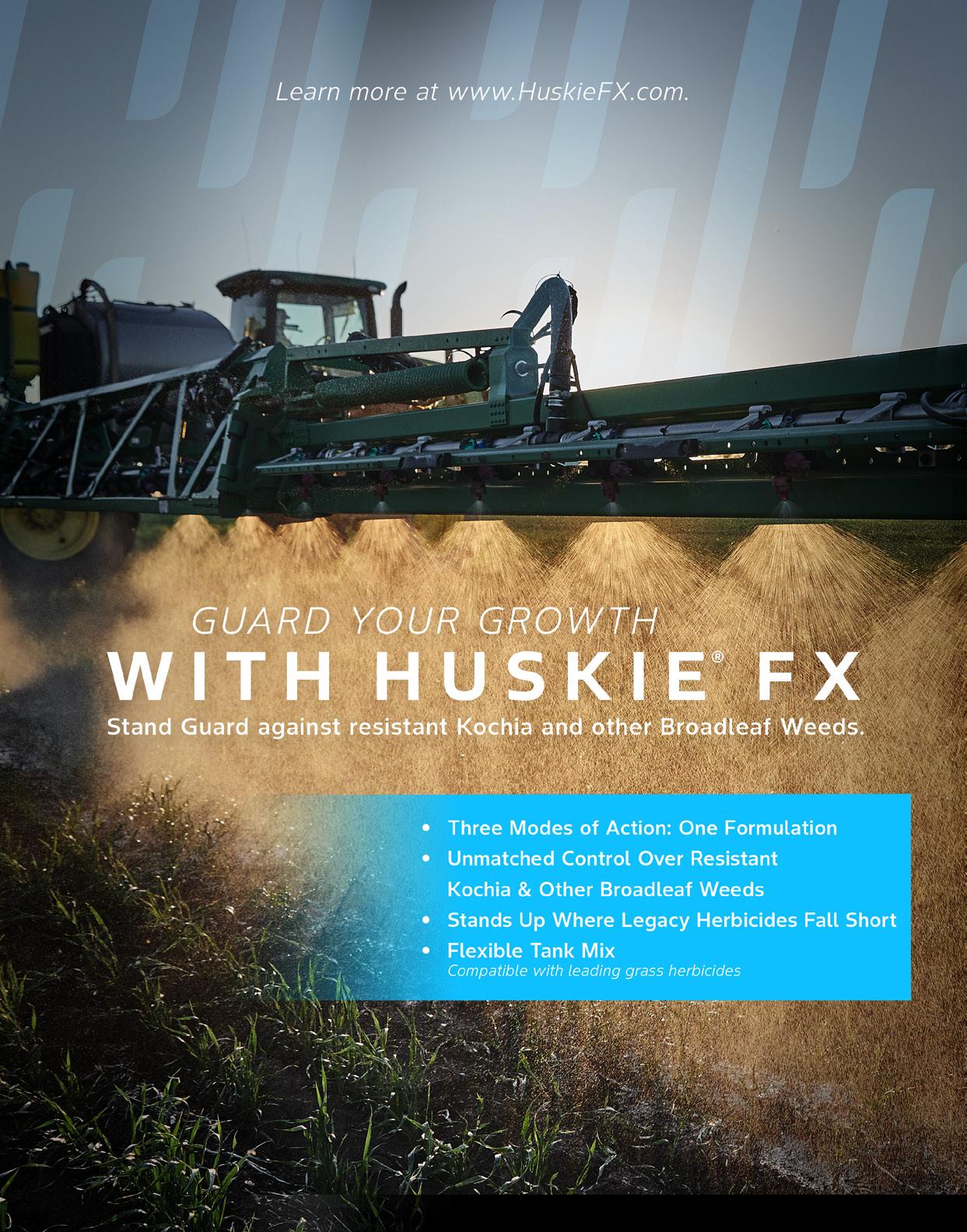
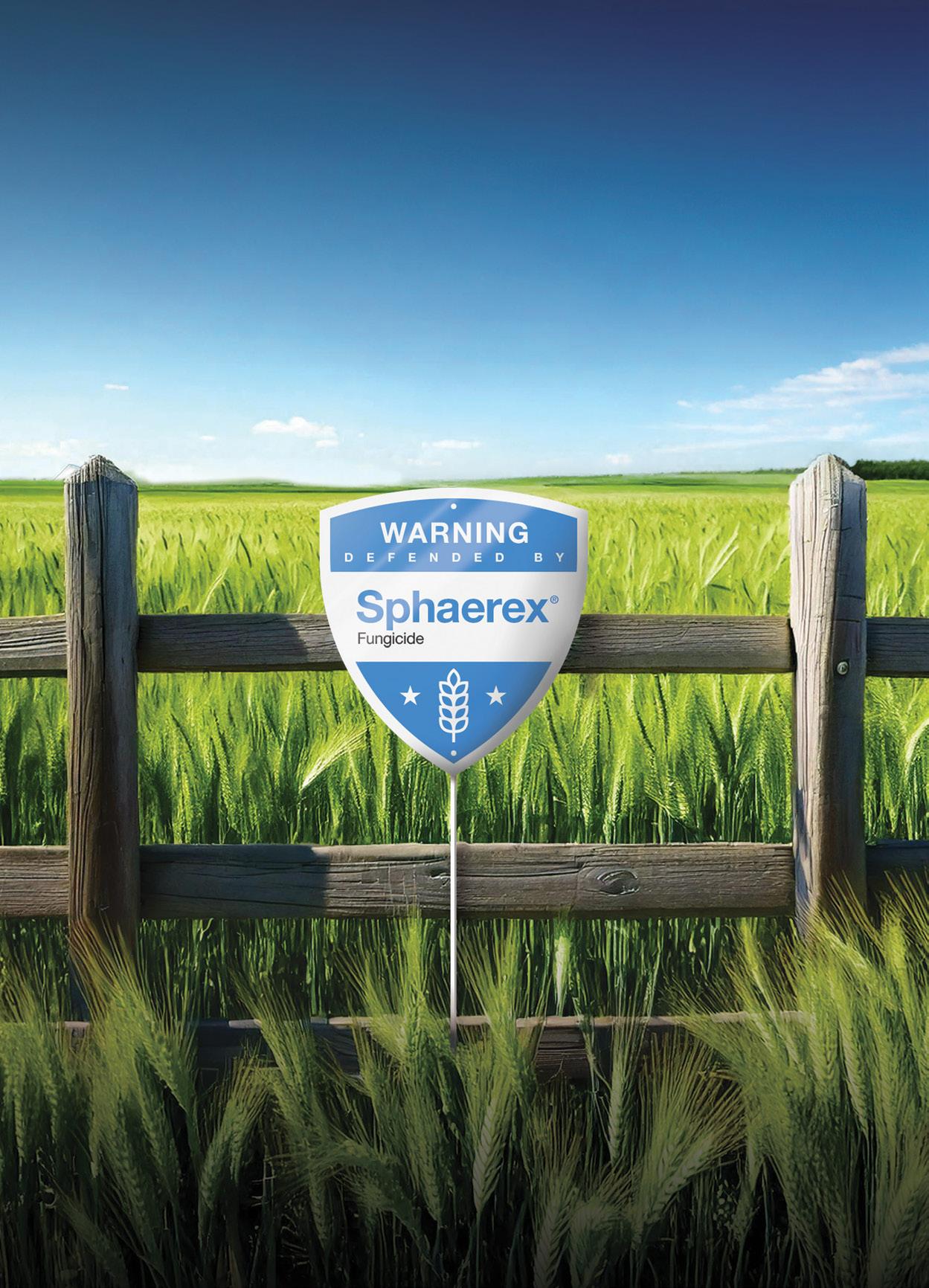
Forget the forecast with Sphaerex® Fungicide protecting your wheat. It goes to work in just 15 minutes, locking in rainfast protection up to eight times faster than competitors.
That means protection from the DON toxin-causing FHB heavy rains and hail can bring. What you’re left with is wheat that offers more yield potential, quality and ultimately, profit potential after just one application.
Defend your crop. Help protect your profits. Contact your retailer or BASF representative about Sphaerex fungicide.