
By Ella Stern Contributing Writer
innesota
Spokesman-Re -
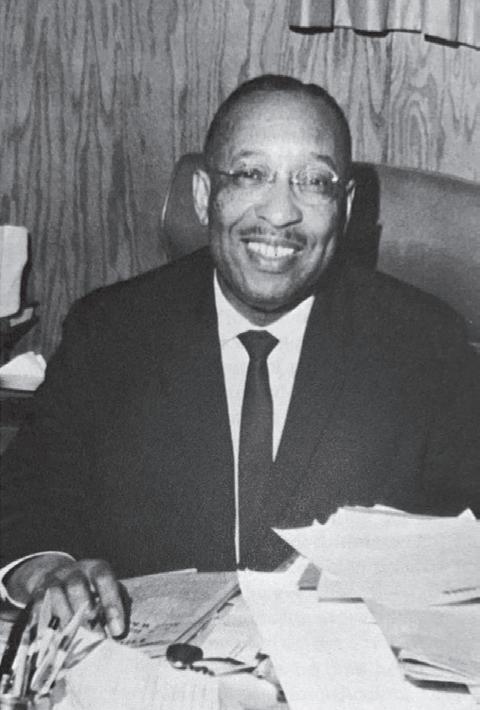
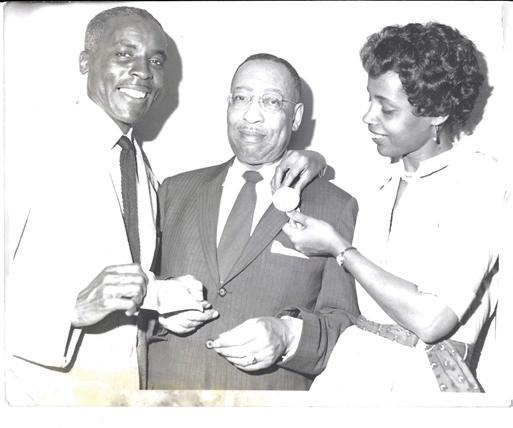
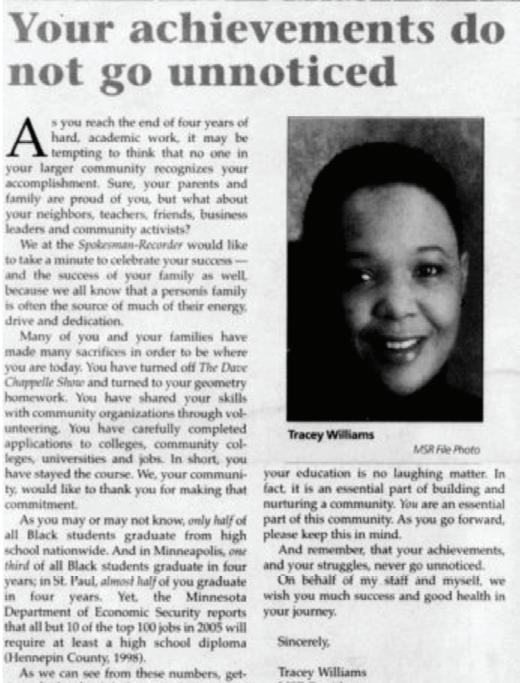
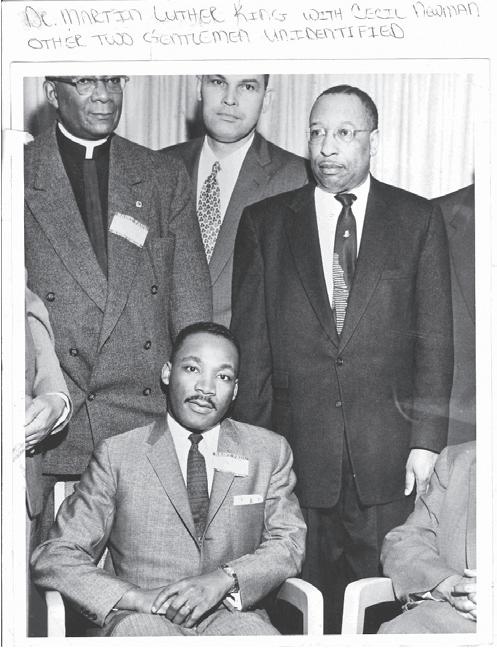
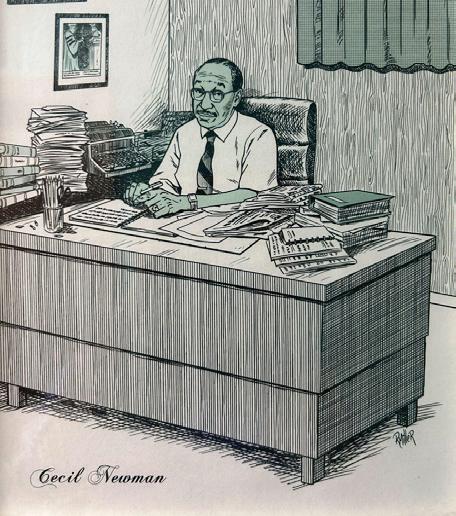
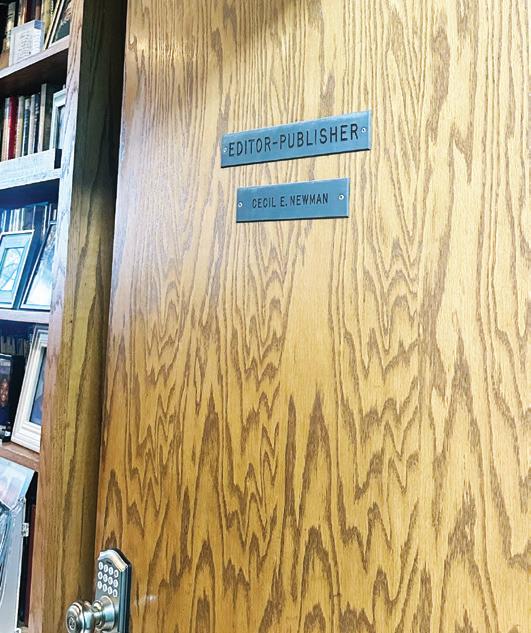
corder founder Cecil N ewman and his granddaughter, current MSR CEO and Publisher Tracey Williams-Dillard, were both 8 years old when they became interested in journalism. Eight-year-old Newman was the publisher of his school newspaper, an 8.5-by11-inch sheet of paper. Williams-Dillard remembers accompanying her grandmother to the newsroom as a kid, using tape to make the lines dividing articles on a grid sheet in the front office.
Now MSR’s CEO and publisher, Williams-Dillard is carrying on the legacy her grandfather started, a commitment to Minnesota’s Black community, while leading the paper as its first publisher in the digital-first era.
Newman moved to Minne-
apolis from Kansas City, Missouri, in 1922 with the goal of starting a newspaper.
“That was his dream,” Williams-Dillard said, “because
he wanted to make change. … Then as now, [the Black press was] telling stories that nobody else was telling, letting them [the Black community]
know things that they needed to know that nobody else was telling them.”
After being refused jobs at

By Clint Combs Contributing Writer
t. Paul Mayor Kaohly
Her was scheduled to appear at a community listening session
July 28 on the Aug. 5 closure of the Pig's Eye Park encampment.
She did not show, leaving Assistant Mayor Cedrick Baker alone to face an angry crowd at the North Garden Theatre.
Her absence comes as St. Paul Police Chief Axel Henry's sexual harassment allegations against her, filed in an April complaint letter but only made public this week, have thrust the mayor's office into crisis. Henry's complaint alleges Her made inappropriate sexual comments to him and other city employees, prompting the city to hire an outside law firm to investigate. Baker declined the Spokesman-Recorder's request for comment on the allegations that Tuesday.
When asked why the mayor was absent from the listening session, Baker said the Mayor's Office had concerns that one of the moderators may have been biased.
“We had a little bit of a back and forth with the organizers,” Baker said. “One of the concerns was the position of the moderator. I was told that this would be a situation where

we would be able to have a neutral conversation.”
The harassment investigation has amplified frustration among community members already upset over the city's plan to clear an encampment home to roughly 120 people along the Mississippi River. Officials say the closure follows a safety assessment that detailed fires, sexual assaults, thefts and two overdose deaths at the site. For many inside the theater, the numbers didn't add up. Ramsey County Board
Chair Rafael Ortega said the county has purchased just 48 shelter beds from Catholic Charities. Baker said the city is working to add capacity be-
yond that, but acknowledged roughly 1,400 people remain on Ramsey County's housing waiting list.
Justin Demico Ford, who has lived at Pig's Eye, said he's gone more than a year without hearing from the Homeless Assistance Response Team.
“I haven't heard from HART in over a year. I didn't even do an assessment yet,” Ford said. “I get more help from the people from the community... That's where our help is coming from. That's where we feel more safe, at our neighbors. Not [with] the state, not [with] the city.” Ford said he hasn't seen any outreach workers from
■ See PIGS EYE on page 5
By Jasmine McBride Editor
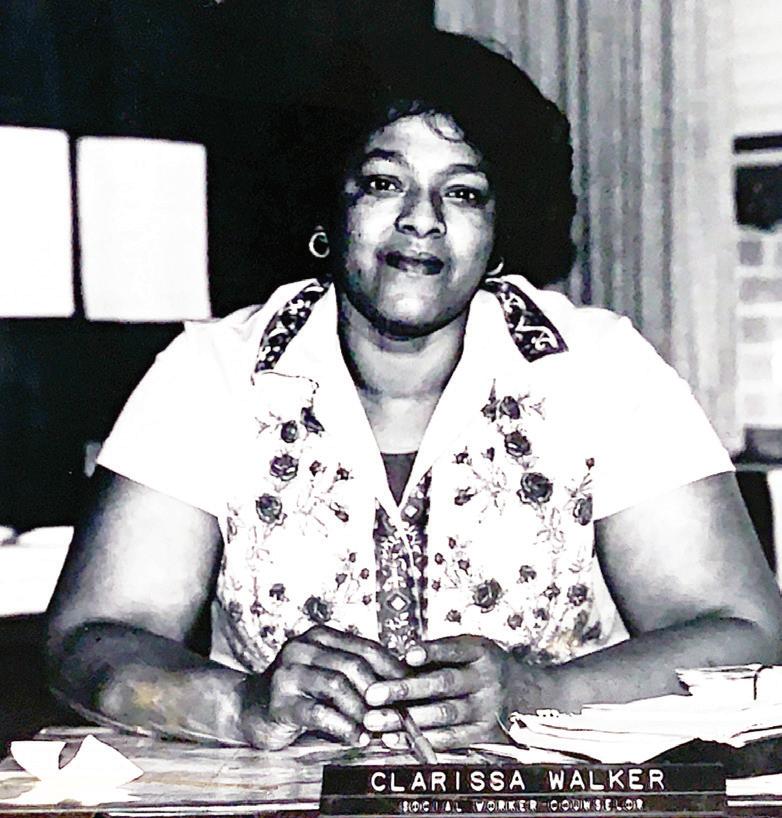
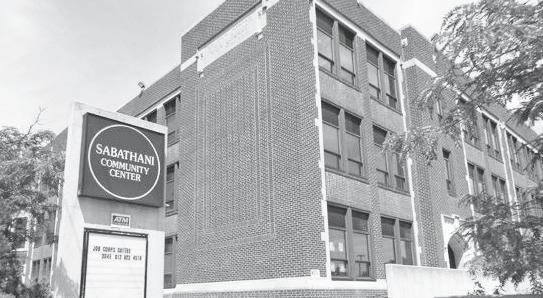
abathani Community Center will celebrate six decades of serving the heart of South Minneapolis with “Coming Back Home: Sabathani’s 60th Anniversary Block Party” on Saturday, Aug. 8, from 11 a.m. to 3 p.m. in the center’s parking lot at 310 E. 38th St. The event is free and open to the public. The celebration marks a milestone for one of Minnesota’s oldest Black-founded nonprofits while honoring two women whose leadership helped shape South Minneapolis: Clarissa
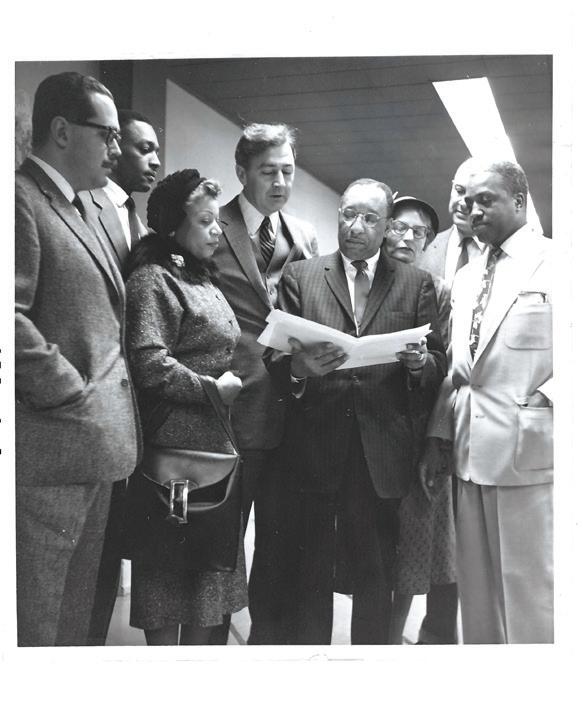
Rogers Walker and Launa Q. Newman, longtime Minnesota Spokesman-Recorder publisher and grandmother of current MSR CEO and Publisher Tracey Williams-Dillard.
Walker and Newman were both honored in November 2019 when the Minneapolis City Council designated sixblock stretches of South Minneapolis in their names: Clarissa Rogers Walker Way, running along 3rd Avenue South, and Launa Q. Newman Way, along 4th Avenue South, both stretching from East 36th to East 42nd streets. This year’s block party gives the broader community an opportunity to celebrate
both women together, following what organizers describe as a recognition that never got its full moment amid the pandemic.
Two women who shaped the South Side Walker, a Kansas City transplant who arrived in the Twin Cities in the 1950s, became a social worker and eventually landed at Sabathani, where she organized the Sabathani Family Resource Center. She ran its food shelf, clothing shelf and emergency assistance programs, making sure families in need were treated with dignity.
■ See SABATHANI on page 5
By Clint Combs Contributing Writer
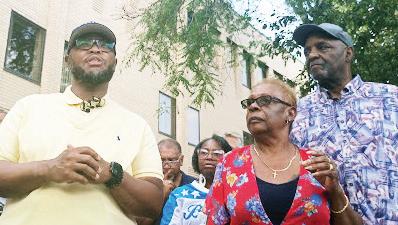
The Minneapolis NAACP chapter renewed its calls for Minneapolis Public Housing Authority Executive Director Abdi Warsame to resign and called on the city’s health department to declare a health emergency over mold and rodent-infested conditions at Heritage Park.
“They’re telling you that they have mold in their unit. Don’t that sound like a health crisis? So why is the health department silent?” Chapter Vice President Thomas Berry said outside MPHA headquarters July 28.
Berry called on the city to fast-track the relocation of Heritage Park residents amid a heat wave, noting some units lack air conditioning.
“There are residents over at Heritage Park who do not have AC units inside of their place. We know Abdi Warsame is currently inside an airconditioned building,” Berry said. “Our main concern is the relocation of these families, and then also the resignation of Abdi Warsame. We feel like it’s only right that he resign because he had from 2020 to 2026 to do something about this, and he ignored it as well.”
Warsame has led MPHA as executive director and CEO since March 2020. MPHA spokesperson Drew Halunen
assist with relocation.
Community activist Al Flowers accused Certus of inflating repair estimates to help sell the property. “They got some organization that would like to buy Heritage Park right now, and they’re trying to sell it,” Flowers said.
Certus CEO William C. Haase disputed the claim as “absolutely false and offensive.”
dently audited record of its work “affirms the company consistently put tenant needs first,” adding that it covered more than $10 million in unfunded operating costs while deferring management fees.
said the agency has worked to support Heritage Park as stakeholders, including the city and HUD, learned more about owner McCormack Baron Salazar’s shortfalls, deferred maintenance and mounting debts.
“Facts matter, and the fact is MPHA does not own, operate, or control any housing units at Heritage Park,” Halunen said.
“Not a single household at Heritage Park had a lease with MPHA.” Halunen said MPHA has invested more than $12 million in the property’s public housing units since 2022, helped 18 households relocate since April 2024, and led the effort to have a court remove the former owner in 2025.
Minneapolis approved a $2.5 million emergency ordinance to fund relocation expenses for roughly 700 residents. Heritage Park could
have faced condemnation and mass relocation, but an inspection found some apartments in stable condition, making move-outs optional for now.
City spokesperson Jess Olstad said residents remain a priority. “They deserve safe places to live. If residents feel unsafe and wish to voluntarily relocate because of that, the city and partners will work with them,” Olstad said.
The city said inspectors have examined roughly 326 units, 161 of them occupied, with 47 pending as officials secure resident consent.
Property manager Property Solutions & Services has worked through hundreds of open repair orders since last fall, which inspectors are still verifying. The $2.5 million will fund receiver Certus to hire repair contractors and pay a not-yet-chosen provider to
Bessie Rodgers, a Heritage Park resident who worked as a compliance specialist for McCormack Baron Salazar, lost her job when Certus took over management in December. Her employment had come with discounted rent of $1,249 a month; losing it raised her rent to $1,432.
“After the receivers took over, they said, ‘Oh, you’re not the employee.’ They said that’s regular market rent,” Rodgers said. Haase said Certus offered interviews to all McCormack Baron workers and estimated five were rehired; Rodgers was not among them.
Rodgers said her former employer’s inability to pay contractors left the property without basic pest control.
“We had one vendor, and he was an exterminator, and he did the roaches, the rats, and all that. Just one man for all that, and then he got overwhelmed because he stopped getting paid,” she said.
McCormack Baron said in a statement that an indepen-
By Kimerlie Geraci Contributing Writer
Under hazy skies Saturday, July 25, family members, close friends and guests boarded a Padelford lunch cruise at Harriet Island in St. Paul to celebrate Antoine "Tony" Berryman and his wife, Crystal, longtime Twin Cities community leaders, and honor their 60 years of marriage. As the boat departed along the Mississippi River, the lower deck unexpectedly became available exclusively for the celebration, creating an intimate setting for the family's four-hour cruise. Following a barbecue lunch and cake, daughter Kimerlie Geraci opened the program by sharing the couple's love story before inviting family members to reflect on their legacy.
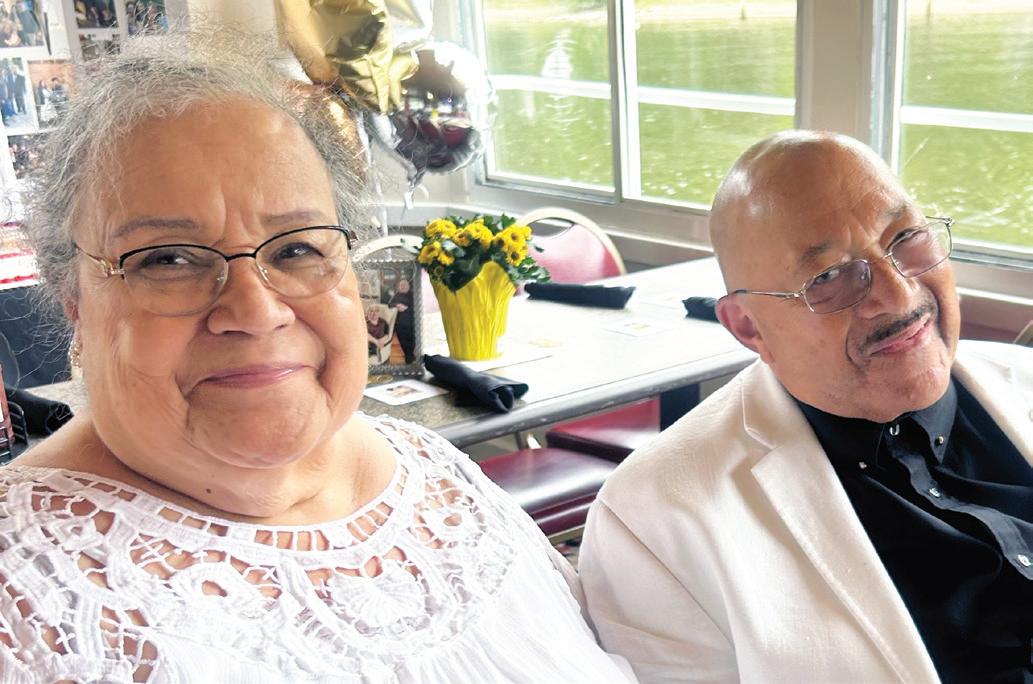
ence Lewis, a well-respected St. Paul Black barber and barbershop owner, and his wife, Mae, a talented beautician.
Tony's love and admiration for Crystal eventually led to a marriage proposal, and the couple wed July 29, 1966. Soon afterward, Tony adopted Crystal's two young children, Craig, then
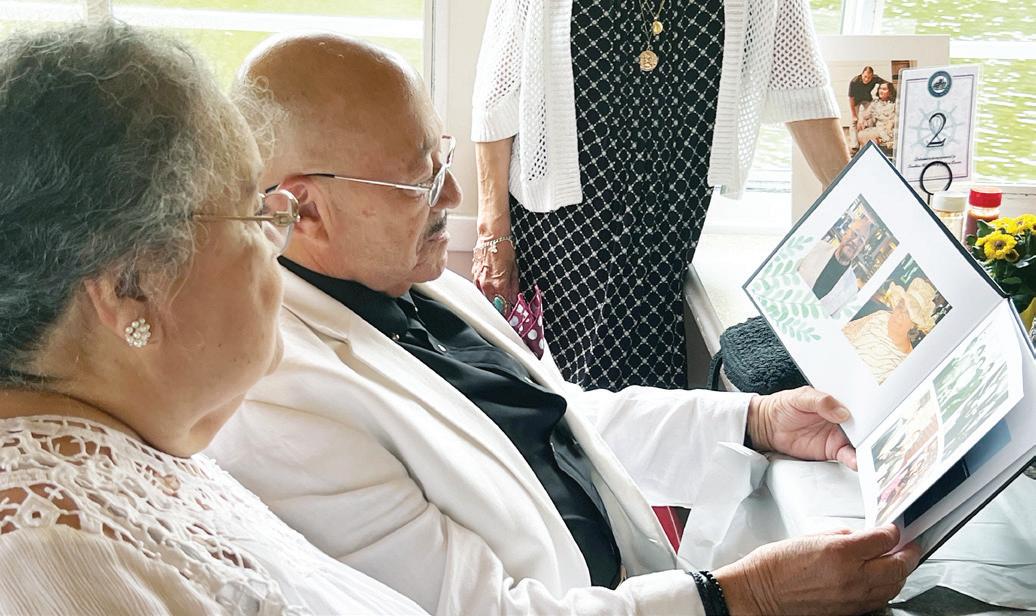
The Berrymans' love story began when Tony, an Air Force military police officer from Boston, was stationed in Duluth and met Crystal at a gathering hosted by her older brother, Pierre Lewis, a decorated Army Green Beret. Their connection was immediate. Crystal, then an independent 19-year-old mother of two, impressed Tony with her intelligence, confidence and creativity. She created window displays for Lerner Shops and The Emporium and credited her strong work ethic to her parents, Clar-
3, and Kimerlie, then 6 months old. Their daughter Angelique was born two years later, followed by Nicole in 1972. From the beginning, the couple approached work and parenting as partners. Tony often worked two or three jobs before they purchased Brenner's Pub in Uptown in 1973. Now known as William's Pub, the neighborhood establishment became a favorite gathering place for local sports teams and residents, known for burgers, cold beer and Crystal's homemade pizzas.
During heartfelt tributes from their children and family members, Tony reflected on the importance of forgiveness, faith and perseverance.
"You're going to face mountains in life, from highs to lows, and that's life," Tony said. "Always remember to say you're sorry. Never be afraid to apologize for your mistakes. Stay positive in your relationship and keep the faith, especially during sickness and difficult times."
Crystal reflected on the importance of family, the joy of cherishing each family member and the memories they created together.
Each of the couple's children shared lessons learned from their parents. Angelique thanked her father for teaching resilience and her mother for showing her what it means to be a loving wife and mother. Craig expressed gratitude to Tony for attending his sporting events and to Crystal for inspiring his love of mathematics. Nicole recalled childhood "sneak" sleepovers with cousin Alicia, hiding her in the back of the family car until they arrived home, and the support she received from her parents.
As the riverboat cruised the historic Mississippi, guests reflected not only on the Berrymans' six decades of marriage
Berry said MPHA’s oversight role required verification, not trust, in the former owner. “When you have a director, he’s not supposed to trust them. He’s supposed to trust his staff to go out and do their job because that’s what they’re getting paid to do — the oversight,” Berry said.
but also on their enduring contributions to the Twin Cities community. Tony later returned to U.S. military service, completing a combined 25 years in uniform. His service earned him recognition as U.S. Military NCO of the Year. As a Minneapolis Park Police officer, he received the AAA Safety Award, in addition to multiple commendations from the Minneapolis Police Department, a key to the city presented by then-Police Chief Janeé Harteau, and the proclamation of "Tony Berryman Day" on Oct. 4, 2013, for his work with the Police Activities League youth program. He also served for many years as a church deacon at True Apostolic Assembly, where the couple attended weekly service.
Crystal devoted much of her career to education, Native American advocacy and community development. As executive director and a leader with Heart of the Earth Survival School, Red School House and Migizi Communications, she specialized in grant writing, program development, assessment, reporting and culturally responsive education that expanded opportunities for Native American students and families.
The Berrymans' legacy lives on through their children, grandchildren and greatgrandchildren. Their family includes grandchildren Alexander and Nicolas Berryman; Trent Lewis and his wife, Kylee; Theodore and Nadia Lewis; Ava and Adrien Montout; Salvatore Geraci; Mia Kearney and her husband, Benjamin Kearney; and Gabrielle King and her husband, Alexander King; and great-grandchildren Rory and Brooks Kearney.
Their shared commitment to justice, civil rights, educa-
Resident Nicole Rojas said she has been sick since moving in three years ago, and mold has forced her two children to sleep in the living room. “My apartment flooded. It took three hours for maintenance to even come to try to fix the problem,” she said. “My tiles are coming up, and you can see the black mold. And I’ve been sick.”
Despite winning her lawsuit

Heritage Park exists because of the 1995 Hollman Consent Decree, which settled a 1992 NAACP fair housing lawsuit and required demolition of roughly 770 units of segregated public housing, replaced by the mixedincome development that opened in the early 2000s.
decades ago, Jackson wants out again. “It took a long time, ten years,” she said. “We want to get out here right away. If they give me the money right now, I’ll move out tomorrow.”
Clint Combs is a freelance journalist and contributing writer for the Minnesota SpokesmanRecorder. He welcomes reader responses at combs0284@gmail. com.
Gloria Jackson, one of the residents whose case led to that settlement, said she still cannot get repairs made to her townhome three decades later, even as mold builds up outside her kitchen windows.
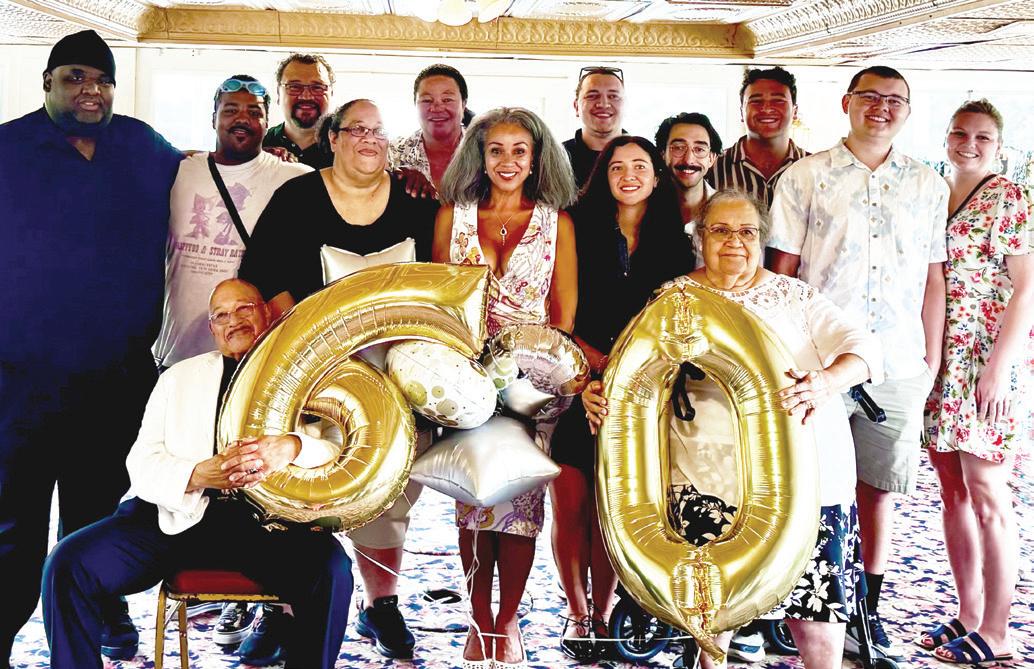
tion, family and faith has inspired generations to pursue higher education, serve their communities and help others. For six decades, Tony and Crystal Berryman have demonstrated that enduring love is measured not simply by the length of a marriage, but by the lives they have enriched, the communities they have strengthened, and the legacy they continue to pass from one generation to the next.
Kimerlie Geraci is a contributing writer for the Minnesota Spokesman-Recorder. She welcomes reader responses at kimerlieme@gmail.com.


By Jasmine McBride Editor
Lyneir Richardson still remembers the loan application that changed the direction of his career. Fresh out of law school and working as a bank attorney making eight-figure corporate loans, he was handed a pro bono assignment: a $100,000 loan for a barber on Chicago's West Side who wanted to buy his own building.
"People say, 'Oh, that's too small, that's too hard,'" Richardson said. "But for me, I saw value in what that guy was trying to do, and the neighborhood was the west side of Chicago, not very far from where I grew up. So that became my life work: How do you see value in people and in places that other people overlook or undervalue?"
Nearly three and a half decades later, Richardson is CEO and co-founder of The Chicago TREND Corporation, a commercial real estate firm that acquires shopping centers in lower- and moderateincome neighborhoods and invites local residents to become co-owners. The company's latest project, Hawthorn Crossings, is TREND's eighth shopping center overall and its first in Minneapolis, a 51,459-square-foot commer-
cial property on West Broadway Avenue that TREND has under contract to purchase from Sherman Associates. Over the past several weeks, TREND opened a crowdfunding campaign inviting North Minneapolis residents to coown the property directly, with investments starting as low as $1,000 alongside institutional capital. The investment window closed July 31. As of this printing, final results of the campaign were not yet available; MSR will provide an update on funding totals and next steps as they're announced.
"Commercial property, the commercial corridor, is your first impression of a neighborhood," Richardson said. "If the little strip shopping center is blighted or disinvested, it brings down property values, attracts loitering. It becomes a liability for the neighborhood."
TREND's path to North Minneapolis ran through 18 months of searching across the Twin Cities. The company had raised a real estate investment fund backed by institutional investors, including the MacArthur Foundation and a foundation formed by former U.S. Commerce Secretary Penny Pritzker. The McKnight Foundation, one of the fund's first investors, required that a portion of its investment go toward Minneapolis or St. Paul.
"We've looked in Uptown. We've looked in south Minneapolis. We looked in the Rondo neighborhood of St. Paul," Richardson said. "People were starting to take us even outside of the city."
That changed after Richardson met Warren McLean, president of the Northside Economic Opportunity Network, who introduced him to other neighborhood leaders and stakeholders. Reading the North Side Forum plan, which outlines roughly $1.5 billion in investment including the fu-
ture Blue Line light rail extension, sealed his decision.
"This is a neighborhood that's on the cusp of change," Richardson said. "We want to be a part of that change, and we want to have a seat at the table."
Before the campaign closed, TREND had already helped more than 23 local and Black-owned businesses open through its other properties, and Richardson said the company has more than 460 community investors across its portfolio, 70% of them people of color and 44% women.
"That's very different than the 81% of the value of commercial real estate owned by 1% of the population, kind of thing," Richardson said.
Richardson said he's drawn on an idea he first heard from Newark, N.J. Mayor Ras Baraka: that instead of only fighting gentrification, communities can also own a stake in it.
"Maybe we should own something and benefit and have a seat at the table as the neighborhood gets stronger,"


Richardson said. "That's what this offering is all about, that Hawthorn Crossings will have local and Black ownership in a seat of power as the neighborhood continues to get stronger."
The offering was registered with the Securities and Exchange Commission, with full details, including Richardson's resume, the business plan, financial projections and current tenants, posted on the crowdfunding platform Small Change under the Hawthorn Crossings listing.
Richardson paired that online transparency with in-person organizing: meetings in churches, gatherings of 40 or more residents on Saturday mornings, and sit-downs with nonprofits and community groups.
"I always start the meetings by [saying], no one ever knocks on the door and intentionally invites local people to own commercial property in the neighborhood," Rich-


ardson said. "That's what's unique about this."
A philanthropic partner also matched early investment: anyone who invested $1,000 and lived in one of the three ZIP codes surrounding the shopping center could receive a matching $1,000 grant, turning that stake into $2,000 in equity.
"Someone in one meeting said that sounds like reparations," Richardson said. "So, maybe it is."
More than 25 people had invested in the project as of late July, according to Richardson. Minneapolis is TREND's fourth city overall, following Chicago, Baltimore and Columbus, Ohio.
"Every place I start, I'm the outsider, the carpetbagger," Richardson said. "But over time, what I've enjoyed in this process is people start a meeting and their shoulders are up tight to their ears, they have a cynical look on their face. But as they hear our experience, hear our business plan, I like to see the shoulders go down, the cynical look change to supportive nods."
For more information on Hawthorn Crossings, visit www.smallchange.co/projects/hawthorn-crossings.
Lyneir Richardson is the CEO and co-founder of TREND. For more information, visit chicagotrend.com.
Jasmine McBride welcomes reader responses at jmcbride@ spokesman-recorder.com.








Sponsored by

By Jasmine McBride Editor
The Youth Financial Education Series continues this month with a look at banking basics: how young people can move beyond thinking of a bank as just a place to store cash, and start using accounts strategically to build savings and long-term security.
For many young people, a first paycheck is the moment banking stops being abstract. That was true for Hannah D. Williams. Before she learned more about banking, she thought of it simply as a place to keep money. Growing up, she mainly carried cash and paid for things that way. When she received money as a gift, it usually came as cash or a check that her parents would cash and hand over a few days later.
That changed at 15, when Williams got her first job and was required to have a bank account for direct deposit. Having her own account for the first time gave her a closer view of her own money, and with that came a realization about her own spending habits. “I realized that if I could easily see all of my money in my checking account, I would be more likely to spend it,” she said. In response, she devel-

oped the habit of moving a large portion of her paycheck into a high-yield savings account, a type of account that pays a significantly higher interest rate than a standard savings account, letting money grow faster simply by sitting untouched. She said the habit has helped her save
consistently and think about long-term financial goals rather than spending everything she earns.
Williams credits her work with Game Time Budgeting, and its founder, whom she calls Mr. Al, with helping her understand how to make her money work for her instead
of simply sitting in an account. Keeping funds in a high-yield savings account lets her earn interest while doing very little, she said. Mr. Al has also taught her, her parents and her younger sister about investing and building wealth over time, and the family now looks for opportunities to in
vest together, treating it as a shared, ongoing project rather than something only adults handle.
Today, Williams keeps the majority of her money in a high-yield savings account so it can keep earning interest while she saves for future goals, and intentionally keeps a smaller amount in checking. She said that’s for two reasons: it limits how much she can spend on impulse, and it adds a layer of security. With tap-to-pay accepted almost everywhere, she said a stolen card could be used quickly before she noticed, so keeping most of her money in savings reduces how much she could lose in that scenario. She also keeps notifications turned on for every card transaction, including tap-to-pay, so she knows immediately if something looks wrong.
Williams closed with two sayings her mother used to repeat, ones she said have stuck with her well beyond banking:
“I realized that if I could easily see all of my money in my checking account, I would be more likely to spend it.”
“The 7 Ps: Proper planning prevents poor performance,” and “Sometimes it is not a no; it is a not right now.”
The Youth Financial Education Series is supported by JPMorgan Chase. For more information or to learn about partnership opportunities, visit spokesman-recorder.com or contact admin@spokesmanrecorder.com.
Jasmine McBride welcomes reader responses at jmcbride@ spokesman-recorder.com.
On credit cards, Williams is direct: eligibility alone isn’t a good enough reason to get one. Many young adults are still learning how to manage and save their own money responsibly, she said, and if someone struggles with that, repaying borrowed money on time can be even harder. She said learning strong budgeting and saving habits first reduces the need to rely on credit in the first place. Used responsibly, she said, a credit card can be a valuable financial tool, but it should come after good money management habits are already in place, not before. Williams said greater financial literacy within the Black community could have a tremendous impact. People often assume others are simply “richer,” she said, when in reality they may just be saving, investing and planning differently with the money they have. Building those habits early, she said, creates more opportunities for families to build wealth, travel, invest, own businesses and reach long-term financial security. It also helps people understand that wealth building takes patience and time, and doesn’t happen overnight, and that the earlier those habits form, the more time they have to compound.







Continued from page 1
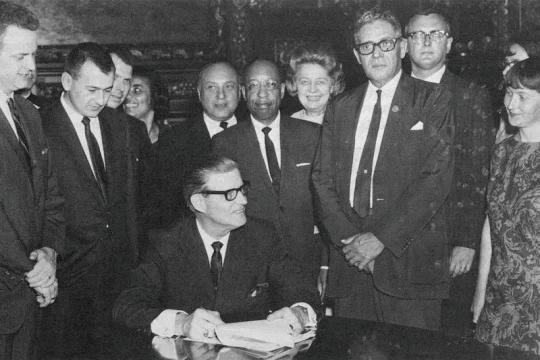
mainstream papers, Newman wrote for the Black newspaper the Northwestern Bulletin and freelanced for notable Black publications like the Chicago Defender. After serving as editor of the Minneapolis-based Black newspaper the Twin City Herald for seven years, Newman realized his dream of publishing his own paper. The first issues of the Minneapolis Spokesman and the St. Paul Recorder both came out Aug. 10, 1934.
“I didn’t have enough money to begin one newspaper, so I began two of them,” Newman told readers at the time, according to Williams-Dillard.
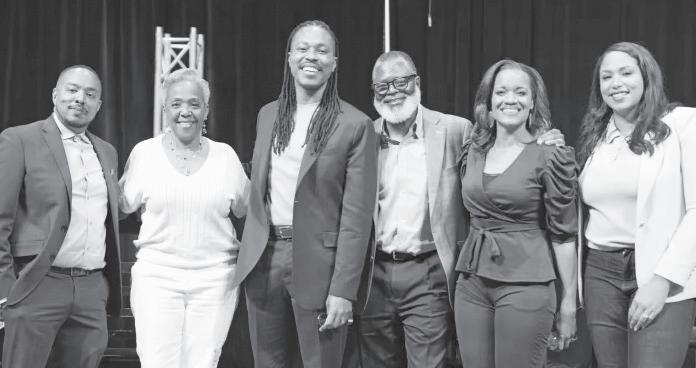
Members and supporters of the
rent to Black people or want them to know about job openings. Pullman porters carried the newspapers with them on the train and handed them off at stops, spreading the information across the country.
“I feel that the news we tell and the stories we cover are all for the better of our community.”
Williams-Dillard said readers’ trust made the papers a foundational resource in the community. Newman’s publications paid attention to their often-underrepresented lives and were grounded in the community’s perspective. The Spokesman and the Recorder covered lighthearted stories such as socialites and clubs. They also fiercely advocated for their community’s needs and were committed to spreading otherwise withheld information.
The newspapers told the community about work and rental opportunities at a time when many places would not
EYE
Continued from page 1
the city since the closure plan was announced earlier this month. “I have seen no one,” Ford said. “Please do more, because we need the help.”
Baker said 10 county staffers covering housing stability, financial assistance, social services and public health work the encampment daily, alongside three to four workers each from HART and the city's Familiar Faces unit, plus People Incorporated's ARC outreach team and RADIAS Health, which serves unhoused people managing mental illness or substance use. The county says it has assessed and found help for 18 people in the past week alone.
“It was very important then that papers existed because there were a lot of things going on, opportunities that African Americans would have never known [about] had it not been for the Black press,” Williams-Dillard said. Newman used not only his publications but his own words as a vehicle for change. In 1935, he wrote opinion pieces calling for a boycott of Hamm’s, Gluek’s and other Minnesota breweries that would not hire Black workers. He also published editorial cartoons ridiculing the brewers, according to the Minne-
sota Historical Society.
Nothing would have changed “had my grandfather not … kept writing about it,” Williams-Dillard said. “[He said,] ‘I’m going to keep talking about it and keep talking about it until change happens.’”
MSR has changed since then. Today, the paper honors more traditional journalistic standards compared to its activist roots and prioritizes solution-based news, according to Williams-Dillard. The Spokesman and the Recorder merged in 2000, and MSR has grown its online content. Through these changes, the paper has not lost its commitment to Minnesota’s Black community and its stories.
In 2015, the Minneapolis City Council designated the MSR building at 3744 4th Avenue South a historic landmark, citing its significance to the civil rights movement and its connection to Newman and photographer Gordon Parks, who got his start as a staff photographer there.
For instance, MSR recently
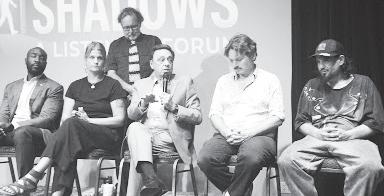
covered the annual celebration Rondo Days, which WilliamsDillard said demonstrates the paper’s commitment to a neighborhood that wants its stories told. MSR also writes about the work philanthropic organizations, local institutions and nonprofits do to serve the community, she said. Generally, the paper focuses on holistic coverage of the Black community, from general gatherings to milestones of community impact to deeper issues affecting Black people in Minnesota. It has also broadened its coverage to other underrepresented groups across the diaspora and beyond, acknowledging the connections between Minnesota’s diverse communities through events like Operation Metro Surge, for example.
In a world in which fake news and skewed stories about Black people abound, Williams-Dillard also sees the Black press as playing a crucial role in truth-telling. For example, when George Floyd was killed, community members and the Black press helped tell truthful stories that overrode the skewed narrative that Floyd died because of drugs in his system, she said.
Williams-Dillard sees MSR as facing struggles today similar to those in Newman’s era: corporate leaders and white people with money not investing in the Black press, organizations undervaluing Black consumers, and difficulty growing subscriber numbers.
She pointed to the rollback of diversity, equity and inclusion
to Williams-Dillard.
“Having a news source that’s been around for a long time, it carries a lot of responsibility and credibility,” said Lisa Hills, executive director of the Minnesota Newspaper Association and the Minnesota News Media Institute.
To Williams-Dillard, while it can feel daunting to run a paper that people can read online from anywhere in the world, it also feels rewarding to run her grandfather’s paper and support her community.
“I feel that the news we tell and the stories we cover are all for the better of our community,” Williams-Dillard said.
“Knowing that what you’re doing, you hope creates a better outcome for people, is a very good feeling, and you feel like
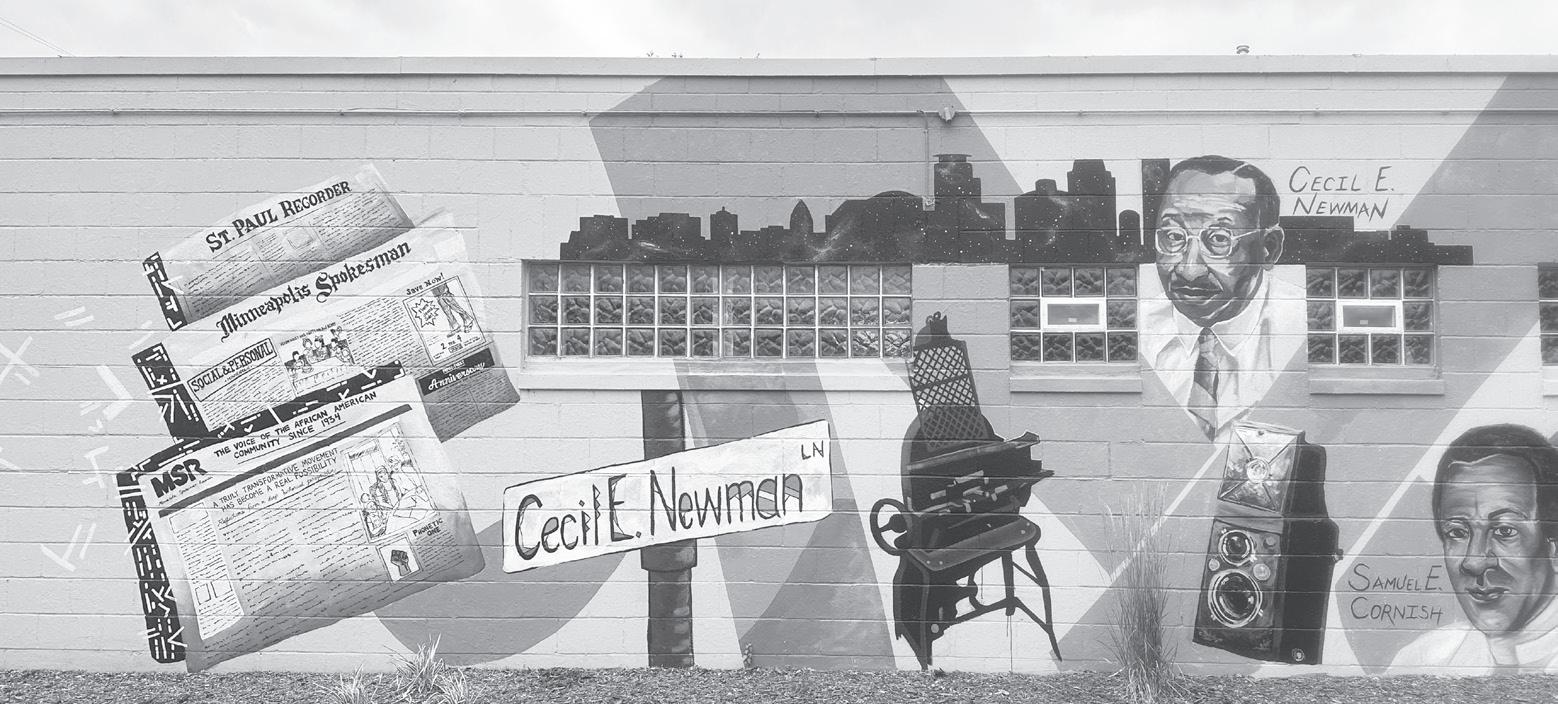
“Seldom do I ever see anything written in other publications that highlight the work that the people do that we generally highlight,” Williams-Dillard said. “That’s our focus: to make sure we’re informing, inspiring and engaging our community.”
sistance programs, making it hard for outreach workers to stay in contact.
"It takes time, a lot of time, to build trusting relationships with people," Krueger said. "That's not a week. That's not a month. That's not even three months."
Krueger said outreach workers need to show up consistently, checking in on court dates, housing referrals and family emergencies. They're the ones who first earn a resident's trust, she said, and it was painful to hear that multiple residents like Ford are having only "one-off connections" with outreach staff.
initiatives under the current administration as one factor deepening those struggles.
MSR has stayed in Newman and Williams-Dillard’s family for its 92 years of existence and has never missed a day of publication, according
lessness, and urged local lawmakers not to follow that path.
you’re doing good work that makes a difference.”
Ella Stern is a contributing writer for the Minnesota Spokesman-Recorder. She welcomes reader responses at erstern10@gmail.com.
Her daughter, Neva Walker of IME Consulting, has carried that legacy forward as a copresenter of this year’s block party. Neva Walker grew up at Sabathani, working the food shelf as a child, recruiting friends for back-to-school donation drives as a teenager, and later raising her own son alongside nieces and nephews in the center’s youth program.
“My mom was a visionary that believed her main goal was taking care of people,” Neva Walker said. “It wasn’t just about giving food; it was about seeing the whole person and their family.”
Neva Walker described her mother’s approach as offering “a helping hand up” rather than charity alone, whether that meant teaching someone to grow their own food, helping them find stable housing, or
Ortega called the end game "the toughest question anybody could ask me tonight," adding the county can't guarantee the effort will work for everyone.
Seneca Krueger, an outreach worker who connects unhoused encampment resi-
making sure elders had a community program to turn to.
“People don’t just get streets named after them,” Neva Walker said. “For us in the Black community, oftentimes our leaders who are just doing the actual work day to day, they don’t get recognized either.”
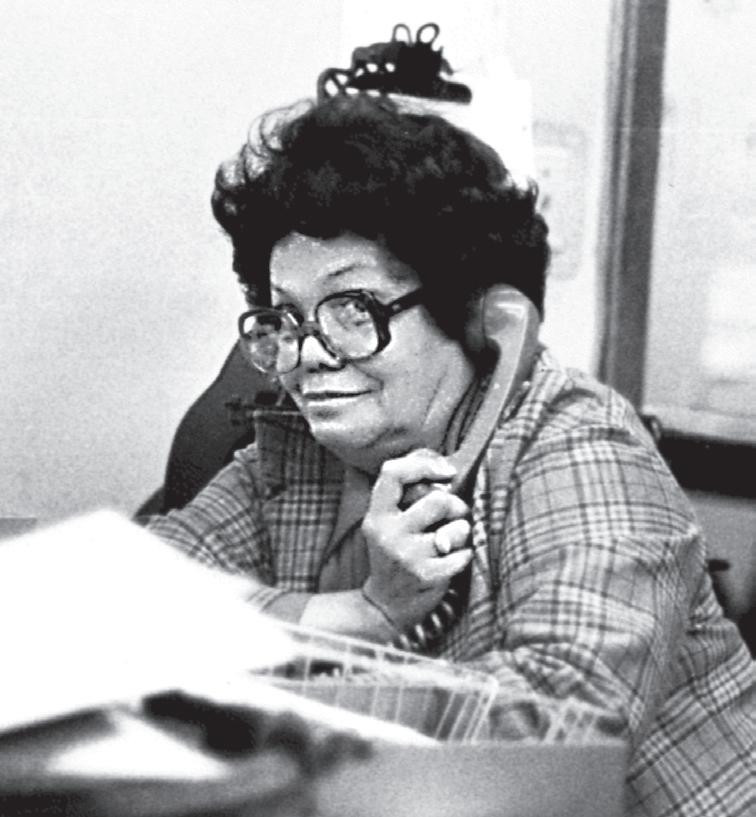
Newman, an Iowa native who moved to the Twin Cities in 1958, married Cecil Newman, founder of the Minneapolis Spokesman and the St. Paul Recorder. After Cecil Newman’s death in 1976, Launa Newman took over daily operations of both papers, eventually leading their merger into the Minnesota Spokesman-Recorder in 2000.
She later passed leadership to her children, Norma Jean Williams and Wallace “Jack” Jackman, before naming her granddaughter, Tracey Williams-Dillard, publisher and CEO in 2007. She remained active in community service until her death in 2009.
“My grandmother taught me
dents to services that begin the process toward stable housing, said building that trust is complicated by practical barriers. Many unhoused residents lack the identification or paperwork required to qualify for free phone as-
Audrey Segovia, a nurse with Hennepin County Healthcare for the Homeless Street Outreach, said she's watched Minneapolis Mayor Jacob Frey's administration mislead the public about the scale of unsheltered home-
that this work has never been about any one person; it’s about showing up for your community and making sure their stories get told,” Williams-Dillard said. “Seeing her honored alongside Ms. Walker at this celebration means everything to our family, and it’s a reminder of the shoulders MSR and Sabathani both stand on.”
“A blueprint” for the next 60 years Sabathani President and CEO Scott Redd, who joined the organization about four years ago, said the community’s resilience through the pandemic, the 2020 upris-
ing following George Floyd’s murder, and more recent challenges has been shaped by the leaders who came before him.
“I don’t think there’s too many communities that’s been thrown, especially Black communities, all these things and been able to withstand it like this community has,” Redd said. “I think that doesn’t happen without the groundwork, without leaders like Ms. Newman, Ms. Walker, Mr. [Cecil] Newman, Bill English, Tracey [Williams-Dilllard].”
Redd said stepping into the role felt less like starting something new and more like
"I can tell you, as someone who's day in, day out in East Phillips looking for people who I worked with for years to connect them to their housing referral, to connect them to their treatment referral, to connect them to their infectious disease care, it is not easy," Segovia said. "I am really hoping that you can actually take the moment to look at how it is absolutely not working and how harmful Mayor Frey's rhetoric has been about deploying into hot zones, lying to the media about how there's 12 unsheltered people out at a given time."
Ford turned directly to Baker, urging the assistant mayor to try something different.
"You said you did research and studies about the past evictions and stuff. Didn't you
continuing an existing legacy.
“I had a blueprint,” Redd said. “Never have I worked for an organization that has been such a long-standing, trusted community partner like Sabathani.” Redd drew a direct connection between Sabathani and MSR as sister institutions.
“When you think about organizations like the Minnesota Spokesman-Recorder, we are legacy organizations that our community is not going to let go away, because they need us,” Redd said. “They need places like Sabathani, places like the Minnesota Spokesman-Recorder, to capture their voice. To not speak for them, but to speak to them and with them.”
Sabathani’s building is currently undergoing a geothermal heating and cooling system upgrade, funded in part by $17 million in raised support, replacing a roughly 67-year-old HVAC system that cost about $28,000 a month to operate.
learn that none of the stuff you did in the past worked? ... I want to go home to my daughters. I'm sick of this. I need to get back to my family," Ford said.
Ford then rattled off his PTSD and depression diagnoses. "I started a nonprofit. I do more for my community than you guys do. I do more than y'all do. How is that?" Ford said. "The community should not have to come out and help us when you guys get paid for it."
For the city’s response and more information, visit https:// www.stpaul.gov/residents/ citys-response-encampments.
Clint Combs is a freelance journalist and contributing writer for the Minnesota Spokesman-Recorder. He welcomes reader responses at combs0284@gmail.com.
What to expect at the block party
The event will feature live music from Sounds of Blackness, Johnnie Brown and other local performers, along with food trucks and a vendor marketplace Redd described as an extension of the neighborhood’s “Black Wall Street.” A backpack giveaway sponsored by Greater Twin Cities United Way will distribute any unclaimed backpacks starting at 2:30 p.m. on a first-come, first-served basis. The event is presented in partnership with Neva Walker of IME Consulting and Tracey Williams-Dillard of the Minnesota SpokesmanRecorder, with additional sponsorship from CenterPoint Energy, Xcel Energy and others. More information is available at www.sabathani.org/block-party.
Jasmine McBride welcomes reader responses at jmcbride@ spokesman-recorder.com.

By Aaliyah Demry Digital Editor
The transition from corporate leadership to entrepreneurship can be rough, but Tommy McNeal is turning his executive experience into a transformative movement for the Twin Cities.
In the latest episode of MSR On the Radar, host Aaliyah Demry sat down with McNeal, president and CEO of McNeal Management Inc., as he outlined plans for a 30,000-squarefoot business and event facility in Brooklyn Center.
McNeal, a Chicago native who has called Minnesota home for more than two decades, climbed to the top of the corporate ladder, serving as a senior executive overseeing customer experience for a Fortune 50 company. Despite his success, he couldn’t shake a familiar feeling.
“I was fortunate enough to be able to allow my work ethic to speak for itself in order to climb the ranks of corporate,” McNeal said. “But in the back of my mind, like most of us in our Black community, there’s this sense that we’re all replaceable.”
Driven by faith and a desire to build long-term generational wealth, McNeal retired from corporate America to translate his executive knowledge into community equity.
“I had to figure out a better way to take my hustle and turn it into something more sustainable,” McNeal said. “And that’s creating business opportunities and utilizing the talents and skills that the Lord has provided to me.”
In 2019, McNeal founded McNeal Management Inc., the parent company of McNeal Business Enterprise, which operates three core pillars designed to provide solutions for small business owners, corporate professionals and job seekers: McNeal Consulting, SPARK and Flame Mobile Kitchen.
McNeal Management
Business & Event Center
Just off Highway 100 and John Martin Drive at 1907 57th Ave., the McNeal Management Business & Event Center will feature a business incubator, shared administrative services, a commercial kitchen and a 1,000-seat event venue designed for galas, banquets and regional conferences.
Originally planned for two acres, the project quadrupled
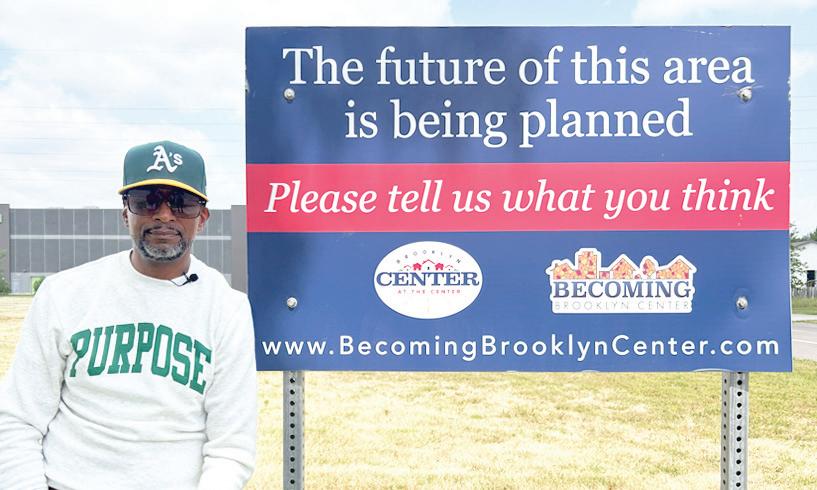
in size after the city of Brooklyn Center granted pre-development rights to expand it to an eight-acre site. McNeal said this will allow for a potential second phase focused on community housing.
“This is a true gift from God,” McNeal said. “It’s an accumulation of all of my work and my focus around what’s important to me, which is community.”
McNeal Consulting
One of the center’s primary features is a business incubator under McNeal Consulting that provides small businesses with access to high-level corporate services. McNeal serves as an executive coach and fractional leader, partnering with programs to help entrepreneurs build sustainable operations.
“My goal inside the business center will be [to be] able to
By Aamira Redd
Contributing Writer
A longtime vision to create a space that honors Rondo’s artists and creatives has finally become a reality. On Saturday, July 25, the community celebrated the inaugural Selby Arts and Cultural Day and the grand opening of the Rondo African American Arts District (RAAD), hosted by the Rondo Community Land Trust. The celebration brought together local artists, vendors, musicians and community members for a day of art, culture and live entertainment.
divided the community. Despite these challenges, Rondo’s history, traditions and cultural contributions have continued to endure through generations of residents, artists and community leaders.
“So much love, care, consideration and frustration went into making sure not only this day happens, but laying down the foundation for our Rondo African American Arts District. We are reclaiming our time, reclaiming our community and reclaiming our greatness,” said St. Paul City Council member Anika Bowie at the event’s ribbon-cutting ceremony.

Arts District was about more than establishing a physical space, it was about recognizing the talent already present in the neighborhood and creating opportunities for local artists to thrive.
“We realize that there is a lot of local talent in Rondo that deserves a platform to be seen and acknowledged. There’s a lot of history here in the neighborhood as well, we wanted to come up with something that was going to amplify and bring opportunities for the Black and Brown artists who are here in the neighborhood, just because there is a lack of infrastructure, of arts and culture work, down Selby Ave., and we wanted to find a way to do that, but also tie it into some of our economic repair work that we do with our Community Land Trust,” said De Johnette.
The celebration also included the unveiling of the district’s official RAAD flags, which will line light poles along Selby Avenue from Dale Street to Lexington Parkway. The flags serve as a visible symbol of the district, honoring the artists, history and cultural legacy that continue to define and shape the Rondo community.
For generations, Rondo has been a center of Black culture, entrepreneurship and community in St. Paul. Once home to one of the largest African American communities in Minnesota, the neighborhood was deeply impacted by the construction of Interstate 94 in the 1960s, which displaced hundreds of residents and businesses and physically
For over 10 years, the vision to have a space for Rondo creatives has been under development. According to Mikeya Griffin, president and CEO of the Rondo Community Land Trust, the journey to establishing the Rondo African American Arts District was years in the making, with progress often facing minor setbacks and delays.
“We wanted to make sure that we were connecting with the right artist and historian and partners to help us continue to carry things through, and it really started with just some placekeeping things,” said Griffin.
Taylan De Johnette, arts and cultural program advisor for the Rondo Community Land Trust, noted that the creation of the Rondo African American
Artist, Rondo native and Hallie Q. Brown Community Center Executive Director Benny Roberts emphasized the importance of celebrating Rondo’s cultural heritage while recognizing the prominent figures whose contributions helped shape the community’s history and legacy.
“The Rondo African American Arts District is not just about celebrating our art heritage now and knowing about the beautiful artists that are here. It’s a shame if you’ve never heard of Percy Hughes. It’s a shame if you’ve never heard of Melvin Carter Sr. It’s a shame if you never heard of Donald Walker. This is about telling the whole story, including everyone,” said Roberts.
He continued: “Today is the first day of a launch pad of something deeper, something intentional for our community, so when people come to our community, and they want to find out who the dancers are, they want to find out who the musicians are, and the
a luxury establishment.
Courtesy
provide legal services, human resource services and financial literacy,” McNeal said.
Turning the hustle into a scalable business
When asked what advice he would give to the younger generation, many of whom are starting clothing lines, becoming content creators and running small businesses while still in high school, McNeal stressed the importance of building administrative structure over short-term hustle.
“Ensuring that they have all their paperwork in order, that they’re filing their taxes on time, and that they’re not treating it like a hustle initially,” McNeal advised.
McNeal encourages young business owners to treat their brand with the same care, prestige and intentionality as
singers, and the institutions that formed them, they’re gonna come back home.”
The Rondo Community Land Trust has plans to commission around 7 to 10 murals in the next couple of
“Treat your company, regardless of the size and scale of it, no different than your favorite place to be wined and dined in or to go and hang out and celebrate,” McNeal said. “That level of experience... in the long run, you will have the opportunity to have a firm infrastructure that you’re building that will allow you to grow your business at a more sustainable rate.”
“I had to figure out a better way to take my hustle and turn it into something more sustainable.”
SPARK
Housed inside the business incubator will be SPARK (Supporting People Acquire Reentry Knowledge), a workforce development program McNeal founded in 2025. The initiative serves as a staffing and career management pipeline for individuals seeking non-traditional pathways into the job market.
“Reentry could be a mother at home who has been a housewife and or a single parent and haven’t had the ability
years, which will add to the existing murals located on the Mississippi Co-Op and at the Rondo Community Land Trust building. For more information on the Rondo African-American
to work, and now they want to get back out into the work field,” McNeal said.
Flame Mobile Kitchen
The center’s culinary operations will be anchored by Flame Mobile Kitchen, McNeal’s mobile catering company, which will use the facility’s commercial kitchen to support community events.
To celebrate the development and engage the community, McNeal is hosting a “Land Launch” fundraising celebration Aug. 15 from 11 a.m. to 7 p.m. at the Brooklyn Center site. The event will feature a Frankie Beverly & Maze tribute concert, the 7th Annual Black Beauty & Hair Expo, and a food vendor showcase led by Flame Mobile Kitchen. Groundbreaking and construction are expected to be completed between late 2028 and early 2029. For more information, visit www.mcnealmgmt.com/. If you’d like to nominate someone to be featured the Minnesota Spokesman-Recorder’s “On the Radar,” visit spokesman-recorder.com/ on-the-radar-nominations.
Aaliyah Demry welcomes reader responses at ademry@ spokesman-recorder.com.
Arts District, visit https://www. rondoclt.org/RAAD.
Aamira Redd is a contributing writer for the Minnesota SpokesmanRecorder. She welcomes reader responses at aamiraredd@gmail.com.


















DevSecOps Engineer: Plymouth, MN
By Richard T. Herman
On a call held after a federal immigration agent killed Renee Good but before Border Patrol agents killed Alex Pretti, a federal prosecutor reportedly listened as Gregory Bovino described how his forces would “pacify” Minneapolis. Afterward, the prosecutor told colleagues: “They’re going to kill someone else.”
Seventeen days later, federal agents killed Pretti.
That sequence is the central revelation in CNN’s new investigation into Operation Metro Surge. It doesn’t prove Bovino caused Pretti’s death, or that any commander committed a crime. But it raises an urgent question: Did officials recognize the operation’s tactics were creating a risk of more bloodshed, and did anyone act on it?
For Minnesota’s Black and African immigrant communities, this isn’t an abstract dispute about federal management. It’s a familiar civil-rights problem: heavily armed officers entering neighborhoods under a command structure that prizes control, resists oversight and expects its account accepted before the evidence is examined.
CNN reports Bovino was frustrated that prosecutors weren’t bringing enough cases against protesters accused of assaulting officers. But prose-
cutors who reviewed the proposed cases reportedly found many didn’t withstand scrutiny; evidence contradicted agents’ accounts, and agents were frequently found to be providing false information. Federal prosecutors aren’t a charging desk for an enforcement agency. Their duty is to the Constitution, not to validating every arrest. Declining a case the evidence doesn’t support isn’t obstruction; it’s the system working as intended. What prosecutors on that call apparently saw was more dangerous than weak cases: a culture that rewarded confrontation, treated skepticism as disloyalty and demanded charges even when allegations couldn’t survive review.
One prosecutor predicted where that would lead.
“Minneapolis
After Good was killed Jan. 7, Bovino reportedly said his forces would not calm Minneapolis down but put it down, speaking of thousands of agents acting without waiting for local police. That was not the language of communitybased law enforcement. It was the language of occupation. Minneapolis knows the danger of a policing culture

‘The
IT Company seeks DevSecOps Engineer to integrate security practices into DevOps workflows, automate security checks, and ensure the safety of cloud infrastructure. Work closely with development and security teams to enhance the security posture of applications and systems. Build and Configure delivery environments by using CD/CI, Agile delivery methodologies. Create and assist in performing various types of tests. Perform troubleshooting. Generate customized reports. Offered Salary: $116,480.00 to $116,500.00/yr. Send resumes to: HRD, VITS Consulting Corp., 14264 23rd Ave N, Plymouth, MN 55447. Minnesota
By BlackPressUSA Newswire
submissions@spokesman-recorder.com
submissions@spokesman-recorder.com
ads@spokesman-recorder.com
submissions@spokesman-recorder.com.
that equates domination with public safety. Neither Good nor Pretti was Black, but the accountability problem is recognizable: overwhelming force, residents dismissed as threats, oversight resisted.
The Spokesman-Recorder has documented how the deployment disrupted food access, health services and community care for Black residents, Somali Minnesotans and other immigrants who were never legitimate subjects of immigration enforcement. Once a community is treated as hostile territory, everyone in it becomes collateral damage.
Hennepin County prosecutors have already charged two federal agents over alleged misconduct during the operation, including an ICE agent accused of filing a false report af-
It is a well-established fact that the Black Press is and always has been the “Trusted Messenger” of the Black community. With that being said, it is also very interesting that when many political organizations and donors decided to support Voter Registration and Get Out The Vote, those donors gave their dollars predominantly to Black organizations like the Urban League, the NAACP, the League of Voters, and other nonprofit groups. Those groups will prepare and send out press releases about such voter participation efforts since Black people were responsible primarily for the Voting Rights Act of 1965. What is most interesting is that those press releases rarely find their way onto CNN or the major news networks. Those press releases and calls to Black voter participation are carried in the Black Press. However, the dollars that support those press releases being written, nor the ads that carry the message of those releases, reach the Black Press. Historically, the dollars
behind those messages do not find their way to the very Black Press that carries those messages.
Now, as we approach one of the most important Midterm elections in the history of this nation, it appears that, once again, the Black Press will be expected to carry the message about voter turnout, while political and campaign dollars go to the White mainstream media.
ter shooting a Venezuelan man. Federal officials also recently turned over body-camera footage and other evidence in the Good, Pretti and SosaCelis shootings after months of jurisdictional conflict.
That review must now extend up the chain of command. Investigators should determine when Justice Department and Homeland Security leaders learned agent-supplied cases were failing review, and whether concerns raised after the Bovino call reached supervisors. Congress and both departments’ inspectors general should investigate too, not to criminalize forceful rhetoric, but to determine whether officials knew the operation was becoming dangerous and failed to rein it in.
A federal prosecutor allegedly heard a commander describe subduing an American city and feared someone else would die. Then someone did. The question now is whether those warning signs were visible inside the government, and why the operation continued without enough restraint to prevent it.
Richard T. Herman is a nationally recognized immigration attorney and founder of Herman Legal Group. He has practiced immigration law for more than 30 years and is the co-author of “Immigrant, Inc.: Why Immigrant Entrepreneurs Are Driving the New Economy.”
By Sebastien Vante
To every man of color holding it together: I have anxiety. Not the kind that’s easy to name at the dinner table. The kind that finds you at 3 a.m., when the house is quiet and everyone you love is asleep, and somehow that stillness becomes the loudest room you’ve ever been in. The kind that walks into a meeting with you and whispers, “Who do you think you are?” just loud enough that you start to believe it.
I overthink. I self-doubt in ways that don’t match what people see from the outside. The thing nobody talks about is how lonely that is, because from the outside everything looks fine, and so you learn to let it look that way. You smile in the right places. You lead the meeting. You hold the room. You go home and hold the family. And somewhere in all that holding, you forget to ask who is holding you. You can be surrounded by people who love you and still feel utterly alone with what’s going on inside you. That’s not weakness. That’s what happens when we never learned we were allowed to need something.
I know that isolation from the inside: the performance of okayness, the exhaustion that has nothing to do with sleep, the quiet questions that sit on your chest before your feet hit the floor. Am I enough? Am I doing enough? You carry that alone because you were
taught that a man who is struggling is a man who is slipping, and being a Black man means holding that line even tighter.
So you grip. You go quiet. You disappear in plain sight. I see the same wound in the young men I serve every day, some of them teenagers navigating homelessness, who have been performing strength since before they had any business having to. The streets taught them trust is a liability, that the safest version of yourself is the hardest one. When you’ve had to fight for every resource, your nervous system doesn’t switch off just because someone offers you a safe space. What looks like aggression is often terror. What looks like resistance is often a young man who has been let down so many times that hope feels dangerous.
The Democrats, Republicans, Independents, and supporters of Initiatives should not assume that our votes are unimportant.
Elections are won on a single vote.
The United States Supreme Court in Reynolds vs. Sims, 1964. That case established the ‘One Person, One Vote” rule. The rule in that case made it mandatory to base legislative seats on population within districts rather than on geography, and guaranteed Equal Protection coverage under the Fourteenth Amendment to the Constitution.
That principle has not been abolished, and neither should we act as if our one vote does not count. Let us not forget our own values, and we look toward the Midterm elections. The “Trusted Messenger” can make the difference.
This op-ed appeared first in Black Press USA. For more information, visit www.blackpressusa.com/op-ed-the-trustedmessenger-and-the-black-vote/.
Those who are spending the billions of dollars that will go to Campaign Finance appear to have forgotten that elections are won and lost on a single vote. Now is the time to remind the candidates, the political Initiatives and Propositions that will appear on the ballots across this nation, that the Black Vote must not be taken for granted. It does not belong to any particular political party or interest group. It can not be judged by whether it exists in a Blue or Red State.
center’s shower, unclothed, and kept walking, straight out onto 125th Street, right in front of the Apollo. I ran after him with a blanket. When I reached him and wrapped it around his shoulders, I saw embarrassment on his face, but also relief. Like some part of him still believed he mattered enough for someone to run toward him.
That’s what silence costs. When we teach young people of color that pain is something to outrun, not something to name, it doesn’t disappear. It waits. Eventually, it finds a way out.
So this July, during BIPOC Mental Health Month, I’m saying it plainly: I am a Black man who struggles with anxiety and self-doubt, and I am learning, slowly and imperfectly, to stop treating my pain like a secret.
“When we teach young people of color that pain is something to outrun, not something to name, it doesn’t disappear.”
I think of one young man I walked alongside for years, thoughtful, present, the kind who made you lean in when he spoke. Over time I watched something shift in him, a dimming, the kind of decompensation that happens when the weight of surviving without a real foundation finally catches up to a person.
I remember the day he walked out of our drop-in
If something in you just exhaled reading this, I see you. You are allowed to share your pain. And when you do, the people who love you will run toward you.
This op-ed appeared first in The Root. It has been edited for length. For the original, visit www.theroot.com/a-letter-toblack-men-with-anxiety-youare-seen-2000117160.

ed out.
Continued from page 10
profit that he co-created after the death of George Floyd in 2020, primarily focuses on empowering youth, public safety and leadership.
His Next Is Now foundation connects young studentathletes with mentors, leadership training and life tools.
“We had a couple of mentees and leaders out to talk with (Twins Bullpen Coach) LaTroy Hawkins this summer,” explained Travis. “It
was awesome. Our belief is the next generation leader is already in this room. So, we exist to provide the spaces, places and resources to tomorrow’s leaders to lead today.”
“This summer we had our first iteration of the Travis Leadership Summit, which was awesome to get about 10 to 15 high schoolers out to learn from industry professionals throughout the day in everything from personal professional leadership to (test) prep, financial literacy, you name it,” he continued proudly.
Travis has been widely recognized for his mutual commitment to both sport and service for several years.
“Giving back and service is part of my DNA,” stressed Travis. “I’m a big believer that’s the vehicle in which God wants to use a lot of my talents on this earth. I know that I wanted to do something that was indicative of my journey.
“A lot of professional athletes come back and choose to have skill camps… I know I wanted to do something a little bit different,” he point-
Finally, as he prepares for his second NFL season, Travis is proud of the summer he spent back home.
“I think the foundation is really my heartbeat,” he concluded, “and I think the legacy that I want to leave is far beyond sport.”
Next, a former baseball player turned pro wrestler.
Charles Hallman welcomes reader responses at challman@ spokesman-recorder.com.
Copyright © Charles Hallman
Continued from page 10
North Central University.
For the past 31 years An -
derson has coached and trained youth, high school, collegiate, and professional athletes while providing them with the leadership skills that last a lifetime.
Adam Regino is quietly becoming among the metro area’s top sophomore prospects as a player for the Minnehaha Academy Redhawks football team.
The 6’4” wide receiver/
tight end is also expected to be a major contributor to the boys basketball team.
Dr. Mitchell Palmer McDonald welcomes reader responses at mcdeezy05@gmail.com.
Continued from page 10
year before the July 25 WASG at United Center, we talked to Payne, an incoming senior basketball player at Florida A&M who worked with League Operations.
“We’ve been making sure players are where they need to be. Players have everything they need, like checking into hotels, making sure they have transportation to and from events. Also, making sure the events are running smoothly.”
Payne continued, “I’ve just been seeing all the small things that go into the WNBA because a lot of people don’t really take time to think about those things. But it’s a lot of small things that go into that, and that’s what I’ve really been coming to see by my experience here.”
She first learned about the WNBA internship from her head coach Bridgette Gordon before summer school began. “I got to do this,” she remembers. “This sounds like something that I really need to put my time into, even though it doesn’t fit my major, but it’s always different opportunities that you might not know.”
“I’m so proud of the interns we do have,” WNBA Commissioner Cathy Engelbert told me. “They do relations through different groups, not only in the WNBA. Hopefully some of them ultimately work for the league. It’s a really great program. I’m really proud of it.”
Payne is from Southaven, Miss., a biology pre-medicine major. She was one of eight FAMU WBB players named in June to the SWAC Commissioner’s Honor Roll that recognizes student-athletes with a cumulative 3.0
or higher grade point average during the Fall 2025 and Spring 2026 semesters.
“I actually went through medicine because you don’t see a lot of Black women in the dermatology field,” said Payne. “I actually was influenced by a woman of color, Dr. Pimple Popper. I watch her show all the time. You don’t see very many dermatologists” who are Black, she added.
Working with the W last month “definitely something I want to take back home,” surmised Payne, “especially being one of the first Black women players for FAMU … just making sure that I leave my impact wherever I stand.”
On meeting Obama, “Many people don’t get to do that, and I was so excited to be at least one of the people that were there in his presence,” reflected Payne.
Finally, the 6-1 senior forward is looking forward to her final season at FAMU.
“My team is definitely going to set the record this year,” Payne pointed out. “We have a lot of new girls, but we also had no one enter the transfer portal this year, so we have a lot of new returners as well. We have a lot of energy, a lot of athleticism, a lot of leadership, and we’re really going to be a player-led team this year, and that’s really going to make a difference.”
Charles Hallman welcomes reader responses at challman@ spokesman-recorder.com.
Copyright © Charles Hallman
Thrivent Financial for Lutherans, Minneapolis, MN
Req. Bachelor’s or foreign equiv. degree in Applied Comp. Sci., Mgmt. Info. Systems, Comp. Sci., or rel. fld. & 5 yrs. progressive, post-bacc. experience as a data engineer, specialist or consultant, or closely rel. occupation. Req. 5 yrs. exp. in the following: development & maintenance of data warehouse & business intelligence using Informatica PowerCenter & Zena; working w/ Oracle, SQL, PL/SQL & other relational databases; designing & architecting data pipelines; processing data from OLTP/Flat file to staging & from staging to OLAP environment through various transformations; & interacting w/ clients for requirement gathering & finalizing specs. Req. 3 yrs. exp. w/ working w/ IICS & Snowflake. Req. 2 yrs. exp. working w/ Databricks. Must have demonstrable exp. in each of the following: datawarehouse model using STAR schema; developing & executing test cases; building reusable components for reporting & analytics; & acting as a subject matter expertise in data analysis, building optimized data pipelines, deploying & maintaining a large volume of heterogenous data to create enterprise data lake. Position is based out of & reports to Thrivent’s HQ in Minneapolis, MN, but allows for telecommuting from a home office anywhere in the U.S. Salary: At least $157,466/year. For more information, benefits offered and to apply, go to: https://careers.thrivent.com/. Requis. #47745 No agencies or phone calls.
Minnesota Spokesman-Recorder, August 6, 2026
Sr. Software Integration Engineer
Bracco AMT, Inc.
dba ACIST Medical Systems, Inc, Eden Prairie, MN.
Req. Master’s in Computational Biology, Comp. Eng. or Comp. Sci. & 5 yrs. exp. as a software developer or rel. occ. in software development. Annual Salary $145,100 to $165,000. See full req’s and apply at https://bracco.wd103.myworkdayjobs.com/en-US/ BraccoCareers. Req.#JR100147 No agencies or phone calls.
Minnesota Spokesman-Recorder, August 6, 2026

season in 2024, has been an Unrivaled head coach for two seasons. This was Quinn’s first season.
“Nothing holds me down, and I move forward,” said TSpoon, who was one of the two All-Star honorary general managers that drafted the players for the two squads. Her Team Spoon squad defeated Team Coop (Cynthia Cooper) in this year’s WASG.
“That’s the most important thing is moving forward and knowing who you are and what you bring, and knowing that the opportunity is for
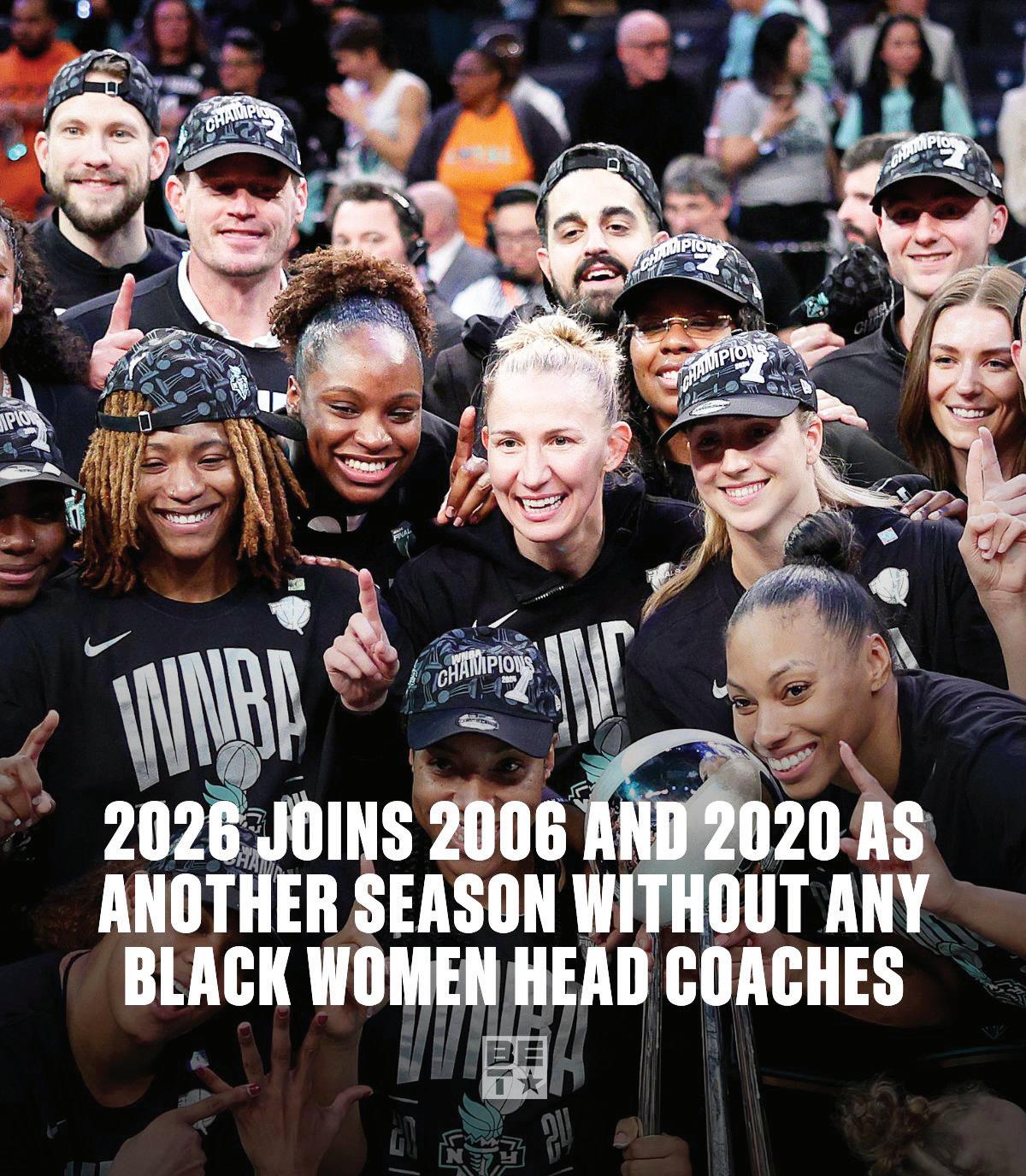
you, no one can stop them,” stressed Weatherspoon. Minnesota Head Coach Cheryl Reeve, who coached Team Spoon, has often spoken on coaching diversity in the W: “It’s obviously important because when the league is comprised of 90 or 90-plus percent of women of color, Black women, they aspire to coach and want opportunities. There’s a lot of Black women that would love to be in the league coaching them, being head coaches in the WNBA, and they deserve that opportunity.”
Los Angeles forward and WNBA Players Union President Nneka Ogwumike added, “Of course, representation is incredibly impor-
tant. I’ve been coached by a head coach that’s a Black woman (Quinn), and there’s a level of relatability. Especially knowing that most of the women in the league are Black, that adds to the experience. It adds to the performance.”
Reeve pointed out, “I think the next task force that I hope that is formed or that I get to be a part of would be just that to start to tackle whether we introduce some version of a Rooney Rule that’s improved over what we’ve learned historically with the Rule.
“We had a rule in our league that a bench coach has to be a former player. Okay, I don’t think that’s enough. So, the next step I think is we should hold ownership more accountable because ownership is a part of that big decision that’s happening.”
Ogwumike concluded, “I think that it’s just another component of us realizing that more work has to be done, and not just Black women. We have a lot of amazing former players that are entering the coaching space that are qualified, and I’m looking forward to seeing how that can change over time.”
Charles Hallman welcomes reader responses at challman@ spokesman-recorder.com.
Copyright © Charles Hallman

STATE OF MINNESOTA
STATE OF MINNESOTA
COUNTY OF ANOKA
Diyana B. Green, Plaintiff, vs.
Faisal Abdulahi, Defendant.
02-CV-26-5131
SUMMONS
THIS SUMMONS IS DIRECTED TO DEFENDANT:
1. YOU ARE BEING SUED. The Plaintiff has started a lawsuit against you. The Plaintiff’s Complaint against you is attached to this Summons. Do not throw these papers away. They are official papers that affect your rights. You must respond to this lawsuit even though it may not yet be filed with the Court and there may be no court file number on this Summons.
2. YOU MUST REPLY WITHIN 21 DAYS TO PROTECT YOUR RIGHTS. You must give or mail to the person who signed this summons a written response called an Answer within 21 days of the date on which you received this Summons. You must send a copy of your Answer to the person who signed this summons located at: Swor & Gatto, P.A. 1177 West Seventh Street Saint Paul, MN 55102
3. YOU MUST RESPOND TO EACH CLAIM. The Answer is your written response to the Plaintiff’s Complaint. In your Answer you must state whether you agree or disagree with each paragraph of the Complaint. If you believe the Plaintiffs should not be given everything asked for in the Complaint, you must say so in your Answer.
4. YOU WILL LOSE YOUR CASE IF YOU DO NOT SEND A WRITTEN RESPONSE TO THE COMPLAINT TO THE PERSON WHO SIGNED THIS SUMMONS. If you do not Answer within 21 days, you will lose this case. You will not get to tell your side of the story, and the Court may decide against you and award the Plaintiff everything asked for in the Complaint. If you do not want to contest the claims stated in the Complaint, you do not need to respond. A default judgment can then be entered against you for the relief requested in the Complaint.
5. LEGAL ASSISTANCE. You may wish to get legal help from a lawyer. If you do not have a lawyer, the Court Administrator may have information about places where you can get legal assistance. Even if you cannot get legal help, you must still provide a written Answer to protect your rights or you may lose the case.
6. ALTERNATIVE DISPUTE RESOLUTION. The parties may agree to or be ordered to participate in an alternative dispute resolution process under Rule 114 of the Minnesota General Rules of Practice. You must still send your written response to the Complaint even if you expect to use alternative means of resolving this dispute.
Dated: June 22, 2026
Minnesota Spokesman-Recorder, August 6, 13, 20, 2026 SUMMONS
I hereby acknowledge that sanctions may be awarded pursuant to Minn. Stat. §549.211. SWOR AND GATTO, P.A. By: /s/John Paul J. Gatto John Paul J. Gatto (#0387730) Paul J. Gatto (#33741) ATTORNEYS FOR PLAINTIFFS 1177 West Seventh Street Saint Paul, Minnesota 55102 651-454-3600 jpg@sworgatto.com paulg@sworgatto.com
Sealed bids will be received by the Public Housing Agency of the City of Saint Paul at 91 Arch St., St. Paul, Minnesota 55130 for Air Handler and Condensing Unit Replacements at Mt. Airy Community Center, Contract No. 27-079, until 2:00p.m. local time on August 26, 2026, at which time they will be publicly opened and read aloud via the Teams App. Bids may be submitted electronically, in a pdf format, to Alpha Graphics, www.agplanroom.com, or may be delivered to the address above.
A Pre-Bid Conference will be held in conjunction with a tour of the building on August 12, 2026, at 10:00a.m, at the Mt. Airy Community Center, 91 Arch, St. Paul, MN 55130. Immediately following the conference there will be a Pre-Bid Tour of the building. All questions arising from this pre-bid conference will be addressed by addendum, if necessary.
A complete set of bid documents are available by contacting Alpha Graphics at 612-340-1111 or www.agplanroom.com, under public plan room, Air Handler and Condensing Unit Replacement at Mt. Airy Community Center, Contract No. 27-079. Digital downloads are no charge, contact Alpha Graphics for hard copy pricing.
Bids must be accompanied by a 5% bid guarantee, non-collusive affidavit, EEO form and Minnesota Responsible Contractor Compliance Affidavit. The successful bidder will be required to furnish both a performance bond and a separate payment bond.
The PHA reserves the right to reject any or all bids or to waive any informalities in the bidding.
STATE OF MINNESOTA FOURTH JUDICIAL DISTRICT COURT
2 Columns x 12” High
COUNTY OF HENNEPIN PROBATE MENTAL HEALTH DIVISION
NOTICE OF INFORMAL APPOINTMENT OF PERSONAL REPRESENTATIVE AND NOTICE TO CREDITORS
In Re: Estate of FILE NO. 27-PA-PR-26-166 Kyle T. Moua, also known as, Kyle Tou Bee Moua, Deceased
TO ALL INTERESTED PERSONS AND CREDITORS:
Notice is given that a second amended application for informal appointment of personal representative has been filed with the Registrar. No will has been presented for probate. The second amended application has been granted.
Notice is hereby given that informal appointment of Irene Thor Her, whose address is 10945 N. Eagle Lake Blvd, Maple Grove, Minnesota 55369, as personal representative of the estate of the above-named decedent, has been made. Any heir, devisee or other interested person may be entitled to appointment as personal representative or may object to the appointment of the personal representative and the personal representative is empowered to fully administer the estate including, after 30 days from the date of issuance of letters, the power to sell, encumber, lease or distribute real estate, unless objections thereto are filed with the Court (pursuant to Section 524.3-607) and the Court otherwise orders.
Notice is further given that ALL CREDITORS having claims against said estate are required to present the same to said personal representative or to the Probate Court Administrator within four months after the date of this notice or said claims will be barred.
Dated: May 21, 2026 Yvette M. Andrade Registrar
Sarah Gonsalves, District Court Administrator
Notice of Inf Appt of PR Minn. Stat. 524.3-310; 524.3-801
Minnesota Spokesman-Recorder, July 30, August 6, 2026
STATE OF MINNESOTA
COUNTY OF HENNEPIN
DISTRICT COURT PROBATE DIVISION FOURTH JUDICIAL DISTRICT
Court File No: 27 – PA – PR – 26 – 910
Estate of PAMELA JOAN RESCH, A/K/A PAMELA RESCH, DECEDENT.
Minnesota Spokesman-Recorder, August 6, 2026
OF HENNEPIN FOURTH JUDICIAL
Essence Michaela Bell, Plaintiff, vs. Michael Thomas Christoph, Defendants.
TO: DEFENDANT MICHAEL THOMAS CHRISTOPH:
1. YOU ARE BEING SUED. The Plaintiff has started a lawsuit against you. The Plaintiff’s Complaint against you is attached to this Summons. Do not throw these papers away. They are official papers that affect your rights. You must respond to this lawsuit even though it may not yet be filed with the Court and there may be no court file number on this Summons.
2. YOU MUST REPLY WITHIN 20 DAYS TO PROTECT YOUR RIGHTS. You must give or mail to the person who signed this Summons a written response called an Answer within 20 days of the date on which you received this Summons. You must send a copy of your Answer to the person who signed this Summons located at: 3900 Northwoods Drive, Suite 250, Arden Hills, MN 55112.
3. YOU MUST RESPOND TO EACH CLAIM. The Answer is your written response to the Plaintiff’s Complaint. In your Answer you must state whether you agree or disagree with each paragraph of the Complaint. If you believe the Plaintiff should not be given everything asked for in the Complaint, you must say so in your Answer.
4. YOU WILL LOSE YOUR CASE IF YOU DO NOT SEND A WRITTEN RESPONSE TO THE COMPLAINT TO THE PERSON WHO SIGNED THIS SUMMONS. If you do not Answer within 20 days, you will lose this case. You will not get to tell your side of the story, and the Court may decide against you and award the Plaintiff everything asked for in the Complaint. If you do not want to contest the claims stated in the Complaint, you do not need to respond. A default judgment can then be entered against you for the relief requested in the Complaint.
5. LEGAL ASSISTANCE. You may wish to get legal help from a lawyer. If you do not have a lawyer, the Court Administrator may have information about places where you can get legal assistance. Even if you cannot get legal help, you must still provide a written Answer to protect your rights or you may lose the case.
6. ALTERNATIVE DISPUTE RESOLUTION. The parties may agree to or be ordered to participate in an alternative dispute resolution process under Rule 114 of the Minnesota General Rules of Practice. You must still send your written response to the Complaint even if you expect to use alternative means of resolving this dispute.
AARON FERGUSON

Date: June 10, 2026
NOTICE OF INFORMAL PROBATE OF WILL AND APPOINTMENT OF PERSONAL REPRESENTATIVE AND NOTICE TO CREDITORS (TESTATE)
TO ALL INTERESTED PERSONS AND CREDITORS:
Notice is hereby given that an application for the informal probate of the Decedent’s will dated March 22, 2026, has been filed with the Registrar. The application has been granted.
2 Columns x 6.25” High
Notice is also given that the Registrar has informally appointed Sydney Kjorness whose address is: 1505 – 5th Street North, Apt. #306, Hopkins, MN 55305 as personal representative of the Estate of the Decedent. Any heir, devisee or other interested person may be entitled to appointment as personal representative or may object to the appointment of the personal representative. Unless objections are filed with the Court (pursuant to Minnesota Statutes section 524.3-607) and the Court otherwise orders, the personal representative has full power to administer the Estate including, after 30 days from the date of the issuance of letters, the power to sell, encumber, lease or distribute real estate.
Any objections to the probate of the will or appointment of the personal representative must be filed with this Court and will be heard by the Court after the filing of an appropriate petition and proper notice of hearing.
Notice is also given that (subject to Minnesota Statues section 524.3-801) all creditors having claims against the Estate are required to present the claims to the personal representative or to the Court Administrator within four months after the date of this Notice or the claims will be barred
Dated: July 13, 2026
Attorney for Personal Representative:
Name: Bradley R. Janzen
Firm: Bradley R. Janzen, P.A.
Street: 5419 Butternut Circle
City, State, Zip: Minnetonka, MN 55343
Attorney License No.: 0049715
Telephone: 612 – 817 – 2481
Fax: 612 – 488 – 9274
Email: mnlawyer@gmail.com
Andrade
Yvette M.
07/13/2026 Registrar Date
Sara Gonsalves 07/13/2026
District Court Administrator Date
Minnesota Spokesman-Recorder, July 30, August 6, 13, 2026
By Charles Hallman Sports Columnist
t every Minnesota Twins home contest, the team selects individuals to throw out the ceremonial first pitch before the game. MSR recently talked to two Black individuals in separate interviews who participated in the time-honored pre-game ceremony.
Pitch 1 – Jalen Travis: from Princeton to the NFL, giving back at home Indianapolis Colts offensive tackle Jalen Travis is now in his second pro football training camp.
The De La Salle graduate who played college football and graduated from Princeton, then transferred and finished his eligibility at Iowa State before Indianapolis drafted him in 2025. The Minneapolis native threw out the first pitch at the July 9 Twins vs. Cleveland afternoon contest.
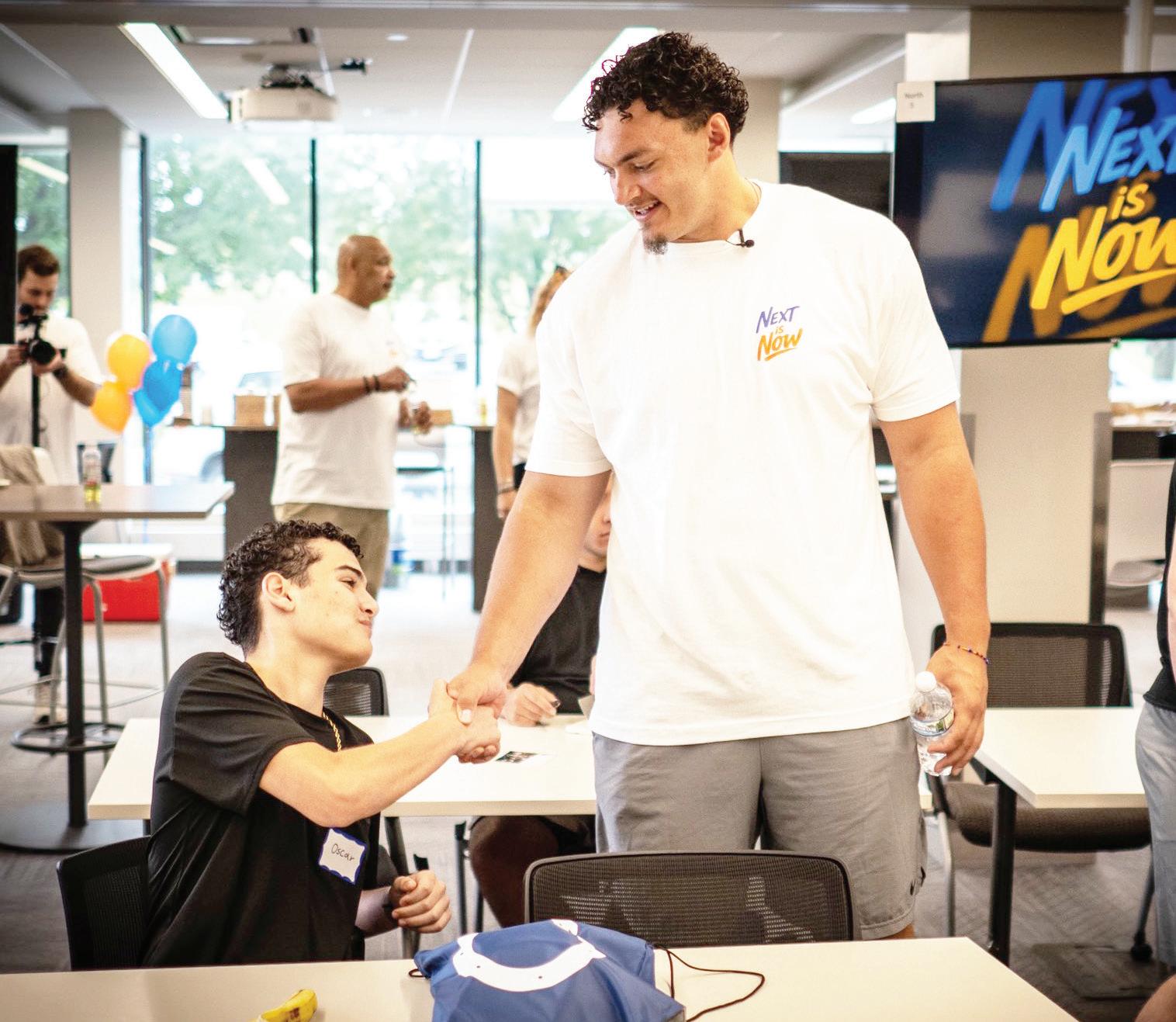
“We made it across the plate. There was some worry there for a minute,” joked the 6-8 Travis afterwards on his first time experience.
We haven’t talked since last summer while Travis was getting ready for his first pro training camp.
didn’t necessarily have a lot of that,” he recalled. “Maybe last year where I felt as though I was deficient. So definitely going to year two, being able to build off a lot of that and
“The legacy that I want to leave is far beyond sport.”
kind of start more tangibly working towards some of my personal goals and the framework of the team is something I’m excited about.”

his week’s column features five individuals to look for as the athletic seasons unfold at high school and collegiate level.
the top wide receivers in the Pioneer Football League (PFL), making the All-PFL Second Team and Phil Steele Second Team All-Conference. Cobb-Butler started 11 of 12 games in 2025.
“I think that I have a little bit better of what to expect,” stressed Travis. “The timing, the schedule, the talent. The competition, and I think for me, it’s been a tremendous opportunity to take that and begin to start tightening up my process, tightening up the areas.”
Travis played in 17 games last season.
In addition to his training and conditioning regimen, Travis spent most of his summer being home and running his programs designed for young people. The Just Action Coalition, a 501(c)(3) non-
“I think a year ago today, I
■ See TWINS on page 8

HICAGO – When asked what she did this summer, FAMU senior Thailan Payne easily can say she spent a week here, among other things working with female all-star basketball players.
“First of all, I got to meet Obama today,” gushed Payne on meeting former President Barack Obama when he stopped by his presidential library during her time as a WNBA HBCU Intern. “I got to see him for the first time. That was a big experience.”
This year marks the second year of the league’s HBCU Event Intern Program, sponsored by Mielle, a Blackowned natural hair care company that has a multi-year partnership with the W. It
“I actually went through medicine because you don’t see a lot of Black women in the dermatology field.”
brings in Black college students “into the heart of AllStar Weekend” throughout the week leading up to and throughout WNBA All-Star 2026 in behind the scenes roles and immersive programming, that includes mentorship, professional development and networking with leaders across the industry.
MSR last year talked to then senior Beverly Robertson, an HBCU Intern from Howard. This
■ See SOE on page 8
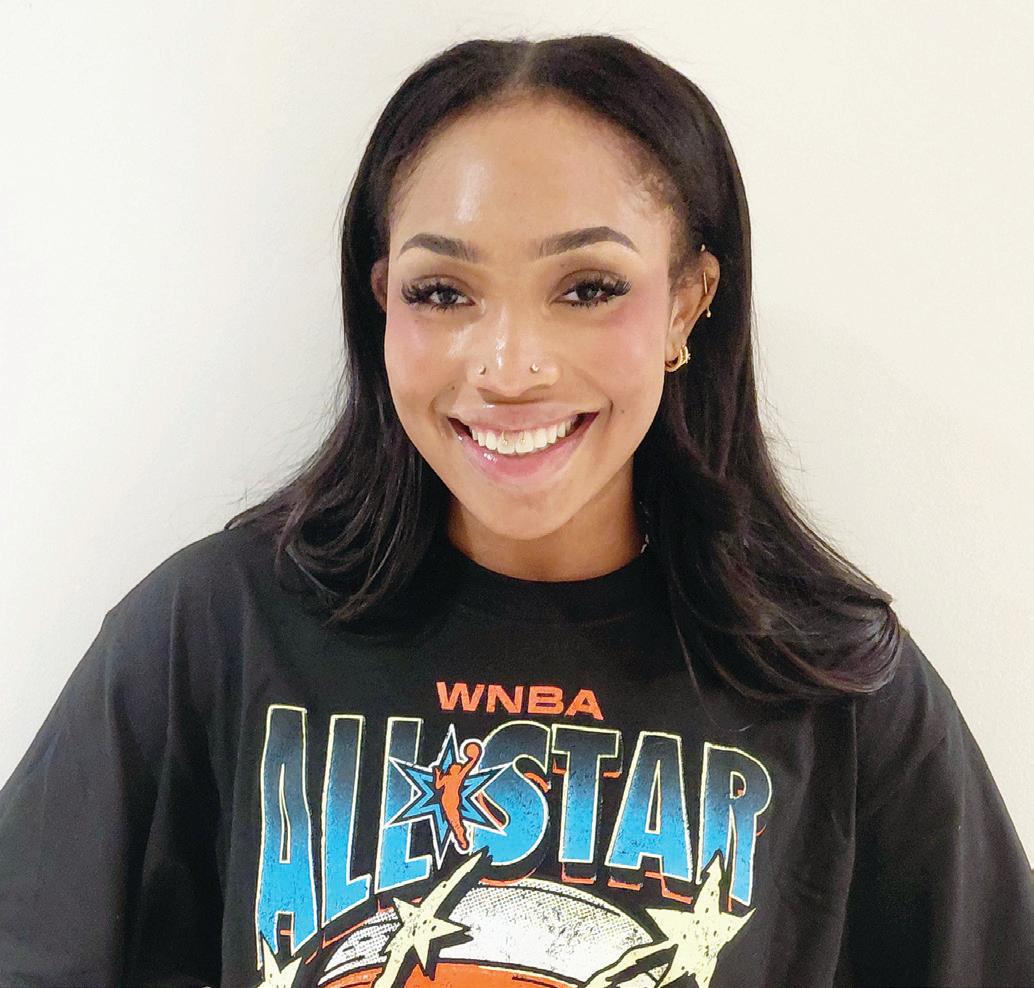
HICAGO – MSR was the only reporter that asked about the lack of Black female head coaches this season, only the third time in league history at WNBA Commissioner Cathy Engelbert’s ‘state of the league’ press conference before this year’s All-Star Game.
“We have been doing really well overall in our coaches ranks because we put incentives in around former WNBA players and extra coaches on the bench and things like that,” said the Commish.
“I think that it’s just another
To Engelbert’s point, there are 17 former W players who are assistant coaches (Minnesota has a league-high three), and 13 are Black women.
We then asked Engelbert if a Rooney Rule-type mandate is needed similar to the NFL’s longtime Rooney Rule that mandates that each team must interview at least one Black candidate for their head coaching and GM vacancy whenever one occurs.
“That’s a really important question and one that we continue to make sure stays top of mind for our owners, coaches and GMs,” reaffirmed Engelbert. “I realize we work with our owners, and owners and GMs make those deci-
Quentin Cobb-Butler, the former Woodbury High School standout who excelled as a wide receiver and special teams player during his prep career, is entering his junior year this fall after two outstanding seasons for the Tommies. He developed into one of
A.J. Howard, a senior cornerback and wide receiver for St. Paul Johnson High School who stands 6’1”, recently committed to continue his collegiate career at the University of St. Thomas. Howard also played a key role as a guard for the Governors boys basketball team and was one of the top track and field sprinters in the St. Paul City Conference.
Dwayne Givens, a former St. Paul Johnson football and basketball standout, has transferred from Graceland University to North Central University.
After an outstanding high school career, the 6’1” guard played collegiately at Central Lakes Community College and then Graceland before the opportunity to play for the Rams presented itself.
As a senior Givens was selected as the St. Paul City Conference Player of the Year.
Melvin Anderson, the former University of Minnesota wide receiver who went on to play for the Pittsburgh Steelers, was recently named head coach of the cross country and track & field teams at
on
See
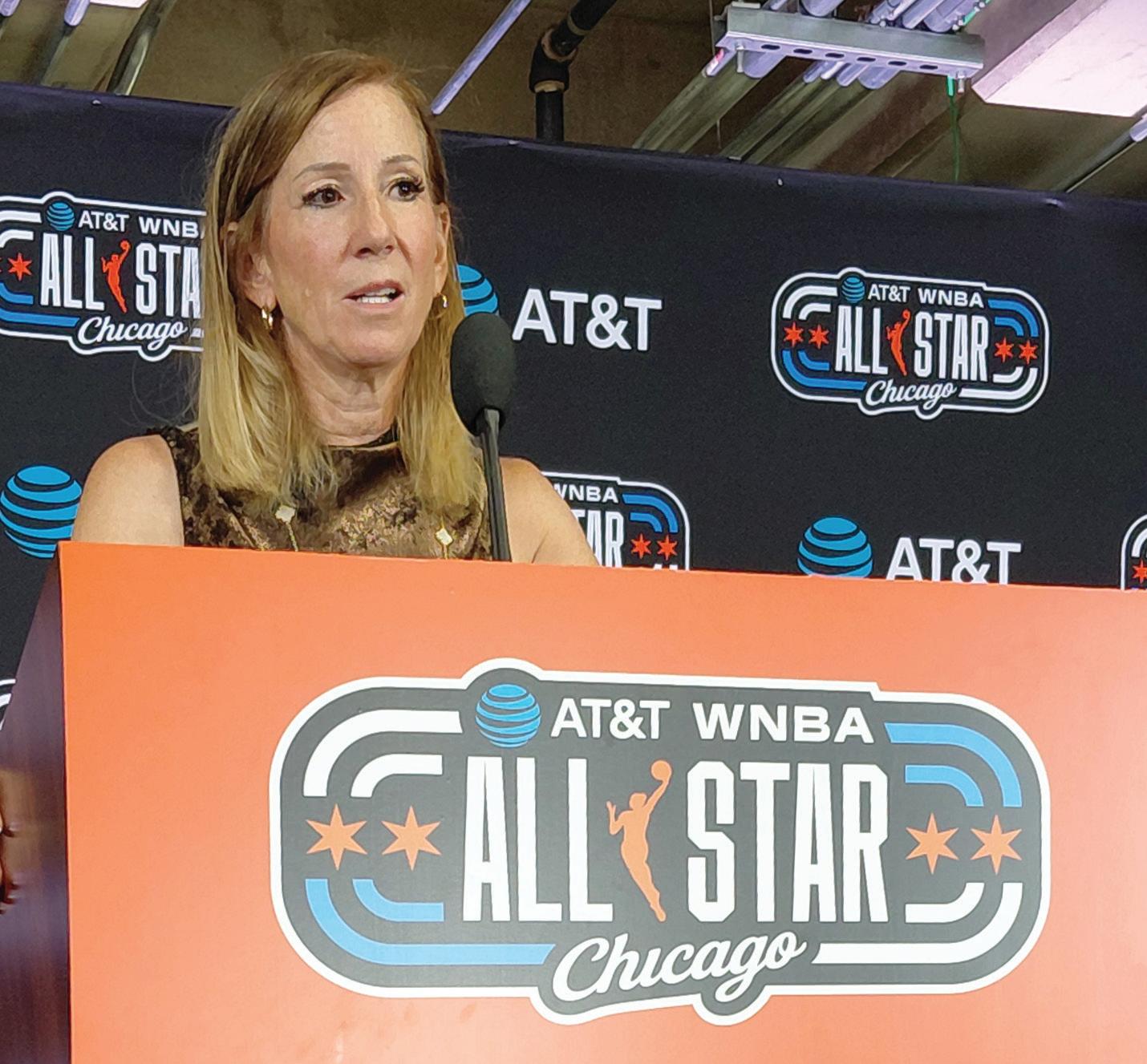
sions at the team level.
There are zero majority Black owners in the W. Renee Montgomery (Atlanta), Nadia Rawlinson and Anne Sempowski Ward (Chicago) are part-owners, and NBA Legend and HOF Dwyane Wade is a minority investor with Chicago. Sheila Johnson, who cofounded BET, is the first Black woman to acquire a stake in a WNBA franchise as she is the Washington Mystics’ managing partner and team governor. By the way, Chicago and Washington have the league’s only Black head coaches this season. Both Black males.
“Ultimately, again the owners and the GMs make those decisions” on who gets hired as head coach, Engelbert reaffirmed. “There’s not a meeting that I’m not with our owners talking about diversity in coaching and the pipeline. I think our pipeline is really, really strong.”
“When you look at 63.8% of all players identifying as Black or African-American, and you don’t have that reflected in
the coaching staff, there’s an issue. There’s a problem,” Alicia Jay said last November on the CBS Sports podcast We Need To Talk Now.
Black Rosie Media Founder Erica Ayala asked, “Why does it seem like retired players, especially the Black women who make up the majority of the league, are being left behind? The absence of Black women … is jarring.”
The Unrivaled 3-on-3 league this past season had five Black women HCs: “It’s not by accident. I believe it’s intentional,” former Seattle head coach Noelle Quinn told reporters. She was fired by the Storm after the 2025 season after 6.5 years.
Teresa Weatherspoon, who was fired by Chicago after one