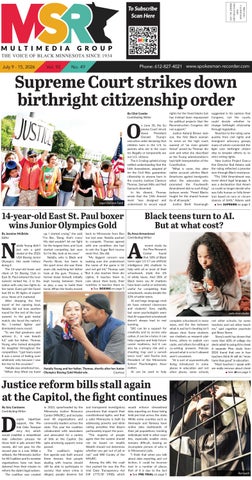

Supreme Court strikes down birthright citizenship order
By Clint Combs Contributing Writer
n June 30, the Supreme Court struck down President Donald Trump’s executive order declaring that children born in the U.S. to parents who are in the country illegally or temporarily are not U.S. citizens.
The 6-3 ruling upheld a longsettled understanding that the 14th Amendment, adopted after the Civil War, guarantees citizenship to anyone born in the country. Justices Clarence Thomas, Samuel Alito and Neil Gorsuch dissented.
In his dissent, Thomas wrote that the 14th Amendment “was designed and understood to secure equal
Olympics Gold
By Jasmine McBride Editor
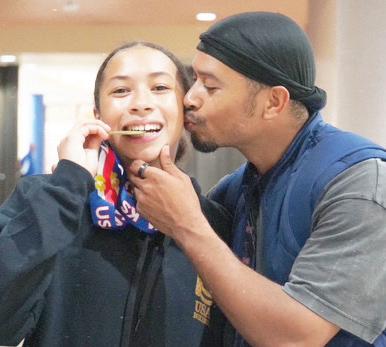
atalia Young didn’t just win a gold medal at the 2026 USA Boxing Junior Olympics. She made history doing it.
The 14-year-old boxer and client of Sir Boxing Club in East St. Paul entered the tournament ranked No. 2 in the nation with only two fights to her name. Every girl she faced had 20 to 30 fights of experience. None of it mattered.
After dropping the first round of her opening bout, Natalia did not lose another round for the rest of the tournament. In the gold medal match, she faced the nation’s No. 1-ranked fighter and dominated every round.
“To see that greatness and witness it… it was beautiful,” said her father, Thomas Young, who trained alongside his daughter throughout the competition. “I got teary-eyed. It was a sense of feeling overwhelmed, only because I saw her rise to the occasion.”
Natalia was emotional too.
“When they lifted my hand
up, I started crying,” she said.
“I’m like, ‘Dang, that’s crazy.’ My dad wouldn’t let me fight for the longest time, and I just started competing last year. So I’m like, look at me now.”
Natalia, who is Black and Puerto Rican, has been in the sport since she was three years old, watching her father train at the gym. Thomas, a former boxer himself, initially kept boxing between them as play, a way to build their bond. When the family moved
back to Minnesota from Boston last year, Natalia pushed to compete. Thomas agreed, with one condition: she had to win the Sugar Bert tournament first. She did.
“My biggest concern was making sure she understood the name of the game is hit and not get hit,” Thomas said.
“But it also teaches them discipline. It teaches them to care about their body, their nutrition. It teaches them so
■ See BOXING on page 5
By Anya Armentrout Contributing Writer
recent study by the Pew Research Center found that 18% of Black teens ages 13-17 use artificial intelligence (AI) chatbots to help with all or most of their schoolwork, triple the 6% of white teens. And 38% of Black teens say AI chatbots have been useful or extremely useful for completing their schoolwork, nearly double the 22% of white teens.
AI and large language models have entered classrooms and students’ lives rapidly, but some psychologists warn that AI-supported schoolwork doesn’t always lead to real learning.
“[AI] can be a support for creativity and to access education, it can be a tutor, it can help organize and help future career readiness, but it can also be a privacy risk and a cheating trap and a surveillance tool,” said Tascha Just, President of the Minnesota School Psychologists Association.
AI can be used to help
Justice reform bills stall again at the Capitol, the fight continues
By Izzy Canizares Contributing Writer
espite bipartisan
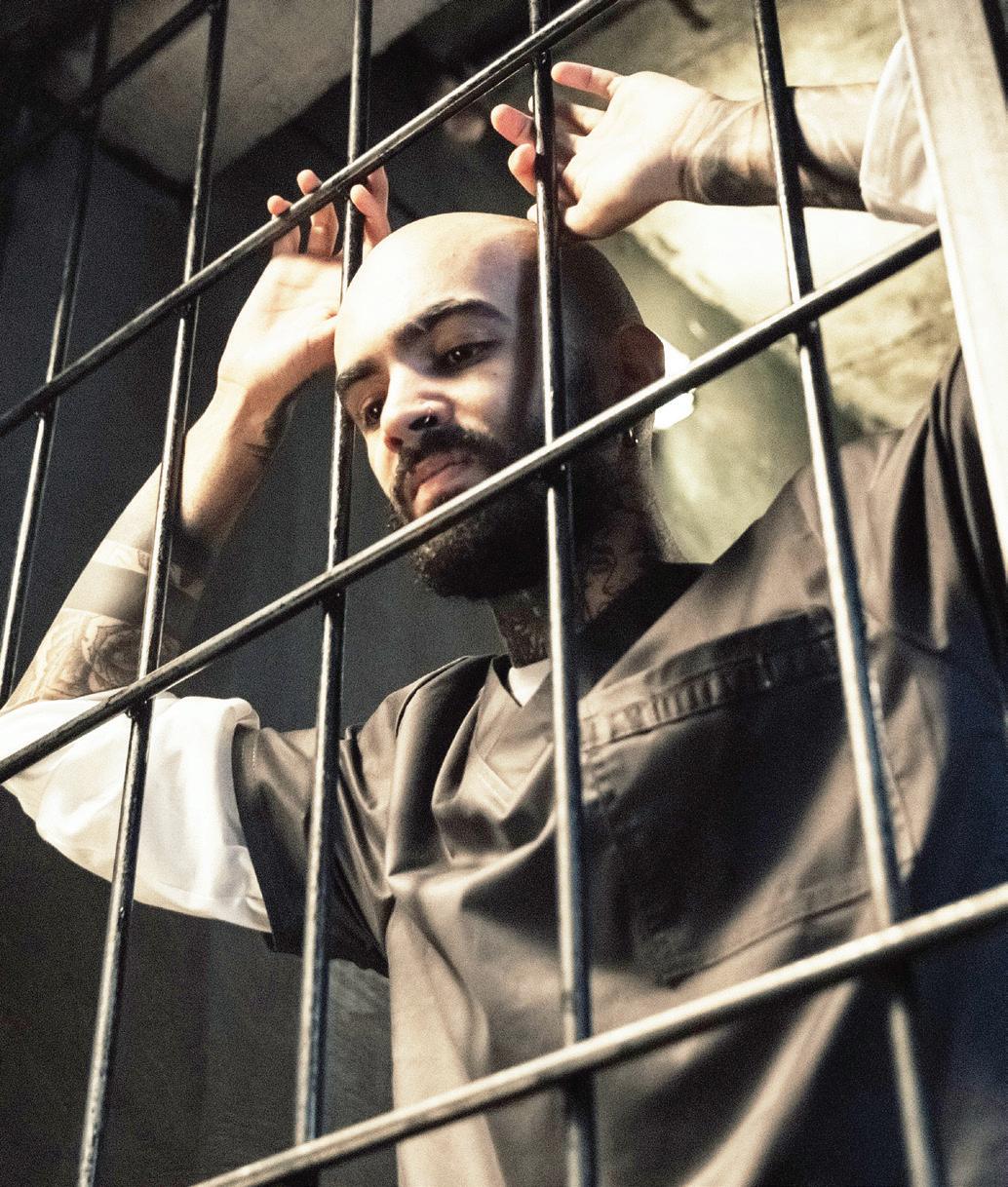
support, the Pretrial Data Transparency Act, which would establish a streamlined data collection process for those held in jails around Minnesota, did not pass for the second year in a row. While a setback, the Minnesota Justice for All Coalition and its member organizations have not been deterred from their mission to reform the state’s legal system. The coalition was created
in 2023, spearheaded by the Minnesota Justice Resource Center (MNJRC), and includes over 40 organizations and community leaders across the state. This year the coalition collaborated with lawmakers and advocated for a variety of bills at the Capitol. Despite promising support, none passed.
The coalition’s legislative agenda was built around three themes: that people dealing with trauma should still be able to participate in society; that when crime is alleged, people deserve fair
and transparent investigatory procedures that respect their constitutional rights; and that a safer Minnesota is built by addressing poverty and eliminating penalties that disproportionately impact the poor.
“The majority of people agree that the system should not be based on wealth. Wealth should not determine whether you get out of jail or not,” said Will Cooley of the MNJRC.
Among the bills the coalition pushed for was the Pretrial Data Transparency Act (HF 1775/SF 1908), which
would enforce streamlined data reporting on those being held pre-trial across the state. While some counties such as Hennepin and Ramsey have online data dashboards of their jail populations, tracking individuals held in other counties, especially smaller ones, remains difficult, leaving an incomplete picture of who is in Minnesota’s jails.
“I think that when you talk about data reporting and collection, it could be inconsistent in a number of places. Part of it is due to the fact
rights for the freed blacks but has instead been repurposed for political projects that the Reconstruction Congress did not support.”
Justice Ketanji Brown Jackson, the first Black woman to serve on the high court, warned of “an even greater threat” posed by Thomas’ dissent and what she described as the Trump administration’s bad-faith interpretation of the Constitution.
“What is more, this alternative account pitches Black Americans against immigrants when the advocates who promoted the Fourteenth Amendment did no such thing,” Jackson wrote. “Freed Blacks fought for the shared humanity of all people.”
Justice Brett Kavanaugh
suggested in his opinion that Congress, not the courts, could decide whether to change birthright citizenship through legislation.
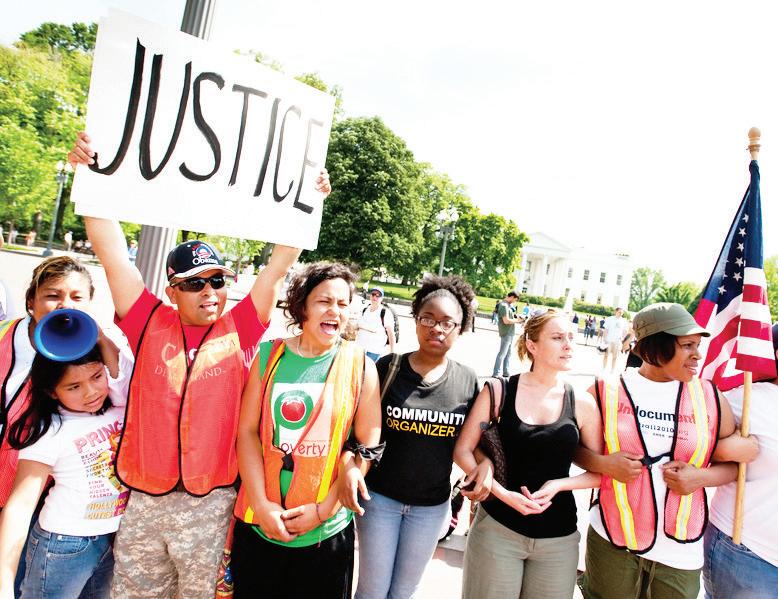
Reaction to the ruling came quickly from civil rights and immigrant advocacy groups, many of whom connected the fight over birthright citizenship to broader efforts to restrict voting rights.
New Justice Project Executive Director Rod Adams said the ruling reflected a promise won through Black resistance.
“The 14th Amendment was never about legal language. It was a declaration that America could no longer decide who was fully human or fully American based on race or circumstances of birth,” Adams said.
■ See SUPREME on page 5

complete schoolwork in many ways, and the line between what is and isn’t cheating isn’t always clear. Some students use chatbots as research platforms, others to explain concepts, and others for editing or co-writing answers. Policies around what is or isn’t allowed aren’t consistent.
“AI is sort of asymmetrically being introduced in some places in education and not other places, some schools,
not other schools, by some teachers and not other teachers,” said cognitive psychologist Brian Stone.
Stone’s work has shown that more than 60% of college students admit to using AI to cheat. A separate Pew study from 2024 found that one in four teachers think AI will do “more harm than good” in
“Most teachers I speak with are really nervous about
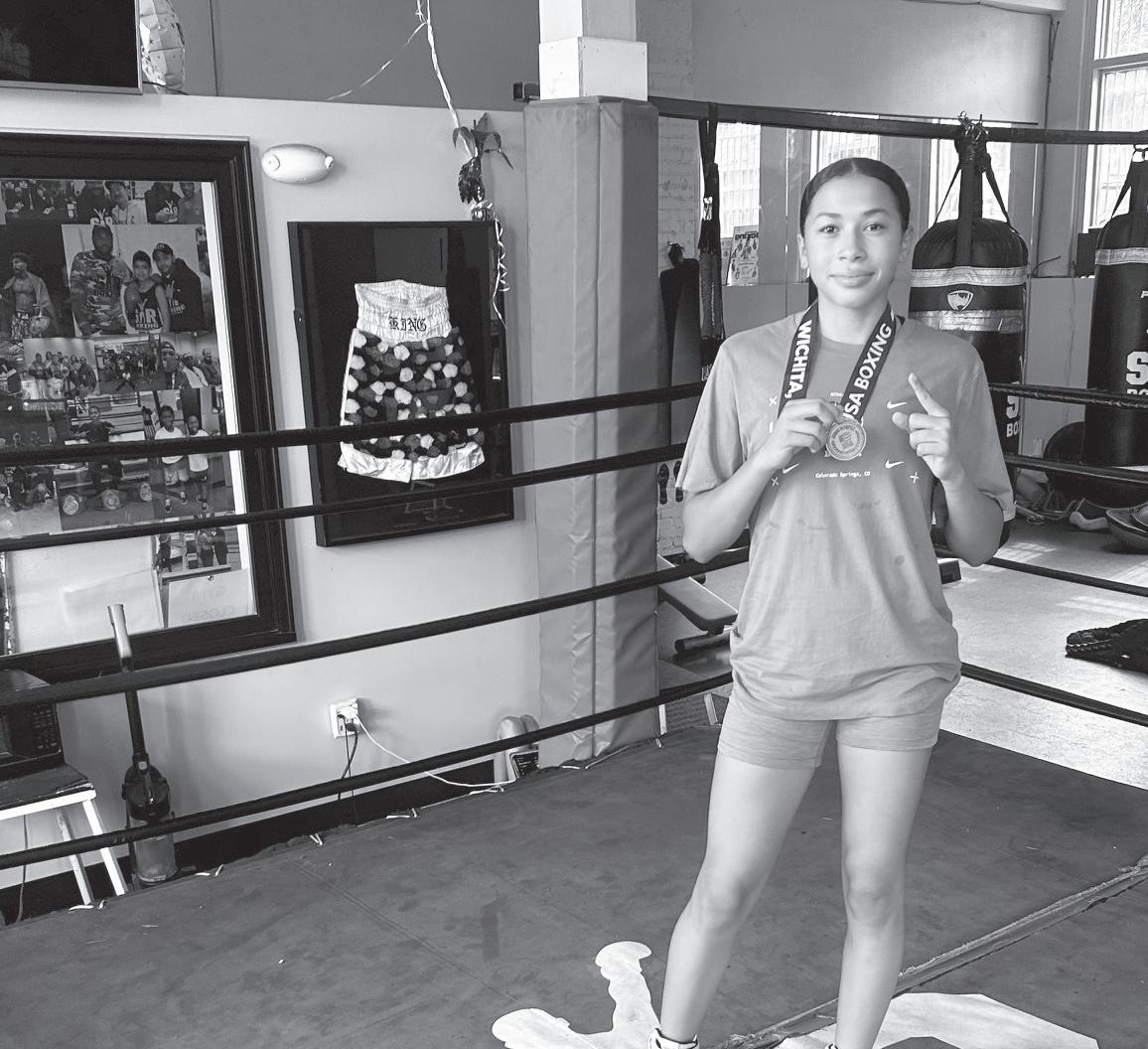
Natalia Young and her father, Thomas, shortly after her Junior Olympics Boxing Gold Medal win. Courtesy
cottonbro studio
Legal Defense Fund
New hotline offers free legal defense at arrest
By Izzy Canizares Contributing Writer
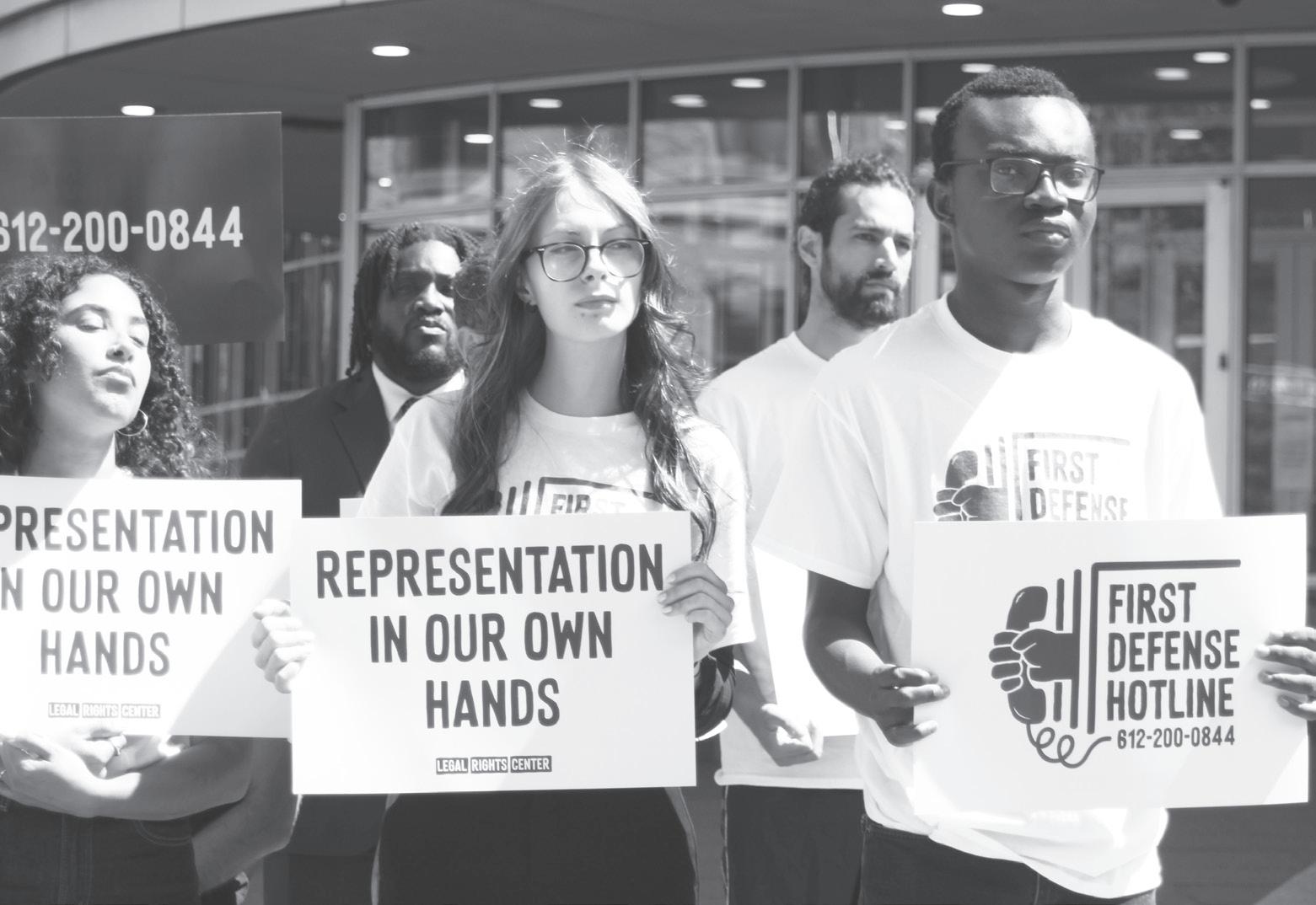
The Legal Rights Center has introduced a new resource for arrestees in Minneapolis with its First Defense Hotline, a tool that connects detained individuals with free legal counsel in the first hours after arrest, addressing the wealth gap in the legal system that doesn’t always guarantee poor individuals good representation.
Since its founding, the Center has been a critical legal resource for Black and brown communities within Minneapolis, who too often are not given the legal resources or advice they need. The LRC was founded during the tail end of the Civil Rights Movement in 1970 by Syl Davis, Northside Black community activist and Executive Director of The Way; Clyde Bellecourt of the American Indian Movement; and attorney Doug Hall. The goal was to create a law firm that would serve low-income communities and Minnesotans of color as an alternative to the Public Defender’s Office.
“Our community has learned a ton in the last few months, especially during the height of the ICE occupation, about the injustices of our legal systems. We’ve seen and heard stories of our neighbors being taken
from the streets at any time without access to lawyers,”
said Malika Eban, Executive Director of the LRC. “But this is a reality for our community members in Hennepin County every day who are facing challenges in our legal system. At the LRC, we don’t believe that this is fair, we don’t believe that this is just. We believe that this is part of our work every day to ensure that our neighbors are able to exercise those rights.”
The Center held a press conference Thursday outside of the Hennepin County Jail to officially launch the First Defense Hotline,
which is staffed 24/7 by trained lawyers, law students and more. The goal of the hotline is to connect arrestees with free legal representation in the first hours after arrest and assist them with their cases before being handed off to a public defender, giving people a better chance at a fair trial.
“We heard from some individuals who didn’t realize it was a resource and who themselves reflected on their experiences, not knowing what to expect,” said Kathryn Anderson, intern with the community defense program at the LRC. “I think we hear
mainly in the media ‘you have your Miranda rights,’ but a lot of individuals I’ve spoken with, both community members and even legal practitioners, it definitely becomes a lot harder to really know how you actually use those rights.”
80% of defendants unknowingly waive their rights while in police custody, usually during interrogation, according to the UC Irvine Law Review.
“A lot of individuals I’ve talked to have been reflecting on their experience and how, if they would have had advice, certain aspects of their case could have been resolved without trial,” Anderson said.
One of the biggest disparities within the justice system is wealth. Many individuals held in county jails remain there due to an inability to pay bail or hire counsel. This wealth gap especially impacts Black and brown Minnesotans, who are consistently targeted and held in jails at a higher rate than white Minnesotans.
“We have a gap. In Hennepin County it is not uncommon for arrested people to go days prior to a first court appearance without ever speaking to a lawyer. During that time you might have made a statement that could be fatal to your case,” said Marecca Vertin, Community Defense and Access to Justice Attorney for the LRC. What the LRC has been able to do is connect with defendants hours after arrest to help
“Our community has learned a ton in the last few months, especially during the height of the ICE occupation.”
Despite the fact that Miranda rights are well known in the legal system, at least
prepare their case, whether it ends in dismissal or eventual trial with a formally appointed
public defender. “Our focus is on the rights of our clients to be equally positioned to make informed choices about the things that meaningfully impact their future, and we do it because their futures matter, just as much as the futures of wealthy people.”
While the Legal Rights Center has been working on its mission for over five decades, Vertin said the conversation has shifted since Metro Surge, highlighting the community’s need for rapid legal defense when so many Black and brown individuals are unjustly targeted.
“It has allowed us to have that conversation. I think people have experienced that point of arrest creating something that is traumatizing inherently. It’s allowed us to talk with other people about how that moment happens here, day in and day out in Hennepin County,” Vertin said.
“One other thing that we’ve seen is that our communities have mobilized to respond to ICE, and folks who were out in neighborhoods have seen similar arrests happening by the sheriff’s office and other local law enforcement. We are finding that there are more eyes and more intention on those arrests.”
For more information on the Legal Rights Center, visit www.legalrightscenter.org/.
Izzy Canizares is a freelance journalist and contributing writer for the Minnesota Spokesman-Recorder. He welcomes reader responses at isabellacani0102@gmail.com.
Coalition calls on Twin Cities Pride to cut corporate ties
By Anya Armentrout
Contributing Writer
Pride organizations across the country are seeing revenue sources dry up as corporations pull back from publicly funding diversity causes, fearing political retribution and shifting national attitudes. To the Taking Back Pride Coalition, that’s a good thing.
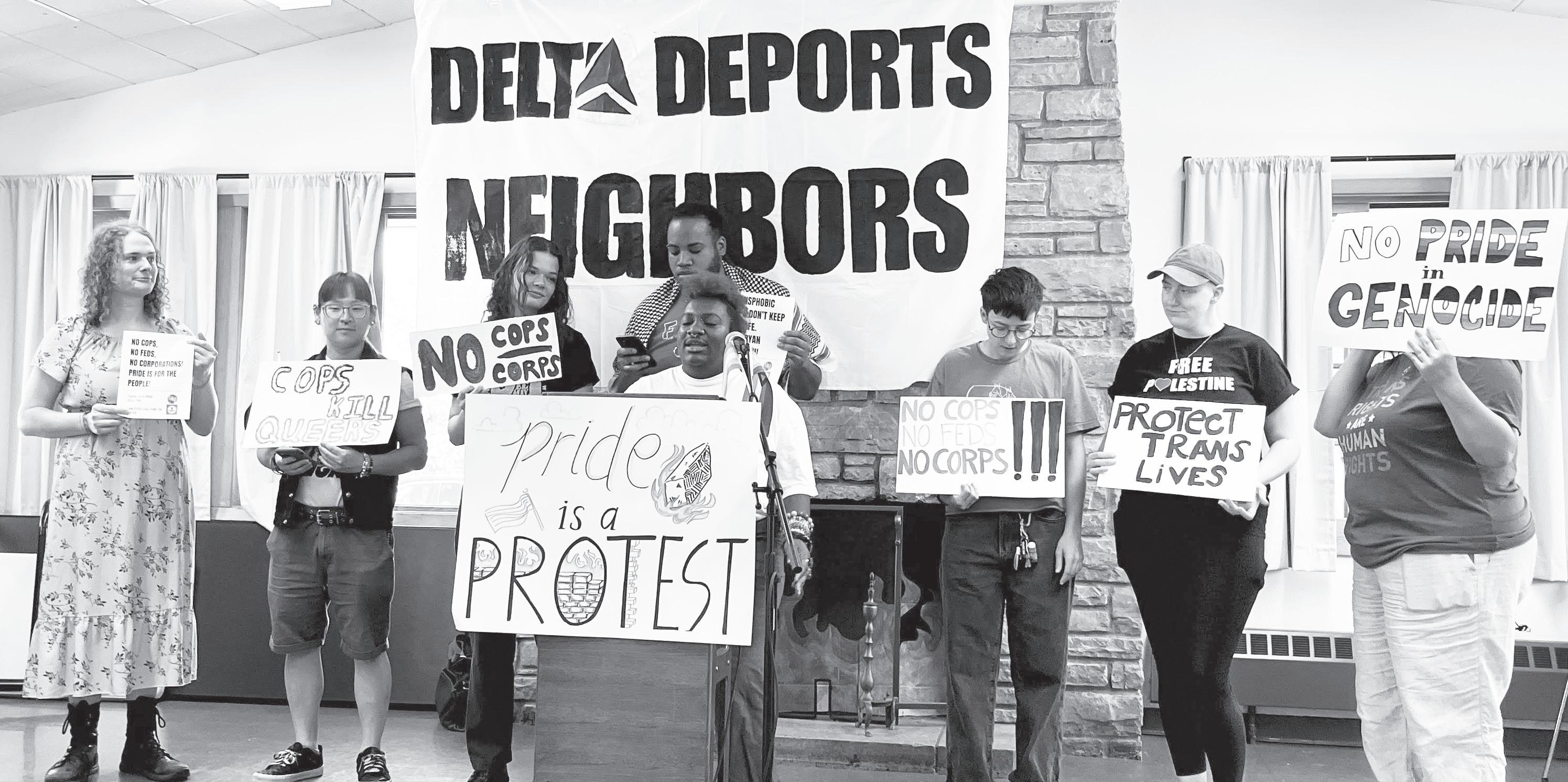
On Friday, June 26, the Taking Back Pride Coalition held a press conference at the Lucy Parsons Center calling for Twin Cities Pride to drop its corporate sponsors and remove its police presence. It’s the coalition’s tenth year of organizing around demands that Pride celebrations be explicitly anti-police and anticapitalist.
In 2023, Twin Cities Pride, which organizes Pride weekend and year-round events, dropped Target as a corporate sponsor after the company rolled back its Diversity, Equity and Inclusion practices. The organization was able to replace the $50,000 donation through crowdfunding.
Taking Back Pride wasn’t involved in the Target decision, but members consider the move long overdue. They called on Twin Cities Pride to drop additional corporate sponsors, in particular Delta, United Health Group and 3M. Delta was accused of operating deportation flights during Operation Metro Surge, including a flight involving 5-year-old Liam Ramos.
“As we saw this winter, Minnesotans are a progressive community,” said River Townsend, who represented the Minnesota Abortion Action Committee at the event.
“We care about our neighbors.
We care about our community, and gaining liberation should not be used as a marketing tool to cover atrocities and to make your company look more palatable to Minnesotans.”
Corporate sponsors provided $600,000 in funding to Twin Cities Pride in 2025, significantly less than the $1.3 million the organization received in 2024.
Taking Back Pride argues that pride organizations cannot and should not rely on donations from large companies.
Members argue that recent “anti-woke” pullbacks of corporate support demonstrate the shallowness of corporate sponsorship and are a success in the coalition’s broader goal of eliminating corporate presence at Pride.
“We can do this on our own,” said Khrys Wetzel, who has been involved with Taking Back Pride for three years.
“We don’t need them to validate us. They can change their
mind at any time. We won’t leave ourselves stranded. We support each other.”
Putting on major public Pride events is expensive.
“It takes a lot of money to do this,” Dena Stanley, Director of Pittsburgh Pride, told NPR.
“Permitting costs, security costs, headliner costs, staging costs, cleaning crew costs, insurance costs. All of these are expenses.”
“As a Black trans person, I have no desire to be near officers from a department responsible for killing hundreds of Black people.”
Director of Sponsor
Local, “Corporatization of Pride is a perennial conversation. To put on a very expensive free event requires a lot of capital.”
Proponents of corporate sponsors say the funding allows events to be large-scale and free to the public. They argue that money is better raised from large businesses than small donors. A single $150,000 corporate donation can be difficult to replace through small-dollar crowdfunding.
Corporate sponsorship of Pride events can signal public acceptance and normalization of the LGBTQ+ community.
Jae Yates, co-chair of the Taking Back Pride Coalition, isn’t looking to assimilate into mainstream culture.
“Do we want to be like our oppressors or do we want to stand together and say you will not weaponize my identity to justify harm against someone else?” Yates said.
“Because me, I refuse to be
used to excuse genocide, war, and planet extinction to gain superficial acceptance that is withdrawn at the whim of shareholders.”
Taking Back Pride also called for the elimination of police presence at Pride events. The 1969 Stonewall uprising, which served as a major catalyst for the LGBTQ+ rights movement, began as resistance to a police raid. Yates connected the Pride movement to movements against police brutality and to the intersectionality of queer community members of color.
“As a Black trans person, I have no desire to be near officers from a department responsible for killing hundreds of Black people in my community in the past two decades,” Yates said.
To Wetzel, removing police and corporate presences from Pride are shared missions.
“They’re deeply connected in that oftentimes the folks who are funding one are also
funding another,” Wetzel said. “So they’re both kind of hand in hand.”
Advocates for police presence at Pride argue officers are important for managing crowds and protecting marchers from far-right counterprotestors. Some argue that the politicization of Pride works against the movement’s mission.
“I can easily make the argument that absolutely no socialists/communists be allowed at Pride based on a long documented history of homophobia and institutional oppression by people and groups within those movements,” Amanda Kerri wrote in a 2017 essay for the Advocate.
“But I won’t, because Pride does not belong to any one political ideology, any one philosophy of social progress and equality, and certainly should include all of the community.”
Taking Back Pride hosts an annual counter-protest to the Twin Cities Pride parade. This year’s event will be hosted at 10 a.m. on Sunday, June 28, in downtown Minneapolis. Representatives from the Minnesota Abortion Action Committee, the Twin Cities Coalition for Justice, the Climate Action Committee, Women Against Military Madness, Anti War Committee, Minnesota Immigrant Rights Action Committee, US Palestinian Community Network and Minnesota 50501 also attended Friday’s press conference.
Anya Armentrout is a freelance journalist, a student at Macalester College, and a contributing writer for the Minnesota Spokesman-Recorder. She welcomes reader responses at aarmentr@macalester.edu.
The
ships for San Francisco Pride, Nguyen Pham, told Mission
Izzy Canizares/MSR
Khrys Wetzel speaks at Take Back Pride Coalition’s press conference at the Lucy Parsons Center, June 26. Anya Armentrout/MSR
Heat is rising. For Black Twin Cities residents, so is the risk.
By Jasmine McBride Editor
As temperatures climb across the country this summer, health experts are warning that the danger goes beyond discomfort. Extreme heat is putting real strain on the heart, and in the Twin Cities, that strain is falling hardest on communities of color.
Extreme heat is the leading weather-related cause of death in the United States, according to the National Weather Service. More than 2,300 people died from heat exposure nationwide in 2023, based on a report in the Journal of the American Medical Association. And research published in the American Heart Association’s journal Circulation projects that heatrelated cardiovascular deaths could more than double in the coming decades.
other racial and ethnic groups, and between men and women, was not significantly different.
Dr. Jaya Kumar, executive vice president and system
“A lot of these risk factors are disproportionately prevalent in communities of color.
That research also points to a stark racial gap. Non-Hispanic Black adults are projected to see a 3.8 to 4.6 times greater increase in cardiovascular deaths tied to extreme heat compared to non-Hispanic white adults, depending on how aggressively greenhouse gas policies are implemented. The increase among
chief medical officer for Fairview Health Services, said the reasons behind that gap are both medical and environmental.
“A lot of these risk factors are disproportionately prevalent in communities of color,” Kumar said, pointing to conditions like diabetes, cardiovascular disease and obesity,
along with age extremes, pregnancy, poor physical condition, social isolation and lack of air conditioning. “Socioeconomic factors play a major role, like geography where they live, access to air conditioning and poor housing conditions in this population.”
Those environmental disparities are visible on the ground in the Twin Cities, where many communities of color and lower-income residents live in densely built areas with less tree cover and more industrial development. That combination intensifies what researchers call the urban heat island effect, where paved, built-up neighborhoods trap significantly more heat than surrounding areas
with more green space.
Dr. Sameed Ahmed Khatana, whose research is cited in the American Heart Association’s findings, said Black residents may also have less access to air conditioning and tree cover, compounding the risk. He added that social isolation, which disproportionately affects some older adults, has previously been linked to a higher probability of death during extreme heat.
How heat strains the heart
When the body heats up, it works to cool itself by sweating, which can lead to dehydration. At the same time, the heart has to pump more blood to help regulate body temperature. Together, those
changes put added stress on the cardiovascular system, a burden that can become dangerous quickly for people with existing heart conditions and even those who are otherwise healthy.
Know the warning signs
Kumar said symptoms can look different depending on age. In children and older adults, warning signs are often vague and easy to miss, such as dry skin, dry diapers or unusual fussiness. Early recognition is critical.
In adults, heat exhaustion symptoms typically include tiredness, muscle cramps, nausea, vomiting, headache and dizziness. Left unaddressed, symptoms can progress to more serious neurological effects, including irritability, confusion, seizures and, in extreme cases, coma.
Heat stroke is a medical emergency. Signs include a body temperature above 103 degrees, hot or dry skin, a rapid pulse, confusion and nausea. Anyone experiencing these symptoms should call 911 immediately.
Staying safe this summer
Health officials recommend a few basic precautions:
• Avoid outdoor activity during peak heat hours, generally between noon and 3 p.m.
• Wear lightweight, lightcolored clothing, along with a hat, sunglasses and sunscreen.
• Stay hydrated with water before, during and after time outdoors, and limit alcohol and caffeine.
• Take breaks in the shade or in a cool indoor space. Physical activity remains important for heart health even in summer. Shifting exercise to early morning or evening hours, or moving workouts indoors to air-conditioned spaces, can help reduce risk while keeping families active.
Local resources
Twin Cities residents looking for relief from the heat have several local options. The Minnesota Department of Health has published guidance on planning for and responding to extreme heat. Cooling centers have also opened across the metro area, including several operated by the Salvation Army, with additional locations listed by local news outlets covering the ongoing heat.
As summer temperatures continue to climb, health officials say awareness and early action, especially in communities already facing disproportionate risk, remain the most effective tools for protecting hearts and saving lives.
For more information, visit www.heart.org/en/affiliates/ minnesota.
Jasmine McBride welcomes reader responses at jmcbride@ spokesman-recorder.com.
Estrogen affects far more than reproduction. Here’s what to know.

By Dr. Ayanna Quamina, ND
When people think about estrogen, they usually think of periods, pregnancy or fertility. But estrogen does so much more. It plays a central role in reproductive health, and it is also one of our most influential hormones, affecting almost every other organ system in the body.
Changes in sleep, digestion, mood, joints, memory, skin, heart health and even bladder function are all connected to estrogen levels, helping to explain the variety of symptoms experienced during the perimenopausal period of life.
Estrogen and the cardiovascular system
Estrogen plays a protective role in the entire cardiovascular system. It helps keep blood vessels flexible and relaxed, allowing blood to flow more efficiently throughout the body. It also stimulates the production of nitric oxide, a molecule that encourages blood vessels to dilate, further improving circulation and helping to regulate blood pressure. Estrogen can also
improve cholesterol numbers by increasing HDL, or “good,” cholesterol and lowering LDL, or “bad,” cholesterol. As estrogen declines during menopause, blood vessels become less elastic, cholesterol patterns shift and cardiovascular risks increase. These changes tend to occur gradually, but women may notice early symptoms such as cold hands and feet, increased blood pressure, palpitations or reduced exercise tolerance.
Women can help support heart health during estrogen decline through regular aerobic exercise such as brisk walking or cycling, which helps maintain circulation and vascular flexibility. A hearthealthy diet high in fiber, healthy fats and antioxidants supports cholesterol balance, and managing stress and sleep helps support healthy blood pressure and cardiovascular function.
Estrogen and the gastrointestinal System
Many patients are surprised to learn that estrogen also plays an important role in digestive health. It helps maintain the integrity of the intestinal lining, influences gastrointestinal motility, supports communication between the brain and the gut, and contributes to the diversity and balance of the gut microbiome.
As estrogen declines, food can move more slowly through the digestive tract, contributing to constipation and bloating. Changes in the gut microbiome can also af-
fect digestion, immune function and how well estrogen itself gets broken down, which can show up as increasing food sensitivities, abdominal discomfort or malabsorption, among other symptoms.
To support digestive health, follow a fiber-rich diet including vegetables, fruits and whole grains to promote regular bowel movements and stay hydrated to prevent constipation. Including fermented foods like bone broth, kimchi or sauerkraut, along with probiotics, can also provide gut microbiome support.
Estrogen and the nervous system
Estrogen does a great deal to support both the brain and nervous system. Estrogen receptors located in multiple areas of the brain help regulate emotions, memory, mood and sleep. Estrogen also supports the production and activity of several neurotransmitters, including serotonin, dopamine and GABA, influencing everything from motivation and concentration to anxiety and emotional resilience. Additionally, it supports healthy blood flow to the brain, promoting communication between nerve cells and contributing to learning and memory.
During perimenopause, estrogen levels fluctuate dramatically before declining and reaching a new set point. These rapid shifts can explain why women report brain fog, forgetfulness, anxiety, irritability, mood changes, diffi-

“Estrogen is far more than just a reproductive hormone.”
culty concentrating, disrupted sleep or simply not feeling like themselves.
It is often the neurochemistry changes driving these symptoms, not personal failure or lack of willpower. Give yourself grace and space.
Supporting brain and emotional health starts with prioritizing consistent, high-quality sleep and maintaining a regular sleep schedule. Regular stress-reducing practices such as mindfulness, yoga or deep breathing can help regulate mood and anxiety, and physical activity supports general neurotransmitter balance and cognitive function.
Estrogen and the musculoskeletal system
Estrogen plays an essential role in maintaining healthy bones, muscles, joints and connective tissue. It helps regulate the balance between bone formation and bone breakdown, and as estrogen
declines, bone breakdown outpaces new bone formation, increasing the risk of osteopenia and osteoporosis over time. Estrogen also contributes to muscle maintenance, tendon health, collagen production and joint lubrication, which helps explain why many women entering menopause notice new joint stiffness, muscle aches, slower recovery after exercise, reduced strength or increased susceptibility to injury.
To maintain strength and bone density during this stage of life:
• Incorporate regular resistance and weight-bearing exercises.
• Ensure adequate intake of protein, calcium, vitamin D and magnesium.
• Add stretching and mobility exercises to maintain joint flexibility and reduce stiffness.
Estrogen: Part of a larger system
Estrogen is far more than just a reproductive hormone. Fully understanding its role helps explain why symptoms are so unique. Additionally, why two women with similar hormone levels, similar lifestyles and even similar genetics can have completely different experiences during perimenopause and menopause. It also allows women to view menopause through a different lens. Instead of seeing the transition as neverending symptoms or the body working against them, women can recognize it as an essential part of life. Granted, a part of life with many ups and downs but with additional support, women can navigate this transition with the confidence to ensure they thrive long afterward.
Columnist
Gustavo Fring
Ketut Subiyanto

Black Business SPOTLIGHT Roots & Bloom
By Lizzy Nyoike Contributing Writer
A mobile plant shop is bringing greenery to communities across the Twin Cities. Founded by Sierra Curtis, Roots & Bloom travels throughout the metro offering plants, workshops and self-care experiences designed to make plant care accessible while encouraging meaningful conversations about personal growth, mindfulness and community.
For Curtis, the business grew from a personal pas-
sion for plants and a desire to share that passion with others.
While Roots & Bloom officially celebrates its first anniversary in October, she said the goal has always been to create an experience that brings people together while promoting wellness.
"My love of plants inspired Roots & Bloom," Curtis said.
Curtis said she hopes every interaction with Roots & Bloom leaves people thinking about more than just how to care for plants.
Turning plant care into self-care
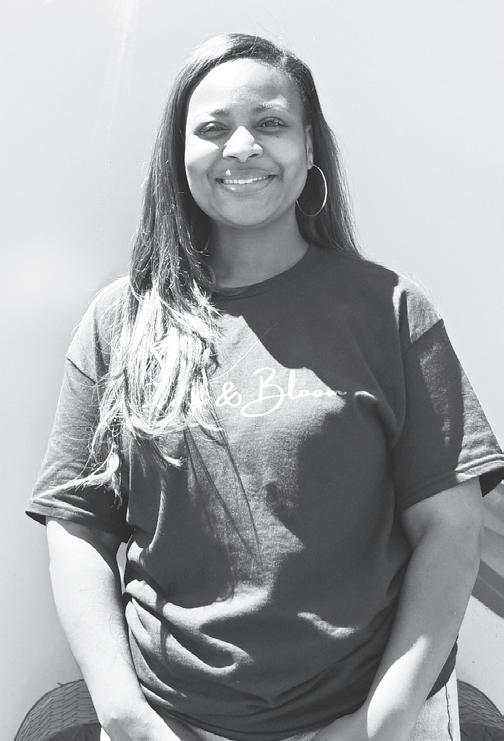
neighborhood markets and pop-up events across the Twin Cities, making plants accessible to people where they already gather. Along with the mobile plant shop, the business hosts workshops and self-care experiences that combine plant education with creativity and reflection.
One of those experiences is Plant Bingo, where participants can learn about plants while having the opportunity to win one of their own.

personal goals and intentions.
"What I hope people take away when they see plants is that they take care of themselves as much as they take care of their plants," Curtis said. "If you water your plants, make sure you take time to water yourself as well."
"We do plant bingo, and people get to win plants. If they're not comfortable buying them, they can win plants instead."
As a mobile plant shop, Roots & Bloom regularly travels to community festivals,
Roots & Bloom also offers plant and sip experiences where participants select a plant, learn how to care for it and take part in an activity centered on writing down

"I do plant and sip where you come in, you can choose a plant, learn about it," Curtis said. "We do a little kind of ritual where you write down goals or intentions that you have. It's about wellness for me."
Curtis said plants have become a way to introduce conversations about wellness in an approachable setting.
"Plants are important to me because they spread joy," she said. "It's all about wellness and taking care of ourselves and taking care of the planet."
As Roots & Bloom approaches its first anniversary, Curtis said the encouragement she's received from customers continues to motivate her.
"What's kept me grounded is how much people love plants, or they see me and they just get a plant or want to start their plant journey with me," Curtis said. "That means a lot."
This summer, Roots & Bloom will continue traveling throughout the Twin Cities, participating in festivals and
pop-up events while serving as a resident plant vendor at Life Juices in St. Paul. Curtis said she hopes her business continues introducing more people to plant care while creating spaces centered on wellness, education and community.
"It's all about wellness and taking care of ourselves and taking care of the planet."
For more information on Roots & Bloom, visit www. facebook.com/p/ROOTSBloom-61577838253915/.
Lizzy Nyoike is a Hubbard School of Journalism & Mass Communication student and contributing writer for the Minnesota Spokesman-Recorder. She welcomes reader responses at lnyoike@spokesman-recorder.com.
Governor’s office recognizes Dr. Sharhonda York Chea for transforming justice through research
By Lizzy Nyoike Contributing Writer
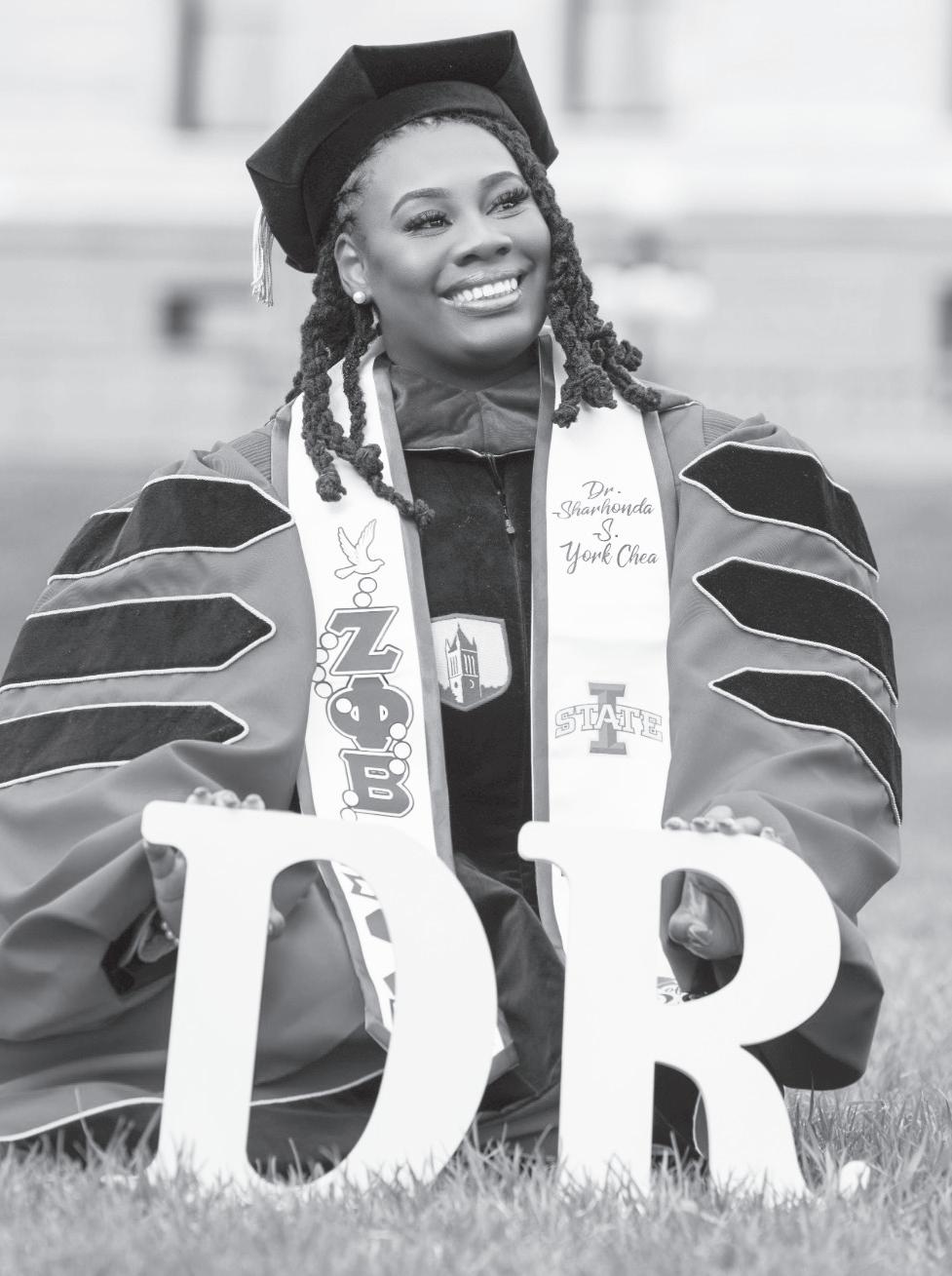
Dr. Sharhonda York Chea wears multiple hats. She is a Ramsey County parole officer, research consultant, mother, wife and, most recently, a PhD graduate from Iowa State University.
She is also the founder and CEO of OurFathersOurSons LLC, a research consulting firm dedicated to helping justice-involved organizations strengthen their programs through research, data analysis, program evaluation and training. Her work centers on improving outcomes for justice-impacted individuals, their families and the communities they return to.
York Chea’s work recently received recognition from the governor’s office, acknowledging her growing impact in criminal justice reform and her commitment to creating evidence-based solutions for Minnesota communities.
“These are our fathers and our sons who are cycling in and out of the criminal justice system.”
While the recognition celebrates years of professional achievement, York Chea says her journey into criminal justice began long before she earned her PhD.
When she was a sophomore in high school, her father was incarcerated for 15 months.
Successful reentry into the community often depends on the support a person has waiting for them. But not everyone returns home to that stability.
When York Chea’s father completed his sentence, he came home to a wife, five children and a family committed to helping him rebuild his life. For York Chea, watching the bond between her father and his pa-
role officer inspired her to pursue a career dedicated to helping others successfully return home after incarceration.
“I remember talking to his parole officer asking, ‘how do I do what you do?’” she recalled.
“He said, ‘You need to go to school.’”
She never forgot those words. Years later, she fulfilled that goal, becoming a parole officer herself. She didn’t stop there.
Wanting to better understand why some people successfully reintegrate into soci-
ety while others struggle, she returned to school to pursue her doctorate. Her research focused on family structure and the role social bonds play in reducing recidivism.
Individuals returning to supportive families and strong community relationships are less likely to reoffend. Although, many people leave incarceration without those critical support systems in place.
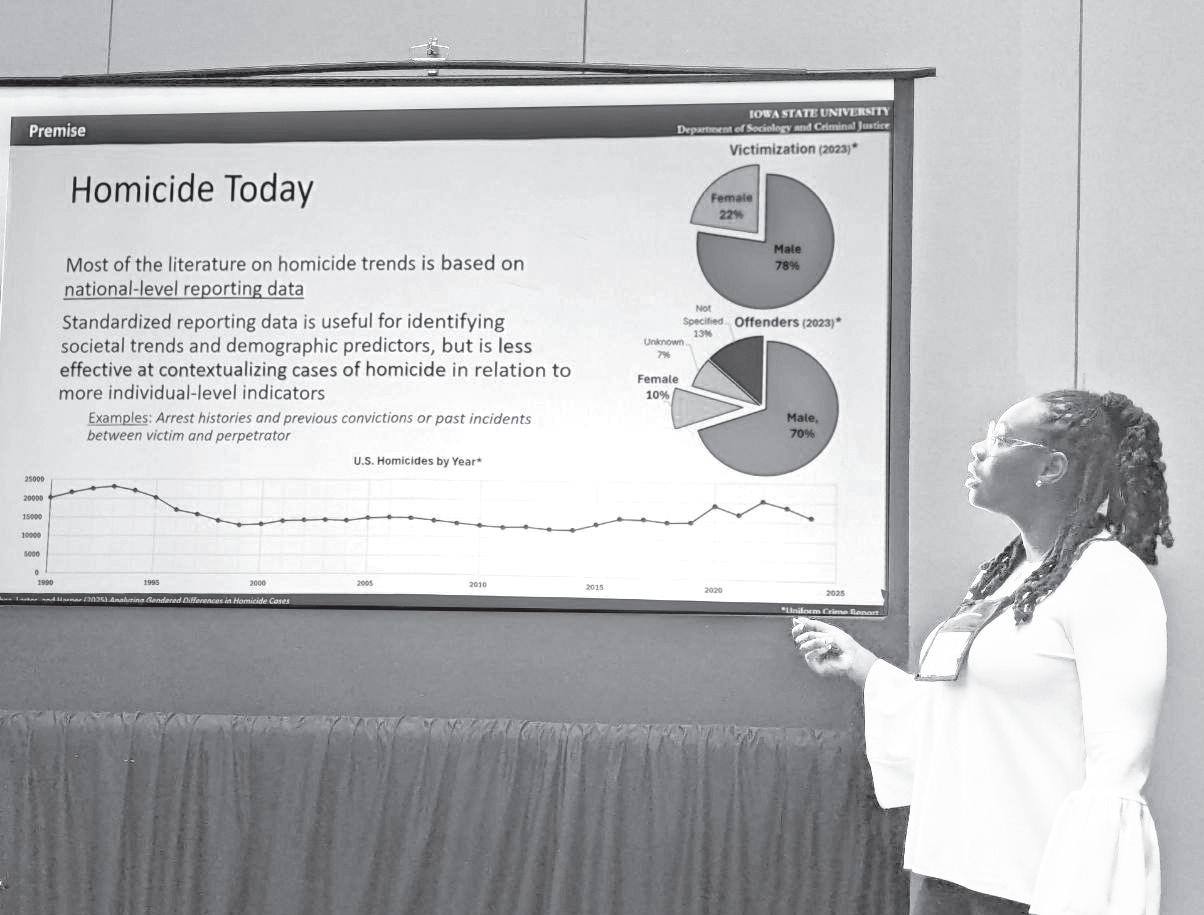
Using data collected through her work with people on parole in Ramsey County, York Chea found that 34.41% of individuals had no social bonds upon release, while another 49.25% had only one social bond, 16.13% had two social bonds and just one individual, 0.22%, had all three. The findings revealed that roughly 83.66% of those in her study returned to the community with zero or just one social bond.
Rather than allowing those statistics to remain in her academic dissertation, York Chea built a business around them.
Through OurFathersOurSons LLC, she partners with nonprofits, government agencies and justice organizations to evaluate programs, analyze data and develop strategies that better serve individuals returning home after incarceration. She believes organizations can create lasting change when research and real-world experience work together.
“I have a research background as well as that practitioner piece,” she said. “Com-
bining those two together, to help create change for our people coming back into the community.”
York Chea recently partnered with the Minnesota Justice Research Center on a project examining how fines and fees affect people navigating Minnesota’s criminal justice system. She hopes the research will help inform future policy decisions and reduce barriers that often make successful reentry more difficult.
brother was too. She sees purpose in this work.
“These are our fathers and our sons who are cycling in and out of the criminal justice system, and so I couldn’t think of a better name,” she said.
As York Chea continues building partnerships across Minnesota, she hopes her work will encourage organizations to invest in the people behind it. For York Chea, successful reentry represents a father’s return, a family rebuilding together and a com-
Looking ahead, York Chea hopes to collaborate with the Minnesota Department of Corrections to create family therapy and counseling programs that begin while an individual is incarcerated, not after they are released.
OurFathersOurSons was inspired by her own family’s experience. Her father was incarcerated. Years later, her
munity made stronger.
For more information on OurFathersOurSons LLC, visit www.ourfathersoursons.org/. Lizzy Nyoike is a Hubbard School of Journalism & Mass Communication student and contributing writer for the Minnesota Spokesman-Recorder. She welcomes reader responses at lnyoike@spokesman-recorder.com.
Dr. Sharhonda York Chea poses for her Doctorate grad photo at the state Capitol in St. Paul. Roosevelt Mansfield
Dr. Sharhonda York Chea presents on Gender differences in Homicides in Chicago at The American Society of Criminology (ASC) conference in Washington DC. Courtesy
Roots & Bloom mobile plant shop at Soul of the Southside in Minneapolis. All photos credited to Lizzy Nyoike/MSR
Plants for sale inside Roots & Bloom mobile plant shop at Soul of the Southside in Minneapolis.
Sierra Curtis
“That promise was purchased with Black blood, Black courage and Black resistance.”
Adams argued that Trump’s push to end birthright citizenship is connected to the SAVE Act, a restrictive voting bill that would require Americans to produce a passport or birth certificate to register to vote.
Last week, Trump refused to sign a bipartisan housing affordability bill until Congress passes the SAVE Act.
“The same forces attacking birthright citizenship are attacking voting rights,” Adams said. “The same forces targeting immigrant families are attacking Black communities. The same forces trying to erase our history are trying to silence our voices at the ballot box.”
Hamsa Hussein, a Somali American rideshare driver and leader of the SEIU Local 26 Drivers Organization Com-
mittee, joined Adams after the ruling and said attacks on birthright citizenship are also attacks on workers’ rights.
“Instead of attacking migrants who are our neighbors, we should stand up to the billionaires, the big corporations,” Hussein said.
Unidos MN Executive Director Emilia González-Avalos said efforts to end birthright citizenship amount to voter suppression.
said. “Make no mistake, this was voter suppression dressed up as immigration policy, but they miscalculated, because you are here, you are citizens, and your power is real.”
Thomas Wolf, director of democracy initiatives at the nonpartisan Brennan Center for Justice at NYU Law, said the ruling doesn’t offset the damage he believes the court has done this term.
“The Fourteenth Amend-
“The Fourteenth Amendment guaranteed citizenship to everyone born here over 150 years ago.”
“When they move to erase birthright citizenship, they move to erase your vote before you ever cast it, to make sure you could never hold them accountable for a mass deportation agenda tearing families from their homes right now,” González-Avalos
ment guaranteed citizenship to everyone born here over 150 years ago. The Supreme Court affirmed that 20 years later in Wong Kim Ark,” Wolf said. “Meanwhile, the court has been on an anti-democratic rampage. In just the past few weeks alone, the court further
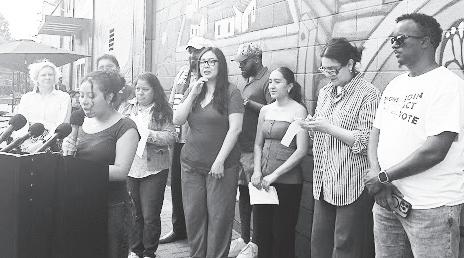
because this country recognizes me as an American. Every young person deserves that same certainty about where they belong and what future they can build.”
Ali Bella, who turns 18 this October, will also be eligible to vote for the first time in the midterm elections.
much more than just getting hit. The gold medal is proof of her work ethic.”
Thomas also pushed back on the stigma that boxing is too dangerous for young athletes. To him, the sport is less about toughness and more about intelligence.
“It’s not about how tough you are, it’s not about how much heart you have, but [it’s about] how much IQ, how much skill you have, and how much you put in is what you’re going to get out,” he said.
To prepare for the Junior Olympics, Natalia says the focus throughout was stamina.
“You have to have good
undermined the Voting Rights Act, encouraged more aggressive partisan gerrymandering, dangerously expanded presidential power over federal agencies, and further depleted protections for immigrants.”
For some young people, the ruling is personal. Emily Rodriguez, a first-generation American born prematurely with a weakened immune system, said her parents came to the U.S. seeking a better life after leaving behind poverty and violence.
“Having health insurance
we would come to Sir Boxing Club and just train.”
More than 1,200 athletes competed at the Junior Olympics, and for Natalia, arriving at the tournament felt like stepping off a screen and into real life.
“I’ve seen stuff on Instagram about it, and it was cool actually being there, seeing it for the first time,” she said. Ceresso Fort, the former professional boxer who founded Sir Boxing Club, said he always believed Natalia had what it takes, and that her win is bigger than one athlete.
“It is possible. She’s showing everyone that there’s a way,” Fort said. “I think we have a future Olympian.”
meant that we could go to the doctor, get medication and get the care that we needed,”
Rodriguez said.
Rodriguez, 18 and collegebound, said she was devastated when she learned Trump had signed the executive order denying birthright citizenship to people like her. She’ll carry that memory with her when she votes for the first time this year.
“That is something that I don’t think is a given,” Rodriguez said. “My voice matters,
sport too often overlooks. Natalia, he noted, is the embodiment of everything Sir Boxing Club stands for.
“People hear boxing and think, ‘Is this for girls too?’ But yeah. We’ve always been that way,” he said. “She’s a representation of the female boxers here. She takes it to another level.”
“I think we have a future Olympian.”
“A child doesn’t choose where they’re born. A child does not choose where their parents were born. So why should any child have their rights taken away because of circumstances they never chose,” Bella said. “I’ll be able to vote. Imagine taking that voice away from millions of people simply because of who their parents are.”
For more information on Trump’s proposed Birthright Citizenship Executive Order, visit www.naacpldf.org/caseissue/know-your-rights-birthright-citizenship/.
Clint Combs welcomes reader responses at combs0284@ gmail.com.
ing,” Just said. “Critical thinking and cognitive dependence are another issue. It can help critical thinking if you use the right prompts to help you learn, but then it can also just spit out an answer.”
When students become cognitively dependent on technology, they offload mental tasks so often that they aren’t able to complete them independently. Stone likens the brain to a muscle.
“If you’re not careful, it’s like if you go to the gym every day, but have a robot lift the weights for you,” Stone said.
“You can brag about your new personal record bench press this week or the A you got on
stamina when you’re in there,” Natalia said. “My dad would wake me up at like 4 a.m. and we would go to Lifetime to do recovery or cardio, and then later in the afternoon
a paper, but if it’s a robot that did it, then your own muscles are just getting weaker and weaker. In this case, your brain.”
“I think students just need to be doing hard things,” he added. “If AI facilitates that, great, they will learn well or even learn better. But if AI helps them avoid the effort, I think that’s where the risk is.”
Just pushes back on those concerns. “I think there’s a lot of fear mongering with regard to that,” she said. “When you find a helpful tool, you use it. I depend on my glasses every single day, and that used to be something controversial.”
She often works with special needs students for whom AI opens new possibilities by using deepfake technology with shy students, translating drawings into words for nonverbal students, and acting as
our coalition would turn people out in support to testify when it was heard.”
a “neurotypical translator” for students on the spectrum.
“These are bots that have not been trained by clinicallytrained professionals.”
Stone warns that even co-writing with AI, where students generate work and then edit and integrate it with their own writing, produces shallower learning. He’s also observed what he calls “the Google effect:” when someone knows information is
Fort founded the gym with intentional space for women and girls, a priority he said the
readily available, their brain is less likely to retain it. The same applies to AI.
With Black youth using AI for schoolwork three times as often as white youth, the technology threatens to widen educational outcome gaps. Particularly when some districts lack resources to teach AI literacy or maintain tech-free spaces.
“I think it’s about the support to use it well,” Stone said. “It’s entirely possible rich school districts are going to be better at putting the technology away and being able to dedicate the time to teach students hands-on.”
There’s also a cultural dimension to AI-produced content. Large language models are trained on existing data, which may overrepresent certain voices and flatten others.
“ChatGPT will push you
that different parts of the data we need are held by different agencies,” said Jana Kooren, MNJRC Associate Director and Pretrial Justice Minnesota Steering Committee Member. She also described how coalition members lobbied throughout the session. “We have a broad set of members, and throughout the session, we would talk with authors of our bills to work with them and the people who run the key committees to try to get hearings scheduled, and then
While the pre-trial bill passed in the House, it was not included in the House’s final omnibus bill presented to the Senate. Cooley explained that there was not enough funding to support accurate data tracking statewide during a year when the closure of Hennepin Healthcare was looming and elections were around the corner.
“What we learned this year at the Capitol was that it’s a matter of money. A fiscal note came in, and it’s expensive to set this up, and there wasn’t a lot of money at the
Legislature this year. It was a policy year, not a budget year,” Cooley said. “Two years in a row, that’s what we found out. Legislators were unwilling to fund this. This will cause another year of not being able to determine how many people are being held. We are going to continue to work and continue to create a system that is based on public safety and risk rather than wealth.”
Data made available through the MNJRC’s research has shown that people of color, especially Black and Indigenous people, are detained at disproportionately higher rates. “We were able to find the
truly disproportionate amount of time the average person stays in jail based on their race,” Kooren said. “Native people have the longest average detention rate compared to white individuals, and with Black individuals it’s the same for them.”
In Hennepin County, the jail
toward a very standardized voice,” Stone said. “The data comes from our culture, from our books, which might overrepresent certain voices, and so the AI is also going to overrepresent those voices.”
That bias extends to enforcement. AI-detection tools are more likely to flag writing by non-native English speakers as artificially generated, raising equity concerns about who gets accused of cheating.
“The emotional impact of being accused of cheating when you’re not is so significant and can be really traumatic for kids,” Just said.
“I feel like I’m way better now than I was when I was younger. Ten out of ten would recommend,” she said, referring to young women thinking about taking the leap from training into competing professionally. For young women interested in training at Sir Boxing Club, Fort encourages them to reach out through the gym’s website or stop by in person. For more information on Sir Boxing Club, visit www.sirboxingclub.com/. You can also follow Natalia Young on Instagram at @ natalia.k.young.
Jasmine McBride welcomes reader responses at jmcbride@ spokesman-recorder.com.
For Natalia, the gold medal is only the beginning. She has her sights set on nationals in December and an invitation to the USA Boxing Youth Team. At 14, she is still a year or two from the age eligibility threshold, but she is not slowing down.
“These are bots that have not been trained by clinicallytrained professionals,” she said, “and it is nerve-wracking to think about what non-professionals might recommend.” Pew found that teens overall are more hopeful than not about AI, actively weighing the pros and cons. But with Black youth engaging the technology at disproportionate rates, for both schoolwork and emotional guidance, the stakes of getting it right are especially high.
Anya Armentrout is a freelance journalist, a student at Macalester College, and a contributing writer for the Minnesota Spokesman-Recorder. She welcomes reader responses at aarmentr@macalester.edu.
Black youth also use AI chatbots more for non-academic purposes. 29% use them to get news (compared to 15% of white youth) and 21% use them for emotional support or advice (compared to 8% of white youth). Just finds that last statistic especially concerning.
“We were able to find the truly disproportionate amount of time the average person stays in jail based on their race.”
dashboard shows that 63% of its jail population is Black as of June 27, with an average stay of 28 days compared to 17 days for white Minnesotans.
“We also have a map that grades out that data where it happens, and you can see that people in greater Minnesota and rural Minnesota,
specifically northern Minnesota, have the highest average amount of days they spend in jail compared to the metro,” Kooren said.
Those advocating for justice reform remain undeterred. They continue to stress the importance of not only data tracking, but of a comprehensive legislative approach that addresses all aspects of the legal system and its racial disparities.
Izzy Canizares is a freelance journalist and contributing writer for the Minnesota Spokesman-Recorder. He welcomes reader responses at isabellacani0102@gmail.com.
Emily Rodriguez, a first-generation American, speaks outside Mercado Central on Lake Street in Minneapolis, June 30. Clint Combs/MSR
Natalia Young displays her Gold Medal at St. Paul’s Sir Boxing Club on June 29. Photo courtesy of Jasmine McBride/MSR
Goal setting: Mapping your short and long-term financial future
Sponsored by

By Jasmine McBride Editor
For most young people, financial goal setting starts out vague: save more, spend less, figure it out eventually. For Joel Carrasquillo, that changed once he stopped waiting for a full-time salary to start learning how money actually works.
“Growing up, I realized that financial education isn’t something many young people are taught, even though it affects almost every aspect of our lives,” Carrasquillo said.
“I didn’t want to wait until I was making a full-time salary to learn how money works. I wanted to understand investing, budgeting, saving, taxes and how people build wealth over time.”
Carrasquillo, who connected with the Minnesota Spokesman-Recorder through Al Riddick of Game Time Budgeting, said his financial education has been self-driven rather than tied to a single program. But the mindset shift, he said, has been just as significant as any specific skill.
“The more I learned, the more I realized that money is really about options and opportunities,” Carrasquillo said. “Good financial decisions
today can create the ability to help your family, invest in your future and serve others later on.”
That perspective, he said, is shaped in part by his faith. “As a Christian, I also believe that everything I have ultimately belongs to God,” he said. “Instead of asking, ‘How much can I accumulate?’ I try to ask, ‘How can I manage what I’ve been entrusted with wisely?’
That perspective motivates me to continue learning and growing financially.”
Carrasquillo said his approach to goal setting has become far more specific over time. “At first, my financial goals were pretty broad. I knew I wanted to save money and invest, but I didn’t always have a clear roadmap for how to get there,” he said. “As I’ve learned more, my goals have become much more intentional and measurable.”
“Every financial decision is either moving me closer to the future I want or further away from it.”
Rather than aiming to simply “be financially successful,” Carrasquillo now sets concrete milestones: savings

targets, preparation for major life transitions and consistent investing with the long term in mind. “One thing that has changed the most is realizing that financial planning isn’t just about numbers, it’s about creating habits,” he said. “Building good habits early is what gives you freedom later.”
This summer marks a major transition for Carrasquillo, who is preparing to move to Pennsylvania to begin his career in Vanguard’s Technology Leadership Program. “That means building an emergency fund, budgeting carefully for moving expenses, furnishing an apartment responsibly and avoiding unnecessary debt while starting this new chap-
ter,” he said. His long-term goal looks beyond his own financial security. “My goal isn’t simply to become wealthy. I want to build enough financial stability that I can genuinely bless other people,” he said. “Whether that’s supporting my family, giving generously, mentoring young people or helping someone else pursue opportunities they wouldn’t otherwise have, I want my finances to become a tool for impact.” To get there, Carrasquillo said he focuses on consistency over speed: continuous learning, regular investing and living below his means.
Asked about his biggest
challenge, Carrasquillo pointed to something many young adults face: the pull between enjoying the present and preparing for the future. “Social media constantly shows expensive lifestyles, luxury purchases and instant gratification, and it’s easy to compare yourself to what everyone else seems to have,” he said.
“I’ve learned that comparison can become expensive.”
Instead, he tries to stay anchored to his own goals.
“Every financial decision is either moving me closer to the future I want or further away from it,” he said. “Keeping that perspective helps me stay disciplined and reminds me that delayed gratification often
Student loan changes leave Black borrowers bracing for higher payments
By Clint Combs Contributing Writer
Millions of federal student loan borrowers faced sweeping changes starting July 1, as provisions from the Trump administration’s tax and spending bill reshaped repayment options, eliminated key loan programs and left Black borrowers, who carry a disproportionate share of the nation’s student debt, bracing for higher payments and fewer choices.
The NAACP and the Debt Collective hosted a livestream to break down the changes, warning that the stakes extend far beyond monthly bills.
“These aren’t just administrative updates, they’re decisions that will shape people’s financial future and the ability to buy a home, start a family, build wealth and invest in their communities,” said Wisdom Cole, senior national director at the NAACP.
Aissa Canchola Banez, policy director at Protect Borrowers, said higher education and student loans took the second-largest hit in the bill.
“Nearly $400 million of cuts to higher education and student loan programs that we know disproportionately benefit Black and Brown borrowers, in particular Black and Brown families, have long been seen as the gateway to ensuring that everybody has equal access to finance a higher education,” Banez said.
The Graduate PLUS Loan program, which once covered the full cost of attendance for graduate students, is gone.
“They have completely eliminated that program for stu-
dents who are enrolling in new graduate programs,” Banez said, though current students are grandfathered in. New Parent PLUS borrowers now face new loan limits as well.
The most urgent concern, Banez said, belongs to the 7.5 million borrowers enrolled in the Biden-era Saving on a Valuable Education (SAVE) repayment plan, who’ve been sitting in forbearance since Republican attorneys general challenged the plan in court.
“If you are enrolled in the SAVE plan, your student loan servicer will begin to send you notices to tell you that you now have 90 days to take action to pick a new repayment plan,” Banez said.
Miss that window, and borrowers get defaulted into the more expensive standard repayment plan. That shift could spike payments by $3,000 to $4,000 a year, according to analysis from Protect Borrowers.
A Government Accountability Office report found the Education Department, following staff cuts under Secretary Linda McMahon, is no longer monitoring student loan servicers at all. Servicers already have a backlog of 530,295 income-driven repayment (IDR) applications that could take more than two years to clear, a warning sign that borrowers may again be steered into costlier repayment plans just as the department prepares to hand off loan administration to the Treasury Department.
The Department of Education had not updated its repayment calculator to re-

“Nearly $400 million of cuts to higher education and student loan programs that we know disproportionately benefit Black and Brown borrowers.”
flect the new plans as of this writing. Banez suggested borrowers use the calculator at edcapny.org to get an estimate of which repayment plan works best for them.
New borrowers taking out loans after July 1 are left with just two options: a new tiered standard plan and a new income-driven plan called the Repayment Assistance Plan. Every current income-driven repayment plan disappears after July 1, 2028, except for Income-Based Repayment.
Dr. Shamell Bell of the Debt Collective laid out what’s at stake for Black borrowers spe-
cifically. “Student debt is absolutely a racial justice issue, because of the racial wealth gap and generations of unequal access to wages, wealth and opportunity, Black borrowers are more likely to borrow, and borrow more, and carry that debt for longer, especially Black women,” Bell said. Bell added that Debt Collective members are actively challenging the Department of Education’s elimination of the SAVE plan in court, arguing the agency cannot legally repeal the Revised Pay As You Earn (REPAYE) plan that preceded it without formal rulemaking.
Still, advocates urged borrowers not to panic. “It’s important to note that when you get this notice, it does not mean you need to immediately move off the SAVE plan, but start putting your plan together, start seeing what your monthly payment could look like across the various plans,” Banez said.
Borrowers struggling to reach servicers were encouraged to contact their member of Congress and open a casework file, seek free help at lawhelp.org, or file complaints with the Consumer Financial Protection Bureau. Minnesota residents can
leads to greater opportunities down the road.”
Carrasquillo said expanding access to financial education isn’t just about individual outcomes, it’s about generational change. “Financial education isn’t just about teaching someone how to budget or invest. It’s about giving people confidence to make informed decisions instead of learning through expensive mistakes,” he said. “When young people understand money, they’re better equipped to avoid unnecessary debt, build wealth responsibly, support their families, start businesses, purchase homes and invest back into their communities.”
For Carrasquillo, that ripple effect is the whole point. “Financial literacy creates opportunity,” he said. “And when more people have access to that opportunity, entire communities become stronger. Success becomes something that can be shared rather than something that’s achieved alone.”
For more information about the Youth Financial Education Series or to learn about partnership opportunities, visit spokesman-recorder.com or contact admin@spokesmanrecorder.com.
The Youth Financial Education Series is supported by JPMorgan Chase.
also file complaints with Attorney General Keith Ellison’s office online or by phone: Twin Cities calling area: (651) 296-3353. Outside the Twin Cities: (800) 657-3787.
Keturah Butler-Reed of the NAACP Youth and College Division pushed borrowers toward the bigger fight. “We cannot obtain generational wealth,” Butler-Reed said. “We cannot fight the administration if we don’t fight policy first, and policy is the number one thing.”
For Ryan, a St. Louis Park teacher, the changes hit close to home when he tried retrieving a refund after overpaying his lender last year.
“I started contacting the companies and then [the] Department of Education to try to figure out how to get that money resent to me,” Ryan said. “I would call, and they would say, ‘OK, we’re going to resend you a check, it’ll be there in two weeks.’ Then, ‘It’ll be there in three months.’ Then, ‘It’ll be there in nine months.’ Every time it got worse and worse.”
Six months later, the check finally arrived, after Rep. Ilhan Omar’s office stepped in.
“Ryan called my office when he needed help getting a refund for a student loan overpayment,” Omar posted on social media. “My casework team was able to work with the Department of Education to get his money returned to him.”
“I guarantee that there’s no chance I would have gotten that if it was just me by myself,” Ryan said. “It was super helpful to finally have some representation.”
Clint Combs is a freelance journalist and contributing writer for the Minnesota Spokesman-Recorder. He welcomes reader responses at combs0284@gmail.com.
Vitaly Gariev
Arts & Culture
Rose McGee’s ‘Kumbayah’ marks 30 years of telling freedom’s story
By Ella Stern Contributing Writer
Minnesota playwright Rose McGee’s “Kumbayah The Juneteenth Story” marked its 30th anniversary June 26 with two performances at St. Paul’s The O’Shaughnessy. The play, which tells the stories of enslaved people near Galveston, Texas, aims to educate audiences and cast members alike about the history and legacy of Juneteenth.
At its 30th anniversary, “Kumbayah” remains tragically relevant.
In the play, two white Texans stop Lewis, a young Black man who is on a road by himself. When the scene takes place, President Abraham Lincoln has already signed the Emancipation Proclamation, but white officials and slaveholders in Texas have deliberately withheld information about it. Lewis and over 250,000 other Black people in Texas are still enslaved. The two men ask Lewis for his pass, suggesting he could be a runaway. Before giving him the opportunity to present it, they lynch him when they learn he knows of the Emancipation Proclamation and could tell other enslaved people about their freedom.
In a Q&A session after the performance, actor Dan Britt drew parallels between this scene and Operation Metro Surge, when ICE officials took neighbors off the street much like the two white Texans took Lewis.
McGee added in an interview that both the scene and
fried green tomatoes, and finding your voice. Pot
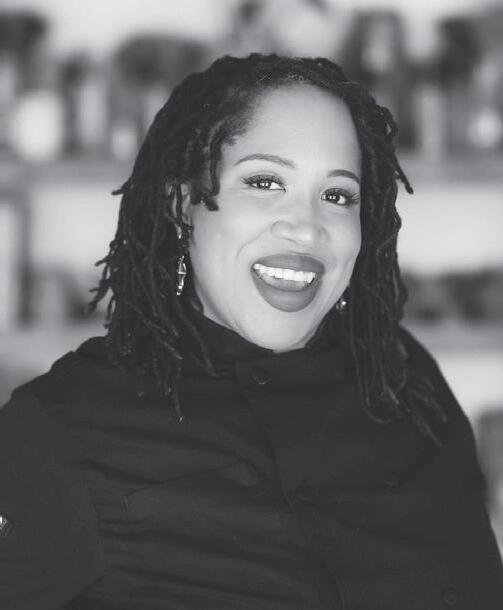
By Lachelle Cunningham Columnist
My paternal great-grandmother, Catherine Burton, made fried green tomatoes at her house on 39th and Oakland in South Minneapolis. The home is just a few blocks from where my shared kitchen sits today. She and my Great Aunt Katie would watch in delight as I ate as many as I could. Eventually, they got wise to me and cut me off be
fore I went too far. That is love. Those green tomatoes were sliced thin, fried crispy and served with hot sauce, and likely the best thing I could remember ever eating up to that point. Every time I make them now, I am chasing that flavor. I am chasing that memory. Now I am the one in delight, chasing that look of satisfaction on the faces of my loved ones and patrons.
That is what the pot does. It holds the vibration long after the food is gone.
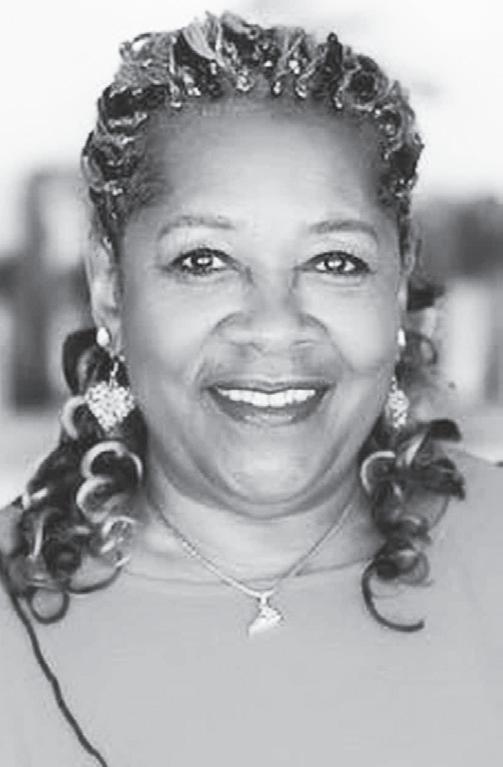
Operation Metro Surge involved officials asking for people’s official passes but carrying out violence regardless.
She connected the violence in her play to police brutality as well.
“We saw [that behavior] blatantly with Alex, as well as with Renee,” McGee said.
“They were just regular citizens, and it didn’t matter. They were still killed.
“We saw George Floyd, we’ve seen Trayvon Martin, we’ve seen Daunte Wright … being killed simply because they may not be in compliance with what somebody thinks is the right thing to be in compliance with,” she continued. “People weren’t allowed in the [era of the] play … and even now, to exercise any right of freedom.”
At its heart, “Kumbayah” is about freedom and perseverance. It gives voice to enslaved Africans doubting whether they will ever be free and daring to hope for it anyway, and depicts them finally
hearing of their freedom.
“Kumbayah’s” main storyline follows Lewis and Florence, two fictionalized enslaved people near Galveston. The two young people fall in love as Lewis, who believes that freedom is coming, goes off to Galveston to sell his master’s wares. Though Florence and the rest of their community struggle to see freedom as a tangible future, they live to hear General Gordon Granger’s June 19, 1865 announcement that Black people in Texas had been freed. Juneteenth celebrates the anniversary of the day that these characters’ real-life counterparts learned of their freedom.
“I wanted the audience to feel that relief that captives had … [and] to process, ‘hey, this is what happened, this is why it happened, and this is how it leads us to where we are today in American society,’” said Jawad Towns Jr., who
African perspectives into the conversation, depicting a slave catcher stealing African people from a market and telling the audience about how recently some African countries won their independence from European colonizers.
The play also interrogates Lincoln’s legacy. Lincoln himself is never depicted, but his enslaved workers find his drafts of the Emancipation Proclamation. An actor portraying Frederick Douglass asserts that Lincoln and the Republicans “did wrong by choice and right by necessity,” and declares that future generations must become educated about this history.
“Kumbayah” came into being to teach audiences about Juneteenth. Over 30 years ago, the Twin Cities Juneteenth Committee invited McGee to add an educational component to its Juneteenth programming. Communities were celebrating the holiday
sees a lack of information about Juneteenth. He said he did not know about Juneteenth at all until middle school. Though his classes in middle and high school dealt with slavery, he said they did not home in specifically on the Emancipation Proclamation or Juneteenth.
“We’ve got a whole federal system that says we’re not to teach these things anymore,” McGee said. “They want to act like it never happened. … Some are not teaching it for fear that they’ll get fired or reprimanded, and that has been the case already in some [places].”
Within this context, McGee believes it is important that Friday morning’s show was filled with students, kids in summer programs and teachers.
“Kumbayah” provides an educational experience for its cast members as well.
The company takes trips to sites that connect with the play. Recently, they visited George Floyd Square and the Clayton Jackson McGhie Memorial in Duluth, which aims to bring attention to the 1920 lynching of three Black
youngest kids to the young adults, or from the young adults to figures like Frederick Douglass.
Towns, who is in his fifth year acting in “Kumbayah,” has developed his understanding of his identity through his experience with the play.
“It has helped me feel closer to my people [and more] connected with my culture,” Towns said. “It’s important to recognize that I am talking about my ancestors. These are some of the people that I am family with, that have been freed from captivity.”
“Kumbayah” cast members believe that the play imparts life lessons outside of its teachings about Juneteenth.
“It’s an understanding that we, the people, still hold the power,” featured soloist Jamela Pettiford said. “It’s also a reminder of just how far we have come, and how far we have yet to go, and that it’s going to take all of us on one accord to make [change] happen.”
For more information about the play, visit www.mnhum. org/event/st-paul-kumbayahthe-juneteenth-story-30th-
The scene preceding Lewis and Florence’s story gives Juneteenth modern context, depicting a Black community in the 1990s discussing the holiday. Other scenes bring
with a parade and other festivities, but the committee was concerned that people didn’t understand what the holiday was about.
Decades later, Towns still
men in the city. Many “Kumbayah” actors return to the company year after year, some of them growing up in the play as they move from portraying the
Ella Stern is a contributing writer for the Minnesota Spokesman-Recorder.com. She welcomes reader responses at erstern10@gmail.com.
Patience is a form of power

Before I knew it, I had set out to carry forward my greatgrandmother’s fried green tomatoes. To cook what my body remembered. That is how legacy works. It does not announce itself. It waits for you to catch up to it.
This month, I want to talk about something else I had left at the bottom of my pot. My own voice.
The Black feminist scholar Alexis Pauline Gumbs writes: “It is dangerous to be discovered.” And this Juneteenth, I let myself be found.
Carleton College asked me to curate the meal for their annual alumni reunion, which fell on June 19, now recognized as Juneteenth. They also asked me to give the keynote. I showed up with my singing bowls, my spoken word, and a PowerPoint bearing the story of my people.

The night before, I listened to Billie Holiday sing “Strange Fruit” on repeat. Not as background music. As grounding. As preparation. That song requires patience. You cannot rush Billie. I opened my keynote by playing that song with the lyrics on the screen. The room had no choice but to sit in it with me. No rushing. No filling the silence. Just Billie and the weight of her words. I told them the truth about Juneteenth. That our people were not freed on that day. They were finally told of freedom denied through delay. I heard people crying. I felt the room the way you feel a pot when it is finally at the right flavor meld. You do not have to look. You just know.
I have cooked for hundreds, even thousands of people. I know how to feed a room. But feeding a room and moving a room are two different things. I did not fully know that until Carleton.
At a writing retreat on the St. Croix River, a fellow writer stopped me cold: to bear witness to who you are, what do you have to knock
off your shoulder? I wrote for a long time. People pleasing. The fear of taking up space without earning it first. The weight of carrying healing for everyone else while quietly neglecting my own. When prompted to write a six-word bio, I wrote: I’m healing, make room for it.
At Soul of the Southside’s Juneteenth festival, I did not cook a single dish. Four local Black chefs led from under my tent. I stepped back and watched them be received. That too is a kind of cooking. The one thing I did make was a mocktail. And the crowd would not move. They came to see me. Not my food. I am still learning how to let that be enough.
Juneteenth is about finding out you were free after those holding power already knew. I said I wanted to be a writer when I was ten years old. I have been writing ever since. But I am only now claiming it out loud.
Patience is a form of power. So is letting yourself be discovered. So make yourself a plate this month. Fry some green
tomatoes and pour yourself something healing. Invite someone over. And ask yourself what you have been carrying that is keeping you from being found.
What have you been carrying that is keeping you from being discovered? Write to Lachelle at chelleskitchenllc@gmail. com or visit www.healthyrootsinstitute.com.
Fried Green Tomato Formula
Serves 4 to 6
This is a formula. You follow the structure, but you make it yours.
The Tomato: Firm green tomatoes or tomatillos, sliced into quarter-inch rounds.
The Seasoning: Season both sides generously with this blend: one teaspoon each of salt, garlic powder, and onion powder. Half a teaspoon black pepper. One teaspoon Cajun seasoning or build your own with smoked paprika, cayenne, dried thyme, and a pinch of oregano.
The Dredge: Set up three shallow dishes. Dish one: flour seasoned with garlic powder, onion powder, salt, and pepper. Dish two: your liquid of choice. Pot likker broth is my favorite, but buttermilk or plant milk works too. Dish three: equal parts panko breadcrumbs and cornmeal with salt to taste.
The Method: Preheat oil to 350 degrees. Dredge your seasoned slices through the flour, then the liquid, then the breadcrumb mixture. Fry a few pieces at a time for two to three minutes until golden brown. Drain on paper towels. Serve hot with hot sauce.
The Sauce: Hot sauce of your choice. Or vegan ranch: blend two garlic cloves, one tablespoon lemon juice, two teaspoons Dijon mustard, and one can of chickpeas with their liquid until smooth. Drizzle in half a cup of oil while blending. Add rice milk, onion powder, garlic powder, and minced parsley. Season with salt, pepper, and cayenne.
My version: classic green tomatoes, panko and cornmeal crunch, fried at 350 until golden. Served with vegan ranch and hot sauce. But yours does not have to look like mine.
For the mocktail recipe, please visit the full length of this column at https://spokesman-recorder. com/2026/06/29/lachelle-cunningham-potlikker-juneteenth/.
Rose McGee Sweet Potato Comfort Pie
Chef Lachelle Cunningham’s monthly column explores food, family, and legacy. This month: her paternal great-grandmother,
Likker, Column No. 4
Fried green tomatoes before and after frying.
Courtesy
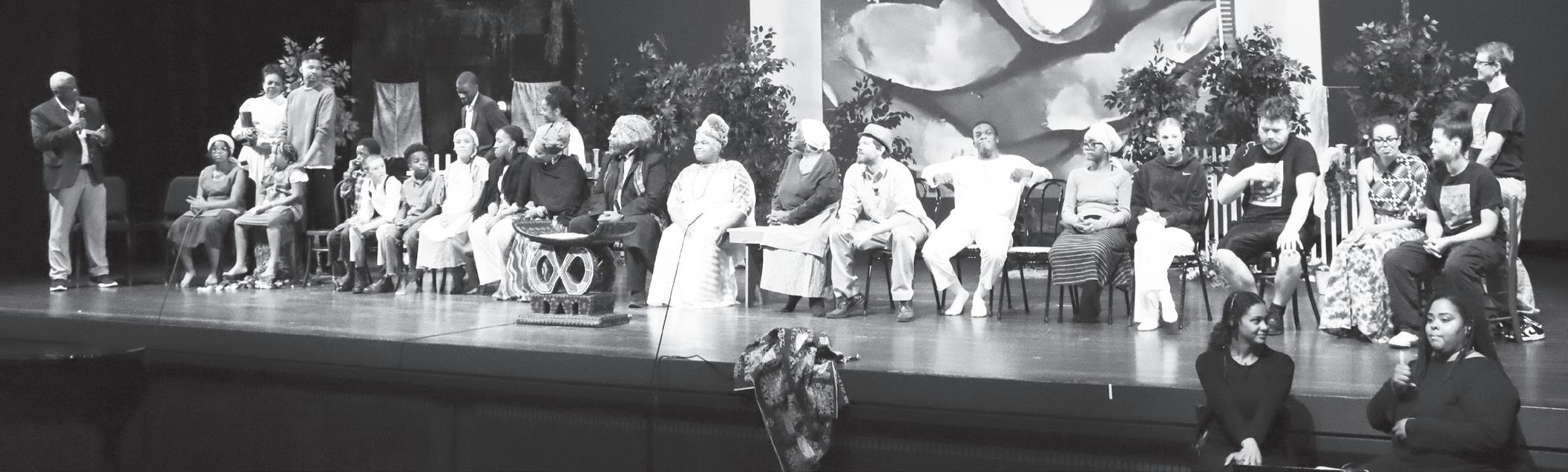
"Kumbayah The Juneteenth Story" cast during Q&A, at The O'Shaughnessy, June 26. Photo courtesy of Walter Marmillion
Why parent voice is Minnesota’s most underutilized education resource
leaders.
Voices shaping Minnesota education
Khulia F. Pringle, founder and executive director of S.T.A.N.D. Up Minnesota Parents United, launches a new monthly column exploring the intersection of education, equity and family leadership in Minnesota. Rooted in the lived experience of families rather than district budgets and politics, Parent Power covers everything from literacy and school discipline to special education and community-led solutions, amplifying the voices too often left out of conversations about educational change.
By Khulia F. Pringle Columnist
When conversations about education happen, parents are often invited to the table last.
School districts hire consultants, convene advisory committees, analyze data and develop strategic plans. Community meetings are sched-
uled, surveys are distributed and listening sessions are held. Yet too often, the families most impacted by educational decisions are asked for their input only after the decisions have already been made.
As a parent advocate and founder of S.T.A.N.D. Up Minnesota Parents United, I have spent years working alongside families navigating Minnesota’s education system. I have sat with parents concerned about their child struggling to read. I have helped families understand special education processes, navigate school discipline issues, and advocate for services their children need. I have witnessed parents fight for their children while feeling unheard, dismissed or excluded from decisions that directly affect their families.
What I have learned is simple: parents are not the problem. In fact, parents are one of the most valuable resources our education system has.
Families are their children’s first teachers. They know their children’s strengths, challenges, interests, fears and dreams. They see what happens after the school day ends. They know when their child suddenly stops wanting to go to school, when homework becomes a struggle, or when confidence begins to disappear.
Yet our education systems often treat parents as spectators rather than partners. Too often, family engagement is reduced to attending conferences, volunteering at events or responding to surveys. While those activi-

ties have value, true family engagement must go beyond participation. It must include partnership, shared decisionmaking and leadership.
Parents should not have to wait for a crisis to have their voices heard.
Across Minnesota, families are raising important concerns about literacy, school climate, discipline practices, special education services, staffing shortages, school closures and educational equity. These concerns are not obstacles to progress. They are opportunities to better understand what students need to succeed.
When schools genuinely partner with families, outcomes improve. Research consistently shows that students
perform better academically, attend school more regularly, and experience stronger social and emotional well-being when families are actively engaged in their education. But meaningful engagement requires more than asking parents what they think. It requires institutions to share power and act on what families say.
disabilities. Historically, many of these communities have experienced educational systems that have not always valued their expertise or reflected their lived experiences. As a result, trust has often been damaged.
Rebuilding that trust requires a different approach.
It means recognizing parents as experts in their children’s lives. It means creating opportunities for families to help shape policies rather than simply react to them. It means ensuring that family voices are represented wherever decisions about education are being made, from local school councils and district committees to school boards and state policymaking bodies.
The reality is that many of the solutions we seek already exist within our communities.
Families know what barriers their children face. They know what supports are working. They know what resources are missing. They know when schools are building relationships and when they are not. Their experiences provide critical information that data alone cannot capture.
“The future of education cannot be built for families. It must be built with families.”
This is especially important for Black families, immigrant families, multilingual families and families of students with
As Minnesota continues to address persistent disparities in educational outcomes, we must move beyond viewing families as stakeholders and begin recognizing them as
That is one of the reasons I founded S.T.A.N.D. Up Minnesota Parents United. Our mission is rooted in the belief that families deserve not only a voice but also the knowledge, tools and opportunities to influence decisions that affect their children. When families are informed, organized and empowered, they become powerful advocates for educational change.
The future of education cannot be built for families. It must be built with families.
If we are serious about improving outcomes for all students, then parent voice cannot be treated as an afterthought. It must become a cornerstone of how we design policies, allocate resources and measure success.
Parents are not simply participants in education. They are partners. They are leaders. And they are one of Minnesota’s most underutilized resources for creating schools where every child can thrive.
The question is not whether families have something valuable to contribute. The question is whether our educational institutions are ready to fully embrace the power families already possess.
Khulia F. Pringle, M.A., is founder and executive director of S.T.A.N.D. Up Minnesota Parents United, commissioner on the Saint Paul Recovery Act Commission on Reparations, and co-chair of the Minnesota Literacy Coalition. You can reach her directly at khuliapringle@standupmpu.org.
Representation matters: Why diverse books keep children engaged
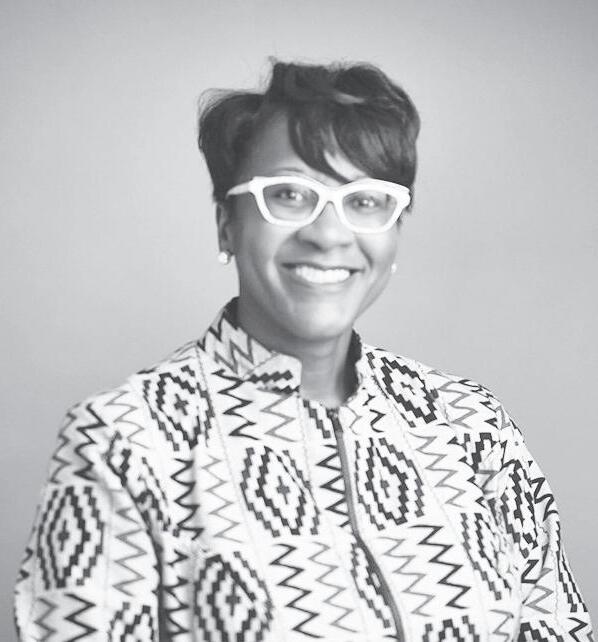
By Dr. Artika R. Tyner Columnist
As a child, one of my fondest memories was my grandmother taking me to the Salvation Army to buy books. I longed to find a book with a little girl with a skin tone similar to mine, a book that revolved around a relatable story. I wanted to see myself in this little girl, and if she were an achiever, I would strive to reach or even surpass her. These memories inspired me to become an author, an educator and a literacy advocate who focuses on creating access to culturally relevant books. My goal is to equip First Educators with the tools needed to inspire the next generation to learn, grow and lead.
“First Educator” refers to the fundamental primary role that parents and caregivers play in a person’s early development and education. They instill essential life skills, morals and behaviors.
As a First Educator, when
was the last time you brought home a new book? Do you have a home library set up?
Does your child see themselves in the characters of the books you bring home?
Studies have shown that children engage more with books when they intersect with their culture. When characters are familiar with the way of life of their community, children establish an affinity with them. Culturally relevant books motivate children to read, which improves comprehension, enhances critical thinking and increases engagement with others. They also broaden empathy by allowing children to step into the shoes of others and understand the world from a diverse perspective, helping to break down stereotypes. Books act as mirrors where children get to see a reflection of themselves. When children engage with culturally relevant books and characters they relate to, they tend to have an increased sense of self-worth and cultural validation. They end up emulating these worthy characters.
How to identify a culturally relevant book
Having a picture of a person of color on the cover of a book does not equate to cultural relevance. The stories should be centered on the lives of these characters. Culture is the way of life of a group of people and, as such, should be represented in the

details of the food, clothing, language and celebration of festivities. Culturally relevant books should be situated in scenarios that children are familiar with.
When selecting books for your child, focus on books authored by individuals from their communities who celebrate and honor cultural values. The similarities in experiences will resonate with children when they engage with these books.
To truly know what books would best suit your child, you need a better understanding of the child’s world. Start by asking them what their typical day looks like. What sights and sounds they encounter, and how those make them feel. Know their preferences: what snacks they like, how they spend their summers. These details differ among cultures, and book selection should reflect that.
First Educators often introduce children to books that serve as both mirrors and windows. According to children’s lit-
erature scholar Dr. Rudine Sims Bishop, “Children need windows and mirrors. They need mirrors in which they see themselves and windows through which they see the world.” Mirror books reflect the lives of children back to them. Readers are familiar with the characters and the setting. Mirror books affirm and validate their experiences and serve as a source of inspiration, particularly in nonfiction, where children are introduced to heroes and sheroes. Window books, on the other hand, open up the world to readers. They give children the liberty to build bridges across cultures, helping develop empathy and curiosity. As much as a child needs culturally relevant books, there should be a fine balance. When setting up a home library, the collection should be diverse enough to give the child a holistic view of the world as a global citizen. First Educators can seek support from their local librarian in choosing the right books for their child.
Make reading a conversation
As a First Educator, engage your children during and after they read a book. Ask questions such as: “What lessons were learned?” or “What would you have done in this situation?” Engaging children about culturally relevant books connects them to their cultural stories and values. It allows the First Educator to shed more light on cultural practices not found in the book. Bonding over stories nurtures a child’s development, both emotionally and intellectually. It builds trust, improves literacy and unlocks the world for young readers.
“Books act as mirrors where children get to see a reflection of themselves.”
A call to action
Pay critical attention to your child’s book collection.
Are the books culturally relevant? Do they reflect what you expect your child to know about themselves? Are there stories that, if added, would strengthen the collection? Are there window books to ensure your child has a broad outlook on life?
A child’s understanding of who they are shapes their own story. A powerful gift you can give a child is a book that
opens them up to see and know themselves better.
As Dr. Bishop wisely stated: “When there are enough books available that can act as both mirrors and windows for all our children, they will see that we can celebrate both our differences and our similarities, because together they are what make us all human.”
Join Planting People Growing Justice every first Saturday for the Leaders Are Readers program for intergenerational reading circles that bring children and families together through storytelling and interactive activities, plus a free lunch and book giveaway from 11 a.m. to 1 p.m. at Jimmy Lee Recreation Center. For more information, visit www.ppgjli.org/.
Dr. Artika Tyner is committed to creating a world of inclusive leaders who will meet the pressing needs of today and work towards a better future where racial justice and economic justice reign supreme. As a motivational speaker, author and educator, Dr. Tyner helps people of all ages connect with their gifts and develop tangible tools for bringing forth sustainable, durable change in the family, workplace, community or school. By building and leveraging the tools in The Inclusive Leader she has inspired thousands of people to lead with their own gifts and plant a seed of social change. You can also reach Dr. Artika Tyner directly at drartikatyner@gmail.com.
cottonbro studio
Mizuno K
Opinion
DevSecOps
Engineer: Plymouth, MN
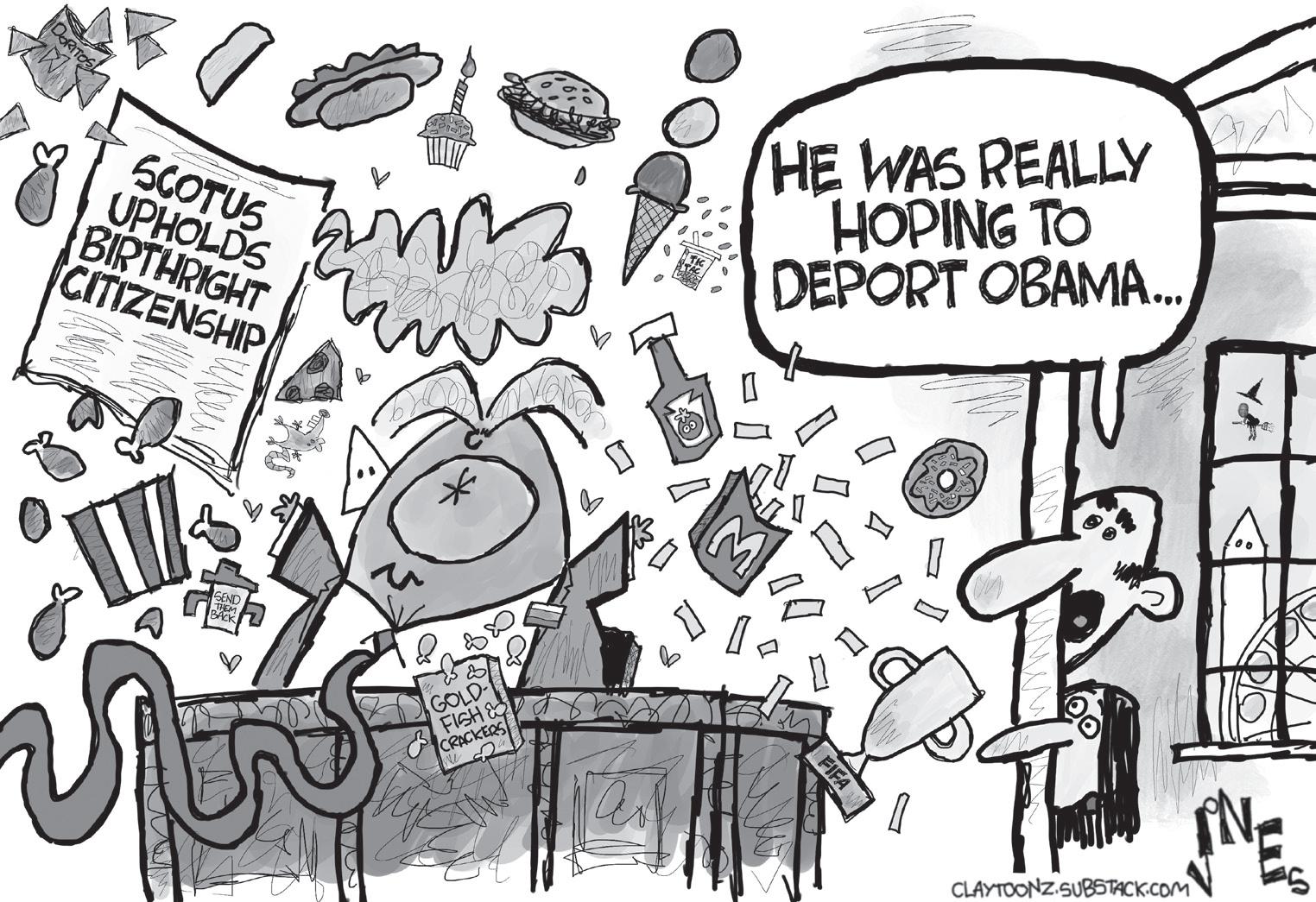
IT Company seeks DevSecOps Engineer to integrate security practices into DevOps workflows, automate security checks, and ensure the safety of cloud infrastructure. Work closely with development and security teams to enhance the security posture of applications and systems. Build and Configure delivery environments by using CD/CI, Agile delivery methodologies. Create and assist in performing various types of tests. Perform troubleshooting. Generate customized reports. Offered Salary: $116,480.00 to $116,500.00/yr. Send resumes to: HRD, VITS Consulting Corp., 14264 23rd Ave N, Plymouth, MN 55447. Minnesota Spokesman-Recorder July 10, 2025
By Greer Marshall
By Daria Dawson and Nadine Smith
We are descendants of those who pushed America to live up to its highest ideals as farmers, educators, caregivers, and organizers across the South who believed in the promise of American democracy, even when America did not believe in them.
In 1898, in Wilmington, North Carolina, a white supremacist mob burned down the city’s Black-owned newspaper, marched through Black neighborhoods with guns, and forced the democratically elected, racially integrated city government to resign at gunpoint. It was the only armed coup d’état ever executed against an elected American
ible the direct line running from Wilmington 1898 to literacy tests to poll taxes to voter ID laws to gerrymandered maps.
The tools have changed. The playbook has not.
For centuries, the South has served as the proving ground of America’s promise, as the region where strategies to both restrict and expand democracy have coexisted. Black communities have been the primary targets of suppression, and just as often democracy’s most creative defenders.
They did not wait for the system to protect them. They built parallel systems that made the old order irrelevant.
The New York Knicks won a championship, which is itself so improbable that we’re all still adjusting to the fact that it exists. Respectfully. But a fan collective called the Tan Suit Champs is not content with their victory. They want something more audacious. They want the team to show up at the White House in tan suits. They’ve put out a poll for fans to vote on, but perhaps even you, the non-fan, should consider weighing in. This would be a ludicrous idea if it weren’t, in a weird way, perfect. An idea inspired by an iconic moment of political absurdity in August 2014, when President Barack Obama wore a tan suit during a White House press briefing. Specifically, CNN and Fox News both lost their minds. Grown men questioned whether the Republic could survive a President wearing a tan jacket. The backlash was so utterly unhinged from anything real that it turned the suit into a symbol of something far more interesting. The tan suit worn by America’s first Black president became a meme and now has an af-
fectionate meaning. I guess in 2014, Obama’s confidence was his real superpower.
This brings me back to the Knicks. Confidence. That’s what defined them. Being underestimated and still winning. The tan suit, in this context, is actually a thesis statement that says, “You doubted us. You were wrong. So we’re going to walk into the White House looking fabulous while you settle in.”
suits. It’s admirably on-brand in this fandom and politics moment.
But here’s the thing about this absurd endeavor. These fans are serious about the idea that the Knicks should show up at the White House in tan suits. They believe it would be not only meaningful but also hilarious AF. Which reveals yet another point about New York fan pettiness that dead-up de -
“New Yorkers know how to turn criticism into a championship mindset,” a Tan Suit Champs spokesperson told me. The slogan is “Yes We Tan,” a riff on Obama’s campaign phrase, and, of course, in street-team fashion, there’s a merchandise campaign. There always is. Tan Suit Champs is selling mugs, t-shirts, and magnets featuring an AI-generated image of the Knicks starting five in matching tan
fines politics and entertainment right now. I’m not naming names. Or I could just be overthinking. Either way, a group of fans wants the Knicks to wear tan suits to the White House. Is it silly or genius? Take the poll.
This op-ed appeared first in Black Press USA.
Greer Marshall is a Staff writer for Black Press USA.
As America marks the 250th anniversary of its founding, we cannot forget that Black Americans have been catalysts for some of the most transformative democratic advances in our nation’s history. From the Reconstruction Amendments to the Civil Rights Act of 1964 and the Voting Rights Act of 1965, Black communities pushed America to confront the contradiction at the heart of its founding ideals. That insistence on full participation helped transform the nation into something closer to its promise. Or so it seemed. Those who know this history know we have been here before.
government. An estimated 60 to several hundred Black men were killed. More than 2,100 Black residents fled the city. No one was ever arrested. No one was ever charged.
Today, we again find ourselves at a crossroads. Over the past 18 months, we have witnessed executive orders dismantling diversity, equity, and inclusion initiatives across federal agencies, book bans targeting histories of slavery and civil rights, and the removal of Black history from military museums and national park sites. This is not performative cruelty. It is a strategy. The point is to sever the present from the past. To make invis-

The 1881 Atlanta Washerwomen Strike established that collective action by the most marginalized workers could succeed. The Montgomery Bus Boycott, sustained for 381 days, was not simply a protest. It was economic infrastructure.
The 1964 Mississippi Freedom Schools trained civic leaders and drove the voter registration drives that built the base for everything that followed.
By naming white supremacy as organized power rather than individual prejudice, Black communities built alternative institutions that served community needs and demonstrated that collective selforganization worked when people understood where they came from and where they were going.
Historians and legal scholars have described what we are living through as a backlash to a third Reconstruction. And each time, Black communities have responded not with despair but with creativity. Building institutions, building knowledge, building power in the spaces the state refused to protect.
That legacy is what this anniversary should call us to honor. Not as nostalgia, but as methodology.
We must remember what they are trying to make us forget, because remembering is not merely honoring the past. It is the strategy for the present.
This op-ed appeared first in The Root. It has been edited for length. For the original version, visit www.theroot.com/ they-want-us-to-forget-howwe-saved-democracy-thefirst-2000113693.
Daria Dawson is the Executive Director of America Votes. Nadine Smith is the President and Chief Executive Officer of Color of Change.
By Joseph Williams
Nearly a decade after dismantling Barack Obama’s signature foreign policy achievement, President Donald Trump found himself defending a hastily assembled agreement intended to end the Iran conflict: an unpopular war he unilaterally started. The twopage memorandum punts on Iran’s nuclear ambitions, its proxy networks, and regional threats, while creating a 60day window to negotiate something more permanent.
The comparison to what came before was immediate and uncomfortable.
Obama’s Joint Comprehensive Plan of Action, which Trump spent years attacking before withdrawing from in 2018, ran 159 pages and was the product of grinding diplomacy involving European allies, Russia, China, and international inspectors. Now, after military strikes, American casualties, and months of economic disruption, Trump has arrived at an arrangement many critics view as narrower and less durable than the one he discarded.
The contrast sharpened further in Chicago.
As Trump absorbed criticism from left and right over his Iran strategy, Obama stood before thousands on Chicago’s South Side to celebrate the opening of the Obama Presidential Center. A project more than a decade in the making. Every living president and first lady attended. Except one.
The Obama Center embodies a fundamentally different vision of legacy. Trump’s public life has long been defined by monuments to himself with buildings, brands, and
projects carrying his name.
Obama’s center was conceived as a civic space first and a presidential monument second. The 19-acre campus includes a museum, a public library branch, gardens, an auditorium, and community gathering spaces designed to serve residents long after today’s political battles fade.
“The exhibits in the center are not meant to evoke nostalgia for some gauzy bygone era,” Obama said at the dedication. He spoke instead about democratic institutions, civic engagement, integrity, and the peaceful transfer of power. No one needed help understanding the subtext.
that has circulated for years through the political movement Trump leads. The president, as usual, had nothing to say. That silence matters. Trump’s fixation on Obama has never been purely ideological. It carries the unmistakable undertones of grievance. It’s not just that Obama defeated Republican ideas, or that he remained popular around the world long after leaving office. It’s that the first Black president achieved the admiration, legitimacy, and cultural stature Trump desperately craves.
Trump continues to define himself against Obama. Obama rarely appears to return the favor.
The dedication featured Stevie Wonder, Bruce Springsteen, Jennifer Hudson, John Legend, Common, The Roots, and Christina Aguilera. Trump's America 250 celebration, meanwhile, saw nearly every headliner bail after the event took on the feel of a campaign rally. One felt obligatory. The other felt aspirational.
Then came the uglier reminder of how race continues to shape this story. At a UFC event celebrating Trump’s birthday, a fighter used an open mic to repeat a baseless conspiracy theory attacking Michelle Obama. A smear
One man spent recent weeks defending an Iran deal that invited unflattering comparisons, watching artists flee his celebrations, and staying silent while his supporters attacked his predecessor’s wife. The other opened a presidential center on the South Side of Chicago, surrounded by former presidents and cultural icons, his legacy deepening by the day.
One is still trying to prove he belongs in the conversation. The other has made clear it will never happen.
This op-ed appeared first in Word in Black. It has been edited for length. For the original, visit https://wordinblack. com/2026/06/obama-stilllives-rent-free-in-trumps-head/. Joseph Williams is a veteran journalist and political analyst whose work has appeared in The New York Times, The Washington Post, The Atlantic, and Politico. He is a former Nieman Fellow at Harvard University.
we’ve seen thus far this season, the Thomas-Clark affair has become the talk of the town. Instead of talking about inconsistent officiating, we’re talking about the continued racial divisiveness that grows wider than the Grand Canyon in the W.
Dr. Akilah Carter-Francique, now dean of Benedict College’s Education, Health and Human Services school, and Dr. Ajhanai (AJ) Keaton, an assistant professor at the University of Massachusetts, both spoke to us last week in separate phone interviews. The two Black women regularly study the intersection of race, gender, social politics and sport.
“There’s no scholarly evidence that I know of where we actually have a representative sample of who Caitlin Clark fans are,” said Keaton. “I think there’s kind of an imagery or a caricature that we kind of assume comes with her. We’ve had other star White female players.”
“I think in this era, the sociopolitical context of Trumpism, I think what’s happening in the context with White nationalism,” she pointed out.
Dr. Akilah added, “I think it’s on the court and off the court. Black women, whether they are players or in the front office, are always under a different level of surveillance and scrutiny that other women and men do not have to essentially endure.”
“You have her face,” noted Dr. AJ on Clark, “along with the faces of Black women.
We know that the WNBA at this point is predominantly African American, and so it’s easy to go into that conver-
Continued from page 12
get low seeds, earn better seeding positions? All-Black conferences such as the MEAC and SWAC typically find themselves in First Four games since they are AQs. Howard (MEAC) and Prairie View (SWAC) made history this past spring when they advanced as 16-seeds, but their next contests were against No. 1 seeds in the Round of 64, and both fell. So far, no dissension from Black college officials and coaches about the new setup, who probably see it as nothing new as far as being seeded by the NCAA selection folks.
This is the first expansion of the NCAA tournament
SOE
Continued from page 12
sation, provide those comparisons and then begin to pit player against player ...”
“I think all those things, in many ways, are coming together, are overlapping and are creating a conversation around this sport, around the professionalization of women in this space. I think in many ways this incident can create some challenge, some additional conflict that is taken out of context fully with one incident like this.”
And like a bad old movie, the beat goes on. And the nonsense of Black players being jealous of Clark is just that.
“The racist attacks directed at Black players are reprehensible,” reaffirmed Knox. “Those culture-war talking points. Healthy disagreement has been replaced by performative outrage.”
“We have that racial conversation when we’ve got an individual like a Caitlin Clark that predates even her coming to the league,” surmised Carter-Francique. “The overlap of this race, gender, sexual orientation conversation that is pitting a Black player or a White player versus Black women as a whole.
“I think [Clark] was placed on a pedestal about what she could do for the league that in some ways diminished the efforts and the accolades of the women before her, of even the White women before her, and I think that has created some challenge” for the W, she stressed.
“At the end of the day,” concluded Dr. Akilah, “I believe those women want to play, want to participate without all of the additional commentary.”
Charles Hallman welcomes reader responses at challman@ spokesman-recorder.com.
Copyright © Charles Hallman
since it went to 68 teams for the men in 2011 and the women in 2022.
Point two — The SWAC basketball tournaments will look different when they come around next March. Under the revised format suggested by the league’s Men’s and Women’s Basketball working group, the top two teams in each tournament bracket will receive byes directly into the semifinals. Seeds No. 3 and 4 will advance directly to the quarterfinals, and seeds No. 5 and 6 will receive byes into the second round.
Now, the top 10 WBB and MBB teams will make the SWAC postseason after the regular season is completed: No. 8 vs. No. 9, and No. 7 vs. No. 10, with the two winners facing the fifth
STATE OF MINNESOTA FOURTH JUDICIAL DISTRICT
COUNTY OF HENNEPIN Probate Division
Estate of: Court File Number:
Barbara S. Brotherton, a/k/a 27-PA-PR-26-746
Barbara Sue Brotherton, and Barb Brotherton, Decedent
Notice and Order for Hearing on Petition for Formal Adjudication of Intestacy, Determination of Heirs, and Appointment of Personal Representative and Notice to Creditors
It is Ordered:
A hearing will be held via Zoom at 9:00 AM on August 3, 2026 by this court for the formal adjudication of intestacy and determination of heirs of the Decedent, and for the appointment of Michelle K. Daly, whose address is 1795 Woodstone Drive, Victoria, Minnesota, 55386, and Patrick Daly, whose address is 1795 Woodstone Drive, Victoria, Minnesota, 55386 as Co-Personal Representatives of the Estate of the Decedent in an UNSUPERVISED administration. If proper and if no objections are filed, the Personal Representative will be appointed with full power to administer the Estate including the power to collect all assets, to pay all legal debts, claims, taxes and expenses, to sell real and personal property, and to do all necessary acts for the Estate.
To join the hearing log into https://zoomgov.com/join and enter the Meeting ID 161 916 1413 and Passcode 762031. If you do not have the ability to join by internet, you may join by telephone by calling toll-free 1-833-568-8864. Enter the same meeting ID and passcode and press *6 to unmute. Visit https://www.mncourts.gov/Remote-Hearings for more information and options for joining remote hearings.
If you object to this petition, you must file a written objection with the court by 4:30pm on July 31, 2026. Written objections may be filed with the required filing fee the following ways: 1) Mailed to Hennepin County District Court – Probate/Mental Health Division, 300 South Sixth Street – C4 Govt. Ctr., Minneapolis, MN 55487-0340; or 2) Electronically filed using the electronic filing system.
It is further ordered that notice shall be given by: 1) publication once a week for two consecutive weeks in a legal newspaper in Hennepin County, the last publication of which is to be at least ten (10) days before the deadline for objections; and 2) mailing via U.S. Postal Service a copy of this Notice and Order postmarked at least fourteen (14) days prior to the deadline for objections to all interested persons as defined in Minnesota Statutes § 524.1-401 and persons who have filed a demand for notice pursuant to Minnesota Statutes § 524.3-204. Any charitable beneficiary may request notice of the probate proceeding be given to the attorney general pursuant to Minnesota Statutes § 501B.41, subdivision 5.
Notice is also given that (subject to Minnesota Statutes § 524.3801) all creditors having claims against the Estate are required to present the claims to the court within four months after the date of this Notice or the claims will be barred.
Date: June 23, 2026
Attorney for Petitioners
P. David Melchert
Melchert Hubert Sjodin, PLLP

Judge Koch Judge of District Court
121 West Main Street, Suite 200 Waconia, Minnesota, 55387
Attorney License No: 0249877
Telephone: (952) 442-7700
FAX: (952) 442-6166
Email: pdmelchert@mhslaw.com
Minnesota Spokesman-Recorder, July 2 & 9, 2026
and sixth seeds in the second round.
Point three — The MEAC’s sanctioned sports now number 16.
Women’s flag football and women’s golf have been added and will begin play in the upcoming 2026-27 sports year.
As an NCAA Emerging Sport, flag football has the potential to host its inaugural championship as early as spring 2028. The sport is also set to debut at the 2028 Summer Olympics in Los Angeles. Women’s golf “provides
an additional championship opportunity for female student-athletes and enhances [sic] the conference’s overall competitive offerings,” said a MEAC June 16 release.
Commissioner Sonja Stills said in the release that the two new women’s sports “represents [sic] an exciting step forward in the MEAC and our member institutions.”
Point four — The NAIA’s only all-Black conference this summer welcomed its 16th member school.
Jarvis Christian (TX) University (JCU) was unanimously voted in by the HBCU Ath-
STATE OF MINNESOTA FOURTH JUDICIAL DISTRICT
COUNTY OF HENNEPIN Probate Division
Estate of: Court File Number: James Carroll Brotherton, Jr., 27-PA-PR-26-726 a/k/a James Brotherton, Jr. and Jim Brotherton, Decedent
Notice and Order for Hearing on Petition for Formal Adjudication of Intestacy, Determination of Heirs, and Appointment of Personal Representative and Notice to Creditors
It is Ordered: A hearing will be held via Zoom at 9:00 AM on August 3, 2026 by this court for the formal adjudication of intestacy and determination of heirs of the Decedent, and for the appointment of Michelle K. Daly, whose address is 1795 Woodstone Drive, Victoria, Minnesota, 55386, and Patrick Daly, whose address is 1795 Woodstone Drive, Victoria, Minnesota, 55386 as Co-Personal Representatives of the Estate of the Decedent in an UNSUPERVISED administration. If proper and if no objections are filed, the Personal Representative will be appointed with full power to administer the Estate including the power to collect all assets, to pay all legal debts, claims, taxes and expenses, to sell real and personal property, and to do all necessary acts for the Estate.
To join the hearing log into https://zoomgov.com/join and enter the Meeting ID 161 916 1413 and Passcode 762031. If you do not have the ability to join by internet, you may join by telephone by calling toll-free 1-833-568-8864. Enter the same meeting ID and passcode and press *6 to unmute. Visit https://www.mncourts.gov/Remote-Hearings for more information and options for joining remote hearings.
If you object to this petition, you must file a written objection with the court by 4:30pm on July 31, 2026. Written objections may be filed with the required filing fee the following ways: 1) Mailed to Hennepin County District Court – Probate/Mental Health Division, 300 South Sixth Street – C4 Govt. Ctr., Minneapolis, MN 55487-0340; or 2) Electronically filed using the electronic filing system.
It is further ordered that notice shall be given by: 1) publication once a week for two consecutive weeks in a legal newspaper in Hennepin County, the last publication of which is to be at least ten (10) days before the deadline for objections; and 2) mailing via U.S. Postal Service a copy of this Notice and Order postmarked at least fourteen (14) days prior to the deadline for objections to all interested persons as defined in Minnesota Statutes § 524.1-401 and persons who have filed a demand for notice pursuant to Minnesota Statutes § 524.3-204. Any charitable beneficiary may request notice of the probate proceeding be given to the attorney general pursuant to Minnesota Statutes § 501B.41, subdivision 5.
Notice is also given that (subject to Minnesota Statutes § 524.3801) all creditors having claims against the Estate are required to present the claims to the court within four months after the date of this Notice or the claims will be barred.
Date: June 23, 2026
Judge Koch Judge of District Court Attorney for Petitioners
P. David Melchert
Melchert Hubert Sjodin, PLLP 121 West Main Street, Suite 200 Waconia, Minnesota, 55387
Attorney License No: 0249877
Telephone: (952) 442-7700
FAX: (952) 442-6166
Email: pdmelchert@mhslaw.com
Minnesota Spokesman-Recorder, July 2 & 9, 2026
letic Conference (HBCUAC) Council of Presidents in April.
Beginning in 2026-27, JCU is a full conference member, making the HBCUAC the largest Black college sports league in the nation.
“Their membership strengthens our conference’s commitment to providing HBCU student-athletes with the highest level of competition, collaboration and opportunity. This is a proud day for our entire conference,” said Commissioner Kiki Baker Barnes in the April 21 press release.
Point five — Howard led
all HBCUs this past sports season with 10 conference championships.
FINALLY ...
“The Voice of HBCU Sports” went silent this spring. Charlie Neal, the legendary voice of Black college sports, died at the age of 80 on May 13. He called Black college football and basketball games for over four decades on BET and ESPN.
Charles Hallman welcomes reader responses at challman@ spokesman-recorder.com.
Copyright © Charles Hallman
say Whalen, Sylvia Fowles, Maya Moore and Reeve for Minnesota, and LA’s Candace Parker and Alana Beard.
At the recent 2026 Women’s Basketball Hall of Fame (WBHOF) inductions in Knoxville a couple of weekends ago, MSR asked Parker and Reeve to look back on the Lynx-Sparks storied rivalry. Both talked admirably
about those days. “To me, Sylvia Fowles and myself, we’ve been playing against each other since we were 13 years old,” recalled Parker on one of the game’s greats. “She went in last year in the Class of 2025. We’re about like identical in every single category, and I think she made me raise my game. “She made me elevate like the basketball player that I am, and I think those are the competitions that really lift you and are able to be a part of your family.”
“Obviously Candace and I never thought we’d be in these spaces and really reminiscing and talking about those two years,” admitted Reeve, who guided Minnesota in those years, winning a title and finishing as runner-up in another. “We don’t think that there’ll be rivalries if you go and look at the rosters, the starting fives from those two teams, the number of Hall of Famers, that level of talent.”
“I think with expansion and subsequent growth, etc., it might be a long, long time,”
Reeve pointed out. “But I think it was one of the two best years in the history of our league.”
MSR regularly covered those rivalry years, witnessing firsthand how both teams brought out the championship best in each other like no other W squad ever did. The iconic matchups: Fowles vs. Parker, Moore vs. Parker, Whalen vs. Beard or Gray, Brunson vs. everyone, et al. Watching the championship trophy grudgingly change hands between the two clubs in 2016 and
2017, as the last team standing, was as memorable as anything we ever covered.
A rivalry for the ages, we asked: Will there be another one like it?
“I don’t think so, to be honest with you,” stressed Parker.
“Look at the amount of HOFs on the court at any given time, the points that separated us.”
Concluded Parker, “You look at the rivalries in the NBA and our rivalry that we had; there was very little margin for error, and that’s what makes you a champion. That’s what makes you second place.”
Charles Hallman welcomes reader responses at challman@ spokesman-recorder.com.
Copyright © Charles Hallman
“I don’t think that period of time is discussed enough about how I believe that was a look into the future of the WNBA,” surmised Reeve, “its success that we had, the viewing, the competition, the passion, the two fan bases, the talent. It’s not talked about.”
Employment & Legals
STATE OF MINNESOTA DISTRICT COURT
COUNTY OF HENNEPIN FOURTH JUDICIAL DISTRICT
Case Type: Probate File No. 27-PA-PR-26-887
In Re Estate of: Cheryl Jean Theis, Decedent.
PROBATE OF WILL AND APPOINTMENT OF PERSONAL REPRESENTATIVE AND NOTICE TO CREDITORS
TO ALL INTERESTED PERSONS AND CREDITORS:
Notice is hereby given, that an application for informal probate of the above named decedent’s last will dated May 24, 2029 has been filed with the Registrar herein, and the application has been granted informally probating such will. Any objections may be filed in the above, and the same will be heard by the court upon notice of hearing fixed for such purpose.
Notice is hereby further given that informal appointment of Malcolm F. Theis, whose address is Apt. 237, 4207 Lakeside Avenue North, Minneapolis, MN 55429, personal representative of the estate of the above-named decedent, has been made. Any heir, devisee or other interested person may be entitled to appointment as personal representative or may object to the appointment of the personal representative and the personal representative are empowered to fully administer the estate including, after 30 days from the date of issuance of letters, the power to sell, encumber, lease or distribute real estate, unless objections thereto are filed with the court pursuant to Minn. Stat. §524.3-607 and the court otherwise orders.
Notice is further given that ALL CREDITORS having claims against said estate are required to present the same to said personal representative or to the Probate Court Administrator within four months after the date of this notice or said claims will be District Court Administrator.
June 22, 2026 Yvette M. Andrade Registrar Sarah Gonsalves, District Court Administrator
Minnesota Spokesman-Recorder, July 2 & 9, 2026

2 Columns x 7.175” High
NOTICE TO DEFENDANT:
(AV(SO AL DEMANDADO): Christine Moua
YOU ARE BEING SUED BY PLAINTIFF: (LO ESTA DEMANDANDO EL DEMANDANTE): Dean Moua, Tou Moua
SUPERIOR COURT OF CALIFORNIA
County of Tehama
Kevin Harrigan, Clerk of the Court By _____________________, Deputy EFILED
NOTICE! You have been sued. The court may decide against you without your being heard unless you respond within 30 days. Read the information below.
You have 30 CALENDAR DAYS after this summons and legal papers are served on you to file a written response at this court and have a copy served on the plaintiff. A letter or phone call will not protect you. Your written response must be in proper legal form if you want the court to hear your case. There may be a court form that you can use for your response. You can find these court forms and more information at the California Courts Online Self-Help Center (www.courts.ca.gov/selfhelp), your county law library, or the courthouse nearest you. If you cannot pay the filing fee, ask the court clerk for a fee waiver form. If you do not file your response on time, you may lose the case by default, and your wages, money, and property may be taken without further warning from the court.
There are other legal requirements. You may want to call an attorney right away. If you do not know an attorney, you may want to call an attorney referral service. If you cannot afford an attorney, you may be eligible for free legal services from a nonprofit legal services program. You can locate these nonprofit groups at the California Legal Services Website (www.lawhelpcalifornia.org), the California Courts Online Self-Help Center (www.courts.ca.gov/selfhelp), or by contacting your local court or county bar association. NOTE: The court has a statutory lien for waived fees and costs on any settlement or arbitration award of $10,000 or more in a civil case. The court’s lien must be paid before the court will dismiss the case.
¡AVISO! Lo han demandado. Si no responde dentro de 30 días, la corte puede decidir en su contra sin escuchar su versión. Lea la información a continuación.
Tiene 30 DÍAS DE CALENDARIO después de que le entreguen esta citación y papeles legales para presentar una respuesta por escrito en esta corte y hacer que se entregue una copia al demandante. Una carta o una llamada telefónica no lo protegen. Su respuesta por escrito tiene que estar en formato legal correcto si desea que procesen su caso en la corte. Es posible que haya un formulario que usted pueda usar para su respuesta. Puede encontrar estos formularios de la corte y más información en el Centro de Ayuda de las Cortes de California (www.sucorte.ca.gov), en la biblioteca de leyes de su condado o en la corte que le quede más cerca. Si no puede pagar la cuota de presentación, pida al secretario de la corte que le dé un formulario de exención de pago de cuotas. Si no presenta su respuesta a tiempo, puede perder el caso por incumplimiento y la corte le podrá quitar su sueldo, dinero y bienes sin más advertencia. Hay otros requisitos legales. Es recomendable que llame a un abogado inmediatamente. Si no conoce a un abogado, puede llamar a un servicio de remisión a abogados. Si no puede pagar a un abogado, es posible que cumpla con los requisitos para obtener servicios legales gratuitos de un programa de servicios legales sin fines de lucro. Puede encontrar estos grupos sin fines de lucro en el sitio web de California Legal Services, (www.lawhelpcalifornia.org), en el Centro de Ayuda de las Cortes de California, (www.sucorte.ca.gov) o poniéndose en contacto con la corte o el colegio de abogados locales. AVISO: Por ley, la corte tiene derecho a reclamar las cuotas y los costos exentos por imponer un gravamen sobre cualquier recuperación de $10,000 ó más de valor recib 1 ida mediante un acuerdo o u 2 na concesión de arbitraje en un caso de derecho civil.
Tiene que pagar el gravamen de la corte antes de que la corte pueda desechar el caso.
The name and address of the court is: (El nombre y dirección de la corte es): Superior Court County of Tehama 1740 Walnut Street, Red Bluff, CA 96080
CASE NUMBER (Número del Caso): 25CI-000033
The name, address, and telephone number of plaintiff’s attorney, or plaintiff without an attorney, is: (El nombre, la dirección y el número de teléfono del abogado del demandante, o del demandante que no tiene abogado, es): Natalie R. Ludwig, 2150 Main Street, Suite 116, Red Bluff, CA 96080 (530) 690-2711
DATE: (Fecha)





Clerk, by (Secretario) Deputy (Adjunto) 2/14/2025 9:12 AM
(For proof of service of this summons, use Proof of Service of Summons (form POS-010).) (Para prueba de entrega de esta citación use el formulario Proof of Service of Summons, (POS-010)).

Contributing
Writers
Anya Armentrout
Isabella Canizares
Clint Combs
Charles Hallman
Fela Jamal
Tiffany Johnson
Binta Kanteh
Alaysia
Callisto Martinez
Lizzy Nyoike
Aamira Redd
Ella Stern
Gregoria Guardado
Sports

he Alyssa Thomas-Caitlin Clark on-court kerfuffle late last month sadly sparked, for many, a Marvin Gaye “Make You Wanna Holler, Put Up Both Your Hands” moment.
Phoenix’s Thomas made contact with Indiana’s Clark’s throat during a loose-ball scramble during Indiana’s June 24 111-109 loss to Phoenix. League officials later reviewed the play, upgraded it to a Flagrant 2 foul and suspended Thomas for one game.
“The racist attacks directed at Black players are reprehensible.”
Social media and media know-it-alls afterward went bonkers. Rob Knox admitted last week that he experienced a Gaye moment and shared it on his Substack post. He’s a longtime Black journalist and friend with whom we both share a passion for women’s basketball.
“I’ve noticed a troubling pattern. Whenever something negative happens to Clark,
BY CHARLES HALLMAN
Racial divide in the WNBA runs wider than the Grand Canyon
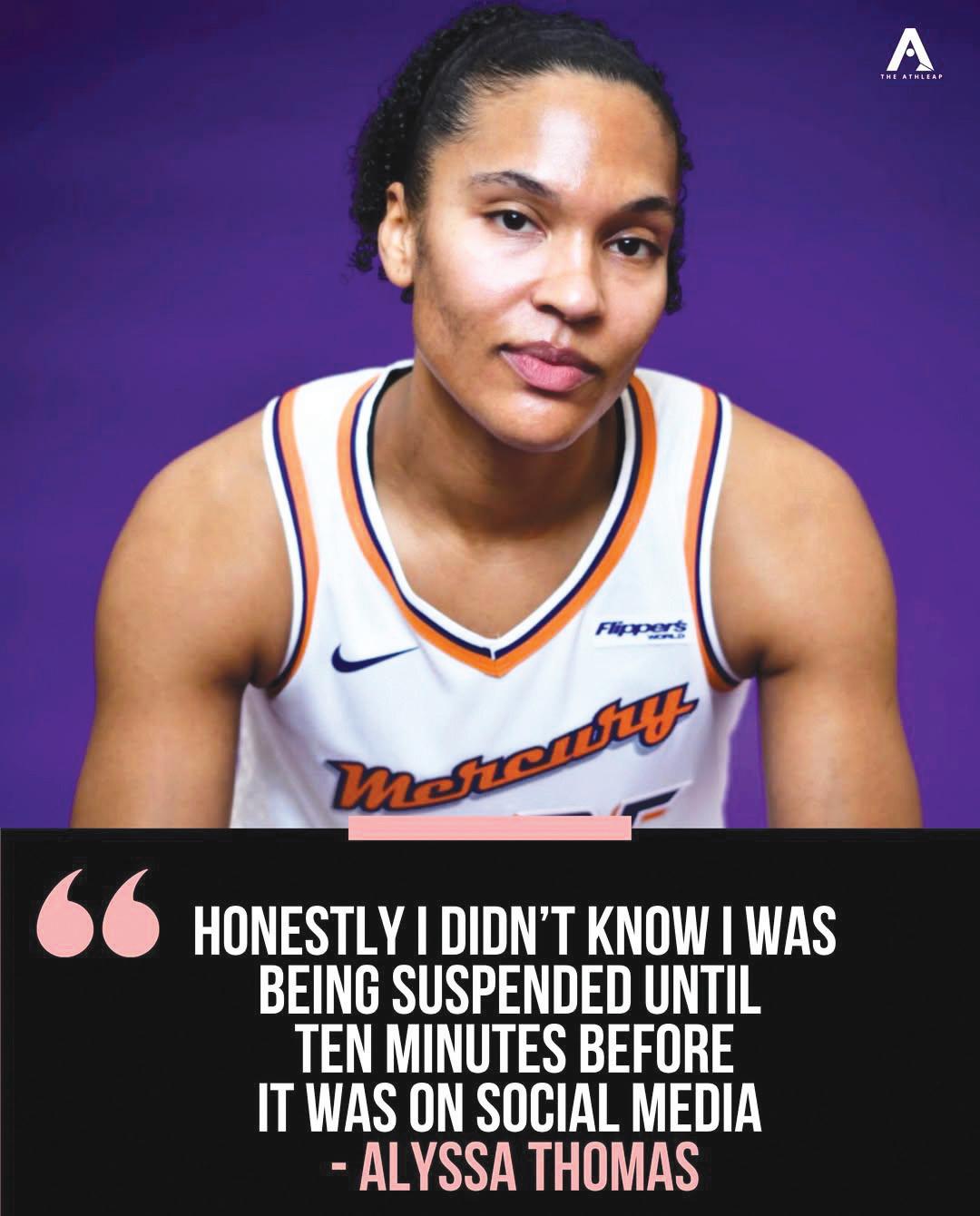
a wave of people emerges from the darkest corners of the internet. They weaponize the moment to spread racism, demean Black women, attack the WNBA, and say things they would likely never utter face-to-face,” wrote Knox.
Amidst the noise, Thomas and her family have since received death threats. Make you want to holler.
And finally, WNBA Commissioner Cathy Engelbert released a “We don’t tolerate hate” statement, though she always seems to be a dollar
An occasional column that will bring fans of Black college sports updates and insights on teams, players and coaches with a primary focus on the SWAC, MEAC and HBCU Athletic Conference (HBCUAC) among others.
oint one — The annual road to the Final Four in NCAA women’s and men’s postseason basketball will be a little longer next spring.
Beginning in 2027, 76 teams will play in the Division I Men’s and Women’s Basketball Championships, with 12 opening-round games replacing the First Four.
“The NAIA's only all-Black conference this summer welcomed its 16th member school.”
As a result, two different pods of competitors in both WBB and MBB will emerge: the 12 lowest-seeded automatic qualifiers (AQs) will fill six of those games, and the 12 lowest-seeded at-large teams will fill the other six. AQs play AQs, and at-large teams play at-large teams. Will the new NCAA tourney setup announced in May finally help HBCUs, who historically
■ See BCSR on page 10
short when it comes to such matters, which often does nothing to quell things.
America loves heroes and villains, good vs. evil. In the W, are Black female players bad, non-Black players good?
Furthermore, the WNBA didn’t properly prepare for Clark, who quickly became its great White hope, the socalled All-American girl that advertisers and fans have waited so long for upon her arrival two seasons ago. Definitely, they weren’t prepared for a sudden influx of WBs
(W bandwagon) fans that the Indiana guard attracts, along with the racial divisiveness on social media and a Clark obsession among some.
Some fans and media blindly gave Clark credit for the new seven-year CBA over WNBA Players Union President Nneka Ogwumike, who is Black, and her negotiating team, many of whom are also Black, including Minnesota’s Napheesa Collier.
Instead of talking about the many great performances
■ See VIEW on page 10
Big changes ahead for HBCU hoops

Parker, Reeve reflect on Lynx-Sparks rivalry for the age
he present WNBA post-season playoff setup was started 10 years ago, in 2016, because of perhaps the league’s greatest rivalry ever.
Then, the league’s two best teams, Minnesota and Los Angeles, both resided in the Western Conference, which essentially forced the league to scrap the typical East vs. West finals and install an eight-team playoff system that put the Lynx and the Sparks on opposite sides of the bracket, hopefully on a collision course to the W Finals.
Those hopes became reality as Minnesota and Los Angeles capped off a decade-long rivalry that started during the 2010s with two classic five-game championship series. Featured were some of the greatest individual
matchups with future Hall of Famers and brutal, physical action that sometimes led to flagrant fouls and “bad blood.”
“This is probably the strongest [rivalry] I’ve experienced.”
The back-to-back 2016 and 2017 Finals, which pitted the reigning champion (Minnesota in 2016, LA in 2017) against its rival, were fought tooth and nail. None of the 10 total contests was for the faint of heart.
Five making their mark

his week’s column features five former prep stars who are representing.
Nia Hollie
The former Hopkins High School girls basketball standout, who went on to play collegiately for the Michigan State Spartans, is the new girls basketball coach at DeLaSalle High School after leading Two Rivers High School for three consecutive seasons of improvement.
High School and University of Minnesota girls basketball standout is the new director of Community Engagement and Recruitment for Big Brothers Big Sisters Twin Cities. Ellis-Milan transitioned from a decorated high school and college player to one of the state’s top girls basketball coaches, leading East Ridge High School to a spot in its first-ever Class 4A state tournament in 2026.
Darren Edwards Edwards, at one time one of the top high school running backs in the state as a student athlete at St. Paul Arlington High School, is the head coach of the Roseville High School girls basketball team after leading the South St. Paul High School boys’ basketball program the past five seasons. Former prep standouts Andrayah Adams (St. Paul Como
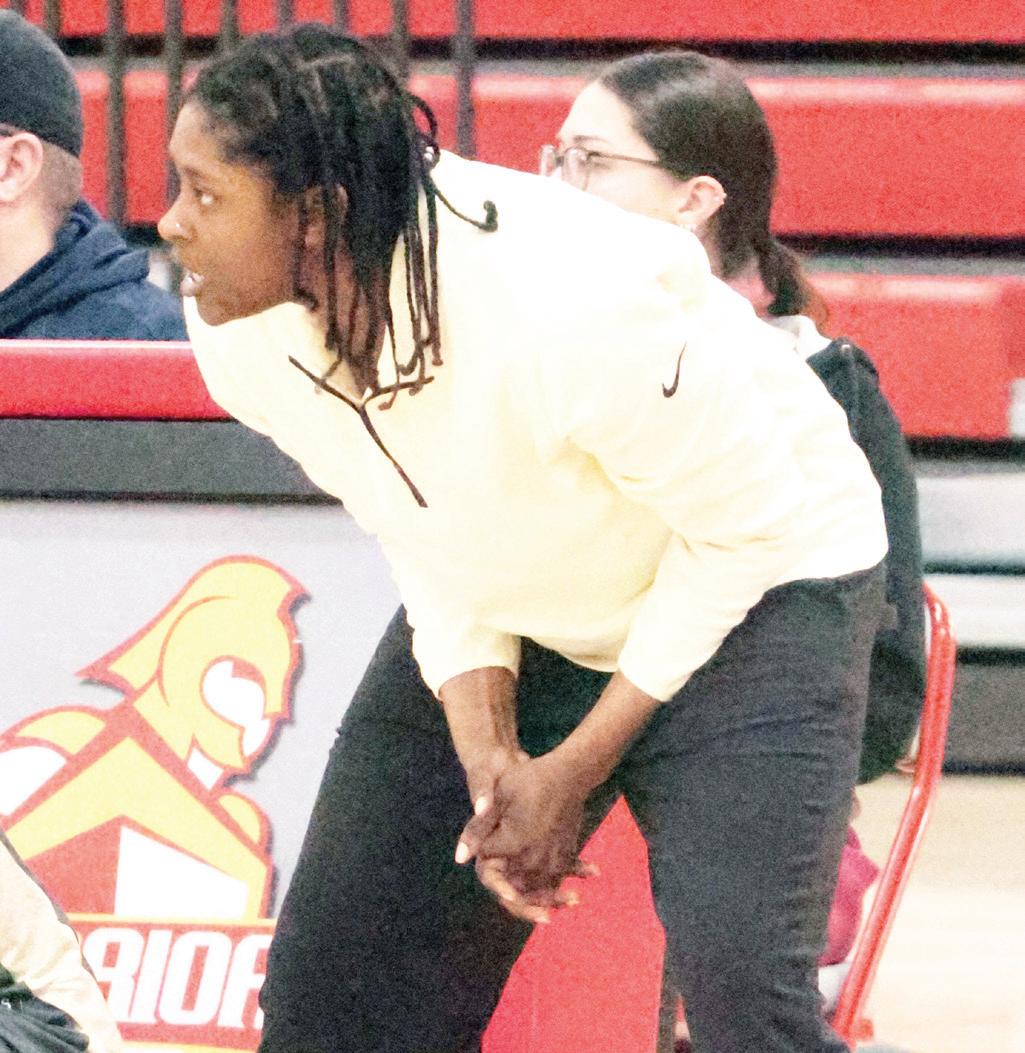
While at Hopkins, Hollie was named Minnesota Miss Basketball in 2016. She got her start in coaching as an assistant at Cretin Derham Hall High School.
Ronnie Porter
When Porter, a point guard for St. Paul Como Park High School, was being interviewed during her senior year, she let it be known that a plan after her prep career was in the works.
She not only surprised everyone by walking on to the University of Wisconsin Badgers women’s basketball program, but also became a four-year starter at point guard and earned a scholarship in the process.
Ashley Ellis-Milan
The former St. Paul Central
Park) and Alex Moore (St. Paul Johnson) are assistant coaches for the Raiders.
James Henderson
Former Roseville High School boys basketball star James Henderson is the new head girls basketball coach at East Ridge High School. Henderson and the Raptors will be coming off a season in which the school made its first Class 4A state tournament appearance in 2026.
He has extensive experience as a head coach, including stops at Roseville High School, Apple Valley Senior High School and Concordia Academy.
Dr. Mitchell Palmer McDonald welcomes reader responses at mcdeezy05@gmail.com.
“It’s going to look ugly at times,” Sparks’ Nneka Ogwumike told ESPN prior to the 2016 championship series. The forward hit the Game 5 title-winning shot with a couple of seconds left after Minnesota stormed back
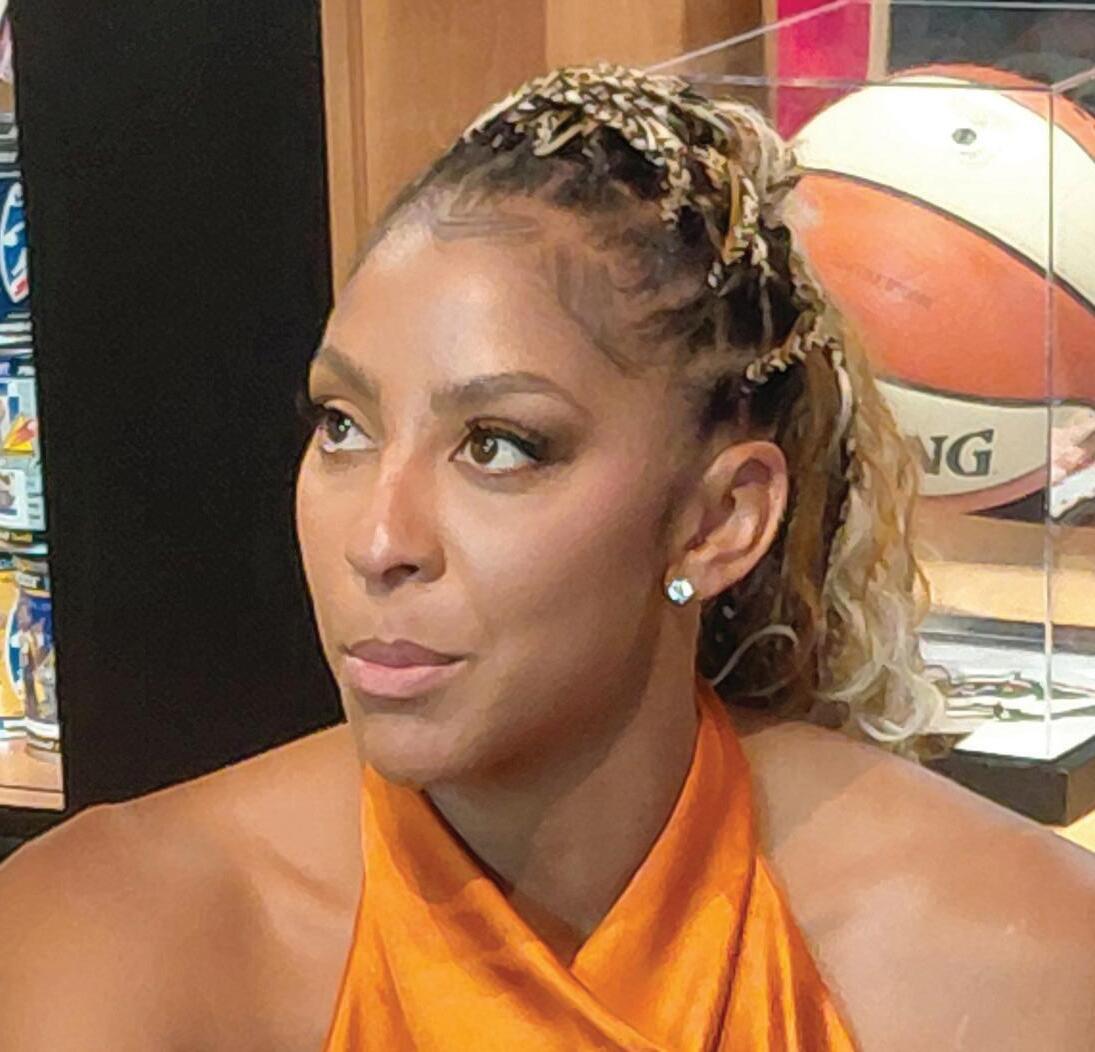
and erased an eight-point lead in the final two minutes of the fourth quarter. “This is probably the strongest [rivalry] I’ve experienced,” added Ogwumike, who, along with Minnesota’s Rebekkah Brunson and Chelsea Gray (who now plays for Las Vegas), is among three players who should be future Hall of Famers, joining seven other eventual HOFs who played, or in Cheryl Reeve’s case, coached in the colossal series: Seimone Augustus, Lind-
Nia Hollie, DeLaSalle High School girls basketball coach. Dr. Mitchell Palmer McDonald/MSR
Courtesy of Threads
Cheryl Reeves Photos by Charles Hallman/MSR
Candace Parker