

Senators urge Trump to sign landmark housing bill
By Jasmine McBride Editor
S. Sens. Tina Smith and Amy Klobuchar joined affordable housing advocates Friday in Edina to call on President Donald Trump to sign the 21st Century ROAD to Housing Act, the most significant federal housing legislation in more than 30 years.
According to the Senators, Trump declined to sign the bill despite its overwhelming bipartisan passage, 85-5 in the Senate and 358-32 in the House.
“At the very last minute, even though he helped to negotiate this bill, President Trump refused to sign it,” Smith said.
The bill would boost hous-
ing supply, reform zoning rules, expand financing options for modular construction, and for the first time ban large corporate investors and hedge funds from purchasing single-family homes and converting them into rentals.
Smith said the corporate buyout ban is particularly significant for communities of color.
“Those big corporate entities have frequently targeted communities of color, Black and brown communities,” Smith said. “We saw this happen in the aftermath of the housing finance crisis in 2008 in North Minneapolis, when homes were snapped up by outside buyers before people in the community even knew what was happening.”
Smith also criticized the
Trump administration’s rollback of Fair Housing Act enforcement, calling it an obstacle to addressing housing discrimination. The Fair Housing Act was passed in 1968, led by Minnesota Sen. Walter Mondale.
Construction at George Floyd Square strains businesses, reshapes community landmarks

By Izzy Canizares Contributing Writer
onstruction has officially begun at 38th Street and Chicago Avenue, the site where George Floyd was murdered six years ago, and businesses and residents are already feeling the impact. The project, years in planning, started June 8 and is expected to last two years, with the first
phase closing off 38th Street and Chicago Avenue through the end of 2027, according to the city.
The intersection has served as a memorial ground since Floyd's death, with sculptures and murals honoring Floyd and other victims of police brutality. City officials say the reconstruction reflects community input gathered over several years.
"In 2022, we began a pro-
cess to engage with the community," Minneapolis Media Relations Coordinator Allen Henry said. "Through this process, we re-envisioned and redesigned the area in a way that reflects community needs."
But for some business owners adjacent to the construction, the project has felt anything but supportive. Ini Augustine, owner of Mystic Healing Stones, said the first
day of construction left her shop completely inaccessible.
"It just feels like the latest violation of my human rights because the city of Minneapolis has closed down my business," Augustine said. "The first day of construction, they closed traffic in every single direction. No one could approach my business unless they were on foot and it took me 40 minutes to get into my own office. They kind of just made that executive decision that my business was inaccessible for that day."
Her crystal shop, which typically sees at least 20 purchases a day, has barely had a customer since construction began. Making matters worse, the finished plans show a Metro D Line rapid bus shelter slated for the location where her business currently stands.
"If I make it to the end of the month I would be really surprised," Augustine said. "It's almost poetic because they expected George to hold his breath for nine minutes, which is humanly impossible,
Klobuchar noted the bill’s passage margins made it vetoproof.
“If the president somehow
By Clint Combs Contributing Writer
he criminal case against Isabel Lopez fell apart.
Earlier this month, prosecutors reduced four felony charges to a misdemeanor assault charge in exchange for a guilty plea.
Last Tuesday, U.S. District Judge John Tunheim rejected a prosecutor’s request for a year of probation, instead ordering Lopez to pay a small mandatory court fee.
decides that he is going to reject this bill, we can come back at it again,” she said. “I hope that doesn’t happen. I think he will ultimately sign it, but it is absolutely ridiculous that on the 250th anniversary of our country, when we have such strong bipartisan support for the number one driver of people’s costs, that he didn’t immediately sign the bill.”
Klobuchar also flagged a related issue not addressed in the bill: the use of algorithmic rent-setting software by landlords. She said companies such as RealPage collect rent data from multiple landlords and issue pricing recommendations, which she described as a sophisticated form of price fixing.
“Attorney General Ellison has been really aggressive about going after these cases,” Klobuchar said. “I think there’s going to be more of that in the future on the federal and state basis.”
Minnesota Housing Partnership Executive Director
See SENATORS on page 5
south Minneapolis on June 3, 2025: her cellphone and a copy of the 24 Demands of George Floyd Square.
That day, dozens of federal agents from the DEA, FBI, ICE and Homeland Security Investigations arrived near Lake Street and Bloomington Avenue in armored vehicles, sparking fears that the operation was part of President Trump’s immigration enforcement campaign. Authorities later said it was part of a drug investigation.
“We were both there on the

By Lizzy Nyoike Contributing Writer
or Black youth in the Twin Cities caught in cycles of systems involvement, Rebound Inc. is working to offer something different: a way out, and a way forward.
Founded as a communitybased nonprofit focused on Black boys, the organization has since expanded its mission to serve Black youth across the metro through prevention programs, housing support, transitional services
and youth advocacy.
“Our focus is on moving young people away from or beyond their systems involvement and toward their full potential,” said Carmeann Foster, executive director of Rebound Inc.
The organization’s work spans a wide range of programs designed to support youth at different stages of their lives. One of those efforts includes the Ujima Family Resilience Program, which works to support Black youth and their families in North

Lopez joins a growing list of protesters whose charges have been dropped or reduced after federal prosecutors alleged assaults against federal agents based on limited evidence.
“I don’t see you as a threat to the community,” Tunheim told Lopez. “This is over once you pay the $25.” Rachel Dionne-Thunder, vice president of the Indigenous Protectors Movement, said she hired Lopez as art director because she saw “a bright young woman with potential and creativity.”
The Aztec dancer and poet carried only two things when she responded to a protest in
day of June 3, and I stand firm in knowing that that day was the beginning of what we now know as Operation Metro Surge,” Dionne-Thunder said. Prosecutors alleged that Lopez kicked and punched federal agents, according to court filings. During the sentencing hearing, Assistant U.S. Attorney Rebecca Kline questioned Lopez about those allegations.
“You threw a softball at victim B,” Kline said. “That officer was not injured?”
“Yep,” Lopez replied, drawing quiet laughter from the packed gallery. Tunheim also asked whether
■ See JAIL on page 5
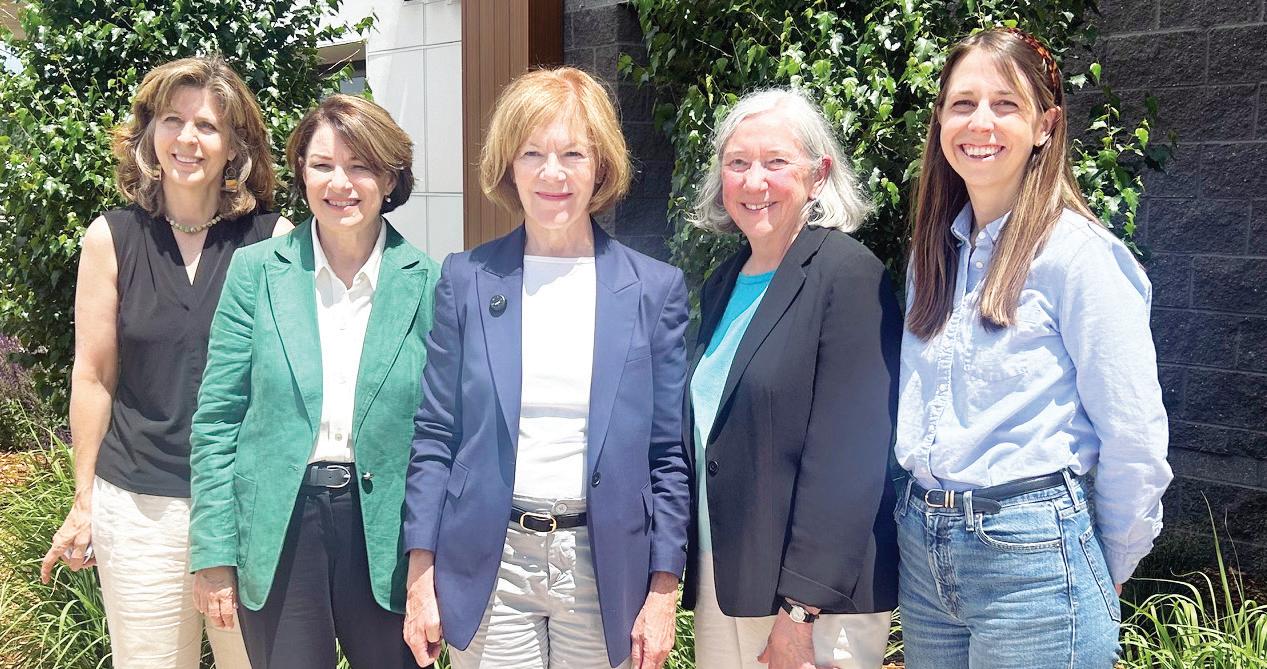
From left: Anne Mavity, Sen. Amy Klobuchar, Sen. Tina Smith, Mary Tingerthal, and Emily Stewart, June 26.
Jasmine McBride/MSR
Photo courtesy of Izzy Canizares/MSR
Attorney Jordan Kushner (left) and activist Isabel Lopez (center, with flowers) exit the Minneapolis Federal Courthouse after Lopez received no jail time or probation on assault charges stemming from a June 2025 federal raid near Lake Street. Clint Combs/MSR
Carmeann Foster, founder and executive director of Rebound Inc. Courtesy of Rebound Inc.
Metro
NAACP demands ouster of Minneapolis Public Housing Director
By Clint Combs Contributing Writer
The Minneapolis NAACP is calling for the ouster of Minneapolis Public Housing Authority Executive Director Abdi Warsame, citing what the organization and residents described as an unacceptable and long-standing pattern of neglect at Heritage Park Apartments in North Minneapolis.
“The Minneapolis NAACP is demanding the immediate resignation or termination of Minneapolis Public Housing Executive Director Abdi Warsame due to the shocking level of neglect and failure at Heritage Homes,” said NAACP Vice President Thomas Berry. The demands came Thursday during a news conference amid revelations around the substandard living conditions inside the 440-unit complex. Half of the units are either empty or unsafe.
The pressure began after Ward 5 Council Member Pearll Warren posted a video showing moldy walls and dirty floors inside the complex.
Warren said the complex has become a “broken promise” of affordable housing in a historically underinvested area, and she toured the property documenting widespread damage, including leaky roofs and water and mold-stained walls.
NAACP Housing Chair Michael Smith called for a sweeping independent review of the city’s entire public housing portfolio.
“There’s 44 properties in Minneapolis Public Housing

Agency that need to have an immediate investigation and an independent investigation outside of the city of Minneapolis,” Smith said. “We’re finding that with the extreme neglect that’s transpired with these particular entities in these spaces, having known and know people currently in the Heritage Park facilities, quite frankly, it’s heartbreaking that the city of Minneapolis let something like this transpire for so long.”
borhoods. Rather than fight the case in court, the agencies agreed to a settlement known as the Hollman Consent Decree, which in 1995 committed them to demolish 770 units of segregated public housing on the Near North Side and replace them with a mixed-income community.
Warren, whose professional background includes serving as Homeownership Development Manager at Twin Cities Habitat for Humanity
“It is unfortunate that the local chapter of such a storied organization has rushed to judgement without first collecting basic facts.”
Heritage Park exists because of a lawsuit. Fourteen minority families and the Minneapolis NAACP filed suit in 1992 alleging that the city and federal housing agencies violated fair housing laws by deliberately concentrating public housing in Black neigh-
and as a HUD-certified housing counselor, replaced former Council Member Jeremiah Ellison, who did not seek reelection. She campaigned on “safe, suitable, and sustainable housing,” a pledge some civil rights activists say will upset the landlord developer class
that has influenced the council for decades.
Minneapolis NAACP President Cynthia Wilson questioned how Warsame could remain as housing director amid the conditions Heritage Park residents endure.
“It’s interesting that they would make that claim, because if I hired you to do something and you’re doing nothing,” said Wilson, “then how are you keeping your job?”
Eddie Robinson, a 75-year old former Wired Systems Installer for the U.S. Army, lived at Heritage Park on a HUDVASH voucher for homeless veterans until September 2024. Robinson paid $300 a month in rent and bounced around several units before taking his landlord to court. He described how property managers threatened eviction over a lease he said he never had.
“Property managers sent me a notice that if I don’t put my dog on a leash, that they’re gonna start filing eviction routines, because I violated my
lease, but I have no lease.”
Since transitioning out of the HUD-VASH program, Robinson now pays $1,000 a month, month-to-month, with no lease, while conditions inside his unit remain largely unchanged. He and his wife have taken maintenance into their own hands.
“My wife put some weather surfing on the back door, but I don’t think I should have to do all that,” Robinson said.
He also described a dispute over a garage he was paying $90 extra per month for after another tenant damaged it. He said he came home to find maintenance staff using his tools to fix the garage door.
“When I got home, they were in the garage, working on the garage door, but they were using my equipment,” he said. “They’re gonna tell me they thought it was theirs. I had just, just paid $600 for this saw.”
In May 2026, a court stepped in to take control of Heritage Park after developer McCormack Baron Salazar’s
First Independence Bank opens new St. Paul location on University Avenue
By Ella Stern Contributing Writer
First Independence Bank (FIB), a Black-owned financial institution, opened its new St. Paul location June 24 at 627 University Avenue West. The bank aims to invest in underserved communities by helping individuals build capital and communities expand their economic stability.
“We are here to build banks and stewards, to restore trust, to expand homeownership, and to close the racial wealth gap,” said Damon Jenkins, FIB’s senior vice president and Minnesota market president.
“We will be unapologetic about that, regardless of who is in the White House.”
FIB, a Minority Depository
Institution founded in Detroit in 1970, first came to the Twin Cities in 2022 in its first national expansion. In opening locations at University Avenue and Emerald Street in March 2022 and at 2217 East Lake Street in October 2022, FIB became the first Blackowned full-service bank in the Twin Cities. The Lake Street location remains open, and the University and Emerald branch has relocated to the newly opened site. The bank’s new location sits in the Frogtown and Rondo neighborhoods. Rondo had a flourishing Black middle class and business district before I-94 split it in half in the 1950s and 1960s. Due in

part to the highway, Rondo community members face an intergenerational wealth gap that has cost the neighborhood at least $157 million, according to 2018 data published in Reconnect Rondo’s Past Prosperity Study. The opening comes as Minnesota continues to grapple with some of the country’s worst racial disparities in homeownership. According to the Federal Reserve Bank of Minneapolis, the Black homeownership rate in the Twin Cities dropped to 29% in 2024, and the region has the largest gap between Black and white homeownership rates of any comparable metro area in the country. Minnesota Housing’s 2024 Housing Disparities
Report confirms that while Minnesota ranks tenth in the nation for overall homeownership, it has the sixth largest disparity between white households and Black, Indigenous and households of color. A gap rooted in decades of redlining and discriminatory lending practices.
FIB aims to address that historic disinvestment by joining forces with community stakeholders, investing dollars with Black business owners and business owners of color, Jenkins said.
Through their relationships with local businesses, community banks can tailor loans and other services to local needs, according to the Conference of State Bank Supervisors.
This can make start-up companies more likely to survive, creating jobs in the process.
The new FIB location has worked closely with the Neighborhood Development Center (NDC), an organization that provides training, loans and other resources to sup-
port entrepreneurs. FIB and NDC held a speaker series and resource fair for Black Business Week.
Going forward, NDC president and CEO Renay Dossman said people who are not yet ready to open an account at FIB can come to NDC to build their credit and otherwise get themselves bankable, helping them build generational wealth.
The new FIB location shares a building with NDC’s office, which Dossman said already intentionally hosts other Black-owned businesses. She believes adding a bank to the space will be hugely beneficial.
“When we have banking in the building, we remove additional barriers for our entrepreneurs,” Dossman said. “We make it easier for them to ask questions and get access to things they need from people that they trust.
“It sends a message to people in this community that capital and banking is accessible,” Dossman continued. “A

poor financial management and deteriorating living conditions became public.
MPHA pushed back on calls for Warsame’s resignation.
“It is unfortunate that the local chapter of such a storied organization has rushed to judgement without first collecting basic facts,” MPHA said in a statement. “MPHA’s primary responsibility in the project was to send McCormack Baron Salazar HUD-calculated operating funding for 200 units designated public housing.”
Berry said the agency needed to get its priorities straight.
“I’ll say again, instead of them saying we’re rushing to judgment, why not rush to fix 200 units?” Berry said. “Why allow that level of mold, and then have families living in between.”
The City of Minneapolis said inspectors conducted building-by-building inspections of more than 400 units beginning in November 2025, with re-inspections beginning last month. The city is coordinating with the receiver, MPHA, and Minnesota Housing to deploy a $5.125 million award aimed at stabilizing the property.
Mayor Jacob Frey’s office declined to comment. None of the city’s 13 council members responded to requests for comment at the time of writing.
Clint Combs welcomes reader responses at combs0284@ spokesman-recorder.com.
lot of the time, people feel like banks aren’t for them. It’s really something special to walk in and see people that look like you. That instantly builds your trust.”
St. Paul Mayor Kaohly Her’s family once lived in Rondo, just one block from the bank’s new location. The mayor said that her family, after immigrating to the United States, was able to break the cycle of poverty in one generation because of an understanding of markets, finances and investments.
“It
sends a message to people in this community that capital and banking is accessible.”
“Access to capital is the only way that we can help, especially our newest Americans, and those who’ve been systemically excluded from participating in financial markets and investments,” Her said. “If you do not have partners who are invested in your communities, if you do not have partners that give people access to capital, we will never be able to break the cycles that we experience.”
First Independence Bank’s new University Avenue location is open weekdays from 9 a.m. to 5 p.m. and Saturdays from 9:30 a.m. to 1 p.m. For more information, visit www.firstindependence.com/ home-twin-cities/.
From left, Minneapolis NAACP Housing Chair Michael Smith, activist Al Flowers, Minneapolis NAACP President Cynthia Wilson, Minneapolis NAACP Vice President Thomas Berry and Urban League Twin Cities CEO Marquita Stephens speak at a news conference in North Minneapolis on June 25. Clint Combs/MSR
Branch manager Queneeta Arnold cuts ribbon at First Independence Bank’s new St. Paul location, June 24. Photos courtesy of Ella Stern/MSR

Black Business SPOTLIGHT Sheer Treasures

By Lizzy Nyoike Contributing Writer
For 53 years, Sheer Treasures has served customers seeking products that celebrate culture, wellness and self-expression. Located inside Northtown Mall in Blaine, the family owned business offers everything from natural body care products and herbal teas to healing stones, cultural artwork and specialty gifts.
Long before Sheer Treasures occupied storefronts in Northtown and Ridgedale malls, David sold incense door to door throughout North Minneapolis. He traveled from apartment building to apartment building, introducing customers to products that were difficult to find in retail stores.
From there, the business expanded to farmers markets, trade shows and craft fairs, allowing the couple to build relationships and grow their customer base one interaction at a time.

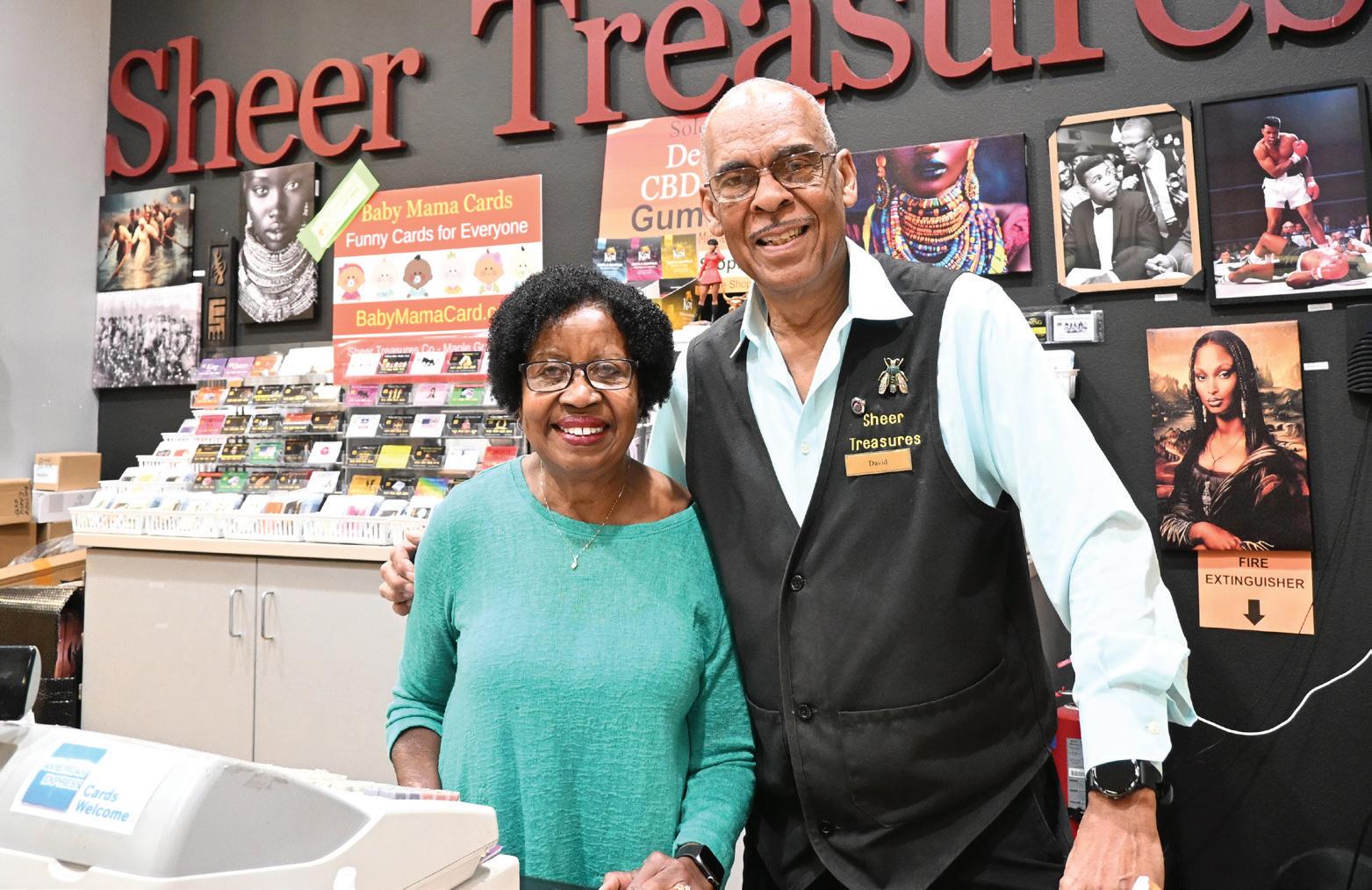
Owners M. David and Gail Ricks have spent decades building a business rooted in community, education and customer service.
The journey to becoming a brick and mortar business was far from ordinary.
Eventually, those efforts led to their first retail kiosk, followed by multiple kiosk locations and later a permanent storefront.
The business spent years operating at Ridgedale Center before returning to Northtown Mall nearly five years ago.
Business
Celebrating culture, wellness and community after 53 years
The path wasn’t always easy.
To help sustain the business during its early years, David balanced entrepreneurship with a career in education. A former high school principal, he spent years working full-time while continuing to grow Sheer Treasures during evenings, weekends and summers.
Today Sheer Treasures offers a wide variety of products designed to appeal to customers from different backgrounds and interests.
Among the store’s inventory are natural shea butter products, African black soap, fragrance oils, incense, crystals, books, herbs, teas and cultural artwork. The store also carries exclusive products developed by the owners, including aromabugs car diffusers and the Baby Momma Cards collection,
a line of humorous greeting cards that ships to customers nationwide.
“We are the village of unique,” David said.
According to the owners, the goal has never been simply selling products. Instead, they aim to create a space where customers can learn, ask questions and discover solutions that support their overall wellbeing.
“We’re like a pharmacy,” David said. “People come in and they have a problem or they have something they want to correct, we can help you and give you accurate information.”
That emphasis on education and customer care has become a defining part of the business model.
Products in the store range from $2 to $350, making them accessible to a broad
range of customers.
The couple credits their longevity to a combination of selling quality products, knowledgeable service and a commitment to treating customers like family.
“Customer service is first,” David said.
"Majority of the items that we have in this store, you cannot find in a Walmart or a Target.”
The business has also benefited from David’s experience as a Vietnam veteran. He served in the Army from 1968 to 1971, an experience he says helped shape the disci-
pline and organizational skills necessary to run a successful small business.
“When you own a company, you’re doing everything,” he said. “We have payroll, accounting, insurance, advertising, sales, inventory, all of these things that a major company would have, except it’s just us.”
Like many mall-based retailers, Sheer Treasures has faced challenges related to declining foot traffic. However, the owners remain optimistic about the future and hopeful that new developments at Northtown Mall will attract additional visitors.
For Ricks and David, the mission remains.
They want customers to find products they can’t easily locate elsewhere while feeling welcomed, informed and represented.
“Majority of the items that we have in this store, you cannot find in a Walmart or a Target,” David said.
More than five decades after selling incense from his car, David still believes in the value of personal connection and community-centered business. In an era dominated by online shopping and big box retailers, Sheer Treasures continues to offer something rare, a place where culture, wellness and conversation come together under one roof.
Lizzy Nyoike is a Hubbard School of Journalism & Mass Communication student and contributing writer for the Minnesota Spokesman-Recorder.
Fractional CFO services are unlocking capital for Black businesses
When do you need one?
By Amy Kang
Black-owned businesses generate about $183.3 billion in annual receipts across the United States. That is a significant economic engine. But it is still far below where it could be, and one of the biggest reasons is that most Black-owned businesses lack the financial leadership needed to scale.
A fractional CFO may be one of the most practical tools available to close that gap.
A fractional CFO is a senior financial executive who works with your business on a parttime, contract, or project basis. You get the strategic financial leadership of a full-time CFO without the six-figure salary. For many Black business owners, this is the model that makes professional financial guidance accessible for the first time.
It is worth distinguishing what a fractional CFO actually does versus what a bookkeeper does. A bookkeeper tells you how your money was spent last month.
A fractional CFO tells you what will happen to your finances next quarter and how to position your business for capital. They build forecasts, manage cash flow strategy, prepare investor resources and guide funding decisions. Those are fundamentally different functions, and confusing the two is one of the most common and costly mistakes small business owners make.
Most Black businesses wait too long to bring in financial leadership, often realizing the need only after losing a funding opportunity or miscalculating a growth plan. Some signals that it may be time: your revenue has reached $250,000 to $500,000, you are hiring full-time employees for the first time, your cash flow has become unpredictable despite growing revenue, or you are preparing for an acquisition, partnership, or expansion. When two or more of those conditions are present, the cost of not having financial leadership likely exceeds the cost of bringing one on.
“A fractional CFO keeps that paperwork current so that when an opportunity opens, you are ready to move.”
The funding gap is real Black-owned businesses face documented barriers to capital. According to Lending Tree, Black-owned businesses experience a 39% loan denial rate. That figure reflects both structural bias and, in many cases, a gap in financial documentation that fractional CFO services are specifically designed to address. Investors and lenders re-

quire more than basic tax returns and a profit-and-loss statement. They want cash flow statements, detailed balance sheets showing assets, liabilities and equity, threeyear financial projections with monthly cash flow forecasts, and capital expenditure plans with clear return on investment calculations. Most small business owners do not have these documents ready, and without them, funding opportunities close before they open.
A fractional CFO builds and maintains that documentation. For Black business owners navigating lenders and investors who already bring bias to the table, walking in with investor-grade financial reporting is not just good practice. It is a strategic necessity.
Beyond loans: grants and government contracts
Bank financing is not the only avenue where clean financials matter. Federal minority business grants, including programs through the Minority Business Development Agency and the SBA 8(a) program, carry strict financial compliance requirements. Quarterly financial reporting is not optional for these programs. A fractional CFO keeps that paperwork current so that when an opportunity opens, you are ready to move.
Venture capital and angel investment require a different but equally rigorous set of documents. Clean unit economics, scalable growth models and a clear use-offunds plan are table stakes for a second meeting with
any serious investor. These are not documents most business owners can produce on their own without financial expertise.
Common mistakes worth naming
There are a handful of financial habits that consistently hold Black businesses back from scaling. Mixing personal and business finances is the most common and the most damaging to your credibility with lenders. Failing to forecast cash flow leaves owners reacting to crises rather than planning around them. Relying solely on family members for financial counsel, however well-intentioned, limits your access to the kind of strategic thinking that comes from experience across mul -
tiple industries. And hiring a bookkeeper while calling it accounting creates a false sense of financial security. None of these mistakes are unique to Black business owners, but the consequences tend to hit harder when the margin for error is already narrower due to systemic lending disparities.
The cost question A full-time CFO costs $250,000 or more annually in salary alone, before benefits and equity. A fractional CFO typically runs 25 to 50 percent of that cost, scaled to your actual needs. For a business doing $300,000 to $500,000 in annual revenue, that difference is the difference between accessing financial leadership and going without it entirely.
Black-owned businesses have built a substantial economic foundation in this country. Fractional CFO services will not solve systemic inequity on their own, but they are a practical and accessible tool for making sure your business is positioned to compete, grow and access the capital it has earned.
This guest column appeared first in Black Press USA. It has been edited for length. For the original, visit www.blackpressusa.com/fractional-cfo-services-are-unlocking-capital-forblack-businesses/.
Amy Kang is a contributing writer for Black
From left: Gail Ricks and M. David, store owners of Sheer Treasures pose for a photo. Photos courtesy of Lizzy Nyoike/MSR
Entry to Sheer Treasures, a family owned boutique located in Blaine at Northtown Mall.
Tima Miroshnichenko
By Robin James
Arts & Culture



By Robin James Contributing Writer
There was nothing quite like relaxing in a fold-out chair with a cool drink in hand and a cool breeze swirling around as the sounds of jazz filled the air on a warm summer day.
Those who attended got their chance to experience just that on Friday, June 20, and Saturday, June 21, at the Twin Cities Jazz Festival in Mears Park in Lowertown, downtown St. Paul.
The free event was previewed in a previous column, but it was worth the reminder. For a full list of 2026 performing artists and other details, visit twincitiesjazzfestival.com. It is always a good time, and attendees were encouraged to bring friends and family.
One highlight was the appearance of the Sullivan Fortner Trio, which performed Saturday, June 21, at 6 p.m. at Mears Park. The talented New Orleans pianist, composer
and bandleader amazed the hometown crowd as he has the entire jazz world.
As the festival approached, the jazz world was mourning the loss of the great saxophonist Sonny Rollins. He passed away May 25 at his home in New York. Rollins was 95.
He was widely regarded as the greatest living improviser. No other jazz musician could match his originality and the successful span of his remarkable six-decade career. For that reason, Rollins’ passing was a tremendous loss for the jazz world.
He represented all that is great about jazz. Its spirituality, resilience and humanity. Rollins came from the Golden Era of jazz, when all the greats were busy becoming the greats they would later be known as. He will be remembered for his playing with John Coltrane on the album “Tenor Madness” and for his work on “The Bridge.” And

“This year marks 100 years of Miles Davis and John Coltrane.”
there is much to admire in the fact that he considered himself a lifelong student.
Most of all, Rollins will be forever remembered for the songs “Sonnymoon for Two” and “St. Thomas.” The latter was chosen to play for a niece named Maya as her first jazz song when she was nearly 1 year old. As it turns out, Rollins’ parents were both from St.
Thomas, among the U.S. Virgin Islands, a gorgeous island worth visiting.
There was also the memory of briefly speaking with Rollins during a call-in to promote his show on “Sweet on Jazz” on KBEM Jazz 88.5 FM. He was in town for a gig at Northrop Auditorium.
Rollins was a once-in-a-lifetime artist, and his music will
live on forever. It is sad that so many greats seem to be leaving us. But it means we must be even more thankful for those still with us and nurture the future greats within our midst. For that, we must continue to celebrate with hope.
Thankfully, the late greats have left us supreme music to hold onto. New Orleans songwriter and pianist Al-
len Toussaint’s deluxe edition of “Songbook” is out now. It features the pianist on tracks including “Get Out of My Life,” “Holy Cow” and more, plus unreleased performances. Available for the first time on 2-LP vinyl, deluxe CD and digital editions at i.craftrecordings. com/Toussaint-song. Toussaint passed away in Madrid, Spain, on Nov. 10, 2015.
This year marks 100 years of Miles Davis and John Coltrane. More late greats who left a wealth of beautiful music to enjoy. They earned their greatness by never giving up on their development as artists and continued to reach and grow as world-class musicians. Through their example, we have learned what it means to persevere and overcome obstacles to become legendary.
To celebrate both Davis and Coltrane and Black Music Month, listen to Davis play “Blue in Green” or Coltrane play “Naima” and be transformed. May their legacies live on forever.
Robin James welcomes reader responses at jamesonjazz@ spokesman-recorder.com.
Earth, Wind & Fire documentary opens 2026 Tribeca Film Festival
By Dwight Brown Film Critic
“When you wish upon a star, your dreams will take you very far, yeah.” The lyrics from Earth, Wind & Fire’s Grammywinning song “Shining Star” couldn’t be more appropriate for the band, this joyous documentary or the festival that hosts it.
As the Tribeca Film Festival marks its 25th anniversary, there are plenty of reasons to celebrate. And who better to ignite the festivities than the world’s most happy-go-lucky house band? Oscar-winning music documentarian Ahmir “Questlove” Thompson (“Summer of Soul”) judiciously brings the backstory of the 57-year-old R&B, funk, soul, jazz fusion, pop and Afro-pop group into the spotlight. Questlove has assembled a tight technical crew. Editors Matt Cascella, Jessica Miller, Andrew Morrow and Timothy Ziegler piece together concert footage, old interviews, new ones and testimonials that lift the veil. What went on backstage behind the fancy pyrotechnic shows? Who was zooming who? The well-paced film examines bandleader Maurice White’s creativity and his domineering leadership style while following the changing cast of band members whose numbers grew and shrank over time. Cinematographer Emily Topper’s unobtrusive lens never intrudes but is placed exactly where it needs to be. Some viewers will embrace
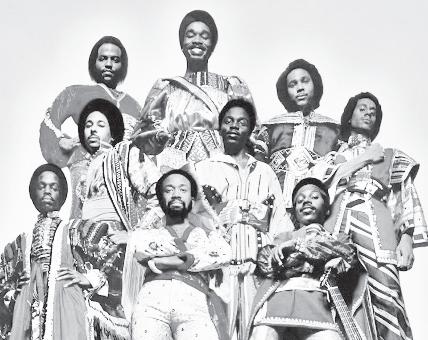
the bright shiny superstars who share their personal opinions of White, the band and the group’s significance as a cultural phenomenon. Getting Barack Obama and Michelle Obama’s perspectives is a coup. Adding thoughts from Stevie Wonder, whose famous song “I Wish” was influenced by EW&F’s “Shining Star,” provides a link between greats. Hearing H.E.R., Flea, Booker T. and Lionel Richie reflect on the group’s significance is enlightening, too. The testimonials to the band’s originality, musical genius, Afrocentric perspective and staying power are impressive,
if fairly standard for music documentaries. None of the aforementioned need to do a hard sell. The music and electric performances do that. It’s hard not to want to turn the bedroom lights down low when “After the Love Has Gone” comes on. Everyone jumps out of their seats when “September” cranks up. And anyone who hears the harmony on “Boogie Wonderland” is filled with unbridled joy. Solid documentaries delve into the good and the bad. This one does that fairly well. It recollects the group founder’s beginnings and

Band members including singer Philip Bailey, younger brother and bassist Verdine White and drummer-turnedsinger Ralph Johnson fill in the missing details: the spaces between Grammy wins, worldwide touring, recording and mercurial evolution. Viewers learn the hard, cold facts of artists’ lives in a business that didn’t always treat them fairly or pay them well. Broke?
Sometimes. Deep in debt? Yes. The band members tell all, and not all of it flatters White’s management skills, husbanding or fathering. It’s the kind of depth you’d find in a Rolling Stone feature, sobering and illuminating, yet fun. White: “I wanted to reach a universal audience.” Jimmy Jam: “You’re thinking they’re coming from Africa or outer space.”
“From
ingenuity alongside his reckless behavior and superstar complex. Few may remember that White was once a drummer for the Grammy-winning Ramsey Lewis Trio. From 1966 to 1970, White was the percussionist, Cleveland Eaton was on bass and Lewis on piano. That background solidified White’s musicianship, and glimpses of those days reveal that he was surprisingly bashful at the idea of standing in front of a mic. What a metamorphosis… from shy guy to brassy, bossy lead singer, futuristic thinker, ethereal soul man and the ultimate showman.
Questlove relies heavily on the familiar music-documentary formula of archival footage, celebrity commentary and retrospective interviews. The approach works but rarely surprises. He exhibits a steady hand and pulls together the right artists, footage and moments. Still, a bit less of the Obamas, who had EW&F perform at their inauguration party, and a bit more from musicians more integral to the group might give this
documentary more credibility and less fluff. Legendary clothing designer Bill Whitten, who gave the group its iconic space-age look, is barely a footnote. Whitten is deceased, but his influence was major and his costumes helped establish the band’s Afrofuturistic sensibilities. He, like others, deserved more screen time. It also wouldn’t hurt if the film simply went by “Earth, Wind & Fire” rather than its tonguetwisting subtitle, which feels more confusing than illuminating.
This documentary treads much of the same territory as Questlove’s Sly Stone film “Sly Lives! (aka the Burden of Black Genius),” similar recollections of pioneering funk and soul bands with great crossover appeal. That’s an observation, neither pro nor con. Just true. Questlove has become the preeminent Black music archivist. That’s a blessing and a great responsibility. This is one more precious addition to his ever-expanding library.
In the end, nostalgia and celebration will envelop all who see and listen, especially baby boomers and Gen Xers who can mark milestones in their lives by EW&F hits. A “shining star comes into view and shines its watchful light on you, yeah.” It also shines at the 25th Tribeca Film Festival.
For more information about the Tribeca Film Festival, visit tribecafilm.com. For more from film critic Dwight Brown, visit DwightBrownInk.com.

Miles Davis (left) and John Coltrane.
Jean-Pierre Leloir
Anne Mavity highlighted the bill’s Rural Housing Service Reform Act provisions, which would preserve nearly 9,000 affordable homes across Minnesota, part of a national portfolio of 400,000 homes serving seniors, people with disabilities and low-income families. Many of those homes are funded through USDA Section 515 mortgages that are reaching maturity, putting their affordability at risk.
“In Big Stone County, more than half of all the affordable homes in the county are provided through this program,” Mavity said.
The press conference was held in front of the modular
apartment building, The Eddi, in Edina, constructed by Rise Modular. The roughly 200unit building was completed in 15 months, about a year faster than a comparable traditionally built structure.
Mary Tingerthal, founder of Construction Revolution and former Commissioner of the Minnesota Housing Finance Agency, said the bill includes two provisions aimed at expanding modular and offsite construction. One would allow FHA construction financing to cover work completed in a factory before modules arrive on site. The other calls for a HUD study to establish a uniform commercial code for modular construction.
“Most people have no idea that this project was built with modular construction,” Tingerthal said.

Emily Stewart, associate director of CoNorth, spotlighted the bill’s PRICE program, the first federal investment specifically designed to preserve and improve manufactured
and they're expecting my business to hold its breath for four months, which is financially impossible. They're asking the impossible of Black businesses, of Black bodies, and of Black mental health at this point."
The project includes plans to add designated bike lanes, new bus shelters, and a raised intersection designed to slow traffic and create a level surface for pedestrians and people using mobility devices. The city will also close the intersection of 38th Street and Elliot Avenue to complete that work.
For some residents, the construction has brought an unwelcome increase in law enforcement presence.
Jerimiah Rupert, a longtime neighborhood resident, said the shift in atmosphere has been deeply unsettling.
"There has been a lot of in-
Lopez’s PTSD diagnosis was related to the events underlying the case. Lopez said it was.
The judge later asked whether she wanted to clarify anything after admitting in court to pushing, shoving, kicking and throwing a softball at federal agents.
“It’s pronounced Taqueria y Birrieria Las Cuatro Milpas,” Lopez responded, prompting spectators to snap their fingers in agreement.
Minneapolis and surrounding areas to prevent justice system involvement.
Rebound also operates group homes and intensive support services for youth considered “difficult to serve.”
Particularly young people who may no longer have support from other organizations.
“As an organization, we’ve tried to grow as our kids have,” Foster said.
That growth has also led Rebound to expand into transitional housing support for young adults ages 18 to 24 who have a history of juvenile justice involvement.
According to Foster, the program helps young people
“If
the president somehow decides that he is going to reject this bill, we can come back at it again.”
home communities. Stewart said large investors have increasingly purchased such communities, using deferred infrastructure maintenance as justification for steep rent

crease in sheriff activity, specifically in this neighborhood. The surveillance is increasing," Rupert said. "It's deeply troubling because everyone's got police trauma here. It's like the government's saying 'we're gonna respect you as you need to mourn,' but then they'll tell people, 'hey, wrap it up, you're done crying now,'
Video footage from the June 3 operation shows an FBI agent in military gear pinning Lopez to the ground before lifting her back up. Protesters then pulled her away. Photos later showed blood on Lopez’s right shoulder. Federal agents arrested her after she completed an interview with journalist Georgia Fort of BLCK Press.
“I still have back pains from that day. The way that I move won’t be the same again,” Lopez told Tunheim. “From the beginning there was a narrative.”
The Trump administration has announced conspiracy
secure stable housing while building financial independence.
The program operates through scattered-site housing, allowing participants to choose where they want to live rather than being placed in a specific location. Rebound covers rent costs upfront while participants contribute a portion of their income toward housing expenses.
For many young people with juvenile records, securing housing can become a significant barrier to stability. Foster said Rebound partners with Housing in Action, formerly Urban Homeworks, to help youth access housing opportunities even if they do not meet traditional rental requirements. The organization’s work often overlaps with broader
as if people didn't know someone for 30 years."
Among the community landmarks affected is the Peoples Closet, a free clothing resource housed in a bus station structure slated for removal.
The city has said it will "continue to have conversations with the community about the future of the Peoples Closet,"
charges against 15 protesters in its latest effort to characterize threats from the American left, including an executive order designating “ANTIFA” as a “domestic terrorist organization.” A subsequent national security directive, NSPM-7, claims various protests and incidents of unrest are part of a coordinated campaign to intimidate the president’s supporters and disrupt democracy.
Kline called the charges against Lopez “an incredibly serious offense,” arguing that she “posed a danger to law enforcement.”
Civil rights attorney Ne-
conversations surrounding youth justice reform, rehabilitation and community investment. Foster said many young people involved in the juvenile justice system also experience instability in housing, education and family support systems.
but has offered no concrete replacement plan. For Rupert, the closet is more than a place to get clothes. It is a lifeline for some of the neighborhood's most vulnerable residents.
"I've seen older ladies who've said 'I stopped doing fentanyl because I just sat at the closet, prayed to Jesus and folded clothes,'" Rupert
kima Levy-Armstrong encouraged supporters not to accept that framing.
“Just because they are connected to the FBI does not make them credible,” LevyArmstrong said. “The FBI has been responsible for kicking down people’s doors, ramming their cars, snatching them, slamming women to the ground, along with ICE.”
“Back then she was all alone,” attorney Jordan Kushner said.
“Now there’s company.”
A year of probation would have imposed travel restrictions and other conditions. Instead, Tunheim declined
after justice system involvement occurs.
In addition to its direct services, Rebound also works to elevate youth in conversations surrounding justice reform. The organization partnered with a group of young advocates who
“Our focus is on moving young people away from or beyond their systems involvement and toward their full potential.”
Those challenges have helped shape Rebound’s approach, which focuses on addressing the broader barriers young people face rather than only responding
spent several years pushing for changes within Hennepin County’s youth justice system. While the group was defunded at the end of 2025 due to county budget
field as an example of what the program makes possible. Through infrastructure funding, the resident-owned community connected to the Richfield municipal water system without raising land rents.
“People are exclaiming, my laundry isn’t yellow anymore,” said board president Bev Adrian. “That’s what PRICE makes possible.”
Gustavo Fring
increases or displacement of residents who own their homes but not the land beneath them. She pointed to Woodlawn Terrace Cooperative in Rich-
said. "When they start twitching and they feel like they need to get a hit or something, it gives them something to do. A lot of them rely on it for money. They'll grab a bunch of clothes and go sell it."
The Black Lives Matter fists on Chicago Avenue drew concern from some residents on the first day of construction, with worry spreading that the city intended to move or remove them. Construction crews worked around the fists for more than a week without touching them, and the city did not relocate or alter them.
“Do we really want to let the city co-opt all the work that we've done?"
Minnesota faces a shortage of an estimated 100,000 housing units, spanning condominiums, townhomes, single-family homes and apartments, according to Klobuchar. For more information about the bill, visit www. congress.gov/bill/119th-congress/house-bill/6644.
Jasmine McBride welcomes reader responses at jmcbride@ spokesman-recorder.com.
The sculptures were later moved for the first and only time by their caretakers to Peoples Way, the former gas station site that serves as an informal community gathering space.
the government’s request and closed the case.
“They’re saying that I’m violent, but then the FBI agents who killed Renee Good and killed Alex Pretti are not.”
Still, Lopez said the experience continues to affect her.
“Even yesterday I was in my car, and I was literally, I was chilling, but every time it doesn’t matter where I’m at ...
cuts, Foster said Rebound remains committed to ensuring young people continue to have a voice in conversations that impact their futures.
With support from the Minnesota Humanities Center, Rebound has continued engaging young people through advocacy efforts and community programming while exploring ways to sustain the work long term.
Many of the youth Rebound serves face multiple challenges at once, including housing instability, involvement with the justice system and limited access to resources. Foster said addressing those challenges requires a holistic approach that recognizes the unique experiences of each young person.
“We try to take a holistic focus, with different activities
"We have been working with the community and have adjusted construction planning in consideration of community concerns," Henry said. Rupert, however, remains skeptical of the city's broader vision for the square.
"They say, 'oh, the city said they were gonna give this space to us, and we're going to turn this place into a beautiful plaza,'" Rupert said. "I said, man, you just spelled out the steps of colonization. But ‘don't worry because it's gonna help Black businesses. We're gonna build Black businesses.’ Okay, sure, but do we really want to let the city co-opt all the work that we've done?"
Residents can sign up for weekly email updates about construction through the city and attend weekly stakeholder meetings held publicly on Microsoft Teams every Wednesday at 10 a.m.
Izzy Canizares is a contributing writer for the Minnesota Spokesman-Recorder.
I don’t know if someone’s gonna come and hurt me or grab me again,” she said.
She said she has not written poetry in a year and sees a double standard in how the Justice Department prosecutes political violence.
“They’re saying that I’m violent, but then the FBI agents who killed Renee Good and killed Alex Pretti are not violent because they never got into trial, they never got convicted,” Lopez said.
Clint Combs welcomes reader responses at combs0284@ gmail.com.
like wellness activities, entrepreneurship-related activities, social justice-related activities, and fashion-related activities,” she said.
For Foster, the measure of success is simple: young people who once faced overwhelming odds finding their footing and moving forward on their own terms. Through prevention programs, housing support and youth-centered advocacy, Rebound continues its mission of helping Black youth move beyond systems involvement and toward brighter futures. For more information, visit www.reboundmpls.org/.
Lizzy Nyoike is a Hubbard School of Journalism & Mass Communication student and contributing writer for the Minnesota Spokesman-Recorder.
Council-adopted concept layout for George Floyd Square. Photos courtesy of Izzy Canizares/MSR
Federal student loan changes are coming: What you need to know
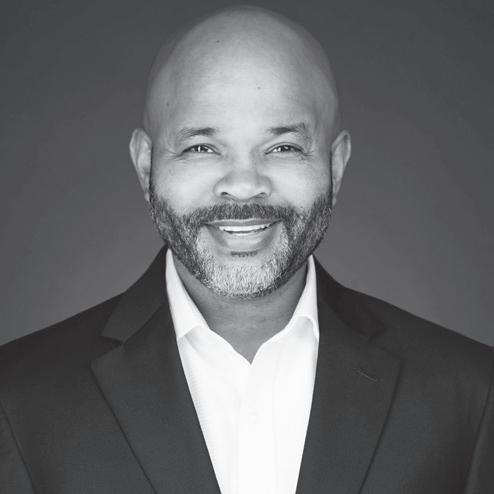
By Alfred D. Riddick, Jr. Contributing Writer
For millions of Americans, student loans have become a permanent part of family finances. That reality hits especially close to home in the Black community, where many students and parents rely on borrowing to create opportunities that previous generations often did not have access to. According to federal data, student loan debt is approximately $1.7 trillion and is spread across roughly 43 million borrowers, or $39,500 per borrower. For many Black households, those monthly payments compete with saving for a home, building an emergency fund, investing for retirement, or helping the next generation attend college. Now, another major change is on the horizon. The One Big Beautiful Bill Act reshapes the federal student loan system by changing who can qualify for certain repayment plans
and reducing the number of options available in the future.
What happens to SAVE borrowers?
Many borrowers enrolled in the Saving on a Valuable Education plan have been in administrative forbearance since July 2024 while the program worked its way through the courts.
Beginning this summer, loan servicers are expected to notify affected borrowers that they will need to select a different repayment option. Borrowers should pay close attention to emails and letters from their loan servicer and avoid ignoring these notices.
“Student loans have always been about more than education.”
Fewer choices for future borrowers
Borrowers who already have federal student loans before July 1, 2026, may still be eligible for existing repayment plans such as Income-Based Repayment, Income-Contingent Repayment and Pay As You Earn, provided they meet program requirements.

However, people taking out new loans after that date will face more restrictions. Future borrowers generally will not have access to several of these existing repayment programs as the government transitions to a simplified system.
Meet the new repayment assistance program
The One Big Beautiful Bill Act introduces a new option called the Repayment Assistance Program. Unlike previous incomedriven repayment plans, the program calculates monthly payments based on a borrower’s adjusted gross income
rather than discretionary income.
The program also provides some relief for families by reducing the monthly payment by $50 for each dependent, although the minimum payment cannot be less than $10.
Borrowers also have the flexibility to choose a standard repayment schedule ranging from 10 to 25 years. As with any loan, a shorter repayment period means higher monthly payments but less interest paid over time.
Why this matters for Black families
For many African American
households, education has long been viewed as one of the most reliable paths to economic mobility. But when student loan payments become too large, they can delay wealthbuilding milestones like buying a home, starting a business or investing for retirement.
These new rules could mean that future borrowers have fewer tools available to manage financial hardship.
Perhaps the most concerning change is scheduled to take effect July 1, 2027.
New borrowers will no longer have access to deferment for unemployment or economic hardship. In addition, borrow-
ers who default on their loans will generally have only two opportunities to rehabilitate those loans by making at least nine consecutive on-time payments.
What you should do now
If you currently have federal student loans:
Watch for communications from your loan servicer. Review your repayment options before making a decision. Use available online repayment calculators to compare payment amounts. Contact your loan servicer or your school’s financial aid office if you have questions.
Most importantly, do not ignore the notices. Missing deadlines could result in higher payments or fewer options.
Student loans have always been about more than education. They are about opportunity, stability and the ability to build a better future. As federal repayment rules continue to evolve, staying informed may be one of the most important financial decisions borrowers can make.
Al Riddick is President of Game Time Budgeting, an award-winning financial fitness firm that helps employees develop simple and easy to duplicate systems for making their money behave. al@gametimebudgeting.com
Smart investment property decisions are helping build Black wealth
By Dax Janel Valencia
Smart investment property decisions are helping Black Americans build wealth by creating an additional source of cash flow, usually through monthly rental payments. They also create long-term financial well-being by allowing those in the Black community to generate property equity.
Making smart real estate investing decisions remains crucial to Black Americans, as significant gaps in racial wealth and homeownership still exist. According to the National Community Reinvestment Coalition, compared to the median Black family, the median white family has 6.5 times more wealth.
What constitutes an investment property?
An investment property is real estate bought and managed with the primary purpose of generating financial returns through rental income.
Property owners earn income through rental payments and build wealth through appreciation and equity. Specific examples include residential properties such as single-family homes, multifamily apartment buildings, vacation rentals, condominium units and townhomes.
Commercial properties, such as office buildings and retail spaces, are also popular investment vehicles.
Many Black investors are active in both residential and commercial investing. R. Donahue Peebles, founder and

CEO of The Peebles Corporation, is among the most prominent examples. The Peebles Corporation is one of the largest Black-owned real estate investment firms in the U.S., with developments totaling more than $8 billion in investment value.
Industrial properties such as warehouses and storage facilities, as well as alternative investments like undeveloped land and fix-and-flip projects, round out the range of options available to investors.
The 1% and 2% rules
The 1% and 2% rules are quick screening tools designed to help investors evaluate potential properties. The 1% rule states that the monthly rent of a property should be at least 1% of its total purchase and repair cost. The 2% rule is a variation, stat-
ing that monthly rent should be no less than 2% of that same cost.
A separate maintenancebased 1% rule, outlined by Investopedia, suggests that property owners set aside at least 1% to 4% of their property's value in cash each year to cover expected and unexpected repairs or replacements.
Generating short and long-term income
One of the smartest investment property decisions
a Black investor can make is purchasing properties in areas with robust job markets, strong schools, growing populations and low crime rates. Properties in such locations are more likely to attract quality tenants who stay longterm, pay rent on time and treat the property with care.
lord responsibilities to a fullservice property manager.
With professional management in place, owners can benefit from property marketing, thorough tenant screening, on-time rent collection, regular inspections, maintenance coordination, monthly financial reporting and legal processing of evictions when necessary.
With that support structure in place, investors can reclaim their time and focus on growing their portfolios.
Building generational wealth through equity
Equity in real estate refers to the portion of a property that an owner has direct
“One of the smartest investment property decisions a Black investor can make is purchasing properties in areas with robust job markets.”
Turning real estate into passive income
Some first-time investors assume that owning real estate automatically means passive income. In most cases, it does not, particularly for owners who also serve as their own property managers. Selfmanaging a rental can be a demanding, around-the-clock responsibility, with maintenance emergencies arising at any hour.
A smart move for Black investors is to delegate land-
ownership of, the property's current market value minus any outstanding mortgage debt. The greater the equity, the higher the investor's net worth and the larger the potential profit upon sale.
Equity grows over time through appreciation and property improvements. Black investors who prioritize valueboosting upgrades, such as energy efficiency remodels and mechanical updates, position themselves to build meaningful generational wealth.
Other ways to invest in real estate
Rental properties are not the only path into real estate investing. Black investors, particularly those new to the field or working with lower budgets, can also get started through real estate investment trusts, known as REITs. REITs are companies that own, finance or manage income-producing properties such as apartment buildings, shopping malls and warehouses. They allow investors to participate in large-scale real estate with minimal capital by purchasing shares of the company.
As with all investments, real estate carries some degree of risk. House-flipping, for example, is considered higher risk because unexpected structural problems or delays can quickly erode profits. It is best suited for experienced investors with significant cash reserves.
Savvy investment property decisions such as focusing on the right locations, partnering with professional managers, and staying on top of upgrades give Black investors the tools to generate income and build wealth for generations to come.
This commentary is a part of Black Press USA’s #BuyBlack series. For more information, visit https://blackpressusa.com/ category/buyblack/.
Janel
Safari Consoler
Opinion
DevSecOps Engineer: Plymouth, MN
IT Company seeks DevSecOps Engineer to integrate security practices into DevOps workflows, automate security checks, and ensure the safety of cloud infrastructure. Work closely with development and security teams to enhance the security posture of applications and systems. Build and Configure delivery environments by using CD/CI, Agile delivery methodologies. Create and assist in performing various types of tests. Perform troubleshooting. Generate customized reports. Offered Salary: $116,480.00 to $116,500.00/yr. Send resumes to: HRD, VITS Consulting Corp., 14264 23rd Ave N, Plymouth, MN 55447. Minnesota Spokesman-Recorder July 10, 2025
E: 612- 827- 4 021
Stop casting Black Brits who disrespect Black Americans
By Lawrence Ware
David Oyelowo’s recent comments were supposedly intended as a call for Black unity. I think. Instead, they sounded like a lecture aimed at Black Americans from a Black British actor who has made millions of dollars portraying an iconic Black American on screen.
Messiah.” Idris Elba became a household name playing Stringer Bell on “The Wire.”
But here’s the thing. Erivo and Oyelowo have both said things that raise the eyebrows of Black folks who are descendants of slaves in this country.
#NotMyHarriet hashtag. There is an easy solution to all of this. If they do not show that they understand and appreciate Black American culture, we need to stop letting Black Brits portray Black folks born in America. Period.
By Christopher Elliott
America gave the world the modern vacation. But as the United States turns 250, it’s on the verge of destroying it.
The U.S. pioneered the idea that an ordinary person could go somewhere as a form of recreation. Great Britain popularized tourism in the 19th century, but it was for the rich.
The long weekend, the affordable plane ticket, and the great American road trip are all U.S. exports.
Tony Jannus flew a paying passenger across Tampa Bay in a flimsy biplane. The trip took 23 minutes. The whole global industry, billions of passengers a year, traces back to that one hop in Florida.
On June 29, 1956, President Dwight Eisenhower signed the law that built the Interstate Highway System, and an entire culture was born at the offramp. Motels, diners, service stations, the open road, the cheap motel, the pie at midnight. The world copied all of it.
“This year, the government began charging non-U.S. residents an extra $100 per person to enter 11 of the most popular parks.”
What America gave the world It’s hard to understate what the United States did for travel.
National parks came first.
On March 1, 1872, President Ulysses S. Grant signed the bill creating Yellowstone, the world’s first national park. The novelist Wallace Stegner called the national parks “the best idea we ever had.” The principle was carved into the arch at Yellowstone’s entrance: This land exists “for the benefit and enjoyment of the people.” All of them. That may be the most democratic sentence in travel.
Then came air travel. The world’s first scheduled passenger airline took off on Jan. 1, 1914, when a pilot named
Most importantly, America democratized the vacation. It was no longer a luxury for aristocrats on a Grand Tour, but something a factory worker could do with two weeks off. We made going somewhere a right, not a privilege. So that’s the inheritance. Look at what we’re doing with it.
Here’s how we’re wrecking it
U.S. airlines are now financial services companies that happen to fly planes. They charge for carry-ons, seat assignments, and the legroom they quietly took away. The road trip isn’t safe either. Try renting a car. The company quotes one price online, then demands nearly double at the counter after adding insurance you don’t need, a toll

transponder you didn’t ask for, and a daily administrative fee.
But the saddest damage is to our national parks. This year, the government began charging non-U.S. residents an extra $100 per person to enter 11 of the most popular parks, including Yellowstone, Yosemite, and the Grand Canyon. Fee-free days are now for U.S. residents only.
So much for the benefit and enjoyment of the people.
The birthright nobody mentions
As America celebrates its 250th birthday, there will be a lot of talk about birthrights like free speech and due process. But what about the one birthright we use every summer: the right to travel? The right to pack the car and drive out onto the open highway, to board a plane, to walk into a forest that belongs to you.
These rights were built over 250 years. They don’t vanish in one dramatic vote or with the imposition of one fee. They erode over time, until the vacation your parents took for granted costs a small fortune and requires proof of citizenship.
It’s not too late to change course. Thoughtful regulation can compel travel companies to show all-in rates. We can remove the predatory fees that make travel less affordable with each passing year. And we should make our national parks open to everyone. These places represent the best of America.
For its semiquincentennial, America needs to rediscover the present it already gave the world: the gift of travel. Protect the legacy of affordability and access to unparalleled wilderness.
The gift is still ours to give. For now.
Christopher Elliott is an author, consumer advocate, and journalist.
Oyelowo appeared on the One54 Africa podcast, where the topic of Black British actors taking roles from Black Americans came up. Responding to Druski’s viral skit about Black Brits playing Black Americans, he attempted to redirect the conversation, saying, “We’re not talking about the art of acting. We’re talking about scarcity. We’re talking about the fact that there’s not much pie.”
Now, we gotta be honest. He’s right.
The scarcity of quality roles for Black actors in mainstream films is real. But just because he’s correct doesn’t mean his comments don’t deserve criticism. What set the internet on fire is that a man who became famous playing Martin Luther King Jr. is now telling Black Americans they’re imagining things when they ask why so many iconic Black American roles keep going to Black actors who are not American.
As they say in the Black church, let’s call the roll.
Cynthia Erivo played Harriet Tubman in “Harriet.” Daniel Kaluuya played Fred Hampton in “Judas and the Black
“If you take the Nigerian accent like this, and you slow it down, you put a lot of slavery in there,” Oyelowo said on the podcast. “Then you start to put a little bit of subservience in it.”
“Erivo
and Oyelowo have both said things that raise the eyebrows of Black folks who are descendants of slaves in this country.”
He is suggesting that Black American dialect emerged when West African speech styles were altered under the pressures of slavery and subservience. But that’s not true.
Southern Black English is not the language of submission. It is a distinct cultural inheritance forged through resilience, creativity, community, and survival.
But he is not the only Black Brit to say something like that. In 2013, Erivo did not hesitate to tweet that she would do something in a “ghetto American accent.” And her dismissiveness toward Black Americans who had an issue with that tweet inspired many on Black Twitter to create the
Daniel Kaluuya, Damson Idris, Naomie Harris, and Gugu Mbatha Raw are good. They have not gone on Twitter or a podcast and said something problematic about Black Americans. But Erivo and Oyelowo? Nah.
Directors, producers, casting agents, and everyone else involved in deciding who gets what parts should make it a point not to cast actors to portray Black Americans if they do not understand the culture or if they have publicly said offensive things about our community.
The bottom line is that what older Black folks used to tell us is true. All skinfolk ain’t kinfolk.
This op-ed appeared first in The Root. For more information, visit www.theroot.com.
Lawrence Ware is a contributing writer for The Root.

By Andrew G. White IV, PhD
Higher education in the United States is increasingly organized like a market, where institutions compete for students and students evaluate degrees as investments. That shift is often framed as a move toward efficiency and choice. But markets do not distribute opportunity evenly. They sort it. As colleges compete on price, prestige, and selectivity, inequality is not corrected. It is structured into the system itself.
Over the past several decades, the language of markets has come to define higher education. Students are encouraged to think of degrees in terms of return on investment. Institutions differentiate themselves through pricing, branding, and rankings. These changes are often presented as neutral adaptations. But they reshape how education's value is defined.
When education is treated primarily as a private investment, its worth becomes tied to measurable economic outcomes. Earnings, employment rates, and institutional prestige serve as proxies for value. Some institutions are understood to confer greater value, regardless of the actual quality of education they provide. Pierre Bourdieu's concept of symbolic capital helps explain this dynamic. Educational credentials carry social meaning beyond their practical function. A degree from a prestigious institution signals
legitimacy and distinction, reinforcing hierarchy even as the system presents itself as meritocratic. George Psacharopoulos observed that while individuals capture private returns from education, the social returns distributed across the broader economy are equally significant and often greater (Psacharopoulos, 1994). A system organized around prestige and private gain systematically undervalues those broader returns.
“As
These symbolic distinctions interact with existing inequalities in access, preparation, and resources. Students from more advantaged backgrounds are better positioned to enter institutions that carry higher symbolic value. They are more likely to possess the cultural capital: familiarity with institutional norms, access to guidance, and confidence navigating bureaucratic systems that these environments reward. Critical race scholars name this advantage more directly: whiteness has itself functioned as a form of property, carrying social power and the capacity to exclude (Delgado & Stefancic, 2017). As race-conscious admissions
retreat under color-blind pressure, the logic contested in Students for Fair Admissions v. Harvard (2019), opportunity is shaped less by ability than by prior access to racially uneven forms of capital.
The financial structure of higher education reinforces these dynamics. Rising tuition and widespread reliance on student debt, now exceeding $1.7 trillion nationally, mean that access to high-status institutions is often mediated by financial capacity. Students are not simply choosing among equal options; they are navigating constraints that shape both access and outcomes.
The result is a stratified system in which credentials differ not only in content but in social recognition. Bourdieu described this as reproduction: institutions maintain social hierarchies by rewarding forms of capital that are already unevenly distributed (Bourdieu, 1986).
Reframing higher education as a public good would not eliminate hierarchy, but it would change what the system rewards. As long as market logic defines value, inequality will remain built in. The question is not whether higher education can be efficient. It is whether it is organized to distribute opportunity, or simply to sort it.
basketball coach for two years before he was hired to his current position. “It just feels really good all around.”
“Today was a great day,” said Hallman afterwards. “I think it’s important that we’re able to highlight the Black coaches in Minnesota, bring these teams together to compete and have some fun. I think we had a great day doing it today.”
Said Collier, “It was important for me to do this for Black coaches and let them know that we’re not against each other. We are building a community of excellence, and I see them doing great things with these kids in their community.
“It’s more than basketball, right? It’s off the court, and just being good stewards of their community and mentors across the board,” he surmised.
FINALLY …
The U-M Tucker Center last week released its 2026
Women in College Coaching Report Card. It found there are a total of 112 Black women coaches (10.6%), and basketball (19, 20.2%) and tennis (10, 10.9%) have the highest number of BIPOC women head coaches. Minnesota has only one Black women head coach (Tennis Coach Lois Arterberry).
“I think it’s important that we’re able to highlight the Black coaches in Minnesota.”
Furthermore, 10 sports had zero women head coaches of color and 44 schools have zero women BIPOC head coaches.
“Very few hires in 202526 were BIPOC women (8 of 108, 7.4%),” said the WCCRC report.
Charles Hallman welcomes reader responses at challman@ spokesman-recorder.com.
Copyright © Charles Hallman
when I would guard her,” he continued.
developed a new appreciation for women’s hoops.
“It’s just the professional environment, the way they go about how they practice, the way they play and the way Head Coach Cheryl Reeve coaches is something I really admire,” he said of the newly inducted Women’s Basketball Hall of Fame member and longtime veteran head coach. “She’s really stern and really demanding, but you can tell that the way she coaches, she truly cares.”
And how is it like to go up against the likes of Napheesa Collier, Kayla McBride, Courtney Williams, and this season rookie guard Olivia Miles among others? Brown said he marvels at their athleticism.
“You can feel how good she is,” said Brown on Collier, who is still recovering this season from ankle surgeries and has not yet played this season. He learned this from going up against her last season. “I think I would point specifically at her IQ
PREP
Continued from page 10
years have played for the Spartans and have gone on to success at the collegiate level.
Rylee Johnson and Talylah Johnson
Each outstanding student athletes in their own right, the North girls flag football players made their school, community, and city proud by excelling in a sport during its second season of competition.
Both were named to the Minnesota High School AllState Flag Team.
Rylee Johnson earned first-team honors while playing linebacker.
Talylah Johnson was named to the second team as a defensive back.
STATE OF MINNESOTA FOURTH JUDICIAL DISTRICT
COUNTY OF HENNEPIN Probate Division
Estate of: Court File Number:
Barbara S. Brotherton, a/k/a 27-PA-PR-26-746
Barbara Sue Brotherton, and Barb Brotherton, Decedent
Notice and Order for Hearing on Petition for Formal Adjudication of Intestacy, Determination of Heirs, and Appointment of Personal Representative and Notice to Creditors
It is Ordered:
A hearing will be held via Zoom at 9:00 AM on August 3, 2026 by this court for the formal adjudication of intestacy and determination of heirs of the Decedent, and for the appointment of Michelle K. Daly, whose address is 1795 Woodstone Drive, Victoria, Minnesota, 55386, and Patrick Daly, whose address is 1795 Woodstone Drive, Victoria, Minnesota, 55386 as Co-Personal Representatives of the Estate of the Decedent in an UNSUPERVISED administration. If proper and if no objections are filed, the Personal Representative will be appointed with full power to administer the Estate including the power to collect all assets, to pay all legal debts, claims, taxes and expenses, to sell real and personal property, and to do all necessary acts for the Estate.
To join the hearing log into https://zoomgov.com/join and enter the Meeting ID 161 916 1413 and Passcode 762031. If you do not have the ability to join by internet, you may join by telephone by calling toll-free 1-833-568-8864. Enter the same meeting ID and passcode and press *6 to unmute. Visit https://www.mncourts.gov/Remote-Hearings for more information and options for joining remote hearings.
If you object to this petition, you must file a written objection with the court by 4:30pm on July 31, 2026. Written objections may be filed with the required filing fee the following ways: 1) Mailed to Hennepin County District Court – Probate/Mental Health Division, 300 South Sixth Street – C4 Govt. Ctr., Minneapolis, MN 55487-0340; or 2) Electronically filed using the electronic filing system.
STATE OF MINNESOTA FOURTH JUDICIAL DISTRICT
COUNTY OF HENNEPIN Probate Division
Estate of: Court File Number: James Carroll Brotherton, Jr., 27-PA-PR-26-726
a/k/a James Brotherton, Jr. and Jim Brotherton, Decedent
Notice and Order for Hearing on Petition for Formal Adjudication of Intestacy, Determination of Heirs, and Appointment of Personal Representative and Notice to Creditors
It is Ordered:
A hearing will be held via Zoom at 9:00 AM on August 3, 2026 by this court for the formal adjudication of intestacy and determination of heirs of the Decedent, and for the appointment of Michelle K. Daly, whose address is 1795 Woodstone Drive, Victoria, Minnesota, 55386, and Patrick Daly, whose address is 1795 Woodstone Drive, Victoria, Minnesota, 55386 as Co-Personal Representatives of the Estate of the Decedent in an UNSUPERVISED administration. If proper and if no objections are filed, the Personal Representative will be appointed with full power to administer the Estate including the power to collect all assets, to pay all legal debts, claims, taxes and expenses, to sell real and personal property, and to do all necessary acts for the Estate.
To join the hearing log into https://zoomgov.com/join and enter the Meeting ID 161 916 1413 and Passcode 762031. If you do not have the ability to join by internet, you may join by telephone by calling toll-free 1-833-568-8864. Enter the same meeting ID and passcode and press *6 to unmute. Visit https://www.mncourts.gov/Remote-Hearings for more information and options for joining remote hearings.
If you object to this petition, you must file a written objection with the court by 4:30pm on July 31, 2026. Written objections may be filed with the required filing fee the following ways: 1) Mailed to Hennepin County District Court – Probate/Mental Health Division, 300 South Sixth Street – C4 Govt. Ctr., Minneapolis, MN 55487-0340; or 2) Electronically filed using the electronic filing system.
“One example on how she used her IQ, I’m playing really aggressive and I saw her go up, say something in Courtney’s ear, and then the very next play she got me on a backdoor layup.”
On Miles, “she’s new this year but you can feel her presence on the court. Natasha Howard and Olivia Miles, you see in games the way they connect on their picks and rolls.”
The Lynx in general, “They all put in their own work before and after practice,” stressed Brown, “whether that be shots or ball handling. Then while they’re actually in practice, just how hard they go, and that’s a part of Cheryl demanding perfection. You can see the way they push each other; they’re not going to get frustrated with each other.
“I think that gives credit to Cheryl as well. I like to ask questions about some of the different schemes that she employs,” reiterated Brown.
“I’ve become a big Lynx fan. We have some of the best players in the league
It is further ordered that notice shall be given by: 1) publication once a week for two consecutive weeks in a legal newspaper in Hennepin County, the last publication of which is to be at least ten (10) days before the deadline for objections; and 2) mailing via U.S. Postal Service a copy of this Notice and Order postmarked at least fourteen (14) days prior to the deadline for objections to all interested persons as defined in Minnesota Statutes § 524.1-401 and persons who have filed a demand for notice pursuant to Minnesota Statutes § 524.3-204. Any charitable beneficiary may request notice of the probate proceeding be given to the attorney general pursuant to Minnesota Statutes § 501B.41, subdivision 5.
Notice is also given that (subject to Minnesota Statutes § 524.3801) all creditors having claims against the Estate are required to present the claims to the court within four months after the date of this Notice or the claims will be barred.
Date: June 23, 2026
Attorney for Petitioners
P. David Melchert
Melchert Hubert Sjodin, PLLP

Judge Koch Judge of District Court
121 West Main Street, Suite 200
Waconia, Minnesota, 55387
Attorney License No: 0249877
Telephone: (952) 442-7700
FAX: (952) 442-6166
Email: pdmelchert@mhslaw.com
Minnesota Spokesman-Recorder, July 2 & 9, 2026
on a year-by-year basis,” he said proudly. “A main thing is not going in there and thinking that I know it all and thinking, ‘Oh, I’m a dude, I’m better than these women’s basketball players.’
But my mindset is going in there and being a sponge and trying to learn from these high-level women who are the best at what they do in their sport.”
It is further ordered that notice shall be given by: 1) publication once a week for two consecutive weeks in a legal newspaper in Hennepin County, the last publication of which is to be at least ten (10) days before the deadline for objections; and 2) mailing via U.S. Postal Service a copy of this Notice and Order postmarked at least fourteen (14) days prior to the deadline for objections to all interested persons as defined in Minnesota Statutes § 524.1-401 and persons who have filed a demand for notice pursuant to Minnesota Statutes § 524.3-204. Any charitable beneficiary may request notice of the probate proceeding be given to the attorney general pursuant to Minnesota Statutes § 501B.41, subdivision 5.
Notice is also given that (subject to Minnesota Statutes § 524.3801) all creditors having claims against the Estate are required to present the claims to the court within four months after the date of this Notice or the claims will be barred.
Date: June 23, 2026
Judge Koch Judge of District Court Attorney for Petitioners P. David Melchert Melchert Hubert Sjodin, PLLP 121 West Main Street, Suite 200 Waconia, Minnesota, 55387
Attorney License No: 0249877 Telephone: (952) 442-7700 FAX: (952) 442-6166 Email: pdmelchert@mhslaw.com
Minnesota Spokesman-Recorder, July 2 & 9, 2026
Omar Brown and Bobby Jamison-Travis
The former North football players, now in the NFL, provided a free football camp for the Northside community a few weeks ago. Brown, a Safety for the Miami Dolphins, and Jamison-Travis, a Defensive Lineman for the New York Giants, are among the student athletes who contributed to the development of the football program that currently exists at Minneapolis North.
“Each outstanding student athletes in their own right.” including assistant coach, senior women’s administrator and assistant athletic director for athletic academic services until her health took her away.
“She left a legacy there at Clemson,” Dixon pointed out proudly, “loved her career … while she was there. She had a serving heart and the love that she had… it was about people.”
“I tell everybody I hadn’t done anything famous but marry her, that’s my claim to fame,” stressed Marvin.
Dr. Mitchell Palmer McDonald welcomes reader responses at mcdeezy05@gmail.com.
Chicago and Las Vegas, and two-time Olympic gold medalist with a slew of honors and awards.
“We talk about our teammates and they’re the ones that got us here 100%,” Parker told MSR. “I’m super grateful for the class that I came in here at Tennessee, and all the teammates I played professionally, in the Olympics and all of that.”
lift you and are able to be a part of your journey.”
Five Minnesota Lynx players she coached are in the Hall. Reeve, who will soon be the WNBA’s winningest coach, is one of 13 current Hall of Famers who also have been WNBA head coaches, including Teresa Weatherspoon, Cynthia Cooper-Dyke, Carolyn Peck and Cheryl Miller.
Charles Hallman welcomes reader responses at challman@ spokesman-recorder.com.
Copyright © Charles Hallman
“I got a lot of respect for them,” surmised Brown, “who they are as people. There’s been over the years a lot of disrespect about the women’s game, but being there firsthand, I’ve gained a lot of respect for them.” Brown hopes to return to his overseas pro job, either back in the Canary Islands or elsewhere next season. He ended his “freshman” season on a high: “My last game I scored 51 points and had 25 rebounds in my last game of the season,” he said proudly. “Before that, I scored 40 this season. The last time I scored 40 was my freshman year in high school.
volunteers at the WBHOF weekend. She told MSR that it was her fourth year. “Just meeting people from all over the world,” she said, ranks high among her thrills of working the annual event. “I just hope that all our young girls that are playing ball, high school [and] college girls, can take the time to come to the Hall of Fame to witness this,” she advises.
Parker was the other Black woman in the WBHOF Class of 2026: from high school, college and the pros, she made her mark as a twotime NCAA champion at Tennessee, a three-time WNBA champion with Los Angeles,
But the HOFer wanted it known that it also was the competition that made her great, “that gets overlooked, like Sylvia Fowles and myself. We’ve been playing against each other since we were 13 years old; she went in last year in the Class of 2025. We’re almost identical in every single category, and I think she made me raise my game. She made me elevate like the basketball player that I am, and I think those are the competitors that really
When will Rebekkah Brunson join fellow Lynx players Fowles, Maya Moore, Lindsay Whalen, Seimone Augustus and Taj McWilliams-Franklin, and their coach, in the WBHOF? “I told Rebekkah on the way down here that is my mission” to get her inducted, said Reeve. “She’s the one who got the most (championship) rings of any player that ever played. I believe her time is coming.”
Carol Gaston of Charlotte, N.C. was among the many
After last Saturday’s ceremony, MSR ran into former WNBA Executive Renee Brown.
“It is just a great class,” she concluded. “I think with all of them and what they’ve done for women’s basketball, they are even greater people. I could not be happier for this group.”
Charles Hallman welcomes reader responses at challman@ spokesman-recorder.com.
Copyright © Charles Hallman VIEW Continued from page 10
Employment & Legals
STATE OF MINNESOTA DISTRICT COURT
COUNTY OF HENNEPIN FOURTH JUDICIAL DISTRICT
Case Type: Probate File No. 27-PA-PR-26-887
In Re Estate of: Cheryl Jean Theis, Decedent.
TO ALL INTERESTED PERSONS AND CREDITORS:
Notice is hereby given, that an application for informal probate of the above named decedent’s last will dated May 24, 2029 has been filed with the Registrar herein, and the application has been granted informally probating such will. Any objections may be filed in the above, and the same will be heard by the court upon notice of hearing fixed for such purpose.
Notice is hereby further given that informal appointment of Malcolm F. Theis, whose address is Apt. 237, 4207 Lakeside Avenue North, Minneapolis, MN 55429, personal representative of the estate of the above-named decedent, has been made. Any heir, devisee or other interested person may be entitled to appointment as personal representative or may object to the appointment of the personal representative and the personal representative are empowered to fully administer the estate including, after 30 days from the date of issuance of letters, the power to sell, encumber, lease or distribute real estate, unless objections thereto are filed with the court pursuant to Minn. Stat. §524.3-607 and the court otherwise orders.
Notice is further given that ALL CREDITORS having claims against said estate are required to present the same to said personal representative or to the Probate Court Administrator within four months after the date of this notice or said claims will be District Court Administrator.
June 22, 2026
Yvette
M. Andrade Registrar Sarah Gonsalves, District Court Administrator
Minnesota Spokesman-Recorder, July 2 & 9, 2026
2 Columns x 7.175” High
NOTICE TO DEFENDANT: (AV(SO AL DEMANDADO): Christine Moua
NOTICE OF INFORMAL PROBATE OF WILL AND APPOINTMENT OF PERSONAL REPRESENTATIVE AND NOTICE TO CREDITORS 2 Columns x 2” High VP of Finance
Nimbus Consulting, LLC, Eagan, MN
Nimbus Consulting, LLC seeks VP of Finance, Eagan, MN; req BS in fin, acctg, bus admin or rel. fld + 10 yrs exp as finance mgr or in finance mgmt occ, or MS in same + 6 yrs exp; remote wk @ employer’s discret. w/in area of intended employment. salary $204,995/yr. Resume to A. Naqvi at amber@solarinformatics.com.
YOU ARE BEING SUED BY PLAINTIFF: (LO ESTA DEMANDANDO EL DEMANDANTE):
Dean Moua, Tou Moua
SUPERIOR
County of Tehama Kevin Harrigan, Clerk of the Court By _____________________, Deputy EFILED
Gregoria Guardado
NOTICE! You have been sued. The court may decide against you without your being heard unless you respond within 30 days. Read the information below.
You have 30 CALENDAR DAYS after this summons and legal papers are served on you to file a written response at this court and have a copy served on the plaintiff. A letter or phone call will not protect you. Your written response must be in proper legal form if you want the court to hear your case. There may be a court form that you can use for your response. You can find these court forms and more information at the California Courts Online Self-Help Center (www.courts.ca.gov/selfhelp), your county law library, or the courthouse nearest you. If you cannot pay the filing fee, ask the court clerk for a fee waiver form. If you do not file your response on time, you may lose the case by default, and your wages, money, and property may be taken without further warning from the court.
There are other legal requirements. You may want to call an attorney right away. If you do not know an attorney, you may want to call an attorney referral service. If you cannot afford an attorney, you may be eligible for free legal services from a nonprofit legal services program. You can locate these nonprofit groups at the California Legal Services Website (www.lawhelpcalifornia.org), the California Courts Online Self-Help Center (www.courts.ca.gov/selfhelp), or by contacting your local court or county bar association. NOTE: The court has a statutory lien for waived fees and costs on any settlement or arbitration award of $10,000 or more in a civil case. The court’s lien must be paid before the court will dismiss the case.
¡AVISO! Lo han demandado. Si no responde dentro de 30 días, la corte puede decidir en su contra sin escuchar su versión. Lea la información a continuación.
Tiene 30 DÍAS DE CALENDARIO después de que le entreguen esta citación y papeles legales para presentar una respuesta por escrito en esta corte y hacer que se entregue una copia al demandante. Una carta o una llamada telefónica no lo protegen. Su respuesta por escrito tiene que estar en formato legal correcto si desea que procesen su caso en la corte. Es posible que haya un formulario que usted pueda usar para su respuesta. Puede encontrar estos formularios de la corte y más información en el Centro de Ayuda de las Cortes de California (www.sucorte.ca.gov), en la biblioteca de leyes de su condado o en la corte que le quede más cerca. Si no puede pagar la cuota de presentación, pida al secretario de la corte que le dé un formulario de exención de pago de cuotas. Si no presenta su respuesta a tiempo, puede perder el caso por incumplimiento y la corte le podrá quitar su sueldo, dinero y bienes sin más advertencia. Hay otros requisitos legales. Es recomendable que llame a un abogado inmediatamente. Si no conoce a un abogado, puede llamar a un servicio de remisión a abogados. Si no puede pagar a un abogado, es posible que cumpla con los requisitos para obtener servicios legales gratuitos de un programa de servicios legales sin fines de lucro. Puede encontrar estos grupos sin fines de lucro en el sitio web de California Legal Services, (www.lawhelpcalifornia.org), en el Centro de Ayuda de las Cortes de California, (www.sucorte.ca.gov) o poniéndose en contacto con la corte o el colegio de abogados locales. AVISO: Por ley, la corte tiene derecho a reclamar las cuotas y los costos exentos por imponer un gravamen sobre cualquier recuperación de $10,000 ó más de valor recib 1 ida mediante un acuerdo o u 2 na concesión de arbitraje en un caso de derecho civil.
Tiene que pagar el gravamen de la corte antes de que la corte pueda desechar el caso.
The name and address of the court is: (El nombre y dirección de la corte es): Superior Court County of Tehama 1740 Walnut Street, Red Bluff, CA 96080
CASE NUMBER (Número del Caso): 25CI-000033
The name, address, and telephone number of plaintiff’s attorney, or plaintiff without an attorney, is: (El nombre, la dirección y el número de teléfono del abogado del demandante, o del demandante que no tiene abogado, es): Natalie R. Ludwig, 2150 Main Street, Suite 116, Red Bluff, CA 96080 (530) 690-2711
DATE: (Fecha)





Clerk, by (Secretario) Deputy (Adjunto) 2/14/2025 9:12 AM
(For proof of service of this summons, use Proof of Service of Summons (form POS-010).) (Para prueba de entrega de esta citación use el formulario Proof of Service of Summons, (POS-010)).

By Charles Hallman
his year’s Juneteenth saw players from eight Twin Cities high schools gather and play each other as a part of “A Day of High-Level Competition and Unity,” the June 19th half-day event at Hoop Habits in Eden Prairie.
The eight boys’ basketball teams: Apple Valley, St. Paul Harding, Eden Prairie, Anoka, Minneapolis North, Minnehaha Academy, Richfield and Two Rivers all had one thing in common.
All eight teams were coached by Black head coaches.
“It’s a beautiful thing to see that we had this many people on top of their programs and pushing and meeting young kids,” said Two Rivers Head Coach Aaron Turner, who was named Warriors coach in June after a successful tenure at White Bear Lake High School.
“I didn’t know I’d be leading a program, of making an impact on kids in that way,”
Sports
Eight teams, one Juneteenth
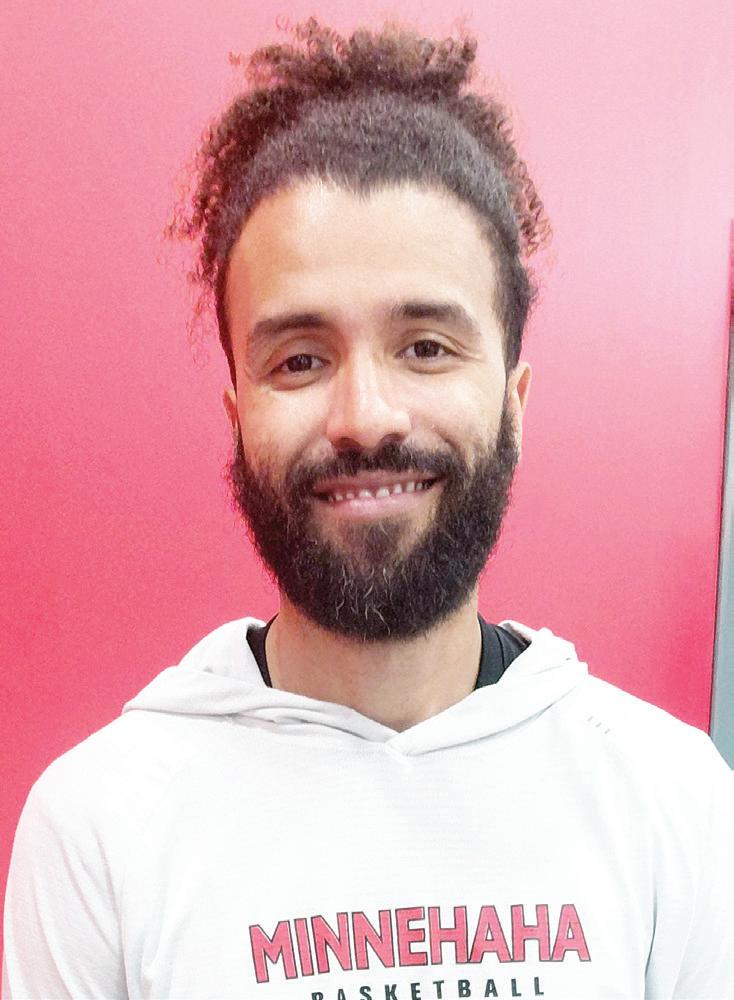
said Jadee Jones, who took over the Minnehaha Academy program in 2024, and led the RedHawks to the 2026 Class AA state championship in March.
David Collier was hired at Apple Valley in 2022, and this year led the Eagles to the Class 4A state runners-up appearance. He was an organizer of the Juneteenth hooping event.

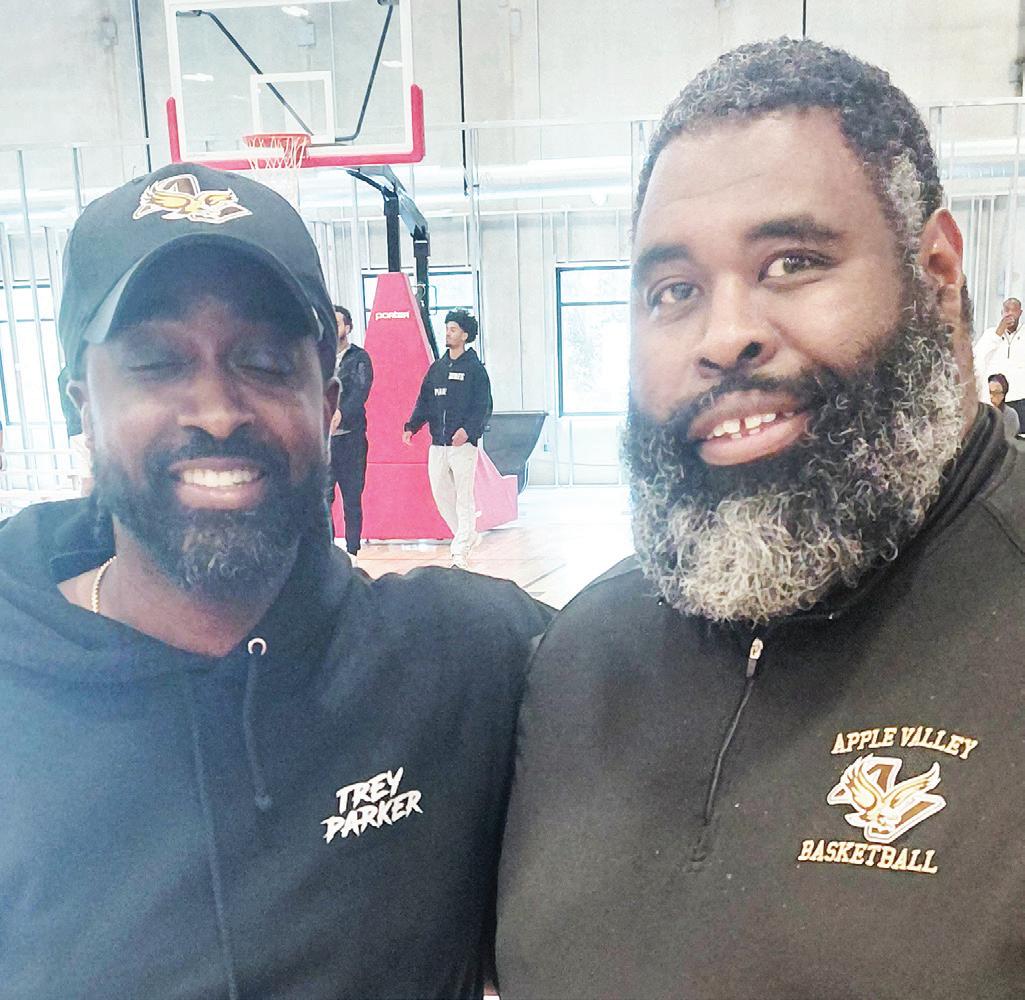
“When we were ideating about the event,” explained Collier, “I called Associate Coach Dave Thorson to see if they were doing the basketball camp at the University of Minnesota … two years in a row they didn’t do that event. So, I just think there’s a great opportunity for all coaches in Minnesota to convene.
“But then I started thinking about what about our Black
Lynx practice player learns from the
ale practice players and the WNBA virtually have been synonymous since the league’s founding 30 years ago. Former collegiate or semi-pro players are employed by teams for game preparation.
We recently talked to a Minnesota Lynx practice team
“Originally last summer, how I got hooked up to come in with the Lynx is Tim Gill,” recalled Joshua Brown. “Tim had texted me… I think it was a Sunday, and asked me if I wanted to hoop, and like me, I always want to hoop. I said
“It just ended up being the Lynx practice, and from there I enjoyed it,” he recalled.
The 6-4 Brown, a Minneapolis native and Park Center High School grad, played his college ball at UMD, scoring over 1,000 points there. He just completed his first season playing overseas, in the Ca-

NOXVILLE, TENN. –
The high point of last weekend’s Women’s Basketball Hall of Fame (WBHOF) induction ceremony besides the pomp and circumstance are the inductees’ origin stories told in humbling ways.
"A couple days later, I just got added into the practice squad group chat.”
nary Islands. Brown told MSR that his eyes were wide open in his first Lynx workout. “I felt it was a good opportunity, a space that I can really be a sponge and get some good work in and really improve my own IQ. I asked (Gill) if I could come back. They said they enjoyed having me because of my athleticism, my IQ and just who I am.
“A couple days later, I just got added into the practice squad group chat, and so I’ve been going when it works with my schedule ever since,” said Brown. He added that he quickly
coaches?” he asked himself.
“We don’t get enough shine; we don’t get enough highlight. So, let’s fill that void in the summertime with this event.”
Juneteenth was first recognized by federal legislation in 1996 but officially became a U.S. holiday in 2021 by former President Joe Biden.
“We had a little moment in the beginning (of the camp) when we talked about the
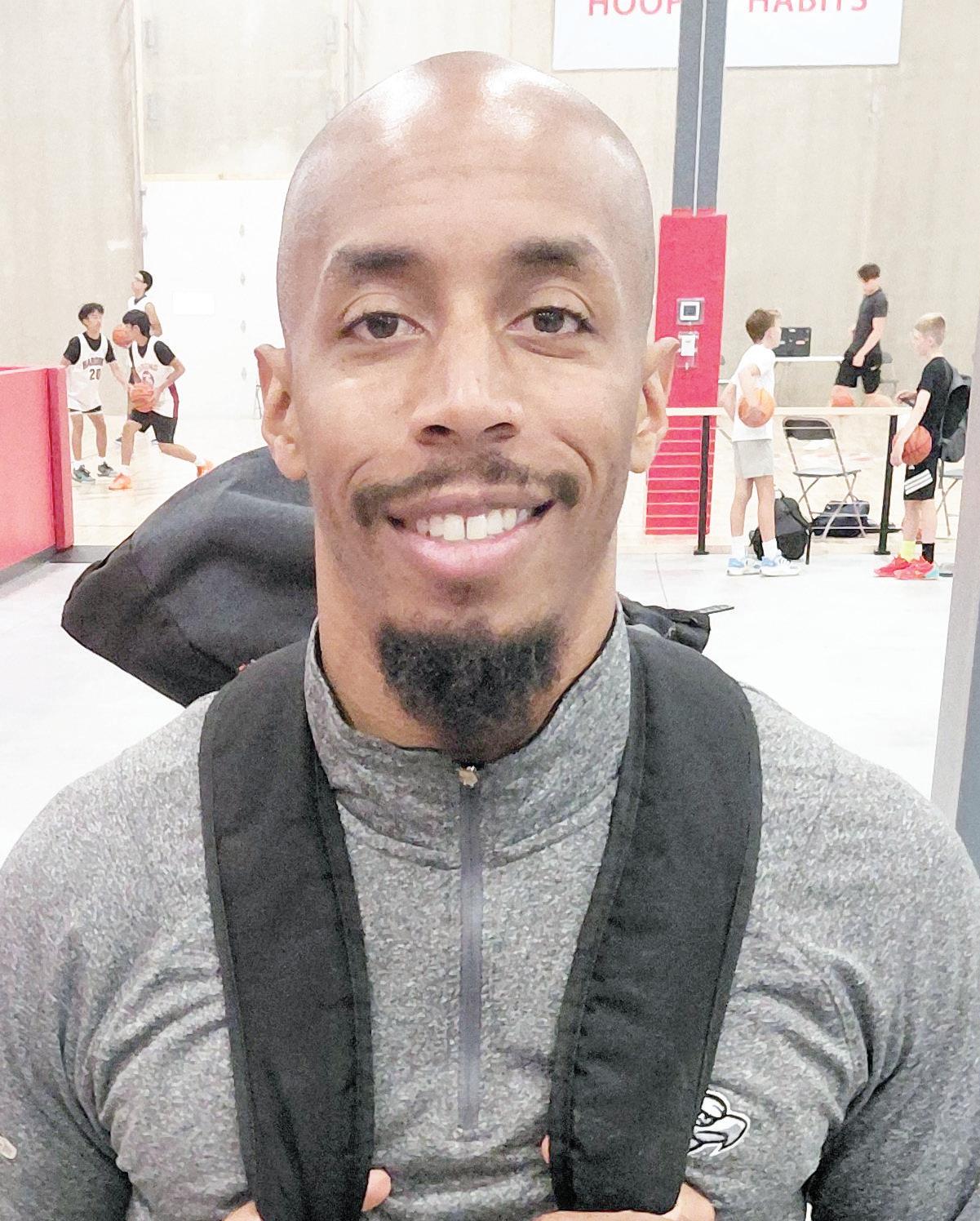
point of today,” stressed Apple Valley Associate Head Coach C.J. Hallman, “and while we were here. I think that they’ve gotten it.”
Collier said that he enlisted the support of the Minnesota Black Basketball Coaches Association and Anthony Tucker, who owns Hoop Habits, a basketball training facility in Eden Prairie.
“We’re celebrating a won-
derful, monumental day for Black people and for our Black coaches and community to come together,” reaffirmed Collier.
“I love what we’re doing with bringing the Black coaches together, getting the guys to play, and still honoring Juneteenth,” said Eden Prairie Head Coach Zander Culver, who was Roseville head boys’
North Connections: Past and Present

onnections to the athletic scene at Minneapolis North have been prevalent of late.
Here are five connections of the past and present.
Robin Ingram North’s Boys Head Basketball Coach from 1988-99 and outstanding golf coach as well, Ingram was inducted into the Minnesota State High School League (MSHSL) Hall of Fame this past April.
He led the Polars to state boys basketball championships in 1995, ‘96, and ‘97.
Ingram was also an outstanding student athlete at North, starring in basketball and golf.
Brett McNeal
The former North boys basketball great and Western Kentucky University Hall of Famer, McNeal started his newly appointed position as Executive Director of Athletics at North Central University.
McNeal, the 1985 Mr. Basketball winner who went on to coach North to the Class 4A state title in 2003, most recently served as Director of Athletics at Cam -
den and Fair High Schools in Minneapolis.
Jerome Williams Williams, a person with deep roots in the metro basketball community, is the new Head Boys Coach at North. He is the creator of the Spartans, one of the state’s top AAU programs.
Some of the most outstanding players of recent

Candace Parker, Elena Delle Donne and Cheryl Reeve headlined the Class of 2026, along with players Amaya Valdemoro and Isabelle Fijalkowski who made their mark on the international stage; successful junior college Coach Kim Muhl; and broadcaster Doris Burke. All spoke last Saturday except Barbara Kennedy-Dixon, who died at age 58 from cancer in 2018. Her husband and high school sweetheart, Marvin Dixon, spoke on her behalf.


of the early U.S. women’s pro basketball leagues that came and went, and in Italy for two years before that.
“I was impressed with my presenter. She really set the stage,” Dixon told us afterwards of Valerie Still, Class of 2019. Still said of Barbara, “Her impact on this world is permanent. Your legacy will never be forgotten.” Parker said in her speech, “Whatever uniform I wore, winning was always the mission.” Lindsay Whalen (2023) in introducing Reeve: “I would not be in the Hall of Fame without her. Together we built a dynasty in the WNBA. At the center of it all was Cheryl Reeve.”
In thanking coaches, players, family, and even Lynx fans, the longtime Lynx
“If she was here right now today, she’d be
more out about you than you trying to find out about her because she never did speak on herself,”
Coach said, “My greatest win is you,” paying brief homage to her 10-year-old son. The day before their induction, MSR talked to Dixon, Reeve and Parker.
Head
finding
said Marvin of his late wife.
Barbara Kennedy was a star at Clemson (1978-82) in the old AIAW then the NCAA, where she became among the few women’s players to score more than 3,000 points and 1,000 rebounds in her career. She then played in the WBA, one
Now Kennedy-Dixon, she returned to Clemson where she served in various roles,
Jadee Jones All photos by Charles Hallman/MSR (l-r) David Collier, C.J. Hallman
Zander Culver
Joshua Brown Courtesy photo
Brett McNeal Northwestern College Athletics
Marvin Dixon
Cheryl Reeve
Candace Parker Photos by Charles Hallman/MSR