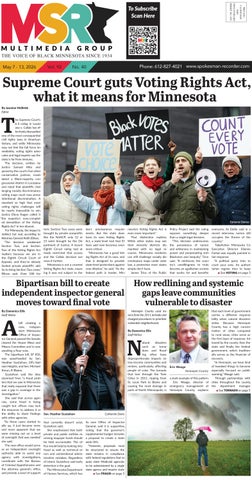

Supreme Court guts Voting Rights Act, what it means for Minnesota
By Jasmine McBride Editor
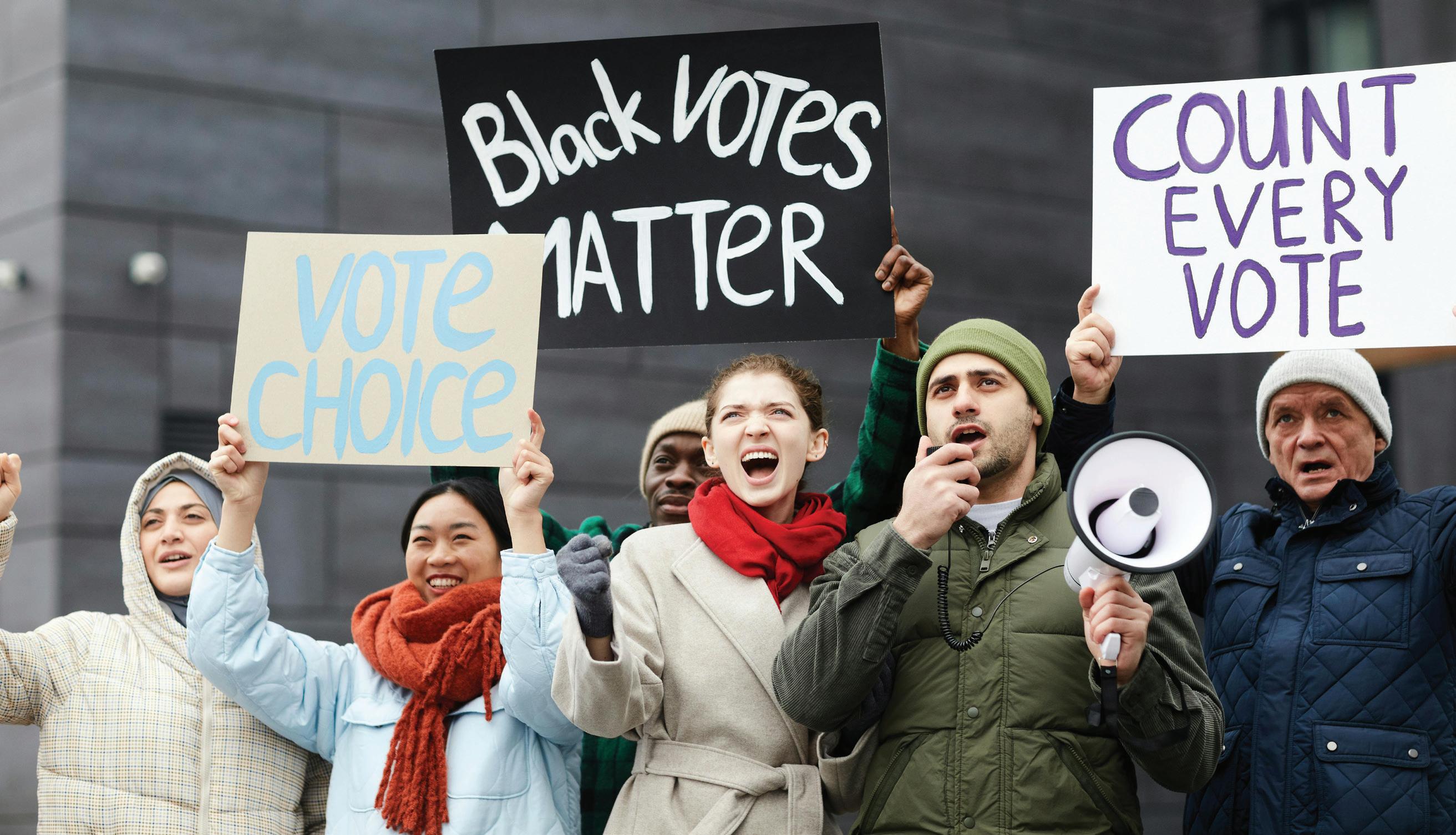
he Supreme Court’s 6-3 ruling in Louisiana v. Callais has effectively dismantled one of the most consequential civil rights laws in American history, and while Minnesota may not feel the full force immediately, voting rights advocates and legal experts say the state is far from immune.
The decision, written by Justice Samuel Alito and joined by the court’s five other conservative justices, invalidated a Black-majority congressional district in Louisiana and ruled that plaintiffs challenging racially discriminatory voting maps must now prove intentional discrimination. A standard so high that most voting rights challenges will be nearly impossible to win. Justice Elena Kagan called it “the majority’s now-completed demolition of the Voting Rights Act” in her dissent.
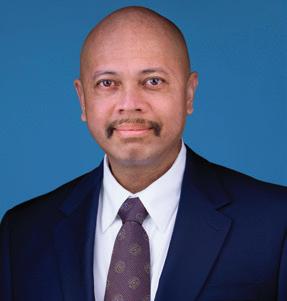
For Minnesota, the impact is indirect but real, according to Attorney General Keith Ellison.
“The decision weakened Section Two, and Section Two of the Voting Rights Act matters because we are in the Eighth Circuit Court of Appeals, and they’ve already limited private plaintiffs’ ability to bring Section Two cases,” Ellison said. Over 100 his-
toric Section Two cases were brought by private nonprofits like the NAACP, only 12 or 13 were brought by the Department of Justice. A recent Eighth Circuit ruling had already restricted that access, and the Callais decision narrows it further.
Minnesota is not a covered Voting Rights Act state, meaning it was not subject to the
law’s preclearance requirements. But the state does have its own Voting Rights Act, a state-level tool that Ellison said now becomes even more critical.
“Minnesota has a good Voting Rights Act of its own, and that is designed to provide state-level protections against vote dilution,” he said. “As the federal path is harder, Min-
Bipartisan bill to create independent inspector general moves toward final vote
By Damenica Ellis Staff Writer
bill creating a new, independent Minnesota Office of Inspector General passed the Senate, cleared the House Ways and Means Committee and is now awaiting a floor vote.
The bipartisan bill, SF 856, was spearheaded by Sen. Heather Gustafson, DFL-Vadnais Heights, and Sen. Michael Kreun, R-Blaine.
Gustafson said the idea stemmed from “a fraud problem that we saw in Minnesota that really exposed that there was a gap in coverage in the investigation.”
She said that across agencies, some fraud is being caught but offices may lack the resources to address it or the ability to share findings with other agencies.
“As these cases started to pile up, it just became more and more apparent that we were missing out on a level of oversight that was needed,” she said.
The new office would serve as an independent oversight authority able to assist any agency with investigations, coordinate with the Bureau of Criminal Apprehension and the attorney general’s office, and provide a level of support
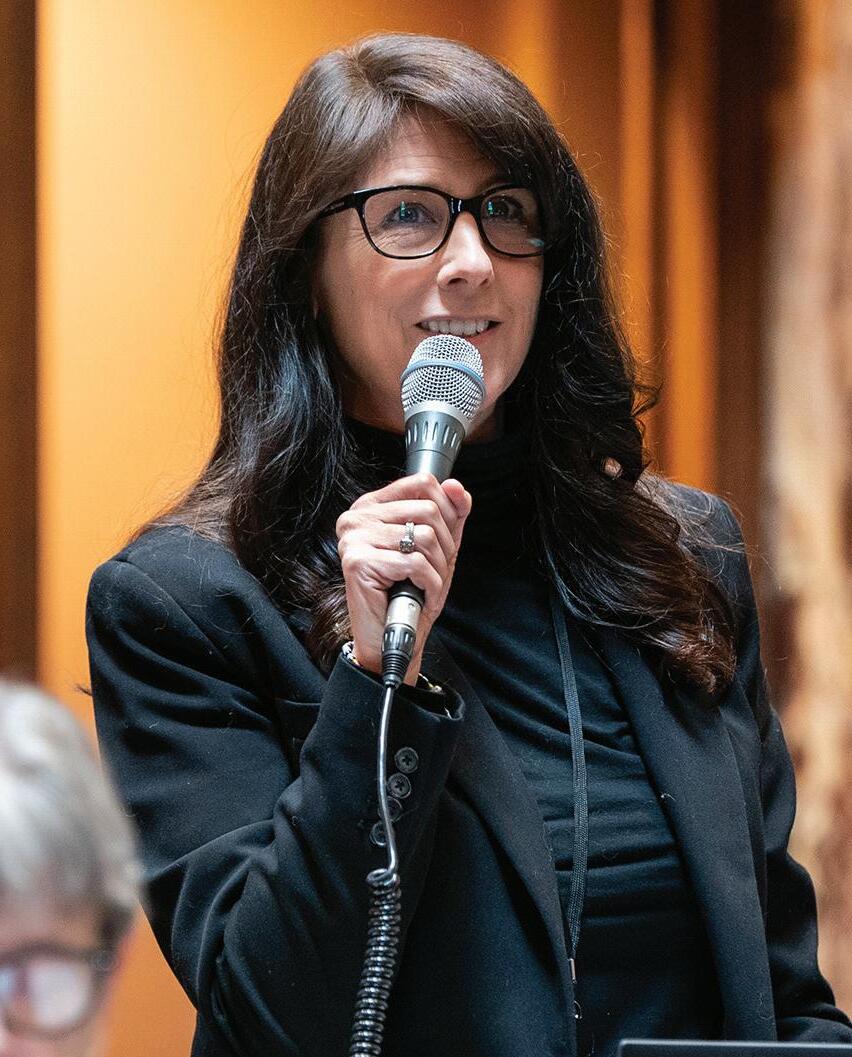
Sen. Heather Gustafson
that currently doesn’t exist, Gustafson said. She emphasized that both private and public entities receiving taxpayer funds should be held accountable. The office would help by looking into fraud as well as technical errors and unintentional administrative mistakes. Regardless of intent, Gustafson said early detection is the goal. The Minnesota Department of Human Services, which has
Catherine Davis
its own Office of Inspector General, said it is supportive, noting that the governor’s supplemental budget includes a proposal to create a statewide OIG.
“However, proposals must be structured to ensure the state remains in compliance with federal regulations that require state Medicaid agencies to be administered by a single state agency and require state
■ See FRAUD on page 5
nesota’s Voting Rights Act is even more important.”
That distinction matters. While other states may see their minority districts dismantled with no legal recourse, Minnesota residents can still challenge racially discriminatory maps under state law, a protection most states simply don’t have.
James Trice of the Public
Policy Project said the ruling exposes something deeper than a single legal decision.
“This decision underscores the persistence of racism and whiteness in maintaining power and perpetuating antiBlackness and inequity,” Trice said. “It reinforces the country’s unwillingness to truly become an egalitarian society that works for and benefits
everyone. As Eddie said in a recent interview, racism still occupies the throne of the country.”
TakeAction Minnesota CoExecutive Director Elianne Farhat was equally pointed in her response.
“A political party tries to court your vote. An authoritarian regime tries to keep ■ See VOTING on page 5
How redlining and systemic gaps leave communities vulnerable to disaster
Hennepin County used lessons from the 2011 tornado and changed procedures to prioritize vulnerable neighborhoods.
By Damenica Ellis Staff Writer
atural disasters such as tornadoes and flooding often have disproportionate impacts on low-income communities and renters, particularly affecting people of color. The tornado that tore through the Twin Cities in 2011, ripping from St. Louis Park to Blaine and causing the most damage in parts of North Minneapolis, is
a stark example of this pattern.
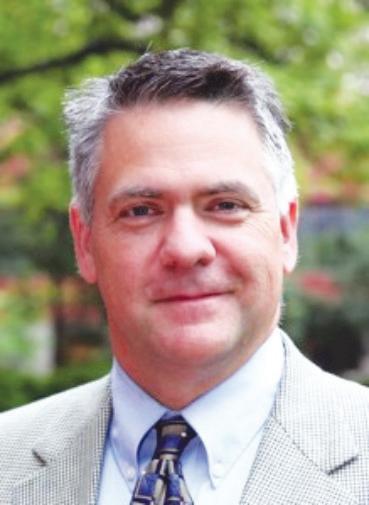
Eric Waage, director of emergency management at Hennepin County, explains
that each level of government carries a different responsibility when natural disasters strike. Because Hennepin County has a high concentration of cities compared to rural areas, cities serve as the first layer of response, followed by the county, then the state and finally the federal government, which traditionally serves as the financier of recovery.
“In Hennepin, we have kind of tweaked things to become especially focused on public warning,” Waage said.
Through partnerships with cities throughout the county, the department manages
■ See TORNADO on page 5

Edmond Dantes
Eric Waage Hennepin County
FBI raids more than 20 Minnesota daycares, but only five involve Medicaid fraud
By Izzy Canizares
Contributing Writer
Months after fraud allega-
tions against multiple Minnesota daycares gained media attention, the FBI raided 22 childcare centers around the state in an alleged crackdown on reported fraud. Now, as state and federal officials bicker over credit for the raids, a community still healing from Metro Surge is left wondering what comes next, and what investigators are actually looking for.
“This morning, FBI Minneapolis, with support from federal, state and local law enforcement partners, conducted court-authorized law enforcement activity as part of an ongoing federal criminal investigation,” the Minneapolis FBI office said in a statement posted April 28 on Facebook.
Videos from the scene showed agents using a battering ram to break down the door of at least one of the targeted buildings. Among the sites raided was Quality Learning Center, which had been the subject of online harassment following a January YouTube video about Minnesota daycare fraud posted by conservative influencer Nick
Shirley. The video went viral and reignited debate about fraud in Minnesota, particularly among daycare and autism centers, though much of the conversation, especially on the conservative side, placed blame squarely on Somali communities.
“Community leaders are deeply concerned about the broader impact these operations and public narratives may have on immigrant and refugee communities.”
“We recognize the seriousness of any allegations involving misuse of public funds and support lawful investigations with transparency and due process,” said Suleiman Adan, deputy executive director of CAIR-MN. “But community leaders are deeply concerned about the broader impact these operations and public narratives may have on immigrant and refugee communities, particularly when entire communities are stigmatized based on the alleged actions of individuals.”
Shirley’s claims about the daycares he targeted were quickly disputed by both local news outlets and state officials. Nevertheless, the video
spurred a wave of threatening calls and attempts to film inside targeted centers. It has not been confirmed that any of the other sites mentioned in Shirley’s video are among those raided.
criminals when state and federal agencies share information. Joint investigations work, and securing justice depends on it.”
Within hours, FBI Director Kash Patel fired back. “Come

As more information emerged, federal and state officials appeared to disagree sharply on who deserves credit for the operation.
“If you commit fraud in Minnesota you’re going to get caught, and that’s exactly what we saw today,” Gov. Tim Walz wrote on X. “We catch
again?” Patel wrote on X. “This FBI and DOJ with our DHS partners drafted and executed every search warrant today. But go ahead and take credit for our work while we smoke out the fraud plaguing Minnesota under your governorship.”
Minnesota officials confirmed the raids were con-
ducted in collaboration with the federal government, involving both the Department of Children, Youth and Families and the Minnesota Bureau of Criminal Apprehension.
“Today’s law enforcement actions are a result of state, county and federal agencies working together to root out fraud and hold bad actors accountable,” DCYF said in a statement. “Each plays a role in protecting taxpayer dollars and we’re seeing the strength of that collaborative working relationship in action.”
The BCA said 23 of its financial crimes and fraud agents partnered with federal law enforcement to execute 14 of the search warrants. For further details on the active investigations, the agency directed inquiries to the FBI.
Attorney General Keith Ellison’s office added a statement that answered some questions while raising others. His Medicaid Fraud Control Unit assisted with raids at only five of the sites, all of them facilities claiming to provide Early Intensive Developmental and Behavioral Intervention services billed through Medicaid.
“MFCU shares original criminal and civil jurisdiction for Medicaid fraud with federal law enforcement,” the state-
ment read. “MFCU did not participate in the execution of search warrants at any other sites today because those sites do not involve Medicaid funding.”
That disclosure raises a significant question: if only five of the warrants involved Medicaid fraud, what were the legal basis and purpose behind the remaining raids? The FBI has not said.
“Out of respect to ongoing criminal investigations, the FBI cannot comment aside from the statement we issued yesterday,” the agency said. “When we have additional information to release, we will let you know.”
For Adan and others in the affected communities, the lack of transparency is its own concern, regardless of what investigators ultimately find.
“If I had their ear, something that I would say to the FBI is to carry out your work with precision, transparency and care for the communities who will feel the impact of these actions, even when they are not the subjects of this investigation,” Adan said.
Izzy Canizares is a freelance journalist and contributing journalist for the Minnesota Spokesman-Recorder.
Style meets social justice at Sister Spokesman’s Dress to Shine
By Damenica Ellis Staff Writer
May 2nd, attendees entered on a red carpet, dressed to impress for Sister Spokesman’s fashion presentation Dress to Shine. Vendors and the smell of soul food greeted them as they walked to their tables on either side of a runway. DJ Munya set the tone with upbeat, soulful music and Thomasina Petrus, a Minneapolis jazz vocalist, sang. Richard Moody, fashion runway show producer and event architect, kicked off the fashion presentation inspired by iconic vintage moments from Jet, Essence, Ebony, Fashion Fair and McCall’s.
“A lot of us grew up reading Jet Magazine, Essence, Ebony… that was our bible,” he said.
Moody is the founder of iammoody, a boutique production firm, and brings years of experience in both fashion production and modeling to his work.
Autumn Frazier of Autumn’s Vintage showcased her designs first. She wanted to include styles from every era, she said, the ‘20s, ‘30s, ‘50s and ‘70s, all represented in her segment. Frazier was even wearing a dress from the 1950s herself. The quality of clothing from that era is one reason she loves vintage.
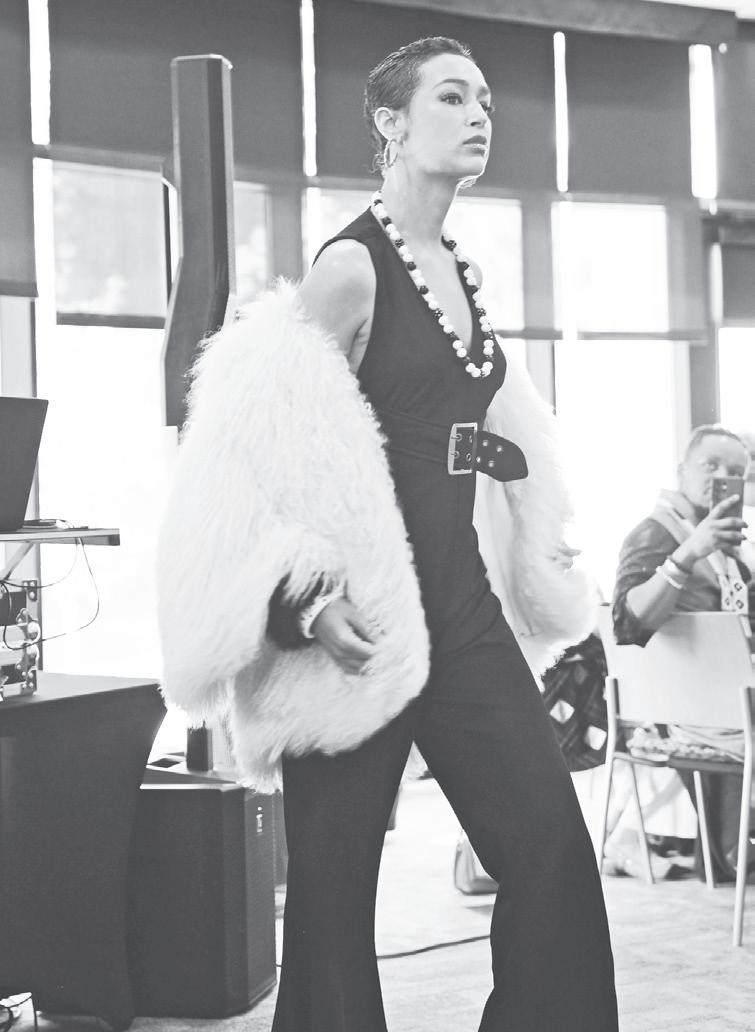

“It’s not fast fashion. It is something that you can hang on to forever and pass it on down to the next generation,” she said. She was inspired to go into fashion by the way her grandmother dressed, never leaving the house without a handbag, hat and gloves. As a child, she would play dress-up in her grandmother’s closet. Next on the runway was work from Keith Dorsett, owner of Heimie’s Haberdashery, with locations in downtown St. Paul and Red Wing. A major part of his collection featured
women’s suits showcased on

“The way we present ourselves, the community, this room… is the
Bringing the show to a close was
collection of one-
by
of
and costume designer on the set of “Hidden Figures.” Nekima
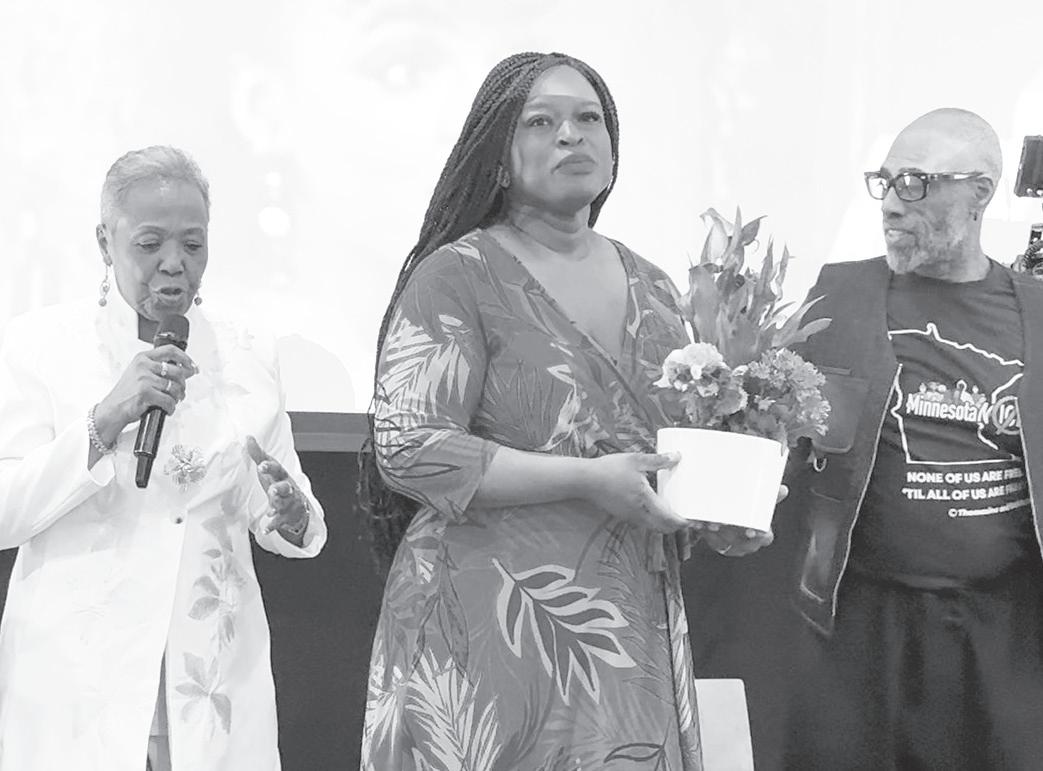
“She has turned her life into a constitutional test for our First Amendment rights,” Williams-Dillard said. “The Minnesota Spokesman-Recorder stands with her in this fight, providing the accountability reporting our community deserves.”
Armstrong said it was a pleasure being part of the experience.
“I’m just so honored to be here as a part of this amazing show, lifting up designers in our community who pour their all and ensure that we look beautiful,” she said.
“All queens need their flowers,” Moody said.
Backstage, Armstrong said she witnessed Moody inspiring young models and experienced firsthand the care of Black women designers.
“They make sure that the colors, the aesthetics, everything lines up with who you are and what feels natural to you,” Armstrong said. “So it’s been a phenomenal experience. I would encourage folks, if the opportunity comes, walk the runway. If I can do it, I know y’all can do it.”
MSR’s next event is the Legacy Yacht Cruise, visit www.spokesman-recorder. com/legacy-yacht-cruise/.
Damenica Ellis welcomes reader responses at dellis@ spokesman-recorder.com.
Armstrong made surprise appearances on the runway, dressed by both Frazier and Rodgers. She was later recognized by Tracey Williams-Dillard, CEO and publisher of the Minnesota Spokesman-Recorder, for her work with the Racial Justice Network and her recent arrest following an Immigration and Customs Enforcement protest at Cities Church.
designs
Kathryn Rodgers, owner of House
KLynn
Models wearing Heimie’s Haberdashery.
From left: MSR CEO and Publisher Tracey Williams-Dillard, civil rights attorney Nekima Levy Armstrong, and Richard Moody, event curator and fashion runway show producer.
Model wearing Autumn's Vintage. All photos courtesy of Emmanuel Duncan/MSR
Model wearing House of KLynn.
Metro
Gunfire, criticism and
a
walkout that never happened
By Izzy Canizares Contributing Writer
The White House Corre-
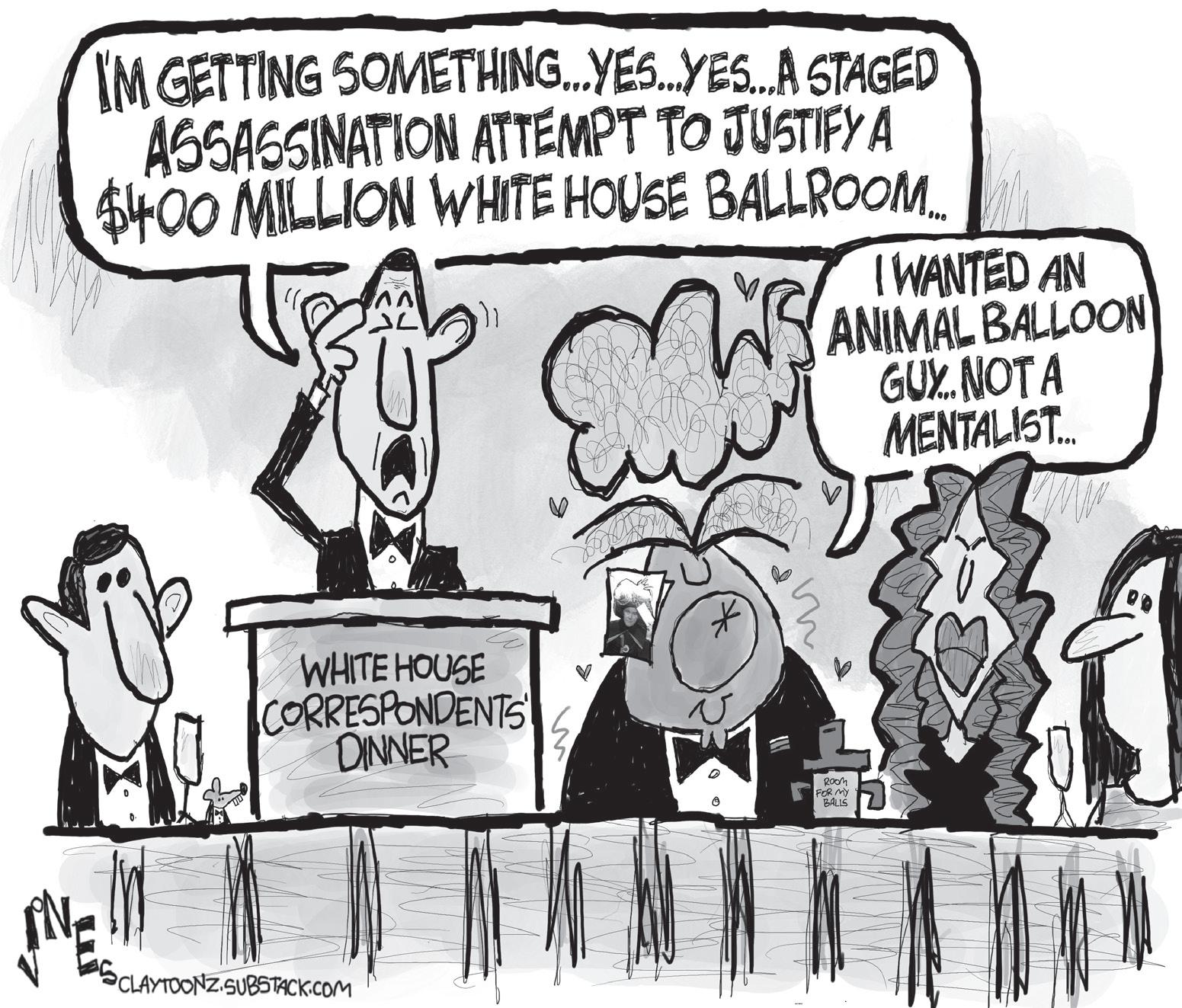
spondents’ Dinner, an annual event honoring members of the press, was disrupted after a gunman opened fire during the gathering, causing a panic and forcing attendees to evacuate. While no one was injured, those who attended, including Minnesotans like Minneapolis Mayor Jacob Frey, have faced criticism for their presence at an event where President Trump and members of his administration were also in attendance.
Despite the dinner’s longstanding tradition, some say attendance continues to normalize an administration that has repeatedly attacked the free press.
California man Cole Allen was arrested shortly after the incident and has since been indicted by the Department of Justice for attempting to assassinate the president and a Secret Service agent before he was apprehended. This marks the third failed assassination attempt against the president.
“Cole Allen now faces the full weight of federal justice,”
Acting Attorney General Todd

Blanche said in a statement released by the Justice Department. “This alleged assassin was stopped because of the courage and professionalism of law enforcement officers who responded without hesitation by doing their jobs.”
The dinner has been a tradition since 1924, organized by the White House Correspondents’ Association to honor members of the press who cover the White House and government. While the president is historically not in attendance, Trump and
members of his administration were present this year. A fact that drew sharp criticism of those who chose to attend.
“Friends, I’m struggling to understand why anyone would consider it an honor to attend the White House Correspondents’ Dinner under this administration,” civil rights activist and attorney Nekima Levy Armstrong said in a Facebook statement.
“Given everything we’ve seen… attacks on the press and serious harm impacting communities across this country
and around the world, there is nothing about this moment that calls for celebration.”
Since Trump’s inauguration, his relationship with the press has been strained at best, marked by attempts to silence critical coverage. Among the most striking examples are federal indictments issued against both former CNN journalist Don Lemon and Minnesota independent journalist Georgia Fort for their coverage of the Cities Church protest in St. Paul. Fort was at the dinner as well, but says her plan, along with many other journalists in attendance, was to walk out in solidarity over attacks on journalists’ First Amendment rights.
“I wanted to take a stand for the First Amendment and planned to walk out for press freedom. Instead, I walked out in fear of losing my life,” Fort posted on Facebook after the shooting.
In a follow-up post, she added, “This year’s event was already contentious, with ongoing attacks on the press and officials in the room who have contributed to that. There was supposed to be a stand for the First Amendment. Instead, that story is being ignored because of the alleged assassina-
tion attempt.”
Other Minnesotans who attended included Republican Rep. Tom Emmer and Mayor Frey. Minneapolis residents were quick to point out what they saw as hypocrisy in Frey’s attendance, given his public criticism of Trump and his policies during Metro Surge. His press secretary, Jennifer Lor, said the mayor was already in Washington for other business, not specifically for the dinner.
“I walked out in fear of losing my life,”
“He was in Washington, D.C., not specifically for this event, but to meet with lawmakers and partner organizations to advocate for federal funding and advance key priorities for Minneapolis,” Lor said. “Mayor Frey was invited by MSNOW and he went because he supports the free press and the work that they do for our country. The White House Correspondents’ Dinner has been happening for over 100 years, focused not on ideology, but supporting a free press and recognizing journalism. Mayor Frey was proud to sit at the table with MSNOW and the chair of the Democratic National Convention.”
Housing advocates push to extend
Clint Combs Contributing Writer
Housing advocates, legislators and community members gathered at the Minnesota State Capitol Tuesday to call for the extension of one of the state’s most popular affordable housing programs, a tax credit that has drawn rare bipartisan praise and fueled housing development from the Twin Cities to rural Minnesota.
Few housing programs inspire bipartisan support and touch lives across both metro and rural areas like the State Housing Tax Credit Program and Contribution Fund. Created as part of a sweeping 2023 spending bill, the program allows individuals and companies to contribute between $1,000 and $2 million toward affordable housing developments and receive a tax credit worth 85% of that contribution.
The program is funded entirely through private investment, a structure supporters say has helped drive its rapid success. Demand has consistently outpaced supply. This year, the application portal closed after just two hours, with requests far exceeding the $9.9 million in available credits.
The credit is currently set to expire in 2028, and the press conference on April 28 focused on extending that deadline while refining how the program is distributed statewide.
“We seek to extend this successful program beyond 2028, which is its current sunset, and also strengthen the program’s utilization with statewide geographic balance and ensure it appears with all Minnesota housing programs,” said Elizabeth Glidden, executive director of the Minnesota Housing Project.
Leading the legislative push
is Rep. Spencer Igo, a Republican from District 7A and cochair of the House Housing Committee, a fact supporters say underscores the program’s cross-party appeal.
“I’m really proud to carry the legislation this year to extend the sunset on our tax credit and make changes that are going to make it even better for the state of Minnesota,” Igo said.
Supporters are calling for increasing the contribution cap to meet demand, better aligning the credit with other state housing programs and urging lawmakers to act quickly to preserve projects already in development. The program’s flexibility allows donors to direct contributions to specific projects, creating a sense of ownership and encouraging innovation in how developments are built and financed.
That impact is visible in communities like Alexandria, where Habitat for Humanity of Douglas County is using the funding to support a largescale housing development.
“We are building 42 homes over the next five to six years,” said Christine Riley, executive director of the organization. “Last year, building started. We have hopes to be closing two more in the very near future, and this year we are building six homes in that development. As we gather here today in Alexandria, siding is going up on the first house, so we’re excited about that.”
Beyond increasing housing supply, the program has also opened the door to creative partnerships. Donor Bill Wernz described how extreme
“Showing up anyway doesn’t feel neutral. It feels like normalization. And that’s deeply troubling,” Armstrong said. Responding to a comment about the journalists’ intended protest, she added, “I don’t buy it. The real protesters were outside of the room holding up signs and confronting attendees.”
In the aftermath, Trump has used the shooting to push for construction of a new White House ballroom, a response that has drawn its own criticism amid broader national calls for gun control.
“At a time when communities across the country are grappling with gun violence, Mayor Frey believes our focus should be on solutions that save lives, especially in schools and on our streets, rather than fancy new construction projects that benefit a small group of people,” Lor said.
Izzy Canizares is a freelance journalist and contributing journalist for the Minnesota Spokesman-Recorder.
While the shooting effectively disrupted both the event and the planned walkout, many believe attendees should not have shown up at all. Protesters gathered outside the hotel during the event, calling out what they described as the hypocrisy of an administration that attacks the First Amendment celebrating the press it has targeted.
bipartisan
state tax credit program beyond 2028
weather in 2023 prompted him to connect affordable housing development with environmental goals.
“In the summer of 2023, one day it was 100 degrees and there was Canadian smoke,” Wernz said. “I said to myself, I’ve never really done anything significant for the environment. I’ll have to see what I can do. And I started talking to people, researching on the internet, and found an idea that depended on the State Housing Tax Credit.”
Wernz approached developers with a proposal tied directly to energy savings for residents.
“I said to them, ‘If I raise money under this tax credit program, will you use it for solar installations on new affordable housing, and will you also reduce the amount charged to residents by the amount of the electrical savings?’ And they said yes,” he said.
Advocates say examples like that illustrate the program’s broader potential, not just to build housing, but to shape how that housing serves communities long term.
Since its launch in October 2023, the program has drawn contributions from more than 1,100 individuals and com-
panies, supporting dozens of housing projects across urban, suburban and rural Minnesota. Each year, available credits
have been fully claimed, signaling sustained demand.
Legislation to extend the program beyond 2028 and adjust how credits are distributed geographically is currently moving through committees in both chambers. Supporters argue that without action, one of the state’s most effective housing tools could disappear just as it is gaining momentum.
“This is one of those rare programs,” one advocate said after the event, “where you can see the impact in every corner of the state.”
For more information, visit https://www.mnhousing. gov/home/rental-housing/ housing-development-andcapital-programs/deferredloans-and-grant-programs/ state-housing-tax-credit-shtc.
Clint Combs welcomes reader responses at combs0284@ gmail.com.

Representative image Haim Charbit
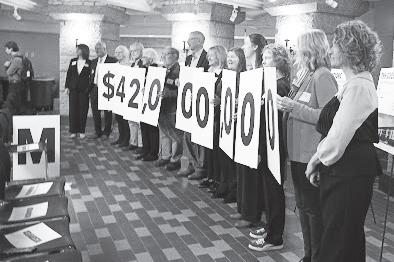
Supporters of a pilot housing tax credit say the program has raised $42 million dollars in affordable housing projects. Clint Combs MSR


When people think about their health, they tend to focus on diet, exercise or stress. These factors matter, but they’re only part of the picture.
Environmental medicine is a branch of health care that examines how our surroundings influence our internal health and well-being. It connects symptoms and conditions to chemicals we breathe, eat, wear and apply to our skin recognizing that toxins, pollutants, heavy metals, mold, plastics and poor air quality can burden the body and contribute to chronic illness.
Environmental medicine practitioners examine how certain triggers might affect the body and how reducing them can support overall vitality. They tend to focus on areas like air and water quality, household chemicals, personal care products, and plastics and endocrine disruptors.
Environmental factors can contribute to a wide range of conditions, including autoimmune conditions, hormonal imbalance, headaches and migraines, chronic fatigue, neurological symptoms such as brain fog and memory issues, and certain cancers. Typically, a combination of multiple exposures over time, compounded by chronic stress and poor nutrition, is what leads to internal health issues.
Why this matters to the Black community
Environmental medicine
Health Environmental medicine,
is ultimately a justice and public health issue, and for many Black communities this conversation is especially urgent. Targeted marketing, industrial zoning and gaps in consumer protection have created disproportionate health risks.
Black communities are more likely to live near highways, industrial corridors, waste sites and neighborhoods with poor air quality. This means higher exposure to chemicals linked to asthma, heart disease and inflammatory illness. Toxins are found not only in the air, but also in products many in our community have used for generations without knowing the harm they may cause.
Johnson & Johnson currently faces more than 60,000 lawsuits connecting the use of its talc powder to ovarian cancer or mesothelioma. The company has denied that its products cause cancer, but multiple plaintiffs have been awarded damages and many cases continue.
Hair straightening products have recently come under scrutiny for their endocrinedisrupting chemicals and possible links to hormone-related cancers. Some synthetic braiding hair and extension products contain volatile organic compounds, flame retardants or chemical coatings. Women have reported itching, headaches or scalp irritation shortly after installation, symptoms that are often relieved once the hair is removed.
All plastics eventually break down into microscopic particles called nanoplastics, which are now being found virtually everywhere: in our water supply, food packaging, household dust, the oceans and even in human tissue. Sci-

entists are still studying the long-term effects, but there is growing concern about their role in internal inflammation, hormone disruption and oxidative stress. While plastics affect people worldwide, communities with less access to fresh food and greater reliance on packaged goods face higher exposure through plastic packaging and disposable containers.

What you can do
Now that you have a clearer picture of how the environment can directly affect your health, here are some steps you can take.
To improve indoor air quality, avoid synthetic fragrance sprays, room deodorizers and candles. Use HEPA or charcoal-based air purifiers and open windows regularly for fresh circulation, especially if
someone smokes inside. When it comes to personal care products, read labels and purchase fragrance-free or low-toxin options whenever possible, and ask your local retailers to stock more of them. This applies to body lotion, deodorant, hair products, makeup and feminine care products. As a general rule, look for products with shorter, easily understandable
ingredient lists. The longer the list and the more chemicals included, the higher the likelihood that it isn’t good for you.
For hair care, consider using relaxers less frequently or exploring other styling options. Wash new braiding hair before use, choose plantbased hair products when available and pay attention to symptoms like itching, headaches or scalp burning.
To reduce plastic exposure, use glass storage containers when possible, avoid microwaving food in plastic and use filtered water, options like Brita are accessible alternatives.
You can also support your body’s natural detox pathways by staying hydrated, eating fiber-rich foods, sweating regularly through movement and exercise, maintaining supportive sleep patterns, eating cruciferous vegetables like broccoli and cauliflower, managing stress and maintaining regular bowel movements.
Environmental medicine reminds us that health isn’t just about what happens inside your body, it’s also about what happens around it. Personal choices matter, but so does policy. Vote for local officials who stand for ingredient transparency, safer beauty standards and environmental justice. Support companies that align with your values. You have a voice and you have power.
Small shifts add up to large changes. Every label you read, every product you choose and every informed decision you make is a step toward healing for you, for your community and for generations to come.
Learn more about Dr. Ayanna Quamina and her practice at www.drayannaq.com. Email her directly at info@drayannaq.com







By Dr. Ayanna Quamina, ND Columnist
VOTING
Continued from page 1
you from voting,” Farhat said in a statement. “The MAGA justices on the Roberts Court have once again betrayed the American people, destroying the Voting Rights Act in a bid to lock themselves into power.”
Farhat noted that while TakeAction Minnesota does not expect to see the direct impacts of the ruling in Minnesota this election cycle, the organization is not standing down.
“While this ruling is a blow to our shared project of building a thriving multiracial democracy, we are committed to
FRAUD
Continued from page 1
Medicaid agencies to conduct fraud investigations,” the department said in a statement to the Minnesota SpokesmanRecorder.
Resources remain a limiting factor in the agency’s capacity to prevent and detect fraud, according to DHS.
“DHS would benefit from more personnel, modernized technology and integrated data systems to fully monitor all activities at the level required to consistently prevent and identify fraud across programs,” the department said. “As a result, much of the work remains reactive rather than proactive.”
TORNADO
alert networks including outdoor sirens, highway message boards and the Emergency Alert System on TVs, phones and radios. For over a decade, the county has also partnered with Twin Cities Public Television to broadcast on TPT NOW, a 24/7 public safety channel that provides emergency alerts in English, Spanish, Hmong and Somali, a resource Waage said is unique in the United States.
Hennepin County also conducts hazard assessments and research to identify specific risks based on where people live, using that data to help cities educate residents with targeted information about the hazards in their own neighborhoods. The TPT channel is the primary vehicle for this work, partnering with Spanish and Hmong-speaking outlets to reach communities that major English-only broadcasters miss.
“One of the problems is many of the official sources, like the big local TV channels, they’re only in English, or the National Weather Service does it only in English,” Waage said. “So we’ve needed to figure out how to convert that.”
Outdoor warning sirens, however, don’t depend on language. “All you have to do is be taught what you should do,” Waage said, which is to get to shelter and then seek
redoubling our efforts to bring more voices into the democratic process and into the voting booth at every step of the election process,” she said.
“Across the country, the many can defeat the money by demanding our state leaders keep their hands off our vote and not gut the voting power of Black and brown citizens.”
For Ellison, the ruling was not a surprise, and that, he said, is precisely the point.
“The people who are against democracy and civil rights didn’t like the Voting Rights Act in 1965, but they never quit trying to defeat it,” he said. “I’m not surprised, because I know that the people
The department anticipates that the governor’s proposal, which includes funding for IT infrastructure and data sharing between the central OIG and state agencies, could improve the ability to detect fraudulent actors who have been excluded from programs administered by other state agencies.
Addressing concerns that expanded fraud investigations could perpetuate stereotypes or discrimination, Gustafson said Minnesota civil laws will still apply and any police force formed under the office would still be required to report to the Peace Officer Standards and Training Board.
“So there’s still a lot of monitoring there as well,” she said. Any law enforcement operating within the office would
information.
The disparity in disaster impact often comes down to pre-existing circumstances.
“When you see an actual disaster, it’s the folks that start out a little bit behind, whether it’s in preparation or their circumstances, because they’re renters and they may have a landlord that hasn’t made proper safety adjustments,” Waage said.
The emergency management industry has tried to adjust its recovery processes to account for these realities, though those efforts have faced challenges recently at the federal level. Nonprofits and other agencies remain closely attuned to the needs of marginalized communities.
The county uses the Social Vulnerability Index to identify areas that may need more assistance, examining demographic and socioeconomic factors including poverty, lack of transportation access and crowded housing. Conditions that compound the impact of tornadoes, chemical spills, disease outbreaks and other disasters.
who don’t believe in democracy are determined. The question is, are they more determined than us?”
“The MAGA justices on the Roberts Court have once again betrayed the American people.”
Ellison was direct about what he believes communities of color must do in response: vote.
“Minnesota has the highest voter turnout in the country, but that still means even in a presidential year, about 20% of Minnesotans are not vot-
be focused primarily on tasks such as reviewing files and detecting fraud, she said.
“It’s not about targeting people. It’s really about catching some of these things early, and obviously we want to stop people who are coming to our state on purpose to intentionally try and steal from us, and that is not unique to any one community.”
Gustafson pointed to Aimee Bock, founder and executive director of the Minnesota nonprofit Feeding Our Future, as an example of the kind of fraud the office is designed to catch. Bock was convicted of defrauding the Federal Child Nutrition Program of approximately $250 million by claiming to serve millions of meals to children during the COVID-19 pandemic while submit-
effort and resources when they get hit,” Waage said.
Waage began working in emergency management the year after the 2011 tornado, which he describes as a clear case of a disaster cutting across neighborhoods with very different vulnerability profiles.
“Although the damage kind of varied, the lasting impacts were clearly in some parts of North Minneapolis, where it was harder for people who didn’t have the same protections, like insurance, that maybe some of the other areas had,” he said. Recovery took longer, and disruption lasted well beyond the storm itself.
Part of the reason, Waage said, is that utility restoration at the time went to where the tornado first landed, in St. Louis Park and Golden Valley, rather than the areas most severely affected.
“Now we’d go to the area that was most impacted first and work out from there instead,” he said. “It just sort of makes sense, but I think people didn’t really realize it as much back then.”
Procedures have since
“We’re looking at how socioeconomic data interacts with data related to climate hazards.”
“We know that those areas are going to require a lot more
changed, and more work remains. But the underlying vul-
ing, and they are disproportionately Black, low-income, Native American and Asian,” he said. “Not voting is not a protest. It is a surrender. You are handing your power over to somebody else.”
He warned that efforts to discourage voting, including from public figures and celebrities, should be viewed with suspicion.
ting fake attendance rosters and invoices.
“There are a lot of checks and balances in place and this is really about monitoring those programs in general, saying, ‘We are seeing something suspicious here. Do you have it under control? What are you doing about it? Please let us see what your investigations look like,’” Gustafson said. “But I completely understand the concern, especially with all of these federal government raids.”
The new OIG could cost $16 million to start, according to CBS. Gustafson said the state can afford it.
“We are losing millions and millions of dollars to fraud right now and that we can’t afford. So any dollar we spend to prevent it is going to pay
nerabilities those procedures are meant to address run far deeper than emergency response protocols.

“It all stems down to systemic disinvestment,” said Abigail Phillips, planning analyst with the Metropolitan Council.
The council works to create an equitable region through commitments to greenhouse gas mitigation, environmental justice and climate resilience. Phillips is leading the development of a climate change vulnerability assessment intended to help cities identify where they are likely to experience hazards like extreme heat, localized flooding and poor air quality, and who is most likely to bear the burden of those hazards.
“We know that both the economic and the human consequences of climate change are experienced unevenly across communities, particularly in communities of color and communities that have been historically disinvested and overburdened by plan-
“Anybody who tells you that voting doesn’t matter, that the parties are the same, they’re lying to you,” Ellison said.
“This year you will see celebrities saying stuff like that. You better ask yourself who’s paying them.”
The stakes, he said, are generational.
“You’re growing up in a world where rights are declining,” Ellison said. “The Voting Rights Act was passed in August 1965. In 1973, the Supreme Court said you could make your own decisions about pregnancy, now they say it’s up to the state legislature. The only question is, will this generation step up to the
for itself,” she said. “It’s more expensive for us to not do anything.”
“We are losing millions and millions of dollars to fraud right now and that we can’t afford.”
Concerns raised in the House included the future of the Minnesota Department of Education’s Office of the Inspector General. Under the current plan, those investigators would be embedded within the new statewide office, Gustafson said. The bill
ning practices like redlining,”
Phillips said. “Because the effects of those policies are still seen today, we’re looking at how socioeconomic data interacts with data related to climate hazards.”
During redlining, properties were overvalued or undervalued based on the racial identity of the communities living in those neighborhoods. The consequences are still visible today, not just in wealth gaps, but in the physical landscape.
“The impact is that the value of land in those communities didn’t increase, so families couldn’t build generational wealth the way white families in other communities could,”
Phillips said. “But also that trees weren’t planted, so they didn’t have a chance to grow up and be these big, strong, beautiful canopy-providing trees that exist in wealthier areas.”
Those trees matter more than aesthetics. Large, mature trees provide shelter and stability during severe weather.
Younger trees planted in redlined neighborhoods in recent years simply can’t withstand high winds the way older canopies can.
“When severe weather comes through, like a tornado or high winds, those younger trees aren’t as strong and can’t withstand the impacts, so they’re more likely to have broken branches or even be blown over,” Phillips said.
Neighborhoods without large tree canopies also lose the cooling effect that reduces energy burden on homes and residents.
challenge?”
For now, Minnesota’s own Voting Rights Act stands as a critical line of defense. But advocates across the state agree that legal protections alone are not enough, and that the most powerful tool available to communities of color remains the same one the Voting Rights Act was designed to protect.
The vote.
For more information on Louisiana v. Callais, visit www.supremecourt.gov/opinions/25pdf/24109_21o3.pdf.
Jasmine McBride welcomes reader responses at jmcbride@ spokesman-recorder.com.
also clarifies law enforcement protocols, requiring the OIG to partner with the Bureau of Criminal Apprehension during its first year before determining whether the office needs its own independent police force.
“I’m very happy that we were able to do this one with bipartisan support,” Gustafson said. “I think that was sort of important, just to be able to respond with a solution that really meets the moment and the size of the problem.”
The Minnesota Department of Health Services (DHS) informed MSR that it was not able to meet the deadline for comment.
Damenica Ellis welcomes reader responses at dellis@ spokesman-recorder.com.
The Metropolitan Council is building a regional tree canopy data set to track these disparities. In the Growing Shade data set, said Lisa Barajas, head of the community development division, you can see a visible scar on the landscape tracing exactly where the 2011 tornado cut through North Minneapolis.
“While there are smaller trees that have been planted, they’re not providing that cooling effect yet,” Barajas said. “You can see that difference in the average high temperature in those neighborhoods that were impacted by canopy loss.”
Barajas also noted that in redlined communities, homes are often not upgraded with whole-home air conditioning, leaving residents with fewer options when temperatures rise and tree canopy isn’t there to help.
Damenica Ellis welcomes reader responses at dellis@ spokesman-recorder.com.
Abigail Phillips Courtesy
Lisa Barajas Courtesy
Minnesota Spokesman-Recorder launches Youth Financial Education Series
Sponsored by

The Minnesota Spokesman-Recorder Multimedia Group is launching a new monthly content series designed to meet young people where they are, and give them the financial knowledge they need to build stable, self-determined lives.
The Youth Financial Education Series, launching in May 2026 and supported by JPMorgan Chase, is an eightinstallment initiative running through December that covers one real-world financial milestone each month. Topics range from understanding your first paycheck to navigating credit scores, avoiding predatory lending and filing income tax returns. The series is designed to be practical, jargon-free and culturally relevant, delivered through the trusted voice of Minnesota’s oldest Black newspaper.
“We believe financial education is one of the most powerful tools we can put in the hands of young people and families in our commu
nity,” said Tracey WilliamsDillard, CEO and publisher of the Minnesota SpokesmanRecorder. “This series is about more than information, it’s about access, opportunity and building generational wealth in communities that have too often been left out of that conversation.”
The series is built around a content partnership model, pairing the Spokesman-
Recorder’s editorial and production platform with organizations already doing financial education work in the community. Each monthly installment includes a written story published in print and online, co-branded social media promotion, a short video interview featuring a real program graduate between the ages of 18 and 25, a topic-specific infographic and featured placement in the Spokesman-Recorder’s email newsletter.
JPMorgan Chase’s support of the series reflects the financial institution’s longstanding commitment to economic inclusion and community investment. The bank has invested significantly in initiatives aimed at closing the racial wealth gap, expanding access to capital for Black and brown entrepreneurs and building financial resilience in underserved communities across the country.
“We believe financial education is one of the most powerful tools.”
“Economic opportunity has to be built from the ground up,” said a JPMorgan Chase representative. “Supporting initiatives like the Youth Financial Education Series is part of our commitment to ensuring that young people

in every community have the tools and knowledge to build financial security for themselves and their families.”
The 2026 season covers eight topics that reflect the real financial decisions young adults face as they move toward independence. May’s launch installment focuses on understanding your paycheck, breaking down what deductions mean, how to read a pay stub and what to do with your first earnings. From there, the series builds month by month through financial foundations, goal setting, banking basics, credit essentials, predatory lending awareness, first-car buying and income tax re-

turns. Each installment is anchored by authentic storytelling. The short video component features a real graduate of a financial education program sharing their experience in their own words, no media training required. The Spokesman-Recorder handles all production and distribution, while the content partner helps identify the right person to tell their story.
The series is designed to be accessible and actionable for its primary audience, youth ages 18 to 25 and their families, with every installment including a direct call to action connecting readers
to partner programs and resources.
Content will live permanently on spokesman-recorder.com, meaning each installment continues to drive traffic and awareness long after its publish date, providing evergreen value for both readers and community partners.
The Youth Financial Education Series reflects a broader vision at the SpokesmanRecorder Multimedia Group: that trusted journalism and community education are not separate missions but deeply connected ones. Financial literacy is not a luxury, it is a civil rights issue, and for com-
munities of color that have faced generations of systemic exclusion from wealth-building systems, access to clear, honest financial guidance is both urgent and overdue.
The series launches this month. Future seasons will expand the topic library and reach as the series grows.
For more information about the Youth Financial Education Series or to learn about partnership opportunities, visit spokesman-recorder.com or contact admin@ spokesman-recorder.com.
The Youth Financial Education Series is supported by JPMorgan Chase.



Arts & Culture
The Black lawyer history forgot
By Norma Adams-Wade
“Memories light the corners of my mind. Misty, water-colored memories of the way we were….” “The Way We Were,” Barbra Streisand
For many decades, I have been drawn to the life story of an important figure in Dallas African American history that the general public has largely been deprived of knowing. His name is attorney Joseph Edwin Wiley Sr., founder of the African American community known as Mill City and the historic Black-owned cotton mill he created in the South Dallas/ Fair Park community.
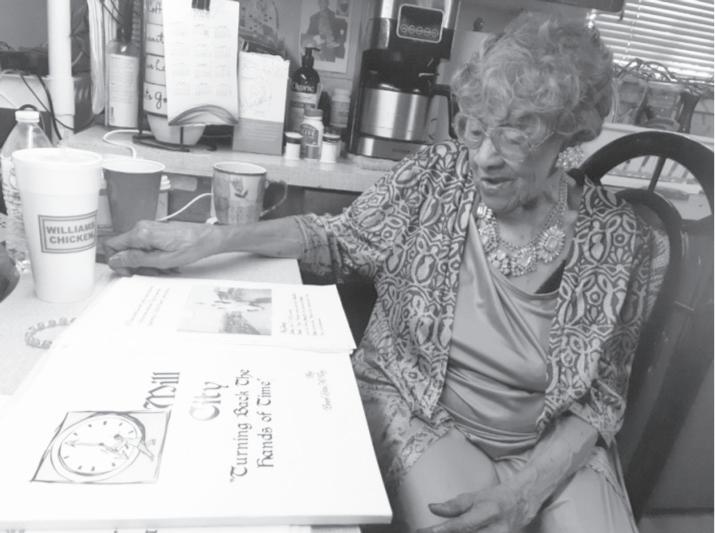
Who would have thought that a living, spunky 105-yearold, Pearl Etta McVey-Guthrie, would allow me to more deeply explore Wiley’s life during her recent birthday celebration in Dallas? I had the opportunity to read McVey-Guthrie’s unpublished memoir, “Mill City: Turning Back the Hands of Time,” which mentions Wiley and describes early 1900s life in the community he created.
McVey-Guthrie was born and raised in Mill City near Fair Park but now lives in Oak Cliff.
Her family and friends organized a drive-by birthday celebration on Feb. 21, 2026, exactly 105 years after her birth in that historic community. A friend had the manuscript and its many photographs printed and bound, and the author
hopes to find a publisher soon. That historically Black community no longer exists as it once did. The area is now undergoing extensive revitaliza
tion led by nonprofit groups, and two streets pay tribute to its history, Joseph Wiley Street and Mill Place.
“That historically Black community no longer exists as it once did.”
McVey-Guthrie was one of three children who grew up on Frank Street near Fair Park.
She was inspired to write her memoir after a young relative asked about her youth in the community. When she went to the library seeking answers, she found almost nothing. So she began writing down her own memories in her 80s.
Relatives and friends recall her as a community anchor, known for her sharp mind and boundless energy. She taught counting and the alphabet to preschoolers, served as a teacher’s aide, took on sewing projects and organized travel excursions and school reunions for classmates.
Her daughter, Patricia Smith, 83, said her mother still communicates well despite greatly diminished hearing. Relatives write notes, which she reads and quickly answers.
“She said so many people did not know about Mill City,” Smith said. “It seemed you could find something about every other place in Dallas but not Mill City.”
Joseph E. Wiley Sr. moved to Dallas in 1885 after graduating from Union College of Law in Chicago, now Northwestern University School of Law. He is recognized as the first formally educated African American lawyer in Texas, and is best remembered for founding Mill City and the New Century Cotton Mill, cre-
ated deliberately to advance African American economic achievement in Dallas.
Wiley also mentored and became law partners with John L. Turner Sr., the now-legendary attorney for whom the historic J.L. Turner Legal Association in Dallas is named. Turner’s fame has endured. Wiley’s has not.
Born in Albany, Ohio, in 1862, a year before the Emancipation Proclamation, Wiley attended Oberlin College before law school. Beyond his legal practice, he was a real estate investor, notary and edi-
tor of the little-known Dallas Enterprise newspaper.
Black workers built the cotton mill, and all mill workers were Black, though prominent Anglo investors contributed money and business advice.
Most notably, Wiley collaborated with Booker T. Washington of Tuskegee University, who contributed financially to the effort.
Wiley also made history by helping create the 1901 Dallas Colored Fair at the South Dallas/Fair Park fairgrounds, serving as a key player in the Fair’s
“Colored People’s Day,” the one day African Americans were permitted to attend the State Fair of Texas in those early years.
The mill opened in 1902, struggled financially for several years and closed in 1907. The Wiley family eventually left Dallas. There are no known photographs of him, and his date of death is unknown.
McVey-Guthrie is aware of ongoing revitalization efforts by groups including The Real Estate Council’s Catalyst Project, Urban Specialists, Builders of Hope Community Development Corp. and the Mill City Community Association. She applauds every effort.
“I’ve never thought about my death, even though my mother died at age 45,” she said. “I’ve always had my hands in something, whether it’s a cruise, crossword puzzle or serving. I don’t know for sure why God has spared me.
But I’m sure glad He did.”
In honor of her absent hero, Joseph Edwin Wiley Sr., I urge us all to learn more about his service and his deep yearning for a better life for our people. For all that he accomplished, this forgotten man deserves to be remembered.
Norma Adams-Wade is a Texas Metro News senior correspondent, a retired Dallas Morning News writer and a National Association of Black Journalists founder.
A thriller on film: ‘Michael’ celebrates the music that changed the world
MOVIE REVIEW
By Stacy M. Brown
The “Michael” movie has arrived, opening in Berlin, one of the strongest fan bases anywhere in the world for Michael Jackson, and let’s just get straight to it. This film is a thriller.
That choice to launch in Berlin tells you everything you need to know. This film understands its audience. It knows who has carried Michael Jackson’s music, his image and his legacy across generations and across continents. It takes this reporter back to December 2024, sitting in a Las Vegas hotel suite with Jackson Estate co-executor John Branca, who spoke about this project with a level of confidence that left no room for doubt. He talked about honoring the music and giving the fans something worthy of what Michael created.
That’s exactly what this is.
The Black Press was among those provided a special screening on March 31, weeks before the official opening. From the opening seconds, the film makes its move.
“Wanna Be Startin’ Somethin’” hits and it doesn’t build slowly, it drops you right into it. The rhythm, the sound, the movement. The same song that opened tours like Victory and Bad now opens the film, and it works the same way. You’re in. Immediately.
Then it takes you back to Gary, Indiana, where the estate continued to honor fans by hosting a private screen-
ing for residents of Jackson’s hometown on April 13. Family members including brothers Jackie, Jermaine and Marlon, and sons Prince and Bigi, made the trip to both Berlin and Gary, to the delight of fans.
The film isn’t glossy. It isn’t soft. And it doesn’t pretend that Jackson had anything close to a typical childhood. There’s no playing outside, no carefree days, no sense of ease. What you see is structure, expectation and pressure that never lets up, a household where greatness wasn’t encouraged but demanded. Colman Domingo steps into the role of Joseph Jackson and doesn’t just play him, he locks into him. The posture, the tone, the control. It’s not exaggerated. It’s not theatrical. It feels real, particularly if you knew the late family patriarch. And then there’s Jaafar Jackson.
“’Michael’ is that movie. It’s a thriller.”
This is where everything could have gone wrong. But he settles into it. There are moments when you stop thinking about who’s playing the role and just see Michael. Both Domingo and Jaafar should have their names in the conversation when it comes time for Hollywood’s most prestigious awards nom-
inations.
The Antoine Fuqua-directed, John Logan-written film makes a clear decision about how to tell the rise of an incredible and sometimes indescribable talent, it stays with the music. That decision was shaped in part by reality. Recent reports suggest the film originally went further, but legal issues forced a complete reworking of the third act, shifting the ending to the height of the “Bad” era.
his electrifying performance of “Billie Jean.” With the obvious decline of the music business today, the film offers a needed reminder of how Michael made MTV accept Black artists and how “Thriller” became, and remains, the most successful and most discussed music video in history. And with war in the Middle East and seemingly never-ending friction at home, we are given a compelling reminder of how Jackson
ance that Michael will be part of the Victory Tour. Joseph gives that assurance, steady and firm. The tension in that moment says everything.
Great attention to detail allows the film to make space for Bill Bray, not just Michael’s head of security, but a presence, a protector and a guide.
If you saw Bray, you knew Michael was nearby. When he steps in to check Joseph, you understand his importance immediately.

“Michael” released in theaters April 24.
What you get is Michael at his peak, on stage, in control. Whether those reports are true or not, the choice works. Fans, and perhaps those worn down by today’s many struggles, could use a reminder of where they were when the Jacksons hit the Motown 25 stage, and Michael earned a phone call from Fred Astaire and an Emmy nomination for
made rival gang members call a truce and invited them to participate in his landmark “Beat It” video.
The film also contains a standout scene between Joseph Jackson and boxing promoter Don King. Two alpha figures. King hands Joseph a Cuban cigar, telling him it came straight from Fidel Castro, and presses him for assur-
Then there’s Branca, not just as a character, but as a force behind the business.
The man who helped orchestrate deals that changed music forever, including the acquisition of the ATV catalog, widely known as the Beatles catalog.
The film doesn’t over-explain it. But it’s there. Janet Jackson isn’t in the film, and neither is oldest sis-
ter Rebbie, to whom Michael gifted her only hit, “Centipede.” People will notice. Reports say Janet declined involvement. La Toya does appear, and that choice seems to carry its own meaning. The family’s presence behind the scenes matters, four of Jackson’s brothers, including the late Tito, and his son Prince serve as executive producers. By the end, you’re not thinking about what’s missing. You’re thinking about the music. The movement. The feeling.
Lionsgate
For anyone looking for a biopic that captures Michael Jackson at his peak, that captures brilliance, “Michael” is that movie. It’s a thriller.
Stacy M. Brown is the Black Press USA Senior National Correspondent. For more information, visit www.blackpressusa.com.
Pearl Etta McVey-Guthrie with the unpublished memoir, “Mill City: Turning Back the Hands of Time.” Courtesy
Education
North Memorial Health and West Broadway Rising expose youth to healthcare careers
By Jasmine McBride Editor
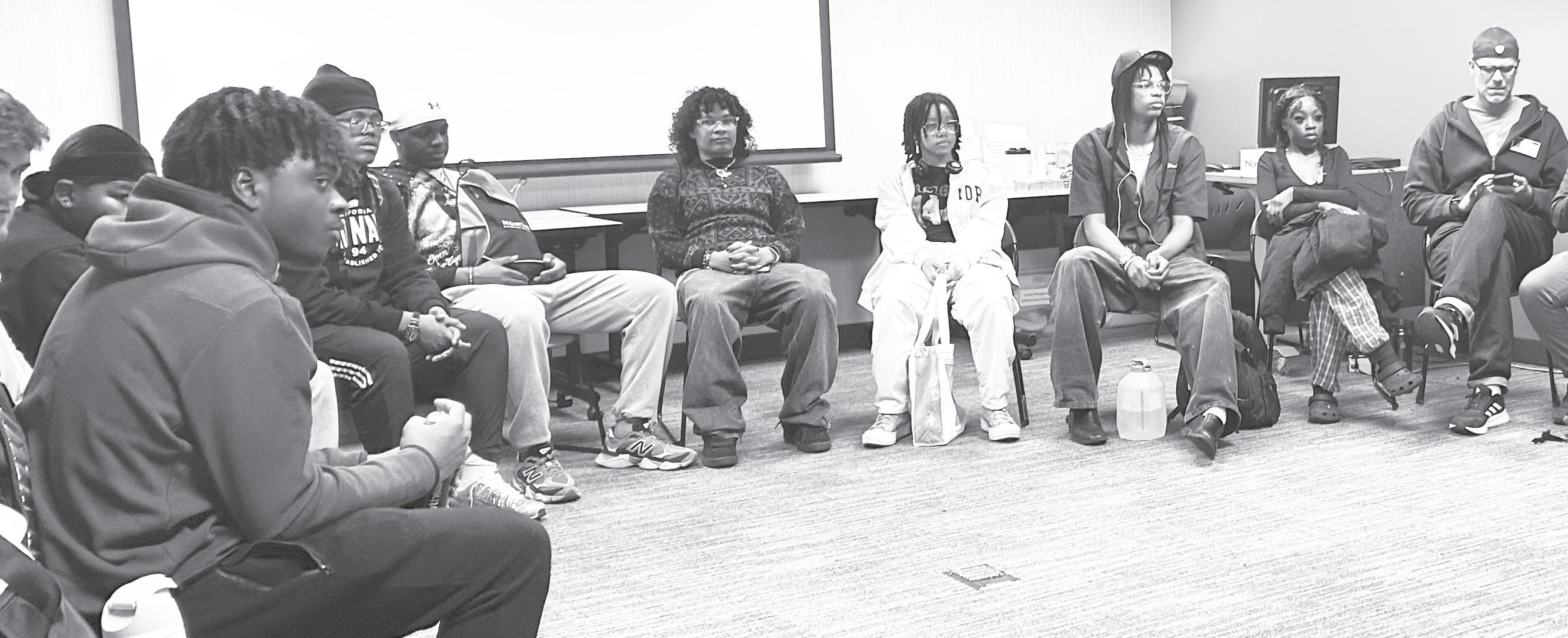
On May 1, a group of high school juniors and seniors from Exploration High School traded their classrooms for the corridors of North Memorial Health in Robbinsdale, getting a behind-the-scenes look at one of the region’s largest hospitals and, for some, a first real glimpse at what a career in healthcare could look like.
The visit was organized through a new partnership between North Memorial Health and West Broadway Rising, a program of the West Broadway Business and Area Coalition that connects Northside youth with local businesses and career opportunities. For students from Exploration High School, an alternative project-based school in North Minneapolis, the experience was designed to do something simple but powerful, let young people see themselves in spaces they might never have otherwise entered.
“I think it’s really important to bring young people to places like this in order for them to see the environment and be able to envision themselves in this workplace,” said Deeq Abdi, program manager at West Broadway Rising, who designed the curriculum and built the partnerships behind the program. “They never would have had this back door access, the ability to talk to people in careers they might be interested in.”
The partnership grew out of a broader vision at West Broadway Rising to bridge the gap between the Northside’s young people and the busi-
“They have MRIs, X-rays, all kinds of stuff. I didn’t really know the behind the scenes.”
by Jasmine McBride/MSR
know what? I’ve been through this as well, and we’re going to be okay.’”
For Exploration High School students, whose education centers on community-based projects and hands-on learning, the visit to North Memorial felt like a natural extension of what they already value.
“It’s project based. I like working with the community and just making projects for the community,” one student said of his school experience.
nesses already rooted in their community.
“Our director Krystel Porter had the wonderful idea, why don’t we partner our business members with young people?” Abdi said. “There are a lot of young people in North Minneapolis who really need work, but they have to go outside of their community to find it. We have a lot of wonderful Black and brown people who own businesses and want to teach these young people: ‘Hey, this is how I got here, and you can do it as well.’”
For North Memorial Health, the partnership reflects a commitment that runs deeper than a single field trip. The week before the hospital visit, North Memorial staff visited Exploration High School for a career day, introducing students to the organization’s values and the wide range of roles that make a hospital function.
“Today is really about exploring, learning about what is possible and maybe what might be a good fit for them
as they look at their careers in the future,” said Jamie [Insert] North Memorial’s manager of learning and development in human resources. “There are so many different careers in healthcare that people don’t necessarily know about.”
Those values, she said, shape everything the organization does. “We advocate courageously, we do what’s right for our patients and for our team members. We rally together, we create impact and we respect uniqueness.”
For the students, the experience opened eyes. One student said he came in knowing little about what happens behind the scenes at a hospital.
“I thought it was like doctors, nurses and X-rays, that’s it,” he said. “But it’s a lot. They have MRIs, X-rays, all kinds of stuff. I didn’t really know the behind the scenes.”
When asked whether the visit had sparked any interest in healthcare as a career path, he didn’t hesitate.
“Yeah, it definitely did.”
Another student said what
stood out most wasn’t the equipment or the facilities, it was the people.
“I enjoyed the teamwork and the sportsmanship that they had together, because I really enjoy watching people work together and getting along,” he said. When asked whether healthcare was on his radar as a career, he was candid. “Probably not the patient stuff, I like communicating, so probably the front desk.”
That kind of honest selfdiscovery is exactly what the program is designed to spark, Abdi said. Getting to know each student individually… their stories, their struggles and their dreams, has been the most meaningful part of the work.
“A lot of these young people are like adults. They have to deal with adult situations,” he said. “It’s nice to be able to mentor them and say, ‘You
The May 1 visit is one of the first of its kind for the West Broadway Rising program, which is still in its early stages of building out its youth engagement work. But for everyone involved, the potential is clear, and personal.
“This has been an absolute honor,” Abdi said. “Every one of these kids is such a brilliant, kind, wonderful young person. I wish I was like them in high school.”
Jasmine McBride welcomes reader responses at jmcbride@ spokesman-recorder.com.

Walmart Burnsville re-grand opening celebrates community partnerships and local youth
By Jasmine McBride and William Lloyd Walker III
On April 24, the Walmart store in Burnsville hosted its re-grand opening celebration, marking the completion of recent renovations and reaffirming the retailer’s commitment to community engagement in the southern Twin Cities suburbs. The program began at 9 a.m. with opening remarks from store manager Carla Evans, who welcomed staff, operational district managers, distinguished community leaders and members of the broader public. The event drew a diverse crowd united around a shared message, that the relationship between corporate partners and the communities they serve matters, and that investment in local organizations creates ripple effects far beyond a single grant check.

the ceremony itself.
“It’s just an honor to see how the organization has grown over the past couple of years since I’ve been involved,” he said. “I’m really happy for Ms. Dorothy Barnes-Griswold for all the work that she puts in.” Walker’s connection to the program predates his official role. Barnes-Griswold, he said, was someone he admired and trusted long before he joined her team. He says she was a mentor who showed up for him consistently and without condition.

ovations reflect Walmart’s broader efforts to enhance operations and strengthen community ties at the location. For organizations like the Minnesota COPE Program and Project Access Center, partnerships like this one represent more than a financial boost. They represent visibility, validation and an investment in the next generation of students who need someone in their corner.
The completion of the store’s renovations was framed not just as a business milestone but as a recommitment to the Burnsville community and the people who call it home.
Among those honored was William Lloyd Walker III, a 21-year-old junior in college who has been involved with the Minnesota COPE Program both as a student and in an administrative capacity alongside the program’s Executive Director, Dorothy Barnes-Griswold. For Walker, the moment carried a significance that went well beyond
A centerpiece of the celebration was the presentation of $2,000 in grant funding on behalf of Walmart to organizations making a measurable impact in the community. Two educational programs were recognized for their contributions: the Minnesota COPE Program, based in Eagan, and Project Access Center in Burnsville. Community organizations involved received grants ranging from $1,000 to $1,500. Throughout the program, speakers emphasized the importance of ongoing collaboration between corporate partners and nonprofit organizations, and the role that sustained grant funding plays in keeping essential community services alive and growing.
“Before I even worked with the organization, she’s always just been somebody who reaches out, always asking how she can help me with whatever endeavors I have,” Walker said. “When I got into high school, it just kind of was a natural transition to go work in a more official role through her program.”
“The plan is to give the money all back to the Minnesota COPE Program.”
What keeps him there, he said, is witnessing the impact firsthand: watching students find direction, support and opportunity through a pro-
gram that meets them where they are.
“I know how impactful her work is and how much help she’s giving to the community,” Walker said. “She’s impacting a lot of students’ lives for the better, it’s just a nice thing to see.”
When asked about his plans for the grant money, Walker said every dollar goes back to the program. For a 21-year-old college student, that level of commitment to an organization’s mission over personal gain speaks volumes.
“I don’t have any plans personally for the money,” he said. “The plan is to give the money all back to the Minnesota COPE Program. I’m in a place where I don’t necessarily need that. It’s more just to help the
future of students and to see the organization grow further.”
That spirit of giving back is something Walker hopes will inspire others to get involved.
For students on the fence about connecting with the Minnesota COPE Program, he had a straightforward message.
“Trust the program, because it has the students’ best interest in mind,” he said. “Ms. Dorothy is really somebody who wants the best for you. Her network is very extensive in helping students in their pursuit of their educational journey through college, universities, community colleges, whatever it looks like. She’s the most supportive person for that journey.”
The Burnsville store’s ren-
As Walker put it, the work isn’t about any one moment or any one check. It’s about what happens after in classrooms, in college applications, in the lives of students who find their way because someone showed up for them first.
For more information on the Minnesota COPE Program, visit www.minnesotacopeprogram.org/.
William Lloyd Walker III graduated from Breck School in Golden Valley, Minnesota with honors in 2023. He is now a junior with a full scholarship at the University of North Carolina Chapel Hill in Chapel Hill, North Carolina. Currently, he is studying in Madrid, Spain for the spring 2026 semester, funded by the Morehead-Cain scholarship.
Jasmine McBride welcomes reader responses at jmcbride@ spokesman-recorder.com.
North Memorial Health staff provide improvisational demonstrations for students, showcasing various health care roles.
(L-R) TraShawn Jackson, Deborah Cooper, Mrs. Tori Richardson Hill, and Ms. Dorothy Jean Barnes-Griswold Courtesy
William Lloyd Walker III Courtesy
Exploration High School students visit North Memorial Health, May 1.
Photos
Opinion
DevSecOps
Engineer: Plymouth, MN
IT Company seeks DevSecOps Engineer to integrate security practices into DevOps workflows, automate security checks, and ensure the safety of cloud infrastructure. Work closely with development and security teams to enhance the security posture of applications and systems. Build and Configure delivery environments by using CD/CI, Agile delivery methodologies. Create and assist in performing various types of tests. Perform troubleshooting. Generate customized reports. Offered Salary: $116,480.00 to $116,500.00/yr. Send resumes to: HRD,
By Lawrence Ware
There is a scene in “Michael” that gave many Black folks flashbacks. Early in the film, during Mike’s years with the Jackson 5, Joe Jackson takes off his belt and whips a young Michael for failing to meet expectations.
The audience I watched it with was shocked. One woman two rows ahead of me wiped away tears. Black folks in the audience, especially those over 40, were not surprised. The scene may have triggered some PTSD, but it did not scandalize us.
The reason? That was how many of us grew up.
deserve an honest conversation.
The first is slavery. Whipping children as a means of correction is not something our ancestors brought from Africa. It is something they learned in the New World. During slavery, the switch and the belt were tools used to control Black bodies and extract labor. Enslaved parents lived in constant fear that if they did not correct their children for stepping out of line, a white overseer would, and far more brutally.
sorbed as discipline.
The second is religion. The Jacksons were Jehovah’s Witnesses, and for them, as for many Black families, this was not just cultural. It was biblical. Proverbs 13:24 says “he who spares the rod hates his son.” Proverbs 22:15 says “folly is bound up in the heart of a child, but the rod of correction drives it far from him.” For generations of Black parents reading those verses literally, physical punishment was not just permitted, it was an act of love.
By Nikki Porcher
If you want to understand what’s working and what’s broken in America’s workforce, look at Black women. We are living through rising costs, unstable childcare, attacks on workplace protections and shifting federal priorities pulling resources away from the people who need them most. In the middle of all of that, more than 600,000 Black women are out of work in the United States.
At the same time, more Black women are earning college degrees than ever, making us among the most educated groups in this country. Black women are also the fastestgrowing group of entrepreneurs, with business ownership growing more than 50% in recent years. And despite economic and systemic barriers, homeownership rates among Black women are rising.
So let’s be clear: the unemployment crisis among Black women is not about a lack of effort. It’s not about a lack of skill. It’s about a system that is not working for us.
In a functioning labor system that centered Black women, education would be
connected to real jobs. Entrepreneurs would be supported to grow and hire. Unemployment systems would be fast, clear and accessible. And childcare would be treated like the workforce infrastructure it is. Right now none of those systems are aligned with our reality. Under the Trump administration, Black women are being pushed out of the workforce. We are watching investments shift away from programs that supported Black women entrepreneurs.
We are seeing continued attacks on diversity, equity and inclusion initiatives that opened doors in hiring, contracting and access to capital. That is not a coincidence. That is a set of policy decisions playing out in real time.
million in revenue, working directly with women who are building businesses, creating jobs and supporting families while navigating barriers that should not exist. I have built partnerships with American Express, PayPal and Goldman Sachs to put real resources in the hands of people doing the work.
What I have seen is simple. When support shows up, Black women don’t just stabilize. We grow. We hire. We reinvest. We build ecosystems around us. But when systems fail, the impact spreads just as fast.
So if we are serious about rebuilding the workforce, we need to be clear about what must change. Workforce development has to start with people, not just employers.
Many younger Black folks have no experience with being sent outside to pick a switch from a tree. And many millennials and Gen Xers made a conscious choice not to continue the corporal punishment they had to endure. Yet even those of us who made that choice feel a strange pang of defensiveness when we see scenes like that. We think to ourselves: yeah, I don’t do that anymore, but it wasn’t that bad.
So when people call it abuse, we cringe, even when we understand why they say it.
There are two reasons this practice took root so deeply in Black families, and both
Once freedom came, that fear did not disappear. It became embedded in our culture. What began as a survival tactic under state-sanctioned violence was passed down and reinterpreted across generations as a way to protect and prepare children for a hostile world. After 400 years, something forced on us as a method of control was ab-
But the rod does not have to mean a belt or an extension cord. It can mean a timeout, or taking away something a child values. The problem was never the intention. It was the interpretation. What we saw in “Michael” is an extreme example of how this punishment has been used historically. But we don’t have to live like that anymore.
We are moving from a culture of survival to a culture of liberation. That shift requires us to put the belt down, and do something better.
This op-ed appeared first in The Root. It has been edited for style and length. For the original, visit www.theroot. com/we-need-to-talk-aboutthe-belt-scene-in-michael-andwh-2000102210.
I know this because I have spent the last decade doing the work where these systems fall short. Through Buy
From A Black Woman, I have helped more than 700 entrepreneurs generate over $6.12

Small business support has to go beyond getting started. We have to invest in growth and sustainability for businesses already rooted in our communities. And labor leadership has to come from lived experience, from people who understand what it means when childcare determines whether someone keeps a job or loses it.
Because when you build a labor system that works for Black women, you build one that works for everyone.
Awareness is not enough. We need action.
This op-ed appeared first in Word in Black. It has been edited for length. For the original, visit www. wordinblack. com/2026/04/black-womenbuilt-the-workforce-why-arewe-locked-out-of-it/.
In neighborhoods across the Twin Cities, restoring older buildings is about more than construction; it’s about preserving history, protecting community character, and creating opportunities for small, local businesses to grow.
I’ve seen what happens when we lose that. Beautiful buildings fall into disrepair, and with them, pieces of our shared history disappear. But I’ve also seen what restoration can do, bringing places like the Pioneer Endicott in St. Paul back to life, while supporting the skilled trades and small contractors who make that work possible.
That’s why I’m concerned about how Minnesota’s new PFAS reporting law will play out on the ground.
Its goal of protecting public health is important. But the state’s reporting system isn’t ready. Right now, it can’t handle many of the materials we rely on, especially older or salvaged products where chemi-
cal data simply doesn’t exist.
For small developers, contractors, and tradespeople, many of whom are working to build businesses and create generational stability, that’s a real problem.
barriers to entry, especially in industries where more people are trying to build ownership and long-term wealth.
We also risk creating unnecessary waste. Perfectly usable materials could be discarded or shipped out of state, even as communities here struggle with rising construction costs and limited housing supply. That kind of waste doesn’t help anyone.
We depend on accessible materials to keep projects moving and costs manageable. When those materials suddenly become unavailable because they can’t be reported properly, projects slow down or stop. Costs go up. And when costs go up, it’s not the large corporations that feel it, it’s small businesses, workers, and the communities they serve.
There’s also a bigger issue at stake. Policies that don’t account for how work actually gets done risk creating new
A one-year reporting extension is a commonsense solution. It would give the state time to fix the system so it works in the real world, for small businesses, for contractors, and for the communities counting on them.
We can protect public health and support economic opportunity at the same time. But we must get the implementation right.
Edwardo Rikprashad is the Founder and President at Intact, a commercial construction & commercial cleaning service and maintenance company in Minneapolis/St. Paul.
Edwardo Rikprashad
STATE OF MINNESOTA
Employment & Legals
COUNTY OF HENNEPIN FOURTH JUDICIAL
State of Minnesota, by its Commissioner of Transportation, Petitioner, vs. Unknown successors in interest to Northwestern Lumber and Wrecking Company, et al. Respondents. IN THE MATTER OF THE CONDEMNATION OF CERTAIN LANDS FOR TRUNK HIGHWAY PURPOSES NOTICE
To the Respondents hereinabove named:
You, and each of you, are hereby notified that on June 10, 2026, at 10:00 a.m., or as soon thereafter as counsel can be heard, before Judge Bruce D. Manning, in the Courthouse at Minneapolis, Hennepin County, Minnesota, via remote hearing, the Petitioner will present a Petition now on file herein for the condemnation of certain lands for trunk highway purposes. This hearing will not be in person at the Courthouse. Instructions for attending the remote hearing may be obtained from Hennepin Court Administration. The remote hearing may be accessed by video at https://Zoomgov.com/join, or by phone at 833-568-8864. For either method, the Meeting ID is 161 943 1155 and the Meeting Password is 377203. YOU, AND EACH OF YOU, ARE FURTHER NOTIFIED, that Petitioner will also move the court for an order transferring title and possession to Petitioner of the parcels described in the Petition in accordance with Minn. Stat. §117.042, as of July 5, 2026. YOU, AND EACH OF YOU, ARE FURTHER NOTIFIED, that all persons occupying the property described in the petition must VACATE THE AREA BEING ACQUIRED AND MOVE ALL OF YOUR PERSONAL PROPERTY FROM THE AREA BEING ACQUIRED ON OR BEFORE JULY 5, 2026. All advertising signs or devices located in the area being acquired must be removed by July 5, 2026.
YOU, AND EACH OF YOU, ARE FURTHER NOTIFIED, that (1) a party wishing to challenge the public use or public purpose, necessity, or authority for a taking must appear at the court hearing and state the objection or must appeal within 60 days of a court order; and (2) a court order approving the public use or public purpose, necessity, and authority for the taking is final unless an appeal is brought within 60 days after service of the order on the party.
Dated: March 5, 2026
ATTORNEY FOR PETITIONER
KEITH ELLISON, Attorney General State of Minnesota
/s/Mathew Ferche
MATHEW FERCHE, Assistant Attorney General Atty. Reg. No. 0391282
445 Minnesota Street, Suite 600, St. Paul, MN 55101-2125
(651) 757-1457 (Voice) (651) 282-2525(TTY)
ATTORNEY FOR PETITIONER
STATE OF MINNESOTA
COUNTY OF HENNEPIN
State of Minnesota, by its Commissioner of Transportation, Petitioner, vs. Unknown successors in interest to Northwestern Lumber and Wrecking Company, County of Hennepin, Unknown heirs of Erick W Anderson, deceased, Unknown heirs of Bernice Anderson, deceased, Unknown heirs of Minna Smith, deceased, also all other persons unknown claiming any right, title, estate, interest or lien in the real estate described in the Petition herein, Respondents. IN THE MATTER OF THE CONDEMNATION OF CERTAIN LANDS FOR TRUNK HIGHWAY PURPOSES PETITION
To the District Court above named the State of Minnesota brings this Petition and respectfully states and alleges: I.
That Trunk Highway Legislative Route numbered 104, which has been renumbered 55, and which has been located according to law and passes over the lands herein described. That it is duly covered by Width Order numbered 99418 and Center Line Order numbered 40838. II.
That the Commissioner of Transportation deems it necessary that the State of Minnesota for trunk highway purposes obtain the lands herein described in fee simple absolute.
Petitioner hereby moves the court for an order authorizing the Court Administrator to accept and deposit payments from the Petitioner to the court pursuant to Minn. Stat. § 117.042. Petitioner hereby moves the court for an order transferring title and possession of the parcels herein described, after the filing of an award by the court appointed commissioners, pursuant to Minn. Stat. §117.042.
Further, Petitioner hereby moves the court for an order requiring the parties to exchange any appraisals at least 14 days prior to a commissioners’ hearing, pursuant to Minn. Stat. § 117.036. The Petitioner reserves its right to recover costs of clean up and testing and all other damages arising from the presence of pollutants, contaminants, or hazardous materials on the property described herein, from all potential responsible parties, including respondents herein where appropriate, in a separate legal action to the extent permitted by law III.
That the following described lands in these proceedings taken are situated in Hennepin County, Minnesota; that the names of all persons appearing of record or known to your Petitioner to be the owners of said lands or interested therein, including all whom your Petitioner has been able by investigation and inquiry to discover, together with the nature of the ownership of each, as nearly as can be ascertained, are as follows:
FEE ACQUISITION
Parcel 262 C.S. 2724 (55=116) 901
S.P. 9910-02
All of Tract A described below:
Tract A. Lots 9 through 12, inclusive, GILBERT’S RE-ARRANGEMENT OF LOTS 1, 2, 3, 4, 5, 6 AND 19, BLOCK 2, OF FOSTER’S ADDITION TO MINNEAPOLIS, MINN., and Lots 1 through 5, inclusive, Block 3, FOSTER’S ADDITION TO MINNEAPOLIS, together with that part of vacated Franklin Avenue accruing thereto by reason of the vacation thereof; according to the plats thereof on file and of record in the office of the County Recorder in and for Hennepin County, Minnesota.
Names of parties interested in the above-described land and nature of interest: Unknown successors in interest to Northwestern Lumber and Wrecking Company Fee County of Hennepin Taxes and Special Assessments
FEE ACQUISITION
Parcel 263 C.S. 2724 (55=116) 901
S.P. 9910-02
All of Tract A described below:
Tract A. Lot 13, GILBERT’S RE-ARRANGEMENT OF LOTS 1, 2, 3, 4, 5, 6 AND 19, BLOCK 2, OF FOSTER’S ADDITION TO MINNEAPOLIS, MINN., according to the plat thereof on file and of record in the office of the County Recorder in and for Hennepin County, Minnesota.
Names of parties interested in the above-described land and nature of interest: Unknown heirs of Erick W Anderson, deceased Fee Unknown heirs of Bernice Anderson, deceased Fee County of Hennepin Taxes
FEE ACQUISITION
Parcel 272 C.S. 2724 (55=116) 901 S.P. 9910-02
All of Tract A described below:
Tract A. Lot 18 and the North Half of Lot 17, Block 2, FOSTER’S ADDITION TO MINNEAPOLIS, according to the plat thereof on file and of record in the office of the County Recorder in and for Hennepin County, Minnesota.
Names of parties interested in the above-described land and nature of interest: Unknown heirs of Minna Smith, deceased Fee County of Hennepin Taxes
WHEREFORE, Your Petitioner prays that the Court grant this petition, that commissioners be appointed to appraise the damages which may be occasioned by such taking, and that such proceedings may be had herein as are provided by law.
Dated: February 20, 2026 KEITH ELLISON, Attorney General, State of Minnesota /s/Mathew Ferche
MATHEW FERCHE, Assistant Attorney General, Atty. Reg. No. 0391282
445 Minnesota Street, Suite 600, St. Paul, Minnesota 55101-2125
(651) 757-1457 (Voice) (651) 297-4077 (Fax)
mathew.ferche@ag.state.mn.us, ATTORNEY FOR PETITIONER 101031
MINN. STAT. § 549.211 ACKNOWLEDGMENT
The party or parties on whose behalf the attached document is served acknowledge through their undersigned counsel that sanctions may be imposed pursuant to Minn. Stat. § 549.211.
Dated: February 20, 2026 KEITH ELLISON, Attorney General, State of Minnesota
/s/Mathew Ferche
MATHEW FERCHE, Assistant Attorney General Atty. Reg. No. 0391282
445 Minnesota Street, Suite 600, St. Paul, Minnesota 55101-2125
(651) 757-1457 (Voice) (651) 297-4077 (Fax)
mathew.ferche@ag.state.mn.us
ATTORNEY FOR PETITIONER Minnesota Spokesman-Recorder
Employment & Legals
Statement of Identity
I, David W. Hill, affirm my standing as an Aboriginal National, or American Indian by blood, and lineage of the Shoshone and Arapaho Nations of Wind River Reservation in West-Central Wyoming. I hereby declare that I have a peaceful intent to stand in that status. April 10, 2026. Minnesota Spokesman-Recorder May 7, 2026
Sr. Reliability Engineer Medtronic, Inc., Brooklyn Park, MN.
Req. Master’s in Mech., Industrial or Biomedical Engr. or related engr. field & 2 yrs. exp. as a mfg., systems or reliability engineer for medical devices. The position will be onsite at least 4 days/week at the Brooklyn Park, MN location. Salary: $106,400 - $159,600/yr. Apply at https://medtronic.wd1.myworkdayjobs.com/MedtronicCareers, Req. #R64986. No agencies or phone calls. Medtronic is an equal opportunity employer. All individuals are encouraged to apply.
Minnesota Spokesman-Recorder May 7, 2026
THIRD
the media entrance to open before the exhibition game.
“All we are known for is barbecue,” said Brandon Johnson, a self-taught videographer and photographer. We shared an outside bench while we waited on a nice late afternoon after almost 24 hours of torrential rain and thundershowers that had hit Kansas City and the surrounding areas. It would be his first WNBA game ever, he admitted.

Born and raised in Kansas City, Johnson had been living in Topeka, Kansas since 2005 before moving back three years ago. “I’ve come back to a whole new city,” he said.
VIEW
Continued from page 12
2021 from Toronto. Last September, he became the first Twins pitcher in 17 years to shut out the New York Yankees.
Last season, Bradley was traded to Minnesota from Tampa Bay and made six starts to close out his 2025 campaign.
The two 25-year-olds have formed a natural bond.
"That's my brother," Woods Richardson said of Bradley. "It's actually cool to have Taj next to me so we can chit chat and shoot the crap, talk the game, and he looks like me. He probably has not had that experience either."
Bradley said the relationship has made him a better
Continued from page 12
a good job of implementing that information and just making sure that we're having that type of professionalism and excellence that the Lynx demands," said the 6-1 Coffey, the St. Paul native and Hopkins High School grad who begins her 10th year in the league. "We're doing a good job."
That includes top rookie Olivia Miles, the second overall pick in this year's draft, who has shown she is talented but will expectedly have her ups and downs, not uncommon for WNBA rookies.
"I've just been trying to be a sponge as much as I can," said the 5-10 point guard. "I'm always trying to get better at everything. I think obviously my defensive intensity and effort has to be upped."
REQUEST FOR PROPOSALS (RFP)
Janitorial/Cleaning Services
Friendship
Services
Requirements:
From Ads Department/MN Spokesman-Recorder
Phone:
FOR
& TEARSHEETS PLEASE CONTACT ACCOUNTING DEPT BILLING@SPOKESMAN-RECORDER. COM
pitcher.
"I feel like we bounce stuff off each other," he said. "We might not line up for the same series, but just something we saw, or just watch each other's bullpens, not just sitting here but watching each other work. I feel that's the biggest thing. Just somebody who talks the same thing."
On April 29, Bradley went seven innings against Seattle, throwing a career-high 114 pitches, the most by a Twins pitcher since 2020 and the 10th time in his career going at least seven innings. He credited his preparation.
"I just feel like the work I put in before my starts, bullpen days are probably my toughest. Arm care is a big thing," he told reporters, including the Spokesman-Recorder, af-
"I just want to get better, whether that's adjusting my angles, getting on screens better, talking to my teammates, whatever that may be," Miles continued. "I'm always trying to be a sponge on both ends of the floor, just trying to get better each game."
Both Reeve and Assistant Coach Lindsay Whalen are impressed with Miles' approach.
"It's gonna be a lot of fun to just work with her, get to know her, and to have somebody with that type of passion and seeing the floor," Whalen said. "It is going to be a lot of fun to have her on the team."
Record TV deal brings mixed reviews When the WNBA national television schedule was released last month, it was received with mixed reviews.
A record 216 games will be shown across multiple platforms: ABC/ESPN, Ama-
Licensed and insured; experience with schools preferred; ability to meet health and safety standards; references required.
Contract Term: One-year contract with renewal option.
Submission Deadline: May 15, 2026 (by 3:00 PM)
From Ads Department/MN Spokesman-Recorder
Phone: 612-827-4021
SIZE
Submit Proposals To: Email: bids@friendshipacademy.org
RATE: $18.10 PCI TOTAL: $54.30
FOR BILLING
For additional information or to schedule a walkthrough, contact: vlaird@friendshipacademy.org.
INQUIRIES & TEARSHEETS
PLEASE CONTACT
Minnesota Spokesman-Recorder May 7, 2026
Johnson returned to a growing, vibrant Kansas City, known for its jazz heritage, where the Negro Leagues were founded and, of course, its barbecue. For the record, I’m not that big on barbecue.
Earlier this year, K.C. hosted the Big 12 women’s and men’s basketball tournaments in March. Six FIFA World Cup 2026 matches will be held here from mid-June through mid-July. KC Pride, June 5-7, is one of the nation’s top LGBTQ festivals, and the city has a large annual barbecue cook-off in June, an ethnic enrichment festival in August and other planned events throughout the year. Kansas City’s population has grown more than 2%
Please proof, respond with email tion to ads@spokesman-recorder.com
ACCOUNTING DEPT
Please proof, respond with email comfirmation to ads@spokesman-recorder.com
BILLING@SPOKESMAN-RECORDER. COM
LEGAL DISPLAY
The MSR handles billing digitally. This means you will get e-tears and emailed invoices unless you specifically request a hard copy.
SIZE 2 COL X 2 INCH
RATE: $44.60 PCI
TOTAL: $178.40
The MSR handles billing digitally. This means you will get e-tears and invoices unless you specifically request copy.
since the 2020 Census, surpassing 500,000 residents, 54% white, 25% Black, 12% Hispanic and 4% other races. It is home to professional football (the Chiefs), MLB (the Royals), women’s soccer (the Current) and both the Negro Leagues Baseball Museum and the American Jazz Museum, located side by side.
Please proof, respond with email comfirmation to ads@spokesman-recorder.com
scale events as ever.
The MSR handles billing digitally. This means you will get e-tears and emailed invoices unless you specifically request a hard copy.
"The biggest thing right now is opportunities.”
More importantly, according to Johnson, the city’s Black population is as involved in civic affairs and hosting large- and small-
terward. "If they need me to throw 115 or a career-high again, I can just do it."
On being one half of a rare Black starting pitcher duo, Woods Richardson kept it understated.
"We don't make too much of it, but it's cool to be part of history sitting next to each other," he said. "I think we enjoy every day of it. I think we feed off each other. I cheer him on, he cheers me on. That's our job."
zon Prime Video, CBS/Paramount+, ION, NBC/Peacock/ NBCSN, USA Network, and selected games on NBA TV.
However, some took to social media to complain about broadcast disparities, notably that all 44 of Indiana's games will be televised, but only 33 games for the 2025 defending champion Las Vegas. Minnesota will be shown nationally 28 times, up from 21 last season.
The Lynx also announced April 22 that all regionally distributed games this season will be on Victory+, a modern sports streaming platform available on smart TVs and multiple devices. Minnesota is the first pro basketball team on the service, joining two NHL clubs, an MLB team, an NFL team and the National Women's Soccer League, among others.
Charles Hallman welcomes reader responses at challman@ spokesman-recorder.com.
Bradley brings baseball to the next generation Bradley and Twins teammates Pablo Lopez and Bailey Ober last week distributed 3,000 new baseball gloves and baseballs to Reviving Baseball in the Inner City participants ages 8 and under, following a Wednesday afternoon game at Minneapolis' Bryant Square Park. The event was sponsored by
“The biggest thing right now is opportunities,” he said. “For me, that’s what I feel like for everybody… it’s a lot of connections. There’s been a remarkable amount of Black entrepreneurs that have been ready for these opportunities. Opportunities that have been grown from the success of our football team, our baseball team. These events are happening and are giving more small business owners bigger
the Minneapolis Park and Recreation Board.
"I feel like that's how you get kids into baseball," Bradley told the Spokesman-Recorder beforehand. "With the equipment being so expensive, every kid is gonna latch onto something. They're just gonna start using it more, playing catch, fielding balls, just a little love for the game at a young age."
PREP
Continued from page 12
Nuggets roster and Tre Jones plays for the Chicago Bulls. There is one more twist worth noting, Minnehaha
platforms to host.”
Kansas City, “K.C.” or “KCMO” are two of its betterknown nicknames and is a “growing town,” Johnson said.
“Especially in the Black community, we get a lot of chances to show ourselves, not prove ourselves, but just to show our talents. And not just sports, rapping and acting.”
Charles Hallman welcomes reader responses at challman@ spokesman-recorder.com.
FINALLY…
The Twins and Minnesota Ballpark Authority last week unveiled a new "Baseball Heroes" mural on the ballpark's Main Concourse, featuring Black baseball players with Upper Midwest ties. The mural was painted by local artist Antione Jenkins.
Charles Hallman welcomes reader responses at challman@ spokesman-recorderc.com.
Academy head coach Jadee Jones is the older brother of Tyus and Tre. It was quite a run for the Eagles and the Hawks, then and now.
Dr. Mitchell Palmer McDonald welcomes reader responses at mcdeezy05@gmail.com.
Brandon Johnson Charles Hallman/MSR
Baseball Heroes mural Charles Hallman/MSR
By Charles Hallman Sports Columnist
ANSAS CITY, Mo. —
Three times in my life
Me in KC: A Lynx preseason game and a city on the rise

I have come to Kansas City, and two of them were to cover first-time WNBA contests, both involving the Minnesota Lynx. Twenty years ago in 2005, the team played at Kemper Arena. This time, it was the Nigerian National Team serving as their preseason opponent April 27 at the city’s newer downtown arena. The final score, 88-77 in favor of Minnesota, the designated home team, didn’t diminish the overall significance of the Nigerians’ three-game preseason exhibition tour against WNBA clubs. This was the middle leg, as they had previously played at Los Angeles on April 25 and would travel to Indiana on May 2.
“The team’s getting ready for the
Minnehaha Academy, Apple Valley back among the

he Apple Valley Eagles and the Minnehaha Academy Redhawks boys basketball teams had quite the seasons to remember.
Both programs made impressive runs this spring. The Eagles made a surprising Class 4A state tournament run with a runner-up finish and the Redhawks capturing the Class 2A crown last March.
Before going back in time, let’s take a quick look at the contributors to each team’s 2026 run.
Apple Valley, finishing with a 21-11 record under the leadership of former DeLaSalle and Augustana College standout
David Collier, got outstanding play from guards Trey Parker, Kamar Sandifer-Howze and Jaiden Williams, and forwards Camare Young, Tyrese Hutton and Ryan Christiansen.
Minnehaha Academy, led by head coach Jadee Jones, a former DeLaSalle, Hopkins and Furman University standout, finished 26-5, paced by forwards Kellen Troup and Mekhi Abner and guards Ayden Green and Carter Cupito.
Not bad for a couple of programs that had experienced significant success during the 2010s.
During that earlier era,
both teams produced McDonald All-Americans who went on to play in the NBA.
Chet Holmgren, a 7-foot center, and Jalen Suggs, a 6-5 guard, led Minnehaha Academy to Class 2A state championships in 2017, 2018 and 2019.
During that same stretch, brothers Tyus Jones and Tre Jones were putting Apple Valley on the map. They teamed together in 2013, when Tyus was a junior and Tre was in eighth grade, to win their first title. Tre Jones then led the Eagles to crowns in 2015 and 2017.
Holmgren went on to lead the Oklahoma City Thunder to the NBA title last season and his team is the favorite to repeat this year. Suggs starts for the Orlando Magic, Tyus Jones is currently on the Denver
■ See PREP on page 11
ike, who is based in New York and followed the Nigerian club
on its tour. “So instead of practicing against each other, they get to practice against some of the top-level competition in the world. It’s a perfect way to prime themselves before international competition.”
The Lynx were thoroughly impressed with the visiting team. Said Nia Coffey afterward, “Basketball is international. We’re seeing more and more players coming to the WNBA, so it’s just really cool just to see.”
Whenever I cover an outof-town sporting event, I can’t help but chat it up with the locals, getting their take on what’s going on in their city.
This time it was an Africanborn taxi driver who drove me from the airport to my hotel and provided the return trip a couple of days later, he said he has lived in Kansas City for 10
years, and we talked politics. A Black female arena worker shared her experience of being in Minneapolis with her group to watch her Kansas City Chiefs play the Vikings. She has lived in K.C. her entire life, and we talked about the city.
But my longest conversation came outside the downtown arena while waiting for

ajor League Baseball earlier this year compiled a list of Black pitchers who started their team's Opening Day since 1947, the first year Jackie Rob-
inson played in the majors. Ferguson Jenkins and CC Sabathia lead all time with 11 starts each, and Bob Gibson with 10, the only Black pitchers in history with double-digit Opening Day starts. Fourteen others have at least one start; Marcus Stroman is one of three pitchers with three, and current Cincinnati pitcher Hunter Greene is among 11 hurlers with two.
The decline of Black players in the majors is no secret, now just under 7%, but less discussed is the fact that the current population of Black MLB players skews young. Thirtyfive are 27 years old or younger, and 22 are 25 or younger, while only eight of the estimated 64 Black players on this year's rosters are older than 32. Minnesota and Cincinnati lead baseball with five Black players each, combining to make up nearly 18% of all Black players in the majors. Twelve teams have at least one U.S.born Black player, and five teams have none, including San Diego, which has no Black players in its minor league system either.
WNBA season 30 tips off Friday with a revamped Lynx roster and a new TV deal

Head Coach Tyler March did a phenomenal job in free agency.,” said Miller. “Can the healthy players hold it down until Courtney Vandersloot, Azura Stevens and DiJonai Carrington return from injuries?" "Skylar Diggins brings leadership, toughness and elite point guard play along with setting the standard defensively, and
that was something that was greatly missed last season," Miller said. "When Courtney Vandersloot is healthy, those two can play together side by side. The acquisition of Stevens should keep the floor spaced so Kamilla Cardoso can have room to operate in the paint, and Rickea Jackson is going to be a star in this league, so that trade was a real difference maker." Jackson was acquired by Chicago from Atlanta for Angel Reese. "I really like Atlanta as a team to watch," Miller continued. "They return their core group but add a two-time AllStar in Angel Reese. If Rhyne Howard can stay healthy, they are a legitimate championship
contender. A healthy Rhyne Howard in year five is dangerous, and she is my breakout player to watch."
Minnesota lost key players from last season's club, which finished with the best regularseason record before losing to Phoenix in the playoffs. Departures include Carrington to Chicago, Natasha Hiedeman
Taj Bradley and Simeon Woods Richardson are both in the Twins' starting rotation, there are only eight Black starting pitchers in MLB this season. Seeing two Black starters in the majors is a rarity in itself. Seeing them on the same team, sitting side by side in their respective locker stalls, is something this columnist has not witnessed covering the Twins since 2000.
The 6-2 Bradley was a fifthround draft pick by Tampa Bay in 2018, three rounds after Woods Richardson was drafted by the New York Mets in the second round. Both were later acquired by Minnesota in trades, Woods Richardson in
to Seattle, Alanna Smith and Jessica Sheppard both to Dallas via free agency, and Bridget Carleton to Portland and Maria Kliundikova to Toronto via expansion. The Lynx did re-sign Napheesa Collier, Kayla McBride and Courtney Williams, who were free agents, and added veterans Natasha Howard and Nia Coffey. As a result, this season's Lynx will look drastically different from last summer.
At press time, the 2026 final roster had not yet been finalized. Coach Cheryl Reeve told reporters, including the Spokesman-Recorder, last week in Kansas City, "We are in full evaluation mode, and players will get ample opportunity to show what they can do."
"There's a lot of new faces, there's a lot of learning involved, but I think we're doing ■ See SOE on page 11
FIBA World Cup,” said Nigerian journalist Chuka A. Er-
Kamar Sandifer-Howze (Apple Valley)
Photos by Dr. Mitchell Palmer McDonald
Ayden Green (Minnehaha Academy)
Nigerian National Team
Courtesy of X
Chuka A. Erike Charles Hallman/MSR
From left, Olivia Miles and Nia Coffey. All photos Charles Hallman/MSR
Cheryl Reeve
Taj Bradley Minnesota Twins