THE VOICE OF BLACK MINNESOTA SINCE 1934

By Damenica Ellis Staff Writer
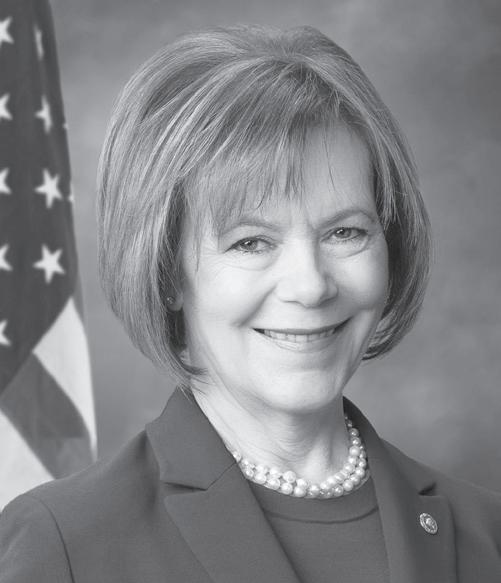
innesota U.S. Sen.
Tina Smith took to the Senate floor last week to protest legislation revoking protections for the Boundary Waters Canoe Area Wilderness. The effort fell short. The bill passed 50-49 and now sits on President Donald Trump’s desk, where many expect it to be signed into law.
H.J.Res.140 rescinds a 20-year ban on copper sulfide mining in the Rainy River Watershed and the Boundary Waters Canoe Area Wilderness that was put in place in early 2023.
“I’ve heard from thousands
of Minnesotans that they do not want this mine built in this place,” Smith told the Minnesota Spokesman-Recorder.
“It felt so important to me to speak on the floor about why revoking this moratorium was such a mistake.”
Though few colleagues were present on the floor, Smith said she felt compelled to speak for Minnesotans who weren’t being heard. Despite the outcome, she noted that a broad coalition of small businesses, Native Americans, hunting and fishing groups and outdoor enthusiasts came together in opposition.
“That big coalition of people who banded together to stop it is still really strong, and I hope that it will continue,” she
said. “I will do everything I can to make sure all these people’s voices are heard.”
Friends of the Boundary

Waters Wilderness, founded to advance legislation protecting the region, had worked to block proposed copper sul-
fide mines at the wilderness’s edge.
“The reason that these proposed mines are so alarming
By Clint Combs Contributing Writer
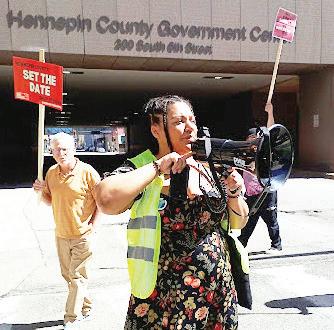
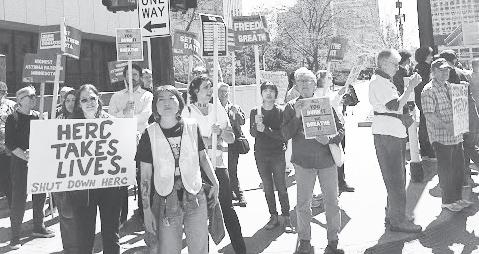
n day 12 of a hunger strike, environmental activists disrupted Tuesday’s Hennepin County Board meeting, sending commissioners into recess after finally getting a chance to speak face to face with the officials they say have ignored them for weeks.
Zero Burn Coalition members Natasha Villanueva, Joshua Lewis and Nazir Khan had not eaten since April 10. Seated in wheelchairs, they addressed the board one by one, demanding a vote to close the Hennepin Energy Recovery Center by December 2027. HERC first began generating
By Kimerlie Geraci
Contributing Writer
he Irreducible Grace Foundation, a 12-year-old nonprofit dedicated to fostering holistic wellness among BIPOC youth, hosted its annual Legacy and Laughter fundraiser Saturday at the Black Youth Healing Arts Center in St. Paul. The foundation creates safe spaces and healing opportunities for youth of color through mentoring, life-skills training, employment support, self-care practices and arts-based programming for teens and young adults. Through visual and performing arts and movement techniques, the organization helps young people develop tools to manage stress, process trauma and find their voice. Founded by Dr. Darlene Fry, a Chicago native who worked on numerous college and uni-
versity campuses before shifting her focus to postsecondary preparation at the secondary level, the organization grew out of a clear need. In 2012, Fry established it to support youth from foster care. Work that has since expanded to serve a broader community of young people. Alongside the
board of directors, healers and youth leaders, Fry used the evening to honor individuals by naming rooms within the center after them, ensuring their legacies remain woven into the fabric of the space.
Guests were both enlightened and entertained by emcee To Subscribe Scan Here
■ See LEGACY on page 5
electricity in 1989, making it a 36-year-old facility in an industry where most incinerators were built to last about 30 years. A total of 54 trash incinerators across the United States have closed since 2000, and no new incinerators have been built during that same period.
The hunger strike ended the following day.
HERC is one of the largest permitted sources of nitrogen oxides, hydrogen chloride emissions, dioxins, lead, sulfur dioxide and particulate matter in Hennepin County, and it is the county’s third-largest permitted source of carbon dioxide. Researchers have estimated that particulatematter-related health impacts
from HERC’s 2019 emissions resulted in one to 2.2 premature deaths and between $11 million and $24 million per year in health-related costs.
Nearly in tears, Villanueva adjusted her microphone and directed her comments toward County Board Chair Irene Fernando, describing how the county had avoided her.
“This is the first time during that period that any of you have sat down to face those of us on strike, asking you merely to take a vote on your own resolution to close the single largest source of pollution in the county,” Villanueva said. “Meanwhile, we’ve met with representatives from all local government, faith lead-
is that they are notoriously polluting,” said Pete Marshall, the organization’s communications director. “The EPA has listed copper sulfide mining, hard rock mining, as the most polluting industry in the United States. You put that next to some of the cleanest water in the country and you have the perfect recipe for an ecological disaster.”
Marshall said every copper sulfide mine ever opened has ended up polluting the surrounding water supply.
With the federal moratorium lifted, companies seeking to build mines will now begin pursuing approvals at the federal and state levels, a permitting and environmental review process that can take several years.
“It’s important that people pay attention to this and continue to speak out so that process is done in a fair and unbiased way,” Smith said.
ers, students, journalists and constituents… all calling in one voice to shut down HERC.” Chair Fernando, when asked for comment, stressed that closing HERC early would do more harm than good.
“Closing the HERC when there is not an operational plan established for the waste would likely result in service disruptions or dramatic cost increases for residents and businesses,” Fernando said. “Further, it would result in hundreds of thousands of tons of waste being trucked to suburban and regional landfills, raising costs for residents, increasing truck traffic through neighborhoods, worsening methane emissions and burdening other environmental justice communities elsewhere in the region.”
Commissioner Kevin Anderson briefly spoke with
By Aamira Redd Contributing Writer
ichael Chaney is an activist, storyteller and poet who has spent more than 30 years advocating for climate justice in the Twin Cities.
For Chaney, agriculture has always been part of his story. Growing up on a 1,040-acre farm in Wisconsin, he spent much of his childhood learning to work the land from his elders.
“You know, you can take the boy out of the country, but you can’t take the country out of the boy,” Chaney said with a laugh. His passion for activism was ignited by his uncle, Felmers O. Chaney, a civil rights leader and community trailblazer in Milwaukee. The elder Chaney was Milwaukee’s first Black police sergeant, president of the North Milwaukee State
By Izzy Canizares
Contributing Writer
Several prison reform bills are expected to come before the state Legislature this session, including one that would eliminate cash bail in favor of an “intentional release and detain” approach. The bill would end a practice that many legal advocates and formerly incarcerated individuals call predatory.
“Moving away from a wealth-based system toward a more intentional, risk-based framework allows courts to make clearer, more consistent determinations about who truly needs to be detained and who can be safely released,” said Danielle Matthias, director of policy and advocacy at the Minnesota Freedom Fund. “This is why the Intentional Release and Detain bill is important. It puts the focus back on what matters: safety, not whether someone has access to resources.”
The bill is part of a larger legislative agenda led by the Minnesota Freedom Fund and includes the Pre-Trial Data Transparency Act.
“More than half of the people in Minnesota jails are legally presumed innocent and held pretrial, often because of inconsistent standards or an inability to afford bail,” the bill’s description reads. “Minnesota’s pretrial system should be guided by constitu-
tional principles, public safety and individualized decisionmaking rather than default detention or wealth-based outcomes.”
Data from the Vera Institute of Justice shows that 67% of Minnesota’s jail population consists of those held pretrial, with Black Minnesotans making up 36% of that population despite being just 8% of the state’s overall population.
“Many inner-city people simply don’t have the means to post cash bail,” said Darla Howard, a member of the Incarcerated Workers Organizing Committee. “I think Black and brown people are more susceptible to arrest just because that’s how the system is created… they racially profile and they over-sentence. Because of redlining and housing, more Black and brown people live in impoverished communities, unfortunately. And with that comes drugs, crime, less income and fewer job opportunities. It’s really the tale as old as time. Not a whole lot has changed.”
A World Metrics report shows that 62% of people detained pretrial nationwide cannot afford bail, with the average bail amount set at $10,000.
“We also know, based on both national research and our own data, that bail is not applied equitably,” Matthias said. “Black and brown in-

“I think it would allow you to still have some agency over how much your arrest affects your life.”
dividuals are often assigned higher bail amounts than their white counterparts facing similar charges. These disparities reinforce a system where race and wealth intersect to determine who remains jailed pretrial.”
Beyond the immediate hardship, sitting in jail before conviction can set people on a destructive cycle, Howard said.
“If you sit in jail, you might lose your job… It can affect custody situations. It’s all another collateral consequence of being in jail,” she said. “When you’re in jail, you’re not proven guilty yet, but most of the time you’re being treated as if you are. You really get
stuck in the system from the first arrest all the way until even years after.”
The bill would eliminate cash bail and instead base detention decisions on the safety risk posed by the individual.
“It establishes a statewide pretrial system that eliminates cash bail and reinforces the presumption of liberty by making sure people are jailed before trial only when truly necessary for safety or court appearance, not because they cannot afford to pay,” the bill reads. “It replaces inconsistent and wealth-based decisions with fairness and constitutional standards.”
As of April 23, the Hennepin County jail dashboard
showed 760 inmates in adult custody, with a median stay of 28 days. Of those inmates, roughly 63% are Black. Prison reform advocates say this racial disparity is compounded by cash bail, with many people spending months in jail simply because they cannot pay.
The legislation would also strengthen cite-and-release practices so that people accused of low-level offenses are issued citations rather than booked into jail whenever appropriate, reducing unnecessary detention, preserving community stability and saving local resources, according to the bill.
The bill further proposes creating a Pretrial Services Or-
Recovery Connection were among the many organizations in attendance.
ganization network to provide court reminders, case management, needs assessments and voluntary connections to support services for those released. While recent years have seen some bail reforms in Hennepin and Ramsey counties, this bill would establish a new statewide framework, one that advocates say could lower the jail population and ease reintegration for those who have been arrested.
“I think it would allow you to still have some agency over how much your arrest affects your life,” Howard said. “Instead of the system just taking over and it being consequence after consequence, maybe just the eventual sentence is the consequence, instead of a million other things on top of it. Because if you get out, you can make arrangements and have an opportunity to still save those things and have them when you are released.”
The bill has not yet been officially introduced into the legislative session. Matthias said the Minnesota Freedom Fund is anticipating an upcoming hearing on a related constitutional amendment bill.
For more information on Minnesota Freedom Fund, visit www.mnfreedomfund.org/.
Izzy Canizares is a freelance journalist and contributing journalist for the Minnesota Spokesman-Recorder
By Aamira Redd
Contributing Writer
More than 150 people gathered at the Minneapolis Central Library on Tuesday, April 14, for the Coming Home Re-entry Resource Fair.
The event, organized by Twin Cities R!SE, a nonprofit that provides job readiness training to people facing racial and socioeconomic barriers, gave attendees the chance to connect with fair-chance employers, access legal and career support, take professional headshots and participate in workshops.
“Very often there are people coming out of incarceration with just insurmountable odds, and so how do we meet them and see them where they are and then walk alongside them with the resources and the encouragement, so that they can get employed and empowered,” said Emma Corrie, president of Twin Cities Rise.
‘Letting go of guilt and shame’
For many formerly incarcerated individuals, finding work after release is an uphill battle.
Policies and hiring practices that screen out people with conviction histories create significant obstacles, and the numbers reflect it. In the U.S., formerly incarcerated people are five times more likely to face unemployment, according to the Vera Institute.
Those barriers were a central focus of Tuesday’s event, which opened with a discussion panel led by Nicole Pillow, a motivational speaker and client manager at Twin Cities R!SE. Pillow was joined by panelists Kelsey Weidell, Isaiah Goodman, Brett King and Andre Anderson, who each
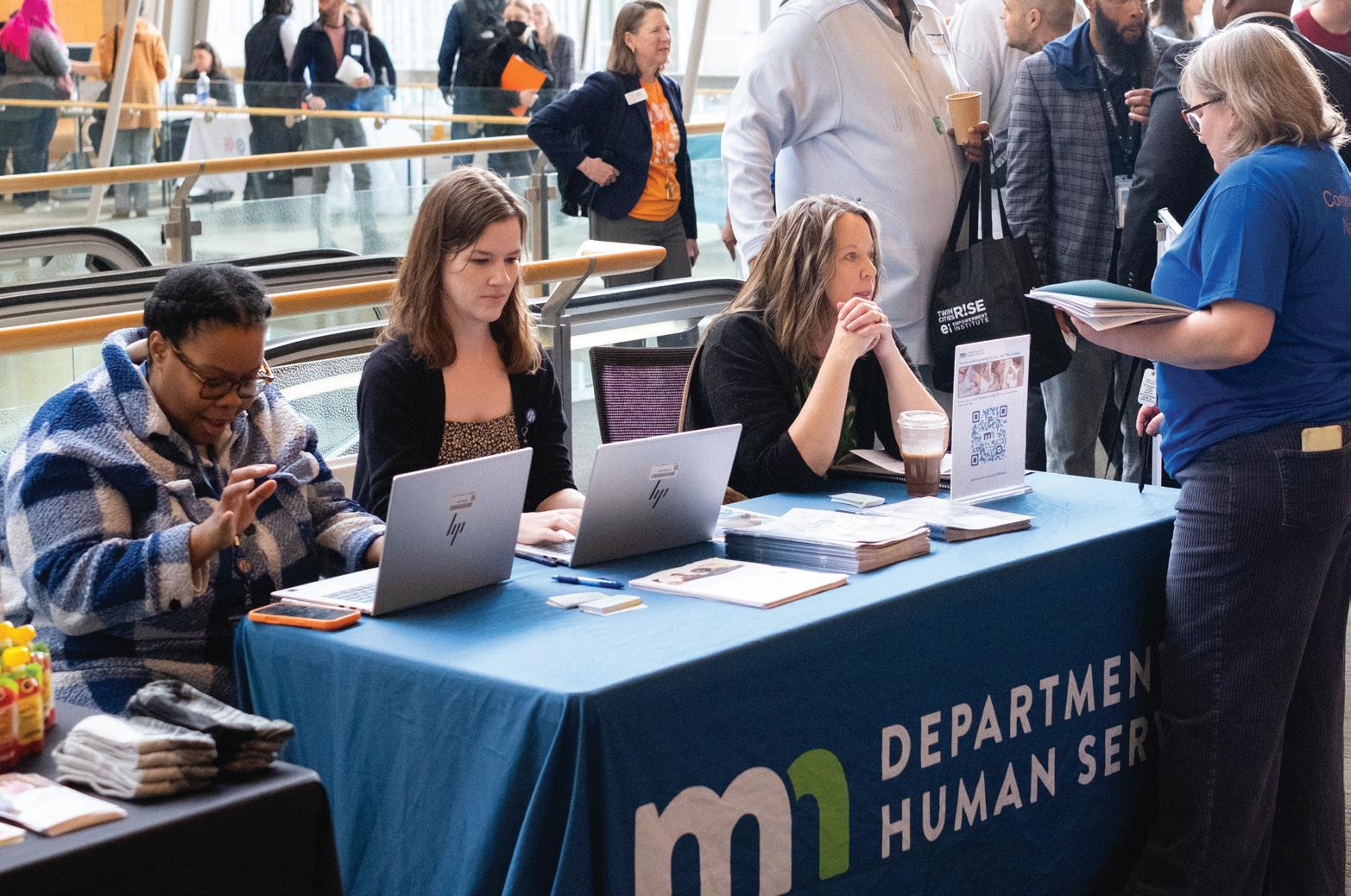
spoke candidly about navigating mental health, identity and life after incarceration.
Weidell reflected on the shame and embarrassment that can come with being turned away from a job because of a criminal record.
“You just have to let go of that shame and guilt. You have to stand on who you were and move forward, and without talking about it, there is no moving forward,” she said. Although legally free, formerly incarcerated individuals often face a range of ongoing restrictions during reentry, including limited access to certain spaces and requirements to obtain permission, such as formal passes, just to travel or take part in everyday activities.
“I think for me one of the most frustrating things was waiting for this big day to come, and finally I’m free, I can go do all these things I’ve been thinking about and planning for, and then they’re like, oh wait, you can’t,” said panelist Isaiah Goodman.
The panel emphasized the importance of maintaining a positive mindset and pressing forward through self-doubt.
Panelist Brett King, who earned his degree while incarcerated and will receive his Master’s this summer, spoke about the power of channeling that energy into action.
“Oftentimes I think, well, what if I didn’t go to prison, or what if I would have taken a left instead of a right… how would my life have been? The way I can deal with that is to do something with my life now,” King said.
He continued: “I often think that reentry can really be the great equalizer, in that it gives us an opportunity, and when you have an opportunity to do something different, there are new accomplishments, new roles, new jobs and new things that start to take the spotlight.”
Metro Transit, Mav City Restoration Inc. and Minnesota
Better Futures Minnesota, an environment-based organization that provides workforce development and job opportunities to formerly incarcerated men, was also on hand. Jason Allen, interim president and CEO, stressed the importance of giving returning citizens a genuine second chance.
“You have to stand on who you were and move forward.”
“They need the opportunity to be the authors of their own story. Where they’re at, based on their past, has no bearing on where they go, as long as they change their thinking and habits, and those are things they can learn whether it’s
through an organization like Better Futures or an employer who’s willing to take a chance on these participants,” Allen said.
For attendee Richard Jones, the fair offered more than job leads. It was a chance to build meaningful connections. “I want to find different ways to utilize my mind as far as positive affirmations and a better mindset, and being around more people who are likeminded,” he said.
Fellow attendee Ryan echoed that sentiment. “I’m here basically to network and learn how to push through the adversities that people face and some of the struggles that come with coming out of prison,” he said.
For more information on Twin Cities R!SE, visit https:// twincitiesrise.org/.
Aamira Redd is a freelance journalist and contributing writer for the Minnesota Spokesman-Recorder.




By Damenica Ellis Staff Writer
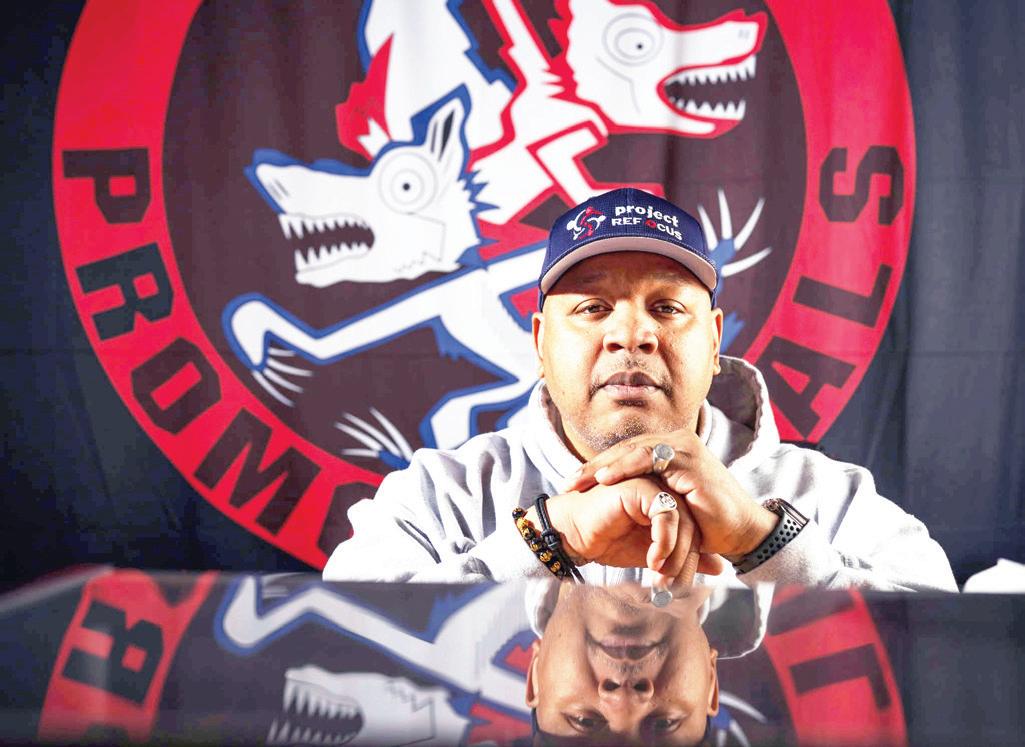
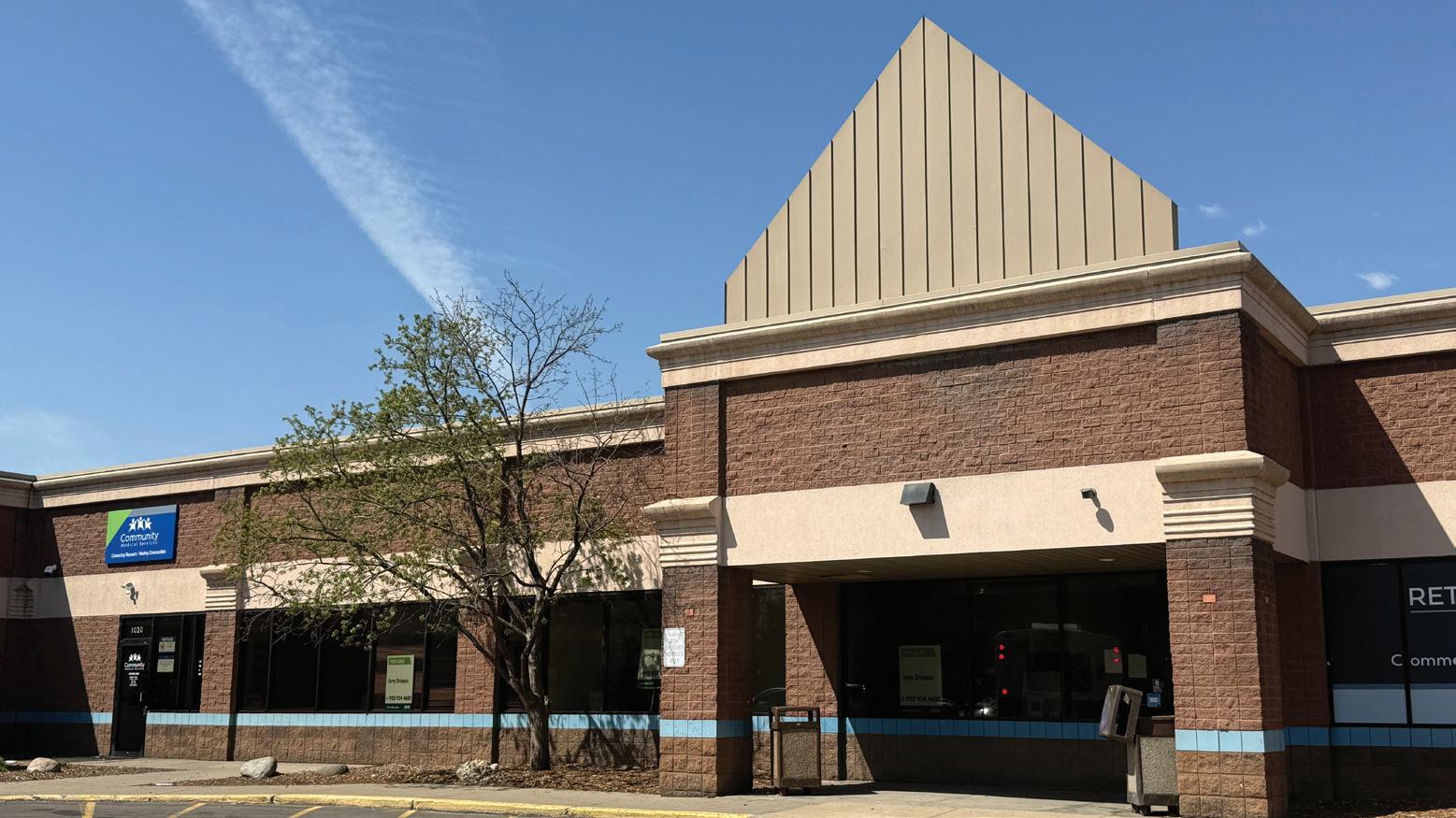
Project Refocus has started a petition opposing the placement of a daycare next to an existing methadone clinic on Broadway Avenue in North Minneapolis.
“Children deserve safe, stable and developmentally appropriate environments,” said KB Brown, executive director of the organization. “At the same time, individuals receiving treatment deserve dignity, privacy and properly planned service locations. The community should not be forced to accept a setup that creates unnecessary tension and concern.”
Brown told the Minnesota Spokesman-Recorder he discovered the placement around Thanksgiving last year after speaking to someone on site.
The biggest issue, he said, is that because Community Medical Services treats residents seeking help for opioid addiction, some people who frequent Hawthorn Crossings may still be actively using drugs.
“There’s needles all over
chances of a child getting a hold of something really is great,” Brown said. “We clean up needles over there two or three times a week, and there’s a high homeless, drugusing population right there in that area. To me, that’s not an area where you bring children.”
The petition calls for an immediate review of zoning and approval decisions, consider
ation of alternative locations for either facility, community engagement before final deci
sions are made and a planning approach that protects chil-
Economic Development determines whether a child care center is legally permitted at a specific address.
“A building permit has been issued for a childcare center at 1000 W. Broadway,” the city confirmed. “A childcare center is allowed as of right on this property.”
The Department of Hu-
man Services, which oversees regulations for the clinic, said the location of methadone clinics relative to neighboring businesses falls outside its authority.
Ward 5 City Council Member Pearll Warren said the placement falls outside her jurisdiction and stressed the importance of directing frustration at the right decisionmakers.
“I want them to know that they’re heard, that’s first and foremost,” Warren said. “But I think what’s also very important is that our community knows and understands how government works and who to hold accountable.”
Warren noted that Hawthorn Crossings is within her ward but she is not the owner of the strip mall, has no role in child care licensing and came into office after the planning took place.
“The only jurisdictional power that I have is over zoning,” she said. “But if I go before the Zoning and Planning Committee and say, ‘Hey, there should not be a daycare on Broadway,’ then I’m shooting my community in the foot, because there could be daycares in other places on Broadway.”
For Brown, the placement reflects a broader pattern of North Minneapolis development that happens without community input, including how the methadone clinic was sited in the first place.
“There was never any acknowledgment of the community or even a conversation that they were bringing that there,” he said. “A lot of us are just kind of fed up with being told what we need instead of being asked what we want.”
Warren, herself a North Minneapolis native, said she shared those concerns before taking office, including worries about drug activity near people seeking treatment. That frustration over planning without community input is part of
what motivated her to run.
“I seek to change that… that there is active community engagement, that the community has input, that we empower neighborhood organizations and that information channels down from the city so that community voices are valued.” Brown said he does not want to wait until a child picks up something dangerous and dies from an opioid overdose before action is taken.
“I just think we should be a little bit more responsible and proactive, especially on the North Side,” he said. “The kids deserve more.”
Community Medical Services said it will continue to serve its community and collaborate with local business partners to ensure the safety of its patients and the broader neighborhood.
“Community Medical Services currently serves about 500 patients a week at our North Minneapolis clinic,” said Seneca Krueger, community impact manager. “The people who come through our doors are not children, but they are someone’s child, someone’s aunt, uncle, mother, father and neighbor. We are so lucky to be one of those safe places that family, friends and neigh
bors who are struggling can find compassion and support.” For more information on Project
CARE. TREATMENT. MENOPAUSE CARE. CANCER SCREENINGS. ABORTION CARE. & PREP. BREAST & CHEST EXAMS. BIRTH CONTROL. STI TESTING. PRIMARY GENDER AFFIRMING CARE. VASECTOMY. FERTILITY CARE. MENTAL HEALTH MENOPAUSE CARE. CANCER SCREENINGS. ABORTION CARE. HPV VACCINES. BREAST & CHEST EXAMS. BIRTH CONTROL. STI TESTING. PRIMARY CARE. GENDER CARE. VASECTOMY. FERTILITY CARE. MENTAL HEALTH TREATMENT. MENOPAUSE SCREENINGS. ABORTION CARE. HPV VACCINES. PEP & PREP. BREAST BIRTH CONTROL. STI TESTING. PRIMARY CARE. GENDER AFFIRMING CARE. FERTILITY CARE. MENTAL HEALTH TREATMENT. MENOPAUSE CARE. CANCER ABORTION CARE. HPV VACCINES. PEP & PREP. BREAST & CHEST EXAMS. TESTING. PRIMARY CARE. GENDER AFFIRMING CARE. VASECTOMY. FERTILITY HEALTH TREATMENT. MENOPAUSE CARE. CANCER SCREENINGS. ABORTION VACCINES. PEP & PREP. BREAST & CHEST EXAMS. BIRTH CONTROL. STI TESTING. GENDER AFFIRMING CARE. VASECTOMY. FERTILITY CARE. MENTAL MENOPAUSE CARE. CANCER SCREENINGS. ABORTION CARE. HPV VACCINES. BREAST & CHEST EXAMS. BIRTH CONTROL. STI TESTING. PRIMARY CARE. GENDER CARE. VASECTOMY. FERTILITY CARE. MENTAL HEALTH TREATMENT. MENOPAUSE SCREENINGS. ABORTION CARE. HPV VACCINES. PEP & PREP. BREAST BIRTH CONTROL. STI TESTING. PRIMARY CARE. GENDER AFFIRMING CARE. FERTILITY CARE. MENTAL HEALTH TREATMENT. MENOPAUSE CARE. CANCER ABORTION CARE. HPV VACCINES. PEP & PREP. BREAST & CHEST EXAMS. TESTING. PRIMARY CARE. GENDER AFFIRMING CARE. VASECTOMY. FERTILITY HEALTH TREATMENT. MENOPAUSE CARE. CANCER SCREENINGS. ABORTION VACCINES. PEP & PREP. BREAST & CHEST EXAMS. BIRTH CONTROL. STI TESTING. GENDER AFFIRMING CARE. VASECTOMY. FERTILITY




Owner Larry Robinson turned a food truck into a community-centered restaurant
By Lizzy Nyoike Contributing Writer
In the heart of South Minneapolis, just across from George Floyd Square, a new restaurant is working to serve more than just food, it aims to serve a community in a corner that holds deep meaning.
Larry Robinson, owner of Big L’s Soul Food & Steakhouse, says the journey to opening a brick-and-mortar restaurant wasn’t easy. What began as a food truck nearly four years ago has grown into a full-service restaurant rooted in purpose.
“We actually started as Big L’s Soul Food, selling soul food… I’m talking about the greens, macaroni and cheese, yams, dressing, fried chicken and smothered chicken,” Robinson said.
The food truck quickly gained popularity, offering a mix of soul food alongside options like tacos and burgers. But as demand grew, the limitations of operating out of a truck became more apparent.
“The truck had begun to get too complicated because it began to get small,” Robinson said. Seasonal changes in Minnesota also posed a major hurdle. Harsh winters made it difficult to stay open consistently, leaving customers wondering when or if the truck would return.
“Come the wintertime, we couldn’t work,” Robinson said. “People calling the truck, trying to figure out, ‘are we coming out or not?’”
That uncertainty pushed Robinson toward a more permanent home. When a space opened at 805 E. 28th St., the opportunity aligned with both his business needs and a deeper community connection.
The location sits across from George Floyd Square. Robinson said that wasn’t his primary reason for choosing it at first, but once he realized where the space was, the significance grew.
“It just happened to be in George Floyd Square, which made it an even better situation, because it’s communitybased,” Robinson said. “We’re
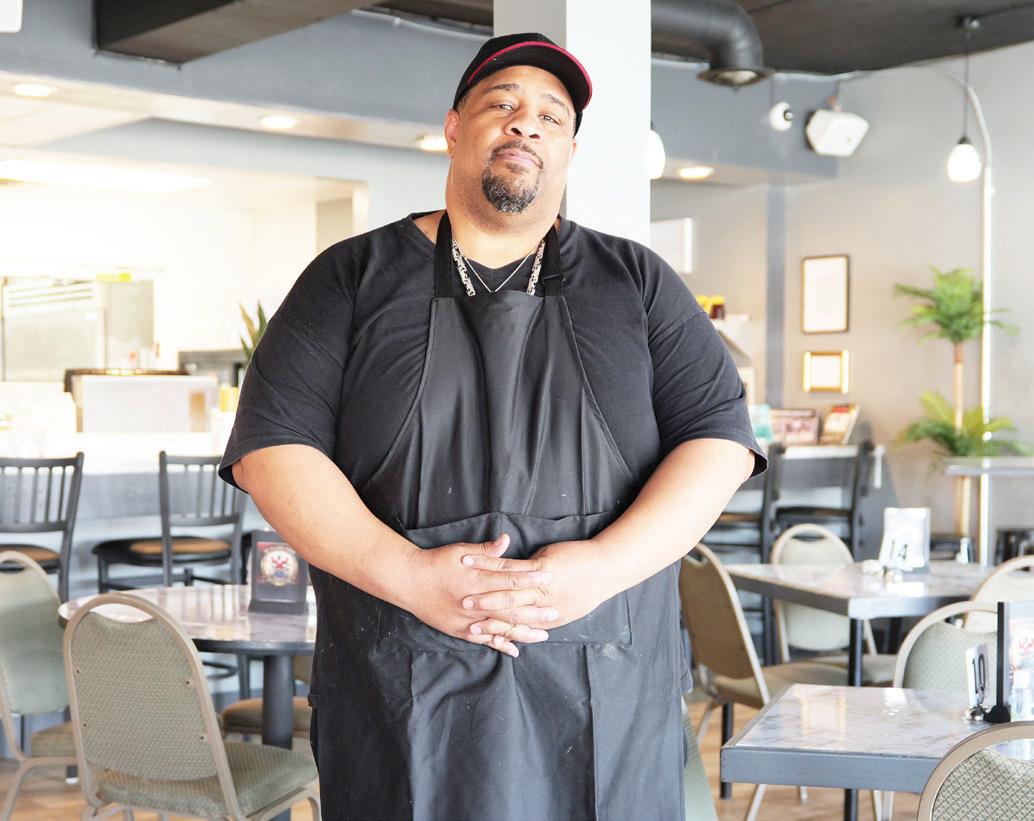

here for a community base. That’s what we’re here for.”
Community is central to Big L’s identity. Beyond serving meals, Robinson hopes his restaurant contributes to a sense of renewal and positivity in the area.
“We’re here to kind of change the narrative, put a different face on the corner of 38th,” he said.
The transition from food truck to restaurant brought a new set of challenges. Robinson describes the industry as tough for small business owners, with rising costs, operational demands and the pressure to maintain consistency.
Still, his approach remains grounded.
“Just working… just keep working and striving,” he said.
That mindset has guided him through both the highs and lows of building his business. Reflecting on his food truck days, when things felt uncertain, Robinson said giving up was never an option. Instead, he focused on problemsolving and adapting.
“If
“We figured out some kinks and we made it work,” he said.
“If you want to make or be a success in anything you do, you just got to keep working hard. You can’t give up,” he said. As Minneapolis continues to evolve, businesses like Big L’s play a role in shaping what comes next. For Robinson, that means creating a space where people can gather, connect and feel a sense of belonging.
Lizzy Nyoike is a Hubbard School of Journalism & Mass Communication student and contributing writer for the Minnesota Spokesman-Recorder.
That same determination carries into the restaurant today. Robinson acknowledges that even with a permanent space, challenges continue, but so does his commitment.
By Jasmine McBride Editor
The Minneapolis/St. Paul Business Journal celebrated its annual 40 Under 40 class Wednesday evening at the Metropolitan Ballroom and Clubroom in Wayzata, honoring young professionals across industries who are shaping the future of the Twin Cities.
Among this year’s honorees, a cohort of professionals of color brought stories of immigration, community building and entrepreneurship, and a collective message that success is best when shared.
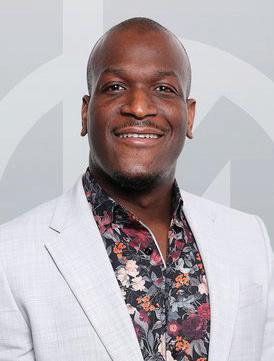
Ridwane Moustapha, controller at PACE Loan Group and a native of Benin, West Africa, joined the Minneapolis firm in 2022 as its first fulltime accounting professional.
Under his watch, company revenue reached nearly $32 million in 2024, a 173% increase. He also co-founded Fine Top Group, which supports immigrants with tax planning and business guidance. Accepting his award, Moustapha offered a proverb that has guided him: “If you want to go fast, go alone. If you want to go far, go together.” Navigating life as an immigrant, he said, has meant
surrounding himself with the right people. “You can knock on doors that will help you get to the places that you want to go.”

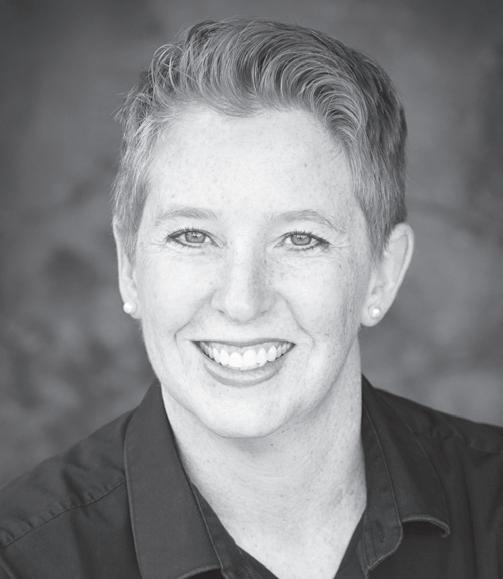
Munira Maalimisaq founded Inspire Change Clinic in 2023 to address health inequities through clinical care, workforce development and systems change. As CEO and a practicing clinician, she designed a pathway-to-medicine fellowship to open doors for underrepresented youth in health care, and launched primary care services in 2025. In her remarks, Maalimisaq made clear the recognition belonged to more than herself. “This reflects so much more than my journey,” she said. “For the last 12 years, I’ve been taking care of other people in organizations where I didn’t have a lot of voice. But now we have a center where we listen to communities and give them the care they deserve, where they feel heard and seen.”
Kamal Mohamed’s entrepreneurial path began on his family’s food truck after immigrating from Ethiopia at age 10. Today he is the force behind the Minnesota Food Truck and the Northeast Minneapolis restaurant Parcelle Organics, which is opening a

second downtown location, and co-founder of Gallant Tiger, a premium sandwich company. Mohamed credited the Twin Cities itself as a partner in his success. “Since moving back home, the amount of people that have gone out of their way to help… If you have an idea or a dream, people will move out of the way and help you get there,” he said. He also shared a question a mentor posed that has shaped his approach: “Is it from you, or is it about you? As long as it’s from you instead of about you, it’ll be easier to get to where you need to get to.”

tive Foundation’s grantmaking arm, directing $650,000 to Black-led organizations advancing education, economic mobility and leadership development. Her acceptance remarks were brief and precise. “I want leadership to be a part of my legacy. Not because I’ve done anything great, but because I’ve been a steward of leadership in my community,” she said. “I truly believe that the greatest among us is a servant to others.”

Gaosong Heu co-founded Marc Heu Patisserie Paris at 25 with just $200 and her husband, executive pastry chef Marc Heu. Now 33, she has grown the business from a single Frogtown bakery to a multi-location enterprise reaching $1 million in annual sales, with a second location now open in Linden Hills. Her advice to aspiring entrepreneurs was grounded in her own story. “Don’t define yourself by your resources, but by your resourcefulness,” she said. “To get started on your dream, you have to invest in yourself first before other people invest in you.” When asked how she pushed through challenges, Heu returned to purpose: “My why was rooted in my deep love for my husband and my un-
wavering belief that everyone has a purpose and deserves the opportunity to chase it.”

Jhaelynn Elam is founder of The B Suite, a Minneapolis event space and co-working hub dedicated to amplifying Black professionals, and previously directed impact and communications at the Black Collective Foundation, dispersing $1 million to Blackowned organizations. “I did not find a seat at the table, so I built it,” she said. “I built The B Suite with a vision and a belief that our community deserved a space.” She closed with a charge to the room: “Keep building, because what’s inside of you is too important to stay there.”
“Keep building, because what’s inside of you is too important to stay there.”
Divya Divakaran immigrated to the United States 14 years ago and spent two decades in human resources before launching Leadership Evolutions, her own consult-

ing firm, just one month before the ceremony. She previously built an HR department from scratch at engineering firm EVS, driving 210% workforce growth and a 91% retention rate. She offered advice she had given a client just that day: “A bird doesn’t sit on a branch trusting the branch’s strength. It sits there because it believes in its own wings. Believe in yourself, build the skills and put yourself out there.”
Also honored was Shahbaz Khan, head of social strategy and emerging platforms at the NFL, who was not present at the ceremony due to the draft. Together, the seven honorees painted a portrait of a Twin Cities business community shaped in no small part by immigrants, children of immigrants and community builders who refused to wait for permission, and who measured success not just in revenue, but in how many people they brought along with them. For the full list of honorees, visit www.bizjournals.com/ twincities/c/2026-40-under40-honorees-minneapolissaint-paul.html.
McBride welcomes reader responses at jmcbride@ spokesman-recorder.com.
Continued from page 1
A proposed mine in the region is managed by Twin Metals Minnesota, whose parent company is Antofagasta, a Chilean-based copper mining group. Twin Metals is among several firms seeking to develop the Duluth Complex, the world’s largest known undeveloped deposit of copper, nickel, cobalt and platinum group metals.
“Passage of the CRA marks a critical moment for our nation’s ability to strengthen our mineral supply chains,” said Kathy Graul, director of public affairs and communications at Twin Metals Minnesota. “Any proposed project must undergo a yearslong, multi-agency regulatory review before earning permits to begin construction. The CRA restores this process.”
MiningMinnesota Executive Director Julie Lucas echoed that position.
Continued from page 1
Khan in a video uploaded to Zero Burn’s Instagram, accusing the hunger strikers of working on behalf of landfill companies.
“The people you’ve talked to are actually connected to landfill companies,” Anderson said.
Khan countered that the county has not consulted independent scientists regarding HERC’s effects on public health. “Where’s your independent scientist?” he asked.
That allegation infuriated Villanueva.
“Commissioners in front of me have mischaracterized us as aggressive and being in the pocket of landfill companies for raising awareness around this issue and for asking for accountability from our own elected officials who we chose to represent us,” she said.
Continued from page 1
Jamela Pettiford, whose commanding presence blended music and storytelling. Performances of “Lift Every Voice and Sing” and “People Make the World Go Round” resonated throughout the room. Pettiford encouraged attendees to document and share their stories with younger generations, recalling advice from respected community elder Mother Atum Azzhirr, founder and executive director of the Cultural Wellness Center: “Every time you call the name of an ancestor, they live on.” Fry’s decision to name
Continued from page 1
“We don’t need a mining ban for the entire watershed to protect the Boundary Waters,” Lucas said. “They are already protected by strict federal and Minnesota laws that require environmental review and permitting for any proposed mine. This vote does not open a mine. It opens the door for a transparent, science-based review.”
Friends of the Boundary Waters disagrees that existing permitting processes are sufficient.
“The buffer zone is insufficient because water doesn’t understand political boundaries, these are just arbitrary lines,” Marshall said. “What
Villanueva also recounted a Monday visit to Fernando’s office. “We were told you were not present,” she said. “Moments later, we observed a Hennepin County employee arrive stating they had a meeting with the board chair, who was admitted to entry, despite the fact that I have emailed you, called your aide and watched them run back and forth through the hallways of the Government Center, avoiding us, ignoring us and denying our request to meet.”
Lewis, noting that the anniversary of his grandmother’s death from breast cancer fell the following day, called for reparations alongside closure.
“I think we need to look at paying reparations to the families who have suffered from this, who have lost years of their life from environmental toxins and the accumulation of bio stressors,” Lewis said. Lewis also addressed the absence of District 4 Commissioner Angela Conley. “I
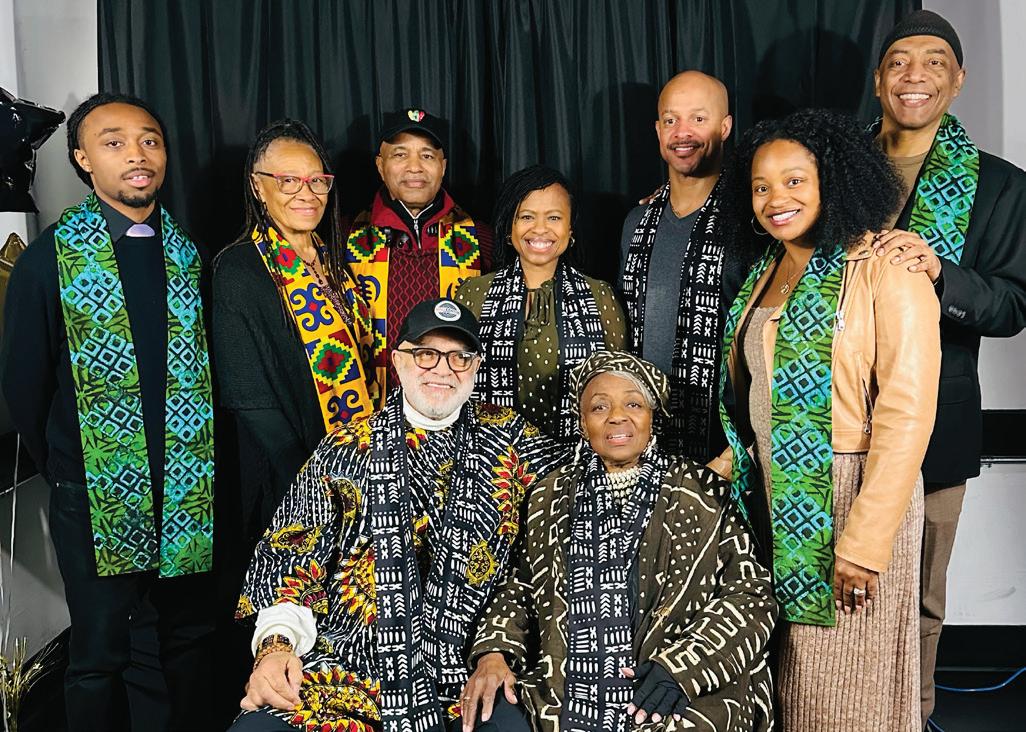
rooms after honorees reflects that same principle: remembrance and legacy uplifting those whose work has shaped countless lives. Honorees, past and present, included T. Michael Rambo, a singer, actor and educator; Tearra Oso, a performing artist and healer whose musical medicine has empowered audiences nationally and internationally for more than 30 years; and Melvin Carter Jr., retired St. Paul police sergeant and co-founder of Save Our Sons, a
“The people who work here make this place special.”

makes this mine in this area such a bad idea is the abundance of water. If acid mine drainage spills out, that water is going to carry that pollution like a treadmill and spread it through the Boundary Waters.”
Marshall also noted that Minnesota’s mining regulations were largely developed for iron and taconite mines, a fundamentally different process than copper sulfide mining, which has never been done in Minnesota before.
“We know what the track record of this type of mining is, it’s pretty much guaranteed
have so many friends who are friends with Commissioner Conley, I cannot understand why, when we are taking the steps to raise the seriousness of this harm in our community, they cannot even set a meeting with us.”
Khan challenged the county’s timeline for closure as unrealistic.
to pollute,” he said. “Despite the industry promising better technology, they haven’t been able to sufficiently prove that a mine can operate and be closed without polluting.”
With the congressional fight over, the front line has shifted to the state level.
Several bills before the Minnesota Legislature include a permanent protection measure banning copper sulfide mining within the watershed and the “Prove It First” bill, which would require any operation to prove a similar mine has opened and closed without causing pollution before
municipality in the world has yet reached, and no increase in landfilling.”
Khan also pushed back on the county’s insistence that closure would require a temporary increase in landfilling, a position shared by Minnesota Pollution Control Agency Assistant Commissioner Kirk Koudelka, who said in 2023
“The 2028 to 2040 range is a PR stunt,” Khan said. “It does not require HERC closure. Even by 2040, it sets impossible conditions requiring Minnesota to reach 100% renewable energy, the county to reach 85% recycling, which no
that “no incinerator in the country has closed without a temporary increase in landfilling.” Hennepin County’s Assistant Director of Environmental Services David McNary has not embraced that assessment.
breaking ground.
Marshall also urged the Department of Natural Resources to cancel a state lease held by Twin Metals that has gone into default, which he said would give the state better standing to refuse future leases.
This marks the first time a Congressional Review Act has been used to overturn a public land order. A precedent that concerns both Smith and Marshall far beyond the Boundary Waters.
“It was one of the reasons why a lot of members of the Senate, including Republican members, had concerns about going forward with this,”
Smith said. She warned that a Republican-majority Congress could use the same mechanism to rescind environmental protections for wilderness areas across the country, and that Democrats in power could similarly claw back mining leases.
“You don’t want a situation where public land orders or leases are on again, off again,”
Khan then read from a national letter of support gathered in just three days.
“Across the United States, the fight against incineration has become one of the defining environmental justice battles of our time,” he read. “You cannot claim climate or racial justice leadership while continuing to operate the county’s largest polluter.”
The argument has national precedent. Community campaigns helped close incinerators in Detroit in 2019 and in Southern California in 2018. Large trash incinerators in the United States are disproportionately located in communities of color.
Arwa Alakech, an environmental science policy and management student at the University of Minnesota, had been leaving the Government Center when she realized she had lost her headphones in the gallery. She returned to the 24th floor and received a trespass citation in a room still
Smith said. “It creates so much chaos and that’s not good.” Marshall believes the precedent could extend to national monuments, wildlife refuges and any landscape protected through federal administrative action.
Friends of the Boundary Waters operates an education program, No Boundaries to the Boundary Waters, that brings youth from underserved communities on weeklong trips into the wilderness, along with a climate change program and land conservation work.
“We want people to be aware of the challenges the Boundary Waters face, but we also want them to go there and experience it,” Marshall said. “It’s a wonderful place. It’s easy to fall in love with.” For more information on the bill, visit www.congress. gov/bill/119th-congress/ house-joint-resolution/140.
Damenica Ellis welcomes reader responses at dellis@ spokesman-recorder.com.
charged with tension.
“During this hunger strike, not one of you took the time to meet with us, despite daily opportunities to,” Alakech said.
“Commissioner Conley, who isn’t here today, how can you claim to support public health when your constituents suffer dire health consequences from a potential source of pollution?”
A dozen protesters temporarily blocked traffic near the underpass outside the Government Center.
Hennepin County is the only governing body with the authority to shut HERC down. Fernando said the city needs to do more. “City administration has not taken any concrete operational steps to advance that goal outside of what has been required by state law or county action,” she said.
Clint Combs welcomes reader responses at combs0284@ spokesman-recorder.com.
has to be the shepherd. Somebody has to be the steward.”
Though he spent 25 years in television as a cameraman and sound technician, Chaney eventually found his way into community organizing. In 1984, he helped establish a Juneteenth celebration in North Minneapolis, long before the holiday was recognized by legislation. In the 1990s, he co-founded the Wendell Phillips Community Development Federal Credit Union, which
served primarily communities of color, a mission inspired by his uncle.
In 2010, Chaney shifted his focus to climate activism. As part of Afro-Eco, an environmental justice group composed of prominent Minneapolis scholars, artists and activists, he helped fight the potential closure of North High School. When he learned the school had a greenhouse, he saw an opportunity.
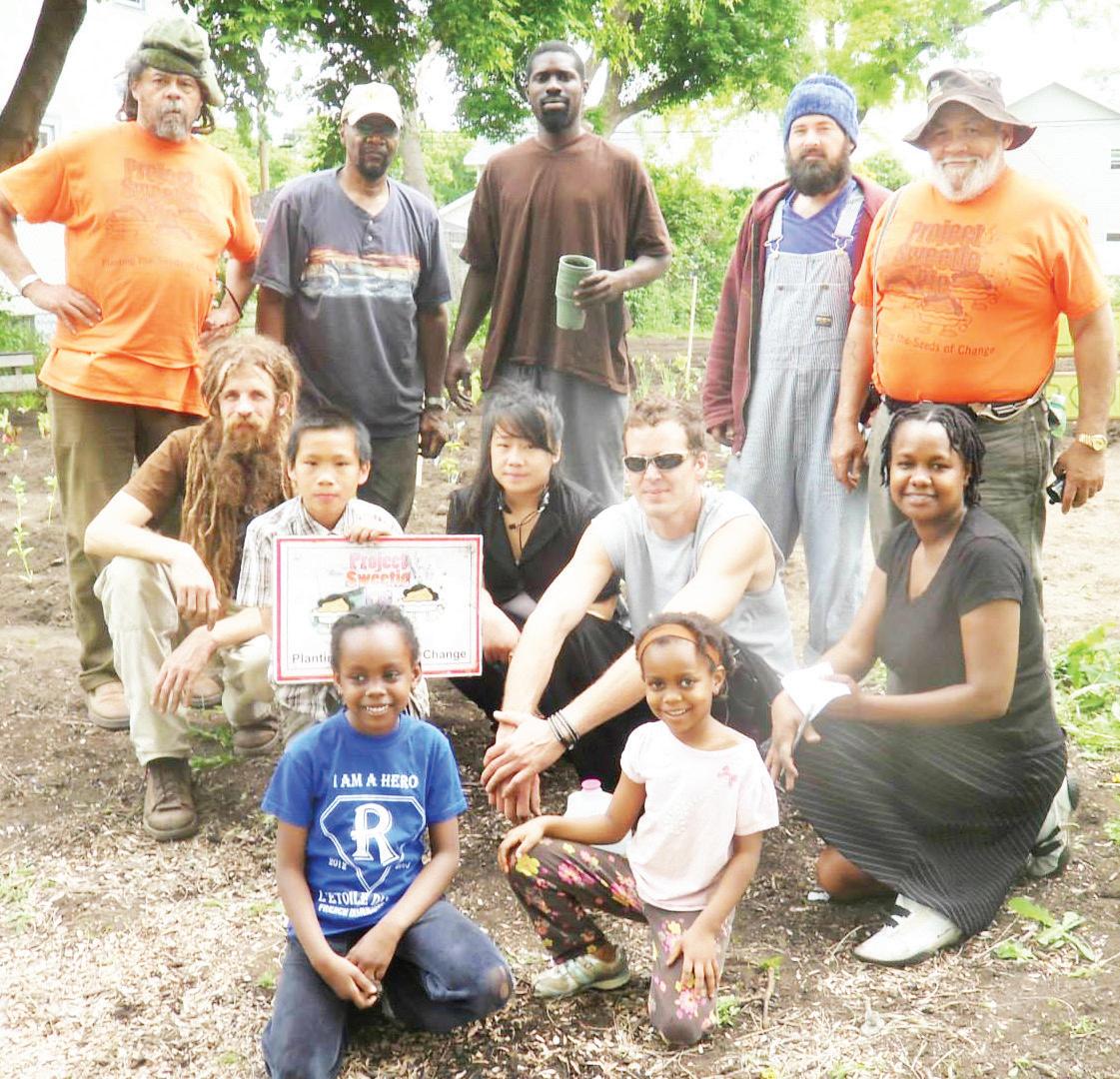
“I approached the school and asked if I could get youth involved in growing vegetables and utilize the greenhouse to bring back some life skills training,” he said. “They agreed, and thus Project
youth organization, along with his wife, W. Toni Carter, a retired Ramsey County commissioner, Met Council commissioner and longtime advocate for children, families and communities at the local, regional and national levels.
Also honored were Ward 1 St. Paul City Council Member Anika Bowie-Lunde; Ra Joseph Cole, a community activist and organizer dedicated to advocating for healing and connecting young people in the African diaspora; and Kwame McDonald, a nationally acclaimed sports figure and writer known for championing the recognition of female athletes. That award was accepted by his son, Dr. Mitch McDonald, a longtime educator and contributing sports
Sweetie Pie was born.”
Chaney recites the organization’s mission in a spokenword cadence: a reflection of how he weaves together poetry and advocacy.
“Project Sweetie Pie is the story of a community that worked together for the common good of its youth and families. Before it takes a village to raise a child, we’re growing ‘good’ in the neighborhood. Good food, good schools, good youth and families. Education never tasted so good.”
Through Project Sweetie Pie, Chaney has dedicated himself to educating young people about urban farming and horticulture, the practice
columnist for the Minnesota Spokesman-Recorder.
The Khaliq-Davis family was recognized for two generations of service. Nathaniel Khaliq, a retired St. Paul firefighter, president emeritus of the St. Paul NAACP for more than 20 years and longtime community activist, has dedicated years to advancing housing access, economic opportunity and neighborhood stability. His wife, Victoria Davis, a business owner and founder of the Summit University Education Consortium mentor program, has touched countless lives through education initiatives. Their son Malik Davis, a St. Paul firefighter, real estate agent and mentor, and his wife, Natalia Davis, the foundation’s kids
of growing plants for food and medicinal purposes.
“Wars are fought and won over food supply,” he said. “It’s critical that our community maintain that knowledge, maintain those skills, and use it as a baseline so we can embrace our own selfdetermination, our own selfreliance, our own self-sufficiency, and not be at the mercy of those who don’t necessarily have our interests at heart.”
Chaney believes urban farming should serve as a “gateway to the trades,” much like the vocational training, carpentry and auto mechanics, once offered in schools. When federal funding for those programs was cut, he said, the
coordinator and co-owner of Hotworx St. Paul, were also honored for continuing the family’s legacy of service.
The “laughter” portion of the evening featured two comedians and community alumni.
Mr. Jimmy Davis drew waves of laughter with commentary on aging, relationships and current events. “When you’re over 55, you can wake up to an injury,” he joked, prompting applause from the crowd.
Additional comic relief came from Vanessa Graddick, a social worker-turned-comedian and author of “I Don’t Want to Be Strong Today,” an affirmation journal focused on self-care and emotional wellness. Graddick skillfully blended humor with real-life experience, offering both lev-
consequences fell hardest on Black and Brown communities.
“When they severed that funding stream, it didn’t lift our community up and out of poverty. It pretty much cemented our feet to the concrete,” he said.
His vision is expansive. “I tell people I’m using regenerative agriculture to germinate and cross-pollinate circular economies… keep it in the hood. The whole effort is to put together what I call a food-focused future.”
Chaney hopes Project Sweetie Pie’s work will equip future generations with the skills to navigate uncertain times. “One of my taglines is: pub-
ity and reflection. “I just had a colonoscopy, the best sleep of my life,” she quipped.
The evening closed with a call for financial support from board member Dr. Stacey GrayAkea. Fry credited the organization’s success to its staff, noting that the center’s multigenerational approach continues to nurture growth for youth, families and the broader community.
“The people who work here make this place special,” she said. “To watch former students grow into teachers and leaders is truly rewarding.” For more information or to contribute, email info@irgrace. org or call 651-226-6594.
Kimerlie Geraci is a contributing writer for the Minnesota Spokesman-Recorder.
lic service, the breakfast of champions. We have one life to live, one Earth, one vision, one accord. All of the programming and initiatives I’m doing are really about building a better mousetrap. How can we raise agency for all, and how can we work to help save Mother Earth?”
On April 22, Project Sweetie Pie will host an Earth Day Garden Cleanup at Oak Park Center in North Minneapolis. For more information, visit projectsweetiepie.org.
Aamira Redd is a freelance journalist and contributing writer for the Minnesota Spokesman-Recorder.
Sponsored by
Athletes’ careers are unpredictable. Less than 2% of NCAA college athletes turn professional and many professional athletes retire before they’re 35. Yet nearly 65% of athletes say they never had financial education in school.
To help address the unique challenges athletes face, JPMorganChase announced a new initiative to help athletes navigate every aspect of their financial lives, from early career stages through retirement.
The JPMorganChase Athlete Council brings together some of the world’s most accomplished sports figures who will meet with JPMC leaders on a regular basis to discuss the unique financial needs of athletes and guide the development of programs to address them.
“Sports careers can be short and retirement unexpected,” said Kristin Lemkau, CEO of J.P. Morgan Wealth Management. “We want to develop a program by athletes for athletes to help them from college to professional sports to retirement.”
“Athletes face unique challenges and opportunities. Having the right educational resources and guidance is critical to making smart decisions about money as your career evolves,” said 3-time NBA champion and 2-time NBA Hall of Famer Dwyane Wade. At its inaugural meeting, JPMorganChase Athlete Council members shared
their own personal experiences and discussed a range of topics, including the needs athletes have at different stages of their career and how to support them effectively in making smart financial choices.
“I’m excited to join the JPMorganChase Athlete Council and to serve as chair of this incredible group of athletes. The Council gives us the opportunity to share our experience and insights to help athletes build their financial knowledge and plan beyond their playing careers,” said Wade.
JPMorganChase has a long history of serving athletes, teams and owners, including sponsorships of tournaments, venues and individual teams and players. Chase is also the designated financial education partner for League One Volleyball (LOVB) and Hudl, a leading sports tech platform for youth to college athletes.

pick. Founded JREAM to support underserved youth
The JPMorganChase Athlete Council includes:
• Ally Love – Peloton Instructor + VP, Instructor Strategy & Development | TODAY On-Air Contributor | Founder & CEO, Love Squad
• Tom Brady – Seven-time Super Bowl champion with 10 Super Bowl appearances and 18 division titles
“Our goal is to truly empower the athletes of today, and tomorrow, with financial literacy throughout their career,” said Stevie Baron, Head of Private Client Banking at JPMorganChase. “We are excited to partner with some of the nation’s top athletes to deliver a fully integrated experience.”
• Dwyane Wade (chair) – Entrepreneur, two-time NBA Hall of Famer and three-time NBA champion celebrated for his legendary career with the Miami HEAT
• Megan Rapinoe – Former professional soccer winger who co-captained the U.S. Women’s National Soccer Team and won two World Cup titles and an Olympic gold
• Kayvon Thibodeaux – New York Giants edge rusher and 2022 NFL Draft fifth overall
• Alex Morgan – Two-time FIFA World Cup champion, Olympic gold medalist and former co-captain of the U.S. women’s national soccer team
• Jalen Brunson – Knicks All-Star Guard and Clutch Player of the Year, empowering youth through his Second Round Foundation
• Sue Bird – Seattle Storm WNBA champion and 5-time Olympic gold medalist turned first-ever managing director for USA Women’s Basketball
• A’ja Wilson – Unprecedented four-time WNBA MVP winner who’s led the Las Vegas Aces to three championships
“Every athlete on this Council has been deeply committed to paying it forward to help the more than 500,000 college, working and retired
athletes avoid some of the same pitfalls they stepped in. At JPMorganChase, we can help every athlete regardless of income level manage their financial plan for the future,” said Lemkau.
The firm is also supporting athletes with its new “Athlete Center of Excellence” run by financial professionals who deeply understand the athlete experience and through financial education outreach at universities and major sports events to meet athletes where they are with curriculums designed specifically for them. JPMorganChase recently launched a dedicated educational content hub at jpmorgan. com/ace with a range of resources for athletes and tailored guides for each phase of their sports career.
Participation on the Ath-



letes Council or at JPMorganChase events does not constitute an endorsement or testimonial relating to the investment advisory services of J.P. Morgan Securities LLC, its advisors, and wealth management businesses.
Learn more about the JPMorganChase Athlete Council at: jpmorgan.com/athletescouncil
For informational/educational purposes only: Views and strategies described in this article or provided via links may not be appropriate for everyone and are not intended as specific advice/ recommendation for any business. Information has been obtained from sources believed to be reliable, but JPMorgan Chase & Co. or its affiliates and/or subsidiaries do not warrant its completeness or accuracy. The material is not intended to provide legal, tax, or financial advice or to indicate the availability or suitability of any JPMorgan Chase Bank, N.A. product or service.







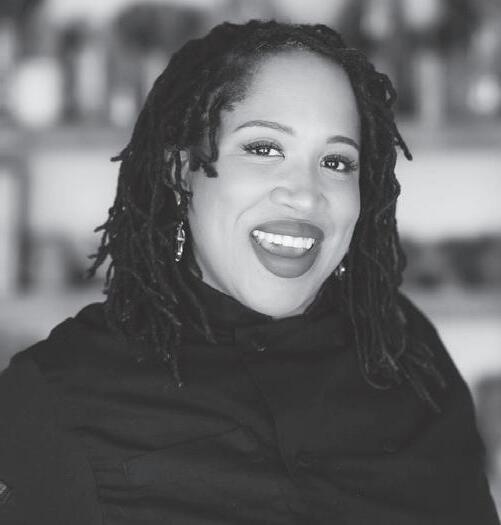
By Lachelle Cunningham Columnist
Pot
the nutrientrich liquid left at the bottom of a pot of greens, was once considered waste. Black cooks knew better. They saved it, seasoned it and passed it down. Each month, chef Lachelle Cunningham uses that tradition as a lens for her column, exploring food, family and the legacies that get handed down not in speeches or textbooks, but in kitchens, gardens and communities across generations.
This month: how her name, her family and her life’s work all trace back to one street, and to this very newspaper.
...legacy is not only spoken in speeches or written in textbooks: It is simmered, stirred and passed hand to hand. Potlikker does not announce itself. It waits. Be someone who recognizes that.
That is where I left off last month. Potlikker is not waste. It is the inheritance. It is all of the things your ancestors have passed down. Every generation before you has added something to the pot, strengthening it. Last month, I asked you to reconsider what you have been taught to discard.
This month, I want to take it a step further. I want to share a little bit about my name and my legacy, and I want us to start thinking about the pieces of ourselves and our backgrounds that make potlikker.
My legacy was simmering long before I ever picked up a pen or a chef’s coat. It started in 1981. While I was in her womb, my mother was reading a local newspaper. There was an article about a young Black woman who had graduated with high honors from college, a big deal at the time. Her name was Denise Lachelle. My mother decided right then that she would give me the first name Lachelle and the middle name Denise. Lachelle. La Shell. The shell. I did not always know what my first name was telling me. But my whole life, I have been collecting seashells. Any time I go to the ocean, I bring them home. One day, during a prayer meditation, I was holding one of my shells, and I saw it. The pattern at the center. Once I saw it there, I saw it everywhere. The spiral. In flowers. In pinecones. In the way a fern unfurls. In our very DNA. The golden ratio. The blueprint for life and, dare I say, abundance. It shows up in my work, too. My work keeps circling outward, from the kitchen to the land, to the community, to the legacy… each loop wider than the last. I did not design that pattern. It was already in my name. It was already in my blood.
I am Lachelle. I am the shell. To me, the shell represents protection and home. This is what I am here for: to keep expanding the blueprint so that our community can not only sustain but regenerate.
Now, the paper that carried that young woman’s name to my mother? The SpokesmanRecorder. Started in 1934. Nearly 50 years before I was born.
Years later, I was the founding chef at Breaking Bread Cafe when this paper wrote about me. That same week, I asked my mom which paper she had gotten my name from. It was the Spokesman-Recorder. It felt like I was trying to remember something that had come long before me. Before I wanted to be a chef,

before I wanted to be a mother, before I knew I would spend my life building community, I wanted to be a writer. That was my first aspiration. And here I am, writing for the very paper that named me.
But this story is bigger than my name. My father’s uncle Moe, Maurice Burton, worked near 38th and 4th, the same intersection where this newspaper sits. A few blocks away, he turned two vacant lots into one of the first community gardens in this country. He was growing freedom long before “food justice” had a name. I will tell you more about Moe next month. His story deserves its own telling. In fact, this paper has been writing about him and my family for years, long before I ever picked up a pen for it.
The paper that named me and the family that raised me were both rooted near the same corridor, decades before I was born. Now I own a kitchen at 38th and Chicago and run Frogtown Farm across the river. Nobody drew me a map. I keep arriving at places that were already waiting for me.
If you cut open a seed, you will find the spiral. The legacy was always inside it, it just
needed someone to plant it. Our ancestors planted seeds, carrying them across an ocean. Moe planted seeds on those vacant lots. I was a seed in my mother’s womb when this newspaper planted the seed of my name in her mind. All seeds endure sunshine and rain. Today, we are still here. Still planting. Still growing. This salad is a plate of that freedom. I call it an Abundance Salad because that is what we have earned. Our ancestors survived so we could be here, and now we get to cook not just to survive, but to celebrate, to gather, to share, to taste something and feel joy in it. That is what abundance means to me. Not excess. Just the freedom to finally enjoy what was fought for. We can, and we shall, overcome.
Abundance Salad Formula Black-eyed pea salad with fire cider vinaigrette, serves 6
This is a formula, not just a recipe. That means you follow the structure, but you choose your own ingredients within each category. Every time you make it, it can be different. That is the whole point. Abundance is not about having the
exact right thing. It is about using what you have with intention.
You are going to want a big bowl for this, because it can get abundantly festive.
Build your bowl Base (pick one, about two cans or three cups cooked):
Black-eyed peas, chickpeas, black beans or lentils.
Crunch (pick three to four, chopped or diced): Bell pepper (any color), cucumber, celery, corn (grilled or roasted, cut off the cob), rhubarb, okra (thinly sliced), jalapeno (leave the seeds in if you want heat), red onion, radish or jicama.
Fresh (pick two to three): Tomato, green onions, avocado, mango or roasted beets.
Herbs (pick one to three, about half a cup total, washed and chopped): Cilantro, parsley, basil, oregano, mint or dill.
Creamy (optional): Crumbled feta, goat cheese, cotija, vegan cheese, or skip it entirely.
My version today: blackeyed peas, tomato, red onion, orange bell pepper, jalapeno, cucumber, celery, okra, grilled corn, green onions, feta and a big handful of fresh herbs. But yours does not have to look like mine.
The dressing formula: Fire Cider Vinaigrette
First, let me tell you about fire cider. Fire cider is an old folk remedy… a raw apple cider vinegar infused with horseradish, ginger, garlic, onion, hot peppers and sometimes turmeric or citrus.
People have been making it for generations as a natural immune booster and digestive tonic. It has a kick to it: spicy, tangy, alive. When you use it as a salad dressing base, it brings that same energy to the plate.
You can make your own or buy it. I recommend Natural Me Apothecary, a Blackowned apothecary in North Minneapolis owned by Dr. Eva Garrett. She carries fire cider along with herbs, tinctures and remedies rooted in the healing traditions I have been exploring in this column.
Quick fire cider (if you want to make your own): Fill a jar with roughly equal parts
chopped ginger, chopped garlic, chopped onion, sliced hot peppers (habanero or cayenne) and a piece of horseradish root. Cover everything with raw apple cider vinegar. Add a squeeze of lemon and a pinch of turmeric if you have it. Seal it, shake it and let it sit for two to four weeks. Strain it. That is your fire cider. It keeps for months.
“You are going to want a big bowl for this, because it can get abundantly festive.”
The vinaigrette formula: a quarter cup fire cider, a quarter cup olive oil, half a teaspoon sweetener (maple syrup, honey or cane sugar), one to two teaspoons mustard of your choice, juice of one citrus (lime, lemon or orange) and your spice or herb blend. Spice blend (adjust to taste): half a teaspoon each of coriander and cumin, a teaspoon each of onion powder and garlic powder, half to one teaspoon smoked paprika, salt and pepper to taste.
Whisk it all together. Taste it. Adjust. That is how you learn your own palate. Here is what you do: Combine all your salad ingredients in a big bowl. Whisk together your vinaigrette in a separate small bowl. Toss it all together, then let it marinate for at least two hours in the refrigerator. This is not optional. The flavors need time to know each other. This dish tastes like a heartful spring, because that is what it is.
What food memory lives in your family that you are ready to reclaim? Write to Lachelle at lcunningham@spokesmanrecorder.com.
Lachelle Cunningham is the founder of Healthy Roots Institute, owner of City Food Studio and executive director of Frogtown Farm. She is a Bush Fellow, a practicing herbalist and a chef who believes food is a vehicle for healing, memory and power.
Finding clarity in chaos: Lokho Kotile’s
‘Lost in Abstraction’ centers emotional healing
Minneapolis-based Oromo artist transforms unrest into reflection through color, vulnerability and community connection
By Lizzy Nyoike Contributing Writer
In her latest solo exhibition, “Lost in Abstraction,” Minneapolis-based artist Lokho Kotile invites viewers into an intimate exploration of emotion, identity and healing. One that doesn’t shy away from chaos but leans into it.
Kotile, an Oromo artist, illustrator, curator and storyteller, uses watercolors and digital illustration to examine themes of identity, belonging, cultural memory and self-reflection. Her work draws from her experiences growing up in the diaspora, blending personal narrative with broader cultural connections. In this exhibition, those themes take on an introspective tone, shaped by a period of uncertainty in her own life. “Art has always just been the only stable thing in my life,” Kotile said.

For Kotile, “Lost in Abstraction” is a reflection of survival. During moments when life felt overwhelming, she turned to art not only as a creative outlet but as a home. The exhibition traces that relationship, showing how art became both a companion and a form of release during difficult times. Kotile pointed to 2020 as a turning point. During a period of unrest and uncertainty in
the Twin Cities, she made the decision to fully commit to her artistic path, a choice that led her to pursue a Master of Fine Arts in visual studies. Throughout the gallery, viewers encounter abstract figures, fluid lines and layered textured pieces rendered in soft yet striking tones. At first glance, the palette of warm pastels may appear gentle, but beneath that softness lies
deeper tension.
“I use a lot of soft colors, despite the emotions not being the best,” Kotile said. “I think I kind of relate it inwardly. It’s like we like to put on a facade.”
That contrast is intentional.
For Kotile, color becomes a language that communicates the full range of human emotion.
“Sometimes we’re like, ‘Yeah, we’re OK, but we’re really not,’” she said. “And I guess
I use these soft yellow, pink, even red colors to invoke that.”
Her use of red carries particular weight. A color associated with passion, chaos, love and intensity, it mirrors the complexity of emotions she seeks to express. The result is work that feels both vulnerable and controlled, inviting viewers to sit with contradictions rather than resolve them.
“You don’t have to be perfect, just show up.”
Kotile intentionally creates space for viewers to reflect on their own emotional lives.
Prompts placed alongside the artwork ask visitors to consider how they are feeling and how they process those feelings. For Kotile, that interaction is essential. Art, she says, should not only be seen but felt and carried beyond the walls of the gallery.
“You don’t have to be perfect, just show up,” she said.
“Even if you’re feeling chaotic or feeling hopeful or feeling lost, just show up. Be kind to yourself.”
In a moment when many are navigating uncertainty and emotional fatigue, “Lost in Abstraction” stands as an offering rooted in vulnerability, reflection and connection. A reminder that even in moments of confusion and unrest, there is space for growth and healing.
Lizzy Nyoike is a Hubbard School of Journalism & Mass Communication student and contributing writer for the Minnesota Spokesman-Recorder.
“I just really hope that people take away that no matter what feelings we feel, sadness, chaos, feeling lost… just having that ability to recognize your emotions,” she said. That emphasis on emotional honesty is at the heart of her message. Rather than striving for perfection, Kotile encourages both herself and her audience to show up fully and authentically.

lution to improve the people and systems around you. It is creativity, leadership, resilience, innovation and faith in action. When we teach entrepreneurship to Black boys, we are not just preparing them to make money, we are preparing them to make an impact. A change. A long-lasting change that can make a difference in their family and community.

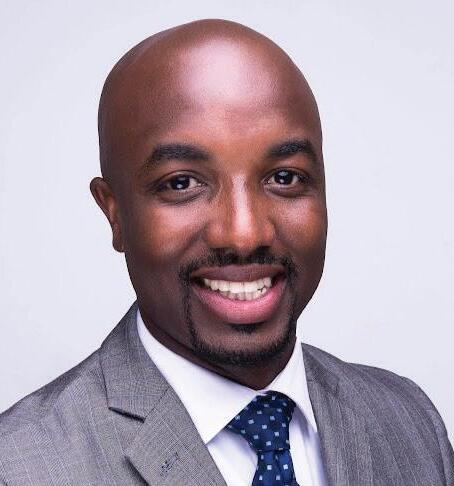
By Richard D. Terrell Columnist
By Richard Terell Columnist
Before diving into this col-
umn, I want to be clear: This is not a critique of any one school, district or institution.
This is a broader reflection. A blend of research, observation and personal experience on the current state of education for Black boys in America.
For generations, many Black boys have been taught
The truth is that too often, Black boys are seen only through narrow lenses: as athletes, entertainers or laborers.
But Black boys are inventors, visionaries, designers, coders, investors, educators and CEOs. They have ideas worth developing and voices worth hearing. They deserve to know that they can own the store, not just shop in it. They can run the company, not just work for it. They can help form sports teams, not just play for them.
With the collaboration of the community, schools play a major role in this transforma-


directly to what happens in school every day.
Problem-solving in the classroom: Schools can teach
ity. Instead of being labeled a problem, they are celebrated as problem-solvers.
Inviting Black business owners to speak with students and teaching financial literacy alongside core academics are equally important steps. Allowing project-based learning tied to real businesses, supporting student ideas with mentors and small startup funds, and celebrating innovation just as much as athletics and test scores can change the culture of a school entirely.
Teaching entrepreneurship also builds confidence. Many Black boys have been conditioned to doubt themselves because of systems that underestimated them. But when a student turns an idea into reality, something powerful happens. Confidence grows. Ownership grows. Hope grows. Change happens.

Leadership pathways: Schools can create studentrun businesses, school stores, clothing brands, event planning teams, media teams or community service projects. These experiences develop leadership skills that carry into college, careers and life.
What schools can do now Schools can create entrepreneurship clubs or afterschool programs and host student pitch competitions.




Parents, educators, pastors and mentors all have a role to play. Support the side hustle. Celebrate the creative idea. Buy the first product. Help them open a bank account. Teach them about saving, investing, customer service and integrity. Encourage risk-taking and learning from failure. The future will belong to problem-solvers, creators and innovators. Black boys must be prepared not just to enter that future, but to lead it.
Think about this: Does our school environment create workers, leaders or both? How are we teaching Black boys to create wealth, not just earn money? How often do Black boys get opportunities to lead through creativity and innovation? Are our schools preparing students to work for companies or to build them?
Let’s rise together.
— Richard D. Terrell
Richard D. Terrell is a native of Minneapolis, MN. He is the father of three; Zyree, Raymond and Vivian. Richard has a passion for community, education, and youth development. He has served as the senior pastor of God’s Revelation MBC in south Minneapolis, and for the last 20 years, he has served at various schools working with and supporting students, families, and teachers. He currently serves as an Assistant Principal with Saint Paul Public Schools. For more information on Richard D. Terrell or to purchase his book “Letters to my Young Brothers: There is Hope!” visit his website at https://mrrichardterrell.com.
We must also introduce them to examples. They need to see Black entrepreneurs who look like them and come from neighborhoods like theirs, leaders both local and national. Representation matters. When Black boys learn about pioneers and modern leaders who built businesses against the odds, they begin to believe: “If they did it, I can too.”




DevSecOps Engineer: Plymouth, MN
IT Company seeks DevSecOps Engineer to integrate security practices into DevOps workflows, automate security checks, and ensure the safety of cloud infrastructure. Work closely with development and security teams to enhance the security posture of applications and systems. Build and Configure delivery environments by using CD/CI, Agile delivery methodologies. Create and assist in performing various types of tests. Perform troubleshooting. Generate customized reports. Offered Salary: $116,480.00
By Jacqui Patterson
I am a survivor of intimate partner violence. I don’t remember the hitting, likely due to a protective habit of leaving a blank space in my memory where trauma occurred. But I remember the physical and emotional pain. I remember being very afraid and feeling helpless. I remember the sensation of walking on eggshells. I remember being confident it wasn’t my fault and deeply resolute that the abuse was not, as too many believe, a sign of intense love. What I remember most is the shame.
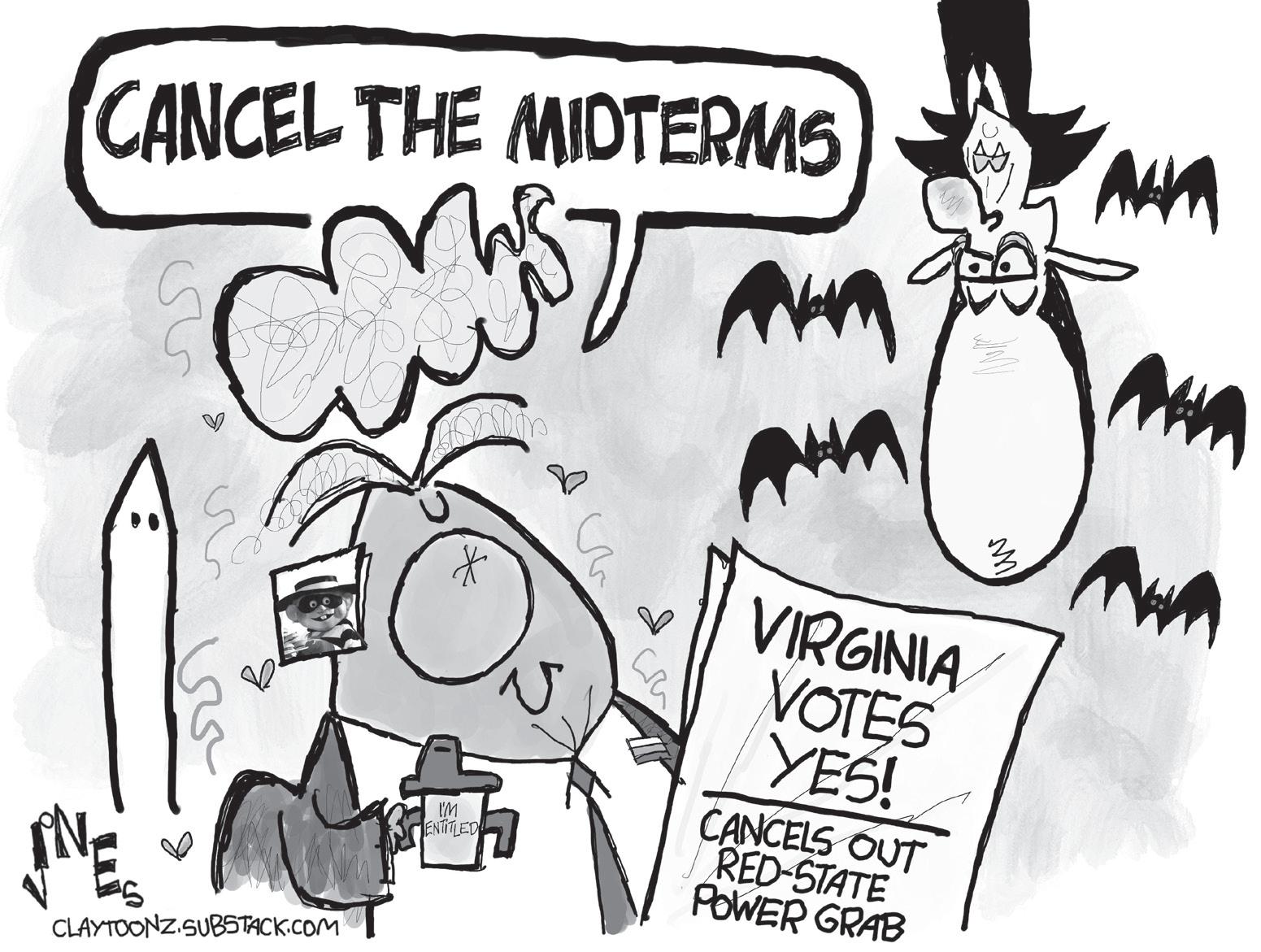
By Rev. Dr. Heber Brown III
This month, I’ll head to rural Virginia to celebrate the life of my great uncle, Dwight O’Neal Caster. Preparing for his homegoing caused me to reflect on the significant time I spent as a child in that region. When school let out for the summer, my parents often took us “down the country,” where my brother Anthony and I were introduced to a world far different from urban Baltimore.
Our great-grandmother, Geraldine Caster Wilson, affectionately known as “Mama Geraldine,” was our guide. We watched her work in her garden, observed the mason jars that preserved her harvests, pumped water from her well and marveled as she made elaborate quilts. Those experiences were my initial orientation to an agrarian way of life that revolved around tending the land, growing what you ate and making what you needed. This kind of self-sufficiency was a useful shield from the venom of state-sponsored racial terrorism against Black people.
So when I was introduced years later to something called Earth Day, it felt both foreign and familiar. Placing importance on our collective stewardship of the earth is timely, especially now. There is no denying that
our planet is out of balance. We face new environmental challenges, with data centers draining resources and creating heat islands. Black people suffer health challenges exacerbated by environmental racism, as seen in disproportionate asthma and heart disease rates, the Flint water crisis and Cancer Alley. To borrow from Romans 8, “the whole of creation is groaning” from war, poverty, climate change and unchecked technology. But we can meet these challenges with care, community and collective power. To do so, I look to those who came before us, Black women and men who lived the spirit of Earth Day long before the holiday was created in 1970.
porting farmers by connecting them directly with consumers.
Hazel Johnson, the mother of the environmental justice movement, began as a community advocate in Chicago when she witnessed environmental racism firsthand, later championing the cause globally.
These leaders gave us the blueprint for balanced living. They showed us that we can help the earth and each other simultaneously. We’ve been conditioned to believe Black people don’t have a relationship with the land, but we maintain a deep connection with Mother Earth that far preceded our centuries of enslavement in the Americas.
George Washington Carver once wrote that nature is
It was deep, isolating, soul-wrenching. It convinced me not to tell a living soul. It made me believe people would question my judgment. It told me I would be derided for letting myself fall into this situation. So I confided in no one. Not family. Not friends. Not a counselor.
I was not alone in that silence. Approximately four in 10 Black women have experienced intimate partner violence in their lifetimes. Black women are more than twice as likely as white women to be murdered by their partner. The past 30 days have laid
bare that statistic through the stories of Dr. Cerena Fairfax, Pastor Tammy McCollum, Qualeshia “Sidditty” Barnes and others. It includes Nancy Metayer, an environmental scientist I interviewed four years ago for a role with The Chisholm Legacy Project, she was our top candidate. Police found her shot to death inside her home on April 1. Her husband has been charged with her murder. Since then, I’ve been haunted by the what-ifs. If Nancy had joined us, would I have seen something in her eyes? Would I have recognized my younger self in her? Am I missing the signs in someone else right now?
of shame and fear, never once saying to a close friend, “Here’s what’s going on. Can I talk to you?” I must now be the change I want to see. To anyone in the cruel, stifling grip of IPV shame: don’t be like me. Tell someone. Get help. Get out. Your partner will not change. It will not get better. To the friends, family members and colleagues of victims: if you see something, say something. If you sense something, say something. Do it even if it means angering that person. It is far better than the alternative.
I was 19 when I first experienced intimate partner violence. It wasn’t the last time. Each time, I dealt with it alone and escaped it alone. I worked in a domestic violence shelter. I once harbored a friend fleeing her own abuser. Yet I led a solitary, shadow existence
The Black Femicide Prevention Coalition warns that Black women “are dying at rates that should alarm anyone claiming to care about Black women, the Black family, or the Black community.” Black women deserve more than deflection. They deserve urgency, honesty and action. And they deserve people and institutions that know how to hold them.
This op-ed appeared first in Word in Black. It has been edited for length. For the original version, visit www.wordinblack. com/2026/04/shame-told-meto-stay-silent/.
George Washington Carver was a pioneering botanist and agricultural mastermind who stewarded soil nutrients through crop rotation and traveled to meet Black farmers in their fields, empowering them to break cycles of debt and dependence. Rev. Dr. Vernon Johns intertwined community empowerment and food justice throughout his work, farming and selling produce by his church and sup-

an “unlimited broadcasting station, through which God speaks to us every day, if we will only tune in.” Environmental justice is not a single day’s concern. It is a matter for everyone and for always. Our fate is intertwined with the condition of the earth. Let’s do all we can to ensure this planet flourishes for generations yet unborn.
This op-ed appeared first in Afro News. It has been cut for length. For the original version, visit www./afro.com/environmental-justice-black-community/.
By Margaret Kimberley
A recent BBC headline read, “US has let in 4,499 refugees since October, all but three were South African.” What the BBC failed to state plainly is that those 4,499 South Africans are all white. Despite wellcoordinated claims that white South Africans face genocide, they remain the majority of landowners and hold nearly all of the country’s wealth.
to more immigrants from the Global South, calling it “the single largest experiment on a society ... that had ever been conducted in human history” and claiming immigrant communities show “high rates of welfare use, high rates of criminal activity, consistent failures to assimilate.” None of this is supported by evidence.

The U.S. Refugee Admissions Program was created in 1980 and has admitted 3 million people who, by law, must face persecution based on race, religion, nationality, political opinion or membership in a particular social group. None of those criteria apply to white South Africans. Yet they are now the only people being admitted as refugees. There is no logic to this unless one understands the logic of white supremacy. Stephen Miller, the Trump administration’s deputy chief of staff for policy, makes the agenda plain. He has posted on X that watching Dean Martin and Frank Sinatra’s family Christmas special made him think America didn’t need “infinite migrants from the third world,” apparently forgetting that both Sinatra and Martin were children of Italian immigrants. Miller has attacked the 1965 Immigration and Nationality Act, which opened the door
In recent months, the Trump administration has blocked naturalization for people from 19 designated “high-risk” nations, nearly all in Africa, the Middle East and the Caribbean, including Haiti, Somalia, Nigeria and Venezuela. People who had completed years of paperwork, tax filings and FBI background checks were turned away, some at their own naturalization ceremonies. Denaturalization, once rare and reserved for cases of fraud, is now being pursued at a rate of 100 to 200 cases per month, compared to just 120 total between 2017 and 2025.
A recent study shows the Trump administration has cut legal immigration in half, far
more than its cuts to undocumented migration. This reveals that arguments against undocumented immigrants are a smoke screen for eliminating legal immigration from the Global South entirely. The Department of Homeland Security has suspended green card processing and allowed ICE to arrest legal immigrants, including refugees, asylees and spouses of U.S. citizens. In California, Border Patrol violated a federal judge’s orders to end sweeps. In New Jersey, court orders were violated more than 50 times in 10 weeks. The goal in each case is the same, to make America whiter, but it is rarely described as such.
Trump and Miller cannot reverse hundreds of years of history. They can make lives miserable and defy the law, but they cannot undo the demographic reality of a nation whose non-white population continues to grow. What they can do, and are doing, is deprive thousands of people of their rights. And as they do it, their primary motivation goes largely unmentioned. Denial, too, is a trait of white supremacy.
This op-ed appeared first in the Black Agenda Report. It has been edited for length. For the original, visit www.blackagendareport.com/ trump-uses-immigration-enforcement-make-america-whiter-again.
STATE OF MINNESOTA
COUNTY OF HENNEPIN FOURTH
State of Minnesota, by its Commissioner of Transportation, Petitioner, vs.
Unknown successors in interest to Northwestern Lumber and Wrecking Company, et al. Respondents. IN THE MATTER OF THE CONDEMNATION OF CERTAIN LANDS FOR TRUNK HIGHWAY PURPOSES NOTICE
To the Respondents hereinabove named:
You, and each of you, are hereby notified that on June 10, 2026, at 10:00 a.m., or as soon thereafter as counsel can be heard, before Judge Bruce D. Manning, in the Courthouse at Minneapolis, Hennepin County, Minnesota, via remote hearing, the Petitioner will present a Petition now on file herein for the condemnation of certain lands for trunk highway purposes. This hearing will not be in person at the Courthouse. Instructions for attending the remote hearing may be obtained from Hennepin Court Administration. The remote hearing may be accessed by video at https://Zoomgov.com/join, or by phone at 833-568-8864. For either method, the Meeting ID is 161 943 1155 and the Meeting Password is 377203.
YOU, AND EACH OF YOU, ARE FURTHER NOTIFIED, that Petitioner will also move the court for an order transferring title and possession to Petitioner of the parcels described in the Petition in accordance with Minn. Stat. §117.042, as of July 5, 2026.
YOU, AND EACH OF YOU, ARE FURTHER NOTIFIED, that all persons occupying the property described in the petition must VACATE THE AREA BEING ACQUIRED AND MOVE ALL OF YOUR PERSONAL PROPERTY FROM THE AREA BEING ACQUIRED ON OR BEFORE JULY 5, 2026. All advertising signs or devices located in the area being acquired must be removed by July 5, 2026.
YOU, AND EACH OF YOU, ARE FURTHER NOTIFIED, that (1) a party wishing to challenge the public use or public purpose, necessity, or authority for a taking must appear at the court hearing and state the objection or must appeal within 60 days of a court order; and (2) a court order approving the public use or public purpose, necessity, and authority for the taking is final unless an appeal is brought within 60 days after service of the order on the party.
Dated: March 5, 2026
ATTORNEY FOR PETITIONER
KEITH ELLISON, Attorney General State of Minnesota
/s/Mathew Ferche
MATHEW FERCHE, Assistant Attorney General Atty. Reg. No. 0391282
445 Minnesota Street, Suite 600, St. Paul, MN 55101-2125
(651) 757-1457 (Voice) (651) 282-2525(TTY)
ATTORNEY FOR PETITIONER
STATE OF MINNESOTA
COUNTY OF HENNEPIN
State of Minnesota, by its Commissioner of Transportation, Petitioner, vs. Unknown successors in interest to Northwestern Lumber and Wrecking Company, County of Hennepin, Unknown heirs of Erick W Anderson, deceased, Unknown heirs of Bernice Anderson, deceased, Unknown heirs of Minna Smith, deceased, also all other persons unknown claiming any right, title, estate, interest or lien in the real estate described in the Petition herein, Respondents. IN THE MATTER OF THE CONDEMNATION OF CERTAIN LANDS FOR TRUNK HIGHWAY PURPOSES PETITION
To the District Court above named the State of Minnesota brings this Petition and respectfully states and alleges: I.
That Trunk Highway Legislative Route numbered 104, which has been renumbered 55, and which has been located according to law and passes over the lands herein described. That it is duly covered by Width Order numbered 99418 and Center Line Order numbered 40838. II.
That the Commissioner of Transportation deems it necessary that the State of Minnesota for trunk highway purposes obtain the lands herein described in fee simple absolute.
Petitioner hereby moves the court for an order authorizing the Court Administrator to accept and deposit payments from the Petitioner to the court pursuant to Minn. Stat. § 117.042.
Petitioner hereby moves the court for an order transferring title and possession of the parcels herein described, after the filing of an award by the court appointed commissioners, pursuant to Minn. Stat. §117.042.
Further, Petitioner hereby moves the court for an order requiring the parties to exchange any appraisals at least 14 days prior to a commissioners’ hearing, pursuant to Minn. Stat. § 117.036.
The Petitioner reserves its right to recover costs of clean up and testing and all other damages arising from the presence of pollutants, contaminants, or hazardous materials on the property described herein, from all potential responsible parties, including respondents herein where appropriate, in a separate legal action to the extent permitted by law III.
That the following described lands in these proceedings taken are situated in Hennepin County, Minnesota; that the names of all persons appearing of record or known to your Petitioner to be the owners of said lands or interested therein, including all whom your Petitioner has been able by investigation and inquiry to discover, together with the nature of the ownership of each, as nearly as can be ascertained, are as follows:
FEE ACQUISITION
Parcel 262 C.S. 2724 (55=116) 901
S.P. 9910-02
All of Tract A described below:
Tract A. Lots 9 through 12, inclusive, GILBERT’S RE-ARRANGEMENT OF LOTS 1, 2, 3, 4, 5, 6 AND 19, BLOCK 2, OF FOSTER’S ADDITION TO MINNEAPOLIS, MINN., and Lots 1 through 5, inclusive, Block 3, FOSTER’S ADDITION TO MINNEAPOLIS, together with that part of vacated Franklin Avenue accruing thereto by reason of the vacation thereof; according to the plats thereof on file and of record in the office of the County Recorder in and for Hennepin County, Minnesota.
Names of parties interested in the above-described land and nature of interest: Unknown successors in interest to Northwestern Lumber and Wrecking Company Fee County of Hennepin Taxes and Special Assessments
FEE ACQUISITION
Parcel 263 C.S. 2724 (55=116) 901
S.P. 9910-02
All of Tract A described below:
Tract A. Lot 13, GILBERT’S RE-ARRANGEMENT OF LOTS 1, 2, 3, 4, 5, 6 AND 19, BLOCK 2, OF FOSTER’S ADDITION TO MINNEAPOLIS, MINN., according to the plat thereof on file and of record in the office of the County Recorder in and for Hennepin County, Minnesota.
Names of parties interested in the above-described land and nature of interest: Unknown heirs of Erick W Anderson, deceased Fee Unknown heirs of Bernice Anderson, deceased Fee County of Hennepin Taxes
FEE ACQUISITION
Parcel 272 C.S. 2724 (55=116) 901
S.P. 9910-02
All of Tract A described below:
Tract A. Lot 18 and the North Half of Lot 17, Block 2, FOSTER’S ADDITION TO MINNEAPOLIS, according to the plat thereof on file and of record in the office of the County Recorder in and for Hennepin County, Minnesota.
Names of parties interested in the above-described land and nature of interest: Unknown heirs of Minna Smith, deceased Fee County of Hennepin Taxes
WHEREFORE, Your Petitioner prays that the Court grant this petition, that commissioners be appointed to appraise the damages which may be occasioned by such taking, and that such proceedings may be had herein as are provided by law.
Dated: February 20, 2026 KEITH ELLISON, Attorney General, State of Minnesota
/s/Mathew Ferche
MATHEW FERCHE, Assistant Attorney General, Atty. Reg. No. 0391282
445 Minnesota Street, Suite 600, St. Paul, Minnesota 55101-2125
(651) 757-1457 (Voice) (651) 297-4077 (Fax)
mathew.ferche@ag.state.mn.us, ATTORNEY FOR PETITIONER 101031
MINN. STAT. § 549.211 ACKNOWLEDGMENT
The party or parties on whose behalf the attached document is served acknowledge through their undersigned counsel that sanctions may be imposed pursuant to Minn. Stat. § 549.211.
Dated: February 20, 2026 KEITH ELLISON, Attorney General, State of Minnesota
/s/Mathew Ferche
MATHEW FERCHE, Assistant Attorney General Atty. Reg. No. 0391282
445 Minnesota Street, Suite 600, St. Paul, Minnesota 55101-2125
(651) 757-1457 (Voice) (651) 297-4077 (Fax)
mathew.ferche@ag.state.mn.us
ATTORNEY FOR PETITIONER
Medical – Travel Registered Nurses Bemidji, MN
Medical – Travel Registered Nurses needed STAT in Bemidji. $50.78/Hr + $3.04/Hr in irreversible immediate vesting 401(k) employer contributions. Generous per diem & housing allocations for those that qualify. All shifts, with flexible start dates. Call Sarah at Worldwide Staffing 866.633.3700 x 109.
Minnesota Spokesman-Recorder April 30, 2026
Sr. Software Engineer
Medtronic, Inc., Mounds View, MN.
Req. Master’s in Comp. Engr., Comp. Sci., Electrical Engr. or related technical or engr. field & 2 yrs. exp. as software engineer or related occupation in medical device industry. Salary: $122,400 - $183,600/year. Apply at https://medtronic.wd1.myworkdayjobs.com/MedtronicCareers, Req. #R64345. No agencies or phone calls. Medtronic is an equal opportunity employer.
All individuals are encouraged to apply.
Minnesota Spokesman-Recorder April 30, 2026
Continued from page 12
— Hopkins High School, University of Arizona, Denver Nuggets. Led Hopkins to the 2019 Class 4A title. NBA champion in 2023.
VIEW
Continued from page 12
history.”
David Roddy, 6-5 forward — Breck School, Colorado State University, Denver Nuggets. Jericho Sims, 6-10 center — Cristo Rey Jesuit High School, University of Texas, Milwaukee Bucks. Jalen Suggs, 6-5 guard — Minnehaha Academy, Gonzaga University, Orlando Magic.
That relationship inspired Bell to write a children’s book, “What Color is the Sky?,” a tribute to his father and the question he asked whenever Bell had a rough day or a bad game.
Continued from page 12
Timberwolves coach
Chris Finch said Anderson’s value comes from his natural point guard instincts.
“We employ him whenever we feel the game needs him,” Finch said. “He’s a teamfirst guy for sure. He’s really smart.”
Anderson grew up in New Jersey, where his family moved after he was born in New York City. He said he always believed that if he worked hard enough, the NBA would come.
“I was always obsessed with the game,” he said. “Once I realized around 10, 11, 12 years old that my peers didn’t practice as much as me and didn’t love it as much as me, I knew I was special.”
Anderson played his junior and senior years at the storied St. Anthony High School under Hall of Fame coach Bob Hurley, contributing to two state championship teams that went a combined 65-0 during his time there. He went on to UCLA, where he was a twotime All-Pac-12 selection, first team in 2014, second team in 2013, before declaring for the draft after two seasons.
Anderson was the 30th overall pick by San Antonio in 2014 and was the Spurs’ only new player on the roster that rookie year, splitting time between the parent club and the G League. He worked his way into the regular rotation by 2015-16 and has since played for San Antonio, Memphis, Minnesota, Golden State, Miami and Utah before returning
SIGNED BY: Fayth A Brang
From Ads Department/MN Spokesman-Recorder
EMPLOYMENT DISPLAY
SIZE: 2 COL X 2 INCH
RATE: $44.60 PER COL. INCH
TOTAL: $178.40
From Ads Department/MN Spokesman-Recorder
Please proof, respond with email comfirmation to ads@spokesman-recorder. com
Phone: 612-827-4021
FOR BILLING
MAILING ADDRESS: 4450 Minnetonka Blvd Apt 4 Minneapolis MN 55416
INQUIRIES & TEARSHEETS PLEASE CONTACT
ACCOUNTING DEPT
EMAIL FOR OFFICIAL NOTICES: faycom@posteo.eu Minnesota Spokesman-Recorder April 23, 30, 2026
From Ads Department/MN Spokesman-Recorder
Phone: 612-827-4021
FOR BILLING INQUIRIES & TEARSHEETS PLEASE CONTACT ACCOUNTING DEPT BILLING@SPOKESMAN-RECORDER. COM
ASSUMED NAME
FLAT RATE: $215 2 WEEK RUN
Please proof, respond with email tion to ads@spokesman-recorder.com
The MSR handles billing digitally. This means you will get e-tears and invoices unless you specifically request copy.
BILLING@SPOKESMAN-RECORDER. COM
The MSR handles billing digitally. This means you will get e-tears and emailed invoices unless you specifically request a hard copy.
EMPLOYMENT DISPLAY
SIZE 2 COL X 2 INCH
Led Minnehaha Academy to Class 2A championships in 2017, 2018 and 2019.
RATE: $44.60 PCI
TOTAL: $178.40
mgren, Nnaji, Roddy and Suggs all have their teams in the 2026 NBA playoffs.
Phone: 612-827-4021 FOR BILLING INQUIRIES & TEARSHEETS PLEASE CONTACT ACCOUNTING DEPT
Gary Trent Jr., 6-5 guard — Apple Valley High School, Prolific Prep, Duke University, Milwaukee Bucks. Led Apple Valley to the 2015 Class 4A state championship.
Tyus Jones, Battle, Hol-
“Whenever I had a bad day growing up or a bad game, he asked me, ‘What color is the sky?’” Bell said. His father’s message was always the same: keep your head up.
“Obviously I’ve had my ups and downs, but I belong here,” Bell concluded. “I can play this game.”
Charles Hallman welcomes reader responses at challman@ spokesman-recorder.com.

to the Wolves in February 2026 after the Grizzlies waived him.
His “aha” moment as a pro came during his rookie year, when he was tasked with guarding All-Star Damian Lillard.
“Damian ended up hitting 50,” Anderson said with a laugh. “I was like, wow, this is the NBA for sure.”
Anderson’s career numbers don’t jump off the page, he averaged 9.4 points, 5.3 rebounds and 4.9 assists per game during his first Timberwolves stint. But this season he is averaging 7.5 points per game while shooting better than 56% from the field and nearly 67% from three-point range. Finch believes those numbers still undersell him.
“He’s a special type of player,” the coach said. “He’s best with the ball in his hands.” Anderson himself has long made peace with being underappreciated by casual observers.
“With any team, I feel I bring things that don’t show up on the stat sheet or maybe go unnoticed,” he said.
“The avid fan may have trouble seeing my value. But as far as myself, and apparently other teams around the NBA, they’re able to see what I bring to the table. Guys who really know basketball can see the little things I contribute out there, and that leads to hopefully winning.”
Charles Hallman welcomes reader responses at challman@ spokesman-recorder.com.
The Twin Cities metro area was, and continues to be, well represented.
Please proof, respond with email comfirmation to ads@spokesman-recorder.com
Dr. Mitchell Palmer welcomes reader responses at mcdeezy05@gmail.com.
The MSR handles billing digitally. This means you will get e-tears and emailed invoices unless you specifically request a hard copy.
BILLING@SPOKESMAN-RECORDER.COM
Continued from page 12
valuable look at what Minnesota can do against a formidable crosstown opponent.
“I liked a lot of what I saw, especially in sets two and three on the areas we’ve been working on,” Cook said. “It took us a little while to get adjusted to the tempo of their offense. We’ve got to look at everything, trying to get a lot done in four sets.”
On the football side, the Gophers split into two squads and played a spring game last Saturday, the pro-

gram’s first since 2017. Running backs coach Mohamed Ibrahim reflected on what the spring revealed about his group the day before the game.
“This spring ball really shows me where they’re at right now,” Ibrahim said from his Bierman office. “I know exactly how to coach each one of these guys so they can pick up the playbook. All spring ball, I’ve been going hard on them on technique. I don’t want to reteach technique come fall camp.”
Charles Hallman welcomes reader responses at challman@ spokesman-recorder.com.


here are few regions in the country that can match the Twin Cities metro area’s pipeline to the NBA. Here is a look at former metro boys basketball standouts who were on NBA rosters during the 2025-26 regular season, along with the high schools they attended, the colleges where they played and their current teams.
Amir Coffey, 6-7 guard
— Hopkins High School, University of Minnesota, Phoenix Suns. Led Hopkins to the 2016

Class 4A state championship. Jamison Battle, 6-7 forward — DeLaSalle High School, George Washington University, University of Minnesota, Ohio State University, Toronto Raptors. Led DeLaSalle to the 2019 Class 3A championship.

Chet Holmgren, 7-1 center
— Minnehaha Academy, Gonzaga University, Oklahoma City Thunder. Led Minnehaha Academy to Class 2A championships in 2017, 2018 and 2019. NBA champion in 2025.
Curtis Jones, 6-3 guard
— Minneapolis South High School, Cretin Derham Hall High School, Indian Hills Community College, University of Buffalo, Iowa State University, Denver Nuggets. Tre Jones, 6-1 guard — Apple Valley High School, Duke University, Chicago Bulls. Led Apple Valley to Class 4A championships in 2013, 2015 and 2017.
Tyus Jones, 6-0 guard — Apple Valley High School, Duke University, Denver Nuggets. Led Apple Valley to the 2013 Class 4A state championship.
Zeke Nnaji, 6-10 forward
and

uring a recent home stand, Minnesota and Cincinnati led the majors with five U.S.-born Black players each on their respective rosters. A distinction that has received little, if any, attention.
One of those Twins is Josh Bell, the 6-foot-4 first baseman and switch-hitting designated hitter who is now with his seventh club in 10 major league seasons. A secondround pick by Pittsburgh in the 2011 MLB Draft, Bell has also suited up for Cleveland, San Diego, Washington (twice), Miami and now Minnesota, signing a one-year contract last December.
“Yeah, it’s pretty cool,” Bell said when asked about sharing a clubhouse with fellow Black teammates Byron Buxton, Royce Lewis, Simeon Woods Richardson and Taj Bradley. “Just being able to play with these guys, get to meet some new guys, and finally just playing with Buck (Buxton) and Royce.”
The Irving, Texas native traces his love of baseball to his backyard and his father. His dad steered him away from football early, and the two spent countless hours playing catch.
use the offseason to build depth, identity and confidence
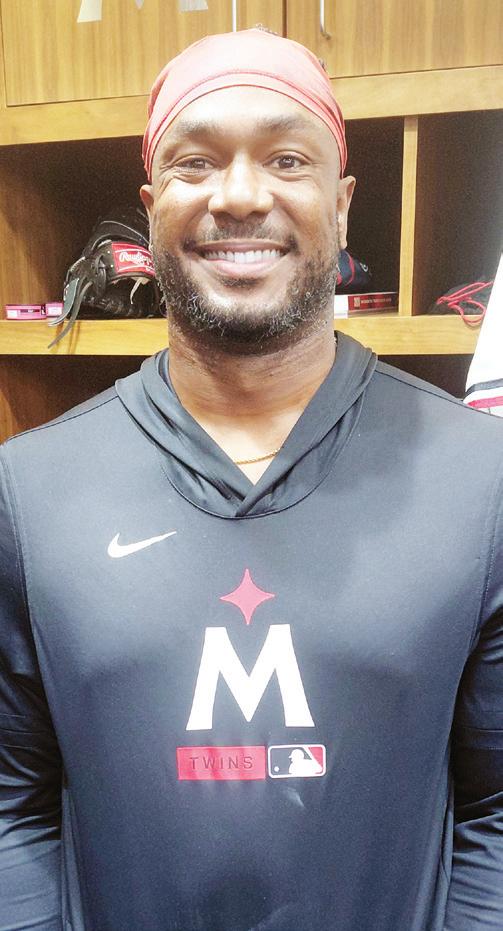
“I started playing before I even knew about professional sports, just hanging out in the backyard with my dad for the most part,” Bell recalled. “Had a lot of fun with it. And then you look up and you’re 12, 13, thinking maybe I got a chance at cracking into the big leagues one day. But when it started, it was just an idea for my dad.”
Bell spent six years in the minors before reaching Pittsburgh in July 2016. His debut was memorable, a pinch-hit appearance in his first at-bat followed by a grand slam in his second. He stuck with the parent club in 2017 and broke the National League record for most home runs by a rookie switch hitter, finishing third in the league’s Rookie of the Year voting. Last season with Washington, Bell became just the second player in Nationals franchise history to hit home runs
from both sides of the plate in the same game.
This season, he ranks 11th in both slugging percentage (.559) and OPS (.954). During a seven-game stretch in April, he hit .318 with two doubles, two home runs, five walks, seven RBI, seven runs scored, a .444 on-base percentage and a 1.126 OPS.
Bell credits much of his success, including becoming a switch hitter, directly to his father.
“He turned me around, changed my hands. The rest is history.
“I think he saw somebody on TV and he was like, ‘My son could do that,’” Bell said. “We went into the backyard that day and he turned me around, changed my hands. The rest is

By Charles Hallman Sports Columnist
ootball and women’s volleyball are typically fall sports. But spring practices are equally important for countless reasons: building team chemistry, teaching skills and reinforcing technique.
Last week, the SpokesmanRecorder spent time on both sides of the Mississippi, visiting the University of St. Thomas and the University of Minnesota as their football and volleyball teams wrapped up spring practices.
In St. Paul, St. Thomas football coach Glenn Caruso, a 12time coach of the year winner since taking over the Tommies

program in 2008, spoke after a recent workout about what spring ball means without a Saturday opponent to prepare for.
“That means for us, banking reps, being able to build depth
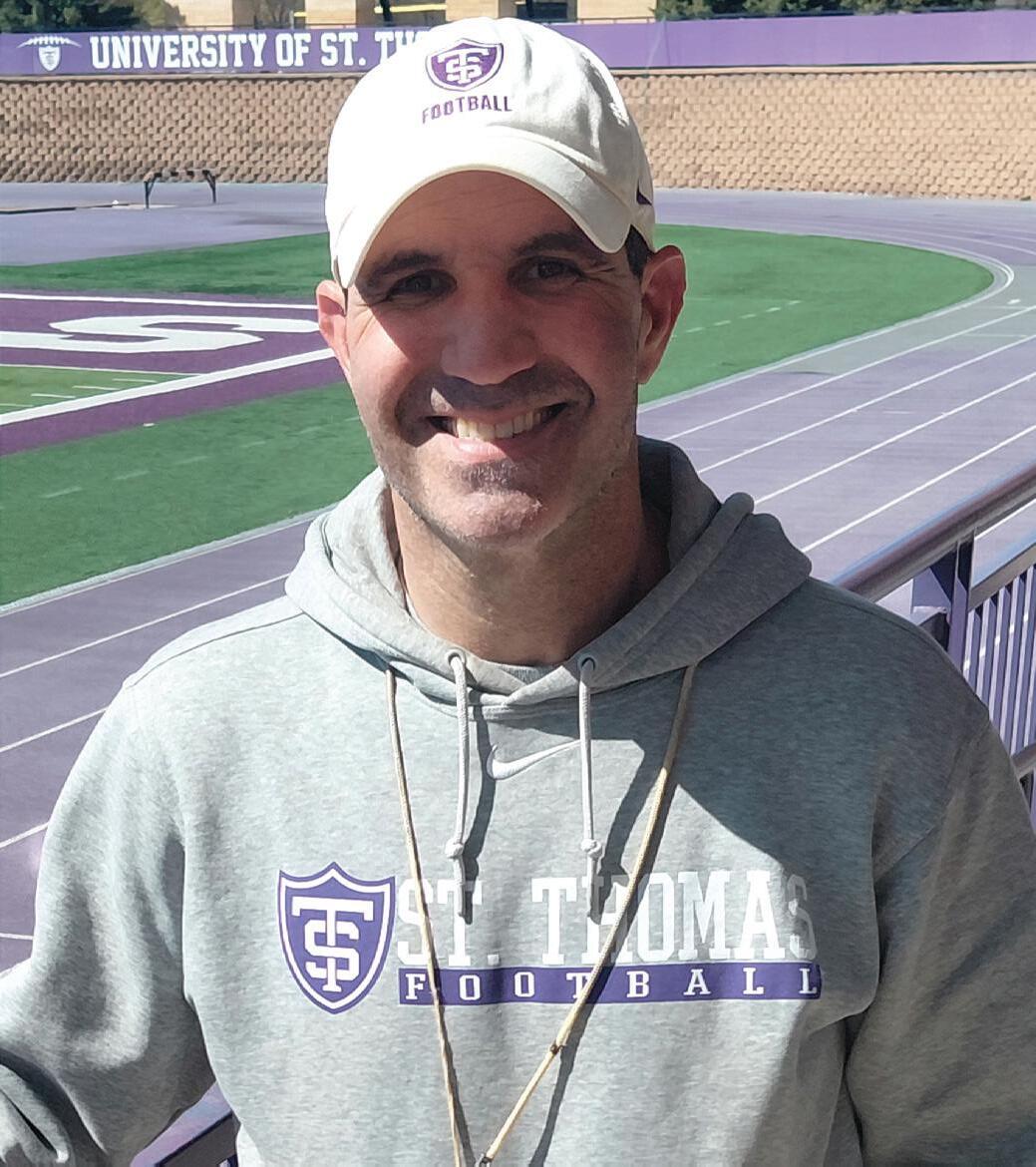
and then strengthening the belief and confidence in what we do,” Caruso said. Spring ball also matters for shaking off the offseason rust.
“January, February, March… it’s kind of a coaching desert,” he continued. “To be able to get back out here with the players is refreshing.”
Graduate student quarterback Amari Powell of Valencia, Calif., is competing for the fulltime starting job this fall. The 6-foot signal-caller started six games in 2025, completing 69 of 131 passes for 786 yards, five touchdowns and two interceptions. His best performance came last October, 265 yards and three touchdowns. He graduates this spring with a finance degree and will begin graduate school in the fall.
“It’s good to be back out here in my second year with this offense,” Powell said. “The biggest thing is that whatever we struggled with in the fall, we can correct and fix in the spring, and work on some new
things.”
Caruso noted that the condensed format, 90-minute practices twice a week with three-deep reps rather than four, keeps things focused. He also acknowledged his full roster isn’t assembled yet.
“You have 30 freshmen, maybe six or seven of which you think are probably going to play on Saturdays… they aren’t here yet,” he said. “We want them to leave here healthy, and we need to know who our roles are before the freshmen come in.”
The St. Thomas spring game is scheduled for Friday, May 8.
“I would say we’re not polished yet,” Caruso said.
Meanwhile in Minneapolis, spring volleyball concluded with a match last Friday between Minnesota and St. Thomas inside Maturi Pavilion. Both the Gophers and the Tommies won two sets apiece.
Taylor McNear, a 5-6 senior defensive specialist and libero, is back for her second and final season at St. Thomas after transferring from Appalachian State following the 2024 season.
“Losing a lot of seniors in the fall was hard, but we took it as a chance to find our new identity,” McNear said. “This spring, we really focused on trying to find that identity… everyone finding a voice, playing together, making sure we have each other no matter what.”
Gophers coach Keegan Cook said the match gave his staff a
‘Slow Mo’ Anderson proves the NBA’s smartest player doesn’t have to be the
ne might expect a nickname like “Slow Mo” to be both offensive and insulting. But for longtime NBAer Kyle Anderson, he chose early on to adopt the moniker proudly.
“I got the name from two different places,” said Anderson after a recent Timberwolves practice. “At a tournament in Queens, N.Y., they had a director on the loudspeaker who would call me ‘Slow Mo,’ I was around 11 or 12. Then we went to a tournament in Florida, and a lot of the kids down South would call me Slow Mo as well.”
“I know I played well when they gave me that nickname,” he added.
The 6-8 New York City native’s nickname stuck because he plays so deliberately, not as fast as most athletically gifted players, but with a methodical
intelligence that more than compensates. He knows how to use angles, read the game and put teammates in position to succeed.
“With any team, I feel I bring things that don’t show up on the stat sheet or maybe go unnoticed.”
“I think it’s just having a high IQ going out there,” Anderson said. “I’m able to use my instincts, my size and my ability on defense. I think I’m a decent rebounder, and on the offensive side, I can get guys in the right spot and make the right play, whether it’s for myself or for somebody else.”