

More than a prisoner of war: Shoshana Johnson reflects on service
By Damenica Ellis Staff Writer
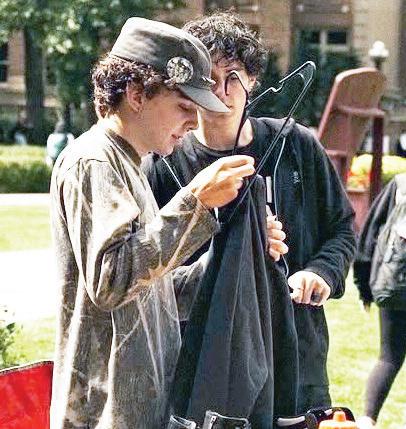
hoshana Johnson, a war veteran and author known as the first African American woman prisoner of war, said she does not like to be remembered that way.
“I’m a survivor, I survived captivity,” she said. “I’m a female veteran, a female Army soldier.”
Johnson was born in the Republic of Panama before immigrating with her family to Texas. Military service was something she was familiar with as her father served in the Army for 21 years and several aunts, uncles and cousins also served.
Johnson joined Junior ROTC in high school and said the military was part of her background.
“After I dropped out of college, trying to find my way, I joined the military,” Johnson said.
During her time in the Army, Johnson was captured by Iraqi forces during the Iraq War. She was rescued after 22 days and later received a Bronze Star Medal, Purple Heart and Prisoner of War Medal.
Johnson said she hates the title as the first African American prisoner of war and would rather highlight the contributions of Black women like her in the military.
“Over 200 years … Black females have been contributing, whether they acknowledge it or not, but I’m the first one to get caught. That’s not something I jump up and down about,” she said.
When looking at history, Johnson said, she notices that people tend to overshadow the contributions of women, women of color and people of color. The first person killed in conflict for America during the revolutionary war was Crispus Attucks, she said, a Black and Native American man.
“Do we have anything named after him or anything like that?” Johnson asked. “No, because they want to hide the contributions.”
Johnson is part of a long history of women in the military, she said. Women have been serving since the Revolutionary War and Civil War disguised as men or serving alongside their husbands. This is not highlighted, she said.
“I think there’s a real injustice done to our young
Dr. Marcheta Evans leads St. Kate’s with purpose, presence and power
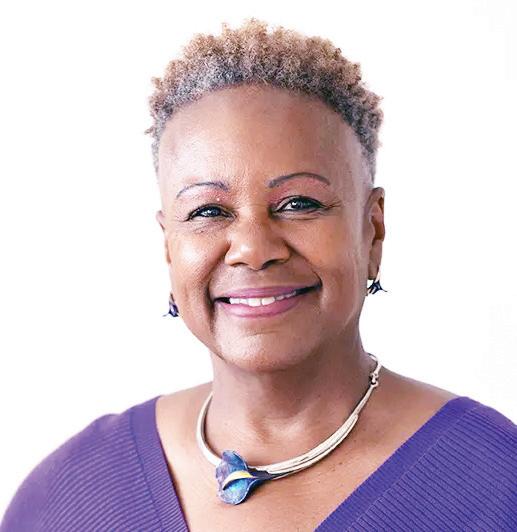
Dr.
By Jasmine McBride Editor or Women’s History
Month, leadership stories often center on legacy. For Dr. Marcheta Evans, leadership is just as much about the present.
As president of St. Catherine University, Evans is focused on what she calls stewardship in real time: serving students, supporting faculty and guiding an institution
navigating both opportunity and uncertainty.
“We are stewarding the present and the future,” Evans said. “It’s about being present in the moment and understanding the responsibility that comes with that.”
That responsibility is significant. St. Kate’s serves roughly 3,700 students, many of whom are first-generation college students or come from high-need backgrounds. ■ See EVANS on page 5

people by not highlighting how we truly got here as a nation. Women served, people of color served, and looking at those old movies from the 30s and 40s, thinking it was just white male, and thinking that’s how you won the war,

not true.” Johnson’s story
The unsung heroes of World War II: The Six Triple Eight
By Alex Nellis Analysis
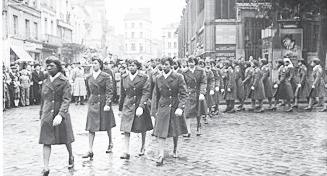
uring World War II, the 6888th Central Postal Directory Battalion, better known as the Six Triple Eight, performed a mission of extraordinary importance, yet their story remained largely overlooked for decades. This all-Black female battalion, consisting of 31 officers and 824 enlisted members, was tasked with solving a staggering mail backlog that left millions of soldiers disconnected from their families. Their efforts not only restored communication but also provided vital support to morale and military operations overseas.
At the height of the war, over 17 million pieces of mail went undelivered due to staff shortages and outdated sorting systems. For soldiers and civilians alike, letters were the only connection to loved ones. Without them, families had no way to know if soldiers were safe, and troops were cut off from the support they desperately needed. Into this challenge stepped the Six Triple Eight.
The battalion quickly developed an innovative tracking system, creating 7 million identification cards for soldiers and investigating
misdirected mail. Working at an astonishing pace, processing 65,000 pieces per shift, they cleared the initial backlog in just three months. Their success led to a second assignment at a major facility in France, where, given a 180-day deadline, they again completed the work in three months. Their efficiency ensured soldiers and families could reconnect, stabilizing morale at a critical moment in the war.
Despite their accomplishments, the Six Triple Eight faced relentless barriers rooted in racism and segregation. They were denied access to main Army facilities and
turned away by the Red Cross from using housing spaces, forcing them to stay with English families who offered accommodations. Even when the Red Cross eventually built a clubhouse, it was inadequate compared with facilities available to white soldiers, and the battalion refused to use it, standing firm in their principles. Tragedy struck in 1945 when three members died in a car accident, and the Army refused to cover funeral expenses, claiming the deaths were not combat-related.
After returning home in 1946, the Six Triple Eight received little recognition. Major ■ See SIX on page 5



Marcheta Evans Courtesy
Members of the 6888th Central Postal Directory Battalion (Six Triple Eight) march in a May 1945 parade in Rouen, France, honoring Joan of Arc at the site where she was executed.
Statewide public data on pretrial incarceration key to public safety, advocates say
By Izzy Canizares Contributing Writer
What do we know about the people being held in city jails and their treatment before trial? According to jail reform advocates: not much.
Two new bills introduced in the Minnesota House and Senate would change that, requiring consistent statewide collection and public reporting of data on individuals held pretrial. “Right now in Minnesota, more than half of the people in our jails, nearly 3,000 people on any given day, are being held pretrial, meaning they have not been convicted of a crime,” said Danielle Matthias, director of policy and advocacy for the Minnesota Freedom Fund.
“And we know that this burden falls disproportionately on Black, Indigenous, and lowincome communities, with Greater Minnesota having the highest rates of pretrial detention.”
The Pretrial Data Transparency Act, comprising HF 1775 and SF 1908, would require the Department of Corrections to publish detailed public information regarding pretrial detainees. This includes demographic data, charge descriptions, bail conditions, information on defense attorneys, failure-to-appear rates, and details on any eventual sentences imposed. Matthias noted that in many cases,

whether someone remains in custody is influenced more by their ability to pay bail rather than an assessment of risk. “Pretrial detention is not a neutral experience. It is destabilizing and, in many cases, unsafe,” Matthias said. “Even short periods in custody can result in job loss, housing instability, and separation from family. We also see people being pressured into accepting plea deals simply to secure their release.”
For many held before sentencing, the experience is psychologically disturbing, according to interviews conducted by the Minnesota Justice Research Center. “I felt trapped and hopeless, like my only option was to plead out,”
said Darla Holland of the Incarcerated Workers Organizing Committee and a former jail inmate. She recalled the difficulty of accessing resources due to high costs behind bars. “Whenever you’re incarcerated, you’re sort of treated like you’re always lying.” Dr. Katie Remington Cunningham, research director of the Minnesota Justice Research Center, echoed this sentiment. “Our system is in theory predicated around the presumption of innocence... but the reality is it doesn’t always unfold that way. You get a lot of punishment in the pretrial process.”
While some counties maintain online dashboards, the data varies significantly by jurisdiction. Hennepin County
launched a dashboard in 2024 that is updated daily, showing 721 people in custody as of March 19 with a median stay of 28 days. However, dashboards in Hennepin and Ramsey counties do not explicitly specify how many inmates are awaiting trial versus those held for transfers or presentencing. “We do not have a centralized, statewide system to track what is happening, which means we cannot answer basic but critical questions about who is being detained, for how long, under what conditions, or with what outcomes,” Matthias said.
To bridge this gap, the Minnesota Freedom Fund has utilized its Court Watch program, where staff and volun-
Grad workers rally in U
teers observe bail hearings in Hennepin and Ramsey counties. “By formalizing this program and collecting our own data, we are able to surface patterns, elevate stories that would otherwise go unheard and shed light on how the system operates day to day,” Matthias said, adding that while Court Watch is critical, it is not a substitute for systemic reform. “I’m proud to be the House author of this proposal,” said state Rep. Dave Pinto, author of HF 1775 and a practicing prosecutor. “I see the complex challenges and frequent disparities inherent in this system. I’m determined to keep improving our justice system, for the well-being and safety of all of us.”
“This is another one of those questions that we cannot answer statewide, which is infuriating,”
Clint Combs
Contributing Writer
Anna Martin-Boyle and John Hutchinson say they are tired of being treated like cheap labor at the University of Minnesota.
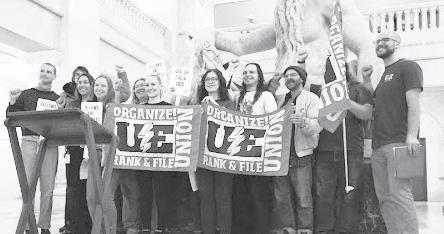
They stood inside the Minneapolis City Hall Rotunda on Wednesday, March 18, alongside fellow members of Graduate Labor Union (GLU) Local 1105, calling on the university to settle an ongoing labor dispute over whether fellows and trainees are entitled to the same workplace protections already guaranteed to graduate assistants. The rally highlighted what union members describe as a deliberate and costly effort by the university to sidestep a state law passed nearly two years ago.
At the center of the dispute is a 2024 amendment to Minnesota statute 179A, which GLU members say the university has refused to recognize, forcing the issue into a prolonged and expensive hearing process at the Bureau of Mediation Services. Union leaders argue the university’s resistance is not only unlawful but harmful to hundreds of graduate workers who depend on collective bargaining protections for basic workplace rights.
“The University of Minnesota continues to illegally refuse to recognize graduate fellows as part of our bargaining unit, thereby denying the union protections that they deserve and have fought for over the
last couple of years,” said Ben Lewis, president of GLU Local 1105. The university did not respond to written requests for comment.
For Hutchinson, a Ph.D. student in chemical engineering, the distinction comes down to funding classification, one he says has no meaningful connection to the work being performed.
“If you were to enter my group, you would not be able to tell which of us were fellows and which were graduate students,” Hutchinson said. “We are doing the same work.”
He also pointed to what he sees as a contradiction in how the university values his contributions. While his research is recognized at the national level, he said, the university denies that he qualifies as an employee.
“Next week, I’m traveling to the National Science Foundation’s annual meeting, where I’ll be sharing how the $3 million the NSF has put forward to the University of Minnesota for my program has led to increased research outputs,” Hutchinson said. “Yet in spite of all of this, the University of Minnesota maintains that I do not work here and that I’m not entitled to the protections guaranteed in our collective bargaining agreements.”
Martin-Boyle, the union’s chief steward, said she has experienced the consequences of that distinction firsthand. Previously covered under union protections, she
was shifted this semester to a patchwork of fellowships, leaving her without the rights she once had. Now, she finds herself in the same position as the workers she represents.
time, potentially losing their protections overnight.
“This issue affects a lot more than just 800 fellows,” she said. “All 4,000-plus workers in our unit can be moved to a fellowship if the department
The bills have been referred to the Public Safety Finance and Policy and the Judiciary and Public Safety committees and await votes in the current legislative session. Advocates argue that the lack of transparency makes it nearly impossible to identify disparities or ensure accountability.
“The longer that you’re locked up in jail, the more likely you are when you get out to be unstable, and when you’re unstable, we see more incidents of crime,” Cunningham said.
“The decisions that we make about pretrial law are hugely instrumental in whether or not people are able to be safe.”
For Holland, the reality of the current system remains stark.
“Jails are sort of like their own world and the oversight in a jail is administration. You fall through the cracks and contacting the outside world is difficult.”
Izzy Canizares is a freelance journalist and contributing writer for the Minnesota Spokesman -Recorder.
Existing data already highlights these significant racial disparities. In Hennepin County, Black individuals made up 64% of the jail population as of March 19 and reported the longest average stays, some exceeding 1,000 days. Ramsey County shows a similar pattern: Black individuals comprise roughly 45% of the jail population despite making up only 12% of the county’s total population. Median stays for white detainees range from one to two days, compared to two to three days for Black detainees. “This is another one of those questions that we cannot answer statewide, which is infuriating,” Cunningham said. She noted that in Hennepin County, 63% of the population staying 30 days or more is Black.
of M
dispute
explicitly include fellows in the bargaining unit.
Despite the law passing nearly 19 months ago, GLU leaders say the university has yet to comply. Efforts to resolve the is-
“If a supervisor forces a fellow to work 60-hour weeks, the university bars me from filing a workload grievance on the worker’s behalf,” MartinBoyle said. “If a department denies a fellow parental or bereavement leave or sick time to care for a child, there is no formal recourse. If a fellow is sexually harassed in the workplace, I cannot sit with them and represent them through Title IX proceedings.” She emphasized that the issue extends well beyond the roughly 800 fellows currently affected. Because of the university’s funding structure, any of the more than 4,000 workers in the bargaining unit could be reclassified at any
decides that’s the best way to fund them. I know this is true because it is happening to me right now.”
According to Martin-Boyle, her advisor had planned to place her on a research assistantship, an appointment that includes union protections, but her department instead assigned her to multiple fellowships without explanation.
The dispute has been building for more than a year. Sandra Shahriar described similar concerns during testimony before the Minnesota Senate Finance Committee in April 2024. That testimony helped support SF 5266, which amended the Public Employment Labor Relations Act to
sue through bargaining have stalled. Hutchinson described negotiations in which the university rejected multiple union proposals and failed to engage in meaningful compromise.
University of Minnesota is not above the law.”
“During our bargaining and mediation sessions, our union put forward numerous approaches to find a path forward,” he said. “The university rejected every single one. They made one proposal, re-
turning one of ours with every line crossed out and stating that no fellows or trainees belonged in the bargaining unit.”
The university’s proposed path forward through the Bureau of Mediation Services would require each of the 871 fellows and trainees to testify and be individually crossexamined. Union leaders say such a process could cost taxpayers millions, at a time when the university is cutting academic programs by 7% and implementing its largest tuition increase in 14 years.
Political pressure is now intensifying. State Sens. Jennifer McEwen and Omar Fateh, along with 17 other legislators, sent a letter this week urging the university to reach a settlement. Meanwhile, Minneapolis City Council Member Robin Wonsley is expected to introduce a resolution supporting graduate fellows’ rights, with a committee hearing scheduled for March 24 and a full council vote possible by March 26. Despite growing pressure from lawmakers and city officials, the union says the university has not responded to its latest settlement proposal.
“The university is taking this opportunity to openly and publicly defy state law at the harm of its workers,” Hutchinson said. “The University of Minnesota is not above the law.”
Clint Combs welcomes reader responses at combs0284@ gmail.com.
GLU organizers inside the Minneapolis City Hall Rotunda, March 18. Clint Combs/MSR
Health
Where does your premium dollar go? See how health insurance spends your money


By Andrew Marshall
Have you ever wondered what your insurance premium covers or where those dollars go? Who gets what portion of that dollar?
The truth is that every premium dollar is carefully divided — understanding that breakdown can help you see the value of your coverage and why costs keep rising.
The big picture: Most of your dollar goes to care
No matter the insurer, non-
profit or for-profit, the largest share of your premium goes directly to medical care.
On average, 80 to 85 cents of every dollar pays for hospital stays, doctor visits, lab tests, and prescriptions. This breakdown isn’t just trivia, it’s tied to a federal rule called the Medical Loss Ratio (MLR). Under the Affordable Care Act, insurers must spend at least 80% to 85% of premium dollars on medical care and quality improvements.
In other words, most of your premiums are legally required to support your health.
So, what about the rest?
After a health plan pays for medical care, there’s still a portion of each premium dollar that supports the behindthe-scenes work that makes your coverage function.
Here’s where that remaining portion typically goes:
• Administrative support
About 8 cents goes toward the people and systems that process claims, answer member questions, manage customer service, and help connect you with the care you need.
• Taxes and required fees. Around 2 cents is spent on paying various taxes and other required fees.
• Agents and brokers. Approximately 3 cents supports the agents and brokers who help individuals, families, and employers understand their
coverage options and choose the plan that fits their needs. These professionals are often independent and work across multiple insurance companies.
That leaves a few cents … Where does that go?
After medical care, administrative costs, taxes, and required fees are covered, a small portion of each premium dollar remains. How those final cents are used depends on the type of insurer.
All insurers are required to maintain financial reserves to ensure they can pay claims and remain stable over time.
Beyond those requirements, for-profit insurers may also return value to shareholders, while still supporting community efforts.
“Premiums rise largely because health care itself is becoming more expensive.”
Nonprofit insurers don’t pay shareholders. That allows remaining dollars to be reinvested into member benefits and local communities. That might include additional medical benefits, funding mental health initiatives, supporting food security programs, and offering grants for preventive screenings. These investments aim to improve health outcomes and reduce long-


term costs, so that more of your future dollars can go toward care, not crisis.
What about rising premiums?
If most of your premium dollar goes to care, why do premiums keep climbing?
Premiums rise largely because health care itself is becoming more expensive. Prices for hospital care, physician services, and specialty drugs increase each year. Rapid medical innovation, like new treatments and advanced diagnostics, can greatly improve outcomes but often carries higher upfront costs, adding to system-wide expenses as they become standard practice. Growing demand for care, rising labor and staffing costs,
policy changes, and inflation also play major roles in driving premiums upward.
The pressures affect every insurer, for-profits and nonprofits. No single part of the system drives costs on its own, putting added pressure upon mission-driven organizations who often want to invest in preventive care and community health programs. Efforts like those aim to improve outcomes and help control costs over time.
What can you do?
• Ask Questions: If you’re curious about how your specific premium dollar is spent, reach out to your insurer or check out their website for information.
• Use Preventive Care: Staying healthy helps keep costs down for everyone.
• Compare Plans: Look for transparency and community investment if those values matter to you.
Bottom Line: Your premium dollar isn’t disappearing into a black hole. Most of it pays for care and supports the operations that keep your coverage running. Understanding this breakdown can make those monthly payments feel a little less mysterious, and a lot more meaningful.
Andrew Marshall is the Minnesota Market President at Medica, whose deep expertise in health policy and community health.


Black Business SPOTLIGHT Strive Bookstore
By Lizzy Nyoike Contributing Writer
In the heart of downtown Minneapolis, inside the Medical Arts Building, a unique literacy space is quietly transforming how stories are told, and who gets to tell them.
At Strive Publishing & Bookstore, founder and CEO Mary Taris has created more than a bookstore, building a cultural hub rooted in representation, community, and the power of storytelling, particularly for Black voices that have historically been underrepresented in mainstream publishing.
Taris, a former educator, launched Strive in 2018 after recognizing a persistent gap in the classroom: students were not seeing themselves reflected in the books they were asked to read.
“Just after years of teaching and not finding enough books that represent the children that look like me,” Taris said, reflecting on her years in education. “The children didn’t
want to read books that didn’t represent them.”
That realization sparked what would become a mission-driven bookstore with representation at its foundation.
Strive is intentional about the stories it carries and shares. Its shelves highlight African American and Black heritage literature while also expanding the narrative to include voices across the African diaspora.
“Our main focus is African American, Black heritage,” Taris said. “Even connecting folks who immigrate here from Africa and help people understand that African Americans are not the stereotypical things you see on TV or hear in the news.”
The space isn’t just about selling books, it’s about challenging narratives, bridging cultural gaps, and fostering understanding. In a media landscape where representation often feels limited or distorted, Strive offers something different by centering
Business
Strive Publishing & Bookstore centers Black voices
titles that reflect real experiences and diverse identities often missing from traditional bookshelves.
Taris’ background in education continues to shape the bookstore. She sees literacy not only as an academic skill, but as a tool for empowerment and identity-building. She said for many customers, Strive serves as a first encounter with books that reflect their lived experiences.
“I come across a lot of adults who were like me where we did not read a book that had someone that looked like us until we were maybe in our
20s,” she said.
That delayed representation is something Strive works to change, starting with children but extending to readers of all ages. By placing culturally relevant books in the hands of young readers, Strive helps address what Taris describes as a deeper issue tied to literacy and engagement.
“They needed books that they could relate to,” she said. Beyond the retail bookstore, Strive also operates as a publishing company, offering services designed to make publishing more accessible, especially for aspiring Black
The rise of women-owned businesses and a new definition of success
By Damenica Ellis Staff Writer
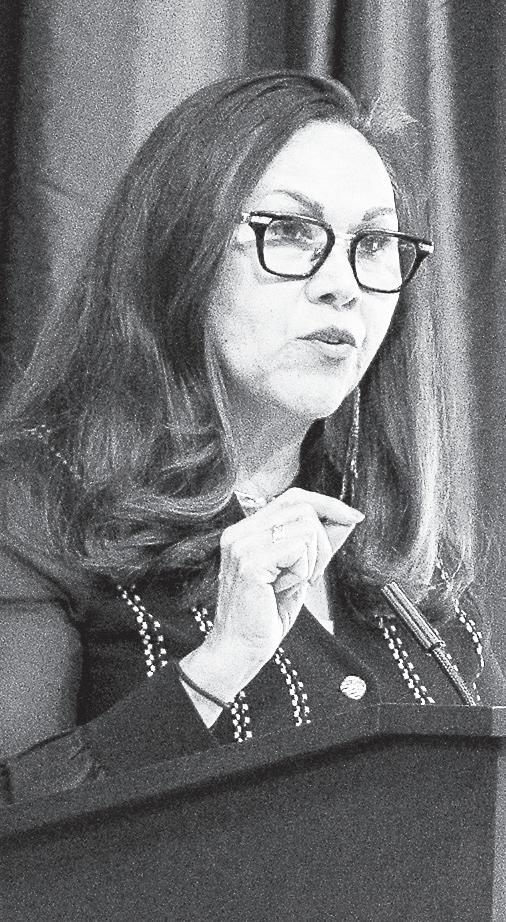
Terresa Hardaway, a profes-
sor and owner of two Twin Cities businesses, says her experiences in traditional workplaces differ sharply from the Black woman-led spaces she creates.
“I think the culture of care is something completely different that I can have and instill in my companies that I don’t necessarily see at an outside institution,” she said.
Women founded nearly half of new businesses in 2024, according to Gusto, a 69% increase from 2019 and the highest rate recorded in its New Business Formation Report. Many of these businesses reflect leadership styles, values and challenges that differ from traditional models.
Tasha Harris is among them. After 28 years in banking and finance, she left corporate America to start a business with her daughter, Kobi Gregory. Harris said her previous career taught discipline and financial stewardship, but also exposed limitations many women face, including glass ceilings, burnout and the constant need to prove themselves.
Launching Kobi Co., built around Gregory’s candle line, felt like a risk worth taking, and an opportunity to create something value-driven, intergenerational and rooted in community.
“Something where creativity and care could sit at the same table as strategy and sustainability,” Harris said.
The mother-daughter duo intentionally built a space grounded in women’s values and Black history, elements Harris felt were missing in corporate environments.
“We say we’re at the intersection of scent, sound and

self-care,” she said. “There could never be a corporate experience that could match the heart-centered experiences that we build into our business.”
Harris believes many corporate structures prioritize profit over people.
“That’s just how capitalism works,” she said. “But we think we can do things differently.”
While profit remains necessary, she said Kobi Co. prioritizes people, mental health and community.
“We make sure that people are first over profit, and that wellness is at the forefront of how we work and show up in community.”
Those values are reflected in both their products and physical space, which Harris described as a place where people feel seen and safe enough to exhale.
“That’s what I didn’t have in corporate,” she said.
Hardaway’s businesses, Black Garnet Books and Blackbird Revolt, a creative studio, are similarly rooted in purpose. Blackbird Revolt blends her design background with activism, social justice
and Black liberation.
“There are ways that I can show up for employees and culturally connect among team members, and we make time for that,” she said. “That’s different from being at a large institution.”
Support systems are also growing. Women in Entrepreneurship (WE*), a program at the University of Minnesota’s Gary S. Holmes Center for Entrepreneurship, works to help women see themselves as founders.
The program offers mentorship, pairing students with women entrepreneurs.
“This is an opportunity for students who may have never considered entrepreneurship to meet a female founder and see that this is a real pathway,” said Allison McDonald, who helps lead WE*.
The group also hosts events where founders share their experiences and advice. Founded in 2015 by female investors seeking to increase women’s access to funding, WE* continues to address one of the biggest barriers: capital.
authors. Through flexible options, writers can choose the level of support they need, whether it’s editing, distribution, or full publishing assistance.
“If you want to have your book published as a self-published author, we just help you get it set up and then you take it from there,” Taris explained.
The model lowers barriers that often prevent marginalized voices from publishing their stories. Instead of navigating a system that can be difficult to access, authors can take control of their work with support tailored to their needs.
“They needed books that they could relate to,”
Taris continues to lead Strive’s publishing arm because, as she puts it, “there are so many people with stories and they want to write books, so even though I moved into the book sales and bookstore space, I continued to keep that publishing arm because I know that there are so many stories that still need to be heard.”
Stepping inside Strive, the space is filled with couches and chairs, creating a homelike and welcoming environment that extends beyond a traditional retail bookstore. It also serves as a gathering place for the community.
The bookstore regularly hosts literacy events, meetand-greets with local and national authors, book launches, and book talks. Other events include spoken word, poetry, and workshops that invite the community to engage and participate.
“We love to bring in local authors, even national authors, to come and connect with the community,” Taris said.
Strive centers culture, storytelling, and community, creating a space where Black voices are uplifted, local authors are supported, and readers can see themselves reflected on the shelves.
Located at 825 Nicollet Mall, the bookstore invites visitors to step into a space where Black stories are not just consumed, but lived, shared, and celebrated.
Lizzy Nyoike is a Hubbard School of Journalism & Mass Communication student and contributing writer for the Minnesota Spokesman-Recorder.
“Especially for Black women, we often have to overexplain our vision and how we plan to scale in ways others don’t,” Harris said. “The next step is trusting Black women as longterm builders of economic systems.”
McDonald agrees funding remains critical.
“I think women are ready to start these ventures,” she said. “Now it’s about growth.”
She noted that more women in investment roles could help shift that dynamic, along with firms focused on funding women-led businesses.
McDonald also encounters many women who don’t identify as entrepreneurs, even when running successful ventures.

ness.”
“I think women are at the point where we’re ready to start these ventures and it’s about growth, really.”
“They’ll say it’s a side hustle,” she said. “I tell them, ‘You’ve been running a business for 10 years, you are an entrepreneur.’”
She added that men are often more likely to claim that identity.
That perception gap affects founders like Harris and Hardaway.
“We’ve had moments where our company was seen as a hobby before people understood the scale and strategy behind it,” Harris said. “A lot of Black women founders are underestimated in that way.”
Hardaway said she has also experienced clients questioning her team’s expertise.
“People don’t think we have the abilities we have,” she said. “Having to constantly prove that adds another layer of exhaustion to running a busi-
Despite challenges, both women see progress. Harris pointed to more intentional partnerships and equity-focused funding conversations locally.
Several factors are driving the rise in women-owned businesses, McDonald said, including mentorship and the groundwork laid by earlier generations.
“Women before us helped secure a seat at the table,” she said. “Now it’s about making sure our ideas are heard and implemented.”
Hardaway emphasized access and opportunity.
“I think women are natural leaders,” she said. “Having access to resources has helped refine those skills and grow more women-owned businesses.”
Harris believes many women are also redefining success.
“I thought I would climb the
corporate ladder,” she said.
“But many Black women are now asking: Does this work matter to me? Does it reflect my values and create impact?” She added that women are recognizing the value of their skills, whether gained through corporate work, caregiving or community involvement.
“We’re not waiting for permission,” Harris said. “We’re building businesses that reflect our lived experiences and our own definitions of success.”
Looking ahead, she believes women entrepreneurs will reshape workplace culture.
“We prioritize flexibility, mental wellness and collaboration,” she said. “Over time, those values can influence broader workplace culture.”
In the long term, she expects more sustainable environments, more intergenerational entrepreneurship and a wider definition of success, one that includes social impact alongside profit.
Damenica Ellis welcomes reader responses at dellis@ spokesman-recorder.com.
Terresa Hardaway Courtesy
Allison McDonald Courtesy
Tasha Harris (left) and Kobi Gregory Courtesy
Courtesy
went back to school to study culinary arts and since then she and her niece have been working on a cookbook.
Family, she said, has played a crucial role in her life, especially as she continues to navigate post-traumatic stress
disorder after her time in Iraq.
“I don’t know if I’d still be here if I didn’t have the kind of supported family that I do,” she said.
When facing her PTSD, Johnson said she knows how to ask for help.
“I’ve learned that. My issue with my PTSD is not a thing that’s gonna be cured tomorrow. It’s a chronic condition that I will be living with
Nearly half identify as students of color, reflecting the university’s long-standing mission rooted in inclusion and community engagement.
That mission has gained national attention. In the past year, St. Kate’s was recognized as a top producer for the Fulbright U.S. Student Program and received the Carnegie Classification for Community Engagement. The university was also ranked among the top colleges in the nation for women by Newsweek.
For Evans, the recognition affirms what she already knew.
“This is no longer a bestkept secret,” she said. “People are starting to see who we are and what we do.”
Her path to leading the university was shaped decades earlier. Raised in Alabama during the Civil Rights Movement, Evans was guided by her grandmother’s belief in education as a form of liberation.
“She used to say, ‘Get your education… No one can take that from you,’” Evans recalled.
That message stayed with her, even as her own academic journey took unexpected turns. Initially aspiring to attend medical school, she pivoted after realizing she had not been adequately prepared
“I think there’s a real injustice done to our young people by not highlighting how we truly got here as a nation.”
for the rest of my life, and I just learned how to manage and reach out for help when things get rough.”
Sometimes what helps is
counseling, medication or just getting away to relax. Johnson encourages women to remember those who came before them and to rec-
in the sciences. That experience led her into counseling and, ultimately, higher education leadership.
“I started asking, who is helping students realize their dreams?” she said. “That’s what led me to this work.”
Evans followed a traditional academic path, faculty member, department chair, dean, and provost before pursuing a university presidency. Along the way, she became acutely aware of how rare it was to see leaders who looked like her.
“There are not many people in leadership who look like me,” she said. “Representation matters.”
Now, as the first woman of color to lead St. Kate’s, Evans embraces both the visibility and the expectations that come with the role. She describes herself as a “worker bee,” a leader who prioritizes accessibility and connection, often meeting students in the cafeteria or inviting conversation in open hallways.
“You don’t always have to be the smartest person in the room,” she said. “Leadership is about bringing people together and giving them what they need to succeed.”
That philosophy extends
beyond campus culture into institutional priorities. St. Kate’s is focusing on healthcare and nursing, student success, and digital innovation.
This includes the integration of artificial intelligence in both academics and operations.
“We can’t be afraid of innovation,” Evans said. “We have to figure out how to use it in ethical and meaningful ways.”
At the same time, she is navigating real challenges facing higher education. Concerns about financial aid, including Pell Grants and state funding, have had immediate impacts on students, some
ognize their own value.
“I know times are rough right now,” she said. “But I think of our ancestors who fought hard so we can get here, we will survive it and understand what you contribute to the world. Never downplay who you are. Don’t dim your light so somebody else can shine.”
Now 53, Johnson said this is something she had to learn
of whom have questioned whether they can afford to continue their education.
“When students tell you they may not be able to stay in school, that’s hard,” Evans said. “You feel that responsibility deeply.”
She recalls one moment driving to campus, overwhelmed by those concerns, when being pulled over by police while rushing forced her to pause.
“I realized I can’t carry that stress in a way that puts everything at risk,” she said. “I have to be steady for them.”
That sense of accountability shapes how she approaches leadership in a broader social and political context. While she remains candid about challenges, she is also mindful of protecting the institution and the community it serves.
“I’m not just representing myself,” she said. “I’m representing students, faculty, staff and generations to come.”
Evans also sees her role as part of a larger conversation about equity, particularly for women. As the leader of a women-centered institution, she is focused on advancing not just access, but outcomes.
“If women are still making less than men, and women of color even less than that, then we still have work to do,” she said. “Equity has to be intentional.”
over the course of her life, especially after coming back from Iraq, she said.
“Too many times I dimmed my light so someone else can shine,” she said. “We need to quit dimming our light, if they can’t shine on their own, that’s on them.”
Damenica Ellis welcomes reader responses at dellis@ spokesman-recorder.com.
Charity Adams was promoted to Lieutenant Colonel, a rare acknowledgment, but the battalion’s achievements largely went uncelebrated for decades.
In recent years, however, their legacy has begun to re-
ceive the recognition it deserves. In 2018, a monument honoring the Six Triple Eight was unveiled at Fort Leavenworth, Kansas. They received
the Meritorious Unit Commendation in 2019 and the Congressional Gold Medal in 2022. Dr. Artika Tyner’s graphic novel, “The Coura-
geous Six Triple Eight: The All-Black Female Battalion of World War II,” chronicled Adams’ leadership and the battalion’s vital contributions. In 2024, a Netflix documentary starring Kerry Washington, Oprah Winfrey, and other acclaimed actresses brought their story to a wider audience, earning honors from the NAACP Image Awards, Black

“Women’s universities matter,” she said. “This is a place where women are seen, valued and heard.”
Looking ahead, Evans remains focused on sustaining and growing that impact by strengthening community partnerships, expanding student opportunities and ensuring the university continues to serve as both an educational and cultural anchor.
“At the end of the day, it’s about making sure others can rise,”
Her leadership, she says, is grounded in purpose, but also in people.
“At the end of the day, it’s about making sure others can rise,” she said. And in that work, she is not only honoring the legacy of those who came before her, she is helping shape what comes next.
To get involved or support St. Kate’s, visit www.stkate. edu/give.
Jasmine McBride welcomes reader responses at jmcbride@ spokesman-recorder.com.
She believes institutions like St. Kate’s play a critical role in that progress, especially as the number of women’s colleges nationwide continues to decline.
Reel Awards, and the Celebration of Cinema and Television. The Six Triple Eight’s story is one of determination, skill, and courage. They navigated systemic racism, life-threatening conditions, and enormous pressure to ensure that soldiers could remain connected to their families. For decades, their contributions were overlooked, but today, they are rightly cel-
ebrated as trailblazers whose work left a lasting impact on both military operations and the recognition of Black women’s heroism in history.
Alex Nellis is a recent communication graduate who grew up in Saint Cloud, Minnesota. He is passionate about social justice and has completed graduate certificates in gender studies and cultural diversity.

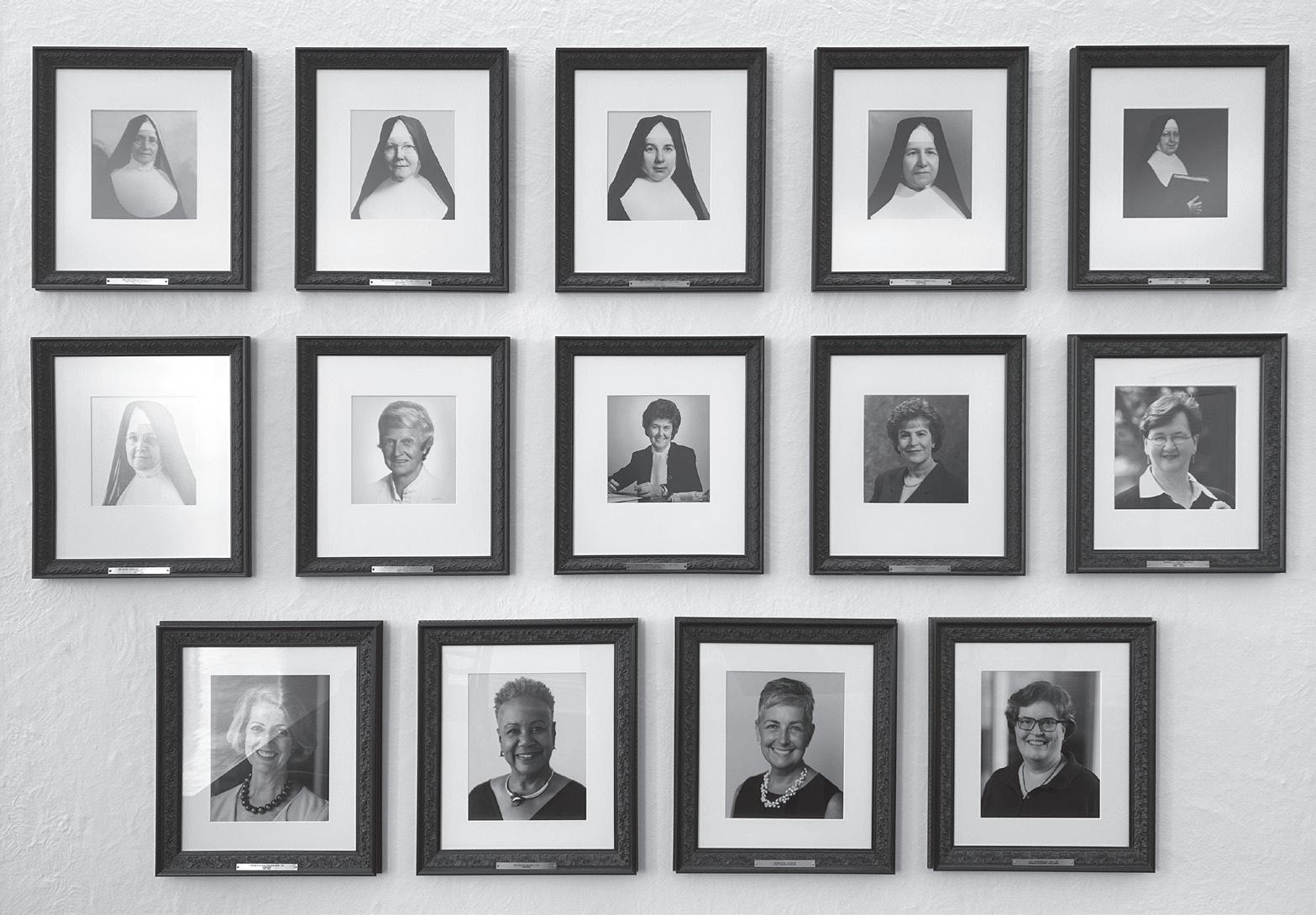
A photo wall at St. Catherine University displays past and present presidents, marking Dr. Marcheta Evans’ historic role as the institution’s first woman of color president. Jasmine McBride/MSR

By Damenica Ellis Staff Writer
Dance has always been part of Imani Moore’s life.
From getting picked up out of her crib bouncing to a song and watching Ciara music videos, she has kept her passion close while working full-time outside of dance.
“I’ve been dancing since I can walk,” Moore said. “When I was younger, I was a very bouncy, energetic baby, and my dad would always tell my mom, ‘she’s gonna be a dancer.’”
Music was a happy place for Moore, and she credits Ciara as one of her earliest dance inspirations. She loved watching her dance, she said. This, coupled with her dad, who she said would be amazed by her ability to memorize dance moves as a toddler, helped shape her early interest.
“My biggest influence is between my mom, dad and Ciara,” Moore said.
Dancer creates space to move, belong and grow, with plans for a future studio
Seeing their daughter’s interest and early love for dance, Moore’s parents enrolled her in ballet. This, she said, built her foundation in the field, helping with abilities such as leg strength and flexibility.
Moore founded Locomotive Dance Crew in 2022, wanting to provide an inclusive space for dancers in the Twin Cities. The team’s dance focus is K-pop, moving toward hip-hop and open style.
“No matter what their dance background was, what their experience was, I wanted them to be able to come together and just have that sense of community,” she said.
The name Locomotive felt like a perfect fit, Moore said, for the group whose mission is to get people moving. Aside from the movement aspect of a locomotive train, the word split in half also carries meaning. Moore wanted to bring a “loco” energy that also motivates.
The team performs at numer-

ous events throughout the Twin Cities, most recently at Panda Fest and the Mall of America.
Moore said it’s important to the team to always have projects going for whenever a performance opportunity arises.
LDC also hosts a showcase each year in December to perform routines from the year. Other dance groups are welcome to apply to perform for free. Moore said this is an event that brings people to-

gether during the cold season.
“Whatever your background is, your size, your weight, where you come from, dance is one language,” she said.
Moore is working to better her craft, with goals of becoming a stronger dancer mentally, physically and spiritually, she said. Steps include eating healthier and exercising more regularly outside of dance.
“There’s always room for improvement no matter what level in your profession that you’re in, there’s always more to learn, more ways to grow, more ways to do those things,” she said.
Next, Moore wants to be more active on social media and work toward strengthening the Locomotive Dance Crew as an organization for when she is ready to step away and start her family.
She eventually would like the team to afford its own studio not only for practices but also to provide dance classes to young people who want to get into dance. She has in mind a nonprofit that will be able to help people in the community learn and grow without having to break the bank.
“I just want to help them live,” Moore said. “I want people to be able to express themselves and feel good about their bodies and things like that.”
“Dance is my passion and I think that’s something I will continue to love even if I’m not on a team. Just something that brings me joy. It’s always going to be in my back pocket.”
Register for auditions or contact LDC at https://locomotivedancecrew. carrd.co/?fbclid=PAY2xjaw QMCS0Bplz0toioVC799f
On The Radar: New podcast spotlights Minnesota’s Black
From emerging talent to established artists, “On The Radar” shines a spotlight on Minnesota’s Black creatives, sharing their stories, inspirations, and impact on the arts community.
The Minnesota Spokesman-Recorder is proud to launch its newest podcast, “On The Radar,” a multi-platform series highlighting artists across music, visual arts, literary arts, and more.
Every Thursday, a new episode will debut alongside an article and video feature. Through in-depth interviews, listeners, viewers and readers will discover each artist’s journey, creative process, inspirations, and insights for the next generation of makers.
“On The Radar” elevates the voices of artists, makers and storytellers whose work shapes cultural life and community identity across Minnesota. The series aims to connect, inform and inspire the Black arts community while offering practical ways for audiences to engage with performances, studios, and creative spaces.
ulqq-p6_dVaIUQwwBR2JM9oHWJAhMKKkZ3YR9tzeEZtg_aem_AT_PGBy9_SPCjqCoLtx-ViCJwJCge7N2d2AB3yZVFS1UA4X9qD8DdE3498moz8Z5ryE
creatives
Community involvement and voting
A unique feature of “On The Radar” is community participation. Artists featured on the series are nominated by the public, who can also vote for the creatives they feel should be recognized.
Eligible artists must live in Minnesota, be between ages 16 and 65, actively pursue a creative practice, and be willing to participate in interviews, filming and promotion. Disciplines include but are not limited to music, visual arts, writing and poetry, filmmaking, photography, design, fashion, pottery, and other crafts.
Tune in every Thursday to hear the latest episode, meet Minnesota’s talented Black creatives, and cast your vote to help celebrate and support the next generation of artists.
Vote here: https://spokesman-recorder.com/on-the-radar-nominations/
Follow Imani Moore on all social media platforms at imani._mm and LDC at locomotivedancecrew.
Film review: ‘Palestine ’36’ is a haunting, essential epic of resistance
By Dwight Brown Analysis
It is a history lesson wrapped in a period drama, an intimate look at British colonialism and land appropriation in 1936 Palestine. It depicts the seeds of a conflict that continues to boil 90 years later. Before the 1948 establishment of Israel, British-controlled Palestine possessed a rich, multicultural history. For 400 years leading up to 1917, it was a diverse pocket of the Ottoman Empire where Arab Muslims and Christians formed the majority and Jewish communities were the minority. After British forces captured Jerusalem in 1917, the League of Nations assigned Britain the “Mandate” to manage the territory in 1920.
Historians often cite strategic interests, such as the Suez Canal, as Britain’s primary motivation. Simultaneously, the 18-word Balfour Declaration of 1917 supported a “national home for the Jewish people” amid rising European persecution. However, British policies, combined with increased immigration and land transfers, displaced vast segments of the Arab population, specifically indigenous farmers.
That is the truncated history. After viewing this enlightening film, many moviegoers will feel compelled to expand their
knowledge of a complex past.
Writer-director Annemarie Jacir (“Salt of This Sea”) masterfully blends colorized archival footage with live scenes shot in Palestine and Jordan. Her script features compelling
characters, profound dialogue, and searing drama. If there is a flaw in this smart creation, it is only that there may be too many protagonists to track.
Yusuf (Karim Daoud Anaya), an Arab teenager, straddles two worlds. His family lives in the modest farming village of Al Basma, but in Jerusalem, he assists Amir (Dhafer L’Abidine), a wealthy newspaper publisher, and his wife Khuloud (Yasmine Al Massri), who pens political articles under a pseudonym.
The world is shifting. The British, led by High Commissioner Wauchope (Jeremy Irons), are granting Jewish
settlers deeded land that Arabs have farmed for centuries. British officers like Capt. Wingate (Robert Aramayo) harasses and imprisons those who resist. While Amir and Khouloud assume their elite connections with British emissaries like Thomas (Billy Howle) will buffer them, the laborers are already organizing. Khalid (Saleh Bakri), a longshoreman, leads an insurrection that forces Yusuf to finally abandon his passivity.
A tighter script might have focused solely on Yusuf’s arc, as he anchors the opening. Instead, Jacir shadows a wide ensemble: a Christian priest (Jalal Altawil) and his son, and

a village widow, Rabab (Yafa Bakri), struggling to hold onto her identity. “Your land is where your people are buried,” Rabab notes. While this “splintered” attention might confuse mainstream viewers, art-house audiences will appreciate how these separate lives intertwine.
Damenica Ellis welcomes reader responses at dellis@ spokesman-recorder.com.
pers in their own homeland and being interrogated by soldiers echoes contemporary border security methods. The depiction of wealthy Palestinians believing their privilege makes them immune recalls Vittorio De Sica’s 1970 classic “The Garden of the FinziContinis.”
This sweeping epic contains enough material for a Netflix miniseries, yet the storytelling remains judiciously condensed. Jacir knows the assignment:
“What Jacir teaches viewers about the evils of tyranny aand the necessity of brave resistance resonates clearly from the 1930s through today.”
Visually, Jacir transports viewers to the 1930s through the seamless editing of Tania Reddin. The blending of faded and vivid colors across cotton fields and military caravans feels authentic; nothing about the footage feels modern. Production designer Nael Kanj and costume designer Hamada Atallah aptly distinguish the aristocracy from the villagers, while cinematographers Hélène Louvart, Sarah Blum, and Tim Fleming capture the film’s brutality with verve. Ben Frost’s heart-wrenching score, heavy on low-tone viola and cello, adds a layer of ominous foreshadowing.
The parallels to modern headlines are inescapable. The sight of Arabs carrying ID pa-
chronicle the peril of displaced Arab communities and the migration of Jewish people in need of a home. Her interpretation of these events, mixed with high-caliber craft, puts her in the company of filmmakers like Bernardo Bertolucci or Roman Polanski.
“Palestine ’36” is an allegory of epic proportions. What Jacir teaches viewers about the evils of tyranny and the necessity of brave resistance resonates clearly from the 1930s through today.
For more information on the film, visit https://www.rottentomatoes.com/m/palestine_36.
Imani Moore
Photos courtesy of Imani Moore
Founder Imani Moore (center) performs with the Locomotive Dance Crew.
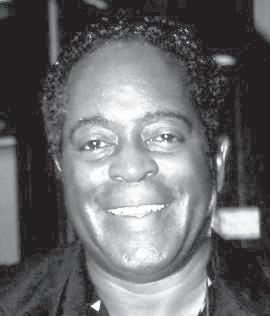
Dwight Brown Courtesy
Thrifting for tuition, student turns vintage finds into college savings
By Lizzy Nyoike Contributing Writer
A high school student is turning thrifted clothing into a growing side business to help save money for college tuition, combining entrepreneurship and passion for fashion.
Oliver Crust, a senior in high school, began reselling clothes after discovering thrift culture during his freshman year. What started as curiosity about fashion turned into a profitable side hustle that has helped him set money aside for the future.
“Around ninth grade, I had some friends who was like wearing cooler clothes than I, or that’s at least how I deemed it,” Crust said. “All of their methods of acquiring these clothes was going thrifting and stuff.”
After he started vision thrift stores more frequently, Crust began meeting people involved in clothing resale. Those connections introduced him to the world of buying and selling secondhand clothing.
“If you start going pretty often, you get to meet the community relatively quickly,” he said. “That’s how I got into the reselling community of clothes.”
Now most of what Crust owns and sells comes from thrift and secondhand shops.
Primarily Goodwill bins and vintage clothing shops. Crust says his process requires both
time and consistency. On the weekends, he spends time searching for items building an inventory that he later prepares for resale.
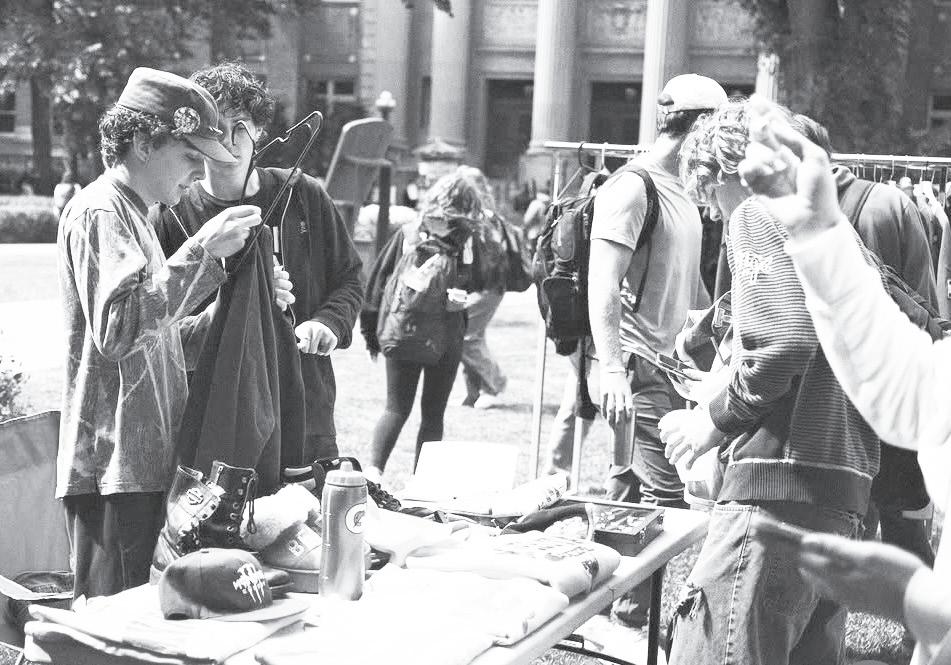
After clothes are collected, Crust said each item is cleaned and organized before being sold. Crust has transformed the attic of his home into a mini shop with storage racks and a photo setup designed to elevate each piece before it goes online.
Using resale platforms like Depop, eBay and Grailed, he lists items with pricing and descriptions allowing him to reach multiple audiences at once.
While the process may sound time consuming, the ongoing results have been proven as worthy to Crust.
Over the past few years, Crust has turned thrift store finds into a significant source of income.
“The bins price is usually like $2 a pound and like each item I get, I sell for at least 20,” he said. “I’ve also sold items for like upwards of $100 or $200.” Over time, that margin has continued to add up.
“I enjoy saving these clothes and giving them to a new owner”
“Over my few years of reselling, I’ve amassed maybe like 10,000 from selling,” Crust said. Even while being a full-
By Dr. Artika R. Tyner Columnist
There is a widespread misconception about how to develop literacy skills. People often mistake it for learning to read on one’s own at school. However, literacy starts even before kindergarten. A solid foundation begins with a child’s first words, and even before they pick up their first book. The journey of literacy is an evolution that begins when a child is in the womb and continues into adolescence. Therefore, early reading and language development are key. Developmentally appropriate literacy should be segmented into different stages of a child’s life. This will help to ensure literacy is not a one-size-fits-all. This will aid First Educators (parents, caring adults) with the necessary tools to create a supportive and enabling environment for all children to excel.
Early childhood:
Literacy before reading Toddlers engage with the outside world through sight and sound, and the feeling of a bond or connection. This is the foundation of literacy for all children as they converse, sing, listen, tinker, and participate in games.
time, senior high school student, Crust recognizes the limits of the business while it has its benefits. He also adds that it doesn’t equate to having a full-time salary unless you’re a full-time thrifter.
of a larger effort to reduce waste within the fashion industry. Many of the items he sources come from Goodwill outlets, often referred to as ‘the bins,’ where unsold items from regular Goodwill loca-
That mindset has shaped how Crust approaches the business, not just as a way to make money, but also as a way to give clothing a second life. He said It also influences the type of clothing he chooses to sell, prioritizing pieces that carry both durability and uniqueness.
“They don’t make clothes like they used to,” he said.
However for Crust, motivation goes beyond profits earned. His interests in vintage clothing are tied to both quality and sustainability, two factors he believes are often overlooked in fashion.
“I really like vintage clothes because of all the character and stories going into them,” he said.
Beyond style, Crust sees his passion for thrifting as part
tions are sent and sold in large blue bins, typically priced by pound. Items that are not purchased after being sent to outlets, are usually sold to third-party textile wholesalers, recyclers, or exporters.
“After that, they usually just get incinerated,” Crust said. “I enjoy saving these clothes and giving them to a new owner while putting a pretty penny in my pocket myself.”
Literacy at every age
Before a child can read words, they are engaged in participatory activities such as responding to sounds and facial expressions. They are introduced to board books, rhythm, repetition, and oral language development. First Educators talk to toddlers even when they do not possess the ability to respond coherently. These caregivers can sing to the toddlers, engage them in identifying objects, and read to them. These activities support language development by building the brain for learning.
Building meaningful relationships with toddlers enhances literacy. A toddler who is spoken to in plain and rich language tends to build vocabulary, listen, and comprehend better. It is important to remember that toddlers develop literacy skills through playing and exposure.
School Age: Building a solid foundation of learning
During this stage, there is a shift from just play and exposure to including decoding. Children tend to recognize letters, identify various sounds, and are able to merge individual sounds into recognizable words. Understanding that words are made up of individual sounds is a very important step. Children may make attempts to write; most of these scribbles are invented spelling because they write them how they sound in their ears. It is a very exciting stage, and children should therefore be encouraged to do more, as it demonstrates cognitive growth.
Regardless of the focus on decoding during this stage of
development, play remains essential. Measures such as storytelling, drawing, and imaginative games enhance literacy skills. When literacy is made fun and enjoyable for children, they willingly initiate the process and, in so doing, build confidence alongside competence.
This stage can be, however, challenging for both caregivers and children as the pace of the developmental journey may vary. It is imperative to ensure consistent exposure and encouragement. Children should be afforded the opportunity to practice in an environment where mistakes are a
“Like the quality of clothing has gone down and the blend between polyester and cotton has gone up.”
Maintaining quality has become part of his process. Early in his reselling journey, Crust learned that paying attention to details matters when building a reputation online. Selling uncleaned clothes led to lower ratings, something he said he worked quickly to correct.
“When I first started out, I would not wash the clothes, and that resulted in a lot of low ratings,” he said.
Now Crust said each item is washed and prepared to be worn before it is listed.
Despite the financial successes, Crust is intentional about keeping reselling as a side venture rather than a fulltime career. For him, the experience is meant to be enjoyable and not something that becomes overwhelming.
“I enjoy it like a hobby almost. The whole thrifting and selling process. I’ve met so many friends through it too,” he said.
What began as a way to improve his personal style has grown into a source of income and a step toward financial independence. For students facing similar financial challenges, especially when it comes to paying for college, Crust believes opportunities exist in places many might overlook.
“I’d always recommend finding somebody who’s already had experience in the field and getting to know their method first and then using their method to adapt to your own situation,” he said.
As Crust prepares for graduation, he plans to continue reselling while pursuing his education, keeping the business as a flexible source of income and creative outlet for passion.
Lizzy Nyoike is a Hubbard School of Journalism & Mass Communication student and contributing writer for the Minnesota Spokesman-Recorder.
researching as well as analyzing characters and themes. Here, with enhanced comprehension, children gain a better understanding while reading to understand, moving from picture books to more subject-based material.
In this day and age, digital literacy and media literacy cannot be overemphasized as they play major roles in helping teens navigate the world, which has become a global

Before third grade, children should actively learn to read independently. The skill to decode, which was honed in the previous stage, has become more automatic, and sound and letter cohesion improves, which in turn improves fluency and comprehension skills. Children at this stage begin to read books, signage, and inscriptions on t-shirts, among other things, on their own. With improved comprehension comes the ability to start answering questions about short stories they read, identify main ideas, and even predict plot twists and potential outcomes.
part of the process of building resilient readers.
By fourth grade, children are transitioning from learning to read to reading to learn. This is the stage where literacy becomes a tool for thinking. Children within this age bracket are expected to be able to read. Critical thinking takes center stage, and these exercises help to
“Literacy
develop summarizing, comparison, and evaluation skills. Literacy becomes a tool for
village. Literacy at this level has moved from just fluency and is focused more on comprehending what is consumed. It is discerning the difference between fact and fiction while identifying the source of information. With a solid foundation, developing comprehension, reasoning, and judgment skills feels almost inherent.
Conclusion Literacy does not happen overnight; it is a journey that
starts when a child is brought into the world. We see infants excited about board books and nursery rhymes to teenagers writing poetry and understanding complex scientific concepts. First Educators offer guidance to their children through the various stages.
At PPGJLI, we believe that LEADERS ARE READERS. To lead in any sphere, one requires the ability to think critically and solve problems. Also, words allow leaders to communicate their thoughts and vision for the future. Literacy goes beyond teaching children to read but preparing them to grow and lead.
The call to action is quite straightforward: First Educators should improve participation of children in activities such as engaging in dialogue, reading to and with them, listening, and making books available to children.
“First Educator: refers to the fundamental primary role that parents and caregivers play in a person’s early development and education. They instill essential life skills, morals and behaviors.”
Dr. Artika Tyner is committed to creating a world of inclusive leaders who will meet the pressing needs of today and work towards a better future where racial justice and economic justice reign supreme. As a motivational speaker, author and educator, Dr. Tyner helps people of all ages connect with their gifts and develop tangible tools for bringing forth sustainable, durable change in the family, workplace, community or school. By building and leveraging the tools in The Inclusive Leader she has inspired thousands of people to lead with their own gifts and plant a seed of social change.
Opinion
DevSecOps Engineer: Plymouth, MN

IT Company seeks DevSecOps Engineer to integrate security practices into DevOps workflows, automate security checks, and ensure the safety of cloud infrastructure. Work closely with development and security teams to enhance the security posture of applications and systems. Build and Configure delivery environments by using CD/CI, Agile delivery methodologies. Create and assist in performing various types of tests. Perform troubleshooting. Generate customized reports. Offered Salary: $116,480.00 to $116,500.00/yr. Send resumes to: HRD, VITS Consulting Corp., 14264 23rd Ave N, Plymouth, MN 55447. Minnesota Spokesman-Recorder July 10, 2025
By Maurice Carroll
Many of us wake up and check the news or social media before we even take a moment to check in with ourselves. We do this almost automatically, often without realizing it at the moment. It’s one of those habits many of us share but rarely talk about. We reach for updates without thinking about what we are taking in or how it may affect us. It quietly shapes how we think, feel and respond throughout the day.
the Black community, promoting sound healing, reiki and mindfulness. (Photo Courtesy of Aisha Butler) When we consume war news headlines before taking a moment within ourselves first–whether it’s through social media or even in an in-person conversation–that stress takes effect. The stress isn’t just the mental flow chart that webs out so far that we don’t even remember how we got “there.”
By Dr. Benjamin F. Chavis, Jr.
Throughout Black History and Women’s History months this year we have emphasized that one of the best ways to celebrate history is to make more history. Black excellence and leadership in all fields of endeavor are rising as the nation takes account of the 250th Anniversary of the United States of America.
The National Newspaper Publishers Association (NNPA) representing the Black Press of America is pleased to formally announce the launch of our 2026 “Leadership Matters” video series. Working in collaboration with Events DC and PKB Enterprises, with corporate support, we were able to professionally produce six exclusive 30-minute video interviews with some of the nation’s most effective and transformative leaders who are making a positive difference in science and technology innovations, healthcare engagement, and political empowerment and public advocacy.
The NNPA is the national nonprofit trade association of 253 local African American owned newspapers and multimedia companies that service the top 50 major media markets in the U.S. 2027 will mark the 200th Anniversary of the Black Press of America since the first publication
“Freedom’s Journal” on March 16, 1827, in New York City.
As content producers and distributors, the NNPA is very conscious of the challenges that face all news media today with many local “mainstream” newspapers, radio and TV stations making decisions to shut down and close their media businesses.
national leaders that we were fortunate to interview is the newly elected Chairman of the Congressional Black Caucus (CBC), The Honorable Congressman Troy A. Carter who represents Louisiana’s 2nd Congressional District in New Orleans. Congressman Carter is a freedom-fighting leader in the Congress of the United States. Yes, “Leadership Matters.”
We begin the diverse series with dynamic and candid interviews with The Honorable Congressman Gabe Amo, representing the 1st Congressional District in Rhode Island, and with healthcare professional Dr. Yasmine Wahdan of Bayer.
In the current political climate, the U.S. president has taken actions that many Americans believe push past the guardrails designed to ensure order, process and accountability. Those decisions have now engaged the United States in a war that, according to a recent Reuters/Ipsos national poll, is supported by only 27 percent of Americans. This means that the majority of the country either disapproves (43 percent) or is unsure (29 percent) about the actions of the military under his direction. When a crisis becomes the daily headline, we absorb more stress than we realize.
Maurice Carroll works in
Chronic stress can change the brain’s emotional circuits and increase cardiovascular risk. When people live under ongoing stress, the nervous system shifts into a constant alert state releasing hormones that affect both the brain and the heart. Yes, even though you may not be in the physical war zone you can still feel the effects of the war. All is not lost though. There are ways to be informed without allowing it to consume you psychologically. You can’t control the war. You can control your intake.
Using the Serenity Prayer
as a grounding mantra may change your perspective before you allow your emotions to take control. If we take a real look at ourselves, we often allow our emotions to be the control instead of using them as tools for expression. Lots of times, it is our emotions fueled by ego that blinds us into becoming unrealistically attached to what we consume. Will getting upset or internalizing the events change the event itself? Are you using your tools, emotions to express yourself to be heard and understood or are you venting? Both can be true at the same time, however, having a gauge on how much you are internalizing will have a direct effect on you physically and psychologically. One idea is to do a quick and honest analysis of yourself. If you know that war coverage or even if political coverage is triggering for you, make choices that will reduce your exposure to it. Reallocate that time and space with something that actually supports your mental and physical health.
This opinion piece appeared first in Afro-American Newspapers. For more information, visit www.afro.com/.
Because NNPA member publications with their print, digital and social media platforms as well remain the “trusted voice” of the communities that we serve, the distribution and presentation of the “Leadership Matters” series over the next six weeks will not only enhance the NNPA’s national brand but also will provide a timely and much needed motivational content for all Americans on the importance of authentic and dedication leadership.
One of the outstanding

For the next six weeks and beyond the “Leadership Matters” video series will be repeatedly broadcast on the NNPA’s www.BlackPressUSA and on numerous NNPA member publishers’ social media channels across the nation in addition to being highlighted in NNPA print publications.
The following are the other national leaders who have been filmed for the NNPA “Leadership Matters” series: The Honorable Congressman James Clyburn and Rhonda Mims, Executive Vice President of AmeriHealth Caritas; The Honorable Congressman Troy A. Carter and Fred Humphries, Corporate Vice President of U.S. Government Affairs for Microsoft; The Honorable Congressman Steven Horsford and Dr. Steven Johnson, Executive Vice President of Events DC; The Honorable Senator Alsobrooks, D-MD, and Mamar Gelaye, Vice President of Amazon; and The Honorable Governor Wes Moore of Maryland.
We are grateful for the support and sponsorship from Amazon, Microsoft, Events, DC, AmeriHealth Caritas, Bayer, and PKB Enterprises whose generosity enabled and made possible the production and distribution of the “Leadership Matters” video series.
This opinion piece appeared first in NNPA Newswire. For more information, visit www. nnpa.org.
By Julienne Louis-Anderson and Adia R. Louden
On Sunday, like millions of others, we watched proudly as Michael B. Jordan took the stage and accepted his Oscar for Best Actor for his remarkable performance in “Sinners.” Our hearts swelled when he thanked his mother and the Black women who carried him forward. Jordan, alongside men like Trevor Noah and Sterling K. Brown, has been vocal about the love and dedication Black women poured into them. But when the lights dimmed and the applause faded, we found ourselves asking: what are Black women actually left with besides proverbial flowers?
We’re in the middle of Women’s History Month, a time when the nation pauses to celebrate milestones. But too often, and to a far greater extent than their white counterparts, Black women receive symbolic praise while being denied material power or protection. We’ve seen it firsthand in our own lines of work.
One of us led a nonprofit addressing the impact of parental incarceration on Black girls. One in nine Black children has an incarcerated parent in the U.S. While support for Black boys was treated as a given, funders often seemed genuinely unaware that incarcerated parents have daugh-
ters, too. Grant applications went unanswered. Meetings were skipped. This is not an isolated experience, Black women-led nonprofits receive less than 1% of U.S. philanthropic funding, and Black women nonprofit CEOs are vastly overrepresented in organizations with budgets under $50,000, yet nearly absent from those exceeding $10 million. White CEOs, by contrast, lead 56% and 74% of those organizations, respectively.
Then there’s higher education. Black women make up roughly 6–7% of the U.S. population, yet among Black students, they earn 64.1% of bachelor’s degrees, 71.5% of master’s degrees, and 65.9% of doctoral, medical, and dental degrees. That is extraordinary. And yet, shaped by both the racial wealth gap and the gender pay gap, many Black women carry staggering debt averaging $38,800 in federal undergraduate loans, and $58,252 for those who also attend graduate school. Excellence, rewarded with longterm economic instability. Yes, Black women deserve flowers. We have become vice presidents, billionaire media moguls, and Oscar history-makers. But flowers wilt. They don’t pay off loans, fund businesses, or open boardroom doors.
The gap between praise and power is just as apparent in entrepreneurship. One of us owns a small writing and coaching business and has struggled to access the capital critical to getting started. On average, Black women receive less than 0.35% of all venture capital funding, not even half a percentage point. Without generational wealth or established networks, that means personal savings, cold emails, and creative workarounds that founders from more privileged backgrounds rarely face.
This Women’s History Month, go beyond praise. Fund Black women-led nonprofits. Invest in Black women founders. Support Black women in higher education. And put Black women in the rooms where decisions, and dollars, are made.
This opinion piece first appeared in Word in Black. It has been edited for style and length. For the original, visit https:// wordinblack.com/2026/03/ black-women-deserve-powernot-just-flowers/.
Employment & Legals
Company seeks Product Manager to
gather business requirements, & translate them into scalable supply chain solutions. Collaborate with cross-functional teams including procurement, production, logistics, & IT. Design product roadmap and improvement initiatives; validate solution architecture & prepare presentations of product capabilities through POCs (Proof of concepts). Utilize experience with Java, JavaScript, JSP, Servlets, C/ C++,
Ave N, Plymouth, MN 55447 or jobs-p@vitsconsulting.com.
SYSTEMS ENGINEER Plymouth, MN
From Ads Department/MN Spokesman-Recorder
EMPLOYMENT DISPLAY
IT Company seeks Systems Engineer to design and develop systems and database applications. Perform UAT & PIV activities incl. planning, defect triage, and root-cause analysis. Validate Functional System test plan and test cases, analyze and document scope of business solution using enterprise-standard requirements methodology. Create & perform various types of tests & troubleshooting. Create system specifications & generate customized reports. Offered Salary: $95,680.00-$96,000.00/yr. + Paid Health Insurance/ Vacation. Send resumes to: HRD, VITS Consulting Corp., 14264 23rd Ave N, Plymouth, MN 55447 jobs-p@vitsconsulting.com.
SIZE: 2 COL X 2.5 INCH
RATE: $44.60 PER COL. INCH
TOTAL: $223
Please proof, respond with email comfirmation to ads@spokesman-recorder. com
SOFTWARE ENGINEER
Plymouth, MN
IT Company seeks Software Engineer to Design & develop various software applications using JavaScript, HTML, CSS, Tableau, Looker, Snowflake, PowerBI. Create test cases, perform various tests and troubleshooting. Create system specifications & generate customized reports. Offered Salary: $106,579.00-$106,600.00/yr. + Health Insurance/ Paid Vacation. Send resumes to: HRD, VITS Consulting Corp., 14264 23rd Ave N, Plymouth, MN 55447 or jobs-p@vitsconsulting.com.
SIZE: 2 COL X 3 INCH RATE: $44.60 PER COL. INCH TOTAL: $267.60
Please proof, respond with email com firmation to ads@spokesman-recorder.
The MSR handles billing digitally. This means you will get e-tears and emailed invoices unless you specifically request a hard copy.
Phone: 612-827-4021 FOR BILLING INQUIRIES & TEARSHEETS
PLEASE CONTACT
ACCOUNTING DEPT
BILLING@SPOKESMAN-RECORD ER.COM


Black excellence.”
continued, speaking on her fifth straight NCAA appearance in eight seasons at Oxford. “Representation matters. I don’t shy away, I’m not one of those that says I don’t see race. I do see color because I am proud of the skin I’m in.
“But I hope that we inspire people with how we play from all walks of life, young, old, Black, White, it doesn’t matter.”
“You know what gives me the most pride? My daughters are here. One is 13 and one is eight. They get to see basketball played at a high level, and they get to see leadership, and we get to normalize that,” stressed the veteran head coach. “My mom was a principal for 30 years. My dad is a Hall-ofFame coach. All I know is
MOORE
Continued from page 10
to gauge my interest.
“My contract in Denver was up in July, and I was telling my fiancé that I wanted to go somewhere with a WNBA team. It’s a full-circle moment.
“So when we got into serious talks about the job and they made the offer, I was like, why would I turn it down? My dream has been
Another historical mark was set Sunday, McPheeMcCuin became the first Black female coach to sit on a stool while coaching, reminiscent of former Gopher Men’s Coach Clem Haskins, who made the courtside seat famous during his tenure. “I did not know the significance of the seat I was sitting in,” she responded.
Lastly, McPhee-McCuin reiterated, “I’m grateful to be a representation for women of color. We need to normalize what Black leadership looks like. I don’t look at my program as an all-Black program, but I do understand the role and the space that I fill.
“As far as me being a Black coach, I don’t shy away from that. I’m proud of that,” she concluded. “Hopefully I can inspire all just by getting a team to come together, play hard,
to cover the WNBA for years,” she reiterated. “I think it was meant to happen.”
KARE viewers, if they haven’t noticed already, will see “a lot of energy” from Moore. “I’m very passionate about sports,” she said. “I think my brain is chemically wired so that when something competitive comes on, it automatically clicks for me.
“I’m excited to be here. I’m excited to really get into Minnesota culture. The food so far has been exciting,” she
and gracefully take a loss.”
Clutch finish lifts Minnesota to Sweet 16
Minnesota is in the Sweet 16 for the first time since 2005. Battle, a 5-11 guard, hit the game-winner from the baseline with 0.8 seconds remaining to lift the Gophers (24–8) over Ole Miss, 65–63, on Sunday. She finished with a doubledouble, 14 points and 11 rebounds, along with five assists.
“It was fun to see her have that success, especially after a game where she probably shouldn’t have played because of a stomach flu,” said her father, Terrell. “To see her hit her patented midrange pull-up in her last game at Williams Arena to get to the Sweet 16, you can’t write a better script.”
Charles Hallman welcomes reader responses at challman@
concluded. “I’m here to tell more stories from underrepresented groups, whether that’s our culture, more Black stories, or how women are underrepresented in sports.
“I’m a community-type journalist. I like to be out in the streets with the people. I’m here to bring grace, class, and energy,” said Moore.
Charles Hallman welcomes reader responses at challman@ spokesman-recorder.com.

The MSR handles billing digitally. This means you will get e-tears and emailed invoices unless you specifically
SOE
Continued from page 10
that brought me a lot of joy.”
The two authors organized “Court Queens” in chronological order. Robinson and Baccellieri made sure Black women were prominently featured for their roles in the growth of women’s basketball from its beginnings to today.
Ora Washington (1898–1971) is a prime example, featured on pages 10–15.
“I had heard her name, but I learned so much,” Robinson recalled of Washington, who excelled in both basketball and tennis. She was inducted into the Women’s Basketball Hall of Fame in 2009 and the Naismith Memorial Basketball Hall of Fame in 2018, and was nicknamed “Queen of the Courts” for her dominance in both sports.
“She had such a strong tennis background and was so dominant in tennis before finding basketball, that was super fascinating,” Robinson continued. Washington is just one of countless ex-
amples where “Black women and Black players carved out something that was not there,” the author added.
Before the WNBA, there was the Women’s Basketball League, the first U.S. women’s pro basketball league (1978–1981). “The WBL was probably one of my favorite things I wrote about in this book,” Robinson admitted. “I got to sit down with three players who had played in it, and hearing their stories, not knowing they were pioneers and trailblazers, they didn’t set out to be that.”
Chronicling the Minnesota Lynx and their nearly decade-long championship run is a featured chapter in “Court Queens” (pages 166–174).
“My favorite thing about the Minnesota Lynx champions was putting into perspective how hard that is to do, to go to the Finals that many times,” she said, referring to their six appearances and four titles (2011, 2013, 2015, 2017). “To have that level of excellence…
“When you look back at that roster… Maya Moore,
Seimone Augustus, Lindsay Whalen, Rebekkah Brunson, Sylvia Fowles, all on one team. The rivalry with the Los Angeles Sparks, with Nneka Ogwumike and Candace Parker in their prime, what a fun time in the league.”
“It was important to convey that duality of the Lynx, how dominant they were on the court, and how they used that platform to shine a light on more important issues,” Robinson added.
“Court Queens” is a mustread. Is there a “Court Queens 2” in the future? A podcast, perhaps?
“The idea of turning this book into a podcast is my dream project,” Robinson said. “So I am working on it because I love podcasting.
“There are so many Black women throughout women’s basketball history… I loved writing it. I’m so happy you loved reading it, and I hope everybody loves it,” she concluded.
Charles Hallman welcomes reader responses at challman@ spokesman-recorder.com.

istory again was overlooked, or at least ignored, twice during what took place in The Barn last week by the local PWM. Among last weekend’s four-team first-round field, Ole Miss Rebels women’s basketball had the most Black representation (12 players, one head coach, four assistant coaches), followed by Minnesota Golden Gophers women’s basketball (five players, two assistants), Gonzaga Bulldogs women’s basketball (one player, one assistant), and Green Bay Phoenix women’s basketball (none).
Sports
More than a game at The Barn
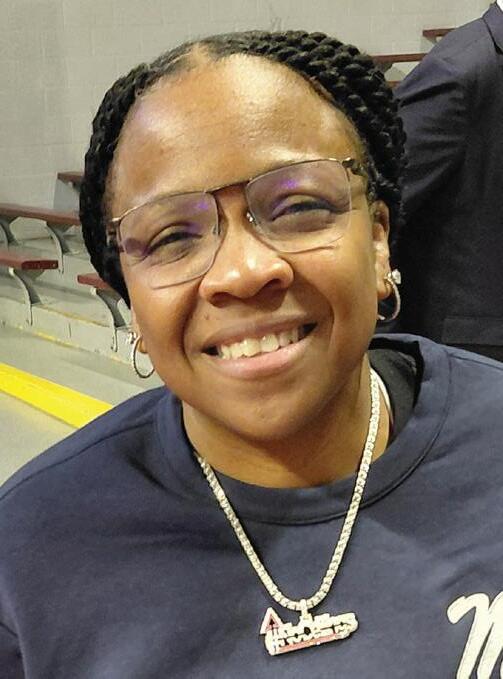
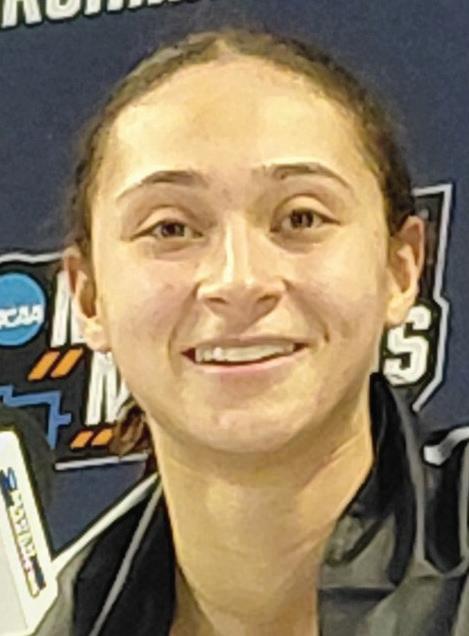
ond-round matchup between Minnesota and Ole Miss.
people, whether that’s your race, ethnicity, gender, no matter what, I think it means a lot to go out and show little girls who look like you that they can do it, too.”
It was a big deal on all accounts, especially in front of more than 10,000 fans in the stands, most of whom likely had never seen this: a Black female head coach leading an all-Black squad that is not an HBCU.
Ashley Moore: Changing the game on and off Camera
Last Sunday marked the first time the host Gophers played an all-Black non-HBCU squad in the NCAA era, a sec-
“It means a lot,” said Minnesota senior guard Amaya Battle (Hopkins) last Thursday. “Anytime you represent your
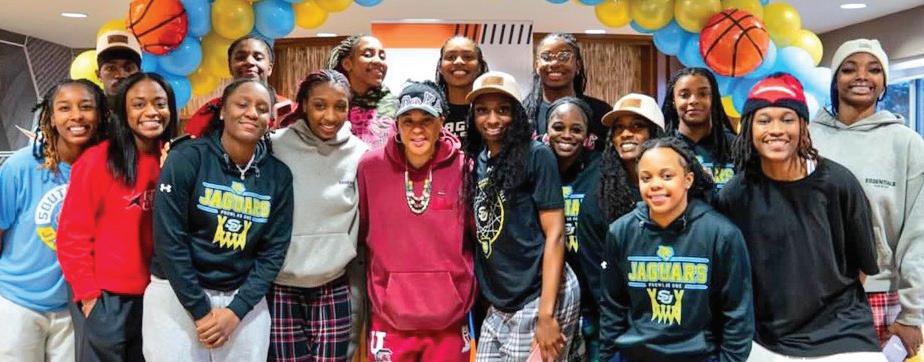
“I think it’s very important because Black women in sports know the game as much as anyone else,” said Terrell Battle, Amaya’s father, referring to Ole Miss Head Coach Yolett McPhee-McCuin. “They don’t often get to do it on this stage.”
McPhee-McCuin, one of 12 Black head coaches who led teams to this year’s NCAA Division I Women’s Basketball Tournament, told MSR during a March 19 press conference, “I do understand that this may be the first time, and I hope that we don’t let those people down.”
“I always tell everybody, when I get a chance, you can’t be what you can’t see,” she
■ See VIEW on page 9

By Charles Hallman Sports Columnist
shley Moore is the first Black female Sports Journalist at KARE 11. She was hired in February and is only the station’s second Black sports hire. Reggie Wilson was brought on as sports director in 2021, but his position was eliminated at the end of last year.
lege, or professional athletics. She has to, as she and other Black female sports journalists often deal with false perceptions that they don’t belong.
“You know, you get the haters,” said Moore. “I’m a woman for one, I’m a Black woman for two. In this industry, somebody is always looking at us like that. But I like to back it up with how I present the information.
‘Court
Queens’ Gives women’s basketball its due
By Charles Hallman Sports Columnist
First of two parts
omen’s basketball has a rich history, more than 130 years, and continues to evolve.
“Court Queens” (Black Dog and Leventhal Publishers) is a new picture book co-authored by Jordan Robinson and Emma Baccellieri, a “Sports Illustrated” staff writer since 2018.
“The idea of turning this book into a podcast is my dream project,”
Robinson is a freelance journalist, host, analyst, content creator, play-by-play announcer, and reporter based in Los Angeles. She successfully combined her passion for basketball and journalism after college and has worked as a host for the Big Ten Network,


“Court Queens” book cover.
Women’s Sports Network, the West Coast Conference, and FIBA. She also once hosted
“She’s Got Next with Jordan Robinson,” the first women’s sports radio show on Audacy.
“Court Queens” is “a definitive, first-of-its-kind, richly photographic celebration of women’s basketball,” according to its press release. It was released March 17, and I couldn’t put it down after re-

ceiving my copy in the mail.
MSR recently spoke with Robinson.
“Basketball brings me joy, especially women’s basketball,” she said during a Zoom
call. “So being able to tell the stories of women whose stories aren’t often told, whose names aren’t often mentioned alongside some of the greats,
■ See SOE on page 9
“I’ve been the first Black female sports anchor at every one of my stations,” said Moore proudly in a recent MSR phone interview. “I enjoy being the first Black woman at these stations because I think it brings a different vibe … a different energy.”
Born in Texas, her sports journalism roots took shape there after graduating from the University of Houston and later earning her master’s degree at Syracuse. “I’m from Longview, Texas, which is about 45 minutes away” from Tyler, Texas, where Moore landed her first job. She worked there for five years before moving to Denver, Colo., to join a television station.
“I’m excited to be here. I’m excited to really get into Minnesota culture."
“I don’t just entertain, I educate, I inform,” she added. “I know what I’m talking about.” Especially football, which, as a native Texan, you’re expected to love, Moore noted: “You’ve got faith, family, football. I always wanted to play football… My mother would never let me, so I played basketball instead.”
“I was a Minnesota Lynx fan growing up,” Moore recalled.
“Maya Moore (no relation) was my girl, the greatest player I’ve ever watched.”
“In Denver, I was the only Black person in a lot of the rooms I went into at many events. It’s an adjustment,” Moore continued. “I’ve been able to mix and mingle with so many different groups that I’m like a chameleon. I can fit in anywhere.”
Moore carries her passion for sports into her reporting, whether it’s high school, col-
So when the opportunity arose to add the WNBA to her coverage duties, in the same city where her favorite team plays, it was too much to pass up, the KARE reporter explained.
“The assistant news director at KARE 11, Nelson Garcia, was my assistant news director at 9 News in Denver when I got hired there,” said Moore. “I was talking to Nelson one day, and he told me they had an opening for a sports reporter-anchor and was trying
■ See MOORE on page 9





Pride (Tartan)
Jumair Wright (Minneapolis South) Dre Collins (Richfield)
Tyrel Pride (Tartan)
Ramadan Ibrahim (Minneapolis South)
Malachi Hill (Totino-Grace)
Mitchell Palmer McDonald welcomes
All photos by Dr. Mitchell Palmer McDonald
Ashley Moore
Submitted photo
Jordan Robinson All photos submitted photos
Ole Miss Women’s Basketball Head Coach Yolett McPheeMcCuin on the sidelines
Minnesota guard Amaya Battle
South Carolina head coach Dawn Staley in USC sweatpants alongside Southern players All photos by Charles Hallman