


By Jasmine McBride Editor
upporters of indepen-
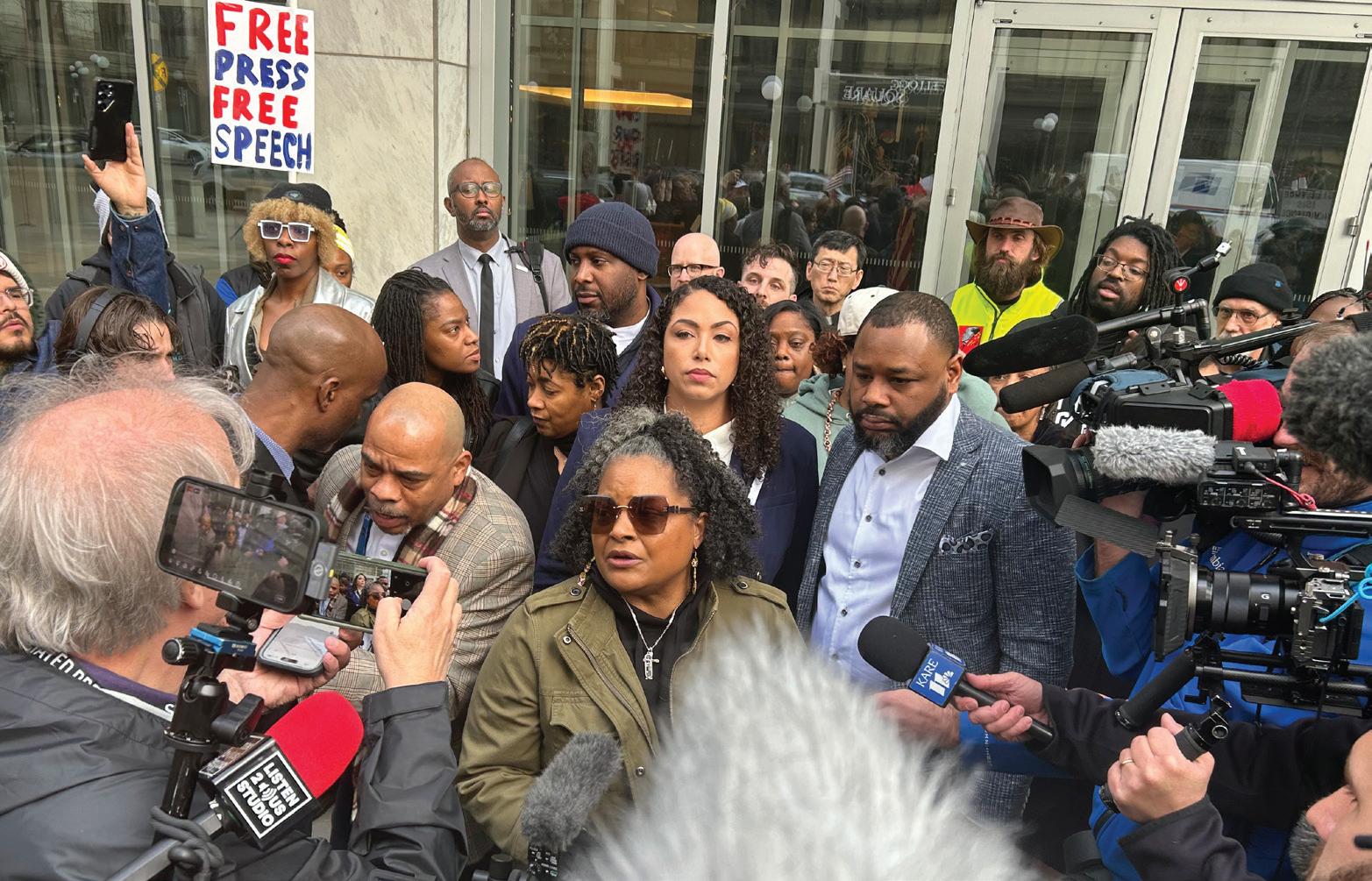
dent journalist Georgia Fort gathered outside the federal courthouse in St. Paul Feb. 17 calling for federal prosecutors to drop charges they say threaten press freedom. Fort pleaded not guilty earlier in the day to federal felony charges connected to a January protest inside Cities Church in St. Paul. She is among nine people charged in the case, including activists and another journalist.
By Dr. Artika R. Tyner Columnist
ver the past half century, Black communities in the United States have experienced gradual progress impeded by persistent inequities. Gains in educational attainment, expanded economic opportunities, and increased access to health care serve as key milestones. Yet progress has never been a smooth ascent and never an easy climb toward justice and freedom.
As Langston Hughes reminds us, “Life for me ain’t been no crystal stair. It’s had tacks in it, And splinters. And boards torn up.” Progress is met by pivots, recalibration and setbacks.
America remains, as history reminds us, a nation shaped by contradiction and plagued by historical amnesia. This paradox reflects a reality in which celebration and struggle coex-
Federal prosecutors allege the group conspired to interfere with religious worship during the Jan. 18 demonstration, where protesters interrupted a church service while criticizing immigration enforcement actions in Minnesota.
Outside the courthouse, speakers framed the case as part of a broader pattern of intimidation against journalists. “The attack on the press did not start or end with my arrest,” Fort told the crowd and assembled media.
“We live in a time when AI images and AI videos are
shaping our world’s reality, with a portion of our society living in delusion. So if you stand, stand for truth … not just for all journalists, but for anyone who is having their First Amendment violated.”
Fort, founder of BLCK Press and co-founder of the Center for Broadcast Journalism and its radio station Power 104.7 FM, has said she attended the church protest in her capacity as a journalist to document the demonstration. “This case doesn’t just leave me fighting for my freedom,” she said.
A century later, effects of racial covenants persist
By Damenica Ellis Staff Writer
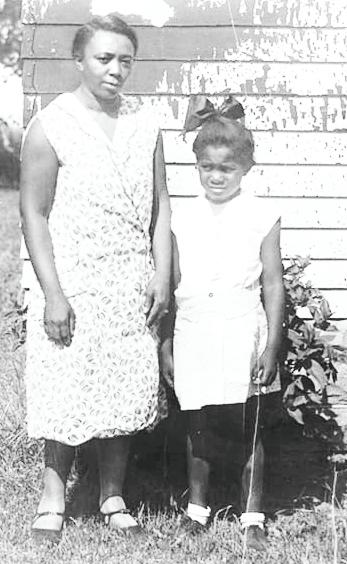
acial covenants across Minnesota, first enacted in 1910, divided neighborhoods by race. The effects of systematic policies like these led to historically segregated neighborhoods and hostility toward Black residents who chose to live in white areas. Today, Black residents who move into these neighborhoods often say they are still treated as outsiders.
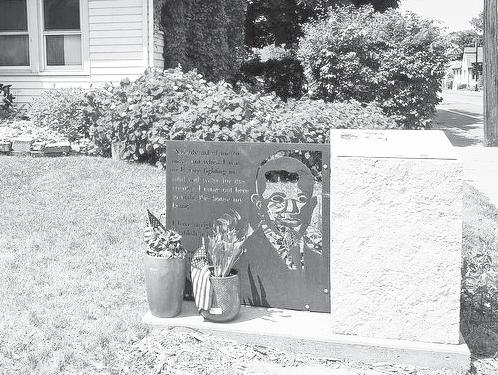
One well-known story of white violence toward Black residents is that of Arthur and Edith Lee, who bought a house in the Field neighborhood of South Minneapolis. Four years before the Lees moved there in 1931, members of the Field Neighborhood Association had signed “contracts” to prevent non-white people from moving into the area, according to MNopedia.
After harassment, vandalism and violence, the couple moved just four blocks away, but into another neighborhood formed by restrictive covenants. Black newspapers reported many similar cases.
“Moving in is now the easy part,” said one Black resident who requested anonymity. “But once in the neighborhood, some Black residents are targeted through overpolicing and homeowners association fees,” Minneapolis resident Kiarra Zackery said, implying conditions have changed somewhat.
Kirsten Delegard, co-founder, historian, and director of the Mapping Prejudice Project, has researched racial covenants and their impacts in South Minneapolis, where she was raised.
“I had grown up in Minneapolis and was taught a lot of stories about how this was such a progressive, liberal place and how it was on the cutting edge of all these social policies,” she said. It wasn’t until she returned after 20 years and began searching for an integrated school for her children that she discovered statistics about racial inequality in the city.
“I became really interested in trying to figure out how a place that prides itself on being so progressive and liberal ended up with some of the highest racial disparities in the country,” Delegard said.
The Mapping Prejudice Project began in 2016, focusing on Hennepin and Ramsey Counties, and has since expanded across Minnesota. Delegard said she was shocked by the number of racial covenants she uncovered.
“There comes a point in the 1920s when any new neighborhoods that are coming online are racially restricted,” she said. After this, the Twin
Libraries’ commitment to Black and Brown voices questioned Fifty
ist. While data confirms areas of advancement, it also cautions against premature victory.
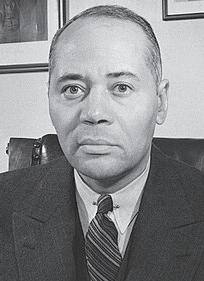
Charles Hamilton Houston (known as “The Man who Killed Jim Crow”) wisely stated: “Don’t shout too soon” after winning key legal battles that would eventually uproot segregation and repeal the doctrine of separate but equal. Houston’s words are a reminder to complete the unfinished work required to achieve the inheritance of justice, liberty and prosperity.
The last 50 years
As an educator and civil rights attorney, my work has focused on using a data-driven approach to assess how far the nation has come and the work still required. In the past 50 years, technological advancement, broader access to higher education, and increased visibility of Black leadership across sectors have reshaped opportunity in meaningful ways. At the same time, structural
■ See FIRST on page 5
say
are routine, but some cite concerns amid national attacks on diversity initiatives.
By Jasmine McBride Editor
hen Doug Bjostad, a longtime Hennepin County resident, noticed recently published books focused on Black history and culture on giveaway carts at local libraries, he felt alarmed.
Beginning last fall, Bjostad said he started seeing what he described as an unusual number of books on African American culture and history being cycled out of circulation. While he is accustomed to spotting older, worn or outdated materials on withdrawal carts, he said many of the titles appeared “a little too new, a little too topical” to be removed so quickly.
Among them was “The Night Before Freedom: A Juneteenth Story” (2023), a children’s book documenting the celebration of emancipation and African American heritage.
“It’s beautiful,” Bjostad said. “It was just published in 2023. Minnesota only recently officially adopted Juneteenth ob-
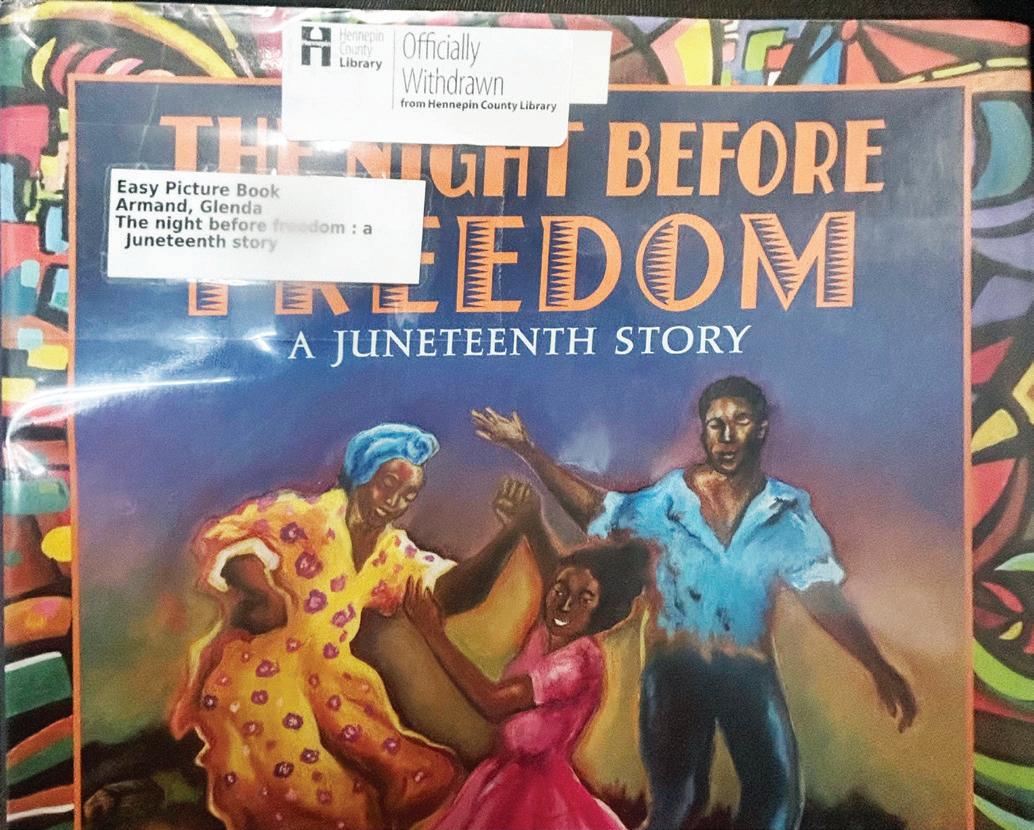
servance. It’s still topical. I just cannot imagine why they’re getting rid of a book like this so quickly.”
The copy he retrieved still bore a Hennepin County Library withdrawal sticker inside the dust jacket.
Bjostad said he also picked up “Lake Street Speaks,” a pictorial collection documenting murals that emerged after the 2020 uprising. He recalled even suggesting the book for purchase when it was first released.
“It’s only about five years old,”
he said. “I remember thinking, this doesn’t make sense.”
In November, he encountered what he described as a “slew” of 10 to 12 books from the “Black Americans of Achievement” series: biographies of historical figures including Rosa Parks, Congressman John Lewis, Harriet Tubman, Frederick Douglass and author Richard Wright, whose works “Native Son” and “Black Boy” were once staples in school curricula.
■ See LIBRARIES on page 5
By Izzy Canizares Contributing Writer
Minneapolis continues to grapple with the financial and social fallout from ICE’s Metro Surge operation, which cost the city an estimated $203 million in January alone, according to the city of Minneapolis. Despite the drawdown of federal officers, at least 76,000 residents, roughly 20% of the city, still require financial assistance, while small businesses face ongoing losses estimated at $10 to $20 million per week.
For many, the federal operation’s impact goes beyond dollars. “Even though we don’t see the parades of vehicles anymore, It’s one of those things that you won’t believe [is over] until you actually see it,” says Bridgette Stewart, director of communications for the Minneapolis Agape Movement. “I don’t think it just affected the immigrant community; I think this is going to have an impact on our economy statewide.” The Agape Movement, located in the heart of George Floyd Square, continues to provide essential resources and aid to residents still reeling from the occupation. Stewart says the surge retraumatized many, reminding the city of past violence and disruption.
Residents and local organizations have stepped in to fill gaps left by official relief.
South Minneapolis resident Balto, who has been actively supporting his community, says mutual aid has become crucial. “Loans aren’t enough. Regular people are footing the bills for their neighbors right now,” he says. “An evic-

tion moratorium has been needed for weeks. You can’t say there’s been $200 million in damage and then offer $10 million in loans and $1 million in rental assistance. People are already supporting each other, this is about matching the scale of the need.”
State and city programs are providing some support, though officials say more is needed. Governor Tim Walz announced a $10 million relief package for small businesses, while the Minneapolis City Council has allocated $1 million for rental assistance.
Mayor Jacob Frey has urged additional state and federal help. “Minneapolis taxpayers should not be left to foot the bill for this situation,” he said.
“We need direct financial assistance to stabilize our small businesses and help residents
recover.”
For small business owners, the losses are substantial, and many are still waiting for relief. Despite the challenges, community leaders are encouraging local support. “Support these local entrepreneurs. Support immigrant-owned businesses that have added so greatly to the fabric of our communities,” Mayor Frey said. “It’s about the easiest task I could make for anyone— come into Minneapolis and help keep these businesses afloat.”
While federal assistance and city programs provide some relief, mutual aid networks remain critical. Volunteers continue to distribute food, support rent payments, and help neighbors navigate financial challenges. “It’s people who love their neighbors
showing up when the chips are down,” Balto says. “That’s what has made it possible for people to survive this.”
“Thefederal drawdownisa stepintheright direction, but theworkisfar from over,”
Officials stress that recovery is an ongoing process. For many residents, the financial and emotional effects of the Metro Surge are long-lasting. Stewart says the occupation “retraumatized” a community that was still healing
from previous tragedies. “We had never really healed from the murder of George Floyd,” Stewart said. “It just threw us right back into May of 2020; it put people back into a very somber place.”
City leaders are now looking toward long-term stabilization. Programs to support small businesses, rental assistance, and community outreach are in place, but officials caution that funds are limited. “There is no free money right now. Every dollar that is spent has an impact,” Mayor Frey said. “There’s no magic pot that we can tap that does not affect property taxes or essential city services.”
Despite these hurdles, community members remain committed to supporting each other. Many residents continue to volunteer, advocate,
and fundraise, ensuring that neighbors have access to necessities while the city works toward broader recovery. “It was the people who made it possible. Everyday people who love their neighbors are stepping up,” Balto says.
As Minneapolis navigates the months ahead, the focus remains on sustainable recovery, rebuilding trust, and preparing for future challenges. For small businesses, renters, and mutual aid networks alike, the ongoing collaboration between residents and city leaders is essential. Mayor Frey and other officials emphasize that full recovery will require continued investment, coordination, and community engagement.
“The federal drawdown is a step in the right direction, but the work is far from over,” Stewart says. “Residents, volunteers, and small business owners are showing incredible resilience, but support must continue for the city to truly bounce back.”
While the Metro Surge is no longer making headlines, its effects continue to shape life in Minneapolis. From financial losses to emotional strain, the city is working to rebuild, leaning on both government assistance and the strength of its community. For residents like Balto and organizations like Agape, the challenge is clear: “We have to keep showing up for each other. That’s the only way Minneapolis recovers, not just in dollars, but in spirit.”
Izzy Canizares is a freelance journalist and contributing writer for the Minnesota Spokesman-Recorder.

Apply for the most favorable student financial aid options first, so you can graduate with the least amount of debt possible.
College can be expensive, so many students include financial aid as part of their college savings plan. Study your options first and then take a systematic approach when you apply. Here’s what you need to know to guide your financial aid decisions.
Grants and scholarships:
Go for the free money first
Grants and scholarships should be your first stop when looking for financial aid because, unlike loans, you don’t have to repay them. These funds can come from federal programs, state agencies, colleges, nonprofits, or private organizations.
While both terms are often used interchangeably, they have distinct differences:
• Grants are usually needbased.
• Scholarships are typically merit-based, focused on academic or extracurricular achievements.
Start by contacting your school’s financial aid office or researching national and local funding opportunities. Applying early and often is key, as many awards are distributed on
a first-come, first-served basis.
Federal student loans:
A flexible second option If grants and scholarships come up short, federal student loans can help fill the gap. These loans offer:
• Lower interest rates compared to private loans.
• Flexible repayment terms.
• Potential deferment options.
One important detail to
Aid Index (SAI). Here’s what you need to know about this new measure:
• The SAI determines your financial need more accurately, particularly for students in high-need households. For some, the SAI may even calculate as a negative number, increasing access to aid.
• Family size and federal poverty levels now play a bigger role in Pell Grant eligibility, making it more inclusive.

keep in mind is that most federal loans start accruing interest upon disbursement—even if payments are deferred until after graduation. For example, if you take out a $20,000 loan at 5% interest, the balance will grow to around $24,300 by the time you graduate from a four-year program. Borrow only what you need to minimize your debt burden later.
Big changes to Federal Aid calculations
As of 2024, the Expected Family Contribution (EFC) has been replaced by the Student
FASFA updates you should know
Completing the FAFSA (Free Application for Federal Student Aid) is a critical step toward receiving financial aid. Recent changes have made the FAFSA process simpler and more accessible.
• Streamlined process: Previously, the form required up to 108 questions to be completed, but now, it’s reduced to just 36.
• Direct data import: The FAFSA now imports tax information directly through a se-
cure data exchange with the IRS, saving time and effort.
• New timeline: The 20252026 FAFSA will open on or before December 1, 2025, instead of the usual October 1 date. Plan accordingly to avoid delays.
Expanded Pell Grant eligibility
The Pell Grant, a crucial source of federal aid, has seen notable updates:
• Eligibility restoration: Students impacted by school closures or misleading practices are now eligible for restored Pell Grant access.
• Support for single parents: The new SAI formula offers enhanced support for single-parent households, including a higher Income Protection Allowance.
EUpdates on income-driven repayment plans (IDR)
Significant changes have been made to income-driven repayment plans, offering new considerations for borrowers:
• The SAVE plan (formerly known as REPAYE) received legal challenges, causing some features to temporarily pause. Borrowers currently enrolled in SAVE are in general forbearance status, with interest starting to accrue on August 1, 2025.
• Loan forgiveness pause: Forgiveness under the SAVE, PAYE, and ICR plans is temporarily on hold due to court actions. However, the IBR Plan remains available for forgiveness processing.

Borrowers aiming for Public Service Loan Forgiveness (PSLF) can switch to eligible IDR plans to continue progress or take advantage of the “buy back” credit option. This allows qualifying payments to be retroactively applied for forbearance or deferment periods under specific conditions.
Smart repayment strategies
Repaying student loans is a responsibility that follows you beyond graduation. Setting up a strategy early can make the process manageable:
1. Budget wisely: Create a repayment savings buffer. Consider setting up a designated savings account where automatic transfers align with your payment schedule.
2. Explore forgiveness programs: Federal loans offer pathways to forgiveness for public service workers, teach-
ers, and more. Research eligibility early.
3. Understand your options: Familiarize yourself with different repayment plans, including standard, graduated, and income-driven options.
Bottom line: A college education might be the most important investment you’ll ever make — the one that unlocks your future earning potential — but student loans should be used wisely. Stay informed, start early and leverage new changes in policy and processes to maximize your opportunities. Only borrow as much as you need, and don’t overleverage yourself.
By Destiny Kromah Contributing Writer
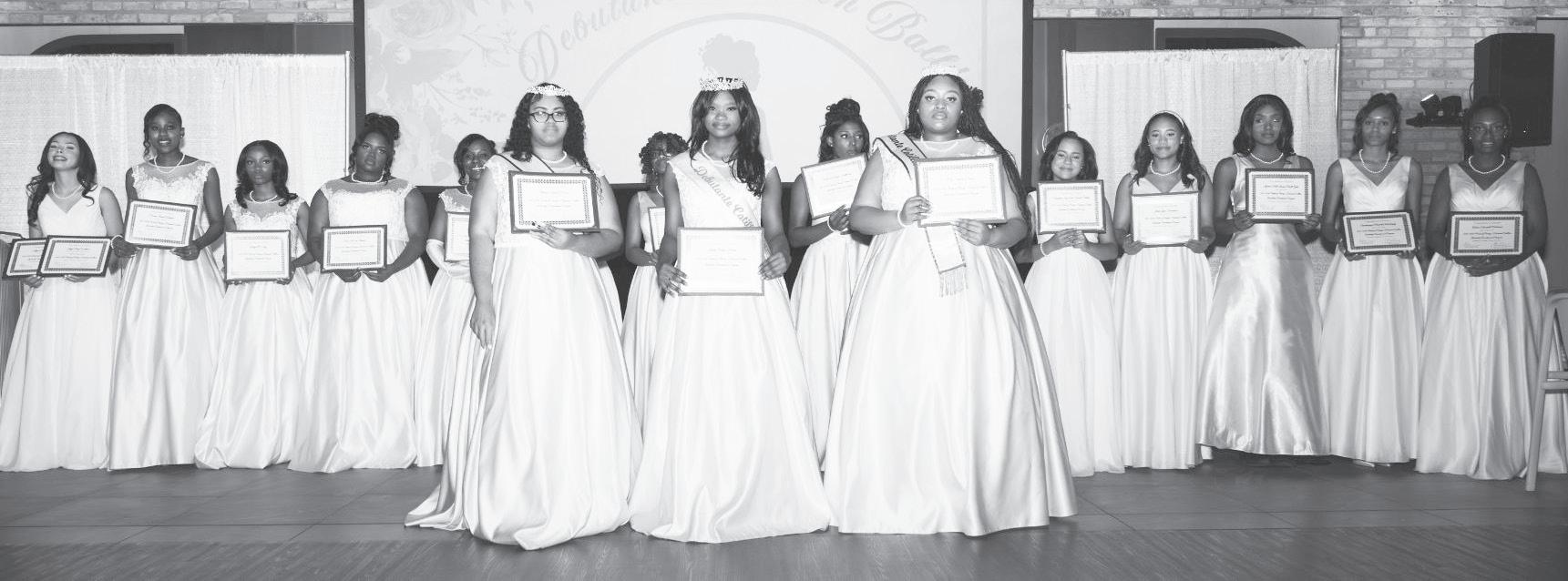
Designed to celebrate achievement while fostering future ambition, the Pearls of Prestige showcase, hosted by the Ivy Foundation Inc. in partnership with Alpha Kappa Alpha Sorority, Inc., illuminated the power of community. The gala honored 17 debutantes for their academic dedication, volunteerism, and leadership, serving as a vibrant celebration of Black excellence and joy.
Held on Valentine’s Day during Black History Month, the evening was unforgettable. Set at International Market Square, the venue brimmed with guests in elegant attire.
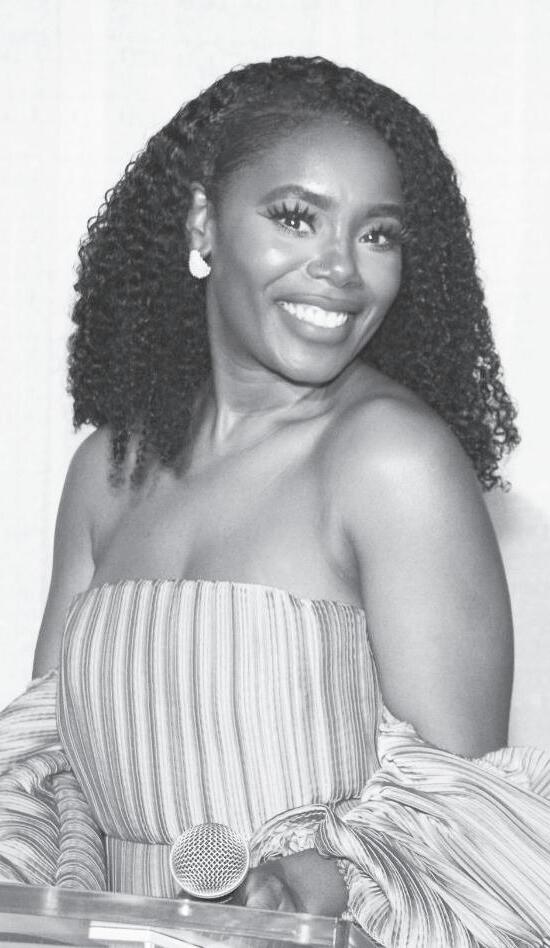
Pink and green lighting bathed the space, a live band provided a festive soundtrack, and a light, fragrant air added to the celebratory ambiance. The event was emceed by Kamaria Braye, who guided the program and introductions throughout the night.
Beginning around 6 p.m., Leslie Wright, president of the Ivy Foundation Inc., reflected on the history and cultural significance of the cotillion tradi-
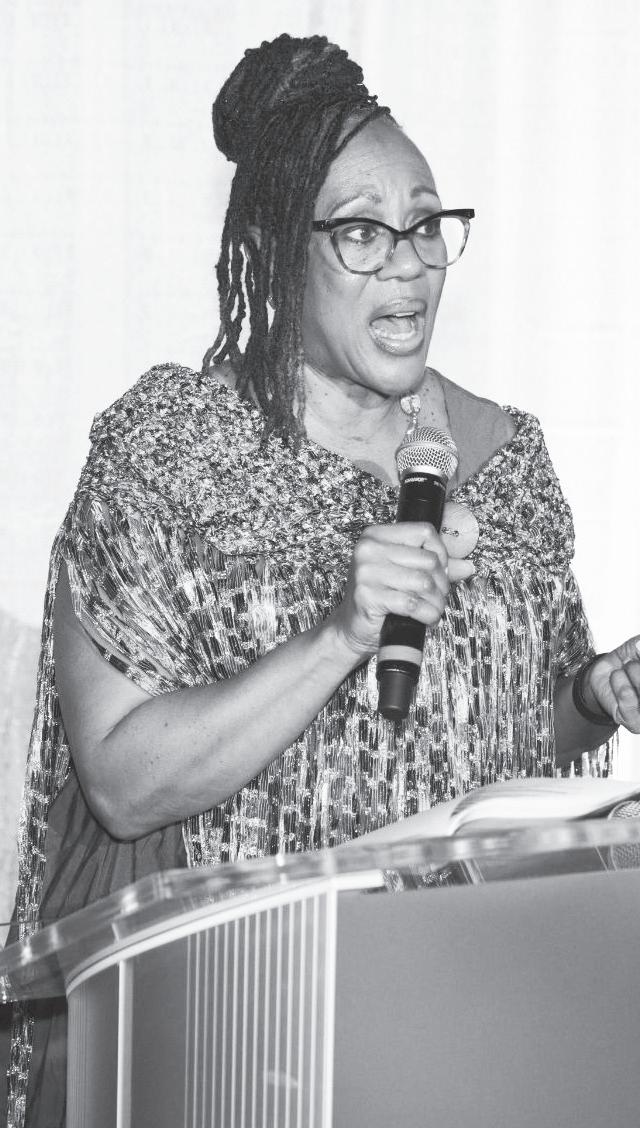
tion. She described cotillions as intentional rites of passage that fostered resilience and self-determination during the Jim Crow era, emphasizing their continued importance within Black culture.
Wright also praised the debutantes’ dedication, noting that each participant had trained since September in preparation for the evening. The six-month program included three workshops focusing on core values and leadership, financial literacy and philanthropy, community service, and etiquette.
During the debutantes’ introduction, each young woman was described with affirming adjectives: vibrant, driven, dependable, poised, highlighting their accomplishments first and foremost. They were recognized for balancing strong academic performance with commitments across athletics, the arts, and community service.
After their introductions, the debutantes and their escorts took to the dance floor for a choreographed performance that gracefully transitioned into a father-daughter
dance. Dressed in satin gowns and a single string of pearls, the debutantes shared a tender moment with their fathers, underscoring the intergenerational bonds central to the program and reflecting the role of family, guidance and support in their journeys.
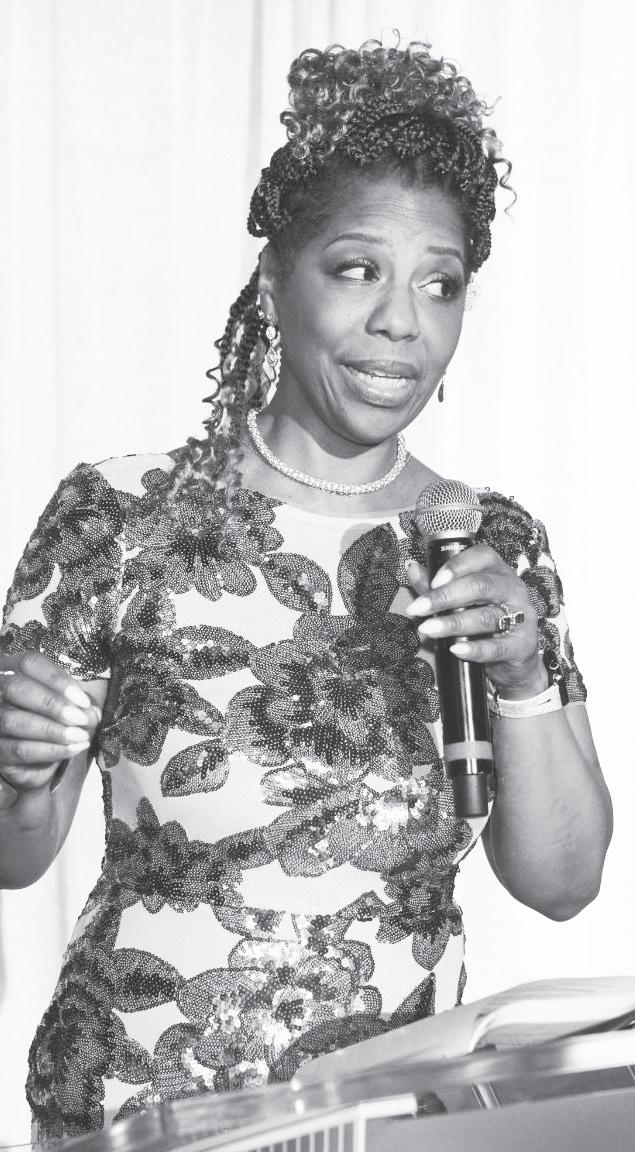
event reflects their organizations’ goals, Wright emphasized its lasting impact: “Making sure our young African American and Latina young women have something they can look forward to, something they can aspire to be.”
Both leaders highlighted the central role of mentorship within the program. “I think that what’s sometimes missing in our community is the opportunity to see what’s possible,” Henry said. “The more exposure we give our young people, the more good choices they can make.”
Addressing the program’s broader purpose, the leaders encouraged future par-
ticipants to embrace initiative. “Sometimes fear and the unknown can get in the way. Just do it,” Henry said. “You never know what’s possible if you don’t try.”
“Themore exposure we give our young people, themoregood choices they can make.”
As part of the evening’s program, scholarships were awarded to the debutantes
according to royal court distinctions. Shantae Moore was named second runner-up, receiving a $2,500 scholarship, while Nia Harris earned first runner-up and a $3,000 award.
With the crowning of Kacey Harris as queen of the event, she received $6,000 in scholarship support. The awards underscored the program’s continued investment in the debutantes’ academic futures.
Bringing the evening to a close, Nekeidra Morrison, cotillion co-chair, shared a final message: “Walk confidently, knowing you belong in every room you enter,” Morrison said. “This moment is not the peak. This is the launch.”
In interviews with Leslie Wright and Marsha C. Henry, president of Alpha Kappa Alpha Sorority, Inc., the mission of Pearls of Prestige came into sharper focus. Asked how the

By Jasmine McBride Editor
Sen. Bobby Champion, a key figure in the Minnesota Senate, is entering this legislative session with a clear focus on protecting Minnesotans and strengthening oversight across multiple areas, from fraud prevention to public safety. In a wide-ranging conversation, Champion shared updates on bills he’s pursuing, as well as his reflections on what has, and hasn’t, moved during the session so far.
Fraud prevention Champion expressed frustration with what he sees as incomplete action on fraud legislation. “They didn’t move the bill at all. They didn’t move any other bills as it pertains to fraud,” he said.
“I question their true commitment to this issue, as opposed to just wanting to use fraud as a way to be in the bully pulpit … highlighting the issue but not doing anything to protect Minnesotans and their resources.” Despite challenges, Champion pointed to progress made
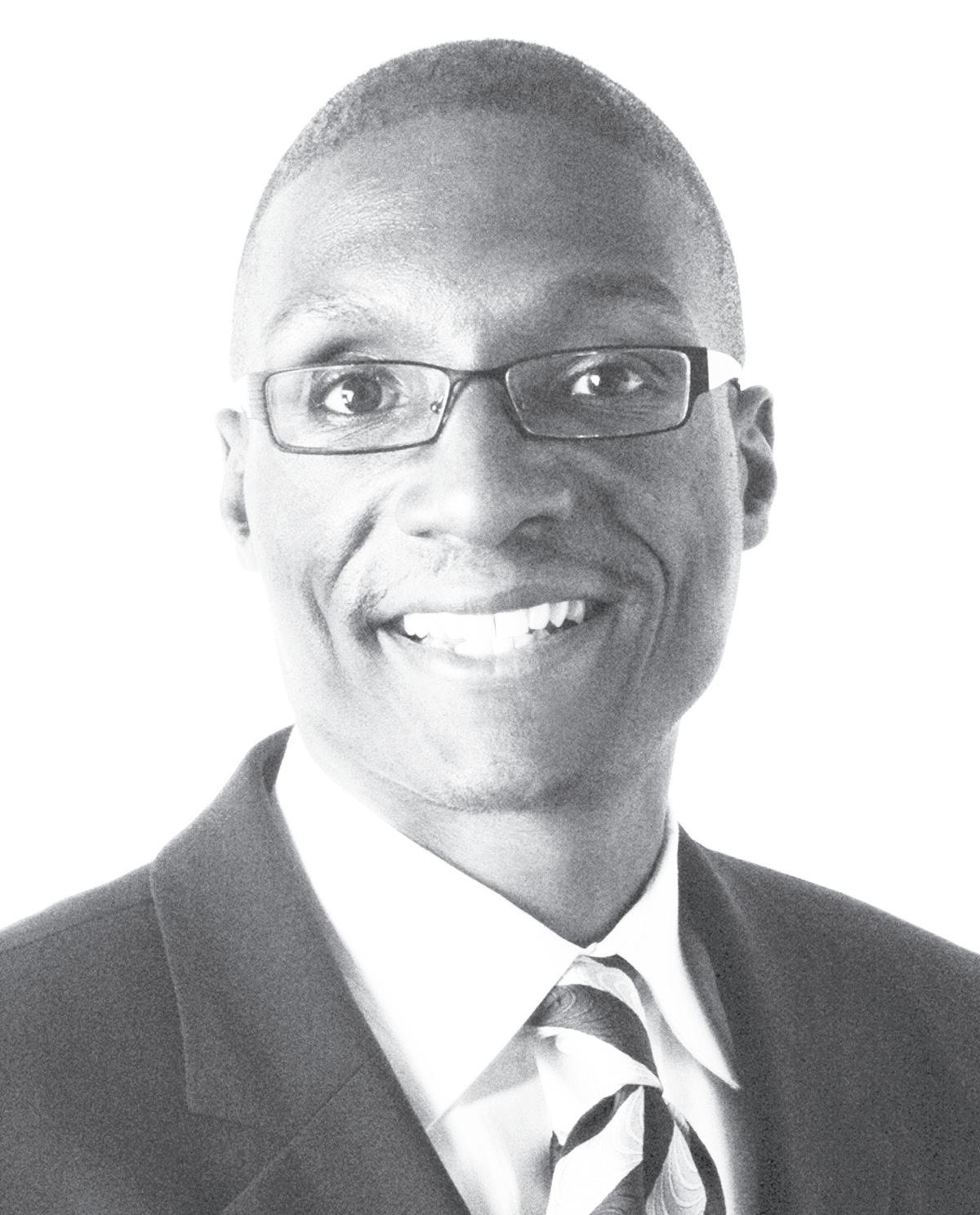
through the Senate, including expanding agency authority to close loopholes and improve coordination. “Agencies weren’t always able to collaborate with each other to identify patterns of people moving between programs,” he said.
Champion noted that the Office of Inspector General Bill, passed in the Senate but stalled in the House, centralizes investigative authority with subpoena power and oversight capabilities. “We did some things, but we have to
continue building on those efforts,” he said.
Capitol security
Security at the State Capitol is another priority, particularly in light of violent threats last year. Champion described new steps taken to protect staff, legislators and visitors.
“I put forth a policy that bans firearms in the Senate gallery,” he said.
steps are part of a broader effort to secure both private homes and public spaces.
ICE operations
Champion addressed the recent “Metro Surge” immigration enforcement actions and proposed legislation to ensure accountability. “One of the bills I’m putting forth says it is illegal for ICE agents to wear masks,” he said.
“Progress requires attention to detail, collaboration, and a willingness to address the root causes of problems, not just the symptoms.”
“The rationale is simple: The gallery overlooks the Senate floor, and anyone with a firearm could pose a serious risk. This ensures public safety while maintaining legal carry restrictions elsewhere on campus.”
Governor Walz also signed an executive order restricting firearms on the Capitol campus to permit holders, and similar measures have been extended to the Senate building. Champion said these
The bill aims to ensure accountability when federal agents interact with Minnesotans. Additionally, he plans to create a private right of action for residents whose constitutional rights are violated, providing a legal avenue to challenge misconduct.
Champion also emphasized support for local businesses impacted by ICE operations.
“Workers don’t go to work, citizens don’t patronize businesses, and the economic hit
Rooted in tradition yet oriented toward the future, the Pearls of Prestige showcase was more than a formal gala. It demonstrated the enduring cultural significance of cotillions as spaces that affirm Black identity, cultivate leadership, and invest in the next generation.
Through mentorship, scholarships and volunteerism, the program reinforced a legacy of excellence that extends far beyond the ballroom.
Destiny Kromah is a Macalester college student and contributing writer for the Minnesota Spokesman-Recorder.
is widespread,” he said. Lawmakers are exploring supplemental budget measures to provide relief while preventing potential fraud in assistance programs.
Collaborative approach
Champion stressed that much of his work involves collaboration with colleagues and community advocates. “Everything I’ve talked about will be done in concert with someone else, whether in the House or community groups,” he said.
He highlighted ongoing efforts around firearms legislation, oversight gaps, and protections for civil rights, noting that while some measures will be carried by other legislators, he fully supports these initiatives.
Looking ahead
Beyond fraud, security, and immigration enforcement, Champion is keeping a close eye on the supplemental budget, bonding projects, and health care funding. “We have to consider the immediate needs of Minnesotans while balancing our resources,” he said.
“Progress requires attention to detail, collaboration, and a willingness to address the root causes of problems, not just the symptoms.”
Jasmine McBride welcomes reader responses at jmcbride@ spokesman-recorder.com.
Sponsored by

Business optimism is returning for small and midsize business leaders at the start of 2026, fueling confidence and growth plans.
The 2026 Business Leaders Outlook survey, released in January by JPMorganChase, reveals a turnaround from last June when economic headwinds and uncertainty about shifting policies and tariffs caused some leaders to put their business plans on hold.
Midsize companies, who often find themselves more exposed to geopolitical shifts and policy changes, experienced a significant dip in business and economic confidence in June of 2025. As they have become more comfortable with the complexities of today’s environment, we are seeing optimism rebounding in the middle market nationwide — an encouraging sign for growth, hiring and innovation.
Small businesses, meanwhile, maintained steady optimism
throughout 2025, but they aren’t shielded from domestic concerns. Many cited inflation and wage pressures as the top challenges for 2026 and are taking steps to ensure their businesses are prepared for what’s ahead.
Overall, both small and midsize business leaders are feeling more confident to pursue growth opportunities, embrace emerging technologies and, in some cases forge new strategic partnerships. That bodes well for entrepreneurs in Minnesota.
Here are a few other key findings from the Business Leaders Outlook about trends expected to drive activity in Minnesota this year:
1. Despite challenges, leaders are bullish. A good portion of middle market businesses in the Midwest (43%) are optimistic about the national economy, which is higher than optimism among all middle market businesses surveyed (39%), and 41% are optimistic about the local economy.
2. For middle market leaders, uncertainty remains an issue. Though the overall outlook is mixed, over half (67%) of Min-

nesota midsize business leaders agreed the top challenge facing their business in 2026 is uncertain economic conditions.
3. Labor is a concern. Going into 2026, labor is a top three concern among business leaders in the Midwest (higher than revenue and sales growth, which was the third nationally). For Minnesota middle market businesses surveyed, government policy changes (other than tariffs) and labor were tied for the top second challenge
among 36% of leaders.
4. Tariffs are impacting businesses costs. Seventy percent of Minnesota midsize business leaders say tariffs have a negative impact on the cost of doing business, while just 18% say tariffs have had no impact at all.
Big plans are on the hori5. zon. Forty-three percent of Midwest middle market business leaders are considering M&A as a strategy in the next 12 months, compared to 39% of leaders nationally. Additionally, 41% Min-
nesota midsize business leaders expect an increase in headcount.
The bottom line
Rebounding optimism among U.S. business leaders at the start of the year is setting the stage for an active 2026. With business leaders looking to implement ambitious growth plans that position themselves for the future, momentum in Minnesota could be beneficial future goals for leaders looking to launch, grow or scale their
By Clint Combs Contributing Writer
The Minneapolis City Council
voted 8–5 Feb. 19 to renew the liquor licenses for the Canopy by Hilton and the Depot Renaissance hotels on 3rd Street, overriding concerns from hotel workers who say the presence of federal immigration agents has made their workplace unsafe.
The vote came after Amy Lingo, license and consumer services manager at the city’s Community Planning and Economic Development department (CPED), told council members the city had no legal grounds to withhold the licenses.
“There is no good cause to deny these renewals and I’m unable to recommend any conditions to condense on the liquor licenses as well,” said Lingo.
Newly elected Councilmembers Pearll Warren, Jason Whiting and Soren Stevenson joined Jamal Osman, Michael Rainville, LaTrisha Vetaw and Linea Palmisano in voting to renew. Council Members Robin Wonsley, Aurin Chowdhury, Elliott Payne and Jason Chavez voted against renewal.
The decision followed a charged committee meeting on Feb. 17, where members of Unite Here Local 17 presented testimony from hotel workers who said their coworkers were afraid to speak publicly for fear of retaliation. The workers described a workplace transformed since ICE agents began staying at both properties, with management boarding up kitchen windows, restricting staff movement, and withholding information about who was occupying the hotel.
Geoffrey Paquette, an organizer with Unite Here 17, read a statement from an anonymous Depot worker who said she first noticed something was wrong in January. “As we were walking through the parking lot I noticed several cars with out-of-state license plates and bars on the inside of the cars,” Paquette read.
“When I came into work, I told my coworker what I had seen in the parking lot and said I believed they were ICE agents. My co-worker told me the manager had previously told them that the hotel management did not

for coming forward despite the personal risk. “I want to thank sincerely, the very courageous and brave hotel workers who brought this issue to our attention,” acknowledging “the fears, the dangerous health and public safety concerns that they wit-
nessed knowing that it would cost them their job.”
Graduate Hotel General Manager Michael Berk withdrew his application ahead of a City Council vote on whether to deny his appointment to the Stadium Village Advisory Board. Student activists
business this year.
For informational/educational purposes only: Views and strategies described in this article or provided via links may not be appropriate for everyone and are not intended as specific advice/recommendation for any business. Information has been obtained from sources believed to be reliable, but JPMorgan Chase & Co. or its affiliates and/or subsidiaries do not warrant its completeness or accuracy. The material is not intended to provide legal, tax, or financial advice or to indicate the availability or suitability of any JPMorgan Chase Bank, N.A. product or service. You should carefully consider your needs and objectives before making any decisions and consult the appropriate professional(s). Outlooks and past performance are not guarantees of future results. JPMorgan Chase & Co. and its affiliates are not responsible for, and do not provide or endorse third party products, services, or other content.
Deposit products provided by JPMorgan Chase Bank, N.A. Member FDIC. Equal Opportunity Lender.
have staged noise demonstrations at the Graduate by Hilton on University Avenue near the University of Minnesota, following social media posts claiming the hotel was housing federal agents.
Protesters faced multiple arrests, including 67 for unlawful assembly and 12 for disorderly conduct or property damage.
Clint Combs welcomes reader responses at cmbs0284@gmail.com.
tell us that ICE was staying in the hotel because they did not want to create a sense of panic.”
Management at both hotels confirmed to CPED that they had a policy of keeping some staff separate from federal immigration clientele. On thursday, Lingo described those conversations as an attempt to manage worker concerns.
“The conversations we had revolved around how the attempts were to help mitigate anxiety by keeping staff separate from the clientele,” said Lingo.
But workers said the effects went well beyond reassurance.
Paquette read testimony describing how the restaurant windows were covered during the agents’ first week at the property.
“They covered the windows with paper so that no one could see the workers who are working back-of-house as a safety measure. My manager said it was for our safety.”
Workers also said their job duties were changed after management deemed parts of the hotel unsafe. “Since ICE started staying at the hotel, my manager told me that we would no longer be required to bring these items to the event rooms because it wasn’t safe for us to be in the public area of the hotel,” Paquette read.
The testimony said that other daily routines were also restricted. “The area where we can do our laundry is on the other side of the hotel. My manager told me it was not safe to go to the other side of the hotel, because that is where the ICE agents were staying,” Paquette read.
Unite Here Local 17 worker Uriel Perez Espinosa quoted a
woman he identified only as X, who asked to remain anonymous out of fear of retaliation:
“Many of us have seen ICE agents staying in the hotel. They park their cars on the ramp. They wear camouflage clothing. They are here at the Renaissance in the Depot Hotel.”
Among the most alarming disclosures at the Council meeting was a report that agents had left unsecured firearms in hotel rooms that housekeeping staff entered unannounced. Lingo confirmed the concern had been raised with her office.
“I believe the quote was that the agents would occasionally forget to put the DO NOT DISTURB on the door, and then house cleaning would go in and they would be unsecured,” Lingo told Councilmembers.
Photos obtained by the Minnesota Spokesman-Recorder and submitted to committee members last Tuesday reportedly show a California gray Dodge Durango parked at the Renaissance Inn on Feb. 15, three days after Border Czar Tom Homan announced an end to Operation Metro Surge.
Activists with the community monitoring group DefrostMN, which maintains a crowdsourced database of license plates observed near federal immigration operations, reported that the vehicle, plate 8SKS632, was last seen at the Whipple Federal Building on Feb. 8 at 8:52 a.m., 9:42 a.m. and 10:05 a.m. Observers also reported witnessing convoys of at least three vehicles with tinted windows carrying agents in tactical gear.
Councilmember Aisha Chughtai commended workers



Continued from page 1
“It is the government trying to muzzle me, to make me unable to report on one of the most historic cases, not just in our state, but in our country, reporting where you all know that I would uniquely give voice to the people who are otherwise not being centered in coverage of this case.”
She urged reporters covering the case to handle it carefully. “I ask the press, each one of you here today, please make sure you get this story right,” Fort said. “Listen, not just for me, but for everyone who is impacted. Protect the press.”
Continued from page 1
Cities shifted from relatively integrated neighborhoods to highly segregated ones.
Decades after racial covenants became illegal nationwide in 1968, neighborhoods remained divided; segregation had become normalized.
“[Racial covenants] set patterns for where people can live,” Delegard said. “Once a neighborhood was racially restricted, it was very difficult to be the only Black family to move in, not just because of hostility, but also due to barriers related to wealth.”
Homeownership programs that began in the 1930s did not help Black residents, and these factors have had intergenerational consequences, she said.
Houses that once had racial covenants are now worth 15%
Chants of “protect the press” erupted from the crowd.
Press freedom concerns Harry Colbert Jr. described Fort’s work mentoring young reporters and characterized the prosecution as dangerous for democracy.
“My name is Harry Colbert Jr. I’m the vice president for the Center for Broadcast Journalism, a nonprofit news organization founded by this person right behind me, Georgia Fort,” Colbert said. “The Center for Broadcast Journalism and its radio station, Power 104.7 FM, trains young journalists, ages 16 to 24, in the sciences and the arts of truth tellers.”
Colbert said Fort and the other journalists at the protest were doing the same work as report-
more than houses that never had them.
Delegard said most initiatives created to address discriminatory housing practices are too little, too late. “They don’t seem to have much enforcement power,” she said. “They don’t really get at the root causes of the issues. I would say there has never been a fullthroated effort to repair the intergenerational damage caused by racial covenants, white violence, real estate steering, discriminatory lending practices, all of those things together.”
Kiarra Zackery grew up in the Hale Page Diamond Lake neighborhood, just south of the Field neighborhood from which the Lees were pushed out. Her father would joke that there was a quota allowing one Black family per block; they have been the only ones for the 25 years they have lived there. Zackery later discovered
juvenile facility.
Continued from page 1
barriers have proven remarkably durable. Racial wealth gaps persist with a projection of over two centuries to bridge. According to Goldman Sachs, “The median Black household owns nearly 90% less wealth than the median white household.”
Educational disparities remain entrenched with over five million Black children struggling to read. The criminal justice system continues to disproportionately impact the Black community when Black youth are nearly five times as likely as a white person to be held in a
Continued from page 1
“The books are from around 1990, so they’re getting older,” Bjostad acknowledged. “But these stories are for the ages.”
At the Washburn Library branch, he said he later observed books written by members of the Obama family appearing on withdrawal carts as well. “It’s kind of gracious, in a sense, to give these books away to the general public,” he said. “But it also means limiting their further usage to the wider public.”
Concerned, Bjostad contacted the Spokesman-Recorder to ask whether others had reported similar observations. “I’m not sure if my story is a real story,” he said. “I think what I’m seeing is suspicious, but I’m wondering if anyone else has called in to report seeing similar.”
But according to Hennepin County Library officials, these withdrawals are not part of any ideological campaign. They say the removals are routine,
ers covering Tuesday’s hearing.
“You’re here doing a job, you’re following a story, and you’re presenting that story to your various audiences,” he said, addressing members of the media. “Georgia and the two other journalists that were there at Citie’s Church were doing what you’re doing right now.”
He warned that allowing the case to proceed could erode constitutional protections. “What will not be debated are the rights of the six protesters and the three journalists charged in this case,” Colbert said. “All are protected under the very First Amendment of our United States Constitution.”
“Reporting is not a crime,” he added. “But if we allow this malicious prosecution of Geor-
her neighborhood was “pervasive” with racially restrictive covenants.
“My parents were very intentional about making sure that I was still socialized in Black spaces,” she said. “It never really hit me until adulthood that I didn’t socialize with the other kids in my neighborhood. I was very much, kind of, on my own.”
“When we first got there, we didn’t receive outright hatred, but there was definitely reservation and hesitation to getting to know us, to wanting to meet us,” she said.
Zackery sees this as consistent with the quiet, distant racism often observed in Minnesota. “It’s either distance because there’s fear of a misperception, or overcompensation [when] people are overly nice, overly trying to prove they’re not racist.”
gia to move forward, then sadly that statement will no longer be our truth in the United States of America.”
Community support
Cindy Lewis, a former board member and longtime collaborator with Fort, expressed frustration that the charges remain pending.
“I am here today to express my extreme disappointment and outrage that we are still here talking about these charges,” Lewis said. “Drop the charges, dismiss the charges, and a formal of apology is definitely in order.”
Lewis highlighted Fort’s career trajectory from volunteer to professional journalist and her work creating paid opportunities for young people.
“Georgia has not only given
to the community, but most importantly, has taken care of our babies with this professional industry, and has made way for them to create money in their pocket, as well as expanding their brains,” Lewis said.
She also emphasized the importance of independent Black media. “We’ve got to come forward and support this independent media, independent Black media, specifically to what is happening, not only here in Minnesota but across the country,” Lewis said.
Broader implications
In her remarks, Fort referenced other incidents involving journalists she said demonstrate mounting pressure on the press, including arrests and use of force against reporters
Even now, Zackery said, when she visits her father, she notices neighbors watching her drive down the street; once she pulls into his driveway, their shoulders relax. “So I think conditions have improved in that it’s not as abrasive, but it’s definitely quiet and distant. It’s what you would expect in Minnesota.”
Delegard found while map-
A tale of two Minnesotas Progress, while real, has not yet translated into equity and justice. Minnesota offers a particularly stark example of this contradiction. For many, the state represents the land of milk and honey as evidenced by high quality-of-life rankings, strong educational outcomes, and economic prosperity. Yet for Black Minnesotans, the data tells a completely different story. The state consistently ranks among the worst nationally for racial disparities. Black communities face some of the widest gaps in educational achievement, household income, and criminal justice involvement. Minnesota’s narrative is not unique from the nation at large,
part of a professional process known in library science as “weeding,” which helps maintain a collection that is current, relevant, and accessible for the public.
“Hennepin County Library follows established best practices in the library industry to ensure our collections meet the needs of the community,” Joshua Yetman, Hennepin County Communications, said. “Each year, we add more than 350,000 new items, and periodically remove items based on factors such as physical condition, circulation, availability of updated editions, and space considerations. This process does not suppress voices or perspectives.”
Yetman also noted that maintaining representation often depends on funding beyond the standard library budget. “Libraries frequently use grants to ensure our collections include historically underrepresented voices,” he said. However, federal policy changes have made these grants harder to obtain. Executive orders under the Trump
administration, for example, restricted funding for DEI-related programs, limiting opportunities for libraries to acquire materials that reflect diverse communities.
The library emphasized its commitment to Black and Brown voices. Collections like the Gary N. Sudduth African American History and Culture Collection at Sumner Library and the John F. Glanton Collection, featuring over 800 photographs of the African American community in Minneapolis and St. Paul in the late 1940s, continue to be maintained and actively expanded.
Library officials also highlighted their work with local authors and events like the Minnesota Black Authors Expo as part of ongoing efforts to reflect community voices. Local author Shannon Gibney, whose books explore Black and transracial adoption experiences and community histories, emphasized the importance of representation in local literature.
“Book removal is a major concern, especially for historically marginalized communi-
but the disparities here are often more pronounced, creating what many describe as a tale of two Minnesotas.
Looking ahead 10 years
The next decade presents a choice. Progress is not inevitable. It is a conscious choice evident by daily action. Change will depend on leadership and strategic action. The path forward requires training the next generation of leaders to think critically, build sustainable solutions, and pursue justice with intention.
Charles Hamilton Houston laid this groundwork as he trained pioneering civil rights attorneys like Justice Thurgood Marshall, Oliver Hill, Spott-
ties,” she said. “Black authors, queer authors, authors of color … These are the people whose books are being pulled the most. Funding challenges make it harder to keep these voices visible, especially when school visits and workshops are also being reduced.”
Gibney also noted the economic impact on authors whose work relies on schools, workshops, and speaking engagements affected by DEI crackdowns — a focal point of the Trump administration’s 2025 plan.
“I have friends whose entire income comes from school visits and workshops, and many are losing opportunities because of book bans and the broader anxiety around diversity initiatives,” she said. “We already start with fewer resources and fewer invitations to share our work.”
Despite these challenges, Gibney finds energy and purpose in community response. Her recent children’s book, “We Miss You, George Floyd,” received overwhelmingly positive feedback from both children
in Minnesota and elsewhere.
“If they’ll arrest him live on television, on CNN, they will arrest me, an independent journalist,” Fort said, recalling the 2020 arrest of a national reporter during unrest in Minnesota.
She called the issue larger than her individual case. “This isn’t just a U.S. problem. This is a global crisis,” Fort said.
“As a journalist, I stand here today not only asking the world to help protect the press, but to continue fighting for me as long as this case takes.” Fort was released after her initial court appearance and remains free while the case proceeds. No trial date has been set.
Jasmine McBride welcomes reader responses at jmcbride@ spokesman-recorder.com.
a pitchfork or burn a cross. They wanted a legal remedy to seal the neighborhood off completely.”
Zackery reflected on her father’s experiences after George Floyd’s murder. Living just a few miles from where Floyd was killed, her father received gifts from white neighbors during the uprising.
“Because he was the only Black man on the block, they felt this was the one way to mitigate it through white guilt, which is also symbolic of their racism,” she said.
ping instances of racial violence in the Twin Cities that areas with racial covenants saw fewer violent episodes, because there was no one to terrorize.
“Part of the reason white people wanted to put in racial covenants was they didn’t want to stand on someone’s lawn with
swood Robinson and countless others. He prepared them to become social engineers who would eradicate marginalization and injustices.
He stated: “A lawyer is either a social engineer or a parasite on society.” Serving as a social engineer is a call to leadership not just for lawyers but for the entire Black community. Leadership, in this sense, is not abstract nor optional. It is local, relational, and built through everyday action.
The next 10 years offer an opportunity to build new inroads to justice and freedom within our own communities, one step and one decision at a time. This is an investment of your time, treasure and talent.
and adults, providing a platform for dialogue about historical and ongoing racial trauma.
Similarly, her novel “The Girl I Am, Was, and Never Will Be,” which addresses transracial adoption, connected with adoptees and other readers who felt validated and seen. “Community response is the highest reward as a writer,” she said. “It shows that our stories matter and that people want to engage with these perspectives.”
The Hennepin County Library system does not publish lists of withdrawn titles, although withdrawn books are often donated or recycled, officials said. Decisions are guided by professional standards and staff expertise, not the subject matter or identity of authors.
Bjostad says he plans to continue monitoring local branches. “I know they’ve been vocal about not banning books,” he said. “I’m just thinking, is anyone asking whether books are being pushed out the back door at the same time?
Zackery, a co-founder of the Just Deed Coalition, works to educate about housing racism in partnership with Mapping Prejudice. Her father encouraged neighbors to participate and remove their covenants, which many of them did.
Damenica Ellis welcomes reader responses at dellis@ spokesman-recorder.com
How will you plant a seed of social change?
Dr. Artika Tyner is committed to creating a world of inclusive leaders who will meet the pressing needs of today and work towards a better future where racial justice and economic justice reign supreme. As a motivational speaker, author and educator, Dr. Tyner helps people of all ages connect with their gifts and develop tangible tools for bringing forth sustainable, durable change in the family, workplace, community or school. By building and leveraging the tools in The Inclusive Leader she has inspired thousands of people to lead with their own gifts and plant a seed of social change.
As the debate over cultural representation continues nationally, local libraries may increasingly find themselves at the intersection of policy, perception and public trust, even when their actions are routine.
Find Hennepin County’s full Collection Development and Management Policy at www. hclib.org/about/policies/collection-development-managementpolicy.
Jasmine McBride welcomes reader responses at jmcbride@ spokesman-recorder.com.
“I might go check the stacks and see whether the collection that remains looks healthy. If it does, then it’s much less of a concern. If it looks gutted, then we go from there,” said Bjostad. For Hennepin County residents, the episode highlights both the importance of public libraries in reflecting the community and the ways national conversations around diversity and inclusion can influence perception. Library officials say their goal remains clear: maintaining collections that serve all residents, preserve historically underrepresented voices, and support lifelong learning.
In celebration of Black History Month, this special print edition highlights the visionary Black leaders shaping Hennepin County today.
From advancing health equity and housing justice to reimagining public service and community investment, these leaders are building on a legacy of resilience, advocacy, and transformative change. Through these profiles, we spotlight the lived experiences, leadership journeys, and policy impacts of our local trailblazers who are working to ensure Black communities not only survive, but thrive, in our most diverse county in the state. Their stories reflect both the historic barriers they’ve navigated and the bold, community-centered solutions they are championing. This series is produced by Jasmine McBride, Editor, as a tribute to Black excellence, service, and the ongoing work of equity in our local institutions. By centering the voices of Black leaders in Hennepin County, we honor the past, document the present, and invest in a more just future.
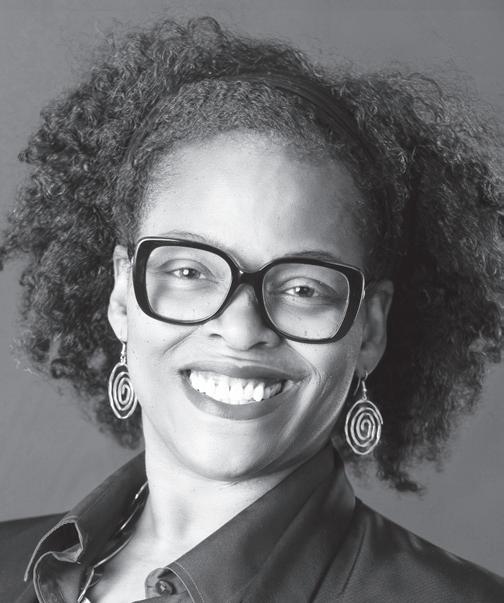
Commissioner Angela Conley has spent decades in public service, transforming her experiences as a Black woman navigating Hennepin County systems into initiatives that promote health equity, maternal justice, and homeownership opportunities for Black and Indigenous communities.
Courtesy
Angela Conley never imagined herself in public office. Her path to Hennepin County Commissioner began not in politics, but
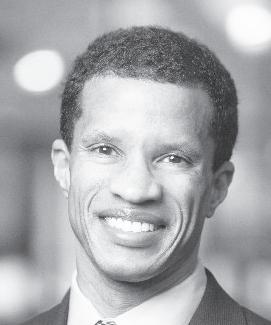
Kareem Murphy, deputy county administrator for Hennepin County, oversees health, human services and disparity elimination efforts while championing proactive investments that strengthen families and communities across Minneapolis.
Courtesy
Kareem Murphy did not begin his career in Minnesota. Born and raised in Connecticut to parents who migrated north from the Carolinas, his story mirrors that of many Black families who moved in search of opportunity. Today, as Deputy County Administrator for Hennepin County, Murphy helps shape policy and services for more than 1.2 million residents, including the North Minneapolis neighborhood he calls home.
in a county office nearly 25 years ago, standing in line as a single mother seeking benefits while escaping domestic violence. “I felt like just a number,” she recalls. “Surrounded by other Black women also navigating the system, I knew something had to change.”
That experience ignited Conley’s commitment to public service. She began her career in county government as a financial worker and gradually rose through the ranks, earning degrees in social work and public administration along the way. “Learning how to run government through the lens of social justice is critical to understanding how you shift the world so that everybody has an opportunity,” she explains. In 2017, Conley saw an opportunity to influence policy
at a higher level. With Hennepin County seeking to address systemic disparities, she ran for office and became one of the first Black commissioners in the county’s 167-year history. “I still don’t consider myself a politician,” she says. “I am a public servant. I’m here because the residents of the Fourth District trust me to represent their interests.”
Since taking office, Conley has focused on initiatives that directly impact the health and wellbeing of Black and Indigenous communities. She spearheaded the Heart Health Initiative, investing millions into education, awareness, and support groups to combat cardiovascular disease, the leading cause of death for Black women in Hennepin County.
“We weren’t talking about it enough, and people were dying,” she says. The initiative includes culturally relevant nutrition programs, fitness activities, and survivor support networks, helping the community take ownership of their health.
Conley also champions maternal health equity. Recognizing the stark disparities in outcomes for Black and Indigenous birthing people, she successfully advocated for a $10 million investment to fund the Birth Justice Collaborative, which provides culturally specific birthing practices, doula care, and holistic support for families throughout pregnancy and the first year of life. “It’s about creating a village,” she explains. “Fathers, mothers,
and communities all play a role in healthy births and thriving children.”
Beyond health, Conley chairs the Hennepin County Housing and Redevelopment Authority, promoting homeownership opportunities for Black and Brown residents. “Housing is healthcare. It’s the foundation for a better quality of life,” she says. Her leadership has expanded access to homeownership, helping families build generational wealth and close the racial homeownership gap in Minnesota.
Reflecting on her historic election and work in predominantly white institutions, Conley encourages young Black leaders to step into spaces where they are underrepresented. “We have to be un-
Handling and passing the baton:
Murphy oversees a broad portfolio that includes health, human services and the county’s Disparity Elimination line of business — an innovationfocused division that grew out of the pandemic. Under his leadership are departments responsible for public health, housing stability, behavioral health, education support services and contracting. More than 9,000 county employees ultimately report through the administrative structure he helps manage.
His days are rarely predictable.
When tragedy struck at a Minneapolis school earlier this year, Murphy coordinated behavioral health crisis response efforts, aligning county systems with city partners and law enforcement. It was a reminder that while policy may be written in boardrooms, its impact unfolds in real time.
“We’re the social safety net,” Murphy said. “We’re there when things get out of control, but we’re also trying to
prevent that.”
Prevention defines his leadership.
Before joining county administration, Murphy spent more than a decade in Washington, D.C., working in government affairs and lobbying. A graduate of Howard University and trained historian, he built a career navigating federal systems. But before relocating to Minnesota, he made a decision: he wanted to move from influencing policy on the outside to shaping it from within.
When his husband was called to pastor a Minneapolis congregation in 2013, the move aligned with Murphy’s ambition.
He joined Hennepin County as a health and human services lobbyist, later becoming Intergovernmental Relations Director. From there, he advanced into county administration and, most recently, deputy county administrator as part of a broader leadership restructuring.
Murphy describes his rise as cultivated, not accidental.
“Hennepin is good at iden-
tifying talent,” he said. “And when we’re aligned, they make the choice.”
He says recent years have brought a noticeable shift. Under a county board committed to equity and representation, leadership more closely reflects the diversity of the communities it serves.
“It’s easy to stack leadership with the same resumes,” he said. “It takes courage to look at the talent sitting right in front of you and promote it.”
Murphy and his husband intentionally chose to live in North Minneapolis. In just a few hours of house hunting, they saw past narratives of disinvestment and recognized vibrancy and community. They purchased near North Commons Park, becoming one of the last Black families to buy on their block before gentrification reshaped the area.
For Murphy, the work is personal.
He has watched county social workers arrive on his own block to intervene in family
wellness on my own family inspired me to dedicate my life to improving the health of others.”
crises. He has also watched the county increase investments in preventative services aimed at reducing those crises before they escalate.
“Most of what destabilizes families is poverty,” he said. “If we intervene early, you don’t need an army responding at the worst moment.”
That philosophy reflects a broader transformation in how the county approaches its mission. Rather than reacting solely to emergencies: child protection cases, emergency room visits, housing crises, Murphy advocates for upstream investments. Strengthening community clinics like NorthPoint Health & Wellness Center, expanding broadband access and stabilizing students whose families intersect with the justice system are strategies he believes reduce long-term harm.
It is a holistic model: address issues early instead of managing avoidable crises later. Stabilize a student in January so intervention is unnecessary by December. Sup-
sure essential services like food support, maternal health, and mental wellness reach the people who need them most.”
apologetic about bringing our voices into these spaces. It can be taxing, but our presence is necessary to create change.” She emphasizes selfcare and community support as essential tools for sustaining long-term impact. Conley’s message is clear: leadership is rooted in service. “Muhammad Ali said, ‘Service is the rent you pay for your place here on Earth.’ That’s what I believe. Public service is a labor of love, and it’s the most rewarding work I’ve ever done.” Born and raised on the south side of Minneapolis, Conley considers it a privilege to serve the community that shaped her. Through health initiatives, housing programs, and her unwavering advocacy for equity, she continues to inspire a new generation of Black leaders in Hennepin County.
For more information, visit www.hennepin.us/angelaconley.
port families before removal becomes the only option.
Murphy sees this approach as fiscally responsible and morally grounded.
For Black History Month, the theme “Rising in Power” resonates with him. His ascent into executive leadership represents more than a title; it reflects a shift in who shapes public systems. Still, he resists framing success as individual triumph.
“The onus is on me,” he said. “Adults are supposed to create opportunities. We’re supposed to reach back.” Murphy makes himself available for interviews and mentorship because he knows careers in government are often invisible to young people, especially those from neighborhoods like the one he calls home.
His career spans decades and states, but the throughline remains consistent: public service rooted in community. From Washington lobbying rooms to North Minneapolis sidewalks, Murphy’s work reflects a belief that systems can be both powerful and compassionate.
His goal is not simply to rise, but to ensure others rise with him.
Sara Hollie, Director of Hennepin County Public Health, has spent over 20 years championing community health, equity, and systemic change. Born and raised on the north side of Minneapolis, Hollie credits her upbringing for shaping her passion for public health. “I grew up with a lot of support, beauty, and determination in my community,” she said. “Seeing the impact of health and
Her father’s battle with cancer was a formative experience. As a young girl, Hollie witnessed the challenges African American families often face in accessing healthcare, as well as the importance of quality medical support. “Being in hospitals at a young age made me curious about healthcare,” she said. “I didn’t know it was called Public Health then, but I knew I wanted to work in health whether that meant becoming a doctor, opening a clinic, or supporting my community in other ways.”
Today, Hollie holds the distinction of being the first African American Public Health Director in Minnesota. In a state where public health leadership remains predominantly white, she sees her role as both an
honor and a responsibility. “I lead through my community,” she explained. “I’m representing a legacy and building a legacy right here where I grew up.”
Under Hollie’s leadership, Hennepin County Public Health has launched and expanded programs targeting systemic health disparities. One of her proudest initiatives is the Heart Health Initiative, which focuses on addressing cardiovascular health among Black and Indigenous women, populations disproportionately affected by heart disease. The program emphasizes education, awareness, and culturally tailored support, including community events, survivor support groups, and outreach campaigns.
Hollie also highlights Hennepin County’s work in HIV prevention and care. “We can’t do this work alone,” she said. “Strong partnerships with community organiza-
tions are essential to making meaningful change.” Hollie’s approach centers on both data and lived experience.
“Data can come in many forms: numbers, storytelling, but it’s central to understanding who is most impacted,” she explained. “We work with community members to understand their needs and direct resources where they will have the greatest impact.”
Her commitment to equity extends beyond program development to addressing systemic challenges in public health and government. Hollie acknowledges that funding limitations, policy changes, and structural inequities remain significant hurdles. Yet her approach is proactive and solutions-focused: “We don’t wait. We respond. We face challenges head-on, working with our community partners to make
Hollie sees her leadership as a bridge for the next generation of Black public health professionals. “I want young people to see that they can lead at all levels,” she said. “Explore your interests, connect with mentors, try new things, and don’t let anything get in the way of your goals.” She stresses the importance of role models and networks in guiding young leaders, noting that mentorship and community support can make the difference in pursuing careers in healthcare and public health.
Beyond her professional achievements, Hollie hopes to inspire a broader vision of leadership and service. “Public health is about more than programs or policies,” she said. “It’s about giving back to your community in meaningful ways, lifting others up, and ensuring that the legacy we leave behind empowers the next generation to thrive.”
Through her work, Sara Hollie embodies a model of leadership grounded in equity, service, and community. Her story is a reminder that true public health leadership combines passion, lived experience, and the courage to confront systemic inequities, creating a foundation for healthier, stronger communities.
For more information, visit www.hennepin.us/en/residents/ health-medical/public-health.
For Hollie, public health is deeply personal. It’s about improving outcomes for communities, building trust, and addressing inequities that have persisted for generations. Her leadership reflects a holistic view of wellness, acknowledging that health is tied to housing, education, economic opportunity, and community support. “We can only improve health outcomes together,” she said. “Public health doesn’t happen in isolation. It happens when communities and institutions work side by side.”

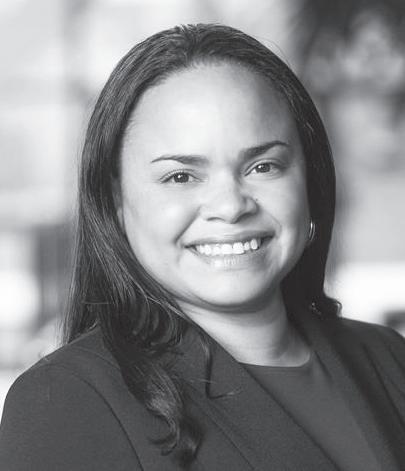
Sheriff Dawanna Witt, the first woman and person of color to lead the Hennepin County Sheriff’s Office. Courtesy
When Dawanna Witt reflects on her journey to becoming the 29th Sheriff of Hennepin County Sheriff’s Office, she doesn’t begin with ambition.
She begins with fear.
“I was that kid who was afraid of the police,” she says. “I didn’t trust anyone in a uniform.”
Today, she leads one of the largest law enforcement agencies in Minnesota. She is the first woman and the first person of color to hold the office in Hennepin County. Her presence alone signals change. But her story, deeply personal, nonlinear, and hard-earned is what makes her leadership powerful.
Born in Chicago and raised in South Minneapolis, Witt grew up in circumstances that frequently brought law enforcement into her family’s life. She saw firsthand what she describes as both “bad policing” and broken systems. Early on, she internalized a belief
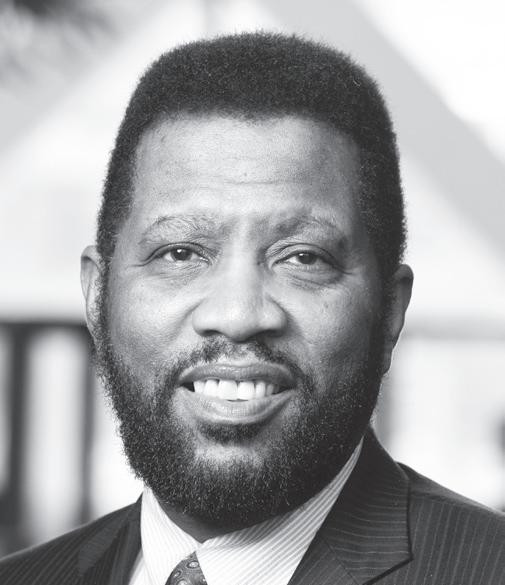
“Bobby Jackson, Director of Internal Services at Hennepin County, has spent 47 years championing equity, representation, and community-centered leadership.” Courtesy
For Director Bobby Jackson, leadership has always been about service, not status. His journey with Hennepin County began nearly five decades ago in a place few would associate with executive leadership: a parking booth at the Government Center. A college student at the time, Jackson worked there to help pay his tuition after his father made it
Donnita Osborn, Director of Access, Aging, and Disabilities at Hennepin County, draws on her Rondo roots and lifelong commitment to community to expand access, break down barriers, and empower residents of all ages and abilities. Courtesy
Donnita Osborn, Director of Access, Aging, and Disabilities at Hennepin County, has been committed to service long before she assumed her current role. Growing up in Rondo, the historic Black community of St. Paul, Minnesota, Osborn recalls a neighborhood grounded in stewardship and mutual support. “We never really knew
that police were not people she could trust.
Her childhood also included strong community memories: close-knit family in Chicago Heights, grandparents who anchored the household, and neighborhood life that felt connected. But when her family relocated to Minnesota, those bonds loosened. Adjusting to a new environment brought cultural shifts and instability. She recalls noticing, even as a young child, how different Minnesota felt from the community she had known.
At 15, her life changed dramatically: she became a mother. Faced with the responsibility of raising a child while still a child herself, Witt made a painful decision. Wanting safety and stability for her daughter, she temporarily placed her with her child’s father, now her husband of 35 years, while she entered a shelter in St. Paul. Later, she enrolled in a program through the Amherst H. Wilder Foundation that supported adolescent mothers with parenting skills and independent living education.
By 16, she was living in her own apartment in Dinkytown and had re-enrolled at South High School. She joined the basketball team, eventually serving as captain, and graduated on
time with honors and scholarships.
“There were systems that failed me,” she says. “But there were also people who didn’t.”
A social worker during her high school years became one of those pivotal figures; someone who looked beyond her circumstances and saw her potential. That experience shaped Witt’s guiding philosophy: be who you needed when you were younger.
She initially pursued nursing at the St. Catherine University before changing her major to chemical dependency and family therapy. Her work placed her alongside families navigating addiction and child protection. Families that looked like her own. She found purpose in helping children avoid the isolation she once felt.
Law enforcement was not part of the plan.
That changed during a tour of the Hennepin County Jail. A female deputy told her, “We could use more women and women of color in this field.” On a whim, and with little expectation of being accepted, Witt applied to become a detention deputy.
She was hired.
Working inside the jail forced daily interaction with law enforcement officers, and over
time, her perspective shifted. “I realized they weren’t all the same,” she says. “Some shouldn’t be in uniform, yes. But some were good people.”
Determined to become the kind of officer she wished she had seen growing up, she earned her peace officer license. After being passed over for promotions, and overhearing doubts about her background, she moved to the Dakota County Sheriff’s Office, where she would spend 16 years building her career.
There, leadership invested in her growth. She earned a double master’s degree in public safety administration and management, studied policing practices in the United Kingdom, and developed programs centered on youth engagement. The encouragement she received helped dismantle lingering self-doubt.
In 2019, she returned to Hennepin County as a major. When leadership shifts created an opening for sheriff, colleagues urged her to run. She resisted at first, questioning whether the role was meant for someone like her.
She ran anyway, and won.
When assembling her command staff, she made one request: “Don’t let this job change me.”
For Witt, leadership is not about titles. It is about impact. She speaks most passionately not about policy wins but about people. Young interns sought her out after seeing her name repeatedly in the community, a young man was inspired to pursue law enforcement after observing her at the State Fair, and a former mentee is now training at the FBI Academy.
Those moments, she says, are confirmation that she is doing something right.
At a time when many agencies struggle with recruitment and retention, the Hennepin County Sheriff’s Office is fully staffed. Many applicants cite leadership as the reason they want to join.
Witt attributes her effectiveness to having lived on both sides of the system. She understands distrust because she once embodied it. She challenges officers to consider why someone may fear them. She challenges community members not to assume every badge represents harm.
“We get nowhere without conversation,” she says. “Education heals.”
She does not deny that harmful policing exists. She does not dismiss community pain. But she believes progress requires
clear that higher education required both discipline and responsibility. “You have to figure out how to pay for school,” his father told him. That early lesson in accountability became the foundation of a 47year career in public service.
One day, a Human Services leader noticed Jackson’s consistency and work ethic, offering him an opportunity to move into a new role. That chance set him on the path toward Human Services and eventually executive leadership. Few know that Jackson’s background is pastoral, he pastored a church for 20 years while building his career in county government. For him, ministry and public service are deeply connected, both rooted in compassion and belief in the dignity of every person.
Most of his career has been in Human Services, where he
witnessed dramatic shifts in how the county approaches equity and community wellbeing. Today, as Director of Internal Services, he oversees operations that support multiple service areas, from project management to training and systems support, ensuring frontline staff can effectively serve residents. Jackson sums it up simply: operations are about “making things better.”
In 2025, tight budgets and economic pressures tested that mission. Resources were reduced, but resident needs remained urgent. Jackson is proud that his team maintained high-quality services while improving efficiency. “Even with cuts, we stayed on course,” he says. “We found ways to help staff and departments continue providing excellent service.”
Early in his career, Jackson often found himself the only
person of color in leadership spaces. “For 20 years, I was the only leader of color in my area,” he recalls. That isolation came with pressure, but he drew strength from lessons his father passed down: sometimes you must work twice as hard to be recognized as equal. Today, the landscape is changing. Hennepin County has formally recognized racism as a public health crisis and requires leaders to use the Racial and Health Equity Tool before implementing new policies. Jackson describes the tool as “intentional,” a method to analyze data, listen to residents, and examine how race, gender, and other factors influence outcomes. “Even if you take race out of it, it’s still the right thing to do,” he says.
Representation remains critical. Jackson recalls a moment at a restaurant when a county em-
about class,” she says. “If you needed help, your neighbors helped you, your church helped you. That sense of community shaped everything I do.”
That early understanding of community has guided Osborn through a career rooted in social work and public service, and now into leadership at Hennepin County. She emphasizes values of stewardship, mission, and helping others achieve their best selves. “Wherever I go, I bring those principles,” she says. “It’s about doing the right thing because it’s the right thing to do, not for recognition.”
Osborn’s first direct experience in helping others came during an internship at the YWCA, supporting women facing homelessness, domestic abuse, and teen mothers navigating complex life challenges. She witnessed firsthand how access to resources, paired with support,
can transform someone’s life.
“Even small gestures make a difference,” she reflects.
“You’re part of someone’s journey; you’re part of their fabric.” That philosophy: listening, learning, and meeting people where they are remains central to her leadership today.
After earning her degrees and navigating spaces where few people looked like her, Osborn learned to value her authentic voice. “Being a firstgeneration college student, I had to realize my experiences add value,” she says. “I learned that I am enough, and that my perspective can shape an organization.” These lessons guided her as she stepped into leadership in December 2024, a role she describes as both a challenge and an opportunity to create meaningful access for residents and staff.
In her first year, Osborn has focused on maintaining and expanding services for Henne-
pin County residents amid uncertainty and change. She has worked closely with her team to ensure programs remain uninterrupted while increasing outreach and visibility.
“Everyone’s needs are unique,” she explains. “As leaders, we have to be creative in how we provide services and meet those needs.” Her approach is rooted in access; making information, resources, and opportunities available so residents can thrive.
Osborn’s leadership style emphasizes listening and learning from the community. She believes that service means more than offering immediate solutions; it means breaking down barriers, amplifying voices, and fostering resilience.
“People are more resilient than we give them credit for,” she says, “but they need access to information and opportunities to use that resilience.”
Representation is another
acknowledging complexity and choosing engagement over division.
As the first Black woman in her role, scrutiny comes with the territory. Shortly after taking office, she received a message questioning whether her identity, not her qualifications, earned her the position. Her response was measured: if she were a white man with the same credentials, would the question even be asked?
She understands the pressure of being first. “I know I have little room to mess it up,” she says. “I want to keep paving the road.”
In her office hangs a photo from her swearing-in ceremony. In it, her granddaughter looks up at her with unmistakable pride. “That,” Witt says, “is why I do this.”
Sheriff Dawanna Witt’s journey is not a story of perfect systems or easy victories. It is a story of resilience, self-work, and the determination to transform personal pain into public purpose.
For young Black girls in Minneapolis.
For teen mothers rebuilding their futures.
For children who once feared the badge.
Her leadership is more than representation.
It is proof that belonging in spaces of power is not about where you start, but about who you choose to become.
For more information, visit www.hennepinsheriff.org/.
ployee approached him: “Seeing you in leadership makes me believe it’s possible.” Visibility, he knows, expands the sense of what’s achievable for others. Jackson’s commitment to community extends beyond county offices. A North Minneapolis native, he grew up during the civil unrest of the 1960s along Plymouth Avenue, watching his father protest injustice while helping rebuild the neighborhood. That balance, advocacy paired with responsibility, shaped Jackson’s approach to service. For over 20 years, he has volunteered and mentored youth in Brooklyn Park, many of whom are the first in their families to consider college. He wears university apparel to spark conversations about higher education. “Kids are sponges,” he says. “If they don’t see it, they don’t always believe it’s possible.”
key component of Osborn’s mission. She reflects on the importance of seeing Black leaders in spaces where they are historically underrepresented. “It matters when people see someone who looks like them making an impact,” she says. “It’s unspoken, but it gives others hope and inspiration.” She brings that awareness into her work and encourages young professionals to believe in their authentic selves, seek mentorship, and approach challenges with a growth mindset.
Osborn also views Black History Month as a vital time to celebrate both historical achievements and ongoing contributions. She participates in local events with her children, highlighting the collective accomplishments of Black leaders in the community. “It’s about pride, representation, and seeing that our contributions matter,” she says. “It motivates me to keep doing better.”
At home, Jackson shares the same principles with his 31-yearold son, now a supervisor himself: treat employees with dignity, build relationships, and channel frustration constructively. “If you respect people, they respond in kind,” he says.
As Hennepin County moves into 2026, Jackson remains focused on affordability, economic stability, and closing persistent racial disparities. He emphasizes equity over equality, ensuring residents have what they need to thrive, not just the same starting line. After 47 years of service, Jackson hopes his legacy is clear: he helped make things better and cleared a path for other leaders of color. For Black History Month and beyond, his story is a testament to perseverance, representation, and leadership rooted in service.
For more information, visit www.hennepin.us/en/residents/human-services/humanservices-online.
Reflecting on her journey, Osborn emphasizes the importance of community, access, and persistence. Her work reminds residents and staff alike that public service is about creating pathways for others to thrive. She credits her team, her values, and the lessons of her upbringing for her success. For Osborn, Hennepin County is more than a workplace, it’s a platform to enact meaningful change. “I feel supported and aligned with the organization’s core values,” she says. “We’re here to partner with residents, provide guidance, and ensure no one is left navigating these systems alone.” As she looks to the future, Osborn hopes to continue evolving services and increasing accessibility, creating an environment where all community members can succeed. Through leadership grounded in community, authenticity, and service, she exemplifies how Black leaders are shaping Hennepin County for generations to come.
By Aamira Redd Contributing Writer
The Black Europe Film Festival of Minneapolis–Saint Paul (BEFF MSP) hosted its second annual event February 19–22, with screenings at Main Cinema and Capri Theater. The festival showcased films from across the Black diaspora, offering a range of genres from science fiction and documentaries to family dramas and romantic comedies.
The films presented Black experiences from a global perspective often underrepresented in mainstream media. This year’s festival carried the theme “Afro-Pasts and AfroFutures,” conceived when curators noticed that many of the selected films explored the relationship between history and the future.
“It's not the relationship that is about being stuck in the past, but how we negotiate with the history, memory and tradition in order to make a step toward the future,” said Lorenzo Fabbri, founder and organizer of BEFF MSP. “So it's sort of like this movement, this negotiation between past and future that the films we have in the program this year talk about.”
BEFF MSP’s outreach director, Iman Mohamoud, emphasized the importance of creating space for present and future Black stories. “I think the question that we need to be asking is what possibility looks like right now, what do we mean by imagination and creativity, and I think the theme is especially fitting,” Mohamoud said.

A special screening of “The Right to Move, The Right to Stay, featuring The Travelers and The Afro-Elderly Project,” during the Black Europe Film Festival in Minneapolis, Feb. 20. The films explore migration and the experiences of Black diasporic communities. MSP Film Society
Highlighting diaspora immigration
The festival included a special screening and discussion titled “The Right to Move, The Right to Stay,” featuring two films followed by a community conversation. Fabbri said the screening was organized in response to recent federal immigration enforcement actions, highlighting the lived realities of migration across the diaspora.
not so much attention to what it means to stay and to get old and to age in a country that is not yours,” Fabbri said.
Another project, “The Travelers,” directed by David Bingong, follows a group of SubSaharan migrants attempting to cross from Africa to Spain, showing the perilous reality of the Mediterranean border, one of the deadliest in the world.
French basketball player and Minnesota Timberwolves
“There's been too many excuses in allformsofmediawherethere hasn't been enough highlighting ofthesestoriesthataresointegral to the global majority.”
The first film, “The AfroElderly Project,” focused on the experiences of first- and second-generation immigrants. “There is so much focus on arriving, but there is
center Ruby Gobert premiered his film, “No. 27,” documenting his journey as an athlete across France, Guadeloupe, and the United States. “It’s another kind of migration story that is
different from the one we're used to, but we also thought it was important to show another side,” Fabbri said.
Portraying Black joy Mohamoud said organizers intentionally selected films that celebrate Black joy. “We want people to know that when we
talk about Black stories or Black experiences, it's not just doom and gloom. People should be seeing Black people in love, out on adventures, and discovering new things.”
Fabbri elaborated, noting, “We’re all familiar with the ways Black bodies are often represented through pain, but the films we’ve seen here speak to so much more than that. Even when they connect to painful histories like migration, they still offer a beacon of hope.
“They map out possibilities for change, for futurity, and for community. That’s why we believe it’s so important to create space for Black filmmakers to tell their own stories.”
Supporting diasporic arts
Attendee Machoshi Matsafu, who watched ‘The Last King of Brooklyn,” emphasized the importance of supporting Black filmmakers worldwide.
“If you're Black, everywhere else in the world you're African. And so we need to show
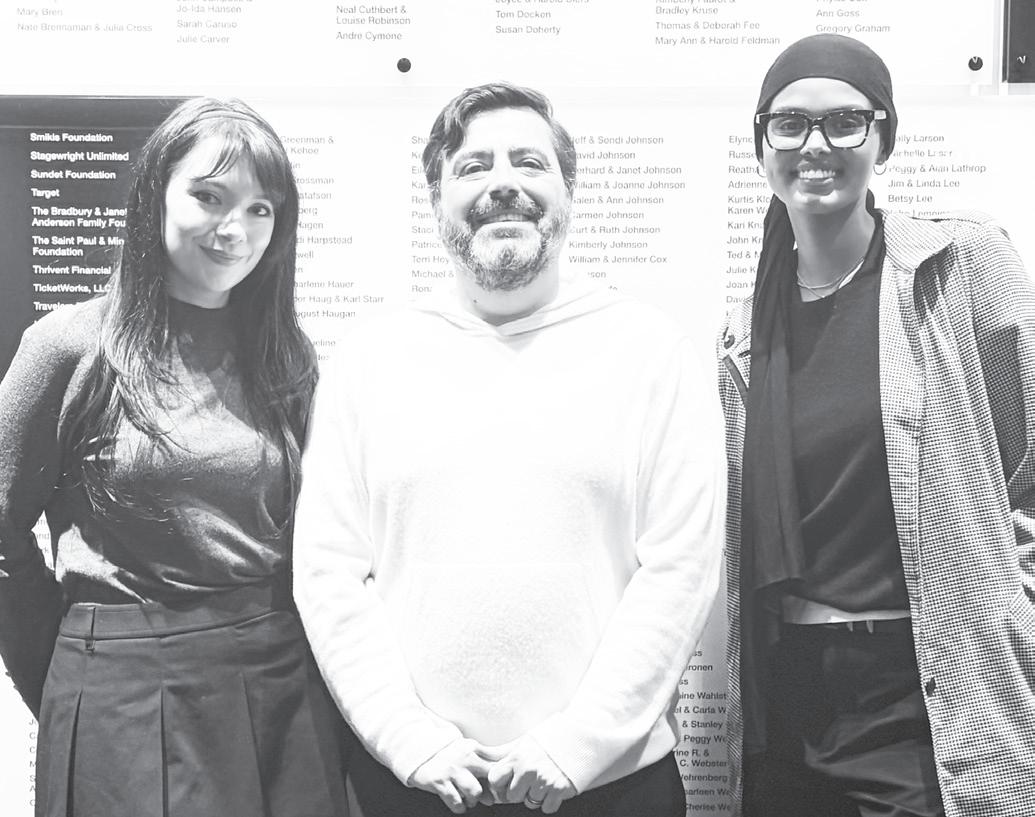
By Lizzy Nyoike Contributing Writer
The African Museum, Arts, and Cultural Center is bringing artists and community members together for its Black History Month exhibition, “In Our Presence,” a showcase highlighting the work of four African American artists: Kay Heino, Rajine Williams, Arnée Martin, and Jeannine Erickson. The exhibition creates a space for reflection, connection and storytelling through art.
“We are part of the nonprofit organization the African Economic Development Center,” said Lokho Kotile, programs coordinator at the Cultural Center. “What they aim to do in their mission is support small businesses in Africa and the diaspora, providing funds, loans, guidance on grants, and under that, they created this museum gallery called the African Museum, Arts, and Cultural Center.”
“Our main mission is to highlight African in the diaspora artists, basically having a space for us by us and giving artists that spotlight,” said Kotile. “In Our Presence” was created specifically for Black
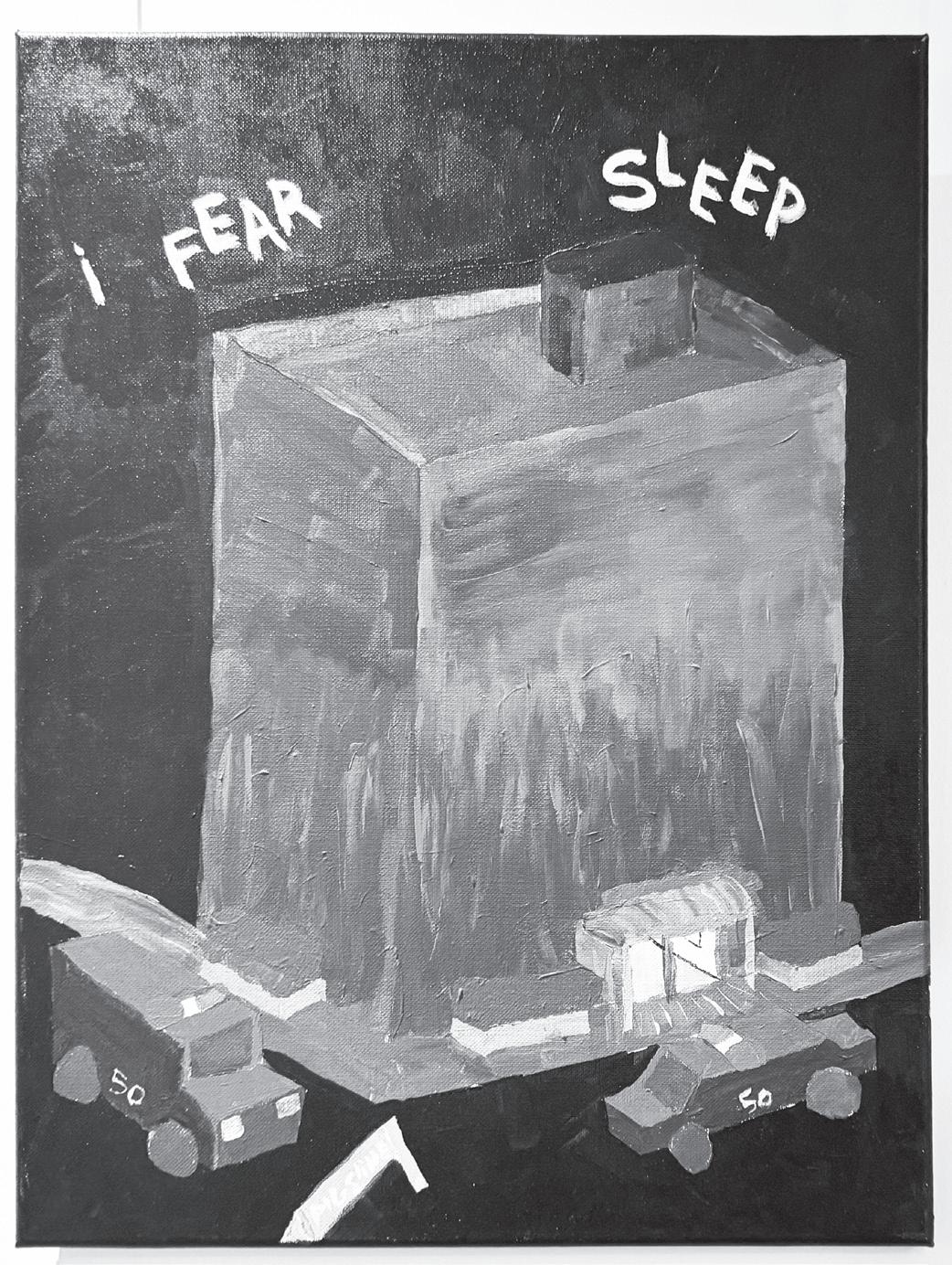
exhibition within the paintings and the works. The artists created QR codes so viewers could listen to the music inspired by each piece.”
“Anything that can bring community together and showcase African and diaspora artists is what we’re about,” Kotile added.
For Twin Cities-based visual multimedia artist and educator Rajine Williams, whose work explores Black womanhood, identity, embodiment, and emotional interiority, the exhibition presents an opportunity to challenge expectations about what Black art “should” look like.
“I like to say my artwork aesthetic is Afrocentric eclectic,” Williams said. “The showcase is literally about showing Black artistry in different forms and levels, and the eclecticness around it.
“We’re all from the Black African diaspora, but all our work looks different. It shows up differently. It’s not cookiecutter, like the media wants Black artwork to look.”
for Minneapolis. Her work serves as a form of protest rooted in lived experiences.
“This is a form of protest, showing ourselves on a canvas, wood fiber, or whatever our mediums are,” Williams said. “My artwork is through my Black experience and my lens. I consider myself an alternative Black girl, kind of different, quirky, and out there.”
“All of my pieces are found in recycled material,” Williams said. “The canvas portraits are recycled canvases from an art thrift store, and the larger three-dimensional pieces are cardboard and paper, with recycled canvases. I like to repurpose things I
up for each other and for all the stories that are being told authentically and with integrity,” said Matsafu, who is from South Africa.
Matsafu also highlighted the need to celebrate all genres of Black film, including the playful and experimental, noting the lack of representation in mainstream media. “There's been too many excuses in all forms of media where there hasn't been enough highlighting of these stories that are so integral to the global majority. It is time to have those, and we'll show up in whatever way we can,” Matsafu said.
For Mikaela Ayim, another attendee, the festival was a learning experience in seeing how Black American culture has influenced other diasporas. “I learned so much just by being in this space and watching “The Last King of Brooklyn,” but also seeing how special and influential American culture is here, maybe more specifically Black culture, and how there are walls that we have broken down or pushed in.” Minneapolis-based musician Raycurt Johnson, who has performed extensively in Germany, said supporting diasporic arts fosters a sense of connectivity across Black communities. “We are living in the dynamics of colonization from each perspective: location, language, German, English, Spanish, but we are the diaspora telling these stories. We can show each other the similarities, but also the uniqueness because of location,” Johnson said.
For more information, visit www.mspfilm.org/black-europe-film-festival/.
Aamira Redd is a freelance journalist and contributor for the Minnesota Spokesman-Recorder.
perience in Minnesota.”
“Self-portraiture was one of the first ways for me to affirm myself and see myself in a lens that wasn’t like those dolls or Disney princesses,” Erickson said. “This is a way to make an image that feels like home, safe and comfortable.”
She describes her work as both healing and joyful. “There’s a lot of freedom, agency, and self-determination in self-portraiture,” Erickson said.
“It’s like a living journal or encapsulated immortalization of yourself… You can look back and remember what you were feeling, where your heart was, and what your hopes and dreams were.”
History Month and will remain on view through Feb. 27.
Community building is central to the museum’s programming, Kotile said. “We try to
have an exhibit every month or every other month.
“We had a West African exhibition showcasing West African artists. It was a sound
Williams began creating art in 2020 just a few blocks from where George Floyd was killed, during a time of grief and loss
find value in that have been thrown away.”
For artist Jeannine Erickson, art has been a source of healing and self-affirmation. She began creating at a young age as a way to express her voice.
“I was raised in an all-white family. I’m adopted,” Erickson said. “Being a biracial Black woman adopted into the suburbs in the 2000s was a very unique ex-
The exhibit is open for viewing Feb. 7–27 at the African Museum, Arts, and Cultural Center. For more information, visit https://www.instagram. com/africanmuseum.mn/.
Lizzy Nyoike is a Hubbard School of Journalism & Mass Communication student and contributing writer for the Minnesota Spokesman-Recorder.

By Izzy Canizares Contributing Writer
Imagine being at your most overstimulated and emotional state, thrown into a small concrete room alone with the door locked for an unknown amount of time. Now imagine you’re nine years old.
Attorneys at the Minnesota Disability Law Center (DLC) say this is the reality many elementary children face due to “seclusion rooms” in Minnesota schools. While outdated, these rooms are still legal, and for the first time the public has been shown photos of these spaces across the state.
On February 11 the Minnesota DLC released a report documenting what these “seclusion rooms” look like, in an effort to persuade the Minnesota legislature to ban them in the upcoming session. Used primarily for children with disabilities, Minnesota law allows a school district to isolate children in emergencies where an “immediate intervention is needed to protect a child or other individual from physical injury.”

“It’s a very antiquated practice, and it’s one we know is traumatizing for both the children and the staff that uses it,” said Attorney Jessica Heiser of Mid-Minnesota Legal Aid, Minnesota Disability Law Center. Eerily similar to solitary confinement, many of these rooms are concrete, closetsized, and feature thick fourinch magnetic-locking doors, like a jail cell. While the practice has been banned for children in grades K-3 in Minnesota and fully banned in 11 states, it is still used in 50 Minnesota school districts. Tracking exactly where these rooms remain in use has been challenging. “Our investigation and monitoring revealed that it is really hard to even find out where [these rooms] are being used,” Heiser

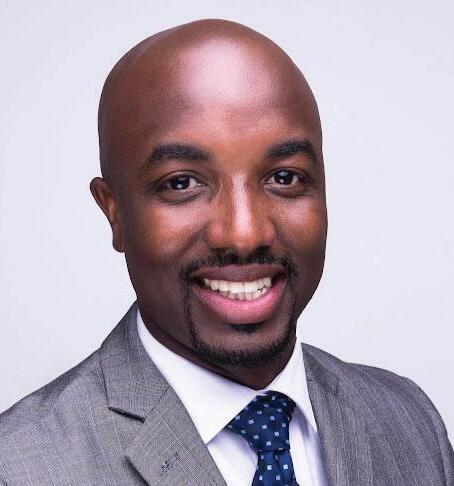

Before diving into this column, I want to be clear: This is not a critique of any one school, district, or institution.
This is a broader reflection: a blend of research, observation, and personal experience on the current state of education for Black boys in America.
Educating Black boys is not about fixing or controlling them; it is about freeing them, allowing them to think critically, grow individually, and serve collectively. As I mentioned in a previous article, we must recognize the greatness of each Black boy because they are often misunderstood, mischaracterized, and marginalized.
If we claim to be serious about supporting and helping Black boys rise in and out of the classroom, then Culturally Responsive Teaching should be an answer to the question: “How do we effectively educate Black boys in our learning community?”
said.
“They’re kind of in the dregs of the building, usually where parents or members of the public wouldn’t be able to see them.”
The idea of isolating a child to calm down might sound reasonable if the room provided the proper resources, a sensory space or comforting environment, but these seclusion rooms are far from that.
“Minnesotans can make their own determination about the humanity of these empty, locked cinderblock spaces. The legislature has discussed eliminating the use
of seclusion for years,” said Attorney Jessica Webster from Mid-Minnesota Legal Aid.
“These small rooms that kids are dragged into are NOT calming rooms. Children deserve sensory rooms and calming spaces with toys, climbers, and other tools to de-stress.”
In the last school year, at least 194 seclusion rooms were reported in 100 school buildings across Minnesota. Most are found in more restrictive public school settings for children with disabilities (level 3 or 4 schools), though it varies by school district cul-
ture. Some Level 4 schools have banned the practice.
The report notes that 40% of all seclusion rooms are located in just four school districts. Attorney Heiser said Black and Brown children are disproportionately affected. “The answer is exactly who you’d think it’d be: Black, Brown, Native boys. Boys disproportionately to girls,” Heiser said.
“Usually they have some kind of behavior component; autism is our biggest one. If you’re a Black boy with autism, the likelihood of being secluded is significantly greater than if you’re a white girl with a learning disability.”
Many children across Minnesota have been left traumatized with lifelong effects.
“They develop aversions to school. They don’t even want to be in school buildings. Some develop issues with confined spaces, almost a type of claustrophobia,” Heiser said.
“It’s an ongoing trauma, and when we do this to children so young, it’s difficult to understand what the lifelong effects will be.”
“Black, Brown and Native boys are most affected. Boys disproportionately to girls.”
Heiser shared one case involving a Black 3rd grader from a rural Minnesota school.
The child was placed in one of these rooms for hours until his mother picked him up and was later hospitalized with multiple brain hematomas from injuring himself.
“The mom didn’t even know this room existed. He had run his head into the cinderblock wall to try to get out and escape from the staff,” Heiser said. “The mom was like, ‘He’s gonna die in school. I have to pull him out.’ So she pulled him out and started homeschooling him herself.”
The law center aims to raise awareness that these rooms still exist and encourage parents and school staff who may feel hesitant to speak out. “Parents and staff can be more aware of whether their district uses these rooms,” Heiser said.
“They can advocate to their school board and administrators about why seclusion should not be used in their building.”
For the full report produced by Mid-Minnesota Legal Aid Disability Law Center, visit www. mylegalaid.org/wp-content/ uploads/2026/02/SeclusionRoom-Report-2026-2.pdf.
Izzy Canizares is a freelance journalist and contributing writer for the Minnesota Spokesman-Recorder.
For those who may not understand the term Culturally Responsive Teaching, it is a form of teaching that affirms identity, honors lived experiences, and builds bridges between school and community.
Zaretta Hammond, a wellknown educator and author of the book “Culturally Responsive Teaching and the Brain,” defines Culturally Responsive Teaching as:
“An educator’s ability to recognize students’ cultural displays of learning and meaning making and respond positively and constructively with teaching moves that use cultural knowledge as a scaffold to connect what the students know to new concepts and content in order to promote effective information processing. All the while, the educator understands the importance of being in a relationship and having a socialemotional connection to the student in order to create a safe space for learning.”
In other words, what does this say to our Black boys?
‘You matter. Your story matters. Your history matters. Your voice matters. Your presence matters.’
This means classroom instruction reflects history, language, culture, and community realities as central ingredients of learning. Research shows:
• When Black boys see themselves in the planned curriculum, classroom engagement increases.
• When Black boys feel respected, behavior improves.
• When Black boys feel like

school honors their personal identity, achievement rises.
As we know, Black boys often face:
• Disproportionate discipline rates compared to other students.
• Lower academic expectations than other students.
• Curriculum designed without them in mind.
Culturally Responsive Teaching can interrupt those patterns. When implemented with intention, we can see positive shifts in the learning environment for Black boys. I once heard a statement that schools can adopt: Change the mindset toward Black boys from “at-risk” to “atpromise.”
Black History Month is not a decoration for February; it
can be a pathway into truth and encouragement.
Consider these facts:
• Carter G. Woodson founded Negro History Week in 1926, which later became Black History Month. He believed that if a people have no recorded history, they have no identity. His mission was clear: Teach the world, and Black children, the truth about Black achievement.
• Dr. Martin Luther King Jr. was more than just a dreamer. He was a strategist, scholar, pastor and theologian. Teaching Black boys about his intellectual discipline helps them see activism and education as connected.
• Thurgood Marshall, before becoming the first Black U.S.
Supreme Court Justice in 1967, successfully argued Brown v. Board of Education to help dismantle school segregation. That history connects directly to the classrooms educating Black boys today.
• Dr. Mae Jemison became the first Black woman in space in 1992. Representation in STEM expands imagination. Black boys must see Black excellence in science.
Implementing culturally responsive teaching
1. Choose a Curriculum that Reflects the Truth: Add Black scientists, educators and authors year-round. Connect today’s leaders with historical leaders.
2. Relationship Before Academic Rigor: Celebrate
small wins.
3. Restorative Discipline: Teach conflict resolution.
4. Voice and Leadership: Allow Black boys to lead discussions, mentor younger students, and take advantage of leadership opportunities.
5. Consistent High Expectations: Regardless of what standardized testing says about Black boys, they are more than data. Never lower the bar.
Think about this:
• Do my classroom materials reflect the brilliance of Black history beyond slavery and civil rights?
• How and when do I affirm Black boys publicly for intellectual contributions — not just behavior?
• Do I hold Black boys to the same high academic standards as all students without unconscious bias?
Let’s Rise Together.
Richard D. Terrell is a native of Minneapolis, MN. He is the father of three: Zyree, Raymond and Vivian. Richard has a passion for community, education, and youth development. For the last 20 years, he has served at various schools working with and supporting students, families, and teachers. He currently serves as an assistant principal with Saint Paul Public Schools. For more information on Richard D. Terrell or to purchase his book “Letters to my Young Brothers: There is Hope!” visit his website at www.mrrichardterrell.com.
DevSecOps Engineer: Plymouth, MN
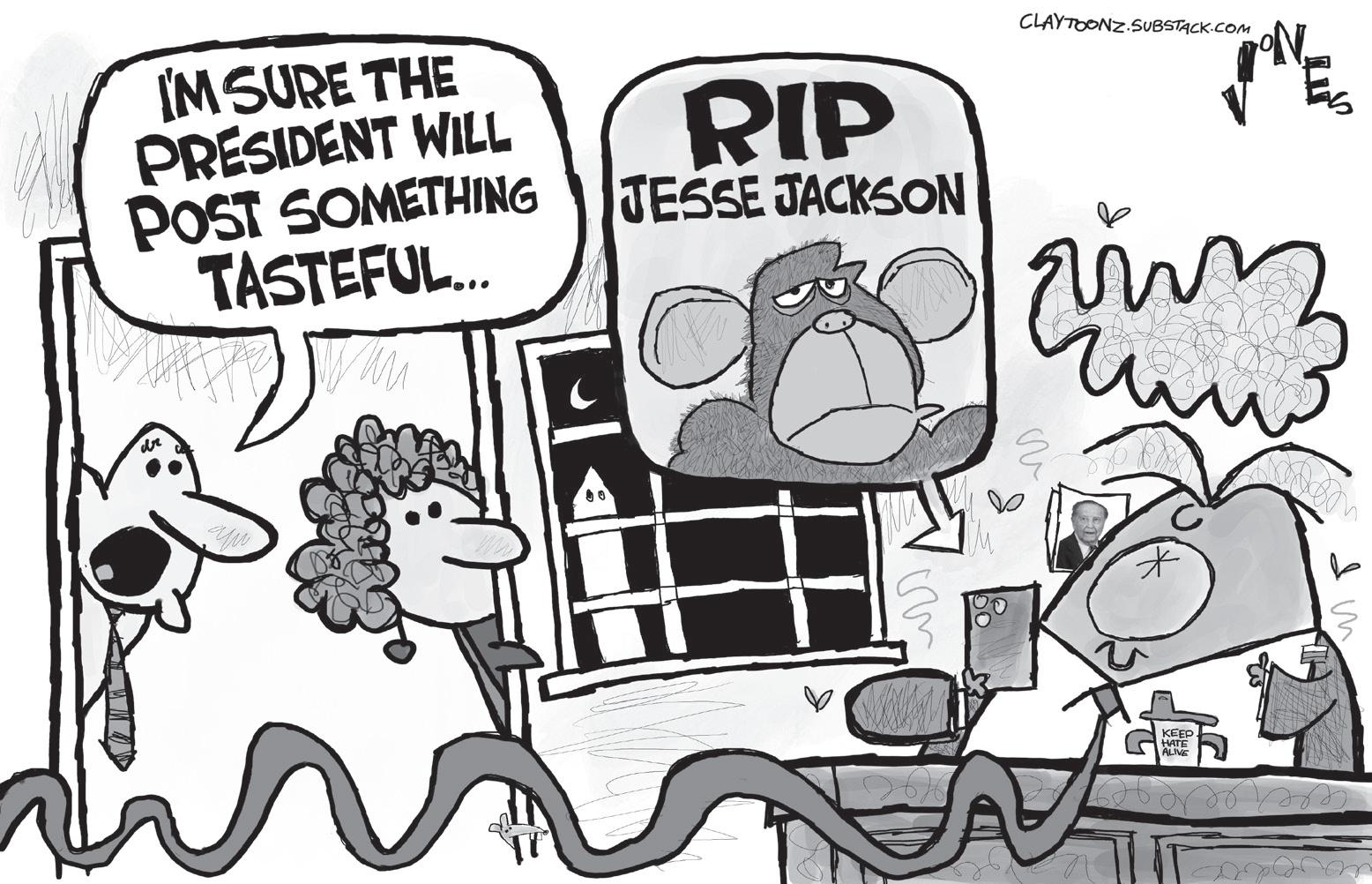
IT Company seeks DevSecOps Engineer to integrate security practices into DevOps workflows, automate security checks, and ensure the safety of cloud infrastructure. Work closely with development and security teams to enhance the security posture of applications and systems. Build and Configure delivery environments by using CD/CI, Agile delivery methodologies. Create and assist in performing various types of tests. Perform troubleshooting. Generate customized reports. Offered Salary: $116,480.00 to $116,500.00/yr. Send resumes to: HRD, VITS Consulting Corp., 14264 23rd Ave N, Plymouth, MN 55447. Minnesota Spokesman-Recorder July 10, 2025
By Louis J. King II
As we celebrate the 100th anniversary of Black History Month, I’m reflecting on the century of economic volatility and roadblocks that have often defined the experiences of disenfranchised communities. Our collective legacy is marked by resilience to overcome the economic challenges faced while trying to achieve the American Dream.
mand, but they’re also recession-resistant.
As America rebuilds its infrastructure, provides disaster relief, and moves toward a greener economy, these trades are leading the way.
And at OICA we are building America’s workforce to rebuild America by enrolling thousands of people per year to start their careers in the skilled trades.
hands-on training. It’s another pathway to build a financially stable life.
By Ashley Stewart
Rev. Jesse Jackson’s legacy is often recounted through marches, campaigns and speeches, but at its core it was a commitment to the next generation. He famously said, “Your children need your presence more than your presents,” a reminder that investment in young people must be collective, not symbolic.
As we observe Black History Month in the wake of Jackson’s passing, the question is not only how we remember civil rights history, but also how we extend it through policies and community investments that protect the wellbeing of Black youth today.
Black futures in present tense
As a developmental scientist, and now a new aunt to a beautiful baby boy, I find myself thinking often about the world we are building for our children’s Black futures. Holding him, I feel both the tenderness of possibility and the weight of responsibility.
Black History Month always invites reflection on where we have been, but this year, I am thinking more urgently about where we are going and what today’s decisions mean for the next generation. Each February, we celebrate the resilience of Black communities. We tell stories of perseverance in the face of exclusion, discrimination, and structural neglect. These stories matter deeply.
They remind us of the courage and creativity that carried
previous generations forward when institutions failed them. Yet resilience, while admirable, should never be mistaken for protection.
If Black History Month is also about Black futures, we must ask harder questions: What are we doing, collectively and institutionally, to support the wellbeing of Black young people growing up right now? For Black youth, wellbeing is deeply connected to the conditions in which they live.
comes contested in classrooms, when cultural institutions become sites of political struggle, and when journalists documenting public life face arrest, young people receive a quiet message about what is fragile and what is protected. We celebrate resilience without always addressing the conditions that demand it.
The same is true economically. Rising unemployment among Black women, who disproportionately lead and sus-
For the last 50 years, many have pushed a single narrative: Success can only come from a four-year college degree. While this opened pathways to education, access, and wealth creation, this singular focus doesn’t account for the diverse ways people work to make our world function. That path doesn’t fit everyone, and it doesn’t have to.
Check the news: The bestkept secret is out, and it is a career in the trades.
Starting a career in the skilled trades now means entering an industry with financially rewarding, in-demand careers that are essential to the future of our economy. Skilled trades like construction, plumbing, electrical work, carpentry, masonry, and HVAC are not only in high de-
According to the U.S. Bureau of Labor Statistics, more than 500,000 skilled trade workers are needed each year to fill open positions. With roughly 40% of skilled trades workers expected to retire over the next decade, demand will continue to grow, and more pathways to the middle class will open. These are careers that can’t be outsourced and that AI won’t replace. They require technical know-how, problem-solving skills, and
At OIC of America, along with our affiliates across the country, we’re working to dismantle the negative assumptions around vocational careers and open doors for young people and adults alike to explore these life-changing opportunities. We’re also making sure women, returning citizens, multicultural and multigenerational folks are at the table, and in the field, where these good-paying jobs are waiting.
By 2030, we’re on track to place over 50,000 people in the skilled trades per year, a pivot that opens up a world of economic potential they were previously locked out of.
A career in the skilled trades is not just about working with your hands. It’s about building an economic future for yourself, your family, and your community. In my view, that’s truly one of the best ways to honor the legacy of Black History Month.
Louis J. King II is president & CEO of OIC of America. This commentary appeared first in the NNPA Newswire. For more information, visit www.nnpa.org.
Educational inequities, economic pressures on families, community violence, racial discrimination, and uneven access to supportive resources all shape development over time. These realities influence how young people see themselves, how safe they feel, and how possible their future appears.
Conditions that make futures possible When I think about the world Black children are inheriting, I focus on the conditions that make futures possible: the freedom to learn honest history, the ability to see oneself reflected in art and culture, the protection of journalists who tell the truth, and the economic stability that allows families to plan beyond survival. These are not abstract ideals; they are developmental necessities. When Black history be-

tain Black households, threatens not only income but also stability, predictability, and the sense of security children need to thrive. When caregivers’ economic footing is uncertain, youth wellbeing is affected in ways that ripple across development and education.
Yet our responses often remain reactive. We invest in short-term programs instead of long-term prevention and respond to crises rather than building systems that make thriving possible.
Black History Month reminds us that progress has never been accidental; it has come from collective action and sustained investment in communities historically overlooked. The same must be true for youth wellbeing today.
Protecting Black futures requires investing in schools that support the whole child, communities that foster belonging and safety, and policies that reduce stress on families. Youth wellbeing is inseparable from the systems that shape daily life.
The promise in front of us
When I look at my nephew, I do not see policy debates or statistics. I see possibility, curiosity, joy, and a future still taking shape. I also see how deeply that future depends on the decisions adults are making now about what we value, what we fund, and what we are willing to change.
Black futures will not be determined by resilience alone. They will be shaped by whether we build institutions capable of supporting Black youth wellbeing in meaningful, sustained ways.
Honoring Black history requires nothing less.
This commentary appeared first in Word in Black. It has been edited for style. For the original, visit www.wordinblack.com/2026/02/ honoring-black-history-meansprotecting-black-futures/.
By Black Agenda Report
Revisiting the Reverend Jesse L. Jackson’s essay “Resurrection City: The Dream… the Accomplishments” in the hours after his death is to encounter a morose nostalgia — and, quickly following, an acute rage. “Resurrection City” was published in “Ebony Magazine” in October 1968.
In the essay, Reverend Jackson recounts the vision of Dr. Martin Luther King, Jr., before his April 4, 1968 assassination. He advocated for a political program focussing on poverty, economic injustice, and the profound and violent class differences, the brutal divisions between rich and poor, cutting across racial lines in the United States.
King’s vision resulted in the Poor People’s Campaign. Under the leadership of Reverend Ralph Abernathy and other leaders of the Southern Christian Leadership Conference (SCLC), the Poor People’s Campaign joined with a cross-racial alliance of advocates for the poor and working class organizations to carry out Dr. King’s vision of an occupation of the U.S. Capitol’s National Mall to make visible the plight of the poor to the U.S. government.
Groups organized caravans from all over the U.S. to travel to Washington DC. They began arriving in Washington on May 5. On May 13 at an opening ceremony, Dr. Abernathy
dedicated the site as “Resurrection City, U.S.A.” and construction of the wood dwellings began. The encampment had about 3,000 dwellings, and more than 50,000 people lived on the site in the heart of the U.S. government.
Resurrection City is probably better remembered for its quick death than for its short life. It lasted but 42 days. Media coverage focussed on its internal political difficulties, the apparent failure of its progressive vision for economic reform, and the near-Biblical storms that turned it into a city of mud and wood and frustrated dreams.
the presidential nomination of the Democratic Party (1984 and 1988), with the control of the party by the right-wing Democratic Leadership Council and the rise of Bill Clinton, and especially as Obama engulfed Black politics.
Yet in his “Ebony” essay, Reverend Jackson dismisses the easy criticisms along with the one-dimensional and slanted media coverage. He instead pointed to Resurrection City’s accomplishments: its gathering of disparate racial groups of poor people and its attempts to center economics and class as the unifying force of U.S. politics over narrow sectional and racial interests. It is striking to read the Reverend Jackson of 1968. His personality and politics have been flattened and caricatured in the intervening years after his two candidacies for
Yet, of course, Reverend Jackson was also both the product of a movement and a bellwether of the times. To read in “Ebony Magazine” of all places his progressive demands for jobs and economic justice, his attacks on militarism, imperialism and oligarchy, and his advocacy of inter-racial alliance suggests something of a long-lost era in U.S. politics.
Hence the nostalgia, but also the anger: What has happened to U.S. politics, to Black politics, in the intervening decades has been nothing short of disastrous. Jackson’s “Resurrection City” is a document of a lost politics, a politics that needs to rise from the dead.
This commentary appeared first in the Black Agenda Report. For the original and full essay, visit www.blackagendareport. com/essay-resurrection-citydreamthe-accomplishmentsjesse-jackson-1968.

West Africa in the summer of 1968, James McDonald returned as Kwame McDonald (1931-2011), a renowned activist, educator, journalist, and mentor to youth and others.
The Twins several years ago installed a statue outside its present downtown Minneapolis ballpark honoring the late Sid Hartman, who covered the team. Yet there’s no recognition of what McDonald did to improve overall conditions for the team’s players, especially its Black and POC players, over six decades ago. His efforts to desegregate the Twins’ spring training facilities over the years have been largely overlooked.
That diversity question
During a January 30 Zoom conference with reporters, MSR once again brought up the issue of diversity on the Twins with Derek Falvey, who announced that day that he was leaving the team after nearly a decade in the front office. There were over 40 media members on the
Continued from page 12
Hockey history times two Lalia Edwards made history last week as she assisted on the tying goal to send the Winter Olympics gold medal game into OT, which the USA won 2-1 over Canada. She is the first Black woman to win an Olympic Gold Medal with Team USA. Locally last week, Aubrey Lang, a junior forward on the Breck School/Groves Academy co-op girls hockey team, appeared in this year’s Class A girls hockey state tournament. She was the only Black player in the eight-team tournament field. “We went to the [pre-tourney] banquet. We didn’t see any brown faces or any other Black girl,” reported Meredith Lang, Aubrey’s mother. Breck last Saturday won the state Class A championship, and Aubrey is the first
Jan. 30 Zoom, but only MSR asked him about diversity.
During his tenure, Falvey hired former Twins Torii Hunter and LaTroy Hawkins as special assistants in baseball operations. Hawkins this season will be the team’s bullpen coach, hired in November 2025 after nine years in his former role. Hunter left the organization following the 2023 season and joined the Los Angeles Angels in the same position.
“I can say I’m proud of the work we did,” said Falvey. “I hope that commitment will continue, and I have a strong belief that it will.”
MSR asked a similar question to Minnesota Twins Executive Chair Tom Pohlad:
“That commitment to diversity starts with my family,” affirmed Pohlad, whose family has owned the Twins since 1984, first by the late Carl Pohlad, then his three sons (Jim, Bill and Bob) who took over after their father’s death in 2009. Tom, Bill’s son, became executive chair in late 2025.
“I think the Twins have held that as a top priority,” said Tom.
Charles Hallman welcomes reader comments to challman@ spokesman-recorder.com.

Black girls hockey player to win a state title. Meredith likens her daughter’s historic feat to Edwards as far as historical significance is concerned.
“I think when it’s over she will look at it and think of what an accomplishment it is. On a small scale, she can do for other young [Black] girls” to also play hockey, concluded Aubrey’s mom.
Charles Hallman welcomes reader responses to challman@ spokesman-recorder.com.
INVITATION TO BID
Contract No. 26-156
Sealed bids will be received by the Public Housing Agency of the City of Saint Paul at 200 E. Arch Street, St. Paul, Minnesota 55130 to FURNISHING REFRIGERATORS AND RANGES, Contract No. 26- 156, until 10:00 AM., Local Time, on March 12, 2026, at which time they will be publicly opened and read aloud via the Teams App. Bids may be submitted electronically, in a pdf format, to Northstar Imaging, www.northstarplanroom.com, or may be delivered to the address above.
A complete set of bid documents is available by contacting Northstar Imaging at 651-686-0477 or www.northstarplanroom.com, under public plan room, FURNISHING REFRIGERATORS AND RANGES, Contract No. 26-156. Digital downloads are no charge, contact Northstar for hard copy prices.
Bids must be accompanied by a Five Hundred Dollars ($500.00) bid guarantee, a Non-collusive affidavit, and EEO submittals.
PRE-BID CONFERENCE WILL BE HELD VIRTUALLY ON THURSDAY, FEBRUARY 19, 2026, AT 10:00 AM VIA TEAMS MEETING. (Meeting ID: 274 741 460 695 50 Passcode: 6Fv7g2nq)
The PHA reserves the right to reject any or all bids or to waive any informalities in the bidding.
AN EQUAL VICTOR FATUNSIN
OPPORTUNITY AGENCY PROJECT LEADER (651) 775-9573
Minnesota Spokesman-Recorder February 26, 2026
Continued from page 12
the only Black coach on both sidelines.
“I think I might be the only Black assistant coach in the UMAC [Upper Midwest Athletic Conference],” he declared.
Bledsoe’s coaching experience also includes winning the 2019 Minnesota State Championship as head coach at Minneapolis DeLaSalle High School, where he also played and graduated (he was a 2005 Metro Player of the Year, a Mr. Basketball finalist, and Nike Basketball Camps/Jr. NBA director).
Crown College is a Division III school located in St. Bonifacius, Minn., one of five Christian-founded schools in the seven-member UMAC. Bledsoe’s squad last week clinched one of the four playoff spots (3rd seed) in the four-team conference post-season tournament (Feb. 25-28).
“I think it’s big to have African American coaching representation at the D3 level, especially in Minnesota,” Bledsoe pointed out. “[I am] just trying to do my part and showing that we can coach at this level, and that we can be great mentors and leaders.”
Blacks scarce at Gopher games
Why aren’t there more

BUSINESS SYSTEMS ANALYST
From Ads Department/MN Spokesman-Recorder
Phone: 612-827-4021
IT Company (Minnetonka, MN) seeks Business Systems Analyst to utilize statistical and data analysis to implement security procedures, techniques, and remediation plans. Develop and maintain queries, reports, & metrics to provide customized solutions utilizing the knowledge of Python, Power BI, Tableau, Scrum, Agile Methodology. Perform quality assurance & user acceptance testing. Conduct reviews of existing procedures (business and technical processes) to improve protections across the company. Salary: $97032.00-$97,500.00/yr. + Benefits: Health Insurance, Holidays, Sick Leave or PTO. Send resumes to: HRD, Maritz Consulting (d/b/a Ledelsea) at careers@ledelsea.com
FOR BILLING INQUIRIES & TEARSHEETS PLEASE CONTACT
ACCOUNTING DEPT BILLING@SPOKESMAN-RECORDER. COM
LEGAL DISPLAY
Minnesota Spokesman-Recorder February 26, 2026
SIZE: 2 COL X 4.5 INCH RATE: $18.10 PER COL. INCH TOTAL: $162.90
Principal Clinical Evaluation Medical Writer, Medtronic, Inc.,Mounds View, MN.
Please proof, respond with email comfirma tion to ads@spokesman-recorder.com
Req. Masters’ Degree in Biomedical Sciences, Medicine, Pharmacology, or rel. tech. disciplines w/ 5 yrs. of exp. as medical writer or rel. occ. Salary: $147,000 - 196,800/year. Apply at https://medtronic.wd1.myworkdayjobs.com/MedtronicCareers, Req. #R59635. No agencies or phone calls. Medtronic is an equal opportunity employer. All individuals are encouraged to apply.
The MSR handles billing digitally. This means you will get e-tears and emailed invoices unless you specifically request a hard copy.
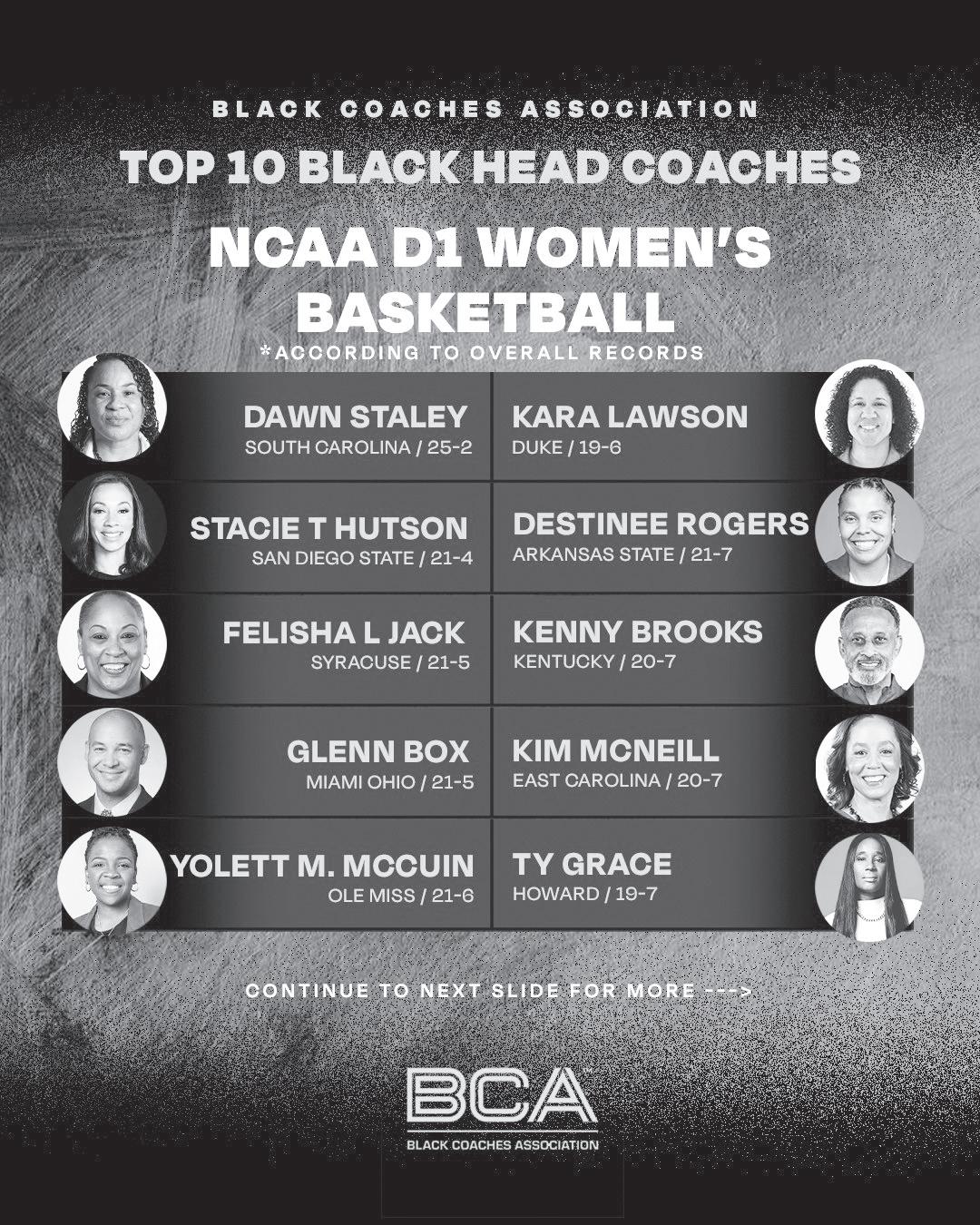
Blacks at Gopher basketball games? Whether it’s the women or the men playing, seeing Blacks in the Williams Arena stands other than the players’ families and friends is noticeably rare. This is rarely discussed except by this reporter.
“Not a whole lot, you’re right,” said Terrell Battle, whose daughter Amaya Battle is a starter. She is one of six Blacks on this year’s squad. His son Jamerson also played at Minnesota during his college career. Terrell’s two children were on Gopher teams at the same time a few years ago.
“I think as a whole, we need to do a better job of reaching out to all the communities,” Battle stressed. “There are some real young girls that like to be here.”

Kim Bell (1998-2002) told us during Gopher players alumni weekend last month, “Getting people to want to come [to U of M games] I think is the most important thing. We ought to be out in the community, engaging different communities.”
Battle suggested, “Maybe there should be a ‘tickets for kids’ program, a number of tickets directed to [local] organizations so down the line they will become season ticket holders.”
Finally… Black Coaches Association last week listed their Top 10 Black Head Coaches in Division I men’s and women’s basketball “who are leading their programs with a .500 record or better during the 2025-26 season so far.
WBB: Dawn Staley, Kara Lawson, Stacie T. Hutson, Destinee Rogers, Felisha Legette-Jack, Kenny Brooks, Glenn Box, Kim McNeill, Yolett M. McCuin, Ty Grace.
MBB: Kelvin Sampson, Tony Skinn, Ritchie McKay, Hubert Davis, Takayo Siddle, Corey Gipson, James Jones, Johnny Dawkins, Jai Lucas, Dennis Gates.
BCA also listed 40 women’s HCs and 27 men’s HCs also with winning records thus far. “At BCA, we don’t just acknowledge success …We amplify it. We protect it. We celebrate it,” they concluded. “Excellence isn’t accidental. Leadership isn’t seasonal. Winning is a standard.”
Charles Hallman welcomes reader comments to challman@ spokesman-recorder.com.

his week’s Fab Four photos feature the Twin Cities girls basketball championship between the host St. Paul Como Park Cougars and Minneapolis Washburn Millers. Washburn won, defeating the St. Paul champs 61-52, led by Linda Roberts and MVP Sofia Ordaz. Como Park’s Player of the Game was Alayla Salas
Former Minneapolis South boys basketball standout Henry Rucker, football and basketball legend Parnell Charles (St. Paul St. Agnes), and football great Saldin Broadway (St. Paul Como Park) were the game officials.
Dr. Mitchell Palmer McDonald welcomes reader comments to mcdeezy05@gmail.com.

he final BHM question of 2026: Who was the Black individual who forced the MN Twins to do away with their spring training segregation practices over six decades ago?
Through a series of memorandums from the Minnesota State Commission on Discrimination (SCAD) to the Minnesota Twins, who relocated to the Twin Cities from Washington, D.C. following the



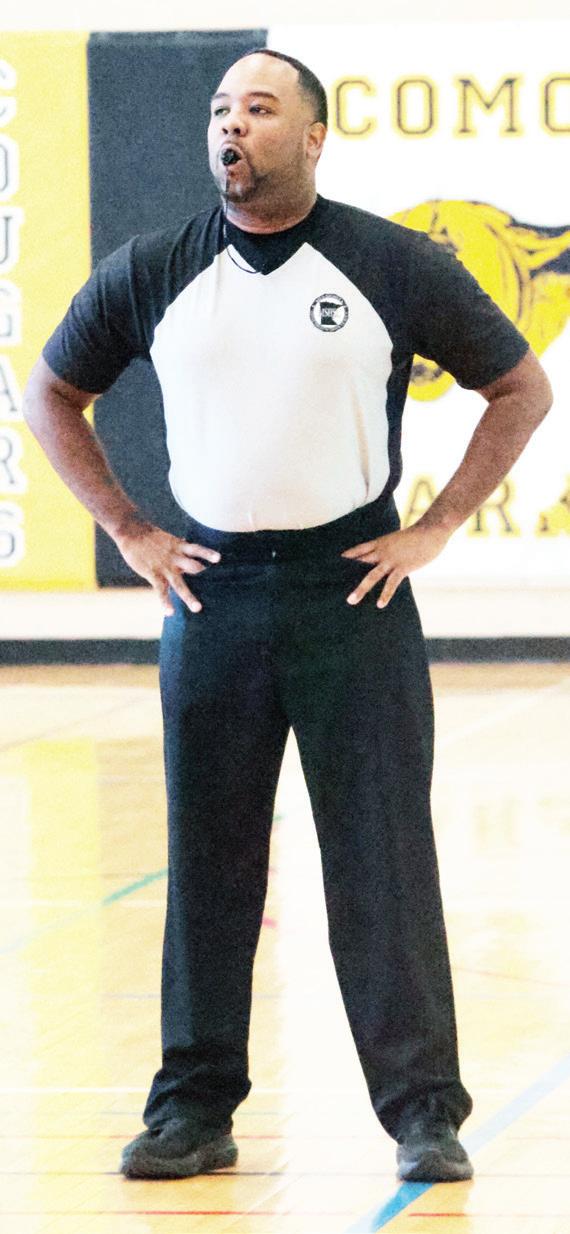
1960 season, the nine-member state-appointed group headed by James McDonald requested the Major League Baseball club to stop using a segregated Florida hotel to house its Black players.
McDonald, who came to St. Paul in 1959 to work with that city’s Urban League and later became SCAD executive director, “outlined a plan to validate the charges of discrimination in Florida against the Twins’ colored players,” wrote Charles Betthauser in his history paper for the University of Wisconsin-Eau Claire (2007) titled, “Bigotry is Bad
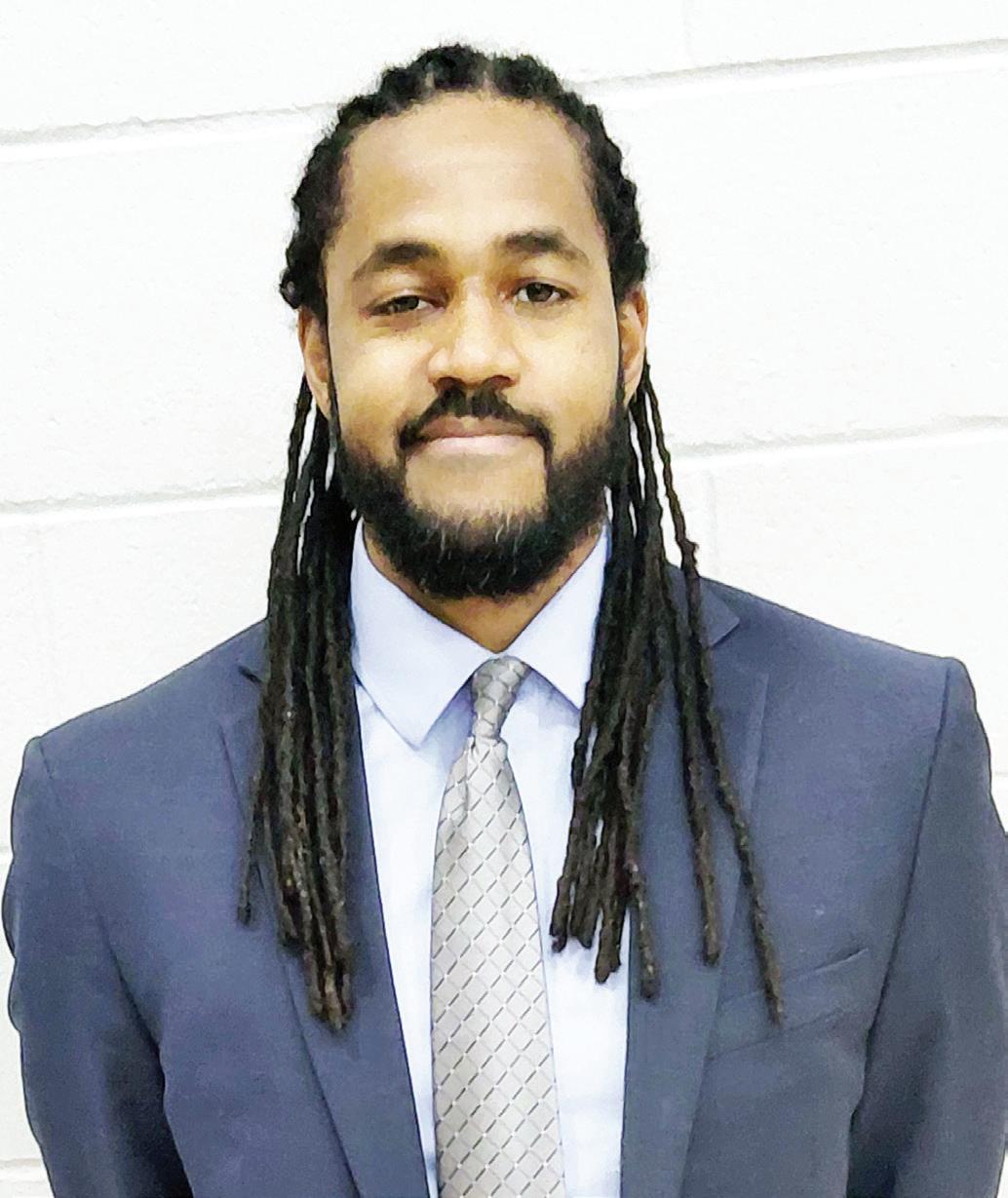
big to have African American coaching representation at the D3 level, especially in Minnesota.”
for Business: The Desegregation of Spring Training Camps in the Minnesota Twins Organization, 1960-1964.”
“McDonald was persistent in his efforts “to validate the charges of discrimination.”
The team’s Black players at the time complained about the segregated spring training facilities to McDonald and others. McDonald in return was persistent in his efforts “to vali-
date the charges of discrimination,” Betthauser pointed out regarding SCAD formally filing the discrimination complaint against the Twins. It took a couple of years of McDonald and other local activists, including the Twin Cities NAACP, keeping up pressure on the local MLB club, which included a boycott of the team’s 1964 home opener at Bloomington’s Metropolitan Stadium. The team finally ended its spring training segregation practices as a result. Four years later, after attending a study trip to Ghana,
■ See VIEW on page 11
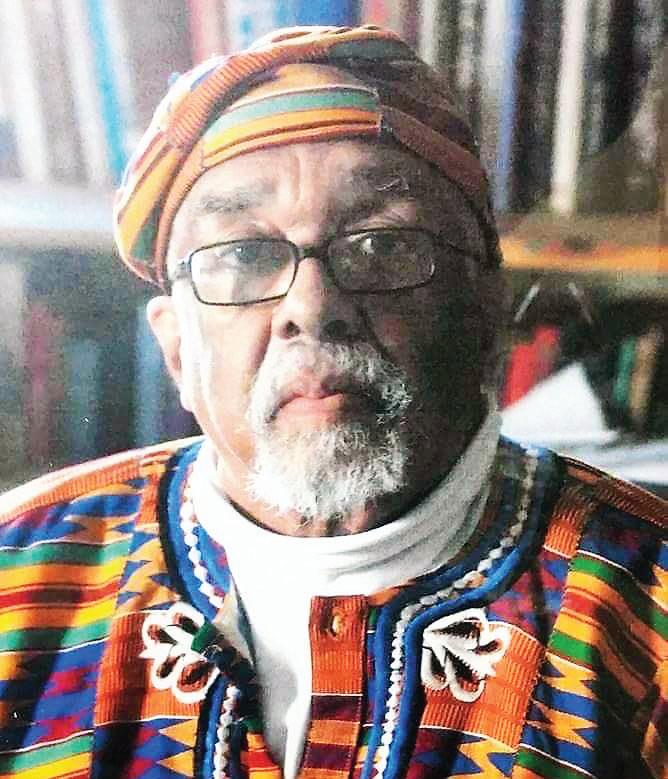
wo former local prep players recently came home and played in front of family and friends at St. Thomas’ new Lee and Peggy Anderson Arena.
Omaha ideal for Ojullu
Aduke Ojullu is in her first year at Omaha. The 6’1” freshman forward from Lakeville, Minn. told MSR after her team’s Feb. 14 contest against host St. Thomas, “I think it was a very easy adjustment [to college basketball].” She is one of two Minnesota natives on the Mavericks.

Thus far Ojullu has not appeared in a game. “Obviously, I haven’t really touched the court yet,” admitted the frosh. Nonetheless, her experience as a college student-athlete “defi-
nitely has been what I expected — go to practice every day.”
She attended Lakeville North High School, where she was a two-time all-conference honoree, helping lead her team to a conference title in her junior year and playing in the state tournament in both her junior and senior seasons.
“It’s definitely a lot of hard work studying and all of that,” she pointed out.
Omaha fits her as the ideal place for college and hoops, continued Ojullu. “Omaha is a great place. When I first went on campus, it really seemed just like home.
“The coaches really fostered an open, supportive setting. They wanted to know me, not just me as a basketball player. That’s also very warm to my heart.
“I’m majoring in biology with a minor in Spanish, and I hope to become an orthopedic surgeon or something in the pharmaceuticals or biotech [fields],” surmised Ojullu, hoping to keep pace with her family’s tradition. “My dad has always pushed us to become a doctor, and just be the best version of ourselves. My sister is also a pharmacist.
“I also love helping people, and I love just medical stuff. It just seemed perfect.”
Oral Roberts loves Ari Oral Roberts Redshirt Junior Ari Gordon scored a career-

more season. She earlier was an all-conference performer at Maple Grove H.S. after winning the conference title in her senior season.
This season, her first at ORU, Gordon is second on the
high 15 points off the bench against Omaha last month.
Against St. Thomas Feb. 12, she added 13 points and a game-high five steals in a fivepoint loss to the Tommies.
“We love Ari. She’s extremely athletic,” said ORU Head Coach Cophie Anderson of the 5’11” guard from Maple Grove, Minn., the only Minnesotan on the roster this season. “I don’t know if she realizes how good she can be on both sides of the floor.”
Gordon’s first two seasons playing college ball took place at Seward County (Kan.) CC, where she was named KJCCC (Kansas Jayhawk Community College Conference) Co-Defensive Player of the Year in 2024-25, her redshirt sopho-
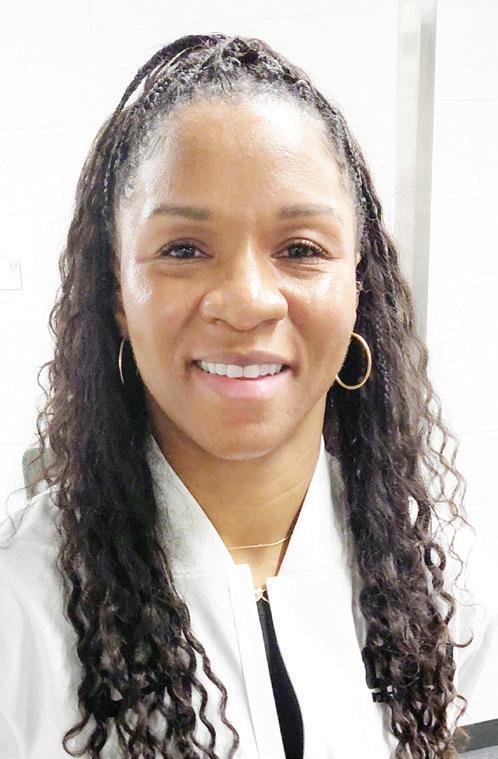
team in both steals and blocks, averaging 5.3 ppg, starting two games thus far — she was in the starting lineup against St. Thomas. The player is part of the Golden Eagles “rebuilt” roster, as Anderson told MSR after the game.
“Just trying to get the most out of what we have, and hoping that we can maximize our opportunities as we head out down the stretch in February,” surmised Anderson, who was featured in MSR’s Coaching While Black series last May.
■ See SOE on page 11