


programs
By Damenica Ellis Staff Writer
resident Donald Trump said federal payments to states with sanctuary cities would stop Feb. 1, and community resources across Minnesota began preparing for the potential impact. However, a federal judge temporarily blocked the administration from withhold-
ing the funds while the legal dispute continues. Many organizations say while funding has not yet changed in the new month, the threats alone have caused confusion.
“Nobody but Minnesotans do mutual aid like Minnesotans do mutual aid,” said Sharon Abel, executive director of Groveland Emergency Food Shelf. “I have supported and
helped and met so many folks doing some really incredible work, neighbors who see a need and find a way to feed 35 families a week.
“These aren’t organizations. These aren’t people funded through any government entity. These are just human beings who care about other human beings.”
The community Groveland
■ See FED on page 5
By Damenica Ellis Staff Writer
ister Spokesman’s February event “What’s Love Got to Do With It?” brought the community together for a panel discussion on domestic violence, raising awareness and helping attendees identify warning signs of abuse.
Community members gathered at the Hallie Q. Brown Community Center, shared a meal, shopped from Blackowned business vendors, and participated in games and raffles. Throughout the afternoon, women laughed, reconnected with old friends, and met new ones. Each table was decorated with a white tree where guests hung notes describing what healthy relationships look like to them. Brown cards hung from the branches listing qualities such as honesty, loyalty, happiness and softspokenness.
The panel featured three women: Artika Roller, executive director of Cornerstone Advocacy Services in Bloomington, who has more than 20 years of experience supporting victims and survivors of intimate partner violence, sex trafficking, and sexual violence; Kc Gammage, a licensed marriage and family thera-
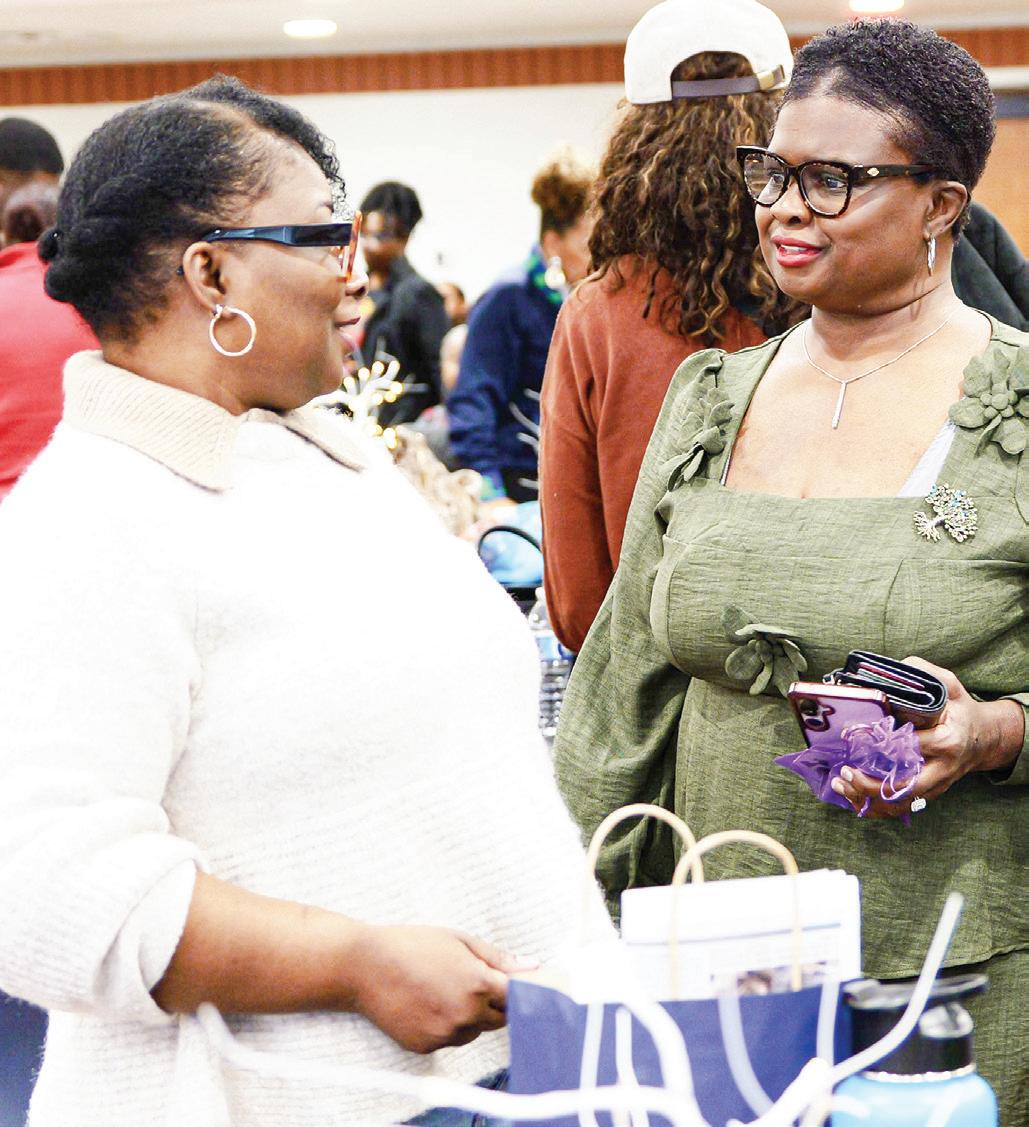
Community members gathered at the Hallie Q. Brown Community Center for Sister Spokesman’s February event “What’s Love Got to Do With It?” with a panel discussion on domestic violence, healthy relationships, and healing. Emmanuel Duncan/MSR
pist providing mental health services in school-based and outpatient settings, with more than 14 years of experience at the Harriet Tubman Center in Minneapolis as a domestic violence relief advocate and healing group facilitator; and April Bryant, who has more than 25 years of experience in social services, trauma-informed care, and the healing arts, and who shared her own journey as a domestic abuse
survivor.
Bryant said learning how to love herself was essential to her healing. She shared that she attends therapy and encourages others to do the same. “I had to write down what my values are … I had to write down what brings me joy, and this is something we can all do,” she said.
■ See SISTER SPOKESMAN on page 5
By Izzy Canizares Contributing Writer
mmigration and Cus-
toms Enforcement’s recent occupation in the Twin Cities has left the community on edge after daily violence on the streets and the murder of two residents in South Minneapolis this past month. Despite this, rent was still due for many this past week, and hundreds of residents will be unable to pay because many are unable to work.
Border Czar Tom Homan announced that 700 fed-
eral agents would be leaving Minnesota. This news is little comfort to residents afraid to leave their homes, since more than 2,000 agents continue to conduct raids in their streets.
“When ICE came into the cities I was shifting from a seasonal position into a permanent position at my job, but I had been doing Shipt delivery driving in the meantime,” Minneapolis resident Moss Winn said. Despite the need for extra hours of work, the constant ICE activity has prevented this.
“When ICE ramped up activ-
ongoing occupation prevents many from working and paying rent, prompting Minneapolis City Councilmembers to propose emergency rental assistance and eviction protections.
ity, I no longer felt as safe going out, so I have been doing it significantly less as a result.”
Housing insecurity has long been a challenge in Minneapolis. In 2023, roughly 6,250 people in the Twin Cities experienced homelessness on a single night. Racial disparities in housing remain among the nation’s largest, with BIPOC residents making up just 47% of households in the region.
“We do have clients who are struggling to pay rent more than normal. It is greater,” Media Director for Agate Housing and Services Virginia Brown said. Agate serves 6,000 residents a year.
Other organizations, such as Touchstone Mental Health, which offers housing and residential services, have also witnessed the impact ICE has had not only on the residents it serves but also on its staff.
“We constantly have calls looking for housing, especially affordable housing. This has increased with the request for Integrated Community Supports (ICS) as some providers have been caught up in the payment withholds from DHS, and now case managers are looking for a new housing placement,” Touchstone CEO and Director Ellie Skelton said.
By Anya Armentrout Contributing Writer
have a delicate task to perform,” began historian and professor Dr. Gerald Horne. There is a balance, he explained, between his duty to the truth as a historian and his duty as a politically engaged person. The breadth of his lecture, titled “How Trump Happened: A View From History,” made that task no easier.
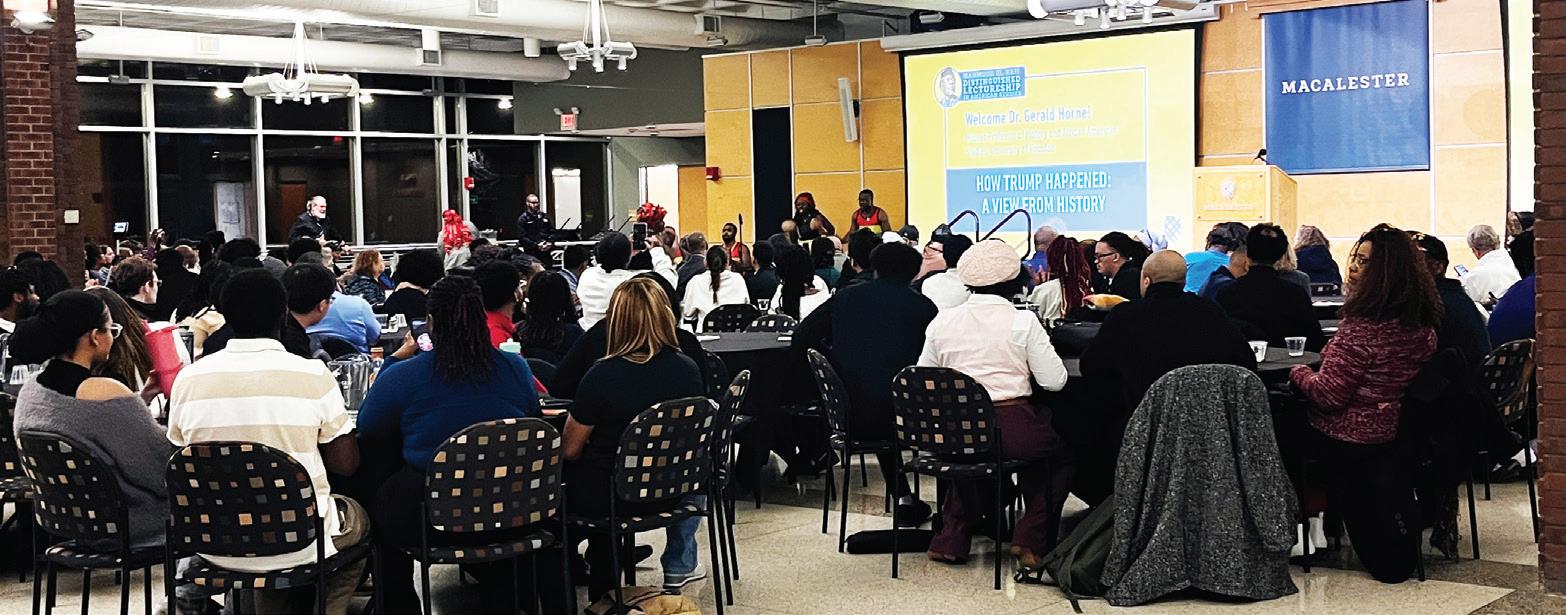
More than 500 people filled the Alexander G. Hill Ballroom at Macalester College on the evening of Friday, Feb. 6, to hear Horne speak as part of the Mahmoud El-Kati Distinguished Lectureship in American Studies. El-Kati taught at Macalester College and the University of Minnesota, and his work led to
the creation of Macalester’s American Studies department.
While serving as a professor, El-Kati also spent hours teaching high school students in North Minneapolis and bringing education to churches, community centers, living rooms and coffee shops across the Twin Cities. The annual lectureship reflects that same mission, intentionally centering scholars whose work bridges theory and practice.
The lecture’s attendees ranged from college students and professors to neighbors and community members, as well as leaders and elders within the Black community.
Most Macalester lectures typically draw attendees from the first category alone.
“Folks in the academy know a lot and contribute to our understanding of the world, both physical and social. There’s also truth in the community, and when we can bring those two elements together, I think we have a powerful learning moment.”
A traditional African drum band led by Christian Adeti opened the night, engaging the crowd in call-and-response and dancing, including music aligned with El-Kati’s “town and gown” philosophy.
“Music is so important to
Sedric McClure, Macalester’s dean of multicultural life and one of the event’s organizers, identified El-Kati’s wisdom and legacy as the impetus for the high turnout. “He invited this notion of bringing the ‘town and the gown’ together,” McClure said. “That is to say, bringing community along with the campus ...
By Izzy Canizares Contributing Writer
Since the killing of Alex Pretti on Jan. 24 in Minneapolis, outrage over the federal immigration enforcement surge in Minnesota has grown exponentially and pushed the state into the national spotlight. As Pretti’s memorial site continues to grow, residents have come together to comfort each other through mourning and to remind each other that the fight against Immigration and Customs Enforcement is not over.
The Hennepin County Medical Examiner’s Office declared Pretti’s death a homicide after he was shot multiple times by a U.S. Border Patrol agent during a federal immigration operation in South Minneapolis.
The examiner’s report listed the cause of death as multiple gunshot wounds.
pay their respects. “They’re destroying a place that I would once call super peaceful, a very nice community with very nice people,” Minneapolis resident Dorian said while at the memorial. He has been a Southside resident his entire life, having grown up in the 35th and Nicollet area.
trying to help a woman who was maced by agents before he was pinned to the ground and shot.
As the incident continues to attract broader media and political attention, national outlets and local reporters have published new accounts, including timelines and eyewitness testimony about the shooting, as
“We want to keep the love and the unity lit. We want to keep the peace lit.”
“You could walk the streets freely,” said Dorian. “Talk to anybody, ask someone for help, walk into a store, get warm, or ask to use the bath-
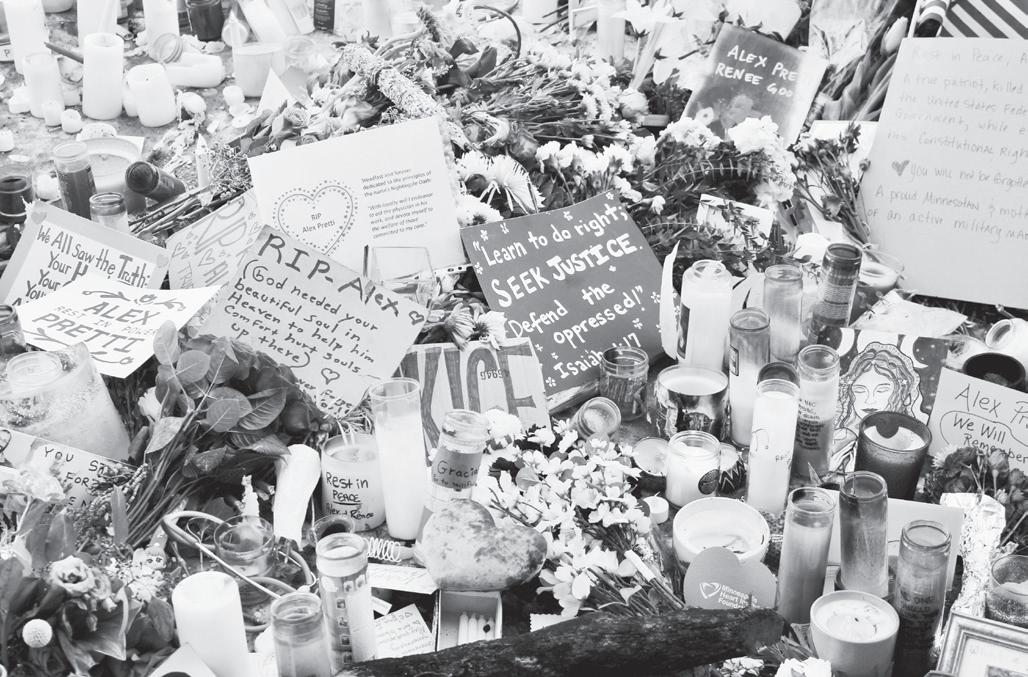
The site of Pretti’s shooting, right outside Glam Doll Donuts at 26th and Nicollet, once filled with masked ICE officers, tear gas and cop cars, now is a growing memorial with candles, flowers, food and more. Dozens of residents have shown up every day to
room. Now it’s just a place of chaos and destruction.”
Pretti was an ICU nurse at the Minneapolis VA Hospital and was shot by a Border Patrol agent during an attempted ICE raid in front of Glam Doll Donuts. Multiple videos of the incident show Pretti
well as coverage of community scenes around “Eat Street,” as this stretch of Nicollet is known. Coverage increasingly highlights both the memorial and ongoing protests.
The site has grown into a shrine dedicated to Pretti, with hundreds of candles and flowers gathered at the site where he was killed, as well as letters and artwork from locals and visitors. While some people came to pay their respects, others provided support, supplying food, hand warmers, candles and more, showing a community coming together in mourning.
“In my mind, I wanted to believe it wasn’t real; this can’t be happening, no, this didn’t happen,” artist Noval Noir said she felt when she heard about Pretti’s death. She has been working on a large-scale canvas painting of Alex Pretti in his memory.
“You get really numb,” Noir
said. “Sometimes grief is avoiding what really took place, because you don’t want to mentally process it. I am very sad. I’m very traumatized. I am angry at this administration.”
Small business owner of
Border Czar Tom Homan announced a reduction of about 700 ICE and Customs and Border Protection agents from Minneapolis, though a significant federal presence remains in place as part of Operation Metro Surge. Investigations into the shooting are ongoing. Both federal and state authorities, including the Minnesota Bureau of Criminal Apprehension in cooperation with federal agencies, are engaged in
lis resident Sage. He was recently detained at Sherburne County Jail after protesting.
Despite Gov. Tim Walz and Minneapolis Mayor Jacob Frey saying they are encouraged by recent changes, it has not been confirmed how long the federal presence will last. The surge continues.
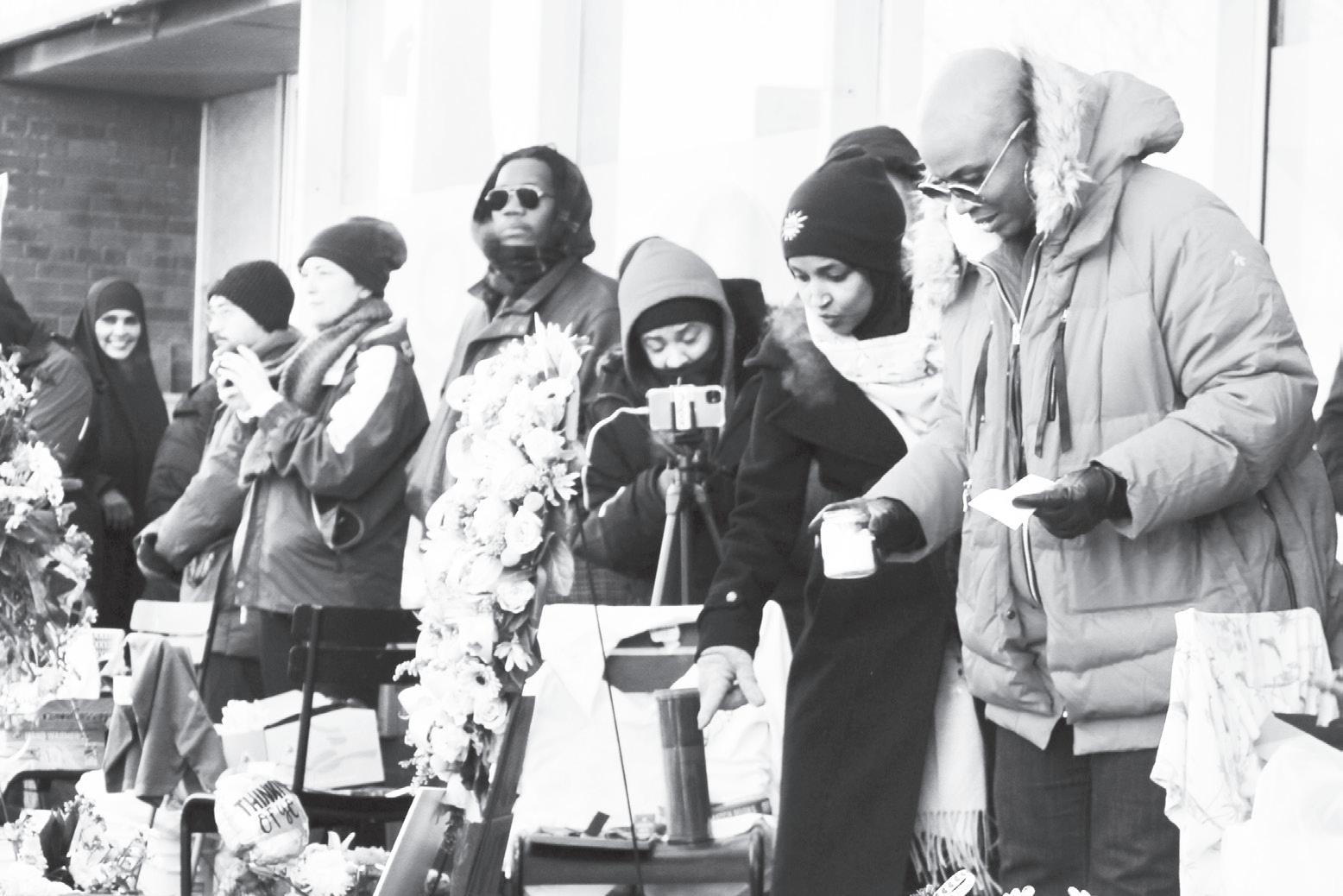
Today’s Candle, Miya Brown, has been selling candles at the memorial site for those who would like to pay their respects and to raise money for equipment for her son, who plays basketball.
“We want to keep the love and the unity lit. We want to keep the peace lit, so I am out here supplying candles for everyone,” Brown said, after she sold candles to U.S. Reps. Ilhan Omar and Ayanna Pressley, who visited the site last Wednesday.
Federal immigration agents are being drawn down in the wake of the protests and national scrutiny. White House
Feds release another of the Cities Church Nine
By Clint Combs Contributing Writer
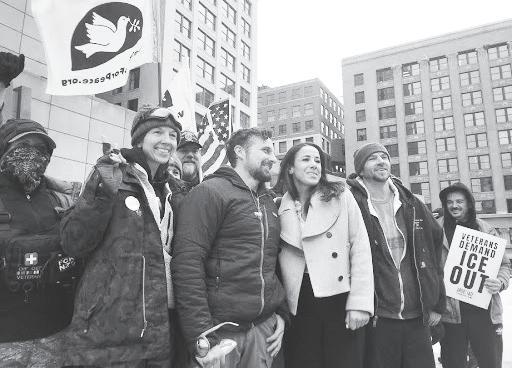
U.S. Army veteran Ian Davis Austin, who served six deployments to Afghanistan, was arrested a second time on Jan. 30 near the Bishop Henry Whipple Federal Building at Fort Snelling. He was one of nine people charged in connection with a Jan. 18 protest that disrupted a service at Cities Church, challenging St. Paul ICE Field Director David Easterwood’s role as a pastor. Austin walked free from federal custody on Feb. 2 after a federal judge rejected prosecutors’ request to keep him detained until his trial.The protests, co-led by civil rights activist Nekima Levy Armstrong, featured chants of “Justice for Renee Good.” Activists have since called for Easterwood to resign as pastor.
As part of what activists described as the Trump administration’s attack on the First Amendment, federal agents arrested two Black journalists, Don Lemon and Georgia Fort, after they recorded, documented and interviewed protesters and church members.
Nearly two weeks earlier, federal agents tackled Austin and performer Rob Potylo, known as Robby Roadsteamer, while Potylo danced in cos-
tume near the Gate 3 parking lot entrance at the Whipple complex, according to CNN video footage. “It sure seems like they’re trying to paint me as a domestic terrorist,” Austin told Mother Jones reporter Julia Lurie after his first arrest. Seconds later, more agents swarmed out, tackled, and arrested Austin. He was shackled and held for roughly eight hours before being released without charges. Attorney Sara Gad was
visiting another client at the Whipple building when she witnessed Austin’s arrest on Jan. 30. “I walked by that and I saw a troop of federal agents kind of swarm this young man. I just wanted to make sure he had legal counsel,” Gad said. Like other protesters, Austin ‘Sharpied’ the phone number of a local attorney on his arm in permanent marker before approaching the Whipple building. When he was detained, that number no longer
worked. Activist William Kelly experienced the same problem during his own arrest.
Max Adamson, an activist from Idaho who had met Austin only weeks earlier, witnessed the Jan. 30 arrest. Adamson said the two had been watching out for one another while protesting near the Whipple building.
“We met outside the Whipple federal detention center, and we kind of just teamed up and have been watching each
inquiries, and there have been reports on efforts to preserve evidence and scrutiny of federal handling of the case.
Some early claims, such as direct talks with former President Donald Trump, have evolved. Discussions about leadership responses have moved into updates about operational changes and formal rulings, rather than just rhetoric.
However, residents say the community’s resistance to ICE will not slow.
“It just shows they’re not going to stop. They’re just gonna keep on replacing them like puppets,” said Minneapo-
other’s back since then,” Adamson said. According to Adamson, Austin had an intuitive streak and identified what he believed was an FBI surveillance vehicle moments before agents moved in.
“He noticed that a van was driving by that he said was the FBI, and so he started to walk towards the van, and then another car came out of nowhere and agents piled out of it,” Adamson said. “They arrested him and threw him in the van and drove off.”
“The nation that I was willing to die for is being systematically oppressed by men in military uniforms.”
Austin himself described repeatedly calling out federal agents parked in unmarked vehicles in the area. “We’ve been parking in the Whipple, like the VA lot, all week. So I’m thinking, like, as we’re always doing, let’s point them out.
“I’m honking at them.” Austin said, “I’m pointing, FBI, FBI ... I got out of my truck, left the door open, and I’m pointing them out, and then all of a sudden they’re all coming after me.”
As agents dragged him into an unmarked vehicle during one arrest, Austin shouted his name and said agents targeted him for a viral video. “My name is Ian Austin,” he said. “They’re
“These guys are sellouts,” Dorian said of ICE. “They don’t care about us. They are not even from here. They’re not out here in the community. They’re not out here like we are. They’re not socializing with the people who are experiencing this pain.”
Despite the violence seen in the past weeks, these residents have continued to gather at the memorial and surrounding area providing food, supplies, transportation and safe places to stay for those at risk of raids, showing the nation what a community that comes together in the face of tragedy looks like.
Izzy Canizares is a freelance journalist and contributing journalist for the Minnesota Spokesman-Recorder.
targeting me because I had 2.5 million streams yesterday.
“So when they say, ‘Why would you be out here?’— how the f*** could I not be out here?” Austin said in the viral video he referenced after his first arrest. “My nation is under attack.
“They’re like, ‘You’re from Philadelphia, we can’t comprehend why you would be here.’ And I’m like, well, because the nation that I was willing to die for is being systematically oppressed by men in military uniforms.”
After Austin’s Jan. 30 arrest, federal prosecutors sought to impose travel restrictions, arguing he posed a flight risk. A magistrate judge rejected that request.
“I’m really thrilled that the judge decided to release him without any conditions,” Adamson said. “He’s obviously not a flight risk. I don’t think that anybody in that church really was there with the intention of depriving people of their religious freedoms.”
Following his release, Austin framed his arrests as part of a broader campaign of intimidation.
“Some of them were even agreeing with me today in the car,” Austin said of the agents who drove him from Sherburne County Jail to the federal courthouse in downtown Minneapolis. “They’re all running around in the same unmarked vehicles. It’s crazy.”
Clint Combs welcomes reader responses at comb0284@ gmail.com.
By Clint Combs Contributing Writer
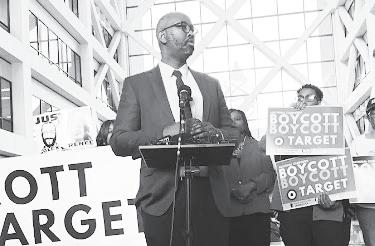
Protesters opposed to President Donald Trump’s military-style immigration crackdown called on Target to cut ties with federal agents Monday, Feb. 2, turning the Minnesota retail giant into the latest corporate target of resistance to the administration’s enforcement blitz.
Activists rallied outside Target’s downtown Minneapolis headquarters demanding that new CEO Michael Fiddelke push back against ICE operations in Minnesota. The demonstration came two days after protesters filled 23 Target stores across the Twin Cities.
“There are things that are bad for them, there are things that are good for them,” said Ulla Nilsen from Unidos MN.
“They’re afraid of retribution. Trump has shown that he is willing to attack anyone that stands against him.”

Target maintains it does not have cooperative agreements with Immigration and Customs Enforcement or any other immigration enforcement agency. But protesters say the company’s silence amounts to complicity.
“We’re asking Target to speak out against ICE and call for ICE to leave Minnesota,” said Nilsen. Observers have recorded federal immigration agents staging operations in Target parking lots on Lake Street in Minneapolis and in Richfield since December.
Then on Jan. 8, witnesses filmed former U.S. Border Patrol official Gregory Bovino leading a raid inside the Richfield Target and detaining two workers, Jonathan Aguilar Garcia and Christian Miranda Roman. Target has not spoken publicly about this raid.
“Our demands have been clear,” said Veronica Mendez Moore. “Publicly call for an immediate end to the ICE surge into Minnesota, and for ICE and border patrol to leave the state.
“Two, that Target exercised their Fourth Amendment rights and publicly pulled signage denying entrance to immigration agents who do not have a signed judicial warrant as required by law and that they train staff well on how to respond when immigration agents arrive at stores.”
The stakes couldn’t be higher. Witnesses filmed border agent Jonathan Ross shooting and killing Renee Good on Jan. 7. Three weeks later, immigration agents Jesus Ochoa and Raymundo Gutierrez shot and killed Alex Pretti on Jan. 25.
“This is a crisis, a crisis that’s going to require all of us com-
ing together to resist what is happening. Just as it’s not sustainable for our communities to continue being terrorized by ICE, it is not sustainable for Target either,” said Heather Hecker, a medical worker at Hennepin County Medical Center. “Target will not continue to profit if we live under authoritarian rule, and Target will not survive the moral injury of staying silent in this moment.”
Jaylani Hussein, who leads the Council on AmericanIslamic Relations Minnesota (CAIR-MN), slammed Target’s retreat from diversity commitments as a betrayal of the communities that made the company profitable.
“Just as it’s not sustainable for our communities to continue being terrorized by ICE, it is not sustainable for Target either.”
“Not only did the Target parking lots become a safe haven for ICE agents, we saw Bovino walk inside Target as [if] he owned Target. And for many people, they woke up to the idea that Target is involved,” said Hussein. “Before Trump even put out the damn press release, they were the first ones to turn back on their neighbors, to turn back on George Floyd.”
Pastor Doug Mork described immigration enforcement tearing apart his congregation. “My congregation
and neighborhood are seeing heartbreaking ICE activity every day, right during the service. Yesterday, we were monitoring ICE activity within just a few blocks, and it is tearing families apart,” said Mork. “It is causing incredible harm to the neighbors that we’re called to love. For years, corporations like Target have been accumulating power and asking for more, to have an influence in our communities and in our country.”
Georgia Fort, an independent journalist arrested by federal agents last week, said Target abruptly ended a contract with her company, BLCK Press, after announcing a rollback of its Diversity, Equity, and Inclusion policies.
“They were the second corporation that we were able to close a deal with,” Fort said.
“We overdelivered on all of our metrics, we met all of our deadlines. That contract ended abruptly. All of the communication we had with them, it all ended abruptly,” Fort said.
Fiddelke co-signed a letter with 60 other Minnesota CEOs on Jan. 25 calling for “de-escalation of tensions” between local and federal officials. Minneapolis blasted the letter as insufficient.
“If they wanted this to end, they could leverage their capital to do so,” Minneapolis City Council Member Aurin Chowdhury said.
The protests show no signs of slowing, spreading from Twin Cities stores to Chicago, D.C., Pittsburgh and Seattle.
Clint Combs welcomes reader responses at combs0284@ gmail.com.
By Clint Combs Contributing Writer
The Minneapolis Police Department continues to make slow and steady progress in a wholesale reform effort mandated by its agreement with the Minnesota Department of Human Rights. However, scores of federal immigration agents that remain in the city threaten to upend those efforts.
Effective Law Enforcement for ALL (ELEFA), the independent evaluator selected to monitor the police department’s compliance with the MDHR settlement, held a community meeting on Wednesday, February 4, at the Minneapolis American Indian Center. Residents who have long advocated for reform expressed concern that MPD is actively working with ICE and that public trust in reforming the department is waning.
ELEFA Co-founder David Douglas spoke about the aggressive behavior of federal immigration agents. “You have all shown America what happens when law enforcement is grounded in authority and force rather than legitimacy.
“You’ve seen what happens when there’s a warrior mentality that treats the whole community as suspects or enemies rather than people to be protected and served,” Douglas said.
“You’ve seen what happens when you put officers on the street without proper guidance, policies,
without proper training.”
City Council President Elliot Payne told ELEFA about his encounter with MPD on January 14 at the 600 block of 24th Ave., where federal agents shot and injured 24-year-old Venezuelan national Julio Caesar Sosa-Celis and arrested Alfredo Aljorna.
“I went up to an MPD officer holding a perimeter. It was a very chaotic scene. We were all getting gassed, and the community was screaming at the officer, ‘Why are you collaborating with ICE?’” Payne said.
“Our police department is in desperate need of reputational repair.”
A judge ordered the release of Sosa-Celis and Aljorna last Tuesday, Feb. 4. Immigration agents arrested them again after leaving the courthouse, according to a Star Tribune report. Their attorney filed a habeas corpus claim that would keep them in Sherburne County Jail.
“So I went up to the officer, introduced myself, and just said, Hey, hasn’t the chief issued some policy guidance here?” Payne said. “And his response was, ‘It’s like some 700-page document. I don’t
have time to read that.’”
Only six policies have been completed under the first year of ELEFA’s evaluation plan, according to a report spanning from April 2025 to September 2025. Ten policies remain incomplete.
“Without these policies in place, MPD is unable to move forward in developing and implementing quality training,” MDHR Commissioner Rebecca Lucero wrote in a letter.
MPD officers have told ELEFA that they’re often unclear about what the settlement agreement or state consent decree requires or what ELEFA’s role is. ELEFA also wrote in its report that some in the force believe that the reforms are being imposed on them. The police department doesn’t have an official set of guidelines for how Field Training Officers should train new recruits.
“Our police department is in desperate need of reputational repair,” said Michelle Gross, executive director of Communities United Against Police Brutality (CUAPB).
Michael Calvin, another CUAPB member, was 10 blocks away from Portland Ave. when Border Agent Jonathan Ross shot and killed Renee Good on Jan. 7.
“I arrived there. I was in the same dispatch group,” said Calvin. “We watched the Minneapolis Police Department set up an initial crime perimeter. Then we suddenly watched as they extended the crime perimeter two to three
blocks further south on Park.” Cortez Rice arrived minutes later on 26th Street after federal agents shot and killed Alex Pretti on Jan. 24, three weeks after Renee Good’s death. Border Patrol agent Jesus Ochoa and U.S. Customs and Border Protection officer
Douglas said that a cyberattack and the Covid-19 pandemic stalled reform progress for New Orleans in 2019. “I think we lost three, four, five years there,” Douglas said. “So the lesson is let’s work. Let’s get this done before stuff happens.”
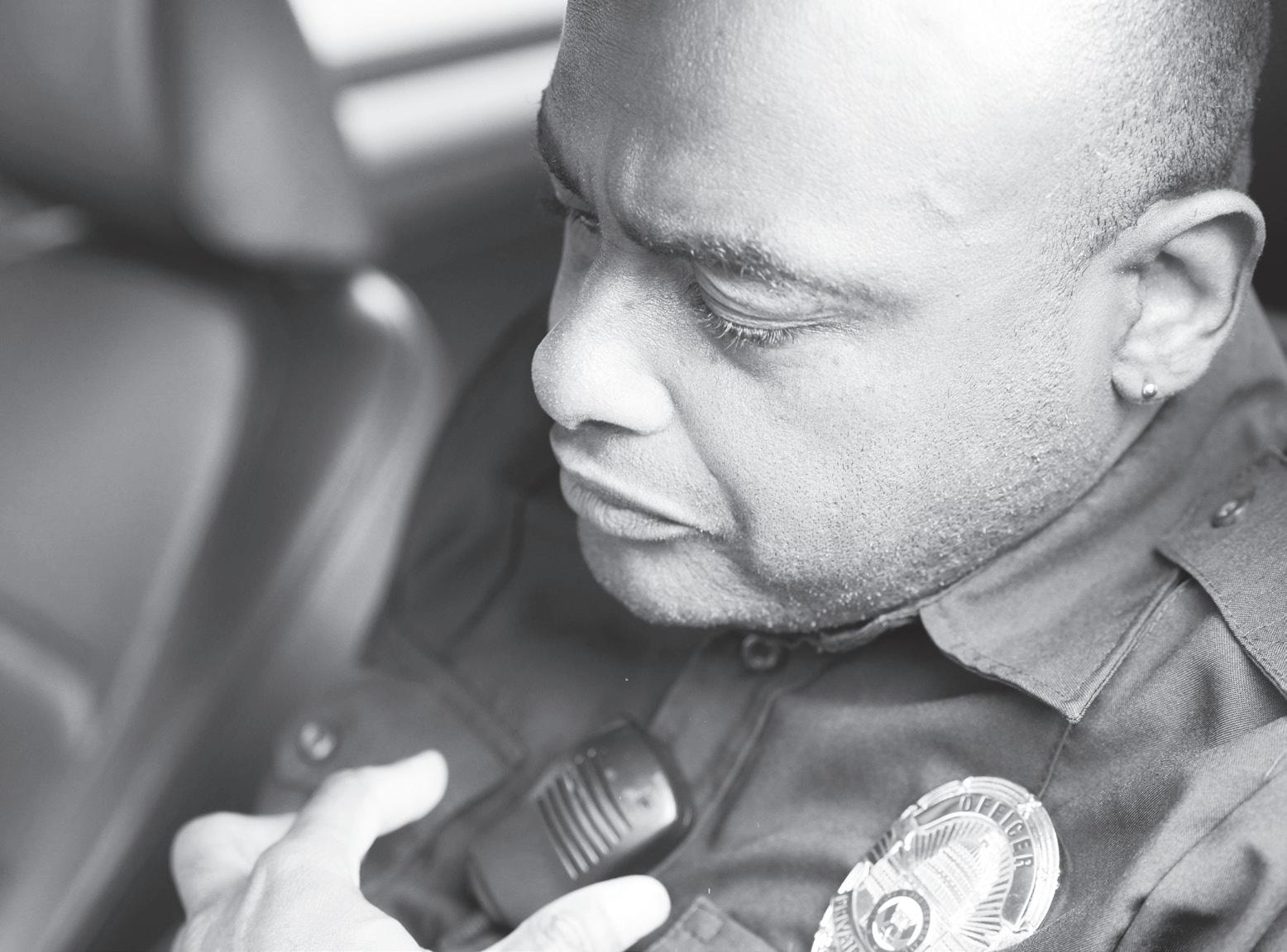
MPD officers have racked up $3 million in overtime pay thus far under Trump’s Operation Metro Surge.
munity is taking the physical risks,” said Gross.
“The community is engaged in mutual aid and paying the rent of our neighbors and making sure our neighbors are fed, making sure their kids get to school safely. And yet, where’s again, the elected officials? Jacob Frey can get on TV and say some swear words.
Raymundo Gutierrez were identified as the two agents who shot and killed Pretti, according to ProPublica. Activists in the room feel that Minneapolis Mayor Jacob Frey hasn’t done enough to protect residents from masked federal agents who have raided homes without signed judicial warrants, teargassed high school students, and tear-gassed a Black family, sending a six-month-old to the emergency room. Gross described the work of activists in a resistance movement without adequate help from city leaders. “The community has done what we are supposed to do. The com-
That’s not going to help us.”
There are roughly three to four times more federal agents than Minneapolis cops in the city right now. Over the first 12 days of Operation Metro Surge, MPD officers have racked up $3 million in overtime pay.
Clint Combs welcomes reader responses at combs0284@ gmail.com.

By Damenica Ellis Staff Writer
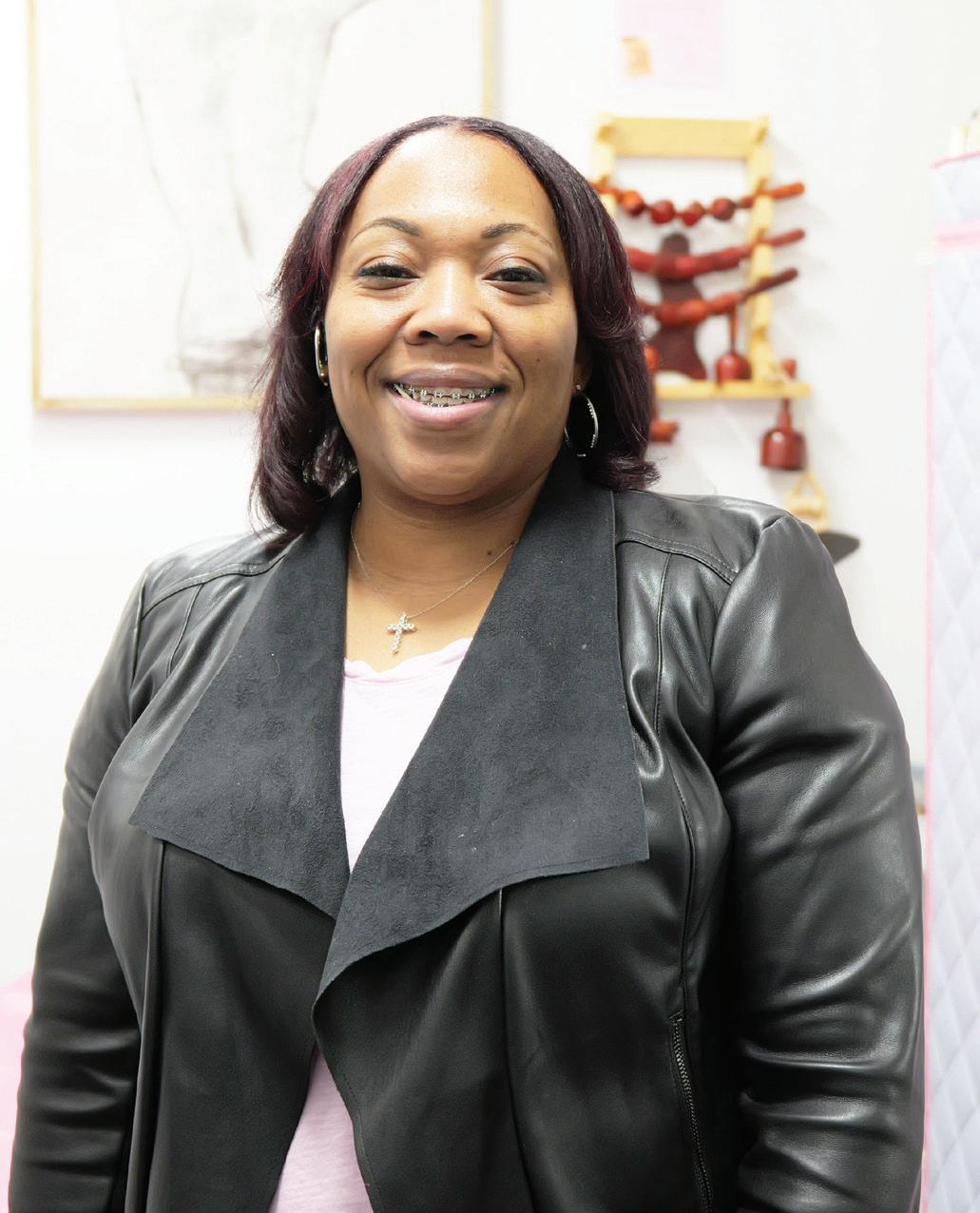
“I love helping to make people feel good,” Kisha Triplett said. Her beauty business, Internal Beauties, stems from passion.
After noticing people in her community struggling with self-esteem and acceptance, Triplett wanted to help. With the goal of creating a space where people can be themselves and work toward better health, she founded Internal Beauties nearly five years ago.
“People are walking around always wanting to show what external beauty looks like, and I am constantly telling people, ‘Hey, you need to find what makes you happy from the inside out,’” Triplett said. “It’s about feeling
good, not just what looks good.”
Internal Beauties provides noninvasive beauty services, including body contouring, lymphatic drainage, sauna detox therapy, laser lipo, skin tightening, cellulite treatments and teeth whitening.
“Our
not just to change bodies, but to change how clients feel about themselves.”
“Our goal is not just to change bodies, but to change how clients feel about themselves,” the business website says. Triplett said she did not
By Aamira Redd Contributing Writer
Arbeiter Brewing brought together local Black-owned businesses and community members for its second Black History Month market Wednesday, Feb. 4, creating not only a space to shop but also an opportunity for attendees to reflect on the current political climate and what they hope future generations will remember about this moment in history.
short time span.” Baker said she hopes future generations recognize the role Black and brown communities have played during this period.
“I’m hoping future generations, whoever looks back on this history, sees how powerful we are as people, especially Black and brown people, because oftentimes in the past we were forgotten or written out of the storyline,” she said.
“I hope that changes … that we were on the front lines, educating, taking care of each
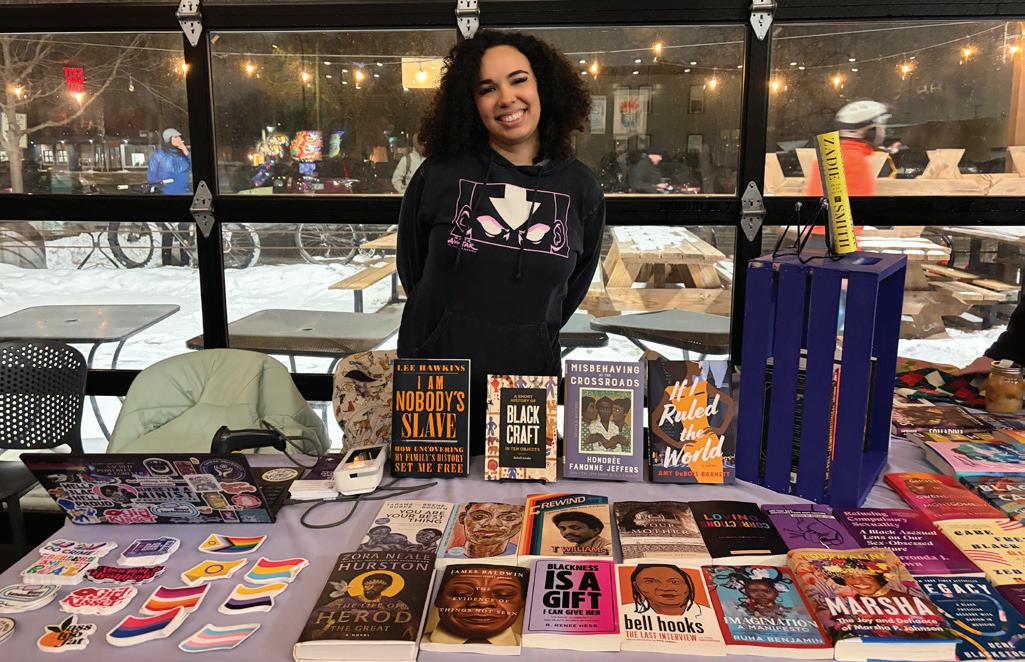
The brewery hosted its second Black History Month market, offering attendees the chance to shop from local Black-owned businesses.
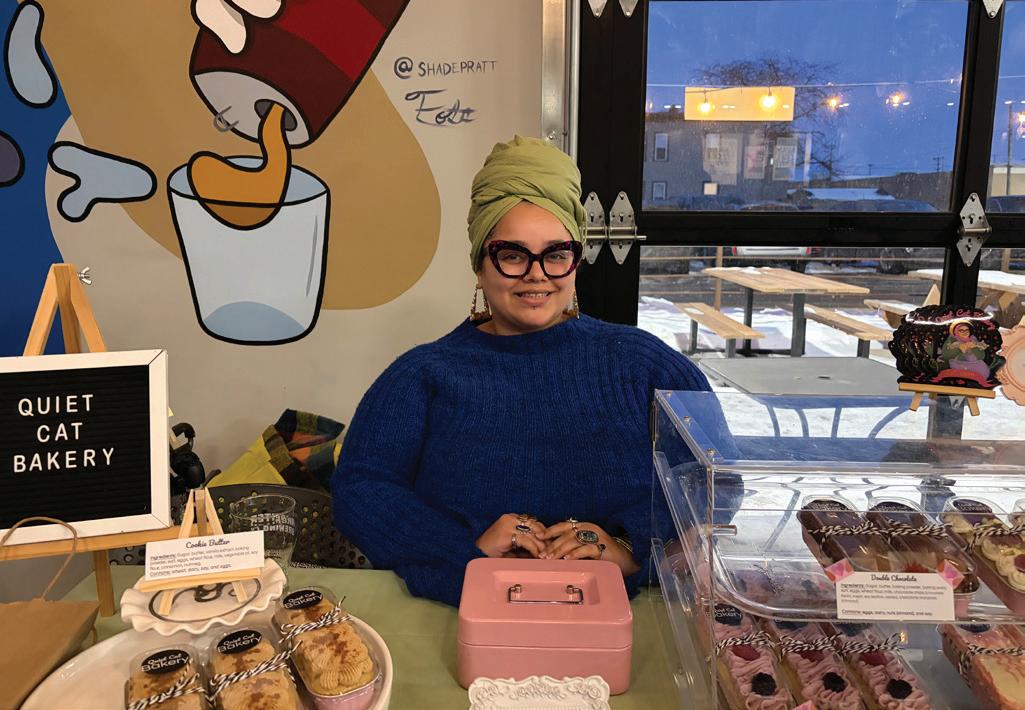
Black Garnet Books, Quiet Cat Bakery, and Blackberry Bakery were among the vendors, bringing books, pastries and handmade goods to the event.
The market also created space for conversations with attendees about how future generations may look back on the present and what they hope will be remembered.
For Jasmine Baker, 28, an educator and bookseller with Black Garnet Books, the question of how this era will be remembered feels deeply personal amid ongoing political uncertainty. “We’re in a very trying time right now,” Baker said.
“I’m a Gen Z-er, so just being raised within a recession and then a depression and now we’re going back into recession again, and then dealing with sitting fascism and then being in an occupation and then having to deal with a pandemic … It is a lot in such a
other, encouraging people, and being that force to withstand all these trying times.”
“With so much misinformation being spread and so many attacks on the truth, I worry that future generations may have a skewed perspective on what really happened.”
Scott said she hopes history will reflect both accountability and resistance. “In an ideal world, I hope they look back on these times with mixed feelings of embarrassment and pride,” she said.
“Embarrassment that something as vile as these current ICE operations could even take place in this country, but pride in the resistance and community that formed to oppose what this administration is doing.”
Zainab Youngmark, 29, owner of Quiet Cat Bakery, shared a similar reflection.
She said she owns a book documenting the Civil Rights Movement of the 1960s that she has not yet read, noting that it feels especially heavy given today’s political climate.
“I just keep thinking about the book, and if I pull it out,
I’m sure I’m going to see what I’ve been seeing on social media right now,” Youngmark said. “It’s like a repeat of everything. It’s cyclical.”
was hidden from us. We didn’t see all of this.”
Strength in community
As Black History Month events continue across the Twin Cities, many participants said gathering in community spaces feels especially impor-
start the business to make money, but out of passion.
She dedicates time to Internal Beauties while also balancing two full-time jobs and caring for three of her siblings.
In July 2024, Triplett’s father died, leaving three children in need of a home. Though she was on her way to becoming an empty-nester, with her youngest child nearing high school graduation, Triplett took the 4-, 5- and 8-year-olds in as her own.
Triplett said her business picked up the following July and has since gained 90 new clients.
“I feel like it’s the universe saying you’ve done the right thing … Your father’s happy,” she said.
A key part of Triplett’s services includes helping clients maintain their results by addressing internal factors such as diet and exercise. “I don’t care how much you want to pay me to make your outside look good. If you don’t heal
tant during a time of widespread uncertainty.
“I think it’s important that people come together right now because it really shows strength in numbers,” Scott said. “During times like this, when people are really afraid to go outside, seeing your neighbors and community members in person can help fight that sense of isolation and desperation.” Scott added that one positive outcome of the moment
what’s going on internally and what got you there, it’s going to come back,” she said.
She also provides postoperative care for clients who have had invasive procedures, such as Brazilian butt lifts. “It doesn’t matter who your surgeon is, you have to change your habits,” Triplett said.
Triplett aims to be a trusted business owner creating health and beauty for men and women in Minnesota’s Black communities by helping them find inner peace and inner beauty.
Triplett’s next goal is for Internal Beauties to continue growing to a point where she can hire other Black entrepreneurs to provide beauty services.
For more information, visit www.internalbeauties.com.
Damenica Ellis welcomes reader responses at dellis@ spokesman-recorder.com.
has been deeper community connections. “The silver lining is that people are starting to form stronger ties to their communities,” she said. “Being able to come together, especially in these business spaces, and support them really helps fight the isolation people are feeling right now.”
Aamira Redd is a freelance journalist and contributor for the Minnesota Spokesman-Recorder.
How will this history be told
Another attendee, Angel Scott, 25, spoke about the uncertainty surrounding how recent federal immigration enforcement actions, particularly those resulting in fatal encounters and widespread protests, may be remembered.
“In these times, it is honestly really hard to think about how future generations will view this moment,” Scott said.
Whitney Robinson, 34, owner of Blackberry Bakery, said she feels hopeful for future generations, pointing to the strength of today’s youth and the challenges they face growing up in a more exposed world.
“They are a group of strong individuals,” Robinson said. “I think we should invest more in their mental health because they are taking in a lot. When we were younger, a lot of this



Continued from page 1
serves has been affected by funding cuts over the past year, Abel said, though the food shelf itself is funded by the state and donations. Abel believes Trump’s statement was intended to instill fear.
“When people are scared, they tend not to think critically, and they tend to react and maybe make choices they’re going to regret,” she said.
Groveland’s primary focus right now is caring for people impacted by Immigration and Customs Enforcement. Abel said the number of guests visiting the food shelf has been cut in half because many are afraid to leave their homes. In response, Groveland is delivering food to about 1,200 additional families. The organization has tripled the amount of food it orders and hired another staff member.
The Hallie Q. Brown Community Center in St. Paul’s Rondo neighborhood is also adjusting services to support community members affected by ICE and those who may be impacted by potential cuts to Medicaid, child care and SNAP.
“The confusion alone is what
Continued from page 1
A staff member recently quit due to their fear of driving into Downtown Minneapolis every day.
“Our biggest challenge with ICE has been fear from clients, some leaving residential treatment because they want to be with their family, and also fear from our staff. We have staff from all over, and many of them have been fearful and anxious about the random, illegal and unprofessional behavior, some of which we have witnessed in front of our buildings.”
In a response to residents’ concerns, Council Member Robin Wonsley’s office emphasized the urgent need for action. In a statement sent
puts a wedge in the progress with folks accessing food, because some people may not even try and therefore miss out on opportunities that are still available right now,” said Benny Roberts, executive director of the center. “That’s not to say it won’t change today or tomorrow, when people’s access is actually cut off, but right now there’s a lack of clarity.” Roberts said the center can help subsidize and supplement services for people who no longer have benefits. In response to possible cuts, the center appealed to supporters and sponsors and has received an influx of food donations. “We’re prepared to be able to serve more families,” Roberts said.
With health care benefits also in jeopardy, Hallie Q. Brown launched its Partners in Prevention Clinic to provide free preventive health care services. Through the program, which includes several partners, services include blood pressure checks, advanced cardiac screenings, dental services and prediabetes screenings.
“The scale of SNAP and other federal programs is far beyond what the charitable sector can do. There’s just no way we can make up the difference on our own.”
The Centers for Medicare and Medicaid Services plans to withhold more than $2 billion annually in Medicaid funding after rejecting Minnesota’s corrective action plan to combat fraud. While appealing the decision, the state has submitted a revised plan, according to the Minnesota Department of Human Services, which oversees Medicaid.
nesota law, the budget reserve is not available for this purpose.”
“The Minnesota Department of Human Services will do everything in our power to minimize the damage,” the statement continued. “But we’ve stated time and again, both with the funding reductions in HR1 and CMS’ proposed withholds, the state cannot absorb billions of dollars in cuts and preserve needed services at current levels.”
Roberts said the clinic will help people who face barriers to accessing health care. “Maybe they don’t have insurance, or maybe their Medicare benefits are inactive because of some of the other threats and cuts to Minnesota residents,” he said.
Addressing the freezing of Minnesota child care funds, Roberts said the center assists families through referrals and connections to resources.
also working to keep residents informed about state and federal changes amid widespread confusion. One way it does this is through its call center.
“We are staying on top of the changes and trying to communicate clearly when we have reliable information to help people understand what the impact might be on their benefits or eligibility,” said Zach Rodvold, the organization’s director of public affairs.
Over the past year, the organization has felt the impact of cuts to federal nutrition programs, including the elimination of the Local Food Purchase Assistance Program and the One Big Beautiful Bill Act, which is set to take effect in the spring, Rodvold said. Combined with the effects of the past government shutdown, those changes have increased demand at food shelves.
become unsustainable. We were not designed to support this many people for this long.”
While community resources play a critical role, Rodvold said stronger partnerships at the federal and state levels are needed to reduce demand through investments and policy solutions. Second Harvest Heartland continues to prioritize helping eligible residents enroll in SNAP, which Rodvold said is one of the most effective tools for preventing hunger.
“The scale of SNAP and other federal programs is far beyond what the charitable sector can do,” he said. “There’s just no way we can make up the difference on our own.”
The hour-long panel touched on topics including reporting domestic abuse, supporting survivors, and educating children before harmful behaviors become ingrained.
Gammage spoke about the consequences of normalizing negative interactions, such as witnessing a violent argument between a couple at a gathering and dismissing it as “that’s just how they are” or “that’s none of my business.” She also challenged the belief that “what goes on in this house
Continued from page 1
human beings,” McClure said.
“And certain music is central to African people … I saw the elders and the campus community and the students really engaging and dancing … It resonated across the entire audience.”
The event’s role as a broader gathering of the Black community was part of why Macalester student Sihaam Barre attended the lecture. “It’s just really awesome to see how much the Black community here can thrive,” Barre said.
The center’s food shelf is coordinating with community members who want to volunteer to deliver food to people afraid to leave their homes. It also offers a simple pickup service that allows individuals to pick up food on behalf of another family and place orders online or by phone.
to a constituent, Wonsley’s policy aide Celeste Robinson wrote, “We’re now on day 64 of ICE’s occupation of Minneapolis. The occupation is causing massive trauma in our communities.
“It’s also creating a looming eviction crisis. Many families have lost income because of the federal occupation of Minneapolis and need assistance paying their rent. For thousands of residents, simply leaving their home to go to work means facing harassment, violence or abduction by ICE. No family should have to choose between keeping a roof over their head and risk being kidnapped on the way to work.”
In response, the Minneapolis City Council is attempting to pass ordinances to prevent evictions, including an eviction moratorium similar to one Governor Walz passed during
stays in this house.
“We normalize [abuse] in our community and our society,”
Gammage said. “The first thing you tell little girls if a little boy hits you is what? He probably likes you. So we are indoctrinating our children with the idea that pain equals love, and that it should be accepted.”
In her work, Gammage has seen cyclical and intergenerational patterns of abuse. Many people grow up hearing stories of parents or grandparents experiencing abuse, she said, and those who cause harm are often survivors of trauma themselves.
“I’ve never seen someone act violently toward another per-
“I brought all of my friends here as well so we could talk and have the space to continue to learn and hear from each other, especially with everything going on right now.”
Horne was selected as the event’s speaker before the launch of Operation Metro Surge, during which thousands of Immigration and Customs Enforcement agents have carried out racially motivated deportations throughout Minnesota. In a dramatically reshaped state and country, spaces for marginalized people to build community feel particularly necessary.
Horne argues the country’s current position is not
“A $2 billion annual cut will destabilize Minnesota’s health care system,” the department told the Minnesota Spokesman-Recorder in a statement.
“It would create impossible choices when it comes to funding health care and other parts of the state budget. Under Min-
the COVID pandemic and an extension of eviction notices from 30 to 60 days.
Robinson said that an eviction moratorium is the strongest way to ensure residents are protected. While Governor Walz has the authority to declare one, he has so far declined to act. Meanwhile, Councilmembers have allocated $1 million in rental assistance funding and proposed extending the timeline for eviction filings to give families more time to access resources.
“There are several organizations and mutual aid groups fundraising for rental assistance,” a memo introducing the “Pause Evictions, Save Lives” ordinance, written by its authors, including City Councilmember Robin Wonsley, read.
“Council Members are pro-
son who didn’t also have trauma,” Gammage said. “There are two victims in that situation. When people don’t know how to regulate emotions or develop coping skills, they tend to violate boundaries.
“The combination of our food shelf intervention, which also includes our clothing closet, and our Partners in Prevention Clinic are practical, tangible ways community members can still access critical resources without interruption, even without SNAP benefits or Medicare,” he said.
Second Harvest Heartland, a hunger-relief organization, is
posing to allocate $1 million to Hennepin County for rental assistance to be dispersed to residents impacted by the current enforcement surge. The City cannot address the impacts of this federal occupation alone.”
“No family should have to choose between keeping a roof over their head and risk being kidnapped on the way to work.”
“State leadership should be taking active efforts to get ICE out of our city so that the people living in fear and losing their jobs and homes can
Threats to funding that affect other basic needs also increase demand for emergency food assistance, Rodvold said.
“There’s no place to go for free rent or free mortgages or free utilities or gas,” he said.
“But there is a place where most people can find free food assistance when they need it. That’s a testament to the strength of Minnesota’s hunger-relief network, but it’s also
possibly find their way back to something resembling a normal life,” Winn said. “They need to get off their social media making comments about how horrible the situation is, and actually take action against the army that has invaded their state.”
Minneapolis Mayor Jacob Frey, who has been in the national spotlight, has been criticized by his own residents for failing to implement any rent relief. While Frey has not announced he will take immediate action on the rent moratorium, his Press Secretary, Jennifer Lor, says that a formal proposal has not yet been brought to his desk.
“Mayor Frey is supportive of the concept of strategically keeping our neighbors in their homes,” Lor said. “However, our office needs to first understand the implications of the
ment and affirm their experiences.
For every one meal provided by Feeding America, SNAP provides nine meals, according to the organization, which operates a network of 200 food banks and distributes more than 4 billion meals annually.
The Minnesota Department of Children, Youth and Families, which manages SNAP and child care benefits, has created a Federal Funding Action Tracker to outline funding issues the state is monitoring and litigating.
Damenica Ellis welcomes reader responses at dellis@ spokesman-recorder.com.
funding source for emergency rental assistance, as well as the ability to administer the program.”
The ordinances were introduced on Feb. 5, with the eviction moratorium being referred to the Business, Housing & Zoning Committee meeting of Feb. 24. However, this is not a solution for the residents facing eviction, Winn says. “Immediate action is more necessary. Landlords will not wait to evict people who can’t pay their rent.”
“By the time the eviction moratorium reaches that meeting and hopefully is passed, there’s a large chance that people will be unhoused. Immediate action would prevent that from happening.”
Izzy Canizares is a freelance journalist and reporter for the Minnesota Spokesman-Recorder.
“I’ve never seen someone act violently toward another person who didn’t also have trauma.” ”
“There’s systemic work that needs to be done within our communities,” she added.
“People say, ‘Well, I’m not crazy.’ And I say, ‘Okay, but are you hurting enough to get help?’”
Roller emphasized the im-
an anomaly, but the result of centuries-long historical processes. A political crisis, he said, is not an accident but an outcome produced over time.
His work, which includes 45 books, spans a broad range of subjects, from biographies of W.E.B. Du Bois to histories of jazz. In response to multiple questions during the post-lecture Q&A, Horne noted that he had already written a book on the topic.
Horne’s breadth of expertise was evident throughout the lecture. His short answer to the question of “How Trump Happened” is class collaboration among settlers of European descent, regardless
portance of identifying early warning signs before abuse escalates. “Look at the ‘shut ups.’ Look at the small threats,” she said. “When someone talks down to you in a group, when the joke is on you, you are the joke.”
Roller also addressed behaviors such as gaslighting and stonewalling.
The panelists advised those with loved ones in abusive relationships to listen without judg-
of socioeconomic status.
That collaboration, he said, has been central to establishing the myth of American “whiteness,” which has been used as a colonial tool. “I see the election of the felonious Trump in 2024 as a step toward turning back the clock to the nation’s original white supremacist roots,” Horne said during the lecture.
The Red Scare of the 1950s, he continued, led to the disempowerment of the militant wing of labor unions. The left wing of liberalism, led by Paul Robeson and W.E.B. Du Bois, was “tossed overboard” in exchange for concessions by the right.
“It’s the deficiency in selfbelief that allows abuse to continue,” one speaker said.
“Listen, and if you can’t listen, it’s okay to exit because judgment can cause more harm.”
The theme of self-love resurfaced throughout the discussion.
“If you offer yourself love, nurturing, kindness, patience, and honor your voice, it gives you a better foundation,” Gammage said. “We can’t let the chaos of the outside world dictate what’s happening inside of us.”
Spoken-word artist Michelle Perdue closed the event, reflecting on witnessing the abuse her mother endured and her journey of resilience.
Horne identified this trend as reappearing in the current administration’s efforts to dismantle Diversity, Equity and Inclusion practices.
“If a nation is founded on Indigenous genocide and mass enslavement of Africans, do not be surprised if violence inheres in the resultant society.”
Horne also connected the tactics used by the federal government domestically today to those used internation-
Jamelah Cooper attended as a vendor with her handcrafted jewelry business, So Me by Jamelah. This was her third year participating in Sister Spokesman events. “It’s a beautiful environment,” Cooper said.
“This month’s event was encouraging, positive and affirming. It catapults you and makes you want to do something with your community, and I love it.”
To view the Sister Spokesman event recap, visit https://youtube.com/shorts/nPFAyvqLg8s? si=tAuBmLt0Y6ZdAVXO.
Damenica Ellis welcomes reader responses at dellis@ spokesman-recorder.com.
ally and historically. “If a nation is founded on Indigenous genocide and mass enslavement of Africans, do not be surprised if violence inheres in the resultant society,” he said.
The connection between history and the present resonated with the audience. “What we see today is not accidental,” said Emery Mizero, a community member in attendance.
“Last night was a measure of community,” McClure reflected the following day. “It was a collective lift.
Anya Armentrout is a freelance journalist and contributing writer for the Minnesota Spokesman-Recorder.
By Dwight Brown Film Critic
Black filmmakers, actors and films were an integral part of the 2026 Sundance Film Festival. As the event prepares to leave Park City, Utah, after more than 40 years, Black artists were present to say farewell. Beginning in 2027, the festival will relocate to Boulder, Colorado.
“If I Go Will They Miss Me” (**)

In the past, portrayals of Black families in low-income communities have often relied on stereotypes, particularly when it comes to men. In recent years, more astute filmmakers have pushed back, creating nuanced characters and avoiding clichés.
A.V. Rockwell’s “One Thousand and One” (2023), for example, featured Teyana Taylor as a mother navigating urban hardship while raising her young son. Though the men in her life had flaws, none were demonized or flattened.
“If I Go Will They Miss Me” is a throwback, and not in a good way.
Writer-director Walter Thompson-Hernandez (“Kites”) sets his family drama in working-class Watts, Los Angeles. Lozita (Danielle Brooks) is devoted to her young son Anthony, known as Lil Ant (Bodhi Dell), a model middle schooler whose creative imagination drifts into fantasy. He dreams of Black boys floating in the air, conjures mystical imagery, and clings to mythology, Pegasus among his heroes.
Lozita is less fortunate in her marriage. Her husband Big Ant (J. Alphonse Nicholson, “They Cloned Tyrone”) is defined by prison stints, drug issues, infidelity, and open hostility toward his son. He is a constant thorn.
The film is visually striking and surreal, more like a fable crafted by a visual artist than a story guided by a wise griot. Yet the narrative never rises to the heights of Lil Ant’s imagination. Instead, it sinks. Big Ant is an abusive trope, a one-dimensional inner-city Black villain. In one pivotal scene, he sadistically rips apart his son’s treasured artwork, then strikes him when confronted. It’s painful and regressive.
Viewers hoping Lozita will interrupt the cycle of abuse may be disappointed. When she finally acts to protect her family, it comes too late. By then, patient audiences may have already checked out.
It’s a major letdown. Not just the script, but the filmmaker’s dated portrayal of Black fathers. The winsome cinematography (Michael Fernandez), music (Malcolm Parson), and production design (Maria Perez Ramirez) linger, and that’s where the praise should end.
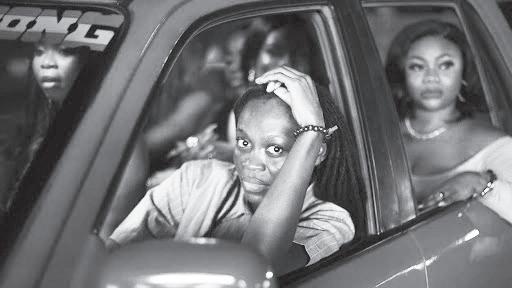
She’s a road warrior, navigating the chaotic streets of Lagos, Nigeria, behind the wheel of a taxi. The job demands courage, and Lady (Jessica Gabriel’s Ujah), a woman in her 20s, has plenty. She owns her van, supports herself, and thrives in a maledominated profession.
The setting, premise and engaging lead character spring from the imagination of first-time feature filmmaker Olive Nwosu. Her vision captures the city’s restless hustle.
The film opens with a dirge-like jazz-blues score by composer Ollie Mayo, reminiscent of early Spike Lee soundtracks. Soon, tangy Afrobeats take over, injecting energy. Saturated colors and sleek cinematography (Alana Mejia Gonzalez) give the film a dazzling look as Nwosu spins a feminist tale.
At the urging of her childhood friend Pinky (Amanda Oruh), Lady becomes a chauffeur for sex workers. A sisterhood forms between driver and passengers, stirring traumatic memories from Lady’s past that have left her fearful of sexual intimacy.
The ensemble cast is a delight: gregarious, funny, gossipy, all surviving a rat race that forces hard choices. Viewers may hope Lady finds love and drives off into a happily-ever-after sunset. The overwrought script has other plans, unfortunately.
It’s a pity. The setup, performances and production elements are far stronger than the film’s final act. Still, it’s an appealing glimpse into the seamy side of city life, with social unrest simmering in the background.
“Soul Patrol” (***½)

This poignant documentary tells a soldier’s story. Veterans revisit their past and confront the present as writer-director J.M. Harper assembles an absorbing historical record. Home life, combat, and the aftermath of the unpopular Vietnam War unfold through Super 8 footage from the 1960s, archival material, present-day interviews and reenactments. Editors Byron Leon, Niles Howard and Gabriela Tessitore weave the pieces into a coherent, emotional whole.
A soulful soundtrack, from James Brown to Jimmy Ruffin, evokes the era.
As young men in the 1960s, these soldiers endured racism at home, the assassinations of Martin Luther King Jr. and Robert F. Kennedy, and the turbulence of the Civil Rights Movement. In Vietnam, they faced bigoted commanding officers and the moral burden of killing people of color, only to return to an indifferent, hostile America.
Behind enemy lines, however, they forged deep bonds as members of the first all-Black Special Operations Long-Range Reconnaissance Patrol unit. That brotherhood endures into their 80s. Sharing memories, acknowledging PTSD, and recounting struggles becomes both cathartic and healing.
The injustice is impossible to ignore. “We busted our asses to kill and got nothing for it,” one veteran says. “I relive that mission every single day of my life.”
Logan Triplett’s sensitive cinematography captures every smile, tear and embrace. First documented in Ed Emanuel’s 2003 memoir “Soul Patrol,” the legacy of these unsung heroes is now preserved onscreen with care. Audiences are left with a single response: Thank you for your service.
“Troublemaker: The Story Behind the Mandela Tapes” (***)
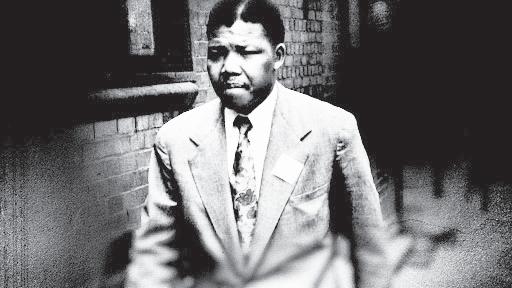
Most people warrant one autobiography. Legends like Nelson Mandela deserve more.
Director Antoine Fuqua (“The Equalizer”) and writer Michael Mann build this documentary around audio tapes recorded while Mandela was writing “Long Walk to Freedom.” Voiceovers, archival footage, photographs and interviews are stitched together by editor Jake Pushinsky. Animation by Thabang Lehobye enhances the visuals, recreating Mandela’s presence with striking intimacy.
A dramatic score by Marcelo Zarvos elevates both personal and public moments. Viewers are transported through Mandela’s life, from birth to death, freedom to imprisonment and back again.
Mandela’s words resonate deeply: “An unforgivable crime has been committed. It is a crime against all the people of our country. We say to all South Africans, Black and white, that the day of truth will dawn.”
The depiction of apartheid echoes today’s global rise in ultra-conservatism: people carrying papers to avoid arrest, voting rights under siege, crowds filling the streets. Mandela’s reflections trace how activism led to a reckoning.
There’s enough material here for a miniseries, yet this concise portrait remains comprehensive and illuminating. Iconic images linger, including the moment Mandela and F.W. de Klerk shook hands, proof that South Africa had finally become a multiracial democracy.
For more information about Sundance Film Festival go to: https://festival.sundance.org.
Visit Film Critic Dwight Brown at DwightBrownInk.com.
By Robin James


It’s the beginning of a new year, and I’m reflecting with gratitude on all that I’ve learned and experienced. I feel blessed to have shared the many happenings in the world of jazz with you and look forward to even more exciting moments ahead.
Speaking of the future of jazz, it was recently announced that after 40 years, renowned trumpeter and Jazz at Lincoln Center (JALC) founder Wynton Marsalis is stepping down as managing and artistic director and beginning a transition period with the organization.
According to a JALC press release, “As part of a phased transition plan, Mr. Marsalis will continue as artistic director during the 2026-27 season. Beginning in July 2027, he will continue to serve on the staff in an advisory capacity as founder through the end of his contract in June
2028. Subsequently, Mr. Marsalis will continue to serve on JALC’s board as founder in perpetuity.” He will no doubt continue to raise the profile of jazz worldwide.
Before turning to 2026 recordings, I want to highlight some noteworthy jazz albums from 2025. Here is a top 10 list that stood out:
• Charles Lloyd, “Figures in Blue” (Blue Note)
• Jeremy Pelt, “Woven” (HighNote)
• Branford Marsalis, “Belonging” (Blue Note)
• Joe Farnsworth, “The Big Room” (Smoke Sessions Records)
• Cyrus Chestnut, “Rhythm, Melody, and Harmony” (HighNote)
• Brandee Younger, “Gadabout Season” (Impulse! Records)
Craig Taborn, Nels Cline, Marcus Gilmore, “Trio of Bloom” (Pyroclastic Records)

Paul Cornish, “You’re Exaggerating!” (Blue Note)
• George Cables, “I Hear Echoes” (HighNote)
• Danny Grissett, “Travelogue” (Savant)
I also want to mention one more standout recording released late in 2025: drummer and composer Brandon Sanders’ “Lasting Impression” (Savant Records).
Joining Sanders on the album are vocalist Jazzmeia Horn, pianists Eric Scott Reed and Tyler Bullock, tenor saxophonist Stacy Dillard, vibra-
phonist Warren Wolf, and bassists Eric Wheeler and Ameen Saleem. The album features eight tracks, with highlights including Bobby Hutcherson’s “8/4 Beat,” George Gershwin’s “Our Love Is Here to Stay,” Sanders’ own “Tales of Mississippi,” Mal Waldron’s “Soul Eyes,” and Stevie Wonder, Clarence Paul, and Morris Broadnax’s “Until You Come Back to Me (That’s What I’m Gonna Do).”
Part of what makes this album swing is its production by fellow drummer Willie Jones III. Another is the presence
of Horn, one of the finest vocalists of her generation. Her energy and vocal performance on “Until You Come Back to Me” reminded me of Miki Howard’s version of the same song. While Horn has been compared to Betty Carter and Sarah Vaughan, she truly sounds like herself.
Tomorrow is not promised, so it’s important to enjoy artists when and where you can.
Wolf and Horn have recorded with Sanders before, and their comfort and familiarity show. In fact, the entire band shares an easy chemistry that makes this album rewarding, even after repeated listening.
Each new or old jazz recording I encounter deepens my love for the music. Someone else who shared that passion was singer-songwriter and multi-instrumentalist D’Angelo, who recently passed away. I could not begin the year without acknowledging how important he was to so many, inside and outside the jazz world.
There was no one like him, and there will never be anyone like him again.
Listening to D’Angelo perform with jazz trumpeter Roy Hargrove, who is also no longer with us, was pure joy. Lately, I’ve found myself returning to his songs “Really Love” and “Heaven Must Be Like This,” though I can listen all the way through his stellar album “Brown Sugar.” The way he was embraced by the jazz community was beautiful. I feel fortunate to have experienced D’Angelo’s music live and up close.
Tomorrow is not promised, so it’s important to enjoy artists when and where you can. That’s why I’m looking forward to more great performances in 2026. Among jazz musicians visiting the Dakota next year is saxophonist Immanuel Wilkins, who brings his quartet on March 10. For tickets, visit www.dakotacooks.com. I want to thank everyone for continuing this jazz journey with me and the SpokesmanRecorder. Here’s to another year of great music and always learning something new along the way. Happy New Year!
Robin James welcomes reader responses at jamesonjazz@ spokesman-recorder.com.
By Lizzy Nyoike Contributing Writer
A new children’s book is helping educate young readers on one of Minneapolis’ most historic school integration bus rides, sharing a chapter of local history that many adults never knew existed.
Author Derek Francis recently launched “Our First Bus Ride,” a children’s book that tells the story of the 1971 Hale and Field Elementary school integration in South Minneapolis through the eyes of two second-grade students. The book captures the emotions and community efforts behind the first day of school busing in the city.
For Francis, the idea came from the realization that he never learned this history growing up. “I learned about Ruby Bridges, Little Rock Nine, but I never learned about the HaleField pairing in Minneapolis in 1971 and what integration looked like here,” Francis said.
The book centers on the 1971 pairing of Hale and Field Elementary, two schools less than two miles apart but vastly different in student demographics and resources. According to Francis, Hale was
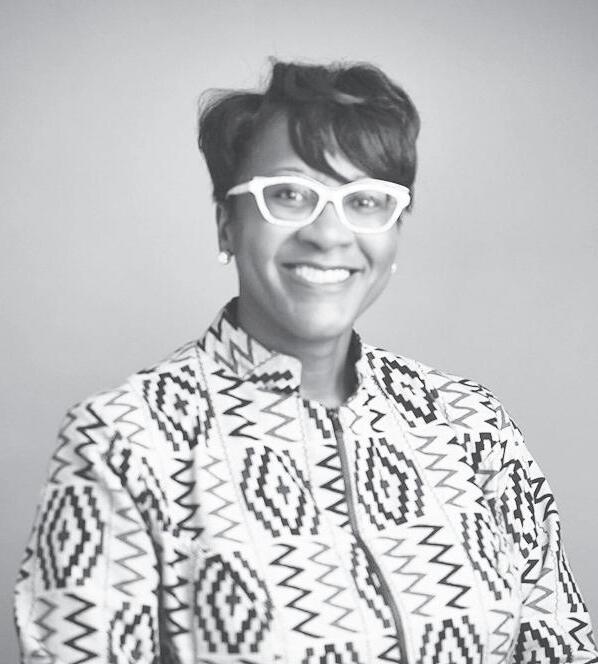
By Dr. Artika Tyner Columnist
What does it mean to be rooted in a world that is constantly shifting? During Black History Month, this question invites us to look both backward and forward. It calls us to ground ourselves in history while imagining the future we are still called to build. To answer it fully, we must begin with context.
In 1925, historian Dr. Carter G. Woodson laid the foundation for what we now know as Black History Month. At a time when the contributions of African Americans were routinely erased or ignored, Woodson dared to create a deliberate plan of action to honor Black excellence, celebrate remarkable achievements, and cultivate Black joy. His work was not simply about a holiday celebration. It was about reclamation, human dignity, and the power of storytelling as a tool for justice. It acknowledged the significant contributions of Black leaders in shaping U.S. history.
As we celebrate a century of Black History commemorations, we must continue to recognize that African Americans are not only survivors of history, but architects of the future. Black communities have long been home to leaders who have dedicated their work to creating a blueprint for a more just and inclusive society.
History teaches us that resilience is not accidental. It is a conscious choice achieved through daily sacrifice and relentless action. Across generations, we have been guided by ancestral wisdom passed down through struggle: “Keep

99% white, while Field was about 70% Black.
The story follows two real students, Molly and Monica, as they ride the bus to school for the first time, a moment that marks the beginning of school integration in South Minneapolis.
“It shares the narrative of what it was like before, what it was like hearing the news that your school was going to be integrated, and then that bus ride,” Francis said. “Neither one of them had ridden the bus to school before. It was their first time on a bus ride, a historic bus ride.”
The book also highlights influential educators like Mr. Mike Andrews, an African American
teacher at Field Elementary who had marched with Reverend Dr. Martin Luther King Jr.
Francis first learned about the Hale-Field school integration while working as a school counselor in the equity department at Minneapolis Public Schools. Seeing both Monica and Molly, the students from historic photos, later meet in person became a turning point.
“Hearing their real lived experiences, what it was like getting on the bus that day, really impacted me,” Francis said. “This was right here in Minnesota. We had those same racial dynamics in our state and the city of Minneapolis.”
The experience convinced him the story needed to be told in a way young people could understand. Francis says the story is about more than the past; it’s also about how communities are built on belonging today.
“Stories about school integration still matter in 2026 because it’s about understanding who’s our neighbor,” he said. “It’s so important, especially at a young age, for kids to understand and see someone of a different background
as a benefit.”
Francis hopes the book encourages children to see diversity as a strength and to build friendships with peers from all walks of life. “There are a lot of people who still don’t have a friend from a different background,” Francis said.
Unlike the violent resistance seen in other states during school segregation, Francis says Minneapolis’ integration efforts were deeply community-driven. Local churches, families and educators worked together to advocate for change.
“Stories about school integration still matter in 2026 because it’s about understanding who’s our neighbor.”
Instead of closing a predominantly Black school, a common practice, or letting go of staff, both schools remained open, preserving jobs and ties to the community.
“That is another huge community-driven historic piece,” Francis said. “It’s important for us to think about how this
We are rooted in resilience What Black history teaches us in a shifting world
your hand on the plow and hold on.”
It is more than a saying; it is a reminder that progress has always required unwavering persistence. Black history is anchored in the principle of “despite.” Despite enslavement, segregation, and systemic exclusion, even today, the Black community has reclaimed social, political and economic freedom.
That truth is evident in the lives of those who rose to meet their moment. They also serve as inspiration, showing that each of us can make a difference by planting seeds of social change.
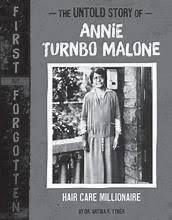
Annie Turnbo Malone was born just four years after slavery was abolished. During the Reconstruction era, she became one of the first Black female millionaires.
At a time when both race and gender posed formidable barriers, she built a thriving haircare enterprise and college, Poro, rooted in innovation and excellence. Malone provides the inspiration to continue building successful businesses that serve the community and create a foundation for generational wealth.
These leaders remind us that the work of justice is unfinished and that we are not starting from scratch.
Malone used her success to create opportunities for tens of thousands of Black women, helping establish careers and economic independence. One such example is Madam C.J. Walker, who famously went from being a laundress to working as a Poro agent to creating her own products and becoming a millionaire. Today, Black businesses represent a mere 3% of all U.S. businesses, and most Black-
owned businesses (58%) earn less than $100,000.
Bridget “Biddy” Mason’s story offers another powerful example of courage and
determination. Born into slavery, Mason was determined to be free. A year before the Supreme Court decision in the Dred Scott case, Mason won her freedom in a California court and went on to become the wealthiest Black woman in Los Angeles.
Once free, Mason worked as a midwife, supporting the health and well-being of Black women and children, a persistent challenge today, as Black women are three to four times more likely than white women to die from pregnancy-related complications. The maternal mortality rate for Black pregnant women is the highest in the nation, at 69.9 deaths per 100,000 live births.
Mason invested her earnings into real estate and became a millionaire. Known as the “Grandmother of Los Angeles,” she used her resources to build institutions, support those experiencing poverty, and strengthen Black community life. Her life stands as a testament to resilience, determination, and triumph against impossible odds.
She stated: “If you hold your hand closed … nothing good can come in. The open hand is blessed, for it gives in abundance, even as it receives.”
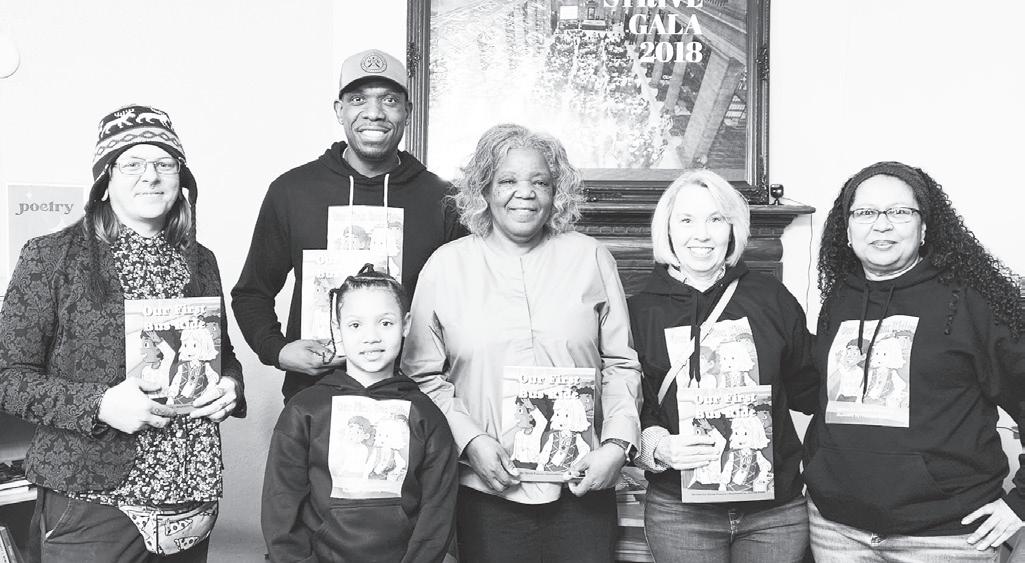
connects to our community values and roots.”
With experience in education, Francis says the book also reflects a larger mission of encouraging families to read together. “Spend at least 30 minutes reading with your kids. It builds their confidence, helping our students, especially our Black students, become better readers,” he said.
Francis also emphasized the importance of culturally relevant books that reflect children’s identities and experiences. “When kids see themselves in books, they get excited to read.”
Community members will have the opportunity to learn more about this history during a Black History Month event at the St. Paul Public Library.
A. Philip Randolph reminds us that resilience must also be paired with vision. He was a labor leader and strategist for the first Black labor union,
the International Brotherhood of Sleeping Car Porters and Maids. Randolph believed that democracy demanded both economic and political freedom.
His leadership helped shape the historic call for “jobs and freedom” at the March on
Washington, a demand that remains deeply relevant today as the Black community continues to fight for equity and opportunity by challenging wage gaps and occupational segregation. Black women are paid 36% less than white men and 12% less than white women.
He reminds us: “Freedom is never granted: It is won. Justice is never given: It is exacted.” This is a call to leadership.
Together, these leaders remind us that the work of justice is unfinished. Yet they also affirm that we are not starting from scratch. We walk a path
“Our First Bus Ride” is also available through Strive Publishing Co., a Black-owned Minneapolis bookstore dedicated to supporting independent publishers and local authors. Francis also leads community reading sessions and educational programming through his organization Reset Relearn, which equips participants with culturally responsive and multicultural resources, explores diverse identities, and encourages reflection on biases and systemic barriers.
Lizzy Nyoike is a Hubbard School of Journalism & Mass Communication student
On Feb. 19, the Arlington Hills Library will host a Black History Month Doc-N-Dine, featuring a screening of the documentary “Separate Not Equal: Minnesota Integration Story.” Books will also be available for purchase, along with the opportunity to meet Molly and Monica, the two students whose experiences inspired the book.
forged by ancestors who believed deeply in infinite possibilities, even when the odds were stacked against them and their fate was unknown.
As we mark the centennial of Black History Month, the invitation is clear. We must ask ourselves what is in our hands to make a difference. How will we remain rooted in culture, wisdom and commitment while shaping a future that is more just, inclusive and free?
History shows us the way; the question now is how we will carry it forward.
Dr. Artika Tyner is committed to creating a world of inclusive leaders who will meet the pressing needs of today and work towards a better future where racial justice and economic justice reign supreme. As a motivational speaker, author and educator, Dr. Tyner helps people of all ages connect with their gifts and develop tangible tools for bringing forth sustainable, durable change in the family, workplace, community or school. By building and leveraging the tools in The Inclusive Leader she has inspired thousands of people to lead with their own gifts and plant a seed of social change.

DevSecOps Engineer: Plymouth, MN

IT Company seeks DevSecOps Engineer to integrate security practices into DevOps workflows, automate security checks, and ensure the safety of cloud infrastructure. Work closely with development and security teams to enhance the security posture of applications and systems. Build and Configure delivery environments by using CD/CI, Agile delivery methodologies. Create and assist in performing various types of tests. Perform troubleshooting. Generate customized reports. Offered Salary: $116,480.00 to $116,500.00/yr.
By Rann Miller
Let’s set the record straight: “Say her name” shouldn’t be used for everyone who is unjustly killed at the hands of the state. To be more specific, it ain’t for white folks. And yes, I meant to say “ain’t.”
The hashtag #SayHerName isn’t simply a one-off catchphrase. It is a social justice visibility movement created by Dr. Kimberlé Crenshaw, a professor at UCLA and Columbia law schools, to highlight law enforcement violence against Black women and girls in an anti-Black society. It showed a spotlight on Sandra Bland, the 28-year-old Black woman who died in Texas after allegedly assaulting a police officer during a traffic stop.
and refusing to investigate her death.
People in Minneapolis and across the country are right to demand accountability and to demand ICE leave their city.
But protesters shouldn’t coopt #SayHerName to do it.
stances of her senseless death. That’s not an accident.
Using #SayHerName to protest Good’s killing is another example of white people co-opting Black language. From social media posts to workplace chatter, non-Black
By Alice T. Crowe
Crews equipped with crowbars dismantled an exhibit at Independence National Historic Park in Philadelphia on Jan. 22. The panels removed honored the lives of nine people enslaved by George Washington.
Under a Federal directive, staff were to take down information that “disparages” American icons and fosters national shame. The takedown of the exhibit looked more like the removal of evidence at a crime scene than a safety measure to prevent an attack on patriotism.
Fortunately, Philadelphia is now suing the federal government. This action goes beyond regular park maintenance; it is part of a larger, organized effort to erase the truth about the Black experience in America.
Erasing Black history from walls won’t erase it from reality. Suppressing truth only amplifies it.
Black history doesn’t need permission to exist. It speaks its unwavering truth no matter who it offends. The coordinated efforts by erasure agents to dismantle monuments, pull books from shelves, rewrite curricula, water down content or spread disinformation about slavery and Jim Crow won’t stop the truth.
Anti-woke watchdogs can ban all discussions in class-
rooms throughout America about redlining and unfair housing, but they can’t make the segregated neighborhoods that redlining maps created disappear. History won’t stay silent. It lives in the hearts and spirits of people. Gatekeepers can remove books by Octavia Butler, Maya Angelou or W.E.B. Dubois’ “Black Reconstruction” from the shelves. Still, they can’t erase the lived experiences of millions of Black Americans whose stories will be passed down.
gated Montgomery bus. Her courage in defying Jim Crow laws helped fuel the modern Civil Rights Movement.
Gatekeepers can’t silence the decades-long voice of Viola Fletcher, who was one of the oldest living survivors of the massacre that took place in the Black section of Tulsa, Okla. in 1921. Fletcher died at age 111 on Nov. 24, 2025.
She lived and remembered the horrific acts of domestic terrorism wielded by an angry mob of white residents that descended on the Greenwood District of Tulsa, Okla., burning and looting homes and businesses in the thriving majority-Black neighborhood known as “Black Wall Street.”
Anti-woke watchdogs may try to sanitize history by calling lessons about enslavement, segregation, or stories that show Black pride “divisive” concepts. But when has America ever truly been united?
Since its creation in 2017, #SayHerName has evolved into a rallying cry for Black women killed by law enforcement or found dead in official custody. But now, white activists in Minnesota, angry at ICE agents who killed Renee Nicole Good, are using #SayHerName in social media posts and shouting it in protests on the snow-covered streets of Minneapolis.
It’s not a good look.
ICE, Not Invisibility, Is the Problem
Let me be clear: It’s outrageous that an ICE agent shot and killed Good, 37, at pointblank range without justification. The Trump administration worsened matters by branding her a terrorist, sending more agents to the city,
Good’s name has been spoken since her death on Jan. 7 inside her SUV while steering away from ICE agents on an icy residential street. The presence of ICE paramilitary troops has also contributed to the murders of Alex Pretti in Minneapolis and Keith Porter, Jr. in Los Angeles. The tonedeaf use of #SayHerName illustrates society’s broader failure to act on behalf of Black humanity, particularly after Black women raised their voices.
Bland’s death was just as outrageous. She was found hanging in a Walker County jail cell three days after a confrontation with an officer during a traffic stop. A coroner ruled her death a suicide, but her family rejected that finding.
Repeated demands for accountability went unanswered.
Without the #SayHerName campaign, few people would know her name or the circum-
people often adopt Black speech to appear “cool,” gain attention, or profit. Historically, policy outcomes benefiting Black people benefit everyone; the Civil Rights Act of 1964 and the Voting Rights Act of 1965 are examples. But Black women’s warnings are frequently dismissed.
Maybe if society had heeded the voices of Black women earlier, laws could have prevented the murder of Renee Nicole Good. Instead, first they came for Black people, and no one spoke out. Then, when they came for the silent, no one was left to speak for them.
#SayHerName was created to center Black women whose lives are undervalued. Let’s honor that intent.
This commentary appeared first in Word in Black. It has been edited for length. For more information, visit www.wordinblack.com.
They can’t erase the memory of those who have told their stories for decades. They can’t dismiss the stories that prove what Whitewashing can’t erase.
Stories like that of Claudette Colvin, at age 15, arrested in 1955, nine months before Rosa Parks, for refusing to give up her seat to a White woman on a segre-

Jim Crow laws made it legal to separate people in this country. Ignoring that history does not change it. In fact, Jim Crow influenced Apartheid in South Africa and policies in Nazi Germany, helping to divide those societies as well.
The irony is that the more books are banned or exhibits are removed, the more these acts underscore the importance of Black history. People are more driven to tell stories and expose the truth.
No amount of woofle dust can make the actual lived experiences of Black people in America disappear. We need the truth. How else will we get to reconciliation and advance reparatory justice?
This commentary appeared first in the Afro American Newspapers. For more information, visit www.afro.com.
By Lawrence Ware
Bad Bunny performed at the Super Bowl’s Halftime Show, and the usual suspects are losing their minds. The MAGA Right was apparently excited to watch a halftime show headlined by a washedup white boy, and the Left is already taking a victory lap. But there is a lazy assumption at play: that Black America will automatically fall in line and celebrate the fact that Mr. Dákiti will perform for all the world to see.
But let’s pump the brakes. Will we? And more importantly: should we? I’ve got thoughts, and some of y’all are gonna be mad.
At his core Bad Bunny (his mama calls him Benito Antonio Martínez Ocasio) is fundamentally a reggaeton artist. A musical artform that was originally known as “Reggae en Español.”
the sound with Hip Hop grit and Afro-Puerto Rican flavor, birthing the global movement that Bad Bunny has perfected.
And this is where White supremacy enters the picture.
As reggaeton exploded into a global phenomenon, the Black pioneers who built the sound were pushed to the margins. Despite the genre’s deep Afro-Latino roots, the industry began prioritizing and promoting artists who identified as white.
What Bad bunny has done to reggaeton is sonically polish the genre’s raw, Afro-diasporic sound and make it more palatable for a global, non-Black audience.
So should Black folks have watched this year’s Super Bowl Halftime show? Sure. Why not? I don’t want to yuck anyone’s yum.

The O.G.’s of this music, people like Edgardo Franco aka El General or Fernando Mosley aka Nando Boom, were Black West Indians in Panama who took Jamaican dancehall and gave a Spanish soul. By the 90s, that energy hit Puerto Rico and that island’s heavyweights leveled it up. Legends like Tego Calderón and Ivy Queen laced
While the nuances of racial identity in Latin America are complex (just watch this for a deeper discussion of that point), the trend was clear: the architects were sidelined while the industry chased a different aesthetic. Namely, a white one.
This is why Bad Bunny is crushing it in streaming numbers and winning Grammys. He took a Black musical sound and gentrified it.
Gentrification isn’t just about who moves in. It is about sanitizing a space that was formerly Black to make white people feel welcome.
Clap, tweet, argue online about representation and tell yourself that this is a win for the culture if it helps you sleep at night. Just know that what you really watched is a Black sound, stripped for parts, remodeled for mass consumption, and handed to white folks for resale.
The ancestors don’t get royalties, the pioneers won’t get to take the stage, and Black America is once again asked to cheer from the cheap seats. But I guess progress looks great in HD.
This commentary appeared first in The Root. It was edited for formatting. For more information, visit www.theroot.com.
Continued from page 10
All-American and three-time all-Big Ten player at Penn State (2008-10), “I work hard, play hard. I make sure I have a good work-life balance. My mom helps tremendously as well. She takes care of my daughter full time.”
Vonchell Lewis is a certified yoga instructor and a mental health clinician at Hampton University, an HBCU. She pointed out that coaches oftentimes are surrogate parents for their players, many if not all of whom are on their own for the first time in their lives.
“Coaches are doing everything similar to a parent,” said Lewis. “They’re protecting, they’re leading, they’re educating, they’re fostering growth.” She added that coaches too often put self-care on the backburner:
“Coaches take work home, just like teachers, just like many of us. How can we balance that?
“How do you define selfcare?” Lewis advised asking oneself. “What is something you like to do? What is something you like to engage in?
What brings you joy?
Nonetheless, Wilson accepts both the positives and negatives of being a head coach. “Now being a head coach,” she surmised, “the goal for me is to impact young women and to really change just the form of what it looks like being coached.”
The three Black women all agreed how important it is to support fellow Sistahs these days. “We need to look at mental health from a holistic standpoint,” concluded Hankins-Maldonado. “There’s so many of us that need other people that look like us to support each other.”
Adofo-Mensah fired
Kwesi
Adofo-Mensah was hired four years ago as the first Black general manager in Minnesota Vikings history. He was fired Jan. 30.
“I’ve known Kwesi for 20 years” when the two worked for the two Cleveland pro football and baseball teams respectively, said former Minnesota Twins president Derek Farvey. “He is a talented, talented person. He is an intelligent guy, a standup guy, a stand-up leader. I’m shocked” by his firing.
Charles Hallman welcomes reader comments to challman@ spokesman-recorder.com.
“Self-care should not make you feel bad,” she stressed. “It should not be stressful. It should bring you joy. It should be simple and it should be very relaxing.”
Continued from page 10
international demographics and other backgrounds.
I thought this would be a great fit for me. I didn’t want to play juniors, so the opportunity to come straight into college, get my degree, get my education, and play hockey at a high level is the main overall reason why I chose St. Olaf.”
McElroy’s hometown is Laurel, Md.; he graduated from South Kent School. But while a youngster in Buffalo, N.Y. he discovered his love for hockey. McElroy’s parents are both in the military and they moved a lot.
“I was eight years old. I played every other sport you could think of before hockey, and I would always see my friends playing. I was like, ‘Wow, I want to do
Continued from page 10
Hamline in January, when Sennowo tied for team scoring honors (eight points).
“The game moves so much faster,” said Sennowo. “The girls are so much more skilled. You just gotta go out there and just play your game. I
that.’ And my dad was like, ‘You have to learn how to skate first because [I have to] buy you all this stuff to get you into the sport.’
“So I took figure skating and basic skating lessons. That led to me playing with my friends in youth leagues and house leagues.”
On being the only one, McElroy said, “Obviously there’s not many Black hockey athletes, but as I grew up, just being someone that represents other kids that look like me playing hockey was an important step in my life, to just keep striving to be the best.”
McElroy said he will graduate this spring with a computer science degree. Cyber security is a possible field he may pursue “because it’s like a growing field that I think is really interesting.”
Charles Hallman welcomes reader responses to challman@ spokesman-recorder.com
have done a good job adjusting to the conference and adjusting to the playing style.”
During our 10-minute phone interview, Sennowo says she’s quiet by nature. “I can be on the quieter side once I’m new to a different environment,” she pointed out. “They have a lot of activities, but I think I’ve gotten better with communication and just being open to new perspectives and new
VIEW Continued from page 10
qualified, and then see teams make exceptions for members of the Good Ol’ Boy Club.”
Terrance Harris of the Black-owned (Houston) Defender in his Jan. 27 article wrote, “In the end, the “Not For Long” league does what it has done for years, and that’s play in our faces.”
Robert “Scoop” Jackson wrote in his Chicago Sun Times (Jan. 31) critique that this isn’t “another recycled (fake) Black issue.”
Let’s do the diversity math. Three Black NFL head coaches and, after the Minnesota Vikings fired the firstever Black general manager Kwesi Adolo-Mensah on Jan. 30 after four seasons, four Black team GMs along with its “32-member, Whitemale-majority exclusive club called ownership in the NFL,” Jackson reiterated. “Here we go again, right?”
“If you want to get the best hire, then you want to consider a broad base of candidates.”
Social media trolls and others call us complainers, but we Blacks in sports media are instead elephant pointers, pointing out the elephant in the room issues such as hiring Black NFL coaches and giving them a true fair shot as their White counterparts too often get.
“The sad thing is that there will be — are — millions who will claim this is an issue unfounded,” wrote Jackson as he referenced a 2025 Associated Press study. Over the course of 25 seasons from 2000 through 2024, 31 of 173 new NFL coaching hires (not just HCs but also assistants) were Black (18%), and eight of the 19 head coaches (42%) fired after their first full season during that span were Black.
And there’s still 11 NFL clubs who’ve never hired a Black head coach.
This columnist has for years strongly questioned the effectiveness of the NFL’s Rooney Rule since being implemented in 2003, which requires teams to in-
people.”
Sennowo pointed out that her offensive game is far from finished. “I think my finishing is good, but also in games when I have a great pressure on me, I can tend to turn over the ball or just hesitate. That’s where I need to work on.”
Charles Hallman welcomes reader responses to challman@ spokesman-recorder.com.

terview at least one Black or minority candidate for head coaching positions. It doesn’t specifically require teams to hire someone not white. It’s more ruse than rule.
American University Sports Law Professor N. Jeremi Duru, a nationally renowned sports diversity hiring expert, told MSR, “I think what it is is that you got some clubs who treat the rule the way you’ve described it, which is a very check-the-box exercise. And you got other clubs that are very serious about the rule and have implemented it consistently.
“Those clubs that just use a check-box approach philosophy, they’re really hurting themselves,” said the professor. “If you want to get the best hire, then you want to consider a broad base of candidates.
“So, it really comes down to the club doing the work and doing it properly — one, to satisfy the league rule, but two, because it serves their own advantage.”
Duru said that being a proud elephant pointer as I am when it comes to diversity issues in the NFL and elsewhere is always needed.
“I think the key is to keep saying something,” he concluded.
“If there’s an issue, this lack of equal opportunity, there’s unfairness. If you stop talking about it and start to accept it, then you’re not gonna be able to make progress on it.”
This week’s BHM question: Did you know a Black man once saved the Minnesota Twins from disbanding?
Hennepin County Judge Harry Crump in 2002 issued an injunction against Major League Baseball to stop eliminating the Twins from a contraction plan. Crump’s order said that the Twins had to fulfill its lease to play in the Metrodome in 2002. The Twins went on to win three straight division titles after Crump’s ruling.
Later named 2002 Star Tribune Sportsman of the Year, Crump retired after years of service on the bench and moved to Florida with his wife. He died in 2023 at age 85.
Charles Hallman welcomes reader comments to challman@ spokesman-recorder.com.




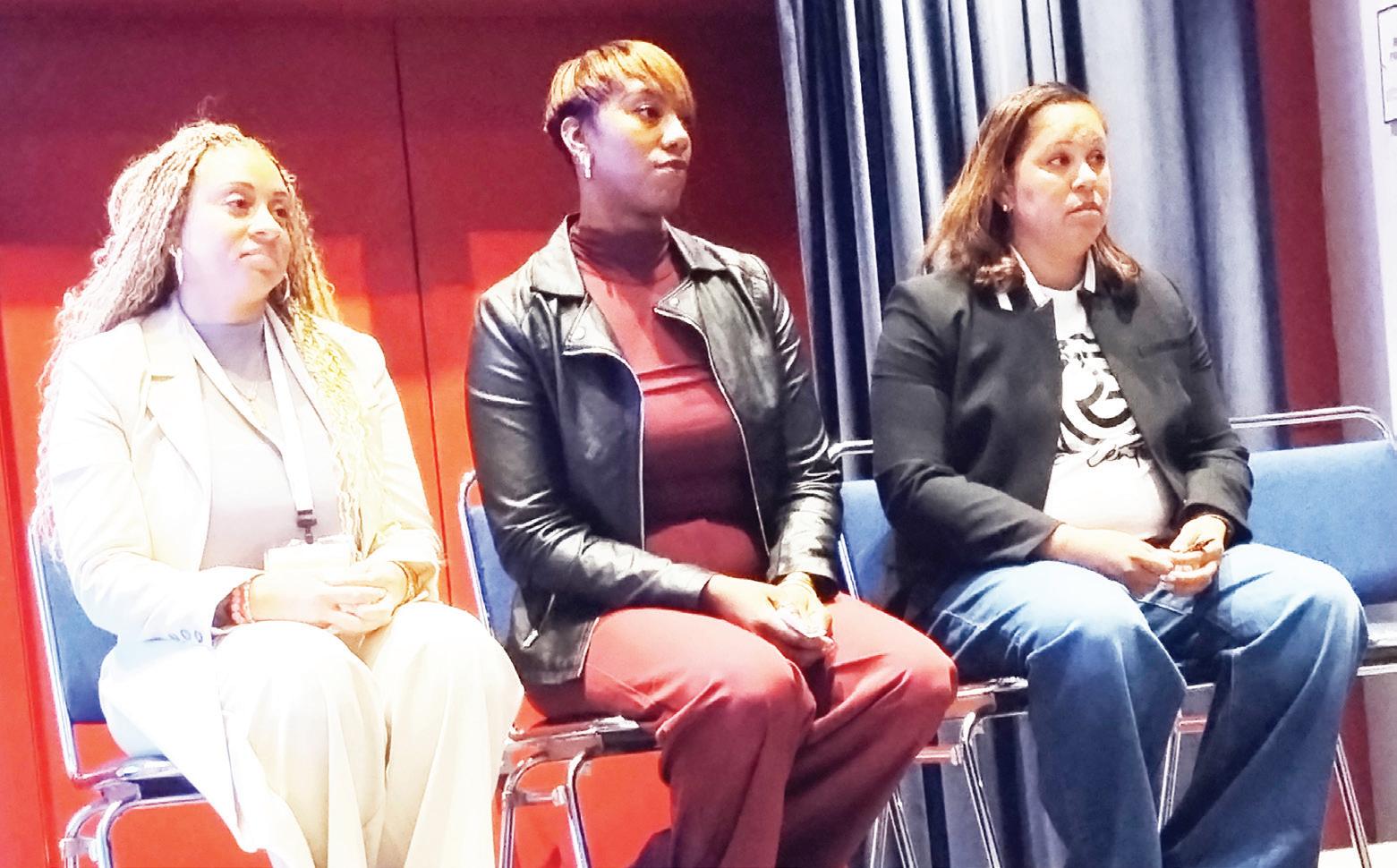
By Charles Hallman Sports columnist
2023 NCAA mental health survey found coaches dealing with high stress and exhaustion among other pressure issues. And among female BIPOC and LGBTQ+ coaches under 40, mental health concerns are elevated.
Three Black females — two former coaches and a current volleyball head coach— discussed the importance of selfcare and finding the balance of work and life demands. The three Sistahs spoke as panelists at last year’s Black Student Athlete Summit in Chicago where MSR was in attendance.
Megan Hankins-Maldo-
nado, a California-licensed psychotherapist, coached basketball from Division I to high school for 15 years and has practiced psychotherapy for over 15 years. Today’s NIL and the transfer portal are additional pressures on college coaches, she said.
“What we’re not talking about is coaches and mental
health, right?” Hankins-Maldonado pointed out. “Sixtyone percent of Division I coaches experience a negative impact on their mental health related to work issues. We’re not talking about that.
“I think what I’ve experienced too with other coaches is that they have a really hard time talking to their administrators about how they feel because they’re worried about what their job is if my AD don’t feel good [about] my mental health.”

Arielle Wilson will begin her second season this fall as head women’s volleyball coach at Central Michigan. She was hired in 2025 after two seasons as defensive and recruiting coordinator at Missouri (2023-24) and has nearly a decade of coaching experience, including assistant stops at Georgia Tech (2019-22), DePaul (2016-17), and as a volunteer assistant coach at Michigan State (2018).
“When I was playing,” recalled Wilson, a three-time
ith few exceptions, we Blacks annually decry the NFL’s continuing diversity problem. It is like Billy Preston’s 1974 classic: “Nothing From Nothing”
leaves nothing.
Ten head coaching openings — zero Blacks hired. Very few outraged.
Hall of Fame journalist Rob Parker tweeted: “In the NFL — including all the say-a lotbut-rarely-say-nothing Black NFL analysts on TV — simply ignore this issue, turn a blind eye.”
Mike Jones on the league’s 32 team owners: “Black assistants compile strong resumes but then are told they’re not

IAC hockey doesn’t get the local media shine other college hockey leagues do. But it should, says St. Olaf senior forward Kelijah McElroy.
they’re smart.” McElroy added with pride that the MIAC
“blew my expectations out of the water.”
“Yeah, I think the MIAC is a league that any given team can win on any given night,” he stressed. “I think you have to show up every night. It’s a great league — teams are big, they’re fast, they’re strong,
McElroy is the only Black player on the Oles hockey team.
“Our hockey director was the father of the assistant
coach at St. Olaf, so I was put in contact with the assistant coach here at St. Olaf,” he recalled. “I came to visit while playing a tournament at Shattuck [St. Mary’s, a private prep school in Faribault], and I didn’t have any other offers.
“I saw the school … very diverse school with a lot of


ith Black History Month upon us and the Super Bowl played last week, here are some Black firsts that relate to the contest between the best in the NFL.
In 1988 Doug Williams led the Washington Redskins to a 42-10 Super Bowl XXII victory over the Denver Broncos, becoming the first Black quarterback to not only lead a team to such a win, but also to be the first to be named MVP.
mmamuella Sennowo, a 5’11” first-year forward from Woodbury, says she likes St. Olaf’s 350-acre campus in Northfield, Minn., 35 miles south of the Twin Cities.
“It is quiet,” says Sennowo, an East Ridge High School graduate. “The city area is a bit quieter, but on campus I would say it’s fine.”
have done a good job adjusting to the conference and the playing style.”
She is the only Black female on the Oles WBB team.
“I was being recruited by a couple of the schools in the MIAC conference,” she recalled. “But the reason I chose St. Olaf was mainly for its academics. That’s what really stood out to me.
“I just like the environment,

the campus was so beautiful, rich in culture. I really enjoyed it [during her visits], so it was really big and pretty clear I wanted to go here.”
Sennowo, who is an economics major, besides adjusting to classroom and campus life, also needed a new role on the basketball court.
“I came from high school where I was more of a defensive player. This year I’ve
had to adapt to switching my focus and becoming an offensive player, which was different. That was a bit of a change, but it’s great because my coaches believe in me, and as a freshman, being able to play was a great opportunity,” she explained.
The Oles freshman has thus far started three games back in December and in a loss at
In 2001 Ozzie Newsome became the first Black general manager to lead his team to a world championship after the Baltimore Ravens outscored the Denver Broncos 34-17 in Super Bowl XXXII.
In 2007 Tony Dungy’s Indianapolis Colts defeated Lovie Smith’s Chicago Bears in Super Bowl XLI 29-17, the first to be led by two Black head coaches. In 2023 the first Black quarterbacks to play on opposing teams clashed in Super
Hurts’
Ea
gles 38-35. Dr. Mitchell Palmer McDonald welcomes reader comments to mcdeezy05@gmail.com.