

By Izzy Canizares Contributing Writer
ndependent
journalist
Georgia Fort was arrested the morning of Jan. 30 by the FBI, along with three others, in connection with her reporting on the Cities Church protest earlier this month. All three were released later that same day. Fort’s arrest has drawn widespread outrage from both the community and fellow journalists.
“She’s amazing, honestly. She’s very smart and caring. Just overall a good person,” said Emilio, a friend of Fort’s daughter. Anaya, another friend of her daughter, called Fort “a regular mom.”
“She doesn’t do anything but work for her family and keep them fed, and I think she’s done such an amazing job,” Anaya said. “I feel like she doesn’t deserve this at all. It’s sad for her family. My heart breaks for them. It’s a little scary because she has the right to do everything she got arrested for.”
Fort was taken into custody at her home, an arrest she streamed live on Facebook. She is a celebrated, awardwinning Minnesota journalist, founder of BLCK Press, and co-founder of the Center for Broadcast Journalism and its
training radio station, Power 104.7 FM.
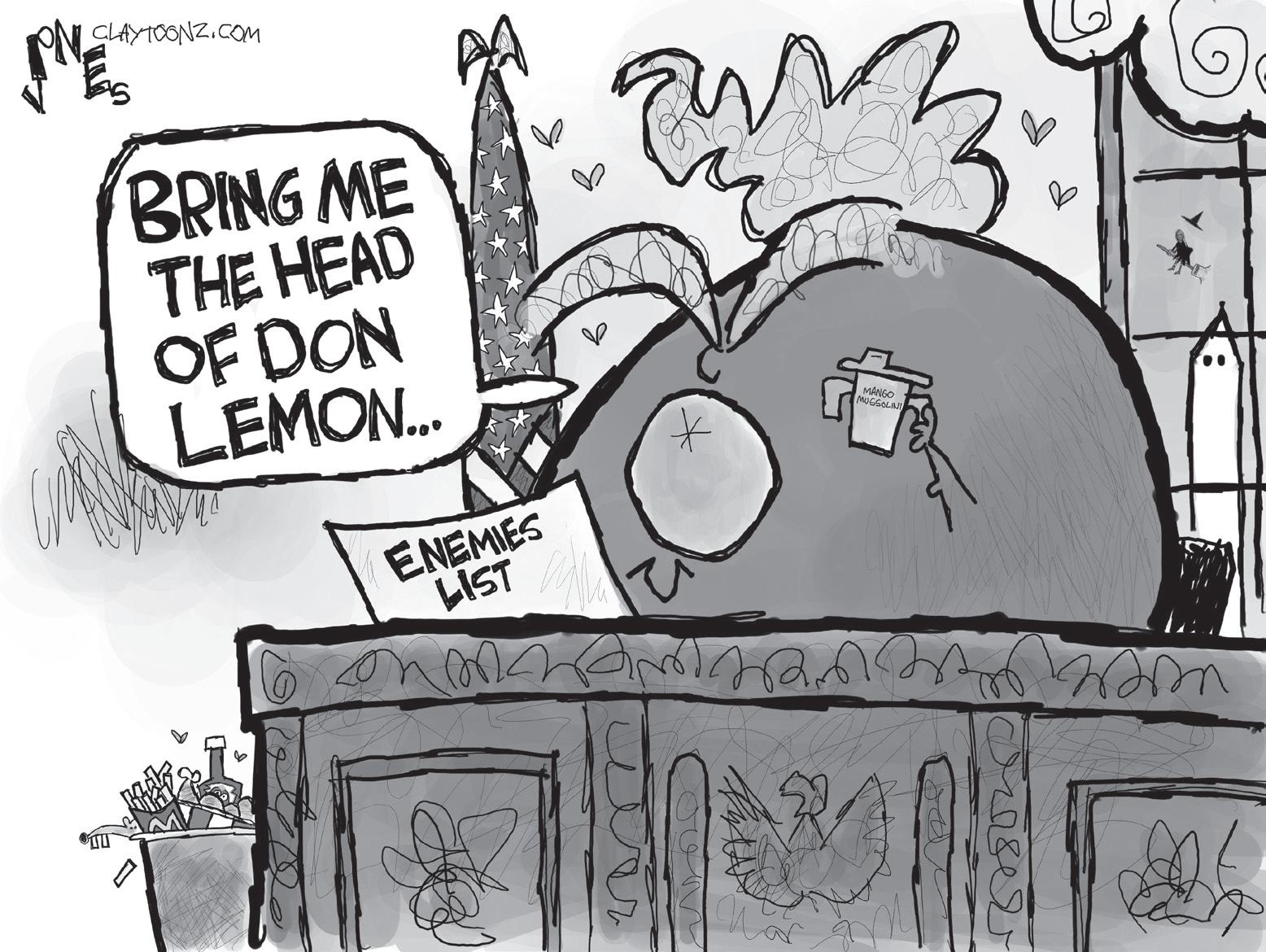
According to Fort, the officers obtained a warrant after the Department of Justice allegedly presented the matter to a grand jury. She was one of four people arrested by the DOJ Friday morning, including former CNN anchor Don
Church after discovering that the pastor, David Easterwood, also served as Field Director for ICE in Minnesota. Fort, present at the church, reported on the protest.
The arrests follow similar actions last week, when Nekima Levy Armstrong, Chauntyll Allen, and William Kelly were
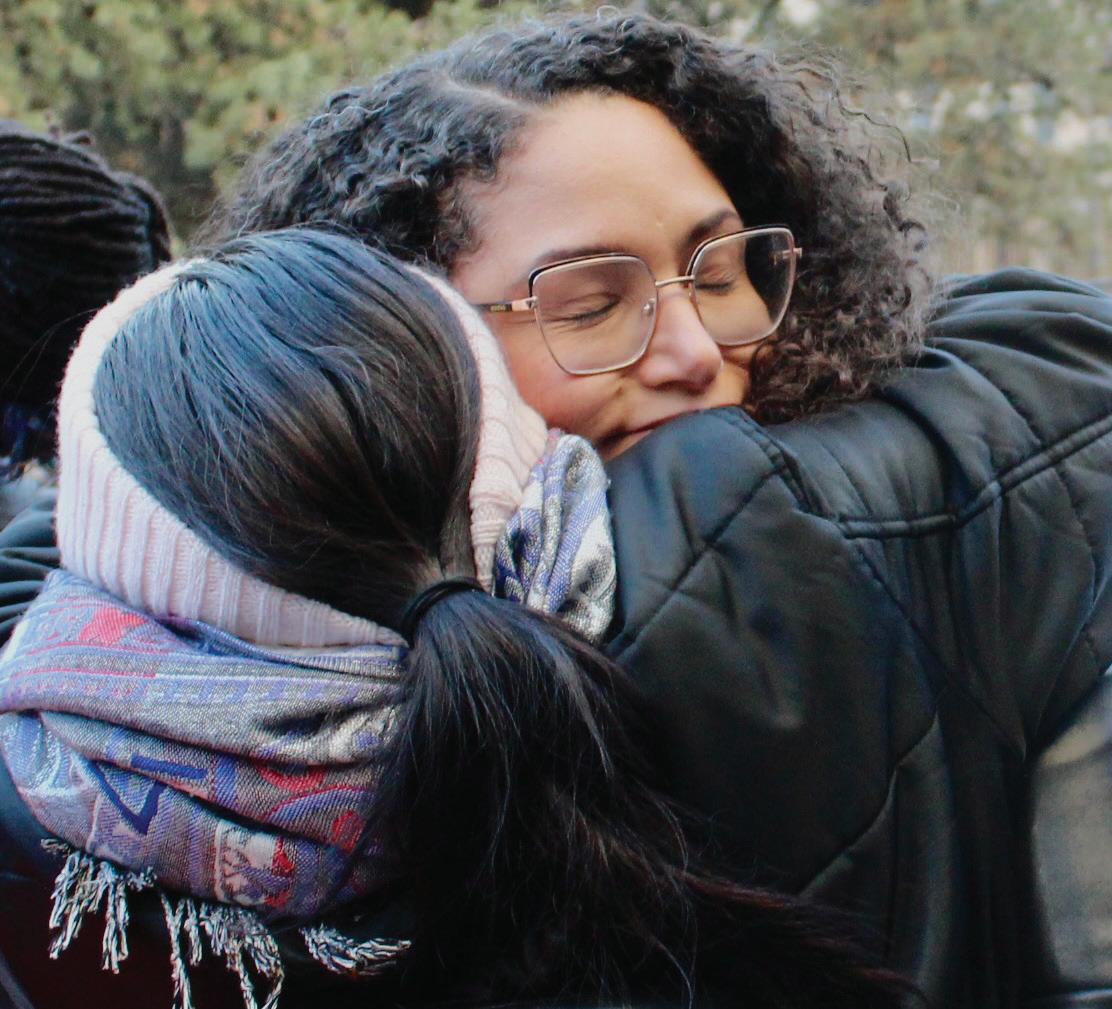
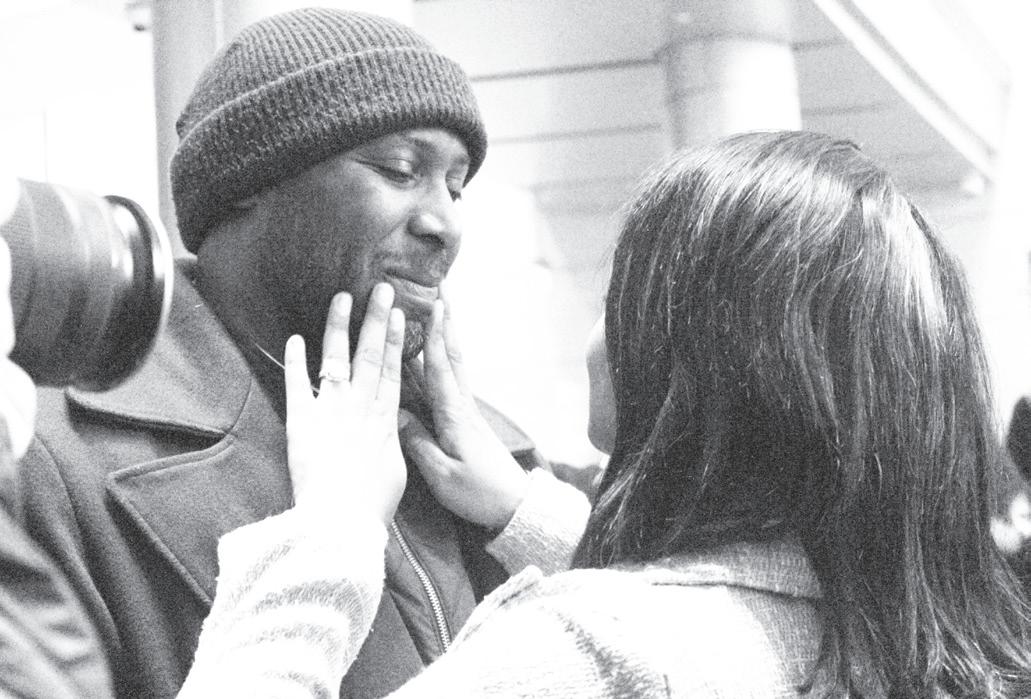
Independent journalist Georgia Fort embraces a supporter outside the Minneapolis federal courthouse after her release on Jan. 30. Photo courtesy of Izzy Canizares/MSR
Lemon and activists Trahern Crews and Jamael Lundy, according to U.S. Attorney General Pam Bondi. The arrests relate to an incident on January 18, when civil rights activists interrupted a church service at Cities
detained and later released for their alleged involvement in the demonstration.
“Fort was present at the demonstration solely in a journalistic capacity, documenting an event of significant ■ See ARREST on page 5
By Izzy Canizares Contributing Writer
North Minneapolis town hall erupted into chaos the eve-
ning of Jan. 27 after a man used a syringe to spray an orange substance at U.S. Representative Ilhan Omar, prompting his arrest by Minneapolis police.
Omar was hosting Minnesota’s Fifth Congressional District’s first monthly town hall of the year, joined by local and state officials who were providing updates on public safety, immigration enforcement, and legislative priorities.
The event came to an abrupt halt when a man seated in
the front row rushed toward Omar and sprayed her with liquid from a syringe before being subdued by security and law enforcement.
Witnesses said the man moved quickly toward the congresswoman, extending his arm and spraying the substance before being tackled to the ground by Omar’s security detail and later restrained by Minneapolis police officers. He was escorted out of the venue as officers secured the room. The attack occurred moments after Omar criticized Immigration and Customs Enforcement (ICE) and called for the resignation of Department of Homeland Security Secre-
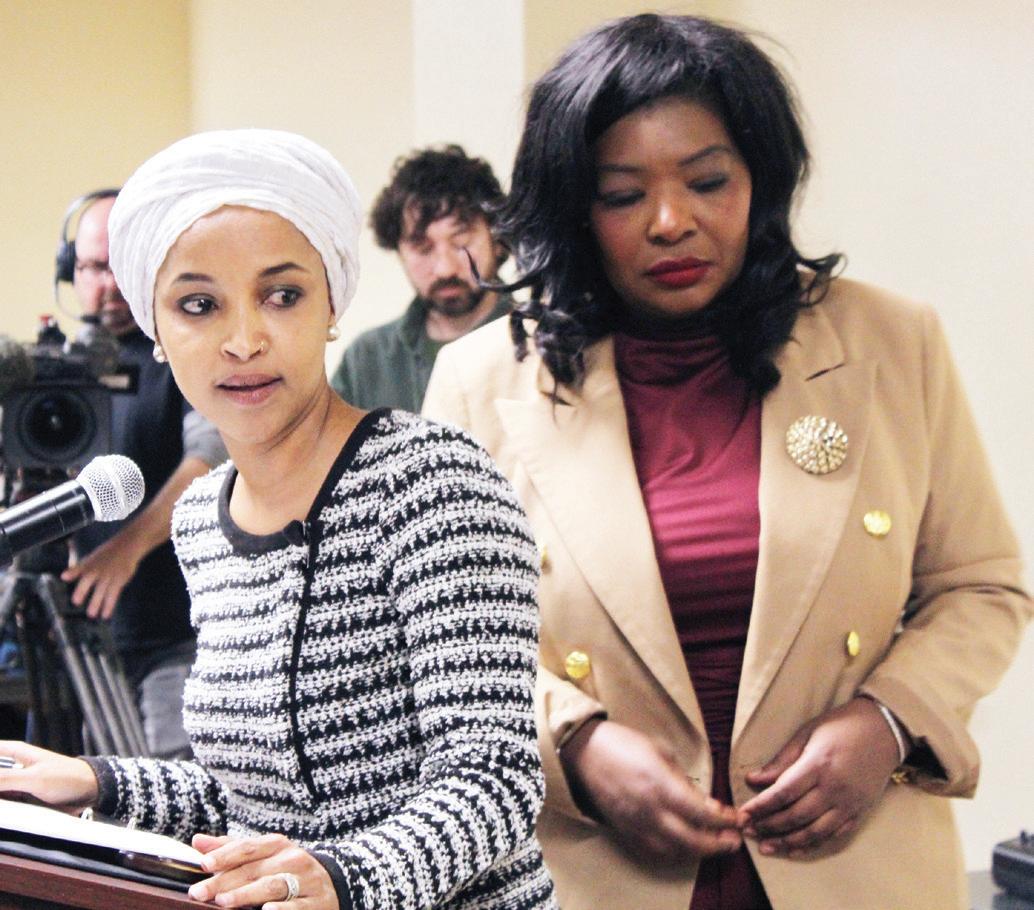
tary Kristi Noem. “ICE cannot be reformed. It cannot be rehabilitated. We must abolish ICE for good, and DHS Secretary Kristi Noem must resign, or this is our future,” Omar said shortly before the assault.
Local and state officials attending the town hall had been discussing proposed legislative efforts related to civil rights protections and immigration enforcement in Minnesota. Several officials referenced increased scrutiny of federal immigration operations following recent controversies involving Border Patrol and ICE activity in the state.
“We’re looking at ways to strengthen our civil rights laws in Minnesota because we know the federal government continues to erode civil rights at all levels,” Minnesota State Representative Esther Agbaje said earlier in the event. “We want to ensure that in Minnesota, at least, your civil rights will be protected here.”
Despite being visibly shaken, Omar chose to continue the town hall after a brief pause, responding to audience questions and addressing the incident directly.
“These a**holes are not going to get away with that,” Omar said shortly after the attack when aides encouraged her to stop the event. She later addressed the crowd again, ■ See OMAR on page 5

By Damenica Ellis Staff Writer
s Operation Metro Surge unfolds alongside ongoing racial injustice and rollbacks of diversity, equity and inclusion efforts, Minnesotans continue to organize through protests, boycotts and mutual aid. Residents across the state are resisting injustice through direct action, policy advocacy, healing work, and education.
Some of today’s local freedom fighters include civil rights attorney and Racial Justice Network founder Ne-
kima Levy Armstrong; Trahern Crews and Monique CullarsDoty, co-founders of Black Lives Matter Minnesota; Jaylani Hussein of CAIR-MN; Leslie E. Redmond of Win Back; and social justice activist Lavish Mack.
Many of these community leaders, while passionate about addressing various forms of injustice, have also been active in efforts to remove federal agents from Minnesota, related to the ongoing escalation of Immigrant and Customs Enforcement (ICE) oversight in Minnesota.
“I believe in my heart that no matter what job title you
hold, at the end of the day we should be standing as human beings … not as a title, not as a race, not as an ethnicity,” said Toshira Garraway Allen, founder of Families Supporting Families Against Police Violence. “It’s time for all of us to stand on the right side of history. It’s time for all of us to start treating each other as human beings.”
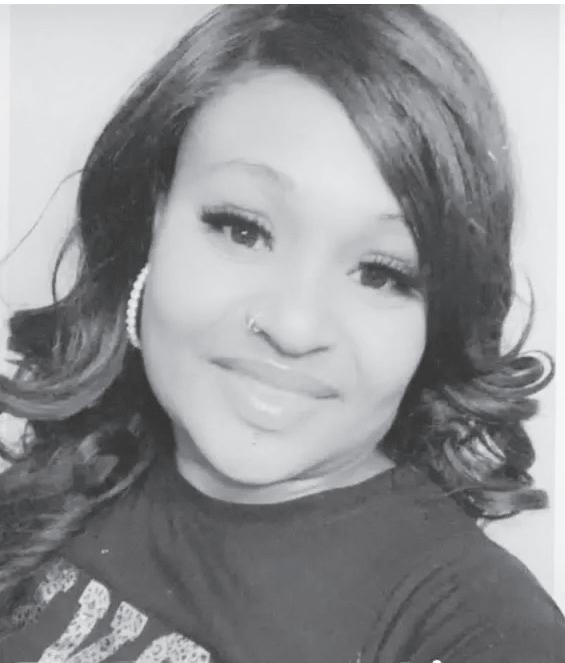
Allen said her advocacy began with a desire to provide others with what she did not have during her own experience with injustice: support and a voice. In 2009, Allen said her fiancé, Justin Teigen,
See FREEDOM on page 5
Before Obama and Harris: Black pioneers who ran
By Alex Nellis
ong before Barack Obama and Kamala Harris, Black Americans were running for president, often overlooked yet blazing trails for future generations. These early campaigns challenged racism, sexism, and systemic barriers long before the 21st century, proving that Black voices could participate in the nation’s highest political arenas, even against steep odds.
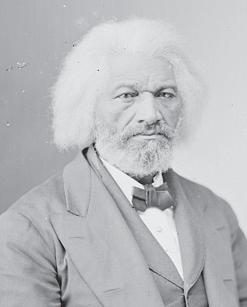
Fredrick Douglass, one of the 19th century’s most prominent abolitionists, became the first African American ever nominated for president in 1888. Douglass never actively campaigned or sought the office, but an influential state representative cast a vote in his favor, marking a historic first. Though he received only a single vote, the nomination
was symbolic, demonstrating that Black Americans could not be ignored in the political conversation. Douglass’ legacy as a writer, orator and activist underscores the longstanding fight for political inclusion that would continue well into the next century.
As he said in a speech to the Massachusetts Anti-Slavery Society in 1857, “Power concedes nothing without a demand. It never did and it never will,” reminding us that even symbolic acts of recognition are part of a broader struggle for equality.
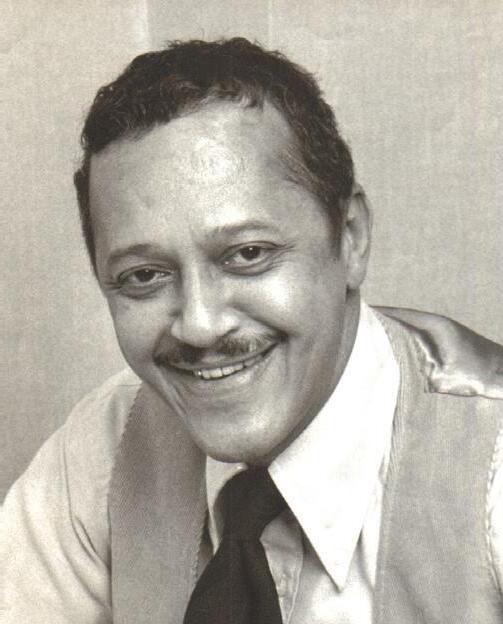
It wasn’t until 1968 that an African American candidate again made national headlines. Channing E. Phillips, a minister,
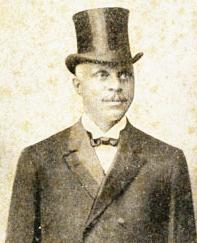
The 20th century brought new challenges and opportunities. In 1904, George Edwin Taylor became the first African American to run a presidential campaign with serious organization behind it. Nominated by the National Negro Liberty Party (NNLP), Taylor faced immense systemic barriers. Despite the constitutional right to vote, Jim Crow laws and voter suppression effectively silenced Black voices in many states. A former member of both the Republican and Democratic parties, Taylor had grown disillusioned with how both major parties ignored Black voters. His campaign emphasized pro-Black policies, economic equity, and civil rights, messages that resonated with marginalized communities. Yet with his name barred from most ballots, Taylor’s campaign ended by default, demonstrating how systemic racism limited political opportunity long before the civil rights era.
By Clint Combs Contributing Writer
Federal officials broke an agreement that would have allowed activist Nekima Levy Armstrong to surrender peacefully at a Minneapolis courthouse, instead orchestrating an arrest at a hotel, activists said Thursday, as investigations into two recent ICE-related killings remain without a designated lead agency.
Civil rights activist Nekima
social media. On Jan. 30, two Black journalists covering protests, Don Lemon and Georgia Fort, were arrested while reporting on activists who were demanding the resignation of St. Paul ICE Field Office Director David Eastergood from his role as pastor of Cities Church.
Armstrong criticized the Minneapolis press corps, accusing outlets of repeating Trump administration talking points.
“I’m reminding the press to stop legitimizing a lying, fascist, authoritarian federal government and downplaying the truth,”
Armstrong said.
St. Paul School Board Member Chauntyll Allen said she was detained, strip-searched,
All
After Armstrong’s arrest, the White House posted an AI-distorted image of her on
County Government Center.
and held despite repeatedly telling agents she was not the subject of their warrant. “I want to say that I consistently asked for a warrant,” Allen said during a Thursday news conference in downtown Minneapolis.
“When I finally got to the federal building, a guy came with his phone, scrolled really fast, and pulled up Nekima’s warrant. He said, ‘Here, here it is.’ And I said, ‘I’m not Nekima.’”
Allen said agents then scrambled to produce additional documentation. “They said, ‘We definitely have a warrant for you,’” Allen said. “Then they kept scrambling around and brought a piece of paper that had my name on it.”
“Thishasnothingto do with justice or public safety.”
In a separate incident, activist William Kelly said Homeland Security Investigations agents raided his neighbor’s home with assault weapons despite Kelly having provided his correct address in court the previous day.
“I woke up to a phone call at about 6:15 a.m. while hearing whistles outside the residence where I was staying,” Kelly said.
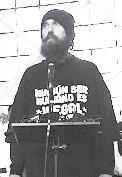
Activist William Kelly speaks at a press conference Thursday, Jan. 29, at the Hennepin County Government Center. His shirt reads, “Ningún ser humano es ilegal” (No human being is illegal).
“I looked out the window and saw HSI agents at the back door of my neighbor’s house. When I answered the phone, I heard them say, ‘He’s in there. We got him,’ and they barged into my neighbor’s home with weapons drawn.”
“I’m a peaceful protester,” Kelly said. “Yet they barged into my neighbor’s house with assault weapons, just as they came to me.”
Armstrong had arranged to turn herself in peacefully, a standard procedure her civil rights attorney, Jordan Kush-
ner, said U.S. Attorney Dan Rosen initially approved before federal officials reversed course.
“I proposed that we take her to the federal courthouse in Minneapolis, five or six blocks away, where she could surrender at the U.S. Marshals Service,” Kushner said. “[Rosen] agreed and said it was reasonable. He told me he would call back with the logistics.”
Instead, Kushner said, Rosen later informed him that Armstrong would be arrested at a hotel.
“Normally, if there’s a federal warrant, you go to the courthouse and turn yourself in,” Kushner said. “This had nothing to do with justice or public safety.”
Federal agents confiscated cell phones from both Armstrong and Allen, with FBI agents aggressively seeking access, Armstrong said.
“My cell phone was confiscated along with Chauntyll Allen’s, and we do not know why they have not been returned,” Armstrong said. “The FBI agents were desperate to get into our phones, which is an abomination and an infringement on our privacy and security.”
Kushner said Homeland Security agents also pursued
one of the attorneys present, threatening her with arrest because they believed she had taken a phone. “They followed her vehicle and stopped her, threatening to arrest her because they thought she had the cell phone,” Kushner said. Activists contrasted the aggressive federal response with the lack of accountability in the killings of Renee Good and Alex Pretti during ICE operations.
“There is no law enforcement agency attached to the current investigation regarding Rennee Good,” Armstrong said. “What more do they need? They have witnesses. They have video. They have put many young Black men in prison with far less evidence.” She contrasted the treatment of protesters with that of those implicated in the killings. “We get jailed and shackled, and Jonathan Ross gets federal protection in front of his home,” Armstrong said.
“We get jailed and shackled, and the two officers who killed Alex Pretti are whisked out of Minnesota, their identities hidden because they are allowed to wear masks.”
Clint Combs welcomes reader responses at combs0284@ gmail.com.
By Jasmine McBride Editor
James Cook didn’t set out to be a civil rights attorney. Fresh out of law school, he imagined a career in securities litigation, even applying to the New York Stock Exchange. But a call from his soon-to-be mentor, legendary civil rights lawyer John Burris, changed everything.
Burris was in the middle of high-profile police misconduct cases in Oakland, including the Rodney King aftermath, and Cook saw an opportunity to litigate in a way that directly impacted communities. “I was gonna go into securities,” Cook recalls. “And then I ended up here, and the rest is history.”
Cook grew up in South Minneapolis, near the Minneapolis Spokesman and St. Paul Recorder office, at the time when the founder Cecil E. Newman’s wife Launa had taken over as publisher and gave him his first job. He says the influence in the community left an impression on him.
“Blackness is in everything I do,” he says. “Even the way I approach these cases … it’s all Black.” That perspective informs his work at Burris Law, where civil rights cases have ranged from police brutality and wrongful incarceration to historic class-action lawsuits.
One case Cook highlights involved officers sending racially charged texts boasting about beating Black men. The lawsuit, filed in the Bay Area, ended with departmental reforms and jail time for officers — a victory that reminded Cook of why he entered the field.
“Anytime I get to wake up and do a deposition, or make a law enforcement officer squirm, that’s success for me,” he says.
Burris Law has always been nimble, pivoting to meet the needs of the community. That adaptability is evident today as the firm addresses new threats: ICE raids and immigration enforcement in Min-
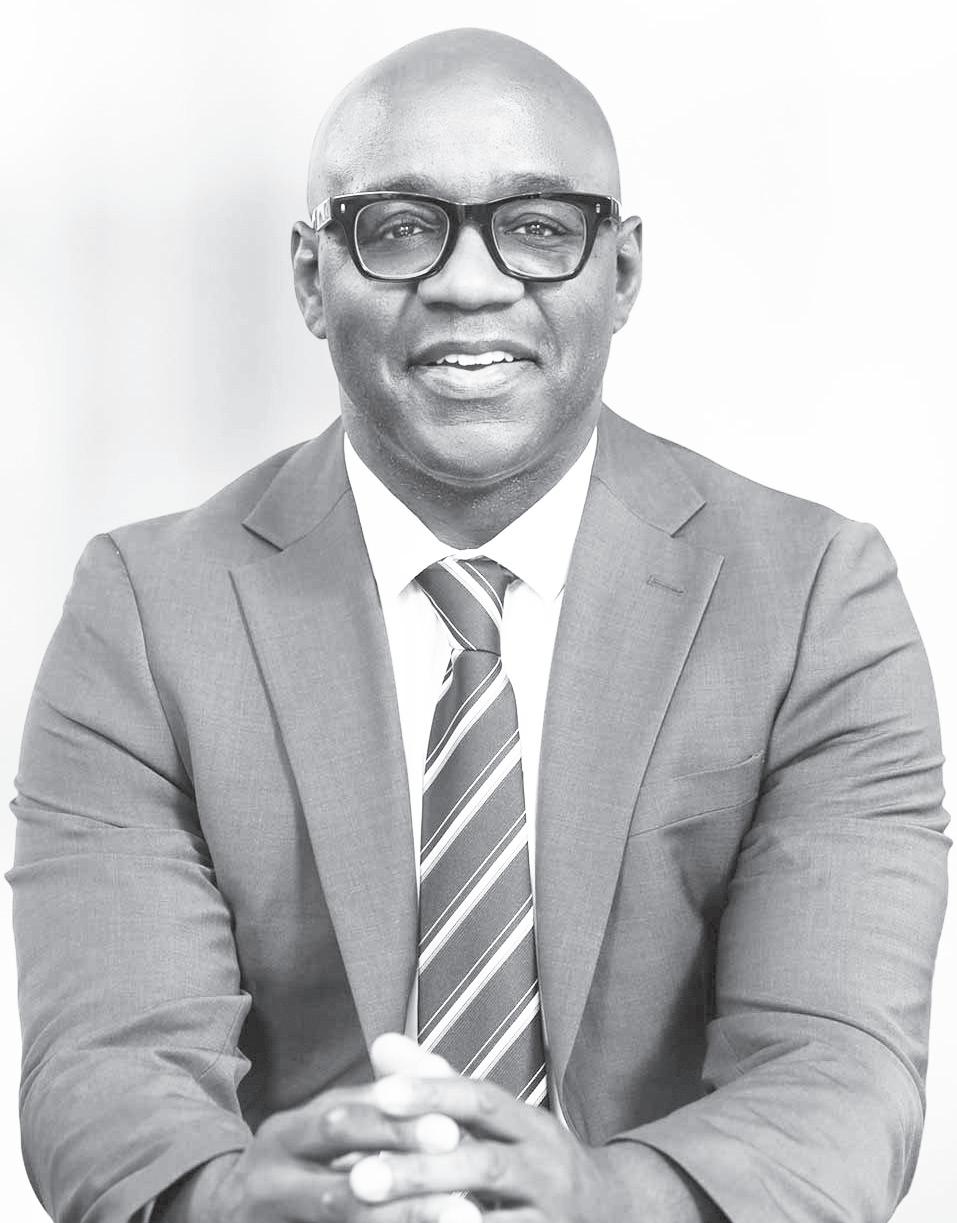
neapolis. Cook, though not an immigration attorney by training, has become a key player in a legal and humanitarian network supporting those targeted by federal agents.
“Blackness is in everything I do. Even the way I approach these cases, it’s all Black.”
He describes a surge of calls after the shooting of Renee Good, when ICE began detaining people in under 12 hours. Cook began visiting detention sites, gathering information, and connecting families with resources. He also partnered with the American Indian Movement and other organizations to protect protesters, provide legal counsel, and ensure basic needs like food and clothing
for those in hiding. “This is the heartbeat of the resistance,” he says of the ongoing community response to ICE.
For Cook, the work is a collective effort. “We’re just one aspect,” he explains, “but we make sure the right resources are in place for the people who are being targeted.” Lawyers, nurses, engineers and volunteers converge in an ecosystem of support that extends beyond legal aid to tangible community care.
Even as the firm tackles urgent crises, Cook stresses the importance of civic engagement for long-term justice. Voting, jury duty, and local elections are crucial tools in shaping the outcomes of civil rights litigation.
“If people like us don’t show up, we can’t win these cases,” he notes. “Voting matters. Jury duty matters. Local elections matter. That’s how you get fair consideration in court.”
The legacy of Burris Law
informs this work. From representing Rodney King in Los Angeles to defending Tupac Shakur and advising on the George Floyd case, the firm has always combined legal acumen with deep community insight.
Cook sees himself continuing that historical mission: “We’ve been paving the path,” he says. “Now we’re just making sure the next generation is ready for the fight.”
Cook’s commitment extends to every corner of his work, from civil rights litigation to the ICE cases that have dominated recent months. Hundreds of calls come in for assistance daily, and while he wishes the need didn’t exist, he sees his efforts as a necessary defense of his community.
“I hope that there’d be somebody like me trying to get me out if I were in that position,” he says.
The challenges he faces now echo those from decades of civil rights struggle. ICE operations, like past police abuses, test the resilience of communities and demand a coordinated legal and civic response. Cook emphasizes the importance of solidarity across racial and ethnic lines, reflecting the historical and ongoing principle of Burris Law: Adapt to the moment, prioritize the people, and ensure accountability.
Despite the intensity of the work, Cook measures success in concrete ways: the victories in court, the changes in law enforcement practices, and the ability to protect lives. He also sees it in broader terms, like community empowerment and civic engagement.
“This isn’t just about law,” he says. “It’s about people understanding their rights, showing up, and being part of
the process.”
As the landscape of civil rights continues to evolve, James Cook and Burris Law remain a testament to the enduring power of legal advocacy rooted in community. From fighting police brutality in the ‘80s and ‘90s to confronting ICE in the 2020s, the firm adapts, pivots, and answers the call of the moment. In Cook that legacy is alive, proving that civil rights work is never just historical. It is ongoing, urgent, and deeply connected to the communities it serves.
James Cook opens his legal support to those in need. For more information, contact james.cook@johnburrislaw.com.
Jasmine McBride welcomes reader responses at jmcbride@ spokesman-recorder.com.

By Damenica Ellis Staff Writer
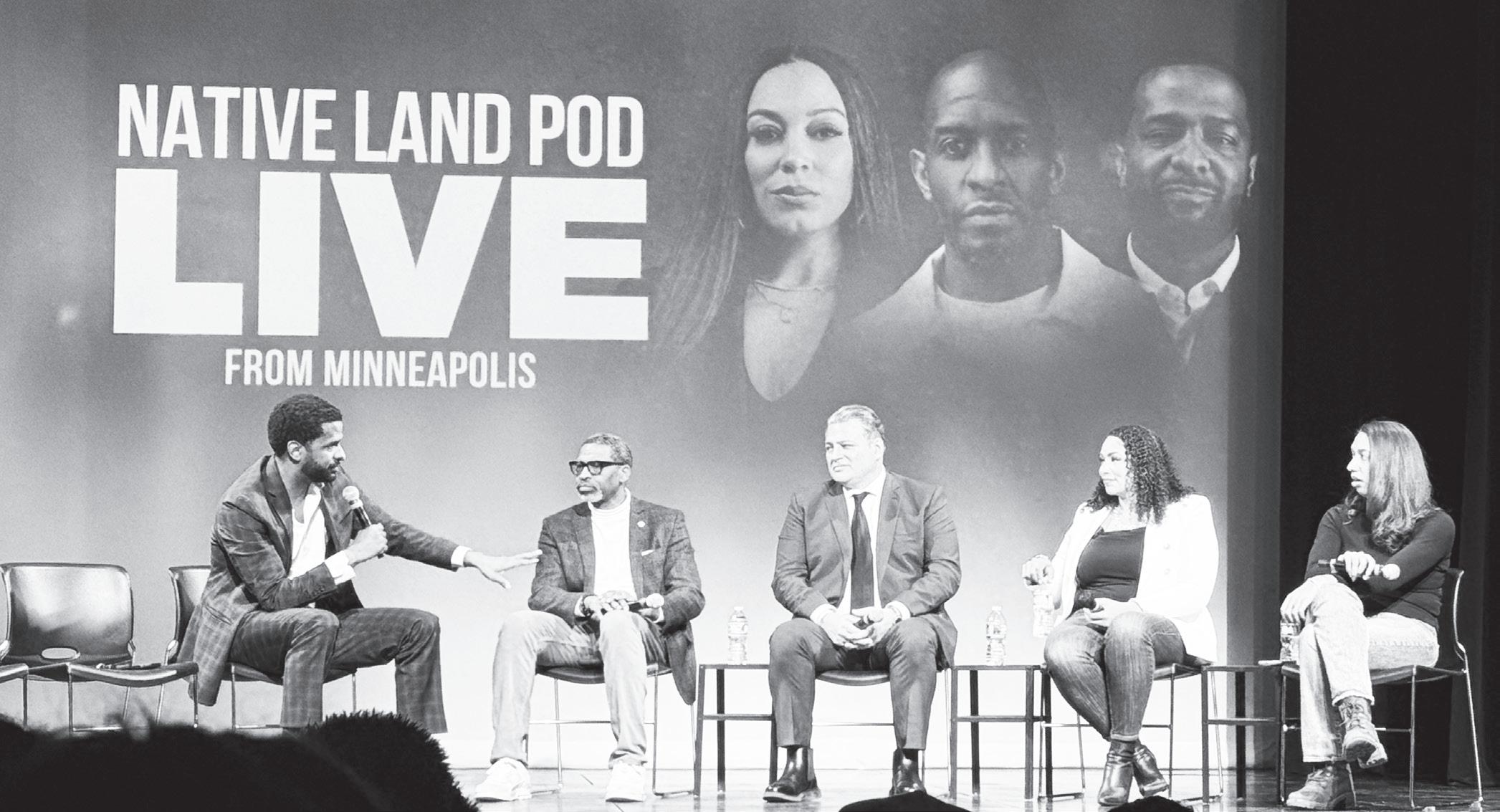
On Jan. 27, community members from around the Twin Cities joined Native Land Pod’s live town hall at The Capri Theater in North Minneapolis. The political podcast, which centers Black communities, held four panels featuring elected officials, journalists, organizers, and community members. The event included remarks from Minnesota Attorney General Keith Ellison as well as audience participation.
Hosted by Angela Rye, Bakari Sellers and Andrew Gillum, the evening featured discussions on organizing, religion, immigration, legal processes and policy. Gillum said the space was provided for residents in need of support, those looking for encouragement, and people who wanted to share their experiences.
Several speakers discussed the reality of Operation Metro Surge in the state. Independent journalist Georgia Fort said she sees both struggle and resistance. “What’s the other side of the truth? A lie. That’s problematic. And then it becomes divisive because everything is ‘us’ and ‘them,’” she said.
“Some stories are nuanced; some stories have seven, eight, nine sides, not just two …What we’re experiencing right now should be a code red for America,” she said.
Juan Proaño, CEO of the League of United Latin American Citizens, said his organization works to return people home after deportation. “Our community is in fear. They are staying home at night, not going out during the day, and their children are missing school. That’s why the community aspect is so important … This is the fight for our generation, and it will define who we are.”
Sellers highlighted a disconnect that occurs between Black and brown communities when people remain silent about each other’s struggles.
“When you’re quiet when they come for them and then you’re quiet when they come for you, when they come for you you’ll look around and nobody’s going to be there to help,” he said. He and Proaño discussed the importance of marching for one another’s fights and taking accountability for past mistakes.
Sen. Zaynab Mohamed shared her experience as a Somali resident who arrived in the state at age 9. She said the Somali community is woven into the state’s fabric, evident from the airport to local nursing homes, and that Minnesotans have shown solidarity for their Somali neighbors.
Wintana Melekin, executive director of Groundwork Institute and Groundwork Action, described ongoing struggles
with her family’s immigration issues while continuing to organize and develop trainings. “There is no strategy, no theory. They are just picking up our community members and making them disappear.” Melekin urged community members to pressure elected officials to push ICE out of Minnesota. She acknowledged the historical role of Black Americans in shaping the rights that allow immigrant participation today. “The only reason I have the right to work in the United States is because of Black Americans,” she said.
Rep. Cedrick Frazier shared a story about his daughter whose friend no longer rides the school bus out of fear of ICE detainment. “They are creating future leaders who know what not to do when making policy,” he said. “They’re going to know how to be proactive in taking care of their neighbors.”
Attorney Leslie Redmond reflected on parallels between
current ICE actions and past injustices, including the Fugitive Slave Act of 1850. “Just because something is legal does not mean it is ethically correct, and that is where civil disobedience has to rise,” she said.
“Thereisno strategy, no theory. They are just picking up our community members and making them disappear.”
She also referenced Renee Good, who was killed while sitting in her car, drawing parallels to Philando Castile. “They didn’t hear us and they didn’t feel us … the Black community, we’ve been warning. We’ve been prophesying,
Documented or not, says NAACP, ‘Everybody is a target’
By Lizzy Nyoike Contributing Writer
Community leaders and members of the Minneapolis NAACP held a press conference Jan. 24 following the death of 37-year-old Minneapolis resident Alex Pretti, who was shot and killed earlier that day by a U.S. Customs and Border Protection agent near East 26th Street and Nicollet Avenue in South Minneapolis.
In a public statement, Pretti’s parents, Michael and Susan Pretti, described their son as kind and deeply compassionate. “We are heartbroken but also so very angry,” the statement read.
“Alex was a kindhearted soul who cared deeply for his family and friends and also the American veterans whom he cared for as an ICU nurse at the Minneapolis VA hospital.”
The killing has sparked public outrage, protests, and renewed debate between local leaders and federal law enforcement agencies operating in the Twin Cities.
Pretti’s death comes less than two weeks after the killing of 37-year-old Renee Nicole Good, who was fatally shot by an Immigration and Customs Enforcement (ICE) agent on Jan. 7. Good’s death prompted protests calling for accountability and for ICE to leave the city.
During the press conference, community leaders called for justice, independent investigations, and changes to federal law enforcement tactics.
“We’re here to have a dialogue because we’ve been doing all of the right things,” said Cynthia Wilson, president of the Minneapolis NAACP.
“We’re protesting peacefully.
We’re showing our state, our city and America that we are the template right now for how communities respond.”
“There’s no way in my 60 years of life that I ever thoughtIwould see a time when our country declares war on its own people.”
Leaders also raised concerns about what they described as a broader pattern of deadly force during “Operation Metro Surge,” a federal immigration enforcement initiative that has deployed thousands of armed Department of Homeland Security agents, including ICE and Customs Border Protection (CBP), into the Twin Cities. “We’re not doing George
Floyd again. We’re not rebuilding our city again,” Wilson said. “There’s no way, in my 60 years of life, that I ever thought I would see a time when our country declares war on its own people.”
woman who had slipped on ice when he was confronted by federal officers. “He was trying to be human,” Pittman said. “Not thinking that he was about to lose his life.”
Pittman described the
right? Telling them what will happen if something doesn’t change. And sadly we’re here.”
Attorney General Ellison stressed the importance of protesting during his address and discussed the state’s legal response to Operation Metro Surge, including filing a lawsuit. “This blanket of attack is certainly not normal, not justified, and it’s not legal,” he said.
“At the end of the day, I believe we are going to prevail because we’re right and what we’re doing is just. We’re not here to back down.” Ellison said there is no legal barrier for a state prosecutor to charge a federal agent.
Elizer Darris, co-executive director of the Minnesota Freedom Fund, said community members are the resource needed for change. “We have to do something, or something’s going to happen to us,” he said.
Rye said the podcast did not come to Minneapolis for con-
lic before our very eyes,” Williams said.
Williams emphasized that the impact of federal violence extends across communities. “When white people in our community are now being killed, these are the very things that we warned about,” he said. “We plead for justice and for peace.”
Bria Garner, health and wellness chair for the Minneapolis NAACP, addressed
tent, but to support the community. “Designed to move audiences from awareness to action, Native Land Pod LIVE reinforces a core belief: media should not only inform … it should equip, mobilize, and materially support the people,” the event’s press release said. Native Land partnered with State of the People to deliver tangible support and mutual aid for Minneapolis residents, including free legal support, fundraising for the Minnesota Freedom Fund, and grocery and hygiene kits. Micro-grants were also awarded to a handful of small businesses.
Attendees said the unfiltered conversations were much needed. Chuck Smith of Minneapolis said, “I think it was something that the community really needed to touch base on.”
Derrick Johnson, president and CEO of the NAACP, emphasized that institutions are only as strong as the people who populate them. “The real question is: Are Black people ready for this moment? Our institutions are as strong as we populate them and give them strength,” he said.
Redmond said her faith helps her continue to fight for justice. “My conviction comes from knowing that I owe something to future generations that owe something to our ancestors, and I’m determined to be who God meant for me to be,” she said.
Lt. Gov. Peggy Flanagan said changes in city leadership will not address ongoing threats. “We can catch our breath for a moment, but be real, we’ve already seen footage of people being violently pulled from their vehicles … so it is not over,” she said.
Damenica Ellis is a staff writer for the Minnesota Spokesman-Recorder.
Councilmember Pearl Warren spoke to the importance of disciplined resistance. “Peaceful protest is not weakness,” Warren said. “It’s discipline. It’s wisdom under pressure.” Rep. Xp Lee, who represents District 34B in the Minnesota House, called for unity. “What will overcome their cruelty will be our love,” Lee said. “We show that love through community support.”
As the city continues to
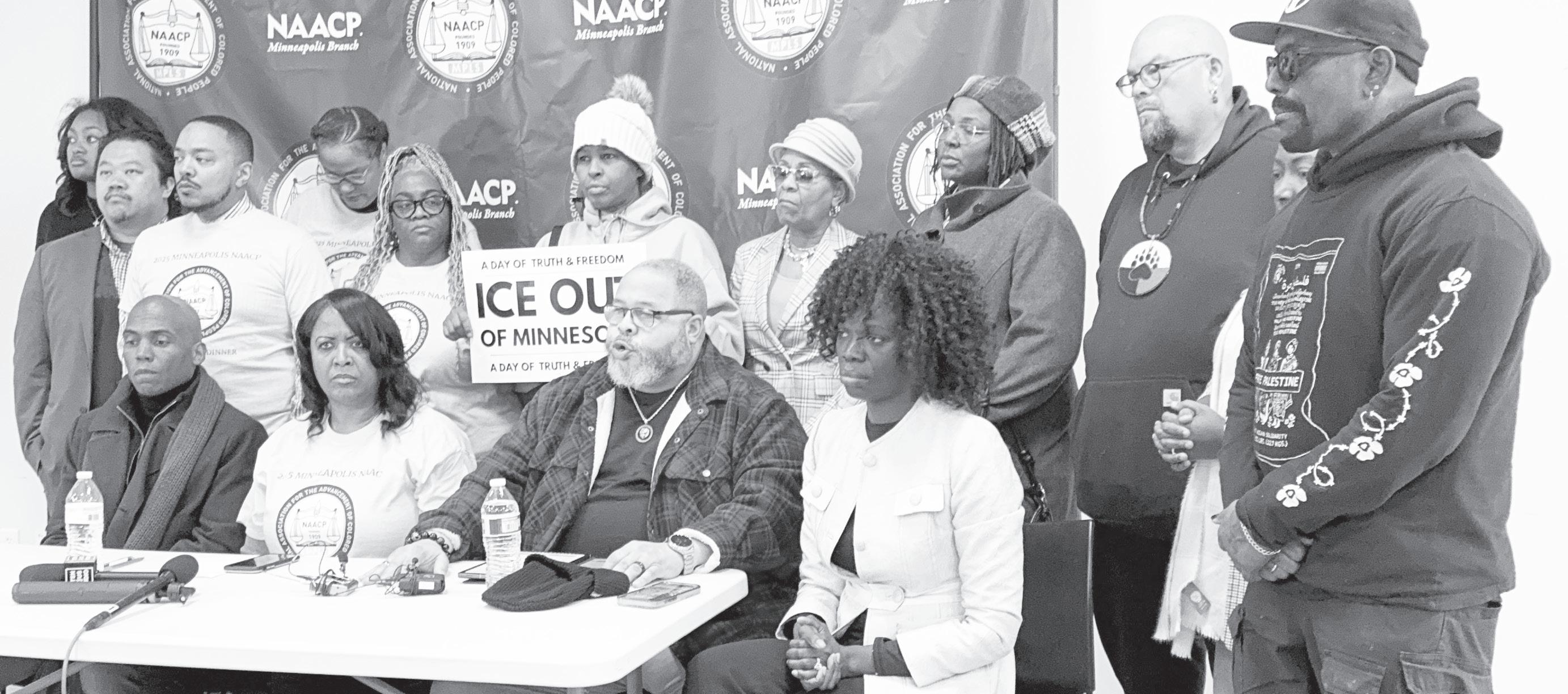
Wilson urged residents to remain committed to peace, even amid grief and anger.
Pastor Richard Pittman, president of the Minnesota and Dakota State Conference NAACP, challenged early misrepresentations surrounding Pretti’s death. “They’re already trying to create a narrative that somehow he was at fault for trying to help a woman up off the ground,” Pittman said. Pittman alleged that Pretti was attempting to help a
shooting as a violation of basic human dignity and called for accountability. “No badge, no uniform, no federal authority gives anyone the right to act as judge, jury and executioner on the street,” he said. Dr. Yohuru Williams, founding director of the Racial Justice Initiative at the University of St. Thomas, placed the incident within a broader national context. “What we are witnessing is the crumbling of the architecture of our repub-
the mental health toll of militarized immigration enforcement. “These tactics elevate stress, anxiety and depression, and they worsen physical symptoms,” Garner said. “They re-traumatize people who have lived through violence.”
Protests erupted along Nicollet Avenue despite freezing temperatures, as demonstrators demanded accountability and expressed solidarity with Pretti’s family. Ward 5 Minneapolis City
grapple with the aftermath, NAACP leaders urged residents to remain vigilant. “The truth of the matter is everybody is a target,” Wilson said. “It doesn’t matter if you’re documented or not. Be safe. Be wise.” She also pointed to spiritual resilience. “The most effective and least used tool is prayer,” Wilson said.
Lizzy Nyoike is a Hubbard School of Journalism & Mass Communication student.

By Morgan Truscott
AI is not just a buzzword.
It is a force already reshaping the city’s economic landscape. Much of the national conversation has centered on job disruption, and it is a valid concern. Earlier this year, several leading technology companies announced significant job cuts as they increased investment in AI capabilities.
These dynamics raise the question: If AI can perform more tasks at lower cost, what does that mean for employment, consumer demand, and the broader economy?
Recent analysis from Jacob Manoukian, J.P. Morgan Private Bank’s U.S. Head of Investment Strategy, provides important context.
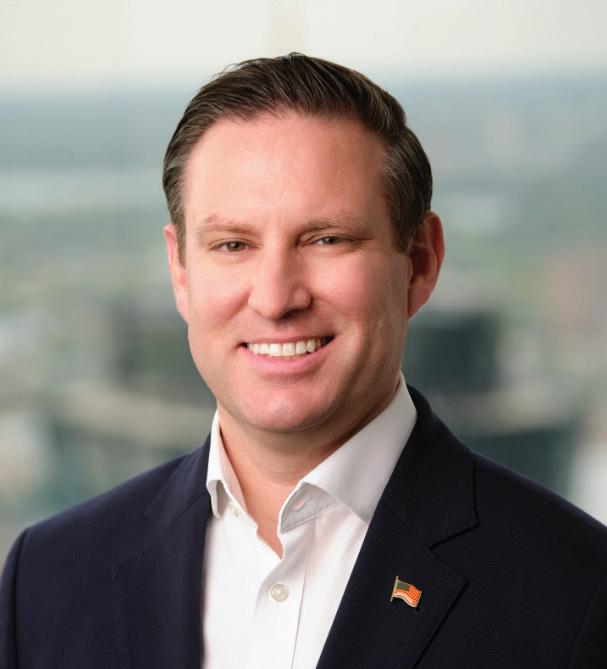
In his piece “Jobs in the AI Revolution: Disruption Today, Growth Tomorrow,” Manoukian argues that while AI will displace certain tasks, the broader pattern will likely mirror past technological shifts. Throughout history, from the steam engine to electricity to the mainframe computer, innovation has initially displaced workers but ultimately expanded industries, created new roles, and delivered powerful waves of productivity growth. His piece highlights that early adoption tends to create the impression of destruction, while the full eco-
nomic cycle typically produces reinvention, new demand, and broader opportunity.
Our 2026 Global Investment Outlook echoes this theme. The AI investment boom already accounts for roughly 1% of U.S. GDP, and historical comparisons suggest that could double. AI is driving down the marginal cost of cognition,
much as past technologies lowered the costs of transportation, power, and information processing. When those costs fell, demand surged, new industries emerged, and productivity growth accelerated.
What the Twin Cities can expect
In cities across the U.S., the impact of AI is already visible across key sectors such as health care, pharmaceuticals, financial services, energy and education. Hospitals and research centers are pioneering new diagnostic tools and supporting better clinical decisions. On the factory floor, smart automation is being adopted to improve efficiency, enhance precision, and streamline production processes in industries like pharmaceuticals, chemicals and food manufacturing.
Financial institutions across the country are also exploring AI-driven ways to simplify operations and manage risk more effectively, while energy companies are leveraging data and machine-learning models to help optimize output and improve reliability. At the same time, leading universities are
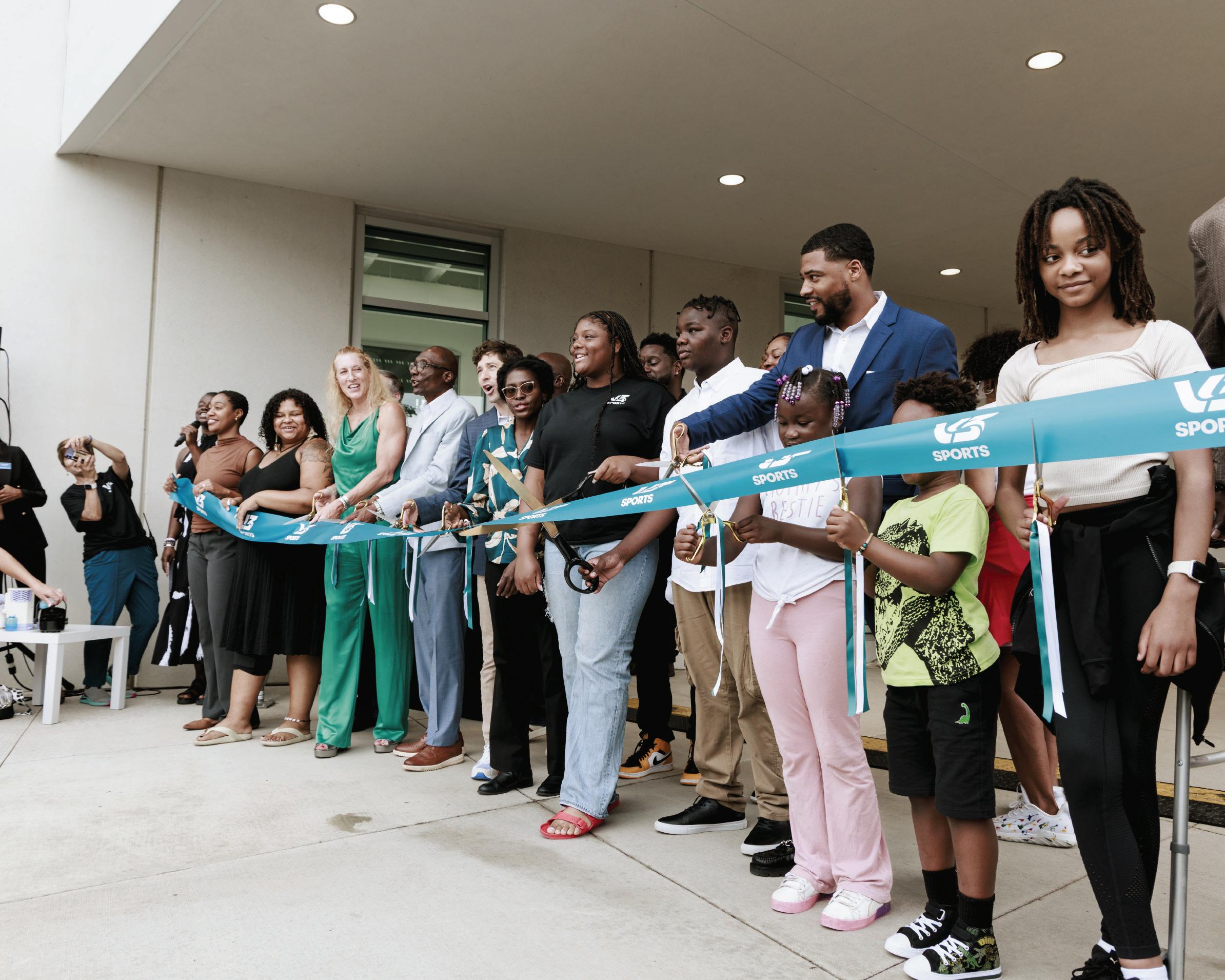


driving much of this innovation, helping to connect research, industry and talent.
Early research suggests that many of these AI applications focus on augmentation rather than full automation, supporting workers in their roles instead of replacing them entirely. Humans still retain an advantage in areas such as common sense, emotional intelligence, dexterity and adaptive learning, which remain difficult for AI to replicate.
The road ahead
Historically, technological breakthroughs have reduced costs, expanded demand, and driven long periods of productivity growth. AI is beginning to replicate this pattern by lowering the cost of expertise and enabling companies to accomplish more with fewer resources. As organizations reinvest AI-driven efficiencies into new capabilities, Minneapolis-St. Paul could see growth in new types of roles, businesses and services that do not yet exist today.
Morgan Truscott is Minnesota head of investments and ad-
vice, J.P. Morgan Private Bank.
For informational/educational purposes only: Views and strategies described on this article or provided via links may not be appropriate for everyone and are not intended as specific advice/ recommendation for any business. Information has been obtained from sources believed to be reliable, but JPMorgan Chase & Co. or its affiliates and/or subsidiaries do not warrant its completeness or accuracy. The material is not intended to provide legal, tax or financial advice or to indicate the availability or suitability of any JPMorgan Chase Bank, N.A. product or service. You should carefully consider your needs and objectives before making any decisions and consult the appropriate professional(s). Outlooks and past performance are not guarantees of future results. JPMorgan Chase & Co. and its affiliates are not responsible for, and do not provide or endorse third party products, services, or other content.
Deposit products provided JPMorgan Chase Bank, N.A. Member FDIC. Equal Opportunity Lender. © 2025 JPMorgan Chase & Co.
Continued from page 1
public interest and concern,” her counsel said in a statement. “The free speech and free press guarantees of the First Amendment fully protect such newsgathering and reporting activities, and Fort’s arrest is a transparent and unconstitutional attempt by our federal government to intimidate journalists and chill their protected speech. She will be vigorously defending herself against these charges.”
Thousands of community members and journalists gathered outside the U.S. federal courthouse in Minneapolis in support of Fort and the other arrestees.
“A judge, knowing the law,
says there is no call to arrest U.S. journalists, who are merely doing what the Constitution affords them the right to do,” said Minneapolis school teacher and activist Marcia Howard outside the courthouse. “And yet they still issue arrest warrants because they’re embarrassed that Minnesota is showing them their ass.
“I was absolutely shocked and appalled; the infringement on the First Amendment was the first thing that went through my head. Then I thought of that poor woman … She’s got kids, and I cannot believe that they are violating her in the way that they are,” Howard later told Minnesota Spokesman-Recorder reporters.
The arrests sparked outrage across the Twin Cities’ journalism community. The Star Tribune, Minnesota Spokesman-
rest journalists for doing their jobs. The Minnesota journalism community stands united in defense of press freedom and the essential role reporting plays in holding power to account.”
“As someone who has worked in media for more than 17 years, I leave this federal courthouse today with one question: Dowehavea Constitution?”
tended to incite violence. A witness described the judge as appearing “irritated.”
Fort and the others reunited with loved ones in the courthouse lobby before being moved outside due to ICE and DHS officers entering the building.
was found dead in a dumpster after being stopped by St. Paul police.
“I wanted somebody to speak up and stand up with me and my family, me and my son,” Allen said.
Since then, Allen has organized peaceful protests, press conferences and rallies, while also working toward legislative change. She said her goal is to keep the names of those killed unjustly alive in public memory.
“Giving people a platform to have a voice, giving a voice to the voiceless, being able to march down the street and chant your loved one’s name, and having a big picture of your loved one to show the community as a way to remember them … That’s some-
Continued from page 1
emphasizing resilience and accountability.
“Here is the reality that people like this don’t understand: We are Minnesota strong, and we will stay resilient in the face of whatever they’d like to throw at us,” Omar said to applause from attendees. She reiterated her call for Noem’s resignation and said Congress would consider articles of impeachment if no action is taken. Multiple witnesses and re-
Continued from page 1
civil rights leader and activist, received a nomination at the Democratic National Convention in Chicago, earning 68 votes. His nomination came in the aftermath of Robert F. Kennedy’s assassination and amid a turbulent era of civil rights activism.
Reflecting on his campaign, Phillips said, “The Negro vote must not be taken for granted.”
Though he did not win the nomination, Phillips’s candidacy was a historic first for a major political party and highlighted the growing visibility of Black leadership on the national stage.
Shirley Chisholm, elected to the House of Representatives in 1968, became the first Black woman to run for president in 1972. Her campaign was revolutionary, emphasizing women’s rights, racial equality, and social justice.
Chisholm repeatedly declared herself the “candidate of the people,” resisting the idea that she was merely
thing so powerful,” she said. “That’s something the system or no one can take away.” Through her work, Allen provides dinners, financial assistance, and support groups for families affected by police violence, including those still seeking answers about their loved ones’ deaths. That work, she said, has also come with serious threats and attacks, beginning when she first spoke out.
porters present said the substance sprayed from the syringe was orange in color and emitted a strong vinegar-like odor. Authorities have not yet identified the liquid, and testing is ongoing.
Minneapolis Mayor Jacob
“WeareMinnesota
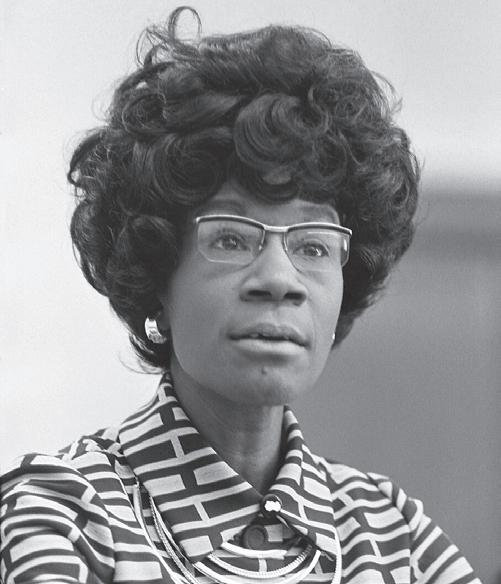
a token representative of her race or gender. As she famously said, “I am not the candidate of Black America, although I am Black and proud. I am not the candidate of women’s liberation, although I am a woman. I am the candidate of the people of America.” Her platform addressed issues often dismissed by mainstream media and politicians, including poverty, education, and equal opportunity. Many saw her positions as “too radical” at the time, yet her campaign sent a powerful message: Representation matters, but ideas matter just as much, and the two should not be separated.
Recorder, and Sahan Journal, along with other local outlets, released a joint statement condemning the arrests.
“We strongly condemn the arrest of journalists Georgia Fort and Don Lemon, as well
“I wanted to support families in the way that I did not have when Justin was taken from his life,” Allen said. “I didn’t have any support at that time. By coming alongside other families to speak up about the injustices, I began to be attacked.”
Allen said media outlets distorted Teigen’s story in ways that undermined her credibility. She also said she received threats and was followed after protests. “Yet I still move forward because it’s the right thing to do,” she said.
Allen said her belief that no one deserves unjust treatment has sustained her fight for equality and accountability, particularly against systems that allow those in positions of authority to remain above the law. Sharing resources, whether labor, money or time, even when it is difficult, is a principle another Minnesota free-
as any attempt to intimidate members of the press. The First Amendment recognizes the press as holding a distinct and protected role in our democracy,” the statement reads. “In America, we do not ar-
By 3 p.m., Fort, Lundy and Crews were ordered released.
According to those present in the courtroom, prosecutors failed to convince the judge that Fort and the others in-
“I know as an independent journalist, I have challenged us to move forward in this industry,” Fort said moments after her release, “but the fact that you guys stood up for me today shows me that we are moving together. As I reflect as someone who has worked in media for more than 17 years, I leave this federal courthouse today with one question: Do we have a Constitution?”
Izzy Canizares is a freelance journalist and contributing writer for the Minnesota Spokesman-Recorder.
fighter embraces. Elizer
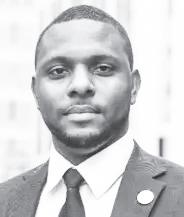
co-executive director of the Minnesota Freedom Fund, continues to organize and participate in public discussions, including the Jan. 27 Native Land Pod Live event in Minneapolis.
“I have an eight-day-old daughter, but this is so important to me,” Darris said during a panel discussion. “The environment that is cultivated is so important to me that I

A syringe containing an orange-colored substance was recovered after an individual used it to spray U.S. Rep. Ilhan Omar during a town hall meeting. Photos by Izzy
Frey condemned the assault in a statement posted to Facebook later that evening. “This is unacceptable. Violence and intimidation have no place in Minneapolis,” Frey wrote.
“We can disagree without
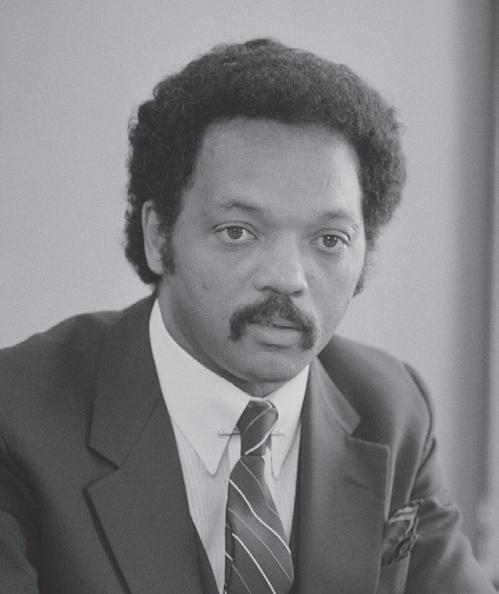
Jesse Jackson carried this legacy into the 1980s, running two nationwide campaigns under the “Rainbow Coalition” banner. A minister from Alabama, Jackson advocated for civil rights, economic equity, and the rights of marginalized communities, including racial minorities, lower-income individuals, and LGBTQ+ populations.
During his 1984 campaign he said, “We must develop a Rainbow Coalition that embraces all who are oppressed and exploited in America,” reflecting his vision for a broad, inclusive movement. Jackson’s platform included
putting people at risk. I’m relieved Rep. Ilhan Omar is okay and appreciate MPD for responding quickly. This kind of behavior will not be tolerated in our city.”
Minneapolis City Council-
ambitious proposals such as passing the Equal Rights Amendment, expanding access to free community college, and implementing universal health care. Though many Democrats viewed his positions as too progressive, Jackson energized voters and broadened national conversations on civil rights and social equity.
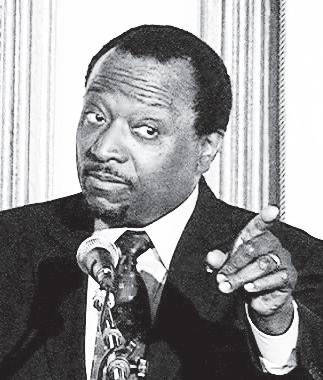
By the late 20th century, Black candidates were appearing across the political spectrum. Alan Keyes became the first Black Republican to run for president in 1996. A diplomat and policy advisor during the Reagan administra-
know I have to invest my time, my resources, my intellectual abilities, whatever it is that I have, because 20 years from now, I want her to inherit a certain type of America.”
“If you’re able to speak up for people who may not feel like they have a voice, then I believe in my heart that it’s the right thing to do.”
“Our voice is our weapon against injustice,” Allen said. “If you’re able to speak up for people who may not feel like they have a voice, then I believe in my heart that it’s the right thing to do.”
Damenica Ellis is a staff writer for the Minnesota Spokesman-Recorder.
The Minnesota Freedom Fund works “to end wealthbased detention and powerbuild with community to dismantle the systems that turn poverty into punishment while expanding access to freedom, safety and dignity for all Minnesotans,” according to its website. Since 2016, the nonprofit organization has paid $4,805,000 in immigration bonds and $20,412,236 in cash bail. Over the years, Allen said she has noticed a shift in how communities respond when people speak out against injustice. What once felt like issues ignored or unseen are now gaining attention, she said, in part due to social media platforms that allow people to witness injustices directly.
member LaTrisha Vetaw, who was also in attendance, said the incident was frightening. “I want to be honest: This was terrifying, and I am still shaken,” Vetaw said in a statement shared on social media. “Despite this, my fellow elected officials and I remain committed to serving and representing the people of Minneapolis.”
Following the town hall, Omar was evaluated by her staff and later issued a statement on Facebook and X. “I’m okay. I’m a survivor, so this small agitator isn’t going to intimidate me from doing my work,” Omar wrote.
“I don’t let bullies win. Grateful to my incredible constituents who rallied behind me.” Izzy Canizares is a freelance journalist and contributing writer for the Minnesota Spokesman-Recorder.
Minneapolis police identified the suspect as Anthony Kazmierczak, 55, according to the Hennepin County Jail roster. He was arrested at the scene and booked on suspicion of third-degree assault. Police said the investigation remains active, and the substance inside the syringe has not yet been confirmed.
tion, Keyes ran on a platform emphasizing conservative social values and traditional family structures.
He also ran campaigns in 2000 and 2008. Though he did not secure the nomination, Keyes’s campaigns highlighted that African Americans could participate across party lines, challenging assumptions that Black candidates belonged only in one political party or ideology.
These early campaigns offer more than historical footnotes; they provide crucial lessons about inclusion, representation, and political courage. Across decades, Black candidates faced systemic barriers, racial prejudice, and public skepticism. Yet they persevered, showing that diverse perspectives are essential to shaping a political landscape that reflects all of American society.
Shirley Chisholm’s campaign remains a touchstone for understanding the double barriers faced by Black women in politics. She spoke openly about “double discrimination” and resisted narrow
expectations placed on her by voters and the media. Fifty years later, her warnings remain relevant. Voters still struggle to fully evaluate candidates of color, particularly women, beyond the lens of identity. Recognizing these early pioneers honors their courage and highlights the work that remains to create a truly inclusive political system.
As Black History Month prompts reflection on the past, it is important to remember these overlooked trailblazers. Frederick Douglass, George Edwin Taylor, Channing Phillips, Shirley Chisholm, Jesse Jackson, and Alan Keyes all contributed to a legacy that paved the way for Barack Obama, Kamala Harris, and future generations of Black leaders. Their stories remind us that progress is rarely linear, and that representation, both symbolic and substantive, remains essential for a truly equitable democracy.
Alex Nellis is a recent communications graduate who grew up in Saint Cloud, Minnesota.
By Jasmine McBride Editor
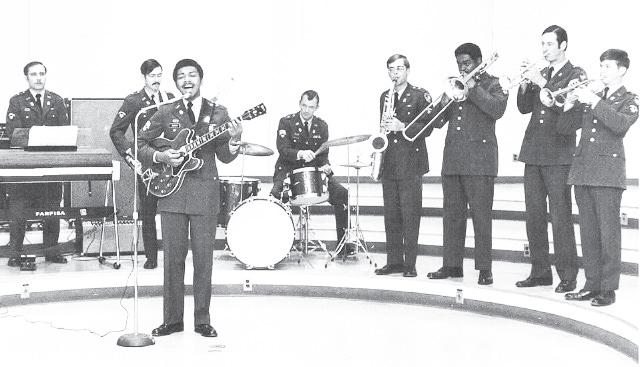
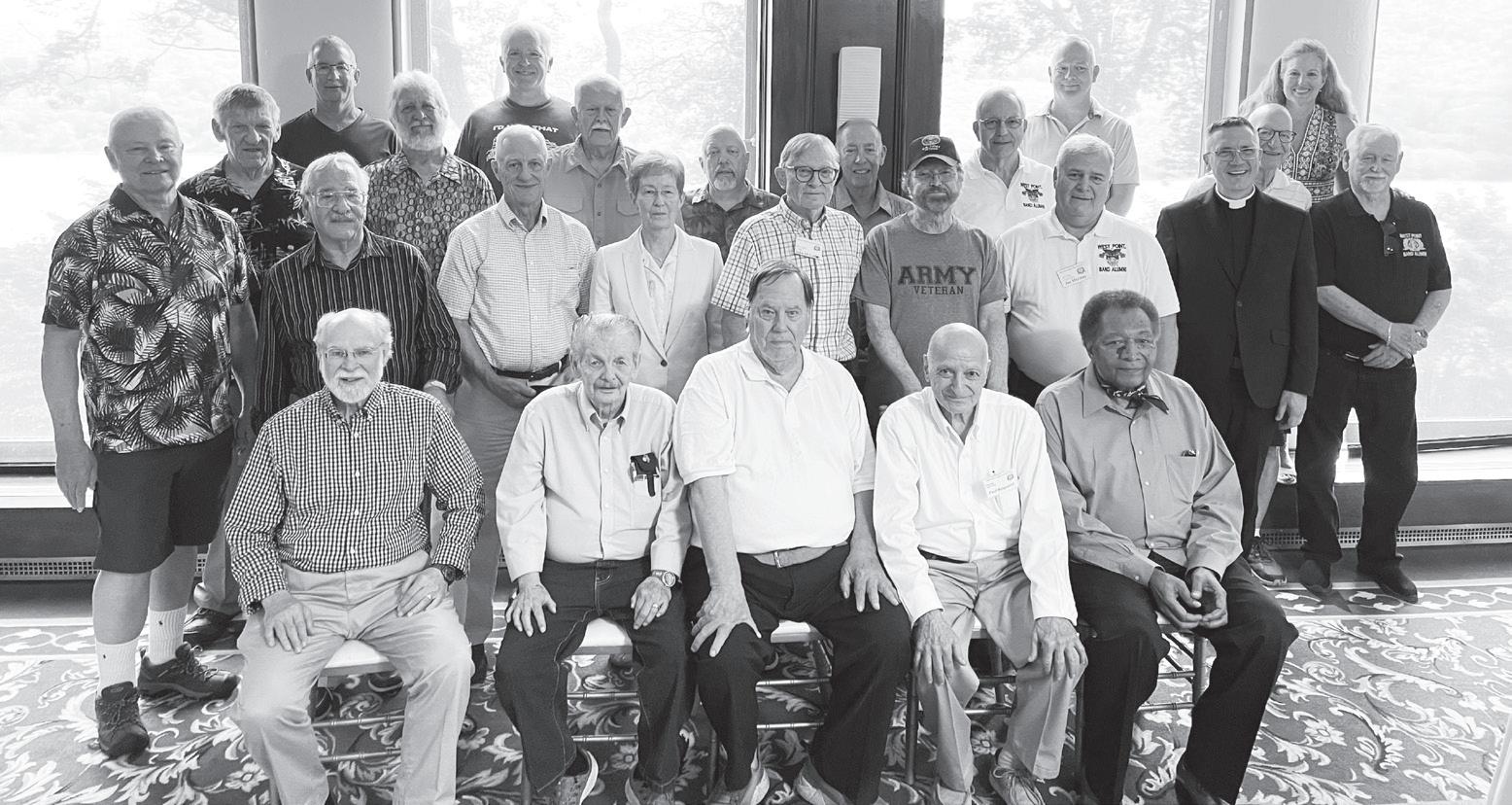
In 1968, Cliff Johnson made history as the first African American assigned to the United States Military Academy Band at West Point, a milestone that reflected not only his musical talent but also a lifetime of perseverance and resilience. Now 80, Johnson looks back on a life defined by music, military service, and the pursuit of opportunities that were often scarce for a young Black man growing up under Jim Crow laws in Jacksonville, Florida.
Born in 1945, Johnson grew up in a family of 10 children, where music was both a pastime and a lifeline. His father, Collie, played the blues guitar, inspiring a young Cliff to follow in his footsteps.
“Already by the age of three, I knew I wanted to be a guitarist and singer,” Johnson recalls. He learned to repair, tune and play the guitar using strings
Atlanta, and even Hawaii. In Atlanta, he led a rock band at the base and performed in local clubs, balancing military duties with his musical ambitions.
made from old car tires, a testament to his ingenuity and passion. At age 12, his father gave him a guitar, cementing a love for music that would shape his life.
At 17, Johnson enlisted in the Army. Initially trained as an Armor Crewman at Fort Knox, Kentucky, he was sent to Germany to serve with the 2-64 Armor, where he worked as a cook. Yet even there, music found him.
Johnson formed a band with fellow soldiers, the Thrill Tones, performing at local nightclubs while off duty. “It was God preparing things,” Johnson says, reflecting on the serendipitous path that eventually led him to West Point.
In 1966, he reported to West Point as a cook, assigned either to Headquarters Company or the band. Music won out. Through dedication and mentorship from band members, Johnson earned a special bandsman Military Occupational Specialty, officially joining the USMA Band on January 11, 1968. He performed in the rock band, focusing on genres like rock and roll, James Brown classics, and soul hits such as Wilson Pickett’s “Funky Broadway.”
Despite being the only African American in the band, Johnson found camaraderie and support. “There were a lot of guys from the North, and I got along well,” he says. Though he did not read music professionally, lessons from bandmates and correspondence courses from the Marine Corps Institute helped him excel. His skill earned him the nickname “the Resident Soul Brother,” and he thrived in a culture that, while not free from bias, allowed him to pursue his craft.
Johnson’s career in the Army extended until 1977, with stops in Fort McPherson,
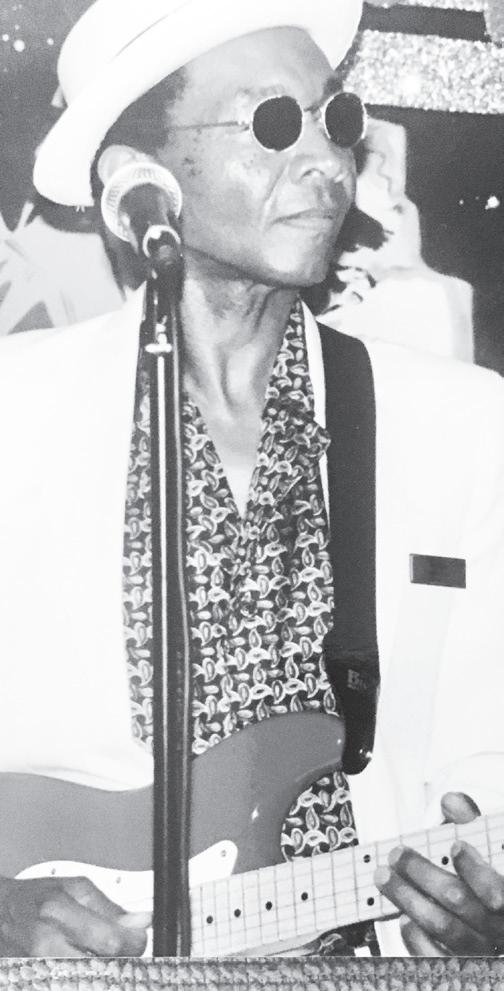
“Coming from Florida, I traveled all over the Southeast playing music,” he says. After leaving the Army, he moved to Minneapolis in 1981, where he immersed himself in the local music scene, performing in polka bands, blues ensembles, and jazz groups. Even today, he occasionally plays at George Floyd Square, connecting with new generations of musicians.
“WhenIhitagood note, it feels good. That’s what keeps me going.”
Reflecting on his experiences, Johnson credits perseverance, mentorship, and passion for music as the foundations of his success. “I wanted to be a musician since I was three years old.
“The West Point Band is the most prestigious band in the land, and to come from
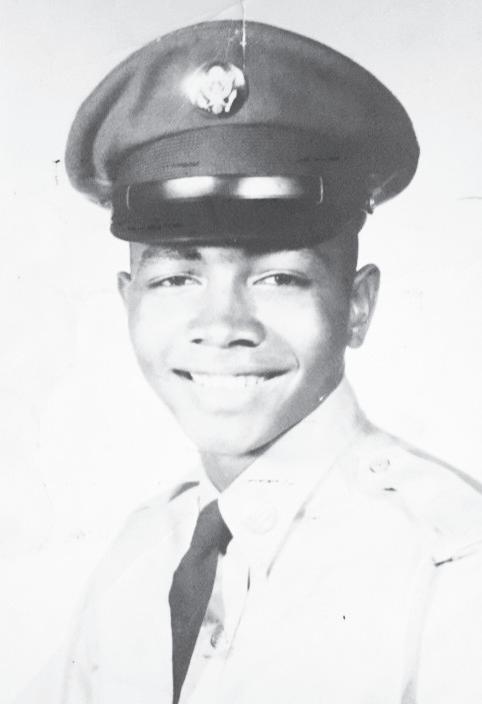
At just 17, Cliff Johnson enlisted in the U.S. Army, beginning a journey that would lead to making history as the first African American in the West Point Band.
a juke joint in Jacksonville to that was everything I ever dreamed of,” he says. His autobiography, aptly titled
“From the Juke Joint to West Point,” chronicles this remarkable journey.
Johnson also shares insights on race, both past and present. Growing up in the segregated South, he experienced discrimination firsthand but maintained a resilient, forward-looking attitude. “Being confronted by racism never made me prejudiced,” he says.
His time at West Point included occasional slights, yet he was largely treated with respect and friendship by his peers in the band. He believes
By Alex Nellis
In stores across the country, white dolls are available in far greater variety than Black dolls. Even more troubling, the few Black dolls that are stocked are often more expensive than their white counterparts. This analysis examines how the lack of representation in toys can affect Black children’s self-esteem, sense of identity, and cultural awareness, and what can be done to change it.
The limited availability of Black dolls has been shown to affect children’s sense of belonging. One of the most well-known demonstrations of this impact is the Clark Doll Test, which was cited during the 1954 Supreme Court case “Brown v. Board of Education” to illustrate how racism affected Black children.
In the Clark Test, researchers asked Black children between the ages of three and seven a series of questions about white and Black dolls. The majority of the children associated positive traits with the white dolls while attributing negative characteristics to the Black dolls. Footage of this experiment is still available to view today.
The test concluded that the children’s negative perceptions of dolls that looked

like them were the result of internalized racism. The findings were so compelling that they influenced the Supreme Court’s decision to end public school segregation. Today, the Clark Test remains relevant, underscoring how damaging it can be for Black children to grow up without seeing themselves represented in their toys. Historically, many early Black dolls were racist caricatures with exaggerated and stereotypical features. Over the past century, some progress has been made. In the mid-20th century, dolls such as Patty Jo ’N’ Ginger, Black B. Wright, and Christie, the first Black Barbie, represented early efforts toward culturally accurate Black dolls.
Christie’s commercial suc-
cess marked a major step forward in the normalization of Black dolls. Her popularity demonstrated clear consumer demand and pushed other manufacturers to recognize the importance of creating dolls with culturally accurate features. Ensuring dolls were not modeled after Eurocentric standards or harmful stereotypes became a growing priority for many doll companies. Despite this progress, significant disparities remain. Black dolls are still far less accessible than their white counterparts. As Dr. Sabrina Thomas of Duke University explains, “manufacturers do not produce Black dolls in proportion to the number of people in the human population.” While representation has im-
proved, white dolls continue to dominate store shelves in both quantity and variety.
Compounding the issue, Black dolls are often sold at higher prices. In 2021, Walmart faced controversy after a news report revealed a pricing disparity within the Kid Connection brand. White dolls were listed at $25, while Black dolls from the same brand were priced at $40, nearly double the cost.
This problem extends beyond a single retailer or brand. At many major stores, white dolls are routinely more affordable, while Black dolls come at a premium. This disparity is deeply concerning. Black parents should not have to pay more for their children to see themselves reflected in their toys.
One potential solution lies in demonstrating to manufacturers that Black families are not willing to settle for limited or inequitable options. Purchasing culturally representative dolls can support Black children’s self-esteem and cultural identity while signaling consumer demand.
The story of Christie offers a clear example of how change can happen. When manufacturers recognized the demand for a Black doll with non-Eurocentric features, they responded. While it may feel daunting, choosing not to default to
in gradual societal change, emphasizing the role of education and parental guidance in shaping future generations.
Family has been central to Johnson’s life. He has been married four times and has children who have pursued impressive careers, including one daughter who retired from the Navy after 30 years and another working in urban planning in Sweden. Music remains a connecting thread, with siblings and extended family sharing his love for guitar and song.
Looking back on more than eight decades, Johnson reflects on a life shaped by talent, hard work, and a commitment to pursuing his passions.
“I’ve had a good life,” he says, noting that respect, curiosity and dedication have guided him through challenges.
“Even at 80, I still play music. I still enjoy it. It’s satisfying. When I hit a good note, it feels good. That’s what keeps me going.”
As Johnson considers the future of his community and the nation, he emphasizes hope, perseverance and education. He sees progress in representation, entrepreneurship, and opportunities for young Black Americans, but he also recognizes ongoing challenges. “Things have gotten better, but there’s still a lot of work to do,” he says.
Cliff Johnson’s story is a testament to the power of music, the significance of trailblazers in breaking barriers, and the enduring impact of resilience and dedication. From the segregated streets of Jacksonville to the hallowed halls of West Point, Johnson’s journey reflects both personal triumph and the broader evolution of American society. His life underscores that, sometimes, following one’s passion can create history.
Jasmine McBride welcomes reader responses at jmcbride@ spokesman-recorder.com.
donated to a child in need.
cheaper white dolls and advocating for affordable Black dolls can help pressure companies to meet this demand.
Conversations also play a critical role. This issue has persisted in part because it remains under-discussed in the public sphere. Speaking openly with others, within communities and households, about the importance of representation in children’s toys can help bring greater awareness and momentum for change.
“Historically, many early Black dolls were racist caricatures with exaggeratedand stereotypical features. Over the past century, some progress has been made.”
Planting People Growing Justice created The Black Doll Project to address this lack of awareness. The project is rooted in the belief that seeing positive reflections of themselves in toys helps Black children develop self-respect and confidence.
Planting People Growing Justice is a vendor for Nana dolls, including the Nana Kuti Doll, the Nana Makeba Doll, and the Nana Maroon Doll. Its online bookstore also sells the Miss Freedom Fighter Esquire Doll, which complements the book “Justice Makes a Difference.” For every doll purchased through the bookstore, a doll is
Although progress on this issue has been slow, complacency is not an option. There are meaningful actions families can take to support their children and contribute to change. Parents and caregivers can start by having intentional conversations with children about their cultural roots and heritage, helping them understand the value of their identity. Engaging in activities that promote positive self-esteem, such as daily affirmations or encouraging children to write “I am” statements, can also reinforce self-worth.
Introducing children to positive Black role models is equally important. Surrounding them with images and stories that reflect Black beauty, intelligence and leadership helps counter negative messaging. Ensuring children see themselves represented during playtime through books, dolls and toys created by and for Black communities further strengthens this foundation. Finally, families can encourage children to embody Planting People Growing Justice’s R.I.S.E. leadership framework, which emphasizes Respect, Integrity, Self-Awareness, and Engagement.
Alex Nellis is a recent communication graduate who grew up in Saint Cloud, Minnesota. He is passionate about social justice and has completed graduate certificates in gender studies and cultural diversity.
By Alaysia Lane Contributing Writer
A decision by the Trump administration to suspend $129 million in federal benefit payments to Minnesota is sending shockwaves through communities across the state, threatening child care access, family stability and economic security.
The funding freeze, tied to allegations of fraud that are widely disputed, affects programs that help low-income families pay for child care, including Minnesota’s Child Care Assistance Program (CCAP). State and community leaders warn the suspension could force providers to close, families to lose care, and workers to leave the field.

“This will greatly affect the number of families who can access child care in a meaningful way,” said Cisa Keller, president and CEO of Think Small, a nonprofit that supports early learning systems
statewide. “About 23,000 children rely on this program.” The freeze comes as Minnesota’s child care system is already troubled. Providers depend on a mix of privatepay and subsidized families to remain financially viable. If subsidies disappear, programs could shutter, affecting all families, not just those receiving assistance.
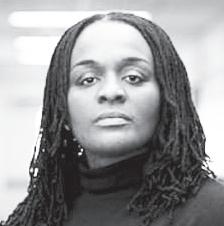
Jessica Herod, co-founder and chief operating officer of Olu’s Beginnings Ellen Schmidt/MinnPost/CatchLight Local/Report for America
“When subsidized children are removed, programs face classroom closures or shutting down entirely,” Keller said. Jessica Herod, co-founder and chief operating officer of Olu’s Beginnings, a holistic child care center serving children ages six weeks to 12 years old, said her center relies on child care assistance and grants to serve families who could not otherwise afford care.
She has seen attendance
drop in recent weeks, even though no families have officially withdrawn. Parents and staff are visibly stressed amid growing uncertainty, including immigration enforcement actions and recent high-profile deaths in Minneapolis, such as Renee Good and Alex Pretti.
“I’ve seen a decrease in attendance,” Herod said. “I see parents with stress on their faces. You can definitely look at them and know they’re overwhelmed.”
Some staff have also expressed safety concerns, prompting the center to provide transportation home.
Providers are also grappling with confusion over the suspension’s timeline. Federal officials initially said the freeze would begin Feb. 1, but some sources, including the Child Care Services division, indicated it could be delayed until Feb. 6, leaving providers uncertain how to plan.
“One minute you’re told to continue services as usual, then you’re told funding might stop. It’s overwhelming. It’s almost like a game.”
Think Small surveyed child care providers statewide and found widespread reports of decreased attendance,
staff departures, and families avoiding child care centers altogether. “Families are keeping children home out of fear of potential targeting or detention, not because of concerns about the programs themselves,” Keller said.
services to families.”
Even before the suspension, Minnesota’s child care system faced persistent challenges. Families often spend more than the recommended 7% of their income on care, and public assistance has not kept pace with demand. Losing child care could immediately disrupt work, education, housing and other basic needs for families relying solely on assistance, Herod said.

A federal decision to suspend $129 million in benefit payments to Minnesota could disrupt child care access for thousands of families statewide.
Federal officials cite fraud as the reason for the funding suspension, but advocates say the claims are exaggerated and disproportionately harm underrepresented communities. Keller noted documented fraud cases have declined in recent years, and some programs referenced in allegations were long closed or had no violations.
Herod emphasized that providers are already subject to oversight and audits. “If fraud is found, those providers should pay the consequences,” she said. “But you shouldn’t penalize everyone who is actually giving quality
By Alex Nellis
African Americans have long been underrepresented in STEAM careers: Science, Technology, Engineering, Arts, and Math. Today, Black Americans make up only 9% of the STEAM workforce. While the acronym previously excluded Arts, its inclusion in 2020 recognizes how creativity and meaning-making are essential to innovation. One of the most effective ways to increase representation is highlighting Black innovators whose contributions are often overlooked. K-12 STEAM textbooks frequently focus on white inventors, leaving out Black scientists, engineers and mathematicians. Seeing themselves reflected in these fields can help Black youth envision a future in STEAM.
Below are four trailblazers whose leadership and breakthroughs offer lessons for students, educators and families alike.
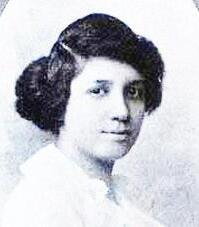
Dr. Euphemia Haynes Public Domain
Dr. Euphemia Haynes (1890–1980)
Dr. Haynes was the first African American woman to earn a Ph.D. in mathematics and taught in Washington,
D.C. for 47 years across elementary, high school, and college levels. She chaired the D.C. Board of Education, the first woman ever to do so, and founded the Mathematics Department at the University of the District of Columbia.
Haynes fought against discriminatory tracking in schools, which often underestimated Black students’ abilities. Her advocacy contributed to the landmark Hobson v. Hansen case, which dismantled these unjust systems.
Lessons for today:
• Black students excel in STEAM when given access and exposure.
• Educator training is critical to ensure teachers can support Black youth in pursuing STEAM careers.
• Spotlighting Black women’s achievements in

STEAM is vital, as they make up just 2% of the workforce.
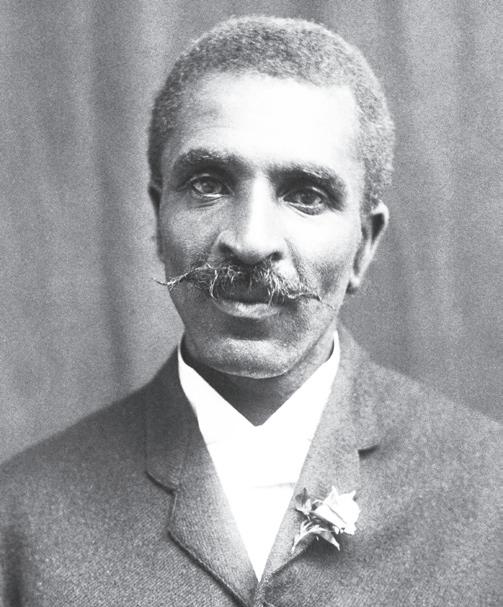
Dr. George Washington Carver Adam Cuerden - Tuskegee University Archives/Museum
Dr. George Washington Carver (1864–1943)
Kidnapped at birth and raised in a white household, Carver overcame immense barriers to pursue science.
Denied college entry due to his race, he taught himself biology and eventually became the first Black student at Iowa State University.
Carver later led the Agricultural Department at Tuskegee Institute, developing hundreds of inventions, including hundreds of uses for peanuts and sweet potatoes, and collaborated with Henry Ford on early biofuels.
Lessons for today:
• Encourage curiosity and hands-on exploration of STEAM at home.
• Support children in pursuing passions even when access is limited.
• Early exposure and parental guidance can make STEAM careers feel attainable.
Dr. Mae Carol Jemison (born 1956)
Jemison earned degrees in chemical engineering and African-American studies at Stanford, followed by a
suggested the timeline could be extended. Providers say the uncertainty itself is already causing harm.
“One minute you’re told to continue services as usual,” Herod said. “Then you’re told funding might stop. It’s overwhelming. It’s almost like a game. You don’t know what to believe.”
If federal funding is not restored, advocates say the state would need to backfill the lost dollars, a difficult prospect amid existing budget constraints. Keller described the amount required as “astronomical.”
Both Keller and Herod urged leaders to act quickly to prevent the suspension from taking effect. Herod stressed the need to preserve financial support for Minnesota families, while Keller called for protections to prevent immigration enforcement actions in child care centers and schools.
She added the center would be unable to continue operating without revenue to pay staff. “There would be layoffs,” Herod said. “I wouldn’t be able to allow every student to still come without child care assistance.”
Still, Herod said she would try to find ways to support families. “I would definitely use all my resources and all my power to still be a vital place for children to come and get nourished, loved and cared for,” she said.
The funding suspension is expected to last temporarily, through early February, though some officials have
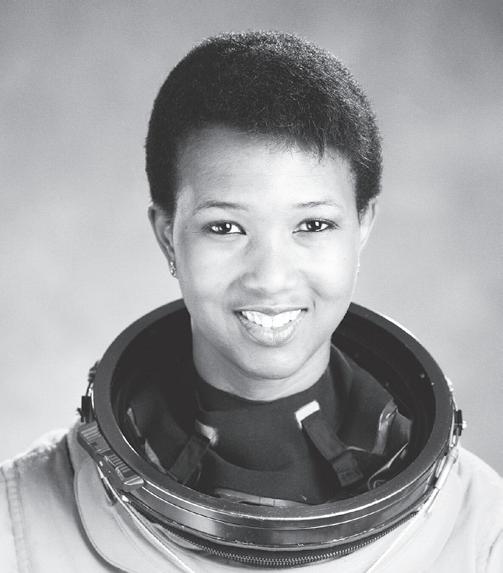
and
medical degree from Cornell. She served as a doctor in Liberia and Sierra Leone with the Peace Corps, then joined NASA, becoming the first Black woman in space.
Jemison later founded the Dorothy Jemison Foundation for Excellence, hosting science camps where children solve real-world problems using STEAM. She continues to advocate for representation and mentorship in these fields.
Lessons for today:
• Hands-on experiences help children see possibilities in STEAM.
• STEAM connects to many fields; career paths are not always linear.
• Exposure to real-world applications shows children how STEAM can solve community problems.
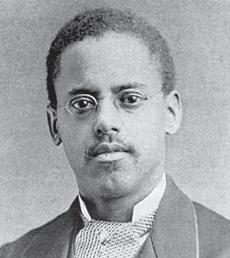
Lewis Howard Latimer
Both leaders emphasized that children, not providers or policymakers, bear the brunt of the crisis. Keller said young children do not commit fraud, and disruptions during early childhood can have lasting consequences.
“It affects these children and creates unnecessary childhood trauma,” Herod said. “You’re taking their safe haven away, where they’re educated and nourished, because of actions they had nothing to do with.”
Alaysia Lane is a multimedia journalist and commerce writer based in Minneapolis.
ing with Alexander Graham Bell and Thomas Edison on the telephone and light bulb.
He later created an early version of the air conditioner and received seven patents over his lifetime. Latimer also taught mechanical drawing and English to Black immigrants in New York, advocating for accessible education.
Lessons for today:
• Network and mentorship opportunities are crucial for STEAM success.
• Culturally relevant and identity-affirming education encourages Black students to pursue these fields.
• Extracurricular programs, like SAT/ACT prep in STEAM subjects, can bridge gaps and expand opportunities.
These four innovators exemplify the power of persistence, creativity and leadership. By spotlighting Black pioneers in STEAM, educators and parents can inspire youth to imagine careers in science, technology, engineering, arts, and math.
“Increasing equity in STEAM not only helpsindividual studentsthrivebut also ensures the field benefits from diverse perspectives, driving innovation and solutions for generations to come.”
Increasing equity in STEAM not only helps individual students thrive but also ensures the field benefits from diverse perspectives, driving innovation and solutions for generations to come.
Alex Nellis is a recent communication graduate who grew up in Saint Cloud, Minnesota. He is passionate about social justice and has completed graduate certificates in gender studies and cultural diversity.
DevSecOps Engineer: Plymouth, MN
IT Company seeks DevSecOps Engineer to integrate security practices into DevOps workflows, automate security checks, and ensure the safety of cloud infrastructure. Work closely with development and security teams to enhance the security posture of applications and systems. Build and Configure delivery environments by using CD/CI, Agile delivery methodologies. Create and assist in performing various types of tests. Perform troubleshooting. Generate customized reports. Offered Salary: $116,480.00
By Lawrence Ware
When Nicki Minaj went on stage with Erika Kirk on the fourth day of Turning Point’s AmericaFest, Black America collectively rolled their eyes and called her crazy. But just because you may think she is crazy does not mean she is.
It is clear why some may think Mrs. “Beez in the Trap” is a little unhinged. In 2025, she went on X and took shots at almost everyone in America.
Cardi B, Jay-Z, SZA … even California Governor Gavin Newsom caught strays. Minaj has joined Ye and Gucci Mane in the “someone needs to take their phone away so they can stop posting dumb sh*t on social media” all-stars.
f—ing up the economy.” She later said it was a joke…but was it?
Then in 2015, she seemed to be open to supporting Trump when she told Billboard, “There are points he has made that may not have been so horrible if his approach wasn’t so childish.” She was later critical of him on the 2016 Black Barbies freestyle and in 2020 when she said she “refuses to join the Trump bandwagon.”
Those were all hints that she was trying to be the rap version of Candace Owens, but she had her MAGA coming out party in late 2025.
the Trump administration. You can jump on social media and call her crazy in an attempt to dismiss what she is doing if you want, but that doesn’t make it true. When Nicki was on stage with Erika Kirk, she didn’t look unhinged or deranged. She was clear eyed, thoughtful and in control. In other words, she was the opposite of a crazy person.
And despite her outright embrace of Trump last year, she had an impressive 2025. In fact, Billboard named her the best female rapper of all time because of fan support and how she continues to dominate as the best-selling female rapper.
By Graylan Scott Hagler
He broke it. He didn’t wait for permission to change things, he simply bent and, in most cases, broke them. When the answer might be “no,” why wait? That has been the strategy: Test the basic mores of the country and push them past their breaking point.
Dismantling DEI initiatives? Done. Government employees, especially Black women, were left scrambling after hundreds of thousands lost jobs. Historical markers and museum signage were sanitized to erase messages of social and racial justice. Permission was irrelevant.
In foreign waters, this same lawlessness extended. Bombs in the Caribbean killed civilians, ships from Venezuela were seized, and troops were sent into American cities, all without approval from local authorities. Federal power has become unbound, its agents acting less like law enforcement and more like storm troopers.
When citizens become targets
Renee Good was shot three times while monitoring federal agents. She tried to appeal to their humanity, but when she attempted to leave, a right-wing federal agent stepped in front of her car and fired.
Weeks later, Alex Pretti, a VA intensive care nurse, was pushed to the ground, beaten, and shot nine times in five seconds, killed on the spot. Both were American citizens exercising their right to monitor and protest federal overreach. The administration quickly labeled them “terrorists,” a tactic used repeatedly by DHS and ICE to justify deadly force. In January alone, ICE discharged firearms into civilian vehicles at least 13 times, a number that quickly became outdated. The violence is systematic, not incidental.
restrictions on masked federal officers, noting that these practices “terrorize communities rather than protect them.”
Yet the problem is far larger than masks. Federal agents are committing violence with impunity, and ordinary legislative measures, letters or petitions are insufficient.
The limits of civility
So it is understandable why some looked at her on that stage last week and thought the woman has completely lost her mind. But those people would be wrong. The Trinidadian rapper has been showing us who she is for years.
Back in 2012, in the middle of the first Black president’s reelection campaign, Nicki said on the track ‘Mercy’ on Lil Wayne’s Dedication 4, “I’m a Republican voting for Mitt Romney, you lazy bitches are
In November she reposted an official White House TikTok video touting all of Trump’s purported achievements since he took office in January. She then stood with Trump after the president posted about the persecution of Christians in Nigeria. And the same month, Minaj spoke at the United Nations on behalf of
To call her crazy is to dismiss what she is saying. There is a reason why conservatives want her on their team, and it is not because she has a screw loose. Her influence is undeniable.
Nicki Minaj’s recent political activity would not be surprising if we had been paying attention. She has been giving us hints that this is who she is for years.
This commentary appeared first in The Root. For more information, visit www.theroot.com.
Local resistance begins to stir
Some state and local governments are pushing back.
Maryland’s Montgomery County introduced the County Values Act, requiring warrants for ICE access to nonpublic areas and prohibiting federal use of county spaces. The Unmask ICE Act would prevent federal agents from concealing their identities. Similar legislation is under consideration in at least 15 other states. Twenty-one state attorneys general have sent Congress a letter urging

History offers a lesson: The 10th Amendment was intended to maintain boundaries between federal and state power, and it has repeatedly shaped America’s fight for justice, from Reconstruction to the civil rights era. Today, local governments must assert themselves against a federal government that bends laws until they break. Local law enforcement must be loyal to the community, not masked federal agents, and act decisively against violations of local law, property, and human life.
We are, effectively, in a civil war of authority. Bills and letters alone will not suffice. Only the deliberate challenge of federal overreach by state and local governments, backed by law enforcement willing to protect the public, can create a constitutional crisis strong enough to restore balance and accountability.
Our democracy depends on it.
This commentary appeared first in Word in Black. It has been edited for length. For more information, visit www,wordinblack.com
By Jacqueline Luqman
For the nearly 250 years of legalized chattel slavery in the U.S., slave patrols were the first formalized system of law enforcement in much of the South. Mandated to serve as a mechanism for control of enslaved and free Africans, slave patrols existed to protect the economic system and super profits that slavery produced.
The practice of surveilling, over-policing, randomly stopping, and demanding documentation of Black and brown people suspected of alleged criminality is not a unique feature of modern policing. These are the tactics established by the slave patrols that shape all aspects of policing today.
es carried out by racist white, local or state authorities. Racist and oppressive policing is backed by legal and judicial precedent that is itself foundational in its justification of racial discrimination to facilitate economic exploitation.
The contemporary practices of DHS, ICE, CBP of houseto-house raids, raids of houses of worship, mass detentions, violence against deportees in public and private (including sexual violence and abuse of children), and family separations draw unmistakable comparisons to the operations of slave patrols and other historical modes of racial control.
and equal protection under the law for all people in this country, “legal,” or “not.”
The history of policing in this country compels us to understand that removing the present figurehead of the U.S. regime will do little to end the suffering of the people targeted by this centuries-long system of social, racial, and ultimately economic control. The only thing that will change this material reality for all of us is a socialist revolution led by the people who are the most impacted by this centuries-long program.

The core historical directive of policing has consistently been the defense of capital, land, and economic status through the brutal control of the working class, poor, racialized, and other marginalized among them, not the universal protection and service of the community. Tactics like racial profiling, “broken windows” policing, excessive and pervasive surveillance, and the disproportionate use of excessive force and extrajudicial executions that are rarely punished are all deployed to maintain the physical and social segregation today that was initially enforced by slave patrols, plantation militias, and the deputization of white citizens to police the enslaved.
But these were not merely unofficial or accepted practic-
Just as slave patrols focused on enslaved Black people and Jim Crow-era and later police focused on Black communities, immigration operations today disproportionately target specific racial/ethnic groups, predominantly Haitian, African, Latino, and other non-European immigrant communities.
But as we have seen in the first not even full month of 2026, they will brutalize and even murder white people who stand in defense of their neighbors and the very laws that MAGA insisted they were committed to all these years, the U.S. Constitution and its guarantees of due process
Simply put, the people must move beyond simply demanding to abolish ICE and even the police, as has been the demand among Black radicals for decades. Rather, the people must pivot fully toward confronting and abolishing capitalism and this entire system that still needs slave patrol/ police/ ICE violence to protect it from those it exploits the most, and everyone who would stand with them in defense of humanity.
For all of us to live free, capitalism, not just ICE, must die.
This commentary first appeared in the Black Agenda Report. It has been edited for length. For more information, visit www. blackagendareport.com.
Frana Companies Inc.
633 Second Ave South, Hopkins, MN 55343
Phone: 952.935.8600 | frana.com
INVITATION TO BID
Project: City Walk Apartments
Rochester, MN
Description: 13-story Post Tension Apartment & Parking, 340 Units
Bidding: Frana Companies is accepting bids for material and labor subcontracts for all sections. If you have questions about bid scopes, bonding, or insurance requirements please reach out to project manager.
Bids Due: Tuesday, February 10th, 2026 at 12:00 p.m.
Construction Start: Construction is expected to commence April 2026. 24-month construction schedule is anticipated.
Project Manager: Boyd Netley, bnetley@frana.com, 952-873-7499
Plans are available on the building connected website. Please send contact information to bnetley@frana.com if interested and you will be added to the website for access. Please email bids to bnetley@frana.com
Continued from page 10
Johnson, “they inspired and reinforced Black entrepreneurship, community pride, and resilience.”
“Let’s tell their story,” he said on the Up-Towns, “because the way we do it, it’s the research, and it’s the education.”
Now the Minnesota UpTowns takes its place in the state’s “forgotten history.” As Johnson said, “We should just celebrate it.”
Black men’s brain health
The fifth annual Black Men’s Brain Health Conference took place February 1-6 in Oakland, Calif. during Super Bowl Week. This year’s theme is “The Power of Community Engagement: Transforming Black Men’s Participation in Brain Health and AD/ADRD Research.”
It featured both in-person and online sessions, including one on the legacy of the Black Panther Party’s public health programs, a leadership symposium for high school players, and a wellness workshop.
BILLING@SPOKESMAN-RECORDER.
RATE: $18.10 PER COL. INCH
Please proof, respond with email comfirmation to ads@spokesman-recorder.com
The MSR handles billing digitally. This means you will get e-tears and emailed invoices unless you specifically request a hard
and current brain health researcher Dr. Robert W. Turner III started the conference.
“When we started working on this project, I never imagined it would have such an impact on so many people’s lives,” he said in a press release. “It is amazing to see NFL athletes come together with Alzheimer’s caregivers, researchers, clinicians, and people from the community to address this critical issue.”
The Black Men’s Brain
Health Imitative examines how sociocultural impacts and early detection of brain health issues, including Alzheimer’s, can improve wellness in the Black community. Turner told us previously that what better place to discuss brain health among Black men is where the Super Bowl is being staged.
Charles Hallman welcomes reader comments to challman@ spokesman-recorder.com. VIEW
Former pro football player
a law giving high school athletes NIL rights, and only three states — Florida, Pennsylvania and North Carolina — have athlete agent and NIL collective regulations in their bills that set rules for agents and NIL advisors. Pennsylvania and North Carolina currently have such bills pending, but a similar bill in Florida died in committee.
Some have called NIL the Wild, Wild West because there are no acrossthe-board regulations. This is what Moton and other coaches are complaining about either openly or behind the scenes.
“In the past,” he pointed out, “we had security and some parameters. But right now, as low-major coaches, we don’t have that. Basically, mid-major and high-major coaches recruit off our rosters.
“So, I think the NCAA has to do a better job of just
lending us that support and that security and put those parameters up so we can coach our teams in good faith,” said Moton.
Rattlers beating predictions Before the season, Florida A&M (FAMU) was picked to finish eighth in SWAC men’s basketball. Thus far the Rattlers, led by first year Head Coach Charlie Ward, is battling among the top three clubs in the standings.
Uncommon dedication
Coppin State (MEAC) and South Carolina (SEC) faced off Jan. 18 in a rare non-conference matchup this late in the season. Even more notable is that a Power 4 school played an HBCU on their court as the Gamecocks traveled to Baltimore to play the Eagles. Despite the lopsided score — South Carolina won by 42 points — more than 3,000 fans were in attendance. Winning Coach Dawn Staley said afterwards of her players playing against an allBlack female team on a Black college campus, “It’s good on all fronts.”
“You won’t get a lot of other Power 4 schools that will want to come and play at an HBCU,” Coppin State HC Darnell Mosley told MSR. He admired the twotime championship coach’s dedication to promoting women’s basketball at every opportunity.
“She even stayed after the game 45 minutes, signing her book, taking selfies and pictures, and signing autographs,” concluded Mosley.
“I thought it was just a remarkable effort to her and who she is as a person and as a coach.”
3-0 week for Tigers
Stillman College WBB
Coach Jamarra Robinson’s Tigers posted a 3-0 week including defeating previously unbeaten Oakwood, Voorhees and Talladega to be named among the WHoopdot.com Coach of the Week winners. Stillman is in the HBCU Athletic Conference.
Charles Hallman welcomes reader comments to challman@ spokesman-recorder.com.
Continued from page 10
80s teams and led by a Black coach in K.C. Jones,” continued Washburn. “I’m from Los Angeles. I didn’t grow up a Celtic fan.”
Washburn told me at last summer’s NABJ that it was a challenge to document as best he could the storied history of the Celtics, which was first in the Basketball Association of America, then the NBA. His nearly 200page book consists of 170plus “moments” Washburn
uses to document in both words and archival photos of the franchise history in illustrated fashion.
“I hope it opens eyes that the Celtics itself made a lot of strides,” said Washburn. “It had a lot of landmark historical moments. The most difficult part was my research of the Fifties and the Sixties, trying to make sure all my stuff was correct, but also making sure I had the details,
“I tried to get in a lot of the players that people might not know about,” said Washburn, who covered the Celtics for many years and is a longtime NBA writer. He told MSR at NABJ

last summer, “Covering the ’24 team is probably my favorite part. I covered all the Celtics playoff runs … losing many times in the Eastern Conference Finals, losing to the [Golden State] Warriors … losing to Miami.
As a beat writer, “You should not root for the team you cover. You have to keep it real when they’re good [and] you have [to do the same] when they’re bad. You just got to keep it honest.”
On writing the book, “It was a real challenge. I wrote on weekends, wrote after I got home from covering games, wrote on off days.
“When you put a book together, you just have to kind of put your heart and soul into it,” he said. “There’s going to be a lot of long days … It was a great experience because it allowed me to do a lot of research and learn a lot of things about the Celtics organization that I did not know.”
Finally…
Athletes Unlimited (AU) starts its fifth season in Nashville Feb. 4 and runs through March 1. Among the competitive depth of the 2026 final roster: 16 WNBA first rounders, 21 college AllAmericans, 27 current WNBAers, 13 players with combined WNBA championships, and 18 with combined NCAA championships.
Charles Hallman welcomes reader responses to challman@ spokesman-recorder.com.

lack History Month started on Sunday.
This BHM 2026 we will spotlight Black Minnesotans whose contributions unfortunately got overlooked and often forgotten locally and nationally.
This week’s question: Did you know Minnesota had a dominant Black basketball team during the 1920s? New York-based historian Claude Johnson, founder and executive director of the Black Fives nonprofit organization (www.blackfives.org), recently emailed me the answer.
The Minnesota Up-Towns were sponsored by St. Paul Black businessman Owen Howell, who founded the team in 1922. They were hailed as “the strongest colored quintet in the Northwest,” wrote Johnson.
The all-Black team was named for Howell’s Up-Town Sanitary Shop, then located at 339 Wabasha Street in downtown St. Paul. Howell also was a community leader, founder
of two Black newspapers, and president of the St. Paul chapter of the National Negro Business League.
Otis Woodard, Harry Davis, Clifford Bush, Lonzo Few,
Walter Chestnut, John White and Joe Carr were the featured players, and John Davis
served as the team’s manager. They practiced and played their home games at Mechan-
ics Arts Gymnasium in St. Paul.
Reportedly the Up-Towns played 15 games and only lost four times, competing against
“some of the strongest quintets in the Twin Cities” and usually the only Black team in amateur basketball tournaments in 1922.
Johnson recently discovered the Up-Towns, a Minnesota Black basketball team based in a state more known for hockey than hoops for most of the early 20th century.
“I think sometimes I’m just as thrilled to hear about something new that I’m learning,” stressed Johnson. Now he knows about the Up-Towns and Howell’s five-decadessuccessful business, whose motto was “The Home of Service” that did cleaning, repairing and pressing suits, shoes and hats, and dry cleaning.
Howell also sponsored a Black bowling league and a Black baseball team, both under the Up-Town Sanitary Shop moniker. His shop, founded in 1901, closed in 1950, and Howell passed away in 1955.
“More than a team,” continued
lack NBA fans had a love-hate relationship with the Boston Celtics, especially in their hey-day of the early 80s, mainly because of the Larry Bird-Earvin Johnson storied rivalry as they battled for NBA supremacy.
It is too often overlooked in Black history that the Celtics back in the 1960s hired the NBA’s first Black head coach, Bill Russell, among other significant firsts. Longtime Black sports journalist Gary Washburn points this out in “The Boston
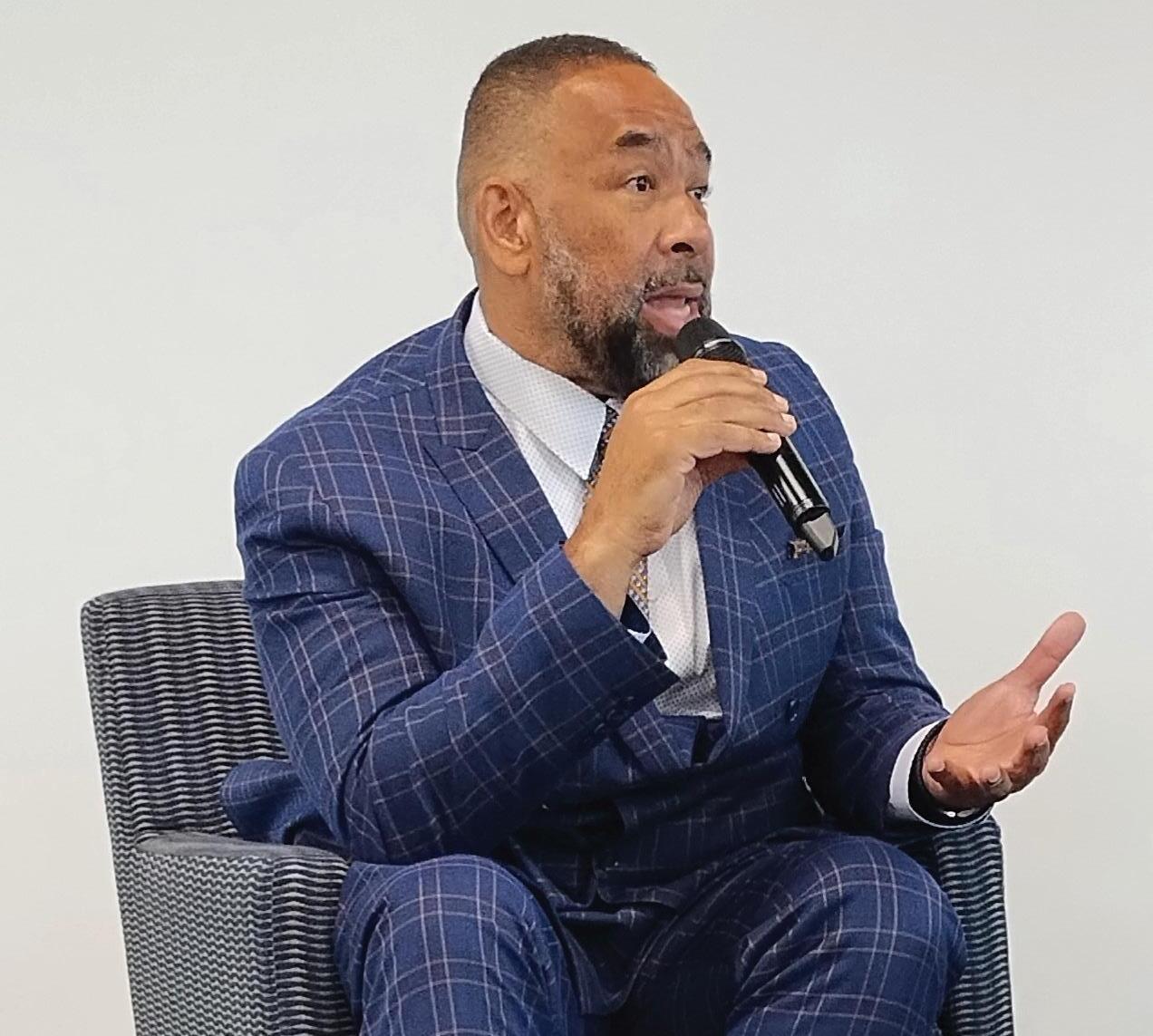

Celtics: An Illustrated Timeline” (Reedy Press, 2024), an excellent table-top picture book.
“The Celtics drafted the first Black player in Chuck Cooper [in 1950]. They had the first Black starting lineup in 1964,” Washburn pointed out. “This is Boston, and I think people tend to compare the city of Boston with the Celtics. The city of Boston has had its racial issues, [such as] the busing issues of the 70s.
“Look what happened to Bill Russell — breaking into his house and defecating on his bed during his time [on the team],” he noted.
I also was among those Blacks who hated Boston, the team, because the media spotlighted Bird and their White stars over their Black teammates. “Cedric Maxwell, Quinn Buckner, Dennis Johnson, all integral players of these
This occasional column brings Black college sports fans updates and insights on teams, players and coaches with a primary focus on the SWAC, MEAC and HBCU Athletic Conference (HBCUAC).
ame, Image and Likeness (NIL) and the transfer portal are here to stay, and it can be a boom or bust for college athletes. But for Black colleges and universities, NIL and the portal can be a double-edged sword, sometimes cutting severely into their rosters because of “plucking” by bigger schools and mid-majors.
“The one thing people don’t talk about in this portal-NIL era is that as coaches we don’t have any protection or security around our programs,” be-
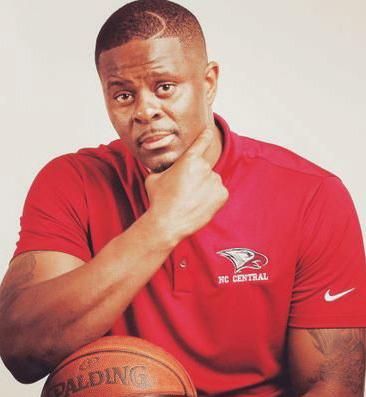
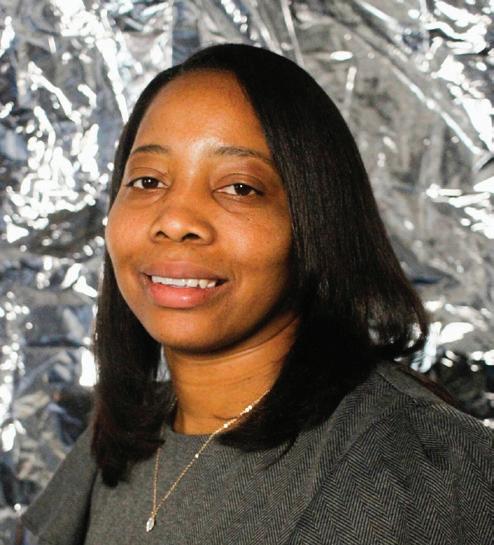
LeVelle Moton Photos courtesy of Twitter Jamarra Robinson
moaned LeVelle Moton as he recently talked to reporters, including MSR. The North Carolina Central men’s head basketball coach since 2009 continued, “[This] means anyone and everyone that can be an agent can contact your kids, right?
“Basically, mid-major and high-major coaches recruit off our rosters.”
“It’s become more of a challenge to even just keep your team focused on the basket-
ball floor, right?”
The Drake Group on Dec. 29 released a state-by-state NIL legislation database. It is categorized by state whether a bill is a current law, is pending further action, died in committee, an executive order, or was rescinded.
Minnesota is among 14 states with no NIL laws or legislation pending. Minnesota also is one of 11 states with no laws on college athlete contract disclosure provisions. Furthermore, only one state, Kentucky, has adopted
Dr. Mitchell Palmer McDonald welcomes reader comments to mcdeezy05@gmail.com.
All photos by Dr. Mitchell Palmer McDonald.
n a rematch of last year’s Twin Cities Girls basketball championship, the Minneapolis North Polars, coached by Brianna Edwards , defeated the St. Paul Como Park Cougars, led by Olonda England , 65-62 in one of the most exciting games of the season. North was led by Aniyrah Gorman’s 24 points. E’Miyah Carter added 18, and Shanice Glover chipped in 10. Ahmani Crump led Como Park with 31 points. Samya Denman , Naijiona Shaw and Alayla Salas also contributed to the Cougar’s effort.