
Appeals for assault weapons ban follow Mpls mass shootings

By Clint Combs Contributing Writer
hat was meant to be a quiet
Wednesday Mass at Annunciation Catholic School in South Minneapolis turned into tragedy when a gunman opened fire through stainedglass windows, killing two children and wounding 18 others. The victims were identified as Fletcher Merkel, 8, and Harper Moyski, 10. Witnesses described chaos as children and
teachers sought cover while gunfire shattered the sanctuary.
One survivor, 10-year-old Weston Halsne, told WCCO how a classmate’s quick thinking saved his life. “I was like two seats away from the stained-glass window,” Halsne said. “My friend Victor saved me though, because he laid on top of me, but he got hit.” Police said the shooter, Robin Westman, 23, turned the gun on himself minutes later. Minneapolis Police Chief Brian O’Hara called him “a coward.”
■ See SHOOTING on page 5

A driver’s license photo obtained by ABC News shows Robin Westman, identified as the suspect in Aug. 27 mass shooting.

Community leaders seek answers, solutions to school shootings
By Jasmine McBride Associate Editor
n the wake of a mass shooting at Annunciation Catholic School on August 27, Minneapolis is confronting a dual crisis: the immediate tragedy of lost lives and the broader challenges of mental health and gun violence in the community.
Two children, ages 8 and 10, were killed and 18 others injured when 23-year-old Robin Westman opened fire during a school Mass, discharging over 100 rounds from legally purchased semi-automatic firearms. The shooter died by suicide at the scene.
Community leaders are urging a holistic response that addresses trauma, emotional well-being, and policy reform.
Sammuel Simmons Jr., a behavioral health consultant, emphasized the importance of emotional health in preventing violence. “Don’t say ‘mental health,’ say ‘emotional health,’” he advised, “because if you don’t manage your emotions, that can look very much like what we describe today as mental illness… But the root is being able to manage one’s
emotional state.”
When Simmons Jr. was asked about the current talk about gun reform, he said: “I don’t believe we’ll get rid
health resources? This imbalance of resources is leading to poor outcomes where respect for access to gun use is mismanaged.”

of guns entirely, but do we need automatic assault rifles, no.” he paused. “Why is it that it is easier for our young people to access guns than it is a scholarship or holistic
Be The Change Golf Tournament brings youth of color to the sport
By Jasmine McBride
Associate Editor
hen 18-yearold Isaiah steps onto the tee box, the game of golf feels as natural as breathing. Introduced to the sport at just age three by his father, Isaiah has spent years honing his swing. Still, for much of his journey, he didn’t see many faces that looked like his.

“At first, there wasn’t much diversity,” he says. “But since the Tiger Woods era, I’ve started to see more people of color and more ethnicities
playing the sport. There’s still a lot of room for growth, but it’s definitely changing.”
That change is at the heart of the 6th annual Be The Change Minnesota Golf Tournament, which this year partnered with First Tee and the Solomon Hughes Sr. Golf Academy to bring youth into the game. While the tournament draws corporate leaders and nonprofits to the fairway for fundraising and community building, its youth program aims to plant seeds of representation and possibility in the next generation.
For Dr. John Baker, founder of Be The Change MN, choosing golf wasn’t about chasing trends. It was about breaking them.
“Golf is just something different,” Baker says. “We’re trying to get more kids to do other things besides the usual basketball stereotypes. Out here, you meet great people, you make connections, and you see representation in a space where our kids haven’t always been included.”
Representation, Baker notes, has a ripple effect. For some, seeing young Black and brown golfers out on the course sparks curiosity, even for adults who never considered picking up a club before.
Thomas Jackson, the COO of Par365 Golf, Minnesota’s first Black-owned brick-andmortar golf business, echoed this sentiment. Jackson, who co-founded the company with his wife, Mercedes, sees the
company’s presence at the tournament as more than promotion. He says it’s about representation in a sport that has long carried the perception of being reserved for wealthy, older white men.
teach life skills and character development. Many children begin as early as age four or five and continue through high school, with some going on to coach while in college.
The organization also runs
the idea that golf can open doors both on and off the course. Beyond youth development, the tournament carries a practical mission: raising money for smaller nonprof-
Jr. advocates teaching respect and safety around firearms, pointing out that responsible gun owners rarely engage in violence.
■ See LEADERS on page 5
part of his life: “It’s a lifelong game. I’ll be playing it forever.”
For Kelly Baker, John’s wife and partner in the movement, the tournament’s roots are deeply personal. The idea was born nearly six years ago in the wake of George Floyd’s murder, as John searched for a way to bring people together around something positive.
“I’m just so proud,” Kelly says. “To see how it’s grown every year has been amazing.

For Jackson, golf is less about exclusivity and more about connection. “To me, golf is like bowling outdoors,” he says, describing it as an activity that creates space for fun, networking, and relationship-building. By bringing Par365 into spaces like Be The Change’s tournament, the Jacksons aim to show that ownership and participation in golf belong to everyone, while also introducing their indoor golf league and simulators to a wider community.
The youth portion of the tournament reflects the longterm impact of programs like First Tee, which uses golf to
a national program that spotlights Minnesota youth who stand out not only for their dedication to golf, but also for their commitment to giving back to their communities. At this year’s tournament, one such student was recognized for their consistent involvement and leadership.
Meanwhile, the Solomon Hughes Sr. Golf Academy brought its Fellowship Team, a group of high school players, to the event. As part of its partnership with Be The Change, these students are given the opportunity to apply for a scholarship connected to the tournament, reinforcing
its and building bridges with corporations. “We bring nonprofits together to get them exposure, and we invite corporate leaders to see the work being done in our community,” Baker explains. “It’s about building relationships… Something we need a lot more of today.”
For Isaiah, programs like Solomon Hughes Sr. Golf Academy have provided mentorship, consistency and community. They’ve also helped him envision golf as more than just a pastime. While he plans to study at the University of St. Thomas this fall, he says the sport will always be
For me, it’s a beautiful time for community to come together as family, businesses, neighbors, golfers…even those who’ve never golfed before. Everyone comes out to show their love for the youth of Minneapolis.”
Neither John nor Kelly grew up golfing, but through their sons’ involvement they discovered the game’s unique ability to build connections.
“When you’re on a cart for two to four hours, you really get to know people,” Kelly says. “And the plus is we get to introduce golf to community members who might not
Police gather outside Annunciation Church following a mass shooting event in Minneapolis August 27. Tim Evans/Reuters
Simmons
Don’t Shoot Guns, Shoot Hoops
Be The Change MN’s 6th annual golf tournament took place August 30 at Theodore Wirth Golf Club. All photos courtesy of Steve Floyd/MSR
Eighteen-year-old participant, Isaiah, says he plans to continue playing golf for the rest of his life.
Re-imagining Mpls Third Precinct site as Democracy Center Competing visions vie for space
By Clint Combs Contributing Writer
One of the nation’s largest Black-owned architectural firms unveiled early plans to transform the former Minneapolis Third Police Precinct building into a Minneapolis Democracy Center on August 25, alongside proposals from two local groups competing to operate a new community space within the building.
Long before George Floyd’s murder in 2020, the Third Precinct building at 2600 Minnehaha Avenue stood as a

symbol of racism and police oppression. Derek Chauvin, the former officer convicted of killing Floyd, worked there. Hours after Floyd’s death, protesters stormed the site, ultimately setting the building ablaze.
In April this year, the city awarded LSE Architects, Inc. an

$800,000 contract to design the new center, which is envisioned as both a polling place and a civic hub. Meanwhile, Change Inc., a nonprofit serving underserved youth and families, and Mama Sheila’s House of Soul, a beloved Southside restaurant, are vying for the community space inside.
“This is like no other project we’ve done,” said Mohammed Lawal, CEO and principal architect at LSE. “We
understand the magnitude and weight of what happened here, and we’re working closely with the city to honor that.”
LSE’s past projects include the 28,000-square-foot Pangea World Theatre Center for Peace and Justice, designed to meet Minnesota’s sustainability standards and certified under the Living Building Challenge. Similar sustainability principles, LSE says, will guide the Minneapolis De-

mocracy Center’s design.
At an open house last week at the Historic Coliseum Building on Lake Street, roughly 80 residents voiced concerns ranging from environmental sustainability to election security. “We’re just starting the schematic design phase,” said Jennifer Anderson-Tuttle, LSE’s principal director of education and public sector. “We don’t have full designs yet, but we do have early site diagrams.”
Among the early ideas: daylighting through windows to make the building more open and inviting, wider sidewalks and plazas to encourage gathering, and landscaping to soften the experience for pedestrians. Anderson-Tuttle also highlighted plans to redesign the alley behind the Hook and Ladder development, turning it from a utilitarian drive-through into a green,
activated space.
Security, however, remains top of mind for many. In the wake of national unrest over election misinformation, residents raised fears of vandalism or intimidation at polling sites.
Lawal said those concerns are guiding the design through the city’s Crime Prevention Through Environmental Design framework. “That means avoiding blind corners, ensuring visibility, and making sure all four sides of the building are open and accessible,” he said.
Two organizations are also pitching visions for the Democracy Center’s community space. One, Change Inc., proposes a youth-focused hub for job training, mental health services, and education. Executive Director Jill Johnson said the plan centers on a commercial kitchen that would both launch a culinary career pathway and support a cateringbased social enterprise. “We want to build a culinary pathway and make the space available evenings and weekends for community use,” added Senior Advisor Jody Nelson.
Mama Sheila’s House of Soul has a very different vision: relocating its popular Southside restaurant to the site and expanding it into a combined cultural museum, community center, and event venue. “We want to take the sad, ugly embers of this experience and turn it into some-
thing we can be proud of,” said co-owner Frederick Braithwaite. “There is no place in the community that combines dining with Black history the way we propose to do it.”
While the restaurant would operate as a business, the museum would be a nonprofit venture, a funding challenge Braithwaite acknowledged. “There is no model we can copy. We are building something unique,” he said.
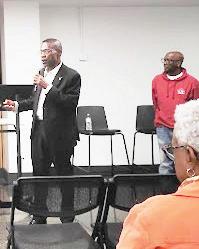
“For two years, we’ve talked about a Black Cultural Center here,” added Wesley Smith, a longtime associate of Braithwaite. “Everywhere you look, there’s a Vietnamese Cultural Center, a Hmong Cultural Center. Everyone has one. But we don’t.”
The final design plans from LSE will be submitted to the city council this fall. In the meantime, residents can vote in a community survey to decide between Change Inc. and Mama Sheila’s for the space. The survey runs through September 12.
Clint Combs welcomes reader responses at combs0284@ gmail.com.




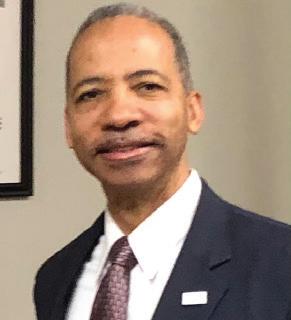
L. Warren & James L. Dawson II, CEO D2 Group LLC (SDVOSB)
Email: info@d2props.com https://jdawson.acnibo.com/us-en/homepage

(l-r) Change Inc. Senior Advisor Jody Nelson, Executive Director Jill Johnson, and Counselor Minkra Tezet take questions from the community.
Frederick Braithwaite (l) and Wesley Smith present their vision for Mama Sheila’s bid to run the Democracy Center’s community space.
LSE CEO Mohammed Lawal presents preliminary design plans to community

By Jasmine McBride Associate Editor
In the heart of St. Paul’s historic Rondo neighborhood, where resilience and community have always been at the center, a homegrown beauty brand is making waves far beyond its roots. Lip Esteem, founded by longtime makeup artist Tameka Jones, has quickly become a staple for women seeking plant-based, high-quality cosmetics that embrace individuality and authenticity.
For Tameka, the journey to entrepreneurship was as much about purpose as it was about passion. She officially launched Lip Esteem on July 14, 2020, at the height of the Covid-19 pandemic and in the shadow of the civil unrest following George Floyd’s murder.
Those overlapping crises inspired her to act.
“I wanted to bring unity back to the community,” Tameka explains. “I had been a makeup artist forever, but when we were furloughed because of Covid, I had time to think. Then George Floyd was murdered, and the city felt heavy. My friends are all kinds of shades of beauty, and I asked myself: “What can I do to keep my own sanity and also bring beauty to others?”
Finding beauty in the ashes

That reflection sparked Lip Esteem’s mission: beauty from ashes. With her savings in hand and a vision to create generational wealth, Tameka took a chance on herself. “I realized I was overworked and underpaid. I decided I’d rather work for myself and be valued than work for someone else who didn’t appreciate me,” she says.

Today, Lip Esteem is flourishing. The brand’s products are sold online, in local coops, and have even reached the national stage as the official lipstick provider for the Minnesota Vikings Cheerleaders and recently the Timberwolves Dance Team. It’s a testament to both Tameka’s artistry and her determination to build something lasting as a Black woman business owner.
At this year’s Minnesota State Fair, Lip Esteem introduced new products that reflect the brand’s ethos of simplicity and versatility. The first is Double Take, a line of blush that also works as a lip tint and eyeshadow.
“Honestly, it should be called Triple Take,” Tameka laughs. “This line was made for busy women who don’t have time for separate products for eyes, lips and cheeks. Double Take pulls your look together in one step, and the

shades look natural but can also go bold.”
Another highlight is Main Character, part of Lip Esteem’s new mood line. These lipsticks
adjust to each wearer’s body chemistry, creating a unique color experience for everyone.
“It’s a red, but it won’t look the same on me as it does on you,” Tameka explains, while holding Main Character. “It’s also a stain, which busy women love, but because it’s plant-based it wears comfortably all day.”
feels complicated. “It feels different,” she admits. “People are bolder with what they have to say. I’ve had to navigate ignorance and divisive comments. But we keep pivoting.
“For those who don’t want to support me because I’m a Black woman, that’s fine. I’ll find the people who do. Lip Esteem isn’t about hate; it’s about beauty, excellence and inclusion.”
Her authenticity resonates with customers who see Lip Esteem as more than just makeup. It’s a brand rooted in empowerment. “People want good products no matter who they come from,” Tameka says. “It just so happens this one [Lip Esteem] comes from a Black girl from Rondo.”
Still, success doesn’t mean the journey has been without challenges. As a Black woman entrepreneur in 2025, Tameka acknowledges that the climate

Beyond the products, Tameka hopes her story inspires others to bet on themselves and chase dreams that can spark change. “Lip Esteem started in a time of pain and uncertainty,” she reflects. “But it became a way to create beauty, to bring people together, and to show that even in hard times something powerful can rise.”
Those eager to offer support who missed the new products at the Minnesota State Fair Grandstand can find Lip Esteem at www.lipesteem.com and across social media at @lip_esteem.
Jasmine McBride welcomes reader responses to jmcbride@








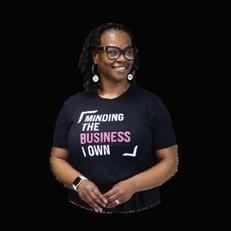
Lip Esteem founder Tameka Jones
Photo courtesy of Lip Esteem
Lip Esteem’s new line, Double Take, acts as both a blush and lipstick and secretively as an eyeshadow, as founder Tameka Jones raves. Photos courtesy Jasmine McBride/MSR
Lip Esteem’s mood lipstick line utilizes the wearer’s body chemistry to create a unique shade and experience for everyone.
Prison labor under scrutiny as advocates push for paid work protections
By Clint Combs Contributing Writer
Minnesota’s prison labor system is under increasing scrutiny after a June 2025 audit found that the state-run program MinnCor Industries has been undercharging private companies while paying incarcerated workers little to nothing. The audit revealed, for example, a $2.4 million undercharge in a contract with Anagram International and a $6.70-per-hour shortfall in the state’s agreement with Plastech Corporation.
At a recent panel hosted by the group End Slavery in Minnesota, advocates called for legislation that would reclassify incarcerated individuals as workers entitled to minimum wage, union protections, wage security, Pell Grants, state scholarships, and even remote work opportunities.
The proposed legislation, sponsored by Sen. Clare Oumou Verbeten (DFL–66) and Rep. Cedrick Frazier (DFL–43A), would repeal the constitutional clause permitting involuntary servitude as criminal punishment, effectively ending forced prison labor in Minnesota.
Panelists highlighted the economic implications of the current system. “Why does it cost more to imprison someone than to educate them?”
asked Haben Ghebregergish.
“If incarcerated people are paying for everything, except maybe the bed they sleep on, where is the money going?”
Erin Sandsmark added:
“We are literally enslaving people to build corporate profit. If people don’t care about those being exploited, maybe they’ll care that this labor is enriching private companies at public expense.”

Black behavior. Students could be punished in school, then face criminal charges outside.”
ited nearly $3 million in 2023 from other services, raising questions about ongoing exploitation.
“Slavery is still in the Constitution,” said Chauntyll Allen, co-executive director of End Slavery MN. “Until we remove that, there’s always going to be a loophole that sends folks back into this system. Right now, that system is mass incarceration.”
The discussion also examined systemic factors pushing youth into the criminal justice system. Shvonne Johnson cited historical parallels: “It was the slave codes that got transferred to the Black codes, which demonized perceived
End Slavery MN has pointed to recent policy wins as examples of incremental change, including the 2023 law eliminating fees for prison phone calls under SF 2909. “People used to go into debt just to stay in touch with their family,” said organizer David Boehnke. Still, telecom companies prof-
Boehnke emphasized the distinction between prison abolition and labor reform:




“People are not sentenced to five years of slavery, but that’s what’s happening. We can address labor abuses without abolishing prisons entirely, and it would be a huge step forward.”
Panelists also underscored the broader societal impact of reform. Ghebregergish described the physical and psychological effects of the current system: “You have to physically bow to leave your cell. That was designed to keep people in a submissive position. This isn’t rehabilitation, it’s degradation.”
End Slavery MN is inviting the public to a Summer Block Party on Saturday, September
opportunity to learn more about the legislation and its potential economic impact.
For more information, visit www.mnendslavery.org.
Clint Combs welcomes reader responses to ccombs@ spokesman-recorder.com.







Continued from page 1
Calls for action
The following day, Mayor Jacob Frey urged lawmakers to enact both state and federal bans on assault-style weapons and high-capacity magazines. “No civilian needs a gun that can fire dozens of rounds in seconds,” Frey said.
Leah Knodes, who leads the Minneapolis chapter of Moms Demand Action, echoed the call, while also noting the cruel reality that children had trained for this moment. “We practiced drills at school, but we never practiced them at the church,” Halsne said. “So when it happened here, it felt way different because we weren’t expecting it.”
Congresswoman Ilhan Omar drew from her own childhood experience surviving war in Somalia: “I never imagined that I’d come to the United States and be in high
LEADERS
Continued from page 1
“People who have a lot of guns, but respect their justified use, don’t shoot each other,” he added.
Tommy McBrayer Jr., founder of Don’t Shoot Guns, Shoot Hoops, brings a youthcentered perspective. A survivor of gun violence, McBrayer Jr. combines basketball with mentorship, providing under-
school and that there would be a school shooting… and that I, myself and my kids to come, would practice school drills on how to avoid being gunned down in one of the greatest nations in the world.”
State Sen. Zaynab Mohammed was blunt: “Offering prayers for the victims is not enough. It makes me sick that our teachers and kids know what to do in the event of an attack.”
A pattern of violence
The Annunciation shooting was the second mass shooting in Minneapolis within 24 hours, following a Tuesday attack near Cristo Rey Jesuit High School in the Phillips neighborhood that left one dead and six injured. Just two months earlier, on June 13, a shooter killed Minnesota State Representative Melissa Hortman and her husband while wounding two others in a related attack.
“This wasn’t random,” said Angela Ferrell-Zabala, executive director of Moms Demand Action. “In backto-back days, Minneapolis
served youth a safe space to process trauma and develop social-emotional skills.
“Basketball is a social, emotional sport,” he explained. “You get to let out energy and stress. Linking it to the reduction of gun violence allows kids to see a different path, to forget trauma even for a little while, and to feel joy and achievement.”


rying out their own.
Still, Chief O’Hara cautioned that the evidence is incomplete. “We have not found proof of radicalization online,” he said. “So far, what we see is a general fascination with previous shootings.”
Looking ahead
experienced mass shootings. Yesterday, the shooter aimed an AR-style rifle built to kill as many children as quickly as possible through the windows of a church and opened fire.”
Democratic lawmakers, including State Reps. Erin Murphy and Jamie Long, renewed their push for an assault weapons ban. “We have to take the vote,” Murphy said. Long acknowledged he had drafted such a bill but hesitated to introduce it. “Part of the thought was we weren’t
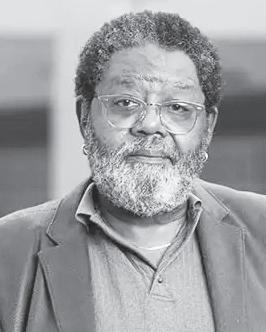
McBrayer Jr.’s program incorporates conversations with survivors of gun violence, offering relatable role models who demonstrate that coping and healing are possible. He also challenges the misconception that gun violence is an “inner city” or “Black problem.”

“It’s a people problem,” he said. “Suicide and other forms of violence affect everyone, yet the media narrative often stigmatizes Black youth. We need to address this together.”
Policy leaders are echoing calls for comprehensive action. Senator Bobby Joe Champion stressed the dual importance of mental health support and gun reform. “In the African American community and beyond, we need to destigmatize mental health and ensure people feel comfortable seeking help,” Champion said.
“At the same time, banning
GOLF
Continued from page 1
have felt this game was for them. Now, they do.”
In the end, Be The Change’s golf tournament isn’t just about fundraising or friendly competition. It’s about rewriting the narrative of who belongs on the course and proving that the greens and fairways can be just as much a place for youth
of color to dream, grow and thrive as any basketball court or football field.
For more information on Be The Change MN, visit www. bethechange.com on First Tee, at www.stpaul.golf/first-teesaint-paul; on Solomon Hughes Sr. Golf Academy, at www.shsga.org; and on Par365 Golf, at www.par365golf.com.
Jasmine McBride welcomes reader responses at jmcbrde@ spokesman-recorder.com.

ready,” he said.
Legal purchases, troubling signs
Police confirmed that Westman legally purchased three firearms and had no criminal history. “There is nothing in the evidence to indicate he acquired these weapons unlawfully,” Chief O’Hara said.
Drew Evans, superintendent of the Minnesota Bureau of Criminal Apprehension, added: “This individual was not arrested for anything that would pro-
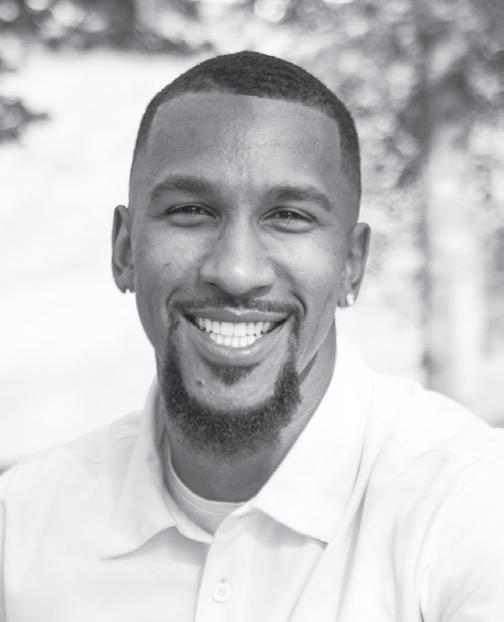
assault weapons is crucial. Both things are important.” Champion emphasized that incidents cannot be attributed solely to mental health issues; safe communities, resources for youth, and access to counseling must also be part of the solution.
hibit a purchase. There was no substantive police contact that would have raised concern.”
Investigators are now reviewing social media posts and videos allegedly uploaded by Westman, which show an obsession with past school shootings and magazines marked with the names of notorious attackers. If confirmed, his actions would mirror recent cases in Madison, Wis., and Nashville, where shooters glorified previous massacres before car-

Mayor Jacob Frey has been vocal about banning assault weapons and high-capacity magazines. At a recent press conference following the shooting, he said, “We need a statewide and a federal ban on assault weapons. There is no reason that someone
“Why is it that it is easier for our young people to access guns than it is a scholarship or holistic health resources? This imbalance of resources is leading to poor outcomes where respect for access to gun use is mismanaged.”
Despite Democratic control of Minnesota’s governorship and legislature, lawmakers have not passed an assault weapons ban or restrictions on high-capacity magazines. Advocates say the latest tragedy underscores the urgency. With a Republican Congress and a divided statehouse, progress remains uncertain. Mayor Frey was direct: “I think we’d be happy to ban assault rifles here in Minneapolis.”
As the city mourns two young lives cut short and dozens more forever changed, the debate over how to prevent the next tragedy looms large and unresolved.
Clint Combs welcomes reader responses at combs0284@ gmail.com.
should be able to reel off 30 shots before they even have to reload.” He also expressed a willingness for Minneapolis to enact its own measures if higher levels of government fail to act.
The community’s response has been immediate and collaborative. Vigils and memorials honored the victims, while organizations like McBrayer Jr. ‘s and local mental health providers offer counseling and safe spaces for dialogue. The tragedy has prompted renewed conversations about the mental health impact of gun violence, particularly for youth who are disproportionately affected by trauma and stress.
As Minneapolis mourns, the collective call is clear: Preventing gun violence requires addressing emotional and mental health, fostering community engagement, providing youth mentorship, and pursuing targeted legislative reforms. Leaders say that only through holistic, peoplecentered strategies can future tragedies be prevented and communities begin to heal.
Jasmine McBride welcomes reader responses at jmcbride@ spokesman-recorder.com
Back in the Day award honors Al Brown as ‘Guardian of the Story’
By Jasmine McBride Associate Editor
Minneapolis community leader and journalist Al Brown was honored with the 2025 Southside Back in the Day Guardian of the Story Award in recognition of his decadeslong dedication to the Black Press and his unwavering service to the community.
The award, presented by Minnesota SpokesmanRecorder publisher Tracey Williams-Dillard during this year’s Southside Back in the Day celebration, highlighted Brown’s legacy as a writer and community voice whose work has consistently uplifted Black stories and preserved local history.
“Through your balanced pen and lifelong service, you have uplifted voices, preserved history, and inspired generations,” the award inscription read.
Brown has long been a fixture in the Twin Cities, chronicling the joys, struggles and resilience of Minneapolis’
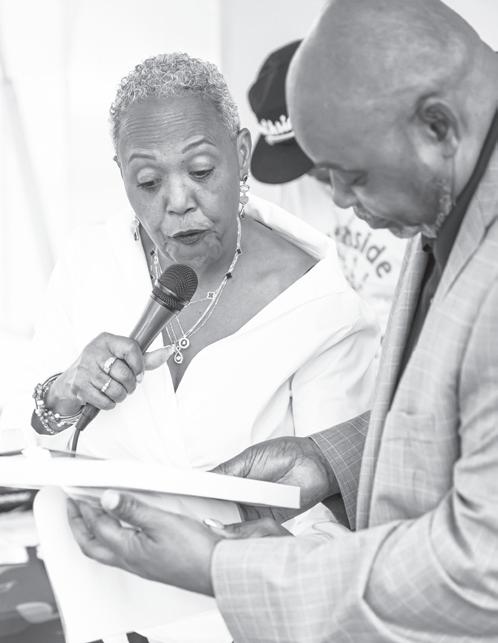
Minnesota Spokesman-Recoder publisher and CEO, Tracey Williams-Dillard, awards community leader and journalist, Al Brown, with the 2025 Southside Back in the Day Guardian of the Story Award in recognition of his decades-long dedication to the Black Press and his unwavering service to the community. Photos courtesy of Steve Floyd/ MSR
Black community. His commitment to honest reporting and storytelling has cemented his reputation as a guardian of memory and truth, a role that
Southside Back in the Day sought to recognize with this year’s honor.
The Guardian of the Story Award serves not only as recognition of Brown’s professional contributions but also as a gesture of gratitude for his lasting impact on the cultural and social fabric of Minnesota.
“With deepest gratitude, we thank you for your significant contributions,” the Southside Back in the Day family shared. For attendees and community members, Brown’s recognition was more than an individual award; it was a celebration of the Black Press as a cornerstone of justice, representation and empowerment.
The gathering brought together generations of Minneapolis residents to celebrate the history, culture and resilience
“Through your balanced pen and lifelong service, you have uplifted voices, preserved history, and inspired generations.”
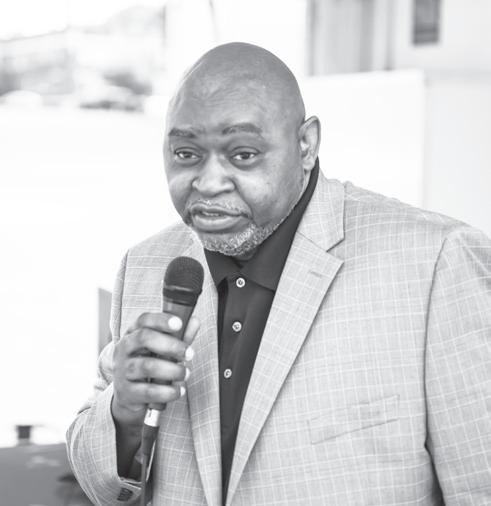
of the city’s Black community. Hosted annually, the event is both a reunion and a living archive, featuring music, food, storytelling, and tributes that honor the pioneers who laid the foundation for today’s Southside. More than just a celebration, it serves as a reminder of the importance of preserving community memory and passing down stories that continue to shape the future. To view the full photo collage from the event, visit our website at www.spokesman-recorder. com, under the events tab. Jasmine McBride welcomes reader responses at jmcbride@ spokesman-recorder.com.
Hennepin County Sheriff Dewanna Witt hugs State Rep Emma Greenman at City Hall as Mom’s Demand Action Executive Director Angela Ferrell-Zabala calls for a federal weapons ban.
Minneapolis Mayor Jacob Frey calls for a federal assault weapons ban and warns that Minneapolis will pass a ban if state and federal lawmakers fail to act.
Photos by Clint Combs/MSR
Sam Simmons Jr. National Alliance on Mental Illness (NAMI) MN
Tommy McBrayer Jr. Don’t Shoot Guns, Shoot Hoops
Senator Bobby Champion Minnesota Senate DFL
Minneapolis Mayor Jacob Frey pushes for an immediate assault rifle ban. Mayor Jacob Frey via Facebook
Arts & Culture
Selby Avenue JazzFest returns, led by Walker West
tion spans genres from classical to gospel, with a special emphasis on jazz and improvisational music.



By Robin James Columnist
For the second year in a row, Walker West Music Academy is at the helm of the beloved Selby Avenue JazzFest, happening Friday through Sunday, September 12–14, at the intersection of Sel-
by and Milton in St. Paul. Festival hours run from 11 a.m. to 7 p.m., and as always admission is free.
This year’s lineup showcases both national and local talent, with a special focus on Walker West faculty and students, giving young performers valuable experience on stage. Featured artists include Cory Henry & the Funk Apostles, The Yuko Mabuchi Trio, Heyarlo, Brio Bass, the Walker West Jazz Ensemble, and the Selby Avenue Brass Band. Full bios and schedule details are available at selbyavejazzfest.com/line-up.
In addition to world-class music, festivalgoers can enjoy food trucks, a village market, and a family fun zone. “Bring a chair and be prepared to be entertained,” the festival promises.
Masterclasses expand the experience
The celebration kicks off early with a Friday night masterclass, “Jazz, Tech & The Future: Shaping the Sound of Now,” featuring Kris Johnson, Q Million

Riddim, and Room3Jazz. That event takes place September 12, from 5-8 p.m. at Walker West.
On Sunday, September 14, from 3-5 p.m., Grammywinning keyboardist and multi-instrumentalist Cory Henry leads another free masterclass at Walker West. Both sessions are open to the public, but seating is limited and requires registration at selbyavejazzfest.com/masterclass.
A community legacy
Founded in 2002 by Michael Wright and his wife Stephanie, then-owners of Golden Thyme Coffee & Café, the Selby Avenue JazzFest has grown into a signature St. Paul event, drawing more than 12,000 attendees each year. In 2023, Wright invited Walker West Music Academy to take the lead in producing the festival. Wright remains involved as a consultant, while
Walker West’s executive director Braxton Haulcy sees the partnership as a natural fit.
“Taking JazzFest aligned with our strategic plan,” Haulcy says. “We want to be out there performing. We’re sending our kids and teachers into the community to perform on behalf of Walker West. There are two ways people heal and benefit from music: by learning it and by listening to it. Those two anchors will continue to
drive Walker West forward.”
Walker West’s growth and vision Walker West Music Academy, founded in 1988 by Rev. Carl Walker and Grant West, is one of the oldest community music schools in the country established by African American musicians. Located at 650 Marshall Avenue, the academy serves more than 5,600 students annually, ranging in age from five to adult. Instruc-

Earlier this year, Walker West entered a new chapter, moving into a state-of-theart facility featuring acoustically treated studios, rehearsal rooms, performance spaces, and fully accessible design. The investment represents the academy’s ongoing commitment to making highquality music education both affordable and accessible. With its mission rooted in

community, education and artistry, Walker West’s leadership of the Selby Avenue JazzFest ensures that this beloved tradition continues to thrive, celebrating jazz not just as music but also as a vehicle for healing, connection and joy.
Robin James welcomes reader responses at jamesonjazz@ spokesman-recorder.com






















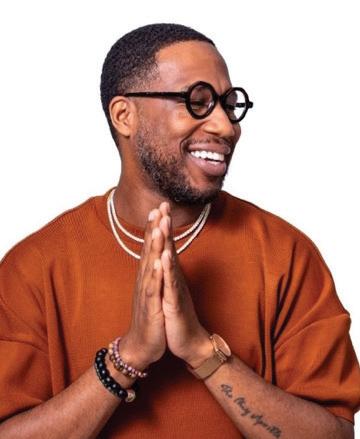
2025 JazzFest performing artist, Cory Henry, who is a Grammywinning artist, composer, producer, and keyboardist known for his genre-blending sound across soul, jazz, gospel, R&B, and funk. He is performing with his band The Funk Apostles.
Photos courtesy Selby Avenue JazzFest
Selby Avenue JazzFest 2024
Photo courtesy of Steve Floyd
2025 JazzFest performing artist, Yuko Mabuchi, a celebrated pianist known for blending jazz, classical, R&B, and blues into a vibrant, cross-cultural sound. She is performing with her band, The Yuko Mabuchi Trio.
2025 JazzFest performing artists, HEYARLO, a Minneapolisbased instrumental group known for lush, genre-blending soundscapes that fuse soul, funk, hip-hop, and jazz.
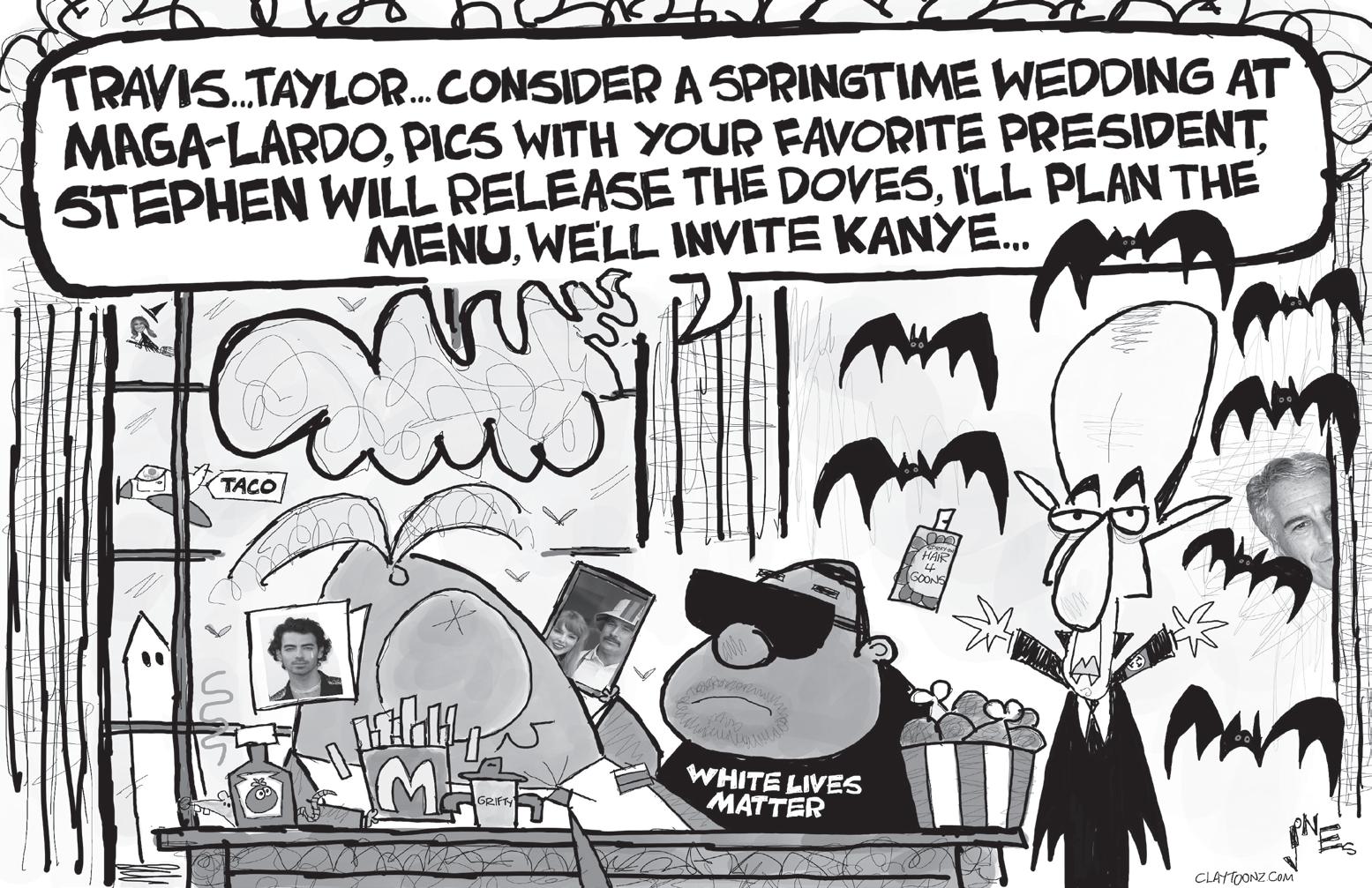
By Alvin Brown
President Trump says he’s sending troops to Chicago next. But the question is this: coming to do what?
We’ve seen this play before. In 1981, Mayor Jane Byrne moved into the Cabrini-Green housing projects to “understand” the crime affecting residents. She lasted three weeks, surrounded by heavy security. In the end, it was nothing more than a publicity stunt. Nothing meaningful changed for the people living there.
and Los Angeles? According to crime statistics, they aren’t even the worst. Chicago ranks 48th in yearly crime per 100,000 residents. D.C. is 33rd. Los Angeles, often painted by Trump as a city overrun with violence, comes in at 137th. For context, Minneapolis ranks 6th. Salt Lake City, Utah, ranks 10th, higher than Chicago, D.C., and L.A. combined. But you don’t hear any talk of occupying Salt Lake City. Why not?
The comforts of the wellto-do, their daily routines, would grind to a halt. And for the poor, whose existence is already strained, life would only get worse. When people who feel they have nothing to lose are pushed into a fight, the results are explosive. I don’t think this president understands the consequences of occupying these cities.
By David Adams and Keri Rodrigues
In the Maasai culture of East Africa, the traditional greeting is not “hello,” but “Kasserian Ingera?” — “How are the children?” It’s a question that speaks to a society’s priorities. The well-being of children isn’t just a private concern — it’s the measure of a nation.
By that standard, we are falling short. Our children are under attack and they are not well.
Trump policies harm children
It is not hard to see the contempt that some in power have for children. In early July, without explanation, the Trump administration froze congressionally authorized federal spending for youth development and after-school programs, putting thousands of local initiatives — including Boys and Girls Clubs and school-based community centers — at risk of closure across the country.
After weeks of chaos (and litigation) there was a partial thaw. But it is not enough. These programs provide safe spaces, mentorship, enrichment and support for working families. We know this to be true through experience.
For example, at the Urban Assembly Unison School, a middle school in Brooklyn, 70% of students participated in city-funded after-school programs that support their social, emotional and academic development. These are the programs that help keep children safe, growing and thriving all year long. They should never
have been cut in the first place. These casually imposed and reversed cuts are not the only damage the Trump administration is inflicting on children. Also harmful are changes to food aid and health care that will make it harder for children to have those things, as well as the evisceration of the federal Department of Education. About 8% of New York state’s education spending is federally funded, but that percentage is much higher in more rural areas. More than half of the districts that will see the largest cuts are in rural West Virginia, Florida, Georgia and California, and they serve a much larger percentage of students affected by poverty. These are real children
communities and our nation.
Let’s lift our children up.
Every day, we see the benefits of nourishing children with food, knowledge and ambition. In Urban Assembly schools, where 87% of our 9,000 students face economic hardship, graduation rates are among the highest in New York City. That’s because students get what they need: food, high-quality academics, social-emotional learning, and teachers who see and develop their potential.
The Trump administration’s policies harm children, including those the Urban Assembly serves. The relationship between poverty and academic achievement is already too strong. A 2005 meta-analysis
“These are the programs that help keep children safe, growing and thriving all year long. They should never have been cut in the first place.”
At the same time, proposed changes to the Supplemental Nutrition Assistance Program (SNAP) would cut food benefits for millions of Americans, all while stripping over a million children of access to free school meals.
In a country where 1 in 5 children live in households where there isn’t enough food to eat, this isn’t just bad policy — it’s a direct assault on children’s health, development, and dignity. These are real children the federal government is proposing to harm, with ambitions and aspirations to contribute to their

across 60 studies demonstrates a strong negative correlation between socioeconomic status and academic achievement. That means poorer students consistently perform worse in school.
More recent research found that the achievement gap between children from wealthy and impoverished families has grown by 40% since the 1960s. We can do better.
And while the pandemic has exacerbated students’ academic challenges, as shown by declining NAEP scores in reading and math, surely making kids hungrier will not help. When children are undernourished, unsupported, or left without stable environments, their ability to learn — and to thrive — erodes.
The federal government has a responsibility to our nation’s children. The preamble to our Constitution commits us to “secure the blessings of liberty to ourselves and our posterity.” That includes making sure every child has enough to eat, a safe place to grow, and a real shot at the future.
Instead, this administration is reneging on that promise from our nation’s Founders. But we will not.
Attacking children never popular
This administration may be comfortable with a decision to throw away children’s lives, but we must not be. The American people do not agree with this war on children. Attacking children has never been popular.
Investing in education reflects society’s clearest investment in itself. As Frederick Douglass reminded us, “It’s better to build
So, when the military occupies Chicago for three weeks and leaves, what then? Unless you target a problem at its core, all the military might in the world won’t change a thing. Residents will still be hungry, still in need of jobs, still searching for quality housing. Youth will still be left idle, with no Job Corps programs to occupy their time.
And why Chicago, D.C.,
The military presence in Los Angeles and D.C. did nothing but inconvenience residents as ICE sought the undocumented. Trump is playing with a powder keg. Anarchy is bad for everyone.
Chicago already has 11,700 police officers. If that’s not enough to keep crime at bay, then no amount of military presence will do better. The real solutions lie in addressing the root causes of crime: poverty, housing, joblessness, and the unchecked flow of cartel drugs into the city.
A long-term military occupation would be too costly, unsustainable and unwelcome. What this country needs is investment in communities, not intimidation from soldiers on the streets.
Labor Day 2025 finds Black worklife precarious
By The Rev. Terrence L. Melvin
Labor Day 2025 seems like a good time to ask a long neglected question: What is the State of Black work life in America?
Whiplashed by the daily grind and Donald Trump’s relentless War on Blackness, worklife for most Black folks is about vigilance to cope with the unexpected and resilience to overcome barriers meant to constrain or exploit our presence.
We know we’re in a dangerous moment when the President of the United States would minimize “how bad slavery was.” To whom, sir? And this is the man who has seized control of the National Museum of African American History and Culture. What could possibly go wrong here?
Fact check: Donald Trump has made the federal government hostile to Black workers, and he has stoked that hostile posture beyond the government. Consequently, America is on edge, putting Black workers in a vulnerable position. Black workers are leaving jobs at twice the rate of white workers, hoping to escape toxic racial bias.
State of Black worklife
Black worklife remains a test of resiliency and protecting our humanity from evil jesters seeking revenge. Hard work we do, working two or three jobs to make ends meet on thin paychecks that don’t stretch far enough to even pay for a $10 dream.
And recent economic reports bring bad news to Black workers: Black unemploy-
ment surged to its highest level (7.2%) since the dark days of the Covid-19 pandemic. At the same time, white workers are keeping a significantly lower rate of 3.7%, creating an employment gap that’s nearly double. Contributing to the employment crisis of Black workers is the drastic reduction of the federal workforce and the impact of Trump’s disastrous tariff policies. It’s really hard to process the damage that has been done in just eight months.
workers is Black.
• Many of the agencies targeted for harsh cuts have the highest percentages of Black workers, such as the Department of Education (28%).
• More than 226,000 Black women lost their jobs during Trump’s DEI purge.
Trump intensified his brutal Black attack when he illegally stripped millions of federal employees of their union contracts that guaranteed their wages, job safety, and benefits. In spite of being denied access to tens of millions in
Since Trump signed an executive order banning diversity, equity and inclusion in all federal agencies and programs, his War on Blackness has escalated:
• He fired Carla Hayden, the first African American librarian at the Library of Congress, for no cause other than her complexion.
• He tried but failed to fire Gwynne Wilcox, the Black former chair of the National Labor Relations Board (NLRB).
• Today, he is trying to remove Lisa Cook, a noted economist and Black member on the powerful Federal Reserve Board.
Trump’s hostility toward Black people goes far beyond his attacks and obsession with DEI. He and his authoritarian alter ego, Elon Musk, have severely gashed and slashed the federal workforce. The hemorrhaging of federal jobs has been felt disproportionately by African Americans:
• Nearly 1 out of 5 federal
dues money, their unions have been going toe-to-toe with the Trump regime to reverse his anti-union actions. This is blatant retaliation. And it magnifies the hardship felt by federal workers, who are going through the trauma of sudden firings or reassignments, missed bill payments, and anxiety about their future.
Their fight is our fight. And the fight for labor rights is also our fight for racial justice. One thing is certain: Black worklife will keep evolving to keep pace in a volatile world where Black labor still carries the torch for equality and freedom.
The Rev. Terrence L. Melvin is president of the Coalition of Black Trade Unionists. This commentary was originally published in the National Newspaper Publishers Association (NNPA). It was edited solely for length. For the full commentary, visit www.nnpa.org/nnpa_ newswire/blacklaborday2025/.
ProSe
STATE
COUNTY OF HENNEPIN
State of Minnesota, by its Commissioner of Transportation, Petitioner, vs. The Estate of Leo V. Hendrickson, et al. Respondesnts.
IN THE MATTER OF THE CONDEMNATION
To the Respondents hereinabove named:
You, and each of you, are
at https://Zoomgov.com/join, or
YOU, AND EACH OF YOU, ARE FURTHER NOTIFIED,
Employment & Legals
Hennepin, Don Hendrickson, also all other persons unknown claiming any right, title, estate, interest or lien in the real estate described in the Petition
Respondents. IN THE MATTER OF THE CONDEMNATION OF CERTAIN LANDS FOR TRUNK HIGHWAY PURPOSES
PETITION
To the District Court above named the State of Minnesota brings this Petition and respectfully states and alleges:
That Trunk Highway Legislative Route numbered 383, which has been renumbered 169, and which has been located according to law and passes over the lands herein described.
That it is duly covered by Right of Way Plat Order numbered 100810. II.
That the Commissioner of Transportation deems it necessary that the State of Minnesota for trunk highway purposes obtain the lands herein described in fee simple absolute, together with the following rights: to acquire all trees, shrubs, grass and herbage within the right of way herein to be taken, and to keep and have the exclusive control of the same, and further, to acquire a temporary easement in those cases which are herein particularly mentioned. Petitioner hereby moves the court for an order authorizing the Court Administrator to accept and deposit payments from the Petitioner to the court pursuant to Minn. Stat. § 117.042.
Petitioner hereby moves the court for an order transferring title and possession of the parcels herein described, prior to the filing of an award by the court appointed commissioners, pursuant to Minn. Stat. §117.042.
Further, Petitioner hereby moves the court for an order requiring the parties to exchange any appraisals at least 14 days prior to a commissioners’ hearing, pursuant to Minn. Stat. § 117.036.
The Petitioner reserves its right to recover costs of clean up and testing and all other damages arising from the presence of pollutants, contaminants, or hazardous materials on the property described herein, from all potential responsible parties, including respondents herein where appropriate, in a separate legal action to the extent permitted by law. III.
That the following described lands in these proceedings taken are situated in Hennepin County, Minnesota; that the names of all persons appearing of record or known to your
Petitioner has been able by investigation and inquiry to discover, together with the nature of the ownership of each, as nearly as can be ascertained, are
All of the following:
That part of the Northeast Quarter of the Southeast Quarter of Section 12, Township 117 North, Range
the Registrar of Titles in and for Hennepin County, Minnesota; the title thereto being
Employment & Legals
Business Systems Analyst
IT Company (Minnetonka, MN) seeks Business Systems Analyst to utilize statistical and data analysis to implement security procedures, techniques, and remediation plans. Develop and maintain queries, reports, and metrics, to provide customized information for users to make business decisions. Perform quality assurance and user acceptance testing for new developments meant to close security vulnerabilities in systems. Conduct reviews of existing procedures (business and technical processes) to improve protections across the company. Salary: $97,032.00 - $97,500.00/year +
Benefits: Health Insurance, Holidays, Sick Leave or PTO. Send resumes to: HRD, Maritz Consulting (d/b/a Ledelsea), 12800 Whitewater Drive, Suite 40, Minnetonka, MN 55343
games at St. Scholastica (Sept. 20) and Saint John’s (Sept. 27), the football team opens its 2025 home portion of the schedule Oct. 4 vs. St. Olaf.
“They’re buying it,” stressed Ware of his squad.
“We’re still teaching. That’s what we’re doing each and every single day.”
Augsburg opens the 2025 season at Valley City (ND) State University Sept. 4 at 6 pm. After two more road
“A lot of good work out here today,” said Ware after the Aug. 23 joint practice/ scrimmage against Hamline.
Charles Hallman welcomes reader comments to challman@ spokesman-recorder.com.
VIEW - TAYLOR
Continued from page 10
Hamline opens the 2025 season Sat. Sept. 6 at home vs. Crown at 1 pm, the first of three straight home contests.
“You can’t simulate game
POWERS
Continued from page 10
20+ scoring games, two 30+ games, five 10+ rebounding games, nine 3+ steals, and five career double-doubles.
To her credit, Powers has a championship ring (2019, Washington), is a 2016 WNBA All-Rookie Team member, and played with four clubs prior to this season.
This season, Powers wore her fifth and sixth career W uniform — a couple of games with Golden State earlier this season, and Indiana in August signed her to a hardship contract.
“I’m excited to be here,” said
speed,” said Taylor after his team’s participation with Augsburg in a joint practicescrimmage Aug. 23 at Augsburg. “I think both teams played fast, play magical. It’s good work.”
Charles Hallman welcomes reader comments to challman@ spokesman-recorder.com.
Powers after the August 24 Minnesota-Indiana contest.
Since college, Powers has virtually played nonstop hoops either in the W or overseas. “The thing with my mom when she had a brain tumor and other things in my family made me realize that basketball isn’t the only thing,” she admitted. “I love basketball. I’m always playing basketball…[but] I miss a lot of time with my family. “So, this time I was able
“I’m
excited to be here. We’ll see how everything goes.”
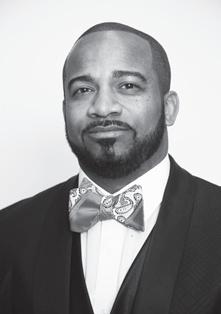
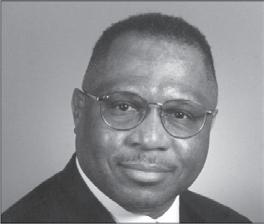
Department/MN Spokesman-Recorder
Phone: 612-827-4021 FOR BILLING

INQUIRIES & TEARSHEETS
PLEASE CONTACT
ACCOUNTING DEPT
BILLING@SPOKESMAN-RECRDER.COM
SOE
Continued from page 10
The city certainly has changed a lot, but for the better? The woman who checked me in for my media credentials, a
EMPLOYMENT DISPLAY
look forward to a wonderful weekend.”
SIZE: 2COL X 3 INCH
The final score — Kentucky State 34, Central State 24 — culminated my first-ever Black college football game in person. I watched it in my hometown, which I left for good in 1980, at the downtown football stadium built just a few blocks south from where I spent the first 14 days of my life where the old Women’s Hospital once stood.
RATE: $44.60 PER COL. INCH TOTAL: $267.60
Please proof, respond with email comfirmation to ads@spokesman-recorder.com

it’s faced economic challenges over the years, not unlike the larger Detroit that completely surrounds it, with
bemoaned how much Motown has changed over the decades.

The MSR handles billing digitally. This means you will get e-tears and emailed invoices unless you specifically request a hard copy.
Downtown Detroit now has three major stadiums located within a few short blocks of each other, and an arena that houses both the Pistons and the Red Wings. It is adjacent to The District Detroit where entertainment, shopping and dining venues surround the ballparks.
The day before the game, I took a personal tour of the D.
to spend a lot of time on my mom, my dad, my brother, and do things that I’ve never done,” said Powers. “It was more just me keeping my faith in the Lord and staying ready.”
When not hooping, Powers is a co-owner of Team Liquid, an esports organization, and has a strong presence on social media as she regularly promotes gaming, especially for Black girls and women.
Powers’ contract is a seven-day pact, so it’s not certain if it will be renewed by the Fever once it reaches its limit: “We’ll see how everything goes,” she said. “The team in the locker room has been amazing. The girls really like each other. This weekend Indiana announced that they
native Detroiter who works for a local nonprofit, said that gentrification has engulfed the city, especially downtown and Midtown.
I then rode the Woodward bus, which runs on the city’s main street through Highland Park, population 8,390, located about six miles north of downtown. Known as the birthplace of Henry Ford’s first Model T assembly line,
have signed her to a second 7-day hardship contract.
“Just trying to fit in and be everything they need me to be,” concluded Powers.
Broadcaster rankings
Awful Announcing’s 2025 WNBA local broadcaster rankings were released August 28. According to Andrew Bucholtz, over 3,500 votes were cast by respondents on the 13 team broadcasting teams, many of which have Blacks on them.
New York Liberty, Indiana, Seattle, Los Angeles, Connecticut and Minnesota, which includes veteran analyst Lea B. Olsen, all received A’s. The other teams — Chicago, Phoenix, Atlanta, Washington, Gold-
a 41% poverty rate and 87% Black. A childhood friend, while later driving me around the city, calls downtown Detroit “Ilitchville” and “Gilbertville,” named for the two local White moguls, the Ilitch family and Dan Gilbert, who combined own about 70% of the downtown office space. My friend has lived in Detroit his entire life since college and
en State, Dallas and Atlanta, which has an all-Black broadcast team — all received B’s.

HBCU4Us Association formed
The four HBCU conference commissioners have combined to create the HBCU4Us Association. It was established on July 30 and announced in August.
Sonja Stills (MEAC), Charles McClelland (SWAC), Jacqie McWilliams Parker (CIAA) and Anthony Holloman (SIAC) make up the historic quartet. “Together, these conference commissioners will serve as the gatekeepers
A Black man who works at the hotel I stayed in is from my generation, another longtime Detroiter who confirmed the aforementioned Black female’s simple assessment: “The neighborhoods have not changed. The downtown area is beautiful, but everywhere else is about the same.”
Finally, both HBCU alumni enjoyed last weekend’s Classic and all the events surrounding it, especially in Detroit, which Cox proudly pointed out “has been a hub of Black culture.” The Classic last weekend “brings back the pride of being Black,” she stressed.
Concluded Dunigan, “That we have an opportunity to have a Classic here is super special. We’re happy to have it back” after nearly 20 years.
Charles Hallman welcomes reader comments to challman@spokesman-recorder.com.
of HBCU athletics, providing a unified voice and strategic direction for the four conferences,” said a press release.
The HBCU4Us Association will primarily focus on student-athlete leadership and development; cultural heritage preservation; competitive excellence; financial sustainability and partnerships; unified advocacy; and holistic student-athlete welfare.
“The alliance represents a historic commitment to elevating the profile of HBCU athletics amid a rapidly evolving collegiate sports landscape,” concluded the release.
Charles Hallman welcomes reader comments to challman@ spokesman-recorder.com.
Tailgating across the street from Ford Field
Photo by Charles Hallman

Augsburg and Hamline football teams on Nov. 15 in Minneapolis will meet for only the second time in MIAC history that Black head
Black head coaches to face off in Augsburg-Hamline contest
coaches will face each other. KiJuan Ware (AU) and Chip Taylor (HU) coached against each other in 2021 when the former was Macalester
interim football coach. Ware this season is Augsburg’s first year head football coach; Taylor is in his ninth season as HC, and 12th year overall
Ware
sees
‘a
lot of good work’
he Augsburg football team might be the most diverse team in the MIAC – 47 of 81 players on this year’s roster is Black, as is their football coach KiJuan Ware, who was hired this
summer as the school’s first Black football head coach.
“I love the energy,” Ware told me before a practice. “They’re coming together as a unit.”
Ware returns to the Minneapolis school located in the

Cedar-Riverside area after his recent stint at Division II Shippensburg (Pa.) University offensive coordinator, recruiting coordinator and quarterbacks coach last season. He was defensive backs coach and recruiting coordinator during his two seasons at AU (2022-23). He has at least a quarter-century of coaching experience, including coaching at six different DI schools in a variety of roles.
He also returns to the MIAC – Ware served as interim head coach at Macalester College in 2021 after serving as the Scots’ offensive coordinator the prior two seasons.
“I’m confident Coach Ware will lead our program to new heights – on the field and in the classroom,” said Augsburg Athletic Director Amy Cooper of Ware.
The first year Auggies head coach pointed out that his squad are “becoming students of the game.”
Fab Five photos
Moody leads St. Paul Johnson past St. Agnes
his week’s Fab Five photo spread features the St. Paul Johnson Governors’
57-30 prep football season opening victory over St. Agnes Friday evening, August 29, at Sea Foam Stadium (Concordia University St. Paul).
Three first-half touchdowns
by senior receiver Justice Moody and an interception return for another score by senior defensive back Anthonny Stevenson led the Governors, who also got outstanding performances by senior quarterback Ali Farfan, sophomore lineman Fred Steward, junior linebacker Colin Moore Jr., senior running back Jacoby Wiggins, and senior quarterback/defensive back Daemajeon Henderson Running back Evonson Plamann’s first-quarter touchdown run and an 88-yard kickoff return for another score led the Aggies.
Dr. Mitchell Palmer McDonald welcomes reader comments to mcdeezy05@gmail.com.
By Charles Hallman Sports Columnist
at the school.
The MSR spent time with both teams in separate days during the week of August 18, and watched the two squads
in a joint practice/scrimmage at Augsburg August 23. Special thanks to both Head Coaches Taylor and Ware, their respective coach-
ing staffs and players for their cooperation in allowing us unfiltered access as they prepared for their season openers this week.
Taylor says
‘We’re getting there’
harles “Chip” Taylor begins his ninth season as Hamline head football coach. By virtue of his years of service, Taylor is the ‘dean’ of MIAC Black coaches.
“Part of my job is getting everybody on the bus, and then the second part of it is getting everybody on the right seats on the bus,” Tay-

lor said simply after a practice. He was pleased with his squad’s performance that day: “We got a long way to go (but) we’re getting there,” he pointed out.
“Defense is obviously a little bit ahead of the offense. We got to get our second teams caught up with the defense,” the coach stressed.
Taylor has years of coaching experience, even before he arrived at Hamline as defensive coordinator (201315) before being named HC in 2016.
Jon Brown is in his first season as the Pipers’ offensive coordinator. He let me sit in on an offensive team film session, in which he broke down the players’ work at practice earlier that day.

“This isn’t really about football,” Brown told me afterwards. “It’s about our disposition, how we approach our own lives. So, I wanted them to be encouraged that they have the stuff that they need (to be successful).
“None of that is worth anything if we don’t believe in ourselves,” reiterated Brown.
“That’s what I was trying to convey.
“We’re nitpicking technique,” he surmised. “They’re not really messing up.”
■ See VIEW - TAYLOR on page 9


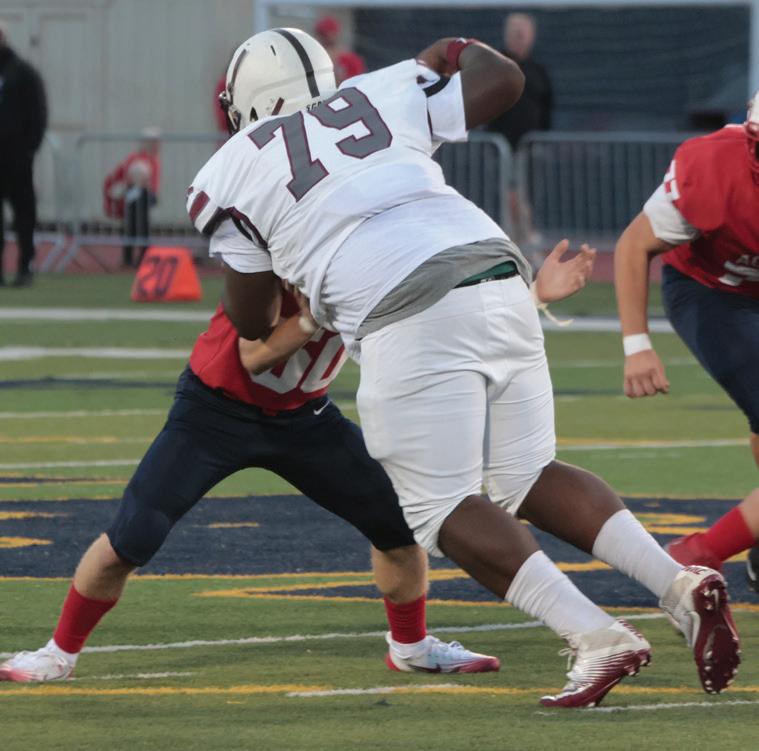
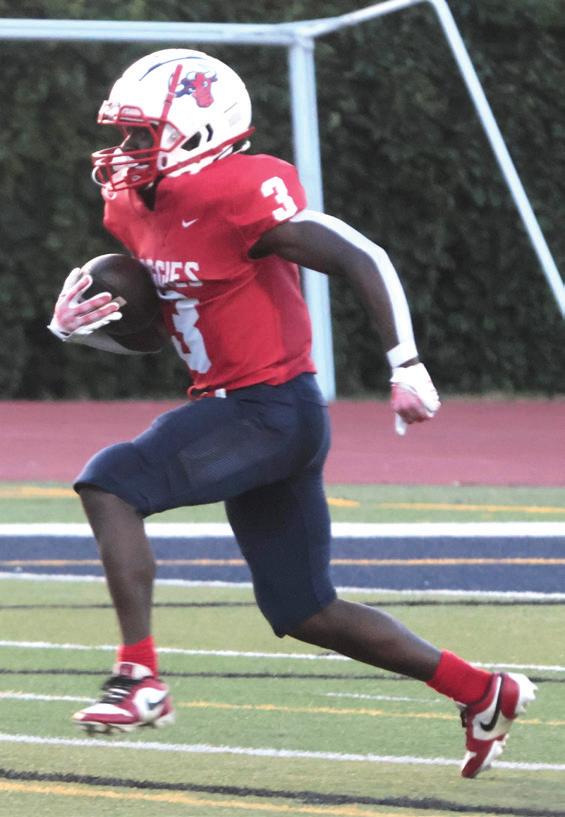


ETROIT— The Detroit Football Classic, last played between 2003 and 2007, returned to Motown last Saturday after a 20-year hiatus as Kentucky State and Central (Ohio) State played at Ford Field, home of the NFL’s Detroit Lions. Other activities included a kickoff tailgate and fan experience and an after party.
“Today highlights that legacy and celebrates Black excellence and strengthens connections between HBCUs and the legacy of the city,” said

a
Saturday across the street from the stadium. Last weekend’s events in essence created “the family atmosphere, the community… to bring [Central State] and Kentucky State together” in Motown, she said.
“It
brings the HBCU culture to the City of Detroit.”
“It brings the HBCU culture to the City of Detroit,” said Kentucky State Class of ’94 grad Eric Dunigan, a native
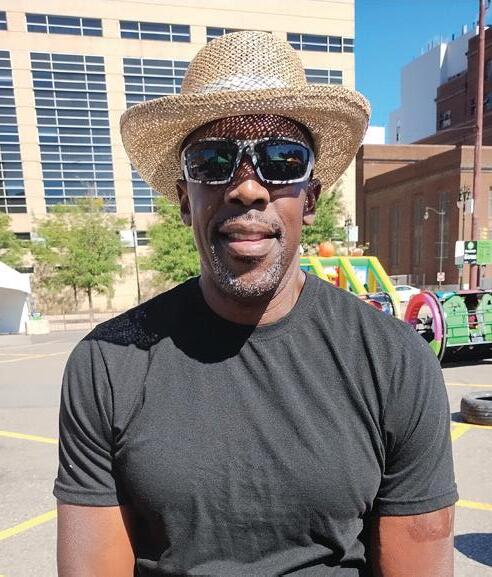
Starre Cox of Columbus, Ohio,
1997 Central State grad. She spoke to us at the tailgate last
Detroiter. “We’ve had a lot of negativities over the years. For me as a native Detroiter, I
KiJuan Wade Photo by Charles Hallman
Chip Taylor
Jon Brown
Anthony Stevenson (St. Paul Johnson)
Justice Moody (St. Paul Johnson)
photos by Dr. Mitchell Palmer McDonald
Ali Farfan (St. Paul Johnson) Fred Steward (St. Paul Johnson)
Evonson Plamann (St. Agnes)
Eric Dunigan
Starre Cox
photos by Charles Hallman