

THE VOICE OF BLACK MINNESOTA SINCE 1934
Righteous 39, Minnesota 15 defendants speak out as judge orders grand jury disclosure in Fort case
By Clint Combs Contributing Writer
udge Doug Micko
partially granted a request from lawyers representing independent journalist Georgia Fort for the government to turn over grand jury testimony and exhibits to the court at a motion hearing last Friday, a ruling that came amid mounting allegations that government lawyers mishandled evidence and misled the grand jury that indicted Fort and the rest of the Righteous 39. Government lawyers, through their responses in court, confirmed that Pastor Jonathan Parnell, the Cities Church pastor at the center of the alleged confrontation, is a key witness in the case. Assistant U.S. Attorney Neville Hedley told the court, “The grand jury transcript of Pastor Parnell has been turned over.” Micko raised concerns about how the grand jury had been presented with information about Fort. “The grand jury may have been misinformed that Ms. Fort was among the people,” Micko said. Hedley pushed back, maintaining Fort was present at key moments described in the indictment. “Ms. Fort was identified at a pre-meeting,” said Hedley. “That’s probable cause.”
The meeting took place at a grocery store parking lot in St. Paul, and Hedley’s comments appeared to reference probable cause tied to allegations that the group blocked Parnell from leaving Cities Church. Hedley added, “She’s on video at the church.”
Hedley clarified Fort was not accused of chanting: “We did not allege in the indictment that Ms. Fort was chanting.”
But Hedley also acknowledged missteps in the government’s filings. “There was a mistake in the affidavit,” said Hedley. “It was a mistake. It was a mischaracterization.”
Congresswomen visit inside Whipple’s detention facility before vans head to deportation flights
By Izzy Canizares
Contributing Writer
s Reps. Ilhan
Omar and Pramila
Jayapal held a press conference outside the Whipple Federal Building on July24, a parade of immigration transport vehicles were seen leaving the building, met with outrage from local protesters. This came as the two lawmakers reflected on their tour of the facility and shared what they saw.
“Today, when we went into Whipple Detention Center, we saw that there were dozens of people that are being held, being processed to be deported out of the country,” Omar said. “We were able to get information on the different countries of origin and how that process is going to play out.”
Omar announced she would be conducting a congressional oversight visit with

Jayapal of the Whipple Detention Center on Wednesday. The visit comes weeks after a surge of ICE killings around the country, including the deaths of Lorenzo Salgado Araujo and Joan Sebastian

Guerrero.
Despite being unable to speak with any of the detainees being held, Omar and Jayapal described seeing them in holding cells, some with 10 to 12 people to a cell, with a maximum of 30. They were separated by country of origin. According to Omar, one cell was for Laos, another for Mexico and a third for “nonMexican Latino” countries.
“I was shocked to see that everyone in here has leg restraints. That is not a common practice in holding facilities and detention centers or even in jail,” Jayapal said. “We saw one individual who was in a cell by herself with leg restraints and ankle chains on her, and she was by herself. Apparently that is the practice when you are picked up to when you are released. It feels very inhumane to me that we
would be having those ankle chains on people from the time they’re picked up to the time that they’re released.”
During the press conference, four ICE vans were seen with detainees inside, being transported to the airport. The caravan of vans was met with outrage from community members picketing outside the facility. According to Jayapal, DHS officials told them the detainees would be transported to a facility in New Orleans before being deported.
“The primary place they told us they were taking them is to New Orleans, and that is where they will be deported from,” Jayapal said. “I think for me, we have been trying to make sure that we are shining light on what’s happening. We are trying to ensure accountability through our hearings,
Micko responded by underscoring the stakes of any inaccuracies presented to grand jurors. “I am concerned about the integrity of the proceedings,” he said.
Hedley insisted the government had nothing to hide.
“We’ve been transparent,” said Hedley. “We’re happy to turn over the grand jury transcripts.” Fort’s attorney, Matthew Ebert, went further, asking the court to order disclosure of communications between government prosecutors and the grand jury, a request
St. Paul native Dr. Elizabeth M. Adams brings community values to the fight for responsible AI
By Tiffany Johnson Contributing Writer
rtificial intelligence is a topic that, for many, still feels new and unfamiliar.
While popular chatbots such as ChatGPT and Claude have become among the most common ways the public interacts with AI, many people are surprised to learn that the technology, and even the term “artificial intelligence,” dates back to the 1950s.
Now, as the ways people leverage AI continue to ex
pand, so do questions about

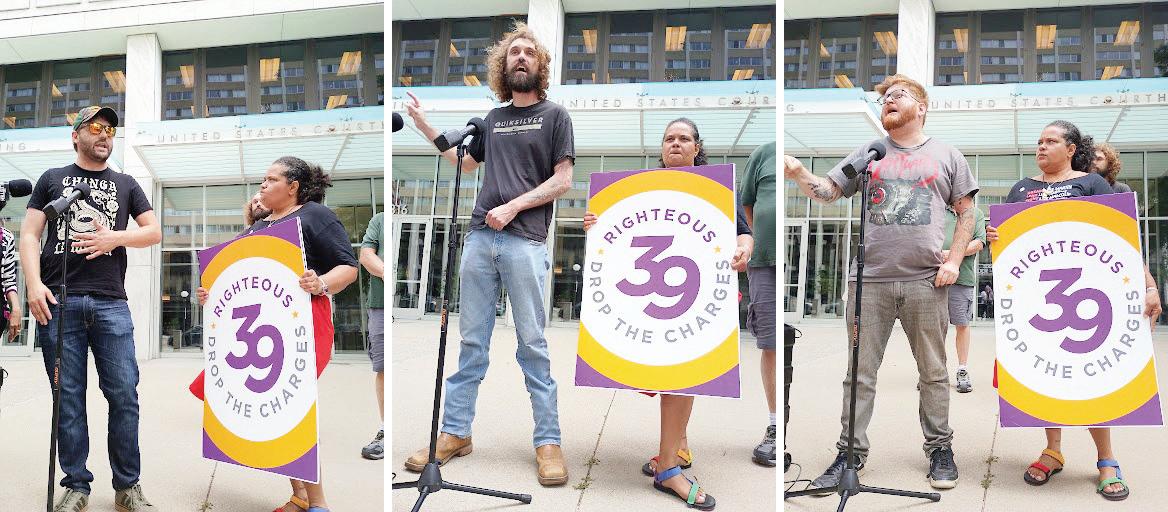
From left at mic, Minnesota 15 defendant Cameron Kennedy; Righteous 39 defendant William Kelly; and Minnesota 15 defendant Isaac Sant speak to
ers after a court hearing in St. Paul on July 24. Clint Combs/MSR
Reps. Pramila Jayapal (left) and Ilhan Omar at the Whipple Federal building, July 24. All photos courtesy of Izzy Canizares/MSR
transport vehicles
Whipple Federal Building, July 24.
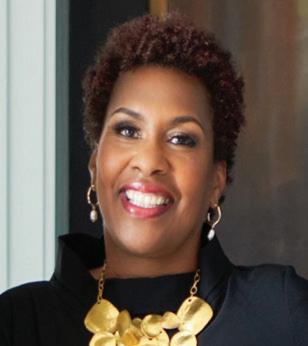
Dr. Elizabeth M. Adams
Photos courtesy of Dr. Elizabeth M. Adams
U.S. Bank’s new online resource empowers small businesses
Sponsored by

U.S. Bank’s digital Business
Resource Central provides tools to help small business owners learn about various topics, from credit and profitability to funding, legal guidance, advertising, technology and building capital. The tool launched in July 2025 in partnership with Next Street, a small business advisory firm.
“The idea of the Business Resource Central is that it’s an opportunity for us to really connect the digital to human experience for our business owners,” said Nancy AlvaradoHazelton, a U.S. Bank access advisor in the Twin Cities.
“We understand that business owners are extremely busy, and sometimes it can be really hard to lean into that learning piece.”
"You cannot do your business alone. You need a community,"
With the new knowledge, business owners are given a toolkit they can apply directly to their operations, and they’re encouraged to work with their bank advisors along the way.
“It’s an opportunity for busi-

ness owners to do this at their own time, and at the same time, it gives us the opportunity to empower them with tools that will help them in the future,” Alvarado-Hazelton said.
To use the tool, business owners register and complete a short assessment gathering information about their specific business. After that, they have free access to all of the courses. U.S. Bank also offers workshops where Business Resource Central clients can build on what they’ve learned online, asking experts questions and getting individualized assistance.
“With the workshops, we’re creating spaces so that they can actually come in with those tools and have the conversations they need to be able to continue to leverage
the growth of their business,” Alvarado-Hazelton said.
“It is extremely important that, as we’re creating access for business owners to have this tool, that they leverage it, because that power of knowledge is going to help them to be able to really articulate how they show up in spaces, what is it that they need for their business, for each
ing the smile under our mask, and that was the main reason that I actually said yes,” she said of her decision to open the business. “I should start something to build a community, a space where people can just come and feel the love.”
Drawing on a Nepali tradition of removing facial hair using 100% cotton thread, Gurung Vomhof built a business
Nepali artisans and help the women who work with her earn income and educate their children.
Earlier this year, Gurung Vomhof consolidated her banking relationships and reached out to U.S. Bank. “I realized that they have that community at U.S. Bank, and the Small Business Resource Center for U.S. Bank was the

of those topics, in whatever space that they’re in.”
That power of knowledge is exactly what Jeena Gurung Vomhof said she found through the program.
Gurung Vomhof is the founder of Namaste Brows and Boutique in Roseville, which she started in the middle of the COVID-19 pandemic in 2021. “We were not see-
that now serves more than 1,000 customers a year across both a threading service and a boutique side, where women create felted goods, hem work and cotton crafts. “I feel like today, Namaste Brows and Boutique has become the bridge between two cultures, between two peoples,” she said, adding that the business has become a way to support
extra cherry on top of the cake,” she said. She’s used the platform’s pitch training to prepare before presenting her business, and has leaned on its financial and business planning resources as she’s grown. “I realize that if you want to grow, you need to have a financial plan and a business plan, and they have that,” she said. She’s also
brought the platform’s workbooks to her team to review together. Gurung Vomhof said she hired staff last month to help build out her business’s systems and policies, something she credits in part to what she’s learned through the resource center.
“You cannot do your business alone. You need a community,” Gurung Vomhof said, encouraging other small business owners to use the tool. She said what sets the Business Resource Center apart is that its materials stay current, unlike some organizations she’s seen still circulating resources from 2021, and that it connects business owners with a mentor in their own state.
Asked about how the tool supported her business through a difficult 2026, marked by Operation Metro Surge and rising prices, Gurung Vomhof said hardship pushed her to lean further into the resources available to her. “Fear did come for sure, because you do hear the news and you do hear the social media,” she said. “But inside me, I knew that this was my another chance to thrive more.” She said she used the additional time to focus on learning, and grew her business further as a result.
Namaste Brows and Boutique is located at the intersection of Lexington and Larpenteur in Roseville. Gurung Vomhof said the shop welcomes everyone, with customers typically ranging from age 20 to 65, men and women alike.
“When you come here, I just want you to come and see and feel and experience a piece of Nepal,” she said.
For more information on US Bank’s digital Business Resource Central, visit https:// usbank-brc.com/.
Judge orders mental health evaluation, travel restrictions for Metro Surge protester
By Clint Combs
Contributing Writer
Judge Doug Micko sided with Justice Department prosecutors from the Trump administration during a federal court hearing in St. Paul last Wednesday, July 22, on placing a Cities Church protester on probation, restricting his travel to Pennsylvania, ordering a mental health assessment and suspending his access to firearms.
16 at the federal Whipple ICE detention center and released without charges. He was arrested again at Whipple on Jan. 30, after being indicted on FACE Act charges. Last spring he was arrested twice at the Delaney Hall ICE detention facility in Newark, N.J., during a hunger strike.
“We now have presented material evidence that the conditions of release are no longer adequate,” Assistant U.S. Attorney Neville Hedley

U.S. Army veteran Ian Da-
vis Austin is one of 40 people charged by federal prosecutors under the FACE Act, including journalists Georgia Fort and Don Lemon, after demonstrators interrupted a Sunday service on Jan. 18, questioning Pastor David Easterwood over his role as St. Paul ICE field director during Operation Metro Surge.
Austin has been arrested four times since he began protesting Operation Metro Surge. He was arrested Jan.
told Micko. “The current conditions of release don’t address public safety.”
Hedley submitted two copies of body camera footage obtained from local New Jersey police, though the footage was not played in the courtroom.
“One of the body cameras shows Mr. Austin in the middle of a very busy intersection,” Hedley said, prompting laughter from the gallery. Hedley argued the footage showed “an inability to disengage” during Austin’s conduct at ICE deten-
tion center protests.
Defense attorney Sarah Gad told the court that Austin’s charges stemming from the Newark arrest had been downgraded to disorderly conduct and argued the new travel restrictions infringe on his First Amendment rights. “This is not a license for the government to throw a blanket slate of boilerplate conditions,” Gad said, calling it short-sighted to impose sweeping conditions over a pending disorderly conduct case.
A bail report reportedly detailed Austin’s alcohol and drug use following trauma sustained during six deployments to Afghanistan. Gad called the government’s request for court-mandated drug and alcohol testing irrelevant to the disorderly conduct charge. “I think I understand your point,” Micko told Gad.
Outside the courthouse, fellow activists and organizers said the ruling reflected a broader pattern of prosecutors and the court weaponizing protesters’ trauma and mental health histories against them.
Jules Langlois said the judge’s decision to order a mental health evaluation, despite Austin’s ongoing treatment, amounted to punishing him for his military service.
“What we see here is the criminalization of mental health. They didn’t take the charges into account because the charges were pending. The charges, and the other charge was dropped. So Ian was facing one pending charge in

New Jersey, despite the other charge being dropped,” Langlois said. “This judge used that as an opportunity to bring up his history of mental illness as a result of being exposed to extensive trauma in the military and ordered that he go through a mental health assessment, despite the fact that he’s already in extensive therapy for PTSD and has never missed an appointment.”
Monique Cullars-Doty questioned the credibility of the prosecution’s account of Austin’s conduct and said the description of a busy intersec-
“Our mental health is being monitored, that it’s no longer a safe place for us, I think is just a travesty.”
tion was familiar to any longtime protester.
“So I’m hearing, because people must have seen it, because a lot of people just bust out laughing when they said
a busy intersection. I have stood and protested in many busy intersections, and they claim that there were four officers in this busy intersection. Like, why do you have four officers in an intersection,” Cullars-Doty said. She added that prosecutors’ focus on Austin’s drinking ignored the broader context of his service.
“They’re saying he, you know, had a drinking problem. Every veteran that I know, they talk about drinking when they’re in, and what they’ve seen and done. They may drink when they get out.”
Emily Phillips, who said she has been present at protests outside Delaney Hall, disputed the characterization of Austin’s conduct and said prosecutors singled him out simply for approaching officers to ask questions. “You’re not allowed to walk up and ask police officers questions. That’s something that they’re going to hold against you in court. That blew my mind,” Phillips said.
William “Da Woke Farmer” Kelly said Austin’s case
echoes his own experience on federal probation. “Ian didn’t commit a crime in New Jersey. He didn’t commit a crime in a church that day. He practiced his First Amendment right,” Kelly said.
Christina Neighbors, a U.S. Navy veteran, said the case reflects a betrayal of veterans who speak out after experiencing trauma or abuse in the military. “So the fact that now that’s being weaponized back against him, that our mental health is being monitored, that it’s no longer a safe place for us, I think is just a travesty,” Neighbors said. Austin’s case is one of 38 pending FACE Act prosecutions stemming from the Jan. 18 church demonstration, part of a broader wave of federal charges against protesters who have organized against Operation Metro Surge and ICE detention practices across the country.
Clint Combs
U.S. Bank
Jeena Gurung Vomhof Namaste Brows and Boutique
U.S. Army veteran and activist Ian Davis Austin (left) was placed onprobation July 22 following an outstanding disorderly conduct charge stemming from his protest at the Delaney Hall immigration detention center in Newark, N.J.
Monique Cullars-Doty speaks to activists before a court hearing where Judge Doug Micko placed Cities Church protester Ian Davis Austin on stricter release conditions, in St. Paul on Wednesday, July 22. Photos courtesy of Clint Combs/MSR

Black Business SPOTLIGHT HONEY’S SOUL FOOD & BAKERY
Sponsored by

By Jasmine McBride Editor
Honey Price didn’t set out to build a seasoning line. She set out to run a restaurant, or a bakery, or something, anything, that let her cook for a living. The seasoning came later, born out of necessity rather than ambition, and it’s now become one of the signature products of her Minneapolis business, Honey’s Soul Food & Bakery.
Price’s path into food started early. She earned her cosmetology license in high school at Simeon Career Academy in Chicago, graduating with a trade in hand before she ever set foot in a Minnesota kitchen. But cosmetology was never where her heart was.
She enrolled in school and started visiting different restaurants, testing ideas, taking some hits and some misses along the way. Somewhere in that process, cooking became the constant. “I started cooking all the time,” she said. “And when I started cooking, I said, ‘Hmm, I should share this with everybody in Minneapolis.’
And that’s what I did.”
That’s how Honey’s Soul Food & Bakery came to be: a catering business built around soul food, cakes and pies that Price began selling at farmers markets around the Twin Cities. For years, that was the whole operation, cooking, catering, baking, and selling directly to customers who found her at pop-ups and markets.
“My collard green seasoning is one of my best sellers.”
“I always had a business mindset,” Price said. When she moved to Minnesota, she knew she wanted to run a business. She just didn’t know which one yet.
Then her health changed the equation. Price became disabled, with the condition primarily affecting her arms and hands. Some days she didn’t feel good enough to bake at all, and even basic cooking at home became harder to manage. She needed a way to make cooking easier without sacrificing the flavor
Seasoning its way past a health setback

her customers expected.
“Seasoning is half the battle,” Price said. That idea became Honey Soul Seasonings, a line built around a simple premise: one bottle should do the whole job. “I made sure you just need one bottle. You don’t have to use anything else out of your cabinet, because I don’t like buying seasoning that you still got to season,” she said.
The lineup includes three all-purpose blends, each one distinct from the others, along with specialty mixes built for specific dishes. Asked which one is her personal favorite, Price doesn’t have a straight answer, and she says that’s by design. “I actually don’t have a
favorite. Everybody asks me that, but like I said before, I cater, so I use all of my seasonings in my own food, so I know it works. It really just depends on what you’re cooking.”
If pressed for a bestseller,
though, one stands out. “My collard green seasoning is one of my best sellers,” Price said.
“When I made it, I said I could put this on everything.”
Price has been serving the Twin Cities food scene for

years now, catering events, selling baked goods including her well-known Five Flavor Pound Cake, and building relationships with customers at markets like West Broadway Farmers Market on the Northside. The seasoning line grew out of that same community, an extension of a business built one plate, one pie and one pop-up at a time. These days, the seasonings are the one part of the business Price ships beyond the pop-up circuit. Everything else, the catering, the baked goods, stays local and in person. But the seasonings travel. “You can purchase everything and see everything that I have to offer on my website,” Price said. “I cater; my seasonings are on there, and my seasonings are the only thing that I will ship.”
For a business that started with a young woman testing recipes at Twin Cities restaurants, not sure yet which direction to take, that reach says something about how far Honey’s Soul Food & Bakery has come, and how a health challenge that could have slowed things down instead pushed Price toward a product that’s carried her name further than a single market stall ever could.
Honey’s Soul Food & Bakery products, including Honey Soul Seasonings, are available at honeysoulfoodbakery.com.
Jasmine McBride welcomes reader responses at jmcbride@ spokesman-recorder.com.
MSR’s Tracey Williams-Dillard among inaugural inductees to Minnesota Black Business Hall of Fame
By Tony Kiene Contributing Writer
On Saturday, Aug. 8, 2026, the Minnesota Black Chamber of Commerce (MBCC) will host its annual gala at the InterContinental Saint Paul Riverfront Hotel. Presented by Wells Fargo, this year’s theme is “Renaissance Reimagined: Where Culture Meets Commerce.” The 2026 edition of the MBCC gala is bringing something new to the table, as it will honor nine individuals being inducted into the inaugural class of the Minnesota Black Business Hall of Fame, which was announced live last Friday morning on WCCO/CBS News Minnesota. Among the inductees is Minnesota Spokesman-Recorder CEO and Publisher Tracey Williams-Dillard.
“For decades, Tracey has been a staple of excellence in our community,” said Yolanda Pierson, president and CEO of the Minnesota Black Chamber of Commerce. “Not only has she successfully led the state’s oldest Black-owned business into the 21st century, she’s provided guidance and a platform to scores of young writers, editors and content creators, who’ve only helped to build upon the newspaper’s already indelible legacy. And it’s incumbent upon us to follow that lead.”
Of this distinction, Williams-Dillard said, “It’s such a tremendous honor to be recognized by such an important

organization that is supporting legacy businesses such as the MSR, while likewise spotlighting new and emerging companies that are making a critical difference in the community. It means a lot for us to acknowledge and lift up our own. So many times, Black businesses go underrecognized, are underappreciated.”
“For decades, Tracey has been a staple of excellence in our community.”
of UpNet Technology; Frank Brown, owner and president of Minuteman Press Uptown; Frederic Estes, business leader and legacy steward; Gloria Freeman, founder and CEO of Olu’s Home Inc.; Lea Harget, CEO of JOG & Associates and founder of the Molly Group; Ezell Jones, entrepreneur and founding visionary; Prince Wallace, manufacturing entrepreneur and business leader; and Sharon Smith-Akinsanya, founder and CEO of the Rae Mackenzie Group. Pierson, who began her tenure as president and CEO this past January, has set forth a clear vision designed to advance the MBCC by strengthening connections across the business community, expanding access and opportunity for
Black entrepreneurs, driving measurable and lasting economic impact, and establishing a true statewide presence for the organization.
“The MBCC seeks to usher in a new economic renaissance, to make sure that Black businesses in Minnesota are bankable, structurally stable and sustainable. It’s about more than solopreneurs creating their own legacies. It’s also about crafting an enduring, community-wide legacy,” Pierson said.
Regarding her decision to launch the Minnesota Black Business Hall of Fame, Pierson said she’s received a lot of questions to the effect of “Why this? Why now? Why you?”
“It’s because history can’t
wait,” she said. “The legacies that have been built by pioneers like these have gone unnoticed for far too long. They haven’t always received their due credit.”
“This first class of inductees represents generations of impact across an array of business fields,” Pierson said.
“They’ve created jobs, generated revenue, mentored countless others and effected lasting social, cultural and economic impact. We want to give them their flowers while they’re still here, and make sure their stories are remembered.”
In addition to honoring the inaugural class of the Minnesota Black Business Hall of Fame, the MBCC will also present its annual Black Busi-
ness Excellence Award, Economic Impact Award and the award for its 10,000 Black Business Program (10K BBP), a transformative business accelerator and grant program designed to empower and support Black-owned small businesses in Minnesota.
Emceed by Emmy Awardwinning journalist and KSTPTV anchor Brandi Powell, the MBCC’s “Renaissance Reimagined: Where Culture Meets Commerce” takes place Saturday, Aug. 8, 2026, from 6 p.m. to 9 p.m. at the InterContinental Saint Paul Riverfront (11 E. Kellogg Blvd., St. Paul, MN 55101), followed by an afterparty from 9 p.m. to 11 p.m. featuring St. Paul’s own DJ A-Quil.
Ticket and table sales close Friday, July 31, 2026. For more information and to reserve a seat, visit the MBCC online at minnesotablackchamber.org.
Presented by Wells Fargo, community sponsors of the MBCC gala are Blue Cross Blue Shield Minnesota, Cargill, Huntington Bank and the Rae Mackenzie Group. Entrepreneur sponsors include Andersen Windows & Doors, Children’s Minnesota, Cummins, First Independence Bank, Ramsey County, U.S. Bank and Xcel Energy.
Tony Kiene is the executive assistant and contributing writer for the Minnesota Spokesman-Recorder. He welcomes reader responses at tkiene@ spokesman-recorder.com.
Honey Price at Black Business Week Street Mall held at the Capri Theater, July 25. Photos courtesy of Jasmine McBride/MSR
The other members of the Minnesota Black Business Hall of Fame’s maiden class are Frederick Blockton, president
Mid-year financial reset: how can you tell if your finances are on track in 2026?
Sponsored by

By Katie Galloway, Sunrise Banks retail sales officer
The midpoint of any year is a good time to pause, look honestly at how the first six months have gone and make a plan for the next six months.
As we hit mid-2026, your finances should be part of that review. A mid-year reset gives you the chance to celebrate progress, spot habits that may be getting in the way and adjust before the year is over. Have you met your budgeting and savings goals through the end of June? Did you incur any unexpected expenses?
Have your income, household needs or priorities changed?
These questions are meant to give you a clear picture of where you are today so you can make thoughtful decisions moving forward. Resetting your plan for the next six months can help you make steady progress toward your financial goals. Even small changes, made consistently, can have a meaningful impact by the end of the year.

This is also a good time to check in on your emergency savings fund, retirement contributions and investments. If your emergency savings took a hit earlier in the year, rebuilding it can be one of the most important steps you take. If you received a raise, paid off a debt or reduced a recurring expense, consider directing part of that money toward savings before it becomes part of your everyday spending.
Start by reviewing your financial goals. If you set goals in January, now is the time to review them with fresh eyes. Write down what you wanted to accomplish, what progress you have made and what still needs attention. Ask yourself: Am I saving for something specific, like a vacation, car or home purchase? Have my priorities changed in the last six months? Am I on pace to meet my goals by the end of the year?
It can also help to make your goals specific. Instead of saying, "I want to save more," decide how much you want to save by December and how much you need to set aside each pay period to get there. If your original goal no longer fits your life, adjust it rather than ignoring it. A realistic, actionable goal is more useful than an ambitious goal you have stopped tracking. If you fell off track, don't panic. Even small changes can help you get back on track, such as increasing an automatic transfer to savings, delaying a purchase, redirecting a bonus or tax refund, or breaking a large goal into smaller milestones. Once you've looked at the 30,000-foot view, zero in on your monthly spending. One of the biggest places to look is the "non-essentials" category. These expenses are often the easiest to overlook because
they happen in small amounts or feel routine in the moment. Have you been eating out more often than you planned to? Are you having food or groceries delivered, which can add additional dollars? Did you sign up for any new subscriptions over the last few months?
“If you fell off track, don't panic. Even small changes can help.”
These are often the places where small expenses add up quickly. Pulling a few months of account activity can help you see patterns you may not notice right away. Costs like delivery fees, convenience purchases, app subscriptions or quick stops for coffee may be taking more from your budget than expected. After
you identify those patterns, choose one or two manageable changes. You could set a weekly restaurant budget, cancel subscriptions you no longer use or plan grocery shopping around meals you know you will actually make. The goal is not to eliminate every enjoyable purchase; it is to make sure your spending reflects what matters most to you.
The midpoint of the year is also a good time to check your credit report and score.
AnnualCreditReport.com is the official site for free credit reports. You can also get them from the three major credit bureaus: Equifax, Experian and TransUnion. Even if you aren't planning to make a big purchase soon, checking will allow you to catch any errors or fraudulent activity, understand your borrowing power and plan for future purchases. If your numbers aren't where you want them to be, finding out now will give you time
What Trump’s presidency means for Black economic mobility
By Aswad Walker
By
any measure, economic mobility is about more than money.
The ability to buy a home, start a business, attend college, access healthcare, vote, and advocate for one’s interests all shape whether families can build wealth and pass opportunity to future generations.
That reality is why many economists and civil rights scholars argue that the policies emerging from President Donald Trump’s second administration have major implications for Black economic mobility. Some supporters contend that Trump’s emphasis on deregulation, lower taxes, and merit-based policies could create broader economic growth. Critics argue that cuts to diversity initiatives, civilrights protections, and social programs disproportionately harm Black communities that already face historic barriers to wealth accumulation.
Economic mobility: Income and more
According to Federal Reserve data, the median wealth of Black families remains a fraction of that of white families. Black homeownership rates also continue to trail national averages, while Black entrepreneurs remain more likely to be denied financing and less likely to receive venture capital investment.
“Where you start in America still matters too much,” noted economist William Darity Jr.,
whose research has focused extensively on racial wealth disparities.
As corporations scaled back Diversity, Equity, and Inclusion initiatives and government agencies faced sweeping cuts, Black women were among the hardest hit. Between spring and late 2025, more than 300,000 Black women either lost jobs, left the workforce, or were pushed out of employment, according to labor data and economic reports tracking the crisis.
Unemployment among Black women climbed from 5.4% to as high as 7.3% by the end of the year, one of the steepest increases of any demographic group. These numbers have an outsized impact on Black communities because nearly 80% of Black mothers in America are primary, sole, or co-breadwinners for their families, according to the Institute for Women’s Policy Research.
“The U.S. Bureau of Labor Statistics reported that 567,000 Black men lost their jobs across all sectors.”
And what has gone almost unnoticed is that between November 2025 and February 2026, the U.S. Bureau of Labor Statistics reported that 567,000 Black men lost their jobs across all sectors. Texas Southern University
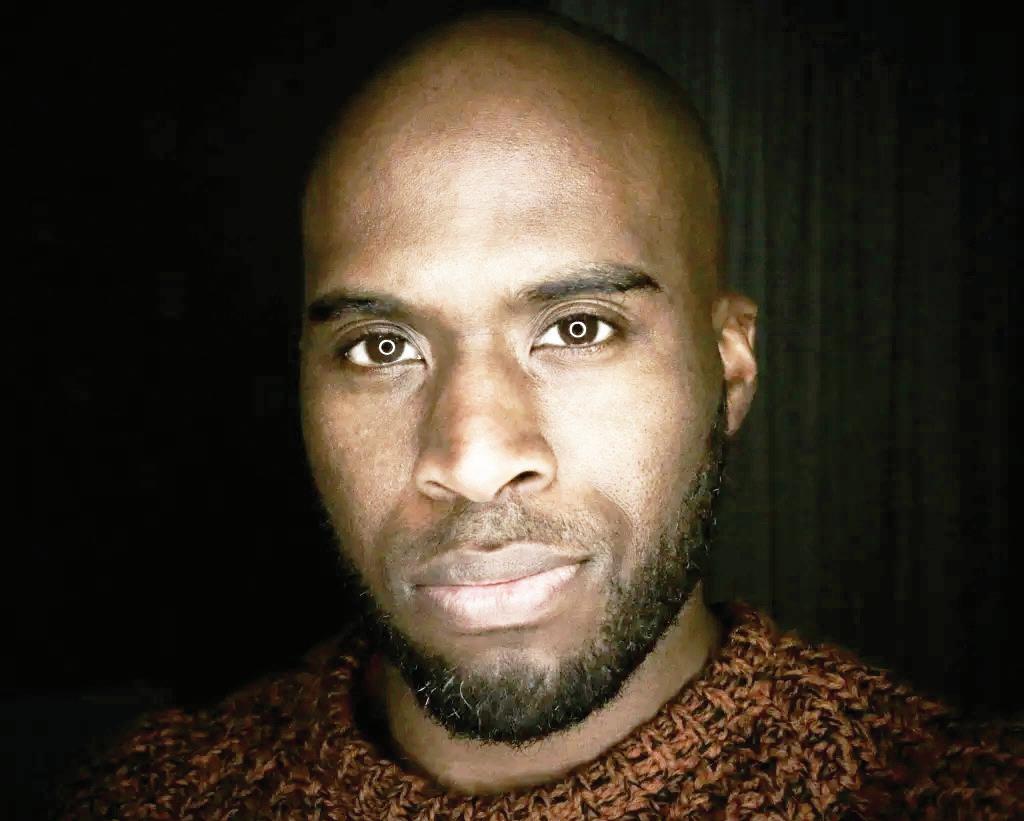
Professor Michael O. Adams argues that the current U.S. “war economy” isn’t helping matters.
“We need more reinvestment into domestic kinds of issues,” said Adams. “I’m looking at healthcare, education, and economic development. The war economy takes away from those efforts.”
According to Fortune Magazine, the engagement, dubbed Operation Epic Fury, is producing a “war economy” that is costing U.S. taxpayers over $1 billion a day.
Housing: The foundation of wealth Homeownership remains the primary source of wealth for most American families.
The Trump administration recently challenged a housing-reparations initiative in Evanston, Illinois, arguing that race-based housing assis-
tance violates civil-rights laws.
Black businesses face new questions
Black-owned businesses generated record growth following the pandemic, yet many still rely heavily on government contracts, supplierdiversity programs, and technical-assistance initiatives.
One of Trump’s most consequential actions has been a series of executive orders that have ended or restricted Diversity, Equity, and Inclusion requirements in federal agencies and federal contracting. The administration argues these measures restore “merit-based opportunity” and equal treatment under the law.
The administration also revoked Executive Order 11246, a civil rights-era policy that required federal contractors to take affirmative action to
to fix it before you apply for any credit or loan. Review your report for accounts you do not recognize, incorrect balances, outdated personal information or late payments you believe are inaccurate. If you spot an error, gather supporting documents and contact both the credit reporting company and the business that provided the information.
Unexpected or large expenses can pop up at any time, so make sure to get your arms around what you know is coming. Look at your calendar for the rest of the year and note any predictable costs, planning ahead can make those expenses feel less stressful when they arrive. Back-to-school season can get expensive for families, so plan for that if it applies. The holidays come quickly once the weather begins to change, so make a spending budget. If you can, set aside a little each month to help with larger purchases you know are coming.
ensure equal opportunity. Reuters reported that minority contractors have already expressed concerns that changes to disadvantagedbusiness programs could reduce opportunities for Blackowned firms competing for infrastructure and government projects. Some contractors reported revenue losses, delays, and layoffs connected to certification changes.
And with so many taxpayer dollars still directed toward the war in Iran, Houston’s roughly 200,000 Black businesses are on the front lines when it comes to being negatively impacted.
“I’m not sure people realize the tight margins small businesses operate within,” said Judson Robinson, president and CEO of the Houston Area Urban League. “When the price of oil needlessly skyrockets, the burden on Black people increases exponentially. It erases profit margins and can put you out of business.”
Education and workforce development
Higher education remains one of the strongest predictors of lifetime earnings.
The Trump administration has highlighted additional investments in Historically Black Colleges and Universities (HBCUs) as evidence of its commitment to expanding opportunity.
However, in September of last year, the Department of Education announced it would pull the plug on approximately $350 million in discretionary funds for institutions that enroll a high percentage of minority students, including HBCUs.
If debt repayment is part of your plan, decide which approach works best for you. Some people prefer to pay extra toward the smallest balance first to build momentum. Others focus on the highestinterest debt first to reduce the total amount paid over time. Whichever method you choose, make sure minimum payments are made on time and that your plan is realistic enough to stick with.
Reviewing your key spending and savings habits now will set you up for success for the rest of the year. Set aside time to review your accounts, update your budget and choose a few clear actions for the months ahead. By taking stock now, you give yourself more time to make adjustments, avoid surprises and finish the year with confidence.
Visit sunrisebanks.com to learn more about how Sunrise Banks can help you meet your financial goals any time of year. Member FDIC.
Katie Galloway is the Sunrise Banks retail sales officer.
Healthcare and economic security
Economic mobility is difficult without good health.
Healthcare cuts or reductions in public benefits often affect Black households disproportionately because Black Americans are more likely to rely on Medicaid and other public-health programs. Policy analysts warn that reductions in healthcare access can produce long-term economic consequences, including higher medical debt, lower workforce participation, and reduced family wealth.
Voting rights and political power
Economic mobility is also connected to political power. Voting determines who controls budgets, education funding, housing policy, infrastructure spending, and economic-development initiatives. Civil-rights advocates have expressed concern that efforts to weaken federal oversight of voting protections could reduce political influence in Black communities.
Bottom line
For Black America, economic mobility has never depended solely on individual effort. It has also depended on public policy. Federal and state policies moving forward may determine whether Black families can narrow longstanding wealth gaps, or whether those gaps become even harder to close.
This article first appeared in the Houston Defender. It has been cut for length. For the original, visit www. defendernetwork. com/under-40/finances-fyi/ what-trump-presidency-means-
Housing, education, healthcare, business, and voting policies of the Trump administration are reshaping the economic future of Black families and communities. Curtis Powell/Unsplash
COURT
Continued from page 1
dubbed “the second bucket.”
Micko declined. “I am not going to order that,” Micko said. The courtroom exchange followed weeks of legal filings that raise separate questions about how prosecutors led by Assistant Attorney General Harmeet Dhillon’s Civil Rights Division have handled evidence in the case.
Hedley told Ebert in a July 2 letter that he didn’t want to put certain representations in writing, reportedly out of concern that what he told the defense “could be put before the Court and/or otherwise used against it.”
Separately, an investigative report submitted as an exhibit by co-defendant Thomas Tier’s attorney states that on June 2, Hedley instructed HSI Agent Timothy Gerber and three others to withdraw two dozen subpoenas sent to Google, GoFundMe and Meta between April 9 and April 15, weeks after a superseding indictment had already been returned. Tier’s attorneys argue in a motion to compel discovery that continuing to use the grand jury process after an indictment has already been handed down is improper, and that some of the subpoenas may have improperly targeted defendants’ fundraising records, raising Sixth Amendment concerns about interference with their ability to fund a defense.
Ebert’s own filings raise a related issue: that Gerber used Homeland Security summonses, a tool intended for customs and duties enforcement, to gather employment and communications records from defendants despite the case involving civil rights charges with no connection to customs matters.
The scrutiny of the grand jury process against Fort specifically has been building for months. Court records show Micko denied similar transcript requests from other defendants in June while keeping Fort’s request open, and that a witness transcript Fort’s team received in midJune reportedly conflicts with claims made to the grand jury that she chant-
ed, intimidated Parnell or blocked a van from leaving the church.
Records also show that then-Attorney General Pam Bondi and Dhillon personally traveled to Minnesota for the grand jury presentation, with Bondi posting on social media that Fort and journalist Don Lemon were arrested “at my direction.”
“There
Cameron Kennedy said the case involves more than 24 terabytes of material, mostly video tied to Signal messages, sweeping in rapid response networks and mutual aid chats across the Twin Cities.
“It’s like impossible to f---ing search,” Kennedy said, adding that his attorney “had to buy a 1,000-dollar hard drive just to fit this stuff.”
was a mistake in the affidavit. It was a mistake. It was a mischaracterization.”
Outside the courtroom, members of the Minnesota 15 case facing conspiracy charges described the scale of discovery they now face.
“This evidence is primarily video of Signal messages, and we’re talking like all of the rapid response chats in the Twin Cities,” Kennedy said. “We’re
talking about mutual aid chats, Whipple Watch. Basically, I mean things that almost the entire population of the Twin Cities was engaged in.”
William Kelly, part of the Righteous 39, disputed the government’s claim that Parnell felt threatened, noting he approached the group rather than retreating. “If he was threatened, he would have either walked away,” said Kelly. “He would have tried to leave. Instead, he came down from his pew and he came and engaged with protesters.”
Clint Combs is a contributing writer for the Minnesota Spokesman-Recorder. He welcomes reader responses at combs0284@gmail.com.
Continued from page 1
through these visits to detention centers.”
When asking these questions, Omar said the agents they spoke with began acting increasingly uncomfortable and upset.
“We were able to also ask direct questions that seemed to frustrate the agents that we had the opportunity to have a conversation with. Simple questions like, ‘How many people does HSI have currently in the state?’ ‘How many ICE agents do we have? Are we back to the normal

AI
Continued from page 1
while the widespread use of AI-powered tools has prompted ongoing conversations about privacy and data security.
“We've had phones for years, and companies have been using algorithms for years to determine whether you're playing a game. We've been downloading apps, and we haven't been reading the data privacy principles or any of that. So we've been interacting with this technology for years. We've been on social media. The difference now is that more people have access to generative AI,” said Dr. Elizabeth M. Adams, an artificial intelligence leader and author of "In the Age of Artificial Intelligence: Choosing Purpose Before Code."
Researchers are also beginning to examine how heavy reliance on generative AI may affect learning, memory and critical thinking. A 2025 study from the MIT Media Lab found that participants who relied on ChatGPT for essay writing showed lower neural engagement and weaker memory recall than those who completed the same tasks without AI assistance, raising questions about how the tools should be integrated into education and daily life.
Still, artificial intelligence has created tremendous value. It has been used to increase efficiencies, expand access to information and help organizations accomplish work that might otherwise be too costly or under-resourced. Now, as AI becomes more deeply integrated into society, questions are emerging
around not only how to use the technology, but how to use it responsibly.
Adams has dedicated her career to helping answer that question. Recognized by Forbes as one of the “15 AI Ethics Leaders Showing the World the Way of the Future,” she is a leading voice in responsible AI, advising Fortune 500 companies and organizations on the ethical development and implementation of artificial intelligence. Her book is a memoir that encourages readers and leaders to place human values at the center of technological innovation.
"I was shocked to see that everyone in here has leg restraints. That is not a common practice in holding facilities.”
numbers that we used to have before Metro Surge?’ Simple questions,” Omar said. “Simple questions like that drew frustration and fury from them, not understanding that we are simply doing our jobs as members of Congress.”
The way ICE agents have conducted immigration arrests may have changed since Metro Surge, but the congresswomen’s visit shows that despite the lack of visibility, ICE has not stopped taking people from Minnesota’s streets.
“We are also seeing master
as a technologist in the Washington, D.C., area, gaining firsthand exposure to emergent technologies, including what is understood today as AI. “We didn't call it AI then; it was more math and statistics,” she said.
After Adams moved back to Minnesota, she became increasingly aware of how everyday people were engaging with the technology and curious about its ethical implications, including surveillance. “I began to see how it was being used in certain communities, and it wasn't working for everyone, specifically Black and
“When you are dealing with responsible AI, everyone needs to come to the table to understand what this tool is to be used for.”
Born and raised in the Rondo neighborhood of St. Paul, Adams says her work is rooted deeply in legacy and community.
“I'm a fifth-generation Minnesotan, so we have deep roots,” Adams said. “My greatgreat-grandfather was the first Black firefighter in St. Paul. In the early 1970s, my mother started a newspaper called the Selby Digest. She's a daughter of Rondo. I'm a daughter of Rondo. Her goal was to highlight what was happening in the community and make sure merchants and local businesses could reach the people they served.”
Adams has been working in the field of artificial intelligence since before it was widely adopted. About 10 years ago, she was working
brown communities,” she said. Studies have found that facial recognition systems are significantly less accurate for people of color, women and nonbinary individuals. According to the ACLU of Minnesota, a landmark MIT Media Lab study found error rates of 0.8% for light-skinned men compared with 34.7% for darker-skinned women, illustrating how bias in AI systems can produce vastly different outcomes across demographic groups.
Adams' work did not stop at raising awareness. She took her research directly to policymakers, helping shape how the city of Minneapolis approached the use of artificial intelligence in public safety. After joining the city's Racial Equity Community Ad-
hearings that are forcing hundreds of people to be heard in one day. What that does is many people have representation for years, and when their attorney has to represent 10 people at the same exact time, they can no longer represent them,” said Jaylani Hussein, executive director of CAIR-MN. “We are seeing that complication happening. Every single day, attorneys are now learning about the case in a matter of days rather than having months to prepare for that client in an effort to represent them.”
visory Committee, she began educating city leaders about the risks associated with AI surveillance technologies and worked alongside community members to advocate for stronger protections.
“I started having conversations with policymakers and city council to say, 'Under all of these decisions, there's data and algorithms that are being used to make these decisions. And not only that, there's AI surveillance that is also being used by Minneapolis police,'” Adams recalled.
That work eventually led to a coalition that spent months advocating for more responsible AI policies. In February 2021, the Minneapolis City Council passed an ordinance banning the city's use of facial recognition technology, a milestone Adams views as an opportunity to ensure the technology is developed and deployed responsibly. “The technology just wasn't ready,” she said. “When you are dealing with responsible AI, everyone needs to come to the

Hussein also highlighted other tactics that have been reported, including delaying mail to ensure people do not show up to their court date, in an effort to deport them.
“You know how horrified the nation was, especially Minnesota, with Operation Metro Surge. This is another version of that operation,”
table to understand what this tool is to be used for, why you even need it, what the policies and procedures are, and then make sure that it's being used and monitored for responsible use.”
Adams' book explores these ideas further. While some might assume "In the Age of Artificial Intelligence" is primarily about AI tools and applications, Adams intentionally chose a different path, writing a lyrical memoir that explores leadership, humanity and purpose alongside one of the most transformative technologies of the era.
“I couldn't write an AI framework book," Adams said. "I had built up so much stuff about my own navigating [the field] that I needed to get this out. It's a lyrical memoir, and a lyrical memoir is more expressive. It's not chronological. It's more emotional.”
Inspired by Afrofuturist author Octavia Butler, Adams embraced the idea that people must write themselves into their own stories. For

Hussein said. “While we were witnessing with our own eyes on the streets as that surge happened, we need that same type of accountability.”
Izzy Canizares is a contributing writer for the Minnesota Spokesman-Recorder. He welcomes reader responses at isabellacani0102@gmail.com.
her, that meant refusing to separate her work from her identity. Her experiences as a Black woman from St. Paul, her family's legacy and her commitment to community are not distractions from her work in artificial intelligence. They are the foundation that gives it meaning. Through her research, policy work, writing and teaching, Adams continues to create greater awareness, access and opportunity around artificial intelligence. As these technologies continue to reshape how people work, learn and communicate, Adams said they also challenge people to consider what should remain constant: purpose, values and community at the center of how the future gets built. For more on Dr. Elizabeth M. Adams’ work, visit www. eadams.tech/.
Tiffany Johnson is a contributing writer for the Minnesota Spokesman-Recorder. She welcomes reader responses at tjohnson@spokesman-recorder.com.


A distinct hand placed on the window of an immigration transport vehicle headed towards the airport.
Jaylani Hussein All photos courtesy of Izzy Canizares/MSR
Arts & Culture
Inaugural Northside Jazz and Heritage Festival hits a high note
By Callisto Martinez Contributing Writer
On Sunday, July 26, the sounds of live jazz performances spilled onto the Mississippi Riverfront in North Minneapolis for the first time in 26 years. The Northside Jazz & Heritage Festival brought food trucks, vendors and a variety of performers to West Broadway Avenue and West River Parkway for a full day of celebration.
Kenya McKnight Ahad, a festival co-founder and the founder and CEO of the Black Women's Wealth Alliance, has previously organized other festivals, like West Broadway Open Streets. But organizing the Northside Jazz & Heritage Festival felt different.
"I get to root [this festival] in Black culture and Black history," McKnight Ahad said. "This is a celebration of Black culture, heritage and our history, and a contribution we've made to the globe, right from the North Side. It's not just about Broadway. It's about the entire North Side and Minnesota."
It's the first large-scale jazz event hosted on the Northside's riverfront since the Riverview Supper Club closed in 2000, when the spread of industrial factories along the riverfront had long limited access for residents.
"I also used to hang out in my 20s at the Riverview Supper Club that was here, and that's
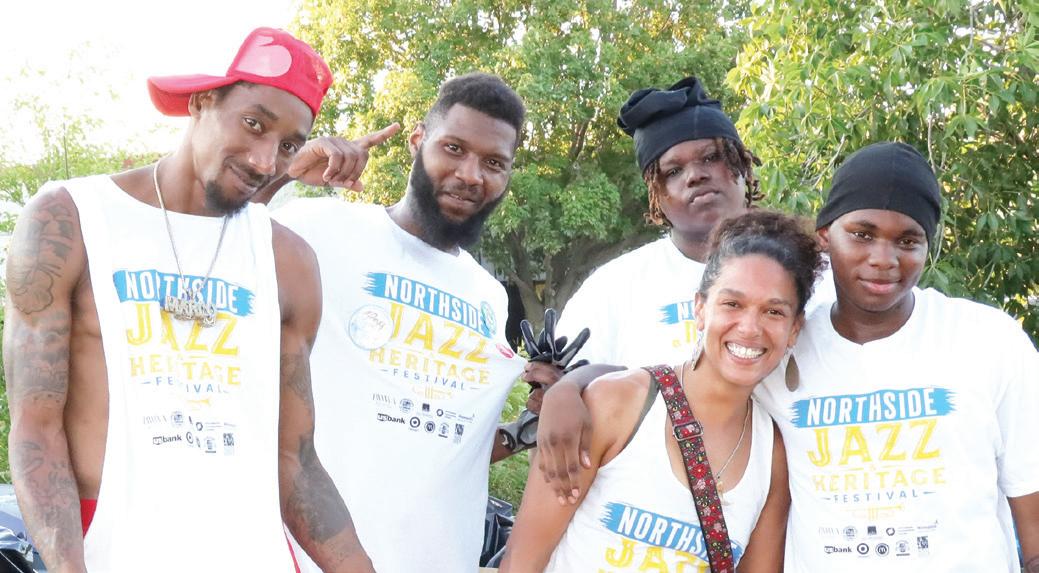
West Broadway Business and Area Coalition executive director Kristel Porter (front, middle-right) with supporters. Photos courtesy of Walter Marmillion/MSR
something that a lot of us over here are familiar with," Minneapolis Ward 4 City Council member LaTrisha Vetaw said. "So to bring us back to community in this way and have us celebrate on the river is quite spectacular."
For Kristel Porter, a festival co-founder and executive director of the West Broadway Business and Area Coalition, the festival was about more than just bringing artists back to the Northside.
"We wanted to make sure that the people that have been holding down Minneapolis for so long, playing in front of crowds for hours, making $20 or $30 and not really earning what they deserve, we wanted to give them a space to stand in front of their community, showcase their talent and get paid what they are worth, because their art is the heartbeat of our city," Porter said.
Tunes from legends who helped put North Minneapolis on the map, like drummer Kevin Washington and saxophonist Walter Chancellor, filled the block. Upcoming artists, like vocalist Aniyah Warren and songwriter Maya Marchelle, also found a place on stage.
Shemeka Bogan, a festival co-founder and founder of the Strong Roots Foundation, sees having multiple generations of artists on stage as one of the festival's strengths.
"There's this new wave of people that are coming up in music, so our show is very diverse," Bogan said. "There are people that are in their 60s and 70s, and then there are people in their 30s and 20s, and it's just really awesome to see how that divide is closing in."
The festival's sound wasn't limited to jazz, either. The stage featured R&B, gospel and soul singers, as well as
spoken word and stepping performances. Washington, who was raised by two musicians, believes that representing an array of genres within Black American music has an impact beyond music itself.
"There's an elephant in the room where some of these subdivision cultures didn't mix," Washington said. "It's known, but I'm glad I didn't grow up that way. I'm taking it from my dad's philosophy. Black music is Black music, and we got to stop having divisions."
inspiration for us to keep pushing forward," Warren said. Warren also acknowledged organizations, like the Phyllis Wheatley Community Center, that have long supported the Northside's music scene and its Black community more broadly. Established in 1924 as the Phyllis Wheatley Settlement House, the organization grew into a gathering space for North Minneapolis' Black community, opening its doors to Black musicians like Marian Anderson and Duke Ellington when hotels refused them service. It also hosted local musicians, including jazz musician John L. Nelson, Prince's father, who met Prince's mother, Mattie Shaw, at the Blue Note
festival resonate.
"I think the Northside is the heart of the Black community in Minneapolis, of the Minneapolis Sound," Flanagan said. "To have this festival happening right here, as folks can come out, listen to music, visit with each other and have an opportunity to just be and experience music and joy, it's powerful."
McKnight Ahad, similarly, sees the Northside's legacy as one that stretches far beyond the borders of Minnesota.
"It's our vibration, foundational Black American," McKnight Ahad said. "We have some of the strongest vibrations on the planet, and this is part of how it shows up, and

During a break from performances, Vetaw and Pearll Warren, who represents Ward 5 on the Minneapolis City Council, recognized musicians and singers who cultivated the Northside's music scene, as well as upcoming performers building on that legacy.
"We can celebrate legacy organizations, and instrumental artists, and institutions here in the community and know that their work continues because it's that foundation of the legacy work that builds the
jazz club in the same North Side music scene. After the original building was demolished during the construction of Interstate 94 in 1970, the center's current building went up on 10th Avenue North, where Grand Central, Prince's first band, competed in neighborhood Battle of the Bands showcases.
For Lieutenant Governor Peggy Flanagan, who came out to enjoy the music and talk with constituents, the Northside's musical legacy makes the
it influences the world. Everybody's here. We have all types of cultures here celebrating with us right now, and they enjoy it as well. It's the culture of humanity."
For more information, visit www.northsidejazzfestival. com/.
Callisto Martinez is a recent Macalester graduate and contributing writer for the Minnesota Spokesman-Recorder. They welcome reader responses at martinezcallisto@gmail.com.



By Robin James Columnist
The classic song “Summertime” paints an easy, idyllic picture of a summer evening: fish jumping, cotton high, a mother’s tender lullaby to her child. Those are the images from the song sung by the late great vocalist Ella Fitzgerald. Her 1960 Berlin performance of the song is absolutely stunning.
The consensus has been that Fitzgerald, Miles Davis and Louis Armstrong have the best renditions.
The bluesy lullaby is from George Gershwin’s 1935 opera “Porgy and Bess.” There was some racial controversy associated with it, and even some Black artists who boycotted the opera due to racist stereotypes thought to be attached. American soprano Abbie Mitchell originally sang “Summertime” with Gershwin on the piano. Whenever summer rolls around I always think of this classic song, but I also have come to love vocalist Jill Scott’s version with vocalist/ guitarist George Benson. The sheer originality of their vocal scatting collaboration with its many twists and turns is truly one-of-a-kind.
It should come as no surprise that “Summertime” has been recorded over 25,000 times! Sometimes it’s just interesting to know the history of a song that you love.
It may be summertime, but I’ve been listening to the late pianist Geri Allen, who had a birthday on June 12, and ran across her song “Red Velvet in Winter.” The song is from her 2010 album, “Flying Toward the Sound (A Solo Piano Excursion Inspired by Cecil Taylor, McCoy Tyner and Herbie
Summer classics, birthdays and new releases fill out a busy jazz calendar
Hancock),” recorded in 2008 and released on the Motema label in 2010. Allen passed away on June 27, 2017. She was 60 years old. Flying toward the sound is exactly what she does, while she dares to pay proper homage to both the pianists and the piano itself. The song, like the album, is poetic in nature and really shows off her virtuosity. Allen was not only a supreme pianist, but also a composer and educator. Allen taught at the University of Michigan and the University of Pittsburgh.
Jazz tenor saxophonist Hank Mobley, who passed away May 30, 1986, celebrated a birthday on July 7. He was born in 1930 and was once described by Leonard Feather as the “middleweight champion of the tenor saxophone.” He was self-taught and also played piano.
Although Mobley, one of the most underrated musicians from the bop era, could hang with the best of them,
his sound was different from John Coltrane or Sonny Rollins. His tone was more subtle and relaxed. Just listen to Mobley’s version of “If I Should Lose You,” and you’ll know.
He was born in Eastman, Georgia. Mobley’s soulful approach to hard bop makes him a standout, especially during his era of 1949-1986. Check out his discography on Blue Note, Prestige and Savoy records.
At 82, Henry Threadgill, composer, saxophonist, flutist and 2016 Pulitzer Prize winner, has a new trio album on the way out from Nonesuch on August 21. It features drummer Dafnis Prieto and pianist Vijay Iyer. It’s titled “Fifteen.” I recently read a fascinating interview about Threadgill in Jazzwise magazine from November 2022. Writer Kevin Le Gendre spoke to him.
During the interview, Threadgill speaks of his work from the mid-1970s, as well as his longtime interest in photography. The founding member of Chicago’s AACM
has been all about progressive music for six decades. He’s nothing less than consistent and says he sees no reason to go backward.
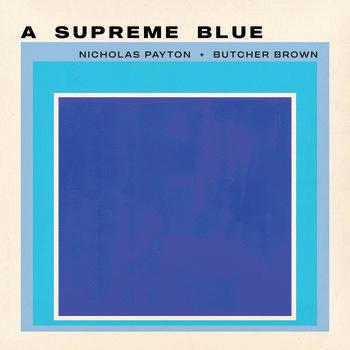
Moving forward with a nod backward describes a new album from the group Butcher Brown. “A Supreme Blue,” out July 24 from Concord Records, features New Orleans multi-
instrumentalist Nicholas Payton. The album includes the songs “So What,” “Freddie Freeloader,” “Acknowledgement,” “Resolution,” “All Blues” and, my favorite, “Blue in Green,” among others. The reimagined songs from legendary albums by Miles Davis’s “Kind of Blue” and John Coltrane’s “A Love Supreme” are as bold as they are
dynamic, celebrations honoring the centennial year of both Davis and Coltrane. The reinterpreted songs, taken together, represent some of jazz’s best years, 1959 and 1965. The band’s Richmond, Virginia, sound, coupled with Payton’s fluid technique on keys and trumpet and his producing and arranging skills, makes this collaborative album potentially award-winning.
Robin James welcomes reader responses at jamesonjazz@ spokesman-recorder.com.

By Dr. Artika Tyner Columnist
Conflicts arise each and every day. The conflict can begin as a simple disagreement and escalate to more pressing challenges. Therefore, it is vitally important for youth to gain and develop the tools needed to address conflict and mitigate the associated challenges. This helps to ensure youth are safe and empowered to solve their own problems. Yet, conflict management, de-escalation strategies and restorative justice practices are not a part of the traditional educational curriculum. This is a missed opportunity to equip our youth with the necessary tools to navigate the rocky terrain of rising tensions, stormy emotions and the threat of potential violence.
I interviewed Andy Lor, Wallin Upturn and youth advocate, to learn more about peaceful problem solving and youth development.
Q: How can we recognize conflict early?
A: Many of us have experienced overwhelming feelings that can cloud judgment. We lash out, say things we don’t mean, and throw our peace
Helping children stay cool: teaching restorative justice and conflict management
off balance. Not only is this harmful to others, but it is also harmful to ourselves. Conflict can negatively impact one’s well-being and mental health. How we handle conflict can stem from our upbringing. Every child has experienced a conflicting situation, but not many know how to resolve one. Without proper guidance, children don’t know how to regulate emotions. It is important to remember that behavior begins at home. As first educators, parents must demonstrate behavior that teaches younger generations how to manage conflict and continue spreading kindness for a better world.
Q: What is restorative justice?
A: Restorative justice is when we focus on healing the harm caused rather than simply punishing the offender, ultimately bringing the community together to understand the impact and how to make things right. Punishment is only a short-term resolution. Without learning from mistakes, people are more prone to repeating offenses.
Q: How can restorative justice be used as a tool for community building and conflict management?
A: The importance of restorative justice is evident when communities actively repair the harm done to achieve meaningful accountability. When restorative jus-

tice is successful in conflict, communities thrive. We build a safer and more interconnected world for future generations each time restorative justice is achieved.
Isaiah Allen’s new book, “Stay Cool, Stay Safe, Stay Strong,” features engaging, helpful techniques for overcoming challenging emotions. When emotions are high, children tend to react differently. When unaware of how to regulate their emotions, children are at risk of negative behavior. The mantra emphasizes three steps that help children become thoughtful, resilient and knowledgeable in conflict management.
• Stay cool: To help keep their cool, children should pause and take a breath before reacting, enabling them
to think clearly.
• Stay safe: Tensions increase when children react negatively. By walking away and taking time to understand their emotions, children stay safe and avoid potential harm and violence.
• Stay strong: Life can take a toll on children. Remembering what they stand for is a significant demonstration of strength.
Key strategies for teaching
children conflict management
First Educators can equip youth with the tools to develop as healthy and balanced adults who can address conflict, create solutions and promote engagement.
“First educator” refers to the fundamental primary role that parents and caregivers
play in a person’s early development and education. They instill essential life skills, morals and behaviors.
Andy shares these practical strategies to support the learning journey:
Practice active listening: Children are sensitive to adults taking sides. To diffuse ten-
“By teaching the “Stay Cool, Stay Safe, Stay Strong” process, we are equipping our youth to live more abundant lives.”
sion, support and communicate with both sides in conflict.
Slight intervention is necessary to show children that their feelings are acknowledged.
Model the way: To children, parents are viewed as role models. Behavior is learned at home. By modeling conflict management behavior, younger generations are aware of how to react in tough situations. For example, model how to communicate their frustrations and when to walk away and come back when they’re ready.
Ask reflective questions: Don’t shame children for wrongdoings. Instead of asking “why did you do this?” or “why are you like this?”, guide them by asking reflective questions like “what were you thinking and feeling at the
Teaching tomorrow’s leaders: lessons in civic engagement inspired by Dr. Josie Johnson
By Divya Thamman
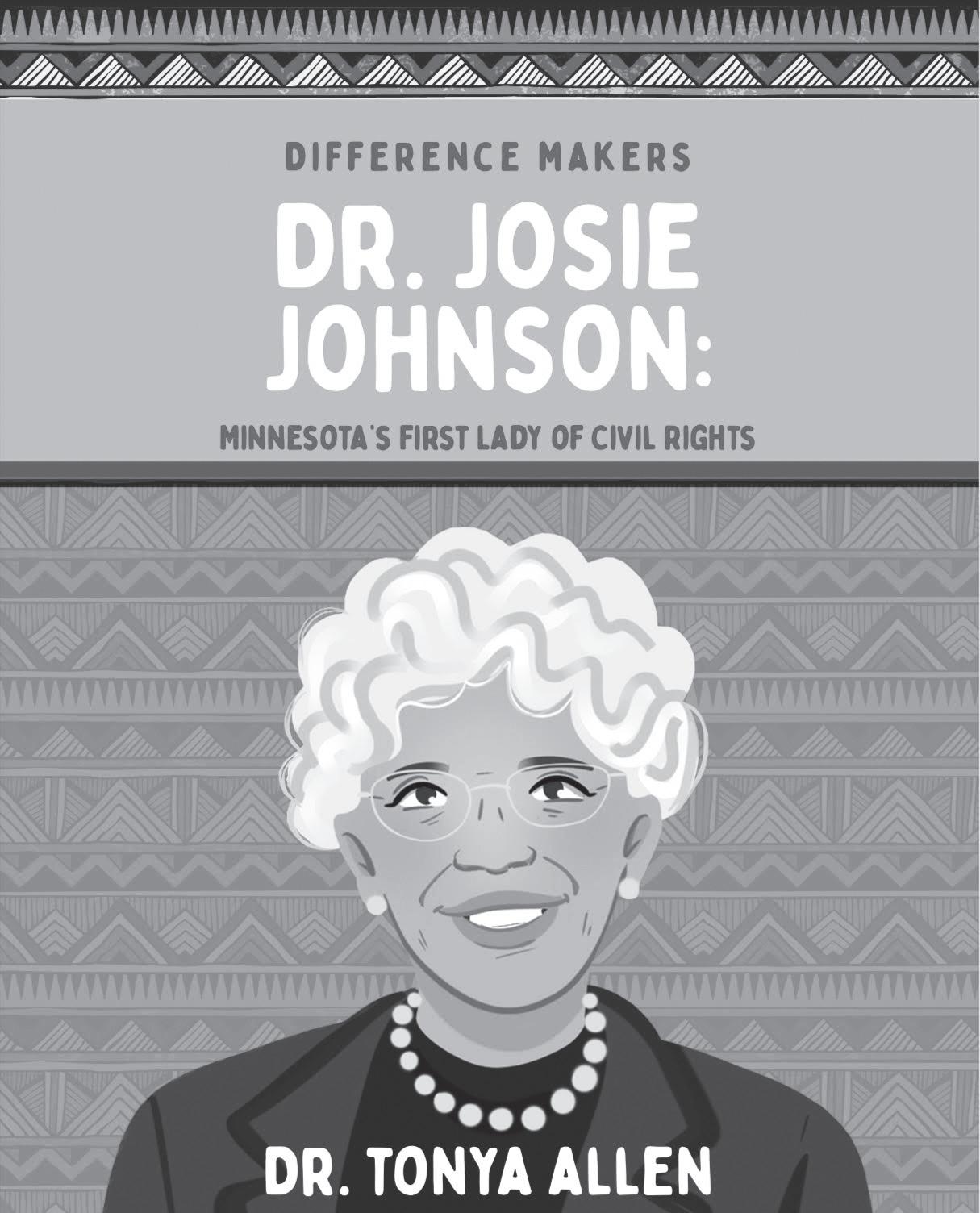
There are many trailblazers in history who don’t get the spotlight they deserve, individuals who fought against barriers and led positive new change. One of these incredible leaders is Dr. Josie Johnson, who is featured in Planting People Growing Justice Leadership Institute’s new book in the Difference Makers series.
nity in St. Paul. Redlining and the construction of the I-94 highway through the community destroyed hundreds of Black-owned businesses and homes and fractured community connections. Redlining and racial covenants were codified for 34 years and weren’t legally prohibited until April 10, 1968, when Lyndon B. Johnson signed the Fair Housing Act. But there’s
Minnesota and other areas in the nation carry the remnants of government-instituted housing racism. This was practiced through redlining and racial covenants that were set in place by the federal government in the 1930s. It was government-instituted discrimination like this that impacted the Rondo commu-
a story that took place seven years earlier, one about how Dr. Josie Johnson, nicknamed “The First Lady of Minnesota Civil Rights,” helped pass America’s first state-level fair housing act.
Dr. Josie Johnson grew up in a family committed to civic engagement and justice. As a teen, she worked alongside
her father on important civil rights issues. She went on to work as an officer for the Minneapolis NAACP. She later became known for lobbying for fair housing. Her efforts would help result in the passing of the first state-level fair housing act in America, one that prohibited racially discriminatory housing practices in Minnesota. She continued her leadership as acting director of the Minneapolis Urban League. The Urban League worked for housing equality programs, workforce equality and civic engagement. She became the first Black woman appointed to the National Board of the League of Women Voters. Dr. Josie Johnson was a leader who used civic involvement for trailblazing change throughout her life. So how can we teach our youth to be leaders and civically involved in their communities? PPGJLI’s new book on Dr. Josie Johnson is an essential read for teaching youth about principles of leadership and civic engagement. Inspired by the trailblazing efforts of Dr. Josie Johnson, here are three ways to teach youth about principles of leadership and civic engagement.
First, practice modeling civic participation. Bring children with you to the polls when voting. Explain the process and how each voice matters. In a time when more people stay home than vote in midterm elections (46% turnout rate), civic engagement is more important than ever. Voter accessibility is an essential part of democracy, and one that leaders like Dr. Josie Johnson
fought for. Listen to the issues that youth care about and are experiencing, and write to your local and state representatives together. This fosters a mind-
set of civic involvement centered around problem-solving and a better future.
Second, engage kids in community service activities.
Volunteer at a local food pantry, clean up parks together or help rake or shovel an elder’s yard. By engaging kids in service-based support, you’re giving back to your community, getting your child excited about positive action and helping them identify how to bridge issues with solutions to be a part of the change they want to see, while strengthening community connections.
time?” This holds them accountable while also promoting emotional awareness.
Teach principles of emotional intelligence: Children are still learning right from wrong. It is important to educate them to avoid repetitive mistakes that lead them down the wrong path. Don’t just tell them what they’re doing wrong, but also why. Point out why and how their behavior can affect others by instilling empathy.
Engage in problem solving together: To foster autonomy, encourage them to share ideas to solve the problem. Respect their ideas and reaffirm where necessary rather than shutting them down.
By teaching the “Stay Cool, Stay Safe, Stay Strong” process, we are equipping our youth to live more abundant lives. It will allow them to learn to manage their emotions and solve problems effectively. This is the foundation for building healthy relationships and strengthening our communities.
Join Planting People Growing Justice every first Saturday for the Leaders Are Readers program for intergenerational reading circles that bring children and families together through storytelling and interactive activities, plus a free lunch and book giveaway from 11 a.m. to 1 p.m. at Jimmy Lee Recreation Center. For more information, visit www. ppgjli.org/. You can also reach Dr. Artika Tyner directly at drartikatyner@gmail.com.
Third, learn from the stories of diverse role models. Read and discuss the stories of changemakers and role models like Dr. Josie Johnson. Check out PPGJLI’s “Difference Makers” series to learn more. Spark conversations about people who used their voice for good or to make a change for a better future for all. By seeing diverse examples of people who led change, children can see themselves as changemakers too. Ultimately, it’s the young people of the next generation who are our future. Just as Dr. Josie Johnson stood up against discriminatory housing practices impacting her community, let the youth of today take inspiration from the trailblazers of the past to become the leaders of tomorrow.
Divya Thamman is an intern at Planting People Growing Justice Leadership Institute. For more information, you can visit www.ppgjli.org/ or email info@ ppgj.org.

Norma Mortenson
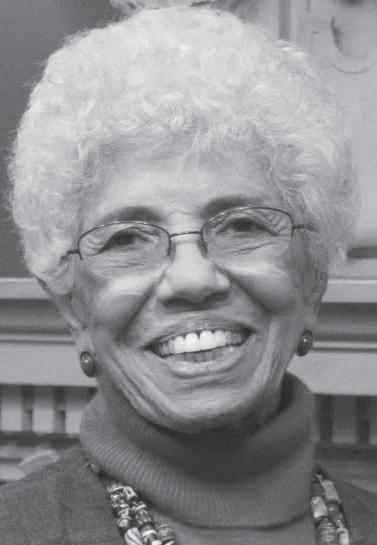
Dr. Josie Johnson St. Olaf College Courtesy
Opinion
DevSecOps Engineer: Plymouth, MN
IT Company seeks DevSecOps Engineer to integrate security practices into DevOps workflows, automate security checks, and ensure the safety of cloud infrastructure. Work closely with development and security teams to enhance the security posture of applications and systems. Build and Configure delivery environments by using CD/CI, Agile delivery methodologies. Create and assist in performing various types of tests.

By Levi Perrin
For generations, Black women have built businesses, organized workers, cared for families and strengthened communities. Yet unequal pay remains only one symptom of a broader failure to value their labor.
Each year, Black Women’s Equal Pay Day arrives over halfway to New Year’s Eve, marking how far into the calendar Black women must work to earn what white, non-Hispanic men earned in the previous year. The date is often accompanied by a familiar statistic, that Black women earn 65 cents for each dollar a white man earns, along with a few headlines and renewed calls for pay equity. But reducing Black Women’s Equal Pay Day to a wage comparison misses the larger story. The observance is not simply about unequal paychecks. It is about how work is valued, whose labor is recognized and what happens when generations of contribution are met with generations of unequal opportunity.
Black women have always worked. They worked in fields and homes while enslaved. They organized the Atlanta washerwomen’s strike of 1881, one of the earliest large-scale labor movements led by Black women. They became teachers, nurses, entrepreneurs, domestic workers, federal employees, caregivers, organizers and business owners, sustain-
ing families, strengthening neighborhoods and helping build institutions that continue to shape American life.
The question has never been whether Black women contribute to the economy. The question is why the economy has so often failed to fully value those contributions.
The wage gap is only one part of a much broader picture. Lower earnings often mean fewer opportunities to build wealth, purchase a home, invest in a business or prepare for retirement. Student loan debt can become harder to repay. Caregiving responsibilities often require impossible tradeoffs between earning a living and caring for loved ones. Over time, these realities compound, shaping not only individual lives but the economic health of families and entire communities.
to economic security instead of a source of lifelong debt. It means investing in Black women entrepreneurs, supporting worker protections, expanding access to affordable childcare, and recognizing caregiving as work that strengthens families and the broader economy. It also requires changing the stories we tell.
By A.R. Shaw
Caitlin Clark is more than a WNBA player; she has become a tool of weaponization against Black women. And now the federal government is involved.
Led by Texas Rep. August Pfluger, 11 Republican lawmakers signed a letter to WNBA Commissioner Cathy Engelbert, threatening a Department of Justice investigation into the league because fouls against Clark “may be racially motivated.”
“As Commissioner, you have an obligation to ensure that every player competes in a safe and professional environment, both on and off the court, free from violence, discrimination, or retaliation,” the letter stated. “If discrimination or retaliation is occurring and creating a hostile work environment, we support any appropriate investigation by the Department of Justice, the Department of Labor, or the Equal Employment Opportunity Commission.”
The people using Clark as a tool couldn’t care less what happens between the lines. Statistically, Clark is a decent shooter and above-average passer but a liability on defense. Her most staunch defenders are not basketball enthusiasts; they view her as a symbol to further their hatred for Black women.
is kind of enough,” Gray said.
“These messages are not the first time.”
Clark has issued statements condemning the harassment aimed at both Thomas and, in 2025, Angel Reese. “None of that is OK,” she said of Thomas’ treatment. But Christmas said statements aren’t enough.
Changing this picture requires more than closing the wage gap, important as that work is. It also means confronting the structural barriers that continue to limit opportunity: creating pathways into higherpaying industries, ensuring essential jobs are compensated with dignity, and making higher education a bridge

Too often, conversations about Black women’s economic lives begin with what is lacking, measuring disparities without fully recognizing the extraordinary value Black women have created despite those barriers. History tells a different story, one of women who organized labor movements, built businesses, created mutual aid societies, educated communities and sustained families through generations of economic uncertainty. Their contributions have never been limited to a paycheck. They have shaped neighborhoods, institutions and movements that continue to benefit the nation. That history deserves more than recognition. It deserves investment.
The goal is not simply to move the date closer to January. The goal is to build an economy where Black women’s labor, leadership and innovation are valued as essential to the nation’s prosperity. When Black women thrive economically, the benefits extend far beyond individual households. Families become more secure, communities grow stronger, businesses flourish and democracy itself is strengthened.
Black Women’s Equal Pay Day reminds us how far there is to go. It also reminds us that progress is possible when equity becomes more than an aspiration and becomes a shared commitment to building an economy that finally values Black women’s work as much as Black women have always valued the work of building America.
This op-ed appeared first in Word In Black. It has been edited for style and length. For the original, visit www. wordinblack.com/2026/07/ black-womens-equal-pay-dayis-about-more-than-wages/.
Levi Perrin is a contributing writer for Word In Black.
The letter creates a false narrative and is irresponsible and dangerous. Stephanie Christmas, a former women’s basketball player at Georgia Southern University and WNBA fan since its inaugural 1997 season, said she has never seen politicians use their platforms to sway the league’s direction. “If you want only one player to play the game, that’s not basketball anymore,” Christmas said. “I don’t think that they should be putting any legislation in place. They are making it worse for the players and the WNBA game.”
During a June matchup between the Fever and Phoenix Mercury, Alyssa Thomas’ arm briefly pressed against Clark’s neck during a scramble for a loose ball. No foul was called on the play, but Thomas was assessed a flagrant foul 2 and suspended one game the following day amid public outcry. Clark’s supporters responded by aiming racial slurs and death threats at Thomas, who called out Engelbert for staying silent.
“It’s unfortunate, but as usual, she remains silent,” Thomas said. “That’s unfortunate when our lives are being threatened.” Engelbert responded only after Thomas spoke publicly, saying the league “vehemently condemns any and all forms of hate.”
Weeks later, Chelsea Gray of the Las Vegas Aces faced similar racial animus after a routine foul call went against Clark, despite replay showing Gray never initiated contact. Gray later posted a screenshot of a man using a racial slur against her; he was fired from his job within days. “Enough
“I would like for her to have addressed her fans,” Christmas said. “They’re making threats, and they’re making racist comments... I would like to see her confront her fans when she observes them attacking certain individuals on the court.”
Clark never asked to become a symbol for those who target Black women. But the question remains whether she is doing enough to distance herself from that role.
The Caitlin Clark experience has become a microcosm of America’s divided political atmosphere, an inescapable stain on a league that fought for years to earn the interest and respect it now has.
This op-ed appeared first in Black Press USA. It has been edited for style and length. For the original, visit https://blackpressusa.com/oped-how-black-wnba-players-became-collateralin-the-caitlin-clark-culture-war/.
A.R. Shaw is a contributing writer for Black Press USA.
By Rev. Heber Brown III
I often look to our ancestors to guide my service to the Black community today. They connect me to the movement that has been and is ongoing. Recently, I have been reflecting on two such inspiring ancestors: Malcolm X and Queen Mother Audley Moore. These two leaders at the vanguard of Pan-Africanism and the reparations movement understood the importance of securing land to build power. As Malcolm X said, “Revolution is based on land. Land is the basis of all independence. Land is the basis of freedom, justice and equality.” Queen Mother Moore, in a 1975 speech, declared, “We believe African captives in the USA will not have freedom until they have land of their own.”
Through their wisdom and the examples of so many others, we see how Black-owned land is a source of cultural memory and spiritual grounding. When we hold land, we find freedom. I learned this firsthand through my great-grandparents’ lives “down the country” in rural Virginia. That land was a respite of sorts from the ravages of racial capitalism found in the city. It was an oasis amid a society that burdens Black people in so many ways. The whole family benefited from having significant landholdings to care for themselves. There was pride in self-sufficiency. Economic sovereignty joins these attributes that land gives us. Since Black people have lost
land, due to racial violence, the discriminatory impact of “heirs’ property” and exclusion from banking and farm programs, our overall wealth has decreased. According to the Federation of Southern Cooperatives, Black people owned 16 million to 19 million acres of rural land in 1910, compared to less than 3 million acres today.
This is partly why I founded The Black Church Food Security Network, pairing Black farmers with churches who own land to tie together food justice, community and freedom. While food pantries and food drives are necessary efforts to fulfill an immediate need for those who experience food insecurity, they are not enough. Securing land, infrastructure and the means of production is the key to overcoming food apartheid in our communities. It must also be a primary component of reparations.
African leaders, led by President John Dramani Mahama of Ghana, recently coordinated a United Nations resolution that finally declared the trafficking of enslaved Africans the “gravest crime against humanity,” urging the need for reparations as the next step. There is no peace in the world, leaders said, without healing and reparative justice for Africans across the diaspora. This closely echoes the words of Brother Malcolm, who said our redress should be seen as a violation of human rights, and now the global record acknowledges it as such. Though further support and action is still required, the UN
resolution marks an important step toward the goals of our ancestors. Queen Mother Moore long advocated for “the long overdue debt of forty acres and two mules, in land.” Malcolm X similarly strongly advocated for reparations for land for Black Americans, as the U.S. government has shown is possible. Both of these leaders sought to bring the issues of land and justice in front of the UN. Now that those issues are there, we hold the hope of progress. As Queen Mother Moore asserted, our spirits were never removed from Africa. We are still connected to that land and heritage. We have achieved much, but reparations, through land and other means, are required to be truly free from exploitation. All roads lead back to land ownership. Colonizers erroneously see land as a portal to access resources, from precious minerals to oil, timber and even people. For the rest of us, land signals security and communal self-reliance. So, farmers, churches and communities continue working hand-in-hand. This is the unfinished work of our ancestors. It is up to us to continue their legacy of liberation through collective land ownership.
This piece appeared first in the AFRO. For the original, visit https://afro.com/black-community-land-ownership/.
Network.
Employment & Legals
Office of the Minnesota Secretary of State
Certificate of Assumed Name Minnesota Statutes, Chapter 333

The filing of an assumed name does not provide a user with exclusive rights to that name. The filing is required for consumer protection in order to enable customers to be able to identify the true owner of a business.
ASSUMED NAME: Aalto Home Care
PRINCIPAL PLACE OF BUSINESS: 315 E LAKE ST # 205 MINNEAPOLIS MN 55408
APPLICANT(S): Daud Quality Care LLC
APPLICANT ADDRESS: 315 E LAKE ST # 205 MINNEAPOLIS MN 55408 USA
If you submit an attachment, it will be incorporated into this document. If the attachment conflicts with the information specifically set forth in this document, this document supersedes the data referenced in the attachment.
By typing my name, I, the undersigned, certify that I am signing this document as the person whose signature is required, or as agent of the person(s) whose signature would be required who has authorized me to sign this document on his/her behalf, or in both capacities. I further certify that I have completed all required fields, and that the information in this document is true and correct and in compliance with the applicable chapter of Minnesota Statutes. I understand that by signing this document I am subject to the penalties of perjury as set forth in Section 609.48 as if I had signed this document under oath.
SIGNED BY: Sundas Abdullahi
MAILING ADDRESS: 315 E LAKE ST # 205 MINNEAPOLIS MN 55408
EMAIL FOR OFFICIAL NOTICES: dqualitycare@gmail.com
Minnesota Spokesman-Recorder, July 23, 30, 2026
SOE - McCARTY
Continued from page 10
they can do to impress the coaches in order to get invited to training camp.
"They're not just been chosen, they're here for a reason," McCarty said. "We want to
PREP
Continued from page 10
championship game. McCoy was a Mr. Basketball finalist.
1995: Minneapolis North (30-0), state champions, Coach Robin Ingram
The Polars were led by Khalid El-Amin, Jabbar Washington, Chris Rainey, Kavon
THIRD
guard, Seattle will be dangerous in the second half."
Erica L. Ayala, a veteran multimedia journalist and founder of Black Rosie Media, covers women's pro and college basketball and hockey, among other sports; her site describes its mission as "empowering Black women and other melanated people in sports media."
"For me the storylines for the second half," Ayala said, "starts with two teams. One is the New York Liberty. We know they have a new head coach and are still dealing with injuries, and I just think there's still some questions about the team, how they are executing when it comes to the game plan.”
"We haven't seen (guard-forward) Betnijah Laney-Hamilton in games when the team needs defensive stops. Will they be able to turn things around and get closer to the top of the standings where they want to be," she continued.
"The team that's making it difficult for them is the Washington Mystics. They are a great young, scrappy team. They have
help each one of the guys on the roster grow their value, whether it's here, whether it's with other organizations, wherever it is. We want to help them grow their potential to be NBA players."
On his first summer league experience on the sidelines: "I'm just super excited to be a part of Summer
Westberry, Albert Green, Elbert Wall and LeDale Davis. El-Amin, a sophomore point guard at the time, was the team leader. Washington, a fellow sophomore, also had an outstanding tournament. After contributing to two tournament victories, Lockhart and Rainey were ruled academically ineligible for the title game. Despite a slow start, the Polars came out on top, defeating Staples-Motley.
been able to compete with the top teams, spoil and win some games when, statistically speaking, you didn't know it would necessarily be the outcome. They've been able to do that for a few seasons, and it comes from their coach," second-year head coach Sydney Johnson, she said. "Who's to say they can't be the postseason team of today, not just building for the future." Brunson added, "Portland Fire (and) Toronto Tempo, expansion teams, can they grab somebody by the shirt collar and shock the world and make the playoffs like Golden State last year? I like the Tempo's chances better when Brittney Sykes comes back, just because that team can score.
"Let's just go ahead and hand Most Improved Player award to (guard) Marina Mabrey. She is literally shooting the leather on the basketball. Oh, my goodness gracious, 40% from three; she was just at 27% from three last year. She is reminding me so much of Diana Taurasi."
Ayala said she'd like to see more stories about the legends of the game. "We have some cities that are getting back WNBA (expansion) teams, and a lot of these legends are being activated. I love that we are seeing
2 Columns x 6.75” High
STATE OF MINNESOTA FOURTH JUDICIAL DISTRICT COURT
COUNTY OF HENNEPIN
PROBATE MENTAL HEALTH DIVISION
NOTICE OF INFORMAL APPOINTMENT OF PERSONAL REPRESENTATIVE AND NOTICE TO CREDITORS
In Re: Estate of FILE NO. 27-PA-PR-26-166 Kyle T. Moua, also known as, Kyle Tou Bee Moua, Deceased
TO ALL INTERESTED PERSONS AND CREDITORS:
Notice is given that a second amended application for informal appointment of personal representative has been filed with the Registrar. No will has been presented for probate. The second amended application has been granted.
Notice is hereby given that informal appointment of Irene Thor Her, whose address is 10945 N. Eagle Lake Blvd, Maple Grove, Minnesota 55369, as personal representative of the estate of the above-named decedent, has been made. Any heir, devisee or other interested person may be entitled to appointment as personal representative or may object to the appointment of the personal representative and the personal representative is empowered to fully administer the estate including, after 30 days from the date of issuance of letters, the power to sell, encumber, lease or distribute real estate, unless objections thereto are filed with the Court (pursuant to Section 524.3-607) and the Court otherwise orders.
Notice is further given that ALL CREDITORS having claims against said estate are required to present the same to said personal representative or to the Probate Court Administrator within four months after the date of this notice or said claims will be barred.
Dated: May 21, 2026 Yvette M. Andrade Registrar
Sarah Gonsalves, District Court Administrator
Notice of Inf Appt of PR Minn. Stat. 524.3-310; 524.3-801
Minnesota Spokesman-Recorder, July 30, August 6, 2026
League, my first time coaching," McCarty said. "Just get a chance to lean into these young guys, not just about basketball, but about life."
1999: St. Paul Highland Park (27-2), Class 3A state champions, Coach Charles Portis
The Scots were led by Mark Wingo, Terrance Stokes, Maurice Hargrow, Josef Mathews, Jamal Diaz-Cruz, Joshua Watson, Geoffery Brown and Daniel Lee. Stokes ran the point, Wingo and Miley took care of the scoring and rebounding inside, and Hargrow, a sophomore, later blossomed into one of the state’s top college prospects.
more former players on broadcasts and network television, which is amazing. There are a lot of former players that I'd like to know their stories, where are they now.
"There is so much rich history. I want more of that history, and there is so much that we can reach back and recall for fans that lived it and experienced it, and there are new fans that don't know about Detroit, Utah or Miami. I'd like to see more of that," she said.
After years calling WNBA games, Brunson is watching this season as a fan. "As much as I am bummed that I'm not participating directly," she admitted, "the joy in my heart when I can easily find a game on network TV, when I can watch and see arenas full of fans loving on these women and growing the game."
Brunson attended last Saturday's All-Star Game, where Team Spoon defeated Team Coop 129-122 before a record All-Star attendance of 19,783. Minnesota rookie Olivia Miles finished with 11 points, 12 rebounds and 8 assists, and teammate Courtney Williams had 12 points and 7 assists for the winners.
"It was an amazing atmosphere," Brunson said of the new attendance record. "The game is
Essence Michaela Bell, Plaintiff, vs. Michael Thomas Christoph, Defendants.
TO: DEFENDANT MICHAEL THOMAS CHRISTOPH:
1. YOU ARE BEING SUED. The Plaintiff has started a lawsuit against you. The Plaintiff’s Complaint against you is attached to this Summons. Do not throw these papers away. They are official papers that affect your rights. You must respond to this lawsuit even though it may not yet be filed with the Court and there may be no court file number on this Summons.
2. YOU MUST REPLY WITHIN 20 DAYS TO PROTECT YOUR RIGHTS. You must give or mail to the person who signed this Summons a written response called an Answer within 20 days of the date on which you received this Summons. You must send a copy of your Answer to the person who signed this Summons located at: 3900 Northwoods Drive, Suite 250, Arden Hills, MN 55112.
3. YOU MUST RESPOND TO EACH CLAIM. The Answer is your written response to the Plaintiff’s Complaint. In your Answer you must state whether you agree or disagree with each paragraph of the Complaint. If you believe the Plaintiff should not be given everything asked for in the Complaint, you must say so in your Answer.
4. YOU WILL LOSE YOUR CASE IF YOU DO NOT SEND A WRITTEN RESPONSE TO THE COMPLAINT TO THE PERSON WHO SIGNED THIS SUMMONS. If you do not Answer within 20 days, you will lose this case. You will not get to tell your side of the story, and the Court may decide against you and award the Plaintiff everything asked for in the Complaint. If you do not want to contest the claims stated in the Complaint, you do not need to respond. A default judgment can then be entered against you for the relief requested in the Complaint.
5. LEGAL ASSISTANCE. You may wish to get legal help from a lawyer. If you do not have a lawyer, the Court Administrator may have information about places where you can get legal assistance. Even if you cannot get legal help, you must still provide a written Answer to protect your rights or you may lose the case.
6. ALTERNATIVE DISPUTE RESOLUTION. The parties may agree to or be ordered to participate in an alternative dispute resolution process under Rule 114 of the Minnesota General Rules of Practice. You must still send your written response to the Complaint even if you expect to use alternative means of resolving this dispute.
AARON FERGUSON LAW, PLLC
Charles Hallman welcomes reader responses at challman@ spokesman-recorder.com.
Copyright © Charles Hallman
Highland Park defeated Cold Spring Rocori in the championship game.
2010: St. Paul Johnson (320), Class 3A state champions, Coach Vern Simmons
The Governors used a rotation of Maxie Rosenbloom, Estan Tyler, Roosevelt Scott, Demitri Conwell, Donte Warlick, Christopher Smith-Bond, Jordan Pluff, Marcus Marshall, Xavier Black, Anthony Lee, Prince Wil-
in such a good place and in such good hands with these young stars like 'The Spectacle' (Miles) and Paige (Bueckers of Dallas). It's
Date: June 10, 2026

By:______________________
C. Jeremy Lagasse (#396834) Attorney for Plaintiff 3900 Northwoods Drive Suite 250 Arden Hills, MN 55112 651-493-0426 jeremy@aaronfergusonlaw.com
Minnesota Spokesman-Recorder, July 30, August 6, 13, 2026
liams and Xavier Henry. Rosenbloom and Conwell provided the leadership, while Tyler and Scott were among the top Division I prospects in the state. Every team member contributed to each victory. Johnson defeated Grand Rapids to win the title.
just been so wonderful to see the rise of the game as a fan."
Charles Hallman welcomes
Dr. Mitchell Palmer McDonald welcomes reader responses at mcdeezy05@gmail.com.
reader responses at challman@ spokesman-recorder.com.
Copyright © Charles Hallman
MINNESOT A SP OK ESMAN-R
Sports
Wolves assistants use summer league to grow their own game, too McCarty
stood behind the local media scrum as Wolves Summer League Assistant
Coach Kelly McCarty took questions after a practice. He handled the questions as if he were the head coach, who usually conducts such sessions.
"It's always exciting trying to get a group together just because there's so many new pieces," McCarty said.
McCarty played 15 pro seasons, including one NBA season with Denver, but mostly labored internationally in Israel and Russia. It is during his time overseas that the assistant coach believes he developed an edge in working with foreign-born centers, 7-foot3 Rocco Zikarsky, who played in the G League last season, and 6-foot-11 France native Joan Beringer, who played in Slovenia before the Wolves drafted him in 2025 and split time between Iowa and the parent club.
McCarty, before turning to

coaching, played collegiately at Southern Mississippi, where he's in the school's Hall of Fame. As a pro, he is a twotime EuroCup champion (2004, 2011), 2004 EuroCup Finals MVP, 2005 FIBA EuroChallenge MVP and won that year's EuroChallenge championship. His first coaching job came with the Iowa Wolves, the Timberwolves' G League affiliate (2023-25), and he finished
Coaching While Black
The annual NBA Summer League is now over. It isn’t just for players hoping to get invited to training camp later this year, but also for coaches who aspire to move up the ranks one day. MSR talked to two Black Minnesota Timberwolves assistant coaches in separate interviews earlier this month before the team left for Las Vegas.
his first season with the parent club as an assistant coach.
McCarty reflected on his Iowa Wolves days: "They give you a workload. They're really strategic about how they develop coaches as well as players. I think that's super good for coaching to develop, if you have to learn and develop your voice as a coach.
"I think that was great for me to go there, develop a coaching voice," he said. "I understand a little bit more about our game."
After his meeting with the media, I had a few stolen moments with McCarty as he left the group. He told me he fully understands summer league players wanting to show what
■ See SOE McMARTY on page 9
ummer league games are more than just winning games, says thirdyear Timberwolves Assistant Coach James White.
"We want to win, of course," White said before the Wolves' summer league squad headed to Las Vegas earlier this month, "but really it's to see what we can do with these two bigs," 6-foot-11 Joan Beringer and 7-foot-3 Rocco Zikarsky, "get these guys better and see how they play our system.
"We want to play the right way," White said. "What are you going to bring to the table with the other guys, not just for summer league but will we get some real support? Can you help us? I think that's the biggest thing for us, more

31st overall in 2006.
"Everybody gonna try to do some stuff, try to show people stuff that they've been working on," White said of the summer players on the roster, especially the rookies. "But at the end of the day, the smartest thing to do is try to play to win it the right way, winning basketball."
HICAGO — The highlight of 2026 WNBA All-Star Weekend, hands down, up here in the Windy City, was at the Obama Presidential Center, the first-ever site for the AllStar Game's media availabilities, team practices and a Jr. WNBA event last Friday.
The nearly 20-acre campus located in Jackson Park on Chicago's South Side opened in June. The WNBA last weekend was the first pro league to hold events on the Obama Home Court athletic facility: All-Star practices, media availabilities and a Jr. WNBA youth event.
But what wasn't planned
was a memorable appearance by the first U.S. Black president, Barack Obama.
“Some of you I'm meeting for the first time, all of you are extraordinary,” the 44th president told the gathering. "The way the game has been growing lately and the way the game has been picking up, people have been paying attention to your excellence … it has been a sight to see."
Obama also chatted with players. Angel Reese got a selfie with him, and he posed with players and coaches, even getting into a defensive stance to guard New York's Jonquel Jones for a few seconds. He told everyone he doesn't play 5-on-5 anymore to protect his Achilles, but christened the
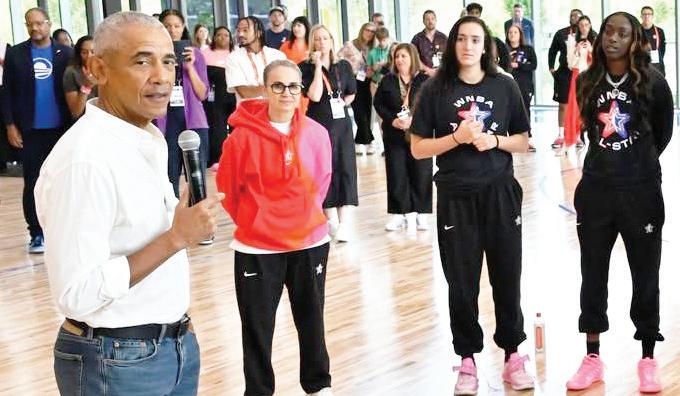
court by playing “H-O-R-S-E.”
All those who were there agreed it was both special and memorable.
“It was very special,” said Las Vegas guard Jackie Young. “He's a basketball head. I took a picture with him.”
Minnesota Lynx forward
Six teams to remember

his week’s column features six boys basketball state tournament teams etched in my memory.
1989: St. Paul Central (23-4), Class AA state fourth place, Coach Dan Brink
The Minutemen were led by starters Juriad Hughes, David Hollman, Christian Hayes, Jerome Paul and Ron Taylor, with Frank Kelly and Stephen Kennedy coming off the bench. Hughes, the Star Tribune Metro Player of the Year and Mr. Basketball finalist, and the sharpshooting Hollman averaged 25 and 17 points per game, respectively.
In the tournament, Central defeated defending champion Cold Spring Rocori before losing to Robbinsdale Armstrong and Stillwater.
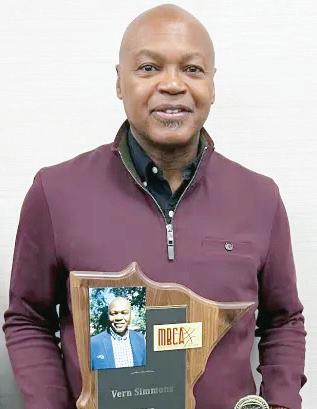
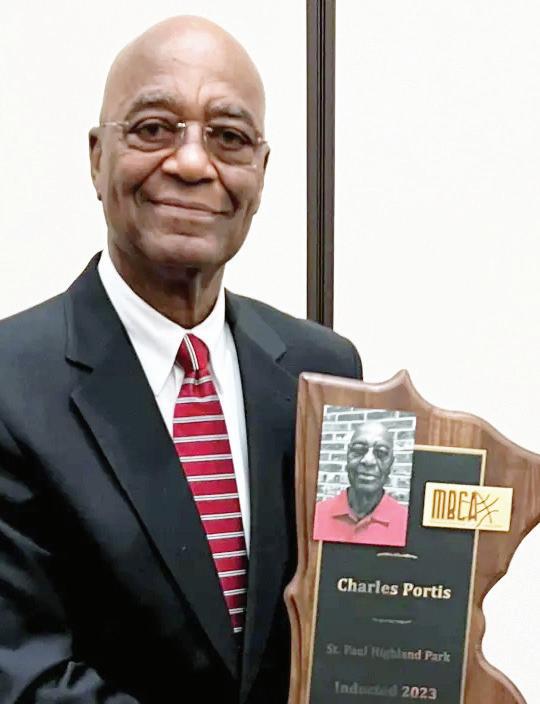
1990: Minneapolis North (17-9), Class AA state runnerup, Coach Robin Ingram
The Polars, seeded No. 5 in Region 5AA that season, were led by starters David Dennis, Charles Frazier, Marvin Walker, Hubert Register and Taj Rich, with Sean Strickland and Will Criss providing a spark off the bench. The outstanding play of Rich and Dennis, along with the quiet leadership of Walker, led the Polars to a victory over conference rival and top-ranked Patrick Henry High School in the region championship game. Once in the tournament, North went on to defeat Cretin-Derham Hall and Fergus Falls be-
fore losing to Owatonna in the championship game.
1994: St. Agnes (25-5), Class A state champions, Coach Dick Ghizoni
The Aggies were led by seniors Jahmai “Pancho” Phipps, Marlon McCoy, Lester Jackson, Char Davis and Craig Vaughn, along with juniors Kamani Lloyd and Juan Taylor. Expectations were high after the foursome of Phipps, McCoy, Jackson and Davis enrolled as freshmen in 1990.
After three seasons of disappointment, it all came together in 1994, with St. Agnes defeating Morris Area in the
Natasha Howard, a first-time All-Star starter, added, “It was amazing for him giving us a pep talk.”
Washington forward Kiki Iriafen was emphatic. “Today was the best day. To be here (at the Obama Center) and to meet President Obama was surreal. I
important than just winning games, even though we do want to win games."
White's coaching resume includes two seasons as Timberwolves assistant player development coach, and a season as Iowa Wolves assistant coach. He played in the NBA, NBA D-League and overseas after college, one year at Florida and three years at Cincinnati. Portland drafted White
will talk about that the rest of my life. He's also (No. 44) and I'm also 44. He said that number was really special. I never (met) President Obama before and it was thrilling to meet him. I was trying to maintain my composure, but I was star struck.”
Obama hosted at least 86 sports teams at the White House during his eight-year presidency, including the Lynx three times, in 2012, 2014 and 2016.
Last Friday was the first time since 2016 that Minnesota AllStar Coach Cheryl Reeve and her son Oliver, now 10 years old, both met the president in person. “It was an incredible moment to be celebrated by President Obama after our 2015 championship,” she recalled. “Being brought up to the stage and high-fiving the president. He was too young at the time to remember it. To see his face today, to see him standing in front of us with a big smile … it was pretty cool.”
Playing in Vegas also offers White the opportunity to work on his own coaching: "Continue to get better," he said. "I'm getting way more experience running drills, running the defense, being able to have a bigger voice, and hopefully I can carry that over to the season.
"I should have a little bigger role," he said. "So just being prepared, preparing for that kind of stuff."
Charles Hallman welcomes reader responses at challman@ spokesman-recorder.com.
Copyright © Charles Hallman
Atlanta All-Star guard Allisha Gray said, “I actually got to shake his hand and take a picture with him. It was the best year ever to be able to meet such an iconic person as President Barack Obama.”
Los Angeles All-Star Nneka Ogwumike summed it up: "For President Obama taking the time to speak with us, giving us the opportunity to occupy this beautiful space, it's very much what we represent as members of our (WNBPA) union and as players of the W. This is the type of intersectionality that makes women's basketball what it is.
“Absolutely significant,” Ogwumike concluded. “You can't really ask for a better way to celebrate 30 years of the W.”
Charles Hallman welcomes reader responses at challman@ spokesman-recorder.com.
Copyright © Charles Hallman
By Charles Hallman Sports columnist
HICAGO — The second half of the 2026 WNBA season began earlier this week.
On a seven-game win streak, Minnesota (22-6) hosted Toronto on Tuesday, the first of the team's 16 remaining games before the playoffs in September, which Coach Cheryl Reeve calls "a sprint."
We talked to All-Star players about the W's second half. "Stick to our principles," which is largely built on defense, Lynx forward Natasha Howard said.
Atlanta guard Allisha Gray said her Dream must be more consistent than they were in the first half of the season. "The biggest thing is not making the same mistakes you made in the first half of the season."


"I think the biggest thing for us in the second half is consistency," added Washington forward Kiki Iriafen. "Right now, we are in eighth place, so we are in that playoff spot and want to stay there. There's been games on paper we shouldn't have won and won, and games on paper we should've won and we haven't. Being locked in for every single matchup."

Las Vegas guard Jackie Young pointed out, "We know we can score the ball," but the Aces must "lock down on the defensive end," she stressed.
We also asked two longtime Black female journalists for their thoughts on the W's second half. "The top eight teams are going to have to really fight to maintain their playoff position because everybody one through 15 can get anybody else," said play-by-play voice Cindy Brunson. "I just think Minnesota, barring injury, will be the team to beat going into
President Obama speaking to All-Stars WNBA
Kelly McCarty Charles Hallman/MSR White
James White Charles Hallman/MSR
Vern Simmons (St. Paul Johnson) Photos by Dr. Mitchell Palmer McDonald Charles Portis (St. Paul Highland Park)
Kiki Iriafen
Photos by Charles Hallman/MSR Erica L. Ayala
(L-R) Sheryl Swoopes, Cindy Brunson Threads