Trump delivers ‘massive’ setbacks to the Black middle class
By Jasmine McBride Associate Editor
espite bold campaign claims of being “the best president for Black Americans since Abraham Lincoln,” President Donald Trump’s second term has launched an aggressive rollback of key pathways that historically fostered the growth of the Black middle class. While he positioned himself as a champion for economic opportunity during the 2024 election cycle, especially for Black communities, the reality under his current administration paints a much darker picture.
“He hasn’t done anything but be harmful to the Black middle class, and to Black Americans in general,” said Dr. Mariam Rashid, associate director of racial equity and justice at the Center for American Progress (CAP), in an interview. “The ripple effects are massive.” Trump’s campaign rheto-
ric included promises to strengthen job security, tackle inflation, and boost the economic standing of Black Americans. However, halfway through his first year back in office, many of his policies are doing the opposite.
“We’re watching generational mobility get cut off at the knees.”
At the heart of the issue is the federal government itself, a major employer of Black Americans, especially in regions like Maryland and Washington, D.C., where Black federal workers anchor middle-class communities.
According to March 2024 data, Black Americans made up 19% of the federal workforce despite being only 14% of the general labor force. That number was even higher at agencies like the Department of Education, Treasury,
and HUD.
But with the creation of the Department of Government Efficiency (DOGE), mass job cuts were implemented, disproportionately affecting Black professionals.
“These aren’t abstract numbers,” said Rashid. “These are families… When someone loses a federal job, they’re not just losing a paycheck. They’re losing pensions, long-term stability, the ability to send their kids to college, and to retire with dignity.”
Black women, who account for 12% of the federal workforce and are often the primary breadwinners in their households, are being hit especially hard. The elimination of Diversity, Equity, Inclusion and Accessibility (DEIA) programs via executive orders has further slashed roles and opportunities they disproportionately hold.
“What we’re seeing is a systemic assault, cloaked in bureaucratic policy,” Rashid noted. “This administration
■ See MIDDLE on page 5
DFL endorsement revocation heats up mayoral race
By Jasmine McBride Associate Editor
decision by the Minnesota Democratic-FarmerLabor (DFL) Party to revoke its mayoral endorsement of State Senator Omar Fateh, originally announced this past July, has ignited a wave of criticism from progressive leaders and elected officials across Minneapolis, even as party leadership defends the move as necessary to preserve the integrity of the endorsement process.
“I won’t pretend that I’m not disappointed and angered to see 28 party insiders revoke the endorsement and overturn the votes of hundreds of Minneapolis residents,” said Fateh.
In a statement released mid-August, DFL Party Chairman Richard Carlbom said the party’s Constitution, Bylaws & Rules Committee (CBRC) found “substantial failures” in the voting process held at the Minneapolis Convention Center on July 19, including the erroneous elimination of a
‘Soil Syndicate’ wants more people to see waste as a resource
By Jasmine McBride
Associate Editor
candidate.
“After a thoughtful and transparent review of the challenges,” Carlbom stated, “the CBRC found substantial failures in the Minneapolis Convention’s voting process... As a result, the committee has vacated the mayoral endorsement.”
Carlbom called for party unity heading into the 2026 elections and emphasized the DFL’s goal of building an “affordable economy that works for everyone.”
“It is inexcusable to overturn the results weeks after the convention because board members did not like the outcome.”
But the party’s action, seen by many as reversing a legitimate grassroots victory for Fateh, has triggered fierce backlash from prominent progressive officials, including U.S. Representative Ilhan
Omar (D-MN), who joined a coalition of local electeds in denouncing the decision as anti-democratic and harmful to party credibility.
“It is inexcusable to overturn the results weeks after the convention because board members did not like the outcome,” read a joint statement signed by Omar and others.
“This decision will be a stain on our party for years to come.”
“An effort led by Mayor Frey” Ninth Ward Councilmember Jason Chavez-Cruz went further, directly blaming Minneapolis Mayor Jacob Frey for influencing the CBRC process.
“They met privately and voted to overturn the will of Minneapolis delegates…an effort led by Mayor Jacob Frey,” Chavez-Cruz wrote on Facebook. “This is a shortsighted decision meant to capitulate to rich donors and the wealthy rather than the working people of Minneapolis.”
Fateh, who is Somali-American and would have been the first Muslim mayor endorsed by the DFL in Minneapolis
■ See DFL on page 5
Representative Ilhan Omar (podium) and Omar Fateh (middle) at Sabathani Community Center July 10, days before Fateh’s DFL endorsement was announced
Photo courtesy of Jasmine McBride/MSR
The Center for American Progress (CAP) says the Trump administration is gutting the result of civil rights efforts that have created entryways for the Black middle class and beyond.
Alexandron Msigala (right), founder of KilimoMax Solutions and 2025 Mandela Washington Fellowship recipient, showcased backyard bin composting, vermicomposting with worms, and black soldier fly composting.
Mpls council candidate knows what it means to rebuild a life from scratch
By Maurice L. Ward with Shanasha Whitson
My name is Maurice L. Ward. I’m a Justice-Impacted
Individuals leader, husband, father, nonprofit founder, and proud resident of North Minneapolis. I’m also running for City Council in Minneapolis’ 5th Ward, one of the most diverse and vibrant communities in the city.
When I returned home in 2018 after more than eight years incarcerated at a Minnesota correctional facility, I had to rebuild my life from scratch. I hadn’t seen my wife or kids in nearly a decade. My driver’s license had expired. I relied on the bus to get around.
“My wife, who sadly passed away this January after 32 years of marriage, and my brother were my lifelines during that difficult time. Their support saved me.
But not everyone has that support. That’s why I founded
J.I.I.V.E. (Justice Impacted Individuals Voting Effectively), a nonprofit dedicated to reentry, civic engagement, housing, employment, and healing. People returning from incarceration don’t just need services; they need community, dignity, opportunity, and someone who believes in them.
This work is personal because I’ve lived it. I know what it’s like to come home with no job, no housing, no ID, no transportation, and no emotional safety net. I understand the struggle of reconnecting with family after years apart, while navigating shame, grief, and the pressure to stay out of
a system designed to pull you back in.
currently pursuing a second Master’s in nonprofit and public administration. I did this not only for myself but to better serve others equipped with the tools, language, and policy knowledge to create meaningful change from the inside out.
At JIIVE, we don’t separate issues. Reentry isn’t just about housing, employment or voting… It’s about all of it. You can’t expect someone to engage in elections if they can’t feed their kids. You can’t expect someone to hold a job without stable housing. That’s why our work is holistic.
One of our most powerful initiatives is Just Us Gardens, a healing space built on the idea that the same space once used to incarcerate can now be used to grow. Every garden bed is the size of a prison mattress. This isn’t just symbolism… It’s a statement: We can do more with these spaces than confine people. We can feed people. We can heal.
heals trauma. It restores dignity. The system isn’t designed to nurture that.
• Pro-labor economic empowerment
A holistic vision for reentry After returning home, I enrolled in college and earned my bachelor’s degree. I then completed a Master’s in advocacy and political leadership at Metro State and am
This project arose from a frustrating reality. The Department of Corrections has failed to implement gardening programs equitably across facilities. Inside prison walls, where connection and healing are desperately needed, there are no gardens. The DOC cites financial concerns, but the truth is this is about control. Gardening grounds people. It
Governor Walz and Lt. Governor Flanagan commend Minnesota Spokesman-Recorder on 91 Years of service
Minnesota Statute 241.241 mandates, “The commissioner shall establish a gardening program for inmates at each correctional facility where space and security allow. Gardens shall primarily be tended by inmates. Produce shall be used to feed inmates, with surplus donated to nearby food shelves and charities.”
So, we created Justice Gardens outside the walls for returning citizens, the community, and the movement. The impact is real. At a recent garden gathering, a local flutist played and the crowd sang together; it was a moment of grounding, joy and healing that I’ll never forget.
I’m pro-union and proworker. Everyone deserves a living wage and a fair shot. We need stronger labor protections and pathways to employment for people returning from incarceration. Economic justice is public safety.
The work continues Under JIIVE, we’ve launched several initiatives:
• Justice Gardens: food justice, healing, and housing
• Voter engagement for justice-impacted individuals
• Housing and employment referrals through trusted partners
• A community CSA (coming soon) to distribute garden produce
Why I’m running for city council
I never planned to run for office. But I’ve seen too many elected officials talk a good game without delivering for our communities. The 5th Ward deserves a representative who shows up, listens, and understands life on the ground.
If elected, my top priorities will be:
• Public safety through community investment
Safety starts long before policing; it begins with housing, youth programs, jobs, and mental health support. We need proactive outreach, not just reactive arrests. Nobody wakes up wanting to be hungry, homeless, or criminalized.
Let’s invest in solutions, not punishment.
• Affordable housing for all Minneapolis’ housing costs have become outrageous.
People are paying $1,500 for 500 square feet, often without heat or basic amenities.
That’s not affordable, it’s exploitation. I’ll fight for policies that make truly affordable housing accessible to working families.
• Planned legal support to help returning citizens with criminal case navigation
• Collaboration with the University of Minnesota on a “story map” of Minnesota’s prison system, using data, policy, and lived experience
None of this would matter without one core truth: Change is possible. I’m living proof. All I’ve ever wanted is to lead by example — to show others they can come back from anything.
For more information or to get involved with JIIVE, visit jiive.org.
Shanasha Whitson’s “Profiles in Power” aims to highlight community members spearheading positive impact in the local Twin Cities community. She is also the founder of Community Partnership Collaborative 2.0 (CPC).
The MSR is offering equal space in the weeks ahead to other Minneapolis Ward 5 city council candidates to promote their candidacies. Contact our Associate Editor, Jasmine McBride, at jmcbride@spokesman-recorder. com for more information.
By Andrew Marshall
Unexpected medical bills can be frustrating and stressful. Even with insurance, many people are caught off guard by costs they didn’t see coming. If that’s happened to you, you’re not alone.
According to a recent KFF Health Tracking Poll, 1 in 3 insured adults said they’ve received a medical bill that was higher than expected. Many also reported putting off care because they were worried about costs.
So the big question is: How can you know ahead of time what your visit might cost?
Here are a few ways to stay one step ahead, and avoid surprise bills. Know the difference between preventive and diagnostic care
This one trips up a lot of people.
Let’s say you go in for your annual physical, mammogram or colonoscopy, routine preventive care that’s typically covered 100% by most insurance plans. But if your provider finds something that needs
Avoiding unpleasant medical bill surprises
a closer look, such as ordering more imaging or a biopsy, the visit may shift to diagnostic care, which often comes with out-of-pocket costs.
Even if it happens in the same visit, your care may now be classified as diagnostic and subject to your plan’s deductible, copay or coinsurance. That difference can be hard to spot until the bill arrives.
That’s why insurance companies recommend asking your provider upfront: “Will this test still be considered preventive, or might it be billed as diagnostic?” Understanding this ahead of time helps you make informed decisions and feel more in control of your health and your wallet.
Here’s an example: Imagine you’re Anna, 44 and healthy, heading in for your annual checkup (covered). But your doctor notices high blood pressure and orders a few labs. Those labs? Now billed as diagnostic. A few weeks later, you get a bill.
It’s not a billing error, but it’s definitely frustrating if you weren’t expecting it. Asking that one question at your visit can make a big difference.
Compare prices: Yes, you can Need an MRI or blood work?
Depending on where you go, the cost can vary significantly.
Your insurance company may offer tools or support staff to help you compare prices across clinics, hospitals, and outpatient centers. The exact same scan might cost far less at an independent facility than at a major hospital.
Of course, follow your provider’s medical advice, but don’t hesitate to ask for cost-effective options. Your insurer is there to help you find care that fits your health
needs and your budget.
Use your plan’s cost estimator tool
Many insurance companies now offer online cost estimators that show what you might pay for specific services or procedures based on your plan and location. If your plan doesn’t have a tool, call member services. They can help confirm whether the service is covered, what portion of your deductible or out-of-pocket maximum
you’ve met, and give you a general idea of what your share of the cost might be
Ask: “Are you in-network?”
Always confirm whether your provider is in-network.
fore, networks can change.
In-network providers typically offer lower rates, and your plan will cover a higher percentage of the cost. It’s perfectly fine, even smart, to double-check.
Call ahead for a cost estimate
It might feel awkward to call a clinic and ask about pricing, but you won’t be the first to do it.
Some clinics have billing staff trained to walk you through costs based on your insurance plan. Have your insurance card handy and ask about the costs of common services, like blood tests or imaging, before your visit.
Bottom Line: Know before you go
It shouldn’t require detective-level skills to understand your medical bills. But asking the right questions and using the tools available through your insurance plan can go a long way.
Your health matters, and so does your peace of mind. While insurers can’t predict every cost, they can help you make more informed decisions. Because informed means empowered.
The “Understanding Health Insurance” column is provided by Medica. The author, Andrew Marshall, is Medica’s Minnesota market president. Medica is a nonprofit health insurance company headquartered in Minnesota, serving communities across the Midwest. For more information, visit www.
Needed: wellness spaces with diverse leadership Black Business SPOTLIGHT Spyce Pilates
By Jasmine McBride Associate Editor
As a lifelong athlete and wellness advocate, Jaqui Howard’s journey to entrepreneurship began with a passion for movement and a desire to build the kind of fitness space she couldn’t find elsewhere. This fall, Howard is set to open Spyce Pilates, a Black woman-owned boutique studio in the Twin Cities designed to feel like luxury, but with heart, warmth and accessibility at its core.
“From the moment people
walk through the door, I want them to feel seen, cared for and welcomed,” said Howard, who describes her studio as a space that balances high-end design with down-to-earth community vibes. “It’s more than just a workout. It’s an experience.”
Spyce Pilates will offer membership-based classes, drop-ins, and class packs, with a schedule that includes mornings, evenings and weekends — ideal for working professionals. A soft opening is planned for October, with a grand opening celebration set for Nov. 15.
gram, launched in 2017, is still active on multiple campuses.
When Howard relocated to Minneapolis post-college, she found it difficult to build community, especially as a Black woman new to the area. After being laid off from her corporate job at Target during the Covid-19 pandemic, she began working the front desk at a Club Pilates studio in Eagan.
“I started taking classes because I had a free membership, and I fell in love,” she said. “Pilates is low-impact but so effective, especially for athletes like me who’ve dealt with wear and tear on their
“IneverthoughtI’dopena studio this early in my career, but my community believed in me before I did.”
Howard, originally from Chicago, studied food science at Michigan State University and has long been immersed in the world of health and wellness. As an undergraduate, she co-founded Black Girl Fitness, a student-run organization offering affordable workout classes, nutrition education, and access to mental health resources. The pro-
to soft launch in October and officially on November 15.
bodies.”
Encouraged by a manager to pursue teacher training, Howard hesitated at first due to the cost; certification programs often start around $5,000. But when the studio offered her a full scholarship, she took the leap.
“Everything just started falling into place. I saw the gap… There weren’t many people
who looked like me in those spaces,” Howard said. “I didn’t feel represented, and I knew others didn’t either.”
In 2023, she hosted her first Pilates pop-up event, Pilates and Parfaits, which sold out in 24 hours. From there, things took off: brand collaborations with Lululemon, invitations to teach at nation-
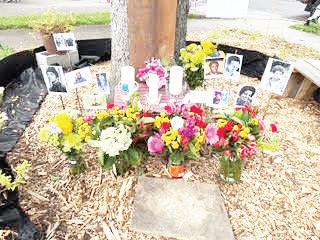
In Loving Memory
al events like the Academy Awards, and partnerships with organizations including Jack and Jill of America and Alpha Kappa Alpha Sorority, Inc.
Now, Spyce Pilates is her next step, and her biggest one yet. “I never thought I’d open a studio this early in my career, but my community believed in me before I did,” said Howard. “At some point you have to take the leap even when it feels risky.”
Howard envisions Spyce Pilates as a bridge between fitness, community, and cultural inclusion. She plans to grow beyond the studio, with long-term goals that include creating affordable Pilates teacher training, hosting wellness retreats, and organizing a Black health and wellness festival in Minneapolis.
“There’s no reason we can’t have what L.A. or New York has here in the Twin Cities,” she said, referring to wellness spaces with diverse leadership. “We deserve that kind of energy. I want to help create it.”
For updates and class information, follow @spycepilates on Instagram.
Jasmine McBride welcomes reader responses at jmcbride@ spokesman-recorder.com.
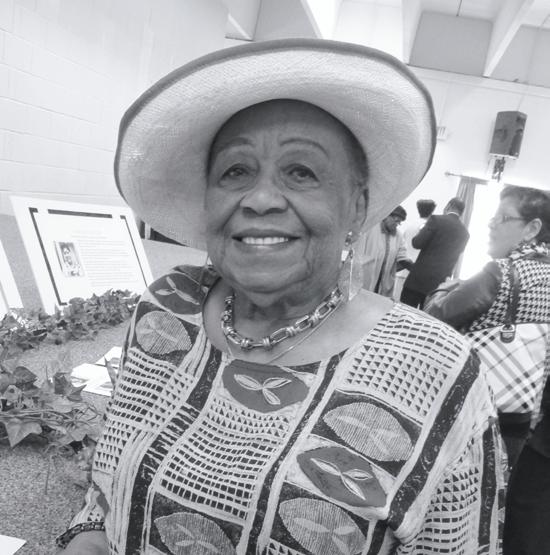
Warnell (Juanell) Amanda Mims
Sunrise April 10, 1931 – Sunset August 11, 2025
Warnell (Juanell) Amanda Mims (née Childs), born on April 10, 1931, in St. Petersburg, Florida, passed away peacefully on August 11, 2025, in St. Paul, Minnesota, at the age of 94. She joins her heavenly community, which includes her parents, Emanual Childs, Sr., and Josephine (née Davis) Childs; her husband, David Earl Mims; her sisters, Dorene Leonard, Melissa Givens, and Christine McCray; and her sons, Keith Juan and Medcaw Earl Mims.
Warnell (Juanell) graduated from high school at 15 and was accepted to Fisk University for her undergraduate studies. After completing her freshman year, she moved to New York City with her two older sisters to deepen her understanding of fashion & design. After a year, she moved to Alabama to attend Tuskegee Institute (University), where she earned her Bachelor of Arts (B.A.) in Home Economics. While at Tuskegee, she met the love of her life, David Earl Mims. The couple married and promptly moved to his hometown of Okmulgee, Oklahoma, while David served in the Korean War. In 1954, Warnell and David migrated to St. Paul, Minnesota, where she established deep roots in the Rondo Community, raised her family, and laid the foundation of her legacy.
Warnell (Juanell) was a pillar within the Rondo Community for decades, demonstrating exceptional leadership qualities and social commitments. She served 25 years as the First Black Female Area Manager at Sears, Roebuck, and Co.,
50 years as an active member and President of the Regalettes Social and Civic Women’s Club, and over 40 years as a Lead Choir Director at Mount Olivet Missionary Baptist Church, where she was also the eldest surviving member of the congregation until her passing. Additionally, she served as the Relief Church Secretary at Mount Olivet Missionary Baptist Church and Chair of the Bereavement Kitchen Ministry for over 20 years. For 35 years, she served on the Board of Directors for Gospel Choirs United (GCU).
Those who knew Warnell (Juanell) witnessed the strength of her faith, her firm and unwavering commitment to her immediate and extended family, her joy in civic engagement, and her pride in home ownership. She was always regal, carrying herself with resilience, vitality, and vibrancy. Above all, she exuded LOVE and believed love was essential to a fulfilling life. Earlier this year, St. Paul Mayor Melvin Carter III celebrated her 94th birthday by proclaiming in her honor, recognizing her as an “unwavering pillar of the Rondo community.”
Warnell (Juanell) is survived by her son, Davvie C. Mims (Regina) of Charlotte, North Carolina, and her daughter, Vivian Mims of St. Paul, Minnesota. Her grandchildren include Julius A. Mims, Sr., Caloynne Clay-Mims, Angelo J. Mims, Sundreya A. Mims-Patterson (Felipe), David E. Mims (LaShaye), Darrin O. Mims, Benell A. Weatherspoon, and Aria K. Weatherspoon; 13 great-grandchildren; a loving extended tribe and family; and a host of friends. Our deepest gratitude goes to beloved VIPs Roberta and Steve Hill, Kera LeSure, and Reverend Florence Conover. We all cherished her vibrant spirit, her nononsense approach to life, her thoughtful prayers, and her unconditional support. We love you forever, Juanell, and will honor your legacy. It’s just the beginning.
Internment: Fort Snelling Cemetery, Wednesday, September 03, 2025, at 1:45 pm. Fellowship at Mt. Olivet Missionary Baptist Church, 451 West Central Ave. St. Paul, MN, will immediately follow the ceremony.
Spyce Pilates, located downtown Minneapolis, is set
Spyce Pilates, located downtown Minneapolis, is set to soft launch in October and officially on November 15.
has pushed a false narrative that we’ve ‘moved past racism.’ But it hasn’t been that long since the Civil Rights Movement. Many of the systems that helped bring Black families into the middle class are being stripped away.”
Rashid says this rollback of DEIA is also sending shockwaves into the private sector, where federal contracts often incentivize inclusion efforts. Now, employers are pulling back on internal diversity initiatives, mentorships, and leadership pipelines for Black employees, critical levers for mobility.
What’s more, a dangerous cultural narrative has resurfaced: the “DEI hire.” This racially charged label undermines Black professionals, casting doubt on their qualifications and minimizing their contributions.
But Trump’s policy shifts extend far beyond employment.
The administration’s One Big Beautiful Bill Act (OBBBA) includes student loan caps
for graduate programs, posing significant barriers for aspiring Black doctors, lawyers
and professionals in high-cost degree fields. As Rashid explained, “We’re watching generational mobility get cut off at the knees.”
For those seeking entrepreneurship, federal support systems have also been weakened. The shuttering of the Minority Business Development Agency (MBDA), once a cornerstone for Black business growth and access to federal contracts, has effectively dismantled a critical wealth-building mechanism.
And on the housing front, Trump’s repeal of the Affirma-
tively Furthering Fair Housing rule and lack of action on appraisal bias have deepened the Black-white homeownership gap. For Black families who already struggle with systemic lending disparities and lower property valuations, these changes strike at the very core of generational wealth creation. As jobs are lost, social support systems have simultaneously been slashed. “People are falling through the cracks,” Rashid warned. “There’s no safety net if you lose your job, and now even the programs that catch you — public housing, food assistance, health care — are being gutted.”
Rashid emphasized the broader consequences of this agenda. “We’re not just talking about the Black community here. These policies weaken our entire economy. When a major segment of the workforce loses stability, the effects are national.”
CAP is actively researching how these changes may further skew the tax code and other “race-neutral” policies that, in practice, continue to disadvantage communities of color. “The tax code already favors wealth over wages,”
Rashid said. “The Black middle class depends on income, not investments. So they’re getting squeezed at every angle.”
While Trump’s administration claims progress, the erosion of long-standing pathways to economic stability for Black Americans tells another story. What’s unfolding is not simply neglect. It is, as CAP’s latest article outlines, a direct
threat to the Black middle class and the greater national economy.
“This isn’t about partisanship,” Rashid concluded. “It’s about accountability. These aren’t just policies. They’re people’s lives.”
For more information, visit www.americanprogress.org.
history, won the endorsement after a contentious but ultimately decisive convention vote. His campaign focused on police accountability, affordable housing, and economic justice, stances that galvanized a large segment of the city’s progressive base.
A divided party
Opponents of Fateh’s mayoral bid argue the CBRC’s intervention was not only justified, but overdue. Sam Schulenberg, campaign manager for Jacob Frey, supported the committee’s findings.
Community advocate Joe Carr issued a dire warning about a potential Fateh mayoralty, citing public safety concerns and accusing the senator of “reckless, ideological experiments.”
“If Fateh gets his way, Minneapolis will slide backwards into chaos,” Carr said. “Once you lose safety, you lose everything.”
Meanwhile, civil rights attorney and activist Nekima Levy Armstrong offered a rare critique from outside the partisan binary.
In a strongly worded Facebook post, she rejected both Fateh and Frey, citing
“This wasn’t an error. This was brazen cheating,” Schulenberg stated. “I’m proud to be a member of a party that believes in correcting our mistakes.”
Community College, said she hoped the demonstrations showed residents how simple composting can be. “I was super excited that there’s an opportunity to show how easy it is to get started,” Downey said.
“I do vegetable scraps, coffee grounds and eggshells, but we also have multiple streams of organic recycling. It’s important that people understand the system and how to act within it…especially in urban communities, where that empowerment has been removed.”
For Jeffrey Mejia, a summer intern with Project Sweetie Pie, the effort represents both environmental stewardship and personal growth. Mejia helped plan the event alongside Msigala, who introduced him to composting with black soldier flies.
“It’s something that everybody can do at home,” Mejia said. “The reason why it’s important for North Minneapolis is because there needs to be more effort in giving back to the earth. People are wondering what to do… This gives them something.”
Omar was carrying the [2040 Plan] bill for Jacob, I was flabbergasted,” she wrote. “If you are going to carry a bill that favors the wealthy and developers, at least have the guts to have a conversation with a seasoned community leader.”
Fateh’s legislative support for the 2040 Plan, a zoning overhaul she views as favor-
ing developers over vulnerable communities.
“When I found out that
A crossroads The CBRC’s decision leaves the DFL without an endorsed candidate in the Minneapolis mayoral race for now, though further announcements could follow. A draft of the CBRC’s findings is expected to be made public, with final documentation due Friday, August 22 at dfl.org/ cbrc_decision. However, Friday has passed and no formal decision has yet been aired to the public.
For Fateh’s supporters, the decision represents a broader struggle within the DFL between progressives seeking to shift power dynamics and an establishment intent on maintaining control. “We will not let disenfranchisement win, and we will not allow the rich and powerful to buy this election,” Chavez-Cruz wrote.
As the city’s political landscape fractures along ideological and generational lines, one thing is clear: Minneapolis is entering a fiercely contested election season, with deep implications for the future of the DFL and the direction of the city.
Jasmine McBride welcomes reader responses at jmcbride@ spokesman-recorder.com.
Johnny Rowland, another Project Sweetie Pie intern, said the program’s importance goes beyond soil health. “As Black people, we’re really disillusioned with nature and agriculture because of historical trauma,” Rowland said. “What we do is reintroduce our community to these tradi-
tions through the youth. It’s an opportunity to decolonize that frame of thinking by showing them the tradition behind it and giving them broader examples of people who are spearheading agriculture, so they don’t just think of slavery whenever they see the land.”
Alongside composting, city officials highlighted another soil-boosting method: biochar. Jim Doten, carbon sequestration program manager for the City of Minneapolis, said the city is building a biochar facility near the University of Minnesota to repurpose waste wood from utilities and park systems.
“These are trees cut down due to disease or storm damage, so no worries, no healthy trees,” Doten said. “Instead of burning the waste, we convert it into biochar, which is stable for hundreds to thousands of years. It sequesters carbon and makes an amazing soil amendment.”
Doten said the city hopes to make biochar more accessible for residents, particularly in environmental justice communities, and has partnered with groups like Project Sweetie Pie to apply it in urban agriculture projects.
them back to life by improving soil health, drought resilience, and food production. We see it as a way to reduce health disparities by improving access to healthy food.”
Project Sweetie Pie, founded in 2010 to advocate for North High School when it
“It’s an opportunity to give youth broader examples of people who are spearheading agriculture, so they don’t just think of slavery whenever they see the land.”
“Urban soils are typically depleted,” he said. “Biochar brings
faced closure, has since grown into a nonprofit incubator for
urban farming, horticulture, and green business creation. With the Soil Syndicate, organizers hope to build a network of composters, growers, artists, educators and neighbors who see soil restoration as both an environmental and social justice effort.
The free kickoff event ran from 10 a.m. to 1 p.m., giving attendees a chance to learn, connect, and share ideas on composting, biochar, and local food resilience.
For more information, visit www.projectsweetiepie.org.
Jasmine McBride welcomes reader responses at jmcbride@ spokesman-recorder.com.
Mariam Rashid, the associate director of racial equity and justice at American Progress, is skilled in policy analysis, geospatial analysis, data and research management, quantitative and qualitative analysis, and evaluation research.
Jasmine McBride welcomes reader response at jmcbride@ spokesman-recorder.com.
Dr. Mariam Rashid Photo courtesy of the Center for American Progress (CAP)
State Senator Omar Fateh, whose DFL mayoral endorsement has been revoked as of August 22. Photo courtesy of Jasmine McBride/MSR
Jim Doten (far right) explains how biochar, a compostable substance, is an example of waste that can become a useful resource. Photos courtesy of Jasmine McBride/MSR
Biochar from trees cut down due to disease or storm damage makes a useful soil additive, especially in urban areas where soil is depleted.
Stillwater High grad now at Cornell overcomes learning challenges
By Sheletta Brundidge Contributing Writer
Cornell University only accepted 8.4% of students who applied to be part of the 2024 class. They don’t accept just anyone. But they do accept students with learning challenges like dyslexia and ADHD. That is if you work hard to overcome them, as has Stillwater grad Xavier Cunningham.
“It is 10 times harder for him to get where he’s at,” said Andrea Cunningham, Xavier’s mom. Xavier is a 2024 graduate of Stillwater Area High School, where he managed a 3.9 unweighted grade point average despite his challenges. He is now going into his sophomore year at Cornell University.
“Dyslexia affects my ability to read,” Xavier said. “I will sometimes read over sentences or misconstrue them, and it affects my ability to write and spell.”
Xavier was also diagnosed with ADHD, and his parents, Andrea and Bobby Cunningham, would learn that Xavier had another classification. “He was gifted and talented,” said Andrea. “His testing markers were really, really high.” Andrea was speaking of Xavier’s results after he finished the Woodcock-Johnson IQ exam and FastBridge assessments in sixth grade.
The challenge would be finding ways to keep Xavier’s dyslexia and ADHD from inhibiting his incredible abilities.
“He can be super focused
“Iremember seeinghisscore andthinking, thiskidmight go Ivy.”
and locked in easily on things he likes, which are math and science,” Andrea explained. “But Xavier’s ADHD makes it easy for him to be distracted.” If a class required note-taking or assigned homework or any other organizational skills, Xavier struggled. It became clear to Xavier’s parents that they had to do their own homework. “It’s frustrating because you see other kids move through the system and use the services available, and you know they won’t work for your kid,” said Bobby.
Xavier’s parents tapped into several resources in Washington County, including the PACER Center, which helped them understand the Individualized Education Program (IEP) for Xavier and to advocate for accommodations.
Andrea and Bobby learned how to tap into the community to give Xavier the resources and support he needed to excel, and excel he did. Xavier’s ACT was a perfect example. Because of his learning disabilities, Xavier qualified for National Extended Time. He
ended up scoring 34 out of 36 on the ACT.
“I remember seeing his score and thinking, this kid might go Ivy,” Bobby said. And that’s exactly what Xavier did. But it wasn’t all about grades, as Xavier’s extracurricular activities and interests played a big role setting his application to Cornell University apart from others. Xavier has a second-degree black belt in Taekwondo, and can play 11 instruments, including the viola, which he plays in the Cornell Orchestra. He has even composed and
Dualeh returns to lead Normandale’s Sirtify® program
By Jasmine McBride Associate Editor
Normandale Community
College has announced the appointment of Mustafa Dualeh as the new program coordinator for Sirtify®, an initiative designed to support Black, African American, and African men pursuing careers in education.
Dualeh, a longtime higher education professional with nearly a decade of experience at Normandale, returns to the college after serving as a senior academic advisor at Northwestern University in Qatar. In his new role, he will lead recruitment for the program, build community partnerships, and provide culturally responsive mentoring and coaching for students as they pursue degrees and prepare for careers as licensed K–12 teachers.
“It is very meaningful to be back at Normandale,” said Dualeh. “I made the decision to return here because I truly believe in this program. It is not just preparing future educators… It is changing lives, families and communities.”
The Sirtify® program, launched at Normandale, offers academic, career and personal support to men of
African descent at the start of their higher education journey. Its broader mission is to address persistent racial disparities in education by increasing the number of Black male educators in classrooms, a group that remains severely underrepresented across the country.
“Imadethe decisionto returnhere because I truly believeinthis program.Itisnot justpreparing future educators… Itischanginglives, families, and communities.”
Nationally, Black men account for just 2% of the teaching workforce, and in Minnesota, that number drops to only 0.5%, according to data from the U.S. Department of Education. Research published in the American Economic Journal shows the positive impact representation can have: Black boys who
had a Black male teacher in elementary school were 29% less likely to drop out. For those from very low-income families, the dropout rate decreased by 39%.
Dualeh is no stranger to this work. In 2017, while serving as co-chair of IMMOC (Indigenous Male and Male Students of Color), a coalition within the Minnesota State system, he played a pivotal role in organizing its annual conference at Normandale. With support from then-president Dr. Joyce Ester, Dualeh expanded these efforts beyond events, offering culturally tailored advising and leading enrichment trips that laid the groundwork for what would later become the Sirtify® program.
“His energy and commitment to the mission are already making a difference,” said Jeremy McNamara, director of Education Pathways at Normandale. “Mustafa’s passion for equity in education is exactly what this program needs as it continues to grow.”
In the 2024–25 academic year, five Sirtify® students graduated and transferred to four-year universities on their path to becoming teachers. In total, 13 students graduated
from Normandale’s Education Pathways programs, which include Sirtify® and SpedUp, a program focused on special education careers.
Dualeh steps into the role following Marvis Kilgore, the program’s founding coordinator. Kilgore was recently named a 2025 Bush Fellow and now serves as executive director of Code Savvy, a Minnesota-based nonprofit promoting inclusive technology education.
Dualeh holds a bachelor’s degree in political science and American racial and multicultural studies from St. Olaf College, and two master’s degrees in sustainable international development and conflict resolution and coexistence from Brandeis University. His previous experience includes work with TRIO programs at Normandale, St. Olaf, Brandeis, and the University of Minnesota.
As he returns to lead the program he helped shape, Dualeh brings full-circle a journey rooted in service, mentorship, and educational equity.
About Normandale Community College: Founded in 1968, Normandale is Minnesota’s largest community college and the third largest
arranged more than 50 pieces. Xavier also placed fourth in the state for the Science Bowl. He was a member of the National Honor Society, a member of Black in Marine Science, and a Marine Plastics Ambassador. Xavier even worked as a water and plastics ambassador for Earthecho International, where he learned how to write grants to support environmental campaigns. “I advocate for the removal of plastics from the environment and lead activism around plastics in marine environments,” Xavier said.
Through his Black in Marine Science videos on YouTube, campaigns, and volunteering to monitor local water for algae blooms, Xavier’s passion and purpose becomes clear as he returns to Cornell this fall for his sophomore year. Xavier’s goal is to finish his undergraduate degree in environmental science and data science with a concentration in marine biology, and pursue a PhD in marine science.
“My research goal is to study octopus neurology,” Xavier explained. “I want to find the origins of intelligence to cure diseases like dementia.”
Xavier’s grandfather was diagnosed with dementia, a reason for his desire to research potential cures. His mom and dad are not surprised at the goals Xavier sets for himself. They are also proud of how he has navigated his first year.
When thinking about other parents in their same shoes and unsure how to navigate, Andrea said you have to tap into the village and hone in on that talent. “Understanding what can give him confidence,” said Andrea. “That was half the battle, making sure he knew he was smart and not to let anyone tell him any different.”
Sheletta Brundidge is a children’s author, an Emmy Award winning comedian, and a local activist. She is also a contributing writer for the Minnesota Spokesman-Recorder. For more information, visit www.shelettamakesmelaugh.com.
institution in the Minnesota State system, serving more than 14,000 students. With over 70 programs and a strong emphasis on student success, the college prepares learners to transfer to four-year institutions or enter the workforce with confidence.
For more information about Normandale’s Sirtify program, visit https://www.normandale. edu/why-normandale/about/ human-resources/equity/sirtify.
Jasmine McBride welcomes reader responses at jmcbride@ spokesman-recorder.com.
Xavier Cunningham, a 2024 Stillwater Area High School graduate, returns to Cornell this fall as a sophomore.
Mustafa Dualeh, the new program coordinator for Sirtify®, an initiative designed to support Black, African American, and African men pursuing careers in education Courtesy of Normandale Community College
Celebrating 25 years and a season full of jazz milestones
By Robin James Columnist
Next month marks a special occasion: the 25th anniversary of James on Jazz, which debuted in September 2000.
What a journey it’s been, one that’s taken me across the country chronicling the everevolving world of jazz and the extraordinary musicians who bring it to life.
I’m deeply grateful for the chance to report from vibrant jazz scenes in New York, Chicago, Rhode Island, California, and many other inspiring places. Closer to home, I’ve spent countless nights enjoying the music at one of our cherished local venues, The Dakota. From its early days in St. Paul to its current location in downtown Minneapolis, the Dakota has been central to Minnesota’s live jazz scene.
Fittingly, the Dakota is celebrating a milestone of its own: 40 years of presenting world-class music. I still re-
call reporting on the opening of the Minneapolis location in 2003, when the legendary drummer Elvin Jones headlined the night.
To commemorate the anniversary, the Dakota is hosting a free indoor/outdoor block party on September 20, from 2 to 10 p.m. in downtown Minneapolis. The event will feature performances by The Suburbs, Jamecia Bennett, Patty Peterson Presents Jazz Women All Stars, and more.
specials. The day will also include a craft market and a kidfriendly activity zone.
Since opening in 1985, the Dakota has welcomed an incredible range of artists, including Prince, who graced the stage in 2013. Congratulations to Lowell Pickett, founder and visionary behind the Dakota. Here’s to many more unforgettable nights of music — for me, and for you, the loyal readers who’ve followed James on Jazz through the years.
This month also brings sadness to the jazz community with the passing of vocal legend Sheila Jordan, who died in Manhattan on August 11, 2025, at the age of 96. Jordan, who was still performing earlier this year, received the NEA Jazz Masters Fellowship in 2012, cementing her legacy as one of the great voices in
“What a journey it’s been, one that’s taken me across the country chronicling the ever-evolving world of jazz and the extraordinary musicians who bring it to life.”
Inside the club, Executive Chef Asher Zulkosky will offer the regular menu, while the outdoor celebration will feature burgers, sandwiches, and New Orleans-inspired Dakota
jazz history.
As summer winds down, the jazz festival season continues strong. Detroit will host the 46th Annual Detroit Jazz Festival, the world’s largest
free jazz festival, over Labor Day Weekend, August 29 to September 1. The festival features four stages and over 60 performances, with artists including:
This year’s Artist-in-Residence, pianist/composer Jason
Moran, knows just how savvy a Detroit jazz audience can be.
For the full festival schedule, visit detroitjazzfest.org.
Looking ahead to September 13 at 7:30 p.m., the Walker Art Center in Minneapolis kicks off its 2025–26 Performing Arts Season with a powerful celebration: the 60th anniversary of the AACM (Association for the Advancement of Creative Musicians).
Held at the McGuire Theater, the evening will feature a performance by visionary composer/trumpeter Wadada Leo Smith and pianist/composer Amina Claudine Myers, and an opening set by Minneapolis’
own Douglas R. Ewart leading a cross-generational sextet of AACM members from Chicago and the Twin Cities Smith describes the evening as “two ensembles creating a vast musical universe where deep feeling, listening, and peaceful contemplations will be the keynote for love.” For tickets, visit walkerart.org or call 612-375-7600.
As always, I welcome your thoughts, memories, and jazz reflections.
To get in touch, contact jamesonjazz@spokesman-recorder.com.
By Kaylie Sirovy Contributing Writer
The Children’s Theatre Company (CTC) will launch its 2025-2026 season with “Treasure Island,” a swashbuckling adventure adapted by Stuart Paterson and directed by Artistic Director Rick Dildine. Running September 9 through October 19, the production brings pirates, sword fights and live music to the stage in one of CTC’s most technically ambitious shows in recent years. Among the cast is Anya Naylor, making her company debut as an understudy for multiple roles.
For Naylor, the journey to the stage began long before professional credits at the Guthrie Theater, Six Points Theater, or Chanhassen Dinner Theatres. Her love of acting started when she was four years old, watching her older brother participate in a summer acting program.
“I was too young to be in it, but I would go with my family to the park where rehearsals were happening, and I wanted to do it so badly,” she said. “At that age I didn’t even know what acting was, I just knew I wanted to be part of it.”
Once she was old enough
to join, she spent nearly a decade in that program.
“It felt like playing pretend for me, which it kind of still is,” she said. “Every year I wanted bigger and bigger parts. By the time I was about eight, I was saying, ‘I want to be an actor or a pianist. I want to be a performer.’”
That persistence led her to the University of Minnesota/ Guthrie Theater BFA Acting Program.
“I always say you don’t need a BFA to be an actor, but I needed a BFA to be an actor,” Naylor said. “I had a lot of raw skills, but I needed them to be developed and refined. What I really connected with in school was learning to live truthfully in the moment, instead of pre-planning how I would react. That’s something I carry with me into every role.”
Now, at CTC she is taking on one of her biggest challenges yet. As an understudy, Naylor covers five different characters across three actors’ tracks.
“I am a very, very organized person,” she said with a laugh.
porates sword fights, elaborate technical effects, and live music. Actors themselves play the instruments on stage.
“I can play percussion, no problem… I took piano for 12 years,” Naylor said. “Guitar, I’m still learning. And upright bass, well, that might be a conversation with the music director.”
Although she was not deeply familiar with “Treasure Island” before auditioning, Naylor prepared by researching the story in depth. She
eager to experience the kind of audience responses that come with a children’s theater.
“I love genuine reactions,” she said. “When kids gasp or yell, ‘Oh my gosh, why did they do that?’— that’s the most fun. Theater isn’t supposed to be stuffy or silent. It’s about being in a room together, reacting together. For kids especially, I’d say keep going to theater. Theater is so fun.”
Audiences will have the chance to see Naylor take the stage on October 16 and 17, when she steps in to cover scheduled absences. Beyond “Treasure Island,” she will appear in “Men on Boats” with 10,000 Things Theater in January, continuing her momentum in the Twin Cities theater scene.
“I have all my tracks colorcoded in my script: yellow and orange for Job Anderson and Gray, blue and green for Harry and George Merry, and pink for John,” she said referring to characters in CTC’s season opener, “Treasure Island.”
“I also draw little diagrams of the stage to map out blocking so I can rehearse at home.” The complexity of the show does not intimidate her; instead, it motivates her.
“The first day you see the
run of the show, it’s like, ‘Oh my gosh, that is so much to learn.’ But you manage,” she said. “And then when we get to do the understudy run, it feels like such a payoff for all that preparation.” That preparation includes more than just memorizing lines. “Treasure Island” incor-
watched film adaptations and read about its history, approaching the process the same way she does every audition, by making sure she understands the material as fully as possible.
The scale of the production only heightened her excitement, and she knew immediately that she wanted to be part of it. Naylor is also
For now, she is focused on pirates, sword fights and treasure. “The only thing I can control is being prepared,” she said. “And I feel pretty good about it.”
CTC’s production of Treasure Island is recommended for everyone 8 and up. Tickets may be purchased at childrenstheatre. org/treasure or by calling the Ticket Office at 612.874.0400. Ticket prices start at $20.
Composer/trumpeter Wadada Leo Smith and pianist/composer Amina Claudine Myers
Photo courtesy of the Walker Art Center
Anya Naylor Photo courtesy of the Children’s Theatre Company
By Aswad Walker
By an Anonymous Incarcerated Person
In June 2025, the Minnesota Department of Corrections (DOC) announced the rollout of an Earned Incentive-Based Housing Program, referred to by some as the “Honor Unit,” at MCF-Stillwater. The program promises perks for qualifying incarcerated individuals (IPs): singleoccupancy cells, couches, enhanced canteen options, more access to programming, and an overall improved quality of life inside prison.
On paper, it sounds promising. In reality, many of us believe it’s too good to be true. Let’s be clear: MCFStillwater is a facility plagued by legitimate and documented health and safety issues. Chief among them is unsafe levels of lead in the water.
State lawmakers have already made plans to close the facility by 2029 due to the exorbitant cost of upkeep and its deteriorating, century-old infrastructure. So why is the DOC investing in an “honor
unit” here?
A closer look raises troubling questions. Is this initiative truly about rehabilitation, or is it about optics and union job security? With many corrections officers living near Stillwater, could the effort to keep the facility open be driven more by personal investments than public safety?
Health risks ignored
The Minnesota Department of Health made it clear in 2025 that there is no safe level of lead in the human body. Yet incarcerated individuals at Stillwater are being asked to overlook that fact for the promise of upgraded living conditions. This is not rehabilitation. It’s a sleight of hand.
Who gets deemed “honorable?’
The DOC has sent out applications for the program to
Please Note: New email address for all future ads is ads@spokesman-recorder.com
The good news: The threat of a constitutional crisis in the U.S. is gone. The bad news: It’s already here, and making life worse by the day.
And FYI, America’s freedoms are not being snatched by ISIS, robbed from us by immigrants or taken away by the “Woke.” It’s the enemy within that’s doing this damage: The White House, Congress, and the U.S. Supreme Court, i.e., the Cult of MAGA.
erything they’ve produced in 2025 — all their policies, laws and executive orders — has spit in the face of everything these red, white and blueloving patriots swore their entire lives they believed in, till death do they part.
The MSR handles billing digitally. This means you will get e-tears and e-mailed invoices unless you
They’ve all been bought and paid for by white “Christian” nationalists and tech bros, all clinging to an antiBlack, anti-women, anti-facts bent on reality. Hence, ev-
Well, they’ve parted from
those beliefs, and death has visited “We the People” in the form of suppressed voting rights, DOA due process, and the rule of law becoming whatever anti-humanity forces say it is at any given moment.
This critique is not just coming from “liberals.” Some of the most conservative minds in America fear the country is nearing a line it cannot uncross, and destroying things that cannot be unbroken.
The question is, how will
“We the People” respond?
This post was originally published on Defender Network. For more information, visit https:// defendernetwork.com.
some, but not all. Notably, some of us who have been discipline-free for years, who have taken accountability and actively worked toward positive change, weren’t even given the chance to apply.
The application includes questions such as:
• What accomplishments are you proudest of since in-
By Frances Murphy (Toni) Draper
America cannot afford to whitewash its past. Yet that is exactly what is at stake in the current review of the National Museum of African American History and Culture. To question whether slavery and racism belong in the story of this nation is not only dangerous — it is racist and, quite frankly, ridiculous.
The Smithsonian Institution’s internal review of its museums and exhibitions, prompted by a March presidential executive order, has been described by the White House as a “constructive and collaborative effort” rooted in respect for the Institution’s mission. But let’s be honest about what this really is: an attempt to sanitize history.
a rewriting of facts to make the nation appear more palatable. But history is not meant to comfort — it is meant to confront. And only in confrontation do we find the lessons that lead us forward.
The National Museum of African American History and Culture (NMAHC) does not exist to make visitors comfortable. It exists to tell the full story of this nation — its horrors and its triumphs. The shackles, the slave cabins, the lynching photographs are hard to look at, yes, but they are necessary. They remind us of what was endured, resisted and overcome. Are we really prepared to tell our children a fairy tale instead of the truth?
carceration?
• What skills or leadership experience can you contribute?
• What do you hope to learn and gain from participating? Applicants must also list two DOC staff members willing to vouch for them.
Yet there are reports of individuals who’ve committed serious and deeply harmful offenses, like child abuse or even child homicide, being offered the chance to participate. Meanwhile, others with decades of incarceration and a track record of personal growth are overlooked due to arbitrary scoring systems like “MNSafe,” which ranks a person’s perceived risk based on outdated metrics.
A misguided system of rewards
How does this align with public safety or justice? What message does it send to survivors and victims’ families that individuals convicted of the most heinous crimes may now enjoy a single cell with a couch and more programming, while others, who’ve demonstrated long-term commitment to change, remain locked down 22 hours a day?
This isn’t about punishment versus forgiveness. It’s about equity, transparency, and moral clarity.
Real solutions
If this program is truly about rehabilitation, here are real solutions: 1. Accelerate MRRA releases for eligible individu-
When politicians decide which stories can be told, truth becomes the first casualty.
The National Museum of African American History and Culture (NMAAHC) has, since its opening in 2016, drawn millions of visitors from across the United States and around the world. It is the only national museum dedicated solely to preserving and telling the African American story, which means it preserves the American story itself.
Its exhibits are not decorative displays. They are America’s receipts — proof of what was bought, built and broken on the backs of enslaved people.
Telling the whole story
Just as the Holocaust is remembered in all its brutality, so must America reckon with the truth of chattel slavery, Jim Crow, and racial terror. Anything less is historical erasure,
als — those who’ve served decades, remained disciplinefree, and completed program
ming.
2. Include all eligible IPs in the Honor Unit selection process, based on behavior and growth, not biased algorithms or arbitrary DOC discretion.
3. Use unused facilities like the privately owned Appleton Prison to balance staffing needs and reduce overcrowding, instead of keeping decaying prisons open for job preservation.
4. Ensure transparency and fairness in how DOC
As someone whose own family lived through that history, I know that the story of Black America is one of both pain and perseverance. It is also a story of triumph, of building families, businesses, churches, schools, and newspapers in the face of unrelenting barriers. To erase the “ugly parts” is to erase the context that makes our resilience so extraordinary.
This is why NMAHC matters. Located on the National Mall in Washington, D.C., it is not just a building — it is a mirror held up to America. Every exhibit, every artifact, every story says this happened and it shaped who we are. Visitors leave with a deeper understanding not just of Black history, but of American history, and of the ongoing struggle to build a more just society. That is precisely why efforts to weaken or censor its work are so dangerous. So, what must we do? We must stand with NMAHC, yes — but also more. We must defend the truth against erasure, preserve history by sharing it with our children and grandchildren, and support the mission by becoming members and advocates. Encourage school trips. Take a neighbor. Contribute what you can. Institutions like this cannot thrive without a community of supporters who recognize their value and refuse to let them be diminished.
America’s mirror
We dishonor our ancestors when we pretend that slavery was anything less than a foundational atrocity. We insult the present when we allow political whims to dictate which truths are deemed “acceptable.” And we jeopardize the future when we deprive generations to come of the lessons that only honest history can teach.
staff endorsements are used, especially when it comes to individuals who’ve committed the most serious offenses.
A system under pressure This past July, an incarcerated person at MCF Rush City attempted to escape by running for the razor wire fence, an act of desperation in a facility increasingly overwhelmed, under-resourced, and locked down. It’s no wonder. This prison has become overcrowded, understaffed and volatile. And now, with the possibility of transferring indi-
The truth of America’s story is not negotiable. It is not subject to political whim. It must be told fully, courageously, and without compromise — because history told truthfully is the only kind that heals.
Erase the truth, and you erase America itself.
This commentary first appeared at AFRO.com.
Frances “Toni” Draper is the publisher of the AFRO-American Newspaper (the AFRO), with offices in Baltimore, Maryland, and Washington, D.C.
viduals with serious offenses to “honor units” while others remain trapped in a failing facility, morale is at an all-time low. Commissioner Schnell, Governor Walz: Is this really the system we want to build? Is this what reform looks like? Because from the inside, it doesn’t look like healing. It looks like harm wearing a new badge. This commentary was sub
Deanne Marie Hild,
Employment & Legals
Law Clerk
Wilson Law Group LLC seeks Spanish fluent Law Clerks in Minneapolis MN to assist attys in prep of legal filings, inc. intvw clients, draft forms, prep exh, and mtns, rsrch law. Bachelor’s deg plus 1 yr JD education req’d. Altnvly LLM deg ok. Mail app to Jessica Westendorp 3019 Minnehaha Ave, Minneapolis MN 55406 or email jwestendorp@wilsonlg.com
Minnesota Spokesman-Recorder
Sr. Supplier Quality Engineer
Medtronic, Inc., Minneapolis, MN,
Multiple positions available. Req. Master’s degree in Mechanical, Biomedical, Industrial, Electrical, or Manufacturing Engr., Engr. Technology, Technology Project Mgmt. or related engr. field, and two (2) years’ exp. as supplier, quality, or manufacturing engineer or related occupation; or Bachelor’s & 5 yrs. exp. Require 25% travel to supplier w/in U.S. and internationally. Salary: $121,400 to $145,200/year. Position open to telecommuting from anywhere in the U.S. Apply at https://medtronic.wd1.myworkdayjobs.com/ MedtronicCareers, Req. #R42208. Medtronic is an equal opportunity employer committed to cultural diversity in the workplace. All individuals are encouraged to apply. #LI-DNI
No agencies or phone calls.
GOPHER 100
Continued from page 10
to be a football player. And whenever that happens, I’ll be ready, I know for sure.”
The 6’6” 285-pound lineman from Shippensburg, Pa. is expected to start at defensive end. Smith said he likes the 2025 Gopher squad: “Everybody’s getting coached. It’s really exciting to have that feeling now.” He is seen as among the team leaders. “First of all, I feel honored that my teammates see me as a leader,” stressed Smith. “It’s pretty cool.”
He said he watched pre-
PREP
Continued from page 10
Chip Taylor is in his 10th year as head football coach at Hamline University.
Nia Holloway, who had an outstanding prep career at Eden Prairie, is a redshirt junior for the women’s basketball team at the University of Minnesota.
vious team leaders as models. “You take bits and pieces of how they did everything. I feel very honored that my teammates see me in that light,” he added.
Everyone around Dinkytown is excited for this year’s Gopher football season to begin, but not more than the players themselves.
“We all take coaching really well,” said Smith. “We all can learn off each other rather than having one singular voice telling us this is what we do wrong. Everybody leads everybody and upholds the standard so well on the football team.”
Technical Sourcing Program Manager Medtronic, Inc., Mounds View, MN,
From Ads Department/MN Spokesman-Recorder
Phone: 612-827-4021
Req. Bachelor’s deg. in Mechanical, Industrial or Biomedical Engr., Project Management, or Business Administration or rel. engr. fld. and 5 yrs. exp as a technical sourcing specialist or rel. occupation in technical sourcing; or Master’s & 3 yrs. exp. 25% travel w/in U.S. and internationally. Hybrid requiring in office at least 2-3 days per week. Salary: $121,400 to 172,800/year. Apply at https://medtronic.wd1.myworkdayjobs.com/MedtronicCareers, Req. #R41448. No agencies or phone calls. Medtronic is an equal opportunity employer committed to cultural diversity in the workplace. All individuals are encouraged to apply.
FOR BILLING INQUIRIES & TEARSHEETS PLEASE CONTACT ACCOUNTING DEPT BILLING@SPOKESMAN-RECRDER.COM
The MSR handles billing digitally. This means you will get e-tears and emailed invoices unless you specifically request a hard copy.
VIEW
SIZE: 2COL X 3 INCH RATE: $44.60 PER COL. INCH
was interested in them.”
Continued from page 10
Please proof, respond with email comfirmation to ads@spokesman-recorder.com
“I always knew I love psychology,” she pointed out.
“Growing up, I always was interested in people and why they do what they do. I’ve always been interested in understanding people’s way of thinking and what has led to that.
The MSR handles billing digitally. This means you will get e-tears and emailed invoices unless you specifically request a hard copy.
Your newspaper has agreed to participate in the
By her junior year, Carrington’s advisor told her she had earned enough credits for a degree and could pursue a second. “I was like, ‘Alright let’s do it. Let’s double up, and I just dedicated [myself] to both of them,” said Carrington, who graduated from Stanford with degrees in psychology and African and African American studies. She played her final collegiate season as a grad transfer at Baylor.
these ads in the main news section of
per). At times, advertisers may request a
each
Please do not
Charles Hallman welcomes reader comments to challman@ spokesman-recorder.com.
“When I got to college, my first summer I took an African American Women’s Lives class. I fell in love with all the information I learned, and my professor ended up being my advisor. It was amazing.
“I learned way more in that eight-week class than I had my entire 18 years at that time about myself, about Black history, about the African Diaspora, all of it. I was just intrigued, and I wanted to just keep learning. I just kept taking classes because I
As her two former teams, Connecticut and Dallas, won’t make the playoffs, Minnesota will be the top seed when the post season begins. “I think that’s all tes tament to just the faith that I have and how it’s unwaver ing despite the current cir cumstances of my situations,” said Carrington.
Charles Hallman welcomes reader comments to challman@ spokesman-recorder.com.
Dr. Mitchell Palmer McDonald welcomes reader comments to mcdeezy05@gmail.com.
Benny Roberts, the former St. Paul Central boys basketball standout who went on to Webster University, is entering his second year as executive director of Hallie Q. Brown Community Center in St. Paul. Tori McKinney, the guard who helped Minnetonka capture a Class 4A state girls basketball championship in 2024, is a sophomore after an outstanding first year playing for the University of Minnesota women’s basketball team.
Fax: 612-827-3587
Website: www.greatfriend.org Email: info@greatfriend.org “Winning the World with Love” Rev. Arthur Agnew, Pastor Pilgrim Baptist Church Rev. Doctor Charles Gill 732 W. Central Ave., St. Paul, MN 55104 Sunday Worship Service: 9:45 am Sunday School: 8:45 AM
Advertise your weekly service, directory or listing!
C ALL: 612-827- 4021
Sports
Gopher junior has NFL in his sights
There are approximately 100 African American and other student-athletes of color this school year at the University of Minnesota. In an occasional series throughout the 2025-26 academic and sports year, the MSR will highlight many of these players. This week: Minnesota redshirt junior DE Anthony Smith.
By Charles Hallman Sports Columnist
he 2025 Minnesota Golden Gophers football season begins this Thursday, August 28, at home vs. Buffalo.
Redshirt junior defensive end Anthony Smith pointed out last week, almost seven days before the season opening game, that he and his teammates have been waiting and working toward this since January.
“All [of us] are very excited to go,” declared Smith at the Gopher stadium during a media event. “We’ve been feeling it since January, and you put in the work — you put in the work in the winter, you put in the spring ball, and then you put in the summer workouts. And then get in the fall camp.
“We’re really excited to go against our opponent,” he continued.
When he’s not playing football, or in the classroom, Smith can be found on the slopes or on the lake — he loves being outdoors, especially snowboarding. Growing up in Pennsylvania, and now in Minnesota, there’s no shortage of cold, snow and sunshine.
“We all take coaching really well. We all can learn off each other rather than having one singular voice telling us this is what we do wrong.”
“I definitely enjoy snowboarding a lot,” admitted Smith. “As a kid, my grandfather used to take me snow tubing. I think I picked it up in around third or fourth grade, and I really just took off from there.
“Nothing beats when it’s cold out. There’s a
good snow on the ground and you get to go downhill. It’s a getaway…,” he reiterated. “Don’t get me wrong, I like the winters. I like snow, but I do like summers. I do like being outside.”
Smith was an all-state prep athlete in football, basketball, and the shot put and discus in track. After being redshirted, he played in two games and made one tackle in 2022. The last two seasons, however, he has played in all games (26 total), and started three in 2024. He led Minnesota with 11.5 tackles for loss and tied for the team lead with six sacks.
“I definitely do enjoy playing defensive end,” said Smith. “Anywhere I can go on the field to help my team win, give my team the best chance to win, is where I want to play. I love playing football, so wherever you want to put me, I enjoy doing it.”
Scouts are projecting Smith as a future NFL draft pick: “Yes, sir, I’m definitely looking to play professional football in the National Football League, God willingly. That’s why I want
■ See GOPHER 100 on page 9
he Minnesota Lynx for the second consecutive summer made a late season acquisition to help bolster its roster and playoff run. It was Myisha Hines-Allen last season who came from Washington and provided inside strength and toughness off the bench as the hometown WNBA club went the distance and finished league runners-up.
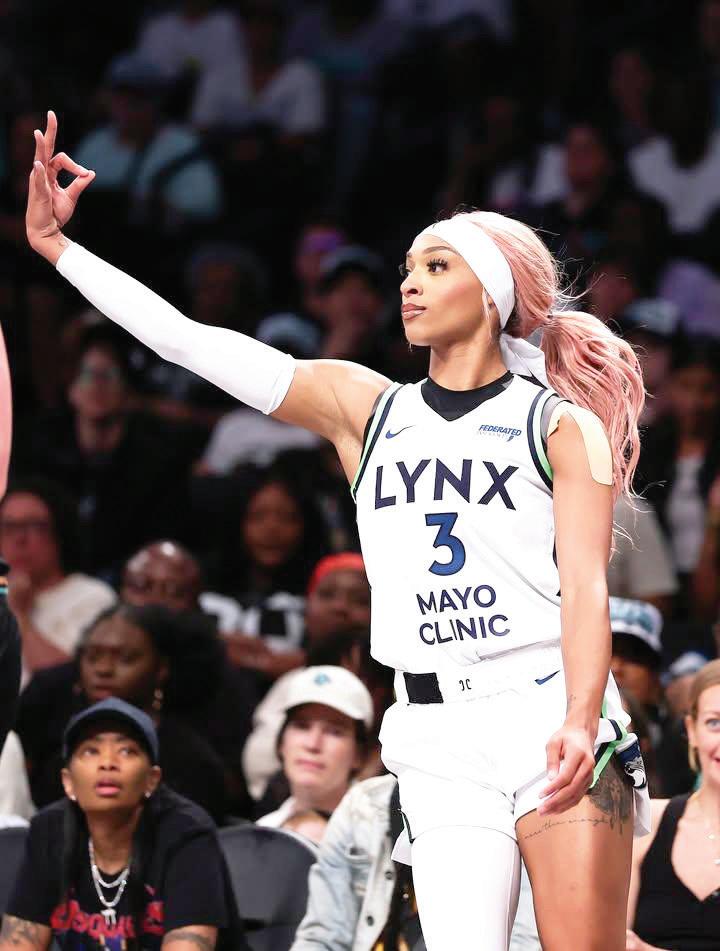
DiJonai Carrington, the fifth year guard, was acquired from Dallas August 3. The veteran has been very effective off the bench as a key reserve with her toughness and spunk on both ends of the court.
“I learned way more in that eight-week class than I had my entire 18 years at that time about myself, about Black history, about the African Diaspora, all of it. I was just intrigued, and I wanted to just keep learning.”
“I know it’s been a kind of ebbs and flows this season,” the 5’11” Carrington told me after a recent practice. “But God always has His hand in things, even when I didn’t see what was going on for the first three months of the season.”
Carrington in February was part of a signand-trade, four-team deal that brought her to Dallas from Connecticut, who drafted her 20th overall in 2021. With the Wings she played 20 games (13 starts), averaging over 10 points a game and five rebounds.
She also spent time dealing with an upper body injury. While recovering, the San Diego, Calif. native also had to deal with trade rumors — Carrington evidently was traded just days before the August 7 annual trading deadline.
Carrington said she always saw herself as a pro player after college. Her father, Darren Carrington, is a former NFL player, and her older brother Darren II played wide receiver at Oregon.
Courtney Paris’ player-to-coach transition came unexpected
ovid in 2020 left a permanent imprint on our lives, especially in sports, which was forced to take a worldwide pause for a couple of months that year.
Courtney Paris remembers it vividly.
“I came home from Turkey,” she recalled about returning stateside from playing overseas pro ball. “My college coach at the University of Oklahoma said, ‘Hey we have a position open. Would you like to be a coach?’
“I was like, I am still playing basketball,” Paris pointed out.
“So that happened fast, and I got into [coaching] fast, but I’ve enjoyed it ever since.”
As a result, Paris retired from active playing and began her post-playing career as a coach. Her distinguished hoopin’ career included being the only NCAA player, male or female, to post 700 points, 500 rebounds and 100 blocks in a single season during her four years at Oklahoma, including setting a record for most consecutive double-doubles (112 games) in a decade of playing.
A first-round WNBA draftee (2009, seventh overall), a WNBA champion (2018), and a two-time league rebounding champ (2014, 2015), she played for three clubs and five foreign teams.
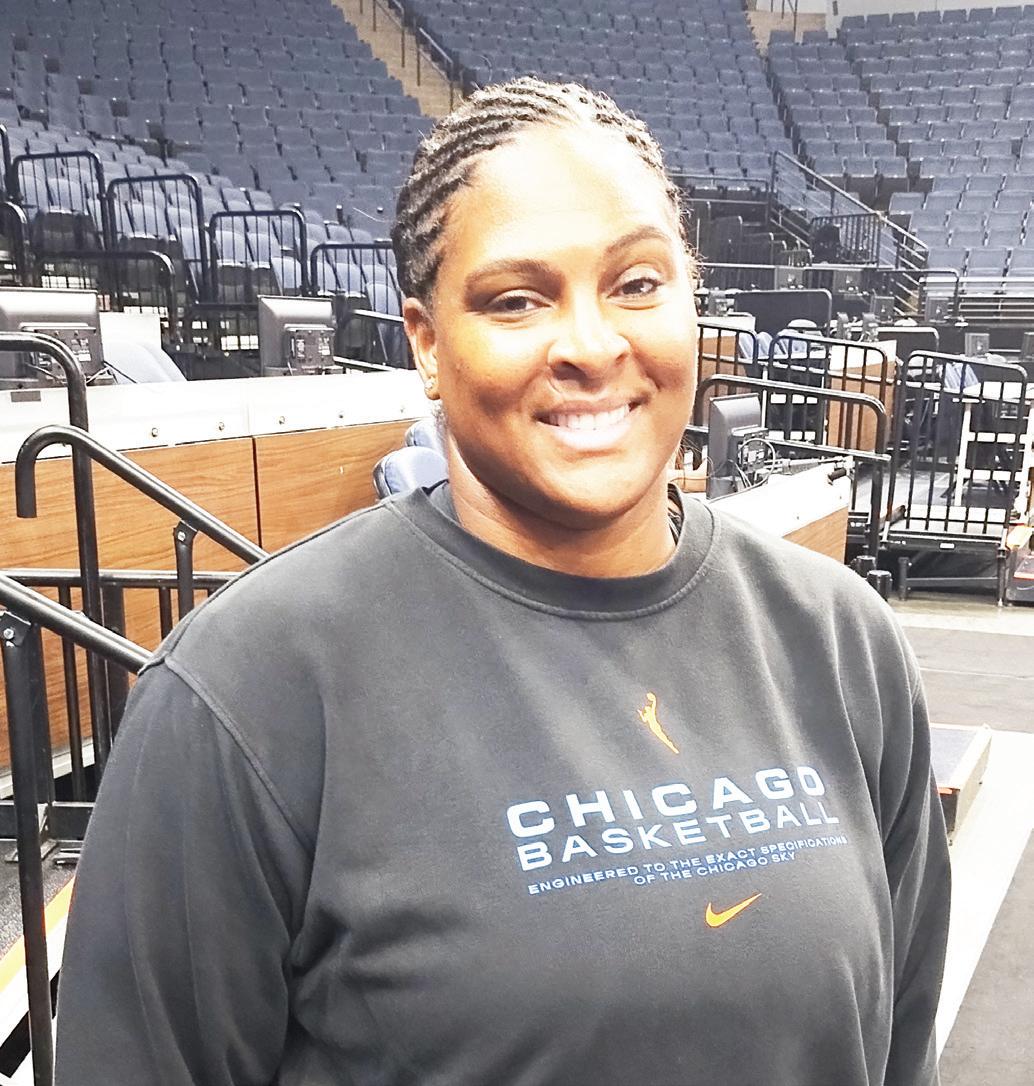
After a year as a college assistant coach at Oklahoma and two pro assistant seasons at Dallas, Paris is now in her third season as a WNBA assistant coach, her first with the Chicago Sky.
She is a twin — sister Ashley also played basketball, and
their dad is former NFL player
William “Bubba” Paris. During an interview, the San Jose, Calif. native revealed her belief that her wrap-up years as a player would uniquely prepare her for coaching.
“I enjoyed helping the younger players, being a mentor, helping them on the court,” said Paris. “I enjoyed that role. I didn’t know that was going to translate into coaching.”
We asked her how much the game changed in her eyes, especially being a former big (6’4”). “I don’t know if it’s changed a lot,” she replied.
“People are expecting these bigs to be able to stretch the floor and shoot it. You’re seeing a lot more versatility in the players that are coming out of college. Even the young players are being taught at a young
age [to play outside the paint].
“The game is definitely expanding. There’s a place for the low block player, but it’s definitely expanding for sure,” said Paris.
“I
think
the opportunity is open for minority coaches.”
Is one day becoming a head coach in the Black female’s future? “I think the opportunity is open for minority coaches,” Paris said. “I think if that’s something you want to do, there’s definitely space for it. I hope that happens.
“You see it more on the court, and I hope it happens in
front office positions as well,” she said of the importance of diversity.
Jade Hill nominated for NCAA award
Former St. Thomas women’s basketball standout Jade Hill was recently announced as the Summit League’s nominee for the 2025 NCAA Woman of the Year award.
Hill, the Minneapolis South grad, is the first Tommie in the DI era to earn the conference’s nomination for the annual award. Since 1991 the NCAA Woman of the Year winner has recognized senior female student-athletes in all three divisions for excellence in academics, athletics, community service and leadership.
Hill graduated from UST this spring with an elementary education degree and a 3.83 GPA. She completed her student teaching requirement in mid-June.
The guard leaves St. Thomas as the school’s third-best scorer (1,558) and top assists record (474), the only Tommie player to score over 1,500 career points and tally 450+ assists. Hill averaged over 10 points in each of her four seasons.
The NCAA Woman of the Year nominees will go to a selection committee who will select the top 10 nominees in each division — 30 in all later this year. The three final winners will be announced in January 2026.
Charles Hallman welcomes reader comments to challman@ spokesman-recorder.com.
“My parents let me play all sports,” she continued. Playing hoops soon became her favorite sport, followed by volleyball; Carrington later scored over 2,000 points in high school and made All-American. She chose Stanford for college.
It was there where Carrington experienced her first “a-ha” moment — college basketball is a chore. “It was just hard,” she stressed. “The practices were really hard, especially pre-season. In high school, you have your two-hour organized team practices. But in college it’s like year-round, you never really have a break, maybe at least a week or two right after the season. It’s just a continuous cycle.” But in the classroom, Carrington said another “a-ha” moment opened her eyes wide open.
“My sister’s eight years older than me, and she was already into organized basketball by the time I really was aware of what sports were,” she recalled. “It was just a natural kind of transition into playing.
ith the prep sports season approaching, here are 10 more shoutouts to those making a difference.
Giovan Jenkins, the former Minneapolis Washburn basketball football and basketball standout who went on to star in football at Minnesota State University Mankato, is now athletic director at his high school alma mater.
Nia Hollie, the former Hopkins girls basketball standout and 2016 Miss Basketball
winner who went on to Michigan State University, has done an outstanding job as girls basketball coach at Two Rivers High School.
Scott Howell, the former St. Paul Central football and baseball great who recently retired as the head boys basketball coach at his alma mater, is in year 26 as the school’s varsity football coach.
Savanah Gardner, the former Eastview girls basketball player, is entering her sophomore year as a member of the University of St. Thomas Women’s basketball team.
Brett McNeal, the former 1985 Mr. Basketball winner from Minneapolis North who went on to star at Western Kentucky, is in his first year as athletic director at Minneapolis Camden High School.
Ma’Lon McCoy, the St. Agnes volleyball and basketball star, will be a junior this year.