
Celebrating90yearsof Blackjournalisticexcellence.
91st Anniversary Gala balanced celebration with reflection
By Jasmine McBride Associate Editor
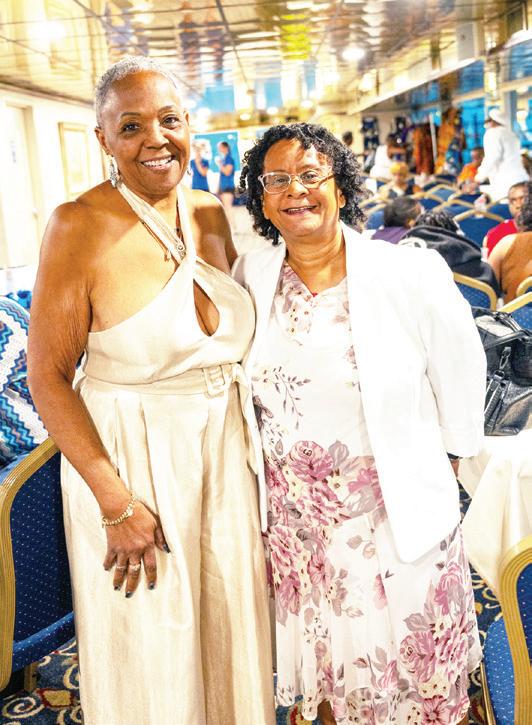
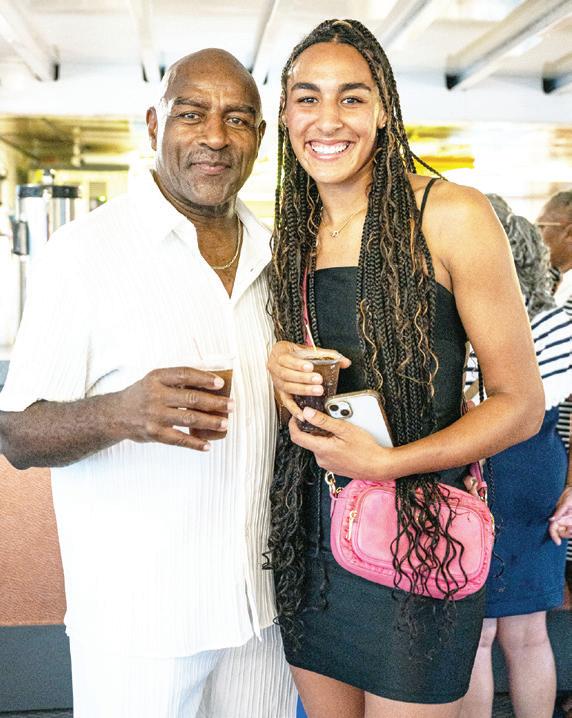
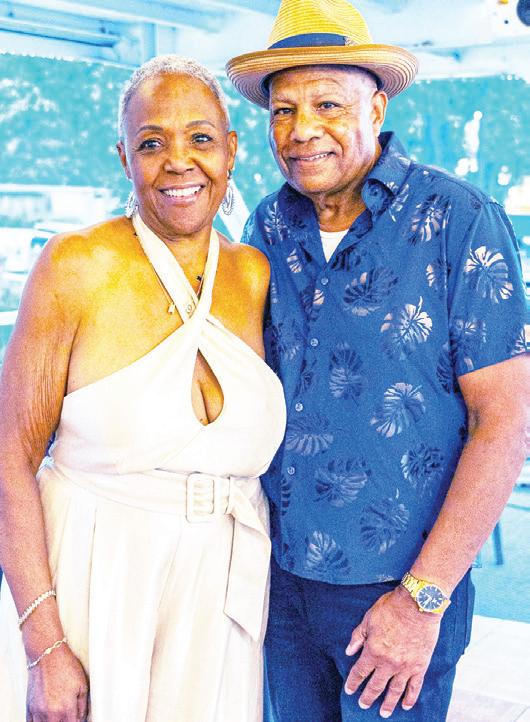
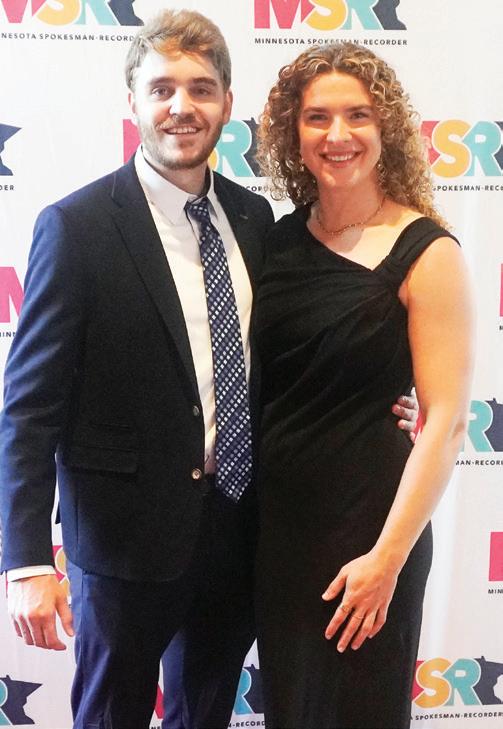
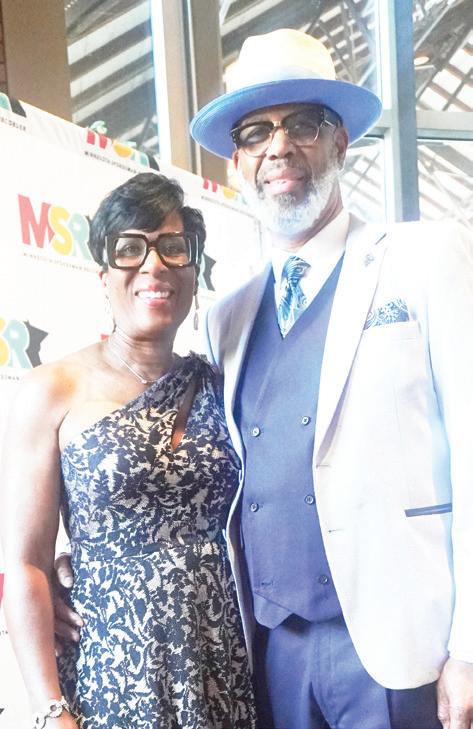
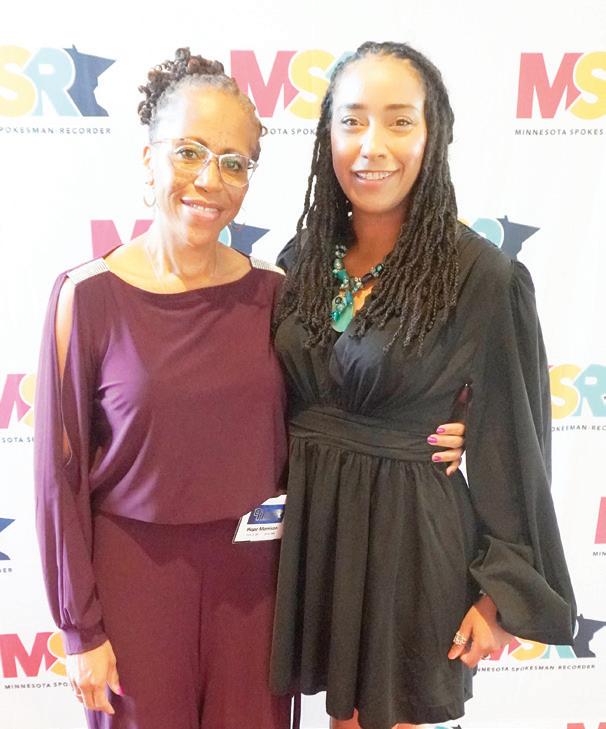
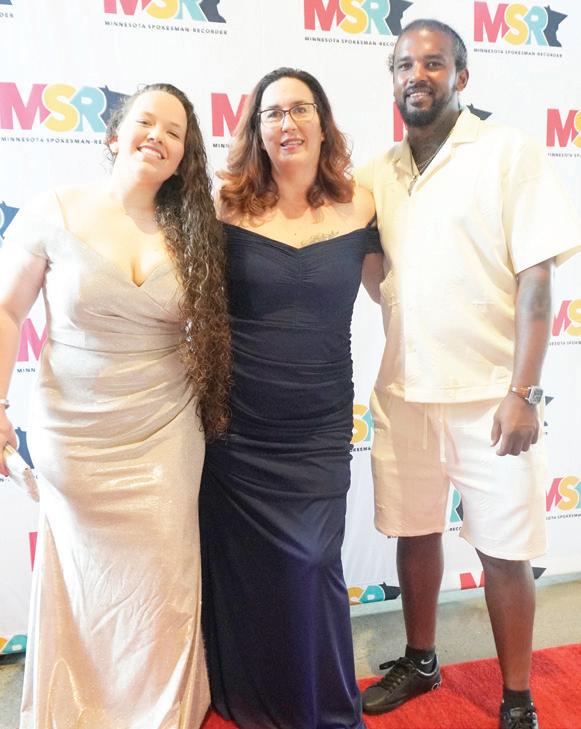
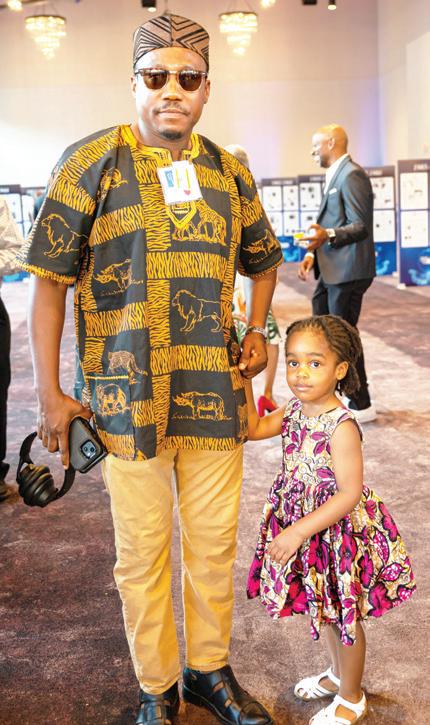
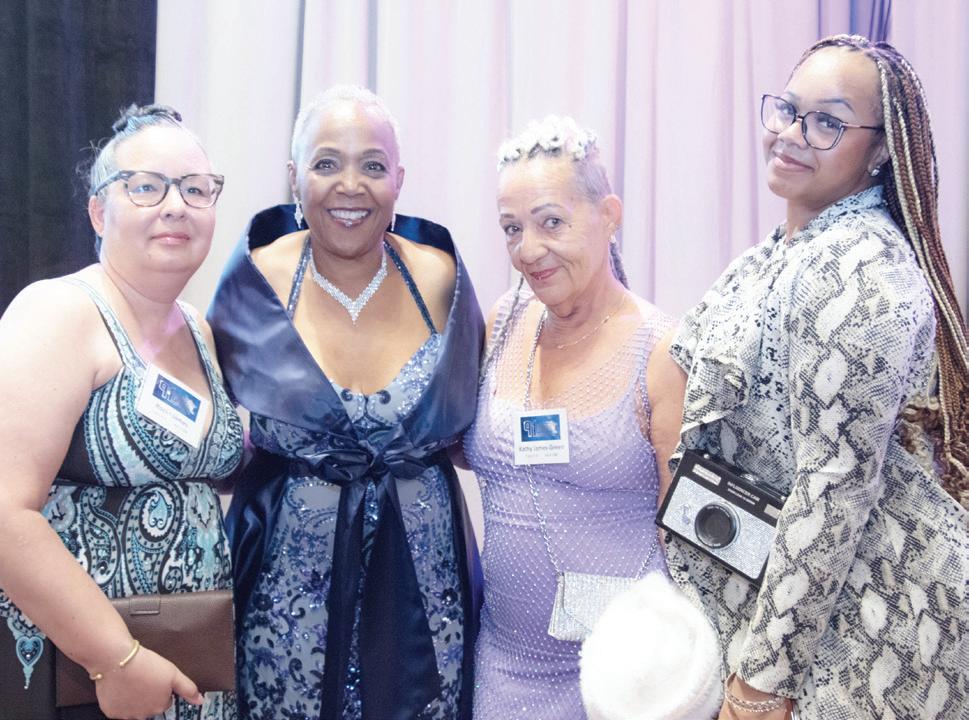
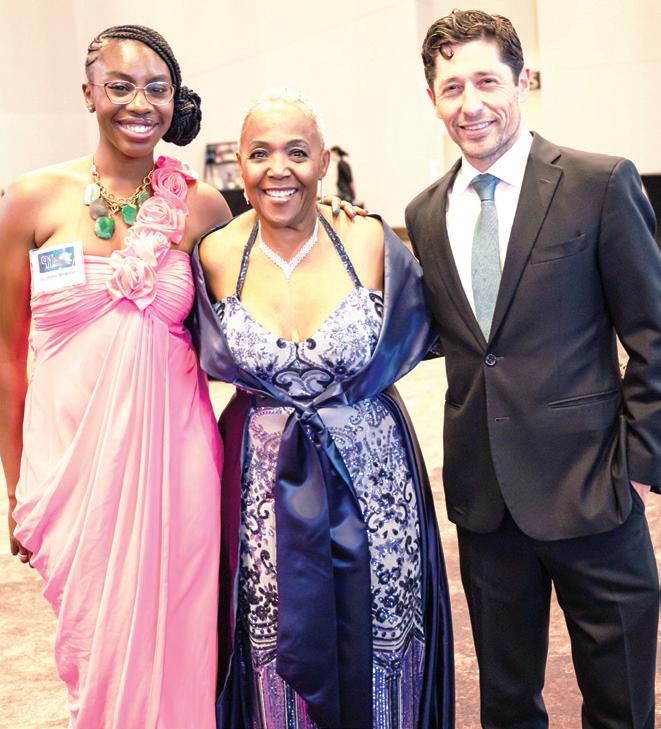
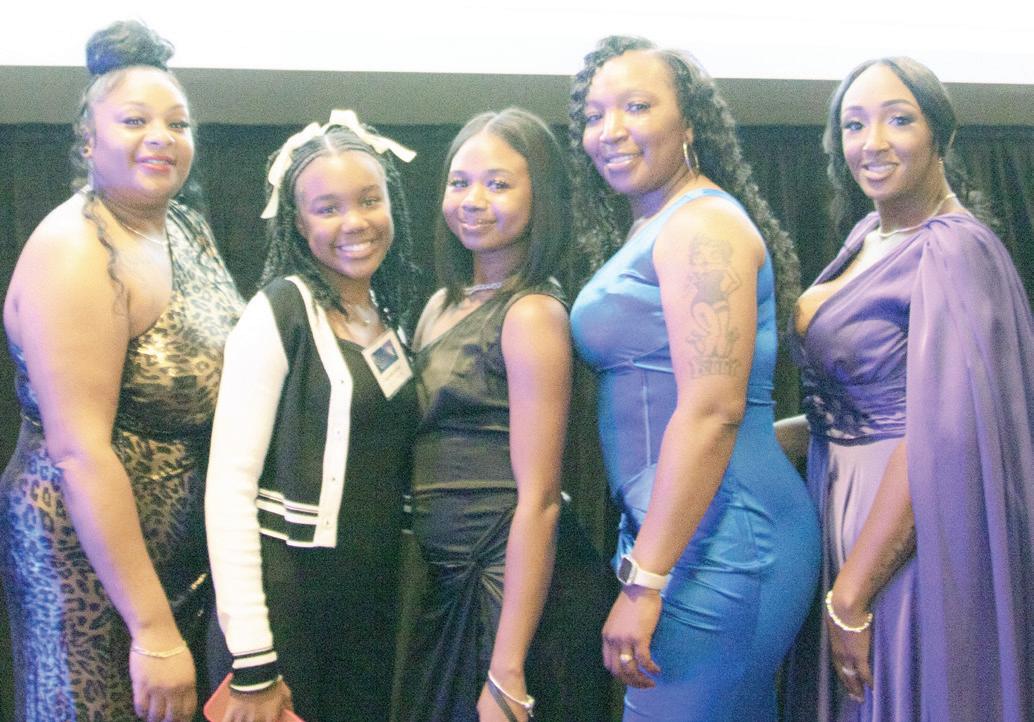
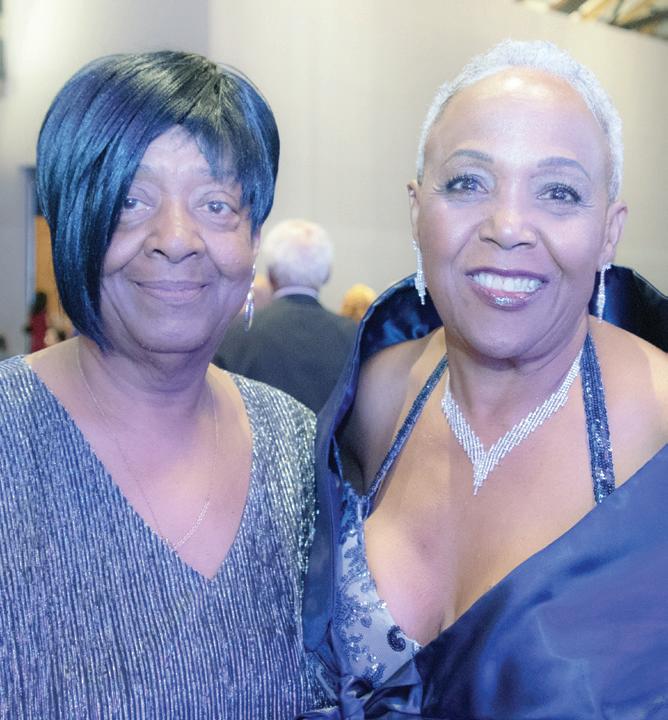
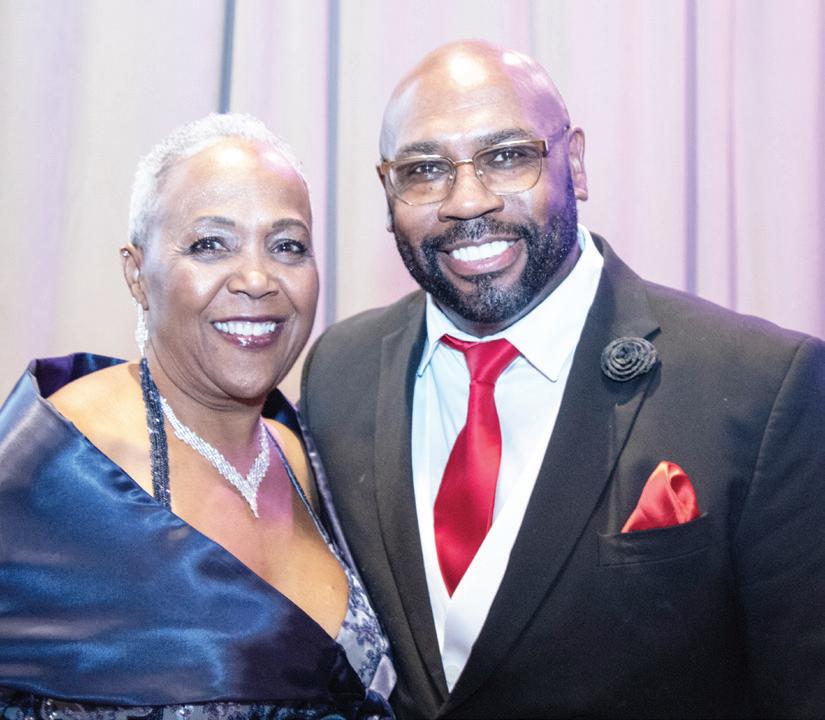
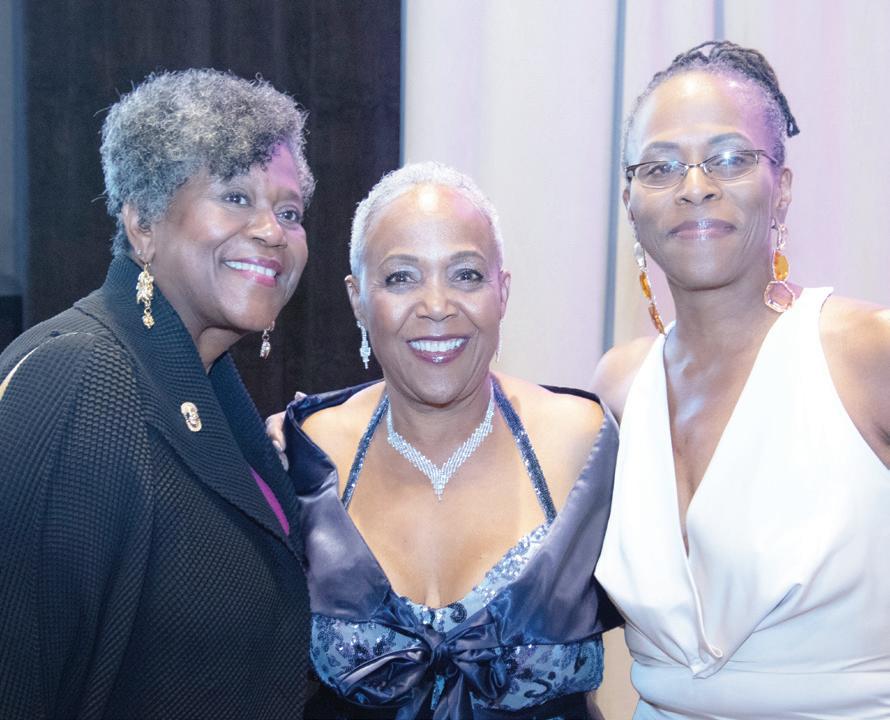
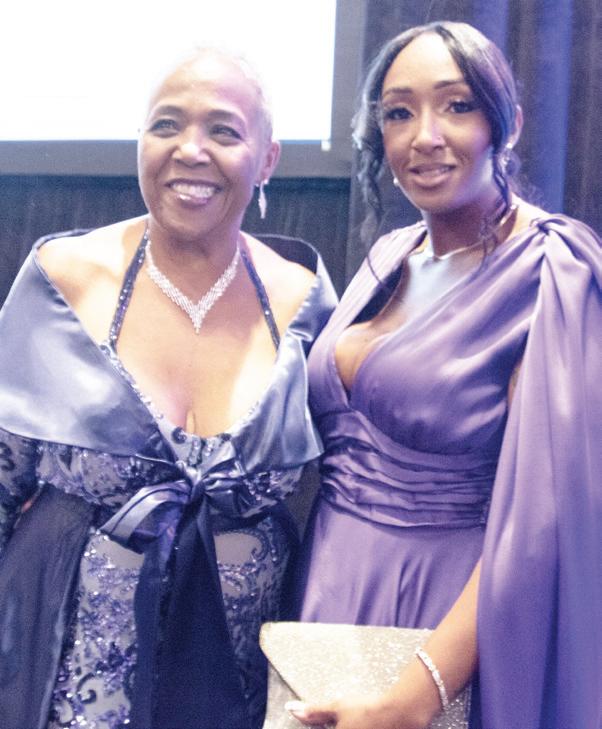
n Saturday, August 16, the Minnesota Spokesman-Recorder (MSR) celebrated an extraordinary milestone: 91 years of storytelling, service, and steadfast presence in Minnesota’s Black community. The newly renovated Renaissance Minneapolis Hotel, The Depot, in the heart of the Mill District, provided an elegant backdrop for an evening that was as much about the future as it was about honoring the past.
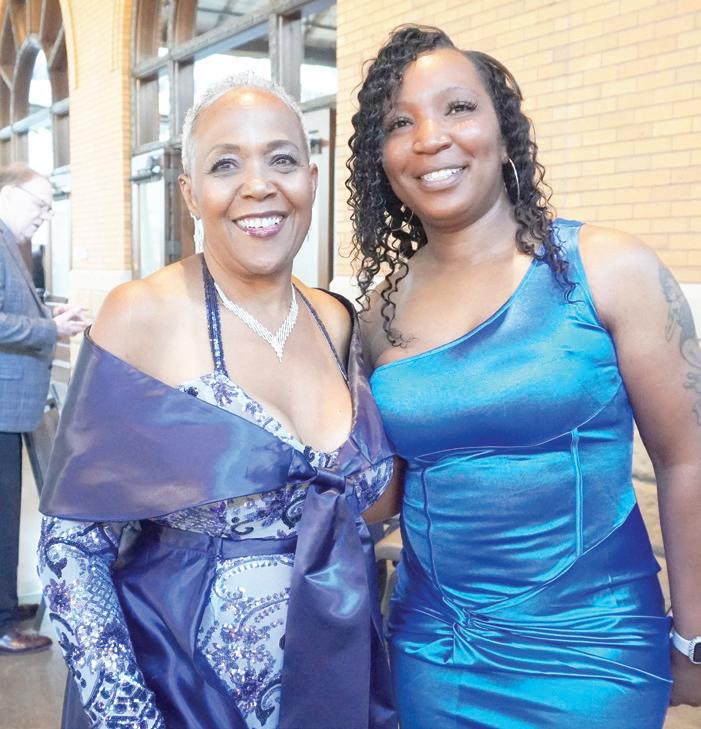
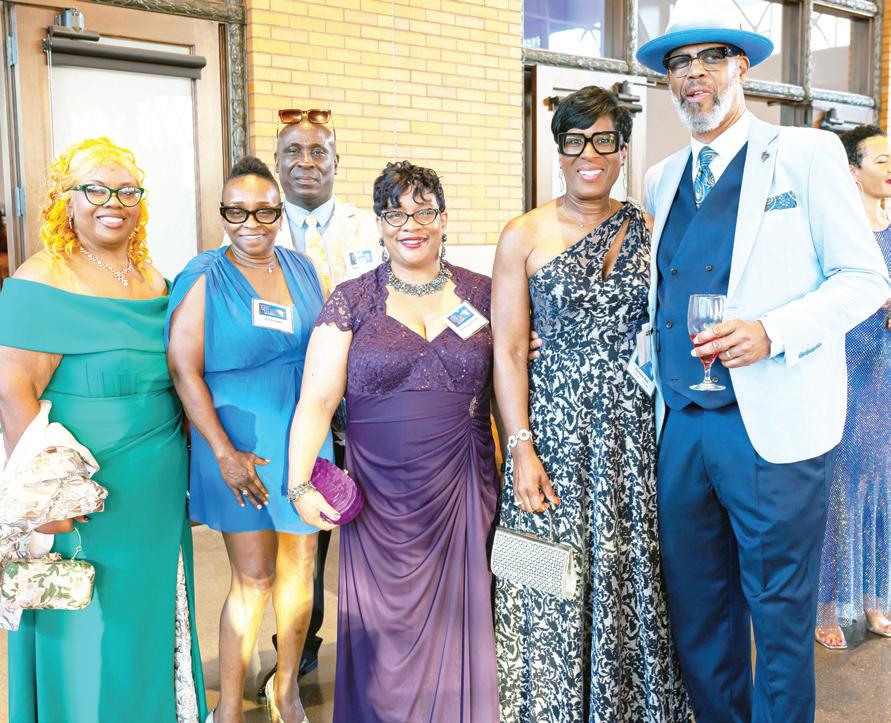
From the moment guests arrived for the 6 p.m. reception, the space buzzed with anticipation. Sequined gowns brushed past sharp tuxedos, while laughter and conversation filled the grand lobby. This was more than a gala — it was a gathering of generations, a living archive of the people who have read, written for, and been shaped by the MSR since its founding in 1934.
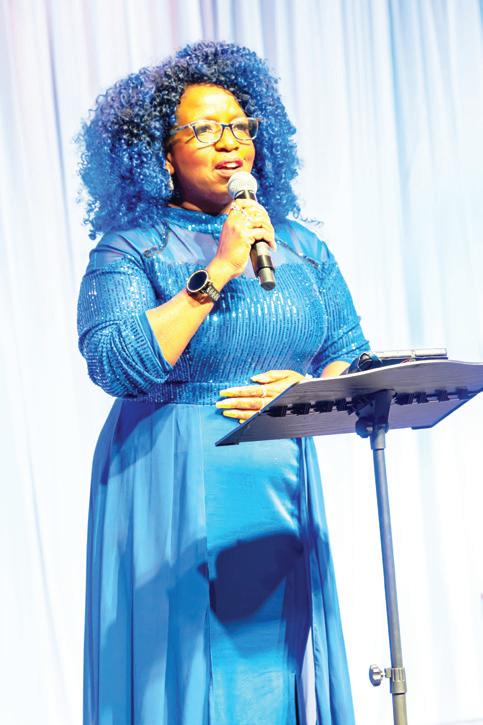
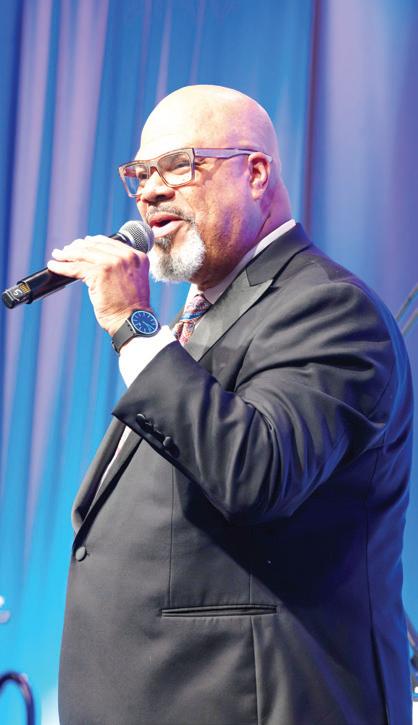
The program, hosted by the ever-charismatic T. Mychael Rambo, a three-time regional Emmy Award winner, struck the balance
■ See GALA on page 5
By Sonya Goins Contributing Writer
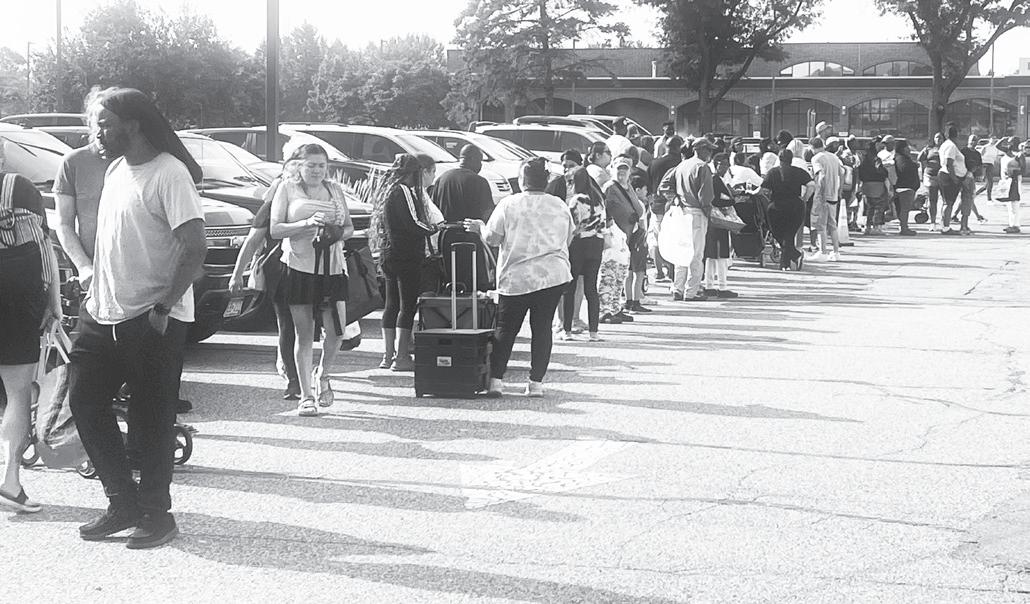
ozens lined up August 6 for free groceries at the Philando’s Pantry food distribution event in Brooklyn Park, Minnesota, highlighting the growing food insecurity in the community.
Constance McIntyre of Brooklyn Park, a working mother of two, said the past year has been a struggle to make ends meet. “This helps me support my children,” she said. “It’s definitely a blessing.” Participants received bags filled with cereal, bread, rice, canned goods, and other staples.
Pointing to a bin of laundry detergent, McIntyre added, “That Downy over there is probably $28 in the store, and I can’t afford that right now.” She also attended last month’s food drop.
Cynthia Gray, 66, of Brooklyn Center, waited for her groceries while seated on her walker. Since losing her fiancé two years ago, she said keeping up with bills has been difficult.
“It’s hard, every day is a struggle. This pantry is a blessing,” Gray said. The pantry served more than 250 families in its first distribution, providing 28 tons of food. This week, organizers handed out 20 tons.
“This is helping me and my three kids,” said a Minneapolis mother who attended. “Even with a job, you still can’t always fill the gaps.” The event was supported by multiple organizations, including the Minneapolis NAACP, Philando Castile Re-
lief Foundation, The Watch Foundation, Jabez Customized Living Services, and Our Daily Bread of Las Vegas.
Brooklyn Park Mayor Hollis Winston praised the collaboration. “To reach out to Brooklyn Park and provide assistance to their brothers and sisters in the city is what we need more of as a community and society,” he said.
Minneapolis NAACP Vice President Thomas Berry said the pantry honors the legacy of Philando Castile, a school To
■ See GROCERY on page 5


Carrying the MSR’s story forward
By Jasmine McBride Associate Editor
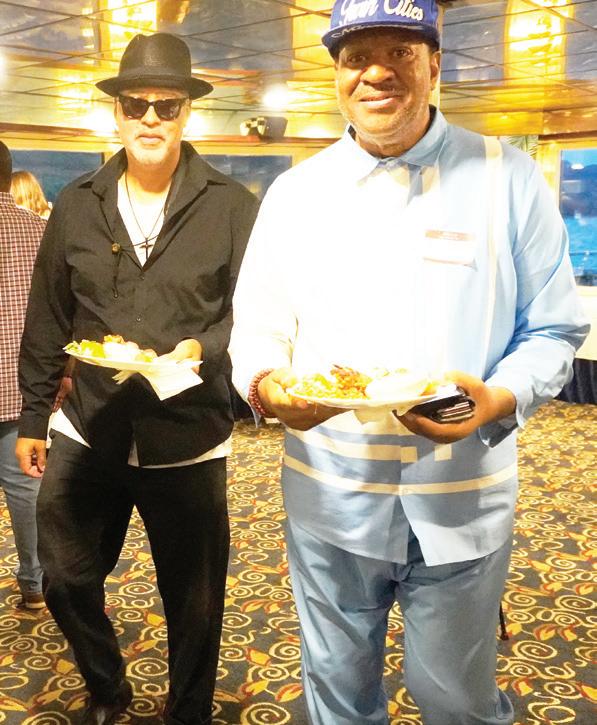
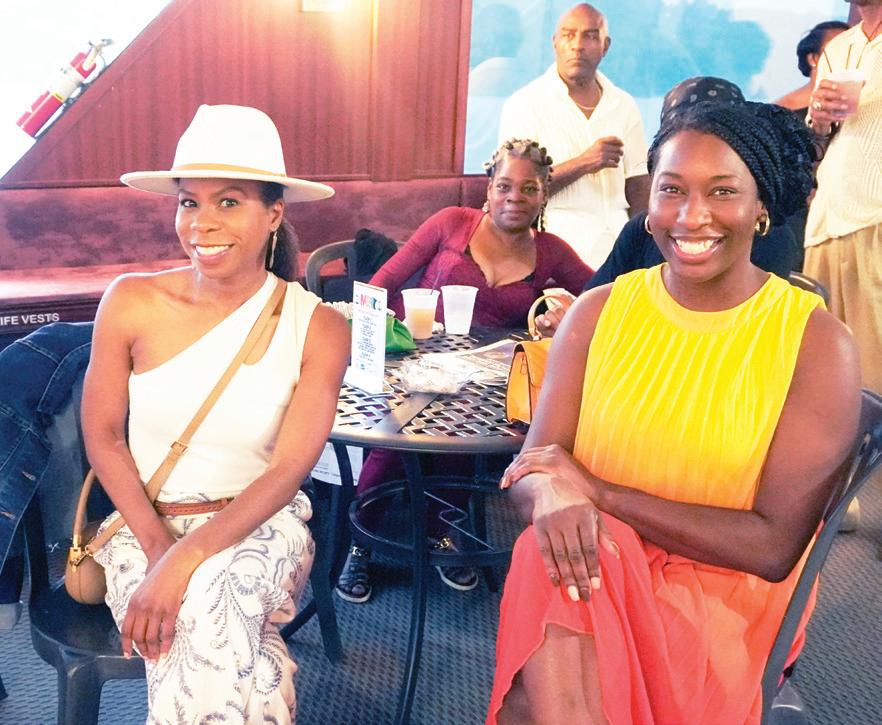
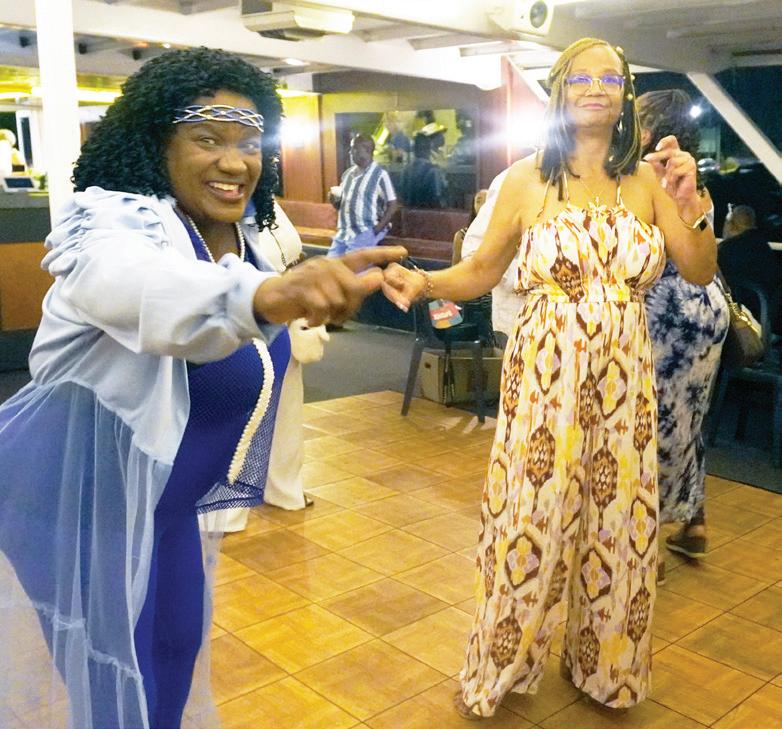
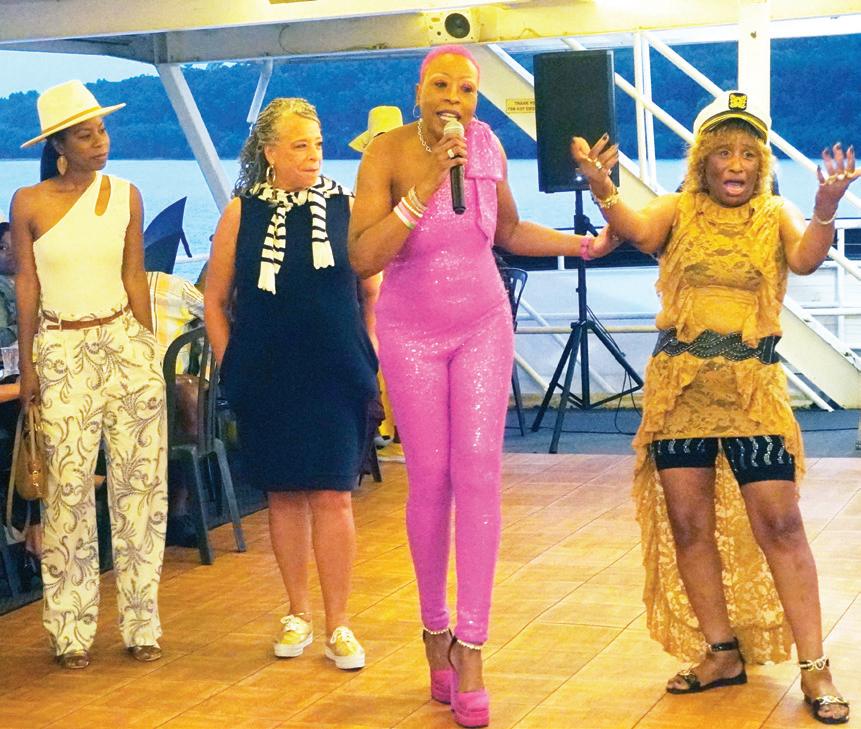
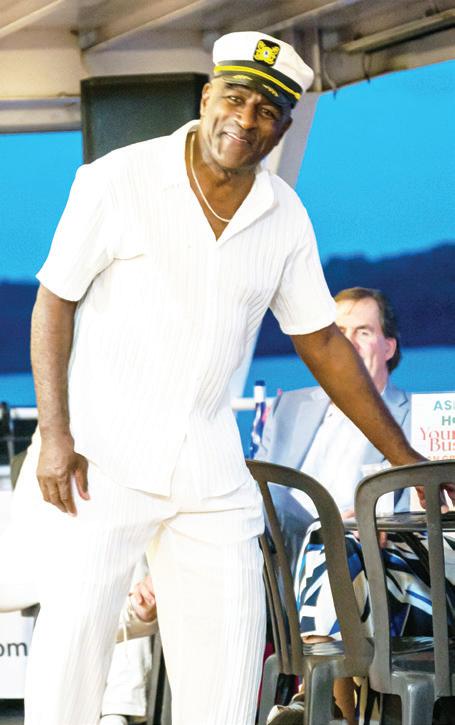
There’s a particular kind of quiet that happens right before a boat leaves the dock: the shuffle of heels finding balance, the rustle of nautical-inspired linen and cotton, the quick laugh of a reunion. On August 15, MSR’s Legacy Yacht Cruise gathered that sound and set it loose across the water, turning a summer evening into a moving tribute to history, community, and where we’re headed next.
From the moment we boarded, it felt like stepping into a living archive. Faces familiar from bylines, boardrooms, barbershops and block parties converged in one floating room.
The dress was a story in itself — sun-warmed suits and airy dresses, Ankara prints alongside crisp whites, sneakers and stilettos tapping out the same rhythm. People came to be seen, yes, but more than that, to see each other. That’s MSR’s quiet magic: It invites us to witness one another fully in a world where the word “minority” comes with alteration or, if successful, erasure.
The evening unfolded like a well-edited feature. No single headline dominated; instead, vignettes were stitched together into a narrative of legacy. At the rail, an elder shared how the paper once kept him informed when other outlets didn’t bother.
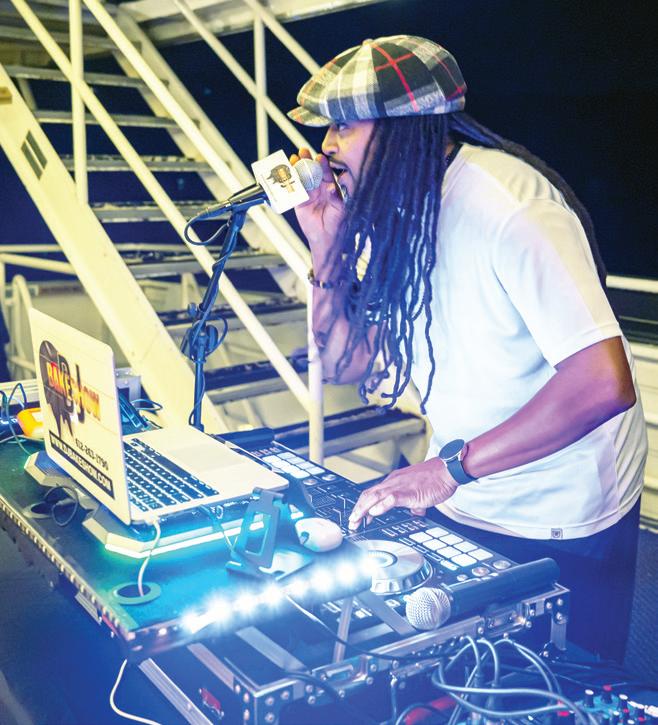
Near the DJ booth, a group of 20-somethings swapped Instagram handles and ideas for a new podcast, the sun laying copper on their cheekbones as the bass rolled into a classic R&B chorus. In the lounge, a nonprofit leader and an entrepreneur compared notes on what it means to scale impact without losing soul. Everywhere, the conversation kept circling back to the same question: How do we honor what has been built while making room for what wants to be born?
The cruise answered not with a manifesto but with atmosphere. The soundtrack shifted from old-school hip hop to generational classics to sultry soul, a timeline of Black sound that mirrored the arc of our collective memory. Comfort plates passed hand to hand; cups clinked in toasts. The speeches were brief and generous: thank-yous that acknowledged the

Minnesota’s few Black farmers face unique barriers
By Peace Mitchell and Michael Birchard
rog Tree Farm’s story is unique, yet it resonates with broader themes among Black farmers in Minnesota. Because so few exist, those who step into farming often become both groundbreakers and community-builders.
Frog Tree Farm not only produces seasonal products such as Christmas wreaths and holiday décor, but also serves as a hub for community healing and education — hosting workshops, retreats, and initiatives focused on violence prevention and agricultural literacy. This combination of cultural production and social impact illustrates how Black farmers in Minnesota are redefining what it means to steward the land today.
Angela Dawson, co-founder of the 40-Acre Co-op in Pine County, also exemplifies this dynamic. Dawson identifies as a “fourth-generation reclamation farmer,” reclaiming her ancestors’ agrarian heritage after generations away from the land. Remarkably, she began farming in 2018 on 40 acres near Sandstone, MN, and quickly became a leading voice
for farmers of color.
“We haven’t found all of them,” Dawson quips. “There’s supposed to be 39 of us,” highlighting the isolation of being one of the few Black farmers in the state.
The co-op’s name nods to the historical promise of “40 acres and a mule” that was denied to freed slaves after the Civil War. Its mission is to foster “economic equity in the agricultural system for Black, Indigenous, and other marginalized farmers,” providing training, mentorship, and market opportunities for those excluded from mainstream agriculture.
exposed the fragility of food supply chains. The 40-Acre Coop teaches sustainable practices to heal both soil and community and helps new farmers get started by providing resources and a supportive network.
Other emerging Black-led farms in Minnesota share similar values. Mahogany Farm in Mora, founded by Yaya and Julius Cohran (also founders of the Minnesota Black Farmers Association), emphasizes community, culture, and youth education. Hosting school groups and workshops, it serves as a gathering space for Black agricultural learners.
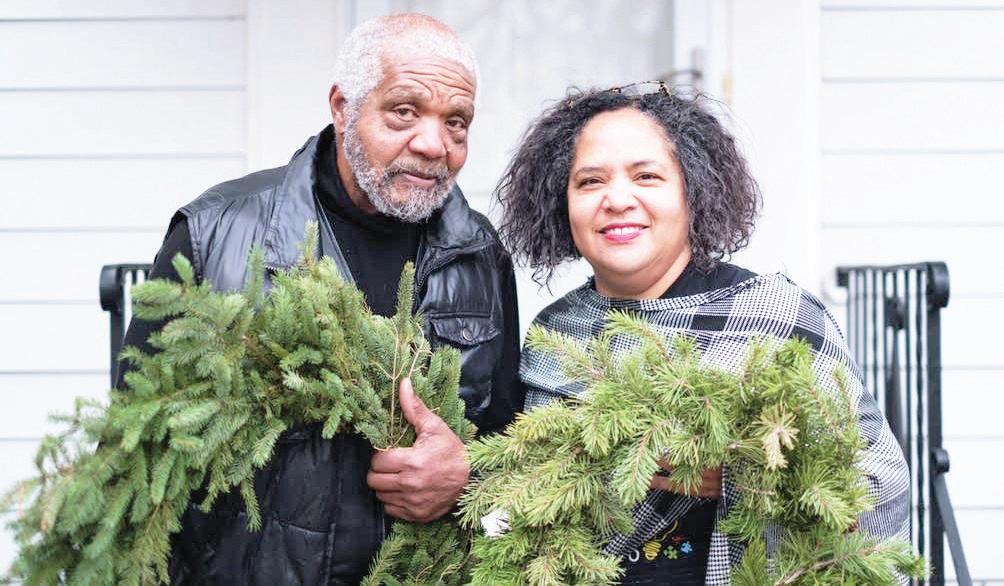
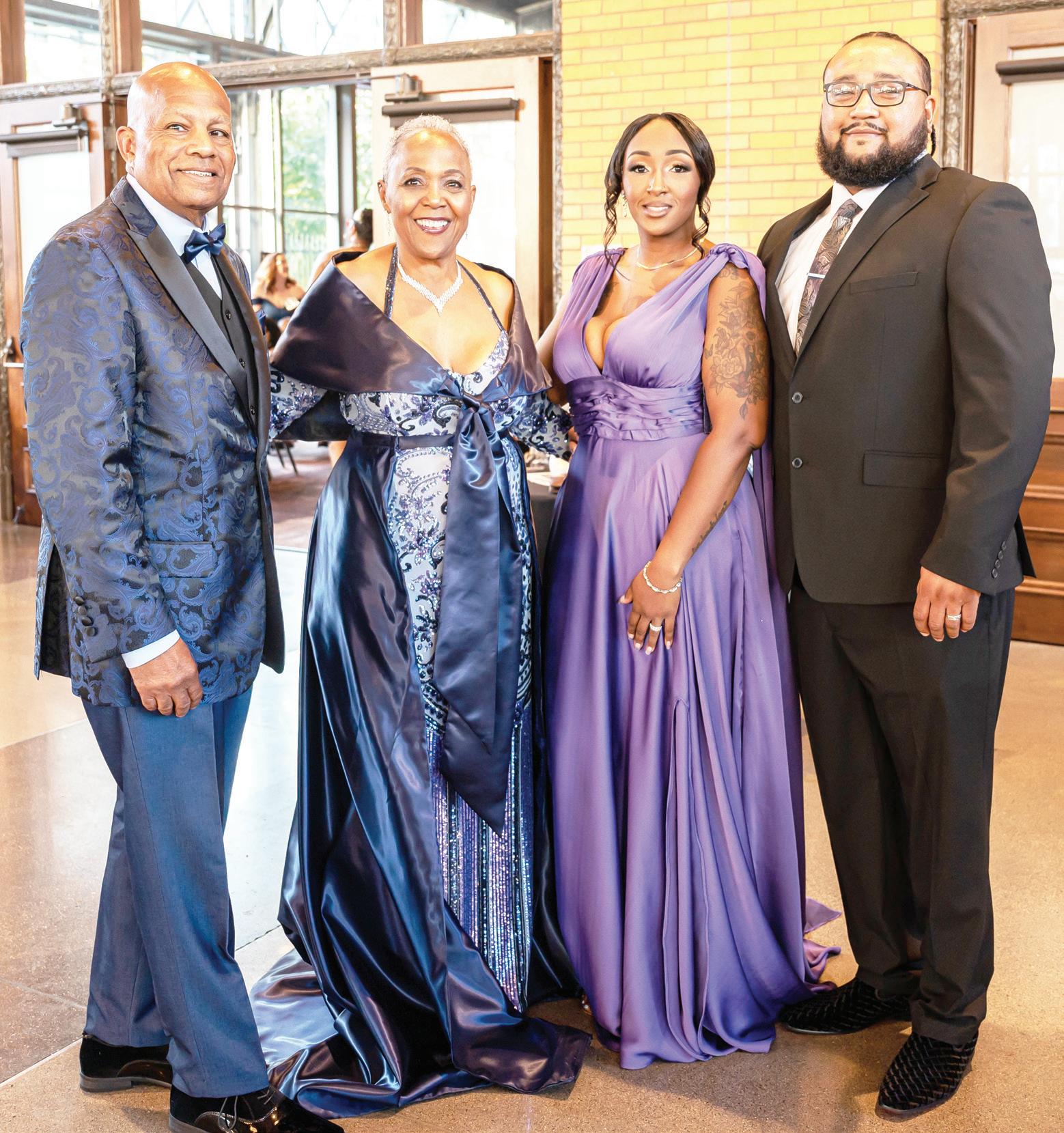
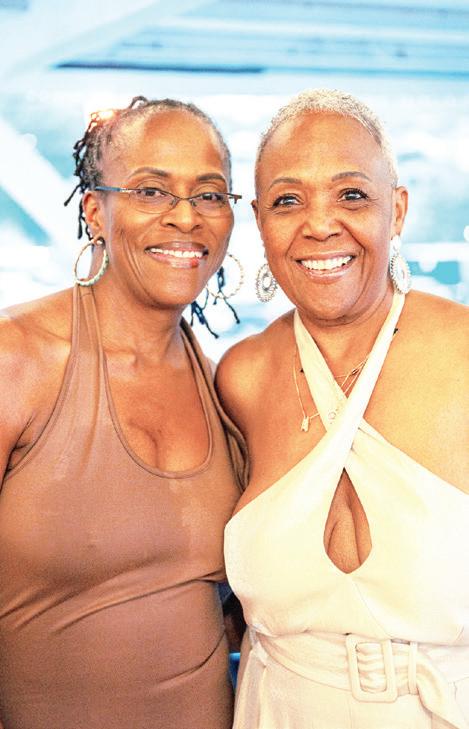
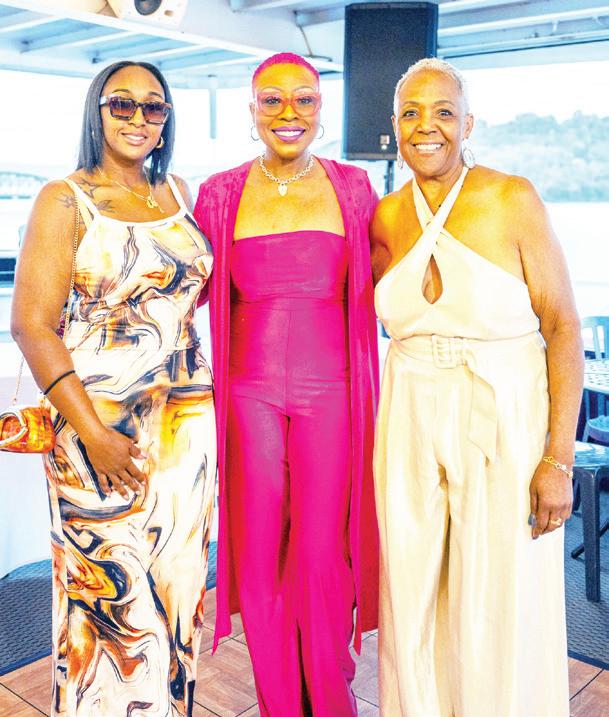
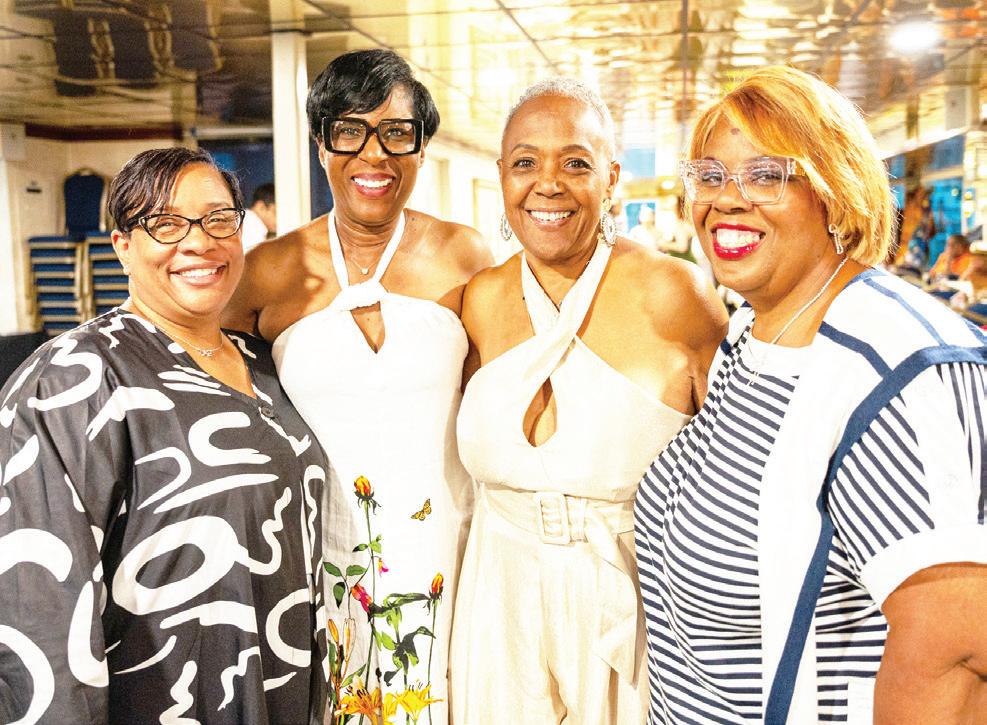
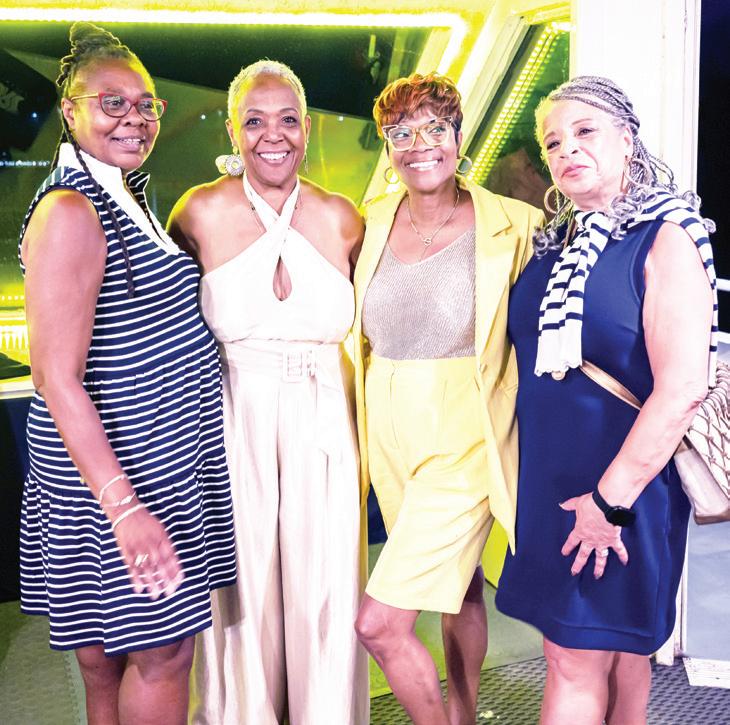
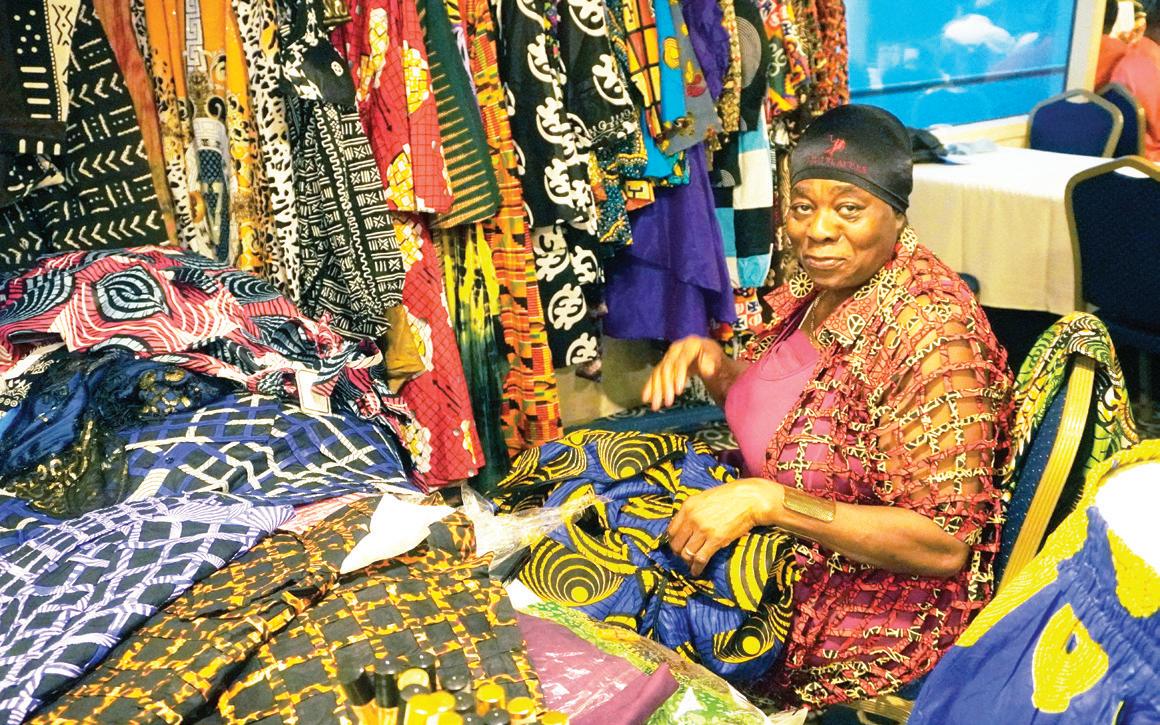
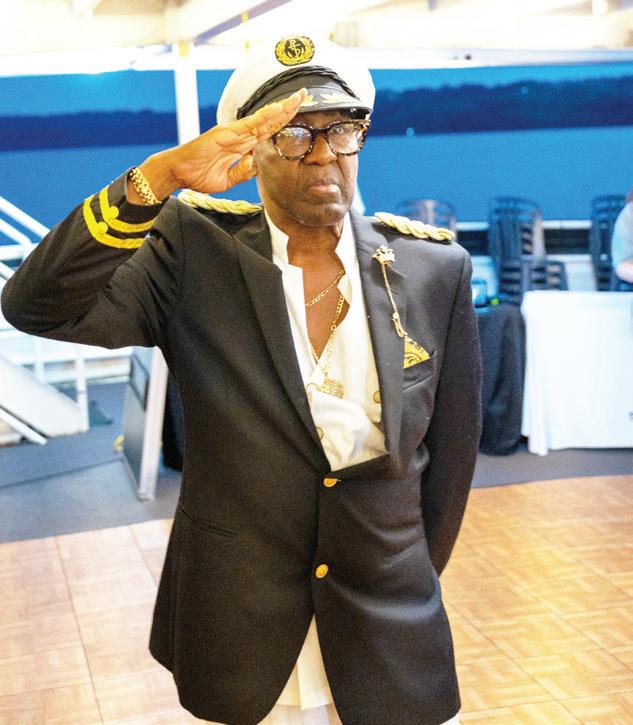
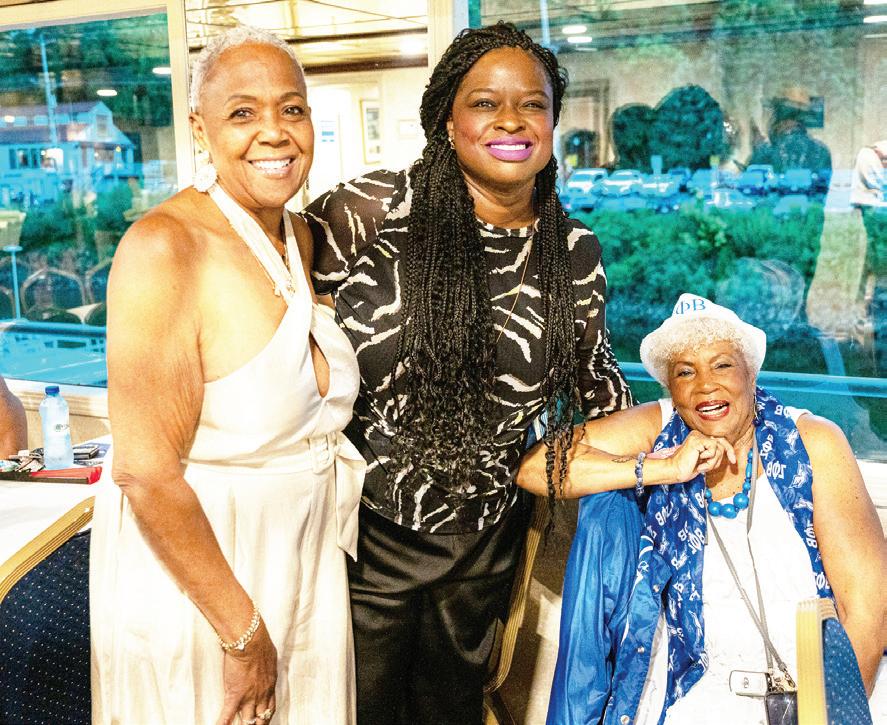
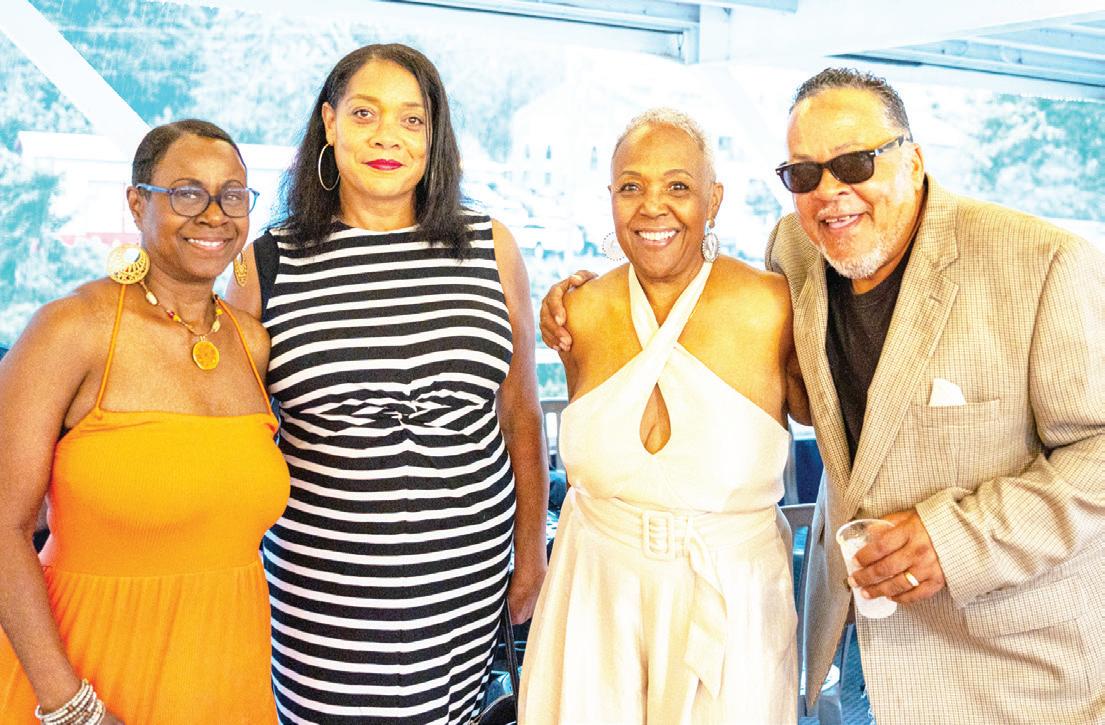
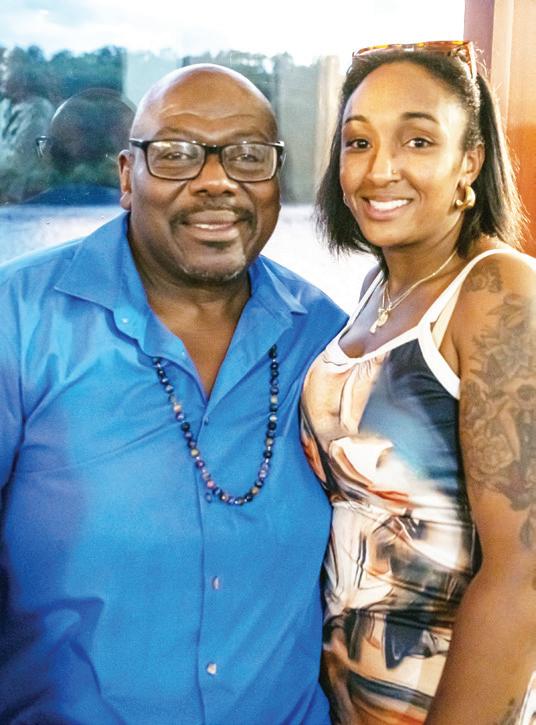
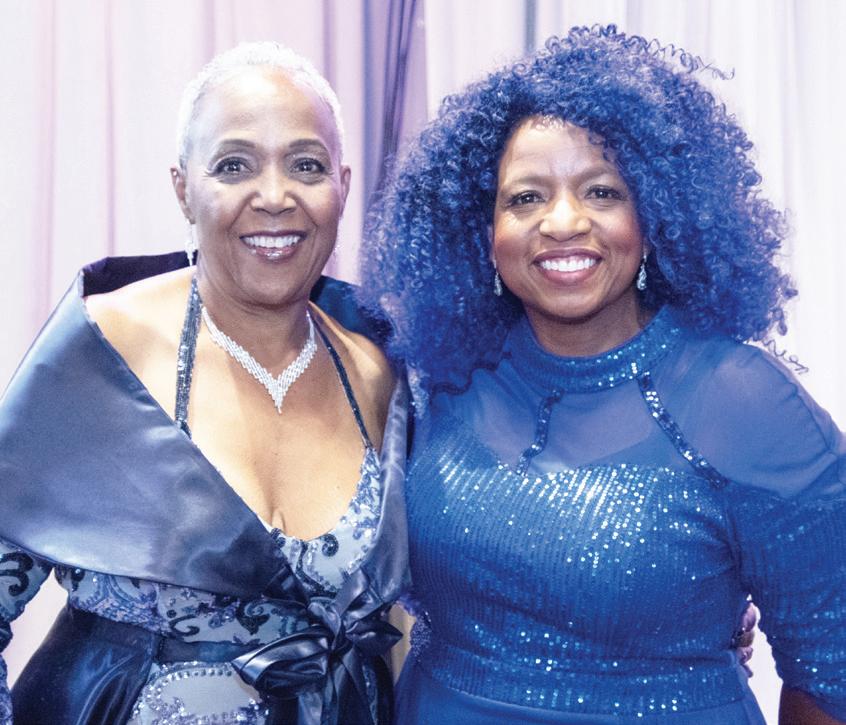
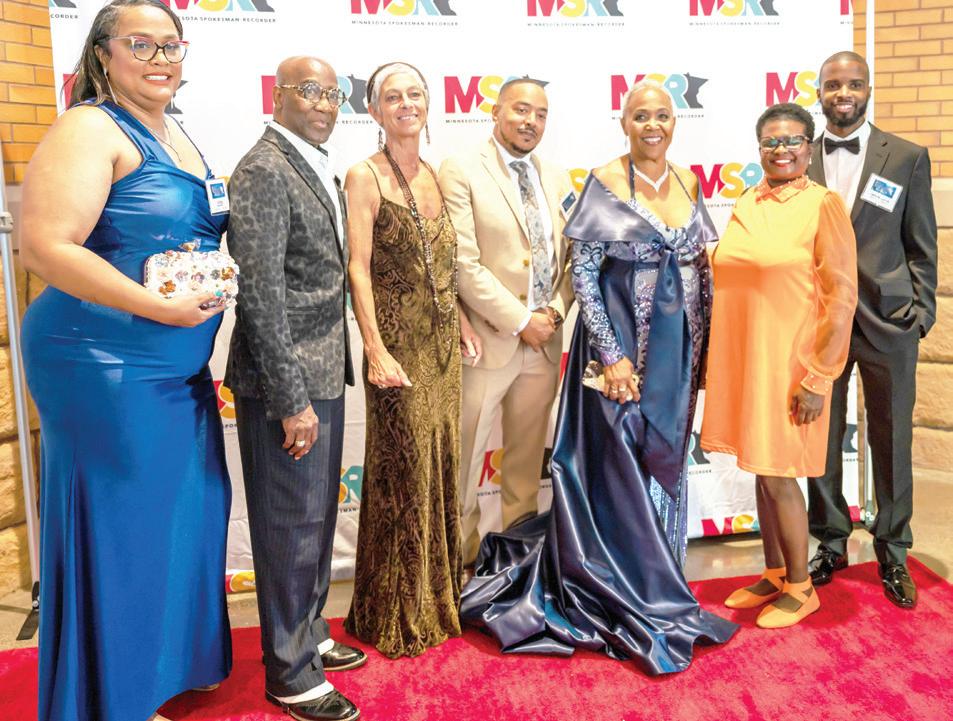
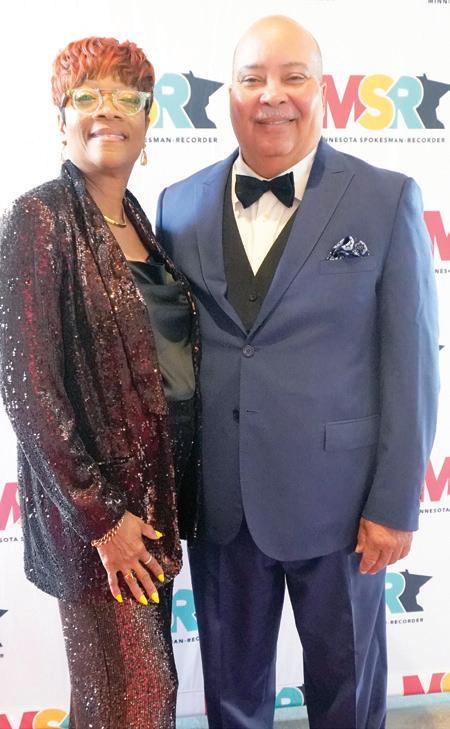
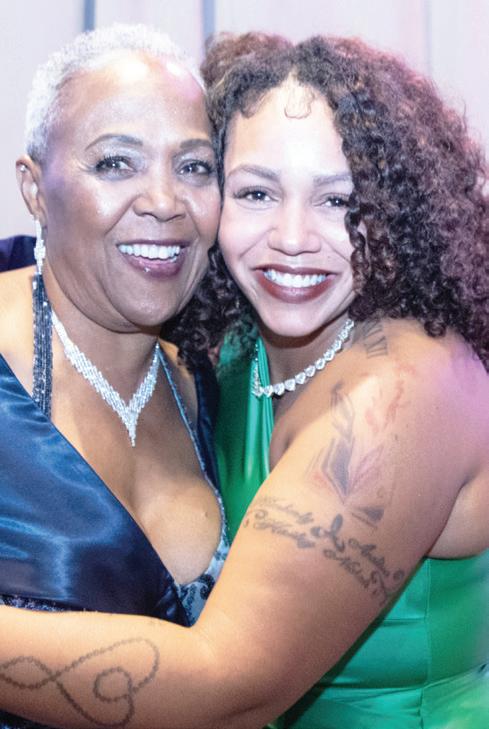
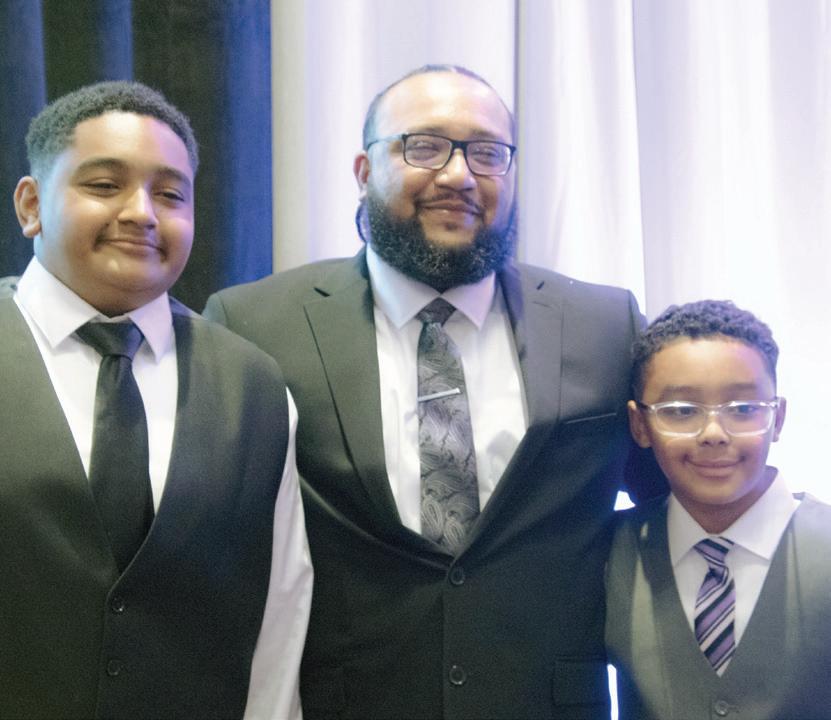
(l-r) Michael Diehl, Tracey Williams-Dillard, Latacia Alvarez, Manuel Alvarez, Sr. Photo courtesy of Steve Floyd/MSR
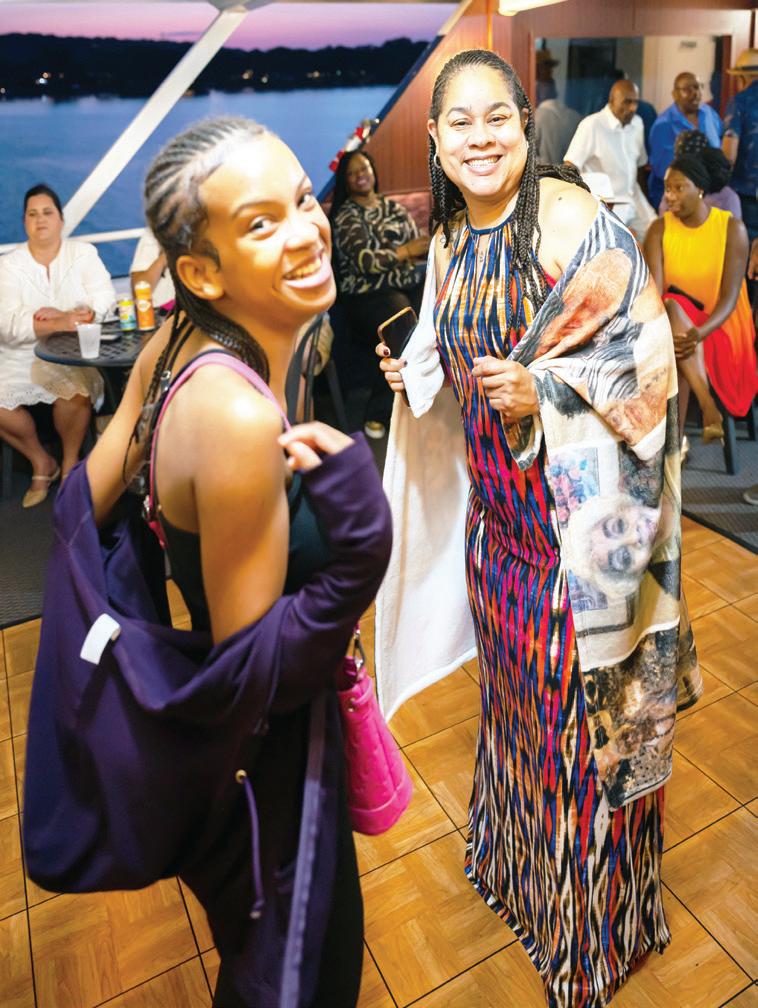
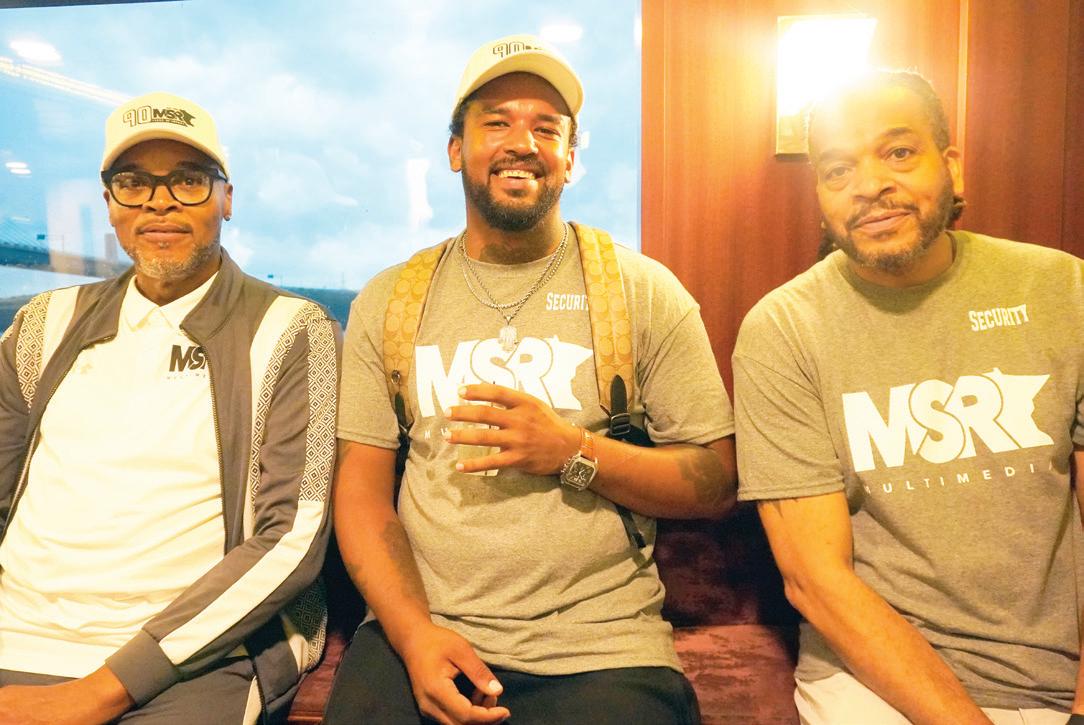
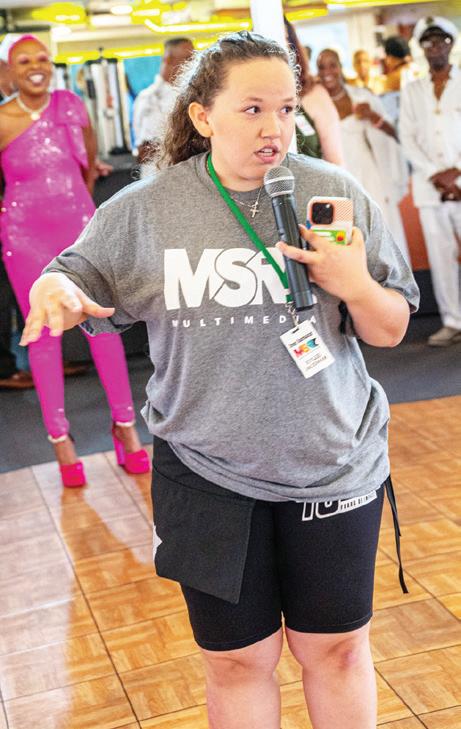
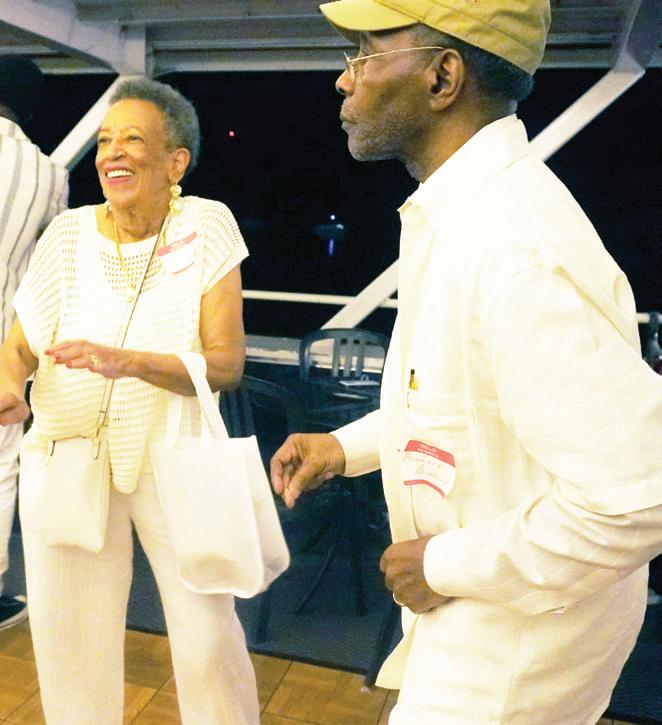
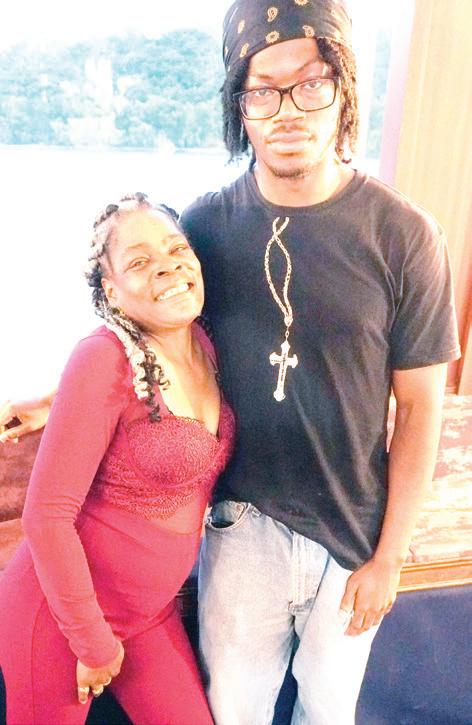
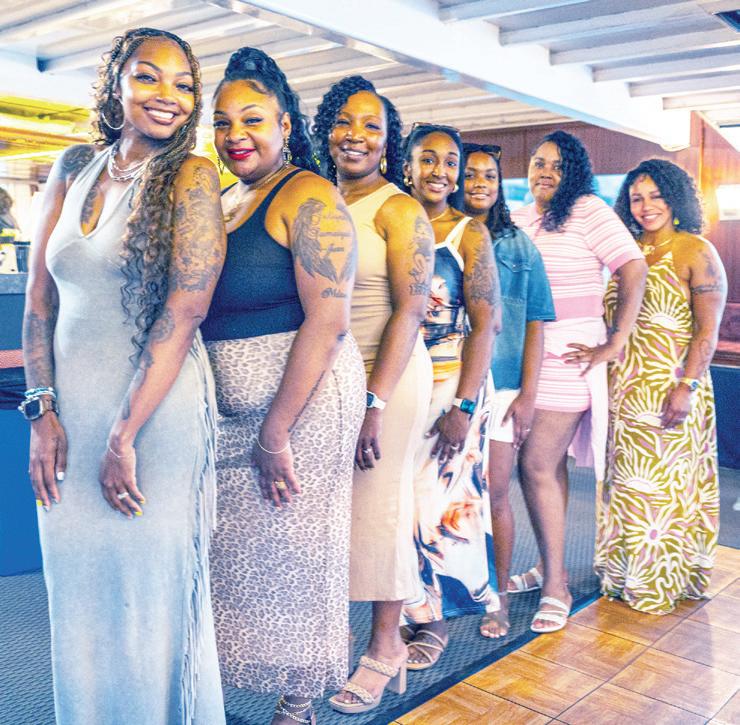
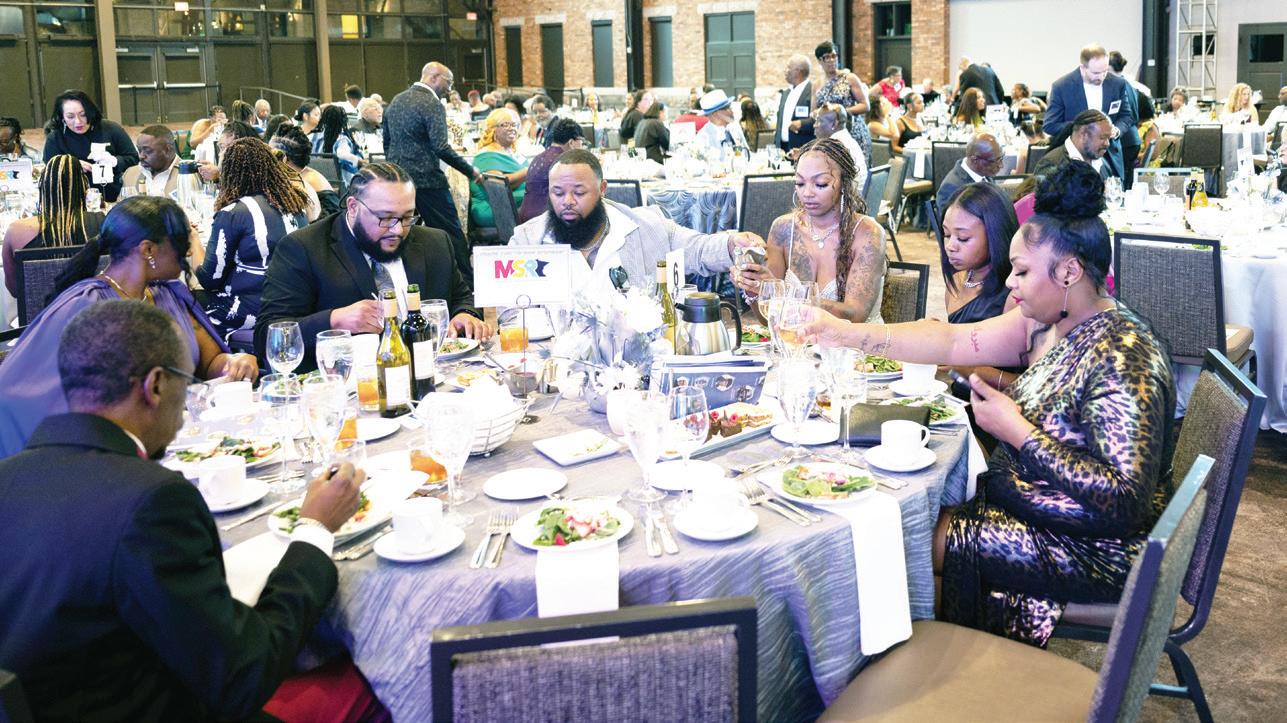
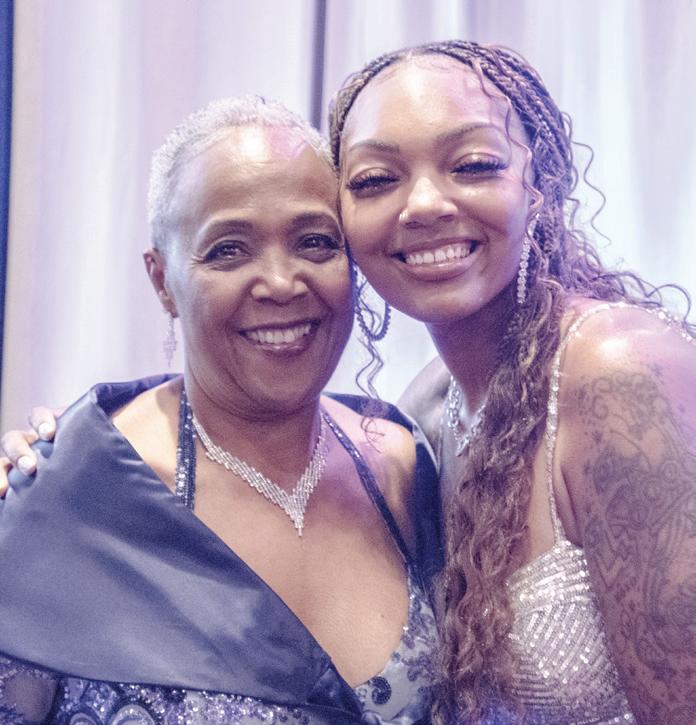
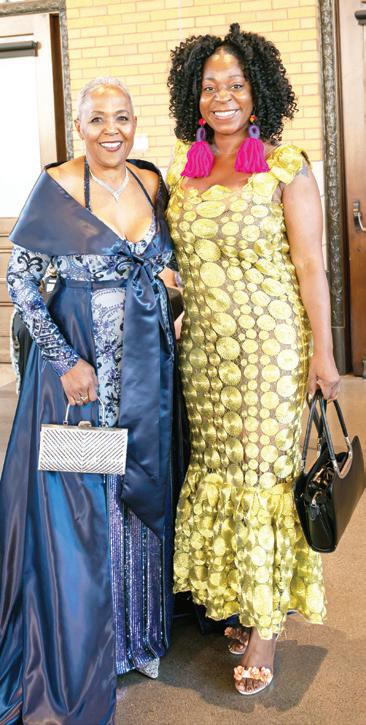
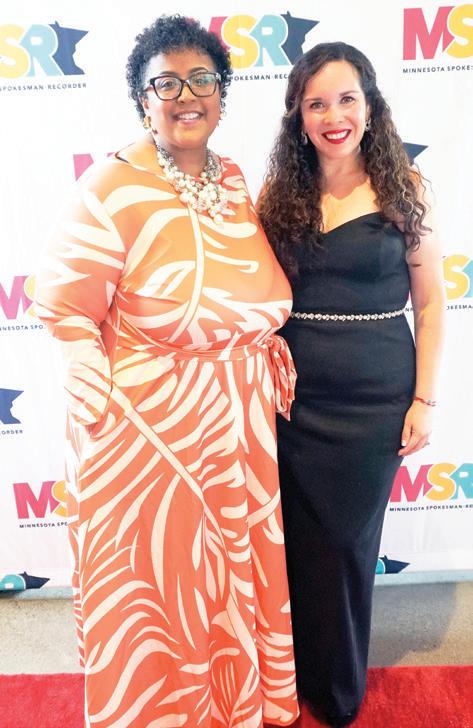
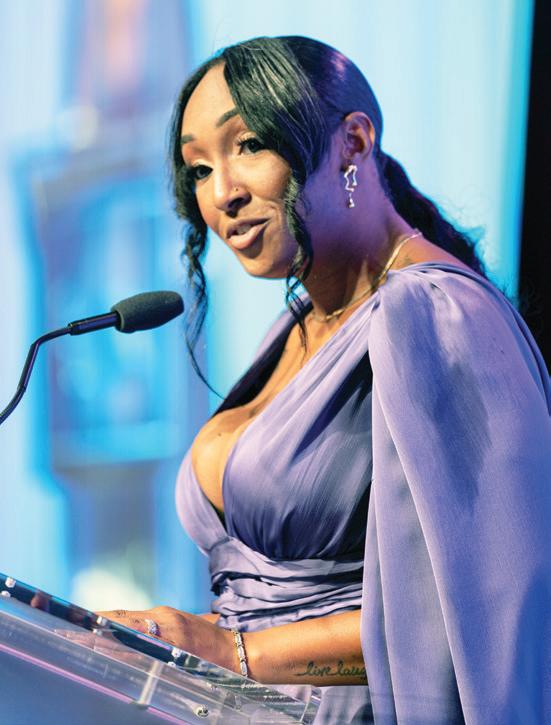
Photos courtesy of Steve Floyd/MSR
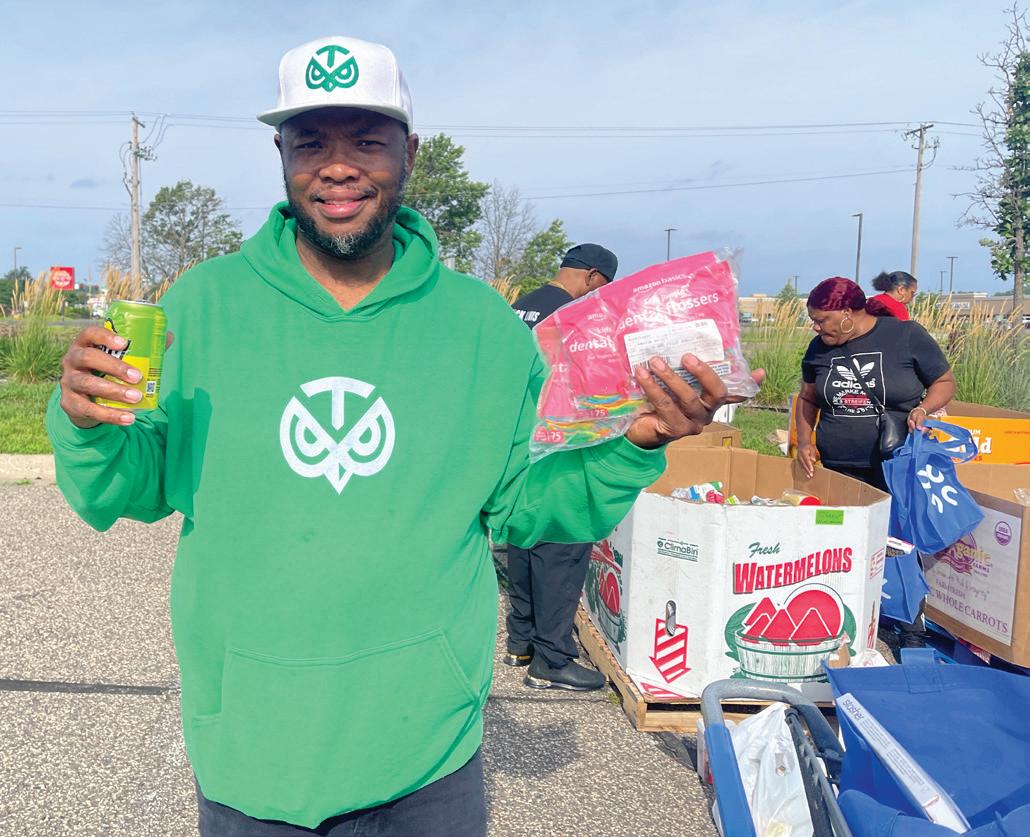
Thomas Berry All photos courtesy of Sonya Goins/MSR
Dawson emphasizes that knowing how to grow one’s own food is a form of empowerment, especially after Covid-19
While Mahogany Farm, Frog Tree Farm, and the 40Acre Co-op are geographically
(r-l) Peace Mitchell and her father Henry


Metro
Still telling the stories that matter Bush Fellow Georgia Fort connects news and Black culture
By Vickie Evans-Nash
Contributing Writer
Independent journalist
Georgia Fort applied for a Bush Fellowship after seeing other successful leaders granted the opportunity in the past. For her, it was an acknowledgment of leadership excellence. She had applied twice before, but her third time proved the charm.
“It is a unique opportunity in our region to receive investment not toward your organization, not toward a specific project, but into your growth [and] development as a leader,” she says. Fort plans to use the fellowship to pursue a leadership certificate from Harvard University and to implement movement into her daily routine.
“As a person who owns a media organization focused on the Black community in our state, I often find myself covering a lot of stories that are filled with trauma,” she explains. “That [trauma] enters our bodies as storytellers.”
She hopes to incorporate movement by holding walking meetings instead of using conference rooms. “I want to practice the discipline of movement every day, to process and release that trauma.”
Fort leads both for-profit and nonprofit journalism institutions. Her nonprofits, the Center for Broadcast Journalism, which houses the Saint Paul-based radio station Power 104.7 FM, have a mission to diversify the media industry. Currently, less than three percent of journalists are Black. Through the nonprofits,
Fort equips young people of color aged 16–24 with cameras, microphones, and audio recording devices. They gain hands-on, paid work experience. Past participants include TV reporters in Rochester and North Dakota, as well as a recipient of a four-year journalism scholarship from the University of St. Thomas.
When Fort was in college, she initially declared a journalism major. But after meeting a woman with a journalism degree who worked for the State of Minnesota and couldn’t get a journalism job, Fort changed her major to business, a decision that now helps her run her media endeavors.
Keeping with her passion for journalism, she has worked in radio and TV across multiple markets and affiliates. After two Emmy nominations and working as an anchor at an NBC affiliate in Duluth, she returned to the Twin Cities.
She applied for four openings, speaking directly with the hiring managers at each station. “I thought I was strongly positioned to work in this market, even though it was a bigger market,” she says. She was not hired at any of them.
At the Center for Broadcast Journalism, Fort says, “We believe that by creating these opportunities that remove barriers for young people to get into the career fields, we’ll be on track to see our newsrooms and our region reflect the demographics of the communities that they serve.”
Her for-profit media organization, BLCK Press, began in
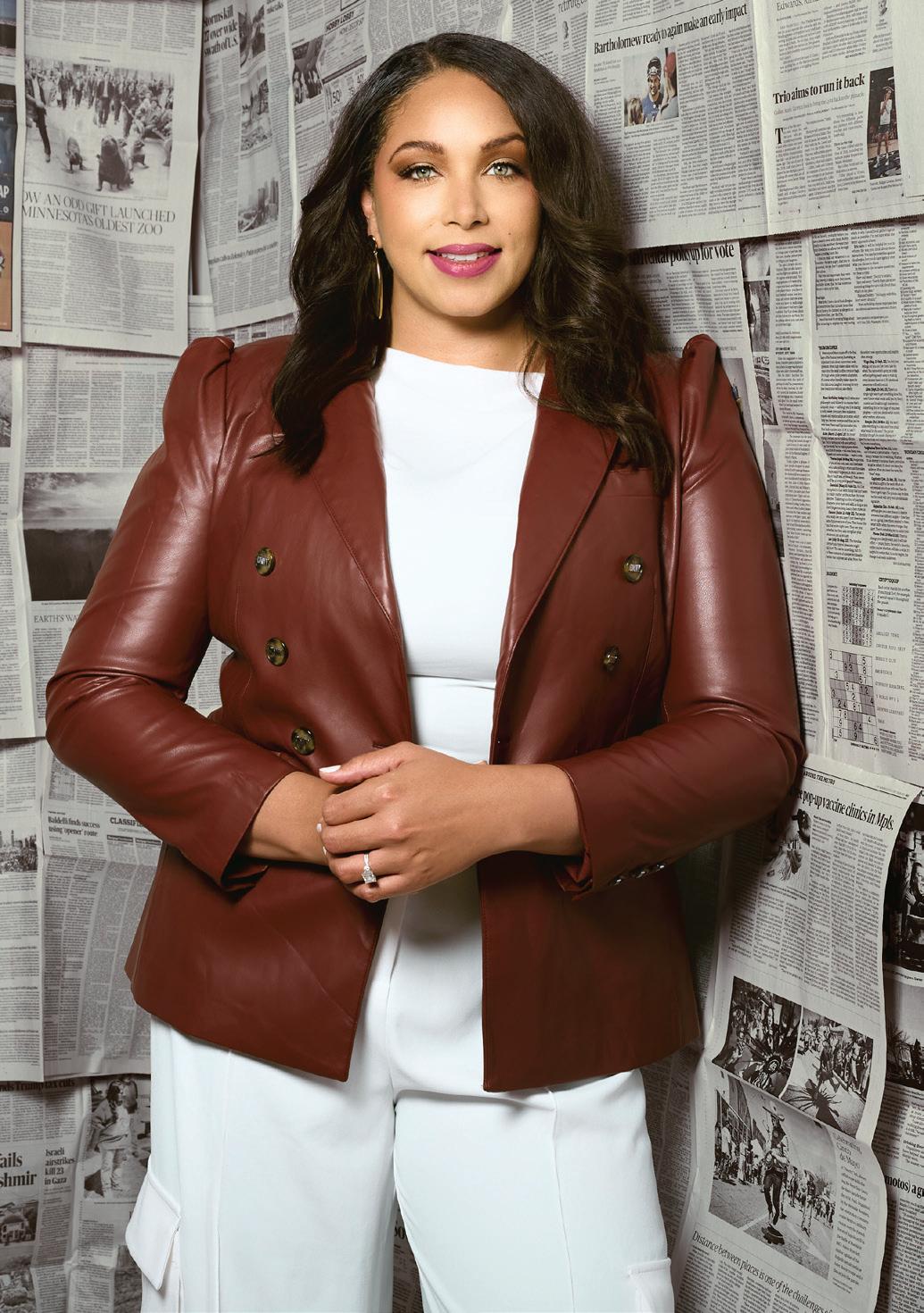
Georgia Fort, a three-time Emmy Award-winning
2020 with a mission to reconnect news to Black culture. It produced “Here’s the Truth,” a TV show that ran for three seasons on the CW Twin Cities.
Produced by a diverse team, the show won three of 12 regional Emmy nominations.
“As a people, we believe that our culture has moved away from news because news traditionally has not served us,” she says. “It hasn’t acknowledged us and the authenticity of who we are.”
Through BLCK Press, Fort and her team focus on sto-
ries without the negative lens mainstream media often imposes. “We cover a lot of our communities’ brilliance, joy and creativity.”
When big names or events like Beyoncé or the BET Awards take the spotlight in the Black community, “We all stop and pause and listen and then debrief about them the next day,” Fort says. “It’s a part of our culture, and at BLCK Press, we’re thinking deeply about how news and journalism can become…a part of Black culture,” as it was
Love First hosts first-ever youth fashion show
By Jasmine McBride Associate Editor
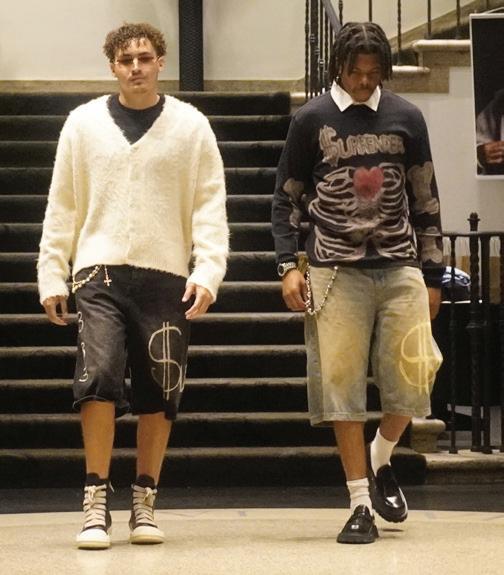
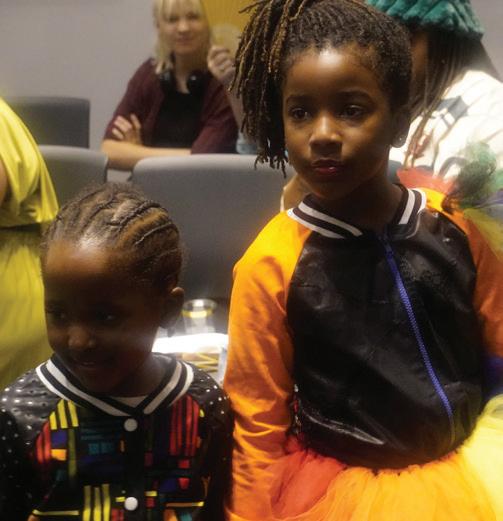
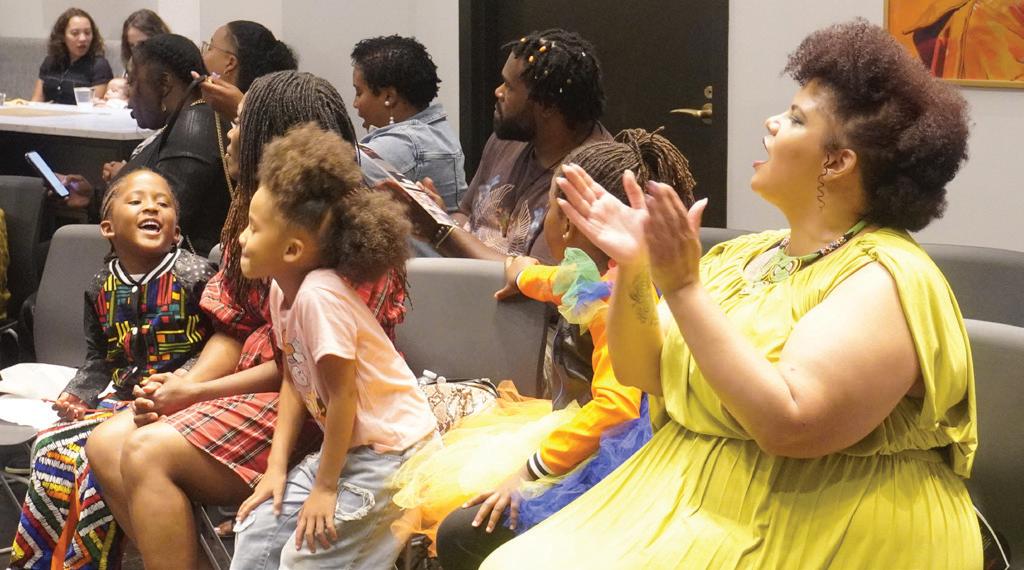
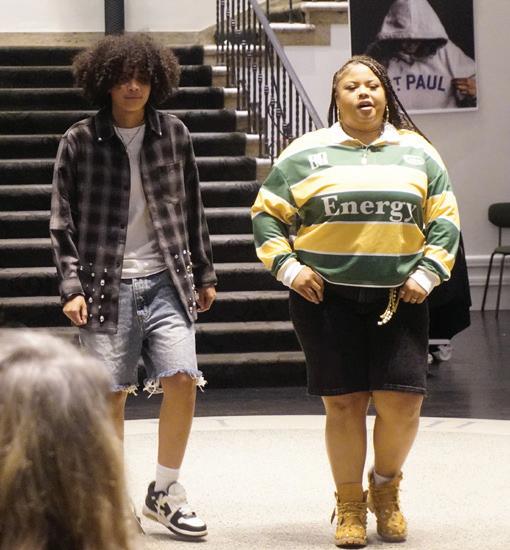
Love First, the Rondo-rooted nonprofit dedicated to empowering young people in the Twin Cities, held its first-ever youth fashion show this past weekend, a celebration of creativity, confidence and community.
The event, part of Love First’s broader mission to “rebuild the village” around young people, brought together students, families, and community members to highlight the talents and potential of local youth.
Chauntyll Allen, founder
of Love First, has spent two decades working in St. Paul Public Schools and 10 years in child protection, forming deep bonds with the students she supports. “We have to build this village,” she said. “Young people can’t rely on just two parents to find their path to success… It requires a coalition of organizations, a network of support, and opportunities to see what they can achieve.”
The fashion show was more than a showcase of clothing; it was a platform for self-ex-
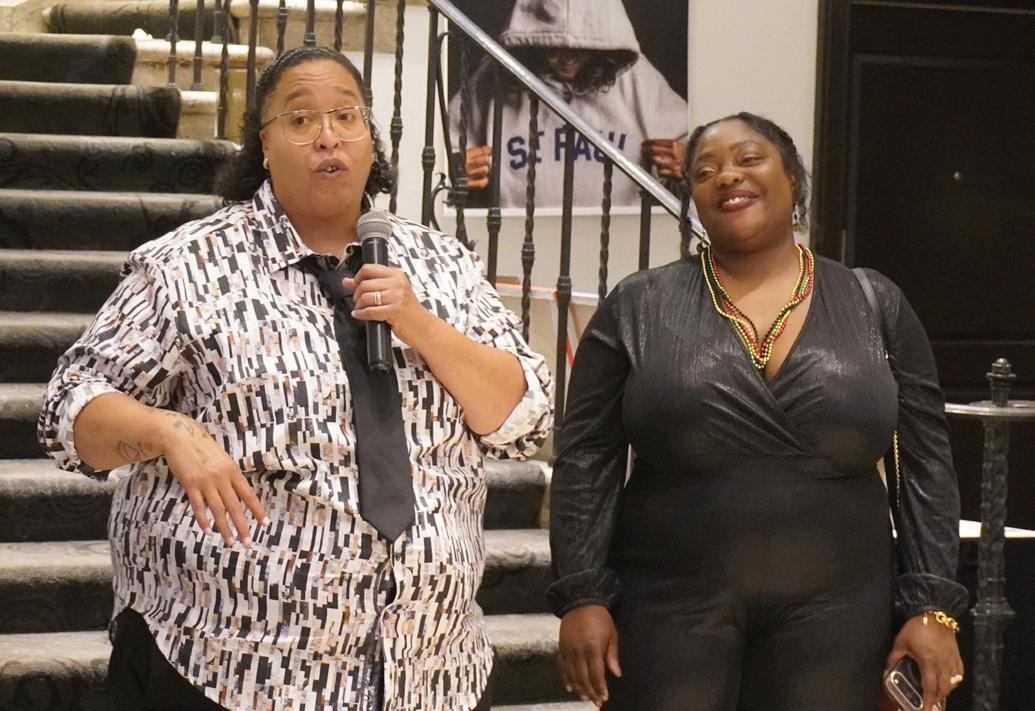
(l-r)
Chauntyll Allen and Satara Armstrong-Allen All photos courtesy of Jasmine McBride/MSR
pression and empowerment.
“Being able to tell young people what they can be and what they can do gives them a whole different vision about success,” Allen explained.
“Once they find their purpose, they no longer return to hustling or survival modes… They pursue their dreams.”
Satara Strong-Allen, Love First’s executive director, emphasized the importance of
community investment and her own commitment. “Investing in Love First means investing in the school-tosuccess pipeline,” she said.
“Young people need folks who will believe in their brilliance and their ability to create their own success and futures. When you invest in this pipeline, you’re investing in mental, financial, educational and cultural stability for youth.”
The fashion cohort, one of the nonprofit’s newest initiatives, has already seen remarkable results. Strong-Allen shared that four young participants, who began with no prior fashion experience, now have headshots, modeling opportunities, and film expe-
rience. Two to three of them have been picked up by modeling agencies, and one will even travel to New York for further fashion opportunities.
Love First’s programming extends well beyond the fashion show. Its HBCU tour takes around 25 students
“Young people need folks who will believe in their brilliance and their ability to create their own success and futures.”
each year to historically Black colleges and universities, exposing them to opportunities they might not otherwise experience.
The organization also runs youth-led community safety initiatives, including Narcan and Naloxone training programs across the Twin Cities, helping teens address challenges like opioid use in their neighborhoods. Addi-
during the heyday of “Jet” and “Ebony” magazines and other Black-owned news organizations.
Recent political shifts have also impacted Fort’s work.
Three years ago, Target sent an RFP to Black-owned media corporations to engage and support the communities they serve. BLCK Press and other Black media sources across the state submitted proposals.
“It is a unique opportunity in our region to receive investment not toward your organization, not toward a specific project, but into your growth [and] development as a leader.”
When their proposal was accepted, it led to a productive working relationship for two years, Fort says. They met guidelines and often exceeded goals proposed in the RFP.
“It just came to a screeching halt” during the third year, after Target rolled back DEI initiatives. BLCK Press lost approximately half of its operating budget. “We have not been able to produce another season of our show,” Fort says. “As a leader, I had to think long and hard about whether or not I could continue to do this work.”
Funding support from
tionally, the Global Growth after-school program provides Black girls with a safe, affirming space to develop resiliency, confidence, and leadership skills.
The fashion show featured student models and youth vendors, including high school graduates and local entrepreneurs, giving attendees a
Press Forward, “a nationwide, nonpartisan philanthropic initiative,” helped sustain the organization, though it did not offset the lost Target funding.
Through the nonprofit, Fort is creating a safe space for young people to enter journalism. “The industry is changing, and so I hope the newsrooms catch up, because I think they are essential to our democracy,” she says. “But if they don’t, we’re going to continue to see this industry really morph over the next decade.”
She also offers young people the opportunity to pursue nontraditional paths, as she and many media producers have done through social media and independent journalism.
Through the Bush Fellowship, Fort says, “As a leader, I am trying to solve a complex problem. Having the opportunity of the Bush Fellowship is going to strengthen and develop my leadership to ensure that I am successful.”
Regarding Black-owned media outlets, she says, “We are struggling to exist in a post-DEI climate… But we are still here. We are still telling the stories that matter, and we are still committed to reconnecting news to Black culture.”
For more information, visit www.georgiafort.com. Find more on her nonprofits at www. centerforbroadcastjournalism. org, and its radio station at www. power1047.fm. Or, her for-profit at www.blckpress.com.
Vickie Evans-Nash welcomes reader responses to vnash@ spokesman-recorder.com.
chance to support emerging talent while learning about Love First’s initiatives. “If Love First is thriving, the community will thrive,” Strong-Allen said. “You see revitalized communities, young people believing in themselves, and intergenerational healing replacing trauma.”
Supporters can donate monetary contributions, clothing for the community closet, or volunteer their time at lovefirsttc. org/donate, helping strengthen the village and ensure ongoing opportunities for local youth.
Jasmine McBride welcomes reader responses at jmcbride@ spokesman-recorder.com.

news producer and journalist, and now a 2025 Bush Fellow

Black Business SPOTLIGHT Beyond New Distribution Center
By Jasmine McBride Associate Editor
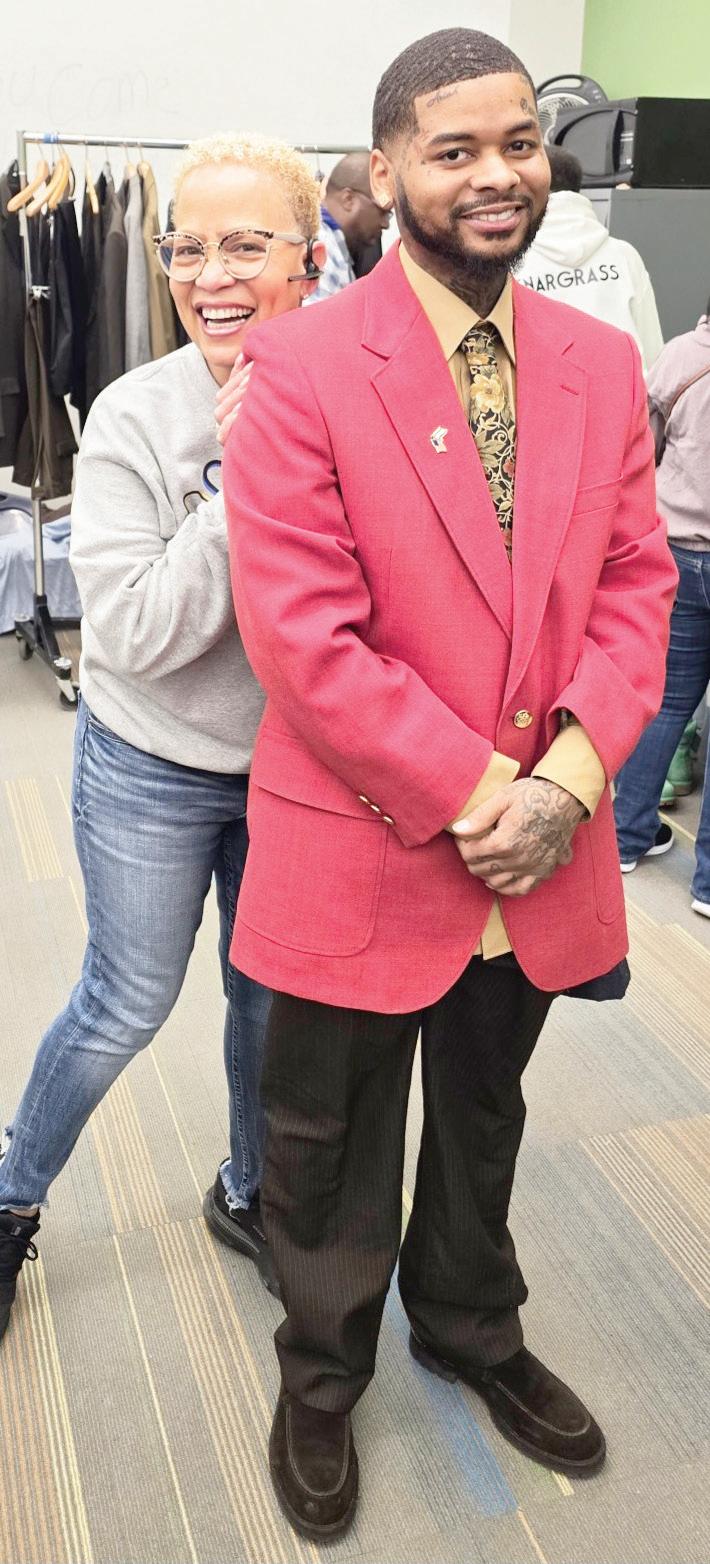
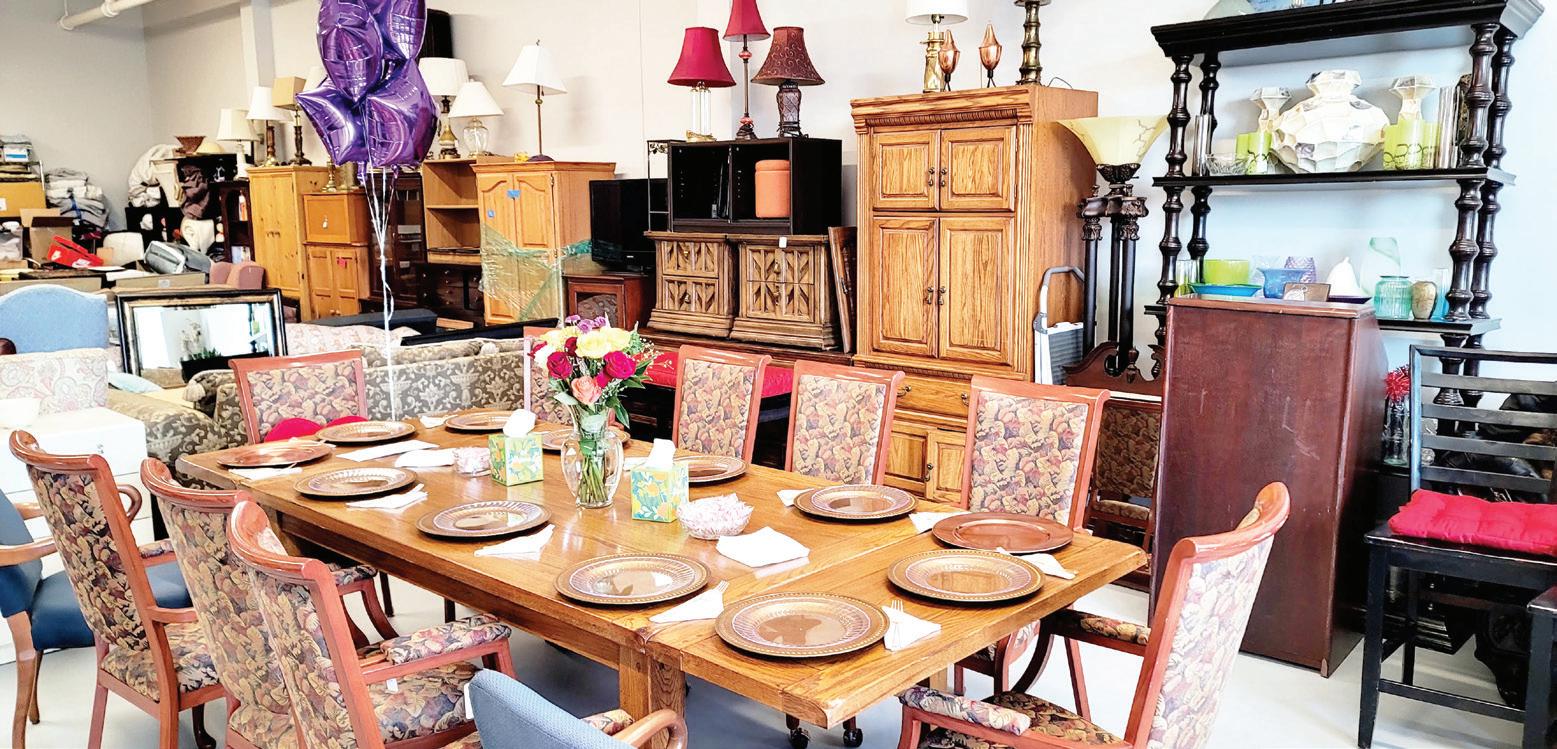
The Beyond New Distribution Center is more than just a space for gently used furniture and household items. It’s a community lifeline. Founded by Marsha D. Carter, a passionate Black entrepreneur, the center addresses a critical need: making affordable furnishings accessible to those transitioning out of homelessness and striving for stability.
Marcia’s inspiration stems from firsthand experience. “I’ve worked with women in homeless shelters,” she explains. “Some of the barriers to getting into their own apartments are having enough money not only for the down payment and first month’s rent, but also to furnish their spaces. We make furniture affordable.”
The center, which soft launched in May, operates with flexibility and compassion. Clients can visit by appointment or walk in, and the team even provides items to those in financial need. This hands-on approach ensures that community members aren’t limited by bureaucracy or strict requirements. They simply have to want to better their lives.
“We are Black-owned, we are in the city, we are serving the community, and we have really nice items.”
Beyond the distribution center, Marcia’s broader initiative, Beyond New, encompasses multiple programs. The umbrella nonprofit includes
Business Affordable furnishings with a heart
the Beyond New Thrift Store, which supplies clothing to local schools and community members, and various empowerment classes that pro-
mote health, wellness, and work readiness. “Our goal is to provide access and wellness… physically, emotionally and mentally,” Marcia says.
The organization also partners with other community-focused groups, offering programs like Dress for Success pop-ups for those reentering society after incarceration. Volunteers are always welcome, making it

easy for community members to contribute directly to the mission.
What sets Beyond New apart, Marcia emphasizes, is its heart. “We are Blackowned, we are in the city, we are serving the community, and we have really nice items. There are no barriers. You can advocate for yourself with us, and we’ll meet you where you’re at.”
With empathy, flexibility, and a deep commitment to service, Beyond New Distribution Center isn’t just distributing furniture. It’s helping people build better lives.
For more information, visit www. beyondthedancenetwork.com.
Jasmine McBride welcomes reader responses at jmcbride@ spokesman-recorder.com.
Black brands in grocery carts
By Sheletta Brundidge Contributing Writer
Hy-Vee stages showcase during Black Business
A trio of Black businesswomen got a boost on a recent summer Saturday, getting in front of grocery store customers at the Robbinsdale Hy-Vee.
“It’s super exciting to have this platform, an amazing opportunity,” said Sylvia Williams, coowner of Soul Grain granola. “We can inspire the young girl or young boy when they see us and our dreams coming true right here.”
To mark Black Business Month in August, Hy-Vee not only highlighted their products but also invited the Black entrepreneurs who created them the chance to offer samples and chat up the customers.
Hy-Vee shopper Leticia Selmon was excited to be introduced to the business owners and intrigued by the range of their personal care and food items available through the Black Business Showcase.
“It means a lot. Representation,” Selmon said. “You want to know that beauty products, food products, are coming from people like you, that people from your community were the creators. It’s huge to celebrate them getting into Hy-Vee.”
The showcase event gave business founder De’Vonna Pittman the chance to connect with shoppers interested in learning more about her Nature’s Syrup line of skin and hair care products.
“Being here with other femaleowned Black businesses means that people see us and know we can create and bring incredible products to the table.”
“To be here in Hy-Vee is something we prayed for, hoped for, worked really hard for,” Pittman said. “I have two whole shelves in the hair care aisle. Hy-Vee had that space for us.


Sylvia Williams, co-founder of Soul Grain granola, with Hy-Vee Store Manager Joe Lowe
Photo courtesy of Soul Grain
Being here with other female-owned Black businesses means that people see us and know we can create and bring incredible products to the table.”
Some customers were already familiar with the authentic Island cuisine served at Nadia’s Jamaican Kitchen in Brooklyn Park. Now they could put bottles of the signature Jamaican sauces in their carts and hear Nadia Wotrang’s entrepreneurial success story as they sample her tangy products.
“To start my business, I literally sold my house and used the money,” Wotrang said. “I knew my dream, what I wanted to do. I was like, if not now, when? To make a long story short, we now feed Major League Baseball teams! Look at that. Look at God. Amen.”
For Hy-Vee, the showcase focusing on local
Black businesses made good business sense.
“Our customers are meeting the entrepreneurs so they can hear about their products and their great stories,” said Robbinsdale Hy-Vee Store Manager Joe Lowe.
“They feel good about supporting and enriching vendors who live here. They want to buy local. It keeps the money circulating and
Month
it helps our community grow and just get better.”
Sheletta Brundidge is a children’s author, an Emmy Award-winning comedian, and a local activist. She is also a contributing writer for the Minnesota Spokesman-Recorder. For more information, visit www.shelettamakesmelaugh.com.

Marsha D. Carter (l) and client at the Beyond New Thrift Store
The Beyond New Distribution Center helps transition from homelessness to having a place of your own. Submitted photo
Best side jobs in Minneapolis And how to manage your side job money

While rising living costs motivate many to pick up a side job, financial strain isn’t the only reason people hustle. Many entrepreneurial-minded individuals supplement their primary income because it allows them to develop new skills or pursue passions outside of their main career.
A well-managed side hustle can be transformative, especially for members of the Black community seeking to build generational wealth, expand their skill set, or fund personal dreams.
If you’re looking for ways to be your own boss, supplement your income, or explore a new passion, Minneapolis offers a wealth of side hustle opportunities that provide flexibility, growth, and earning potential.
Whether you’re seeking remote opportunities, weekend work, or legit work-fromhome gigs, Minneapolis has plenty of options for hustlers of all kinds.Here’s a look at some of the best side jobs in Minneapolis, plus tips on managing your money while building your hustle.
1. Freelance creative services Minneapolis has a thriving creative scene. Local businesses, media companies, and startups are constantly looking for freelance talent in writing, blogging, graphic
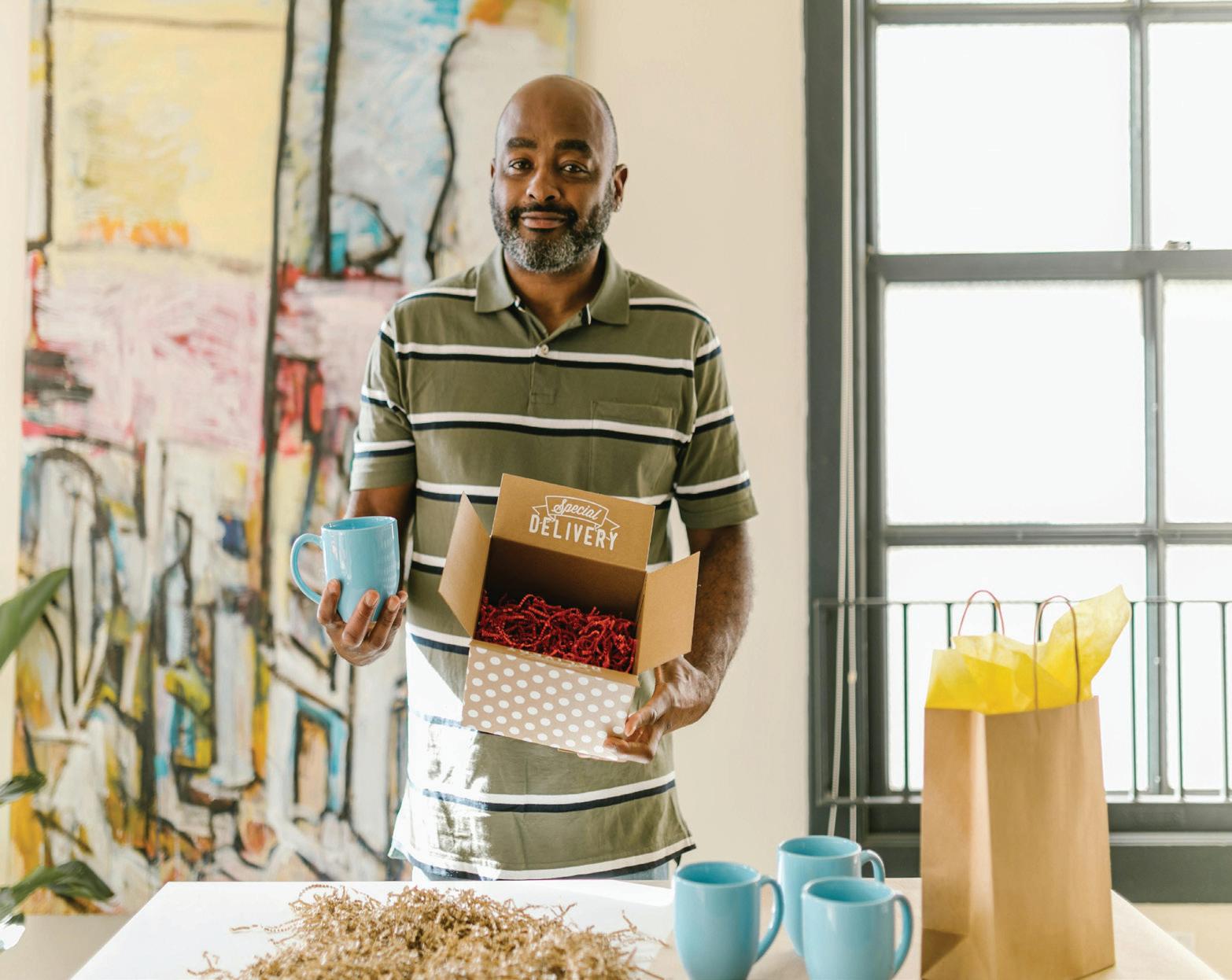
design, social media management, and more. Many of these gigs can be done fully online on platforms like Upwork, Fiverr, or LinkedIn, allowing you to work on your own schedule.
2. Event bartending or DJing From weddings to nightlife events, bartenders and DJs can find steady weekend work that pays well and can be a lot of fun.
3. Fitness coaching or yoga instruction If you’re passionate about fitness or have a yoga certification, local gyms and stu-
dios are great places to teach others while earning extra income. You can also create online classes via Instagram Live or YouTube to reach clients beyond Minneapolis.
4. Rideshare driving or food delivery Companies like Uber and Lyft now offer guaranteed minimum earnings per ride under recent Minnesota legislation. Food delivery services, including DoorDash and Uber Eats, also provide flexible schedules and immediate earning potential.
5. Tutoring or online courses
7. Pet sitting or dog walking
Pet services are in high demand in Minneapolis. Apps like Rover make it easy to connect with pet owners, or you can grow your client base through word-of-mouth referrals.
How to manage your money like a boss
Once your side hustle is running, you’ll face unique financial responsibilities as your own boss. From tracking irregular income to planning for taxes, managing your money smartly ensures your hustle fuels growth rather than stress.
1. Create a separate bank account
Keeping personal and business finances separate is essential. Tools like Chase Business Complete Checking make tracking income and expenses simple for side hustlers.
2. Plan for taxes, all year
If you enjoy teaching, tutoring is a lucrative work-fromhome option. Opportunities span a wide range of subjects, from math and languages to music, art, or social media marketing. Platforms like Wyzant and Teachable make it easy to reach learners.
6. Making or reselling items
Sell handmade items on Etsy or flip vintage finds from Minneapolis thrift shops on platforms like eBay, Poshmark, or Facebook Marketplace. Whether you’re crafty or have a keen eye for bargains, there’s money to be made.
No one is withholding taxes from your side hustle earnings, so set aside roughly 25–30% for taxes. Tools like QuickBooks Self-Employed or Chase tax calculators can help you estimate quarterly payments.
3. Build a budget around irregular income
Use your lowest-earning month as a baseline to create a budget, then allocate extra earnings toward savings or reinvestment in your side hustle.
4. Track every expense
5. Invest in your growth
Whether attending workshops, networking events, or marketing online, reinvesting in your skills and visibility is crucial for long-term success.
Your next steps
Side hustles are more than just extra cash — they’re a path to financial empowerment, personal growth, and long-term success. Minneapolis offers diverse opportunities for weekend gigs, remote work, and entrepreneurial projects.
As you pursue your hustle, don’t overlook banking and financial tools. Chase for Business provides a free Resource Center with interactive tools and online courses to help you grow your side gig.
And remember: Earning money is only part of the side hustle game. Smart money management keeps your efforts sustainable, helping you reach both short-term goals and long-term dreams.
MSR + JPMorgan Chase have partnered to bring you the Finances FYI series. JPMorganChase is committed to helping close the racial wealth gap and driving economic inclusion for Black, Hispanic and Latino communities. Join us on our website for weekly tips, advice, and vital information to improve your financial literacy.
From gear and supplies to mileage and subscriptions, track all expenses. Accurate records help you understand your profit and identify tax deductions.

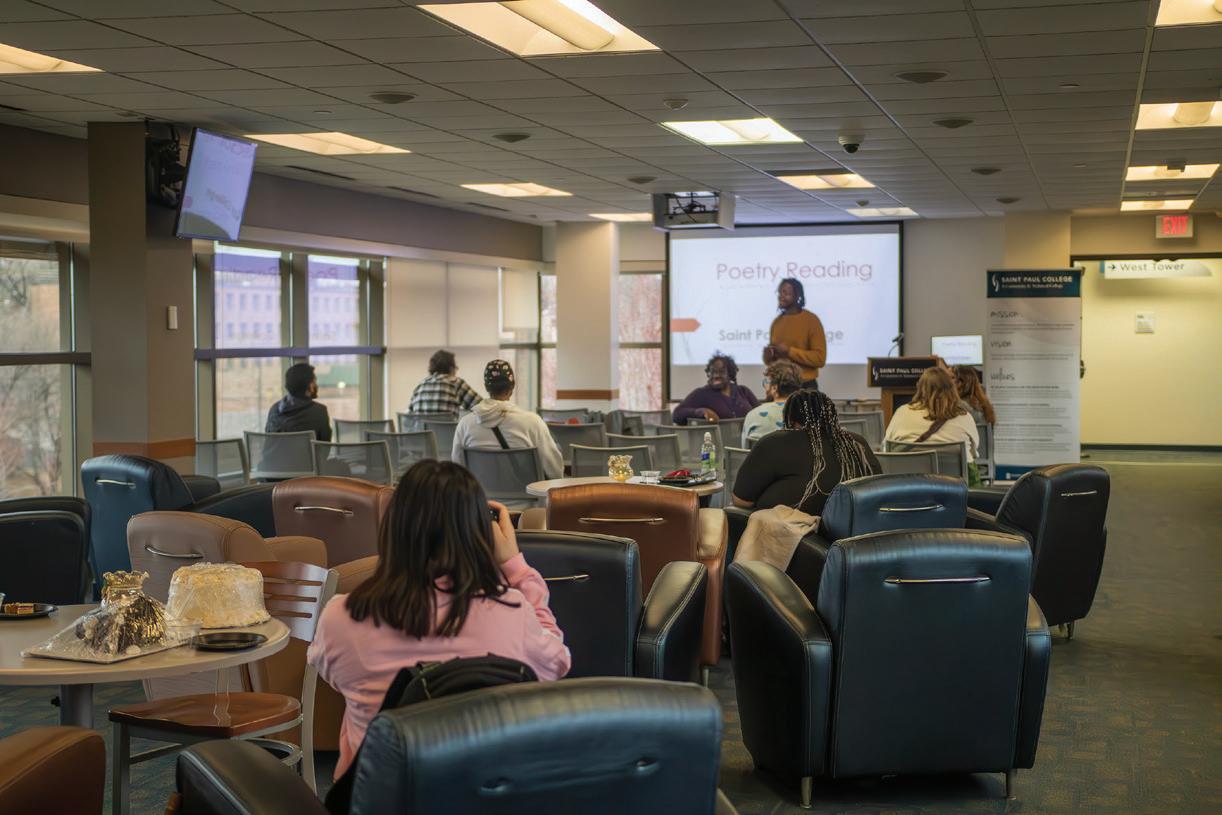

Side hustles are more than just extra cash. They’re a path to financial empowerment, personal growth, and long-term success. (N/A free-use photo from Pexels)
GALA
Continued from page 1
between celebration and reflection. The evening’s entertainment reminded us that art is also a form of storytelling.
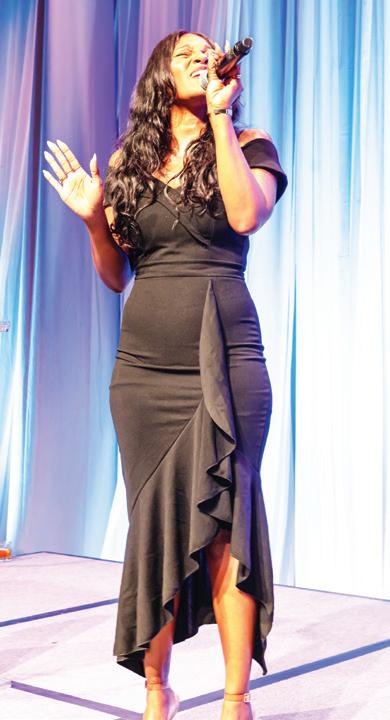
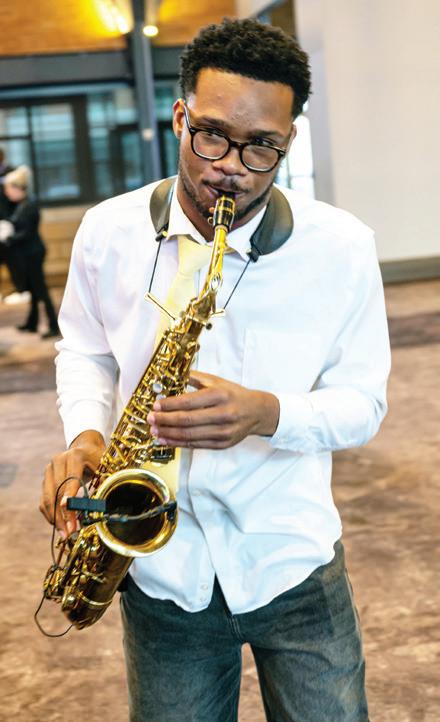
Saxophonist Jerome Richardson’s soulful melodies and vocalist Breasha Turner’s rich tones moved the crowd in ways words sometimes cannot. Between songs, conversations continued at tables, friendships were rekindled and networks expanded, proof that the connective tissue the MSR has nurtured for nearly a century is still alive. But the evening also dug deeper. A powerful panel
YACHT
Continued from page 1
shoulders we stand on, shoutouts to the storytellers behind the stories, reminders that legacy isn’t marble — it’s muscle, exercised in community.
Out on the upper deck, the water caught the sky and returned it to us in ripples, as the dewy air settled after the rain. It felt fitting. MSR’s legacy has always been like that, reflective and responsive, a vessel for voices that mainstream currents too often try to pull under. On this night, the paper’s history wasn’t a
GROCERY
Continued from page 1
cafeteria supervisor fatally shot by police in 2016, who was known for helping students who couldn’t afford meals.
“This is about filling the gap, meeting people where they’re at,” Berry said. “People are out here struggling.”
Berry says the initiative focuses on giving back and empowering the Black community from within. “With
FARMERS
Continued from page 1
dispersed, together they form a network of Black farmers supporting one another. In 2025, Minnesota legislators proposed funding to boost these farms as hubs of Black agricultural heritage, including $1.363 million per year over two years to build greenhouses and educational facilities, and to renovate Mahogany Farm’s historic farmhouse.
This unprecedented funding would signal that Minnesota sees its handful of Black farms not only as agricultural producers, but also as cultural and educational treasures. The truth is, Black farmers in Minnesota face significant hurdles.
Access to land remains a top barrier, as farmland is expensive and often retained within white farming families or close-knit rural communities.
Access to capital and credit is another challenge; lenders have historically underserved Black clients, a legacy of USDA discrimination.
Representation and mentorship gaps make farming feel intimidating or isolating, and for those who did not grow up on farms, the learning curve
discussion brought together some of Minnesota’s most vital voices: civil rights attorney Nekima Levy Armstrong, nationally recognized pharmacist and public health leader Dr. Ronda Marie ChakolisHassan, and distinguished historian Dr. Yohuru Williams of the University of St. Thomas. Their dialogue spanned justice, health and history, grounding the celebration in the urgent work that continues. It was a reminder that legacy isn’t just about what we inherit, it’s about how we choose to carry it forward.
One of the most moving elements of the gala was “Journey Through Print,” a special display of front pages from the MSR’s nine decades in print. Guests lingered be-
plaque or a program note. It was motion.
Legacy, after all, isn’t something you point to. It’s something you board. It takes you somewhere.
There’s
As the boat carved a steady path, I watched a mother teach her child how to pose for a photo, how to claim space with posture and smile. I overheard a young writer chat with a mentor, both of them lit by
“It’s hard, every day is a struggle. This pantry is a blessing.”
Philando’s Pantry, we take pride in feeding our own people while also helping other communities,” he said.
The food distribution also came on the heels of the annual Central Honors Philando Castile event in St. Paul, which brings
is steep. Tailored programs for emerging farmers are therefore crucial.
Minnesota has begun to take steps to support these farmers. The Emerging Farmers Working Group (EFWG), created in 2020, advises on policies to better serve nontraditional farmers. Its volunteer members include Black, immigrant, Indigenous, female, urban, and other diverse farmers, ensuring a range of perspectives.
fore the exhibit, pointing out headlines that once defined their eras, photos that captured triumphs and tragedies, and stories that may have first introduced them to the power of the Black press.
ner were cleared and bids rang out from the silent auction, the evening turned inward, toward the legacy’s more personal dimensions. Publisher and CEO Tracey Williams-Dillard reflected with candor on
It was history you could hold in your gaze, a visual testimony that MSR has never just chronicled events but has also shaped how our community understands them.
It was history you could hold in your gaze, a visual testimony that MSR has never just chronicled events but has also shaped how our community understands them.
As plates of an elegant din-
that specific, tender glow of being taken seriously.
I saw colleagues become collaborators, strangers become resources, inspiration turn into follow-up texts and
what the night meant to her. These reflections underscored what many guests carried home with them: the reassurance that the MSR’s story is still unfolding, with new voices and new energy ready
to sustain it.
That sense of continuity was echoed by Tracey’s daughter, Leticia Alvarez, who witnessed the night as a moment of affirmation for both the paper and the people it serves under her mother and, in the future, Alvarez’s anticipated leadership looking ahead to 2034.
“I’Her words carried the weight of both gratitude and responsibility. Legacy, after all, is not only preserved — It is lived, often in quiet, relentless ways.
As the night drew to a close, the atmosphere was one of celebration, yes, but also of recommitment. Ninety years is a remarkable achievement, but it is not a finish line. The gala made clear that the Min-
nesota Spokesman-Recorder’s legacy lives not just in its pages but in the people who gather around it, in the musicians who lift spirits, the panelists who provoke thought, the community who shows up in love, and the generations who step forward to continue the work.
Walking out into the warm August night, guests left not only with memories of music and conversation, but with a reminder: The MSR has been, and continues to be, more than a newspaper. It is a vessel of truth, a witness to history, and a bridge into the future.
Jasmine McBride welcomes reader responses at jmcbride@ spokesman-recorder.com.
calendar invites. Networking can feel extractive; this didn’t. It felt like circulation, oxygen moving through a body, keeping it alive. What I’ll remember most isn’t the skyline (though it was
together hundreds each summer to celebrate Castile’s life and legacy through music, art, and community programming.
While the festival serves as a powerful reminder of the joy and humanity Castile embodied, the pantry reflects another side of his legacy: his quiet, everyday generosity. Together, the events show how his memory continues to inspire both commemoration and concrete acts of care.
Organizers now hope to secure a permanent location for the pantry, possibly the former CVS building at 7996 Brooklyn Blvd. in Brooklyn Park. “We
results. Between 2017 and 2022, Minnesota gained more than 50% additional Black farmers, rising from 39 to around 60+. New organizations like the Midwest Farmers of Color Collective and Twin Cities BIPOC grower networks provide peer support and advocacy.
generous) or even the music (though it was surgical in its joy). It’s the choreography of care. Someone fixing a bobby pin. Someone making sure a shy guest felt like family. Someone joining a table they didn’t originally sit at. The quiet ways we say, “I want you to be here, fully.” That’s the editorial ethic, translated from page to people: accuracy of presence, fairness of attention, accountability to one another. There’s a temptation, in moments like this, to call it a vibe and leave it there. But the Legacy Yacht Cruise did more than vibe. It convened a cross-section of our ecosystem — artists, organizers, business owners, elders, our youth
— who are our future leaders, and let us see our reflection as a whole.
In a time that loves hot takes and short feeds, the evening stretched the frame. It reminded me that journalism isn’t just content; it’s context. It’s the slow, persistent work of witnessing a community into its future.
As the boat turned back toward the dock and the air cooled, someone near me said, “Same time next year?” It came out half-joke, half-prayer. The truth is, legacy asks for repetition. Not sameness, but returning with new stories, new leaders, new lessons, and the same core promise: to gather us, to listen closely, to print
want a full-time pantry to assist families facing food insecurity, but we’d also like to offer mental health support, classes, and workshops, from yoga and gardening to financial literacy,” Berry said.
equitable futures, and passing resilience to the next generation. Unlike mainstream farms that measure success by yield, these farmers measure success in cultural and community impact, running small-scale CSAs that nourish hundreds of families.
Only Black and Indigenous farmers contend with intergenerational landlessness rooted in legal and extralegal oppression.
Frog Tree Farm helped shape this group, with cofounder Michael Birchard serving as facilitator for five years.
A major outcome was the creation of a permanent Emerging Farmers Office within the Minnesota Department of Agriculture (MDA) in 2021, now led by Lillian Otieno. The office coordinates support for emerging farmers, from translation services to grants, and in 2023 its funding was expanded to $1 million per year to grow outreach and services. These efforts have yielded
Partnerships with food hubs, such as The Good Acre in St. Paul, create market opportunities for emerging growers. Media coverage of Black farmers further normalizes their presence and inspires others to consider farming. For many Black Minnesotans, farming is a way to reconnect with heritage. Descendants of enslaved people carry a complex relationship to land, historically a site of both oppression and sustenance.
Projects like Frog Tree Farm’s educational retreats and the 40-Acre Co-op’s programs allow families to farm in contexts of empowerment rather than exploitation.
Black farming is about healing historical trauma, building
While all emerging farmers face hurdles, Black farmers, particularly those who are African descendants of enslaved people (ADOS), face unique historical and structural barriers. Unlike immigrant farmers, who often arrive with agricultural experience, Black farmers inherit centuries of land dispossession and systemic exclusion from wealth-building opportunities.
Women, LGBTQ+, and veteran farmers face prejudice, but only Black and Indigenous farmers contend with intergenerational landlessness rooted in legal and extralegal oppression. Minnesota’s reports acknowledge that a “young African American woman interested in farming will likely face systemic barriers different from those of an older, non-English speaking male immigrant.”
Furthermore, in 2025 the Minnesota Legislature considered the “Black Farm Bills,” proposing grants to support Black farms, including $2.726 million
Reflecting on both the
for infrastructure at Mahogany Farm, Frog Tree Farm, and the 40-Acre Co-op, and $2.5 million for shared advanced farming equipment. Proponents argued that targeted support recognizes the unique historical and cultural context of Black farmers, fostering mentorship, cooperative learning, and community impact.
Opponents, including the Commissioner of Agriculture, argued that existing emerging farmer programs already cover historically underserved groups and that race-specific funding could invite legal challenges. Ultimately, the bills stalled, highlighting tensions between universal programs and targeted interventions.
In comparison, other states are experimenting with targeted measures for Black farmers.
South Carolina and North Carolina have proposed state-level land restoration programs.
Washington State mandated equity in agriculture programs to ensure underrepresented farmers are included. Illinois considered procurement preferences to create steady markets for minority farmers.
Federally, the Justice for Black Farmers Act (2020–2023) proposes land grants, USDA reforms, and HBCU apprenticeships, emphasizing that race-specific remedies
what matters, and to celebrate the people who make it matter.
When my feet hit the pier again, I felt steadier than when I boarded, like I’d stepped off not just a yacht but a throughline. MSR’s legacy isn’t behind us; it’s under us, buoying the journey.
On August 15 we didn’t just commemorate it. We practiced it. And if we keep practicing — on boats and boulevards, in newsrooms and neighborhood meetings — then the future we’re all contributing to will meet us right on the waterline, ready to sail.
Jasmine McBride welcomes reader responses at jmcbride@ spokesman-recorder.com.
pantry and the annual Central Honors Philando Castile celebration, Berry added: “Central Honors uplifts the spirit, while the pantry meets the need. Together they carry Philando’s legacy forward in ways that both celebrate who he was and serve the community he cared about.”
Those interested in volunteering or donating can contact the Minneapolis NAACP at www.naacpmpls.com.
Sonya Goins welcomes reader responses at sgoins@spokesman-recorder.com.
are necessary to restore the Black land base. Minnesota has yet to adopt measures like the Uniform Partition of Heirs Property Act, which protects generational Black land from forced sales, signaling an area for potential policy innovation. Ultimately, African American farming in Minnesota embodies both the weight of history and the promise of innovation. Farmers like Peace Mitchell, Angela Dawson, and the Cochran family reclaim land, culture and community. Supporting these efforts is about more than food production — it is about food sovereignty, economic opportunity, and healing generational trauma.
By investing in Black farmers through programs like the Emerging Farmers Office and culturally specific initiatives like the Black Farm Bills, Minnesota can foster a more inclusive agricultural future where descendants of enslaved people can finally share in the harvest. Black farmers are cultivating not just crops, but identity, resilience, and a new narrative of belonging on Minnesota soil.
Peace Mitchell and Michael Birchard are land stewards of Frog Tree Farm. For more information, visit https://frogtreefarm. com/.
Photos courtesy of Sonya Goins/MSR


























By Rhea Manning and Shanasha Whitson
Growing up in North Minneapolis as a teenager, it was easy to fall into the wrong crowd. Idle time wasn’t just boring, it was dangerous. Many girls my age were getting pregnant, experimenting with drugs, or drifting deeper into street life.
I knew early on that if I wanted a different future, I had to keep myself busy with something that mattered. I told myself that one day I’d be a legend in whatever I chose to do.
in perfect sync while drums pounded like thunder. The energy was magnetic. I knew I belonged there.
I asked a young man, who I later learned was Bobby Joe Champion, now Minnesota Senate president, how to join. Watching the tryout routine, I picked it up in less than 10 minutes. When Bobby Joe asked if I was a good dancer, I told him straight: “I’m the best in Minnesota.”
ly, it kept me off the streets and showed me I had a future worth protecting.
I share my story for every young person standing at a crossroads. You don’t have to follow the crowd. If you’re down to nothing, find something. Connect with a purpose, and chase it relentlessly. Your passion, whether it’s dance, music, sports, writing or something else, can be your way out.
By Mustafa Ali
There’s a cruel kind of magic to how power redraws a line.
Not with a gun. Not with a bomb. But with a pen. A line drawn in the dark, behind closed doors, in state houses thick with lobbyists and thin on conscience.
They call it redistricting. But when that pen curves just enough to corral Black voices into silence, when that curve becomes a cage, it becomes something else entirely. Gerrymandering. And like so much of American history, it starts with a lie and ends with stolen breath.
The origins go back to 1812: Elbridge Gerry, the Massachusetts governor who lent his name to the tactic, twisted a voting district into the shape of a salamander. But let’s not be polite and call this history a curiosity.
Gerrymandering isn’t a quirky footnote. It’s a weapon. A scalpel used to cut Black communities out of political power. A scalpel that leaves scars not just on democracy, but on bodies, on bank accounts, on entire ecosystems.
Black voters have been packed together or cracked apart. Because what happens when your voice has been ger-
rymandered out of existence?
You don’t get a hospital. You don’t get clean water. You don’t get flood protection or asthma monitors or heat resilience centers. You get the highway. You get the landfill. You get the smokestack, the dump, the promise of a grocery store that never comes.
your vote, so they don’t need to care. And if they don’t need to care, they won’t fight for Medicaid expansion.
They won’t push for clean energy investments. They won’t demand accountability for toxic waste dumped down the road from your child’s school.
“The same political machinery that redlined us into underfunded neighborhoods is gerrymandering us out of the halls of power.”
In district after district, from Birmingham to Baton Rouge, Flint to Fort Worth, Black voters have been packed together or cracked apart. Clustered just enough to be ignored, or split just enough to be irrelevant. The result is the same: communities stripped of their ability to shape the decisions that shape their lives. And that has consequences. Gerrymandering doesn’t just kill democracy. It kills people.
Let’s say you live in a majority-Black community, sliced out of political influence by district lines drawn with surgical precision. Your representative doesn’t need

So your babies breathe in diesel, your elders can’t afford insulin, and your water smells like something you shouldn’t touch, let alone drink.
It’s not just about who wins elections
The same political machinery that redlined us into underfunded neighborhoods is gerrymandering us out of the halls of power. It’s the same machinery. Different gears, same grind.
We’re seeing that machinery at full throttle right now in places like Texas, where state lawmakers have launched a mid-decade redistricting effort, one not driven by population shifts, but by raw political ambition.
Under the appearance of complying with the Voting Rights Act, officials are dismantling “coalition districts” where Black and Latino voters have long joined forces to elect leaders who fight for health care access, environmental protections, and housing equity. These newly proposed maps, engineered behind closed doors, threaten to silence entire communities under the pretense of fairness. If passed, they would gift one party disproportionate control while leaving the most vulnerable exposed to the exact same structural harms we claim to be correcting.
It’s not just about who wins elections. It’s about
It wasn’t easy to stay on the right path. Violence, substance abuse, and teen pregnancy were part of everyday life. To make it out, you needed a strong head and good influences, but those were hard to find in my neighborhood. So I turned to the one thing I loved most: dance.
Dance was my escape and my voice. I always had a crew, performing whenever we could, even opening for major headliners. Then I discovered the Leo Johnson Drum Corps, the most precise, powerful and passionate group I had ever seen. My way in came by chance. I spotted my sister practicing with a friend and followed them to a place called “The Way” in North Minneapolis. Inside, I saw girls dancing
“It wasn’t easy to stay on the right path. Violence, substance abuse, and teen pregnancy were part of everyday life.”
Then I told the drummers to give me something fast and funky, and I went all in: jumping, spinning, hitting every move with everything I had. By the end, I had earned my spot. From then on I ate, slept and breathed drill team.
Over time, I earned the nickname “Queen of Drill Team,” a title I carried with pride. The drill team gave me more than a stage; it gave me discipline, creativity, confidence and sisterhood. It gave me purpose. Most important-
We’re losing too many young people to violence, overdoses and incarceration. We need to change that trajectory. There are programs right here in our community that can help you find your path and build your legacy.
• Teen Tech Program: theclubhousenetwork.org/locations/capri
• A Mother’s Love Program for Youth: amothersloveinitiative.org/programs
• Project DIVA International: projectdiva.org
• The Man Up Club: themanupclub.org
• Appetite for Change – Contact Princess Titus: 612-7071123, afcmn.org
• Cookie Cart: cookiecart.org
•SummitAcademyOIC:saoic.org
For more information about youth programs or housing connections, email cpc@cpcmn.org.
By Rev. Dr. Heber Brown
When one of my best friends (who is also a pastor) encouraged me to look into utilizing Artificial Intelligence (AI) tools for ministry purposes, I was exhilarated. It seemed like a game-changer at my fingertips. I used it to make presentations and outline Bible studies, saving time on the tasks that often fill my days.
The opportunities seemed endless, and the convenience was remarkable. Regular projects and tasks that I had poured effort into before could now be completed in mere seconds. Not only did I start utilizing it, but I started singing its praises as well to all who would listen.
Then, earlier this summer, I was invited to teach a class entitled “The Integration of Land, Food and Faith Formation in Ministry” at Memphis Theological Seminary. In an effort to utilize the city of Memphis as part of learning opportunities for my class, I began studying the local environmental justice scene.
It was then that I learned things about AI that shifted my perspective and put a damper on my enthusiasm. While teaching my class, I learned that what is touted as the largest supercomputer in the world resides in Memphis. This massive facility was established by Elon Musk to support his artificial intelligence company called xAI.
Musk’s supercomputer facility is near a community called Boxtown, a neighborhood in South Memphis where over 90% of the residents are African American.
Boxtown was established in 1863 by formerly enslaved Black families shortly after the signing of the Emancipation Proclamation. It has long been a site of political and economic neglect as well as a desired location for environmentally harmful corporations.
Now, Boxtown is an immediate neighbor of Elon Musk’s supercomputer facility, which is located just three miles away. Residents of Boxtown are alleging that xAI is polluting the air, the water, and affecting the physical health of people in their community.
on an AI platform expends enormous amounts of energy. Each task that we complete on these platforms pumps pollution into the air we breathe, the water we drink, and the soil we eat from. Artificial Intelligence, as currently engineered, is an environmental disaster and a threat to all who live, work, worship or play near its facilities.
As the founder of The Black Church Food Security Network, I focus primarily on organizing African American congregations to grow food on their land and develop mu-
Residents of Boxtown are alleging that Elon Musk’s supercomputer facility located just three miles away is polluting the air, the water, and affecting the physical health of people in their community.
This xAI facility is filling the surrounding area, including Boxtown, with smog and harmful chemicals. Its gas turbines are releasing so much pollution that residents are saying that they can barely breathe. It has added significantly to the pollution produced by the 17 or some-odd industrial facilities in the same block of real estate.
The more I pulled back the curtain, the more I saw the ethical and environmental issues lurking behind artificial intelligence (AI) from Musk’s supercomputers to Mark Zuckerberg’s massive data centers (co-founder of Facebook), and the countless AI facilities being quickly built by billionaires in communities around the country. Each and every search
tually beneficial partnerships with Black farmers in an effort to cultivate the development of Black-owned food ecosystems across the country. However, I do not have the luxury of separating issues here. Environmental racism, such as what is occurring in Boxtown, is inherently connected to the health, food justice needs, and overall wellbeing of Black communities. AI supercomputers negatively impact the environment, agriculture and food. Black communities are among those being disproportionately affected.”
This piece was originally
lished
Deanne Marie Hild,
Employment & Legals
Principal Professional Services Engineer (Delphix) Perforce Software, Inc., Minneapolis, MN,
PHONE:
Req. Bach in Comp. Sci., Eng. or IT, or related tech field & 7 yrs exp as Solution Architect, Database Administrator, or related tech role; or, Master in Comp Sci, Engineering or IT, or related tech field & 5 yrs exp as Solution Architect, Database Administrator, or related tech role. Remote, US. Up to 10% domestic travel.
PLEASE
$141,898 - $170,000/yr. For full reqs & confidential consideration, apply at https://www.perforce.com/careers. Requisition #[XXXX]
BILLING@SPOKESMAN-RECORDER.COM
No agencies or phone calls.
PROBATE 2 WEEK RUN FLAT RATE $215.00 PREPAID
notice of hearing.
Notice is also given that (subject to Minnesota Statutes section 524.3-801) all creditors having claims against the Estate are required to present the claims to the personal representative or to the Court Administrator within four months after the date of this Notice or the claims will
We don’t use the purse to race. You can’t count on these to run your business. It’s all from partnerships and how hard you work off the race track to make it go.” Brown was a three-sport athlete in high school, and competed in junior college track and field. He was fast enough to earn an invitation to the 1998 U.S. Olympic trials and impressive enough to be offered a college scholarship from Long Island University.
Instead, after earning an associate degree in busi-
ness administration, Brown opted for a different track to race on.
“One thing I do have for this sport, I have passion and always love the sport and what I do,” said Brown. “I truly love what I do… You have to love what you do to put in the amount of work that’s required to be at the level that we’re at.
“I’m a person who doesn’t want to be just out there just to be out there. I want to be out there to win championships. I want to be out there to be great. And to do that, you have to put in the work.”
Charles Hallman welcomes reader comments to challman@ spokesman-recorder.com.

From Ads Department/MN Spokesman-Recorder
Technical Field Engineer II Medtronic, Inc., Minneapolis, MN,
Please Note: New email address for all future ads is ads@spokesman-recorder.com
Req. Bachelor’s or foreign equiv in Engr Design & Mgnt, Biomedical, Industrial, or related engr field & 2 yrs exp as electrophysiology clinical specialist or sales/service/engr position in Cardiac Rhythm or Implantable Medical Device Industry. Travel req. up to 80% w/i assigned territory incl Chicago metro area, IL, & Northwest Indiana; & up to 5% nationally; to provide training to healthcare professionals. Must work remote from home office w/i greater Chicago metro area. Req. valid driver’s license & be insurable (car insurance). $120,500 to $126,000 Apply at https://medtronic. wd1.myworkdayjobs.com/MedtronicCareers, Req. #R40306. No agencies or phone calls. Medtronic is an equal opportunity employer committed to cultural diversity in the workplace.
The MSR handles billing digitally. This means you will get e-tears and e-mailed invoices unless you specifically request a hard copy.
Technical Sourcing Program Manager Medtronic, Inc., Mounds View, MN, Req. Master’s deg. in Mechanical, Industrial or Biomedical Engr., Project Management, or Business Administration or rel. engr. fld. and 3 yrs. exp as a technical sourcing specialist or rel. occupation in technical sourcing; or Bachelor’s & 5 yrs. exp. 25% travel w/in U.S. and internationally. Hybrid requiring in office at least 2-3 days per week. Salary: $121,400 to $172,800/year. Apply at https://medtronic.wd1.myworkdayjobs.com/MedtronicCareers, Req. #R41448. No agencies or phone calls. Medtronic is an equal opportunity employer committed to cultural diversity in the workplace.
All individuals are encouraged to apply.
Continued from page 10 in uniform. This was a special moment for them and a special moment for me as well. I enjoyed it probably more than them,” he said smiling.
Wilson Law Group LLC seeks Spanish fluent Law Clerks in Minneapolis MN to assist attys in prep of legal filings, inc. intvw clients, draft forms, prep exh, and mtns, rsrch law. Bachelor’s deg plus 1 yr JD education req’d. Altnvly LLM deg ok. Mail app to Jessica Westendorp 3019 Minnehaha Ave, Minneapolis MN 55406 or email jwestendorp@wilsonlg.com
Minnesota Spokesman-Recorder
SOE
Continued from page 10
It’s no secret that MLB has a low number of Americanborn Black players. According to MLB.com, nearly 60 were on team rosters on Opening Day 2025, and another 18 more Blacks in the minors.
“I’ve seen a decline,” observed Span. “Hopefully [MLB] is seeing that this next wave of guys that have gotten drafted over the last couple of years will increase the numbers.”
The retired major leaguer-now broadcaster also noticed just how much analytics have played a part in teams’ roster decisions. “You’ve seen organizations analytically be driven more towards the power hitters. That, you know, is not what we as African Americans traditionally have brought to the game. It’s been more guys that can put the bat on the ball, go [from] first to third, steal bases, and just overall bring that athleticism to the game.
“I think slowly but surely we’re kind of recalibrating and going back in that direction,” said Span. “I’m fine with the analytics. I think there is a place for it. Anytime you can get information or have more information at

EMPLOYMENT DISPLAY
SIZE: 2COL X 2.5 INCH
From Ads Department/MN Spokesman-Recorder
RATE: $44.60 PER COL. INCH TOTAL: $223 Please
All individuals are encouraged to apply.
EMPLOYMENT DISPLAY SIZE: 2COL
Please proof, respond with email comfirmation to ads@spokesman-recorder.com
The MSR handles billing digitally. This means you will get e-tears and emailed invoices
Phone: 612-827-4021 FOR BILLING INQUIRIES & TEARSHEETS PLEASE CONTACT ACCOUNTING DEPT BILLING@SPOKESMAN-RECRDER.COM


Please proof, respond with email comfirmation to ads@spokesman-recorder.com
your fingertips to help you make more of an informed decision.”
Span is continuing to work his ‘part-time’ gig as Twins broadcaster. “Now, to have the opportunity and see how time
The MSR handles billing digitally. This means you will get e-tears and emailed invoices unless you specifically request a hard copy.
has gone, and now I’m in that space, yeah, I’m just grateful for every opportunity I get.”
Charles Hallman welcomes reader comments to challman@ spokesman-recorder.com.
BROWN


LEVELAND— If I had a bucket list, the recent experience of speaking with Jayne Kennedy here at NABJ [National Association of Black Journalists] certainly checked all the boxes.
Scheduled for release in September, Kennedy’s “Plain Jayne” memoir, according to the Penguin Random House press release, “is a breathtaking story of endurance, survival, and achievement.” It describes the award-winning actress and sports broadcaster as “one of the most photographed, glamourous, and intriguing women ever” sharing “her candid and conversational storytelling,” added the release.
To my generation, Pam Grier was the IT in movies in the early 1970s. In the late ‘70s, Kennedy was our Lena Horne, the IT each week during the NFL season on CBS’s The NFL
Jayne Kennedy is back — with a message
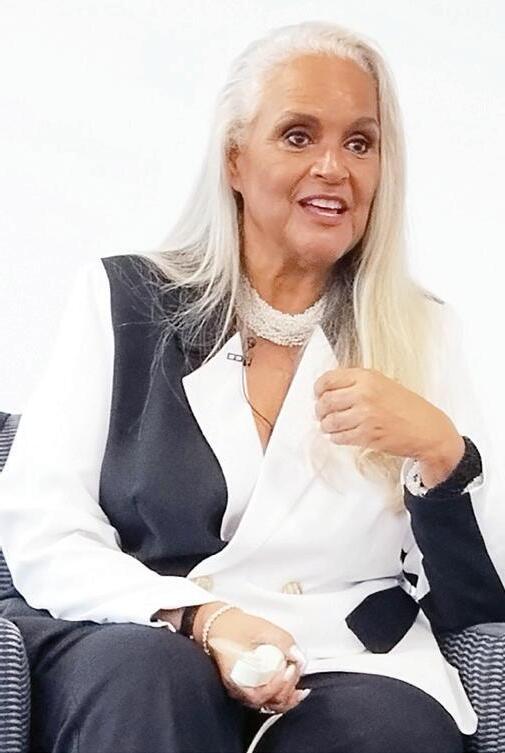
Today as the first Black woman on the Sunday pre-game program (1978-1980). Before that, Black women were only seen on television in nonsports roles, and rarely in lead roles.
She wasn’t blue-eyed or blonde, then and now the usual standard of American beauty, but rather Kennedy was the Black excellence of beauty that Horne, Dorothy Dandridge,
and others of an earlier generation had established.
“That’s why the book is called ‘Plain Jayne’, because it’s not about being glamorous,” said Kennedy, now in her mid-70s, as she took questions from former ‘Ebony’ managing editor Lynn Norment during the hour-long program a couple of weeks ago. But she never dismissed the fact that she looked good then and now.
“I’ve been told that I’ve been on the cover more than anyone else,” she said proudly
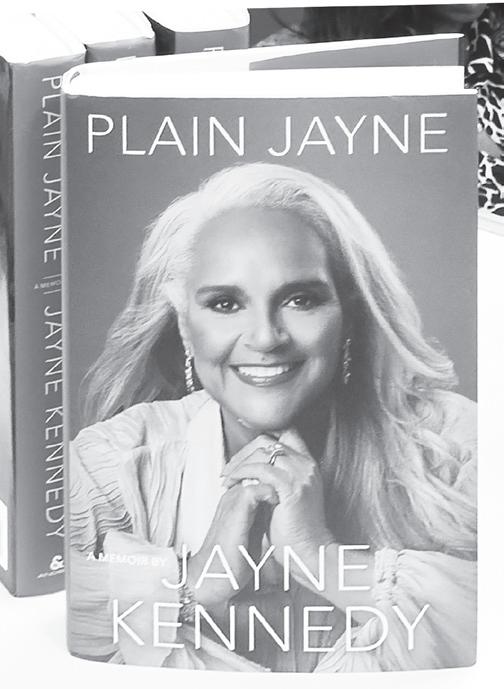
about her multiple “Jet Magazine” cover appearances over the years.
Kennedy’s memoir is 375 pages chock full of stories that made buying a copy well worth it. “It’s about me and my heart and soul,” stressed Kennedy. “I hope that people see that, and I tried to write the book that way.”
“There were so many times in my life when people said you can’t do that. I never listened to them.”
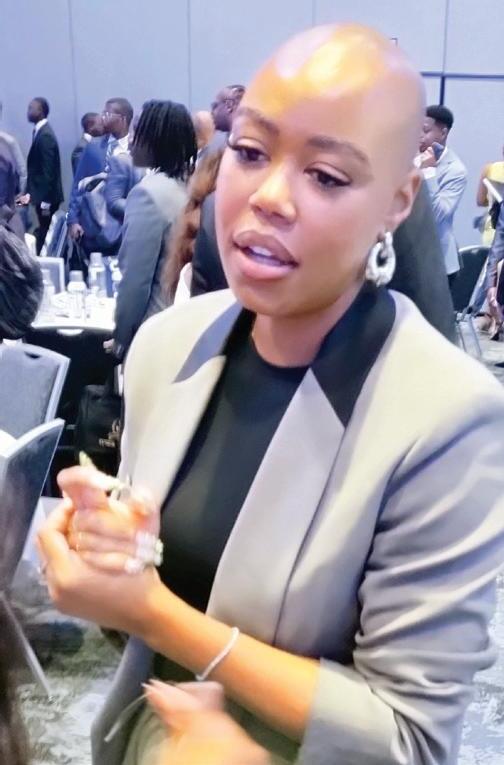
Earlier that day before Kennedy’s scheduled appearance at the NABJ Authors’ Showcase, we asked ESPN SportsCenter anchor Christine Williamson if she knew of the 1970s trailblazer. Admittedly, “No, I don’t,” said Williamson.
“I can’t imagine what it was like for her back in the ‘70s, because I know that there’s so
many barriers that we’re still trying to cross today,” said the veteran sports studio anchor and analyst at ESPN since 2019.
Later after that encounter, Kennedy told me that she wasn’t surprised: “That’s exactly what I wanted to do [in publishing her memoir] is inspire others, because this shouldn’t be the only position for a Black woman. I’m very proud…they’ve never heard of me. I’m here to tell that’s why I came back.
“The message that I have, particularly for young women, is to believe in yourself and not to be afraid — you have to just do it. There were so many times in my life when people said you can’t do that. I never listened to them. I just forged my way forward.”
Kennedy also was honored by the NABJ Sports Task Force with the Sam Lacy Lifetime Achievement Award during the annual Lacy Pioneer Awards dinner and ceremony
August 8 at the NABJ convention in Cleveland.
On her trailblazing and ground-breaking life, “It’s a legacy,” Kennedy concluded. “For those who have said they know me, and they were proud of me, thank you. I’m here to tell you that’s why I came back.”
Charles Hallman welcomes reader comments to challman@ spokesman-recorder.com.
Drag racing champ loves the adrenaline rush
By Charles Hallman Sports Columnist
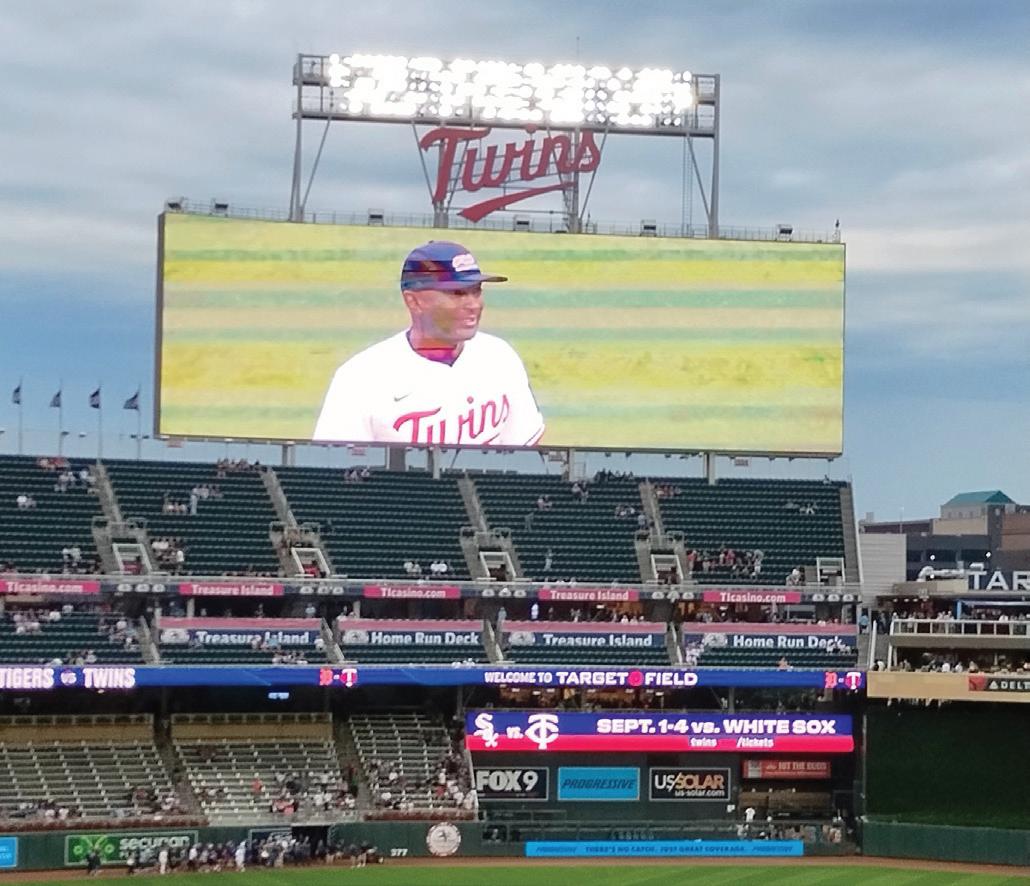
ntron Brown currently is ranked fifth in the National Hot Rod Association (NHRA) Top Fuel standings. He is a four-time racing world champion and has over 80 career wins since 2008 after racing pro motorcycles from 1998 to 2007. Brown last weekend competed at the NHRA Nationals August 15-17 at Brainard International Raceway. He spoke to the MSR last Thursday in between interviews with other media and before throwing out the first ball at the Minnesota Twins-Detroit baseball game.
“Brainard is one of the longest historical race tracks on the tour,” Brown pointed out. He has won six times there, four in Pro Stock Motorcycle and two in Top Fuel. He was twice a four-time runners-up and four-time No. 1 qualifier.
Brown is the first Black driver to win a major U.S. auto racing championship (2012,
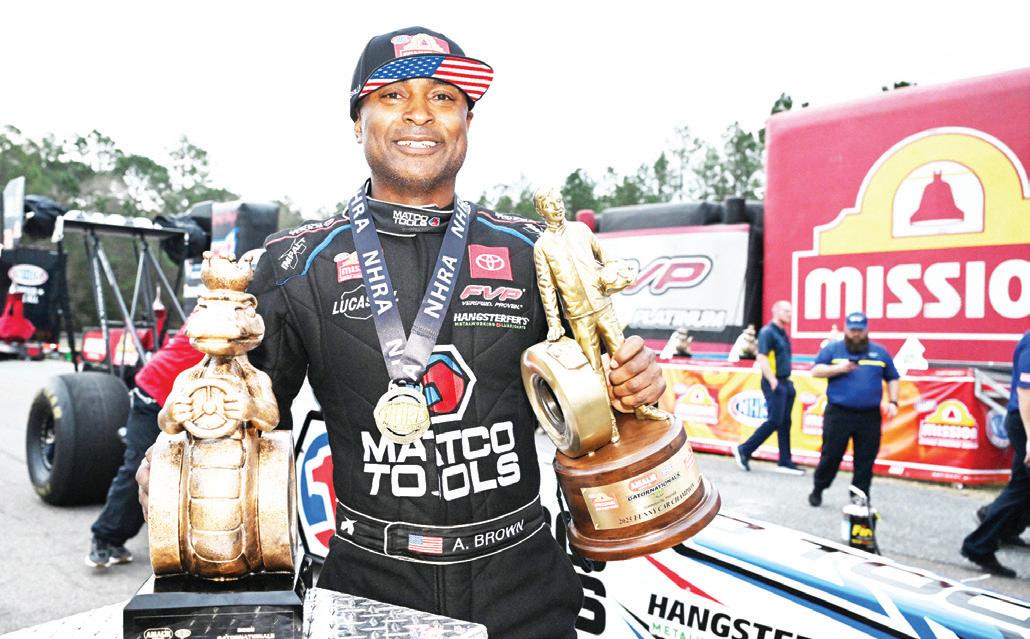
Antron Brown with a few of his trophies
2015, 2016 and 2024) and the first Black NHRA team owner.
“I want to be out there to win championships. I want to be out there to be great. And to do that, you have to put in the work.”
Thanks to his father and his uncle, Brown got hooked on drag racing at an early age: “I
Photos by Charles Hallman
was 10 years old in 1986” when he discovered that he one day could be a pro racer, continued Brown. “I never forget the day when I turned professional … and I started racing bikes.”
NHRA has four top classes: Top Fuel, Funny Car, Pro Stock and Pro Stock Motorcycle.
Top Fuel is considered the fastest — 11,000 horsepower dragsters that can cover the dragstrip in less than 3.7 seconds at 330 mph or more. Funny Cars can be just as fast in just the same amount of time.
From field to booth, Span keeps on learning
enard Span is in his second year as a Minnesota Twins game-day broadcast analyst. “It’s all about progressing and getting better and learning,” Span told me before a recent broadcast in July.
Span was a 2002 Twins first round draft pick (20th overall) out of high school in Tampa, Fla. His debut came in 2008, and Span played four seasons with the parent club (2008-12) before he was traded to Washington in November 2012, where he became the Nationals’ regular centerfielder.
He also played with three other clubs (San Francisco, 2026-17; Tampa Bay, 2018; and Seattle, 2018) before retiring after 10 MLB seasons. Span was known as one of the game’s premier leadoff hitters — .347 on-base percentage, and .991 fielding percentage, playing at all three outfield positions.
“I’ve always been a more under-the-radar type of play-
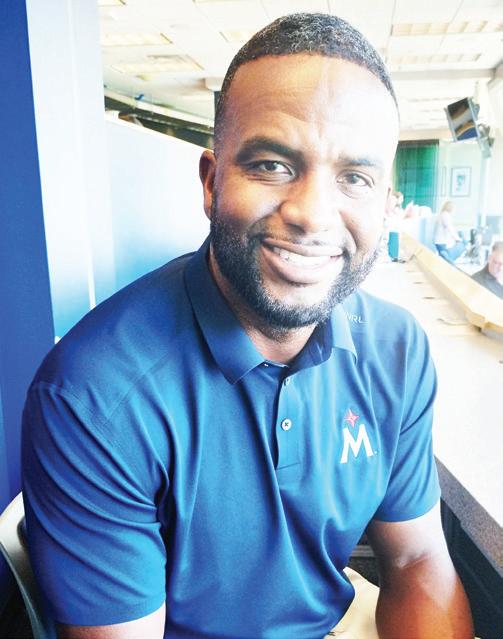
er, underrated in my opinion,” Span pointed out. “That means a lot to me when I hear anybody give me that type of respect. I think if you’d asked a lot of my teammates, I would like to think they appreciated what I was able to bring to a ball club.
“I wasn’t a superstar player, but the things that I did definitely helped them to be better, as being a glue-piece type of player for sure,” he added
humbly but proudly.
Now Span works a limited number of games, as does retired Twins LaTroy Hawkins as the only Black analysts on Twins telecasts. His full-time job is being a husband and father of three young children, along with running a nonprofit in Tampa.
“They keep me busy with all their sports,” said Span of his children’s activities away from home. “They’re very active.”
“I also have a nonprofit that I started when I was here, and it has blossomed and grown, and that’s geared towards helping single mothers. We help them get into transportation — brand new vehicles.”
While in town, Span also took his kids on a clubhouse tour. “I think they enjoyed it a lot,” said the father.
“I didn’t get an opportunity to have kids when I was playing, and then have them come to the clubhouse and see me ■ See SOE on page 9
Pro Stock runs at least 6.5 seconds at 210 mph or more.
Pro Stock Motorcycles are clocked at 195 mph or more and can run under 6.8 seconds. “The biggest thrill for me is the excitement, the rate of acceleration,” explained Brown.
“I think the other biggest excitement, key factor for me besides the adrenaline rush, will be working as a team. You will see the teamwork and dy-
namic that we have.
“Our whole crew with me consists of 10 people, guys and girls, and everybody’s gotta pull the chain at the same time, and gotta pull their way, because if one person messes up, there’s no mulligans in our sport,” he pointed out.
Although he is the first, Brown noted that he is not the only Black racing in NHRA. Destiny Spurlock and Nieshael Henry are up-and-
aying homage to former local prep athletes making the Twin Cities proud, this columnist gives shoutouts to:
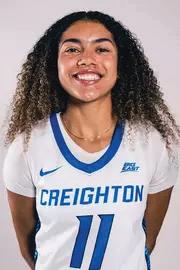
Kiana Lockett, the former Minnetonka and DeLaSalle girls basketball standout is now a senior for the Creighton University women’s basketball team.
Emmett Johnson, the former Holy Angels running back, entering his junior year at the University of Nebraska.
Ronnie Porter , the former St. Paul Como girls basketball player who earned a scholarship after walking on to the University of Wisconsin women’s basketball team, entering her senior year with the Badgers. Davon Townsley , the former Minneapolis North
lineman, who will be a junior at Missouri State University.
Savannah White , the former DeLaSalle superstar who, after playing at the University of Wisconsin and Indiana State University, will play her senior season at Xavier University.
coming Black female motorcycle drag racers. Nellie Goins was the first Black female funny car racer during the late 1960s and early 1970s — her nickname was “Nitro Nellie.”
Admittedly the sport can use more Blacks: “There have been plenty of African Americans that were drag racing before I ever started,” the superstar Brown pointed out. “Drag racing has always been rich in diversity. It just not [so diverse] on the pro level because it takes a lot to get to the pro level.
“But on the weekend warrior level, my dad and all their friends from the inner city, they were drag racing back in the ‘70s and ‘60s and ‘50s,” said Brown.
It takes a whole lot of money to successfully race on the NHRA circuit. “It’s about a $5 million investment to do this per year,” estimated Brown, “to be in the sport at this level.
“The [winning] purse is pretty decent from race to race, but the purse is always a bonus.
■ See BROWN on page 9
Mario
, a
North wide receiver, now a junior at the University of Illinois.
Olonda England, the former St. Paul Highland Park student athlete, keeping St. Paul Como Park’s girls program among the best in the state.
Quentin Cobbs Butler , the former Woodbury allpurpose player, in his second season as a member of the University of St. Thomas football team.
Dr. Mitchell Palmer McDonald welcomes reader comments to mcdeezy05@gmail.com.
Zashon Rich , the former Minneapolis north cornerback entering his sophomore season at Kansas State University.
Amiya Battle , the former Hopkins girls basketball allstar, now a senior on the University of Minnesota women’s team and is one the Big Ten’s top guards.
Sanders
former Minneapolis
Jayne Kennedy All photos by Charles Hallman
Christine Williamson
Antron Brown recognized at Twins game
Denard Span
Photo by Charles Hallman
Creighton University guard Kiana Lockett Courtesy of Creighton