
Test Bank for Trigonometry 12th
Edition by Larson
ISBN: 9798214407593
Section 1.1 Radian and Degree Measure
1. Find (if possible) the complement of the following angle.

a. Complement:
b. Complement:

c. Complement:

d. Complement:

e. Complement:

ANSWER: c
2. Find (if possible) the supplement of the following angle.

a. Supplement:

b. Supplement:

c. Supplement:
d. Supplement:
e. Supplement:

ANSWER: e
3. Find the complement of the following angle. Round your answer to two decimal places.
1.5
a. Complement ≈ 1.5
b. Complement ≈ 0.07
c. Complement ≈ 3.64
d. Complement ≈ 1.64
e. Complement ≈ 1.71
ANSWER: b
4. Find the quadrant in which the given angle lies.
Section 1.1 Radian and Degree Measure
133°
a. Quadrant I
b. Quadrant IV
c. Quadrant III
d. Quadrant II
e. None of the above ANSWER: d
5. Find the quadrant in which the given angle lies.
111° 50'
a. Quadrant III
b. Quadrant I
c. Quadrant IV
d. Quadrant II
e. None of the above ANSWER: a
6. Find the quadrant in which the given angle lies.
53.6°
a. Quadrant I
b. Quadrant II
c. Quadrant IV
d. Quadrant III
e. None of the above ANSWER: c
7. Find the complement of the following angle.
35°
a. Complement: 200°
b. Complement: 35°
c. Complement: 55°
d. Complement: 145°
e. Complement: 56° ANSWER: c
8. Find the supplement of the following angle.
112°
a. Supplement: 248°
b. Supplement: 112°
c. Supplement: 68°
d. Supplement: 22°
e. Supplement: 69
ANSWER: c
9. Find angle 75° in radian measure as a multiple of π.


12π


ANSWER: d
10. Find angle –40° in radian measure as a multiple of π.
9π b. c.


ANSWER: c

a. 225°
b. 230°
c. 123°
d. 113°
Section 1.1 Radian and Degree Measure Copyright Cengage Learning. Powered by Cognero.
11. Find angle in degree measure.
Section 1.1 Radian and Degree Measure
e. 200°
ANSWER: a

12. Find angle in degree measure.
a. 14°
b. 9°
c. 23°
d. 18°
e. 53°
ANSWER: d
13. Convert the angle measure from degrees to radians. Round your answer to three decimal places.
75°
a. 75° ≈ 1.209 radians
b. 75° ≈ 7.958 radians
c. 75° ≈ 0.075 radian
d. 75° ≈ 1.609 radians
e. 75° ≈ 1.309 radians
ANSWER: e
14. Convert the angle measure from degrees to radians. Round to three decimal places.
–201.15°
a. –201.15° ≈ –3.811 radians
b. –201.15° ≈ –3.411 radians
c. –201.15° ≈ –3.511 radians
d. –201.15° ≈ 3.411 radians
e. –201.15° ≈ 3.511 radians
ANSWER: c
15. Convert the angle measure from degrees to radians. Round to three decimal places.
326°
a. 326° ≈ 5.690 radians
b. 326° ≈ 6.990 radians
c. 326° ≈ 5.590 radians
d. 326° ≈ 5.990 radians
e. 326° ≈ 0.326 radians
ANSWER: a
Section 1.1 Radian and Degree Measure
16. Convert the angle measure from degrees to radians. Round to three decimal places.
0.45°
a. –0.45° ≈ –0.308 radian
b. –0.45° ≈ –0.092 radian
c. –0.45° ≈ –0.008 radian
d. –0.45° ≈ –1.308 radians
e. –0.45° ≈ –1.008 radians
ANSWER: c
17. Convert the angle measure from radians to degrees. Round to three decimal places.


ANSWER: a
18. Convert the angle measure from radians to degrees. Round to three decimal places.

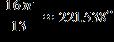
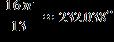
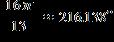
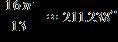
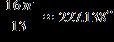
ANSWER: a
Section 1.1 Radian and Degree Measure
19. Convert the angle measure from radians to degrees. Round to three decimal places.
2
a. –2 ≈ –124.892°
b. –2 ≈ –119.992°
c. –2 ≈ –114.592°
d. –2 ≈ –104.092°
e. –2 ≈ –108.992°
ANSWER: c
20. Convert angle measure to decimal degree form. Round your answer to three decimal places.
263°38'
a. 263°38' ≈ 301°
b. 263°38' ≈ 263.38°
c. 263°38' ≈ 273.633°
d. 263°38' ≈ 263.633°
e. 263°38' ≈ 253.633°
ANSWER: d
21. Convert angle measure to decimal degree form. Round your answer to three decimal places.
81° 35' 29''
a. 81° 35' 29'' ≈ 81.591°
b. 81° 35' 29'' ≈ 81.353°
c. 81° 35' 29'' ≈ 91.591°
d. 81° 35' 29'' ≈ 145°
e. 81° 35' 29'' ≈ 71.591°
ANSWER: a
22. Convert following angle measure to degrees, minutes, and seconds.
250.3°
a. 250.3° ≈ 250°3'
b. 250.3° ≈ 250°18'
c. 250.3° ≈ 250°16'
d. 250.3° ≈ 250°20'
e. 250.3° ≈ 250°17'
ANSWER: b
23. Convert following angle measure to degrees, minutes, and seconds.
Name: Class:
Section 1.1 Radian and Degree Measure
350.120°
a. –350.120° ≈ –350° 12' 7''
b. –350.120° ≈ –350° 5' 18''
c. –350.120° ≈ –350° 7' 12''
d. –350.120° ≈ –350° 18' 5''
e. –350.120° ≈ –350° 5' 12''
ANSWER: c
24. Find the length of the arc on a circle of radius r intercepted by a central angle θ Round to two decimal places.
Radius r Central Angle θ 18 inches 134°
a. s ≈ 42.10 inches
b. s ≈ 18.74 inches
c. s ≈ 13.40 inches
d. s ≈ 44.10 inches
e. s ≈ 40.10 inches
ANSWER: a
25. Find the length of the arc on a circle of radius r intercepted by a central angle θ. Round to two decimal places.
Radius r Central Angle θ 20 centimeters 66°
a. s ≈ 25.04 centimeters
b. s ≈ 20.37 centimeters
c. s ≈ 23.04 centimeters
d. s ≈ 7.33 centimeters
e. s ≈ 21.04 centimeters
ANSWER: c
26. Find the radian measure of the central angle of a circle of radius r that intercepts an arc of length s.
Radius r Arc Length s 7 inches 20 inches
a. θ = 140 radians
b. θ = radians
c. θ = radians
Copyright Cengage Learning. Powered by Cognero.
Section 1.1 Radian and Degree Measure
d. θ = radians
e. θ = 27 radians
ANSWER: d
27. Find the radian measure of the central angle of a circle of radius r that intercepts an arc of length s.
Radius r Arc Length s 70 kilometers 150 kilometers
a. θ = 6 radians
b. θ = radians
c. θ = radians
d. θ = radians
e. θ = radians
ANSWER: d
28. Find the area of the sector of the circle with radius r and central angle θ. Round to two decimal places.
Radius r Central Angle θ 8 inches

a. A ≈ 268.08 square inches
b. A ≈ 35.51 square inches
c. A ≈ 67.02 square inches
d. A ≈ 31.51 square inches
e. A ≈ 33.51 square inches
ANSWER: e
29. An electric hoist is being used to lift a beam. The diameter of the drum on the hoist is 13 inches, and the beam must be raised 2 feet. Find the number of degrees through which the drum must rotate. Round your answer to nearest whole number.
Section 1.1 Radian and Degree Measure
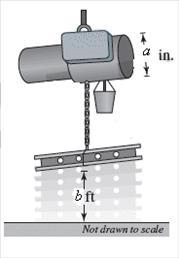
a = 13, b = 2
a. θ ≈ 217°
b. θ ≈ 212°
c. θ ≈ 202°
d. θ ≈ 207°
e. θ ≈ 156°
ANSWER: b
30. A carousel with a 55-foot diameter makes 5 revolutions per minute. Find the angular speed of the carousel in radians per minute. Round your answer to two decimal places.
a. 5 rpm ≈ 59.85 radians per minute
b. 5 rpm ≈ 31.42 radians per minute
c. 5 rpm ≈ 47.12 radians per minute
d. 5 rpm ≈ 15.71 radians per minute
e. 5 rpm ≈ 50.23 radians per minute
ANSWER: b
31. A sprinkler on a golf green is set to spray water over a distance of 11 meters and to rotate through an angle of 130°. Find the area of the region. Round your answer to two decimal places.
a. A ≈ 137.27 square meters
b. A ≈ 139.57 square meters
c. A ≈ 135.17 square meters
d. A ≈ 274.54 square meters
e. A ≈ 24.96 square meters
ANSWER: a
32. Determine the quadrant in which an angle, θ, lies if .

Section 1.1 Radian and Degree Measure
a. 4th quadrant
b. 2nd quadrant
c. 1st quadrant
d. 3rd quadrant
ANSWER: d
33. Determine the quadrant in which an angle, θ, lies if θ = 6.10 radians.
a. 2nd quadrant
b. 4th quadrant
c. 3rd quadrant
d. 1st quadrant
ANSWER: b
34. Determine two coterminal angles (one minimum positive and one maximum negative) for


ANSWER: e
35. Find (if possible) the complement of


e. not possible
ANSWER: c
Section 1.1 Radian and Degree Measure

36. Find (if possible) the supplement of .


e. not possible
ANSWER: c
37. Determine the quadrant in which an angle with measure 117° lies.
a. 4th quadrant
b. 2nd quadrant
c. 3rd quadrant
d. 1st quadrant
ANSWER: b
38. Determine the quadrant in which an angle with measure –145°36' lies.
a. 3rd quadrant
b. 2nd quadrant
c. 1st quadrant
d. 4th quadrant
ANSWER: a
39. Determine two coterminal angles (one minimum positive and one maximum negative) for θ = –488°.
a. 142°, –218°
b. 322°, –398°
c. 232°, –308°
d. 142°, –308°
e. 232°, –128°
ANSWER: e
40. Rewrite 65° in radian measure as a multiple of π.


Section 1.1 Radian and Degree Measure


ANSWER: b

41. Rewrite in degree measure.
a. 95°
b. 143°
c. 190°
d. 48°
e. 63°
ANSWER: a

42. Rewrite in degree measure. Round to three decimal places.
a. 18.367°
b. 27.551°
c. 22.959°
d. 3.673°
e. 9.184°
ANSWER: a
43. Rewrite 36.63° in radian measure. Round to three decimal places.
a. 0.128
b. 0.115
c. 0.077
d. 0.096
e. 0.639
ANSWER: e
44. Find the angle, in radians, in the figure below if S = 8 and r = 5.
Section 1.1 Radian and Degree Measure
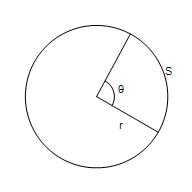


ANSWER: c
45. Convert 177°45´33´´ to degree-decimal form. Round answer to three decimal places.
a. 177.755°
b. 177.759°
c. 178.537°
d. 177.377°
e. 177.380°
ANSWER: b
46. Convert 133.372° to D°M´S´´ form.
a. 133°11´10´´
b. 133°18´16´´
c. 133°16´14´´
d. 133°5´5´´
e. 133°22´19´´
ANSWER: e
47. Find the length of the arc, S, on a circle of radius 6 meters intercepted by a central angle of 30°. Round to two decimal places.
a. S = 3.14 meters
b. S = 4.19 meters
Section 1.1 Radian and Degree Measure
c. S = 6.28 meters
d. S = 2.09 meters
e. S = 2.51 meters
ANSWER: a
48. Find the radian measure of the central angle of the circle of radius 7 inches that intercepts an arc of length 23 inches.


ANSWER: a
49. Find the area of the sector of the circle with radius 2 feet and central angle .
a.


e.

ANSWER: c

50. A car is traveling along Route 66 at a rate of 70 miles per hour, and the diameter of its wheels are 2.7 feet. Find the number of revolutions per minute the wheels are turning. Round answer to one decimal place.
a. 363.1 rpm
b. 1075.9 rpm
c. 726.2 rpm
d. 137.5 rpm
e. 242.1 rpm
Section 1.1 Radian and Degree Measure
ANSWER: c
51. Determine the quadrant in which an angle, θ, lies if

a. 1st quadrant
b. 2nd quadrant
c. 3rd quadrant
d. 4th quadrant
ANSWER: c
52. Determine the quadrant in which an angle, θ, lies if θ = 6.10 radians.
a. 1st quadrant
b. 2nd quadrant
c. 3rd quadrant
d. 4th quadrant
ANSWER: d
Section 2.1 Using Fundamental Identities
1. Use the given values to evaluate three trigonometric functions cos x, csc x, tan x. ,

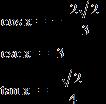
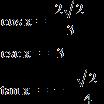
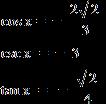
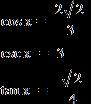
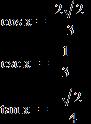
ANSWER: d
2. Use the given values to evaluate three trigonometric functions cos x, csc x, tan x.
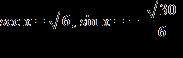
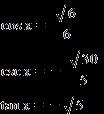
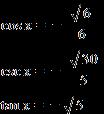
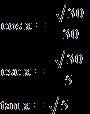
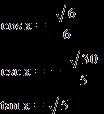
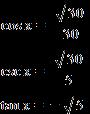
ANSWER: a
3. Use the given values to evaluate three trigonometric functions sin x, cos x, cot x.
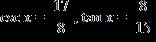
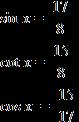
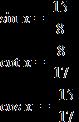
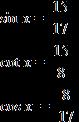
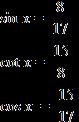
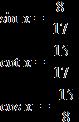
ANSWER: d
4. Use the given values to evaluate three trigonometric functions cos x, sin x, cot x.
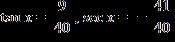
Section 2.1 Using Fundamental Identities
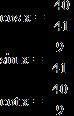
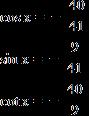
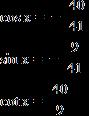
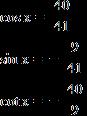
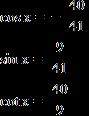
ANSWER: c
5. Use the given values to evaluate two trigonometric functions and
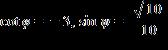


ANSWER: a
6. Use the given values to evaluate three trigonometric functions .
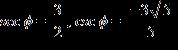
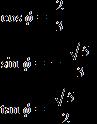
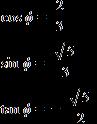
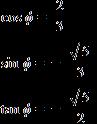
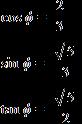
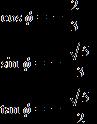
ANSWER: c
7. Use the given values to evaluate three trigonometric functions csc x, tan x, cot x
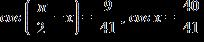
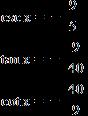
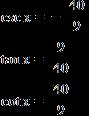
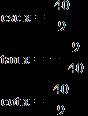
Section 2.1 Using Fundamental Identities
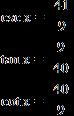
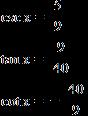
ANSWER: d
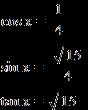
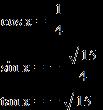
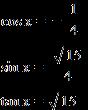
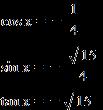
8. Use the given values to evaluatethree trigonometric functions cos x, sin x, tan x.
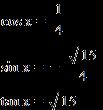
ANSWER: b
9. Use the given values to evaluate three trigonometric functions .
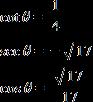

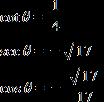
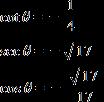
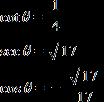
ANSWER: c
10. Use the given values to evaluate three trigonometric functions .
Section 2.1 Using Fundamental Identities
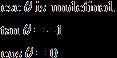
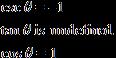
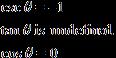
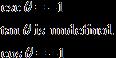
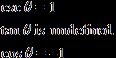
ANSWER: c
11. Use the fundamental identities to simplify the expression.
cot θ sec θ
a. tan θ
b. sec θ cot θ
c. csc θ
d. cot θ
e. cos θ
ANSWER: c
12. Use the fundamental identities to simplify the expression.

a. cot θ
b. tan θ
c. sec θ
d. sin θ
e. csc θ
ANSWER: d
Section 2.1 Using Fundamental Identities
13. Perform the multiplication and use the fundamental identities to simplify.

ANSWER: c
14. By using a graphing utility to complete the following table. Round your answer to four decimal places.
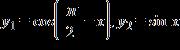
10.38940.5646 −0.71740.84150.93200.98540.9996 y20.38940.5646 −0.71740.84150.93200.98540.9996 d.
y10.38940.56460.7174 −0.84150.93200.98540.9996 y20.38940.56460.7174 −0.84150.93200.98540.9996
e.
Section 2.1 Using Fundamental Identities
ANSWER: e
15. By using a graphing utility to complete the following table. Round your answer to four decimal places.
e.
ANSWER: a
16. By using a graphing utility to complete the following table. Round your answer to four decimal places.
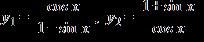
ANSWER: e
17. By using a graphing utility to complete the following table. Round your answer to two decimal places.
2.188.3150.391,163.611,374,442.49355.90
Section 2.1 Using Fundamental Identities
b.
c.
y10.692.188.31 −50.391,163.611,374,442.49355.90 y20.692.188.31 −50.391,163.611,374,442.49355.90
d.
e. x 0.6 0.8 1.0 1.2 1.4 1.6 1.8 y10.692.188.3150.391,163.611,374,442.49 −355.90 y20.692.188.3150.391,163.611,374,442.49 −355.90
ANSWER: b
18. Use the trigonometric substitution to rewrite the algebraic expression as a trigonometric function of θ, where

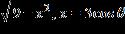
. a. 9 cos θ
b. 9 sin θ
c. 3 sin θ
d. 3 sin θ
e. 3 cos θ
ANSWER: c
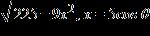
19. Use the trigonometric substitution to rewrite the algebraic expression as a trigonometric function of θ, where . a. 5 cos θ
b. 225 sin θ
c. 5 sin θ
d. 225 cos θ
Section 2.1 Using Fundamental Identities
e. 15 sin θ
ANSWER: e
20. Use the trigonometric substitution to rewrite the algebraic expression as a trigonometric function of θ, where .
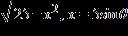
a. 5 sin θ
b. 5 cos θ
c. 5 cos θ
d. 25 sin θ
e. 25 cos θ
ANSWER: c
21. Use the trigonometric substitution to rewrite the algebraic expression as a trigonometric function of θ, where
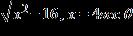
a. 4 tan θ
b. 16 sec θ
c. 4 tan θ
d. 4 sec θ
e. 16 tan θ
ANSWER: a
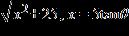
22. Use the trigonometric substitution to rewrite the algebraic expression as a trigonometric function of θ, where . a. 5 sec θ
b. 5 tan θ
c. 25 sec θ
d. 25 tan θ
e. 5 sec θ
ANSWER: e
23. Use the trigonometric substitution to rewrite the algebraic expression as a trigonometric function of θ, where
Section 2.1 Using Fundamental Identities
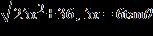
a. 25 tan θ
b. 5 tan θ
c. 25 sec θ
d. 6 sec θ
e. 5 sec θ
ANSWER: d
24. Use the trigonometric substitution to rewrite the algebraic expression as a trigonometric function of θ, where
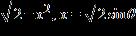
a. 2 sin θ
b.
c.


d.

e. 2 cos θ
ANSWER: d
25. Use the trigonometric substitution to rewrite the algebraic expression as a trigonometric function of θ, where
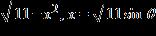


e.
ANSWER: b
26. Use the trigonometric substitution to rewrite the algebraic expression as a trigonometric function of θ, where . Then find sin θ and cos θ.

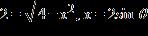
Section 2.1 Using Fundamental Identities
ANSWER: b
27. Use the trigonometric substitution to rewrite the algebraic expression as a trigonometric function of θ, where Then find sin θ and cos θ
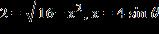


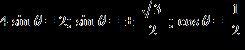
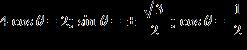
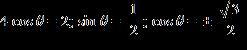
ANSWER: d
28. Use the trigonometric substitution to rewrite the algebraic expression as a trigonometric function of θ, where . Then find sin θ and cos θ.




Section 2.1 Using Fundamental Identities
e.
ANSWER: d



29. Rewrite the expression as a single logarithm and simplify the result. a. b. c. d.


e. ANSWER: d
30. Rewrite the expression as a single logarithm and simplify the result.
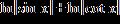
a. b.


e.

ANSWER: e

31. Use a calculator to demonstrate the identity for the value of θ. a.
e.
ANSWER: a
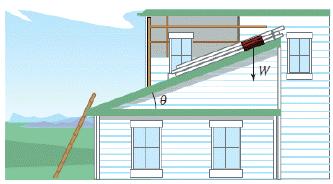
32. The forces acting on an object weighing W units on an inclined plane positioned at an angle of θ with the horizontal (see the figure) are modeled by
where μ is the coefficient of friction. Solve the equation for μ and simplify the result.
Section 2.1 Using Fundamental Identities
e. ANSWER: d
33. Find the rate of change of the function .
e. ANSWER: c
34. Find the rate of change of the function . a. b. c. d.
e.

ANSWER: a
35. Find the rate of change of the function
a.
b.
c.
Section 2.1 Using Fundamental Identities
d.

e.
ANSWER: e
36. Use the trigonometric substitution u = a sin θ, where 0 < θ < π/2 and a > 0 to simplify the expression

a. a csc θ
b. a sin θ
c. a tan θ
d. a cos θ
e. −a cos θ
ANSWER: d
37. Use the trigonometric substitution u = a cot θ, where 0 < θ < π/2 and a > 0 to simplify the expression

a. −a csc θ
b. a csc θ
c. a cot θ
d. a cos θ
e. a sec θ
ANSWER: b
38. Use the trigonometric substitution u = a sec θ, where 0 < θ < π/2 and a > 0 to simplify the expression

a. a cot θ
b. a tan θ
c. a sec θ
d. a sin θ
e. a tan θ
ANSWER: e
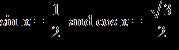
39. If , evaluate the following function. cot x
a. cot x =
Section 2.1 Using Fundamental Identities
b. cot x =
c. cot x = 2
d. cot x =
e. cot x = ANSWER: e
40. Use fundamental identities to simplify the expression below and then determine which of the following is not equivalent.
a.
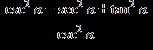
b. c. d.


e. ANSWER: e
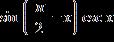
41. Use fundamental identities to simplify the expression below and then determine which of the following is not equivalent.
a.
b.
c.
d.

e.

ANSWER: a
42. Factor; then use fundamental identities to simplify the expression below and determine which of the following is not equivalent.

Section 2.1 Using Fundamental Identities


ANSWER: d
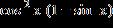
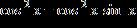
43. Factor; then use fundamental identities to simplify the expression below and determine which of the following is not equivalent.




ANSWER: a

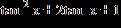
44. Multiply; then use fundamental identities to simplify the expression below and determine which of the following is not equivalent. a.



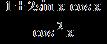
ANSWER: a
Section 2.1 Using Fundamental Identities
45. Which of the following is equivalent to the given expression?

c. d. e. ANSWER: c
46. Use a graphing utility to determine which of the trigonometric functions is equal to the following expression.

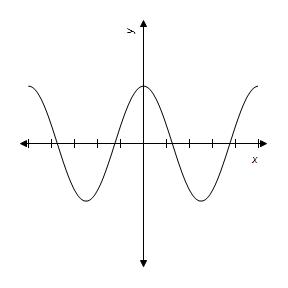

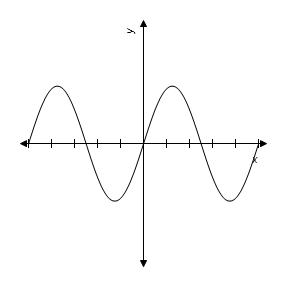
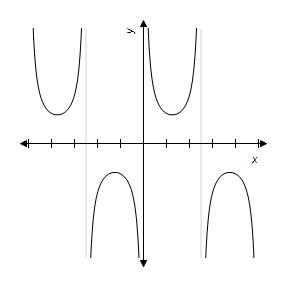
Section 2.1 Using Fundamental Identities
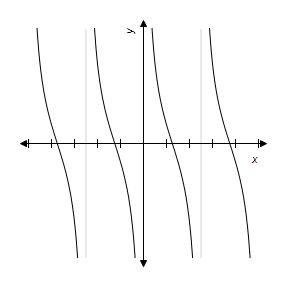
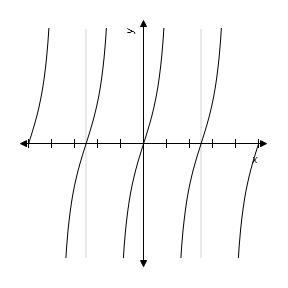
ANSWER: a
47. If x = 6 cot θ, use trigonometric substitution to write as a trigonometric function of θ, where

Section 2.1 Using Fundamental Identities
e. 6 cot θ
ANSWER: b
48. If x = 2 cot θ, use trigonometric substitution to write as a trigonometric function of θ, where
a. 2 sin θ
b. 2 cot θ
c. 2 sec θ
d. 2 csc θ
e. 2 cos θ
ANSWER: d


49. If x = 9 tan θ, use trigonometric substitution to write as a trigonometric function of θ, where .
a. 9 csc θ
b. 9 sec θ
c. 9 cos θ
d. 9 tan θ
e. 9 sin θ
ANSWER: b

50. Rewrite as a single logarithm and then simplify the result.


ANSWER: d
51. Use fundamental identities to simplify the expression below and then determine which of the following is not equivalent.

Section 2.1 Using Fundamental Identities

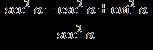

ANSWER: d
52. Use fundamental identities to simplify the expression below and then determine which of the following is not equivalent.
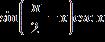
a. –1
b.
c. cot x d. 1/ tan x e. cos x csc x ANSWER: a
53. Factor; then use fundamental identities to simplify the expression below and determine which of the following is not equivalent.

a.
b.


e.

ANSWER: c
54. Factor; then use fundamental identities to simplify the expression below and determine which of the following is not equivalent.

Section 2.1 Using Fundamental Identities
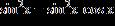


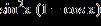

ANSWER: e

55. Multiply; then use fundamental identities to simplify the expression below and determine which of the following is not equivalent. a. b.

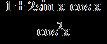
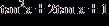

ANSWER: a
56. Which of the following is equivalent to the given expression?

a.
b.
c.
d.
e. ANSWER: b

57. If x = 2 cot θ, use trigonometric substitution to write as a trigonometric function of θ, where .
a. 2 sec θ
b. 2 sin θ
Name: Class:
Section 2.1 Using Fundamental Identities
c. 2 cos θ
d. 2 csc θ
e. 2 cot θ
ANSWER: d
58. If x = 2 tan θ, use trigonometric substitution to write as a trigonometric function of θ, where .
a. 2 csc θ
b. 2 sec θ
c. 2 tan θ
d. 2 sin θ
e. 2 cos θ
ANSWER: b
59. If x = 9 cos θ, use trigonometric substitution to write as a trigonometric function of θ, where 0 < θ
< π.
a. 9 sec θ
b. 9 sin θ
c. 9 cot θ
d. 9 cos θ
e. 9 csc θ
ANSWER: b

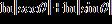
60. Rewrite as a single logarithm and then simplify the result.
a. ln |sin θ|
b. ln |tan θ|
c. ln |cos θ|
d. ln |sec θ|
e. ln |csc θ|
ANSWER: b
Section 3.1 Law of Sines
1. Use the Law of Sines to solve the triangle. Round your answer to two decimal places.
A = 30°, B = 45°, c = 10
a. C = 105°, a ≈ 6.18, b ≈ 7.32
b. C = 105°, a ≈ 7.32, b ≈ 8.32
c. C = 105°, a ≈ 8.18, b ≈ 9.32
d. C = 105°, a ≈ 5.18, b ≈ 7.32
e. C = 105°, a ≈ 7.18, b ≈ 9.32
ANSWER: d
2. Use the Law of Sines to solve the triangle. Round your answer to two decimal places.
A = 120°, B = 40°, c = 12
a. C = 20°, a ≈ 30.39, b ≈ 22.55
b. C = 20°, a ≈ 24.55, b ≈ 31.39
c. C = 20°, a ≈ 23.55, b ≈ 22.55
d. C = 20°, a ≈ 33.39, b ≈ 22.55
e. C = 20°, a ≈ 32.39, b ≈ 24.55
ANSWER: a
3. Use the Law of Sines to solve for B and C. Round your answer to two decimal places.
A = 44°, a = 40, b = 25
a. B ≈ 29°, C ≈ 107°
b. B ≈ 25.73°, C ≈ 110.27°
c. B ≈ 97°, C ≈ 39°
d. B ≈ 107°, C ≈ 29°
e. B ≈ 110.27°, C ≈ 25.73°
ANSWER: b
4. Use the Law of Sines to solve for C and B. Round your answer to two decimal places.
A = 60°, a = 36, c = 40
a. C ≈ 105.79°, B ≈ 45.79° or C ≈ 74.21°, B ≈ 14.21°
b. C ≈ 74.21°, B ≈ 45.79° or
C ≈ 105.79°, B ≈ 14.21°
c. C ≈ 10°, B ≈ 110° or
C ≈ 25.5°, B ≈ 104.5°
d. C ≈ 45.79°, B ≈ 74.21° or
Section 3.1 Law of Sines
C ≈ 14.21°, B ≈ 105.79°
e. C ≈ 60°, B ≈ 60° or C ≈ 45°, B ≈ 75°
ANSWER: b
5. Use the Law of Sines to solve for B and C. Round your answer to two decimal places.
A = 145°, a = 28, b = 8
a. B ≈ 0.14°, C ≈ 32.88°
b. B ≈ 0.14°, C ≈ 29.86°
c. B ≈ 9.43°, C 25.57°
d. B ≈ 25.57°, C 9.43°
e. B ≈ 29.86°, C ≈ 0.14°
ANSWER: c
6. Use the Law of Sines to solve for b. Round your answers to two decimal places.
A = 100°, a = 75, c = 6
a. b ≈ 6
b. b ≈ 75
c. b ≈ 73.72
d. b ≈ 72.72
e. b ≈ 83.72
ANSWER: c
7. Use the Law of Sines to solve (if possible) the triangle. If two solutions exist, find both. Round your answers to two decimal places.
C = 63.44°, a = 37, c = 53
a. A ≈ 77.92°, B ≈ 38.64°, b ≈ 57.94
b. A ≈ 61.56°, B ≈ 55°, b ≈ 53
c. A ≈ 38.64°, B ≈ 77.92°, b ≈ 57.94
d. A ≈ 55°, B ≈ 61.56°, b ≈ 53
e. No Solution
ANSWER: c
8. Use the Law of Sines to solve (if possible) for c. Round your answers to two decimal places.
A = 110°, a = 125, b = 100
a. c ≈ 38.23
b. c ≈ 48.23
c. c ≈ 58.23
Section 3.1 Law of Sines
d. c ≈ 68.23
e. No solution
ANSWER: b
9. Use the Law of Sines to solve (if possible) for c. Round your answers to two decimal places.
A = 110°, a = 75, b = 120
a. c ≈ 84.40
b. c ≈ 120
c. c ≈ 75
d. c ≈ 1.54
e. No Solution
ANSWER: e
10. Use the Law of Sines to solve (if possible) for c. Round your answers to two decimal places.
A = 76°, a = 18, b = 20
a. c ≈ 48.23
b. c ≈ 11.49
c. c ≈ 40.06
d. c ≈ 32.32
e. No Solution
ANSWER: e
11. Use the Law of Sines to solve (if possible) the triangle. Round your answers to two decimal places.
A = 76°, a = 5, b = 3
a. B ≈ 35.6°, C ≈ 35.6°, c ≈ 6.49
b. B ≈ 40.6°, C ≈ 68.4°, c ≈ 4.79
c. B ≈ 35.6°, C ≈ 68.4°, c ≈ 4.79
d. B ≈ 40.6°, C ≈ 73.4°, c ≈ 6.49
e. No Solution
ANSWER: c
12. Use the Law of Sines to solve (if possible) the triangle. If two solutions exist, find both. Round your answers to two decimal places.
A = 62°, a = 11.9, b = 10.5
a. B ≈ 66.82°, C ≈ 51.18°, c ≈ 10.5
b. B ≈ 89°, C ≈ 29°, c ≈ 12.39
c. B ≈ 51.18°, C ≈ 66.82°, c ≈ 12.39
d. B ≈ 29°, C ≈ 89°, c ≈ 11.9
e. No Solution
Section 3.1 Law of Sines
ANSWER: c
13. Use the Law of Sines to solve (if possible) for c. Round your answers to two decimal places.
A = 58°, a = 4.5, b = 12.8
a. c ≈ 140.06
b. c ≈ 40.06
c. c ≈ 32.3
d. c ≈ 4.06
e. No Solution
ANSWER: e
14. Use the Law of Sines to solve (if possible) the triangle. Round your answers to two decimal places.
A = 120°, a = b = 41
a. B ≈ 98°, C ≈ 41°, c ≈ 44
b. B ≈ 41°, C ≈ 98°, c ≈ 23.5
c. B ≈ 100°, C ≈ 39°, c ≈ 23.5
d. B ≈ 29°, C ≈ 110°, c ≈ 23.5
e. No Solution
ANSWER: e
15. Use the Law of Sines to solve (if possible) the triangle. Round your answers to two decimal places.
A = 133°, a = 16, b = 10
a. B ≈ 8°, C ≈ 39°, c ≈ 8.41
b. B ≈ 39°, C ≈ 8°, c ≈ 8.41
c. B ≈ 27.20°, C ≈ 19.80°, c ≈ 7.41
d. B ≈ 19.80°, C ≈ 27.20°, c ≈ 7.41
e. No Solution
ANSWER: c
16. Find values for b such that the triangle has one solution.
A = 32°, a = 3
a. b. c.
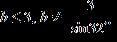
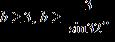
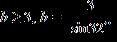
Section 3.1 Law of Sines
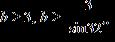
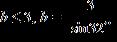
ANSWER: e
17. Find values for b such that the triangle has two solutions.
A = 24°, a = 4 a.


e.

ANSWER: b
18. Find values for b such that the triangle has no solutions.
A = 36°, a = 7
a.


ANSWER: a
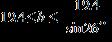
19. Find values for b such that the triangle has one solution.
A = 54°, a = 14
Section 3.1 Law of Sines
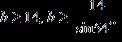
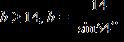
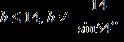
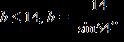
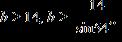
ANSWER: d
20. Find values for b such that the triangle has two solutions.
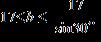
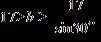
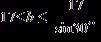
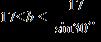
A = 30°, a = 17 a.
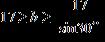
ANSWER: e
21. Find values for b such that the triangle has no solutions.
A = 34°, a = 11


Section 3.1 Law of Sines
e.

ANSWER: e
22. Find values for b such that the triangle has one solution.
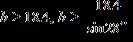
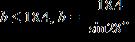
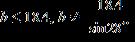
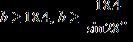
A = 28°, a = 18.4 a.
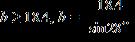
ANSWER: b
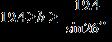
23. Find values for b such that the triangle has two solutions.
A = 26°, a = 19.4 a. b. c.
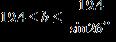
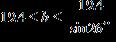
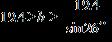
ANSWER: b
24. Find values for b such that the triangle has no solutions.
A = 28°, a = 9.6 a.

Section 3.1 Law of Sines


ANSWER: b
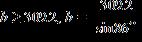
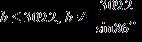
25. Find values for b such that the triangle has one solution.
A = 86°, a = 309.2
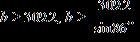
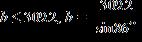
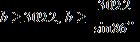
ANSWER: d
26. Find values for b such that the triangle has two solutions.
A = 62°, a = 325.2
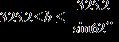
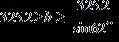
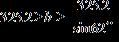
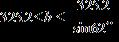
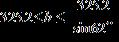
ANSWER: d
Section 3.1 Law of Sines
27. Find values for b such that the triangle has no solutions.
A = 78°, a = 339.4
a. b.


c. d. e.


ANSWER: e
28. Find the area of the triangle having the indicated angle and sides.

(Round your answer to one decimal place.)
a. 15.6
b. 16.6
c. 18.6
d. 17.6
e. 33.1
ANSWER: b
29. Find the area of the triangle having the indicated angle and sides.
B = 126°, a = 64, c = 22
(Round your answer to one decimal place.)
a. 568.5
b. 571.5
c. 1,139.1
d. 570.5
e. 569.5
ANSWER: e
30. Find the area of the triangle having the indicated angle and sides.
A = 7°18', b = 5, с = 20
(Round your answer to one decimal place.)
Section 3.1 Law of Sines
a. 6.4
b. 5.4
c. 7.4
d. 8.4
e. 12.7
ANSWER: a
31. Find the area of the triangle having the indicated angle and sides.
B = 73°20', a = 62, c = 28
(Round your answer to one decimal place.)
a. 832.5
b. 830.5
c. 833.5
d. 831.5
e. 1,663.1
ANSWER: d
32. Find the area of the triangle having the indicated angle and sides.
С = 85°32', a = 17, b = 24
(Round your answer to one decimal place.)
a. 205.4
b. 203.4
c. 204.4
d. 202.4
e. 406.8
ANSWER: b
33. Because of prevailing winds, a tree grew so that it was leaning 7° from the vertical. At a point 41 meters from the tree, the angle of elevation to the top of the tree is 30° (see figure). Find the height a of the tree.
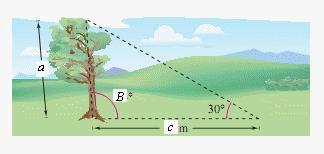
c = 41 m
B = 97°
(Round your answer to two decimal places.)
Section 3.1 Law of Sines
a. 23.67 m
b. 25.67 m
c. 24.67 m
d. 27.67 m
e. 26.67 m
ANSWER: b
34. In the figure, α and β are positive angles.
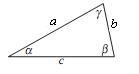
a = 3, b = 9
Write α as a function of β.
a. α = arcsin(3sinβ)
b. α = sin(3sinβ)
c. β = arcsin(3sinα)
d. β = sin(3sinα)
e. α = arcsin(3sinβ)
ANSWER: e
35. In the figure, α and β are positive angles.
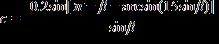
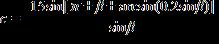
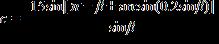
a = 15, b = 3
Use α = arcsin(0.2sinβ) to write c as a function of β
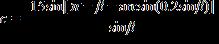
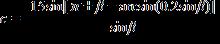
Section 3.1 Law of Sines
ANSWER: a
36. Given A = 56°, B = 67°, and c = 8, use the Law of Sines to solve the triangle for the value of a. Round your answer to two decimal places.
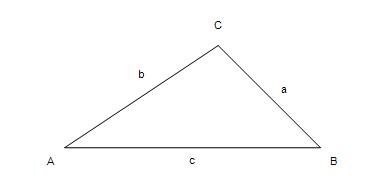
a. a = 7.21
b. a = 7.91
c. a = 7.29
d. a = 8.88
e. a = 8.09
ANSWER: b
37. Given A = 50°, B = 75°, and a = 7.1, use the Law of Sines to solve the triangle for the value of b Round your answer to two decimal places.
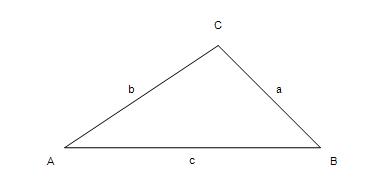
a. b = 6.64
b. b = 8.95
c. b = 6.02
d. b = 5.63
e. b = 7.59
ANSWER: b
38. Given C = 112°, B = 41°, and c = 15, use the Law of Sines to solve the triangle for the value of a. Round your answer to two decimal places.
a. a = 8.57
b. a = 10.38
Section 3.1 Law of Sines
c. a = 6.12
d. a = 21.2
e. a = 7.34
ANSWER: e
39. Given A = 30°, B = 31°, and с = 15, use the Law of Sines to solve the triangle for the value of b Round your answer to two decimal places.
a. b = 10.94
b. b = 9.51
c. b = 7.61
d. b = 10.06
e. b = 8.83
ANSWER: e
40. Given C = 127°, a = 14.9, and c = 10.3, use the Law of Sines to solve the triangle (if possible) for the value of b. If two solutions exist, find both. Round your answer to two decimal places.
a. not possible
b. b = 5.14 and 9.46
c. b = 7.58
d. b = 10.83
e. b = 4.21 and 9.59
ANSWER: a
41. Given С = 13°, a = 53.00, and с = 12, use the Law of Sines to solve the triangle (if possible) for the value of b If two solutions exist, find both. Round your answer to two decimal places.
a. b = 39.28 and 41.43
b. not possible
c. b = 53.00
d. b = 42.09
e. b = 50.59 and 42.73
ANSWER: c
42. Given A = 12°, b = 9, and a = 7, use the Law of Sines to solve the triangle (if possible) for the value of c. If two solutions exist, find both. Round your answer to two decimal places.
a. c = 2.06 and 15.55
b. c = 13.20
c. c = 14.33
d. not possible
e. c = 1.08 and 12.43
ANSWER: a
Section 3.1 Law of Sines
43. Select a value for b such that a triangle with A = 59° and a = 13 has only one solution.
a. b = 15
b. b = 16
c. b = 5
d. b = 14
e. b = 23
ANSWER: c
44. Select a value for b such that a triangle with A = 40° and a = 5 has no solution.
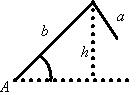
a. 1.95
b. 3.89
c. 7.68
d. 22.56
e. 1.56
ANSWER: d
45. Determine the area of a triangle having the following measurements. Round your answer to two decimal places.
A = 124°, b = 7, and c = 15
a. 43.52 sq. units
b. 52.23 sq. units
c. 47.88 sq. units
d. 39.17 sq. units
e. 34.82 sq. units
ANSWER: a
46. Determine the area of a triangle having the following measurements. Round your answer to two decimal places.
B = 63°39', a = 8, and c = 12
a. 51.62 sq. units
b. 43.01 sq. units
c. 38.71 sq. units
d. 47.31 sq. units
e. 34.41 sq. units
ANSWER: b
47. Determine the area of a triangle having the following measurements. Round your answer to two decimal
Section 3.1 Law of Sines
C = 67°44', a = 11, and b = 9.5
a. 38.68 sq. units
b. 58.02 sq. units
c. 43.52 sq. units
d. 53.19 sq. units
e. 48.35 sq. units
ANSWER: e
48. After a severe storm, three sisters, April, May, and June, stood on their front porch and noticed that the tree in their front yard was leaning 7° from vertical toward the house. From the porch, which is 97 feet away from the base of the tree, they noticed that the angle of elevation to the top of the tree was 30°. Approximate the height of the tree. Round answer to two decimal places.
a. 61.38 feet
b. 70.73 feet
c. 52.69 feet
d. 58.27 feet
e. 60.73 feet
ANSWER: c
49. A straight road makes an angle, A, of 13° with the horizontal. When the angle of elevation, B, of the sun is 60°, a vertical pole beside the road casts a shadow 8 feet long parallel to the road, see figure. Approximate the length of the pole. Round answer to two decimal places.
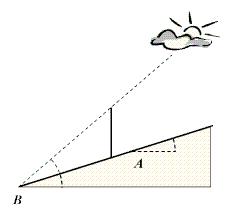
a. 3.60 feet
b. 11.70 feet
c. 5.47 feet
d. 13.86 feet
e. 6.76 feet
ANSWER: b
50. A park ranger at point A observes a fire in the direction N27°27'E. Another ranger at point B, 5 miles due
15 places.
Copyright Cengage Learning. Powered by Cognero.
Section 3.1 Law of Sines
east of A, sites the same fire at N53°23'W. Determine the distance from point B to the fire. Round answer to two decimal places.
a. 2.33 miles
b. 4.49 miles
c. 2.56 miles
d. 4.46 miles
e. 4.07 miles
ANSWER: b
51. Given C = 117°, B = 41°, and c = 15, use the Law of Sines to solve the triangle for the value of a. Round answer to two decimal places.
a. a = 20.37
b. a = 7.54
c. a = 8.56
d. a = 5.09
e. a = 6.31
ANSWER: e
52. Given A = 15 , a = 9, and b = 11,use the Law of Sines to solve the triangle (if possible) for the value of c. If two solutions exist, find both. Round answer to two decimal places.
a. c = 16.81
b. c = 2.09 and c = 19.16
c. c = 17.94
d. c = 1.11 and c = 16.04
e. not possible
ANSWER: b
53. Determine the area of a triangle having the following measurements. Round your answer to two decimal places.
A = 121 , b = 6 and c = 9
a. 27.77 sq. units
b. 23.14 sq. units
c. 18.51 sq. units
d. 20.83 sq. units
e. 25.46 sq. units
ANSWER: b
54. Determine the area of a triangle having the following measurements. Round your answer to two decimal places.
C = 99 , a = 10.5 and b = 11.0
a. 57.04 sq. units
Section 3.1 Law of Sines
b. 51.34 sq. units
c. 45.63 sq. units
d. 68.45 sq. units
e. 62.74 sq. units
ANSWER: a
55. A straight road makes an angle, A, of 19 with the horizontal. When the angle of elevation, B, of the sun is 60 , a vertical pole beside the road casts a shadow 8 feet long parallel to the road, see figure. Approximate the length of the pole. Round answer to two decimal places.
a. 5.21 feet
b. 6.10 feet
c. 10.50 feet
d. 13.86 feet
e. 6.06 feet
ANSWER: c
56. Determine the area of a triangle having the following measurements. Round your answer to two decimal places.
A = 127 , b = 7 and c = 11.
a. 36.90 sq. units
b. 30.75 sq. units
c. 24.60 sq. units
d. 27.67 sq. units
e. 33.82 sq. units
ANSWER: b
57. Determine the area of a triangle having the following measurements. Round your answer to two decimal places.
B = 59 35 , a = 7 and c = 8
a. 28.98 sq. units
b. 21.73 sq. units
Section 3.1 Law of Sines
c. 19.32 sq. units
d. 24.15 sq. units
e. 26.56 sq. units
ANSWER: d
58. Given A = 15 , b = 12, and a = 10, use the Law of Sines to solve the triangle (if possible) for the value of c. If two solutions exist, find both. Round answer to two decimal places.
a. c = 18.75
b. c = 2.09 and c = 21.10
c. c = 19.88
d. c = 1.11 and 17.98
e. not possible
ANSWER: b
59. Given A = 60 , B = 65 , and c = 8, use the Law of Sines to solve the triangle for the value of a Round answer to two decimal places.
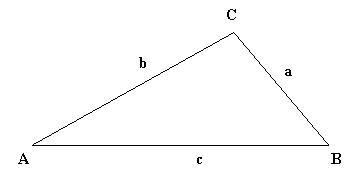
a. a = 8.37
b. a = 7.64
c. a = 8.46
d. a = 7.57
e. a = 7.23
ANSWER: c
60. Given A = 57 , B = 75 , a = 4.10 and , use the Law of Sines to solve the triangle for the value of b Round answer to two decimal places.
Section 3.1 Law of Sines
a. b = 5.82
b. b = 3.42
c. b = 6.22
d. b = 4.72
e. b = 2.12
ANSWER: d
61. Given C = 71 , a = 15.50 and c = 18, use the Law of Sines to solve the triangle (if possible) for the value of b. If two solutions exist, find both. Round answer to two decimal places.
a. b = 1.77
b. b = 6.46 and 3.92
c. b = 15.50
d. b = 13.08 and 5.22
e. not possible
ANSWER: c
62. Given C = 116 , a = 19, and c = 18, use the Law of Sines to solve the triangle (if possible) for the value of b If two solutions exist, find both. Round answer to two decimal places.
a. b = 8.29
b. b = 9.66 and 19.86
c. b = 3.97
d. b = 3.04 and 6.41
e. not possible
ANSWER: e
Section 4.1 Complex Numbers
1. Find real numbers a and b such that the equation is true. a. b. c. d.
e. ANSWER: e
2. Find real numbers a and b such that the equation is true. a. b.
e. ANSWER: c

3. Find real numbers a and b such that the equation is true. a. b. c. d.
e. ANSWER: d
4. Find real numbers a and b such that the equation is true.

a. a = 0, b = –3
b. a = 0, b = –
c. a = 0, b = –
d. a = 0, b = –2
Section 4.1 Complex Numbers
e. a = 0, b = –
ANSWER: b

5. Write the complex number in standard form. a. b. c. d.
e. ANSWER: e
6. Write the complex number in standard form.

a. 5 + i
b. 6 + i
c. 9 – i
d. 5 – i
e. 6 – i
ANSWER: d
7. Write the complex number in standard form.

a. i
b. – i
c. i
d. i
e. – i
ANSWER: c
8. Write the complex number in standard form.

a. 7i
b. –7i
Section 4.1 Complex Numbers
c. 49i d. 8i
e. –49i
ANSWER: a
9. Write the complex number in standard form.
–10i + i2
a. –1 + 10i
b. –1 + 13i
c. 1 + 10i
d. 1 – 10i
e. –1 – 10i
ANSWER: e
10. Write the complex number in standard form.

a. 68.89i
b. 8.3i
c. 11.3i
d. –8.3i
e. –68.89i
ANSWER: b
11. Write the complex number in standard form.

a. –0.04i
b. –0.0016i
c. 3.04i
d. 0.04i
e. 0.0016i ANSWER: d
12. Perform the addition or subtraction and write the result in standard form.

a. 18 – 11i
b. 17 – 10i
c. 14 – 7i
Section 4.1 Complex Numbers
d. 16 – 9i
e. 15 – 8i
ANSWER: c
13. Perform the addition or subtraction and write the result in standard form.

a. 4
b. 6
c. 8
d. 7
e. 5
ANSWER: a

14. Perform the addition or subtraction and write the result in standard form. a. b. c. d.
e.
ANSWER: d
15. Perform the addition or subtraction and write the result in standard form.

ANSWER: a

16. Perform the addition or subtraction and write the result in standard form. a. b.
Section 4.1 Complex Numbers
ANSWER: d
17. Perform the operation and write the result in standard form.

ANSWER: b
18. Perform the operation and write the result in standard form.

ANSWER: d

19. Perform the operation and write the result in standard form. a. 28 b. 24
ANSWER: b
20. Perform the operation and write the result in standard form.

Section 4.1 Complex Numbers
e.
ANSWER: a
21. Perform the operation and write the result in standard form.

ANSWER: a
22. Write the complex conjugate of the complex number. Then multiply the number by its complex conjugate.
e.
ANSWER: e
23. Write the complex conjugate of the complex number. Then multiply the number by its complex conjugate.
a.
e. ANSWER: e
24. Write the complex conjugate of the complex number. Then multiply the number by its complex conjugate.

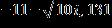
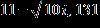
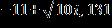
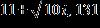
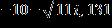
Section 4.1 Complex Numbers
e.
ANSWER: a
25. Write the complex conjugate of the complex number. Then multiply the number by its complex conjugate.


e.

ANSWER: b
26. Write the complex conjugate of the complex number. Then multiply the number by its complex conjugate.

a. –34i, 35
b. i, 35
c. 1225i, 35
d. – i, 35
e. –i, 35
ANSWER: d
27. Write the quotient in standard form.


–2i

e. 2i
Section 4.1 Complex Numbers
ANSWER: c

28. Write the quotient in standard form. a. 4i b. c. d. –4i e.


ANSWER: a
29. Write the quotient in standard form.


e.

ANSWER: d
30. Write the quotient in standard form.

a. – i
b. + i
Section 4.1 Complex Numbers
c. + i d. + i
e. + i
ANSWER: c
31. Write the quotient in standard form.

a. b. c. d.
e. ANSWER: b
32. Write the quotient in standard form.

a. – 2i b. – i
c. 2i d. i – 2
e. i + 2
ANSWER: a
33. Perform the operation and write the result in standard form.

a. + i
b. – i
Section 4.1 Complex Numbers
c. + i d. i
e. – i
ANSWER: e


34. Write the complex number in standard form. a. –b. c. d. –
e. ANSWER: d
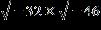
35. Write the complex number in standard form. a. b.


e.

ANSWER: c
36. Write the complex number in standard form.


b. –
c. d.
e.


Section 4.1 Complex Numbers
ANSWER: b
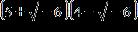
37. Write the complex number in standard form.
a. (20 – ) – (4 – 5 )i
b. (20 + ) + (4 – 5 )i
c. (20 – ) + (4 – 5 )i
d. (20 + ) – (4 – 5 )i
e. (20 + ) + (4 + 5 )i
ANSWER: b
38. Write the complex number in standard form.

a.


ANSWER: d
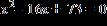
39. Solve the equation and write complex solutions in standard form. a. b. c. d.
e.
ANSWER: d


40. Solve the equation and write complex solutions in standard form. a. b.

Section 4.1 Complex Numbers



ANSWER: a
41. Simplify the complex number and write it in standard form.

ANSWER: e
42. Simplify the complex number and write it in standard form.

e.
ANSWER: d
43. Simplify the complex number and write it in standard form.


ANSWER: c
44. Simplify the complex number and write it in standard form.

Section 4.1 Complex Numbers
a. 27,000i
b. –30i
c. – i
d. i
e. –27,000i
ANSWER: c
45. Simplify the complex number and write it in standard form.

a. i3
b. –i3
c. 1
d. –i
e. i
ANSWER: e
46. Simplify the complex number and write it in standard form.

a.

b.

c.

d.

e. 125i ANSWER: c
47. Simplify the complex number and write it in standard form.

a. 10,000
b. –10,000
c. 10,000i
d. –10,000i
Section 4.1 Complex Numbers
e. 10i
ANSWER: a
48. Simplify the complex number and write it in standard form.

a. 1
b. i
c. –1
d. –i
e. 7
ANSWER: b
49. Raise the complex number to the fourth power.
9i
a. 6561
b. –729
c. 729
d. 81
e. –6561
ANSWER: a
50. Describe the error.





e.

ANSWER: d
51. Do the operation and express the answer in a + bi form.
(2 – 7i) + (6 + 4i)
a. 3 – 8i
b. – 8 + 3i
Section 4.1 Complex Numbers
c. 8 + 3i
d. – 8 – 3i
e. 8 – 3i
ANSWER: e
52. Do the operation and express the answer in a + bi form.
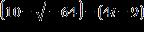
a. – 19 + 24i
b. 19 + 12i
c. – 19 + 12i
d. – 19 – 12i
e. 19 – 12i
ANSWER: e
53. Do the operation and express the answer in a + bi form.

a. 7 – 2i
b. – 14 – 4i
c. 7 + 2i
d. – 14 + 4i
e. – 7 + 2i
ANSWER: a
54. Do the operation and express the answer in a + bi form.
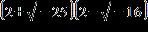
a. 24 – 2 i
b. – 24 + 2 i
c. – 2 + 2 i
d. 2 – 2 i
e. 24 + 2 i
ANSWER: e
55. Do the operation and express the answer in a + bi form.

Section 4.1 Complex Numbers
a. 3i
b. – 3i
c. – 30i
d. – 3
e. 3
ANSWER: d
56. Simplify the expression.
i –38
a. i
b. –3i
c. –i
d. –1
e. 1
ANSWER: d
57. Do the operation and express the answer in a + bi form.

a. –17i
b. –85i
c. –17
d. 17i
e. 17
ANSWER: d
58. Find the values of x and y
x + 59i = y – yi
x = y =
ANSWER: –59; –59
59. Do the operation and express the answer in a + bi form. Do not use parentheses in your answer.
(9 – 7i) + (10 + 3i)
ANSWER: 19 – 4i
60. Do the operation and express the answer in a + bi form. Use fractions in your answer.
Section 4.1 Complex Numbers

ANSWER:

Section 5.1 Exponential Functions and Their Graphs
1. Evaluate the function at the indicated value of x. Round your result to three decimal places if necessary.
Function Value

ANSWER: c
2. Evaluate the function at the indicated value of x. Round your result to three decimal places.

Function Value a. b. c. d.
e.
ANSWER: b
3. Evaluate the function at the indicated value of x. Round your result to three decimal places.
Function Value
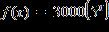
ANSWER: a
4. Evaluate the function at the indicated value of . Give your answer in scientific notation to three decimal places if necessary.
Function Value
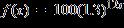
Section 5.1 Exponential Functions and Their Graphs
e. ANSWER: e
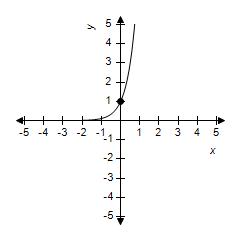


5. Match the graph with its exponential function. a. b. c. d.

e. ANSWER: a
6. Match the graph with its exponential function.
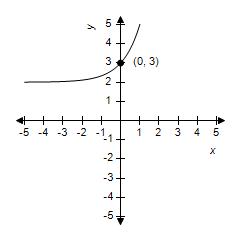
Name: Class:
Section 5.1 Exponential Functions and Their Graphs
a. b. c.


d. e. ANSWER: c


7. Match the graph with its exponential function.
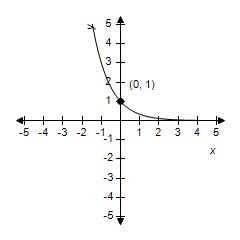
a. b. c. d. e. ANSWER: e


8. Use a graphing utility to construct a table of values for the function. Round your answer to two decimal places.

Section 5.1 Exponential Functions and Their Graphs
)
)
)
(x)
ANSWER: d
9. Select the graph of the function.

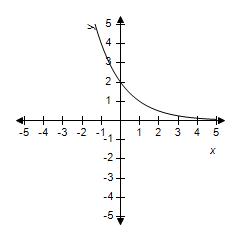
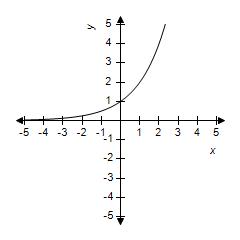
Section 5.1 Exponential Functions and Their Graphs
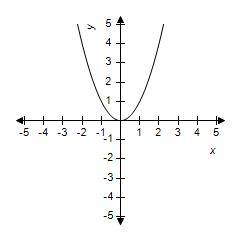
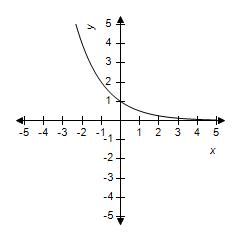
ANSWER: b
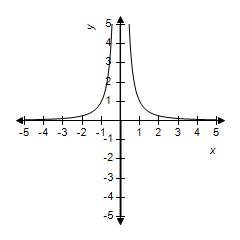
10. Use a graphing utility to construct a table of values for the function. Round your answers to two decimal places.

Section 5.1 Exponential Functions and Their Graphs
ANSWER: e
11. Select the graph of the function.

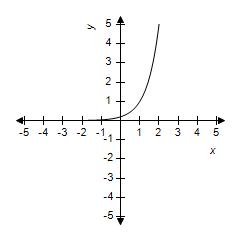
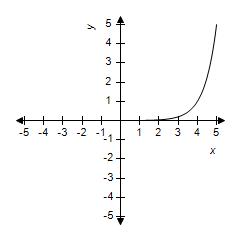
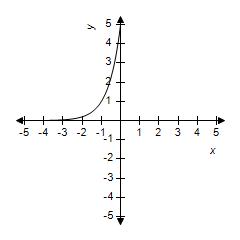
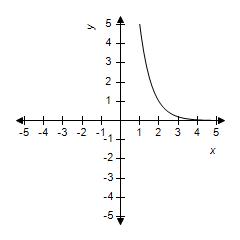
Section 5.1 Exponential Functions and Their Graphs
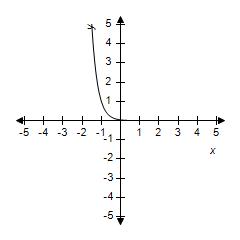
ANSWER: a

12. Use a graphing utility to construct a table of values for the function. Round your answers to two decimal places. a.
b.
ANSWER: a
13. Use the graph of f to determine the transformation that yields the graph of g

a. Shift the graph of f eleven units to the left.
Section 5.1 Exponential Functions and Their Graphs
b. Shift the graph of f eleven units upward.
c. Shift the graph of f eleven units to the right.
d. Shift the graph of f eleven units downward.
e. Both the graphs f and g are same.
ANSWER: b
14. Use the graph of f to determine the transformation that yields the graph of g.

a. Reflect the graph of f in the x-axis and shift five units downward.
b. Both the graphs f and g are same.
c. Reflect the graph of f in the y-axis and shift five units upward.
d. Reflect the graph of f in the x-axis and shift five units upward.
e. Reflect the graph of f in the y-axis and shift five units downward.
ANSWER: d
15. Use the graph of f to determine the transformation that yields the graph of g.
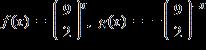
a. Reflect the graph of f in the x-axis.
b. Shift the graph of f two units upward.
c. Reflect the graph of f in the origin.
d. Shift the graph of f two units downward.
e. Reflect the graph of f in the y-axis.
ANSWER: c
16. Select the graph of the exponential function.

Section 5.1 Exponential Functions and Their Graphs
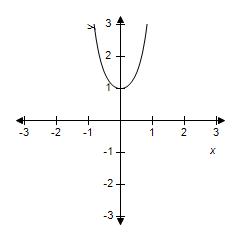
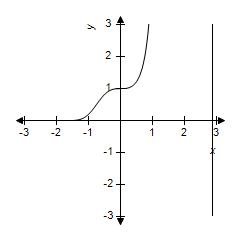
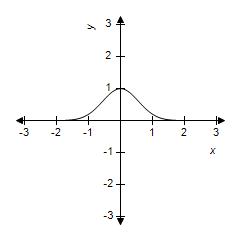
ANSWER: e
17. Select the graph of the exponential function.

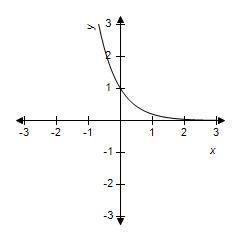
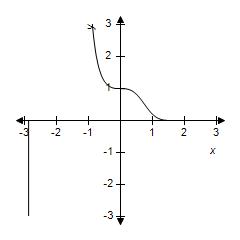
Section 5.1 Exponential Functions and Their Graphs
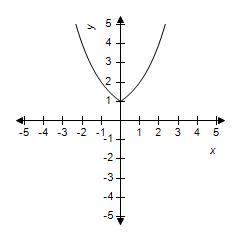
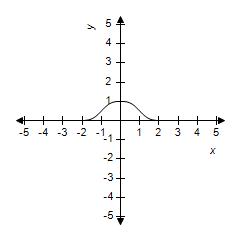
ANSWER: d
18. Select the graph of the exponential function.
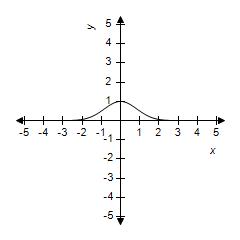
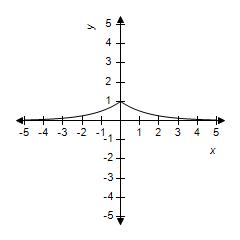
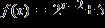
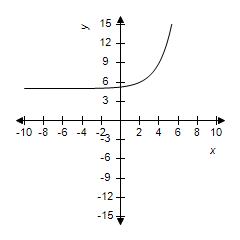
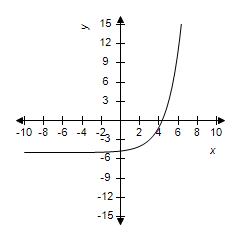
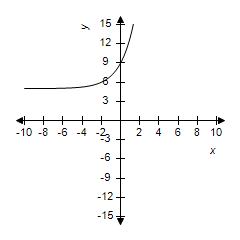
ANSWER: a
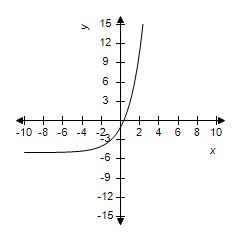
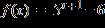
19. Select the graph of the exponential function.
Section 5.1 Exponential Functions and Their Graphs Copyright Cengage Learning. Powered by Cognero.
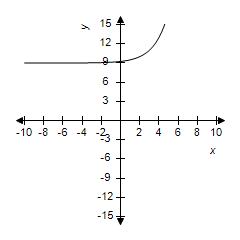
Section 5.1 Exponential Functions and Their Graphs
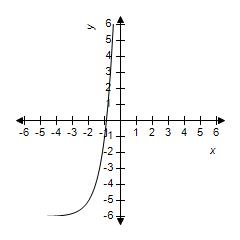
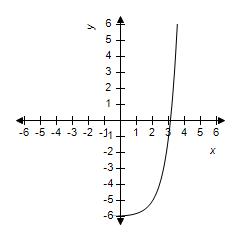
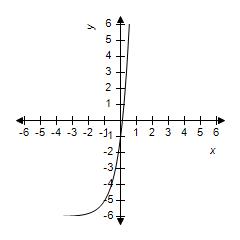
ANSWER: e
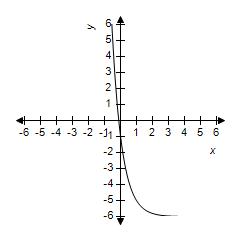
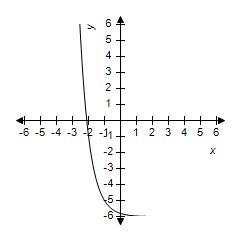
Section 5.1 Exponential Functions and Their Graphs
20. Evaluate the function at the indicated value of x. Round your result to three decimal places.
Function Value


ANSWER: e
21. Evaluate the function at the indicated value of x. Round the result to three decimal places.
Function Value
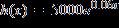
e.
ANSWER: e
22. Evaluate the function at the indicated value of x. Round your result to three decimal places.
Function Value
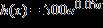
ANSWER: a
23. Use a graphing utility to construct a table of values for the function. Round your answers to three decimal places.

Section 5.1 Exponential Functions and Their Graphs
ANSWER: c
24. Select the graph of the function.

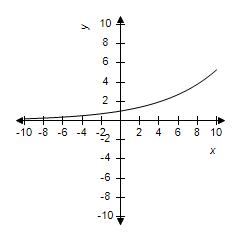
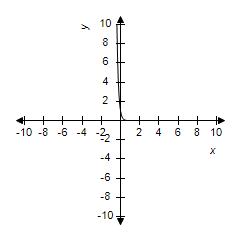
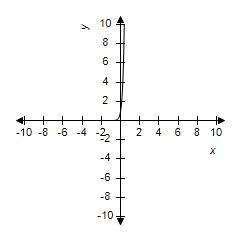
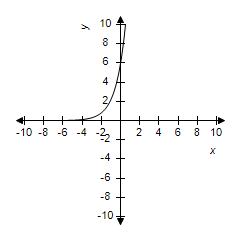
ANSWER: c
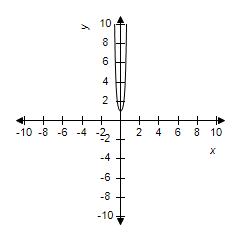
25. Use a graphing utility to construct a table of values for the function. Round your answers to three decimal places.

Section 5.1 Exponential Functions and Their Graphs Copyright Cengage Learning. Powered by Cognero.
Section 5.1 Exponential Functions and Their Graphs
ANSWER: c
26. Select the graph of the function.

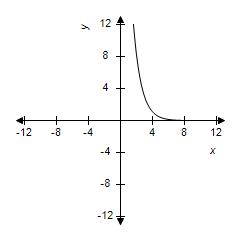
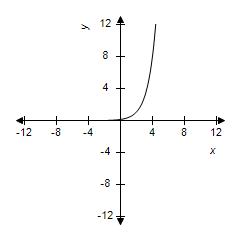
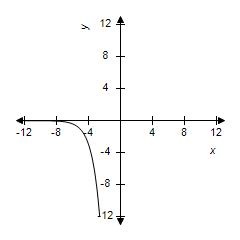
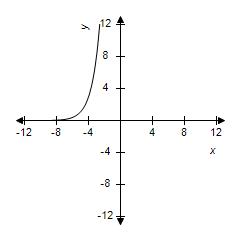
Name: Class:
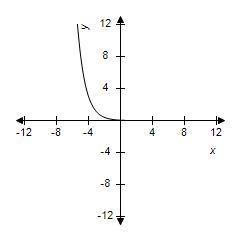
ANSWER: d
27. Use a graphing utility to construct a table of values for the function. Round your answers to three decimal places.
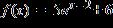
) c.
ANSWER: d
28. Select the graph of the function.
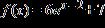
Section 5.1 Exponential Functions and Their Graphs Copyright Cengage Learning. Powered by Cognero.
Section 5.1 Exponential Functions and Their Graphs
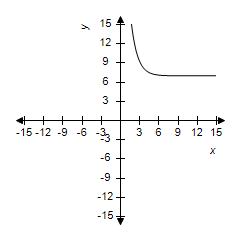
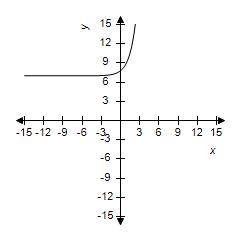
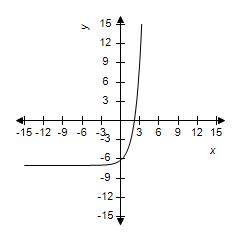
ANSWER: c
29. Select the graph of the exponential function.

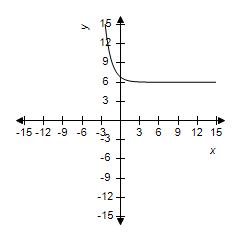
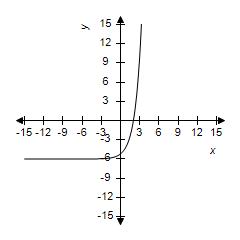
Section 5.1 Exponential Functions and Their Graphs
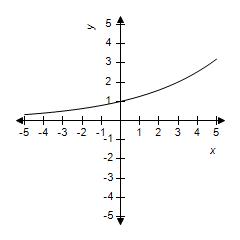
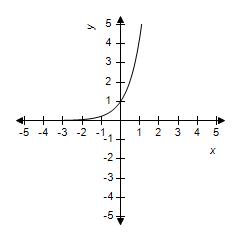
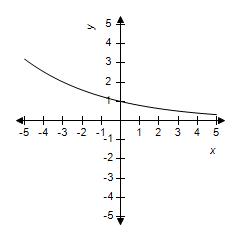
ANSWER: e
30. Select the graph of the exponential function.
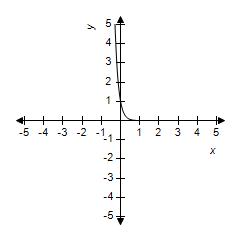
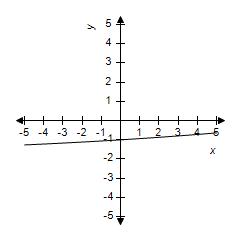

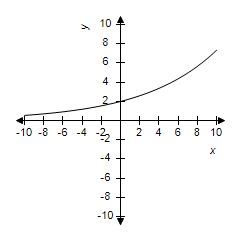
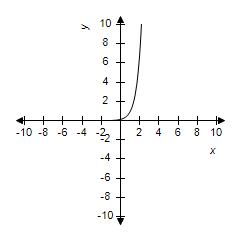
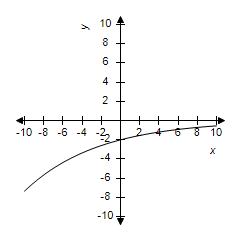
ANSWER: a
31. Select the graph of the exponential function.
Section 5.1 Exponential Functions and Their Graphs Copyright Cengage Learning. Powered by Cognero.
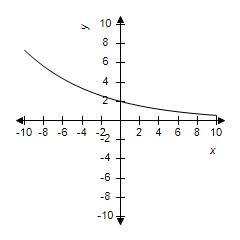
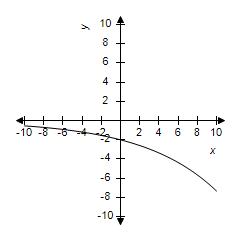
Section 5.1 Exponential Functions and Their Graphs

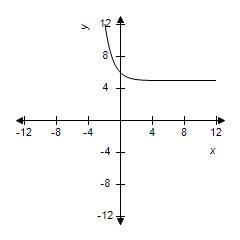
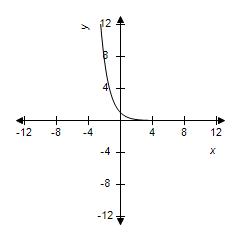
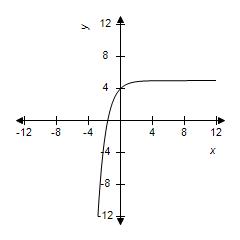
ANSWER: d
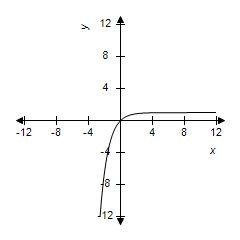
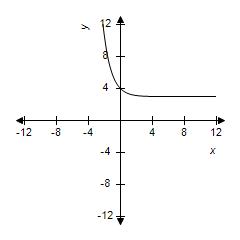
32. Use the One-to-One Property to solve the equation for x
Name: Class:
Section 5.1 Exponential Functions and Their Graphs

e. ANSWER: b
33. Use the One-to-One Property to solve the equation for x

ANSWER: b

34. Use the One-to-One Property to solve the equation for x a.


e. ANSWER: d
35. Use the One-to-One Property to solve the equation for x

a. b.
Section 5.1 Exponential Functions and Their Graphs
c. d.
e.
ANSWER: c
36. Complete the table to determine the balance A for P dollars invested at rate r for t years and compounded n times per year.
a.
d.
ANSWER: a

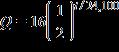
37. Let Q represent a mass of radioactive plutonium (in grams), whose half life is 24,100 years. The quantity of plutonium present after t years is Determine the quantity present after 71,000 years. Round your answer to one decimal place.
a. 4.1 g
b. 3.1 g
c. 5.1 g
d. 2.1 g
e. 6.1 g
ANSWER: d
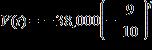
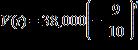
38. After t years, the value of a wheelchair conversion van that originally cost $38,000 depreciates so that each
Section 5.1 Exponential Functions and Their Graphs

year it is worth of its value for the previous year. Find a model for V(t), the value of the van after t years.
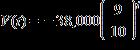
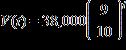
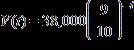
ANSWER: d
39. Determine whether the statement is true or false. Justify your answer.
The line is an asymptote for the graph of

a. False. As but never reaches 5.
b. True. As but never reaches –5.
ANSWER: b

40. Use properties of exponents to determine which functions (if any) are the same. a.
e.
ANSWER: a
41. Evaluate the function at . Round the answer to 3 decimal places.
a. 1.210
b. 1.536

Section 5.1 Exponential Functions and Their Graphs
c. 5.230
d. 28.183
e. 4.950
ANSWER: b
42. Evaluate the function at Round the answer to 3 decimal places.
a. 981.637
b. 1,323.419
c. 404.010
d. 72,360.000
e. 2.454
ANSWER: a


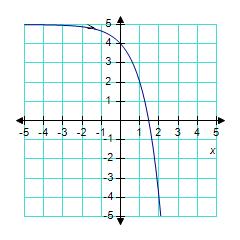
43. Identify the graph of the function. a.
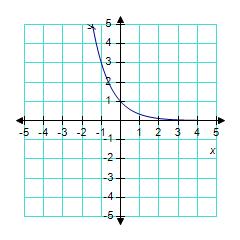
Section 5.1 Exponential Functions and Their Graphs
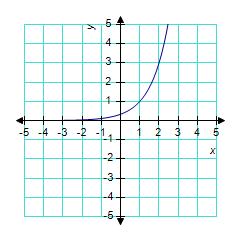
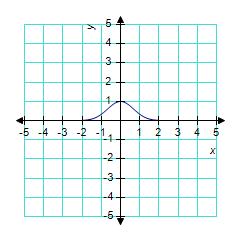
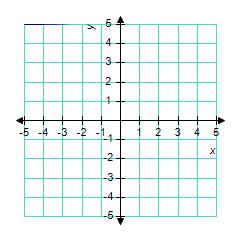
ANSWER: b
44. What is the value of the function at ? Round the answer to 3 decimal places.
a. 0.065
b. 151,789.328
c. 58.715
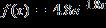
Section 5.1 Exponential Functions and Their Graphs
d. 0.793
e. 432.082
ANSWER: e
45. What is the value of the function at ? Round the answer to 3 decimal places.
a. 149.182
b. 101.492
c. 30.386
d. 168.203
e. 331.131
ANSWER: d
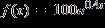
46. Use a graphing utility to determine which graph below is the graph of the function.

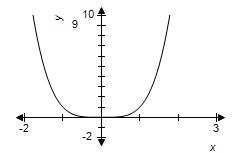
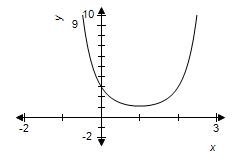
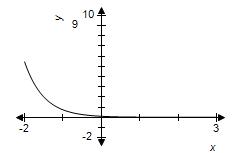
Section 5.1 Exponential Functions and Their Graphs
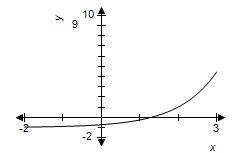
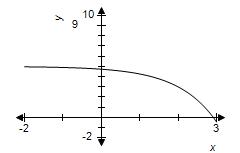
ANSWER: c
47. Use the One-to-One Property to solve the following equation for x


ANSWER: a
48. Use the One-to-One Property to solve the following equation for x.


Section 5.1 Exponential Functions and Their Graphs

ANSWER: b
49. Let Q represent a mass of radioactive radium (226Ra) (in grams), whose half-life is 1599 years. The quantity of radium present after t years is
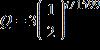
Determine the quantity present after 500 years. Round the answer to the nearest hundredth of a gram if necessary.
a. 0 g
b. 0.47 g
c. 3.00 g
d. 2.42 g
e. 0.81 g
ANSWER: d
50. Sketch the graph of the function.

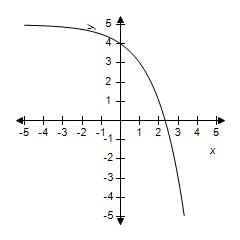
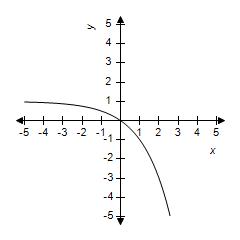
Section 5.1 Exponential Functions and Their Graphs
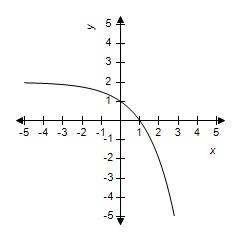
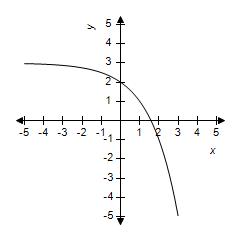
ANSWER: b
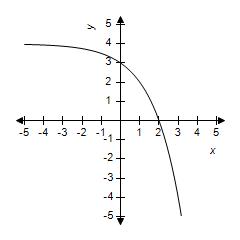
51. Evaluate the function at . Round the answer to 3 decimal places.
a. 1.909
b. 1.980
c. 3.802
d. 1.187
e. 1.210
ANSWER: d
52. Identify the graph of the function.
Section 5.1 Exponential Functions and Their Graphs
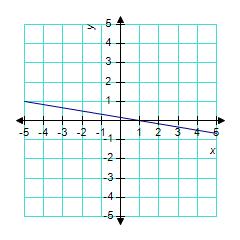
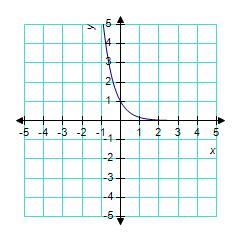
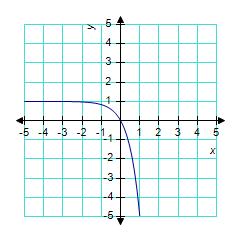
Section 5.1 Exponential Functions and Their Graphs
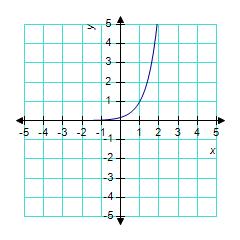
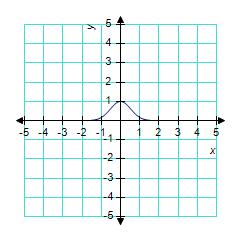
ANSWER: b
53. What is the value of the function at ? Round the answer to 3 decimal places.
a. 188.197
b. 111.887
c. 9.116
d. 76.492
e. 623.823
ANSWER: a

54. Find the value of b that would cause the graph of y = bx to look like the graph indicated.
Section 5.1 Exponential Functions and Their Graphs
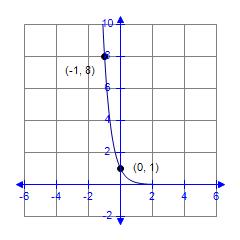


ANSWER: a
55. Graph the function.

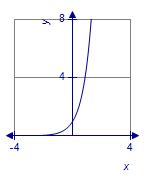
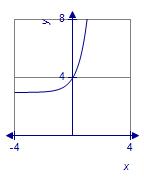
Name: Class:
Section 5.1 Exponential Functions and Their Graphs
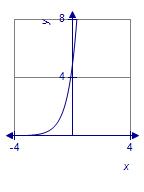
ANSWER: a
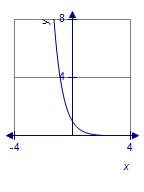
56. Graph the function using translations.

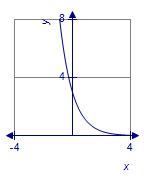
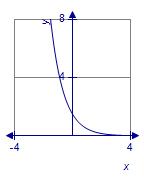
ANSWER: d
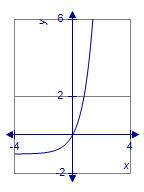
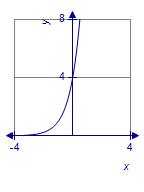
57. Graph the exponential function.

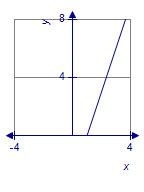
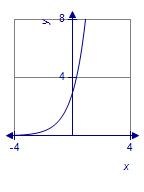
Section 5.1 Exponential Functions and Their Graphs
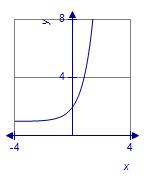
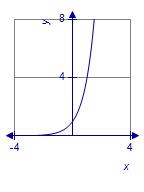
ANSWER: a
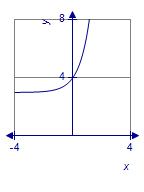
58. Graph the function using translations.

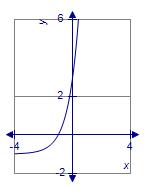
Name: Class:
Section 5.1 Exponential Functions and Their Graphs
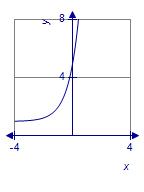
ANSWER: c
59. Find the value of b that would cause the graph of y = bx to look like the graph below.
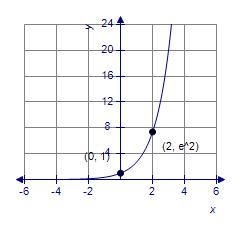


ANSWER: c
60. Graph the function using translations.
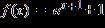
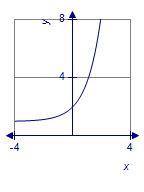
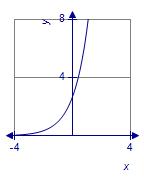
Section 5.1 Exponential Functions and Their Graphs
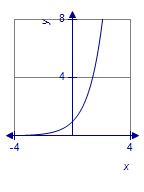
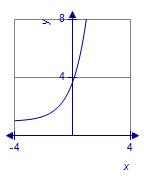
ANSWER: c
61. Use a graphing utility to determine which graph below is the graph of the function.
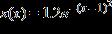
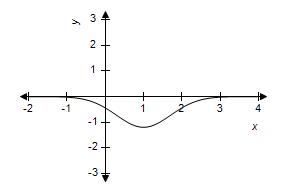
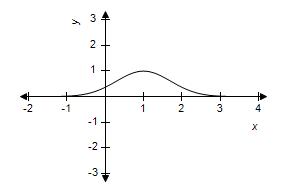
Section 5.1 Exponential Functions and Their Graphs
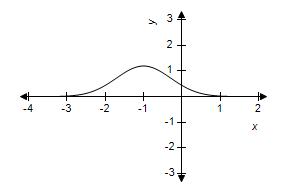
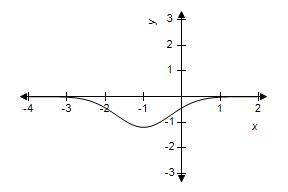
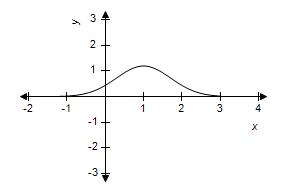
ANSWER: e
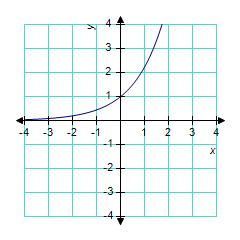
62. Sketch the graph of the function

Section 5.1 Exponential Functions and Their Graphs
ANSWER:
Section 6.1 Lines
1. Find the slope of the line with inclination . Round your answer to four decimal places.
ANSWER: d
2. Find the slope of the line with inclination Round your answer to four decimal places.
ANSWER: d
3. Find the inclination Θ (in degrees) of the line with a slope of m. Round your answer to one decimal place. a.

ANSWER: a
4. Find the inclination Θ (in degrees) of the line with a slope of m Round your answer to one decimal place.
ANSWER: a
Section 6.1 Lines
5. Find the inclination Θ (in degrees) of the line with a slope of m Round your answer to one decimal place.

ANSWER: c
6. Find the inclination Θ (in degrees) of the line with a slope of m. Round your answer to one decimal places.

ANSWER: c
7. Find the inclination (in radians and degrees) of the line passing through the points. Round your answer to four decimal places for radians and round your answer to one decimal place for degrees.
ANSWER: e
8. Find the inclination (in radians and degrees) of the line passing through the points. Round your answer to four decimal places for radians and round your answer to one decimal place for degrees.
Section 6.1 Lines
ANSWER: a
9. Find the inclination (in radians and degrees) of the line passing through the points. Round your answer to four decimal places for radians and round your answer to one decimal place for degrees.
ANSWER: e
10. Find the inclination (in radians and degrees) of the line passing through the points. Round your answer to four decimal places for radians and round your answer to one decimal place for degrees.
ANSWER: d
11. Find the inclination (in radians and degrees) of the line. Round your answer to four decimal places for radians and round your answer to one decimal place for degrees. a.

ANSWER: e
12. Find the inclination (in radians and degrees) of the line. Round your answer to four decimal places for radians and round your answer to one decimal place for degrees.
Section 6.1 Lines
ANSWER: d
13. Find the inclination (in radians and degrees) of the line. Round your answer to four decimal places for radians and round your answer to one decimal place for degrees.
ANSWER: a
14. Find the inclination (in radians and degrees) of the line. Round your answer to four decimal places for radians and round your answer to one decimal place for degrees. a. b.

ANSWER: b
15. Find the angle (in radians and degrees) between the lines. Round your answer to four decimal places for radians and round your answer to one decimal places for degree.

Section 6.1 Lines
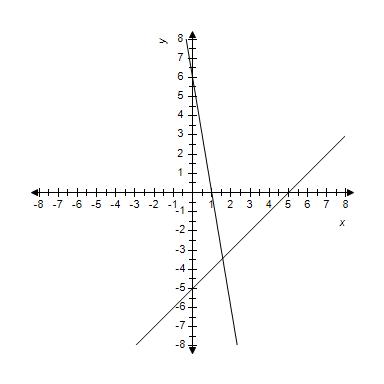
ANSWER: a
16. Find the angle (in radians and degrees) between the lines. Round your answer to four decimal places for radians and round your answer to one decimal place for degrees.

Section 6.1 Lines
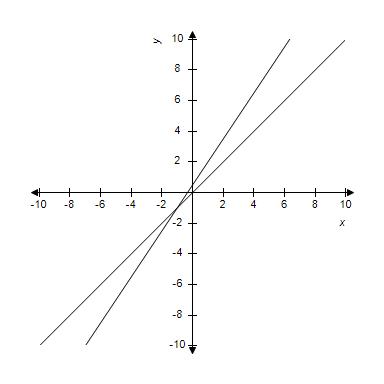
ANSWER: c
17. Find the angle (in radians and degrees) between the lines. Round your answer to four decimal places for radians and round your answer to one decimal place for degrees.

Section 6.1 Lines
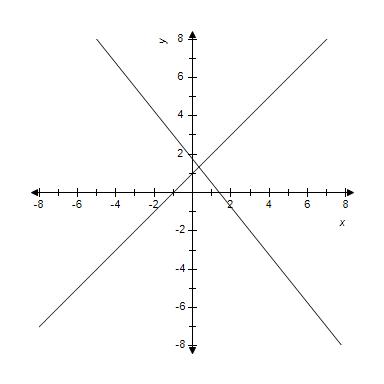
ANSWER: a

18. Find the angle (in radians and degrees) between the lines. Round your answer to four decimal places for radians and round your answer to one decimal place for degrees. a. b.
e.
ANSWER: b
19. Find the angle (in radians and degrees) between the lines. Round your answer to four decimal places for radians and round your answer to one decimal place for degrees.
Section 6.1 Lines


ANSWER: d
20. Find the angle (in radians and degrees) between the lines. Round your answer to four decimal places for radians and round your answer to one decimal place for degrees.

ANSWER: c


21. Find the angle (in radians and degrees) between the lines. Round your answer to four decimal places for radians and round your answer to one decimal place for degrees. a. b.
ANSWER: c
22. Find the angle (in radians and degrees) between the lines. Round your answer to four decimal places for radians and round your answer to one decimal place for degrees.
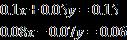
Section 6.1 Lines
ANSWER: e
23. Find the angle (in radians and degrees) between the lines. Round your answer to four decimal places for radians and round your answer to one decimal place for degrees.
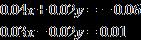

ANSWER: e
24. Find the distance d between the point and the line. Round your answer to four decimal places.
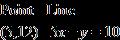
e.
ANSWER: b
25. Find the distance between the point and the line. Round your answer to four decimal places.
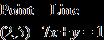
ANSWER: a
Section 6.1 Lines
26. Find the distance between the point and the line. Round your answer to four decimal places.

ANSWER: e
27. Find the distance between the point and the line.

e.
ANSWER: e
28. Find the distance between the point and the line. Round your answer to four decimal places.
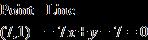
ANSWER: a
29. Find the distance between the point and the line. Round your answer to four decimal places.
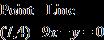
Section 6.1 Lines
e.
ANSWER: c
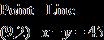
30. Find the distance between the point and the line. Round your answer to four decimal places. a.
e.
ANSWER: c
31. The given points represent the vertices of a triangle. Select the triangle ABC in the coordinate plane.
A = (0,0), B = (1,4), C = (4,0)
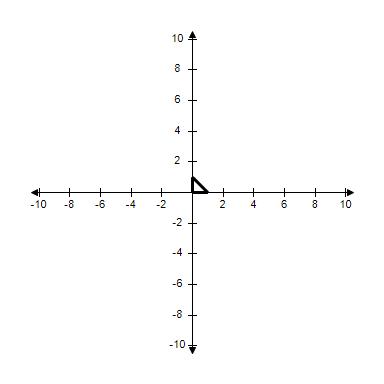
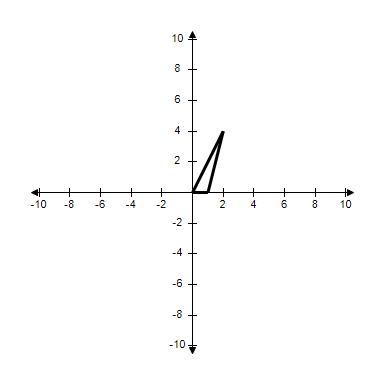
Section 6.1 Lines
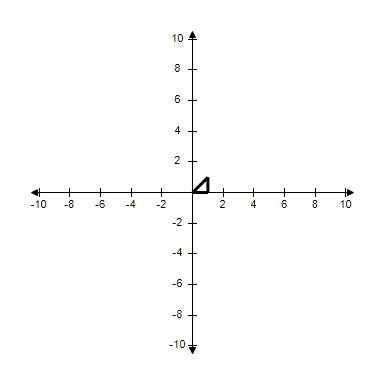
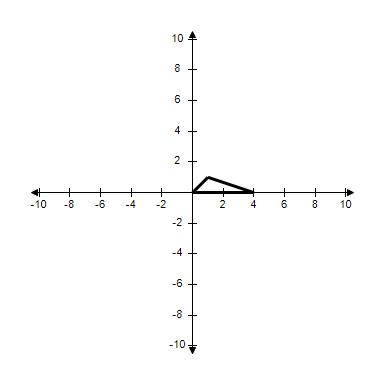
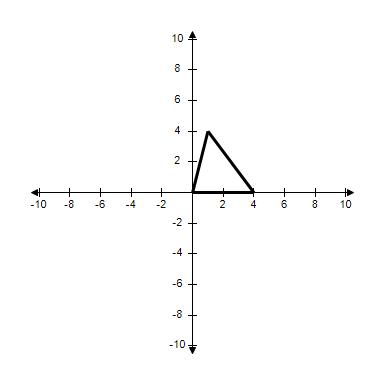
ANSWER: e
32. The given points represent the vertices of a triangle. Select the triangle ABC in the coordinate plane.
Section 6.1 Lines
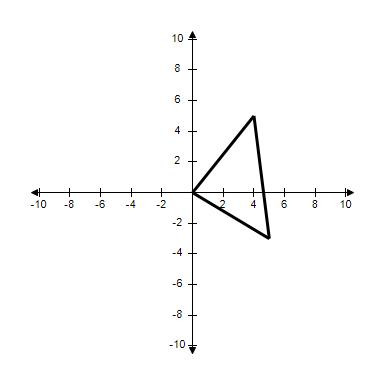
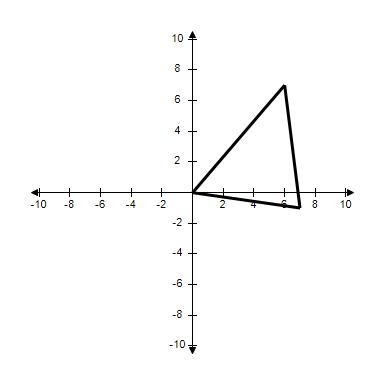
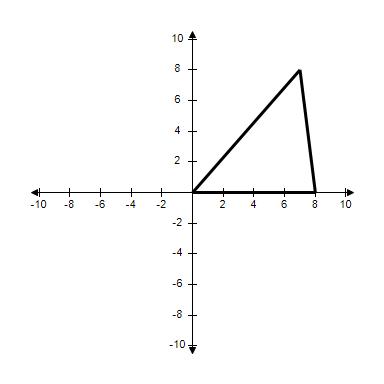
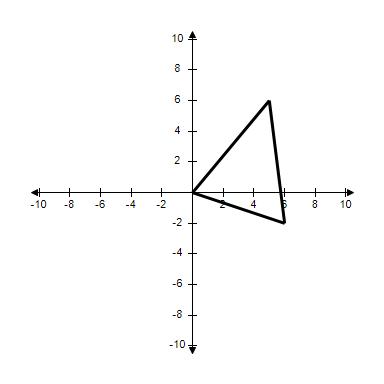
Section 6.1 Lines
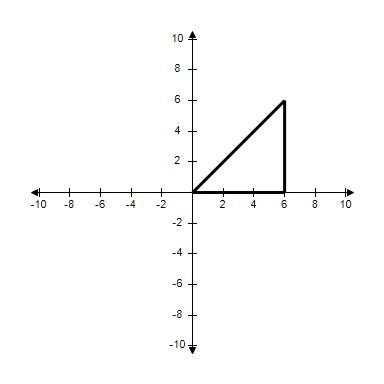
ANSWER: b

33. The given points represent the vertices of a triangle. Select the triangle ABC in the coordinate plane. a. b.
Section 6.1 Lines
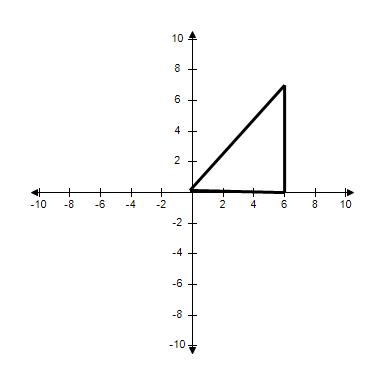
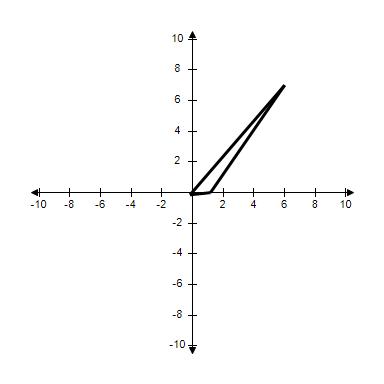
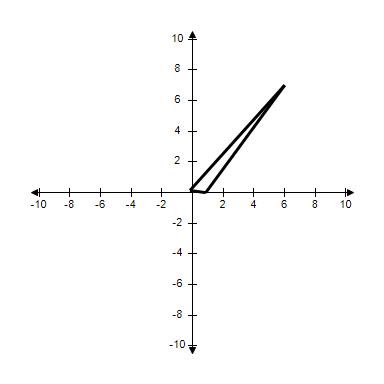
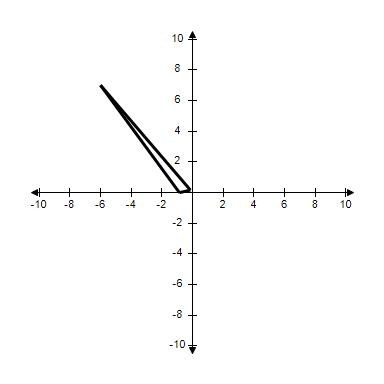
Section 6.1 Lines
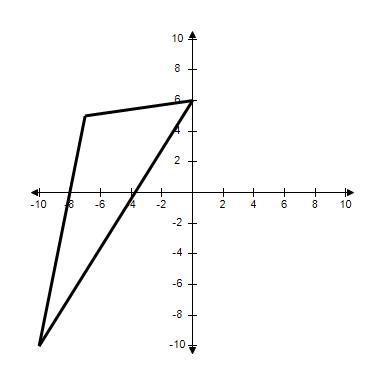
ANSWER: c
34. The given points represent the vertices of a triangle. Select the triangle ABC in the coordinate plane. A = (–4,–5), B = (5,10), C = (8,10)
Section 6.1 Lines
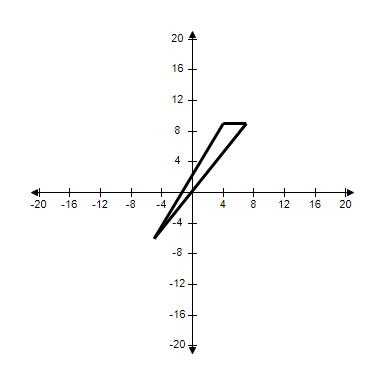
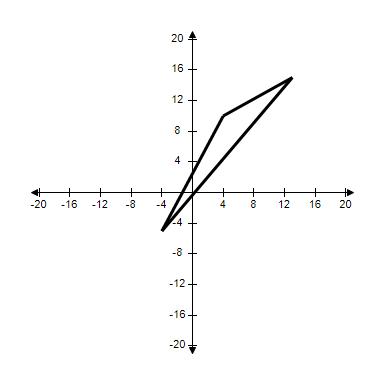
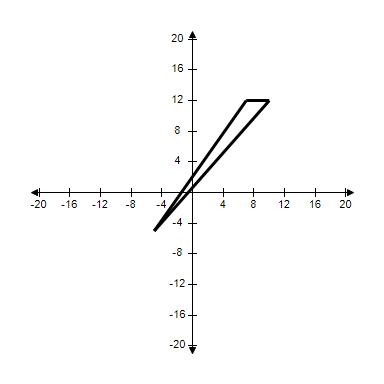
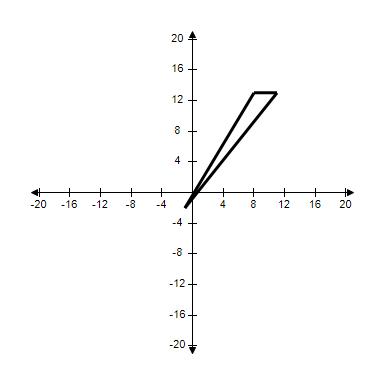
Section 6.1 Lines
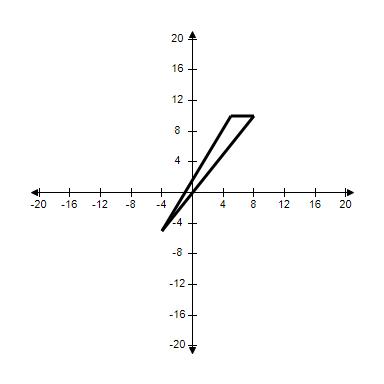
ANSWER: e
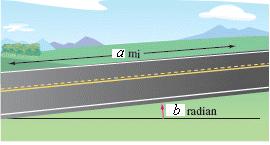
35. A straight road rises with an inclination of 0.22 radian from the horizontal (see figure). Find the slope m of the road and the change in elevation (x) over a six-mile stretch of the road. Round your answer to four decimal places for the m and round your answers to the nearest foot for the change in elevation.


Section 6.1 Lines

ANSWER: e
36. A straight road rises with an inclination of 0.22 radian from the horizontal. Find the slope of the road and the change in elevation over a three-mile stretch of the road. Round your answer to four decimal places for the m and round your answer to the nearest foot for the change in elevation.


ANSWER: c
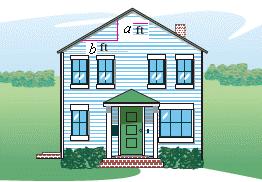
37. A roof has a rise of 7 feet for every horizontal change of 9 feet (see figure). Find the inclination of the roof . Round your answer to one decimal place.


ANSWER: a
38. A moving conveyor is built so that it rises 1 meter for each 3 meters of horizontal travel. Select a diagram
Section 6.1 Lines
that gives a visual representation of the problem.
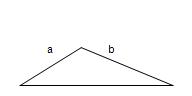
a = 1m, b = 3m
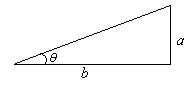
a = 1m, b = 3m
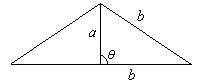
a = 1m, b = 3m d.
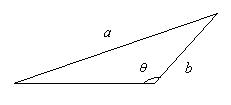
a = 1m, b = 3m
e.
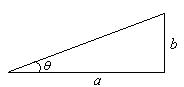
a = 1m, b = 3m
ANSWER: b
39. A moving conveyor is built so that it rises 9 meter for each 11 meters of horizontal travel. Find the inclination of the conveyor. Round your answer to one decimal place. a.


Section 6.1 Lines
e.

ANSWER: d
40. A moving conveyor is built so that it rises 5 meter for each 7 meters of horizontal travel. The conveyor runs between two floors in a factory. The distance between the floors is 6 meters. Find the length of the conveyor. Round your answers to one decimal place. a.
e.
ANSWER: e
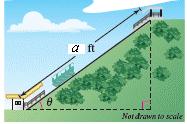
41. The Falls Incline Railway in Niagara Falls, Ontario, Canada is an inclined railway that was designed to carry people from the City of Niagara Falls to Queen Victoria Park. The railway is approximately 170 feet long with a 42% uphill grade (see figure). Find the inclination of the railway. Round your answer to four decimal places for radians and round your answer to one decimal place for degrees. a.
e.
ANSWER: d
42. The Falls Incline Railway in Niagara Falls, Ontario, Canada is an inclined railway that was designed to carry people from the City of Niagara Falls to Queen Victoria Park. The railway is approximately 110 feet long with a 44% uphill grade (see figure). Find the change in elevation from the base to the top of the railway. Round your answer to one decimal place.
Section 6.1 Lines
ANSWER: a
43. The Falls Incline Railway in Niagara Falls, Ontario, Canada is an inclined railway that was designed to carry people from the City of Niagara Falls to Queen Victoria Park. The railway is approximately 170 feet long with a 28% uphill grade (see figure). Using the origin of a rectangular coordinate system as the base of the inclined plane, find the equation of the line that models the railway track.
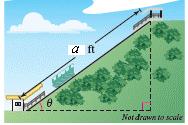
ANSWER: b
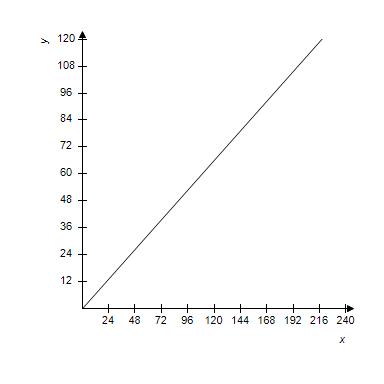
44. The Falls Incline Railway in Niagara Falls, Ontario, Canada is an inclined railway that was designed to carry people from the City of Niagara Falls to Queen Victoria Park. The railway is approximately 180 feet long with a 40% uphill grade (see figure). Select the graph of the equation of the line that models the railway track.
Section 6.1 Lines
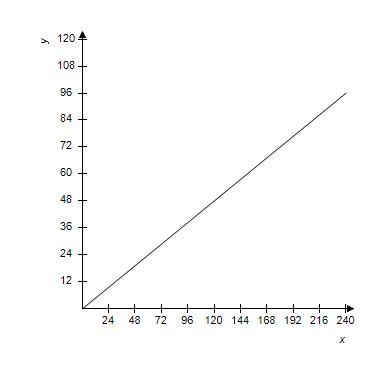
Section 6.1 Lines
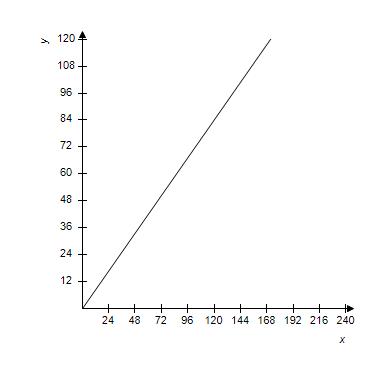
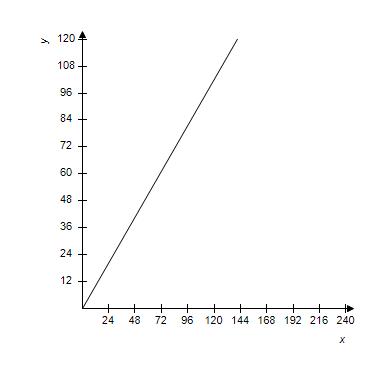
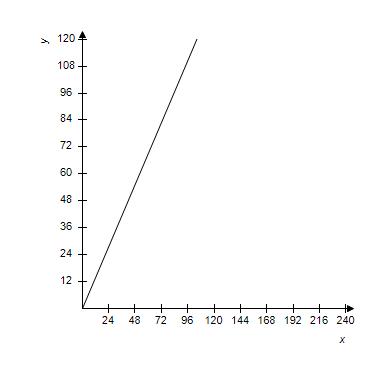
ANSWER: a
45. Consider a line with slope m and y-intercept (0,4). Write the distance d between the origin and the line as a function of m
Section 6.1 Lines


ANSWER: e
46. Consider a line with slope m and y-intercept (0,4). Select the graph of the distance between the origin and the line.
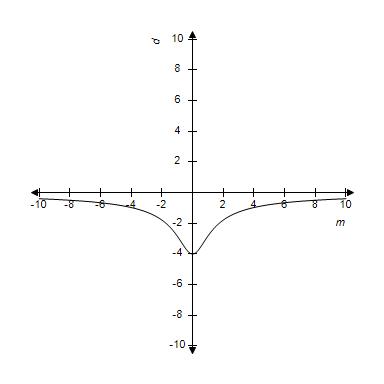
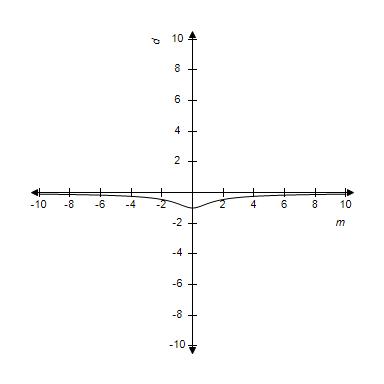
Section 6.1 Lines
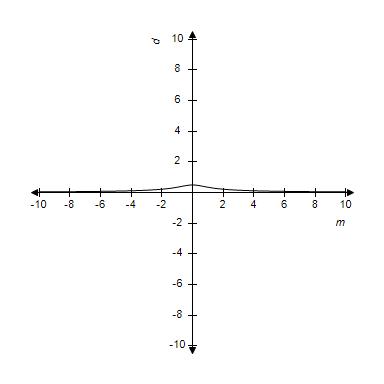
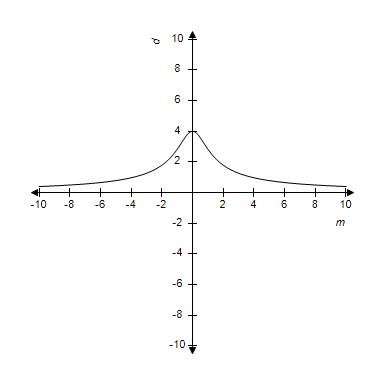
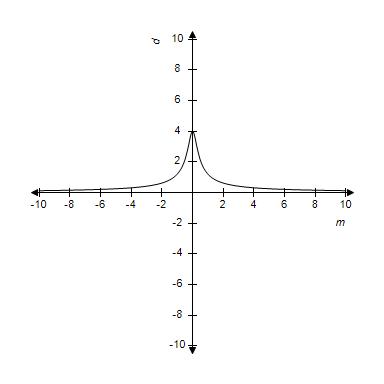
ANSWER: d
47. Consider a line with slope m and y-intercept (0,8). Find the slope that yields the maximum distance between the origin and the line.
Section 6.1 Lines
a. The maximum distance of occurs when the slope m is .
b. The maximum distance of 8 occurs when the slope m is 0.

c. The maximum distance of occurs when the slope m is 0.
d. The maximum distance of 9 occurs when the slope m is 8.
e. The maximum distance of occurs when the slope m is .
ANSWER: b
48. Consider a line with slope m and y-intercept (0,7). Write the distance d between the point (6,1) and the line as a function of m.
a.

b.

c. d.


e.

ANSWER: c
49. Consider a line with slope m and y-intercept (0,6). Select the graph of the distance d between the point (5,1) and the line as a function of m
Section 6.1 Lines
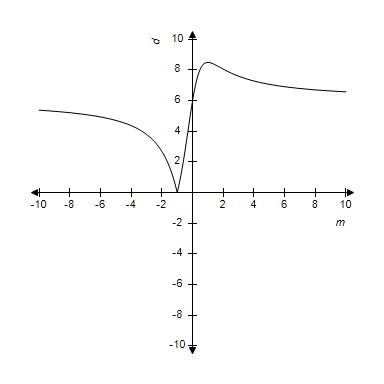
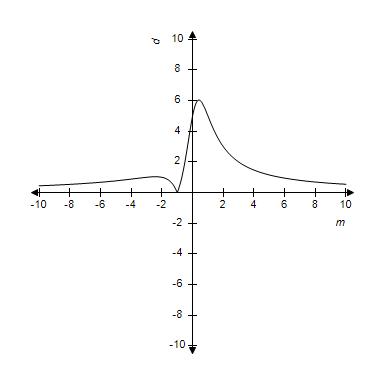
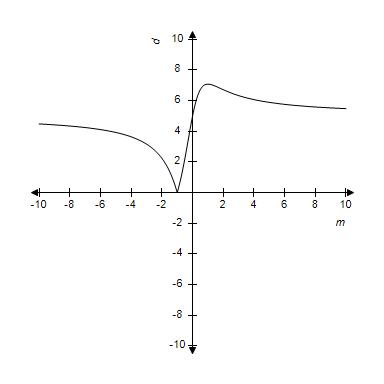
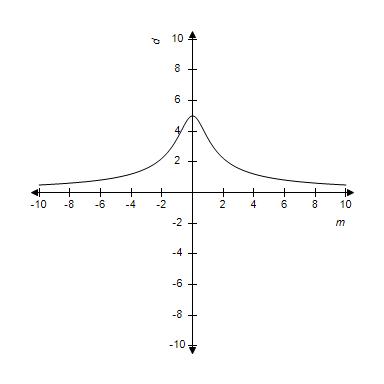
Section 6.1 Lines
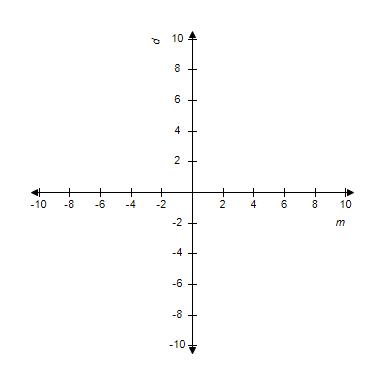
ANSWER: c
50. Consider a line with slope m and y-intercept (0,4). Find the slope that yields the maximum distance between the point (3,1) and the line.
e.
ANSWER: e
Section P.1 Review of Real Numbers and Their Properties
1. Determine which number/s in the set is/are natural number/s.
{2.19, 0.684..., –3, 0.017174526..., 46, –49}
a. 46, –49
b. 2.19, 0.684..., –3, 46, –49
c. –3, 46, –49
d. 0.017174526...
e. 46
ANSWER: e
2. Determine which number/s in the set is/are rational number/s.
{2.3232965648..., 0.7063, –5.63, , –4, 1}
a. 2.3232965648...,
b. 1
c. –4, 1

d. –4, 1, –5.63, 0.7063
e. –4, 1, –5.63, 0.7063,
ANSWER: d
3. Determine which number/s in the set is/are irrational number/s.



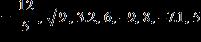

e.

ANSWER: d
4. Plot the following real number on the real number line.
–2.5
Section P.1 Review of Real Numbers and Their Properties





ANSWER: b
5. Use a calculator to find the decimal form of the rational number. If it is a nonterminating decimal, write the repeating pattern.

ANSWER: e
6. Approximate the numbers and place the correct symbol (< or >) between them.
Section P.1 Review of Real Numbers and Their Properties
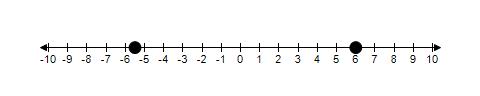
a. –5.5 > 6
b. –6 < 5.5
c. –5 > 6
d. –5.5 < 6
e. –5 < 6
ANSWER: d
7. Approximate the numbers and place the correct symbol (< or >) between them.
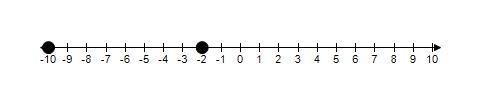
a. –10 < –2
b. –9.5 < –2.5
c. –10.5 > –2
d. –10.5 < –1.5
e. –10 > –2
ANSWER: a
8. Plot the two real numbers on the real number line. Then place the appropriate inequality symbol ( , , =, <, or >) between them. –3, –7
a. –3 > –7 b. –3 ≤ –7
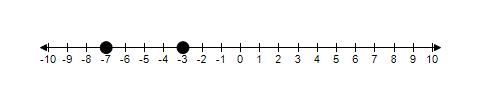
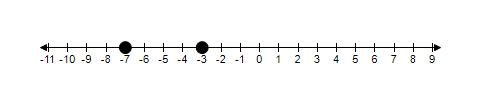
Section P.1 Review of Real Numbers and Their Properties
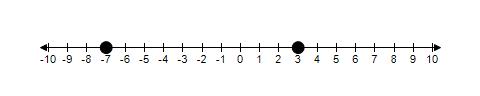
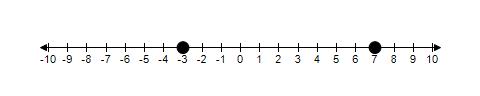
3 < –7
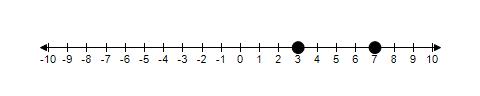
3 < –7
ANSWER: a
9. Plot the two real numbers on the real number line. Then place the appropriate inequality symbol (< or >) between them.

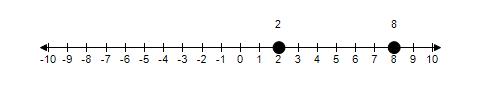

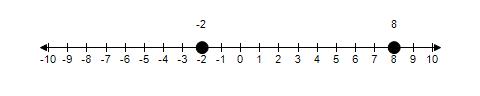

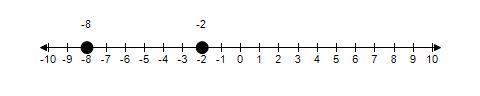
Section P.1 Review of Real Numbers and Their Properties

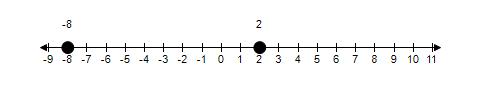

ANSWER: a
10. Sketch the subset on the real number line, and state whether the interval is bounded or unbounded.
x ≥ –2
a. The interval is unbounded.
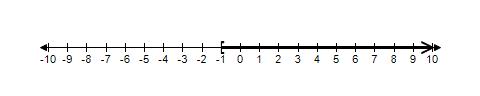
b. The interval is unbounded.
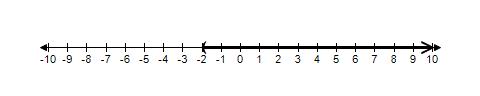
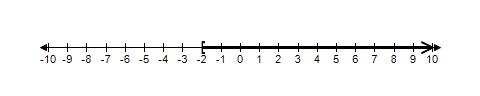
c. The interval is bounded.
Section P.1 Review of Real Numbers and Their Properties
d.
The interval is bounded.
e.
The interval is unbounded.
ANSWER: e
11. Give a verbal description of the subset of real numbers represented by the following inequality and sketch the subset on the real number line.
x ≤ 2
a. x ≤ 2 denotes the set of all real numbers less than or equal to 2.
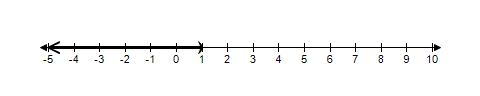
b. x ≤ 2 denotes the set of all real numbers greater than or equal to 2.
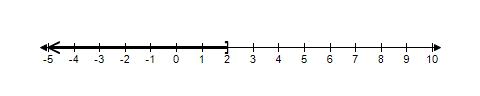
c. x ≤ 2 denotes the set of all real numbers less than or equal to 2.
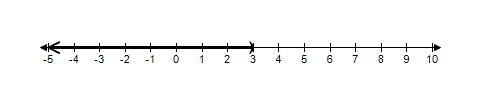
d. x > 2 denotes the set of all real numbers greater than 2.
e. x ≤ 2 denotes the set of all real numbers less than or equal to 2.
Section P.1 Review of Real Numbers and Their Properties
ANSWER: e
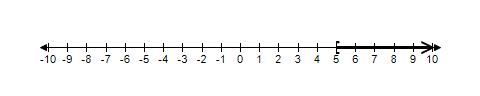
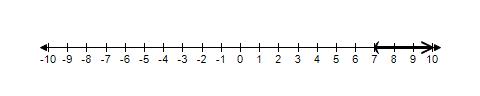
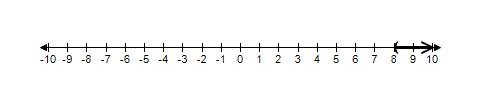
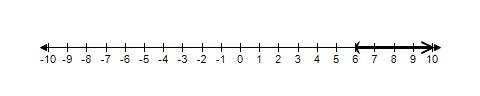
12. Give a verbal description of the subset of real numbers represented by the following interval, and sketch the subset on the real number line.
[7, ∞)
a. [7, ∞) denotes the set of all real numbers less than 7.
b. [7, ∞) denotes the set of all real numbers less than or equal to 7.
c. [7, ∞) denotes the set of all real numbers greater than 7.
d. [7, ∞) denotes the set of all real numbers equal to 7.
e. [7, ∞) denotes the set of all real numbers greater than or equal to 7.
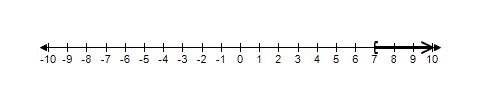
ANSWER: e
13. Sketch the subset on the real number line, and state whether the interval is bounded or unbounded.
Section P.1 Review of Real Numbers and Their Properties
a.
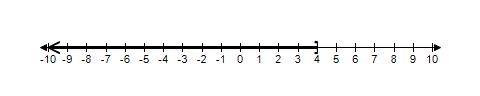
The interval is unbounded.
b.
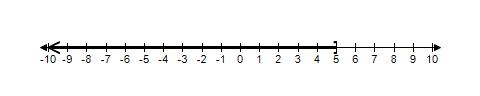
The interval is unbounded.
c.
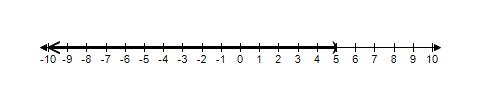
The interval is unbounded.
d.
The interval is bounded.
e.
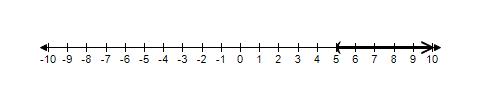
The interval is unbounded.
ANSWER: c
14. Sketch the subset on the real number line, and state whether the interval is bounded or unbounded.
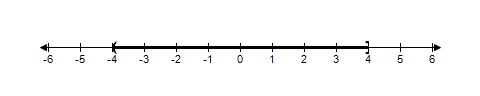
The interval is bounded.
Section P.1 Review of Real Numbers and Their Properties
b.
The interval is unbounded.
c.
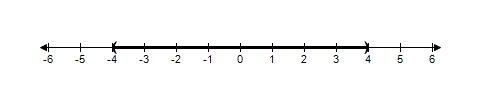
The interval is unbounded.
d.
The interval is bounded.
e.
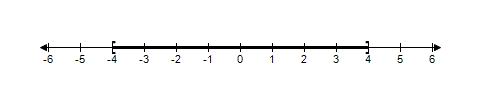
The interval is unbounded.
ANSWER: d
15. Give a verbal description of the subset of real numbers represented by the following inequality, and sketch the subset on the real number line.
3 ≤ x < 0
a. –3 ≤ x < 0 denotes the set of all real numbers greater than or equal to –3 and less than or equal to 0.
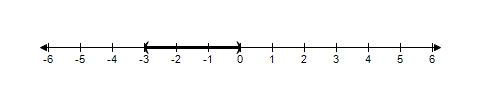
b. –3 ≤ x < 0 denotes the set of all real numbers greater than or equal to –3 and less than 0.
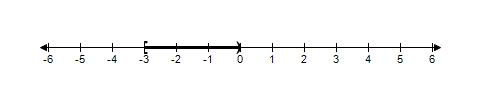
c. –3 ≤ x < 0 denotes the set of all real numbers greater than or equal to –3 and less than 0.
Section P.1 Review of Real Numbers and Their Properties
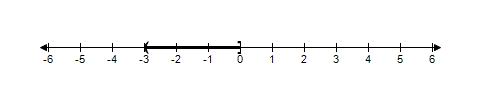
d. –3 ≤ x < 0 denotes the set of all real numbers greater than or equal to –3 and less than 0.
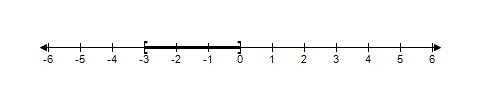
e. –3 ≤ x < 0 denotes the set of all real numbers less than or equal to –3 and greater than 0.
ANSWER: b
16. Give a verbal description of the subset of real numbers represented by the inequality, and sketch the subset on the real number line.
0 < x ≤ 1
a. 0 ≤ x ≤ 1 denotes the set of positive real numbers less than or equal to 1.
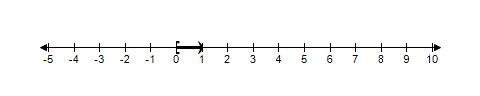
b. 0 < x > 1 denotes the set of positive real numbers greater than 1.
c. 0 < x < 1 denotes the set of positive real numbers less than 1.
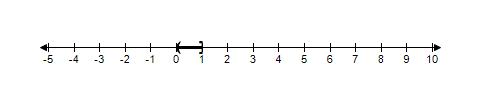
d. 0 < x ≥ 1 denotes the set of positive real numbers greater than or equal to 1.
Name: Class:
Section P.1 Review of Real Numbers and Their Properties
e. 0 < x ≤ 1 denotes the set of positive real numbers less than or equal to 1.
ANSWER: e
17. Sketch the subset on the real number line, and state whether the interval is bounded or unbounded. (–2, 4]
a.
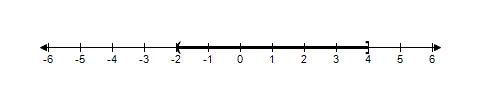
The interval is unbounded.
b.
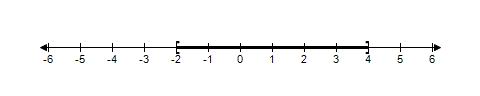
The interval is unbounded.
c.
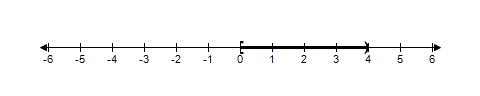
The interval is bounded.
d.
The interval is bounded.
Section P.1 Review of Real Numbers and Their Properties
e.
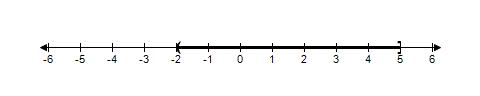
The interval is unbounded.
ANSWER: d
18. Use inequality notation and interval notation to describe the set.
y is no more than 20.
a. Inequality : y ≤ 20
Interval : (∞, –20]
b. Inequality : y ≤ 20
Interval : (–∞, 20]
c. Inequality : y ≥ 20
Interval : (–∞, 20]
d. Inequality : y ≥ 20
Interval : (–∞, –20]
e. Inequality : y ≤ 20
Interval : (∞, 20]
ANSWER: b
19. Use inequality notation and interval notation to describe the set.
y is at least –4 and less than 0.
a. Inequality : –4 > y ≥ 0
Interval : [–4, 0)
b. Inequality : –4 ≥ y and y < 0
Interval : [–4, 0)
c. Inequality : –4 < y < 0
Interval : (–4, 0)
d. Inequality : –4 ≤ y < 0
Interval : [–4, 0)
e. Inequality : –4 < y < 0
Interval : [–4, 0)
ANSWER: d
20. Use inequality notation and interval notation to describe the set. The dog’s weight W is more than 52 pounds.
a. Inequality : W > 52
Interval : (52, ∞)
Section P.1 Review of Real Numbers and Their Properties
b. Inequality : W ≥ 52 Interval : (52, ∞)
c. Inequality : W ≤ 52 Interval : (52, ∞)
d. Inequality : W < 52 Interval : (52, ∞)
e. Inequality : W = 52 Interval : (52, ∞)
ANSWER: a
21. Use inequality notation and interval notation to describe the set.
The annual rate of inflation r is expected to be at least 3% but no more than 5%.
a. Inequality : 3% ≤ r ≤ 5% Interval : [3, 5]
b. Inequality : 3% < r ≤ 5% Interval : [3, 5]
c. Inequality : 3% < r < 5% Interval : [3, 5]
d. Inequality : 3% ≤ r < 5% Interval : [3, 5]
e. Inequality : 3% > r > 5% Interval : [3, 5]
ANSWER: a
22. Evaluate the expression.
|–33|
a. –33
b. 66
c. 33
d. –31
e. –34
ANSWER: c
23. Evaluate the expression.
|2 – 10|
a. 20
b. 8
c. –4
d. 12
e. –8
Name: Class:
Section P.1 Review of Real Numbers and Their Properties
ANSWER: b
24. Evaluate the expression.
|–5| – |–9|
a. –14
b. –4
c. –12
d. 4
e. 45
ANSWER: b
25. Evaluate the expression.

a. –1
b. 8
c. 7
d. 1
e. 6
ANSWER: a
26. Evaluate the expression.
–9|–9|
a. –22
b. 72
c. –27
d. 75
e. –81
ANSWER: e
27. Evaluate the expression. , x < –9

a. –1
b. –3
c. –79
d. –82
e. –81
Section P.1 Review of Real Numbers and Their Properties
ANSWER: a
28. Place the correct symbol ( <, >, or = ) between the two real numbers.
|–7| 7
a. |–7| = 7
b. |–7| ≥ –7
c. |–7| ≤ –7
d. |–7| < 7
e. |–7| > 7
ANSWER: a
29. Write the expression without absolute value symbols.
|x – 8| + |x – 7|, given 0 < x < 4
a. 15
b. 2x + 1
c. 2x – 1
d. 2x – 15
e. 2x + 15
ANSWER: d
30. Place the correct symbol ( <, >, or = ) between the two real numbers.
–|–7| |–7|
a. –|–7| > |–7|
b. –|–7| < |–7|
c. –|–7| = |–7|
ANSWER: b
31. Place the correct symbol ( <, >, or = ) between the two real numbers.
–(–2) –2
a. –(–2) < –2
b. –(–2) > –2
c. –(–2) = –2
ANSWER: b
32. Find the distance between a and b.
a = 179, b = 66
a. 68
b. 115
Section P.1 Review of Real Numbers and Their Properties
c. 181
d. 245
e. 113
ANSWER: e
33. Find the distance between a and b
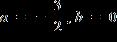
a.
b. c. 0 d. e.


ANSWER: a
34. Find the distance between a and b.
a = 9.75, b = –5.74
a. 5.51
b. 4.51
c. 4.01
d. 15.99
e. 15.49
ANSWER: e
35. Use absolute value notation to describe the situation. The distance between x and 8 is no more than 5.
a. |x – 8| ≥ 5
b. |x – 8| > 5
c. |x – 8| ≤ 5
d. |x – 8| = 5
e. |x – 8| < 5
ANSWER: c
36. Use absolute value notation to describe the situation.
Section P.1 Review of Real Numbers and Their Properties
The distance between x and –11 is at least 3.
a. |x + 11| > 3
b. |x + 11| ≤ 3
c. |x + 11| = 3
d. |x + 11| < 3
e. |x + 11| ≥ 3
ANSWER: e
37. Use absolute value notation to describe the situation.
The temperature in Bismarck, North Dakota was 64°F at noon, then 26°F at midnight. What was the change in temperature over the 12-hour period?
a. |64°F – 26°F| ≥ –38°F
b. |64°F – 26°F| = 38°F
c. |64°F – 26°F| ≤ –38°F
d. |64°F – 26°F| < 38°F
e. |64°F – 26°F| > 38°F
ANSWER: b
38. The accounting department of a sports drink bottling company is checking to see whether the actual expenses of a department differ from the budgeted expenses by more than $500 or by more than 5%. Fill in the missing parts of the table, and determine whether each actual expense passes the “budget variance test.”
Bubget Expense, b Actual Expense, a |a – b| 0.05b Taxes $37640 $37740
a. Taxes: |a – b| = 100, 0.05b = 50
Because the difference between the actual expense and the budget is less than $500 and greater than 5% of budgeted amount there is compliance with the budget variance test.
b. Taxes: |a – b| = 100, 0.05b = 1882
Because the difference between the actual expense and the budget is greater than $500 and greater than 5% of budgeted amount there is compliance with the budget variance test.
c. Taxes: |a – b| = 100, 0.05b = 1882
Because the difference between the actual expense and the budget is less than $500 and less than 5% of budgeted amount there is compliance with the budget variance test.
d. Taxes: |a – b| = 100, 0.05b = 1882
Because the difference between the actual expense and the budget is $500 and greater than 5% of budgeted amount there is compliance with the budget variance test.
e. Taxes: |a – b| = 100, 0.05b = 1882
Because the difference between the actual expense and the budget is greater than $500 and less than 5% of budgeted amount there is compliance with the budget variance test.
ANSWER: c
39. Use the bar graph, which shows the receipts of the federal government (in billions of dollars) for selected years from 1996 through 2006. In this exercise you are given the expenditures of the federal government. Find
Section P.1 Review of Real Numbers and Their Properties
the magnitude of the surplus or deficit for the year 1998.
(Source: U.S. Office of Management and Budget)
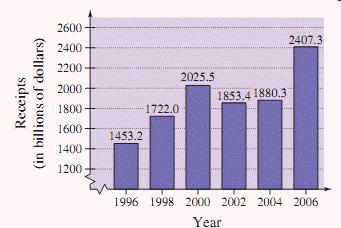
a.
b.
c.
e.
ANSWER: a
40. Identify the terms. Then identify the coefficients of the variable terms of the expression.
8x + 3
a. 8x and 3 are the terms; 8 is the coefficient.
b. 8x and 3 are the terms; –3 is the coefficient.
c. 8x and 3 are the terms; –8 is the coefficient.
d. 8x and 3 are the terms; 3 is the coefficient.
e. 8 and 3 are the terms; 8 is the coefficient.
Copyright Cengage Learning. Powered by Cognero.
Section P.1 Review of Real Numbers and Their Properties
ANSWER: a
41. Identify the terms. Then identify the coefficients of the variable terms of the expression.
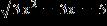

a. , and 5 are the terms; and 3 are the coefficients.

b. , and 5 are the terms; and –3 are the coefficients.
c. , and –5 are the terms; and 3 are the coefficients.
d. , and –5 are the terms; and –3 are the coefficients.
ANSWER: d
e. , and –5 are the terms; and 3 are the coefficients.
42. Identify the terms. Then identify the coefficients of the variable terms of the expression.


a. and are the terms; 6 and are the coefficients.

b. and are the terms; 6 and are the coefficients.
c. and are the terms; 6 and are the coefficients.
d. and are the terms; –6 and are the coefficients.
ANSWER: b
e. and are the terms; 6 and are the coefficients.
43. Evaluate the expression for the value of x = –4.
4x – 2
a. –16
b. 18
c. –19
d. –18
e. 16
ANSWER: d
Section P.1 Review of Real Numbers and Their Properties
44. Evaluate the expression for the value of x = –2.
x 2 – 5x + 1
a. –5
b. –15
c. 15
d. 5
e. –2
ANSWER: c
45. Identify the rule(s) of algebra illustrated by the statement.
x + 3 = 3 + x
a. Additive Identity Property.
b. Associative Property of Addition.
c. Commutative Property of Addition.
d. Additive Inverse Property.
e. Distributive Property.
ANSWER: c
46. Identify the rule(s) of algebra illustrated by the statement.
x(6y) = (x · 6)y = (6x)y
a. Additive Identity Property.
b. Distributive Property.
c. Multiplicative Identity Property.
d. Associative and Commutative Properties of Multiplication.
e. Multiplicative Inverse Property.
ANSWER: d
47. Simplify the variable expression below.


Section P.1 Review of Real Numbers and Their Properties
ANSWER: e
48. Perform the operation(s). (Write fractional answers in simplest form.)

a. 4
b.
c. 9
d.
e. ANSWER: e
49. Perform the operation(s). (Write fractional answers in simplest form.)

a. 54
b.
c. 15
d.
e. 3
ANSWER: a
50. Use a calculator to complete the table and using the table make a conjecture about the value of 5 / n as n approaches 0.
The value of 5 / n approaches infinity as n approaches 0.
The value of 5 / n approaches infinity as n approaches 0.
Section P.1 Review of Real Numbers and Their Properties
5 / n 5
The value of 5 / n approaches 0 as n increases without bound.
d.
n 1
5 / n 10 5
The value of 5 / n approaches infinity as n approaches 0.
e.
n 1
/ n 5
The value of 5 / n approaches 0 as n increases without bound.
ANSWER: b
51. Determine which numbers in the set are natural numbers.

–6, 17, 3, , 0, –9,

a. 17, 3, , 0,
b. 17, 3, 0
c. 17, 3,
d. 17, 3
e. –6, 17, 3, 0, –9
ANSWER: d
52. Determine which numbers in the set are whole numbers.

18, –6, 0, , –20, 6,

a. 18, 0, , 6
b. 18, 0, 6
c. 18, 0, , 6,
d. 18, –6, 0, –20, 6
e. 18, 6
ANSWER: a
53. Determine which numbers in the set are integers. –0.31, 18, –6π, 0, 7.0, –20
a. 18, 0, –20
b. 18, 0, 7.0, –20
c. 18, –6π, 0, –20
d. 18, 0
Section P.1 Review of Real Numbers and Their Properties
e. –0.31, 18, 0, 7.0, –20
ANSWER: b
54. Determine which numbers in the set are rational numbers.

–3.8383..., –20, , , , 4.060060006...,

a. –3.8383..., –20, ,
b. –3.8383..., –20, , 4.060060006...
c. –3.8383..., –20, ,
d. –20, , ,
e. –3.8383..., –20, , 4.060060006...,
ANSWER: a
55. Determine which numbers in the set are irrational numbers.


8.444..., , 0, , , –3.010110111..., 4π
a. , 0, , , 4π
b. 8.444..., , , , –3.010110111..., 4π
c. , , –3.010110111..., 4π
d. , , 4π
e. , , , 4π
ANSWER: c
56. Approximate the numbers and place the correct symbol (< or >) between them.
Copyright Cengage Learning. Powered by Cognero.
Section P.1 Review of Real Numbers and Their Properties
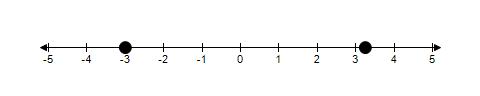
a. –3 > 3.25
b. –3 < –3.25
c. –3 < 3.75
d. –3 > 3.75
e. –3 < 3.25 ANSWER: e
57. Approximate the numbers and place the correct symbol (< or >) between them.
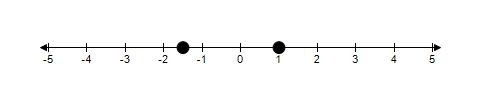
a.

b.

c.

d.

e.

ANSWER: e
58. Plot the two real numbers on the real number line. Then place the appropriate inequality symbol (< or >) between them. 4, 1 a.
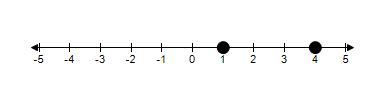
4 > 1
4 < 1
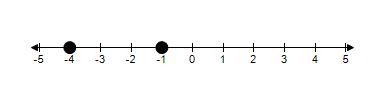
< 1
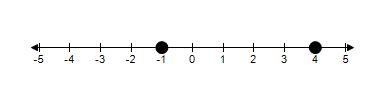
1 < 4
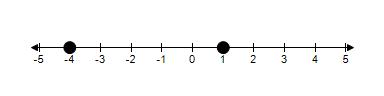
4 < 1
ANSWER: a
59. Plot the two real numbers on the real number line. Then place the appropriate inequality symbol (< or >) between them. , a.
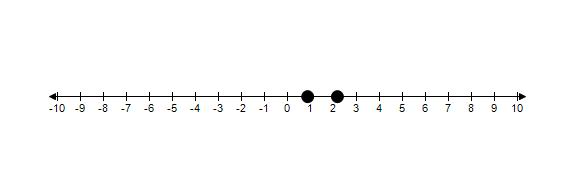
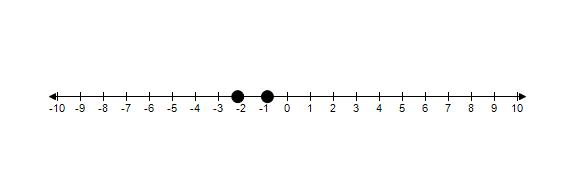
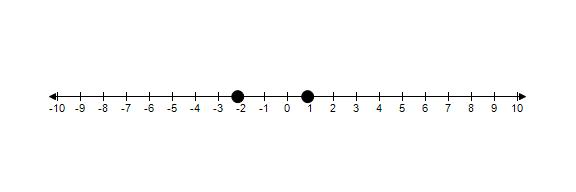
Section P.1 Review of Real Numbers and Their Properties
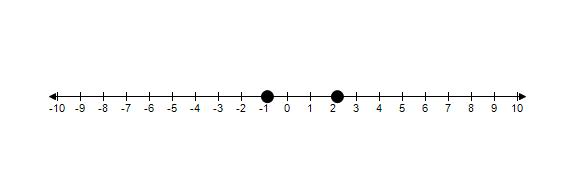
ANSWER: a
60. Is the interval bounded or unbounded? 1 < x < 5
a. bounded
b. unbounded
ANSWER: a
61. Use inequality notation to describe the set. n is positive
a. n > 0
b. n ≥ 0
c. n ≤ 0
d. n < ∞
e. n ≤ ∞
ANSWER: a
62. Use inequality notation to describe the set. t is at least 12 but less than 18
a. 12 ≤ t ≤ 18
b. 12 ≤ t < 18
c. 18 ≤ t < 12
d. 18 < t ≤ 12
e. 12 < t < 18
ANSWER: b
63. Evaluate the expression. |3 - 9|
a. 6
b. 12
c. 27
Section P.1 Review of Real Numbers and Their Properties
d. –6
e. –12
ANSWER: a
64. Evaluate the expression. , x < –8

a. 8
b. –1
c. 1
d. x
e. x
ANSWER: b
65. Place the correct symbol (<, >, or =) between the pair of real numbers.
|6| –|–6|
a. –|6| < –|–6|
b. –|6| > –|–6|
c. –|6| = –|–6|
ANSWER: c
66. Place the correct symbol (<, >, or =) between the pair of real numbers. –(–5) –5
a. –(–5) < –5
b. –(–5) = –5
c. –(–5) > –5
ANSWER: c
67. Use absolute value notation to describe the situation. The distance between y and –1 is no less than 4.
a. |y - 1| ≥ 4
b. |y - 1| ≤ 4
c. |y - 1| < 4
d. |y + 1| > 4
e. |y + 1| ≥ 4
ANSWER: e
68. Use absolute value notation to describe the situation. x is more than three units from 9.
a. |x - 9|> 3
b. |x - 9| ≤ 3
c. |x - 9| < 3
Section P.1 Review of Real Numbers and Their Properties
d. |x + 9| > 3
e. |x + 9| ≥ 3
ANSWER: a
69. Use absolute value notation to describe the situation. The elevation at the bottom of a mountain is 433 feet above sea level. The elevation at the top of the mountain is 1,969 feet above sea level. What is the height of the mountain?
a. |433| + |1,969|
b. |433| – |1,969|
c. –|433| – |1,969|
d. |433 + 1,969|
e. |433 – 1,969|
ANSWER: e
70. List the terms of the expression: –10v 2 – v + 6
a. –10v 2 , v
b. v 2 , v

c. –10, , 6
d. –10v 2 , v, 6
e. –10v 2
ANSWER: d
71. List the coefficients of the variable terms in the expression:

a.
b.


c.
d.


e.

ANSWER: e
72. Evaluate the expression for the given value of x expression: x 2 - 6x + 7 value: x = –3
a. 19
b. 34
Section P.1 Review of Real Numbers and Their Properties
c. 16
d. 22
e. 7
ANSWER: b
73. Evaluate the expression for the given value of x. expression: value: x = –4

a. b.

c. 0
d. not possible since numerator is 0
e. not possible since denominator is 0
ANSWER: c
74. Identify the rule of algebra illustrated by the statement.
–3r + 4r = (–3 + 4)r
a. associative property of addition
b. commutative property of addition
c. associative property of multiplication
d. commutative property of multiplication
e. distributive property
ANSWER: e
75. Identify the rules of algebra illustrated from left to right by the following statement. (w + 8) - 8 = w + (8 - 8) = w + 0 = w
a. commutative property of addition; additive inverse property; additive identity property
b. associative property of addition; additive inverse property; additive identity property
c. commutative property of addition; additive identity property; additive inverse property
d. associative property of addition; additive identity property; additive inverse property
e. distributive property; additive identity property; additive inverse property
ANSWER: b
76. Identify the rules of algebra illustrated from left to right by the following statement.
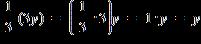
a. associative property of multiplication; multiplicative inverse property; multiplicative identity property
b. commutative property of multiplication; multiplicative inverse property; multiplicative identity
Section P.1 Review of Real Numbers and Their Properties
property
c. associative property of multiplication; multiplicative identity property; multiplicative inverse property
d. commutative property of multiplication; multiplicative identity property; multiplicative inverse property
e. distributive property; multiplicative identity property; multiplicative inverse property
ANSWER: a
77. Evaluate the following expression.
42 · 4
a. 36
b. 68
c. 216
d. 67
e. 64
ANSWER: e
78. Evaluate the following expression.

a. 1,004
b. 1,000
c. 1,002
d. 1,003
e. 1,001
ANSWER: b
79. Evaluate the following expression.

a. 81
b. 1
c. –1
d. 0
e. – 256
ANSWER: b
80. Evaluate the following expression.
Section P.1 Review of Real Numbers and Their Properties


ANSWER: a
81. Evaluate the following expression.

ANSWER: a 82. Evaluate the expression below.
Section P.1 Review of Real Numbers and Their Properties

e. 8
ANSWER: a
83. Evaluate the expression for the given value of x.
-2x 3 , x = 4
a. 32
b. –128
c. –8
d. 128
e. –32
ANSWER: b
84. Evaluate the expression for the given value of x.

a. –3
b. 3
c.
d.
e.
ANSWER: c
85. Evaluate the expression for the given value of x.
-7x 0 , x = 20
a. –140
b. –7
c. 140
d. 7
e. 49
ANSWER: b

86. Evaluate when s = –4 and t = –1.
a. 16
Section P.1 Review of Real Numbers and Their Properties
b. –256
c. 4,096
d. 256
e. –64
ANSWER: b
87. Evaluate the expression for the given value of x.

, x = – 3
a. 189
b. 27
c. –27
d. 21
e. –189
ANSWER: e
88. Evaluate the expression for the given value of x. , x = –

a.
b.

c. –2
d.
e. ANSWER: d
89. Simplify the following expression.


Name:
Section P.1 Review of Real Numbers and Their Properties
ANSWER: a
90. Simplify the following expression.

a. 2y 2
b. 5y 2
c. 16y 2
d. 4y 2
e. 8y 2
ANSWER: c


91. Write the following exponential expression in simplest form. a. b. c. d.

e.

ANSWER: d
92. Simplify the following expression.

a. (x + y)2
b. (x + y)
Section P.1 Review of Real Numbers and Their Properties
c. (x + y)
d. (x + y)3
e. (x + y)2
ANSWER: a
93. Write the exponential expression below in simplest form.


e.

ANSWER: c
94. Simplify the following expression.
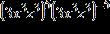
a. 1
b. x 3 y 3
c.

d. 9
e.

ANSWER: a
95. Simplify.
Section P.1 Review of Real Numbers and Their Properties
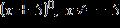
a. 1
b. (x + 5)
c. 5
d.

e. 0
ANSWER: a
96. Write the number in scientific notation.
18,000.4
a. 1.80004 × 10²
b. 18,000.4 × 102
c. 18,000.4 × 104
d. 1.80004 × 10⁴
e. 1.80004 × 10³
ANSWER: d
97. Write the number in scientific notation.
19,000,000
a. 1.9 × 10⁻⁵
b. 1.9 × 10⁶
c. 1.9 × 10⁵
d. 1.9 × 10⁻⁷
e. 1.9 × 10⁷
ANSWER: e
98. Write the number in scientific notation.
– 0.00025
a. – 2.5 × 10⁻⁴
b. – 2.5 × 10²
c. 2.5 × 10³
d. – 0.00025 × 10⁴
e. 0.00025 × 10²
ANSWER: a
Copyright Cengage Learning. Powered by Cognero.
Section P.1 Review of Real Numbers and Their Properties
99. Write the number in scientific notation.
0.00001937 inch.
a. 1.937 × 10² in
b. 0.00001937 × 10⁴ in
c. 1.937 × 10⁻⁵ in
d. 1.937 × 10³ in
e. 1.937 × 10⁻⁴ in
ANSWER: c
100. Write the number in decimal notation.
3.25 × 10⁵
a. 32,500
b. 3,250,000
c. 325
d. 3,250
e. 325,000
ANSWER: e
101. Change the following number from scientific notation to decimal notation.
2.02 × 10⁻²
a. 0.0202
b. 202
c. 20.2
d. 2.02
e. 0.202
ANSWER: a
102. Write the number in decimal notation.
– 7.718 × 10⁻³
a. – 0.007718
b. 0.7718
c. – 0.07718
d. 0.007718
e. – 0.0007718
ANSWER: a
Section P.1 Review of Real Numbers and Their Properties
103. Write the number in decimal notation.
Temperature: 1.7 × 10⁷ degrees Celsius
a. 1,700,000°C
b. 17,000,000°C
c. 170,000°C
d. 17,000°C
e. 1,700°C
ANSWER: b
104. Write the number in decimal notation.
Gross domestic product of the United States: 5.3743021 × 10¹³ dollars
a. $53,743,021,000,000
b. $5,374,302,100,000
c. $53,743,021,000
d. $537,430,210,000
e. $537,430,210,000,000
ANSWER: a
105. Evaluate the following expression without using a calculator.
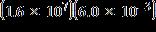
a. 9.6 × 10⁴
b. 9.6 × 10⁻³
c. 9.6 × 10⁷
d. 9.6 × 10⁻⁷
e. 9.6 × 10⁻⁴
ANSWER: a
106. Evaluate the following expression without using a calculator. (Round to the tenth decimal place).

a. 2.0 × 10⁻⁴
b. 2.0 × 10⁻⁵
c. 2.0 × 10¹¹
Section P.1 Review of Real Numbers and Their Properties
d. 2.0 × 10⁹
e. 2.0 × 10⁻⁹
ANSWER: c
107. Use the properties of radicals to simplify completely the following expression.


ANSWER: a
108. Simplify the following radical expression.


e.

ANSWER: a
109. Simplify the following radical expression.


Section P.1 Review of Real Numbers and Their Properties


ANSWER: e
110. Complete the following statement using the appropriate symbol.


e. ≥
ANSWER: a
111. Complete the following statement using the appropriate symbol.

a. =
b. <
c. >
ANSWER: a


112. Complete the following statement using the appropriate symbol. a. = b. > c. <
ANSWER: b
113. Rationalize the denominator of the following expression and then simplify your answer.

a. 3
Section P.1 Review of Real Numbers and Their Properties


ANSWER: e
114. Rationalize the denominator of the following expression and then simplify your answer.


e.

ANSWER: a

115. Rationalize the numerator of the following expression and then simplify your answer. a. b. 2
c. 8
ANSWER: a
Section P.1 Review of Real Numbers and Their Properties
116. Fill in the missing form of the expression. Radical Form Rational Exponent Form a.


b. 4.5 c. d.


e. ANSWER: d
117. Fill in the missing form of the expression. Radical Form Rational Exponent Form


84


ANSWER: d
118. Reduce the index of radical.

Section P.1 Review of Real Numbers and Their Properties


d. (x + 1)
e.

ANSWER: c
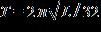
119. The period T (in seconds) of a pendulum is , where L is the length of the pendulum (in feet). Find the period of a pendulum whose length is 8 feet.
a. 1.008 sec
b. 3.142 sec
c. 5.142 sec
d. 4.142sec
e. 3.642 sec
ANSWER: b

120. A stream of water moving at the rate of v feet per second can carry particles of size inches. Find the size of the largest particle that can be carried by a stream flowing at the rate of foot per second. (Round your answer to three decimal places.)
a. 0.046
b. 0.066
c. 0.026
d. 0.036
e. 0.056
ANSWER: c
121. Evaluate the expression.

a.

Section P.1 Review of Real Numbers and Their Properties
b. c. d. 4
e. –4
ANSWER: d
122. Evaluate the expression.


e. –15
ANSWER: b
123. Evaluate the expression.

a. 2
b. –12
c. –64
d.

e.

ANSWER: e
124. Evaluate the expression for the given value of x.

a.

Section P.1 Review of Real Numbers and Their Properties
c.

d. –40
e. 40
ANSWER: a
125. Evaluate the expression for the given value of x.

a. 0
b. –9
c. 9
d. –36
e. 36
ANSWER: b
126. Evaluate the expression for the given value of x
3x 4 x = 3
a. 36
b.


c. d. 243
e. –243
ANSWER: d


127. Simplify the expression. a. b. c. d. e.

Section P.1 Review of Real Numbers and Their Properties
ANSWER: c
128. Simplify the expression.


e.

ANSWER: b
129. Write the number in scientific notation.
One pint is about 473.180000 cubic centimeters.
a. 0.47318 × 10³
b. 47.318 × 101
c. 4.7318 × 10²
d. 4.7318 × 101
e. 473.180000 × 10²
ANSWER: c
130. Write the number in decimal notation.
One knot equals approximately 1.012686 × 102 feet per minute.
a. 101.2686
b. 10126.86
c. 1012.686
d. –101.2686
e. 1.012686
ANSWER: a
Section P.1 Review of Real Numbers and Their Properties
131. Use a calculator to evaluate the expression. (Round your answer to three decimal places.)
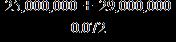
a. 4.031 × 10⁸
b. 4.031 × 10⁹
c. 7.500 × 10⁷
d. 7.500 × 10⁹
e. 7.500 × 10⁸
ANSWER: e
132. Use a calculator to evaluate the expression. (Round your answer to three decimal places.)
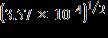
a. 1.785 × 10⁻⁴
b. 1.889 × 10 –2
c. 3.570 × 10⁻²
d. 1.889 × 100
e. 1.785 × 100
ANSWER: b
133. Evaluate the expression without using a calculator.
9(–1/2)
a. –3
b. 9
c. –9
d.
e.

ANSWER: d
134. Evaluate the expression without using a calculator.

Section P.1 Review of Real Numbers and Their Properties
a. b.


c.

d. 2187
e. –2187
ANSWER: e
135. Use a calculator to approximate the number. (Round your answer to three decimal places.)

a. 3.031
b. 1280.000
c. 16.000
d. 51.200
e. 261.000
ANSWER: a
136. Use a calculator to approximate the number. (Round your answer to three decimal places.)
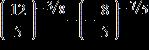
a. –1.211
b. 5.378
c. –5.36
d. 1.238
e. 3.32
ANSWER: d

137. Simplify the radical expression. a.

Section P.1 Review of Real Numbers and Their Properties


e. ANSWER: b
138. Simplify the radical expression.
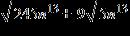


e. ANSWER: b
139. Rationalize the denominator. Then simplify your answer.


Section P.1 Review of Real Numbers and Their Properties
e.

ANSWER: c
140. Rationalize the numerator. Then simplify your answer.


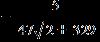
e.

ANSWER: e
141. Perform the operations and simplify.


ANSWER: a
142. Reduce the index of the radical.
Section P.1 Review of Real Numbers and Their Properties


e. ANSWER: c
143. Write the expression as a single radical. Then simplify your answer.


ANSWER: b
144. Rewrite the expression with positive exponents and simplify.


Section P.1 Review of Real Numbers and Their Properties
e.

ANSWER: a
145. Rewrite the expression with positive exponents and simplify.


ANSWER: d
146. Use a calculator to evaluate the expression. (Round your answer to three decimal places.)
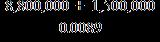
a. 1.686 × 10⁸
b. 1.686 × 10⁹
c. 1.157 × 10⁸
d. 1.157 × 10¹⁰
e. 1.157 × 10⁹
ANSWER: e
147. Use a calculator to approximate the number. (Round your answer to three decimal places.)

a. 1.682
b. 32.000
c. 2.828
d. 2.000
e. 12.000
Section P.1 Review of Real Numbers and Their Properties
ANSWER: a
148. Use a calculator to approximate the number. (Round your answer to three decimal places.)
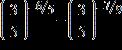
a. –0.398
b. 16.319
c. –12.032
d. 0.358
e. 2.582
ANSWER: d
149. Use a calculator to evaluate the expression. (If necessary, round your answer to three decimal places.)

a. –1,024
b. –256
c. 1,024
d. 256
e. 64
ANSWER: a
150. Use a calculator to evaluate the expression. (If necessary, round your answer to three decimal places.)

a. 70
b. 71
c. 72
d. 74
e. 73
ANSWER: c
151. Use a calculator to evaluate the following expression. (Round your answer to three decimal places.)
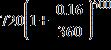
a. 889.127
b. 919.127
Section P.1 Review of Real Numbers and Their Properties
c. 899.127
d. 3.137 × 10¹⁰
e. 909.127
ANSWER: c
152. Use a calculator to approximate the number. (Round your answer to three decimal places.)

a. –12.464
b. 12.464
c. –6.856
d. 6.856
e. 2.319
ANSWER: a
153. Use a calculator to approximate the number. (Round your answer to three decimal places.)

a. 7.000
b. 2.044
c. 0.044
d. 1.044
e. –1.044
ANSWER: d
154. Use a calculator to approximate the number. (Round your answer to three decimal places.)

a. 38.563
b. 37.563
c. 32.563
d. 38,729.833
e. 42.563
ANSWER: b
Copyright Cengage Learning. Powered by Cognero.