Solutions Manual for Survey of Accounting 11th Edition by Warren
ISBN: 9798214052854
ISBN: 9798214052854
The objective of most businesses is to maximize profits. Profit is the difference between the amounts received from customers for goods or services provided and the amounts paid for the inputs used to provide those goods or services.
A manufacturing business changes basic inputs into products that are sold to customers. In contrast, a merchandising business purchases products in a form that can be sold to customers without any additional changes. Examples of manufacturing businesses include Alcoa, Boeing, Caterpillar, and Dow Chemical. Examples of merchandising businesses include Best Buy, Macy’s, Target, and Walmart.
A manufacturing business changes basic inputs into products that are sold to customers. A service business provides services rather than products to customers. A restaurant, such as McDonald’s, has characteristics of both a manufacturing and a service business in that McDonald’s takes raw inputs, such as cheese, fish, and beef, and processes them into products for consumption by its customers. At the same time, McDonald’s provides services of waiting on its customers.
The corporate form allows the company to obtain large amounts of resources by issuing stock. In addition, in a corporation, the stockholders’ liability to creditors for the debts of the company is limited to their investment in the corporation. For these reasons, most large companies that require large investments in property, plant, and equipment are organized as corporations.
eBay services its customers by maintaining a web-based community in which buyers and sellers are brought together in an efficient format to browse, buy, and sell items such as collectibles, automobiles, high-end or premium art pieces, jewelry, consumer electronics, and a host of practical and miscellaneous items.
No. The stakeholders within a group do not always share the same interests. For example, bankers are primarily concerned about the ability of the business to repay its debt, including interest. In contrast, stockholders are more concerned about the long-term profitability of the business, the business’s ability to pay dividends, and the future appreciation of their stock.
Examples of financing activities for Southwest Airlines could include issuing stock, borrowing from banks, and paying dividends. Examples of investing activities could include purchasing new aircraft, acquiring new terminal facilities, and upgrading its computerized reservation systems. Examples of operating activities could include transporting passengers and freight.
8. The role of accounting is to provide information for managers to use in operating the business. In addition, accounting provides information to other stakeholders to use in assessing the economic performance and condition of the business.
The income statement presents a summary of the revenues and expenses of a business for a specific period of time. The statement of stockholders’ equity indicates the changes in retained earnings that have occurred over a specific period of time. The balance sheet presents a listing of the assets, liabilities, and stockholders’ equity of a business as of a specific date. The statement of cash flows presents a summary of the cash receipts and cash payments of a business entity for a specific period of time.
Target reported net income of $4,138 million ($107,412 million – $103,274 million).
Net income or net loss will appear on the income statement and the statement of stockholders’ equity. The Retained Earnings and Common Stock balances at the end of the period will appear on the statement of stockholders’ equity and the balance sheet. Finally, the Cash balance at the end of the period will appear on the balance sheet and the statement of cash flows.
No. The business entity concept limits the recording of economic data to transactions directly affecting the activities of the business. The payment of the interest of $6,000 is a personal transaction of Billy Jessop and should not be recorded by Valley Delivery Service.
The land should be recorded at its cost of $110,000 to Wok Repair Service. This is consistent with the cost concept.
No. The offer of $975,000 and the increase in the assessed value should not be recognized in the accounting records. This is consistent with the cost concept.
BE 1–1
a.A=L + SE
$710,000=$195,000 + SE SE=$515,000
b.A=L + SE
$710,000 + $125,000=$195,000 + $25,000 + SE
$835,000=$220,000 + SE SE=$615,000 BE 1–2
BE 1–5
Cash flows from (used for) operating activities:
Cash received from customers…............................
Cash paid for operating expenses….......................
Net cash flows from operating activities….............
Cash flows from (used for) investing activities:
Cash paid for purchase of land…............................
Cash flows from (used for) financing activities:
Cash received from issuance of common stock…
Cash paid as dividends….........................................
Net cash flows used for financing activities….......
Net increase in cash ….................................................. Cash balance, August 1, 20Y5…...................................
balance, July 31, 20Y6…......................................
BE 1–6
Worldwide Travel Statement of Cash Flows For the Year Ended July 31, 20Y6 $60,000 (35,000) 25,000 $83,950 Net Income
(1,116,050) $108,950 (50,000)
$190,000. Under the cost principle, the land should be recorded at the cost to Upstate Metal Roofing.
BE 1–7 Average Total Assets $1,394,000 $17,000,000
$1,394,000 [($15,700,000 + $18,300,000) ÷ 2] 59,500 $143,450
EX 1–1
1.service6.merchandising11.manufacturing 2.merchandising7.manufacturing12.manufacturing
3.manufacturing8.manufacturing13.service
4.manufacturing9.merchandising14.service
5.service10.manufacturing15.merchandising
EX 1–2
(in millions)
Best Buy: $14,967 – 11,914 = $3,053
Gamestop: $2,709 – 1,370 = $1,339
EX 1–3
(in millions)
Apple:$364,980 – $308,030 = $56,950
Microsoft:$512,163 – $243,686 = $268,477
EX 1–4
a.$295,500 + $475,000 = $770,500
b.$1,110,000 – $737,500 = $372,500
c.$3,350,000 – $1,050,000 = $2,300,000
EX 1–5
a.$69,831 – $46,209 = $23,622
b.$55,356 – $13,432 = $41,924
c.$162,050 + $90,349 = $252,399
EX 1–6
It would be incorrect to say the business had incurred a net loss of $10,000. The excess of the dividends over the net income for the period is a decrease in the amount of retained earnings in the business. Dividends are a distribution of earnings to stockholders and are not included on the income statement.
EX 1–7
Company Chang
Company Henry
Company Nagel
Company Wilcox
EX 1–10 Income statement items: 4, 5, 6, 9, 10 EX 1–11
1.a—asset6.a—asset
In each case, solve for a single unknown, using the following equation:
Stockholders’ Equity (beginning) + Additional Issue of Capital Stock – Dividends + Revenue – Expenses = Stockholders’ Equity (ending)
EX 1–15 (Concluded)
b.Retained earnings, November 30................................................. $163,000
retained earnings, October 31........................................ (120,000)
income..................................................................................... $43,000 c.Retained earnings, November 30................................................ $163,000
retained earnings, October 31........................................ (120,000)
EX 1–16
Balance sheet: a, b, c, d, f, g, h, i, j, l, m
Income statement: e, k, n, o
EX 1–17
1.c—financing activity6.b—investing activity
2.a—operating activity7.a—operating activity
3.b—investing activity8.a—operating activity
4.a—operating activity9.a—operating activity
5.c—financing activity10.c—financing activity
EX 1–18
1.c—financing activity3.a—operating activity
2.a—operating activity4.b—investing activity
(used
For the Month Ended July 31, Year 1
Situation 1: The income statement of Dell would provide the most useful information on whether the company’s business emphasis is working and, thus, whether the company will be around to provide warranty and other support services for your personal computer.
Situation 2: The statement of cash flows would be a primary focus to determine whether BullFrog AI is generating positive cash flows from operations. Since BullFrog AI is a relatively new company using an innovative business emphasis, it has generated losses on its income statement. Thus, the income statement does not provide as much useful information as the statement of cash flows. In the long run, BullFrog AI must generate positive cash flows from its operations to survive and succeed.
Situation 3: A current balance sheet would be a primary focus to determine whether the grocery store chain has sufficient cash or other assets such as receivables that will enable the chain to repay the credit within 60 days. The balance sheet would also report any other liabilities of the chain.
Situation 4: The income statements of The Gap and Macy's would provide the most useful information on which company’s business emphasis is working best and, thus, generating profits.
Situation 5: The statement of cash flows would be a primary focus to determine whether the annual cash flows from operating activities is sufficient to pay the interest on a continuing basis. Most large companies, like Target, will use credit lines to cover cash shortages throughout the year because of the seasonality of the retail industry.
All financial statements should contain the name of the business in their headings. The statement of stockholders’ equity is incorrectly headed as “Julie Baxter” rather than Outlaw Realty. The headings of the balance sheet and statement of cash flows need the name of the business.
The income statement, retained earnings statement, and statement of cash flows cover a period of time and should be labeled “For the Month Ended August 31, 20Y7.”
The year in the heading for the statement of stockholders’ equity should be 20Y7 rather than Year 1.
The balance sheet should be labeled “August 31, 20Y7,” rather than “For the Month Ended August 31, 20Y7.”
On the income statement, there is a mathematical error in the subtraction of total operating expenses from the sales commissions. The correct net income should be $94,500. This also affects the retained earnings statement and the amount of retained earnings that appears on the balance sheet.
On the statement of stockholders’ equity, the common stock issued during the month should be presented in the Common Stock column. The dividends should be subtracted rather than added to retained earnings. Beginning retained earnings should be zero. Ending amounts reported for common stock, retained earnings, and total stockholders’ equity should agree with the amounts reported on the balance sheet.
payable should be listed as a liability on the balance sheet.
Accounts receivable and prepaid expenses should be listed as assets on the balance sheet.
The balance sheet assets should equal the sum of the liabilities and stockholders’ equity.
The statement of cash flows omits the cash flows from investing activities section. This section should report cash flows used to purchase land of $60,000.
The net increase in cash and the cash balance as of August 31, 20Y7, should be the same as the ending cash reported on the balance sheet of $51,600.
1–24 (Continued)
1–24 (Concluded)
Realty businesses, such as Paradise Realty, are service businesses that aid their clients in buying or selling real estate.
2.a.Wages expense, $29,850 ($69,300 – $14,400 – $12,000 – $8,100 – $4,950)
b.Net income, $80,000 ($149,300 – $69,300)
c.Net income for November, $80,000
d.Dividends, $(36,000) from statement of cash flows
e.Retained earnings, November 30, 20Y3, $44,000 ($80,000 – $36,000)
f.Land, $216,000 from statement of cash flows
g.Total assets, $321,200 ($99,200 + $6,000 + $216,000)
h.
Common stock, $270,000 from statement of stockholders’ equity or statement of cash flows
i. Retained earnings, $44,000 [refer to (e)]
j.
Total stockholders’ equity, $314,000 ($270,000 + $44,000) from statement of stockholders’ equity
k. Total liabilities and stockholders’ equity, $321,200 ($7,200 + $314,000)
l.
m.
Cash received from customers, $149,300 ($81,200 + $68,100) or from income statement
Net cash flows from operating activities, $81,200 ($149,300 – $68,100) or ($99,200 – $234,000 + $216,000)
n. Net cash flows from financing activities, $234,000 ($270,000 – $36,000)
o.Net increase in cash and November 30, 20Y3, cash balance, $99,200 from balance sheet
For the Month Ended December 31, 20Y5
Cash flows from (used for) operating activities: Cash received from operating activities.................... $1,087,000 Cash paid for operating activities............................... (896,000)
cash flows from operating activities.................... $191,000 Cash flows used for investing activities: Cash paid for property, plant, and equipment........... (265,000)
Cash flows from (used for) financing activities:
Cash received from issuing of note payable.............$80,000 Cash received from issuing of common stock.......... 120,000
paid as dividends................................................ (90,000)
as of January 1, 20Y5............................................... 0
as of December 31, 20Y5.........................................
Note to Instructors: The determination of cash receipts and payments from operating activities is not discussed in Chapter 1 and is beyond the student level of understanding or comprehension at this point in the text. This topic will be covered in later chapters. However, for completeness of the solution, the cash receipts and payments for operating activities are computed as follows:
Cash receipts from operating activities: $1,175,000 (sales) – $88,000 (accounts receivable) = $1,087,000
Cash payments from operating activities: $840,000 (total expenses) – $40,000 (accounts payable) – $15,000 (income taxes payable) + $111,000 (inventories) = $896,000
MBA 1–1
1.The following metrics appear on the companies’ respective 10-Ks:
Interpublic Group of Companies Inc.
●
2.
Change in operating amounts, including revenues and various expenses (salaries, office, and general expenses)
● Change in operating expenses as a percentage of revenue
● Revenue by business sector and geographic region
● Change in revenue before billable expenses
● Change EBITA (earnings before interest, taxes, and amortizaton)
● Net-zero carbon emissions (sustainabilty metric)
● Percentage of renewable energy used (sustainabiilty metric)
Walmart
● Comparable sales among stores
● Percentage change in sales among stores
● Change in gross profit (sales – cost of goods sold) as a percentage of sales
● Operating income as a perecentage of sales
● Net cash provided by operations
● Return on assets
● Free cash flow
●
Return on investment
● Science-based targets for reducing emissions
In general, the differences in the metrics used by each company can be explained by the nature of each company’s operations. Interpublic Group of Companies Inc. uses metrics based upon services provided to its clients. Walmart uses metrics based primarily upon its retail operations and related outlets (stores, clubs, and online). Both companies used sustainability metrics, including reducing emissions.
MBA 1–2
1.The following metrics appear on the companies’ respective 10-Ks:
JetBlue Airways Corporation
● Available seat miles (ASM)
● Number of revenue passengers
● Number of passenger miles
● Load factor (percent of occupied seats)
● Aircraft utilization (hours per day aircraft is in use)
● Operating revenue per ASM
● Operating expense per ASM
● Number of departures
● Average number of operating aircraft
● Cost per available seat mile (CASM)
MBA 1–2 (Concluded)
●
Net promoter score (NPS) (This score is an index that measures customer satisfaction by the willingness of customers to recommend the company to others.)
● Return on invested capital
● Costco
Free cash flow (Computed by subtracting capital expenditures from net cash flows from operations.)
● Sales per store
● Gross margin (profit) per store
● Average wage and salaries expense per store
● Average property and equipment per store
● Change in different categories of sales
● Number of warehouses
● Number of paid members by class of membershiip 2.
In general, the differences in the metrics used by each company can be explained by the nature each company’s operations. JetBlue Airways Corporation uses nontraditional metrics based upon its operations. Costco uses more traditional retail metrics such a sales per store.
MBA 1–3
Note: Amounts in millions
$11,202
4.52.7% ($5,901 ÷ $11,202) (Rounded)
5.89.8% (Rounded)
The markup percentage is computed as follows:
Cost of Sales + (Markup % × Cost of Sales) = Sales
$5,901 ÷ (Markup % × $5,901) = $11,202
$5,301 $5,901
6.19.8% ($2,221 ÷ $11,202) (Rounded) 7. $2,221 ÷ [($12,947 + $11,902) ÷ 2]
Return on Assets =
MBA 1–4
1.66.4% ($511 ÷ $769) (Rounded)
2.50.5% (Rounded)
The markup percentage is computed as follows:
Cost of Sales + (Markup % × Cost of Sales) = Sales
$511 + (Markup % × $511) = $769
Markup % = $769 – $511 =50.5% (Rounded)
$511
3.12.0% ($92 ÷ $769) (Rounded)
4.Return on Assets = $92 ÷ $1,052 = 8.7%
5.
Hershey’s markup percentage of 89.8% is higher than Tootsie Roll’s markup percentage of 50.5%. As a result, Hershey’s return on assets is 17.9% compared to only 8.7% for Tootsie Roll. Overall, Hershey is more profitable than Tootsie Roll.
MBA 1–5
1.
Note to Instructors: Answers will vary. The purpose of this requirement is to get students thinking about businesses and their profitability. This is done by focusing on real-world companies and their products with which students are familiar. Requirements (2) and (3) provide the opportunity for students to compare their rankings with real-world results.
2.Pfizer:
Return on Assets = $2,119 ÷ [($197,205 + $226,501) ÷ 2] = 1.0%
Ford:
Return on Assets = $4,347 ÷ [($255,884 + $273,310) ÷ 2] = 1.6%
Microsoft:
Return on Assets = $88,136 ÷ [($411,976 + $512,163) ÷ 2] = 19.1%
3.
Microsoft has the highest return on assets (ROA) of 19.1%. Microsoft’s ROA results from widespread acceptance and use of its products. However, Microsoft is investing heavily in artificial intelligence (AI), which may lower its future rate of return until AI is fully integrated and adopted across industries and businesses. Ford’s low ROA of 1.6% reflects the competitive automobile industry, inflationary pressures, and supply chain issues such as the shortage of semiconductors. Pfizer’s low ROA of 1.0% reflects the volatile nature of the pharmaceutical industry that relies heavily on research and development and the development of new medicines and vaccines.
MBA 1–6 1.
Note to Instructors: Answers will vary. The purpose of this requirement is to get students thinking about businesses and their profitability. This is done by focusing on real-world companies and their products with which students are familiar. Requirements (2) and (3) provide the opportunity for students to compare their rankings with real-world results.
2.Exxon Mobil:
Return on Assets = $36,010 ÷ [($369,067 + $376,317) ÷ 2] = 9.7%
Coca-Cola:
Return on Assets = $10,703 ÷ [($92,763 + $97,703) ÷ 2] = 11.2%
Walmart:
Return on Assets = $15,511 ÷ [($243,197 + $252,399) ÷ 2] = 6.3% 3.
Coca-Cola has the highest return on assets of 11.2%. While the company operates in a highly competitive market, there has been increased demand by consumers for healthy beverage alternatives that the company has capitalized on. Additionally, the company's product mix has shifted toward more concentrate sales, which have a favorable gross margin. Exxon Mobil has the second-highest return on assets of 9.7%. This is due to the high demand for petroleum-based products. At the same time, Exxon Mobil’s operations have the most risks. These risks include such factors as oil spills, with their resulting fines and clean-up costs, as well as the uncertainty of exploration and changing political climates in countries where Exxon Mobil has operations. Walmart has the lowest return on assets of 6.3%. This is a result of a growing demand for low-cost products from consumers and industry-wide competition.
MBA 1–7
1.Return on Assets = $502 ÷ [($11,386 + $11,044) ÷ 2] = 4.5% 2.
The Gap’s return on assets of 4.5% is 1.8% percentage points lower than Walmart’s return on assets of 6.3%. In addressing this lower return on assets, The Gap has begun a restructuring plan to simplify and optimize its operations. This plan includes a reduction of its workforce, and the closing of over 300 Gap and Banana Republic stores in North America.
Case 1–1
Management’s actions are ethical. Management has a responsibility to the company’s stockholders to remain competitive and profitable. Similarly, many companies have moved their production offshore to take advantage of cheaper labor. However, management should consider the impact of its proposal on workers’ attitudes, including its motivations to innovate and be productive. Workers will be particularly upset if management later decides not to invest the $30 million to modernize the plants or if future work is not forthcoming. In the latter case, it would be unethical for management to pledge modernization and future work with no intention of fulfilling its promises.
Case 1–2
1.
Acceptable professional conduct requires that Loretta Smith supply City National Bank with all the relevant financial statements necessary for the bank to make an informed decision. Therefore, Loretta should provide the complete set of financial statements. These can be supplemented with a discussion of the net loss in the past year or other data explaining why granting the loan is a good investment by the bank.
2.a.
b.
Owners are generally willing to provide bankers with information about the operating and financial conditions of the business, such as the following:
Operating Information:
● description of business operations
● results of past operations
● preliminary results of current operations
● plans for future operations
Financial Condition:
● list of assets and liabilities (balance sheet)
● estimated current values of assets
● stockholders’ investment in the business
● stockholders’ commitment to invest additional funds in the business
Owners are normally reluctant to provide proprietary operating information to bankers. Such information, which could hurt the business if it becomes known by competitors, might include special processes used by the business or future plans to expand operations into areas not currently served by a competitor.
Bankers typically want as much information as possible about the ability of the business to repay the loan with interest. Examples of such information are described in the preceding answer.
c.Bankers and business owners share the common interest of the business doing well and being successful. If the business is successful, the bankers will receive their loan payments on time with interest and the owners (and stockholders) will be rewarded.
A major business risk includes the selling of contaminated chickens and the possibility that competitors will develop lower-cost methods of breeding and raising chickens. Also, a major cost of raising chickens is the cost of feed. Thus, fluctuations in feed costs such as corn can dramatically influence the profitability of chicken production. To manage feed cost risk, chicken producers enter into hedging transactions for feed that involve commodity futures and options. Finally, another major risk is that consumer tastes may change, with the result that the demand for chicken products may decrease significantly.
The company could differentiate its products by emphasizing that it raises its chickens with only “natural” feeds without the use of artificial ingredients such as steroids. The company could then sell its products as the “healthy choice” and use a premium-price strategy.
The difference in the two bank balances, $175,000 ($215,000 – $40,000), may not be pure profit from an accounting perspective. To determine the accounting profit for the 8-month period, the revenues for the period would need to be matched with the related expenses. The revenues minus the expenses would indicate whether the business generated net income (profit) or a net loss for the period. Using only the difference between the two bank account balances ignores such factors as amounts due from customers (receivables), liabilities (accounts payable) that need to be paid for wages or other operating expenses, additional investments that Dr. Tempkin may have made in the business during the period, or dividends paid during the period.
Some businesses that have few, if any, receivables or payables may use a “cash” basis of accounting. The cash basis of accounting ignores receivables and payables since they are assumed to be insignificant in amount. However, even with the cash basis of accounting, additional investments during the period and any dividends during the period have to be considered in determining the net income (profit) or net loss for the period.
1–4 Case 1–5
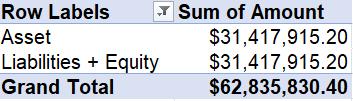
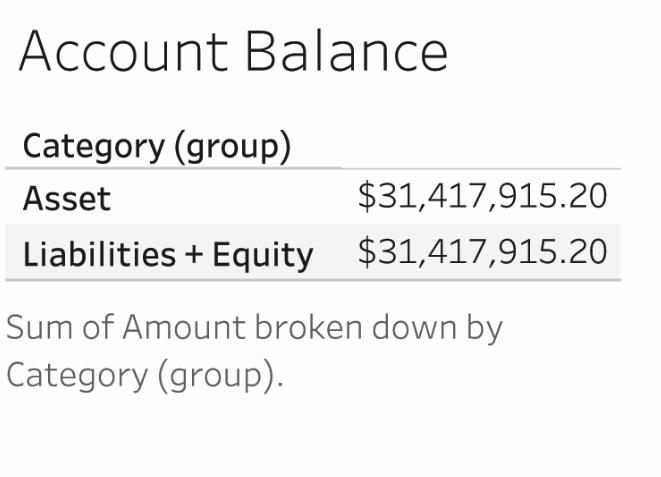
Note to Instructors: Answers will vary. The purpose of this activity is to help students realize that the accounting equation has real-world impact. By illustrating how the accounting equation applies to well-known companies, the importance of accounting and the concepts discussed in this chapter are emphasized to students. The following illustrative answers are from recent financial statements (all amounts are in millions):
For all companies, total assets equal the total of the liabilities plus stockholders’ equity.
Case 1–6
1. 1.a—low-cost5.a—low-cost9.b—premium-price
2.a—low-cost6.b—premium-price10.a—low-cost
3.b—premium-price7.a—low-cost11.b—premium-price
4.a—low-cost8.b—premium-price12.b—premium-price
2. 3.
The business emphasis of KIA is a low-cost emphasis. In contrast, the business emphasis of BMW is a premium-price emphasis. The difference in emphases is directly reflected in the prices of the autos. For example, a new KIA Seltos starts for just over $25,000, but a new BMW 2 series coupe starts for just over $40,000.
Super Walmart will compete for customers using a low-cost strategy. The size and buying power of Walmart Inc. provides Walmart a competitive advantage over your friend in the ability to offer low prices. Thus, your friend should attempt to compete using a premium-price emphasis. For example, your friend could offer personalized service to customers such as knowing customers’ names and providing a friendly atmosphere, home delivery of medicines, help in filing insurance forms, and 24hour call service.
Case 1–7 Excel
Tableau
This page intentionally left blank.
Instructor Manual: Warren/Jones/Tayler, Survey of Accounting, 11e, 2027, 9798214052908; Chapter 1: The Role of Accounting in Business
The purpose of Chapter 1 is to explore the role of accounting in business, which is to provide information about the financing, investing, and operating activities of a company to its stakeholders. The text focuses on accounting and its role in business. However, many of the concepts discussed also apply to individuals, governments, and not-for-profit organizations.
The chapter defines and describes the types and forms of businesses and business stakeholders that exist and provides examples of each. It then explores the three business activities of financing, investing, and operating.
Often called the “language of business,” accounting is defined and its role explored along with the specific objectives of financial accounting: to report the financial condition of a business at a point in time, and to report changes in the financial condition of a business over a period of time.
The objectives of accounting are achieved by (1) recording the economic events affecting a business and then (2) summarizing the impact of these events on the business in financial reports, called financial statements. These financial statements are described and illustrated within the chapter. The text explores the four basic types of financial statements and their relationship to the objectives of financial accounting.
The chapter then goes on to explain the concept of generally accepted accounting principles (GAAP), standards boards, and regulatory agencies. The rules underlying financial reporting rely on eight accounting concepts, which are described by the text.
Finally, the chapter explains how metric-based analysis makes use of quantitative measures known as metrics to assess a company’s financial condition, performance, and decisions. This is illustrated through the use of return on assets to perform analyses at the financial statement level.
The following objectives are addressed in this chapter:
Obj. 1 Describe the types and forms of businesses and business stakeholders.
Obj. 2 Describe the three business activities of financing, investing, and operating.
Obj. 3 Describe the role of accounting in business.
Instructor Manual: Warren/Jones/Tayler, Survey of Accounting, 11e, 2027, 9798214052908; Chapter 1: The Role of Accounting in Business
Obj. 4 Illustrate how the basic financial statements are integrated.
Obj. 5 Describe eight accounting concepts underlying financial reporting.
Obj. 6 Use return on assets to analyze a company’s performance.
The following table organizes activities and assessments in the PowerPoint by objective, so that you can see how all this content relates to objectives and make decisions about which content you would like to emphasize in your class based on your objectives. For additional activities, refer to the Teaching Online Guide and the Educator Guide.
Chapter Objective Activity/Assessment
Obj. 1 Knowledge Check Activity 1
Obj. 2 Knowledge Check Activity 2
Obj. 3 Discussion Activity 1
Obj. 4 Knowledge Check Activity 3
Obj. 5 Discussion Activity 2
[return to top]
Source (i.e., PPT slide, Workbook)
PPT Slides 11–12
PPT Slides 19–20
PPT Slides 25–26
PPT Slides 39–40
PPT Slides 46–47
Accounting: An information system that provides reports to stakeholders about the economic activities and condition of a business.
Accounting equation: Assets = Liabilities + Stockholders’ Equity.
Accounting period concept: An accounting concept in which accounting data are recorded and summarized in a period process.
Accounts payable: Liabilities for amounts incurred from purchases of products or services in the normal operations of a business.
Accounts receivable: Receivables created by selling merchandise or services on credit.
Instructor Manual: Warren/Jones/Tayler, Survey of Accounting, 11e, 2027, 9798214052908; Chapter 1: The Role of Accounting in Business
Adequate disclosure concept: An accounting concept that requires financial statements to include all relevant data a reader needs to understand the financial condition and performance of a business.
Administrative expenses: Expenses incurred in the administration or general operations of the business; costs not directly related to selling, such as officer salaries.
Assets: The resources owned by a business.
Balance sheet: A list of the assets, liabilities, and owner’s equity as of a specific date, usually at the close of the last day of a month or a year.
Bonds payable: A type of long-term debt financing with a face amount that is in the future, with interest that is normally paid semiannually.
Business: An organization in which basic resources (inputs), such as materials and labor, are assembled and processed to provide goods and services (outputs) to customers.
Business entity concept: An accounting concept that limits the economic data in the accounting system of a specific business or entity to data related directly to the activities of that business or entity.
Business stakeholder: A person or entity that has an interest in the economic performance of a business.
Chief financial officer (CFO): The head of the accounting department in a company; also called the comptroller.
Common stock: The basic type of stock issued to stockholders of a corporation when a corporation has issued only one class of stock.
Comptroller: The head of the accounting department in a company; also called the chief financial officer.
Corporation: A business organized under state or federal statutes as a separate legal entity.
Cost concept: An accounting concept that determines the amount initially entered into the accounting records for purchases.
Cost of goods sold: The cost of products sold; also may be referred to as cost of merchandise sold or cost of sales.
Cost of merchandise sold: The cost of products sold; also may be referred to as cost of sales or cost of goods sold.
Instructor Manual: Warren/Jones/Tayler, Survey of Accounting, 11e, 2027, 9798214052908; Chapter 1: The Role of Accounting in Business
Cost of sales: The cost of products sold; also may be referred to as cost of merchandise sold or cost of goods sold.
Data analytics: The science of analyzing raw data to discover patterns, identify anomalies, or gain other useful insights
Dividends: Distributions of the earnings of a corporation to its stockholders.
Expense recognition principle: An accounting principle that states that the expenses incurred in generating revenue should be reported in the same period as the related revenue; by matching revenues and expenses, net income or loss for the period can properly be determined and reported.
Expenses: Costs used to earn (generate) revenues.
Fees earned: Revenues received from providing services.
Financial accounting: The area of accounting that focuses on recording transactions and events so that general-purpose financial statements can be prepared.
Financial Accounting Standards Board (FASB): The authoritative body that has the primary responsibility for developing accounting principles.
Financial statements: Financial reports that summarize the effects of events on a business.
Financing activities: Business activities that involve obtaining funds to begin and operate a business.
Generally accepted accounting principles (GAAP): Rules for the way financial statements should be prepared.
Going concern concept: An accounting concept that assumes that a company will continue in business indefinitely.
Income statement: A summary of the revenue and expenses for a specific period of time, such as a month or a year.
Intangible assets: Long-lived assets that are useful in the operations of a business, are not held for sale, and are without physical qualities.
Interest payable: A liability to pay interest on a due date.
International Accounting Standards Board (IASB): An authoritative body that establishes accounting principles and practices for companies in many countries outside of the United States.
Instructor Manual: Warren/Jones/Tayler, Survey of Accounting, 11e, 2027, 9798214052908; Chapter 1: The Role of Accounting in Business
Investing activities: Business activities that involve obtaining the necessary resources to start and operate the business.
Liability: The rights of creditors that represent a legal obligation to repay an amount borrowed according to terms of the borrowing agreement.
Limited liability company (LLC): A form of corporation that combines attributes of a partnership and a corporation.
Liquidity: Refers to the ability to convert an asset to cash.
Managerial accounting: The branch of accounting that aids management in making financing, investing, and operating decisions for the company.
Manufacturing business: A type of business that changes basic inputs into products that are sold to customers.
Matching concept: An accounting concept that requires expenses of a period to be matched with the revenue generated during that period.
Merchandising business: A type of business that purchases finished products from other businesses to sell to its customers.
Metric: A quantitative measure.
Metric-based analysis: The use of metrics to assess a business’s financial condition, performance, and decisions.
Net income: The excess of revenues over expenses.
Net loss: The excess of expenses over revenues.
Note payable: A type of short- or long-term financing that requires payment of the amount borrowed plus interest.
Objectivity concept: An accounting concept that requires accounting records and data reported in financial statements be based on objective evidence.
Operating activities: Business activities that involve using the business’s resources to implement its business strategy.
Owner’s equity: The financial rights of the owner.
Partnership: A business owned by two or more individuals.
Prepaid expenses: Assets resulting from the prepayment of future expenses such as insurance or rent that are expected to become expenses over time or through the normal operations of the business; often called deferred expenses.
Instructor Manual: Warren/Jones/Tayler, Survey of Accounting, 11e, 2027, 9798214052908; Chapter 1: The Role of Accounting in Business
Profit: The excess of the amounts received from customers for goods or services and the amounts paid for the inputs used to provide the goods or services.
Proprietorship: A business owned by one individual.
Retained earnings: Net income retained in a corporation.
Return on assets: A profitability metric often used to compare a company’s performance over time and with competitors, computed by dividing net income by average total assets.
Revenue: The increase in assets from selling products or services to customers.
Revenue recognition principle: An accounting principle that states that revenues should be recorded at the time a product is sold or a service is rendered.
Sales: Revenues received from selling products; the total amount charged to customers for merchandise sold, including cash sales and sales on account.
Securities and Exchange Commission (SEC): An agency of the U.S. government that has authority over the accounting and financial disclosures for corporations whose stock is traded and sold to the public.
Selling expenses: Costs directly related to the selling of a product or service such as sales salaries and advertising expenses.
Service business: A type of business that provides services rather than products to customers.
Solvency: The ability of a company to pay its debts as they become due over the long term.
Statement of cash flows: A financial statement that provides a summary of the cash receipts and cash payments and reports the change in financial condition due to the change in cash during a specific period of time.
Statement of financial condition: Reports the financial condition as of a point in time; often referred to as the balance sheet.
Statement of stockholders’ equity: A financial statement that reports the change in financial condition due to the changes in stockholders’ equity items for a specific period of time.
Stockholders: Investors who purchase stock in a corporation.
Stockholders’ equity: The stockholders’ rights to the assets of a business.
Instructor Manual: Warren/Jones/Tayler, Survey of Accounting, 11e, 2027, 9798214052908; Chapter 1: The Role of Accounting in Business
Tangible assets: Assets such as machinery, buildings, computers, office furnishings, trucks, and automobiles that have physical characteristics.
Unit of measure concept: An accounting concept requiring that all economic data be recorded in dollars.
[return to top]
See the Educator Guide for detailed information as to what is new in CNOWv2
• [return to top]
The following outline organizes activities (including any existing discussion questions in PowerPoints or other supplements) and assessments by chapter (and therefore by topic), so that you can see how all the content relates to the topics covered in the text.
I. Nature of Business and Accounting (LO 1, PPT Slides 4–12, BUSPROG: Analytic; AICPA: FN-Research)
a. Icebreaker: How can a business use accounting information? (PPT Slide 2)
• Students will form small groups within the class, and each group will choose a large public company, which students likely patronize.
• Within each group, students will discuss how this business may use accounting information to make strategic decisions. For example, how can monitoring their expenses help them be more profitable? How can tracking sales help them decide which products or services to keep or expand? Use specific examples for the type of the company selected.
• Each group will select a spokesperson to introduce the group members to the class and share their findings.
•
Instructor Manual: Warren/Jones/Tayler, Survey of Accounting, 11e, 2027, 9798214052908; Chapter 1: The Role of Accounting in Business
b. A business is an organization in which basic resources (inputs), such as materials and labor, are assembled and processed to provide goods or services (outputs) to customers.
c. The objective of most businesses is to earn a profit.
• Profit is the difference between the amounts received from customers for goods or services and the amounts paid for the inputs used to provide the goods or services.
d. Three types of businesses operated for profit include service, merchandising, and manufacturing.
e. A business is normally organized in one of the following four forms:
• A proprietorship is owned by one individual.
• A partnership is owned by two or more individuals.
• A corporation is organized under state or federal statutes as a separate legal entity. The ownership of a corporation is divided into shares of stock.
• A limited liability company (LLC) combines attributes of a partnership and a corporation.
f. In addition to the ease of formation, ability to raise capital, and liability for the debts of the business, other factors such as taxes and legal life of the business should be considered when forming a business.
g. Exhibit 1 (PPT Slide 7) shows characteristics of different forms of business.
h. A business stakeholder is a person or entity with an interest in the economic performance and well-being of a company.
• Business stakeholders can be classified into one of the four categories illustrated in Exhibit 2 (PPT Slide 9).
• Exhibit 3 (PPT Slide 10) illustrates various groups of business stakeholders.
i. Knowledge Check Activity 1: Which of the following forms of business has no limitations on the life of the entity? (PPT Slides 11–12)
• The answer is corporation.
• A corporation is a separate legal entity that is owned by shareholders. Its existence will continue despite the loss of employees and executives as long as it remains solvent. Alternatively, proprietorships, partnerships, and limited liability companies may cease to exist upon the death of the owners.
II. Business Activities (LO 2, PPT Slides 13–20, BUSPROG: Analytic; AICPA: FNResearch)
Instructor Manual: Warren/Jones/Tayler, Survey of Accounting, 11e, 2027, 9798214052908; Chapter 1: The Role of Accounting in Business
a. All companies engage in three basic business activities as shown in Exhibit 4 (PPT Slide 13):
• Financing activities to obtain the necessary funds (monies) to organize and operate the company
• Investing activities to obtain assets such as buildings and equipment to begin and operate the company
• Operating activities to earn revenues and profits
b. Financing activities involve obtaining funds to begin and operate a business. Companies obtain financing through the use of capital markets by borrowing and by issuing shares of ownership.
• A liability is a legal obligation to repay the amount borrowed according to the terms of the borrowing agreement.
o When a company borrows from a vendor or supplier, the liability is called an account payable.
• A company may also borrow money by issuing bonds. Bonds are sold to investors and require repayment, normally with interest.
o Bond obligations are reported as bonds payable, and any interest that is due is reported as interest payable
• Many companies borrow by issuing notes payable. A note payable requires payment of the amount borrowed plus interest.
• Although corporations may issue a variety of different types of stock, the basic type of stock issued to owners is called common stock.
o Investors who purchase the stock are referred to as stockholders.
o Many corporations distribute earnings to stockholders on a regular basis. These distributions of earnings to stockholders are called dividends.
• Assets are the resources owned by a corporation (company).
• The claims of creditors and stockholders on the assets of a corporation are different.
o Creditors have first claim on the company’s assets.
o Only after the creditors’ claims are satisfied do the stockholders have a right to the corporate assets.
c. Investing activities involve using a company’s assets to obtain additional assets to start and operate the business. Depending on the nature of business, a variety of assets may be acquired.
• Most businesses need assets such as machinery, buildings, computers, office furnishings, trucks, and automobiles. These
Instructor Manual: Warren/Jones/Tayler, Survey of Accounting, 11e, 2027, 9798214052908; Chapter 1: The Role of Accounting in Business
assets have physical characteristics and, as such, are tangible assets.
• A business may also need intangible assets. For example, a business may obtain patent rights to use in manufacturing a product.
• A company may also prepay for items such as insurance or rent. Such items, which are assets until they are consumed, are reported as prepaid expenses.
• In addition, rights to payments from customers who purchase merchandise or services on credit are reported as accounts receivable.
d. Operating activities involve using assets to earn revenues and generate profits. The management of a company does this by implementing business strategies.
• Revenue is the increase in assets from selling products or services. Revenues are normally identified according to their source.
o Revenues received from selling products are called sales. Revenues received from providing services are called fees earned.
o To earn revenue, a business incurs costs, such as wages of employees, salaries of managers, rent, insurance, advertising, freight, and utilities. Other expenses are normally classified as either selling expenses or administrative expenses
o Costs used to earn revenue are called expenses and are identified and reported in a variety of ways.
o The cost of products sold is referred to as the cost of goods sold, cost of merchandise sold, or cost of sales.
• Selling expenses include those costs directly related to the selling of a product or service.
• Administrative expenses include other costs not directly related to the selling, such as officer salaries and other costs of the corporate office.
• By comparing the revenues for a period to the related expenses, it can be determined whether the company has earned a net income or incurred a net loss.
e. Knowledge Check Activity 2: Which of the of the following business activities would be considered a financing activity? (PPT Slides 19–20)
• The answer is a company issues new stock to shareholders
Instructor Manual: Warren/Jones/Tayler, Survey of Accounting, 11e, 2027, 9798214052908; Chapter 1: The Role of Accounting in Business
• When a company issues stock, it is selling shares of the company in exchange for cash. This cash inflow can be used to purchase investments, pay operating expenses, repay debt, etc. Selling stock is a way for a business to finance its operations.
What Is
and
(LO 3, PPT Slides 21–26, BUSPROG: Analytic; AICPA: FN-Research)
a. Accounting provides information for managers to use in operating the business.
b. Accounting provides information to other stakeholders, such as creditors, for assessing the economic performance and condition of the company
c. Accounting is often called the "language of business." In a general sense, accounting is defined as an information system that provides reports to stakeholders about the economic activities and condition of a business.
d. A primary purpose of accounting is to summarize the financial performance of a business for external stakeholders, such as banks and governmental agencies.
e. The role of accounting is to provide information about the financing, investing, and operating activities of a company to its stakeholders.
f. The head of the accounting department in a company is called the comptroller or the chief financial officer (CFO).
g. The branch of accounting that is associated with preparing reports for users external to the business is called financial accounting.
h. Accounting also can be used to guide management in making financing, investing, and operations decisions for the company. This branch of accounting is called managerial accounting.
i. The objectives of financial accounting are as follows:
• To report the financial condition of a business at a point in time
• To report changes in the financial condition of a business over a period of time
j. The relationship between the two financial accounting objectives is shown in Exhibit 5 (PPT Slide 24).
k. Discussion Activity 1: Break class into small groups of 3 to 4 students. (PPT Slides 25–26)
• Within your group, discuss if you agree or disagree with the statement “accounting is the language of business.”
• When debating your answers, consider the impact of information technology and other sources of data that companies can rely on to make decisions or determine strategic
Instructor Manual: Warren/Jones/Tayler, Survey of Accounting, 11e, 2027, 9798214052908; Chapter 1: The Role of Accounting in Business
policies. For example, does the use of social media, Internet sites, or data analytics “speak” more effectively than accounting as a language of business?
• Share your group’s thoughts in a class discussion.
o Of course, students will have various (and interesting) answers to the long-held acceptance that accounting is the language of business.
o It is impossible to ignore how advances in information technology, social media, and data analytics have impacted businesses throughout the world. Opinions, feedback, and data trends all impact the decisions that companies must make to remain profitable. Today, the existence of big data and the practical use of data analytics are applied alongside accounting in modern companies. However, the reliance on financial information, as shown on the financial statements, continues to be highly relevant in many business decisions.
IV. Financial Statements (LO 4, PPT Slides 27–40, BUSPROG: Analytic, AICPA: FNMeasurement)
a. Financial statements report the financial condition of a business at a point in time and changes in the financial condition over a period of time.
• The four basic financial statements and their relationship to the objectives of financial accounting are as follows:
o Income Statement: Reports change in financial condition
o Statement of Stockholders’ Equity: Reports change in financial condition
o Balance Sheet: Reports financial condition
o Statement of Cash Flows: Reports change in financial condition
• Exhibit 6 (PPT Slide 29) shows an income statement for The Hershey Company.
• Exhibit 7 (PPT Slide 30) shows a statement of stockholders’ equity for The Hershey Company.
• Exhibit 8 (PPT Slide 31) shows a balance sheet for The Hershey Company.
• Exhibit 9 (PPT Slide 35) shows a statement of cash flows for The Hershey Company.
Instructor Manual: Warren/Jones/Tayler, Survey of Accounting, 11e, 2027, 9798214052908; Chapter 1: The Role of Accounting in Business
b. The balance sheet, sometimes called the statement of financial condition, reports the financial condition as of a point in time.
• The financial condition of a business as of a point in time is measured by its total assets and claims or rights to those assets.
• The claims on a company’s assets consist of rights of creditors and stockholders. The rights of creditors are liabilities. The rights of stockholders are referred to as stockholders’ equity or owners’ equity.
• Thus, the financial condition of a business can be expressed in equation form as: Assets = Liabilities + Stockholders’ Equity. This equation is called the accounting equation.
o Step 1. Each asset is listed and added to arrive at total assets.
o Step 2. Each liability is listed and added to arrive at total liabilities.
o Step 3. Each stockholders’ equity item is listed and added to arrive at total stockholders’ equity.
o Step 4. Total liabilities and total stockholders’ equity are added to get total liabilities and stockholders’ equity.
o Step 5. Total assets must equal total liabilities and stockholders’ equity.
c. The statement of cash flows reports the change in financial condition due to the changes in cash during a period.
• The net cash flows from operating activities are reported first.
• The net cash flows from investing activities are reported second.
• The net cash flows from financing activities are reported third.
• The statement of cash flows is completed by adding the net cash flows from operating, investing, and financing activities to determine the net increase or decrease in cash for the period.
o This net increase or decrease in cash is then added to the cash at the beginning of the period to arrive at the cash at the end of the period.
d. The financial statements are prepared in the following order:
• Income statement
• Statement of stockholders’ equity
• Balance sheet
• Statement of cash flows
Instructor Manual: Warren/Jones/Tayler, Survey of Accounting, 11e, 2027, 9798214052908; Chapter 1: The Role of Accounting in Business
e. As shown in Exhibit 10 (PPT Slide 37), the financial statements are integrated.
f. Knowledge Check Activity 3: Which financial statement shows the ending balances of assets, liabilities, and stockholders’ equity accounts at year end? (PPT Slides 39–40)
• The answer is the balance sheet.
• The balance sheet shows the ending balances of all the asset, liability, and stockholders’ equity accounts as of the end of the current fiscal year. As a comparison, the income statement shows an accumulation of all the revenue and expense account activity during the same fiscal period.
V. Accounting Concepts (LO 5, PPT Slides 41–47, BUSPROG: Analytic, AICPA: FNMeasurement)
a. The financial statements in the text were prepared using accounting “rules” called generally accepted accounting principles (GAAP).
• Generally accepted accounting principles (GAAP) help stakeholders compare companies across time.
• Accounting principles and concepts develop from research, accepted accounting practices, and pronouncements of regulators.
• Within the United States, the Financial Accounting Standards Board (FASB) has the primary responsibility for developing accounting principles.
• The Securities and Exchange Commission (SEC), an agency of the U.S. government, also has authority over the accounting and financial disclosures for corporations whose stock is traded and sold to the public.
• Many countries outside the United States use generally accepted accounting principles adopted by the International Accounting Standards Board (IASB).
b. Generally accepted accounting principles (GAAP) rely upon the eight supporting accounting concepts shown in Exhibit 11 (PPT Slide 42):
• Business Entity Concept: A company is viewed as an entity separate from its owners, creditors, or other companies.
• Cost Concept: Assets in the accounting records should be initially recorded at their cost or purchase price.
• Going Concern Concept: Assumption that a company will continue in business indefinitely.
Instructor Manual: Warren/Jones/Tayler, Survey of Accounting, 11e, 2027, 9798214052908; Chapter 1: The Role of Accounting in Business
• Matching Concept: Expenses are matched against the revenues they generate; based on revenue recognition and expense recognition principles
• Objectivity Concept: Entries in the accounting records and the data reported on financial statements should be based on verifiable or objective evidence.
• Unit of Measure Concept: All economic data are to be recorded in dollars
• Adequate Disclosure Concept: The financial statements, including related notes, contain all relevant data a stakeholder needs to understand the financial condition and performance of the company.
• Accounting Period Concept: Accounting data should be recorded and summarized in financial statements for periods of time.
c. As shown in Exhibit 12 (PPT Slide 45), the financial history of a company may be shown by a series of balance sheets and income statements.
d. Discussion Activity 2: Break class into small groups of 3 to 4 students. (PPT Slides 46–47)
• Go to a financial website such as finance.yahoo.com or cnbc.com and locate the financial statements of a large, publicly traded company of your choice. Look through several years of income statements and balance sheets of the company.
• What information or trends did you discover about the company from these statements? Were you surprised at the conclusions you reached about the financial condition of the company? From what you observed, are you concerned about the future profitability or solvency of this company?
• Support your observations with specific examples when you share your findings with the class
o Financial statements and trend analysis provide interesting insights into a company’s past and future. For example, supply chain issues for computer chips may cause higher cost of goods sold or weaker sales for some manufacturers, leading to concern over future profitability or if the company can recover from their losses.
o The impact of the Covid-19 pandemic is likely to be seen on financial statements of key industries, such as travel or pharmaceuticals, in a negative or positive manner. Obsolescence of products and services over time can also
Instructor Manual: Warren/Jones/Tayler, Survey of Accounting, 11e, 2027, 9798214052908; Chapter 1: The Role of Accounting in Business
be noted in downward trends of sales and net income. Perhaps a competitor in the same industry has taken market share that is visible in a company’s sales information.
o The financial history of a company provides valuable insight for analysis.
VI. Metric-Based Analysis: Return on Assets (LO 6, PPT Slides 48–50, BUSPROG: Analytic, AICPA: FN-Measurement)
a. Quantitative measures are referred to as metrics.
• Types: Ratios and amounts
b. The use of metrics to assess financial conditions, performance, and decisions is called metric-based analysis.
• Metric-based analysis is applied at three levels:
o Financial statement level
o Transaction level
o Managerial decision level
c. Return on assets is used to compare a company’s performance over time and with competitors.
• Dividing the net income by average total assets gives us the percentage of return on assets.
• This ratio measures a company’s ability to earn profits using the assets it owns.
[return to top]
The following are discussion questions that do not appear in the text, PPTs, or courseware (if courseware exists) they are for you to use as you wish. You can assign these questions several ways: in a discussion forum in your LMS; as wholeclass discussions in person; or as a partner or group activity in class.
1. Discussion: Importance of Accounting (What Is Accounting and Its Role in Business?, LO 3, PPT Slides 21–26), Duration: 10 minutes.
a. The role of accounting is to provide information to businesses about their activities, including financing, investing, and operating. Why is “accounting” so important?
i. Answer: Accounting is the language of business. Without an organized system that provides information to users about the
Instructor Manual: Warren/Jones/Tayler, Survey of Accounting, 11e, 2027, 9798214052908; Chapter 1: The Role of Accounting in Business
economic activities and condition of a business, there would be no guarantee of a company being profitable or continuing in existence.
b. Why do I need to know about accounting if I am not going to be an accountant?
i. Answer: Any business professional needs to be aware of the functions and information provided by an accounting system. Without these vital data, such as information on sales, expenses, assets, liabilities, and equity, a business cannot survive, nor can its owners be assured of its profitability. Basic financial statements, such as the income statement and balance sheet, provide useful information for all users, internal and external, regarding a business. For example, if you are a marketing manager, it is important to know the expenses of the company’s product or service to ensure the items are sold at a price that will provide a profit. Every employee of a business has a responsibility to uphold the company’s mission to attain and sustain profitability.
2. Discussion: Items Listed on Financial Statements (Financial Statements, LO 4, PPT Slides 27–40), Duration: 15 minutes.
a. The accounting system classifies different items into categories to help group similar items together for reporting and analysis. What is the difference between revenues and assets? Give examples of these items.
i. Answer: Revenues are income derived from the sales of a company’s products or services. These will change over time as the company grows or has seasonal activity. For example, a company such as Hershey’s Food Corporation has increased sales prior to major holidays. A company’s assets are resources that a company owns to provide the ability to earn revenues. For example, FedEx owns many delivery trucks and planes to earn revenues from delivering packages. Examples of assets include property, plant, and equipment, as well as cash, accounts receivable, and inventory.
b. What is the difference between expenses and liabilities? Give examples of these items.
i. Answer: Expenses are costs incurred by a company to make a product or provide a service. Examples of expenses include rent, payroll costs, raw materials, shipping, travel, and many others. Liabilities are amounts owed by the company to another entity.
Instructor Manual: Warren/Jones/Tayler, Survey of Accounting, 11e, 2027, 9798214052908; Chapter 1: The Role of Accounting in Business
[return to top]
Examples of liabilities include mortgages, accounts payable to vendors, bond interest payable to bondholders, etc.
The following are activities and assignments developed by Cengage but not included in the text, PPTs, or courseware (if courseware exists) they are for you to use if you wish.
1. Class Discussion Activity: Types of Businesses (Reflective Thinking, Critical Thinking, LO 1, PPT Slide 5), Duration: 15 minutes.
a. Have the class provide the names of businesses they have patronized in the past week. Include places where they have shopped, eating establishments, products they use every day, and services they have used. When listing products, name the manufacturer; for iPhone, for example, the manufacturer would be Apple. List these on the board or overhead.
i. Answer: Student answers will vary.
b. Have the students identify each listed business as service, merchandising, or manufacturing. Some will cross over categories. Nike, for example, manufactures products and owns retail outlets.
i. Answer: Student answers will vary.
2. Class Discussion and Online Activity: Forms of Business (Reflective Thinking, Critical Thinking, LO 1, PPT Slide 6), Duration: 20 minutes.
a. Ask students to name examples of businesses in the business entity categories of proprietorship, partnership, corporation, and limited liability company (LLC). Have them look online to find examples of each type.
i. Answer: Student answers will vary. It may be a challenge to find businesses that fall under the category of limited liability company. Ask students what the advantages would be for each category.
3. Writing Exercises Activity: Business Entity and Cost Concept (Reflective Thinking, Measurement, LO 5, PPT Slides 42–44), Duration: 20 minutes.
a. Sabrina Martinez purchased a personal computer for use at home. Sabrina owns a dental practice. She occasionally uses the computer for
Instructor Manual: Warren/Jones/Tayler, Survey of Accounting, 11e, 2027, 9798214052908; Chapter 1: The Role of Accounting in Business
a task related to her dental practice; however, the computer is used primarily by Sabrina’s children. Can the computer be recorded as an asset in the accounting records of Sabrina’s dental office? Why or why not?
i. Answer: This is not the proper use of the business entity assumption. Purchasing items for personal use from business funds will affect the reporting of how successful or unsuccessful a business purports to be for a financial period.
b. Tyler Goodwin purchased an office building 10 years ago for $780,000. The building was just appraised at $1.25 million. What value should be used for the building in Tyler’s accounting records? Support your answer.
i. Answer: This is a clear example of the historical cost principle. Assets are recorded at cost and remain on the business books at cost until they are disposed of. Future economic conditions may change this appraised value; therefore, no adjustment is made until the asset is sold.
[return to top]
Instructor Manual: Warren/Jones/Tayler, Survey of Accounting, 11e, 2027, 9798214052908; Chapter 1: The Role of Accounting in Business
The purpose of Chapter 1 is to explore the role of accounting in business, which is to provide information about the financing, investing, and operating activities of a company to its stakeholders. The text focuses on accounting and its role in business. However, many of the concepts discussed also apply to individuals, governments, and not-for-profit organizations.
The chapter defines and describes the types and forms of businesses and business stakeholders that exist and provides examples of each. It then explores the three business activities of financing, investing, and operating.
Often called the “language of business,” accounting is defined and its role explored along with the specific objectives of financial accounting: to report the financial condition of a business at a point in time, and to report changes in the financial condition of a business over a period of time.
The objectives of accounting are achieved by (1) recording the economic events affecting a business and then (2) summarizing the impact of these events on the business in financial reports, called financial statements. These financial statements are described and illustrated within the chapter. The text explores the four basic types of financial statements and their relationship to the objectives of financial accounting.
The chapter then goes on to explain the concept of generally accepted accounting principles (GAAP), standards boards, and regulatory agencies. The rules underlying financial reporting rely on eight accounting concepts, which are described by the text.
Finally, the chapter explains how metric-based analysis makes use of quantitative measures known as metrics to assess a company’s financial condition, performance, and decisions. This is illustrated through the use of return on assets to perform analyses at the financial statement level.
The following objectives are addressed in this chapter:
Obj. 1 Describe the types and forms of businesses and business stakeholders.
Obj. 2 Describe the three business activities of financing, investing, and operating.
Obj. 3 Describe the role of accounting in business.
Instructor Manual: Warren/Jones/Tayler, Survey of Accounting, 11e, 2027, 9798214052908; Chapter 1: The Role of Accounting in Business
Obj. 4 Illustrate how the basic financial statements are integrated.
Obj. 5 Describe eight accounting concepts underlying financial reporting.
Obj. 6 Use return on assets to analyze a company’s performance.
The following table organizes activities and assessments in the PowerPoint by objective, so that you can see how all this content relates to objectives and make decisions about which content you would like to emphasize in your class based on your objectives. For additional activities, refer to the Teaching Online Guide and the Educator Guide.
Chapter Objective Activity/Assessment
Obj. 1 Knowledge Check Activity 1
Obj. 2 Knowledge Check Activity 2
Obj. 3 Discussion Activity 1
Obj. 4 Knowledge Check Activity 3
Obj. 5 Discussion Activity 2
[return to top]
Source (i.e., PPT slide, Workbook)
PPT Slides 11–12
PPT Slides 19–20
PPT Slides 25–26
PPT Slides 39–40
PPT Slides 46–47
Accounting: An information system that provides reports to stakeholders about the economic activities and condition of a business.
Accounting equation: Assets = Liabilities + Stockholders’ Equity.
Accounting period concept: An accounting concept in which accounting data are recorded and summarized in a period process.
Accounts payable: Liabilities for amounts incurred from purchases of products or services in the normal operations of a business.
Accounts receivable: Receivables created by selling merchandise or services on credit.
Instructor Manual: Warren/Jones/Tayler, Survey of Accounting, 11e, 2027, 9798214052908; Chapter 1: The Role of Accounting in Business
Adequate disclosure concept: An accounting concept that requires financial statements to include all relevant data a reader needs to understand the financial condition and performance of a business.
Administrative expenses: Expenses incurred in the administration or general operations of the business; costs not directly related to selling, such as officer salaries.
Assets: The resources owned by a business.
Balance sheet: A list of the assets, liabilities, and owner’s equity as of a specific date, usually at the close of the last day of a month or a year.
Bonds payable: A type of long-term debt financing with a face amount that is in the future, with interest that is normally paid semiannually.
Business: An organization in which basic resources (inputs), such as materials and labor, are assembled and processed to provide goods and services (outputs) to customers.
Business entity concept: An accounting concept that limits the economic data in the accounting system of a specific business or entity to data related directly to the activities of that business or entity.
Business stakeholder: A person or entity that has an interest in the economic performance of a business.
Chief financial officer (CFO): The head of the accounting department in a company; also called the comptroller.
Common stock: The basic type of stock issued to stockholders of a corporation when a corporation has issued only one class of stock.
Comptroller: The head of the accounting department in a company; also called the chief financial officer.
Corporation: A business organized under state or federal statutes as a separate legal entity.
Cost concept: An accounting concept that determines the amount initially entered into the accounting records for purchases.
Cost of goods sold: The cost of products sold; also may be referred to as cost of merchandise sold or cost of sales.
Cost of merchandise sold: The cost of products sold; also may be referred to as cost of sales or cost of goods sold.
Instructor Manual: Warren/Jones/Tayler, Survey of Accounting, 11e, 2027, 9798214052908; Chapter 1: The Role of Accounting in Business
Cost of sales: The cost of products sold; also may be referred to as cost of merchandise sold or cost of goods sold.
Data analytics: The science of analyzing raw data to discover patterns, identify anomalies, or gain other useful insights
Dividends: Distributions of the earnings of a corporation to its stockholders.
Expense recognition principle: An accounting principle that states that the expenses incurred in generating revenue should be reported in the same period as the related revenue; by matching revenues and expenses, net income or loss for the period can properly be determined and reported.
Expenses: Costs used to earn (generate) revenues.
Fees earned: Revenues received from providing services.
Financial accounting: The area of accounting that focuses on recording transactions and events so that general-purpose financial statements can be prepared.
Financial Accounting Standards Board (FASB): The authoritative body that has the primary responsibility for developing accounting principles.
Financial statements: Financial reports that summarize the effects of events on a business.
Financing activities: Business activities that involve obtaining funds to begin and operate a business.
Generally accepted accounting principles (GAAP): Rules for the way financial statements should be prepared.
Going concern concept: An accounting concept that assumes that a company will continue in business indefinitely.
Income statement: A summary of the revenue and expenses for a specific period of time, such as a month or a year.
Intangible assets: Long-lived assets that are useful in the operations of a business, are not held for sale, and are without physical qualities.
Interest payable: A liability to pay interest on a due date.
International Accounting Standards Board (IASB): An authoritative body that establishes accounting principles and practices for companies in many countries outside of the United States.
Instructor Manual: Warren/Jones/Tayler, Survey of Accounting, 11e, 2027, 9798214052908; Chapter 1: The Role of Accounting in Business
Investing activities: Business activities that involve obtaining the necessary resources to start and operate the business.
Liability: The rights of creditors that represent a legal obligation to repay an amount borrowed according to terms of the borrowing agreement.
Limited liability company (LLC): A form of corporation that combines attributes of a partnership and a corporation.
Liquidity: Refers to the ability to convert an asset to cash.
Managerial accounting: The branch of accounting that aids management in making financing, investing, and operating decisions for the company.
Manufacturing business: A type of business that changes basic inputs into products that are sold to customers.
Matching concept: An accounting concept that requires expenses of a period to be matched with the revenue generated during that period.
Merchandising business: A type of business that purchases finished products from other businesses to sell to its customers.
Metric: A quantitative measure.
Metric-based analysis: The use of metrics to assess a business’s financial condition, performance, and decisions.
Net income: The excess of revenues over expenses.
Net loss: The excess of expenses over revenues.
Note payable: A type of short- or long-term financing that requires payment of the amount borrowed plus interest.
Objectivity concept: An accounting concept that requires accounting records and data reported in financial statements be based on objective evidence.
Operating activities: Business activities that involve using the business’s resources to implement its business strategy.
Owner’s equity: The financial rights of the owner.
Partnership: A business owned by two or more individuals.
Prepaid expenses: Assets resulting from the prepayment of future expenses such as insurance or rent that are expected to become expenses over time or through the normal operations of the business; often called deferred expenses.
Instructor Manual: Warren/Jones/Tayler, Survey of Accounting, 11e, 2027, 9798214052908; Chapter 1: The Role of Accounting in Business
Profit: The excess of the amounts received from customers for goods or services and the amounts paid for the inputs used to provide the goods or services.
Proprietorship: A business owned by one individual.
Retained earnings: Net income retained in a corporation.
Return on assets: A profitability metric often used to compare a company’s performance over time and with competitors, computed by dividing net income by average total assets.
Revenue: The increase in assets from selling products or services to customers.
Revenue recognition principle: An accounting principle that states that revenues should be recorded at the time a product is sold or a service is rendered.
Sales: Revenues received from selling products; the total amount charged to customers for merchandise sold, including cash sales and sales on account.
Securities and Exchange Commission (SEC): An agency of the U.S. government that has authority over the accounting and financial disclosures for corporations whose stock is traded and sold to the public.
Selling expenses: Costs directly related to the selling of a product or service such as sales salaries and advertising expenses.
Service business: A type of business that provides services rather than products to customers.
Solvency: The ability of a company to pay its debts as they become due over the long term.
Statement of cash flows: A financial statement that provides a summary of the cash receipts and cash payments and reports the change in financial condition due to the change in cash during a specific period of time.
Statement of financial condition: Reports the financial condition as of a point in time; often referred to as the balance sheet.
Statement of stockholders’ equity: A financial statement that reports the change in financial condition due to the changes in stockholders’ equity items for a specific period of time.
Stockholders: Investors who purchase stock in a corporation.
Stockholders’ equity: The stockholders’ rights to the assets of a business.
Instructor Manual: Warren/Jones/Tayler, Survey of Accounting, 11e, 2027, 9798214052908; Chapter 1: The Role of Accounting in Business
Tangible assets: Assets such as machinery, buildings, computers, office furnishings, trucks, and automobiles that have physical characteristics.
Unit of measure concept: An accounting concept requiring that all economic data be recorded in dollars.
[return to top]
See the Educator Guide for detailed information as to what is new in CNOWv2
• [return to top]
The following outline organizes activities (including any existing discussion questions in PowerPoints or other supplements) and assessments by chapter (and therefore by topic), so that you can see how all the content relates to the topics covered in the text.
I. Nature of Business and Accounting (LO 1, PPT Slides 4–12, BUSPROG: Analytic; AICPA: FN-Research)
a. Icebreaker: How can a business use accounting information? (PPT Slide 2)
• Students will form small groups within the class, and each group will choose a large public company, which students likely patronize.
• Within each group, students will discuss how this business may use accounting information to make strategic decisions. For example, how can monitoring their expenses help them be more profitable? How can tracking sales help them decide which products or services to keep or expand? Use specific examples for the type of the company selected.
• Each group will select a spokesperson to introduce the group members to the class and share their findings.
•
Instructor Manual: Warren/Jones/Tayler, Survey of Accounting, 11e, 2027, 9798214052908; Chapter 1: The Role of Accounting in Business
b. A business is an organization in which basic resources (inputs), such as materials and labor, are assembled and processed to provide goods or services (outputs) to customers.
c. The objective of most businesses is to earn a profit.
• Profit is the difference between the amounts received from customers for goods or services and the amounts paid for the inputs used to provide the goods or services.
d. Three types of businesses operated for profit include service, merchandising, and manufacturing.
e. A business is normally organized in one of the following four forms:
• A proprietorship is owned by one individual.
• A partnership is owned by two or more individuals.
• A corporation is organized under state or federal statutes as a separate legal entity. The ownership of a corporation is divided into shares of stock.
• A limited liability company (LLC) combines attributes of a partnership and a corporation.
f. In addition to the ease of formation, ability to raise capital, and liability for the debts of the business, other factors such as taxes and legal life of the business should be considered when forming a business.
g. Exhibit 1 (PPT Slide 7) shows characteristics of different forms of business.
h. A business stakeholder is a person or entity with an interest in the economic performance and well-being of a company.
• Business stakeholders can be classified into one of the four categories illustrated in Exhibit 2 (PPT Slide 9).
• Exhibit 3 (PPT Slide 10) illustrates various groups of business stakeholders.
i. Knowledge Check Activity 1: Which of the following forms of business has no limitations on the life of the entity? (PPT Slides 11–12)
• The answer is corporation.
• A corporation is a separate legal entity that is owned by shareholders. Its existence will continue despite the loss of employees and executives as long as it remains solvent. Alternatively, proprietorships, partnerships, and limited liability companies may cease to exist upon the death of the owners.
II. Business Activities (LO 2, PPT Slides 13–20, BUSPROG: Analytic; AICPA: FNResearch)
Instructor Manual: Warren/Jones/Tayler, Survey of Accounting, 11e, 2027, 9798214052908; Chapter 1: The Role of Accounting in Business
a. All companies engage in three basic business activities as shown in Exhibit 4 (PPT Slide 13):
• Financing activities to obtain the necessary funds (monies) to organize and operate the company
• Investing activities to obtain assets such as buildings and equipment to begin and operate the company
• Operating activities to earn revenues and profits
b. Financing activities involve obtaining funds to begin and operate a business. Companies obtain financing through the use of capital markets by borrowing and by issuing shares of ownership.
• A liability is a legal obligation to repay the amount borrowed according to the terms of the borrowing agreement.
o When a company borrows from a vendor or supplier, the liability is called an account payable.
• A company may also borrow money by issuing bonds. Bonds are sold to investors and require repayment, normally with interest.
o Bond obligations are reported as bonds payable, and any interest that is due is reported as interest payable
• Many companies borrow by issuing notes payable. A note payable requires payment of the amount borrowed plus interest.
• Although corporations may issue a variety of different types of stock, the basic type of stock issued to owners is called common stock.
o Investors who purchase the stock are referred to as stockholders.
o Many corporations distribute earnings to stockholders on a regular basis. These distributions of earnings to stockholders are called dividends.
• Assets are the resources owned by a corporation (company).
• The claims of creditors and stockholders on the assets of a corporation are different.
o Creditors have first claim on the company’s assets.
o Only after the creditors’ claims are satisfied do the stockholders have a right to the corporate assets.
c. Investing activities involve using a company’s assets to obtain additional assets to start and operate the business. Depending on the nature of business, a variety of assets may be acquired.
• Most businesses need assets such as machinery, buildings, computers, office furnishings, trucks, and automobiles. These
Instructor Manual: Warren/Jones/Tayler, Survey of Accounting, 11e, 2027, 9798214052908; Chapter 1: The Role of Accounting in Business
assets have physical characteristics and, as such, are tangible assets.
• A business may also need intangible assets. For example, a business may obtain patent rights to use in manufacturing a product.
• A company may also prepay for items such as insurance or rent. Such items, which are assets until they are consumed, are reported as prepaid expenses.
• In addition, rights to payments from customers who purchase merchandise or services on credit are reported as accounts receivable.
d. Operating activities involve using assets to earn revenues and generate profits. The management of a company does this by implementing business strategies.
• Revenue is the increase in assets from selling products or services. Revenues are normally identified according to their source.
o Revenues received from selling products are called sales. Revenues received from providing services are called fees earned.
o To earn revenue, a business incurs costs, such as wages of employees, salaries of managers, rent, insurance, advertising, freight, and utilities. Other expenses are normally classified as either selling expenses or administrative expenses
o Costs used to earn revenue are called expenses and are identified and reported in a variety of ways.
o The cost of products sold is referred to as the cost of goods sold, cost of merchandise sold, or cost of sales.
• Selling expenses include those costs directly related to the selling of a product or service.
• Administrative expenses include other costs not directly related to the selling, such as officer salaries and other costs of the corporate office.
• By comparing the revenues for a period to the related expenses, it can be determined whether the company has earned a net income or incurred a net loss.
e. Knowledge Check Activity 2: Which of the of the following business activities would be considered a financing activity? (PPT Slides 19–20)
• The answer is a company issues new stock to shareholders
Instructor Manual: Warren/Jones/Tayler, Survey of Accounting, 11e, 2027, 9798214052908; Chapter 1: The Role of Accounting in Business
• When a company issues stock, it is selling shares of the company in exchange for cash. This cash inflow can be used to purchase investments, pay operating expenses, repay debt, etc. Selling stock is a way for a business to finance its operations.
What Is
and
(LO 3, PPT Slides 21–26, BUSPROG: Analytic; AICPA: FN-Research)
a. Accounting provides information for managers to use in operating the business.
b. Accounting provides information to other stakeholders, such as creditors, for assessing the economic performance and condition of the company
c. Accounting is often called the "language of business." In a general sense, accounting is defined as an information system that provides reports to stakeholders about the economic activities and condition of a business.
d. A primary purpose of accounting is to summarize the financial performance of a business for external stakeholders, such as banks and governmental agencies.
e. The role of accounting is to provide information about the financing, investing, and operating activities of a company to its stakeholders.
f. The head of the accounting department in a company is called the comptroller or the chief financial officer (CFO).
g. The branch of accounting that is associated with preparing reports for users external to the business is called financial accounting.
h. Accounting also can be used to guide management in making financing, investing, and operations decisions for the company. This branch of accounting is called managerial accounting.
i. The objectives of financial accounting are as follows:
• To report the financial condition of a business at a point in time
• To report changes in the financial condition of a business over a period of time
j. The relationship between the two financial accounting objectives is shown in Exhibit 5 (PPT Slide 24).
k. Discussion Activity 1: Break class into small groups of 3 to 4 students. (PPT Slides 25–26)
• Within your group, discuss if you agree or disagree with the statement “accounting is the language of business.”
• When debating your answers, consider the impact of information technology and other sources of data that companies can rely on to make decisions or determine strategic
Instructor Manual: Warren/Jones/Tayler, Survey of Accounting, 11e, 2027, 9798214052908; Chapter 1: The Role of Accounting in Business
policies. For example, does the use of social media, Internet sites, or data analytics “speak” more effectively than accounting as a language of business?
• Share your group’s thoughts in a class discussion.
o Of course, students will have various (and interesting) answers to the long-held acceptance that accounting is the language of business.
o It is impossible to ignore how advances in information technology, social media, and data analytics have impacted businesses throughout the world. Opinions, feedback, and data trends all impact the decisions that companies must make to remain profitable. Today, the existence of big data and the practical use of data analytics are applied alongside accounting in modern companies. However, the reliance on financial information, as shown on the financial statements, continues to be highly relevant in many business decisions.
IV. Financial Statements (LO 4, PPT Slides 27–40, BUSPROG: Analytic, AICPA: FNMeasurement)
a. Financial statements report the financial condition of a business at a point in time and changes in the financial condition over a period of time.
• The four basic financial statements and their relationship to the objectives of financial accounting are as follows:
o Income Statement: Reports change in financial condition
o Statement of Stockholders’ Equity: Reports change in financial condition
o Balance Sheet: Reports financial condition
o Statement of Cash Flows: Reports change in financial condition
• Exhibit 6 (PPT Slide 29) shows an income statement for The Hershey Company.
• Exhibit 7 (PPT Slide 30) shows a statement of stockholders’ equity for The Hershey Company.
• Exhibit 8 (PPT Slide 31) shows a balance sheet for The Hershey Company.
• Exhibit 9 (PPT Slide 35) shows a statement of cash flows for The Hershey Company.
Instructor Manual: Warren/Jones/Tayler, Survey of Accounting, 11e, 2027, 9798214052908; Chapter 1: The Role of Accounting in Business
b. The balance sheet, sometimes called the statement of financial condition, reports the financial condition as of a point in time.
• The financial condition of a business as of a point in time is measured by its total assets and claims or rights to those assets.
• The claims on a company’s assets consist of rights of creditors and stockholders. The rights of creditors are liabilities. The rights of stockholders are referred to as stockholders’ equity or owners’ equity.
• Thus, the financial condition of a business can be expressed in equation form as: Assets = Liabilities + Stockholders’ Equity. This equation is called the accounting equation.
o Step 1. Each asset is listed and added to arrive at total assets.
o Step 2. Each liability is listed and added to arrive at total liabilities.
o Step 3. Each stockholders’ equity item is listed and added to arrive at total stockholders’ equity.
o Step 4. Total liabilities and total stockholders’ equity are added to get total liabilities and stockholders’ equity.
o Step 5. Total assets must equal total liabilities and stockholders’ equity.
c. The statement of cash flows reports the change in financial condition due to the changes in cash during a period.
• The net cash flows from operating activities are reported first.
• The net cash flows from investing activities are reported second.
• The net cash flows from financing activities are reported third.
• The statement of cash flows is completed by adding the net cash flows from operating, investing, and financing activities to determine the net increase or decrease in cash for the period.
o This net increase or decrease in cash is then added to the cash at the beginning of the period to arrive at the cash at the end of the period.
d. The financial statements are prepared in the following order:
• Income statement
• Statement of stockholders’ equity
• Balance sheet
• Statement of cash flows
Instructor Manual: Warren/Jones/Tayler, Survey of Accounting, 11e, 2027, 9798214052908; Chapter 1: The Role of Accounting in Business
e. As shown in Exhibit 10 (PPT Slide 37), the financial statements are integrated.
f. Knowledge Check Activity 3: Which financial statement shows the ending balances of assets, liabilities, and stockholders’ equity accounts at year end? (PPT Slides 39–40)
• The answer is the balance sheet.
• The balance sheet shows the ending balances of all the asset, liability, and stockholders’ equity accounts as of the end of the current fiscal year. As a comparison, the income statement shows an accumulation of all the revenue and expense account activity during the same fiscal period.
V. Accounting Concepts (LO 5, PPT Slides 41–47, BUSPROG: Analytic, AICPA: FNMeasurement)
a. The financial statements in the text were prepared using accounting “rules” called generally accepted accounting principles (GAAP).
• Generally accepted accounting principles (GAAP) help stakeholders compare companies across time.
• Accounting principles and concepts develop from research, accepted accounting practices, and pronouncements of regulators.
• Within the United States, the Financial Accounting Standards Board (FASB) has the primary responsibility for developing accounting principles.
• The Securities and Exchange Commission (SEC), an agency of the U.S. government, also has authority over the accounting and financial disclosures for corporations whose stock is traded and sold to the public.
• Many countries outside the United States use generally accepted accounting principles adopted by the International Accounting Standards Board (IASB).
b. Generally accepted accounting principles (GAAP) rely upon the eight supporting accounting concepts shown in Exhibit 11 (PPT Slide 42):
• Business Entity Concept: A company is viewed as an entity separate from its owners, creditors, or other companies.
• Cost Concept: Assets in the accounting records should be initially recorded at their cost or purchase price.
• Going Concern Concept: Assumption that a company will continue in business indefinitely.
Instructor Manual: Warren/Jones/Tayler, Survey of Accounting, 11e, 2027, 9798214052908; Chapter 1: The Role of Accounting in Business
• Matching Concept: Expenses are matched against the revenues they generate; based on revenue recognition and expense recognition principles
• Objectivity Concept: Entries in the accounting records and the data reported on financial statements should be based on verifiable or objective evidence.
• Unit of Measure Concept: All economic data are to be recorded in dollars
• Adequate Disclosure Concept: The financial statements, including related notes, contain all relevant data a stakeholder needs to understand the financial condition and performance of the company.
• Accounting Period Concept: Accounting data should be recorded and summarized in financial statements for periods of time.
c. As shown in Exhibit 12 (PPT Slide 45), the financial history of a company may be shown by a series of balance sheets and income statements.
d. Discussion Activity 2: Break class into small groups of 3 to 4 students. (PPT Slides 46–47)
• Go to a financial website such as finance.yahoo.com or cnbc.com and locate the financial statements of a large, publicly traded company of your choice. Look through several years of income statements and balance sheets of the company.
• What information or trends did you discover about the company from these statements? Were you surprised at the conclusions you reached about the financial condition of the company? From what you observed, are you concerned about the future profitability or solvency of this company?
• Support your observations with specific examples when you share your findings with the class
o Financial statements and trend analysis provide interesting insights into a company’s past and future. For example, supply chain issues for computer chips may cause higher cost of goods sold or weaker sales for some manufacturers, leading to concern over future profitability or if the company can recover from their losses.
o The impact of the Covid-19 pandemic is likely to be seen on financial statements of key industries, such as travel or pharmaceuticals, in a negative or positive manner. Obsolescence of products and services over time can also
Instructor Manual: Warren/Jones/Tayler, Survey of Accounting, 11e, 2027, 9798214052908; Chapter 1: The Role of Accounting in Business
be noted in downward trends of sales and net income. Perhaps a competitor in the same industry has taken market share that is visible in a company’s sales information.
o The financial history of a company provides valuable insight for analysis.
VI. Metric-Based Analysis: Return on Assets (LO 6, PPT Slides 48–50, BUSPROG: Analytic, AICPA: FN-Measurement)
a. Quantitative measures are referred to as metrics.
• Types: Ratios and amounts
b. The use of metrics to assess financial conditions, performance, and decisions is called metric-based analysis.
• Metric-based analysis is applied at three levels:
o Financial statement level
o Transaction level
o Managerial decision level
c. Return on assets is used to compare a company’s performance over time and with competitors.
• Dividing the net income by average total assets gives us the percentage of return on assets.
• This ratio measures a company’s ability to earn profits using the assets it owns.
[return to top]
The following are discussion questions that do not appear in the text, PPTs, or courseware (if courseware exists) they are for you to use as you wish. You can assign these questions several ways: in a discussion forum in your LMS; as wholeclass discussions in person; or as a partner or group activity in class.
1. Discussion: Importance of Accounting (What Is Accounting and Its Role in Business?, LO 3, PPT Slides 21–26), Duration: 10 minutes.
a. The role of accounting is to provide information to businesses about their activities, including financing, investing, and operating. Why is “accounting” so important?
i. Answer: Accounting is the language of business. Without an organized system that provides information to users about the
Instructor Manual: Warren/Jones/Tayler, Survey of Accounting, 11e, 2027, 9798214052908; Chapter 1: The Role of Accounting in Business
economic activities and condition of a business, there would be no guarantee of a company being profitable or continuing in existence.
b. Why do I need to know about accounting if I am not going to be an accountant?
i. Answer: Any business professional needs to be aware of the functions and information provided by an accounting system. Without these vital data, such as information on sales, expenses, assets, liabilities, and equity, a business cannot survive, nor can its owners be assured of its profitability. Basic financial statements, such as the income statement and balance sheet, provide useful information for all users, internal and external, regarding a business. For example, if you are a marketing manager, it is important to know the expenses of the company’s product or service to ensure the items are sold at a price that will provide a profit. Every employee of a business has a responsibility to uphold the company’s mission to attain and sustain profitability.
2. Discussion: Items Listed on Financial Statements (Financial Statements, LO 4, PPT Slides 27–40), Duration: 15 minutes.
a. The accounting system classifies different items into categories to help group similar items together for reporting and analysis. What is the difference between revenues and assets? Give examples of these items.
i. Answer: Revenues are income derived from the sales of a company’s products or services. These will change over time as the company grows or has seasonal activity. For example, a company such as Hershey’s Food Corporation has increased sales prior to major holidays. A company’s assets are resources that a company owns to provide the ability to earn revenues. For example, FedEx owns many delivery trucks and planes to earn revenues from delivering packages. Examples of assets include property, plant, and equipment, as well as cash, accounts receivable, and inventory.
b. What is the difference between expenses and liabilities? Give examples of these items.
i. Answer: Expenses are costs incurred by a company to make a product or provide a service. Examples of expenses include rent, payroll costs, raw materials, shipping, travel, and many others. Liabilities are amounts owed by the company to another entity.
Instructor Manual: Warren/Jones/Tayler, Survey of Accounting, 11e, 2027, 9798214052908; Chapter 1: The Role of Accounting in Business
[return to top]
Examples of liabilities include mortgages, accounts payable to vendors, bond interest payable to bondholders, etc.
The following are activities and assignments developed by Cengage but not included in the text, PPTs, or courseware (if courseware exists) they are for you to use if you wish.
1. Class Discussion Activity: Types of Businesses (Reflective Thinking, Critical Thinking, LO 1, PPT Slide 5), Duration: 15 minutes.
a. Have the class provide the names of businesses they have patronized in the past week. Include places where they have shopped, eating establishments, products they use every day, and services they have used. When listing products, name the manufacturer; for iPhone, for example, the manufacturer would be Apple. List these on the board or overhead.
i. Answer: Student answers will vary.
b. Have the students identify each listed business as service, merchandising, or manufacturing. Some will cross over categories. Nike, for example, manufactures products and owns retail outlets.
i. Answer: Student answers will vary.
2. Class Discussion and Online Activity: Forms of Business (Reflective Thinking, Critical Thinking, LO 1, PPT Slide 6), Duration: 20 minutes.
a. Ask students to name examples of businesses in the business entity categories of proprietorship, partnership, corporation, and limited liability company (LLC). Have them look online to find examples of each type.
i. Answer: Student answers will vary. It may be a challenge to find businesses that fall under the category of limited liability company. Ask students what the advantages would be for each category.
3. Writing Exercises Activity: Business Entity and Cost Concept (Reflective Thinking, Measurement, LO 5, PPT Slides 42–44), Duration: 20 minutes.
a. Sabrina Martinez purchased a personal computer for use at home. Sabrina owns a dental practice. She occasionally uses the computer for
Instructor Manual: Warren/Jones/Tayler, Survey of Accounting, 11e, 2027, 9798214052908; Chapter 1: The Role of Accounting in Business
a task related to her dental practice; however, the computer is used primarily by Sabrina’s children. Can the computer be recorded as an asset in the accounting records of Sabrina’s dental office? Why or why not?
i. Answer: This is not the proper use of the business entity assumption. Purchasing items for personal use from business funds will affect the reporting of how successful or unsuccessful a business purports to be for a financial period.
b. Tyler Goodwin purchased an office building 10 years ago for $780,000. The building was just appraised at $1.25 million. What value should be used for the building in Tyler’s accounting records? Support your answer.
i. Answer: This is a clear example of the historical cost principle. Assets are recorded at cost and remain on the business books at cost until they are disposed of. Future economic conditions may change this appraised value; therefore, no adjustment is made until the asset is sold.
[return to top]