Solutions Manual for Sociology v4 1st
Edition by Barkan
ISBN: 9798887943060

Edition by Barkan
ISBN: 9798887943060
1. The Sociological Perspective
1. Define the sociological perspective.
2. Provide examples of how Americans may not be as “free” as they think.
3. Explain what is meant by considering individuals as “social beings.”
Section Outline
Though we live in a free country, we have less freedom than we think. Although we have the right to choose how to believe and act, perhaps many of our choices are affected—in ways in which we are often unaware—by our society and its culture and social institutions.
The basic point is this: society shapes our attitudes and behavior even if it does not determine them altogether. We still have freedom, but society’s expectations limit this freedom.
Our views and behavior depend to some degree on our social location in society —our gender, race, social class, sexual orientation and gender identity, religion, and so forth. Thus, society as a whole and also our own social backgrounds affect our attitudes and behaviors.
o The 2024 exit polls provide an example of this—Black people, young people, and college-educated people were especially likely to prefer Kamala Harris. These patterns illustrate the influence of our social backgrounds on many aspects of our lives.
Our social backgrounds also affect one other important part of our lives, and that is our life chances—our chances of being healthy, wealthy, well-educated and, more generally, of living a good, happy lives.
The influence of our social environment in all these respects is the fundamental understanding that sociology aims to present.
At the heart of sociology is the sociological perspective, the view that our social backgrounds influence our attitudes, behavior, and life chances.
Although we all differ from one another in many respects, we share with many other people basic aspects of our social backgrounds, perhaps especially gender, race and ethnicity, and social class.
Key Takeaways
According to the sociological perspective, social backgrounds influence attitudes, behavior, and life chances.
Social backgrounds influence but do not totally determine attitudes and behavior.
Americans may be less “free” in their thoughts and behavior than they normally think they are.
1. Do you think that society constrains our thoughts and behaviors as the text argues? Why or why not?
Answer: Students should be able to identify the sociological pressures acting upon an individual’s behaviors. Despite the fact that this is a world of choice, the options provided are limited by the society we live in. Students should be able to debate using good examples.
2. Describe how one aspect of your own social background has affected an important attitude you hold, a behavior in which you have engaged, or your ability to do well in life (life chances).
Answer: Aspects of students’ social background such as ethnicity, family values, gender etc. can affect their attitudes, behaviors, or life chances. The students should explain how one of these social factors has influenced the formation of one of their attitudes or behaviors, or one of their life chances (such as their ability to get a college education).
Additional Exercise
1. What is the sociological perspective? Does it make sense to you? Why or why not?
Answer: The belief that people’s social backgrounds influence their attitudes, behaviors, and life chances. Opposing views may center on the role of absolute choice for the individual. The class may be divided into groups for a healthy debate on this.
2. Sociology as a Social Science
1. Explain what is meant by the sociological imagination.
2. State the difference between the approach of blaming the system and that of blaming the victim.
3. Describe what is meant by public sociology, and show how it relates to the early history of sociology in the United States.
Section Outline
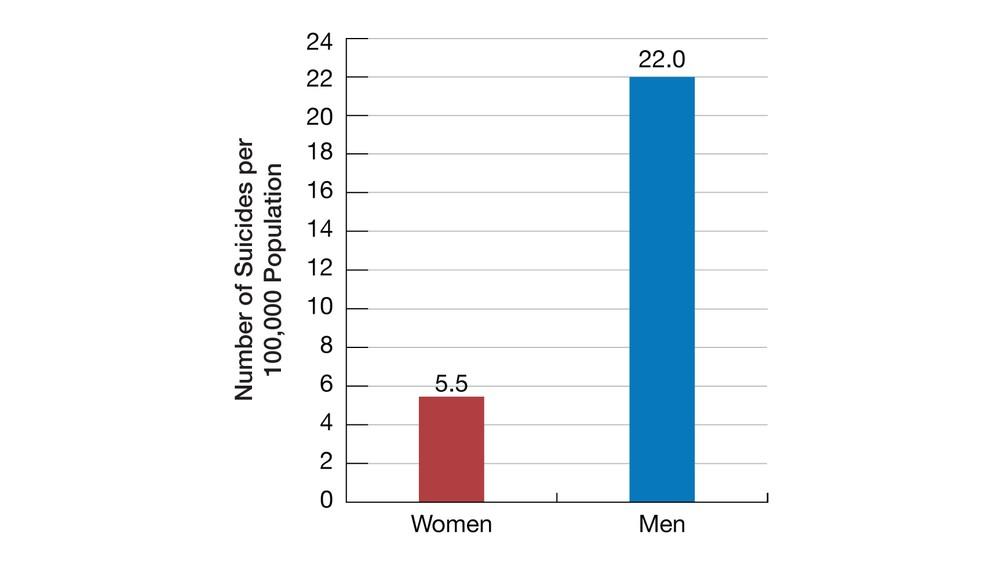
A generalization is just that, a general statement regarding a trend between various dimensions of our lives: gender and suicide rate, race, voting choice, and so forth.
Sociology as a social science relies heavily on systematic research that follows the standard rules of the scientific method. Careful research is essential for a sociological understanding of people, social institutions, and society.
Our usual knowledge and understanding of social reality come from at least five sources: personal experience, common sense, the media (including the internet), “expert authorities” such as teachers, parents, and government officials, and tradition.
Although sociology sometimes does confirm the obvious, it often also confirms the nonobvious, and even challenges conventional understandings of how society works and of controversial social issues.
The first wisdom of sociology according to Peter L. Berger is that “things are not what they seem.”
The debunking motif, from Peter L. Berger, is a theme of sociology in which the aim is to go beyond superficial understandings of social reality.
Social structure refers to the social patterns through which a society is organized.
Social structure can be either horizontal or vertical.
o Horizontal social structure refers to the social relationships and social and physical characteristics of communities to which individuals belong.
o Vertical social structure, more commonly called social inequality, refers to ways in which a society or group ranks people in a hierarchy, with some “more equal” than others.
Sociology stresses that individual problems are often rooted in problems stemming from the horizontal and vertical social structures of society. This key insight informed C. Wright Mills’ classic distinction between personal troubles and public issues
o Personal troubles refer to problems affecting individuals that are often attributed to an individual’s own failings; examples include eating disorders, divorce, and unemployment.
o Public issues refer to problems in society that affect many individuals and thus help explain the problems that individuals experience.
Thus, problems in society help account for problems that individuals experience.
o Mills felt that many problems ordinarily considered private troubles are best understood as public issues, and coined the term sociological imagination to refer to the ability to appreciate the structural basis for individual problems.
An example of Mill’s viewpoint is the rising unemployment rate that stemmed from the 2020 pandemic. When our society and economy shut down in March and April of 2020, millions of people lost their jobs through no fault of their own. Their sudden unemployment was best understood as a public issue, not just a personal trouble.
Blaming the victim vs. blaming the system: William Ryan said that Americans typically “blame the victim” when they think about the reasons for social problems like poverty, unemployment, and crime. Americans tend to think of social problems as personal troubles rather than public issues.
o A blaming-the-victim approach points to solutions to social problems such as poverty and illiteracy that are very different from those suggested by a more structural approach that “blames the system.”
o If we blame the victim, we would spend our limited dollars addressing the personal failings of individuals who suffer from poverty, illiteracy, poor health, eating disorders, and other difficulties.
o If we blame the system, we would focus our attention on the various social conditions (run-down schools, harmful cultural standards of female beauty, and the like) that account for these difficulties.
Early U.S. sociologists emphasized the use of sociological research to achieve social reform, and today’s public sociology reflects the historical roots of sociology in this regard.
Personal experience, common sense, and the mass media often yield inaccurate or incomplete understandings of social reality
The debunking motif involves seeing beyond taken-for-granted assumptions of social reality.
According to C. Wright Mills, the sociological imagination involves the ability to recognize that private troubles are rooted in public issues and structural problems.
Early U.S. sociologists emphasized the use of sociological research to achieve social reform, and today’s public sociology reflects the historical roots of sociology in this regard.
1. Provide an example in which one of your own personal experiences probably led you to inaccurately understand social reality.
Answer: Not everyone has the same personal experience, and this fact casts some doubt on the degree to which our personal experiences can help us understand everything there is to know about a topic and the degree to which we can draw conclusions from our personal experiences that necessarily apply to other people. The students should identify one such situation from their life where they made decisions on social reality based on personal experiences.
2. Provide an example, not discussed in the text, of a taken-for-granted assumption of social reality that may be inaccurate or incomplete.
Answer: The obvious may not be true always and sociology collects evidence to prove or disprove the obvious. Various aspects of celebrity lifestyle, opinions about other cultures, etc. are some examples of assumptions taken for granted, especially with some of the media promoting such information. Students may discuss such examples and identify traces of generalization or stereotyping that have worked to form such views.
3. Select an example of a “private trouble” and explain how and why it may reflect a structural problem in society.
Answer: Private troubles, such as an eating disorder, are also caused by larger structural problems in society. Most people with eating disorders are women, not
men. This gender difference points to there being something about being a woman in American society that makes eating disorders so much more common. Students are encouraged to discuss structural problems associated with private troubles.
4. Do you think it is important to emphasize the potential use of sociological research to achieve social reform? Why or why not?
Answer: Private troubles are often caused by a larger structural problem in the society. Sociological research is needed to identify these structural problems and to initiate corrective actions. Students should conduct secondary research to identify instances when sociological research has helped in directing social reform (as in government sponsored surveys, studies, etc.).
1. Information obtained from media can be inaccurate. Discuss. Answer: Media may overly simplify complex topics or even distort what the best evidence from systematic research seems to be telling us. Many studies show that the media sensationalize crime and suggest there is much more violent crime than there really is. The role of media during wartime or during the recent economic recession could be studied to explore the issue further.
1. Distinguish macro approaches in sociology from micro approaches.
2. Summarize the most important beliefs and assumptions of functionalism and conflict theory.
3. Summarize the most important beliefs and assumptions of symbolic interactionism and exchange theory.
Section Outline
Sociologists’ views basically divide into two camps: macrosociology and microsociology.
o Macrosociologists focus on the big picture, which usually means such things as social structure, social institutions, and social, political, and economic change.
o Microsociologists study social interaction. They look at how families, coworkers, and other small groups of people interact; why they interact the way they do; and at how they interpret the meanings of their own interactions and of the social settings in which they find themselves.
o Both types of approaches can give us a valuable understanding, but together they offer an even richer understanding than either approach can offer alone.
Two perspectives dominate within the macro camp: functionalism and conflict theory. Within the micro camp, two traditions exist: symbolic interactionism and utilitarianism.
The theory snapshot from Table 1.1:
o Functionalism: Social stability is necessary to have a strong society, and adequate socialization and social integration are necessary to achieve social stability. Society’s social institutions perform important functions to help ensure social stability. Slow social change is desirable, but rapid social change threatens social order. Functionalism is a macro theory.
o Conflict theory: Society is characterized by pervasive inequality based on social class, gender, and other factors. Far-reaching social change is needed to reduce or eliminate social inequality and to create an egalitarian society. Conflict theory is a macro theory.
o Symbolic Interactionism: People construct their roles as they interact; they do not merely learn the roles that society has set out for them. In so doing, they rely heavily on symbols such as words and gestures to reach a shared understanding of their interaction. Symbolic interactionism is a micro theory.
o Utilitarianism (Rational choice theory or Exchange theory): People act to maximize their advantages in a given situation and to reduce their disadvantages. Social order is possible because people realize it will be in their best interests to cooperate and to make compromises when necessary. Utilitarianism is a micro theory.
Functionalism, also known as the functionalist perspective, arose out of two great revolutions of the eighteenth and nineteenth centuries: the French Revolution of 1789 and the Industrial Revolution of the nineteenth century.
o Émile Durkheim, largely responsible for the sociological perspective as we now know it, felt that people’s desires result in chaos unless society limits them.
Socialization and social integration help establish a strong set of social rules—or, as Durkheim called it, a strong collective conscience—that is needed for a stable society.
Durkheim used suicide to illustrate how social disorder can result from a weakening of society’s moral cocoon. He felt suicide could not be explained simply in terms of individual unhappiness and instead resulted from external forces, including anomie, or normlessness, which results from situations when social norms and social ties have weakened.
In many ways, conflict theory is the opposite of functionalism but ironically also grew out of the Industrial Revolution.
o Instead of fearing the breakdown of social order that mass violence represented, Marx and Engels felt that revolutionary violence was needed to eliminate capitalism and the misery they saw as its inevitable result.
o According to Marx and Engels, a capitalist society features two classes based on the ownership of the means of production.
The bourgeoisie, or ruling class, owns the means of production.
The proletariat, or working class, does not own the means of production and instead is oppressed and exploited by the bourgeoisie.
o Capitalists try to keep wages as low as possible and spend as little money as possible on workplace conditions, which can lead workers to develop class consciousness. This can then lead them to revolt against the bourgeoisie to eliminate the oppression and exploitation they suffer.
o Feminist theory, considered as a specific application of conflict theory, is the view that society is filled with gender inequality characterized by women being the subordinate sex in the social, political, and economic dimensions of society.
Symbolic interactionism focuses on the interaction of individuals and on how they interpret their interaction.
o The roots of symbolic interactionism lie in the work in the early 1900s of American sociologists, social psychologists, and philosophers who were interested in human consciousness and action. Herbert Blumer (1969), a sociologist at the University of Chicago, built upon their writings to develop a view he called “symbolic interactionism.”
o According to symbolic interactionists, social order is possible because people learn what various symbols like shaking hands mean and apply these meanings to different kinds of situations.
Utilitarianism assumes that people act to maximize their pleasure and to reduce their pain. In sociology, utilitarianism is commonly called exchange theory or rational choice theory.
Functionalist theory tends to support the status quo and thus seems to favor existing inequalities based on race and ethnicity, social class, gender, and other dimensions.
Conversely, conflict theory emphasizes how social institutions contribute to social inequality, and it neglects these institutions’ contributions to social stability.
Sociological theories may be broadly divided into macro approaches and micro approaches.
Functionalism emphasizes the importance of social institutions for social stability and implies that far-reaching social change will be socially harmful.
Conflict theory emphasizes social inequality and suggests that far-reaching social change is needed to achieve a just society.
Symbolic interactionism emphasizes the social meanings and understandings that individuals derive from their social interactions.
Utilitarianism emphasizes that people act in their own self-interest by calculating whether potential behaviors will be more advantageous than disadvantageous. Exercises
1. In thinking about how you view society and individuals, do you consider yourself more of a “macro” thinker or a “micro” thinker?
Answer: Macro sociologists focus on the “large picture,” which usually means things like social structure, social institutions, and social, political, and economic change. They look at the large-scale social forces that change the course of human society and the lives of individuals. Micro sociologists, on the other hand, study social interaction. They look at how families, co-workers, and other small groups of people interact, at why they interact the way they do, and at how they interpret the meanings of their interaction and of the social settings in which they find themselves.
2. At this point in your study of sociology, which one of the four sociological traditions sounds most appealing to you? Why?
Answer: Within the broad macro camp, two perspectives dominate: functionalism and conflict theory. Within the micro camp, two traditions exist: symbolic interactionism and utilitarianism. The students could select one of these traditions and explain the reasons why the tradition appeals to them.
1. Explain the mechanisms that can be used to limit individual aspirations. Answer: Two related social mechanisms, socialization and social integration, can be used to limit individual’s aspirations. Socialization helps us learn society’s rules and the need to cooperate, as people end up generally agreeing on important norms and values, while social integration, or our ties to other people and to social institutions such as religion and the family, helps to socialize us and to integrate us into society and reinforce our respect for its rules.
1. Describe the different types of units of analysis in sociology.
2. Explain the difference between an independent variable and a dependent variable.
3. List the major advantages and disadvantages of surveys, observational studies, and experiments.
4. Discuss an example of a sociological study that raised ethical issues.
Some characteristics vary from one person to another or from one region to another. We call any characteristic that varies a variable. Sociological research aims to test relationships between variables or, more precisely, to test whether one variable affects another variable.
An independent variable is a variable we think can affect another variable. This other variable is the dependent variable, or the variable we think is affected by the independent variable.
o As an example, suppose you wanted to test the hypothesis that older people are more likely than younger people to worry about COVID-19. The first variable in this hypothesis is age (independent variable), while the second variable is worry about COVID-19 (dependent variable).
The most common unit of analysis in sociology is the person.
Another common unit of analysis in sociology is the organization
A third unit of analysis in sociology is the geographical region, whether it is cities, states, regions of a country, or whole societies.
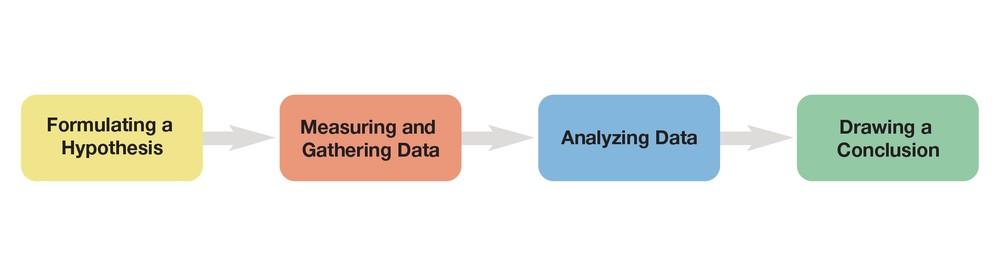
The scientific method involves formulating a hypothesis, or a statement of the relationship between two variables; gathering the data to test the hypothesis; carrying out such a test; and analyzing and writing up your results; and drawing appropriate conclusions.
A summary from Table 1.2 of the advantages and disadvantages of the major methods that sociologists use to gather the information they analyze in their research is given below.
o Survey
Advantage: Many people can be included. If given to a random sample of the population, a survey’s results can be generalized to the population.
Disadvantage: Large surveys are expensive and time consuming. Although much information is gathered, this information is relatively superficial.
o Experiments
Advantage: If random assignment is used, experiments provide fairly convincing data on cause and effect.
Disadvantage: Because experiments do not involve random samples of the population and most often involve college students, their results cannot readily be generalized to the population.
o Observation and interviewing
Advantage: Observational and interview studies may provide rich, detailed information about the people who are observed.
Disadvantage: Because observation studies do not involve random samples of the population, their results cannot readily be generalized to the population.
o Existing data
Advantage: Because existing data have already been gathered, the researcher does not have to spend the time and money to gather the data.
Disadvantage: The data set that is being analyzed may not contain data on all the variables in which a sociologist may be interested or may contain data on variables that are not measured in ways the sociologist prefers.
The survey is the most common method of sociological research.
Surveys gather its data with the help of a questionnaire that is given to a group of respondents
Many surveys are administered to respondents that are randomly chosen and thus comprise a random sample, in which everyone in the population has the same chance of being included in the survey.
o The General Social Survey is an example of a face-to-face survey, in which interviewers meet with respondents to ask them questions.
o Although the response rate and the number of questions asked are both lower than face-to-face surveys the ease and low expense of telephone surveys are making them increasingly popular.
o Mailed surveys, done by mailing questionnaires to respondents, are still used, but not as often as before.
Experiments are the primary form of research in the natural and physical sciences. They are very useful for establishing cause-and-effect relationships, but they are less common in sociology than in psychology.
o The typical experiment consists of an experimental group and a control group, with subjects randomly assigned to either group. The researcher makes a change to the experimental group that is not done to the control group. If the two groups differ later in some variable, then it is safe to say that the experimental condition to which the experimental group was subjected was responsible for the difference that resulted.
Observational research, also called field research, is a staple of sociology.
o In participant observation, the researcher is part of the group that they are studying. The research thus spends time with the group and might even live with them for a while.
o In non-participant observation, the researcher observes a group of people but does not otherwise interact with them.
o During intensive interviewing, a researcher does not observe a group of people in their natural setting but rather sits down with them individually and interviews them at great length.
Sometimes sociologists analyze existing data that someone else has gathered such as the U.S. Census. Analysis of existing data like these is called secondary data analysis
Research involving human subjects must follow certain ethical standards to make sure the subjects are not harmed. Such harm can be quite severe in medical research unless certain precautions are taken.
Sociological knowledge and insights, as derived from sound, objective research, are important to address many of the social issues facing American society and various nations around the world.
As a social science, sociology tests hypotheses involving independent and dependent variables reflecting various units of analysis.
The major types of sociological research include surveys, experiments, observational studies, and the use of existing data.
Potential ethical issues in sociological research are normally not as serious as those in medical research, but sociologists must still take care to proceed in an ethical manner in their research.
Although sociologists differ on whether the primary aim of their research should be to improve social conditions, this aim harkens back to the roots of American sociology in efforts to achieve social reform.
1. Have you ever been a respondent or subject in any type of sociological or psychological research project? If so, how did it feel to be studied?
Answer: The students should share their experience of being a respondent or subject in any type of research discussed in the chapter. For those students who do not have such experiences, they may recount experiences they know of. Student responses may vary.
2. Which type of sociological research method sounds most interesting to you? Why?
Answer: The students could choose any of the four research methods discussed in the chapter: survey, observational, experiments, and existing data. Students are encouraged to discuss the benefits of one form of research method over the other.
3. This book emphasizes the use of sociological research to achieve social reform. Do you think this is an appropriate emphasis, or do you think sociological research should primarily be done for its own sake (i.e., to achieve social knowledge without regard to whether it has implications for social reform)? Explain your answer.
Answer: The major purpose of any study is to bring about changes for the betterment. This book advocates the use of social research and social knowledge for bringing about reforms. Agreement or disagreement should be supported by strong and logical explanations.
1. Why do you have to use fake names and code anonymously when conducting a survey?
Answer: One of the most important ethical guidelines in sociological and other human subject research concerns privacy and confidentiality. When they do research, sociologists should protect the privacy and confidentiality of their subjects. When a survey is used, the data must be coded anonymously, and in no way should it be possible for any answers to be connected with the respondent who gave them. In field research, anonymity must also be maintained, and aliases (fake names) should normally be used when the researcher reports what she or he has been observing.
2. Provide a few examples of the sources of secondary data.
Barkan’s Sociology: Understanding and Changing the Social World, Brief Edition v4.0
Answer: The U.S. Census, previous sales information, patient records at hospitals, etc. are examples of the sources of secondary data. A good topic of discussion would the role and authenticity of information sourced through the Internet.

Steven E. Barkan

© 2025 By FlatWorld. All rights reserved. Your use of this work is subject to the license agreement available on our website at www.flatworld.com/terms.
No part of this work may be used, modified, or reproduced in any form by any means except as expressly permitted under the licensing agreement.

1. Define the sociological perspective.
2. Provide examples of how Americans may not be as “free” as they think.
3. Explain what is meant by considering individuals as “social beings.”
• It is the view that our social backgrounds influence our attitudes, behavior, and life chances.
• As individuals, we have the right to believe and act, yet our society, culture, and social institutions affect our choices.
• Individual attitudes and behaviors are influenced to some degree by our social backgrounds and by the society to which we belong:
• Gender
• Race
• Social Class
• Religion
• This makes us “social beings.”
• Individual decisions which are influenced by our social background:
• The right of voting is influenced by:
• Social background
• Society
• Committing suicide is influenced by:
• Gender
• Religious beliefs
• Social support network

1. Explain what is meant by the sociological imagination.
2. State the difference between the approach of blaming the system and that of blaming the victim.
3. Describe what is meant by public sociology and show how it relates to the early history of sociology in the United States.
• Sociology is fascinating. No matter how much sociologists are able to predict people’s behavior, attitudes, and life chances, there will always be many people who will not fit the predictions.
• Sociology is frustrating. People can never be totally explained by their social environment, sociologists can never understand the sources of their behavior, attitudes, and life chances sources completely.
• Unlike the other sciences, sociology do not always follow our predictions.
• Sociology helps us comprehend who we are and what we are by helping us understand the subtle influence of our social backgrounds on our life.
• Sociology as a social science relies heavily on systematic research that follows the standard rules of the scientific method.
• Our knowledge and understanding of social reality come from at least five sources:
• Personal experience
• Common sense
• Media (including the internet)
• Expert authorities
• Teachers
• Parents
• Government officials
• Tradition
• Peter L. Berger emphasized that sociology helps us see through conventional understandings of how society works.
• debunking motif: a theme of sociology in which the aim is to go beyond superficial understandings of social reality
• In this manner, sociology often challenges conventional understandings about social reality and social institutions.
• social structure: social patterns through which a society is organized
• horizontal structure: the social relationships and social and physical characteristics of communities to which individuals belong
• vertical structure: a term used interchangeably with social inequality
• Sociology stresses that individual problems are often rooted in problems stemming from the horizontal and vertical social structures of society
• sociological imagination: the ability to appreciate the structural basis for individual problems
• blaming the victim: the belief that people experiencing difficulties are to blame for their problems
• blaming the system: the belief that problems stem from various social conditions
• A sociological perspective suggests that focusing on the various social conditions is needed to help us deal successfully with the social problems facing us today.
• The use of sociological knowledge to achieve social reform was a key theme of sociology as it developed in the United States after emerging at the University of Chicago in the 1890s.
• The early Chicago sociologists aimed to use their research to achieve social reform and in particular to reduce poverty and its related effects.
• By the 1940s and 1950s many American sociologists had developed a more scientific, professional orientation that disregarded social reform.
• In 2004, the president of the American Sociological Association, Michael Burawoy, called for public sociology, or the use of sociological insights and findings to address social issues and achieve social change.
1. Distinguish macro approaches in sociology from micro approaches.
2. Summarize the most important beliefs and assumptions of functionalism and conflict theory.
3. Summarize the most important beliefs and assumptions of symbolic interactionism and exchange theory.
• macrosociology: part of sociology that deals with issues involving large-scale social change and social institutions
• microsociology: part of sociology that deals with social interaction in small settings

Theoretical Perspective
Functionalism
Conflict theory
Symbolic interactionism
Utilitarianism (rational choice theory or exchange theory)
Major Assumptions
Social stability is necessary to have a strong society, and adequate socialization and social integration are necessary to achieve social stability. Society’s social institutions perform important functions to help ensure social stability. Slow social change is desirable, but rapid social change threatens social order. Functionalism is a macro theory.
Society is characterized by pervasive inequality based on social class, gender, and other factors. Far-reaching social change is needed to reduce or eliminate social inequality and to create an egalitarian society. Conflict theory is a macro theory.
People construct their roles as they interact; they do not merely learn the roles that society has set out for them. As this interaction occurs, individuals negotiate their definitions of the situations in which they find themselves and socially construct the reality of these situations. In so doing, they rely heavily on symbols such as words and gestures to reach a shared understanding of their interaction. Symbolic interactionism is a micro theory.
People act to maximize their advantages in a given situation and to reduce their disadvantages. If they decide that benefits outweigh disadvantages, they will initiate the interaction or continue it if it is already under way. If they instead decide that disadvantages outweigh benefits, they will decline to begin interacting or stop the interaction if already begun. Social order is possible because people realize it will be in their best interests to cooperate and to make compromises when necessary. Utilitarianism is a micro theory.
• Beliefs and assumptions
• a macro theory
• Adequate socialization and social integration are necessary to achieve social stability.
• Social stability is necessary to have a strong society .
• Society’s social institutions perform important functions to help ensure social stability.
• Slow social change is desirable.
• Rapid social change threatens social order.
• a macro theory
• Society is characterized by pervasive inequality based on social class, gender, and other factors
• Far-reaching social change is needed to reduce or eliminate social inequality and to create an egalitarian society
• Beliefs and assumptions
• a micro theory
• People construct their roles as they interact.
• As this interaction occurs, individuals negotiate their definitions of the situations in which they find themselves and socially construct the reality of these situations.
• They rely heavily on symbols such as words and gestures to reach a shared understanding of their interaction.
• Beliefs and assumptions of utilitarianism (also known as exchange theory or rational choice theory)
• a micro theory
• People act to maximize their pleasure in a given situation and to reduce their pain.
• Social order is possible because people realize it will be in their best interests to cooperate and to make compromises when necessary.
1. Describe the different types of units of analysis in sociology.
2. Explain the difference between an independent variable and a dependent variable.
3. List the major advantages and disadvantages of surveys, observational studies, and experiments.
4. Discuss an example of a sociological study that raised ethical issues.
• independent variable: variable which can affect another variable
• dependent variable: variable which is affected by the independent variable
• unit of analysis: the focus of sociological research, usually a person, an organization, or a geographical region
• scientific method: the classic steps by which scientific research is conducted, including the formulation of a hypothesis and the gathering and analysis of data
Method
Survey
Advantages
Many people can be included. If given to a random sample of the population, a survey’s results can be generalized to the population.
Experiments
Observation and interviewing
If random assignment is used, experiments provide fairly convincing data on cause and effect.
Existing data
Observational and interview studies may provide rich, detailed information about the people who are observed.
Disadvantages
Large surveys are expensive and time consuming. Although much information is gathered, this information is relatively superficial.
Because experiments do not involve random samples of the population and most often involve college students, their results cannot readily be generalized to the population.
Because observation studies do not involve random samples of the population, their results cannot readily be generalized to the population.
Because existing data have already been gathered, the researcher does not have to spend the time and money to gather data.
The data set that is being analyzed may not contain data on all the variables in which a sociologist is interested or may contain data on variables that are not measured in ways the sociologist prefers.
• A sociological study that raised ethical issues:
• In 1932 the U.S. Public Health Service began studying poor, illiterate AfricanAmerican men in Tuskegee, Alabama who had syphilis, for which no cure then existed.
• After scientists found a decade later that penicillin could cure this disease, the government scientists decided not to give penicillin to the Tuskegee men because doing so would end their research.
• Should the primary aim of sociological research be to help improve society, or should it be to discover social knowledge for its own sake?
• There is no right or wrong answer.
• Although sociological research findings may be relevant for many social issues, this certainly does not guarantee that these findings will actually be marshaled to address these issues.
• For this to happen, elected officials and other policymakers must be open to the implications of research findings, and an informed public must make its desire for addressing these issues known.
• Life chances
• Social environment
• Sociology
• Sociological perspective
• Society
• Generalization
• Laws
• Debunking motif
• Social structure
• Horizontal social structure
• Vertical social structure
• Social inequality
• Personal troubles
• Public issues • Sociological imagination • Blaming the victim
Blaming the system
Macrosociology
• Microsociology
• Functionalism
• Collective conscience
• Anomie
• Conflict theory
• Bourgeoisie
• Proletariat
• Class consciousness
• Feminist theory
• Symbolic interactionism
• Utilitarianism
Exchange theory
Rational choice theory
Variable
Independent variable
Dependent variable
Unit of analysis
Scientific method
• Scientific method
• Hypothesis
• Respondents
• Random sample
• Response rate
• Experimental group
• Control group
• Participant observation
• Nonparticipant observation
• Secondary data analysis