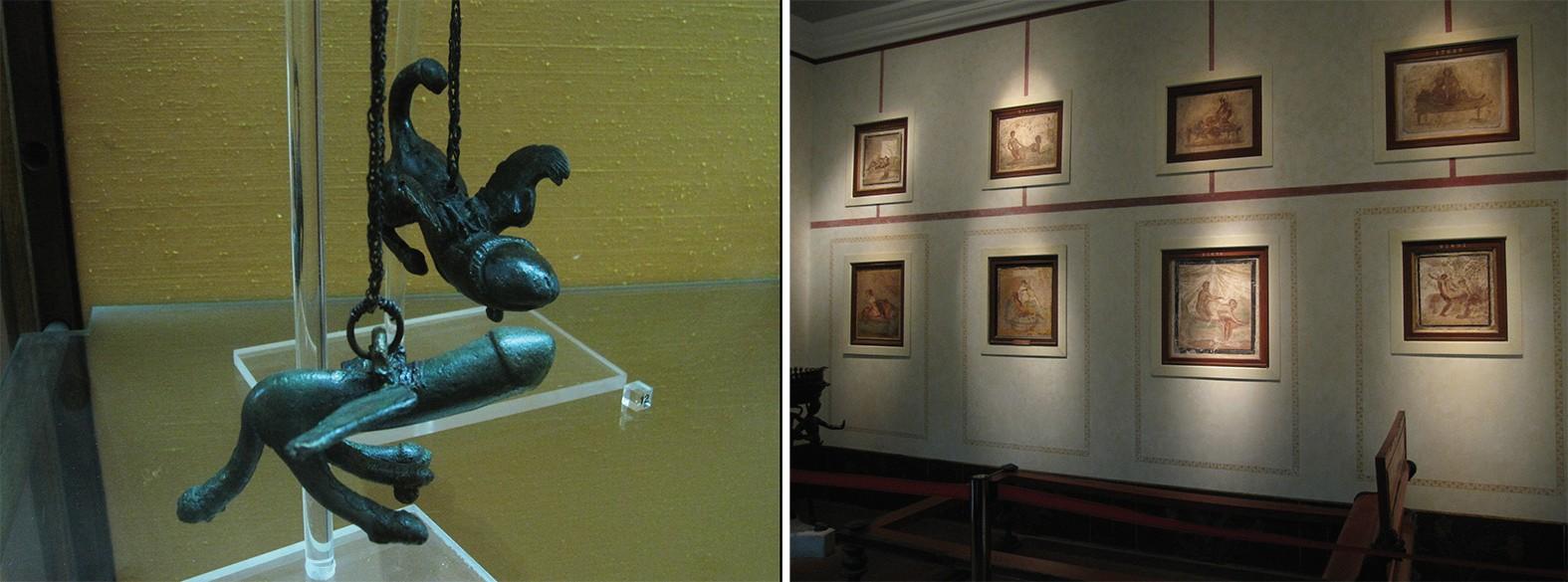
Perspectives on Sexuality in a Cultural and Historical Context
1.1 Cultural Perspectives and the Global Influence of the Abrahamic Religions
Learning Objectives
Review terms associated with studying sexuality.
Explain how most sexuality and psychology research is based on a very limited subset of humanity.
Identify differences in the lives of people who live in developing economies as compared to those who live in industrialized countries and the wealthiest areas of developing economies.
Identify the differences between an interdependent and an independent view of self.
Explore the distinction between an apparent cultural universal and a true cultural universal, and understand the ways in which very different cultures have common historical influences.
Identify the three Abrahamic religious traditions, and understand the development of these, Greco-Roman culture, colonial activity, and the historical influences of all of these on present-day sexuality in varied regions of the modern world.
Identify the involvement of organized religion in political matters related to abortion and sexuality in the United States since the 1980s.
Introduce the common and widespread influences of agriculture and modernization on gender roles and sexuality.
Consider the roles of mass media and the internet, as well as the emergence of global cultural influences, and contrast them with the continuation of local variations.
Section Outline
Sexology, the scientific study of sexuality, may include many different academic disciplines, such as anthropology, history, psychology, and sociology.
Gender includes the behavioral, social, and cultural manifestations of femaleness or maleness
Most people in everyday language use gender to refer to biological sex, the genetic, hormonal, anatomical, and functional manifestations of femaleness and maleness.
The American Psychological Association encourages psychologists to use “gender” to refer to maleness and femaleness and “sex” to refer to sexual activity.
This text generally follows the conventions of sexology and uses the word sex (or biological sex) to refer to biological aspects, sexual behavior to refer to activity, and gender to refer to expressions of femaleness and maleness.
Identity refers to the way people perceive themselves or some aspect of self, or how people represent themselves to others.
o A person can have multiple identities, such as cultural identity, religious identity, national identity, and also gender identity.
“Traditional” students at a college or university in the United States are eighteen to twentytwo years of age, live away from home for the first time, and grow up in a family with access to electricity, clean running water, television, a washing machine, and the Internet.
o Their views on many aspects of human psychology, not just sexuality, may be fairly similar to people who have had fairly similar experiences.
Henrich, Norenzayan, and Heine observe that seven out of eight people have lives that are in many respects quite different, not only in day-to-day life, but also in underlying psychological processes, many of which turn out to be affected by culture.
o Henrich, Norenzayan, and Heine were writing about the nonrepresentativeness of psychology research, but the point applies equally well for studying sexuality.
Markus and Kitayama suggested that one of the most profound psychological differences in cultures is whether one’s self-concept is independent or interdependent.
In a cultural (or family) tradition with an independent view of self:
o Clear boundaries exist between self-identity and others.
o There is a diffuse boundary between in-group and out-group with easier inclusion of others into one’s in-group.
o One views self as an unchanging entity over time, with an emphasis on individualism.
o Such cultures are traditionally Western.
o People from families with these cultural backgrounds typically make choices for themselves.
In contrast, in a cultural tradition with an interdependent view of self:
o A diffuse boundary exists between self-identity and people within one’s closest group and family.
o There is a sharp boundary between in-group and out-group with less easy inclusion of others into one’s in-group.
o One views the self as needing to change to accommodate different relationships, with
an emphasis on these relationships.
o Such view of self is more common in non-Western cultures and traditional, nonindustrialized societies.
o It is not unusual in these cultures for decisions like marriage and occupation to be made traditionally by family members rather than self.
Cultural psychologists note that an interdependent sense of self is historically the most prevalent type of self-concept.
The independent sense of self is also associated with more industrialized, urban, and market-based economies, and traditionally interdependent cultures such as those of Northeast Asia have become markedly more independent than in earlier decades, particularly for younger generations.
By studying cultural differences, sexologists can explain significant differences in love, relationships, gender roles, and sexual behavior.
o They can also find patterns that may suggest universals, contributing to shared experiences as humans across cultures.
o When they find universals, they are often rooted in biology and can best be appreciated through understanding evolution and mechanisms that are found across species.
Although many Catholics in the United States use contraceptives, the pope, leader of the Catholic Church, directs that the use of contraceptives is immoral.
o Contraceptive pills in the United States require a doctor’s prescription, and as of 2019, pharmacists in thirteen states have the legal right to refuse to fill a woman’s prescription for contraceptives under some circumstances.
o This is known as a “conscience clause” or “refusal to fill law.”
o The laws vary by state and are in frequent flux.
In Greece, around 1000 BCE (before common era) to 500 BCE, it was considered appropriate for males to have two outlets for sexual desire and behavior: with women and with adolescent males.
o Male self-stimulation (masturbation) was not considered immoral but was regarded as inferior to sexual activity with either women or adolescent males and was intended only for those who were unable to find one of the two preferred sexual outlets.
Laqueur notes that surviving commentaries on the Old Testament of the Bible, written by rabbis more than two thousand years ago, suggest that sexuality was not discussed much, but sections of the Old Testament suggest that attitudes about sexuality in Judaism may have been more restrictive than for the ancient Greeks.
o Expectations in ancient Judaism were that sexual behavior was for procreation, and passages condemn male-male sexuality, bestiality, and the sin of Onan (ejaculating outside of a woman).
o However, Laqueur notes that these passages attracted little Talmudic commentary (formal teachings of ancient rabbis) and that this suggests less importance was placed on these prohibitions in ancient times than in modern ultra-Orthodox Judaism.
o The most traditional branches of Judaism today encourage sexual conservatism and strict separation between the sexes, suggest modesty in clothes for both sexes, require women to cover their hair, and have a very strict view on sexual expression: that it should be directed toward procreation, with sexual pleasure outside of marriage, masturbation, or same-sex relations being strictly prohibited.
Pre-Christian Roman culture likely held permissive attitudes toward many aspects of sexuality, similar to the Greeks—in particular, a toleration or encouragement of both women and men enjoying sex for pleasure.
o Although they considered Greek culture inferior to Roman culture, there is no evidence of any specific regulation of sexuality, even in the first few centuries of Christianity being adopted by Romans.
o Roman histories written in the last few centuries BCE and first centuries CE (common era) suggest that the wealthy and powerful of both sexes had regular feasts and orgies, and archeological remains show that brothels and sex workers were a well-established part of Roman life.
While women had some power in ancient Rome, both ancient Greek and Roman cultures were primarily patriarchal, a social structure where power, wealth, property, and status are largely controlled by males
o In the fourth and fifth centuries, Roman emperors were converting to Christianity and wanted to make a break with the practices of their ancestors.
o This era saw the formal passage of laws in Rome that criminalized male homosexuality.
o Asceticism—the giving up of pleasures—in general was on the rise in Christian philosophy, and this was viewed as a way of being godly.
Although not the only advocate of this thinking, one of the most influential and respected philosophers of his day was Aurelius Augustinus, known also as St. Augustine of Hippo, or simply as Augustine.
o He continues to be respected by contemporary Christian philosophers and wrote widely on numerous topics including free will and moral evil.
o His work is cited as part of “just war theory,” the idea that a war can be moral and good, which are arguments that were considered explicitly prior to the 2003 U.S invasion of Iraq.
o Augustine’s relevance for modern sexuality is twofold, pertaining to both the personal and the philosophical.
o For him, the ideal was a married couple who swore to celibacy but, in failing this, practiced procreative sexuality.
The Abrahamic religions are Judaism, Christianity, and Islam
The books of the Old Testament that one finds in a modern Christian bible date to the 300s and 400s, when Romans were adopting Christianity.
o This is also the era that consolidated teachings attributed to the disciples of Jesus in written form into the books that form the New Testament.
The material of the Old Testament books originated with the Jewish Torah, which scholars consider to have been written by multiple authors across several centuries prior to the fifth century BCE.
In Judaism in the 200s and 500s, the oral teaching of rabbis was consolidated into additional written form in the Talmud, much of which includes commentaries on the Torah and has been an important component of Judaism since the 500s.
Islam builds on a similar theological basis, as do Judaism and Christianity.
o Its holy book, the Quran, was compiled into written form from the teachings of the prophet Muhammad shortly after his death in 632 CE, and modern versions are believed to be similar to those that existed by the early 700s.
The early practice of these three religions is intertwined with that of the early Greek and Roman cultures and with the trade, war, and cultural exchange that existed in the Mediterranean region in antiquity.
o In the following centuries many offshoots and variations developed.
At times some of these religious and cultural traditions have been more accepting of sexual expression and pleasure, and at other times they have rejected sexuality as sinful.
All three Abrahamic religions historically have reflected the patriarchal structures of Mediterranean antiquity, with males controlling property, wealth, and power.
Contemporary branches of Judaism include Reform, Conservative, and Orthodox.
o Reform Judaism, the most followed branch of Judaism in the United States, has liberal attitudes on sexuality, including sex outside of marriage, masturbation, and same-sex relationships.
o The Orthodox community views sexuality as being for procreative purposes between a husband and wife.
o The Conservative community’s views fall in between those of the Reform and Orthodox communities.
The most practiced form of Christianity is Catholicism, dating to Roman adoption of Christianity.
o While the Catholic Church no longer encourages celibacy for married couples, the other parts of St. Augustine’s proscriptions—the role of original sin in human problems and the immorality of sexual desire—very much continue as a theme in Catholic doctrine in the twenty-first century.
o This in part contributes to Catholic opposition to contraception, which implies sexual relations for pleasure rather than procreation.
Protestantism, the second most common type of Christianity, had its origins with Martin Luther at a time in the 1500s when the Catholic Church had become wealthy and popes had mistresses, and Protestantism represented, in its origins, a stern rejection of worldly pleasures and excess.
o Marriage was not only considered sacred but also an essential foundation of society, and Luther viewed sexual desire as immoral but too strong to resist and so needing to be channeled into married relationships.
o Modern offshoots of Protestantism exist that are far more liberal, and others are very conservative.
o While there have been many offshoots in the past six hundred years, a relatively conservative branch of Protestantism emphasizing the importance of hard work as godly was brought to North America in the 1600s and 1700s.
o Although Evangelicalism and Evangelical Christianity started as a European Protestant movement, it became strongest in the United States, where tens of millions consider themselves Evangelicals, most of whom take a conservative view of sexuality and, in modern times, argue for laws regulating sexual expression.
In the United States in the 1800s, the prophet Joseph Smith developed what came to be called the Church of Jesus Christ of the Latter Day Saints, commonly known as Mormon faith, and the LDS Church.
o This faith also includes prohibitions on sex outside of marriage and same-sex relations, and an encouragement to have as many children as possible.
o The Mormons at first practiced polygamy and were persecuted by the federal
government, moving from New York to Utah, but later abandoned polygamy.
o Mormonism encourages conversion, and young adult male Mormons are especially encouraged to serve a mission in which they attempt to convert others.
o The church is led by a council of elders, who are only permitted to be males.
The prophet Muhammad believed that Jesus was also a prophet, and many aspects of the Bible and the traditions of Judaism and Christianity that existed during Muhammad’s life in the latter part of the 500s and early 600s became incorporated in the early practice of Islam, particularly with regards to segregating women and men and sexual modesty.
o However, Muhammad had multiple wives, and sexual pleasure within marriage was never considered immoral, so early Islam did not have the emphasis on original sin or sexual immorality that early Catholicism had.
Although many modern branches of Christianity, Islam, and Judaism argue for equal status for females, the more traditional branches of all these religions continue to echo the traditions of two thousand years ago and hold that God’s plan requires an appropriate place for the two sexes, with clear distinctions between the roles taken by females and males, including that males have authority within a family.
o Discouraging, restricting, or forbidding contraceptives functionally affects gender roles, requiring procreation for sexually active women.
o Some branches require that a wife obeys a husband, and many limit the role of women in positions of power within the religion, such as by only permitting males to be priests and clergy.
o In the most traditional sects of these faiths:
Sex for sexual pleasure, particularly outside of marriage, is still viewed as sinful.
Nonprocreative sex is seen as immoral.
Pornography is strictly prohibited.
Nudity and sexual portrayals in film and television are restricted.
The legal regulation of private sexual behavior is seen as an appropriate role for government.
In their more traditional forms, the Abrahamic religions have strict division of gender roles and support patriarchal family structures.
The Old Testament account of creation holds that the first female, Eve, was created for and from Adam.
o The Old Testament also suggests that Eve was responsible for turning away from God in the biblical story of the Garden of Eden, which holds that Satan tempted Eve to eat fruit from the forbidden tree of knowledge.
o Some branches of the Abrahamic traditions interpret this as a metaphor for humanity ignoring holy teaching; others take it literally as there being only two humans on a newly created Earth six thousand years old and that Eve literally was tempted by Satan to eat fruit from the forbidden tree, sample knowledge, and experience sexual desire, leading to Adam and Eve having sexual relations and falling from Eden, creating the human race.
o This is referred to as original sin.
The Christian teaching that Jesus was born to a virgin Mary, combined with original sin, has created a dichotomy that has existed for most of Christian tradition, where females are viewed as being either pure and chaste, like the Madonna Mary or as sexually depraved
creatures responsible for corrupting men and worthy of scorn, punished by God for Eve’s original sin.
o This combination of original sin and the virgin birth has been referred to as creating a Madonna-whore complex within Christianity: virtuous women are seen as being like the virgin Mary and should not enjoy sex, and any woman who does so is considered morally depraved.
This dichotomous view of women underlies a sexual double standard that continues in some modern cultures.
o The view of women’s default state has shifted over the centuries in the Western tradition.
o The Renaissance view of women was that most females wantonly sexually corrupt males.
o This gave way to an eighteenth- and nineteenth-century view of most women as being innately sexually chaste, incapable and uninterested in enjoying sexual pleasure—and the few who did were “fallen” women.
The association between religious moral virtue and sexual purity continues in the twentyfirst century, particularly for females, and not only in Christian traditions.
The text has spent much time on the Abrahamic religions because Christianity and Islam have more than three billion adherents on every continent, and many of the sects that urge for sexual conservatism have missionaries or advocates seeking to convert others to their beliefs.
o In addition, adherents of the more traditional branches of the Abrahamic religions are highly active in advocating within political systems for laws that require people, including nonbelievers, to follow their traditions in ways that affect many aspects of sexuality, sexual relations, and reproductive rights.
o This is true for Orthodox Judaism in Israel, the LDS Church in the United States, the Catholic Church in many countries, and Islamist political parties in many countries.
o The final reason the Abrahamic religions have such an impact on sexuality around the world today has to do with European colonial governments.
Some of the nineteenth-century European colonial laws continued to exist long after the independence movements of the mid-twentieth century, and so Victorian Christian ideas about sexuality have had significant impact on quite different cultures.
Somewhat similar to the political and social spread of Western, Christian influence in the Middle Ages to the modern era was the spread of the Islamic Ottoman Empire from the 1300s to the 1900s.
o This extended both cultural and religious influences throughout much of what is today the Middle East and North Africa.
All major world religions, including the Abrahamic religions, have wide variations in practice, not only from sect to sect within the religion, but also between cultural regions and between historical eras and in terms of differences (within the same era and region) between the affluent and educated and those with low incomes and low wealth or no wealth.
o Nevertheless, because of the prevalence of these religions as well as a history of expansion, colonization, and now entertainment and cultural export from societies practicing the Abrahamic traditions, the common traditions on sexuality and gender roles of the Abrahamic and Greco-Roman traditions have had some influence on
ideas of gender and sexuality for the majority of countries on every continent in the modern world.
In the United States, Evangelical Christianity had its roots in the 1700s.
o In the 20th century, Evangelical Christian churches largely stayed out of political policies and the political arena until the late 1970s and 1980s, at which point they and other conservative Christian movements became increasingly formally engaged in sociocultural issues, entering the “culture wars.”
o This included endorsing candidates in political races in the 1980s and 1990s who were against legalizing same-sex sexual contact at a time when this was illegal in many states; who in the 2000s opposed the same-sex marriage equality movement, which led to legalizing same-sex marriage in the USA in 2015; and the in the 2020s increasingly advocated for restricting access to abortion.
o As of the 2020s this has extended to limiting access for transgender-affirming care for minors, and prosecuting for murder people who travel from regions where an abortion is not permitted, if they obtain an abortion from a region where that abortion remains legal and a personal decision.
A particularly powerful cultural influence on sexuality and gender roles in modern countries are the dual effects of the invention of agriculture approximately ten thousand years ago and the effects of industrialization and urbanization in the past century.
The evolutionary ancestral environment of human and prehuman ancestors for millions of years consisted of scattered bands of 50 to 150 individuals who practiced what is referred to as forage-and-return hunting and gathering.
o Those near abundant food resources may have settled for many generations; others practiced seasonal migration.
o This changed approximately ten thousand years ago, when agriculture and domestication of animals for food was developed by cultures in what is today the Middle East and North Africa.
o In most societies that practiced agriculture, a strict division of power emerged with a small percentage of individuals coming to control the political and economic structures within society—mostly males.
Although some forage-and-return hunter gatherers have patriarchal structures, there is a much greater variety of social organization in Indigenous peoples in contrast to the postagricultural cultures of ancient India, China, North Africa, the Middle East, and Europe.
o Despite immense linguistic and cultural differences, all these societies developed patriarchal structures after adopting agriculture.
o Reasons for this include the division of labor, with the 15 to 20 percent greater upper body strength favoring males for production of food in a preindustrial era, and the increased fertility made possible by more food led women to have more babies and spend a greater proportion of their lives pregnant.
The number of surviving forage-and-return hunter gatherers, who most likely resemble our human ancestors in terms of social organization, represents a tiny fraction of the world’s population.
o Almost all people alive today have immediate ancestors who practiced agriculture in patriarchal societies.
Other powerful and shared influences on gender and sexuality are industrialization, urban
living, and a shared cultural experience.
Technology itself exerts a powerful influence on gender and sexuality.
o For example, reliable oral contraceptives were first discovered in the late 1950s.
o They give women control over fertility, and today, in all countries where women become more educated and income levels increase sufficiently for access to contraceptives to become possible, a majority of women chose to have far smaller families.
While most of the world’s people are not Western, educated, or affluent, most are postagricultural and have some exposure to modern technology and urbanization.
Frayser notes that cultures have varied widely in terms of the importance they place on controlling reproduction and restrictions on sexuality.
o She also notes that while these can vary independently, most cultures with low concern for controlling reproduction have fewer regulations on sexual behavior, whereas most cultures with strong importance given to controlling reproduction also place many restrictions on sexual behavior.
o Cultures that are high on controlling reproduction place restrictions on sexual behavior in both sexes, but the restrictions tend to be greatest for females, which may be seen as a way of ensuring paternity.
A relatively new aspect of culture that affects sexuality—one that has both global similarities and local variations—is the media and the Internet.
o Visually centered mass media began with film in the early 1900s, television in the mid-twentieth century, and the Internet in the late twentieth century.
An interesting dichotomy exists in media, with local traditions coexisting with a single, largely Western global tradition.
o Each cultural and linguistic group has its own domestic media, but while media produced anywhere can now be accessed everywhere, for economic reasons the cultural transfer for entertainment is mostly unidirectional from culturally Western to non-Western sources.
Media and artistic products both reflect the values and attitudes of a culture and serve to shape those attitudes.
o In part because many countries are more restrictive of material that has nudity or sexual content than material that has violence and because companies market where demand exists, cultural exports that are marketed globally tend not to be as varied in their portrayals of sexuality as material that is produced for domestic markets in the United States.
The Internet has been described as a great leveler of information.
o Although many countries, including the Islamic Middle Eastern nations and China, have strict limits on freedom of expression of political ideas and sexual content online, technology makes it possible for many computer users to bypass these restrictions.
Anecdotal evidence suggests that influences of “foreign cultures” on sexual values are often attacked, particularly when such external influences challenge prevailing customs about sexual behavior or gender roles.
o Yet culture is formally defined as transmitted information or knowledge, and while the Internet provides a new dimension to the transmission of knowledge that can cross geographic and, with machine translation, linguistic borders, the transmission
and modification of culture has been a hallmark of humans since the time of our stone-tool-making hominid ancestors.
Another influence of modern media is on body image.
o Film and television both reflect culture and shape it.
Key Takeaways
The scientific study of sexuality, or sexology, includes anthropology, biology, history, psychology, and sociology.
Femaleness and maleness include aspects that are socially and culturally influenced, known by sexuality researchers as gender. They also include physical and genetic differences known as biological sex, typically referred to by sexuality researchers as sex. Behavioral differences can be a function of both of these. Identity refers to the way that people perceive themselves, which is yet another aspect of femaleness and maleness.
Most sexuality and psychology research is based on young adult college students in industrialized countries, especially Western ones. Even relatively poor people in wealthy countries are much wealthier than the typical person in the world.
A major cross-cultural difference is to have either a more interdependent or more independent self-concept.
Culture interacts with innate biological aspects of human nature. There are many individual variations in biology. For example, in all cultures, some people fall in love, but not everyone experiences love in the same way, and some cultures emphasize love as the basis for marriage, others do not.
A complicating factor for sexuality research is that many quite different countries may have similar historical influences, leading to a false impression of universals of human nature.
Most of the world’s population has been directly or indirectly influenced by the views of sexuality and gender roles of the Greco-Roman historical tradition and the Abrahamic religions.
These influences come not only from current religion but also from past colonial activity. They include a view of sexuality and sexual pleasure as being sinful and gender roles that hold women to be inferior to men.
Although not all branches of these religions in the modern world teach these values, many branches continue to do so, both for their adherents and in attempting to influence the laws and policies of governments that affect nonbelievers as well. This occurs in many countries in the world.
Organized religions from time to time become involved in political processes and issues. Evangelical Christian engagement with laws regulating sexuality and abortion, originated in the late 1970s and 1980s and continues in the 2020s.
Most agricultural societies developed patriarchal structures and gender roles, and these are a common historical influence for most people in the world today. Indigenous peoples with nonagricultural traditions represent a very small proportion of today’s population. These cultures show multiple variations in family structure, gender roles, sexual behavior, and other aspects of sexuality. Cultures concerned about controlling reproduction usually place more restrictions on sexual behavior.
Global industrialization and technology influence sexuality and gender roles.
Mass media and the internet not only reflect preexisting attitudes about sexuality, but also shape those attitudes. In the 21st century, they exist in local and global forms, with global media being Western-dominated. One example of this influence is on body image and people’s satisfaction with their bodies.
Key Terms
Sexology: The scientific study of sexuality
Gender: The behavioral, social, and cultural manifestations of femaleness or maleness
Biological sex: The genetic, hormonal, anatomical, and functional manifestations of femaleness and maleness
Identity: The way an individual perceives himself or herself or some aspect of self or how that individual represents himself or herself to others
Patriarchal: A social structure where power, wealth, property, and status are controlled by males
Abrahamic religions: Judaism, Christianity, and Islam; named after their shared monotheistic beliefs dating to the ancient Israelites and their biblical figure of Abraham.
Original sin: In the Abrahamic religions, the belief in either a metaphorical turning away from divine teaching or a literal corruption of sexual pleasure; serves as a historical and contemporary contribution to negative views of sexual pleasure absent a procreative relationship
Sex panic (moral panic): A widespread concern about some aspect of sexuality or sexual behavior, that is not based in evidence, and may have an unstated origin in morality. The broader phrase, moral panic, may denote concerns about sexuality, or broader concerns about departures from traditional values.
Exercises and Discussions
1. It is a good idea to begin the semester with an informed consent document and participation guidelines, that will provide a safe space to discuss material that may be challenging or controversial, while maintaining appropriate boundaries. Such consent should respect other students in the course, as well as respecting the instructor’s needs to include a wide range of perspectives and research. Possibilities include anonymous online discussions, and opting out of some discussions on emotionally difficult topics with alternative work such as library research on those same topics. It is important to respect that religious and moral values may differ quite significantly between individuals within the same classroom, and that, much as individuals in a family may disagree without malice, individuals in a class can respectfully share divergent views while respecting the rights of one another.
2. If you are comfortable sharing, write about the following two topics: (1) whether you think your family of origin and its cultural traditions reflect a more interdependent or independent view of self and (2) the ways in which the religious teachings of your family and culture have influenced your view of sexuality. You may also have a class discussion on this in small groups.
Student answers will vary.
3. Do you feel religious objection laws for pharmacists are appropriate? Explain your reasoning, and explain the reasoning of people who strongly favor and strongly object to
such laws.
Student answers will vary; proponents may mention that these laws protect religious freedom and respect the right of individuals to maintain their religious convictions in the workplace and restrictions on contraception are an important component of religious practice for some faith traditions. Oppositely, students may argue that businesses serving the public cannot legally discriminate or impose personal beliefs on customers, and that pharmacists are healthcare professionals bound by legal and ethical standards of service.
4. What do you think is the appropriate limit of religious beliefs on secular law (that is to say, the laws that affect everyone)? Should it vary in societies that have people from many religious traditions compared to those that have a substantial majority from a similar tradition?
Student answers will vary. Students with a more pro-religious perspective may mention that religious beliefs represent fundamental moral frameworks that have historically guided societal values and lawmaking. They may also say that laws should respect and accommodate religious convictions, recognizing that moral principles often originate from religious traditions that have deep philosophical and ethical foundations. Students with a more secular mindset may mention that secular law must protect individual rights and prevent any single religious view from being imposed on those who do not share that belief system. Laws should be based on rational, demonstrable public interests that can be justified through reason and empirical evidence, not through religious doctrine.
Whether or not students believe this should vary in societies that have people from many religious traditions compared to others will also vary.
5. Watch Jesse Rosten’s video “Fotoshop by Adobé” that mocks the unrealistic image of models, available at http://www.youtube.com/watch?v=S_vVUIYOmJM. Next, research the change in bicep and abdominal muscles on GI Joe action figures from the 1960s to the 1990s. Write about your thoughts on how satisfied you are with your body as well as what body types you find attractive in others. Do you feel your body ideals are influenced by the media? Explain.
Student answers will vary. Many may say that body ideals are influenced by the media, especially in today’s society that is highly influenced by social media, which is so widely accessible and present in our current society.
Additional Exercises
1. Why do the Abrahamic religions have a huge impact on sexuality around the world?
Suggested answer: Abrahamic religions, particularly Christianity and Islam, have profoundly influenced global sexual norms through their traditional interpretations of sexuality, gender roles, and moral conduct. Rooted in patriarchal textual traditions and amplified by colonial expansion, these religious perspectives have shaped legal and social attitudes toward sexual behavior across multiple continents, often seeking to regulate sexual practices beyond their immediate religious communities.
2. What are the chief reasons behind ancient India, China, North Africa, the Middle East, and Europe developing a patriarchal structure after adopting agriculture?
Suggested answer: The agricultural revolution in these regions catalyzed patriarchal structures through several key mechanisms: men's superior physical strength for heavy
agricultural labor, women's prolonged reproductive responsibilities that limited economic participation, inheritance systems that prioritized male lineage, and the economic value of male children as agricultural laborers. Property ownership became male-centered as land cultivation required continuous physical labor, while reproductive patterns shifted to prioritize population growth, further embedding male dominance by making women's primary social value tied to childbearing and domestic management.
1.2 Sexuality Across Major Geographic Regions and Cultural Traditions
Learning Objectives
Examine historical differences in order to understand current regional variations in sexuality and gender roles.
Specifically consider this in western European countries as well as England, the United States, and other Anglo-influenced cultures.
Investigate how the history of enslavement affected African American gender relations.
Explore eastern European traditions and influences on sexuality and gender roles.
Describe influences on Latino and Hispanic cultures in the Americas.
Consider Northeast Asian cultures.
Explore Middle Eastern and North African cultures.
Explore South Asian cultures.
Consider African cultures.
Specify examples, in Indigenous cultures, of gender and sexuality and differences in family structures.
Section Outline
The “Western” cultures, predominantly associated with ethnic Caucasians (white people), include a diverse range of countries, languages, and cultures originally from Europe.
o This includes Mediterranean western European cultures, the largest of which are the modern nations of Portugal, Spain, the south of France, Italy, and Greece.
o This also includes the German-speaking cultures: the modern nations of Austria and Germany, the northern European cultures of Scandinavia, including Denmark, Norway, and Sweden, and the other Nordic countries of Finland and Iceland.
o The last major group of western European cultures includes the Anglo or Englishspeaking country of England and the Celtic and Gaelic countries of Wales, Scotland, and Ireland.
o The countries where English emigrants displaced native populations and formed colonies that became independent countries are also considered Western cultures: Canada, the United States, Australia, and New Zealand.
The Mediterranean cultures have historically been Catholic, with Christian traditions on sexuality and gender roles.
o Most have also had a construct of masculinity known as machismo, with a role for men involving defending honor, protecting and providing for family, and being able to conceive children.
o The twentieth and twenty-first centuries have seen a dramatic shift in the Catholic and Mediterranean western European cultures toward secular traditions, and countries such as Portugal, Spain, and France were among the earliest countries to recognize same-sex unions in the late 1990s and early 2000s.
o The Nordic countries were early converts to Lutheranism, the branch of Protestantism founded by the German Martin Luther, and in the twentieth century adopted the most socialist of economic structures among industrialized countries, emphasizing equality of opportunity in education and gender roles.
o In the twenty-first century, many countries have laws requiring representation by women as well as men in positions of power, such as a 2003 Norwegian law requiring private corporations whose stocks are publicly traded to have at least 40 percent of their corporate boards be female.
The Nordic countries are regarded as among the most secular in the modern world, having the least restrictive policies on contraception, and having the most comprehensive sex education in public schools.
The Netherlands has a distinct culture and linguistic tradition but has a centuries-old tradition of “tolerance” and, along with the Nordic countries, is also among the most liberal on matters of sexuality in the industrialized world.
The Protestant Reformation, which split Christianity from Catholicism, started in the 1500s with Martin Luther, who was a German, and Germany entered the twentieth century with rigid gender roles, a highly patriarchal culture, and negative attitudes toward sexual expression.
o Like the Nordic countries, in recent decades Germany has become among the more liberal of industrialized countries with regards to sexuality.
o Some aspects of German law are more permissive than those of other European countries, such as legalizing all forms of prostitution, from street workers to brothels.
o Although most Germans continue to identify culturally as Protestant or Catholic, laws there are less restrictive on sexuality than they are in the United States (which also has a predominantly Christian population).
England entered the 1800s with a form of Protestantism less strict than Lutheranism: the Anglican Church of England.
In the 1800s, when Queen Victoria ruled, England greatly expanded its rule of other countries, with the view that Europeans were more civilized and culturally superior to the countries that were being occupied, whose resources and labor was being used to enrich citizens in Europe.
o There was a movement both within England and in occupied countries to associate “civilized” culture with the restraint of natural impulses.
o Now called the Victorian era, the 1800s was a time of sexual conservatism in England, with formal criminalization of many types of consensual sexual behavior between adults.
o English physicians and scientists, along with French and Germans, also pathologized many forms of sexual expression as mental illness.
The United States is, in many aspects, an outlier among the wealthiest industrialized nations and an outlier among those whose populations in the last two hundred years have been predominantly Anglo-Western and Christian.
Substantial differences exist where the United States is unique among many countries and
these differences inevitably have consequences on sexuality and reproductive health.
A 2011 Pew Research Center global attitudes survey asked people to rate which was more important: the “freedom to pursue life’s goals without state interference” or that the “state guarantees nobody is in need.”
o In the United States, the former was endorsed by 58 percent of people and the latter by 35 percent, while in western European countries these majorities were reversed (the precise numbers varied but always with a majority for the latter and a minority for the former).
Migration into a region influences gender roles and sexuality, particularly for people who are second- and third-generation descendants of immigrants, where acculturation may represent a mixture of heritage cultures and cultures of the country in which they were born.
o Patterns of migration into western Europe vary by region.
The experience of most migrants and their descendants is often a blend of their heritage and host cultures and, in some cases, a bicultural identity where elements of both cultures are preserved.
o Cross-cultural research shows that cultural influences can persist for many generations.
The discussion of slavery is an important part of understanding African American history as well as its impact on gender and sexuality, as a majority of African Americans have some direct ancestors who were enslaved.
Enslavement has existed in many cultures, including within African cultures, but nothing in human history can compare with the size and scale of enslavement in the British colonies in what would become the United States.
o This began in the 1600s, continued through the formation of the United States as a country ostensibly formed to protect life, liberty, and the pursuit of happiness, and ended in 1865 with the Civil War.
For centuries the experience of most people of African descent in the United States was one where family structures and cultural traditions of Africa were largely obliterated.
o Enslaved females could be raped and often were, and this was not construed as a crime.
o Fathers or mothers could be sold or separated from their families and children, and often were, and severe levels of physical punishment were very common.
o Enslaved people were treated as property and were required to strip naked so their genitalia could be exposed at auctions, similar to the examination of farm animals.
o Males were often forcibly removed from families to be sold, leaving matriarchal families (female-headed).
Scholars argue that such matriarchal family structures continued long after emancipation in 1865 and that matriarchal families remain in higher percentages in African Americans than in other ethnic groups in the twenty-first century, partly as a legacy of the history of enslavement and partly because of high rates of incarceration of African American males, especially over the later decades of the twentieth century to present.
o These modern matriarchal structures include networks of female relatives helping to raise children.
Other historical influences on African American family structure include the Jim Crow laws in the twentieth century in the southern United States, which until the 1960s enforced
legalized discrimination against African Americans.
o This affected access to jobs and education and in some cases directly affected family structures, as laws in many southern states made it illegal, until 1967, for African Americans to marry white people.
The effects of poverty on some aspects of sexuality exist for all racial and ethnic groups in the United States, as poverty is strongly correlated with higher rates of teenage pregnancy, single parent families, limited access to health care and education, and higher rates of sexually transmitted infections (STIs).
o These rates are higher in African American communities also because of higher rates of poverty than in those of other ethnic groups in the United States.
o Throughout the twentieth century, both white and Black Evangelical Christians shared a relatively negative attitude toward same-sex attraction and, in the early twenty-first century, a disapproval of same-sex marriage.
The majority cultures of Russia and the Baltic and Slavic countries of eastern Europe historically were predominantly Eastern Orthodox Christian, with a patriarchal society and strict gender roles for females and males.
o The early decades of the Russian Revolution in the twentieth century were characterized by an emphasis on the equality of all people and a reaction against the strict gender roles that in the 1920s and 1930s characterized western European countries.
o Soviet communists provided aggressive opportunities for university education and professional training for women, made it very difficult to practice religion, and set aside many of the beliefs about sexuality associated with strict Eastern Orthodox Christianity.
o Women were in theory considered equals with men, and laws changed to allow divorce earlier than they did in many Western countries.
o In practice, however, Soviet society remained relatively male dominated in terms of its political structure.
o In the 1950s through the 1980s, as male homosexuality became legalized in Western countries, the Soviet Union sought to characterize it as a Western corruption.
o So the later part of the Soviet era was a time of sexual equality in some aspects of gender roles but also enhanced repression in individual sexual expression.
o After communism fell, there has been a resurgence in Russia of Eastern Orthodox Christianity and, in eastern Europe, of traditional Catholicism.
o This resurgence has maintained a more traditional view of sexuality than that of the Christianity seen in western Europe.
o Some aspects of Soviet era policies, such as ready access to contraceptives and abortion, remain common, but negative attitudes against same-sex relations continue to be common throughout former Soviet countries.
From the 1600s through the twentieth century, migrations of people from Portugal occurred to the eastern part of South America, forming what is now Brazil.
o Likewise, migrations of people from Spain occurred, with immigrants going to many regions in South America, Central America, and, in North America, Mexico and what is now the southern United States.
o The Spanish-influenced regions and peoples are often referred to as Hispanic
cultures, though this excludes Portuguese-influenced Brazilian culture.
o Latino cultures refer to both Spanish- and Portuguese-influenced cultures (i.e., Mexico, Central America, and South America).
o Latino American and Latina American refer to males and females in the United States who are of Latino or Hispanic descent and are terms used by academics.
Given the Catholic Mediterranean history of Spain and Portugal, Mediterranean ideas of masculinity and femininity are traditional throughout Latin America, and Catholicinfluenced views of sexuality are common.
o More educated and affluent people tend to have attitudes very similar to those in other industrialized and affluent populations, and the laws in many Latin American countries, such as Argentina’s legalization of same-sex marriage in 2010, are similar to those of western Europe: ahead of the United States.
o However, people in poorer and more rural areas have traditional gender roles associated with machismo as well as traditional Christian attitudes on other aspects of sexuality.
o The teachings of the Catholic Church affect law and policy to a greater extent than in Europe, particularly among poorer and less educated people, but many Latin American countries restrict access to contraceptives and/or abortion, in line with the teachings of the Catholic Pope.
China is the largest and most populous country in Northeast Asia, a region that includes Japan, North Korea, and South Korea.
o The philosopher Confucius had a relatively liberal attitude toward sexuality, with the idea of yin and yang requiring a balance of forces.
o Yin and yang represent many natural complementary pairs, forces that exist with each of a pair being part of a greater whole, such as cold and hot, dark and light, etc.
o Each pair’s components are not seen as opposites but rather as complements of one another or as existing simultaneously in some proportion to a greater or lesser extent but never entirely one and not the other.
o Likewise, female and male are another pairing of yin and yang.
o Sexual pleasure itself was positive provided it promoted harmony, and the ancient traditions of Taoism, part religion and part philosophy, suggested sexuality was part of the natural order, a balance between yin and yang.
o Family relationships and duty were emphasized in Taoism, and most of Chinese culture was patriarchal at this time.
However, as early as 200 BCE, this started to be replaced by a more conservative view of sexuality that was not so different from what would later develop in Christianity, with sexuality only being approved of within marriage for procreation.
o China continued to be patriarchal and practice polygamy (a husband having multiple wives) well into the twentieth century, with very strict gender roles, particularly for wealthier women, giving women little power.
Although the Communist Part of China remains in political power, economic reforms that began in 1978 became widespread by the 1990s, resulting in a hybrid of state-controlled capitalism as an economic system coexisting with political communism, and also in China experiencing the most rapid economic growth seen in history, moving from one of the poorest countries in 1978 to the world’s second largest economy by 2010.
o With rapid industrialization and urbanization, China now has a wide diversity of
cultural attitudes toward sexuality, from very traditional communist-era attitudes in rural areas to a more Western-style culture of sexual relationships among urban and younger populations.
o Growth in wealth has also seen a return of illegal polygamous relationships, with some affluent males keeping multiple households (even though marriage to only one woman is allowed), and of prostitution (which remains illegal).
o Abortion and access to contraceptives are not only widespread but strongly encouraged by a one-child-per-family policy that Mao instituted at a time when China was struggling to feed its population.
o This has resulted in a slowing of China’s population growth, which is stabilizing at 1.3 billion.
o Same-sex relationships in China were never made illegal but also were not commonly approved of, as having male offspring is considered an important part of Confucian tradition to continue a family’s lineage.
o Another consequence of the one-child policy as coupled with this preference for male offspring is that selective abortion of female fetuses and selective screening of sperm in fertility clinics has resulted in a sex ratio that has about 18 percent more male babies being born than females.
Buddhism is also a cultural influence on Northeast Asia, including South Korea, where it is overlaid with Confucian traditions, and Japan, where it is overlaid with shamanistic traditions.
o Modern Japan and South Korea are highly affluent and industrialized societies with laws on sexuality and gender equality similar to western European countries.
o However, political and economic elites remain more male dominated, and sexual relationships between members of the same sex, while legal, do not have legal recognition in terms of unions or marriages.
The ancient patriarchal societies of Northeast Asia had a markedly different concept of masculinity from the Mediterranean machismo.
o Part of the Confucian tradition is the concept of filial piety, the importance of fulfilling one’s duty and obligations to family.
o This has led to a path for masculinity where being masculine means providing for family in a way that is dutiful and respectful instead of encouraging rebellion or engaging in overt demonstrations of independence.
o The classic embodiment of this is the “salary man” of Japan and other Confucianinfluenced Northeast Asian cultures, referring to a career path where a male would support his family by a steady job (earning a salary) in government or middle management, working long hours and without any ambition for significant career advancement in exchange for lifelong employment.
The Arabian peninsula today includes Saudi Arabia, the birthplace of the prophet Muhammad, as well the United Arab Emirates, Qatar, Yemen, Bahrain, and Kuwait, bordered to the north by Iraq and Jordan and, northeast by Iran.
o Islam is one of the greatest cultural influences in the last fifteen hundred years in this region, but the tribal societies of the Arabian peninsula had very different social structures than the predominantly agricultural societies of the settled regions of the Middle East farther north, such as Jordan, Iraq and Iran and to the west of the Red Sea, Egypt, Sudan, and Ethiopia.
o As these are largely patriarchal societies, Islam was practiced with a more liberal interpretation in urban and settled agricultural civilizations than in the tribal regions of the Arabian peninsula where it originated.
o By the twentieth century in Egypt, Turkey, Iran, and Iraq, it was common for educated men or women in cities to show their heads, even though Islam traditionally encourages modesty and covering the hair for both sexes.
o Today in Iran, both women and men vote and Western-style dress is common in urban areas.
o In contrast, in Saudi Arabia, women were only able to vote or run for office in 2015 for the first time and, even then, only in local elections.
o Both sexes in Saudi Arabia are expected to wear loose-fitting clothing in public and to cover their heads, and women face many legal restrictions on movement in public, being required to have a male relative chaperone them, and are not allowed to drive.
The differences between cultures in interpretations of Islam are illustrated by variations in clothing emphasizing sexual modesty.
o In urban areas of secular Turkey, many women do not cover their heads, whereas in Islamic Iran, the hijab, a head-covering scarf, is expected of women.
o It was not required prior to the Iranian Revolution of 1979, when a religiously controlled government took control of the country.
o In Islamic Egypt, the hijab became uncommon in the twentieth century in urban areas but has now become more common again.
o In more traditional societies, the niqab, or face veil, is expected.
o A burqa consists of a loose gown covering the body, a hijab, and a niqab and is required of women in public places in Saudi Arabia.
Many religions, including Orthodox Judaism, Sikhism, and many branches of Christianity, have clothing traditions, which are often different for the sexes.
Just as clothing requirements vary widely, so do many other aspects of gender and sexuality.
o In poorer, particularly east African Islamic cultures, pre-Islamic customs of female genital cutting continue.
o On much of the Arabian peninsula, women have legal restrictions in their participation in government and business.
o These cultures permit polygamy but not polyandry, which is a structural inequality (a male may have up to four wives, but a female may only have one husband).
o In other predominantly Islamic societies, such as Pakistan and Indonesia, women hold political office and face few legal restrictions, and in urban areas, many women have attained high status positions.
Throughout the Islamic world, there has been less emphasis on celibacy than has occurred within many branches of Christianity.
o So while sexual expression is generally confined to marriages, there is no particular negative association with male-female sexual pleasure that is not procreative.
o Islam, however, in its more traditional interpretations, shares with traditional interpretations of Christianity and Judaism a negative view of same-sex sexuality, and general requirements for sexual modesty mean that comprehensive sex education is rare outside of affluent, highly educated areas.
o In secular Turkey, sex outside of marriage and same-sex relations are legal but are not as acceptable as in western Europe, and in many Islamic countries, certain sexual activities, including male homosexuality and adultery, are punishable by death.
The most populous country of South Asia is India, with over one billion people, the majority of whom are Hindu.
o Hinduism is both a philosophy and a religious practice.
o As with all major religious traditions, there are many variants with quite different practices.
o Most share a polytheistic tradition, suggesting a duality between the apparent physical world and an underlying interconnectedness, which is seen as the true nature of both humans and the universe.
o This true nature has multiple deities, both female and male, some of whom have appeared in different earthly manifestations.
o In ancient tradition, particularly among the wealthy elites, sexual diversity and pleasure was celebrated, and the world’s oldest surviving manual of sexuality and love, the Kama Sutra, dates to Hindu India several centuries BCE.
o Explicit portrayals of sexual intercourse exist in many examples of Hindu art, from decorations on temples to illustrations of sexual positions described in the Kama Sutra that date to more recent centuries.
o Although this reflected a positive attitude toward sexual pleasure in principle, like most agricultural societies, India was a patriarchal society with unequal gender roles.
o Some traditions in Hinduism, now illegal, prevented a woman from marrying if her husband died and required she live a celibate life or even, in the extreme, show her devotion by voluntarily burning herself after her husband’s death.
o Many branches of Hindu practice today include prohibitions on when sex can occur, such as not during menstruation (common in many cultures).
Sikhism, founded in the fifteenth century in northern India, has both polytheistic and monotheistic variants.
o It has no strong negative associations about sexuality within marriage, but adultery is considered sinful.
o It has fairly traditional gender roles from the Punjab province where it originated as well as particular clothing requirements for strict followers of both sexes, which are both a part of religious practice and a self-identification with Sikh culture.
o This includes the turban and no shaving of facial hair for males and a loose-fitting dress and covering of the hair for females.
Siddhartha Gautama, also known as Buddha, lived in what is today India, between 563 and 483 BCE (some sources say the 400s to 368 BCE).
o He described a set of philosophical principles, which came to inform the religious practice of Buddhism, based on an awareness of self through meditation, ultimately including a rejection of the concept of self as a discrete entity as well as an abandonment of desire.
o In its most strict practice, there is no worshiping a deity or deities, but in general practice, many Buddhists worship before an image or statue of Buddha.
o While there is no inherently negative view to sexuality, the abandonment of the physical world also means that material concerns and pleasures are less important
and viewed as a distraction from true enlightenment, so Buddhist monks, who can be male or female, are celibate, but for a different reason than celibacy in the Christian tradition, where sexual pleasure is seen as inherently sinful.
o Predominantly Buddhist cultures such as Thailand’s are historically fairly tolerant of sexual diversity.
o Closer to Hindu India, Buddhism in Nepal and Bhutan is viewed as being more compatible with sexual pleasure, and temple art may include sexual scenes reminiscent of that found in Hindu temples of nearby northeastern India.
o In the Confucian Chinese-influenced countries of far Northeast Asia, such images would be uncommon on temples, and there is greater sexual modesty.
Hominid fossils in Africa show the appearance of anatomically modern humans between 150,000 and 200,000 years ago.
o Non-African populations have less genetic variation than those in Africa and the oldest human cultures exist there with many variations in cultural traditions accumulating along with a great deal of linguistic and cultural diversity.
o The origins of agriculture and cattle herding are in northeast Africa and the Middle East and spread rapidly throughout Africa.
o Male patriarchies, which are typical of settled civilizations based on agriculture, are common but not universal.
Systems of separate male and female political structures was not unusual in Africa.
o Most African cultures do not traditionally have a negative view of sexuality.
o Many African cultures attribute a sacred spiritual element to sexuality and procreation.
o Islam and Christianity, as well as European colonial rule, have also been more recently significant influences on attitudes about gender and sexuality in many parts of Africa.
For centuries, African countries have been used as a source first of labor, in the form of enslavement, and later of raw materials, in the twentieth century by European and U.S. companies and in the twenty-first century by China.
o Much of the money from selling raw materials enriched and empowered postcolonial governments consisting of small, corrupt groups of elites, leaving populations both impoverished and without the means to effect change.
o The lack of economic development for average citizens in many African nations has a great impact on sexual health, particularly for women.
o Areas of the world with the highest levels of poverty (including many African countries) have the highest levels of infectious diseases in the world, including STIs such as HIV/AIDS, and lack of economic development also means that the poorest areas of the world are those with the least access to treatment.
Indigenous peoples is a term that broadly refers to the first people in a geographic region, such as Native American Indians, First Nations Peoples in Canada, the Sami people of northern Scandinavia, and many Pacific Island cultures.
o European settlers to the Americas and to Australia practiced what today we would call genocide: a formal, systematic attempt to kill an entire native population, where the surviving native peoples were physically displaced and cultural traditions altered or obliterated.
Due to geographic isolation some Indigenous cultures had relatively little contact with
Western or other colonial cultures until well into the twentieth century, and modern anthropological studies of these cultures, including film and documentary records, exist.
o Indigenous cultures historically show enormous variation in both gender roles and sexuality.
o Traditional pre-agricultural-society social structures with relatively small clan sizes and little accumulation of property are particularly common.
o These social structures have fewer power differences between individuals or between males and females.
The Musuo people in China have a matriarchal structure, with property passing along female lines.
The Yanomamo of the Amazon have males trained to be fierce warriors yet also have a concept known as partible paternity, in which all males are viewed as fathering the village’s children.
In Cheju Island in South Korea, traditional male-dominated gender roles are inverted, and women historically went out seeking food while men stayed at home.
A great many Indigenous cultures have traditions for recognizing a “third sex” or “third gender,” which combines aspects of variance in gender identity, gender role conformity, or sexual orientation.
In some cultures, such as in Mangaia, a South Pacific island, sexual activity begins in adolescence, with no guilt or shame and with a strong emphasis on sexual pleasure of both sexes.
Some cultures such as the Aka hunters in central Africa appear to have never heard of masturbation to orgasm, and sex is not viewed as a pleasure, but males view it as a job necessary to bring forth children, and same-sex attractions are rarely reported.
In others, such as native Māori society in New Zealand, those with same-sex attraction may traditionally have been accorded status in their communities, but after English colonization and the adoption of Christianity, these attractions became viewed as inferior.
Through colonial activity, war, trade, and industrialization, the cultures of the majority of people alive today are more likely to have been influenced by a small number of religious and linguistic traditions originating in agricultural societies that have become dominant world-wide, than by Indigenous cultural traditions.
Key Takeaways
Contemporary cultural attitudes on sexuality can be understood by considering historical influences.
“Western” culture refers to a broad range of linguistic and cultural traditions from both Europe and the United States and other Anglo-influenced countries, including France and Germany, the Mediterranean cultures of southern Europe, the Scandinavian and other countries of northern Europe, and England, as well as the countries formed by colonizers from England, such as the United States and Australia.
Although mostly Christian, some of these Western cultures have been predominantly Catholic; others have been predominantly Protestant. The western European countries, and particularly the northern European countries, have become substantially more liberal and nonreligious (secular) on matters of sexuality and gender equality than has the United States.
The enslavement and subsequent discrimination of Africans in the United States created a fracturing of family structures that continued in the postslavery era. Black families today, particularly those with fewer financial resources, are more likely to be matriarchal (femaleheaded) than other ethnic groups.
The predominant historical influences in eastern Europe on gender and sexuality were Eastern Orthodox Christianity and then Soviet communism. For most of the twentieth century, the Soviet government simultaneously pursued policies of gender equality in education and divorce and reacted against the perceived sexual liberalization of the capitalist West in pornography and same-sex relationships.
Latino cultures exist in North America, Mexico, and all of Central America and South America (both the Spanish-speaking Hispanic cultures and Portuguese-Brazilians). Because of colonial activity by Spain and Portugal, Mediterranean and Catholic influences on gender and sexuality are traditionally strong in these cultures.
Chinese Confucian influences have historically been very strong throughout Northeast Asia. In China, communism had a profound influence in the mid-twentieth century, replacing a formerly patriarchal society. Rapid urbanization and industrialization in the twenty-first century have created yet another sudden shift in gender and sexuality in China. Buddhism has also influenced many countries in Asia.
Middle Eastern and North African cultures are most influenced by Islam, but there are many variations in the practice of Islam within these societies.
South Asia shows multiple distinct cultural influences: Hinduism, Sikhism, and Buddhism in India; Islam in India and other parts of South Asia; and Chinese influences in some parts of South Asia.
African cultures traditionally show particularly wide variation, including cultures with female autonomy. Attitudes on gender and sexuality in many African countries today reflect an influence of colonial European rule, Christianity, and Islam.
Indigenous peoples have thousands of distinct cultures and historically have shown wide variations in gender and sexuality as well as family structure. The majority of the world’s present population has been influenced by a smaller number of cultures that spread religious and linguistic traditions through colonialism, war, trade, and industrialization.
Key Terms
Hijab: A head-covering scarf; head-coverings for females are traditional in many of the Abrahamic religions
Niqab: A face veil required of women in some branches of Islam
Burqa: A loose-fitting robe, hijab, and niqab; required of women in some branches of Islam
Exercises and Discussions
1. Watch the short video, “To Ward Off Evil Spirits: The Phalluses of Bhutan” which shows the use of large phallic symbols on temples and homes in Bhutan to ward off evil spirits.
Research traditional clothing styles in Bhutan as compared to Western-style bathing suits. Write about or critically discuss the role of culture in determining what types of body and
artistic displays are considered sexually immodest and what are considered normative. Student answers will vary. Responses may include how cultural norms shape perceptions of modesty, determining which body and artistic displays are considered acceptable or taboo. In Bhutan, phallic symbols are seen as protective and auspicious, while in many Western societies, similar imagery might be viewed as inappropriate. This contrast highlights how cultural beliefs, traditions, and social contexts influence what is deemed sexually immodest versus normative.
2. Read the New York Times essay, “Eating the Forbidden Ham Sandwich,” which describes the experience of a second-generation Indonesian American from a strict Christian background and what he learned from a strict Muslim friend about how to enjoy sex before marriage. Afterward, discuss or write critically about the ways in which the Abrahamic traditions and traditional cultures affect sexuality. Student answers will vary. Students may explain that Abrahamic religions influence views on sexuality by promoting modesty, marriage, and restrictions on premarital sex. They may also discuss how different cultures interpret these teachings differently—some enforcing strict celibacy, while others allow religious exceptions like nikah mut‘ah in Islam. This mix of religion and tradition influences what is seen as moral or acceptable in different societies.
3. Pick a cultural or ethnic group other than your own—one that is much more liberal or much more conservative than your own on matters of sexuality—and learn about their traditions in terms of gender, sexuality, family structure, and religious beliefs. Discuss how your attitudes about marriage, same-sex relations, and other aspects of sexuality and gender roles might have been different if you had grown up in this other tradition. Discuss and explore how it “feels” to us as individuals who freely choose our attitudes that, when comparing crossculturally, most people’s attitudes strongly correlate with those of their families and cultures of origin.
Student answers will vary. They may explore how a different culture’s views on gender, sexuality, and family structure could have shaped their own beliefs if they had grown up in that tradition. They might reflect on how attitudes toward marriage and same-sex relationships are deeply influenced by religious and cultural norms. Furthermore, they could discuss how people often believe they freely choose their views, yet cross-cultural comparisons show that most attitudes align with one’s upbringing.
Additional Exercises
1. The oldest surviving manual of sexuality and love is the Kama Sutra that originated in India. Research and submit a two-page report on how attitude towards sexuality has changed in India over the ages. Student answers will vary. Students may look at how India's views on sexuality have shifted from the openness of the Kama Sutra era to the stricter norms introduced by colonial rule and religious influences. They might talk about how modern media, legal changes, and activism are reshaping attitudes, especially with the recent decriminalization of same-sex relationships. They could also think about how India today is a mix of old traditions and new perspectives, showing how cultural beliefs evolve over time.
2. Research on the Māori society in New Zealand and submit a two-page report on their family
structure and religious beliefs.
Student answers will vary. Some of the things that could be discussed include how Māori society traditionally values extended family (whānau) and kinship ties, emphasizing collective responsibility and support. They might explain how Māori spiritual beliefs are deeply connected to nature, ancestors (tupuna), and sacred traditions (tikanga), with concepts like mana (spiritual authority) and tapu (sacredness) shaping daily life. They could also reflect on how colonization and modern influences have affected Māori family dynamics and religious practices while many still work to preserve their cultural heritage.
1.3 Sexual Science and Celebrities of Sexology
Learning Objectives
Explore the origins of the modern scientific method of studying nature and sexuality.
Review philosophical and literary influences on sexuality from the 1700s.
Explore the medicalization of sexuality in the 1800s as well as the pathologization of many forms of what are now regarded as normal sexuality.
Identify important figures in the 1800s and in the twentieth century.
Survey the history of changes in laws regulating sexual behavior and other aspects of sexuality, including contraception, from the 1800s through the current era.
Identify some of the important researchers in the early scientific study of sexuality in the twentieth century.
Section Outline
The modern scientific method can be summarized as a process for learning about reality based on objective, verifiable evidence that permits ideas to be tested.
o The specific steps vary depending on the area of science.
In the physical sciences, this includes gathering observations about natural phenomena in an objective manner, building theories to explain these, and making specific predictions known as hypotheses.
o Next, one sets out to test one’s hypotheses experimentally, and based on results, clearly supports or rejects each hypothesis.
o If supported, the theory is strengthened, particularly if supported by multiple experiments by different researchers.
o If a hypothesis is rejected or the results are counter to those expected, it undermines a theory, proving the theory incomplete or false.
o This leads to revising or even discarding theories on the basis of evidence.
The idea of putting theories about nature to an empirical test rather than arguing on the basis of logic, faith, or experience arose multiple times in history.
Arab Jabir Ibn al-Haytham in the tenth century performed experiments on light and optics.
o Ibn al-Haytham (sometimes written as Hayyan and who is also known as Alhazen) is regarded as being among the first people to not only perform experiments but also propose a systematic process for discovering truths about nature, the basis of what we now call the scientific method.
o It did not become widely practiced until almost five hundred years later, with
individuals in Europe and the Renaissance, such as Copernicus and Galileo.
By the 1600s, many people in Europe were applying the scientific method, and in the 1700s, which is referred to as the Enlightenment, reason was considered to be a virtue.
The late 1700s saw the birth of the American and French revolutions, increased support for the idea of equality, the development of a practical steam engine that could be used to drive machinery, and the beginning of the industrial revolution.
Linda Tuhiwai Smith (2023) argues that scientific research has been tied to the Western imperialism and colonialism that has exploited Indigenous people.
o She argues that decolonizing science requires embracing other methods of acquiring knowledge and understanding from Indigenous peoples when studying them.
Rohan Deb Roy (2018) argues that decolonizing science means taking into consideration biases of scientists (historical or current) and engaging people from communities being studied in research.
o He expresses concern that decolonizing science may be taken to the extreme of rejecting the scientific method itself.
As Carl Sagan suggested, science is “a candle in the dark” and a positive for all humanity.
o Sagan noted that reason and the scientific method have been the exception in human history, a rare occurrence.
o He argued that science represents a uniquely powerful way of improving the human condition, one that rests on the premise that there are objective truths, and that reality can be described by making testable hypotheses.
Science further has the benefit of being self-correcting: although scientists may make errors and even sometimes commit fraud, the scientific method requires testable predictions, and encourages re-testing, retracting errors, and revising or discarding theories whose predictions are not supported by new evidence.
The changes of the enlightenment also brought a questioning of traditional Christian attitudes about the role of women.
o This was most strongly argued by two philosophers, Anglo-Irish Mary Wollstonecraft and English Jeremy Bentham.
In a 1792 book, Wollstonecraft argued that women were not naturally inferior to men and that a lack of education was the cause of women not achieving as much as men in intellectual domains.
o She also argued that women enjoyed sexual pleasure as much as men did and that sex outside of marriage was not immoral.
Wollstonecraft’s contemporary, Jeremy Bentham, also argued for equality between the sexes.
o He wrote that all laws should be based on the philosophical principle of utilitarianism, which posits that whatever causes the greatest good and greatest happiness is the most moral course of action—not some “natural” order dictated by God.
o Thus he argued, for example, that divorce should be permitted, as it increases happiness for an unhappily married couple, allowing them to be able to seek happiness with others.
Although the first arguments for no-fault divorce began in the 1700s, in many countries divorce is still quite difficult.
o For example, in the U.S state of New York, the no-fault divorce—a divorce just
because a couple no longer wants to stay married—was not legally possible until 2010.
In European literature in the 1700s, there were also accounts of people enjoying sexual pleasure without consideration for Christian ideals of morality.
o Casanova’s memoirs boasted of 120 female lovers (and perhaps a few men), and he promoted the use of condoms to prevent disease and pregnancy.
o The poem Don Juan, written by Lord Byron, told of a fictional character who enjoyed sexual pleasure.
o Calling someone a “Casanova” or a “Don Juan” is still a synonym in literature for a male who enjoys sexual relations with many women.
In the 1800s Europe, particularly England and Germany, took a turn toward sexual conservatism.
o Dramatic progress in chemistry, biology, and the sciences led credence to “scientific” progress, and physicians started to make proclamations about human nature and sexuality that were actually based not on evidence but on the prevailing culture.
o They pronounced it a “scientific” fact that women were inferior intellectually to men, as the weaker, fairer sex, and that morally upright women had no interest in sexuality while only depraved women were interested in sex: the resurrection of the Madonnawhore dichotomy.
o More affluent families developed an almost complete segregation between the sexes, with separate bedrooms and separate drawing rooms for entertaining after a meal, and it was not considered possible for a husband and wife to be friends given the intellectual inferiority of women.
o It was considered unnatural for an upright woman to be interested in sex, and indeed her husband would rarely have sex with her and she could not have sex with anyone else, but it was considered natural for an upright man to visit prostitutes to seek sexual gratification.
The 1800s was also a time when wealthier women, who were educated and had large household staffs, had little to do with their time.
o It was an era where a diagnosis known as hysteria became common in more affluent women, a vague medical complaint for which the treatment was often clitoral masturbation.
o This frequently resulted in medically delivered orgasm; both symptoms of hysteria and masturbation as a treatment had first been described in ancient Greek times by Galen but it had fallen out of favor until the Victorian era.
o In the 1800s it became common, but physicians saw themselves as performing a medical as opposed to sexual function.
The mid-1800s was also a time when many physicians started to argue that aspects of male sexuality also were unhealthy, particularly masturbation.
o Laqueur suggests that the historical interpretation of the sin of Onan, spilling his seed on the ground, was originally seen in Judaism as a sin of failing to procreate and not a sin of masturbation.
o However, by the 1800s, Christian teaching held that masturbation was sinful, and an anonymous treatise against masturbation linked it to medical problems.
o Medicine at the time had adopted clinical observation but not any principles of testing theories, and so the scientific method was not actually being applied, even
though the arguments were being advanced as scientific.
o So physicians, observing that many very ill patients masturbated, incorrectly concluded that the cause of illness was masturbation, without thinking to include a comparison group to assess frequency of masturbation in people who were not ill.
The conversion of formerly Christian ideas about sexuality into “science” picked up pace around the mid-1800s.
o Russian physician Heinrich Kaan suggested that many types of sexual behavior not approved of in Christianity, which had been considered moral failings, were in fact deviations from health and were medical disorders.
o He wrote a text in Latin called Psychopathia Sexualis, which translates to “the psychopathologies of sexuality.”
In 1886, Richard von Krafft-Ebing (1840–1902) wrote and published, in the much more widely spoken German, what became one of the first best-selling medical texts on sexuality, also calling it Psychopathia Sexualis.
o Like his predecessor, he documented a wide range of sexual practices and described them as both perversions and medical problems, thus pathologizing as medical and mental illness things that today are known to be a normative part of sexual behavior.
o He included masturbation, same-sex attraction, and numerous examples of focused sexual interest in objects, clothing, or activities, which today we call kinks and fetishes.
Not all scholars characterize Krafft-Ebing in a negative light.
o Oosterhuis notes that he included extensive case histories expressing the feelings and perspectives of people with fetishes and kinks.
o He included positive representations and at times left these positive representations unchallenged.
o Oosterhuis suggests that when read in context, Krafft-Ebing subtly challenged prevailing notions of sexual perversity.
Krafft-Ebing’s book is important, because it marks the first time that psychiatry claimed sexuality and sexual behavior as medical matters—something that continues today.
o It also shows that many of the debates about sexuality in the United States and other countries in the twenty-first century were just as contentious as they were in the 1800s.
o Lastly, it shows how attitudes have changed in many topics.
Two other early researchers and writers in human sexuality in the 1800s were quite different in approach from Krafft-Ebing, encouraging a more permissive attitude toward variations in sexuality and arguing to legalize consenting sexual behaviors, including same-sex behavior.
o These two researchers were English physician Havelock Ellis and German physician Magnus Hirschfeld.
o Both suggested a biological basis for sexual orientation, and both wrote about sexual desire in a positive light.
o Both also suggested that a constellation of traits, which are now called gender identity or gender role conformity, are also biologically based, suggesting a relationship to an “inversion” of masculinity and femininity in same-sex attraction.
o Although their understanding was overly simplistic, both Ellis and Hirschfeld were
closer to a modern understanding of the biological basis of gender conformity and attraction than were their peers.
In the late 1800s, American physicians primarily followed Krafft-Ebing’s views, suggesting that sexual impulses, including masturbation, were unhealthy, and they denied in engaging in any such behavior themselves.
A notable exception to the sexuality-as-illness physicians in the United States was Clelia Duel Mosher, a physician who conducted extensive research on female sexuality and women’s health.
o She studied menstruation and in a small-scale study collected the first case histories of women’s sexuality, finding that women were just as interested in sex as men.
o She also documented the use of condoms and diaphragms.
o Her sexuality survey was not widely read at the time, but her other work was more influential.
Many laws were passed in the late 1800s, putting dominant Victorian attitudes on sexuality into criminal codes.
o This included laws criminalizing abortion and laws preventing the sale of contraceptives.
o Same-sex sexual contact (usually only male-male) was also criminalized in many countries in the 1800s.
o The law in Victorian England was also asymmetrical in terms of adultery, with a husband being able to divorce a wife who had sex outside of the marriage but a wife not being able to file for divorce if a husband had sex outside of marriage.
Charles Darwin’s ideas on evolution, published in 1859, received enormous experimental confirmation in the twentieth century, fundamentally challenging religious concepts of humans as being literally at the center of life on Earth and resulting in many industrialized countries setting aside the teachings of specific religious traditions as the basis for law and replacing law with a secular foundation.
o Medicine, including psychiatry, also saw a revolutionary shift to a scientific evidence basis.
The most influential figure for sexuality in the first half of the twentieth century was Sigmund Freud, a psychiatrist who developed a theory of mind and invented talk-based psychotherapy as a solution for psychological problems.
o Freud believed that unconscious mental events were exceptionally important throughout life.
o He theorized that the unconscious contained multiple components that were struggling with one another:
The id, a source of energy for sexuality/creation and death/destruction (eros and thanatos)
The superego, the internal moralizations of society that restrain the id
The ego, a part of mind that walls off the unconscious conflicts and struggles, a small portion of which forms our conscious sense of self.
o He also proposed a psychosexual model of personality development in which unconscious sexual gratification moved from infancy to adolescence in stages: oral, anal, Oedipal, latency, and genital.
In this model, infants had unconscious sexual pleasure from the mouth (oral); one- to two-year-olds experienced it from the anus (anal); three- to five-year
olds went through the critical and complex phallic stage, which features the Oedipus complex.
This is followed by a latency period of decreased sexual energy until puberty, after which an individual experiences an adult-like focus on the genitalia.
During the Oedipus complex from ages three to five, Freud thought that children experience an unconscious erotic attraction to the other-sex parent and an anger and jealousy toward the same-sex parent.
This results in the child unconsciously projecting his or her own anger onto the parent and unconsciously fearing the parent as angry and hostile to the child, causing unconscious anxiety that was resolved by identification with the same-sex parent.
For boys, Freud referred to this as castration anxiety—literally, the fear of having one’s penis cut off—and for girls, he referred to it as penis envy.
Freud’s theory of psychosexual development is now widely regarded as unprovable given its emphasis on unconscious (and therefore difficult to measure) processes, but was revolutionary for his time and has continuing relevance in many respects. His accomplishments in regard to this theory include the following:
o He proposed a developmental theory of personality.
o He suggested that sexuality was a natural part of everyone’s life.
o He identified a struggle between the constraints of society and innate impulses and how this can lead to personal distress.
o He formulated the idea that the brain can have multiple conflicting impulses hidden from conscious awareness.
o He created psychotherapy and the technique of having patients talk and process their experiences, which formed the foundation of many subsequent types of psychotherapy.
o He validated psychotherapy itself as being as effective as medication for many psychological conditions.
A small percentage of therapists continue to practice using Freudian theory in original form, but most psychologists use different techniques that focus on modifying conscious thoughts, directly affecting problem behaviors, addressing interpersonal relations, or working on defensive styles such as denial and rationalization that may interfere with a person coping with problems.
While there is no evidence of id, ego, or superego, modern neuroscience indeed shows that much brain activity affecting behavior involves multiple, competing processes and mechanisms within the brain that are beyond conscious awareness, and in this respect, Freudian ideas about the mind still have utility as a metaphor.
Other important changes of the twentieth century included women’s suffrage, or the right of women to vote.
o A few Western democracies had limited voting for women prior to 1900, including New Zealand in 1893, and some limited voting in other countries such as Sweden and parts of Britain, but most democracies did not permit women to vote or run for office.
o Although most countries in the world had granted women a right to vote by the 1950s, the United Nations did not adopt it as an explicit right until 1979, and
universal voting for women in all countries has still not been achieved as of 2019. While the United Arab Emirates and Saudi Arabia have expanded the role of women in the political process, they still restrict women from voting.
o In the United States, more than a century after suffrage, women held 23% of the seats in the 2018–2020 Congress.
o In most countries, including Western democracies, women do not have equal voting status within religions.
o Most religious orders in the twenty-first century with millions of adherents have substantial assets and some type of leadership hierarchy elected by members, and in many of these religions, the voting for leadership, as well as the leaders themselves, is restricted to senior clergy who are only male.
While in most countries women can vote, equality in holding elected office has followed more slowly.
o For example, in the United States, women were first eligible to vote in 1920, but almost a century later, in 2012, only approximately 17 percent of federal politicians (Congress and Senate) are women.
o The underrepresentation of women in legislatures has been associated with the passage of laws affecting the access of contraceptives and abortion to women.
o The two countries that lead the world in having almost 50 percent of politicians at the national level be female are Sweden in Europe and Rwanda in Africa.
The early decades of the 1900s saw the beginning of efforts to repeal nineteenth-century laws restricting homosexuality, pornography, contraception, and abortion.
o In the United States, the first challenge to the Comstock Laws occurred in 1918 when Margaret Sanger was arrested for distributing information on contraception, but the last Comstock Law restricting access to contraceptives for unmarried couples was not eliminated until 1972.
The 1920s and 1930s saw an early and now largely forgotten foray of systematic psychological research into sexuality, which was funded by the Committee for Research on Problems of Sex.
o This committee was chaired by Robert Yerkes in the early 1920s, who was a prominent psychologist of his era.
o It supported a variety of experiments conducted by many psychologists that looked into aspects of sexual behavior, sex differences in intelligence, and what today we would refer to as gender differences in personality.
Politically, the 1920s and 1930s saw a rise in movements to liberalize sexuality, particularly same-sex relations, with a rise in early gay rights organizations in Germany in particular.
o These were largely eliminated by the Nazis.
o While the years of World War II saw many factory and manufacturing jobs taken by women, as men fought, the postwar 1940s quickly returned to more traditional gender roles where women were expected to return to domestic activities and leave factory work for men.
o In the postwar years in Western countries, there was public acknowledgment that a same-sex orientation would end an individual’s career, yet these years once again saw the rebirth of early gay rights organizations.
The 1940s and 1950s also saw the development of sexology as a scientific discipline based
on observational data and experiments with substantial bodies of research in sexuality emerging from the empirical sciences, largely due to the efforts of one biologist, Alfred Kinsey.
o In 1938, Kinsey offered one of the first college-level human sexuality courses, at the time called a “marriage course,” for students about to be married at Indiana University.
o Realizing there was little empirical research on sexuality, he set out to catalog people’s sexual behavior—first men and then women.
o In 1948, he published a study of 5,300 white males and, in 1953, a study of 5,940 white females.
o Although not a representative sample by modern standards, he asked far more extensive questions than is typical even today on every aspect of sexual history and behavior, finding an enormous range of individual diversity in behavior.
In the 1960s, William Masters and Virginia Johnson conducted the first major studies of physiological responses during sexual behavior.
o Their book, published in 1966, continues to define the way that many physicians characterize the cycle of typical sexual arousal.
The 1960s was also a time when effective oral contraceptives became widely available and sexual attitudes underwent a dramatic generational shift, in part as a result of the reduced risk of pregnancy and in part due to the shift in attitudes brought about by Kinsey’s research.
o Other factors resulting in the so-called sexual revolution of the 1960s was the emergence of a popular youth culture that encouraged a rejection of traditional values, participated in an antiwar protest movement challenging the Vietnam War, and rejected traditional authority.
Since the 1960s, there have been thousands of other researchers who have contributed to sexology, many of whom have spent entire careers on the topic, with dozens of “greats” in the field.
These changing attitudes of the 1960s and 1970s also marked a time in Europe and the United States when most nineteenth-century legal restrictions on sexual behavior and reproduction were formally repealed, so that by the late 1970s, same-sex behavior was legalized among adults in most Western countries, contraceptives were widely available, restrictions on erotic material were eased (although some remain in many countries), and abortion was legally permitted under some circumstances.
o The U.S. constitutional protection for free speech caused the United States lift restrictions on pornography earlier than some countries, but the lack of a clearly stated right to privacy in the constitution made the United States much slower than many Western countries on legalizing oral sex (for males and females as well as same-sex partners) and slower on legalizing same-sex sexual behavior, which did not happen in all states until a 2003 Supreme Court ruling.
There were also philosophical contributions to shifts in attitudes about sexuality in the 1960s and after, including attitudes taking a different perspective from biological and psychological research.
o For example, mid- to late-twentieth-century philosophers such as Simone de Beauvoir and Michel Foucault suggested new dimensions to viewing human sexuality as choice and social construction.
The 1970s also saw a reduction in the scope of psychiatry diagnosing many aspects of sexuality as mental illness, particularly with the removal of homosexuality as a disorder by American psychiatrists in 1973 and, in 1980, the introduction of a new diagnostic system that formally limited sexual disorders to matters of physiological functioning, attractions that lead to distress or involve the lack of consent, and discomfort with gender identity.
Research in sexology since the 1960s has diversified greatly, with many disciplines from the life sciences, social sciences, and humanities studying sexuality.
o Suzanne G. Frayser says, to discuss sexuality without considering the role of biology would be incomplete, but to discuss sexuality in a way that only considers the role of culture would be equally incomplete, as human sexuality involves a complex interaction between evolved mechanisms, covering sexual behavior and reproduction as well as cultural and social influences.
Key Takeaways
The scientific method has roots in ancient Greek, Chinese, and Islamic cultures. A resurgence of the scientific method in Europe in the 1700s led to its application to sexuality in the 1800s.
Philosophers and writers such as Mary Wollstonecraft and Jeremy Bentham in the 1700s urged for a liberalization of sexuality and equality for females.
The 1800s saw an entrenchment of biases, with many scientists arguing that females were innately inferior to males. It also saw the extension in criminal law of many types of sexual behavior not approved of by traditional Christianity, with more frequent prosecutions by the late 1800s.
The 1800s was also a time when the study of sexuality came into the purview of medical professionals, who for the most part labeled as pathological or diseased many types of sexual expression that are now known to be normative (or not pathological). Some, such as Richard von Krafft-Ebing, were reflecting prevailing attitudes of their time; others, such as Magnus Hirschfeld, challenged the status quo.
The early twentieth century saw a shift in Western countries, with women being given the right to vote. Widespread changes in gender roles came more slowly and did not accelerate until the 1960s. Even in the years following 2010, the number of women in political and business leadership positions equal that of men in only a small number of countries. The underrepresentation of women in legislatures has been associated with the passage of laws affecting the access of contraceptives and abortion to women.
Sigmund Freud and his model of unconscious sexual impulses was an influential figure in the early twentieth century.
In the empirical arena, the first large-scale studies of sexual behavior were done by Alfred Kinsey in the 1940s and 1950s, and in the 1960s, William Masters and Virginia Johnson conducted the first extensive research on physiological responses during sexual activity.
The twentieth century also saw in Western countries a successive repeal of nineteenthcentury laws limiting access to pornography, contraceptives, and abortion as well as a repeal of laws criminalizing sexual behaviors among consenting adults including masturbation, oral sex, and homosexuality. These changes happened gradually over the course of many decades, with some nineteenth-century prohibitions continuing into the twenty-first century in Western countries. In multiple countries, there are ongoing efforts
to again restrict access to contraceptives, pornography, and abortion.
Key Term
Scientific method: A process for learning about reality based on objective, verifiable evidence that permits ideas to be tested
Exercises and Discussions
1. Watch the 2004 film Kinsey with small groups of students and together formulate some discussion points to bring back to class. Like all “biopics,” it is somewhat dramatized, but critics regard it as being fairly accurate in portraying Kinsey’s personality and research, and many of the issues Kinsey tackled continue to be controversial. If you have access to a kitchen, you may wish to cook up a batch of Mrs. Clara B. M. Kinsey’s persimmon pudding, the recipe given in the callout box, and to read the Natural History magazine article, “The Other Kinsey Report”, which describes more about the life of Alfred Kinsey.
2. An early edition of Psychopathia Sexualis is available online in English at http://catalog.hathitrust.org/Record/008722600. Read a section and identify cultural and religious influences in Krafft-Ebing’s conclusions. Find a research study on a similar aspect of sexuality in your library that was published in a peer-reviewed medical journal within the last five years (if you don’t know what a peer-reviewed scholarly article is or how to tell, be sure to ask a reference librarian to teach you). Write a comparison of how experimental methods in medicine have changed since the 1800s when applied to some aspect of sexuality.
Student answers will vary. Students may note that Krafft-Ebing’s Psychopathia Sexualis reflects 19th-century cultural and religious views, often labeling nontraditional sexual behaviors as disorders influenced by morality rather than science. They might compare this to modern research, which relies on peer-reviewed studies, ethical guidelines, and empirical methods rather than moral judgments. They could point out how medical approaches to sexuality have shifted from pathologizing differences to understanding them through psychology, biology, and social factors.
3. Research the changes in laws on one of the following aspects of sexual or reproductive health in the country where you are attending college or university and in one other country where a different language is spoken: pornography or erotic materials, contraceptives, or male-male sexual and romantic relationships (homosexuality and same-sex marriage). Write about the ways in which attitude and cultural change affect changes in laws and in which changes in laws affect attitude and cultural change. Are there still controversies and attempts to revert to older laws for the issue you picked? Have the changes always been progressing from more conservative to more liberal, or have there been moves in both directions? Student answers will vary.
Additional Exercises
1. Research Sigmund Freud’s theory of psychosexual development and submit a two-page report on the same.
Student answers will vary. They may explain Freud’s theory of psychosexual development, which describes how personality is shaped through five stages—oral, anal, phallic, latency, and genital—each focusing on different erogenous zones. They might discuss how unresolved conflicts in these stages can lead to personality traits or psychological issues in adulthood. They could also reflect on how Freud’s ideas, while influential, have been criticized and modified over time as psychology has evolved.
2. Present a two-page report on your views regarding sexual liberation of women in today’s time.
Student answers will vary. Students may say that sexual liberation allows women to make choices about their bodies and relationships without societal judgment. They might point out how progress has been made, but challenges like stigma and cultural resistance still exist.
1.4 Future Issues in Sexuality and Politics
Learning Objectives
Explore areas of high-profile research in sexuality such as gender difference and similarity, and understand why controversies and conflicting findings continue.
Introduce some of the issues faced in developing economies.
Define sex-negative and sex-positive value systems.
Reflect on how conservative and liberal religious views conflict in many countries and how conflicts in different countries at times stem from a similar underlying tension between traditionalism and nontraditionalism.
Identify significant differences between countries in the specific issues that are contentious.
Learn about the Millennium Declaration of the World Association for Sexual Health.
Section Outline
In 2005, researcher Janet Hyde published a paper titled “The Gender Similarities Hypothesis,” arguing that most innate gender differences are in the near-zero to small range.
o Hyde suggests that most observable differences between females and males, such as the lack of representation by women in government or the overrepresentation of men in prison for violent crimes, are not explainable by innate gender differences but by cultural and social differences.
In 2012, researchers Marco Del Guidice, Tom Booth, and Paul Irwing published a paper titled “The Distance Between Mars and Venus: Measuring Global Sex Differences in Personality,” arguing that the appropriate measure for gender differences is an approach that adds innate differences across individual variables.
o They utilized multidimensional modeling rather than averaging them out, and concluded that by this measure men and women may as well be on different planets when it comes to innate sex-linked traits considered collectively.
Whether females and males are innately different or not has been a question for centuries and continues to be actively debated, and it reflects a broader philosophical debate that is
even older about the extent to which human nature is natural (innate) and the extent to which it is shaped by experience, as well as the specifics about what is innate and what is learned.
o Both perspectives have merit and suggest that each is looking at gender difference from a very different but narrow angle, and so it is not surprising that the conclusions of individual researchers at times appear contradictory.
o As both “camps” have evidence-based support for many of their positions, a full understanding of gender and sexuality requires accepting that both perspectives have some merit and considering the rich ways in which nature and nurture interact in shaping human sexuality.
Just as emphasized by Kinsey, there is enormous individual variation even in traits that are entirely a function of mechanistic biological processes, such as is also true in insects or plants.
o An additional theme that the text emphasizes is that while people should respect individual variation and unique experience, they should not assume that the unique experiences of a particular person’s sexuality are particularly representative of others who may share similar group characteristics.
With regards to sex differences or any genetically linked aspects of behavior, although popular media continue to pose the “nature versus nurture” question, most scientists have moved beyond this and recognize that for many complex genetically linked traits there are equally complex interactions of biology with both the physical and social environments.
o Sequences of genes can become activated or inactivated depending on an individual’s experiences, and thousands of genes interact within an individual to provide a potential range of outcomes, which are then shaped by social, cultural, and physical environments.
Major research lies ahead for biologists and medical researchers in sexually transmitted infections, particularly for viral infections like HIV.
o Decades of work on treatments and vaccinations have yielded disappointing results, with medications remaining imperfect and no cure in sight.
An exciting area of research that will open many difficult ethical questions is that of genetic screening applied to reproduction.
o Custom engineering human DNA is science fiction rather than science fantasy—that is, not yet possible but, in the future, theoretically possible with technological innovation based on already understood science.
o The custom selection of embryos based on DNA testing is an already existing technology for certain traits linked to simple genetic sequences, such as detecting the presence of genetically linked abnormalities and removing embryos containing such potential abnormalities.
o In addition, relatively simple preconception technology allows parents to choose the sex of their child.
o As the understanding of genetics is rapidly growing, a legal question arises as to what extent parents should be permitted to preselect traits in offspring and, if they have no restrictions, what psychological and sociological consequences such choices have over time.
People in developing countries face particular challenges in terms of health and education of a magnitude that is rare in highly industrialized countries.
o For example, vaginal fistulas—tears in the vagina that can lead to infection and incontinence or death—are easily repaired by physicians in industrialized countries and rarely seen, as access to contraception makes teenage pregnancy somewhat uncommon in wealthy countries, but in developing countries, vaginal fistulas are a chronic debilitating condition, affecting up to 2 million people in the developing world.
o Sexual assault and trafficking for sexual slavery are issues in the developed world, but cautious estimates are that the numbers affected are in the thousands, compared to millions in the developing world.
Particularly for those in the developing world, most contraceptive methods are unreliable, as they depend on regular access to supplies that are not consistently available in developing countries.
o Family size and lack of access to education remain significant impediments to women’s equality in many developing countries, and rapid population growth contributes to enduring poverty.
Cultures and attitudes that historically view sexual pleasure as a positive part of the human experience, to be enjoyed for its own sake, are referred to as being sex positive
Sex negative refers to cultures and attitudes that view sexual pleasure as only being appropriate if expressed in certain contexts or for certain purposes and that view sexual activity outside of these contexts as being inferior or wrong.
In general, cultures that are more concerned about paternity and regulating reproduction place more controls on the expression of sexual behavior.
o Sex negativity is associated with viewing sexual relationships primarily for reproductive purposes.
o Historically, these cultures typically show some or all of the following:
Prohibitions on sex before or outside of marriage
Restrictions on obtaining a divorce
Restrictions on a female remarrying after a husband dies (such as being forced to marry a relative of the deceased husband)
Elaborate marriage ceremonies and/or exchange of money or resources in order to marry
The ability for males (but not females) to divorce or take another wife if a wife appears to have fertility problems
Cultures with more sex positivity are less concerned with controlling reproduction tend to view sexual relationships as existing for both reproduction and sexual pleasure, and they tend to have more sex-positive views. Historically, these cultures typically show some or all of the following:
o Allowing sex before or outside of marriage
o Ease of divorce and remarriage
o Simple marriage ceremonies marked by a couple deciding to live together or having children together with no formal family exchange or resources
Patriarchal cultures, agricultural societies, and those influenced by the Abrahamic religions have fallen into the latter sex-negative category, and preindustrial, nonagricultural societies have shown a wider range.
Most people today live in societies influenced recently by sex-negative traditions.
The United States is an interesting example, because many aspects of U.S. popular culture
such as film, television, and music have a great deal of explicit sexual content, so people may assume the United States is sex positive, especially when compared to a culture that emphasizes modesty and clothing that covers the body.
o However, in terms of both laws and general attitudes, the United States is more accurately described as emerging, as many nations do, from a sex-negative tradition, having, until relatively recently, enforced in civil law the ancient Abrahamic restrictions against women holding equal status to men in property or voting and laws against adultery, pornography, divorce, same-sex sexuality, and so on.
A sex-positive culture is not necessarily one in which people are more sexually active; rather, it concerns the attitudes that people have about sexuality.
Cultures that are highly sex negative generally do not permit portrayals of partial nudity or sexual behavior in film or television, so the United States can be seen as being a culture with somewhat conflicting values on sexuality.
o This schism between two polar opposites often manifests itself in celebrity scandals involving sexual behavior; although legal, when such behavior is engaged in by someone with a public persona, it can result in career damage even though it would not affect employment for a non-celebrity.
Some of the more conservative religious traditions teach that eternal punishment will result from engaging in certain behaviors.
o Research shows that this results in guilt and shame about sexuality and also in decreased sexual satisfaction, but counterintuitively it does not appear to affect sexual behavior itself among practitioners of these religions, which is similar to those who do not have such beliefs.
The distinction between sex-positive and sex-negative cultures generally falls along religious lines, with more fundamentalist or traditional religious groups encouraging and in some cases requiring sexual modesty.
o In many societies, including secular Western societies, this extends to the political process and the passage of laws that affect people of all faiths and nonbelievers.
The way in which most sexologists characterize as sex negative the cultural traditions that hold that sexual behavior for procreation is one of the religious and political issues that remains controversial in the twenty-first century.
o Those who hold these beliefs argue that there is inherent bias in calling such beliefs sex negative.
o They argue that sex for pleasure is morally wrong according to their cultural traditions, so characterizing sexual pleasure as sex positive inherently gives preference to one set of moral values over another.
o For them, sex positive means reserving sexual pleasure for a marriage that can produce children, and sex negative means enjoying sex for its own sake.
While the idea of people being able to choose their own values is embraced, objectively, there are literally dozens of various interpretations of the major world religions and hundreds of examples of different cultures, with a wide range of attitudes on sexuality and gender relations.
o Furthermore, objectively, biologists have for centuries documented sexual behavior in nonhuman species that is nonprocreative.
o Reasons for this nonprocreative sexual behavior include play, dominance, anxiety, conflict reduction, and stimulus generalization or general nonspecificity of sexual
behavior.
From a secular perspective, the attitude that sex can only be for reproduction is inherently negative in the sense that people are also animals and many of us are likely to show, like other species, sexuality across a range of situations other than procreation.
o Thus it is accurate to say that “sex is for reproduction [in humans]” is negative, in that it does serve to encourage people to have negative thoughts, including guilt and shame, about the idea of pursuing sex purely for pleasure, and also in that it encourages negative judgments about others who do so.
Those with sex-positive or sex-negative views both feel they are morally correct, and ultimately one cannot prove morality, which is a point philosophers have been making for centuries.
o However, the sex-positive view is by definition more inclusive, as it has no issues with individuals themselves choosing to limit their own sexual activity, and the sexnegative view is by definition more restrictive.
If applied to everyone in a society, an extreme version of the sex-positive view does not require people to engage in sexual activity that they don’t want to engage in.
o But if applied to everyone in a society, an extreme version of the sex-negative view does require that people not be allowed to engage in activity that is nonreproductive.
Many of those with a sex-negative view feel morally obliged to have their views become (or remain) law.
o Those who are sex positive are often increasingly secular and unwilling to accept limits on their sexuality imposed by others.
One might predict that the conflict between sex-negative and sex-positive views may very well increase in the twenty-first century.
There are many contentious issues relating to sexuality. A sampling of some topics that the text examines in detail in the chapters to come include the following:
o Sex education in schools
o Contraceptives
o What types of erotic materials may be made and how they may be sold in different countries
o Same-sex couples and their legal rights compared to female-male couples
o How revealing parts of the body such as the face, head, torso, or genitalia are regulated in different countries
o Issues related to abortion, including both medical and moral dimensions
o The extent to which specific sexual behavior is regulated
In 2007, the World Association for Sexual Health (WAS) adopted the Millennium Declaration, which outlined a “sexual bill of rights,” shown in Table 1.2.
o While generally sex positive, it was written by people from and for a very wide range of cultures, including countries with religious governments placing many restrictions on sexuality and gender roles, and so it can fit within a wide range of cultural and individual value systems.
o It also represents an action plan for improving sexual and reproductive health and wellbeing worldwide, as no country, sex positive or sex negative, industrialized or developing, has achieved the WAS goals.
Key Takeaways
Active research programs continue to show that males and females have both many sex similarities and many sex differences. Sometimes contradictory results about whether the sexes are more similar or more different result from research paradigms that assess similarity in different ways.
Both individual differences and sex-linked differences result from complex and multidirectional interactions between genes, cultural context, and more localized social experiences. Understanding these will likely continue to occupy researchers for decades.
A high-impact area for current and future research involves HIV and other infectious disease.
Current and future reproductive technology is raising interesting ethical questions with real-world repercussions when individual decisions are played out across society, such as the gender imbalance that exists in China due to couples using reproductive technology to have sons rather than daughters.
In developing countries, access to health and economic development has substantial impact on life, survival, and gender equality, with many adverse effects falling disproportionately on women and girls.
Sex-negative value systems view sexuality as primarily being for reproduction and sexual pleasure outside of this context as inappropriate, and these systems are associated with more historically traditional or conservative religious views—especially in the Abrahamic religions. Sex-positive value systems view sexual pleasure for its own sake as neutral or positive, with no need for a reproductive context, and are most associated with secular or liberal religious views.
The United States evidences aspects of both a sex-positive and sex-negative culture.
Conflicts between conservative religious and secular/liberal religious views of sexuality exist in many contemporary societies.
In some societies, these conflicts manifest themselves in debates about strict divisions of gender roles and clothing restrictions in public; in other societies, they manifest in debates on laws on pornography, contraception, abortion, and/or sex education.
The World Association for Sexual Health has outlined an eight-point plan of sexual rights to improve sexual health, happiness, and gender equality. No country yet fully meets all eight points.
Key Terms
Sex positive: Cultures and attitudes view sexual pleasure as a positive part of human experience, to be enjoyed for its own sake
Sex negative: Cultures and attitudes that view sexual pleasure as only being appropriate if expressed in certain contexts or for certain purposes and that view sexual activity outside of these contexts as being inferior or wrong
Exercises and Discussions
1. Work through the eight points of the Millennium Declaration. For each point, identify a specific way that your country could improve in meeting that point and research whether
your country is doing better, worse, or about the same on that point as compared to ten years ago, considering scholarly and peer-reviewed sources. Student answers will vary. They may identify areas where their country still struggles to meet the Millennium Declaration goals, such as poverty reduction or gender equality. They might research how progress has changed over the past decade using scholarly sources, noting improvements or setbacks.
2. Look at the top ten grossing films of the past year (boxofficemojo.com is one source). By reading reviews and plot summaries online, assess whether the films present equality in gender roles. If they have sexual or romantic relationship content, which blockbusters imply a sex-negative or sex-positive value system? How many films show both?
Student answers will vary.
3. Consider again the earlier exercise question about how religious beliefs have affected your views of gender roles, relationships, sexual pleasure, and sexuality. Examine not only your own family’s tradition but the predominant religions in the culture and country (or cultures and countries) you grew up in, and describe more about the specific sex-positive and sexnegative attitudes among your peers, popular culture, and religious and family traditions. Share your written exploration in a small class discussion.
Student answers will vary.
Additional Exercises
1. Choose one or two research topics in sexuality that you would like to explore and discuss your approach toward the research. Student answers will vary. Students may choose topics such as gender identity, LGBTQIA+ rights, or the impact of media on sexual norms. It might be explained how they plan to approach the research, whether through scholarly articles, surveys, or interviews. It could also be considered how different perspectives and cultural influences shape the understanding of these topics.
2. Choose one or two of the topics that are a part of the many contentious issues relating to sexuality (sex education in schools, contraceptives, etc.) and discuss your attitude toward the same.
Student answers will vary. Some of the topics that could be discussed include sex education and contraceptives, and their perspectives on these issues. They could also look into how these debates reveal broader societal values and challenges.
Sexuality and Our Diversity: Integrating Culture with the Biopsychosocial v3.0
Marcus Tye
© 2025 by FlatWorld. All rights reserved. Your use of this work is subject to the license agreement available on our website at www.flatworld.com/terms.
No part of this work may be used, modified, or reproduced in any form by any means except as expressly permitted under the licensing agreement.
Chapter 1