Solutions Manual for Principles of Marketing v6 1st Edition by Tanner, Raymond
ISBN: 9798887944982
Chapter 1 Teaching Notes (for two 1-hour classes)
I. Welcome, Framing, and Learning Objectives (5 minutes)
Purpose: Ground students in the definition of marketing beyond just advertising and introduce the core concept of Value.
Topics Covered:
Defining Marketing and the Components (4Ps versus Value Approach)
The Personal Value Equation
Who does marketing and why it matters (Section 1.2 & 1.3)
The Marketing Plan and Changing Environment (Section 1.4)
Case Study: Athleta (Section 1.6)
Opening Hook:
Ask: “What makes a business successful? Is it being first to market? Is it having the most money to spend?”
Discussion: Ask students how Nike became successful despite not inventing the athletic shoe. Or why IBM, with more capital, lost the PC war to Apple. Who will win the AI battle and why?
Key Point: Better marketing isn’t always the reason companies outperform, but bad marketing will kill a good idea.
II. Section 1.1 Defining Marketing (35 minutes)
A. The Shift: From 4Ps to Value (15 min)
Mini-Lecture (8 min):
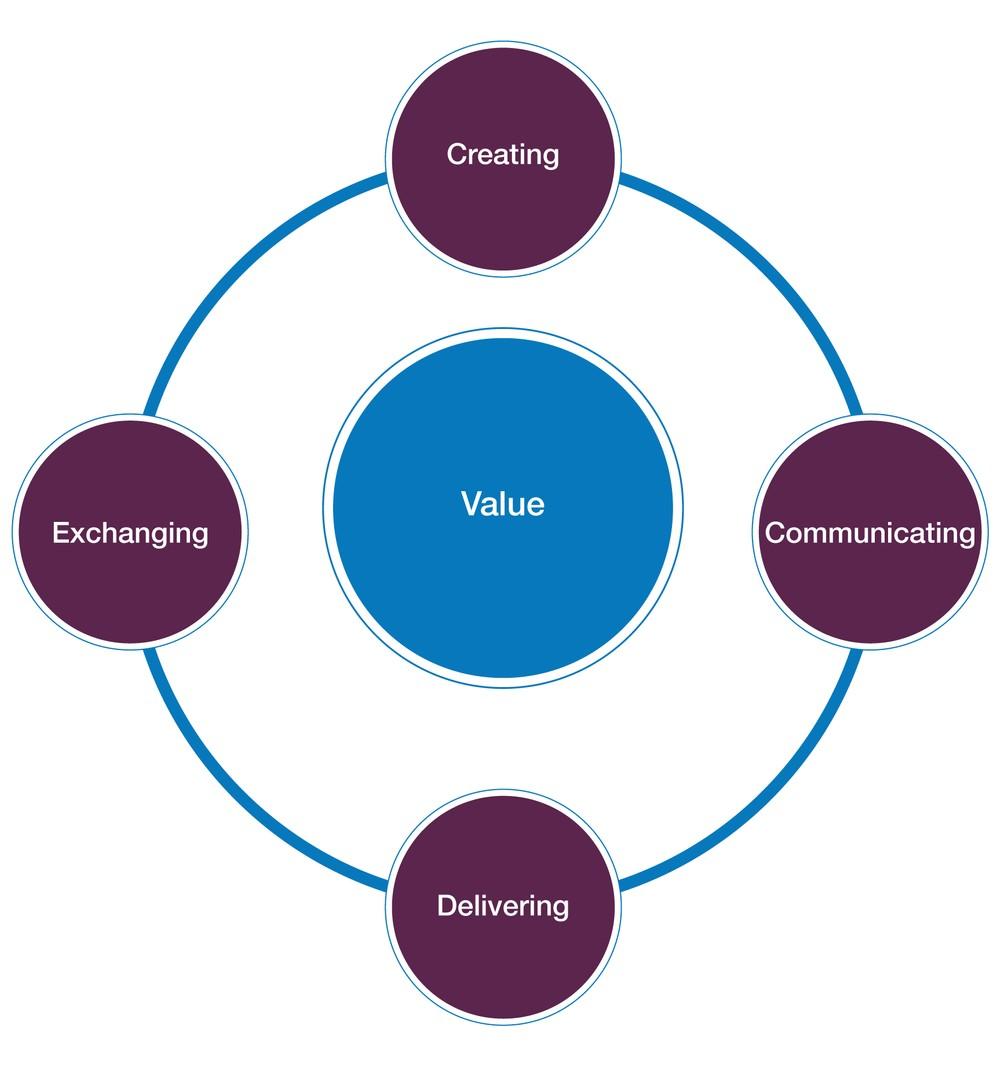
Define Marketing (Slide 1.4) – “the activity, set of institutions, and processes for creating, communicating, delivering, and exchanging offerings that have value for customers, clients, and society at large.”
Teaching Tip: The focus in this book is how marketing delivers value – how marketing gets done. Students will learn a set of skills that serve as the foundation for those activities.
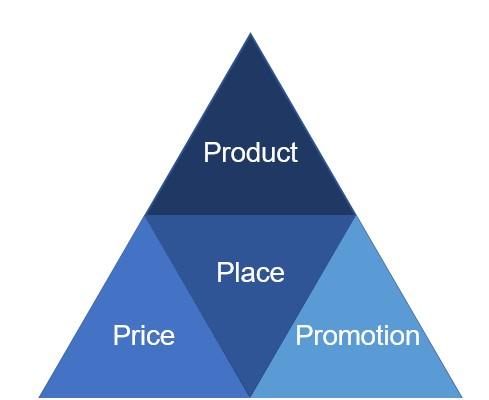
Introduce the traditional “Marketing Mix” (4Ps): Product, Promotion, Place, Price (Slide 1.5).
Explain why the shift to value occurred: The 4Ps are nouns and don’t capture the activity of marketing.
Introduce the modern definition (verbs) and their relationship to value (Slide 1.61.7):
o Creating (Product) Slide 1.8
o Communicating (Promotion + listening to customers) Slides 1.9-1.10
o Delivering (Place/Supply Chain) Slide 1.11
o Exchanging (Price/Transaction) Slide 1.12
Teaching Tip: Emphasize that “Exchanging” isn’t just handing over cash; it includes the transfer of ownership (like titles for cars), and can be related to cocreation. But exchange is also two-way, so what else besides cash can consumers give marketers?
B. The Concept of Value (20 min) Mini-Lecture (10 min):
Value is the center of everything marketing does.
The Marketing Concept (Slide 1.13)
The Personal Value Equation (PVE): Value = Benefits received – (Price + Hassle). (Slide 1.14) Define the terms.
o Value: A consumer’s judgment of the worth of a product/service
o Benefits: how a product satisfies a need
o Price: the money spent acquiring the product, plus any costs for supplies, maintenance, and disposal (a total cost of ownership approach).
o Hassle: The time and effort consumers put into the shopping, using, and disposal process.
o Explain that value is determined by the customer, not the company.
NOTE: If you have time or don’t plan to cover the case, slides are included for Organizational Orientations and Eras (Slides 1.15-1.16)
Class Activity: The Restaurant Example (10 min)
Scenario: Ask students to imagine they go to dinner with three friends and order the exact same dish.
Ask: “Can the value of that meal be different for each person? Why?”
Discussion:
o Student A might be starving and think the portion is too small.
o Student B might not be hungry and finds it filling but not that tasty.
o Student C – (ask who thinks cilantro tastes like soap) perhaps the dish has cilantro in it, and 1 out of 4 people have a genetic disposition to taste soap when they taste cilantro (true!) and this student is one of those people
o Takeaway: The dish and price were the same, but the benefits varied based on individual needs, proving the equation is personal
Extension: Ask students to calculate the PVE for a recent purchase (e.g., buying a textbook online vs. the bookstore). How did “hassle” play a role? Will value change over the course of using the product? If so, how?
III. Section 1.2 & 1.3 Who Does Marketing & Why Study It? (30 minutes)
A. Who Does Marketing? (15 min)
Mini-Lecture (7 min): The goal of this mini-lecture is to review how different organizations and individuals apply marketing principles (Intro Slides 1.17)
For-Profit: B2C (Business-to-Consumer) like Procter & Gamble versus B2B (Business-to-Business) like selling Boeing selling airplanes to airlines. (Slide 1.18)
Nonprofit Marketing: Using marketing to meet organizational goals (e.g., American Heart Association sending diet books to doctors) (Slide 1.19)
Social Marketing: Marketing to achieve social change (e.g., World Wildlife Fund’s “Your Plastic Diet” campaign).
Individuals: Resumes, LinkedIn, and job interviews involve personal marketing. (Slide 1.20)
NOTE: This is a good time to highlight the short profiles that can be found in each chapter, including the one of Michelle Sweezy at Mossimo Zanetti, a coffee manufacturer of brands like Chase & Sanborn and Hill Brothers. Each chapter will have one or two profiles of people who are responsible for the marketing activities described in the chapter. (Note, she’s also on Slide 1.22)
Discussion Question (5 min):
“What is the difference between the Army recruiting soldiers (Nonprofit/Gov marketing) and the WWF trying to reduce plastic use (Social marketing)?”
Answer: The Army wants you to join (exchange); WWF wants to change your behavior for societal good.
Follow Up: How do these distinctions alter their marketing activities?
Note: Other good DQs for this point of the class are found on p. 30.
B. Careers and Ethics (15 min)
Mini-Lecture (5 min):
Marketing impacts society (Slide 1.21).
Briefly list career paths (Slide 1.22, including photos of people profiled in the book): Research, Sales, Advertising, Digital Marketing (social/mobile). If you haven’t done so already, mention that each chapter has one or two brief profiles of marketers who work in the area covered in the chapter. The book opens with a profile of Michelle Sweezy, a digital marketing and analytics manager with Massimo Zanetti, a major manufacturer of coffee brands such as Hills Bros. and Chase & Sanborn.
Ethics & Consumerism: (Slide 1.23) Discuss the criticism that marketing creates “wants” for things people don’t need (consumerism).
Class Activity: Patagonia’s “Don’t Buy This Jacket” (10 min)
Show: Describe or show the Patagonia ad “Don’t Buy This Jacket”. (link embedded in Slide 1.23)
Ask: “Why would a company run an ad telling you not to buy their product?”
Discuss: Societal marketing orientation. The goal was to highlight consumerism and environmental impact.
Result: Did sales go down? No, they climbed because consumers aligned with the values.
IV. Section 1.4 Themes & Planning (20 minutes)
A. Everything Starts with the Customer (10 min)
Mini-Lecture: Slide 1.24
John Deere started because he listened to farmers. If he didn’t improve the plow (shape it so dirt wouldn’t stick to it), someone else would.
Mission Statements: Read statements.
o John Deere: “For those who cultivate . . . committed to your success”
o Apple: To bring the best user experience to customers through innovative hardware, software, and services.
Discussion: Compare and contrast. Note that Steve Jobs’ initial approach was that customers don’t know what they want because they don’t know what is possible. Is that approach still valid today, or is it risky?
B. The Changing Environment (10 min)
Briefly touch on the 5 key themes for the book: (Slide 1.25)
1. Big Data: The information explosion allowing detailed customer profiles. (Point out the relationship with AI)
2. Social Responsibility: Actively improving society (Sustainability).
3. Service-Dominant Logic: Consumers want value, regardless of whether it’s derived from a tangible product or a service, but more than likely, value is derived from a combination of tangible products and intangible services.
4. Metrics: Using data to make decisions.
5. Global Environment: Example: Coca-Cola earns more than half its profit outside the US.
V. Section 1.6 Case Study: Athleta (20 minutes)
A. Lecture + Discussion (10 min)
Context:
Athleta (Gap Inc.) versus Lululemon versus Nike.
Athleta’s specific focus: Women only. Nike/Under Armour were slow to create high-performance gear specifically for women.
Strategy: “Activation” events (e.g., yoga in the park, ice-skating) to build community.
B. Discussion Questions (10 min)
Question 1: “Athleta focuses only on women. Does this single-minded focus create a threat? Should they sell men’s clothes like Lululemon?”.
o Discussion points: Focus allows for better design for various specific body types, but limits market size.
Question 2: “Athleta is owned by Gap Inc. Does this help or hinder the brand?”.
o Discussion points: Gap provided capital for growth, but Gap’s sales have struggled recently. Does the association make Athleta seem less “authentic” than a boutique brand?
Question 3: “How do ‘Activation’ events like workouts in the park drive demand?”.
o Discussion points: Creates a community, rewards loyalty, and generates social media content (FOMO).
VI. Wrap-Up & Key Takeaways (5 minutes)
Revisit Key Concepts:
Marketing has moved from 4Ps to Creating, Communicating, Delivering, and Exchanging Value.
Value is personal: Benefits minus (Price + Hassle).
Everyone does marketing: For-profits, Nonprofits, and You (Career/Personal).
Looking Ahead: Chapter 2 will cover the Strategic Planning process in depth. Closing Prompt:
“For the next class, look at a product you use every day. Try to identify one way the company is using data or ‘service’ to add value beyond the physical product itself.”